window.__IS_SSR__=true
window.__INITIAL_STATE__={
"attachmentsReducer": {
"audio_0": {
"type": "attachments",
"id": "audio_0",
"imgSizes": {
"kqedFullSize": {
"file": "https://ww2.kqed.org/news/wp-content/themes/KQED-unified/img/audio_bgs/background0.jpg"
}
}
},
"audio_1": {
"type": "attachments",
"id": "audio_1",
"imgSizes": {
"kqedFullSize": {
"file": "https://ww2.kqed.org/news/wp-content/themes/KQED-unified/img/audio_bgs/background1.jpg"
}
}
},
"audio_2": {
"type": "attachments",
"id": "audio_2",
"imgSizes": {
"kqedFullSize": {
"file": "https://ww2.kqed.org/news/wp-content/themes/KQED-unified/img/audio_bgs/background2.jpg"
}
}
},
"audio_3": {
"type": "attachments",
"id": "audio_3",
"imgSizes": {
"kqedFullSize": {
"file": "https://ww2.kqed.org/news/wp-content/themes/KQED-unified/img/audio_bgs/background3.jpg"
}
}
},
"audio_4": {
"type": "attachments",
"id": "audio_4",
"imgSizes": {
"kqedFullSize": {
"file": "https://ww2.kqed.org/news/wp-content/themes/KQED-unified/img/audio_bgs/background4.jpg"
}
}
},
"placeholder": {
"type": "attachments",
"id": "placeholder",
"imgSizes": {
"thumbnail": {
"file": "https://cdn.kqed.org/wp-content/uploads/2024/12/KQED-Default-Image-816638274-2000x1333-1-160x107.jpg",
"width": 160,
"height": 107,
"mimeType": "image/jpeg"
},
"medium": {
"file": "https://cdn.kqed.org/wp-content/uploads/2024/12/KQED-Default-Image-816638274-2000x1333-1-800x533.jpg",
"width": 800,
"height": 533,
"mimeType": "image/jpeg"
},
"medium_large": {
"file": "https://cdn.kqed.org/wp-content/uploads/2024/12/KQED-Default-Image-816638274-2000x1333-1-768x512.jpg",
"width": 768,
"height": 512,
"mimeType": "image/jpeg"
},
"large": {
"file": "https://cdn.kqed.org/wp-content/uploads/2024/12/KQED-Default-Image-816638274-2000x1333-1-1020x680.jpg",
"width": 1020,
"height": 680,
"mimeType": "image/jpeg"
},
"1536x1536": {
"file": "https://cdn.kqed.org/wp-content/uploads/2024/12/KQED-Default-Image-816638274-2000x1333-1-1536x1024.jpg",
"width": 1536,
"height": 1024,
"mimeType": "image/jpeg"
},
"fd-lrg": {
"file": "https://cdn.kqed.org/wp-content/uploads/2024/12/KQED-Default-Image-816638274-2000x1333-1-1536x1024.jpg",
"width": 1536,
"height": 1024,
"mimeType": "image/jpeg"
},
"fd-med": {
"file": "https://cdn.kqed.org/wp-content/uploads/2024/12/KQED-Default-Image-816638274-2000x1333-1-1020x680.jpg",
"width": 1020,
"height": 680,
"mimeType": "image/jpeg"
},
"fd-sm": {
"file": "https://cdn.kqed.org/wp-content/uploads/2024/12/KQED-Default-Image-816638274-2000x1333-1-800x533.jpg",
"width": 800,
"height": 533,
"mimeType": "image/jpeg"
},
"post-thumbnail": {
"file": "https://cdn.kqed.org/wp-content/uploads/2024/12/KQED-Default-Image-816638274-2000x1333-1-672x372.jpg",
"width": 672,
"height": 372,
"mimeType": "image/jpeg"
},
"twentyfourteen-full-width": {
"file": "https://cdn.kqed.org/wp-content/uploads/2024/12/KQED-Default-Image-816638274-2000x1333-1-1038x576.jpg",
"width": 1038,
"height": 576,
"mimeType": "image/jpeg"
},
"xxsmall": {
"file": "https://cdn.kqed.org/wp-content/uploads/2024/12/KQED-Default-Image-816638274-2000x1333-1-160x107.jpg",
"width": 160,
"height": 107,
"mimeType": "image/jpeg"
},
"xsmall": {
"file": "https://cdn.kqed.org/wp-content/uploads/2024/12/KQED-Default-Image-816638274-2000x1333-1-672x372.jpg",
"width": 672,
"height": 372,
"mimeType": "image/jpeg"
},
"small": {
"file": "https://cdn.kqed.org/wp-content/uploads/2024/12/KQED-Default-Image-816638274-2000x1333-1-672x372.jpg",
"width": 672,
"height": 372,
"mimeType": "image/jpeg"
},
"xlarge": {
"file": "https://cdn.kqed.org/wp-content/uploads/2024/12/KQED-Default-Image-816638274-2000x1333-1-1020x680.jpg",
"width": 1020,
"height": 680,
"mimeType": "image/jpeg"
},
"full-width": {
"file": "https://cdn.kqed.org/wp-content/uploads/2024/12/KQED-Default-Image-816638274-2000x1333-1-1920x1280.jpg",
"width": 1920,
"height": 1280,
"mimeType": "image/jpeg"
},
"guest-author-32": {
"file": "https://cdn.kqed.org/wp-content/uploads/2025/01/KQED-Default-Image-816638274-1333x1333-1-160x160.jpg",
"width": 32,
"height": 32,
"mimeType": "image/jpeg"
},
"guest-author-50": {
"file": "https://cdn.kqed.org/wp-content/uploads/2025/01/KQED-Default-Image-816638274-1333x1333-1-160x160.jpg",
"width": 50,
"height": 50,
"mimeType": "image/jpeg"
},
"guest-author-64": {
"file": "https://cdn.kqed.org/wp-content/uploads/2025/01/KQED-Default-Image-816638274-1333x1333-1-160x160.jpg",
"width": 64,
"height": 64,
"mimeType": "image/jpeg"
},
"guest-author-96": {
"file": "https://cdn.kqed.org/wp-content/uploads/2025/01/KQED-Default-Image-816638274-1333x1333-1-160x160.jpg",
"width": 96,
"height": 96,
"mimeType": "image/jpeg"
},
"guest-author-128": {
"file": "https://cdn.kqed.org/wp-content/uploads/2025/01/KQED-Default-Image-816638274-1333x1333-1-160x160.jpg",
"width": 128,
"height": 128,
"mimeType": "image/jpeg"
},
"detail": {
"file": "https://cdn.kqed.org/wp-content/uploads/2025/01/KQED-Default-Image-816638274-1333x1333-1-160x160.jpg",
"width": 160,
"height": 160,
"mimeType": "image/jpeg"
},
"kqedFullSize": {
"file": "https://cdn.kqed.org/wp-content/uploads/2024/12/KQED-Default-Image-816638274-2000x1333-1.jpg",
"width": 2000,
"height": 1333
}
}
},
"news_12078688": {
"type": "attachments",
"id": "news_12078688",
"meta": {
"index": "attachments_1716263798",
"site": "news",
"id": "12078688",
"found": true
},
"title": "DSC_8647",
"publishDate": 1775251001,
"status": "inherit",
"parent": 12078524,
"modified": 1775251020,
"caption": "The 2025 Hunky Jesus contest winner, San Francisco producer and performer Wild West, rides through the Easter in the Park event in Dolores Park, hosted by the Sisters of Perpetual Indulgence. The annual Easter celebration returns to Dolores Park on Sunday. What to know about the event’s history, and how to attend (or even enter.)",
"credit": "via photosbygooch.com",
"altTag": null,
"description": null,
"imgSizes": {
"thumbnail": {
"file": "https://cdn.kqed.org/wp-content/uploads/sites/10/2026/04/DSC_8647-160x107.jpg",
"width": 160,
"height": 107,
"mimeType": "image/jpeg"
},
"1536x1536": {
"file": "https://cdn.kqed.org/wp-content/uploads/sites/10/2026/04/DSC_8647-1536x1024.jpg",
"width": 1536,
"height": 1024,
"mimeType": "image/jpeg"
},
"post-thumbnail": {
"file": "https://cdn.kqed.org/wp-content/uploads/sites/10/2026/04/DSC_8647-672x372.jpg",
"width": 672,
"height": 372,
"mimeType": "image/jpeg"
},
"twentyfourteen-full-width": {
"file": "https://cdn.kqed.org/wp-content/uploads/sites/10/2026/04/DSC_8647-1038x576.jpg",
"width": 1038,
"height": 576,
"mimeType": "image/jpeg"
},
"npr-cds-wide": {
"file": "https://cdn.kqed.org/wp-content/uploads/sites/10/2026/04/DSC_8647-1200x675.jpg",
"width": 1200,
"height": 675,
"mimeType": "image/jpeg"
},
"npr-cds-square": {
"file": "https://cdn.kqed.org/wp-content/uploads/sites/10/2026/04/DSC_8647-600x600.jpg",
"width": 600,
"height": 600,
"mimeType": "image/jpeg"
},
"kqedFullSize": {
"file": "https://cdn.kqed.org/wp-content/uploads/sites/10/2026/04/DSC_8647.jpg",
"width": 2000,
"height": 1333
}
},
"fetchFailed": false,
"isLoading": false
},
"news_12077271": {
"type": "attachments",
"id": "news_12077271",
"meta": {
"index": "attachments_1716263798",
"site": "news",
"id": "12077271",
"found": true
},
"title": "031626_PINNACLESFORTHEDAY _GH_040-KQED",
"publishDate": 1774273676,
"status": "inherit",
"parent": 0,
"modified": 1774273710,
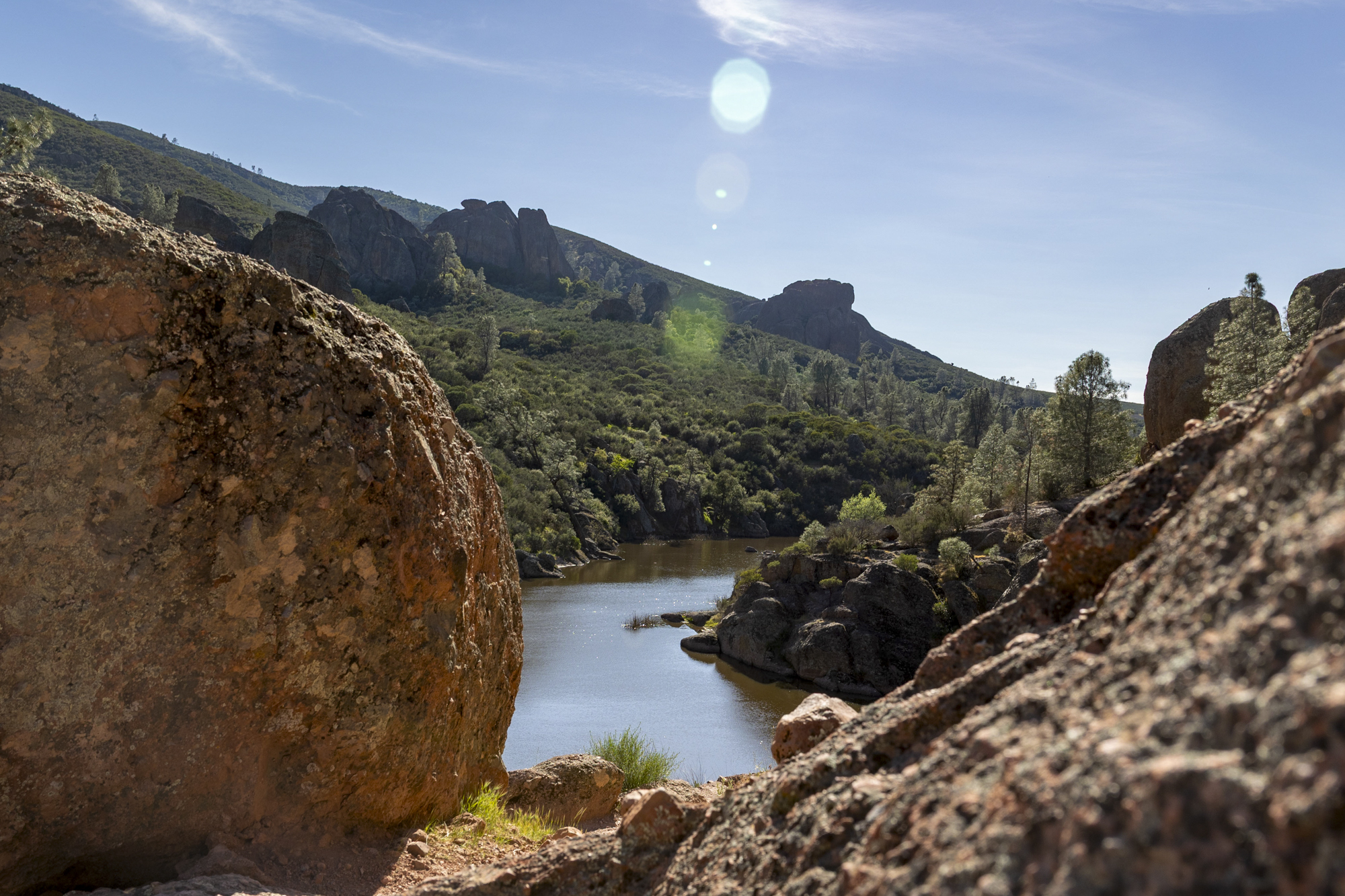
"caption": "Bear Gulch Reservoir sits between rocky formations and rolling hills at Pinnacles National Park on March 16, 2026.",
"credit": "Gustavo Hernandez/KQED",
"altTag": null,
"description": null,
"imgSizes": {
"thumbnail": {
"file": "https://cdn.kqed.org/wp-content/uploads/sites/10/2026/03/031626_PINNACLESFORTHEDAY-_GH_040-KQED-160x107.jpg",
"width": 160,
"height": 107,
"mimeType": "image/jpeg"
},
"1536x1536": {
"file": "https://cdn.kqed.org/wp-content/uploads/sites/10/2026/03/031626_PINNACLESFORTHEDAY-_GH_040-KQED-1536x1024.jpg",
"width": 1536,
"height": 1024,
"mimeType": "image/jpeg"
},
"post-thumbnail": {
"file": "https://cdn.kqed.org/wp-content/uploads/sites/10/2026/03/031626_PINNACLESFORTHEDAY-_GH_040-KQED-672x372.jpg",
"width": 672,
"height": 372,
"mimeType": "image/jpeg"
},
"twentyfourteen-full-width": {
"file": "https://cdn.kqed.org/wp-content/uploads/sites/10/2026/03/031626_PINNACLESFORTHEDAY-_GH_040-KQED-1038x576.jpg",
"width": 1038,
"height": 576,
"mimeType": "image/jpeg"
},
"npr-cds-wide": {
"file": "https://cdn.kqed.org/wp-content/uploads/sites/10/2026/03/031626_PINNACLESFORTHEDAY-_GH_040-KQED-1200x675.jpg",
"width": 1200,
"height": 675,
"mimeType": "image/jpeg"
},
"kqedFullSize": {
"file": "https://cdn.kqed.org/wp-content/uploads/sites/10/2026/03/031626_PINNACLESFORTHEDAY-_GH_040-KQED.jpg",
"width": 2000,
"height": 1333
}
},
"fetchFailed": false,
"isLoading": false
},
"news_12062564": {
"type": "attachments",
"id": "news_12062564",
"meta": {
"index": "attachments_1716263798",
"site": "news",
"id": "12062564",
"found": true
},
"title": "251031-SFMARINFOODBANK-11-BL-KQED",
"publishDate": 1761943580,
"status": "inherit",
"parent": 12062577,
"modified": 1761948469,
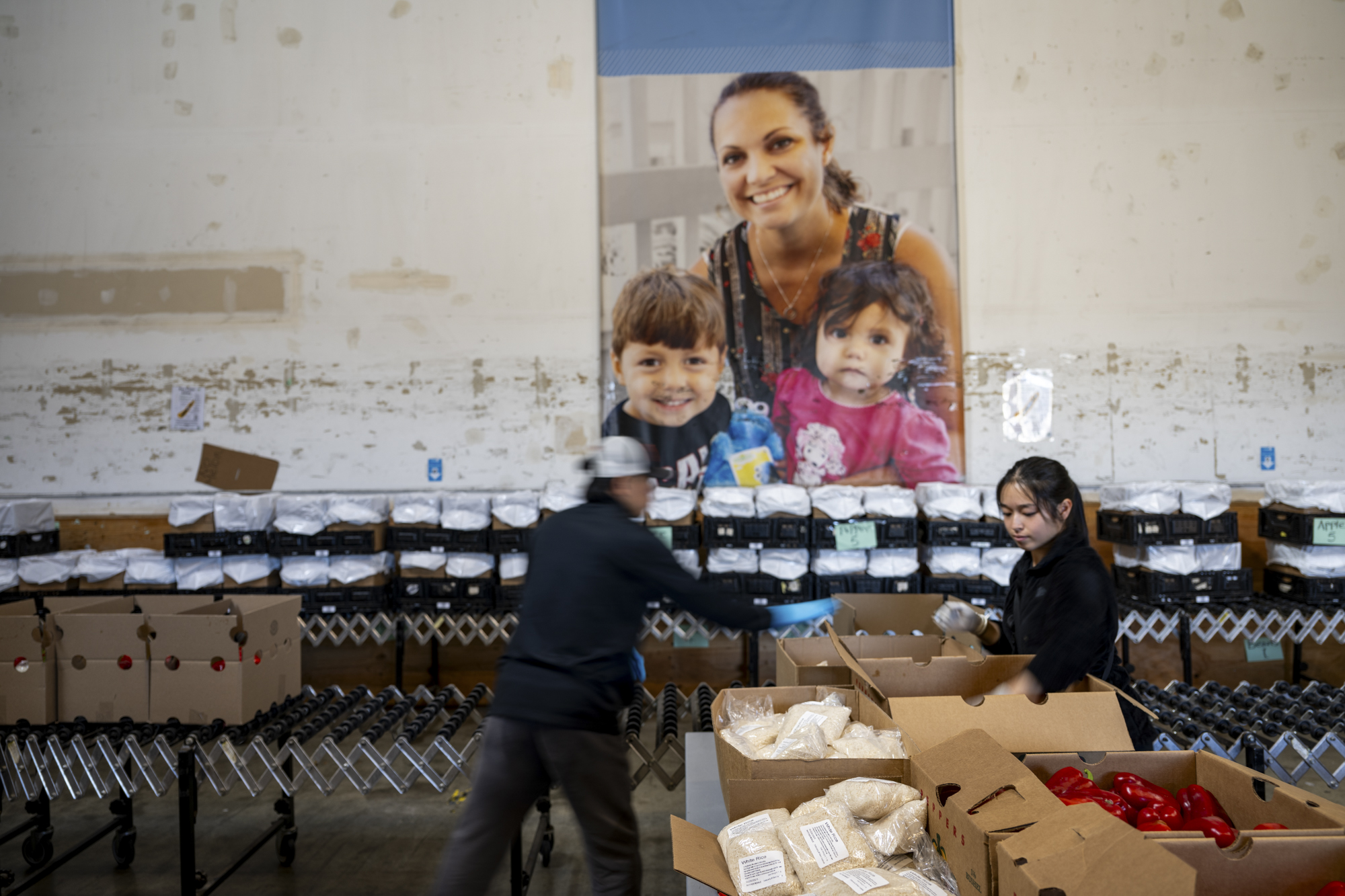
"caption": "Filmark Bernante (left) and Megan Feria sort fresh produce into boxes at the San Francisco‑Marin Food Bank warehouse in San Francisco on Oct. 31, 2025.",
"credit": "Beth LaBerge/KQED",
"altTag": null,
"description": null,
"imgSizes": {
"thumbnail": {
"file": "https://cdn.kqed.org/wp-content/uploads/sites/10/2025/10/251031-SFMARINFOODBANK-11-BL-KQED-160x107.jpg",
"width": 160,
"height": 107,
"mimeType": "image/jpeg"
},
"1536x1536": {
"file": "https://cdn.kqed.org/wp-content/uploads/sites/10/2025/10/251031-SFMARINFOODBANK-11-BL-KQED-1536x1024.jpg",
"width": 1536,
"height": 1024,
"mimeType": "image/jpeg"
},
"post-thumbnail": {
"file": "https://cdn.kqed.org/wp-content/uploads/sites/10/2025/10/251031-SFMARINFOODBANK-11-BL-KQED-672x372.jpg",
"width": 672,
"height": 372,
"mimeType": "image/jpeg"
},
"twentyfourteen-full-width": {
"file": "https://cdn.kqed.org/wp-content/uploads/sites/10/2025/10/251031-SFMARINFOODBANK-11-BL-KQED-1038x576.jpg",
"width": 1038,
"height": 576,
"mimeType": "image/jpeg"
},
"npr-cds-wide": {
"file": "https://cdn.kqed.org/wp-content/uploads/sites/10/2025/10/251031-SFMARINFOODBANK-11-BL-KQED-1200x675.jpg",
"width": 1200,
"height": 675,
"mimeType": "image/jpeg"
},
"kqedFullSize": {
"file": "https://cdn.kqed.org/wp-content/uploads/sites/10/2025/10/251031-SFMARINFOODBANK-11-BL-KQED.jpg",
"width": 2000,
"height": 1333
}
},
"fetchFailed": false,
"isLoading": false
},
"news_12078178": {
"type": "attachments",
"id": "news_12078178",
"meta": {
"index": "attachments_1716263798",
"site": "news",
"id": "12078178",
"found": true
},
"title": "Mother holding her baby in her arms",
"publishDate": 1774980967,
"status": "inherit",
"parent": 12078161,
"modified": 1774981014,
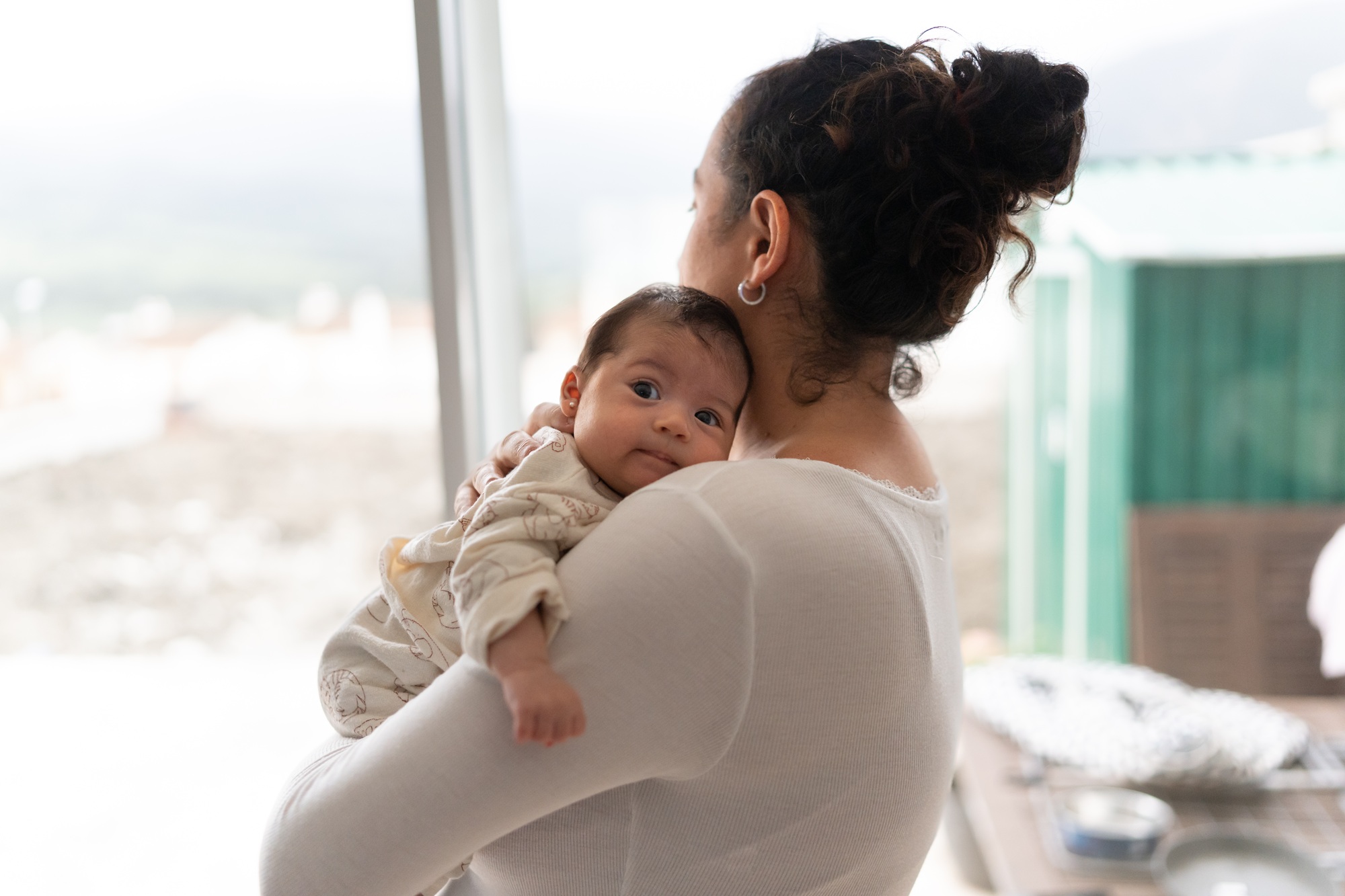
"caption": "A mother looking out the window while holding the baby in her arms.",
"credit": "Rawl Stock/Getty Images",
"altTag": null,
"description": null,
"imgSizes": {
"thumbnail": {
"file": "https://cdn.kqed.org/wp-content/uploads/sites/10/2026/03/BirthrightCitizenshipGetty1-160x107.jpg",
"width": 160,
"height": 107,
"mimeType": "image/jpeg"
},
"1536x1536": {
"file": "https://cdn.kqed.org/wp-content/uploads/sites/10/2026/03/BirthrightCitizenshipGetty1-1536x1024.jpg",
"width": 1536,
"height": 1024,
"mimeType": "image/jpeg"
},
"post-thumbnail": {
"file": "https://cdn.kqed.org/wp-content/uploads/sites/10/2026/03/BirthrightCitizenshipGetty1-672x372.jpg",
"width": 672,
"height": 372,
"mimeType": "image/jpeg"
},
"twentyfourteen-full-width": {
"file": "https://cdn.kqed.org/wp-content/uploads/sites/10/2026/03/BirthrightCitizenshipGetty1-1038x576.jpg",
"width": 1038,
"height": 576,
"mimeType": "image/jpeg"
},
"npr-cds-wide": {
"file": "https://cdn.kqed.org/wp-content/uploads/sites/10/2026/03/BirthrightCitizenshipGetty1-1200x675.jpg",
"width": 1200,
"height": 675,
"mimeType": "image/jpeg"
},
"npr-cds-square": {
"file": "https://cdn.kqed.org/wp-content/uploads/sites/10/2026/03/BirthrightCitizenshipGetty1-600x600.jpg",
"width": 600,
"height": 600,
"mimeType": "image/jpeg"
},
"kqedFullSize": {
"file": "https://cdn.kqed.org/wp-content/uploads/sites/10/2026/03/BirthrightCitizenshipGetty1.jpg",
"width": 2000,
"height": 1333
}
},
"fetchFailed": false,
"isLoading": false
},
"news_12077941": {
"type": "attachments",
"id": "news_12077941",
"meta": {
"index": "attachments_1716263798",
"site": "news",
"id": "12077941",
"found": true
},
"title": "TSA LINES",
"publishDate": 1774652697,
"status": "inherit",
"parent": 12077938,
"modified": 1774652706,
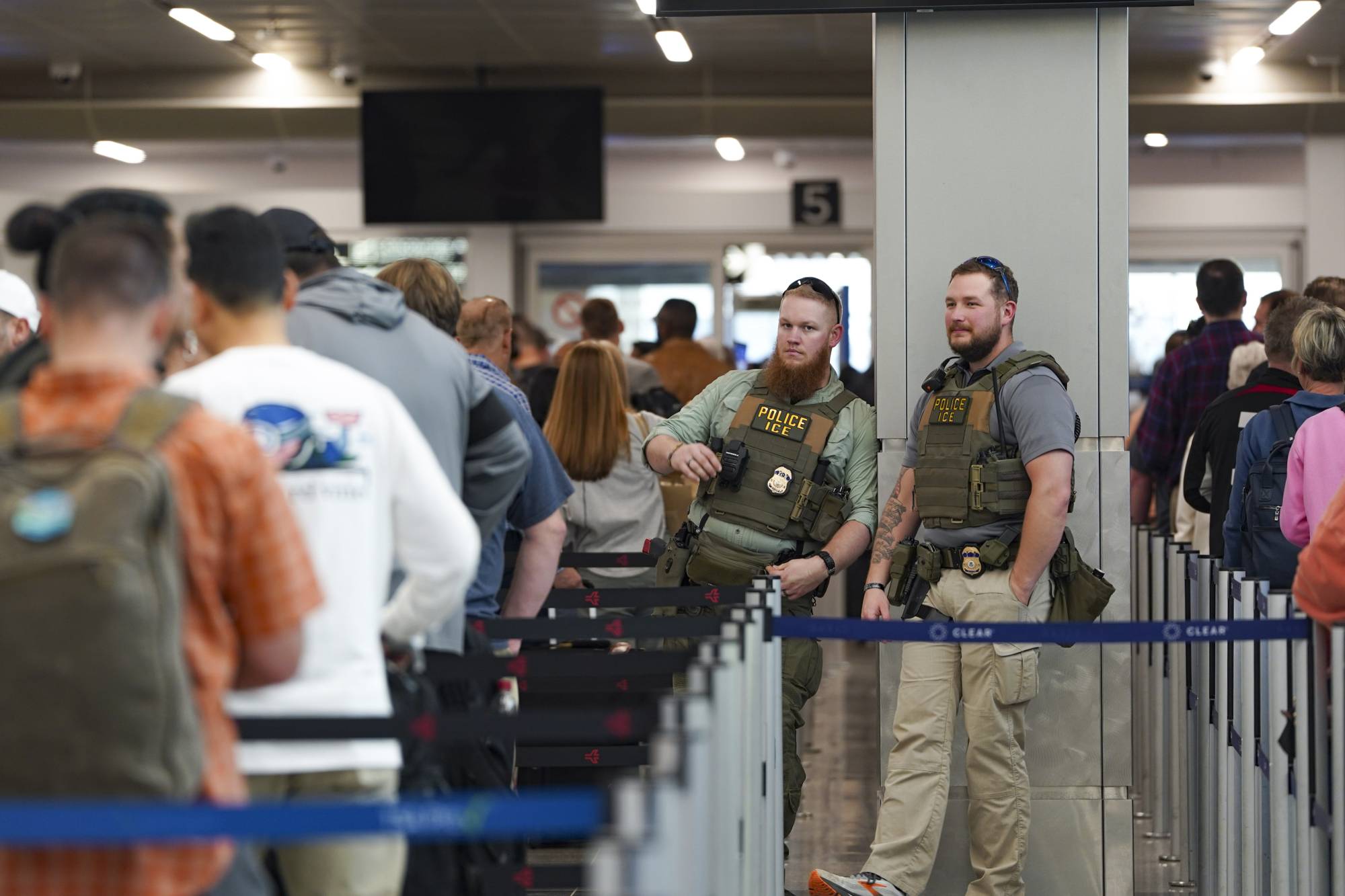
"caption": "Agentes de ICE se encuentran junto a la fila de seguridad en el Aeropuerto Internacional Hartsfield-Jackson de Atlanta el 23 de marzo de 2026 en Atlanta, Georgia. Las perturbaciones en los viajes continúan, ya que cientos de agentes de la TSA han dimitido o trabajan sin cobrar durante un cierre parcial del Gobierno. El presidente de EE. UU., Donald Trump, ha anunciado que el lunes se desplegarán agentes de ICE en los aeropuertos estadounidenses, bajo la dirección del responsable de fronteras, Tom Homan.",
"credit": null,
"altTag": null,
"description": null,
"imgSizes": {
"thumbnail": {
"file": "https://cdn.kqed.org/wp-content/uploads/sites/10/2026/03/TSA-LINES-160x107.jpg",
"width": 160,
"height": 107,
"mimeType": "image/jpeg"
},
"1536x1536": {
"file": "https://cdn.kqed.org/wp-content/uploads/sites/10/2026/03/TSA-LINES-1536x1024.jpg",
"width": 1536,
"height": 1024,
"mimeType": "image/jpeg"
},
"post-thumbnail": {
"file": "https://cdn.kqed.org/wp-content/uploads/sites/10/2026/03/TSA-LINES-672x372.jpg",
"width": 672,
"height": 372,
"mimeType": "image/jpeg"
},
"twentyfourteen-full-width": {
"file": "https://cdn.kqed.org/wp-content/uploads/sites/10/2026/03/TSA-LINES-1038x576.jpg",
"width": 1038,
"height": 576,
"mimeType": "image/jpeg"
},
"npr-cds-wide": {
"file": "https://cdn.kqed.org/wp-content/uploads/sites/10/2026/03/TSA-LINES-1200x675.jpg",
"width": 1200,
"height": 675,
"mimeType": "image/jpeg"
},
"npr-cds-square": {
"file": "https://cdn.kqed.org/wp-content/uploads/sites/10/2026/03/TSA-LINES-600x600.jpg",
"width": 600,
"height": 600,
"mimeType": "image/jpeg"
},
"kqedFullSize": {
"file": "https://cdn.kqed.org/wp-content/uploads/sites/10/2026/03/TSA-LINES.jpg",
"width": 2000,
"height": 1333
}
},
"fetchFailed": false,
"isLoading": false
},
"news_12078062": {
"type": "attachments",
"id": "news_12078062",
"meta": {
"index": "attachments_1716263798",
"site": "news",
"id": "12078062",
"found": true
},
"title": "Lake Tahoe Area Readies For More Snow As Another Storm Moves Over California",
"publishDate": 1774902695,
"status": "inherit",
"parent": 12078060,
"modified": 1774902730,
"caption": "People carry skis as they walk toward a resort on March 21, 2023, in South Lake Tahoe, California. ",
"credit": "Justin Sullivan/Getty Images",
"altTag": null,
"description": null,
"imgSizes": {
"thumbnail": {
"file": "https://cdn.kqed.org/wp-content/uploads/sites/10/2026/03/TahoeGetty1-160x107.jpg",
"width": 160,
"height": 107,
"mimeType": "image/jpeg"
},
"1536x1536": {
"file": "https://cdn.kqed.org/wp-content/uploads/sites/10/2026/03/TahoeGetty1-1536x1024.jpg",
"width": 1536,
"height": 1024,
"mimeType": "image/jpeg"
},
"post-thumbnail": {
"file": "https://cdn.kqed.org/wp-content/uploads/sites/10/2026/03/TahoeGetty1-672x372.jpg",
"width": 672,
"height": 372,
"mimeType": "image/jpeg"
},
"twentyfourteen-full-width": {
"file": "https://cdn.kqed.org/wp-content/uploads/sites/10/2026/03/TahoeGetty1-1038x576.jpg",
"width": 1038,
"height": 576,
"mimeType": "image/jpeg"
},
"npr-cds-wide": {
"file": "https://cdn.kqed.org/wp-content/uploads/sites/10/2026/03/TahoeGetty1-1200x675.jpg",
"width": 1200,
"height": 675,
"mimeType": "image/jpeg"
},
"npr-cds-square": {
"file": "https://cdn.kqed.org/wp-content/uploads/sites/10/2026/03/TahoeGetty1-600x600.jpg",
"width": 600,
"height": 600,
"mimeType": "image/jpeg"
},
"kqedFullSize": {
"file": "https://cdn.kqed.org/wp-content/uploads/sites/10/2026/03/TahoeGetty1.jpg",
"width": 2000,
"height": 1333
}
},
"fetchFailed": false,
"isLoading": false
},
"news_12077826": {
"type": "attachments",
"id": "news_12077826",
"meta": {
"index": "attachments_1716263798",
"site": "news",
"id": "12077826",
"found": true
},
"title": "IMG_1436 (1)",
"publishDate": 1774634667,
"status": "inherit",
"parent": 12077359,
"modified": 1774634705,
"caption": "Who needs a pre-nup in California?\n",
"credit": "Anna Vignet/KQED",
"altTag": null,
"description": null,
"imgSizes": {
"medium": {
"file": "https://cdn.kqed.org/wp-content/uploads/sites/10/2026/03/IMG_1436-1-2000x1500.jpg",
"width": 2000,
"height": 1500,
"mimeType": "image/jpeg"
},
"large": {
"file": "https://cdn.kqed.org/wp-content/uploads/sites/10/2026/03/IMG_1436-1-2000x1500.jpg",
"width": 2000,
"height": 1500,
"mimeType": "image/jpeg"
},
"thumbnail": {
"file": "https://cdn.kqed.org/wp-content/uploads/sites/10/2026/03/IMG_1436-1-160x120.jpg",
"width": 160,
"height": 120,
"mimeType": "image/jpeg"
},
"1536x1536": {
"file": "https://cdn.kqed.org/wp-content/uploads/sites/10/2026/03/IMG_1436-1-1536x1152.jpg",
"width": 1536,
"height": 1152,
"mimeType": "image/jpeg"
},
"2048x2048": {
"file": "https://cdn.kqed.org/wp-content/uploads/sites/10/2026/03/IMG_1436-1-2048x1536.jpg",
"width": 2048,
"height": 1536,
"mimeType": "image/jpeg"
},
"post-thumbnail": {
"file": "https://cdn.kqed.org/wp-content/uploads/sites/10/2026/03/IMG_1436-1-672x372.jpg",
"width": 672,
"height": 372,
"mimeType": "image/jpeg"
},
"twentyfourteen-full-width": {
"file": "https://cdn.kqed.org/wp-content/uploads/sites/10/2026/03/IMG_1436-1-1038x576.jpg",
"width": 1038,
"height": 576,
"mimeType": "image/jpeg"
},
"full-width": {
"file": "https://cdn.kqed.org/wp-content/uploads/sites/10/2026/03/IMG_1436-1-2000x1500.jpg",
"width": 2000,
"height": 1500,
"mimeType": "image/jpeg"
},
"npr-cds-wide": {
"file": "https://cdn.kqed.org/wp-content/uploads/sites/10/2026/03/IMG_1436-1-1200x675.jpg",
"width": 1200,
"height": 675,
"mimeType": "image/jpeg"
},
"npr-cds-square": {
"file": "https://cdn.kqed.org/wp-content/uploads/sites/10/2026/03/IMG_1436-1-600x600.jpg",
"width": 600,
"height": 600,
"mimeType": "image/jpeg"
},
"kqedFullSize": {
"file": "https://cdn.kqed.org/wp-content/uploads/sites/10/2026/03/IMG_1436-1.jpg",
"width": 2560,
"height": 1920
}
},
"fetchFailed": false,
"isLoading": false
},
"news_12077669": {
"type": "attachments",
"id": "news_12077669",
"meta": {
"index": "attachments_1716263798",
"site": "news",
"id": "12077669",
"found": true
},
"title": "IRS Building on Long Island",
"publishDate": 1774551830,
"status": "inherit",
"parent": 12077664,
"modified": 1774551870,
"caption": "Outside of the IRS office building in Holtsville, New York, on Oct. 7, 2025. ",
"credit": "James Carbone/Newsday RM via Getty Images",
"altTag": null,
"description": null,
"imgSizes": {
"thumbnail": {
"file": "https://cdn.kqed.org/wp-content/uploads/sites/10/2026/03/IRSGetty-160x107.jpg",
"width": 160,
"height": 107,
"mimeType": "image/jpeg"
},
"1536x1536": {
"file": "https://cdn.kqed.org/wp-content/uploads/sites/10/2026/03/IRSGetty-1536x1025.jpg",
"width": 1536,
"height": 1025,
"mimeType": "image/jpeg"
},
"post-thumbnail": {
"file": "https://cdn.kqed.org/wp-content/uploads/sites/10/2026/03/IRSGetty-672x372.jpg",
"width": 672,
"height": 372,
"mimeType": "image/jpeg"
},
"twentyfourteen-full-width": {
"file": "https://cdn.kqed.org/wp-content/uploads/sites/10/2026/03/IRSGetty-1038x576.jpg",
"width": 1038,
"height": 576,
"mimeType": "image/jpeg"
},
"npr-cds-wide": {
"file": "https://cdn.kqed.org/wp-content/uploads/sites/10/2026/03/IRSGetty-1200x675.jpg",
"width": 1200,
"height": 675,
"mimeType": "image/jpeg"
},
"npr-cds-square": {
"file": "https://cdn.kqed.org/wp-content/uploads/sites/10/2026/03/IRSGetty-600x600.jpg",
"width": 600,
"height": 600,
"mimeType": "image/jpeg"
},
"kqedFullSize": {
"file": "https://cdn.kqed.org/wp-content/uploads/sites/10/2026/03/IRSGetty.jpg",
"width": 2000,
"height": 1335
}
},
"fetchFailed": false,
"isLoading": false
},
"news_12077504": {
"type": "attachments",
"id": "news_12077504",
"meta": {
"index": "attachments_1716263798",
"site": "news",
"id": "12077504",
"found": true
},
"title": "Trump Sends ICE Agents To Airports As DHS Remains Unfunded",
"publishDate": 1774462696,
"status": "inherit",
"parent": 12077353,
"modified": 1775172652,
"caption": "CE agents stand next to the security line at Atlanta Hartsfield-Jackson International Airport on March 23, 2026 in Atlanta, Georgia. The travel disruptions continue as hundreds of TSA agents quit or work without pay during a partial government shutdown. ",
"credit": "Megan Varner/Getty Images",
"altTag": null,
"description": null,
"imgSizes": {
"medium": {
"file": "https://cdn.kqed.org/wp-content/uploads/sites/10/2026/03/GettyImages-2267571375-2000x1333.jpg",
"width": 2000,
"height": 1333,
"mimeType": "image/jpeg"
},
"large": {
"file": "https://cdn.kqed.org/wp-content/uploads/sites/10/2026/03/GettyImages-2267571375-2000x1333.jpg",
"width": 2000,
"height": 1333,
"mimeType": "image/jpeg"
},
"thumbnail": {
"file": "https://cdn.kqed.org/wp-content/uploads/sites/10/2026/03/GettyImages-2267571375-160x107.jpg",
"width": 160,
"height": 107,
"mimeType": "image/jpeg"
},
"1536x1536": {
"file": "https://cdn.kqed.org/wp-content/uploads/sites/10/2026/03/GettyImages-2267571375-1536x1024.jpg",
"width": 1536,
"height": 1024,
"mimeType": "image/jpeg"
},
"2048x2048": {
"file": "https://cdn.kqed.org/wp-content/uploads/sites/10/2026/03/GettyImages-2267571375-2048x1365.jpg",
"width": 2048,
"height": 1365,
"mimeType": "image/jpeg"
},
"post-thumbnail": {
"file": "https://cdn.kqed.org/wp-content/uploads/sites/10/2026/03/GettyImages-2267571375-672x372.jpg",
"width": 672,
"height": 372,
"mimeType": "image/jpeg"
},
"twentyfourteen-full-width": {
"file": "https://cdn.kqed.org/wp-content/uploads/sites/10/2026/03/GettyImages-2267571375-1038x576.jpg",
"width": 1038,
"height": 576,
"mimeType": "image/jpeg"
},
"full-width": {
"file": "https://cdn.kqed.org/wp-content/uploads/sites/10/2026/03/GettyImages-2267571375-2000x1333.jpg",
"width": 2000,
"height": 1333,
"mimeType": "image/jpeg"
},
"npr-cds-wide": {
"file": "https://cdn.kqed.org/wp-content/uploads/sites/10/2026/03/GettyImages-2267571375-1200x675.jpg",
"width": 1200,
"height": 675,
"mimeType": "image/jpeg"
},
"npr-cds-square": {
"file": "https://cdn.kqed.org/wp-content/uploads/sites/10/2026/03/GettyImages-2267571375-600x600.jpg",
"width": 600,
"height": 600,
"mimeType": "image/jpeg"
},
"kqedFullSize": {
"file": "https://cdn.kqed.org/wp-content/uploads/sites/10/2026/03/GettyImages-2267571375-scaled-e1774462803299.jpg",
"width": 2000,
"height": 1334
}
},
"fetchFailed": false,
"isLoading": false
}
},
"audioPlayerReducer": {
"postId": "stream_live",
"isPaused": true,
"isPlaying": false,
"pfsActive": false,
"pledgeModalIsOpen": true,
"playerDrawerIsOpen": false
},
"authorsReducer": {
"byline_news_12077359": {
"type": "authors",
"id": "byline_news_12077359",
"meta": {
"override": true
},
"slug": "byline_news_12077359",
"name": "Francesca Fenzi and Grace Won",
"isLoading": false
},
"ccabreralomeli": {
"type": "authors",
"id": "11708",
"meta": {
"index": "authors_1716337520",
"id": "11708",
"found": true
},
"name": "Carlos Cabrera-Lomelí",
"firstName": "Carlos",
"lastName": "Cabrera-Lomelí",
"slug": "ccabreralomeli",
"email": "ccabreralomeli@KQED.org",
"display_author_email": true,
"staff_mastheads": [
"news"
],
"title": "Community Reporter",
"bio": "Carlos Cabrera-Lomelí is a community reporter with KQED's digital engagement team. He also reports and co-produces for KQED's bilingual news hub KQED en Español. He grew up in San Francisco's Mission District and has previously worked with Univision, 48 Hills and REFORMA in Mexico City.",
"avatar": "https://secure.gravatar.com/avatar/e95ff80bb2eaf18a8f2af4dcf7ffb54b?s=600&d=mm&r=g",
"twitter": "@LomeliCabrera",
"facebook": null,
"instagram": null,
"linkedin": null,
"sites": [
{
"site": "arts",
"roles": [
"editor"
]
},
{
"site": "news",
"roles": [
"editor"
]
},
{
"site": "about",
"roles": [
"editor"
]
},
{
"site": "science",
"roles": [
"editor"
]
},
{
"site": "perspectives",
"roles": [
"editor"
]
},
{
"site": "elections",
"roles": [
"editor"
]
},
{
"site": "liveblog",
"roles": [
"contributor"
]
}
],
"headData": {
"title": "Carlos Cabrera-Lomelí | KQED",
"description": "Community Reporter",
"ogImgSrc": "https://secure.gravatar.com/avatar/e95ff80bb2eaf18a8f2af4dcf7ffb54b?s=600&d=mm&r=g",
"twImgSrc": "https://secure.gravatar.com/avatar/e95ff80bb2eaf18a8f2af4dcf7ffb54b?s=600&d=mm&r=g"
},
"isLoading": false,
"link": "/author/ccabreralomeli"
},
"eromero": {
"type": "authors",
"id": "11746",
"meta": {
"index": "authors_1716337520",
"id": "11746",
"found": true
},
"name": "Ezra David Romero",
"firstName": "Ezra David",
"lastName": "Romero",
"slug": "eromero",
"email": "eromero@kqed.org",
"display_author_email": true,
"staff_mastheads": [
"news",
"science"
],
"title": "Climate Reporter",
"bio": "Ezra David Romero is a climate reporter for KQED News. He covers the absence and excess of water in the Bay Area — think sea level rise, flooding and drought. For nearly a decade he’s covered how warming temperatures are altering the lives of Californians. He’s reported on farmers worried their pistachio trees aren’t getting enough sleep, families desperate for water, scientists studying dying giant sequoias, and alongside firefighters containing wildfires. His work has appeared on local stations across California and nationally on public radio shows like Morning Edition, Here and Now, All Things Considered and Science Friday. ",
"avatar": "https://secure.gravatar.com/avatar/9c15bb8bab267e058708a9eeaeef16bf?s=600&d=blank&r=g",
"twitter": "ezraromero",
"bluesky": null,
"facebook": null,
"instagram": null,
"linkedin": null,
"sites": [
{
"site": "arts",
"roles": [
"editor"
]
},
{
"site": "news",
"roles": [
"editor"
]
},
{
"site": "science",
"roles": [
"editor"
]
},
{
"site": "liveblog",
"roles": [
"author"
]
}
],
"headData": {
"title": "Ezra David Romero | KQED",
"description": "Climate Reporter",
"ogImgSrc": "https://secure.gravatar.com/avatar/9c15bb8bab267e058708a9eeaeef16bf?s=600&d=blank&r=g",
"twImgSrc": "https://secure.gravatar.com/avatar/9c15bb8bab267e058708a9eeaeef16bf?s=600&d=blank&r=g"
},
"isLoading": false,
"link": "/author/eromero"
},
"nkhan": {
"type": "authors",
"id": "11867",
"meta": {
"index": "authors_1716337520",
"id": "11867",
"found": true
},
"name": "Nisa Khan",
"firstName": "Nisa",
"lastName": "Khan",
"slug": "nkhan",
"email": "nkhan@kqed.org",
"display_author_email": false,
"staff_mastheads": [],
"title": "KQED Contributor",
"bio": "Nisa Khan is a reporter for KQED's Audience News Desk. She was formerly a data reporter at Michigan Radio. She earned a Bachelor of Science in Information from the University of Michigan and a Master of Arts in Communication from Stanford University.",
"avatar": "https://secure.gravatar.com/avatar/a3bf1efcfbe7658d13a434cc54d0b2e3?s=600&d=blank&r=g",
"twitter": "mnisakhan",
"bluesky": null,
"facebook": null,
"instagram": null,
"linkedin": null,
"sites": [
{
"site": "arts",
"roles": [
"editor"
]
},
{
"site": "news",
"roles": [
"editor"
]
},
{
"site": "science",
"roles": [
"editor",
"author"
]
},
{
"site": "forum",
"roles": [
"editor"
]
},
{
"site": "liveblog",
"roles": [
"contributor"
]
}
],
"headData": {
"title": "Nisa Khan | KQED",
"description": "KQED Contributor",
"ogImgSrc": "https://secure.gravatar.com/avatar/a3bf1efcfbe7658d13a434cc54d0b2e3?s=600&d=blank&r=g",
"twImgSrc": "https://secure.gravatar.com/avatar/a3bf1efcfbe7658d13a434cc54d0b2e3?s=600&d=blank&r=g"
},
"isLoading": false,
"link": "/author/nkhan"
},
"sarahwright": {
"type": "authors",
"id": "11956",
"meta": {
"index": "authors_1716337520",
"id": "11956",
"found": true
},
"name": "Sarah Wright",
"firstName": "Sarah",
"lastName": "Wright",
"slug": "sarahwright",
"email": "swright@kqed.org",
"display_author_email": true,
"staff_mastheads": [],
"title": "Outdoors Engagement Reporter",
"bio": "Sarah Wright is KQED's Outdoors Engagement Reporter. Originally from Lake Tahoe, she completed a thru-hike of the Pacific Crest Trail in 2019 and was a U.S. Fulbright Program grantee to Argentina in 2023. Her journalism has appeared in The Guardian, The San Francisco Standard, The Palo Alto Weekly and the Half Moon Bay Review.",
"avatar": "https://secure.gravatar.com/avatar/585b7a53f459b86d1d3ca1561541ab4b?s=600&d=blank&r=g",
"twitter": null,
"bluesky": null,
"facebook": null,
"instagram": null,
"linkedin": null,
"sites": [
{
"site": "arts",
"roles": [
"editor"
]
},
{
"site": "news",
"roles": [
"editor"
]
},
{
"site": "science",
"roles": [
"contributor",
"author"
]
},
{
"site": "forum",
"roles": [
"editor"
]
}
],
"headData": {
"title": "Sarah Wright | KQED",
"description": "Outdoors Engagement Reporter",
"ogImgSrc": "https://secure.gravatar.com/avatar/585b7a53f459b86d1d3ca1561541ab4b?s=600&d=blank&r=g",
"twImgSrc": "https://secure.gravatar.com/avatar/585b7a53f459b86d1d3ca1561541ab4b?s=600&d=blank&r=g"
},
"isLoading": false,
"link": "/author/sarahwright"
}
},
"breakingNewsReducer": {},
"pagesReducer": {},
"postsReducer": {
"stream_live": {
"type": "live",
"id": "stream_live",
"audioUrl": "https://streams.kqed.org/kqedradio",
"title": "Live Stream",
"excerpt": "Live Stream information currently unavailable.",
"link": "/radio",
"featImg": "",
"label": {
"name": "KQED Live",
"link": "/"
}
},
"stream_kqedNewscast": {
"type": "posts",
"id": "stream_kqedNewscast",
"audioUrl": "https://www.kqed.org/.stream/anon/radio/RDnews/newscast.mp3?_=1",
"title": "KQED Newscast",
"featImg": "",
"label": {
"name": "88.5 FM",
"link": "/"
}
},
"news_12078524": {
"type": "posts",
"id": "news_12078524",
"meta": {
"index": "posts_1716263798",
"site": "news",
"id": "12078524",
"score": null,
"sort": [
1775252411000
]
},
"guestAuthors": [],
"slug": "hunky-jesus-contest-2026-foxy-mary-dolores-park-sisters-of-perpetual-indulgence-san-francisco-history-easter-in-the-park-what-time-how-to-enter",
"title": "What’s the Story Behind the Hunky Jesus and Foxy Mary Contests?",
"publishDate": 1775252411,
"format": "standard",
"headTitle": "What’s the Story Behind the Hunky Jesus and Foxy Mary Contests? | KQED",
"labelTerm": {
"site": "news"
},
"content": "\u003cp>As the clock counts down to Easter Sunday, one question is on the lips of many \u003ca href=\"https://www.kqed.org/news/tag/san-francisco\">San Franciscans\u003c/a>: Who will win this year’s \u003ca href=\"https://www.kqed.org/science/1992138/san-franciscos-hunky-jesus-contest-to-happen-rain-or-shine\">Hunky Jesus and Foxy Mary Contest\u003c/a>?\u003c/p>\n\u003cp>For more than 40 years, the \u003ca href=\"https://www.kqed.org/arts/tag/sisters-of-perpetual-indulgence\">Sisters of Perpetual Indulgence\u003c/a>, a legendary San Francisco order of drag nuns, have invited the community to \u003ca href=\"https://www.thesisters.org/easter\">Easter in the Park\u003c/a>, a celebration taking place on Sunday at Dolores Park — with this legendary contest at its heart.\u003c/p>\n\u003cp>[ad fullwidth]\u003c/p>\n\u003cp>Every year, thousands of Bay Area residents fill up the park to watch the competition, plus performances and family-friendly events earlier in the day.\u003c/p>\n\u003cp>Many also show up simply to revel in the merriment of getting together with friends surrounded by music and laughter, accompanied by fabulous views of the city.\u003c/p>\n\u003cul>\n\u003cli>\u003cstrong>Jump straight to: \u003ca href=\"#WhendoestheHunkyJesuscontestbegin\"> When does the Hunky Jesus contest begin?\u003cbr>\n\u003c/a>\u003c/strong>\u003c/li>\n\u003c/ul>\n\u003cp>The Easter in the Park celebration includes an egg hunt for families at 10 a.m. in the northeast section of the park.\u003c/p>\n\u003cfigure id=\"attachment_11741046\" class=\"wp-caption aligncenter\" style=\"max-width: 1920px\">\u003cimg loading=\"lazy\" decoding=\"async\" class=\"size-full wp-image-11741046\" src=\"https://cdn.kqed.org/wp-content/uploads/sites/10/2019/04/RS36592_SistersPerpetualIndulgenceHunkyJesusCompetition-qut.jpg\" alt=\"\" width=\"1920\" height=\"1440\" srcset=\"https://cdn.kqed.org/wp-content/uploads/sites/10/2019/04/RS36592_SistersPerpetualIndulgenceHunkyJesusCompetition-qut.jpg 1920w, https://cdn.kqed.org/wp-content/uploads/sites/10/2019/04/RS36592_SistersPerpetualIndulgenceHunkyJesusCompetition-qut-160x120.jpg 160w, https://cdn.kqed.org/wp-content/uploads/sites/10/2019/04/RS36592_SistersPerpetualIndulgenceHunkyJesusCompetition-qut-800x600.jpg 800w, https://cdn.kqed.org/wp-content/uploads/sites/10/2019/04/RS36592_SistersPerpetualIndulgenceHunkyJesusCompetition-qut-1020x765.jpg 1020w, https://cdn.kqed.org/wp-content/uploads/sites/10/2019/04/RS36592_SistersPerpetualIndulgenceHunkyJesusCompetition-qut-1200x900.jpg 1200w\" sizes=\"auto, (max-width: 1920px) 100vw, 1920px\">\u003cfigcaption class=\"wp-caption-text\">The Sisters of Perpetual Indulgence’s Hunky Jesus Competition in Dolores Park, San Francisco. \u003ccite>(Jere via Wikipedia Commons)\u003c/cite>\u003c/figcaption>\u003c/figure>\n\u003cp>But the main event starts at noon, with performances and an Easter Bonnet contest chaired by the Sisters of Perpetual Indulgence’s Sister Roma, drag queen Peaches Christ and political activist and drag performer Honey Mahogany as this year’s emcees.\u003c/p>\n\u003cp>Finally, at 2:30 p.m., the audience will decide who among the contestants — dressed either as hunky replicas of Jesus or foxy versions of the Virgin Mary — should join the fabled ranks of past winners.\u003c/p>\n\u003cp>But don’t mistake this for a beauty contest, Sister Roma said.\u003c/p>\n\u003cp>“Hunky Jesus doesn’t just mean that you get up there, have a gorgeous body, be handsome, stand there and flex,” Sister Roma said.\u003c/p>\n\u003cp>Last year’s Hunky Jesus title went to San Francisco producer and performer Wild West, who came in riding \u003ca href=\"https://www.instagram.com/reel/DIztMUcz4D_/\">a life-sized chrome-covered model buffalo\u003c/a> while waving a Pride flag, in partial tribute to Beyonce’s \u003cem>Cowboy Carter\u003c/em> album.\u003c/p>\n\u003cfigure id=\"attachment_12078690\" class=\"wp-caption aligncenter\" style=\"max-width: 2000px\">\u003cimg loading=\"lazy\" decoding=\"async\" class=\"size-full wp-image-12078690\" src=\"https://cdn.kqed.org/wp-content/uploads/sites/10/2026/04/DSC_8525.jpg\" alt=\"\" width=\"2000\" height=\"1333\" srcset=\"https://cdn.kqed.org/wp-content/uploads/sites/10/2026/04/DSC_8525.jpg 2000w, https://cdn.kqed.org/wp-content/uploads/sites/10/2026/04/DSC_8525-160x107.jpg 160w, https://cdn.kqed.org/wp-content/uploads/sites/10/2026/04/DSC_8525-1536x1024.jpg 1536w\" sizes=\"auto, (max-width: 2000px) 100vw, 2000px\">\u003cfigcaption class=\"wp-caption-text\">Scenes from the 2025 Easter in the Park event in Dolores Park, hosted by the Sisters of Perpetual Indulgence. \u003ccite>(via photosbygooch.com)\u003c/cite>\u003c/figcaption>\u003c/figure>\n\u003cp>“As the son of a Southern Baptist minister from rural Appalachia,” Wild West told a cheering crowd of thousands, “I wish more people would act Christ-like, act with compassion, love your neighbor, be empathetic and caring.”\u003c/p>\n\u003cp>“Our audience really loves to see something unexpected,” Sister Roma said. “They love to see someone who’s sticking the knife into current politics, or expressing themselves. Someone who’s fighting for justice — somebody with a real message.”\u003c/p>\n\u003ch2>The birth of Hunky Jesus\u003c/h2>\n\u003cp>The Sisters of Perpetual Indulgence made their first public appearance in San Francisco on Easter Sunday, 1979, offering community to queer and trans individuals and promising a mission to “expiate stigmatic guilt and promulgate universal joy.”\u003c/p>\n\u003cp>But only a few years later, the HIV/AIDS epidemic was claiming the lives of thousands of gay, trans and other queer individuals across California.\u003c/p>\n\u003cp>While the \u003ca href=\"https://www.vox.com/2015/12/1/9828348/ronald-reagan-hiv-aids\">Reagan administration stumbled \u003c/a>in its response to the health crisis, the Sisters quickly mobilized — distributing one of the first-ever safe-sex pamphlets about HIV, raising funds to help those living with AIDS and serving as caretakers for those who were dying.\u003c/p>\n\u003cfigure id=\"attachment_12078701\" class=\"wp-caption aligncenter\" style=\"max-width: 2560px\">\u003cimg loading=\"lazy\" decoding=\"async\" class=\"size-full wp-image-12078701\" src=\"https://cdn.kqed.org/wp-content/uploads/sites/10/2026/04/DSC_7835-scaled.jpg\" alt=\"\" width=\"2560\" height=\"1707\" srcset=\"https://cdn.kqed.org/wp-content/uploads/sites/10/2026/04/DSC_7835-scaled.jpg 2560w, https://cdn.kqed.org/wp-content/uploads/sites/10/2026/04/DSC_7835-2000x1333.jpg 2000w, https://cdn.kqed.org/wp-content/uploads/sites/10/2026/04/DSC_7835-160x107.jpg 160w, https://cdn.kqed.org/wp-content/uploads/sites/10/2026/04/DSC_7835-1536x1024.jpg 1536w, https://cdn.kqed.org/wp-content/uploads/sites/10/2026/04/DSC_7835-2048x1365.jpg 2048w\" sizes=\"auto, (max-width: 2560px) 100vw, 2560px\">\u003cfigcaption class=\"wp-caption-text\">Scenes from the 2025 Easter in the Park event in Dolores Park, hosted by the Sisters of Perpetual Indulgence. \u003ccite>(via the Sisters of Perpetual Indulgence)\u003c/cite>\u003c/figcaption>\u003c/figure>\n\u003cp>But finding joy, even in the most difficult moments, has always been central to the Sisters’ work, Sister Roma said.\u003c/p>\n\u003cp>In the 1980s, the Sisters began to host an Easter party in San Francisco’s Castro District to thank the community for their support. And according to Sister Roma, the idea for a Hunky Jesus contest came about in a conversation between her fellow sisters.[aside postID=science_1992138 hero='https://cdn.kqed.org/wp-content/uploads/sites/35/2024/03/5651881830_b81a7411ec_k-1020x765.jpg']She remembers everyone in the order quickly got behind the idea. “‘It’s so gay. It’s so queer. It’s just perfect. People will love it,’” recalled Sister Roma. “And boy, they sure did.”\u003c/p>\n\u003cp>By 1999, their Easter celebration kept getting bigger, so the Sisters applied for a permit to close Castro Street. But some residents pushed back, and this fight even caught \u003ca href=\"https://web.archive.org/web/20070927210322/http:/www.cwnews.com/news/viewstory.cfm?recnum=9990\">the attention\u003c/a> of \u003ca href=\"https://web.archive.org/web/20241204114842/https:/archive.seattletimes.com/archive/19990318/2950120/church-wants-to-prohibit-drag-queen-act\">national outlets\u003c/a>.\u003c/p>\n\u003cp>And not only did the Sisters eventually win their fight, but they found that the controversy actually gave their event a huge amount of publicity — resulting in tens of thousands of people showing up to the 1999 Easter celebration, Sister Roma said.\u003c/p>\n\u003cp>By that point, the Sisters realized it was time to move to Dolores Park.\u003c/p>\n\u003cp>“One of the reasons that people love this event so much is because they know that it is the epitome of a San Francisco experience,” Sister Roma said. “People who come for the first time quickly learn that this is probably one of most joyous, diverse, exuberant and beautiful expressions of love and joy that you can have.”\u003c/p>\n\u003ch2>‘The message is very clear’\u003c/h2>\n\u003cp>San Francisco resident Semra Vignaux, 23, remembers her parents taking her to see the Hunky Jesus and Foxy Mary contests when she was a toddler. “Neither of my parents have a strong affiliation with the religions they were raised in, so it was really nice that we still had something to do on Easter,” she said.\u003c/p>\n\u003cp>As an adult, Vignaux moved to the East Coast for college and said it was difficult explaining to people she met over there some parts of San Francisco’s culture, including Hunky Jesus. “When you tell people about it, they are like, ‘That’s so sacrilegious,’” she said. “And they don’t realize it’s actually very beautiful.”\u003c/p>\n\u003cfigure id=\"attachment_12078694\" class=\"wp-caption aligncenter\" style=\"max-width: 2560px\">\u003cimg loading=\"lazy\" decoding=\"async\" class=\"size-full wp-image-12078694\" src=\"https://cdn.kqed.org/wp-content/uploads/sites/10/2026/04/DSC_7766-1-scaled.jpg\" alt=\"\" width=\"2560\" height=\"1707\" srcset=\"https://cdn.kqed.org/wp-content/uploads/sites/10/2026/04/DSC_7766-1-scaled.jpg 2560w, https://cdn.kqed.org/wp-content/uploads/sites/10/2026/04/DSC_7766-1-2000x1333.jpg 2000w, https://cdn.kqed.org/wp-content/uploads/sites/10/2026/04/DSC_7766-1-160x107.jpg 160w, https://cdn.kqed.org/wp-content/uploads/sites/10/2026/04/DSC_7766-1-1536x1024.jpg 1536w, https://cdn.kqed.org/wp-content/uploads/sites/10/2026/04/DSC_7766-1-2048x1365.jpg 2048w\" sizes=\"auto, (max-width: 2560px) 100vw, 2560px\">\u003cfigcaption class=\"wp-caption-text\">Scenes from the 2025 Easter in the Park event in Dolores Park, hosted by the Sisters of Perpetual Indulgence. \u003ccite>(via the Sisters of Perpetual Indulgence)\u003c/cite>\u003c/figcaption>\u003c/figure>\n\u003cp>The theme of this year’s Easter in the Park is “Love Thy Neighbor,” and the event’s poster features a \u003cem>very\u003c/em> toned Jesus — Sacred Heart, crown of thorns and all — with one hand in the air that melts through a wall of ice.\u003c/p>\n\u003cp>“The message is very clear,” Sister Roma said. “We respect and appreciate all of our neighbors, especially brown people who are currently being victimized, criminalized, attacked and viciously taken off the streets and without due process.”\u003c/p>\n\u003cp>While the Sisters first gained prominence due to their response to HIV/AIDS, they have become visible allies in other social justice fights in the Bay Area.\u003c/p>\n\u003cfigure id=\"attachment_12078696\" class=\"wp-caption aligncenter\" style=\"max-width: 2560px\">\u003cimg loading=\"lazy\" decoding=\"async\" class=\"size-full wp-image-12078696\" src=\"https://cdn.kqed.org/wp-content/uploads/sites/10/2026/04/DSC_8411-scaled.jpg\" alt=\"\" width=\"2560\" height=\"1707\" srcset=\"https://cdn.kqed.org/wp-content/uploads/sites/10/2026/04/DSC_8411-scaled.jpg 2560w, https://cdn.kqed.org/wp-content/uploads/sites/10/2026/04/DSC_8411-2000x1333.jpg 2000w, https://cdn.kqed.org/wp-content/uploads/sites/10/2026/04/DSC_8411-160x107.jpg 160w, https://cdn.kqed.org/wp-content/uploads/sites/10/2026/04/DSC_8411-1536x1024.jpg 1536w, https://cdn.kqed.org/wp-content/uploads/sites/10/2026/04/DSC_8411-2048x1365.jpg 2048w\" sizes=\"auto, (max-width: 2560px) 100vw, 2560px\">\u003cfigcaption class=\"wp-caption-text\">Scenes from the 2025 Easter in the Park event in Dolores Park, hosted by the Sisters of Perpetual Indulgence. \u003ccite>(via the Sisters of Perpetual Indulgence)\u003c/cite>\u003c/figcaption>\u003c/figure>\n\u003cp>These struggles are all connected, Sister Roma said.\u003c/p>\n\u003cp>“We know that the \u003ca href=\"https://www.npr.org/2025/09/18/nx-s1-5445303/transgender-people-financial-anxiety\">trans community\u003c/a> is being \u003ca href=\"https://www.npr.org/2025/05/10/nx-s1-5377402/republicans-democrats-transgender-sports-legislatures\">villainized and victimized\u003c/a> and \u003ca href=\"https://www.kqed.org/news/12067497/trans-flying-for-holidays-san-francisco-california-airports-ids-identification\">potentially eradicated\u003c/a> by the current regime … We know that immigrants are our neighbors,” she said.\u003c/p>\n\u003cp>“We care very much about preserving democracy and human rights.”\u003c/p>\n\u003ch2>\u003ca id=\"WhendoestheHunkyJesuscontestbegin\">\u003c/a>What to know about 2026 Easter in the Park\u003c/h2>\n\u003cp>\u003cstrong>What time are the Easter in the Park 2026 events on Sunday?\u003c/strong>\u003c/p>\n\u003cp>10 a.m. Children’s Easter begins\u003c/p>\n\u003cp>10:30 a.m. Children’s Easter egg hunt\u003c/p>\n\u003cp>(For parents and caregivers: The Sisters said that while “nudity and profanity are prohibited” at Easter in the Park, “the latter portion of the day is more adult-oriented, and the Sisters’ trademark irreverence may be inappropriate for young children.”)\u003c/p>\n\u003cp>12 p.m. Main stage events begin\u003c/p>\n\u003cp>1:45 p.m. Easter bonnet contest\u003c/p>\n\u003cp>2:30 p.m. Foxy Mary contest\u003c/p>\n\u003cp>3 p.m. Hunky Jesus contest\u003c/p>\n\u003cp>4 p.m. Festivities conclude\u003c/p>\n\u003cp>Full line-up information is available on\u003ca href=\"https://www.thesisters.org/easter\"> the Sisters of Perpetual Indulgence’s website\u003c/a>.\u003c/p>\n\u003cp>\u003cstrong>Want to enter the Easter bonnet, Hunky Jesus or Foxy Mary contests?\u003c/strong>\u003c/p>\n\u003cp>The contests are open to all ages and genders, the Sisters said, and “When contests are announced from the stage, contestants should line up backstage near the tennis courts, where contestant wranglers will greet them.”\u003c/p>\n\u003cp>You should expect an “initial screening process,” after which finalists will be brought onstage for the audience to decide the winner.\u003c/p>\n\u003cfigure id=\"attachment_12078698\" class=\"wp-caption aligncenter\" style=\"max-width: 2560px\">\u003cimg loading=\"lazy\" decoding=\"async\" class=\"size-full wp-image-12078698\" src=\"https://cdn.kqed.org/wp-content/uploads/sites/10/2026/04/DSC_8494-scaled.jpg\" alt=\"\" width=\"2560\" height=\"1707\" srcset=\"https://cdn.kqed.org/wp-content/uploads/sites/10/2026/04/DSC_8494-scaled.jpg 2560w, https://cdn.kqed.org/wp-content/uploads/sites/10/2026/04/DSC_8494-2000x1333.jpg 2000w, https://cdn.kqed.org/wp-content/uploads/sites/10/2026/04/DSC_8494-160x107.jpg 160w, https://cdn.kqed.org/wp-content/uploads/sites/10/2026/04/DSC_8494-1536x1024.jpg 1536w, https://cdn.kqed.org/wp-content/uploads/sites/10/2026/04/DSC_8494-2048x1365.jpg 2048w\" sizes=\"auto, (max-width: 2560px) 100vw, 2560px\">\u003cfigcaption class=\"wp-caption-text\">Scenes from the 2025 Easter in the Park event in Dolores Park, hosted by the Sisters of Perpetual Indulgence. \u003ccite>(via the Sisters of Perpetual Indulgence)\u003c/cite>\u003c/figcaption>\u003c/figure>\n\u003cp>“Groups are discouraged, and only one person per entry will be allowed onstage for judging,” the Sisters said.\u003c/p>\n\u003cp>According to\u003ca href=\"https://www.facebook.com/SFSisters/posts/the-sisters-of-perpetual-indulgence-inc-san-franciscos-beloved-and-satirical-dra/1071523671677213/\"> 2025 advice\u003c/a> from the Sisters, “Well-conceived, clever characterizations or concepts for Foxy Mary and Hunky Jesus always get the best response.”\u003c/p>\n\u003cp>\u003cstrong>How to get to Easter in the Park on Sunday\u003c/strong>\u003c/p>\n\u003cp>Dolores Park is accessible by the 33 and J Muni lines. The 22 and 48 Muni lines 22 also stop nearby. The 16th Street and Mission BART station is a 15-minute walk from the park. Parking will be extremely limited near Dolores Park on Sunday.\u003c/p>\n\u003cp>\u003ca href=\"https://app.buglevolunteers.com/registration?id=80f7c353-27f0-4913-8284-81737a057bd1\">You can also sign up to volunteer at the event.\u003c/a>\u003c/p>\n\u003cp>\u003cstrong>Accessibility \u003c/strong>\u003c/p>\n\u003cp>ADA parking is available on 18th Street. An ADA and ASL program viewing area is provided, along with ASL interpretation. For ADA requests, contact \u003ca href=\"mailto:easter@thesisters.org\">easter@thesisters.org\u003c/a>.\u003c/p>\n\u003cp>[ad floatright]\u003c/p>\n",
"blocks": [],
"excerpt": "The Sisters of Perpetual Indulgence’s annual Easter celebration returns to Dolores Park on Sunday. What to know about the event’s history, and how to attend (or even enter).",
"status": "publish",
"parent": 0,
"modified": 1775259331,
"stats": {
"hasAudio": false,
"hasVideo": false,
"hasChartOrMap": false,
"iframeSrcs": [],
"hasGoogleForm": false,
"hasGallery": false,
"hasHearkenModule": false,
"hasPolis": false,
"paragraphCount": 51,
"wordCount": 1593
},
"headData": {
"title": "What’s the Story Behind the Hunky Jesus and Foxy Mary Contests? | KQED",
"description": "The Sisters of Perpetual Indulgence’s annual Easter celebration returns to Dolores Park on Sunday. What to know about the event’s history, and how to attend (or even enter).",
"ogTitle": "",
"ogDescription": "",
"ogImgId": "",
"twTitle": "",
"twDescription": "",
"twImgId": "",
"schema": {
"@context": "https://schema.org",
"@type": "NewsArticle",
"headline": "What’s the Story Behind the Hunky Jesus and Foxy Mary Contests?",
"datePublished": "2026-04-03T14:40:11-07:00",
"dateModified": "2026-04-03T16:35:31-07:00",
"image": "https://cdn.kqed.org/wp-content/uploads/2020/02/KQED-OG-Image@1x.png",
"isAccessibleForFree": "True",
"publisher": {
"@type": "NewsMediaOrganization",
"@id": "https://www.kqed.org/#organization",
"name": "KQED",
"logo": "https://cdn.kqed.org/wp-content/uploads/2020/02/KQED-OG-Image@1x.png",
"url": "https://www.kqed.org",
"sameAs": [
"https://www.facebook.com/KQED",
"https://twitter.com/KQED",
"https://www.instagram.com/kqed/",
"https://www.tiktok.com/@kqedofficial",
"https://www.linkedin.com/company/kqed",
"https://www.youtube.com/channel/UCeC0IOo7i1P_61zVUWbJ4nw"
]
}
}
},
"primaryCategory": {
"termId": 34168,
"slug": "guides-and-explainers",
"name": "Guides and Explainers"
},
"sticky": false,
"nprStoryId": "kqed-12078524",
"templateType": "standard",
"featuredImageType": "standard",
"excludeFromSiteSearch": "Include",
"articleAge": "0",
"path": "/news/12078524/hunky-jesus-contest-2026-foxy-mary-dolores-park-sisters-of-perpetual-indulgence-san-francisco-history-easter-in-the-park-what-time-how-to-enter",
"audioTrackLength": null,
"parsedContent": [
{
"type": "contentString",
"content": "\u003cdiv class=\"post-body\">\u003cp>\u003cp>As the clock counts down to Easter Sunday, one question is on the lips of many \u003ca href=\"https://www.kqed.org/news/tag/san-francisco\">San Franciscans\u003c/a>: Who will win this year’s \u003ca href=\"https://www.kqed.org/science/1992138/san-franciscos-hunky-jesus-contest-to-happen-rain-or-shine\">Hunky Jesus and Foxy Mary Contest\u003c/a>?\u003c/p>\n\u003cp>For more than 40 years, the \u003ca href=\"https://www.kqed.org/arts/tag/sisters-of-perpetual-indulgence\">Sisters of Perpetual Indulgence\u003c/a>, a legendary San Francisco order of drag nuns, have invited the community to \u003ca href=\"https://www.thesisters.org/easter\">Easter in the Park\u003c/a>, a celebration taking place on Sunday at Dolores Park — with this legendary contest at its heart.\u003c/p>\n\u003cp>\u003c/p>\u003c/div>",
"attributes": {
"named": {},
"numeric": []
}
},
{
"type": "component",
"content": "",
"name": "ad",
"attributes": {
"named": {
"label": "fullwidth"
},
"numeric": [
"fullwidth"
]
}
},
{
"type": "contentString",
"content": "\u003cdiv class=\"post-body\">\u003cp>\u003c/p>\n\u003cp>Every year, thousands of Bay Area residents fill up the park to watch the competition, plus performances and family-friendly events earlier in the day.\u003c/p>\n\u003cp>Many also show up simply to revel in the merriment of getting together with friends surrounded by music and laughter, accompanied by fabulous views of the city.\u003c/p>\n\u003cul>\n\u003cli>\u003cstrong>Jump straight to: \u003ca href=\"#WhendoestheHunkyJesuscontestbegin\"> When does the Hunky Jesus contest begin?\u003cbr>\n\u003c/a>\u003c/strong>\u003c/li>\n\u003c/ul>\n\u003cp>The Easter in the Park celebration includes an egg hunt for families at 10 a.m. in the northeast section of the park.\u003c/p>\n\u003cfigure id=\"attachment_11741046\" class=\"wp-caption aligncenter\" style=\"max-width: 1920px\">\u003cimg loading=\"lazy\" decoding=\"async\" class=\"size-full wp-image-11741046\" src=\"https://cdn.kqed.org/wp-content/uploads/sites/10/2019/04/RS36592_SistersPerpetualIndulgenceHunkyJesusCompetition-qut.jpg\" alt=\"\" width=\"1920\" height=\"1440\" srcset=\"https://cdn.kqed.org/wp-content/uploads/sites/10/2019/04/RS36592_SistersPerpetualIndulgenceHunkyJesusCompetition-qut.jpg 1920w, https://cdn.kqed.org/wp-content/uploads/sites/10/2019/04/RS36592_SistersPerpetualIndulgenceHunkyJesusCompetition-qut-160x120.jpg 160w, https://cdn.kqed.org/wp-content/uploads/sites/10/2019/04/RS36592_SistersPerpetualIndulgenceHunkyJesusCompetition-qut-800x600.jpg 800w, https://cdn.kqed.org/wp-content/uploads/sites/10/2019/04/RS36592_SistersPerpetualIndulgenceHunkyJesusCompetition-qut-1020x765.jpg 1020w, https://cdn.kqed.org/wp-content/uploads/sites/10/2019/04/RS36592_SistersPerpetualIndulgenceHunkyJesusCompetition-qut-1200x900.jpg 1200w\" sizes=\"auto, (max-width: 1920px) 100vw, 1920px\">\u003cfigcaption class=\"wp-caption-text\">The Sisters of Perpetual Indulgence’s Hunky Jesus Competition in Dolores Park, San Francisco. \u003ccite>(Jere via Wikipedia Commons)\u003c/cite>\u003c/figcaption>\u003c/figure>\n\u003cp>But the main event starts at noon, with performances and an Easter Bonnet contest chaired by the Sisters of Perpetual Indulgence’s Sister Roma, drag queen Peaches Christ and political activist and drag performer Honey Mahogany as this year’s emcees.\u003c/p>\n\u003cp>Finally, at 2:30 p.m., the audience will decide who among the contestants — dressed either as hunky replicas of Jesus or foxy versions of the Virgin Mary — should join the fabled ranks of past winners.\u003c/p>\n\u003cp>But don’t mistake this for a beauty contest, Sister Roma said.\u003c/p>\n\u003cp>“Hunky Jesus doesn’t just mean that you get up there, have a gorgeous body, be handsome, stand there and flex,” Sister Roma said.\u003c/p>\n\u003cp>Last year’s Hunky Jesus title went to San Francisco producer and performer Wild West, who came in riding \u003ca href=\"https://www.instagram.com/reel/DIztMUcz4D_/\">a life-sized chrome-covered model buffalo\u003c/a> while waving a Pride flag, in partial tribute to Beyonce’s \u003cem>Cowboy Carter\u003c/em> album.\u003c/p>\n\u003cfigure id=\"attachment_12078690\" class=\"wp-caption aligncenter\" style=\"max-width: 2000px\">\u003cimg loading=\"lazy\" decoding=\"async\" class=\"size-full wp-image-12078690\" src=\"https://cdn.kqed.org/wp-content/uploads/sites/10/2026/04/DSC_8525.jpg\" alt=\"\" width=\"2000\" height=\"1333\" srcset=\"https://cdn.kqed.org/wp-content/uploads/sites/10/2026/04/DSC_8525.jpg 2000w, https://cdn.kqed.org/wp-content/uploads/sites/10/2026/04/DSC_8525-160x107.jpg 160w, https://cdn.kqed.org/wp-content/uploads/sites/10/2026/04/DSC_8525-1536x1024.jpg 1536w\" sizes=\"auto, (max-width: 2000px) 100vw, 2000px\">\u003cfigcaption class=\"wp-caption-text\">Scenes from the 2025 Easter in the Park event in Dolores Park, hosted by the Sisters of Perpetual Indulgence. \u003ccite>(via photosbygooch.com)\u003c/cite>\u003c/figcaption>\u003c/figure>\n\u003cp>“As the son of a Southern Baptist minister from rural Appalachia,” Wild West told a cheering crowd of thousands, “I wish more people would act Christ-like, act with compassion, love your neighbor, be empathetic and caring.”\u003c/p>\n\u003cp>“Our audience really loves to see something unexpected,” Sister Roma said. “They love to see someone who’s sticking the knife into current politics, or expressing themselves. Someone who’s fighting for justice — somebody with a real message.”\u003c/p>\n\u003ch2>The birth of Hunky Jesus\u003c/h2>\n\u003cp>The Sisters of Perpetual Indulgence made their first public appearance in San Francisco on Easter Sunday, 1979, offering community to queer and trans individuals and promising a mission to “expiate stigmatic guilt and promulgate universal joy.”\u003c/p>\n\u003cp>But only a few years later, the HIV/AIDS epidemic was claiming the lives of thousands of gay, trans and other queer individuals across California.\u003c/p>\n\u003cp>While the \u003ca href=\"https://www.vox.com/2015/12/1/9828348/ronald-reagan-hiv-aids\">Reagan administration stumbled \u003c/a>in its response to the health crisis, the Sisters quickly mobilized — distributing one of the first-ever safe-sex pamphlets about HIV, raising funds to help those living with AIDS and serving as caretakers for those who were dying.\u003c/p>\n\u003cfigure id=\"attachment_12078701\" class=\"wp-caption aligncenter\" style=\"max-width: 2560px\">\u003cimg loading=\"lazy\" decoding=\"async\" class=\"size-full wp-image-12078701\" src=\"https://cdn.kqed.org/wp-content/uploads/sites/10/2026/04/DSC_7835-scaled.jpg\" alt=\"\" width=\"2560\" height=\"1707\" srcset=\"https://cdn.kqed.org/wp-content/uploads/sites/10/2026/04/DSC_7835-scaled.jpg 2560w, https://cdn.kqed.org/wp-content/uploads/sites/10/2026/04/DSC_7835-2000x1333.jpg 2000w, https://cdn.kqed.org/wp-content/uploads/sites/10/2026/04/DSC_7835-160x107.jpg 160w, https://cdn.kqed.org/wp-content/uploads/sites/10/2026/04/DSC_7835-1536x1024.jpg 1536w, https://cdn.kqed.org/wp-content/uploads/sites/10/2026/04/DSC_7835-2048x1365.jpg 2048w\" sizes=\"auto, (max-width: 2560px) 100vw, 2560px\">\u003cfigcaption class=\"wp-caption-text\">Scenes from the 2025 Easter in the Park event in Dolores Park, hosted by the Sisters of Perpetual Indulgence. \u003ccite>(via the Sisters of Perpetual Indulgence)\u003c/cite>\u003c/figcaption>\u003c/figure>\n\u003cp>But finding joy, even in the most difficult moments, has always been central to the Sisters’ work, Sister Roma said.\u003c/p>\n\u003cp>In the 1980s, the Sisters began to host an Easter party in San Francisco’s Castro District to thank the community for their support. And according to Sister Roma, the idea for a Hunky Jesus contest came about in a conversation between her fellow sisters.\u003c/p>\u003c/div>",
"attributes": {
"named": {},
"numeric": []
}
},
{
"type": "component",
"content": "",
"name": "aside",
"attributes": {
"named": {
"postid": "science_1992138",
"hero": "https://cdn.kqed.org/wp-content/uploads/sites/35/2024/03/5651881830_b81a7411ec_k-1020x765.jpg",
"label": ""
},
"numeric": []
}
},
{
"type": "contentString",
"content": "\u003cdiv class=\"post-body\">\u003cp>She remembers everyone in the order quickly got behind the idea. “‘It’s so gay. It’s so queer. It’s just perfect. People will love it,’” recalled Sister Roma. “And boy, they sure did.”\u003c/p>\n\u003cp>By 1999, their Easter celebration kept getting bigger, so the Sisters applied for a permit to close Castro Street. But some residents pushed back, and this fight even caught \u003ca href=\"https://web.archive.org/web/20070927210322/http:/www.cwnews.com/news/viewstory.cfm?recnum=9990\">the attention\u003c/a> of \u003ca href=\"https://web.archive.org/web/20241204114842/https:/archive.seattletimes.com/archive/19990318/2950120/church-wants-to-prohibit-drag-queen-act\">national outlets\u003c/a>.\u003c/p>\n\u003cp>And not only did the Sisters eventually win their fight, but they found that the controversy actually gave their event a huge amount of publicity — resulting in tens of thousands of people showing up to the 1999 Easter celebration, Sister Roma said.\u003c/p>\n\u003cp>By that point, the Sisters realized it was time to move to Dolores Park.\u003c/p>\n\u003cp>“One of the reasons that people love this event so much is because they know that it is the epitome of a San Francisco experience,” Sister Roma said. “People who come for the first time quickly learn that this is probably one of most joyous, diverse, exuberant and beautiful expressions of love and joy that you can have.”\u003c/p>\n\u003ch2>‘The message is very clear’\u003c/h2>\n\u003cp>San Francisco resident Semra Vignaux, 23, remembers her parents taking her to see the Hunky Jesus and Foxy Mary contests when she was a toddler. “Neither of my parents have a strong affiliation with the religions they were raised in, so it was really nice that we still had something to do on Easter,” she said.\u003c/p>\n\u003cp>As an adult, Vignaux moved to the East Coast for college and said it was difficult explaining to people she met over there some parts of San Francisco’s culture, including Hunky Jesus. “When you tell people about it, they are like, ‘That’s so sacrilegious,’” she said. “And they don’t realize it’s actually very beautiful.”\u003c/p>\n\u003cfigure id=\"attachment_12078694\" class=\"wp-caption aligncenter\" style=\"max-width: 2560px\">\u003cimg loading=\"lazy\" decoding=\"async\" class=\"size-full wp-image-12078694\" src=\"https://cdn.kqed.org/wp-content/uploads/sites/10/2026/04/DSC_7766-1-scaled.jpg\" alt=\"\" width=\"2560\" height=\"1707\" srcset=\"https://cdn.kqed.org/wp-content/uploads/sites/10/2026/04/DSC_7766-1-scaled.jpg 2560w, https://cdn.kqed.org/wp-content/uploads/sites/10/2026/04/DSC_7766-1-2000x1333.jpg 2000w, https://cdn.kqed.org/wp-content/uploads/sites/10/2026/04/DSC_7766-1-160x107.jpg 160w, https://cdn.kqed.org/wp-content/uploads/sites/10/2026/04/DSC_7766-1-1536x1024.jpg 1536w, https://cdn.kqed.org/wp-content/uploads/sites/10/2026/04/DSC_7766-1-2048x1365.jpg 2048w\" sizes=\"auto, (max-width: 2560px) 100vw, 2560px\">\u003cfigcaption class=\"wp-caption-text\">Scenes from the 2025 Easter in the Park event in Dolores Park, hosted by the Sisters of Perpetual Indulgence. \u003ccite>(via the Sisters of Perpetual Indulgence)\u003c/cite>\u003c/figcaption>\u003c/figure>\n\u003cp>The theme of this year’s Easter in the Park is “Love Thy Neighbor,” and the event’s poster features a \u003cem>very\u003c/em> toned Jesus — Sacred Heart, crown of thorns and all — with one hand in the air that melts through a wall of ice.\u003c/p>\n\u003cp>“The message is very clear,” Sister Roma said. “We respect and appreciate all of our neighbors, especially brown people who are currently being victimized, criminalized, attacked and viciously taken off the streets and without due process.”\u003c/p>\n\u003cp>While the Sisters first gained prominence due to their response to HIV/AIDS, they have become visible allies in other social justice fights in the Bay Area.\u003c/p>\n\u003cfigure id=\"attachment_12078696\" class=\"wp-caption aligncenter\" style=\"max-width: 2560px\">\u003cimg loading=\"lazy\" decoding=\"async\" class=\"size-full wp-image-12078696\" src=\"https://cdn.kqed.org/wp-content/uploads/sites/10/2026/04/DSC_8411-scaled.jpg\" alt=\"\" width=\"2560\" height=\"1707\" srcset=\"https://cdn.kqed.org/wp-content/uploads/sites/10/2026/04/DSC_8411-scaled.jpg 2560w, https://cdn.kqed.org/wp-content/uploads/sites/10/2026/04/DSC_8411-2000x1333.jpg 2000w, https://cdn.kqed.org/wp-content/uploads/sites/10/2026/04/DSC_8411-160x107.jpg 160w, https://cdn.kqed.org/wp-content/uploads/sites/10/2026/04/DSC_8411-1536x1024.jpg 1536w, https://cdn.kqed.org/wp-content/uploads/sites/10/2026/04/DSC_8411-2048x1365.jpg 2048w\" sizes=\"auto, (max-width: 2560px) 100vw, 2560px\">\u003cfigcaption class=\"wp-caption-text\">Scenes from the 2025 Easter in the Park event in Dolores Park, hosted by the Sisters of Perpetual Indulgence. \u003ccite>(via the Sisters of Perpetual Indulgence)\u003c/cite>\u003c/figcaption>\u003c/figure>\n\u003cp>These struggles are all connected, Sister Roma said.\u003c/p>\n\u003cp>“We know that the \u003ca href=\"https://www.npr.org/2025/09/18/nx-s1-5445303/transgender-people-financial-anxiety\">trans community\u003c/a> is being \u003ca href=\"https://www.npr.org/2025/05/10/nx-s1-5377402/republicans-democrats-transgender-sports-legislatures\">villainized and victimized\u003c/a> and \u003ca href=\"https://www.kqed.org/news/12067497/trans-flying-for-holidays-san-francisco-california-airports-ids-identification\">potentially eradicated\u003c/a> by the current regime … We know that immigrants are our neighbors,” she said.\u003c/p>\n\u003cp>“We care very much about preserving democracy and human rights.”\u003c/p>\n\u003ch2>\u003ca id=\"WhendoestheHunkyJesuscontestbegin\">\u003c/a>What to know about 2026 Easter in the Park\u003c/h2>\n\u003cp>\u003cstrong>What time are the Easter in the Park 2026 events on Sunday?\u003c/strong>\u003c/p>\n\u003cp>10 a.m. Children’s Easter begins\u003c/p>\n\u003cp>10:30 a.m. Children’s Easter egg hunt\u003c/p>\n\u003cp>(For parents and caregivers: The Sisters said that while “nudity and profanity are prohibited” at Easter in the Park, “the latter portion of the day is more adult-oriented, and the Sisters’ trademark irreverence may be inappropriate for young children.”)\u003c/p>\n\u003cp>12 p.m. Main stage events begin\u003c/p>\n\u003cp>1:45 p.m. Easter bonnet contest\u003c/p>\n\u003cp>2:30 p.m. Foxy Mary contest\u003c/p>\n\u003cp>3 p.m. Hunky Jesus contest\u003c/p>\n\u003cp>4 p.m. Festivities conclude\u003c/p>\n\u003cp>Full line-up information is available on\u003ca href=\"https://www.thesisters.org/easter\"> the Sisters of Perpetual Indulgence’s website\u003c/a>.\u003c/p>\n\u003cp>\u003cstrong>Want to enter the Easter bonnet, Hunky Jesus or Foxy Mary contests?\u003c/strong>\u003c/p>\n\u003cp>The contests are open to all ages and genders, the Sisters said, and “When contests are announced from the stage, contestants should line up backstage near the tennis courts, where contestant wranglers will greet them.”\u003c/p>\n\u003cp>You should expect an “initial screening process,” after which finalists will be brought onstage for the audience to decide the winner.\u003c/p>\n\u003cfigure id=\"attachment_12078698\" class=\"wp-caption aligncenter\" style=\"max-width: 2560px\">\u003cimg loading=\"lazy\" decoding=\"async\" class=\"size-full wp-image-12078698\" src=\"https://cdn.kqed.org/wp-content/uploads/sites/10/2026/04/DSC_8494-scaled.jpg\" alt=\"\" width=\"2560\" height=\"1707\" srcset=\"https://cdn.kqed.org/wp-content/uploads/sites/10/2026/04/DSC_8494-scaled.jpg 2560w, https://cdn.kqed.org/wp-content/uploads/sites/10/2026/04/DSC_8494-2000x1333.jpg 2000w, https://cdn.kqed.org/wp-content/uploads/sites/10/2026/04/DSC_8494-160x107.jpg 160w, https://cdn.kqed.org/wp-content/uploads/sites/10/2026/04/DSC_8494-1536x1024.jpg 1536w, https://cdn.kqed.org/wp-content/uploads/sites/10/2026/04/DSC_8494-2048x1365.jpg 2048w\" sizes=\"auto, (max-width: 2560px) 100vw, 2560px\">\u003cfigcaption class=\"wp-caption-text\">Scenes from the 2025 Easter in the Park event in Dolores Park, hosted by the Sisters of Perpetual Indulgence. \u003ccite>(via the Sisters of Perpetual Indulgence)\u003c/cite>\u003c/figcaption>\u003c/figure>\n\u003cp>“Groups are discouraged, and only one person per entry will be allowed onstage for judging,” the Sisters said.\u003c/p>\n\u003cp>According to\u003ca href=\"https://www.facebook.com/SFSisters/posts/the-sisters-of-perpetual-indulgence-inc-san-franciscos-beloved-and-satirical-dra/1071523671677213/\"> 2025 advice\u003c/a> from the Sisters, “Well-conceived, clever characterizations or concepts for Foxy Mary and Hunky Jesus always get the best response.”\u003c/p>\n\u003cp>\u003cstrong>How to get to Easter in the Park on Sunday\u003c/strong>\u003c/p>\n\u003cp>Dolores Park is accessible by the 33 and J Muni lines. The 22 and 48 Muni lines 22 also stop nearby. The 16th Street and Mission BART station is a 15-minute walk from the park. Parking will be extremely limited near Dolores Park on Sunday.\u003c/p>\n\u003cp>\u003ca href=\"https://app.buglevolunteers.com/registration?id=80f7c353-27f0-4913-8284-81737a057bd1\">You can also sign up to volunteer at the event.\u003c/a>\u003c/p>\n\u003cp>\u003cstrong>Accessibility \u003c/strong>\u003c/p>\n\u003cp>ADA parking is available on 18th Street. An ADA and ASL program viewing area is provided, along with ASL interpretation. For ADA requests, contact \u003ca href=\"mailto:easter@thesisters.org\">easter@thesisters.org\u003c/a>.\u003c/p>\n\u003cp>\u003c/p>\u003c/div>",
"attributes": {
"named": {},
"numeric": []
}
},
{
"type": "component",
"content": "",
"name": "ad",
"attributes": {
"named": {
"label": "floatright"
},
"numeric": [
"floatright"
]
}
},
{
"type": "contentString",
"content": "\u003cdiv class=\"post-body\">\u003cp>\u003c/p>\n\u003c/div>\u003c/p>",
"attributes": {
"named": {},
"numeric": []
}
}
],
"link": "/news/12078524/hunky-jesus-contest-2026-foxy-mary-dolores-park-sisters-of-perpetual-indulgence-san-francisco-history-easter-in-the-park-what-time-how-to-enter",
"authors": [
"11708"
],
"categories": [
"news_31795",
"news_34168"
],
"tags": [
"news_32707",
"news_22973",
"news_1839",
"news_34081",
"news_35888",
"news_38",
"news_1319"
],
"featImg": "news_12078688",
"label": "news"
},
"news_12078183": {
"type": "posts",
"id": "news_12078183",
"meta": {
"index": "posts_1716263798",
"site": "news",
"id": "12078183",
"score": null,
"sort": [
1775127657000
]
},
"guestAuthors": [],
"slug": "pinnacles-national-park-open-see-wildflowers-condors-when-visit-caves-west-vs-east-entrance-on-way-to-big-sur",
"title": "Plan the Perfect Day at Pinnacles: California’s Most Slept-On National Park",
"publishDate": 1775127657,
"format": "standard",
"headTitle": "Plan the Perfect Day at Pinnacles: California’s Most Slept-On National Park | KQED",
"labelTerm": {
"site": "news"
},
"content": "\u003cp>From \u003ca href=\"https://www.kqed.org/news/12074364/yosemite-national-park-no-reservations-2026-glacier-arches-timed-entry\">Yosemite \u003c/a>to Lassen, some of the country’s most iconic — and most visited — \u003ca href=\"https://www.kqed.org/news/tag/national-parks-service\">national parks \u003c/a>are virtually on our doorstep here in the Bay Area.\u003c/p>\n\u003cp>But our “home” national park, Pinnacles, is even closer than you may realize.\u003c/p>\n\u003cp>If you’ve driven Highway 101 south from San Francisco, you’ve probably seen the signs directing drivers to the park, which is only a few hours away from the Bay Area. But despite its proximity, this park is often overlooked.\u003c/p>\n\u003cp>When Richard Neidhardt first started volunteering at Pinnacles in 2010, he said the most common response from anyone he told was: “Where’s that?”\u003c/p>\n\u003cp>[ad fullwidth]\u003c/p>\n\u003cp>“It’s remarkable how many people who live within two hours of here haven’t heard of it, don’t know what it is, and have never been here,” said Neidhardt, who is now the Condor Chair of the Pinnacles National Park Foundation, the nonprofit that helps fill funding gaps for the park.\u003c/p>\n\u003cp>This under-the-radar element is partly because Pinnacles \u003ca href=\"https://www.kqed.org/quest/48410/our-newest-national-park-pinnacles-national-monument\">only became a national park in 2013\u003c/a>, when it was upgraded from a national monument. It’s also a relatively small park — at just around 27,000 acres, it’s one of the smallest in the whole country.\u003c/p>\n\u003cfigure id=\"attachment_12077269\" class=\"wp-caption aligncenter\" style=\"max-width: 2000px\">\u003cimg loading=\"lazy\" decoding=\"async\" class=\"size-full wp-image-12077269\" src=\"https://cdn.kqed.org/wp-content/uploads/sites/10/2026/03/031626_PINNACLESFORTHEDAY-_GH_033-KQED.jpg\" alt=\"\" width=\"2000\" height=\"1333\" srcset=\"https://cdn.kqed.org/wp-content/uploads/sites/10/2026/03/031626_PINNACLESFORTHEDAY-_GH_033-KQED.jpg 2000w, https://cdn.kqed.org/wp-content/uploads/sites/10/2026/03/031626_PINNACLESFORTHEDAY-_GH_033-KQED-160x107.jpg 160w, https://cdn.kqed.org/wp-content/uploads/sites/10/2026/03/031626_PINNACLESFORTHEDAY-_GH_033-KQED-1536x1024.jpg 1536w\" sizes=\"auto, (max-width: 2000px) 100vw, 2000px\">\u003cfigcaption class=\"wp-caption-text\">A small creek flows beneath trees near the Sycamore Trail trailhead at Pinnacles National Park on March 16, 2026. \u003ccite>(Gustavo Hernandez/KQED)\u003c/cite>\u003c/figcaption>\u003c/figure>\n\u003cp>But this little park still packs a punch, and makes for a fantastically fulfilling — and surprisingly easy — trip from the Bay Area, even just for the day.\u003c/p>\n\u003cp>So to help you plan your own Pinnacles visit, I traveled there one hot spring day to check out the best trails, find the most beautiful views, and learn about some truly hidden wonders from Neidhardt and his colleagues.\u003c/p>\n\u003cp>Read on for 10 tips to make the day trip worth your while.\u003c/p>\n\u003cp>\u003cstrong>Jump straight to: \u003c/strong>\u003c/p>\n\u003cul>\n\u003cli>\u003cstrong>\u003ca href=\"#CanIcampatPinnacles\">Can I camp at Pinnacles?\u003c/a>\u003c/strong>\u003c/li>\n\u003cli>\u003cstrong>\u003ca href=\"#WhatarethemostscenictrailsatPinnacles\">What are the most scenic trails at Pinnacles?\u003c/a>\u003c/strong>\u003c/li>\n\u003cli>\u003cstrong>\u003ca href=\"#WherecanIseecondorsinthepark\">Where can I see condors in the park?\u003c/a>\u003c/strong>\u003c/li>\n\u003cli>\u003cstrong>\u003ca href=\"#HowcanIvisitPinnaclescaves\">How can I visit Pinnacles’ caves?\u003c/a>\u003c/strong>\u003c/li>\n\u003c/ul>\n\u003ch2>Getting to Pinnacles (and which entrance to use)\u003c/h2>\n\u003cp>Depending on where you’re coming from in the Bay Area, and traffic conditions, the drive to \u003ca href=\"https://share.google/PeddmL8UcyLQrkuDW\">Pinnacles’ eastern entrance\u003c/a> — considered its main entrance — is only around 2-3 hours.\u003c/p>\n\u003cp>Once you pass through the South Bay, you’ll continue on Hwy 101 until Gilroy, where you’ll take Highway 25 to Hollister and through Tres Pinos before turning off the highway and into the park.\u003c/p>\n\u003cfigure id=\"attachment_12077268\" class=\"wp-caption aligncenter\" style=\"max-width: 2000px\">\u003cimg loading=\"lazy\" decoding=\"async\" class=\"size-full wp-image-12077268\" src=\"https://cdn.kqed.org/wp-content/uploads/sites/10/2026/03/031626_PINNACLESFORTHEDAY-_GH_032-KQED.jpg\" alt=\"\" width=\"2000\" height=\"1333\" srcset=\"https://cdn.kqed.org/wp-content/uploads/sites/10/2026/03/031626_PINNACLESFORTHEDAY-_GH_032-KQED.jpg 2000w, https://cdn.kqed.org/wp-content/uploads/sites/10/2026/03/031626_PINNACLESFORTHEDAY-_GH_032-KQED-160x107.jpg 160w, https://cdn.kqed.org/wp-content/uploads/sites/10/2026/03/031626_PINNACLESFORTHEDAY-_GH_032-KQED-1536x1024.jpg 1536w\" sizes=\"auto, (max-width: 2000px) 100vw, 2000px\">\u003cfigcaption class=\"wp-caption-text\">Rock formations rise along the High Peaks Trail at Pinnacles National Park on March 16, 2026. \u003ccite>(Gustavo Hernandez/KQED)\u003c/cite>\u003c/figcaption>\u003c/figure>\n\u003cp>On your way to the park, you can stop in Hollister for any major needs, like extra gear or groceries. The small town of Tres Pinos has its own quaint feel and is an ideal post-hike dinner stop at one of the handful of restaurants on its main street.\u003c/p>\n\u003cp>What about using the \u003ca href=\"https://share.google/Radepu1Bj4Ro16Auv\">western entrance\u003c/a> instead? This location will take you a little longer to reach from the Bay, but it certainly has its own appeal — namely, the sweeping views of the namesake Pinnacles rock formations themselves that are readily available from the parking lot. You can stop in Salinas or Soledad on your way in or out from that end, although be aware: Highway 146 from the western side is scenic but somewhat narrow.\u003c/p>\n\u003ch2>Make Pinnacles a surprisingly achievable day trip\u003c/h2>\n\u003cp>Unlike other sprawling national parks, which demand a multi-day trip to see all of their sights, it \u003cem>is \u003c/em>worth it to visit Pinnacles for a day trip.\u003c/p>\n\u003cp>Or as Neidhardt puts it, “You can see a lot of the park in one day.”\u003c/p>\n\u003cp>But this advice comes with a caveat: Pinnacles is split into two sides, east and west, and you shouldn’t expect to be able to visit both sides of the park in one day. In fact, you can’t actually drive from one end to the other — so pick an entrance and stick with it.\u003c/p>\n\u003cfigure id=\"attachment_12077261\" class=\"wp-caption aligncenter\" style=\"max-width: 2000px\">\u003cimg loading=\"lazy\" decoding=\"async\" class=\"size-full wp-image-12077261\" src=\"https://cdn.kqed.org/wp-content/uploads/sites/10/2026/03/031626_PINNACLESFORTHEDAY-_GH_009-KQED.jpg\" alt=\"\" width=\"2000\" height=\"1333\" srcset=\"https://cdn.kqed.org/wp-content/uploads/sites/10/2026/03/031626_PINNACLESFORTHEDAY-_GH_009-KQED.jpg 2000w, https://cdn.kqed.org/wp-content/uploads/sites/10/2026/03/031626_PINNACLESFORTHEDAY-_GH_009-KQED-160x107.jpg 160w, https://cdn.kqed.org/wp-content/uploads/sites/10/2026/03/031626_PINNACLESFORTHEDAY-_GH_009-KQED-1536x1024.jpg 1536w\" sizes=\"auto, (max-width: 2000px) 100vw, 2000px\">\u003cfigcaption class=\"wp-caption-text\">Richard Neidhardt, director and Pinnacles Condor Fund chair, speaks while seated outdoors during a visit to Pinnacles National Park on March 16, 2026. \u003ccite>(Gustavo Hernandez/KQED)\u003c/cite>\u003c/figcaption>\u003c/figure>\n\u003cp>For first-timers, especially those coming from the Bay Area, heading to the east side typically makes the most sense, given its increased infrastructure, like a full campground and park store, and it is a jumping-off spot for a wider variety of hikes.\u003c/p>\n\u003cp>Return visitors may want to check out the west side for a new perspective — including iconic valley views of the namesake pinnacle rock formations.\u003c/p>\n\u003cp>“You can drive down to the Chaparral Parking Area, and there they are,” Neidhardt said. “It’s just the most spectacular views of the rock formations.”\u003c/p>\n\u003ch2>Get to Pinnacles \u003cem>early \u003c/em>(to avoid a wait)\u003c/h2>\n\u003cp>Visitorship to Pinnacles has hugely increased in the last five years, and was historically also boosted by its new status as a national park. “The impact on the park was huge,” Neidhardt said.\u003c/p>\n\u003cp>And visitorship is still sizable, said Tim Regan, president of the Pinnacles Foundation — meaning you should plan to avoid the worst of the traffic into the park.\u003c/p>\n\u003cp>While Pinnacles may be no Yosemite in terms of visitorship, lines of cars to get into the park during peak spring weekends can still be miles long, even requiring up to a\u003ca href=\"https://www.reddit.com/r/bayarea/comments/1s6gcpi/pinnacles_packed/?share_id=Jv6fvKpPQQSZfh5G5PYnX&utm_content=1&utm_medium=ios_app&utm_name=ioscss&utm_source=share&utm_term=1\"> two-hour wait\u003c/a> to get in. These days, people come from all over the world to visit the park, often on their way to and from other areas like Yosemite or Big Sur.\u003c/p>\n\u003cfigure id=\"attachment_12077262\" class=\"wp-caption aligncenter\" style=\"max-width: 2000px\">\u003cimg loading=\"lazy\" decoding=\"async\" class=\"size-full wp-image-12077262\" src=\"https://cdn.kqed.org/wp-content/uploads/sites/10/2026/03/031626_PINNACLESFORTHEDAY-_GH_012-KQED.jpg\" alt=\"\" width=\"2000\" height=\"1333\" srcset=\"https://cdn.kqed.org/wp-content/uploads/sites/10/2026/03/031626_PINNACLESFORTHEDAY-_GH_012-KQED.jpg 2000w, https://cdn.kqed.org/wp-content/uploads/sites/10/2026/03/031626_PINNACLESFORTHEDAY-_GH_012-KQED-160x107.jpg 160w, https://cdn.kqed.org/wp-content/uploads/sites/10/2026/03/031626_PINNACLESFORTHEDAY-_GH_012-KQED-1536x1024.jpg 1536w\" sizes=\"auto, (max-width: 2000px) 100vw, 2000px\">\u003cfigcaption class=\"wp-caption-text\">Tim Regan, board president of the Pinnacles National Park Foundation, poses in a grassy meadow at Pinnacles National Park, where his family has roots spanning more than a century, on March 16, 2026. \u003ccite>(Gustavo Hernandez/KQED)\u003c/cite>\u003c/figcaption>\u003c/figure>\n\u003cp>I can testify from my own visit that you should plan ahead to avoid missing out. While I didn’t experience any lines to enter the park’s east entrance when I arrived at 10 a.m., by the time I was ready to embark on a hike, the Bear Gulch parking lot was full, meaning I had to park a mile down the road and walk to the trailhead. (During peak season times, the park \u003ca href=\"https://www.nps.gov/pinn/planyourvisit/hours.htm\">runs a shuttle\u003c/a> from the campground to the Bear Gulch Day Use Area to mitigate this issue.)\u003c/p>\n\u003cp>That’s why Neidhardt and his colleagues recommend you plan to arrive at the park early — or even come on a weekday or during a less busy time of year.\u003c/p>\n\u003cp>There’s a reason for this wait, Regan said: The park isn’t really designed to hold more people than its current parking lots can accommodate. “The land around here is very fragile,” he said.\u003c/p>\n\u003cp>Another good reason to get there early? The heat. The day I went, during the \u003ca href=\"https://www.kqed.org/science/2000315/record-breaking-heat-wave-bakes-the-bay-area-through-friday\">Bay Area’s historic March heat wave,\u003c/a> it was pushing 90 in the afternoon.\u003c/p>\n\u003cp>Heat wave aside, springtime is still the best time to visit Pinnacles, Regan said. “Everything is green, the wildflowers are out, and it’s not too hot — except for this week,” he said. “It’s usually in the 70s here, and it’s wonderful.”\u003c/p>\n\u003ch2>\u003ca id=\"CanIcampatPinnacles\">\u003c/a>Consider sleeping within the park itself\u003c/h2>\n\u003cp>If you want to avoid the headache of getting there early enough to avoid a wait, you can stay overnight at Pinnacles’ campground — an underrated but “wonderful” way to experience the park, said Mike Novo, the treasurer for the Pinnacles Foundation.\u003c/p>\n\u003cp>“The night skies here are wonderful,” he said, so much so that they’re striving to get \u003ca href=\"https://darksky.org/\">international “Dark Sky” status\u003c/a> by retrofitting light fixtures and working with nearby communities to reduce their light pollution.\u003c/p>\n\u003cfigure id=\"attachment_12077260\" class=\"wp-caption aligncenter\" style=\"max-width: 2000px\">\u003cimg loading=\"lazy\" decoding=\"async\" class=\"wp-image-12077260 size-full\" src=\"https://cdn.kqed.org/wp-content/uploads/sites/10/2026/03/031626_PINNACLESFORTHEDAY-_GH_005-KQED.jpg\" alt=\"\" width=\"2000\" height=\"1333\" srcset=\"https://cdn.kqed.org/wp-content/uploads/sites/10/2026/03/031626_PINNACLESFORTHEDAY-_GH_005-KQED.jpg 2000w, https://cdn.kqed.org/wp-content/uploads/sites/10/2026/03/031626_PINNACLESFORTHEDAY-_GH_005-KQED-160x107.jpg 160w, https://cdn.kqed.org/wp-content/uploads/sites/10/2026/03/031626_PINNACLESFORTHEDAY-_GH_005-KQED-1536x1024.jpg 1536w\" sizes=\"auto, (max-width: 2000px) 100vw, 2000px\">\u003cfigcaption class=\"wp-caption-text\">Mike Novo, treasurer of the Pinnacles National Park Foundation, pauses during an interview about the park he has camped in since the 1960s, on March 16, 2026. \u003ccite>(Gustavo Hernandez/KQED)\u003c/cite>\u003c/figcaption>\u003c/figure>\n\u003cp>And if you get lucky, you might be able to see condors leaving their roosts on the ridge above the campground in the morning.\u003c/p>\n\u003cp>Just remember: The campground is on the east side of the park only, so plan accordingly. You’ll have access to showers and even a swimming pool that’s open during the summer, weather permitting. There’s also a small campground store where you can purchase necessities.\u003c/p>\n\u003cp>The downside: \u003ca href=\"https://www.recreation.gov/camping/campgrounds/234015\">Reservations for the campground\u003c/a> can be tough to secure, so check early and stay flexible.\u003c/p>\n\u003ch2>\u003ca id=\"WhatarethemostscenictrailsatPinnacles\">\u003c/a>Find a trail that works for your ability levels\u003c/h2>\n\u003cp>While Pinnacles is not a huge national park, it still has a wide range of trails for all types of hikers.\u003c/p>\n\u003cp>“It’s not a driving park, it’s a hiking park,” Neidhardt said.\u003c/p>\n\u003cp>The most iconic — and most difficult — trail is the \u003ca href=\"https://www.alltrails.com/trail/us/california/high-peaks-condor-gulch-trail\">High Peaks Loop\u003c/a>, which takes hikers from the main parking area on the east side up and over the park’s craggy mountaintops, down to the Bear Gulch Reservoir and through the Bear Gulch Caves.\u003c/p>\n\u003cfigure id=\"attachment_12077270\" class=\"wp-caption aligncenter\" style=\"max-width: 2000px\">\u003cimg loading=\"lazy\" decoding=\"async\" class=\"size-full wp-image-12077270\" src=\"https://cdn.kqed.org/wp-content/uploads/sites/10/2026/03/031626_PINNACLESFORTHEDAY-_GH_038-KQED.jpg\" alt=\"\" width=\"2000\" height=\"1333\" srcset=\"https://cdn.kqed.org/wp-content/uploads/sites/10/2026/03/031626_PINNACLESFORTHEDAY-_GH_038-KQED.jpg 2000w, https://cdn.kqed.org/wp-content/uploads/sites/10/2026/03/031626_PINNACLESFORTHEDAY-_GH_038-KQED-160x107.jpg 160w, https://cdn.kqed.org/wp-content/uploads/sites/10/2026/03/031626_PINNACLESFORTHEDAY-_GH_038-KQED-1536x1024.jpg 1536w\" sizes=\"auto, (max-width: 2000px) 100vw, 2000px\">\u003cfigcaption class=\"wp-caption-text\">A hiker sits on a rocky ledge overlooking a winding trail and valley below in the High Peaks area at Pinnacles National Park on March 16, 2026. \u003ccite>(Gustavo Hernandez/KQED)\u003c/cite>\u003c/figcaption>\u003c/figure>\n\u003cp>“The High Peaks Loop is rugged, but it’s just the most spectacular hike anywhere, not just in Pinnacles,” Neidhardt said.\u003c/p>\n\u003cp>But if you’re planning that hike, he said, you should:\u003c/p>\n\u003cul>\n\u003cli>Start as early as you can in the morning\u003c/li>\n\u003cli>Go counter-clockwise, starting on the Condor Gulch Trail, to get the hot, exposed section out of the way in the morning\u003c/li>\n\u003cli>Keep in mind, “it can be 10 degrees hotter up in the high peaks than it is down below,” Neidhardt said.\u003c/li>\n\u003c/ul>\n\u003cfigure id=\"attachment_12077267\" class=\"wp-caption aligncenter\" style=\"max-width: 2000px\">\u003cimg loading=\"lazy\" decoding=\"async\" class=\"size-full wp-image-12077267\" src=\"https://cdn.kqed.org/wp-content/uploads/sites/10/2026/03/031626_PINNACLESFORTHEDAY-_GH_031-KQED.jpg\" alt=\"\" width=\"2000\" height=\"1333\" srcset=\"https://cdn.kqed.org/wp-content/uploads/sites/10/2026/03/031626_PINNACLESFORTHEDAY-_GH_031-KQED.jpg 2000w, https://cdn.kqed.org/wp-content/uploads/sites/10/2026/03/031626_PINNACLESFORTHEDAY-_GH_031-KQED-160x107.jpg 160w, https://cdn.kqed.org/wp-content/uploads/sites/10/2026/03/031626_PINNACLESFORTHEDAY-_GH_031-KQED-1536x1024.jpg 1536w\" sizes=\"auto, (max-width: 2000px) 100vw, 2000px\">\u003cfigcaption class=\"wp-caption-text\">A sign marks the start of the Sycamore Trail at Pinnacles National Park on March 16, 2026. \u003ccite>(Gustavo Hernandez/KQED)\u003c/cite>\u003c/figcaption>\u003c/figure>\n\u003cp>If that sounds like too much, don’t worry: There are lots of less strenuous options that are still just as scenic. From the Bear Gulch Parking Lot, try \u003ca href=\"https://www.alltrails.com/trail/us/california/moses-spring-and-rim-trail-loop\">heading up the Moses Spring Trail\u003c/a> to the Bear Gulch Reservoir, stopping to check out the caves along your way for a 2-mile round-trip hike to experience some of the park’s highlights.\u003c/p>\n\u003cp>Or trek up to the \u003ca href=\"https://www.alltrails.com/trail/us/california/condor-gulch-trail-to-overlook--2\">Condor Gulch Overlook\u003c/a>, where you might catch a glimpse of the park’s famed birds. Even the walk from the \u003ca href=\"https://www.alltrails.com/trail/us/california/bear-gulch-trail-peaks-view-day-use-area-to-bear-gulch-day-use-area\">campground to the Bear Gulch parking area\u003c/a> is a pleasant, shady one that’s great for families.\u003c/p>\n\u003cp>On the west side, the High Peaks are a quick but steep hike away. You can also stroll along the park’s new ADA-accessible “lollipop” route to see them from below.\u003c/p>\n\u003ch2>See the incredible biodiversity on display\u003c/h2>\n\u003cp>Because of the park’s varied ecosystems, it also boasts a \u003ca href=\"https://www.nps.gov/pinn/learn/nature/index.htm\">wide variety of species\u003c/a>. That includes \u003ca href=\"https://www.nps.gov/pinn/learn/nature/wildflowers.htm\">wildflowers\u003c/a>, which are especially widespread in the spring.“The sheer variety of wildflowers here — it’s just astonishing,” Neidhardt said.\u003c/p>\n\u003cp>That extends to its animals, too: The park has one of the highest diversities of native bee species anywhere in the world, Neidhardt said, with over \u003ca href=\"https://www.nps.gov/pinn/learn/nature/bees.htm\">500 species of bees\u003c/a> found within the park.\u003c/p>\n\u003cfigure id=\"attachment_12077273\" class=\"wp-caption aligncenter\" style=\"max-width: 2000px\">\u003cimg loading=\"lazy\" decoding=\"async\" class=\"size-full wp-image-12077273\" src=\"https://cdn.kqed.org/wp-content/uploads/sites/10/2026/03/031626_PINNACLESFORTHEDAY-_GH_042-KQED.jpg\" alt=\"\" width=\"2000\" height=\"1334\" srcset=\"https://cdn.kqed.org/wp-content/uploads/sites/10/2026/03/031626_PINNACLESFORTHEDAY-_GH_042-KQED.jpg 2000w, https://cdn.kqed.org/wp-content/uploads/sites/10/2026/03/031626_PINNACLESFORTHEDAY-_GH_042-KQED-160x107.jpg 160w, https://cdn.kqed.org/wp-content/uploads/sites/10/2026/03/031626_PINNACLESFORTHEDAY-_GH_042-KQED-1536x1025.jpg 1536w\" sizes=\"auto, (max-width: 2000px) 100vw, 2000px\">\u003cfigcaption class=\"wp-caption-text\">A California sister butterfly (Adelpha californica) rests on a sunlit patch of ground at Pinnacles National Park on March 16, 2026. \u003ccite>(Gustavo Hernandez/KQED)\u003c/cite>\u003c/figcaption>\u003c/figure>\n\u003cp>Despite many trail and area names with the word “bear” in them, there are no bears in the park. There are some pesky raccoons, however, who will boldly grab your food, Regan said. I also encountered a very persistent squirrel by the reservoir — a reminder not to feed \u003cem>any \u003c/em>of the wildlife here.\u003c/p>\n\u003cp>Among the less desirable creatures near the park are wild pigs, which are so prevalent that there’s now a 3-foot fence around the entire core of the park — nearly 30 miles in total — to keep them out, Neidhardt told me.\u003c/p>\n\u003cp>“They were a gigantic problem here in the campground,” Neidhardt said. “People get marauded by a pack of wild pigs at night.”\u003c/p>\n\u003ch2>\u003ca id=\"WherecanIseecondorsinthepark\">\u003c/a>Catch a glimpse of the biggest birds in North America\u003c/h2>\n\u003cp>There’s one animal that makes any effort getting to the park and up into its craggy mountains worth the effort: the California condor.\u003c/p>\n\u003cp>It’s one of Pinnacles’s \u003ca href=\"https://www.nps.gov/pinn/learn/nature/birds.htm\">more than 180 species of birds\u003c/a>, but unlike any other. In fact, condors are the largest land birds in North America, with wingspans reaching nearly 10 feet.\u003c/p>\n\u003cp>Unlike their cousins, the turkey vulture, condors are huge: They can weigh around 20 pounds and fly up to 200 miles in a day.\u003c/p>\n\u003cfigure id=\"attachment_12077265\" class=\"wp-caption aligncenter\" style=\"max-width: 2000px\">\u003cimg loading=\"lazy\" decoding=\"async\" class=\"size-full wp-image-12077265\" src=\"https://cdn.kqed.org/wp-content/uploads/sites/10/2026/03/031626_PINNACLESFORTHEDAY-_GH_030-KQED.jpg\" alt=\"\" width=\"2000\" height=\"1333\" srcset=\"https://cdn.kqed.org/wp-content/uploads/sites/10/2026/03/031626_PINNACLESFORTHEDAY-_GH_030-KQED.jpg 2000w, https://cdn.kqed.org/wp-content/uploads/sites/10/2026/03/031626_PINNACLESFORTHEDAY-_GH_030-KQED-160x107.jpg 160w, https://cdn.kqed.org/wp-content/uploads/sites/10/2026/03/031626_PINNACLESFORTHEDAY-_GH_030-KQED-1536x1024.jpg 1536w\" sizes=\"auto, (max-width: 2000px) 100vw, 2000px\">\u003cfigcaption class=\"wp-caption-text\">A California condor stands on a rocky outcrop near the Condor Gulch Trail viewpoint at Pinnacles National Park on March 16, 2026. \u003ccite>(Gustavo Hernandez/KQED)\u003c/cite>\u003c/figcaption>\u003c/figure>\n\u003cp>But if you’re not up close and can’t tell the difference, Neidhardt said you can look at the way they fly — condors are smoother fliers, with straight-out wings, versus the rocky, tipsy flight of a turkey vulture.\u003c/p>\n\u003cp>And the condors you’ll see at Pinnacles are all tagged, so if you see a colored tag with a number on it, typically on its wing, you know it’s a condor. And you can look it up later using a \u003ca href=\"https://www.condorspotter.com/\">website called Condor Spotter, \u003c/a>developed by a staff member at the Ventana Wildlife Society.\u003c/p>\n\u003cp>Condors gravitate toward this park because they love nesting in cavities in the rock formations here, Neidhardt said. Plus, rangeland surrounds the park, “so there’s a lot for them to eat,” he said — including those wild pigs, which they’re apparently quite partial to pork.\u003c/p>\n\u003cp>“This is just absolutely ideal condor habitat,” he said.[aside postID=news_12074364 hero='https://cdn.kqed.org/wp-content/uploads/sites/10/2026/02/YosemiteGetty.jpg']But these rare birds are \u003ca href=\"https://www.nps.gov/pinn/learn/nature/california-condor-information.htm\">threatened,\u003c/a> primarily by lead poisoning found in the animal carcasses they scavenge on. When a bullet kills an animal, the lead from that bullet explodes and enters the flesh around the wound — the same meat a condor might consume. While each bit of lead might be small, the cumulative effect is poisonous and, over time, kills the bird.\u003c/p>\n\u003cp>“Almost 60% of deaths in wild and free-flying condors is caused by ingesting lead from ammunition,” Neidhardt said. “It’s a vicious thing.”\u003c/p>\n\u003cp>Plus, it takes a long time for condors to reproduce — the females typically lay just one egg every two years, Neidhardt said.\u003c/p>\n\u003cp>In the 1980s, their population crashed to just 22 individuals. To prevent them from going extinct, these condors were captured and bred.\u003c/p>\n\u003cp>Now, across the Western United States, there are four captive breeding programs and five release sites, \u003ca href=\"https://www.nps.gov/pinn/learn/nature/condor-recovery-program.htm\">including here in Pinnacles\u003c/a>. The park gets young 1-year-old birds, bred in captivity, and keeps them in the flight pen with adult wild birds to act as a “mentor bird,” who helps teach the young birds how to fly and about the pecking order, Neidhardt said. Then, after about a month, they release the young birds.\u003c/p>\n\u003cp>“Condors are very hierarchical, and there’s a real pecking order,” he said. “And if we got these rookies from the captive breeding program and immediately released them, they’d get beat up — or worse — by the dominant members of the flock.”\u003c/p>\n\u003cfigure id=\"attachment_12078358\" class=\"wp-caption aligncenter\" style=\"max-width: 2000px\">\u003cimg loading=\"lazy\" decoding=\"async\" class=\"size-full wp-image-12078358\" src=\"https://cdn.kqed.org/wp-content/uploads/sites/10/2026/04/031626_PinnaclesForTheDay-_GH_025_qed.jpg\" alt=\"\" width=\"2000\" height=\"1333\" srcset=\"https://cdn.kqed.org/wp-content/uploads/sites/10/2026/04/031626_PinnaclesForTheDay-_GH_025_qed.jpg 2000w, https://cdn.kqed.org/wp-content/uploads/sites/10/2026/04/031626_PinnaclesForTheDay-_GH_025_qed-160x107.jpg 160w, https://cdn.kqed.org/wp-content/uploads/sites/10/2026/04/031626_PinnaclesForTheDay-_GH_025_qed-1536x1024.jpg 1536w\" sizes=\"auto, (max-width: 2000px) 100vw, 2000px\">\u003cfigcaption class=\"wp-caption-text\">A California condor spreads its wings on a rocky viewpoint along the Condor Gulch Trail at Pinnacles National Park on March 16, 2026. \u003ccite>(Gustavo Hernandez/KQED)\u003c/cite>\u003c/figcaption>\u003c/figure>\n\u003cp>Neidhardt said there are 117 condors in the Central California flock right now, ranging from around the central valley to the coast and up north as far as Mount Diablo.\u003c/p>\n\u003cp>And their numbers are increasing. The Pinnacles Foundation’s Novo said that he never used to spot any condors in his early days of hiking in Pinnacles in the 1990s, but by 2010, he started seeing them all the time.\u003c/p>\n\u003cp>“It’s common now,” Novo said.\u003c/p>\n\u003cp>“Last year we had a record number of wild nests in the Central California flock,” Neidhardt said.\u003c/p>\n\u003cp>If you want to increase your chances of seeing one yourself, head to the High Peaks, where I spotted two: one pruning itself, another soaring high above.\u003c/p>\n\u003ch2>\u003ca id=\"HowcanIvisitPinnaclescaves\">\u003c/a>Explore Pinnacles’s pitch-black caves\u003c/h2>\n\u003cp>That same movement due to the San Andreas Fault line slowly tumbled rocks and boulders around Pinnacles, producing a handful of caves that visitors to the park today can explore.\u003c/p>\n\u003cp>“As pieces of the rock erode or big chunks fall off, they fall into the steep canyons below the eroded rock formations,” Novo said. “The falling boulders are big enough and have enough space within them that they’ve created what’s called ‘talus caves.’”\u003c/p>\n\u003cp>Just be aware: The upper Bear Gulch Cave is closed for 50 weeks out of the year while its resident bats hibernate and raise their pups. \u003ca href=\"https://www.nps.gov/pinn/planyourvisit/cavestatus.htm\">Always check the park’s website before\u003c/a> heading out to see if the caves are open.\u003c/p>\n\u003cfigure id=\"attachment_12077272\" class=\"wp-caption aligncenter\" style=\"max-width: 2000px\">\u003cimg loading=\"lazy\" decoding=\"async\" class=\"size-full wp-image-12077272\" src=\"https://cdn.kqed.org/wp-content/uploads/sites/10/2026/03/031626_PINNACLESFORTHEDAY-_GH_041-KQED.jpg\" alt=\"\" width=\"2000\" height=\"1333\" srcset=\"https://cdn.kqed.org/wp-content/uploads/sites/10/2026/03/031626_PINNACLESFORTHEDAY-_GH_041-KQED.jpg 2000w, https://cdn.kqed.org/wp-content/uploads/sites/10/2026/03/031626_PINNACLESFORTHEDAY-_GH_041-KQED-160x107.jpg 160w, https://cdn.kqed.org/wp-content/uploads/sites/10/2026/03/031626_PINNACLESFORTHEDAY-_GH_041-KQED-1536x1024.jpg 1536w\" sizes=\"auto, (max-width: 2000px) 100vw, 2000px\">\u003cfigcaption class=\"wp-caption-text\">A hiker with a headlamp moves through the narrow passageways of Bear Gulch Cave at Pinnacles National Park on March 16, 2026. \u003ccite>(Gustavo Hernandez/KQED)\u003c/cite>\u003c/figcaption>\u003c/figure>\n\u003cp>I got lucky: The day I was there, they were open.\u003c/p>\n\u003cp>Drop into Pinnacles’ caves, and you’ll be surprised at what you see — or don’t see. Because these caves weren’t carved out in the traditional sense, you may think that means they \u003cem>feel \u003c/em>less underground, Novo said, “but it’s pitch black.”\u003c/p>\n\u003cp>After descending into the tiny opening and looking around, I couldn’t see a thing.\u003c/p>\n\u003cp>But when I turned on my headlamp to reveal a rickety metal staircase winding down the cave, I saw a flowing waterfall pouring from the reservoir above.\u003c/p>\n\u003ch2>See the park’s geologic history firsthand\u003c/h2>\n\u003cp>Pinnacles’ spires were formed \u003ca href=\"https://www.nps.gov/pinn/learn/nature/faults.htm\">around 23 million years ago\u003c/a> when a volcano erupted, piling on material that was later carved away by time and erosion and sculpting the park’s iconic mountaintops.\u003c/p>\n\u003cp>In fact, if you do make it up to the High Peaks, you’ll spiral up and around the pinnacles themselves, getting a literal bird’s eye view of the park.\u003c/p>\n\u003cfigure id=\"attachment_12078360\" class=\"wp-caption aligncenter\" style=\"max-width: 1999px\">\u003cimg loading=\"lazy\" decoding=\"async\" class=\"size-full wp-image-12078360\" src=\"https://cdn.kqed.org/wp-content/uploads/sites/10/2026/04/031626_PinnaclesForTheDay-_GH_037_qed.jpg\" alt=\"\" width=\"1999\" height=\"1333\" srcset=\"https://cdn.kqed.org/wp-content/uploads/sites/10/2026/04/031626_PinnaclesForTheDay-_GH_037_qed.jpg 1999w, https://cdn.kqed.org/wp-content/uploads/sites/10/2026/04/031626_PinnaclesForTheDay-_GH_037_qed-160x107.jpg 160w, https://cdn.kqed.org/wp-content/uploads/sites/10/2026/04/031626_PinnaclesForTheDay-_GH_037_qed-1536x1024.jpg 1536w\" sizes=\"auto, (max-width: 1999px) 100vw, 1999px\">\u003cfigcaption class=\"wp-caption-text\">Rock formations rise above a sweeping view of rolling hills and valleys in the High Peaks area of Pinnacles National Park on March 16, 2026. \u003ccite>(Gustavo Hernandez/KQED)\u003c/cite>\u003c/figcaption>\u003c/figure>\n\u003cp>“A lot of what you see there is the original lava rock,” Novo said.\u003c/p>\n\u003cp>The thing that may surprise you: that volcano actually erupted hundreds of miles away to the southeast, in what’s now the present-day Mojave Desert city of Lancaster.\u003c/p>\n\u003cp>Highway 25, the route to Pinnacles, sits “pretty much right on top of the San Andreas Fault all the way down from Hollister,” Novo said. So these rock formations that give the park its name have traveled north inch by inch, day by day, over millions of years along that fault, right to where they stand today.\u003c/p>\n\u003ch2>Get to know this place’s living history\u003c/h2>\n\u003cp>Pinnacles’ \u003ca href=\"https://www.nps.gov/pinn/learn/historyculture/native-peoples.htm\">earliest inhabitants\u003c/a>, the Amah Mutsun Tribal Band and Chalon Indian Nation, lived on and cared for this land.\u003c/p>\n\u003cp>After the \u003ca href=\"https://www.nps.gov/pinn/learn/historyculture/spanish-missionaries-and-early-settlers.htm\">Spanish missionaries \u003c/a>converted, enslaved and killed native people here, many of the native traditions were lost. Today, tribal members are working to\u003ca href=\"https://amahmutsun.org/pinnacles-national-park\"> bring their cultural history and knowledge back\u003c/a> to the park, Regan said.\u003c/p>\n\u003cfigure id=\"attachment_12078361\" class=\"wp-caption aligncenter\" style=\"max-width: 2000px\">\u003cimg loading=\"lazy\" decoding=\"async\" class=\"size-full wp-image-12078361\" src=\"https://cdn.kqed.org/wp-content/uploads/sites/10/2026/04/031626_PinnaclesForTheDay-_GH_043_qed.jpg\" alt=\"\" width=\"2000\" height=\"1333\" srcset=\"https://cdn.kqed.org/wp-content/uploads/sites/10/2026/04/031626_PinnaclesForTheDay-_GH_043_qed.jpg 2000w, https://cdn.kqed.org/wp-content/uploads/sites/10/2026/04/031626_PinnaclesForTheDay-_GH_043_qed-160x107.jpg 160w, https://cdn.kqed.org/wp-content/uploads/sites/10/2026/04/031626_PinnaclesForTheDay-_GH_043_qed-1536x1024.jpg 1536w\" sizes=\"auto, (max-width: 2000px) 100vw, 2000px\">\u003cfigcaption class=\"wp-caption-text\">Sunlight filters through trees as rock formations rise above a shaded hillside near Bear Gulch at Pinnacles National Park on March 16, 2026. \u003ccite>(Gustavo Hernandez/KQED)\u003c/cite>\u003c/figcaption>\u003c/figure>\n\u003cp>The legacy of the park’s \u003ca href=\"https://www.nps.gov/articles/000/the-elizabeth-bacon-family-house.htm\">homesteader settlers\u003c/a> who inhabited the area in the 19th century is also on display at the park, where a historic homestead hike brings visitors to the \u003ca href=\"https://www.nps.gov/thingstodo/pinnacles-hike-bacon-butterfield-ranch-trail.htm\">Bacon Ranch and Butterfield Ranch,\u003c/a> named for two of the original homesteaders of the property that helped create the park.\u003c/p>\n\u003cp>Also to thank for the park’s infrastructure is the \u003ca href=\"https://www.nps.gov/pinn/learn/historyculture/civilian-conservation-corps.htm\">Civilian Conservation Corps\u003c/a>, which, in the 1930s, developed its highlights, including the treacherous High Peaks trail and Bear Gulch Reservoir.\u003c/p>\n\u003cp>Today, the park is mostly cared for by the National Park Service and the Pinnacles Foundation, which has a team of volunteers that helps plug the holes in the park’s budget — even now that it’s a national park.\u003c/p>\n\u003cfigure id=\"attachment_12078378\" class=\"wp-caption aligncenter\" style=\"max-width: 2000px\">\u003cimg loading=\"lazy\" decoding=\"async\" class=\"size-full wp-image-12078378\" src=\"https://cdn.kqed.org/wp-content/uploads/sites/10/2026/04/031626_PinnaclesForTheDay-_GH_034_qed.jpg\" alt=\"\" width=\"2000\" height=\"1333\" srcset=\"https://cdn.kqed.org/wp-content/uploads/sites/10/2026/04/031626_PinnaclesForTheDay-_GH_034_qed.jpg 2000w, https://cdn.kqed.org/wp-content/uploads/sites/10/2026/04/031626_PinnaclesForTheDay-_GH_034_qed-160x107.jpg 160w, https://cdn.kqed.org/wp-content/uploads/sites/10/2026/04/031626_PinnaclesForTheDay-_GH_034_qed-1536x1024.jpg 1536w\" sizes=\"auto, (max-width: 2000px) 100vw, 2000px\">\u003cfigcaption class=\"wp-caption-text\">Wildflowers bloom in the foreground along the Condor Gulch Trail, with the park’s rocky spires rising in the distance at Pinnacles National Park on March 16, 2026. \u003ccite>(Gustavo Hernandez/KQED)\u003c/cite>\u003c/figcaption>\u003c/figure>\n\u003cp>“There was no money attached” to attaining the national park status, Regan said. “They didn’t have enough money even to put up a sign to say ‘Pinnacles National Park.’”\u003c/p>\n\u003cp>The foundation staffs the visitor centers, helps fund the condor program and builds new trails and signs throughout the park — even buying $3,000 worth of lamb carcasses from Costco for the condors during a period of avian flu.\u003c/p>\n\u003cp>“Whatever is needed is kind of what we do,” Regan said.\u003c/p>\n\u003cp>[ad floatright]\u003c/p>\n",
"blocks": [],
"excerpt": "Even a day trip from the Bay Area is possible. Here’s how we did it — and where to see the park’s best sights.",
"status": "publish",
"parent": 0,
"modified": 1775151466,
"stats": {
"hasAudio": false,
"hasVideo": false,
"hasChartOrMap": false,
"iframeSrcs": [],
"hasGoogleForm": false,
"hasGallery": false,
"hasHearkenModule": false,
"hasPolis": false,
"paragraphCount": 85,
"wordCount": 3595
},
"headData": {
"title": "Plan the Perfect Day at Pinnacles: California’s Most Slept-On National Park | KQED",
"description": "Even a day trip from the Bay Area is possible. Here’s how we did it — and where to see the park’s best sights.",
"ogTitle": "",
"ogDescription": "",
"ogImgId": "",
"twTitle": "",
"twDescription": "",
"twImgId": "",
"schema": {
"@context": "https://schema.org",
"@type": "NewsArticle",
"headline": "Plan the Perfect Day at Pinnacles: California’s Most Slept-On National Park",
"datePublished": "2026-04-02T04:00:57-07:00",
"dateModified": "2026-04-02T10:37:46-07:00",
"image": "https://cdn.kqed.org/wp-content/uploads/2020/02/KQED-OG-Image@1x.png",
"isAccessibleForFree": "True",
"publisher": {
"@type": "NewsMediaOrganization",
"@id": "https://www.kqed.org/#organization",
"name": "KQED",
"logo": "https://cdn.kqed.org/wp-content/uploads/2020/02/KQED-OG-Image@1x.png",
"url": "https://www.kqed.org",
"sameAs": [
"https://www.facebook.com/KQED",
"https://twitter.com/KQED",
"https://www.instagram.com/kqed/",
"https://www.tiktok.com/@kqedofficial",
"https://www.linkedin.com/company/kqed",
"https://www.youtube.com/channel/UCeC0IOo7i1P_61zVUWbJ4nw"
]
}
}
},
"primaryCategory": {
"termId": 34168,
"slug": "guides-and-explainers",
"name": "Guides and Explainers"
},
"sticky": false,
"nprStoryId": "kqed-12078183",
"templateType": "standard",
"featuredImageType": "standard",
"excludeFromSiteSearch": "Include",
"articleAge": "0",
"path": "/news/12078183/pinnacles-national-park-open-see-wildflowers-condors-when-visit-caves-west-vs-east-entrance-on-way-to-big-sur",
"audioTrackLength": null,
"parsedContent": [
{
"type": "contentString",
"content": "\u003cdiv class=\"post-body\">\u003cp>\u003cp>From \u003ca href=\"https://www.kqed.org/news/12074364/yosemite-national-park-no-reservations-2026-glacier-arches-timed-entry\">Yosemite \u003c/a>to Lassen, some of the country’s most iconic — and most visited — \u003ca href=\"https://www.kqed.org/news/tag/national-parks-service\">national parks \u003c/a>are virtually on our doorstep here in the Bay Area.\u003c/p>\n\u003cp>But our “home” national park, Pinnacles, is even closer than you may realize.\u003c/p>\n\u003cp>If you’ve driven Highway 101 south from San Francisco, you’ve probably seen the signs directing drivers to the park, which is only a few hours away from the Bay Area. But despite its proximity, this park is often overlooked.\u003c/p>\n\u003cp>When Richard Neidhardt first started volunteering at Pinnacles in 2010, he said the most common response from anyone he told was: “Where’s that?”\u003c/p>\n\u003cp>\u003c/p>\u003c/div>",
"attributes": {
"named": {},
"numeric": []
}
},
{
"type": "component",
"content": "",
"name": "ad",
"attributes": {
"named": {
"label": "fullwidth"
},
"numeric": [
"fullwidth"
]
}
},
{
"type": "contentString",
"content": "\u003cdiv class=\"post-body\">\u003cp>\u003c/p>\n\u003cp>“It’s remarkable how many people who live within two hours of here haven’t heard of it, don’t know what it is, and have never been here,” said Neidhardt, who is now the Condor Chair of the Pinnacles National Park Foundation, the nonprofit that helps fill funding gaps for the park.\u003c/p>\n\u003cp>This under-the-radar element is partly because Pinnacles \u003ca href=\"https://www.kqed.org/quest/48410/our-newest-national-park-pinnacles-national-monument\">only became a national park in 2013\u003c/a>, when it was upgraded from a national monument. It’s also a relatively small park — at just around 27,000 acres, it’s one of the smallest in the whole country.\u003c/p>\n\u003cfigure id=\"attachment_12077269\" class=\"wp-caption aligncenter\" style=\"max-width: 2000px\">\u003cimg loading=\"lazy\" decoding=\"async\" class=\"size-full wp-image-12077269\" src=\"https://cdn.kqed.org/wp-content/uploads/sites/10/2026/03/031626_PINNACLESFORTHEDAY-_GH_033-KQED.jpg\" alt=\"\" width=\"2000\" height=\"1333\" srcset=\"https://cdn.kqed.org/wp-content/uploads/sites/10/2026/03/031626_PINNACLESFORTHEDAY-_GH_033-KQED.jpg 2000w, https://cdn.kqed.org/wp-content/uploads/sites/10/2026/03/031626_PINNACLESFORTHEDAY-_GH_033-KQED-160x107.jpg 160w, https://cdn.kqed.org/wp-content/uploads/sites/10/2026/03/031626_PINNACLESFORTHEDAY-_GH_033-KQED-1536x1024.jpg 1536w\" sizes=\"auto, (max-width: 2000px) 100vw, 2000px\">\u003cfigcaption class=\"wp-caption-text\">A small creek flows beneath trees near the Sycamore Trail trailhead at Pinnacles National Park on March 16, 2026. \u003ccite>(Gustavo Hernandez/KQED)\u003c/cite>\u003c/figcaption>\u003c/figure>\n\u003cp>But this little park still packs a punch, and makes for a fantastically fulfilling — and surprisingly easy — trip from the Bay Area, even just for the day.\u003c/p>\n\u003cp>So to help you plan your own Pinnacles visit, I traveled there one hot spring day to check out the best trails, find the most beautiful views, and learn about some truly hidden wonders from Neidhardt and his colleagues.\u003c/p>\n\u003cp>Read on for 10 tips to make the day trip worth your while.\u003c/p>\n\u003cp>\u003cstrong>Jump straight to: \u003c/strong>\u003c/p>\n\u003cul>\n\u003cli>\u003cstrong>\u003ca href=\"#CanIcampatPinnacles\">Can I camp at Pinnacles?\u003c/a>\u003c/strong>\u003c/li>\n\u003cli>\u003cstrong>\u003ca href=\"#WhatarethemostscenictrailsatPinnacles\">What are the most scenic trails at Pinnacles?\u003c/a>\u003c/strong>\u003c/li>\n\u003cli>\u003cstrong>\u003ca href=\"#WherecanIseecondorsinthepark\">Where can I see condors in the park?\u003c/a>\u003c/strong>\u003c/li>\n\u003cli>\u003cstrong>\u003ca href=\"#HowcanIvisitPinnaclescaves\">How can I visit Pinnacles’ caves?\u003c/a>\u003c/strong>\u003c/li>\n\u003c/ul>\n\u003ch2>Getting to Pinnacles (and which entrance to use)\u003c/h2>\n\u003cp>Depending on where you’re coming from in the Bay Area, and traffic conditions, the drive to \u003ca href=\"https://share.google/PeddmL8UcyLQrkuDW\">Pinnacles’ eastern entrance\u003c/a> — considered its main entrance — is only around 2-3 hours.\u003c/p>\n\u003cp>Once you pass through the South Bay, you’ll continue on Hwy 101 until Gilroy, where you’ll take Highway 25 to Hollister and through Tres Pinos before turning off the highway and into the park.\u003c/p>\n\u003cfigure id=\"attachment_12077268\" class=\"wp-caption aligncenter\" style=\"max-width: 2000px\">\u003cimg loading=\"lazy\" decoding=\"async\" class=\"size-full wp-image-12077268\" src=\"https://cdn.kqed.org/wp-content/uploads/sites/10/2026/03/031626_PINNACLESFORTHEDAY-_GH_032-KQED.jpg\" alt=\"\" width=\"2000\" height=\"1333\" srcset=\"https://cdn.kqed.org/wp-content/uploads/sites/10/2026/03/031626_PINNACLESFORTHEDAY-_GH_032-KQED.jpg 2000w, https://cdn.kqed.org/wp-content/uploads/sites/10/2026/03/031626_PINNACLESFORTHEDAY-_GH_032-KQED-160x107.jpg 160w, https://cdn.kqed.org/wp-content/uploads/sites/10/2026/03/031626_PINNACLESFORTHEDAY-_GH_032-KQED-1536x1024.jpg 1536w\" sizes=\"auto, (max-width: 2000px) 100vw, 2000px\">\u003cfigcaption class=\"wp-caption-text\">Rock formations rise along the High Peaks Trail at Pinnacles National Park on March 16, 2026. \u003ccite>(Gustavo Hernandez/KQED)\u003c/cite>\u003c/figcaption>\u003c/figure>\n\u003cp>On your way to the park, you can stop in Hollister for any major needs, like extra gear or groceries. The small town of Tres Pinos has its own quaint feel and is an ideal post-hike dinner stop at one of the handful of restaurants on its main street.\u003c/p>\n\u003cp>What about using the \u003ca href=\"https://share.google/Radepu1Bj4Ro16Auv\">western entrance\u003c/a> instead? This location will take you a little longer to reach from the Bay, but it certainly has its own appeal — namely, the sweeping views of the namesake Pinnacles rock formations themselves that are readily available from the parking lot. You can stop in Salinas or Soledad on your way in or out from that end, although be aware: Highway 146 from the western side is scenic but somewhat narrow.\u003c/p>\n\u003ch2>Make Pinnacles a surprisingly achievable day trip\u003c/h2>\n\u003cp>Unlike other sprawling national parks, which demand a multi-day trip to see all of their sights, it \u003cem>is \u003c/em>worth it to visit Pinnacles for a day trip.\u003c/p>\n\u003cp>Or as Neidhardt puts it, “You can see a lot of the park in one day.”\u003c/p>\n\u003cp>But this advice comes with a caveat: Pinnacles is split into two sides, east and west, and you shouldn’t expect to be able to visit both sides of the park in one day. In fact, you can’t actually drive from one end to the other — so pick an entrance and stick with it.\u003c/p>\n\u003cfigure id=\"attachment_12077261\" class=\"wp-caption aligncenter\" style=\"max-width: 2000px\">\u003cimg loading=\"lazy\" decoding=\"async\" class=\"size-full wp-image-12077261\" src=\"https://cdn.kqed.org/wp-content/uploads/sites/10/2026/03/031626_PINNACLESFORTHEDAY-_GH_009-KQED.jpg\" alt=\"\" width=\"2000\" height=\"1333\" srcset=\"https://cdn.kqed.org/wp-content/uploads/sites/10/2026/03/031626_PINNACLESFORTHEDAY-_GH_009-KQED.jpg 2000w, https://cdn.kqed.org/wp-content/uploads/sites/10/2026/03/031626_PINNACLESFORTHEDAY-_GH_009-KQED-160x107.jpg 160w, https://cdn.kqed.org/wp-content/uploads/sites/10/2026/03/031626_PINNACLESFORTHEDAY-_GH_009-KQED-1536x1024.jpg 1536w\" sizes=\"auto, (max-width: 2000px) 100vw, 2000px\">\u003cfigcaption class=\"wp-caption-text\">Richard Neidhardt, director and Pinnacles Condor Fund chair, speaks while seated outdoors during a visit to Pinnacles National Park on March 16, 2026. \u003ccite>(Gustavo Hernandez/KQED)\u003c/cite>\u003c/figcaption>\u003c/figure>\n\u003cp>For first-timers, especially those coming from the Bay Area, heading to the east side typically makes the most sense, given its increased infrastructure, like a full campground and park store, and it is a jumping-off spot for a wider variety of hikes.\u003c/p>\n\u003cp>Return visitors may want to check out the west side for a new perspective — including iconic valley views of the namesake pinnacle rock formations.\u003c/p>\n\u003cp>“You can drive down to the Chaparral Parking Area, and there they are,” Neidhardt said. “It’s just the most spectacular views of the rock formations.”\u003c/p>\n\u003ch2>Get to Pinnacles \u003cem>early \u003c/em>(to avoid a wait)\u003c/h2>\n\u003cp>Visitorship to Pinnacles has hugely increased in the last five years, and was historically also boosted by its new status as a national park. “The impact on the park was huge,” Neidhardt said.\u003c/p>\n\u003cp>And visitorship is still sizable, said Tim Regan, president of the Pinnacles Foundation — meaning you should plan to avoid the worst of the traffic into the park.\u003c/p>\n\u003cp>While Pinnacles may be no Yosemite in terms of visitorship, lines of cars to get into the park during peak spring weekends can still be miles long, even requiring up to a\u003ca href=\"https://www.reddit.com/r/bayarea/comments/1s6gcpi/pinnacles_packed/?share_id=Jv6fvKpPQQSZfh5G5PYnX&utm_content=1&utm_medium=ios_app&utm_name=ioscss&utm_source=share&utm_term=1\"> two-hour wait\u003c/a> to get in. These days, people come from all over the world to visit the park, often on their way to and from other areas like Yosemite or Big Sur.\u003c/p>\n\u003cfigure id=\"attachment_12077262\" class=\"wp-caption aligncenter\" style=\"max-width: 2000px\">\u003cimg loading=\"lazy\" decoding=\"async\" class=\"size-full wp-image-12077262\" src=\"https://cdn.kqed.org/wp-content/uploads/sites/10/2026/03/031626_PINNACLESFORTHEDAY-_GH_012-KQED.jpg\" alt=\"\" width=\"2000\" height=\"1333\" srcset=\"https://cdn.kqed.org/wp-content/uploads/sites/10/2026/03/031626_PINNACLESFORTHEDAY-_GH_012-KQED.jpg 2000w, https://cdn.kqed.org/wp-content/uploads/sites/10/2026/03/031626_PINNACLESFORTHEDAY-_GH_012-KQED-160x107.jpg 160w, https://cdn.kqed.org/wp-content/uploads/sites/10/2026/03/031626_PINNACLESFORTHEDAY-_GH_012-KQED-1536x1024.jpg 1536w\" sizes=\"auto, (max-width: 2000px) 100vw, 2000px\">\u003cfigcaption class=\"wp-caption-text\">Tim Regan, board president of the Pinnacles National Park Foundation, poses in a grassy meadow at Pinnacles National Park, where his family has roots spanning more than a century, on March 16, 2026. \u003ccite>(Gustavo Hernandez/KQED)\u003c/cite>\u003c/figcaption>\u003c/figure>\n\u003cp>I can testify from my own visit that you should plan ahead to avoid missing out. While I didn’t experience any lines to enter the park’s east entrance when I arrived at 10 a.m., by the time I was ready to embark on a hike, the Bear Gulch parking lot was full, meaning I had to park a mile down the road and walk to the trailhead. (During peak season times, the park \u003ca href=\"https://www.nps.gov/pinn/planyourvisit/hours.htm\">runs a shuttle\u003c/a> from the campground to the Bear Gulch Day Use Area to mitigate this issue.)\u003c/p>\n\u003cp>That’s why Neidhardt and his colleagues recommend you plan to arrive at the park early — or even come on a weekday or during a less busy time of year.\u003c/p>\n\u003cp>There’s a reason for this wait, Regan said: The park isn’t really designed to hold more people than its current parking lots can accommodate. “The land around here is very fragile,” he said.\u003c/p>\n\u003cp>Another good reason to get there early? The heat. The day I went, during the \u003ca href=\"https://www.kqed.org/science/2000315/record-breaking-heat-wave-bakes-the-bay-area-through-friday\">Bay Area’s historic March heat wave,\u003c/a> it was pushing 90 in the afternoon.\u003c/p>\n\u003cp>Heat wave aside, springtime is still the best time to visit Pinnacles, Regan said. “Everything is green, the wildflowers are out, and it’s not too hot — except for this week,” he said. “It’s usually in the 70s here, and it’s wonderful.”\u003c/p>\n\u003ch2>\u003ca id=\"CanIcampatPinnacles\">\u003c/a>Consider sleeping within the park itself\u003c/h2>\n\u003cp>If you want to avoid the headache of getting there early enough to avoid a wait, you can stay overnight at Pinnacles’ campground — an underrated but “wonderful” way to experience the park, said Mike Novo, the treasurer for the Pinnacles Foundation.\u003c/p>\n\u003cp>“The night skies here are wonderful,” he said, so much so that they’re striving to get \u003ca href=\"https://darksky.org/\">international “Dark Sky” status\u003c/a> by retrofitting light fixtures and working with nearby communities to reduce their light pollution.\u003c/p>\n\u003cfigure id=\"attachment_12077260\" class=\"wp-caption aligncenter\" style=\"max-width: 2000px\">\u003cimg loading=\"lazy\" decoding=\"async\" class=\"wp-image-12077260 size-full\" src=\"https://cdn.kqed.org/wp-content/uploads/sites/10/2026/03/031626_PINNACLESFORTHEDAY-_GH_005-KQED.jpg\" alt=\"\" width=\"2000\" height=\"1333\" srcset=\"https://cdn.kqed.org/wp-content/uploads/sites/10/2026/03/031626_PINNACLESFORTHEDAY-_GH_005-KQED.jpg 2000w, https://cdn.kqed.org/wp-content/uploads/sites/10/2026/03/031626_PINNACLESFORTHEDAY-_GH_005-KQED-160x107.jpg 160w, https://cdn.kqed.org/wp-content/uploads/sites/10/2026/03/031626_PINNACLESFORTHEDAY-_GH_005-KQED-1536x1024.jpg 1536w\" sizes=\"auto, (max-width: 2000px) 100vw, 2000px\">\u003cfigcaption class=\"wp-caption-text\">Mike Novo, treasurer of the Pinnacles National Park Foundation, pauses during an interview about the park he has camped in since the 1960s, on March 16, 2026. \u003ccite>(Gustavo Hernandez/KQED)\u003c/cite>\u003c/figcaption>\u003c/figure>\n\u003cp>And if you get lucky, you might be able to see condors leaving their roosts on the ridge above the campground in the morning.\u003c/p>\n\u003cp>Just remember: The campground is on the east side of the park only, so plan accordingly. You’ll have access to showers and even a swimming pool that’s open during the summer, weather permitting. There’s also a small campground store where you can purchase necessities.\u003c/p>\n\u003cp>The downside: \u003ca href=\"https://www.recreation.gov/camping/campgrounds/234015\">Reservations for the campground\u003c/a> can be tough to secure, so check early and stay flexible.\u003c/p>\n\u003ch2>\u003ca id=\"WhatarethemostscenictrailsatPinnacles\">\u003c/a>Find a trail that works for your ability levels\u003c/h2>\n\u003cp>While Pinnacles is not a huge national park, it still has a wide range of trails for all types of hikers.\u003c/p>\n\u003cp>“It’s not a driving park, it’s a hiking park,” Neidhardt said.\u003c/p>\n\u003cp>The most iconic — and most difficult — trail is the \u003ca href=\"https://www.alltrails.com/trail/us/california/high-peaks-condor-gulch-trail\">High Peaks Loop\u003c/a>, which takes hikers from the main parking area on the east side up and over the park’s craggy mountaintops, down to the Bear Gulch Reservoir and through the Bear Gulch Caves.\u003c/p>\n\u003cfigure id=\"attachment_12077270\" class=\"wp-caption aligncenter\" style=\"max-width: 2000px\">\u003cimg loading=\"lazy\" decoding=\"async\" class=\"size-full wp-image-12077270\" src=\"https://cdn.kqed.org/wp-content/uploads/sites/10/2026/03/031626_PINNACLESFORTHEDAY-_GH_038-KQED.jpg\" alt=\"\" width=\"2000\" height=\"1333\" srcset=\"https://cdn.kqed.org/wp-content/uploads/sites/10/2026/03/031626_PINNACLESFORTHEDAY-_GH_038-KQED.jpg 2000w, https://cdn.kqed.org/wp-content/uploads/sites/10/2026/03/031626_PINNACLESFORTHEDAY-_GH_038-KQED-160x107.jpg 160w, https://cdn.kqed.org/wp-content/uploads/sites/10/2026/03/031626_PINNACLESFORTHEDAY-_GH_038-KQED-1536x1024.jpg 1536w\" sizes=\"auto, (max-width: 2000px) 100vw, 2000px\">\u003cfigcaption class=\"wp-caption-text\">A hiker sits on a rocky ledge overlooking a winding trail and valley below in the High Peaks area at Pinnacles National Park on March 16, 2026. \u003ccite>(Gustavo Hernandez/KQED)\u003c/cite>\u003c/figcaption>\u003c/figure>\n\u003cp>“The High Peaks Loop is rugged, but it’s just the most spectacular hike anywhere, not just in Pinnacles,” Neidhardt said.\u003c/p>\n\u003cp>But if you’re planning that hike, he said, you should:\u003c/p>\n\u003cul>\n\u003cli>Start as early as you can in the morning\u003c/li>\n\u003cli>Go counter-clockwise, starting on the Condor Gulch Trail, to get the hot, exposed section out of the way in the morning\u003c/li>\n\u003cli>Keep in mind, “it can be 10 degrees hotter up in the high peaks than it is down below,” Neidhardt said.\u003c/li>\n\u003c/ul>\n\u003cfigure id=\"attachment_12077267\" class=\"wp-caption aligncenter\" style=\"max-width: 2000px\">\u003cimg loading=\"lazy\" decoding=\"async\" class=\"size-full wp-image-12077267\" src=\"https://cdn.kqed.org/wp-content/uploads/sites/10/2026/03/031626_PINNACLESFORTHEDAY-_GH_031-KQED.jpg\" alt=\"\" width=\"2000\" height=\"1333\" srcset=\"https://cdn.kqed.org/wp-content/uploads/sites/10/2026/03/031626_PINNACLESFORTHEDAY-_GH_031-KQED.jpg 2000w, https://cdn.kqed.org/wp-content/uploads/sites/10/2026/03/031626_PINNACLESFORTHEDAY-_GH_031-KQED-160x107.jpg 160w, https://cdn.kqed.org/wp-content/uploads/sites/10/2026/03/031626_PINNACLESFORTHEDAY-_GH_031-KQED-1536x1024.jpg 1536w\" sizes=\"auto, (max-width: 2000px) 100vw, 2000px\">\u003cfigcaption class=\"wp-caption-text\">A sign marks the start of the Sycamore Trail at Pinnacles National Park on March 16, 2026. \u003ccite>(Gustavo Hernandez/KQED)\u003c/cite>\u003c/figcaption>\u003c/figure>\n\u003cp>If that sounds like too much, don’t worry: There are lots of less strenuous options that are still just as scenic. From the Bear Gulch Parking Lot, try \u003ca href=\"https://www.alltrails.com/trail/us/california/moses-spring-and-rim-trail-loop\">heading up the Moses Spring Trail\u003c/a> to the Bear Gulch Reservoir, stopping to check out the caves along your way for a 2-mile round-trip hike to experience some of the park’s highlights.\u003c/p>\n\u003cp>Or trek up to the \u003ca href=\"https://www.alltrails.com/trail/us/california/condor-gulch-trail-to-overlook--2\">Condor Gulch Overlook\u003c/a>, where you might catch a glimpse of the park’s famed birds. Even the walk from the \u003ca href=\"https://www.alltrails.com/trail/us/california/bear-gulch-trail-peaks-view-day-use-area-to-bear-gulch-day-use-area\">campground to the Bear Gulch parking area\u003c/a> is a pleasant, shady one that’s great for families.\u003c/p>\n\u003cp>On the west side, the High Peaks are a quick but steep hike away. You can also stroll along the park’s new ADA-accessible “lollipop” route to see them from below.\u003c/p>\n\u003ch2>See the incredible biodiversity on display\u003c/h2>\n\u003cp>Because of the park’s varied ecosystems, it also boasts a \u003ca href=\"https://www.nps.gov/pinn/learn/nature/index.htm\">wide variety of species\u003c/a>. That includes \u003ca href=\"https://www.nps.gov/pinn/learn/nature/wildflowers.htm\">wildflowers\u003c/a>, which are especially widespread in the spring.“The sheer variety of wildflowers here — it’s just astonishing,” Neidhardt said.\u003c/p>\n\u003cp>That extends to its animals, too: The park has one of the highest diversities of native bee species anywhere in the world, Neidhardt said, with over \u003ca href=\"https://www.nps.gov/pinn/learn/nature/bees.htm\">500 species of bees\u003c/a> found within the park.\u003c/p>\n\u003cfigure id=\"attachment_12077273\" class=\"wp-caption aligncenter\" style=\"max-width: 2000px\">\u003cimg loading=\"lazy\" decoding=\"async\" class=\"size-full wp-image-12077273\" src=\"https://cdn.kqed.org/wp-content/uploads/sites/10/2026/03/031626_PINNACLESFORTHEDAY-_GH_042-KQED.jpg\" alt=\"\" width=\"2000\" height=\"1334\" srcset=\"https://cdn.kqed.org/wp-content/uploads/sites/10/2026/03/031626_PINNACLESFORTHEDAY-_GH_042-KQED.jpg 2000w, https://cdn.kqed.org/wp-content/uploads/sites/10/2026/03/031626_PINNACLESFORTHEDAY-_GH_042-KQED-160x107.jpg 160w, https://cdn.kqed.org/wp-content/uploads/sites/10/2026/03/031626_PINNACLESFORTHEDAY-_GH_042-KQED-1536x1025.jpg 1536w\" sizes=\"auto, (max-width: 2000px) 100vw, 2000px\">\u003cfigcaption class=\"wp-caption-text\">A California sister butterfly (Adelpha californica) rests on a sunlit patch of ground at Pinnacles National Park on March 16, 2026. \u003ccite>(Gustavo Hernandez/KQED)\u003c/cite>\u003c/figcaption>\u003c/figure>\n\u003cp>Despite many trail and area names with the word “bear” in them, there are no bears in the park. There are some pesky raccoons, however, who will boldly grab your food, Regan said. I also encountered a very persistent squirrel by the reservoir — a reminder not to feed \u003cem>any \u003c/em>of the wildlife here.\u003c/p>\n\u003cp>Among the less desirable creatures near the park are wild pigs, which are so prevalent that there’s now a 3-foot fence around the entire core of the park — nearly 30 miles in total — to keep them out, Neidhardt told me.\u003c/p>\n\u003cp>“They were a gigantic problem here in the campground,” Neidhardt said. “People get marauded by a pack of wild pigs at night.”\u003c/p>\n\u003ch2>\u003ca id=\"WherecanIseecondorsinthepark\">\u003c/a>Catch a glimpse of the biggest birds in North America\u003c/h2>\n\u003cp>There’s one animal that makes any effort getting to the park and up into its craggy mountains worth the effort: the California condor.\u003c/p>\n\u003cp>It’s one of Pinnacles’s \u003ca href=\"https://www.nps.gov/pinn/learn/nature/birds.htm\">more than 180 species of birds\u003c/a>, but unlike any other. In fact, condors are the largest land birds in North America, with wingspans reaching nearly 10 feet.\u003c/p>\n\u003cp>Unlike their cousins, the turkey vulture, condors are huge: They can weigh around 20 pounds and fly up to 200 miles in a day.\u003c/p>\n\u003cfigure id=\"attachment_12077265\" class=\"wp-caption aligncenter\" style=\"max-width: 2000px\">\u003cimg loading=\"lazy\" decoding=\"async\" class=\"size-full wp-image-12077265\" src=\"https://cdn.kqed.org/wp-content/uploads/sites/10/2026/03/031626_PINNACLESFORTHEDAY-_GH_030-KQED.jpg\" alt=\"\" width=\"2000\" height=\"1333\" srcset=\"https://cdn.kqed.org/wp-content/uploads/sites/10/2026/03/031626_PINNACLESFORTHEDAY-_GH_030-KQED.jpg 2000w, https://cdn.kqed.org/wp-content/uploads/sites/10/2026/03/031626_PINNACLESFORTHEDAY-_GH_030-KQED-160x107.jpg 160w, https://cdn.kqed.org/wp-content/uploads/sites/10/2026/03/031626_PINNACLESFORTHEDAY-_GH_030-KQED-1536x1024.jpg 1536w\" sizes=\"auto, (max-width: 2000px) 100vw, 2000px\">\u003cfigcaption class=\"wp-caption-text\">A California condor stands on a rocky outcrop near the Condor Gulch Trail viewpoint at Pinnacles National Park on March 16, 2026. \u003ccite>(Gustavo Hernandez/KQED)\u003c/cite>\u003c/figcaption>\u003c/figure>\n\u003cp>But if you’re not up close and can’t tell the difference, Neidhardt said you can look at the way they fly — condors are smoother fliers, with straight-out wings, versus the rocky, tipsy flight of a turkey vulture.\u003c/p>\n\u003cp>And the condors you’ll see at Pinnacles are all tagged, so if you see a colored tag with a number on it, typically on its wing, you know it’s a condor. And you can look it up later using a \u003ca href=\"https://www.condorspotter.com/\">website called Condor Spotter, \u003c/a>developed by a staff member at the Ventana Wildlife Society.\u003c/p>\n\u003cp>Condors gravitate toward this park because they love nesting in cavities in the rock formations here, Neidhardt said. Plus, rangeland surrounds the park, “so there’s a lot for them to eat,” he said — including those wild pigs, which they’re apparently quite partial to pork.\u003c/p>\n\u003cp>“This is just absolutely ideal condor habitat,” he said.\u003c/p>\u003c/div>",
"attributes": {
"named": {},
"numeric": []
}
},
{
"type": "component",
"content": "",
"name": "aside",
"attributes": {
"named": {
"postid": "news_12074364",
"hero": "https://cdn.kqed.org/wp-content/uploads/sites/10/2026/02/YosemiteGetty.jpg",
"label": ""
},
"numeric": []
}
},
{
"type": "contentString",
"content": "\u003cdiv class=\"post-body\">\u003cp>But these rare birds are \u003ca href=\"https://www.nps.gov/pinn/learn/nature/california-condor-information.htm\">threatened,\u003c/a> primarily by lead poisoning found in the animal carcasses they scavenge on. When a bullet kills an animal, the lead from that bullet explodes and enters the flesh around the wound — the same meat a condor might consume. While each bit of lead might be small, the cumulative effect is poisonous and, over time, kills the bird.\u003c/p>\n\u003cp>“Almost 60% of deaths in wild and free-flying condors is caused by ingesting lead from ammunition,” Neidhardt said. “It’s a vicious thing.”\u003c/p>\n\u003cp>Plus, it takes a long time for condors to reproduce — the females typically lay just one egg every two years, Neidhardt said.\u003c/p>\n\u003cp>In the 1980s, their population crashed to just 22 individuals. To prevent them from going extinct, these condors were captured and bred.\u003c/p>\n\u003cp>Now, across the Western United States, there are four captive breeding programs and five release sites, \u003ca href=\"https://www.nps.gov/pinn/learn/nature/condor-recovery-program.htm\">including here in Pinnacles\u003c/a>. The park gets young 1-year-old birds, bred in captivity, and keeps them in the flight pen with adult wild birds to act as a “mentor bird,” who helps teach the young birds how to fly and about the pecking order, Neidhardt said. Then, after about a month, they release the young birds.\u003c/p>\n\u003cp>“Condors are very hierarchical, and there’s a real pecking order,” he said. “And if we got these rookies from the captive breeding program and immediately released them, they’d get beat up — or worse — by the dominant members of the flock.”\u003c/p>\n\u003cfigure id=\"attachment_12078358\" class=\"wp-caption aligncenter\" style=\"max-width: 2000px\">\u003cimg loading=\"lazy\" decoding=\"async\" class=\"size-full wp-image-12078358\" src=\"https://cdn.kqed.org/wp-content/uploads/sites/10/2026/04/031626_PinnaclesForTheDay-_GH_025_qed.jpg\" alt=\"\" width=\"2000\" height=\"1333\" srcset=\"https://cdn.kqed.org/wp-content/uploads/sites/10/2026/04/031626_PinnaclesForTheDay-_GH_025_qed.jpg 2000w, https://cdn.kqed.org/wp-content/uploads/sites/10/2026/04/031626_PinnaclesForTheDay-_GH_025_qed-160x107.jpg 160w, https://cdn.kqed.org/wp-content/uploads/sites/10/2026/04/031626_PinnaclesForTheDay-_GH_025_qed-1536x1024.jpg 1536w\" sizes=\"auto, (max-width: 2000px) 100vw, 2000px\">\u003cfigcaption class=\"wp-caption-text\">A California condor spreads its wings on a rocky viewpoint along the Condor Gulch Trail at Pinnacles National Park on March 16, 2026. \u003ccite>(Gustavo Hernandez/KQED)\u003c/cite>\u003c/figcaption>\u003c/figure>\n\u003cp>Neidhardt said there are 117 condors in the Central California flock right now, ranging from around the central valley to the coast and up north as far as Mount Diablo.\u003c/p>\n\u003cp>And their numbers are increasing. The Pinnacles Foundation’s Novo said that he never used to spot any condors in his early days of hiking in Pinnacles in the 1990s, but by 2010, he started seeing them all the time.\u003c/p>\n\u003cp>“It’s common now,” Novo said.\u003c/p>\n\u003cp>“Last year we had a record number of wild nests in the Central California flock,” Neidhardt said.\u003c/p>\n\u003cp>If you want to increase your chances of seeing one yourself, head to the High Peaks, where I spotted two: one pruning itself, another soaring high above.\u003c/p>\n\u003ch2>\u003ca id=\"HowcanIvisitPinnaclescaves\">\u003c/a>Explore Pinnacles’s pitch-black caves\u003c/h2>\n\u003cp>That same movement due to the San Andreas Fault line slowly tumbled rocks and boulders around Pinnacles, producing a handful of caves that visitors to the park today can explore.\u003c/p>\n\u003cp>“As pieces of the rock erode or big chunks fall off, they fall into the steep canyons below the eroded rock formations,” Novo said. “The falling boulders are big enough and have enough space within them that they’ve created what’s called ‘talus caves.’”\u003c/p>\n\u003cp>Just be aware: The upper Bear Gulch Cave is closed for 50 weeks out of the year while its resident bats hibernate and raise their pups. \u003ca href=\"https://www.nps.gov/pinn/planyourvisit/cavestatus.htm\">Always check the park’s website before\u003c/a> heading out to see if the caves are open.\u003c/p>\n\u003cfigure id=\"attachment_12077272\" class=\"wp-caption aligncenter\" style=\"max-width: 2000px\">\u003cimg loading=\"lazy\" decoding=\"async\" class=\"size-full wp-image-12077272\" src=\"https://cdn.kqed.org/wp-content/uploads/sites/10/2026/03/031626_PINNACLESFORTHEDAY-_GH_041-KQED.jpg\" alt=\"\" width=\"2000\" height=\"1333\" srcset=\"https://cdn.kqed.org/wp-content/uploads/sites/10/2026/03/031626_PINNACLESFORTHEDAY-_GH_041-KQED.jpg 2000w, https://cdn.kqed.org/wp-content/uploads/sites/10/2026/03/031626_PINNACLESFORTHEDAY-_GH_041-KQED-160x107.jpg 160w, https://cdn.kqed.org/wp-content/uploads/sites/10/2026/03/031626_PINNACLESFORTHEDAY-_GH_041-KQED-1536x1024.jpg 1536w\" sizes=\"auto, (max-width: 2000px) 100vw, 2000px\">\u003cfigcaption class=\"wp-caption-text\">A hiker with a headlamp moves through the narrow passageways of Bear Gulch Cave at Pinnacles National Park on March 16, 2026. \u003ccite>(Gustavo Hernandez/KQED)\u003c/cite>\u003c/figcaption>\u003c/figure>\n\u003cp>I got lucky: The day I was there, they were open.\u003c/p>\n\u003cp>Drop into Pinnacles’ caves, and you’ll be surprised at what you see — or don’t see. Because these caves weren’t carved out in the traditional sense, you may think that means they \u003cem>feel \u003c/em>less underground, Novo said, “but it’s pitch black.”\u003c/p>\n\u003cp>After descending into the tiny opening and looking around, I couldn’t see a thing.\u003c/p>\n\u003cp>But when I turned on my headlamp to reveal a rickety metal staircase winding down the cave, I saw a flowing waterfall pouring from the reservoir above.\u003c/p>\n\u003ch2>See the park’s geologic history firsthand\u003c/h2>\n\u003cp>Pinnacles’ spires were formed \u003ca href=\"https://www.nps.gov/pinn/learn/nature/faults.htm\">around 23 million years ago\u003c/a> when a volcano erupted, piling on material that was later carved away by time and erosion and sculpting the park’s iconic mountaintops.\u003c/p>\n\u003cp>In fact, if you do make it up to the High Peaks, you’ll spiral up and around the pinnacles themselves, getting a literal bird’s eye view of the park.\u003c/p>\n\u003cfigure id=\"attachment_12078360\" class=\"wp-caption aligncenter\" style=\"max-width: 1999px\">\u003cimg loading=\"lazy\" decoding=\"async\" class=\"size-full wp-image-12078360\" src=\"https://cdn.kqed.org/wp-content/uploads/sites/10/2026/04/031626_PinnaclesForTheDay-_GH_037_qed.jpg\" alt=\"\" width=\"1999\" height=\"1333\" srcset=\"https://cdn.kqed.org/wp-content/uploads/sites/10/2026/04/031626_PinnaclesForTheDay-_GH_037_qed.jpg 1999w, https://cdn.kqed.org/wp-content/uploads/sites/10/2026/04/031626_PinnaclesForTheDay-_GH_037_qed-160x107.jpg 160w, https://cdn.kqed.org/wp-content/uploads/sites/10/2026/04/031626_PinnaclesForTheDay-_GH_037_qed-1536x1024.jpg 1536w\" sizes=\"auto, (max-width: 1999px) 100vw, 1999px\">\u003cfigcaption class=\"wp-caption-text\">Rock formations rise above a sweeping view of rolling hills and valleys in the High Peaks area of Pinnacles National Park on March 16, 2026. \u003ccite>(Gustavo Hernandez/KQED)\u003c/cite>\u003c/figcaption>\u003c/figure>\n\u003cp>“A lot of what you see there is the original lava rock,” Novo said.\u003c/p>\n\u003cp>The thing that may surprise you: that volcano actually erupted hundreds of miles away to the southeast, in what’s now the present-day Mojave Desert city of Lancaster.\u003c/p>\n\u003cp>Highway 25, the route to Pinnacles, sits “pretty much right on top of the San Andreas Fault all the way down from Hollister,” Novo said. So these rock formations that give the park its name have traveled north inch by inch, day by day, over millions of years along that fault, right to where they stand today.\u003c/p>\n\u003ch2>Get to know this place’s living history\u003c/h2>\n\u003cp>Pinnacles’ \u003ca href=\"https://www.nps.gov/pinn/learn/historyculture/native-peoples.htm\">earliest inhabitants\u003c/a>, the Amah Mutsun Tribal Band and Chalon Indian Nation, lived on and cared for this land.\u003c/p>\n\u003cp>After the \u003ca href=\"https://www.nps.gov/pinn/learn/historyculture/spanish-missionaries-and-early-settlers.htm\">Spanish missionaries \u003c/a>converted, enslaved and killed native people here, many of the native traditions were lost. Today, tribal members are working to\u003ca href=\"https://amahmutsun.org/pinnacles-national-park\"> bring their cultural history and knowledge back\u003c/a> to the park, Regan said.\u003c/p>\n\u003cfigure id=\"attachment_12078361\" class=\"wp-caption aligncenter\" style=\"max-width: 2000px\">\u003cimg loading=\"lazy\" decoding=\"async\" class=\"size-full wp-image-12078361\" src=\"https://cdn.kqed.org/wp-content/uploads/sites/10/2026/04/031626_PinnaclesForTheDay-_GH_043_qed.jpg\" alt=\"\" width=\"2000\" height=\"1333\" srcset=\"https://cdn.kqed.org/wp-content/uploads/sites/10/2026/04/031626_PinnaclesForTheDay-_GH_043_qed.jpg 2000w, https://cdn.kqed.org/wp-content/uploads/sites/10/2026/04/031626_PinnaclesForTheDay-_GH_043_qed-160x107.jpg 160w, https://cdn.kqed.org/wp-content/uploads/sites/10/2026/04/031626_PinnaclesForTheDay-_GH_043_qed-1536x1024.jpg 1536w\" sizes=\"auto, (max-width: 2000px) 100vw, 2000px\">\u003cfigcaption class=\"wp-caption-text\">Sunlight filters through trees as rock formations rise above a shaded hillside near Bear Gulch at Pinnacles National Park on March 16, 2026. \u003ccite>(Gustavo Hernandez/KQED)\u003c/cite>\u003c/figcaption>\u003c/figure>\n\u003cp>The legacy of the park’s \u003ca href=\"https://www.nps.gov/articles/000/the-elizabeth-bacon-family-house.htm\">homesteader settlers\u003c/a> who inhabited the area in the 19th century is also on display at the park, where a historic homestead hike brings visitors to the \u003ca href=\"https://www.nps.gov/thingstodo/pinnacles-hike-bacon-butterfield-ranch-trail.htm\">Bacon Ranch and Butterfield Ranch,\u003c/a> named for two of the original homesteaders of the property that helped create the park.\u003c/p>\n\u003cp>Also to thank for the park’s infrastructure is the \u003ca href=\"https://www.nps.gov/pinn/learn/historyculture/civilian-conservation-corps.htm\">Civilian Conservation Corps\u003c/a>, which, in the 1930s, developed its highlights, including the treacherous High Peaks trail and Bear Gulch Reservoir.\u003c/p>\n\u003cp>Today, the park is mostly cared for by the National Park Service and the Pinnacles Foundation, which has a team of volunteers that helps plug the holes in the park’s budget — even now that it’s a national park.\u003c/p>\n\u003cfigure id=\"attachment_12078378\" class=\"wp-caption aligncenter\" style=\"max-width: 2000px\">\u003cimg loading=\"lazy\" decoding=\"async\" class=\"size-full wp-image-12078378\" src=\"https://cdn.kqed.org/wp-content/uploads/sites/10/2026/04/031626_PinnaclesForTheDay-_GH_034_qed.jpg\" alt=\"\" width=\"2000\" height=\"1333\" srcset=\"https://cdn.kqed.org/wp-content/uploads/sites/10/2026/04/031626_PinnaclesForTheDay-_GH_034_qed.jpg 2000w, https://cdn.kqed.org/wp-content/uploads/sites/10/2026/04/031626_PinnaclesForTheDay-_GH_034_qed-160x107.jpg 160w, https://cdn.kqed.org/wp-content/uploads/sites/10/2026/04/031626_PinnaclesForTheDay-_GH_034_qed-1536x1024.jpg 1536w\" sizes=\"auto, (max-width: 2000px) 100vw, 2000px\">\u003cfigcaption class=\"wp-caption-text\">Wildflowers bloom in the foreground along the Condor Gulch Trail, with the park’s rocky spires rising in the distance at Pinnacles National Park on March 16, 2026. \u003ccite>(Gustavo Hernandez/KQED)\u003c/cite>\u003c/figcaption>\u003c/figure>\n\u003cp>“There was no money attached” to attaining the national park status, Regan said. “They didn’t have enough money even to put up a sign to say ‘Pinnacles National Park.’”\u003c/p>\n\u003cp>The foundation staffs the visitor centers, helps fund the condor program and builds new trails and signs throughout the park — even buying $3,000 worth of lamb carcasses from Costco for the condors during a period of avian flu.\u003c/p>\n\u003cp>“Whatever is needed is kind of what we do,” Regan said.\u003c/p>\n\u003cp>\u003c/p>\u003c/div>",
"attributes": {
"named": {},
"numeric": []
}
},
{
"type": "component",
"content": "",
"name": "ad",
"attributes": {
"named": {
"label": "floatright"
},
"numeric": [
"floatright"
]
}
},
{
"type": "contentString",
"content": "\u003cdiv class=\"post-body\">\u003cp>\u003c/p>\n\u003c/div>\u003c/p>",
"attributes": {
"named": {},
"numeric": []
}
}
],
"link": "/news/12078183/pinnacles-national-park-open-see-wildflowers-condors-when-visit-caves-west-vs-east-entrance-on-way-to-big-sur",
"authors": [
"11956"
],
"categories": [
"news_31795",
"news_34168"
],
"tags": [
"news_32707",
"news_1386",
"news_18538",
"news_35888",
"news_27626",
"news_2715",
"news_2905",
"news_2672",
"news_3869",
"news_1855"
],
"featImg": "news_12077271",
"label": "news"
},
"news_12078168": {
"type": "posts",
"id": "news_12078168",
"meta": {
"index": "posts_1716263798",
"site": "news",
"id": "12078168",
"score": null,
"sort": [
1775052015000
]
},
"guestAuthors": [],
"slug": "april-1-snap-food-stamps-cal-fresh-eligibility-change-2026-immigrants-refugees-asylum-seekers-recertify-where-to-find-food-bank",
"title": "Thousands of Immigrants Will Lose Access to CalFresh This Week. Here’s What to Know",
"publishDate": 1775052015,
"format": "standard",
"headTitle": "Thousands of Immigrants Will Lose Access to CalFresh This Week. Here’s What to Know | KQED",
"labelTerm": {
"site": "news"
},
"content": "\u003cp>Starting Wednesday, tens of thousands of humanitarian immigrants across California will \u003ca href=\"https://www.kqed.org/news/12065310/trumps-big-beautiful-bill-to-cost-san-francisco-400m-end-care-for-thousands\">no longer be eligible for food assistance through the Supplemental Nutrition Assistance Program\u003c/a>, benefits that are still sometimes referred to as food stamps.\u003c/p>\n\u003cp>The changes in who’s eligible for benefits through SNAP — called CalFresh in California — are among the huge cuts to social safety programs in the United States enacted by President Donald Trump’s 2025 H.R. 1 spending bill”, the “\u003ca href=\"https://www.kqed.org/forum/2010101910533/what-the-big-beautiful-bill-means-for-california\">One Big Beautiful Bill Act.\u003c/a>”\u003c/p>\n\u003cp>Some states have already implemented these restrictions, but California will be following suit starting April 1.\u003c/p>\n\u003cp>\u003cstrong>Jump straight to: \u003c/strong>\u003c/p>\n\u003cul>\n\u003cli>\u003cstrong>\u003ca href=\"#eligibility\">Who will lose eligibility for CalFresh benefits starting April 1?\u003c/a>\u003c/strong>\u003c/li>\n\u003cli>\u003cstrong>\u003ca href=\"#straightaway\">Do impacted people lose benefits straightaway?\u003c/a>\u003c/strong>\u003c/li>\n\u003c/ul>\n\u003cp>While not all immigrants will be pushed out of CalFresh, Trump’s bill specifically targets individuals like refugees and people claiming asylum in the U.S.\u003c/p>\n\u003cp>[ad fullwidth]\u003c/p>\n\u003cp>“There are people who have come here after escaping violence and persecution and torture,” said Jackie Mendelson, policy advocate with nonprofit organization \u003ca href=\"https://nourishca.org/\">Nourish California\u003c/a>. “These are communities that we have historically said, ‘You are welcome here. We have the support for you. We’re going to help you get established in our country.’ And now, the federal government is abandoning them.”\u003c/p>\n\u003cp>Around 72,000 lawfully present immigrants in the state will be impacted, according to the \u003ca href=\"https://nourishca.org/our-work/food4all/\">Food4All Coalition\u003c/a>, a statewide advocacy campaign, and the Alameda County Community Food Bank.\u003c/p>\n\u003cp>While exact numbers are not available for the Bay Area, the organizations in a news release estimate that over 5,000 of these individuals are in Alameda County alone.\u003c/p>\n\u003cfigure id=\"attachment_12064448\" class=\"wp-caption aligncenter\" style=\"max-width: 2000px\">\u003ca href=\"https://cdn.kqed.org/wp-content/uploads/sites/10/2025/11/251113-SNAPDELAYSFEATURE01284_TV-KQED.jpg\">\u003cimg loading=\"lazy\" decoding=\"async\" class=\"size-full wp-image-12064448\" src=\"https://cdn.kqed.org/wp-content/uploads/sites/10/2025/11/251113-SNAPDELAYSFEATURE01284_TV-KQED.jpg\" alt=\"\" width=\"2000\" height=\"1333\" srcset=\"https://cdn.kqed.org/wp-content/uploads/sites/10/2025/11/251113-SNAPDELAYSFEATURE01284_TV-KQED.jpg 2000w, https://cdn.kqed.org/wp-content/uploads/sites/10/2025/11/251113-SNAPDELAYSFEATURE01284_TV-KQED-160x107.jpg 160w, https://cdn.kqed.org/wp-content/uploads/sites/10/2025/11/251113-SNAPDELAYSFEATURE01284_TV-KQED-1536x1024.jpg 1536w\" sizes=\"auto, (max-width: 2000px) 100vw, 2000px\">\u003c/a>\u003cfigcaption class=\"wp-caption-text\">Trozalla Smith stands across advertisements for CalFresh as she holds her groceries from the Alameda Food Bank at the 12th Street BART Station in Oakland on Nov. 14, 2025. \u003ccite>(Tâm Vũ/KQED)\u003c/cite>\u003c/figcaption>\u003c/figure>\n\u003cp>Impacted groups already enrolled in CalFresh will \u003cem>not\u003c/em> lose their benefits right away. However, they will not be able to continue using CalFresh when they recertify their benefits after April 1. For most households, \u003ca href=\"https://www.cdss.ca.gov/cdssweb/entres/forms/english/cf37.pdf\">recertification \u003c/a>usually takes place every 12 months.\u003c/p>\n\u003cp>Keep reading to learn more about the bill’s impact on CalFresh, who will be most affected, and where you can find access to food in the Bay Area regardless of your situation or immigration status.\u003c/p>\n\u003ch2>\u003cstrong>\u003ca id=\"eligibility\">\u003c/a>Who will no longer be eligible for CalFresh food benefits starting April 1?\u003c/strong>\u003c/h2>\n\u003cp>According to \u003ca href=\"https://www.cdss.ca.gov/benefits-services/food-nutrition-services/calfresh/frequently-asked-questions\">the California Department of Social Services\u003c/a>, the following groups will no longer be eligible to apply for new CalFresh benefits starting April 1:\u003c/p>\n\u003cul>\n\u003cli>Asylees\u003c/li>\n\u003cli>Refugees\u003c/li>\n\u003cli>Parolees (unless they are \u003ca href=\"https://acf.gov/sites/default/files/documents/orr/orr_fact_sheet_cuban_haitian_entrant.pdf\">Cuban and Haitian Entrants\u003c/a>)\u003c/li>\n\u003cli>Individuals with deportation or removal withheld\u003c/li>\n\u003cli>Conditional entrants\u003c/li>\n\u003cli>Survivors of trafficking\u003c/li>\n\u003cli>“Battered noncitizens” \u003ca href=\"https://stgenssa.sccgov.org/debs/program_handbooks/common_place/assets/2CSI/05NCitCatCd/05_05BattrdNoncitiz.htm\">(victims of abuse)\u003c/a>\u003c/li>\n\u003cli>Iraqis or Afghans with Special Immigrant Visas (SIV) who are not Lawful Permanent Residents (LPR)\u003c/li>\n\u003cli>Certain Afghan Nationals granted parole between July 31, 2021, and September 30, 2023\u003c/li>\n\u003cli>Certain Ukrainian Nationals granted parole between February 24, 2022, and September 30, 2024\u003c/li>\n\u003c/ul>\n\u003cp>According to CDSS, “if there are multiple people in your household with different immigration statuses, \u003ca href=\"https://cdss.ca.gov/Portals/9/CalFreshResourceCenter/CalFresh%20Noncitizen%20Eligibility%20FAQ_Color.pdf\">you will receive a notice showing who is approved and who is denied.”\u003c/a>\u003c/p>\n\u003cp>\u003ca href=\"https://www.sfhsa.org/services/immigrants/public-benefits-immigrants\">Undocumented immigrants are not eligible for CalFresh.\u003c/a>\u003c/p>\n\u003ch2>\u003cstrong>Who is still eligible for CalFresh?\u003c/strong>\u003c/h2>\n\u003cp>You are still \u003ca href=\"https://cdss.ca.gov/Portals/9/CalFreshResourceCenter/CalFresh%20Noncitizen%20Eligibility%20FAQ_Color.pdf\">eligible for CalFresh\u003c/a> if you are:\u003c/p>\n\u003cul>\n\u003cli>A citizen of the United States\u003c/li>\n\u003cli>A \u003ca href=\"https://travel.state.gov/content/travel/en/legal/travel-legal-considerations/us-citizenship/Certificates-Non-Citizen-Nationality.html\">U.S. national\u003c/a> (for example, without citizenship but born in American Samoa or Swains Island)\u003c/li>\n\u003cli>\u003ca href=\"https://acf.gov/sites/default/files/documents/orr/orr_fact_sheet_cuban_haitian_entrant.pdf\">A Cuban and Haitian entrant (CHE) \u003c/a>\u003c/li>\n\u003cli>A citizen of Micronesia, the Marshall Islands, or Palau\u003c/li>\n\u003cli>A Lawful Permanent Resident (LPR) who has met the five-year waiting period or has an \u003ca href=\"https://cdss.ca.gov/Portals/9/CalFreshResourceCenter/CalFresh%20Noncitizen%20Eligibility%20FAQ_Color.pdf\">exemption from the five-year waiting period\u003c/a>.\u003c/li>\n\u003c/ul>\n\u003cp>If your immigration status \u003cem>changes\u003c/em> to one of the above (for example, you’ve become a lawful permanent resident), you may be eligible for CalFresh again and \u003ca href=\"https://calfresh.dss.ca.gov/food/officelocator/\">should contact your county worker\u003c/a> to learn more.\u003c/p>\n\u003ch2>\u003cstrong>What other changes to CalFresh eligibility should I know about now?\u003c/strong>\u003c/h2>\n\u003cp>The changes to eligibility for certain lawfully present immigrants. This will be on top of the restrictions that kicked in in November 2025, \u003ca href=\"https://www.cdss.ca.gov/benefits-services/food-nutrition-services/calfresh/frequently-asked-questions\">“must have heating or cooling costs separate from their housing costs” \u003c/a>to claim the Standard Utility Allowance. This does not apply to households that don’t include anyone over the age of 60 or someone with a disability.\u003c/p>\n\u003cp>There will be more changes to CalFresh eligibility coming on June 1, when some people receiving these benefits will need to complete \u003ca href=\"https://www.cdss.ca.gov/benefits-services/food-nutrition-services/calfresh/frequently-asked-questions\">new work or community engagement hours\u003c/a>.\u003c/p>\n\u003ch2>\u003cstrong>Will I lose my CalFresh benefits right away on April 1?\u003ca id=\"straightaway\">\u003c/a>\u003c/strong>\u003c/h2>\n\u003cp>No: According to \u003ca href=\"https://cdss.ca.gov/Portals/9/CalFreshResourceCenter/CalFresh%20Noncitizen%20Eligibility%20FAQ_Color.pdf\">CDSS\u003c/a>, your benefits will continue until your \u003cem>next\u003c/em> recertification, “as long as you continue to meet all other non-immigration eligibility criteria” to receive CalFresh.\u003c/p>\n\u003cp>[aside postID=news_12064126 hero='https://cdn.kqed.org/wp-content/uploads/sites/10/2025/11/251113-SNAPDELAYSFEATURE01472_TV-KQED.jpg']\u003c/p>\n\u003cp>Most households \u003ca href=\"https://cdss.ca.gov/Portals/9/CalFreshResourceCenter/CalFresh%20Noncitizen%20Eligibility%20FAQ_Color.pdf\">recertify every 12 months\u003c/a>, but some units may have longer periods than others. You can find out your recertification date on \u003ca href=\"http://benefitscal.com\">BenefitsCal.com\u003c/a>.\u003c/p>\n\u003cp>At that appointment, “a county worker will determine if you are still eligible for benefits at that time,” CDSS said. According to the agency, you will then receive a notification if you no longer meet CalFresh requirements.\u003c/p>\n\u003cp>Nourish California’s Mendelson said that her organization anticipates they’ll “see the majority drop-off for all of these folks” in the next six months.\u003c/p>\n\u003cp>“It also means that beginning April 1st, if someone has one of these immigration statuses, and they have not yet applied for CalFresh, and they apply on April 1st, they will be denied benefits,” she said.\u003c/p>\n\u003ch2>\u003cstrong>I still have questions about my CalFresh eligibility. Who do I go to?\u003c/strong>\u003c/h2>\n\u003cp>You can call 1-877-847-3663 or \u003ca href=\"https://calfresh.dss.ca.gov/food/officelocator/\">visit a local office\u003c/a> to receive help with any CalFresh questions you might still have.\u003c/p>\n\u003cp>Mendelson said people should also consider consulting with an immigration legal expert or attorney to learn more about their public health benefits.\u003c/p>\n\u003cfigure id=\"attachment_12066124\" class=\"wp-caption aligncenter\" style=\"max-width: 2000px\">\u003ca href=\"https://cdn.kqed.org/wp-content/uploads/sites/10/2025/12/CalFreshGetty.jpg\">\u003cimg loading=\"lazy\" decoding=\"async\" class=\"size-full wp-image-12066124\" src=\"https://cdn.kqed.org/wp-content/uploads/sites/10/2025/12/CalFreshGetty.jpg\" alt=\"\" width=\"2000\" height=\"1333\" srcset=\"https://cdn.kqed.org/wp-content/uploads/sites/10/2025/12/CalFreshGetty.jpg 2000w, https://cdn.kqed.org/wp-content/uploads/sites/10/2025/12/CalFreshGetty-160x107.jpg 160w, https://cdn.kqed.org/wp-content/uploads/sites/10/2025/12/CalFreshGetty-1536x1024.jpg 1536w\" sizes=\"auto, (max-width: 2000px) 100vw, 2000px\">\u003c/a>\u003cfigcaption class=\"wp-caption-text\">While not all immigrants will be pushed out of CalFresh, Trump’s bill specifically targets individuals like refugees and people claiming asylum in the U.S. \u003ccite>(Oscar Wong/Getty Images)\u003c/cite>\u003c/figcaption>\u003c/figure>\n\u003cp>The new SNAP eligibility restrictions are “on top of the fears some immigrants already had under the Trump administration and \u003ca href=\"https://www.kqed.org/news/12030564/who-can-see-my-tax-information-when-i-file\">data sharing between agencies\u003c/a>,” Mendelson said — which she sees as another part of a “greater fear and chilling effect that the Trump administration has been creating, attached to receiving public benefits.”\u003c/p>\n\u003cp>KQED has \u003ca href=\"https://www.kqed.org/news/12013522/free-legal-aid-in-the-bay-area-how-it-works-where-to-find-it\">a thorough guide on finding free or low-cost legal aid in the Bay Area\u003c/a>.\u003c/p>\n\u003ch2>\u003cstrong>If I’m losing CalFresh, are there government programs I can still use?\u003c/strong>\u003c/h2>\n\u003cp>\u003cstrong>The California Food Assistance Program\u003c/strong>\u003c/p>\n\u003cp>Some — but not all — humanitarian immigrants may be qualified for\u003ca href=\"https://www.cdss.ca.gov/inforesources/calfresh/california-food-assistance-program\"> the California Food Assistance Program\u003c/a>. For example, some battered noncitizens and certain parolees who will lose CalFresh eligibility starting April 1 \u003cem>may \u003c/em>be \u003ca href=\"https://cdss.ca.gov/Portals/9/CalFreshResourceCenter/CalFresh%20Noncitizen%20Eligibility%20FAQ_Color.pdf\">eligible for CFAP\u003c/a>.\u003c/p>\n\u003cp>CFAP uses \u003ca href=\"https://www.cdss.ca.gov/inforesources/cdss-programs/calfresh/cfap/how-to-apply\">the same application as CalFresh\u003c/a>.[aside postID=news_12077353 hero='https://cdn.kqed.org/wp-content/uploads/sites/10/2026/03/GettyImages-2267571375-2000x1333.jpg'] “At recertification, your county worker will determine your eligibility for CalFresh,” \u003ca href=\"https://cdss.ca.gov/Portals/9/CalFreshResourceCenter/CalFresh%20Noncitizen%20Eligibility%20FAQ_Color.pdf\">CDSS’ guidance\u003c/a> reads. “If you are no longer eligible for CalFresh due to H.R. 1 but you are eligible for CFAP, your county worker will adjust your benefits at that time.”\u003c/p>\n\u003cp>According to \u003ca href=\"https://cdss.ca.gov/Portals/9/CalFreshResourceCenter/CalFresh%20Noncitizen%20Eligibility%20FAQ_Color.pdf\">the CDSS\u003c/a>, “To be eligible for CFAP benefits, you must be ineligible for CalFresh benefits solely due to your immigration status under \u003ca href=\"https://aspe.hhs.gov/reports/personal-responsibility-work-opportunity-reconciliation-act-1996\">the Personal Responsibility and Work Opportunity Reconciliation Act (PRWORA) of 1996.\u003c/a>”\u003c/p>\n\u003cp>Examples of CFAP eligible individuals are noncitizens \u003ca href=\"https://cdss.ca.gov/Portals/9/CalFreshResourceCenter/CalFresh%20Noncitizen%20Eligibility%20FAQ_Color.pdf\">include\u003c/a>:\u003c/p>\n\u003cul>\n\u003cli>Legal permanent residents who have not met the five-year U.S. residency requirement or the 40 qualifying work quarters criteria\u003c/li>\n\u003cli>Conditional entrants\u003c/li>\n\u003cli>Battered or abused\u003c/li>\n\u003cli>As of June 1, \u003ca href=\"https://cdss.ca.gov/Portals/9/CalFreshResourceCenter/CalFresh%20Noncitizen%20Eligibility%20FAQ_Color.pdf\">parolees\u003c/a> \u003ca href=\"https://cdss.ca.gov/Portals/9/CalFreshResourceCenter/CalFresh%20Noncitizen%20Eligibility%20FAQ_Color.pdf\">who have not met the five-year waiting period or an exemption. \u003c/a>\u003c/li>\n\u003c/ul>\n\u003cp>Mendelson said advocates like her are “working to expand our food assistance program to remove immigration status as a barrier.” Starting Oct. 2027, for example, CFAP will be \u003ca href=\"https://calfresh.guide/california-food-assistance-program-cfap/\">available for people 55 and older regardless of immigration status\u003c/a>.\u003c/p>\n\u003cp>This kind of expansion, Mendelson said, “would actually protect immigrant communities from any future attacks by any future federal government.”\u003c/p>\n\u003cp>\u003cstrong>Women, Infants, and Children (WIC) \u003c/strong>\u003c/p>\n\u003cp>The Women, Infants, and Children Program is \u003cem>not \u003c/em>impacted by the changes going into effect on April 1. WIC provides support — \u003ca href=\"https://myfamily.wic.ca.gov/Home/HowWICHelps\">including food assistance\u003c/a> — for families with young children.\u003c/p>\n\u003cp>You can check if you are eligible for WIC benefits by \u003ca href=\"https://myfamily.wic.ca.gov/Home/AmIEligible\">taking the state’s assessment online\u003c/a>.\u003c/p>\n\u003ch2>\u003cstrong>Will applying to these programs impact my immigration status?\u003c/strong>\u003c/h2>\n\u003cp>According to \u003ca href=\"https://www.chhs.ca.gov/public-charge-guide/\">California’s Health and Human Services\u003c/a> agency, the Trump administration has proposed removing a 2022 rule that \u003ca href=\"https://www.chhs.ca.gov/public-charge-guide/\">“removes barriers to accessing public benefits for most immigrants.”\u003c/a>\u003c/p>\n\u003cp>However, the Trump administration’s proposal is not yet in effect. That means that right now, using CFAP and CalFresh will \u003ca href=\"https://cdss.ca.gov/Portals/9/CalFreshResourceCenter/CalFresh%20Noncitizen%20Eligibility%20FAQ_Color.pdf\">“not affect your application for a U.S. visa or your family-based application for a green card,”\u003c/a> according to CDSS.\u003c/p>\n\u003cfigure id=\"attachment_12062568\" class=\"wp-caption aligncenter\" style=\"max-width: 2000px\">\u003ca href=\"https://cdn.kqed.org/wp-content/uploads/sites/10/2025/10/251031-SFMARINFOODBANK-26-BL-KQED.jpg\">\u003cimg loading=\"lazy\" decoding=\"async\" class=\"size-full wp-image-12062568\" src=\"https://cdn.kqed.org/wp-content/uploads/sites/10/2025/10/251031-SFMARINFOODBANK-26-BL-KQED.jpg\" alt=\"\" width=\"2000\" height=\"1333\" srcset=\"https://cdn.kqed.org/wp-content/uploads/sites/10/2025/10/251031-SFMARINFOODBANK-26-BL-KQED.jpg 2000w, https://cdn.kqed.org/wp-content/uploads/sites/10/2025/10/251031-SFMARINFOODBANK-26-BL-KQED-160x107.jpg 160w, https://cdn.kqed.org/wp-content/uploads/sites/10/2025/10/251031-SFMARINFOODBANK-26-BL-KQED-1536x1024.jpg 1536w\" sizes=\"auto, (max-width: 2000px) 100vw, 2000px\">\u003c/a>\u003cfigcaption class=\"wp-caption-text\">Workers sort fresh produce into boxes at the San Francisco‑Marin Food Bank warehouse in San Francisco on Oct. 31, 2025. \u003ccite>(Beth LaBerge/KQED)\u003c/cite>\u003c/figcaption>\u003c/figure>\n\u003cp>If you have more questions about \u003ca href=\"https://www.chhs.ca.gov/public-charge-guide/\">public charges\u003c/a>, the CDSS guide suggests you\u003ca href=\"https://www.kqed.org/news/12013522/free-legal-aid-in-the-bay-area-how-it-works-where-to-find-it\"> reach out to a legal expert\u003c/a>.\u003c/p>\n\u003ch2>\u003cstrong>Where else can I find food assistance? \u003c/strong>\u003c/h2>\n\u003cp>KQED has a thorough guide on \u003ca href=\"https://www.kqed.org/news/12061440/calfresh-snap-ebt-shutdown-find-food-banks-near-me-san-francisco-bay-area-alameda-oakland-contra-costa-newsom-national-guard\">using food banks or food pantries near you\u003c/a>. Keep in mind that most food banks are not the actual site to get your meals, but rather a distributor to participating food pantries, organizations, nonprofits and churches.\u003c/p>\n\u003cul>\n\u003cli>\u003cstrong>Read in Spanish: \u003ca href=\"https://www.kqed.org/news/12062427/como-encontrar-un-banco-de-alimentos-o-despensa-cerca-de-usted-en-el-area-de-la-bahia\">Cómo encontrar un banco de alimentos o despensa cerca de usted en el Área de la Bahía\u003c/a>\u003c/strong>\u003c/li>\n\u003c/ul>\n\u003cdiv class=\"mceTemp\">\u003c/div>\n\u003cp>Many food banks serve people regardless of immigration status. For example, the SF-Marin Food Bank states on \u003ca href=\"https://www.sfmfoodbank.org/find-food/\">its website\u003c/a> that it “is committed to serving residents regardless of their immigration status or identity” and as a non-government agency, does “not collect the immigration status of participants.”\u003c/p>\n\u003cp>“For food banks across the states, typically you don’t need to provide information to get food,” Mendelson said.\u003c/p>\n\u003cp>But she also said that anyone visiting a food bank that provides food through \u003ca href=\"https://www.fns.usda.gov/tefap/emergency-food-assistance-program\">the Emergency Food Assistance Program\u003c/a> — a federal project — “might have to” give some identifying information.\u003c/p>\n\u003cp>“So the best course of action is for folks to call their local food bank to ask about reporting requirements,” she said.\u003c/p>\n\u003cp>\u003ca href=\"https://www.foodnow.net/do-you-need-food-delivered-to-your-home/\">Some food banks, like the Alameda County Community Food Bank, also make home deliveries\u003c/a> if you’re physically unable to get to the food bank location. ACCFB said late last year that it’s seeing a significant increase in home delivery requests right now, which \u003ca href=\"https://www.sfchronicle.com/politics/article/bay-area-snap-benefits-21122988.php\">Alameda County Supervisor Nikki Fortunato Bas has attributed \u003c/a>to fears many immigrants have about leaving their homes amid\u003ca href=\"https://www.kqed.org/news/12061545/bay-area-spared-from-federal-immigration-enforcement-surge-officials-say\"> threats of an immigration crackdown\u003c/a>.\u003c/p>\n\u003cp>For a regularly updated map or tool, you can use:\u003c/p>\n\u003cul>\n\u003cli>\u003ca href=\"https://www.cafoodbanks.org/our-members/\">The California Association of Food Banks’ online tool\u003c/a>, which lists all the major food banks in the state\u003c/li>\n\u003cli>\u003ca href=\"https://211ca.org/\">The state’s 211 hotline\u003c/a>\u003c/li>\n\u003cli>\u003ca href=\"https://www.sfmfoodbank.org/find-food/\">The SF-Marin Food Bank search tool\u003c/a>\u003c/li>\n\u003cli>\u003ca href=\"https://www.cityteam.org/get-help/san-francisco\">CityTeam San Francisco\u003c/a>\u003c/li>\n\u003cli>\u003ca href=\"https://www.missionaction.org/find-services/#health\">Mission Action’s\u003c/a> food assistance number, 415-633-6192\u003c/li>\n\u003cli>\u003ca href=\"https://www.foodnow.net/find-a-food-pantry/\">Alameda County Community Food Bank\u003c/a>; you can also call 510-635-3663\u003c/li>\n\u003cli>\u003ca href=\"https://www.foodbankccs.org/find-food/foodbycity/?_gl=1*3ajdlo*_up*MQ..*_ga*MjA5ODkyMDQ5NS4xNzYxMjQ2NjU0*_ga_8BLR9BK6YN*czE3NjEyNDY2NTMkbzEkZzAkdDE3NjEyNDY2NTMkajYwJGwwJGgw\">Food Bank of Contra Costa and Solano\u003c/a>; you can also call for help at 855-309-3663\u003c/li>\n\u003cli>\u003ca href=\"https://getfood.refb.org/getfood.html\">Redwood Empire\u003c/a> of Sonoma County; you can also text “FOOD” to 707-353-3882\u003c/li>\n\u003cli>\u003ca href=\"https://www.shfb.org/get-food/?filter_mode=distribution/\">Second Harvest of Silicon Valley\u003c/a>\u003c/li>\n\u003c/ul>\n\u003cp>Local trusted community organizations, like \u003ca href=\"https://www.womensbuilding.org/programs/food-pantry\">the Women’s Building in San Francisco\u003c/a> and\u003ca href=\"https://sirenimmigrantrights.org/\"> SIREN in the South Bay\u003c/a>, are also a major way for people to connect to food resources, Mendelson said.\u003c/p>\n\u003cp>Once you find a spot, be sure to check out the food bank or pantry online before heading out. Note what hours they are open, and for how long.\u003c/p>\n\u003cp>Some locations are open to anyone from any city or county and accept walk-ins, but some may require people to register for a spot beforehand or live in a specific zip code.\u003c/p>\n\u003ch2>\u003cstrong>Where can my family find CalFresh eligibility information in other languages?\u003c/strong>\u003c/h2>\n\u003cp>CDSS has Q&A PDFs about the CalFresh changes in the following languages:\u003c/p>\n\u003cul>\n\u003cli>\u003ca href=\"https://cdss.ca.gov/Portals/9/CalFreshResourceCenter/CalFresh%20Noncitizen%20Eligibility%20FAQ_Color%20-%20Spanish.pdf\">Spanish\u003c/a>\u003c/li>\n\u003cli>\u003ca href=\"https://cdss.ca.gov/Portals/9/CalFreshResourceCenter/CalFresh%20Noncitizen%20Eligibility%20FAQ_Color_Arabic.pdf\">Arabic\u003c/a>\u003c/li>\n\u003cli>\u003ca href=\"https://cdss.ca.gov/Portals/9/CalFreshResourceCenter/CalFresh%20Noncitizen%20Eligibility%20FAQ_Color_Farsi_Dari.pdf\">Farsi/Dari\u003c/a>\u003c/li>\n\u003cli>\u003ca href=\"https://cdss.ca.gov/Portals/9/CalFreshResourceCenter/CalFresh%20Noncitizen%20Eligibility%20FAQ_Color_Ukrainian.pdf\">Ukrainian\u003c/a>\u003c/li>\n\u003cli>\u003ca href=\"https://cdss.ca.gov/Portals/9/CalFreshResourceCenter/CalFresh%20Noncitizen%20Eligibility%20FAQ_Color_Hmong.pdf\">Hmong\u003c/a>\u003c/li>\n\u003cli>\u003ca href=\"https://cdss.ca.gov/Portals/9/CalFreshResourceCenter/CalFresh%20Noncitizen%20Eligibility%20FAQ_Color_Cambodian.pdf\">Cambodian\u003c/a>\u003c/li>\n\u003cli>\u003ca href=\"https://cdss.ca.gov/Portals/9/CalFreshResourceCenter/CalFresh%20Noncitizen%20Eligibility%20FAQ_Color_Armenian.pdf\">Armenian\u003c/a>\u003c/li>\n\u003cli>\u003ca href=\"https://cdss.ca.gov/Portals/9/CalFreshResourceCenter/CalFresh_Noncitizen_Eligibility_FAQ_Color_Chinese.pdf\">Chinese\u003c/a>\u003c/li>\n\u003cli>\u003ca href=\"https://cdss.ca.gov/Portals/9/CalFreshResourceCenter/CalFresh%20Noncitizen%20Eligibility%20FAQ_Color_Hindi.pdf\">Hindi\u003c/a>\u003c/li>\n\u003cli>\u003ca href=\"https://cdss.ca.gov/Portals/9/CalFreshResourceCenter/CalFresh%20Noncitizen%20Eligibility%20FAQ_Color_Japanese.pdf\">Japanese\u003c/a>\u003c/li>\n\u003cli>\u003ca href=\"https://cdss.ca.gov/Portals/9/CalFreshResourceCenter/CalFresh%20Noncitizen%20Eligibility%20FAQ_Color_Korean.pdf\">Korean\u003c/a>\u003c/li>\n\u003cli>\u003ca href=\"https://cdss.ca.gov/Portals/9/CalFreshResourceCenter/CalFresh%20Noncitizen%20Eligibility%20FAQ_Color_Lao.pdf\">Lao\u003c/a>\u003c/li>\n\u003cli>\u003ca href=\"https://cdss.ca.gov/Portals/9/CalFreshResourceCenter/CalFresh%20Noncitizen%20Eligibility%20FAQ_Color_Mien.pdf\">Mien\u003c/a>\u003c/li>\n\u003cli>\u003ca href=\"https://cdss.ca.gov/Portals/9/CalFreshResourceCenter/CalFresh%20Noncitizen%20Eligibility%20FAQ_Color_Portuguese.pdf\">Portuguese\u003c/a>\u003c/li>\n\u003cli>\u003ca href=\"https://cdss.ca.gov/Portals/9/CalFreshResourceCenter/CalFresh%20Noncitizen%20Eligibility%20FAQ_Color_Punjabi.pdf\">Punjabi\u003c/a>\u003c/li>\n\u003cli>\u003ca href=\"https://cdss.ca.gov/Portals/9/CalFreshResourceCenter/CalFresh%20Noncitizen%20Eligibility%20FAQ_Color_Russian.pdf\">Russian\u003c/a>\u003c/li>\n\u003cli>\u003ca href=\"https://cdss.ca.gov/Portals/9/CalFreshResourceCenter/CalFresh%20Noncitizen%20Eligibility%20FAQ_Color_Tagalog.pdf\">Tagalog\u003c/a>\u003c/li>\n\u003cli>\u003ca href=\"https://cdss.ca.gov/Portals/9/CalFreshResourceCenter/CalFresh%20Noncitizen%20Eligibility%20FAQ_Color_Thai.pdf\">Thai\u003c/a>\u003c/li>\n\u003cli>\u003ca href=\"https://cdss.ca.gov/Portals/9/CalFreshResourceCenter/CalFresh%20Noncitizen%20Eligibility%20FAQ_Color_Vietnamese.pdf\">Vietnamese\u003c/a>\u003c/li>\n\u003c/ul>\n\u003cp>\u003cem>This story contains reporting from KQED’s \u003ca href=\"https://www.kqed.org/author/carlysevern\">Carly Severn\u003c/a> and \u003ca href=\"https://www.kqed.org/author/shossaini\">Sara Hossaini\u003c/a>.\u003c/em>\u003c/p>\n\u003cp>[ad floatright]\u003c/p>\n",
"blocks": [],
"excerpt": "The changes are among the huge cuts to social safety programs in the U.S. enacted by President Donald Trump’s 2025 H.R. 1 spending bill, the “One Big Beautiful Bill Act.” ",
"status": "publish",
"parent": 0,
"modified": 1775173497,
"stats": {
"hasAudio": false,
"hasVideo": false,
"hasChartOrMap": false,
"iframeSrcs": [],
"hasGoogleForm": false,
"hasGallery": false,
"hasHearkenModule": false,
"hasPolis": false,
"paragraphCount": 54,
"wordCount": 2104
},
"headData": {
"title": "Thousands of Immigrants Will Lose Access to CalFresh This Week. Here’s What to Know | KQED",
"description": "The changes are among the huge cuts to social safety programs in the U.S. enacted by President Donald Trump’s 2025 H.R. 1 spending bill, the “One Big Beautiful Bill Act.” ",
"ogTitle": "",
"ogDescription": "",
"ogImgId": "",
"twTitle": "",
"twDescription": "",
"twImgId": "",
"schema": {
"@context": "https://schema.org",
"@type": "NewsArticle",
"headline": "Thousands of Immigrants Will Lose Access to CalFresh This Week. Here’s What to Know",
"datePublished": "2026-04-01T07:00:15-07:00",
"dateModified": "2026-04-02T16:44:57-07:00",
"image": "https://cdn.kqed.org/wp-content/uploads/2020/02/KQED-OG-Image@1x.png",
"isAccessibleForFree": "True",
"publisher": {
"@type": "NewsMediaOrganization",
"@id": "https://www.kqed.org/#organization",
"name": "KQED",
"logo": "https://cdn.kqed.org/wp-content/uploads/2020/02/KQED-OG-Image@1x.png",
"url": "https://www.kqed.org",
"sameAs": [
"https://www.facebook.com/KQED",
"https://twitter.com/KQED",
"https://www.instagram.com/kqed/",
"https://www.tiktok.com/@kqedofficial",
"https://www.linkedin.com/company/kqed",
"https://www.youtube.com/channel/UCeC0IOo7i1P_61zVUWbJ4nw"
]
}
}
},
"primaryCategory": {
"termId": 34168,
"slug": "guides-and-explainers",
"name": "Guides and Explainers"
},
"sticky": false,
"nprStoryId": "kqed-12078168",
"templateType": "standard",
"featuredImageType": "standard",
"excludeFromSiteSearch": "Include",
"articleAge": "0",
"path": "/news/12078168/april-1-snap-food-stamps-cal-fresh-eligibility-change-2026-immigrants-refugees-asylum-seekers-recertify-where-to-find-food-bank",
"audioTrackLength": null,
"parsedContent": [
{
"type": "contentString",
"content": "\u003cdiv class=\"post-body\">\u003cp>\u003cp>Starting Wednesday, tens of thousands of humanitarian immigrants across California will \u003ca href=\"https://www.kqed.org/news/12065310/trumps-big-beautiful-bill-to-cost-san-francisco-400m-end-care-for-thousands\">no longer be eligible for food assistance through the Supplemental Nutrition Assistance Program\u003c/a>, benefits that are still sometimes referred to as food stamps.\u003c/p>\n\u003cp>The changes in who’s eligible for benefits through SNAP — called CalFresh in California — are among the huge cuts to social safety programs in the United States enacted by President Donald Trump’s 2025 H.R. 1 spending bill”, the “\u003ca href=\"https://www.kqed.org/forum/2010101910533/what-the-big-beautiful-bill-means-for-california\">One Big Beautiful Bill Act.\u003c/a>”\u003c/p>\n\u003cp>Some states have already implemented these restrictions, but California will be following suit starting April 1.\u003c/p>\n\u003cp>\u003cstrong>Jump straight to: \u003c/strong>\u003c/p>\n\u003cul>\n\u003cli>\u003cstrong>\u003ca href=\"#eligibility\">Who will lose eligibility for CalFresh benefits starting April 1?\u003c/a>\u003c/strong>\u003c/li>\n\u003cli>\u003cstrong>\u003ca href=\"#straightaway\">Do impacted people lose benefits straightaway?\u003c/a>\u003c/strong>\u003c/li>\n\u003c/ul>\n\u003cp>While not all immigrants will be pushed out of CalFresh, Trump’s bill specifically targets individuals like refugees and people claiming asylum in the U.S.\u003c/p>\n\u003cp>\u003c/p>\u003c/div>",
"attributes": {
"named": {},
"numeric": []
}
},
{
"type": "component",
"content": "",
"name": "ad",
"attributes": {
"named": {
"label": "fullwidth"
},
"numeric": [
"fullwidth"
]
}
},
{
"type": "contentString",
"content": "\u003cdiv class=\"post-body\">\u003cp>\u003c/p>\n\u003cp>“There are people who have come here after escaping violence and persecution and torture,” said Jackie Mendelson, policy advocate with nonprofit organization \u003ca href=\"https://nourishca.org/\">Nourish California\u003c/a>. “These are communities that we have historically said, ‘You are welcome here. We have the support for you. We’re going to help you get established in our country.’ And now, the federal government is abandoning them.”\u003c/p>\n\u003cp>Around 72,000 lawfully present immigrants in the state will be impacted, according to the \u003ca href=\"https://nourishca.org/our-work/food4all/\">Food4All Coalition\u003c/a>, a statewide advocacy campaign, and the Alameda County Community Food Bank.\u003c/p>\n\u003cp>While exact numbers are not available for the Bay Area, the organizations in a news release estimate that over 5,000 of these individuals are in Alameda County alone.\u003c/p>\n\u003cfigure id=\"attachment_12064448\" class=\"wp-caption aligncenter\" style=\"max-width: 2000px\">\u003ca href=\"https://cdn.kqed.org/wp-content/uploads/sites/10/2025/11/251113-SNAPDELAYSFEATURE01284_TV-KQED.jpg\">\u003cimg loading=\"lazy\" decoding=\"async\" class=\"size-full wp-image-12064448\" src=\"https://cdn.kqed.org/wp-content/uploads/sites/10/2025/11/251113-SNAPDELAYSFEATURE01284_TV-KQED.jpg\" alt=\"\" width=\"2000\" height=\"1333\" srcset=\"https://cdn.kqed.org/wp-content/uploads/sites/10/2025/11/251113-SNAPDELAYSFEATURE01284_TV-KQED.jpg 2000w, https://cdn.kqed.org/wp-content/uploads/sites/10/2025/11/251113-SNAPDELAYSFEATURE01284_TV-KQED-160x107.jpg 160w, https://cdn.kqed.org/wp-content/uploads/sites/10/2025/11/251113-SNAPDELAYSFEATURE01284_TV-KQED-1536x1024.jpg 1536w\" sizes=\"auto, (max-width: 2000px) 100vw, 2000px\">\u003c/a>\u003cfigcaption class=\"wp-caption-text\">Trozalla Smith stands across advertisements for CalFresh as she holds her groceries from the Alameda Food Bank at the 12th Street BART Station in Oakland on Nov. 14, 2025. \u003ccite>(Tâm Vũ/KQED)\u003c/cite>\u003c/figcaption>\u003c/figure>\n\u003cp>Impacted groups already enrolled in CalFresh will \u003cem>not\u003c/em> lose their benefits right away. However, they will not be able to continue using CalFresh when they recertify their benefits after April 1. For most households, \u003ca href=\"https://www.cdss.ca.gov/cdssweb/entres/forms/english/cf37.pdf\">recertification \u003c/a>usually takes place every 12 months.\u003c/p>\n\u003cp>Keep reading to learn more about the bill’s impact on CalFresh, who will be most affected, and where you can find access to food in the Bay Area regardless of your situation or immigration status.\u003c/p>\n\u003ch2>\u003cstrong>\u003ca id=\"eligibility\">\u003c/a>Who will no longer be eligible for CalFresh food benefits starting April 1?\u003c/strong>\u003c/h2>\n\u003cp>According to \u003ca href=\"https://www.cdss.ca.gov/benefits-services/food-nutrition-services/calfresh/frequently-asked-questions\">the California Department of Social Services\u003c/a>, the following groups will no longer be eligible to apply for new CalFresh benefits starting April 1:\u003c/p>\n\u003cul>\n\u003cli>Asylees\u003c/li>\n\u003cli>Refugees\u003c/li>\n\u003cli>Parolees (unless they are \u003ca href=\"https://acf.gov/sites/default/files/documents/orr/orr_fact_sheet_cuban_haitian_entrant.pdf\">Cuban and Haitian Entrants\u003c/a>)\u003c/li>\n\u003cli>Individuals with deportation or removal withheld\u003c/li>\n\u003cli>Conditional entrants\u003c/li>\n\u003cli>Survivors of trafficking\u003c/li>\n\u003cli>“Battered noncitizens” \u003ca href=\"https://stgenssa.sccgov.org/debs/program_handbooks/common_place/assets/2CSI/05NCitCatCd/05_05BattrdNoncitiz.htm\">(victims of abuse)\u003c/a>\u003c/li>\n\u003cli>Iraqis or Afghans with Special Immigrant Visas (SIV) who are not Lawful Permanent Residents (LPR)\u003c/li>\n\u003cli>Certain Afghan Nationals granted parole between July 31, 2021, and September 30, 2023\u003c/li>\n\u003cli>Certain Ukrainian Nationals granted parole between February 24, 2022, and September 30, 2024\u003c/li>\n\u003c/ul>\n\u003cp>According to CDSS, “if there are multiple people in your household with different immigration statuses, \u003ca href=\"https://cdss.ca.gov/Portals/9/CalFreshResourceCenter/CalFresh%20Noncitizen%20Eligibility%20FAQ_Color.pdf\">you will receive a notice showing who is approved and who is denied.”\u003c/a>\u003c/p>\n\u003cp>\u003ca href=\"https://www.sfhsa.org/services/immigrants/public-benefits-immigrants\">Undocumented immigrants are not eligible for CalFresh.\u003c/a>\u003c/p>\n\u003ch2>\u003cstrong>Who is still eligible for CalFresh?\u003c/strong>\u003c/h2>\n\u003cp>You are still \u003ca href=\"https://cdss.ca.gov/Portals/9/CalFreshResourceCenter/CalFresh%20Noncitizen%20Eligibility%20FAQ_Color.pdf\">eligible for CalFresh\u003c/a> if you are:\u003c/p>\n\u003cul>\n\u003cli>A citizen of the United States\u003c/li>\n\u003cli>A \u003ca href=\"https://travel.state.gov/content/travel/en/legal/travel-legal-considerations/us-citizenship/Certificates-Non-Citizen-Nationality.html\">U.S. national\u003c/a> (for example, without citizenship but born in American Samoa or Swains Island)\u003c/li>\n\u003cli>\u003ca href=\"https://acf.gov/sites/default/files/documents/orr/orr_fact_sheet_cuban_haitian_entrant.pdf\">A Cuban and Haitian entrant (CHE) \u003c/a>\u003c/li>\n\u003cli>A citizen of Micronesia, the Marshall Islands, or Palau\u003c/li>\n\u003cli>A Lawful Permanent Resident (LPR) who has met the five-year waiting period or has an \u003ca href=\"https://cdss.ca.gov/Portals/9/CalFreshResourceCenter/CalFresh%20Noncitizen%20Eligibility%20FAQ_Color.pdf\">exemption from the five-year waiting period\u003c/a>.\u003c/li>\n\u003c/ul>\n\u003cp>If your immigration status \u003cem>changes\u003c/em> to one of the above (for example, you’ve become a lawful permanent resident), you may be eligible for CalFresh again and \u003ca href=\"https://calfresh.dss.ca.gov/food/officelocator/\">should contact your county worker\u003c/a> to learn more.\u003c/p>\n\u003ch2>\u003cstrong>What other changes to CalFresh eligibility should I know about now?\u003c/strong>\u003c/h2>\n\u003cp>The changes to eligibility for certain lawfully present immigrants. This will be on top of the restrictions that kicked in in November 2025, \u003ca href=\"https://www.cdss.ca.gov/benefits-services/food-nutrition-services/calfresh/frequently-asked-questions\">“must have heating or cooling costs separate from their housing costs” \u003c/a>to claim the Standard Utility Allowance. This does not apply to households that don’t include anyone over the age of 60 or someone with a disability.\u003c/p>\n\u003cp>There will be more changes to CalFresh eligibility coming on June 1, when some people receiving these benefits will need to complete \u003ca href=\"https://www.cdss.ca.gov/benefits-services/food-nutrition-services/calfresh/frequently-asked-questions\">new work or community engagement hours\u003c/a>.\u003c/p>\n\u003ch2>\u003cstrong>Will I lose my CalFresh benefits right away on April 1?\u003ca id=\"straightaway\">\u003c/a>\u003c/strong>\u003c/h2>\n\u003cp>No: According to \u003ca href=\"https://cdss.ca.gov/Portals/9/CalFreshResourceCenter/CalFresh%20Noncitizen%20Eligibility%20FAQ_Color.pdf\">CDSS\u003c/a>, your benefits will continue until your \u003cem>next\u003c/em> recertification, “as long as you continue to meet all other non-immigration eligibility criteria” to receive CalFresh.\u003c/p>\n\u003cp>\u003c/p>\u003c/div>",
"attributes": {
"named": {},
"numeric": []
}
},
{
"type": "component",
"content": "",
"name": "aside",
"attributes": {
"named": {
"postid": "news_12064126",
"hero": "https://cdn.kqed.org/wp-content/uploads/sites/10/2025/11/251113-SNAPDELAYSFEATURE01472_TV-KQED.jpg",
"label": ""
},
"numeric": []
}
},
{
"type": "contentString",
"content": "\u003cdiv class=\"post-body\">\u003cp>\u003c/p>\n\u003cp>Most households \u003ca href=\"https://cdss.ca.gov/Portals/9/CalFreshResourceCenter/CalFresh%20Noncitizen%20Eligibility%20FAQ_Color.pdf\">recertify every 12 months\u003c/a>, but some units may have longer periods than others. You can find out your recertification date on \u003ca href=\"http://benefitscal.com\">BenefitsCal.com\u003c/a>.\u003c/p>\n\u003cp>At that appointment, “a county worker will determine if you are still eligible for benefits at that time,” CDSS said. According to the agency, you will then receive a notification if you no longer meet CalFresh requirements.\u003c/p>\n\u003cp>Nourish California’s Mendelson said that her organization anticipates they’ll “see the majority drop-off for all of these folks” in the next six months.\u003c/p>\n\u003cp>“It also means that beginning April 1st, if someone has one of these immigration statuses, and they have not yet applied for CalFresh, and they apply on April 1st, they will be denied benefits,” she said.\u003c/p>\n\u003ch2>\u003cstrong>I still have questions about my CalFresh eligibility. Who do I go to?\u003c/strong>\u003c/h2>\n\u003cp>You can call 1-877-847-3663 or \u003ca href=\"https://calfresh.dss.ca.gov/food/officelocator/\">visit a local office\u003c/a> to receive help with any CalFresh questions you might still have.\u003c/p>\n\u003cp>Mendelson said people should also consider consulting with an immigration legal expert or attorney to learn more about their public health benefits.\u003c/p>\n\u003cfigure id=\"attachment_12066124\" class=\"wp-caption aligncenter\" style=\"max-width: 2000px\">\u003ca href=\"https://cdn.kqed.org/wp-content/uploads/sites/10/2025/12/CalFreshGetty.jpg\">\u003cimg loading=\"lazy\" decoding=\"async\" class=\"size-full wp-image-12066124\" src=\"https://cdn.kqed.org/wp-content/uploads/sites/10/2025/12/CalFreshGetty.jpg\" alt=\"\" width=\"2000\" height=\"1333\" srcset=\"https://cdn.kqed.org/wp-content/uploads/sites/10/2025/12/CalFreshGetty.jpg 2000w, https://cdn.kqed.org/wp-content/uploads/sites/10/2025/12/CalFreshGetty-160x107.jpg 160w, https://cdn.kqed.org/wp-content/uploads/sites/10/2025/12/CalFreshGetty-1536x1024.jpg 1536w\" sizes=\"auto, (max-width: 2000px) 100vw, 2000px\">\u003c/a>\u003cfigcaption class=\"wp-caption-text\">While not all immigrants will be pushed out of CalFresh, Trump’s bill specifically targets individuals like refugees and people claiming asylum in the U.S. \u003ccite>(Oscar Wong/Getty Images)\u003c/cite>\u003c/figcaption>\u003c/figure>\n\u003cp>The new SNAP eligibility restrictions are “on top of the fears some immigrants already had under the Trump administration and \u003ca href=\"https://www.kqed.org/news/12030564/who-can-see-my-tax-information-when-i-file\">data sharing between agencies\u003c/a>,” Mendelson said — which she sees as another part of a “greater fear and chilling effect that the Trump administration has been creating, attached to receiving public benefits.”\u003c/p>\n\u003cp>KQED has \u003ca href=\"https://www.kqed.org/news/12013522/free-legal-aid-in-the-bay-area-how-it-works-where-to-find-it\">a thorough guide on finding free or low-cost legal aid in the Bay Area\u003c/a>.\u003c/p>\n\u003ch2>\u003cstrong>If I’m losing CalFresh, are there government programs I can still use?\u003c/strong>\u003c/h2>\n\u003cp>\u003cstrong>The California Food Assistance Program\u003c/strong>\u003c/p>\n\u003cp>Some — but not all — humanitarian immigrants may be qualified for\u003ca href=\"https://www.cdss.ca.gov/inforesources/calfresh/california-food-assistance-program\"> the California Food Assistance Program\u003c/a>. For example, some battered noncitizens and certain parolees who will lose CalFresh eligibility starting April 1 \u003cem>may \u003c/em>be \u003ca href=\"https://cdss.ca.gov/Portals/9/CalFreshResourceCenter/CalFresh%20Noncitizen%20Eligibility%20FAQ_Color.pdf\">eligible for CFAP\u003c/a>.\u003c/p>\n\u003cp>CFAP uses \u003ca href=\"https://www.cdss.ca.gov/inforesources/cdss-programs/calfresh/cfap/how-to-apply\">the same application as CalFresh\u003c/a>.\u003c/p>\u003c/div>",
"attributes": {
"named": {},
"numeric": []
}
},
{
"type": "component",
"content": "",
"name": "aside",
"attributes": {
"named": {
"postid": "news_12077353",
"hero": "https://cdn.kqed.org/wp-content/uploads/sites/10/2026/03/GettyImages-2267571375-2000x1333.jpg",
"label": ""
},
"numeric": []
}
},
{
"type": "contentString",
"content": "\u003cdiv class=\"post-body\">\u003cp> “At recertification, your county worker will determine your eligibility for CalFresh,” \u003ca href=\"https://cdss.ca.gov/Portals/9/CalFreshResourceCenter/CalFresh%20Noncitizen%20Eligibility%20FAQ_Color.pdf\">CDSS’ guidance\u003c/a> reads. “If you are no longer eligible for CalFresh due to H.R. 1 but you are eligible for CFAP, your county worker will adjust your benefits at that time.”\u003c/p>\n\u003cp>According to \u003ca href=\"https://cdss.ca.gov/Portals/9/CalFreshResourceCenter/CalFresh%20Noncitizen%20Eligibility%20FAQ_Color.pdf\">the CDSS\u003c/a>, “To be eligible for CFAP benefits, you must be ineligible for CalFresh benefits solely due to your immigration status under \u003ca href=\"https://aspe.hhs.gov/reports/personal-responsibility-work-opportunity-reconciliation-act-1996\">the Personal Responsibility and Work Opportunity Reconciliation Act (PRWORA) of 1996.\u003c/a>”\u003c/p>\n\u003cp>Examples of CFAP eligible individuals are noncitizens \u003ca href=\"https://cdss.ca.gov/Portals/9/CalFreshResourceCenter/CalFresh%20Noncitizen%20Eligibility%20FAQ_Color.pdf\">include\u003c/a>:\u003c/p>\n\u003cul>\n\u003cli>Legal permanent residents who have not met the five-year U.S. residency requirement or the 40 qualifying work quarters criteria\u003c/li>\n\u003cli>Conditional entrants\u003c/li>\n\u003cli>Battered or abused\u003c/li>\n\u003cli>As of June 1, \u003ca href=\"https://cdss.ca.gov/Portals/9/CalFreshResourceCenter/CalFresh%20Noncitizen%20Eligibility%20FAQ_Color.pdf\">parolees\u003c/a> \u003ca href=\"https://cdss.ca.gov/Portals/9/CalFreshResourceCenter/CalFresh%20Noncitizen%20Eligibility%20FAQ_Color.pdf\">who have not met the five-year waiting period or an exemption. \u003c/a>\u003c/li>\n\u003c/ul>\n\u003cp>Mendelson said advocates like her are “working to expand our food assistance program to remove immigration status as a barrier.” Starting Oct. 2027, for example, CFAP will be \u003ca href=\"https://calfresh.guide/california-food-assistance-program-cfap/\">available for people 55 and older regardless of immigration status\u003c/a>.\u003c/p>\n\u003cp>This kind of expansion, Mendelson said, “would actually protect immigrant communities from any future attacks by any future federal government.”\u003c/p>\n\u003cp>\u003cstrong>Women, Infants, and Children (WIC) \u003c/strong>\u003c/p>\n\u003cp>The Women, Infants, and Children Program is \u003cem>not \u003c/em>impacted by the changes going into effect on April 1. WIC provides support — \u003ca href=\"https://myfamily.wic.ca.gov/Home/HowWICHelps\">including food assistance\u003c/a> — for families with young children.\u003c/p>\n\u003cp>You can check if you are eligible for WIC benefits by \u003ca href=\"https://myfamily.wic.ca.gov/Home/AmIEligible\">taking the state’s assessment online\u003c/a>.\u003c/p>\n\u003ch2>\u003cstrong>Will applying to these programs impact my immigration status?\u003c/strong>\u003c/h2>\n\u003cp>According to \u003ca href=\"https://www.chhs.ca.gov/public-charge-guide/\">California’s Health and Human Services\u003c/a> agency, the Trump administration has proposed removing a 2022 rule that \u003ca href=\"https://www.chhs.ca.gov/public-charge-guide/\">“removes barriers to accessing public benefits for most immigrants.”\u003c/a>\u003c/p>\n\u003cp>However, the Trump administration’s proposal is not yet in effect. That means that right now, using CFAP and CalFresh will \u003ca href=\"https://cdss.ca.gov/Portals/9/CalFreshResourceCenter/CalFresh%20Noncitizen%20Eligibility%20FAQ_Color.pdf\">“not affect your application for a U.S. visa or your family-based application for a green card,”\u003c/a> according to CDSS.\u003c/p>\n\u003cfigure id=\"attachment_12062568\" class=\"wp-caption aligncenter\" style=\"max-width: 2000px\">\u003ca href=\"https://cdn.kqed.org/wp-content/uploads/sites/10/2025/10/251031-SFMARINFOODBANK-26-BL-KQED.jpg\">\u003cimg loading=\"lazy\" decoding=\"async\" class=\"size-full wp-image-12062568\" src=\"https://cdn.kqed.org/wp-content/uploads/sites/10/2025/10/251031-SFMARINFOODBANK-26-BL-KQED.jpg\" alt=\"\" width=\"2000\" height=\"1333\" srcset=\"https://cdn.kqed.org/wp-content/uploads/sites/10/2025/10/251031-SFMARINFOODBANK-26-BL-KQED.jpg 2000w, https://cdn.kqed.org/wp-content/uploads/sites/10/2025/10/251031-SFMARINFOODBANK-26-BL-KQED-160x107.jpg 160w, https://cdn.kqed.org/wp-content/uploads/sites/10/2025/10/251031-SFMARINFOODBANK-26-BL-KQED-1536x1024.jpg 1536w\" sizes=\"auto, (max-width: 2000px) 100vw, 2000px\">\u003c/a>\u003cfigcaption class=\"wp-caption-text\">Workers sort fresh produce into boxes at the San Francisco‑Marin Food Bank warehouse in San Francisco on Oct. 31, 2025. \u003ccite>(Beth LaBerge/KQED)\u003c/cite>\u003c/figcaption>\u003c/figure>\n\u003cp>If you have more questions about \u003ca href=\"https://www.chhs.ca.gov/public-charge-guide/\">public charges\u003c/a>, the CDSS guide suggests you\u003ca href=\"https://www.kqed.org/news/12013522/free-legal-aid-in-the-bay-area-how-it-works-where-to-find-it\"> reach out to a legal expert\u003c/a>.\u003c/p>\n\u003ch2>\u003cstrong>Where else can I find food assistance? \u003c/strong>\u003c/h2>\n\u003cp>KQED has a thorough guide on \u003ca href=\"https://www.kqed.org/news/12061440/calfresh-snap-ebt-shutdown-find-food-banks-near-me-san-francisco-bay-area-alameda-oakland-contra-costa-newsom-national-guard\">using food banks or food pantries near you\u003c/a>. Keep in mind that most food banks are not the actual site to get your meals, but rather a distributor to participating food pantries, organizations, nonprofits and churches.\u003c/p>\n\u003cul>\n\u003cli>\u003cstrong>Read in Spanish: \u003ca href=\"https://www.kqed.org/news/12062427/como-encontrar-un-banco-de-alimentos-o-despensa-cerca-de-usted-en-el-area-de-la-bahia\">Cómo encontrar un banco de alimentos o despensa cerca de usted en el Área de la Bahía\u003c/a>\u003c/strong>\u003c/li>\n\u003c/ul>\n\u003cdiv class=\"mceTemp\">\u003c/div>\n\u003cp>Many food banks serve people regardless of immigration status. For example, the SF-Marin Food Bank states on \u003ca href=\"https://www.sfmfoodbank.org/find-food/\">its website\u003c/a> that it “is committed to serving residents regardless of their immigration status or identity” and as a non-government agency, does “not collect the immigration status of participants.”\u003c/p>\n\u003cp>“For food banks across the states, typically you don’t need to provide information to get food,” Mendelson said.\u003c/p>\n\u003cp>But she also said that anyone visiting a food bank that provides food through \u003ca href=\"https://www.fns.usda.gov/tefap/emergency-food-assistance-program\">the Emergency Food Assistance Program\u003c/a> — a federal project — “might have to” give some identifying information.\u003c/p>\n\u003cp>“So the best course of action is for folks to call their local food bank to ask about reporting requirements,” she said.\u003c/p>\n\u003cp>\u003ca href=\"https://www.foodnow.net/do-you-need-food-delivered-to-your-home/\">Some food banks, like the Alameda County Community Food Bank, also make home deliveries\u003c/a> if you’re physically unable to get to the food bank location. ACCFB said late last year that it’s seeing a significant increase in home delivery requests right now, which \u003ca href=\"https://www.sfchronicle.com/politics/article/bay-area-snap-benefits-21122988.php\">Alameda County Supervisor Nikki Fortunato Bas has attributed \u003c/a>to fears many immigrants have about leaving their homes amid\u003ca href=\"https://www.kqed.org/news/12061545/bay-area-spared-from-federal-immigration-enforcement-surge-officials-say\"> threats of an immigration crackdown\u003c/a>.\u003c/p>\n\u003cp>For a regularly updated map or tool, you can use:\u003c/p>\n\u003cul>\n\u003cli>\u003ca href=\"https://www.cafoodbanks.org/our-members/\">The California Association of Food Banks’ online tool\u003c/a>, which lists all the major food banks in the state\u003c/li>\n\u003cli>\u003ca href=\"https://211ca.org/\">The state’s 211 hotline\u003c/a>\u003c/li>\n\u003cli>\u003ca href=\"https://www.sfmfoodbank.org/find-food/\">The SF-Marin Food Bank search tool\u003c/a>\u003c/li>\n\u003cli>\u003ca href=\"https://www.cityteam.org/get-help/san-francisco\">CityTeam San Francisco\u003c/a>\u003c/li>\n\u003cli>\u003ca href=\"https://www.missionaction.org/find-services/#health\">Mission Action’s\u003c/a> food assistance number, 415-633-6192\u003c/li>\n\u003cli>\u003ca href=\"https://www.foodnow.net/find-a-food-pantry/\">Alameda County Community Food Bank\u003c/a>; you can also call 510-635-3663\u003c/li>\n\u003cli>\u003ca href=\"https://www.foodbankccs.org/find-food/foodbycity/?_gl=1*3ajdlo*_up*MQ..*_ga*MjA5ODkyMDQ5NS4xNzYxMjQ2NjU0*_ga_8BLR9BK6YN*czE3NjEyNDY2NTMkbzEkZzAkdDE3NjEyNDY2NTMkajYwJGwwJGgw\">Food Bank of Contra Costa and Solano\u003c/a>; you can also call for help at 855-309-3663\u003c/li>\n\u003cli>\u003ca href=\"https://getfood.refb.org/getfood.html\">Redwood Empire\u003c/a> of Sonoma County; you can also text “FOOD” to 707-353-3882\u003c/li>\n\u003cli>\u003ca href=\"https://www.shfb.org/get-food/?filter_mode=distribution/\">Second Harvest of Silicon Valley\u003c/a>\u003c/li>\n\u003c/ul>\n\u003cp>Local trusted community organizations, like \u003ca href=\"https://www.womensbuilding.org/programs/food-pantry\">the Women’s Building in San Francisco\u003c/a> and\u003ca href=\"https://sirenimmigrantrights.org/\"> SIREN in the South Bay\u003c/a>, are also a major way for people to connect to food resources, Mendelson said.\u003c/p>\n\u003cp>Once you find a spot, be sure to check out the food bank or pantry online before heading out. Note what hours they are open, and for how long.\u003c/p>\n\u003cp>Some locations are open to anyone from any city or county and accept walk-ins, but some may require people to register for a spot beforehand or live in a specific zip code.\u003c/p>\n\u003ch2>\u003cstrong>Where can my family find CalFresh eligibility information in other languages?\u003c/strong>\u003c/h2>\n\u003cp>CDSS has Q&A PDFs about the CalFresh changes in the following languages:\u003c/p>\n\u003cul>\n\u003cli>\u003ca href=\"https://cdss.ca.gov/Portals/9/CalFreshResourceCenter/CalFresh%20Noncitizen%20Eligibility%20FAQ_Color%20-%20Spanish.pdf\">Spanish\u003c/a>\u003c/li>\n\u003cli>\u003ca href=\"https://cdss.ca.gov/Portals/9/CalFreshResourceCenter/CalFresh%20Noncitizen%20Eligibility%20FAQ_Color_Arabic.pdf\">Arabic\u003c/a>\u003c/li>\n\u003cli>\u003ca href=\"https://cdss.ca.gov/Portals/9/CalFreshResourceCenter/CalFresh%20Noncitizen%20Eligibility%20FAQ_Color_Farsi_Dari.pdf\">Farsi/Dari\u003c/a>\u003c/li>\n\u003cli>\u003ca href=\"https://cdss.ca.gov/Portals/9/CalFreshResourceCenter/CalFresh%20Noncitizen%20Eligibility%20FAQ_Color_Ukrainian.pdf\">Ukrainian\u003c/a>\u003c/li>\n\u003cli>\u003ca href=\"https://cdss.ca.gov/Portals/9/CalFreshResourceCenter/CalFresh%20Noncitizen%20Eligibility%20FAQ_Color_Hmong.pdf\">Hmong\u003c/a>\u003c/li>\n\u003cli>\u003ca href=\"https://cdss.ca.gov/Portals/9/CalFreshResourceCenter/CalFresh%20Noncitizen%20Eligibility%20FAQ_Color_Cambodian.pdf\">Cambodian\u003c/a>\u003c/li>\n\u003cli>\u003ca href=\"https://cdss.ca.gov/Portals/9/CalFreshResourceCenter/CalFresh%20Noncitizen%20Eligibility%20FAQ_Color_Armenian.pdf\">Armenian\u003c/a>\u003c/li>\n\u003cli>\u003ca href=\"https://cdss.ca.gov/Portals/9/CalFreshResourceCenter/CalFresh_Noncitizen_Eligibility_FAQ_Color_Chinese.pdf\">Chinese\u003c/a>\u003c/li>\n\u003cli>\u003ca href=\"https://cdss.ca.gov/Portals/9/CalFreshResourceCenter/CalFresh%20Noncitizen%20Eligibility%20FAQ_Color_Hindi.pdf\">Hindi\u003c/a>\u003c/li>\n\u003cli>\u003ca href=\"https://cdss.ca.gov/Portals/9/CalFreshResourceCenter/CalFresh%20Noncitizen%20Eligibility%20FAQ_Color_Japanese.pdf\">Japanese\u003c/a>\u003c/li>\n\u003cli>\u003ca href=\"https://cdss.ca.gov/Portals/9/CalFreshResourceCenter/CalFresh%20Noncitizen%20Eligibility%20FAQ_Color_Korean.pdf\">Korean\u003c/a>\u003c/li>\n\u003cli>\u003ca href=\"https://cdss.ca.gov/Portals/9/CalFreshResourceCenter/CalFresh%20Noncitizen%20Eligibility%20FAQ_Color_Lao.pdf\">Lao\u003c/a>\u003c/li>\n\u003cli>\u003ca href=\"https://cdss.ca.gov/Portals/9/CalFreshResourceCenter/CalFresh%20Noncitizen%20Eligibility%20FAQ_Color_Mien.pdf\">Mien\u003c/a>\u003c/li>\n\u003cli>\u003ca href=\"https://cdss.ca.gov/Portals/9/CalFreshResourceCenter/CalFresh%20Noncitizen%20Eligibility%20FAQ_Color_Portuguese.pdf\">Portuguese\u003c/a>\u003c/li>\n\u003cli>\u003ca href=\"https://cdss.ca.gov/Portals/9/CalFreshResourceCenter/CalFresh%20Noncitizen%20Eligibility%20FAQ_Color_Punjabi.pdf\">Punjabi\u003c/a>\u003c/li>\n\u003cli>\u003ca href=\"https://cdss.ca.gov/Portals/9/CalFreshResourceCenter/CalFresh%20Noncitizen%20Eligibility%20FAQ_Color_Russian.pdf\">Russian\u003c/a>\u003c/li>\n\u003cli>\u003ca href=\"https://cdss.ca.gov/Portals/9/CalFreshResourceCenter/CalFresh%20Noncitizen%20Eligibility%20FAQ_Color_Tagalog.pdf\">Tagalog\u003c/a>\u003c/li>\n\u003cli>\u003ca href=\"https://cdss.ca.gov/Portals/9/CalFreshResourceCenter/CalFresh%20Noncitizen%20Eligibility%20FAQ_Color_Thai.pdf\">Thai\u003c/a>\u003c/li>\n\u003cli>\u003ca href=\"https://cdss.ca.gov/Portals/9/CalFreshResourceCenter/CalFresh%20Noncitizen%20Eligibility%20FAQ_Color_Vietnamese.pdf\">Vietnamese\u003c/a>\u003c/li>\n\u003c/ul>\n\u003cp>\u003cem>This story contains reporting from KQED’s \u003ca href=\"https://www.kqed.org/author/carlysevern\">Carly Severn\u003c/a> and \u003ca href=\"https://www.kqed.org/author/shossaini\">Sara Hossaini\u003c/a>.\u003c/em>\u003c/p>\n\u003cp>\u003c/p>\u003c/div>",
"attributes": {
"named": {},
"numeric": []
}
},
{
"type": "component",
"content": "",
"name": "ad",
"attributes": {
"named": {
"label": "floatright"
},
"numeric": [
"floatright"
]
}
},
{
"type": "contentString",
"content": "\u003cdiv class=\"post-body\">\u003cp>\u003c/p>\n\u003c/div>\u003c/p>",
"attributes": {
"named": {},
"numeric": []
}
}
],
"link": "/news/12078168/april-1-snap-food-stamps-cal-fresh-eligibility-change-2026-immigrants-refugees-asylum-seekers-recertify-where-to-find-food-bank",
"authors": [
"11867"
],
"categories": [
"news_31795",
"news_34168",
"news_1169",
"news_13"
],
"tags": [
"news_26598",
"news_32707",
"news_22578",
"news_18538",
"news_35888",
"news_23122",
"news_21602",
"news_19994",
"news_17708",
"news_20202",
"news_22992"
],
"featImg": "news_12062564",
"label": "news"
},
"news_12078161": {
"type": "posts",
"id": "news_12078161",
"meta": {
"index": "posts_1716263798",
"site": "news",
"id": "12078161",
"score": null,
"sort": [
1775041216000
]
},
"guestAuthors": [],
"slug": "trump-executive-order-ending-birthright-citizenship-supreme-court-ruling-who-is-affected-can-citizen-be-revoked",
"title": "Birthright Citizenship at the Supreme Court: Who Could Be Affected by Trump’s Order?",
"publishDate": 1775041216,
"format": "standard",
"headTitle": "Birthright Citizenship at the Supreme Court: Who Could Be Affected by Trump’s Order? | KQED",
"labelTerm": {
"site": "news"
},
"content": "\u003cp>On the same day he returned to the White House in 2025, President \u003ca href=\"https://www.kqed.org/news/tag/donald-trump\">Donald Trump\u003c/a> signed \u003ca href=\"https://www.kqed.org/news/12046217/what-the-supreme-courts-latest-ruling-means-for-birthright-citizenship%5C\">an executive order\u003c/a> that would severely limit birthright citizenship in the United States.\u003c/p>\n\u003cp>This week, a lawsuit challenging this policy has reached the Supreme Court. On Wednesday, the justices will hear arguments in \u003cem>Trump v. Barbara\u003c/em> and decide if the president’s order — which would deny American citizenship to babies born in the country to parents who aren’t U.S. citizens or permanent legal residents— is in line with the Constitution.\u003c/p>\n\u003ch2>What’s at stake in \u003cem>Trump v. Barbara\u003c/em>\u003c/h2>\n\u003cp>Several lower courts have already ruled against the Trump administration and blocked the executive order from being enforced in the last 14 months. If the Supreme Court strikes down the order, that would confirm the \u003ca href=\"https://www.kqed.org/news/12015449/a-129-year-old-san-francisco-lawsuit-could-stop-trump-from-ending-birthright-citizenship\">longstanding interpretation\u003c/a> of the Constitution’s Fourteenth Amendment, which states that “All persons born or naturalized in the United States, and subject to the jurisdiction thereof, are citizens of the United States.”\u003c/p>\n\u003cp>[ad fullwidth]\u003c/p>\n\u003cp>\u003cstrong>Jump straight to: \u003c/strong>\u003c/p>\n\u003cul>\n\u003cli>\u003cstrong>\u003ca href=\"#CouldTrumpsexecutiveorderrevokeanyonesAmericancitizenship\">Could Trump’s executive order revoke anyone’s American citizenship?\u003c/a>\u003c/strong>\u003c/li>\n\u003cli>\u003cstrong>\u003ca href=\"#ImhavingababysoonCouldmyfamilybeaffected\">I’m having a baby soon. Could my family be affected?\u003c/a>\u003c/strong>\u003c/li>\n\u003c/ul>\n\u003cp>The White House, however, \u003ca href=\"https://www.whitehouse.gov/presidential-actions/2025/01/protecting-the-meaning-and-value-of-american-citizenship/\">argues\u003c/a> that unless a child has a parent who’s a U.S. citizen or lawful permanent resident, they should not be a U.S. citizen by birth.\u003c/p>\n\u003cp>If both parents are immigrants with no permanent legal status — a category that includes parents with no immigration documents, but also those with a student visa or temporary work permit — Trump’s executive order would deny those children U.S. citizenship at birth.\u003c/p>\n\u003cfigure id=\"attachment_11954996\" class=\"wp-caption aligncenter\" style=\"max-width: 2000px\">\u003cimg loading=\"lazy\" decoding=\"async\" class=\"size-full wp-image-11954996\" src=\"https://cdn.kqed.org/wp-content/uploads/sites/10/2023/07/230705-SUPREME-COURT-SCOTUS-AP-JM-KQED.jpg\" alt=\"The ornate columned facade of the US Supreme Court.\" width=\"2000\" height=\"1333\" srcset=\"https://cdn.kqed.org/wp-content/uploads/sites/10/2023/07/230705-SUPREME-COURT-SCOTUS-AP-JM-KQED.jpg 2000w, https://cdn.kqed.org/wp-content/uploads/sites/10/2023/07/230705-SUPREME-COURT-SCOTUS-AP-JM-KQED-800x533.jpg 800w, https://cdn.kqed.org/wp-content/uploads/sites/10/2023/07/230705-SUPREME-COURT-SCOTUS-AP-JM-KQED-1020x680.jpg 1020w, https://cdn.kqed.org/wp-content/uploads/sites/10/2023/07/230705-SUPREME-COURT-SCOTUS-AP-JM-KQED-160x107.jpg 160w, https://cdn.kqed.org/wp-content/uploads/sites/10/2023/07/230705-SUPREME-COURT-SCOTUS-AP-JM-KQED-1536x1024.jpg 1536w, https://cdn.kqed.org/wp-content/uploads/sites/10/2023/07/230705-SUPREME-COURT-SCOTUS-AP-JM-KQED-1920x1280.jpg 1920w\" sizes=\"auto, (max-width: 2000px) 100vw, 2000px\">\u003cfigcaption class=\"wp-caption-text\">The Supreme Court in Washington on April 19, 2023. \u003ccite>(Jacquelyn Martin/AP Photo)\u003c/cite>\u003c/figcaption>\u003c/figure>\n\u003cp>In 2023, around 300,000 babies were born to undocumented parents, \u003ca href=\"https://www.pewresearch.org/race-and-ethnicity/2025/08/21/u-s-unauthorized-immigrant-population-reached-a-record-14-million-in-2023/\">according to the Pew Research Center\u003c/a>. According to Trump’s order, these babies are “not subject to the jurisdiction” of the U.S. government and therefore do not qualify for citizenship. But the federal government has not provided clear information on what legal status would be provided to children born in this situation.\u003c/p>\n\u003cp>“Our community members would be stateless,” said Roslyne Shiao, co-executive director for AAPI New Jersey, an advocacy group for Asian Americans and Pacific Islanders that has also organized a rally at the Supreme Court on Wednesday in defense of birthright citizenship.\u003c/p>\n\u003cp>The court is expected to deliver its ruling sometime between June and July. As the country waits for this decision, KQED will be responding to questions from audience members about what’s at stake in this legal battle and what families need to know about the potential impacts of this Supreme Court ruling.\u003c/p>\n\u003ch2>What does Trump’s birthright citizenship order say?\u003c/h2>\n\u003cp>On Jan. 20, Trump signed \u003ca href=\"https://www.whitehouse.gov/presidential-actions/2025/01/protecting-the-meaning-and-value-of-american-citizenship/\">an executive order\u003c/a> declaring that the federal government would no longer grant documents that confirm citizenship, like a Social Security Number or passport, to children born on or after Feb. 19, 2025, who are in the following situations:\u003c/p>\n\u003cul>\n\u003cli>At the time of birth, the baby’s biological mother was “unlawfully present” (with no legal status) in the U.S., and the biological father was not a U.S. citizen or lawful permanent resident.\u003c/li>\n\u003cli>At the time of birth, the baby’s biological mother was in the U.S. with a temporary visa or permit, and the biological father was not a U.S. citizen or lawful permanent resident.\u003c/li>\n\u003c/ul>\n\u003cfigure id=\"attachment_12074482\" class=\"wp-caption aligncenter\" style=\"max-width: 2000px\">\u003cimg loading=\"lazy\" decoding=\"async\" class=\"size-full wp-image-12074482\" src=\"https://cdn.kqed.org/wp-content/uploads/sites/10/2026/02/GettyImages-2262729717-scaled-e1773182284895.jpg\" alt=\"\" width=\"2000\" height=\"1413\">\u003cfigcaption class=\"wp-caption-text\">President Donald Trump speaks during a press briefing at the White House on Feb. 20, 2026, in Washington, D.C. \u003ccite>(Chen Mengtong/China News Service/VCG via Getty Images)\u003c/cite>\u003c/figcaption>\u003c/figure>\n\u003cp>The text of the executive order, while written in legal language that is often opaque to the general public, suggests that the following families could be affected by Trump’s order:\u003c/p>\n\u003cul>\n\u003cli>Families where both parents have no legal immigration documents at the time of their baby’s birth\u003c/li>\n\u003cli>Families where both parents only have a \u003cem>temporary \u003c/em>legal status, which could include: Temporary Protected Status (TPS), Deferred Action for Childhood Arrivals (DACA), H1-B holders, a student J-1 visa or an H-2A visa for agricultural workers, another temporary visa or humanitarian parole\u003c/li>\n\u003cli>If one parent has no legal status and the other only has a temporary legal status, which could include: TPS, DACA, H1-B holders, a student J-1 visa or an H-2A visa for agricultural workers, another temporary visa or humanitarian parole.\u003c/li>\n\u003c/ul>\n\u003cp>If the executive order is allowed to take effect, babies born to families in the above situations would not have birthright citizenship.\u003c/p>\n\u003ch2>Is the federal government enforcing this order right now?\u003c/h2>\n\u003cp>No. The Trump administration currently cannot enforce the executive order due to a nationwide injunction \u003ca href=\"https://www.npr.org/2025/07/11/nx-s1-5463808/new-hampshire-judge-blocks-trump-birthright-citizenship-executive-order-nationwide\">issued last summer\u003c/a> by a federal judge in New Hampshire.\u003c/p>\n\u003cp>The order remains frozen until the Supreme Court makes a final decision over its legality. In the meantime, U.S. citizenship is still guaranteed to babies born to immigrant parents without permanent legal status.\u003c/p>\n\u003ch2>Who is behind \u003cem>Trump v. Barbara\u003c/em>?\u003c/h2>\n\u003cp>From the moment that Trump signed his executive order in 2025, different groups have sought to stop this policy in the courtroom.\u003c/p>\n\u003cp>Twenty-two states — including California — announced a lawsuit the day after, and soon were able to obtain multiple nationwide injunctions from federal district judges. However, the Supreme Court \u003ca href=\"https://www.kqed.org/news/12044886/supreme-court-birthright-citizenship-ruling-limits-nationwide-injunctions\">overturned these injunctions\u003c/a> last summer and ruled that lower courts had exceeded their authority.\u003c/p>\n\u003cfigure id=\"attachment_12078180\" class=\"wp-caption aligncenter\" style=\"max-width: 2000px\">\u003cimg loading=\"lazy\" decoding=\"async\" class=\"size-full wp-image-12078180\" src=\"https://cdn.kqed.org/wp-content/uploads/sites/10/2026/03/BirthrightCitizenshipGetty2.jpg\" alt=\"\" width=\"2000\" height=\"1296\" srcset=\"https://cdn.kqed.org/wp-content/uploads/sites/10/2026/03/BirthrightCitizenshipGetty2.jpg 2000w, https://cdn.kqed.org/wp-content/uploads/sites/10/2026/03/BirthrightCitizenshipGetty2-160x104.jpg 160w, https://cdn.kqed.org/wp-content/uploads/sites/10/2026/03/BirthrightCitizenshipGetty2-1536x995.jpg 1536w\" sizes=\"auto, (max-width: 2000px) 100vw, 2000px\">\u003cfigcaption class=\"wp-caption-text\">Nine-month-old Tyler Colt enjoys a ride on his grandfather, Keith Kennedy’s, shoulders on June 30, 2016, in League City. \u003ccite>(Steve Gonzales/Houston Chronicle via Getty Images)\u003c/cite>\u003c/figcaption>\u003c/figure>\n\u003cp>But the court still allows for nationwide injunctions in class-action cases. So in response, a coalition of civil rights groups presented the \u003ca href=\"https://www.asianlawcaucus.org/news-resources/news/brief-birthright-citizenship-scotus\">class-action \u003cem>Trump v. Barbara\u003c/em>\u003c/a> on behalf of newborn babies affected by the executive order.\u003c/p>\n\u003cp>One of those groups is the San Francisco-based Asian Law Caucus, whose legal team is arguing that the question of birthright citizenship was established a long time ago — \u003ca href=\"https://www.kqed.org/news/12015449/a-129-year-old-san-francisco-lawsuit-could-stop-trump-from-ending-birthright-citizenship\">128 years ago\u003c/a>, specifically, in the landmark case \u003cem>United States v. Wong Kim Ark\u003c/em>.[aside postID=news_12015449 hero='https://cdn.kqed.org/wp-content/uploads/sites/10/2024/11/20241119_BirthrightCitizenshipExplainer_GC-16_qed-1020x680.jpg']Born in San Francisco in the 1870s to Chinese immigrants, Wong Kim Ark sued the federal government when he was denied reentry into the U.S. after a trip to China.\u003c/p>\n\u003cp>Officials said that Wong was not a U.S. citizen but rather a Chinese national: a population that at the time was restricted from entering the country.\u003c/p>\n\u003cp>Wong’s case made it all the way to the Supreme Court, where the federal government asserted that Wong could not be a citizen because his parents were not under the jurisdiction of the U.S. government at the time of his birth — a very similar claim to the one the Trump administration has used to defend its executive order.\u003c/p>\n\u003cp>The justices did not accept this argument and \u003ca href=\"https://www.law.cornell.edu/supremecourt/text/169/649\">sided with Wong\u003c/a> in 1898. In its ruling, the court declared that the Fourteenth Amendment — initially written to defend the rights of formerly enslaved African Americans and their children — also “includes the children born within the territory of the United States of all other persons, of whatever race or color.”\u003c/p>\n\u003cp>This legal battle is about defending the legacy of Wong Kim Ark and the Bay Area’s Chinese-American community that stood by him, said Winnie Kao, senior counsel for Asian Law Caucus.\u003c/p>\n\u003cp>“In the 120-plus years since, the decision has been understood to affirm that U.S.-born children are citizens, regardless of their parents’ immigration status,” Kao said. “All three branches of government — Republican and Democratic — have relied upon that understanding since.”\u003c/p>\n\u003ch2>\u003ca id=\"CouldTrumpsexecutiveorderrevokeanyonesAmericancitizenship\">\u003c/a>Would Trump’s executive order take away anyone’s American citizenship?\u003c/h2>\n\u003cp>Trump’s executive order said nothing about rescinding the citizenship of people born in the U.S. before Feb. 19, 2025, regardless of the immigration status of their parents.\u003c/p>\n\u003ch2>I’m worried: Is my newborn baby still a U.S. citizen?\u003c/h2>\n\u003cp>Trump’s executive order is still blocked nationwide as the Supreme Court makes a final decision, which isn’t expected until late June or early July.\u003c/p>\n\u003cp>At this moment, if your baby was born on or after Feb. 19, 2025, the federal government will still recognize them as a U.S. citizen, regardless of your own immigration status or what state the child was born in.\u003c/p>\n\u003ch2>If the Supreme Court rules in favor of the Trump administration, what will happen to babies excluded from U.S. citizenship?\u003c/h2>\n\u003cp>This remains unclear. The White House did not directly answer KQED’s question regarding what legal status would be available for affected babies if the Supreme Court rules in its favor.[aside postID=news_12078171 hero='https://cdn.kqed.org/wp-content/uploads/sites/10/2025/05/gettyimages-2157829281-11-1020x680.jpeg']Instead, White House spokeswoman Abigail Jackson wrote in an email to KQED that “[t]he Supreme Court has the opportunity to review the Fourteenth Amendment’s Citizenship Clause and restore the meaning of citizenship in the United States to its original public meaning.”\u003c/p>\n\u003cp>Officials also did not provide information on how children excluded from U.S. citizenship at birth would be able to attain this status in the future.\u003c/p>\n\u003cp>“Birthright citizenship is this really powerful idea that if you’re born in this country, you belong,” said Asian Law Caucus’s Kao. “You start as a full member of this democracy, regardless of your parents’ status or circumstances.”\u003c/p>\n\u003cp>While some children could seek the citizenship of their parents’ home countries, that’s not guaranteed. Some nations — like \u003ca href=\"https://consulmex.sre.gob.mx/losangeles/index.php/es/regcivil-podnotariales-menu2020/registro-de-nacimiento-de-hijos-de-mexicanos-nacidos-en-el-extranjero\">Mexico\u003c/a> or \u003ca href=\"https://www.gov.br/pt-br/servicos/registrar-nascimento-no-exterior\">Brazil\u003c/a> — do make it possible for parents to register their baby for citizenship at a consulate in the U.S.\u003c/p>\n\u003cp>But other nations, including \u003ca href=\"https://en.nia.gov.cn/n147418/n147458/c155976/content.html\">China\u003c/a>, prevent someone from seeking that country’s citizenship if that person lives elsewhere. And traveling abroad would be almost impossible for U.S.-born babies affected by the order, as they would lack a passport from any country.\u003c/p>\n\u003ch2>\u003ca id=\"ImhavingababysoonCouldmyfamilybeaffected\">\u003c/a>I’m currently expecting a baby, and my family could be affected by this executive order. Should I do anything to prepare?\u003c/h2>\n\u003cp>Some legal scholars told KQED that they’d be surprised if the Supreme Court sided with the Trump administration. One major reason they point out: every lower-ranking judge involved in this legal battle has said that the executive order goes against established law.\u003c/p>\n\u003cp>Just three days after Trump signed the executive order in January 2025, U.S. District Judge John C. Coughenour blocked the policy. “I have been on the bench for over four decades,” Coughenour said. “I can’t remember another case where the question presented is as clear as it is here. This is a blatantly unconstitutional order.”\u003c/p>\n\u003cfigure id=\"attachment_12078279\" class=\"wp-caption aligncenter\" style=\"max-width: 2000px\">\u003cimg loading=\"lazy\" decoding=\"async\" class=\"size-full wp-image-12078279\" src=\"https://cdn.kqed.org/wp-content/uploads/sites/10/2026/03/BirthrightCitizenshipGetty3.jpg\" alt=\"\" width=\"2000\" height=\"1333\" srcset=\"https://cdn.kqed.org/wp-content/uploads/sites/10/2026/03/BirthrightCitizenshipGetty3.jpg 2000w, https://cdn.kqed.org/wp-content/uploads/sites/10/2026/03/BirthrightCitizenshipGetty3-160x107.jpg 160w, https://cdn.kqed.org/wp-content/uploads/sites/10/2026/03/BirthrightCitizenshipGetty3-1536x1024.jpg 1536w\" sizes=\"auto, (max-width: 2000px) 100vw, 2000px\">\u003cfigcaption class=\"wp-caption-text\">A student carries her baby at Lincoln Park High School, a school for pregnant students and young mothers, in Brownsville, Texas, on Nov. 1, 2023. \u003ccite>(Veronica G. Cardenas/AFP via Getty Images)\u003c/cite>\u003c/figcaption>\u003c/figure>\n\u003cp>However, the possibility still exists that the conservative-leaning Supreme Court could hand Trump an unexpected victory and overturn historical precedent — as happened \u003ca href=\"https://www.kqed.org/news/11917776/supreme-court-overturns-roe-v-wade\">in 2022\u003c/a> when the justices struck down \u003cem>Roe. v Wade\u003c/em>.\u003c/p>\n\u003cp>Kao from Asian Law Caucus said that even if the Supreme Court upholds the executive order, families could nonetheless anticipate an “implementation period” before the order took effect.\u003c/p>\n\u003cp>But to anyone expecting a baby very soon, Kao said, talk with an immigration lawyer as soon as possible. “Get a passport [for the baby] immediately,” she said. “Don’t sit and wait.”\u003c/p>\n\u003cp>[ad floatright]\u003c/p>\n",
"blocks": [],
"excerpt": "For more than a year, the Trump administration has fought a legal battle to enforce an executive order that will severely limit who can be a U.S. citizen at birth. Now, the Supreme Court must make a final, binding decision on the legality of this order.",
"status": "publish",
"parent": 0,
"modified": 1775064695,
"stats": {
"hasAudio": false,
"hasVideo": false,
"hasChartOrMap": false,
"iframeSrcs": [],
"hasGoogleForm": false,
"hasGallery": false,
"hasHearkenModule": false,
"hasPolis": false,
"paragraphCount": 38,
"wordCount": 1979
},
"headData": {
"title": "Birthright Citizenship at the Supreme Court: Who Could Be Affected by Trump’s Order? | KQED",
"description": "For more than a year, the Trump administration has fought a legal battle to enforce an executive order that will severely limit who can be a U.S. citizen at birth. Now, the Supreme Court must make a final, binding decision on the legality of this order.",
"ogTitle": "",
"ogDescription": "",
"ogImgId": "",
"twTitle": "",
"twDescription": "",
"twImgId": "",
"schema": {
"@context": "https://schema.org",
"@type": "NewsArticle",
"headline": "Birthright Citizenship at the Supreme Court: Who Could Be Affected by Trump’s Order?",
"datePublished": "2026-04-01T04:00:16-07:00",
"dateModified": "2026-04-01T10:31:35-07:00",
"image": "https://cdn.kqed.org/wp-content/uploads/2020/02/KQED-OG-Image@1x.png",
"isAccessibleForFree": "True",
"publisher": {
"@type": "NewsMediaOrganization",
"@id": "https://www.kqed.org/#organization",
"name": "KQED",
"logo": "https://cdn.kqed.org/wp-content/uploads/2020/02/KQED-OG-Image@1x.png",
"url": "https://www.kqed.org",
"sameAs": [
"https://www.facebook.com/KQED",
"https://twitter.com/KQED",
"https://www.instagram.com/kqed/",
"https://www.tiktok.com/@kqedofficial",
"https://www.linkedin.com/company/kqed",
"https://www.youtube.com/channel/UCeC0IOo7i1P_61zVUWbJ4nw"
]
}
}
},
"primaryCategory": {
"termId": 34168,
"slug": "guides-and-explainers",
"name": "Guides and Explainers"
},
"sticky": false,
"nprStoryId": "kqed-12078161",
"templateType": "standard",
"featuredImageType": "standard",
"excludeFromSiteSearch": "Include",
"articleAge": "0",
"path": "/news/12078161/trump-executive-order-ending-birthright-citizenship-supreme-court-ruling-who-is-affected-can-citizen-be-revoked",
"audioTrackLength": null,
"parsedContent": [
{
"type": "contentString",
"content": "\u003cdiv class=\"post-body\">\u003cp>\u003cp>On the same day he returned to the White House in 2025, President \u003ca href=\"https://www.kqed.org/news/tag/donald-trump\">Donald Trump\u003c/a> signed \u003ca href=\"https://www.kqed.org/news/12046217/what-the-supreme-courts-latest-ruling-means-for-birthright-citizenship%5C\">an executive order\u003c/a> that would severely limit birthright citizenship in the United States.\u003c/p>\n\u003cp>This week, a lawsuit challenging this policy has reached the Supreme Court. On Wednesday, the justices will hear arguments in \u003cem>Trump v. Barbara\u003c/em> and decide if the president’s order — which would deny American citizenship to babies born in the country to parents who aren’t U.S. citizens or permanent legal residents— is in line with the Constitution.\u003c/p>\n\u003ch2>What’s at stake in \u003cem>Trump v. Barbara\u003c/em>\u003c/h2>\n\u003cp>Several lower courts have already ruled against the Trump administration and blocked the executive order from being enforced in the last 14 months. If the Supreme Court strikes down the order, that would confirm the \u003ca href=\"https://www.kqed.org/news/12015449/a-129-year-old-san-francisco-lawsuit-could-stop-trump-from-ending-birthright-citizenship\">longstanding interpretation\u003c/a> of the Constitution’s Fourteenth Amendment, which states that “All persons born or naturalized in the United States, and subject to the jurisdiction thereof, are citizens of the United States.”\u003c/p>\n\u003cp>\u003c/p>\u003c/div>",
"attributes": {
"named": {},
"numeric": []
}
},
{
"type": "component",
"content": "",
"name": "ad",
"attributes": {
"named": {
"label": "fullwidth"
},
"numeric": [
"fullwidth"
]
}
},
{
"type": "contentString",
"content": "\u003cdiv class=\"post-body\">\u003cp>\u003c/p>\n\u003cp>\u003cstrong>Jump straight to: \u003c/strong>\u003c/p>\n\u003cul>\n\u003cli>\u003cstrong>\u003ca href=\"#CouldTrumpsexecutiveorderrevokeanyonesAmericancitizenship\">Could Trump’s executive order revoke anyone’s American citizenship?\u003c/a>\u003c/strong>\u003c/li>\n\u003cli>\u003cstrong>\u003ca href=\"#ImhavingababysoonCouldmyfamilybeaffected\">I’m having a baby soon. Could my family be affected?\u003c/a>\u003c/strong>\u003c/li>\n\u003c/ul>\n\u003cp>The White House, however, \u003ca href=\"https://www.whitehouse.gov/presidential-actions/2025/01/protecting-the-meaning-and-value-of-american-citizenship/\">argues\u003c/a> that unless a child has a parent who’s a U.S. citizen or lawful permanent resident, they should not be a U.S. citizen by birth.\u003c/p>\n\u003cp>If both parents are immigrants with no permanent legal status — a category that includes parents with no immigration documents, but also those with a student visa or temporary work permit — Trump’s executive order would deny those children U.S. citizenship at birth.\u003c/p>\n\u003cfigure id=\"attachment_11954996\" class=\"wp-caption aligncenter\" style=\"max-width: 2000px\">\u003cimg loading=\"lazy\" decoding=\"async\" class=\"size-full wp-image-11954996\" src=\"https://cdn.kqed.org/wp-content/uploads/sites/10/2023/07/230705-SUPREME-COURT-SCOTUS-AP-JM-KQED.jpg\" alt=\"The ornate columned facade of the US Supreme Court.\" width=\"2000\" height=\"1333\" srcset=\"https://cdn.kqed.org/wp-content/uploads/sites/10/2023/07/230705-SUPREME-COURT-SCOTUS-AP-JM-KQED.jpg 2000w, https://cdn.kqed.org/wp-content/uploads/sites/10/2023/07/230705-SUPREME-COURT-SCOTUS-AP-JM-KQED-800x533.jpg 800w, https://cdn.kqed.org/wp-content/uploads/sites/10/2023/07/230705-SUPREME-COURT-SCOTUS-AP-JM-KQED-1020x680.jpg 1020w, https://cdn.kqed.org/wp-content/uploads/sites/10/2023/07/230705-SUPREME-COURT-SCOTUS-AP-JM-KQED-160x107.jpg 160w, https://cdn.kqed.org/wp-content/uploads/sites/10/2023/07/230705-SUPREME-COURT-SCOTUS-AP-JM-KQED-1536x1024.jpg 1536w, https://cdn.kqed.org/wp-content/uploads/sites/10/2023/07/230705-SUPREME-COURT-SCOTUS-AP-JM-KQED-1920x1280.jpg 1920w\" sizes=\"auto, (max-width: 2000px) 100vw, 2000px\">\u003cfigcaption class=\"wp-caption-text\">The Supreme Court in Washington on April 19, 2023. \u003ccite>(Jacquelyn Martin/AP Photo)\u003c/cite>\u003c/figcaption>\u003c/figure>\n\u003cp>In 2023, around 300,000 babies were born to undocumented parents, \u003ca href=\"https://www.pewresearch.org/race-and-ethnicity/2025/08/21/u-s-unauthorized-immigrant-population-reached-a-record-14-million-in-2023/\">according to the Pew Research Center\u003c/a>. According to Trump’s order, these babies are “not subject to the jurisdiction” of the U.S. government and therefore do not qualify for citizenship. But the federal government has not provided clear information on what legal status would be provided to children born in this situation.\u003c/p>\n\u003cp>“Our community members would be stateless,” said Roslyne Shiao, co-executive director for AAPI New Jersey, an advocacy group for Asian Americans and Pacific Islanders that has also organized a rally at the Supreme Court on Wednesday in defense of birthright citizenship.\u003c/p>\n\u003cp>The court is expected to deliver its ruling sometime between June and July. As the country waits for this decision, KQED will be responding to questions from audience members about what’s at stake in this legal battle and what families need to know about the potential impacts of this Supreme Court ruling.\u003c/p>\n\u003ch2>What does Trump’s birthright citizenship order say?\u003c/h2>\n\u003cp>On Jan. 20, Trump signed \u003ca href=\"https://www.whitehouse.gov/presidential-actions/2025/01/protecting-the-meaning-and-value-of-american-citizenship/\">an executive order\u003c/a> declaring that the federal government would no longer grant documents that confirm citizenship, like a Social Security Number or passport, to children born on or after Feb. 19, 2025, who are in the following situations:\u003c/p>\n\u003cul>\n\u003cli>At the time of birth, the baby’s biological mother was “unlawfully present” (with no legal status) in the U.S., and the biological father was not a U.S. citizen or lawful permanent resident.\u003c/li>\n\u003cli>At the time of birth, the baby’s biological mother was in the U.S. with a temporary visa or permit, and the biological father was not a U.S. citizen or lawful permanent resident.\u003c/li>\n\u003c/ul>\n\u003cfigure id=\"attachment_12074482\" class=\"wp-caption aligncenter\" style=\"max-width: 2000px\">\u003cimg loading=\"lazy\" decoding=\"async\" class=\"size-full wp-image-12074482\" src=\"https://cdn.kqed.org/wp-content/uploads/sites/10/2026/02/GettyImages-2262729717-scaled-e1773182284895.jpg\" alt=\"\" width=\"2000\" height=\"1413\">\u003cfigcaption class=\"wp-caption-text\">President Donald Trump speaks during a press briefing at the White House on Feb. 20, 2026, in Washington, D.C. \u003ccite>(Chen Mengtong/China News Service/VCG via Getty Images)\u003c/cite>\u003c/figcaption>\u003c/figure>\n\u003cp>The text of the executive order, while written in legal language that is often opaque to the general public, suggests that the following families could be affected by Trump’s order:\u003c/p>\n\u003cul>\n\u003cli>Families where both parents have no legal immigration documents at the time of their baby’s birth\u003c/li>\n\u003cli>Families where both parents only have a \u003cem>temporary \u003c/em>legal status, which could include: Temporary Protected Status (TPS), Deferred Action for Childhood Arrivals (DACA), H1-B holders, a student J-1 visa or an H-2A visa for agricultural workers, another temporary visa or humanitarian parole\u003c/li>\n\u003cli>If one parent has no legal status and the other only has a temporary legal status, which could include: TPS, DACA, H1-B holders, a student J-1 visa or an H-2A visa for agricultural workers, another temporary visa or humanitarian parole.\u003c/li>\n\u003c/ul>\n\u003cp>If the executive order is allowed to take effect, babies born to families in the above situations would not have birthright citizenship.\u003c/p>\n\u003ch2>Is the federal government enforcing this order right now?\u003c/h2>\n\u003cp>No. The Trump administration currently cannot enforce the executive order due to a nationwide injunction \u003ca href=\"https://www.npr.org/2025/07/11/nx-s1-5463808/new-hampshire-judge-blocks-trump-birthright-citizenship-executive-order-nationwide\">issued last summer\u003c/a> by a federal judge in New Hampshire.\u003c/p>\n\u003cp>The order remains frozen until the Supreme Court makes a final decision over its legality. In the meantime, U.S. citizenship is still guaranteed to babies born to immigrant parents without permanent legal status.\u003c/p>\n\u003ch2>Who is behind \u003cem>Trump v. Barbara\u003c/em>?\u003c/h2>\n\u003cp>From the moment that Trump signed his executive order in 2025, different groups have sought to stop this policy in the courtroom.\u003c/p>\n\u003cp>Twenty-two states — including California — announced a lawsuit the day after, and soon were able to obtain multiple nationwide injunctions from federal district judges. However, the Supreme Court \u003ca href=\"https://www.kqed.org/news/12044886/supreme-court-birthright-citizenship-ruling-limits-nationwide-injunctions\">overturned these injunctions\u003c/a> last summer and ruled that lower courts had exceeded their authority.\u003c/p>\n\u003cfigure id=\"attachment_12078180\" class=\"wp-caption aligncenter\" style=\"max-width: 2000px\">\u003cimg loading=\"lazy\" decoding=\"async\" class=\"size-full wp-image-12078180\" src=\"https://cdn.kqed.org/wp-content/uploads/sites/10/2026/03/BirthrightCitizenshipGetty2.jpg\" alt=\"\" width=\"2000\" height=\"1296\" srcset=\"https://cdn.kqed.org/wp-content/uploads/sites/10/2026/03/BirthrightCitizenshipGetty2.jpg 2000w, https://cdn.kqed.org/wp-content/uploads/sites/10/2026/03/BirthrightCitizenshipGetty2-160x104.jpg 160w, https://cdn.kqed.org/wp-content/uploads/sites/10/2026/03/BirthrightCitizenshipGetty2-1536x995.jpg 1536w\" sizes=\"auto, (max-width: 2000px) 100vw, 2000px\">\u003cfigcaption class=\"wp-caption-text\">Nine-month-old Tyler Colt enjoys a ride on his grandfather, Keith Kennedy’s, shoulders on June 30, 2016, in League City. \u003ccite>(Steve Gonzales/Houston Chronicle via Getty Images)\u003c/cite>\u003c/figcaption>\u003c/figure>\n\u003cp>But the court still allows for nationwide injunctions in class-action cases. So in response, a coalition of civil rights groups presented the \u003ca href=\"https://www.asianlawcaucus.org/news-resources/news/brief-birthright-citizenship-scotus\">class-action \u003cem>Trump v. Barbara\u003c/em>\u003c/a> on behalf of newborn babies affected by the executive order.\u003c/p>\n\u003cp>One of those groups is the San Francisco-based Asian Law Caucus, whose legal team is arguing that the question of birthright citizenship was established a long time ago — \u003ca href=\"https://www.kqed.org/news/12015449/a-129-year-old-san-francisco-lawsuit-could-stop-trump-from-ending-birthright-citizenship\">128 years ago\u003c/a>, specifically, in the landmark case \u003cem>United States v. Wong Kim Ark\u003c/em>.\u003c/p>\u003c/div>",
"attributes": {
"named": {},
"numeric": []
}
},
{
"type": "component",
"content": "",
"name": "aside",
"attributes": {
"named": {
"postid": "news_12015449",
"hero": "https://cdn.kqed.org/wp-content/uploads/sites/10/2024/11/20241119_BirthrightCitizenshipExplainer_GC-16_qed-1020x680.jpg",
"label": ""
},
"numeric": []
}
},
{
"type": "contentString",
"content": "\u003cdiv class=\"post-body\">\u003cp>Born in San Francisco in the 1870s to Chinese immigrants, Wong Kim Ark sued the federal government when he was denied reentry into the U.S. after a trip to China.\u003c/p>\n\u003cp>Officials said that Wong was not a U.S. citizen but rather a Chinese national: a population that at the time was restricted from entering the country.\u003c/p>\n\u003cp>Wong’s case made it all the way to the Supreme Court, where the federal government asserted that Wong could not be a citizen because his parents were not under the jurisdiction of the U.S. government at the time of his birth — a very similar claim to the one the Trump administration has used to defend its executive order.\u003c/p>\n\u003cp>The justices did not accept this argument and \u003ca href=\"https://www.law.cornell.edu/supremecourt/text/169/649\">sided with Wong\u003c/a> in 1898. In its ruling, the court declared that the Fourteenth Amendment — initially written to defend the rights of formerly enslaved African Americans and their children — also “includes the children born within the territory of the United States of all other persons, of whatever race or color.”\u003c/p>\n\u003cp>This legal battle is about defending the legacy of Wong Kim Ark and the Bay Area’s Chinese-American community that stood by him, said Winnie Kao, senior counsel for Asian Law Caucus.\u003c/p>\n\u003cp>“In the 120-plus years since, the decision has been understood to affirm that U.S.-born children are citizens, regardless of their parents’ immigration status,” Kao said. “All three branches of government — Republican and Democratic — have relied upon that understanding since.”\u003c/p>\n\u003ch2>\u003ca id=\"CouldTrumpsexecutiveorderrevokeanyonesAmericancitizenship\">\u003c/a>Would Trump’s executive order take away anyone’s American citizenship?\u003c/h2>\n\u003cp>Trump’s executive order said nothing about rescinding the citizenship of people born in the U.S. before Feb. 19, 2025, regardless of the immigration status of their parents.\u003c/p>\n\u003ch2>I’m worried: Is my newborn baby still a U.S. citizen?\u003c/h2>\n\u003cp>Trump’s executive order is still blocked nationwide as the Supreme Court makes a final decision, which isn’t expected until late June or early July.\u003c/p>\n\u003cp>At this moment, if your baby was born on or after Feb. 19, 2025, the federal government will still recognize them as a U.S. citizen, regardless of your own immigration status or what state the child was born in.\u003c/p>\n\u003ch2>If the Supreme Court rules in favor of the Trump administration, what will happen to babies excluded from U.S. citizenship?\u003c/h2>\n\u003cp>This remains unclear. The White House did not directly answer KQED’s question regarding what legal status would be available for affected babies if the Supreme Court rules in its favor.\u003c/p>\u003c/div>",
"attributes": {
"named": {},
"numeric": []
}
},
{
"type": "component",
"content": "",
"name": "aside",
"attributes": {
"named": {
"postid": "news_12078171",
"hero": "https://cdn.kqed.org/wp-content/uploads/sites/10/2025/05/gettyimages-2157829281-11-1020x680.jpeg",
"label": ""
},
"numeric": []
}
},
{
"type": "contentString",
"content": "\u003cdiv class=\"post-body\">\u003cp>Instead, White House spokeswoman Abigail Jackson wrote in an email to KQED that “[t]he Supreme Court has the opportunity to review the Fourteenth Amendment’s Citizenship Clause and restore the meaning of citizenship in the United States to its original public meaning.”\u003c/p>\n\u003cp>Officials also did not provide information on how children excluded from U.S. citizenship at birth would be able to attain this status in the future.\u003c/p>\n\u003cp>“Birthright citizenship is this really powerful idea that if you’re born in this country, you belong,” said Asian Law Caucus’s Kao. “You start as a full member of this democracy, regardless of your parents’ status or circumstances.”\u003c/p>\n\u003cp>While some children could seek the citizenship of their parents’ home countries, that’s not guaranteed. Some nations — like \u003ca href=\"https://consulmex.sre.gob.mx/losangeles/index.php/es/regcivil-podnotariales-menu2020/registro-de-nacimiento-de-hijos-de-mexicanos-nacidos-en-el-extranjero\">Mexico\u003c/a> or \u003ca href=\"https://www.gov.br/pt-br/servicos/registrar-nascimento-no-exterior\">Brazil\u003c/a> — do make it possible for parents to register their baby for citizenship at a consulate in the U.S.\u003c/p>\n\u003cp>But other nations, including \u003ca href=\"https://en.nia.gov.cn/n147418/n147458/c155976/content.html\">China\u003c/a>, prevent someone from seeking that country’s citizenship if that person lives elsewhere. And traveling abroad would be almost impossible for U.S.-born babies affected by the order, as they would lack a passport from any country.\u003c/p>\n\u003ch2>\u003ca id=\"ImhavingababysoonCouldmyfamilybeaffected\">\u003c/a>I’m currently expecting a baby, and my family could be affected by this executive order. Should I do anything to prepare?\u003c/h2>\n\u003cp>Some legal scholars told KQED that they’d be surprised if the Supreme Court sided with the Trump administration. One major reason they point out: every lower-ranking judge involved in this legal battle has said that the executive order goes against established law.\u003c/p>\n\u003cp>Just three days after Trump signed the executive order in January 2025, U.S. District Judge John C. Coughenour blocked the policy. “I have been on the bench for over four decades,” Coughenour said. “I can’t remember another case where the question presented is as clear as it is here. This is a blatantly unconstitutional order.”\u003c/p>\n\u003cfigure id=\"attachment_12078279\" class=\"wp-caption aligncenter\" style=\"max-width: 2000px\">\u003cimg loading=\"lazy\" decoding=\"async\" class=\"size-full wp-image-12078279\" src=\"https://cdn.kqed.org/wp-content/uploads/sites/10/2026/03/BirthrightCitizenshipGetty3.jpg\" alt=\"\" width=\"2000\" height=\"1333\" srcset=\"https://cdn.kqed.org/wp-content/uploads/sites/10/2026/03/BirthrightCitizenshipGetty3.jpg 2000w, https://cdn.kqed.org/wp-content/uploads/sites/10/2026/03/BirthrightCitizenshipGetty3-160x107.jpg 160w, https://cdn.kqed.org/wp-content/uploads/sites/10/2026/03/BirthrightCitizenshipGetty3-1536x1024.jpg 1536w\" sizes=\"auto, (max-width: 2000px) 100vw, 2000px\">\u003cfigcaption class=\"wp-caption-text\">A student carries her baby at Lincoln Park High School, a school for pregnant students and young mothers, in Brownsville, Texas, on Nov. 1, 2023. \u003ccite>(Veronica G. Cardenas/AFP via Getty Images)\u003c/cite>\u003c/figcaption>\u003c/figure>\n\u003cp>However, the possibility still exists that the conservative-leaning Supreme Court could hand Trump an unexpected victory and overturn historical precedent — as happened \u003ca href=\"https://www.kqed.org/news/11917776/supreme-court-overturns-roe-v-wade\">in 2022\u003c/a> when the justices struck down \u003cem>Roe. v Wade\u003c/em>.\u003c/p>\n\u003cp>Kao from Asian Law Caucus said that even if the Supreme Court upholds the executive order, families could nonetheless anticipate an “implementation period” before the order took effect.\u003c/p>\n\u003cp>But to anyone expecting a baby very soon, Kao said, talk with an immigration lawyer as soon as possible. “Get a passport [for the baby] immediately,” she said. “Don’t sit and wait.”\u003c/p>\n\u003cp>\u003c/p>\u003c/div>",
"attributes": {
"named": {},
"numeric": []
}
},
{
"type": "component",
"content": "",
"name": "ad",
"attributes": {
"named": {
"label": "floatright"
},
"numeric": [
"floatright"
]
}
},
{
"type": "contentString",
"content": "\u003cdiv class=\"post-body\">\u003cp>\u003c/p>\n\u003c/div>\u003c/p>",
"attributes": {
"named": {},
"numeric": []
}
}
],
"link": "/news/12078161/trump-executive-order-ending-birthright-citizenship-supreme-court-ruling-who-is-affected-can-citizen-be-revoked",
"authors": [
"11708"
],
"categories": [
"news_34168",
"news_1169",
"news_13"
],
"tags": [
"news_32707",
"news_34903",
"news_4750",
"news_35888",
"news_27626",
"news_686",
"news_20579",
"news_20202",
"news_17968",
"news_201"
],
"featImg": "news_12078178",
"label": "news"
},
"news_12077938": {
"type": "posts",
"id": "news_12077938",
"meta": {
"index": "posts_1716263798",
"site": "news",
"id": "12077938",
"score": null,
"sort": [
1774983638000
]
},
"guestAuthors": [],
"slug": "ice-inmigracion-aeropuertos-conozca-sus-derechos",
"title": "¿Cuáles son sus derechos si ve a ICE en el aeropuerto?",
"publishDate": 1774983638,
"format": "standard",
"headTitle": "¿Cuáles son sus derechos si ve a ICE en el aeropuerto? | KQED",
"labelTerm": {},
"content": "\u003cp>\u003ca href=\"https://www.kqed.org/news/12077353/ice-airports-tsa-trump-deployed-shutdown-sfo-incident-your-rights-what-to-know\">\u003cem>Read in English\u003c/em>\u003c/a>\u003c/p>\n\u003cp>Desde \u003ca href=\"https://www.npr.org/2026/03/13/nx-s1-5744648/as-partial-shutdown-drags-on-morning-edition-checks-out-tsa-lines-at-3-airports\">el 14 de febrero\u003c/a>, el personal de la \u003ca href=\"https://www.kqed.org/news/tag/air-travel\">Administración de Seguridad en el Transporte\u003c/a> (o TSA por sus siglas en inglés) ha estado trabajando sin sueldo debido al cierre parcial del Gobierno que sigue vigente; y, dado que muchos han decidido no acudir al trabajo, los pasajeros en todo Estados Unidos han tenido que \u003ca href=\"https://www.npr.org/2026/03/21/nx-s1-5755796/airport-security-tsa-lines-travel-tips\">esperar durante horas en las filas de control de seguridad\u003c/a>.\u003c/p>\n\u003cp>El pasado fin de semana, el presidente Donald Trump anunció que, a partir del lunes , se desplegarían agentes del Servicio de Inmigración y Control de Aduanas (o ICE por sus siglas en inglés) en los aeropuertos para apoyar las operaciones de la TSA.\u003c/p>\n\u003cp>[ad fullwidth]\u003c/p>\n\u003cp>La administración de Trump dijo que los agentes de ICE permanecerían en servicio para \u003ca href=\"https://www.kqed.org/news/12077292/is-ice-at-sfo-heres-what-we-know-about-videos-of-woman-being-forcefully-detained\">ayudar con la capacidad de personal de seguridad en los aeropuertos\u003c/a>. Pero la presencia de los agentes de ICE ha \u003ca href=\"https://www.azcentral.com/story/news/politics/immigration/2026/03/23/ice-officers-at-airports-could-sow-fear-latino-group-warns/89294194007/?gnt-cfr=1&gca-cat=p&gca-uir=true&gca-epti=z116320p119050l004550c119050e1123xxv116320d--45--b--45--&gca-ft=168&gca-ds=sophi\">despertado el temor y la incertidumbre\u003c/a> entre los viajeros.\u003c/p>\n\u003cp>El Aeropuerto Internacional de San Francisco, el más grande del Área de la Bahía, se ha librado de las largas esperas gracias a que los controles de seguridad están \u003ca href=\"https://www.instagram.com/flysfo/p/DWHseVzDnnc/\">a cargo de una empresa privada\u003c/a> en lugar de la TSA.\u003c/p>\n\u003cp>Sin embargo, el domingo por la noche, en un incidente \u003ca href=\"https://www.reddit.com/r/sanfrancisco/comments/1s1a3lq/ice_already_causing_havoc_at_sfo/\">captado en vídeo\u003c/a>, se vio a agentes de inmigración vestidos de civiles en el Aeropuerto Internacional de San Francisco (o SFO por sus siglas en inglés) \u003ca href=\"https://www.kqed.org/news/12077292/is-ice-at-sfo-heres-what-we-know-about-videos-of-woman-being-forcefully-detained\">tratando con fuerza a una mujer delante de su hijo pequeño\u003c/a>. El SFO no figuraba en la lista de los 14 aeropuertos \u003ca href=\"https://www.cnn.com/us/live-news/tsa-wait-times-ice-airports-03-23-26?post-id=cmn37qf65000q3b6rfo32wpep\">obtenida por la cadena de noticias CNN\u003c/a> en los que iba a intervenir el ICE.\u003c/p>\n\u003cp>Ir directo a:\u003c/p>\n\u003cul>\n\u003cli>\u003ca href=\"#ICE\">\u003cstrong>¿Por qué estaba el ICE en el SFO con respecto al domingo?\u003c/strong>\u003c/a>\u003c/li>\n\u003cli>\u003ca href=\"#aeropuerto\">\u003cstrong>¿Tengo que responder a las preguntas del ICE en un aeropuerto?\u003c/strong>\u003c/a>\u003c/li>\n\u003cli>\u003ca href=\"#grabar\">\u003cstrong>¿Es legal grabar al ICE en un aeropuerto?\u003c/strong>\u003c/a>\u003c/li>\n\u003c/ul>\n\u003cfigure id=\"attachment_12077951\" class=\"wp-caption aligncenter\" style=\"max-width: 2000px\">\u003cimg loading=\"lazy\" decoding=\"async\" class=\"size-full wp-image-12077951\" src=\"https://cdn.kqed.org/wp-content/uploads/sites/10/2026/03/sfo-international-terminal.jpg\" alt=\"\" width=\"2000\" height=\"1333\" srcset=\"https://cdn.kqed.org/wp-content/uploads/sites/10/2026/03/sfo-international-terminal.jpg 2000w, https://cdn.kqed.org/wp-content/uploads/sites/10/2026/03/sfo-international-terminal-160x107.jpg 160w, https://cdn.kqed.org/wp-content/uploads/sites/10/2026/03/sfo-international-terminal-1536x1024.jpg 1536w\" sizes=\"auto, (max-width: 2000px) 100vw, 2000px\">\u003cfigcaption class=\"wp-caption-text\">La terminal internacional del Aeropuerto Internacional de San Francisco, con respecto al 10 de diciembre de 2025. \u003ccite>(Beth LaBerge/KQED)\u003c/cite>\u003c/figcaption>\u003c/figure>\n\u003cp>Entonces, ¿qué debe saber ahora mismo sobre el ICE en los aeropuertos de EE. UU.? Siga leyendo para conocer lo que sabemos sobre los agentes de inmigración, los viajes aéreos y sus derechos ante los agentes del ICE.\u003c/p>\n\u003cp>Tenga en cuenta que la siguiente información no constituye asesoramiento legal, y que debe dirigir cualquier pregunta específica sobre su situación particular a un abogado.\u003c/p>\n\u003ch3>¿A qué aeropuertos de EE. UU. se ha desplegado al ICE?\u003c/h3>\n\u003cp>De acuerdo con \u003ca href=\"https://www.nytimes.com/2026/03/22/us/politics/ice-airports-homan-trump.html?smid=url-share\">información publicada por The New York Times\u003c/a>, 14 aeropuertos de todo el país contarán con agentes del ICE.\u003c/p>\n\u003cp>\u003ca href=\"https://www.cnn.com/us/live-news/tsa-wait-times-ice-airports-03-23-26?post-id=cmn37qf65000q3b6rfo32wpep\">La cadena CNN informó\u003c/a> de que entre estos se encuentran el Aeropuerto Internacional O’Hare de Chicago, el Aeropuerto Internacional Hartsfield-Jackson de Atlanta, los aeropuertos internacionales John F. Kennedy y LaGuardia de Nueva York, y el Aeropuerto Internacional Louis Armstrong de Nueva Orleans.\u003c/p>\n\u003cp>Ningún aeropuerto de California figura en la lista actual de CNN.\u003c/p>\n\u003cp>El martes, un portavoz de la TSA confirmó a KQED que el ICE se desplegaría en “los aeropuertos que se ven afectados negativamente” por las ausencias y dimisiones de la TSA, y que ninguno de ellos se encontraba en el Área de la Bahía.\u003c/p>\n\u003ch3>\u003ca id=\"ICE\">\u003c/a>¿Por qué estaba el ICE en el aeropuerto de San Francisco el domingo?\u003c/h3>\n\u003cp>En unas imágenes grabadas alrededor de las 10 de la noche del domingo y publicadas en las redes sociales, se ve a unos hombres vestidos con ropa oscura en el aeropuerto de San Francisco sacando a una mujer que lloraba de un banquillo de la terminal y empujándola luego a una silla de ruedas, mientras se oye llorar cerca a una niña de unos 10 años. Se puede ver a agentes de la policía de San Francisco observando la escena mientras se producía la detención.\u003c/p>\n\u003cp>Los hombres no llevan insignias visibles ni distintivos de la agencia, pero el Departamento de Seguridad Nacional (o DHS por sus siglas en inglés) \u003ca href=\"https://x.com/dhsgov/status/2036158826341077203?s=46&t=PMxn5DJx4Cr-fWgaQBUvVA\">afirmó\u003c/a> el lunes en la red social X que, de hecho, se trataba de agentes de ICE.\u003c/p>\n\u003cp>Según un portavoz del DHS, la mujer y su hija fueron detenidas en el aeropuerto y estaban siendo “escoltadas a la terminal internacional para ser procesadas” cuando la mujer intentó huir. \u003ca href=\"https://www.kqed.org/news/12077292/is-ice-at-sfo-heres-what-we-know-about-videos-of-woman-being-forcefully-detained\">Lea más información sobre el incidente del domingo por la noche en el aeropuerto de San Francisco\u003c/a> (SFO). Según informó The New York Times el martes por la noche, \u003ca href=\"https://www.nytimes.com/2026/03/24/us/tsa-data-ice-deportation-san-francisco-airport.html\">el ICE había sido alertado inicialmente\u003c/a> de la presencia de ambas en el SFO por la TSA.\u003c/p>\n\u003cp>Según \u003ca href=\"https://www.instagram.com/flysfo/p/DWPA-h5D_QG/\">un comunicado emitido por el SFO\u003c/a>, el aeropuerto “no participó en este incidente ni fue notificado de antemano”.\u003c/p>\n\u003cp>“Entendemos que los agentes federales transportaban a dos personas en un vuelo con destino al extranjero cuando se produjo este incidente”, señala el comunicado. “Creemos que se trata de un incidente aislado y no tenemos motivos para sospechar que se esté llevando a cabo una operación de control más amplia en el Aeropuerto Internacional de San Francisco.\u003c/p>\n\u003cp>\u003ca href=\"https://www.instagram.com/p/DWPGTBvmGX9/\">El alcalde de San Francisco, Daniel Lurie, se hizo eco del comunicado del aeropuerto el lunes en una publicación en las redes sociales\u003c/a>. Lurie afirmó en su comunicado que las fuerzas del orden locales “no participan en la aplicación de la ley federal de inmigración civil”, \u003ca href=\"https://missionlocal.org/2026/03/attorneys-say-sfpd-may-have-violated-the-law-during-ice-arrest-at-sfo/\">aunque algunos abogados de inmigración han cuestionado, no obstante, la presencia de la Policía de San Francisco\u003c/a> (SFPD) durante la detención.\u003c/p>\n\u003cp>Hasta el lunes por la tarde, los defensores locales de los derechos de los inmigrantes afirmaron que \u003ca href=\"https://www.instagram.com/sfrrn_/p/DWPQRS4lMjl/\">seguían evaluando la situación\u003c/a> y trabajando para “confirmar todos los hechos relacionados con este incidente”.\u003c/p>\n\u003cp>“Tras haber matado a personas en nuestras calles y detenido a ciudadanos estadounidenses, el ICE ha perdido toda credibilidad y confianza ante la opinión pública”, afirmaron el representante del Área de la Bahía Kevin Mullin y la presidenta emérita de la Cámara de Representantes, Nancy Pelosi, en una declaración conjunta. “Exigimos respuestas inmediatas sobre el estado de la madre y su hijo, así como sobre los motivos de su detención”.\u003c/p>\n\u003ch3>¿Puede el ICE detener a personas en el aeropuerto?\u003c/h3>\n\u003cp>Sí, existen casos documentados de \u003ca href=\"https://www.nilc.org/resources/community-alert-immigration-arrests-at-airports/\">detenciones por parte del ICE en aeropuertos\u003c/a>.\u003c/p>\n\u003cp>Jonathan Blazer, director de estrategias fronterizas y asesor principal de la Unión Americana por las Libertades Civiles (o ACLU por sus siglas en inglés), afirmó que “no hay nada que prohíba categóricamente a ICE entrar en un aeropuerto en calidad de agente de control de inmigración”.\u003c/p>\n\u003cp>Por ejemplo, señaló Blazer, los agentes de ICE han utilizado vuelos comerciales anteriormente para transportar a personas en vuelos de deportación, o para trasladar a personas detenidas a centros de detención de inmigrantes.\u003c/p>\n\u003cfigure id=\"attachment_12077958\" class=\"wp-caption aligncenter\" style=\"max-width: 1536px\">\u003cimg loading=\"lazy\" decoding=\"async\" class=\"size-full wp-image-12077958\" src=\"https://cdn.kqed.org/wp-content/uploads/sites/10/2026/03/United-Airlines.jpg\" alt=\"\" width=\"1536\" height=\"1024\" srcset=\"https://cdn.kqed.org/wp-content/uploads/sites/10/2026/03/United-Airlines.jpg 1536w, https://cdn.kqed.org/wp-content/uploads/sites/10/2026/03/United-Airlines-160x107.jpg 160w\" sizes=\"auto, (max-width: 1536px) 100vw, 1536px\">\u003cfigcaption class=\"wp-caption-text\">Los pasajeros esperan su vuelo en el Aeropuerto Internacional de San Francisco el 10 de diciembre de 2025. \u003ccite>(Beth LaBerge/KQED)\u003c/cite>\u003c/figcaption>\u003c/figure>\n\u003cp>Además, tal y como informó por primera vez \u003ca href=\"https://www.nytimes.com/2025/12/12/us/politics/immigration-tsa-passenger-data.html?unlocked_article_code=1.9U8.1lIj.Qa1WfLVCwcJB&smid=url-share\">The New York Times\u003c/a> en diciembre de 2025, el TSA ha compartido con el ICE información sobre pasajeros de vuelos que se cree que están sujetos a órdenes de deportación, facilitando así a los agentes de inmigración la realización de detenciones en el aeropuerto.\u003c/p>\n\u003cp>Sin embargo, Blazer afirmó que el despliegue del ICE en los aeropuertos de esta semana —la simple presencia con este fin, de forma no selectiva y en gran número— es «sin precedentes»\u003c/p>\n\u003cp>Según \u003ca href=\"https://www.cnn.com/us/live-news/ice-tsa-wait-times-shutdown-03-24-26?post-id=cmn48kb0y00823b6p6u9q5bxl\">la cadena CNN el martes por la mañana\u003c/a>, Trump dijo que los agentes seguirán deteniendo a personas indocumentadas, pero dijo sobre los agentes del ICE en los aeropuertos “no es por eso por lo que están allí; en realidad están allí para ayudar”. (La mayoría de los agentes del TSA \u003ca href=\"https://www.aclu.org/know-your-rights/what-do-when-encountering-law-enforcement-airports-and-other-ports-entry-us#what-types-of-law-enforcement-officers-and-other-government-officials-could-i-encounter-during-the-security-screening-process-at-the-airport\">no son agentes de policía\u003c/a>.)\u003c/p>\n\u003cp>“Parte de lo que resulta tan complicado aquí es que la administración Trump no ha aclarado cuáles son las competencias que está otorgando a ICE como parte de esta misión”, dijo Blazer. En su resumen de \u003ca href=\"https://www.nilc.org/resources/community-alert-immigration-arrests-at-airports/\">los riesgos de los viajes aéreos\u003c/a>, el Centro Nacional de Leyes de Inmigración (o NILC por sus siglas en inglés) señaló que, para las personas indocumentadas, con estatus migratorio temporal o sujetas a una orden de deportación, existe “un riesgo significativo de ser detenidas en un aeropuerto de EE. UU.”.\u003c/p>\n\u003cp>Sin embargo, el NILC también señaló que “todos los no ciudadanos corren algún riesgo” al viajar por los aeropuertos de EE. UU., incluidos aquellos con residencia permanente, si tienen determinadas condenas penales o si gozan del estatus de Acción Diferida para los Llegados en la Infancia (o DACA por sus siglas en inglés).\u003c/p>\n\u003cp>Los defensores animan a \u003ca href=\"https://www.instagram.com/p/DWMjSDSgeoZ/?igsh=NTc4MTIwNjQ2YQ%3D%3D\">los pasajeros que no sean ciudadanos estadounidenses a consultar con un abogado\u003c/a> sobre su situación particular antes de viajar.\u003c/p>\n\u003cp>Blazer, de la ACLU, señaló que, aunque la CBP tiene mucho “poder a la hora de controlar a las personas que llegan en un vuelo internacional”, eso no es aplicable a los \u003ca href=\"https://www.aclu.org/news/national-security/cbp-cant-detain-domestic-flight-passengers-refusing-suspicionless-id-checks#:~:text=CBP%20is%20bound%20by%20those,actions%20that%20participation%20is%20voluntary.\">vuelos nacionales\u003c/a>. Por ejemplo, ni la CBP ni el ICE pueden inspeccionar sus dispositivos electrónicos sin una orden judicial en un vuelo nacional.\u003c/p>\n\u003cp>Nicole Hallett, directora de la Clínica de Derechos de los Inmigrantes y profesora clínica de Derecho en la Universidad de Chicago, declaró al \u003ca href=\"https://www.washingtonpost.com/travel/tips/ice-agents-tsa-airports/\">Washington Post\u003c/a> que el ICE no puede registrar las pertenencias personales de un pasajero sin una orden judicial, y solo puede hacerlo si actúa en nombre de una agencia que sí pueda, como la CBP.\u003c/p>\n\u003cp>“Si están actuando como agentes de la TSA, deben seguir las normas de la TSA. Si actúan como agentes de la CBP y realizan labores de la Patrulla Fronteriza, entonces tienen la autoridad que tiene la Patrulla Fronteriza”, dijo Hallett.\u003c/p>\n\u003cp>“Y si simplemente se encuentran en el aeropuerto como agentes de ICE, entonces tienen la misma autoridad legal que cualquier agente de ICE que se encuentre en un lugar público”, afirmó. (En cualquier caso, señaló que ICE puede \u003ca href=\"https://archive.ph/YWJ1z#selection-853.62-853.119\">acercarse a los pasajeros en cualquier lugar\u003c/a> del aeropuerto, incluso después del control de seguridad.)\u003c/p>\n\u003ch3>¿Qué debo hacer si ICE se me acerca en el aeropuerto?\u003c/h3>\n\u003cp>En los puestos de control fronterizos, incluidos los aeropuertos, los agentes pueden hacer preguntas, realizar registros personales y detener a personas con amplia discrecionalidad, explicó \u003ca href=\"https://www.npr.org/2025/09/05/nx-s1-5517998/ice-arrest-rules-explained\">a al cadena radial NPR\u003c/a> Ahilan Arulanantham, codirector del Centro de Derecho y Política Migratoria de la Facultad de Derecho de la Universidad de California en Los Angeles (o UCLA, pos sus siglas en inglés).\u003c/p>\n\u003cp>Sin embargo, Blazer señaló que, para que ICE pueda detener a alguien por una infracción de inmigración sin una orden judicial, \u003ca href=\"https://immigrantjustice.org/sites/default/files/content-type/page/documents/2025-01/Castanon-Nava_training_slides_2025-01-16-english.pdf\">debería demostrar que existen motivos fundados\u003c/a> para creer que la persona se encuentra en EE. UU. infringiendo las leyes de inmigración del país, y que es probable que huya antes de que se pueda obtener una orden de detención. Según él, \u003ca href=\"https://www.aclu.org/press-releases/five-individuals-launch-class-action-lawsuit-over-warrantless-immigration-arrests-in-north-carolina\">recientemente se han producido litigios en todo el país\u003c/a> que cuestionan algunas de las detenciones sin orden judicial llevadas a cabo por ICE.\u003c/p>\n\u003cfigure id=\"attachment_12077962\" class=\"wp-caption aligncenter\" style=\"max-width: 1536px\">\u003cimg loading=\"lazy\" decoding=\"async\" class=\"size-full wp-image-12077962\" src=\"https://cdn.kqed.org/wp-content/uploads/sites/10/2026/03/flight-boards.jpg\" alt=\"\" width=\"1536\" height=\"1024\" srcset=\"https://cdn.kqed.org/wp-content/uploads/sites/10/2026/03/flight-boards.jpg 1536w, https://cdn.kqed.org/wp-content/uploads/sites/10/2026/03/flight-boards-160x107.jpg 160w\" sizes=\"auto, (max-width: 1536px) 100vw, 1536px\">\u003cfigcaption class=\"wp-caption-text\">Unos pasajeros pasan junto a un panel de información de vuelos en la Terminal 1 “Harvey Milk” del Aeropuerto Internacional de San Francisco el 10 de diciembre de 2025. \u003ccite>(Beth LaBerge/KQED)\u003c/cite>\u003c/figcaption>\u003c/figure>\n\u003cp>Los agentes del ICE “no tienen ninguna autoridad adicional en un aeropuerto”, afirmó Blazer. Pero, en realidad, señaló, las garantías constitucionales y los derechos que tienen las personas pueden resultar “mucho más complicados de ejercer” en el contexto de un aeropuerto para la mayoría de la gente, que no solo tiene que lidiar con la presión añadida de perder vuelos caros, sino también con la impaciencia de los demás pasajeros en la fila de seguridad.\u003c/p>\n\u003cp>Por ejemplo, las personas, ya sean ciudadanos o inmigrantes, tienen derecho a preguntar a un agente de inmigración “¿Puedo marcharme?”. Si no tienen una sospecha concreta, individualizada y razonable de que ha cometido un delito, no pueden seguir interrogándole y usted puede marcharse, explicó Blazer.\u003c/p>\n\u003cp>“Pero pensemos sobre cómo funciona esto en el contexto del aeropuerto», dijo. ““¿Puedo marcharme?” Y marcharme significa que probablemente esté saliendo del aeropuerto para alejarme de una situación, y en ese momento podría perder mi vuelo”.\u003c/p>\n\u003ch3>\u003ca id=\"aeropuerto\">\u003c/a>¿Tengo que responder a las preguntas de ICE en el aeropuerto?\u003c/h3>\n\u003cp>Si un agente de ICE le hace preguntas en el aeropuerto, usted “tiene el mismo derecho a guardar silencio que en la vía pública””, afirmó Blazer. “Nada cambia por el mero hecho de estar en un aeropuerto”.\u003c/p>\n\u003cp>Pero este es otro ejemplo de cómo la presión del entorno aeroportuario puede afectar a su situación, señaló Blazer. Si decide ejercer su derecho a guardar silencio, el agente puede retirarle de la fila de seguridad e intentar hacerle más preguntas.\u003c/p>\n\u003cp>“Tenemos los mismos derechos, pero en ese entorno, el ejercitar esos derechos conlleva costos adicionales” , dijo Blazer. “Muchas personas en esa situación, por su propio interés… ‘siguen la corriente’ en la mayor medida posible”\u003c/p>\n\u003ch3>¿Qué pasa si ICE me pide la identificación?\u003c/h3>\n\u003cp>Según \u003ca href=\"https://www.usatoday.com/story/travel/news/2026/03/23/ice-agents-airports-tsa-my-rights/89278550007/\">una información publicada por USA Today\u003c/a>, los viajeros deben presentar un documento de identidad y someterse al control de seguridad de la TSA para embarcar en un vuelo. Sin embargo, por lo general, \u003ca href=\"https://www.ilrc.org/community-resources/know-your-rights-faq#item-5131\">tanto los ciudadanos como los inmigrantes\u003c/a> tienen derecho a guardar silencio cuando se dirigen a las fuerzas del orden, incluido ICE.\u003c/p>\n\u003cp>El Asian Law Caucus ha señalado que, si cree que va a ser detenido por ICE, \u003ca href=\"https://www.asianlawcaucus.org/news-resources/guides-reports/know-your-rights-at-airports\">debe ejercer su derecho a guardar silencio y no responder a ninguna pregunta\u003c/a>. La organización también ha indicado que no debe firmar ningún documento sin que lo revise un abogado.\u003c/p>\n\u003cp>Blazer señaló que, según \u003ca href=\"https://www.kqed.org/news/12065885/ice-immigration-us-citizens-detained-carry-passports-documentation-green-card\">la ley federal\u003c/a>, las personas con residencia permanente legal u otros visados que les otorguen un estatus legal deben llevar consigo una prueba de dicho estatus, como su tarjeta de residencia. “Y puede que les convenga, para evitar más interrogatorios indebidos o detenciones ilegales, responder a esas preguntas y mostrar dicha prueba de estatus”, afirmó Blazer.\u003c/p>\n\u003cp>“Así que, aunque usted tiene derecho a no hacerlo, quiero dejar claro que las personas tendrán que tomar una decisión personal sobre si les conviene ejercer ese derecho”, dijo. Especialmente si son titulares adultos de tarjetas de residente permanente o cualquier otra persona sujeta a una ley federal que les obligue a llevar consigo una prueba de su estatus en todo momento”.\u003c/p>\n\u003ch3>\u003ca id=\"grabar\">\u003c/a>¿Es legal grabar a los agentes de ICE?\u003c/h3>\n\u003cp>“Tomar fotografías y grabar vídeos de lo que es claramente visible en espacios públicos es \u003ca href=\"https://www.aclu.org/issues/free-speech/photographers-rights/filming-and-photographing-police\">un derecho constitucional\u003c/a>, y eso incluye a la policía y a otros funcionarios públicos en el ejercicio de sus funciones”, señala la guía de la ACLU.\u003c/p>\n\u003cp>Y aunque no existe una sentencia del Tribunal Supremo que establezca de forma inequívoca el derecho, amparado por la Primera Enmienda, a grabar a los agentes del orden, “los siete Tribunales Federales de Circuito de EE. UU. que han examinado la cuestión han afirmado prácticamente unánimemente que existe \u003ca href=\"https://www.kqed.org/news/12069590/are-you-allowed-to-record-ice\">un derecho, amparado por la Primera Enmienda, a grabar a la policía y a observarla\u003c/a>”, declaró a principios de este año el reportero de justicia penal C.J. Ciaramella, colaborador de Reason, en el podcast Close All Tabs de KQED.\u003c/p>\n\u003cfigure id=\"attachment_12077964\" class=\"wp-caption aligncenter\" style=\"max-width: 1536px\">\u003cimg loading=\"lazy\" decoding=\"async\" class=\"size-full wp-image-12077964\" src=\"https://cdn.kqed.org/wp-content/uploads/sites/10/2026/03/border-patrol-bovino.jpeg\" alt=\"\" width=\"1536\" height=\"1025\" srcset=\"https://cdn.kqed.org/wp-content/uploads/sites/10/2026/03/border-patrol-bovino.jpeg 1536w, https://cdn.kqed.org/wp-content/uploads/sites/10/2026/03/border-patrol-bovino-160x107.jpeg 160w\" sizes=\"auto, (max-width: 1536px) 100vw, 1536px\">\u003cfigcaption class=\"wp-caption-text\">Gregory Bovino, excomandante general de la Patrulla Fronteriza (en el centro), se dirige junto a agentes federales hacia el Edificio Federal Edward R. Roybal después de que agentes de la Patrulla Fronteriza de EE. UU. realizaran una demostración de fuerza frente al Museo Nacional Japonés-Americano, donde el gobernador Newsom ofrecía una rueda de prensa con respecto a la redistribución de distritos el jueves 14 de agosto de 2025, en Los Ángeles. \u003ccite>(Carlin Stiehl / Los Angeles Times vía Getty Images)\u003c/cite>\u003c/figcaption>\u003c/figure>\n\u003cp>Sin embargo, los aeropuertos podrían ser un entorno potencialmente más complicado para grabar, señaló Blazer.\u003c/p>\n\u003cp>“No es que la Primera Enmienda no se aplique en los aeropuertos, pero estos no son un espacio público tradicional como lo son los parques”, explicó Blazer. Por ejemplo, en algunas filas de seguridad de la TSA hay un aviso que dice “prohibido tomar fotos”\u003c/p>\n\u003cp>“Rara vez hacen cumplir esa norma, pero eso solo demuestra que ya se trata de un entorno más regulado en el que pueden imponer ciertas restricciones”, señaló Blazer.\u003c/p>\n\u003cp>Sí es legal grabar a las fuerzas del orden en “cualquier lugar abierto y visible mientras desempeñan sus funciones”, dijo Blazer, haciendo eco de las directrices establecidas en \u003ca href=\"https://www.aclu.org/issues/free-speech/photographers-rights/filming-and-photographing-police\">esta exhaustiva guía de la ACLU\u003c/a>.\u003c/p>\n\u003cp>“Pero, al mismo tiempo, puede ser permitido que los operadores aeroportuarios impongan ciertas normas razonables, y esas normas podrían incluir la restricción de tomar fotografías en áreas particulares del aeropuerto” dijo Blazer.\u003c/p>\n\u003cp>De hecho, podría ser difícil discutir con un funcionario del aeropuerto que le diga que no tome fotos en una zona determinada, señaló Blazer. Y podría haber una batalla legal después de los hechos, “si una persona no obedece esa orden y es detenida o retirada de la fila” señaló.\u003c/p>\n\u003cp>“Pero creo que la verdad es que, en un entorno aeroportuario, resulta más difícil ejercer ese derecho”, afirmó.\u003c/p>\n\u003cp>\u003ca href=\"https://www.kqed.org/news/11871364/recording-the-police-what-to-know-and-how-to-stay-safe-doing-it\">Los vídeos de testigos presenciales también ofrecen importantes narrativas alternativas\u003c/a> a las versiones oficiales de las fuerzas del orden. Tras el tiroteo mortal de Alex Pretti a manos de agentes de ICE en Minnesota a principios de este año, los funcionarios de la administración Trump afirmaron inmediatamente que Pretti era un “terrorista naciona” que pretendía “masacrar” a los agentes, \u003ca href=\"https://www.npr.org/2026/01/25/nx-s1-5687875/minneapolis-shooting-minnesota-ice-alex-pretti-dhs-investigation\">afirmaciones contradichas\u003c/a> por los múltiples vídeos de testigos presenciales grabados durante el tiroteo.\u003c/p>\n\u003cp>Sin embargo, funcionarios de la administración Trump han \u003ca href=\"https://abc3340.com/news/nation-world/secretary-kristi-noem-addresses-surge-in-attacks-on-ice-agents-in-tampa-dhs-us-immigration-and-customs-enforcement-agents-florida-department-of-homeland-security-july-13-2025\">calificado la filmación de ICE como “violencia” y “doxing”\u003c/a>, y \u003ca href=\"https://www.kqed.org/news/12069590/are-you-allowed-to-record-ice\">los estadounidenses se han enfrentado a la detención\u003c/a> por parte de ICE \u003ca href=\"https://www.fox9.com/news/ice-detains-woodbury-man-filming-agents\">tras filmar a los agentes\u003c/a>.\u003c/p>\n\u003cp>Así que, en definitiva, aunque grabar a ICE pueda ser un derecho constitucional, también conlleva riesgos cada vez mayores. \u003ca href=\"https://www.kqed.org/news/11871364/recording-the-police-what-to-know-and-how-to-stay-safe-doing-it\">Lea más sobre la logística, y los riesgos, de grabar a agentes de las fuerzas del orden como los de ICE\u003c/a>.\u003c/p>\n\u003ch3>¿Qué dicen los defensores de los inmigrantes sobre viajar en estos momentos?\u003c/h3>\n\u003cp>El grupo de defensa de San Francisco \u003ca href=\"https://www.instagram.com/sfrrn_/p/DWPQRS4lMjl/?img_index=2\">Mission Action\u003c/a> advierte de que los no ciudadanos que actualmente no tienen estatus legal “deberían considerar cuidadosamente los riesgos de viajar en avión, incluidos los vuelos nacionales dentro de los EE. UU.”.\u003c/p>\n\u003cp>“Informes recientes apuntan a un aumento de los riesgos, entre ellos la posibilidad de que la TSA esté compartiendo información sobre los viajeros con el ICE, lo que podría exponer a las personas a medidas legales”, se lee \u003ca href=\"https://www.instagram.com/sfrrn_/p/DWPQRS4lMjl/?img_index=2\">en su publicación en redes sociales\u003c/a>.\u003c/p>\n\u003cfigure id=\"attachment_12077966\" class=\"wp-caption aligncenter\" style=\"max-width: 2000px\">\u003cimg loading=\"lazy\" decoding=\"async\" class=\"size-full wp-image-12077966\" src=\"https://cdn.kqed.org/wp-content/uploads/sites/10/2026/03/Atlanta-police.jpg\" alt=\"\" width=\"2000\" height=\"1334\" srcset=\"https://cdn.kqed.org/wp-content/uploads/sites/10/2026/03/Atlanta-police.jpg 2000w, https://cdn.kqed.org/wp-content/uploads/sites/10/2026/03/Atlanta-police-160x107.jpg 160w, https://cdn.kqed.org/wp-content/uploads/sites/10/2026/03/Atlanta-police-1536x1025.jpg 1536w\" sizes=\"auto, (max-width: 2000px) 100vw, 2000px\">\u003cfigcaption class=\"wp-caption-text\">Agentes del Departamento de Policía de Atlanta observan con respecto a los viajeros que hacen largas colas en el Aeropuerto Internacional Hartsfield-Jackson de Atlanta el 23 de marzo de 2026, en Atlanta, Georgia. \u003ccite>(Foto de Megan Varner/Getty Images)\u003c/cite>\u003c/figcaption>\u003c/figure>\n\u003cp>La Asociación para la Educación Legal en materia de Inmigración del Condado de Alameda recomendó que las personas “\u003ca href=\"https://www.instagram.com/p/DWMjSDSgeoZ/?igsh=NTc4MTIwNjQ2YQ%3D%3D\">consulten con un abogado antes de volar para conocer los riesgos a los que se exponen\u003c/a>“. Las \u003ca href=\"https://www.instagram.com/p/DWMjSDSgeoZ/?igsh=NTc4MTIwNjQ2YQ%3D%3D\">recomendaciones\u003c/a> sugerían que las personas planificaran con tiempo suficiente antes de viajar y tuvieran a mano documentos clave, como \u003ca href=\"https://www.nilc.org/resources/community-alert-immigration-arrests-at-airports/\">pruebas de su situación legal, solicitudes pendientes o copias certificadas de expedientes penales si el caso se había cerrado\u003c/a>. La organización hizo hincapié en que las personas no deben “firmar nada» que les entreguen los agentes de inmigración y que «no entiendan”.\u003c/p>\n\u003cp>La ACLU del Norte de California tiene una \u003ca href=\"https://www.aclunorcal.org/know-your-rights/know-your-rights-us-airports-and-ports-entry/\">página que detalla sus derechos en el aeropuerto\u003c/a> y si los agentes fronterizos pueden o no preguntarle sobre su estatus migratorio.\u003c/p>\n\u003cp>Según la ACLU NorCal, los ciudadanos de los EE. UU. solo tienen que “\u003ca href=\"https://www.aclunorcal.org/know-your-rights/know-your-rights-us-airports-and-ports-entry/\">responder a preguntas que establezcan su identidad y ciudadanía\u003c/a> (además de preguntas relacionadas con la aduana)”.\u003c/p>\n\u003cp>Sin embargo, la organización advierte que “\u003ca href=\"https://www.aclu.org/know-your-rights/what-do-when-encountering-law-enforcement-airports-and-other-ports-entry-us\">negarse a responder a preguntas rutinarias\u003c/a> sobre la naturaleza y el propósito de su viaje podría dar lugar a retrasos y/o a una inspección más exhaustiva”.\u003c/p>\n\u003cp>Los titulares de visados que no sean ciudadanos y los visitantes que se nieguen a responder a las preguntas podrían sufrir un retraso o que se les deniegue la entrada. Los residentes permanentes legales, como los titulares de la tarjeta verde, solo tienen que responder a preguntas sobre su identidad y su residencia permanente, según \u003ca href=\"https://www.aclunorcal.org/know-your-rights/know-your-rights-us-airports-and-ports-entry/\">la ACLU del norte de California\u003c/a>.\u003c/p>\n\u003cp>“Negarse a responder a otras preguntas probablemente causará retrasos, pero es posible que los funcionarios no le denieguen la entrada a los EE. UU. por no responder a otras preguntas”, aconsejó \u003ca href=\"https://www.aclunorcal.org/know-your-rights/know-your-rights-us-airports-and-ports-entry/\">ACLU del norte de California\u003c/a> a los residentes permanentes legales, señalando que el estatus de tarjeta verde “solo puede ser revocado por un juez de inmigración” y advirtiendo: “¡No renuncie a su tarjeta verde voluntariamente!”.\u003c/p>\n\u003cp>El Asian Law Caucus también cuenta con \u003ca href=\"https://www.asianlawcaucus.org/news-resources/guides-reports/know-your-rights-at-airports\">una tabla muy útil\u003c/a> con respecto a lo que pueden esperar en los aeropuertos las personas con diferentes estatus en lo que respecta a su equipaje, los registros de dispositivos y la duración de una posible detención.\u003c/p>\n\u003ch3>¿Qué debo hacer si creo haber visto a agentes de ICE en un aeropuerto?\u003c/h3>\n\u003cp>En lugar de publicar posibles encuentros con agentes de ICE en las redes sociales, defensores de inmigrantes \u003ca href=\"https://www.kqed.org/news/12025647/what-to-do-if-you-encounter-ice\">recomiendan encarecidamente\u003c/a> que la gente les llamen primero. A través de estas líneas directas, los defensores pueden \u003ca href=\"https://www.kqed.org/news/12024332/ice-raids-in-california-how-to-sort-fact-from-rumor-online\">verificar estos avistamientos\u003c/a>, con el fin de evitar la difusión de información errónea en Internet.\u003c/p>\n\u003cp>Puede consultar la lista completa y actualizada de números de respuesta rápida en \u003ca href=\"https://www.ccijustice.org/carrn\">la página web de California Collaborative for Immigrant Justice\u003c/a>.\u003c/p>\n\u003cp>También puede seguir a estas organizaciones en \u003ca href=\"https://www.instagram.com/acilep_rapidresponse/\">sus cuentas de redes sociales\u003c/a> para ver si se trata de avistamientos confirmados o solo de rumores.\u003c/p>\n\u003ch3>Los agentes de inmigración han detenido a alguien que conozco. ¿Cómo puedo encontrarlo?\u003c/h3>\n\u003cp>Por lo general, cualquier persona, independientemente de su estatus, puede ser \u003ca href=\"https://www.asianlawcaucus.org/news-resources/guides-reports/know-your-rights-at-airports\">detenida hasta 72 horas en un puerto de entrada\u003c/a>, según el Asian Law Caucus. También puede ser trasladada a un centro de detención penal o a la custodia de ICE.\u003c/p>\n\u003cp>KQED ofrece \u003ca href=\"https://www.kqed.org/news/12047506/searching-for-a-loved-one-in-ice-custody-heres-what-you-need-to-know\">una guía que le explica paso a paso\u003c/a> cómo localizar a alguien en diferentes centros de detención.\u003c/p>\n\u003cp>La principal manera de encontrar a alguien es a través del \u003ca href=\"https://locator.ice.gov/odls/#/search\">Sistema de Localización de Detenidos en Línea de ICE\u003c/a>. También puede llamar a ICE al \u003ca href=\"https://www.help.cbp.gov/s/article/Article-1706?language=en_US\">866-347-2423\u003c/a>.\u003c/p>\n\u003cp>Según el \u003ca href=\"https://help.asylumadvocacy.org/faqs-other-topics/#detained-loved-one\">Asylum Seeker Advocacy Project\u003c/a>, pueden pasar unos días hasta que una persona aparezca en la base de datos de ICE. Si el nombre que busca no aparece en el sistema de ICE, o si le preocupa su seguridad y una posible deportación, puede solicitar ayuda a organizaciones de defensa como \u003ca href=\"https://www.freedomforimmigrants.org/hotline\">Freedom for Immigrants\u003c/a>.\u003c/p>\n\u003cp>\u003ca href=\"https://www.kqed.org/news/12013522/free-legal-aid-in-the-bay-area-how-it-works-where-to-find-it\">Lea más sobre cómo encontrar asistencia jurídica gratuita o de bajo costo en el Área de la Bahía.\u003c/a>\u003c/p>\n\u003cp>Este reportaje incluye información de Katie DeBenedetti, Carlos Cabrera-Lomelí, Tyche Hendricks y Carly Severn, de KQED.\u003c/p>\n\u003chr>\n\u003cp>\u003cem>Este artículo fue traducido por la periodista \u003ca href=\"https://www.kqed.org/author/mpena/\">María Peña\u003c/a> y esa traducción fue editada por el periodista \u003ca href=\"https://www.kqed.org/author/ccabreralomeli\">Carlos Cabrera-Lomelí\u003c/a>.\u003c/em>\u003c/p>\n\u003cp>[ad fullwidth]\u003c/p>\n\u003cp>[ad floatright]\u003c/p>\n",
"blocks": [],
"excerpt": "Agentes del ICE siguen presentes en varios aeropuertos de Estados Unidos y el gobierno de Donald Trump no ha aclarado cuando se irán. Expertos nos dicen qué hacer si se topa con agentes de esta dependencia en el aerupuerto.",
"status": "publish",
"parent": 0,
"modified": 1774984899,
"stats": {
"hasAudio": false,
"hasVideo": false,
"hasChartOrMap": false,
"iframeSrcs": [],
"hasGoogleForm": false,
"hasGallery": false,
"hasHearkenModule": false,
"hasPolis": false,
"paragraphCount": 80,
"wordCount": 4438
},
"headData": {
"title": "¿Cuáles son sus derechos si ve a ICE en el aeropuerto? | KQED",
"description": "Agentes del ICE siguen presentes en varios aeropuertos de Estados Unidos y el gobierno de Donald Trump no ha aclarado cuando se irán. Expertos nos dicen qué hacer si se topa con agentes de esta dependencia en el aerupuerto.",
"ogTitle": "",
"ogDescription": "",
"ogImgId": "",
"twTitle": "",
"twDescription": "",
"twImgId": "",
"schema": {
"@context": "https://schema.org",
"@type": "NewsArticle",
"headline": "¿Cuáles son sus derechos si ve a ICE en el aeropuerto?",
"datePublished": "2026-03-31T12:00:38-07:00",
"dateModified": "2026-03-31T12:21:39-07:00",
"image": "https://cdn.kqed.org/wp-content/uploads/2020/02/KQED-OG-Image@1x.png",
"isAccessibleForFree": "True",
"publisher": {
"@type": "NewsMediaOrganization",
"@id": "https://www.kqed.org/#organization",
"name": "KQED",
"logo": "https://cdn.kqed.org/wp-content/uploads/2020/02/KQED-OG-Image@1x.png",
"url": "https://www.kqed.org",
"sameAs": [
"https://www.facebook.com/KQED",
"https://twitter.com/KQED",
"https://www.instagram.com/kqed/",
"https://www.tiktok.com/@kqedofficial",
"https://www.linkedin.com/company/kqed",
"https://www.youtube.com/channel/UCeC0IOo7i1P_61zVUWbJ4nw"
]
}
}
},
"primaryCategory": {
"termId": 28523,
"slug": "kqed-en-espanol",
"name": "KQED en Español"
},
"source": "KQED en Español",
"sourceUrl": "https://www.kqed.org/kqedenespanol",
"sticky": false,
"nprStoryId": "kqed-12077938",
"templateType": "standard",
"featuredImageType": "standard",
"excludeFromSiteSearch": "Include",
"articleAge": "0",
"path": "/news/12077938/ice-inmigracion-aeropuertos-conozca-sus-derechos",
"audioTrackLength": null,
"parsedContent": [
{
"type": "contentString",
"content": "\u003cdiv class=\"post-body\">\u003cp>\u003cp>\u003ca href=\"https://www.kqed.org/news/12077353/ice-airports-tsa-trump-deployed-shutdown-sfo-incident-your-rights-what-to-know\">\u003cem>Read in English\u003c/em>\u003c/a>\u003c/p>\n\u003cp>Desde \u003ca href=\"https://www.npr.org/2026/03/13/nx-s1-5744648/as-partial-shutdown-drags-on-morning-edition-checks-out-tsa-lines-at-3-airports\">el 14 de febrero\u003c/a>, el personal de la \u003ca href=\"https://www.kqed.org/news/tag/air-travel\">Administración de Seguridad en el Transporte\u003c/a> (o TSA por sus siglas en inglés) ha estado trabajando sin sueldo debido al cierre parcial del Gobierno que sigue vigente; y, dado que muchos han decidido no acudir al trabajo, los pasajeros en todo Estados Unidos han tenido que \u003ca href=\"https://www.npr.org/2026/03/21/nx-s1-5755796/airport-security-tsa-lines-travel-tips\">esperar durante horas en las filas de control de seguridad\u003c/a>.\u003c/p>\n\u003cp>El pasado fin de semana, el presidente Donald Trump anunció que, a partir del lunes , se desplegarían agentes del Servicio de Inmigración y Control de Aduanas (o ICE por sus siglas en inglés) en los aeropuertos para apoyar las operaciones de la TSA.\u003c/p>\n\u003cp>\u003c/p>\u003c/div>",
"attributes": {
"named": {},
"numeric": []
}
},
{
"type": "component",
"content": "",
"name": "ad",
"attributes": {
"named": {
"label": "fullwidth"
},
"numeric": [
"fullwidth"
]
}
},
{
"type": "contentString",
"content": "\u003cdiv class=\"post-body\">\u003cp>\u003c/p>\n\u003cp>La administración de Trump dijo que los agentes de ICE permanecerían en servicio para \u003ca href=\"https://www.kqed.org/news/12077292/is-ice-at-sfo-heres-what-we-know-about-videos-of-woman-being-forcefully-detained\">ayudar con la capacidad de personal de seguridad en los aeropuertos\u003c/a>. Pero la presencia de los agentes de ICE ha \u003ca href=\"https://www.azcentral.com/story/news/politics/immigration/2026/03/23/ice-officers-at-airports-could-sow-fear-latino-group-warns/89294194007/?gnt-cfr=1&gca-cat=p&gca-uir=true&gca-epti=z116320p119050l004550c119050e1123xxv116320d--45--b--45--&gca-ft=168&gca-ds=sophi\">despertado el temor y la incertidumbre\u003c/a> entre los viajeros.\u003c/p>\n\u003cp>El Aeropuerto Internacional de San Francisco, el más grande del Área de la Bahía, se ha librado de las largas esperas gracias a que los controles de seguridad están \u003ca href=\"https://www.instagram.com/flysfo/p/DWHseVzDnnc/\">a cargo de una empresa privada\u003c/a> en lugar de la TSA.\u003c/p>\n\u003cp>Sin embargo, el domingo por la noche, en un incidente \u003ca href=\"https://www.reddit.com/r/sanfrancisco/comments/1s1a3lq/ice_already_causing_havoc_at_sfo/\">captado en vídeo\u003c/a>, se vio a agentes de inmigración vestidos de civiles en el Aeropuerto Internacional de San Francisco (o SFO por sus siglas en inglés) \u003ca href=\"https://www.kqed.org/news/12077292/is-ice-at-sfo-heres-what-we-know-about-videos-of-woman-being-forcefully-detained\">tratando con fuerza a una mujer delante de su hijo pequeño\u003c/a>. El SFO no figuraba en la lista de los 14 aeropuertos \u003ca href=\"https://www.cnn.com/us/live-news/tsa-wait-times-ice-airports-03-23-26?post-id=cmn37qf65000q3b6rfo32wpep\">obtenida por la cadena de noticias CNN\u003c/a> en los que iba a intervenir el ICE.\u003c/p>\n\u003cp>Ir directo a:\u003c/p>\n\u003cul>\n\u003cli>\u003ca href=\"#ICE\">\u003cstrong>¿Por qué estaba el ICE en el SFO con respecto al domingo?\u003c/strong>\u003c/a>\u003c/li>\n\u003cli>\u003ca href=\"#aeropuerto\">\u003cstrong>¿Tengo que responder a las preguntas del ICE en un aeropuerto?\u003c/strong>\u003c/a>\u003c/li>\n\u003cli>\u003ca href=\"#grabar\">\u003cstrong>¿Es legal grabar al ICE en un aeropuerto?\u003c/strong>\u003c/a>\u003c/li>\n\u003c/ul>\n\u003cfigure id=\"attachment_12077951\" class=\"wp-caption aligncenter\" style=\"max-width: 2000px\">\u003cimg loading=\"lazy\" decoding=\"async\" class=\"size-full wp-image-12077951\" src=\"https://cdn.kqed.org/wp-content/uploads/sites/10/2026/03/sfo-international-terminal.jpg\" alt=\"\" width=\"2000\" height=\"1333\" srcset=\"https://cdn.kqed.org/wp-content/uploads/sites/10/2026/03/sfo-international-terminal.jpg 2000w, https://cdn.kqed.org/wp-content/uploads/sites/10/2026/03/sfo-international-terminal-160x107.jpg 160w, https://cdn.kqed.org/wp-content/uploads/sites/10/2026/03/sfo-international-terminal-1536x1024.jpg 1536w\" sizes=\"auto, (max-width: 2000px) 100vw, 2000px\">\u003cfigcaption class=\"wp-caption-text\">La terminal internacional del Aeropuerto Internacional de San Francisco, con respecto al 10 de diciembre de 2025. \u003ccite>(Beth LaBerge/KQED)\u003c/cite>\u003c/figcaption>\u003c/figure>\n\u003cp>Entonces, ¿qué debe saber ahora mismo sobre el ICE en los aeropuertos de EE. UU.? Siga leyendo para conocer lo que sabemos sobre los agentes de inmigración, los viajes aéreos y sus derechos ante los agentes del ICE.\u003c/p>\n\u003cp>Tenga en cuenta que la siguiente información no constituye asesoramiento legal, y que debe dirigir cualquier pregunta específica sobre su situación particular a un abogado.\u003c/p>\n\u003ch3>¿A qué aeropuertos de EE. UU. se ha desplegado al ICE?\u003c/h3>\n\u003cp>De acuerdo con \u003ca href=\"https://www.nytimes.com/2026/03/22/us/politics/ice-airports-homan-trump.html?smid=url-share\">información publicada por The New York Times\u003c/a>, 14 aeropuertos de todo el país contarán con agentes del ICE.\u003c/p>\n\u003cp>\u003ca href=\"https://www.cnn.com/us/live-news/tsa-wait-times-ice-airports-03-23-26?post-id=cmn37qf65000q3b6rfo32wpep\">La cadena CNN informó\u003c/a> de que entre estos se encuentran el Aeropuerto Internacional O’Hare de Chicago, el Aeropuerto Internacional Hartsfield-Jackson de Atlanta, los aeropuertos internacionales John F. Kennedy y LaGuardia de Nueva York, y el Aeropuerto Internacional Louis Armstrong de Nueva Orleans.\u003c/p>\n\u003cp>Ningún aeropuerto de California figura en la lista actual de CNN.\u003c/p>\n\u003cp>El martes, un portavoz de la TSA confirmó a KQED que el ICE se desplegaría en “los aeropuertos que se ven afectados negativamente” por las ausencias y dimisiones de la TSA, y que ninguno de ellos se encontraba en el Área de la Bahía.\u003c/p>\n\u003ch3>\u003ca id=\"ICE\">\u003c/a>¿Por qué estaba el ICE en el aeropuerto de San Francisco el domingo?\u003c/h3>\n\u003cp>En unas imágenes grabadas alrededor de las 10 de la noche del domingo y publicadas en las redes sociales, se ve a unos hombres vestidos con ropa oscura en el aeropuerto de San Francisco sacando a una mujer que lloraba de un banquillo de la terminal y empujándola luego a una silla de ruedas, mientras se oye llorar cerca a una niña de unos 10 años. Se puede ver a agentes de la policía de San Francisco observando la escena mientras se producía la detención.\u003c/p>\n\u003cp>Los hombres no llevan insignias visibles ni distintivos de la agencia, pero el Departamento de Seguridad Nacional (o DHS por sus siglas en inglés) \u003ca href=\"https://x.com/dhsgov/status/2036158826341077203?s=46&t=PMxn5DJx4Cr-fWgaQBUvVA\">afirmó\u003c/a> el lunes en la red social X que, de hecho, se trataba de agentes de ICE.\u003c/p>\n\u003cp>Según un portavoz del DHS, la mujer y su hija fueron detenidas en el aeropuerto y estaban siendo “escoltadas a la terminal internacional para ser procesadas” cuando la mujer intentó huir. \u003ca href=\"https://www.kqed.org/news/12077292/is-ice-at-sfo-heres-what-we-know-about-videos-of-woman-being-forcefully-detained\">Lea más información sobre el incidente del domingo por la noche en el aeropuerto de San Francisco\u003c/a> (SFO). Según informó The New York Times el martes por la noche, \u003ca href=\"https://www.nytimes.com/2026/03/24/us/tsa-data-ice-deportation-san-francisco-airport.html\">el ICE había sido alertado inicialmente\u003c/a> de la presencia de ambas en el SFO por la TSA.\u003c/p>\n\u003cp>Según \u003ca href=\"https://www.instagram.com/flysfo/p/DWPA-h5D_QG/\">un comunicado emitido por el SFO\u003c/a>, el aeropuerto “no participó en este incidente ni fue notificado de antemano”.\u003c/p>\n\u003cp>“Entendemos que los agentes federales transportaban a dos personas en un vuelo con destino al extranjero cuando se produjo este incidente”, señala el comunicado. “Creemos que se trata de un incidente aislado y no tenemos motivos para sospechar que se esté llevando a cabo una operación de control más amplia en el Aeropuerto Internacional de San Francisco.\u003c/p>\n\u003cp>\u003ca href=\"https://www.instagram.com/p/DWPGTBvmGX9/\">El alcalde de San Francisco, Daniel Lurie, se hizo eco del comunicado del aeropuerto el lunes en una publicación en las redes sociales\u003c/a>. Lurie afirmó en su comunicado que las fuerzas del orden locales “no participan en la aplicación de la ley federal de inmigración civil”, \u003ca href=\"https://missionlocal.org/2026/03/attorneys-say-sfpd-may-have-violated-the-law-during-ice-arrest-at-sfo/\">aunque algunos abogados de inmigración han cuestionado, no obstante, la presencia de la Policía de San Francisco\u003c/a> (SFPD) durante la detención.\u003c/p>\n\u003cp>Hasta el lunes por la tarde, los defensores locales de los derechos de los inmigrantes afirmaron que \u003ca href=\"https://www.instagram.com/sfrrn_/p/DWPQRS4lMjl/\">seguían evaluando la situación\u003c/a> y trabajando para “confirmar todos los hechos relacionados con este incidente”.\u003c/p>\n\u003cp>“Tras haber matado a personas en nuestras calles y detenido a ciudadanos estadounidenses, el ICE ha perdido toda credibilidad y confianza ante la opinión pública”, afirmaron el representante del Área de la Bahía Kevin Mullin y la presidenta emérita de la Cámara de Representantes, Nancy Pelosi, en una declaración conjunta. “Exigimos respuestas inmediatas sobre el estado de la madre y su hijo, así como sobre los motivos de su detención”.\u003c/p>\n\u003ch3>¿Puede el ICE detener a personas en el aeropuerto?\u003c/h3>\n\u003cp>Sí, existen casos documentados de \u003ca href=\"https://www.nilc.org/resources/community-alert-immigration-arrests-at-airports/\">detenciones por parte del ICE en aeropuertos\u003c/a>.\u003c/p>\n\u003cp>Jonathan Blazer, director de estrategias fronterizas y asesor principal de la Unión Americana por las Libertades Civiles (o ACLU por sus siglas en inglés), afirmó que “no hay nada que prohíba categóricamente a ICE entrar en un aeropuerto en calidad de agente de control de inmigración”.\u003c/p>\n\u003cp>Por ejemplo, señaló Blazer, los agentes de ICE han utilizado vuelos comerciales anteriormente para transportar a personas en vuelos de deportación, o para trasladar a personas detenidas a centros de detención de inmigrantes.\u003c/p>\n\u003cfigure id=\"attachment_12077958\" class=\"wp-caption aligncenter\" style=\"max-width: 1536px\">\u003cimg loading=\"lazy\" decoding=\"async\" class=\"size-full wp-image-12077958\" src=\"https://cdn.kqed.org/wp-content/uploads/sites/10/2026/03/United-Airlines.jpg\" alt=\"\" width=\"1536\" height=\"1024\" srcset=\"https://cdn.kqed.org/wp-content/uploads/sites/10/2026/03/United-Airlines.jpg 1536w, https://cdn.kqed.org/wp-content/uploads/sites/10/2026/03/United-Airlines-160x107.jpg 160w\" sizes=\"auto, (max-width: 1536px) 100vw, 1536px\">\u003cfigcaption class=\"wp-caption-text\">Los pasajeros esperan su vuelo en el Aeropuerto Internacional de San Francisco el 10 de diciembre de 2025. \u003ccite>(Beth LaBerge/KQED)\u003c/cite>\u003c/figcaption>\u003c/figure>\n\u003cp>Además, tal y como informó por primera vez \u003ca href=\"https://www.nytimes.com/2025/12/12/us/politics/immigration-tsa-passenger-data.html?unlocked_article_code=1.9U8.1lIj.Qa1WfLVCwcJB&smid=url-share\">The New York Times\u003c/a> en diciembre de 2025, el TSA ha compartido con el ICE información sobre pasajeros de vuelos que se cree que están sujetos a órdenes de deportación, facilitando así a los agentes de inmigración la realización de detenciones en el aeropuerto.\u003c/p>\n\u003cp>Sin embargo, Blazer afirmó que el despliegue del ICE en los aeropuertos de esta semana —la simple presencia con este fin, de forma no selectiva y en gran número— es «sin precedentes»\u003c/p>\n\u003cp>Según \u003ca href=\"https://www.cnn.com/us/live-news/ice-tsa-wait-times-shutdown-03-24-26?post-id=cmn48kb0y00823b6p6u9q5bxl\">la cadena CNN el martes por la mañana\u003c/a>, Trump dijo que los agentes seguirán deteniendo a personas indocumentadas, pero dijo sobre los agentes del ICE en los aeropuertos “no es por eso por lo que están allí; en realidad están allí para ayudar”. (La mayoría de los agentes del TSA \u003ca href=\"https://www.aclu.org/know-your-rights/what-do-when-encountering-law-enforcement-airports-and-other-ports-entry-us#what-types-of-law-enforcement-officers-and-other-government-officials-could-i-encounter-during-the-security-screening-process-at-the-airport\">no son agentes de policía\u003c/a>.)\u003c/p>\n\u003cp>“Parte de lo que resulta tan complicado aquí es que la administración Trump no ha aclarado cuáles son las competencias que está otorgando a ICE como parte de esta misión”, dijo Blazer. En su resumen de \u003ca href=\"https://www.nilc.org/resources/community-alert-immigration-arrests-at-airports/\">los riesgos de los viajes aéreos\u003c/a>, el Centro Nacional de Leyes de Inmigración (o NILC por sus siglas en inglés) señaló que, para las personas indocumentadas, con estatus migratorio temporal o sujetas a una orden de deportación, existe “un riesgo significativo de ser detenidas en un aeropuerto de EE. UU.”.\u003c/p>\n\u003cp>Sin embargo, el NILC también señaló que “todos los no ciudadanos corren algún riesgo” al viajar por los aeropuertos de EE. UU., incluidos aquellos con residencia permanente, si tienen determinadas condenas penales o si gozan del estatus de Acción Diferida para los Llegados en la Infancia (o DACA por sus siglas en inglés).\u003c/p>\n\u003cp>Los defensores animan a \u003ca href=\"https://www.instagram.com/p/DWMjSDSgeoZ/?igsh=NTc4MTIwNjQ2YQ%3D%3D\">los pasajeros que no sean ciudadanos estadounidenses a consultar con un abogado\u003c/a> sobre su situación particular antes de viajar.\u003c/p>\n\u003cp>Blazer, de la ACLU, señaló que, aunque la CBP tiene mucho “poder a la hora de controlar a las personas que llegan en un vuelo internacional”, eso no es aplicable a los \u003ca href=\"https://www.aclu.org/news/national-security/cbp-cant-detain-domestic-flight-passengers-refusing-suspicionless-id-checks#:~:text=CBP%20is%20bound%20by%20those,actions%20that%20participation%20is%20voluntary.\">vuelos nacionales\u003c/a>. Por ejemplo, ni la CBP ni el ICE pueden inspeccionar sus dispositivos electrónicos sin una orden judicial en un vuelo nacional.\u003c/p>\n\u003cp>Nicole Hallett, directora de la Clínica de Derechos de los Inmigrantes y profesora clínica de Derecho en la Universidad de Chicago, declaró al \u003ca href=\"https://www.washingtonpost.com/travel/tips/ice-agents-tsa-airports/\">Washington Post\u003c/a> que el ICE no puede registrar las pertenencias personales de un pasajero sin una orden judicial, y solo puede hacerlo si actúa en nombre de una agencia que sí pueda, como la CBP.\u003c/p>\n\u003cp>“Si están actuando como agentes de la TSA, deben seguir las normas de la TSA. Si actúan como agentes de la CBP y realizan labores de la Patrulla Fronteriza, entonces tienen la autoridad que tiene la Patrulla Fronteriza”, dijo Hallett.\u003c/p>\n\u003cp>“Y si simplemente se encuentran en el aeropuerto como agentes de ICE, entonces tienen la misma autoridad legal que cualquier agente de ICE que se encuentre en un lugar público”, afirmó. (En cualquier caso, señaló que ICE puede \u003ca href=\"https://archive.ph/YWJ1z#selection-853.62-853.119\">acercarse a los pasajeros en cualquier lugar\u003c/a> del aeropuerto, incluso después del control de seguridad.)\u003c/p>\n\u003ch3>¿Qué debo hacer si ICE se me acerca en el aeropuerto?\u003c/h3>\n\u003cp>En los puestos de control fronterizos, incluidos los aeropuertos, los agentes pueden hacer preguntas, realizar registros personales y detener a personas con amplia discrecionalidad, explicó \u003ca href=\"https://www.npr.org/2025/09/05/nx-s1-5517998/ice-arrest-rules-explained\">a al cadena radial NPR\u003c/a> Ahilan Arulanantham, codirector del Centro de Derecho y Política Migratoria de la Facultad de Derecho de la Universidad de California en Los Angeles (o UCLA, pos sus siglas en inglés).\u003c/p>\n\u003cp>Sin embargo, Blazer señaló que, para que ICE pueda detener a alguien por una infracción de inmigración sin una orden judicial, \u003ca href=\"https://immigrantjustice.org/sites/default/files/content-type/page/documents/2025-01/Castanon-Nava_training_slides_2025-01-16-english.pdf\">debería demostrar que existen motivos fundados\u003c/a> para creer que la persona se encuentra en EE. UU. infringiendo las leyes de inmigración del país, y que es probable que huya antes de que se pueda obtener una orden de detención. Según él, \u003ca href=\"https://www.aclu.org/press-releases/five-individuals-launch-class-action-lawsuit-over-warrantless-immigration-arrests-in-north-carolina\">recientemente se han producido litigios en todo el país\u003c/a> que cuestionan algunas de las detenciones sin orden judicial llevadas a cabo por ICE.\u003c/p>\n\u003cfigure id=\"attachment_12077962\" class=\"wp-caption aligncenter\" style=\"max-width: 1536px\">\u003cimg loading=\"lazy\" decoding=\"async\" class=\"size-full wp-image-12077962\" src=\"https://cdn.kqed.org/wp-content/uploads/sites/10/2026/03/flight-boards.jpg\" alt=\"\" width=\"1536\" height=\"1024\" srcset=\"https://cdn.kqed.org/wp-content/uploads/sites/10/2026/03/flight-boards.jpg 1536w, https://cdn.kqed.org/wp-content/uploads/sites/10/2026/03/flight-boards-160x107.jpg 160w\" sizes=\"auto, (max-width: 1536px) 100vw, 1536px\">\u003cfigcaption class=\"wp-caption-text\">Unos pasajeros pasan junto a un panel de información de vuelos en la Terminal 1 “Harvey Milk” del Aeropuerto Internacional de San Francisco el 10 de diciembre de 2025. \u003ccite>(Beth LaBerge/KQED)\u003c/cite>\u003c/figcaption>\u003c/figure>\n\u003cp>Los agentes del ICE “no tienen ninguna autoridad adicional en un aeropuerto”, afirmó Blazer. Pero, en realidad, señaló, las garantías constitucionales y los derechos que tienen las personas pueden resultar “mucho más complicados de ejercer” en el contexto de un aeropuerto para la mayoría de la gente, que no solo tiene que lidiar con la presión añadida de perder vuelos caros, sino también con la impaciencia de los demás pasajeros en la fila de seguridad.\u003c/p>\n\u003cp>Por ejemplo, las personas, ya sean ciudadanos o inmigrantes, tienen derecho a preguntar a un agente de inmigración “¿Puedo marcharme?”. Si no tienen una sospecha concreta, individualizada y razonable de que ha cometido un delito, no pueden seguir interrogándole y usted puede marcharse, explicó Blazer.\u003c/p>\n\u003cp>“Pero pensemos sobre cómo funciona esto en el contexto del aeropuerto», dijo. ““¿Puedo marcharme?” Y marcharme significa que probablemente esté saliendo del aeropuerto para alejarme de una situación, y en ese momento podría perder mi vuelo”.\u003c/p>\n\u003ch3>\u003ca id=\"aeropuerto\">\u003c/a>¿Tengo que responder a las preguntas de ICE en el aeropuerto?\u003c/h3>\n\u003cp>Si un agente de ICE le hace preguntas en el aeropuerto, usted “tiene el mismo derecho a guardar silencio que en la vía pública””, afirmó Blazer. “Nada cambia por el mero hecho de estar en un aeropuerto”.\u003c/p>\n\u003cp>Pero este es otro ejemplo de cómo la presión del entorno aeroportuario puede afectar a su situación, señaló Blazer. Si decide ejercer su derecho a guardar silencio, el agente puede retirarle de la fila de seguridad e intentar hacerle más preguntas.\u003c/p>\n\u003cp>“Tenemos los mismos derechos, pero en ese entorno, el ejercitar esos derechos conlleva costos adicionales” , dijo Blazer. “Muchas personas en esa situación, por su propio interés… ‘siguen la corriente’ en la mayor medida posible”\u003c/p>\n\u003ch3>¿Qué pasa si ICE me pide la identificación?\u003c/h3>\n\u003cp>Según \u003ca href=\"https://www.usatoday.com/story/travel/news/2026/03/23/ice-agents-airports-tsa-my-rights/89278550007/\">una información publicada por USA Today\u003c/a>, los viajeros deben presentar un documento de identidad y someterse al control de seguridad de la TSA para embarcar en un vuelo. Sin embargo, por lo general, \u003ca href=\"https://www.ilrc.org/community-resources/know-your-rights-faq#item-5131\">tanto los ciudadanos como los inmigrantes\u003c/a> tienen derecho a guardar silencio cuando se dirigen a las fuerzas del orden, incluido ICE.\u003c/p>\n\u003cp>El Asian Law Caucus ha señalado que, si cree que va a ser detenido por ICE, \u003ca href=\"https://www.asianlawcaucus.org/news-resources/guides-reports/know-your-rights-at-airports\">debe ejercer su derecho a guardar silencio y no responder a ninguna pregunta\u003c/a>. La organización también ha indicado que no debe firmar ningún documento sin que lo revise un abogado.\u003c/p>\n\u003cp>Blazer señaló que, según \u003ca href=\"https://www.kqed.org/news/12065885/ice-immigration-us-citizens-detained-carry-passports-documentation-green-card\">la ley federal\u003c/a>, las personas con residencia permanente legal u otros visados que les otorguen un estatus legal deben llevar consigo una prueba de dicho estatus, como su tarjeta de residencia. “Y puede que les convenga, para evitar más interrogatorios indebidos o detenciones ilegales, responder a esas preguntas y mostrar dicha prueba de estatus”, afirmó Blazer.\u003c/p>\n\u003cp>“Así que, aunque usted tiene derecho a no hacerlo, quiero dejar claro que las personas tendrán que tomar una decisión personal sobre si les conviene ejercer ese derecho”, dijo. Especialmente si son titulares adultos de tarjetas de residente permanente o cualquier otra persona sujeta a una ley federal que les obligue a llevar consigo una prueba de su estatus en todo momento”.\u003c/p>\n\u003ch3>\u003ca id=\"grabar\">\u003c/a>¿Es legal grabar a los agentes de ICE?\u003c/h3>\n\u003cp>“Tomar fotografías y grabar vídeos de lo que es claramente visible en espacios públicos es \u003ca href=\"https://www.aclu.org/issues/free-speech/photographers-rights/filming-and-photographing-police\">un derecho constitucional\u003c/a>, y eso incluye a la policía y a otros funcionarios públicos en el ejercicio de sus funciones”, señala la guía de la ACLU.\u003c/p>\n\u003cp>Y aunque no existe una sentencia del Tribunal Supremo que establezca de forma inequívoca el derecho, amparado por la Primera Enmienda, a grabar a los agentes del orden, “los siete Tribunales Federales de Circuito de EE. UU. que han examinado la cuestión han afirmado prácticamente unánimemente que existe \u003ca href=\"https://www.kqed.org/news/12069590/are-you-allowed-to-record-ice\">un derecho, amparado por la Primera Enmienda, a grabar a la policía y a observarla\u003c/a>”, declaró a principios de este año el reportero de justicia penal C.J. Ciaramella, colaborador de Reason, en el podcast Close All Tabs de KQED.\u003c/p>\n\u003cfigure id=\"attachment_12077964\" class=\"wp-caption aligncenter\" style=\"max-width: 1536px\">\u003cimg loading=\"lazy\" decoding=\"async\" class=\"size-full wp-image-12077964\" src=\"https://cdn.kqed.org/wp-content/uploads/sites/10/2026/03/border-patrol-bovino.jpeg\" alt=\"\" width=\"1536\" height=\"1025\" srcset=\"https://cdn.kqed.org/wp-content/uploads/sites/10/2026/03/border-patrol-bovino.jpeg 1536w, https://cdn.kqed.org/wp-content/uploads/sites/10/2026/03/border-patrol-bovino-160x107.jpeg 160w\" sizes=\"auto, (max-width: 1536px) 100vw, 1536px\">\u003cfigcaption class=\"wp-caption-text\">Gregory Bovino, excomandante general de la Patrulla Fronteriza (en el centro), se dirige junto a agentes federales hacia el Edificio Federal Edward R. Roybal después de que agentes de la Patrulla Fronteriza de EE. UU. realizaran una demostración de fuerza frente al Museo Nacional Japonés-Americano, donde el gobernador Newsom ofrecía una rueda de prensa con respecto a la redistribución de distritos el jueves 14 de agosto de 2025, en Los Ángeles. \u003ccite>(Carlin Stiehl / Los Angeles Times vía Getty Images)\u003c/cite>\u003c/figcaption>\u003c/figure>\n\u003cp>Sin embargo, los aeropuertos podrían ser un entorno potencialmente más complicado para grabar, señaló Blazer.\u003c/p>\n\u003cp>“No es que la Primera Enmienda no se aplique en los aeropuertos, pero estos no son un espacio público tradicional como lo son los parques”, explicó Blazer. Por ejemplo, en algunas filas de seguridad de la TSA hay un aviso que dice “prohibido tomar fotos”\u003c/p>\n\u003cp>“Rara vez hacen cumplir esa norma, pero eso solo demuestra que ya se trata de un entorno más regulado en el que pueden imponer ciertas restricciones”, señaló Blazer.\u003c/p>\n\u003cp>Sí es legal grabar a las fuerzas del orden en “cualquier lugar abierto y visible mientras desempeñan sus funciones”, dijo Blazer, haciendo eco de las directrices establecidas en \u003ca href=\"https://www.aclu.org/issues/free-speech/photographers-rights/filming-and-photographing-police\">esta exhaustiva guía de la ACLU\u003c/a>.\u003c/p>\n\u003cp>“Pero, al mismo tiempo, puede ser permitido que los operadores aeroportuarios impongan ciertas normas razonables, y esas normas podrían incluir la restricción de tomar fotografías en áreas particulares del aeropuerto” dijo Blazer.\u003c/p>\n\u003cp>De hecho, podría ser difícil discutir con un funcionario del aeropuerto que le diga que no tome fotos en una zona determinada, señaló Blazer. Y podría haber una batalla legal después de los hechos, “si una persona no obedece esa orden y es detenida o retirada de la fila” señaló.\u003c/p>\n\u003cp>“Pero creo que la verdad es que, en un entorno aeroportuario, resulta más difícil ejercer ese derecho”, afirmó.\u003c/p>\n\u003cp>\u003ca href=\"https://www.kqed.org/news/11871364/recording-the-police-what-to-know-and-how-to-stay-safe-doing-it\">Los vídeos de testigos presenciales también ofrecen importantes narrativas alternativas\u003c/a> a las versiones oficiales de las fuerzas del orden. Tras el tiroteo mortal de Alex Pretti a manos de agentes de ICE en Minnesota a principios de este año, los funcionarios de la administración Trump afirmaron inmediatamente que Pretti era un “terrorista naciona” que pretendía “masacrar” a los agentes, \u003ca href=\"https://www.npr.org/2026/01/25/nx-s1-5687875/minneapolis-shooting-minnesota-ice-alex-pretti-dhs-investigation\">afirmaciones contradichas\u003c/a> por los múltiples vídeos de testigos presenciales grabados durante el tiroteo.\u003c/p>\n\u003cp>Sin embargo, funcionarios de la administración Trump han \u003ca href=\"https://abc3340.com/news/nation-world/secretary-kristi-noem-addresses-surge-in-attacks-on-ice-agents-in-tampa-dhs-us-immigration-and-customs-enforcement-agents-florida-department-of-homeland-security-july-13-2025\">calificado la filmación de ICE como “violencia” y “doxing”\u003c/a>, y \u003ca href=\"https://www.kqed.org/news/12069590/are-you-allowed-to-record-ice\">los estadounidenses se han enfrentado a la detención\u003c/a> por parte de ICE \u003ca href=\"https://www.fox9.com/news/ice-detains-woodbury-man-filming-agents\">tras filmar a los agentes\u003c/a>.\u003c/p>\n\u003cp>Así que, en definitiva, aunque grabar a ICE pueda ser un derecho constitucional, también conlleva riesgos cada vez mayores. \u003ca href=\"https://www.kqed.org/news/11871364/recording-the-police-what-to-know-and-how-to-stay-safe-doing-it\">Lea más sobre la logística, y los riesgos, de grabar a agentes de las fuerzas del orden como los de ICE\u003c/a>.\u003c/p>\n\u003ch3>¿Qué dicen los defensores de los inmigrantes sobre viajar en estos momentos?\u003c/h3>\n\u003cp>El grupo de defensa de San Francisco \u003ca href=\"https://www.instagram.com/sfrrn_/p/DWPQRS4lMjl/?img_index=2\">Mission Action\u003c/a> advierte de que los no ciudadanos que actualmente no tienen estatus legal “deberían considerar cuidadosamente los riesgos de viajar en avión, incluidos los vuelos nacionales dentro de los EE. UU.”.\u003c/p>\n\u003cp>“Informes recientes apuntan a un aumento de los riesgos, entre ellos la posibilidad de que la TSA esté compartiendo información sobre los viajeros con el ICE, lo que podría exponer a las personas a medidas legales”, se lee \u003ca href=\"https://www.instagram.com/sfrrn_/p/DWPQRS4lMjl/?img_index=2\">en su publicación en redes sociales\u003c/a>.\u003c/p>\n\u003cfigure id=\"attachment_12077966\" class=\"wp-caption aligncenter\" style=\"max-width: 2000px\">\u003cimg loading=\"lazy\" decoding=\"async\" class=\"size-full wp-image-12077966\" src=\"https://cdn.kqed.org/wp-content/uploads/sites/10/2026/03/Atlanta-police.jpg\" alt=\"\" width=\"2000\" height=\"1334\" srcset=\"https://cdn.kqed.org/wp-content/uploads/sites/10/2026/03/Atlanta-police.jpg 2000w, https://cdn.kqed.org/wp-content/uploads/sites/10/2026/03/Atlanta-police-160x107.jpg 160w, https://cdn.kqed.org/wp-content/uploads/sites/10/2026/03/Atlanta-police-1536x1025.jpg 1536w\" sizes=\"auto, (max-width: 2000px) 100vw, 2000px\">\u003cfigcaption class=\"wp-caption-text\">Agentes del Departamento de Policía de Atlanta observan con respecto a los viajeros que hacen largas colas en el Aeropuerto Internacional Hartsfield-Jackson de Atlanta el 23 de marzo de 2026, en Atlanta, Georgia. \u003ccite>(Foto de Megan Varner/Getty Images)\u003c/cite>\u003c/figcaption>\u003c/figure>\n\u003cp>La Asociación para la Educación Legal en materia de Inmigración del Condado de Alameda recomendó que las personas “\u003ca href=\"https://www.instagram.com/p/DWMjSDSgeoZ/?igsh=NTc4MTIwNjQ2YQ%3D%3D\">consulten con un abogado antes de volar para conocer los riesgos a los que se exponen\u003c/a>“. Las \u003ca href=\"https://www.instagram.com/p/DWMjSDSgeoZ/?igsh=NTc4MTIwNjQ2YQ%3D%3D\">recomendaciones\u003c/a> sugerían que las personas planificaran con tiempo suficiente antes de viajar y tuvieran a mano documentos clave, como \u003ca href=\"https://www.nilc.org/resources/community-alert-immigration-arrests-at-airports/\">pruebas de su situación legal, solicitudes pendientes o copias certificadas de expedientes penales si el caso se había cerrado\u003c/a>. La organización hizo hincapié en que las personas no deben “firmar nada» que les entreguen los agentes de inmigración y que «no entiendan”.\u003c/p>\n\u003cp>La ACLU del Norte de California tiene una \u003ca href=\"https://www.aclunorcal.org/know-your-rights/know-your-rights-us-airports-and-ports-entry/\">página que detalla sus derechos en el aeropuerto\u003c/a> y si los agentes fronterizos pueden o no preguntarle sobre su estatus migratorio.\u003c/p>\n\u003cp>Según la ACLU NorCal, los ciudadanos de los EE. UU. solo tienen que “\u003ca href=\"https://www.aclunorcal.org/know-your-rights/know-your-rights-us-airports-and-ports-entry/\">responder a preguntas que establezcan su identidad y ciudadanía\u003c/a> (además de preguntas relacionadas con la aduana)”.\u003c/p>\n\u003cp>Sin embargo, la organización advierte que “\u003ca href=\"https://www.aclu.org/know-your-rights/what-do-when-encountering-law-enforcement-airports-and-other-ports-entry-us\">negarse a responder a preguntas rutinarias\u003c/a> sobre la naturaleza y el propósito de su viaje podría dar lugar a retrasos y/o a una inspección más exhaustiva”.\u003c/p>\n\u003cp>Los titulares de visados que no sean ciudadanos y los visitantes que se nieguen a responder a las preguntas podrían sufrir un retraso o que se les deniegue la entrada. Los residentes permanentes legales, como los titulares de la tarjeta verde, solo tienen que responder a preguntas sobre su identidad y su residencia permanente, según \u003ca href=\"https://www.aclunorcal.org/know-your-rights/know-your-rights-us-airports-and-ports-entry/\">la ACLU del norte de California\u003c/a>.\u003c/p>\n\u003cp>“Negarse a responder a otras preguntas probablemente causará retrasos, pero es posible que los funcionarios no le denieguen la entrada a los EE. UU. por no responder a otras preguntas”, aconsejó \u003ca href=\"https://www.aclunorcal.org/know-your-rights/know-your-rights-us-airports-and-ports-entry/\">ACLU del norte de California\u003c/a> a los residentes permanentes legales, señalando que el estatus de tarjeta verde “solo puede ser revocado por un juez de inmigración” y advirtiendo: “¡No renuncie a su tarjeta verde voluntariamente!”.\u003c/p>\n\u003cp>El Asian Law Caucus también cuenta con \u003ca href=\"https://www.asianlawcaucus.org/news-resources/guides-reports/know-your-rights-at-airports\">una tabla muy útil\u003c/a> con respecto a lo que pueden esperar en los aeropuertos las personas con diferentes estatus en lo que respecta a su equipaje, los registros de dispositivos y la duración de una posible detención.\u003c/p>\n\u003ch3>¿Qué debo hacer si creo haber visto a agentes de ICE en un aeropuerto?\u003c/h3>\n\u003cp>En lugar de publicar posibles encuentros con agentes de ICE en las redes sociales, defensores de inmigrantes \u003ca href=\"https://www.kqed.org/news/12025647/what-to-do-if-you-encounter-ice\">recomiendan encarecidamente\u003c/a> que la gente les llamen primero. A través de estas líneas directas, los defensores pueden \u003ca href=\"https://www.kqed.org/news/12024332/ice-raids-in-california-how-to-sort-fact-from-rumor-online\">verificar estos avistamientos\u003c/a>, con el fin de evitar la difusión de información errónea en Internet.\u003c/p>\n\u003cp>Puede consultar la lista completa y actualizada de números de respuesta rápida en \u003ca href=\"https://www.ccijustice.org/carrn\">la página web de California Collaborative for Immigrant Justice\u003c/a>.\u003c/p>\n\u003cp>También puede seguir a estas organizaciones en \u003ca href=\"https://www.instagram.com/acilep_rapidresponse/\">sus cuentas de redes sociales\u003c/a> para ver si se trata de avistamientos confirmados o solo de rumores.\u003c/p>\n\u003ch3>Los agentes de inmigración han detenido a alguien que conozco. ¿Cómo puedo encontrarlo?\u003c/h3>\n\u003cp>Por lo general, cualquier persona, independientemente de su estatus, puede ser \u003ca href=\"https://www.asianlawcaucus.org/news-resources/guides-reports/know-your-rights-at-airports\">detenida hasta 72 horas en un puerto de entrada\u003c/a>, según el Asian Law Caucus. También puede ser trasladada a un centro de detención penal o a la custodia de ICE.\u003c/p>\n\u003cp>KQED ofrece \u003ca href=\"https://www.kqed.org/news/12047506/searching-for-a-loved-one-in-ice-custody-heres-what-you-need-to-know\">una guía que le explica paso a paso\u003c/a> cómo localizar a alguien en diferentes centros de detención.\u003c/p>\n\u003cp>La principal manera de encontrar a alguien es a través del \u003ca href=\"https://locator.ice.gov/odls/#/search\">Sistema de Localización de Detenidos en Línea de ICE\u003c/a>. También puede llamar a ICE al \u003ca href=\"https://www.help.cbp.gov/s/article/Article-1706?language=en_US\">866-347-2423\u003c/a>.\u003c/p>\n\u003cp>Según el \u003ca href=\"https://help.asylumadvocacy.org/faqs-other-topics/#detained-loved-one\">Asylum Seeker Advocacy Project\u003c/a>, pueden pasar unos días hasta que una persona aparezca en la base de datos de ICE. Si el nombre que busca no aparece en el sistema de ICE, o si le preocupa su seguridad y una posible deportación, puede solicitar ayuda a organizaciones de defensa como \u003ca href=\"https://www.freedomforimmigrants.org/hotline\">Freedom for Immigrants\u003c/a>.\u003c/p>\n\u003cp>\u003ca href=\"https://www.kqed.org/news/12013522/free-legal-aid-in-the-bay-area-how-it-works-where-to-find-it\">Lea más sobre cómo encontrar asistencia jurídica gratuita o de bajo costo en el Área de la Bahía.\u003c/a>\u003c/p>\n\u003cp>Este reportaje incluye información de Katie DeBenedetti, Carlos Cabrera-Lomelí, Tyche Hendricks y Carly Severn, de KQED.\u003c/p>\n\u003chr>\n\u003cp>\u003cem>Este artículo fue traducido por la periodista \u003ca href=\"https://www.kqed.org/author/mpena/\">María Peña\u003c/a> y esa traducción fue editada por el periodista \u003ca href=\"https://www.kqed.org/author/ccabreralomeli\">Carlos Cabrera-Lomelí\u003c/a>.\u003c/em>\u003c/p>\n\u003cp>\u003c/p>\u003c/div>",
"attributes": {
"named": {},
"numeric": []
}
},
{
"type": "component",
"content": "",
"name": "ad",
"attributes": {
"named": {
"label": "fullwidth"
},
"numeric": [
"fullwidth"
]
}
},
{
"type": "contentString",
"content": "\u003cdiv class=\"post-body\">\u003cp>\u003c/p>\n\u003cp>\u003c/p>\u003c/div>",
"attributes": {
"named": {},
"numeric": []
}
},
{
"type": "component",
"content": "",
"name": "ad",
"attributes": {
"named": {
"label": "floatright"
},
"numeric": [
"floatright"
]
}
},
{
"type": "contentString",
"content": "\u003cdiv class=\"post-body\">\u003cp>\u003c/p>\n\u003c/div>\u003c/p>",
"attributes": {
"named": {},
"numeric": []
}
}
],
"link": "/news/12077938/ice-inmigracion-aeropuertos-conozca-sus-derechos",
"authors": [
"11867"
],
"categories": [
"news_1169",
"news_28523"
],
"tags": [
"news_32707",
"news_28586",
"news_30152",
"news_27775",
"news_26702",
"news_28444",
"news_2767",
"news_20529"
],
"featImg": "news_12077941",
"label": "source_news_12077938"
},
"news_12078060": {
"type": "posts",
"id": "news_12078060",
"meta": {
"index": "posts_1716263798",
"site": "news",
"id": "12078060",
"score": null,
"sort": [
1774904300000
]
},
"guestAuthors": [],
"slug": "bay-area-weather-forecast-rain-snow-storms-tahoe-this-week-conditions-resorts-open",
"title": "Cold Weather Is Back in the Bay Area and Tahoe. Here’s What the Storms Could Bring",
"publishDate": 1774904300,
"format": "standard",
"headTitle": "Cold Weather Is Back in the Bay Area and Tahoe. Here’s What the Storms Could Bring | KQED",
"labelTerm": {
"site": "news"
},
"content": "\u003cp>The early-season \u003ca href=\"https://www.kqed.org/science/2000445/yikes-bay-area-heat-lingers-sierra-nevada-snowpack-melting-fast\">summer-time temperatures\u003c/a> that baked the Bay Area and \u003ca href=\"https://www.kqed.org/science/2000372/snow-eater-heat-wave-behind-big-sierra-melt-is-a-look-at-our-climate-future\">rapidly melted the Sierra Nevada snowpack\u003c/a> are coming to an end this week — but only for a couple of days.\u003c/p>\n\u003cp>National Weather Service forecasters said two back-to-back storms this week will wet the state and push out the ridge of high pressure that created the recent heat wave.\u003c/p>\n\u003cp>That period broke the all-time March high-temperature records at every major Bay Area climate station, and saw Lake Tahoe also get its warmest March day on record.\u003c/p>\n\u003cp>[ad fullwidth]\u003c/p>\n\u003cp>“It’s not like we barely beat the records, either — we really shattered the records,” said Dylan Flynn, a meteorologist with the weather service’s Bay Area office.\u003c/p>\n\u003cp>This two-week run of warm temperatures caused Bay Area residents to \u003ca href=\"https://www.kqed.org/news/12076391/best-beaches-near-san-francisco-bay-area-weather-heat-wave-how-to-check-tides-wind\">flock to local beaches\u003c/a> or travel to the Sierra for the chance to ski in shorts. However, the exceptionally hot and dry March spelled the \u003ca href=\"https://www.kqed.org/news/12077367/tahoe-ski-resorts-closing-dates-2026-heavenly-palisades-homewood-closed-weather-snow-forecast-storms\">end of the ski season for many Tahoe resorts, w\u003c/a>hich have since closed\u003ca href=\"https://www.kqed.org/news/12077367/tahoe-ski-resorts-closing-dates-2026-heavenly-palisades-homewood-closed-weather-snow-forecast-storms\">.\u003c/a>\u003c/p>\n\u003cfigure id=\"attachment_12063989\" class=\"wp-caption aligncenter\" style=\"max-width: 2000px\">\u003cimg loading=\"lazy\" decoding=\"async\" class=\"size-full wp-image-12063989\" src=\"https://cdn.kqed.org/wp-content/uploads/sites/10/2025/11/251113-RAIN-FILE-MD-04-KQED.jpg\" alt=\"\" width=\"2000\" height=\"1334\" srcset=\"https://cdn.kqed.org/wp-content/uploads/sites/10/2025/11/251113-RAIN-FILE-MD-04-KQED.jpg 2000w, https://cdn.kqed.org/wp-content/uploads/sites/10/2025/11/251113-RAIN-FILE-MD-04-KQED-160x107.jpg 160w, https://cdn.kqed.org/wp-content/uploads/sites/10/2025/11/251113-RAIN-FILE-MD-04-KQED-1536x1025.jpg 1536w\" sizes=\"auto, (max-width: 2000px) 100vw, 2000px\">\u003cfigcaption class=\"wp-caption-text\">A person waits to cross the street in the Fruitvale neighborhood of Oakland on Nov. 13, 2025. \u003ccite>(Martin do Nascimento/KQED)\u003c/cite>\u003c/figcaption>\u003c/figure>\n\u003cp>But for the resorts that remain open, it ain’t over yet. With rain and snow in the forecast this week, incoming cooler weather could give diehard skiers one last chance to hit fresh powder this spring.\u003c/p>\n\u003cp>“You can never count on winter to be done in the High Sierra,” said Carly Mangan, spokesperson for Vail Resorts in Tahoe.\u003c/p>\n\u003cp>Keep reading for what we know about this week’s weather change, and what anyone contemplating heading to the Sierra for one last ride should know.\u003c/p>\n\u003ch2>What’s the weather forecast for the Bay Area this week?\u003c/h2>\n\u003cp>Flynn said the Bay Area cooldown will begin Monday, with a first storm from the tropics that could bring a chance of “novelty drops” of rain across the region through Tuesday.\u003c/p>\n\u003cp>But the second storm, a cold system dipping down from the Pacific Northwest on Wednesday and Thursday, is the region’s “best chance for rain,” Flynn said.\u003c/p>\n\u003cfigure id=\"attachment_12077403\" class=\"wp-caption aligncenter\" style=\"max-width: 2000px\">\u003cimg loading=\"lazy\" decoding=\"async\" class=\"size-full wp-image-12077403\" src=\"https://cdn.kqed.org/wp-content/uploads/sites/10/2026/03/TahoeSnowGetty.jpg\" alt=\"\" width=\"2000\" height=\"1333\" srcset=\"https://cdn.kqed.org/wp-content/uploads/sites/10/2026/03/TahoeSnowGetty.jpg 2000w, https://cdn.kqed.org/wp-content/uploads/sites/10/2026/03/TahoeSnowGetty-160x107.jpg 160w, https://cdn.kqed.org/wp-content/uploads/sites/10/2026/03/TahoeSnowGetty-1536x1024.jpg 1536w\" sizes=\"auto, (max-width: 2000px) 100vw, 2000px\">\u003cfigcaption class=\"wp-caption-text\">The ski area at Homewood has closed due to poor snow conditions as viewed on April 14, 2021, in Homewood, California. \u003ccite>(George Rose/Getty Images)\u003c/cite>\u003c/figcaption>\u003c/figure>\n\u003cp>As much as a quarter inch of rain could fall across the Bay Area, which Flynn said is important owing to the fact that it’s been “one of the driest Marches on record, too.”\u003c/p>\n\u003cp>“In fact, in San Francisco, it’s the driest March in over 100 years,” he noted.\u003c/p>\n\u003cp>Flynn said most of the rain will be “focused south of the Golden Gate Bridge” across the Peninsula, the East Bay and the Central Coast. \u003ca href=\"https://forecast.weather.gov/product.php?format=ci&glossary=1&issuedby=mtr&product=afd&site=mtr&version=1\">Read the full forecast from the NWS’s Bay Area office. \u003c/a>\u003c/p>\n\u003ch2>After this week’s rain, what can we expect in the Bay for early April?\u003c/h2>\n\u003cp>The cooldown is only temporary, Flynn said. This weekend, as a new ridge of high pressure builds over the region, temperatures will spike back into the 80s in inland areas and into the 70s along the coast.\u003c/p>\n\u003cp>“Unfortunately, after the next three days, the sun comes back out, and it gets hot again,” Flynn said.\u003c/p>\n\u003cp>Flynn expects temperatures to continue to be warm into early next week, but said “there’s a lot of uncertainty” over what the weather will be like after Monday.\u003c/p>\n\u003cp>“What I can say is after this cool stretch, we go right back above normal temperatures,” Flynn said.\u003c/p>\n\u003ch2>What kind of snow will Tahoe see this week?\u003c/h2>\n\u003cp>By the end of Thursday, this week’s storms could drop as much as a foot or more of snow on the height of the Sierra Nevada, said Gigi Giralte, a meteorologist with the NWS’s Reno office.\u003c/p>\n\u003cp>The new snow is a big deal for the state’s dwindling snowpack, which as of Monday sat at a meager \u003ca href=\"https://snow.water.ca.gov/\">18% of the April 1\u003c/a> average. But Giralte warned that the snow may have trouble sticking to the ground because of the recent warmth and lack of snow.\u003c/p>\n\u003cp>https://twitter.com/NWSSacramento/status/2038685187270169013\u003c/p>\n\u003cp>After the storms end, Giralte expects the snowpack to “be about the same, because we’re not getting feet and feet of snow” this week.\u003c/p>\n\u003cp>“We would need a much more significant storm to greatly impact the snowpack that we currently have,” she said.\u003c/p>\n\u003cp>Since temperatures are forecast to warm up after Thursday into the low 60s in the Tahoe area, Giralte said anyone heading up to the area should still “definitely expect spring skiing” conditions.\u003c/p>\n\u003cp>People traveling to the region can expect \u003ca href=\"https://x.com/NWSSacramento/status/2038685187270169013/photo/2\">minor snow impacts\u003c/a>, “but it’s still going to be a switch-up from the warm and dry weather we’ve been experiencing for most of March,” said Kate Forrest, a meteorologist with the weather service’s Sacramento office.\u003c/p>\n\u003ch2>What do Tahoe ski resorts expect, and is it worth it to go up from the Bay this weekend?\u003c/h2>\n\u003cp>For many Tahoe resorts whose lifts have already \u003ca href=\"https://www.kqed.org/news/12077367/tahoe-ski-resorts-closing-dates-2026-heavenly-palisades-homewood-closed-weather-snow-forecast-storms\">stopped spinning for the season\u003c/a>, this storm is too little, too late.\u003c/p>\n\u003cp>But some Tahoe ski areas are still open — and are embracing this April storm.\u003c/p>\n\u003cp>That includes the three Vail-owned resorts in Tahoe: Kirkwood, Heavenly and Northstar. Spokesperson Mangan said they’re hoping for significant snowfall this week — up to 18 inches according to Monday’s projections — especially at Kirkwood.\u003c/p>\n\u003cfigure id=\"attachment_12071091\" class=\"wp-caption aligncenter\" style=\"max-width: 2000px\">\u003cimg loading=\"lazy\" decoding=\"async\" class=\"wp-image-12071091 size-full\" src=\"https://cdn.kqed.org/wp-content/uploads/sites/10/2026/01/GettyImages-2253947921-scaled-e1769466571155.jpg\" alt=\"\" width=\"2000\" height=\"1334\">\u003cfigcaption class=\"wp-caption-text\">Professional skier Molly Armanino lands Dan’s Cliff at Kirkwood Ski Resort in Kirkwood, California, on Jan. 3, 2026. \u003ccite>(Brontë Wittpenn/San Francisco Chronicle via Getty Images)\u003c/cite>\u003c/figcaption>\u003c/figure>\n\u003cp>“Kirkwood does kind of seem like right now in the eye of the storm,” Mangan said on Monday.\u003c/p>\n\u003cp>Palisades Tahoe’s Olympic Valley side is also still open. OpenSnow forecaster Bryan Allegretto \u003ca href=\"https://blog.palisadestahoe.com/weather/rain-snow-with-mountain-accumulations/\">wrote on the Palisades Tahoe blog\u003c/a> that the resort is expecting snow to start early Tuesday morning and to last through Thursday. But he said it’s still unclear whether the heaviest snowfall will head north or south.[aside postID=news_12075796 hero='https://cdn.kqed.org/wp-content/uploads/sites/10/2026/03/GettyImages-1262723899.jpg']At present, Allegretto predicts high temperatures in the 30s up on the mountain, with ridgetop winds up to 50 miles per hour to start — increasing to up to 100 miles per hour overnight on Wednesday, which could affect lift operations on Wednesday or Thursday. Allegretto expects up to 16 inches of snow at the Palisades’ highest elevations.\u003c/p>\n\u003cp>Perhaps more importantly, Mangan said, are the cold temperatures the region is expecting overnight this week, which could not only help slow snowmelt and assist resort operations in grooming more terrain, but also produce loose, soft “corn” snow, which is a springtime Tahoe staple.\u003c/p>\n\u003cp>“Any of that is just going to help immensely at this time in the season for us to get through to our closing days,” she said. “We’ll take anything we can get.”\u003c/p>\n\u003cp>While Northstar is slated to close after Sunday, Heavenly and Kirkwood are aiming for an April 19 closing date, Mangan said. And while she doesn’t expect this storm to open a bunch of new terrain in the mountains, this week’s storm could help keep the season alive until then, she said.\u003c/p>\n\u003ch2>What should skiers and snowboarders know about conditions right now?\u003c/h2>\n\u003cp>The sun may return this weekend, Allegretto said, bringing highs in the 60s at the village in Olympic Valley and in the 40s up top at Palisades.\u003c/p>\n\u003cp>But “given that we are seeing low coverage across different areas on all of our resorts in the Tahoe region,” Mangan warned that anyone skiing this weekend should “be aware of the potential for \u003ca href=\"https://www.reddit.com/r/kirkwood/comments/1s7u04a/psa_for_anyone_coming_next_weekend/?share_id=YCA72Zd-_0_IkERkwh3_a&utm_content=1&utm_medium=ios_app&utm_name=ioscss&utm_source=share&utm_term=1\">unmarked hazards\u003c/a> hidden just below the snow,” concealed by the injection of fresh powder. She advised skiing with caution and within one’s ability level.\u003c/p>\n\u003cfigure id=\"attachment_12077406\" class=\"wp-caption aligncenter\" style=\"max-width: 2000px\">\u003cimg loading=\"lazy\" decoding=\"async\" class=\"wp-image-12077406 size-full\" src=\"https://cdn.kqed.org/wp-content/uploads/sites/10/2026/03/TahoeGetty.jpg\" alt=\"\" width=\"2000\" height=\"1333\" srcset=\"https://cdn.kqed.org/wp-content/uploads/sites/10/2026/03/TahoeGetty.jpg 2000w, https://cdn.kqed.org/wp-content/uploads/sites/10/2026/03/TahoeGetty-160x107.jpg 160w, https://cdn.kqed.org/wp-content/uploads/sites/10/2026/03/TahoeGetty-1536x1024.jpg 1536w\" sizes=\"auto, (max-width: 2000px) 100vw, 2000px\">\u003cfigcaption class=\"wp-caption-text\">Snow and trees along Lake Tahoe on Dec. 31, 2025, in Glenbrook, Nevada. Lake Tahoe is the largest alpine lake in North America, straddling the border between California and Nevada. \u003ccite>(Al Drago/Getty Images)\u003c/cite>\u003c/figcaption>\u003c/figure>\n\u003cp>While Heavenly and Northstar’s lower mountains are closed, they benefit from gondolas to bring skiers to the upper mountains, terrain which Mangan said is “ holding up really well.”\u003c/p>\n\u003cp>Kirkwood, meanwhile, has a higher base level, so it’s still open from top to bottom with 60% of terrain open — but nonetheless, “it’s melting out fast,” Mangan said.\u003c/p>\n\u003cp>So if you want to get “that one last hurrah” for the season, you may be able to get it this weekend, she said.\u003c/p>\n\u003cp>“Everybody loves a little April powder,” Mangan said.\u003c/p>\n\u003ch2>Beyond this week, is there any more snow in the long-range forecast?\u003c/h2>\n\u003cp>The simple answer is not really, Giralte said — but it has “snowed in May before, so it’s not out of the question.”\u003c/p>\n\u003cp>The Climate Prediction Center’s \u003ca href=\"https://www.cpc.ncep.noaa.gov/products/predictions/814day/\">8-to-14-day outlook\u003c/a> shows California and most of Nevada will likely experience above-normal temperatures and below-average precipitation for around the first two weeks of April.\u003c/p>\n\u003cp>“In the long range, we don’t really see some snow coming as high pressure sets back and lingers,” Giralte said, “which will help bring those temperatures back up and dry us out again, like we saw last week.”\u003c/p>\n\u003cp>[ad floatright]\u003c/p>\n",
"blocks": [],
"excerpt": "Incoming rain and snow could salvage Bay Area residents' final ski trip to Tahoe. Here’s what to know if you’re heading to the slopes.",
"status": "publish",
"parent": 0,
"modified": 1774908215,
"stats": {
"hasAudio": false,
"hasVideo": false,
"hasChartOrMap": false,
"iframeSrcs": [],
"hasGoogleForm": false,
"hasGallery": false,
"hasHearkenModule": false,
"hasPolis": false,
"paragraphCount": 42,
"wordCount": 1620
},
"headData": {
"title": "Cold Weather Is Back in the Bay Area and Tahoe. Here’s What the Storms Could Bring | KQED",
"description": "Incoming rain and snow could salvage Bay Area residents' final ski trip to Tahoe. Here’s what to know if you’re heading to the slopes.",
"ogTitle": "",
"ogDescription": "",
"ogImgId": "",
"twTitle": "",
"twDescription": "",
"twImgId": "",
"schema": {
"@context": "https://schema.org",
"@type": "NewsArticle",
"headline": "Cold Weather Is Back in the Bay Area and Tahoe. Here’s What the Storms Could Bring",
"datePublished": "2026-03-30T13:58:20-07:00",
"dateModified": "2026-03-30T15:03:35-07:00",
"image": "https://cdn.kqed.org/wp-content/uploads/2020/02/KQED-OG-Image@1x.png",
"isAccessibleForFree": "True",
"publisher": {
"@type": "NewsMediaOrganization",
"@id": "https://www.kqed.org/#organization",
"name": "KQED",
"logo": "https://cdn.kqed.org/wp-content/uploads/2020/02/KQED-OG-Image@1x.png",
"url": "https://www.kqed.org",
"sameAs": [
"https://www.facebook.com/KQED",
"https://twitter.com/KQED",
"https://www.instagram.com/kqed/",
"https://www.tiktok.com/@kqedofficial",
"https://www.linkedin.com/company/kqed",
"https://www.youtube.com/channel/UCeC0IOo7i1P_61zVUWbJ4nw"
]
}
}
},
"primaryCategory": {
"termId": 34168,
"slug": "guides-and-explainers",
"name": "Guides and Explainers"
},
"sticky": false,
"nprStoryId": "kqed-12078060",
"templateType": "standard",
"featuredImageType": "standard",
"excludeFromSiteSearch": "Include",
"articleAge": "0",
"path": "/news/12078060/bay-area-weather-forecast-rain-snow-storms-tahoe-this-week-conditions-resorts-open",
"audioTrackLength": null,
"parsedContent": [
{
"type": "contentString",
"content": "\u003cdiv class=\"post-body\">\u003cp>\u003cp>The early-season \u003ca href=\"https://www.kqed.org/science/2000445/yikes-bay-area-heat-lingers-sierra-nevada-snowpack-melting-fast\">summer-time temperatures\u003c/a> that baked the Bay Area and \u003ca href=\"https://www.kqed.org/science/2000372/snow-eater-heat-wave-behind-big-sierra-melt-is-a-look-at-our-climate-future\">rapidly melted the Sierra Nevada snowpack\u003c/a> are coming to an end this week — but only for a couple of days.\u003c/p>\n\u003cp>National Weather Service forecasters said two back-to-back storms this week will wet the state and push out the ridge of high pressure that created the recent heat wave.\u003c/p>\n\u003cp>That period broke the all-time March high-temperature records at every major Bay Area climate station, and saw Lake Tahoe also get its warmest March day on record.\u003c/p>\n\u003cp>\u003c/p>\u003c/div>",
"attributes": {
"named": {},
"numeric": []
}
},
{
"type": "component",
"content": "",
"name": "ad",
"attributes": {
"named": {
"label": "fullwidth"
},
"numeric": [
"fullwidth"
]
}
},
{
"type": "contentString",
"content": "\u003cdiv class=\"post-body\">\u003cp>\u003c/p>\n\u003cp>“It’s not like we barely beat the records, either — we really shattered the records,” said Dylan Flynn, a meteorologist with the weather service’s Bay Area office.\u003c/p>\n\u003cp>This two-week run of warm temperatures caused Bay Area residents to \u003ca href=\"https://www.kqed.org/news/12076391/best-beaches-near-san-francisco-bay-area-weather-heat-wave-how-to-check-tides-wind\">flock to local beaches\u003c/a> or travel to the Sierra for the chance to ski in shorts. However, the exceptionally hot and dry March spelled the \u003ca href=\"https://www.kqed.org/news/12077367/tahoe-ski-resorts-closing-dates-2026-heavenly-palisades-homewood-closed-weather-snow-forecast-storms\">end of the ski season for many Tahoe resorts, w\u003c/a>hich have since closed\u003ca href=\"https://www.kqed.org/news/12077367/tahoe-ski-resorts-closing-dates-2026-heavenly-palisades-homewood-closed-weather-snow-forecast-storms\">.\u003c/a>\u003c/p>\n\u003cfigure id=\"attachment_12063989\" class=\"wp-caption aligncenter\" style=\"max-width: 2000px\">\u003cimg loading=\"lazy\" decoding=\"async\" class=\"size-full wp-image-12063989\" src=\"https://cdn.kqed.org/wp-content/uploads/sites/10/2025/11/251113-RAIN-FILE-MD-04-KQED.jpg\" alt=\"\" width=\"2000\" height=\"1334\" srcset=\"https://cdn.kqed.org/wp-content/uploads/sites/10/2025/11/251113-RAIN-FILE-MD-04-KQED.jpg 2000w, https://cdn.kqed.org/wp-content/uploads/sites/10/2025/11/251113-RAIN-FILE-MD-04-KQED-160x107.jpg 160w, https://cdn.kqed.org/wp-content/uploads/sites/10/2025/11/251113-RAIN-FILE-MD-04-KQED-1536x1025.jpg 1536w\" sizes=\"auto, (max-width: 2000px) 100vw, 2000px\">\u003cfigcaption class=\"wp-caption-text\">A person waits to cross the street in the Fruitvale neighborhood of Oakland on Nov. 13, 2025. \u003ccite>(Martin do Nascimento/KQED)\u003c/cite>\u003c/figcaption>\u003c/figure>\n\u003cp>But for the resorts that remain open, it ain’t over yet. With rain and snow in the forecast this week, incoming cooler weather could give diehard skiers one last chance to hit fresh powder this spring.\u003c/p>\n\u003cp>“You can never count on winter to be done in the High Sierra,” said Carly Mangan, spokesperson for Vail Resorts in Tahoe.\u003c/p>\n\u003cp>Keep reading for what we know about this week’s weather change, and what anyone contemplating heading to the Sierra for one last ride should know.\u003c/p>\n\u003ch2>What’s the weather forecast for the Bay Area this week?\u003c/h2>\n\u003cp>Flynn said the Bay Area cooldown will begin Monday, with a first storm from the tropics that could bring a chance of “novelty drops” of rain across the region through Tuesday.\u003c/p>\n\u003cp>But the second storm, a cold system dipping down from the Pacific Northwest on Wednesday and Thursday, is the region’s “best chance for rain,” Flynn said.\u003c/p>\n\u003cfigure id=\"attachment_12077403\" class=\"wp-caption aligncenter\" style=\"max-width: 2000px\">\u003cimg loading=\"lazy\" decoding=\"async\" class=\"size-full wp-image-12077403\" src=\"https://cdn.kqed.org/wp-content/uploads/sites/10/2026/03/TahoeSnowGetty.jpg\" alt=\"\" width=\"2000\" height=\"1333\" srcset=\"https://cdn.kqed.org/wp-content/uploads/sites/10/2026/03/TahoeSnowGetty.jpg 2000w, https://cdn.kqed.org/wp-content/uploads/sites/10/2026/03/TahoeSnowGetty-160x107.jpg 160w, https://cdn.kqed.org/wp-content/uploads/sites/10/2026/03/TahoeSnowGetty-1536x1024.jpg 1536w\" sizes=\"auto, (max-width: 2000px) 100vw, 2000px\">\u003cfigcaption class=\"wp-caption-text\">The ski area at Homewood has closed due to poor snow conditions as viewed on April 14, 2021, in Homewood, California. \u003ccite>(George Rose/Getty Images)\u003c/cite>\u003c/figcaption>\u003c/figure>\n\u003cp>As much as a quarter inch of rain could fall across the Bay Area, which Flynn said is important owing to the fact that it’s been “one of the driest Marches on record, too.”\u003c/p>\n\u003cp>“In fact, in San Francisco, it’s the driest March in over 100 years,” he noted.\u003c/p>\n\u003cp>Flynn said most of the rain will be “focused south of the Golden Gate Bridge” across the Peninsula, the East Bay and the Central Coast. \u003ca href=\"https://forecast.weather.gov/product.php?format=ci&glossary=1&issuedby=mtr&product=afd&site=mtr&version=1\">Read the full forecast from the NWS’s Bay Area office. \u003c/a>\u003c/p>\n\u003ch2>After this week’s rain, what can we expect in the Bay for early April?\u003c/h2>\n\u003cp>The cooldown is only temporary, Flynn said. This weekend, as a new ridge of high pressure builds over the region, temperatures will spike back into the 80s in inland areas and into the 70s along the coast.\u003c/p>\n\u003cp>“Unfortunately, after the next three days, the sun comes back out, and it gets hot again,” Flynn said.\u003c/p>\n\u003cp>Flynn expects temperatures to continue to be warm into early next week, but said “there’s a lot of uncertainty” over what the weather will be like after Monday.\u003c/p>\n\u003cp>“What I can say is after this cool stretch, we go right back above normal temperatures,” Flynn said.\u003c/p>\n\u003ch2>What kind of snow will Tahoe see this week?\u003c/h2>\n\u003cp>By the end of Thursday, this week’s storms could drop as much as a foot or more of snow on the height of the Sierra Nevada, said Gigi Giralte, a meteorologist with the NWS’s Reno office.\u003c/p>\n\u003cp>The new snow is a big deal for the state’s dwindling snowpack, which as of Monday sat at a meager \u003ca href=\"https://snow.water.ca.gov/\">18% of the April 1\u003c/a> average. But Giralte warned that the snow may have trouble sticking to the ground because of the recent warmth and lack of snow.\u003c/p>\u003c/p>\u003c/div>",
"attributes": {
"named": {},
"numeric": []
}
},
{
"type": "component",
"content": "",
"name": "singleTwitterStatus",
"attributes": {
"named": {
"id": "2038685187270169013"
},
"numeric": []
}
},
{
"type": "contentString",
"content": "\u003cdiv class=\"post-body\">\u003cp>\n\u003cp>After the storms end, Giralte expects the snowpack to “be about the same, because we’re not getting feet and feet of snow” this week.\u003c/p>\n\u003cp>“We would need a much more significant storm to greatly impact the snowpack that we currently have,” she said.\u003c/p>\n\u003cp>Since temperatures are forecast to warm up after Thursday into the low 60s in the Tahoe area, Giralte said anyone heading up to the area should still “definitely expect spring skiing” conditions.\u003c/p>\n\u003cp>People traveling to the region can expect \u003ca href=\"https://x.com/NWSSacramento/status/2038685187270169013/photo/2\">minor snow impacts\u003c/a>, “but it’s still going to be a switch-up from the warm and dry weather we’ve been experiencing for most of March,” said Kate Forrest, a meteorologist with the weather service’s Sacramento office.\u003c/p>\n\u003ch2>What do Tahoe ski resorts expect, and is it worth it to go up from the Bay this weekend?\u003c/h2>\n\u003cp>For many Tahoe resorts whose lifts have already \u003ca href=\"https://www.kqed.org/news/12077367/tahoe-ski-resorts-closing-dates-2026-heavenly-palisades-homewood-closed-weather-snow-forecast-storms\">stopped spinning for the season\u003c/a>, this storm is too little, too late.\u003c/p>\n\u003cp>But some Tahoe ski areas are still open — and are embracing this April storm.\u003c/p>\n\u003cp>That includes the three Vail-owned resorts in Tahoe: Kirkwood, Heavenly and Northstar. Spokesperson Mangan said they’re hoping for significant snowfall this week — up to 18 inches according to Monday’s projections — especially at Kirkwood.\u003c/p>\n\u003cfigure id=\"attachment_12071091\" class=\"wp-caption aligncenter\" style=\"max-width: 2000px\">\u003cimg loading=\"lazy\" decoding=\"async\" class=\"wp-image-12071091 size-full\" src=\"https://cdn.kqed.org/wp-content/uploads/sites/10/2026/01/GettyImages-2253947921-scaled-e1769466571155.jpg\" alt=\"\" width=\"2000\" height=\"1334\">\u003cfigcaption class=\"wp-caption-text\">Professional skier Molly Armanino lands Dan’s Cliff at Kirkwood Ski Resort in Kirkwood, California, on Jan. 3, 2026. \u003ccite>(Brontë Wittpenn/San Francisco Chronicle via Getty Images)\u003c/cite>\u003c/figcaption>\u003c/figure>\n\u003cp>“Kirkwood does kind of seem like right now in the eye of the storm,” Mangan said on Monday.\u003c/p>\n\u003cp>Palisades Tahoe’s Olympic Valley side is also still open. OpenSnow forecaster Bryan Allegretto \u003ca href=\"https://blog.palisadestahoe.com/weather/rain-snow-with-mountain-accumulations/\">wrote on the Palisades Tahoe blog\u003c/a> that the resort is expecting snow to start early Tuesday morning and to last through Thursday. But he said it’s still unclear whether the heaviest snowfall will head north or south.\u003c/p>\u003c/div>",
"attributes": {
"named": {},
"numeric": []
}
},
{
"type": "component",
"content": "",
"name": "aside",
"attributes": {
"named": {
"postid": "news_12075796",
"hero": "https://cdn.kqed.org/wp-content/uploads/sites/10/2026/03/GettyImages-1262723899.jpg",
"label": ""
},
"numeric": []
}
},
{
"type": "contentString",
"content": "\u003cdiv class=\"post-body\">\u003cp>At present, Allegretto predicts high temperatures in the 30s up on the mountain, with ridgetop winds up to 50 miles per hour to start — increasing to up to 100 miles per hour overnight on Wednesday, which could affect lift operations on Wednesday or Thursday. Allegretto expects up to 16 inches of snow at the Palisades’ highest elevations.\u003c/p>\n\u003cp>Perhaps more importantly, Mangan said, are the cold temperatures the region is expecting overnight this week, which could not only help slow snowmelt and assist resort operations in grooming more terrain, but also produce loose, soft “corn” snow, which is a springtime Tahoe staple.\u003c/p>\n\u003cp>“Any of that is just going to help immensely at this time in the season for us to get through to our closing days,” she said. “We’ll take anything we can get.”\u003c/p>\n\u003cp>While Northstar is slated to close after Sunday, Heavenly and Kirkwood are aiming for an April 19 closing date, Mangan said. And while she doesn’t expect this storm to open a bunch of new terrain in the mountains, this week’s storm could help keep the season alive until then, she said.\u003c/p>\n\u003ch2>What should skiers and snowboarders know about conditions right now?\u003c/h2>\n\u003cp>The sun may return this weekend, Allegretto said, bringing highs in the 60s at the village in Olympic Valley and in the 40s up top at Palisades.\u003c/p>\n\u003cp>But “given that we are seeing low coverage across different areas on all of our resorts in the Tahoe region,” Mangan warned that anyone skiing this weekend should “be aware of the potential for \u003ca href=\"https://www.reddit.com/r/kirkwood/comments/1s7u04a/psa_for_anyone_coming_next_weekend/?share_id=YCA72Zd-_0_IkERkwh3_a&utm_content=1&utm_medium=ios_app&utm_name=ioscss&utm_source=share&utm_term=1\">unmarked hazards\u003c/a> hidden just below the snow,” concealed by the injection of fresh powder. She advised skiing with caution and within one’s ability level.\u003c/p>\n\u003cfigure id=\"attachment_12077406\" class=\"wp-caption aligncenter\" style=\"max-width: 2000px\">\u003cimg loading=\"lazy\" decoding=\"async\" class=\"wp-image-12077406 size-full\" src=\"https://cdn.kqed.org/wp-content/uploads/sites/10/2026/03/TahoeGetty.jpg\" alt=\"\" width=\"2000\" height=\"1333\" srcset=\"https://cdn.kqed.org/wp-content/uploads/sites/10/2026/03/TahoeGetty.jpg 2000w, https://cdn.kqed.org/wp-content/uploads/sites/10/2026/03/TahoeGetty-160x107.jpg 160w, https://cdn.kqed.org/wp-content/uploads/sites/10/2026/03/TahoeGetty-1536x1024.jpg 1536w\" sizes=\"auto, (max-width: 2000px) 100vw, 2000px\">\u003cfigcaption class=\"wp-caption-text\">Snow and trees along Lake Tahoe on Dec. 31, 2025, in Glenbrook, Nevada. Lake Tahoe is the largest alpine lake in North America, straddling the border between California and Nevada. \u003ccite>(Al Drago/Getty Images)\u003c/cite>\u003c/figcaption>\u003c/figure>\n\u003cp>While Heavenly and Northstar’s lower mountains are closed, they benefit from gondolas to bring skiers to the upper mountains, terrain which Mangan said is “ holding up really well.”\u003c/p>\n\u003cp>Kirkwood, meanwhile, has a higher base level, so it’s still open from top to bottom with 60% of terrain open — but nonetheless, “it’s melting out fast,” Mangan said.\u003c/p>\n\u003cp>So if you want to get “that one last hurrah” for the season, you may be able to get it this weekend, she said.\u003c/p>\n\u003cp>“Everybody loves a little April powder,” Mangan said.\u003c/p>\n\u003ch2>Beyond this week, is there any more snow in the long-range forecast?\u003c/h2>\n\u003cp>The simple answer is not really, Giralte said — but it has “snowed in May before, so it’s not out of the question.”\u003c/p>\n\u003cp>The Climate Prediction Center’s \u003ca href=\"https://www.cpc.ncep.noaa.gov/products/predictions/814day/\">8-to-14-day outlook\u003c/a> shows California and most of Nevada will likely experience above-normal temperatures and below-average precipitation for around the first two weeks of April.\u003c/p>\n\u003cp>“In the long range, we don’t really see some snow coming as high pressure sets back and lingers,” Giralte said, “which will help bring those temperatures back up and dry us out again, like we saw last week.”\u003c/p>\n\u003cp>\u003c/p>\u003c/div>",
"attributes": {
"named": {},
"numeric": []
}
},
{
"type": "component",
"content": "",
"name": "ad",
"attributes": {
"named": {
"label": "floatright"
},
"numeric": [
"floatright"
]
}
},
{
"type": "contentString",
"content": "\u003cdiv class=\"post-body\">\u003cp>\u003c/p>\n\u003c/div>\u003c/p>",
"attributes": {
"named": {},
"numeric": []
}
}
],
"link": "/news/12078060/bay-area-weather-forecast-rain-snow-storms-tahoe-this-week-conditions-resorts-open",
"authors": [
"11746",
"11956"
],
"categories": [
"news_31795",
"news_34165",
"news_34168",
"news_28250"
],
"tags": [
"news_32707",
"news_18538",
"news_23064",
"news_19204",
"news_35888",
"news_28199",
"news_1430",
"news_3187",
"news_466",
"news_25259",
"news_29871",
"news_35737",
"news_3"
],
"featImg": "news_12078062",
"label": "news"
},
"news_12077359": {
"type": "posts",
"id": "news_12077359",
"meta": {
"index": "posts_1716263798",
"site": "news",
"id": "12077359",
"score": null,
"sort": [
1774868444000
]
},
"guestAuthors": [],
"slug": "do-i-need-prenup-california-prenuptial-agreement-contract-children-assets-unmarried-couples-polyamory",
"title": "Pre-Nups in California: Who Needs One, and How Do They Work?",
"publishDate": 1774868444,
"format": "standard",
"headTitle": "Pre-Nups in California: Who Needs One, and How Do They Work? | KQED",
"labelTerm": {
"site": "news"
},
"content": "\u003cp>If you got engaged recently, merging your financial assets as a couple may be the last thing on your mind right now.\u003c/p>\n\u003cp>But perhaps a frank chat about money should eventually move up on your wedding “to-do” list. And this conversation might well involve the word “pre-nup.”\u003c/p>\n\u003cp>While pre-nuptial contracts have long been associated with the ultra-wealthy, or with \u003ca href=\"https://www.nytimes.com/2017/10/13/style/modern-love-prenup-is-a-four-letter-word.html\">marriages already headed for trouble\u003c/a>, these documents are now being increasingly embraced by couples of all ages — and financial situations — as a form of basic planning.\u003c/p>\n\u003cp>A recent \u003ca href=\"https://www.newyorker.com/magazine/2025/12/29/why-millennials-love-prenups\">\u003cem>New Yorker\u003c/em> feature found that more than 40% of engaged millennials say they’ve signed a prenup\u003c/a> — and that couples are using them to protect everything from intellectual property to collector items, like \u003ca href=\"https://helloprenup.com/prenuptial-agreements/how-to-protect-your-labubu-with-a-prenup/\">Labubus\u003c/a>.\u003c/p>\n\u003cp>[ad fullwidth]\u003c/p>\n\u003cp>Apps have also made these legal contracts easier to access. And a growing chorus of lawyers, financial advisers and people who’ve been through ugly divorces are making the case that a pre-nup isn’t a sign of distrust, but rather an indication that you’ve done your homework.\u003c/p>\n\u003cp>But pre-nups can also be complicated, misunderstood and (if done wrong) downright unenforceable. With these complexities in mind, KQED asked the experts: what does a pre-nup actually do, who needs one, and what should you know before you sign?\u003c/p>\n\u003cp>Keep reading for everything you need to know about pre-nups in California.\u003c/p>\n\u003cul>\n\u003cli>\u003cstrong>Jump straight to: \u003ca href=\"#WhyshouldIgetaprenupifwedonthavealotofassetsyet\">Why should I get a pre-nup if we don’t have a lot of assets yet?\u003c/a>\u003c/strong>\u003c/li>\n\u003c/ul>\n\u003ch2>How does marital property work in California if I don’t have a pre-nup?\u003c/h2>\n\u003cp>If you were married in California, you’ve actually already \u003cem>made \u003c/em>a legal agreement about your assets.\u003c/p>\n\u003cp>As family law attorney \u003ca href=\"https://hansonflg.com/juliana-yanez\">Juliana Yanez\u003c/a> told KQED on a \u003ca href=\"https://www.kqed.org/forum/2010101912887/you-can-get-a-prenup-for-your-labubu-collection-should-you\">recent Forum show\u003c/a>: “The state of California, in essence, has a premarital agreement for you. It’s just that most folks who are getting married don’t know what it says.”\u003c/p>\n\u003cp>If you didn’t sign a pre-nuptial agreement, and you later file for a divorce, you’re likely to have your assets divided according to the state’s legal default.\u003c/p>\n\u003cp>Decades ago, California was the \u003ca href=\"https://www.latimes.com/california/story/2024-05-24/california-settled-the-no-fault-divorce-question-decades-ago-why-is-it-back-in-the-news\">first state to legalize no-fault divorce\u003c/a>, meaning that courts could no longer consider marital misconduct when granting a divorce or deciding how property would be divided — a process that previously favored the wronged party in a divorce where “fault” could be attributed.\u003c/p>\n\u003cfigure id=\"attachment_12067243\" class=\"wp-caption aligncenter\" style=\"max-width: 1999px\">\u003cimg loading=\"lazy\" decoding=\"async\" class=\"size-full wp-image-12067243\" src=\"https://cdn.kqed.org/wp-content/uploads/sites/10/2025/12/251029-SWIFT-SHOWGIRL-MD-04-KQED_qed.jpg\" alt=\"\" width=\"1999\" height=\"1333\" srcset=\"https://cdn.kqed.org/wp-content/uploads/sites/10/2025/12/251029-SWIFT-SHOWGIRL-MD-04-KQED_qed.jpg 1999w, https://cdn.kqed.org/wp-content/uploads/sites/10/2025/12/251029-SWIFT-SHOWGIRL-MD-04-KQED_qed-160x107.jpg 160w, https://cdn.kqed.org/wp-content/uploads/sites/10/2025/12/251029-SWIFT-SHOWGIRL-MD-04-KQED_qed-1536x1024.jpg 1536w\" sizes=\"auto, (max-width: 1999px) 100vw, 1999px\">\u003cfigcaption class=\"wp-caption-text\">Photographers navigate posing their subjects on the grand staircase at San Francisco City Hall on Oct. 28, 2025. \u003ccite>(Martin do Nascimento/KQED)\u003c/cite>\u003c/figcaption>\u003c/figure>\n\u003cp>Under current state law, Loyola law professor \u003ca href=\"https://www.lls.edu/faculty/facultylistl-r/kaiponaneamatsumura/\">Kaiponanea Matsumura\u003c/a> said, “once you marry, most of the assets that are earned by the spouses during marriage are going to be treated as ‘community property.’”\u003c/p>\n\u003cp>“So everybody has an immediate 50% interest in the community property,” Matsumura said, and “every dollar that you earn is 50% owned by your spouse, and vice versa.” The exception to this: Property you owned before the marriage, or received as a gift or inheritance, stays yours.\u003c/p>\n\u003cp>The catch is that the default rules don’t always feel equitable. Matsumura points to one common scenario: if you supported your spouse through school, and then divorced right as they started earning an income, that money \u003cem>wouldn’t \u003c/em>count as community property under California law.\u003c/p>\n\u003cp>And if you’re counting on spousal support to soften the blow, Matsumura cautions that the law is more limited than many people expect. “What the law is doing is splitting the marital property 50-50, most likely, and offering a clean break,” he said.\u003c/p>\n\u003ch2>What can a pre-nup actually cover?\u003c/h2>\n\u003cp>Quite a lot. At its core, a pre-nup lets you decide how to divide property and whether to waive or limit spousal support in a specific scenario. But it also goes well beyond that.\u003c/p>\n\u003cp>“A pre-nup sets aside those rights that your state has afforded you because of marriage and allows you to craft whatever you want,” Massachusetts family law attorney \u003ca href=\"https://dangerlaw.com/\">Deborah Danger said\u003c/a>.\u003c/p>\n\u003cp>These contracts can be used to protect a business, set boundaries around a retirement account or inheritance, and even to address debt. The latter is especially important for people getting married in California, given, as Matsumura said, debt is also divisible as “communal property” — meaning California couples are likely entitled to half of their spouse’s debts as well as their assets.\u003c/p>\n\u003cfigure id=\"attachment_12067211\" class=\"wp-caption aligncenter\" style=\"max-width: 2000px\">\u003cimg loading=\"lazy\" decoding=\"async\" class=\"wp-image-12067211 size-full\" src=\"https://cdn.kqed.org/wp-content/uploads/sites/10/2025/12/WeddingsGetty2.jpg\" alt=\"\" width=\"2000\" height=\"1333\" srcset=\"https://cdn.kqed.org/wp-content/uploads/sites/10/2025/12/WeddingsGetty2.jpg 2000w, https://cdn.kqed.org/wp-content/uploads/sites/10/2025/12/WeddingsGetty2-160x107.jpg 160w, https://cdn.kqed.org/wp-content/uploads/sites/10/2025/12/WeddingsGetty2-1536x1024.jpg 1536w\" sizes=\"auto, (max-width: 2000px) 100vw, 2000px\">\u003cfigcaption class=\"wp-caption-text\">Pre-nuptial contracts have long been associated with the ultra-wealthy. But these documents are now being increasingly embraced by couples of all ages and situations. \u003ccite>(Jason Doiy/Getty Images)\u003c/cite>\u003c/figcaption>\u003c/figure>\n\u003cp>Younger couples are also pushing into new territory with their marital contracts. \u003ca href=\"https://www.newyorker.com/magazine/2025/12/29/why-millennials-love-prenups\">\u003cem>New Yorker\u003c/em> staff writer Jennifer Wilson\u003c/a> found that Millennial and Gen Z couples are embracing pre-nuptial agreements as a tool for navigating tricky modern dilemmas.\u003c/p>\n\u003cp>In her story, Wilson said how apps like \u003ca href=\"https://helloprenup.com/\">HelloPrenup\u003c/a> offer legal templates with clauses penalizing social media disparagement, or stipulating how a couple’s embryos might be divided or stored in the event of a divorce.\u003c/p>\n\u003cp>“It’s not just that more Millennials and Gen Z [couples] are getting pre-nups,” Wilson said. “They’re also trying to \u003cem>remake \u003c/em>the pre-nup.”\u003c/p>\n\u003ch2>Are there things a pre-nup can’t do?\u003c/h2>\n\u003cp>Yes — and the clearest limit involves children.\u003c/p>\n\u003cp>You can’t use a pre-nup to predetermine child custody or support. Courts have to award parental custody “based on the best interests of the child, regardless of what the parents say about it in a pre-nup,” Matsumura said.[aside postID=news_12067194 hero='https://cdn.kqed.org/wp-content/uploads/sites/10/2025/12/WeddingsGetty2.jpg']Courts also won’t approve terms so lopsided that one spouse is left destitute. Danger said that a judge will intervene if the terms leave someone unable to financially support themselves.\u003c/p>\n\u003cp>Beyond that, Matsumura drew a clear line between clauses governing marital finances and spousal behavior. “Infidelity clauses” are generally unenforceable in California, and anything governing sexual conduct is also off the table.\u003c/p>\n\u003cp>Pet custody is a newer gray area. Most states treat pets as property, meaning a judge would simply award the animal to one person, like a car. But California recently passed a law allowing couples to agree on shared companionship arrangements for pets: something that looks a lot like a custody schedule.\u003c/p>\n\u003cp>“You might drop off the dog every two weeks at a pet store parking lot, or they agree to pay for certain types of medical care for the pet,” Matsumura said. This is a small but telling sign of how the law is slowly catching up to the way couples actually think about their lives, he said.\u003c/p>\n\u003ch2>\u003ca id=\"WhyshouldIgetaprenupifwedonthavealotofassetsyet\">\u003c/a>My partner and I don’t have a lot of assets. Do we still need a pre-nup?\u003c/h2>\n\u003cp>Probably more than you think. Even couples with similar financial situations at the time of marriage can find themselves with imbalanced assets later in life, Matsumura said.\u003c/p>\n\u003cp>For example, if you decide to step back from your career to provide child or parental care, “you might find that you take a hit and you’ll never fully recover,” Matsumura said. While this can be especially true for women, he said that married people of all genders may have to make tough decisions about their participation in the workforce and how it’ll affect their earning power.\u003c/p>\n\u003cp>Juliana Yanez pointed to “equalization clauses,” provisions that award a stay-at-home spouse additional assets or support for every year they’re out of the workforce, as a valuable tool. This could look like a person receiving 25% of their spouse’s income after 5 years of marriage, and that percentage rising to 50% after 10 years.\u003c/p>\n\u003cfigure id=\"attachment_12067155\" class=\"wp-caption aligncenter\" style=\"max-width: 2000px\">\u003cimg loading=\"lazy\" decoding=\"async\" class=\"size-full wp-image-12067155\" src=\"https://cdn.kqed.org/wp-content/uploads/sites/10/2025/12/WeddingRings_qed.jpg\" alt=\"\" width=\"2000\" height=\"1125\" srcset=\"https://cdn.kqed.org/wp-content/uploads/sites/10/2025/12/WeddingRings_qed.jpg 2000w, https://cdn.kqed.org/wp-content/uploads/sites/10/2025/12/WeddingRings_qed-160x90.jpg 160w, https://cdn.kqed.org/wp-content/uploads/sites/10/2025/12/WeddingRings_qed-1536x864.jpg 1536w, https://cdn.kqed.org/wp-content/uploads/sites/10/2025/12/WeddingRings_qed-1200x675.jpg 1200w\" sizes=\"auto, (max-width: 2000px) 100vw, 2000px\">\u003cfigcaption class=\"wp-caption-text\">A pair of wedding rings on June 27, 2013. \u003ccite>(Christoph Edel/KQED)\u003c/cite>\u003c/figcaption>\u003c/figure>\n\u003cp>Yanez said building these kinds of rises gradually, noting that they’re generally more enforceable if the amount of financial support vests over time, depending on how long you’ve been married.\u003c/p>\n\u003cp>\u003cem>The New Yorker\u003c/em>’s Wilson found that many young couples are also thinking about assets they \u003cem>hope \u003c/em>to own someday — and how they’ll divide them. Among her interviewees were aspiring screenwriters who hadn’t sold a script yet, but still wanted their intellectual property protected just in case. “We’re not millionaires now,” one told her, “but we might be one day.”\u003c/p>\n\u003cp>Another way to think about all this, Danger said, is as peace of mind. Knowing your separate property is accounted for, she said, frees you to invest fully in building a life together — without the quiet anxiety of wondering what you’d lose if things went wrong.\u003c/p>\n\u003ch2>What’s the right time to bring up a pre-nup, and how do I start the conversation?\u003c/h2>\n\u003cp>Family law attorney Yanez said discussing a prenup at least six months before the wedding, noting that California law already requires a seven-day waiting period before you can sign.\u003c/p>\n\u003cp>Rushing this process also creates legal risk, Yanez said: not only do financial disclosures take time, but a pre-nup that feels coerced is also much harder to enforce.\u003c/p>\n\u003cfigure id=\"attachment_12038520\" class=\"wp-caption aligncenter\" style=\"max-width: 2000px\">\u003cimg loading=\"lazy\" decoding=\"async\" class=\"size-full wp-image-12038520\" src=\"https://cdn.kqed.org/wp-content/uploads/sites/10/2025/05/GettyImages-1389555319-scaled-e1774636363116.jpg\" alt=\"\" width=\"2000\" height=\"1336\">\u003cfigcaption class=\"wp-caption-text\">A bridal customer models a wedding dress and veil at Bridal Reflections Bridal Salon in Massapequa, New York, on March 17, 2022. \u003ccite>(Reece T. Williams/Newsday RM via Getty Images)\u003c/cite>\u003c/figcaption>\u003c/figure>\n\u003cp>As for how to start, Danger suggests thinking of it not as planning for divorce but as planning together while you still feel generous toward each other.\u003c/p>\n\u003cp>“If you find talking about money unromantic, then you’re going to find marriage unromantic,” Wilson said. Since money is the number one thing couples fight about, she said, having the conversation early may actually help the marriage last longer.\u003c/p>\n\u003cp>If a formal conversation feels like too much of a leap, Wilson suggested taking the pressure off with \u003ca href=\"https://www.meetneptune.com/fight-night-card-game\">a card game called Fight Night\u003c/a>, designed to help couples explore where they’re aligned — and where they’re not — before ever sitting down with a lawyer.\u003c/p>\n\u003ch2>I’m already married. Can I still get a similar kind of protection?\u003c/h2>\n\u003cp>Yes, you can get a postnuptial agreement.\u003c/p>\n\u003cp>Once you’re married, Matsumura said, spouses owe each other “fiduciary duties.” This means you and your spouse are obligated to act in each other’s best financial interests, which can complicate things legally.\u003c/p>\n\u003cp>But with independent legal counsel — one lawyer for each of you, even though you’re married — and genuinely fair terms, a post-nup has a good chance of holding up in court.\u003c/p>\n\u003cp>Danger points out another option if you already have a pre-nup in place: amend it as your circumstances change. Consider setting regular check-in dates, timed with your anniversary or another memorable milestone, to reevaluate this document as a couple.\u003c/p>\n\u003cp>Think of this as a tool in your marital emergency kit, Danger said: “You don’t have to turn on your lamp, but if it gets dark, it’d be good to have some light.”\u003c/p>\n\u003ch2>My partner and I aren’t getting married, but we live together. Can we still make a legal agreement?\u003c/h2>\n\u003cp>A landmark California case called \u003ca href=\"https://scocal.stanford.edu/opinion/marvin-v-marvin-27965\">Marvin v. Marvin\u003c/a> established that yes, unmarried pairs living together can enter into legally binding agreements about property and financial support — even if they are not in a romantic relationship.\u003c/p>\n\u003cp>But as \u003ca href=\"https://www.kqed.org/forum/2010101912887/you-can-get-a-prenup-for-your-labubu-collection-should-you\">law professor Matsumura said on Forum\u003c/a>: “If you actually go to court to litigate [a case like this], you might be disappointed.”\u003c/p>\n\u003ch2>I’m in a non-monogamous or polyamorous relationship. Can I get a pre-nup with multiple partners?\u003c/h2>\n\u003cp>Since marriage in the United States is legally limited to two people, the default assumption of “communal property” isn’t available to all partners in a polyamorous relationship.[aside postID=news_12067114 hero='https://cdn.kqed.org/wp-content/uploads/sites/10/2025/12/251029-SWIFT-SHOWGIRL-MD-03-KQED_qed.jpg']“We’re not talking about pre-nups at that point, we’re just talking about contracts,” Matsumura said. In theory, he said, partners should be able to contract over “co-ownership of property, payment obligations, or how they’re going to split the surplus that their household generates.”\u003c/p>\n\u003cp>The catch is: courts tend to be skeptical of these agreements and may resist enforcing them in practice.\u003c/p>\n\u003cp>For those who want more robust protection, some U.S. law firms now specialize in building marriage-like protections for polyamorous partners through a combination of contracts and estate planning tools.\u003c/p>\n\u003cp>This matters especially if two of the three — or more — partners are legally married already. Without a separate contract, a third partner could be left with nothing.\u003c/p>\n\u003cp>For poly partnerships, Danger said that every person in the relationship contracts their own independent attorney. This will help to ensure fairness and help your documents hold up under scrutiny in court.\u003c/p>\n\u003ch2>Can I just use an online pre-nup app instead of hiring a lawyer?\u003c/h2>\n\u003cp>Apps and services like \u003ca href=\"https://helloprenup.com/\">HelloPrenup\u003c/a>, \u003ca href=\"https://wenup.co.uk/\">Weenup\u003c/a>, and \u003ca href=\"https://www.meetneptune.com/\">Neptune\u003c/a> have made pre-nups feel more accessible. And for many couples, that’s a good thing.\u003c/p>\n\u003cp>As a starting point for organizing your thoughts, these tools can be useful. Wilson observed that these apps “feel seamless” with our digital lives and some, like Neptune, even use AI to match couples with an appropriate lawyer based on their specific concerns.\u003c/p>\n\u003cp>But all of the legal experts KQED spoke with were clear: an app alone is not enough.\u003c/p>\n\u003cp>As Yanez explains, you can’t \u003cem>make \u003c/em>an enforceable contract if you don’t each have your own legal counsel. That’s not a technicality: it’s a hard legal requirement.\u003c/p>\n\u003ch2>My child is getting married, and I want them to get a pre-nup. What can I do?\u003c/h2>\n\u003cp>If you’re anxious about your child’s impending nuptials, you’re not alone. Wilson said that parents are often the ones pushing hardest for pre-nups, particularly as \u003ca href=\"https://sites.lsa.umich.edu/mje/2025/04/03/the-great-wealth-transfer-and-its-implications-for-the-american-economy/\">Baby Boomers begin transferring significant wealth to their children\u003c/a> and want to make sure it stays in the family.\u003c/p>\n\u003cp>But according to attorney Danger, you can suggest it, you can even offer to pay for it — but you can’t force it. Trying to build conditions into your estate plan, like threatening to disinherit a child who marries without a pre-nup, is unlikely to hold up in court.\u003c/p>\n\u003cp>If a pre-nup is off the table, attorney Yanez recommended instead focusing on financial education. Framing a pre-nuptial agreement as “a financial planning tool” may be a more persuasive approach when broaching the subject with your child and their soon-to-be spouse.\u003c/p>\n\u003cp>[ad floatright]\u003c/p>\n",
"blocks": [],
"excerpt": "Pre-nuptial contracts have long been associated with the ultra-wealthy. But these documents are now being increasingly embraced by couples of all ages and situations.",
"status": "publish",
"parent": 0,
"modified": 1774886863,
"stats": {
"hasAudio": false,
"hasVideo": false,
"hasChartOrMap": false,
"iframeSrcs": [],
"hasGoogleForm": false,
"hasGallery": false,
"hasHearkenModule": false,
"hasPolis": false,
"paragraphCount": 58,
"wordCount": 2541
},
"headData": {
"title": "Pre-Nups in California: Who Needs One, and How Do They Work? | KQED",
"description": "Pre-nuptial contracts have long been associated with the ultra-wealthy. But these documents are now being increasingly embraced by couples of all ages and situations.",
"ogTitle": "",
"ogDescription": "",
"ogImgId": "",
"twTitle": "",
"twDescription": "",
"twImgId": "",
"schema": {
"@context": "https://schema.org",
"@type": "NewsArticle",
"headline": "Pre-Nups in California: Who Needs One, and How Do They Work?",
"datePublished": "2026-03-30T04:00:44-07:00",
"dateModified": "2026-03-30T09:07:43-07:00",
"image": "https://cdn.kqed.org/wp-content/uploads/2020/02/KQED-OG-Image@1x.png",
"isAccessibleForFree": "True",
"publisher": {
"@type": "NewsMediaOrganization",
"@id": "https://www.kqed.org/#organization",
"name": "KQED",
"logo": "https://cdn.kqed.org/wp-content/uploads/2020/02/KQED-OG-Image@1x.png",
"url": "https://www.kqed.org",
"sameAs": [
"https://www.facebook.com/KQED",
"https://twitter.com/KQED",
"https://www.instagram.com/kqed/",
"https://www.tiktok.com/@kqedofficial",
"https://www.linkedin.com/company/kqed",
"https://www.youtube.com/channel/UCeC0IOo7i1P_61zVUWbJ4nw"
]
}
}
},
"primaryCategory": {
"termId": 34168,
"slug": "guides-and-explainers",
"name": "Guides and Explainers"
},
"sticky": false,
"nprByline": "Francesca Fenzi and Grace Won",
"nprStoryId": "kqed-12077359",
"templateType": "standard",
"featuredImageType": "standard",
"excludeFromSiteSearch": "Include",
"showOnAuthorArchivePages": "Yes",
"articleAge": "0",
"path": "/news/12077359/do-i-need-prenup-california-prenuptial-agreement-contract-children-assets-unmarried-couples-polyamory",
"audioTrackLength": null,
"parsedContent": [
{
"type": "contentString",
"content": "\u003cdiv class=\"post-body\">\u003cp>\u003cp>If you got engaged recently, merging your financial assets as a couple may be the last thing on your mind right now.\u003c/p>\n\u003cp>But perhaps a frank chat about money should eventually move up on your wedding “to-do” list. And this conversation might well involve the word “pre-nup.”\u003c/p>\n\u003cp>While pre-nuptial contracts have long been associated with the ultra-wealthy, or with \u003ca href=\"https://www.nytimes.com/2017/10/13/style/modern-love-prenup-is-a-four-letter-word.html\">marriages already headed for trouble\u003c/a>, these documents are now being increasingly embraced by couples of all ages — and financial situations — as a form of basic planning.\u003c/p>\n\u003cp>A recent \u003ca href=\"https://www.newyorker.com/magazine/2025/12/29/why-millennials-love-prenups\">\u003cem>New Yorker\u003c/em> feature found that more than 40% of engaged millennials say they’ve signed a prenup\u003c/a> — and that couples are using them to protect everything from intellectual property to collector items, like \u003ca href=\"https://helloprenup.com/prenuptial-agreements/how-to-protect-your-labubu-with-a-prenup/\">Labubus\u003c/a>.\u003c/p>\n\u003cp>\u003c/p>\u003c/div>",
"attributes": {
"named": {},
"numeric": []
}
},
{
"type": "component",
"content": "",
"name": "ad",
"attributes": {
"named": {
"label": "fullwidth"
},
"numeric": [
"fullwidth"
]
}
},
{
"type": "contentString",
"content": "\u003cdiv class=\"post-body\">\u003cp>\u003c/p>\n\u003cp>Apps have also made these legal contracts easier to access. And a growing chorus of lawyers, financial advisers and people who’ve been through ugly divorces are making the case that a pre-nup isn’t a sign of distrust, but rather an indication that you’ve done your homework.\u003c/p>\n\u003cp>But pre-nups can also be complicated, misunderstood and (if done wrong) downright unenforceable. With these complexities in mind, KQED asked the experts: what does a pre-nup actually do, who needs one, and what should you know before you sign?\u003c/p>\n\u003cp>Keep reading for everything you need to know about pre-nups in California.\u003c/p>\n\u003cul>\n\u003cli>\u003cstrong>Jump straight to: \u003ca href=\"#WhyshouldIgetaprenupifwedonthavealotofassetsyet\">Why should I get a pre-nup if we don’t have a lot of assets yet?\u003c/a>\u003c/strong>\u003c/li>\n\u003c/ul>\n\u003ch2>How does marital property work in California if I don’t have a pre-nup?\u003c/h2>\n\u003cp>If you were married in California, you’ve actually already \u003cem>made \u003c/em>a legal agreement about your assets.\u003c/p>\n\u003cp>As family law attorney \u003ca href=\"https://hansonflg.com/juliana-yanez\">Juliana Yanez\u003c/a> told KQED on a \u003ca href=\"https://www.kqed.org/forum/2010101912887/you-can-get-a-prenup-for-your-labubu-collection-should-you\">recent Forum show\u003c/a>: “The state of California, in essence, has a premarital agreement for you. It’s just that most folks who are getting married don’t know what it says.”\u003c/p>\n\u003cp>If you didn’t sign a pre-nuptial agreement, and you later file for a divorce, you’re likely to have your assets divided according to the state’s legal default.\u003c/p>\n\u003cp>Decades ago, California was the \u003ca href=\"https://www.latimes.com/california/story/2024-05-24/california-settled-the-no-fault-divorce-question-decades-ago-why-is-it-back-in-the-news\">first state to legalize no-fault divorce\u003c/a>, meaning that courts could no longer consider marital misconduct when granting a divorce or deciding how property would be divided — a process that previously favored the wronged party in a divorce where “fault” could be attributed.\u003c/p>\n\u003cfigure id=\"attachment_12067243\" class=\"wp-caption aligncenter\" style=\"max-width: 1999px\">\u003cimg loading=\"lazy\" decoding=\"async\" class=\"size-full wp-image-12067243\" src=\"https://cdn.kqed.org/wp-content/uploads/sites/10/2025/12/251029-SWIFT-SHOWGIRL-MD-04-KQED_qed.jpg\" alt=\"\" width=\"1999\" height=\"1333\" srcset=\"https://cdn.kqed.org/wp-content/uploads/sites/10/2025/12/251029-SWIFT-SHOWGIRL-MD-04-KQED_qed.jpg 1999w, https://cdn.kqed.org/wp-content/uploads/sites/10/2025/12/251029-SWIFT-SHOWGIRL-MD-04-KQED_qed-160x107.jpg 160w, https://cdn.kqed.org/wp-content/uploads/sites/10/2025/12/251029-SWIFT-SHOWGIRL-MD-04-KQED_qed-1536x1024.jpg 1536w\" sizes=\"auto, (max-width: 1999px) 100vw, 1999px\">\u003cfigcaption class=\"wp-caption-text\">Photographers navigate posing their subjects on the grand staircase at San Francisco City Hall on Oct. 28, 2025. \u003ccite>(Martin do Nascimento/KQED)\u003c/cite>\u003c/figcaption>\u003c/figure>\n\u003cp>Under current state law, Loyola law professor \u003ca href=\"https://www.lls.edu/faculty/facultylistl-r/kaiponaneamatsumura/\">Kaiponanea Matsumura\u003c/a> said, “once you marry, most of the assets that are earned by the spouses during marriage are going to be treated as ‘community property.’”\u003c/p>\n\u003cp>“So everybody has an immediate 50% interest in the community property,” Matsumura said, and “every dollar that you earn is 50% owned by your spouse, and vice versa.” The exception to this: Property you owned before the marriage, or received as a gift or inheritance, stays yours.\u003c/p>\n\u003cp>The catch is that the default rules don’t always feel equitable. Matsumura points to one common scenario: if you supported your spouse through school, and then divorced right as they started earning an income, that money \u003cem>wouldn’t \u003c/em>count as community property under California law.\u003c/p>\n\u003cp>And if you’re counting on spousal support to soften the blow, Matsumura cautions that the law is more limited than many people expect. “What the law is doing is splitting the marital property 50-50, most likely, and offering a clean break,” he said.\u003c/p>\n\u003ch2>What can a pre-nup actually cover?\u003c/h2>\n\u003cp>Quite a lot. At its core, a pre-nup lets you decide how to divide property and whether to waive or limit spousal support in a specific scenario. But it also goes well beyond that.\u003c/p>\n\u003cp>“A pre-nup sets aside those rights that your state has afforded you because of marriage and allows you to craft whatever you want,” Massachusetts family law attorney \u003ca href=\"https://dangerlaw.com/\">Deborah Danger said\u003c/a>.\u003c/p>\n\u003cp>These contracts can be used to protect a business, set boundaries around a retirement account or inheritance, and even to address debt. The latter is especially important for people getting married in California, given, as Matsumura said, debt is also divisible as “communal property” — meaning California couples are likely entitled to half of their spouse’s debts as well as their assets.\u003c/p>\n\u003cfigure id=\"attachment_12067211\" class=\"wp-caption aligncenter\" style=\"max-width: 2000px\">\u003cimg loading=\"lazy\" decoding=\"async\" class=\"wp-image-12067211 size-full\" src=\"https://cdn.kqed.org/wp-content/uploads/sites/10/2025/12/WeddingsGetty2.jpg\" alt=\"\" width=\"2000\" height=\"1333\" srcset=\"https://cdn.kqed.org/wp-content/uploads/sites/10/2025/12/WeddingsGetty2.jpg 2000w, https://cdn.kqed.org/wp-content/uploads/sites/10/2025/12/WeddingsGetty2-160x107.jpg 160w, https://cdn.kqed.org/wp-content/uploads/sites/10/2025/12/WeddingsGetty2-1536x1024.jpg 1536w\" sizes=\"auto, (max-width: 2000px) 100vw, 2000px\">\u003cfigcaption class=\"wp-caption-text\">Pre-nuptial contracts have long been associated with the ultra-wealthy. But these documents are now being increasingly embraced by couples of all ages and situations. \u003ccite>(Jason Doiy/Getty Images)\u003c/cite>\u003c/figcaption>\u003c/figure>\n\u003cp>Younger couples are also pushing into new territory with their marital contracts. \u003ca href=\"https://www.newyorker.com/magazine/2025/12/29/why-millennials-love-prenups\">\u003cem>New Yorker\u003c/em> staff writer Jennifer Wilson\u003c/a> found that Millennial and Gen Z couples are embracing pre-nuptial agreements as a tool for navigating tricky modern dilemmas.\u003c/p>\n\u003cp>In her story, Wilson said how apps like \u003ca href=\"https://helloprenup.com/\">HelloPrenup\u003c/a> offer legal templates with clauses penalizing social media disparagement, or stipulating how a couple’s embryos might be divided or stored in the event of a divorce.\u003c/p>\n\u003cp>“It’s not just that more Millennials and Gen Z [couples] are getting pre-nups,” Wilson said. “They’re also trying to \u003cem>remake \u003c/em>the pre-nup.”\u003c/p>\n\u003ch2>Are there things a pre-nup can’t do?\u003c/h2>\n\u003cp>Yes — and the clearest limit involves children.\u003c/p>\n\u003cp>You can’t use a pre-nup to predetermine child custody or support. Courts have to award parental custody “based on the best interests of the child, regardless of what the parents say about it in a pre-nup,” Matsumura said.\u003c/p>\u003c/div>",
"attributes": {
"named": {},
"numeric": []
}
},
{
"type": "component",
"content": "",
"name": "aside",
"attributes": {
"named": {
"postid": "news_12067194",
"hero": "https://cdn.kqed.org/wp-content/uploads/sites/10/2025/12/WeddingsGetty2.jpg",
"label": ""
},
"numeric": []
}
},
{
"type": "contentString",
"content": "\u003cdiv class=\"post-body\">\u003cp>Courts also won’t approve terms so lopsided that one spouse is left destitute. Danger said that a judge will intervene if the terms leave someone unable to financially support themselves.\u003c/p>\n\u003cp>Beyond that, Matsumura drew a clear line between clauses governing marital finances and spousal behavior. “Infidelity clauses” are generally unenforceable in California, and anything governing sexual conduct is also off the table.\u003c/p>\n\u003cp>Pet custody is a newer gray area. Most states treat pets as property, meaning a judge would simply award the animal to one person, like a car. But California recently passed a law allowing couples to agree on shared companionship arrangements for pets: something that looks a lot like a custody schedule.\u003c/p>\n\u003cp>“You might drop off the dog every two weeks at a pet store parking lot, or they agree to pay for certain types of medical care for the pet,” Matsumura said. This is a small but telling sign of how the law is slowly catching up to the way couples actually think about their lives, he said.\u003c/p>\n\u003ch2>\u003ca id=\"WhyshouldIgetaprenupifwedonthavealotofassetsyet\">\u003c/a>My partner and I don’t have a lot of assets. Do we still need a pre-nup?\u003c/h2>\n\u003cp>Probably more than you think. Even couples with similar financial situations at the time of marriage can find themselves with imbalanced assets later in life, Matsumura said.\u003c/p>\n\u003cp>For example, if you decide to step back from your career to provide child or parental care, “you might find that you take a hit and you’ll never fully recover,” Matsumura said. While this can be especially true for women, he said that married people of all genders may have to make tough decisions about their participation in the workforce and how it’ll affect their earning power.\u003c/p>\n\u003cp>Juliana Yanez pointed to “equalization clauses,” provisions that award a stay-at-home spouse additional assets or support for every year they’re out of the workforce, as a valuable tool. This could look like a person receiving 25% of their spouse’s income after 5 years of marriage, and that percentage rising to 50% after 10 years.\u003c/p>\n\u003cfigure id=\"attachment_12067155\" class=\"wp-caption aligncenter\" style=\"max-width: 2000px\">\u003cimg loading=\"lazy\" decoding=\"async\" class=\"size-full wp-image-12067155\" src=\"https://cdn.kqed.org/wp-content/uploads/sites/10/2025/12/WeddingRings_qed.jpg\" alt=\"\" width=\"2000\" height=\"1125\" srcset=\"https://cdn.kqed.org/wp-content/uploads/sites/10/2025/12/WeddingRings_qed.jpg 2000w, https://cdn.kqed.org/wp-content/uploads/sites/10/2025/12/WeddingRings_qed-160x90.jpg 160w, https://cdn.kqed.org/wp-content/uploads/sites/10/2025/12/WeddingRings_qed-1536x864.jpg 1536w, https://cdn.kqed.org/wp-content/uploads/sites/10/2025/12/WeddingRings_qed-1200x675.jpg 1200w\" sizes=\"auto, (max-width: 2000px) 100vw, 2000px\">\u003cfigcaption class=\"wp-caption-text\">A pair of wedding rings on June 27, 2013. \u003ccite>(Christoph Edel/KQED)\u003c/cite>\u003c/figcaption>\u003c/figure>\n\u003cp>Yanez said building these kinds of rises gradually, noting that they’re generally more enforceable if the amount of financial support vests over time, depending on how long you’ve been married.\u003c/p>\n\u003cp>\u003cem>The New Yorker\u003c/em>’s Wilson found that many young couples are also thinking about assets they \u003cem>hope \u003c/em>to own someday — and how they’ll divide them. Among her interviewees were aspiring screenwriters who hadn’t sold a script yet, but still wanted their intellectual property protected just in case. “We’re not millionaires now,” one told her, “but we might be one day.”\u003c/p>\n\u003cp>Another way to think about all this, Danger said, is as peace of mind. Knowing your separate property is accounted for, she said, frees you to invest fully in building a life together — without the quiet anxiety of wondering what you’d lose if things went wrong.\u003c/p>\n\u003ch2>What’s the right time to bring up a pre-nup, and how do I start the conversation?\u003c/h2>\n\u003cp>Family law attorney Yanez said discussing a prenup at least six months before the wedding, noting that California law already requires a seven-day waiting period before you can sign.\u003c/p>\n\u003cp>Rushing this process also creates legal risk, Yanez said: not only do financial disclosures take time, but a pre-nup that feels coerced is also much harder to enforce.\u003c/p>\n\u003cfigure id=\"attachment_12038520\" class=\"wp-caption aligncenter\" style=\"max-width: 2000px\">\u003cimg loading=\"lazy\" decoding=\"async\" class=\"size-full wp-image-12038520\" src=\"https://cdn.kqed.org/wp-content/uploads/sites/10/2025/05/GettyImages-1389555319-scaled-e1774636363116.jpg\" alt=\"\" width=\"2000\" height=\"1336\">\u003cfigcaption class=\"wp-caption-text\">A bridal customer models a wedding dress and veil at Bridal Reflections Bridal Salon in Massapequa, New York, on March 17, 2022. \u003ccite>(Reece T. Williams/Newsday RM via Getty Images)\u003c/cite>\u003c/figcaption>\u003c/figure>\n\u003cp>As for how to start, Danger suggests thinking of it not as planning for divorce but as planning together while you still feel generous toward each other.\u003c/p>\n\u003cp>“If you find talking about money unromantic, then you’re going to find marriage unromantic,” Wilson said. Since money is the number one thing couples fight about, she said, having the conversation early may actually help the marriage last longer.\u003c/p>\n\u003cp>If a formal conversation feels like too much of a leap, Wilson suggested taking the pressure off with \u003ca href=\"https://www.meetneptune.com/fight-night-card-game\">a card game called Fight Night\u003c/a>, designed to help couples explore where they’re aligned — and where they’re not — before ever sitting down with a lawyer.\u003c/p>\n\u003ch2>I’m already married. Can I still get a similar kind of protection?\u003c/h2>\n\u003cp>Yes, you can get a postnuptial agreement.\u003c/p>\n\u003cp>Once you’re married, Matsumura said, spouses owe each other “fiduciary duties.” This means you and your spouse are obligated to act in each other’s best financial interests, which can complicate things legally.\u003c/p>\n\u003cp>But with independent legal counsel — one lawyer for each of you, even though you’re married — and genuinely fair terms, a post-nup has a good chance of holding up in court.\u003c/p>\n\u003cp>Danger points out another option if you already have a pre-nup in place: amend it as your circumstances change. Consider setting regular check-in dates, timed with your anniversary or another memorable milestone, to reevaluate this document as a couple.\u003c/p>\n\u003cp>Think of this as a tool in your marital emergency kit, Danger said: “You don’t have to turn on your lamp, but if it gets dark, it’d be good to have some light.”\u003c/p>\n\u003ch2>My partner and I aren’t getting married, but we live together. Can we still make a legal agreement?\u003c/h2>\n\u003cp>A landmark California case called \u003ca href=\"https://scocal.stanford.edu/opinion/marvin-v-marvin-27965\">Marvin v. Marvin\u003c/a> established that yes, unmarried pairs living together can enter into legally binding agreements about property and financial support — even if they are not in a romantic relationship.\u003c/p>\n\u003cp>But as \u003ca href=\"https://www.kqed.org/forum/2010101912887/you-can-get-a-prenup-for-your-labubu-collection-should-you\">law professor Matsumura said on Forum\u003c/a>: “If you actually go to court to litigate [a case like this], you might be disappointed.”\u003c/p>\n\u003ch2>I’m in a non-monogamous or polyamorous relationship. Can I get a pre-nup with multiple partners?\u003c/h2>\n\u003cp>Since marriage in the United States is legally limited to two people, the default assumption of “communal property” isn’t available to all partners in a polyamorous relationship.\u003c/p>\u003c/div>",
"attributes": {
"named": {},
"numeric": []
}
},
{
"type": "component",
"content": "",
"name": "aside",
"attributes": {
"named": {
"postid": "news_12067114",
"hero": "https://cdn.kqed.org/wp-content/uploads/sites/10/2025/12/251029-SWIFT-SHOWGIRL-MD-03-KQED_qed.jpg",
"label": ""
},
"numeric": []
}
},
{
"type": "contentString",
"content": "\u003cdiv class=\"post-body\">\u003cp>“We’re not talking about pre-nups at that point, we’re just talking about contracts,” Matsumura said. In theory, he said, partners should be able to contract over “co-ownership of property, payment obligations, or how they’re going to split the surplus that their household generates.”\u003c/p>\n\u003cp>The catch is: courts tend to be skeptical of these agreements and may resist enforcing them in practice.\u003c/p>\n\u003cp>For those who want more robust protection, some U.S. law firms now specialize in building marriage-like protections for polyamorous partners through a combination of contracts and estate planning tools.\u003c/p>\n\u003cp>This matters especially if two of the three — or more — partners are legally married already. Without a separate contract, a third partner could be left with nothing.\u003c/p>\n\u003cp>For poly partnerships, Danger said that every person in the relationship contracts their own independent attorney. This will help to ensure fairness and help your documents hold up under scrutiny in court.\u003c/p>\n\u003ch2>Can I just use an online pre-nup app instead of hiring a lawyer?\u003c/h2>\n\u003cp>Apps and services like \u003ca href=\"https://helloprenup.com/\">HelloPrenup\u003c/a>, \u003ca href=\"https://wenup.co.uk/\">Weenup\u003c/a>, and \u003ca href=\"https://www.meetneptune.com/\">Neptune\u003c/a> have made pre-nups feel more accessible. And for many couples, that’s a good thing.\u003c/p>\n\u003cp>As a starting point for organizing your thoughts, these tools can be useful. Wilson observed that these apps “feel seamless” with our digital lives and some, like Neptune, even use AI to match couples with an appropriate lawyer based on their specific concerns.\u003c/p>\n\u003cp>But all of the legal experts KQED spoke with were clear: an app alone is not enough.\u003c/p>\n\u003cp>As Yanez explains, you can’t \u003cem>make \u003c/em>an enforceable contract if you don’t each have your own legal counsel. That’s not a technicality: it’s a hard legal requirement.\u003c/p>\n\u003ch2>My child is getting married, and I want them to get a pre-nup. What can I do?\u003c/h2>\n\u003cp>If you’re anxious about your child’s impending nuptials, you’re not alone. Wilson said that parents are often the ones pushing hardest for pre-nups, particularly as \u003ca href=\"https://sites.lsa.umich.edu/mje/2025/04/03/the-great-wealth-transfer-and-its-implications-for-the-american-economy/\">Baby Boomers begin transferring significant wealth to their children\u003c/a> and want to make sure it stays in the family.\u003c/p>\n\u003cp>But according to attorney Danger, you can suggest it, you can even offer to pay for it — but you can’t force it. Trying to build conditions into your estate plan, like threatening to disinherit a child who marries without a pre-nup, is unlikely to hold up in court.\u003c/p>\n\u003cp>If a pre-nup is off the table, attorney Yanez recommended instead focusing on financial education. Framing a pre-nuptial agreement as “a financial planning tool” may be a more persuasive approach when broaching the subject with your child and their soon-to-be spouse.\u003c/p>\n\u003cp>\u003c/p>\u003c/div>",
"attributes": {
"named": {},
"numeric": []
}
},
{
"type": "component",
"content": "",
"name": "ad",
"attributes": {
"named": {
"label": "floatright"
},
"numeric": [
"floatright"
]
}
},
{
"type": "contentString",
"content": "\u003cdiv class=\"post-body\">\u003cp>\u003c/p>\n\u003c/div>\u003c/p>",
"attributes": {
"named": {},
"numeric": []
}
}
],
"link": "/news/12077359/do-i-need-prenup-california-prenuptial-agreement-contract-children-assets-unmarried-couples-polyamory",
"authors": [
"byline_news_12077359"
],
"categories": [
"news_34168"
],
"tags": [
"news_32707",
"news_18538",
"news_22307",
"news_35888",
"news_27626",
"news_2947",
"news_25020",
"news_35399"
],
"featImg": "news_12077826",
"label": "news"
},
"news_12077664": {
"type": "posts",
"id": "news_12077664",
"meta": {
"index": "posts_1716263798",
"site": "news",
"id": "12077664",
"score": null,
"sort": [
1774620002000
]
},
"guestAuthors": [],
"slug": "tax-day-2026-what-is-tax-strike-financial-legal-consequences-irs-april-15",
"title": "What Actually Happens When a Person Doesn't Pay Their Federal Taxes?",
"publishDate": 1774620002,
"format": "standard",
"headTitle": "What Actually Happens When a Person Doesn’t Pay Their Federal Taxes? | KQED",
"labelTerm": {
"site": "news"
},
"content": "\u003cp>We’re only a few weeks away from April 15, the last day to file and pay your federal and state income\u003ca href=\"https://www.kqed.org/news/tag/taxes\"> taxes\u003c/a>.\u003c/p>\n\u003cp>While millions have already taken care of their taxes, some people \u003ca href=\"https://www.reddit.com/r/oregon/comments/1qd76pb/okay_everyone_hear_me_out_we_gotta_stop_paying/\">have shared\u003c/a> online that they are considering not paying their federal taxes \u003ca href=\"https://x.com/KatanaSpeaks/status/2030786670480810351\">as a form of protest\u003c/a> against the federal government.\u003c/p>\n\u003cp>Earlier this month, Chicago lawyer Rachel Cohen went viral on social media when \u003ca href=\"https://www.instagram.com/p/DVbmBC3jwld/?hl=en\">she announced\u003c/a> her intention not to pay over $8,800 in income taxes. She \u003ca href=\"https://www.theguardian.com/us-news/2026/mar/11/trump-income-tax-protest\">told \u003cem>The Guardian\u003c/em>\u003c/a> that she refused to pay taxes that \u003ca href=\"https://www.cbpp.org/research/federal-budget/where-do-our-federal-tax-dollars-go\">could fund\u003c/a> aggressive immigration enforcement tactics or military actions in the Middle East.\u003c/p>\n\u003cp>Refusing to pay taxes has existed as a form of protest in the United States for centuries. During the Vietnam War, musician Joan Baez \u003ca href=\"https://www.pbs.org/wnet/gperf/joan-baez-75th-birthday-celebration-8-things-you-didnt-know-about-joan-baez/4904/#:~:text=In%201964%2C%20she%20withheld%2060,Quentin%20during%20a%20Christmas%20vigil\">withheld 60%\u003c/a> of her income tax from the Internal Revenue Service to protest U.S. military spending.\u003c/p>\n\u003cp>[ad fullwidth]\u003c/p>\n\u003cp>In the decades since, voices on both the left and the right have called for a “tax strike” as a response to U.S. intervention abroad. Last year, former Republican Rep. Marjorie Taylor Greene endorsed the idea of a “tax revolt” \u003ca href=\"https://x.com/FmrRepMTG/status/2006343025480306948\">on social media\u003c/a>, with the term “tax strike” seeing its biggest spike ever \u003ca href=\"https://trends.google.com/explore?q=tax%20strike&date=all&geo=US\">in Google searches\u003c/a> in the days that followed.\u003c/p>\n\u003cp>However, tax professionals and legal experts consistently warn that refusing to file or pay taxes carries significant consequences. Under federal law, individuals who fail to meet their obligations may end up having to pay a lot more than what they originally owed — and in more serious cases, face enforcement actions by the IRS.\u003c/p>\n\u003cp>Keep reading for what to know.\u003c/p>\n\u003ch2>What U.S. law says I need to pay taxes?\u003c/h2>\n\u003cp>After the U.S. became an independent nation, the federal government financed itself mostly by charging tariffs on imported goods. By the end of the 19th century, elected officials from \u003ca href=\"https://www.finance.senate.gov/about/history\">across the political spectrum\u003c/a> were calling for some sort of income tax in order to finance a growing federal government and \u003ca href=\"https://time.com/7293419/robert-la-follettes-progressive-vision/\">respond to the massive inequality\u003c/a> of the Gilded Age.\u003c/p>\n\u003cp>But it wasn’t until 1913 that the country ratified the Sixteenth Amendment to the Constitution, which states that Congress “shall have power to lay and collect taxes on incomes, from whatever source derived.”\u003c/p>\n\u003cfigure id=\"attachment_12077685\" class=\"wp-caption aligncenter\" style=\"max-width: 2000px\">\u003cimg loading=\"lazy\" decoding=\"async\" class=\"wp-image-12077685 size-full\" src=\"https://cdn.kqed.org/wp-content/uploads/sites/10/2026/03/TaxesGetty.jpg\" alt=\"\" width=\"2000\" height=\"1330\" srcset=\"https://cdn.kqed.org/wp-content/uploads/sites/10/2026/03/TaxesGetty.jpg 2000w, https://cdn.kqed.org/wp-content/uploads/sites/10/2026/03/TaxesGetty-160x106.jpg 160w, https://cdn.kqed.org/wp-content/uploads/sites/10/2026/03/TaxesGetty-1536x1021.jpg 1536w\" sizes=\"auto, (max-width: 2000px) 100vw, 2000px\">\u003cfigcaption class=\"wp-caption-text\">In New York City, a coalition of anti-war groups gathered outside the IRS offices in Manhattan, demanding no taxes for war and militarism on April 15, 2024. \u003ccite>(Erik McGregor/LightRocket via Getty Images)\u003c/cite>\u003c/figcaption>\u003c/figure>\n\u003cp>Since then, Congress has approved multiple laws that regulate how individuals should file and pay income taxes. All of these rules make up the \u003ca href=\"https://www.law.cornell.edu/uscode/text/26/6103\">Internal Revenue Code\u003c/a>, which regulates how the IRS can go about doing its job. The Code also establishes clear limits for the agency, like \u003ca href=\"https://www.kqed.org/news/12073445/tax-day-filing-2026-ice-irs-trump-itin-number-no-social-security-number\">limiting how it uses\u003c/a> taxpayers’ personal information.\u003c/p>\n\u003cp>“We do not have a voluntary tax system,” said Amy Spivey, professor and director of the Low-Income Taxpayer Clinic at UC Law in San Francisco. “Anyone who earns or receives income in the United States has to file and pay taxes — that includes \u003ca href=\"https://www.kqed.org/news/12073445/tax-day-filing-2026-ice-irs-trump-itin-number-no-social-security-number\">people who are undocumented\u003c/a> as well.”\u003c/p>\n\u003ch2>If I refuse to pay my taxes, what happens first?\u003c/h2>\n\u003cp>Let’s say April 15 comes and goes, and you didn’t file anything with the IRS documenting your income from the previous year (and didn’t request an extension either). Will Uncle Sam be at your door on April 16?\u003c/p>\n\u003cp>Not exactly, Spivey said, but nonetheless, a clock at the IRS offices will begin to tick.\u003c/p>\n\u003cp>For each month that passes, the IRS can charge you two kinds of fees — a \u003ca href=\"https://www.irs.gov/payments/failure-to-file-penalty\">failure to file penalty\u003c/a> and a separate \u003ca href=\"https://www.irs.gov/payments/failure-to-pay-penalty\">failure to pay penalty\u003c/a> — which are calculated as a percentage of the total amount you owe them. Meaning: The longer you don’t deal with your taxes, the bigger the amount the IRS will be expecting.\u003c/p>\n\u003cfigure id=\"attachment_11964303\" class=\"wp-caption aligncenter\" style=\"max-width: 2000px\">\u003cimg loading=\"lazy\" decoding=\"async\" class=\"wp-image-11964303 size-full\" src=\"https://cdn.kqed.org/wp-content/uploads/sites/10/2023/10/GettyImages-1438452854-e1741641207115.jpg\" alt=\"A Black woman wearing a tan sweater sits at a desk holding a piece of paper in one hand and staring at a laptop.\" width=\"2000\" height=\"1334\">\u003cfigcaption class=\"wp-caption-text\">With each passing month, the IRS can impose two separate penalties — one for failing to file and another for failing to pay — both calculated as a percentage of the total taxes owed. \u003ccite>(Pixdeluxe via Getty Images)\u003c/cite>\u003c/figcaption>\u003c/figure>\n\u003cp>“Regardless of how much you owe, that’s going to add up,” said Minnie Sage, program director of San Francisco-based \u003ca href=\"https://tax-aid.org/\">Tax-Aid\u003c/a>.\u003c/p>\n\u003cp>You may start receiving letters from the IRS letting you know that your liability is growing. If you ignore this communication and let more time pass by, both penalties will keep stacking up on each other.\u003c/p>\n\u003cp>However, there is a point when the IRS can actually \u003ca href=\"https://www.law.cornell.edu/uscode/text/26/6020\">file a return\u003c/a> \u003cem>for \u003c/em>you based on your income information from years past — called a \u003ca href=\"https://www.irs.gov/newsroom/what-to-expect-after-receiving-a-non-filer-compliance-alert-notice-and-what-to-do-to-resolve\">substitute return\u003c/a>.\u003c/p>\n\u003cp>One downside of the IRS filing for you: Regardless of your living situation, the agency can actually file you as single and only give you a standard deduction, Spivey said. “You don’t get the benefit of any deductions, and it ultimately results in a higher tax burden,” she said.\u003c/p>\n\u003cp>As for \u003cem>when \u003c/em>this might happen, Spivey said that in her experience, the IRS filing a return for you doesn’t happen immediately and could even take place a few years down the road. But in the meantime, both the failure to file and failure to pay penalties will keep accumulating.\u003c/p>\n\u003ch2>Uncle Sam gets serious\u003c/h2>\n\u003cp>Eventually, the IRS will kickstart a collection process to get what you owe. Here, the agency has two powerful tools available, Spivey said: a \u003ca href=\"https://www.irs.gov/businesses/small-businesses-self-employed/understanding-a-federal-tax-lien\">lien\u003c/a> and a levy.\u003c/p>\n\u003cp>A lien is a document that establishes a legal claim by the federal government against your property or financial assets when you fail to pay a tax debt. “If you sell assets — for example, a home — you would have to hand over the proceeds or pay the taxes that you owe,” Spivey said.\u003c/p>\n\u003cp>A levy, on the other hand, allows the federal government to seize your property or financial assets to cover what you owe the IRS. Once you get a notice of intent to levy, you usually have 30 days to enter some sort of \u003ca href=\"https://www.irs.gov/newsroom/options-for-taxpayers-with-a-tax-bill-they-cant-pay\">payment arrangement\u003c/a> with the IRS.\u003c/p>\n\u003cfigure id=\"attachment_12031205\" class=\"wp-caption aligncenter\" style=\"max-width: 2000px\">\u003cimg loading=\"lazy\" decoding=\"async\" class=\"wp-image-12031205 size-full\" src=\"https://cdn.kqed.org/wp-content/uploads/sites/10/2025/03/iStock-915488206_qed.jpg\" alt=\"\" width=\"2000\" height=\"1055\" srcset=\"https://cdn.kqed.org/wp-content/uploads/sites/10/2025/03/iStock-915488206_qed.jpg 2000w, https://cdn.kqed.org/wp-content/uploads/sites/10/2025/03/iStock-915488206_qed-800x422.jpg 800w, https://cdn.kqed.org/wp-content/uploads/sites/10/2025/03/iStock-915488206_qed-1020x538.jpg 1020w, https://cdn.kqed.org/wp-content/uploads/sites/10/2025/03/iStock-915488206_qed-160x84.jpg 160w, https://cdn.kqed.org/wp-content/uploads/sites/10/2025/03/iStock-915488206_qed-1536x810.jpg 1536w, https://cdn.kqed.org/wp-content/uploads/sites/10/2025/03/iStock-915488206_qed-1920x1013.jpg 1920w\" sizes=\"auto, (max-width: 2000px) 100vw, 2000px\">\u003cfigcaption class=\"wp-caption-text\">Tax experts note that even if no federal taxes are withheld from your paycheck, you’re still legally required to pay taxes on those earnings later. \u003ccite>(Diego Cervo/Getty Images)\u003c/cite>\u003c/figcaption>\u003c/figure>\n\u003cp>This agreement could potentially include an \u003ca href=\"https://www.irs.gov/payments/offer-in-compromise\">“offer in compromise”\u003c/a> if you’re unable to pay your full tax liability or doing so “creates a financial hardship,” according to the agency. This may potentially reduce your tax debt — but relies on the IRS agreeing with your assessment of your finances.\u003c/p>\n\u003cp>But if you ignore this notice, the IRS will go ahead and levy your property anyway. This could look like taking what you owe directly from your bank account, since your bank is required by law to comply with a levy, and if you don’t have enough money in your account, you’ll also be liable for overdraft fees from your bank.[aside postID=news_12073445 hero='https://cdn.kqed.org/wp-content/uploads/sites/10/2025/04/internal-revenue-service_qed-1020x680.jpg']In certain cases, the IRS can garnish your wages, meaning the agency communicates with your employer to require that a certain percentage of your salary be used to cover your debt.\u003c/p>\n\u003cp>Spivey said that the IRS — depending on how much you owe — can also levy your retirement account. In extreme circumstances, they can even take your home or revoke your passport or block you from applying for one.\u003c/p>\n\u003cp>Collection proceedings usually go through civil law, but in \u003ca href=\"https://www.irs.gov/pub/irs-counsel/tax_crimes_handbook.pdf\">very specific cases\u003c/a>, the federal government can also enforce tax law through criminal prosecutions — which could result in much more severe penalties, including prison time.\u003c/p>\n\u003cp>But even if someone’s situation does not get to that level, experts point out that not filing can complicate other parts of life. “A tax return is oftentimes a requirement for proof of income, with things like housing, education and federal loans like FAFSA,” Sage said.\u003c/p>\n\u003cp>If you also skipped on your state taxes, California’s Franchise Tax Board also has similar powers. “The Franchise Tax Board can also file a lien, they can levy your accounts, they can garnish your wages,” Spivey said. “You could potentially be looking at both the IRS and FTB both coming to collect the taxes that you owe.”\u003c/p>\n\u003ch2>What do those refusing to pay taxes say?\u003c/h2>\n\u003cp>Advocates of a tax strike say that international conflicts involving the U.S. — most recently, the ongoing war with Iran — are boosting public interest in what they call “tax resistance” as a form of political protest.\u003c/p>\n\u003cp>Lincoln Rice, coordinator for the Milwaukee-based National War Tax Resistance Coordinating Committee, told KQED that before Israel’s invasion of \u003ca href=\"https://www.kqed.org/news/tag/gaza\">Gaza\u003c/a> in 2023, around 20 people would attend his group’s online trainings.[aside postID=news_11909786 hero='https://cdn.kqed.org/wp-content/uploads/sites/10/2022/04/pexels-sora-shimazaki-5668869-672x372.jpg']But hundreds of people are now showing up, he said. Training sessions cover “legal and illegal methods of war tax resistance along with the associated risks,” he said, adding that the group organizes a fund that aims to help members cover penalties and interests collected by the IRS.\u003c/p>\n\u003cp>Rice said his group has also “offered W-4 workshops, where we explain how employees can lower or eliminate the federal tax withholding done by their employer.”\u003c/p>\n\u003cp>But tax experts are quick to point out that even if you have zero federal tax withholdings on your paycheck, the law still requires you to pay taxes on those earnings down the line.\u003c/p>\n\u003cp>“We are on a ‘pay-as-you-go’ tax system, which means that taxpayers are required to pay taxes throughout the year on your income,” Spivey said. “If you underpay throughout the year, you may be hit with an \u003ca href=\"https://www.irs.gov/payments/underpayment-of-estimated-tax-by-individuals-penalty\">Underpayment of Estimated Tax penalty\u003c/a>, in addition to any tax you may owe related to the under-withholding.”\u003c/p>\n\u003cp>[ad floatright]\u003c/p>\n",
"blocks": [],
"excerpt": "Seen online talk about not paying income taxes as a form of protest against the federal government? We talk with experts to understand the consequences.",
"status": "publish",
"parent": 0,
"modified": 1774628735,
"stats": {
"hasAudio": false,
"hasVideo": false,
"hasChartOrMap": false,
"iframeSrcs": [],
"hasGoogleForm": false,
"hasGallery": false,
"hasHearkenModule": false,
"hasPolis": false,
"paragraphCount": 35,
"wordCount": 1703
},
"headData": {
"title": "What Actually Happens When a Person Doesn't Pay Their Federal Taxes? | KQED",
"description": "Seen online talk about not paying income taxes as a form of protest against the federal government? We talk with experts to understand the consequences.",
"ogTitle": "",
"ogDescription": "",
"ogImgId": "",
"twTitle": "",
"twDescription": "",
"twImgId": "",
"schema": {
"@context": "https://schema.org",
"@type": "NewsArticle",
"headline": "What Actually Happens When a Person Doesn't Pay Their Federal Taxes?",
"datePublished": "2026-03-27T07:00:02-07:00",
"dateModified": "2026-03-27T09:25:35-07:00",
"image": "https://cdn.kqed.org/wp-content/uploads/2020/02/KQED-OG-Image@1x.png",
"isAccessibleForFree": "True",
"publisher": {
"@type": "NewsMediaOrganization",
"@id": "https://www.kqed.org/#organization",
"name": "KQED",
"logo": "https://cdn.kqed.org/wp-content/uploads/2020/02/KQED-OG-Image@1x.png",
"url": "https://www.kqed.org",
"sameAs": [
"https://www.facebook.com/KQED",
"https://twitter.com/KQED",
"https://www.instagram.com/kqed/",
"https://www.tiktok.com/@kqedofficial",
"https://www.linkedin.com/company/kqed",
"https://www.youtube.com/channel/UCeC0IOo7i1P_61zVUWbJ4nw"
]
}
}
},
"primaryCategory": {
"termId": 34168,
"slug": "guides-and-explainers",
"name": "Guides and Explainers"
},
"sticky": false,
"nprStoryId": "kqed-12077664",
"templateType": "standard",
"featuredImageType": "standard",
"excludeFromSiteSearch": "Include",
"articleAge": "0",
"path": "/news/12077664/tax-day-2026-what-is-tax-strike-financial-legal-consequences-irs-april-15",
"audioTrackLength": null,
"parsedContent": [
{
"type": "contentString",
"content": "\u003cdiv class=\"post-body\">\u003cp>\u003cp>We’re only a few weeks away from April 15, the last day to file and pay your federal and state income\u003ca href=\"https://www.kqed.org/news/tag/taxes\"> taxes\u003c/a>.\u003c/p>\n\u003cp>While millions have already taken care of their taxes, some people \u003ca href=\"https://www.reddit.com/r/oregon/comments/1qd76pb/okay_everyone_hear_me_out_we_gotta_stop_paying/\">have shared\u003c/a> online that they are considering not paying their federal taxes \u003ca href=\"https://x.com/KatanaSpeaks/status/2030786670480810351\">as a form of protest\u003c/a> against the federal government.\u003c/p>\n\u003cp>Earlier this month, Chicago lawyer Rachel Cohen went viral on social media when \u003ca href=\"https://www.instagram.com/p/DVbmBC3jwld/?hl=en\">she announced\u003c/a> her intention not to pay over $8,800 in income taxes. She \u003ca href=\"https://www.theguardian.com/us-news/2026/mar/11/trump-income-tax-protest\">told \u003cem>The Guardian\u003c/em>\u003c/a> that she refused to pay taxes that \u003ca href=\"https://www.cbpp.org/research/federal-budget/where-do-our-federal-tax-dollars-go\">could fund\u003c/a> aggressive immigration enforcement tactics or military actions in the Middle East.\u003c/p>\n\u003cp>Refusing to pay taxes has existed as a form of protest in the United States for centuries. During the Vietnam War, musician Joan Baez \u003ca href=\"https://www.pbs.org/wnet/gperf/joan-baez-75th-birthday-celebration-8-things-you-didnt-know-about-joan-baez/4904/#:~:text=In%201964%2C%20she%20withheld%2060,Quentin%20during%20a%20Christmas%20vigil\">withheld 60%\u003c/a> of her income tax from the Internal Revenue Service to protest U.S. military spending.\u003c/p>\n\u003cp>\u003c/p>\u003c/div>",
"attributes": {
"named": {},
"numeric": []
}
},
{
"type": "component",
"content": "",
"name": "ad",
"attributes": {
"named": {
"label": "fullwidth"
},
"numeric": [
"fullwidth"
]
}
},
{
"type": "contentString",
"content": "\u003cdiv class=\"post-body\">\u003cp>\u003c/p>\n\u003cp>In the decades since, voices on both the left and the right have called for a “tax strike” as a response to U.S. intervention abroad. Last year, former Republican Rep. Marjorie Taylor Greene endorsed the idea of a “tax revolt” \u003ca href=\"https://x.com/FmrRepMTG/status/2006343025480306948\">on social media\u003c/a>, with the term “tax strike” seeing its biggest spike ever \u003ca href=\"https://trends.google.com/explore?q=tax%20strike&date=all&geo=US\">in Google searches\u003c/a> in the days that followed.\u003c/p>\n\u003cp>However, tax professionals and legal experts consistently warn that refusing to file or pay taxes carries significant consequences. Under federal law, individuals who fail to meet their obligations may end up having to pay a lot more than what they originally owed — and in more serious cases, face enforcement actions by the IRS.\u003c/p>\n\u003cp>Keep reading for what to know.\u003c/p>\n\u003ch2>What U.S. law says I need to pay taxes?\u003c/h2>\n\u003cp>After the U.S. became an independent nation, the federal government financed itself mostly by charging tariffs on imported goods. By the end of the 19th century, elected officials from \u003ca href=\"https://www.finance.senate.gov/about/history\">across the political spectrum\u003c/a> were calling for some sort of income tax in order to finance a growing federal government and \u003ca href=\"https://time.com/7293419/robert-la-follettes-progressive-vision/\">respond to the massive inequality\u003c/a> of the Gilded Age.\u003c/p>\n\u003cp>But it wasn’t until 1913 that the country ratified the Sixteenth Amendment to the Constitution, which states that Congress “shall have power to lay and collect taxes on incomes, from whatever source derived.”\u003c/p>\n\u003cfigure id=\"attachment_12077685\" class=\"wp-caption aligncenter\" style=\"max-width: 2000px\">\u003cimg loading=\"lazy\" decoding=\"async\" class=\"wp-image-12077685 size-full\" src=\"https://cdn.kqed.org/wp-content/uploads/sites/10/2026/03/TaxesGetty.jpg\" alt=\"\" width=\"2000\" height=\"1330\" srcset=\"https://cdn.kqed.org/wp-content/uploads/sites/10/2026/03/TaxesGetty.jpg 2000w, https://cdn.kqed.org/wp-content/uploads/sites/10/2026/03/TaxesGetty-160x106.jpg 160w, https://cdn.kqed.org/wp-content/uploads/sites/10/2026/03/TaxesGetty-1536x1021.jpg 1536w\" sizes=\"auto, (max-width: 2000px) 100vw, 2000px\">\u003cfigcaption class=\"wp-caption-text\">In New York City, a coalition of anti-war groups gathered outside the IRS offices in Manhattan, demanding no taxes for war and militarism on April 15, 2024. \u003ccite>(Erik McGregor/LightRocket via Getty Images)\u003c/cite>\u003c/figcaption>\u003c/figure>\n\u003cp>Since then, Congress has approved multiple laws that regulate how individuals should file and pay income taxes. All of these rules make up the \u003ca href=\"https://www.law.cornell.edu/uscode/text/26/6103\">Internal Revenue Code\u003c/a>, which regulates how the IRS can go about doing its job. The Code also establishes clear limits for the agency, like \u003ca href=\"https://www.kqed.org/news/12073445/tax-day-filing-2026-ice-irs-trump-itin-number-no-social-security-number\">limiting how it uses\u003c/a> taxpayers’ personal information.\u003c/p>\n\u003cp>“We do not have a voluntary tax system,” said Amy Spivey, professor and director of the Low-Income Taxpayer Clinic at UC Law in San Francisco. “Anyone who earns or receives income in the United States has to file and pay taxes — that includes \u003ca href=\"https://www.kqed.org/news/12073445/tax-day-filing-2026-ice-irs-trump-itin-number-no-social-security-number\">people who are undocumented\u003c/a> as well.”\u003c/p>\n\u003ch2>If I refuse to pay my taxes, what happens first?\u003c/h2>\n\u003cp>Let’s say April 15 comes and goes, and you didn’t file anything with the IRS documenting your income from the previous year (and didn’t request an extension either). Will Uncle Sam be at your door on April 16?\u003c/p>\n\u003cp>Not exactly, Spivey said, but nonetheless, a clock at the IRS offices will begin to tick.\u003c/p>\n\u003cp>For each month that passes, the IRS can charge you two kinds of fees — a \u003ca href=\"https://www.irs.gov/payments/failure-to-file-penalty\">failure to file penalty\u003c/a> and a separate \u003ca href=\"https://www.irs.gov/payments/failure-to-pay-penalty\">failure to pay penalty\u003c/a> — which are calculated as a percentage of the total amount you owe them. Meaning: The longer you don’t deal with your taxes, the bigger the amount the IRS will be expecting.\u003c/p>\n\u003cfigure id=\"attachment_11964303\" class=\"wp-caption aligncenter\" style=\"max-width: 2000px\">\u003cimg loading=\"lazy\" decoding=\"async\" class=\"wp-image-11964303 size-full\" src=\"https://cdn.kqed.org/wp-content/uploads/sites/10/2023/10/GettyImages-1438452854-e1741641207115.jpg\" alt=\"A Black woman wearing a tan sweater sits at a desk holding a piece of paper in one hand and staring at a laptop.\" width=\"2000\" height=\"1334\">\u003cfigcaption class=\"wp-caption-text\">With each passing month, the IRS can impose two separate penalties — one for failing to file and another for failing to pay — both calculated as a percentage of the total taxes owed. \u003ccite>(Pixdeluxe via Getty Images)\u003c/cite>\u003c/figcaption>\u003c/figure>\n\u003cp>“Regardless of how much you owe, that’s going to add up,” said Minnie Sage, program director of San Francisco-based \u003ca href=\"https://tax-aid.org/\">Tax-Aid\u003c/a>.\u003c/p>\n\u003cp>You may start receiving letters from the IRS letting you know that your liability is growing. If you ignore this communication and let more time pass by, both penalties will keep stacking up on each other.\u003c/p>\n\u003cp>However, there is a point when the IRS can actually \u003ca href=\"https://www.law.cornell.edu/uscode/text/26/6020\">file a return\u003c/a> \u003cem>for \u003c/em>you based on your income information from years past — called a \u003ca href=\"https://www.irs.gov/newsroom/what-to-expect-after-receiving-a-non-filer-compliance-alert-notice-and-what-to-do-to-resolve\">substitute return\u003c/a>.\u003c/p>\n\u003cp>One downside of the IRS filing for you: Regardless of your living situation, the agency can actually file you as single and only give you a standard deduction, Spivey said. “You don’t get the benefit of any deductions, and it ultimately results in a higher tax burden,” she said.\u003c/p>\n\u003cp>As for \u003cem>when \u003c/em>this might happen, Spivey said that in her experience, the IRS filing a return for you doesn’t happen immediately and could even take place a few years down the road. But in the meantime, both the failure to file and failure to pay penalties will keep accumulating.\u003c/p>\n\u003ch2>Uncle Sam gets serious\u003c/h2>\n\u003cp>Eventually, the IRS will kickstart a collection process to get what you owe. Here, the agency has two powerful tools available, Spivey said: a \u003ca href=\"https://www.irs.gov/businesses/small-businesses-self-employed/understanding-a-federal-tax-lien\">lien\u003c/a> and a levy.\u003c/p>\n\u003cp>A lien is a document that establishes a legal claim by the federal government against your property or financial assets when you fail to pay a tax debt. “If you sell assets — for example, a home — you would have to hand over the proceeds or pay the taxes that you owe,” Spivey said.\u003c/p>\n\u003cp>A levy, on the other hand, allows the federal government to seize your property or financial assets to cover what you owe the IRS. Once you get a notice of intent to levy, you usually have 30 days to enter some sort of \u003ca href=\"https://www.irs.gov/newsroom/options-for-taxpayers-with-a-tax-bill-they-cant-pay\">payment arrangement\u003c/a> with the IRS.\u003c/p>\n\u003cfigure id=\"attachment_12031205\" class=\"wp-caption aligncenter\" style=\"max-width: 2000px\">\u003cimg loading=\"lazy\" decoding=\"async\" class=\"wp-image-12031205 size-full\" src=\"https://cdn.kqed.org/wp-content/uploads/sites/10/2025/03/iStock-915488206_qed.jpg\" alt=\"\" width=\"2000\" height=\"1055\" srcset=\"https://cdn.kqed.org/wp-content/uploads/sites/10/2025/03/iStock-915488206_qed.jpg 2000w, https://cdn.kqed.org/wp-content/uploads/sites/10/2025/03/iStock-915488206_qed-800x422.jpg 800w, https://cdn.kqed.org/wp-content/uploads/sites/10/2025/03/iStock-915488206_qed-1020x538.jpg 1020w, https://cdn.kqed.org/wp-content/uploads/sites/10/2025/03/iStock-915488206_qed-160x84.jpg 160w, https://cdn.kqed.org/wp-content/uploads/sites/10/2025/03/iStock-915488206_qed-1536x810.jpg 1536w, https://cdn.kqed.org/wp-content/uploads/sites/10/2025/03/iStock-915488206_qed-1920x1013.jpg 1920w\" sizes=\"auto, (max-width: 2000px) 100vw, 2000px\">\u003cfigcaption class=\"wp-caption-text\">Tax experts note that even if no federal taxes are withheld from your paycheck, you’re still legally required to pay taxes on those earnings later. \u003ccite>(Diego Cervo/Getty Images)\u003c/cite>\u003c/figcaption>\u003c/figure>\n\u003cp>This agreement could potentially include an \u003ca href=\"https://www.irs.gov/payments/offer-in-compromise\">“offer in compromise”\u003c/a> if you’re unable to pay your full tax liability or doing so “creates a financial hardship,” according to the agency. This may potentially reduce your tax debt — but relies on the IRS agreeing with your assessment of your finances.\u003c/p>\n\u003cp>But if you ignore this notice, the IRS will go ahead and levy your property anyway. This could look like taking what you owe directly from your bank account, since your bank is required by law to comply with a levy, and if you don’t have enough money in your account, you’ll also be liable for overdraft fees from your bank.\u003c/p>\u003c/div>",
"attributes": {
"named": {},
"numeric": []
}
},
{
"type": "component",
"content": "",
"name": "aside",
"attributes": {
"named": {
"postid": "news_12073445",
"hero": "https://cdn.kqed.org/wp-content/uploads/sites/10/2025/04/internal-revenue-service_qed-1020x680.jpg",
"label": ""
},
"numeric": []
}
},
{
"type": "contentString",
"content": "\u003cdiv class=\"post-body\">\u003cp>In certain cases, the IRS can garnish your wages, meaning the agency communicates with your employer to require that a certain percentage of your salary be used to cover your debt.\u003c/p>\n\u003cp>Spivey said that the IRS — depending on how much you owe — can also levy your retirement account. In extreme circumstances, they can even take your home or revoke your passport or block you from applying for one.\u003c/p>\n\u003cp>Collection proceedings usually go through civil law, but in \u003ca href=\"https://www.irs.gov/pub/irs-counsel/tax_crimes_handbook.pdf\">very specific cases\u003c/a>, the federal government can also enforce tax law through criminal prosecutions — which could result in much more severe penalties, including prison time.\u003c/p>\n\u003cp>But even if someone’s situation does not get to that level, experts point out that not filing can complicate other parts of life. “A tax return is oftentimes a requirement for proof of income, with things like housing, education and federal loans like FAFSA,” Sage said.\u003c/p>\n\u003cp>If you also skipped on your state taxes, California’s Franchise Tax Board also has similar powers. “The Franchise Tax Board can also file a lien, they can levy your accounts, they can garnish your wages,” Spivey said. “You could potentially be looking at both the IRS and FTB both coming to collect the taxes that you owe.”\u003c/p>\n\u003ch2>What do those refusing to pay taxes say?\u003c/h2>\n\u003cp>Advocates of a tax strike say that international conflicts involving the U.S. — most recently, the ongoing war with Iran — are boosting public interest in what they call “tax resistance” as a form of political protest.\u003c/p>\n\u003cp>Lincoln Rice, coordinator for the Milwaukee-based National War Tax Resistance Coordinating Committee, told KQED that before Israel’s invasion of \u003ca href=\"https://www.kqed.org/news/tag/gaza\">Gaza\u003c/a> in 2023, around 20 people would attend his group’s online trainings.\u003c/p>\u003c/div>",
"attributes": {
"named": {},
"numeric": []
}
},
{
"type": "component",
"content": "",
"name": "aside",
"attributes": {
"named": {
"postid": "news_11909786",
"hero": "https://cdn.kqed.org/wp-content/uploads/sites/10/2022/04/pexels-sora-shimazaki-5668869-672x372.jpg",
"label": ""
},
"numeric": []
}
},
{
"type": "contentString",
"content": "\u003cdiv class=\"post-body\">\u003cp>But hundreds of people are now showing up, he said. Training sessions cover “legal and illegal methods of war tax resistance along with the associated risks,” he said, adding that the group organizes a fund that aims to help members cover penalties and interests collected by the IRS.\u003c/p>\n\u003cp>Rice said his group has also “offered W-4 workshops, where we explain how employees can lower or eliminate the federal tax withholding done by their employer.”\u003c/p>\n\u003cp>But tax experts are quick to point out that even if you have zero federal tax withholdings on your paycheck, the law still requires you to pay taxes on those earnings down the line.\u003c/p>\n\u003cp>“We are on a ‘pay-as-you-go’ tax system, which means that taxpayers are required to pay taxes throughout the year on your income,” Spivey said. “If you underpay throughout the year, you may be hit with an \u003ca href=\"https://www.irs.gov/payments/underpayment-of-estimated-tax-by-individuals-penalty\">Underpayment of Estimated Tax penalty\u003c/a>, in addition to any tax you may owe related to the under-withholding.”\u003c/p>\n\u003cp>\u003c/p>\u003c/div>",
"attributes": {
"named": {},
"numeric": []
}
},
{
"type": "component",
"content": "",
"name": "ad",
"attributes": {
"named": {
"label": "floatright"
},
"numeric": [
"floatright"
]
}
},
{
"type": "contentString",
"content": "\u003cdiv class=\"post-body\">\u003cp>\u003c/p>\n\u003c/div>\u003c/p>",
"attributes": {
"named": {},
"numeric": []
}
}
],
"link": "/news/12077664/tax-day-2026-what-is-tax-strike-financial-legal-consequences-irs-april-15",
"authors": [
"11708"
],
"categories": [
"news_31795",
"news_1758",
"news_34168",
"news_13"
],
"tags": [
"news_32707",
"news_18538",
"news_35888",
"news_27626",
"news_35397",
"news_25694",
"news_25464",
"news_423"
],
"featImg": "news_12077669",
"label": "news"
},
"news_12077353": {
"type": "posts",
"id": "news_12077353",
"meta": {
"index": "posts_1716263798",
"site": "news",
"id": "12077353",
"score": null,
"sort": [
1774466913000
]
},
"guestAuthors": [],
"slug": "ice-airports-tsa-trump-deployed-shutdown-sfo-incident-your-rights-what-to-know",
"title": "ICE in Airports: What Are Your Rights?",
"publishDate": 1774466913,
"format": "standard",
"headTitle": "ICE in Airports: What Are Your Rights? | KQED",
"labelTerm": {
"site": "news"
},
"content": "\u003cp>Since \u003ca href=\"https://www.npr.org/2026/03/13/nx-s1-5744648/as-partial-shutdown-drags-on-morning-edition-checks-out-tsa-lines-at-3-airports\">Feb. 14\u003c/a>, \u003ca href=\"https://www.kqed.org/news/tag/air-travel\">Transportation Security Administration\u003c/a> staff have worked without pay due to the ongoing partial government shutdown — and with many calling out of work, passengers across the United States have experienced \u003ca href=\"https://www.npr.org/2026/03/21/nx-s1-5755796/airport-security-tsa-lines-travel-tips\">hourslong security screening lines\u003c/a>.\u003c/p>\n\u003cp>This weekend, President Donald Trump announced that as of Monday, Immigration and Customs Enforcement agents would be deployed to airports to support TSA operations.\u003c/p>\n\u003cp>The Trump administration said that ICE officers would be on duty to \u003ca href=\"https://www.kqed.org/news/12077292/is-ice-at-sfo-heres-what-we-know-about-videos-of-woman-being-forcefully-detained\">assist with airport security staffing\u003c/a>. But the presence of ICE officers has \u003ca href=\"https://www.youtube.com/watch?v=KeBTNUdzvN8\">sparked fear and\u003c/a> \u003ca href=\"https://www.azcentral.com/story/news/politics/immigration/2026/03/23/ice-officers-at-airports-could-sow-fear-latino-group-warns/89294194007/?gnt-cfr=1&gca-cat=p&gca-uir=true&gca-epti=z116320p119050l004550c119050e1123xxv116320d--45--b--45--&gca-ft=168&gca-ds=sophi\">uncertainty \u003c/a>among travelers.\u003c/p>\n\u003cp>[ad fullwidth]\u003c/p>\n\u003cp>San Francisco International Airport, the Bay Area’s biggest airport, has been spared long wait lines by the fact that its security screening is \u003ca href=\"https://www.instagram.com/flysfo/p/DWHseVzDnnc/\">contracted by a private company\u003c/a> rather than TSA.\u003c/p>\n\u003cp>But on Sunday night, in an incident\u003ca href=\"https://www.reddit.com/r/sanfrancisco/comments/1s1a3lq/ice_already_causing_havoc_at_sfo/\"> captured on video\u003c/a>, plainclothes immigration officers were seen at SFO \u003ca href=\"https://www.kqed.org/news/12077292/is-ice-at-sfo-heres-what-we-know-about-videos-of-woman-being-forcefully-detained\">forcefully handling a woman in front of her young child\u003c/a>. SFO was not on the list of 14 airports \u003ca href=\"https://www.cnn.com/us/live-news/tsa-wait-times-ice-airports-03-23-26?post-id=cmn37qf65000q3b6rfo32wpep\">obtained by CNN\u003c/a> where ICE would be appearing.\u003c/p>\n\u003cp>\u003cstrong>Jump straight to: \u003c/strong>\u003c/p>\n\u003cul>\n\u003cli>\u003cstrong>\u003ca href=\"#SFO\">Why was ICE at SFO on Sunday?\u003c/a>\u003c/strong>\u003c/li>\n\u003cli>\u003cstrong>\u003ca href=\"#Questions\">Do I have to answer ICE’s questions in an airport?\u003c/a>\u003c/strong>\u003c/li>\n\u003cli>\u003cstrong>\u003ca href=\"#Film\">Is it legal to film ICE in an airport?\u003c/a>\u003c/strong>\u003c/li>\n\u003c/ul>\n\u003cfigure id=\"attachment_12067064\" class=\"wp-caption aligncenter\" style=\"max-width: 2000px\">\u003ca href=\"https://cdn.kqed.org/wp-content/uploads/sites/10/2025/12/251210-SFOEATING-91-BL-KQED.jpg\">\u003cimg loading=\"lazy\" decoding=\"async\" class=\"size-full wp-image-12067064\" src=\"https://cdn.kqed.org/wp-content/uploads/sites/10/2025/12/251210-SFOEATING-91-BL-KQED.jpg\" alt=\"\" width=\"2000\" height=\"1333\" srcset=\"https://cdn.kqed.org/wp-content/uploads/sites/10/2025/12/251210-SFOEATING-91-BL-KQED.jpg 2000w, https://cdn.kqed.org/wp-content/uploads/sites/10/2025/12/251210-SFOEATING-91-BL-KQED-160x107.jpg 160w, https://cdn.kqed.org/wp-content/uploads/sites/10/2025/12/251210-SFOEATING-91-BL-KQED-1536x1024.jpg 1536w\" sizes=\"auto, (max-width: 2000px) 100vw, 2000px\">\u003c/a>\u003cfigcaption class=\"wp-caption-text\">The International Terminal at San Francisco International Airport on Dec. 10, 2025. \u003ccite>(Beth LaBerge/KQED)\u003c/cite>\u003c/figcaption>\u003c/figure>\n\u003cp>So what should you know about ICE in U.S. airports right now? Keep reading for what we know about immigration officers, air travel and your rights around ICE officers.\u003c/p>\n\u003cp>Bear in mind that the following information doesn’t constitute legal advice, and you should direct any specific questions about your individual situation to a lawyer.\u003c/p>\n\u003ch2>Which U.S. airports have ICE been deployed to?\u003c/h2>\n\u003cp>According to \u003ca href=\"https://www.nytimes.com/2026/03/22/us/politics/ice-airports-homan-trump.html?smid=url-share\">reporting by\u003cem> The New York Times\u003c/em>\u003c/a>, 14 airports around the country will host ICE agents.\u003c/p>\n\u003cp>\u003ca href=\"https://www.cnn.com/us/live-news/tsa-wait-times-ice-airports-03-23-26?post-id=cmn37qf65000q3b6rfo32wpep\">CNN reported\u003c/a> that these locations include Chicago-O’Hare International Airport, Hartsfield-Jackson Atlanta International Airport, John F. Kennedy International and LaGuardia airports in New York and Louis Armstrong New Orleans International Airport.\u003c/p>\n\u003cp>No California airports appear on CNN’s current list.\u003c/p>\n\u003cp>On Tuesday, a TSA spokesperson confirmed to KQED that ICE would be deployed to “airports being adversely impacted” by TSA callouts and resignations — and that none of these were in the Bay Area.\u003c/p>\n\u003ch2>\u003ca id=\"SFO\">\u003c/a>Why was ICE at SFO on Sunday?\u003c/h2>\n\u003cp>In footage from around 10 p.m. Sunday that was posted to social media, men wearing dark clothing were filmed at SFO pulling a crying woman from an airport terminal bench and then pushing her into a wheelchair — as a girl of around 10 is heard crying nearby. San Francisco police officers were seen standing by as the arrest occurred.[aside postID=news_12047506 hero='https://cdn.kqed.org/wp-content/uploads/sites/10/2025/07/250609-SEIUProtests-07-BL_qed.jpg']\u003c/p>\n\u003cp>The men are not wearing visible badges or agency markings, but the Department of Homeland Security \u003ca href=\"https://x.com/dhsgov/status/2036158826341077203?s=46&t=PMxn5DJx4Cr-fWgaQBUvVA\">said\u003c/a> on the social media platform X Monday that they were, in fact, ICE officers.\u003c/p>\n\u003cp>According to a DHS spokesperson, the woman and her daughter were arrested at the airport and were being “escorted to the international terminal for processing” when the woman tried to flee. \u003ca href=\"https://www.kqed.org/news/12077292/is-ice-at-sfo-heres-what-we-know-about-videos-of-woman-being-forcefully-detained\">Read more about Sunday night’s incident at SFO.\u003c/a> As reported by \u003cem>The New York Times\u003c/em> on Tuesday evening, \u003ca href=\"https://www.nytimes.com/2026/03/24/us/tsa-data-ice-deportation-san-francisco-airport.html\">ICE had originally been alerted\u003c/a> to the pair’s presence at SFO by TSA.\u003c/p>\n\u003cp>According to \u003ca href=\"https://www.instagram.com/flysfo/p/DWPA-h5D_QG/\">a statement released by SFO\u003c/a>, the airport was “not involved in or notified in advance of this incident.”\u003c/p>\n\u003cp>“We understand federal officers were transporting two individuals on an outbound flight when this incident occurred,” the statement reads. “We believe this is an isolated incident and have no reason to suspect broader enforcement action at SFO.”\u003c/p>\n\u003cp>\u003ca href=\"https://www.instagram.com/p/DWPGTBvmGX9/\">San Francisco Mayor Daniel Lurie echoed the airport’s statement on Monday in a social media post\u003c/a>. Lurie said in his statement that local law enforcement “does not participate in federal civil immigration enforcement,” although \u003ca href=\"https://missionlocal.org/2026/03/attorneys-say-sfpd-may-have-violated-the-law-during-ice-arrest-at-sfo/\">some immigration attorneys have nonetheless questioned SFPD’s presence\u003c/a> during the arrest.\u003c/p>\n\u003cp>As of Monday afternoon, local immigration advocates said they were \u003ca href=\"https://www.instagram.com/sfrrn_/p/DWPQRS4lMjl/\">still assessing the situation\u003c/a> and working to “confirm all the facts related to this incident.”\u003c/p>\n\u003cp>“After killing people in our streets and detaining U.S. citizens, ICE has lost all credibility and trust with the public,” Bay Area Rep. Kevin Mullin and Speaker Emerita Nancy Pelosi said in a joint statement. “We demand immediate answers as to the mother’s and her child’s condition and the grounds for their detainment.”\u003c/p>\n\u003ch2>\u003cstrong>Can ICE arrest people at the airport?\u003c/strong>\u003c/h2>\n\u003cp>Yes, there have been documented instances of \u003ca href=\"https://www.nilc.org/resources/community-alert-immigration-arrests-at-airports/\">ICE arresting people at airports\u003c/a>.\u003c/p>\n\u003cp>Jonathan Blazer, director of border strategies and senior advisor at the American Civil Liberties Union, said that there is “nothing that categorically prohibits ICE from going into an airport as an immigration enforcement agent.”\u003c/p>\n\u003cp>For example, Blazer said, ICE agents have used commercial flights in the past to transport individuals on deportation flights — or to transfer arrested people to immigration detention centers.\u003c/p>\n\u003cfigure id=\"attachment_12067210\" class=\"wp-caption aligncenter\" style=\"max-width: 2000px\">\u003ca href=\"https://cdn.kqed.org/wp-content/uploads/sites/10/2025/12/251210-SFOEating-86-BL_qed.jpg\">\u003cimg loading=\"lazy\" decoding=\"async\" class=\"size-full wp-image-12067210\" src=\"https://cdn.kqed.org/wp-content/uploads/sites/10/2025/12/251210-SFOEating-86-BL_qed.jpg\" alt=\"\" width=\"2000\" height=\"1333\" srcset=\"https://cdn.kqed.org/wp-content/uploads/sites/10/2025/12/251210-SFOEating-86-BL_qed.jpg 2000w, https://cdn.kqed.org/wp-content/uploads/sites/10/2025/12/251210-SFOEating-86-BL_qed-160x107.jpg 160w, https://cdn.kqed.org/wp-content/uploads/sites/10/2025/12/251210-SFOEating-86-BL_qed-1536x1024.jpg 1536w\" sizes=\"auto, (max-width: 2000px) 100vw, 2000px\">\u003c/a>\u003cfigcaption class=\"wp-caption-text\">Passengers wait for their flight at San Francisco International Airport on Dec. 10, 2025. \u003ccite>(Beth LaBerge/KQED)\u003c/cite>\u003c/figcaption>\u003c/figure>\n\u003cp>Additionally, as first reported by \u003ca href=\"https://www.nytimes.com/2025/12/12/us/politics/immigration-tsa-passenger-data.html?unlocked_article_code=1.9U8.1lIj.Qa1WfLVCwcJB&smid=url-share\">\u003cem>The New York Times\u003c/em>\u003c/a> in December 2025, TSA has shared information about air travelers who are believed to be under deportation orders with ICE, enabling immigration agents to make arrests at the airport.\u003c/p>\n\u003cp>But Blazer said that this week’s deployment of ICE to airports — the “mere presence for this purpose, in an untargeted fashion, in large numbers” — was “unprecedented.”\u003c/p>\n\u003cp>According to \u003ca href=\"https://www.cnn.com/us/live-news/ice-tsa-wait-times-shutdown-03-24-26?post-id=cmn48kb0y00823b6p6u9q5bxl\">CNN on Tuesday morning\u003c/a>, Trump said that agents will continue arresting undocumented people, but said of ICE agents in airports: “That’s not why they’re there; they’re really there to help.” (Most TSA officers are \u003ca href=\"https://www.aclu.org/know-your-rights/what-do-when-encountering-law-enforcement-airports-and-other-ports-entry-us#what-types-of-law-enforcement-officers-and-other-government-officials-could-i-encounter-during-the-security-screening-process-at-the-airport\">not commissioned law enforcement officers\u003c/a>.)\u003c/p>\n\u003cp>“Part of what’s so challenging here is that the Trump administration hasn’t really made clear what authorities they are vesting with ICE as part of this mission,” Blazer said.\u003c/p>\n\u003cp>In its roundup of \u003ca href=\"https://www.nilc.org/resources/community-alert-immigration-arrests-at-airports/\">risks of air travel,\u003c/a> the National Immigration Law Center said that for people who are undocumented, have temporary immigration status or who are under a deportation order, there is “a significant risk of arrest at a U.S. airport.”\u003c/p>\n\u003cp>However, NILC also said that “all non-citizens face some risk” while traveling through U.S. airports, including those with green cards, if they have certain criminal convictions or who have Deferred Action for Childhood Arrivals status.\u003c/p>\n\u003cp>Advocates encourage \u003ca href=\"https://www.instagram.com/p/DWMjSDSgeoZ/?igsh=NTc4MTIwNjQ2YQ%3D%3D\">passengers who aren’t U.S. citizens to talk to a lawyer\u003c/a> about their specific situation before traveling.\u003c/p>\n\u003ch2>\u003cstrong>Customs and Border Protection already regularly works in airports. What’s the difference between their powers and ICE’s?\u003c/strong>\u003c/h2>\n\u003cp>ICE and CBP are both immigration enforcement agencies within DHS.\u003c/p>\n\u003cp>While \u003ca href=\"https://crsreports.congress.gov/product/pdf/LSB/LSB10362\">ICE conducts enforcement within the U.S.\u003c/a> and manages detention and deportation operations, CBP conducts inspections at all U.S. “ports of entry” — at land borders, seaports and airports.[aside postID=news_12025647 hero='https://cdn.kqed.org/wp-content/uploads/sites/10/2025/01/GettyImages-1243312873-1020x680.jpg'] ACLU’s Blazer said that while CBP has a lot of “power when they’re screening people coming in on an international flight,” that doesn’t apply to \u003ca href=\"https://www.aclu.org/news/national-security/cbp-cant-detain-domestic-flight-passengers-refusing-suspicionless-id-checks#:~:text=CBP%20is%20bound%20by%20those,actions%20that%20participation%20is%20voluntary.\">domestic flights\u003c/a>. For example, CBP — and ICE — should not be able to check your electronic devices without a warrant for a domestic flight.\u003c/p>\n\u003cp>Nicole Hallett, director of the Immigrants’ Rights Clinic and a clinical professor of law at the University of Chicago, told the \u003ca href=\"https://www.washingtonpost.com/travel/tips/ice-agents-tsa-airports/\">\u003cem>Washington Post\u003c/em>\u003c/a> that ICE cannot search a passenger’s personal belongings without a warrant — and can only do this if they are working on behalf of an agency that \u003cem>can\u003c/em>, like CBP.\u003c/p>\n\u003cp>“If they’re acting as a TSA agent, they have to follow TSA rules. If they’re acting as a CBP agent and doing Border Patrol work, then they have the authority that Border Patrol has,” Hallett said.\u003c/p>\n\u003cp>“And if they are just merely standing in the airport as ICE officers, then they have the same legal authority that any ICE officer standing in a public location has,” she said. (Regardless, she said that ICE can \u003ca href=\"https://archive.ph/YWJ1z#selection-853.62-853.119\">approach passengers anywhere\u003c/a> in the airport, including after security.)\u003c/p>\n\u003ch2>\u003cstrong>What should I do if ICE approaches me in the airport?\u003c/strong>\u003c/h2>\n\u003cp>At border checkpoints — including airports — officers can ask questions, carry out personal searches and detain people with wide latitude, Ahilan Arulanantham, co-director of the UCLA School of Law’s Center for Immigration Law & Policy, \u003ca href=\"https://www.npr.org/2025/09/05/nx-s1-5517998/ice-arrest-rules-explained\">told NPR\u003c/a>.\u003c/p>\n\u003cp>But Blazer said that in order for ICE to arrest someone for an immigration violation \u003cem>without\u003c/em> a warrant, they would \u003ca href=\"https://immigrantjustice.org/sites/default/files/content-type/page/documents/2025-01/Castanon-Nava_training_slides_2025-01-16-english.pdf\">need to establish probable cause\u003c/a> that the person is in the U.S. in violation of U.S. immigration laws — and that the person is likely to escape before a warrant can be obtained for the arrest. There has been \u003ca href=\"https://www.aclu.org/press-releases/five-individuals-launch-class-action-lawsuit-over-warrantless-immigration-arrests-in-north-carolina\">recent litigation across the country\u003c/a> challenging some of ICE’s warrantless arrests, he said.\u003c/p>\n\u003cfigure id=\"attachment_12067757\" class=\"wp-caption aligncenter\" style=\"max-width: 1999px\">\u003ca href=\"https://cdn.kqed.org/wp-content/uploads/sites/10/2025/11/251210-SFOEating-24-BL_qed.jpg\">\u003cimg loading=\"lazy\" decoding=\"async\" class=\"size-full wp-image-12067757\" src=\"https://cdn.kqed.org/wp-content/uploads/sites/10/2025/11/251210-SFOEating-24-BL_qed.jpg\" alt=\"\" width=\"1999\" height=\"1333\" srcset=\"https://cdn.kqed.org/wp-content/uploads/sites/10/2025/11/251210-SFOEating-24-BL_qed.jpg 1999w, https://cdn.kqed.org/wp-content/uploads/sites/10/2025/11/251210-SFOEating-24-BL_qed-160x107.jpg 160w, https://cdn.kqed.org/wp-content/uploads/sites/10/2025/11/251210-SFOEating-24-BL_qed-1536x1024.jpg 1536w\" sizes=\"auto, (max-width: 1999px) 100vw, 1999px\">\u003c/a>\u003cfigcaption class=\"wp-caption-text\">Passengers walk past a flight board in Harvey Milk Terminal 1 at San Francisco International Airport on Dec. 10, 2025. \u003ccite>(Beth LaBerge/KQED)\u003c/cite>\u003c/figcaption>\u003c/figure>\n\u003cp>ICE officers \u003cstrong>“\u003c/strong>have no additional authority in an airport,” Blazer said. But in reality, he said, the constitutional protections and rights people have can be “a lot trickier to make the choice to exercise them” in an airport setting for most people — who are dealing not only with the added pressures of catching expensive flights but also the impatience of other passengers in the security line.\u003c/p>\n\u003cp>For example, people — whether \u003ca href=\"https://www.ilrc.org/community-resources/know-your-rights-faq#item-5131\">citizens or immigrants\u003c/a> — have the right to ask an immigration officer, “Am I free to go?” If they don’t have a specific, individualized, reasonable suspicion that you’ve committed a crime, they can’t question you further and you can go, Blazer said.\u003c/p>\n\u003cp>“But let’s think about how that works in the airport context,” he said. “‘Am I free to go?’ and leaving means that I’m probably leaving the airport to get myself out of a situation, and I may miss my flight at that point.”\u003c/p>\n\u003ch2>\u003ca id=\"Questions\">\u003c/a>Do I have to answer ICE’s questions at the airport?\u003c/h2>\n\u003cp>If an ICE agent asks you questions in the airport, you “have the same right to remain silent as you do on the street,” Blazer said. “Nothing changes just because you’re in an airport.”\u003c/p>\n\u003cp>But this is another example of how the pressures of the airport setting can affect your situation, Blazer said. If you choose to exercise your right to remain silent, the officer may pull you out of the security line and try to ask more questions.\u003c/p>\n\u003cp>“We have the same rights, but in that environment, there are additional costs associated with exercising those rights,” Blazer said. “Many people in that situation, out of their own self-interest … ‘go along to get along’ as much as possible.”\u003c/p>\n\u003ch2>\u003cstrong>What if ICE asks me for ID?\u003c/strong>\u003c/h2>\n\u003cp>According to \u003ca href=\"https://www.usatoday.com/story/travel/news/2026/03/23/ice-agents-airports-tsa-my-rights/89278550007/\">reporting from USA Today\u003c/a>, travelers do need to provide identification and comply with TSA screening to board a flight. But generally, \u003ca href=\"https://www.ilrc.org/community-resources/know-your-rights-faq#item-5131\">citizens and immigrants \u003c/a>have the right to remain silent when talking to law enforcement, including ICE.\u003c/p>\n\u003cp>The Asian Law Caucus said that if you believe you are being taken into ICE custody, \u003ca href=\"https://www.asianlawcaucus.org/news-resources/guides-reports/know-your-rights-at-airports\">you should practice your right to remain silent and should not answer any questions\u003c/a>. You should also not sign any documents without a lawyer reviewing them, the organization said.[aside postID=news_12038914 hero='https://cdn.kqed.org/wp-content/uploads/sites/10/2025/02/ICE-three-agents.jpg']\u003c/p>\n\u003cp>Blazer said that \u003ca href=\"https://www.kqed.org/news/12065885/ice-immigration-us-citizens-detained-carry-passports-documentation-green-card\">federal law \u003c/a>said people with lawful permanent residency or other visas that grant them lawful status must carry proof of their status with them — like their green card. “And it may be in their interest, in terms of avoiding further improper questioning or improper unlawful arrests, to answer those questions and to show that proof of status,” Blazer said.\u003c/p>\n\u003cp>“So even though you have a right \u003cem>not \u003c/em>to, I want to make clear that people are going to need to make an individualized decision as to whether it’s in their interest to exercise that right,” he said. “Especially if they are an adult green cardholder or somebody else who is subject to a federal law requiring them to carry proof of their status at all times.”\u003c/p>\n\u003ch2>\u003ca id=\"Film\">\u003c/a>Is it legal to film ICE?\u003c/h2>\n\u003cp>“Taking photographs and video of things that are plainly visible in public spaces is \u003ca href=\"https://www.aclu.org/issues/free-speech/photographers-rights/filming-and-photographing-police\">a constitutional right\u003c/a> — and that includes police and other government officials carrying out their duties,” the ACLU’s guidance reads.\u003c/p>\n\u003cp>And while there’s no Supreme Court ruling on an unambiguous First Amendment right to film law enforcement officers, “all of the seven U.S. Federal Circuit Courts that have considered the issue have pretty much said there is\u003ca href=\"https://www.kqed.org/news/12069590/are-you-allowed-to-record-ice\"> a First Amendment right to record the police \u003c/a>and observe the police,” criminal justice reporter C.J. Ciaramella at Reason told KQED’s Close All Tabs podcast earlier this year.\u003c/p>\n\u003cfigure id=\"attachment_12068316\" class=\"wp-caption aligncenter\" style=\"max-width: 2000px\">\u003ca href=\"https://cdn.kqed.org/wp-content/uploads/sites/10/2025/12/BorderPatrolAgentsGetty.jpeg\">\u003cimg loading=\"lazy\" decoding=\"async\" class=\"size-full wp-image-12068316\" src=\"https://cdn.kqed.org/wp-content/uploads/sites/10/2025/12/BorderPatrolAgentsGetty.jpeg\" alt=\"\" width=\"2000\" height=\"1334\" srcset=\"https://cdn.kqed.org/wp-content/uploads/sites/10/2025/12/BorderPatrolAgentsGetty.jpeg 2000w, https://cdn.kqed.org/wp-content/uploads/sites/10/2025/12/BorderPatrolAgentsGetty-160x107.jpeg 160w, https://cdn.kqed.org/wp-content/uploads/sites/10/2025/12/BorderPatrolAgentsGetty-1536x1025.jpeg 1536w\" sizes=\"auto, (max-width: 2000px) 100vw, 2000px\">\u003c/a>\u003cfigcaption class=\"wp-caption-text\">Gregory Bovino, former Border Patrol commander at large (center), marches with federal agents to the Edward R. Roybal Federal Building after U.S. Border Patrol agents produced a show of force outside the Japanese American National Museum, where Gov. Newsom was holding a redistricting press conference on Thursday, Aug. 14, 2025, in Los Angeles. \u003ccite>(Carlin Stiehl / Los Angeles Times via Getty Images)\u003c/cite>\u003c/figcaption>\u003c/figure>\n\u003cp>But airports \u003cem>could\u003c/em> be a potentially harder environment to film, Blazer said.\u003c/p>\n\u003cp>“It’s not as though the First Amendment doesn’t exist at airports, but airports are not traditional public domain in a way that parks [are],” Blazer said. For example, some TSA security lines have a sign nearby that says “no photos.”\u003c/p>\n\u003cp>“They rarely enforce that, but it just shows you that it’s already a more regulated environment in which they can impose certain restrictions,” Blazer said.\u003c/p>\n\u003cp>It \u003cem>is\u003c/em> lawful to film law enforcement in “any open, visible place when they’re performing their duties,” Blazer said, echoing the guidance laid out in \u003ca href=\"https://www.aclu.org/issues/free-speech/photographers-rights/filming-and-photographing-police\">this thorough guide by the ACLU\u003c/a>.\u003c/p>\n\u003cp>“But at the same time, it can be permissible for airport operators to impose certain reasonable rules, and those rules might include restricting photographing in particular areas of the airport,” Blazer said.[aside postID=news_12026817 hero='https://cdn.kqed.org/wp-content/uploads/sites/10/2025/02/GettyImages-2197914000-1020x680.jpg'] Practically, it could be hard to argue against an airport official who is telling you not to take photos in an area, Blazer said. And there may be a legal fight after the fact, “if a person doesn’t comply with that order and is arrested or is taken out of the line,” he said.\u003c/p>\n\u003cp>“But, I think, the practical reality is that” in an airport “environment, it gets harder to exercise that right,” he said.\u003c/p>\n\u003cp>\u003ca href=\"https://www.kqed.org/news/11871364/recording-the-police-what-to-know-and-how-to-stay-safe-doing-it\">Bystander videos also provide important counternarratives\u003c/a> to official law enforcement accounts. After the fatal shooting of Alex Pretti by ICE officers in Minnesota earlier this year, Trump administration officials immediately claimed Pretti was a “domestic terrorist” intending to “massacre” officers — \u003ca href=\"https://www.npr.org/2026/01/25/nx-s1-5687875/minneapolis-shooting-minnesota-ice-alex-pretti-dhs-investigation\">claims contradicted\u003c/a> by the multiple eyewitness videos taken of the killing.\u003c/p>\n\u003cp>Officials with the Trump administration have, however, \u003ca href=\"https://abc3340.com/news/nation-world/secretary-kristi-noem-addresses-surge-in-attacks-on-ice-agents-in-tampa-dhs-us-immigration-and-customs-enforcement-agents-florida-department-of-homeland-security-july-13-2025\">characterized filming ICE as “violence” and “doxing,”\u003c/a> and \u003ca href=\"https://www.kqed.org/news/12069590/are-you-allowed-to-record-ice\">Americans have faced detention\u003c/a> by ICE \u003ca href=\"https://www.fox9.com/news/ice-detains-woodbury-man-filming-agents\">after filming agents.\u003c/a>\u003c/p>\n\u003cp>So all in all, while recording ICE might be your constitutional right, it also brings increasing risks. \u003ca href=\"https://www.kqed.org/news/11871364/recording-the-police-what-to-know-and-how-to-stay-safe-doing-it\">Read more about the logistics — and risks — of recording law enforcement officers like ICE agents.\u003c/a>\u003c/p>\n\u003ch2>\u003cstrong>What do immigrant advocates say about traveling during this time? \u003c/strong>\u003c/h2>\n\u003cp>San Francisco advocacy group \u003ca href=\"https://www.instagram.com/sfrrn_/p/DWPQRS4lMjl/?img_index=2\">Mission Action\u003c/a> warns that noncitizens who do not currently have legal status “should carefully consider the risks of air travel, including domestic flights within the U.S.”\u003c/p>\n\u003cp>“Recent reporting suggests increased risks, including that TSA may be sharing traveler information with ICE, which could expose individuals to enforcement,” \u003ca href=\"https://www.instagram.com/sfrrn_/p/DWPQRS4lMjl/?img_index=2\">their social media post\u003c/a> reads.\u003c/p>\n\u003cfigure id=\"attachment_12077525\" class=\"wp-caption aligncenter\" style=\"max-width: 2000px\">\u003ca href=\"https://cdn.kqed.org/wp-content/uploads/sites/10/2026/03/GettyImages-2267556279-scaled-e1774466569963.jpg\">\u003cimg loading=\"lazy\" decoding=\"async\" class=\"size-full wp-image-12077525\" src=\"https://cdn.kqed.org/wp-content/uploads/sites/10/2026/03/GettyImages-2267556279-scaled-e1774466569963.jpg\" alt=\"\" width=\"2000\" height=\"1334\">\u003c/a>\u003cfigcaption class=\"wp-caption-text\">Atlanta Police Department officers look on as travelers stand in long lines at Atlanta Hartsfield-Jackson International Airport on March 23, 2026, in Atlanta, Georgia. \u003ccite>(Photo by Megan Varner/Getty Images)\u003c/cite>\u003c/figcaption>\u003c/figure>\n\u003cp>The Alameda County Immigration Legal Education Partnership said people should \u003ca href=\"https://www.instagram.com/p/DWMjSDSgeoZ/?igsh=NTc4MTIwNjQ2YQ%3D%3D\">“talk to an attorney before flying to understand your risk.”\u003c/a> The \u003ca href=\"https://www.instagram.com/p/DWMjSDSgeoZ/?igsh=NTc4MTIwNjQ2YQ%3D%3D\">guidance\u003c/a> suggested people plan extra time before traveling and keep key documents — like \u003ca href=\"https://www.nilc.org/resources/community-alert-immigration-arrests-at-airports/\">proof of lawful status, pending applications or certified copies of criminal cases if the case was closed\u003c/a> — on hand. The organization emphasized that people should not “sign anything” they’re given by immigration agents that they “don’t understand.”\u003c/p>\n\u003cp>The ACLU Northern California has \u003ca href=\"https://www.aclunorcal.org/know-your-rights/know-your-rights-us-airports-and-ports-entry/\">a page that breaks down your rights at the airport \u003c/a>and whether or not border officers can ask about your immigration status.\u003c/p>\n\u003cp>According to ACLU NorCal, U.S. citizens only have to \u003ca href=\"https://www.aclunorcal.org/know-your-rights/know-your-rights-us-airports-and-ports-entry/\">“answer questions establishing your identity and citizenship\u003c/a> (in addition to customs-related questions).”\u003c/p>\n\u003cp>However, the organization cautions that \u003ca href=\"https://www.aclu.org/know-your-rights/what-do-when-encountering-law-enforcement-airports-and-other-ports-entry-us\">“refusing to answer routine questions \u003c/a>about the nature and purpose of your travel could result in delay and/or further inspection.”\u003c/p>\n\u003cp>Noncitizen visa holders and visitors who refuse to answer questions could face a delay or be denied entry. Lawful permanent residents, like green card holders, only have to answer questions about their identity and permanent residency, \u003ca href=\"https://www.aclunorcal.org/know-your-rights/know-your-rights-us-airports-and-ports-entry/\">according to ACLU NorCal.\u003c/a>\u003c/p>\n\u003cp>“Refusal to answer other questions will likely cause delay, but officials may not deny you entry into the U.S. for failure to answer other questions,” \u003ca href=\"https://www.aclunorcal.org/know-your-rights/know-your-rights-us-airports-and-ports-entry/\">ACLU NorCal\u003c/a> advised legal permanent residents — noting that green card status “may be revoked only by an immigration judge,” and warning, “Do not give up your green card voluntarily!”\u003c/p>\n\u003cp>The Asian Law Caucus also has \u003ca href=\"https://www.asianlawcaucus.org/news-resources/guides-reports/know-your-rights-at-airports\">a helpful chart\u003c/a> on what people of differing statuses can expect in airports when it comes to their baggage, device searches and length of potential detainment.\u003c/p>\n\u003ch2>\u003cstrong>What should I do if I think I see ICE in an airport?\u003c/strong>\u003c/h2>\n\u003cp>Instead of posting possible ICE sightings to social media, immigration advocates \u003ca href=\"https://www.kqed.org/news/12025647/what-to-do-if-you-encounter-ice\">highly encourage\u003c/a> people to call them first instead. With these hotlines, advocates can \u003ca href=\"https://www.kqed.org/news/12024332/ice-raids-in-california-how-to-sort-fact-from-rumor-online\">fact-check these sightings\u003c/a>, with the goal of preventing the spread of misinformation online.\u003c/p>\n\u003cp>You can find the complete and updated list of rapid response numbers on \u003ca href=\"https://www.ccijustice.org/carrn\">the California Collaborative for Immigrant Justice’s website\u003c/a>.\u003c/p>\n\u003cp>You can also follow these organizations on \u003ca href=\"https://www.instagram.com/acilep_rapidresponse/\">their social media accounts\u003c/a> to see if these are confirmed sightings or just rumors.\u003c/p>\n\u003ch2>\u003cstrong>Immigration agents detained someone I know. How do I find them?\u003c/strong>\u003c/h2>\n\u003cp>Typically, a person of any status can be \u003ca href=\"https://www.asianlawcaucus.org/news-resources/guides-reports/know-your-rights-at-airports\">detained up to 72 hours at a port of entry\u003c/a>, according to the Asian Law Caucus. They can also be transferred to criminal or ICE custody.\u003c/p>\n\u003cp>KQED has\u003ca href=\"https://www.kqed.org/news/12047506/searching-for-a-loved-one-in-ice-custody-heres-what-you-need-to-know\"> a guide that walks you through\u003c/a> how to potentially locate someone through different detention centers.\u003c/p>\n\u003cp>The primary way to find someone is through \u003ca href=\"https://locator.ice.gov/odls/#/search\">ICE’s Online Detainee Locator System\u003c/a>. You can also call ICE at \u003ca href=\"https://www.help.cbp.gov/s/article/Article-1706?language=en_US\">866-347-2423\u003c/a>.\u003c/p>\n\u003cp>According to the \u003ca href=\"https://help.asylumadvocacy.org/faqs-other-topics/#detained-loved-one\">Asylum Seeker Advocacy Project\u003c/a>, it may take a few days for a person to appear in the ICE database. If the name you’re searching for isn’t showing up in the ICE system — or if you’re concerned about their safety and possible deportation — you can seek out assistance from advocacy organizations such as \u003ca href=\"https://www.freedomforimmigrants.org/hotline\">Freedom for Immigrants\u003c/a>.\u003c/p>\n\u003cp>\u003ca href=\"https://www.kqed.org/news/12013522/free-legal-aid-in-the-bay-area-how-it-works-where-to-find-it\">Read more on how to find free or low-cost legal aid in the Bay Area.\u003c/a>\u003c/p>\n\u003cp>\u003cem>This story contains reporting from KQED’s Katie DeBenedetti, Carlos Cabrera-Lomelí, Tyche Hendricks and Carly Severn.\u003c/em>\u003c/p>\n\u003cp>[ad floatright]\u003c/p>\n",
"blocks": [],
"excerpt": "As the Trump administration deploys ICE agents amid TSA delays, here’s what experts and advocates say about encounters with immigration enforcement officers in airports.",
"status": "publish",
"parent": 0,
"modified": 1774978397,
"stats": {
"hasAudio": false,
"hasVideo": false,
"hasChartOrMap": false,
"iframeSrcs": [],
"hasGoogleForm": false,
"hasGallery": false,
"hasHearkenModule": false,
"hasPolis": false,
"paragraphCount": 78,
"wordCount": 3382
},
"headData": {
"title": "ICE in Airports: What Are Your Rights? | KQED",
"description": "As the Trump administration deploys ICE agents amid TSA delays, here’s what experts and advocates say about encounters with immigration enforcement officers in airports.",
"ogTitle": "",
"ogDescription": "",
"ogImgId": "",
"twTitle": "",
"twDescription": "",
"twImgId": "",
"schema": {
"@context": "https://schema.org",
"@type": "NewsArticle",
"headline": "ICE in Airports: What Are Your Rights?",
"datePublished": "2026-03-25T12:28:33-07:00",
"dateModified": "2026-03-31T10:33:17-07:00",
"image": "https://cdn.kqed.org/wp-content/uploads/2020/02/KQED-OG-Image@1x.png",
"isAccessibleForFree": "True",
"publisher": {
"@type": "NewsMediaOrganization",
"@id": "https://www.kqed.org/#organization",
"name": "KQED",
"logo": "https://cdn.kqed.org/wp-content/uploads/2020/02/KQED-OG-Image@1x.png",
"url": "https://www.kqed.org",
"sameAs": [
"https://www.facebook.com/KQED",
"https://twitter.com/KQED",
"https://www.instagram.com/kqed/",
"https://www.tiktok.com/@kqedofficial",
"https://www.linkedin.com/company/kqed",
"https://www.youtube.com/channel/UCeC0IOo7i1P_61zVUWbJ4nw"
]
}
}
},
"primaryCategory": {
"termId": 34168,
"slug": "guides-and-explainers",
"name": "Guides and Explainers"
},
"audioUrl": "https://traffic.omny.fm/d/clips/0af137ef-751e-4b19-a055-aaef00d2d578/87fdd794-f90e-4280-920f-ab89016e8062/279f4ed0-896f-4714-b9cc-b41d01719785/audio.mp3",
"sticky": false,
"nprStoryId": "kqed-12077353",
"templateType": "standard",
"featuredImageType": "standard",
"excludeFromSiteSearch": "Include",
"articleAge": "0",
"path": "/news/12077353/ice-airports-tsa-trump-deployed-shutdown-sfo-incident-your-rights-what-to-know",
"audioTrackLength": null,
"parsedContent": [
{
"type": "contentString",
"content": "\u003cdiv class=\"post-body\">\u003cp>\u003cp>Since \u003ca href=\"https://www.npr.org/2026/03/13/nx-s1-5744648/as-partial-shutdown-drags-on-morning-edition-checks-out-tsa-lines-at-3-airports\">Feb. 14\u003c/a>, \u003ca href=\"https://www.kqed.org/news/tag/air-travel\">Transportation Security Administration\u003c/a> staff have worked without pay due to the ongoing partial government shutdown — and with many calling out of work, passengers across the United States have experienced \u003ca href=\"https://www.npr.org/2026/03/21/nx-s1-5755796/airport-security-tsa-lines-travel-tips\">hourslong security screening lines\u003c/a>.\u003c/p>\n\u003cp>This weekend, President Donald Trump announced that as of Monday, Immigration and Customs Enforcement agents would be deployed to airports to support TSA operations.\u003c/p>\n\u003cp>The Trump administration said that ICE officers would be on duty to \u003ca href=\"https://www.kqed.org/news/12077292/is-ice-at-sfo-heres-what-we-know-about-videos-of-woman-being-forcefully-detained\">assist with airport security staffing\u003c/a>. But the presence of ICE officers has \u003ca href=\"https://www.youtube.com/watch?v=KeBTNUdzvN8\">sparked fear and\u003c/a> \u003ca href=\"https://www.azcentral.com/story/news/politics/immigration/2026/03/23/ice-officers-at-airports-could-sow-fear-latino-group-warns/89294194007/?gnt-cfr=1&gca-cat=p&gca-uir=true&gca-epti=z116320p119050l004550c119050e1123xxv116320d--45--b--45--&gca-ft=168&gca-ds=sophi\">uncertainty \u003c/a>among travelers.\u003c/p>\n\u003cp>\u003c/p>\u003c/div>",
"attributes": {
"named": {},
"numeric": []
}
},
{
"type": "component",
"content": "",
"name": "ad",
"attributes": {
"named": {
"label": "fullwidth"
},
"numeric": [
"fullwidth"
]
}
},
{
"type": "contentString",
"content": "\u003cdiv class=\"post-body\">\u003cp>\u003c/p>\n\u003cp>San Francisco International Airport, the Bay Area’s biggest airport, has been spared long wait lines by the fact that its security screening is \u003ca href=\"https://www.instagram.com/flysfo/p/DWHseVzDnnc/\">contracted by a private company\u003c/a> rather than TSA.\u003c/p>\n\u003cp>But on Sunday night, in an incident\u003ca href=\"https://www.reddit.com/r/sanfrancisco/comments/1s1a3lq/ice_already_causing_havoc_at_sfo/\"> captured on video\u003c/a>, plainclothes immigration officers were seen at SFO \u003ca href=\"https://www.kqed.org/news/12077292/is-ice-at-sfo-heres-what-we-know-about-videos-of-woman-being-forcefully-detained\">forcefully handling a woman in front of her young child\u003c/a>. SFO was not on the list of 14 airports \u003ca href=\"https://www.cnn.com/us/live-news/tsa-wait-times-ice-airports-03-23-26?post-id=cmn37qf65000q3b6rfo32wpep\">obtained by CNN\u003c/a> where ICE would be appearing.\u003c/p>\n\u003cp>\u003cstrong>Jump straight to: \u003c/strong>\u003c/p>\n\u003cul>\n\u003cli>\u003cstrong>\u003ca href=\"#SFO\">Why was ICE at SFO on Sunday?\u003c/a>\u003c/strong>\u003c/li>\n\u003cli>\u003cstrong>\u003ca href=\"#Questions\">Do I have to answer ICE’s questions in an airport?\u003c/a>\u003c/strong>\u003c/li>\n\u003cli>\u003cstrong>\u003ca href=\"#Film\">Is it legal to film ICE in an airport?\u003c/a>\u003c/strong>\u003c/li>\n\u003c/ul>\n\u003cfigure id=\"attachment_12067064\" class=\"wp-caption aligncenter\" style=\"max-width: 2000px\">\u003ca href=\"https://cdn.kqed.org/wp-content/uploads/sites/10/2025/12/251210-SFOEATING-91-BL-KQED.jpg\">\u003cimg loading=\"lazy\" decoding=\"async\" class=\"size-full wp-image-12067064\" src=\"https://cdn.kqed.org/wp-content/uploads/sites/10/2025/12/251210-SFOEATING-91-BL-KQED.jpg\" alt=\"\" width=\"2000\" height=\"1333\" srcset=\"https://cdn.kqed.org/wp-content/uploads/sites/10/2025/12/251210-SFOEATING-91-BL-KQED.jpg 2000w, https://cdn.kqed.org/wp-content/uploads/sites/10/2025/12/251210-SFOEATING-91-BL-KQED-160x107.jpg 160w, https://cdn.kqed.org/wp-content/uploads/sites/10/2025/12/251210-SFOEATING-91-BL-KQED-1536x1024.jpg 1536w\" sizes=\"auto, (max-width: 2000px) 100vw, 2000px\">\u003c/a>\u003cfigcaption class=\"wp-caption-text\">The International Terminal at San Francisco International Airport on Dec. 10, 2025. \u003ccite>(Beth LaBerge/KQED)\u003c/cite>\u003c/figcaption>\u003c/figure>\n\u003cp>So what should you know about ICE in U.S. airports right now? Keep reading for what we know about immigration officers, air travel and your rights around ICE officers.\u003c/p>\n\u003cp>Bear in mind that the following information doesn’t constitute legal advice, and you should direct any specific questions about your individual situation to a lawyer.\u003c/p>\n\u003ch2>Which U.S. airports have ICE been deployed to?\u003c/h2>\n\u003cp>According to \u003ca href=\"https://www.nytimes.com/2026/03/22/us/politics/ice-airports-homan-trump.html?smid=url-share\">reporting by\u003cem> The New York Times\u003c/em>\u003c/a>, 14 airports around the country will host ICE agents.\u003c/p>\n\u003cp>\u003ca href=\"https://www.cnn.com/us/live-news/tsa-wait-times-ice-airports-03-23-26?post-id=cmn37qf65000q3b6rfo32wpep\">CNN reported\u003c/a> that these locations include Chicago-O’Hare International Airport, Hartsfield-Jackson Atlanta International Airport, John F. Kennedy International and LaGuardia airports in New York and Louis Armstrong New Orleans International Airport.\u003c/p>\n\u003cp>No California airports appear on CNN’s current list.\u003c/p>\n\u003cp>On Tuesday, a TSA spokesperson confirmed to KQED that ICE would be deployed to “airports being adversely impacted” by TSA callouts and resignations — and that none of these were in the Bay Area.\u003c/p>\n\u003ch2>\u003ca id=\"SFO\">\u003c/a>Why was ICE at SFO on Sunday?\u003c/h2>\n\u003cp>In footage from around 10 p.m. Sunday that was posted to social media, men wearing dark clothing were filmed at SFO pulling a crying woman from an airport terminal bench and then pushing her into a wheelchair — as a girl of around 10 is heard crying nearby. San Francisco police officers were seen standing by as the arrest occurred.\u003c/p>\u003c/div>",
"attributes": {
"named": {},
"numeric": []
}
},
{
"type": "component",
"content": "",
"name": "aside",
"attributes": {
"named": {
"postid": "news_12047506",
"hero": "https://cdn.kqed.org/wp-content/uploads/sites/10/2025/07/250609-SEIUProtests-07-BL_qed.jpg",
"label": ""
},
"numeric": []
}
},
{
"type": "contentString",
"content": "\u003cdiv class=\"post-body\">\u003cp>\u003c/p>\n\u003cp>The men are not wearing visible badges or agency markings, but the Department of Homeland Security \u003ca href=\"https://x.com/dhsgov/status/2036158826341077203?s=46&t=PMxn5DJx4Cr-fWgaQBUvVA\">said\u003c/a> on the social media platform X Monday that they were, in fact, ICE officers.\u003c/p>\n\u003cp>According to a DHS spokesperson, the woman and her daughter were arrested at the airport and were being “escorted to the international terminal for processing” when the woman tried to flee. \u003ca href=\"https://www.kqed.org/news/12077292/is-ice-at-sfo-heres-what-we-know-about-videos-of-woman-being-forcefully-detained\">Read more about Sunday night’s incident at SFO.\u003c/a> As reported by \u003cem>The New York Times\u003c/em> on Tuesday evening, \u003ca href=\"https://www.nytimes.com/2026/03/24/us/tsa-data-ice-deportation-san-francisco-airport.html\">ICE had originally been alerted\u003c/a> to the pair’s presence at SFO by TSA.\u003c/p>\n\u003cp>According to \u003ca href=\"https://www.instagram.com/flysfo/p/DWPA-h5D_QG/\">a statement released by SFO\u003c/a>, the airport was “not involved in or notified in advance of this incident.”\u003c/p>\n\u003cp>“We understand federal officers were transporting two individuals on an outbound flight when this incident occurred,” the statement reads. “We believe this is an isolated incident and have no reason to suspect broader enforcement action at SFO.”\u003c/p>\n\u003cp>\u003ca href=\"https://www.instagram.com/p/DWPGTBvmGX9/\">San Francisco Mayor Daniel Lurie echoed the airport’s statement on Monday in a social media post\u003c/a>. Lurie said in his statement that local law enforcement “does not participate in federal civil immigration enforcement,” although \u003ca href=\"https://missionlocal.org/2026/03/attorneys-say-sfpd-may-have-violated-the-law-during-ice-arrest-at-sfo/\">some immigration attorneys have nonetheless questioned SFPD’s presence\u003c/a> during the arrest.\u003c/p>\n\u003cp>As of Monday afternoon, local immigration advocates said they were \u003ca href=\"https://www.instagram.com/sfrrn_/p/DWPQRS4lMjl/\">still assessing the situation\u003c/a> and working to “confirm all the facts related to this incident.”\u003c/p>\n\u003cp>“After killing people in our streets and detaining U.S. citizens, ICE has lost all credibility and trust with the public,” Bay Area Rep. Kevin Mullin and Speaker Emerita Nancy Pelosi said in a joint statement. “We demand immediate answers as to the mother’s and her child’s condition and the grounds for their detainment.”\u003c/p>\n\u003ch2>\u003cstrong>Can ICE arrest people at the airport?\u003c/strong>\u003c/h2>\n\u003cp>Yes, there have been documented instances of \u003ca href=\"https://www.nilc.org/resources/community-alert-immigration-arrests-at-airports/\">ICE arresting people at airports\u003c/a>.\u003c/p>\n\u003cp>Jonathan Blazer, director of border strategies and senior advisor at the American Civil Liberties Union, said that there is “nothing that categorically prohibits ICE from going into an airport as an immigration enforcement agent.”\u003c/p>\n\u003cp>For example, Blazer said, ICE agents have used commercial flights in the past to transport individuals on deportation flights — or to transfer arrested people to immigration detention centers.\u003c/p>\n\u003cfigure id=\"attachment_12067210\" class=\"wp-caption aligncenter\" style=\"max-width: 2000px\">\u003ca href=\"https://cdn.kqed.org/wp-content/uploads/sites/10/2025/12/251210-SFOEating-86-BL_qed.jpg\">\u003cimg loading=\"lazy\" decoding=\"async\" class=\"size-full wp-image-12067210\" src=\"https://cdn.kqed.org/wp-content/uploads/sites/10/2025/12/251210-SFOEating-86-BL_qed.jpg\" alt=\"\" width=\"2000\" height=\"1333\" srcset=\"https://cdn.kqed.org/wp-content/uploads/sites/10/2025/12/251210-SFOEating-86-BL_qed.jpg 2000w, https://cdn.kqed.org/wp-content/uploads/sites/10/2025/12/251210-SFOEating-86-BL_qed-160x107.jpg 160w, https://cdn.kqed.org/wp-content/uploads/sites/10/2025/12/251210-SFOEating-86-BL_qed-1536x1024.jpg 1536w\" sizes=\"auto, (max-width: 2000px) 100vw, 2000px\">\u003c/a>\u003cfigcaption class=\"wp-caption-text\">Passengers wait for their flight at San Francisco International Airport on Dec. 10, 2025. \u003ccite>(Beth LaBerge/KQED)\u003c/cite>\u003c/figcaption>\u003c/figure>\n\u003cp>Additionally, as first reported by \u003ca href=\"https://www.nytimes.com/2025/12/12/us/politics/immigration-tsa-passenger-data.html?unlocked_article_code=1.9U8.1lIj.Qa1WfLVCwcJB&smid=url-share\">\u003cem>The New York Times\u003c/em>\u003c/a> in December 2025, TSA has shared information about air travelers who are believed to be under deportation orders with ICE, enabling immigration agents to make arrests at the airport.\u003c/p>\n\u003cp>But Blazer said that this week’s deployment of ICE to airports — the “mere presence for this purpose, in an untargeted fashion, in large numbers” — was “unprecedented.”\u003c/p>\n\u003cp>According to \u003ca href=\"https://www.cnn.com/us/live-news/ice-tsa-wait-times-shutdown-03-24-26?post-id=cmn48kb0y00823b6p6u9q5bxl\">CNN on Tuesday morning\u003c/a>, Trump said that agents will continue arresting undocumented people, but said of ICE agents in airports: “That’s not why they’re there; they’re really there to help.” (Most TSA officers are \u003ca href=\"https://www.aclu.org/know-your-rights/what-do-when-encountering-law-enforcement-airports-and-other-ports-entry-us#what-types-of-law-enforcement-officers-and-other-government-officials-could-i-encounter-during-the-security-screening-process-at-the-airport\">not commissioned law enforcement officers\u003c/a>.)\u003c/p>\n\u003cp>“Part of what’s so challenging here is that the Trump administration hasn’t really made clear what authorities they are vesting with ICE as part of this mission,” Blazer said.\u003c/p>\n\u003cp>In its roundup of \u003ca href=\"https://www.nilc.org/resources/community-alert-immigration-arrests-at-airports/\">risks of air travel,\u003c/a> the National Immigration Law Center said that for people who are undocumented, have temporary immigration status or who are under a deportation order, there is “a significant risk of arrest at a U.S. airport.”\u003c/p>\n\u003cp>However, NILC also said that “all non-citizens face some risk” while traveling through U.S. airports, including those with green cards, if they have certain criminal convictions or who have Deferred Action for Childhood Arrivals status.\u003c/p>\n\u003cp>Advocates encourage \u003ca href=\"https://www.instagram.com/p/DWMjSDSgeoZ/?igsh=NTc4MTIwNjQ2YQ%3D%3D\">passengers who aren’t U.S. citizens to talk to a lawyer\u003c/a> about their specific situation before traveling.\u003c/p>\n\u003ch2>\u003cstrong>Customs and Border Protection already regularly works in airports. What’s the difference between their powers and ICE’s?\u003c/strong>\u003c/h2>\n\u003cp>ICE and CBP are both immigration enforcement agencies within DHS.\u003c/p>\n\u003cp>While \u003ca href=\"https://crsreports.congress.gov/product/pdf/LSB/LSB10362\">ICE conducts enforcement within the U.S.\u003c/a> and manages detention and deportation operations, CBP conducts inspections at all U.S. “ports of entry” — at land borders, seaports and airports.\u003c/p>\u003c/div>",
"attributes": {
"named": {},
"numeric": []
}
},
{
"type": "component",
"content": "",
"name": "aside",
"attributes": {
"named": {
"postid": "news_12025647",
"hero": "https://cdn.kqed.org/wp-content/uploads/sites/10/2025/01/GettyImages-1243312873-1020x680.jpg",
"label": ""
},
"numeric": []
}
},
{
"type": "contentString",
"content": "\u003cdiv class=\"post-body\">\u003cp> ACLU’s Blazer said that while CBP has a lot of “power when they’re screening people coming in on an international flight,” that doesn’t apply to \u003ca href=\"https://www.aclu.org/news/national-security/cbp-cant-detain-domestic-flight-passengers-refusing-suspicionless-id-checks#:~:text=CBP%20is%20bound%20by%20those,actions%20that%20participation%20is%20voluntary.\">domestic flights\u003c/a>. For example, CBP — and ICE — should not be able to check your electronic devices without a warrant for a domestic flight.\u003c/p>\n\u003cp>Nicole Hallett, director of the Immigrants’ Rights Clinic and a clinical professor of law at the University of Chicago, told the \u003ca href=\"https://www.washingtonpost.com/travel/tips/ice-agents-tsa-airports/\">\u003cem>Washington Post\u003c/em>\u003c/a> that ICE cannot search a passenger’s personal belongings without a warrant — and can only do this if they are working on behalf of an agency that \u003cem>can\u003c/em>, like CBP.\u003c/p>\n\u003cp>“If they’re acting as a TSA agent, they have to follow TSA rules. If they’re acting as a CBP agent and doing Border Patrol work, then they have the authority that Border Patrol has,” Hallett said.\u003c/p>\n\u003cp>“And if they are just merely standing in the airport as ICE officers, then they have the same legal authority that any ICE officer standing in a public location has,” she said. (Regardless, she said that ICE can \u003ca href=\"https://archive.ph/YWJ1z#selection-853.62-853.119\">approach passengers anywhere\u003c/a> in the airport, including after security.)\u003c/p>\n\u003ch2>\u003cstrong>What should I do if ICE approaches me in the airport?\u003c/strong>\u003c/h2>\n\u003cp>At border checkpoints — including airports — officers can ask questions, carry out personal searches and detain people with wide latitude, Ahilan Arulanantham, co-director of the UCLA School of Law’s Center for Immigration Law & Policy, \u003ca href=\"https://www.npr.org/2025/09/05/nx-s1-5517998/ice-arrest-rules-explained\">told NPR\u003c/a>.\u003c/p>\n\u003cp>But Blazer said that in order for ICE to arrest someone for an immigration violation \u003cem>without\u003c/em> a warrant, they would \u003ca href=\"https://immigrantjustice.org/sites/default/files/content-type/page/documents/2025-01/Castanon-Nava_training_slides_2025-01-16-english.pdf\">need to establish probable cause\u003c/a> that the person is in the U.S. in violation of U.S. immigration laws — and that the person is likely to escape before a warrant can be obtained for the arrest. There has been \u003ca href=\"https://www.aclu.org/press-releases/five-individuals-launch-class-action-lawsuit-over-warrantless-immigration-arrests-in-north-carolina\">recent litigation across the country\u003c/a> challenging some of ICE’s warrantless arrests, he said.\u003c/p>\n\u003cfigure id=\"attachment_12067757\" class=\"wp-caption aligncenter\" style=\"max-width: 1999px\">\u003ca href=\"https://cdn.kqed.org/wp-content/uploads/sites/10/2025/11/251210-SFOEating-24-BL_qed.jpg\">\u003cimg loading=\"lazy\" decoding=\"async\" class=\"size-full wp-image-12067757\" src=\"https://cdn.kqed.org/wp-content/uploads/sites/10/2025/11/251210-SFOEating-24-BL_qed.jpg\" alt=\"\" width=\"1999\" height=\"1333\" srcset=\"https://cdn.kqed.org/wp-content/uploads/sites/10/2025/11/251210-SFOEating-24-BL_qed.jpg 1999w, https://cdn.kqed.org/wp-content/uploads/sites/10/2025/11/251210-SFOEating-24-BL_qed-160x107.jpg 160w, https://cdn.kqed.org/wp-content/uploads/sites/10/2025/11/251210-SFOEating-24-BL_qed-1536x1024.jpg 1536w\" sizes=\"auto, (max-width: 1999px) 100vw, 1999px\">\u003c/a>\u003cfigcaption class=\"wp-caption-text\">Passengers walk past a flight board in Harvey Milk Terminal 1 at San Francisco International Airport on Dec. 10, 2025. \u003ccite>(Beth LaBerge/KQED)\u003c/cite>\u003c/figcaption>\u003c/figure>\n\u003cp>ICE officers \u003cstrong>“\u003c/strong>have no additional authority in an airport,” Blazer said. But in reality, he said, the constitutional protections and rights people have can be “a lot trickier to make the choice to exercise them” in an airport setting for most people — who are dealing not only with the added pressures of catching expensive flights but also the impatience of other passengers in the security line.\u003c/p>\n\u003cp>For example, people — whether \u003ca href=\"https://www.ilrc.org/community-resources/know-your-rights-faq#item-5131\">citizens or immigrants\u003c/a> — have the right to ask an immigration officer, “Am I free to go?” If they don’t have a specific, individualized, reasonable suspicion that you’ve committed a crime, they can’t question you further and you can go, Blazer said.\u003c/p>\n\u003cp>“But let’s think about how that works in the airport context,” he said. “‘Am I free to go?’ and leaving means that I’m probably leaving the airport to get myself out of a situation, and I may miss my flight at that point.”\u003c/p>\n\u003ch2>\u003ca id=\"Questions\">\u003c/a>Do I have to answer ICE’s questions at the airport?\u003c/h2>\n\u003cp>If an ICE agent asks you questions in the airport, you “have the same right to remain silent as you do on the street,” Blazer said. “Nothing changes just because you’re in an airport.”\u003c/p>\n\u003cp>But this is another example of how the pressures of the airport setting can affect your situation, Blazer said. If you choose to exercise your right to remain silent, the officer may pull you out of the security line and try to ask more questions.\u003c/p>\n\u003cp>“We have the same rights, but in that environment, there are additional costs associated with exercising those rights,” Blazer said. “Many people in that situation, out of their own self-interest … ‘go along to get along’ as much as possible.”\u003c/p>\n\u003ch2>\u003cstrong>What if ICE asks me for ID?\u003c/strong>\u003c/h2>\n\u003cp>According to \u003ca href=\"https://www.usatoday.com/story/travel/news/2026/03/23/ice-agents-airports-tsa-my-rights/89278550007/\">reporting from USA Today\u003c/a>, travelers do need to provide identification and comply with TSA screening to board a flight. But generally, \u003ca href=\"https://www.ilrc.org/community-resources/know-your-rights-faq#item-5131\">citizens and immigrants \u003c/a>have the right to remain silent when talking to law enforcement, including ICE.\u003c/p>\n\u003cp>The Asian Law Caucus said that if you believe you are being taken into ICE custody, \u003ca href=\"https://www.asianlawcaucus.org/news-resources/guides-reports/know-your-rights-at-airports\">you should practice your right to remain silent and should not answer any questions\u003c/a>. You should also not sign any documents without a lawyer reviewing them, the organization said.\u003c/p>\u003c/div>",
"attributes": {
"named": {},
"numeric": []
}
},
{
"type": "component",
"content": "",
"name": "aside",
"attributes": {
"named": {
"postid": "news_12038914",
"hero": "https://cdn.kqed.org/wp-content/uploads/sites/10/2025/02/ICE-three-agents.jpg",
"label": ""
},
"numeric": []
}
},
{
"type": "contentString",
"content": "\u003cdiv class=\"post-body\">\u003cp>\u003c/p>\n\u003cp>Blazer said that \u003ca href=\"https://www.kqed.org/news/12065885/ice-immigration-us-citizens-detained-carry-passports-documentation-green-card\">federal law \u003c/a>said people with lawful permanent residency or other visas that grant them lawful status must carry proof of their status with them — like their green card. “And it may be in their interest, in terms of avoiding further improper questioning or improper unlawful arrests, to answer those questions and to show that proof of status,” Blazer said.\u003c/p>\n\u003cp>“So even though you have a right \u003cem>not \u003c/em>to, I want to make clear that people are going to need to make an individualized decision as to whether it’s in their interest to exercise that right,” he said. “Especially if they are an adult green cardholder or somebody else who is subject to a federal law requiring them to carry proof of their status at all times.”\u003c/p>\n\u003ch2>\u003ca id=\"Film\">\u003c/a>Is it legal to film ICE?\u003c/h2>\n\u003cp>“Taking photographs and video of things that are plainly visible in public spaces is \u003ca href=\"https://www.aclu.org/issues/free-speech/photographers-rights/filming-and-photographing-police\">a constitutional right\u003c/a> — and that includes police and other government officials carrying out their duties,” the ACLU’s guidance reads.\u003c/p>\n\u003cp>And while there’s no Supreme Court ruling on an unambiguous First Amendment right to film law enforcement officers, “all of the seven U.S. Federal Circuit Courts that have considered the issue have pretty much said there is\u003ca href=\"https://www.kqed.org/news/12069590/are-you-allowed-to-record-ice\"> a First Amendment right to record the police \u003c/a>and observe the police,” criminal justice reporter C.J. Ciaramella at Reason told KQED’s Close All Tabs podcast earlier this year.\u003c/p>\n\u003cfigure id=\"attachment_12068316\" class=\"wp-caption aligncenter\" style=\"max-width: 2000px\">\u003ca href=\"https://cdn.kqed.org/wp-content/uploads/sites/10/2025/12/BorderPatrolAgentsGetty.jpeg\">\u003cimg loading=\"lazy\" decoding=\"async\" class=\"size-full wp-image-12068316\" src=\"https://cdn.kqed.org/wp-content/uploads/sites/10/2025/12/BorderPatrolAgentsGetty.jpeg\" alt=\"\" width=\"2000\" height=\"1334\" srcset=\"https://cdn.kqed.org/wp-content/uploads/sites/10/2025/12/BorderPatrolAgentsGetty.jpeg 2000w, https://cdn.kqed.org/wp-content/uploads/sites/10/2025/12/BorderPatrolAgentsGetty-160x107.jpeg 160w, https://cdn.kqed.org/wp-content/uploads/sites/10/2025/12/BorderPatrolAgentsGetty-1536x1025.jpeg 1536w\" sizes=\"auto, (max-width: 2000px) 100vw, 2000px\">\u003c/a>\u003cfigcaption class=\"wp-caption-text\">Gregory Bovino, former Border Patrol commander at large (center), marches with federal agents to the Edward R. Roybal Federal Building after U.S. Border Patrol agents produced a show of force outside the Japanese American National Museum, where Gov. Newsom was holding a redistricting press conference on Thursday, Aug. 14, 2025, in Los Angeles. \u003ccite>(Carlin Stiehl / Los Angeles Times via Getty Images)\u003c/cite>\u003c/figcaption>\u003c/figure>\n\u003cp>But airports \u003cem>could\u003c/em> be a potentially harder environment to film, Blazer said.\u003c/p>\n\u003cp>“It’s not as though the First Amendment doesn’t exist at airports, but airports are not traditional public domain in a way that parks [are],” Blazer said. For example, some TSA security lines have a sign nearby that says “no photos.”\u003c/p>\n\u003cp>“They rarely enforce that, but it just shows you that it’s already a more regulated environment in which they can impose certain restrictions,” Blazer said.\u003c/p>\n\u003cp>It \u003cem>is\u003c/em> lawful to film law enforcement in “any open, visible place when they’re performing their duties,” Blazer said, echoing the guidance laid out in \u003ca href=\"https://www.aclu.org/issues/free-speech/photographers-rights/filming-and-photographing-police\">this thorough guide by the ACLU\u003c/a>.\u003c/p>\n\u003cp>“But at the same time, it can be permissible for airport operators to impose certain reasonable rules, and those rules might include restricting photographing in particular areas of the airport,” Blazer said.\u003c/p>\u003c/div>",
"attributes": {
"named": {},
"numeric": []
}
},
{
"type": "component",
"content": "",
"name": "aside",
"attributes": {
"named": {
"postid": "news_12026817",
"hero": "https://cdn.kqed.org/wp-content/uploads/sites/10/2025/02/GettyImages-2197914000-1020x680.jpg",
"label": ""
},
"numeric": []
}
},
{
"type": "contentString",
"content": "\u003cdiv class=\"post-body\">\u003cp> Practically, it could be hard to argue against an airport official who is telling you not to take photos in an area, Blazer said. And there may be a legal fight after the fact, “if a person doesn’t comply with that order and is arrested or is taken out of the line,” he said.\u003c/p>\n\u003cp>“But, I think, the practical reality is that” in an airport “environment, it gets harder to exercise that right,” he said.\u003c/p>\n\u003cp>\u003ca href=\"https://www.kqed.org/news/11871364/recording-the-police-what-to-know-and-how-to-stay-safe-doing-it\">Bystander videos also provide important counternarratives\u003c/a> to official law enforcement accounts. After the fatal shooting of Alex Pretti by ICE officers in Minnesota earlier this year, Trump administration officials immediately claimed Pretti was a “domestic terrorist” intending to “massacre” officers — \u003ca href=\"https://www.npr.org/2026/01/25/nx-s1-5687875/minneapolis-shooting-minnesota-ice-alex-pretti-dhs-investigation\">claims contradicted\u003c/a> by the multiple eyewitness videos taken of the killing.\u003c/p>\n\u003cp>Officials with the Trump administration have, however, \u003ca href=\"https://abc3340.com/news/nation-world/secretary-kristi-noem-addresses-surge-in-attacks-on-ice-agents-in-tampa-dhs-us-immigration-and-customs-enforcement-agents-florida-department-of-homeland-security-july-13-2025\">characterized filming ICE as “violence” and “doxing,”\u003c/a> and \u003ca href=\"https://www.kqed.org/news/12069590/are-you-allowed-to-record-ice\">Americans have faced detention\u003c/a> by ICE \u003ca href=\"https://www.fox9.com/news/ice-detains-woodbury-man-filming-agents\">after filming agents.\u003c/a>\u003c/p>\n\u003cp>So all in all, while recording ICE might be your constitutional right, it also brings increasing risks. \u003ca href=\"https://www.kqed.org/news/11871364/recording-the-police-what-to-know-and-how-to-stay-safe-doing-it\">Read more about the logistics — and risks — of recording law enforcement officers like ICE agents.\u003c/a>\u003c/p>\n\u003ch2>\u003cstrong>What do immigrant advocates say about traveling during this time? \u003c/strong>\u003c/h2>\n\u003cp>San Francisco advocacy group \u003ca href=\"https://www.instagram.com/sfrrn_/p/DWPQRS4lMjl/?img_index=2\">Mission Action\u003c/a> warns that noncitizens who do not currently have legal status “should carefully consider the risks of air travel, including domestic flights within the U.S.”\u003c/p>\n\u003cp>“Recent reporting suggests increased risks, including that TSA may be sharing traveler information with ICE, which could expose individuals to enforcement,” \u003ca href=\"https://www.instagram.com/sfrrn_/p/DWPQRS4lMjl/?img_index=2\">their social media post\u003c/a> reads.\u003c/p>\n\u003cfigure id=\"attachment_12077525\" class=\"wp-caption aligncenter\" style=\"max-width: 2000px\">\u003ca href=\"https://cdn.kqed.org/wp-content/uploads/sites/10/2026/03/GettyImages-2267556279-scaled-e1774466569963.jpg\">\u003cimg loading=\"lazy\" decoding=\"async\" class=\"size-full wp-image-12077525\" src=\"https://cdn.kqed.org/wp-content/uploads/sites/10/2026/03/GettyImages-2267556279-scaled-e1774466569963.jpg\" alt=\"\" width=\"2000\" height=\"1334\">\u003c/a>\u003cfigcaption class=\"wp-caption-text\">Atlanta Police Department officers look on as travelers stand in long lines at Atlanta Hartsfield-Jackson International Airport on March 23, 2026, in Atlanta, Georgia. \u003ccite>(Photo by Megan Varner/Getty Images)\u003c/cite>\u003c/figcaption>\u003c/figure>\n\u003cp>The Alameda County Immigration Legal Education Partnership said people should \u003ca href=\"https://www.instagram.com/p/DWMjSDSgeoZ/?igsh=NTc4MTIwNjQ2YQ%3D%3D\">“talk to an attorney before flying to understand your risk.”\u003c/a> The \u003ca href=\"https://www.instagram.com/p/DWMjSDSgeoZ/?igsh=NTc4MTIwNjQ2YQ%3D%3D\">guidance\u003c/a> suggested people plan extra time before traveling and keep key documents — like \u003ca href=\"https://www.nilc.org/resources/community-alert-immigration-arrests-at-airports/\">proof of lawful status, pending applications or certified copies of criminal cases if the case was closed\u003c/a> — on hand. The organization emphasized that people should not “sign anything” they’re given by immigration agents that they “don’t understand.”\u003c/p>\n\u003cp>The ACLU Northern California has \u003ca href=\"https://www.aclunorcal.org/know-your-rights/know-your-rights-us-airports-and-ports-entry/\">a page that breaks down your rights at the airport \u003c/a>and whether or not border officers can ask about your immigration status.\u003c/p>\n\u003cp>According to ACLU NorCal, U.S. citizens only have to \u003ca href=\"https://www.aclunorcal.org/know-your-rights/know-your-rights-us-airports-and-ports-entry/\">“answer questions establishing your identity and citizenship\u003c/a> (in addition to customs-related questions).”\u003c/p>\n\u003cp>However, the organization cautions that \u003ca href=\"https://www.aclu.org/know-your-rights/what-do-when-encountering-law-enforcement-airports-and-other-ports-entry-us\">“refusing to answer routine questions \u003c/a>about the nature and purpose of your travel could result in delay and/or further inspection.”\u003c/p>\n\u003cp>Noncitizen visa holders and visitors who refuse to answer questions could face a delay or be denied entry. Lawful permanent residents, like green card holders, only have to answer questions about their identity and permanent residency, \u003ca href=\"https://www.aclunorcal.org/know-your-rights/know-your-rights-us-airports-and-ports-entry/\">according to ACLU NorCal.\u003c/a>\u003c/p>\n\u003cp>“Refusal to answer other questions will likely cause delay, but officials may not deny you entry into the U.S. for failure to answer other questions,” \u003ca href=\"https://www.aclunorcal.org/know-your-rights/know-your-rights-us-airports-and-ports-entry/\">ACLU NorCal\u003c/a> advised legal permanent residents — noting that green card status “may be revoked only by an immigration judge,” and warning, “Do not give up your green card voluntarily!”\u003c/p>\n\u003cp>The Asian Law Caucus also has \u003ca href=\"https://www.asianlawcaucus.org/news-resources/guides-reports/know-your-rights-at-airports\">a helpful chart\u003c/a> on what people of differing statuses can expect in airports when it comes to their baggage, device searches and length of potential detainment.\u003c/p>\n\u003ch2>\u003cstrong>What should I do if I think I see ICE in an airport?\u003c/strong>\u003c/h2>\n\u003cp>Instead of posting possible ICE sightings to social media, immigration advocates \u003ca href=\"https://www.kqed.org/news/12025647/what-to-do-if-you-encounter-ice\">highly encourage\u003c/a> people to call them first instead. With these hotlines, advocates can \u003ca href=\"https://www.kqed.org/news/12024332/ice-raids-in-california-how-to-sort-fact-from-rumor-online\">fact-check these sightings\u003c/a>, with the goal of preventing the spread of misinformation online.\u003c/p>\n\u003cp>You can find the complete and updated list of rapid response numbers on \u003ca href=\"https://www.ccijustice.org/carrn\">the California Collaborative for Immigrant Justice’s website\u003c/a>.\u003c/p>\n\u003cp>You can also follow these organizations on \u003ca href=\"https://www.instagram.com/acilep_rapidresponse/\">their social media accounts\u003c/a> to see if these are confirmed sightings or just rumors.\u003c/p>\n\u003ch2>\u003cstrong>Immigration agents detained someone I know. How do I find them?\u003c/strong>\u003c/h2>\n\u003cp>Typically, a person of any status can be \u003ca href=\"https://www.asianlawcaucus.org/news-resources/guides-reports/know-your-rights-at-airports\">detained up to 72 hours at a port of entry\u003c/a>, according to the Asian Law Caucus. They can also be transferred to criminal or ICE custody.\u003c/p>\n\u003cp>KQED has\u003ca href=\"https://www.kqed.org/news/12047506/searching-for-a-loved-one-in-ice-custody-heres-what-you-need-to-know\"> a guide that walks you through\u003c/a> how to potentially locate someone through different detention centers.\u003c/p>\n\u003cp>The primary way to find someone is through \u003ca href=\"https://locator.ice.gov/odls/#/search\">ICE’s Online Detainee Locator System\u003c/a>. You can also call ICE at \u003ca href=\"https://www.help.cbp.gov/s/article/Article-1706?language=en_US\">866-347-2423\u003c/a>.\u003c/p>\n\u003cp>According to the \u003ca href=\"https://help.asylumadvocacy.org/faqs-other-topics/#detained-loved-one\">Asylum Seeker Advocacy Project\u003c/a>, it may take a few days for a person to appear in the ICE database. If the name you’re searching for isn’t showing up in the ICE system — or if you’re concerned about their safety and possible deportation — you can seek out assistance from advocacy organizations such as \u003ca href=\"https://www.freedomforimmigrants.org/hotline\">Freedom for Immigrants\u003c/a>.\u003c/p>\n\u003cp>\u003ca href=\"https://www.kqed.org/news/12013522/free-legal-aid-in-the-bay-area-how-it-works-where-to-find-it\">Read more on how to find free or low-cost legal aid in the Bay Area.\u003c/a>\u003c/p>\n\u003cp>\u003cem>This story contains reporting from KQED’s Katie DeBenedetti, Carlos Cabrera-Lomelí, Tyche Hendricks and Carly Severn.\u003c/em>\u003c/p>\n\u003cp>\u003c/p>\u003c/div>",
"attributes": {
"named": {},
"numeric": []
}
},
{
"type": "component",
"content": "",
"name": "ad",
"attributes": {
"named": {
"label": "floatright"
},
"numeric": [
"floatright"
]
}
},
{
"type": "contentString",
"content": "\u003cdiv class=\"post-body\">\u003cp>\u003c/p>\n\u003c/div>\u003c/p>",
"attributes": {
"named": {},
"numeric": []
}
}
],
"link": "/news/12077353/ice-airports-tsa-trump-deployed-shutdown-sfo-incident-your-rights-what-to-know",
"authors": [
"11867"
],
"categories": [
"news_34168",
"news_1169",
"news_8",
"news_1397"
],
"tags": [
"news_36369",
"news_32707",
"news_1386",
"news_18538",
"news_35888",
"news_20579",
"news_20202",
"news_22456",
"news_20517",
"news_20529"
],
"featImg": "news_12077504",
"label": "news"
}
},
"programsReducer": {
"all-things-considered": {
"id": "all-things-considered",
"title": "All Things Considered",
"info": "Every weekday, \u003cem>All Things Considered\u003c/em> hosts Robert Siegel, Audie Cornish, Ari Shapiro, and Kelly McEvers present the program's trademark mix of news, interviews, commentaries, reviews, and offbeat features. Michel Martin hosts on the weekends.",
"airtime": "MON-FRI 1pm-2pm, 4:30pm-6:30pm\u003cbr />SAT-SUN 5pm-6pm",
"imageSrc": "https://cdn.kqed.org/wp-content/uploads/2024/04/All-Things-Considered-Podcast-Tile-360x360-1.jpg",
"officialWebsiteLink": "https://www.npr.org/programs/all-things-considered/",
"meta": {
"site": "news",
"source": "npr"
},
"link": "/radio/program/all-things-considered"
},
"american-suburb-podcast": {
"id": "american-suburb-podcast",
"title": "American Suburb: The Podcast",
"tagline": "The flip side of gentrification, told through one town",
"info": "Gentrification is changing cities across America, forcing people from neighborhoods they have long called home. Call them the displaced. Now those priced out of the Bay Area are looking for a better life in an unlikely place. American Suburb follows this migration to one California town along the Delta, 45 miles from San Francisco. But is this once sleepy suburb ready for them?",
"imageSrc": "https://cdn.kqed.org/wp-content/uploads/2024/04/American-Suburb-Podcast-Tile-703x703-1.jpg",
"officialWebsiteLink": "/news/series/american-suburb-podcast",
"meta": {
"site": "news",
"source": "kqed",
"order": 19
},
"link": "/news/series/american-suburb-podcast/",
"subscribe": {
"npr": "https://rpb3r.app.goo.gl/RBrW",
"apple": "https://itunes.apple.com/WebObjects/MZStore.woa/wa/viewPodcast?mt=2&id=1287748328",
"tuneIn": "https://tunein.com/radio/American-Suburb-p1086805/",
"rss": "https://ww2.kqed.org/news/series/american-suburb-podcast/feed/podcast",
"google": "https://podcasts.google.com/feed/aHR0cHM6Ly9mZWVkcy5tZWdhcGhvbmUuZm0vS1FJTkMzMDExODgxNjA5"
}
},
"baycurious": {
"id": "baycurious",
"title": "Bay Curious",
"tagline": "Exploring the Bay Area, one question at a time",
"info": "KQED’s new podcast, Bay Curious, gets to the bottom of the mysteries — both profound and peculiar — that give the Bay Area its unique identity. And we’ll do it with your help! You ask the questions. You decide what Bay Curious investigates. And you join us on the journey to find the answers.",
"imageSrc": "https://cdn.kqed.org/wp-content/uploads/2024/04/Bay-Curious-Podcast-Tile-703x703-1.jpg",
"imageAlt": "\"KQED Bay Curious",
"officialWebsiteLink": "/news/series/baycurious",
"meta": {
"site": "news",
"source": "kqed",
"order": 3
},
"link": "/podcasts/baycurious",
"subscribe": {
"apple": "https://podcasts.apple.com/us/podcast/bay-curious/id1172473406",
"npr": "https://www.npr.org/podcasts/500557090/bay-curious",
"rss": "https://ww2.kqed.org/news/category/bay-curious-podcast/feed/podcast",
"google": "https://podcasts.google.com/feed/aHR0cHM6Ly93dzIua3FlZC5vcmcvbmV3cy9jYXRlZ29yeS9iYXktY3VyaW91cy1wb2RjYXN0L2ZlZWQvcG9kY2FzdA",
"stitcher": "https://www.stitcher.com/podcast/kqed/bay-curious",
"spotify": "https://open.spotify.com/show/6O76IdmhixfijmhTZLIJ8k"
}
},
"bbc-world-service": {
"id": "bbc-world-service",
"title": "BBC World Service",
"info": "The day's top stories from BBC News compiled twice daily in the week, once at weekends.",
"airtime": "MON-FRI 9pm-10pm, TUE-FRI 1am-2am",
"imageSrc": "https://cdn.kqed.org/wp-content/uploads/2024/04/BBC-World-Service-Podcast-Tile-360x360-1.jpg",
"officialWebsiteLink": "https://www.bbc.co.uk/sounds/play/live:bbc_world_service",
"meta": {
"site": "news",
"source": "BBC World Service"
},
"link": "/radio/program/bbc-world-service",
"subscribe": {
"apple": "https://itunes.apple.com/us/podcast/global-news-podcast/id135067274?mt=2",
"tuneIn": "https://tunein.com/radio/BBC-World-Service-p455581/",
"rss": "https://podcasts.files.bbci.co.uk/p02nq0gn.rss"
}
},
"californiareport": {
"id": "californiareport",
"title": "The California Report",
"tagline": "California, day by day",
"info": "KQED’s statewide radio news program providing daily coverage of issues, trends and public policy decisions.",
"imageSrc": "https://cdn.kqed.org/wp-content/uploads/2024/04/The-California-Report-Podcast-Tile-703x703-1.jpg",
"imageAlt": "KQED The California Report",
"officialWebsiteLink": "/californiareport",
"meta": {
"site": "news",
"source": "kqed",
"order": 8
},
"link": "/californiareport",
"subscribe": {
"apple": "https://podcasts.apple.com/us/podcast/kqeds-the-california-report/id79681292",
"google": "https://podcasts.google.com/feed/aHR0cHM6Ly9mZWVkcy5tZWdhcGhvbmUuZm0vS1FJTkM1MDAyODE4NTgz",
"npr": "https://www.npr.org/podcasts/432285393/the-california-report",
"stitcher": "https://www.stitcher.com/podcast/kqedfm-kqeds-the-california-report-podcast-8838",
"rss": "https://ww2.kqed.org/news/tag/tcram/feed/podcast"
}
},
"californiareportmagazine": {
"id": "californiareportmagazine",
"title": "The California Report Magazine",
"tagline": "Your state, your stories",
"info": "Every week, The California Report Magazine takes you on a road trip for the ears: to visit the places and meet the people who make California unique. The in-depth storytelling podcast from the California Report.",
"airtime": "FRI 4:30pm-5pm, 6:30pm-7pm, 11pm-11:30pm",
"imageSrc": "https://cdn.kqed.org/wp-content/uploads/2024/04/The-California-Report-Magazine-Podcast-Tile-703x703-1.jpg",
"imageAlt": "KQED The California Report Magazine",
"officialWebsiteLink": "/californiareportmagazine",
"meta": {
"site": "news",
"source": "kqed",
"order": 10
},
"link": "/californiareportmagazine",
"subscribe": {
"apple": "https://podcasts.apple.com/us/podcast/the-california-report-magazine/id1314750545",
"google": "https://podcasts.google.com/feed/aHR0cHM6Ly9mZWVkcy5tZWdhcGhvbmUuZm0vS1FJTkM3NjkwNjk1OTAz",
"npr": "https://www.npr.org/podcasts/564733126/the-california-report-magazine",
"stitcher": "https://www.stitcher.com/podcast/kqed/the-california-report-magazine",
"rss": "https://ww2.kqed.org/news/tag/tcrmag/feed/podcast"
}
},
"city-arts": {
"id": "city-arts",
"title": "City Arts & Lectures",
"info": "A one-hour radio program to hear celebrated writers, artists and thinkers address contemporary ideas and values, often discussing the creative process. Please note: tapes or transcripts are not available",
"imageSrc": "https://ww2.kqed.org/radio/wp-content/uploads/sites/50/2018/05/cityartsandlecture-300x300.jpg",
"officialWebsiteLink": "https://www.cityarts.net/",
"airtime": "SUN 1pm-2pm, TUE 10pm, WED 1am",
"meta": {
"site": "news",
"source": "City Arts & Lectures"
},
"link": "https://www.cityarts.net",
"subscribe": {
"tuneIn": "https://tunein.com/radio/City-Arts-and-Lectures-p692/",
"rss": "https://www.cityarts.net/feed/"
}
},
"closealltabs": {
"id": "closealltabs",
"title": "Close All Tabs",
"tagline": "Your irreverent guide to the trends redefining our world",
"info": "Close All Tabs breaks down how digital culture shapes our world through thoughtful insights and irreverent humor.",
"imageSrc": "https://cdn.kqed.org/wp-content/uploads/2025/02/CAT_2_Tile-scaled.jpg",
"imageAlt": "\"KQED Close All Tabs",
"officialWebsiteLink": "/podcasts/closealltabs",
"meta": {
"site": "news",
"source": "kqed",
"order": 1
},
"link": "/podcasts/closealltabs",
"subscribe": {
"apple": "https://podcasts.apple.com/us/podcast/close-all-tabs/id214663465",
"rss": "https://feeds.megaphone.fm/KQINC6993880386",
"amazon": "https://music.amazon.com/podcasts/92d9d4ac-67a3-4eed-b10a-fb45d45b1ef2/close-all-tabs",
"spotify": "https://open.spotify.com/show/6LAJFHnGK1pYXYzv6SIol6?si=deb0cae19813417c"
}
},
"code-switch-life-kit": {
"id": "code-switch-life-kit",
"title": "Code Switch / Life Kit",
"info": "\u003cem>Code Switch\u003c/em>, which listeners will hear in the first part of the hour, has fearless and much-needed conversations about race. Hosted by journalists of color, the show tackles the subject of race head-on, exploring how it impacts every part of society — from politics and pop culture to history, sports and more.\u003cbr />\u003cbr />\u003cem>Life Kit\u003c/em>, which will be in the second part of the hour, guides you through spaces and feelings no one prepares you for — from finances to mental health, from workplace microaggressions to imposter syndrome, from relationships to parenting. The show features experts with real world experience and shares their knowledge. Because everyone needs a little help being human.\u003cbr />\u003cbr />\u003ca href=\"https://www.npr.org/podcasts/510312/codeswitch\">\u003cem>Code Switch\u003c/em> offical site and podcast\u003c/a>\u003cbr />\u003ca href=\"https://www.npr.org/lifekit\">\u003cem>Life Kit\u003c/em> offical site and podcast\u003c/a>\u003cbr />",
"airtime": "SUN 9pm-10pm",
"imageSrc": "https://cdn.kqed.org/wp-content/uploads/2024/04/Code-Switch-Life-Kit-Podcast-Tile-360x360-1.jpg",
"meta": {
"site": "radio",
"source": "npr"
},
"link": "/radio/program/code-switch-life-kit",
"subscribe": {
"apple": "https://podcasts.apple.com/podcast/1112190608?mt=2&at=11l79Y&ct=nprdirectory",
"google": "https://podcasts.google.com/feed/aHR0cHM6Ly93d3cubnByLm9yZy9yc3MvcG9kY2FzdC5waHA_aWQ9NTEwMzEy",
"spotify": "https://open.spotify.com/show/3bExJ9JQpkwNhoHvaIIuyV",
"rss": "https://feeds.npr.org/510312/podcast.xml"
}
},
"commonwealth-club": {
"id": "commonwealth-club",
"title": "Commonwealth Club of California Podcast",
"info": "The Commonwealth Club of California is the nation's oldest and largest public affairs forum. As a non-partisan forum, The Club brings to the public airwaves diverse viewpoints on important topics. The Club's weekly radio broadcast - the oldest in the U.S., dating back to 1924 - is carried across the nation on public radio stations and is now podcasting. Our website archive features audio of our recent programs, as well as selected speeches from our long and distinguished history. This podcast feed is usually updated twice a week and is always un-edited.",
"airtime": "THU 10pm, FRI 1am",
"imageSrc": "https://cdn.kqed.org/wp-content/uploads/2024/04/Commonwealth-Club-Podcast-Tile-360x360-1.jpg",
"officialWebsiteLink": "https://www.commonwealthclub.org/podcasts",
"meta": {
"site": "news",
"source": "Commonwealth Club of California"
},
"link": "/radio/program/commonwealth-club",
"subscribe": {
"apple": "https://itunes.apple.com/us/podcast/commonwealth-club-of-california-podcast/id976334034?mt=2",
"google": "https://podcasts.google.com/feed/aHR0cDovL3d3dy5jb21tb253ZWFsdGhjbHViLm9yZy9hdWRpby9wb2RjYXN0L3dlZWtseS54bWw",
"tuneIn": "https://tunein.com/radio/Commonwealth-Club-of-California-p1060/"
}
},
"forum": {
"id": "forum",
"title": "Forum",
"tagline": "The conversation starts here",
"info": "KQED’s live call-in program discussing local, state, national and international issues, as well as in-depth interviews.",
"airtime": "MON-FRI 9am-11am, 10pm-11pm",
"imageSrc": "https://cdn.kqed.org/wp-content/uploads/2024/04/Forum-Podcast-Tile-703x703-1.jpg",
"imageAlt": "KQED Forum with Mina Kim and Alexis Madrigal",
"officialWebsiteLink": "/forum",
"meta": {
"site": "news",
"source": "kqed",
"order": 9
},
"link": "/forum",
"subscribe": {
"apple": "https://podcasts.apple.com/us/podcast/kqeds-forum/id73329719",
"google": "https://podcasts.google.com/feed/aHR0cHM6Ly9mZWVkcy5tZWdhcGhvbmUuZm0vS1FJTkM5NTU3MzgxNjMz",
"npr": "https://www.npr.org/podcasts/432307980/forum",
"stitcher": "https://www.stitcher.com/podcast/kqedfm-kqeds-forum-podcast",
"rss": "https://feeds.megaphone.fm/KQINC9557381633"
}
},
"freakonomics-radio": {
"id": "freakonomics-radio",
"title": "Freakonomics Radio",
"info": "Freakonomics Radio is a one-hour award-winning podcast and public-radio project hosted by Stephen Dubner, with co-author Steve Levitt as a regular guest. It is produced in partnership with WNYC.",
"imageSrc": "https://ww2.kqed.org/news/wp-content/uploads/sites/10/2018/05/freakonomicsRadio.png",
"officialWebsiteLink": "http://freakonomics.com/",
"airtime": "SUN 1am-2am, SAT 3pm-4pm",
"meta": {
"site": "radio",
"source": "WNYC"
},
"link": "/radio/program/freakonomics-radio",
"subscribe": {
"npr": "https://rpb3r.app.goo.gl/4s8b",
"apple": "https://itunes.apple.com/us/podcast/freakonomics-radio/id354668519",
"tuneIn": "https://tunein.com/podcasts/WNYC-Podcasts/Freakonomics-Radio-p272293/",
"rss": "https://feeds.feedburner.com/freakonomicsradio"
}
},
"fresh-air": {
"id": "fresh-air",
"title": "Fresh Air",
"info": "Hosted by Terry Gross, \u003cem>Fresh Air from WHYY\u003c/em> is the Peabody Award-winning weekday magazine of contemporary arts and issues. One of public radio's most popular programs, Fresh Air features intimate conversations with today's biggest luminaries.",
"airtime": "MON-FRI 7pm-8pm",
"imageSrc": "https://cdn.kqed.org/wp-content/uploads/2024/04/Fresh-Air-Podcast-Tile-360x360-1.jpg",
"officialWebsiteLink": "https://www.npr.org/programs/fresh-air/",
"meta": {
"site": "radio",
"source": "npr"
},
"link": "/radio/program/fresh-air",
"subscribe": {
"npr": "https://rpb3r.app.goo.gl/4s8b",
"apple": "https://itunes.apple.com/WebObjects/MZStore.woa/wa/viewPodcast?s=143441&mt=2&id=214089682&at=11l79Y&ct=nprdirectory",
"tuneIn": "https://tunein.com/radio/Fresh-Air-p17/",
"rss": "https://feeds.npr.org/381444908/podcast.xml"
}
},
"here-and-now": {
"id": "here-and-now",
"title": "Here & Now",
"info": "A live production of NPR and WBUR Boston, in collaboration with stations across the country, Here & Now reflects the fluid world of news as it's happening in the middle of the day, with timely, in-depth news, interviews and conversation. Hosted by Robin Young, Jeremy Hobson and Tonya Mosley.",
"airtime": "MON-THU 11am-12pm",
"imageSrc": "https://cdn.kqed.org/wp-content/uploads/2024/04/Here-And-Now-Podcast-Tile-360x360-1.jpg",
"officialWebsiteLink": "http://www.wbur.org/hereandnow",
"meta": {
"site": "news",
"source": "npr"
},
"link": "/radio/program/here-and-now",
"subsdcribe": {
"apple": "https://itunes.apple.com/WebObjects/MZStore.woa/wa/viewPodcast?mt=2&id=426698661",
"tuneIn": "https://tunein.com/radio/Here--Now-p211/",
"rss": "https://feeds.npr.org/510051/podcast.xml"
}
},
"hidden-brain": {
"id": "hidden-brain",
"title": "Hidden Brain",
"info": "Shankar Vedantam uses science and storytelling to reveal the unconscious patterns that drive human behavior, shape our choices and direct our relationships.",
"imageSrc": "https://ww2.kqed.org/radio/wp-content/uploads/sites/50/2018/05/hiddenbrain.jpg",
"officialWebsiteLink": "https://www.npr.org/series/423302056/hidden-brain",
"airtime": "SUN 7pm-8pm",
"meta": {
"site": "news",
"source": "NPR"
},
"link": "/radio/program/hidden-brain",
"subscribe": {
"apple": "https://itunes.apple.com/us/podcast/hidden-brain/id1028908750?mt=2",
"tuneIn": "https://tunein.com/podcasts/Science-Podcasts/Hidden-Brain-p787503/",
"rss": "https://feeds.npr.org/510308/podcast.xml"
}
},
"how-i-built-this": {
"id": "how-i-built-this",
"title": "How I Built This with Guy Raz",
"info": "Guy Raz dives into the stories behind some of the world's best known companies. How I Built This weaves a narrative journey about innovators, entrepreneurs and idealists—and the movements they built.",
"imageSrc": "https://ww2.kqed.org/news/wp-content/uploads/sites/10/2018/05/howIBuiltThis.png",
"officialWebsiteLink": "https://www.npr.org/podcasts/510313/how-i-built-this",
"airtime": "SUN 7:30pm-8pm",
"meta": {
"site": "news",
"source": "npr"
},
"link": "/radio/program/how-i-built-this",
"subscribe": {
"npr": "https://rpb3r.app.goo.gl/3zxy",
"apple": "https://itunes.apple.com/us/podcast/how-i-built-this-with-guy-raz/id1150510297?mt=2",
"tuneIn": "https://tunein.com/podcasts/Arts--Culture-Podcasts/How-I-Built-This-p910896/",
"rss": "https://feeds.npr.org/510313/podcast.xml"
}
},
"hyphenacion": {
"id": "hyphenacion",
"title": "Hyphenación",
"tagline": "Where conversation and cultura meet",
"info": "What kind of no sabo word is Hyphenación? For us, it’s about living within a hyphenation. Like being a third-gen Mexican-American from the Texas border now living that Bay Area Chicano life. Like Xorje! Each week we bring together a couple of hyphenated Latinos to talk all about personal life choices: family, careers, relationships, belonging … everything is on the table. ",
"imageSrc": "https://cdn.kqed.org/wp-content/uploads/2025/03/Hyphenacion_FinalAssets_PodcastTile.png",
"imageAlt": "KQED Hyphenación",
"officialWebsiteLink": "/podcasts/hyphenacion",
"meta": {
"site": "news",
"source": "kqed",
"order": 15
},
"link": "/podcasts/hyphenacion",
"subscribe": {
"apple": "https://podcasts.apple.com/us/podcast/hyphenaci%C3%B3n/id1191591838",
"spotify": "https://open.spotify.com/show/2p3Fifq96nw9BPcmFdIq0o?si=39209f7b25774f38",
"youtube": "https://www.youtube.com/c/kqedarts",
"amazon": "https://music.amazon.com/podcasts/6c3dd23c-93fb-4aab-97ba-1725fa6315f1/hyphenaci%C3%B3n",
"rss": "https://feeds.megaphone.fm/KQINC2275451163"
}
},
"jerrybrown": {
"id": "jerrybrown",
"title": "The Political Mind of Jerry Brown",
"tagline": "Lessons from a lifetime in politics",
"info": "The Political Mind of Jerry Brown brings listeners the wisdom of the former Governor, Mayor, and presidential candidate. Scott Shafer interviewed Brown for more than 40 hours, covering the former governor's life and half-century in the political game – and Brown has some lessons he'd like to share. ",
"imageSrc": "https://cdn.kqed.org/wp-content/uploads/2024/04/The-Political-Mind-of-Jerry-Brown-Podcast-Tile-703x703-1.jpg",
"imageAlt": "KQED The Political Mind of Jerry Brown",
"officialWebsiteLink": "/podcasts/jerrybrown",
"meta": {
"site": "news",
"source": "kqed",
"order": 18
},
"link": "/podcasts/jerrybrown",
"subscribe": {
"npr": "https://www.npr.org/podcasts/790253322/the-political-mind-of-jerry-brown",
"apple": "https://itunes.apple.com/us/podcast/id1492194549",
"rss": "https://ww2.kqed.org/news/series/jerrybrown/feed/podcast/",
"tuneIn": "http://tun.in/pjGcK",
"stitcher": "https://www.stitcher.com/podcast/kqed/the-political-mind-of-jerry-brown",
"spotify": "https://open.spotify.com/show/54C1dmuyFyKMFttY6X2j6r?si=K8SgRCoISNK6ZbjpXrX5-w",
"google": "https://podcasts.google.com/feed/aHR0cHM6Ly93dzIua3FlZC5vcmcvbmV3cy9zZXJpZXMvamVycnlicm93bi9mZWVkL3BvZGNhc3Qv"
}
},
"latino-usa": {
"id": "latino-usa",
"title": "Latino USA",
"airtime": "MON 1am-2am, SUN 6pm-7pm",
"info": "Latino USA, the radio journal of news and culture, is the only national, English-language radio program produced from a Latino perspective.",
"imageSrc": "https://ww2.kqed.org/radio/wp-content/uploads/sites/50/2018/04/latinoUsa.jpg",
"officialWebsiteLink": "http://latinousa.org/",
"meta": {
"site": "news",
"source": "npr"
},
"link": "/radio/program/latino-usa",
"subscribe": {
"npr": "https://rpb3r.app.goo.gl/xtTd",
"apple": "https://itunes.apple.com/WebObjects/MZStore.woa/wa/viewPodcast?s=143441&mt=2&id=79681317&at=11l79Y&ct=nprdirectory",
"tuneIn": "https://tunein.com/radio/Latino-USA-p621/",
"rss": "https://feeds.npr.org/510016/podcast.xml"
}
},
"marketplace": {
"id": "marketplace",
"title": "Marketplace",
"info": "Our flagship program, helmed by Kai Ryssdal, examines what the day in money delivered, through stories, conversations, newsworthy numbers and more. Updated Monday through Friday at about 3:30 p.m. PT.",
"airtime": "MON-FRI 4pm-4:30pm, MON-WED 6:30pm-7pm",
"imageSrc": "https://cdn.kqed.org/wp-content/uploads/2024/04/Marketplace-Podcast-Tile-360x360-1.jpg",
"officialWebsiteLink": "https://www.marketplace.org/",
"meta": {
"site": "news",
"source": "American Public Media"
},
"link": "/radio/program/marketplace",
"subscribe": {
"apple": "https://itunes.apple.com/WebObjects/MZStore.woa/wa/viewPodcast?s=143441&mt=2&id=201853034&at=11l79Y&ct=nprdirectory",
"tuneIn": "https://tunein.com/radio/APM-Marketplace-p88/",
"rss": "https://feeds.publicradio.org/public_feeds/marketplace-pm/rss/rss"
}
},
"masters-of-scale": {
"id": "masters-of-scale",
"title": "Masters of Scale",
"info": "Masters of Scale is an original podcast in which LinkedIn co-founder and Greylock Partner Reid Hoffman sets out to describe and prove theories that explain how great entrepreneurs take their companies from zero to a gazillion in ingenious fashion.",
"airtime": "Every other Wednesday June 12 through October 16 at 8pm (repeats Thursdays at 2am)",
"imageSrc": "https://cdn.kqed.org/wp-content/uploads/2024/04/Masters-of-Scale-Podcast-Tile-360x360-1.jpg",
"officialWebsiteLink": "https://mastersofscale.com/",
"meta": {
"site": "radio",
"source": "WaitWhat"
},
"link": "/radio/program/masters-of-scale",
"subscribe": {
"apple": "http://mastersofscale.app.link/",
"rss": "https://rss.art19.com/masters-of-scale"
}
},
"mindshift": {
"id": "mindshift",
"title": "MindShift",
"tagline": "A podcast about the future of learning and how we raise our kids",
"info": "The MindShift podcast explores the innovations in education that are shaping how kids learn. Hosts Ki Sung and Katrina Schwartz introduce listeners to educators, researchers, parents and students who are developing effective ways to improve how kids learn. We cover topics like how fed-up administrators are developing surprising tactics to deal with classroom disruptions; how listening to podcasts are helping kids develop reading skills; the consequences of overparenting; and why interdisciplinary learning can engage students on all ends of the traditional achievement spectrum. This podcast is part of the MindShift education site, a division of KQED News. KQED is an NPR/PBS member station based in San Francisco. You can also visit the MindShift website for episodes and supplemental blog posts or tweet us \u003ca href=\"https://twitter.com/MindShiftKQED\">@MindShiftKQED\u003c/a> or visit us at \u003ca href=\"/mindshift\">MindShift.KQED.org\u003c/a>",
"imageSrc": "https://cdn.kqed.org/wp-content/uploads/2024/04/Mindshift-Podcast-Tile-703x703-1.jpg",
"imageAlt": "KQED MindShift: How We Will Learn",
"officialWebsiteLink": "/mindshift/",
"meta": {
"site": "news",
"source": "kqed",
"order": 12
},
"link": "/podcasts/mindshift",
"subscribe": {
"apple": "https://podcasts.apple.com/us/podcast/mindshift-podcast/id1078765985",
"google": "https://podcasts.google.com/feed/aHR0cHM6Ly9mZWVkcy5tZWdhcGhvbmUuZm0vS1FJTkM1NzY0NjAwNDI5",
"npr": "https://www.npr.org/podcasts/464615685/mind-shift-podcast",
"stitcher": "https://www.stitcher.com/podcast/kqed/stories-teachers-share",
"spotify": "https://open.spotify.com/show/0MxSpNYZKNprFLCl7eEtyx"
}
},
"morning-edition": {
"id": "morning-edition",
"title": "Morning Edition",
"info": "\u003cem>Morning Edition\u003c/em> takes listeners around the country and the world with multi-faceted stories and commentaries every weekday. Hosts Steve Inskeep, David Greene and Rachel Martin bring you the latest breaking news and features to prepare you for the day.",
"airtime": "MON-FRI 3am-9am",
"imageSrc": "https://cdn.kqed.org/wp-content/uploads/2024/04/Morning-Edition-Podcast-Tile-360x360-1.jpg",
"officialWebsiteLink": "https://www.npr.org/programs/morning-edition/",
"meta": {
"site": "news",
"source": "npr"
},
"link": "/radio/program/morning-edition"
},
"onourwatch": {
"id": "onourwatch",
"title": "On Our Watch",
"tagline": "Deeply-reported investigative journalism",
"info": "For decades, the process for how police police themselves has been inconsistent – if not opaque. In some states, like California, these proceedings were completely hidden. After a new police transparency law unsealed scores of internal affairs files, our reporters set out to examine these cases and the shadow world of police discipline. On Our Watch brings listeners into the rooms where officers are questioned and witnesses are interrogated to find out who this system is really protecting. Is it the officers, or the public they've sworn to serve?",
"imageSrc": "https://cdn.kqed.org/wp-content/uploads/2024/04/On-Our-Watch-Podcast-Tile-703x703-1.jpg",
"imageAlt": "On Our Watch from NPR and KQED",
"officialWebsiteLink": "/podcasts/onourwatch",
"meta": {
"site": "news",
"source": "kqed",
"order": 11
},
"link": "/podcasts/onourwatch",
"subscribe": {
"apple": "https://podcasts.apple.com/podcast/id1567098962",
"google": "https://podcasts.google.com/feed/aHR0cHM6Ly9mZWVkcy5ucHIub3JnLzUxMDM2MC9wb2RjYXN0LnhtbD9zYz1nb29nbGVwb2RjYXN0cw",
"npr": "https://rpb3r.app.goo.gl/onourwatch",
"spotify": "https://open.spotify.com/show/0OLWoyizopu6tY1XiuX70x",
"tuneIn": "https://tunein.com/radio/On-Our-Watch-p1436229/",
"stitcher": "https://www.stitcher.com/show/on-our-watch",
"rss": "https://feeds.npr.org/510360/podcast.xml"
}
},
"on-the-media": {
"id": "on-the-media",
"title": "On The Media",
"info": "Our weekly podcast explores how the media 'sausage' is made, casts an incisive eye on fluctuations in the marketplace of ideas, and examines threats to the freedom of information and expression in America and abroad. For one hour a week, the show tries to lift the veil from the process of \"making media,\" especially news media, because it's through that lens that we see the world and the world sees us",
"airtime": "SUN 2pm-3pm, MON 12am-1am",
"imageSrc": "https://ww2.kqed.org/radio/wp-content/uploads/sites/50/2018/04/onTheMedia.png",
"officialWebsiteLink": "https://www.wnycstudios.org/shows/otm",
"meta": {
"site": "news",
"source": "wnyc"
},
"link": "/radio/program/on-the-media",
"subscribe": {
"apple": "https://itunes.apple.com/us/podcast/on-the-media/id73330715?mt=2",
"tuneIn": "https://tunein.com/radio/On-the-Media-p69/",
"rss": "http://feeds.wnyc.org/onthemedia"
}
},
"pbs-newshour": {
"id": "pbs-newshour",
"title": "PBS NewsHour",
"info": "Analysis, background reports and updates from the PBS NewsHour putting today's news in context.",
"airtime": "MON-FRI 3pm-4pm",
"imageSrc": "https://cdn.kqed.org/wp-content/uploads/2024/04/PBS-News-Hour-Podcast-Tile-360x360-1.jpg",
"officialWebsiteLink": "https://www.pbs.org/newshour/",
"meta": {
"site": "news",
"source": "pbs"
},
"link": "/radio/program/pbs-newshour",
"subscribe": {
"apple": "https://itunes.apple.com/us/podcast/pbs-newshour-full-show/id394432287?mt=2",
"tuneIn": "https://tunein.com/radio/PBS-NewsHour---Full-Show-p425698/",
"rss": "https://www.pbs.org/newshour/feeds/rss/podcasts/show"
}
},
"perspectives": {
"id": "perspectives",
"title": "Perspectives",
"tagline": "KQED's series of daily listener commentaries since 1991",
"info": "KQED's series of daily listener commentaries since 1991.",
"imageSrc": "https://cdn.kqed.org/wp-content/uploads/2025/01/Perspectives_Tile_Final.jpg",
"officialWebsiteLink": "/perspectives/",
"meta": {
"site": "radio",
"source": "kqed",
"order": 14
},
"link": "/perspectives",
"subscribe": {
"apple": "https://podcasts.apple.com/us/podcast/id73801135",
"npr": "https://www.npr.org/podcasts/432309616/perspectives",
"rss": "https://ww2.kqed.org/perspectives/category/perspectives/feed/",
"google": "https://podcasts.google.com/feed/aHR0cHM6Ly93dzIua3FlZC5vcmcvcGVyc3BlY3RpdmVzL2NhdGVnb3J5L3BlcnNwZWN0aXZlcy9mZWVkLw"
}
},
"planet-money": {
"id": "planet-money",
"title": "Planet Money",
"info": "The economy explained. Imagine you could call up a friend and say, Meet me at the bar and tell me what's going on with the economy. Now imagine that's actually a fun evening.",
"airtime": "SUN 3pm-4pm",
"imageSrc": "https://ww2.kqed.org/radio/wp-content/uploads/sites/50/2018/04/planetmoney.jpg",
"officialWebsiteLink": "https://www.npr.org/sections/money/",
"meta": {
"site": "news",
"source": "npr"
},
"link": "/radio/program/planet-money",
"subscribe": {
"npr": "https://rpb3r.app.goo.gl/M4f5",
"apple": "https://itunes.apple.com/us/podcast/planet-money/id290783428?mt=2",
"tuneIn": "https://tunein.com/podcasts/Business--Economics-Podcasts/Planet-Money-p164680/",
"rss": "https://feeds.npr.org/510289/podcast.xml"
}
},
"politicalbreakdown": {
"id": "politicalbreakdown",
"title": "Political Breakdown",
"tagline": "Politics from a personal perspective",
"info": "Political Breakdown is a new series that explores the political intersection of California and the nation. Each week hosts Scott Shafer and Marisa Lagos are joined with a new special guest to unpack politics -- with personality — and offer an insider’s glimpse at how politics happens.",
"airtime": "THU 6:30pm-7pm",
"imageSrc": "https://cdn.kqed.org/wp-content/uploads/2024/04/Political-Breakdown-2024-Podcast-Tile-703x703-1.jpg",
"imageAlt": "KQED Political Breakdown",
"officialWebsiteLink": "/podcasts/politicalbreakdown",
"meta": {
"site": "radio",
"source": "kqed",
"order": 5
},
"link": "/podcasts/politicalbreakdown",
"subscribe": {
"apple": "https://podcasts.apple.com/us/podcast/political-breakdown/id1327641087",
"google": "https://podcasts.google.com/feed/aHR0cHM6Ly9mZWVkcy5tZWdhcGhvbmUuZm0vS1FJTkM5Nzk2MzI2MTEx",
"npr": "https://www.npr.org/podcasts/572155894/political-breakdown",
"stitcher": "https://www.stitcher.com/podcast/kqed/political-breakdown",
"spotify": "https://open.spotify.com/show/07RVyIjIdk2WDuVehvBMoN",
"rss": "https://ww2.kqed.org/news/tag/political-breakdown/feed/podcast"
}
},
"possible": {
"id": "possible",
"title": "Possible",
"info": "Possible is hosted by entrepreneur Reid Hoffman and writer Aria Finger. Together in Possible, Hoffman and Finger lead enlightening discussions about building a brighter collective future. The show features interviews with visionary guests like Trevor Noah, Sam Altman and Janette Sadik-Khan. Possible paints an optimistic portrait of the world we can create through science, policy, business, art and our shared humanity. It asks: What if everything goes right for once? How can we get there? Each episode also includes a short fiction story generated by advanced AI GPT-4, serving as a thought-provoking springboard to speculate how humanity could leverage technology for good.",
"airtime": "SUN 2pm",
"imageSrc": "https://cdn.kqed.org/wp-content/uploads/2024/04/Possible-Podcast-Tile-360x360-1.jpg",
"officialWebsiteLink": "https://www.possible.fm/",
"meta": {
"site": "news",
"source": "Possible"
},
"link": "/radio/program/possible",
"subscribe": {
"apple": "https://podcasts.apple.com/us/podcast/possible/id1677184070",
"spotify": "https://open.spotify.com/show/730YpdUSNlMyPQwNnyjp4k"
}
},
"pri-the-world": {
"id": "pri-the-world",
"title": "PRI's The World: Latest Edition",
"info": "Each weekday, host Marco Werman and his team of producers bring you the world's most interesting stories in an hour of radio that reminds us just how small our planet really is.",
"airtime": "MON-FRI 2pm-3pm",
"imageSrc": "https://cdn.kqed.org/wp-content/uploads/2024/04/The-World-Podcast-Tile-360x360-1.jpg",
"officialWebsiteLink": "https://www.pri.org/programs/the-world",
"meta": {
"site": "news",
"source": "PRI"
},
"link": "/radio/program/pri-the-world",
"subscribe": {
"apple": "https://itunes.apple.com/us/podcast/pris-the-world-latest-edition/id278196007?mt=2",
"tuneIn": "https://tunein.com/podcasts/News--Politics-Podcasts/PRIs-The-World-p24/",
"rss": "http://feeds.feedburner.com/pri/theworld"
}
},
"radiolab": {
"id": "radiolab",
"title": "Radiolab",
"info": "A two-time Peabody Award-winner, Radiolab is an investigation told through sounds and stories, and centered around one big idea. In the Radiolab world, information sounds like music and science and culture collide. Hosted by Jad Abumrad and Robert Krulwich, the show is designed for listeners who demand skepticism, but appreciate wonder. WNYC Studios is the producer of other leading podcasts including Freakonomics Radio, Death, Sex & Money, On the Media and many more.",
"airtime": "SUN 12am-1am, SAT 2pm-3pm",
"imageSrc": "https://ww2.kqed.org/radio/wp-content/uploads/sites/50/2018/04/radiolab1400.png",
"officialWebsiteLink": "https://www.wnycstudios.org/shows/radiolab/",
"meta": {
"site": "science",
"source": "WNYC"
},
"link": "/radio/program/radiolab",
"subscribe": {
"apple": "https://itunes.apple.com/us/podcast/radiolab/id152249110?mt=2",
"tuneIn": "https://tunein.com/radio/RadioLab-p68032/",
"rss": "https://feeds.wnyc.org/radiolab"
}
},
"reveal": {
"id": "reveal",
"title": "Reveal",
"info": "Created by The Center for Investigative Reporting and PRX, Reveal is public radios first one-hour weekly radio show and podcast dedicated to investigative reporting. Credible, fact based and without a partisan agenda, Reveal combines the power and artistry of driveway moment storytelling with data-rich reporting on critically important issues. The result is stories that inform and inspire, arming our listeners with information to right injustices, hold the powerful accountable and improve lives.Reveal is hosted by Al Letson and showcases the award-winning work of CIR and newsrooms large and small across the nation. In a radio and podcast market crowded with choices, Reveal focuses on important and often surprising stories that illuminate the world for our listeners.",
"airtime": "SAT 4pm-5pm",
"imageSrc": "https://ww2.kqed.org/radio/wp-content/uploads/sites/50/2018/04/reveal300px.png",
"officialWebsiteLink": "https://www.revealnews.org/episodes/",
"meta": {
"site": "news",
"source": "npr"
},
"link": "/radio/program/reveal",
"subscribe": {
"apple": "https://itunes.apple.com/us/podcast/reveal/id886009669",
"tuneIn": "https://tunein.com/radio/Reveal-p679597/",
"rss": "http://feeds.revealradio.org/revealpodcast"
}
},
"rightnowish": {
"id": "rightnowish",
"title": "Rightnowish",
"tagline": "Art is where you find it",
"info": "Rightnowish digs into life in the Bay Area right now… ish. Journalist Pendarvis Harshaw takes us to galleries painted on the sides of liquor stores in West Oakland. We'll dance in warehouses in the Bayview, make smoothies with kids in South Berkeley, and listen to classical music in a 1984 Cutlass Supreme in Richmond. Every week, Pen talks to movers and shakers about how the Bay Area shapes what they create, and how they shape the place we call home.",
"imageSrc": "https://cdn.kqed.org/wp-content/uploads/2024/04/Rightnowish-Podcast-Tile-500x500-1.jpg",
"imageAlt": "KQED Rightnowish with Pendarvis Harshaw",
"officialWebsiteLink": "/podcasts/rightnowish",
"meta": {
"site": "arts",
"source": "kqed",
"order": 16
},
"link": "/podcasts/rightnowish",
"subscribe": {
"npr": "https://www.npr.org/podcasts/721590300/rightnowish",
"rss": "https://ww2.kqed.org/arts/programs/rightnowish/feed/podcast",
"apple": "https://podcasts.apple.com/us/podcast/rightnowish/id1482187648",
"stitcher": "https://www.stitcher.com/podcast/kqed/rightnowish",
"google": "https://podcasts.google.com/feed/aHR0cHM6Ly9mZWVkcy5tZWdhcGhvbmUuZm0vS1FJTkMxMjU5MTY3NDc4",
"spotify": "https://open.spotify.com/show/7kEJuafTzTVan7B78ttz1I"
}
},
"science-friday": {
"id": "science-friday",
"title": "Science Friday",
"info": "Science Friday is a weekly science talk show, broadcast live over public radio stations nationwide. Each week, the show focuses on science topics that are in the news and tries to bring an educated, balanced discussion to bear on the scientific issues at hand. Panels of expert guests join host Ira Flatow, a veteran science journalist, to discuss science and to take questions from listeners during the call-in portion of the program.",
"airtime": "FRI 11am-1pm",
"imageSrc": "https://cdn.kqed.org/wp-content/uploads/2024/04/Science-Friday-Podcast-Tile-360x360-1.jpg",
"officialWebsiteLink": "https://www.wnycstudios.org/shows/science-friday",
"meta": {
"site": "news",
"source": "npr"
},
"link": "/radio/program/science-friday",
"subscribe": {
"apple": "https://itunes.apple.com/WebObjects/MZStore.woa/wa/viewPodcast?s=143441&mt=2&id=73329284&at=11l79Y&ct=nprdirectory",
"tuneIn": "https://tunein.com/radio/Science-Friday-p394/",
"rss": "http://feeds.wnyc.org/science-friday"
}
},
"snap-judgment": {
"id": "snap-judgment",
"title": "Snap Judgment",
"tagline": "Real stories with killer beats",
"info": "The Snap Judgment radio show and podcast mixes real stories with killer beats to produce cinematic, dramatic radio. Snap's musical brand of storytelling dares listeners to see the world through the eyes of another. This is storytelling... with a BEAT!! Snap first aired on public radio stations nationwide in July 2010. Today, Snap Judgment airs on over 450 public radio stations and is brought to the airwaves by KQED & PRX.",
"airtime": "SAT 1pm-2pm, 9pm-10pm",
"imageSrc": "https://cdn.kqed.org/wp-content/uploads/2024/05/Snap-Judgment-Podcast-Tile-703x703-1.jpg",
"officialWebsiteLink": "https://snapjudgment.org",
"meta": {
"site": "arts",
"source": "kqed",
"order": 4
},
"link": "https://snapjudgment.org",
"subscribe": {
"apple": "https://podcasts.apple.com/us/podcast/snap-judgment/id283657561",
"npr": "https://www.npr.org/podcasts/449018144/snap-judgment",
"stitcher": "https://www.pandora.com/podcast/snap-judgment/PC:241?source=stitcher-sunset",
"spotify": "https://open.spotify.com/show/3Cct7ZWmxHNAtLgBTqjC5v",
"rss": "https://snap.feed.snapjudgment.org/"
}
},
"soldout": {
"id": "soldout",
"title": "SOLD OUT: Rethinking Housing in America",
"tagline": "A new future for housing",
"info": "Sold Out: Rethinking Housing in America",
"imageSrc": "https://cdn.kqed.org/wp-content/uploads/2024/04/Sold-Out-Podcast-Tile-703x703-1.jpg",
"imageAlt": "KQED Sold Out: Rethinking Housing in America",
"officialWebsiteLink": "/podcasts/soldout",
"meta": {
"site": "news",
"source": "kqed",
"order": 13
},
"link": "/podcasts/soldout",
"subscribe": {
"npr": "https://www.npr.org/podcasts/911586047/s-o-l-d-o-u-t-a-new-future-for-housing",
"apple": "https://podcasts.apple.com/us/podcast/introducing-sold-out-rethinking-housing-in-america/id1531354937",
"rss": "https://feeds.megaphone.fm/soldout",
"spotify": "https://open.spotify.com/show/38dTBSk2ISFoPiyYNoKn1X",
"stitcher": "https://www.stitcher.com/podcast/kqed/sold-out-rethinking-housing-in-america",
"tunein": "https://tunein.com/radio/SOLD-OUT-Rethinking-Housing-in-America-p1365871/",
"google": "https://podcasts.google.com/feed/aHR0cHM6Ly9mZWVkcy5tZWdhcGhvbmUuZm0vc29sZG91dA"
}
},
"spooked": {
"id": "spooked",
"title": "Spooked",
"tagline": "True-life supernatural stories",
"info": "",
"imageSrc": "https://cdn.kqed.org/wp-content/uploads/2024/10/Spooked-Podcast-Tile-703x703-1.jpg",
"imageAlt": "",
"officialWebsiteLink": "https://spookedpodcast.org/",
"meta": {
"site": "news",
"source": "kqed",
"order": 7
},
"link": "https://spookedpodcast.org/",
"subscribe": {
"apple": "https://podcasts.apple.com/us/podcast/spooked/id1279361017",
"npr": "https://www.npr.org/podcasts/549547848/snap-judgment-presents-spooked",
"spotify": "https://open.spotify.com/show/76571Rfl3m7PLJQZKQIGCT",
"rss": "https://feeds.simplecast.com/TBotaapn"
}
},
"tech-nation": {
"id": "tech-nation",
"title": "Tech Nation Radio Podcast",
"info": "Tech Nation is a weekly public radio program, hosted by Dr. Moira Gunn. Founded in 1993, it has grown from a simple interview show to a multi-faceted production, featuring conversations with noted technology and science leaders, and a weekly science and technology-related commentary.",
"airtime": "FRI 10pm",
"imageSrc": "https://cdn.kqed.org/wp-content/uploads/2024/04/Tech-Nation-Radio-Podcast-Tile-360x360-1.jpg",
"officialWebsiteLink": "http://technation.podomatic.com/",
"meta": {
"site": "science",
"source": "Tech Nation Media"
},
"link": "/radio/program/tech-nation",
"subscribe": {
"rss": "https://technation.podomatic.com/rss2.xml"
}
},
"ted-radio-hour": {
"id": "ted-radio-hour",
"title": "TED Radio Hour",
"info": "The TED Radio Hour is a journey through fascinating ideas, astonishing inventions, fresh approaches to old problems, and new ways to think and create.",
"airtime": "SUN 3pm-4pm, SAT 10pm-11pm",
"imageSrc": "https://ww2.kqed.org/radio/wp-content/uploads/sites/50/2018/04/tedRadioHour.jpg",
"officialWebsiteLink": "https://www.npr.org/programs/ted-radio-hour/?showDate=2018-06-22",
"meta": {
"site": "news",
"source": "npr"
},
"link": "/radio/program/ted-radio-hour",
"subscribe": {
"npr": "https://rpb3r.app.goo.gl/8vsS",
"apple": "https://itunes.apple.com/WebObjects/MZStore.woa/wa/viewPodcast?s=143441&mt=2&id=523121474&at=11l79Y&ct=nprdirectory",
"tuneIn": "https://tunein.com/radio/TED-Radio-Hour-p418021/",
"rss": "https://feeds.npr.org/510298/podcast.xml"
}
},
"thebay": {
"id": "thebay",
"title": "The Bay",
"tagline": "Local news to keep you rooted",
"info": "Host Devin Katayama walks you through the biggest story of the day with reporters and newsmakers.",
"imageSrc": "https://cdn.kqed.org/wp-content/uploads/2024/04/The-Bay-Podcast-Tile-703x703-1.jpg",
"imageAlt": "KQED The Bay",
"officialWebsiteLink": "/podcasts/thebay",
"meta": {
"site": "radio",
"source": "kqed",
"order": 2
},
"link": "/podcasts/thebay",
"subscribe": {
"apple": "https://podcasts.apple.com/us/podcast/the-bay/id1350043452",
"google": "https://podcasts.google.com/feed/aHR0cHM6Ly9mZWVkcy5tZWdhcGhvbmUuZm0vS1FJTkM4MjU5Nzg2MzI3",
"npr": "https://www.npr.org/podcasts/586725995/the-bay",
"stitcher": "https://www.stitcher.com/podcast/kqed/the-bay",
"spotify": "https://open.spotify.com/show/4BIKBKIujizLHlIlBNaAqQ",
"rss": "https://feeds.megaphone.fm/KQINC8259786327"
}
},
"thelatest": {
"id": "thelatest",
"title": "The Latest",
"tagline": "Trusted local news in real time",
"info": "",
"imageSrc": "https://cdn.kqed.org/wp-content/uploads/2025/05/The-Latest-2025-Podcast-Tile-703x703-1.jpg",
"imageAlt": "KQED The Latest",
"officialWebsiteLink": "/thelatest",
"meta": {
"site": "news",
"source": "kqed",
"order": 6
},
"link": "/thelatest",
"subscribe": {
"apple": "https://podcasts.apple.com/us/podcast/the-latest-from-kqed/id1197721799",
"npr": "https://www.npr.org/podcasts/1257949365/the-latest-from-k-q-e-d",
"spotify": "https://open.spotify.com/show/5KIIXMgM9GTi5AepwOYvIZ?si=bd3053fec7244dba",
"rss": "https://feeds.megaphone.fm/KQINC9137121918"
}
},
"theleap": {
"id": "theleap",
"title": "The Leap",
"tagline": "What if you closed your eyes, and jumped?",
"info": "Stories about people making dramatic, risky changes, told by award-winning public radio reporter Judy Campbell.",
"imageSrc": "https://cdn.kqed.org/wp-content/uploads/2024/04/The-Leap-Podcast-Tile-703x703-1.jpg",
"imageAlt": "KQED The Leap",
"officialWebsiteLink": "/podcasts/theleap",
"meta": {
"site": "news",
"source": "kqed",
"order": 17
},
"link": "/podcasts/theleap",
"subscribe": {
"apple": "https://podcasts.apple.com/us/podcast/the-leap/id1046668171",
"google": "https://podcasts.google.com/feed/aHR0cHM6Ly9mZWVkcy5tZWdhcGhvbmUuZm0vS1FJTkM0NTcwODQ2MjY2",
"npr": "https://www.npr.org/podcasts/447248267/the-leap",
"stitcher": "https://www.stitcher.com/podcast/kqed/the-leap",
"spotify": "https://open.spotify.com/show/3sSlVHHzU0ytLwuGs1SD1U",
"rss": "https://ww2.kqed.org/news/programs/the-leap/feed/podcast"
}
},
"the-moth-radio-hour": {
"id": "the-moth-radio-hour",
"title": "The Moth Radio Hour",
"info": "Since its launch in 1997, The Moth has presented thousands of true stories, told live and without notes, to standing-room-only crowds worldwide. Moth storytellers stand alone, under a spotlight, with only a microphone and a roomful of strangers. The storyteller and the audience embark on a high-wire act of shared experience which is both terrifying and exhilarating. Since 2008, The Moth podcast has featured many of our favorite stories told live on Moth stages around the country. For information on all of our programs and live events, visit themoth.org.",
"airtime": "SAT 8pm-9pm and SUN 11am-12pm",
"imageSrc": "https://ww2.kqed.org/radio/wp-content/uploads/sites/50/2018/04/theMoth.jpg",
"officialWebsiteLink": "https://themoth.org/",
"meta": {
"site": "arts",
"source": "prx"
},
"link": "/radio/program/the-moth-radio-hour",
"subscribe": {
"apple": "https://itunes.apple.com/us/podcast/the-moth-podcast/id275699983?mt=2",
"tuneIn": "https://tunein.com/radio/The-Moth-p273888/",
"rss": "http://feeds.themoth.org/themothpodcast"
}
},
"the-new-yorker-radio-hour": {
"id": "the-new-yorker-radio-hour",
"title": "The New Yorker Radio Hour",
"info": "The New Yorker Radio Hour is a weekly program presented by the magazine's editor, David Remnick, and produced by WNYC Studios and The New Yorker. Each episode features a diverse mix of interviews, profiles, storytelling, and an occasional burst of humor inspired by the magazine, and shaped by its writers, artists, and editors. This isn't a radio version of a magazine, but something all its own, reflecting the rich possibilities of audio storytelling and conversation. Theme music for the show was composed and performed by Merrill Garbus of tUnE-YArDs.",
"airtime": "SAT 10am-11am",
"imageSrc": "https://cdn.kqed.org/wp-content/uploads/2024/04/The-New-Yorker-Podcast-Tile-360x360-1.jpg",
"officialWebsiteLink": "https://www.wnycstudios.org/shows/tnyradiohour",
"meta": {
"site": "arts",
"source": "WNYC"
},
"link": "/radio/program/the-new-yorker-radio-hour",
"subscribe": {
"apple": "https://itunes.apple.com/us/podcast/id1050430296",
"tuneIn": "https://tunein.com/podcasts/WNYC-Podcasts/New-Yorker-Radio-Hour-p803804/",
"rss": "https://feeds.feedburner.com/newyorkerradiohour"
}
},
"the-sam-sanders-show": {
"id": "the-sam-sanders-show",
"title": "The Sam Sanders Show",
"info": "One of public radio's most dynamic voices, Sam Sanders helped launch The NPR Politics Podcast and hosted NPR's hit show It's Been A Minute. Now, the award-winning host returns with something brand new, The Sam Sanders Show. Every week, Sam Sanders and friends dig into the culture that shapes our lives: what's driving the biggest trends, how artists really think, and even the memes you can't stop scrolling past. Sam is beloved for his way of unpacking the world and bringing you up close to fresh currents and engaging conversations. The Sam Sanders Show is smart, funny and always a good time.",
"airtime": "FRI 12-1pm AND SAT 11am-12pm",
"imageSrc": "https://cdn.kqed.org/wp-content/uploads/2025/11/The-Sam-Sanders-Show-Podcast-Tile-400x400-1.jpg",
"officialWebsiteLink": "https://www.kcrw.com/shows/the-sam-sanders-show/latest",
"meta": {
"site": "arts",
"source": "KCRW"
},
"link": "https://www.kcrw.com/shows/the-sam-sanders-show/latest",
"subscribe": {
"rss": "https://feed.cdnstream1.com/zjb/feed/download/ac/28/59/ac28594c-e1d0-4231-8728-61865cdc80e8.xml"
}
},
"the-splendid-table": {
"id": "the-splendid-table",
"title": "The Splendid Table",
"info": "\u003cem>The Splendid Table\u003c/em> hosts our nation's conversations about cooking, sustainability and food culture.",
"imageSrc": "https://cdn.kqed.org/wp-content/uploads/2024/04/The-Splendid-Table-Podcast-Tile-360x360-1.jpg",
"officialWebsiteLink": "https://www.splendidtable.org/",
"airtime": "SUN 10-11 pm",
"meta": {
"site": "radio",
"source": "npr"
},
"link": "/radio/program/the-splendid-table"
},
"this-american-life": {
"id": "this-american-life",
"title": "This American Life",
"info": "This American Life is a weekly public radio show, heard by 2.2 million people on more than 500 stations. Another 2.5 million people download the weekly podcast. It is hosted by Ira Glass, produced in collaboration with Chicago Public Media, delivered to stations by PRX The Public Radio Exchange, and has won all of the major broadcasting awards.",
"airtime": "SAT 12pm-1pm, 7pm-8pm",
"imageSrc": "https://ww2.kqed.org/radio/wp-content/uploads/sites/50/2018/04/thisAmericanLife.png",
"officialWebsiteLink": "https://www.thisamericanlife.org/",
"meta": {
"site": "news",
"source": "wbez"
},
"link": "/radio/program/this-american-life",
"subscribe": {
"apple": "https://itunes.apple.com/WebObjects/MZStore.woa/wa/viewPodcast?s=143441&mt=2&id=201671138&at=11l79Y&ct=nprdirectory",
"rss": "https://www.thisamericanlife.org/podcast/rss.xml"
}
},
"tinydeskradio": {
"id": "tinydeskradio",
"title": "Tiny Desk Radio",
"info": "We're bringing the best of Tiny Desk to the airwaves, only on public radio.",
"airtime": "SUN 8pm and SAT 9pm",
"imageSrc": "https://cdn.kqed.org/wp-content/uploads/2025/04/300x300-For-Member-Station-Logo-Tiny-Desk-Radio-@2x.png",
"officialWebsiteLink": "https://www.npr.org/series/g-s1-52030/tiny-desk-radio",
"meta": {
"site": "news",
"source": "npr"
},
"link": "/radio/program/tinydeskradio",
"subscribe": {
"rss": "https://feeds.npr.org/g-s1-52030/rss.xml"
}
},
"wait-wait-dont-tell-me": {
"id": "wait-wait-dont-tell-me",
"title": "Wait Wait... Don't Tell Me!",
"info": "Peter Sagal and Bill Kurtis host the weekly NPR News quiz show alongside some of the best and brightest news and entertainment personalities.",
"airtime": "SUN 10am-11am, SAT 11am-12pm, SAT 6pm-7pm",
"imageSrc": "https://cdn.kqed.org/wp-content/uploads/2024/04/Wait-Wait-Podcast-Tile-300x300-1.jpg",
"officialWebsiteLink": "https://www.npr.org/programs/wait-wait-dont-tell-me/",
"meta": {
"site": "news",
"source": "npr"
},
"link": "/radio/program/wait-wait-dont-tell-me",
"subscribe": {
"npr": "https://rpb3r.app.goo.gl/Xogv",
"apple": "https://itunes.apple.com/WebObjects/MZStore.woa/wa/viewPodcast?s=143441&mt=2&id=121493804&at=11l79Y&ct=nprdirectory",
"tuneIn": "https://tunein.com/radio/Wait-Wait-Dont-Tell-Me-p46/",
"rss": "https://feeds.npr.org/344098539/podcast.xml"
}
},
"weekend-edition-saturday": {
"id": "weekend-edition-saturday",
"title": "Weekend Edition Saturday",
"info": "Weekend Edition Saturday wraps up the week's news and offers a mix of analysis and features on a wide range of topics, including arts, sports, entertainment, and human interest stories. The two-hour program is hosted by NPR's Peabody Award-winning Scott Simon.",
"airtime": "SAT 5am-10am",
"imageSrc": "https://cdn.kqed.org/wp-content/uploads/2024/04/Weekend-Edition-Podcast-Tile-360x360-1.jpg",
"officialWebsiteLink": "https://www.npr.org/programs/weekend-edition-saturday/",
"meta": {
"site": "news",
"source": "npr"
},
"link": "/radio/program/weekend-edition-saturday"
},
"weekend-edition-sunday": {
"id": "weekend-edition-sunday",
"title": "Weekend Edition Sunday",
"info": "Weekend Edition Sunday features interviews with newsmakers, artists, scientists, politicians, musicians, writers, theologians and historians. The program has covered news events from Nelson Mandela's 1990 release from a South African prison to the capture of Saddam Hussein.",
"airtime": "SUN 5am-10am",
"imageSrc": "https://cdn.kqed.org/wp-content/uploads/2024/04/Weekend-Edition-Podcast-Tile-360x360-1.jpg",
"officialWebsiteLink": "https://www.npr.org/programs/weekend-edition-sunday/",
"meta": {
"site": "news",
"source": "npr"
},
"link": "/radio/program/weekend-edition-sunday"
}
},
"racesReducer": {},
"racesGenElectionReducer": {},
"radioSchedulesReducer": {},
"listsReducer": {
"posts/news?tag=audience-news": {
"isFetching": false,
"latestQuery": {
"from": 0,
"postsToRender": 9
},
"tag": null,
"vitalsOnly": true,
"totalRequested": 9,
"isLoading": false,
"isLoadingMore": true,
"total": {
"value": 579,
"relation": "eq"
},
"items": [
"news_12078524",
"news_12078183",
"news_12078168",
"news_12078161",
"news_12077938",
"news_12078060",
"news_12077359",
"news_12077664",
"news_12077353"
]
}
},
"recallGuideReducer": {
"intros": {},
"policy": {},
"candidates": {}
},
"savedArticleReducer": {
"articles": [],
"status": {}
},
"pfsSessionReducer": {},
"subscriptionsReducer": {},
"termsReducer": {
"about": {
"name": "About",
"type": "terms",
"id": "about",
"slug": "about",
"link": "/about",
"taxonomy": "site"
},
"arts": {
"name": "Arts & Culture",
"grouping": [
"arts",
"pop",
"trulyca"
],
"description": "KQED Arts provides daily in-depth coverage of the Bay Area's music, art, film, performing arts, literature and arts news, as well as cultural commentary and criticism.",
"type": "terms",
"id": "arts",
"slug": "arts",
"link": "/arts",
"taxonomy": "site"
},
"artschool": {
"name": "Art School",
"parent": "arts",
"type": "terms",
"id": "artschool",
"slug": "artschool",
"link": "/artschool",
"taxonomy": "site"
},
"bayareabites": {
"name": "KQED food",
"grouping": [
"food",
"bayareabites",
"checkplease"
],
"parent": "food",
"type": "terms",
"id": "bayareabites",
"slug": "bayareabites",
"link": "/food",
"taxonomy": "site"
},
"bayareahiphop": {
"name": "Bay Area Hiphop",
"type": "terms",
"id": "bayareahiphop",
"slug": "bayareahiphop",
"link": "/bayareahiphop",
"taxonomy": "site"
},
"campaign21": {
"name": "Campaign 21",
"type": "terms",
"id": "campaign21",
"slug": "campaign21",
"link": "/campaign21",
"taxonomy": "site"
},
"checkplease": {
"name": "KQED food",
"grouping": [
"food",
"bayareabites",
"checkplease"
],
"parent": "food",
"type": "terms",
"id": "checkplease",
"slug": "checkplease",
"link": "/food",
"taxonomy": "site"
},
"education": {
"name": "Education",
"grouping": [
"education"
],
"type": "terms",
"id": "education",
"slug": "education",
"link": "/education",
"taxonomy": "site"
},
"elections": {
"name": "Elections",
"type": "terms",
"id": "elections",
"slug": "elections",
"link": "/elections",
"taxonomy": "site"
},
"events": {
"name": "Events",
"type": "terms",
"id": "events",
"slug": "events",
"link": "/events",
"taxonomy": "site"
},
"event": {
"name": "Event",
"alias": "events",
"type": "terms",
"id": "event",
"slug": "event",
"link": "/event",
"taxonomy": "site"
},
"filmschoolshorts": {
"name": "Film School Shorts",
"type": "terms",
"id": "filmschoolshorts",
"slug": "filmschoolshorts",
"link": "/filmschoolshorts",
"taxonomy": "site"
},
"food": {
"name": "KQED food",
"grouping": [
"food",
"bayareabites",
"checkplease"
],
"type": "terms",
"id": "food",
"slug": "food",
"link": "/food",
"taxonomy": "site"
},
"forum": {
"name": "Forum",
"relatedContentQuery": "posts/forum?",
"parent": "news",
"type": "terms",
"id": "forum",
"slug": "forum",
"link": "/forum",
"taxonomy": "site"
},
"futureofyou": {
"name": "Future of You",
"grouping": [
"science",
"futureofyou"
],
"parent": "science",
"type": "terms",
"id": "futureofyou",
"slug": "futureofyou",
"link": "/futureofyou",
"taxonomy": "site"
},
"jpepinheart": {
"name": "KQED food",
"relatedContentQuery": "posts/food,bayareabites,checkplease",
"parent": "food",
"type": "terms",
"id": "jpepinheart",
"slug": "jpepinheart",
"link": "/food",
"taxonomy": "site"
},
"liveblog": {
"name": "Live Blog",
"type": "terms",
"id": "liveblog",
"slug": "liveblog",
"link": "/liveblog",
"taxonomy": "site"
},
"livetv": {
"name": "Live TV",
"parent": "tv",
"type": "terms",
"id": "livetv",
"slug": "livetv",
"link": "/livetv",
"taxonomy": "site"
},
"lowdown": {
"name": "The Lowdown",
"relatedContentQuery": "posts/lowdown?",
"parent": "news",
"type": "terms",
"id": "lowdown",
"slug": "lowdown",
"link": "/lowdown",
"taxonomy": "site"
},
"mindshift": {
"name": "Mindshift",
"parent": "news",
"description": "MindShift explores the future of education by highlighting the innovative – and sometimes counterintuitive – ways educators and parents are helping all children succeed.",
"type": "terms",
"id": "mindshift",
"slug": "mindshift",
"link": "/mindshift",
"taxonomy": "site"
},
"news": {
"name": "News",
"grouping": [
"news",
"forum"
],
"type": "terms",
"id": "news",
"slug": "news",
"link": "/news",
"taxonomy": "site"
},
"perspectives": {
"name": "Perspectives",
"parent": "radio",
"type": "terms",
"id": "perspectives",
"slug": "perspectives",
"link": "/perspectives",
"taxonomy": "site"
},
"podcasts": {
"name": "Podcasts",
"type": "terms",
"id": "podcasts",
"slug": "podcasts",
"link": "/podcasts",
"taxonomy": "site"
},
"pop": {
"name": "Pop",
"parent": "arts",
"type": "terms",
"id": "pop",
"slug": "pop",
"link": "/pop",
"taxonomy": "site"
},
"pressroom": {
"name": "Pressroom",
"type": "terms",
"id": "pressroom",
"slug": "pressroom",
"link": "/pressroom",
"taxonomy": "site"
},
"quest": {
"name": "Quest",
"parent": "science",
"type": "terms",
"id": "quest",
"slug": "quest",
"link": "/quest",
"taxonomy": "site"
},
"radio": {
"name": "Radio",
"grouping": [
"forum",
"perspectives"
],
"description": "Listen to KQED Public Radio – home of Forum and The California Report – on 88.5 FM in San Francisco, 89.3 FM in Sacramento, 88.3 FM in Santa Rosa and 88.1 FM in Martinez.",
"type": "terms",
"id": "radio",
"slug": "radio",
"link": "/radio",
"taxonomy": "site"
},
"root": {
"name": "KQED",
"image": "https://ww2.kqed.org/app/uploads/2020/02/KQED-OG-Image@1x.png",
"imageWidth": 1200,
"imageHeight": 630,
"headData": {
"title": "KQED | News, Radio, Podcasts, TV | Public Media for Northern California",
"description": "KQED provides public radio, television, and independent reporting on issues that matter to the Bay Area. We’re the NPR and PBS member station for Northern California."
},
"type": "terms",
"id": "root",
"slug": "root",
"link": "/root",
"taxonomy": "site"
},
"science": {
"name": "Science",
"grouping": [
"science",
"futureofyou"
],
"description": "KQED Science brings you award-winning science and environment coverage from the Bay Area and beyond.",
"type": "terms",
"id": "science",
"slug": "science",
"link": "/science",
"taxonomy": "site"
},
"stateofhealth": {
"name": "State of Health",
"parent": "science",
"type": "terms",
"id": "stateofhealth",
"slug": "stateofhealth",
"link": "/stateofhealth",
"taxonomy": "site"
},
"support": {
"name": "Support",
"type": "terms",
"id": "support",
"slug": "support",
"link": "/support",
"taxonomy": "site"
},
"thedolist": {
"name": "The Do List",
"parent": "arts",
"type": "terms",
"id": "thedolist",
"slug": "thedolist",
"link": "/thedolist",
"taxonomy": "site"
},
"trulyca": {
"name": "Truly CA",
"grouping": [
"arts",
"pop",
"trulyca"
],
"parent": "arts",
"type": "terms",
"id": "trulyca",
"slug": "trulyca",
"link": "/trulyca",
"taxonomy": "site"
},
"tv": {
"name": "TV",
"type": "terms",
"id": "tv",
"slug": "tv",
"link": "/tv",
"taxonomy": "site"
},
"voterguide": {
"name": "Voter Guide",
"parent": "elections",
"alias": "elections",
"type": "terms",
"id": "voterguide",
"slug": "voterguide",
"link": "/voterguide",
"taxonomy": "site"
},
"guiaelectoral": {
"name": "Guia Electoral",
"parent": "elections",
"alias": "elections",
"type": "terms",
"id": "guiaelectoral",
"slug": "guiaelectoral",
"link": "/guiaelectoral",
"taxonomy": "site"
},
"news_32707": {
"type": "terms",
"id": "news_32707",
"meta": {
"index": "terms_1716263798",
"site": "news",
"id": "32707",
"found": true
},
"relationships": {},
"featImg": null,
"name": "audience-news",
"description": null,
"taxonomy": "tag",
"headData": {
"twImgId": null,
"twTitle": null,
"ogTitle": null,
"ogImgId": null,
"twDescription": null,
"description": null,
"title": "audience-news Archives | KQED News",
"ogDescription": null,
"imageData": {
"ogImageSize": {
"file": "https://cdn.kqed.org/wp-content/uploads/2020/02/KQED-OG-Image@1x.png",
"width": 1200,
"height": 630
},
"twImageSize": {
"file": "https://cdn.kqed.org/wp-content/uploads/2020/02/KQED-OG-Image@1x.png"
},
"twitterCard": "summary_large_image"
}
},
"ttid": 32724,
"slug": "audience-news",
"isLoading": false,
"link": "/news/tag/audience-news"
},
"source_news_12077938": {
"type": "terms",
"id": "source_news_12077938",
"meta": {
"override": true
},
"name": "KQED en Español",
"link": "https://www.kqed.org/kqedenespanol",
"isLoading": false
},
"news_31795": {
"type": "terms",
"id": "news_31795",
"meta": {
"index": "terms_1716263798",
"site": "news",
"id": "31795",
"found": true
},
"relationships": {},
"featImg": null,
"name": "California",
"description": null,
"taxonomy": "category",
"headData": {
"twImgId": null,
"twTitle": null,
"ogTitle": null,
"ogImgId": null,
"twDescription": null,
"description": null,
"title": "California Archives | KQED News",
"ogDescription": null
},
"ttid": 31812,
"slug": "california",
"isLoading": false,
"link": "/news/category/california"
},
"news_34168": {
"type": "terms",
"id": "news_34168",
"meta": {
"index": "terms_1716263798",
"site": "news",
"id": "34168",
"found": true
},
"relationships": {},
"name": "Guides and Explainers",
"slug": "guides-and-explainers",
"taxonomy": "category",
"description": null,
"featImg": null,
"headData": {
"title": "Guides and Explainers Archives | KQED News",
"description": null,
"ogTitle": null,
"ogDescription": null,
"ogImgId": null,
"twTitle": null,
"twDescription": null,
"twImgId": null
},
"ttid": 34185,
"isLoading": false,
"link": "/news/category/guides-and-explainers"
},
"news_22973": {
"type": "terms",
"id": "news_22973",
"meta": {
"index": "terms_1716263798",
"site": "news",
"id": "22973",
"found": true
},
"relationships": {},
"featImg": null,
"name": "culture",
"description": null,
"taxonomy": "tag",
"headData": {
"twImgId": null,
"twTitle": null,
"ogTitle": null,
"ogImgId": null,
"twDescription": null,
"description": null,
"title": "culture Archives | KQED News",
"ogDescription": null
},
"ttid": 22990,
"slug": "culture",
"isLoading": false,
"link": "/news/tag/culture"
},
"news_1839": {
"type": "terms",
"id": "news_1839",
"meta": {
"index": "terms_1716263798",
"site": "news",
"id": "1839",
"found": true
},
"relationships": {},
"featImg": null,
"name": "Dolores Park",
"description": null,
"taxonomy": "tag",
"headData": {
"twImgId": null,
"twTitle": null,
"ogTitle": null,
"ogImgId": null,
"twDescription": null,
"description": null,
"title": "Dolores Park Archives | KQED News",
"ogDescription": null
},
"ttid": 1854,
"slug": "dolores-park",
"isLoading": false,
"link": "/news/tag/dolores-park"
},
"news_34081": {
"type": "terms",
"id": "news_34081",
"meta": {
"index": "terms_1716263798",
"site": "news",
"id": "34081",
"found": true
},
"relationships": {},
"featImg": null,
"name": "events",
"description": null,
"taxonomy": "tag",
"headData": {
"twImgId": null,
"twTitle": null,
"ogTitle": null,
"ogImgId": null,
"twDescription": null,
"description": null,
"title": "events Archives | KQED News",
"ogDescription": null
},
"ttid": 34098,
"slug": "events",
"isLoading": false,
"link": "/news/tag/events"
},
"news_35888": {
"type": "terms",
"id": "news_35888",
"meta": {
"index": "terms_1716263798",
"site": "news",
"id": "35888",
"found": true
},
"relationships": {},
"name": "featured-audience-news",
"slug": "featured-audience-news",
"taxonomy": "tag",
"description": null,
"featImg": null,
"headData": {
"title": "featured-audience-news | KQED News",
"description": null,
"ogTitle": null,
"ogDescription": null,
"ogImgId": null,
"twTitle": null,
"twDescription": null,
"twImgId": null
},
"ttid": 35905,
"isLoading": false,
"link": "/news/tag/featured-audience-news"
},
"news_38": {
"type": "terms",
"id": "news_38",
"meta": {
"index": "terms_1716263798",
"site": "news",
"id": "38",
"found": true
},
"relationships": {},
"featImg": null,
"name": "San Francisco",
"description": null,
"taxonomy": "tag",
"headData": {
"twImgId": null,
"twTitle": null,
"ogTitle": null,
"ogImgId": null,
"twDescription": null,
"description": null,
"title": "San Francisco Archives | KQED News",
"ogDescription": null
},
"ttid": 58,
"slug": "san-francisco",
"isLoading": false,
"link": "/news/tag/san-francisco"
},
"news_1319": {
"type": "terms",
"id": "news_1319",
"meta": {
"index": "terms_1716263798",
"site": "news",
"id": "1319",
"found": true
},
"relationships": {},
"featImg": null,
"name": "Sisters of Perpetual Indulgence",
"description": null,
"taxonomy": "tag",
"headData": {
"twImgId": null,
"twTitle": null,
"ogTitle": null,
"ogImgId": null,
"twDescription": null,
"description": null,
"title": "Sisters of Perpetual Indulgence Archives | KQED News",
"ogDescription": null
},
"ttid": 1331,
"slug": "sisters-of-perpetual-indulgence",
"isLoading": false,
"link": "/news/tag/sisters-of-perpetual-indulgence"
},
"news_33736": {
"type": "terms",
"id": "news_33736",
"meta": {
"index": "terms_1716263798",
"site": "news",
"id": "33736",
"found": true
},
"relationships": {},
"featImg": null,
"name": "Arts and Culture",
"description": null,
"taxonomy": "interest",
"headData": {
"twImgId": null,
"twTitle": null,
"ogTitle": null,
"ogImgId": null,
"twDescription": null,
"description": null,
"title": "Arts and Culture Archives | KQED News",
"ogDescription": null
},
"ttid": 33753,
"slug": "arts-and-culture",
"isLoading": false,
"link": "/news/interest/arts-and-culture"
},
"news_33740": {
"type": "terms",
"id": "news_33740",
"meta": {
"index": "terms_1716263798",
"site": "news",
"id": "33740",
"found": true
},
"relationships": {},
"featImg": null,
"name": "Events",
"description": null,
"taxonomy": "interest",
"headData": {
"twImgId": null,
"twTitle": null,
"ogTitle": null,
"ogImgId": null,
"twDescription": null,
"description": null,
"title": "Events Archives | KQED News",
"ogDescription": null
},
"ttid": 33757,
"slug": "events",
"isLoading": false,
"link": "/news/interest/events"
},
"news_33729": {
"type": "terms",
"id": "news_33729",
"meta": {
"index": "terms_1716263798",
"site": "news",
"id": "33729",
"found": true
},
"relationships": {},
"featImg": null,
"name": "San Francisco",
"description": null,
"taxonomy": "interest",
"headData": {
"twImgId": null,
"twTitle": null,
"ogTitle": null,
"ogImgId": null,
"twDescription": null,
"description": null,
"title": "San Francisco Archives | KQED News",
"ogDescription": null
},
"ttid": 33746,
"slug": "san-francisco",
"isLoading": false,
"link": "/news/interest/san-francisco"
},
"news_1386": {
"type": "terms",
"id": "news_1386",
"meta": {
"index": "terms_1716263798",
"site": "news",
"id": "1386",
"found": true
},
"relationships": {},
"featImg": null,
"name": "Bay Area",
"description": null,
"taxonomy": "tag",
"headData": {
"twImgId": null,
"twTitle": null,
"ogTitle": null,
"ogImgId": null,
"twDescription": null,
"description": null,
"title": "Bay Area Archives | KQED News",
"ogDescription": null
},
"ttid": 1398,
"slug": "bay-area",
"isLoading": false,
"link": "/news/tag/bay-area"
},
"news_18538": {
"type": "terms",
"id": "news_18538",
"meta": {
"index": "terms_1716263798",
"site": "news",
"id": "18538",
"found": true
},
"relationships": {},
"featImg": null,
"name": "California",
"description": null,
"taxonomy": "tag",
"headData": {
"twImgId": null,
"twTitle": null,
"ogTitle": null,
"ogImgId": null,
"twDescription": null,
"description": null,
"title": "California Archives | KQED News",
"ogDescription": null
},
"ttid": 31,
"slug": "california",
"isLoading": false,
"link": "/news/tag/california"
},
"news_27626": {
"type": "terms",
"id": "news_27626",
"meta": {
"index": "terms_1716263798",
"site": "news",
"id": "27626",
"found": true
},
"relationships": {},
"featImg": null,
"name": "featured-news",
"description": null,
"taxonomy": "tag",
"headData": {
"twImgId": null,
"twTitle": null,
"ogTitle": null,
"ogImgId": null,
"twDescription": null,
"description": null,
"title": "featured-news Archives | KQED News",
"ogDescription": null
},
"ttid": 27643,
"slug": "featured-news",
"isLoading": false,
"link": "/news/tag/featured-news"
},
"news_2715": {
"type": "terms",
"id": "news_2715",
"meta": {
"index": "terms_1716263798",
"site": "news",
"id": "2715",
"found": true
},
"relationships": {},
"featImg": null,
"name": "national parks",
"description": null,
"taxonomy": "tag",
"headData": {
"twImgId": null,
"twTitle": null,
"ogTitle": null,
"ogImgId": null,
"twDescription": null,
"description": null,
"title": "national parks Archives | KQED News",
"ogDescription": null
},
"ttid": 2733,
"slug": "national-parks",
"isLoading": false,
"link": "/news/tag/national-parks"
},
"news_2905": {
"type": "terms",
"id": "news_2905",
"meta": {
"index": "terms_1716263798",
"site": "news",
"id": "2905",
"found": true
},
"relationships": {},
"featImg": null,
"name": "parks",
"description": null,
"taxonomy": "tag",
"headData": {
"twImgId": null,
"twTitle": null,
"ogTitle": null,
"ogImgId": null,
"twDescription": null,
"description": null,
"title": "parks Archives | KQED News",
"ogDescription": null
},
"ttid": 2923,
"slug": "parks",
"isLoading": false,
"link": "/news/tag/parks"
},
"news_2672": {
"type": "terms",
"id": "news_2672",
"meta": {
"index": "terms_1716263798",
"site": "news",
"id": "2672",
"found": true
},
"relationships": {},
"featImg": null,
"name": "Photography",
"description": "Witness the Bay Area through captivating images and compelling narratives. Explore the latest visually-driven storytelling by KQED and immerse yourself in the heart of our community.",
"taxonomy": "tag",
"headData": {
"twImgId": null,
"twTitle": null,
"ogTitle": null,
"ogImgId": null,
"twDescription": null,
"description": "Witness the Bay Area through captivating images and compelling narratives. Explore the latest visually-driven storytelling by KQED and immerse yourself in the heart of our community.",
"title": "Photography Archives | KQED News",
"ogDescription": null
},
"ttid": 2689,
"slug": "photography",
"isLoading": false,
"link": "/news/tag/photography"
},
"news_3869": {
"type": "terms",
"id": "news_3869",
"meta": {
"index": "terms_1716263798",
"site": "news",
"id": "3869",
"found": true
},
"relationships": {},
"featImg": null,
"name": "Pinnacles National Park",
"description": null,
"taxonomy": "tag",
"headData": {
"twImgId": null,
"twTitle": null,
"ogTitle": null,
"ogImgId": null,
"twDescription": null,
"description": null,
"title": "Pinnacles National Park Archives | KQED News",
"ogDescription": null
},
"ttid": 3888,
"slug": "pinnacles-national-park",
"isLoading": false,
"link": "/news/tag/pinnacles-national-park"
},
"news_1855": {
"type": "terms",
"id": "news_1855",
"meta": {
"index": "terms_1716263798",
"site": "news",
"id": "1855",
"found": true
},
"relationships": {},
"featImg": null,
"name": "travel",
"description": null,
"taxonomy": "tag",
"headData": {
"twImgId": null,
"twTitle": null,
"ogTitle": null,
"ogImgId": null,
"twDescription": null,
"description": null,
"title": "travel Archives | KQED News",
"ogDescription": null
},
"ttid": 1870,
"slug": "travel",
"isLoading": false,
"link": "/news/tag/travel"
},
"news_33738": {
"type": "terms",
"id": "news_33738",
"meta": {
"index": "terms_1716263798",
"site": "news",
"id": "33738",
"found": true
},
"relationships": {},
"featImg": null,
"name": "California",
"description": null,
"taxonomy": "interest",
"headData": {
"twImgId": null,
"twTitle": null,
"ogTitle": null,
"ogImgId": null,
"twDescription": null,
"description": null,
"title": "California Archives | KQED News",
"ogDescription": null
},
"ttid": 33755,
"slug": "california",
"isLoading": false,
"link": "/news/interest/california"
},
"news_33749": {
"type": "terms",
"id": "news_33749",
"meta": {
"index": "terms_1716263798",
"site": "news",
"id": "33749",
"found": true
},
"relationships": {},
"featImg": null,
"name": "Entertainment",
"description": null,
"taxonomy": "interest",
"headData": {
"twImgId": null,
"twTitle": null,
"ogTitle": null,
"ogImgId": null,
"twDescription": null,
"description": null,
"title": "Entertainment Archives | KQED News",
"ogDescription": null
},
"ttid": 33766,
"slug": "entertainment",
"isLoading": false,
"link": "/news/interest/entertainment"
},
"news_33733": {
"type": "terms",
"id": "news_33733",
"meta": {
"index": "terms_1716263798",
"site": "news",
"id": "33733",
"found": true
},
"relationships": {},
"featImg": null,
"name": "News",
"description": null,
"taxonomy": "interest",
"headData": {
"twImgId": null,
"twTitle": null,
"ogTitle": null,
"ogImgId": null,
"twDescription": null,
"description": null,
"title": "News Archives | KQED News",
"ogDescription": null
},
"ttid": 33750,
"slug": "news",
"isLoading": false,
"link": "/news/interest/news"
},
"news_1169": {
"type": "terms",
"id": "news_1169",
"meta": {
"index": "terms_1716263798",
"site": "news",
"id": "1169",
"found": true
},
"relationships": {},
"featImg": null,
"name": "Immigration",
"description": null,
"taxonomy": "category",
"headData": {
"twImgId": null,
"twTitle": null,
"ogTitle": null,
"ogImgId": null,
"twDescription": null,
"description": null,
"title": "Immigration Archives | KQED News",
"ogDescription": null
},
"ttid": 1180,
"slug": "immigration",
"isLoading": false,
"link": "/news/category/immigration"
},
"news_13": {
"type": "terms",
"id": "news_13",
"meta": {
"index": "terms_1716263798",
"site": "news",
"id": "13",
"found": true
},
"relationships": {},
"name": "Politics",
"slug": "politics",
"taxonomy": "category",
"description": null,
"featImg": null,
"headData": {
"title": "Politics | KQED News",
"description": null,
"ogTitle": null,
"ogDescription": null,
"ogImgId": null,
"twTitle": null,
"twDescription": null,
"twImgId": null
},
"ttid": 13,
"isLoading": false,
"link": "/news/category/politics"
},
"news_26598": {
"type": "terms",
"id": "news_26598",
"meta": {
"index": "terms_1716263798",
"site": "news",
"id": "26598",
"found": true
},
"relationships": {},
"name": "affordability",
"slug": "affordability",
"taxonomy": "tag",
"description": null,
"featImg": null,
"headData": {
"title": "affordability | KQED News",
"description": null,
"ogTitle": null,
"ogDescription": null,
"ogImgId": null,
"twTitle": null,
"twDescription": null,
"twImgId": null,
"metaRobotsNoIndex": "noindex"
},
"ttid": 26615,
"isLoading": false,
"link": "/news/tag/affordability"
},
"news_22578": {
"type": "terms",
"id": "news_22578",
"meta": {
"index": "terms_1716263798",
"site": "news",
"id": "22578",
"found": true
},
"relationships": {},
"featImg": null,
"name": "CalFresh",
"description": null,
"taxonomy": "tag",
"headData": {
"twImgId": null,
"twTitle": null,
"ogTitle": null,
"ogImgId": null,
"twDescription": null,
"description": null,
"title": "CalFresh Archives | KQED News",
"ogDescription": null
},
"ttid": 22595,
"slug": "calfresh",
"isLoading": false,
"link": "/news/tag/calfresh"
},
"news_23122": {
"type": "terms",
"id": "news_23122",
"meta": {
"index": "terms_1716263798",
"site": "news",
"id": "23122",
"found": true
},
"relationships": {},
"featImg": null,
"name": "food assistance",
"description": null,
"taxonomy": "tag",
"headData": {
"twImgId": null,
"twTitle": null,
"ogTitle": null,
"ogImgId": null,
"twDescription": null,
"description": null,
"title": "food assistance Archives | KQED News",
"ogDescription": null
},
"ttid": 23139,
"slug": "food-assistance",
"isLoading": false,
"link": "/news/tag/food-assistance"
},
"news_21602": {
"type": "terms",
"id": "news_21602",
"meta": {
"index": "terms_1716263798",
"site": "news",
"id": "21602",
"found": true
},
"relationships": {},
"featImg": null,
"name": "food insecurity",
"description": null,
"taxonomy": "tag",
"headData": {
"twImgId": null,
"twTitle": null,
"ogTitle": null,
"ogImgId": null,
"twDescription": null,
"description": null,
"title": "food insecurity Archives | KQED News",
"ogDescription": null
},
"ttid": 21619,
"slug": "food-insecurity",
"isLoading": false,
"link": "/news/tag/food-insecurity"
},
"news_19994": {
"type": "terms",
"id": "news_19994",
"meta": {
"index": "terms_1716263798",
"site": "news",
"id": "19994",
"found": true
},
"relationships": {},
"featImg": null,
"name": "food stamps",
"description": null,
"taxonomy": "tag",
"headData": {
"twImgId": null,
"twTitle": null,
"ogTitle": null,
"ogImgId": null,
"twDescription": null,
"description": null,
"title": "food stamps Archives | KQED News",
"ogDescription": null
},
"ttid": 20011,
"slug": "food-stamps",
"isLoading": false,
"link": "/news/tag/food-stamps"
},
"news_17708": {
"type": "terms",
"id": "news_17708",
"meta": {
"index": "terms_1716263798",
"site": "news",
"id": "17708",
"found": true
},
"relationships": {},
"featImg": null,
"name": "immigrants",
"description": null,
"taxonomy": "tag",
"headData": {
"twImgId": null,
"twTitle": null,
"ogTitle": null,
"ogImgId": null,
"twDescription": null,
"description": null,
"title": "immigrants Archives | KQED News",
"ogDescription": null
},
"ttid": 17742,
"slug": "immigrants",
"isLoading": false,
"link": "/news/tag/immigrants"
},
"news_20202": {
"type": "terms",
"id": "news_20202",
"meta": {
"index": "terms_1716263798",
"site": "news",
"id": "20202",
"found": true
},
"relationships": {},
"featImg": null,
"name": "immigration",
"description": null,
"taxonomy": "tag",
"headData": {
"twImgId": null,
"twTitle": null,
"ogTitle": null,
"ogImgId": null,
"twDescription": null,
"description": null,
"title": "immigration Archives | KQED News",
"ogDescription": null
},
"ttid": 20219,
"slug": "immigration",
"isLoading": false,
"link": "/news/tag/immigration"
},
"news_22992": {
"type": "terms",
"id": "news_22992",
"meta": {
"index": "terms_1716263798",
"site": "news",
"id": "22992",
"found": true
},
"relationships": {},
"featImg": null,
"name": "snap",
"description": null,
"taxonomy": "tag",
"headData": {
"twImgId": null,
"twTitle": null,
"ogTitle": null,
"ogImgId": null,
"twDescription": null,
"description": null,
"title": "snap Archives | KQED News",
"ogDescription": null
},
"ttid": 23009,
"slug": "snap",
"isLoading": false,
"link": "/news/tag/snap"
},
"news_33748": {
"type": "terms",
"id": "news_33748",
"meta": {
"index": "terms_1716263798",
"site": "news",
"id": "33748",
"found": true
},
"relationships": {},
"featImg": null,
"name": "Immigration",
"description": null,
"taxonomy": "interest",
"headData": {
"twImgId": null,
"twTitle": null,
"ogTitle": null,
"ogImgId": null,
"twDescription": null,
"description": null,
"title": "Immigration Archives | KQED News",
"ogDescription": null
},
"ttid": 33765,
"slug": "immigration",
"isLoading": false,
"link": "/news/interest/immigration"
},
"news_34903": {
"type": "terms",
"id": "news_34903",
"meta": {
"index": "terms_1716263798",
"site": "news",
"id": "34903",
"found": true
},
"relationships": {},
"name": "birthright citizenship",
"slug": "birthright-citizenship",
"taxonomy": "tag",
"description": null,
"featImg": null,
"headData": {
"title": "birthright citizenship | KQED News",
"description": null,
"ogTitle": null,
"ogDescription": null,
"ogImgId": null,
"twTitle": null,
"twDescription": null,
"twImgId": null
},
"ttid": 34920,
"isLoading": false,
"link": "/news/tag/birthright-citizenship"
},
"news_4750": {
"type": "terms",
"id": "news_4750",
"meta": {
"index": "terms_1716263798",
"site": "news",
"id": "4750",
"found": true
},
"relationships": {},
"featImg": null,
"name": "civil rights",
"description": null,
"taxonomy": "tag",
"headData": {
"twImgId": null,
"twTitle": null,
"ogTitle": null,
"ogImgId": null,
"twDescription": null,
"description": null,
"title": "civil rights Archives | KQED News",
"ogDescription": null
},
"ttid": 4769,
"slug": "civil-rights",
"isLoading": false,
"link": "/news/tag/civil-rights"
},
"news_686": {
"type": "terms",
"id": "news_686",
"meta": {
"index": "terms_1716263798",
"site": "news",
"id": "686",
"found": true
},
"relationships": {},
"featImg": null,
"name": "Human Rights",
"description": null,
"taxonomy": "tag",
"headData": {
"twImgId": null,
"twTitle": null,
"ogTitle": null,
"ogImgId": null,
"twDescription": null,
"description": null,
"title": "Human Rights Archives | KQED News",
"ogDescription": null
},
"ttid": 695,
"slug": "human-rights",
"isLoading": false,
"link": "/news/tag/human-rights"
},
"news_20579": {
"type": "terms",
"id": "news_20579",
"meta": {
"index": "terms_1716263798",
"site": "news",
"id": "20579",
"found": true
},
"relationships": {},
"featImg": null,
"name": "immigrant rights",
"description": null,
"taxonomy": "tag",
"headData": {
"twImgId": null,
"twTitle": null,
"ogTitle": null,
"ogImgId": null,
"twDescription": null,
"description": null,
"title": "immigrant rights Archives | KQED News",
"ogDescription": null
},
"ttid": 20596,
"slug": "immigrant-rights",
"isLoading": false,
"link": "/news/tag/immigrant-rights"
},
"news_17968": {
"type": "terms",
"id": "news_17968",
"meta": {
"index": "terms_1716263798",
"site": "news",
"id": "17968",
"found": true
},
"relationships": {},
"name": "Politics",
"slug": "politics",
"taxonomy": "tag",
"description": null,
"featImg": null,
"headData": {
"title": "Politics | KQED News",
"description": null,
"ogTitle": null,
"ogDescription": null,
"ogImgId": null,
"twTitle": null,
"twDescription": null,
"twImgId": null
},
"ttid": 18002,
"isLoading": false,
"link": "/news/tag/politics"
},
"news_201": {
"type": "terms",
"id": "news_201",
"meta": {
"index": "terms_1716263798",
"site": "news",
"id": "201",
"found": true
},
"relationships": {},
"featImg": null,
"name": "SCOTUS",
"description": null,
"taxonomy": "tag",
"headData": {
"twImgId": null,
"twTitle": null,
"ogTitle": null,
"ogImgId": null,
"twDescription": null,
"description": null,
"title": "SCOTUS Archives | KQED News",
"ogDescription": null
},
"ttid": 209,
"slug": "scotus",
"isLoading": false,
"link": "/news/tag/scotus"
},
"news_33734": {
"type": "terms",
"id": "news_33734",
"meta": {
"index": "terms_1716263798",
"site": "news",
"id": "33734",
"found": true
},
"relationships": {},
"featImg": null,
"name": "Local Politics",
"description": null,
"taxonomy": "interest",
"headData": {
"twImgId": null,
"twTitle": null,
"ogTitle": null,
"ogImgId": null,
"twDescription": null,
"description": null,
"title": "Local Politics Archives | KQED News",
"ogDescription": null
},
"ttid": 33751,
"slug": "local-politics",
"isLoading": false,
"link": "/news/interest/local-politics"
},
"news_28523": {
"type": "terms",
"id": "news_28523",
"meta": {
"index": "terms_1716263798",
"site": "news",
"id": "28523",
"found": true
},
"relationships": {},
"featImg": null,
"name": "KQED en Español",
"description": null,
"taxonomy": "category",
"headData": {
"twImgId": null,
"twTitle": null,
"ogTitle": null,
"ogImgId": null,
"twDescription": null,
"description": null,
"title": "KQED en Español Archives | KQED News",
"ogDescription": null
},
"ttid": 28540,
"slug": "kqed-en-espanol",
"isLoading": false,
"link": "/news/category/kqed-en-espanol"
},
"news_28586": {
"type": "terms",
"id": "news_28586",
"meta": {
"index": "terms_1716263798",
"site": "news",
"id": "28586",
"found": true
},
"relationships": {},
"featImg": null,
"name": "en español",
"description": null,
"taxonomy": "tag",
"headData": {
"twImgId": null,
"twTitle": null,
"ogTitle": null,
"ogImgId": null,
"twDescription": null,
"description": null,
"title": "en español Archives | KQED News",
"ogDescription": null
},
"ttid": 28603,
"slug": "en-espanol",
"isLoading": false,
"link": "/news/tag/en-espanol"
},
"news_30152": {
"type": "terms",
"id": "news_30152",
"meta": {
"index": "terms_1716263798",
"site": "news",
"id": "30152",
"found": true
},
"relationships": {},
"featImg": null,
"name": "guías de KQED",
"description": null,
"taxonomy": "tag",
"headData": {
"twImgId": null,
"twTitle": null,
"ogTitle": null,
"ogImgId": null,
"twDescription": null,
"description": null,
"title": "guías de KQED Archives | KQED News",
"ogDescription": null
},
"ttid": 30169,
"slug": "guias-de-kqed",
"isLoading": false,
"link": "/news/tag/guias-de-kqed"
},
"news_27775": {
"type": "terms",
"id": "news_27775",
"meta": {
"index": "terms_1716263798",
"site": "news",
"id": "27775",
"found": true
},
"relationships": {},
"featImg": null,
"name": "kqed en español",
"description": null,
"taxonomy": "tag",
"headData": {
"twImgId": null,
"twTitle": null,
"ogTitle": null,
"ogImgId": null,
"twDescription": null,
"description": null,
"title": "kqed en español Archives | KQED News",
"ogDescription": null
},
"ttid": 27792,
"slug": "kqed-en-espanol",
"isLoading": false,
"link": "/news/tag/kqed-en-espanol"
},
"news_26702": {
"type": "terms",
"id": "news_26702",
"meta": {
"index": "terms_1716263798",
"site": "news",
"id": "26702",
"found": true
},
"relationships": {},
"featImg": null,
"name": "KQED guides",
"description": null,
"taxonomy": "tag",
"headData": {
"twImgId": null,
"twTitle": null,
"ogTitle": null,
"ogImgId": null,
"twDescription": null,
"description": null,
"title": "KQED guides Archives | KQED News",
"ogDescription": null
},
"ttid": 26719,
"slug": "kqed-guides",
"isLoading": false,
"link": "/news/tag/kqed-guides"
},
"news_28444": {
"type": "terms",
"id": "news_28444",
"meta": {
"index": "terms_1716263798",
"site": "news",
"id": "28444",
"found": true
},
"relationships": {},
"featImg": null,
"name": "kqedenespanol",
"description": null,
"taxonomy": "tag",
"headData": {
"twImgId": null,
"twTitle": null,
"ogTitle": null,
"ogImgId": null,
"twDescription": null,
"description": null,
"title": "kqedenespanol Archives | KQED News",
"ogDescription": null
},
"ttid": 28461,
"slug": "kqedenespanol",
"isLoading": false,
"link": "/news/tag/kqedenespanol"
},
"news_2767": {
"type": "terms",
"id": "news_2767",
"meta": {
"index": "terms_1716263798",
"site": "news",
"id": "2767",
"found": true
},
"relationships": {},
"featImg": null,
"name": "San Francisco international Airport",
"description": null,
"taxonomy": "tag",
"headData": {
"twImgId": null,
"twTitle": null,
"ogTitle": null,
"ogImgId": null,
"twDescription": null,
"description": null,
"title": "San Francisco international Airport Archives | KQED News",
"ogDescription": null
},
"ttid": 2785,
"slug": "san-francisco-international-airport",
"isLoading": false,
"link": "/news/tag/san-francisco-international-airport"
},
"news_20529": {
"type": "terms",
"id": "news_20529",
"meta": {
"index": "terms_1716263798",
"site": "news",
"id": "20529",
"found": true
},
"relationships": {},
"featImg": null,
"name": "U.S. Immigration and Customs Enforcement",
"description": null,
"taxonomy": "tag",
"headData": {
"twImgId": null,
"twTitle": null,
"ogTitle": null,
"ogImgId": null,
"twDescription": null,
"description": null,
"title": "U.S. Immigration and Customs Enforcement Archives | KQED News",
"ogDescription": null
},
"ttid": 20546,
"slug": "u-s-immigration-and-customs-enforcement",
"isLoading": false,
"link": "/news/tag/u-s-immigration-and-customs-enforcement"
},
"news_34165": {
"type": "terms",
"id": "news_34165",
"meta": {
"index": "terms_1716263798",
"site": "news",
"id": "34165",
"found": true
},
"relationships": {},
"name": "Climate",
"slug": "climate",
"taxonomy": "category",
"description": null,
"featImg": null,
"headData": {
"title": "Climate Archives | KQED News",
"description": null,
"ogTitle": null,
"ogDescription": null,
"ogImgId": null,
"twTitle": null,
"twDescription": null,
"twImgId": null
},
"ttid": 34182,
"isLoading": false,
"link": "/news/category/climate"
},
"news_28250": {
"type": "terms",
"id": "news_28250",
"meta": {
"index": "terms_1716263798",
"site": "news",
"id": "28250",
"found": true
},
"relationships": {},
"featImg": null,
"name": "Local",
"description": null,
"taxonomy": "category",
"headData": {
"twImgId": null,
"twTitle": null,
"ogTitle": null,
"ogImgId": null,
"twDescription": null,
"description": null,
"title": "Local Archives | KQED News",
"ogDescription": null
},
"ttid": 28267,
"slug": "local",
"isLoading": false,
"link": "/news/category/local"
},
"news_23064": {
"type": "terms",
"id": "news_23064",
"meta": {
"index": "terms_1716263798",
"site": "news",
"id": "23064",
"found": true
},
"relationships": {},
"featImg": null,
"name": "California weather",
"description": null,
"taxonomy": "tag",
"headData": {
"twImgId": null,
"twTitle": null,
"ogTitle": null,
"ogImgId": null,
"twDescription": null,
"description": null,
"title": "California weather Archives | KQED News",
"ogDescription": null
},
"ttid": 23081,
"slug": "california-weather",
"isLoading": false,
"link": "/news/tag/california-weather"
},
"news_19204": {
"type": "terms",
"id": "news_19204",
"meta": {
"index": "terms_1716263798",
"site": "news",
"id": "19204",
"found": true
},
"relationships": {},
"featImg": null,
"name": "climate",
"description": null,
"taxonomy": "tag",
"headData": {
"twImgId": null,
"twTitle": null,
"ogTitle": null,
"ogImgId": null,
"twDescription": null,
"description": null,
"title": "climate Archives | KQED News",
"ogDescription": null
},
"ttid": 19221,
"slug": "climate",
"isLoading": false,
"link": "/news/tag/climate"
},
"news_28199": {
"type": "terms",
"id": "news_28199",
"meta": {
"index": "terms_1716263798",
"site": "news",
"id": "28199",
"found": true
},
"relationships": {},
"featImg": null,
"name": "featured-science",
"description": null,
"taxonomy": "tag",
"headData": {
"twImgId": null,
"twTitle": null,
"ogTitle": null,
"ogImgId": null,
"twDescription": null,
"description": null,
"title": "featured-science Archives | KQED News",
"ogDescription": null
},
"ttid": 28216,
"slug": "featured-science",
"isLoading": false,
"link": "/news/tag/featured-science"
},
"news_1430": {
"type": "terms",
"id": "news_1430",
"meta": {
"index": "terms_1716263798",
"site": "news",
"id": "1430",
"found": true
},
"relationships": {},
"featImg": null,
"name": "Lake Tahoe",
"description": null,
"taxonomy": "tag",
"headData": {
"twImgId": null,
"twTitle": null,
"ogTitle": null,
"ogImgId": null,
"twDescription": null,
"description": null,
"title": "Lake Tahoe Archives | KQED News",
"ogDescription": null
},
"ttid": 1442,
"slug": "lake-tahoe",
"isLoading": false,
"link": "/news/tag/lake-tahoe"
},
"news_3187": {
"type": "terms",
"id": "news_3187",
"meta": {
"index": "terms_1716263798",
"site": "news",
"id": "3187",
"found": true
},
"relationships": {},
"featImg": null,
"name": "science",
"description": null,
"taxonomy": "tag",
"headData": {
"twImgId": null,
"twTitle": null,
"ogTitle": null,
"ogImgId": null,
"twDescription": null,
"description": null,
"title": "science Archives | KQED News",
"ogDescription": null
},
"ttid": 3205,
"slug": "science-2",
"isLoading": false,
"link": "/news/tag/science-2"
},
"news_466": {
"type": "terms",
"id": "news_466",
"meta": {
"index": "terms_1716263798",
"site": "news",
"id": "466",
"found": true
},
"relationships": {},
"featImg": null,
"name": "snow",
"description": null,
"taxonomy": "tag",
"headData": {
"twImgId": null,
"twTitle": null,
"ogTitle": null,
"ogImgId": null,
"twDescription": null,
"description": null,
"title": "snow Archives | KQED News",
"ogDescription": null
},
"ttid": 475,
"slug": "snow",
"isLoading": false,
"link": "/news/tag/snow"
},
"news_25259": {
"type": "terms",
"id": "news_25259",
"meta": {
"index": "terms_1716263798",
"site": "news",
"id": "25259",
"found": true
},
"relationships": {},
"featImg": null,
"name": "South Lake Tahoe",
"description": null,
"taxonomy": "tag",
"headData": {
"twImgId": null,
"twTitle": null,
"ogTitle": null,
"ogImgId": null,
"twDescription": null,
"description": null,
"title": "South Lake Tahoe Archives | KQED News",
"ogDescription": null
},
"ttid": 25276,
"slug": "south-lake-tahoe",
"isLoading": false,
"link": "/news/tag/south-lake-tahoe"
},
"news_29871": {
"type": "terms",
"id": "news_29871",
"meta": {
"index": "terms_1716263798",
"site": "news",
"id": "29871",
"found": true
},
"relationships": {},
"featImg": null,
"name": "tahoe",
"description": null,
"taxonomy": "tag",
"headData": {
"twImgId": null,
"twTitle": null,
"ogTitle": null,
"ogImgId": null,
"twDescription": null,
"description": null,
"title": "tahoe Archives | KQED News",
"ogDescription": null
},
"ttid": 29888,
"slug": "tahoe",
"isLoading": false,
"link": "/news/tag/tahoe"
},
"news_35737": {
"type": "terms",
"id": "news_35737",
"meta": {
"index": "terms_1716263798",
"site": "news",
"id": "35737",
"found": true
},
"relationships": {},
"name": "Tahoe Summit",
"slug": "tahoe-summit",
"taxonomy": "tag",
"description": null,
"featImg": null,
"headData": {
"title": "Tahoe Summit | KQED News",
"description": null,
"ogTitle": null,
"ogDescription": null,
"ogImgId": null,
"twTitle": null,
"twDescription": null,
"twImgId": null
},
"ttid": 35754,
"isLoading": false,
"link": "/news/tag/tahoe-summit"
},
"news_3": {
"type": "terms",
"id": "news_3",
"meta": {
"index": "terms_1716263798",
"site": "news",
"id": "3",
"found": true
},
"relationships": {},
"featImg": null,
"name": "weather",
"description": null,
"taxonomy": "tag",
"headData": {
"twImgId": null,
"twTitle": null,
"ogTitle": null,
"ogImgId": null,
"twDescription": null,
"description": null,
"title": "weather Archives | KQED News",
"ogDescription": null
},
"ttid": 3,
"slug": "weather",
"isLoading": false,
"link": "/news/tag/weather"
},
"news_33750": {
"type": "terms",
"id": "news_33750",
"meta": {
"index": "terms_1716263798",
"site": "news",
"id": "33750",
"found": true
},
"relationships": {},
"featImg": null,
"name": "Climate",
"description": null,
"taxonomy": "interest",
"headData": {
"twImgId": null,
"twTitle": null,
"ogTitle": null,
"ogImgId": null,
"twDescription": null,
"description": null,
"title": "Climate Archives | KQED News",
"ogDescription": null
},
"ttid": 33767,
"slug": "climate",
"isLoading": false,
"link": "/news/interest/climate"
},
"news_22307": {
"type": "terms",
"id": "news_22307",
"meta": {
"index": "terms_1716263798",
"site": "news",
"id": "22307",
"found": true
},
"relationships": {},
"featImg": null,
"name": "california laws",
"description": null,
"taxonomy": "tag",
"headData": {
"twImgId": null,
"twTitle": null,
"ogTitle": null,
"ogImgId": null,
"twDescription": null,
"description": null,
"title": "california laws Archives | KQED News",
"ogDescription": null
},
"ttid": 22324,
"slug": "california-laws",
"isLoading": false,
"link": "/news/tag/california-laws"
},
"news_2947": {
"type": "terms",
"id": "news_2947",
"meta": {
"index": "terms_1716263798",
"site": "news",
"id": "2947",
"found": true
},
"relationships": {},
"featImg": null,
"name": "marriage",
"description": null,
"taxonomy": "tag",
"headData": {
"twImgId": null,
"twTitle": null,
"ogTitle": null,
"ogImgId": null,
"twDescription": null,
"description": null,
"title": "marriage Archives | KQED News",
"ogDescription": null
},
"ttid": 2965,
"slug": "marriage",
"isLoading": false,
"link": "/news/tag/marriage"
},
"news_25020": {
"type": "terms",
"id": "news_25020",
"meta": {
"index": "terms_1716263798",
"site": "news",
"id": "25020",
"found": true
},
"relationships": {},
"featImg": null,
"name": "relationships",
"description": null,
"taxonomy": "tag",
"headData": {
"twImgId": null,
"twTitle": null,
"ogTitle": null,
"ogImgId": null,
"twDescription": null,
"description": null,
"title": "relationships Archives | KQED News",
"ogDescription": null
},
"ttid": 25037,
"slug": "relationships",
"isLoading": false,
"link": "/news/tag/relationships"
},
"news_35399": {
"type": "terms",
"id": "news_35399",
"meta": {
"index": "terms_1716263798",
"site": "news",
"id": "35399",
"found": true
},
"relationships": {},
"name": "weddings",
"slug": "weddings",
"taxonomy": "tag",
"description": null,
"featImg": null,
"headData": {
"title": "weddings | KQED News",
"description": null,
"ogTitle": null,
"ogDescription": null,
"ogImgId": null,
"twTitle": null,
"twDescription": null,
"twImgId": null
},
"ttid": 35416,
"isLoading": false,
"link": "/news/tag/weddings"
},
"news_1758": {
"type": "terms",
"id": "news_1758",
"meta": {
"index": "terms_1716263798",
"site": "news",
"id": "1758",
"found": true
},
"relationships": {},
"featImg": null,
"name": "Economy",
"description": null,
"taxonomy": "category",
"headData": {
"twImgId": null,
"twTitle": null,
"ogTitle": null,
"ogImgId": null,
"twDescription": null,
"description": "Full coverage of the economy",
"title": "Economy Archives | KQED News",
"ogDescription": null
},
"ttid": 2648,
"slug": "economy",
"isLoading": false,
"link": "/news/category/economy"
},
"news_35397": {
"type": "terms",
"id": "news_35397",
"meta": {
"index": "terms_1716263798",
"site": "news",
"id": "35397",
"found": true
},
"relationships": {},
"name": "federal government",
"slug": "federal-government",
"taxonomy": "tag",
"description": null,
"featImg": null,
"headData": {
"title": "federal government | KQED News",
"description": null,
"ogTitle": null,
"ogDescription": null,
"ogImgId": null,
"twTitle": null,
"twDescription": null,
"twImgId": null
},
"ttid": 35414,
"isLoading": false,
"link": "/news/tag/federal-government"
},
"news_25694": {
"type": "terms",
"id": "news_25694",
"meta": {
"index": "terms_1716263798",
"site": "news",
"id": "25694",
"found": true
},
"relationships": {},
"featImg": null,
"name": "income taxes",
"description": null,
"taxonomy": "tag",
"headData": {
"twImgId": null,
"twTitle": null,
"ogTitle": null,
"ogImgId": null,
"twDescription": null,
"description": null,
"title": "income taxes Archives | KQED News",
"ogDescription": null
},
"ttid": 25711,
"slug": "income-taxes",
"isLoading": false,
"link": "/news/tag/income-taxes"
},
"news_25464": {
"type": "terms",
"id": "news_25464",
"meta": {
"index": "terms_1716263798",
"site": "news",
"id": "25464",
"found": true
},
"relationships": {},
"featImg": null,
"name": "IRS",
"description": null,
"taxonomy": "tag",
"headData": {
"twImgId": null,
"twTitle": null,
"ogTitle": null,
"ogImgId": null,
"twDescription": null,
"description": null,
"title": "IRS Archives | KQED News",
"ogDescription": null
},
"ttid": 25481,
"slug": "irs",
"isLoading": false,
"link": "/news/tag/irs"
},
"news_423": {
"type": "terms",
"id": "news_423",
"meta": {
"index": "terms_1716263798",
"site": "news",
"id": "423",
"found": true
},
"relationships": {},
"featImg": null,
"name": "taxes",
"description": null,
"taxonomy": "tag",
"headData": {
"twImgId": null,
"twTitle": null,
"ogTitle": null,
"ogImgId": null,
"twDescription": null,
"description": null,
"title": "taxes Archives | KQED News",
"ogDescription": null
},
"ttid": 432,
"slug": "taxes",
"isLoading": false,
"link": "/news/tag/taxes"
},
"news_8": {
"type": "terms",
"id": "news_8",
"meta": {
"index": "terms_1716263798",
"site": "news",
"id": "8",
"found": true
},
"relationships": {},
"featImg": null,
"name": "News",
"description": null,
"taxonomy": "category",
"headData": {
"twImgId": null,
"twTitle": null,
"ogTitle": null,
"ogImgId": null,
"twDescription": null,
"description": null,
"title": "News Archives | KQED News",
"ogDescription": null
},
"ttid": 8,
"slug": "news",
"isLoading": false,
"link": "/news/category/news"
},
"news_1397": {
"type": "terms",
"id": "news_1397",
"meta": {
"index": "terms_1716263798",
"site": "news",
"id": "1397",
"found": true
},
"relationships": {},
"featImg": null,
"name": "Transportation",
"description": null,
"taxonomy": "category",
"headData": {
"twImgId": null,
"twTitle": null,
"ogTitle": null,
"ogImgId": null,
"twDescription": null,
"description": null,
"title": "Transportation Archives | KQED News",
"ogDescription": null
},
"ttid": 1409,
"slug": "transportation",
"isLoading": false,
"link": "/news/category/transportation"
},
"news_36369": {
"type": "terms",
"id": "news_36369",
"meta": {
"index": "terms_1716263798",
"site": "news",
"id": "36369",
"found": true
},
"relationships": {},
"name": "airports",
"slug": "airports",
"taxonomy": "tag",
"description": null,
"featImg": null,
"headData": {
"title": "airports | KQED News",
"description": null,
"ogTitle": null,
"ogDescription": null,
"ogImgId": null,
"twTitle": null,
"twDescription": null,
"twImgId": null
},
"ttid": 36386,
"isLoading": false,
"link": "/news/tag/airports"
},
"news_22456": {
"type": "terms",
"id": "news_22456",
"meta": {
"index": "terms_1716263798",
"site": "news",
"id": "22456",
"found": true
},
"relationships": {},
"featImg": null,
"name": "public safety",
"description": null,
"taxonomy": "tag",
"headData": {
"twImgId": null,
"twTitle": null,
"ogTitle": null,
"ogImgId": null,
"twDescription": null,
"description": null,
"title": "public safety Archives | KQED News",
"ogDescription": null
},
"ttid": 22473,
"slug": "public-safety",
"isLoading": false,
"link": "/news/tag/public-safety"
},
"news_20517": {
"type": "terms",
"id": "news_20517",
"meta": {
"index": "terms_1716263798",
"site": "news",
"id": "20517",
"found": true
},
"relationships": {},
"featImg": null,
"name": "transportation",
"description": null,
"taxonomy": "tag",
"headData": {
"twImgId": null,
"twTitle": null,
"ogTitle": null,
"ogImgId": null,
"twDescription": null,
"description": null,
"title": "transportation Archives | KQED News",
"ogDescription": null
},
"ttid": 20534,
"slug": "transportation",
"isLoading": false,
"link": "/news/tag/transportation"
}
},
"userAgentReducer": {
"userAgent": "Mozilla/5.0 AppleWebKit/537.36 (KHTML, like Gecko; compatible; ClaudeBot/1.0; +claudebot@anthropic.com)",
"isBot": true
},
"userPermissionsReducer": {
"wpLoggedIn": false
},
"localStorageReducer": {},
"browserHistoryReducer": [],
"eventsReducer": {},
"fssReducer": {},
"tvDailyScheduleReducer": {},
"tvWeeklyScheduleReducer": {},
"tvPrimetimeScheduleReducer": {},
"tvMonthlyScheduleReducer": {},
"userAccountReducer": {
"user": {
"email": null,
"emailStatus": "EMAIL_UNVALIDATED",
"loggedStatus": "LOGGED_OUT",
"loggingChecked": false,
"articles": [],
"firstName": null,
"lastName": null,
"phoneNumber": null,
"fetchingMembership": false,
"membershipError": false,
"memberships": [
{
"id": null,
"startDate": null,
"firstName": null,
"lastName": null,
"familyNumber": null,
"memberNumber": null,
"memberSince": null,
"expirationDate": null,
"pfsEligible": false,
"isSustaining": false,
"membershipLevel": "Prospect",
"membershipStatus": "Non Member",
"lastGiftDate": null,
"renewalDate": null,
"lastDonationAmount": null
}
]
},
"authModal": {
"isOpen": false,
"view": "LANDING_VIEW"
},
"error": null
},
"youthMediaReducer": {},
"checkPleaseReducer": {
"filterData": {
"region": {
"key": "Restaurant Region",
"filters": [
"Any Region"
]
},
"cuisine": {
"key": "Restaurant Cuisine",
"filters": [
"Any Cuisine"
]
}
},
"restaurantDataById": {},
"restaurantIdsSorted": [],
"error": null
},
"location": {
"pathname": "/news/tag/audience-news",
"previousPathname": "/"
}
}