window.__IS_SSR__=true
window.__INITIAL_STATE__={
"attachmentsReducer": {
"audio_0": {
"type": "attachments",
"id": "audio_0",
"imgSizes": {
"kqedFullSize": {
"file": "https://ww2.kqed.org/news/wp-content/themes/KQED-unified/img/audio_bgs/background0.jpg"
}
}
},
"audio_1": {
"type": "attachments",
"id": "audio_1",
"imgSizes": {
"kqedFullSize": {
"file": "https://ww2.kqed.org/news/wp-content/themes/KQED-unified/img/audio_bgs/background1.jpg"
}
}
},
"audio_2": {
"type": "attachments",
"id": "audio_2",
"imgSizes": {
"kqedFullSize": {
"file": "https://ww2.kqed.org/news/wp-content/themes/KQED-unified/img/audio_bgs/background2.jpg"
}
}
},
"audio_3": {
"type": "attachments",
"id": "audio_3",
"imgSizes": {
"kqedFullSize": {
"file": "https://ww2.kqed.org/news/wp-content/themes/KQED-unified/img/audio_bgs/background3.jpg"
}
}
},
"audio_4": {
"type": "attachments",
"id": "audio_4",
"imgSizes": {
"kqedFullSize": {
"file": "https://ww2.kqed.org/news/wp-content/themes/KQED-unified/img/audio_bgs/background4.jpg"
}
}
},
"placeholder": {
"type": "attachments",
"id": "placeholder",
"imgSizes": {
"thumbnail": {
"file": "https://cdn.kqed.org/wp-content/uploads/2024/12/KQED-Default-Image-816638274-2000x1333-1-160x107.jpg",
"width": 160,
"height": 107,
"mimeType": "image/jpeg"
},
"medium": {
"file": "https://cdn.kqed.org/wp-content/uploads/2024/12/KQED-Default-Image-816638274-2000x1333-1-800x533.jpg",
"width": 800,
"height": 533,
"mimeType": "image/jpeg"
},
"medium_large": {
"file": "https://cdn.kqed.org/wp-content/uploads/2024/12/KQED-Default-Image-816638274-2000x1333-1-768x512.jpg",
"width": 768,
"height": 512,
"mimeType": "image/jpeg"
},
"large": {
"file": "https://cdn.kqed.org/wp-content/uploads/2024/12/KQED-Default-Image-816638274-2000x1333-1-1020x680.jpg",
"width": 1020,
"height": 680,
"mimeType": "image/jpeg"
},
"1536x1536": {
"file": "https://cdn.kqed.org/wp-content/uploads/2024/12/KQED-Default-Image-816638274-2000x1333-1-1536x1024.jpg",
"width": 1536,
"height": 1024,
"mimeType": "image/jpeg"
},
"fd-lrg": {
"file": "https://cdn.kqed.org/wp-content/uploads/2024/12/KQED-Default-Image-816638274-2000x1333-1-1536x1024.jpg",
"width": 1536,
"height": 1024,
"mimeType": "image/jpeg"
},
"fd-med": {
"file": "https://cdn.kqed.org/wp-content/uploads/2024/12/KQED-Default-Image-816638274-2000x1333-1-1020x680.jpg",
"width": 1020,
"height": 680,
"mimeType": "image/jpeg"
},
"fd-sm": {
"file": "https://cdn.kqed.org/wp-content/uploads/2024/12/KQED-Default-Image-816638274-2000x1333-1-800x533.jpg",
"width": 800,
"height": 533,
"mimeType": "image/jpeg"
},
"post-thumbnail": {
"file": "https://cdn.kqed.org/wp-content/uploads/2024/12/KQED-Default-Image-816638274-2000x1333-1-672x372.jpg",
"width": 672,
"height": 372,
"mimeType": "image/jpeg"
},
"twentyfourteen-full-width": {
"file": "https://cdn.kqed.org/wp-content/uploads/2024/12/KQED-Default-Image-816638274-2000x1333-1-1038x576.jpg",
"width": 1038,
"height": 576,
"mimeType": "image/jpeg"
},
"xxsmall": {
"file": "https://cdn.kqed.org/wp-content/uploads/2024/12/KQED-Default-Image-816638274-2000x1333-1-160x107.jpg",
"width": 160,
"height": 107,
"mimeType": "image/jpeg"
},
"xsmall": {
"file": "https://cdn.kqed.org/wp-content/uploads/2024/12/KQED-Default-Image-816638274-2000x1333-1-672x372.jpg",
"width": 672,
"height": 372,
"mimeType": "image/jpeg"
},
"small": {
"file": "https://cdn.kqed.org/wp-content/uploads/2024/12/KQED-Default-Image-816638274-2000x1333-1-672x372.jpg",
"width": 672,
"height": 372,
"mimeType": "image/jpeg"
},
"xlarge": {
"file": "https://cdn.kqed.org/wp-content/uploads/2024/12/KQED-Default-Image-816638274-2000x1333-1-1020x680.jpg",
"width": 1020,
"height": 680,
"mimeType": "image/jpeg"
},
"full-width": {
"file": "https://cdn.kqed.org/wp-content/uploads/2024/12/KQED-Default-Image-816638274-2000x1333-1-1920x1280.jpg",
"width": 1920,
"height": 1280,
"mimeType": "image/jpeg"
},
"guest-author-32": {
"file": "https://cdn.kqed.org/wp-content/uploads/2025/01/KQED-Default-Image-816638274-1333x1333-1-160x160.jpg",
"width": 32,
"height": 32,
"mimeType": "image/jpeg"
},
"guest-author-50": {
"file": "https://cdn.kqed.org/wp-content/uploads/2025/01/KQED-Default-Image-816638274-1333x1333-1-160x160.jpg",
"width": 50,
"height": 50,
"mimeType": "image/jpeg"
},
"guest-author-64": {
"file": "https://cdn.kqed.org/wp-content/uploads/2025/01/KQED-Default-Image-816638274-1333x1333-1-160x160.jpg",
"width": 64,
"height": 64,
"mimeType": "image/jpeg"
},
"guest-author-96": {
"file": "https://cdn.kqed.org/wp-content/uploads/2025/01/KQED-Default-Image-816638274-1333x1333-1-160x160.jpg",
"width": 96,
"height": 96,
"mimeType": "image/jpeg"
},
"guest-author-128": {
"file": "https://cdn.kqed.org/wp-content/uploads/2025/01/KQED-Default-Image-816638274-1333x1333-1-160x160.jpg",
"width": 128,
"height": 128,
"mimeType": "image/jpeg"
},
"detail": {
"file": "https://cdn.kqed.org/wp-content/uploads/2025/01/KQED-Default-Image-816638274-1333x1333-1-160x160.jpg",
"width": 160,
"height": 160,
"mimeType": "image/jpeg"
},
"kqedFullSize": {
"file": "https://cdn.kqed.org/wp-content/uploads/2024/12/KQED-Default-Image-816638274-2000x1333-1.jpg",
"width": 2000,
"height": 1333
}
}
},
"news_11939688": {
"type": "attachments",
"id": "news_11939688",
"meta": {
"index": "attachments_1716263798",
"site": "news",
"id": "11939688",
"found": true
},
"parent": 11939594,
"imgSizes": {
"twentyfourteen-full-width": {
"file": "https://ww2.kqed.org/app/uploads/sites/10/2023/01/002_KQED_OaklandTyreNicholsRally_01292023-1038x576.jpg",
"width": 1038,
"mimeType": "image/jpeg",
"height": 576
},
"thumbnail": {
"file": "https://ww2.kqed.org/app/uploads/sites/10/2023/01/002_KQED_OaklandTyreNicholsRally_01292023-160x107.jpg",
"width": 160,
"mimeType": "image/jpeg",
"height": 107
},
"post-thumbnail": {
"file": "https://ww2.kqed.org/app/uploads/sites/10/2023/01/002_KQED_OaklandTyreNicholsRally_01292023-672x372.jpg",
"width": 672,
"mimeType": "image/jpeg",
"height": 372
},
"kqedFullSize": {
"file": "https://ww2.kqed.org/app/uploads/sites/10/2023/01/002_KQED_OaklandTyreNicholsRally_01292023.jpg",
"width": 1920,
"height": 1280
},
"large": {
"file": "https://ww2.kqed.org/app/uploads/sites/10/2023/01/002_KQED_OaklandTyreNicholsRally_01292023-1020x680.jpg",
"width": 1020,
"mimeType": "image/jpeg",
"height": 680
},
"1536x1536": {
"file": "https://ww2.kqed.org/app/uploads/sites/10/2023/01/002_KQED_OaklandTyreNicholsRally_01292023-1536x1024.jpg",
"width": 1536,
"mimeType": "image/jpeg",
"height": 1024
},
"medium": {
"file": "https://ww2.kqed.org/app/uploads/sites/10/2023/01/002_KQED_OaklandTyreNicholsRally_01292023-800x533.jpg",
"width": 800,
"mimeType": "image/jpeg",
"height": 533
}
},
"publishDate": 1675053217,
"modified": 1675106253,
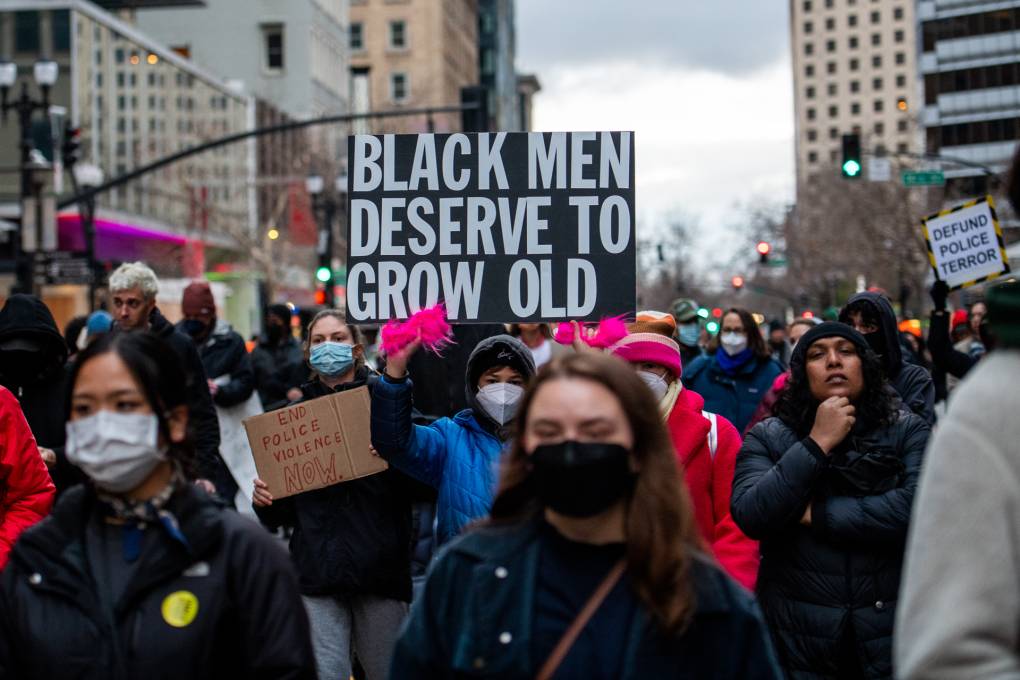
"caption": "A crowd gathers on 14th Street and Broadway in Oakland on Jan. 29, 2023, for a rally to protest the Memphis police killing of Tyre Nichols.",
"description": null,
"title": "002_KQED_OaklandTyreNicholsRally_01292023",
"credit": "Beth LaBerge/KQED",
"status": "inherit",
"altTag": "A person in a crowd of people in the street holding a sign that reads \"Black men deserve to grow old.\"",
"fetchFailed": false,
"isLoading": false
},
"news_11914582": {
"type": "attachments",
"id": "news_11914582",
"meta": {
"index": "attachments_1716263798",
"site": "news",
"id": "11914582",
"found": true
},
"parent": 11914556,
"imgSizes": {
"twentyfourteen-full-width": {
"file": "https://ww2.kqed.org/app/uploads/sites/10/2022/05/RS56089_025_KQED_BuffaloSolidarityVigil_05182022-qut-1038x576.jpg",
"width": 1038,
"mimeType": "image/jpeg",
"height": 576
},
"thumbnail": {
"file": "https://ww2.kqed.org/app/uploads/sites/10/2022/05/RS56089_025_KQED_BuffaloSolidarityVigil_05182022-qut-160x107.jpg",
"width": 160,
"mimeType": "image/jpeg",
"height": 107
},
"post-thumbnail": {
"file": "https://ww2.kqed.org/app/uploads/sites/10/2022/05/RS56089_025_KQED_BuffaloSolidarityVigil_05182022-qut-672x372.jpg",
"width": 672,
"mimeType": "image/jpeg",
"height": 372
},
"kqedFullSize": {
"file": "https://ww2.kqed.org/app/uploads/sites/10/2022/05/RS56089_025_KQED_BuffaloSolidarityVigil_05182022-qut.jpg",
"width": 1920,
"height": 1278
},
"large": {
"file": "https://ww2.kqed.org/app/uploads/sites/10/2022/05/RS56089_025_KQED_BuffaloSolidarityVigil_05182022-qut-1020x679.jpg",
"width": 1020,
"mimeType": "image/jpeg",
"height": 679
},
"1536x1536": {
"file": "https://ww2.kqed.org/app/uploads/sites/10/2022/05/RS56089_025_KQED_BuffaloSolidarityVigil_05182022-qut-1536x1022.jpg",
"width": 1536,
"mimeType": "image/jpeg",
"height": 1022
},
"medium": {
"file": "https://ww2.kqed.org/app/uploads/sites/10/2022/05/RS56089_025_KQED_BuffaloSolidarityVigil_05182022-qut-800x533.jpg",
"width": 800,
"mimeType": "image/jpeg",
"height": 533
}
},
"publishDate": 1652988980,
"modified": 1652995695,
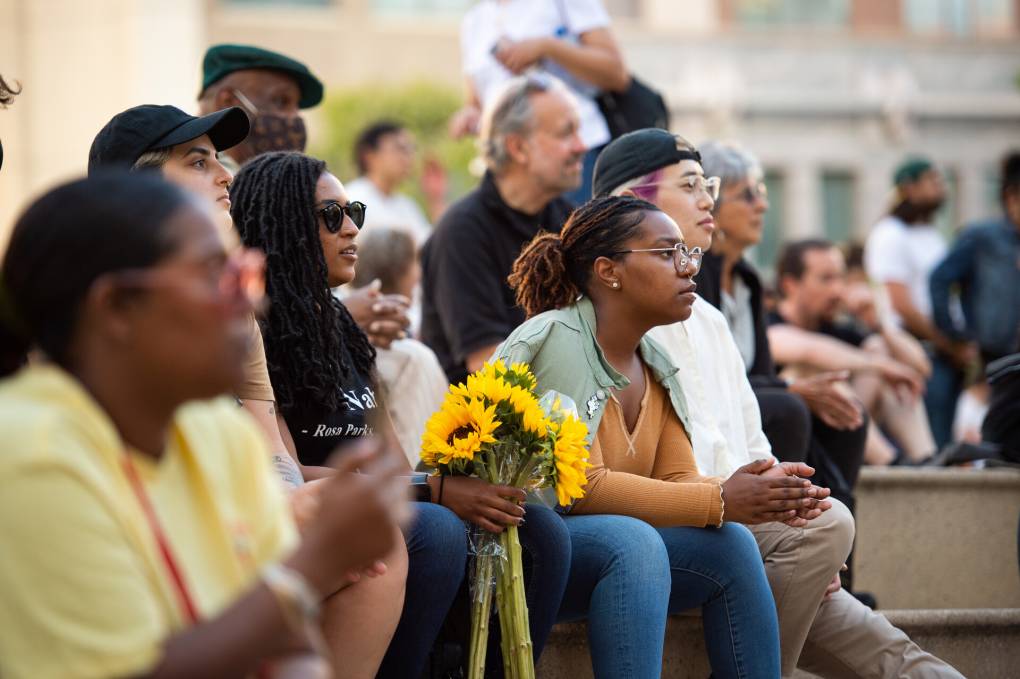
"caption": "People gather to listen to speakers during a healing circle and vigil outside Oakland City Hall on Wednesday, honoring the 13 people shot and 10 people killed on May 14, 2022 — almost all of them Black — during a racist massacre in Buffalo, New York.",
"description": null,
"title": "RS56089_025_KQED_BuffaloSolidarityVigil_05182022-qut",
"credit": "Beth LaBerge/KQED",
"status": "inherit",
"altTag": "A group of mostly Black people sit outside on steps with solemn expressions, listening to speakers - one of them holds sunflowers",
"fetchFailed": false,
"isLoading": false
},
"news_11874322": {
"type": "attachments",
"id": "news_11874322",
"meta": {
"index": "attachments_1716263798",
"site": "news",
"id": "11874322",
"found": true
},
"parent": 11874272,
"imgSizes": {
"twentyfourteen-full-width": {
"file": "https://ww2.kqed.org/app/uploads/sites/10/2021/05/mario-gonzalez-oakland-1038x576.jpeg",
"width": 1038,
"mimeType": "image/jpeg",
"height": 576
},
"thumbnail": {
"file": "https://ww2.kqed.org/app/uploads/sites/10/2021/05/mario-gonzalez-oakland-160x107.jpeg",
"width": 160,
"mimeType": "image/jpeg",
"height": 107
},
"post-thumbnail": {
"file": "https://ww2.kqed.org/app/uploads/sites/10/2021/05/mario-gonzalez-oakland-672x372.jpeg",
"width": 672,
"mimeType": "image/jpeg",
"height": 372
},
"kqedFullSize": {
"file": "https://ww2.kqed.org/app/uploads/sites/10/2021/05/mario-gonzalez-oakland.jpeg",
"width": 1920,
"height": 1278
},
"large": {
"file": "https://ww2.kqed.org/app/uploads/sites/10/2021/05/mario-gonzalez-oakland-1020x679.jpeg",
"width": 1020,
"mimeType": "image/jpeg",
"height": 679
},
"1536x1536": {
"file": "https://ww2.kqed.org/app/uploads/sites/10/2021/05/mario-gonzalez-oakland-1536x1022.jpeg",
"width": 1536,
"mimeType": "image/jpeg",
"height": 1022
},
"medium": {
"file": "https://ww2.kqed.org/app/uploads/sites/10/2021/05/mario-gonzalez-oakland-800x533.jpeg",
"width": 800,
"mimeType": "image/jpeg",
"height": 533
}
},
"publishDate": 1621453549,
"modified": 1649440675,
"caption": "The mother of Mario Gonzales, Edith Arenales, puts her head together with her son Geraldo Gonzalez before speaking at a news conference outside the Alameda Police Department on April 27, 2021. Mario Gonzalez died while in police custody on April 19, 2021.",
"description": "The mother of Mario Gonzales, Edith Arenales, puts her head together with her son Geraldo Gonzalez before speaking at a news conference outside the Alameda Police Department on April 27, 2021. Mario Gonzalez died while in police custody on April 19, 2021.",
"title": "mario gonzalez oakland",
"credit": "Beth LaBerge/KQED",
"status": "inherit",
"altTag": "A man and woman stand with their foreheads touching, while holding a photo.",
"fetchFailed": false,
"isLoading": false
},
"news_11856767": {
"type": "attachments",
"id": "news_11856767",
"meta": {
"index": "attachments_1716263798",
"site": "news",
"id": "11856767",
"found": true
},
"parent": 11856712,
"imgSizes": {
"apple_news_ca_landscape_5_5": {
"file": "https://ww2.kqed.org/app/uploads/sites/10/2021/01/YouTubeScreenShotGunman-1044x720.jpg",
"width": 1044,
"mimeType": "image/jpeg",
"height": 720
},
"apple_news_ca_square_4_0": {
"file": "https://ww2.kqed.org/app/uploads/sites/10/2021/01/YouTubeScreenShotGunman-470x470.jpg",
"width": 470,
"mimeType": "image/jpeg",
"height": 470
},
"twentyfourteen-full-width": {
"file": "https://ww2.kqed.org/app/uploads/sites/10/2021/01/YouTubeScreenShotGunman-1038x576.jpg",
"width": 1038,
"mimeType": "image/jpeg",
"height": 576
},
"thumbnail": {
"file": "https://ww2.kqed.org/app/uploads/sites/10/2021/01/YouTubeScreenShotGunman-160x90.jpg",
"width": 160,
"mimeType": "image/jpeg",
"height": 90
},
"post-thumbnail": {
"file": "https://ww2.kqed.org/app/uploads/sites/10/2021/01/YouTubeScreenShotGunman-672x372.jpg",
"width": 672,
"mimeType": "image/jpeg",
"height": 372
},
"kqedFullSize": {
"file": "https://ww2.kqed.org/app/uploads/sites/10/2021/01/YouTubeScreenShotGunman.jpg",
"width": 1280,
"height": 720
},
"apple_news_ca_landscape_4_7": {
"file": "https://ww2.kqed.org/app/uploads/sites/10/2021/01/YouTubeScreenShotGunman-632x474.jpg",
"width": 632,
"mimeType": "image/jpeg",
"height": 474
},
"large": {
"file": "https://ww2.kqed.org/app/uploads/sites/10/2021/01/YouTubeScreenShotGunman-1020x574.jpg",
"width": 1020,
"mimeType": "image/jpeg",
"height": 574
},
"apple_news_ca_landscape_4_0": {
"file": "https://ww2.kqed.org/app/uploads/sites/10/2021/01/YouTubeScreenShotGunman-536x402.jpg",
"width": 536,
"mimeType": "image/jpeg",
"height": 402
},
"apple_news_ca_portrait_12_9": {
"file": "https://ww2.kqed.org/app/uploads/sites/10/2021/01/YouTubeScreenShotGunman-1122x720.jpg",
"width": 1122,
"mimeType": "image/jpeg",
"height": 720
},
"medium": {
"file": "https://ww2.kqed.org/app/uploads/sites/10/2021/01/YouTubeScreenShotGunman-800x450.jpg",
"width": 800,
"mimeType": "image/jpeg",
"height": 450
},
"apple_news_ca_portrait_4_0": {
"file": "https://ww2.kqed.org/app/uploads/sites/10/2021/01/YouTubeScreenShotGunman-354x472.jpg",
"width": 354,
"mimeType": "image/jpeg",
"height": 472
},
"apple_news_ca_portrait_9_7": {
"file": "https://ww2.kqed.org/app/uploads/sites/10/2021/01/YouTubeScreenShotGunman-840x720.jpg",
"width": 840,
"mimeType": "image/jpeg",
"height": 720
},
"apple_news_ca_square_9_7": {
"file": "https://ww2.kqed.org/app/uploads/sites/10/2021/01/YouTubeScreenShotGunman-1104x720.jpg",
"width": 1104,
"mimeType": "image/jpeg",
"height": 720
},
"apple_news_ca_portrait_4_7": {
"file": "https://ww2.kqed.org/app/uploads/sites/10/2021/01/YouTubeScreenShotGunman-414x552.jpg",
"width": 414,
"mimeType": "image/jpeg",
"height": 552
},
"apple_news_ca_portrait_5_5": {
"file": "https://ww2.kqed.org/app/uploads/sites/10/2021/01/YouTubeScreenShotGunman-687x720.jpg",
"width": 687,
"mimeType": "image/jpeg",
"height": 720
},
"apple_news_ca_square_4_7": {
"file": "https://ww2.kqed.org/app/uploads/sites/10/2021/01/YouTubeScreenShotGunman-550x550.jpg",
"width": 550,
"mimeType": "image/jpeg",
"height": 550
},
"apple_news_ca_square_5_5": {
"file": "https://ww2.kqed.org/app/uploads/sites/10/2021/01/YouTubeScreenShotGunman-912x720.jpg",
"width": 912,
"mimeType": "image/jpeg",
"height": 720
}
},
"publishDate": 1611361662,
"modified": 1611598381,
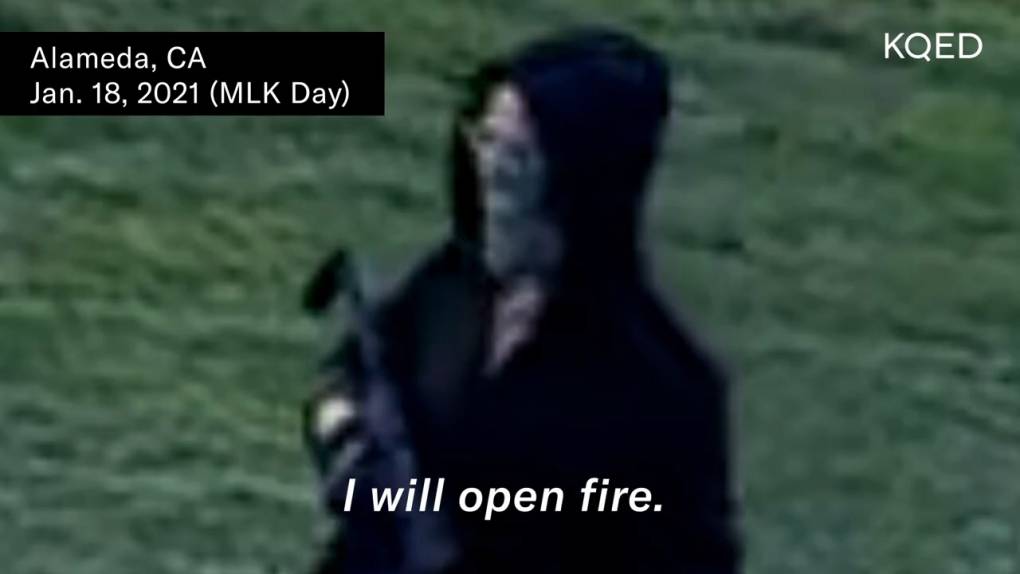
"caption": "A video screenshot of a man with a gun threatening a peaceful MLK Day caravan protest in Alameda on Monday, Jan. 18, 2021. Video captions by KQED.",
"description": "A video screenshot of a man with a gun threatening a peaceful MLK Day caravan protest in Alameda on Monday, Jan. 18, 2021. Video captions by KQED.",
"title": "YouTubeScreenShotGunman",
"credit": "Anonymous Courtesy Photo Provided to KQED",
"status": "inherit",
"altTag": null,
"fetchFailed": false,
"isLoading": false
},
"news_11855899": {
"type": "attachments",
"id": "news_11855899",
"meta": {
"index": "attachments_1716263798",
"site": "news",
"id": "11855899",
"found": true
},
"parent": 11855869,
"imgSizes": {
"apple_news_ca_landscape_5_5": {
"file": "https://ww2.kqed.org/app/uploads/sites/10/2021/01/018_Oakland_MLKCarCaravan_01182021-1044x783.jpg",
"width": 1044,
"mimeType": "image/jpeg",
"height": 783
},
"apple_news_ca_square_4_0": {
"file": "https://ww2.kqed.org/app/uploads/sites/10/2021/01/018_Oakland_MLKCarCaravan_01182021-470x470.jpg",
"width": 470,
"mimeType": "image/jpeg",
"height": 470
},
"twentyfourteen-full-width": {
"file": "https://ww2.kqed.org/app/uploads/sites/10/2021/01/018_Oakland_MLKCarCaravan_01182021-1038x576.jpg",
"width": 1038,
"mimeType": "image/jpeg",
"height": 576
},
"thumbnail": {
"file": "https://ww2.kqed.org/app/uploads/sites/10/2021/01/018_Oakland_MLKCarCaravan_01182021-160x107.jpg",
"width": 160,
"mimeType": "image/jpeg",
"height": 107
},
"post-thumbnail": {
"file": "https://ww2.kqed.org/app/uploads/sites/10/2021/01/018_Oakland_MLKCarCaravan_01182021-672x372.jpg",
"width": 672,
"mimeType": "image/jpeg",
"height": 372
},
"kqedFullSize": {
"file": "https://ww2.kqed.org/app/uploads/sites/10/2021/01/018_Oakland_MLKCarCaravan_01182021.jpg",
"width": 1920,
"height": 1278
},
"apple_news_ca_landscape_4_7": {
"file": "https://ww2.kqed.org/app/uploads/sites/10/2021/01/018_Oakland_MLKCarCaravan_01182021-632x474.jpg",
"width": 632,
"mimeType": "image/jpeg",
"height": 474
},
"large": {
"file": "https://ww2.kqed.org/app/uploads/sites/10/2021/01/018_Oakland_MLKCarCaravan_01182021-1020x679.jpg",
"width": 1020,
"mimeType": "image/jpeg",
"height": 679
},
"apple_news_ca_landscape_4_0": {
"file": "https://ww2.kqed.org/app/uploads/sites/10/2021/01/018_Oakland_MLKCarCaravan_01182021-536x402.jpg",
"width": 536,
"mimeType": "image/jpeg",
"height": 402
},
"apple_news_ca_portrait_12_9": {
"file": "https://ww2.kqed.org/app/uploads/sites/10/2021/01/018_Oakland_MLKCarCaravan_01182021-1122x1278.jpg",
"width": 1122,
"mimeType": "image/jpeg",
"height": 1278
},
"medium": {
"file": "https://ww2.kqed.org/app/uploads/sites/10/2021/01/018_Oakland_MLKCarCaravan_01182021-800x533.jpg",
"width": 800,
"mimeType": "image/jpeg",
"height": 533
},
"apple_news_ca_portrait_4_0": {
"file": "https://ww2.kqed.org/app/uploads/sites/10/2021/01/018_Oakland_MLKCarCaravan_01182021-354x472.jpg",
"width": 354,
"mimeType": "image/jpeg",
"height": 472
},
"apple_news_ca_portrait_9_7": {
"file": "https://ww2.kqed.org/app/uploads/sites/10/2021/01/018_Oakland_MLKCarCaravan_01182021-840x1120.jpg",
"width": 840,
"mimeType": "image/jpeg",
"height": 1120
},
"apple_news_ca_landscape_12_9": {
"file": "https://ww2.kqed.org/app/uploads/sites/10/2021/01/018_Oakland_MLKCarCaravan_01182021-1832x1278.jpg",
"width": 1832,
"mimeType": "image/jpeg",
"height": 1278
},
"apple_news_ca_square_9_7": {
"file": "https://ww2.kqed.org/app/uploads/sites/10/2021/01/018_Oakland_MLKCarCaravan_01182021-1104x1104.jpg",
"width": 1104,
"mimeType": "image/jpeg",
"height": 1104
},
"1536x1536": {
"file": "https://ww2.kqed.org/app/uploads/sites/10/2021/01/018_Oakland_MLKCarCaravan_01182021-1536x1022.jpg",
"width": 1536,
"mimeType": "image/jpeg",
"height": 1022
},
"apple_news_ca_portrait_4_7": {
"file": "https://ww2.kqed.org/app/uploads/sites/10/2021/01/018_Oakland_MLKCarCaravan_01182021-414x552.jpg",
"width": 414,
"mimeType": "image/jpeg",
"height": 552
},
"apple_news_ca_square_12_9": {
"file": "https://ww2.kqed.org/app/uploads/sites/10/2021/01/018_Oakland_MLKCarCaravan_01182021-1472x1278.jpg",
"width": 1472,
"mimeType": "image/jpeg",
"height": 1278
},
"apple_news_ca_portrait_5_5": {
"file": "https://ww2.kqed.org/app/uploads/sites/10/2021/01/018_Oakland_MLKCarCaravan_01182021-687x916.jpg",
"width": 687,
"mimeType": "image/jpeg",
"height": 916
},
"apple_news_ca_square_4_7": {
"file": "https://ww2.kqed.org/app/uploads/sites/10/2021/01/018_Oakland_MLKCarCaravan_01182021-550x550.jpg",
"width": 550,
"mimeType": "image/jpeg",
"height": 550
},
"apple_news_ca_landscape_9_7": {
"file": "https://ww2.kqed.org/app/uploads/sites/10/2021/01/018_Oakland_MLKCarCaravan_01182021-1376x1032.jpg",
"width": 1376,
"mimeType": "image/jpeg",
"height": 1032
},
"apple_news_ca_square_5_5": {
"file": "https://ww2.kqed.org/app/uploads/sites/10/2021/01/018_Oakland_MLKCarCaravan_01182021-912x912.jpg",
"width": 912,
"mimeType": "image/jpeg",
"height": 912
}
},
"publishDate": 1611023703,
"modified": 1611028802,
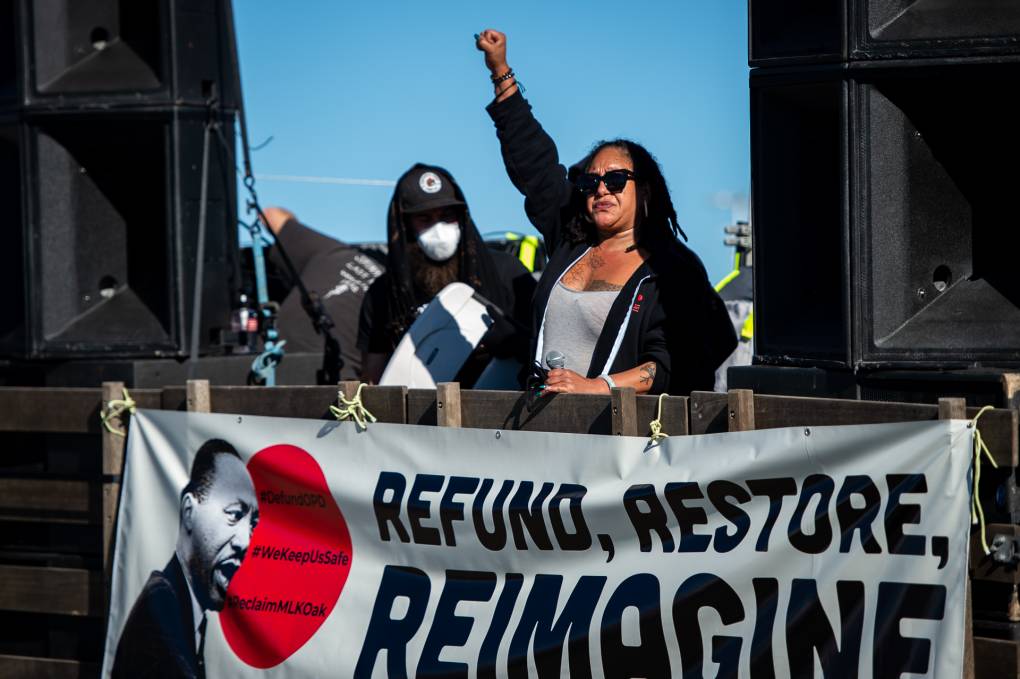
"caption": "Cat Brooks, co-founder of Anti Police-Terror Project, speaks before a Martin Luther King Day car caravan leaves Middle Harbor Shoreline Park near the Port of Oakland on Jan. 18, 2021.",
"description": null,
"title": "018_Oakland_MLKCarCaravan_01182021",
"credit": "BethLaBerge/KQED",
"status": "inherit",
"altTag": "Cat Brooks, co-founder of Anti Police-Terror Project, speaks before a Martin Luther King Day car caravan starting at Middle Harbor Shoreline Park near the Port of Oakland on Jan. 18, 2021.",
"fetchFailed": false,
"isLoading": false
},
"news_11840563": {
"type": "attachments",
"id": "news_11840563",
"meta": {
"index": "attachments_1716263798",
"site": "news",
"id": "11840563",
"found": true
},
"parent": 11840071,
"imgSizes": {
"apple_news_ca_landscape_5_5": {
"file": "https://ww2.kqed.org/app/uploads/sites/10/2020/10/RS43756_035_KQED_Oakland_Juneteenth_06192020-qut-1044x783.jpg",
"width": 1044,
"mimeType": "image/jpeg",
"height": 783
},
"apple_news_ca_square_4_0": {
"file": "https://ww2.kqed.org/app/uploads/sites/10/2020/10/RS43756_035_KQED_Oakland_Juneteenth_06192020-qut-470x470.jpg",
"width": 470,
"mimeType": "image/jpeg",
"height": 470
},
"twentyfourteen-full-width": {
"file": "https://ww2.kqed.org/app/uploads/sites/10/2020/10/RS43756_035_KQED_Oakland_Juneteenth_06192020-qut-1038x576.jpg",
"width": 1038,
"mimeType": "image/jpeg",
"height": 576
},
"thumbnail": {
"file": "https://ww2.kqed.org/app/uploads/sites/10/2020/10/RS43756_035_KQED_Oakland_Juneteenth_06192020-qut-160x107.jpg",
"width": 160,
"mimeType": "image/jpeg",
"height": 107
},
"post-thumbnail": {
"file": "https://ww2.kqed.org/app/uploads/sites/10/2020/10/RS43756_035_KQED_Oakland_Juneteenth_06192020-qut-672x372.jpg",
"width": 672,
"mimeType": "image/jpeg",
"height": 372
},
"kqedFullSize": {
"file": "https://ww2.kqed.org/app/uploads/sites/10/2020/10/RS43756_035_KQED_Oakland_Juneteenth_06192020-qut.jpg",
"width": 1920,
"height": 1278
},
"apple_news_ca_landscape_4_7": {
"file": "https://ww2.kqed.org/app/uploads/sites/10/2020/10/RS43756_035_KQED_Oakland_Juneteenth_06192020-qut-632x474.jpg",
"width": 632,
"mimeType": "image/jpeg",
"height": 474
},
"large": {
"file": "https://ww2.kqed.org/app/uploads/sites/10/2020/10/RS43756_035_KQED_Oakland_Juneteenth_06192020-qut-1020x679.jpg",
"width": 1020,
"mimeType": "image/jpeg",
"height": 679
},
"apple_news_ca_landscape_4_0": {
"file": "https://ww2.kqed.org/app/uploads/sites/10/2020/10/RS43756_035_KQED_Oakland_Juneteenth_06192020-qut-536x402.jpg",
"width": 536,
"mimeType": "image/jpeg",
"height": 402
},
"apple_news_ca_portrait_12_9": {
"file": "https://ww2.kqed.org/app/uploads/sites/10/2020/10/RS43756_035_KQED_Oakland_Juneteenth_06192020-qut-1122x1278.jpg",
"width": 1122,
"mimeType": "image/jpeg",
"height": 1278
},
"medium": {
"file": "https://ww2.kqed.org/app/uploads/sites/10/2020/10/RS43756_035_KQED_Oakland_Juneteenth_06192020-qut-800x533.jpg",
"width": 800,
"mimeType": "image/jpeg",
"height": 533
},
"apple_news_ca_portrait_4_0": {
"file": "https://ww2.kqed.org/app/uploads/sites/10/2020/10/RS43756_035_KQED_Oakland_Juneteenth_06192020-qut-354x472.jpg",
"width": 354,
"mimeType": "image/jpeg",
"height": 472
},
"apple_news_ca_portrait_9_7": {
"file": "https://ww2.kqed.org/app/uploads/sites/10/2020/10/RS43756_035_KQED_Oakland_Juneteenth_06192020-qut-840x1120.jpg",
"width": 840,
"mimeType": "image/jpeg",
"height": 1120
},
"apple_news_ca_landscape_12_9": {
"file": "https://ww2.kqed.org/app/uploads/sites/10/2020/10/RS43756_035_KQED_Oakland_Juneteenth_06192020-qut-1832x1278.jpg",
"width": 1832,
"mimeType": "image/jpeg",
"height": 1278
},
"apple_news_ca_square_9_7": {
"file": "https://ww2.kqed.org/app/uploads/sites/10/2020/10/RS43756_035_KQED_Oakland_Juneteenth_06192020-qut-1104x1104.jpg",
"width": 1104,
"mimeType": "image/jpeg",
"height": 1104
},
"1536x1536": {
"file": "https://ww2.kqed.org/app/uploads/sites/10/2020/10/RS43756_035_KQED_Oakland_Juneteenth_06192020-qut-1536x1022.jpg",
"width": 1536,
"mimeType": "image/jpeg",
"height": 1022
},
"apple_news_ca_portrait_4_7": {
"file": "https://ww2.kqed.org/app/uploads/sites/10/2020/10/RS43756_035_KQED_Oakland_Juneteenth_06192020-qut-414x552.jpg",
"width": 414,
"mimeType": "image/jpeg",
"height": 552
},
"apple_news_ca_square_12_9": {
"file": "https://ww2.kqed.org/app/uploads/sites/10/2020/10/RS43756_035_KQED_Oakland_Juneteenth_06192020-qut-1472x1278.jpg",
"width": 1472,
"mimeType": "image/jpeg",
"height": 1278
},
"apple_news_ca_portrait_5_5": {
"file": "https://ww2.kqed.org/app/uploads/sites/10/2020/10/RS43756_035_KQED_Oakland_Juneteenth_06192020-qut-687x916.jpg",
"width": 687,
"mimeType": "image/jpeg",
"height": 916
},
"apple_news_ca_square_4_7": {
"file": "https://ww2.kqed.org/app/uploads/sites/10/2020/10/RS43756_035_KQED_Oakland_Juneteenth_06192020-qut-550x550.jpg",
"width": 550,
"mimeType": "image/jpeg",
"height": 550
},
"apple_news_ca_landscape_9_7": {
"file": "https://ww2.kqed.org/app/uploads/sites/10/2020/10/RS43756_035_KQED_Oakland_Juneteenth_06192020-qut-1376x1032.jpg",
"width": 1376,
"mimeType": "image/jpeg",
"height": 1032
},
"apple_news_ca_square_5_5": {
"file": "https://ww2.kqed.org/app/uploads/sites/10/2020/10/RS43756_035_KQED_Oakland_Juneteenth_06192020-qut-912x912.jpg",
"width": 912,
"mimeType": "image/jpeg",
"height": 912
}
},
"publishDate": 1601579082,
"modified": 1601579198,
"caption": "A Juneteenth march stops in front of the Oakland Police Station on June 19, 2020.",
"description": "A Juneteenth march stops in front of the Oakland Police Station on June 19, 2020.",
"title": "RS43756_035_KQED_Oakland_Juneteenth_06192020-qut",
"credit": "Beth LaBerge/KQED",
"status": "inherit",
"fetchFailed": false,
"isLoading": false
}
},
"audioPlayerReducer": {
"postId": "stream_live",
"isPaused": true,
"isPlaying": false,
"pfsActive": false,
"pledgeModalIsOpen": true,
"playerDrawerIsOpen": false
},
"authorsReducer": {
"byline_news_11914556": {
"type": "authors",
"id": "byline_news_11914556",
"meta": {
"override": true
},
"slug": "byline_news_11914556",
"name": "\u003ca href=\"https://twitter.com/otisrtaylorjr\">Otis R. Taylor Jr.\u003c/a>",
"isLoading": false
},
"byline_news_11874272": {
"type": "authors",
"id": "byline_news_11874272",
"meta": {
"override": true
},
"slug": "byline_news_11874272",
"name": "\u003ca href=\"https://www.npr.org/people/2101350/eric-westervelt\">Eric Westervelt\u003c/a>",
"isLoading": false
},
"kqednewsstaffandwires": {
"type": "authors",
"id": "237",
"meta": {
"index": "authors_1716337520",
"id": "237",
"found": true
},
"name": "KQED News Staff and Wires",
"firstName": "KQED News Staff and Wires",
"lastName": null,
"slug": "kqednewsstaffandwires",
"email": "onlinenewsstaff@kqed.org",
"display_author_email": false,
"staff_mastheads": [],
"title": null,
"bio": null,
"avatar": "https://secure.gravatar.com/avatar/72295af8ebbfbd19a4948f5271285664?s=600&d=blank&r=g",
"twitter": null,
"facebook": null,
"instagram": null,
"linkedin": null,
"sites": [
{
"site": "arts",
"roles": [
"contributor"
]
},
{
"site": "news",
"roles": [
"contributor"
]
},
{
"site": "lowdown",
"roles": [
"author"
]
},
{
"site": "stateofhealth",
"roles": [
"contributor"
]
},
{
"site": "food",
"roles": [
"author"
]
}
],
"headData": {
"title": "KQED News Staff and Wires | KQED",
"description": null,
"ogImgSrc": "https://secure.gravatar.com/avatar/72295af8ebbfbd19a4948f5271285664?s=600&d=blank&r=g",
"twImgSrc": "https://secure.gravatar.com/avatar/72295af8ebbfbd19a4948f5271285664?s=600&d=blank&r=g"
},
"isLoading": false,
"link": "/author/kqednewsstaffandwires"
},
"clei": {
"type": "authors",
"id": "8617",
"meta": {
"index": "authors_1716337520",
"id": "8617",
"found": true
},
"name": "Cecilia Lei",
"firstName": "Cecilia",
"lastName": "Lei",
"slug": "clei",
"email": "clei@KQED.org",
"display_author_email": false,
"staff_mastheads": [],
"title": "KQED Contributor",
"bio": "Cecilia Lei is an on-call host and producer for KQED News and Podcasts. Previously, she was the executive producer and host of the San Francisco Chronicle's daily news podcast, 'Fifth and Mission'. Cecilia is a graduate of UC Berkeley’s Graduate School of Journalism and the former president of the Asian American Journalists Association San Francisco Bay Area chapter.",
"avatar": "https://secure.gravatar.com/avatar/40975f1f88fccf628ee537bf6ffc2af8?s=600&d=blank&r=g",
"twitter": null,
"facebook": null,
"instagram": null,
"linkedin": null,
"sites": [
{
"site": "arts",
"roles": [
"contributor"
]
},
{
"site": "news",
"roles": [
"author",
"read_private_posts"
]
},
{
"site": "about",
"roles": [
"editor"
]
}
],
"headData": {
"title": "Cecilia Lei | KQED",
"description": "KQED Contributor",
"ogImgSrc": "https://secure.gravatar.com/avatar/40975f1f88fccf628ee537bf6ffc2af8?s=600&d=blank&r=g",
"twImgSrc": "https://secure.gravatar.com/avatar/40975f1f88fccf628ee537bf6ffc2af8?s=600&d=blank&r=g"
},
"isLoading": false,
"link": "/author/clei"
},
"awoelfle": {
"type": "authors",
"id": "11630",
"meta": {
"index": "authors_1716337520",
"id": "11630",
"found": true
},
"name": "Alice Woelfle",
"firstName": "Alice",
"lastName": "Woelfle",
"slug": "awoelfle",
"email": "awoelfle@KQED.org",
"display_author_email": false,
"staff_mastheads": [],
"title": null,
"bio": null,
"avatar": "https://secure.gravatar.com/avatar/00e46668235dc71f4a7513cf5eb31df3?s=600&d=blank&r=g",
"twitter": null,
"facebook": null,
"instagram": null,
"linkedin": null,
"sites": [
{
"site": "news",
"roles": [
"subscriber"
]
}
],
"headData": {
"title": "Alice Woelfle | KQED",
"description": null,
"ogImgSrc": "https://secure.gravatar.com/avatar/00e46668235dc71f4a7513cf5eb31df3?s=600&d=blank&r=g",
"twImgSrc": "https://secure.gravatar.com/avatar/00e46668235dc71f4a7513cf5eb31df3?s=600&d=blank&r=g"
},
"isLoading": false,
"link": "/author/awoelfle"
},
"ebaldassari": {
"type": "authors",
"id": "11652",
"meta": {
"index": "authors_1716337520",
"id": "11652",
"found": true
},
"name": "Erin Baldassari",
"firstName": "Erin",
"lastName": "Baldassari",
"slug": "ebaldassari",
"email": "ebaldassari@KQED.org",
"display_author_email": true,
"staff_mastheads": [
"news"
],
"title": "Staff Writer",
"bio": "Erin Baldassari covers housing for KQED. She's a former print journalist and most recently worked as the transportation reporter for the \u003cem>Mercury News\u003c/em> and \u003cem>East Bay Times. \u003c/em>There, she focused on how the Bay Area’s housing shortage has changed the way people move around the region. She also served on the \u003cem>East Bay Times\u003c/em>’ 2017 Pulitzer Prize-winning team for coverage of the Ghost Ship Fire in Oakland. Prior to that, Erin worked as a breaking news and general assignment reporter for a variety of outlets in the Bay Area and the greater Boston area. A Tufts University alumna, Erin grew up in the foothills of the Sierra Nevada mountains and in Sonoma County. She is a life-long KQED listener.",
"avatar": "https://secure.gravatar.com/avatar/660ce35d088ca54ad606d7e941abc652?s=600&d=mm&r=g",
"twitter": "e_baldi",
"facebook": null,
"instagram": null,
"linkedin": null,
"sites": [
{
"site": "news",
"roles": [
"edit_others_posts",
"editor"
]
},
{
"site": "science",
"roles": [
"editor"
]
},
{
"site": "liveblog",
"roles": [
"editor"
]
}
],
"headData": {
"title": "Erin Baldassari | KQED",
"description": "Staff Writer",
"ogImgSrc": "https://secure.gravatar.com/avatar/660ce35d088ca54ad606d7e941abc652?s=600&d=mm&r=g",
"twImgSrc": "https://secure.gravatar.com/avatar/660ce35d088ca54ad606d7e941abc652?s=600&d=mm&r=g"
},
"isLoading": false,
"link": "/author/ebaldassari"
},
"blaberge": {
"type": "authors",
"id": "11667",
"meta": {
"index": "authors_1716337520",
"id": "11667",
"found": true
},
"name": "Beth LaBerge",
"firstName": "Beth",
"lastName": "LaBerge",
"slug": "blaberge",
"email": "blaberge@KQED.org",
"display_author_email": true,
"staff_mastheads": [
"news"
],
"title": "Photographer, News",
"bio": "Beth LaBerge is a visual journalist for \u003ca href=\"https://www.kqed.org/news\">KQED News\u003c/a>.",
"avatar": "https://secure.gravatar.com/avatar/15e224cd55918d1876693b8280954875?s=600&d=blank&r=g",
"twitter": null,
"facebook": null,
"instagram": "https://www.instagram.com/bethlaberge/",
"linkedin": null,
"sites": [
{
"site": "arts",
"roles": [
"editor"
]
},
{
"site": "news",
"roles": [
"editor"
]
},
{
"site": "science",
"roles": [
"editor",
"contributor",
"author"
]
},
{
"site": "liveblog",
"roles": [
"editor"
]
}
],
"headData": {
"title": "Beth LaBerge | KQED",
"description": "Photographer, News",
"ogImgSrc": "https://secure.gravatar.com/avatar/15e224cd55918d1876693b8280954875?s=600&d=blank&r=g",
"twImgSrc": "https://secure.gravatar.com/avatar/15e224cd55918d1876693b8280954875?s=600&d=blank&r=g"
},
"isLoading": false,
"link": "/author/blaberge"
},
"jrodriguez": {
"type": "authors",
"id": "11690",
"meta": {
"index": "authors_1716337520",
"id": "11690",
"found": true
},
"name": "Joe Fitzgerald Rodriguez",
"firstName": "Joe",
"lastName": "Fitzgerald Rodriguez",
"slug": "jrodriguez",
"email": "jrodriguez@kqed.org",
"display_author_email": true,
"staff_mastheads": [
"news"
],
"title": "Reporter and Producer",
"bio": "Joe Fitzgerald Rodriguez is a reporter and digital producer for KQED covering politics. Joe most recently wrote for the \u003cem>San Francisco Examiner\u003c/em> as a political columnist covering The City. He was raised in San Francisco and has spent his reporting career in his beloved, foggy, city by the bay. Joe was 12-years-old when he conducted his first interview in journalism, grilling former San Francisco Mayor Willie Brown for the Marina Middle School newspaper, \u003cem>The Penguin Press, \u003c/em>and he continues to report on the San Francisco Bay Area to this day.",
"avatar": "https://secure.gravatar.com/avatar/2247beb0564c1e9c62228d5649d2edac?s=600&d=blank&r=g",
"twitter": "FitztheReporter",
"facebook": null,
"instagram": "https://www.instagram.com/fitzthereporter/",
"linkedin": null,
"sites": [
{
"site": "",
"roles": [
"editor"
]
},
{
"site": "arts",
"roles": [
"editor"
]
},
{
"site": "news",
"roles": [
"editor"
]
},
{
"site": "science",
"roles": [
"editor"
]
},
{
"site": "elections",
"roles": [
"editor"
]
},
{
"site": "liveblog",
"roles": [
"editor"
]
}
],
"headData": {
"title": "Joe Fitzgerald Rodriguez | KQED",
"description": "Reporter and Producer",
"ogImgSrc": "https://secure.gravatar.com/avatar/2247beb0564c1e9c62228d5649d2edac?s=600&d=blank&r=g",
"twImgSrc": "https://secure.gravatar.com/avatar/2247beb0564c1e9c62228d5649d2edac?s=600&d=blank&r=g"
},
"isLoading": false,
"link": "/author/jrodriguez"
}
},
"breakingNewsReducer": {},
"pagesReducer": {},
"postsReducer": {
"stream_live": {
"type": "live",
"id": "stream_live",
"audioUrl": "https://streams.kqed.org/kqedradio",
"title": "Live Stream",
"excerpt": "Live Stream information currently unavailable.",
"link": "/radio",
"featImg": "",
"label": {
"name": "KQED Live",
"link": "/"
}
},
"stream_kqedNewscast": {
"type": "posts",
"id": "stream_kqedNewscast",
"audioUrl": "https://www.kqed.org/.stream/anon/radio/RDnews/newscast.mp3?_=1",
"title": "KQED Newscast",
"featImg": "",
"label": {
"name": "88.5 FM",
"link": "/"
}
},
"news_11939594": {
"type": "posts",
"id": "news_11939594",
"meta": {
"index": "posts_1716263798",
"site": "news",
"id": "11939594",
"score": null,
"sort": [
1675055368000
]
},
"guestAuthors": [],
"slug": "stop-f-ing-killing-us-anti-police-terror-project-held-vigil-and-rally-for-tyre-nichols-in-oakland",
"title": "'Stop F---ing Killing Us': Hundreds March for Tyre Nichols in Oakland",
"publishDate": 1675055368,
"format": "standard",
"headTitle": "‘Stop F—ing Killing Us’: Hundreds March for Tyre Nichols in Oakland | KQED",
"labelTerm": {
"site": "news"
},
"content": "\u003cp>As the nation — and the world — reels following the public release of the Memphis Police Department’s shockingly brutal body camera footage showing five officers savagely beating Tyre Nichols, who later died from his injuries, rallies, marches and vigils have been held across the country. Politicians, law enforcement officials, police unions and protesters are not just condemning the Memphis police officers who were involved, but also drawing attention to \u003ca href=\"https://www.washingtonpost.com/graphics/investigations/police-shootings-database/\">systemic violence in law enforcement across the United States\u003c/a>.\u003c/p>\n\u003cfigure id=\"attachment_11939703\" class=\"wp-caption aligncenter\" style=\"max-width: 800px\">\u003ca href=\"https://ww2.kqed.org/app/uploads/sites/10/2023/01/021_KQED_OaklandTyreNicholsRally_01292023.jpg\">\u003cimg loading=\"lazy\" decoding=\"async\" class=\"size-medium wp-image-11939703\" src=\"https://ww2.kqed.org/app/uploads/sites/10/2023/01/021_KQED_OaklandTyreNicholsRally_01292023-800x533.jpg\" alt='A man holds a sign that says \"Love to Tyre\" in a crowd of people holding signs.' width=\"800\" height=\"533\" srcset=\"https://cdn.kqed.org/wp-content/uploads/sites/10/2023/01/021_KQED_OaklandTyreNicholsRally_01292023-800x533.jpg 800w, https://cdn.kqed.org/wp-content/uploads/sites/10/2023/01/021_KQED_OaklandTyreNicholsRally_01292023-1020x680.jpg 1020w, https://cdn.kqed.org/wp-content/uploads/sites/10/2023/01/021_KQED_OaklandTyreNicholsRally_01292023-160x107.jpg 160w, https://cdn.kqed.org/wp-content/uploads/sites/10/2023/01/021_KQED_OaklandTyreNicholsRally_01292023-1536x1024.jpg 1536w, https://cdn.kqed.org/wp-content/uploads/sites/10/2023/01/021_KQED_OaklandTyreNicholsRally_01292023.jpg 1920w\" sizes=\"(max-width: 800px) 100vw, 800px\">\u003c/a>\u003cfigcaption class=\"wp-caption-text\">Brian Johnson marches with demonstrators against the Memphis police killing of Tyre Nichols, in Oakland on Jan. 29, 2023. \u003ccite>(Beth LaBerge/KQED)\u003c/cite>\u003c/figcaption>\u003c/figure>\n\u003cp>In Oakland, a city with \u003ca href=\"https://oaklandside.org/2020/07/24/oaklandside-east-bay-yesterday-police-violence-oakland/\">a long history of deadly confrontations involving law enforcement\u003c/a>, a rally and march was held by the \u003ca href=\"https://www.antipoliceterrorproject.org/\">Anti Police-Terror Project\u003c/a> (APTP), with hundreds of people in attendance on Sunday at 5 p.m. at Oscar Grant Plaza — named in honor of yet another unarmed Black man who was killed as a result of police violence.\u003c/p>\n\u003cfigure id=\"attachment_11939694\" class=\"wp-caption aligncenter\" style=\"max-width: 800px\">\u003ca href=\"https://ww2.kqed.org/app/uploads/sites/10/2023/01/016_KQED_OaklandTyreNicholsRally_01292023.jpg\">\u003cimg loading=\"lazy\" decoding=\"async\" class=\"size-medium wp-image-11939694\" src=\"https://ww2.kqed.org/app/uploads/sites/10/2023/01/016_KQED_OaklandTyreNicholsRally_01292023-800x533.jpg\" alt='A woman holding a sign that says \"Say their names!\" in a crowd of people holding signs.' width=\"800\" height=\"533\" srcset=\"https://cdn.kqed.org/wp-content/uploads/sites/10/2023/01/016_KQED_OaklandTyreNicholsRally_01292023-800x533.jpg 800w, https://cdn.kqed.org/wp-content/uploads/sites/10/2023/01/016_KQED_OaklandTyreNicholsRally_01292023-1020x680.jpg 1020w, https://cdn.kqed.org/wp-content/uploads/sites/10/2023/01/016_KQED_OaklandTyreNicholsRally_01292023-160x107.jpg 160w, https://cdn.kqed.org/wp-content/uploads/sites/10/2023/01/016_KQED_OaklandTyreNicholsRally_01292023-1536x1024.jpg 1536w, https://cdn.kqed.org/wp-content/uploads/sites/10/2023/01/016_KQED_OaklandTyreNicholsRally_01292023.jpg 1920w\" sizes=\"(max-width: 800px) 100vw, 800px\">\u003c/a>\u003cfigcaption class=\"wp-caption-text\">Sloane Noel-Johnson, with the Black Organizing Project, marches with demonstrators against the Memphis police killing of Tyre Nichols, in Oakland on Jan. 29, 2023. \u003ccite>(Beth LaBerge/KQED)\u003c/cite>\u003c/figcaption>\u003c/figure>\n\u003cp>“These things are all too familiar and they happen all the time,” said Dayton Andrews, an Oakland resident. “I’m from Los Angeles originally and this is a carbon copy of what happened to Rodney King 30 years ago.”\u003c/p>\n\u003cfigure id=\"attachment_11939691\" class=\"wp-caption aligncenter\" style=\"max-width: 800px\">\u003ca href=\"https://ww2.kqed.org/app/uploads/sites/10/2023/01/007_KQED_OaklandTyreNicholsRally_01292023.jpg\">\u003cimg loading=\"lazy\" decoding=\"async\" class=\"size-medium wp-image-11939691\" src=\"https://ww2.kqed.org/app/uploads/sites/10/2023/01/007_KQED_OaklandTyreNicholsRally_01292023-800x533.jpg\" alt=\"A woman wearing a red hat and holding a microphone with red gloves.\" width=\"800\" height=\"533\" srcset=\"https://cdn.kqed.org/wp-content/uploads/sites/10/2023/01/007_KQED_OaklandTyreNicholsRally_01292023-800x533.jpg 800w, https://cdn.kqed.org/wp-content/uploads/sites/10/2023/01/007_KQED_OaklandTyreNicholsRally_01292023-1020x680.jpg 1020w, https://cdn.kqed.org/wp-content/uploads/sites/10/2023/01/007_KQED_OaklandTyreNicholsRally_01292023-160x107.jpg 160w, https://cdn.kqed.org/wp-content/uploads/sites/10/2023/01/007_KQED_OaklandTyreNicholsRally_01292023-1536x1024.jpg 1536w, https://cdn.kqed.org/wp-content/uploads/sites/10/2023/01/007_KQED_OaklandTyreNicholsRally_01292023.jpg 1920w\" sizes=\"(max-width: 800px) 100vw, 800px\">\u003c/a>\u003cfigcaption class=\"wp-caption-text\">Alameda County District Attorney Pamela Price speaks during a rally to protest the Memphis police killing of Tyre Nichols, in Oakland on Jan. 29, 2023. \u003ccite>(Beth LaBerge/KQED)\u003c/cite>\u003c/figcaption>\u003c/figure>\n\u003cp>“The community really has to respond and show that this is unacceptable,” said Lisa Eugene, a San Leandro resident. “This is an unacceptable standard of behavior for the police, for police everywhere.”\u003c/p>\n\u003cfigure id=\"attachment_11939692\" class=\"wp-caption aligncenter\" style=\"max-width: 800px\">\u003ca href=\"https://ww2.kqed.org/app/uploads/sites/10/2023/01/010_KQED_OaklandTyreNicholsRally_01292023.jpg\">\u003cimg loading=\"lazy\" decoding=\"async\" class=\"size-medium wp-image-11939692\" src=\"https://ww2.kqed.org/app/uploads/sites/10/2023/01/010_KQED_OaklandTyreNicholsRally_01292023-800x533.jpg\" alt=\"A man wearing a red hat and red hoodie holds a microphone at night.\" width=\"800\" height=\"533\" srcset=\"https://cdn.kqed.org/wp-content/uploads/sites/10/2023/01/010_KQED_OaklandTyreNicholsRally_01292023-800x533.jpg 800w, https://cdn.kqed.org/wp-content/uploads/sites/10/2023/01/010_KQED_OaklandTyreNicholsRally_01292023-1020x680.jpg 1020w, https://cdn.kqed.org/wp-content/uploads/sites/10/2023/01/010_KQED_OaklandTyreNicholsRally_01292023-160x107.jpg 160w, https://cdn.kqed.org/wp-content/uploads/sites/10/2023/01/010_KQED_OaklandTyreNicholsRally_01292023-1536x1024.jpg 1536w, https://cdn.kqed.org/wp-content/uploads/sites/10/2023/01/010_KQED_OaklandTyreNicholsRally_01292023.jpg 1920w\" sizes=\"(max-width: 800px) 100vw, 800px\">\u003c/a>\u003cfigcaption class=\"wp-caption-text\">Cephus Johnson, aka Uncle Bobby X, founder of the Oscar Grant Foundation, speaks during a rally to protest the Memphis police killing of Tyre Nichols, in Oakland on Jan. 29, 2023. \u003ccite>(Beth LaBerge/KQED)\u003c/cite>\u003c/figcaption>\u003c/figure>\n\u003cp>“We need a place to grieve and to rage … people have a right to be angry,” said Cat Brooks, APTP co-founder, in an interview with KQED. “And I wish people would start saying they’re sorry before they tell us to be peaceful. I don’t know how I’m not angry watching a grown man scream for his mother as he is pummeled to death by law enforcement. And I don’t know how people like me who do this work aren’t angry, because this is one of several deaths that we’ve responded to this week.”\u003c/p>\n\u003cfigure id=\"attachment_11939690\" class=\"wp-caption aligncenter\" style=\"max-width: 800px\">\u003ca href=\"https://ww2.kqed.org/app/uploads/sites/10/2023/01/006_KQED_OaklandTyreNicholsRally_01292023.jpg\">\u003cimg loading=\"lazy\" decoding=\"async\" class=\"size-medium wp-image-11939690\" src=\"https://ww2.kqed.org/app/uploads/sites/10/2023/01/006_KQED_OaklandTyreNicholsRally_01292023-800x533.jpg\" alt=\"A woman holding a microphone and a picture of a man.\" width=\"800\" height=\"533\" srcset=\"https://cdn.kqed.org/wp-content/uploads/sites/10/2023/01/006_KQED_OaklandTyreNicholsRally_01292023-800x533.jpg 800w, https://cdn.kqed.org/wp-content/uploads/sites/10/2023/01/006_KQED_OaklandTyreNicholsRally_01292023-1020x680.jpg 1020w, https://cdn.kqed.org/wp-content/uploads/sites/10/2023/01/006_KQED_OaklandTyreNicholsRally_01292023-160x107.jpg 160w, https://cdn.kqed.org/wp-content/uploads/sites/10/2023/01/006_KQED_OaklandTyreNicholsRally_01292023-1536x1024.jpg 1536w, https://cdn.kqed.org/wp-content/uploads/sites/10/2023/01/006_KQED_OaklandTyreNicholsRally_01292023.jpg 1920w\" sizes=\"(max-width: 800px) 100vw, 800px\">\u003c/a>\u003cfigcaption class=\"wp-caption-text\">Taun Hall, the mother of Miles Hall, who was killed by Walnut Creek police in 2019, speaks during a rally to protest the Memphis police killing of Tyre Nichols, in Oakland on Jan. 29, 2023. \u003ccite>(Beth LaBerge/KQED)\u003c/cite>\u003c/figcaption>\u003c/figure>\n\u003cp>“It could be me,” said Neena Joiner, an Oakland resident and business owner. “As a masculine-of-center person, presenting as masculine-of-center at night, in the daytime, I could be pulled out of my car. It’s been a couple times that I’ve been stopped myself.”\u003c/p>\n\u003cp>The APTP describes itself as “a Black-led, multi-racial, intergenerational coalition that seeks to build a replicable and sustainable model to eradicate police terror in communities of color, supporting families of victims of police terror in their fight for justice, documenting police abuses and connecting impacted families and community members with resources, legal referrals, and opportunities for healing.”\u003c/p>\n\u003cp>An emotional and shaken Cat Brooks told KQED that this was not about “a few bad actors” but is about “the whole institution of policing.”\u003c/p>\n\u003cfigure id=\"attachment_11939693\" class=\"wp-caption aligncenter\" style=\"max-width: 800px\">\u003ca href=\"https://ww2.kqed.org/app/uploads/sites/10/2023/01/011_KQED_OaklandTyreNicholsRally_01292023.jpg\">\u003cimg loading=\"lazy\" decoding=\"async\" class=\"size-medium wp-image-11939693\" src=\"https://ww2.kqed.org/app/uploads/sites/10/2023/01/011_KQED_OaklandTyreNicholsRally_01292023-800x533.jpg\" alt=\"A woman wearing a black hat and orange bag stands in a crowd of people at night.\" width=\"800\" height=\"533\" srcset=\"https://cdn.kqed.org/wp-content/uploads/sites/10/2023/01/011_KQED_OaklandTyreNicholsRally_01292023-800x533.jpg 800w, https://cdn.kqed.org/wp-content/uploads/sites/10/2023/01/011_KQED_OaklandTyreNicholsRally_01292023-1020x680.jpg 1020w, https://cdn.kqed.org/wp-content/uploads/sites/10/2023/01/011_KQED_OaklandTyreNicholsRally_01292023-160x107.jpg 160w, https://cdn.kqed.org/wp-content/uploads/sites/10/2023/01/011_KQED_OaklandTyreNicholsRally_01292023-1536x1024.jpg 1536w, https://cdn.kqed.org/wp-content/uploads/sites/10/2023/01/011_KQED_OaklandTyreNicholsRally_01292023.jpg 1920w\" sizes=\"(max-width: 800px) 100vw, 800px\">\u003c/a>\u003cfigcaption class=\"wp-caption-text\">Oakland Women’s Center CEO Mahagany Gillam listens to speakers during a rally to protest the Memphis police killing of Tyre Nichols, in Oakland on Jan. 29, 2023. \u003ccite>(Beth LaBerge/KQED)\u003c/cite>\u003c/figcaption>\u003c/figure>\n\u003cp>“If we want to tie it locally to why this matters in Oakland, the Oakland Police Department pull over Black people at a rate of 5.3 times higher than their white counterparts. That’s a fact that happens in Oakland every single year,” Brooks said. “We’ve got cops engaging in ghost chases that end up with dead civilians. That’s the type of rogue mentality we have of the Oakland Police Department. We are just one stop away from a Tyre Nichols inside of Oakland … Stop f—-ing killing us.”\u003c/p>\n\u003cfigure id=\"attachment_11939704\" class=\"wp-caption aligncenter\" style=\"max-width: 800px\">\u003ca href=\"https://ww2.kqed.org/app/uploads/sites/10/2023/01/022_KQED_OaklandTyreNicholsRally_01292023.jpg\">\u003cimg loading=\"lazy\" decoding=\"async\" class=\"size-medium wp-image-11939704\" src=\"https://ww2.kqed.org/app/uploads/sites/10/2023/01/022_KQED_OaklandTyreNicholsRally_01292023-800x533.jpg\" alt=\"A crowd of people holding signs walk down a street at night.\" width=\"800\" height=\"533\" srcset=\"https://cdn.kqed.org/wp-content/uploads/sites/10/2023/01/022_KQED_OaklandTyreNicholsRally_01292023-800x533.jpg 800w, https://cdn.kqed.org/wp-content/uploads/sites/10/2023/01/022_KQED_OaklandTyreNicholsRally_01292023-1020x680.jpg 1020w, https://cdn.kqed.org/wp-content/uploads/sites/10/2023/01/022_KQED_OaklandTyreNicholsRally_01292023-160x107.jpg 160w, https://cdn.kqed.org/wp-content/uploads/sites/10/2023/01/022_KQED_OaklandTyreNicholsRally_01292023-1536x1024.jpg 1536w, https://cdn.kqed.org/wp-content/uploads/sites/10/2023/01/022_KQED_OaklandTyreNicholsRally_01292023.jpg 1920w\" sizes=\"(max-width: 800px) 100vw, 800px\">\u003c/a>\u003cfigcaption class=\"wp-caption-text\">Demonstrators march against the Memphis police killing of Tyre Nichols, in Oakland on Jan. 29, 2023. \u003ccite>(Beth LaBerge/KQED)\u003c/cite>\u003c/figcaption>\u003c/figure>\n\u003cp>Oakland Mayor Sheng Thao released a statement Friday saying “it is traumatic and it is understandable that Americans all over our nation are angry and disgusted. I hope that the serious charges against the officers who killed him will bring a measure of justice to his family and I know all of Oakland stands with them today.”\u003c/p>\n\u003cfigure id=\"attachment_11939689\" class=\"wp-caption aligncenter\" style=\"max-width: 800px\">\u003ca href=\"https://ww2.kqed.org/app/uploads/sites/10/2023/01/004_KQED_OaklandTyreNicholsRally_01292023.jpg\">\u003cimg loading=\"lazy\" decoding=\"async\" class=\"size-medium wp-image-11939689\" src=\"https://ww2.kqed.org/app/uploads/sites/10/2023/01/004_KQED_OaklandTyreNicholsRally_01292023-800x533.jpg\" alt='A sign that reads \"Say their names!\" is held by a person in a crowd of people holding signs.' width=\"800\" height=\"533\" srcset=\"https://cdn.kqed.org/wp-content/uploads/sites/10/2023/01/004_KQED_OaklandTyreNicholsRally_01292023-800x533.jpg 800w, https://cdn.kqed.org/wp-content/uploads/sites/10/2023/01/004_KQED_OaklandTyreNicholsRally_01292023-1020x680.jpg 1020w, https://cdn.kqed.org/wp-content/uploads/sites/10/2023/01/004_KQED_OaklandTyreNicholsRally_01292023-160x107.jpg 160w, https://cdn.kqed.org/wp-content/uploads/sites/10/2023/01/004_KQED_OaklandTyreNicholsRally_01292023-1536x1024.jpg 1536w, https://cdn.kqed.org/wp-content/uploads/sites/10/2023/01/004_KQED_OaklandTyreNicholsRally_01292023.jpg 1920w\" sizes=\"(max-width: 800px) 100vw, 800px\">\u003c/a>\u003cfigcaption class=\"wp-caption-text\">A crowd gathers on 14th Street and Broadway in Oakland on Jan. 29, 2023, for a rally to protest the Memphis police killing of Tyre Nichols. \u003ccite>(Beth LaBerge/KQED)\u003c/cite>\u003c/figcaption>\u003c/figure>\n\u003cp>Rallies and protests were held across the U.S. over the weekend, as demonstrators chanted slogans and marched in Memphis, New York City, Los Angeles and Portland, Oregon, at times blocking traffic. In Washington, D.C., protesters gathered across the street from the White House and near Black Lives Matter Plaza.\u003c/p>\n\u003cp>President Joe Biden issued a statement on Friday, saying, “Public trust is the foundation of public safety, and there are still too many places in America today where the bonds of trust are frayed or broken.”\u003c/p>\n\u003cp>In a statement following the release of the police video Friday, Gov. Gavin Newsom and his partner, Jennifer Siebel Newsom, expressed their “deepest condolences” to the family and friends of Tyre Nichols.\u003c/p>\n\u003cfigure id=\"attachment_11939695\" class=\"wp-caption aligncenter\" style=\"max-width: 800px\">\u003ca href=\"https://ww2.kqed.org/app/uploads/sites/10/2023/01/017_KQED_OaklandTyreNicholsRally_01292023.jpg\">\u003cimg loading=\"lazy\" decoding=\"async\" class=\"size-medium wp-image-11939695\" src=\"https://ww2.kqed.org/app/uploads/sites/10/2023/01/017_KQED_OaklandTyreNicholsRally_01292023-800x533.jpg\" alt=\"A man wearing a black beanie hat has his fist raised in the air.\" width=\"800\" height=\"533\" srcset=\"https://cdn.kqed.org/wp-content/uploads/sites/10/2023/01/017_KQED_OaklandTyreNicholsRally_01292023-800x533.jpg 800w, https://cdn.kqed.org/wp-content/uploads/sites/10/2023/01/017_KQED_OaklandTyreNicholsRally_01292023-1020x680.jpg 1020w, https://cdn.kqed.org/wp-content/uploads/sites/10/2023/01/017_KQED_OaklandTyreNicholsRally_01292023-160x107.jpg 160w, https://cdn.kqed.org/wp-content/uploads/sites/10/2023/01/017_KQED_OaklandTyreNicholsRally_01292023-1536x1024.jpg 1536w, https://cdn.kqed.org/wp-content/uploads/sites/10/2023/01/017_KQED_OaklandTyreNicholsRally_01292023.jpg 1920w\" sizes=\"(max-width: 800px) 100vw, 800px\">\u003c/a>\u003cfigcaption class=\"wp-caption-text\">Demonstrators march against the Memphis police killing of Tyre Nichols, in Oakland on Jan. 29, 2023. \u003ccite>(Beth LaBerge/KQED)\u003c/cite>\u003c/figcaption>\u003c/figure>\n\u003cp>“Tyre Nichols should be alive today. The video released shows abhorrent behavior and these officers must be held accountable for their deadly actions and clear abuse of power,” said Newsom. “Today, we are a country in mourning, and must continue our work nationwide to push reforms to prevent excessive use of force and save lives,”\u003c/p>\n\u003cp>\u003cem>The Associated Press and KQED’s Dana Cronin, Beth LaBerge and Attila Pelit contributed to this story.\u003c/em>\u003c/p>\n\u003cp>[ad fullwidth]\u003c/p>\n\u003cp>[ad floatright]\u003c/p>\n",
"blocks": [],
"excerpt": "Sunday's rally and march condemned the brutal police beating and subsequent death of Tyre Nichols in Memphis, Tenn., drawing parallels with Oakland and what Anti Police-Terror Project Co-Founder Cat Brooks referred to as 'the type of rogue mentality we have at the OPD.'",
"status": "publish",
"parent": 0,
"modified": 1721159038,
"stats": {
"hasAudio": false,
"hasVideo": false,
"hasChartOrMap": false,
"iframeSrcs": [],
"hasGoogleForm": false,
"hasGallery": false,
"hasHearkenModule": false,
"hasPolis": false,
"paragraphCount": 17,
"wordCount": 1093
},
"headData": {
"title": "'Stop F---ing Killing Us': Hundreds March for Tyre Nichols in Oakland | KQED",
"description": "Sunday's rally and march condemned the brutal police beating and subsequent death of Tyre Nichols in Memphis, Tenn., drawing parallels with Oakland and what Anti Police-Terror Project Co-Founder Cat Brooks referred to as 'the type of rogue mentality we have at the OPD.'",
"ogTitle": "",
"ogDescription": "",
"ogImgId": "",
"twTitle": "",
"twDescription": "",
"twImgId": "",
"schema": {
"@context": "https://schema.org",
"@type": "NewsArticle",
"headline": "'Stop F---ing Killing Us': Hundreds March for Tyre Nichols in Oakland",
"datePublished": "2023-01-29T21:09:28-08:00",
"dateModified": "2024-07-16T12:43:58-07:00",
"image": "https://cdn.kqed.org/wp-content/uploads/2020/02/KQED-OG-Image@1x.png",
"isAccessibleForFree": "True",
"publisher": {
"@type": "NewsMediaOrganization",
"@id": "https://www.kqed.org/#organization",
"name": "KQED",
"logo": "https://cdn.kqed.org/wp-content/uploads/2020/02/KQED-OG-Image@1x.png",
"url": "https://www.kqed.org",
"sameAs": [
"https://www.facebook.com/KQED",
"https://twitter.com/KQED",
"https://www.instagram.com/kqed/",
"https://www.tiktok.com/@kqedofficial",
"https://www.linkedin.com/company/kqed",
"https://www.youtube.com/channel/UCeC0IOo7i1P_61zVUWbJ4nw"
]
}
}
},
"sticky": false,
"excludeFromSiteSearch": "Include",
"showOnAuthorArchivePages": "No",
"articleAge": "0",
"path": "/news/11939594/stop-f-ing-killing-us-anti-police-terror-project-held-vigil-and-rally-for-tyre-nichols-in-oakland",
"audioTrackLength": null,
"parsedContent": [
{
"type": "contentString",
"content": "\u003cdiv class=\"post-body\">\u003cp>\u003cp>As the nation — and the world — reels following the public release of the Memphis Police Department’s shockingly brutal body camera footage showing five officers savagely beating Tyre Nichols, who later died from his injuries, rallies, marches and vigils have been held across the country. Politicians, law enforcement officials, police unions and protesters are not just condemning the Memphis police officers who were involved, but also drawing attention to \u003ca href=\"https://www.washingtonpost.com/graphics/investigations/police-shootings-database/\">systemic violence in law enforcement across the United States\u003c/a>.\u003c/p>\n\u003cfigure id=\"attachment_11939703\" class=\"wp-caption aligncenter\" style=\"max-width: 800px\">\u003ca href=\"https://ww2.kqed.org/app/uploads/sites/10/2023/01/021_KQED_OaklandTyreNicholsRally_01292023.jpg\">\u003cimg loading=\"lazy\" decoding=\"async\" class=\"size-medium wp-image-11939703\" src=\"https://ww2.kqed.org/app/uploads/sites/10/2023/01/021_KQED_OaklandTyreNicholsRally_01292023-800x533.jpg\" alt='A man holds a sign that says \"Love to Tyre\" in a crowd of people holding signs.' width=\"800\" height=\"533\" srcset=\"https://cdn.kqed.org/wp-content/uploads/sites/10/2023/01/021_KQED_OaklandTyreNicholsRally_01292023-800x533.jpg 800w, https://cdn.kqed.org/wp-content/uploads/sites/10/2023/01/021_KQED_OaklandTyreNicholsRally_01292023-1020x680.jpg 1020w, https://cdn.kqed.org/wp-content/uploads/sites/10/2023/01/021_KQED_OaklandTyreNicholsRally_01292023-160x107.jpg 160w, https://cdn.kqed.org/wp-content/uploads/sites/10/2023/01/021_KQED_OaklandTyreNicholsRally_01292023-1536x1024.jpg 1536w, https://cdn.kqed.org/wp-content/uploads/sites/10/2023/01/021_KQED_OaklandTyreNicholsRally_01292023.jpg 1920w\" sizes=\"(max-width: 800px) 100vw, 800px\">\u003c/a>\u003cfigcaption class=\"wp-caption-text\">Brian Johnson marches with demonstrators against the Memphis police killing of Tyre Nichols, in Oakland on Jan. 29, 2023. \u003ccite>(Beth LaBerge/KQED)\u003c/cite>\u003c/figcaption>\u003c/figure>\n\u003cp>In Oakland, a city with \u003ca href=\"https://oaklandside.org/2020/07/24/oaklandside-east-bay-yesterday-police-violence-oakland/\">a long history of deadly confrontations involving law enforcement\u003c/a>, a rally and march was held by the \u003ca href=\"https://www.antipoliceterrorproject.org/\">Anti Police-Terror Project\u003c/a> (APTP), with hundreds of people in attendance on Sunday at 5 p.m. at Oscar Grant Plaza — named in honor of yet another unarmed Black man who was killed as a result of police violence.\u003c/p>\n\u003cfigure id=\"attachment_11939694\" class=\"wp-caption aligncenter\" style=\"max-width: 800px\">\u003ca href=\"https://ww2.kqed.org/app/uploads/sites/10/2023/01/016_KQED_OaklandTyreNicholsRally_01292023.jpg\">\u003cimg loading=\"lazy\" decoding=\"async\" class=\"size-medium wp-image-11939694\" src=\"https://ww2.kqed.org/app/uploads/sites/10/2023/01/016_KQED_OaklandTyreNicholsRally_01292023-800x533.jpg\" alt='A woman holding a sign that says \"Say their names!\" in a crowd of people holding signs.' width=\"800\" height=\"533\" srcset=\"https://cdn.kqed.org/wp-content/uploads/sites/10/2023/01/016_KQED_OaklandTyreNicholsRally_01292023-800x533.jpg 800w, https://cdn.kqed.org/wp-content/uploads/sites/10/2023/01/016_KQED_OaklandTyreNicholsRally_01292023-1020x680.jpg 1020w, https://cdn.kqed.org/wp-content/uploads/sites/10/2023/01/016_KQED_OaklandTyreNicholsRally_01292023-160x107.jpg 160w, https://cdn.kqed.org/wp-content/uploads/sites/10/2023/01/016_KQED_OaklandTyreNicholsRally_01292023-1536x1024.jpg 1536w, https://cdn.kqed.org/wp-content/uploads/sites/10/2023/01/016_KQED_OaklandTyreNicholsRally_01292023.jpg 1920w\" sizes=\"(max-width: 800px) 100vw, 800px\">\u003c/a>\u003cfigcaption class=\"wp-caption-text\">Sloane Noel-Johnson, with the Black Organizing Project, marches with demonstrators against the Memphis police killing of Tyre Nichols, in Oakland on Jan. 29, 2023. \u003ccite>(Beth LaBerge/KQED)\u003c/cite>\u003c/figcaption>\u003c/figure>\n\u003cp>“These things are all too familiar and they happen all the time,” said Dayton Andrews, an Oakland resident. “I’m from Los Angeles originally and this is a carbon copy of what happened to Rodney King 30 years ago.”\u003c/p>\n\u003cfigure id=\"attachment_11939691\" class=\"wp-caption aligncenter\" style=\"max-width: 800px\">\u003ca href=\"https://ww2.kqed.org/app/uploads/sites/10/2023/01/007_KQED_OaklandTyreNicholsRally_01292023.jpg\">\u003cimg loading=\"lazy\" decoding=\"async\" class=\"size-medium wp-image-11939691\" src=\"https://ww2.kqed.org/app/uploads/sites/10/2023/01/007_KQED_OaklandTyreNicholsRally_01292023-800x533.jpg\" alt=\"A woman wearing a red hat and holding a microphone with red gloves.\" width=\"800\" height=\"533\" srcset=\"https://cdn.kqed.org/wp-content/uploads/sites/10/2023/01/007_KQED_OaklandTyreNicholsRally_01292023-800x533.jpg 800w, https://cdn.kqed.org/wp-content/uploads/sites/10/2023/01/007_KQED_OaklandTyreNicholsRally_01292023-1020x680.jpg 1020w, https://cdn.kqed.org/wp-content/uploads/sites/10/2023/01/007_KQED_OaklandTyreNicholsRally_01292023-160x107.jpg 160w, https://cdn.kqed.org/wp-content/uploads/sites/10/2023/01/007_KQED_OaklandTyreNicholsRally_01292023-1536x1024.jpg 1536w, https://cdn.kqed.org/wp-content/uploads/sites/10/2023/01/007_KQED_OaklandTyreNicholsRally_01292023.jpg 1920w\" sizes=\"(max-width: 800px) 100vw, 800px\">\u003c/a>\u003cfigcaption class=\"wp-caption-text\">Alameda County District Attorney Pamela Price speaks during a rally to protest the Memphis police killing of Tyre Nichols, in Oakland on Jan. 29, 2023. \u003ccite>(Beth LaBerge/KQED)\u003c/cite>\u003c/figcaption>\u003c/figure>\n\u003cp>“The community really has to respond and show that this is unacceptable,” said Lisa Eugene, a San Leandro resident. “This is an unacceptable standard of behavior for the police, for police everywhere.”\u003c/p>\n\u003cfigure id=\"attachment_11939692\" class=\"wp-caption aligncenter\" style=\"max-width: 800px\">\u003ca href=\"https://ww2.kqed.org/app/uploads/sites/10/2023/01/010_KQED_OaklandTyreNicholsRally_01292023.jpg\">\u003cimg loading=\"lazy\" decoding=\"async\" class=\"size-medium wp-image-11939692\" src=\"https://ww2.kqed.org/app/uploads/sites/10/2023/01/010_KQED_OaklandTyreNicholsRally_01292023-800x533.jpg\" alt=\"A man wearing a red hat and red hoodie holds a microphone at night.\" width=\"800\" height=\"533\" srcset=\"https://cdn.kqed.org/wp-content/uploads/sites/10/2023/01/010_KQED_OaklandTyreNicholsRally_01292023-800x533.jpg 800w, https://cdn.kqed.org/wp-content/uploads/sites/10/2023/01/010_KQED_OaklandTyreNicholsRally_01292023-1020x680.jpg 1020w, https://cdn.kqed.org/wp-content/uploads/sites/10/2023/01/010_KQED_OaklandTyreNicholsRally_01292023-160x107.jpg 160w, https://cdn.kqed.org/wp-content/uploads/sites/10/2023/01/010_KQED_OaklandTyreNicholsRally_01292023-1536x1024.jpg 1536w, https://cdn.kqed.org/wp-content/uploads/sites/10/2023/01/010_KQED_OaklandTyreNicholsRally_01292023.jpg 1920w\" sizes=\"(max-width: 800px) 100vw, 800px\">\u003c/a>\u003cfigcaption class=\"wp-caption-text\">Cephus Johnson, aka Uncle Bobby X, founder of the Oscar Grant Foundation, speaks during a rally to protest the Memphis police killing of Tyre Nichols, in Oakland on Jan. 29, 2023. \u003ccite>(Beth LaBerge/KQED)\u003c/cite>\u003c/figcaption>\u003c/figure>\n\u003cp>“We need a place to grieve and to rage … people have a right to be angry,” said Cat Brooks, APTP co-founder, in an interview with KQED. “And I wish people would start saying they’re sorry before they tell us to be peaceful. I don’t know how I’m not angry watching a grown man scream for his mother as he is pummeled to death by law enforcement. And I don’t know how people like me who do this work aren’t angry, because this is one of several deaths that we’ve responded to this week.”\u003c/p>\n\u003cfigure id=\"attachment_11939690\" class=\"wp-caption aligncenter\" style=\"max-width: 800px\">\u003ca href=\"https://ww2.kqed.org/app/uploads/sites/10/2023/01/006_KQED_OaklandTyreNicholsRally_01292023.jpg\">\u003cimg loading=\"lazy\" decoding=\"async\" class=\"size-medium wp-image-11939690\" src=\"https://ww2.kqed.org/app/uploads/sites/10/2023/01/006_KQED_OaklandTyreNicholsRally_01292023-800x533.jpg\" alt=\"A woman holding a microphone and a picture of a man.\" width=\"800\" height=\"533\" srcset=\"https://cdn.kqed.org/wp-content/uploads/sites/10/2023/01/006_KQED_OaklandTyreNicholsRally_01292023-800x533.jpg 800w, https://cdn.kqed.org/wp-content/uploads/sites/10/2023/01/006_KQED_OaklandTyreNicholsRally_01292023-1020x680.jpg 1020w, https://cdn.kqed.org/wp-content/uploads/sites/10/2023/01/006_KQED_OaklandTyreNicholsRally_01292023-160x107.jpg 160w, https://cdn.kqed.org/wp-content/uploads/sites/10/2023/01/006_KQED_OaklandTyreNicholsRally_01292023-1536x1024.jpg 1536w, https://cdn.kqed.org/wp-content/uploads/sites/10/2023/01/006_KQED_OaklandTyreNicholsRally_01292023.jpg 1920w\" sizes=\"(max-width: 800px) 100vw, 800px\">\u003c/a>\u003cfigcaption class=\"wp-caption-text\">Taun Hall, the mother of Miles Hall, who was killed by Walnut Creek police in 2019, speaks during a rally to protest the Memphis police killing of Tyre Nichols, in Oakland on Jan. 29, 2023. \u003ccite>(Beth LaBerge/KQED)\u003c/cite>\u003c/figcaption>\u003c/figure>\n\u003cp>“It could be me,” said Neena Joiner, an Oakland resident and business owner. “As a masculine-of-center person, presenting as masculine-of-center at night, in the daytime, I could be pulled out of my car. It’s been a couple times that I’ve been stopped myself.”\u003c/p>\n\u003cp>The APTP describes itself as “a Black-led, multi-racial, intergenerational coalition that seeks to build a replicable and sustainable model to eradicate police terror in communities of color, supporting families of victims of police terror in their fight for justice, documenting police abuses and connecting impacted families and community members with resources, legal referrals, and opportunities for healing.”\u003c/p>\n\u003cp>An emotional and shaken Cat Brooks told KQED that this was not about “a few bad actors” but is about “the whole institution of policing.”\u003c/p>\n\u003cfigure id=\"attachment_11939693\" class=\"wp-caption aligncenter\" style=\"max-width: 800px\">\u003ca href=\"https://ww2.kqed.org/app/uploads/sites/10/2023/01/011_KQED_OaklandTyreNicholsRally_01292023.jpg\">\u003cimg loading=\"lazy\" decoding=\"async\" class=\"size-medium wp-image-11939693\" src=\"https://ww2.kqed.org/app/uploads/sites/10/2023/01/011_KQED_OaklandTyreNicholsRally_01292023-800x533.jpg\" alt=\"A woman wearing a black hat and orange bag stands in a crowd of people at night.\" width=\"800\" height=\"533\" srcset=\"https://cdn.kqed.org/wp-content/uploads/sites/10/2023/01/011_KQED_OaklandTyreNicholsRally_01292023-800x533.jpg 800w, https://cdn.kqed.org/wp-content/uploads/sites/10/2023/01/011_KQED_OaklandTyreNicholsRally_01292023-1020x680.jpg 1020w, https://cdn.kqed.org/wp-content/uploads/sites/10/2023/01/011_KQED_OaklandTyreNicholsRally_01292023-160x107.jpg 160w, https://cdn.kqed.org/wp-content/uploads/sites/10/2023/01/011_KQED_OaklandTyreNicholsRally_01292023-1536x1024.jpg 1536w, https://cdn.kqed.org/wp-content/uploads/sites/10/2023/01/011_KQED_OaklandTyreNicholsRally_01292023.jpg 1920w\" sizes=\"(max-width: 800px) 100vw, 800px\">\u003c/a>\u003cfigcaption class=\"wp-caption-text\">Oakland Women’s Center CEO Mahagany Gillam listens to speakers during a rally to protest the Memphis police killing of Tyre Nichols, in Oakland on Jan. 29, 2023. \u003ccite>(Beth LaBerge/KQED)\u003c/cite>\u003c/figcaption>\u003c/figure>\n\u003cp>“If we want to tie it locally to why this matters in Oakland, the Oakland Police Department pull over Black people at a rate of 5.3 times higher than their white counterparts. That’s a fact that happens in Oakland every single year,” Brooks said. “We’ve got cops engaging in ghost chases that end up with dead civilians. That’s the type of rogue mentality we have of the Oakland Police Department. We are just one stop away from a Tyre Nichols inside of Oakland … Stop f—-ing killing us.”\u003c/p>\n\u003cfigure id=\"attachment_11939704\" class=\"wp-caption aligncenter\" style=\"max-width: 800px\">\u003ca href=\"https://ww2.kqed.org/app/uploads/sites/10/2023/01/022_KQED_OaklandTyreNicholsRally_01292023.jpg\">\u003cimg loading=\"lazy\" decoding=\"async\" class=\"size-medium wp-image-11939704\" src=\"https://ww2.kqed.org/app/uploads/sites/10/2023/01/022_KQED_OaklandTyreNicholsRally_01292023-800x533.jpg\" alt=\"A crowd of people holding signs walk down a street at night.\" width=\"800\" height=\"533\" srcset=\"https://cdn.kqed.org/wp-content/uploads/sites/10/2023/01/022_KQED_OaklandTyreNicholsRally_01292023-800x533.jpg 800w, https://cdn.kqed.org/wp-content/uploads/sites/10/2023/01/022_KQED_OaklandTyreNicholsRally_01292023-1020x680.jpg 1020w, https://cdn.kqed.org/wp-content/uploads/sites/10/2023/01/022_KQED_OaklandTyreNicholsRally_01292023-160x107.jpg 160w, https://cdn.kqed.org/wp-content/uploads/sites/10/2023/01/022_KQED_OaklandTyreNicholsRally_01292023-1536x1024.jpg 1536w, https://cdn.kqed.org/wp-content/uploads/sites/10/2023/01/022_KQED_OaklandTyreNicholsRally_01292023.jpg 1920w\" sizes=\"(max-width: 800px) 100vw, 800px\">\u003c/a>\u003cfigcaption class=\"wp-caption-text\">Demonstrators march against the Memphis police killing of Tyre Nichols, in Oakland on Jan. 29, 2023. \u003ccite>(Beth LaBerge/KQED)\u003c/cite>\u003c/figcaption>\u003c/figure>\n\u003cp>Oakland Mayor Sheng Thao released a statement Friday saying “it is traumatic and it is understandable that Americans all over our nation are angry and disgusted. I hope that the serious charges against the officers who killed him will bring a measure of justice to his family and I know all of Oakland stands with them today.”\u003c/p>\n\u003cfigure id=\"attachment_11939689\" class=\"wp-caption aligncenter\" style=\"max-width: 800px\">\u003ca href=\"https://ww2.kqed.org/app/uploads/sites/10/2023/01/004_KQED_OaklandTyreNicholsRally_01292023.jpg\">\u003cimg loading=\"lazy\" decoding=\"async\" class=\"size-medium wp-image-11939689\" src=\"https://ww2.kqed.org/app/uploads/sites/10/2023/01/004_KQED_OaklandTyreNicholsRally_01292023-800x533.jpg\" alt='A sign that reads \"Say their names!\" is held by a person in a crowd of people holding signs.' width=\"800\" height=\"533\" srcset=\"https://cdn.kqed.org/wp-content/uploads/sites/10/2023/01/004_KQED_OaklandTyreNicholsRally_01292023-800x533.jpg 800w, https://cdn.kqed.org/wp-content/uploads/sites/10/2023/01/004_KQED_OaklandTyreNicholsRally_01292023-1020x680.jpg 1020w, https://cdn.kqed.org/wp-content/uploads/sites/10/2023/01/004_KQED_OaklandTyreNicholsRally_01292023-160x107.jpg 160w, https://cdn.kqed.org/wp-content/uploads/sites/10/2023/01/004_KQED_OaklandTyreNicholsRally_01292023-1536x1024.jpg 1536w, https://cdn.kqed.org/wp-content/uploads/sites/10/2023/01/004_KQED_OaklandTyreNicholsRally_01292023.jpg 1920w\" sizes=\"(max-width: 800px) 100vw, 800px\">\u003c/a>\u003cfigcaption class=\"wp-caption-text\">A crowd gathers on 14th Street and Broadway in Oakland on Jan. 29, 2023, for a rally to protest the Memphis police killing of Tyre Nichols. \u003ccite>(Beth LaBerge/KQED)\u003c/cite>\u003c/figcaption>\u003c/figure>\n\u003cp>Rallies and protests were held across the U.S. over the weekend, as demonstrators chanted slogans and marched in Memphis, New York City, Los Angeles and Portland, Oregon, at times blocking traffic. In Washington, D.C., protesters gathered across the street from the White House and near Black Lives Matter Plaza.\u003c/p>\n\u003cp>President Joe Biden issued a statement on Friday, saying, “Public trust is the foundation of public safety, and there are still too many places in America today where the bonds of trust are frayed or broken.”\u003c/p>\n\u003cp>In a statement following the release of the police video Friday, Gov. Gavin Newsom and his partner, Jennifer Siebel Newsom, expressed their “deepest condolences” to the family and friends of Tyre Nichols.\u003c/p>\n\u003cfigure id=\"attachment_11939695\" class=\"wp-caption aligncenter\" style=\"max-width: 800px\">\u003ca href=\"https://ww2.kqed.org/app/uploads/sites/10/2023/01/017_KQED_OaklandTyreNicholsRally_01292023.jpg\">\u003cimg loading=\"lazy\" decoding=\"async\" class=\"size-medium wp-image-11939695\" src=\"https://ww2.kqed.org/app/uploads/sites/10/2023/01/017_KQED_OaklandTyreNicholsRally_01292023-800x533.jpg\" alt=\"A man wearing a black beanie hat has his fist raised in the air.\" width=\"800\" height=\"533\" srcset=\"https://cdn.kqed.org/wp-content/uploads/sites/10/2023/01/017_KQED_OaklandTyreNicholsRally_01292023-800x533.jpg 800w, https://cdn.kqed.org/wp-content/uploads/sites/10/2023/01/017_KQED_OaklandTyreNicholsRally_01292023-1020x680.jpg 1020w, https://cdn.kqed.org/wp-content/uploads/sites/10/2023/01/017_KQED_OaklandTyreNicholsRally_01292023-160x107.jpg 160w, https://cdn.kqed.org/wp-content/uploads/sites/10/2023/01/017_KQED_OaklandTyreNicholsRally_01292023-1536x1024.jpg 1536w, https://cdn.kqed.org/wp-content/uploads/sites/10/2023/01/017_KQED_OaklandTyreNicholsRally_01292023.jpg 1920w\" sizes=\"(max-width: 800px) 100vw, 800px\">\u003c/a>\u003cfigcaption class=\"wp-caption-text\">Demonstrators march against the Memphis police killing of Tyre Nichols, in Oakland on Jan. 29, 2023. \u003ccite>(Beth LaBerge/KQED)\u003c/cite>\u003c/figcaption>\u003c/figure>\n\u003cp>“Tyre Nichols should be alive today. The video released shows abhorrent behavior and these officers must be held accountable for their deadly actions and clear abuse of power,” said Newsom. “Today, we are a country in mourning, and must continue our work nationwide to push reforms to prevent excessive use of force and save lives,”\u003c/p>\n\u003cp>\u003cem>The Associated Press and KQED’s Dana Cronin, Beth LaBerge and Attila Pelit contributed to this story.\u003c/em>\u003c/p>\n\u003cp>\u003c/p>\u003c/div>",
"attributes": {
"named": {},
"numeric": []
}
},
{
"type": "component",
"content": "",
"name": "ad",
"attributes": {
"named": {
"label": "fullwidth"
},
"numeric": [
"fullwidth"
]
}
},
{
"type": "contentString",
"content": "\u003cdiv class=\"post-body\">\u003cp>\u003c/p>\n\u003cp>\u003c/p>\u003c/div>",
"attributes": {
"named": {},
"numeric": []
}
},
{
"type": "component",
"content": "",
"name": "ad",
"attributes": {
"named": {
"label": "floatright"
},
"numeric": [
"floatright"
]
}
},
{
"type": "contentString",
"content": "\u003cdiv class=\"post-body\">\u003cp>\u003c/p>\n\u003c/div>\u003c/p>",
"attributes": {
"named": {},
"numeric": []
}
}
],
"link": "/news/11939594/stop-f-ing-killing-us-anti-police-terror-project-held-vigil-and-rally-for-tyre-nichols-in-oakland",
"authors": [
"237"
],
"categories": [
"news_6188",
"news_8"
],
"tags": [
"news_28615",
"news_24460",
"news_20013",
"news_27626",
"news_745",
"news_32347"
],
"featImg": "news_11939688",
"label": "news"
},
"news_11914556": {
"type": "posts",
"id": "news_11914556",
"meta": {
"index": "posts_1716263798",
"site": "news",
"id": "11914556",
"score": null,
"sort": [
1652993210000
]
},
"guestAuthors": [],
"slug": "like-a-movie-that-never-ends-oakland-mourns-and-celebrates-the-lives-of-black-people-killed-in-buffalo",
"title": "'Like a Movie That Never Ends': Oakland Mourns and Celebrates the Lives of Black People Killed in Buffalo",
"publishDate": 1652993210,
"format": "standard",
"headTitle": "‘Like a Movie That Never Ends’: Oakland Mourns and Celebrates the Lives of Black People Killed in Buffalo | KQED",
"labelTerm": {},
"content": "\u003cp>The brass and woodwind instruments played by members of the Oakland Second Line Project in front of City Hall on a balmy Wednesday evening sounded jubilant — but this performance wasn’t about revelry.\u003c/p>\n\u003cp>That’s because the people gathered in Frank Ogawa Plaza were there to eulogize the 10 people killed by a \u003ca href=\"https://www.latimes.com/world-nation/story/2022-05-15/buffalo-shooter-new-generation-white-supremacists\">white supremacist gunman\u003c/a> in the May 14 \u003ca href=\"https://www.npr.org/2022/05/15/1099028397/buffalo-shooting-what-we-know\">racist massacre\u003c/a> in Buffalo, New York.\u003c/p>\n\u003cp>A total of 13 people were shot, almost all of them Black.\u003c/p>\n\u003cp>Vivian Yi Huang, who is Chinese, felt it was important for her 3-year-old daughter, K’mara, who she said is a mix of Chinese, Samoan and Black, to be at the vigil.\u003c/p>\n\u003cp>“My daughter represents so much of the hope that I have,” said Huang, co-director of the Asian Pacific Environmental Network, an environmental justice organization whose primary focus is creating healthy living environments for Asian immigrant and refugee communities. “I feel like it’s so important for her to be in a space where people are really celebrating the dignity and the worthiness and value of all of us that’s inherent in us as human beings.\u003c/p>\n\u003cp>“We as a community need to continue fighting white supremacy to make that real.”\u003c/p>\n\u003cfigure id=\"attachment_11914565\" class=\"wp-caption aligncenter\" style=\"max-width: 1920px\">\u003cimg loading=\"lazy\" decoding=\"async\" class=\"size-full wp-image-11914565\" src=\"https://ww2.kqed.org/app/uploads/sites/10/2022/05/RS56083_014_KQED_BuffaloSolidarityVigil_05182022-qut.jpg\" alt=\"masked woman with smiling eyes holds her young daughter also wearing a mask outside, with other attendees in the background\" width=\"1920\" height=\"1280\" srcset=\"https://cdn.kqed.org/wp-content/uploads/sites/10/2022/05/RS56083_014_KQED_BuffaloSolidarityVigil_05182022-qut.jpg 1920w, https://cdn.kqed.org/wp-content/uploads/sites/10/2022/05/RS56083_014_KQED_BuffaloSolidarityVigil_05182022-qut-800x533.jpg 800w, https://cdn.kqed.org/wp-content/uploads/sites/10/2022/05/RS56083_014_KQED_BuffaloSolidarityVigil_05182022-qut-1020x680.jpg 1020w, https://cdn.kqed.org/wp-content/uploads/sites/10/2022/05/RS56083_014_KQED_BuffaloSolidarityVigil_05182022-qut-160x107.jpg 160w, https://cdn.kqed.org/wp-content/uploads/sites/10/2022/05/RS56083_014_KQED_BuffaloSolidarityVigil_05182022-qut-1536x1024.jpg 1536w\" sizes=\"(max-width: 1920px) 100vw, 1920px\">\u003cfigcaption class=\"wp-caption-text\">Vivian Yi Huang and her daughter, K’mara, listen to an Oakland Second Line Project band performance during a healing circle and vigil outside Oakland City Hall on Wednesday. \u003ccite>(Beth LaBerge/KQED)\u003c/cite>\u003c/figcaption>\u003c/figure>\n\u003cp>The second line, with its chest-rattling bass drum, is the triumphant sound of Blackness, a sound that originated in West Africa.\u003c/p>\n\u003cp>It’s a sound that survived the Atlantic slave trade.\u003c/p>\n\u003cp>It’s a sound that mourns and “celebrates the lives of Black people,” Cat Brooks, Oakland activist and co-founder of the Anti Police-Terror Project, the vigil’s organizer, told the crowd.\u003c/p>\n\u003cfigure id=\"attachment_11914574\" class=\"wp-caption aligncenter\" style=\"max-width: 1920px\">\u003cimg loading=\"lazy\" decoding=\"async\" class=\"size-full wp-image-11914574\" src=\"https://ww2.kqed.org/app/uploads/sites/10/2022/05/RS56071_004_KQED_BuffaloSolidarityVigil_05182022-qut.jpg\" alt=\"Line of Black men playing trombones, trumpet and tuba walk down a street on a sunlit evening\" width=\"1920\" height=\"1280\" srcset=\"https://cdn.kqed.org/wp-content/uploads/sites/10/2022/05/RS56071_004_KQED_BuffaloSolidarityVigil_05182022-qut.jpg 1920w, https://cdn.kqed.org/wp-content/uploads/sites/10/2022/05/RS56071_004_KQED_BuffaloSolidarityVigil_05182022-qut-800x533.jpg 800w, https://cdn.kqed.org/wp-content/uploads/sites/10/2022/05/RS56071_004_KQED_BuffaloSolidarityVigil_05182022-qut-1020x680.jpg 1020w, https://cdn.kqed.org/wp-content/uploads/sites/10/2022/05/RS56071_004_KQED_BuffaloSolidarityVigil_05182022-qut-160x107.jpg 160w, https://cdn.kqed.org/wp-content/uploads/sites/10/2022/05/RS56071_004_KQED_BuffaloSolidarityVigil_05182022-qut-1536x1024.jpg 1536w\" sizes=\"(max-width: 1920px) 100vw, 1920px\">\u003cfigcaption class=\"wp-caption-text\">Members of the Oakland Second Line Project make their way toward a healing circle and vigil organized by the Anti Police-Terror Project outside Oakland City Hall on Wednesday. \u003ccite>(Beth LaBerge/KQED)\u003c/cite>\u003c/figcaption>\u003c/figure>\n\u003cp>It’s been 30 years since the uprising in Los Angeles after the police officers who mercilessly beat Rodney King — the first viral video of police brutality — were acquitted. We’re 13 years since the fatal shooting of Oscar Grant by a BART police officer, the first viral video of a police killing of a Black man captured by cellphone cameras and spread on social media. We’re almost two years since George Floyd was murdered by a police officer in Minneapolis, his death shared widely on social media.\u003c/p>\n\u003cp>The shooting in Buffalo is yet another reminder that Black life in America is as fragile now as it was when the enslaved were emancipated.\u003c/p>\n\u003cfigure id=\"attachment_11914603\" class=\"wp-caption aligncenter\" style=\"max-width: 1920px\">\u003cimg loading=\"lazy\" decoding=\"async\" class=\"size-full wp-image-11914603\" src=\"https://ww2.kqed.org/app/uploads/sites/10/2022/05/RS56103_036_KQED_BuffaloSolidarityVigil_05182022-qut.jpg\" alt=\"An older Black man speaks at a microphone with a shirt reading 'kill racism not me'\" width=\"1920\" height=\"1278\" srcset=\"https://cdn.kqed.org/wp-content/uploads/sites/10/2022/05/RS56103_036_KQED_BuffaloSolidarityVigil_05182022-qut.jpg 1920w, https://cdn.kqed.org/wp-content/uploads/sites/10/2022/05/RS56103_036_KQED_BuffaloSolidarityVigil_05182022-qut-800x533.jpg 800w, https://cdn.kqed.org/wp-content/uploads/sites/10/2022/05/RS56103_036_KQED_BuffaloSolidarityVigil_05182022-qut-1020x679.jpg 1020w, https://cdn.kqed.org/wp-content/uploads/sites/10/2022/05/RS56103_036_KQED_BuffaloSolidarityVigil_05182022-qut-160x107.jpg 160w, https://cdn.kqed.org/wp-content/uploads/sites/10/2022/05/RS56103_036_KQED_BuffaloSolidarityVigil_05182022-qut-1536x1022.jpg 1536w\" sizes=\"(max-width: 1920px) 100vw, 1920px\">\u003cfigcaption class=\"wp-caption-text\">Cephus ‘Uncle Bobby X’ Johnson, uncle of Oscar Grant, speaks during a healing circle and vigil outside Oakland City Hall on Wednesday. \u003ccite>(Beth LaBerge/KQED)\u003c/cite>\u003c/figcaption>\u003c/figure>\n\u003cp>Politicians across the country are moving to disenfranchise Black voters by rolling back voting rights and drawing redistricting maps that dilute Black voting power. In California, Black and brown voters organized to \u003ca href=\"https://www.kqed.org/news/11912468/activists-helped-create-the-bay-areas-most-diverse-congressional-district-now-theyre-probably-getting-john-garamendi\">create the Bay Area’s most diverse congressional district\u003c/a> to ensure better representation only to see a 77-year-old white man endorsed as the incumbent by the state Democratic Party.\u003c/p>\n\u003cp>Reproductive rights are on the precipice of being overturned by the Supreme Court, and political capital in some corners of America is gained by denying the truth about the 2020 presidential election.\u003c/p>\n\u003cp>Here’s an undeniable truth: An 18-year-old white man, armed with a high-powered rifle and racist, anti-immigrant views and the belief that white Americans are being replaced by people of color, drove 200 miles to a Black neighborhood to kill Black people shopping in a grocery store.\u003c/p>\n\u003cfigure id=\"attachment_11914591\" class=\"wp-caption aligncenter\" style=\"max-width: 1920px\">\u003cimg loading=\"lazy\" decoding=\"async\" class=\"size-full wp-image-11914591\" src=\"https://ww2.kqed.org/app/uploads/sites/10/2022/05/RS56092_023_KQED_BuffaloSolidarityVigil_05182022-qut.jpg\" alt=\"sign reading 'say their names' has pink hearts with names of shooting victims listed\" width=\"1920\" height=\"1280\" srcset=\"https://cdn.kqed.org/wp-content/uploads/sites/10/2022/05/RS56092_023_KQED_BuffaloSolidarityVigil_05182022-qut.jpg 1920w, https://cdn.kqed.org/wp-content/uploads/sites/10/2022/05/RS56092_023_KQED_BuffaloSolidarityVigil_05182022-qut-800x533.jpg 800w, https://cdn.kqed.org/wp-content/uploads/sites/10/2022/05/RS56092_023_KQED_BuffaloSolidarityVigil_05182022-qut-1020x680.jpg 1020w, https://cdn.kqed.org/wp-content/uploads/sites/10/2022/05/RS56092_023_KQED_BuffaloSolidarityVigil_05182022-qut-160x107.jpg 160w, https://cdn.kqed.org/wp-content/uploads/sites/10/2022/05/RS56092_023_KQED_BuffaloSolidarityVigil_05182022-qut-1536x1024.jpg 1536w\" sizes=\"(max-width: 1920px) 100vw, 1920px\">\u003cfigcaption class=\"wp-caption-text\">A sign at a vigil and healing circle held in downtown Oakland on Wednesday displays the names of the 10 people killed on May 14, 2022, in a racist massacre in Buffalo, New York. \u003ccite>(Beth LaBerge/KQED)\u003c/cite>\u003c/figcaption>\u003c/figure>\n\u003cp>As my colleagues Alex Hall and Julie Small reported earlier this week, \u003ca href=\"https://www.kqed.org/news/11913965/plot-to-blow-up-democratic-headquarters-exposed-california-extremists-hiding-in-plain-sight\">domestic extremism is on the rise in California and America\u003c/a>.\u003c/p>\n\u003cp>“What’s clear is we can’t keep treating acts of white supremacy as one-off crimes committed by supposed lone wolves suffering from mental health problems,” Erika Smith, a Los Angeles Times columnist, \u003ca href=\"https://www.latimes.com/california/story/2022-05-15/buffalo-shooting-california-roots-great-replacement-theory?utm_id=55646&sfmc_id=4422305\">recently wrote\u003c/a>. “We also can’t keep giving a pass to conservative pundits and Republican politicians who directly or indirectly encourage adherence to the ‘Great Replacement’ theory or any other tenet of racism or extremism.”\u003c/p>\n\u003cp>That’s the truth.\u003c/p>\n\u003cfigure id=\"attachment_11914608\" class=\"wp-caption aligncenter\" style=\"max-width: 1920px\">\u003cimg loading=\"lazy\" decoding=\"async\" class=\"size-full wp-image-11914608\" src=\"https://ww2.kqed.org/app/uploads/sites/10/2022/05/019_KQED_BuffaloSolidarityVigil_05182022.jpg\" alt=\"\" width=\"1920\" height=\"1278\" srcset=\"https://cdn.kqed.org/wp-content/uploads/sites/10/2022/05/019_KQED_BuffaloSolidarityVigil_05182022.jpg 1920w, https://cdn.kqed.org/wp-content/uploads/sites/10/2022/05/019_KQED_BuffaloSolidarityVigil_05182022-800x533.jpg 800w, https://cdn.kqed.org/wp-content/uploads/sites/10/2022/05/019_KQED_BuffaloSolidarityVigil_05182022-1020x679.jpg 1020w, https://cdn.kqed.org/wp-content/uploads/sites/10/2022/05/019_KQED_BuffaloSolidarityVigil_05182022-160x107.jpg 160w, https://cdn.kqed.org/wp-content/uploads/sites/10/2022/05/019_KQED_BuffaloSolidarityVigil_05182022-1536x1022.jpg 1536w\" sizes=\"(max-width: 1920px) 100vw, 1920px\">\u003cfigcaption class=\"wp-caption-text\">Akhi Nu (center) holds her hand over her heart while listening to speakers during a healing circle and vigil outside Oakland City Hall on Wednesday. \u003ccite>(Beth LaBerge/KQED)\u003c/cite>\u003c/figcaption>\u003c/figure>\n\u003cp>Before the vigil, I followed the second-line processional down Broadway, but stopped at Oakstop, a co-working space, where Dieudonné Brou was preparing for a meeting of the DetermiNation Black Men’s Group, a cultural healing and social justice program for young Black men. I asked Brou, who works for Urban Peace Movement, what he felt after he heard about the massacre.\u003c/p>\n\u003cp>“They will go to great lengths to cause terror on Black folks, on Black bodies, on Black spaces — more importantly on the Black mind,” said Brou, referring to symbolic violence, a term sociologists use to describe the hierarchical leverage that groups exert over others deemed inferior. “This man drove 200 miles, killed 10 people, but think about the effects it’s gonna have on millions of Black folks. It’s gonna stick with us.\u003c/p>\n\u003cp>“It’s like a movie that never ends.”\u003c/p>\n\u003cp>[ad fullwidth]\u003c/p>\n\u003cp>Down the street, at the corner of Broadway and Thomas L. Berkley Way, there was a labor protest. People held cardboard signs demanding higher wages as a man in a yellow vest handed out bottles of water.\u003c/p>\n\u003cp>I learned the protest was fake. I’d walked onto the set of “I Am Virgo,” an absurdist comedy from Boots Riley, the artist who gave us the brilliant 2018 film “Sorry to Bother You.”\u003c/p>\n\u003cp>There were almost as many people there as were at the vigil, a fact some might deem absurd.\u003c/p>\n\u003cp>\u003c/p>\n",
"blocks": [],
"excerpt": "The racist massacre in Buffalo is yet another reminder that Black life in America is as fragile now as it was when the enslaved were emancipated, writes Otis R. Taylor Jr., managing editor at KQED News.",
"status": "publish",
"parent": 0,
"modified": 1721128289,
"stats": {
"hasAudio": false,
"hasVideo": false,
"hasChartOrMap": false,
"iframeSrcs": [],
"hasGoogleForm": false,
"hasGallery": false,
"hasHearkenModule": false,
"hasPolis": false,
"paragraphCount": 25,
"wordCount": 1066
},
"headData": {
"title": "'Like a Movie That Never Ends': Oakland Mourns and Celebrates the Lives of Black People Killed in Buffalo | KQED",
"description": "The racist massacre in Buffalo is yet another reminder that Black life in America is as fragile now as it was when the enslaved were emancipated, writes Otis R. Taylor Jr., managing editor at KQED News.",
"ogTitle": "",
"ogDescription": "",
"ogImgId": "",
"twTitle": "",
"twDescription": "",
"twImgId": "",
"schema": {
"@context": "https://schema.org",
"@type": "NewsArticle",
"headline": "'Like a Movie That Never Ends': Oakland Mourns and Celebrates the Lives of Black People Killed in Buffalo",
"datePublished": "2022-05-19T13:46:50-07:00",
"dateModified": "2024-07-16T04:11:29-07:00",
"image": "https://cdn.kqed.org/wp-content/uploads/2020/02/KQED-OG-Image@1x.png",
"isAccessibleForFree": "True",
"publisher": {
"@type": "NewsMediaOrganization",
"@id": "https://www.kqed.org/#organization",
"name": "KQED",
"logo": "https://cdn.kqed.org/wp-content/uploads/2020/02/KQED-OG-Image@1x.png",
"url": "https://www.kqed.org",
"sameAs": [
"https://www.facebook.com/KQED",
"https://twitter.com/KQED",
"https://www.instagram.com/kqed/",
"https://www.tiktok.com/@kqedofficial",
"https://www.linkedin.com/company/kqed",
"https://www.youtube.com/channel/UCeC0IOo7i1P_61zVUWbJ4nw"
]
}
}
},
"source": "Commentary",
"sourceUrl": "https://www.kqed.org/arts/category/commentary",
"sticky": false,
"nprByline": "\u003ca href=\"https://twitter.com/otisrtaylorjr\">Otis R. Taylor Jr.\u003c/a>",
"excludeFromSiteSearch": "Include",
"showOnAuthorArchivePages": "No",
"path": "/news/11914556/like-a-movie-that-never-ends-oakland-mourns-and-celebrates-the-lives-of-black-people-killed-in-buffalo",
"audioTrackLength": null,
"parsedContent": [
{
"type": "contentString",
"content": "\u003cdiv class=\"post-body\">\u003cp>\u003cp>The brass and woodwind instruments played by members of the Oakland Second Line Project in front of City Hall on a balmy Wednesday evening sounded jubilant — but this performance wasn’t about revelry.\u003c/p>\n\u003cp>That’s because the people gathered in Frank Ogawa Plaza were there to eulogize the 10 people killed by a \u003ca href=\"https://www.latimes.com/world-nation/story/2022-05-15/buffalo-shooter-new-generation-white-supremacists\">white supremacist gunman\u003c/a> in the May 14 \u003ca href=\"https://www.npr.org/2022/05/15/1099028397/buffalo-shooting-what-we-know\">racist massacre\u003c/a> in Buffalo, New York.\u003c/p>\n\u003cp>A total of 13 people were shot, almost all of them Black.\u003c/p>\n\u003cp>Vivian Yi Huang, who is Chinese, felt it was important for her 3-year-old daughter, K’mara, who she said is a mix of Chinese, Samoan and Black, to be at the vigil.\u003c/p>\n\u003cp>“My daughter represents so much of the hope that I have,” said Huang, co-director of the Asian Pacific Environmental Network, an environmental justice organization whose primary focus is creating healthy living environments for Asian immigrant and refugee communities. “I feel like it’s so important for her to be in a space where people are really celebrating the dignity and the worthiness and value of all of us that’s inherent in us as human beings.\u003c/p>\n\u003cp>“We as a community need to continue fighting white supremacy to make that real.”\u003c/p>\n\u003cfigure id=\"attachment_11914565\" class=\"wp-caption aligncenter\" style=\"max-width: 1920px\">\u003cimg loading=\"lazy\" decoding=\"async\" class=\"size-full wp-image-11914565\" src=\"https://ww2.kqed.org/app/uploads/sites/10/2022/05/RS56083_014_KQED_BuffaloSolidarityVigil_05182022-qut.jpg\" alt=\"masked woman with smiling eyes holds her young daughter also wearing a mask outside, with other attendees in the background\" width=\"1920\" height=\"1280\" srcset=\"https://cdn.kqed.org/wp-content/uploads/sites/10/2022/05/RS56083_014_KQED_BuffaloSolidarityVigil_05182022-qut.jpg 1920w, https://cdn.kqed.org/wp-content/uploads/sites/10/2022/05/RS56083_014_KQED_BuffaloSolidarityVigil_05182022-qut-800x533.jpg 800w, https://cdn.kqed.org/wp-content/uploads/sites/10/2022/05/RS56083_014_KQED_BuffaloSolidarityVigil_05182022-qut-1020x680.jpg 1020w, https://cdn.kqed.org/wp-content/uploads/sites/10/2022/05/RS56083_014_KQED_BuffaloSolidarityVigil_05182022-qut-160x107.jpg 160w, https://cdn.kqed.org/wp-content/uploads/sites/10/2022/05/RS56083_014_KQED_BuffaloSolidarityVigil_05182022-qut-1536x1024.jpg 1536w\" sizes=\"(max-width: 1920px) 100vw, 1920px\">\u003cfigcaption class=\"wp-caption-text\">Vivian Yi Huang and her daughter, K’mara, listen to an Oakland Second Line Project band performance during a healing circle and vigil outside Oakland City Hall on Wednesday. \u003ccite>(Beth LaBerge/KQED)\u003c/cite>\u003c/figcaption>\u003c/figure>\n\u003cp>The second line, with its chest-rattling bass drum, is the triumphant sound of Blackness, a sound that originated in West Africa.\u003c/p>\n\u003cp>It’s a sound that survived the Atlantic slave trade.\u003c/p>\n\u003cp>It’s a sound that mourns and “celebrates the lives of Black people,” Cat Brooks, Oakland activist and co-founder of the Anti Police-Terror Project, the vigil’s organizer, told the crowd.\u003c/p>\n\u003cfigure id=\"attachment_11914574\" class=\"wp-caption aligncenter\" style=\"max-width: 1920px\">\u003cimg loading=\"lazy\" decoding=\"async\" class=\"size-full wp-image-11914574\" src=\"https://ww2.kqed.org/app/uploads/sites/10/2022/05/RS56071_004_KQED_BuffaloSolidarityVigil_05182022-qut.jpg\" alt=\"Line of Black men playing trombones, trumpet and tuba walk down a street on a sunlit evening\" width=\"1920\" height=\"1280\" srcset=\"https://cdn.kqed.org/wp-content/uploads/sites/10/2022/05/RS56071_004_KQED_BuffaloSolidarityVigil_05182022-qut.jpg 1920w, https://cdn.kqed.org/wp-content/uploads/sites/10/2022/05/RS56071_004_KQED_BuffaloSolidarityVigil_05182022-qut-800x533.jpg 800w, https://cdn.kqed.org/wp-content/uploads/sites/10/2022/05/RS56071_004_KQED_BuffaloSolidarityVigil_05182022-qut-1020x680.jpg 1020w, https://cdn.kqed.org/wp-content/uploads/sites/10/2022/05/RS56071_004_KQED_BuffaloSolidarityVigil_05182022-qut-160x107.jpg 160w, https://cdn.kqed.org/wp-content/uploads/sites/10/2022/05/RS56071_004_KQED_BuffaloSolidarityVigil_05182022-qut-1536x1024.jpg 1536w\" sizes=\"(max-width: 1920px) 100vw, 1920px\">\u003cfigcaption class=\"wp-caption-text\">Members of the Oakland Second Line Project make their way toward a healing circle and vigil organized by the Anti Police-Terror Project outside Oakland City Hall on Wednesday. \u003ccite>(Beth LaBerge/KQED)\u003c/cite>\u003c/figcaption>\u003c/figure>\n\u003cp>It’s been 30 years since the uprising in Los Angeles after the police officers who mercilessly beat Rodney King — the first viral video of police brutality — were acquitted. We’re 13 years since the fatal shooting of Oscar Grant by a BART police officer, the first viral video of a police killing of a Black man captured by cellphone cameras and spread on social media. We’re almost two years since George Floyd was murdered by a police officer in Minneapolis, his death shared widely on social media.\u003c/p>\n\u003cp>The shooting in Buffalo is yet another reminder that Black life in America is as fragile now as it was when the enslaved were emancipated.\u003c/p>\n\u003cfigure id=\"attachment_11914603\" class=\"wp-caption aligncenter\" style=\"max-width: 1920px\">\u003cimg loading=\"lazy\" decoding=\"async\" class=\"size-full wp-image-11914603\" src=\"https://ww2.kqed.org/app/uploads/sites/10/2022/05/RS56103_036_KQED_BuffaloSolidarityVigil_05182022-qut.jpg\" alt=\"An older Black man speaks at a microphone with a shirt reading 'kill racism not me'\" width=\"1920\" height=\"1278\" srcset=\"https://cdn.kqed.org/wp-content/uploads/sites/10/2022/05/RS56103_036_KQED_BuffaloSolidarityVigil_05182022-qut.jpg 1920w, https://cdn.kqed.org/wp-content/uploads/sites/10/2022/05/RS56103_036_KQED_BuffaloSolidarityVigil_05182022-qut-800x533.jpg 800w, https://cdn.kqed.org/wp-content/uploads/sites/10/2022/05/RS56103_036_KQED_BuffaloSolidarityVigil_05182022-qut-1020x679.jpg 1020w, https://cdn.kqed.org/wp-content/uploads/sites/10/2022/05/RS56103_036_KQED_BuffaloSolidarityVigil_05182022-qut-160x107.jpg 160w, https://cdn.kqed.org/wp-content/uploads/sites/10/2022/05/RS56103_036_KQED_BuffaloSolidarityVigil_05182022-qut-1536x1022.jpg 1536w\" sizes=\"(max-width: 1920px) 100vw, 1920px\">\u003cfigcaption class=\"wp-caption-text\">Cephus ‘Uncle Bobby X’ Johnson, uncle of Oscar Grant, speaks during a healing circle and vigil outside Oakland City Hall on Wednesday. \u003ccite>(Beth LaBerge/KQED)\u003c/cite>\u003c/figcaption>\u003c/figure>\n\u003cp>Politicians across the country are moving to disenfranchise Black voters by rolling back voting rights and drawing redistricting maps that dilute Black voting power. In California, Black and brown voters organized to \u003ca href=\"https://www.kqed.org/news/11912468/activists-helped-create-the-bay-areas-most-diverse-congressional-district-now-theyre-probably-getting-john-garamendi\">create the Bay Area’s most diverse congressional district\u003c/a> to ensure better representation only to see a 77-year-old white man endorsed as the incumbent by the state Democratic Party.\u003c/p>\n\u003cp>Reproductive rights are on the precipice of being overturned by the Supreme Court, and political capital in some corners of America is gained by denying the truth about the 2020 presidential election.\u003c/p>\n\u003cp>Here’s an undeniable truth: An 18-year-old white man, armed with a high-powered rifle and racist, anti-immigrant views and the belief that white Americans are being replaced by people of color, drove 200 miles to a Black neighborhood to kill Black people shopping in a grocery store.\u003c/p>\n\u003cfigure id=\"attachment_11914591\" class=\"wp-caption aligncenter\" style=\"max-width: 1920px\">\u003cimg loading=\"lazy\" decoding=\"async\" class=\"size-full wp-image-11914591\" src=\"https://ww2.kqed.org/app/uploads/sites/10/2022/05/RS56092_023_KQED_BuffaloSolidarityVigil_05182022-qut.jpg\" alt=\"sign reading 'say their names' has pink hearts with names of shooting victims listed\" width=\"1920\" height=\"1280\" srcset=\"https://cdn.kqed.org/wp-content/uploads/sites/10/2022/05/RS56092_023_KQED_BuffaloSolidarityVigil_05182022-qut.jpg 1920w, https://cdn.kqed.org/wp-content/uploads/sites/10/2022/05/RS56092_023_KQED_BuffaloSolidarityVigil_05182022-qut-800x533.jpg 800w, https://cdn.kqed.org/wp-content/uploads/sites/10/2022/05/RS56092_023_KQED_BuffaloSolidarityVigil_05182022-qut-1020x680.jpg 1020w, https://cdn.kqed.org/wp-content/uploads/sites/10/2022/05/RS56092_023_KQED_BuffaloSolidarityVigil_05182022-qut-160x107.jpg 160w, https://cdn.kqed.org/wp-content/uploads/sites/10/2022/05/RS56092_023_KQED_BuffaloSolidarityVigil_05182022-qut-1536x1024.jpg 1536w\" sizes=\"(max-width: 1920px) 100vw, 1920px\">\u003cfigcaption class=\"wp-caption-text\">A sign at a vigil and healing circle held in downtown Oakland on Wednesday displays the names of the 10 people killed on May 14, 2022, in a racist massacre in Buffalo, New York. \u003ccite>(Beth LaBerge/KQED)\u003c/cite>\u003c/figcaption>\u003c/figure>\n\u003cp>As my colleagues Alex Hall and Julie Small reported earlier this week, \u003ca href=\"https://www.kqed.org/news/11913965/plot-to-blow-up-democratic-headquarters-exposed-california-extremists-hiding-in-plain-sight\">domestic extremism is on the rise in California and America\u003c/a>.\u003c/p>\n\u003cp>“What’s clear is we can’t keep treating acts of white supremacy as one-off crimes committed by supposed lone wolves suffering from mental health problems,” Erika Smith, a Los Angeles Times columnist, \u003ca href=\"https://www.latimes.com/california/story/2022-05-15/buffalo-shooting-california-roots-great-replacement-theory?utm_id=55646&sfmc_id=4422305\">recently wrote\u003c/a>. “We also can’t keep giving a pass to conservative pundits and Republican politicians who directly or indirectly encourage adherence to the ‘Great Replacement’ theory or any other tenet of racism or extremism.”\u003c/p>\n\u003cp>That’s the truth.\u003c/p>\n\u003cfigure id=\"attachment_11914608\" class=\"wp-caption aligncenter\" style=\"max-width: 1920px\">\u003cimg loading=\"lazy\" decoding=\"async\" class=\"size-full wp-image-11914608\" src=\"https://ww2.kqed.org/app/uploads/sites/10/2022/05/019_KQED_BuffaloSolidarityVigil_05182022.jpg\" alt=\"\" width=\"1920\" height=\"1278\" srcset=\"https://cdn.kqed.org/wp-content/uploads/sites/10/2022/05/019_KQED_BuffaloSolidarityVigil_05182022.jpg 1920w, https://cdn.kqed.org/wp-content/uploads/sites/10/2022/05/019_KQED_BuffaloSolidarityVigil_05182022-800x533.jpg 800w, https://cdn.kqed.org/wp-content/uploads/sites/10/2022/05/019_KQED_BuffaloSolidarityVigil_05182022-1020x679.jpg 1020w, https://cdn.kqed.org/wp-content/uploads/sites/10/2022/05/019_KQED_BuffaloSolidarityVigil_05182022-160x107.jpg 160w, https://cdn.kqed.org/wp-content/uploads/sites/10/2022/05/019_KQED_BuffaloSolidarityVigil_05182022-1536x1022.jpg 1536w\" sizes=\"(max-width: 1920px) 100vw, 1920px\">\u003cfigcaption class=\"wp-caption-text\">Akhi Nu (center) holds her hand over her heart while listening to speakers during a healing circle and vigil outside Oakland City Hall on Wednesday. \u003ccite>(Beth LaBerge/KQED)\u003c/cite>\u003c/figcaption>\u003c/figure>\n\u003cp>Before the vigil, I followed the second-line processional down Broadway, but stopped at Oakstop, a co-working space, where Dieudonné Brou was preparing for a meeting of the DetermiNation Black Men’s Group, a cultural healing and social justice program for young Black men. I asked Brou, who works for Urban Peace Movement, what he felt after he heard about the massacre.\u003c/p>\n\u003cp>“They will go to great lengths to cause terror on Black folks, on Black bodies, on Black spaces — more importantly on the Black mind,” said Brou, referring to symbolic violence, a term sociologists use to describe the hierarchical leverage that groups exert over others deemed inferior. “This man drove 200 miles, killed 10 people, but think about the effects it’s gonna have on millions of Black folks. It’s gonna stick with us.\u003c/p>\n\u003cp>“It’s like a movie that never ends.”\u003c/p>\n\u003cp>\u003c/p>\u003c/div>",
"attributes": {
"named": {},
"numeric": []
}
},
{
"type": "component",
"content": "",
"name": "ad",
"attributes": {
"named": {
"label": "fullwidth"
},
"numeric": [
"fullwidth"
]
}
},
{
"type": "contentString",
"content": "\u003cdiv class=\"post-body\">\u003cp>\u003c/p>\n\u003cp>Down the street, at the corner of Broadway and Thomas L. Berkley Way, there was a labor protest. People held cardboard signs demanding higher wages as a man in a yellow vest handed out bottles of water.\u003c/p>\n\u003cp>I learned the protest was fake. I’d walked onto the set of “I Am Virgo,” an absurdist comedy from Boots Riley, the artist who gave us the brilliant 2018 film “Sorry to Bother You.”\u003c/p>\n\u003cp>There were almost as many people there as were at the vigil, a fact some might deem absurd.\u003c/p>\n\u003cp>\u003c/p>\n\u003c/div>\u003c/p>",
"attributes": {
"named": {},
"numeric": []
}
}
],
"link": "/news/11914556/like-a-movie-that-never-ends-oakland-mourns-and-celebrates-the-lives-of-black-people-killed-in-buffalo",
"authors": [
"byline_news_11914556"
],
"categories": [
"news_223",
"news_8"
],
"tags": [
"news_28615",
"news_31116",
"news_20013",
"news_29026",
"news_27626",
"news_745",
"news_19216",
"news_21025"
],
"featImg": "news_11914582",
"label": "source_news_11914556"
},
"news_11874272": {
"type": "posts",
"id": "news_11874272",
"meta": {
"index": "posts_1716263798",
"site": "news",
"id": "11874272",
"score": null,
"sort": [
1621460629000
]
},
"guestAuthors": [],
"slug": "build-something-powerful-oakland-aims-to-remove-police-from-some-nonviolent-911-calls",
"title": "‘Build Something Powerful’: Oakland Aims to Remove Police From Some Nonviolent 911 Calls",
"publishDate": 1621460629,
"format": "standard",
"headTitle": "‘Build Something Powerful’: Oakland Aims to Remove Police From Some Nonviolent 911 Calls | KQED",
"labelTerm": {},
"content": "\u003cp>Some of the boldest reform experiments underway in the wake of the national reckoning on police violence and systemic racism following \u003ca href=\"https://www.npr.org/sections/trial-over-killing-of-george-floyd/\">George Floyd’s murder\u003c/a> are pilot projects \u003ca href=\"https://www.npr.org/2020/10/19/924146486/removing-cops-from-behavioral-crisis-calls-we-need-to-change-the-model\">in Denver, San Francisco\u003c/a>, \u003ca href=\"https://www.kgw.com/article/news/local/portland-street-response-team-mental-health-crises/283-ed2211d0-e73c-4d6b-82ec-91e94ad8c8ea\">Portland, Oregon\u003c/a>, and elsewhere. They’re confronting hard questions about what role, if any, police should play in responding to calls for persons in nonviolent mental health, drug, alcohol or homeless crises.\u003c/p>\n\u003cp>[pullquote size=\"medium\" align=\"right\" citation=\"Rebecca Kaplan, Oakland Vice Mayor and Councilmember\"]‘Not only mental health, but the whole range of lower-level issues that shouldn’t require a gun to be part of the response.’[/pullquote]This fall, Oakland aims to join those cities when it launches a pilot project to funnel some nonviolent, noncriminal calls to new, mobile teams of civilians.\u003c/p>\n\u003cp>“Not only mental health, but the whole range of lower-level issues that shouldn’t require a gun to be part of the response,” says Rebecca Kaplan, the city’s vice mayor who has championed the nascent program called Mobile Assistance Community Responders of Oakland, or MACRO.\u003c/p>\n\u003cp>Kaplan says sending police to mental health and behavioral calls they are not trained to handle is a grave mistake cities keep repeating. “Those cases often go very badly and sometimes horrifically,” she says. “We have seen horrific deaths, killings by police throughout the nation when they’ve been called for matters that deal with mental health or homelessness or public intoxication — or any of these matters that are not a violent crime — and should be better handled by a non-police response.”\u003c/p>\n\u003cp>\u003ca href=\"https://www.treatmentadvocacycenter.org/storage/documents/overlooked-in-the-undercounted.pdf\">One study estimates\u003c/a> people with an untreated mental illness are 16 times more likely to be killed during an encounter with police than other civilians.\u003c/p>\n\u003cp>MACRO is part of \u003ca href=\"https://www.oaklandca.gov/topics/reimagining-public-safety\">a wider effort by the Oakland City Council and Mayor Libby Schaaf\u003c/a> to rethink how law enforcement operates in a city where the police department has been \u003ca href=\"https://www.npr.org/2018/08/08/636319870/in-oakland-more-data-hasnt-meant-less-racial-disparity-during-police-stops\">under federal oversight now\u003c/a> for nearly two decades.\u003c/p>\n\u003cfigure id=\"attachment_11874273\" class=\"wp-caption alignnone\" style=\"max-width: 800px\">\u003cimg loading=\"lazy\" decoding=\"async\" class=\"size-medium wp-image-11874273\" src=\"https://ww2.kqed.org/app/uploads/sites/10/2021/05/rebecca-kaplan_slide-4afb02f36a43086cf9e5cf02d59a3bf756ee15d8-800x533.jpg\" alt=\"\" width=\"800\" height=\"533\" srcset=\"https://cdn.kqed.org/wp-content/uploads/sites/10/2021/05/rebecca-kaplan_slide-4afb02f36a43086cf9e5cf02d59a3bf756ee15d8-800x533.jpg 800w, https://cdn.kqed.org/wp-content/uploads/sites/10/2021/05/rebecca-kaplan_slide-4afb02f36a43086cf9e5cf02d59a3bf756ee15d8-1020x680.jpg 1020w, https://cdn.kqed.org/wp-content/uploads/sites/10/2021/05/rebecca-kaplan_slide-4afb02f36a43086cf9e5cf02d59a3bf756ee15d8-160x107.jpg 160w, https://cdn.kqed.org/wp-content/uploads/sites/10/2021/05/rebecca-kaplan_slide-4afb02f36a43086cf9e5cf02d59a3bf756ee15d8-1536x1023.jpg 1536w, https://cdn.kqed.org/wp-content/uploads/sites/10/2021/05/rebecca-kaplan_slide-4afb02f36a43086cf9e5cf02d59a3bf756ee15d8-1920x1279.jpg 1920w, https://cdn.kqed.org/wp-content/uploads/sites/10/2021/05/rebecca-kaplan_slide-4afb02f36a43086cf9e5cf02d59a3bf756ee15d8.jpg 1999w\" sizes=\"(max-width: 800px) 100vw, 800px\">\u003cfigcaption class=\"wp-caption-text\">Oakland City Vice Mayor and Councilmember Rebecca Kaplan says sending police to mental health and behavioral calls they aren’t trained for is a mistake cities keep repeating. \u003ccite>(Philip Pacheco/AFP via Getty Images)\u003c/cite>\u003c/figcaption>\u003c/figure>\n\u003ch3>Oakland’s Unique Strategy\u003c/h3>\n\u003cp>The pilot program will operate under the fire department, but the teams will be made up of civilians, not sworn firefighters. And in hiring, the program will place a greater emphasis on lived experience over formal education. It’s a unique Oakland take among urban police reform efforts underway. Most cities’ pilot street teams are sending out a trained and licensed clinical social worker or psychologist.\u003c/p>\n\u003cp>“I think the community was crystal clear and has continued to be crystal clear that they do not want a licensed social worker as part of the street team,” says Oakland Deputy Fire Chief Melinda Drayton.\u003c/p>\n\u003cp>And so Drayton, who’s spearheading the department’s efforts on MACRO, says the fire department aims to deliver what the community wants.\u003c/p>\n\u003cp>The civilian teams will deescalate problems, check vitals and potentially get a person in crisis off the streets, she says, by connecting him or her to services anywhere in the city \u003cem>except\u003c/em> a jail, a psychiatric ward or a hospital.\u003c/p>\n\u003cp>“We’ll be able to take them to city, private nonprofit community-based services, health care clinics. Maybe to their dad’s house,” Drayton says. “As simple as that. ‘Where are you going to feel safe for the night?'”\u003c/p>\n\u003cp>[ad fullwidth]\u003c/p>\n\u003cp>The plan is for a civilian emergency medical technician to be paired with someone, for example, with first-hand knowledge of the mental health, criminal justice, homeless or drug treatment systems.\u003c/p>\n\u003cp>“Sometimes people just need to be heard. Sometimes people just need a warm blanket. Sometimes people just need to sober up, you know?,” says Cat Brooks, co-founder of Oakland’s \u003ca href=\"https://www.antipoliceterrorproject.org/\">Anti Police-Terror Project\u003c/a>, who has worked on this issue for years. “I mean, sometimes, [people] need to be able to scream. Like, why is that such a big deal? Why does that scare us so much? Look at the world that we live in. I want to scream all the damn time!”\u003c/p>\n\u003cfigure id=\"attachment_11874323\" class=\"wp-caption alignnone\" style=\"max-width: 800px\">\u003cimg loading=\"lazy\" decoding=\"async\" class=\"size-medium wp-image-11874323\" src=\"https://ww2.kqed.org/app/uploads/sites/10/2021/05/RS48840_024_Alameda_MarioGonzalezPressConf_04272021-qut-800x533.jpg\" alt=\"\" width=\"800\" height=\"533\" srcset=\"https://cdn.kqed.org/wp-content/uploads/sites/10/2021/05/RS48840_024_Alameda_MarioGonzalezPressConf_04272021-qut-800x533.jpg 800w, https://cdn.kqed.org/wp-content/uploads/sites/10/2021/05/RS48840_024_Alameda_MarioGonzalezPressConf_04272021-qut-1020x679.jpg 1020w, https://cdn.kqed.org/wp-content/uploads/sites/10/2021/05/RS48840_024_Alameda_MarioGonzalezPressConf_04272021-qut-160x107.jpg 160w, https://cdn.kqed.org/wp-content/uploads/sites/10/2021/05/RS48840_024_Alameda_MarioGonzalezPressConf_04272021-qut-1536x1022.jpg 1536w, https://cdn.kqed.org/wp-content/uploads/sites/10/2021/05/RS48840_024_Alameda_MarioGonzalezPressConf_04272021-qut.jpg 1920w\" sizes=\"(max-width: 800px) 100vw, 800px\">\u003cfigcaption class=\"wp-caption-text\">Anti-Police Terror Project Co-founder, Cat Brooks, speaks during a news conference outside of the Alameda Police Department on April 27, 2021. \u003ccite>(Beth LaBerge/KQED)\u003c/cite>\u003c/figcaption>\u003c/figure>\n\u003cp>Brooks, a key advocate for MACRO, believes the best people to help are those with street knowledge of the systems that have failed them, what she calls “the medical-industrial complex.”\u003c/p>\n\u003cp>“And that complex — doctors, nurses, psychologists, social workers — stereotypes Black, brown and indigenous bodies. Criminalizes Black, brown and indigenous bodies just as much as law enforcement,” she says. “And so these models have to be more about the ideology and practice with which we respond.”\u003c/p>\n\u003ch3>Concerns About the Pilot\u003c/h3>\n\u003cp>Still, some worry emphasizing ideology over formal training goes against the science and art of mental health care and could undermine the program’s effectiveness.\u003c/p>\n\u003cp>“Social workers have a lot to offer as we re-imagine public safety, policing and seek to strengthen our crisis response capacity,” says Sarah Butts, director of public policy for the National Association of Social Workers.\u003c/p>\n\u003cp>She says the group fully supports communities creating whatever model works best for them. And Butts agrees that peer counselors with life experience in these systems can and are often an important part of any front-line response.\u003c/p>\n\u003cp>But she says extensive education and training do matter when addressing the often complex mix facing someone in a mental health or substance use crisis.\u003c/p>\n\u003cp>“Social workers will have a skill set — problem-solving, relationship building, de-escalation — that really lends itself to this to this type of community problem solving,” Butts says. She notes nonpolice responders must accurately assess the situation quickly under often stressful conditions. “And then decide what is the most effective response.”\u003c/p>\n\u003cp>Whatever model cities use, it’s important they collect and share data on what’s working and what’s not “so that we can learn from our experience and improve these systems,” Butts says.\u003c/p>\n\u003cp>\u003ca href=\"https://www.npr.org/2020/10/19/924146486/removing-cops-from-behavioral-crisis-calls-we-need-to-change-the-model\">As NPR has reported\u003c/a>, across the bay in San Francisco, the city’s new police-free Street Crisis Response Teams put a fire department paramedic with a trained clinical social worker and a peer counselor to help respond to some crisis calls for people who are homeless, intoxicated, having a mental health challenge, or all of the above.\u003c/p>\n\u003cp>The four teams now deployed in San Francisco’s pilot project are, so far, able to respond to only a small number of the overall behavioral crisis calls in that city. But it wants to scale up the program this summer when San Francisco Mayor London Breed hopes to add a companion program of unarmed “wellness” teams to work with the street teams to handle even lower-level calls. It’s part of the mayor’s wider \u003ca href=\"https://sfmayor.org/article/mayor-london-breed-announces-roadmap-new-police-reforms\">pledge to change policing\u003c/a> in the city.\u003c/p>\n\u003ch3>\u003cstrong>Flashpoints with Police \u003c/strong>\u003c/h3>\n\u003cp>With startling repetition non-criminal crisis calls to police — often by a friend or loved one — continue to be flashpoints for violence and death.\u003c/p>\n\u003cp>[aside postID=news_11870691 hero='https://ww2.kqed.org/app/uploads/sites/10/2021/04/RS48713_026_Alameda_MarioGonzalezVigil_04212021-qut-1020x679.jpg']Examples include \u003ca href=\"https://www.npr.org/2020/11/05/931643057/philadelphia-officials-promise-changes-after-walter-wallace-jr-shooting\">Walter Wallace in Philadelphia\u003c/a>, Daniel \u003ca href=\"https://www.npr.org/2020/09/03/909086022/daniel-prudes-death-ruled-a-homicide-he-was-restrained-by-police\">Prude in Rochester\u003c/a> and in late April, Oakland resident \u003ca href=\"https://www.npr.org/2021/04/29/991844355/lawyer-says-police-didnt-need-to-arrest-man-who-died-after-being-pinned-to-groun\">Mario Gonzalez, who died in Alameda Police custody\u003c/a>. The 26-year-old was in a small park in Alameda when 911 callers expressed concerned Gonzalez was mumbling to himself and maybe high or drunk.\u003c/p>\n\u003cp>“He was talking to himself and what else was he doing?” the 911 dispatcher asks one caller in tapes released by Alameda police.\u003c/p>\n\u003cp>“He’s just hanging out,” the caller says, “I mean, he seems like he’s tweaking. But he’s not doing anything wrong. He’s just scaring my wife.”\u003c/p>\n\u003cp>The two 911 calls make clear there’s no violence, imminent threat or any discernible criminal activity, save a couple bottles of booze with the security tags still attached, indicating they were probably stolen.\u003c/p>\n\u003cp>Alameda police soon arrive. \u003ca href=\"https://www.kqed.org/news/11871345/city-of-alameda-releases-police-body-cam-footage-of-mario-gonzalez-death\" target=\"_blank\" rel=\"noopener noreferrer\">Body cam footage\u003c/a> shows officers question Gonzalez about what he’s doing in the park, and ask for his ID. Gonzalez, who is calm but fidgety, mumbles several largely incoherent responses and does not appear to be fully lucid.\u003c/p>\n\u003cp>[aside postID=news_11871345 hero='https://ww2.kqed.org/app/uploads/sites/10/2021/04/RS48857_044_Alameda_MarioGonzalezPressConf_04272021-qut-1020x679.jpg']Without telling him he is under arrest, each officer grabs one of Gonzalez’s arms and proceeds to try to put his hands behind his back. When he bends over and resists being handcuffed, one officer says, “Please stop resisting us, OK? Don’t fight us.”\u003c/p>\n\u003cp>Gonzalez continues to resist, and the two officers take him to the wood chip-covered ground, pinning him on his stomach, with at least one officer pressing an elbow and knee into his back and shoulder. They eventually handcuff him.\u003c/p>\n\u003cp>The two officers continue pinning Gonzalez to the ground for a total of roughly five minutes, with at least one of them pressing his elbow and knee into his back.\u003c/p>\n\u003cp>As Gonzalez becomes motionless, the officers shout his first name, check for a pulse, roll him fully over, and begin administering CPR, with Gonzalez’s hands still restrained behind his back. About a minute later, they remove his handcuffs and continue performing CPR, repeatedly shouting for him to wake up.\u003c/p>\n\u003cp>[aside label=\"related coverage\" tag=\"mario-gonzalez\"]Gonzalez leaves behind a grieving family including a 4-year-old son. He was also the main caretaker of his 22-year-old autistic brother, his family has said.\u003c/p>\n\u003cp>The Alameda Police Department officers involved are on paid leave while multiple agencies investigate. An autopsy is pending.\u003c/p>\n\u003cp>Timothy T. Williams Jr., a police tactics expert, says police need clearer guidelines around “positional asphyxia” — or detaining someone in a way that compresses their airways and reduces the ability to breathe normally.\u003c/p>\n\u003cp>The Alameda Police Department’s \u003ca href=\"https://www.alamedaca.gov/files/assets/public/departments/alameda/police/alameda-police-department-policy-manual-11022020.pdf\" target=\"_blank\" rel=\"noopener noreferrer\">policy manual\u003c/a> states that a suspect “shall not be placed on his/her stomach for an extended period, as this could reduce the person’s ability to breathe.”\u003c/p>\n\u003cp>But Williams says that guideline isn’t specific or directed enough. “Once he or she is handcuffed, they are to be immediately removed from the prone position, put on their side, and, if possible, sat up.” Otherwise, he says, “You leave everything to subjective interpretation: What may be short to you may be long to me.”\u003c/p>\n\u003cp>“There was no reason whatsoever to go hands-on with Mario,” says civil rights lawyer Julia Sherwin, who represents his family. She has formally asked the U.S. Department of Justice to open a civil rights investigation into the Alameda Police Department.\u003c/p>\n\u003cp>Sherwin says Gonzalez was unarmed, holding only a comb. “He’s been combing his hair and he’s been loitering there for half an hour. Why this required a law enforcement response is beyond me.”\u003c/p>\n\u003cp>It’s instances like this that have led Oakland to its experiment.\u003c/p>\n\u003ch3>Much Work Remains\u003c/h3>\n\u003cp>In Oakland, Mayor Libby Schaaf originally pushed to put MACRO under an area nonprofit. The city council rejected that idea. Despite ongoing political tussles with the council, Schaaf “wholeheartedly supports this and it is part of her budget proposal,” says her communications director Justin Berton. “We hope it will be up and running as soon as humanly possible.”\u003c/p>\n\u003cp>Big details in implementing the plan remain. The fire agency, already stretched thin, now has to hire, train and equip new teams of civilians.\u003c/p>\n\u003cp>The Oakland Police Department, for their part, are largely staying quiet on the program for now and letting city hall, the Oakland City Council and fire department work it out.\u003c/p>\n\u003cp>And police will still, at first, handle all 5150 calls — that’s the code that allows police to involuntarily confine someone exhibiting behavior that’s “the result of a mental disorder,” and who appears to be endangering him or herself or others.\u003c/p>\n\u003cp>A big unanswered question is what percentage of the nearly quarter-million annual 911 police calls in Oakland will eventually be transferred to the new unarmed, police-free teams. One city councilwoman says the goal is 20% of nonviolent 911 calls within three years.\u003c/p>\n\u003cp>Deputy Fire Chief Drayton says, at first, the percentage will be far smaller. The aim is to grow over time but start small: one team working a swing shift five days a week going after the relatively low-hanging fruit of noise disturbances, welfare checks, loitering and such.\u003c/p>\n\u003cp>And the city’s 911 dispatchers will very likely need additional training. The program will put enormous pressure on those dispatchers who will, at first anyway, have to decide which calls to funnel to MACRO or to police for a more traditional response.\u003c/p>\n\u003cp>[pullquote size=\"medium\" align=\"right\" citation=\"Cat Brooks, co-founder of the Anti Police-Terror Project\"]‘Broad swaths of Black and brown people will not call the police ever for any reason…Why? Because our lived experience is police do not make it better when they show up.’[/pullquote]\u003cbr>\nBut activist Cat Brooks of the Anti Police-Terror Project says using the traditional 911 system at all for these new teams is a big mistake. She has helped set up a separate non-police, non-city run mental health response program that operates on weekend nights \u003ca href=\"https://www.antipoliceterrorproject.org/mh-first-oakland\">called MH First Oakland\u003c/a> that uses a separate phone number, not 911.\u003c/p>\n\u003cp>“Broad swaths of Black and brown people will not call the police ever for any reason. Someone could be being shot in broad daylight in front of their house, and they are not dialing 911. Why? Because our lived experience is police do not make it better when they show up,” says Brooks. “Things almost always are worse.”\u003c/p>\n\u003cp>Despite those big concerns, Brooks remains cautiously hopeful the new effort will mean real change for a city and police department that have been \u003ca href=\"https://www.npr.org/2018/08/08/636319870/in-oakland-more-data-hasnt-meant-less-racial-disparity-during-police-stops\">under federal oversight now\u003c/a> for nearly two decades.\u003c/p>\n\u003cp>“If we can just get out of the Oakland bureaucracy, red tape, ego and drama,” Brooks says with a smile, “I think there’s an opportunity for us to build something really powerful.”\u003c/p>\n\u003cp>\u003cem>This story includes additional reporting from KQED’s Matthew Green.\u003c/em>\u003c/p>\n\u003cdiv class=\"fullattribution\">Copyright 2021 NPR. To see more, visit https://www.npr.org.\u003cimg decoding=\"async\" src=\"https://www.google-analytics.com/__utm.gif?utmac=UA-5828686-4&utmdt=Oakland+Becomes+Latest+City+Looking+To+Take+Police+Out+Of+Some+Nonviolent+911+Calls&utme=8(APIKey)9(MDAxOTAwOTE4MDEyMTkxMDAzNjczZDljZA004)\">\u003c/div>\n\u003cp>[ad floatright]\u003c/p>\n",
"blocks": [],
"excerpt": "The city's fire department will oversee the pilot project that aims to pair an EMT with someone with lived experience in the mental health, addiction, criminal justice or homeless services systems.",
"status": "publish",
"parent": 0,
"modified": 1721129452,
"stats": {
"hasAudio": false,
"hasVideo": false,
"hasChartOrMap": false,
"iframeSrcs": [],
"hasGoogleForm": false,
"hasGallery": false,
"hasHearkenModule": false,
"hasPolis": false,
"paragraphCount": 55,
"wordCount": 2484
},
"headData": {
"title": "‘Build Something Powerful’: Oakland Aims to Remove Police From Some Nonviolent 911 Calls | KQED",
"description": "The city's fire department will oversee the pilot project that aims to pair an EMT with someone with lived experience in the mental health, addiction, criminal justice or homeless services systems.",
"ogTitle": "",
"ogDescription": "",
"ogImgId": "",
"twTitle": "",
"twDescription": "",
"twImgId": "",
"schema": {
"@context": "https://schema.org",
"@type": "NewsArticle",
"headline": "‘Build Something Powerful’: Oakland Aims to Remove Police From Some Nonviolent 911 Calls",
"datePublished": "2021-05-19T14:43:49-07:00",
"dateModified": "2024-07-16T04:30:52-07:00",
"image": "https://cdn.kqed.org/wp-content/uploads/2020/02/KQED-OG-Image@1x.png",
"isAccessibleForFree": "True",
"publisher": {
"@type": "NewsMediaOrganization",
"@id": "https://www.kqed.org/#organization",
"name": "KQED",
"logo": "https://cdn.kqed.org/wp-content/uploads/2020/02/KQED-OG-Image@1x.png",
"url": "https://www.kqed.org",
"sameAs": [
"https://www.facebook.com/KQED",
"https://twitter.com/KQED",
"https://www.instagram.com/kqed/",
"https://www.tiktok.com/@kqedofficial",
"https://www.linkedin.com/company/kqed",
"https://www.youtube.com/channel/UCeC0IOo7i1P_61zVUWbJ4nw"
]
}
}
},
"source": "NPR",
"sourceUrl": "https://www.npr.org/",
"sticky": false,
"nprByline": "\u003ca href=\"https://www.npr.org/people/2101350/eric-westervelt\">Eric Westervelt\u003c/a>",
"nprImageAgency": "Philip Pacheco/ AFP via Getty Images",
"nprStoryId": "997542990",
"nprApiLink": "http://api.npr.org/query?id=997542990&apiKey=MDAxOTAwOTE4MDEyMTkxMDAzNjczZDljZA004",
"nprHtmlLink": "https://www.npr.org/2021/05/18/997542990/oakland-becomes-latest-city-looking-to-take-police-out-of-nonviolent-911-calls?ft=nprml&f=997542990",
"nprRetrievedStory": "1",
"nprPubDate": "Tue, 18 May 2021 16:24:00 -0400",
"nprStoryDate": "Tue, 18 May 2021 10:47:14 -0400",
"nprLastModifiedDate": "Tue, 18 May 2021 16:24:33 -0400",
"path": "/news/11874272/build-something-powerful-oakland-aims-to-remove-police-from-some-nonviolent-911-calls",
"audioTrackLength": null,
"parsedContent": [
{
"type": "contentString",
"content": "\u003cdiv class=\"post-body\">\u003cp>\u003cp>Some of the boldest reform experiments underway in the wake of the national reckoning on police violence and systemic racism following \u003ca href=\"https://www.npr.org/sections/trial-over-killing-of-george-floyd/\">George Floyd’s murder\u003c/a> are pilot projects \u003ca href=\"https://www.npr.org/2020/10/19/924146486/removing-cops-from-behavioral-crisis-calls-we-need-to-change-the-model\">in Denver, San Francisco\u003c/a>, \u003ca href=\"https://www.kgw.com/article/news/local/portland-street-response-team-mental-health-crises/283-ed2211d0-e73c-4d6b-82ec-91e94ad8c8ea\">Portland, Oregon\u003c/a>, and elsewhere. They’re confronting hard questions about what role, if any, police should play in responding to calls for persons in nonviolent mental health, drug, alcohol or homeless crises.\u003c/p>\n\u003cp>\u003c/p>\u003c/div>",
"attributes": {
"named": {},
"numeric": []
}
},
{
"type": "component",
"content": "‘Not only mental health, but the whole range of lower-level issues that shouldn’t require a gun to be part of the response.’",
"name": "pullquote",
"attributes": {
"named": {
"size": "medium",
"align": "right",
"citation": "Rebecca Kaplan, Oakland Vice Mayor and Councilmember",
"label": ""
},
"numeric": []
}
},
{
"type": "contentString",
"content": "\u003cdiv class=\"post-body\">\u003cp>This fall, Oakland aims to join those cities when it launches a pilot project to funnel some nonviolent, noncriminal calls to new, mobile teams of civilians.\u003c/p>\n\u003cp>“Not only mental health, but the whole range of lower-level issues that shouldn’t require a gun to be part of the response,” says Rebecca Kaplan, the city’s vice mayor who has championed the nascent program called Mobile Assistance Community Responders of Oakland, or MACRO.\u003c/p>\n\u003cp>Kaplan says sending police to mental health and behavioral calls they are not trained to handle is a grave mistake cities keep repeating. “Those cases often go very badly and sometimes horrifically,” she says. “We have seen horrific deaths, killings by police throughout the nation when they’ve been called for matters that deal with mental health or homelessness or public intoxication — or any of these matters that are not a violent crime — and should be better handled by a non-police response.”\u003c/p>\n\u003cp>\u003ca href=\"https://www.treatmentadvocacycenter.org/storage/documents/overlooked-in-the-undercounted.pdf\">One study estimates\u003c/a> people with an untreated mental illness are 16 times more likely to be killed during an encounter with police than other civilians.\u003c/p>\n\u003cp>MACRO is part of \u003ca href=\"https://www.oaklandca.gov/topics/reimagining-public-safety\">a wider effort by the Oakland City Council and Mayor Libby Schaaf\u003c/a> to rethink how law enforcement operates in a city where the police department has been \u003ca href=\"https://www.npr.org/2018/08/08/636319870/in-oakland-more-data-hasnt-meant-less-racial-disparity-during-police-stops\">under federal oversight now\u003c/a> for nearly two decades.\u003c/p>\n\u003cfigure id=\"attachment_11874273\" class=\"wp-caption alignnone\" style=\"max-width: 800px\">\u003cimg loading=\"lazy\" decoding=\"async\" class=\"size-medium wp-image-11874273\" src=\"https://ww2.kqed.org/app/uploads/sites/10/2021/05/rebecca-kaplan_slide-4afb02f36a43086cf9e5cf02d59a3bf756ee15d8-800x533.jpg\" alt=\"\" width=\"800\" height=\"533\" srcset=\"https://cdn.kqed.org/wp-content/uploads/sites/10/2021/05/rebecca-kaplan_slide-4afb02f36a43086cf9e5cf02d59a3bf756ee15d8-800x533.jpg 800w, https://cdn.kqed.org/wp-content/uploads/sites/10/2021/05/rebecca-kaplan_slide-4afb02f36a43086cf9e5cf02d59a3bf756ee15d8-1020x680.jpg 1020w, https://cdn.kqed.org/wp-content/uploads/sites/10/2021/05/rebecca-kaplan_slide-4afb02f36a43086cf9e5cf02d59a3bf756ee15d8-160x107.jpg 160w, https://cdn.kqed.org/wp-content/uploads/sites/10/2021/05/rebecca-kaplan_slide-4afb02f36a43086cf9e5cf02d59a3bf756ee15d8-1536x1023.jpg 1536w, https://cdn.kqed.org/wp-content/uploads/sites/10/2021/05/rebecca-kaplan_slide-4afb02f36a43086cf9e5cf02d59a3bf756ee15d8-1920x1279.jpg 1920w, https://cdn.kqed.org/wp-content/uploads/sites/10/2021/05/rebecca-kaplan_slide-4afb02f36a43086cf9e5cf02d59a3bf756ee15d8.jpg 1999w\" sizes=\"(max-width: 800px) 100vw, 800px\">\u003cfigcaption class=\"wp-caption-text\">Oakland City Vice Mayor and Councilmember Rebecca Kaplan says sending police to mental health and behavioral calls they aren’t trained for is a mistake cities keep repeating. \u003ccite>(Philip Pacheco/AFP via Getty Images)\u003c/cite>\u003c/figcaption>\u003c/figure>\n\u003ch3>Oakland’s Unique Strategy\u003c/h3>\n\u003cp>The pilot program will operate under the fire department, but the teams will be made up of civilians, not sworn firefighters. And in hiring, the program will place a greater emphasis on lived experience over formal education. It’s a unique Oakland take among urban police reform efforts underway. Most cities’ pilot street teams are sending out a trained and licensed clinical social worker or psychologist.\u003c/p>\n\u003cp>“I think the community was crystal clear and has continued to be crystal clear that they do not want a licensed social worker as part of the street team,” says Oakland Deputy Fire Chief Melinda Drayton.\u003c/p>\n\u003cp>And so Drayton, who’s spearheading the department’s efforts on MACRO, says the fire department aims to deliver what the community wants.\u003c/p>\n\u003cp>The civilian teams will deescalate problems, check vitals and potentially get a person in crisis off the streets, she says, by connecting him or her to services anywhere in the city \u003cem>except\u003c/em> a jail, a psychiatric ward or a hospital.\u003c/p>\n\u003cp>“We’ll be able to take them to city, private nonprofit community-based services, health care clinics. Maybe to their dad’s house,” Drayton says. “As simple as that. ‘Where are you going to feel safe for the night?'”\u003c/p>\n\u003cp>\u003c/p>\u003c/div>",
"attributes": {
"named": {},
"numeric": []
}
},
{
"type": "component",
"content": "",
"name": "ad",
"attributes": {
"named": {
"label": "fullwidth"
},
"numeric": [
"fullwidth"
]
}
},
{
"type": "contentString",
"content": "\u003cdiv class=\"post-body\">\u003cp>\u003c/p>\n\u003cp>The plan is for a civilian emergency medical technician to be paired with someone, for example, with first-hand knowledge of the mental health, criminal justice, homeless or drug treatment systems.\u003c/p>\n\u003cp>“Sometimes people just need to be heard. Sometimes people just need a warm blanket. Sometimes people just need to sober up, you know?,” says Cat Brooks, co-founder of Oakland’s \u003ca href=\"https://www.antipoliceterrorproject.org/\">Anti Police-Terror Project\u003c/a>, who has worked on this issue for years. “I mean, sometimes, [people] need to be able to scream. Like, why is that such a big deal? Why does that scare us so much? Look at the world that we live in. I want to scream all the damn time!”\u003c/p>\n\u003cfigure id=\"attachment_11874323\" class=\"wp-caption alignnone\" style=\"max-width: 800px\">\u003cimg loading=\"lazy\" decoding=\"async\" class=\"size-medium wp-image-11874323\" src=\"https://ww2.kqed.org/app/uploads/sites/10/2021/05/RS48840_024_Alameda_MarioGonzalezPressConf_04272021-qut-800x533.jpg\" alt=\"\" width=\"800\" height=\"533\" srcset=\"https://cdn.kqed.org/wp-content/uploads/sites/10/2021/05/RS48840_024_Alameda_MarioGonzalezPressConf_04272021-qut-800x533.jpg 800w, https://cdn.kqed.org/wp-content/uploads/sites/10/2021/05/RS48840_024_Alameda_MarioGonzalezPressConf_04272021-qut-1020x679.jpg 1020w, https://cdn.kqed.org/wp-content/uploads/sites/10/2021/05/RS48840_024_Alameda_MarioGonzalezPressConf_04272021-qut-160x107.jpg 160w, https://cdn.kqed.org/wp-content/uploads/sites/10/2021/05/RS48840_024_Alameda_MarioGonzalezPressConf_04272021-qut-1536x1022.jpg 1536w, https://cdn.kqed.org/wp-content/uploads/sites/10/2021/05/RS48840_024_Alameda_MarioGonzalezPressConf_04272021-qut.jpg 1920w\" sizes=\"(max-width: 800px) 100vw, 800px\">\u003cfigcaption class=\"wp-caption-text\">Anti-Police Terror Project Co-founder, Cat Brooks, speaks during a news conference outside of the Alameda Police Department on April 27, 2021. \u003ccite>(Beth LaBerge/KQED)\u003c/cite>\u003c/figcaption>\u003c/figure>\n\u003cp>Brooks, a key advocate for MACRO, believes the best people to help are those with street knowledge of the systems that have failed them, what she calls “the medical-industrial complex.”\u003c/p>\n\u003cp>“And that complex — doctors, nurses, psychologists, social workers — stereotypes Black, brown and indigenous bodies. Criminalizes Black, brown and indigenous bodies just as much as law enforcement,” she says. “And so these models have to be more about the ideology and practice with which we respond.”\u003c/p>\n\u003ch3>Concerns About the Pilot\u003c/h3>\n\u003cp>Still, some worry emphasizing ideology over formal training goes against the science and art of mental health care and could undermine the program’s effectiveness.\u003c/p>\n\u003cp>“Social workers have a lot to offer as we re-imagine public safety, policing and seek to strengthen our crisis response capacity,” says Sarah Butts, director of public policy for the National Association of Social Workers.\u003c/p>\n\u003cp>She says the group fully supports communities creating whatever model works best for them. And Butts agrees that peer counselors with life experience in these systems can and are often an important part of any front-line response.\u003c/p>\n\u003cp>But she says extensive education and training do matter when addressing the often complex mix facing someone in a mental health or substance use crisis.\u003c/p>\n\u003cp>“Social workers will have a skill set — problem-solving, relationship building, de-escalation — that really lends itself to this to this type of community problem solving,” Butts says. She notes nonpolice responders must accurately assess the situation quickly under often stressful conditions. “And then decide what is the most effective response.”\u003c/p>\n\u003cp>Whatever model cities use, it’s important they collect and share data on what’s working and what’s not “so that we can learn from our experience and improve these systems,” Butts says.\u003c/p>\n\u003cp>\u003ca href=\"https://www.npr.org/2020/10/19/924146486/removing-cops-from-behavioral-crisis-calls-we-need-to-change-the-model\">As NPR has reported\u003c/a>, across the bay in San Francisco, the city’s new police-free Street Crisis Response Teams put a fire department paramedic with a trained clinical social worker and a peer counselor to help respond to some crisis calls for people who are homeless, intoxicated, having a mental health challenge, or all of the above.\u003c/p>\n\u003cp>The four teams now deployed in San Francisco’s pilot project are, so far, able to respond to only a small number of the overall behavioral crisis calls in that city. But it wants to scale up the program this summer when San Francisco Mayor London Breed hopes to add a companion program of unarmed “wellness” teams to work with the street teams to handle even lower-level calls. It’s part of the mayor’s wider \u003ca href=\"https://sfmayor.org/article/mayor-london-breed-announces-roadmap-new-police-reforms\">pledge to change policing\u003c/a> in the city.\u003c/p>\n\u003ch3>\u003cstrong>Flashpoints with Police \u003c/strong>\u003c/h3>\n\u003cp>With startling repetition non-criminal crisis calls to police — often by a friend or loved one — continue to be flashpoints for violence and death.\u003c/p>\n\u003cp>\u003c/p>\u003c/div>",
"attributes": {
"named": {},
"numeric": []
}
},
{
"type": "component",
"content": "",
"name": "aside",
"attributes": {
"named": {
"postid": "news_11870691",
"hero": "https://ww2.kqed.org/app/uploads/sites/10/2021/04/RS48713_026_Alameda_MarioGonzalezVigil_04212021-qut-1020x679.jpg",
"label": ""
},
"numeric": []
}
},
{
"type": "contentString",
"content": "\u003cdiv class=\"post-body\">\u003cp>Examples include \u003ca href=\"https://www.npr.org/2020/11/05/931643057/philadelphia-officials-promise-changes-after-walter-wallace-jr-shooting\">Walter Wallace in Philadelphia\u003c/a>, Daniel \u003ca href=\"https://www.npr.org/2020/09/03/909086022/daniel-prudes-death-ruled-a-homicide-he-was-restrained-by-police\">Prude in Rochester\u003c/a> and in late April, Oakland resident \u003ca href=\"https://www.npr.org/2021/04/29/991844355/lawyer-says-police-didnt-need-to-arrest-man-who-died-after-being-pinned-to-groun\">Mario Gonzalez, who died in Alameda Police custody\u003c/a>. The 26-year-old was in a small park in Alameda when 911 callers expressed concerned Gonzalez was mumbling to himself and maybe high or drunk.\u003c/p>\n\u003cp>“He was talking to himself and what else was he doing?” the 911 dispatcher asks one caller in tapes released by Alameda police.\u003c/p>\n\u003cp>“He’s just hanging out,” the caller says, “I mean, he seems like he’s tweaking. But he’s not doing anything wrong. He’s just scaring my wife.”\u003c/p>\n\u003cp>The two 911 calls make clear there’s no violence, imminent threat or any discernible criminal activity, save a couple bottles of booze with the security tags still attached, indicating they were probably stolen.\u003c/p>\n\u003cp>Alameda police soon arrive. \u003ca href=\"https://www.kqed.org/news/11871345/city-of-alameda-releases-police-body-cam-footage-of-mario-gonzalez-death\" target=\"_blank\" rel=\"noopener noreferrer\">Body cam footage\u003c/a> shows officers question Gonzalez about what he’s doing in the park, and ask for his ID. Gonzalez, who is calm but fidgety, mumbles several largely incoherent responses and does not appear to be fully lucid.\u003c/p>\n\u003cp>\u003c/p>\u003c/div>",
"attributes": {
"named": {},
"numeric": []
}
},
{
"type": "component",
"content": "",
"name": "aside",
"attributes": {
"named": {
"postid": "news_11871345",
"hero": "https://ww2.kqed.org/app/uploads/sites/10/2021/04/RS48857_044_Alameda_MarioGonzalezPressConf_04272021-qut-1020x679.jpg",
"label": ""
},
"numeric": []
}
},
{
"type": "contentString",
"content": "\u003cdiv class=\"post-body\">\u003cp>Without telling him he is under arrest, each officer grabs one of Gonzalez’s arms and proceeds to try to put his hands behind his back. When he bends over and resists being handcuffed, one officer says, “Please stop resisting us, OK? Don’t fight us.”\u003c/p>\n\u003cp>Gonzalez continues to resist, and the two officers take him to the wood chip-covered ground, pinning him on his stomach, with at least one officer pressing an elbow and knee into his back and shoulder. They eventually handcuff him.\u003c/p>\n\u003cp>The two officers continue pinning Gonzalez to the ground for a total of roughly five minutes, with at least one of them pressing his elbow and knee into his back.\u003c/p>\n\u003cp>As Gonzalez becomes motionless, the officers shout his first name, check for a pulse, roll him fully over, and begin administering CPR, with Gonzalez’s hands still restrained behind his back. About a minute later, they remove his handcuffs and continue performing CPR, repeatedly shouting for him to wake up.\u003c/p>\n\u003cp>\u003c/p>\u003c/div>",
"attributes": {
"named": {},
"numeric": []
}
},
{
"type": "component",
"content": "",
"name": "aside",
"attributes": {
"named": {
"label": "related coverage ",
"tag": "mario-gonzalez"
},
"numeric": []
}
},
{
"type": "contentString",
"content": "\u003cdiv class=\"post-body\">\u003cp>Gonzalez leaves behind a grieving family including a 4-year-old son. He was also the main caretaker of his 22-year-old autistic brother, his family has said.\u003c/p>\n\u003cp>The Alameda Police Department officers involved are on paid leave while multiple agencies investigate. An autopsy is pending.\u003c/p>\n\u003cp>Timothy T. Williams Jr., a police tactics expert, says police need clearer guidelines around “positional asphyxia” — or detaining someone in a way that compresses their airways and reduces the ability to breathe normally.\u003c/p>\n\u003cp>The Alameda Police Department’s \u003ca href=\"https://www.alamedaca.gov/files/assets/public/departments/alameda/police/alameda-police-department-policy-manual-11022020.pdf\" target=\"_blank\" rel=\"noopener noreferrer\">policy manual\u003c/a> states that a suspect “shall not be placed on his/her stomach for an extended period, as this could reduce the person’s ability to breathe.”\u003c/p>\n\u003cp>But Williams says that guideline isn’t specific or directed enough. “Once he or she is handcuffed, they are to be immediately removed from the prone position, put on their side, and, if possible, sat up.” Otherwise, he says, “You leave everything to subjective interpretation: What may be short to you may be long to me.”\u003c/p>\n\u003cp>“There was no reason whatsoever to go hands-on with Mario,” says civil rights lawyer Julia Sherwin, who represents his family. She has formally asked the U.S. Department of Justice to open a civil rights investigation into the Alameda Police Department.\u003c/p>\n\u003cp>Sherwin says Gonzalez was unarmed, holding only a comb. “He’s been combing his hair and he’s been loitering there for half an hour. Why this required a law enforcement response is beyond me.”\u003c/p>\n\u003cp>It’s instances like this that have led Oakland to its experiment.\u003c/p>\n\u003ch3>Much Work Remains\u003c/h3>\n\u003cp>In Oakland, Mayor Libby Schaaf originally pushed to put MACRO under an area nonprofit. The city council rejected that idea. Despite ongoing political tussles with the council, Schaaf “wholeheartedly supports this and it is part of her budget proposal,” says her communications director Justin Berton. “We hope it will be up and running as soon as humanly possible.”\u003c/p>\n\u003cp>Big details in implementing the plan remain. The fire agency, already stretched thin, now has to hire, train and equip new teams of civilians.\u003c/p>\n\u003cp>The Oakland Police Department, for their part, are largely staying quiet on the program for now and letting city hall, the Oakland City Council and fire department work it out.\u003c/p>\n\u003cp>And police will still, at first, handle all 5150 calls — that’s the code that allows police to involuntarily confine someone exhibiting behavior that’s “the result of a mental disorder,” and who appears to be endangering him or herself or others.\u003c/p>\n\u003cp>A big unanswered question is what percentage of the nearly quarter-million annual 911 police calls in Oakland will eventually be transferred to the new unarmed, police-free teams. One city councilwoman says the goal is 20% of nonviolent 911 calls within three years.\u003c/p>\n\u003cp>Deputy Fire Chief Drayton says, at first, the percentage will be far smaller. The aim is to grow over time but start small: one team working a swing shift five days a week going after the relatively low-hanging fruit of noise disturbances, welfare checks, loitering and such.\u003c/p>\n\u003cp>And the city’s 911 dispatchers will very likely need additional training. The program will put enormous pressure on those dispatchers who will, at first anyway, have to decide which calls to funnel to MACRO or to police for a more traditional response.\u003c/p>\n\u003cp>\u003c/p>\u003c/div>",
"attributes": {
"named": {},
"numeric": []
}
},
{
"type": "component",
"content": "‘Broad swaths of Black and brown people will not call the police ever for any reason…Why? Because our lived experience is police do not make it better when they show up.’",
"name": "pullquote",
"attributes": {
"named": {
"size": "medium",
"align": "right",
"citation": "Cat Brooks, co-founder of the Anti Police-Terror Project",
"label": ""
},
"numeric": []
}
},
{
"type": "contentString",
"content": "\u003cdiv class=\"post-body\">\u003cp>\u003cbr>\nBut activist Cat Brooks of the Anti Police-Terror Project says using the traditional 911 system at all for these new teams is a big mistake. She has helped set up a separate non-police, non-city run mental health response program that operates on weekend nights \u003ca href=\"https://www.antipoliceterrorproject.org/mh-first-oakland\">called MH First Oakland\u003c/a> that uses a separate phone number, not 911.\u003c/p>\n\u003cp>“Broad swaths of Black and brown people will not call the police ever for any reason. Someone could be being shot in broad daylight in front of their house, and they are not dialing 911. Why? Because our lived experience is police do not make it better when they show up,” says Brooks. “Things almost always are worse.”\u003c/p>\n\u003cp>Despite those big concerns, Brooks remains cautiously hopeful the new effort will mean real change for a city and police department that have been \u003ca href=\"https://www.npr.org/2018/08/08/636319870/in-oakland-more-data-hasnt-meant-less-racial-disparity-during-police-stops\">under federal oversight now\u003c/a> for nearly two decades.\u003c/p>\n\u003cp>“If we can just get out of the Oakland bureaucracy, red tape, ego and drama,” Brooks says with a smile, “I think there’s an opportunity for us to build something really powerful.”\u003c/p>\n\u003cp>\u003cem>This story includes additional reporting from KQED’s Matthew Green.\u003c/em>\u003c/p>\n\u003cdiv class=\"fullattribution\">Copyright 2021 NPR. To see more, visit https://www.npr.org.\u003cimg decoding=\"async\" src=\"https://www.google-analytics.com/__utm.gif?utmac=UA-5828686-4&utmdt=Oakland+Becomes+Latest+City+Looking+To+Take+Police+Out+Of+Some+Nonviolent+911+Calls&utme=8(APIKey)9(MDAxOTAwOTE4MDEyMTkxMDAzNjczZDljZA004)\">\u003c/div>\n\u003cp>\u003c/p>\u003c/div>",
"attributes": {
"named": {},
"numeric": []
}
},
{
"type": "component",
"content": "",
"name": "ad",
"attributes": {
"named": {
"label": "floatright"
},
"numeric": [
"floatright"
]
}
},
{
"type": "contentString",
"content": "\u003cdiv class=\"post-body\">\u003cp>\u003c/p>\n\u003c/div>\u003c/p>",
"attributes": {
"named": {},
"numeric": []
}
}
],
"link": "/news/11874272/build-something-powerful-oakland-aims-to-remove-police-from-some-nonviolent-911-calls",
"authors": [
"byline_news_11874272"
],
"categories": [
"news_6188",
"news_8"
],
"tags": [
"news_28615",
"news_29381",
"news_2109",
"news_116",
"news_22050"
],
"featImg": "news_11874322",
"label": "source_news_11874272"
},
"news_11856712": {
"type": "posts",
"id": "news_11856712",
"meta": {
"index": "posts_1716263798",
"site": "news",
"id": "11856712",
"score": null,
"sort": [
1611364539000
]
},
"guestAuthors": [],
"slug": "i-will-open-fire-video-shows-man-with-rifle-threatening-peaceful-mlk-day-protest-in-alameda",
"title": "'I Will Open Fire': Video Shows Man With Gun Threatening Peaceful MLK Day Protest in Alameda",
"publishDate": 1611364539,
"format": "aside",
"headTitle": "‘I Will Open Fire’: Video Shows Man With Gun Threatening Peaceful MLK Day Protest in Alameda | KQED",
"labelTerm": {
"site": "news"
},
"content": "\u003cp>Witness statements and recollections of demonstrators have so far identified threats made by a man with a gun \u003ca href=\"https://www.kqed.org/news/11855869/man-with-gun-approaches-mlk-caravan-in-alameda-tells-them-to-leave\">against members of a peaceful Martin Luther King Jr. Day protest\u003c/a> as they gathered outside Alameda County District Attorney Nancy O’Malley’s home on Monday.\u003c/p>\n\u003cp>On Friday, a new witness shared video with KQED that explicitly reveals audio of the man as he threatens to shoot Black protesters and their allies.\u003c/p>\n\u003cblockquote>\u003cp>“Get out! Get the fuck out of here!\u003c/p>\n\u003cp>I will open fire!”\u003c/p>\u003c/blockquote>\n\u003cp>The yet-to-be-identified hooded man yelled the threats while carrying what appears to be a submachine gun.\u003c/p>\n\u003cp>KQED is not identifying the source who provided the video out of concern for their safety and in accordance with our own policies on anonymous sources.\u003c/p>\n\u003cp>\u003cem>KQED has reviewed the full video to validate its authenticity, but will not publish the video to preserve the source’s anonymity. The audio presented over a still photo of the man, below, is extracted from the video.\u003c/em>\u003c/p>\n\u003cp>https://www.youtube.com/watch?v=IT0LvFnSa30\u003c/p>\n\u003cp>That threat came as peaceful protesters taking part in a car caravan organized by the Anti Police-Terror Project rallied outside O’Malley’s home in Alameda \u003ca href=\"https://www.kqed.org/news/11855869/man-with-gun-approaches-mlk-caravan-in-alameda-tells-them-to-leave\">to decry her not charging a second BART police officer in connection with the 2009 death of Oscar Grant III\u003c/a>, when the man who also yelled that it was “his neighborhood” came out with the gun.\u003c/p>\n\u003cp>\u003ca href=\"https://www.kqed.org/news/11856441/activists-call-out-alameda-county-da-other-officials-for-delay-in-condemning-gunman-that-threatened-mlk-rally\">O’Malley has since condemned the gunman\u003c/a>, though she did so two days after the incident — a delay which activists fear will embolden future violent threats.\u003c/p>\n\u003cp>“Our failure to hold individuals that act in this way accountable for violating the laws, gives them the impression that it was OK. And they will — and others that see this will — follow suit and do it again,” Grant’s uncle, Cephus “Uncle Bobby X” Johnson, said at a Thursday press conference. “That builds the possibility that someone, especially a person of color, could be harmed or not just harmed, but even murdered.”\u003c/p>\n\u003cp>There was no indication the man fired the weapon, nor were any injuries reported.\u003c/p>\n\u003cp>Alameda Police investigating the incident \u003ca href=\"https://www.alamedaca.gov/Shortcut-Content/News-Media/Investigation-Update\">are asking anyone who can help identify the man with the gun, or who has additional surveillance footage\u003c/a> to call \u003cem>510-337-8336\u003c/em>.\u003c/p>\n\u003cp>[ad fullwidth]\u003c/p>\n\u003cp>\u003c/p>\n",
"blocks": [],
"excerpt": "A newly revealed video shows a man threatening protesters with what appears to be a submachine gun, yelling, 'Get out! I will open fire!'",
"status": "publish",
"parent": 0,
"modified": 1721156772,
"stats": {
"hasAudio": false,
"hasVideo": true,
"hasChartOrMap": false,
"iframeSrcs": [],
"hasGoogleForm": false,
"hasGallery": false,
"hasHearkenModule": false,
"hasPolis": false,
"paragraphCount": 14,
"wordCount": 399
},
"headData": {
"title": "'I Will Open Fire': Video Shows Man With Gun Threatening Peaceful MLK Day Protest in Alameda | KQED",
"description": "A newly revealed video shows a man threatening protesters with what appears to be a submachine gun, yelling, 'Get out! I will open fire!'",
"ogTitle": "",
"ogDescription": "",
"ogImgId": "",
"twTitle": "",
"twDescription": "",
"twImgId": "",
"schema": {
"@context": "https://schema.org",
"@type": "NewsArticle",
"headline": "'I Will Open Fire': Video Shows Man With Gun Threatening Peaceful MLK Day Protest in Alameda",
"datePublished": "2021-01-22T17:15:39-08:00",
"dateModified": "2024-07-16T12:06:12-07:00",
"image": "https://cdn.kqed.org/wp-content/uploads/2020/02/KQED-OG-Image@1x.png",
"isAccessibleForFree": "True",
"publisher": {
"@type": "NewsMediaOrganization",
"@id": "https://www.kqed.org/#organization",
"name": "KQED",
"logo": "https://cdn.kqed.org/wp-content/uploads/2020/02/KQED-OG-Image@1x.png",
"url": "https://www.kqed.org",
"sameAs": [
"https://www.facebook.com/KQED",
"https://twitter.com/KQED",
"https://www.instagram.com/kqed/",
"https://www.tiktok.com/@kqedofficial",
"https://www.linkedin.com/company/kqed",
"https://www.youtube.com/channel/UCeC0IOo7i1P_61zVUWbJ4nw"
]
}
}
},
"sticky": false,
"path": "/news/11856712/i-will-open-fire-video-shows-man-with-rifle-threatening-peaceful-mlk-day-protest-in-alameda",
"audioTrackLength": null,
"parsedContent": [
{
"type": "contentString",
"content": "\u003cdiv class=\"post-body\">\u003cp>\u003cp>Witness statements and recollections of demonstrators have so far identified threats made by a man with a gun \u003ca href=\"https://www.kqed.org/news/11855869/man-with-gun-approaches-mlk-caravan-in-alameda-tells-them-to-leave\">against members of a peaceful Martin Luther King Jr. Day protest\u003c/a> as they gathered outside Alameda County District Attorney Nancy O’Malley’s home on Monday.\u003c/p>\n\u003cp>On Friday, a new witness shared video with KQED that explicitly reveals audio of the man as he threatens to shoot Black protesters and their allies.\u003c/p>\n\u003cblockquote>\u003cp>“Get out! Get the fuck out of here!\u003c/p>\n\u003cp>I will open fire!”\u003c/p>\u003c/blockquote>\n\u003cp>The yet-to-be-identified hooded man yelled the threats while carrying what appears to be a submachine gun.\u003c/p>\n\u003cp>KQED is not identifying the source who provided the video out of concern for their safety and in accordance with our own policies on anonymous sources.\u003c/p>\n\u003cp>\u003cem>KQED has reviewed the full video to validate its authenticity, but will not publish the video to preserve the source’s anonymity. The audio presented over a still photo of the man, below, is extracted from the video.\u003c/em>\u003c/p>\u003c/p>\u003cp>\u003cspan class='utils-parseShortcode-shortcodes-__youtubeShortcode__embedYoutube'>\n \u003cspan class='utils-parseShortcode-shortcodes-__youtubeShortcode__embedYoutubeInside'>\n \u003ciframe\n loading='lazy'\n class='utils-parseShortcode-shortcodes-__youtubeShortcode__youtubePlayer'\n type='text/html'\n src='//www.youtube.com/embed/IT0LvFnSa30'\n title='//www.youtube.com/embed/IT0LvFnSa30'\n allowfullscreen='true'\n style='border:0;'>\u003c/iframe>\n \u003c/span>\n \u003c/span>\u003c/p>\u003cp>\u003cp>That threat came as peaceful protesters taking part in a car caravan organized by the Anti Police-Terror Project rallied outside O’Malley’s home in Alameda \u003ca href=\"https://www.kqed.org/news/11855869/man-with-gun-approaches-mlk-caravan-in-alameda-tells-them-to-leave\">to decry her not charging a second BART police officer in connection with the 2009 death of Oscar Grant III\u003c/a>, when the man who also yelled that it was “his neighborhood” came out with the gun.\u003c/p>\n\u003cp>\u003ca href=\"https://www.kqed.org/news/11856441/activists-call-out-alameda-county-da-other-officials-for-delay-in-condemning-gunman-that-threatened-mlk-rally\">O’Malley has since condemned the gunman\u003c/a>, though she did so two days after the incident — a delay which activists fear will embolden future violent threats.\u003c/p>\n\u003cp>“Our failure to hold individuals that act in this way accountable for violating the laws, gives them the impression that it was OK. And they will — and others that see this will — follow suit and do it again,” Grant’s uncle, Cephus “Uncle Bobby X” Johnson, said at a Thursday press conference. “That builds the possibility that someone, especially a person of color, could be harmed or not just harmed, but even murdered.”\u003c/p>\n\u003cp>There was no indication the man fired the weapon, nor were any injuries reported.\u003c/p>\n\u003cp>Alameda Police investigating the incident \u003ca href=\"https://www.alamedaca.gov/Shortcut-Content/News-Media/Investigation-Update\">are asking anyone who can help identify the man with the gun, or who has additional surveillance footage\u003c/a> to call \u003cem>510-337-8336\u003c/em>.\u003c/p>\n\u003cp>\u003c/p>\u003c/div>",
"attributes": {
"named": {},
"numeric": []
}
},
{
"type": "component",
"content": "",
"name": "ad",
"attributes": {
"named": {
"label": "fullwidth"
},
"numeric": [
"fullwidth"
]
}
},
{
"type": "contentString",
"content": "\u003cdiv class=\"post-body\">\u003cp>\u003c/p>\n\u003cp>\u003c/p>\n\u003c/div>\u003c/p>",
"attributes": {
"named": {},
"numeric": []
}
}
],
"link": "/news/11856712/i-will-open-fire-video-shows-man-with-rifle-threatening-peaceful-mlk-day-protest-in-alameda",
"authors": [
"11690"
],
"categories": [
"news_6188",
"news_8"
],
"tags": [
"news_18848",
"news_28615",
"news_24460",
"news_20755",
"news_29021"
],
"featImg": "news_11856767",
"label": "news"
},
"news_11855869": {
"type": "posts",
"id": "news_11855869",
"meta": {
"index": "posts_1716263798",
"site": "news",
"id": "11855869",
"score": null,
"sort": [
1611025826000
]
},
"guestAuthors": [],
"slug": "man-with-gun-approaches-mlk-caravan-in-alameda-tells-them-to-leave",
"title": "Man With Gun Approaches MLK Caravan in Alameda, Tells Them to Leave",
"publishDate": 1611025826,
"format": "audio",
"headTitle": "Man With Gun Approaches MLK Caravan in Alameda, Tells Them to Leave | KQED",
"labelTerm": {
"site": "news"
},
"content": "\u003cp>A man holding a rifle approached a mass car caravan in Alameda that was honoring “the radical legacy” of Martin Luther King Jr. on Monday afternoon.\u003c/p>\n\u003cp>The caravan shut down its protest earlier than intended at the home of Alameda District Attorney Nancy O’Malley when organizers warned participants that the man was seen standing with a rifle nearby.\u003c/p>\n\u003cp>“I was scared, I was fearful for my life,” 68-year-old protester Melody Davis told KQED. She said the man shouted at protesters to leave. [pullquote size=\"medium\" align=\"right\" citation=\"Melody Davis, protester\"]‘I was scared, I was fearful for my life.’[/pullquote]\u003c/p>\n\u003cp>There is no indication the man discharged his weapon, nor were any injuries reported. Requests for comments have gone unanswered by both the district attorney’s office as well as the Alameda Police Department.\u003c/p>\n\u003cp>The mass caravan, organized by a coalition called the Anti Police-Terror Project (APTP), commemorated Martin Luther King Jr. Day by demanding that the Oakland Police Department reinvest their budget into other community resources like community violence prevention and restorative justice.\u003c/p>\n\u003cfigure id=\"attachment_11855900\" class=\"wp-caption alignnone\" style=\"max-width: 800px\">\u003cimg loading=\"lazy\" decoding=\"async\" class=\"size-medium wp-image-11855900\" src=\"https://ww2.kqed.org/app/uploads/sites/10/2021/01/002_Oakland_MLKCarCaravan_01182021-800x533.jpg\" alt=\"\" width=\"800\" height=\"533\" srcset=\"https://cdn.kqed.org/wp-content/uploads/sites/10/2021/01/002_Oakland_MLKCarCaravan_01182021-800x533.jpg 800w, https://cdn.kqed.org/wp-content/uploads/sites/10/2021/01/002_Oakland_MLKCarCaravan_01182021-1020x680.jpg 1020w, https://cdn.kqed.org/wp-content/uploads/sites/10/2021/01/002_Oakland_MLKCarCaravan_01182021-160x107.jpg 160w, https://cdn.kqed.org/wp-content/uploads/sites/10/2021/01/002_Oakland_MLKCarCaravan_01182021-1536x1024.jpg 1536w, https://cdn.kqed.org/wp-content/uploads/sites/10/2021/01/002_Oakland_MLKCarCaravan_01182021.jpg 1920w\" sizes=\"(max-width: 800px) 100vw, 800px\">\u003cfigcaption class=\"wp-caption-text\">Justice Howard tapes signs on his families car before a Martin Luther King Day car caravan at Middle Harbor Shoreline Park near the Port of Oakland on Jan. 18, 2021. \u003ccite>(Beth LaBerge/KQED)\u003c/cite>\u003c/figcaption>\u003c/figure>\n\u003cfigure id=\"attachment_11855901\" class=\"wp-caption alignnone\" style=\"max-width: 800px\">\u003cimg loading=\"lazy\" decoding=\"async\" class=\"size-medium wp-image-11855901\" src=\"https://ww2.kqed.org/app/uploads/sites/10/2021/01/024_Oakland_MLKCarCaravan_01182021-800x533.jpg\" alt='Odessa Helfrich-Batt holds a sign that says, \"Defund OPD\" during a Martin Luther King Day car caravan at Middle Harbor Shoreline Park near the Port of Oakland on Jan. 18, 2021.' width=\"800\" height=\"533\" srcset=\"https://cdn.kqed.org/wp-content/uploads/sites/10/2021/01/024_Oakland_MLKCarCaravan_01182021-800x533.jpg 800w, https://cdn.kqed.org/wp-content/uploads/sites/10/2021/01/024_Oakland_MLKCarCaravan_01182021-1020x679.jpg 1020w, https://cdn.kqed.org/wp-content/uploads/sites/10/2021/01/024_Oakland_MLKCarCaravan_01182021-160x107.jpg 160w, https://cdn.kqed.org/wp-content/uploads/sites/10/2021/01/024_Oakland_MLKCarCaravan_01182021-1536x1022.jpg 1536w, https://cdn.kqed.org/wp-content/uploads/sites/10/2021/01/024_Oakland_MLKCarCaravan_01182021.jpg 1920w\" sizes=\"(max-width: 800px) 100vw, 800px\">\u003cfigcaption class=\"wp-caption-text\">Odessa Helfrich-Batt holds a sign that says, “Defund OPD” during a Martin Luther King Day car caravan at Middle Harbor Shoreline Park near the Port of Oakland on Jan. 18, 2021. \u003ccite>(Beth LaBerge/KQED)\u003c/cite>\u003c/figcaption>\u003c/figure>\n\u003cfigure id=\"attachment_11855902\" class=\"wp-caption alignnone\" style=\"max-width: 800px\">\u003cimg loading=\"lazy\" decoding=\"async\" class=\"size-medium wp-image-11855902\" src=\"https://ww2.kqed.org/app/uploads/sites/10/2021/01/023_Oakland_MLKCarCaravan_01182021-800x533.jpg\" alt=\"Keith Brown holds a sign that says, "Reclaim MLK's Radical Legacy" during a Martin Luther King Day car caravan at Middle Harbor Shoreline Park near the Port of Oakland on Jan. 18, 2021.\" width=\"800\" height=\"533\" srcset=\"https://cdn.kqed.org/wp-content/uploads/sites/10/2021/01/023_Oakland_MLKCarCaravan_01182021-800x533.jpg 800w, https://cdn.kqed.org/wp-content/uploads/sites/10/2021/01/023_Oakland_MLKCarCaravan_01182021-1020x679.jpg 1020w, https://cdn.kqed.org/wp-content/uploads/sites/10/2021/01/023_Oakland_MLKCarCaravan_01182021-160x107.jpg 160w, https://cdn.kqed.org/wp-content/uploads/sites/10/2021/01/023_Oakland_MLKCarCaravan_01182021-1536x1022.jpg 1536w, https://cdn.kqed.org/wp-content/uploads/sites/10/2021/01/023_Oakland_MLKCarCaravan_01182021.jpg 1920w\" sizes=\"(max-width: 800px) 100vw, 800px\">\u003cfigcaption class=\"wp-caption-text\">Keith Brown holds a sign that says, “Reclaim MLK’s Radical Legacy” during a Martin Luther King Day car caravan at Middle Harbor Shoreline Park near the Port of Oakland on Jan. 18, 2021. \u003ccite>(Beth LaBerge/KQED)\u003c/cite>\u003c/figcaption>\u003c/figure>\n\u003cp>APTP founder Cat Brooks said the annual protest march, which became a car caravan because of COVID-19, is a call to continue King’s legacy as a radical change maker.\u003c/p>\n\u003cp>[ad fullwidth]\u003c/p>\n\u003cp>“We want our communities refunded, we want our neighborhoods restored and we want us to collectively engage in this process of reimagining what a just society looks like,” Brooks said.\u003c/p>\n\u003cp>Responding to the presence of the armed man, Brooks said, “it’s clear that white supremacy is ending right now. It’s gasping for its last breath, and we’re going to continue to do our work and suffocate it … Oakland is the place to lead that charge and that movement, and we did that today.”\u003c/p>\n\u003cp>https://twitter.com/e_baldi/status/1351336182806835201\u003c/p>\n\u003cp>After starting their protest at the Port of Oakland, where families and people on rollerblades and bikes gathered, hundreds of cars made their way to the island of Alameda to O’Malley’s home.\u003c/p>\n\u003cfigure id=\"attachment_11855903\" class=\"wp-caption alignnone\" style=\"max-width: 800px\">\u003cimg loading=\"lazy\" decoding=\"async\" class=\"size-medium wp-image-11855903\" src=\"https://ww2.kqed.org/app/uploads/sites/10/2021/01/031_Oakland_MLKCarCaravan_01182021-800x533.jpg\" alt=\"\" width=\"800\" height=\"533\" srcset=\"https://cdn.kqed.org/wp-content/uploads/sites/10/2021/01/031_Oakland_MLKCarCaravan_01182021-800x533.jpg 800w, https://cdn.kqed.org/wp-content/uploads/sites/10/2021/01/031_Oakland_MLKCarCaravan_01182021-1020x679.jpg 1020w, https://cdn.kqed.org/wp-content/uploads/sites/10/2021/01/031_Oakland_MLKCarCaravan_01182021-160x107.jpg 160w, https://cdn.kqed.org/wp-content/uploads/sites/10/2021/01/031_Oakland_MLKCarCaravan_01182021-1536x1022.jpg 1536w, https://cdn.kqed.org/wp-content/uploads/sites/10/2021/01/031_Oakland_MLKCarCaravan_01182021.jpg 1920w\" sizes=\"(max-width: 800px) 100vw, 800px\">\u003cfigcaption class=\"wp-caption-text\">A line of vehicles leaves Middle Harbor Shoreline Park near the Port of Oakland during a Martin Luther King Day car caravan on Jan. 18, 2021. \u003ccite>(Beth LaBerge/KQED)\u003c/cite>\u003c/figcaption>\u003c/figure>\n\u003cfigure id=\"attachment_11855904\" class=\"wp-caption alignnone\" style=\"max-width: 800px\">\u003cimg loading=\"lazy\" decoding=\"async\" class=\"size-medium wp-image-11855904\" src=\"https://ww2.kqed.org/app/uploads/sites/10/2021/01/045_Oakland_MLKCarCaravan_01182021-800x533.jpg\" alt=\"\" width=\"800\" height=\"533\" srcset=\"https://cdn.kqed.org/wp-content/uploads/sites/10/2021/01/045_Oakland_MLKCarCaravan_01182021-800x533.jpg 800w, https://cdn.kqed.org/wp-content/uploads/sites/10/2021/01/045_Oakland_MLKCarCaravan_01182021-1020x679.jpg 1020w, https://cdn.kqed.org/wp-content/uploads/sites/10/2021/01/045_Oakland_MLKCarCaravan_01182021-160x107.jpg 160w, https://cdn.kqed.org/wp-content/uploads/sites/10/2021/01/045_Oakland_MLKCarCaravan_01182021-1536x1022.jpg 1536w, https://cdn.kqed.org/wp-content/uploads/sites/10/2021/01/045_Oakland_MLKCarCaravan_01182021.jpg 1920w\" sizes=\"(max-width: 800px) 100vw, 800px\">\u003cfigcaption class=\"wp-caption-text\">People cheer as a Martin Luther King Day car caravan organized by APTP makes its way through Alameda on Jan. 18, 2021. \u003ccite>(Beth LaBerge/KQED)\u003c/cite>\u003c/figcaption>\u003c/figure>\n\u003cfigure id=\"attachment_11855905\" class=\"wp-caption alignnone\" style=\"max-width: 800px\">\u003cimg loading=\"lazy\" decoding=\"async\" class=\"size-medium wp-image-11855905\" src=\"https://ww2.kqed.org/app/uploads/sites/10/2021/01/049_Oakland_MLKCarCaravan_01182021-800x533.jpg\" alt=\"\" width=\"800\" height=\"533\" srcset=\"https://cdn.kqed.org/wp-content/uploads/sites/10/2021/01/049_Oakland_MLKCarCaravan_01182021-800x533.jpg 800w, https://cdn.kqed.org/wp-content/uploads/sites/10/2021/01/049_Oakland_MLKCarCaravan_01182021-1020x680.jpg 1020w, https://cdn.kqed.org/wp-content/uploads/sites/10/2021/01/049_Oakland_MLKCarCaravan_01182021-160x107.jpg 160w, https://cdn.kqed.org/wp-content/uploads/sites/10/2021/01/049_Oakland_MLKCarCaravan_01182021-1536x1024.jpg 1536w, https://cdn.kqed.org/wp-content/uploads/sites/10/2021/01/049_Oakland_MLKCarCaravan_01182021.jpg 1920w\" sizes=\"(max-width: 800px) 100vw, 800px\">\u003cfigcaption class=\"wp-caption-text\">A man stops his car during a Martin Luther King Day car caravan organized by APTP on Jan. 18, 2021. The caravan stopped for final remarks outside of Alameda County District Attorney Nancy O’Malley’s house in Alameda. \u003ccite>(Beth LaBerge/KQED)\u003c/cite>\u003c/figcaption>\u003c/figure>\n\u003cp>In speeches at the rally, several protesters demanded accountability for the \u003ca href=\"https://www.kqed.org/news/11823246/it-started-with-oscar-grant-a-police-shooting-in-oakland-and-the-making-of-a-movement-2\">2009 death of Oscar Grant\u003c/a>, who was shot and killed by a BART police officer.\u003c/p>\n\u003cp>Last week, \u003ca href=\"https://www.kqed.org/news/11854829/crying-out-for-justice-oscar-grants-family-vows-to-keep-fighting-after-da-declines-to-file-new-charges\">the Alameda County District Attorney’s office announced\u003c/a> that it would not be filing charges against Anthony Pirone, one of the former BART Police Department officers who was being investigated for his role in Grant’s killing.\u003c/p>\n\u003cp>As protesters gathered near O’Malley’s house, giving speeches about police brutality and honking their horns, a man with a rifle emerged. Some protesters presumed that he was a resident of the neighborhood.\u003c/p>\n\u003cblockquote class=\"twitter-tweet\" data-conversation=\"none\">\n\u003cp dir=\"ltr\" lang=\"en\">This person with a rifle came out yelling, “Get out of my fucking neighborhood,” over and over until confronted by caravan security, then walked away. Nancy’s neighbor. \u003ca href=\"https://t.co/o6eQ87dukZ\">pic.twitter.com/o6eQ87dukZ\u003c/a>\u003c/p>\n\u003cp>— Indybay (@Indybay) \u003ca href=\"https://twitter.com/Indybay/status/1351304784993665024?ref_src=twsrc%5Etfw\">January 18, 2021\u003c/a>\u003c/p>\u003c/blockquote>\n\u003cp>Davis, who brought her granddaughter Jazzmine Hazzard to the protest, said she heard the man threatening the crowd to “get out of here.”\u003c/p>\n\u003cp>In \u003ca href=\"https://ww2.kqed.org/app/uploads/sites/10/2021/01/IMG_9804.mov\">a video provided by Hazzard to a KQED reporter\u003c/a> at the scene of the caravan, a handful of people can be seen approaching the man who allegedly had a rifle. He walks away from them. A person can be heard on the video saying the man “got a rifle.”\u003c/p>\n\u003cp>[pullquote size=\"medium\" align=\"right\" citation=\"Cat Brooks, APTP founder\"]‘It’s clear that white supremacy is ending right now. It’s gasping for its last breath, and we’re going to continue to do our work and suffocate it.’[/pullquote]Brooks, the protest organizer, said members of the Community Ready Corps spoke to the man wielding the gun and organizers used a radio frequency, which had been in place to direct people along the route, to tell everyone to disperse. “The people did what the people do,” Brooks said, “and calmly and safely exited the area.”\u003c/p>\n\u003cp>Brooks told KQED “we won today,” and that the man’s actions didn’t prevent organizers from finishing their planned remarks in front of DA Nancy O’Malley’s house: “I stayed in my position, and we finished our program. We did what we came to do despite his efforts.”\u003c/p>\n\u003cp>Despite the apparent threat, the scene was relatively calm as people slowly made their way out of the neighborhood.\u003c/p>\n\u003cp>“The movement continues and it will continue,” Brooks said.\u003c/p>\n\u003cp>\u003c/p>\n\u003cp>\u003cem>KQED’s Joe Fitzgerald Rodriguez contributed to this report.\u003c/em>\u003c/p>\n\n",
"blocks": [],
"excerpt": "A peaceful car caravan protest honoring Dr. Martin Luther King Jr. was forced to disperse after a man with a rifle shouted at them to leave.",
"status": "publish",
"parent": 0,
"modified": 1721156781,
"stats": {
"hasAudio": false,
"hasVideo": false,
"hasChartOrMap": false,
"iframeSrcs": [],
"hasGoogleForm": false,
"hasGallery": false,
"hasHearkenModule": false,
"hasPolis": false,
"paragraphCount": 22,
"wordCount": 990
},
"headData": {
"title": "Man With Gun Approaches MLK Caravan in Alameda, Tells Them to Leave | KQED",
"description": "A peaceful car caravan protest honoring Dr. Martin Luther King Jr. was forced to disperse after a man with a rifle shouted at them to leave.",
"ogTitle": "",
"ogDescription": "",
"ogImgId": "",
"twTitle": "",
"twDescription": "",
"twImgId": "",
"schema": {
"@context": "https://schema.org",
"@type": "NewsArticle",
"headline": "Man With Gun Approaches MLK Caravan in Alameda, Tells Them to Leave",
"datePublished": "2021-01-18T19:10:26-08:00",
"dateModified": "2024-07-16T12:06:21-07:00",
"image": "https://cdn.kqed.org/wp-content/uploads/2020/02/KQED-OG-Image@1x.png",
"isAccessibleForFree": "True",
"publisher": {
"@type": "NewsMediaOrganization",
"@id": "https://www.kqed.org/#organization",
"name": "KQED",
"logo": "https://cdn.kqed.org/wp-content/uploads/2020/02/KQED-OG-Image@1x.png",
"url": "https://www.kqed.org",
"sameAs": [
"https://www.facebook.com/KQED",
"https://twitter.com/KQED",
"https://www.instagram.com/kqed/",
"https://www.tiktok.com/@kqedofficial",
"https://www.linkedin.com/company/kqed",
"https://www.youtube.com/channel/UCeC0IOo7i1P_61zVUWbJ4nw"
]
}
}
},
"audioUrl": "https://ww2.kqed.org/app/uploads/sites/10/2021/01/IMG_9804.mov",
"sticky": false,
"path": "/news/11855869/man-with-gun-approaches-mlk-caravan-in-alameda-tells-them-to-leave",
"audioDuration": null,
"audioTrackLength": null,
"parsedContent": [
{
"type": "contentString",
"content": "\u003cdiv class=\"post-body\">\u003cp>\u003cp>A man holding a rifle approached a mass car caravan in Alameda that was honoring “the radical legacy” of Martin Luther King Jr. on Monday afternoon.\u003c/p>\n\u003cp>The caravan shut down its protest earlier than intended at the home of Alameda District Attorney Nancy O’Malley when organizers warned participants that the man was seen standing with a rifle nearby.\u003c/p>\n\u003cp>“I was scared, I was fearful for my life,” 68-year-old protester Melody Davis told KQED. She said the man shouted at protesters to leave. \u003c/p>\u003c/div>",
"attributes": {
"named": {},
"numeric": []
}
},
{
"type": "component",
"content": "‘I was scared, I was fearful for my life.’",
"name": "pullquote",
"attributes": {
"named": {
"size": "medium",
"align": "right",
"citation": "Melody Davis, protester",
"label": ""
},
"numeric": []
}
},
{
"type": "contentString",
"content": "\u003cdiv class=\"post-body\">\u003cp>\u003c/p>\n\u003cp>There is no indication the man discharged his weapon, nor were any injuries reported. Requests for comments have gone unanswered by both the district attorney’s office as well as the Alameda Police Department.\u003c/p>\n\u003cp>The mass caravan, organized by a coalition called the Anti Police-Terror Project (APTP), commemorated Martin Luther King Jr. Day by demanding that the Oakland Police Department reinvest their budget into other community resources like community violence prevention and restorative justice.\u003c/p>\n\u003cfigure id=\"attachment_11855900\" class=\"wp-caption alignnone\" style=\"max-width: 800px\">\u003cimg loading=\"lazy\" decoding=\"async\" class=\"size-medium wp-image-11855900\" src=\"https://ww2.kqed.org/app/uploads/sites/10/2021/01/002_Oakland_MLKCarCaravan_01182021-800x533.jpg\" alt=\"\" width=\"800\" height=\"533\" srcset=\"https://cdn.kqed.org/wp-content/uploads/sites/10/2021/01/002_Oakland_MLKCarCaravan_01182021-800x533.jpg 800w, https://cdn.kqed.org/wp-content/uploads/sites/10/2021/01/002_Oakland_MLKCarCaravan_01182021-1020x680.jpg 1020w, https://cdn.kqed.org/wp-content/uploads/sites/10/2021/01/002_Oakland_MLKCarCaravan_01182021-160x107.jpg 160w, https://cdn.kqed.org/wp-content/uploads/sites/10/2021/01/002_Oakland_MLKCarCaravan_01182021-1536x1024.jpg 1536w, https://cdn.kqed.org/wp-content/uploads/sites/10/2021/01/002_Oakland_MLKCarCaravan_01182021.jpg 1920w\" sizes=\"(max-width: 800px) 100vw, 800px\">\u003cfigcaption class=\"wp-caption-text\">Justice Howard tapes signs on his families car before a Martin Luther King Day car caravan at Middle Harbor Shoreline Park near the Port of Oakland on Jan. 18, 2021. \u003ccite>(Beth LaBerge/KQED)\u003c/cite>\u003c/figcaption>\u003c/figure>\n\u003cfigure id=\"attachment_11855901\" class=\"wp-caption alignnone\" style=\"max-width: 800px\">\u003cimg loading=\"lazy\" decoding=\"async\" class=\"size-medium wp-image-11855901\" src=\"https://ww2.kqed.org/app/uploads/sites/10/2021/01/024_Oakland_MLKCarCaravan_01182021-800x533.jpg\" alt='Odessa Helfrich-Batt holds a sign that says, \"Defund OPD\" during a Martin Luther King Day car caravan at Middle Harbor Shoreline Park near the Port of Oakland on Jan. 18, 2021.' width=\"800\" height=\"533\" srcset=\"https://cdn.kqed.org/wp-content/uploads/sites/10/2021/01/024_Oakland_MLKCarCaravan_01182021-800x533.jpg 800w, https://cdn.kqed.org/wp-content/uploads/sites/10/2021/01/024_Oakland_MLKCarCaravan_01182021-1020x679.jpg 1020w, https://cdn.kqed.org/wp-content/uploads/sites/10/2021/01/024_Oakland_MLKCarCaravan_01182021-160x107.jpg 160w, https://cdn.kqed.org/wp-content/uploads/sites/10/2021/01/024_Oakland_MLKCarCaravan_01182021-1536x1022.jpg 1536w, https://cdn.kqed.org/wp-content/uploads/sites/10/2021/01/024_Oakland_MLKCarCaravan_01182021.jpg 1920w\" sizes=\"(max-width: 800px) 100vw, 800px\">\u003cfigcaption class=\"wp-caption-text\">Odessa Helfrich-Batt holds a sign that says, “Defund OPD” during a Martin Luther King Day car caravan at Middle Harbor Shoreline Park near the Port of Oakland on Jan. 18, 2021. \u003ccite>(Beth LaBerge/KQED)\u003c/cite>\u003c/figcaption>\u003c/figure>\n\u003cfigure id=\"attachment_11855902\" class=\"wp-caption alignnone\" style=\"max-width: 800px\">\u003cimg loading=\"lazy\" decoding=\"async\" class=\"size-medium wp-image-11855902\" src=\"https://ww2.kqed.org/app/uploads/sites/10/2021/01/023_Oakland_MLKCarCaravan_01182021-800x533.jpg\" alt=\"Keith Brown holds a sign that says, "Reclaim MLK's Radical Legacy" during a Martin Luther King Day car caravan at Middle Harbor Shoreline Park near the Port of Oakland on Jan. 18, 2021.\" width=\"800\" height=\"533\" srcset=\"https://cdn.kqed.org/wp-content/uploads/sites/10/2021/01/023_Oakland_MLKCarCaravan_01182021-800x533.jpg 800w, https://cdn.kqed.org/wp-content/uploads/sites/10/2021/01/023_Oakland_MLKCarCaravan_01182021-1020x679.jpg 1020w, https://cdn.kqed.org/wp-content/uploads/sites/10/2021/01/023_Oakland_MLKCarCaravan_01182021-160x107.jpg 160w, https://cdn.kqed.org/wp-content/uploads/sites/10/2021/01/023_Oakland_MLKCarCaravan_01182021-1536x1022.jpg 1536w, https://cdn.kqed.org/wp-content/uploads/sites/10/2021/01/023_Oakland_MLKCarCaravan_01182021.jpg 1920w\" sizes=\"(max-width: 800px) 100vw, 800px\">\u003cfigcaption class=\"wp-caption-text\">Keith Brown holds a sign that says, “Reclaim MLK’s Radical Legacy” during a Martin Luther King Day car caravan at Middle Harbor Shoreline Park near the Port of Oakland on Jan. 18, 2021. \u003ccite>(Beth LaBerge/KQED)\u003c/cite>\u003c/figcaption>\u003c/figure>\n\u003cp>APTP founder Cat Brooks said the annual protest march, which became a car caravan because of COVID-19, is a call to continue King’s legacy as a radical change maker.\u003c/p>\n\u003cp>\u003c/p>\u003c/div>",
"attributes": {
"named": {},
"numeric": []
}
},
{
"type": "component",
"content": "",
"name": "ad",
"attributes": {
"named": {
"label": "fullwidth"
},
"numeric": [
"fullwidth"
]
}
},
{
"type": "contentString",
"content": "\u003cdiv class=\"post-body\">\u003cp>\u003c/p>\n\u003cp>“We want our communities refunded, we want our neighborhoods restored and we want us to collectively engage in this process of reimagining what a just society looks like,” Brooks said.\u003c/p>\n\u003cp>Responding to the presence of the armed man, Brooks said, “it’s clear that white supremacy is ending right now. It’s gasping for its last breath, and we’re going to continue to do our work and suffocate it … Oakland is the place to lead that charge and that movement, and we did that today.”\u003c/p>\u003c/p>\u003c/div>",
"attributes": {
"named": {},
"numeric": []
}
},
{
"type": "component",
"content": "",
"name": "singleTwitterStatus",
"attributes": {
"named": {
"id": "1351336182806835201"
},
"numeric": []
}
},
{
"type": "contentString",
"content": "\u003cdiv class=\"post-body\">\u003cp>\n\u003cp>After starting their protest at the Port of Oakland, where families and people on rollerblades and bikes gathered, hundreds of cars made their way to the island of Alameda to O’Malley’s home.\u003c/p>\n\u003cfigure id=\"attachment_11855903\" class=\"wp-caption alignnone\" style=\"max-width: 800px\">\u003cimg loading=\"lazy\" decoding=\"async\" class=\"size-medium wp-image-11855903\" src=\"https://ww2.kqed.org/app/uploads/sites/10/2021/01/031_Oakland_MLKCarCaravan_01182021-800x533.jpg\" alt=\"\" width=\"800\" height=\"533\" srcset=\"https://cdn.kqed.org/wp-content/uploads/sites/10/2021/01/031_Oakland_MLKCarCaravan_01182021-800x533.jpg 800w, https://cdn.kqed.org/wp-content/uploads/sites/10/2021/01/031_Oakland_MLKCarCaravan_01182021-1020x679.jpg 1020w, https://cdn.kqed.org/wp-content/uploads/sites/10/2021/01/031_Oakland_MLKCarCaravan_01182021-160x107.jpg 160w, https://cdn.kqed.org/wp-content/uploads/sites/10/2021/01/031_Oakland_MLKCarCaravan_01182021-1536x1022.jpg 1536w, https://cdn.kqed.org/wp-content/uploads/sites/10/2021/01/031_Oakland_MLKCarCaravan_01182021.jpg 1920w\" sizes=\"(max-width: 800px) 100vw, 800px\">\u003cfigcaption class=\"wp-caption-text\">A line of vehicles leaves Middle Harbor Shoreline Park near the Port of Oakland during a Martin Luther King Day car caravan on Jan. 18, 2021. \u003ccite>(Beth LaBerge/KQED)\u003c/cite>\u003c/figcaption>\u003c/figure>\n\u003cfigure id=\"attachment_11855904\" class=\"wp-caption alignnone\" style=\"max-width: 800px\">\u003cimg loading=\"lazy\" decoding=\"async\" class=\"size-medium wp-image-11855904\" src=\"https://ww2.kqed.org/app/uploads/sites/10/2021/01/045_Oakland_MLKCarCaravan_01182021-800x533.jpg\" alt=\"\" width=\"800\" height=\"533\" srcset=\"https://cdn.kqed.org/wp-content/uploads/sites/10/2021/01/045_Oakland_MLKCarCaravan_01182021-800x533.jpg 800w, https://cdn.kqed.org/wp-content/uploads/sites/10/2021/01/045_Oakland_MLKCarCaravan_01182021-1020x679.jpg 1020w, https://cdn.kqed.org/wp-content/uploads/sites/10/2021/01/045_Oakland_MLKCarCaravan_01182021-160x107.jpg 160w, https://cdn.kqed.org/wp-content/uploads/sites/10/2021/01/045_Oakland_MLKCarCaravan_01182021-1536x1022.jpg 1536w, https://cdn.kqed.org/wp-content/uploads/sites/10/2021/01/045_Oakland_MLKCarCaravan_01182021.jpg 1920w\" sizes=\"(max-width: 800px) 100vw, 800px\">\u003cfigcaption class=\"wp-caption-text\">People cheer as a Martin Luther King Day car caravan organized by APTP makes its way through Alameda on Jan. 18, 2021. \u003ccite>(Beth LaBerge/KQED)\u003c/cite>\u003c/figcaption>\u003c/figure>\n\u003cfigure id=\"attachment_11855905\" class=\"wp-caption alignnone\" style=\"max-width: 800px\">\u003cimg loading=\"lazy\" decoding=\"async\" class=\"size-medium wp-image-11855905\" src=\"https://ww2.kqed.org/app/uploads/sites/10/2021/01/049_Oakland_MLKCarCaravan_01182021-800x533.jpg\" alt=\"\" width=\"800\" height=\"533\" srcset=\"https://cdn.kqed.org/wp-content/uploads/sites/10/2021/01/049_Oakland_MLKCarCaravan_01182021-800x533.jpg 800w, https://cdn.kqed.org/wp-content/uploads/sites/10/2021/01/049_Oakland_MLKCarCaravan_01182021-1020x680.jpg 1020w, https://cdn.kqed.org/wp-content/uploads/sites/10/2021/01/049_Oakland_MLKCarCaravan_01182021-160x107.jpg 160w, https://cdn.kqed.org/wp-content/uploads/sites/10/2021/01/049_Oakland_MLKCarCaravan_01182021-1536x1024.jpg 1536w, https://cdn.kqed.org/wp-content/uploads/sites/10/2021/01/049_Oakland_MLKCarCaravan_01182021.jpg 1920w\" sizes=\"(max-width: 800px) 100vw, 800px\">\u003cfigcaption class=\"wp-caption-text\">A man stops his car during a Martin Luther King Day car caravan organized by APTP on Jan. 18, 2021. The caravan stopped for final remarks outside of Alameda County District Attorney Nancy O’Malley’s house in Alameda. \u003ccite>(Beth LaBerge/KQED)\u003c/cite>\u003c/figcaption>\u003c/figure>\n\u003cp>In speeches at the rally, several protesters demanded accountability for the \u003ca href=\"https://www.kqed.org/news/11823246/it-started-with-oscar-grant-a-police-shooting-in-oakland-and-the-making-of-a-movement-2\">2009 death of Oscar Grant\u003c/a>, who was shot and killed by a BART police officer.\u003c/p>\n\u003cp>Last week, \u003ca href=\"https://www.kqed.org/news/11854829/crying-out-for-justice-oscar-grants-family-vows-to-keep-fighting-after-da-declines-to-file-new-charges\">the Alameda County District Attorney’s office announced\u003c/a> that it would not be filing charges against Anthony Pirone, one of the former BART Police Department officers who was being investigated for his role in Grant’s killing.\u003c/p>\n\u003cp>As protesters gathered near O’Malley’s house, giving speeches about police brutality and honking their horns, a man with a rifle emerged. Some protesters presumed that he was a resident of the neighborhood.\u003c/p>\n\u003cblockquote class=\"twitter-tweet\" data-conversation=\"none\">\n\u003cp dir=\"ltr\" lang=\"en\">This person with a rifle came out yelling, “Get out of my fucking neighborhood,” over and over until confronted by caravan security, then walked away. Nancy’s neighbor. \u003ca href=\"https://t.co/o6eQ87dukZ\">pic.twitter.com/o6eQ87dukZ\u003c/a>\u003c/p>\n\u003cp>— Indybay (@Indybay) \u003ca href=\"https://twitter.com/Indybay/status/1351304784993665024?ref_src=twsrc%5Etfw\">January 18, 2021\u003c/a>\u003c/p>\u003c/blockquote>\n\u003cp>Davis, who brought her granddaughter Jazzmine Hazzard to the protest, said she heard the man threatening the crowd to “get out of here.”\u003c/p>\n\u003cp>In \u003ca href=\"https://ww2.kqed.org/app/uploads/sites/10/2021/01/IMG_9804.mov\">a video provided by Hazzard to a KQED reporter\u003c/a> at the scene of the caravan, a handful of people can be seen approaching the man who allegedly had a rifle. He walks away from them. A person can be heard on the video saying the man “got a rifle.”\u003c/p>\n\u003cp>\u003c/p>\u003c/div>",
"attributes": {
"named": {},
"numeric": []
}
},
{
"type": "component",
"content": "‘It’s clear that white supremacy is ending right now. It’s gasping for its last breath, and we’re going to continue to do our work and suffocate it.’",
"name": "pullquote",
"attributes": {
"named": {
"size": "medium",
"align": "right",
"citation": "Cat Brooks, APTP founder",
"label": ""
},
"numeric": []
}
},
{
"type": "contentString",
"content": "\u003cdiv class=\"post-body\">\u003cp>Brooks, the protest organizer, said members of the Community Ready Corps spoke to the man wielding the gun and organizers used a radio frequency, which had been in place to direct people along the route, to tell everyone to disperse. “The people did what the people do,” Brooks said, “and calmly and safely exited the area.”\u003c/p>\n\u003cp>Brooks told KQED “we won today,” and that the man’s actions didn’t prevent organizers from finishing their planned remarks in front of DA Nancy O’Malley’s house: “I stayed in my position, and we finished our program. We did what we came to do despite his efforts.”\u003c/p>\n\u003cp>Despite the apparent threat, the scene was relatively calm as people slowly made their way out of the neighborhood.\u003c/p>\n\u003cp>“The movement continues and it will continue,” Brooks said.\u003c/p>\n\u003cp>\u003c/p>\n\u003cp>\u003cem>KQED’s Joe Fitzgerald Rodriguez contributed to this report.\u003c/em>\u003c/p>\n\n\u003c/div>\u003c/p>",
"attributes": {
"named": {},
"numeric": []
}
}
],
"link": "/news/11855869/man-with-gun-approaches-mlk-caravan-in-alameda-tells-them-to-leave",
"authors": [
"8617",
"11652",
"11667"
],
"categories": [
"news_8"
],
"tags": [
"news_260",
"news_28615",
"news_24460",
"news_27626",
"news_29021",
"news_1100"
],
"featImg": "news_11855899",
"label": "news"
},
"news_11840071": {
"type": "posts",
"id": "news_11840071",
"meta": {
"index": "posts_1716263798",
"site": "news",
"id": "11840071",
"score": null,
"sort": [
1601581722000
]
},
"parent": 0,
"labelTerm": {
"site": "news"
},
"blocks": [],
"publishDate": 1601581722,
"format": "standard",
"disqusTitle": "Mental Health and Racial Justice: Why Advocates Want to Get Police Out of Crisis Responses",
"title": "Mental Health and Racial Justice: Why Advocates Want to Get Police Out of Crisis Responses",
"headTitle": "KQED News",
"content": "\u003cp>On April 18, San Leandro police officer Jason Fletcher \u003ca href=\"https://www.mercurynews.com/2020/09/15/san-leandro-police-officer-charged-with-steven-taylors-death-appears-in-court/\">shot and killed\u003c/a> 33-year-old Steven Taylor, who was carrying a baseball bat around a local Walmart. The lawyer for Taylor's family says he lived with schizophrenia and bipolar depression and was mentally unwell the day he died. Taylor’s encounter with police lasted 40 seconds.\u003c/p>\n\u003cp>As nationwide debate grows over racial bias in cases of police violence, mental health advocates around the country are calling attention to police killings of people suffering from mental illnesses. \u003ca href=\"https://www.washingtonpost.com/graphics/investigations/police-shootings-database/\">A report by the Washington Post\u003c/a>, which has been tracking police use of deadly force since 2015, found that at least 25% of people shot and killed by police displayed signs of mental illness. It also found that people who are experiencing mental illness or a disability are 16 times more likely to die during an encounter with police.\u003c/p>\n\u003cp>[aside tag=\"mental-health\" label=\"related coverage\"]\u003c/p>\n\u003cp>People who are in an altered mental state may interact with police differently, and many police departments \u003ca href=\"https://www.theatlantic.com/health/archive/2013/10/how-police-officers-are-or-aren-t-trained-in-mental-health/280485/\">do not provide sufficient training\u003c/a> on how to respectfully and safely interact with people in crisis.\u003c/p>\n\u003cp>Cat Brooks, co-founder of the Anti Police-Terror Project, says police often escalate situations, as happened with Steven Taylor.\u003c/p>\n\u003cp>“What should have happened is that officer Fletcher should have cleared the Walmart, and then he should have allowed Steven Taylor to run around with that bat as long as he wanted to run around with that bat, and they should have called in a mental health professional who knew how to talk to someone in Stevens’ condition,\" Brooks said.\u003c/p>\n\u003cp>Brooks and her APTP co-founder, Asantewaa Boykin, are advocating for community-based resources to help people who are experiencing altered mental states — regardless of whether that is caused by mental illness or substance use.\u003c/p>\n\u003ch3>Mental Health First\u003c/h3>\n\u003cp>This summer, APTP launched \u003ca href=\"https://www.antipoliceterrorproject.org/new-events/mh-first-062720\">Mental Health First Oakland\u003c/a>, a mobile crisis response unit that provides assistance and resources, and puts callers' needs first. Brooks says the program is based on a culture of solidarity and mutual aid that already exists in communities of color as a result of police brutality and harassment.\u003c/p>\n\u003cp>[pullquote size=\"medium\" align=\"right\" citation=\"Asantewaa Boykin, a Sacramento-based ER nurse and co-founder of APTP\"]'Our framework doesn’t swoop in and tell people what they need or how they need it, we call it self-determined crisis management.'[/pullquote]\u003c/p>\n\u003cp>“It's work that Black and brown and Indigenous people were already doing naturally in our communities because so many of us don’t call the police for anything ever,” Brooks said.\u003c/p>\n\u003cp>The hotline is staffed on Friday and Saturday nights when other mental health services typically aren’t available. Volunteers are trained in non-punitive deescalation techniques based on consent. Boykin is a Sacramento-based ER nurse and has previously worked with psychiatric patients. She says the primary goal of Mental Health First is to mitigate the immediate crisis and help people decide their own next step.\u003c/p>\n\u003cp>“Our framework doesn’t swoop in and tell people what they need or how they need it, we call it self-determined crisis management. Things as simple as getting people from a place where they feel unsafe, to a place where they feel safe,\" Boykin said.\u003c/p>\n\u003cp>Mental Health First operates with the understanding that people in crisis often know what they need, but may not have the resources to access it. It is one of many community-based programs in place across the country that is seeking to transform public perception of mental illness and the mental health care system as a whole.\u003c/p>\n\u003ch3>Searching for Solutions\u003c/h3>\n\u003cp>Ideas around mental health services centered around patient needs and consent are gaining momentum as the high-profile police killings of George Floyd, Breonna Taylor and others burst into the national conversation this year, forcing organizations and public institutions to examine the ways many of our systems don’t serve and protect everyone.\u003c/p>\n\u003cp>During a recent \u003ca href=\"https://www.idha-nyc.org/decarcerating-care\">panel discussion\u003c/a> hosted by the \u003ca href=\"https://www.idha-nyc.org/who-is-idha\">Institute for the Development of Human Arts\u003c/a>, which provides training and resources for shifting policy and practice in mental health care, experts from all over the country shared strategies and successes around eliminating law enforcement from crisis care.\u003c/p>\n\u003cp>[pullquote size=\"medium\" align=\"right\" citation=\"Asantewaa Boykin, a Sacramento-based ER nurse and co-founder of APTP\"]'Understand that these systems were built for white land-owning males, and what we’re gonna have to do is deconstruct them and rebuild them absent from the roots that are steeped in white supremacy.'[/pullquote]\u003c/p>\n\u003cp>Traditional mental health treatment has historically been based on the idea that people experiencing mental illness are a danger to their communities and need to be restrained and controlled, the panelists discussed. Though patients do have rights within these frameworks, the ability to protect these rights may be diminished by the altered mental state the patient is experiencing.\u003c/p>\n\u003cp>One solution that has gained attention is the practice of integrating social workers into police work involving mental health care. Boykin rejects this solution, pointing out that the social workers involved are sometimes indistinguishable from police officers.\u003c/p>\n\u003cp>“These social worker models need to be divorced from police and policing,\" Boykin said, \"here in Sacramento we have a social worker that wears a police uniform that literally has the word social worker on the back. Someone who is not experiencing our shared reality can’t tell the difference between one person in a bulletproof vest and another.\"\u003c/p>\n\u003cp>Boykin said social work is inherently tied to law enforcement, and that deeper transformation is needed to rebuild trust with communities of color.\u003c/p>\n\u003cp>“Understand that these systems were built for white land-owning males, and what we’re gonna have to do is deconstruct them and rebuild them absent from the roots that are steeped in white supremacy,\" Boykin said. [ad fullwidth]\u003c/p>\n\u003cp>During the discussion, panelist Neil Gong — a sociologist who studies inequality in mental health care — acknowledged that in reimagining a new system, it's important that people still have access to existing tools that are useful.\u003c/p>\n\u003cp>“If a person wants access to a social worker to help them navigate whatever system is in front of them, or therapists of different sorts, or medication, we want them to have access to someone who can meet them in an egalitarian manner,\" he explained.\u003c/p>\n\u003cp>[pullquote size=\"medium\" align=\"right\" citation=\"Neil Gong, a sociologist who studies inequality in mental health care\"]'We need to prepare for problems with new systems we build, especially in a bad economy like this, and we have to have real answers if people do demand a return to harsh enforcement.'[/pullquote]\u003c/p>\n\u003cp>\u003ca href=\"https://lareviewofbooks.org/article/how-defunding-abusive-institutions-goes-wrong-and-how-we-can-do-it-right/\">He also cautioned\u003c/a> that calls to defund police and transform health care eerily reflect the 1950s movement to close down oppressive state hospitals that violated human rights and involuntarily held some patients indefinitely. Gong says defunding those institutions was co-opted by politicians during a period of fiscal crisis, and that when the money wasn’t reinvested in alternatives, city streets and jails began to be filled by people with psychiatric disabilities, which resulted in public backlash and calls to \"bring back the asylum.\"\u003c/p>\n\u003cp>“We need to prepare for problems with new systems we build, especially in a bad economy like this, and we have to have real answers if people do demand a return to harsh enforcement,\" Gong said.\u003c/p>\n\u003cp>It seems that people are looking for real answers and solutions: More than 4,000 people registered for the discussion via Zoom, and the recording of the panel has since been viewed thousands of times.\u003c/p>\n\u003cp>In Oakland, the city council has responded to calls to defund the police by passing a revised city \u003ca href=\"https://www.oaklandca.gov/news/2020/oaklands-mid-cycle-budget-cuts-14-3-million-from-police-budget-invests-additional-50-million-to-address-racial-disparities\">budget in June\u003c/a>, which allocates $1.85 million to create a Mobile Assistance Community Responders of Oakland, or MACRO, which is intended to remove police from some 911 calls related to mental health.\u003c/p>\n\u003cp>But APTP has criticized the program’s white leadership as out of touch, and said MACRO was developed without adequate community input. Boykin says practical community solutions are what will make a difference in the future of mental healthcare, and that those solutions start with small steps.\u003c/p>\n\u003cp>“Talk to your neighbors, say hi, get to know them. One of our best tools is relationships,\" Boykin said. \"If we begin to build those relationships across the fence eventually we will not need outside intervention.\"\u003c/p>\n\u003ch3>Resources\u003c/h3>\n\u003cul>\n\u003cli>\u003cspan style=\"font-weight: 400\">The \u003ca href=\"https://www.idha-nyc.org/decarcerating-care\">Institute for the Development of Human Arts\u003c/a> is a mental health advocacy organization that advances holistic, transformative mental health practices rooted in the lived experience of people with mental illness. Their training and events value lived experience as highly as professional training and seek to advance alternatives to policing, criminal justice, and mental health care.\u003c/span>\u003c/li>\n\u003cli>\u003cspan style=\"font-weight: 400\">\u003ca href=\"https://www.antipoliceterrorproject.org/mh-first-oakland\">Mental Health First Oakland\u003c/a> is a new model for non-police response to mental health crisis. Their goal is to provide telephone and mobile assistance to crisis including psychiatric emergencies, substance use support, and domestic violence. They can be reached Friday and Saturday Nights from 8pm-8am at (510) 999-9MH1.\u003c/span>\u003c/li>\n\u003cli>\u003cspan style=\"font-weight: 400\">\u003ca href=\"https://tmapscommunity.net/\">Transformative Mutual Aid Practices\u003c/a> is a guide for building personal wellness strategies, communication tools, and resilience practices to help individuals navigate challenging times and build support within their communities.\u003c/span>\u003c/li>\n\u003cli>\u003ca href=\"https://www.kqed.org/arts/13881725/where-to-find-affordable-culturally-competent-therapy-in-bay-area-and-beyond\">Here's KQED's guide\u003c/a> to finding affordable, culturally competent therapy in the Bay Area.\u003c/li>\n\u003c/ul>\n\u003cp>[ad floatright]\u003c/p>\n",
"disqusIdentifier": "11840071 https://ww2.kqed.org/news/?p=11840071",
"disqusUrl": "https://ww2.kqed.org/news/2020/10/01/mental-health-and-racial-justice-why-advocates-want-to-get-police-out-of-crisis-responses/",
"stats": {
"hasVideo": false,
"hasChartOrMap": false,
"hasAudio": false,
"hasPolis": false,
"wordCount": 1572,
"hasGoogleForm": false,
"hasGallery": false,
"hasHearkenModule": false,
"iframeSrcs": [],
"paragraphCount": 31
},
"modified": 1601581722,
"excerpt": "As nationwide debate grows over racial bias in cases of police violence, mental health advocates around the country are calling attention to police killings of people suffering from mental illnesses.",
"headData": {
"twImgId": "",
"twTitle": "",
"ogTitle": "",
"ogImgId": "",
"twDescription": "",
"description": "As nationwide debate grows over racial bias in cases of police violence, mental health advocates around the country are calling attention to police killings of people suffering from mental illnesses.",
"title": "Mental Health and Racial Justice: Why Advocates Want to Get Police Out of Crisis Responses | KQED",
"ogDescription": "",
"schema": {
"@context": "https://schema.org",
"@type": "NewsArticle",
"headline": "Mental Health and Racial Justice: Why Advocates Want to Get Police Out of Crisis Responses",
"datePublished": "2020-10-01T12:48:42-07:00",
"dateModified": "2020-10-01T12:48:42-07:00",
"image": "https://cdn.kqed.org/wp-content/uploads/2020/02/KQED-OG-Image@1x.png",
"isAccessibleForFree": "True",
"publisher": {
"@type": "NewsMediaOrganization",
"@id": "https://www.kqed.org/#organization",
"name": "KQED",
"logo": "https://cdn.kqed.org/wp-content/uploads/2020/02/KQED-OG-Image@1x.png",
"url": "https://www.kqed.org",
"sameAs": [
"https://www.facebook.com/KQED",
"https://twitter.com/KQED",
"https://www.instagram.com/kqed/",
"https://www.tiktok.com/@kqedofficial",
"https://www.linkedin.com/company/kqed",
"https://www.youtube.com/channel/UCeC0IOo7i1P_61zVUWbJ4nw"
]
}
}
},
"guestAuthors": [],
"slug": "mental-health-and-racial-justice-why-advocates-want-to-get-police-out-of-crisis-responses",
"status": "publish",
"audioUrl": "https://traffic.omny.fm/d/clips/0af137ef-751e-4b19-a055-aaef00d2d578/ffca7e9f-6831-41c5-bcaf-aaef00f5a073/31246641-c521-4af1-bedd-ac3f012cdd6b/audio.mp3",
"path": "/news/11840071/mental-health-and-racial-justice-why-advocates-want-to-get-police-out-of-crisis-responses",
"audioDuration": 192000,
"audioTrackLength": null,
"parsedContent": [
{
"type": "contentString",
"content": "\u003cdiv class=\"post-body\">\u003cp>\u003cp>On April 18, San Leandro police officer Jason Fletcher \u003ca href=\"https://www.mercurynews.com/2020/09/15/san-leandro-police-officer-charged-with-steven-taylors-death-appears-in-court/\">shot and killed\u003c/a> 33-year-old Steven Taylor, who was carrying a baseball bat around a local Walmart. The lawyer for Taylor's family says he lived with schizophrenia and bipolar depression and was mentally unwell the day he died. Taylor’s encounter with police lasted 40 seconds.\u003c/p>\n\u003cp>As nationwide debate grows over racial bias in cases of police violence, mental health advocates around the country are calling attention to police killings of people suffering from mental illnesses. \u003ca href=\"https://www.washingtonpost.com/graphics/investigations/police-shootings-database/\">A report by the Washington Post\u003c/a>, which has been tracking police use of deadly force since 2015, found that at least 25% of people shot and killed by police displayed signs of mental illness. It also found that people who are experiencing mental illness or a disability are 16 times more likely to die during an encounter with police.\u003c/p>\n\u003cp>\u003c/p>\u003c/div>",
"attributes": {
"named": {},
"numeric": []
}
},
{
"type": "component",
"content": "",
"name": "aside",
"attributes": {
"named": {
"tag": "mental-health",
"label": "related coverage "
},
"numeric": []
}
},
{
"type": "contentString",
"content": "\u003cdiv class=\"post-body\">\u003cp>\u003c/p>\n\u003cp>People who are in an altered mental state may interact with police differently, and many police departments \u003ca href=\"https://www.theatlantic.com/health/archive/2013/10/how-police-officers-are-or-aren-t-trained-in-mental-health/280485/\">do not provide sufficient training\u003c/a> on how to respectfully and safely interact with people in crisis.\u003c/p>\n\u003cp>Cat Brooks, co-founder of the Anti Police-Terror Project, says police often escalate situations, as happened with Steven Taylor.\u003c/p>\n\u003cp>“What should have happened is that officer Fletcher should have cleared the Walmart, and then he should have allowed Steven Taylor to run around with that bat as long as he wanted to run around with that bat, and they should have called in a mental health professional who knew how to talk to someone in Stevens’ condition,\" Brooks said.\u003c/p>\n\u003cp>Brooks and her APTP co-founder, Asantewaa Boykin, are advocating for community-based resources to help people who are experiencing altered mental states — regardless of whether that is caused by mental illness or substance use.\u003c/p>\n\u003ch3>Mental Health First\u003c/h3>\n\u003cp>This summer, APTP launched \u003ca href=\"https://www.antipoliceterrorproject.org/new-events/mh-first-062720\">Mental Health First Oakland\u003c/a>, a mobile crisis response unit that provides assistance and resources, and puts callers' needs first. Brooks says the program is based on a culture of solidarity and mutual aid that already exists in communities of color as a result of police brutality and harassment.\u003c/p>\n\u003cp>\u003c/p>\u003c/div>",
"attributes": {
"named": {},
"numeric": []
}
},
{
"type": "component",
"content": "'Our framework doesn’t swoop in and tell people what they need or how they need it, we call it self-determined crisis management.'",
"name": "pullquote",
"attributes": {
"named": {
"size": "medium",
"align": "right",
"citation": "Asantewaa Boykin, a Sacramento-based ER nurse and co-founder of APTP",
"label": ""
},
"numeric": []
}
},
{
"type": "contentString",
"content": "\u003cdiv class=\"post-body\">\u003cp>\u003c/p>\n\u003cp>“It's work that Black and brown and Indigenous people were already doing naturally in our communities because so many of us don’t call the police for anything ever,” Brooks said.\u003c/p>\n\u003cp>The hotline is staffed on Friday and Saturday nights when other mental health services typically aren’t available. Volunteers are trained in non-punitive deescalation techniques based on consent. Boykin is a Sacramento-based ER nurse and has previously worked with psychiatric patients. She says the primary goal of Mental Health First is to mitigate the immediate crisis and help people decide their own next step.\u003c/p>\n\u003cp>“Our framework doesn’t swoop in and tell people what they need or how they need it, we call it self-determined crisis management. Things as simple as getting people from a place where they feel unsafe, to a place where they feel safe,\" Boykin said.\u003c/p>\n\u003cp>Mental Health First operates with the understanding that people in crisis often know what they need, but may not have the resources to access it. It is one of many community-based programs in place across the country that is seeking to transform public perception of mental illness and the mental health care system as a whole.\u003c/p>\n\u003ch3>Searching for Solutions\u003c/h3>\n\u003cp>Ideas around mental health services centered around patient needs and consent are gaining momentum as the high-profile police killings of George Floyd, Breonna Taylor and others burst into the national conversation this year, forcing organizations and public institutions to examine the ways many of our systems don’t serve and protect everyone.\u003c/p>\n\u003cp>During a recent \u003ca href=\"https://www.idha-nyc.org/decarcerating-care\">panel discussion\u003c/a> hosted by the \u003ca href=\"https://www.idha-nyc.org/who-is-idha\">Institute for the Development of Human Arts\u003c/a>, which provides training and resources for shifting policy and practice in mental health care, experts from all over the country shared strategies and successes around eliminating law enforcement from crisis care.\u003c/p>\n\u003cp>\u003c/p>\u003c/div>",
"attributes": {
"named": {},
"numeric": []
}
},
{
"type": "component",
"content": "'Understand that these systems were built for white land-owning males, and what we’re gonna have to do is deconstruct them and rebuild them absent from the roots that are steeped in white supremacy.'",
"name": "pullquote",
"attributes": {
"named": {
"size": "medium",
"align": "right",
"citation": "Asantewaa Boykin, a Sacramento-based ER nurse and co-founder of APTP",
"label": ""
},
"numeric": []
}
},
{
"type": "contentString",
"content": "\u003cdiv class=\"post-body\">\u003cp>\u003c/p>\n\u003cp>Traditional mental health treatment has historically been based on the idea that people experiencing mental illness are a danger to their communities and need to be restrained and controlled, the panelists discussed. Though patients do have rights within these frameworks, the ability to protect these rights may be diminished by the altered mental state the patient is experiencing.\u003c/p>\n\u003cp>One solution that has gained attention is the practice of integrating social workers into police work involving mental health care. Boykin rejects this solution, pointing out that the social workers involved are sometimes indistinguishable from police officers.\u003c/p>\n\u003cp>“These social worker models need to be divorced from police and policing,\" Boykin said, \"here in Sacramento we have a social worker that wears a police uniform that literally has the word social worker on the back. Someone who is not experiencing our shared reality can’t tell the difference between one person in a bulletproof vest and another.\"\u003c/p>\n\u003cp>Boykin said social work is inherently tied to law enforcement, and that deeper transformation is needed to rebuild trust with communities of color.\u003c/p>\n\u003cp>“Understand that these systems were built for white land-owning males, and what we’re gonna have to do is deconstruct them and rebuild them absent from the roots that are steeped in white supremacy,\" Boykin said. \u003c/p>\u003c/div>",
"attributes": {
"named": {},
"numeric": []
}
},
{
"type": "component",
"content": "",
"name": "ad",
"attributes": {
"named": {
"label": "fullwidth"
},
"numeric": [
"fullwidth"
]
}
},
{
"type": "contentString",
"content": "\u003cdiv class=\"post-body\">\u003cp>\u003c/p>\n\u003cp>During the discussion, panelist Neil Gong — a sociologist who studies inequality in mental health care — acknowledged that in reimagining a new system, it's important that people still have access to existing tools that are useful.\u003c/p>\n\u003cp>“If a person wants access to a social worker to help them navigate whatever system is in front of them, or therapists of different sorts, or medication, we want them to have access to someone who can meet them in an egalitarian manner,\" he explained.\u003c/p>\n\u003cp>\u003c/p>\u003c/div>",
"attributes": {
"named": {},
"numeric": []
}
},
{
"type": "component",
"content": "'We need to prepare for problems with new systems we build, especially in a bad economy like this, and we have to have real answers if people do demand a return to harsh enforcement.'",
"name": "pullquote",
"attributes": {
"named": {
"size": "medium",
"align": "right",
"citation": "Neil Gong, a sociologist who studies inequality in mental health care",
"label": ""
},
"numeric": []
}
},
{
"type": "contentString",
"content": "\u003cdiv class=\"post-body\">\u003cp>\u003c/p>\n\u003cp>\u003ca href=\"https://lareviewofbooks.org/article/how-defunding-abusive-institutions-goes-wrong-and-how-we-can-do-it-right/\">He also cautioned\u003c/a> that calls to defund police and transform health care eerily reflect the 1950s movement to close down oppressive state hospitals that violated human rights and involuntarily held some patients indefinitely. Gong says defunding those institutions was co-opted by politicians during a period of fiscal crisis, and that when the money wasn’t reinvested in alternatives, city streets and jails began to be filled by people with psychiatric disabilities, which resulted in public backlash and calls to \"bring back the asylum.\"\u003c/p>\n\u003cp>“We need to prepare for problems with new systems we build, especially in a bad economy like this, and we have to have real answers if people do demand a return to harsh enforcement,\" Gong said.\u003c/p>\n\u003cp>It seems that people are looking for real answers and solutions: More than 4,000 people registered for the discussion via Zoom, and the recording of the panel has since been viewed thousands of times.\u003c/p>\n\u003cp>In Oakland, the city council has responded to calls to defund the police by passing a revised city \u003ca href=\"https://www.oaklandca.gov/news/2020/oaklands-mid-cycle-budget-cuts-14-3-million-from-police-budget-invests-additional-50-million-to-address-racial-disparities\">budget in June\u003c/a>, which allocates $1.85 million to create a Mobile Assistance Community Responders of Oakland, or MACRO, which is intended to remove police from some 911 calls related to mental health.\u003c/p>\n\u003cp>But APTP has criticized the program’s white leadership as out of touch, and said MACRO was developed without adequate community input. Boykin says practical community solutions are what will make a difference in the future of mental healthcare, and that those solutions start with small steps.\u003c/p>\n\u003cp>“Talk to your neighbors, say hi, get to know them. One of our best tools is relationships,\" Boykin said. \"If we begin to build those relationships across the fence eventually we will not need outside intervention.\"\u003c/p>\n\u003ch3>Resources\u003c/h3>\n\u003cul>\n\u003cli>\u003cspan style=\"font-weight: 400\">The \u003ca href=\"https://www.idha-nyc.org/decarcerating-care\">Institute for the Development of Human Arts\u003c/a> is a mental health advocacy organization that advances holistic, transformative mental health practices rooted in the lived experience of people with mental illness. Their training and events value lived experience as highly as professional training and seek to advance alternatives to policing, criminal justice, and mental health care.\u003c/span>\u003c/li>\n\u003cli>\u003cspan style=\"font-weight: 400\">\u003ca href=\"https://www.antipoliceterrorproject.org/mh-first-oakland\">Mental Health First Oakland\u003c/a> is a new model for non-police response to mental health crisis. Their goal is to provide telephone and mobile assistance to crisis including psychiatric emergencies, substance use support, and domestic violence. They can be reached Friday and Saturday Nights from 8pm-8am at (510) 999-9MH1.\u003c/span>\u003c/li>\n\u003cli>\u003cspan style=\"font-weight: 400\">\u003ca href=\"https://tmapscommunity.net/\">Transformative Mutual Aid Practices\u003c/a> is a guide for building personal wellness strategies, communication tools, and resilience practices to help individuals navigate challenging times and build support within their communities.\u003c/span>\u003c/li>\n\u003cli>\u003ca href=\"https://www.kqed.org/arts/13881725/where-to-find-affordable-culturally-competent-therapy-in-bay-area-and-beyond\">Here's KQED's guide\u003c/a> to finding affordable, culturally competent therapy in the Bay Area.\u003c/li>\n\u003c/ul>\n\u003cp>\u003c/p>\u003c/div>",
"attributes": {
"named": {},
"numeric": []
}
},
{
"type": "component",
"content": "",
"name": "ad",
"attributes": {
"named": {
"label": "floatright"
},
"numeric": [
"floatright"
]
}
},
{
"type": "contentString",
"content": "\u003cdiv class=\"post-body\">\u003cp>\u003c/p>\n\u003c/div>\u003c/p>",
"attributes": {
"named": {},
"numeric": []
}
}
],
"link": "/news/11840071/mental-health-and-racial-justice-why-advocates-want-to-get-police-out-of-crisis-responses",
"authors": [
"11630"
],
"categories": [
"news_457",
"news_6188",
"news_8"
],
"tags": [
"news_28615",
"news_2109",
"news_28089",
"news_18046"
],
"featImg": "news_11840563",
"label": "news"
}
},
"programsReducer": {
"all-things-considered": {
"id": "all-things-considered",
"title": "All Things Considered",
"info": "Every weekday, \u003cem>All Things Considered\u003c/em> hosts Robert Siegel, Audie Cornish, Ari Shapiro, and Kelly McEvers present the program's trademark mix of news, interviews, commentaries, reviews, and offbeat features. Michel Martin hosts on the weekends.",
"airtime": "MON-FRI 1pm-2pm, 4:30pm-6:30pm\u003cbr />SAT-SUN 5pm-6pm",
"imageSrc": "https://cdn.kqed.org/wp-content/uploads/2024/04/All-Things-Considered-Podcast-Tile-360x360-1.jpg",
"officialWebsiteLink": "https://www.npr.org/programs/all-things-considered/",
"meta": {
"site": "news",
"source": "npr"
},
"link": "/radio/program/all-things-considered"
},
"american-suburb-podcast": {
"id": "american-suburb-podcast",
"title": "American Suburb: The Podcast",
"tagline": "The flip side of gentrification, told through one town",
"info": "Gentrification is changing cities across America, forcing people from neighborhoods they have long called home. Call them the displaced. Now those priced out of the Bay Area are looking for a better life in an unlikely place. American Suburb follows this migration to one California town along the Delta, 45 miles from San Francisco. But is this once sleepy suburb ready for them?",
"imageSrc": "https://cdn.kqed.org/wp-content/uploads/2024/04/American-Suburb-Podcast-Tile-703x703-1.jpg",
"officialWebsiteLink": "/news/series/american-suburb-podcast",
"meta": {
"site": "news",
"source": "kqed",
"order": 19
},
"link": "/news/series/american-suburb-podcast/",
"subscribe": {
"npr": "https://rpb3r.app.goo.gl/RBrW",
"apple": "https://itunes.apple.com/WebObjects/MZStore.woa/wa/viewPodcast?mt=2&id=1287748328",
"tuneIn": "https://tunein.com/radio/American-Suburb-p1086805/",
"rss": "https://ww2.kqed.org/news/series/american-suburb-podcast/feed/podcast",
"google": "https://podcasts.google.com/feed/aHR0cHM6Ly9mZWVkcy5tZWdhcGhvbmUuZm0vS1FJTkMzMDExODgxNjA5"
}
},
"baycurious": {
"id": "baycurious",
"title": "Bay Curious",
"tagline": "Exploring the Bay Area, one question at a time",
"info": "KQED’s new podcast, Bay Curious, gets to the bottom of the mysteries — both profound and peculiar — that give the Bay Area its unique identity. And we’ll do it with your help! You ask the questions. You decide what Bay Curious investigates. And you join us on the journey to find the answers.",
"imageSrc": "https://cdn.kqed.org/wp-content/uploads/2024/04/Bay-Curious-Podcast-Tile-703x703-1.jpg",
"imageAlt": "\"KQED Bay Curious",
"officialWebsiteLink": "/news/series/baycurious",
"meta": {
"site": "news",
"source": "kqed",
"order": 3
},
"link": "/podcasts/baycurious",
"subscribe": {
"apple": "https://podcasts.apple.com/us/podcast/bay-curious/id1172473406",
"npr": "https://www.npr.org/podcasts/500557090/bay-curious",
"rss": "https://ww2.kqed.org/news/category/bay-curious-podcast/feed/podcast",
"google": "https://podcasts.google.com/feed/aHR0cHM6Ly93dzIua3FlZC5vcmcvbmV3cy9jYXRlZ29yeS9iYXktY3VyaW91cy1wb2RjYXN0L2ZlZWQvcG9kY2FzdA",
"stitcher": "https://www.stitcher.com/podcast/kqed/bay-curious",
"spotify": "https://open.spotify.com/show/6O76IdmhixfijmhTZLIJ8k"
}
},
"bbc-world-service": {
"id": "bbc-world-service",
"title": "BBC World Service",
"info": "The day's top stories from BBC News compiled twice daily in the week, once at weekends.",
"airtime": "MON-FRI 9pm-10pm, TUE-FRI 1am-2am",
"imageSrc": "https://cdn.kqed.org/wp-content/uploads/2024/04/BBC-World-Service-Podcast-Tile-360x360-1.jpg",
"officialWebsiteLink": "https://www.bbc.co.uk/sounds/play/live:bbc_world_service",
"meta": {
"site": "news",
"source": "BBC World Service"
},
"link": "/radio/program/bbc-world-service",
"subscribe": {
"apple": "https://itunes.apple.com/us/podcast/global-news-podcast/id135067274?mt=2",
"tuneIn": "https://tunein.com/radio/BBC-World-Service-p455581/",
"rss": "https://podcasts.files.bbci.co.uk/p02nq0gn.rss"
}
},
"californiareport": {
"id": "californiareport",
"title": "The California Report",
"tagline": "California, day by day",
"info": "KQED’s statewide radio news program providing daily coverage of issues, trends and public policy decisions.",
"imageSrc": "https://cdn.kqed.org/wp-content/uploads/2024/04/The-California-Report-Podcast-Tile-703x703-1.jpg",
"imageAlt": "KQED The California Report",
"officialWebsiteLink": "/californiareport",
"meta": {
"site": "news",
"source": "kqed",
"order": 8
},
"link": "/californiareport",
"subscribe": {
"apple": "https://podcasts.apple.com/us/podcast/kqeds-the-california-report/id79681292",
"google": "https://podcasts.google.com/feed/aHR0cHM6Ly9mZWVkcy5tZWdhcGhvbmUuZm0vS1FJTkM1MDAyODE4NTgz",
"npr": "https://www.npr.org/podcasts/432285393/the-california-report",
"stitcher": "https://www.stitcher.com/podcast/kqedfm-kqeds-the-california-report-podcast-8838",
"rss": "https://ww2.kqed.org/news/tag/tcram/feed/podcast"
}
},
"californiareportmagazine": {
"id": "californiareportmagazine",
"title": "The California Report Magazine",
"tagline": "Your state, your stories",
"info": "Every week, The California Report Magazine takes you on a road trip for the ears: to visit the places and meet the people who make California unique. The in-depth storytelling podcast from the California Report.",
"airtime": "FRI 4:30pm-5pm, 6:30pm-7pm, 11pm-11:30pm",
"imageSrc": "https://cdn.kqed.org/wp-content/uploads/2024/04/The-California-Report-Magazine-Podcast-Tile-703x703-1.jpg",
"imageAlt": "KQED The California Report Magazine",
"officialWebsiteLink": "/californiareportmagazine",
"meta": {
"site": "news",
"source": "kqed",
"order": 10
},
"link": "/californiareportmagazine",
"subscribe": {
"apple": "https://podcasts.apple.com/us/podcast/the-california-report-magazine/id1314750545",
"google": "https://podcasts.google.com/feed/aHR0cHM6Ly9mZWVkcy5tZWdhcGhvbmUuZm0vS1FJTkM3NjkwNjk1OTAz",
"npr": "https://www.npr.org/podcasts/564733126/the-california-report-magazine",
"stitcher": "https://www.stitcher.com/podcast/kqed/the-california-report-magazine",
"rss": "https://ww2.kqed.org/news/tag/tcrmag/feed/podcast"
}
},
"city-arts": {
"id": "city-arts",
"title": "City Arts & Lectures",
"info": "A one-hour radio program to hear celebrated writers, artists and thinkers address contemporary ideas and values, often discussing the creative process. Please note: tapes or transcripts are not available",
"imageSrc": "https://ww2.kqed.org/radio/wp-content/uploads/sites/50/2018/05/cityartsandlecture-300x300.jpg",
"officialWebsiteLink": "https://www.cityarts.net/",
"airtime": "SUN 1pm-2pm, TUE 10pm, WED 1am",
"meta": {
"site": "news",
"source": "City Arts & Lectures"
},
"link": "https://www.cityarts.net",
"subscribe": {
"tuneIn": "https://tunein.com/radio/City-Arts-and-Lectures-p692/",
"rss": "https://www.cityarts.net/feed/"
}
},
"closealltabs": {
"id": "closealltabs",
"title": "Close All Tabs",
"tagline": "Your irreverent guide to the trends redefining our world",
"info": "Close All Tabs breaks down how digital culture shapes our world through thoughtful insights and irreverent humor.",
"imageSrc": "https://cdn.kqed.org/wp-content/uploads/2025/02/CAT_2_Tile-scaled.jpg",
"imageAlt": "\"KQED Close All Tabs",
"officialWebsiteLink": "/podcasts/closealltabs",
"meta": {
"site": "news",
"source": "kqed",
"order": 1
},
"link": "/podcasts/closealltabs",
"subscribe": {
"apple": "https://podcasts.apple.com/us/podcast/close-all-tabs/id214663465",
"rss": "https://feeds.megaphone.fm/KQINC6993880386",
"amazon": "https://music.amazon.com/podcasts/92d9d4ac-67a3-4eed-b10a-fb45d45b1ef2/close-all-tabs",
"spotify": "https://open.spotify.com/show/6LAJFHnGK1pYXYzv6SIol6?si=deb0cae19813417c"
}
},
"code-switch-life-kit": {
"id": "code-switch-life-kit",
"title": "Code Switch / Life Kit",
"info": "\u003cem>Code Switch\u003c/em>, which listeners will hear in the first part of the hour, has fearless and much-needed conversations about race. Hosted by journalists of color, the show tackles the subject of race head-on, exploring how it impacts every part of society — from politics and pop culture to history, sports and more.\u003cbr />\u003cbr />\u003cem>Life Kit\u003c/em>, which will be in the second part of the hour, guides you through spaces and feelings no one prepares you for — from finances to mental health, from workplace microaggressions to imposter syndrome, from relationships to parenting. The show features experts with real world experience and shares their knowledge. Because everyone needs a little help being human.\u003cbr />\u003cbr />\u003ca href=\"https://www.npr.org/podcasts/510312/codeswitch\">\u003cem>Code Switch\u003c/em> offical site and podcast\u003c/a>\u003cbr />\u003ca href=\"https://www.npr.org/lifekit\">\u003cem>Life Kit\u003c/em> offical site and podcast\u003c/a>\u003cbr />",
"airtime": "SUN 9pm-10pm",
"imageSrc": "https://cdn.kqed.org/wp-content/uploads/2024/04/Code-Switch-Life-Kit-Podcast-Tile-360x360-1.jpg",
"meta": {
"site": "radio",
"source": "npr"
},
"link": "/radio/program/code-switch-life-kit",
"subscribe": {
"apple": "https://podcasts.apple.com/podcast/1112190608?mt=2&at=11l79Y&ct=nprdirectory",
"google": "https://podcasts.google.com/feed/aHR0cHM6Ly93d3cubnByLm9yZy9yc3MvcG9kY2FzdC5waHA_aWQ9NTEwMzEy",
"spotify": "https://open.spotify.com/show/3bExJ9JQpkwNhoHvaIIuyV",
"rss": "https://feeds.npr.org/510312/podcast.xml"
}
},
"commonwealth-club": {
"id": "commonwealth-club",
"title": "Commonwealth Club of California Podcast",
"info": "The Commonwealth Club of California is the nation's oldest and largest public affairs forum. As a non-partisan forum, The Club brings to the public airwaves diverse viewpoints on important topics. The Club's weekly radio broadcast - the oldest in the U.S., dating back to 1924 - is carried across the nation on public radio stations and is now podcasting. Our website archive features audio of our recent programs, as well as selected speeches from our long and distinguished history. This podcast feed is usually updated twice a week and is always un-edited.",
"airtime": "THU 10pm, FRI 1am",
"imageSrc": "https://cdn.kqed.org/wp-content/uploads/2024/04/Commonwealth-Club-Podcast-Tile-360x360-1.jpg",
"officialWebsiteLink": "https://www.commonwealthclub.org/podcasts",
"meta": {
"site": "news",
"source": "Commonwealth Club of California"
},
"link": "/radio/program/commonwealth-club",
"subscribe": {
"apple": "https://itunes.apple.com/us/podcast/commonwealth-club-of-california-podcast/id976334034?mt=2",
"google": "https://podcasts.google.com/feed/aHR0cDovL3d3dy5jb21tb253ZWFsdGhjbHViLm9yZy9hdWRpby9wb2RjYXN0L3dlZWtseS54bWw",
"tuneIn": "https://tunein.com/radio/Commonwealth-Club-of-California-p1060/"
}
},
"forum": {
"id": "forum",
"title": "Forum",
"tagline": "The conversation starts here",
"info": "KQED’s live call-in program discussing local, state, national and international issues, as well as in-depth interviews.",
"airtime": "MON-FRI 9am-11am, 10pm-11pm",
"imageSrc": "https://cdn.kqed.org/wp-content/uploads/2024/04/Forum-Podcast-Tile-703x703-1.jpg",
"imageAlt": "KQED Forum with Mina Kim and Alexis Madrigal",
"officialWebsiteLink": "/forum",
"meta": {
"site": "news",
"source": "kqed",
"order": 9
},
"link": "/forum",
"subscribe": {
"apple": "https://podcasts.apple.com/us/podcast/kqeds-forum/id73329719",
"google": "https://podcasts.google.com/feed/aHR0cHM6Ly9mZWVkcy5tZWdhcGhvbmUuZm0vS1FJTkM5NTU3MzgxNjMz",
"npr": "https://www.npr.org/podcasts/432307980/forum",
"stitcher": "https://www.stitcher.com/podcast/kqedfm-kqeds-forum-podcast",
"rss": "https://feeds.megaphone.fm/KQINC9557381633"
}
},
"freakonomics-radio": {
"id": "freakonomics-radio",
"title": "Freakonomics Radio",
"info": "Freakonomics Radio is a one-hour award-winning podcast and public-radio project hosted by Stephen Dubner, with co-author Steve Levitt as a regular guest. It is produced in partnership with WNYC.",
"imageSrc": "https://ww2.kqed.org/news/wp-content/uploads/sites/10/2018/05/freakonomicsRadio.png",
"officialWebsiteLink": "http://freakonomics.com/",
"airtime": "SUN 1am-2am, SAT 3pm-4pm",
"meta": {
"site": "radio",
"source": "WNYC"
},
"link": "/radio/program/freakonomics-radio",
"subscribe": {
"npr": "https://rpb3r.app.goo.gl/4s8b",
"apple": "https://itunes.apple.com/us/podcast/freakonomics-radio/id354668519",
"tuneIn": "https://tunein.com/podcasts/WNYC-Podcasts/Freakonomics-Radio-p272293/",
"rss": "https://feeds.feedburner.com/freakonomicsradio"
}
},
"fresh-air": {
"id": "fresh-air",
"title": "Fresh Air",
"info": "Hosted by Terry Gross, \u003cem>Fresh Air from WHYY\u003c/em> is the Peabody Award-winning weekday magazine of contemporary arts and issues. One of public radio's most popular programs, Fresh Air features intimate conversations with today's biggest luminaries.",
"airtime": "MON-FRI 7pm-8pm",
"imageSrc": "https://cdn.kqed.org/wp-content/uploads/2024/04/Fresh-Air-Podcast-Tile-360x360-1.jpg",
"officialWebsiteLink": "https://www.npr.org/programs/fresh-air/",
"meta": {
"site": "radio",
"source": "npr"
},
"link": "/radio/program/fresh-air",
"subscribe": {
"npr": "https://rpb3r.app.goo.gl/4s8b",
"apple": "https://itunes.apple.com/WebObjects/MZStore.woa/wa/viewPodcast?s=143441&mt=2&id=214089682&at=11l79Y&ct=nprdirectory",
"tuneIn": "https://tunein.com/radio/Fresh-Air-p17/",
"rss": "https://feeds.npr.org/381444908/podcast.xml"
}
},
"here-and-now": {
"id": "here-and-now",
"title": "Here & Now",
"info": "A live production of NPR and WBUR Boston, in collaboration with stations across the country, Here & Now reflects the fluid world of news as it's happening in the middle of the day, with timely, in-depth news, interviews and conversation. Hosted by Robin Young, Jeremy Hobson and Tonya Mosley.",
"airtime": "MON-THU 11am-12pm",
"imageSrc": "https://cdn.kqed.org/wp-content/uploads/2024/04/Here-And-Now-Podcast-Tile-360x360-1.jpg",
"officialWebsiteLink": "http://www.wbur.org/hereandnow",
"meta": {
"site": "news",
"source": "npr"
},
"link": "/radio/program/here-and-now",
"subsdcribe": {
"apple": "https://itunes.apple.com/WebObjects/MZStore.woa/wa/viewPodcast?mt=2&id=426698661",
"tuneIn": "https://tunein.com/radio/Here--Now-p211/",
"rss": "https://feeds.npr.org/510051/podcast.xml"
}
},
"hidden-brain": {
"id": "hidden-brain",
"title": "Hidden Brain",
"info": "Shankar Vedantam uses science and storytelling to reveal the unconscious patterns that drive human behavior, shape our choices and direct our relationships.",
"imageSrc": "https://ww2.kqed.org/radio/wp-content/uploads/sites/50/2018/05/hiddenbrain.jpg",
"officialWebsiteLink": "https://www.npr.org/series/423302056/hidden-brain",
"airtime": "SUN 7pm-8pm",
"meta": {
"site": "news",
"source": "NPR"
},
"link": "/radio/program/hidden-brain",
"subscribe": {
"apple": "https://itunes.apple.com/us/podcast/hidden-brain/id1028908750?mt=2",
"tuneIn": "https://tunein.com/podcasts/Science-Podcasts/Hidden-Brain-p787503/",
"rss": "https://feeds.npr.org/510308/podcast.xml"
}
},
"how-i-built-this": {
"id": "how-i-built-this",
"title": "How I Built This with Guy Raz",
"info": "Guy Raz dives into the stories behind some of the world's best known companies. How I Built This weaves a narrative journey about innovators, entrepreneurs and idealists—and the movements they built.",
"imageSrc": "https://ww2.kqed.org/news/wp-content/uploads/sites/10/2018/05/howIBuiltThis.png",
"officialWebsiteLink": "https://www.npr.org/podcasts/510313/how-i-built-this",
"airtime": "SUN 7:30pm-8pm",
"meta": {
"site": "news",
"source": "npr"
},
"link": "/radio/program/how-i-built-this",
"subscribe": {
"npr": "https://rpb3r.app.goo.gl/3zxy",
"apple": "https://itunes.apple.com/us/podcast/how-i-built-this-with-guy-raz/id1150510297?mt=2",
"tuneIn": "https://tunein.com/podcasts/Arts--Culture-Podcasts/How-I-Built-This-p910896/",
"rss": "https://feeds.npr.org/510313/podcast.xml"
}
},
"hyphenacion": {
"id": "hyphenacion",
"title": "Hyphenación",
"tagline": "Where conversation and cultura meet",
"info": "What kind of no sabo word is Hyphenación? For us, it’s about living within a hyphenation. Like being a third-gen Mexican-American from the Texas border now living that Bay Area Chicano life. Like Xorje! Each week we bring together a couple of hyphenated Latinos to talk all about personal life choices: family, careers, relationships, belonging … everything is on the table. ",
"imageSrc": "https://cdn.kqed.org/wp-content/uploads/2025/03/Hyphenacion_FinalAssets_PodcastTile.png",
"imageAlt": "KQED Hyphenación",
"officialWebsiteLink": "/podcasts/hyphenacion",
"meta": {
"site": "news",
"source": "kqed",
"order": 15
},
"link": "/podcasts/hyphenacion",
"subscribe": {
"apple": "https://podcasts.apple.com/us/podcast/hyphenaci%C3%B3n/id1191591838",
"spotify": "https://open.spotify.com/show/2p3Fifq96nw9BPcmFdIq0o?si=39209f7b25774f38",
"youtube": "https://www.youtube.com/c/kqedarts",
"amazon": "https://music.amazon.com/podcasts/6c3dd23c-93fb-4aab-97ba-1725fa6315f1/hyphenaci%C3%B3n",
"rss": "https://feeds.megaphone.fm/KQINC2275451163"
}
},
"jerrybrown": {
"id": "jerrybrown",
"title": "The Political Mind of Jerry Brown",
"tagline": "Lessons from a lifetime in politics",
"info": "The Political Mind of Jerry Brown brings listeners the wisdom of the former Governor, Mayor, and presidential candidate. Scott Shafer interviewed Brown for more than 40 hours, covering the former governor's life and half-century in the political game – and Brown has some lessons he'd like to share. ",
"imageSrc": "https://cdn.kqed.org/wp-content/uploads/2024/04/The-Political-Mind-of-Jerry-Brown-Podcast-Tile-703x703-1.jpg",
"imageAlt": "KQED The Political Mind of Jerry Brown",
"officialWebsiteLink": "/podcasts/jerrybrown",
"meta": {
"site": "news",
"source": "kqed",
"order": 18
},
"link": "/podcasts/jerrybrown",
"subscribe": {
"npr": "https://www.npr.org/podcasts/790253322/the-political-mind-of-jerry-brown",
"apple": "https://itunes.apple.com/us/podcast/id1492194549",
"rss": "https://ww2.kqed.org/news/series/jerrybrown/feed/podcast/",
"tuneIn": "http://tun.in/pjGcK",
"stitcher": "https://www.stitcher.com/podcast/kqed/the-political-mind-of-jerry-brown",
"spotify": "https://open.spotify.com/show/54C1dmuyFyKMFttY6X2j6r?si=K8SgRCoISNK6ZbjpXrX5-w",
"google": "https://podcasts.google.com/feed/aHR0cHM6Ly93dzIua3FlZC5vcmcvbmV3cy9zZXJpZXMvamVycnlicm93bi9mZWVkL3BvZGNhc3Qv"
}
},
"latino-usa": {
"id": "latino-usa",
"title": "Latino USA",
"airtime": "MON 1am-2am, SUN 6pm-7pm",
"info": "Latino USA, the radio journal of news and culture, is the only national, English-language radio program produced from a Latino perspective.",
"imageSrc": "https://ww2.kqed.org/radio/wp-content/uploads/sites/50/2018/04/latinoUsa.jpg",
"officialWebsiteLink": "http://latinousa.org/",
"meta": {
"site": "news",
"source": "npr"
},
"link": "/radio/program/latino-usa",
"subscribe": {
"npr": "https://rpb3r.app.goo.gl/xtTd",
"apple": "https://itunes.apple.com/WebObjects/MZStore.woa/wa/viewPodcast?s=143441&mt=2&id=79681317&at=11l79Y&ct=nprdirectory",
"tuneIn": "https://tunein.com/radio/Latino-USA-p621/",
"rss": "https://feeds.npr.org/510016/podcast.xml"
}
},
"marketplace": {
"id": "marketplace",
"title": "Marketplace",
"info": "Our flagship program, helmed by Kai Ryssdal, examines what the day in money delivered, through stories, conversations, newsworthy numbers and more. Updated Monday through Friday at about 3:30 p.m. PT.",
"airtime": "MON-FRI 4pm-4:30pm, MON-WED 6:30pm-7pm",
"imageSrc": "https://cdn.kqed.org/wp-content/uploads/2024/04/Marketplace-Podcast-Tile-360x360-1.jpg",
"officialWebsiteLink": "https://www.marketplace.org/",
"meta": {
"site": "news",
"source": "American Public Media"
},
"link": "/radio/program/marketplace",
"subscribe": {
"apple": "https://itunes.apple.com/WebObjects/MZStore.woa/wa/viewPodcast?s=143441&mt=2&id=201853034&at=11l79Y&ct=nprdirectory",
"tuneIn": "https://tunein.com/radio/APM-Marketplace-p88/",
"rss": "https://feeds.publicradio.org/public_feeds/marketplace-pm/rss/rss"
}
},
"masters-of-scale": {
"id": "masters-of-scale",
"title": "Masters of Scale",
"info": "Masters of Scale is an original podcast in which LinkedIn co-founder and Greylock Partner Reid Hoffman sets out to describe and prove theories that explain how great entrepreneurs take their companies from zero to a gazillion in ingenious fashion.",
"airtime": "Every other Wednesday June 12 through October 16 at 8pm (repeats Thursdays at 2am)",
"imageSrc": "https://cdn.kqed.org/wp-content/uploads/2024/04/Masters-of-Scale-Podcast-Tile-360x360-1.jpg",
"officialWebsiteLink": "https://mastersofscale.com/",
"meta": {
"site": "radio",
"source": "WaitWhat"
},
"link": "/radio/program/masters-of-scale",
"subscribe": {
"apple": "http://mastersofscale.app.link/",
"rss": "https://rss.art19.com/masters-of-scale"
}
},
"mindshift": {
"id": "mindshift",
"title": "MindShift",
"tagline": "A podcast about the future of learning and how we raise our kids",
"info": "The MindShift podcast explores the innovations in education that are shaping how kids learn. Hosts Ki Sung and Katrina Schwartz introduce listeners to educators, researchers, parents and students who are developing effective ways to improve how kids learn. We cover topics like how fed-up administrators are developing surprising tactics to deal with classroom disruptions; how listening to podcasts are helping kids develop reading skills; the consequences of overparenting; and why interdisciplinary learning can engage students on all ends of the traditional achievement spectrum. This podcast is part of the MindShift education site, a division of KQED News. KQED is an NPR/PBS member station based in San Francisco. You can also visit the MindShift website for episodes and supplemental blog posts or tweet us \u003ca href=\"https://twitter.com/MindShiftKQED\">@MindShiftKQED\u003c/a> or visit us at \u003ca href=\"/mindshift\">MindShift.KQED.org\u003c/a>",
"imageSrc": "https://cdn.kqed.org/wp-content/uploads/2024/04/Mindshift-Podcast-Tile-703x703-1.jpg",
"imageAlt": "KQED MindShift: How We Will Learn",
"officialWebsiteLink": "/mindshift/",
"meta": {
"site": "news",
"source": "kqed",
"order": 12
},
"link": "/podcasts/mindshift",
"subscribe": {
"apple": "https://podcasts.apple.com/us/podcast/mindshift-podcast/id1078765985",
"google": "https://podcasts.google.com/feed/aHR0cHM6Ly9mZWVkcy5tZWdhcGhvbmUuZm0vS1FJTkM1NzY0NjAwNDI5",
"npr": "https://www.npr.org/podcasts/464615685/mind-shift-podcast",
"stitcher": "https://www.stitcher.com/podcast/kqed/stories-teachers-share",
"spotify": "https://open.spotify.com/show/0MxSpNYZKNprFLCl7eEtyx"
}
},
"morning-edition": {
"id": "morning-edition",
"title": "Morning Edition",
"info": "\u003cem>Morning Edition\u003c/em> takes listeners around the country and the world with multi-faceted stories and commentaries every weekday. Hosts Steve Inskeep, David Greene and Rachel Martin bring you the latest breaking news and features to prepare you for the day.",
"airtime": "MON-FRI 3am-9am",
"imageSrc": "https://cdn.kqed.org/wp-content/uploads/2024/04/Morning-Edition-Podcast-Tile-360x360-1.jpg",
"officialWebsiteLink": "https://www.npr.org/programs/morning-edition/",
"meta": {
"site": "news",
"source": "npr"
},
"link": "/radio/program/morning-edition"
},
"onourwatch": {
"id": "onourwatch",
"title": "On Our Watch",
"tagline": "Deeply-reported investigative journalism",
"info": "For decades, the process for how police police themselves has been inconsistent – if not opaque. In some states, like California, these proceedings were completely hidden. After a new police transparency law unsealed scores of internal affairs files, our reporters set out to examine these cases and the shadow world of police discipline. On Our Watch brings listeners into the rooms where officers are questioned and witnesses are interrogated to find out who this system is really protecting. Is it the officers, or the public they've sworn to serve?",
"imageSrc": "https://cdn.kqed.org/wp-content/uploads/2024/04/On-Our-Watch-Podcast-Tile-703x703-1.jpg",
"imageAlt": "On Our Watch from NPR and KQED",
"officialWebsiteLink": "/podcasts/onourwatch",
"meta": {
"site": "news",
"source": "kqed",
"order": 11
},
"link": "/podcasts/onourwatch",
"subscribe": {
"apple": "https://podcasts.apple.com/podcast/id1567098962",
"google": "https://podcasts.google.com/feed/aHR0cHM6Ly9mZWVkcy5ucHIub3JnLzUxMDM2MC9wb2RjYXN0LnhtbD9zYz1nb29nbGVwb2RjYXN0cw",
"npr": "https://rpb3r.app.goo.gl/onourwatch",
"spotify": "https://open.spotify.com/show/0OLWoyizopu6tY1XiuX70x",
"tuneIn": "https://tunein.com/radio/On-Our-Watch-p1436229/",
"stitcher": "https://www.stitcher.com/show/on-our-watch",
"rss": "https://feeds.npr.org/510360/podcast.xml"
}
},
"on-the-media": {
"id": "on-the-media",
"title": "On The Media",
"info": "Our weekly podcast explores how the media 'sausage' is made, casts an incisive eye on fluctuations in the marketplace of ideas, and examines threats to the freedom of information and expression in America and abroad. For one hour a week, the show tries to lift the veil from the process of \"making media,\" especially news media, because it's through that lens that we see the world and the world sees us",
"airtime": "SUN 2pm-3pm, MON 12am-1am",
"imageSrc": "https://ww2.kqed.org/radio/wp-content/uploads/sites/50/2018/04/onTheMedia.png",
"officialWebsiteLink": "https://www.wnycstudios.org/shows/otm",
"meta": {
"site": "news",
"source": "wnyc"
},
"link": "/radio/program/on-the-media",
"subscribe": {
"apple": "https://itunes.apple.com/us/podcast/on-the-media/id73330715?mt=2",
"tuneIn": "https://tunein.com/radio/On-the-Media-p69/",
"rss": "http://feeds.wnyc.org/onthemedia"
}
},
"pbs-newshour": {
"id": "pbs-newshour",
"title": "PBS NewsHour",
"info": "Analysis, background reports and updates from the PBS NewsHour putting today's news in context.",
"airtime": "MON-FRI 3pm-4pm",
"imageSrc": "https://cdn.kqed.org/wp-content/uploads/2024/04/PBS-News-Hour-Podcast-Tile-360x360-1.jpg",
"officialWebsiteLink": "https://www.pbs.org/newshour/",
"meta": {
"site": "news",
"source": "pbs"
},
"link": "/radio/program/pbs-newshour",
"subscribe": {
"apple": "https://itunes.apple.com/us/podcast/pbs-newshour-full-show/id394432287?mt=2",
"tuneIn": "https://tunein.com/radio/PBS-NewsHour---Full-Show-p425698/",
"rss": "https://www.pbs.org/newshour/feeds/rss/podcasts/show"
}
},
"perspectives": {
"id": "perspectives",
"title": "Perspectives",
"tagline": "KQED's series of daily listener commentaries since 1991",
"info": "KQED's series of daily listener commentaries since 1991.",
"imageSrc": "https://cdn.kqed.org/wp-content/uploads/2025/01/Perspectives_Tile_Final.jpg",
"officialWebsiteLink": "/perspectives/",
"meta": {
"site": "radio",
"source": "kqed",
"order": 14
},
"link": "/perspectives",
"subscribe": {
"apple": "https://podcasts.apple.com/us/podcast/id73801135",
"npr": "https://www.npr.org/podcasts/432309616/perspectives",
"rss": "https://ww2.kqed.org/perspectives/category/perspectives/feed/",
"google": "https://podcasts.google.com/feed/aHR0cHM6Ly93dzIua3FlZC5vcmcvcGVyc3BlY3RpdmVzL2NhdGVnb3J5L3BlcnNwZWN0aXZlcy9mZWVkLw"
}
},
"planet-money": {
"id": "planet-money",
"title": "Planet Money",
"info": "The economy explained. Imagine you could call up a friend and say, Meet me at the bar and tell me what's going on with the economy. Now imagine that's actually a fun evening.",
"airtime": "SUN 3pm-4pm",
"imageSrc": "https://ww2.kqed.org/radio/wp-content/uploads/sites/50/2018/04/planetmoney.jpg",
"officialWebsiteLink": "https://www.npr.org/sections/money/",
"meta": {
"site": "news",
"source": "npr"
},
"link": "/radio/program/planet-money",
"subscribe": {
"npr": "https://rpb3r.app.goo.gl/M4f5",
"apple": "https://itunes.apple.com/us/podcast/planet-money/id290783428?mt=2",
"tuneIn": "https://tunein.com/podcasts/Business--Economics-Podcasts/Planet-Money-p164680/",
"rss": "https://feeds.npr.org/510289/podcast.xml"
}
},
"politicalbreakdown": {
"id": "politicalbreakdown",
"title": "Political Breakdown",
"tagline": "Politics from a personal perspective",
"info": "Political Breakdown is a new series that explores the political intersection of California and the nation. Each week hosts Scott Shafer and Marisa Lagos are joined with a new special guest to unpack politics -- with personality — and offer an insider’s glimpse at how politics happens.",
"airtime": "THU 6:30pm-7pm",
"imageSrc": "https://cdn.kqed.org/wp-content/uploads/2024/04/Political-Breakdown-2024-Podcast-Tile-703x703-1.jpg",
"imageAlt": "KQED Political Breakdown",
"officialWebsiteLink": "/podcasts/politicalbreakdown",
"meta": {
"site": "radio",
"source": "kqed",
"order": 5
},
"link": "/podcasts/politicalbreakdown",
"subscribe": {
"apple": "https://podcasts.apple.com/us/podcast/political-breakdown/id1327641087",
"google": "https://podcasts.google.com/feed/aHR0cHM6Ly9mZWVkcy5tZWdhcGhvbmUuZm0vS1FJTkM5Nzk2MzI2MTEx",
"npr": "https://www.npr.org/podcasts/572155894/political-breakdown",
"stitcher": "https://www.stitcher.com/podcast/kqed/political-breakdown",
"spotify": "https://open.spotify.com/show/07RVyIjIdk2WDuVehvBMoN",
"rss": "https://ww2.kqed.org/news/tag/political-breakdown/feed/podcast"
}
},
"possible": {
"id": "possible",
"title": "Possible",
"info": "Possible is hosted by entrepreneur Reid Hoffman and writer Aria Finger. Together in Possible, Hoffman and Finger lead enlightening discussions about building a brighter collective future. The show features interviews with visionary guests like Trevor Noah, Sam Altman and Janette Sadik-Khan. Possible paints an optimistic portrait of the world we can create through science, policy, business, art and our shared humanity. It asks: What if everything goes right for once? How can we get there? Each episode also includes a short fiction story generated by advanced AI GPT-4, serving as a thought-provoking springboard to speculate how humanity could leverage technology for good.",
"airtime": "SUN 2pm",
"imageSrc": "https://cdn.kqed.org/wp-content/uploads/2024/04/Possible-Podcast-Tile-360x360-1.jpg",
"officialWebsiteLink": "https://www.possible.fm/",
"meta": {
"site": "news",
"source": "Possible"
},
"link": "/radio/program/possible",
"subscribe": {
"apple": "https://podcasts.apple.com/us/podcast/possible/id1677184070",
"spotify": "https://open.spotify.com/show/730YpdUSNlMyPQwNnyjp4k"
}
},
"pri-the-world": {
"id": "pri-the-world",
"title": "PRI's The World: Latest Edition",
"info": "Each weekday, host Marco Werman and his team of producers bring you the world's most interesting stories in an hour of radio that reminds us just how small our planet really is.",
"airtime": "MON-FRI 2pm-3pm",
"imageSrc": "https://cdn.kqed.org/wp-content/uploads/2024/04/The-World-Podcast-Tile-360x360-1.jpg",
"officialWebsiteLink": "https://www.pri.org/programs/the-world",
"meta": {
"site": "news",
"source": "PRI"
},
"link": "/radio/program/pri-the-world",
"subscribe": {
"apple": "https://itunes.apple.com/us/podcast/pris-the-world-latest-edition/id278196007?mt=2",
"tuneIn": "https://tunein.com/podcasts/News--Politics-Podcasts/PRIs-The-World-p24/",
"rss": "http://feeds.feedburner.com/pri/theworld"
}
},
"radiolab": {
"id": "radiolab",
"title": "Radiolab",
"info": "A two-time Peabody Award-winner, Radiolab is an investigation told through sounds and stories, and centered around one big idea. In the Radiolab world, information sounds like music and science and culture collide. Hosted by Jad Abumrad and Robert Krulwich, the show is designed for listeners who demand skepticism, but appreciate wonder. WNYC Studios is the producer of other leading podcasts including Freakonomics Radio, Death, Sex & Money, On the Media and many more.",
"airtime": "SUN 12am-1am, SAT 2pm-3pm",
"imageSrc": "https://ww2.kqed.org/radio/wp-content/uploads/sites/50/2018/04/radiolab1400.png",
"officialWebsiteLink": "https://www.wnycstudios.org/shows/radiolab/",
"meta": {
"site": "science",
"source": "WNYC"
},
"link": "/radio/program/radiolab",
"subscribe": {
"apple": "https://itunes.apple.com/us/podcast/radiolab/id152249110?mt=2",
"tuneIn": "https://tunein.com/radio/RadioLab-p68032/",
"rss": "https://feeds.wnyc.org/radiolab"
}
},
"reveal": {
"id": "reveal",
"title": "Reveal",
"info": "Created by The Center for Investigative Reporting and PRX, Reveal is public radios first one-hour weekly radio show and podcast dedicated to investigative reporting. Credible, fact based and without a partisan agenda, Reveal combines the power and artistry of driveway moment storytelling with data-rich reporting on critically important issues. The result is stories that inform and inspire, arming our listeners with information to right injustices, hold the powerful accountable and improve lives.Reveal is hosted by Al Letson and showcases the award-winning work of CIR and newsrooms large and small across the nation. In a radio and podcast market crowded with choices, Reveal focuses on important and often surprising stories that illuminate the world for our listeners.",
"airtime": "SAT 4pm-5pm",
"imageSrc": "https://ww2.kqed.org/radio/wp-content/uploads/sites/50/2018/04/reveal300px.png",
"officialWebsiteLink": "https://www.revealnews.org/episodes/",
"meta": {
"site": "news",
"source": "npr"
},
"link": "/radio/program/reveal",
"subscribe": {
"apple": "https://itunes.apple.com/us/podcast/reveal/id886009669",
"tuneIn": "https://tunein.com/radio/Reveal-p679597/",
"rss": "http://feeds.revealradio.org/revealpodcast"
}
},
"rightnowish": {
"id": "rightnowish",
"title": "Rightnowish",
"tagline": "Art is where you find it",
"info": "Rightnowish digs into life in the Bay Area right now… ish. Journalist Pendarvis Harshaw takes us to galleries painted on the sides of liquor stores in West Oakland. We'll dance in warehouses in the Bayview, make smoothies with kids in South Berkeley, and listen to classical music in a 1984 Cutlass Supreme in Richmond. Every week, Pen talks to movers and shakers about how the Bay Area shapes what they create, and how they shape the place we call home.",
"imageSrc": "https://cdn.kqed.org/wp-content/uploads/2024/04/Rightnowish-Podcast-Tile-500x500-1.jpg",
"imageAlt": "KQED Rightnowish with Pendarvis Harshaw",
"officialWebsiteLink": "/podcasts/rightnowish",
"meta": {
"site": "arts",
"source": "kqed",
"order": 16
},
"link": "/podcasts/rightnowish",
"subscribe": {
"npr": "https://www.npr.org/podcasts/721590300/rightnowish",
"rss": "https://ww2.kqed.org/arts/programs/rightnowish/feed/podcast",
"apple": "https://podcasts.apple.com/us/podcast/rightnowish/id1482187648",
"stitcher": "https://www.stitcher.com/podcast/kqed/rightnowish",
"google": "https://podcasts.google.com/feed/aHR0cHM6Ly9mZWVkcy5tZWdhcGhvbmUuZm0vS1FJTkMxMjU5MTY3NDc4",
"spotify": "https://open.spotify.com/show/7kEJuafTzTVan7B78ttz1I"
}
},
"science-friday": {
"id": "science-friday",
"title": "Science Friday",
"info": "Science Friday is a weekly science talk show, broadcast live over public radio stations nationwide. Each week, the show focuses on science topics that are in the news and tries to bring an educated, balanced discussion to bear on the scientific issues at hand. Panels of expert guests join host Ira Flatow, a veteran science journalist, to discuss science and to take questions from listeners during the call-in portion of the program.",
"airtime": "FRI 11am-1pm",
"imageSrc": "https://cdn.kqed.org/wp-content/uploads/2024/04/Science-Friday-Podcast-Tile-360x360-1.jpg",
"officialWebsiteLink": "https://www.wnycstudios.org/shows/science-friday",
"meta": {
"site": "news",
"source": "npr"
},
"link": "/radio/program/science-friday",
"subscribe": {
"apple": "https://itunes.apple.com/WebObjects/MZStore.woa/wa/viewPodcast?s=143441&mt=2&id=73329284&at=11l79Y&ct=nprdirectory",
"tuneIn": "https://tunein.com/radio/Science-Friday-p394/",
"rss": "http://feeds.wnyc.org/science-friday"
}
},
"snap-judgment": {
"id": "snap-judgment",
"title": "Snap Judgment",
"tagline": "Real stories with killer beats",
"info": "The Snap Judgment radio show and podcast mixes real stories with killer beats to produce cinematic, dramatic radio. Snap's musical brand of storytelling dares listeners to see the world through the eyes of another. This is storytelling... with a BEAT!! Snap first aired on public radio stations nationwide in July 2010. Today, Snap Judgment airs on over 450 public radio stations and is brought to the airwaves by KQED & PRX.",
"airtime": "SAT 1pm-2pm, 9pm-10pm",
"imageSrc": "https://cdn.kqed.org/wp-content/uploads/2024/05/Snap-Judgment-Podcast-Tile-703x703-1.jpg",
"officialWebsiteLink": "https://snapjudgment.org",
"meta": {
"site": "arts",
"source": "kqed",
"order": 4
},
"link": "https://snapjudgment.org",
"subscribe": {
"apple": "https://podcasts.apple.com/us/podcast/snap-judgment/id283657561",
"npr": "https://www.npr.org/podcasts/449018144/snap-judgment",
"stitcher": "https://www.pandora.com/podcast/snap-judgment/PC:241?source=stitcher-sunset",
"spotify": "https://open.spotify.com/show/3Cct7ZWmxHNAtLgBTqjC5v",
"rss": "https://snap.feed.snapjudgment.org/"
}
},
"soldout": {
"id": "soldout",
"title": "SOLD OUT: Rethinking Housing in America",
"tagline": "A new future for housing",
"info": "Sold Out: Rethinking Housing in America",
"imageSrc": "https://cdn.kqed.org/wp-content/uploads/2024/04/Sold-Out-Podcast-Tile-703x703-1.jpg",
"imageAlt": "KQED Sold Out: Rethinking Housing in America",
"officialWebsiteLink": "/podcasts/soldout",
"meta": {
"site": "news",
"source": "kqed",
"order": 13
},
"link": "/podcasts/soldout",
"subscribe": {
"npr": "https://www.npr.org/podcasts/911586047/s-o-l-d-o-u-t-a-new-future-for-housing",
"apple": "https://podcasts.apple.com/us/podcast/introducing-sold-out-rethinking-housing-in-america/id1531354937",
"rss": "https://feeds.megaphone.fm/soldout",
"spotify": "https://open.spotify.com/show/38dTBSk2ISFoPiyYNoKn1X",
"stitcher": "https://www.stitcher.com/podcast/kqed/sold-out-rethinking-housing-in-america",
"tunein": "https://tunein.com/radio/SOLD-OUT-Rethinking-Housing-in-America-p1365871/",
"google": "https://podcasts.google.com/feed/aHR0cHM6Ly9mZWVkcy5tZWdhcGhvbmUuZm0vc29sZG91dA"
}
},
"spooked": {
"id": "spooked",
"title": "Spooked",
"tagline": "True-life supernatural stories",
"info": "",
"imageSrc": "https://cdn.kqed.org/wp-content/uploads/2024/10/Spooked-Podcast-Tile-703x703-1.jpg",
"imageAlt": "",
"officialWebsiteLink": "https://spookedpodcast.org/",
"meta": {
"site": "news",
"source": "kqed",
"order": 7
},
"link": "https://spookedpodcast.org/",
"subscribe": {
"apple": "https://podcasts.apple.com/us/podcast/spooked/id1279361017",
"npr": "https://www.npr.org/podcasts/549547848/snap-judgment-presents-spooked",
"spotify": "https://open.spotify.com/show/76571Rfl3m7PLJQZKQIGCT",
"rss": "https://feeds.simplecast.com/TBotaapn"
}
},
"tech-nation": {
"id": "tech-nation",
"title": "Tech Nation Radio Podcast",
"info": "Tech Nation is a weekly public radio program, hosted by Dr. Moira Gunn. Founded in 1993, it has grown from a simple interview show to a multi-faceted production, featuring conversations with noted technology and science leaders, and a weekly science and technology-related commentary.",
"airtime": "FRI 10pm",
"imageSrc": "https://cdn.kqed.org/wp-content/uploads/2024/04/Tech-Nation-Radio-Podcast-Tile-360x360-1.jpg",
"officialWebsiteLink": "http://technation.podomatic.com/",
"meta": {
"site": "science",
"source": "Tech Nation Media"
},
"link": "/radio/program/tech-nation",
"subscribe": {
"rss": "https://technation.podomatic.com/rss2.xml"
}
},
"ted-radio-hour": {
"id": "ted-radio-hour",
"title": "TED Radio Hour",
"info": "The TED Radio Hour is a journey through fascinating ideas, astonishing inventions, fresh approaches to old problems, and new ways to think and create.",
"airtime": "SUN 3pm-4pm, SAT 10pm-11pm",
"imageSrc": "https://ww2.kqed.org/radio/wp-content/uploads/sites/50/2018/04/tedRadioHour.jpg",
"officialWebsiteLink": "https://www.npr.org/programs/ted-radio-hour/?showDate=2018-06-22",
"meta": {
"site": "news",
"source": "npr"
},
"link": "/radio/program/ted-radio-hour",
"subscribe": {
"npr": "https://rpb3r.app.goo.gl/8vsS",
"apple": "https://itunes.apple.com/WebObjects/MZStore.woa/wa/viewPodcast?s=143441&mt=2&id=523121474&at=11l79Y&ct=nprdirectory",
"tuneIn": "https://tunein.com/radio/TED-Radio-Hour-p418021/",
"rss": "https://feeds.npr.org/510298/podcast.xml"
}
},
"thebay": {
"id": "thebay",
"title": "The Bay",
"tagline": "Local news to keep you rooted",
"info": "Host Devin Katayama walks you through the biggest story of the day with reporters and newsmakers.",
"imageSrc": "https://cdn.kqed.org/wp-content/uploads/2024/04/The-Bay-Podcast-Tile-703x703-1.jpg",
"imageAlt": "KQED The Bay",
"officialWebsiteLink": "/podcasts/thebay",
"meta": {
"site": "radio",
"source": "kqed",
"order": 2
},
"link": "/podcasts/thebay",
"subscribe": {
"apple": "https://podcasts.apple.com/us/podcast/the-bay/id1350043452",
"google": "https://podcasts.google.com/feed/aHR0cHM6Ly9mZWVkcy5tZWdhcGhvbmUuZm0vS1FJTkM4MjU5Nzg2MzI3",
"npr": "https://www.npr.org/podcasts/586725995/the-bay",
"stitcher": "https://www.stitcher.com/podcast/kqed/the-bay",
"spotify": "https://open.spotify.com/show/4BIKBKIujizLHlIlBNaAqQ",
"rss": "https://feeds.megaphone.fm/KQINC8259786327"
}
},
"thelatest": {
"id": "thelatest",
"title": "The Latest",
"tagline": "Trusted local news in real time",
"info": "",
"imageSrc": "https://cdn.kqed.org/wp-content/uploads/2025/05/The-Latest-2025-Podcast-Tile-703x703-1.jpg",
"imageAlt": "KQED The Latest",
"officialWebsiteLink": "/thelatest",
"meta": {
"site": "news",
"source": "kqed",
"order": 6
},
"link": "/thelatest",
"subscribe": {
"apple": "https://podcasts.apple.com/us/podcast/the-latest-from-kqed/id1197721799",
"npr": "https://www.npr.org/podcasts/1257949365/the-latest-from-k-q-e-d",
"spotify": "https://open.spotify.com/show/5KIIXMgM9GTi5AepwOYvIZ?si=bd3053fec7244dba",
"rss": "https://feeds.megaphone.fm/KQINC9137121918"
}
},
"theleap": {
"id": "theleap",
"title": "The Leap",
"tagline": "What if you closed your eyes, and jumped?",
"info": "Stories about people making dramatic, risky changes, told by award-winning public radio reporter Judy Campbell.",
"imageSrc": "https://cdn.kqed.org/wp-content/uploads/2024/04/The-Leap-Podcast-Tile-703x703-1.jpg",
"imageAlt": "KQED The Leap",
"officialWebsiteLink": "/podcasts/theleap",
"meta": {
"site": "news",
"source": "kqed",
"order": 17
},
"link": "/podcasts/theleap",
"subscribe": {
"apple": "https://podcasts.apple.com/us/podcast/the-leap/id1046668171",
"google": "https://podcasts.google.com/feed/aHR0cHM6Ly9mZWVkcy5tZWdhcGhvbmUuZm0vS1FJTkM0NTcwODQ2MjY2",
"npr": "https://www.npr.org/podcasts/447248267/the-leap",
"stitcher": "https://www.stitcher.com/podcast/kqed/the-leap",
"spotify": "https://open.spotify.com/show/3sSlVHHzU0ytLwuGs1SD1U",
"rss": "https://ww2.kqed.org/news/programs/the-leap/feed/podcast"
}
},
"the-moth-radio-hour": {
"id": "the-moth-radio-hour",
"title": "The Moth Radio Hour",
"info": "Since its launch in 1997, The Moth has presented thousands of true stories, told live and without notes, to standing-room-only crowds worldwide. Moth storytellers stand alone, under a spotlight, with only a microphone and a roomful of strangers. The storyteller and the audience embark on a high-wire act of shared experience which is both terrifying and exhilarating. Since 2008, The Moth podcast has featured many of our favorite stories told live on Moth stages around the country. For information on all of our programs and live events, visit themoth.org.",
"airtime": "SAT 8pm-9pm and SUN 11am-12pm",
"imageSrc": "https://ww2.kqed.org/radio/wp-content/uploads/sites/50/2018/04/theMoth.jpg",
"officialWebsiteLink": "https://themoth.org/",
"meta": {
"site": "arts",
"source": "prx"
},
"link": "/radio/program/the-moth-radio-hour",
"subscribe": {
"apple": "https://itunes.apple.com/us/podcast/the-moth-podcast/id275699983?mt=2",
"tuneIn": "https://tunein.com/radio/The-Moth-p273888/",
"rss": "http://feeds.themoth.org/themothpodcast"
}
},
"the-new-yorker-radio-hour": {
"id": "the-new-yorker-radio-hour",
"title": "The New Yorker Radio Hour",
"info": "The New Yorker Radio Hour is a weekly program presented by the magazine's editor, David Remnick, and produced by WNYC Studios and The New Yorker. Each episode features a diverse mix of interviews, profiles, storytelling, and an occasional burst of humor inspired by the magazine, and shaped by its writers, artists, and editors. This isn't a radio version of a magazine, but something all its own, reflecting the rich possibilities of audio storytelling and conversation. Theme music for the show was composed and performed by Merrill Garbus of tUnE-YArDs.",
"airtime": "SAT 10am-11am",
"imageSrc": "https://cdn.kqed.org/wp-content/uploads/2024/04/The-New-Yorker-Podcast-Tile-360x360-1.jpg",
"officialWebsiteLink": "https://www.wnycstudios.org/shows/tnyradiohour",
"meta": {
"site": "arts",
"source": "WNYC"
},
"link": "/radio/program/the-new-yorker-radio-hour",
"subscribe": {
"apple": "https://itunes.apple.com/us/podcast/id1050430296",
"tuneIn": "https://tunein.com/podcasts/WNYC-Podcasts/New-Yorker-Radio-Hour-p803804/",
"rss": "https://feeds.feedburner.com/newyorkerradiohour"
}
},
"the-sam-sanders-show": {
"id": "the-sam-sanders-show",
"title": "The Sam Sanders Show",
"info": "One of public radio's most dynamic voices, Sam Sanders helped launch The NPR Politics Podcast and hosted NPR's hit show It's Been A Minute. Now, the award-winning host returns with something brand new, The Sam Sanders Show. Every week, Sam Sanders and friends dig into the culture that shapes our lives: what's driving the biggest trends, how artists really think, and even the memes you can't stop scrolling past. Sam is beloved for his way of unpacking the world and bringing you up close to fresh currents and engaging conversations. The Sam Sanders Show is smart, funny and always a good time.",
"airtime": "FRI 12-1pm AND SAT 11am-12pm",
"imageSrc": "https://cdn.kqed.org/wp-content/uploads/2025/11/The-Sam-Sanders-Show-Podcast-Tile-400x400-1.jpg",
"officialWebsiteLink": "https://www.kcrw.com/shows/the-sam-sanders-show/latest",
"meta": {
"site": "arts",
"source": "KCRW"
},
"link": "https://www.kcrw.com/shows/the-sam-sanders-show/latest",
"subscribe": {
"rss": "https://feed.cdnstream1.com/zjb/feed/download/ac/28/59/ac28594c-e1d0-4231-8728-61865cdc80e8.xml"
}
},
"the-splendid-table": {
"id": "the-splendid-table",
"title": "The Splendid Table",
"info": "\u003cem>The Splendid Table\u003c/em> hosts our nation's conversations about cooking, sustainability and food culture.",
"imageSrc": "https://cdn.kqed.org/wp-content/uploads/2024/04/The-Splendid-Table-Podcast-Tile-360x360-1.jpg",
"officialWebsiteLink": "https://www.splendidtable.org/",
"airtime": "SUN 10-11 pm",
"meta": {
"site": "radio",
"source": "npr"
},
"link": "/radio/program/the-splendid-table"
},
"this-american-life": {
"id": "this-american-life",
"title": "This American Life",
"info": "This American Life is a weekly public radio show, heard by 2.2 million people on more than 500 stations. Another 2.5 million people download the weekly podcast. It is hosted by Ira Glass, produced in collaboration with Chicago Public Media, delivered to stations by PRX The Public Radio Exchange, and has won all of the major broadcasting awards.",
"airtime": "SAT 12pm-1pm, 7pm-8pm",
"imageSrc": "https://ww2.kqed.org/radio/wp-content/uploads/sites/50/2018/04/thisAmericanLife.png",
"officialWebsiteLink": "https://www.thisamericanlife.org/",
"meta": {
"site": "news",
"source": "wbez"
},
"link": "/radio/program/this-american-life",
"subscribe": {
"apple": "https://itunes.apple.com/WebObjects/MZStore.woa/wa/viewPodcast?s=143441&mt=2&id=201671138&at=11l79Y&ct=nprdirectory",
"rss": "https://www.thisamericanlife.org/podcast/rss.xml"
}
},
"tinydeskradio": {
"id": "tinydeskradio",
"title": "Tiny Desk Radio",
"info": "We're bringing the best of Tiny Desk to the airwaves, only on public radio.",
"airtime": "SUN 8pm and SAT 9pm",
"imageSrc": "https://cdn.kqed.org/wp-content/uploads/2025/04/300x300-For-Member-Station-Logo-Tiny-Desk-Radio-@2x.png",
"officialWebsiteLink": "https://www.npr.org/series/g-s1-52030/tiny-desk-radio",
"meta": {
"site": "news",
"source": "npr"
},
"link": "/radio/program/tinydeskradio",
"subscribe": {
"rss": "https://feeds.npr.org/g-s1-52030/rss.xml"
}
},
"wait-wait-dont-tell-me": {
"id": "wait-wait-dont-tell-me",
"title": "Wait Wait... Don't Tell Me!",
"info": "Peter Sagal and Bill Kurtis host the weekly NPR News quiz show alongside some of the best and brightest news and entertainment personalities.",
"airtime": "SUN 10am-11am, SAT 11am-12pm, SAT 6pm-7pm",
"imageSrc": "https://cdn.kqed.org/wp-content/uploads/2024/04/Wait-Wait-Podcast-Tile-300x300-1.jpg",
"officialWebsiteLink": "https://www.npr.org/programs/wait-wait-dont-tell-me/",
"meta": {
"site": "news",
"source": "npr"
},
"link": "/radio/program/wait-wait-dont-tell-me",
"subscribe": {
"npr": "https://rpb3r.app.goo.gl/Xogv",
"apple": "https://itunes.apple.com/WebObjects/MZStore.woa/wa/viewPodcast?s=143441&mt=2&id=121493804&at=11l79Y&ct=nprdirectory",
"tuneIn": "https://tunein.com/radio/Wait-Wait-Dont-Tell-Me-p46/",
"rss": "https://feeds.npr.org/344098539/podcast.xml"
}
},
"weekend-edition-saturday": {
"id": "weekend-edition-saturday",
"title": "Weekend Edition Saturday",
"info": "Weekend Edition Saturday wraps up the week's news and offers a mix of analysis and features on a wide range of topics, including arts, sports, entertainment, and human interest stories. The two-hour program is hosted by NPR's Peabody Award-winning Scott Simon.",
"airtime": "SAT 5am-10am",
"imageSrc": "https://cdn.kqed.org/wp-content/uploads/2024/04/Weekend-Edition-Podcast-Tile-360x360-1.jpg",
"officialWebsiteLink": "https://www.npr.org/programs/weekend-edition-saturday/",
"meta": {
"site": "news",
"source": "npr"
},
"link": "/radio/program/weekend-edition-saturday"
},
"weekend-edition-sunday": {
"id": "weekend-edition-sunday",
"title": "Weekend Edition Sunday",
"info": "Weekend Edition Sunday features interviews with newsmakers, artists, scientists, politicians, musicians, writers, theologians and historians. The program has covered news events from Nelson Mandela's 1990 release from a South African prison to the capture of Saddam Hussein.",
"airtime": "SUN 5am-10am",
"imageSrc": "https://cdn.kqed.org/wp-content/uploads/2024/04/Weekend-Edition-Podcast-Tile-360x360-1.jpg",
"officialWebsiteLink": "https://www.npr.org/programs/weekend-edition-sunday/",
"meta": {
"site": "news",
"source": "npr"
},
"link": "/radio/program/weekend-edition-sunday"
}
},
"racesReducer": {},
"racesGenElectionReducer": {},
"radioSchedulesReducer": {},
"listsReducer": {
"posts/news?tag=anti-police-terror-project": {
"isFetching": false,
"latestQuery": {
"from": 0,
"postsToRender": 9
},
"tag": null,
"vitalsOnly": true,
"totalRequested": 6,
"isLoading": false,
"isLoadingMore": true,
"total": {
"value": 6,
"relation": "eq"
},
"items": [
"news_11939594",
"news_11914556",
"news_11874272",
"news_11856712",
"news_11855869",
"news_11840071"
]
}
},
"recallGuideReducer": {
"intros": {},
"policy": {},
"candidates": {}
},
"savedArticleReducer": {
"articles": [],
"status": {}
},
"pfsSessionReducer": {},
"subscriptionsReducer": {},
"termsReducer": {
"about": {
"name": "About",
"type": "terms",
"id": "about",
"slug": "about",
"link": "/about",
"taxonomy": "site"
},
"arts": {
"name": "Arts & Culture",
"grouping": [
"arts",
"pop",
"trulyca"
],
"description": "KQED Arts provides daily in-depth coverage of the Bay Area's music, art, film, performing arts, literature and arts news, as well as cultural commentary and criticism.",
"type": "terms",
"id": "arts",
"slug": "arts",
"link": "/arts",
"taxonomy": "site"
},
"artschool": {
"name": "Art School",
"parent": "arts",
"type": "terms",
"id": "artschool",
"slug": "artschool",
"link": "/artschool",
"taxonomy": "site"
},
"bayareabites": {
"name": "KQED food",
"grouping": [
"food",
"bayareabites",
"checkplease"
],
"parent": "food",
"type": "terms",
"id": "bayareabites",
"slug": "bayareabites",
"link": "/food",
"taxonomy": "site"
},
"bayareahiphop": {
"name": "Bay Area Hiphop",
"type": "terms",
"id": "bayareahiphop",
"slug": "bayareahiphop",
"link": "/bayareahiphop",
"taxonomy": "site"
},
"campaign21": {
"name": "Campaign 21",
"type": "terms",
"id": "campaign21",
"slug": "campaign21",
"link": "/campaign21",
"taxonomy": "site"
},
"checkplease": {
"name": "KQED food",
"grouping": [
"food",
"bayareabites",
"checkplease"
],
"parent": "food",
"type": "terms",
"id": "checkplease",
"slug": "checkplease",
"link": "/food",
"taxonomy": "site"
},
"education": {
"name": "Education",
"grouping": [
"education"
],
"type": "terms",
"id": "education",
"slug": "education",
"link": "/education",
"taxonomy": "site"
},
"elections": {
"name": "Elections",
"type": "terms",
"id": "elections",
"slug": "elections",
"link": "/elections",
"taxonomy": "site"
},
"events": {
"name": "Events",
"type": "terms",
"id": "events",
"slug": "events",
"link": "/events",
"taxonomy": "site"
},
"event": {
"name": "Event",
"alias": "events",
"type": "terms",
"id": "event",
"slug": "event",
"link": "/event",
"taxonomy": "site"
},
"filmschoolshorts": {
"name": "Film School Shorts",
"type": "terms",
"id": "filmschoolshorts",
"slug": "filmschoolshorts",
"link": "/filmschoolshorts",
"taxonomy": "site"
},
"food": {
"name": "KQED food",
"grouping": [
"food",
"bayareabites",
"checkplease"
],
"type": "terms",
"id": "food",
"slug": "food",
"link": "/food",
"taxonomy": "site"
},
"forum": {
"name": "Forum",
"relatedContentQuery": "posts/forum?",
"parent": "news",
"type": "terms",
"id": "forum",
"slug": "forum",
"link": "/forum",
"taxonomy": "site"
},
"futureofyou": {
"name": "Future of You",
"grouping": [
"science",
"futureofyou"
],
"parent": "science",
"type": "terms",
"id": "futureofyou",
"slug": "futureofyou",
"link": "/futureofyou",
"taxonomy": "site"
},
"jpepinheart": {
"name": "KQED food",
"relatedContentQuery": "posts/food,bayareabites,checkplease",
"parent": "food",
"type": "terms",
"id": "jpepinheart",
"slug": "jpepinheart",
"link": "/food",
"taxonomy": "site"
},
"liveblog": {
"name": "Live Blog",
"type": "terms",
"id": "liveblog",
"slug": "liveblog",
"link": "/liveblog",
"taxonomy": "site"
},
"livetv": {
"name": "Live TV",
"parent": "tv",
"type": "terms",
"id": "livetv",
"slug": "livetv",
"link": "/livetv",
"taxonomy": "site"
},
"lowdown": {
"name": "The Lowdown",
"relatedContentQuery": "posts/lowdown?",
"parent": "news",
"type": "terms",
"id": "lowdown",
"slug": "lowdown",
"link": "/lowdown",
"taxonomy": "site"
},
"mindshift": {
"name": "Mindshift",
"parent": "news",
"description": "MindShift explores the future of education by highlighting the innovative – and sometimes counterintuitive – ways educators and parents are helping all children succeed.",
"type": "terms",
"id": "mindshift",
"slug": "mindshift",
"link": "/mindshift",
"taxonomy": "site"
},
"news": {
"name": "News",
"grouping": [
"news",
"forum"
],
"type": "terms",
"id": "news",
"slug": "news",
"link": "/news",
"taxonomy": "site"
},
"perspectives": {
"name": "Perspectives",
"parent": "radio",
"type": "terms",
"id": "perspectives",
"slug": "perspectives",
"link": "/perspectives",
"taxonomy": "site"
},
"podcasts": {
"name": "Podcasts",
"type": "terms",
"id": "podcasts",
"slug": "podcasts",
"link": "/podcasts",
"taxonomy": "site"
},
"pop": {
"name": "Pop",
"parent": "arts",
"type": "terms",
"id": "pop",
"slug": "pop",
"link": "/pop",
"taxonomy": "site"
},
"pressroom": {
"name": "Pressroom",
"type": "terms",
"id": "pressroom",
"slug": "pressroom",
"link": "/pressroom",
"taxonomy": "site"
},
"quest": {
"name": "Quest",
"parent": "science",
"type": "terms",
"id": "quest",
"slug": "quest",
"link": "/quest",
"taxonomy": "site"
},
"radio": {
"name": "Radio",
"grouping": [
"forum",
"perspectives"
],
"description": "Listen to KQED Public Radio – home of Forum and The California Report – on 88.5 FM in San Francisco, 89.3 FM in Sacramento, 88.3 FM in Santa Rosa and 88.1 FM in Martinez.",
"type": "terms",
"id": "radio",
"slug": "radio",
"link": "/radio",
"taxonomy": "site"
},
"root": {
"name": "KQED",
"image": "https://ww2.kqed.org/app/uploads/2020/02/KQED-OG-Image@1x.png",
"imageWidth": 1200,
"imageHeight": 630,
"headData": {
"title": "KQED | News, Radio, Podcasts, TV | Public Media for Northern California",
"description": "KQED provides public radio, television, and independent reporting on issues that matter to the Bay Area. We’re the NPR and PBS member station for Northern California."
},
"type": "terms",
"id": "root",
"slug": "root",
"link": "/root",
"taxonomy": "site"
},
"science": {
"name": "Science",
"grouping": [
"science",
"futureofyou"
],
"description": "KQED Science brings you award-winning science and environment coverage from the Bay Area and beyond.",
"type": "terms",
"id": "science",
"slug": "science",
"link": "/science",
"taxonomy": "site"
},
"stateofhealth": {
"name": "State of Health",
"parent": "science",
"type": "terms",
"id": "stateofhealth",
"slug": "stateofhealth",
"link": "/stateofhealth",
"taxonomy": "site"
},
"support": {
"name": "Support",
"type": "terms",
"id": "support",
"slug": "support",
"link": "/support",
"taxonomy": "site"
},
"thedolist": {
"name": "The Do List",
"parent": "arts",
"type": "terms",
"id": "thedolist",
"slug": "thedolist",
"link": "/thedolist",
"taxonomy": "site"
},
"trulyca": {
"name": "Truly CA",
"grouping": [
"arts",
"pop",
"trulyca"
],
"parent": "arts",
"type": "terms",
"id": "trulyca",
"slug": "trulyca",
"link": "/trulyca",
"taxonomy": "site"
},
"tv": {
"name": "TV",
"type": "terms",
"id": "tv",
"slug": "tv",
"link": "/tv",
"taxonomy": "site"
},
"voterguide": {
"name": "Voter Guide",
"parent": "elections",
"alias": "elections",
"type": "terms",
"id": "voterguide",
"slug": "voterguide",
"link": "/voterguide",
"taxonomy": "site"
},
"guiaelectoral": {
"name": "Guia Electoral",
"parent": "elections",
"alias": "elections",
"type": "terms",
"id": "guiaelectoral",
"slug": "guiaelectoral",
"link": "/guiaelectoral",
"taxonomy": "site"
},
"news_28615": {
"type": "terms",
"id": "news_28615",
"meta": {
"index": "terms_1716263798",
"site": "news",
"id": "28615",
"found": true
},
"relationships": {},
"featImg": null,
"name": "anti police-terror project",
"description": null,
"taxonomy": "tag",
"headData": {
"twImgId": null,
"twTitle": null,
"ogTitle": null,
"ogImgId": null,
"twDescription": null,
"description": null,
"title": "anti police-terror project Archives | KQED News",
"ogDescription": null,
"imageData": {
"ogImageSize": {
"file": "https://cdn.kqed.org/wp-content/uploads/2020/02/KQED-OG-Image@1x.png",
"width": 1200,
"height": 630
},
"twImageSize": {
"file": "https://cdn.kqed.org/wp-content/uploads/2020/02/KQED-OG-Image@1x.png"
},
"twitterCard": "summary_large_image"
}
},
"ttid": 28632,
"slug": "anti-police-terror-project",
"isLoading": false,
"link": "/news/tag/anti-police-terror-project"
},
"source_news_11914556": {
"type": "terms",
"id": "source_news_11914556",
"meta": {
"override": true
},
"name": "Commentary",
"link": "https://www.kqed.org/arts/category/commentary",
"isLoading": false
},
"source_news_11874272": {
"type": "terms",
"id": "source_news_11874272",
"meta": {
"override": true
},
"name": "NPR",
"link": "https://www.npr.org/",
"isLoading": false
},
"news_6188": {
"type": "terms",
"id": "news_6188",
"meta": {
"index": "terms_1716263798",
"site": "news",
"id": "6188",
"found": true
},
"relationships": {},
"featImg": null,
"name": "Law and Justice",
"description": null,
"taxonomy": "category",
"headData": {
"twImgId": null,
"twTitle": null,
"ogTitle": null,
"ogImgId": null,
"twDescription": null,
"description": null,
"title": "Law and Justice Archives | KQED News",
"ogDescription": null
},
"ttid": 6212,
"slug": "law-and-justice",
"isLoading": false,
"link": "/news/category/law-and-justice"
},
"news_8": {
"type": "terms",
"id": "news_8",
"meta": {
"index": "terms_1716263798",
"site": "news",
"id": "8",
"found": true
},
"relationships": {},
"featImg": null,
"name": "News",
"description": null,
"taxonomy": "category",
"headData": {
"twImgId": null,
"twTitle": null,
"ogTitle": null,
"ogImgId": null,
"twDescription": null,
"description": null,
"title": "News Archives | KQED News",
"ogDescription": null
},
"ttid": 8,
"slug": "news",
"isLoading": false,
"link": "/news/category/news"
},
"news_24460": {
"type": "terms",
"id": "news_24460",
"meta": {
"index": "terms_1716263798",
"site": "news",
"id": "24460",
"found": true
},
"relationships": {},
"featImg": null,
"name": "cat brooks",
"description": null,
"taxonomy": "tag",
"headData": {
"twImgId": null,
"twTitle": null,
"ogTitle": null,
"ogImgId": null,
"twDescription": null,
"description": null,
"title": "cat brooks Archives | KQED News",
"ogDescription": null
},
"ttid": 24477,
"slug": "cat-brooks",
"isLoading": false,
"link": "/news/tag/cat-brooks"
},
"news_20013": {
"type": "terms",
"id": "news_20013",
"meta": {
"index": "terms_1716263798",
"site": "news",
"id": "20013",
"found": true
},
"relationships": {},
"featImg": null,
"name": "education",
"description": null,
"taxonomy": "tag",
"headData": {
"twImgId": null,
"twTitle": null,
"ogTitle": null,
"ogImgId": null,
"twDescription": null,
"description": null,
"title": "education Archives | KQED News",
"ogDescription": null
},
"ttid": 20030,
"slug": "education",
"isLoading": false,
"link": "/news/tag/education"
},
"news_27626": {
"type": "terms",
"id": "news_27626",
"meta": {
"index": "terms_1716263798",
"site": "news",
"id": "27626",
"found": true
},
"relationships": {},
"featImg": null,
"name": "featured-news",
"description": null,
"taxonomy": "tag",
"headData": {
"twImgId": null,
"twTitle": null,
"ogTitle": null,
"ogImgId": null,
"twDescription": null,
"description": null,
"title": "featured-news Archives | KQED News",
"ogDescription": null
},
"ttid": 27643,
"slug": "featured-news",
"isLoading": false,
"link": "/news/tag/featured-news"
},
"news_745": {
"type": "terms",
"id": "news_745",
"meta": {
"index": "terms_1716263798",
"site": "news",
"id": "745",
"found": true
},
"relationships": {},
"featImg": null,
"name": "protests",
"description": null,
"taxonomy": "tag",
"headData": {
"twImgId": null,
"twTitle": null,
"ogTitle": null,
"ogImgId": null,
"twDescription": null,
"description": null,
"title": "protests Archives | KQED News",
"ogDescription": null
},
"ttid": 754,
"slug": "protests",
"isLoading": false,
"link": "/news/tag/protests"
},
"news_32347": {
"type": "terms",
"id": "news_32347",
"meta": {
"index": "terms_1716263798",
"site": "news",
"id": "32347",
"found": true
},
"relationships": {},
"featImg": null,
"name": "Tyre Nichols",
"description": null,
"taxonomy": "tag",
"headData": {
"twImgId": null,
"twTitle": null,
"ogTitle": null,
"ogImgId": null,
"twDescription": null,
"description": null,
"title": "Tyre Nichols Archives | KQED News",
"ogDescription": null
},
"ttid": 32364,
"slug": "tyre-nichols",
"isLoading": false,
"link": "/news/tag/tyre-nichols"
},
"news_223": {
"type": "terms",
"id": "news_223",
"meta": {
"index": "terms_1716263798",
"site": "news",
"id": "223",
"found": true
},
"relationships": {},
"featImg": null,
"name": "Arts and Culture",
"description": null,
"taxonomy": "category",
"headData": {
"twImgId": null,
"twTitle": null,
"ogTitle": null,
"ogImgId": null,
"twDescription": null,
"description": null,
"title": "Arts and Culture Archives | KQED News",
"ogDescription": null
},
"ttid": 231,
"slug": "arts-and-culture",
"isLoading": false,
"link": "/news/category/arts-and-culture"
},
"news_31116": {
"type": "terms",
"id": "news_31116",
"meta": {
"index": "terms_1716263798",
"site": "news",
"id": "31116",
"found": true
},
"relationships": {},
"featImg": null,
"name": "commentary",
"description": null,
"taxonomy": "tag",
"headData": {
"twImgId": null,
"twTitle": null,
"ogTitle": null,
"ogImgId": null,
"twDescription": null,
"description": null,
"title": "commentary Archives | KQED News",
"ogDescription": null
},
"ttid": 31133,
"slug": "commentary",
"isLoading": false,
"link": "/news/tag/commentary"
},
"news_29026": {
"type": "terms",
"id": "news_29026",
"meta": {
"index": "terms_1716263798",
"site": "news",
"id": "29026",
"found": true
},
"relationships": {},
"featImg": null,
"name": "extremism",
"description": null,
"taxonomy": "tag",
"headData": {
"twImgId": null,
"twTitle": null,
"ogTitle": null,
"ogImgId": null,
"twDescription": null,
"description": null,
"title": "extremism Archives | KQED News",
"ogDescription": null
},
"ttid": 29043,
"slug": "extremism",
"isLoading": false,
"link": "/news/tag/extremism"
},
"news_19216": {
"type": "terms",
"id": "news_19216",
"meta": {
"index": "terms_1716263798",
"site": "news",
"id": "19216",
"found": true
},
"relationships": {},
"featImg": null,
"name": "racism",
"description": null,
"taxonomy": "tag",
"headData": {
"twImgId": null,
"twTitle": null,
"ogTitle": null,
"ogImgId": null,
"twDescription": null,
"description": null,
"title": "racism Archives | KQED News",
"ogDescription": null
},
"ttid": 19233,
"slug": "racism",
"isLoading": false,
"link": "/news/tag/racism"
},
"news_21025": {
"type": "terms",
"id": "news_21025",
"meta": {
"index": "terms_1716263798",
"site": "news",
"id": "21025",
"found": true
},
"relationships": {},
"featImg": null,
"name": "white supremacy",
"description": null,
"taxonomy": "tag",
"headData": {
"twImgId": null,
"twTitle": null,
"ogTitle": null,
"ogImgId": null,
"twDescription": null,
"description": null,
"title": "white supremacy Archives | KQED News",
"ogDescription": null
},
"ttid": 21042,
"slug": "white-supremacy",
"isLoading": false,
"link": "/news/tag/white-supremacy"
},
"news_29381": {
"type": "terms",
"id": "news_29381",
"meta": {
"index": "terms_1716263798",
"site": "news",
"id": "29381",
"found": true
},
"relationships": {},
"featImg": null,
"name": "Mario Gonzalez",
"description": null,
"taxonomy": "tag",
"headData": {
"twImgId": null,
"twTitle": null,
"ogTitle": null,
"ogImgId": null,
"twDescription": null,
"description": null,
"title": "Mario Gonzalez Archives | KQED News",
"ogDescription": null
},
"ttid": 29398,
"slug": "mario-gonzalez",
"isLoading": false,
"link": "/news/tag/mario-gonzalez"
},
"news_2109": {
"type": "terms",
"id": "news_2109",
"meta": {
"index": "terms_1716263798",
"site": "news",
"id": "2109",
"found": true
},
"relationships": {},
"featImg": null,
"name": "mental health",
"description": null,
"taxonomy": "tag",
"headData": {
"twImgId": null,
"twTitle": null,
"ogTitle": null,
"ogImgId": null,
"twDescription": null,
"description": null,
"title": "mental health Archives | KQED News",
"ogDescription": null
},
"ttid": 2124,
"slug": "mental-health",
"isLoading": false,
"link": "/news/tag/mental-health"
},
"news_116": {
"type": "terms",
"id": "news_116",
"meta": {
"index": "terms_1716263798",
"site": "news",
"id": "116",
"found": true
},
"relationships": {},
"featImg": null,
"name": "police",
"description": null,
"taxonomy": "tag",
"headData": {
"twImgId": null,
"twTitle": null,
"ogTitle": null,
"ogImgId": null,
"twDescription": null,
"description": null,
"title": "police Archives | KQED News",
"ogDescription": null
},
"ttid": 120,
"slug": "police",
"isLoading": false,
"link": "/news/tag/police"
},
"news_22050": {
"type": "terms",
"id": "news_22050",
"meta": {
"index": "terms_1716263798",
"site": "news",
"id": "22050",
"found": true
},
"relationships": {},
"featImg": null,
"name": "police brutality",
"description": null,
"taxonomy": "tag",
"headData": {
"twImgId": null,
"twTitle": null,
"ogTitle": null,
"ogImgId": null,
"twDescription": null,
"description": null,
"title": "police brutality Archives | KQED News",
"ogDescription": null
},
"ttid": 22067,
"slug": "police-brutality",
"isLoading": false,
"link": "/news/tag/police-brutality"
},
"news_18848": {
"type": "terms",
"id": "news_18848",
"meta": {
"index": "terms_1716263798",
"site": "news",
"id": "18848",
"found": true
},
"relationships": {},
"featImg": null,
"name": "Alameda",
"description": null,
"taxonomy": "tag",
"headData": {
"twImgId": null,
"twTitle": null,
"ogTitle": null,
"ogImgId": null,
"twDescription": null,
"description": null,
"title": "Alameda Archives | KQED News",
"ogDescription": null
},
"ttid": 18865,
"slug": "alameda",
"isLoading": false,
"link": "/news/tag/alameda"
},
"news_20755": {
"type": "terms",
"id": "news_20755",
"meta": {
"index": "terms_1716263798",
"site": "news",
"id": "20755",
"found": true
},
"relationships": {},
"featImg": null,
"name": "Martin Luther King Jr.",
"description": null,
"taxonomy": "tag",
"headData": {
"twImgId": null,
"twTitle": null,
"ogTitle": null,
"ogImgId": null,
"twDescription": null,
"description": null,
"title": "Martin Luther King Jr. Archives | KQED News",
"ogDescription": null
},
"ttid": 20772,
"slug": "martin-luther-king-jr",
"isLoading": false,
"link": "/news/tag/martin-luther-king-jr"
},
"news_29021": {
"type": "terms",
"id": "news_29021",
"meta": {
"index": "terms_1716263798",
"site": "news",
"id": "29021",
"found": true
},
"relationships": {},
"featImg": null,
"name": "nancy o'malley",
"description": null,
"taxonomy": "tag",
"headData": {
"twImgId": null,
"twTitle": null,
"ogTitle": null,
"ogImgId": null,
"twDescription": null,
"description": null,
"title": "nancy o'malley Archives | KQED News",
"ogDescription": null
},
"ttid": 29038,
"slug": "nancy-omalley",
"isLoading": false,
"link": "/news/tag/nancy-omalley"
},
"news_260": {
"type": "terms",
"id": "news_260",
"meta": {
"index": "terms_1716263798",
"site": "news",
"id": "260",
"found": true
},
"relationships": {},
"featImg": null,
"name": "Alameda County",
"description": null,
"taxonomy": "tag",
"headData": {
"twImgId": null,
"twTitle": null,
"ogTitle": null,
"ogImgId": null,
"twDescription": null,
"description": null,
"title": "Alameda County Archives | KQED News",
"ogDescription": null
},
"ttid": 268,
"slug": "alameda-county",
"isLoading": false,
"link": "/news/tag/alameda-county"
},
"news_1100": {
"type": "terms",
"id": "news_1100",
"meta": {
"index": "terms_1716263798",
"site": "news",
"id": "1100",
"found": true
},
"relationships": {},
"featImg": null,
"name": "protest",
"description": null,
"taxonomy": "tag",
"headData": {
"twImgId": null,
"twTitle": null,
"ogTitle": null,
"ogImgId": null,
"twDescription": null,
"description": null,
"title": "protest Archives | KQED News",
"ogDescription": null
},
"ttid": 1111,
"slug": "protest",
"isLoading": false,
"link": "/news/tag/protest"
},
"news_457": {
"type": "terms",
"id": "news_457",
"meta": {
"index": "terms_1716263798",
"site": "news",
"id": "457",
"found": true
},
"relationships": {},
"featImg": null,
"name": "Health",
"description": null,
"taxonomy": "category",
"headData": {
"twImgId": null,
"twTitle": null,
"ogTitle": null,
"ogImgId": null,
"twDescription": null,
"description": null,
"title": "Health Archives | KQED News",
"ogDescription": null
},
"ttid": 16998,
"slug": "health",
"isLoading": false,
"link": "/news/category/health"
},
"news_28089": {
"type": "terms",
"id": "news_28089",
"meta": {
"index": "terms_1716263798",
"site": "news",
"id": "28089",
"found": true
},
"relationships": {},
"featImg": null,
"name": "police killings",
"description": null,
"taxonomy": "tag",
"headData": {
"twImgId": null,
"twTitle": null,
"ogTitle": null,
"ogImgId": null,
"twDescription": null,
"description": null,
"title": "police killings Archives | KQED News",
"ogDescription": null
},
"ttid": 28106,
"slug": "police-killings",
"isLoading": false,
"link": "/news/tag/police-killings"
},
"news_18046": {
"type": "terms",
"id": "news_18046",
"meta": {
"index": "terms_1716263798",
"site": "news",
"id": "18046",
"found": true
},
"relationships": {},
"featImg": null,
"name": "police violence",
"description": null,
"taxonomy": "tag",
"headData": {
"twImgId": null,
"twTitle": null,
"ogTitle": null,
"ogImgId": null,
"twDescription": null,
"description": null,
"title": "police violence Archives | KQED News",
"ogDescription": null
},
"ttid": 18080,
"slug": "police-violence",
"isLoading": false,
"link": "/news/tag/police-violence"
}
},
"userAgentReducer": {
"userAgent": "Mozilla/5.0 AppleWebKit/537.36 (KHTML, like Gecko; compatible; ClaudeBot/1.0; +claudebot@anthropic.com)",
"isBot": true
},
"userPermissionsReducer": {
"wpLoggedIn": false
},
"localStorageReducer": {},
"browserHistoryReducer": [],
"eventsReducer": {},
"fssReducer": {},
"tvDailyScheduleReducer": {},
"tvWeeklyScheduleReducer": {},
"tvPrimetimeScheduleReducer": {},
"tvMonthlyScheduleReducer": {},
"userAccountReducer": {
"user": {
"email": null,
"emailStatus": "EMAIL_UNVALIDATED",
"loggedStatus": "LOGGED_OUT",
"loggingChecked": false,
"articles": [],
"firstName": null,
"lastName": null,
"phoneNumber": null,
"fetchingMembership": false,
"membershipError": false,
"memberships": [
{
"id": null,
"startDate": null,
"firstName": null,
"lastName": null,
"familyNumber": null,
"memberNumber": null,
"memberSince": null,
"expirationDate": null,
"pfsEligible": false,
"isSustaining": false,
"membershipLevel": "Prospect",
"membershipStatus": "Non Member",
"lastGiftDate": null,
"renewalDate": null,
"lastDonationAmount": null
}
]
},
"authModal": {
"isOpen": false,
"view": "LANDING_VIEW"
},
"error": null
},
"youthMediaReducer": {},
"checkPleaseReducer": {
"filterData": {
"region": {
"key": "Restaurant Region",
"filters": [
"Any Region"
]
},
"cuisine": {
"key": "Restaurant Cuisine",
"filters": [
"Any Cuisine"
]
}
},
"restaurantDataById": {},
"restaurantIdsSorted": [],
"error": null
},
"location": {
"pathname": "/news/tag/anti-police-terror-project",
"previousPathname": "/"
}
}