Music Creates Connections for Bay Area Residents and Families Confronting Memory Loss
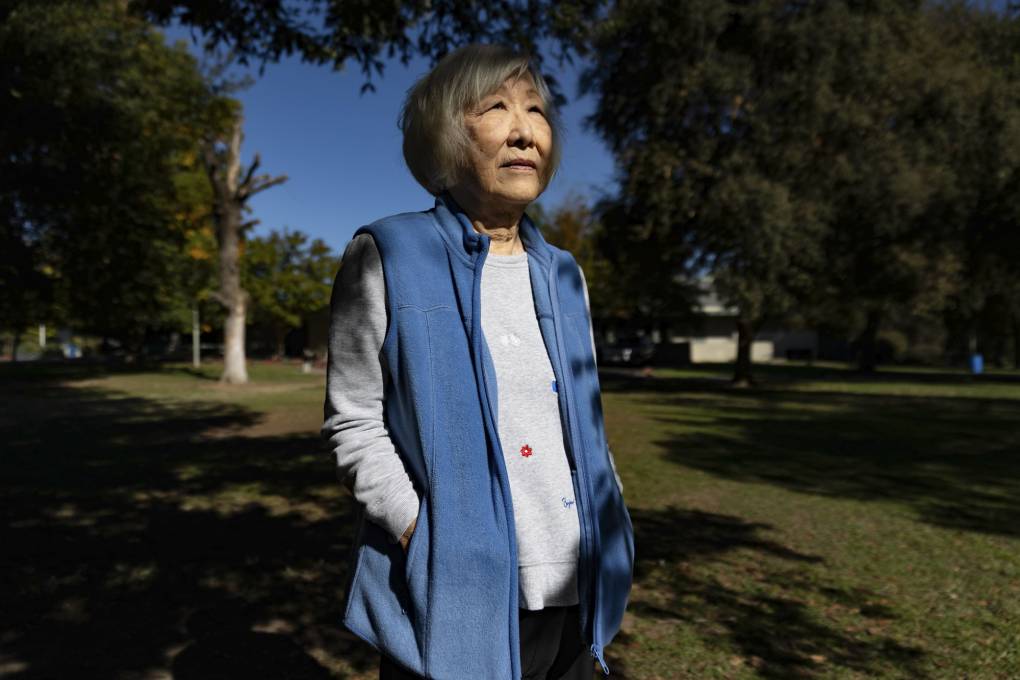
How Poetry Helps Dementia Caregivers Find Shelter from the Storm
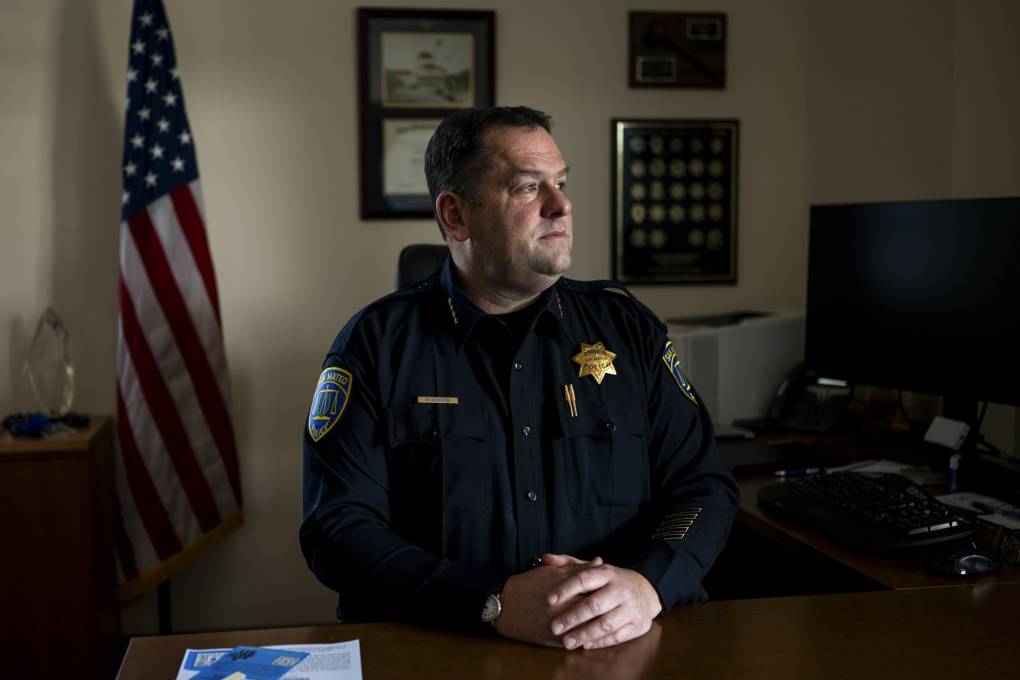
Police Pilot New Tactics for People With Dementia as Advocates Urge Compassion
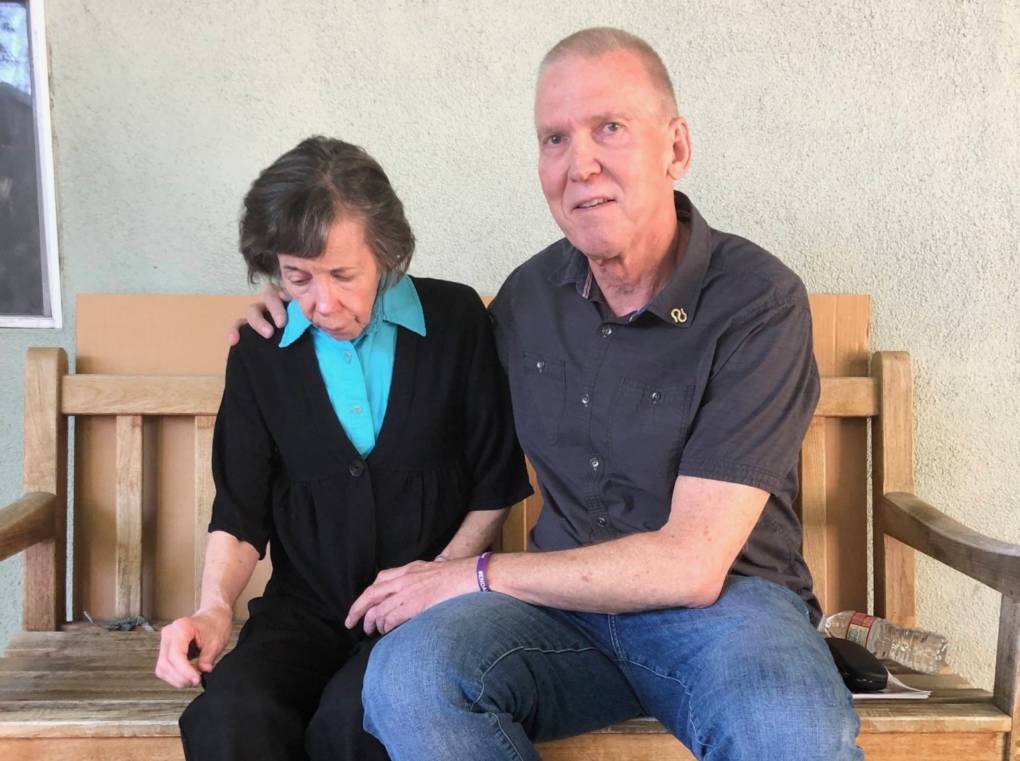
Finding Love Again After Alzheimer's Takes a Spouse
New Markers for Alzheimer's Disease Could Aid Diagnosis and Speed Up Drug Development
Looks Like Pharma Has Given Up on Alzheimer's Cure
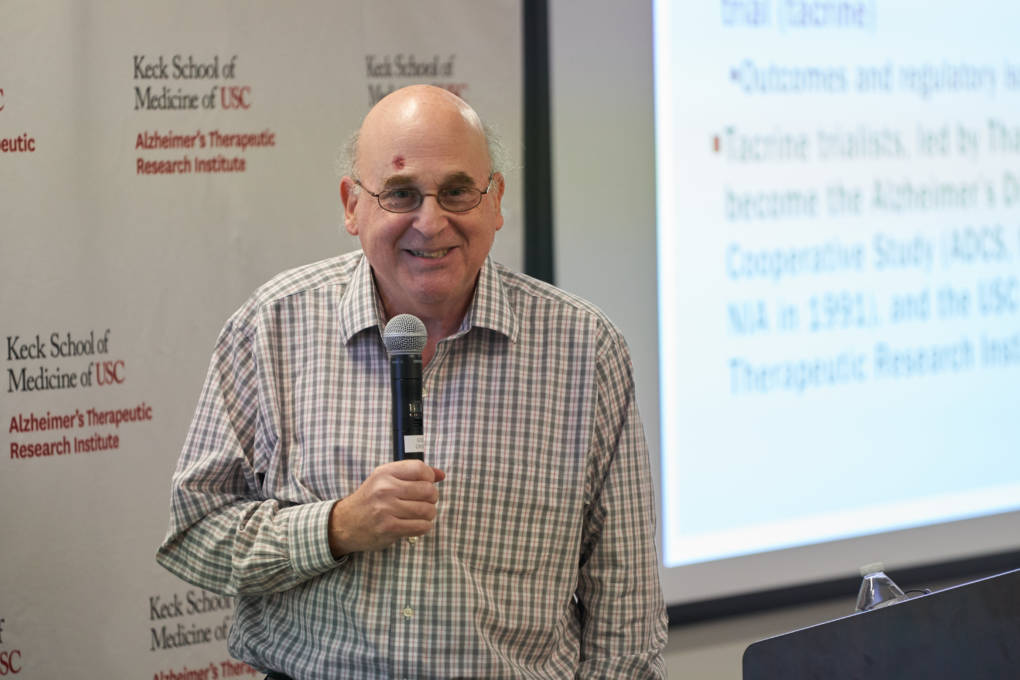
Amyloid Approach to Alzheimer’s Has Repeatedly Failed. Early Intervention May Be Its Last Shot
Can Joining a Band Fight Cognitive Decline? Just Ask 'The 5th Dementia'
Player sponsored by
window.__IS_SSR__=true
window.__INITIAL_STATE__={
"attachmentsReducer": {
"audio_0": {
"type": "attachments",
"id": "audio_0",
"imgSizes": {
"kqedFullSize": {
"file": "https://ww2.kqed.org/news/wp-content/themes/KQED-unified/img/audio_bgs/background0.jpg"
}
}
},
"audio_1": {
"type": "attachments",
"id": "audio_1",
"imgSizes": {
"kqedFullSize": {
"file": "https://ww2.kqed.org/news/wp-content/themes/KQED-unified/img/audio_bgs/background1.jpg"
}
}
},
"audio_2": {
"type": "attachments",
"id": "audio_2",
"imgSizes": {
"kqedFullSize": {
"file": "https://ww2.kqed.org/news/wp-content/themes/KQED-unified/img/audio_bgs/background2.jpg"
}
}
},
"audio_3": {
"type": "attachments",
"id": "audio_3",
"imgSizes": {
"kqedFullSize": {
"file": "https://ww2.kqed.org/news/wp-content/themes/KQED-unified/img/audio_bgs/background3.jpg"
}
}
},
"audio_4": {
"type": "attachments",
"id": "audio_4",
"imgSizes": {
"kqedFullSize": {
"file": "https://ww2.kqed.org/news/wp-content/themes/KQED-unified/img/audio_bgs/background4.jpg"
}
}
},
"placeholder": {
"type": "attachments",
"id": "placeholder",
"imgSizes": {
"thumbnail": {
"file": "https://cdn.kqed.org/wp-content/uploads/2024/12/KQED-Default-Image-816638274-2000x1333-1-160x107.jpg",
"width": 160,
"height": 107,
"mimeType": "image/jpeg"
},
"medium": {
"file": "https://cdn.kqed.org/wp-content/uploads/2024/12/KQED-Default-Image-816638274-2000x1333-1-800x533.jpg",
"width": 800,
"height": 533,
"mimeType": "image/jpeg"
},
"medium_large": {
"file": "https://cdn.kqed.org/wp-content/uploads/2024/12/KQED-Default-Image-816638274-2000x1333-1-768x512.jpg",
"width": 768,
"height": 512,
"mimeType": "image/jpeg"
},
"large": {
"file": "https://cdn.kqed.org/wp-content/uploads/2024/12/KQED-Default-Image-816638274-2000x1333-1-1020x680.jpg",
"width": 1020,
"height": 680,
"mimeType": "image/jpeg"
},
"1536x1536": {
"file": "https://cdn.kqed.org/wp-content/uploads/2024/12/KQED-Default-Image-816638274-2000x1333-1-1536x1024.jpg",
"width": 1536,
"height": 1024,
"mimeType": "image/jpeg"
},
"fd-lrg": {
"file": "https://cdn.kqed.org/wp-content/uploads/2024/12/KQED-Default-Image-816638274-2000x1333-1-1536x1024.jpg",
"width": 1536,
"height": 1024,
"mimeType": "image/jpeg"
},
"fd-med": {
"file": "https://cdn.kqed.org/wp-content/uploads/2024/12/KQED-Default-Image-816638274-2000x1333-1-1020x680.jpg",
"width": 1020,
"height": 680,
"mimeType": "image/jpeg"
},
"fd-sm": {
"file": "https://cdn.kqed.org/wp-content/uploads/2024/12/KQED-Default-Image-816638274-2000x1333-1-800x533.jpg",
"width": 800,
"height": 533,
"mimeType": "image/jpeg"
},
"post-thumbnail": {
"file": "https://cdn.kqed.org/wp-content/uploads/2024/12/KQED-Default-Image-816638274-2000x1333-1-672x372.jpg",
"width": 672,
"height": 372,
"mimeType": "image/jpeg"
},
"twentyfourteen-full-width": {
"file": "https://cdn.kqed.org/wp-content/uploads/2024/12/KQED-Default-Image-816638274-2000x1333-1-1038x576.jpg",
"width": 1038,
"height": 576,
"mimeType": "image/jpeg"
},
"xxsmall": {
"file": "https://cdn.kqed.org/wp-content/uploads/2024/12/KQED-Default-Image-816638274-2000x1333-1-160x107.jpg",
"width": 160,
"height": 107,
"mimeType": "image/jpeg"
},
"xsmall": {
"file": "https://cdn.kqed.org/wp-content/uploads/2024/12/KQED-Default-Image-816638274-2000x1333-1-672x372.jpg",
"width": 672,
"height": 372,
"mimeType": "image/jpeg"
},
"small": {
"file": "https://cdn.kqed.org/wp-content/uploads/2024/12/KQED-Default-Image-816638274-2000x1333-1-672x372.jpg",
"width": 672,
"height": 372,
"mimeType": "image/jpeg"
},
"xlarge": {
"file": "https://cdn.kqed.org/wp-content/uploads/2024/12/KQED-Default-Image-816638274-2000x1333-1-1020x680.jpg",
"width": 1020,
"height": 680,
"mimeType": "image/jpeg"
},
"full-width": {
"file": "https://cdn.kqed.org/wp-content/uploads/2024/12/KQED-Default-Image-816638274-2000x1333-1-1920x1280.jpg",
"width": 1920,
"height": 1280,
"mimeType": "image/jpeg"
},
"guest-author-32": {
"file": "https://cdn.kqed.org/wp-content/uploads/2025/01/KQED-Default-Image-816638274-1333x1333-1-160x160.jpg",
"width": 32,
"height": 32,
"mimeType": "image/jpeg"
},
"guest-author-50": {
"file": "https://cdn.kqed.org/wp-content/uploads/2025/01/KQED-Default-Image-816638274-1333x1333-1-160x160.jpg",
"width": 50,
"height": 50,
"mimeType": "image/jpeg"
},
"guest-author-64": {
"file": "https://cdn.kqed.org/wp-content/uploads/2025/01/KQED-Default-Image-816638274-1333x1333-1-160x160.jpg",
"width": 64,
"height": 64,
"mimeType": "image/jpeg"
},
"guest-author-96": {
"file": "https://cdn.kqed.org/wp-content/uploads/2025/01/KQED-Default-Image-816638274-1333x1333-1-160x160.jpg",
"width": 96,
"height": 96,
"mimeType": "image/jpeg"
},
"guest-author-128": {
"file": "https://cdn.kqed.org/wp-content/uploads/2025/01/KQED-Default-Image-816638274-1333x1333-1-160x160.jpg",
"width": 128,
"height": 128,
"mimeType": "image/jpeg"
},
"detail": {
"file": "https://cdn.kqed.org/wp-content/uploads/2025/01/KQED-Default-Image-816638274-1333x1333-1-160x160.jpg",
"width": 160,
"height": 160,
"mimeType": "image/jpeg"
},
"kqedFullSize": {
"file": "https://cdn.kqed.org/wp-content/uploads/2024/12/KQED-Default-Image-816638274-2000x1333-1.jpg",
"width": 2000,
"height": 1333
}
}
},
"news_12071050": {
"type": "attachments",
"id": "news_12071050",
"meta": {
"index": "attachments_1716263798",
"site": "news",
"id": "12071050",
"found": true
},
"title": "012326_SINGINGHEALTH_GH_011-KQED",
"publishDate": 1769458027,
"status": "inherit",
"parent": 0,
"modified": 1772067315,
"caption": "Pat Ronzone, left, Rachel Main, center, and Joe Debellis perform during a Music Mends Minds group singing event at CPMC’s Davies Campus in San Francisco on Jan. 23, 2026.",
"credit": "Gustavo Hernandez/KQED",
"altTag": null,
"description": null,
"imgSizes": {
"thumbnail": {
"file": "https://cdn.kqed.org/wp-content/uploads/sites/10/2026/01/012326_SINGINGHEALTH_GH_011-KQED-160x107.jpg",
"width": 160,
"height": 107,
"mimeType": "image/jpeg"
},
"1536x1536": {
"file": "https://cdn.kqed.org/wp-content/uploads/sites/10/2026/01/012326_SINGINGHEALTH_GH_011-KQED-1536x1024.jpg",
"width": 1536,
"height": 1024,
"mimeType": "image/jpeg"
},
"post-thumbnail": {
"file": "https://cdn.kqed.org/wp-content/uploads/sites/10/2026/01/012326_SINGINGHEALTH_GH_011-KQED-672x372.jpg",
"width": 672,
"height": 372,
"mimeType": "image/jpeg"
},
"twentyfourteen-full-width": {
"file": "https://cdn.kqed.org/wp-content/uploads/sites/10/2026/01/012326_SINGINGHEALTH_GH_011-KQED-1038x576.jpg",
"width": 1038,
"height": 576,
"mimeType": "image/jpeg"
},
"npr-cds-wide": {
"file": "https://cdn.kqed.org/wp-content/uploads/sites/10/2026/01/012326_SINGINGHEALTH_GH_011-KQED-1200x675.jpg",
"width": 1200,
"height": 675,
"mimeType": "image/jpeg"
},
"kqedFullSize": {
"file": "https://cdn.kqed.org/wp-content/uploads/sites/10/2026/01/012326_SINGINGHEALTH_GH_011-KQED.jpg",
"width": 2000,
"height": 1333
}
},
"isLoading": false,
"fetchFailed": false
},
"news_12012812": {
"type": "attachments",
"id": "news_12012812",
"meta": {
"index": "attachments_1716263798",
"site": "news",
"id": "12012812",
"found": true
},
"title": "20241029_CAREGIVINGPOETS_GC-11-KQED",
"publishDate": 1730858844,
"status": "inherit",
"parent": 0,
"modified": 1747336687,
"caption": "Frances Kakugawa, award-winning author, poses for a portrait in Sacramento on Oct. 29, 2024. Kakugawa, a former caregiver for her mother with Alzheimer’s, now leads writing support groups for Dementia caregivers.",
"credit": "Gina Castro/KQED",
"altTag": null,
"description": null,
"imgSizes": {
"medium": {
"file": "https://cdn.kqed.org/wp-content/uploads/sites/10/2024/11/20241029_CAREGIVINGPOETS_GC-11-KQED-800x533.jpg",
"width": 800,
"height": 533,
"mimeType": "image/jpeg"
},
"large": {
"file": "https://cdn.kqed.org/wp-content/uploads/sites/10/2024/11/20241029_CAREGIVINGPOETS_GC-11-KQED-1020x680.jpg",
"width": 1020,
"height": 680,
"mimeType": "image/jpeg"
},
"thumbnail": {
"file": "https://cdn.kqed.org/wp-content/uploads/sites/10/2024/11/20241029_CAREGIVINGPOETS_GC-11-KQED-160x107.jpg",
"width": 160,
"height": 107,
"mimeType": "image/jpeg"
},
"1536x1536": {
"file": "https://cdn.kqed.org/wp-content/uploads/sites/10/2024/11/20241029_CAREGIVINGPOETS_GC-11-KQED-1536x1024.jpg",
"width": 1536,
"height": 1024,
"mimeType": "image/jpeg"
},
"post-thumbnail": {
"file": "https://cdn.kqed.org/wp-content/uploads/sites/10/2024/11/20241029_CAREGIVINGPOETS_GC-11-KQED-672x372.jpg",
"width": 672,
"height": 372,
"mimeType": "image/jpeg"
},
"twentyfourteen-full-width": {
"file": "https://cdn.kqed.org/wp-content/uploads/sites/10/2024/11/20241029_CAREGIVINGPOETS_GC-11-KQED-1038x576.jpg",
"width": 1038,
"height": 576,
"mimeType": "image/jpeg"
},
"full-width": {
"file": "https://cdn.kqed.org/wp-content/uploads/sites/10/2024/11/20241029_CAREGIVINGPOETS_GC-11-KQED-1920x1280.jpg",
"width": 1920,
"height": 1280,
"mimeType": "image/jpeg"
},
"kqedFullSize": {
"file": "https://cdn.kqed.org/wp-content/uploads/sites/10/2024/11/20241029_CAREGIVINGPOETS_GC-11-KQED.jpg",
"width": 2000,
"height": 1333
}
},
"isLoading": false,
"fetchFailed": false
},
"news_11972510": {
"type": "attachments",
"id": "news_11972510",
"meta": {
"index": "attachments_1716263798",
"site": "news",
"id": "11972510",
"found": true
},
"parent": 0,
"imgSizes": {
"twentyfourteen-full-width": {
"file": "https://cdn.kqed.org/wp-content/uploads/sites/10/2024/01/240111-DementiaCops-04-BL-KQED-1038x576.jpg",
"width": 1038,
"mimeType": "image/jpeg",
"height": 576
},
"thumbnail": {
"file": "https://cdn.kqed.org/wp-content/uploads/sites/10/2024/01/240111-DementiaCops-04-BL-KQED-160x107.jpg",
"width": 160,
"mimeType": "image/jpeg",
"height": 107
},
"post-thumbnail": {
"file": "https://cdn.kqed.org/wp-content/uploads/sites/10/2024/01/240111-DementiaCops-04-BL-KQED-672x372.jpg",
"width": 672,
"mimeType": "image/jpeg",
"height": 372
},
"kqedFullSize": {
"file": "https://cdn.kqed.org/wp-content/uploads/sites/10/2024/01/240111-DementiaCops-04-BL-KQED.jpg",
"width": 2000,
"height": 1333
},
"large": {
"file": "https://cdn.kqed.org/wp-content/uploads/sites/10/2024/01/240111-DementiaCops-04-BL-KQED-1020x680.jpg",
"width": 1020,
"mimeType": "image/jpeg",
"height": 680
},
"1536x1536": {
"file": "https://cdn.kqed.org/wp-content/uploads/sites/10/2024/01/240111-DementiaCops-04-BL-KQED-1536x1024.jpg",
"width": 1536,
"mimeType": "image/jpeg",
"height": 1024
},
"full-width": {
"file": "https://cdn.kqed.org/wp-content/uploads/sites/10/2024/01/240111-DementiaCops-04-BL-KQED-1920x1280.jpg",
"width": 1920,
"mimeType": "image/jpeg",
"height": 1280
},
"medium": {
"file": "https://cdn.kqed.org/wp-content/uploads/sites/10/2024/01/240111-DementiaCops-04-BL-KQED-800x533.jpg",
"width": 800,
"mimeType": "image/jpeg",
"height": 533
}
},
"publishDate": 1705084639,
"modified": 1705084848,
"caption": "San Mateo police chief Ed Barberini sits in his office at the department headquarters in San Mateo on Jan. 11, 2024.",
"description": null,
"title": "240111-DementiaCops-04-BL-KQED",
"credit": "Beth LaBerge/KQED",
"status": "inherit",
"altTag": "A police officer sits behind a desk.",
"isLoading": false,
"fetchFailed": false
},
"news_11771435": {
"type": "attachments",
"id": "news_11771435",
"meta": {
"index": "attachments_1716263798",
"site": "news",
"id": "11771435",
"found": true
},
"parent": 11770003,
"imgSizes": {
"apple_news_ca_landscape_5_5": {
"file": "https://ww2.kqed.org/app/uploads/sites/10/2019/08/RS38671_Jon-at-Cedar-Creek1-1-qut-2-1044x783.jpg",
"width": 1044,
"mimeType": "image/jpeg",
"height": 783
},
"apple_news_ca_square_4_0": {
"file": "https://ww2.kqed.org/app/uploads/sites/10/2019/08/RS38671_Jon-at-Cedar-Creek1-1-qut-2-470x470.jpg",
"width": 470,
"mimeType": "image/jpeg",
"height": 470
},
"twentyfourteen-full-width": {
"file": "https://ww2.kqed.org/app/uploads/sites/10/2019/08/RS38671_Jon-at-Cedar-Creek1-1-qut-2-1038x576.jpg",
"width": 1038,
"mimeType": "image/jpeg",
"height": 576
},
"thumbnail": {
"file": "https://ww2.kqed.org/app/uploads/sites/10/2019/08/RS38671_Jon-at-Cedar-Creek1-1-qut-2-160x119.jpg",
"width": 160,
"mimeType": "image/jpeg",
"height": 119
},
"post-thumbnail": {
"file": "https://ww2.kqed.org/app/uploads/sites/10/2019/08/RS38671_Jon-at-Cedar-Creek1-1-qut-2-672x372.jpg",
"width": 672,
"mimeType": "image/jpeg",
"height": 372
},
"kqedFullSize": {
"file": "https://ww2.kqed.org/app/uploads/sites/10/2019/08/RS38671_Jon-at-Cedar-Creek1-1-qut-2.jpg",
"width": 1536,
"height": 1146
},
"apple_news_ca_landscape_4_7": {
"file": "https://ww2.kqed.org/app/uploads/sites/10/2019/08/RS38671_Jon-at-Cedar-Creek1-1-qut-2-632x474.jpg",
"width": 632,
"mimeType": "image/jpeg",
"height": 474
},
"large": {
"file": "https://ww2.kqed.org/app/uploads/sites/10/2019/08/RS38671_Jon-at-Cedar-Creek1-1-qut-2-1020x761.jpg",
"width": 1020,
"mimeType": "image/jpeg",
"height": 761
},
"complete_open_graph": {
"file": "https://ww2.kqed.org/app/uploads/sites/10/2019/08/RS38671_Jon-at-Cedar-Creek1-1-qut-2-1200x895.jpg",
"width": 1200,
"mimeType": "image/jpeg",
"height": 895
},
"apple_news_ca_landscape_4_0": {
"file": "https://ww2.kqed.org/app/uploads/sites/10/2019/08/RS38671_Jon-at-Cedar-Creek1-1-qut-2-536x402.jpg",
"width": 536,
"mimeType": "image/jpeg",
"height": 402
},
"apple_news_ca_portrait_12_9": {
"file": "https://ww2.kqed.org/app/uploads/sites/10/2019/08/RS38671_Jon-at-Cedar-Creek1-1-qut-2-1122x1146.jpg",
"width": 1122,
"mimeType": "image/jpeg",
"height": 1146
},
"medium": {
"file": "https://ww2.kqed.org/app/uploads/sites/10/2019/08/RS38671_Jon-at-Cedar-Creek1-1-qut-2-800x597.jpg",
"width": 800,
"mimeType": "image/jpeg",
"height": 597
},
"apple_news_ca_portrait_4_0": {
"file": "https://ww2.kqed.org/app/uploads/sites/10/2019/08/RS38671_Jon-at-Cedar-Creek1-1-qut-2-354x472.jpg",
"width": 354,
"mimeType": "image/jpeg",
"height": 472
},
"apple_news_ca_portrait_9_7": {
"file": "https://ww2.kqed.org/app/uploads/sites/10/2019/08/RS38671_Jon-at-Cedar-Creek1-1-qut-2-840x1120.jpg",
"width": 840,
"mimeType": "image/jpeg",
"height": 1120
},
"apple_news_ca_square_9_7": {
"file": "https://ww2.kqed.org/app/uploads/sites/10/2019/08/RS38671_Jon-at-Cedar-Creek1-1-qut-2-1104x1104.jpg",
"width": 1104,
"mimeType": "image/jpeg",
"height": 1104
},
"apple_news_ca_portrait_4_7": {
"file": "https://ww2.kqed.org/app/uploads/sites/10/2019/08/RS38671_Jon-at-Cedar-Creek1-1-qut-2-414x552.jpg",
"width": 414,
"mimeType": "image/jpeg",
"height": 552
},
"apple_news_ca_square_12_9": {
"file": "https://ww2.kqed.org/app/uploads/sites/10/2019/08/RS38671_Jon-at-Cedar-Creek1-1-qut-2-1472x1146.jpg",
"width": 1472,
"mimeType": "image/jpeg",
"height": 1146
},
"apple_news_ca_portrait_5_5": {
"file": "https://ww2.kqed.org/app/uploads/sites/10/2019/08/RS38671_Jon-at-Cedar-Creek1-1-qut-2-687x916.jpg",
"width": 687,
"mimeType": "image/jpeg",
"height": 916
},
"apple_news_ca_square_4_7": {
"file": "https://ww2.kqed.org/app/uploads/sites/10/2019/08/RS38671_Jon-at-Cedar-Creek1-1-qut-2-550x550.jpg",
"width": 550,
"mimeType": "image/jpeg",
"height": 550
},
"apple_news_ca_landscape_9_7": {
"file": "https://ww2.kqed.org/app/uploads/sites/10/2019/08/RS38671_Jon-at-Cedar-Creek1-1-qut-2-1376x1032.jpg",
"width": 1376,
"mimeType": "image/jpeg",
"height": 1032
},
"apple_news_ca_square_5_5": {
"file": "https://ww2.kqed.org/app/uploads/sites/10/2019/08/RS38671_Jon-at-Cedar-Creek1-1-qut-2-912x912.jpg",
"width": 912,
"mimeType": "image/jpeg",
"height": 912
}
},
"publishDate": 1567198555,
"modified": 1567198593,
"caption": "Jon and Sharon Lucas at Cedar Creek Alzheimer's & Dementia Care Center on June 14, 2019.",
"description": null,
"title": "RS38671_Jon-at-Cedar-Creek1-1-qut 2",
"credit": "Mary Franklin Harvin/KQED",
"status": "inherit",
"isLoading": false,
"fetchFailed": false
},
"news_11759133": {
"type": "attachments",
"id": "news_11759133",
"meta": {
"index": "attachments_1716263798",
"site": "news",
"id": "11759133",
"found": true
},
"parent": 11759132,
"imgSizes": {
"apple_news_ca_landscape_5_5": {
"file": "https://ww2.kqed.org/app/uploads/sites/10/2019/07/nia_tau_amyloid_wide-47f2a366476378a08c68ba081df3d8d53e1cfc1a-1044x783.png",
"width": 1044,
"mimeType": "image/png",
"height": 783
},
"apple_news_ca_square_4_0": {
"file": "https://ww2.kqed.org/app/uploads/sites/10/2019/07/nia_tau_amyloid_wide-47f2a366476378a08c68ba081df3d8d53e1cfc1a-470x470.png",
"width": 470,
"mimeType": "image/png",
"height": 470
},
"twentyfourteen-full-width": {
"file": "https://ww2.kqed.org/app/uploads/sites/10/2019/07/nia_tau_amyloid_wide-47f2a366476378a08c68ba081df3d8d53e1cfc1a-1038x576.png",
"width": 1038,
"mimeType": "image/png",
"height": 576
},
"thumbnail": {
"file": "https://ww2.kqed.org/app/uploads/sites/10/2019/07/nia_tau_amyloid_wide-47f2a366476378a08c68ba081df3d8d53e1cfc1a-160x90.png",
"width": 160,
"mimeType": "image/png",
"height": 90
},
"post-thumbnail": {
"file": "https://ww2.kqed.org/app/uploads/sites/10/2019/07/nia_tau_amyloid_wide-47f2a366476378a08c68ba081df3d8d53e1cfc1a-672x372.png",
"width": 672,
"mimeType": "image/png",
"height": 372
},
"kqedFullSize": {
"file": "https://ww2.kqed.org/app/uploads/sites/10/2019/07/nia_tau_amyloid_wide-47f2a366476378a08c68ba081df3d8d53e1cfc1a.png",
"width": 1917,
"height": 1078
},
"apple_news_ca_landscape_4_7": {
"file": "https://ww2.kqed.org/app/uploads/sites/10/2019/07/nia_tau_amyloid_wide-47f2a366476378a08c68ba081df3d8d53e1cfc1a-632x474.png",
"width": 632,
"mimeType": "image/png",
"height": 474
},
"large": {
"file": "https://ww2.kqed.org/app/uploads/sites/10/2019/07/nia_tau_amyloid_wide-47f2a366476378a08c68ba081df3d8d53e1cfc1a-1020x574.png",
"width": 1020,
"mimeType": "image/png",
"height": 574
},
"complete_open_graph": {
"file": "https://ww2.kqed.org/app/uploads/sites/10/2019/07/nia_tau_amyloid_wide-47f2a366476378a08c68ba081df3d8d53e1cfc1a-1200x675.png",
"width": 1200,
"mimeType": "image/png",
"height": 675
},
"apple_news_ca_landscape_4_0": {
"file": "https://ww2.kqed.org/app/uploads/sites/10/2019/07/nia_tau_amyloid_wide-47f2a366476378a08c68ba081df3d8d53e1cfc1a-536x402.png",
"width": 536,
"mimeType": "image/png",
"height": 402
},
"apple_news_ca_portrait_12_9": {
"file": "https://ww2.kqed.org/app/uploads/sites/10/2019/07/nia_tau_amyloid_wide-47f2a366476378a08c68ba081df3d8d53e1cfc1a-1122x1078.png",
"width": 1122,
"mimeType": "image/png",
"height": 1078
},
"medium": {
"file": "https://ww2.kqed.org/app/uploads/sites/10/2019/07/nia_tau_amyloid_wide-47f2a366476378a08c68ba081df3d8d53e1cfc1a-800x450.png",
"width": 800,
"mimeType": "image/png",
"height": 450
},
"apple_news_ca_portrait_4_0": {
"file": "https://ww2.kqed.org/app/uploads/sites/10/2019/07/nia_tau_amyloid_wide-47f2a366476378a08c68ba081df3d8d53e1cfc1a-354x472.png",
"width": 354,
"mimeType": "image/png",
"height": 472
},
"apple_news_ca_portrait_9_7": {
"file": "https://ww2.kqed.org/app/uploads/sites/10/2019/07/nia_tau_amyloid_wide-47f2a366476378a08c68ba081df3d8d53e1cfc1a-840x1078.png",
"width": 840,
"mimeType": "image/png",
"height": 1078
},
"apple_news_ca_landscape_12_9": {
"file": "https://ww2.kqed.org/app/uploads/sites/10/2019/07/nia_tau_amyloid_wide-47f2a366476378a08c68ba081df3d8d53e1cfc1a-1832x1078.png",
"width": 1832,
"mimeType": "image/png",
"height": 1078
},
"apple_news_ca_square_9_7": {
"file": "https://ww2.kqed.org/app/uploads/sites/10/2019/07/nia_tau_amyloid_wide-47f2a366476378a08c68ba081df3d8d53e1cfc1a-1104x1078.png",
"width": 1104,
"mimeType": "image/png",
"height": 1078
},
"apple_news_ca_portrait_4_7": {
"file": "https://ww2.kqed.org/app/uploads/sites/10/2019/07/nia_tau_amyloid_wide-47f2a366476378a08c68ba081df3d8d53e1cfc1a-414x552.png",
"width": 414,
"mimeType": "image/png",
"height": 552
},
"apple_news_ca_square_12_9": {
"file": "https://ww2.kqed.org/app/uploads/sites/10/2019/07/nia_tau_amyloid_wide-47f2a366476378a08c68ba081df3d8d53e1cfc1a-1472x1078.png",
"width": 1472,
"mimeType": "image/png",
"height": 1078
},
"apple_news_ca_portrait_5_5": {
"file": "https://ww2.kqed.org/app/uploads/sites/10/2019/07/nia_tau_amyloid_wide-47f2a366476378a08c68ba081df3d8d53e1cfc1a-687x916.png",
"width": 687,
"mimeType": "image/png",
"height": 916
},
"apple_news_ca_square_4_7": {
"file": "https://ww2.kqed.org/app/uploads/sites/10/2019/07/nia_tau_amyloid_wide-47f2a366476378a08c68ba081df3d8d53e1cfc1a-550x550.png",
"width": 550,
"mimeType": "image/png",
"height": 550
},
"apple_news_ca_landscape_9_7": {
"file": "https://ww2.kqed.org/app/uploads/sites/10/2019/07/nia_tau_amyloid_wide-47f2a366476378a08c68ba081df3d8d53e1cfc1a-1376x1032.png",
"width": 1376,
"mimeType": "image/png",
"height": 1032
},
"apple_news_ca_square_5_5": {
"file": "https://ww2.kqed.org/app/uploads/sites/10/2019/07/nia_tau_amyloid_wide-47f2a366476378a08c68ba081df3d8d53e1cfc1a-912x912.png",
"width": 912,
"mimeType": "image/png",
"height": 912
}
},
"publishDate": 1562260178,
"modified": 1562260604,
"caption": "The squiggly blue lines visible in the neurons are an Alzheimer's biomarker called tau. The brownish clumps are amyloid plaques.",
"description": "The squiggly blue lines visible in the neurons are an Alzheimer's biomarker called tau. The brownish clumps are amyloid plaques.",
"title": "The squiggly blue lines visible in the neurons are an Alzheimer's biomarker called tau. The brownish clumps are amyloid plaques.",
"credit": "Courtesy of the National Institute on Aging/National Institutes of Health",
"status": "inherit",
"isLoading": false,
"fetchFailed": false
},
"futureofyou_444347": {
"type": "attachments",
"id": "futureofyou_444347",
"meta": {
"index": "attachments_1716263798",
"site": "futureofyou",
"id": "444347",
"found": true
},
"parent": 444207,
"imgSizes": {
"small": {
"file": "https://ww2.kqed.org/app/uploads/sites/13/2018/09/collage1-520x347.jpg",
"width": 520,
"mimeType": "image/jpeg",
"height": 347
},
"twentyfourteen-full-width": {
"file": "https://ww2.kqed.org/app/uploads/sites/13/2018/09/collage1-1038x576.jpg",
"width": 1038,
"mimeType": "image/jpeg",
"height": 576
},
"thumbnail": {
"file": "https://ww2.kqed.org/app/uploads/sites/13/2018/09/collage1-160x107.jpg",
"width": 160,
"mimeType": "image/jpeg",
"height": 107
},
"fd-sm": {
"file": "https://ww2.kqed.org/app/uploads/sites/13/2018/09/collage1-960x640.jpg",
"width": 960,
"mimeType": "image/jpeg",
"height": 640
},
"post-thumbnail": {
"file": "https://ww2.kqed.org/app/uploads/sites/13/2018/09/collage1-672x372.jpg",
"width": 672,
"mimeType": "image/jpeg",
"height": 372
},
"xsmall": {
"file": "https://ww2.kqed.org/app/uploads/sites/13/2018/09/collage1-375x250.jpg",
"width": 375,
"mimeType": "image/jpeg",
"height": 250
},
"kqedFullSize": {
"file": "https://ww2.kqed.org/app/uploads/sites/13/2018/09/collage1.jpg",
"width": 5568,
"height": 3712
},
"large": {
"file": "https://ww2.kqed.org/app/uploads/sites/13/2018/09/collage1-1020x680.jpg",
"width": 1020,
"mimeType": "image/jpeg",
"height": 680
},
"xlarge": {
"file": "https://ww2.kqed.org/app/uploads/sites/13/2018/09/collage1-1180x787.jpg",
"width": 1180,
"mimeType": "image/jpeg",
"height": 787
},
"complete_open_graph": {
"file": "https://ww2.kqed.org/app/uploads/sites/13/2018/09/collage1-1200x800.jpg",
"width": 1200,
"mimeType": "image/jpeg",
"height": 800
},
"guest-author-50": {
"file": "https://ww2.kqed.org/app/uploads/sites/13/2018/09/collage1-50x50.jpg",
"width": 50,
"mimeType": "image/jpeg",
"height": 50
},
"guest-author-96": {
"file": "https://ww2.kqed.org/app/uploads/sites/13/2018/09/collage1-96x96.jpg",
"width": 96,
"mimeType": "image/jpeg",
"height": 96
},
"medium": {
"file": "https://ww2.kqed.org/app/uploads/sites/13/2018/09/collage1-800x533.jpg",
"width": 800,
"mimeType": "image/jpeg",
"height": 533
},
"guest-author-64": {
"file": "https://ww2.kqed.org/app/uploads/sites/13/2018/09/collage1-64x64.jpg",
"width": 64,
"mimeType": "image/jpeg",
"height": 64
},
"guest-author-32": {
"file": "https://ww2.kqed.org/app/uploads/sites/13/2018/09/collage1-32x32.jpg",
"width": 32,
"mimeType": "image/jpeg",
"height": 32
},
"fd-lrg": {
"file": "https://ww2.kqed.org/app/uploads/sites/13/2018/09/collage1-1920x1280.jpg",
"width": 1920,
"mimeType": "image/jpeg",
"height": 1280
},
"fd-med": {
"file": "https://ww2.kqed.org/app/uploads/sites/13/2018/09/collage1-1180x787.jpg",
"width": 1180,
"mimeType": "image/jpeg",
"height": 787
},
"full-width": {
"file": "https://ww2.kqed.org/app/uploads/sites/13/2018/09/collage1-1920x1280.jpg",
"width": 1920,
"mimeType": "image/jpeg",
"height": 1280
},
"detail": {
"file": "https://ww2.kqed.org/app/uploads/sites/13/2018/09/collage1-150x150.jpg",
"width": 150,
"mimeType": "image/jpeg",
"height": 150
},
"medium_large": {
"file": "https://ww2.kqed.org/app/uploads/sites/13/2018/09/collage1-768x512.jpg",
"width": 768,
"mimeType": "image/jpeg",
"height": 512
},
"guest-author-128": {
"file": "https://ww2.kqed.org/app/uploads/sites/13/2018/09/collage1-128x128.jpg",
"width": 128,
"mimeType": "image/jpeg",
"height": 128
},
"xxsmall": {
"file": "https://ww2.kqed.org/app/uploads/sites/13/2018/09/collage1-240x160.jpg",
"width": 240,
"mimeType": "image/jpeg",
"height": 160
}
},
"publishDate": 1536184345,
"modified": 1536184356,
"caption": "People who suffered from Alzheimer's disease. Clockwise, from top left: Ronald Reagan, Gene Wilder, Sugar Ray Robinson, Charlton Heston, Rosa Parks, and NPR's Carl Kasell. ",
"description": null,
"title": "collage1",
"credit": null,
"status": "inherit",
"isLoading": false,
"fetchFailed": false
},
"futureofyou_436907": {
"type": "attachments",
"id": "futureofyou_436907",
"meta": {
"index": "attachments_1716263798",
"site": "futureofyou",
"id": "436907",
"found": true
},
"parent": 436409,
"imgSizes": {
"small": {
"file": "https://ww2.kqed.org/app/uploads/sites/13/2017/11/Aisen-Photo-520x347.jpg",
"width": 520,
"mimeType": "image/jpeg",
"height": 347
},
"twentyfourteen-full-width": {
"file": "https://ww2.kqed.org/app/uploads/sites/13/2017/11/Aisen-Photo-1038x576.jpg",
"width": 1038,
"mimeType": "image/jpeg",
"height": 576
},
"thumbnail": {
"file": "https://ww2.kqed.org/app/uploads/sites/13/2017/11/Aisen-Photo-160x107.jpg",
"width": 160,
"mimeType": "image/jpeg",
"height": 107
},
"fd-sm": {
"file": "https://ww2.kqed.org/app/uploads/sites/13/2017/11/Aisen-Photo-960x640.jpg",
"width": 960,
"mimeType": "image/jpeg",
"height": 640
},
"post-thumbnail": {
"file": "https://ww2.kqed.org/app/uploads/sites/13/2017/11/Aisen-Photo-672x372.jpg",
"width": 672,
"mimeType": "image/jpeg",
"height": 372
},
"xsmall": {
"file": "https://ww2.kqed.org/app/uploads/sites/13/2017/11/Aisen-Photo-375x250.jpg",
"width": 375,
"mimeType": "image/jpeg",
"height": 250
},
"kqedFullSize": {
"file": "https://ww2.kqed.org/app/uploads/sites/13/2017/11/Aisen-Photo-e1510179237902.jpg",
"width": 1920,
"height": 1280
},
"large": {
"file": "https://ww2.kqed.org/app/uploads/sites/13/2017/11/Aisen-Photo-1020x680.jpg",
"width": 1020,
"mimeType": "image/jpeg",
"height": 680
},
"xlarge": {
"file": "https://ww2.kqed.org/app/uploads/sites/13/2017/11/Aisen-Photo-1180x787.jpg",
"width": 1180,
"mimeType": "image/jpeg",
"height": 787
},
"guest-author-50": {
"file": "https://ww2.kqed.org/app/uploads/sites/13/2017/11/Aisen-Photo-50x50.jpg",
"width": 50,
"mimeType": "image/jpeg",
"height": 50
},
"guest-author-96": {
"file": "https://ww2.kqed.org/app/uploads/sites/13/2017/11/Aisen-Photo-96x96.jpg",
"width": 96,
"mimeType": "image/jpeg",
"height": 96
},
"medium": {
"file": "https://ww2.kqed.org/app/uploads/sites/13/2017/11/Aisen-Photo-800x533.jpg",
"width": 800,
"mimeType": "image/jpeg",
"height": 533
},
"guest-author-64": {
"file": "https://ww2.kqed.org/app/uploads/sites/13/2017/11/Aisen-Photo-64x64.jpg",
"width": 64,
"mimeType": "image/jpeg",
"height": 64
},
"guest-author-32": {
"file": "https://ww2.kqed.org/app/uploads/sites/13/2017/11/Aisen-Photo-32x32.jpg",
"width": 32,
"mimeType": "image/jpeg",
"height": 32
},
"fd-lrg": {
"file": "https://ww2.kqed.org/app/uploads/sites/13/2017/11/Aisen-Photo-1920x1280.jpg",
"width": 1920,
"mimeType": "image/jpeg",
"height": 1280
},
"fd-med": {
"file": "https://ww2.kqed.org/app/uploads/sites/13/2017/11/Aisen-Photo-1180x787.jpg",
"width": 1180,
"mimeType": "image/jpeg",
"height": 787
},
"full-width": {
"file": "https://ww2.kqed.org/app/uploads/sites/13/2017/11/Aisen-Photo-1920x1280.jpg",
"width": 1920,
"mimeType": "image/jpeg",
"height": 1280
},
"detail": {
"file": "https://ww2.kqed.org/app/uploads/sites/13/2017/11/Aisen-Photo-150x150.jpg",
"width": 150,
"mimeType": "image/jpeg",
"height": 150
},
"medium_large": {
"file": "https://ww2.kqed.org/app/uploads/sites/13/2017/11/Aisen-Photo-768x512.jpg",
"width": 768,
"mimeType": "image/jpeg",
"height": 512
},
"guest-author-128": {
"file": "https://ww2.kqed.org/app/uploads/sites/13/2017/11/Aisen-Photo-128x128.jpg",
"width": 128,
"mimeType": "image/jpeg",
"height": 128
},
"xxsmall": {
"file": "https://ww2.kqed.org/app/uploads/sites/13/2017/11/Aisen-Photo-240x160.jpg",
"width": 240,
"mimeType": "image/jpeg",
"height": 160
}
},
"publishDate": 1510178616,
"modified": 1510187108,
"caption": "Dr. Paul Aisen believes the so-called amyloid hypothesis of Alzheimer's disease is correct, but that the protein must be eradicated much earlier than previous clinical trials have tried.",
"description": null,
"title": "Aisen Photo",
"credit": "Keck School of Medicine of USC/John Riedy",
"status": "inherit",
"isLoading": false,
"fetchFailed": false
},
"news_11611863": {
"type": "attachments",
"id": "news_11611863",
"meta": {
"index": "attachments_1716263798",
"site": "news",
"id": "11611863",
"found": true
},
"parent": 11606586,
"imgSizes": {
"small": {
"file": "https://ww2.kqed.org/app/uploads/sites/10/2017/08/Harmonica5Dimentia-520x383.jpg",
"width": 520,
"mimeType": "image/jpeg",
"height": 383
},
"twentyfourteen-full-width": {
"file": "https://ww2.kqed.org/app/uploads/sites/10/2017/08/Harmonica5Dimentia-1038x576.jpg",
"width": 1038,
"mimeType": "image/jpeg",
"height": 576
},
"thumbnail": {
"file": "https://ww2.kqed.org/app/uploads/sites/10/2017/08/Harmonica5Dimentia-160x118.jpg",
"width": 160,
"mimeType": "image/jpeg",
"height": 118
},
"fd-sm": {
"file": "https://ww2.kqed.org/app/uploads/sites/10/2017/08/Harmonica5Dimentia-960x707.jpg",
"width": 960,
"mimeType": "image/jpeg",
"height": 707
},
"post-thumbnail": {
"file": "https://ww2.kqed.org/app/uploads/sites/10/2017/08/Harmonica5Dimentia-672x372.jpg",
"width": 672,
"mimeType": "image/jpeg",
"height": 372
},
"xsmall": {
"file": "https://ww2.kqed.org/app/uploads/sites/10/2017/08/Harmonica5Dimentia-375x276.jpg",
"width": 375,
"mimeType": "image/jpeg",
"height": 276
},
"kqedFullSize": {
"file": "https://ww2.kqed.org/app/uploads/sites/10/2017/08/Harmonica5Dimentia.jpg",
"width": 1920,
"height": 1414
},
"large": {
"file": "https://ww2.kqed.org/app/uploads/sites/10/2017/08/Harmonica5Dimentia-1020x751.jpg",
"width": 1020,
"mimeType": "image/jpeg",
"height": 751
},
"xlarge": {
"file": "https://ww2.kqed.org/app/uploads/sites/10/2017/08/Harmonica5Dimentia-1180x869.jpg",
"width": 1180,
"mimeType": "image/jpeg",
"height": 869
},
"guest-author-50": {
"file": "https://ww2.kqed.org/app/uploads/sites/10/2017/08/Harmonica5Dimentia-50x50.jpg",
"width": 50,
"mimeType": "image/jpeg",
"height": 50
},
"guest-author-96": {
"file": "https://ww2.kqed.org/app/uploads/sites/10/2017/08/Harmonica5Dimentia-96x96.jpg",
"width": 96,
"mimeType": "image/jpeg",
"height": 96
},
"medium": {
"file": "https://ww2.kqed.org/app/uploads/sites/10/2017/08/Harmonica5Dimentia-800x589.jpg",
"width": 800,
"mimeType": "image/jpeg",
"height": 589
},
"guest-author-64": {
"file": "https://ww2.kqed.org/app/uploads/sites/10/2017/08/Harmonica5Dimentia-64x64.jpg",
"width": 64,
"mimeType": "image/jpeg",
"height": 64
},
"guest-author-32": {
"file": "https://ww2.kqed.org/app/uploads/sites/10/2017/08/Harmonica5Dimentia-32x32.jpg",
"width": 32,
"mimeType": "image/jpeg",
"height": 32
},
"fd-lrg": {
"file": "https://ww2.kqed.org/app/uploads/sites/10/2017/08/Harmonica5Dimentia-1920x1414.jpg",
"width": 1920,
"mimeType": "image/jpeg",
"height": 1414
},
"fd-med": {
"file": "https://ww2.kqed.org/app/uploads/sites/10/2017/08/Harmonica5Dimentia-1180x869.jpg",
"width": 1180,
"mimeType": "image/jpeg",
"height": 869
},
"full-width": {
"file": "https://ww2.kqed.org/app/uploads/sites/10/2017/08/Harmonica5Dimentia-1920x1414.jpg",
"width": 1920,
"mimeType": "image/jpeg",
"height": 1414
},
"detail": {
"file": "https://ww2.kqed.org/app/uploads/sites/10/2017/08/Harmonica5Dimentia-150x150.jpg",
"width": 150,
"mimeType": "image/jpeg",
"height": 150
},
"guest-author-128": {
"file": "https://ww2.kqed.org/app/uploads/sites/10/2017/08/Harmonica5Dimentia-128x128.jpg",
"width": 128,
"mimeType": "image/jpeg",
"height": 128
},
"xxsmall": {
"file": "https://ww2.kqed.org/app/uploads/sites/10/2017/08/Harmonica5Dimentia-240x177.jpg",
"width": 240,
"mimeType": "image/jpeg",
"height": 177
}
},
"publishDate": 1502747852,
"modified": 1502747894,
"caption": "Marine and Navy veteran Kelly Hodell volunteers on harmonica with the 5th Dementia.",
"description": "Marine and Navy veteran Kelly Hodell volunteers on harmonica with the 5th Dementia.",
"title": "Harmonica5Dimentia",
"credit": "David Gilstrap/KQED",
"status": "inherit",
"isLoading": false,
"fetchFailed": false
}
},
"audioPlayerReducer": {
"postId": "stream_live",
"isPaused": true,
"isPlaying": false,
"pfsActive": false,
"pledgeModalIsOpen": true,
"playerDrawerIsOpen": false,
"liveAudioPlayStartedAt": 0,
"liveAudioPlayContext": ""
},
"authorsReducer": {
"byline_news_11759132": {
"type": "authors",
"id": "byline_news_11759132",
"meta": {
"override": true
},
"slug": "byline_news_11759132",
"name": "\u003ca href=\"https://www.npr.org/people/2100615/jon-hamilton\">Jon Hamilton\u003c/a>",
"isLoading": false
},
"byline_futureofyou_444207": {
"type": "authors",
"id": "byline_futureofyou_444207",
"meta": {
"override": true
},
"slug": "byline_futureofyou_444207",
"name": "KQED Future of You",
"isLoading": false
},
"byline_futureofyou_436409": {
"type": "authors",
"id": "byline_futureofyou_436409",
"meta": {
"override": true
},
"slug": "byline_futureofyou_436409",
"name": "Li Miao Lovett",
"isLoading": false
},
"pgilstrap": {
"type": "authors",
"id": "11275",
"meta": {
"index": "authors_1716337520",
"id": "11275",
"found": true
},
"name": "Peter Gilstrap",
"firstName": "Peter",
"lastName": "Gilstrap",
"slug": "pgilstrap",
"email": "pgilstrap@sbcglobal.net",
"display_author_email": false,
"staff_mastheads": [],
"title": null,
"bio": null,
"avatar": "https://secure.gravatar.com/avatar/2bf93e4a8c1e35493845045175273916?s=600&d=blank&r=g",
"twitter": null,
"facebook": null,
"instagram": null,
"linkedin": null,
"sites": [
{
"site": "news",
"roles": [
"author"
]
}
],
"headData": {
"title": "Peter Gilstrap | KQED",
"description": null,
"ogImgSrc": "https://secure.gravatar.com/avatar/2bf93e4a8c1e35493845045175273916?s=600&d=blank&r=g",
"twImgSrc": "https://secure.gravatar.com/avatar/2bf93e4a8c1e35493845045175273916?s=600&d=blank&r=g"
},
"isLoading": false,
"link": "/author/pgilstrap"
},
"mfharvin": {
"type": "authors",
"id": "11583",
"meta": {
"index": "authors_1716337520",
"id": "11583",
"found": true
},
"name": "Mary Franklin Harvin",
"firstName": "Mary Franklin",
"lastName": "Harvin",
"slug": "mfharvin",
"email": "mfharvin@KQED.org",
"display_author_email": false,
"staff_mastheads": [
"news"
],
"title": "KQED Contributor",
"bio": null,
"avatar": "https://secure.gravatar.com/avatar/0e53510a7d48cfbdebfc9b11357d845f?s=600&d=blank&r=g",
"twitter": "EmEffHarvin",
"facebook": null,
"instagram": null,
"linkedin": null,
"sites": [
{
"site": "news",
"roles": [
"author",
"edit_others_posts"
]
},
{
"site": "science",
"roles": [
"editor"
]
}
],
"headData": {
"title": "Mary Franklin Harvin | KQED",
"description": "KQED Contributor",
"ogImgSrc": "https://secure.gravatar.com/avatar/0e53510a7d48cfbdebfc9b11357d845f?s=600&d=blank&r=g",
"twImgSrc": "https://secure.gravatar.com/avatar/0e53510a7d48cfbdebfc9b11357d845f?s=600&d=blank&r=g"
},
"isLoading": false,
"link": "/author/mfharvin"
},
"hmcdede": {
"type": "authors",
"id": "11635",
"meta": {
"index": "authors_1716337520",
"id": "11635",
"found": true
},
"name": "Holly McDede",
"firstName": "Holly",
"lastName": "McDede",
"slug": "hmcdede",
"email": "hmcdede@KQED.org",
"display_author_email": false,
"staff_mastheads": [],
"title": "KQED Contributor",
"bio": null,
"avatar": "https://secure.gravatar.com/avatar/35d1a1f5422c9d266f7ace9348d170f2136671a65fffc90a592e4d7fbf8dc3f6?s=600&d=blank&r=g",
"twitter": null,
"bluesky": null,
"facebook": null,
"instagram": null,
"linkedin": null,
"sites": [
{
"site": "arts",
"roles": [
"editor"
]
},
{
"site": "news",
"roles": [
"edit_others_posts",
"editor"
]
},
{
"site": "science",
"roles": [
"editor"
]
},
{
"site": "forum",
"roles": [
"editor"
]
},
{
"site": "perspectives",
"roles": [
"administrator"
]
}
],
"headData": {
"title": "Holly McDede | KQED",
"description": "KQED Contributor",
"ogImgSrc": "https://secure.gravatar.com/avatar/35d1a1f5422c9d266f7ace9348d170f2136671a65fffc90a592e4d7fbf8dc3f6?s=600&d=blank&r=g",
"twImgSrc": "https://secure.gravatar.com/avatar/35d1a1f5422c9d266f7ace9348d170f2136671a65fffc90a592e4d7fbf8dc3f6?s=600&d=blank&r=g"
},
"isLoading": false,
"link": "/author/hmcdede"
},
"sprabha": {
"type": "authors",
"id": "11976",
"meta": {
"index": "authors_1716337520",
"id": "11976",
"found": true
},
"name": "Srishti Prabha",
"firstName": "Srishti",
"lastName": "Prabha",
"slug": "sprabha",
"email": "sprabha@KQED.org",
"display_author_email": false,
"staff_mastheads": [],
"title": "KQED Contributor",
"bio": "Srishti Prabha is a producer and reporter for KQED news and podcasts. They also work on longform human-interest features as a Beat Reporting Fellow with KALW. Their reporting has appeared on NPR, Morning Edition, All Things Considered, The California Report Magazine, and more. Most recently, Prabha covered education for CapRadio as a Report for America corps member, focusing on issues affecting communities of color in the Sacramento region. They previously served as managing editor of India Currents, where they reported on immigration, cultural identity, and health in South Asian communities. Prabha's work has been recognized by the San Francisco Press Club, the California News Publishers Association, and the Edward R. Murrow Awards.",
"avatar": "https://secure.gravatar.com/avatar/cc4d8ef770090714faad7e1d24857f806d09340456c5734167b9a6361b175d7d?s=600&d=blank&r=g",
"twitter": null,
"bluesky": null,
"facebook": null,
"instagram": null,
"linkedin": null,
"sites": [
{
"site": "news",
"roles": [
"editor"
]
}
],
"headData": {
"title": "Srishti Prabha | KQED",
"description": "KQED Contributor",
"ogImgSrc": "https://secure.gravatar.com/avatar/cc4d8ef770090714faad7e1d24857f806d09340456c5734167b9a6361b175d7d?s=600&d=blank&r=g",
"twImgSrc": "https://secure.gravatar.com/avatar/cc4d8ef770090714faad7e1d24857f806d09340456c5734167b9a6361b175d7d?s=600&d=blank&r=g"
},
"isLoading": false,
"link": "/author/sprabha"
}
},
"pagesReducer": {
"news_tag_alzheimers": {
"type": "terms",
"id": "news_21407",
"meta": {
"index": "terms_1716263798",
"site": "news",
"id": "21407",
"score": 9.306237
},
"featImg": null,
"name": "Alzheimer's",
"description": null,
"taxonomy": "tag",
"headData": {
"twImgId": null,
"twTitle": null,
"ogTitle": null,
"ogImgId": null,
"twDescription": null,
"description": null,
"title": "Alzheimer's Archives | KQED News",
"ogDescription": null
},
"ttid": 21424,
"slug": "alzheimers",
"isLoading": false,
"title": "Alzheimer's",
"pageMeta": {
"site": "news",
"WpPageTemplate": "page-topic-editorial",
"currentPage": 1
},
"blocks": [
{
"blockName": "kqed/post-list",
"attrs": {
"layout": "cardArticle2",
"query": "posts/news?tag=alzheimers",
"seeMore": false,
"paginated": true,
"page": 1
}
},
{
"blockName": "kqed/ad"
}
]
}
},
"pfsSessionReducer": {},
"postsReducer": {
"stream_live": {
"type": "live",
"id": "stream_live",
"audioUrl": "https://streams.kqed.org/kqedradio",
"title": "Live Stream",
"excerpt": "Live Stream information currently unavailable.",
"link": "/radio",
"featImg": "",
"label": {
"name": "KQED Live",
"link": "/"
}
},
"stream_kqedNewscast": {
"type": "posts",
"id": "stream_kqedNewscast",
"audioUrl": "https://www.kqed.org/.stream/anon/radio/RDnews/newscast.mp3?_=1",
"title": "KQED Newscast",
"featImg": "",
"label": {
"name": "88.5 FM",
"link": "/"
}
},
"news_12074674": {
"type": "posts",
"id": "news_12074674",
"meta": {
"index": "posts_1716263798",
"site": "news",
"id": "12074674",
"score": null,
"sort": [
1772816406000
]
},
"guestAuthors": [],
"slug": "music-creates-connections-for-bay-area-residents-and-families-confronting-memory-loss",
"title": "Music Creates Connections for Bay Area Residents and Families Confronting Memory Loss",
"publishDate": 1772816406,
"format": "standard",
"headTitle": "Music Creates Connections for Bay Area Residents and Families Confronting Memory Loss | KQED",
"labelTerm": {
"term": 26731,
"site": "news"
},
"content": "\u003cp>On a recent weekday afternoon, about 15 people sat in a circle in a light-filled room above the Sutter Health emergency room in San Francisco. Facing one another, they each held a packet containing music and lyrics of songs from the 1960s.\u003c/p>\n\u003cp>Together, they began singing the Beatles classic, “Here Comes the Sun.”\u003c/p>\n\u003cp>Then, they paused. Some needed help turning the page or finding the lyrics. Others hummed while waiting to rejoin the group. No one rushed them. After a moment, they began again.\u003c/p>\n\u003cp>[ad fullwidth]\u003c/p>\n\u003cp>Once a month at Sutter Health’s \u003ca href=\"https://www.sutterhealth.org/giving/giving-opportunities/neuroscience/ray-dolby-brain-health-center\">Brain Health Center\u003c/a> in San Francisco, people living with Alzheimer’s disease and other forms of cognitive decline gather alongside their caregivers, spouses and friends to sing together — part of a growing effort to support patients living with memory loss beyond medication.\u003c/p>\n\u003cp>In California, the Alzheimer’s Association \u003ca href=\"https://www.alz.org/getmedia/4e2d7fc8-0a5e-4e03-858b-0c106f07d8f0/california-cog-brfss-fact-sheet.pdf\">reports\u003c/a> that one in 10 adults age 45 and older experiences confusion or memory loss. Research shows\u003ca href=\"https://pmc.ncbi.nlm.nih.gov/articles/PMC9796133/\"> music can help\u003c/a> people with conditions like Alzheimer’s and dementia as a complement to medical care.\u003c/p>\n\u003cfigure id=\"attachment_12071051\" class=\"wp-caption aligncenter\" style=\"max-width: 2000px\">\u003ca href=\"https://cdn.kqed.org/wp-content/uploads/sites/10/2026/01/012326_SINGINGHEALTH_GH_012-KQED.jpg\">\u003cimg loading=\"lazy\" decoding=\"async\" class=\"size-full wp-image-12071051\" src=\"https://cdn.kqed.org/wp-content/uploads/sites/10/2026/01/012326_SINGINGHEALTH_GH_012-KQED.jpg\" alt=\"\" width=\"2000\" height=\"1333\" srcset=\"https://cdn.kqed.org/wp-content/uploads/sites/10/2026/01/012326_SINGINGHEALTH_GH_012-KQED.jpg 2000w, https://cdn.kqed.org/wp-content/uploads/sites/10/2026/01/012326_SINGINGHEALTH_GH_012-KQED-160x107.jpg 160w, https://cdn.kqed.org/wp-content/uploads/sites/10/2026/01/012326_SINGINGHEALTH_GH_012-KQED-1536x1024.jpg 1536w\" sizes=\"auto, (max-width: 2000px) 100vw, 2000px\" />\u003c/a>\u003cfigcaption class=\"wp-caption-text\">Joe Debellis passes a tambourine to Pat Ronzone during a Music Mends Minds group singing event hosted by Sutter’s Ray Dolby Brain Health Center at CPMC’s Davies Campus in San Francisco on Jan. 23, 2026. \u003ccite>(Gustavo Hernandez/KQED)\u003c/cite>\u003c/figcaption>\u003c/figure>\n\u003cp>The \u003ca href=\"https://acrobat.adobe.com/id/urn:aaid:sc:VA6C2:21dea527-cdcd-4f55-8ee5-ea73036142bc\">“Music Mends Minds” sessions at Sutter Health\u003c/a>, which are free to join, are led by Pat Ronzone and Joe Debellis, a married musical duo who have performed together since 2009. Ronzone now lives with cognitive decline, and Debellis has watched participants, including his wife, benefit from the singing circles.\u003c/p>\n\u003cp>“Music is a different circuit from memory,” said Debellis. “People who don’t remember my name are able to take to music, and it seems to be incorporated not just in the speech side of the brain but throughout the whole being.”\u003c/p>\n\u003cp>He notices something else happen when the group sings together.\u003c/p>\n\u003cp>“Trying to decide who was memory-impaired and a caregiver, when singing, it’s just not obvious,” said Debellis.\u003c/p>\n\u003cp>This program that uses music to supplement medical care was the brainchild of cognitive neurologist Dr. Armen Moughamian. With Alzheimer’s, where brain function is lost over time, medications can slow progression of the disease, explained Moughamian, but primarily in early stages. By the time Alzheimer’s reaches its later stages, many patients no longer qualify for medical treatments, making music an approach that can offer relief at any stage of the disease.\u003c/p>\n\u003cp>“There’s a lot of literature supporting non-medication ways to help patients manage the disease,” Moughamian explained. “And one aspect of that is building community, bringing patients together and using music.”[aside postID=news_12058091 hero='https://cdn.kqed.org/wp-content/uploads/sites/10/2025/09/250831-CREATIVEMUTUALAID00140_TV-KQED.jpg']The goal, he said, is not restoring memory, but rather improving quality of life for people in all stages of cognitive decline.\u003c/p>\n\u003cp>“When language gets affected, people struggle to communicate, but music can transcend language,” said Moughamian, “It becomes a way of communicating and it calms people.”\u003c/p>\n\u003cp>And music can help surface memories.\u003c/p>\n\u003cp>The group was singing “King of the Road” when Lauri Musumeche, who was diagnosed with Alzheimer’s three years ago, became overcome with emotion. The melody reminded her of her 98-year-old father, who used to play the harmonica.\u003c/p>\n\u003cp>“He did play [this song] for me one time, so it makes me want to cry,” she said.\u003c/p>\n\u003cp>Her friend Kandy Jones drove her from Livermore to attend, and has witnessed music prompting recall outside these sessions.\u003c/p>\n\u003cp>“I’ll say a phrase from a song and she immediately starts singing it,” Jones said. “It’s a real trigger.”\u003c/p>\n\u003cp>For Musumeche, the benefit is emotional as much as cognitive.\u003c/p>\n\u003cp>“It helps me feel good,” she said. “When you have Alzheimer’s, you’re always kind of sad.”\u003c/p>\n\u003cfigure id=\"attachment_12071048\" class=\"wp-caption aligncenter\" style=\"max-width: 2000px\">\u003ca href=\"https://cdn.kqed.org/wp-content/uploads/sites/10/2026/01/012326_SINGINGHEALTH_GH_002-KQED.jpg\">\u003cimg loading=\"lazy\" decoding=\"async\" class=\"size-full wp-image-12071048\" src=\"https://cdn.kqed.org/wp-content/uploads/sites/10/2026/01/012326_SINGINGHEALTH_GH_002-KQED.jpg\" alt=\"\" width=\"2000\" height=\"1333\" srcset=\"https://cdn.kqed.org/wp-content/uploads/sites/10/2026/01/012326_SINGINGHEALTH_GH_002-KQED.jpg 2000w, https://cdn.kqed.org/wp-content/uploads/sites/10/2026/01/012326_SINGINGHEALTH_GH_002-KQED-160x107.jpg 160w, https://cdn.kqed.org/wp-content/uploads/sites/10/2026/01/012326_SINGINGHEALTH_GH_002-KQED-1536x1024.jpg 1536w\" sizes=\"auto, (max-width: 2000px) 100vw, 2000px\" />\u003c/a>\u003cfigcaption class=\"wp-caption-text\">Rachel Main, support services coordinator at Sutter’s Ray Dolby Brain Health Center, holds up a song list during a Music Mends Minds group singing event themed “Songs of the ’60s” at CPMC’s Davies Campus in San Francisco on Jan. 23, 2026 \u003ccite>(Gustavo Hernandez/KQED)\u003c/cite>\u003c/figcaption>\u003c/figure>\n\u003cp>For Jim Hayden, the group helps preserve part of his wife Sandy Noltimier’s identity. She studied vocal performance, sang in a symphony chorus and performed as part of an A capella trio called PMS for decades before developing Alzheimer’s.\u003c/p>\n\u003cp>“She’s doing what she loves. It’s something she’s still good at,” said Hayden.\u003c/p>\n\u003cp>Noltimier said she values the absence of judgment and being less self-critical.\u003c/p>\n\u003cp>“This is a place where I don’t have to feel like someone’s listening too closely or saying I did it wrong,” she explained. “Everybody here has something they’re working through, and that makes it easier.”\u003c/p>\n\u003cp>Noltimier and Hayden attend together not as caregiver and patient but as partners. The hour gives them a shared activity that Alzheimer’s has not taken away.\u003c/p>\n\u003cp>“We’re always trying to drown each other out,” laughed Hayden.\u003c/p>\n\u003cp>By the time the session came to an end, the participants had run through nearly ten songs, clapping and tapping their feet to “Puff the Magic Dragon” and “Itsy Bitsy Teenie Weenie Yellow Polka Dot Bikini.”\u003c/p>\n\u003cp>And next month, they’ll come back and sing a repertoire of songs reflective of Spring, dust the cobwebs off of another set of lyrics from their youth, and perhaps, unlock significant memories.\u003c/p>\n",
"blocks": [],
"excerpt": "At a San Francisco singing circle, people experiencing cognitive decline and their caregivers join together to lift their spirits and improve their lives.",
"status": "publish",
"parent": 0,
"modified": 1790964951,
"stats": {
"hasAudio": false,
"hasVideo": false,
"hasChartOrMap": false,
"iframeSrcs": [],
"hasGoogleForm": false,
"hasGallery": false,
"hasHearkenModule": false,
"hasPolis": false,
"paragraphCount": 28,
"wordCount": 912
},
"headData": {
"title": "Music Creates Connections for Bay Area Residents and Families Confronting Memory Loss | KQED",
"description": "At a San Francisco singing circle, people experiencing cognitive decline and their caregivers join together to lift their spirits and improve their lives.",
"ogTitle": "",
"ogDescription": "",
"ogImgId": "",
"twTitle": "",
"twDescription": "",
"twImgId": "",
"schema": {
"@context": "https://schema.org",
"@type": "NewsArticle",
"headline": "Music Creates Connections for Bay Area Residents and Families Confronting Memory Loss",
"datePublished": "2026-03-06T09:00:06-08:00",
"dateModified": "2026-10-02T11:15:51-07:00",
"image": "https://cdn.kqed.org/wp-content/uploads/2020/02/KQED-OG-Image@1x.png",
"isAccessibleForFree": "True",
"publisher": {
"@type": "NewsMediaOrganization",
"@id": "https://www.kqed.org/#organization",
"name": "KQED",
"logo": "https://cdn.kqed.org/wp-content/uploads/2020/02/KQED-OG-Image@1x.png",
"url": "https://www.kqed.org",
"sameAs": [
"https://www.facebook.com/KQED",
"https://twitter.com/KQED",
"https://www.instagram.com/kqed/",
"https://www.tiktok.com/@kqedofficial",
"https://www.linkedin.com/company/kqed",
"https://www.youtube.com/channel/UCeC0IOo7i1P_61zVUWbJ4nw"
]
}
}
},
"primaryCategory": {
"termId": 33520,
"slug": "podcast",
"name": "Podcast"
},
"audioUrl": "https://traffic.omny.fm/d/clips/0af137ef-751e-4b19-a055-aaef00d2d578/ffca7e9f-6831-41c5-bcaf-aaef00f5a073/13c7bec9-528f-468c-b0f0-b4030000d149/audio.mp3",
"sticky": false,
"nprStoryId": "kqed-12074674",
"templateType": "standard",
"featuredImageType": "standard",
"excludeFromSiteSearch": "Include",
"showOnAuthorArchivePages": "No",
"articleAge": "0",
"path": "/news/12074674/music-creates-connections-for-bay-area-residents-and-families-confronting-memory-loss",
"audioTrackLength": null,
"parsedContent": [
{
"type": "contentString",
"content": "\u003cdiv class=\"post-body\">\u003cp>\u003cp>On a recent weekday afternoon, about 15 people sat in a circle in a light-filled room above the Sutter Health emergency room in San Francisco. Facing one another, they each held a packet containing music and lyrics of songs from the 1960s.\u003c/p>\n\u003cp>Together, they began singing the Beatles classic, “Here Comes the Sun.”\u003c/p>\n\u003cp>Then, they paused. Some needed help turning the page or finding the lyrics. Others hummed while waiting to rejoin the group. No one rushed them. After a moment, they began again.\u003c/p>\n\u003cp>\u003c/p>\u003c/div>",
"attributes": {
"named": {},
"numeric": []
}
},
{
"type": "component",
"content": "",
"name": "ad",
"attributes": {
"named": {
"label": "fullwidth"
},
"numeric": [
"fullwidth"
]
}
},
{
"type": "contentString",
"content": "\u003cdiv class=\"post-body\">\u003cp>\u003c/p>\n\u003cp>Once a month at Sutter Health’s \u003ca href=\"https://www.sutterhealth.org/giving/giving-opportunities/neuroscience/ray-dolby-brain-health-center\">Brain Health Center\u003c/a> in San Francisco, people living with Alzheimer’s disease and other forms of cognitive decline gather alongside their caregivers, spouses and friends to sing together — part of a growing effort to support patients living with memory loss beyond medication.\u003c/p>\n\u003cp>In California, the Alzheimer’s Association \u003ca href=\"https://www.alz.org/getmedia/4e2d7fc8-0a5e-4e03-858b-0c106f07d8f0/california-cog-brfss-fact-sheet.pdf\">reports\u003c/a> that one in 10 adults age 45 and older experiences confusion or memory loss. Research shows\u003ca href=\"https://pmc.ncbi.nlm.nih.gov/articles/PMC9796133/\"> music can help\u003c/a> people with conditions like Alzheimer’s and dementia as a complement to medical care.\u003c/p>\n\u003cfigure id=\"attachment_12071051\" class=\"wp-caption aligncenter\" style=\"max-width: 2000px\">\u003ca href=\"https://cdn.kqed.org/wp-content/uploads/sites/10/2026/01/012326_SINGINGHEALTH_GH_012-KQED.jpg\">\u003cimg loading=\"lazy\" decoding=\"async\" class=\"size-full wp-image-12071051\" src=\"https://cdn.kqed.org/wp-content/uploads/sites/10/2026/01/012326_SINGINGHEALTH_GH_012-KQED.jpg\" alt=\"\" width=\"2000\" height=\"1333\" srcset=\"https://cdn.kqed.org/wp-content/uploads/sites/10/2026/01/012326_SINGINGHEALTH_GH_012-KQED.jpg 2000w, https://cdn.kqed.org/wp-content/uploads/sites/10/2026/01/012326_SINGINGHEALTH_GH_012-KQED-160x107.jpg 160w, https://cdn.kqed.org/wp-content/uploads/sites/10/2026/01/012326_SINGINGHEALTH_GH_012-KQED-1536x1024.jpg 1536w\" sizes=\"auto, (max-width: 2000px) 100vw, 2000px\" />\u003c/a>\u003cfigcaption class=\"wp-caption-text\">Joe Debellis passes a tambourine to Pat Ronzone during a Music Mends Minds group singing event hosted by Sutter’s Ray Dolby Brain Health Center at CPMC’s Davies Campus in San Francisco on Jan. 23, 2026. \u003ccite>(Gustavo Hernandez/KQED)\u003c/cite>\u003c/figcaption>\u003c/figure>\n\u003cp>The \u003ca href=\"https://acrobat.adobe.com/id/urn:aaid:sc:VA6C2:21dea527-cdcd-4f55-8ee5-ea73036142bc\">“Music Mends Minds” sessions at Sutter Health\u003c/a>, which are free to join, are led by Pat Ronzone and Joe Debellis, a married musical duo who have performed together since 2009. Ronzone now lives with cognitive decline, and Debellis has watched participants, including his wife, benefit from the singing circles.\u003c/p>\n\u003cp>“Music is a different circuit from memory,” said Debellis. “People who don’t remember my name are able to take to music, and it seems to be incorporated not just in the speech side of the brain but throughout the whole being.”\u003c/p>\n\u003cp>He notices something else happen when the group sings together.\u003c/p>\n\u003cp>“Trying to decide who was memory-impaired and a caregiver, when singing, it’s just not obvious,” said Debellis.\u003c/p>\n\u003cp>This program that uses music to supplement medical care was the brainchild of cognitive neurologist Dr. Armen Moughamian. With Alzheimer’s, where brain function is lost over time, medications can slow progression of the disease, explained Moughamian, but primarily in early stages. By the time Alzheimer’s reaches its later stages, many patients no longer qualify for medical treatments, making music an approach that can offer relief at any stage of the disease.\u003c/p>\n\u003cp>“There’s a lot of literature supporting non-medication ways to help patients manage the disease,” Moughamian explained. “And one aspect of that is building community, bringing patients together and using music.”\u003c/p>\u003c/div>",
"attributes": {
"named": {},
"numeric": []
}
},
{
"type": "component",
"content": "",
"name": "aside",
"attributes": {
"named": {
"postid": "news_12058091",
"hero": "https://cdn.kqed.org/wp-content/uploads/sites/10/2025/09/250831-CREATIVEMUTUALAID00140_TV-KQED.jpg",
"label": ""
},
"numeric": []
}
},
{
"type": "contentString",
"content": "\u003cdiv class=\"post-body\">\u003cp>The goal, he said, is not restoring memory, but rather improving quality of life for people in all stages of cognitive decline.\u003c/p>\n\u003cp>“When language gets affected, people struggle to communicate, but music can transcend language,” said Moughamian, “It becomes a way of communicating and it calms people.”\u003c/p>\n\u003cp>And music can help surface memories.\u003c/p>\n\u003cp>The group was singing “King of the Road” when Lauri Musumeche, who was diagnosed with Alzheimer’s three years ago, became overcome with emotion. The melody reminded her of her 98-year-old father, who used to play the harmonica.\u003c/p>\n\u003cp>“He did play [this song] for me one time, so it makes me want to cry,” she said.\u003c/p>\n\u003cp>Her friend Kandy Jones drove her from Livermore to attend, and has witnessed music prompting recall outside these sessions.\u003c/p>\n\u003cp>“I’ll say a phrase from a song and she immediately starts singing it,” Jones said. “It’s a real trigger.”\u003c/p>\n\u003cp>For Musumeche, the benefit is emotional as much as cognitive.\u003c/p>\n\u003cp>“It helps me feel good,” she said. “When you have Alzheimer’s, you’re always kind of sad.”\u003c/p>\n\u003cfigure id=\"attachment_12071048\" class=\"wp-caption aligncenter\" style=\"max-width: 2000px\">\u003ca href=\"https://cdn.kqed.org/wp-content/uploads/sites/10/2026/01/012326_SINGINGHEALTH_GH_002-KQED.jpg\">\u003cimg loading=\"lazy\" decoding=\"async\" class=\"size-full wp-image-12071048\" src=\"https://cdn.kqed.org/wp-content/uploads/sites/10/2026/01/012326_SINGINGHEALTH_GH_002-KQED.jpg\" alt=\"\" width=\"2000\" height=\"1333\" srcset=\"https://cdn.kqed.org/wp-content/uploads/sites/10/2026/01/012326_SINGINGHEALTH_GH_002-KQED.jpg 2000w, https://cdn.kqed.org/wp-content/uploads/sites/10/2026/01/012326_SINGINGHEALTH_GH_002-KQED-160x107.jpg 160w, https://cdn.kqed.org/wp-content/uploads/sites/10/2026/01/012326_SINGINGHEALTH_GH_002-KQED-1536x1024.jpg 1536w\" sizes=\"auto, (max-width: 2000px) 100vw, 2000px\" />\u003c/a>\u003cfigcaption class=\"wp-caption-text\">Rachel Main, support services coordinator at Sutter’s Ray Dolby Brain Health Center, holds up a song list during a Music Mends Minds group singing event themed “Songs of the ’60s” at CPMC’s Davies Campus in San Francisco on Jan. 23, 2026 \u003ccite>(Gustavo Hernandez/KQED)\u003c/cite>\u003c/figcaption>\u003c/figure>\n\u003cp>For Jim Hayden, the group helps preserve part of his wife Sandy Noltimier’s identity. She studied vocal performance, sang in a symphony chorus and performed as part of an A capella trio called PMS for decades before developing Alzheimer’s.\u003c/p>\n\u003cp>“She’s doing what she loves. It’s something she’s still good at,” said Hayden.\u003c/p>\n\u003cp>Noltimier said she values the absence of judgment and being less self-critical.\u003c/p>\n\u003cp>“This is a place where I don’t have to feel like someone’s listening too closely or saying I did it wrong,” she explained. “Everybody here has something they’re working through, and that makes it easier.”\u003c/p>\n\u003cp>Noltimier and Hayden attend together not as caregiver and patient but as partners. The hour gives them a shared activity that Alzheimer’s has not taken away.\u003c/p>\n\u003cp>“We’re always trying to drown each other out,” laughed Hayden.\u003c/p>\n\u003cp>By the time the session came to an end, the participants had run through nearly ten songs, clapping and tapping their feet to “Puff the Magic Dragon” and “Itsy Bitsy Teenie Weenie Yellow Polka Dot Bikini.”\u003c/p>\n\u003cp>And next month, they’ll come back and sing a repertoire of songs reflective of Spring, dust the cobwebs off of another set of lyrics from their youth, and perhaps, unlock significant memories.\u003c/p>\n\u003c/div>\u003c/p>",
"attributes": {
"named": {},
"numeric": []
}
}
],
"link": "/news/12074674/music-creates-connections-for-bay-area-residents-and-families-confronting-memory-loss",
"authors": [
"11976"
],
"programs": [
"news_26731"
],
"categories": [
"news_31795",
"news_457",
"news_8",
"news_33520"
],
"tags": [
"news_37514",
"news_21407",
"news_18538",
"news_37513",
"news_27626",
"news_18543",
"news_2109",
"news_38"
],
"featImg": "news_12071050",
"label": "news_26731"
},
"news_12039754": {
"type": "posts",
"id": "news_12039754",
"meta": {
"index": "posts_1716263798",
"site": "news",
"id": "12039754",
"score": null,
"sort": [
1747407648000
]
},
"guestAuthors": [],
"slug": "how-poetry-helps-dementia-caregivers-find-shelter-from-the-storm",
"title": "How Poetry Helps Dementia Caregivers Find Shelter from the Storm",
"publishDate": 1747407648,
"format": "standard",
"headTitle": "How Poetry Helps Dementia Caregivers Find Shelter from the Storm | KQED",
"labelTerm": {
"term": 26731,
"site": "news"
},
"content": "\u003cp>Frances Kakugawa is a firm believer that the act of caring for another human being can inspire poetry.\u003c/p>\n\u003cp>She knows this from experience, having cared for her mother, Matsue, who was diagnosed with \u003ca href=\"https://www.kqed.org/news/tag/alzheimers\">Alzheimer’s \u003c/a>in the 1990s.\u003c/p>\n\u003cp>Panicked that she would forget how to write her own name, Matsue penned her signature again and again and again in notebooks, Kakugawa recounted to a group of older adults at a Sacramento community center last October.\u003c/p>\n\u003cp>[ad fullwidth]\u003c/p>\n\u003cp>During the event, Kakugawa read from her poem, “Five Notebooks.”\u003c/p>\n\u003cp>\u003cem>Five notebooks, one hundred sheets,\u003c/em>\u003cbr>\n\u003cem>Two hundred pages, twenty two lines per page.\u003c/em>\u003cbr>\n\u003cem>Twenty two thousand Matsue Kakugawa.\u003c/em>\u003cbr>\n\u003cem>Twenty two thousand attempts\u003c/em>\u003cbr>\n\u003cem>To save herself from the thief\u003c/em>\u003cbr>\n\u003cem>Who was stealing her name.\u003c/em>\u003c/p>\n\u003cfigure id=\"attachment_12012811\" class=\"wp-caption aligncenter\" style=\"max-width: 2000px\">\u003ca href=\"https://cdn.kqed.org/wp-content/uploads/sites/10/2024/11/20241029_CAREGIVINGPOETS_GC-6-KQED.jpg\">\u003cimg loading=\"lazy\" decoding=\"async\" class=\"size-full wp-image-12012811\" src=\"https://cdn.kqed.org/wp-content/uploads/sites/10/2024/11/20241029_CAREGIVINGPOETS_GC-6-KQED.jpg\" alt=\"\" width=\"2000\" height=\"1333\" srcset=\"https://cdn.kqed.org/wp-content/uploads/sites/10/2024/11/20241029_CAREGIVINGPOETS_GC-6-KQED.jpg 2000w, https://cdn.kqed.org/wp-content/uploads/sites/10/2024/11/20241029_CAREGIVINGPOETS_GC-6-KQED-800x533.jpg 800w, https://cdn.kqed.org/wp-content/uploads/sites/10/2024/11/20241029_CAREGIVINGPOETS_GC-6-KQED-1020x680.jpg 1020w, https://cdn.kqed.org/wp-content/uploads/sites/10/2024/11/20241029_CAREGIVINGPOETS_GC-6-KQED-160x107.jpg 160w, https://cdn.kqed.org/wp-content/uploads/sites/10/2024/11/20241029_CAREGIVINGPOETS_GC-6-KQED-1536x1024.jpg 1536w, https://cdn.kqed.org/wp-content/uploads/sites/10/2024/11/20241029_CAREGIVINGPOETS_GC-6-KQED-1920x1280.jpg 1920w\" sizes=\"auto, (max-width: 2000px) 100vw, 2000px\">\u003c/a>\u003cfigcaption class=\"wp-caption-text\">The poem “Mother Into Child, Child Into Mother,” which was the first poem Frances Kakugawa wrote about being her mother’s caregiver on Oct. 29, 2024. \u003ccite>(Gina Castro/KQED)\u003c/cite>\u003c/figcaption>\u003c/figure>\n\u003cp>Poetry helped Kakugawa take control of the painful experience of watching her mother’s cognitive abilities decline. With pen and paper, she transformed caregiving into something profound, while preserving her mother’s dignity.\u003c/p>\n\u003cp>“In the middle of chaos, writing poetry helped me make sense of what was going on,” Kakugawa said.\u003c/p>\n\u003cp>In the decades since her mother was diagnosed, Kakugawa has continued inspiring other caregivers to write poetry. For about 20 years, she’s run a poetry group in Sacramento for caregivers. She helps caregivers write poetry during monthly sessions and during lectures on elder care.\u003c/p>\n\u003cp>Kakugawa believes caregivers need spaces to express themselves. The role is often all-consuming, leaving people isolated, exhausted and with little time to focus on themselves.\u003c/p>\n\u003cp>[aside postID=news_12038795 hero='https://cdn.kqed.org/wp-content/uploads/sites/10/2025/05/250505-SUZY-DEGAZON-NM-05-KQED-1020x599.jpg']\u003c/p>\n\u003cp>“They’re able to process that through poetry, and become the kind of caregiver that is needed,” Kakugawa said.\u003c/p>\n\u003cp>Nearly \u003ca href=\"https://www.alz.org/professionals/public-health/state-overview/california\">1.4 million\u003c/a> unpaid caregivers in California are providing care for people with Alzheimer’s disease or dementia, according to the Alzheimer’s Association. And the share of older adults in the state is growing, with the Public Policy Institute of California \u003ca href=\"https://www.ppic.org/publication/californias-aging-population/\">projecting \u003c/a>almost one-quarter of Californians to be age 65 or older by 2040. That means many more people caring for older adults may be looking for avenues to relieve stress and share their experiences.\u003c/p>\n\u003cp>Studies have documented the \u003ca href=\"https://www.ncbi.nlm.nih.gov/pmc/articles/PMC7447694/\">positive impact\u003c/a> of poetry on emotional well-being, but research examining whether writing poetry helps caregivers specifically is limited. A 2011 clinical trial \u003ca href=\"https://pubmed.ncbi.nlm.nih.gov/21859411/\">tested \u003c/a>the effectiveness of writing poetry for family caregivers of people with dementia. The caregivers saw a range of benefits to writing poems, like a sense of pride, catharsis and greater acceptance of their loved ones and their illnesses. .\u003c/p>\n\u003cp>One example described in the trial was a woman who had been irritated by the constant laughter of her spouse. After writing a poem, “she realized that his laugh was the only sound left to her husband; suddenly, it became something to hold onto and to preserve.”\u003c/p>\n\u003ch2>‘Caregiver Confidential’\u003c/h2>\n\u003cp>At his home in Sacramento, Ross Powers flipped through a manuscript of poems he wrote during Kakugawa’s poetry group. He’s calling the manuscript “Caregiver Confidential.”\u003c/p>\n\u003cp>The poems are about caregiving for his late wife, Michela, who died in 2022. Michela had been diagnosed with progressive supranuclear palsy, a condition that causes dementia and problems with movement.\u003c/p>\n\u003cfigure id=\"attachment_12012813\" class=\"wp-caption aligncenter\" style=\"max-width: 2000px\">\u003ca href=\"https://cdn.kqed.org/wp-content/uploads/sites/10/2024/11/20241029_CAREGIVINGPOETS_GC-17-KQED.jpg\">\u003cimg loading=\"lazy\" decoding=\"async\" class=\"size-full wp-image-12012813\" src=\"https://cdn.kqed.org/wp-content/uploads/sites/10/2024/11/20241029_CAREGIVINGPOETS_GC-17-KQED.jpg\" alt=\"\" width=\"2000\" height=\"1333\" srcset=\"https://cdn.kqed.org/wp-content/uploads/sites/10/2024/11/20241029_CAREGIVINGPOETS_GC-17-KQED.jpg 2000w, https://cdn.kqed.org/wp-content/uploads/sites/10/2024/11/20241029_CAREGIVINGPOETS_GC-17-KQED-800x533.jpg 800w, https://cdn.kqed.org/wp-content/uploads/sites/10/2024/11/20241029_CAREGIVINGPOETS_GC-17-KQED-1020x680.jpg 1020w, https://cdn.kqed.org/wp-content/uploads/sites/10/2024/11/20241029_CAREGIVINGPOETS_GC-17-KQED-160x107.jpg 160w, https://cdn.kqed.org/wp-content/uploads/sites/10/2024/11/20241029_CAREGIVINGPOETS_GC-17-KQED-1536x1024.jpg 1536w, https://cdn.kqed.org/wp-content/uploads/sites/10/2024/11/20241029_CAREGIVINGPOETS_GC-17-KQED-1920x1280.jpg 1920w\" sizes=\"auto, (max-width: 2000px) 100vw, 2000px\">\u003c/a>\u003cfigcaption class=\"wp-caption-text\">Ross Powers’ home decorated with artwork made by his late wife, Michela Maiden, in Sacramento on Oct. 29, 2024. \u003ccite>(Gina Castro/KQED)\u003c/cite>\u003c/figcaption>\u003c/figure>\n\u003cp>Her artwork fills the walls of his living room and her presence is everywhere.\u003c/p>\n\u003cp>He and Michela started dating in the 1980s. She was clever, funny and naturally curious, knowing the right questions to ask to keep conversations flowing. She liked to entertain those around her.\u003c/p>\n\u003cp>As Michela’s condition worsened, she lost the ability to read or write. She depended on her husband for everything.\u003c/p>\n\u003cp>Powers tried joining a support group, but the mood was too dark for him. Then he learned about Kakugawa’s poetry group, and that changed everything.\u003c/p>\n\u003cp>“These were people who were willing to talk, not just in an ordinary conversation, but they were willing to try and squeeze their emotions into some other form,” Powers said. “It might be an exaggeration to say it saved my life, but it saved some part of my sanity. It gave me a place to stand.”\u003c/p>\n\u003cp>Writing poetry helped him process this massive and confusing responsibility of caring for his wife. She needed him, and he would be there for her.\u003c/p>\n\u003cp>“Being of service to her was probably the great privilege of my life,” he said.\u003c/p>\n\u003cfigure id=\"attachment_12040339\" class=\"wp-caption aligncenter\" style=\"max-width: 2500px\">\u003ca href=\"https://cdn.kqed.org/wp-content/uploads/sites/10/2025/05/20241029_CAREGIVINGPOETS_GC-DIPTYCH-1-KQED.jpg\">\u003cimg loading=\"lazy\" decoding=\"async\" class=\"size-full wp-image-12040339\" src=\"https://cdn.kqed.org/wp-content/uploads/sites/10/2025/05/20241029_CAREGIVINGPOETS_GC-DIPTYCH-1-KQED.jpg\" alt=\"\" width=\"2500\" height=\"841\" srcset=\"https://cdn.kqed.org/wp-content/uploads/sites/10/2025/05/20241029_CAREGIVINGPOETS_GC-DIPTYCH-1-KQED.jpg 2500w, https://cdn.kqed.org/wp-content/uploads/sites/10/2025/05/20241029_CAREGIVINGPOETS_GC-DIPTYCH-1-KQED-800x269.jpg 800w, https://cdn.kqed.org/wp-content/uploads/sites/10/2025/05/20241029_CAREGIVINGPOETS_GC-DIPTYCH-1-KQED-1020x343.jpg 1020w, https://cdn.kqed.org/wp-content/uploads/sites/10/2025/05/20241029_CAREGIVINGPOETS_GC-DIPTYCH-1-KQED-160x54.jpg 160w, https://cdn.kqed.org/wp-content/uploads/sites/10/2025/05/20241029_CAREGIVINGPOETS_GC-DIPTYCH-1-KQED-1536x517.jpg 1536w, https://cdn.kqed.org/wp-content/uploads/sites/10/2025/05/20241029_CAREGIVINGPOETS_GC-DIPTYCH-1-KQED-2048x689.jpg 2048w, https://cdn.kqed.org/wp-content/uploads/sites/10/2025/05/20241029_CAREGIVINGPOETS_GC-DIPTYCH-1-KQED-1920x646.jpg 1920w\" sizes=\"auto, (max-width: 2500px) 100vw, 2500px\">\u003c/a>\u003cfigcaption class=\"wp-caption-text\">Left: Ross Powers speaks about his experience as a dementia caregiver for his late wife, Michela Maiden, at his home in Sacramento on Oct. 29, 2024. Right: Ross Powers holds a photo of his late wife, Michela Maiden, who was diagnosed with a form of dementia, at their home in Sacramento on Oct. 29, 2024. Ross Powers was his wife’s caregiver for 3 years. Ross now attends Frances Kakugawa’s poetry support group for dementia caregivers. \u003ccite>(Gina Castro/KQED)\u003c/cite>\u003c/figcaption>\u003c/figure>\n\u003cp>In his poem “Nursing,” Powers writes:\u003c/p>\n\u003cp>\u003cem>place an arm around shoulders\u003c/em>\u003cbr>\n\u003cem>lean close, study her eyes \u003c/em>\u003cbr>\n\u003cem>for signs of their meaning\u003c/em>\u003cbr>\n\u003cem>slice, dice, crush, blend \u003c/em>\u003cbr>\n\u003cem>something she can swallow\u003c/em>\u003cbr>\n\u003cem>bathe her, dress her\u003c/em>\u003cbr>\n\u003cem>prep the meds, liquids, liquids \u003c/em>\u003cbr>\n\u003cem>always the liquids…\u003c/em>\u003cbr>\n\u003cem>Oh, call it nursing, so what?\u003c/em>\u003cbr>\n\u003cem>call it care-giving or compassion\u003c/em>\u003cbr>\n\u003cem>call it love if you want to\u003c/em>\u003c/p>\n\u003ch2>‘Am I the caregiver or the receiver?\u003cstrong>’\u003c/strong>\u003c/h2>\n\u003cp>Poems written by the caregivers also document a fleeting experience in time, memorializing the stories of the caregivers.\u003c/p>\n\u003cp>Last fall, Brenda Sue Pignata lost her husband, Frank.\u003c/p>\n\u003cp>They were both math teachers. When they met, Frank was the assistant headmaster at Sacramento Country Day School, and Pignata taught in Stockton. He asked her to dance during a math conference. He loved airplanes, and on one of their first dates, he flew her around in a little airplane.\u003c/p>\n\u003cp>During their 40-plus-year marriage, the dancing continued with disco lessons, even after the craze was popular. They lived together in the unincorporated community of Rescue, Calif., calling it their “little piece of heaven.”\u003c/p>\n\u003cp>In an interview last spring, Pignata said she began noticing signs Frank’s health was declining around 2007. Her husband had always been a gentle soul, she said, but he started becoming easily frustrated as his short-term memory declined. The family rallied around him, though “nobody ever used the word dementia, nobody ever used the word caregiver,” Pignata said.\u003c/p>\n\u003cp>Gardening and journaling became her refuge. Pignata said Frank, who needed the comfort of knowing exactly where she was, would sit on the deck of their home and watch while she gardened. He continued to write her love letters and leave little notes for her to find.\u003c/p>\n\u003cp>[aside postID=news_12035436 hero='https://cdn.kqed.org/wp-content/uploads/sites/10/2025/04/230401-Brittianna-Robinson-04-KQED-1020x680.jpg']\u003c/p>\n\u003cp>Just months after her husband, Pignata, also died suddenly.\u003c/p>\n\u003cp>At Pignata’s home in Rescue, her son Mike Smith read poems his mother wrote about caregiving for the first time. He worried his mother was so consumed with Frank that she neglected herself.\u003c/p>\n\u003cp>But writing poems about caregiving seemed to lift a weight off his mother’s shoulders. And now he has his mother’s poetry to read.\u003c/p>\n\u003cp>“There is so much of her in this house. Everything I look at reminds me of her — and of him,” Smith said. “She has so much writing for me to read and learn what was going on in her mind.”\u003c/p>\n\u003cp>Pignata was working on a book, “Dancing with Mr. P: Disco to Dementia,” that her son hopes to finish someday.\u003c/p>\n\u003cp>One of Pignata’s poems is about how she grew to appreciate simple moments with Frank. It’s called “Am I the caregiver or the care receiver?”\u003c/p>\n\u003cp>“I know she learned so much about caring for dementia patients, and dealing with the feelings of guilt, sadness, sorrow and grief,” Smith said. “And I guarantee you that other people are going to find that valuable. I just need to be able to get it out there.”\u003c/p>\n\u003ch2>The force holding the poets together\u003c/h2>\n\u003cp>For Diane Woodruff, a caregiver from an earlier cohort, poetry helped express her gratitude to Kakugawa after the poetry teacher danced hula at the Alzheimer’s facility where her mother stayed.\u003c/p>\n\u003cp>In the piece, Woodruff described how Kakugawa transformed into a hula goddess.\u003c/p>\n\u003cp>\u003cem>I learned a valuable lesson from my poetry teacher and the Hawaiian hula goddess that day \u003c/em>\u003cbr>\n\u003cem>It is important to continue to create fun in the darkest times and places\u003c/em>\u003cbr>\n\u003cem>Laughter is the medicine of the Gods\u003c/em>\u003cbr>\n\u003cem>It helps us get through the toughest times \u003c/em>\u003c/p>\n\u003cfigure id=\"attachment_12012810\" class=\"wp-caption aligncenter\" style=\"max-width: 2000px\">\u003ca href=\"https://cdn.kqed.org/wp-content/uploads/sites/10/2024/11/20241029_CAREGIVINGPOETS_GC-2-KQED.jpg\">\u003cimg loading=\"lazy\" decoding=\"async\" class=\"size-full wp-image-12012810\" src=\"https://cdn.kqed.org/wp-content/uploads/sites/10/2024/11/20241029_CAREGIVINGPOETS_GC-2-KQED.jpg\" alt=\"\" width=\"2000\" height=\"1333\" srcset=\"https://cdn.kqed.org/wp-content/uploads/sites/10/2024/11/20241029_CAREGIVINGPOETS_GC-2-KQED.jpg 2000w, https://cdn.kqed.org/wp-content/uploads/sites/10/2024/11/20241029_CAREGIVINGPOETS_GC-2-KQED-800x533.jpg 800w, https://cdn.kqed.org/wp-content/uploads/sites/10/2024/11/20241029_CAREGIVINGPOETS_GC-2-KQED-1020x680.jpg 1020w, https://cdn.kqed.org/wp-content/uploads/sites/10/2024/11/20241029_CAREGIVINGPOETS_GC-2-KQED-160x107.jpg 160w, https://cdn.kqed.org/wp-content/uploads/sites/10/2024/11/20241029_CAREGIVINGPOETS_GC-2-KQED-1536x1024.jpg 1536w, https://cdn.kqed.org/wp-content/uploads/sites/10/2024/11/20241029_CAREGIVINGPOETS_GC-2-KQED-1920x1280.jpg 1920w\" sizes=\"auto, (max-width: 2000px) 100vw, 2000px\">\u003c/a>\u003cfigcaption class=\"wp-caption-text\">Frances Kakugawa interacts with her mall friends at the Arden Fair in Sacramento on Oct. 29, 2024. The group walks around the mall almost daily every morning. \u003ccite>(Gina Castro/KQED)\u003c/cite>\u003c/figcaption>\u003c/figure>\n\u003cp>Hearing so many poems about pain and redemption, compassion and frustration and love over the years has inspired Kakugawa, but it has also left her feeling burned out.\u003c/p>\n\u003cp>As caregivers gradually leave the poetry group over time, she expects it to fade away on its own.\u003c/p>\n\u003cp>Growing up in Hawaii, Kakugawa decided she was going to become a writer when she was six years old. She kept her poetry a secret for years and escaped to the outhouse to enjoy rare moments of privacy and read whatever she could find.\u003c/p>\n\u003cp>Now she shares her poetry with strangers — everyone from caregivers to older adults she meets at a shopping mall near her Sacramento home.\u003c/p>\n\u003cp>She’s working on a book called “The Outhouse Poet: Reflections of a Writer.”\u003c/p>\n\u003cp>Kakugawa expects that book to be her last. She’s ready to relax — and to take care of herself.\u003c/p>\n\u003cp>\u003cem>Reporter \u003ca href=\"https://www.kqed.org/author/hmcdede\">Holly J. McDede\u003c/a> is a writer with the Investigative Reporting Program at the \u003ca href=\"https://journalism.berkeley.edu/\">UC Berkeley Graduate School of Journalism\u003c/a>. She covered this story through a grant from \u003ca href=\"https://www.thescanfoundation.org/\">The SCAN Foundation\u003c/a>.\u003c/em>\u003c/p>\n\u003cp>[ad floatright]\u003c/p>\n",
"blocks": [],
"excerpt": "Caring for loved ones with Alzheimer’s or dementia is often stressful and isolating. For caregivers in a Sacramento poetry group, led by writer Frances Kakugawa, self-expression helps channel emotion and find meaning in dementia care.",
"status": "publish",
"parent": 0,
"modified": 1747337576,
"stats": {
"hasAudio": false,
"hasVideo": false,
"hasChartOrMap": false,
"iframeSrcs": [],
"hasGoogleForm": false,
"hasGallery": false,
"hasHearkenModule": false,
"hasPolis": false,
"paragraphCount": 51,
"wordCount": 1743
},
"headData": {
"title": "How Poetry Helps Dementia Caregivers Find Shelter from the Storm | KQED",
"description": "Caring for loved ones with Alzheimer’s or dementia is often stressful and isolating. For caregivers in a Sacramento poetry group, led by writer Frances Kakugawa, self-expression helps channel emotion and find meaning in dementia care.",
"ogTitle": "",
"ogDescription": "",
"ogImgId": "",
"twTitle": "",
"twDescription": "",
"twImgId": "",
"schema": {
"@context": "https://schema.org",
"@type": "NewsArticle",
"headline": "How Poetry Helps Dementia Caregivers Find Shelter from the Storm",
"datePublished": "2025-05-16T08:00:48-07:00",
"dateModified": "2025-05-15T12:32:56-07:00",
"image": "https://cdn.kqed.org/wp-content/uploads/2020/02/KQED-OG-Image@1x.png",
"isAccessibleForFree": "True",
"publisher": {
"@type": "NewsMediaOrganization",
"@id": "https://www.kqed.org/#organization",
"name": "KQED",
"logo": "https://cdn.kqed.org/wp-content/uploads/2020/02/KQED-OG-Image@1x.png",
"url": "https://www.kqed.org",
"sameAs": [
"https://www.facebook.com/KQED",
"https://twitter.com/KQED",
"https://www.instagram.com/kqed/",
"https://www.tiktok.com/@kqedofficial",
"https://www.linkedin.com/company/kqed",
"https://www.youtube.com/channel/UCeC0IOo7i1P_61zVUWbJ4nw"
]
}
}
},
"audioUrl": "https://traffic.omny.fm/d/clips/0af137ef-751e-4b19-a055-aaef00d2d578/ffca7e9f-6831-41c5-bcaf-aaef00f5a073/95417271-f80b-4666-a7bc-b2de012768d6/audio.mp3",
"sticky": false,
"WpOldSlug": "the-eaton-fire-hit-caltech-scientists-close-to-home-now-theyre-studying-the-toxic-aftermath-2",
"nprStoryId": "kqed-12035436",
"templateType": "standard",
"featuredImageType": "standard",
"excludeFromSiteSearch": "Include",
"showOnAuthorArchivePages": "No",
"articleAge": "0",
"path": "/news/12039754/how-poetry-helps-dementia-caregivers-find-shelter-from-the-storm",
"audioTrackLength": null,
"parsedContent": [
{
"type": "contentString",
"content": "\u003cdiv class=\"post-body\">\u003cp>\u003cp>Frances Kakugawa is a firm believer that the act of caring for another human being can inspire poetry.\u003c/p>\n\u003cp>She knows this from experience, having cared for her mother, Matsue, who was diagnosed with \u003ca href=\"https://www.kqed.org/news/tag/alzheimers\">Alzheimer’s \u003c/a>in the 1990s.\u003c/p>\n\u003cp>Panicked that she would forget how to write her own name, Matsue penned her signature again and again and again in notebooks, Kakugawa recounted to a group of older adults at a Sacramento community center last October.\u003c/p>\n\u003cp>\u003c/p>\u003c/div>",
"attributes": {
"named": {},
"numeric": []
}
},
{
"type": "component",
"content": "",
"name": "ad",
"attributes": {
"named": {
"label": "fullwidth"
},
"numeric": [
"fullwidth"
]
}
},
{
"type": "contentString",
"content": "\u003cdiv class=\"post-body\">\u003cp>\u003c/p>\n\u003cp>During the event, Kakugawa read from her poem, “Five Notebooks.”\u003c/p>\n\u003cp>\u003cem>Five notebooks, one hundred sheets,\u003c/em>\u003cbr>\n\u003cem>Two hundred pages, twenty two lines per page.\u003c/em>\u003cbr>\n\u003cem>Twenty two thousand Matsue Kakugawa.\u003c/em>\u003cbr>\n\u003cem>Twenty two thousand attempts\u003c/em>\u003cbr>\n\u003cem>To save herself from the thief\u003c/em>\u003cbr>\n\u003cem>Who was stealing her name.\u003c/em>\u003c/p>\n\u003cfigure id=\"attachment_12012811\" class=\"wp-caption aligncenter\" style=\"max-width: 2000px\">\u003ca href=\"https://cdn.kqed.org/wp-content/uploads/sites/10/2024/11/20241029_CAREGIVINGPOETS_GC-6-KQED.jpg\">\u003cimg loading=\"lazy\" decoding=\"async\" class=\"size-full wp-image-12012811\" src=\"https://cdn.kqed.org/wp-content/uploads/sites/10/2024/11/20241029_CAREGIVINGPOETS_GC-6-KQED.jpg\" alt=\"\" width=\"2000\" height=\"1333\" srcset=\"https://cdn.kqed.org/wp-content/uploads/sites/10/2024/11/20241029_CAREGIVINGPOETS_GC-6-KQED.jpg 2000w, https://cdn.kqed.org/wp-content/uploads/sites/10/2024/11/20241029_CAREGIVINGPOETS_GC-6-KQED-800x533.jpg 800w, https://cdn.kqed.org/wp-content/uploads/sites/10/2024/11/20241029_CAREGIVINGPOETS_GC-6-KQED-1020x680.jpg 1020w, https://cdn.kqed.org/wp-content/uploads/sites/10/2024/11/20241029_CAREGIVINGPOETS_GC-6-KQED-160x107.jpg 160w, https://cdn.kqed.org/wp-content/uploads/sites/10/2024/11/20241029_CAREGIVINGPOETS_GC-6-KQED-1536x1024.jpg 1536w, https://cdn.kqed.org/wp-content/uploads/sites/10/2024/11/20241029_CAREGIVINGPOETS_GC-6-KQED-1920x1280.jpg 1920w\" sizes=\"auto, (max-width: 2000px) 100vw, 2000px\">\u003c/a>\u003cfigcaption class=\"wp-caption-text\">The poem “Mother Into Child, Child Into Mother,” which was the first poem Frances Kakugawa wrote about being her mother’s caregiver on Oct. 29, 2024. \u003ccite>(Gina Castro/KQED)\u003c/cite>\u003c/figcaption>\u003c/figure>\n\u003cp>Poetry helped Kakugawa take control of the painful experience of watching her mother’s cognitive abilities decline. With pen and paper, she transformed caregiving into something profound, while preserving her mother’s dignity.\u003c/p>\n\u003cp>“In the middle of chaos, writing poetry helped me make sense of what was going on,” Kakugawa said.\u003c/p>\n\u003cp>In the decades since her mother was diagnosed, Kakugawa has continued inspiring other caregivers to write poetry. For about 20 years, she’s run a poetry group in Sacramento for caregivers. She helps caregivers write poetry during monthly sessions and during lectures on elder care.\u003c/p>\n\u003cp>Kakugawa believes caregivers need spaces to express themselves. The role is often all-consuming, leaving people isolated, exhausted and with little time to focus on themselves.\u003c/p>\n\u003cp>\u003c/p>\u003c/div>",
"attributes": {
"named": {},
"numeric": []
}
},
{
"type": "component",
"content": "",
"name": "aside",
"attributes": {
"named": {
"postid": "news_12038795",
"hero": "https://cdn.kqed.org/wp-content/uploads/sites/10/2025/05/250505-SUZY-DEGAZON-NM-05-KQED-1020x599.jpg",
"label": ""
},
"numeric": []
}
},
{
"type": "contentString",
"content": "\u003cdiv class=\"post-body\">\u003cp>\u003c/p>\n\u003cp>“They’re able to process that through poetry, and become the kind of caregiver that is needed,” Kakugawa said.\u003c/p>\n\u003cp>Nearly \u003ca href=\"https://www.alz.org/professionals/public-health/state-overview/california\">1.4 million\u003c/a> unpaid caregivers in California are providing care for people with Alzheimer’s disease or dementia, according to the Alzheimer’s Association. And the share of older adults in the state is growing, with the Public Policy Institute of California \u003ca href=\"https://www.ppic.org/publication/californias-aging-population/\">projecting \u003c/a>almost one-quarter of Californians to be age 65 or older by 2040. That means many more people caring for older adults may be looking for avenues to relieve stress and share their experiences.\u003c/p>\n\u003cp>Studies have documented the \u003ca href=\"https://www.ncbi.nlm.nih.gov/pmc/articles/PMC7447694/\">positive impact\u003c/a> of poetry on emotional well-being, but research examining whether writing poetry helps caregivers specifically is limited. A 2011 clinical trial \u003ca href=\"https://pubmed.ncbi.nlm.nih.gov/21859411/\">tested \u003c/a>the effectiveness of writing poetry for family caregivers of people with dementia. The caregivers saw a range of benefits to writing poems, like a sense of pride, catharsis and greater acceptance of their loved ones and their illnesses. .\u003c/p>\n\u003cp>One example described in the trial was a woman who had been irritated by the constant laughter of her spouse. After writing a poem, “she realized that his laugh was the only sound left to her husband; suddenly, it became something to hold onto and to preserve.”\u003c/p>\n\u003ch2>‘Caregiver Confidential’\u003c/h2>\n\u003cp>At his home in Sacramento, Ross Powers flipped through a manuscript of poems he wrote during Kakugawa’s poetry group. He’s calling the manuscript “Caregiver Confidential.”\u003c/p>\n\u003cp>The poems are about caregiving for his late wife, Michela, who died in 2022. Michela had been diagnosed with progressive supranuclear palsy, a condition that causes dementia and problems with movement.\u003c/p>\n\u003cfigure id=\"attachment_12012813\" class=\"wp-caption aligncenter\" style=\"max-width: 2000px\">\u003ca href=\"https://cdn.kqed.org/wp-content/uploads/sites/10/2024/11/20241029_CAREGIVINGPOETS_GC-17-KQED.jpg\">\u003cimg loading=\"lazy\" decoding=\"async\" class=\"size-full wp-image-12012813\" src=\"https://cdn.kqed.org/wp-content/uploads/sites/10/2024/11/20241029_CAREGIVINGPOETS_GC-17-KQED.jpg\" alt=\"\" width=\"2000\" height=\"1333\" srcset=\"https://cdn.kqed.org/wp-content/uploads/sites/10/2024/11/20241029_CAREGIVINGPOETS_GC-17-KQED.jpg 2000w, https://cdn.kqed.org/wp-content/uploads/sites/10/2024/11/20241029_CAREGIVINGPOETS_GC-17-KQED-800x533.jpg 800w, https://cdn.kqed.org/wp-content/uploads/sites/10/2024/11/20241029_CAREGIVINGPOETS_GC-17-KQED-1020x680.jpg 1020w, https://cdn.kqed.org/wp-content/uploads/sites/10/2024/11/20241029_CAREGIVINGPOETS_GC-17-KQED-160x107.jpg 160w, https://cdn.kqed.org/wp-content/uploads/sites/10/2024/11/20241029_CAREGIVINGPOETS_GC-17-KQED-1536x1024.jpg 1536w, https://cdn.kqed.org/wp-content/uploads/sites/10/2024/11/20241029_CAREGIVINGPOETS_GC-17-KQED-1920x1280.jpg 1920w\" sizes=\"auto, (max-width: 2000px) 100vw, 2000px\">\u003c/a>\u003cfigcaption class=\"wp-caption-text\">Ross Powers’ home decorated with artwork made by his late wife, Michela Maiden, in Sacramento on Oct. 29, 2024. \u003ccite>(Gina Castro/KQED)\u003c/cite>\u003c/figcaption>\u003c/figure>\n\u003cp>Her artwork fills the walls of his living room and her presence is everywhere.\u003c/p>\n\u003cp>He and Michela started dating in the 1980s. She was clever, funny and naturally curious, knowing the right questions to ask to keep conversations flowing. She liked to entertain those around her.\u003c/p>\n\u003cp>As Michela’s condition worsened, she lost the ability to read or write. She depended on her husband for everything.\u003c/p>\n\u003cp>Powers tried joining a support group, but the mood was too dark for him. Then he learned about Kakugawa’s poetry group, and that changed everything.\u003c/p>\n\u003cp>“These were people who were willing to talk, not just in an ordinary conversation, but they were willing to try and squeeze their emotions into some other form,” Powers said. “It might be an exaggeration to say it saved my life, but it saved some part of my sanity. It gave me a place to stand.”\u003c/p>\n\u003cp>Writing poetry helped him process this massive and confusing responsibility of caring for his wife. She needed him, and he would be there for her.\u003c/p>\n\u003cp>“Being of service to her was probably the great privilege of my life,” he said.\u003c/p>\n\u003cfigure id=\"attachment_12040339\" class=\"wp-caption aligncenter\" style=\"max-width: 2500px\">\u003ca href=\"https://cdn.kqed.org/wp-content/uploads/sites/10/2025/05/20241029_CAREGIVINGPOETS_GC-DIPTYCH-1-KQED.jpg\">\u003cimg loading=\"lazy\" decoding=\"async\" class=\"size-full wp-image-12040339\" src=\"https://cdn.kqed.org/wp-content/uploads/sites/10/2025/05/20241029_CAREGIVINGPOETS_GC-DIPTYCH-1-KQED.jpg\" alt=\"\" width=\"2500\" height=\"841\" srcset=\"https://cdn.kqed.org/wp-content/uploads/sites/10/2025/05/20241029_CAREGIVINGPOETS_GC-DIPTYCH-1-KQED.jpg 2500w, https://cdn.kqed.org/wp-content/uploads/sites/10/2025/05/20241029_CAREGIVINGPOETS_GC-DIPTYCH-1-KQED-800x269.jpg 800w, https://cdn.kqed.org/wp-content/uploads/sites/10/2025/05/20241029_CAREGIVINGPOETS_GC-DIPTYCH-1-KQED-1020x343.jpg 1020w, https://cdn.kqed.org/wp-content/uploads/sites/10/2025/05/20241029_CAREGIVINGPOETS_GC-DIPTYCH-1-KQED-160x54.jpg 160w, https://cdn.kqed.org/wp-content/uploads/sites/10/2025/05/20241029_CAREGIVINGPOETS_GC-DIPTYCH-1-KQED-1536x517.jpg 1536w, https://cdn.kqed.org/wp-content/uploads/sites/10/2025/05/20241029_CAREGIVINGPOETS_GC-DIPTYCH-1-KQED-2048x689.jpg 2048w, https://cdn.kqed.org/wp-content/uploads/sites/10/2025/05/20241029_CAREGIVINGPOETS_GC-DIPTYCH-1-KQED-1920x646.jpg 1920w\" sizes=\"auto, (max-width: 2500px) 100vw, 2500px\">\u003c/a>\u003cfigcaption class=\"wp-caption-text\">Left: Ross Powers speaks about his experience as a dementia caregiver for his late wife, Michela Maiden, at his home in Sacramento on Oct. 29, 2024. Right: Ross Powers holds a photo of his late wife, Michela Maiden, who was diagnosed with a form of dementia, at their home in Sacramento on Oct. 29, 2024. Ross Powers was his wife’s caregiver for 3 years. Ross now attends Frances Kakugawa’s poetry support group for dementia caregivers. \u003ccite>(Gina Castro/KQED)\u003c/cite>\u003c/figcaption>\u003c/figure>\n\u003cp>In his poem “Nursing,” Powers writes:\u003c/p>\n\u003cp>\u003cem>place an arm around shoulders\u003c/em>\u003cbr>\n\u003cem>lean close, study her eyes \u003c/em>\u003cbr>\n\u003cem>for signs of their meaning\u003c/em>\u003cbr>\n\u003cem>slice, dice, crush, blend \u003c/em>\u003cbr>\n\u003cem>something she can swallow\u003c/em>\u003cbr>\n\u003cem>bathe her, dress her\u003c/em>\u003cbr>\n\u003cem>prep the meds, liquids, liquids \u003c/em>\u003cbr>\n\u003cem>always the liquids…\u003c/em>\u003cbr>\n\u003cem>Oh, call it nursing, so what?\u003c/em>\u003cbr>\n\u003cem>call it care-giving or compassion\u003c/em>\u003cbr>\n\u003cem>call it love if you want to\u003c/em>\u003c/p>\n\u003ch2>‘Am I the caregiver or the receiver?\u003cstrong>’\u003c/strong>\u003c/h2>\n\u003cp>Poems written by the caregivers also document a fleeting experience in time, memorializing the stories of the caregivers.\u003c/p>\n\u003cp>Last fall, Brenda Sue Pignata lost her husband, Frank.\u003c/p>\n\u003cp>They were both math teachers. When they met, Frank was the assistant headmaster at Sacramento Country Day School, and Pignata taught in Stockton. He asked her to dance during a math conference. He loved airplanes, and on one of their first dates, he flew her around in a little airplane.\u003c/p>\n\u003cp>During their 40-plus-year marriage, the dancing continued with disco lessons, even after the craze was popular. They lived together in the unincorporated community of Rescue, Calif., calling it their “little piece of heaven.”\u003c/p>\n\u003cp>In an interview last spring, Pignata said she began noticing signs Frank’s health was declining around 2007. Her husband had always been a gentle soul, she said, but he started becoming easily frustrated as his short-term memory declined. The family rallied around him, though “nobody ever used the word dementia, nobody ever used the word caregiver,” Pignata said.\u003c/p>\n\u003cp>Gardening and journaling became her refuge. Pignata said Frank, who needed the comfort of knowing exactly where she was, would sit on the deck of their home and watch while she gardened. He continued to write her love letters and leave little notes for her to find.\u003c/p>\n\u003cp>\u003c/p>\u003c/div>",
"attributes": {
"named": {},
"numeric": []
}
},
{
"type": "component",
"content": "",
"name": "aside",
"attributes": {
"named": {
"postid": "news_12035436",
"hero": "https://cdn.kqed.org/wp-content/uploads/sites/10/2025/04/230401-Brittianna-Robinson-04-KQED-1020x680.jpg",
"label": ""
},
"numeric": []
}
},
{
"type": "contentString",
"content": "\u003cdiv class=\"post-body\">\u003cp>\u003c/p>\n\u003cp>Just months after her husband, Pignata, also died suddenly.\u003c/p>\n\u003cp>At Pignata’s home in Rescue, her son Mike Smith read poems his mother wrote about caregiving for the first time. He worried his mother was so consumed with Frank that she neglected herself.\u003c/p>\n\u003cp>But writing poems about caregiving seemed to lift a weight off his mother’s shoulders. And now he has his mother’s poetry to read.\u003c/p>\n\u003cp>“There is so much of her in this house. Everything I look at reminds me of her — and of him,” Smith said. “She has so much writing for me to read and learn what was going on in her mind.”\u003c/p>\n\u003cp>Pignata was working on a book, “Dancing with Mr. P: Disco to Dementia,” that her son hopes to finish someday.\u003c/p>\n\u003cp>One of Pignata’s poems is about how she grew to appreciate simple moments with Frank. It’s called “Am I the caregiver or the care receiver?”\u003c/p>\n\u003cp>“I know she learned so much about caring for dementia patients, and dealing with the feelings of guilt, sadness, sorrow and grief,” Smith said. “And I guarantee you that other people are going to find that valuable. I just need to be able to get it out there.”\u003c/p>\n\u003ch2>The force holding the poets together\u003c/h2>\n\u003cp>For Diane Woodruff, a caregiver from an earlier cohort, poetry helped express her gratitude to Kakugawa after the poetry teacher danced hula at the Alzheimer’s facility where her mother stayed.\u003c/p>\n\u003cp>In the piece, Woodruff described how Kakugawa transformed into a hula goddess.\u003c/p>\n\u003cp>\u003cem>I learned a valuable lesson from my poetry teacher and the Hawaiian hula goddess that day \u003c/em>\u003cbr>\n\u003cem>It is important to continue to create fun in the darkest times and places\u003c/em>\u003cbr>\n\u003cem>Laughter is the medicine of the Gods\u003c/em>\u003cbr>\n\u003cem>It helps us get through the toughest times \u003c/em>\u003c/p>\n\u003cfigure id=\"attachment_12012810\" class=\"wp-caption aligncenter\" style=\"max-width: 2000px\">\u003ca href=\"https://cdn.kqed.org/wp-content/uploads/sites/10/2024/11/20241029_CAREGIVINGPOETS_GC-2-KQED.jpg\">\u003cimg loading=\"lazy\" decoding=\"async\" class=\"size-full wp-image-12012810\" src=\"https://cdn.kqed.org/wp-content/uploads/sites/10/2024/11/20241029_CAREGIVINGPOETS_GC-2-KQED.jpg\" alt=\"\" width=\"2000\" height=\"1333\" srcset=\"https://cdn.kqed.org/wp-content/uploads/sites/10/2024/11/20241029_CAREGIVINGPOETS_GC-2-KQED.jpg 2000w, https://cdn.kqed.org/wp-content/uploads/sites/10/2024/11/20241029_CAREGIVINGPOETS_GC-2-KQED-800x533.jpg 800w, https://cdn.kqed.org/wp-content/uploads/sites/10/2024/11/20241029_CAREGIVINGPOETS_GC-2-KQED-1020x680.jpg 1020w, https://cdn.kqed.org/wp-content/uploads/sites/10/2024/11/20241029_CAREGIVINGPOETS_GC-2-KQED-160x107.jpg 160w, https://cdn.kqed.org/wp-content/uploads/sites/10/2024/11/20241029_CAREGIVINGPOETS_GC-2-KQED-1536x1024.jpg 1536w, https://cdn.kqed.org/wp-content/uploads/sites/10/2024/11/20241029_CAREGIVINGPOETS_GC-2-KQED-1920x1280.jpg 1920w\" sizes=\"auto, (max-width: 2000px) 100vw, 2000px\">\u003c/a>\u003cfigcaption class=\"wp-caption-text\">Frances Kakugawa interacts with her mall friends at the Arden Fair in Sacramento on Oct. 29, 2024. The group walks around the mall almost daily every morning. \u003ccite>(Gina Castro/KQED)\u003c/cite>\u003c/figcaption>\u003c/figure>\n\u003cp>Hearing so many poems about pain and redemption, compassion and frustration and love over the years has inspired Kakugawa, but it has also left her feeling burned out.\u003c/p>\n\u003cp>As caregivers gradually leave the poetry group over time, she expects it to fade away on its own.\u003c/p>\n\u003cp>Growing up in Hawaii, Kakugawa decided she was going to become a writer when she was six years old. She kept her poetry a secret for years and escaped to the outhouse to enjoy rare moments of privacy and read whatever she could find.\u003c/p>\n\u003cp>Now she shares her poetry with strangers — everyone from caregivers to older adults she meets at a shopping mall near her Sacramento home.\u003c/p>\n\u003cp>She’s working on a book called “The Outhouse Poet: Reflections of a Writer.”\u003c/p>\n\u003cp>Kakugawa expects that book to be her last. She’s ready to relax — and to take care of herself.\u003c/p>\n\u003cp>\u003cem>Reporter \u003ca href=\"https://www.kqed.org/author/hmcdede\">Holly J. McDede\u003c/a> is a writer with the Investigative Reporting Program at the \u003ca href=\"https://journalism.berkeley.edu/\">UC Berkeley Graduate School of Journalism\u003c/a>. She covered this story through a grant from \u003ca href=\"https://www.thescanfoundation.org/\">The SCAN Foundation\u003c/a>.\u003c/em>\u003c/p>\n\u003cp>\u003c/p>\u003c/div>",
"attributes": {
"named": {},
"numeric": []
}
},
{
"type": "component",
"content": "",
"name": "ad",
"attributes": {
"named": {
"label": "floatright"
},
"numeric": [
"floatright"
]
}
},
{
"type": "contentString",
"content": "\u003cdiv class=\"post-body\">\u003cp>\u003c/p>\n\u003c/div>\u003c/p>",
"attributes": {
"named": {},
"numeric": []
}
}
],
"link": "/news/12039754/how-poetry-helps-dementia-caregivers-find-shelter-from-the-storm",
"authors": [
"11635"
],
"programs": [
"news_72",
"news_26731"
],
"categories": [
"news_223",
"news_31795",
"news_8",
"news_34018"
],
"tags": [
"news_21407",
"news_18538",
"news_21406",
"news_18543",
"news_17996",
"news_1222",
"news_95",
"news_20851",
"news_30162"
],
"featImg": "news_12012812",
"label": "news_26731"
},
"news_11972780": {
"type": "posts",
"id": "news_11972780",
"meta": {
"index": "posts_1716263798",
"site": "news",
"id": "11972780",
"score": null,
"sort": [
1705579256000
]
},
"guestAuthors": [],
"slug": "police-pilot-new-tactics-for-people-with-dementia-as-advocates-urge-compassion",
"title": "Police Pilot New Tactics for People With Dementia as Advocates Urge Compassion",
"publishDate": 1705579256,
"format": "standard",
"headTitle": "Police Pilot New Tactics for People With Dementia as Advocates Urge Compassion | KQED",
"labelTerm": {
"site": "news"
},
"content": "\u003cp>Gloria Brown was worried when she saw her husband raking leaves in the street outside their home in the city of San Mateo, bringing traffic to a halt.\u003c/p>\n\u003cp>Arthur Brown had been diagnosed with dementia a couple of years before, and Gloria knew he could become agitated. He argued and raised his voice as she held his arms to coax him out of the street, but eventually, he allowed her to lead him indoors. [pullquote size=\"medium\" align=\"right\" citation=\"Gloria Brown, San Mateo resident\"]‘They wrestled him down to the ground. There were at least four police officers and one, late 70-year-old man.’[/pullquote]Shortly after that, police were at their doorstep. An onlooker had called them, reporting an elderly couple physically fighting, according to the San Mateo police report on the June 20, 2017 incident.\u003c/p>\n\u003cp>Officers asked Arthur questions and moved close to him, Gloria said. Growing increasingly distressed, Arthur raised his hands to push the police away.\u003c/p>\n\u003cp>“They wrestled him down to the ground,” Gloria said. “There were at least four police officers and one, late 70-year-old man.”\u003c/p>\n\u003cp>[ad fullwidth]\u003c/p>\n\u003cp>Police arrested and booked him under charges of resisting and obstructing an officer, according to police records. Gloria said he spent two nights in jail, and the charges were eventually dropped.\u003c/p>\n\u003cp>“He was so confused,” she said. “He should never, ever have been taken to jail.”\u003c/p>\n\u003cp>Arthur died four years later from complications related to Alzheimer’s disease.\u003c/p>\n\u003cfigure id=\"attachment_11971964\" class=\"wp-caption aligncenter\" style=\"max-width: 2000px\">\u003cimg loading=\"lazy\" decoding=\"async\" class=\"size-full wp-image-11971964\" src=\"https://cdn.kqed.org/wp-content/uploads/sites/10/2024/01/240108-GLORIA-BROWN-LHM-04-KQED.jpg\" alt=\"Gloria Brown holds a photo of her and her late husband, Arthur Brown in her home on in San Mateo on Nov. 3, 2023.\" width=\"2000\" height=\"1333\" srcset=\"https://cdn.kqed.org/wp-content/uploads/sites/10/2024/01/240108-GLORIA-BROWN-LHM-04-KQED.jpg 2000w, https://cdn.kqed.org/wp-content/uploads/sites/10/2024/01/240108-GLORIA-BROWN-LHM-04-KQED-800x533.jpg 800w, https://cdn.kqed.org/wp-content/uploads/sites/10/2024/01/240108-GLORIA-BROWN-LHM-04-KQED-1020x680.jpg 1020w, https://cdn.kqed.org/wp-content/uploads/sites/10/2024/01/240108-GLORIA-BROWN-LHM-04-KQED-160x107.jpg 160w, https://cdn.kqed.org/wp-content/uploads/sites/10/2024/01/240108-GLORIA-BROWN-LHM-04-KQED-1536x1024.jpg 1536w, https://cdn.kqed.org/wp-content/uploads/sites/10/2024/01/240108-GLORIA-BROWN-LHM-04-KQED-1920x1280.jpg 1920w\" sizes=\"(max-width: 2000px) 100vw, 2000px\">\u003cfigcaption class=\"wp-caption-text\">Gloria Brown holds a photo of her and her late husband, Arthur Brown in her home on in San Mateo on Nov. 3, 2023. \u003ccite>(Courtesy of Luiz H. Monticelli)\u003c/cite>\u003c/figcaption>\u003c/figure>\n\u003cp>Since then, San Mateo has hired a new police chief. With the help of Gloria Brown and the Alzheimer’s Association, the department has moved to improve how police respond to people with dementia. Officers and staff received additional training to understand the condition, and the department established a voluntary registry of vulnerable adults. Families or caregivers can alert police about loved ones who have special needs and can pass along information about what triggers agitation and what works to calm them.\u003c/p>\n\u003cp>“We’re not mental health professionals. We’re definitely not clinicians,” San Mateo Police Chief Ed Barberini said. “But it’s important for us to understand the signs of certain conditions and how to best interact with members of the public.” [pullquote size=\"medium\" align=\"right\" citation=\"Brie Williams, professor of Medicine, UCSF\"]‘Old people are not just older young people,” Williams said. “They are actually old people and have a different set of health conditions and risks that they need to be aware of when they’re interacting with them on the streets.’[/pullquote]California police are required to take a minimum of 15 hours of training at the academy on how to interact with people with disabilities, and that training includes at least some information about dementia. But advocates for the elderly say it’s not enough. In previous legislative sessions, two state bills that could have required specific training for responding to people with dementia — \u003ca href=\"https://legiscan.com/CA/text/AB2583/id/2571105\">Assembly Bill 2583\u003c/a> and \u003ca href=\"https://legiscan.com/CA/text/AB21/id/2615832\">Assembly Bill 21\u003c/a> — failed to make it through the Legislature.\u003c/p>\n\u003cp>“This is an area of exceptional need, really throughout the nation,” said Brie Williams, a professor of Medicine and director of Amend at UCSF. She is also the director of the Aging Research In Criminal Justice Health Network, and she \u003ca href=\"https://www.ncbi.nlm.nih.gov/pmc/articles/PMC5555774/\">developed training about aging and dementia for San Francisco police.\u003c/a>\u003c/p>\n\u003cp>Williams said depending on the part of the brain that’s affected, people with dementia may engage in erratic behavior that can be scary for onlookers who do not understand what’s happening. Behavior that seems criminal may be medical, Williams said.\u003c/p>\n\u003cp>People wandering on the highway may be doing so because of their dementia or appear evasive when attempting to remember certain words.\u003c/p>\n\u003cp>“Old people are not just older young people,” Williams said. “They are actually old people and have a different set of health conditions and risks that they need to be aware of when they’re interacting with them on the streets.”\u003c/p>\n\u003ch2>Excessive police response\u003c/h2>\n\u003cp>The senior population is rapidly growing, and more than \u003ca href=\"https://acl.gov/sites/default/files/Profile%20of%20OA/2021%20Profile%20of%20OA/2021ProfileOlderAmericans_508.pdf\">one in six (PDF)\u003c/a> Americans are 65 or older. The number of older adults arrested is also growing faster than the population is aging, according to an \u003ca href=\"https://www.themarshallproject.org/2022/11/22/police-arrests-deadly-texas-florida-seniors-dementia-mental-health\">analysis\u003c/a> by The Marshall Project.\u003c/p>\n\u003cp>The public, though, rarely learns when police harm people with dementia, said Rashmi Goel, an associate professor at the Sturm College of Law at the University of Denver.\u003c/p>\n\u003cfigure id=\"attachment_11972513\" class=\"wp-caption aligncenter\" style=\"max-width: 2000px\">\u003cimg loading=\"lazy\" decoding=\"async\" class=\"size-full wp-image-11972513\" src=\"https://cdn.kqed.org/wp-content/uploads/sites/10/2024/01/240111-DementiaCops-15-BL-KQED.jpg\" alt=\"A group of people walk along a small town shopping street.\" width=\"2000\" height=\"1333\" srcset=\"https://cdn.kqed.org/wp-content/uploads/sites/10/2024/01/240111-DementiaCops-15-BL-KQED.jpg 2000w, https://cdn.kqed.org/wp-content/uploads/sites/10/2024/01/240111-DementiaCops-15-BL-KQED-800x533.jpg 800w, https://cdn.kqed.org/wp-content/uploads/sites/10/2024/01/240111-DementiaCops-15-BL-KQED-1020x680.jpg 1020w, https://cdn.kqed.org/wp-content/uploads/sites/10/2024/01/240111-DementiaCops-15-BL-KQED-160x107.jpg 160w, https://cdn.kqed.org/wp-content/uploads/sites/10/2024/01/240111-DementiaCops-15-BL-KQED-1536x1024.jpg 1536w, https://cdn.kqed.org/wp-content/uploads/sites/10/2024/01/240111-DementiaCops-15-BL-KQED-1920x1280.jpg 1920w\" sizes=\"(max-width: 2000px) 100vw, 2000px\">\u003cfigcaption class=\"wp-caption-text\">A group of people walk down Main Street in downtown San Mateo on Jan. 11, 2024. \u003ccite>(Beth LaBerge/KQED)\u003c/cite>\u003c/figcaption>\u003c/figure>\n\u003cp>In her paper \u003ca href=\"https://digitalcommons.du.edu/law_facpub/472/\">“Grandma Got Arrested: Police, Excessive Force, and People with Dementia,” \u003c/a>Goel reviewed several cases that have put a spotlight on the issue, including the \u003ca href=\"https://www.npr.org/2021/05/19/998433764/former-colorado-officers-who-arrested-73-year-old-woman-with-dementia-face-charg\">violent arrest\u003c/a> of 73-year-old Karen Garner in 2020 by police in Loveland, Colorado.\u003c/p>\n\u003cp>Garner, who had dementia and died last year, left a Walmart without paying for about $14 worth of items and was picking flowers along the side of the road when police stopped her. The officer grabbed her arm and twisted it behind her back, and the arrest left Garner with a dislocated shoulder and broken arm. Prosecutors criminally charged two officers, one of them sentenced to five years in prison, and the city and police settled a lawsuit over the arrest for $3 million. [pullquote size=\"medium\" align=\"right\" citation=\"Josth Stenner, community organizer, Kern County\"]‘Dementia patients or older folk need to be a part of the conversation as it relates to police accountability and restorative justice as a whole.’[/pullquote]“When they approach an individual who has dementia, who is unable to answer their questions, who may not understand they have to stop and respond to police, we see a number of cases where police have responded with a lot of force, excessive force, brutality, even to the point of shooting and killing an individual,” Goel said.\u003c/p>\n\u003cp>Bakersfield police shot and killed Francisco Serna, a 73-year-old man with dementia, \u003ca href=\"https://www.kqed.org/news/11233089/attorney-general-to-review-kern-county-bakersfield-policing\">in 2016\u003c/a> when he refused to take his hand out of his pocket. Later, they found he had been clutching a crucifix. The killing galvanized the community, which demanded change in part because of Serna’s vulnerability.\u003c/p>\n\u003cp>“Dementia patients or older folk need to be a part of the conversation as it relates to police accountability and restorative justice as a whole,” said Josth Stenner, who had been a community organizer with Faith in the Valley. “These are vulnerable populations that police often don’t have a culture of wanting to deal with very gently.”\u003c/p>\n\u003ch2>San Mateo adds training\u003c/h2>\n\u003cp>Gloria Brown’s shock over her husband’s arrest grew into an urgent call to action in the summer of 2020 when George Floyd’s murder by a Minneapolis police officer led to nationwide protests and demands for reform.\u003c/p>\n\u003cp>“I said, ‘No more,’” Brown remembered.\u003c/p>\n\u003cp>She met with San Mateo Police Chief Ed Barberini, who had taken the position that year, and described her husband’s encounter with his department. She said Barberini took her concerns seriously.\u003c/p>\n\u003cfigure id=\"attachment_11972512\" class=\"wp-caption aligncenter\" style=\"max-width: 2000px\">\u003cimg loading=\"lazy\" decoding=\"async\" class=\"size-full wp-image-11972512\" src=\"https://cdn.kqed.org/wp-content/uploads/sites/10/2024/01/240111-DementiaCops-11-BL-KQED.jpg\" alt='A sign outside a large building reads \"City of San Mateo Police Department.\"' width=\"2000\" height=\"1333\" srcset=\"https://cdn.kqed.org/wp-content/uploads/sites/10/2024/01/240111-DementiaCops-11-BL-KQED.jpg 2000w, https://cdn.kqed.org/wp-content/uploads/sites/10/2024/01/240111-DementiaCops-11-BL-KQED-800x533.jpg 800w, https://cdn.kqed.org/wp-content/uploads/sites/10/2024/01/240111-DementiaCops-11-BL-KQED-1020x680.jpg 1020w, https://cdn.kqed.org/wp-content/uploads/sites/10/2024/01/240111-DementiaCops-11-BL-KQED-160x107.jpg 160w, https://cdn.kqed.org/wp-content/uploads/sites/10/2024/01/240111-DementiaCops-11-BL-KQED-1536x1024.jpg 1536w, https://cdn.kqed.org/wp-content/uploads/sites/10/2024/01/240111-DementiaCops-11-BL-KQED-1920x1280.jpg 1920w\" sizes=\"(max-width: 2000px) 100vw, 2000px\">\u003cfigcaption class=\"wp-caption-text\">The San Mateo Police Department headquarters in San Mateo on Jan. 11, 2024. \u003ccite>(Beth LaBerge/KQED)\u003c/cite>\u003c/figcaption>\u003c/figure>\n\u003cp>In September 2020, all department staff took a 45-minute online course offered by the Alzheimer’s Association about what is happening in the brain of someone with dementia and how that can result in behavioral changes.\u003c/p>\n\u003cp>The department hired a mental health clinician the following year to work with officers on de-escalating emergencies involving people in behavioral health crises. [aside postID=news_11969550 hero='https://cdn.kqed.org/wp-content/uploads/sites/10/2023/12/20231211-SAN-MATEO-SHERIFF-020-JY-KQED-1020x680.jpg']Then, in 2022, the department launched \u003ca href=\"https://www.cityofsanmateo.org/4657/Project-Guardian\">Project Guardian,\u003c/a> the registry program for people with Alzheimer’s, dementia, autism, or any developmental or intellectual disability. Police send a blue sticker for participants to put outside their homes to signal officers.\u003c/p>\n\u003cp>The registry can also aid in finding missing people. The Alzheimer’s Association estimated that six in 10 people with dementia will wander at least once, forgetting where they’re going or where they live.\u003c/p>\n\u003cp>The San Mateo County Sheriff’s Department launched its own \u003ca href=\"https://www.smcsheriff.com/project-guardian\">Project Guardian\u003c/a> last April. Sheriff Christina Corpus is planning training with experts in April and May to educate the department about recognizing and responding to people with dementia and special needs.\u003c/p>\n\u003cp>“I had seen videos of really bad circumstances where law enforcement had no idea that somebody was either autistic or someone had dementia. And the call really went in a really negative direction, and then people were hurt,” Corpus said. “When you see that, you never forget those things.”\u003c/p>\n\u003ch2>‘You need to understand the disease’\u003c/h2>\n\u003cp>Gloria Brown believes her husband deserved a more compassionate response from the police, and she continues to advocate for people facing cognitive decline. [pullquote size=\"medium\" align=\"right\" citation=\"Gloria Brown, San Mateo resident\"]‘Maybe my grieving was continuing to be an advocate, continuing to help others who started the journey, because it truly is a journey.’[/pullquote]She and Arthur had been married for more than 50 years. Since his death, she’s drafted a bucket list that includes getting a tattoo of two hearts representing her and her husband.\u003c/p>\n\u003cp>“Maybe my grieving was continuing to be an advocate, continuing to help others who started the journey because it truly is a journey,” Brown said. “You need to understand the disease.”\u003c/p>\n\u003cp>\u003cem>Reporter \u003ca href=\"https://www.kqed.org/author/hmcdede\">Holly J. McDede\u003c/a> and photographer \u003ca href=\"https://lhmonticelli.com/\">Luiz H. Monticelli\u003c/a> are with the Investigative Reporting Program at the \u003ca href=\"https://journalism.berkeley.edu/\">UC Berkeley Graduate School of Journalism\u003c/a>. They covered this story through a grant from \u003ca href=\"https://www.thescanfoundation.org/\">The SCAN Foundation\u003c/a>.\u003c/em>\u003c/p>\n\u003cp>[ad floatright]\u003c/p>\n",
"blocks": [],
"excerpt": "San Mateo law enforcement agencies model new approaches when responding to people with dementia as the US population grows older.",
"status": "publish",
"parent": 0,
"modified": 1721135555,
"stats": {
"hasAudio": false,
"hasVideo": false,
"hasChartOrMap": false,
"iframeSrcs": [],
"hasGoogleForm": false,
"hasGallery": false,
"hasHearkenModule": false,
"hasPolis": false,
"paragraphCount": 32,
"wordCount": 1688
},
"headData": {
"title": "Police Pilot New Tactics for People With Dementia as Advocates Urge Compassion | KQED",
"description": "San Mateo law enforcement agencies model new approaches when responding to people with dementia as the US population grows older.",
"ogTitle": "",
"ogDescription": "",
"ogImgId": "",
"twTitle": "",
"twDescription": "",
"twImgId": "",
"schema": {
"@context": "https://schema.org",
"@type": "NewsArticle",
"headline": "Police Pilot New Tactics for People With Dementia as Advocates Urge Compassion",
"datePublished": "2024-01-18T04:00:56-08:00",
"dateModified": "2024-07-16T06:12:35-07:00",
"image": "https://cdn.kqed.org/wp-content/uploads/2020/02/KQED-OG-Image@1x.png",
"isAccessibleForFree": "True",
"publisher": {
"@type": "NewsMediaOrganization",
"@id": "https://www.kqed.org/#organization",
"name": "KQED",
"logo": "https://cdn.kqed.org/wp-content/uploads/2020/02/KQED-OG-Image@1x.png",
"url": "https://www.kqed.org",
"sameAs": [
"https://www.facebook.com/KQED",
"https://twitter.com/KQED",
"https://www.instagram.com/kqed/",
"https://www.tiktok.com/@kqedofficial",
"https://www.linkedin.com/company/kqed",
"https://www.youtube.com/channel/UCeC0IOo7i1P_61zVUWbJ4nw"
]
}
}
},
"sticky": false,
"excludeFromSiteSearch": "Include",
"articleAge": "0",
"path": "/news/11972780/police-pilot-new-tactics-for-people-with-dementia-as-advocates-urge-compassion",
"audioTrackLength": null,
"parsedContent": [
{
"type": "contentString",
"content": "\u003cdiv class=\"post-body\">\u003cp>\u003cp>Gloria Brown was worried when she saw her husband raking leaves in the street outside their home in the city of San Mateo, bringing traffic to a halt.\u003c/p>\n\u003cp>Arthur Brown had been diagnosed with dementia a couple of years before, and Gloria knew he could become agitated. He argued and raised his voice as she held his arms to coax him out of the street, but eventually, he allowed her to lead him indoors. \u003c/p>\u003c/div>",
"attributes": {
"named": {},
"numeric": []
}
},
{
"type": "component",
"content": "‘They wrestled him down to the ground. There were at least four police officers and one, late 70-year-old man.’",
"name": "pullquote",
"attributes": {
"named": {
"size": "medium",
"align": "right",
"citation": "Gloria Brown, San Mateo resident",
"label": ""
},
"numeric": []
}
},
{
"type": "contentString",
"content": "\u003cdiv class=\"post-body\">\u003cp>Shortly after that, police were at their doorstep. An onlooker had called them, reporting an elderly couple physically fighting, according to the San Mateo police report on the June 20, 2017 incident.\u003c/p>\n\u003cp>Officers asked Arthur questions and moved close to him, Gloria said. Growing increasingly distressed, Arthur raised his hands to push the police away.\u003c/p>\n\u003cp>“They wrestled him down to the ground,” Gloria said. “There were at least four police officers and one, late 70-year-old man.”\u003c/p>\n\u003cp>\u003c/p>\u003c/div>",
"attributes": {
"named": {},
"numeric": []
}
},
{
"type": "component",
"content": "",
"name": "ad",
"attributes": {
"named": {
"label": "fullwidth"
},
"numeric": [
"fullwidth"
]
}
},
{
"type": "contentString",
"content": "\u003cdiv class=\"post-body\">\u003cp>\u003c/p>\n\u003cp>Police arrested and booked him under charges of resisting and obstructing an officer, according to police records. Gloria said he spent two nights in jail, and the charges were eventually dropped.\u003c/p>\n\u003cp>“He was so confused,” she said. “He should never, ever have been taken to jail.”\u003c/p>\n\u003cp>Arthur died four years later from complications related to Alzheimer’s disease.\u003c/p>\n\u003cfigure id=\"attachment_11971964\" class=\"wp-caption aligncenter\" style=\"max-width: 2000px\">\u003cimg loading=\"lazy\" decoding=\"async\" class=\"size-full wp-image-11971964\" src=\"https://cdn.kqed.org/wp-content/uploads/sites/10/2024/01/240108-GLORIA-BROWN-LHM-04-KQED.jpg\" alt=\"Gloria Brown holds a photo of her and her late husband, Arthur Brown in her home on in San Mateo on Nov. 3, 2023.\" width=\"2000\" height=\"1333\" srcset=\"https://cdn.kqed.org/wp-content/uploads/sites/10/2024/01/240108-GLORIA-BROWN-LHM-04-KQED.jpg 2000w, https://cdn.kqed.org/wp-content/uploads/sites/10/2024/01/240108-GLORIA-BROWN-LHM-04-KQED-800x533.jpg 800w, https://cdn.kqed.org/wp-content/uploads/sites/10/2024/01/240108-GLORIA-BROWN-LHM-04-KQED-1020x680.jpg 1020w, https://cdn.kqed.org/wp-content/uploads/sites/10/2024/01/240108-GLORIA-BROWN-LHM-04-KQED-160x107.jpg 160w, https://cdn.kqed.org/wp-content/uploads/sites/10/2024/01/240108-GLORIA-BROWN-LHM-04-KQED-1536x1024.jpg 1536w, https://cdn.kqed.org/wp-content/uploads/sites/10/2024/01/240108-GLORIA-BROWN-LHM-04-KQED-1920x1280.jpg 1920w\" sizes=\"(max-width: 2000px) 100vw, 2000px\">\u003cfigcaption class=\"wp-caption-text\">Gloria Brown holds a photo of her and her late husband, Arthur Brown in her home on in San Mateo on Nov. 3, 2023. \u003ccite>(Courtesy of Luiz H. Monticelli)\u003c/cite>\u003c/figcaption>\u003c/figure>\n\u003cp>Since then, San Mateo has hired a new police chief. With the help of Gloria Brown and the Alzheimer’s Association, the department has moved to improve how police respond to people with dementia. Officers and staff received additional training to understand the condition, and the department established a voluntary registry of vulnerable adults. Families or caregivers can alert police about loved ones who have special needs and can pass along information about what triggers agitation and what works to calm them.\u003c/p>\n\u003cp>“We’re not mental health professionals. We’re definitely not clinicians,” San Mateo Police Chief Ed Barberini said. “But it’s important for us to understand the signs of certain conditions and how to best interact with members of the public.” \u003c/p>\u003c/div>",
"attributes": {
"named": {},
"numeric": []
}
},
{
"type": "component",
"content": "‘Old people are not just older young people,” Williams said. “They are actually old people and have a different set of health conditions and risks that they need to be aware of when they’re interacting with them on the streets.’",
"name": "pullquote",
"attributes": {
"named": {
"size": "medium",
"align": "right",
"citation": "Brie Williams, professor of Medicine, UCSF",
"label": ""
},
"numeric": []
}
},
{
"type": "contentString",
"content": "\u003cdiv class=\"post-body\">\u003cp>California police are required to take a minimum of 15 hours of training at the academy on how to interact with people with disabilities, and that training includes at least some information about dementia. But advocates for the elderly say it’s not enough. In previous legislative sessions, two state bills that could have required specific training for responding to people with dementia — \u003ca href=\"https://legiscan.com/CA/text/AB2583/id/2571105\">Assembly Bill 2583\u003c/a> and \u003ca href=\"https://legiscan.com/CA/text/AB21/id/2615832\">Assembly Bill 21\u003c/a> — failed to make it through the Legislature.\u003c/p>\n\u003cp>“This is an area of exceptional need, really throughout the nation,” said Brie Williams, a professor of Medicine and director of Amend at UCSF. She is also the director of the Aging Research In Criminal Justice Health Network, and she \u003ca href=\"https://www.ncbi.nlm.nih.gov/pmc/articles/PMC5555774/\">developed training about aging and dementia for San Francisco police.\u003c/a>\u003c/p>\n\u003cp>Williams said depending on the part of the brain that’s affected, people with dementia may engage in erratic behavior that can be scary for onlookers who do not understand what’s happening. Behavior that seems criminal may be medical, Williams said.\u003c/p>\n\u003cp>People wandering on the highway may be doing so because of their dementia or appear evasive when attempting to remember certain words.\u003c/p>\n\u003cp>“Old people are not just older young people,” Williams said. “They are actually old people and have a different set of health conditions and risks that they need to be aware of when they’re interacting with them on the streets.”\u003c/p>\n\u003ch2>Excessive police response\u003c/h2>\n\u003cp>The senior population is rapidly growing, and more than \u003ca href=\"https://acl.gov/sites/default/files/Profile%20of%20OA/2021%20Profile%20of%20OA/2021ProfileOlderAmericans_508.pdf\">one in six (PDF)\u003c/a> Americans are 65 or older. The number of older adults arrested is also growing faster than the population is aging, according to an \u003ca href=\"https://www.themarshallproject.org/2022/11/22/police-arrests-deadly-texas-florida-seniors-dementia-mental-health\">analysis\u003c/a> by The Marshall Project.\u003c/p>\n\u003cp>The public, though, rarely learns when police harm people with dementia, said Rashmi Goel, an associate professor at the Sturm College of Law at the University of Denver.\u003c/p>\n\u003cfigure id=\"attachment_11972513\" class=\"wp-caption aligncenter\" style=\"max-width: 2000px\">\u003cimg loading=\"lazy\" decoding=\"async\" class=\"size-full wp-image-11972513\" src=\"https://cdn.kqed.org/wp-content/uploads/sites/10/2024/01/240111-DementiaCops-15-BL-KQED.jpg\" alt=\"A group of people walk along a small town shopping street.\" width=\"2000\" height=\"1333\" srcset=\"https://cdn.kqed.org/wp-content/uploads/sites/10/2024/01/240111-DementiaCops-15-BL-KQED.jpg 2000w, https://cdn.kqed.org/wp-content/uploads/sites/10/2024/01/240111-DementiaCops-15-BL-KQED-800x533.jpg 800w, https://cdn.kqed.org/wp-content/uploads/sites/10/2024/01/240111-DementiaCops-15-BL-KQED-1020x680.jpg 1020w, https://cdn.kqed.org/wp-content/uploads/sites/10/2024/01/240111-DementiaCops-15-BL-KQED-160x107.jpg 160w, https://cdn.kqed.org/wp-content/uploads/sites/10/2024/01/240111-DementiaCops-15-BL-KQED-1536x1024.jpg 1536w, https://cdn.kqed.org/wp-content/uploads/sites/10/2024/01/240111-DementiaCops-15-BL-KQED-1920x1280.jpg 1920w\" sizes=\"(max-width: 2000px) 100vw, 2000px\">\u003cfigcaption class=\"wp-caption-text\">A group of people walk down Main Street in downtown San Mateo on Jan. 11, 2024. \u003ccite>(Beth LaBerge/KQED)\u003c/cite>\u003c/figcaption>\u003c/figure>\n\u003cp>In her paper \u003ca href=\"https://digitalcommons.du.edu/law_facpub/472/\">“Grandma Got Arrested: Police, Excessive Force, and People with Dementia,” \u003c/a>Goel reviewed several cases that have put a spotlight on the issue, including the \u003ca href=\"https://www.npr.org/2021/05/19/998433764/former-colorado-officers-who-arrested-73-year-old-woman-with-dementia-face-charg\">violent arrest\u003c/a> of 73-year-old Karen Garner in 2020 by police in Loveland, Colorado.\u003c/p>\n\u003cp>Garner, who had dementia and died last year, left a Walmart without paying for about $14 worth of items and was picking flowers along the side of the road when police stopped her. The officer grabbed her arm and twisted it behind her back, and the arrest left Garner with a dislocated shoulder and broken arm. Prosecutors criminally charged two officers, one of them sentenced to five years in prison, and the city and police settled a lawsuit over the arrest for $3 million. \u003c/p>\u003c/div>",
"attributes": {
"named": {},
"numeric": []
}
},
{
"type": "component",
"content": "‘Dementia patients or older folk need to be a part of the conversation as it relates to police accountability and restorative justice as a whole.’",
"name": "pullquote",
"attributes": {
"named": {
"size": "medium",
"align": "right",
"citation": "Josth Stenner, community organizer, Kern County",
"label": ""
},
"numeric": []
}
},
{
"type": "contentString",
"content": "\u003cdiv class=\"post-body\">\u003cp>“When they approach an individual who has dementia, who is unable to answer their questions, who may not understand they have to stop and respond to police, we see a number of cases where police have responded with a lot of force, excessive force, brutality, even to the point of shooting and killing an individual,” Goel said.\u003c/p>\n\u003cp>Bakersfield police shot and killed Francisco Serna, a 73-year-old man with dementia, \u003ca href=\"https://www.kqed.org/news/11233089/attorney-general-to-review-kern-county-bakersfield-policing\">in 2016\u003c/a> when he refused to take his hand out of his pocket. Later, they found he had been clutching a crucifix. The killing galvanized the community, which demanded change in part because of Serna’s vulnerability.\u003c/p>\n\u003cp>“Dementia patients or older folk need to be a part of the conversation as it relates to police accountability and restorative justice as a whole,” said Josth Stenner, who had been a community organizer with Faith in the Valley. “These are vulnerable populations that police often don’t have a culture of wanting to deal with very gently.”\u003c/p>\n\u003ch2>San Mateo adds training\u003c/h2>\n\u003cp>Gloria Brown’s shock over her husband’s arrest grew into an urgent call to action in the summer of 2020 when George Floyd’s murder by a Minneapolis police officer led to nationwide protests and demands for reform.\u003c/p>\n\u003cp>“I said, ‘No more,’” Brown remembered.\u003c/p>\n\u003cp>She met with San Mateo Police Chief Ed Barberini, who had taken the position that year, and described her husband’s encounter with his department. She said Barberini took her concerns seriously.\u003c/p>\n\u003cfigure id=\"attachment_11972512\" class=\"wp-caption aligncenter\" style=\"max-width: 2000px\">\u003cimg loading=\"lazy\" decoding=\"async\" class=\"size-full wp-image-11972512\" src=\"https://cdn.kqed.org/wp-content/uploads/sites/10/2024/01/240111-DementiaCops-11-BL-KQED.jpg\" alt='A sign outside a large building reads \"City of San Mateo Police Department.\"' width=\"2000\" height=\"1333\" srcset=\"https://cdn.kqed.org/wp-content/uploads/sites/10/2024/01/240111-DementiaCops-11-BL-KQED.jpg 2000w, https://cdn.kqed.org/wp-content/uploads/sites/10/2024/01/240111-DementiaCops-11-BL-KQED-800x533.jpg 800w, https://cdn.kqed.org/wp-content/uploads/sites/10/2024/01/240111-DementiaCops-11-BL-KQED-1020x680.jpg 1020w, https://cdn.kqed.org/wp-content/uploads/sites/10/2024/01/240111-DementiaCops-11-BL-KQED-160x107.jpg 160w, https://cdn.kqed.org/wp-content/uploads/sites/10/2024/01/240111-DementiaCops-11-BL-KQED-1536x1024.jpg 1536w, https://cdn.kqed.org/wp-content/uploads/sites/10/2024/01/240111-DementiaCops-11-BL-KQED-1920x1280.jpg 1920w\" sizes=\"(max-width: 2000px) 100vw, 2000px\">\u003cfigcaption class=\"wp-caption-text\">The San Mateo Police Department headquarters in San Mateo on Jan. 11, 2024. \u003ccite>(Beth LaBerge/KQED)\u003c/cite>\u003c/figcaption>\u003c/figure>\n\u003cp>In September 2020, all department staff took a 45-minute online course offered by the Alzheimer’s Association about what is happening in the brain of someone with dementia and how that can result in behavioral changes.\u003c/p>\n\u003cp>The department hired a mental health clinician the following year to work with officers on de-escalating emergencies involving people in behavioral health crises. \u003c/p>\u003c/div>",
"attributes": {
"named": {},
"numeric": []
}
},
{
"type": "component",
"content": "",
"name": "aside",
"attributes": {
"named": {
"postid": "news_11969550",
"hero": "https://cdn.kqed.org/wp-content/uploads/sites/10/2023/12/20231211-SAN-MATEO-SHERIFF-020-JY-KQED-1020x680.jpg",
"label": ""
},
"numeric": []
}
},
{
"type": "contentString",
"content": "\u003cdiv class=\"post-body\">\u003cp>Then, in 2022, the department launched \u003ca href=\"https://www.cityofsanmateo.org/4657/Project-Guardian\">Project Guardian,\u003c/a> the registry program for people with Alzheimer’s, dementia, autism, or any developmental or intellectual disability. Police send a blue sticker for participants to put outside their homes to signal officers.\u003c/p>\n\u003cp>The registry can also aid in finding missing people. The Alzheimer’s Association estimated that six in 10 people with dementia will wander at least once, forgetting where they’re going or where they live.\u003c/p>\n\u003cp>The San Mateo County Sheriff’s Department launched its own \u003ca href=\"https://www.smcsheriff.com/project-guardian\">Project Guardian\u003c/a> last April. Sheriff Christina Corpus is planning training with experts in April and May to educate the department about recognizing and responding to people with dementia and special needs.\u003c/p>\n\u003cp>“I had seen videos of really bad circumstances where law enforcement had no idea that somebody was either autistic or someone had dementia. And the call really went in a really negative direction, and then people were hurt,” Corpus said. “When you see that, you never forget those things.”\u003c/p>\n\u003ch2>‘You need to understand the disease’\u003c/h2>\n\u003cp>Gloria Brown believes her husband deserved a more compassionate response from the police, and she continues to advocate for people facing cognitive decline. \u003c/p>\u003c/div>",
"attributes": {
"named": {},
"numeric": []
}
},
{
"type": "component",
"content": "‘Maybe my grieving was continuing to be an advocate, continuing to help others who started the journey, because it truly is a journey.’",
"name": "pullquote",
"attributes": {
"named": {
"size": "medium",
"align": "right",
"citation": "Gloria Brown, San Mateo resident",
"label": ""
},
"numeric": []
}
},
{
"type": "contentString",
"content": "\u003cdiv class=\"post-body\">\u003cp>She and Arthur had been married for more than 50 years. Since his death, she’s drafted a bucket list that includes getting a tattoo of two hearts representing her and her husband.\u003c/p>\n\u003cp>“Maybe my grieving was continuing to be an advocate, continuing to help others who started the journey because it truly is a journey,” Brown said. “You need to understand the disease.”\u003c/p>\n\u003cp>\u003cem>Reporter \u003ca href=\"https://www.kqed.org/author/hmcdede\">Holly J. McDede\u003c/a> and photographer \u003ca href=\"https://lhmonticelli.com/\">Luiz H. Monticelli\u003c/a> are with the Investigative Reporting Program at the \u003ca href=\"https://journalism.berkeley.edu/\">UC Berkeley Graduate School of Journalism\u003c/a>. They covered this story through a grant from \u003ca href=\"https://www.thescanfoundation.org/\">The SCAN Foundation\u003c/a>.\u003c/em>\u003c/p>\n\u003cp>\u003c/p>\u003c/div>",
"attributes": {
"named": {},
"numeric": []
}
},
{
"type": "component",
"content": "",
"name": "ad",
"attributes": {
"named": {
"label": "floatright"
},
"numeric": [
"floatright"
]
}
},
{
"type": "contentString",
"content": "\u003cdiv class=\"post-body\">\u003cp>\u003c/p>\n\u003c/div>\u003c/p>",
"attributes": {
"named": {},
"numeric": []
}
}
],
"link": "/news/11972780/police-pilot-new-tactics-for-people-with-dementia-as-advocates-urge-compassion",
"authors": [
"11635"
],
"categories": [
"news_8"
],
"tags": [
"news_21407",
"news_21406",
"news_27626",
"news_19903",
"news_116",
"news_19960",
"news_551"
],
"featImg": "news_11972510",
"label": "news"
},
"news_11770003": {
"type": "posts",
"id": "news_11770003",
"meta": {
"index": "posts_1716263798",
"site": "news",
"id": "11770003",
"score": null,
"sort": [
1567208704000
]
},
"guestAuthors": [],
"slug": "finding-love-again-after-alzheimers-takes-a-spouse-2",
"title": "Finding Love Again After Alzheimer's Takes a Spouse",
"publishDate": 1567208704,
"format": "audio",
"headTitle": "Finding Love Again After Alzheimer’s Takes a Spouse | KQED",
"labelTerm": {
"term": 72,
"site": "news"
},
"content": "\u003cp>[dropcap]J[/dropcap]on Lucas sits down on a shaded bench and pulls a Ziploc bag out of his pocket. “I generally bring some treats. She likes M&Ms still,” he says. Jon is tall with an athletic frame that suggests he keeps pretty active. The M&Ms are for his wife, Sharon, who sits next to him. Sharon wears a black cardigan and slacks with sneakers. Her shoulders are slouched, and her expression is mostly blank.\u003c/p>\n\u003cp>“Sharon, do you want a candy? Look what I brought you,” he tells her, offering his hand. Sharon runs her fingers searchingly over his palm, like she’s reading braille and the M&Ms are the raised letters.\u003c/p>\n\u003cp>[aside postID=\"news_11759132\" label=\"Related coverage\"]\u003c/p>\n\u003cp>Sharon isn’t blind. In her mid-60s, like Jon, she’s been living for almost a decade with Alzheimer’s disease. Six years ago, Jon decided he could no longer be her sole caregiver, and he placed her in the facility where we’re sitting. It’s in Los Gatos, in Silicon Valley, about a half-hour from Fremont, where he lives.\u003c/p>\n\u003cp>According to the Alzheimer’s Association, Jon is one of \u003ca href=\"https://www.alz.org/media/Documents/california-alzheimers-facts-figures-2018.pdf\" target=\"_blank\" rel=\"noopener noreferrer\">more than 1.6 million\u003c/a> Californians caring for a loved one with Alzheimer’s disease. A \u003ca href=\"https://discovery.cdph.ca.gov/fusion/communityburden/_w_fab2c486b487e535dc456f735a3804864596f43b642170ad/CA_Health_Views.pdf\" target=\"_blank\" rel=\"noopener noreferrer\">report\u003c/a> published earlier this year by the California Department of Health says more people in our state die from Alzheimer’s than anything else, except heart disease. Much of the care Alzheimer’s patients need is considered custodial, so it’s not covered by most insurance — and funding for patients like Sharon with early-onset Alzheimer’s is even more limited.\u003c/p>\n\u003cp>By 2030, California’s senior population is \u003ca href=\"https://www.ppic.org/publication/planning-for-californias-growing-senior-population/\" target=\"_blank\" rel=\"noopener noreferrer\">projected to grow by 4 million people\u003c/a>, and lawmakers are recognizing the urgency of preparing for this shift. In June, Gov. Gavin Newsom signed an executive order to create a \u003ca href=\"https://www.gov.ca.gov/2019/06/10/governor-gavin-newsom-calls-for-creation-of-a-master-plan-for-aging/\" target=\"_blank\" rel=\"noopener noreferrer\">Master Plan for Aging\u003c/a> and, within that, a \u003ca href=\"https://www.chhs.ca.gov/home/committees/governors-task-force-on-alzheimers/\" target=\"_blank\" rel=\"noopener noreferrer\">Task Force on Alzheimer’s Prevention and Preparedness,\u003c/a> helmed by former California first lady Maria Shriver.\u003c/p>\n\u003ch2>High School Sweethearts\u003c/h2>\n\u003cp>Jon tries to visit Sharon a few times a week. He doesn’t bring it up in our interview, but it’s easy to see how he could feel conflicted about whether the benefits she receives from his being there outweigh the emotional strain the visits clearly inflict on him.\u003c/p>\n\u003cp>[aside postID=\"forum_2010101862635\" label=\"Related coverage\"]\u003c/p>\n\u003cp>By the time she was diagnosed almost 10 years ago, he says, her memory had diminished so much that she couldn’t comprehend her illness. Now, on top of the memory loss, she’s no longer verbal — she stopped talking about a year and a half ago, he says.\u003c/p>\n\u003cp>Jon and Sharon have been together since she asked him to a Sadie Hawkins dance when she was 16. “She was young and beautiful with long copper-red hair. Very funny person, very lively. She continued with that personality all throughout her life until the disease hit her,” Jon says.\u003c/p>\n\u003cp>Sharon never had a great sense of direction, but in her mid-50s she started struggling more noticeably with finding her way to places, and becoming more forgetful. Eventually, one of their two daughters insisted he take her in for cognitive tests. “Sharon failed … miserably. And watching that was one of the hardest moments ever,” Jon remembers.\u003c/p>\n\u003cfigure id=\"attachment_11770620\" class=\"wp-caption alignnone\" style=\"max-width: 800px\">\u003cimg loading=\"lazy\" decoding=\"async\" class=\"size-medium wp-image-11770620\" src=\"https://ww2.kqed.org/news/wp-content/uploads/sites/10/2019/08/RS38677_Jon-Sharon1-qut-800x1067.jpg\" alt=\"Sharon and Jon Lucas in the years prior to Sharon's Alzheimer's diagnosis.\" width=\"800\" height=\"1067\" srcset=\"https://cdn.kqed.org/wp-content/uploads/sites/10/2019/08/RS38677_Jon-Sharon1-qut-800x1067.jpg 800w, https://cdn.kqed.org/wp-content/uploads/sites/10/2019/08/RS38677_Jon-Sharon1-qut-160x213.jpg 160w, https://cdn.kqed.org/wp-content/uploads/sites/10/2019/08/RS38677_Jon-Sharon1-qut-1020x1360.jpg 1020w, https://cdn.kqed.org/wp-content/uploads/sites/10/2019/08/RS38677_Jon-Sharon1-qut-900x1200.jpg 900w, https://cdn.kqed.org/wp-content/uploads/sites/10/2019/08/RS38677_Jon-Sharon1-qut-1920x2560.jpg 1920w, https://cdn.kqed.org/wp-content/uploads/sites/10/2019/08/RS38677_Jon-Sharon1-qut-1122x1496.jpg 1122w, https://cdn.kqed.org/wp-content/uploads/sites/10/2019/08/RS38677_Jon-Sharon1-qut-840x1120.jpg 840w, https://cdn.kqed.org/wp-content/uploads/sites/10/2019/08/RS38677_Jon-Sharon1-qut-687x916.jpg 687w, https://cdn.kqed.org/wp-content/uploads/sites/10/2019/08/RS38677_Jon-Sharon1-qut-414x552.jpg 414w, https://cdn.kqed.org/wp-content/uploads/sites/10/2019/08/RS38677_Jon-Sharon1-qut-354x472.jpg 354w, https://cdn.kqed.org/wp-content/uploads/sites/10/2019/08/RS38677_Jon-Sharon1-qut.jpg 1536w\" sizes=\"(max-width: 800px) 100vw, 800px\">\u003cfigcaption class=\"wp-caption-text\">Sharon and Jon Lucas in the years prior to her Alzheimer’s diagnosis. \u003ccite>(Courtesy of Jon Lucas)\u003c/cite>\u003c/figcaption>\u003c/figure>\n\u003cp>Looking back, Jon says he realizes Sharon was conscious of the shift she was experiencing. When he moved her from their home to her facility, he found stacks of Post-it notes she’d written to remind herself how to do simple tasks on the computer, and self-help books with tabs on the pages about memory improvement.\u003c/p>\n\u003cp>In less than a year from those first cognitive tests, Sharon was diagnosed with early-onset Alzheimer’s. Initially, Jon and his daughters, who were out of the house at that point, decided not to tell Sharon about the diagnosis, because they thought she wouldn’t be able to grasp what it meant and, on the off-chance that she would, it would just be upsetting.\u003c/p>\n\u003cp>“After about … two or three months of that, … it was gut-wrenching to us to try to keep it a secret and it didn’t seem fair to her,” Jon recalls. “My daughters came home and we sat her down on the couch and … we had that discussion with her. That she had Alzheimer’s disease and it was a fatal disease and she had about eight or 10 years on average to live. We all had a big cry. Five minutes later, sure enough, she had forgotten it. And we moved on. But we felt better that we’d had the conversation, at least,” Jon said.\u003c/p>\n\u003ch2>Life as a Full-Time Caregiver\u003c/h2>\n\u003cp>Two weeks after Sharon’s diagnosis, Jon left his senior role at an electronics company and became her full-time caregiver. It was a trying few years as he took on round-the-clock duties on top of all the household tasks they used to shoulder together. Sharon’s disease progressed to the extent that Jon was able to sleep only if she was in the small area of the house he’d cordoned off where she could wander safely.\u003c/p>\n\u003cp>[pullquote size=\"medium\" align=\"right\" citation=\"Jon Lucas\"]‘It was the hardest decision I’ve ever made. And it was the most amazing feeling coming out of here. All the emotions that hit: Freedom. Guilt. Sadness. Joy.’[/pullquote]\u003c/p>\n\u003cp>Their circle of friends dwindled. Jon started to recognize signs of depression in himself, and members of his Alzheimer’s support group encouraged him to find a care facility for Sharon.\u003c/p>\n\u003cp>A \u003ca href=\"https://www.ncbi.nlm.nih.gov/pmc/articles/PMC6292823/\" target=\"_blank\" rel=\"noopener noreferrer\">recent study\u003c/a> shows that 18% of Alzheimer’s and dementia caregivers die before those receiving their care, and the toll that this process can take is a big focus of groups like the Alzheimer’s Association. Jon knew that his own health was in jeopardy, and he ultimately decided to move Sharon to Cedar Creek, the facility where she lives today, and where we’ve met to talk.\u003c/p>\n\u003cp>“It was the hardest decision I’ve ever made. And it was the most amazing feeling coming out of here. All the emotions that hit: Freedom. Guilt. Sadness. Joy. All of it coming down all at once. I just sat out in that parking lot for about 15 minutes and cried. And then I went home and started living my life again,” Jon says, his voice breaking.\u003c/p>\n\u003cp>[ad fullwidth]\u003c/p>\n\u003ch2>Finding a New Path through Advocacy\u003c/h2>\n\u003cp>With Sharon at Cedar Creek, Jon suddenly felt retired for the first time since he left his job. After a short spell enjoying his new flexibility and easing back into a regular social life, he realized he wanted to channel his experience with Alzheimer’s into productive use, and he decided to become an advocate for the Alzheimer’s Association.\u003c/p>\n\u003cp>At his first advocacy forum in Washington, D.C., he met Patt Martin. Patt’s husband, Bill, had succumbed to a form of dementia called primary progressive aphasia (PPA) after being diagnosed in his early 50s.\u003c/p>\n\u003cfigure id=\"attachment_11770619\" class=\"wp-caption alignnone\" style=\"max-width: 800px\">\u003cimg loading=\"lazy\" decoding=\"async\" class=\"size-medium wp-image-11770619\" src=\"https://ww2.kqed.org/news/wp-content/uploads/sites/10/2019/08/RS38676_Patt-Bill-Martin-qut-800x603.jpg\" alt=\"Patt Martin, left, with her husband, Bill, before his dementia diagnosis.\" width=\"800\" height=\"603\" srcset=\"https://cdn.kqed.org/wp-content/uploads/sites/10/2019/08/RS38676_Patt-Bill-Martin-qut-800x603.jpg 800w, https://cdn.kqed.org/wp-content/uploads/sites/10/2019/08/RS38676_Patt-Bill-Martin-qut-160x121.jpg 160w, https://cdn.kqed.org/wp-content/uploads/sites/10/2019/08/RS38676_Patt-Bill-Martin-qut-1020x768.jpg 1020w, https://cdn.kqed.org/wp-content/uploads/sites/10/2019/08/RS38676_Patt-Bill-Martin-qut-1200x904.jpg 1200w, https://cdn.kqed.org/wp-content/uploads/sites/10/2019/08/RS38676_Patt-Bill-Martin-qut.jpg 1280w\" sizes=\"(max-width: 800px) 100vw, 800px\">\u003cfigcaption class=\"wp-caption-text\">Patt Martin, left, with her husband, Bill, before his dementia diagnosis. \u003ccite>(Courtesy of Patt Martin)\u003c/cite>\u003c/figcaption>\u003c/figure>\n\u003cp>Soon after Jon placed Sharon at the care facility, Sharon’s mother gave him her blessing to date again. He was hesitant at first, and not sure how to ease back in when dating sites didn’t feel like the right fit for him. Patt had felt the same way. So it was a pleasant surprise to both of them when they each sensed a spark at the forum. When they both got back to California, they set up a coffee date through Facebook.\u003c/p>\n\u003cp>“We spent three hours talking to each other,” Jon recalls. “The crowd faded away. We forgot we were even sitting in a coffee house … it was a magical three hours. And then after that we just started dating more and we fell in love. And that’s been three years now.”\u003c/p>\n\u003ch2>A Foot in Two Worlds\u003c/h2>\n\u003cp>Jon and Patt’s shared experiences as caregivers have bonded them from the start. They have both weathered seeing their spouses become strangers to them. Since Patt’s experience caring for her husband is behind her, she feels uniquely attuned to what Jon is going through, both in the day-to-day, and as he anticipates Sharon’s passing.\u003c/p>\n\u003cp>[pullquote size=\"medium\" align=\"right\" citation=\"Patt Martin\"]‘I mean, he has a foot in two different worlds right now, and I can be somebody that he can … say anything to … I will understand it, wherever his feelings are.’[/pullquote]\u003c/p>\n\u003cp>“Jon is still in the midst of the journey with Sharon, and I understand that that journey is very difficult. I mean, he has a foot in two different worlds right now, and I can be somebody that he can … say anything to … I will understand it, wherever his feelings are,” Patt says.\u003c/p>\n\u003cp>In addition to the shared emotional strain, Jon and Patt have also both spent considerable chunks of savings on their spouses’ care — in Jon’s case, $550,000 just in the last six years.\u003c/p>\n\u003cp>By the time Patt’s husband Bill passed away, they had paid more than $300,000 out of pocket for his care. “We were lucky we had the money to be able to do that,” she says. “Many people don’t have those kind of means. And I was totally unaware — I had no idea … that there wasn’t any kind of support for this.”\u003c/p>\n\u003cp>Jon and Patt have moved in together now, partly out of necessity for Jon because, in addition to dipping into his retirement and starting to take Social Security early to help pay for Sharon’s facility, he has moved out of the house they shared so he can have rental income to contribute to those costs.\u003c/p>\n\u003cp>[aside postID=\"futureofyou_444207\" label=\"Related coverage\"]\u003c/p>\n\u003cp>Because much of the care for those with dementia-related illnesses is custodial — meaning just guiding the person through personal hygiene, meals and the other ins and outs of their day — most insurance won’t cover it. For people like Jon and Patt with too much cash in the bank to qualify for long-term coverage through Medi-Cal, long-term care insurance can be an option. But it’s often expensive, and the Alzheimer’s Association and an insurance agent confirmed that once a patient is diagnosed with Alzheimer’s, they are \u003ca href=\"https://www.alz.org/help-support/caregiving/financial-legal-planning/insurance\" target=\"_blank\" rel=\"noopener noreferrer\">no longer eligible\u003c/a> to apply.\u003c/p>\n\u003cp>The requirements for long-term care coverage through a need-based program like Medi-Cal are \u003ca href=\"https://www.medicaidplanningassistance.org/medicaid-long-term-care-faq/\">complicated\u003c/a>. Assets, like a primary home and car, and certain kinds of trust accounts, don’t count against a family’s or an individual’s eligibility. However, each individual may have no more than $2,000 in what are termed “countable assets” to qualify. Countable assets include bank accounts, unapproved trust accounts and secondary vehicles.\u003c/p>\n\u003ch2>Bucket Lists and Family Celebrations\u003c/h2>\n\u003cfigure id=\"attachment_11770626\" class=\"wp-caption alignnone\" style=\"max-width: 800px\">\u003cimg loading=\"lazy\" decoding=\"async\" class=\"size-medium wp-image-11770626\" src=\"https://ww2.kqed.org/news/wp-content/uploads/sites/10/2019/08/RS38672_Jon-Patt-with-Ro-Khanna2-qut-800x600.jpg\" alt=\"Jon Lucas (left) and Patt Martin discuss Alzheimer's funding needs with Congressman Ro Khanna. \" width=\"800\" height=\"600\" srcset=\"https://cdn.kqed.org/wp-content/uploads/sites/10/2019/08/RS38672_Jon-Patt-with-Ro-Khanna2-qut-800x600.jpg 800w, https://cdn.kqed.org/wp-content/uploads/sites/10/2019/08/RS38672_Jon-Patt-with-Ro-Khanna2-qut-160x120.jpg 160w, https://cdn.kqed.org/wp-content/uploads/sites/10/2019/08/RS38672_Jon-Patt-with-Ro-Khanna2-qut-632x474.jpg 632w, https://cdn.kqed.org/wp-content/uploads/sites/10/2019/08/RS38672_Jon-Patt-with-Ro-Khanna2-qut-536x402.jpg 536w, https://cdn.kqed.org/wp-content/uploads/sites/10/2019/08/RS38672_Jon-Patt-with-Ro-Khanna2-qut.jpg 960w\" sizes=\"(max-width: 800px) 100vw, 800px\">\u003cfigcaption class=\"wp-caption-text\">Jon Lucas (left) and Patt Martin discuss Alzheimer’s funding needs with congressman Ro Khanna. \u003ccite>(Courtesy of Patt Martin)\u003c/cite>\u003c/figcaption>\u003c/figure>\n\u003cp>With the untraditional relationship dynamics they’re balancing, Jon and Patt say they’re lucky that their children — they both have two daughters — have accepted the other into their family.\u003c/p>\n\u003cp>“I was so excited about meeting [Patt] that … I wanted to get on the top of the mountain and scream it out to the world, so I was really happy to tell the kids that I had met someone. I had some reservation about how they were gonna take it,” Jon says. The families have found a balance, but Jon says he’s had friends in similar positions whose children have been much more resistant to their new partners.\u003c/p>\n\u003cp>[aside postID=\"futureofyou_436409\" label=\"Related coverage\"]\u003c/p>\n\u003cp>By their second date, Jon and Patt were comparing bucket lists, and now they’re ticking them off together. “We talk about the fact that we really are living life for four people because Bill and Sharon, they got robbed,” Patt says.\u003c/p>\n\u003cp>Sharon entered hospice in August. When the time comes, Jon says, he wants her memorial to feel uplifting for those who love her. “People have gone through this loss and grief process for so long with Sharon that I think it’s going to be a big relief to everyone once … she’s not suffering anymore,” he says.\u003c/p>\n\u003cp>Someday, Jon and Patt hope to marry, but Patt is conscientious about the way that she and Jon comport themselves as a couple to ensure they are respectful to Sharon. In the meantime, they’ll continue to advocate in Congress, where they’ve met with lawmakers, including congressman Ro Khanna, on behalf of the Alzheimer’s Association.\u003c/p>\n\u003cp>Right now, the two are focused on more funding for Alzheimer’s research, stronger infrastructures for early detection, and more support for caregivers — especially caregivers of loved ones with early-onset Alzheimer’s. In October, they’ll be side-by-side at the \u003ca href=\"https://act.alz.org/site/TR/Walk2019/CA-NorthernCaliforniaandNorthernNevada?pg=entry&fr_id=12096&gclid=CjwKCAjwzJjrBRBvEiwA867bykJQhj8hBp6eGxDBDSN6UMositLjbSAT8XTOawnPDYBrbi7FLotaXBoCcCMQAvD_BwE\">Silicon Valley Walk to End Alzheimer’s\u003c/a>.\u003c/p>\n\u003cp>[ad floatright]\u003c/p>\n",
"blocks": [],
"excerpt": "In California, 1 million people are caregivers for Alzheimer’s patients. Two of those caregivers fell in love with each other after their spouses were diagnosed, and have become advocates for Alzheimer's research.",
"status": "publish",
"parent": 0,
"modified": 1721150361,
"stats": {
"hasAudio": false,
"hasVideo": false,
"hasChartOrMap": false,
"iframeSrcs": [],
"hasGoogleForm": false,
"hasGallery": false,
"hasHearkenModule": false,
"hasPolis": false,
"paragraphCount": 41,
"wordCount": 2309
},
"headData": {
"title": "Finding Love Again After Alzheimer's Takes a Spouse | KQED",
"description": "In California, 1 million people are caregivers for Alzheimer’s patients. Two of those caregivers fell in love with each other after their spouses were diagnosed, and have become advocates for Alzheimer's research.",
"ogTitle": "",
"ogDescription": "",
"ogImgId": "",
"twTitle": "",
"twDescription": "",
"twImgId": "",
"schema": {
"@context": "https://schema.org",
"@type": "NewsArticle",
"headline": "Finding Love Again After Alzheimer's Takes a Spouse",
"datePublished": "2019-08-30T16:45:04-07:00",
"dateModified": "2024-07-16T10:19:21-07:00",
"image": "https://cdn.kqed.org/wp-content/uploads/2020/02/KQED-OG-Image@1x.png",
"isAccessibleForFree": "True",
"publisher": {
"@type": "NewsMediaOrganization",
"@id": "https://www.kqed.org/#organization",
"name": "KQED",
"logo": "https://cdn.kqed.org/wp-content/uploads/2020/02/KQED-OG-Image@1x.png",
"url": "https://www.kqed.org",
"sameAs": [
"https://www.facebook.com/KQED",
"https://twitter.com/KQED",
"https://www.instagram.com/kqed/",
"https://www.tiktok.com/@kqedofficial",
"https://www.linkedin.com/company/kqed",
"https://www.youtube.com/channel/UCeC0IOo7i1P_61zVUWbJ4nw"
]
}
}
},
"audioUrl": "https://www.kqed.org/.stream/anon/radio/tcrmag/2019/08/LoveAfterAlzheimersTakesASpouse.mp3",
"sticky": false,
"WpOldSlug": "finding-love-again-after-alzheimers-takes-a-spouse",
"audioTrackLength": 613,
"path": "/news/11770003/finding-love-again-after-alzheimers-takes-a-spouse-2",
"audioDuration": 612000,
"parsedContent": [
{
"type": "contentString",
"content": "\u003cdiv class=\"post-body\">\u003cp>\u003cp>\u003c/p>\u003cp>\u003cspan class=\"utils-parseShortcode-shortcodes-__dropcapShortcode__dropcap\">J\u003c/span>\u003c/p>\u003cp>on Lucas sits down on a shaded bench and pulls a Ziploc bag out of his pocket. “I generally bring some treats. She likes M&Ms still,” he says. Jon is tall with an athletic frame that suggests he keeps pretty active. The M&Ms are for his wife, Sharon, who sits next to him. Sharon wears a black cardigan and slacks with sneakers. Her shoulders are slouched, and her expression is mostly blank.\u003c/p>\n\u003cp>“Sharon, do you want a candy? Look what I brought you,” he tells her, offering his hand. Sharon runs her fingers searchingly over his palm, like she’s reading braille and the M&Ms are the raised letters.\u003c/p>\n\u003cp>\u003c/p>\u003c/div>",
"attributes": {
"named": {},
"numeric": []
}
},
{
"type": "component",
"content": "",
"name": "aside",
"attributes": {
"named": {
"postid": "news_11759132",
"label": "Related coverage "
},
"numeric": []
}
},
{
"type": "contentString",
"content": "\u003cdiv class=\"post-body\">\u003cp>\u003c/p>\n\u003cp>Sharon isn’t blind. In her mid-60s, like Jon, she’s been living for almost a decade with Alzheimer’s disease. Six years ago, Jon decided he could no longer be her sole caregiver, and he placed her in the facility where we’re sitting. It’s in Los Gatos, in Silicon Valley, about a half-hour from Fremont, where he lives.\u003c/p>\n\u003cp>According to the Alzheimer’s Association, Jon is one of \u003ca href=\"https://www.alz.org/media/Documents/california-alzheimers-facts-figures-2018.pdf\" target=\"_blank\" rel=\"noopener noreferrer\">more than 1.6 million\u003c/a> Californians caring for a loved one with Alzheimer’s disease. A \u003ca href=\"https://discovery.cdph.ca.gov/fusion/communityburden/_w_fab2c486b487e535dc456f735a3804864596f43b642170ad/CA_Health_Views.pdf\" target=\"_blank\" rel=\"noopener noreferrer\">report\u003c/a> published earlier this year by the California Department of Health says more people in our state die from Alzheimer’s than anything else, except heart disease. Much of the care Alzheimer’s patients need is considered custodial, so it’s not covered by most insurance — and funding for patients like Sharon with early-onset Alzheimer’s is even more limited.\u003c/p>\n\u003cp>By 2030, California’s senior population is \u003ca href=\"https://www.ppic.org/publication/planning-for-californias-growing-senior-population/\" target=\"_blank\" rel=\"noopener noreferrer\">projected to grow by 4 million people\u003c/a>, and lawmakers are recognizing the urgency of preparing for this shift. In June, Gov. Gavin Newsom signed an executive order to create a \u003ca href=\"https://www.gov.ca.gov/2019/06/10/governor-gavin-newsom-calls-for-creation-of-a-master-plan-for-aging/\" target=\"_blank\" rel=\"noopener noreferrer\">Master Plan for Aging\u003c/a> and, within that, a \u003ca href=\"https://www.chhs.ca.gov/home/committees/governors-task-force-on-alzheimers/\" target=\"_blank\" rel=\"noopener noreferrer\">Task Force on Alzheimer’s Prevention and Preparedness,\u003c/a> helmed by former California first lady Maria Shriver.\u003c/p>\n\u003ch2>High School Sweethearts\u003c/h2>\n\u003cp>Jon tries to visit Sharon a few times a week. He doesn’t bring it up in our interview, but it’s easy to see how he could feel conflicted about whether the benefits she receives from his being there outweigh the emotional strain the visits clearly inflict on him.\u003c/p>\n\u003cp>\u003c/p>\u003c/div>",
"attributes": {
"named": {},
"numeric": []
}
},
{
"type": "component",
"content": "",
"name": "aside",
"attributes": {
"named": {
"postid": "forum_2010101862635",
"label": "Related coverage "
},
"numeric": []
}
},
{
"type": "contentString",
"content": "\u003cdiv class=\"post-body\">\u003cp>\u003c/p>\n\u003cp>By the time she was diagnosed almost 10 years ago, he says, her memory had diminished so much that she couldn’t comprehend her illness. Now, on top of the memory loss, she’s no longer verbal — she stopped talking about a year and a half ago, he says.\u003c/p>\n\u003cp>Jon and Sharon have been together since she asked him to a Sadie Hawkins dance when she was 16. “She was young and beautiful with long copper-red hair. Very funny person, very lively. She continued with that personality all throughout her life until the disease hit her,” Jon says.\u003c/p>\n\u003cp>Sharon never had a great sense of direction, but in her mid-50s she started struggling more noticeably with finding her way to places, and becoming more forgetful. Eventually, one of their two daughters insisted he take her in for cognitive tests. “Sharon failed … miserably. And watching that was one of the hardest moments ever,” Jon remembers.\u003c/p>\n\u003cfigure id=\"attachment_11770620\" class=\"wp-caption alignnone\" style=\"max-width: 800px\">\u003cimg loading=\"lazy\" decoding=\"async\" class=\"size-medium wp-image-11770620\" src=\"https://ww2.kqed.org/news/wp-content/uploads/sites/10/2019/08/RS38677_Jon-Sharon1-qut-800x1067.jpg\" alt=\"Sharon and Jon Lucas in the years prior to Sharon's Alzheimer's diagnosis.\" width=\"800\" height=\"1067\" srcset=\"https://cdn.kqed.org/wp-content/uploads/sites/10/2019/08/RS38677_Jon-Sharon1-qut-800x1067.jpg 800w, https://cdn.kqed.org/wp-content/uploads/sites/10/2019/08/RS38677_Jon-Sharon1-qut-160x213.jpg 160w, https://cdn.kqed.org/wp-content/uploads/sites/10/2019/08/RS38677_Jon-Sharon1-qut-1020x1360.jpg 1020w, https://cdn.kqed.org/wp-content/uploads/sites/10/2019/08/RS38677_Jon-Sharon1-qut-900x1200.jpg 900w, https://cdn.kqed.org/wp-content/uploads/sites/10/2019/08/RS38677_Jon-Sharon1-qut-1920x2560.jpg 1920w, https://cdn.kqed.org/wp-content/uploads/sites/10/2019/08/RS38677_Jon-Sharon1-qut-1122x1496.jpg 1122w, https://cdn.kqed.org/wp-content/uploads/sites/10/2019/08/RS38677_Jon-Sharon1-qut-840x1120.jpg 840w, https://cdn.kqed.org/wp-content/uploads/sites/10/2019/08/RS38677_Jon-Sharon1-qut-687x916.jpg 687w, https://cdn.kqed.org/wp-content/uploads/sites/10/2019/08/RS38677_Jon-Sharon1-qut-414x552.jpg 414w, https://cdn.kqed.org/wp-content/uploads/sites/10/2019/08/RS38677_Jon-Sharon1-qut-354x472.jpg 354w, https://cdn.kqed.org/wp-content/uploads/sites/10/2019/08/RS38677_Jon-Sharon1-qut.jpg 1536w\" sizes=\"(max-width: 800px) 100vw, 800px\">\u003cfigcaption class=\"wp-caption-text\">Sharon and Jon Lucas in the years prior to her Alzheimer’s diagnosis. \u003ccite>(Courtesy of Jon Lucas)\u003c/cite>\u003c/figcaption>\u003c/figure>\n\u003cp>Looking back, Jon says he realizes Sharon was conscious of the shift she was experiencing. When he moved her from their home to her facility, he found stacks of Post-it notes she’d written to remind herself how to do simple tasks on the computer, and self-help books with tabs on the pages about memory improvement.\u003c/p>\n\u003cp>In less than a year from those first cognitive tests, Sharon was diagnosed with early-onset Alzheimer’s. Initially, Jon and his daughters, who were out of the house at that point, decided not to tell Sharon about the diagnosis, because they thought she wouldn’t be able to grasp what it meant and, on the off-chance that she would, it would just be upsetting.\u003c/p>\n\u003cp>“After about … two or three months of that, … it was gut-wrenching to us to try to keep it a secret and it didn’t seem fair to her,” Jon recalls. “My daughters came home and we sat her down on the couch and … we had that discussion with her. That she had Alzheimer’s disease and it was a fatal disease and she had about eight or 10 years on average to live. We all had a big cry. Five minutes later, sure enough, she had forgotten it. And we moved on. But we felt better that we’d had the conversation, at least,” Jon said.\u003c/p>\n\u003ch2>Life as a Full-Time Caregiver\u003c/h2>\n\u003cp>Two weeks after Sharon’s diagnosis, Jon left his senior role at an electronics company and became her full-time caregiver. It was a trying few years as he took on round-the-clock duties on top of all the household tasks they used to shoulder together. Sharon’s disease progressed to the extent that Jon was able to sleep only if she was in the small area of the house he’d cordoned off where she could wander safely.\u003c/p>\n\u003cp>\u003c/p>\u003c/div>",
"attributes": {
"named": {},
"numeric": []
}
},
{
"type": "component",
"content": "‘It was the hardest decision I’ve ever made. And it was the most amazing feeling coming out of here. All the emotions that hit: Freedom. Guilt. Sadness. Joy.’",
"name": "pullquote",
"attributes": {
"named": {
"size": "medium",
"align": "right",
"citation": "Jon Lucas",
"label": ""
},
"numeric": []
}
},
{
"type": "contentString",
"content": "\u003cdiv class=\"post-body\">\u003cp>\u003c/p>\n\u003cp>Their circle of friends dwindled. Jon started to recognize signs of depression in himself, and members of his Alzheimer’s support group encouraged him to find a care facility for Sharon.\u003c/p>\n\u003cp>A \u003ca href=\"https://www.ncbi.nlm.nih.gov/pmc/articles/PMC6292823/\" target=\"_blank\" rel=\"noopener noreferrer\">recent study\u003c/a> shows that 18% of Alzheimer’s and dementia caregivers die before those receiving their care, and the toll that this process can take is a big focus of groups like the Alzheimer’s Association. Jon knew that his own health was in jeopardy, and he ultimately decided to move Sharon to Cedar Creek, the facility where she lives today, and where we’ve met to talk.\u003c/p>\n\u003cp>“It was the hardest decision I’ve ever made. And it was the most amazing feeling coming out of here. All the emotions that hit: Freedom. Guilt. Sadness. Joy. All of it coming down all at once. I just sat out in that parking lot for about 15 minutes and cried. And then I went home and started living my life again,” Jon says, his voice breaking.\u003c/p>\n\u003cp>\u003c/p>\u003c/div>",
"attributes": {
"named": {},
"numeric": []
}
},
{
"type": "component",
"content": "",
"name": "ad",
"attributes": {
"named": {
"label": "fullwidth"
},
"numeric": [
"fullwidth"
]
}
},
{
"type": "contentString",
"content": "\u003cdiv class=\"post-body\">\u003cp>\u003c/p>\n\u003ch2>Finding a New Path through Advocacy\u003c/h2>\n\u003cp>With Sharon at Cedar Creek, Jon suddenly felt retired for the first time since he left his job. After a short spell enjoying his new flexibility and easing back into a regular social life, he realized he wanted to channel his experience with Alzheimer’s into productive use, and he decided to become an advocate for the Alzheimer’s Association.\u003c/p>\n\u003cp>At his first advocacy forum in Washington, D.C., he met Patt Martin. Patt’s husband, Bill, had succumbed to a form of dementia called primary progressive aphasia (PPA) after being diagnosed in his early 50s.\u003c/p>\n\u003cfigure id=\"attachment_11770619\" class=\"wp-caption alignnone\" style=\"max-width: 800px\">\u003cimg loading=\"lazy\" decoding=\"async\" class=\"size-medium wp-image-11770619\" src=\"https://ww2.kqed.org/news/wp-content/uploads/sites/10/2019/08/RS38676_Patt-Bill-Martin-qut-800x603.jpg\" alt=\"Patt Martin, left, with her husband, Bill, before his dementia diagnosis.\" width=\"800\" height=\"603\" srcset=\"https://cdn.kqed.org/wp-content/uploads/sites/10/2019/08/RS38676_Patt-Bill-Martin-qut-800x603.jpg 800w, https://cdn.kqed.org/wp-content/uploads/sites/10/2019/08/RS38676_Patt-Bill-Martin-qut-160x121.jpg 160w, https://cdn.kqed.org/wp-content/uploads/sites/10/2019/08/RS38676_Patt-Bill-Martin-qut-1020x768.jpg 1020w, https://cdn.kqed.org/wp-content/uploads/sites/10/2019/08/RS38676_Patt-Bill-Martin-qut-1200x904.jpg 1200w, https://cdn.kqed.org/wp-content/uploads/sites/10/2019/08/RS38676_Patt-Bill-Martin-qut.jpg 1280w\" sizes=\"(max-width: 800px) 100vw, 800px\">\u003cfigcaption class=\"wp-caption-text\">Patt Martin, left, with her husband, Bill, before his dementia diagnosis. \u003ccite>(Courtesy of Patt Martin)\u003c/cite>\u003c/figcaption>\u003c/figure>\n\u003cp>Soon after Jon placed Sharon at the care facility, Sharon’s mother gave him her blessing to date again. He was hesitant at first, and not sure how to ease back in when dating sites didn’t feel like the right fit for him. Patt had felt the same way. So it was a pleasant surprise to both of them when they each sensed a spark at the forum. When they both got back to California, they set up a coffee date through Facebook.\u003c/p>\n\u003cp>“We spent three hours talking to each other,” Jon recalls. “The crowd faded away. We forgot we were even sitting in a coffee house … it was a magical three hours. And then after that we just started dating more and we fell in love. And that’s been three years now.”\u003c/p>\n\u003ch2>A Foot in Two Worlds\u003c/h2>\n\u003cp>Jon and Patt’s shared experiences as caregivers have bonded them from the start. They have both weathered seeing their spouses become strangers to them. Since Patt’s experience caring for her husband is behind her, she feels uniquely attuned to what Jon is going through, both in the day-to-day, and as he anticipates Sharon’s passing.\u003c/p>\n\u003cp>\u003c/p>\u003c/div>",
"attributes": {
"named": {},
"numeric": []
}
},
{
"type": "component",
"content": "‘I mean, he has a foot in two different worlds right now, and I can be somebody that he can … say anything to … I will understand it, wherever his feelings are.’",
"name": "pullquote",
"attributes": {
"named": {
"size": "medium",
"align": "right",
"citation": "Patt Martin",
"label": ""
},
"numeric": []
}
},
{
"type": "contentString",
"content": "\u003cdiv class=\"post-body\">\u003cp>\u003c/p>\n\u003cp>“Jon is still in the midst of the journey with Sharon, and I understand that that journey is very difficult. I mean, he has a foot in two different worlds right now, and I can be somebody that he can … say anything to … I will understand it, wherever his feelings are,” Patt says.\u003c/p>\n\u003cp>In addition to the shared emotional strain, Jon and Patt have also both spent considerable chunks of savings on their spouses’ care — in Jon’s case, $550,000 just in the last six years.\u003c/p>\n\u003cp>By the time Patt’s husband Bill passed away, they had paid more than $300,000 out of pocket for his care. “We were lucky we had the money to be able to do that,” she says. “Many people don’t have those kind of means. And I was totally unaware — I had no idea … that there wasn’t any kind of support for this.”\u003c/p>\n\u003cp>Jon and Patt have moved in together now, partly out of necessity for Jon because, in addition to dipping into his retirement and starting to take Social Security early to help pay for Sharon’s facility, he has moved out of the house they shared so he can have rental income to contribute to those costs.\u003c/p>\n\u003cp>\u003c/p>\u003c/div>",
"attributes": {
"named": {},
"numeric": []
}
},
{
"type": "component",
"content": "",
"name": "aside",
"attributes": {
"named": {
"postid": "futureofyou_444207",
"label": "Related coverage "
},
"numeric": []
}
},
{
"type": "contentString",
"content": "\u003cdiv class=\"post-body\">\u003cp>\u003c/p>\n\u003cp>Because much of the care for those with dementia-related illnesses is custodial — meaning just guiding the person through personal hygiene, meals and the other ins and outs of their day — most insurance won’t cover it. For people like Jon and Patt with too much cash in the bank to qualify for long-term coverage through Medi-Cal, long-term care insurance can be an option. But it’s often expensive, and the Alzheimer’s Association and an insurance agent confirmed that once a patient is diagnosed with Alzheimer’s, they are \u003ca href=\"https://www.alz.org/help-support/caregiving/financial-legal-planning/insurance\" target=\"_blank\" rel=\"noopener noreferrer\">no longer eligible\u003c/a> to apply.\u003c/p>\n\u003cp>The requirements for long-term care coverage through a need-based program like Medi-Cal are \u003ca href=\"https://www.medicaidplanningassistance.org/medicaid-long-term-care-faq/\">complicated\u003c/a>. Assets, like a primary home and car, and certain kinds of trust accounts, don’t count against a family’s or an individual’s eligibility. However, each individual may have no more than $2,000 in what are termed “countable assets” to qualify. Countable assets include bank accounts, unapproved trust accounts and secondary vehicles.\u003c/p>\n\u003ch2>Bucket Lists and Family Celebrations\u003c/h2>\n\u003cfigure id=\"attachment_11770626\" class=\"wp-caption alignnone\" style=\"max-width: 800px\">\u003cimg loading=\"lazy\" decoding=\"async\" class=\"size-medium wp-image-11770626\" src=\"https://ww2.kqed.org/news/wp-content/uploads/sites/10/2019/08/RS38672_Jon-Patt-with-Ro-Khanna2-qut-800x600.jpg\" alt=\"Jon Lucas (left) and Patt Martin discuss Alzheimer's funding needs with Congressman Ro Khanna. \" width=\"800\" height=\"600\" srcset=\"https://cdn.kqed.org/wp-content/uploads/sites/10/2019/08/RS38672_Jon-Patt-with-Ro-Khanna2-qut-800x600.jpg 800w, https://cdn.kqed.org/wp-content/uploads/sites/10/2019/08/RS38672_Jon-Patt-with-Ro-Khanna2-qut-160x120.jpg 160w, https://cdn.kqed.org/wp-content/uploads/sites/10/2019/08/RS38672_Jon-Patt-with-Ro-Khanna2-qut-632x474.jpg 632w, https://cdn.kqed.org/wp-content/uploads/sites/10/2019/08/RS38672_Jon-Patt-with-Ro-Khanna2-qut-536x402.jpg 536w, https://cdn.kqed.org/wp-content/uploads/sites/10/2019/08/RS38672_Jon-Patt-with-Ro-Khanna2-qut.jpg 960w\" sizes=\"(max-width: 800px) 100vw, 800px\">\u003cfigcaption class=\"wp-caption-text\">Jon Lucas (left) and Patt Martin discuss Alzheimer’s funding needs with congressman Ro Khanna. \u003ccite>(Courtesy of Patt Martin)\u003c/cite>\u003c/figcaption>\u003c/figure>\n\u003cp>With the untraditional relationship dynamics they’re balancing, Jon and Patt say they’re lucky that their children — they both have two daughters — have accepted the other into their family.\u003c/p>\n\u003cp>“I was so excited about meeting [Patt] that … I wanted to get on the top of the mountain and scream it out to the world, so I was really happy to tell the kids that I had met someone. I had some reservation about how they were gonna take it,” Jon says. The families have found a balance, but Jon says he’s had friends in similar positions whose children have been much more resistant to their new partners.\u003c/p>\n\u003cp>\u003c/p>\u003c/div>",
"attributes": {
"named": {},
"numeric": []
}
},
{
"type": "component",
"content": "",
"name": "aside",
"attributes": {
"named": {
"postid": "futureofyou_436409",
"label": "Related coverage "
},
"numeric": []
}
},
{
"type": "contentString",
"content": "\u003cdiv class=\"post-body\">\u003cp>\u003c/p>\n\u003cp>By their second date, Jon and Patt were comparing bucket lists, and now they’re ticking them off together. “We talk about the fact that we really are living life for four people because Bill and Sharon, they got robbed,” Patt says.\u003c/p>\n\u003cp>Sharon entered hospice in August. When the time comes, Jon says, he wants her memorial to feel uplifting for those who love her. “People have gone through this loss and grief process for so long with Sharon that I think it’s going to be a big relief to everyone once … she’s not suffering anymore,” he says.\u003c/p>\n\u003cp>Someday, Jon and Patt hope to marry, but Patt is conscientious about the way that she and Jon comport themselves as a couple to ensure they are respectful to Sharon. In the meantime, they’ll continue to advocate in Congress, where they’ve met with lawmakers, including congressman Ro Khanna, on behalf of the Alzheimer’s Association.\u003c/p>\n\u003cp>Right now, the two are focused on more funding for Alzheimer’s research, stronger infrastructures for early detection, and more support for caregivers — especially caregivers of loved ones with early-onset Alzheimer’s. In October, they’ll be side-by-side at the \u003ca href=\"https://act.alz.org/site/TR/Walk2019/CA-NorthernCaliforniaandNorthernNevada?pg=entry&fr_id=12096&gclid=CjwKCAjwzJjrBRBvEiwA867bykJQhj8hBp6eGxDBDSN6UMositLjbSAT8XTOawnPDYBrbi7FLotaXBoCcCMQAvD_BwE\">Silicon Valley Walk to End Alzheimer’s\u003c/a>.\u003c/p>\n\u003cp>\u003c/p>\u003c/div>",
"attributes": {
"named": {},
"numeric": []
}
},
{
"type": "component",
"content": "",
"name": "ad",
"attributes": {
"named": {
"label": "floatright"
},
"numeric": [
"floatright"
]
}
},
{
"type": "contentString",
"content": "\u003cdiv class=\"post-body\">\u003cp>\u003c/p>\n\u003c/div>\u003c/p>",
"attributes": {
"named": {},
"numeric": []
}
}
],
"link": "/news/11770003/finding-love-again-after-alzheimers-takes-a-spouse-2",
"authors": [
"11583"
],
"programs": [
"news_72"
],
"categories": [
"news_457",
"news_8"
],
"tags": [
"news_2814",
"news_21407",
"news_21406",
"news_2109",
"news_2081",
"news_17041"
],
"featImg": "news_11771435",
"label": "news_72"
},
"news_11759132": {
"type": "posts",
"id": "news_11759132",
"meta": {
"index": "posts_1716263798",
"site": "news",
"id": "11759132",
"score": null,
"sort": [
1562261466000
]
},
"guestAuthors": [],
"slug": "new-markers-for-alzheimers-disease-could-aid-diagnosis-and-speed-up-drug-development",
"title": "New Markers for Alzheimer's Disease Could Aid Diagnosis and Speed Up Drug Development",
"publishDate": 1562261466,
"format": "standard",
"headTitle": "New Markers for Alzheimer’s Disease Could Aid Diagnosis and Speed Up Drug Development | KQED",
"labelTerm": {},
"content": "\u003cp>Alzheimer’s disease begins altering the brain long before it affects memory and thinking.\u003c/p>\n\u003cp>So scientists are developing a range of tests to detect these changes in the brain, which include an increase in toxic proteins, inflammation and damage to the connections between brain cells.\u003c/p>\n\u003cp>The tests \u003ca href=\"https://www.ncbi.nlm.nih.gov/pmc/articles/PMC3078627/\">rely on biomarkers\u003c/a>, shorthand for biological markers, that signal steps along the progression of disease. These new tests are already making Alzheimer’s diagnosis more accurate and helping pharmaceutical companies test new drugs.\u003c/p>\n\u003cp>“For the future, we hope that we might be able to use these biomarkers in order to stop or delay the memory changes from ever happening,” says \u003ca href=\"https://www.alz.org/press/spokespeople/maria_c_carrillo_ph_d\">Maria Carrillo\u003c/a>, chief science officer of the Alzheimer’s Association. (The association is a recent NPR sponsor.)\u003c/p>\n\u003cp>The first Alzheimer’s biomarker test was approved by the Food and Drug Administration in 2012.\u003c/p>\n\u003cp>[ad fullwidth]\u003c/p>\n\u003cp>It’s a dye called \u003ca href=\"https://www.accessdata.fda.gov/drugsatfda_docs/nda/2012/202008_Florbetapir_Orig1s000TOC.cfm\">Amyvid\u003c/a> that reveals clumps of a protein called amyloid. These amyloid plaques are a hallmark of Alzheimer’s.\u003c/p>\n\u003cp>Before Amyvid came along, diagnosing the disease involved a lot of guesswork, says \u003ca href=\"https://www.alzdiscovery.org/about-addf/staff\">Dr. Howard Fillit\u003c/a>, founding executive director and chief science officer at the Alzheimer’s Drug Discovery Foundation.\u003c/p>\n\u003cp>“I can now send a patient down the block to the radiology office and within 24 hours with 98% certainty I can tell people if they have Alzheimer’s disease,” Fillit says.\u003c/p>\n\u003cp>The test costs thousands of dollars, though, in part because it requires a \u003ca href=\"https://www.cancer.gov/publications/dictionaries/cancer-terms/def/pet-scan\">PET scan\u003c/a> of the brain. Also, Amyvid reveals only amyloid plaques, which are just one of the brain changes associated with Alzheimer’s.\u003c/p>\n\u003cp>So the Alzheimer’s Drug Discovery Foundation has launched an \u003ca href=\"https://www.alzdiscovery.org/research-and-grants/diagnostics-accelerator\">effort\u003c/a> to speed up the development of biomarkers that are cheaper and detect a wider range of brain changes.\u003c/p>\n\u003cp>One promising test detects the protein tau, which causes toxic tangles to form inside brain cells.\u003c/p>\n\u003cp>“The tangles represent the dying neurons,” Fillit says, which means a biomarker for tau could make diagnosing Alzheimer’s even more accurate. It could also help pharmaceutical companies assess experimental drugs meant to remove tau from the brain.\u003c/p>\n\u003cp>Several drug companies appear close to receiving FDA approval for injected dyes that reveal tau in patients who get PET scans.\u003c/p>\n\u003cp>[aside postID='news_11758552,news_11758605,news_11757925' label='Further Health Coverage']\u003c/p>\n\u003cp>And eventually, scientists hope to use biomarkers in spinal fluid and blood to assess levels of both amyloid and tau in the brain. Those tests promise to be easier for patients, and less expensive to administer.\u003c/p>\n\u003cp>But even detecting amyloid and tau in the brain won’t be enough, Fillit says. People can have high levels of both and still do pretty well until something else shows up in the brain: inflammation.\u003c/p>\n\u003cp>“It’s like having the highest sensitivity computer up there and throwing coffee on it,” explains Fillit.\u003c/p>\n\u003cp>So researchers are working to identify biomarkers for inflammation.\u003c/p>\n\u003cp>They’re also working on a biomarker that indicates the health of synapses, the connections between brain cells.\u003c/p>\n\u003cp>Weakening synapses are one of the surest signs of Alzheimer’s, Fillit says. “So we’re funding a clinical trial at a company that is going to use this biomarker as a measure of how well their drug is preserving synapses in the hippocampus of people with Alzheimer’s disease.”\u003c/p>\n\u003cp>Biomarkers for Alzheimer’s are still a work in progress. For example, they will have to be tested in many different populations.\u003c/p>\n\u003cp>“What may represent as a biomarker in one population may not actually hold true in another, and we’ve seen this in other diseases,” says the Alzheimer Association’s Carrillo.\u003c/p>\n\u003cp>Also, biomarkers still don’t offer a reliable way to measure a person’s mental function. They only reveal the brain changes that are associated with loss of memory and difficulty thinking.\u003c/p>\n\u003cp>Even so, over time the arrival of new markers should make treating Alzheimer’s more like treating other diseases, Carrillo says.\u003c/p>\n\u003cp>\u003c/p>\n\u003cp>“We treat high cholesterol to reduce the risk of that heart attack,” she says. And someday it may be possible to reduce the risk of dementia by treating high levels of amyloid, tau or inflammation in the brain.\u003c/p>\n\u003cdiv class=\"fullattribution\">Copyright 2019 NPR. To see more, visit https://www.npr.org.\u003cimg decoding=\"async\" src=\"https://www.google-analytics.com/__utm.gif?utmac=UA-5828686-4&utmdt=New+Markers+For+Alzheimer%27s+Disease+Could+Aid+Diagnosis+And+Speed+Up+Drug+Development&utme=8(APIKey)9(MDAxOTAwOTE4MDEyMTkxMDAzNjczZDljZA004)\">\u003c/div>\n\n",
"blocks": [],
"excerpt": "Researchers are using brain scans, blood and spinal fluid to detect early signs of Alzheimer's disease. These \"biomarkers\" may also offer a quicker way to test new Alzheimer's drugs.",
"status": "publish",
"parent": 0,
"modified": 1726008565,
"stats": {
"hasAudio": false,
"hasVideo": false,
"hasChartOrMap": false,
"iframeSrcs": [],
"hasGoogleForm": false,
"hasGallery": false,
"hasHearkenModule": false,
"hasPolis": false,
"paragraphCount": 27,
"wordCount": 733
},
"headData": {
"title": "New Markers for Alzheimer's Disease Could Aid Diagnosis and Speed Up Drug Development | KQED",
"description": "Researchers are using brain scans, blood and spinal fluid to detect early signs of Alzheimer's disease. These "biomarkers" may also offer a quicker way to test new Alzheimer's drugs.",
"ogTitle": "",
"ogDescription": "",
"ogImgId": "",
"twTitle": "",
"twDescription": "",
"twImgId": "",
"schema": {
"@context": "https://schema.org",
"@type": "NewsArticle",
"headline": "New Markers for Alzheimer's Disease Could Aid Diagnosis and Speed Up Drug Development",
"datePublished": "2019-07-04T10:31:06-07:00",
"dateModified": "2024-09-10T15:49:25-07:00",
"image": "https://cdn.kqed.org/wp-content/uploads/2020/02/KQED-OG-Image@1x.png",
"isAccessibleForFree": "True",
"publisher": {
"@type": "NewsMediaOrganization",
"@id": "https://www.kqed.org/#organization",
"name": "KQED",
"logo": "https://cdn.kqed.org/wp-content/uploads/2020/02/KQED-OG-Image@1x.png",
"url": "https://www.kqed.org",
"sameAs": [
"https://www.facebook.com/KQED",
"https://twitter.com/KQED",
"https://www.instagram.com/kqed/",
"https://www.tiktok.com/@kqedofficial",
"https://www.linkedin.com/company/kqed",
"https://www.youtube.com/channel/UCeC0IOo7i1P_61zVUWbJ4nw"
]
}
}
},
"source": "NPR",
"sourceUrl": "https://www.npr.org/",
"sticky": false,
"nprByline": "\u003ca href=\"https://www.npr.org/people/2100615/jon-hamilton\">Jon Hamilton\u003c/a>",
"nprImageAgency": "Courtesy of the National Institute on Aging/National Institutes of Health",
"nprStoryId": "738478841",
"nprApiLink": "http://api.npr.org/query?id=738478841&apiKey=MDAxOTAwOTE4MDEyMTkxMDAzNjczZDljZA004",
"nprHtmlLink": "https://www.npr.org/sections/health-shots/2019/07/04/738478841/new-markers-for-alzheimers-disease-could-aid-diagnosis-and-speed-up-drug-develop?ft=nprml&f=738478841",
"nprRetrievedStory": "1",
"nprPubDate": "Thu, 04 Jul 2019 07:06:00 -0400",
"nprStoryDate": "Thu, 04 Jul 2019 05:18:00 -0400",
"nprLastModifiedDate": "Thu, 04 Jul 2019 05:47:20 -0400",
"nprAudio": "https://ondemand.npr.org/anon.npr-mp3/npr/me/2019/07/20190704_me_new_markers_for_alzheimers_disease_could_aid_diagnosis_and_speed_up_drug_development.mp3?orgId=1&topicId=1128&d=210&p=3&story=738478841&ft=nprml&f=738478841",
"nprAudioM3u": "http://api.npr.org/m3u/1738724417-b4717b.m3u?orgId=1&topicId=1128&d=210&p=3&story=738478841&ft=nprml&f=738478841",
"audioTrackLength": 210,
"path": "/news/11759132/new-markers-for-alzheimers-disease-could-aid-diagnosis-and-speed-up-drug-development",
"audioUrl": "https://ondemand.npr.org/anon.npr-mp3/npr/me/2019/07/20190704_me_new_markers_for_alzheimers_disease_could_aid_diagnosis_and_speed_up_drug_development.mp3?orgId=1&topicId=1128&d=210&p=3&story=738478841&ft=nprml&f=738478841",
"parsedContent": [
{
"type": "contentString",
"content": "\u003cdiv class=\"post-body\">\u003cp>\u003cp>Alzheimer’s disease begins altering the brain long before it affects memory and thinking.\u003c/p>\n\u003cp>So scientists are developing a range of tests to detect these changes in the brain, which include an increase in toxic proteins, inflammation and damage to the connections between brain cells.\u003c/p>\n\u003cp>The tests \u003ca href=\"https://www.ncbi.nlm.nih.gov/pmc/articles/PMC3078627/\">rely on biomarkers\u003c/a>, shorthand for biological markers, that signal steps along the progression of disease. These new tests are already making Alzheimer’s diagnosis more accurate and helping pharmaceutical companies test new drugs.\u003c/p>\n\u003cp>“For the future, we hope that we might be able to use these biomarkers in order to stop or delay the memory changes from ever happening,” says \u003ca href=\"https://www.alz.org/press/spokespeople/maria_c_carrillo_ph_d\">Maria Carrillo\u003c/a>, chief science officer of the Alzheimer’s Association. (The association is a recent NPR sponsor.)\u003c/p>\n\u003cp>The first Alzheimer’s biomarker test was approved by the Food and Drug Administration in 2012.\u003c/p>\n\u003cp>\u003c/p>\u003c/div>",
"attributes": {
"named": {},
"numeric": []
}
},
{
"type": "component",
"content": "",
"name": "ad",
"attributes": {
"named": {
"label": "fullwidth"
},
"numeric": [
"fullwidth"
]
}
},
{
"type": "contentString",
"content": "\u003cdiv class=\"post-body\">\u003cp>\u003c/p>\n\u003cp>It’s a dye called \u003ca href=\"https://www.accessdata.fda.gov/drugsatfda_docs/nda/2012/202008_Florbetapir_Orig1s000TOC.cfm\">Amyvid\u003c/a> that reveals clumps of a protein called amyloid. These amyloid plaques are a hallmark of Alzheimer’s.\u003c/p>\n\u003cp>Before Amyvid came along, diagnosing the disease involved a lot of guesswork, says \u003ca href=\"https://www.alzdiscovery.org/about-addf/staff\">Dr. Howard Fillit\u003c/a>, founding executive director and chief science officer at the Alzheimer’s Drug Discovery Foundation.\u003c/p>\n\u003cp>“I can now send a patient down the block to the radiology office and within 24 hours with 98% certainty I can tell people if they have Alzheimer’s disease,” Fillit says.\u003c/p>\n\u003cp>The test costs thousands of dollars, though, in part because it requires a \u003ca href=\"https://www.cancer.gov/publications/dictionaries/cancer-terms/def/pet-scan\">PET scan\u003c/a> of the brain. Also, Amyvid reveals only amyloid plaques, which are just one of the brain changes associated with Alzheimer’s.\u003c/p>\n\u003cp>So the Alzheimer’s Drug Discovery Foundation has launched an \u003ca href=\"https://www.alzdiscovery.org/research-and-grants/diagnostics-accelerator\">effort\u003c/a> to speed up the development of biomarkers that are cheaper and detect a wider range of brain changes.\u003c/p>\n\u003cp>One promising test detects the protein tau, which causes toxic tangles to form inside brain cells.\u003c/p>\n\u003cp>“The tangles represent the dying neurons,” Fillit says, which means a biomarker for tau could make diagnosing Alzheimer’s even more accurate. It could also help pharmaceutical companies assess experimental drugs meant to remove tau from the brain.\u003c/p>\n\u003cp>Several drug companies appear close to receiving FDA approval for injected dyes that reveal tau in patients who get PET scans.\u003c/p>\n\u003cp>\u003c/p>\u003c/div>",
"attributes": {
"named": {},
"numeric": []
}
},
{
"type": "component",
"content": "",
"name": "aside",
"attributes": {
"named": {
"postid": "news_11758552,news_11758605,news_11757925",
"label": "Further Health Coverage "
},
"numeric": []
}
},
{
"type": "contentString",
"content": "\u003cdiv class=\"post-body\">\u003cp>\u003c/p>\n\u003cp>And eventually, scientists hope to use biomarkers in spinal fluid and blood to assess levels of both amyloid and tau in the brain. Those tests promise to be easier for patients, and less expensive to administer.\u003c/p>\n\u003cp>But even detecting amyloid and tau in the brain won’t be enough, Fillit says. People can have high levels of both and still do pretty well until something else shows up in the brain: inflammation.\u003c/p>\n\u003cp>“It’s like having the highest sensitivity computer up there and throwing coffee on it,” explains Fillit.\u003c/p>\n\u003cp>So researchers are working to identify biomarkers for inflammation.\u003c/p>\n\u003cp>They’re also working on a biomarker that indicates the health of synapses, the connections between brain cells.\u003c/p>\n\u003cp>Weakening synapses are one of the surest signs of Alzheimer’s, Fillit says. “So we’re funding a clinical trial at a company that is going to use this biomarker as a measure of how well their drug is preserving synapses in the hippocampus of people with Alzheimer’s disease.”\u003c/p>\n\u003cp>Biomarkers for Alzheimer’s are still a work in progress. For example, they will have to be tested in many different populations.\u003c/p>\n\u003cp>“What may represent as a biomarker in one population may not actually hold true in another, and we’ve seen this in other diseases,” says the Alzheimer Association’s Carrillo.\u003c/p>\n\u003cp>Also, biomarkers still don’t offer a reliable way to measure a person’s mental function. They only reveal the brain changes that are associated with loss of memory and difficulty thinking.\u003c/p>\n\u003cp>Even so, over time the arrival of new markers should make treating Alzheimer’s more like treating other diseases, Carrillo says.\u003c/p>\n\u003cp>\u003c/p>\n\u003cp>“We treat high cholesterol to reduce the risk of that heart attack,” she says. And someday it may be possible to reduce the risk of dementia by treating high levels of amyloid, tau or inflammation in the brain.\u003c/p>\n\u003cdiv class=\"fullattribution\">Copyright 2019 NPR. To see more, visit https://www.npr.org.\u003cimg decoding=\"async\" src=\"https://www.google-analytics.com/__utm.gif?utmac=UA-5828686-4&utmdt=New+Markers+For+Alzheimer%27s+Disease+Could+Aid+Diagnosis+And+Speed+Up+Drug+Development&utme=8(APIKey)9(MDAxOTAwOTE4MDEyMTkxMDAzNjczZDljZA004)\">\u003c/div>\n\n\u003c/div>\u003c/p>",
"attributes": {
"named": {},
"numeric": []
}
}
],
"link": "/news/11759132/new-markers-for-alzheimers-disease-could-aid-diagnosis-and-speed-up-drug-development",
"authors": [
"byline_news_11759132"
],
"categories": [
"news_457",
"news_8"
],
"tags": [
"news_21407",
"news_18543"
],
"featImg": "news_11759133",
"label": "source_news_11759132"
},
"futureofyou_444207": {
"type": "posts",
"id": "futureofyou_444207",
"meta": {
"index": "posts_1716263798",
"site": "futureofyou",
"id": "444207",
"score": null,
"sort": [
1536181218000
]
},
"parent": 0,
"labelTerm": {
"site": "futureofyou"
},
"blocks": [],
"publishDate": 1536181218,
"format": "audio",
"disqusTitle": "Looks Like Pharma Has Given Up on Alzheimer's Cure",
"title": "Looks Like Pharma Has Given Up on Alzheimer's Cure",
"headTitle": "KQED Future of You | KQED Science",
"content": "\u003cp>Alzheimer's is currently the sixth leading cause of death in the U.S., according to the Alzheimer's Association. About 5.7 million Americans currently suffer from the disease, with around a half-million new cases diagnosed every year. Fourteen million Americans are projected to have Alzheimer's by 2050.\u003c/p>\n\u003caside class=\"pullquote alignright\">A review of 112 experimental Alzheimer's drugs in clinical trials shows only one aimed at slowing the course of the disease in patients with moderate to severe forms of the disease.\u003c/aside>\n\u003cp>That is an enormous toll taken on patients and families. But unfortunately, the outlook on finding a cure is equally grim, as STAT reporter Sharon Begley recently \u003ca href=\"https://www.statnews.com/2018/08/15/alzheimers-patients-drug-development-outrage/\" target=\"_blank\" rel=\"noopener\">reported\u003c/a>. After more than 20 years of failure to reverse or slow the disease by targeting amyloid plaques in the brain, Begley writes, there are now literally \u003cem>no experimental drugs in late-stage clinical trials\u003c/em> to treat moderate to severe Alzheimer's, the latter of which is characterized by extreme confusion requiring round-the-clock care patient care.\u003c/p>\n\u003cp>Begley spoke about her reporting with KQED's Brian Watt on Friday. The following is a transcript of the interview, edited for length and clarity.\u003c/p>\n\u003cp>\u003cstrong>On the lack of progress in Alzheimer's drug development\u003c/strong>\u003c/p>\n\u003cp>The last drug for Alzheimer's was approved in 2003. So 15 years and we have had nothing.\u003c/p>\n\u003caside class=\"pullquote alignright\">'The drug companies have spent and lost billions of dollars trying to find something that works for Alzheimer's patients. And they're giving up.'\u003c/aside>\n\u003cp>I talked about the situation with patient advocates and neurologists and people in the lab desperately trying to come up with something to help people. One expert used a term that made me just sit up and practically gasp. He called it \"therapeutic nihilism.\" And by that he meant the disease has proved so challenging to scientists that people have almost given up.\u003c/p>\n\u003cp>In studies, drug after drug has failed. The drug companies have spent and lost billions of dollars trying to find something that works for Alzheimer's patients. And they're giving up.\u003c/p>\n\u003cp>\u003cstrong>On the contrast between activism around HIV/AIDS and the lack of advocacy around Alzheimer's \u003c/strong>\u003c/p>\n\u003cp>The amount of attention, drug development, et cetera for HIV/AIDS have been hugely impressive. And that's why I contrasted it with Alzheimer's, wondering: Where is the outrage over the lack of progress?\u003c/p>\n\u003cp>And there you have things like the age of patients. With HIV/AIDS, the tragic toll was, at least initially, on men in their prime. For Alzheimer's, primarily affecting people 65 and older, there's at least some sentiment that they've had a good life, that's the way it goes.\u003c/p>\n\u003cp>\u003cstrong>On the lack of drugs being tested for moderate to severe Alzheimer's\u003c/strong>\u003c/p>\n\u003cp>There's what's called a pipeline analysis done every year by researchers at the Cleveland Clinic. They look at all the experimental compounds being tested in patients, and they ask, \"What kind of patients are they being tested in?\"\u003c/p>\n\u003caside class=\"pullquote alignright\">'There are 5.5 million people and growing that already have the disease. So what we're essentially saying to them is that it's really unfortunate but we have nothing that will help you.'\u003c/aside>\n\u003cp>They broke it down into people who do not have Alzheimer's but have some of the risk factors, and people who have mild, moderate or severe Alzheimer's. What really made me sit up was that the number of drugs being tested to see whether they can stop or even reverse the actual course of the disease in people with moderate or severe Alzheimer's is 1 out of 112.\u003c/p>\n\u003cp>We all hope they can stop Alzheimer's at earlier stages. We all know somebody who has Alzheimer's, and when they first get it if you could look at that person and say, wow, you don't actually have a diagnosis yet, but you're on the cusp, so here's a drug that will help you from getting Alzheimer's ... .\u003c/p>\n\u003cp>But there are 5.5 million people and growing that already have the disease. So what we're essentially saying to them is that it's really unfortunate but we have nothing that will help you. And if there's nothing in the pipeline for people with moderate to severe Alzheimer's, that means there will be nothing for anybody who is diagnosed in 2018, in 2019, and probably for the next 10 years.\u003c/p>\n\u003cp>[ad fullwidth]\u003cbr>\n\u003cstrong>On the response from patient advocates\u003c/strong>\u003c/p>\n\u003cp>I thought I would call them and give them a softball. Let them say, \"This is untenable. We know it's expensive, but these drug companies just really have to step up.\"\u003c/p>\n\u003caside class=\"pullquote alignright\">'I will simply note without comment that the patient advocacy groups get buckets of money from drug developers.'\u003c/aside>\n\u003cp>Instead they told me things like, \"Boy, it's really hard to develop drugs. It's understandable that the drug companies have pulled back.\"\u003c/p>\n\u003cp>I will simply note without comment that the patient advocacy groups get buckets of money from drug developers.\u003c/p>\n\u003cp>The market for preventing the development of Alzheimer's is much greater than for even the people who have it. If you develop something to prevent Alzheimer's that you can give to tens of millions of healthy people, that would be a huge profit boost for your company.\u003c/p>\n\u003cp>So I think it would be naïve of anyone to say that there are no financial considerations here.\u003c/p>\n\u003cp>\u003c/p>\n",
"disqusIdentifier": "444207 https://ww2.kqed.org/futureofyou/?p=444207",
"disqusUrl": "https://ww2.kqed.org/futureofyou/2018/09/05/have-the-drug-companies-given-up-on-trying-to-cure-alzheimers-sure-looks-like-it/",
"stats": {
"hasVideo": false,
"hasChartOrMap": false,
"hasAudio": false,
"hasPolis": false,
"wordCount": 915,
"hasGoogleForm": false,
"hasGallery": false,
"hasHearkenModule": false,
"iframeSrcs": [],
"paragraphCount": 22
},
"modified": 1536249837,
"excerpt": "Despite the growing millions of people who suffer from Alzheimer's disease, 20-plus years of failure appears to have caused drug companies to abandon the search for a cure in favor of developing drugs for prevention.",
"headData": {
"twImgId": "",
"twTitle": "",
"ogTitle": "",
"ogImgId": "",
"twDescription": "",
"description": "Despite the growing millions of people who suffer from Alzheimer's disease, 20-plus years of failure appears to have caused drug companies to abandon the search for a cure in favor of developing drugs for prevention.",
"title": "Looks Like Pharma Has Given Up on Alzheimer's Cure | KQED",
"ogDescription": "",
"schema": {
"@context": "https://schema.org",
"@type": "Article",
"headline": "Looks Like Pharma Has Given Up on Alzheimer's Cure",
"datePublished": "2018-09-05T14:00:18-07:00",
"dateModified": "2018-09-06T09:03:57-07:00",
"image": "https://cdn.kqed.org/wp-content/uploads/2020/02/KQED-OG-Image@1x.png"
}
},
"guestAuthors": [],
"slug": "have-the-drug-companies-given-up-on-trying-to-cure-alzheimers-sure-looks-like-it",
"status": "publish",
"audioUrl": "https://www.kqed.org/.stream/anon/radio/science/2018/09/WattAbandonedAlzheimers.mp3",
"nprByline": "KQED Future of You",
"audioTrackLength": 217,
"path": "/futureofyou/444207/have-the-drug-companies-given-up-on-trying-to-cure-alzheimers-sure-looks-like-it",
"parsedContent": [
{
"type": "contentString",
"content": "\u003cdiv class=\"post-body\">\u003cp>\u003cp>Alzheimer's is currently the sixth leading cause of death in the U.S., according to the Alzheimer's Association. About 5.7 million Americans currently suffer from the disease, with around a half-million new cases diagnosed every year. Fourteen million Americans are projected to have Alzheimer's by 2050.\u003c/p>\n\u003caside class=\"pullquote alignright\">A review of 112 experimental Alzheimer's drugs in clinical trials shows only one aimed at slowing the course of the disease in patients with moderate to severe forms of the disease.\u003c/aside>\n\u003cp>That is an enormous toll taken on patients and families. But unfortunately, the outlook on finding a cure is equally grim, as STAT reporter Sharon Begley recently \u003ca href=\"https://www.statnews.com/2018/08/15/alzheimers-patients-drug-development-outrage/\" target=\"_blank\" rel=\"noopener\">reported\u003c/a>. After more than 20 years of failure to reverse or slow the disease by targeting amyloid plaques in the brain, Begley writes, there are now literally \u003cem>no experimental drugs in late-stage clinical trials\u003c/em> to treat moderate to severe Alzheimer's, the latter of which is characterized by extreme confusion requiring round-the-clock care patient care.\u003c/p>\n\u003cp>Begley spoke about her reporting with KQED's Brian Watt on Friday. The following is a transcript of the interview, edited for length and clarity.\u003c/p>\n\u003cp>\u003cstrong>On the lack of progress in Alzheimer's drug development\u003c/strong>\u003c/p>\n\u003cp>The last drug for Alzheimer's was approved in 2003. So 15 years and we have had nothing.\u003c/p>\n\u003caside class=\"pullquote alignright\">'The drug companies have spent and lost billions of dollars trying to find something that works for Alzheimer's patients. And they're giving up.'\u003c/aside>\n\u003cp>I talked about the situation with patient advocates and neurologists and people in the lab desperately trying to come up with something to help people. One expert used a term that made me just sit up and practically gasp. He called it \"therapeutic nihilism.\" And by that he meant the disease has proved so challenging to scientists that people have almost given up.\u003c/p>\n\u003cp>In studies, drug after drug has failed. The drug companies have spent and lost billions of dollars trying to find something that works for Alzheimer's patients. And they're giving up.\u003c/p>\n\u003cp>\u003cstrong>On the contrast between activism around HIV/AIDS and the lack of advocacy around Alzheimer's \u003c/strong>\u003c/p>\n\u003cp>The amount of attention, drug development, et cetera for HIV/AIDS have been hugely impressive. And that's why I contrasted it with Alzheimer's, wondering: Where is the outrage over the lack of progress?\u003c/p>\n\u003cp>And there you have things like the age of patients. With HIV/AIDS, the tragic toll was, at least initially, on men in their prime. For Alzheimer's, primarily affecting people 65 and older, there's at least some sentiment that they've had a good life, that's the way it goes.\u003c/p>\n\u003cp>\u003cstrong>On the lack of drugs being tested for moderate to severe Alzheimer's\u003c/strong>\u003c/p>\n\u003cp>There's what's called a pipeline analysis done every year by researchers at the Cleveland Clinic. They look at all the experimental compounds being tested in patients, and they ask, \"What kind of patients are they being tested in?\"\u003c/p>\n\u003caside class=\"pullquote alignright\">'There are 5.5 million people and growing that already have the disease. So what we're essentially saying to them is that it's really unfortunate but we have nothing that will help you.'\u003c/aside>\n\u003cp>They broke it down into people who do not have Alzheimer's but have some of the risk factors, and people who have mild, moderate or severe Alzheimer's. What really made me sit up was that the number of drugs being tested to see whether they can stop or even reverse the actual course of the disease in people with moderate or severe Alzheimer's is 1 out of 112.\u003c/p>\n\u003cp>We all hope they can stop Alzheimer's at earlier stages. We all know somebody who has Alzheimer's, and when they first get it if you could look at that person and say, wow, you don't actually have a diagnosis yet, but you're on the cusp, so here's a drug that will help you from getting Alzheimer's ... .\u003c/p>\n\u003cp>But there are 5.5 million people and growing that already have the disease. So what we're essentially saying to them is that it's really unfortunate but we have nothing that will help you. And if there's nothing in the pipeline for people with moderate to severe Alzheimer's, that means there will be nothing for anybody who is diagnosed in 2018, in 2019, and probably for the next 10 years.\u003c/p>\n\u003cp>\u003c/p>\u003c/div>",
"attributes": {
"named": {},
"numeric": []
}
},
{
"type": "component",
"content": "",
"name": "ad",
"attributes": {
"named": {
"label": "fullwidth"
},
"numeric": [
"fullwidth"
]
}
},
{
"type": "contentString",
"content": "\u003cdiv class=\"post-body\">\u003cp>\u003cbr>\n\u003cstrong>On the response from patient advocates\u003c/strong>\u003c/p>\n\u003cp>I thought I would call them and give them a softball. Let them say, \"This is untenable. We know it's expensive, but these drug companies just really have to step up.\"\u003c/p>\n\u003caside class=\"pullquote alignright\">'I will simply note without comment that the patient advocacy groups get buckets of money from drug developers.'\u003c/aside>\n\u003cp>Instead they told me things like, \"Boy, it's really hard to develop drugs. It's understandable that the drug companies have pulled back.\"\u003c/p>\n\u003cp>I will simply note without comment that the patient advocacy groups get buckets of money from drug developers.\u003c/p>\n\u003cp>The market for preventing the development of Alzheimer's is much greater than for even the people who have it. If you develop something to prevent Alzheimer's that you can give to tens of millions of healthy people, that would be a huge profit boost for your company.\u003c/p>\n\u003cp>So I think it would be naïve of anyone to say that there are no financial considerations here.\u003c/p>\n\u003cp>\u003c/p>\n\u003c/div>\u003c/p>",
"attributes": {
"named": {},
"numeric": []
}
}
],
"link": "/futureofyou/444207/have-the-drug-companies-given-up-on-trying-to-cure-alzheimers-sure-looks-like-it",
"authors": [
"byline_futureofyou_444207"
],
"categories": [
"futureofyou_1062",
"futureofyou_1",
"futureofyou_73",
"futureofyou_1575"
],
"tags": [
"futureofyou_999",
"futureofyou_1275",
"futureofyou_80"
],
"featImg": "futureofyou_444347",
"label": "futureofyou"
},
"futureofyou_436409": {
"type": "posts",
"id": "futureofyou_436409",
"meta": {
"index": "posts_1716263798",
"site": "futureofyou",
"id": "436409",
"score": null,
"sort": [
1510591614000
]
},
"parent": 0,
"labelTerm": {},
"blocks": [],
"publishDate": 1510591614,
"format": "standard",
"disqusTitle": "Amyloid Approach to Alzheimer’s Has Repeatedly Failed. Early Intervention May Be Its Last Shot",
"title": "Amyloid Approach to Alzheimer’s Has Repeatedly Failed. Early Intervention May Be Its Last Shot",
"headTitle": "KQED Future of You | KQED Science",
"content": "\u003cp>Neuroscientist Paul Aisen has seen a lot of brains in patients afflicted with Alzheimer’s disease. In the tie-dye pattern characteristic of brain-imaging PET scans, researchers like Aisen are able to spot one of Alzheimer’s hallmarks: clumps of a certain type of protein that can be detected years before memory loss sets in.\u003c/p>\n\u003caside class=\"pullquote alignright\">'The amyloid story needs to be finished, and either it works or it doesn’t in the current trials.'\u003ccite>Dr. David Knopman, Mayo Clinic\u003c/cite>\u003c/aside>\n\u003cp>Long-term studies indicate this protein — known as amyloid beta — starts building up excessively in the brain 15 or 20 years \u003ca href=\"https://www.mayoclinic.org/medical-professionals/clinical-updates/neurosciences/preclinical-alzheimers-disease\" target=\"_blank\" rel=\"noopener\">before any signs \u003c/a>of memory loss or cognitive difficulties. Healthy brains are \u003ca href=\"https://www.ncbi.nlm.nih.gov/pubmed/24493463\" target=\"_blank\" rel=\"noopener\">generally free \u003c/a>from these fibers of accumulated amyloid that have been linked to brain cell damage seen in Alzheimer's patients.\u003c/p>\n\u003cp>About\u003ca href=\"https://www.alz.org/facts/\" target=\"_blank\" rel=\"noopener\"> 5.5 million Americans\u003c/a> currently have the disease, according to the Alzheimer's Association.\u003c/p>\n\u003cp>Researchers like Aisen, who teaches at the University of Southern California's Keck School of Medicine, are betting that the early targeting and destruction of amyloid proteins will stop the disease before it can wreak havoc on a patient’s mind, and even long before overt symptoms appear. It's a novel idea for tackling Alzheimer's, based on tools like brain-imaging PET scans and long-term studies that have tracked amyloid buildup along with declines in memory.\u003c/p>\n\u003cp>A group of clinical trials just underway or currently recruiting subjects will test this approach. If they fail, it could prove to be the nail in the coffin for treatment based on the \u003ca href=\"https://www.google.com/search?q=amyloid+hypothesis\" target=\"_blank\" rel=\"noopener\">amyloid hypothesis\u003c/a> -- the idea that eradicating amyloid plaque will prevent or cure the disease. Multiple trials targeting the protein after symptoms have already begun have shown \u003ca href=\"https://www.theatlantic.com/health/archive/2017/02/alzheimers-amyloid-hypothesis/517185/\" target=\"_blank\" rel=\"noopener\">disappointing results\u003c/a>, including Eli Lilly’s high-profile \u003ca href=\"https://ww2.kqed.org/futureofyou/2017/01/11/failure-of-experimental-alzheimers-drug-the-latest-blow-to-amyloid-hypothesis/\" target=\"_blank\" rel=\"noopener\">flop\u003c/a> last year with the drug solanezumab.\u003c/p>\n\u003cp>[ad fullwidth]\u003c/p>\n\u003cp>Dr. David Knopman, a clinician and researcher in cognitive disorders at the Mayo Clinic, thinks looking for drugs outside of amyloid targets “is critically important for the field.\" He mentions targeting the\u003ca href=\"http://blogs.sciencemag.org/pipeline/archives/2017/05/26/a-movement-towards-tau-in-alzheimers\" target=\"_blank\" rel=\"noopener\"> tau protein \u003c/a>as an approach researchers are excited about.\u003c/p>\n\u003cp>\"Even if an anti-amyloid agent did work,\" he says, \"there must be other processes downstream that could be more easily targeted or effective than amyloid.”\u003c/p>\n\u003cp>\u003cstrong>Amyloid, But Early\u003c/strong>\u003cbr>\n[contextly_sidebar id=\"cahpe4dxxqEqzeVeXObMxbAPDdMuyzx3\"]But according to Aisen, solanezumab is not dead yet. The problem with past trials, he believes, is they did not get to patients early enough.\u003c/p>\n\u003cp>“We strongly believe the effect will be greater in prevention trials that are underway, probably about 15 years earlier in the course of Alzheimer’s than the studies that were completed,\" he says.\u003c/p>\n\u003cp>This new crop of trials — five in total — have either recently begun or will soon get underway. Each trial is aiming to treat and prevent Alzheimer’s by targeting amyloid before cognitive symptoms ever develop.\u003c/p>\n\u003cp>Aisen is one of the lead scientists for the Anti-Amyloid Treatment in Asymptomatic Alzheimer’s (or A4) trial. As part of the trial, solanezumab will be given to seniors ages 65 to 85 who have elevated levels of amyloid plaque but no outward symptoms. Some of the 1,150 participants will receive the drug, an antibody that cleans up free-floating amyloid, over the course of four-and-a-half years, while others will get a placebo.\u003c/p>\n\u003cp>The participants will be monitored throughout for changes in memory and cognition, along with lab tests and brain imaging to detect physiological changes.\u003c/p>\n\u003cp>Another study known as the EARLY trial is still recruiting participants, ages 60 to 85, also healthy but at risk for Alzheimer's due to an elevated amyloid level or other factors. The treatment period lasts for four-and-a-half years with a drug that hampers the production of the protein. Both the A4 and the EARLY trials are coordinated by the \u003ca href=\"http://keck.usc.edu/atri/research/studies/\" target=\"_blank\" rel=\"noopener\">Alzheimer’s Therapeutic Research Institute\u003c/a>, which Aisen directs.\u003c/p>\n\u003cp>The \u003ca href=\"http://banneralz.org/research-clinical-trials/studies-currently-enrolling.aspx\" target=\"_blank\" rel=\"noopener\">Banner Alzheimer’s Institute\u003c/a> is conducting a trial on a different drug that also blocks the production of amyloid. Its Alzheimer’s Prevention Initiative program is still recruiting 1,300 participants worldwide for the trial, which will last 5 to 8 years. Known as the API Generation study, individuals ages 60 to 75 who are healthy but have a genetic profile that increases their risk for Alzheimer’s will be treated with one of two drugs. One targets amyloid in the brain for removal, and the other acts in a unique way that’s analogous to “the body being able to create its own vaccine,” says principal scientist Jessica Langbaum at Banner Alzheimer’s Institute.\u003c/p>\n\u003cp>Participants are selected based on a genetic risk factor known as APOE4, though they will not be made aware of this if they choose not to, says Langbaum. The study will also provide genetic counseling so that risk profiles aren’t misunderstood as prophecies of disease.\u003c/p>\n\u003cp>The Banner institute has created a registry called \u003ca href=\"http://banneralz.org/research-clinical-trials/genematch.aspx\" target=\"_blank\" rel=\"noopener\">GeneMatch\u003c/a> for Alzheimer's \u003ca href=\"http://banneralz.org/research-clinical-trials/studies-currently-enrolling.aspx\" target=\"_blank\" rel=\"noopener\">studies\u003c/a> currently enrolling people. These studies call for subjects as young as 40.\u003c/p>\n\u003cp>\u003cstrong>'Either It Works or It Doesn't'\u003c/strong>\u003c/p>\n\u003cp>In these three trials, even though the subjects have biochemical markers linked to the disease, the participants will not necessarily wind up with Alzheimer's.\u003c/p>\n\u003cp>Not so with two other two trials that are looking at a form of \u003ca href=\"https://www.mayoclinic.org/diseases-conditions/alzheimers-disease/in-depth/alzheimers/art-20048356\" target=\"_blank\" rel=\"noopener\">early onset Alzheimer’s. \u003c/a>These individuals all have one of a few rare genes in which the disease manifests before age 65, usually when people are in their 40s or 50s. About 5 percent of people with Alzheimer's fall into this category.\u003c/p>\n\u003cp>Will targeting amyloid in the asymptomatic stage keep dementia at bay? That’s the billion-dollar question. But it's going to take several years for the results to trickle in.\u003c/p>\n\u003cp>Says Knopman: \"The amyloid story needs to be finished, and either it works or it doesn't in the current trials.\"\u003c/p>\n\u003cp>\u003cem>Dr. Paul Aisen discusses early targeting of amyloid in 2014.\u003c/em>\u003c/p>\n\u003cp>\u003c/p>\n\u003cp>https://www.youtube.com/watch?v=99ysY7LOajQ\u003c/p>\n\n",
"disqusIdentifier": "436409 https://ww2.kqed.org/futureofyou/?p=436409",
"disqusUrl": "https://ww2.kqed.org/futureofyou/2017/11/13/new-trials-aim-to-stop-alzheimers-before-it-starts/",
"stats": {
"hasVideo": true,
"hasChartOrMap": false,
"hasAudio": false,
"hasPolis": false,
"wordCount": 1026,
"hasGoogleForm": false,
"hasGallery": false,
"hasHearkenModule": false,
"iframeSrcs": [],
"paragraphCount": 24
},
"modified": 1513096756,
"excerpt": "If the trials are unsuccessful, it could mean the end of the line for the idea that amyloid plaque is the real cause of the disease.",
"headData": {
"twImgId": "",
"twTitle": "",
"ogTitle": "",
"ogImgId": "",
"twDescription": "",
"description": "If the trials are unsuccessful, it could mean the end of the line for the idea that amyloid plaque is the real cause of the disease.",
"title": "Amyloid Approach to Alzheimer’s Has Repeatedly Failed. Early Intervention May Be Its Last Shot | KQED",
"ogDescription": "",
"schema": {
"@context": "https://schema.org",
"@type": "Article",
"headline": "Amyloid Approach to Alzheimer’s Has Repeatedly Failed. Early Intervention May Be Its Last Shot",
"datePublished": "2017-11-13T08:46:54-08:00",
"dateModified": "2017-12-12T08:39:16-08:00",
"image": "https://cdn.kqed.org/wp-content/uploads/2020/02/KQED-OG-Image@1x.png"
}
},
"guestAuthors": [],
"slug": "new-trials-aim-to-stop-alzheimers-before-it-starts",
"status": "publish",
"nprByline": "Li Miao Lovett",
"source": "KQED Future of You",
"path": "/futureofyou/436409/new-trials-aim-to-stop-alzheimers-before-it-starts",
"audioTrackLength": null,
"parsedContent": [
{
"type": "contentString",
"content": "\u003cdiv class=\"post-body\">\u003cp>\u003cp>Neuroscientist Paul Aisen has seen a lot of brains in patients afflicted with Alzheimer’s disease. In the tie-dye pattern characteristic of brain-imaging PET scans, researchers like Aisen are able to spot one of Alzheimer’s hallmarks: clumps of a certain type of protein that can be detected years before memory loss sets in.\u003c/p>\n\u003caside class=\"pullquote alignright\">'The amyloid story needs to be finished, and either it works or it doesn’t in the current trials.'\u003ccite>Dr. David Knopman, Mayo Clinic\u003c/cite>\u003c/aside>\n\u003cp>Long-term studies indicate this protein — known as amyloid beta — starts building up excessively in the brain 15 or 20 years \u003ca href=\"https://www.mayoclinic.org/medical-professionals/clinical-updates/neurosciences/preclinical-alzheimers-disease\" target=\"_blank\" rel=\"noopener\">before any signs \u003c/a>of memory loss or cognitive difficulties. Healthy brains are \u003ca href=\"https://www.ncbi.nlm.nih.gov/pubmed/24493463\" target=\"_blank\" rel=\"noopener\">generally free \u003c/a>from these fibers of accumulated amyloid that have been linked to brain cell damage seen in Alzheimer's patients.\u003c/p>\n\u003cp>About\u003ca href=\"https://www.alz.org/facts/\" target=\"_blank\" rel=\"noopener\"> 5.5 million Americans\u003c/a> currently have the disease, according to the Alzheimer's Association.\u003c/p>\n\u003cp>Researchers like Aisen, who teaches at the University of Southern California's Keck School of Medicine, are betting that the early targeting and destruction of amyloid proteins will stop the disease before it can wreak havoc on a patient’s mind, and even long before overt symptoms appear. It's a novel idea for tackling Alzheimer's, based on tools like brain-imaging PET scans and long-term studies that have tracked amyloid buildup along with declines in memory.\u003c/p>\n\u003cp>A group of clinical trials just underway or currently recruiting subjects will test this approach. If they fail, it could prove to be the nail in the coffin for treatment based on the \u003ca href=\"https://www.google.com/search?q=amyloid+hypothesis\" target=\"_blank\" rel=\"noopener\">amyloid hypothesis\u003c/a> -- the idea that eradicating amyloid plaque will prevent or cure the disease. Multiple trials targeting the protein after symptoms have already begun have shown \u003ca href=\"https://www.theatlantic.com/health/archive/2017/02/alzheimers-amyloid-hypothesis/517185/\" target=\"_blank\" rel=\"noopener\">disappointing results\u003c/a>, including Eli Lilly’s high-profile \u003ca href=\"https://ww2.kqed.org/futureofyou/2017/01/11/failure-of-experimental-alzheimers-drug-the-latest-blow-to-amyloid-hypothesis/\" target=\"_blank\" rel=\"noopener\">flop\u003c/a> last year with the drug solanezumab.\u003c/p>\n\u003cp>\u003c/p>\u003c/div>",
"attributes": {
"named": {},
"numeric": []
}
},
{
"type": "component",
"content": "",
"name": "ad",
"attributes": {
"named": {
"label": "fullwidth"
},
"numeric": [
"fullwidth"
]
}
},
{
"type": "contentString",
"content": "\u003cdiv class=\"post-body\">\u003cp>\u003c/p>\n\u003cp>Dr. David Knopman, a clinician and researcher in cognitive disorders at the Mayo Clinic, thinks looking for drugs outside of amyloid targets “is critically important for the field.\" He mentions targeting the\u003ca href=\"http://blogs.sciencemag.org/pipeline/archives/2017/05/26/a-movement-towards-tau-in-alzheimers\" target=\"_blank\" rel=\"noopener\"> tau protein \u003c/a>as an approach researchers are excited about.\u003c/p>\n\u003cp>\"Even if an anti-amyloid agent did work,\" he says, \"there must be other processes downstream that could be more easily targeted or effective than amyloid.”\u003c/p>\n\u003cp>\u003cstrong>Amyloid, But Early\u003c/strong>\u003cbr>\n\u003c/p>\u003cp>\u003c/p>\u003cp>But according to Aisen, solanezumab is not dead yet. The problem with past trials, he believes, is they did not get to patients early enough.\u003c/p>\n\u003cp>“We strongly believe the effect will be greater in prevention trials that are underway, probably about 15 years earlier in the course of Alzheimer’s than the studies that were completed,\" he says.\u003c/p>\n\u003cp>This new crop of trials — five in total — have either recently begun or will soon get underway. Each trial is aiming to treat and prevent Alzheimer’s by targeting amyloid before cognitive symptoms ever develop.\u003c/p>\n\u003cp>Aisen is one of the lead scientists for the Anti-Amyloid Treatment in Asymptomatic Alzheimer’s (or A4) trial. As part of the trial, solanezumab will be given to seniors ages 65 to 85 who have elevated levels of amyloid plaque but no outward symptoms. Some of the 1,150 participants will receive the drug, an antibody that cleans up free-floating amyloid, over the course of four-and-a-half years, while others will get a placebo.\u003c/p>\n\u003cp>The participants will be monitored throughout for changes in memory and cognition, along with lab tests and brain imaging to detect physiological changes.\u003c/p>\n\u003cp>Another study known as the EARLY trial is still recruiting participants, ages 60 to 85, also healthy but at risk for Alzheimer's due to an elevated amyloid level or other factors. The treatment period lasts for four-and-a-half years with a drug that hampers the production of the protein. Both the A4 and the EARLY trials are coordinated by the \u003ca href=\"http://keck.usc.edu/atri/research/studies/\" target=\"_blank\" rel=\"noopener\">Alzheimer’s Therapeutic Research Institute\u003c/a>, which Aisen directs.\u003c/p>\n\u003cp>The \u003ca href=\"http://banneralz.org/research-clinical-trials/studies-currently-enrolling.aspx\" target=\"_blank\" rel=\"noopener\">Banner Alzheimer’s Institute\u003c/a> is conducting a trial on a different drug that also blocks the production of amyloid. Its Alzheimer’s Prevention Initiative program is still recruiting 1,300 participants worldwide for the trial, which will last 5 to 8 years. Known as the API Generation study, individuals ages 60 to 75 who are healthy but have a genetic profile that increases their risk for Alzheimer’s will be treated with one of two drugs. One targets amyloid in the brain for removal, and the other acts in a unique way that’s analogous to “the body being able to create its own vaccine,” says principal scientist Jessica Langbaum at Banner Alzheimer’s Institute.\u003c/p>\n\u003cp>Participants are selected based on a genetic risk factor known as APOE4, though they will not be made aware of this if they choose not to, says Langbaum. The study will also provide genetic counseling so that risk profiles aren’t misunderstood as prophecies of disease.\u003c/p>\n\u003cp>The Banner institute has created a registry called \u003ca href=\"http://banneralz.org/research-clinical-trials/genematch.aspx\" target=\"_blank\" rel=\"noopener\">GeneMatch\u003c/a> for Alzheimer's \u003ca href=\"http://banneralz.org/research-clinical-trials/studies-currently-enrolling.aspx\" target=\"_blank\" rel=\"noopener\">studies\u003c/a> currently enrolling people. These studies call for subjects as young as 40.\u003c/p>\n\u003cp>\u003cstrong>'Either It Works or It Doesn't'\u003c/strong>\u003c/p>\n\u003cp>In these three trials, even though the subjects have biochemical markers linked to the disease, the participants will not necessarily wind up with Alzheimer's.\u003c/p>\n\u003cp>Not so with two other two trials that are looking at a form of \u003ca href=\"https://www.mayoclinic.org/diseases-conditions/alzheimers-disease/in-depth/alzheimers/art-20048356\" target=\"_blank\" rel=\"noopener\">early onset Alzheimer’s. \u003c/a>These individuals all have one of a few rare genes in which the disease manifests before age 65, usually when people are in their 40s or 50s. About 5 percent of people with Alzheimer's fall into this category.\u003c/p>\n\u003cp>Will targeting amyloid in the asymptomatic stage keep dementia at bay? That’s the billion-dollar question. But it's going to take several years for the results to trickle in.\u003c/p>\n\u003cp>Says Knopman: \"The amyloid story needs to be finished, and either it works or it doesn't in the current trials.\"\u003c/p>\n\u003cp>\u003cem>Dr. Paul Aisen discusses early targeting of amyloid in 2014.\u003c/em>\u003c/p>\n\u003cp>\u003c/p>\u003c/p>\u003cp>\u003cspan class='utils-parseShortcode-shortcodes-__youtubeShortcode__embedYoutube'>\n \u003cspan class='utils-parseShortcode-shortcodes-__youtubeShortcode__embedYoutubeInside'>\n \u003ciframe\n loading='lazy'\n class='utils-parseShortcode-shortcodes-__youtubeShortcode__youtubePlayer'\n type='text/html'\n src='//www.youtube.com/embed/99ysY7LOajQ'\n title='//www.youtube.com/embed/99ysY7LOajQ'\n allowfullscreen='true'\n style='border:0;'>\u003c/iframe>\n \u003c/span>\n \u003c/span>\u003c/p>\u003cp>\n\u003c/div>\u003c/p>",
"attributes": {
"named": {},
"numeric": []
}
}
],
"link": "/futureofyou/436409/new-trials-aim-to-stop-alzheimers-before-it-starts",
"authors": [
"byline_futureofyou_436409"
],
"categories": [
"futureofyou_452",
"futureofyou_1062",
"futureofyou_1",
"futureofyou_73"
],
"tags": [
"futureofyou_999",
"futureofyou_717",
"futureofyou_1275"
],
"collections": [
"futureofyou_1097"
],
"featImg": "futureofyou_436907",
"label": "source_futureofyou_436409"
},
"news_11606586": {
"type": "posts",
"id": "news_11606586",
"meta": {
"index": "posts_1716263798",
"site": "news",
"id": "11606586",
"score": null,
"sort": [
1502752818000
]
},
"guestAuthors": [],
"slug": "can-joining-a-band-fight-cognitive-decline-just-ask-the-5th-dementia",
"title": "Can Joining a Band Fight Cognitive Decline? Just Ask 'The 5th Dementia'",
"publishDate": 1502752818,
"format": "audio",
"headTitle": "Can Joining a Band Fight Cognitive Decline? Just Ask ‘The 5th Dementia’ | KQED",
"labelTerm": {
"term": 72,
"site": "news"
},
"content": "\u003cp>When you think of the debilitating, painful trauma of Parkinson’s and Alzheimer’s, you probably don’t think of people climbing onstage to belt out feel-good classics from the “Great American Songbook.”\u003c/p>\n\u003cp>But then you’re probably not thinking of The 5th Dementia, a Los Angeles group that keeps folks with neurodegenerative disease in the moment by playing music of the past — with help from a few teenage musicians.\u003c/p>\n\u003caside class=\"pullquote alignright\">‘The brain doesn’t forget music, it forgets everything else but music.’\u003ccite>Kelly Hodell, Marine Corps veteran and 5th Dementia volunteer\u003c/cite>\u003c/aside>\n\u003cp>It’s a Monday afternoon at the Brentwood Presbyterian Church in West Los Angeles, three facts that many of the members of The 5th Dementia are probably unaware of.\u003c/p>\n\u003cp>That’s no joke.\u003c/p>\n\u003cp>Of the dozen or so singers and musicians onstage, most are dealing with some form of cognitive decline. They’re men and women, mostly seniors. Some no longer speak, yet they can still sing songs they heard Frank and Dean croon decades ago, songs that have been embedded in their memories, tucked away in an area of the brain untouched by disease.\u003c/p>\n\u003cfigure id=\"attachment_11611865\" class=\"wp-caption aligncenter\" style=\"max-width: 800px\">\u003cimg loading=\"lazy\" decoding=\"async\" class=\"size-medium wp-image-11611865\" src=\"https://ww2.kqed.org/news/wp-content/uploads/sites/10/2017/08/5Dementia-800x568.jpg\" alt=\"The 5th Dementia rehearse at Brentwood Presbyterian Church in West Los Angeles. Many of the group suffer from Alzheimer’s, Parkinson’s and other neurodegenerative diseases.\" width=\"800\" height=\"568\" srcset=\"https://cdn.kqed.org/wp-content/uploads/sites/10/2017/08/5Dementia-800x568.jpg 800w, https://cdn.kqed.org/wp-content/uploads/sites/10/2017/08/5Dementia-160x114.jpg 160w, https://cdn.kqed.org/wp-content/uploads/sites/10/2017/08/5Dementia-1020x725.jpg 1020w, https://cdn.kqed.org/wp-content/uploads/sites/10/2017/08/5Dementia.jpg 1920w, https://cdn.kqed.org/wp-content/uploads/sites/10/2017/08/5Dementia-1180x838.jpg 1180w, https://cdn.kqed.org/wp-content/uploads/sites/10/2017/08/5Dementia-960x682.jpg 960w, https://cdn.kqed.org/wp-content/uploads/sites/10/2017/08/5Dementia-240x171.jpg 240w, https://cdn.kqed.org/wp-content/uploads/sites/10/2017/08/5Dementia-375x266.jpg 375w, https://cdn.kqed.org/wp-content/uploads/sites/10/2017/08/5Dementia-520x369.jpg 520w\" sizes=\"(max-width: 800px) 100vw, 800px\">\u003cfigcaption class=\"wp-caption-text\">The 5th Dementia rehearse at Brentwood Presbyterian Church in West Los Angeles. Many of the group suffer from Alzheimer’s, Parkinson’s and other neurodegenerative diseases. \u003ccite>(Peter Gilstrap/KQED)\u003c/cite>\u003c/figcaption>\u003c/figure>\n\u003cp>Family members and caregivers settle into pews in this cavernous chapel, which features massive karaoke screens on either end displaying lyrics.\u003c/p>\n\u003cp>[ad fullwidth]\u003c/p>\n\u003cp>Despite the obvious toll disease has taken on band members, many greet each other with hugs. Those who can speak say hello, those who can laugh do that, too. The mood is not what you might expect.\u003c/p>\n\u003cp>“I thought, how am I going to do this? It’s going to depress me and I’m going to see things I don’t want to see,” says singer Diana Davidow, who has Parkinson’s. It’s mild, she says, so she feels lucky. Though she initially loved the idea of the band, joining two years ago was a big step.\u003c/p>\n\u003cp>“After a couple of times I fell in love with this whole group,” Davidow says. “I didn’t see anything but these personalities and their bodies, and it doesn’t matter. We’re all here to support each other, have a few good laughs, which we do, and fool around.”\u003c/p>\n\u003cp>Not everyone in The 5th Dementia is suffering from cognitive issues. The group’s musical vision includes student volunteers from the Windward School in West L.A.\u003c/p>\n\u003cfigure id=\"attachment_11610772\" class=\"wp-caption alignright\" style=\"max-width: 800px\">\u003cimg loading=\"lazy\" decoding=\"async\" class=\"size-medium wp-image-11610772\" src=\"https://ww2.kqed.org/news/wp-content/uploads/sites/10/2017/08/RS26129_5D-4-qut-800x1067.jpg\" alt=\"\" width=\"800\" height=\"1067\" srcset=\"https://cdn.kqed.org/wp-content/uploads/sites/10/2017/08/RS26129_5D-4-qut-800x1067.jpg 800w, https://cdn.kqed.org/wp-content/uploads/sites/10/2017/08/RS26129_5D-4-qut-160x213.jpg 160w, https://cdn.kqed.org/wp-content/uploads/sites/10/2017/08/RS26129_5D-4-qut-1020x1360.jpg 1020w, https://cdn.kqed.org/wp-content/uploads/sites/10/2017/08/RS26129_5D-4-qut.jpg 1920w, https://cdn.kqed.org/wp-content/uploads/sites/10/2017/08/RS26129_5D-4-qut-1180x1573.jpg 1180w, https://cdn.kqed.org/wp-content/uploads/sites/10/2017/08/RS26129_5D-4-qut-960x1280.jpg 960w, https://cdn.kqed.org/wp-content/uploads/sites/10/2017/08/RS26129_5D-4-qut-240x320.jpg 240w, https://cdn.kqed.org/wp-content/uploads/sites/10/2017/08/RS26129_5D-4-qut-375x500.jpg 375w, https://cdn.kqed.org/wp-content/uploads/sites/10/2017/08/RS26129_5D-4-qut-520x693.jpg 520w\" sizes=\"(max-width: 800px) 100vw, 800px\">\u003cfigcaption class=\"wp-caption-text\">The 5th Dementia student volunteer Spencer Lemann, 17, who’s played bass with the group for three years. \u003ccite>(David Gilstrap/KQED)\u003c/cite>\u003c/figcaption>\u003c/figure>\n\u003cp>“The kids don’t look at us as the old people, They kinda just have a good time,” offers Davidow. “One of them said, ‘They don’t even look sick. How come they don’t they look sick?’ ”\u003c/p>\n\u003cp>Spencer Lemann is one of the “kids.” The 17-year-old is a gifted upright bassist, and has been a part of The 5th Dementia for almost three years. For Lemann — who literally keeps the musical pulse of the band going — the idea of a teenager playing oldies with the elderly is no stretch.\u003c/p>\n\u003cp>“I’ve never really viewed it that way,” he says. “What we’re really sharing with each other is music. And for a lot of these guys, I’ve learned more about them from playing with them than talking with them.”\u003c/p>\n\u003cp>As far as the playing goes, not everyone’s chops are up to Lemann’s level, but the band’s mission is not to redefine shredding. The amazing thing about The 5th Dementia is that it exists at all.\u003c/p>\n\u003cp>“It is a miracle, it’s magical and it’s given us a life,” says Carol Rosenstein who, along with her husband Irwin, founded \u003ca href=\"http://www.musicmendsminds.org/\" target=\"_blank\" rel=\"noopener noreferrer\">Music Mends Minds\u003c/a> in 2014, the nonprofit organization that spawned The 5th Dementia. Carol had the idea when Irwin was diagnosed with Parkinson’s and dementia.\u003c/p>\n\u003cp>“I noticed when he was playing the piano at home he was resurrected like a plant needing water, and this was coming from playing a musical instrument,” says Rosenstein. “The neurologist said, ‘Carol, you’re looking at the power of music changing brain chemistry.’ ”\u003c/p>\n\u003cfigure id=\"attachment_11611893\" class=\"wp-caption aligncenter\" style=\"max-width: 800px\">\u003cimg loading=\"lazy\" decoding=\"async\" class=\"size-medium wp-image-11611893\" src=\"https://ww2.kqed.org/news/wp-content/uploads/sites/10/2017/08/Rosenstein-800x563.jpg\" alt=\"Carol Rosenstein, who founded the 5th Dementia with her husband Irwin after he was diagnosed with dementia.\" width=\"800\" height=\"563\" srcset=\"https://cdn.kqed.org/wp-content/uploads/sites/10/2017/08/Rosenstein-800x563.jpg 800w, https://cdn.kqed.org/wp-content/uploads/sites/10/2017/08/Rosenstein-160x113.jpg 160w, https://cdn.kqed.org/wp-content/uploads/sites/10/2017/08/Rosenstein-1020x718.jpg 1020w, https://cdn.kqed.org/wp-content/uploads/sites/10/2017/08/Rosenstein.jpg 1920w, https://cdn.kqed.org/wp-content/uploads/sites/10/2017/08/Rosenstein-1180x831.jpg 1180w, https://cdn.kqed.org/wp-content/uploads/sites/10/2017/08/Rosenstein-960x676.jpg 960w, https://cdn.kqed.org/wp-content/uploads/sites/10/2017/08/Rosenstein-240x169.jpg 240w, https://cdn.kqed.org/wp-content/uploads/sites/10/2017/08/Rosenstein-375x264.jpg 375w, https://cdn.kqed.org/wp-content/uploads/sites/10/2017/08/Rosenstein-520x366.jpg 520w\" sizes=\"(max-width: 800px) 100vw, 800px\">\u003cfigcaption class=\"wp-caption-text\">Carol Rosenstein, who founded the 5th Dementia with her husband, Irwin, after he was diagnosed with dementia. \u003ccite>(Peter Gilstrap/KQED)\u003c/cite>\u003c/figcaption>\u003c/figure>\n\u003cp>“The brain doesn’t forget music, it forgets everything else but music,” says Kelly Hodell. He’s a Marine Corps and Navy veteran who served as a medic during the Bay of Pigs invasion in 1961. Now he serves with The 5th Dementia, volunteering on harmonica.\u003c/p>\n\u003cp>“We have people in here that can play all kinds of songs but can barely carry on a conversation,” says Hodell. “I think it wakes up a part of their mind and a part of their memories ’cause music is like a time machine. It takes you back to times and places and people that meant something to you in your life, and also keeps them socialized and active and a part of life.”\u003c/p>\n\u003cp>According to a report in AARP magazine, “music can not only improve the mood of people with neurological diseases, it can boost cognitive skills and reduce the need for antipsychotic drugs.”\u003c/p>\n\u003cp>Right now there are six other bands in California and Washington under the Music Mends Minds umbrella, with five more in the works, including a group in the Philippines. So far, Carol Rosenstein has handed out over 1,000 How to Start a Band kits.\u003c/p>\n\u003cp>\u003c/p>\n\u003cp>“I’ll tell you, when serious disease comes, there’s a lot of isolationism, and now we have people from the community, and they come weekly to be in this musical and healing environment and become happy,” says Rosenstein, as the band kicks into the classic song, \u003cem>As Time Goes By.\u003c/em> “That’s what we’re selling, happiness!”\u003c/p>\n\n",
"blocks": [],
"excerpt": "The L.A. group keeps neurodegenerative disease sufferers in the moment by playing music of the past -- with help from a few teenage musicians.",
"status": "publish",
"parent": 0,
"modified": 1721109033,
"stats": {
"hasAudio": false,
"hasVideo": false,
"hasChartOrMap": false,
"iframeSrcs": [],
"hasGoogleForm": false,
"hasGallery": false,
"hasHearkenModule": false,
"hasPolis": false,
"paragraphCount": 23,
"wordCount": 1061
},
"headData": {
"title": "Can Joining a Band Fight Cognitive Decline? Just Ask 'The 5th Dementia' | KQED",
"description": "The L.A. group keeps neurodegenerative disease sufferers in the moment by playing music of the past -- with help from a few teenage musicians.",
"ogTitle": "",
"ogDescription": "",
"ogImgId": "",
"twTitle": "",
"twDescription": "",
"twImgId": "",
"schema": {
"@context": "https://schema.org",
"@type": "NewsArticle",
"headline": "Can Joining a Band Fight Cognitive Decline? Just Ask 'The 5th Dementia'",
"datePublished": "2017-08-14T16:20:18-07:00",
"dateModified": "2024-07-15T22:50:33-07:00",
"image": "https://cdn.kqed.org/wp-content/uploads/2020/02/KQED-OG-Image@1x.png",
"isAccessibleForFree": "True",
"publisher": {
"@type": "NewsMediaOrganization",
"@id": "https://www.kqed.org/#organization",
"name": "KQED",
"logo": "https://cdn.kqed.org/wp-content/uploads/2020/02/KQED-OG-Image@1x.png",
"url": "https://www.kqed.org",
"sameAs": [
"https://www.facebook.com/KQED",
"https://twitter.com/KQED",
"https://www.instagram.com/kqed/",
"https://www.tiktok.com/@kqedofficial",
"https://www.linkedin.com/company/kqed",
"https://www.youtube.com/channel/UCeC0IOo7i1P_61zVUWbJ4nw"
]
}
}
},
"audioUrl": "http://www.kqed.org/.stream/anon/radio/tcrmag/2017/08/TCRMag20170811d.mp3",
"guestFields": "0",
"sticky": false,
"path": "/news/11606586/can-joining-a-band-fight-cognitive-decline-just-ask-the-5th-dementia",
"audioTrackLength": null,
"parsedContent": [
{
"type": "contentString",
"content": "\u003cdiv class=\"post-body\">\u003cp>\u003cp>When you think of the debilitating, painful trauma of Parkinson’s and Alzheimer’s, you probably don’t think of people climbing onstage to belt out feel-good classics from the “Great American Songbook.”\u003c/p>\n\u003cp>But then you’re probably not thinking of The 5th Dementia, a Los Angeles group that keeps folks with neurodegenerative disease in the moment by playing music of the past — with help from a few teenage musicians.\u003c/p>\n\u003caside class=\"pullquote alignright\">‘The brain doesn’t forget music, it forgets everything else but music.’\u003ccite>Kelly Hodell, Marine Corps veteran and 5th Dementia volunteer\u003c/cite>\u003c/aside>\n\u003cp>It’s a Monday afternoon at the Brentwood Presbyterian Church in West Los Angeles, three facts that many of the members of The 5th Dementia are probably unaware of.\u003c/p>\n\u003cp>That’s no joke.\u003c/p>\n\u003cp>Of the dozen or so singers and musicians onstage, most are dealing with some form of cognitive decline. They’re men and women, mostly seniors. Some no longer speak, yet they can still sing songs they heard Frank and Dean croon decades ago, songs that have been embedded in their memories, tucked away in an area of the brain untouched by disease.\u003c/p>\n\u003cfigure id=\"attachment_11611865\" class=\"wp-caption aligncenter\" style=\"max-width: 800px\">\u003cimg loading=\"lazy\" decoding=\"async\" class=\"size-medium wp-image-11611865\" src=\"https://ww2.kqed.org/news/wp-content/uploads/sites/10/2017/08/5Dementia-800x568.jpg\" alt=\"The 5th Dementia rehearse at Brentwood Presbyterian Church in West Los Angeles. Many of the group suffer from Alzheimer’s, Parkinson’s and other neurodegenerative diseases.\" width=\"800\" height=\"568\" srcset=\"https://cdn.kqed.org/wp-content/uploads/sites/10/2017/08/5Dementia-800x568.jpg 800w, https://cdn.kqed.org/wp-content/uploads/sites/10/2017/08/5Dementia-160x114.jpg 160w, https://cdn.kqed.org/wp-content/uploads/sites/10/2017/08/5Dementia-1020x725.jpg 1020w, https://cdn.kqed.org/wp-content/uploads/sites/10/2017/08/5Dementia.jpg 1920w, https://cdn.kqed.org/wp-content/uploads/sites/10/2017/08/5Dementia-1180x838.jpg 1180w, https://cdn.kqed.org/wp-content/uploads/sites/10/2017/08/5Dementia-960x682.jpg 960w, https://cdn.kqed.org/wp-content/uploads/sites/10/2017/08/5Dementia-240x171.jpg 240w, https://cdn.kqed.org/wp-content/uploads/sites/10/2017/08/5Dementia-375x266.jpg 375w, https://cdn.kqed.org/wp-content/uploads/sites/10/2017/08/5Dementia-520x369.jpg 520w\" sizes=\"(max-width: 800px) 100vw, 800px\">\u003cfigcaption class=\"wp-caption-text\">The 5th Dementia rehearse at Brentwood Presbyterian Church in West Los Angeles. Many of the group suffer from Alzheimer’s, Parkinson’s and other neurodegenerative diseases. \u003ccite>(Peter Gilstrap/KQED)\u003c/cite>\u003c/figcaption>\u003c/figure>\n\u003cp>Family members and caregivers settle into pews in this cavernous chapel, which features massive karaoke screens on either end displaying lyrics.\u003c/p>\n\u003cp>\u003c/p>\u003c/div>",
"attributes": {
"named": {},
"numeric": []
}
},
{
"type": "component",
"content": "",
"name": "ad",
"attributes": {
"named": {
"label": "fullwidth"
},
"numeric": [
"fullwidth"
]
}
},
{
"type": "contentString",
"content": "\u003cdiv class=\"post-body\">\u003cp>\u003c/p>\n\u003cp>Despite the obvious toll disease has taken on band members, many greet each other with hugs. Those who can speak say hello, those who can laugh do that, too. The mood is not what you might expect.\u003c/p>\n\u003cp>“I thought, how am I going to do this? It’s going to depress me and I’m going to see things I don’t want to see,” says singer Diana Davidow, who has Parkinson’s. It’s mild, she says, so she feels lucky. Though she initially loved the idea of the band, joining two years ago was a big step.\u003c/p>\n\u003cp>“After a couple of times I fell in love with this whole group,” Davidow says. “I didn’t see anything but these personalities and their bodies, and it doesn’t matter. We’re all here to support each other, have a few good laughs, which we do, and fool around.”\u003c/p>\n\u003cp>Not everyone in The 5th Dementia is suffering from cognitive issues. The group’s musical vision includes student volunteers from the Windward School in West L.A.\u003c/p>\n\u003cfigure id=\"attachment_11610772\" class=\"wp-caption alignright\" style=\"max-width: 800px\">\u003cimg loading=\"lazy\" decoding=\"async\" class=\"size-medium wp-image-11610772\" src=\"https://ww2.kqed.org/news/wp-content/uploads/sites/10/2017/08/RS26129_5D-4-qut-800x1067.jpg\" alt=\"\" width=\"800\" height=\"1067\" srcset=\"https://cdn.kqed.org/wp-content/uploads/sites/10/2017/08/RS26129_5D-4-qut-800x1067.jpg 800w, https://cdn.kqed.org/wp-content/uploads/sites/10/2017/08/RS26129_5D-4-qut-160x213.jpg 160w, https://cdn.kqed.org/wp-content/uploads/sites/10/2017/08/RS26129_5D-4-qut-1020x1360.jpg 1020w, https://cdn.kqed.org/wp-content/uploads/sites/10/2017/08/RS26129_5D-4-qut.jpg 1920w, https://cdn.kqed.org/wp-content/uploads/sites/10/2017/08/RS26129_5D-4-qut-1180x1573.jpg 1180w, https://cdn.kqed.org/wp-content/uploads/sites/10/2017/08/RS26129_5D-4-qut-960x1280.jpg 960w, https://cdn.kqed.org/wp-content/uploads/sites/10/2017/08/RS26129_5D-4-qut-240x320.jpg 240w, https://cdn.kqed.org/wp-content/uploads/sites/10/2017/08/RS26129_5D-4-qut-375x500.jpg 375w, https://cdn.kqed.org/wp-content/uploads/sites/10/2017/08/RS26129_5D-4-qut-520x693.jpg 520w\" sizes=\"(max-width: 800px) 100vw, 800px\">\u003cfigcaption class=\"wp-caption-text\">The 5th Dementia student volunteer Spencer Lemann, 17, who’s played bass with the group for three years. \u003ccite>(David Gilstrap/KQED)\u003c/cite>\u003c/figcaption>\u003c/figure>\n\u003cp>“The kids don’t look at us as the old people, They kinda just have a good time,” offers Davidow. “One of them said, ‘They don’t even look sick. How come they don’t they look sick?’ ”\u003c/p>\n\u003cp>Spencer Lemann is one of the “kids.” The 17-year-old is a gifted upright bassist, and has been a part of The 5th Dementia for almost three years. For Lemann — who literally keeps the musical pulse of the band going — the idea of a teenager playing oldies with the elderly is no stretch.\u003c/p>\n\u003cp>“I’ve never really viewed it that way,” he says. “What we’re really sharing with each other is music. And for a lot of these guys, I’ve learned more about them from playing with them than talking with them.”\u003c/p>\n\u003cp>As far as the playing goes, not everyone’s chops are up to Lemann’s level, but the band’s mission is not to redefine shredding. The amazing thing about The 5th Dementia is that it exists at all.\u003c/p>\n\u003cp>“It is a miracle, it’s magical and it’s given us a life,” says Carol Rosenstein who, along with her husband Irwin, founded \u003ca href=\"http://www.musicmendsminds.org/\" target=\"_blank\" rel=\"noopener noreferrer\">Music Mends Minds\u003c/a> in 2014, the nonprofit organization that spawned The 5th Dementia. Carol had the idea when Irwin was diagnosed with Parkinson’s and dementia.\u003c/p>\n\u003cp>“I noticed when he was playing the piano at home he was resurrected like a plant needing water, and this was coming from playing a musical instrument,” says Rosenstein. “The neurologist said, ‘Carol, you’re looking at the power of music changing brain chemistry.’ ”\u003c/p>\n\u003cfigure id=\"attachment_11611893\" class=\"wp-caption aligncenter\" style=\"max-width: 800px\">\u003cimg loading=\"lazy\" decoding=\"async\" class=\"size-medium wp-image-11611893\" src=\"https://ww2.kqed.org/news/wp-content/uploads/sites/10/2017/08/Rosenstein-800x563.jpg\" alt=\"Carol Rosenstein, who founded the 5th Dementia with her husband Irwin after he was diagnosed with dementia.\" width=\"800\" height=\"563\" srcset=\"https://cdn.kqed.org/wp-content/uploads/sites/10/2017/08/Rosenstein-800x563.jpg 800w, https://cdn.kqed.org/wp-content/uploads/sites/10/2017/08/Rosenstein-160x113.jpg 160w, https://cdn.kqed.org/wp-content/uploads/sites/10/2017/08/Rosenstein-1020x718.jpg 1020w, https://cdn.kqed.org/wp-content/uploads/sites/10/2017/08/Rosenstein.jpg 1920w, https://cdn.kqed.org/wp-content/uploads/sites/10/2017/08/Rosenstein-1180x831.jpg 1180w, https://cdn.kqed.org/wp-content/uploads/sites/10/2017/08/Rosenstein-960x676.jpg 960w, https://cdn.kqed.org/wp-content/uploads/sites/10/2017/08/Rosenstein-240x169.jpg 240w, https://cdn.kqed.org/wp-content/uploads/sites/10/2017/08/Rosenstein-375x264.jpg 375w, https://cdn.kqed.org/wp-content/uploads/sites/10/2017/08/Rosenstein-520x366.jpg 520w\" sizes=\"(max-width: 800px) 100vw, 800px\">\u003cfigcaption class=\"wp-caption-text\">Carol Rosenstein, who founded the 5th Dementia with her husband, Irwin, after he was diagnosed with dementia. \u003ccite>(Peter Gilstrap/KQED)\u003c/cite>\u003c/figcaption>\u003c/figure>\n\u003cp>“The brain doesn’t forget music, it forgets everything else but music,” says Kelly Hodell. He’s a Marine Corps and Navy veteran who served as a medic during the Bay of Pigs invasion in 1961. Now he serves with The 5th Dementia, volunteering on harmonica.\u003c/p>\n\u003cp>“We have people in here that can play all kinds of songs but can barely carry on a conversation,” says Hodell. “I think it wakes up a part of their mind and a part of their memories ’cause music is like a time machine. It takes you back to times and places and people that meant something to you in your life, and also keeps them socialized and active and a part of life.”\u003c/p>\n\u003cp>According to a report in AARP magazine, “music can not only improve the mood of people with neurological diseases, it can boost cognitive skills and reduce the need for antipsychotic drugs.”\u003c/p>\n\u003cp>Right now there are six other bands in California and Washington under the Music Mends Minds umbrella, with five more in the works, including a group in the Philippines. So far, Carol Rosenstein has handed out over 1,000 How to Start a Band kits.\u003c/p>\n\u003cp>\u003c/p>\n\u003cp>“I’ll tell you, when serious disease comes, there’s a lot of isolationism, and now we have people from the community, and they come weekly to be in this musical and healing environment and become happy,” says Rosenstein, as the band kicks into the classic song, \u003cem>As Time Goes By.\u003c/em> “That’s what we’re selling, happiness!”\u003c/p>\n\n\u003c/div>\u003c/p>",
"attributes": {
"named": {},
"numeric": []
}
}
],
"link": "/news/11606586/can-joining-a-band-fight-cognitive-decline-just-ask-the-5th-dementia",
"authors": [
"11275"
],
"programs": [
"news_72"
],
"categories": [
"news_223",
"news_457",
"news_8",
"news_356"
],
"tags": [
"news_2814",
"news_21407",
"news_21406",
"news_1425",
"news_19987"
],
"featImg": "news_11611863",
"label": "news_72"
}
},
"podcastsReducer": {
"isFetching": false,
"fetchFailed": false,
"hasFetched": false,
"podcasts": {}
},
"radioProgramsReducer": {
"isFetching": false,
"fetchFailed": false,
"hasFetched": false,
"radioPrograms": {}
},
"radioSearchSegmentsReducer": {},
"programsReducer": {
"all-things-considered": {
"id": "all-things-considered",
"title": "All Things Considered",
"info": "Every weekday, \u003cem>All Things Considered\u003c/em> hosts Robert Siegel, Audie Cornish, Ari Shapiro, and Kelly McEvers present the program's trademark mix of news, interviews, commentaries, reviews, and offbeat features. Michel Martin hosts on the weekends.",
"airtime": "MON-FRI 1pm-2pm, 4:30pm-6:30pm\u003cbr />SAT-SUN 5pm-6pm",
"imageSrc": "https://cdn.kqed.org/wp-content/uploads/2024/04/All-Things-Considered-Podcast-Tile-360x360-1.jpg",
"officialWebsiteLink": "https://www.npr.org/programs/all-things-considered/",
"meta": {
"site": "news",
"source": "npr"
},
"link": "/radio/program/all-things-considered"
},
"american-suburb-podcast": {
"id": "american-suburb-podcast",
"title": "American Suburb: The Podcast",
"tagline": "The flip side of gentrification, told through one town",
"info": "Gentrification is changing cities across America, forcing people from neighborhoods they have long called home. Call them the displaced. Now those priced out of the Bay Area are looking for a better life in an unlikely place. American Suburb follows this migration to one California town along the Delta, 45 miles from San Francisco. But is this once sleepy suburb ready for them?",
"imageSrc": "https://cdn.kqed.org/wp-content/uploads/2024/04/American-Suburb-Podcast-Tile-703x703-1.jpg",
"officialWebsiteLink": "/news/series/american-suburb-podcast",
"meta": {
"site": "news",
"source": "kqed",
"order": 19
},
"link": "/news/series/american-suburb-podcast/",
"subscribe": {
"npr": "https://rpb3r.app.goo.gl/RBrW",
"apple": "https://itunes.apple.com/WebObjects/MZStore.woa/wa/viewPodcast?mt=2&id=1287748328",
"tuneIn": "https://tunein.com/radio/American-Suburb-p1086805/",
"rss": "https://ww2.kqed.org/news/series/american-suburb-podcast/feed/podcast",
"google": "https://podcasts.google.com/feed/aHR0cHM6Ly9mZWVkcy5tZWdhcGhvbmUuZm0vS1FJTkMzMDExODgxNjA5"
}
},
"baycurious": {
"id": "baycurious",
"title": "Bay Curious",
"tagline": "Exploring the Bay Area, one question at a time",
"info": "KQED’s new podcast, Bay Curious, gets to the bottom of the mysteries — both profound and peculiar — that give the Bay Area its unique identity. And we’ll do it with your help! You ask the questions. You decide what Bay Curious investigates. And you join us on the journey to find the answers.",
"imageSrc": "https://cdn.kqed.org/wp-content/uploads/2024/04/Bay-Curious-Podcast-Tile-703x703-1.jpg",
"imageAlt": "KQED Bay Curious",
"officialWebsiteLink": "/news/series/baycurious",
"meta": {
"site": "news",
"source": "kqed",
"order": 3
},
"link": "/podcasts/baycurious",
"subscribe": {
"apple": "https://podcasts.apple.com/us/podcast/bay-curious/id1172473406",
"npr": "https://www.npr.org/podcasts/500557090/bay-curious",
"rss": "https://ww2.kqed.org/news/category/bay-curious-podcast/feed/podcast",
"amazon": "https://music.amazon.com/podcasts/9a90d476-aa04-455d-9a4c-0871ed6216d4/bay-curious",
"stitcher": "https://www.stitcher.com/podcast/kqed/bay-curious",
"spotify": "https://open.spotify.com/show/6O76IdmhixfijmhTZLIJ8k"
}
},
"bbc-world-service": {
"id": "bbc-world-service",
"title": "BBC World Service",
"info": "The day's top stories from BBC News compiled twice daily in the week, once at weekends.",
"airtime": "MON-FRI 9pm-10pm, TUE-FRI 1am-2am",
"imageSrc": "https://cdn.kqed.org/wp-content/uploads/2024/04/BBC-World-Service-Podcast-Tile-360x360-1.jpg",
"officialWebsiteLink": "https://www.bbc.co.uk/sounds/play/live:bbc_world_service",
"meta": {
"site": "news",
"source": "BBC World Service"
},
"link": "/radio/program/bbc-world-service",
"subscribe": {
"apple": "https://itunes.apple.com/us/podcast/global-news-podcast/id135067274?mt=2",
"tuneIn": "https://tunein.com/radio/BBC-World-Service-p455581/",
"rss": "https://podcasts.files.bbci.co.uk/p02nq0gn.rss"
}
},
"californiareport": {
"id": "californiareport",
"title": "The California Report",
"tagline": "California, day by day",
"info": "KQED’s statewide radio news program providing daily coverage of issues, trends and public policy decisions.",
"imageSrc": "https://cdn.kqed.org/wp-content/uploads/2024/04/The-California-Report-Podcast-Tile-703x703-1.jpg",
"imageAlt": "KQED The California Report",
"officialWebsiteLink": "/californiareport",
"meta": {
"site": "news",
"source": "kqed",
"order": 8
},
"link": "/californiareport",
"subscribe": {
"apple": "https://podcasts.apple.com/us/podcast/kqeds-the-california-report/id79681292",
"amazon": "https://music.amazon.com/podcasts/26099305-72af-4542-9dde-ac1807fe36d5/kqed-s-the-california-report",
"npr": "https://www.npr.org/podcasts/432285393/the-california-report",
"stitcher": "https://www.stitcher.com/podcast/kqedfm-kqeds-the-california-report-podcast-8838",
"rss": "https://ww2.kqed.org/news/tag/tcram/feed/podcast"
}
},
"californiareportmagazine": {
"id": "californiareportmagazine",
"title": "The California Report Magazine",
"tagline": "Your state, your stories",
"info": "Every week, The California Report Magazine takes you on a road trip for the ears: to visit the places and meet the people who make California unique. The in-depth storytelling podcast from the California Report.",
"airtime": "FRI 4:30pm-5pm, 6:30pm-7pm, 11pm-11:30pm",
"imageSrc": "https://cdn.kqed.org/wp-content/uploads/2024/04/The-California-Report-Magazine-Podcast-Tile-703x703-1.jpg",
"imageAlt": "KQED The California Report Magazine",
"officialWebsiteLink": "/californiareportmagazine",
"meta": {
"site": "news",
"source": "kqed",
"order": 10
},
"link": "/californiareportmagazine",
"subscribe": {
"apple": "https://podcasts.apple.com/us/podcast/the-california-report-magazine/id1314750545",
"google": "https://podcasts.google.com/feed/aHR0cHM6Ly9mZWVkcy5tZWdhcGhvbmUuZm0vS1FJTkM3NjkwNjk1OTAz",
"npr": "https://www.npr.org/podcasts/564733126/the-california-report-magazine",
"stitcher": "https://www.stitcher.com/podcast/kqed/the-california-report-magazine",
"rss": "https://ww2.kqed.org/news/tag/tcrmag/feed/podcast"
}
},
"city-arts": {
"id": "city-arts",
"title": "City Arts & Lectures",
"info": "A one-hour radio program to hear celebrated writers, artists and thinkers address contemporary ideas and values, often discussing the creative process. Please note: tapes or transcripts are not available",
"imageSrc": "https://ww2.kqed.org/radio/wp-content/uploads/sites/50/2018/05/cityartsandlecture-300x300.jpg",
"officialWebsiteLink": "https://www.cityarts.net/",
"airtime": "SUN 1pm-2pm, TUE 10pm, WED 1am",
"meta": {
"site": "news",
"source": "City Arts & Lectures"
},
"link": "https://www.cityarts.net",
"subscribe": {
"tuneIn": "https://tunein.com/radio/City-Arts-and-Lectures-p692/",
"rss": "https://www.cityarts.net/feed/"
}
},
"closealltabs": {
"id": "closealltabs",
"title": "Close All Tabs",
"tagline": "Your irreverent guide to the trends redefining our world",
"info": "Close All Tabs breaks down how digital culture shapes our world through thoughtful insights and irreverent humor.",
"imageSrc": "https://cdn.kqed.org/wp-content/uploads/2025/02/CAT_2_Tile-scaled.jpg",
"imageAlt": "KQED Close All Tabs",
"officialWebsiteLink": "/podcasts/closealltabs",
"meta": {
"site": "news",
"source": "kqed",
"order": 1
},
"link": "/podcasts/closealltabs",
"subscribe": {
"apple": "https://podcasts.apple.com/us/podcast/close-all-tabs/id214663465",
"rss": "https://feeds.megaphone.fm/KQINC6993880386",
"amazon": "https://music.amazon.com/podcasts/92d9d4ac-67a3-4eed-b10a-fb45d45b1ef2/close-all-tabs",
"spotify": "https://open.spotify.com/show/6LAJFHnGK1pYXYzv6SIol6?si=deb0cae19813417c"
}
},
"code-switch-life-kit": {
"id": "code-switch-life-kit",
"title": "Code Switch / Life Kit",
"info": "\u003cem>Code Switch\u003c/em>, which listeners will hear in the first part of the hour, has fearless and much-needed conversations about race. Hosted by journalists of color, the show tackles the subject of race head-on, exploring how it impacts every part of society — from politics and pop culture to history, sports and more.\u003cbr />\u003cbr />\u003cem>Life Kit\u003c/em>, which will be in the second part of the hour, guides you through spaces and feelings no one prepares you for — from finances to mental health, from workplace microaggressions to imposter syndrome, from relationships to parenting. The show features experts with real world experience and shares their knowledge. Because everyone needs a little help being human.\u003cbr />\u003cbr />\u003ca href=\"https://www.npr.org/podcasts/510312/codeswitch\">\u003cem>Code Switch\u003c/em> offical site and podcast\u003c/a>\u003cbr />\u003ca href=\"https://www.npr.org/lifekit\">\u003cem>Life Kit\u003c/em> offical site and podcast\u003c/a>\u003cbr />",
"airtime": "SUN 9pm-10pm",
"imageSrc": "https://cdn.kqed.org/wp-content/uploads/2024/04/Code-Switch-Life-Kit-Podcast-Tile-360x360-1.jpg",
"meta": {
"site": "radio",
"source": "npr"
},
"link": "/radio/program/code-switch-life-kit",
"subscribe": {
"apple": "https://podcasts.apple.com/podcast/1112190608?mt=2&at=11l79Y&ct=nprdirectory",
"google": "https://podcasts.google.com/feed/aHR0cHM6Ly93d3cubnByLm9yZy9yc3MvcG9kY2FzdC5waHA_aWQ9NTEwMzEy",
"spotify": "https://open.spotify.com/show/3bExJ9JQpkwNhoHvaIIuyV",
"rss": "https://feeds.npr.org/510312/podcast.xml"
}
},
"commonwealth-club": {
"id": "commonwealth-club",
"title": "Commonwealth Club of California Podcast",
"info": "The Commonwealth Club of California is the nation's oldest and largest public affairs forum. As a non-partisan forum, The Club brings to the public airwaves diverse viewpoints on important topics. The Club's weekly radio broadcast - the oldest in the U.S., dating back to 1924 - is carried across the nation on public radio stations and is now podcasting. Our website archive features audio of our recent programs, as well as selected speeches from our long and distinguished history. This podcast feed is usually updated twice a week and is always un-edited.",
"airtime": "THU 10pm, FRI 1am",
"imageSrc": "https://cdn.kqed.org/wp-content/uploads/2024/04/Commonwealth-Club-Podcast-Tile-360x360-1.jpg",
"officialWebsiteLink": "https://www.commonwealthclub.org/podcasts",
"meta": {
"site": "news",
"source": "Commonwealth Club of California"
},
"link": "/radio/program/commonwealth-club",
"subscribe": {
"apple": "https://itunes.apple.com/us/podcast/commonwealth-club-of-california-podcast/id976334034?mt=2",
"google": "https://podcasts.google.com/feed/aHR0cDovL3d3dy5jb21tb253ZWFsdGhjbHViLm9yZy9hdWRpby9wb2RjYXN0L3dlZWtseS54bWw",
"tuneIn": "https://tunein.com/radio/Commonwealth-Club-of-California-p1060/"
}
},
"forum": {
"id": "forum",
"title": "Forum",
"tagline": "The conversation starts here",
"info": "KQED’s live call-in program discussing local, state, national and international issues, as well as in-depth interviews.",
"airtime": "MON-FRI 9am-11am, 10pm-11pm",
"imageSrc": "https://cdn.kqed.org/wp-content/uploads/2024/04/Forum-Podcast-Tile-703x703-1.jpg",
"imageAlt": "KQED Forum with Mina Kim and Alexis Madrigal",
"officialWebsiteLink": "/forum",
"meta": {
"site": "news",
"source": "kqed",
"order": 9
},
"link": "/forum",
"subscribe": {
"apple": "https://podcasts.apple.com/us/podcast/kqeds-forum/id73329719",
"google": "https://podcasts.google.com/feed/aHR0cHM6Ly9mZWVkcy5tZWdhcGhvbmUuZm0vS1FJTkM5NTU3MzgxNjMz",
"npr": "https://www.npr.org/podcasts/432307980/forum",
"stitcher": "https://www.stitcher.com/podcast/kqedfm-kqeds-forum-podcast",
"rss": "https://feeds.megaphone.fm/KQINC9557381633"
}
},
"freakonomics-radio": {
"id": "freakonomics-radio",
"title": "Freakonomics Radio",
"info": "Freakonomics Radio is a one-hour award-winning podcast and public-radio project hosted by Stephen Dubner, with co-author Steve Levitt as a regular guest. It is produced in partnership with WNYC.",
"imageSrc": "https://ww2.kqed.org/news/wp-content/uploads/sites/10/2018/05/freakonomicsRadio.png",
"officialWebsiteLink": "http://freakonomics.com/",
"airtime": "SUN 1am-2am, SAT 3pm-4pm",
"meta": {
"site": "radio",
"source": "WNYC"
},
"link": "/radio/program/freakonomics-radio",
"subscribe": {
"npr": "https://rpb3r.app.goo.gl/4s8b",
"apple": "https://itunes.apple.com/us/podcast/freakonomics-radio/id354668519",
"tuneIn": "https://tunein.com/podcasts/WNYC-Podcasts/Freakonomics-Radio-p272293/",
"rss": "https://feeds.feedburner.com/freakonomicsradio"
}
},
"fresh-air": {
"id": "fresh-air",
"title": "Fresh Air",
"info": "Hosted by Terry Gross, \u003cem>Fresh Air from WHYY\u003c/em> is the Peabody Award-winning weekday magazine of contemporary arts and issues. One of public radio's most popular programs, Fresh Air features intimate conversations with today's biggest luminaries.",
"airtime": "MON-FRI 7pm-8pm",
"imageSrc": "https://cdn.kqed.org/wp-content/uploads/2024/04/Fresh-Air-Podcast-Tile-360x360-1.jpg",
"officialWebsiteLink": "https://www.npr.org/programs/fresh-air/",
"meta": {
"site": "radio",
"source": "npr"
},
"link": "/radio/program/fresh-air",
"subscribe": {
"npr": "https://rpb3r.app.goo.gl/4s8b",
"apple": "https://itunes.apple.com/WebObjects/MZStore.woa/wa/viewPodcast?s=143441&mt=2&id=214089682&at=11l79Y&ct=nprdirectory",
"tuneIn": "https://tunein.com/radio/Fresh-Air-p17/",
"rss": "https://feeds.npr.org/381444908/podcast.xml"
}
},
"here-and-now": {
"id": "here-and-now",
"title": "Here & Now",
"info": "A live production of NPR and WBUR Boston, in collaboration with stations across the country, Here & Now reflects the fluid world of news as it's happening in the middle of the day, with timely, in-depth news, interviews and conversation. Hosted by Robin Young, Jeremy Hobson and Tonya Mosley.",
"airtime": "MON-THU 11am-12pm",
"imageSrc": "https://cdn.kqed.org/wp-content/uploads/2024/04/Here-And-Now-Podcast-Tile-360x360-1.jpg",
"officialWebsiteLink": "http://www.wbur.org/hereandnow",
"meta": {
"site": "news",
"source": "npr"
},
"link": "/radio/program/here-and-now",
"subsdcribe": {
"apple": "https://itunes.apple.com/WebObjects/MZStore.woa/wa/viewPodcast?mt=2&id=426698661",
"tuneIn": "https://tunein.com/radio/Here--Now-p211/",
"rss": "https://feeds.npr.org/510051/podcast.xml"
}
},
"hidden-brain": {
"id": "hidden-brain",
"title": "Hidden Brain",
"info": "Shankar Vedantam uses science and storytelling to reveal the unconscious patterns that drive human behavior, shape our choices and direct our relationships.",
"imageSrc": "https://ww2.kqed.org/radio/wp-content/uploads/sites/50/2018/05/hiddenbrain.jpg",
"officialWebsiteLink": "https://www.npr.org/series/423302056/hidden-brain",
"airtime": "SUN 7pm-8pm",
"meta": {
"site": "news",
"source": "NPR"
},
"link": "/radio/program/hidden-brain",
"subscribe": {
"apple": "https://itunes.apple.com/us/podcast/hidden-brain/id1028908750?mt=2",
"tuneIn": "https://tunein.com/podcasts/Science-Podcasts/Hidden-Brain-p787503/",
"rss": "https://feeds.npr.org/510308/podcast.xml"
}
},
"how-i-built-this": {
"id": "how-i-built-this",
"title": "How I Built This with Guy Raz",
"info": "Guy Raz dives into the stories behind some of the world's best known companies. How I Built This weaves a narrative journey about innovators, entrepreneurs and idealists—and the movements they built.",
"imageSrc": "https://ww2.kqed.org/news/wp-content/uploads/sites/10/2018/05/howIBuiltThis.png",
"officialWebsiteLink": "https://www.npr.org/podcasts/510313/how-i-built-this",
"airtime": "SUN 7:30pm-8pm",
"meta": {
"site": "news",
"source": "npr"
},
"link": "/radio/program/how-i-built-this",
"subscribe": {
"npr": "https://rpb3r.app.goo.gl/3zxy",
"apple": "https://itunes.apple.com/us/podcast/how-i-built-this-with-guy-raz/id1150510297?mt=2",
"tuneIn": "https://tunein.com/podcasts/Arts--Culture-Podcasts/How-I-Built-This-p910896/",
"rss": "https://feeds.npr.org/510313/podcast.xml"
}
},
"hyphenacion": {
"id": "hyphenacion",
"title": "Hyphenación",
"tagline": "Where conversation and cultura meet",
"info": "What kind of no sabo word is Hyphenación? For us, it’s about living within a hyphenation. Like being a third-gen Mexican-American from the Texas border now living that Bay Area Chicano life. Like Xorje! Each week we bring together a couple of hyphenated Latinos to talk all about personal life choices: family, careers, relationships, belonging … everything is on the table. ",
"imageSrc": "https://cdn.kqed.org/wp-content/uploads/2025/03/Hyphenacion_FinalAssets_PodcastTile.png",
"imageAlt": "KQED Hyphenación",
"officialWebsiteLink": "/podcasts/hyphenacion",
"meta": {
"site": "news",
"source": "kqed",
"order": 15
},
"link": "/podcasts/hyphenacion",
"subscribe": {
"apple": "https://podcasts.apple.com/us/podcast/hyphenaci%C3%B3n/id1191591838",
"spotify": "https://open.spotify.com/show/2p3Fifq96nw9BPcmFdIq0o?si=39209f7b25774f38",
"youtube": "https://www.youtube.com/c/kqedarts",
"amazon": "https://music.amazon.com/podcasts/6c3dd23c-93fb-4aab-97ba-1725fa6315f1/hyphenaci%C3%B3n",
"rss": "https://feeds.megaphone.fm/KQINC2275451163"
}
},
"jerrybrown": {
"id": "jerrybrown",
"title": "The Political Mind of Jerry Brown",
"tagline": "Lessons from a lifetime in politics",
"info": "The Political Mind of Jerry Brown brings listeners the wisdom of the former Governor, Mayor, and presidential candidate. Scott Shafer interviewed Brown for more than 40 hours, covering the former governor's life and half-century in the political game – and Brown has some lessons he'd like to share. ",
"imageSrc": "https://cdn.kqed.org/wp-content/uploads/2024/04/The-Political-Mind-of-Jerry-Brown-Podcast-Tile-703x703-1.jpg",
"imageAlt": "KQED The Political Mind of Jerry Brown",
"officialWebsiteLink": "/podcasts/jerrybrown",
"meta": {
"site": "news",
"source": "kqed",
"order": 18
},
"link": "/podcasts/jerrybrown",
"subscribe": {
"npr": "https://www.npr.org/podcasts/790253322/the-political-mind-of-jerry-brown",
"apple": "https://itunes.apple.com/us/podcast/id1492194549",
"rss": "https://ww2.kqed.org/news/series/jerrybrown/feed/podcast/",
"tuneIn": "http://tun.in/pjGcK",
"stitcher": "https://www.stitcher.com/podcast/kqed/the-political-mind-of-jerry-brown",
"spotify": "https://open.spotify.com/show/54C1dmuyFyKMFttY6X2j6r?si=K8SgRCoISNK6ZbjpXrX5-w",
"amazon": "https://music.amazon.com/podcasts/44420f75-3b0e-4301-ab3b-16da6b09e543/the-political-mind-of-jerry-brown"
}
},
"latino-usa": {
"id": "latino-usa",
"title": "Latino USA",
"airtime": "MON 1am-2am, SUN 6pm-7pm",
"info": "Latino USA, the radio journal of news and culture, is the only national, English-language radio program produced from a Latino perspective.",
"imageSrc": "https://ww2.kqed.org/radio/wp-content/uploads/sites/50/2018/04/latinoUsa.jpg",
"officialWebsiteLink": "http://latinousa.org/",
"meta": {
"site": "news",
"source": "npr"
},
"link": "/radio/program/latino-usa",
"subscribe": {
"npr": "https://rpb3r.app.goo.gl/xtTd",
"apple": "https://itunes.apple.com/WebObjects/MZStore.woa/wa/viewPodcast?s=143441&mt=2&id=79681317&at=11l79Y&ct=nprdirectory",
"tuneIn": "https://tunein.com/radio/Latino-USA-p621/",
"rss": "https://feeds.npr.org/510016/podcast.xml"
}
},
"marketplace": {
"id": "marketplace",
"title": "Marketplace",
"info": "Our flagship program, helmed by Kai Ryssdal, examines what the day in money delivered, through stories, conversations, newsworthy numbers and more. Updated Monday through Friday at about 3:30 p.m. PT.",
"airtime": "MON-FRI 4pm-4:30pm, MON-WED 6:30pm-7pm",
"imageSrc": "https://cdn.kqed.org/wp-content/uploads/2024/04/Marketplace-Podcast-Tile-360x360-1.jpg",
"officialWebsiteLink": "https://www.marketplace.org/",
"meta": {
"site": "news",
"source": "American Public Media"
},
"link": "/radio/program/marketplace",
"subscribe": {
"apple": "https://itunes.apple.com/WebObjects/MZStore.woa/wa/viewPodcast?s=143441&mt=2&id=201853034&at=11l79Y&ct=nprdirectory",
"tuneIn": "https://tunein.com/radio/APM-Marketplace-p88/",
"rss": "https://feeds.publicradio.org/public_feeds/marketplace-pm/rss/rss"
}
},
"masters-of-scale": {
"id": "masters-of-scale",
"title": "Masters of Scale",
"info": "Masters of Scale is an original podcast in which LinkedIn co-founder and Greylock Partner Reid Hoffman sets out to describe and prove theories that explain how great entrepreneurs take their companies from zero to a gazillion in ingenious fashion.",
"airtime": "Every other Wednesday June 12 through October 16 at 8pm (repeats Thursdays at 2am)",
"imageSrc": "https://cdn.kqed.org/wp-content/uploads/2024/04/Masters-of-Scale-Podcast-Tile-360x360-1.jpg",
"officialWebsiteLink": "https://mastersofscale.com/",
"meta": {
"site": "radio",
"source": "WaitWhat"
},
"link": "/radio/program/masters-of-scale",
"subscribe": {
"apple": "http://mastersofscale.app.link/",
"rss": "https://rss.art19.com/masters-of-scale"
}
},
"mindshift": {
"id": "mindshift",
"title": "MindShift",
"tagline": "A podcast about the future of learning and how we raise our kids",
"info": "The MindShift podcast explores the innovations in education that are shaping how kids learn. Hosts Ki Sung and Katrina Schwartz introduce listeners to educators, researchers, parents and students who are developing effective ways to improve how kids learn. We cover topics like how fed-up administrators are developing surprising tactics to deal with classroom disruptions; how listening to podcasts are helping kids develop reading skills; the consequences of overparenting; and why interdisciplinary learning can engage students on all ends of the traditional achievement spectrum. This podcast is part of the MindShift education site, a division of KQED News. KQED is an NPR/PBS member station based in San Francisco. You can also visit the MindShift website for episodes and supplemental blog posts or tweet us \u003ca href=\"https://twitter.com/MindShiftKQED\">@MindShiftKQED\u003c/a> or visit us at \u003ca href=\"/mindshift\">MindShift.KQED.org\u003c/a>",
"imageSrc": "https://cdn.kqed.org/wp-content/uploads/2024/04/Mindshift-Podcast-Tile-703x703-1.jpg",
"imageAlt": "KQED MindShift: How We Will Learn",
"officialWebsiteLink": "/mindshift/",
"meta": {
"site": "news",
"source": "kqed",
"order": 12
},
"link": "/podcasts/mindshift",
"subscribe": {
"apple": "https://podcasts.apple.com/us/podcast/mindshift-podcast/id1078765985",
"google": "https://podcasts.google.com/feed/aHR0cHM6Ly9mZWVkcy5tZWdhcGhvbmUuZm0vS1FJTkM1NzY0NjAwNDI5",
"npr": "https://www.npr.org/podcasts/464615685/mind-shift-podcast",
"stitcher": "https://www.stitcher.com/podcast/kqed/stories-teachers-share",
"spotify": "https://open.spotify.com/show/0MxSpNYZKNprFLCl7eEtyx"
}
},
"morning-edition": {
"id": "morning-edition",
"title": "Morning Edition",
"info": "\u003cem>Morning Edition\u003c/em> takes listeners around the country and the world with multi-faceted stories and commentaries every weekday. Hosts Steve Inskeep, David Greene and Rachel Martin bring you the latest breaking news and features to prepare you for the day.",
"airtime": "MON-FRI 3am-9am",
"imageSrc": "https://cdn.kqed.org/wp-content/uploads/2024/04/Morning-Edition-Podcast-Tile-360x360-1.jpg",
"officialWebsiteLink": "https://www.npr.org/programs/morning-edition/",
"meta": {
"site": "news",
"source": "npr"
},
"link": "/radio/program/morning-edition"
},
"onourwatch": {
"id": "onourwatch",
"title": "On Our Watch",
"tagline": "Deeply-reported investigative journalism",
"info": "For decades, the process for how police police themselves has been inconsistent – if not opaque. In some states, like California, these proceedings were completely hidden. After a new police transparency law unsealed scores of internal affairs files, our reporters set out to examine these cases and the shadow world of police discipline. On Our Watch brings listeners into the rooms where officers are questioned and witnesses are interrogated to find out who this system is really protecting. Is it the officers, or the public they've sworn to serve?",
"imageSrc": "https://cdn.kqed.org/wp-content/uploads/2024/04/On-Our-Watch-Podcast-Tile-703x703-1.jpg",
"imageAlt": "On Our Watch from NPR and KQED",
"officialWebsiteLink": "/podcasts/onourwatch",
"meta": {
"site": "news",
"source": "kqed",
"order": 11
},
"link": "/podcasts/onourwatch",
"subscribe": {
"apple": "https://podcasts.apple.com/podcast/id1567098962",
"google": "https://podcasts.google.com/feed/aHR0cHM6Ly9mZWVkcy5ucHIub3JnLzUxMDM2MC9wb2RjYXN0LnhtbD9zYz1nb29nbGVwb2RjYXN0cw",
"npr": "https://rpb3r.app.goo.gl/onourwatch",
"spotify": "https://open.spotify.com/show/0OLWoyizopu6tY1XiuX70x",
"tuneIn": "https://tunein.com/radio/On-Our-Watch-p1436229/",
"stitcher": "https://www.stitcher.com/show/on-our-watch",
"rss": "https://feeds.npr.org/510360/podcast.xml"
}
},
"on-the-media": {
"id": "on-the-media",
"title": "On The Media",
"info": "Our weekly podcast explores how the media 'sausage' is made, casts an incisive eye on fluctuations in the marketplace of ideas, and examines threats to the freedom of information and expression in America and abroad. For one hour a week, the show tries to lift the veil from the process of \"making media,\" especially news media, because it's through that lens that we see the world and the world sees us",
"airtime": "SUN 2pm-3pm, MON 12am-1am",
"imageSrc": "https://ww2.kqed.org/radio/wp-content/uploads/sites/50/2018/04/onTheMedia.png",
"officialWebsiteLink": "https://www.wnycstudios.org/shows/otm",
"meta": {
"site": "news",
"source": "wnyc"
},
"link": "/radio/program/on-the-media",
"subscribe": {
"apple": "https://itunes.apple.com/us/podcast/on-the-media/id73330715?mt=2",
"tuneIn": "https://tunein.com/radio/On-the-Media-p69/",
"rss": "http://feeds.wnyc.org/onthemedia"
}
},
"pbs-newshour": {
"id": "pbs-newshour",
"title": "PBS NewsHour",
"info": "Analysis, background reports and updates from the PBS NewsHour putting today's news in context.",
"airtime": "MON-FRI 3pm-4pm",
"imageSrc": "https://cdn.kqed.org/wp-content/uploads/2024/04/PBS-News-Hour-Podcast-Tile-360x360-1.jpg",
"officialWebsiteLink": "https://www.pbs.org/newshour/",
"meta": {
"site": "news",
"source": "pbs"
},
"link": "/radio/program/pbs-newshour",
"subscribe": {
"apple": "https://itunes.apple.com/us/podcast/pbs-newshour-full-show/id394432287?mt=2",
"tuneIn": "https://tunein.com/radio/PBS-NewsHour---Full-Show-p425698/",
"rss": "https://www.pbs.org/newshour/feeds/rss/podcasts/show"
}
},
"perspectives": {
"id": "perspectives",
"title": "Perspectives",
"tagline": "KQED's series of daily listener commentaries since 1991",
"info": "KQED's series of daily listener commentaries since 1991.",
"imageSrc": "https://cdn.kqed.org/wp-content/uploads/2025/01/Perspectives_Tile_Final.jpg",
"imageAlt": "KQED Perspectives",
"officialWebsiteLink": "/perspectives/",
"meta": {
"site": "radio",
"source": "kqed",
"order": 14
},
"link": "/perspectives",
"subscribe": {
"apple": "https://podcasts.apple.com/us/podcast/id73801135",
"npr": "https://www.npr.org/podcasts/432309616/perspectives",
"rss": "https://ww2.kqed.org/perspectives/category/perspectives/feed/",
"google": "https://podcasts.google.com/feed/aHR0cHM6Ly93dzIua3FlZC5vcmcvcGVyc3BlY3RpdmVzL2NhdGVnb3J5L3BlcnNwZWN0aXZlcy9mZWVkLw"
}
},
"planet-money": {
"id": "planet-money",
"title": "Planet Money",
"info": "The economy explained. Imagine you could call up a friend and say, Meet me at the bar and tell me what's going on with the economy. Now imagine that's actually a fun evening.",
"airtime": "SUN 3pm-4pm",
"imageSrc": "https://ww2.kqed.org/radio/wp-content/uploads/sites/50/2018/04/planetmoney.jpg",
"officialWebsiteLink": "https://www.npr.org/sections/money/",
"meta": {
"site": "news",
"source": "npr"
},
"link": "/radio/program/planet-money",
"subscribe": {
"npr": "https://rpb3r.app.goo.gl/M4f5",
"apple": "https://itunes.apple.com/us/podcast/planet-money/id290783428?mt=2",
"tuneIn": "https://tunein.com/podcasts/Business--Economics-Podcasts/Planet-Money-p164680/",
"rss": "https://feeds.npr.org/510289/podcast.xml"
}
},
"politicalbreakdown": {
"id": "politicalbreakdown",
"title": "Political Breakdown",
"tagline": "Politics from a personal perspective",
"info": "Political Breakdown is a new series that explores the political intersection of California and the nation. Each week hosts Scott Shafer and Marisa Lagos are joined with a new special guest to unpack politics -- with personality — and offer an insider’s glimpse at how politics happens.",
"airtime": "THU 6:30pm-7pm",
"imageSrc": "https://cdn.kqed.org/wp-content/uploads/2024/04/Political-Breakdown-2024-Podcast-Tile-703x703-1.jpg",
"imageAlt": "KQED Political Breakdown",
"officialWebsiteLink": "/podcasts/politicalbreakdown",
"meta": {
"site": "radio",
"source": "kqed",
"order": 5
},
"link": "/podcasts/politicalbreakdown",
"subscribe": {
"apple": "https://podcasts.apple.com/us/podcast/political-breakdown/id1327641087",
"amazon": "https://music.amazon.com/podcasts/e0c2d153-ad36-4c8d-901d-f1da6a724824/political-breakdown",
"npr": "https://www.npr.org/podcasts/572155894/political-breakdown",
"stitcher": "https://www.stitcher.com/podcast/kqed/political-breakdown",
"spotify": "https://open.spotify.com/show/07RVyIjIdk2WDuVehvBMoN",
"rss": "https://ww2.kqed.org/news/tag/political-breakdown/feed/podcast"
}
},
"possible": {
"id": "possible",
"title": "Possible",
"info": "Possible is hosted by entrepreneur Reid Hoffman and writer Aria Finger. Together in Possible, Hoffman and Finger lead enlightening discussions about building a brighter collective future. The show features interviews with visionary guests like Trevor Noah, Sam Altman and Janette Sadik-Khan. Possible paints an optimistic portrait of the world we can create through science, policy, business, art and our shared humanity. It asks: What if everything goes right for once? How can we get there? Each episode also includes a short fiction story generated by advanced AI GPT-4, serving as a thought-provoking springboard to speculate how humanity could leverage technology for good.",
"airtime": "SUN 2pm",
"imageSrc": "https://cdn.kqed.org/wp-content/uploads/2024/04/Possible-Podcast-Tile-360x360-1.jpg",
"officialWebsiteLink": "https://www.possible.fm/",
"meta": {
"site": "news",
"source": "Possible"
},
"link": "/radio/program/possible",
"subscribe": {
"apple": "https://podcasts.apple.com/us/podcast/possible/id1677184070",
"spotify": "https://open.spotify.com/show/730YpdUSNlMyPQwNnyjp4k"
}
},
"pri-the-world": {
"id": "pri-the-world",
"title": "PRI's The World: Latest Edition",
"info": "Each weekday, host Marco Werman and his team of producers bring you the world's most interesting stories in an hour of radio that reminds us just how small our planet really is.",
"airtime": "MON-FRI 2pm-3pm",
"imageSrc": "https://cdn.kqed.org/wp-content/uploads/2024/04/The-World-Podcast-Tile-360x360-1.jpg",
"officialWebsiteLink": "https://www.pri.org/programs/the-world",
"meta": {
"site": "news",
"source": "PRI"
},
"link": "/radio/program/pri-the-world",
"subscribe": {
"apple": "https://itunes.apple.com/us/podcast/pris-the-world-latest-edition/id278196007?mt=2",
"tuneIn": "https://tunein.com/podcasts/News--Politics-Podcasts/PRIs-The-World-p24/",
"rss": "http://feeds.feedburner.com/pri/theworld"
}
},
"radiolab": {
"id": "radiolab",
"title": "Radiolab",
"info": "A two-time Peabody Award-winner, Radiolab is an investigation told through sounds and stories, and centered around one big idea. In the Radiolab world, information sounds like music and science and culture collide. Hosted by Jad Abumrad and Robert Krulwich, the show is designed for listeners who demand skepticism, but appreciate wonder. WNYC Studios is the producer of other leading podcasts including Freakonomics Radio, Death, Sex & Money, On the Media and many more.",
"airtime": "SUN 12am-1am, SAT 2pm-3pm",
"imageSrc": "https://ww2.kqed.org/radio/wp-content/uploads/sites/50/2018/04/radiolab1400.png",
"officialWebsiteLink": "https://www.wnycstudios.org/shows/radiolab/",
"meta": {
"site": "science",
"source": "WNYC"
},
"link": "/radio/program/radiolab",
"subscribe": {
"apple": "https://itunes.apple.com/us/podcast/radiolab/id152249110?mt=2",
"tuneIn": "https://tunein.com/radio/RadioLab-p68032/",
"rss": "https://feeds.wnyc.org/radiolab"
}
},
"reveal": {
"id": "reveal",
"title": "Reveal",
"info": "Created by The Center for Investigative Reporting and PRX, Reveal is public radios first one-hour weekly radio show and podcast dedicated to investigative reporting. Credible, fact based and without a partisan agenda, Reveal combines the power and artistry of driveway moment storytelling with data-rich reporting on critically important issues. The result is stories that inform and inspire, arming our listeners with information to right injustices, hold the powerful accountable and improve lives.Reveal is hosted by Al Letson and showcases the award-winning work of CIR and newsrooms large and small across the nation. In a radio and podcast market crowded with choices, Reveal focuses on important and often surprising stories that illuminate the world for our listeners.",
"airtime": "SAT 4pm-5pm",
"imageSrc": "https://ww2.kqed.org/radio/wp-content/uploads/sites/50/2018/04/reveal300px.png",
"officialWebsiteLink": "https://www.revealnews.org/episodes/",
"meta": {
"site": "news",
"source": "npr"
},
"link": "/radio/program/reveal",
"subscribe": {
"apple": "https://itunes.apple.com/us/podcast/reveal/id886009669",
"tuneIn": "https://tunein.com/radio/Reveal-p679597/",
"rss": "http://feeds.revealradio.org/revealpodcast"
}
},
"rightnowish": {
"id": "rightnowish",
"title": "Rightnowish",
"tagline": "Art is where you find it",
"info": "Rightnowish digs into life in the Bay Area right now… ish. Journalist Pendarvis Harshaw takes us to galleries painted on the sides of liquor stores in West Oakland. We'll dance in warehouses in the Bayview, make smoothies with kids in South Berkeley, and listen to classical music in a 1984 Cutlass Supreme in Richmond. Every week, Pen talks to movers and shakers about how the Bay Area shapes what they create, and how they shape the place we call home.",
"imageSrc": "https://cdn.kqed.org/wp-content/uploads/2024/04/Rightnowish-Podcast-Tile-500x500-1.jpg",
"imageAlt": "KQED Rightnowish with Pendarvis Harshaw",
"officialWebsiteLink": "/podcasts/rightnowish",
"meta": {
"site": "arts",
"source": "kqed",
"order": 16
},
"link": "/podcasts/rightnowish",
"subscribe": {
"npr": "https://www.npr.org/podcasts/721590300/rightnowish",
"rss": "https://ww2.kqed.org/arts/programs/rightnowish/feed/podcast",
"apple": "https://podcasts.apple.com/us/podcast/rightnowish/id1482187648",
"stitcher": "https://www.stitcher.com/podcast/kqed/rightnowish",
"google": "https://podcasts.google.com/feed/aHR0cHM6Ly9mZWVkcy5tZWdhcGhvbmUuZm0vS1FJTkMxMjU5MTY3NDc4",
"spotify": "https://open.spotify.com/show/7kEJuafTzTVan7B78ttz1I"
}
},
"science-friday": {
"id": "science-friday",
"title": "Science Friday",
"info": "Science Friday is a weekly science talk show, broadcast live over public radio stations nationwide. Each week, the show focuses on science topics that are in the news and tries to bring an educated, balanced discussion to bear on the scientific issues at hand. Panels of expert guests join host Ira Flatow, a veteran science journalist, to discuss science and to take questions from listeners during the call-in portion of the program.",
"airtime": "FRI 11am-1pm",
"imageSrc": "https://cdn.kqed.org/wp-content/uploads/2024/04/Science-Friday-Podcast-Tile-360x360-1.jpg",
"officialWebsiteLink": "https://www.wnycstudios.org/shows/science-friday",
"meta": {
"site": "news",
"source": "npr"
},
"link": "/radio/program/science-friday",
"subscribe": {
"apple": "https://itunes.apple.com/WebObjects/MZStore.woa/wa/viewPodcast?s=143441&mt=2&id=73329284&at=11l79Y&ct=nprdirectory",
"tuneIn": "https://tunein.com/radio/Science-Friday-p394/",
"rss": "http://feeds.wnyc.org/science-friday"
}
},
"snap-judgment": {
"id": "snap-judgment",
"title": "Snap Judgment",
"tagline": "Real stories with killer beats",
"info": "The Snap Judgment radio show and podcast mixes real stories with killer beats to produce cinematic, dramatic radio. Snap's musical brand of storytelling dares listeners to see the world through the eyes of another. This is storytelling... with a BEAT!! Snap first aired on public radio stations nationwide in July 2010. Today, Snap Judgment airs on over 450 public radio stations and is brought to the airwaves by KQED & PRX.",
"airtime": "SAT 1pm-2pm, 9pm-10pm",
"imageSrc": "https://cdn.kqed.org/wp-content/uploads/2024/05/Snap-Judgment-Podcast-Tile-703x703-1.jpg",
"imageAlt": "KQED Snap Judgment",
"officialWebsiteLink": "https://snapjudgment.org",
"meta": {
"site": "arts",
"source": "kqed",
"order": 4
},
"link": "https://snapjudgment.org",
"subscribe": {
"apple": "https://podcasts.apple.com/us/podcast/snap-judgment/id283657561",
"npr": "https://www.npr.org/podcasts/449018144/snap-judgment",
"stitcher": "https://www.pandora.com/podcast/snap-judgment/PC:241?source=stitcher-sunset",
"spotify": "https://open.spotify.com/show/3Cct7ZWmxHNAtLgBTqjC5v",
"rss": "https://snap.feed.snapjudgment.org/"
}
},
"soldout": {
"id": "soldout",
"title": "SOLD OUT: Rethinking Housing in America",
"tagline": "A new future for housing",
"info": "Sold Out: Rethinking Housing in America",
"imageSrc": "https://cdn.kqed.org/wp-content/uploads/2024/04/Sold-Out-Podcast-Tile-703x703-1.jpg",
"imageAlt": "KQED Sold Out: Rethinking Housing in America",
"officialWebsiteLink": "/podcasts/soldout",
"meta": {
"site": "news",
"source": "kqed",
"order": 13
},
"link": "/podcasts/soldout",
"subscribe": {
"npr": "https://www.npr.org/podcasts/911586047/s-o-l-d-o-u-t-a-new-future-for-housing",
"apple": "https://podcasts.apple.com/us/podcast/introducing-sold-out-rethinking-housing-in-america/id1531354937",
"rss": "https://feeds.megaphone.fm/soldout",
"spotify": "https://open.spotify.com/show/38dTBSk2ISFoPiyYNoKn1X",
"stitcher": "https://www.stitcher.com/podcast/kqed/sold-out-rethinking-housing-in-america",
"tunein": "https://tunein.com/radio/SOLD-OUT-Rethinking-Housing-in-America-p1365871/"
}
},
"spooked": {
"id": "spooked",
"title": "Spooked",
"tagline": "True-life supernatural stories",
"info": "",
"imageSrc": "https://cdn.kqed.org/wp-content/uploads/2024/10/Spooked-Podcast-Tile-703x703-1.jpg",
"imageAlt": "KQED Spooked",
"officialWebsiteLink": "https://spookedpodcast.org/",
"meta": {
"site": "news",
"source": "kqed",
"order": 7
},
"link": "https://spookedpodcast.org/",
"subscribe": {
"apple": "https://podcasts.apple.com/us/podcast/spooked/id1279361017",
"npr": "https://www.npr.org/podcasts/549547848/snap-judgment-presents-spooked",
"spotify": "https://open.spotify.com/show/76571Rfl3m7PLJQZKQIGCT",
"rss": "https://feeds.simplecast.com/TBotaapn"
}
},
"tech-nation": {
"id": "tech-nation",
"title": "Tech Nation Radio Podcast",
"info": "Tech Nation is a weekly public radio program, hosted by Dr. Moira Gunn. Founded in 1993, it has grown from a simple interview show to a multi-faceted production, featuring conversations with noted technology and science leaders, and a weekly science and technology-related commentary.",
"airtime": "FRI 10pm",
"imageSrc": "https://cdn.kqed.org/wp-content/uploads/2024/04/Tech-Nation-Radio-Podcast-Tile-360x360-1.jpg",
"officialWebsiteLink": "http://technation.podomatic.com/",
"meta": {
"site": "science",
"source": "Tech Nation Media"
},
"link": "/radio/program/tech-nation",
"subscribe": {
"rss": "https://technation.podomatic.com/rss2.xml"
}
},
"ted-radio-hour": {
"id": "ted-radio-hour",
"title": "TED Radio Hour",
"info": "The TED Radio Hour is a journey through fascinating ideas, astonishing inventions, fresh approaches to old problems, and new ways to think and create.",
"airtime": "SUN 3pm-4pm, SAT 10pm-11pm",
"imageSrc": "https://ww2.kqed.org/radio/wp-content/uploads/sites/50/2018/04/tedRadioHour.jpg",
"officialWebsiteLink": "https://www.npr.org/programs/ted-radio-hour/?showDate=2018-06-22",
"meta": {
"site": "news",
"source": "npr"
},
"link": "/radio/program/ted-radio-hour",
"subscribe": {
"npr": "https://rpb3r.app.goo.gl/8vsS",
"apple": "https://itunes.apple.com/WebObjects/MZStore.woa/wa/viewPodcast?s=143441&mt=2&id=523121474&at=11l79Y&ct=nprdirectory",
"tuneIn": "https://tunein.com/radio/TED-Radio-Hour-p418021/",
"rss": "https://feeds.npr.org/510298/podcast.xml"
}
},
"thebay": {
"id": "thebay",
"title": "The Bay",
"tagline": "Local news to keep you rooted",
"info": "Host Devin Katayama walks you through the biggest story of the day with reporters and newsmakers.",
"imageSrc": "https://cdn.kqed.org/wp-content/uploads/2024/04/The-Bay-Podcast-Tile-703x703-1.jpg",
"imageAlt": "KQED The Bay",
"officialWebsiteLink": "/podcasts/thebay",
"meta": {
"site": "radio",
"source": "kqed",
"order": 2
},
"link": "/podcasts/thebay",
"subscribe": {
"apple": "https://podcasts.apple.com/us/podcast/the-bay/id1350043452",
"amazon": "https://music.amazon.com/podcasts/d800ea4c-7a2c-42f2-b861-edaf78a5db0b/the-bay",
"npr": "https://www.npr.org/podcasts/586725995/the-bay",
"stitcher": "https://www.stitcher.com/podcast/kqed/the-bay",
"spotify": "https://open.spotify.com/show/4BIKBKIujizLHlIlBNaAqQ",
"rss": "https://feeds.megaphone.fm/KQINC8259786327"
}
},
"thelatest": {
"id": "thelatest",
"title": "The Latest",
"tagline": "Trusted local news in real time",
"info": "",
"imageSrc": "https://cdn.kqed.org/wp-content/uploads/2025/05/The-Latest-2025-Podcast-Tile-703x703-1.jpg",
"imageAlt": "KQED The Latest",
"officialWebsiteLink": "/thelatest",
"meta": {
"site": "news",
"source": "kqed",
"order": 6
},
"link": "/thelatest",
"subscribe": {
"apple": "https://podcasts.apple.com/us/podcast/the-latest-from-kqed/id1197721799",
"npr": "https://www.npr.org/podcasts/1257949365/the-latest-from-k-q-e-d",
"spotify": "https://open.spotify.com/show/5KIIXMgM9GTi5AepwOYvIZ?si=bd3053fec7244dba",
"rss": "https://feeds.megaphone.fm/KQINC9137121918"
}
},
"theleap": {
"id": "theleap",
"title": "The Leap",
"tagline": "What if you closed your eyes, and jumped?",
"info": "Stories about people making dramatic, risky changes, told by award-winning public radio reporter Judy Campbell.",
"imageSrc": "https://cdn.kqed.org/wp-content/uploads/2024/04/The-Leap-Podcast-Tile-703x703-1.jpg",
"imageAlt": "KQED The Leap",
"officialWebsiteLink": "/podcasts/theleap",
"meta": {
"site": "news",
"source": "kqed",
"order": 17
},
"link": "/podcasts/theleap",
"subscribe": {
"apple": "https://podcasts.apple.com/us/podcast/the-leap/id1046668171",
"npr": "https://www.npr.org/podcasts/447248267/the-leap",
"stitcher": "https://www.stitcher.com/podcast/kqed/the-leap",
"spotify": "https://open.spotify.com/show/3sSlVHHzU0ytLwuGs1SD1U",
"rss": "https://ww2.kqed.org/news/programs/the-leap/feed/podcast"
}
},
"the-moth-radio-hour": {
"id": "the-moth-radio-hour",
"title": "The Moth Radio Hour",
"info": "Since its launch in 1997, The Moth has presented thousands of true stories, told live and without notes, to standing-room-only crowds worldwide. Moth storytellers stand alone, under a spotlight, with only a microphone and a roomful of strangers. The storyteller and the audience embark on a high-wire act of shared experience which is both terrifying and exhilarating. Since 2008, The Moth podcast has featured many of our favorite stories told live on Moth stages around the country. For information on all of our programs and live events, visit themoth.org.",
"airtime": "SAT 8pm-9pm and SUN 11am-12pm",
"imageSrc": "https://ww2.kqed.org/radio/wp-content/uploads/sites/50/2018/04/theMoth.jpg",
"officialWebsiteLink": "https://themoth.org/",
"meta": {
"site": "arts",
"source": "prx"
},
"link": "/radio/program/the-moth-radio-hour",
"subscribe": {
"apple": "https://itunes.apple.com/us/podcast/the-moth-podcast/id275699983?mt=2",
"tuneIn": "https://tunein.com/radio/The-Moth-p273888/",
"rss": "http://feeds.themoth.org/themothpodcast"
}
},
"the-new-yorker-radio-hour": {
"id": "the-new-yorker-radio-hour",
"title": "The New Yorker Radio Hour",
"info": "The New Yorker Radio Hour is a weekly program presented by the magazine's editor, David Remnick, and produced by WNYC Studios and The New Yorker. Each episode features a diverse mix of interviews, profiles, storytelling, and an occasional burst of humor inspired by the magazine, and shaped by its writers, artists, and editors. This isn't a radio version of a magazine, but something all its own, reflecting the rich possibilities of audio storytelling and conversation. Theme music for the show was composed and performed by Merrill Garbus of tUnE-YArDs.",
"airtime": "SAT 10am-11am",
"imageSrc": "https://cdn.kqed.org/wp-content/uploads/2024/04/The-New-Yorker-Podcast-Tile-360x360-1.jpg",
"officialWebsiteLink": "https://www.wnycstudios.org/shows/tnyradiohour",
"meta": {
"site": "arts",
"source": "WNYC"
},
"link": "/radio/program/the-new-yorker-radio-hour",
"subscribe": {
"apple": "https://itunes.apple.com/us/podcast/id1050430296",
"tuneIn": "https://tunein.com/podcasts/WNYC-Podcasts/New-Yorker-Radio-Hour-p803804/",
"rss": "https://feeds.feedburner.com/newyorkerradiohour"
}
},
"the-sam-sanders-show": {
"id": "the-sam-sanders-show",
"title": "The Sam Sanders Show",
"info": "One of public radio's most dynamic voices, Sam Sanders helped launch The NPR Politics Podcast and hosted NPR's hit show It's Been A Minute. Now, the award-winning host returns with something brand new, The Sam Sanders Show. Every week, Sam Sanders and friends dig into the culture that shapes our lives: what's driving the biggest trends, how artists really think, and even the memes you can't stop scrolling past. Sam is beloved for his way of unpacking the world and bringing you up close to fresh currents and engaging conversations. The Sam Sanders Show is smart, funny and always a good time.",
"airtime": "FRI 12-1pm AND SAT 11am-12pm",
"imageSrc": "https://cdn.kqed.org/wp-content/uploads/2025/11/The-Sam-Sanders-Show-Podcast-Tile-400x400-1.jpg",
"officialWebsiteLink": "https://www.kcrw.com/shows/the-sam-sanders-show/latest",
"meta": {
"site": "arts",
"source": "KCRW"
},
"link": "https://www.kcrw.com/shows/the-sam-sanders-show/latest",
"subscribe": {
"rss": "https://feed.cdnstream1.com/zjb/feed/download/ac/28/59/ac28594c-e1d0-4231-8728-61865cdc80e8.xml"
}
},
"the-splendid-table": {
"id": "the-splendid-table",
"title": "The Splendid Table",
"info": "\u003cem>The Splendid Table\u003c/em> hosts our nation's conversations about cooking, sustainability and food culture.",
"imageSrc": "https://cdn.kqed.org/wp-content/uploads/2024/04/The-Splendid-Table-Podcast-Tile-360x360-1.jpg",
"officialWebsiteLink": "https://www.splendidtable.org/",
"airtime": "SUN 10-11 pm",
"meta": {
"site": "radio",
"source": "npr"
},
"link": "/radio/program/the-splendid-table"
},
"this-american-life": {
"id": "this-american-life",
"title": "This American Life",
"info": "This American Life is a weekly public radio show, heard by 2.2 million people on more than 500 stations. Another 2.5 million people download the weekly podcast. It is hosted by Ira Glass, produced in collaboration with Chicago Public Media, delivered to stations by PRX The Public Radio Exchange, and has won all of the major broadcasting awards.",
"airtime": "SAT 12pm-1pm, 7pm-8pm",
"imageSrc": "https://ww2.kqed.org/radio/wp-content/uploads/sites/50/2018/04/thisAmericanLife.png",
"officialWebsiteLink": "https://www.thisamericanlife.org/",
"meta": {
"site": "news",
"source": "wbez"
},
"link": "/radio/program/this-american-life",
"subscribe": {
"apple": "https://itunes.apple.com/WebObjects/MZStore.woa/wa/viewPodcast?s=143441&mt=2&id=201671138&at=11l79Y&ct=nprdirectory",
"rss": "https://www.thisamericanlife.org/podcast/rss.xml"
}
},
"tinydeskradio": {
"id": "tinydeskradio",
"title": "Tiny Desk Radio",
"info": "We're bringing the best of Tiny Desk to the airwaves, only on public radio.",
"airtime": "SUN 8pm and SAT 9pm",
"imageSrc": "https://cdn.kqed.org/wp-content/uploads/2025/04/300x300-For-Member-Station-Logo-Tiny-Desk-Radio-@2x.png",
"officialWebsiteLink": "https://www.npr.org/series/g-s1-52030/tiny-desk-radio",
"meta": {
"site": "news",
"source": "npr"
},
"link": "/radio/program/tinydeskradio",
"subscribe": {
"rss": "https://feeds.npr.org/g-s1-52030/rss.xml"
}
},
"wait-wait-dont-tell-me": {
"id": "wait-wait-dont-tell-me",
"title": "Wait Wait... Don't Tell Me!",
"info": "Peter Sagal and Bill Kurtis host the weekly NPR News quiz show alongside some of the best and brightest news and entertainment personalities.",
"airtime": "SUN 10am-11am, SAT 11am-12pm, SAT 6pm-7pm",
"imageSrc": "https://cdn.kqed.org/wp-content/uploads/2024/04/Wait-Wait-Podcast-Tile-300x300-1.jpg",
"officialWebsiteLink": "https://www.npr.org/programs/wait-wait-dont-tell-me/",
"meta": {
"site": "news",
"source": "npr"
},
"link": "/radio/program/wait-wait-dont-tell-me",
"subscribe": {
"npr": "https://rpb3r.app.goo.gl/Xogv",
"apple": "https://itunes.apple.com/WebObjects/MZStore.woa/wa/viewPodcast?s=143441&mt=2&id=121493804&at=11l79Y&ct=nprdirectory",
"tuneIn": "https://tunein.com/radio/Wait-Wait-Dont-Tell-Me-p46/",
"rss": "https://feeds.npr.org/344098539/podcast.xml"
}
},
"weekend-edition-saturday": {
"id": "weekend-edition-saturday",
"title": "Weekend Edition Saturday",
"info": "Weekend Edition Saturday wraps up the week's news and offers a mix of analysis and features on a wide range of topics, including arts, sports, entertainment, and human interest stories. The two-hour program is hosted by NPR's Peabody Award-winning Scott Simon.",
"airtime": "SAT 5am-10am",
"imageSrc": "https://cdn.kqed.org/wp-content/uploads/2024/04/Weekend-Edition-Podcast-Tile-360x360-1.jpg",
"officialWebsiteLink": "https://www.npr.org/programs/weekend-edition-saturday/",
"meta": {
"site": "news",
"source": "npr"
},
"link": "/radio/program/weekend-edition-saturday"
},
"weekend-edition-sunday": {
"id": "weekend-edition-sunday",
"title": "Weekend Edition Sunday",
"info": "Weekend Edition Sunday features interviews with newsmakers, artists, scientists, politicians, musicians, writers, theologians and historians. The program has covered news events from Nelson Mandela's 1990 release from a South African prison to the capture of Saddam Hussein.",
"airtime": "SUN 5am-10am",
"imageSrc": "https://cdn.kqed.org/wp-content/uploads/2024/04/Weekend-Edition-Podcast-Tile-360x360-1.jpg",
"officialWebsiteLink": "https://www.npr.org/programs/weekend-edition-sunday/",
"meta": {
"site": "news",
"source": "npr"
},
"link": "/radio/program/weekend-edition-sunday"
}
},
"racesReducer": {},
"racesGenElectionReducer": {},
"racesGenElection2026Reducer": {},
"racesGenElection2026PresidentialReducer": {},
"radioSchedulesReducer": {},
"listsReducer": {
"posts/news?tag=alzheimers": {
"isFetching": false,
"latestQuery": {
"from": 0,
"size": 12
},
"vitalsOnly": false,
"totalRequested": 8,
"isLoading": false,
"isLoadingMore": true,
"total": {
"value": 8,
"relation": "eq"
},
"items": [
"news_12074674",
"news_12039754",
"news_11972780",
"news_11770003",
"news_11759132",
"futureofyou_444207",
"futureofyou_436409",
"news_11606586"
],
"complete": true
}
},
"recallGuideReducer": {
"intros": {},
"policy": {},
"candidates": {}
},
"savedArticleReducer": {
"articles": [],
"status": {}
},
"newslettersReducer": {
"isFetching": false,
"fetchFailed": false,
"hasFetched": false,
"newsletters": {},
"isSubscribing": false,
"isUnsubscribing": false,
"subscribedNewsletters": {}
},
"termsReducer": {
"about": {
"name": "About",
"type": "terms",
"id": "about",
"slug": "about",
"link": "/about",
"taxonomy": "site"
},
"arts": {
"name": "Arts & Culture",
"grouping": [
"arts",
"pop",
"trulyca"
],
"description": "KQED Arts provides daily in-depth coverage of the Bay Area's music, art, film, performing arts, literature and arts news, as well as cultural commentary and criticism.",
"type": "terms",
"id": "arts",
"slug": "arts",
"link": "/arts",
"taxonomy": "site"
},
"artschool": {
"name": "Art School",
"parent": "arts",
"type": "terms",
"id": "artschool",
"slug": "artschool",
"link": "/artschool",
"taxonomy": "site"
},
"bayareabites": {
"name": "KQED food",
"grouping": [
"food",
"bayareabites",
"checkplease"
],
"parent": "food",
"type": "terms",
"id": "bayareabites",
"slug": "bayareabites",
"link": "/food",
"taxonomy": "site"
},
"bayareahiphop": {
"name": "Bay Area Hiphop",
"type": "terms",
"id": "bayareahiphop",
"slug": "bayareahiphop",
"link": "/bayareahiphop",
"taxonomy": "site"
},
"campaign21": {
"name": "Campaign 21",
"type": "terms",
"id": "campaign21",
"slug": "campaign21",
"link": "/campaign21",
"taxonomy": "site"
},
"careers": {
"name": "Careers",
"type": "terms",
"id": "careers",
"slug": "careers",
"link": "/careers",
"taxonomy": "site"
},
"checkplease": {
"name": "KQED food",
"grouping": [
"food",
"bayareabites",
"checkplease"
],
"parent": "food",
"type": "terms",
"id": "checkplease",
"slug": "checkplease",
"link": "/food",
"taxonomy": "site"
},
"education": {
"name": "Education",
"grouping": [
"education"
],
"type": "terms",
"id": "education",
"slug": "education",
"link": "/education",
"taxonomy": "site"
},
"elections": {
"name": "Elections",
"type": "terms",
"id": "elections",
"slug": "elections",
"link": "/elections",
"taxonomy": "site"
},
"events": {
"name": "Events",
"type": "terms",
"id": "events",
"slug": "events",
"link": "/events",
"taxonomy": "site"
},
"event": {
"name": "Event",
"alias": "events",
"type": "terms",
"id": "event",
"slug": "event",
"link": "/event",
"taxonomy": "site"
},
"filmschoolshorts": {
"name": "Film School Shorts",
"type": "terms",
"id": "filmschoolshorts",
"slug": "filmschoolshorts",
"link": "/filmschoolshorts",
"taxonomy": "site"
},
"food": {
"name": "KQED food",
"grouping": [
"food",
"bayareabites",
"checkplease"
],
"type": "terms",
"id": "food",
"slug": "food",
"link": "/food",
"taxonomy": "site"
},
"forum": {
"name": "Forum",
"relatedContentQuery": "posts/forum?",
"parent": "news",
"type": "terms",
"id": "forum",
"slug": "forum",
"link": "/forum",
"taxonomy": "site"
},
"futureofyou": {
"name": "Future of You",
"grouping": [
"science",
"futureofyou"
],
"parent": "science",
"type": "terms",
"id": "futureofyou",
"slug": "futureofyou",
"link": "/futureofyou",
"taxonomy": "site"
},
"jpepinheart": {
"name": "KQED food",
"relatedContentQuery": "posts/food,bayareabites,checkplease",
"parent": "food",
"type": "terms",
"id": "jpepinheart",
"slug": "jpepinheart",
"link": "/food",
"taxonomy": "site"
},
"liveblog": {
"name": "Live Blog",
"type": "terms",
"id": "liveblog",
"slug": "liveblog",
"link": "/liveblog",
"taxonomy": "site"
},
"livetv": {
"name": "Live TV",
"parent": "tv",
"type": "terms",
"id": "livetv",
"slug": "livetv",
"link": "/livetv",
"taxonomy": "site"
},
"lowdown": {
"name": "The Lowdown",
"relatedContentQuery": "posts/lowdown?",
"parent": "news",
"type": "terms",
"id": "lowdown",
"slug": "lowdown",
"link": "/lowdown",
"taxonomy": "site"
},
"mindshift": {
"name": "Mindshift",
"parent": "news",
"description": "MindShift explores the future of education by highlighting the innovative – and sometimes counterintuitive – ways educators and parents are helping all children succeed.",
"type": "terms",
"id": "mindshift",
"slug": "mindshift",
"link": "/mindshift",
"taxonomy": "site"
},
"news": {
"name": "News",
"grouping": [
"news",
"forum"
],
"type": "terms",
"id": "news",
"slug": "news",
"link": "/news",
"taxonomy": "site"
},
"newsletters": {
"name": "newsletters",
"type": "terms",
"id": "newsletters",
"slug": "newsletters",
"link": "/newsletters",
"taxonomy": "site"
},
"perspectives": {
"name": "Perspectives",
"parent": "radio",
"type": "terms",
"id": "perspectives",
"slug": "perspectives",
"link": "/perspectives",
"taxonomy": "site"
},
"podcasts": {
"name": "Podcasts",
"type": "terms",
"id": "podcasts",
"slug": "podcasts",
"link": "/podcasts",
"taxonomy": "site"
},
"pop": {
"name": "Pop",
"parent": "arts",
"type": "terms",
"id": "pop",
"slug": "pop",
"link": "/pop",
"taxonomy": "site"
},
"pressroom": {
"name": "Pressroom",
"type": "terms",
"id": "pressroom",
"slug": "pressroom",
"link": "/pressroom",
"taxonomy": "site"
},
"quest": {
"name": "Quest",
"parent": "science",
"type": "terms",
"id": "quest",
"slug": "quest",
"link": "/quest",
"taxonomy": "site"
},
"radio": {
"name": "Radio",
"grouping": [
"forum",
"perspectives"
],
"description": "Listen to KQED Public Radio – home of Forum and The California Report – on 88.5 FM in San Francisco, 89.3 FM in Sacramento, 88.3 FM in Santa Rosa and 88.1 FM in Martinez.",
"type": "terms",
"id": "radio",
"slug": "radio",
"link": "/radio",
"taxonomy": "site"
},
"root": {
"name": "KQED",
"image": "https://ww2.kqed.org/app/uploads/2020/02/KQED-OG-Image@1x.png",
"imageWidth": 1200,
"imageHeight": 630,
"headData": {
"title": "KQED | News, Radio, Podcasts, TV | Public Media for Northern California",
"description": "KQED provides public radio, television, and independent reporting on issues that matter to the Bay Area. We’re the NPR and PBS member station for Northern California."
},
"type": "terms",
"id": "root",
"slug": "root",
"link": "/root",
"taxonomy": "site"
},
"science": {
"name": "Science",
"grouping": [
"science",
"futureofyou"
],
"description": "KQED Science brings you award-winning science and environment coverage from the Bay Area and beyond.",
"type": "terms",
"id": "science",
"slug": "science",
"link": "/science",
"taxonomy": "site"
},
"stateofhealth": {
"name": "State of Health",
"parent": "science",
"type": "terms",
"id": "stateofhealth",
"slug": "stateofhealth",
"link": "/stateofhealth",
"taxonomy": "site"
},
"support": {
"name": "Support",
"type": "terms",
"id": "support",
"slug": "support",
"link": "/support",
"taxonomy": "site"
},
"thedolist": {
"name": "The Do List",
"parent": "arts",
"type": "terms",
"id": "thedolist",
"slug": "thedolist",
"link": "/thedolist",
"taxonomy": "site"
},
"trulyca": {
"name": "Truly CA",
"grouping": [
"arts",
"pop",
"trulyca"
],
"parent": "arts",
"type": "terms",
"id": "trulyca",
"slug": "trulyca",
"link": "/trulyca",
"taxonomy": "site"
},
"tv": {
"name": "TV",
"type": "terms",
"id": "tv",
"slug": "tv",
"link": "/tv",
"taxonomy": "site"
},
"voterguide": {
"name": "Voter Guide",
"parent": "elections",
"alias": "elections",
"type": "terms",
"id": "voterguide",
"slug": "voterguide",
"link": "/voterguide",
"taxonomy": "site"
},
"guiaelectoral": {
"name": "Guia Electoral",
"parent": "elections",
"alias": "elections",
"type": "terms",
"id": "guiaelectoral",
"slug": "guiaelectoral",
"link": "/guiaelectoral",
"taxonomy": "site"
},
"news_tag_alzheimers": {
"isLoading": true
},
"news_21407": {
"type": "terms",
"id": "news_21407",
"meta": {
"index": "terms_1716263798",
"site": "news",
"id": "21407",
"found": true
},
"relationships": {},
"featImg": null,
"name": "Alzheimer's",
"description": null,
"taxonomy": "tag",
"headData": {
"twImgId": null,
"twTitle": null,
"ogTitle": null,
"ogImgId": null,
"twDescription": null,
"description": null,
"title": "Alzheimer's Archives | KQED News",
"ogDescription": null
},
"ttid": 21424,
"slug": "alzheimers",
"isLoading": false,
"link": "/news/tag/alzheimers"
},
"source_news_11759132": {
"type": "terms",
"id": "source_news_11759132",
"meta": {
"override": true
},
"name": "NPR",
"link": "https://www.npr.org/",
"isLoading": false
},
"source_futureofyou_436409": {
"type": "terms",
"id": "source_futureofyou_436409",
"meta": {
"override": true
},
"name": "KQED Future of You",
"isLoading": false
},
"news_26731": {
"type": "terms",
"id": "news_26731",
"meta": {
"index": "terms_1716263798",
"site": "news",
"id": "26731",
"found": true
},
"relationships": {},
"featImg": null,
"name": "The California Report Magazine",
"description": null,
"taxonomy": "program",
"headData": {
"twImgId": null,
"twTitle": null,
"ogTitle": null,
"ogImgId": null,
"twDescription": null,
"description": null,
"title": "The California Report Magazine Archives | KQED News",
"ogDescription": null
},
"ttid": 26748,
"slug": "the-california-report-magazine",
"isLoading": false,
"link": "/news/program/the-california-report-magazine"
},
"news_31795": {
"type": "terms",
"id": "news_31795",
"meta": {
"index": "terms_1716263798",
"site": "news",
"id": "31795",
"found": true
},
"relationships": {},
"featImg": null,
"name": "California",
"description": null,
"taxonomy": "category",
"headData": {
"twImgId": null,
"twTitle": null,
"ogTitle": null,
"ogImgId": null,
"twDescription": null,
"description": null,
"title": "California Archives | KQED News",
"ogDescription": null
},
"ttid": 31812,
"slug": "california",
"isLoading": false,
"link": "/news/category/california"
},
"news_457": {
"type": "terms",
"id": "news_457",
"meta": {
"index": "terms_1716263798",
"site": "news",
"id": "457",
"found": true
},
"relationships": {},
"featImg": null,
"name": "Health",
"description": null,
"taxonomy": "category",
"headData": {
"twImgId": null,
"twTitle": null,
"ogTitle": null,
"ogImgId": null,
"twDescription": null,
"description": null,
"title": "Health Archives | KQED News",
"ogDescription": null
},
"ttid": 16998,
"slug": "health",
"isLoading": false,
"link": "/news/category/health"
},
"news_8": {
"type": "terms",
"id": "news_8",
"meta": {
"index": "terms_1716263798",
"site": "news",
"id": "8",
"found": true
},
"relationships": {},
"featImg": null,
"name": "News",
"description": null,
"taxonomy": "category",
"headData": {
"twImgId": null,
"twTitle": null,
"ogTitle": null,
"ogImgId": null,
"twDescription": null,
"description": null,
"title": "News Archives | KQED News",
"ogDescription": null
},
"ttid": 8,
"slug": "news",
"isLoading": false,
"link": "/news/category/news"
},
"news_33520": {
"type": "terms",
"id": "news_33520",
"meta": {
"index": "terms_1716263798",
"site": "news",
"id": "33520",
"found": true
},
"relationships": {},
"featImg": null,
"name": "Podcast",
"description": null,
"taxonomy": "category",
"headData": {
"twImgId": null,
"twTitle": null,
"ogTitle": null,
"ogImgId": null,
"twDescription": null,
"description": null,
"title": "Podcast Archives | KQED News",
"ogDescription": null
},
"ttid": 33537,
"slug": "podcast",
"isLoading": false,
"link": "/news/category/podcast"
},
"news_37514": {
"type": "terms",
"id": "news_37514",
"meta": {
"index": "terms_1716263798",
"site": "news",
"id": "37514",
"found": true
},
"relationships": {},
"name": "A Little Bit of Good",
"slug": "a-little-bit-of-good",
"taxonomy": "tag",
"description": null,
"featImg": null,
"headData": {
"title": "A Little Bit of Good | KQED News",
"description": null,
"ogTitle": null,
"ogDescription": null,
"ogImgId": null,
"twTitle": null,
"twDescription": null,
"twImgId": null
},
"ttid": 37531,
"isLoading": false,
"link": "/news/tag/a-little-bit-of-good"
},
"news_18538": {
"type": "terms",
"id": "news_18538",
"meta": {
"index": "terms_1716263798",
"site": "news",
"id": "18538",
"found": true
},
"relationships": {},
"featImg": null,
"name": "California",
"description": null,
"taxonomy": "tag",
"headData": {
"twImgId": null,
"twTitle": null,
"ogTitle": null,
"ogImgId": null,
"twDescription": null,
"description": null,
"title": "California Archives | KQED News",
"ogDescription": null
},
"ttid": 31,
"slug": "california",
"isLoading": false,
"link": "/news/tag/california"
},
"news_37513": {
"type": "terms",
"id": "news_37513",
"meta": {
"index": "terms_1716263798",
"site": "news",
"id": "37513",
"found": true
},
"relationships": {},
"name": "Community Connections",
"slug": "community-connections",
"taxonomy": "tag",
"description": null,
"featImg": null,
"headData": {
"title": "Community Connections | KQED News",
"description": null,
"ogTitle": null,
"ogDescription": null,
"ogImgId": null,
"twTitle": null,
"twDescription": null,
"twImgId": null
},
"ttid": 37530,
"isLoading": false,
"link": "/news/tag/community-connections"
},
"news_27626": {
"type": "terms",
"id": "news_27626",
"meta": {
"index": "terms_1716263798",
"site": "news",
"id": "27626",
"found": true
},
"relationships": {},
"featImg": null,
"name": "featured-news",
"description": null,
"taxonomy": "tag",
"headData": {
"twImgId": null,
"twTitle": null,
"ogTitle": null,
"ogImgId": null,
"twDescription": null,
"description": null,
"title": "featured-news Archives | KQED News",
"ogDescription": null
},
"ttid": 27643,
"slug": "featured-news",
"isLoading": false,
"link": "/news/tag/featured-news"
},
"news_18543": {
"type": "terms",
"id": "news_18543",
"meta": {
"index": "terms_1716263798",
"site": "news",
"id": "18543",
"found": true
},
"relationships": {},
"featImg": null,
"name": "Health",
"description": null,
"taxonomy": "tag",
"headData": {
"twImgId": null,
"twTitle": null,
"ogTitle": null,
"ogImgId": null,
"twDescription": null,
"description": null,
"title": "Health Archives | KQED News",
"ogDescription": null
},
"ttid": 466,
"slug": "health",
"isLoading": false,
"link": "/news/tag/health"
},
"news_2109": {
"type": "terms",
"id": "news_2109",
"meta": {
"index": "terms_1716263798",
"site": "news",
"id": "2109",
"found": true
},
"relationships": {},
"featImg": null,
"name": "mental health",
"description": null,
"taxonomy": "tag",
"headData": {
"twImgId": null,
"twTitle": null,
"ogTitle": null,
"ogImgId": null,
"twDescription": null,
"description": null,
"title": "mental health Archives | KQED News",
"ogDescription": null
},
"ttid": 2124,
"slug": "mental-health",
"isLoading": false,
"link": "/news/tag/mental-health"
},
"news_38": {
"type": "terms",
"id": "news_38",
"meta": {
"index": "terms_1716263798",
"site": "news",
"id": "38",
"found": true
},
"relationships": {},
"featImg": null,
"name": "San Francisco",
"description": null,
"taxonomy": "tag",
"headData": {
"twImgId": null,
"twTitle": null,
"ogTitle": null,
"ogImgId": null,
"twDescription": null,
"description": null,
"title": "San Francisco Archives | KQED News",
"ogDescription": null
},
"ttid": 58,
"slug": "san-francisco",
"isLoading": false,
"link": "/news/tag/san-francisco"
},
"news_33738": {
"type": "terms",
"id": "news_33738",
"meta": {
"index": "terms_1716263798",
"site": "news",
"id": "33738",
"found": true
},
"relationships": {},
"featImg": null,
"name": "California",
"description": null,
"taxonomy": "interest",
"headData": {
"twImgId": null,
"twTitle": null,
"ogTitle": null,
"ogImgId": null,
"twDescription": null,
"description": null,
"title": "California Archives | KQED News",
"ogDescription": null
},
"ttid": 33755,
"slug": "california",
"isLoading": false,
"link": "/news/interest/california"
},
"news_33747": {
"type": "terms",
"id": "news_33747",
"meta": {
"index": "terms_1716263798",
"site": "news",
"id": "33747",
"found": true
},
"relationships": {},
"featImg": null,
"name": "Health",
"description": null,
"taxonomy": "interest",
"headData": {
"twImgId": null,
"twTitle": null,
"ogTitle": null,
"ogImgId": null,
"twDescription": null,
"description": null,
"title": "Health Archives | KQED News",
"ogDescription": null
},
"ttid": 33764,
"slug": "health",
"isLoading": false,
"link": "/news/interest/health"
},
"news_33733": {
"type": "terms",
"id": "news_33733",
"meta": {
"index": "terms_1716263798",
"site": "news",
"id": "33733",
"found": true
},
"relationships": {},
"featImg": null,
"name": "News",
"description": null,
"taxonomy": "interest",
"headData": {
"twImgId": null,
"twTitle": null,
"ogTitle": null,
"ogImgId": null,
"twDescription": null,
"description": null,
"title": "News Archives | KQED News",
"ogDescription": null
},
"ttid": 33750,
"slug": "news",
"isLoading": false,
"link": "/news/interest/news"
},
"news_72": {
"type": "terms",
"id": "news_72",
"meta": {
"index": "terms_1716263798",
"site": "news",
"id": "72",
"found": true
},
"relationships": {},
"featImg": "https://ww2.kqed.org/app/uploads/sites/10/2014/10/TCR-2-Logo-Web-Banners-03.png",
"name": "The California Report",
"description": null,
"taxonomy": "program",
"headData": {
"twImgId": null,
"twTitle": null,
"ogTitle": null,
"ogImgId": null,
"twDescription": null,
"description": null,
"title": "The California Report Archives | KQED News",
"ogDescription": null
},
"ttid": 6969,
"slug": "the-california-report",
"isLoading": false,
"link": "/news/program/the-california-report"
},
"news_223": {
"type": "terms",
"id": "news_223",
"meta": {
"index": "terms_1716263798",
"site": "news",
"id": "223",
"found": true
},
"relationships": {},
"featImg": null,
"name": "Arts and Culture",
"description": null,
"taxonomy": "category",
"headData": {
"twImgId": null,
"twTitle": null,
"ogTitle": null,
"ogImgId": null,
"twDescription": null,
"description": null,
"title": "Arts and Culture Archives | KQED News",
"ogDescription": null
},
"ttid": 231,
"slug": "arts-and-culture",
"isLoading": false,
"link": "/news/category/arts-and-culture"
},
"news_34018": {
"type": "terms",
"id": "news_34018",
"meta": {
"index": "terms_1716263798",
"site": "news",
"id": "34018",
"found": true
},
"relationships": {},
"featImg": null,
"name": "tcr",
"description": null,
"taxonomy": "category",
"headData": {
"twImgId": null,
"twTitle": null,
"ogTitle": null,
"ogImgId": null,
"twDescription": null,
"description": null,
"title": "tcr Archives | KQED News",
"ogDescription": null
},
"ttid": 34035,
"slug": "tcr",
"isLoading": false,
"link": "/news/category/tcr"
},
"news_21406": {
"type": "terms",
"id": "news_21406",
"meta": {
"index": "terms_1716263798",
"site": "news",
"id": "21406",
"found": true
},
"relationships": {},
"featImg": null,
"name": "dementia",
"description": null,
"taxonomy": "tag",
"headData": {
"twImgId": null,
"twTitle": null,
"ogTitle": null,
"ogImgId": null,
"twDescription": null,
"description": null,
"title": "dementia Archives | KQED News",
"ogDescription": null
},
"ttid": 21423,
"slug": "dementia",
"isLoading": false,
"link": "/news/tag/dementia"
},
"news_17996": {
"type": "terms",
"id": "news_17996",
"meta": {
"index": "terms_1716263798",
"site": "news",
"id": "17996",
"found": true
},
"relationships": {},
"featImg": null,
"name": "News",
"description": null,
"taxonomy": "tag",
"headData": {
"twImgId": null,
"twTitle": null,
"ogTitle": null,
"ogImgId": null,
"twDescription": null,
"description": null,
"title": "News Archives | KQED News",
"ogDescription": null
},
"ttid": 18030,
"slug": "news",
"isLoading": false,
"link": "/news/tag/news"
},
"news_1222": {
"type": "terms",
"id": "news_1222",
"meta": {
"index": "terms_1716263798",
"site": "news",
"id": "1222",
"found": true
},
"relationships": {},
"featImg": null,
"name": "poetry",
"description": null,
"taxonomy": "tag",
"headData": {
"twImgId": null,
"twTitle": null,
"ogTitle": null,
"ogImgId": null,
"twDescription": null,
"description": null,
"title": "poetry Archives | KQED News",
"ogDescription": null
},
"ttid": 1234,
"slug": "poetry",
"isLoading": false,
"link": "/news/tag/poetry"
},
"news_95": {
"type": "terms",
"id": "news_95",
"meta": {
"index": "terms_1716263798",
"site": "news",
"id": "95",
"found": true
},
"relationships": {},
"featImg": null,
"name": "Sacramento",
"description": null,
"taxonomy": "tag",
"headData": {
"twImgId": null,
"twTitle": null,
"ogTitle": null,
"ogImgId": null,
"twDescription": null,
"description": null,
"title": "Sacramento Archives | KQED News",
"ogDescription": null
},
"ttid": 411,
"slug": "sacramento",
"isLoading": false,
"link": "/news/tag/sacramento"
},
"news_20851": {
"type": "terms",
"id": "news_20851",
"meta": {
"index": "terms_1716263798",
"site": "news",
"id": "20851",
"found": true
},
"relationships": {},
"featImg": null,
"name": "The California Report",
"description": null,
"taxonomy": "tag",
"headData": {
"twImgId": null,
"twTitle": null,
"ogTitle": null,
"ogImgId": null,
"twDescription": null,
"description": null,
"title": "The California Report Archives | KQED News",
"ogDescription": null
},
"ttid": 20868,
"slug": "the-california-report",
"isLoading": false,
"link": "/news/tag/the-california-report"
},
"news_30162": {
"type": "terms",
"id": "news_30162",
"meta": {
"index": "terms_1716263798",
"site": "news",
"id": "30162",
"found": true
},
"relationships": {},
"featImg": null,
"name": "The California Report Magazine",
"description": null,
"taxonomy": "tag",
"headData": {
"twImgId": null,
"twTitle": null,
"ogTitle": null,
"ogImgId": null,
"twDescription": null,
"description": null,
"title": "The California Report Magazine Archives | KQED News",
"ogDescription": null
},
"ttid": 30179,
"slug": "the-california-report-magazine",
"isLoading": false,
"link": "/news/tag/the-california-report-magazine"
},
"news_19903": {
"type": "terms",
"id": "news_19903",
"meta": {
"index": "terms_1716263798",
"site": "news",
"id": "19903",
"found": true
},
"relationships": {},
"featImg": null,
"name": "law enforcement",
"description": null,
"taxonomy": "tag",
"headData": {
"twImgId": null,
"twTitle": null,
"ogTitle": null,
"ogImgId": null,
"twDescription": null,
"description": null,
"title": "law enforcement Archives | KQED News",
"ogDescription": null
},
"ttid": 19920,
"slug": "law-enforcement",
"isLoading": false,
"link": "/news/tag/law-enforcement"
},
"news_116": {
"type": "terms",
"id": "news_116",
"meta": {
"index": "terms_1716263798",
"site": "news",
"id": "116",
"found": true
},
"relationships": {},
"featImg": null,
"name": "police",
"description": null,
"taxonomy": "tag",
"headData": {
"twImgId": null,
"twTitle": null,
"ogTitle": null,
"ogImgId": null,
"twDescription": null,
"description": null,
"title": "police Archives | KQED News",
"ogDescription": null
},
"ttid": 120,
"slug": "police",
"isLoading": false,
"link": "/news/tag/police"
},
"news_19960": {
"type": "terms",
"id": "news_19960",
"meta": {
"index": "terms_1716263798",
"site": "news",
"id": "19960",
"found": true
},
"relationships": {},
"featImg": null,
"name": "public health",
"description": null,
"taxonomy": "tag",
"headData": {
"twImgId": null,
"twTitle": null,
"ogTitle": null,
"ogImgId": null,
"twDescription": null,
"description": null,
"title": "public health Archives | KQED News",
"ogDescription": null
},
"ttid": 19977,
"slug": "public-health",
"isLoading": false,
"link": "/news/tag/public-health"
},
"news_551": {
"type": "terms",
"id": "news_551",
"meta": {
"index": "terms_1716263798",
"site": "news",
"id": "551",
"found": true
},
"relationships": {},
"featImg": null,
"name": "San Mateo County",
"description": null,
"taxonomy": "tag",
"headData": {
"twImgId": null,
"twTitle": null,
"ogTitle": null,
"ogImgId": null,
"twDescription": null,
"description": null,
"title": "San Mateo County Archives | KQED News",
"ogDescription": null
},
"ttid": 560,
"slug": "san-mateo-county",
"isLoading": false,
"link": "/news/tag/san-mateo-county"
},
"news_2814": {
"type": "terms",
"id": "news_2814",
"meta": {
"index": "terms_1716263798",
"site": "news",
"id": "2814",
"found": true
},
"relationships": {},
"name": "aging",
"slug": "aging",
"taxonomy": "tag",
"description": null,
"featImg": null,
"headData": {
"title": "aging | KQED News",
"description": null,
"ogTitle": null,
"ogDescription": null,
"ogImgId": null,
"twTitle": null,
"twDescription": null,
"twImgId": null,
"metaRobotsNoIndex": "noindex"
},
"ttid": 2832,
"isLoading": false,
"link": "/news/tag/aging"
},
"news_2081": {
"type": "terms",
"id": "news_2081",
"meta": {
"index": "terms_1716263798",
"site": "news",
"id": "2081",
"found": true
},
"relationships": {},
"featImg": null,
"name": "Seniors",
"description": null,
"taxonomy": "tag",
"headData": {
"twImgId": null,
"twTitle": null,
"ogTitle": null,
"ogImgId": null,
"twDescription": null,
"description": null,
"title": "Seniors Archives | KQED News",
"ogDescription": null
},
"ttid": 2096,
"slug": "seniors",
"isLoading": false,
"link": "/news/tag/seniors"
},
"news_17041": {
"type": "terms",
"id": "news_17041",
"meta": {
"index": "terms_1716263798",
"site": "news",
"id": "17041",
"found": true
},
"relationships": {},
"featImg": null,
"name": "the-california-report-featured",
"description": null,
"taxonomy": "tag",
"headData": {
"twImgId": null,
"twTitle": null,
"ogTitle": null,
"ogImgId": null,
"twDescription": null,
"description": null,
"title": "the-california-report-featured Archives | KQED News",
"ogDescription": null
},
"ttid": 17067,
"slug": "the-california-report-featured",
"isLoading": false,
"link": "/news/tag/the-california-report-featured"
},
"futureofyou_1062": {
"type": "terms",
"id": "futureofyou_1062",
"meta": {
"index": "terms_1716263798",
"site": "futureofyou",
"id": "1062",
"found": true
},
"relationships": {},
"featImg": null,
"name": "Hope/Hype",
"description": null,
"taxonomy": "category",
"headData": {
"twImgId": null,
"twTitle": null,
"ogTitle": null,
"ogImgId": null,
"twDescription": null,
"description": null,
"title": "Hope/Hype Archives | KQED Arts",
"ogDescription": null
},
"ttid": 1062,
"slug": "hopehype",
"isLoading": false,
"link": "/futureofyou/category/hopehype"
},
"futureofyou_1": {
"type": "terms",
"id": "futureofyou_1",
"meta": {
"index": "terms_1716263798",
"site": "futureofyou",
"id": "1",
"found": true
},
"relationships": {},
"featImg": null,
"name": "KQED Future Of You",
"description": null,
"taxonomy": "category",
"headData": {
"twImgId": null,
"twTitle": null,
"ogTitle": null,
"ogImgId": null,
"twDescription": null,
"description": null,
"title": "KQED Future Of You Archives | KQED Arts",
"ogDescription": null
},
"ttid": 1,
"slug": "future-of-you",
"isLoading": false,
"link": "/futureofyou/category/future-of-you"
},
"futureofyou_73": {
"type": "terms",
"id": "futureofyou_73",
"meta": {
"index": "terms_1716263798",
"site": "futureofyou",
"id": "73",
"found": true
},
"relationships": {},
"featImg": null,
"name": "KQED News",
"description": null,
"taxonomy": "category",
"headData": {
"twImgId": null,
"twTitle": null,
"ogTitle": null,
"ogImgId": null,
"twDescription": null,
"description": null,
"title": "KQED News Archives | KQED Arts",
"ogDescription": null
},
"ttid": 73,
"slug": "kqed-news",
"isLoading": false,
"link": "/futureofyou/category/kqed-news"
},
"futureofyou_1575": {
"type": "terms",
"id": "futureofyou_1575",
"meta": {
"index": "terms_1716263798",
"site": "futureofyou",
"id": "1575",
"found": true
},
"relationships": {},
"featImg": null,
"name": "Science Podcast",
"description": null,
"taxonomy": "category",
"headData": {
"twImgId": null,
"twTitle": null,
"ogTitle": null,
"ogImgId": null,
"twDescription": null,
"description": null,
"title": "Science Podcast Archives | KQED Arts",
"ogDescription": null
},
"ttid": 1575,
"slug": "science-podcast",
"isLoading": false,
"link": "/futureofyou/category/science-podcast"
},
"futureofyou_999": {
"type": "terms",
"id": "futureofyou_999",
"meta": {
"index": "terms_1716263798",
"site": "futureofyou",
"id": "999",
"found": true
},
"relationships": {},
"featImg": null,
"name": "Alzheimer's",
"description": null,
"taxonomy": "tag",
"headData": {
"twImgId": null,
"twTitle": null,
"ogTitle": null,
"ogImgId": null,
"twDescription": null,
"description": null,
"title": "Alzheimer's Archives | KQED Arts",
"ogDescription": null
},
"ttid": 999,
"slug": "alzheimers",
"isLoading": false,
"link": "/futureofyou/tag/alzheimers"
},
"futureofyou_1275": {
"type": "terms",
"id": "futureofyou_1275",
"meta": {
"index": "terms_1716263798",
"site": "futureofyou",
"id": "1275",
"found": true
},
"relationships": {},
"featImg": null,
"name": "featured",
"description": null,
"taxonomy": "tag",
"headData": {
"twImgId": null,
"twTitle": null,
"ogTitle": null,
"ogImgId": null,
"twDescription": null,
"description": null,
"title": "featured Archives | KQED Arts",
"ogDescription": null
},
"ttid": 1275,
"slug": "featured",
"isLoading": false,
"link": "/futureofyou/tag/featured"
},
"futureofyou_80": {
"type": "terms",
"id": "futureofyou_80",
"meta": {
"index": "terms_1716263798",
"site": "futureofyou",
"id": "80",
"found": true
},
"relationships": {},
"featImg": null,
"name": "kqedscience",
"description": null,
"taxonomy": "tag",
"headData": {
"twImgId": null,
"twTitle": null,
"ogTitle": null,
"ogImgId": null,
"twDescription": null,
"description": null,
"title": "kqedscience Archives | KQED Arts",
"ogDescription": null
},
"ttid": 80,
"slug": "kqedscience",
"isLoading": false,
"link": "/futureofyou/tag/kqedscience"
},
"futureofyou_452": {
"type": "terms",
"id": "futureofyou_452",
"meta": {
"index": "terms_1716263798",
"site": "futureofyou",
"id": "452",
"found": true
},
"relationships": {},
"featImg": null,
"name": "Health Policy",
"description": null,
"taxonomy": "category",
"headData": {
"twImgId": null,
"twTitle": null,
"ogTitle": null,
"ogImgId": null,
"twDescription": null,
"description": null,
"title": "Health Policy Archives | KQED Arts",
"ogDescription": null
},
"ttid": 452,
"slug": "health-policy",
"isLoading": false,
"link": "/futureofyou/category/health-policy"
},
"futureofyou_717": {
"type": "terms",
"id": "futureofyou_717",
"meta": {
"index": "terms_1716263798",
"site": "futureofyou",
"id": "717",
"found": true
},
"relationships": {},
"featImg": null,
"name": "clinical trials",
"description": null,
"taxonomy": "tag",
"headData": {
"twImgId": null,
"twTitle": null,
"ogTitle": null,
"ogImgId": null,
"twDescription": null,
"description": null,
"title": "clinical trials Archives | KQED Arts",
"ogDescription": null
},
"ttid": 717,
"slug": "clinical-trials",
"isLoading": false,
"link": "/futureofyou/tag/clinical-trials"
},
"futureofyou_1097": {
"type": "terms",
"id": "futureofyou_1097",
"meta": {
"index": "terms_1716263798",
"site": "futureofyou",
"id": "1097",
"found": true
},
"relationships": {},
"featImg": null,
"name": "Hope/Hype",
"description": null,
"taxonomy": "collection",
"headData": {
"twImgId": null,
"twTitle": null,
"ogTitle": null,
"ogImgId": null,
"twDescription": null,
"description": null,
"title": "Hope/Hype Archives | KQED Arts",
"ogDescription": null
},
"ttid": 1097,
"slug": "hopehype",
"isLoading": false,
"link": "/futureofyou/collection/hopehype"
},
"news_356": {
"type": "terms",
"id": "news_356",
"meta": {
"index": "terms_1716263798",
"site": "news",
"id": "356",
"found": true
},
"relationships": {},
"featImg": null,
"name": "Science",
"description": null,
"taxonomy": "category",
"headData": {
"twImgId": null,
"twTitle": null,
"ogTitle": null,
"ogImgId": null,
"twDescription": null,
"description": null,
"title": "Science Archives | KQED News",
"ogDescription": null
},
"ttid": 364,
"slug": "science",
"isLoading": false,
"link": "/news/category/science"
},
"news_1425": {
"type": "terms",
"id": "news_1425",
"meta": {
"index": "terms_1716263798",
"site": "news",
"id": "1425",
"found": true
},
"relationships": {},
"featImg": null,
"name": "music",
"description": null,
"taxonomy": "tag",
"headData": {
"twImgId": null,
"twTitle": null,
"ogTitle": null,
"ogImgId": null,
"twDescription": null,
"description": null,
"title": "music Archives | KQED News",
"ogDescription": null
},
"ttid": 1437,
"slug": "music",
"isLoading": false,
"link": "/news/tag/music"
},
"news_19987": {
"type": "terms",
"id": "news_19987",
"meta": {
"index": "terms_1716263798",
"site": "news",
"id": "19987",
"found": true
},
"relationships": {},
"featImg": null,
"name": "parkinson's",
"description": null,
"taxonomy": "tag",
"headData": {
"twImgId": null,
"twTitle": null,
"ogTitle": null,
"ogImgId": null,
"twDescription": null,
"description": null,
"title": "parkinson's Archives | KQED News",
"ogDescription": null
},
"ttid": 20004,
"slug": "parkinsons",
"isLoading": false,
"link": "/news/tag/parkinsons"
}
},
"userPermissionsReducer": {
"wpLoggedIn": false
},
"eventsReducer": {},
"fssReducer": {},
"tvDailyScheduleReducer": {},
"tvWeeklyScheduleReducer": {},
"tvPrimetimeScheduleReducer": {},
"tvMonthlyScheduleReducer": {},
"userAccountReducer": {
"user": {
"email": null,
"emailStatus": "EMAIL_UNVALIDATED",
"loggedStatus": "LOGGED_OUT",
"loggingChecked": false,
"articles": [],
"firstName": null,
"lastName": null,
"phoneNumber": null,
"fetchingMembership": false,
"membershipError": false,
"memberships": [
{
"id": null,
"startDate": null,
"firstName": null,
"lastName": null,
"familyNumber": null,
"memberNumber": null,
"memberSince": null,
"expirationDate": null,
"pfsEligible": false,
"isSustaining": false,
"membershipLevel": "Prospect",
"membershipStatus": "Non Member",
"lastGiftDate": null,
"renewalDate": null,
"lastDonationAmount": null
}
]
},
"authModal": {
"isOpen": false,
"view": "LANDING_VIEW"
},
"error": null
},
"youthMediaReducer": {},
"checkPleaseReducer": {
"filterData": {
"region": {
"key": "Restaurant Region",
"filters": [
"Any Region"
]
},
"cuisine": {
"key": "Restaurant Cuisine",
"filters": [
"Any Cuisine"
]
}
},
"restaurantDataById": {},
"restaurantIdsSorted": [],
"error": null
},
"userAgentReducer": {
"userAgent": "Mozilla/5.0 AppleWebKit/537.36 (KHTML, like Gecko; compatible; ClaudeBot/1.0; +claudebot@anthropic.com)",
"isBot": true
},
"requestOutcomesReducer": {
"notFound": []
}
}