Episode transcript
Olivia Allen-Price: If you ask mariners, they’ll tell you, navigating a boat from the open ocean into the San Francisco Bay is notoriously treacherous.
There’s the dense fog that can make it hard to see. Strong currents constantly rearrange the sea floor, and can quickly throw a vessel off course. And finally – our bridges! If a boat were to strike a pillar it could be catastrophic.
That’s why captains of big ships aren’t allowed to navigate into port on their own. A specially trained mariner called a bar pilot – hops aboard every ship that comes into San Francisco Bay, and takes over command.
We got a question about those bar pilots, so we sent Bay Curious editor and producer Katrina Schwartz to the Embarcadero to meet the man who asked it.
Katrina Schwartz: Erik Udd said he’d meet me at the Embarcadero BART station. When I emerged on the escalator he was waiting for me, sitting at the helm of a pedicab.
Erik Udd: It’s a great retirement job, I get exercise, it is perfect for me.
Katrina Schwartz: While we talk, he’s giving me a ride in his pedicab over to Pier 9…near the Exploratorium…
Erik Udd: Oh, there goes a boat right now.
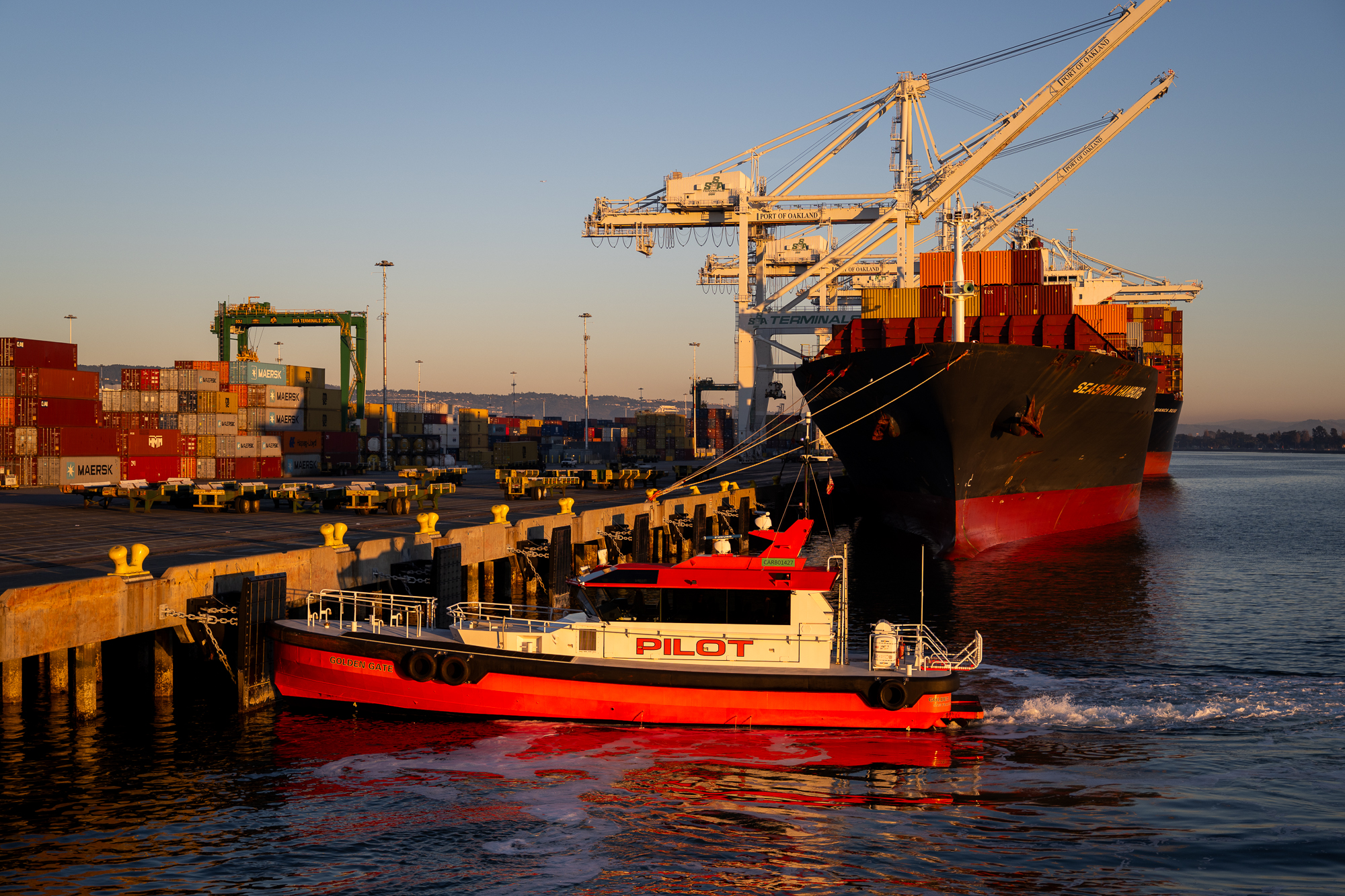
Katrina Schwartz: While Erik pedals along the Embarcadero, he often notices the orange and white boats with the word “PILOT” painted on the side in giant, all caps letters.
Erik Udd: I’ve seen the boats and I’ve seen them heading out towards the golden gate, but I never thought about the process. What do they do? How does it work?
Katrina Schwartz: Erik wants to know everything about the bar pilots. Like, how does the pilot get onto one of those big container ships?
Erik Udd: How big of a boat needs a pilot to come into the bay?
Katrina Schwartz: What kind of training do the pilots go through?
Erik Udd: Has anyone ever gone in the water? I’m sure someone has gone in the water. Maybe a better question is how many times?
Katrina Schwartz: What happens when there’s a storm?
Erik Udd: Do they get hazard pay when they’re out there in a storm?
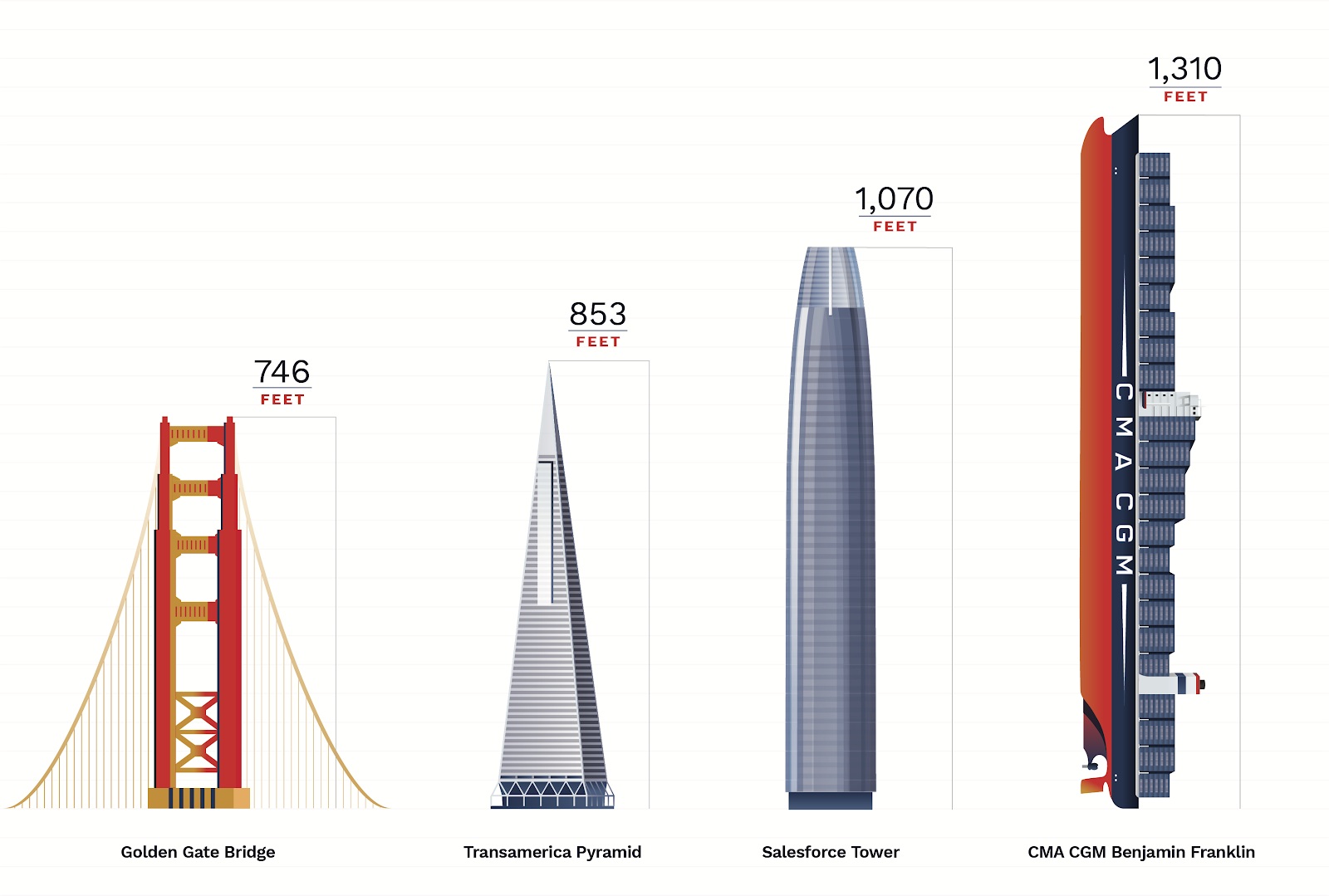
Katrina Schwartz: After all, some of the ships coming into the bay are truly massive.
Erik Udd: It’s like a building is moving along across the water. Those things are huge.
Katrina Schwartz: It’s quite a lot of questions, but I’m up to the task. Erik drops me off at Pier 9, where the Bar Pilots are headquartered. It’s the last office out at the end of the pier and sits behind a chain link fence. But once I’m inside, it looks like a fairly typical office building except the views of the bay are stunning.
Cevan Lesieur: Anne’s office has the best views in the city.
Katrina Schwartz: Captains Cevan Lesieur and Anne McIntyre are showing me around.
Cevan has been a pilot here for 12 years.
Cevan Lesieur: This is the best and most interesting waterway to work on from my experience and most challenging. So I always said if I was gonna become a pilot, it’d be in San Francisco.
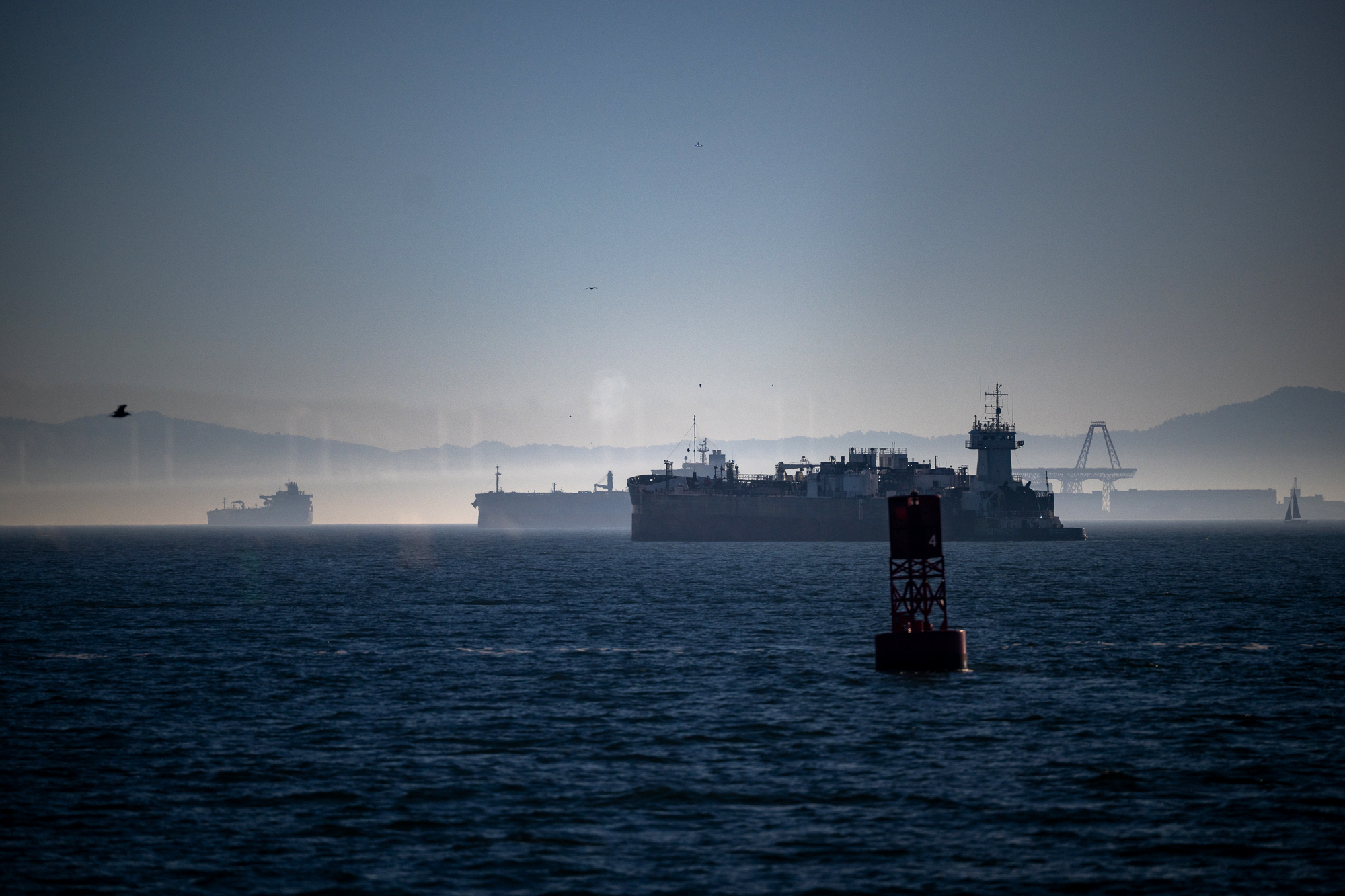
Katrina Schwartz: Challenging because of the currents, the weather, the varied types of waterways and a congested central bay. Bar pilots can be called upon to move cruise ships, oil tankers, cargo ships, even really big yachts. And they have to be able to skillfully maneuver each type of vessel through narrowly dredged channels up the Sacramento and Stockton rivers and around smaller vessels.
Anne McIntyre: We service all nine Bay Area ports. So we take ships all the way up to West Sacramento, to Stockton, down to Redwood City, even down to Monterey.
Katrina Schwartz: Here’s how it works.
Every ship over about 150 feet is required by law to use a bar pilot to enter and exit the bay, as well as to move from anchor to port within the bay. The pilots serve about 75-hundred vessels a year.
The most dramatic moment for a bar pilot happens out in the open ocean beyond the Golden Gate Bridge.
Cevan Lesieur: We have what we call our station boat or ocean boats. And one is off shore at all times, about 11 miles west of the Golden Gate Bridge. And so we have crews out there that rotate every week.
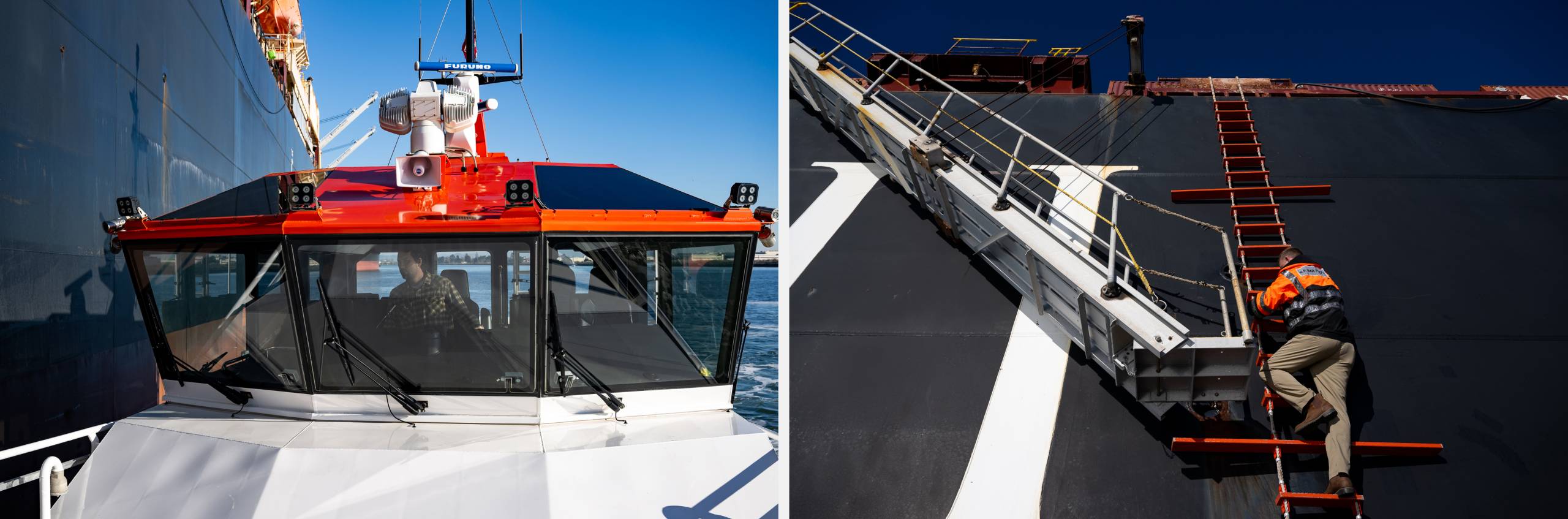
Katrina Schwartz: When a large vessel is heading into San Francisco Bay, it meets up with the bar pilot boat out on the ocean and the bar pilot leaps from one to the other — you heard that right — and they are not tied into anything when they do it. Then they climb up a ladder on the outside of the ship.
Cevan Lesieur: Timing is critical, and especially the worse the weather, the more important timing is.
Katrina Schwartz: The ships are side-by-side going about 12-miles per hour when the pilot makes his jump. Cevan says there are some weather conditions that make the transfer too dangerous, but it doesn’t happen often…maybe once a year.
Cevan Lesieur: If it’s not safe you don’t do it, but a lot of people would look at the conditions and not think it’s safe, but we have our own definition of it.
Katrina Schwartz: Once the pilot is on board, he or she communicates with the captain and crew to bring the vessel safely under the Golden Gate Bridge, through the Bay and to its anchorage spot or port berth. The same happens in reverse, except the pilot has to jump off the ladder and onto the pilot boat.
Every bar pilot I talked to had a harrowing story about open water boarding, but Cevan’s is the funniest.
Cevan Lesieur: I was boarding a car ship and the conditions were really bad and the ship and the pilot boat were going up and down and up and down. The wind was so bad, I took like 3 attempts. Finally we came alongside and I was on the platform and I jumped and landed on the deck and was laying there. And the mate looked down, and said you’re f**ing crazy!
Katrina Schwartz: Over their long history, pilots have died and many have gone in the water, but it’s not common.
Cevan Lesieur: In the modern era, we have not lost a pilot here. And the last time a pilot went into the water has been several years ago.
Katrina Schwartz: If a pilot does miss the jump, he’s wearing a “float coat” that becomes a life jacket when he hits the water, complete with lights and whistles.
And to answer our question asker, no, they don’t get hazard pay. But they are paid well… on average about 500,000 a year — all of that paid by the companies operating the boats they serve.
Olivia Allen-Price: We’re going to take a quick break, but when we come back we’ll learn how the bar pilots came to be and Katrina gets to shadow a pilot on a real job. Will she make the jump? All that coming up.
Sponsor message
Olivia Allen-Price: We were on a tour of bar pilot headquarters at Pier 9. Bay Curious editor and producer Katrina Schwartz found the halls are lined with evidence of the organization’s very long history.
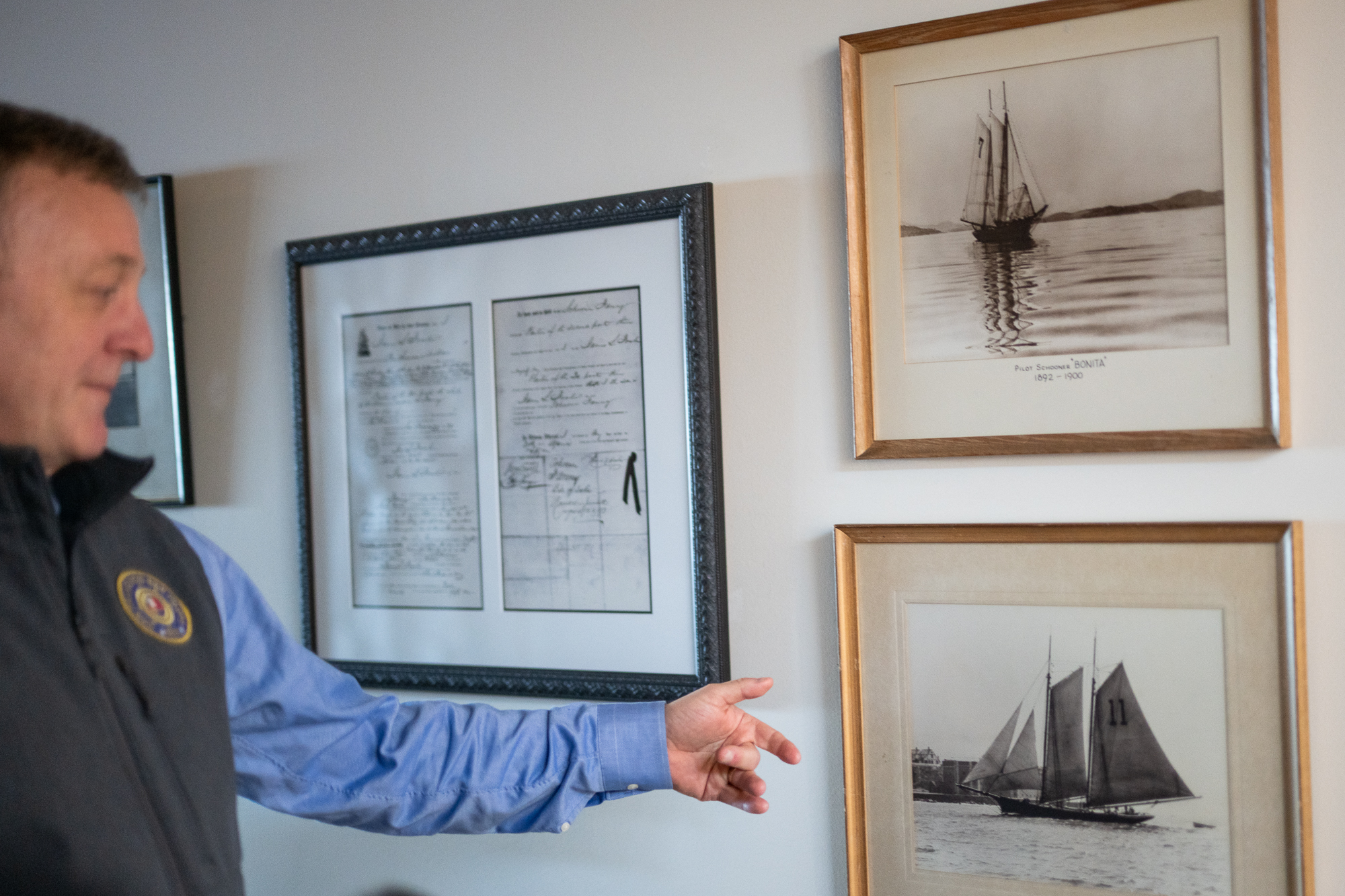
Katrina Schwartz: Captains Cevan Lesieur and Anne McIntyre are showing me cool photos and artifacts from bar pilot history.
Anne McIntyre: We have to stop at this one here. This is the original charter from the first California legislative session.
Katrina Schwartz: Anne points to an old looking document on the wall.
Anne McIntyre: The San Francisco Bar Pilots have been around a long time. We were founded in 1850. We’re the second oldest business in San Francisco behind Boudin Bread.
Katrina Schwartz: The bar pilots are as old as the state of California. Even back in 1850, state legislators understood the future of San Francisco — California even — depended on the safe flow of ships in and out of the Bay. We couldn’t have all these shipwrecks gumming up the works.
Anne McIntyre: We were the first act of the first California Legislature. So the first thing the California legislature did was pass the pilotage act happened and that’s what founded the San Francisco Bar Pilots.
Katrina Schwartz: Back then, the ships coming to San Francisco were mostly sailing vessels. By the end of the century coal-fired steam engines would come on the scene and later diesel engines. Each era required something different from the bar pilots, Cevan tells me. Boarding sailing ships might have been the most physically demanding.
Cevan Lesieur: The pilot would get on a little dinghy, and they’d row to the side of the ship, and then you’d climb up the ladder.
Katrina Schwartz: He shakes his head at the idea of rowing a dingy through dense fog and huge wake.
Cevan Lesieur: You know when I look at the type of weather and conditions we deal with…These people were just tougher than we are nowadays. (Laughs, fade under)
Katrina Schwartz: To become a bar pilot, you have to be a mid-career captain with many years of experience. There’s a written test and a simulator test. Candidates are ranked based on their scores and are then eligible for an apprenticeship with the bar pilots.
John Carlier: You’re going to probably do in the neighborhood of at least 600 jobs under the tutelage of existing pilots.
Katrina Schwartz: John Carlier is the President of the Bar Pilots Association. He says there are eight sections in the Bay, each with their own challenges, and the pilots have to learn all of them.
John Carlier: And the area starts with the Gulf of the Farallones, works its way through the main bay, down the Redwood City, and all the way up to Stockton and Sacramento.
Katrina Schwartz: Piloting up the rivers here can be especially challenging. The ships are within two feet of the bottom in narrow channels with little room for error. And it takes a long time, about 9 hours from the open ocean to Stockton or Sacramento, so they usually change bar pilots half way to avoid fatigue.
Despite all this training, there have been incidents when ships captained by bar pilots have run into trouble in the Bay. Like in 2007 when an oil tanker clipped one of the Bay Bridge towers.
John Carlier: Yes, that was a bar pilot.
News clip: A 900 foot container ship hit the Bay Bridge tower east of the main anchorage. 58,000 gallons of fuel oil. Countless fragile ecosystems.
John Carlier: There was some communication problems between the pilot and the crew as to where the center of the bridge was on their electronic nav equipment which definitely added to you know the the sideswiping of the Delta Tower of the Bay Bridge.
Katrina Schwartz: Because of that incident, the bar pilots now bring their own GPS navigational equipment on board with them so they don’t have to rely on the vessel’s equipment.
I’m going to get to see that in action soon, so we start heading towards a boat with the word “pilot” boldly written on its side tied up out back. We clamor aboard. It looks like a fancy speedboat, and head towards Oakland.
Pilot: Where do you want to head to?
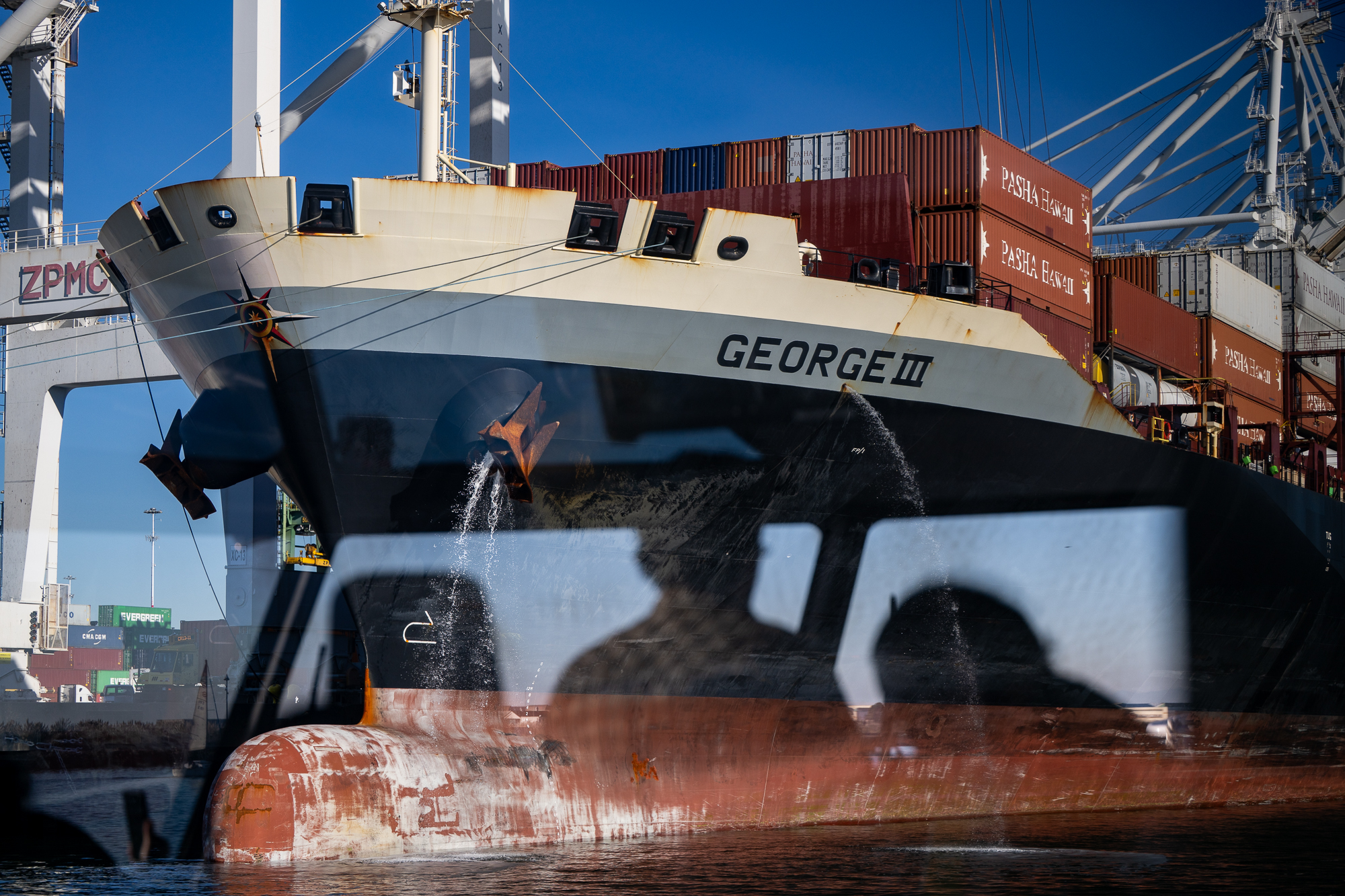
Cevan Lesieur: Port of Oakland, George III
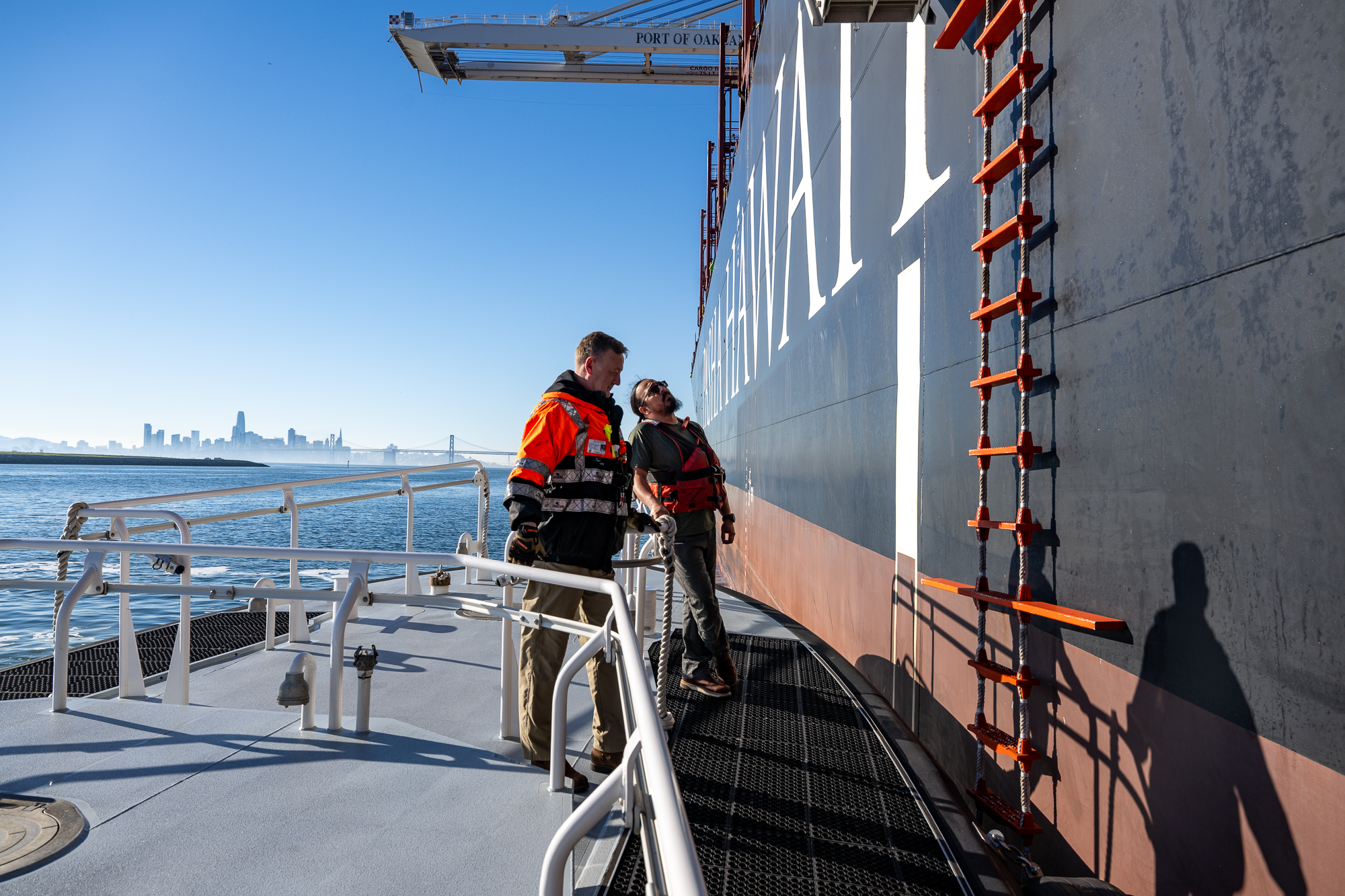
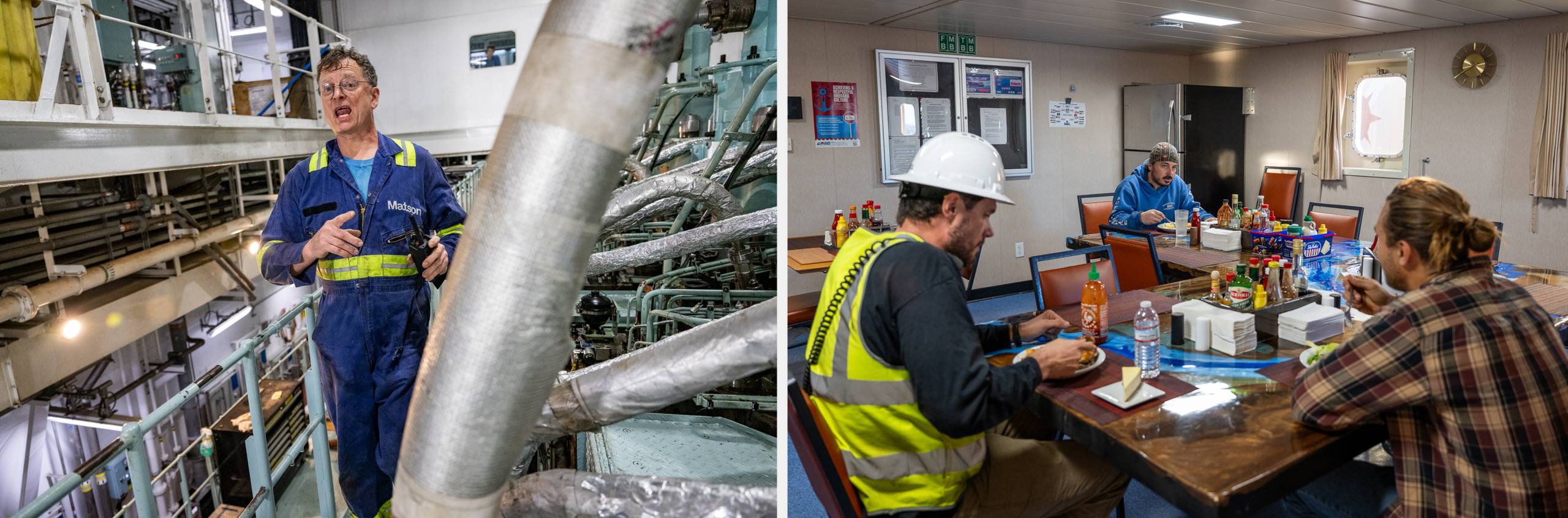
Katrina Schwartz: It takes about 20 minutes to cross the bay and soon our small boat is pulling up alongside a massive containership. This boat is considered “small” by shipping standards and it’s still as tall as a 15 story building from the water up to the top. I now have to step from the bobbing deck of the pilot boat onto a rope ladder dangling from the first deck.
Sounds of ladder clanking against the ship
Katrina Schwartz: I had hoped to do the open ocean leap I’d heard so much about. Climbing about 15 feet up this ladder felt pretty tame by comparison. The water in the Oakland estuary was very calm, kinda the training wheels version of this climb. No heroics for me.
This ship, George the III, brings supplies to the Hawaiian Islands.
Ed Washburn: Everything from medicine to groceries to fertilizer.
Katrina Schwartz: Ed Washburn is senior vice president of fleet operations with Pasha, Hawaii, the company that owns this vessel.
This ship runs the same two-week route on repeat.
Ed Washburn: The state of Hawaii has about three to five days of food availability, of shipping stopped. So it’s very sensitive.
Katrina Schwartz: It leaves Honolulu mostly empty, carrying a few commodities like rum and macadamia nuts to the mainland. Then it stops in Oakland to pick up cargo, down to Long Beach for more and back to Honolulu.
Ed Washburn: The value of that is about $50 million in cargo each time.
Ok, should we go up to the bridge?
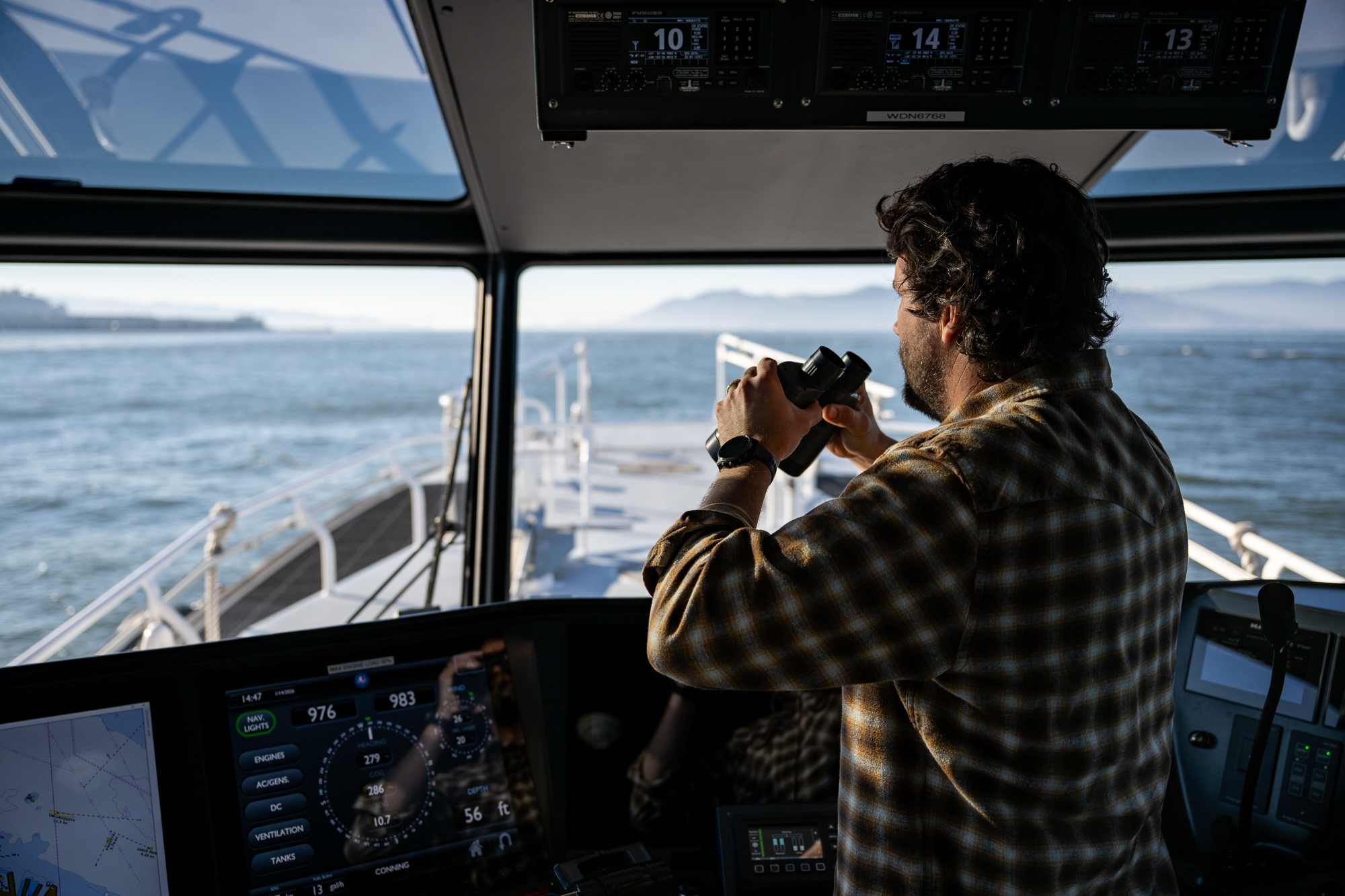
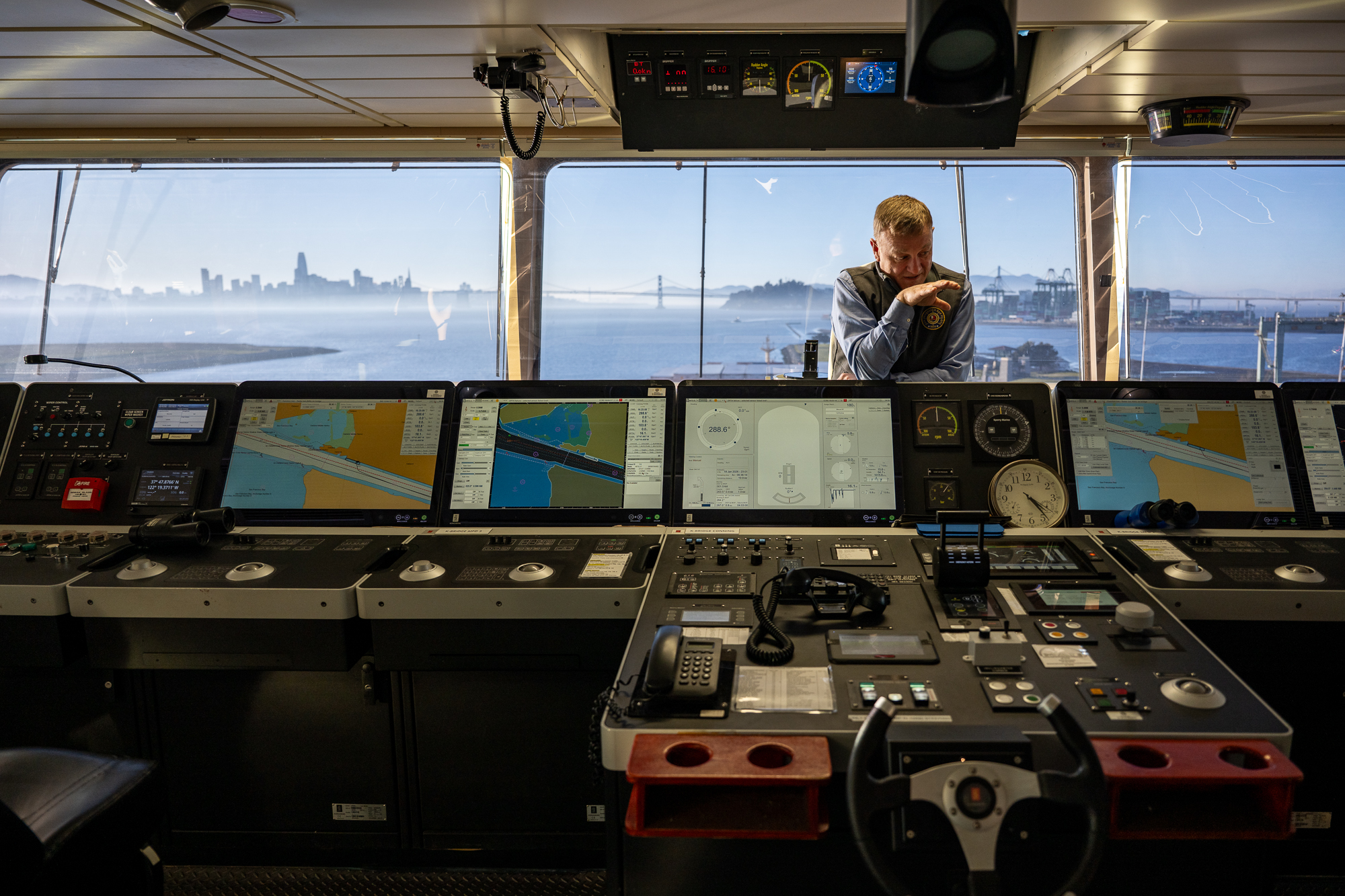
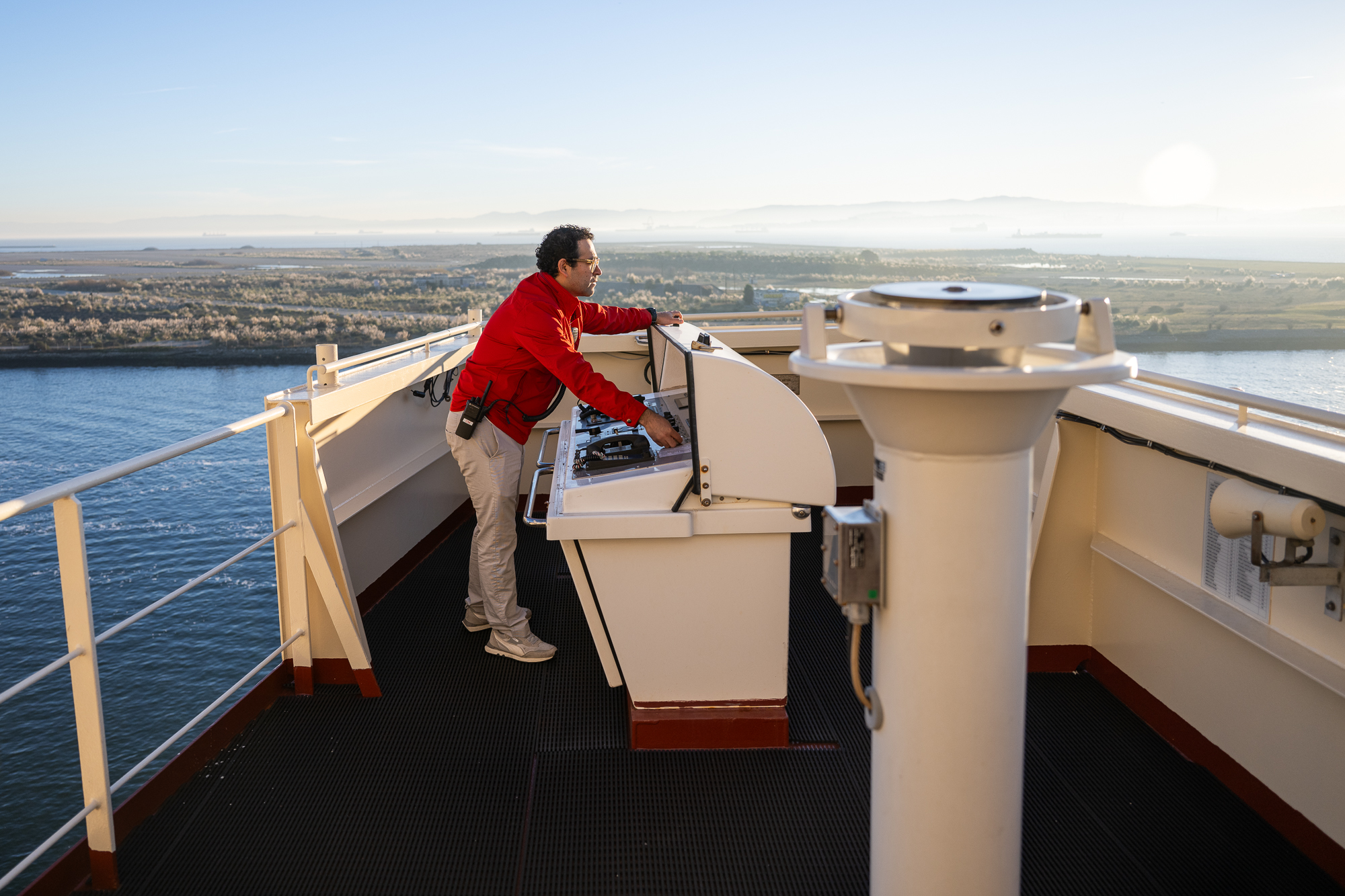
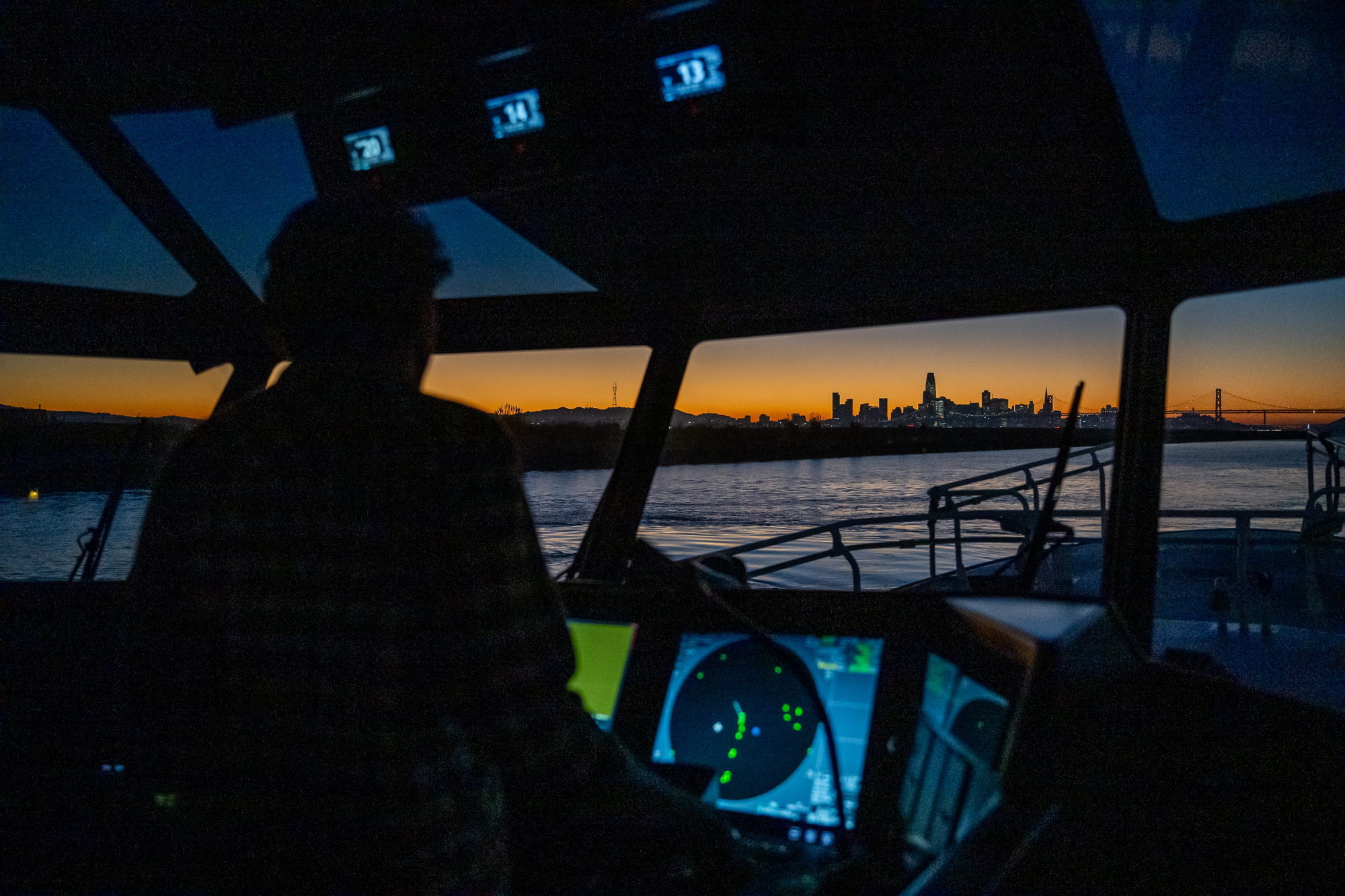
Katrina Schwartz: The bridge is at the top of the ship and it’s where the bar pilot does their work. We walk up A LOT of steps to get there.
(sounds of steps under this)
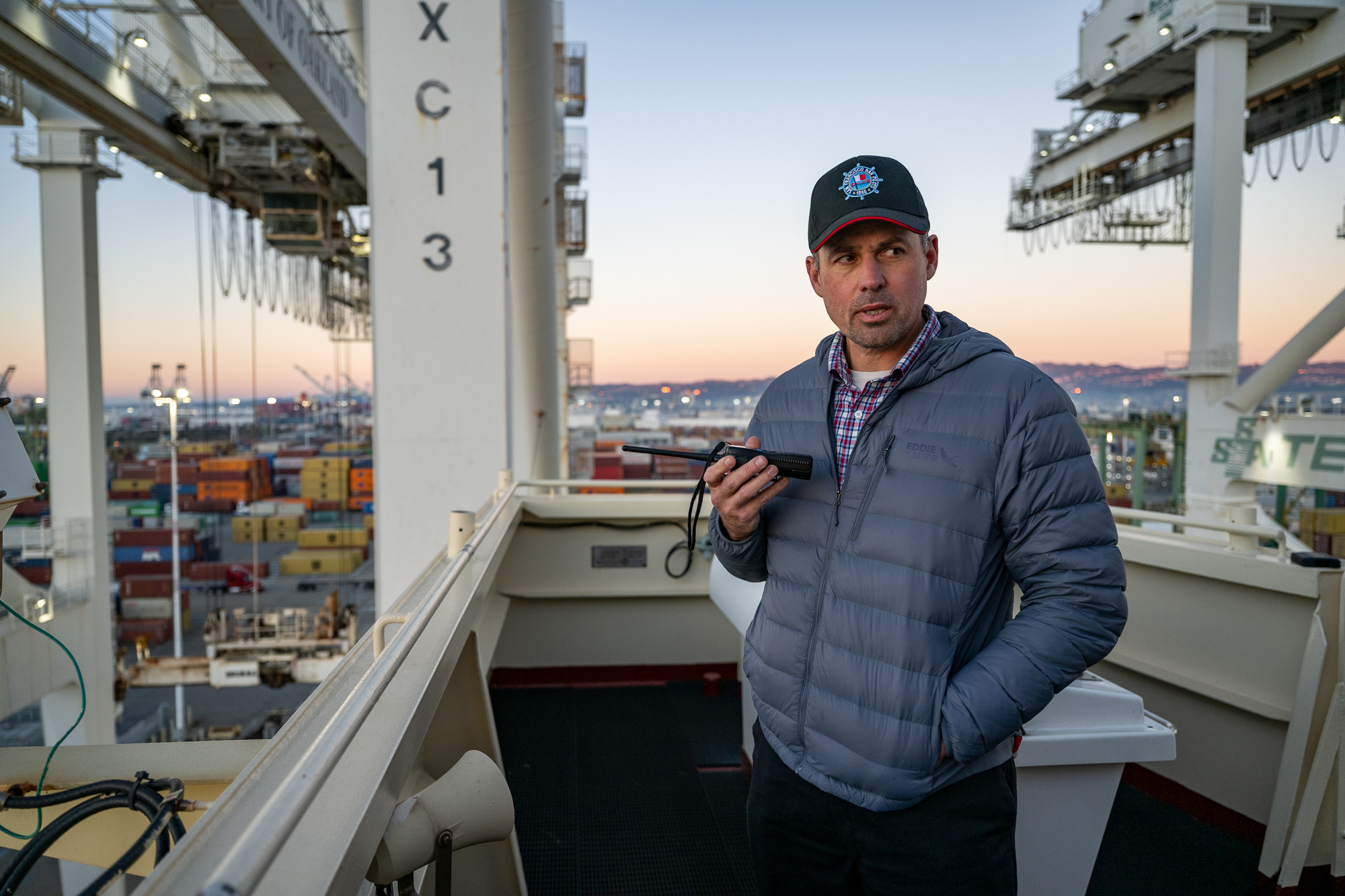
Katrina Schwartz: From up here we have incredible views of the sun setting over the bay and the internal workings of the port.
Cevan Lesieur: This is Christian Barron. He’s also a Cal Maritime graduate.
Katrina Schwartz: Today, Christian Barron is the bar pilot in charge. But Cevan is hanging out with me, explaining what’s happening so I don’t bug Christian at crucial moments, like when he’s checking in with the captain.
Cevan Lesieur: Once the tugs have been made fast and the engine’s been tested we can get rolling.
Captain Eric Veloni: The engine has been tested.
Katrina Schwartz: These massive ships are hard to maneuver, so pilots use tugboats to pull the ship off the dock.
Radio sounds: Captain, this is the chief engineer. Show of power. Cables secured.
Captain Eric Veloni: Roger, Dave.
Katrina Schwartz: Christian checks in with Vessel Traffic Services, basically air traffic control for boats, to let them know his plan and find out if there are other vessels in the shipping lanes he needs to be aware of.
Christian Barron: Traffic, good evening, 4-5. Preparing to depart Oakland 55 starboard side two bound for sea. Deep draft 32 feet two inches. Tend to Delta-Echo span and deep water traffic lane Working my tugs on 20 Alpha.
VTS Operator: Roger, copy that, 4-5. George the third preparing to get underway from Oakland…
Katrina Schwartz: Nothing to worry about. There’s a fair amount of waiting as the crew gets in position and the port workers untie the boat.
Christian Barron: All clear forward
Katrina Schwartz: And then we get going.
Christian Barron: All clear fore and aft, stand clear of your tuglines.
Katrina Schwartz: Artemis and Apollo are the names of the tugboats.
Christian Barron: Ok, ready to go. Artemis stop and stretch. Apollo stop and stretch.
Katrina Schwartz: As Christian gives orders, the massive container ship starts to slowly move away from the dock.
Christian Barron: It’s kinda anticlimactic when you have 90 ton boats and no wind.
Katrina Schwartz: Once the tugboats are secured and ready to go, the whole procedure only takes about ten minutes.
Katrina Schwartz (in scene): It is a little anticlimactic.
Captain Eric Veloni: We love boring when it comes to this.
Katrina Schwartz (in scene): I didn’t even realize we were moving at first.
Port sounds
Katrina Schwartz (in scene): You pushed off, what’s the next thing.
Christian Barron: I’ll give a command for dead slow ahead. We’ll confirm the engines come up to rpm and then we’ll put the tugs in position so they can follow along so they’re not impeding us, but can still affect the boat if we have an engine or steering failure they can still maneuver the vessel if need be.
Katrina Schwartz: Then he’ll check in with traffic again to let them know he’s underway and get any updates.
Christian Barron: And then we’ll start casting off tugs once we get about half a mile from here and start bringing her up to speed.
Katrina Schwartz (in scene): Anything you’re particularly concerned about tonight?
Christian Barron: Tonight, no. We have a little bit of current at the bar, so I just need to make sure I time my turns correctly, use enough rudder, engine.
Katrina Schwartz: Unfortunately, the bar pilots were not keen on me following Christian all the way out into the open ocean to disembark at 9 knots onto the pilot boat. Instead, we’ll be going back down the ladder in the Oakland estuary.
Katrina Schwartz: Thanks, nice to meet you all. Safe voyage.
Captain Eric Veloni: Be safe on the ladder!
Katrina Schwartz: We tramp down many flights of stairs, back to the lowest deck and our ladder.
Katrina Schwartz: It should be easier going down, right.
Sounds of clanking
Pilot boat crew: You’re two from the bottom…
Katrina Schwartz: As we head back towards the Ferry Building, the sun’s last glow seeping from the sky, I’m struck by the vastness of the Bay as the darkness encroaches.
I’m heading home to my warm bed. But a crew of bar pilots is waiting 11 miles offshore rain or shine. At their best, their work is invisible to us. We only notice the stocked shelves, cruise ships at their berths and fuel at the gas station. Our entire city works because they do. Guiding ship after ship through the fog and to safety.
Sound of the pilot boat motoring back to the Embarcadero
Olivia Allen-Price: That was Bay Curious editor and producer, Katrina Schwartz.
Thanks to the KQED Members whose support made this episode possible! If you’d like to become a member, visit donate.kqed.org/podcasts to get started. It only takes a minute and comes with some nice perks. We’ll drop the link in our show notes.
Bay Curious is made by Katrina Schwartz, Christopher Beale and me, Olivia Allen-Price. With extra support from Maha Sanad, Katie Sprenger, Jen Chien, Ethan Toven-Lindsey and everyone on Team KQED.
Some members of the KQED podcast team are represented by The Screen Actors Guild, American Federation of Television and Radio Artists, San Francisco Northern California Local.
I’m Olivia Allen-Price. Have a great week!