Episode transcript
Olivia Allen-Price: Move over third-wave coffee shops. … the Bay Area has a new coffee trend – Yemeni coffee shops. They’re popping up all over from Marin…to San Francisco, Oakland, Fremont and Redwood City. Today I’m visiting one of them with KQED’s podcast engagement producer, Maha Sanad, to see what I’ve been missing …
Olivia Allen-Price in scene: All right. Show us the way in.
Maha Sanad: Yes. Let’s go.
Oh, man, right away the scent in here is so, like, cinnamon. I know, right? We definitely want the Mocha House latte. Definitely. With cinnamon, ginger, and cardamom. Oh, man.
Maha Sanad: Cardamom and nutmeg is, that’s like a reoccurring theme in a lot of Yemeni drinks.
Olivia Allen-Price: Maybe just see if the waiter recommends one.
Maha Sanad: Okay, cool. Yeah.
Olivia Allen-Price: Hey. Hey. Mubarak. Mubarak. This is Olivia.
Olivia Allen-Price: Hi. How are you? Nice to meet you. Yes. Are you one of the owners? Yes. So nice to meet you.
Maha Sanad: What do you recommend? We think we’re gonna do the Mocha House latte.
Olivia Allen-Price: Is there another favorite that you’re like, “Definitely get this”?
Yasser: Chai is really good. In Arabic it’s…
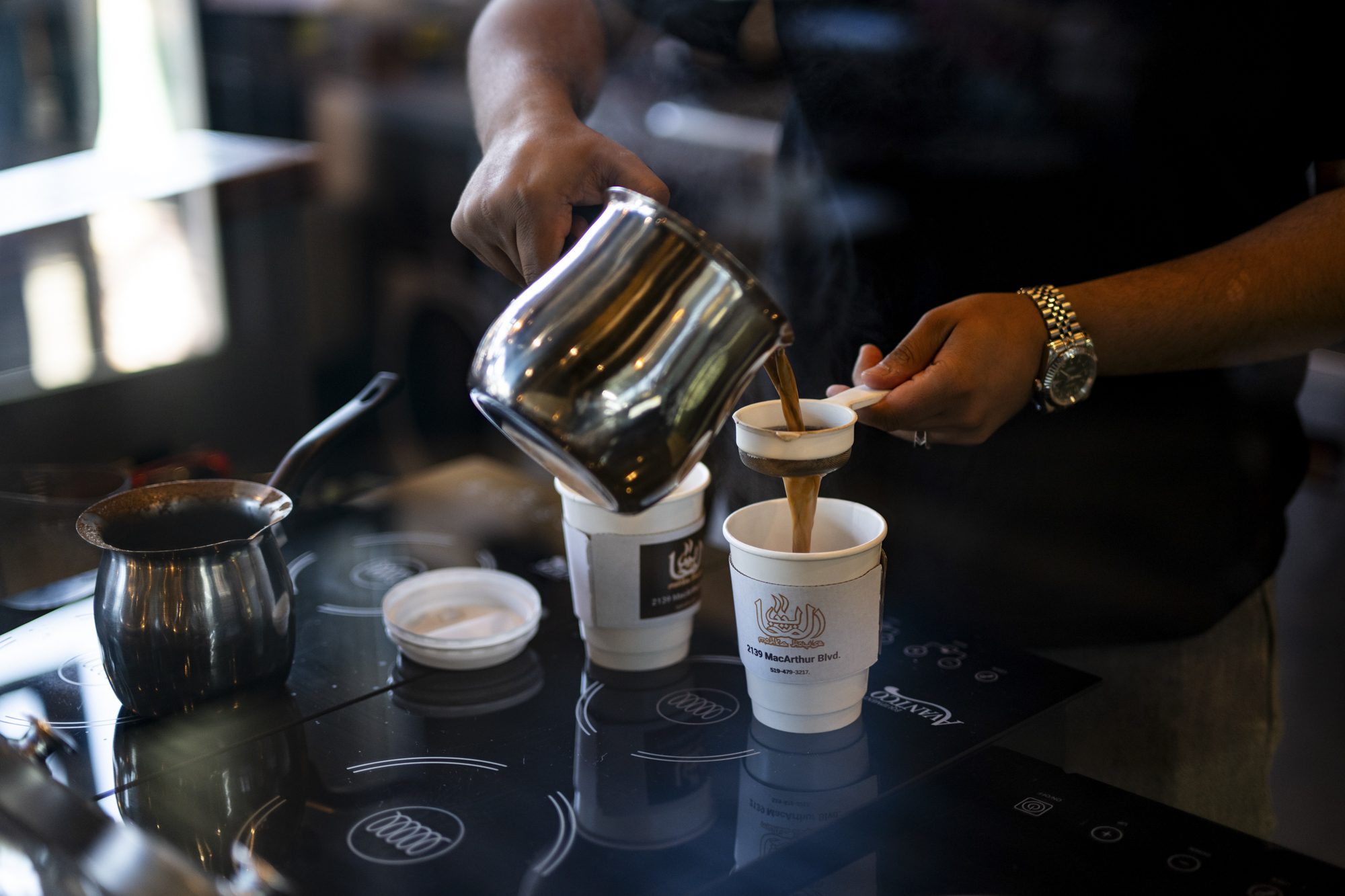
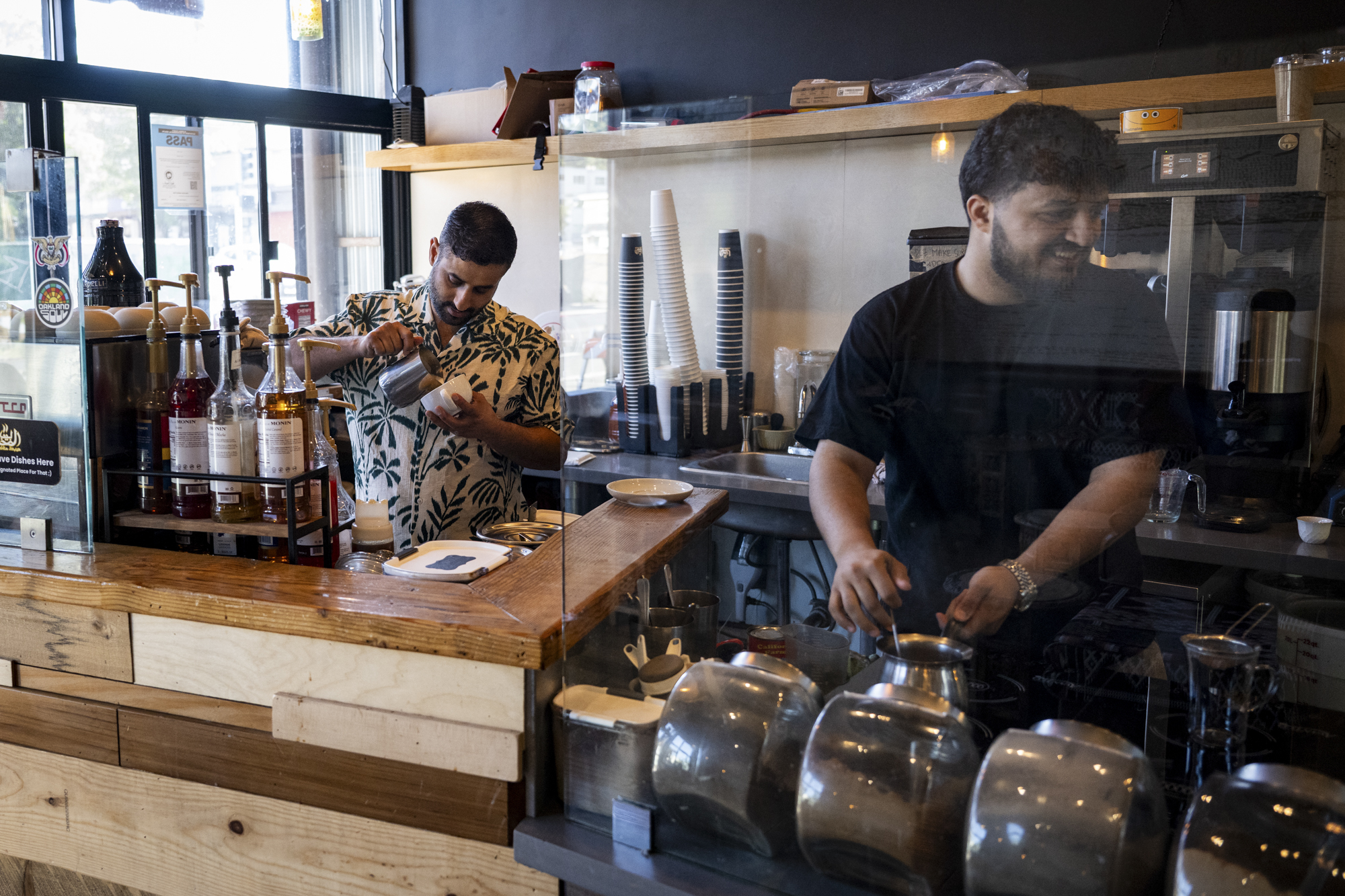
Sounds of coffee making
Maha Sanad: 10 out of 10 latte art.
Yasser: Oh, I’m trying, you know?
Olivia Allen-Price: Should we sit at a table, or do you wanna try to get a spot on the couch?
Maha Sanad: Yeah, we could sit over there.
Olivia Allen-Price: Okay, so first off, where have you brought me?
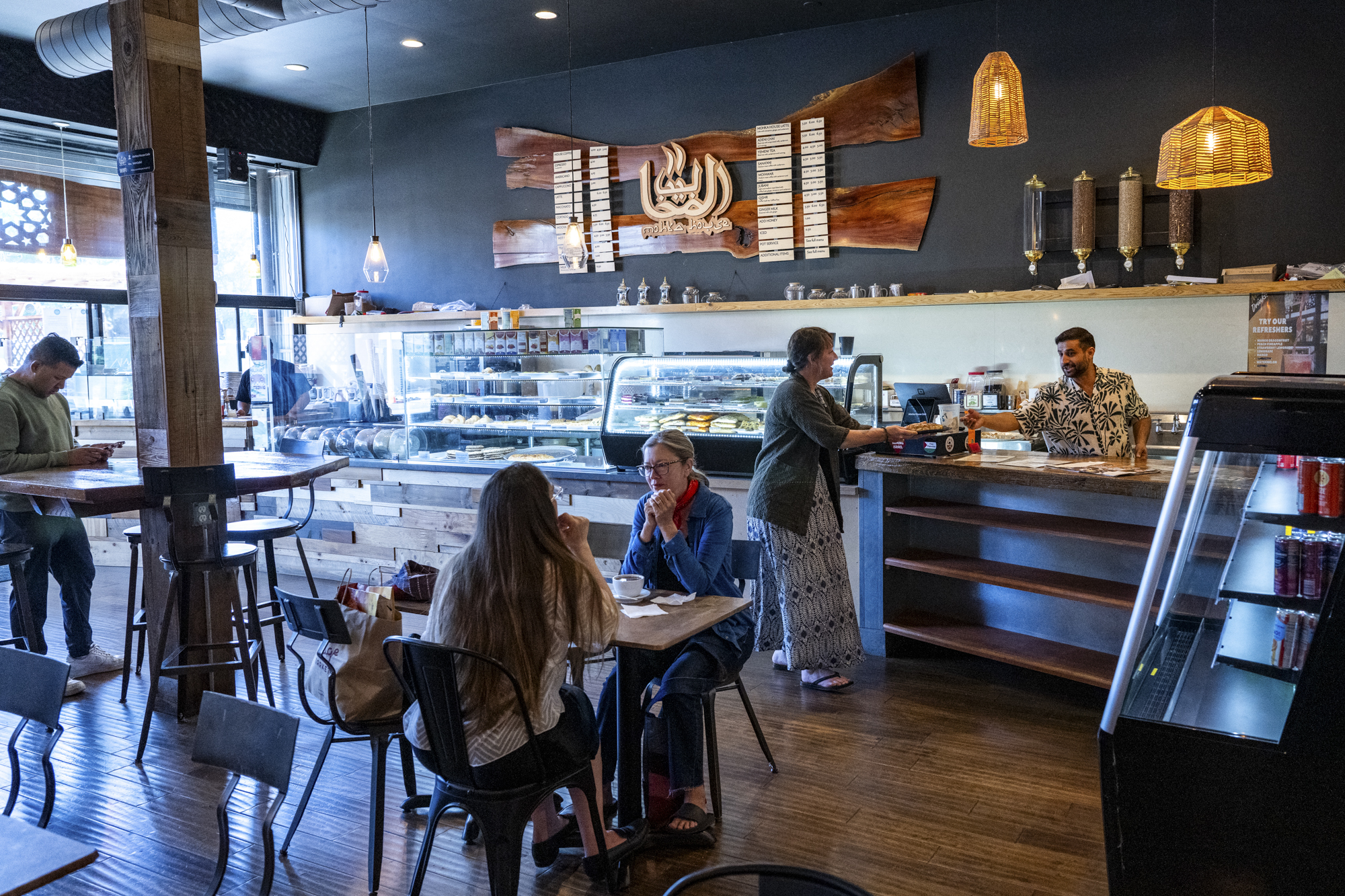
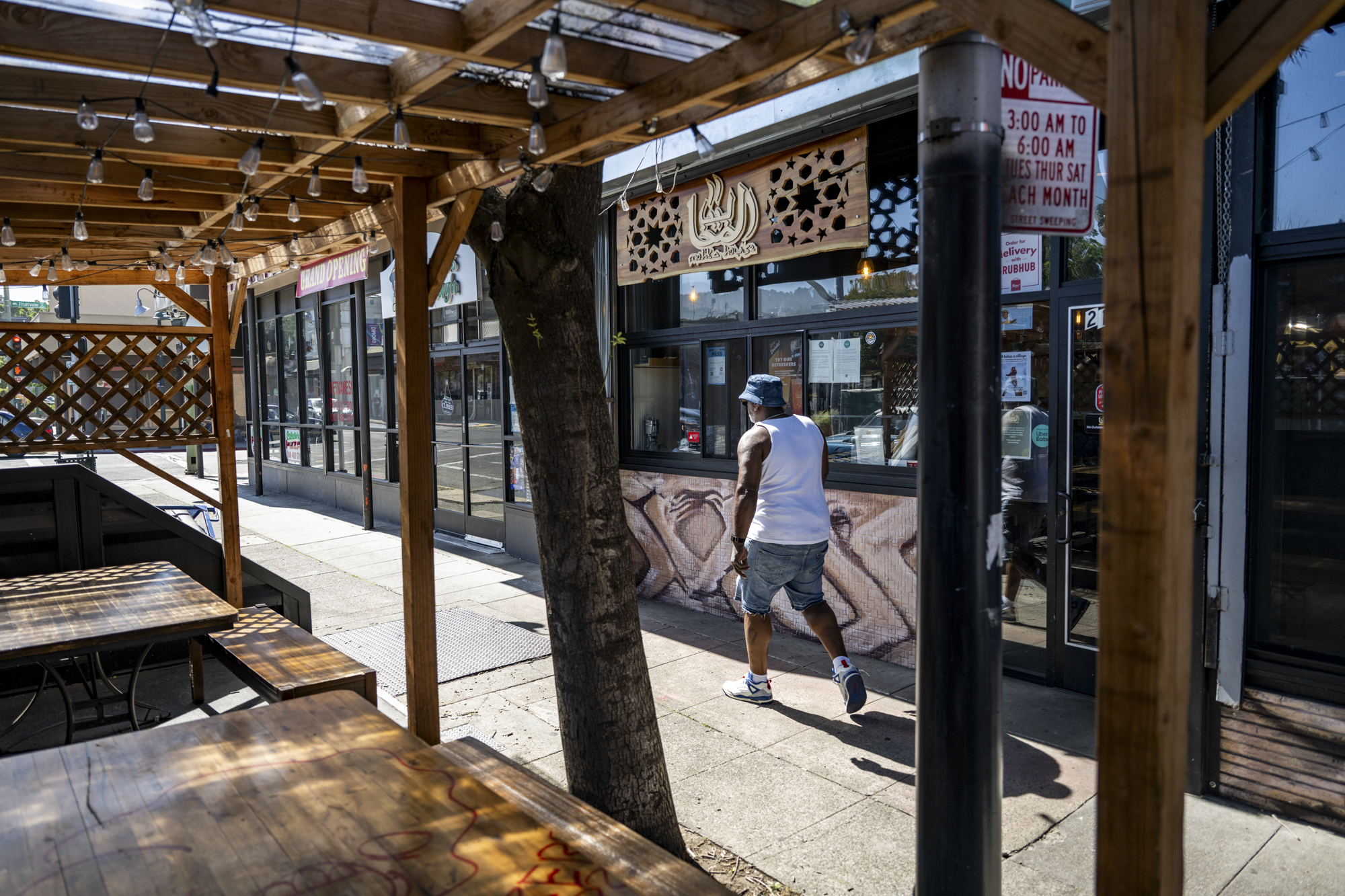
Maha Sanad: Well, right now we’re in Mocha House. It is a Yemeni coffee shop in Oakland.
Maha Sanad: I brought you here because Mocha House is one of the very many Yemeni coffee shops that I’m sure you’ve been seeing popping up across the Bay. It’s one of my favorite spots. I, I love coming here and doing work.
Olivia Allen-Price: What’s special about Yemeni cafes?
Maha Sanad: Just being around my people, my culture, hearing the Arabic music playing.
Maha Sanad: It really does transport me. It makes me feel like I have a little piece of home in the Bay Area.
Olivia Allen-Price: And this place has a sort of unique soundtrack today. What are we hearing?
Maha Sanad: Right now, they are playing the Quran, which is the holy book in Islam. Usually, they do have some pretty good Arabic music playing, but since we are here during Ramadan, which is the month that Muslims [00:02:00] fast, it’s more traditional to abstain from music if you can, and then usually people are listening to the Quran for the month, or trying to at least.
Maha Sanad: If you wanna see a very bustling space with a bunch of, you know, young Muslim people, hit up the Yemeni coffee spots after nightly prayers during Ramadan.
Olivia Allen-Price: That’s a hot tip, ’cause I feel like the Bay Area is often maligned because we don’t have as much of, like, a late-night bar culture as other big cities. Yeah. So I love that as a hot tip.
Olivia Allen-Price: Is this the only Yemeni coffee house in the Bay Area?
Maha Sanad: Oh, definitely not. In San Francisco, Oakland, even San Jose, they are literally [00:03:00] popping up everywhere.
Olivia Allen-Price: All right, well, today on Bay Curious, we are looking into why here with all these Yemeni cafes, and why now. But while you go tell us that story, I’m gonna take a sip of this delicious latte and just sit and let you teach me some stuff.
Music beings
Maha Sanad: To understand why so many Yemeni coffee shops have come on the scene, we have to go back to Yemen. The war there has been in the news recently, but Yemeni migration to the U.S actually started long before. Going back to the 1970s, there was a lot of political instability and not a lot of work.
Maha Sanad: So, many men left their families in Yemen to find work abroad.
Maha Sanad: Cities like Dearborn, Michigan offered steady factory jobs, especially in the auto industry.
Maha Sanad: Those first Yemeni migrants formed networks. Relatives helped relatives. Friends followed friends. And Michigan soon became home to the largest concentration of Yemeni Americans in the United States.
Hamza Ghalib: My father first migrated to Michigan back in the 70s.
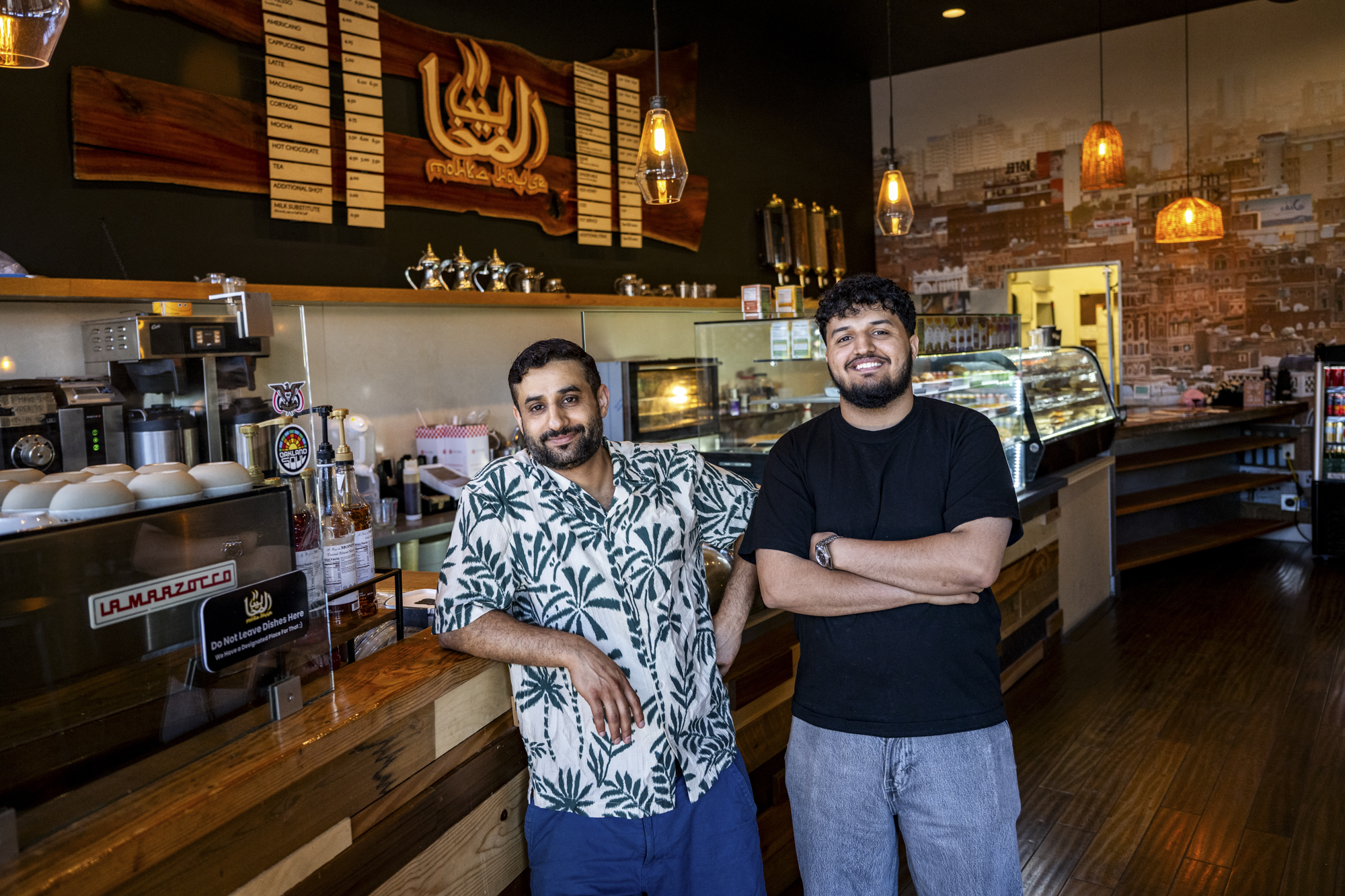
Maha Sanad: This is Hamza Ghalib, one of the brothers who owns Mohka House. His father was part of that first wave of migration, leaving Hamza and the rest of the family in Yemen while he searched for work.
Hamza Ghalib: He worked at Ford, but he did not like it there, so he moved to Southern California. As for me and my brothers, most of us were born in Yemen. I came here when I was 17 and a half.”
Maha Sanad: Hamza joined his father in the States, but went north to the Bay Area for college, where he found a vibrant Yemeni community.
Hamza Ghalib: … it just kind of feels like it’s home …
Maha Sanad: The Bay Area now has the 3rd largest Yemeni community in the U.S., and it’s been steadily growing, especially since the most recent civil war started in 2015.
Hamza Ghalib: The increasing presence of the Yemeni community here is helping and attracting more Yemeni immigrants.
Maha Sanad: The civil war in Yemen, which is still ongoing, pushed many families to leave in search of safety. But leaving didn’t mean letting go of home. Hamza says coffee transports him back to the cafes of his childhood and the flocks of pigeons that would hover nearby.
Hamza Ghalib: … every sip kind of takes me back to Yemen … drinking it in the middle of the day or early in the morning … watching my pigeons humming around.
Maha Sanad: There’s a long-running debate about the true origins of coffee: Yemen or Ethiopia. Coffee plants are native to the western highlands of Ethiopia, but Yemen was the first to cultivate, trade, and brew coffee as a drink hundreds of years ago.
Maha Sanad: For centuries, the Port of Mokha in Yemen was the center of the global coffee trade. And yes, THAT Mokha, as in where the word for the chocolatey coffee drink comes from.
Maha Sanad: So when Hamza serves a cup of coffee here, it’s not just caffeine, it’s a piece of that history.
Hamza Ghalib: “What distinguishes the Yemeni coffees, especially the coffee that we sell, is the aromatic aftertaste flavor and the chocolatey flavor, earthy, and it’s all natural.”
Maha Sanad: Before opening a cafe, Hamza’s original plan was to import coffee directly from Yemen.
Hamza Ghalib: “One of my friends is from Haraz, that’s the origin place of coffee, debatably in the entire world. I was talking to him about importing coffee from Yemen, but with the ports shut down. And we kind of just settled.”
Maha Sanad: So instead of trying to pull coffee out of a country at war, Hamza decided to bring the Yemeni coffee experience here. Delah Coffee in San Francisco was the first Yemeni coffee shop to open in the Bay Area in 2022. Mohka House was the second, just a year later.
Taj James: “Mohka House is family …”
Maha Sanad: Taj James is a regular at Mohka House.
Taj James: We’ve got these two brothers who are here every day. And when you come in here, they make everyone here feel like family …
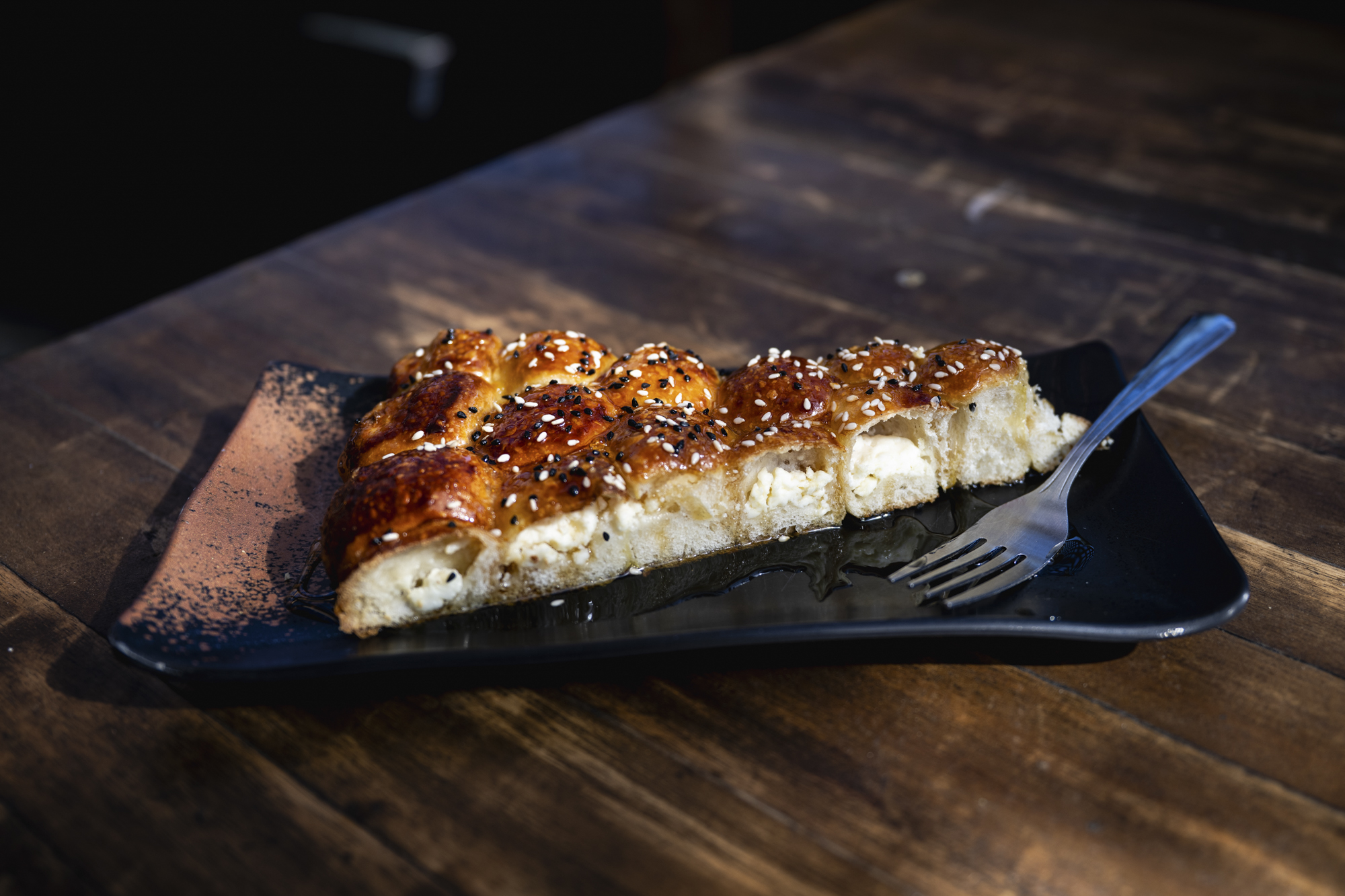
Maha Sanad: You’ll see things behind the counter that you don’t really find at your typical corner cafe. Honeycomb bread and other traditional sweets. Spices like cardamom and cloves. Drinks built around those unique flavors.
Taj James: And there’s events that happen, and book nights, and music, and so it’s just a real vibrant community space…I think Mohka House reflects the best of what Oakland is.”
Fade in scene sound
Olivia Allen-Price in scene: Okay let’s try the Mohka …
Maha Sanad in scene: The Mohka House Latte.
Olivia Allen-Price in scene: The Mohka House Latte.
Olivia drinking sounds
Olivia Allen-Price in scene: Oh yum. That is really like cardamom, hello, we are present. Very just like, comforting. A little spicy. It’s like a warm hug, just like rich and creamy. I’m definitely going to order this again.
Scene fades out
Olivia Allen-Price: We need to take a quick break, but when we come back we’ll learn how these cafes evolved into hotspots for young muslim people in the Bay Area. And hey, while you have a moment, why not give to KQED. Just visithttp://donate.kqed.org/podcasts . It takes just a few minutes. And we really need you to help us with our $8 million budget gap now that federal funding has been cut. Again, that’s http://donate.kqed.org/podcasts .
Music and sponsor message
Olivia Allen-Price: Before 2022, the Bay Area didn’t have a single Yemeni cafe. Today, they’re hard to miss. And these cafes are offering more than just coffee. They’re ushering in a whole new way of gathering … Maha Sanad tells us more.
Maha Sanad: In Yemen and across much of the Arab world, cafes are places to linger, socialize, and unwind. They often stay open late into the night. That’s true here in the Bay Area, too. And not just in Oakland. There are Yemeni cafes opening across the Bay Area.
Maha Sanad in scene: I’m at Qamaria in Fremont right now. It’s about 9:30 PM on a Friday night. A lot of groups of friends hanging out, a lot of young people. It’s a really good vibe in here.
Maha Sanad: The lighting is warm and inviting. Friends pull chairs together up to crowded tables. And the sound of chatter and laughter is ringing in the air. It’s a little like a bar, but there’s no alcohol.
Maha Sanad: To understand the appeal, I asked customers why they keep coming back.
Patron 1: This is, like, the only thing that’s open kind of late. Everything else closes pretty early, so, like, after work we’ll just chill here. It’s, like, very diverse when you come here.
Patron 2: I’m Pakistani, and so we see a lot of Pakistani and Indian people. And it’s just really nice to see there’s a place where we can go and people aren’t looking at us in our cultural clothes in, like, a weird [00:06:00] way.
Patron 3: I’d say it’s a more homey feel, I would say. I feel more at home.
Patron 4: It offers cultured chai and coffee spot that allows people to gather together, and that’s something that’s kind of lacking in the United States, especially late at night. This is one of the only places to do that.
Maha Sanad: That was Amara Ahmed, Mahum Fatima, Shivanka Sharma, and Rumzi.
Maha Sanad: Some customers also told me it’s political. They said consumer boycotts related to Gaza led them to be more intentional about where they spend their money.
Rumzi: That’s what started it. That’s what ignited it, and then the vibes here is what kept people around, I would say.
Maha Sanad: And because these cafes are late-night hangouts, they’ve taken on another role too…
Nasser: “It’s a great place to meet other folks that are your age as well.”
Maha Sanad: In the Bay’s Arab, Desi, and Muslim communities, there’s kind of a running joke that if you’re single, this is where you go. Not just for coffee, but to see and be seen.
Nasser: “Yeah, I think that’s what kind of makes it attractive for young people.
Maha Sanad: And it didn’t take long before I found someone with firsthand experience. Rumzi introduced me to his friend Nasser.
Rumzi: This guy literally met his wife at Qamaria.
Nasser: Yeah I did meet my wife
Maha Sanad: You met your wife at a Yemeni coffee shop? No way!
Nasser: Yup!
Maha Sanad: Back at Mohka House, Hamza says cafes are just the beginning of what Yemeni people have to offer the Bay Area.
Hamza Ghalib: A complete takeover in a good way. People showcasing their talents in so many different ways. I just hope that we can all co-exist with one another, live in peace…That’s how we coexist and that’s what Oakland, specifically, and the Bay Area generally, is well known for, coexistence.
Maha Sanad: For Hamza and for many others, these cafes are more than just business. They are proof that Yemen is not just a place in crisis, but a culture that is very much alive in the Bay Area.
CREDITS:
Olivia Allen-Price: That was KQED podcast engagement producer Maha Sanad.
Bay Curious is made in San Francisco at member supported KQED. Our show is made by Katrina Schwartz, Christopher Beale and me, Olivia Allen-Price.
With extra support from Katie Sprenger, Jen Chien, Maha Sanad, Ethan Toven-Lindsey and everyone on team KQED.
Some members of the KQED podcast team are represented by The Screen Actors Guild, American Federation of Television and Radio Artists, San Francisco Northern California Local.
I’m Olivia Allen-Price, have a great week.
.jpg)