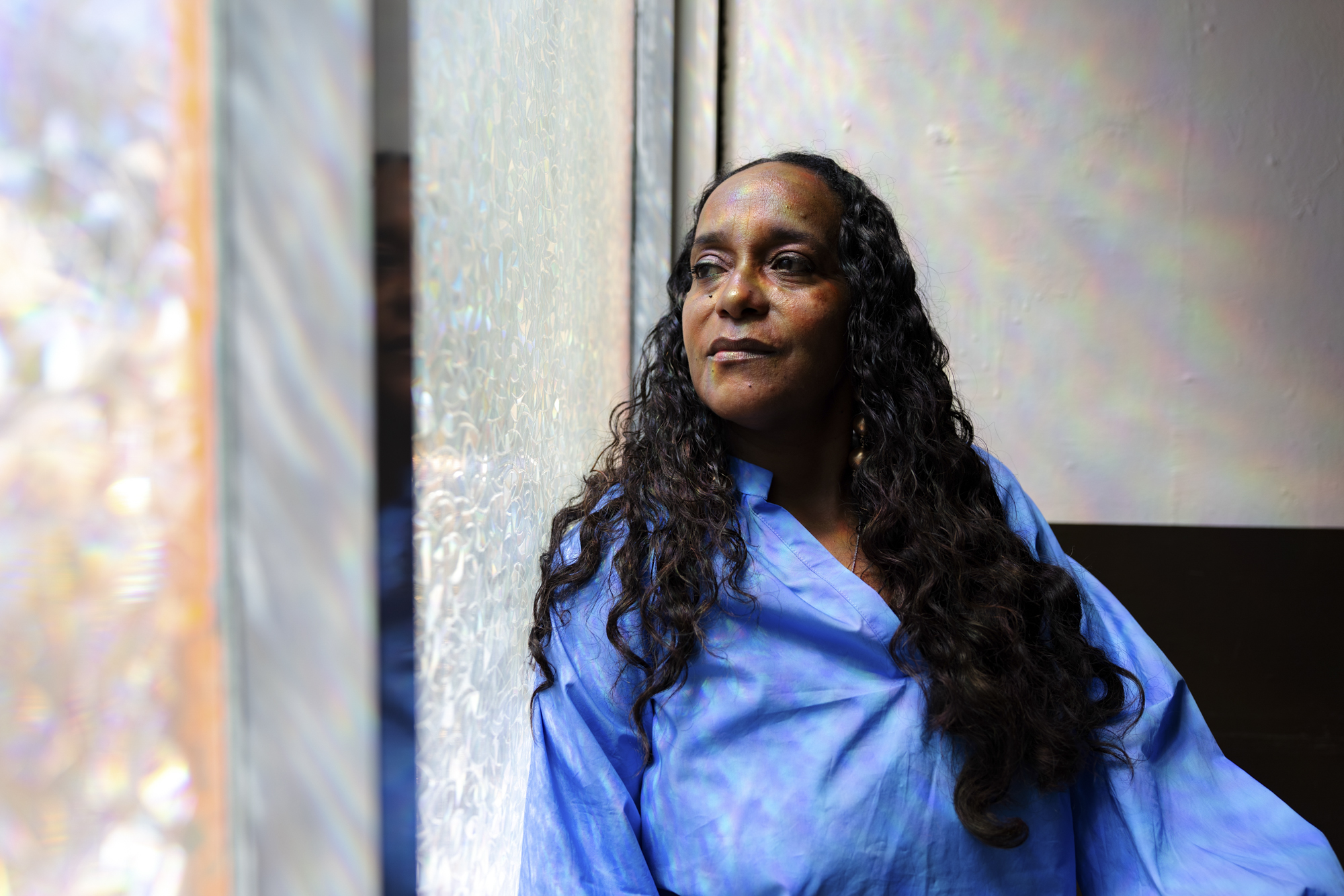
Ericka Cruz Guevarra [00:00:49] I’m Ericka Cruz Guevara and welcome to The Bay, local news to keep you rooted.
Rev. Amos Brown [00:00:55] Black folks, build the economy of San Francisco and give your ancestors a big round of applause.
Ericka Cruz Guevarra [00:01:05] That’s Reverend Amos Brown speaking last Saturday in San Francisco’s Fillmore District, where thousands gathered on Fillmore Street to celebrate Juneteenth, commemorating the end of slavery in the United States.
Rev. Amos Brown [00:01:22] Celebrations only last for a moment. But the struggle for justice goes on from one generation to the next generation.
Ericka Cruz Guevarra [00:01:36] The Bay’s producer, Jessica Kariisa, went out there with our editor, Alan Montecillo. Jessica, what was that – what was that like?
Jessica Kariisa [00:01:43] It was really cool. It was a beautiful day in San Francisco. It was sunny. The breeze was crisp, but not too crisp. There were tons of people out, I would say thousands of people. And the vibes were just really high. Lots of music, kids, games, food, everything you would imagine at a street festival.
Ericka Cruz Guevarra [00:02:09] And I mean, obviously there are many Juneteenth celebrations happening across the Bay Area this week and this weekend, but why did you want to go out there specifically? Like what big questions did you have that drew you to the film more specifically for Juneteen?
Jessica Kariisa [00:02:26] Yeah, so the Fillmore’s Juneteenth celebration is actually the oldest continuous Juneteen celebration in the country. It’s been going on since the 40s. And I thought it was just really interesting to visit this celebration in a city like San Francisco, where the black population has been declining dramatically for decades. And you see it really starkly in a neighborhood like the Fillmore where the Chronicle recently reported that the population dropped from 57% in 1970 to just 16% in 2020. That was already six years ago, so you can imagine probably hasn’t gotten better. I really wanted to see how a community that has gone through so much and has lost so much is still showing up to celebrate themselves.
Ericka Cruz Guevarra [00:03:25] And who did you go out to meet there?
Jessica Kariisa [00:03:32] Yeah, so I met a woman named Erica Scott. She grew up in the Fillmore in the 80s, and she’s actually a local business owner. She runs an art studio called Honey Art Studio, and she is just super-rooted in the community, super- rooted in The Fillmore. When we were walking around with her, she had to stop and say hi to so many people because she really does know everybody. At one point, she was even running these history tours in the neighborhood to really, you know, explain the black history of the neighborhood, which is quite rich. So I met her at the Fillmore Street Cafe, which is an Eritrean-owned cafe. And there was loud music playing, there was coffee grinding. People were ordering sandwiches before the… The festival started and we just talked about her experience growing up in the film world.
Ericka Scott [00:04:24] When I grew up, most of the neighbors, even some of our teachers, you know, black, and you just don’t see that over here or over there anymore. So it’s different, a lot different from when I grew.
Ericka Cruz Guevarra [00:04:44] Ericka is also really interesting to me too, because she’s actually someone who grew up in the film war, left, like many other black folks from the community, but then came back, which seems like a sort of like rare story, I guess.
Jessica Kariisa [00:05:00] Yeah, like you were saying, a lot of people have left over the decades. A lot of the people know the Fillmore for being what was called the Harlem of the West in the 40s. Basically, lots of black folks moved into the neighborhood during World War Two to work in industries that were supporting the war effort. And, you know, at that time, the neighborhood really boomed culturally. But then in the 60s, the neighborhood went through something called urban renewal. The city actually destroyed homes and businesses in the name of redevelopment. And over the decades, just lots of disinvestment. The neighborhood no longer has a grocery store, for example. And Reverend Brown, actually, when he opened up Juneteenth, he referenced all of this.
Rev. Amos Brown [00:05:54] But beloved, it wasn’t about renewal. It was about black removal!
Jessica Kariisa [00:06:05] And yeah, it was really powerful to hear him speak so vividly about what the community has gone through at this celebratory event, you know, where there’s all these people who came back who no longer live here. And so Erica at one point told me, it’s like a big family reunion. And Erica grew up in this neighborhood in the 80s. So it was actually after all of this had happened. But, you know, she talked about still having a really strong black community.
Ericka Scott [00:06:41] We’ve made so much with so little. And as difficult as it can be, just still enjoying the experience. So today is a culmination of so much, so much loss, so much a lot of pain, but a lot a love, a lot of respect and camaraderie.
Jessica Kariisa [00:07:07] It just felt really special to be there, to see this community continue to celebrate themselves.
Ericka Cruz Guevarra [00:07:15] Well, in today’s episode, we’re gonna celebrate Juneteenth in the Fillmore and turn it over to Jessica Kariisa and Ericka Scott.
Jessica Kariisa [00:08:13] So maybe Ericka, if you could just start by introducing yourself, telling us who you are, where you’re from, and what you do.
Ericka Scott [00:08:21] My name is Ericka Scott. I grew up here in the Fillmore, Golden Gate and Steiner. My parents bought their home, I think I was like in middle school. And on the block actually, there were I believe seven families and they were all black. So I started off in Lakeview, I was there till I was 10 and then my parents bought their home over here in Fillmore. So that was, oh my God, I’m telling my age, About 84. Yeah, about 84.
Jessica Kariisa [00:08:53] And what was the Fillmore like back then?
Ericka Scott [00:08:55] So what I remember, again, we had aunts and cousins that always lived on this side. So coming from Lakeview, we always knew in the Fillmore it was going to be sunny. So that was like, it was like a warm, you know where it’s going to warm, you know it was gonna be, you can hang outside. You just walked around and I didn’t think of it then, but you just see people that look like you, you now, but it was so normal.
Jessica Kariisa [00:09:19] Do you have any favorite memories?
Ericka Scott [00:09:21] From being a kid in the Fillmore in the 80s. Yes, so a few of my family members, my aunts and uncles, they lived in one of the first resident co-op homes, which is Freedom West Homes. And we would just be outside probably from 11 a.m., sometimes to 11 p.m. We played kickball, we hung out, we listened to music. I mean, it was just like… Like a family barbecue, especially in the summer, like almost every day. And this was all neighbors.
Jessica Kariisa [00:10:02] What did you, I mean obviously the Fillmore has a very rich history in the black community, the Harlem of the West, what did you hear about that growing up, like did you know about that history, did you have a sense of pride like being from the Fillmore or living here?
Ericka Scott [00:10:14] So I’ll be honest, I was fortunate. I went to UC Berkeley out of high school and one of my first classes was a African-American studies class and that was probably one of my first experiences of really understanding black history in America in the Bay Area. Our family was more on the trajectory of I don’t want to say assimilation, but kind of more assimilation. So we were taught you have to do twice as much as white families or other families. And so that black experience, while we lived it, we weren’t taught it. Like I know some other people who are just like rooted in culture and the black experience. And I think our family was more like, we just want to be better, we want to get out of here, like those kinds of, those are the messages I remember. I went to a private school at one point, and I was in the seventh grade, and there was a kindergartener, we were the only two blacks in the whole school. After a while, I made friends, and so they wanted to come over to my house. And I told my mom I was… Like almost embarrassed. And she said, well, why? And I said, because our neighborhood is different. It’s quiet on the streets. Nobody’s hanging out. It’s just the streets are clean. Like I knew there was a difference. And my mother told me then, she said don’t ever be ashamed of where you live. And some of those men that are hanging out, they fought for our country. They came back. They didn’t have anything. It’s difficult. More difficult for black men especially, black people, than it is even for people coming over from other countries, you know, which is very hard to believe, but she did tell me that and I was like 12.
Rev. Amos Brown [00:12:23] For during World War 2! What happened? The only people who were found to be here in the Bay Area, to build the ships, to unload the ships to be personnel on the railroads, to do domestic work, it was black folks. Black folks, build the economy of San Francisco and you’re gonna give your ancestors a big round of applause.
Jessica Kariisa [00:13:07] So yeah, so it’s interesting. So like you still have that childlike sort of like, wow, like we’re on the street and we’re having fun and it’s like a big barbecue that never ends. But then at the same time, you’re also aware of, oh, like, we’re not invested in the same way as other neighborhoods. Like our neighborhood is not the same.
Ericka Scott [00:13:26] And that’s the, I’m glad you pointed that out because I guess before seeing it somewhere else, it was great, you know? And I think it’s also, like I said, just that communal family environment, that was fun, but when I was over there, I was by myself, you now? So I think also not having that support or even a girlfriend who looked like me, I’m sure that played a huge role into what I was just so focused on. And what yeah, but yet you’re right. It was like night and day like I love my life I love My neighborhood and then like I said seeing the difference from another perspective made me look at our neighborhood differently.
Jessica Kariisa [00:14:10] There was a report that came out in the Chronicle about showing how much the black community has declined in San Francisco. And I think in 1970, in the Fillmore, it was 57% of the community, and by 2020 it was only 16%. I’m wondering how, as someone who’s lived here for a long time, how did you see that play out personally?
Ericka Scott [00:14:31] Well, I’m going to be honest, it was a struggle for my mom. Eventually, my parents divorced. And to pay the mortgage, to try to keep us in private school, she was running her own business. Very difficult financially. And to others, it could look different. Oh, wow, they have a home. They’re in private. But that financial struggle was huge. Eventually, it got to a point where she had to sell. It was either lose the house or sell the house. And then we moved, and some of us moved out of the city. So experiencing that, it was just something that other families had experienced sooner. It was just so expensive. And then, like I said before, depending on what the goals are for a family, a lot of people wanted to get out. And so with education, with career, with family, being able to purchase property, They don’t want to be. In this neighborhood anymore because there was such lack of investment in the neighborhood. You know, so it’s a cycle because now we’re not here and we want to be here and that’s how it played out for me. I saw it like in my own household and just knowing that was pretty much the reason a lot of other people left as well.
Jessica Kariisa [00:15:56] Can you say your first and last name and where you’re from?
Carolyn Pollard [00:15:58] The name’s Carolyn Pollard, but I was born in New Orleans, but I was raised in San Francisco.
Jessica Kariisa [00:16:03] Oh wow, in the Fillmore?
Carolyn Pollard [00:16:04] Yes.
Jessica Kariisa [00:16:05] Oh, wow!
Carolyn Pollard [00:16:05] 50 years.
Jessica Kariisa [00:16:06] 50 years! Oh wow! Do you still live here?
Carolyn Pollard [00:16:09] I live in Chinatown now.
Jessica Kariisa [00:16:10] Oh nice!
Carolyn Pollard [00:16:10] Yes.
Jessica Kariisa [00:16:11] What brought you out today for Juneteenth?
Carolyn Pollard [00:16:13] I always come back. Last year I missed it so I brought my cousin from San Leandro. You know, my cousin is coming and my girlfriend, she used to live here. So she moved to Tennessee, so she’s out here, so we’re going to meet up. I ain’t seen her in 30 years.
Jessica Kariisa [00:16:28] Wow, that’s amazing. What does Juneteenth mean to you?
Carolyn Pollard [00:16:32] Free at last. Freedom. But it’s still positive, we still go through our trials and tribulations, but we’re trying to get it together.
Jessica Kariisa [00:16:42] And what does it mean to celebrate it? In the Fillmore, where you grew upOh, well, they was trying to take it from us. So I’m glad they brought it back. I hope they don’t take it because we need this, you know? And we had a lot of young black women, men who are getting killed. So, you now, maybe we can reach them or something. I don’t know yet, but we’re gonna try.
Jessica Kariisa [00:17:04] Thank you so much. Thank you.
Carolyn Pollard [00:17:05] Thank you.
Jessica Kariisa [00:17:18] When did you move out? Eventually when did you leave?
Ericka Scott [00:17:23] So I went to school in Berkeley so I’ve lived back and forth on the East Bay. I just moved back to the city. Yeah so I’m on Van Ness and Hayes so it’s close.
Jessica Kariisa [00:17:39] It’s close, it’s close. Wow, that’s awesome. That’s not a story you hear often.
Ericka Scott [00:17:45] I know and that’s what I’m saying. I’m feeling it. If I came back, people coming back. I’m seeing some hope. I’m feeling like there’s so many other people like me who are like determined to just to say we’re here and we’re not going to disappear. You know it’s a lot of us that are like almost like a renaissance I feel is coming. I do. I really do.
Jessica Kariisa [00:18:20] Your name, first and last name, and who you are.
Omari D. Hamilton [00:18:22] My name is Omari D. Hamilton. I’m a community organizer. I organize with a committee the San Francisco Fillmore Juneteenth.
Jessica Kariisa [00:18:30] And can you explain what you’re just telling me, what Juneteenth means to this community?
Omari D. Hamilton [00:18:35] So the Juneteenth means everything to this community because of the harm that we have gone through in this community. So when you go back to Harlem of the West, Urban Renewal here at 1330, Fillmore at a Heritage Center. That was actually the location where the Black Panther was located and we know what happened to them. When you go to Geary Street, that was the church where actually Jim Jones operated out of. So we know that there was a lot of harm that has happened in this Community. So from then to now all the progress that we have made we are joyous to celebrate Juneteenth on that day.
Jessica Kariisa [00:19:17] You know, given everything that the Fillmore has gone through, being the Harlem of the West or, you know, just being the Fillmore, you know, in this wonderful place with this wonderful history, and then also going through so much displacement and so much disinvestment and so many struggle, what does it mean to you to celebrate Juneteenth in the Fillmore today?
Ericka Scott [00:19:40] It means a lot, a whole lot. Wesley Johnson, rode on Fillmore Street, to proclaim Juneteenth. And that was one of the first of our festivals. And here we are today still celebrating. And there’s just not a lot of celebration publicly for everyone to experience. As it relates to black people. So I’m super proud of that. And I also wanna say, and I’m so happy you pointed it out. Again, resources were limited, but we had a lot of fun. We had a lotta love. So many families we say were related and there’s probably no real blood ties. And we didn’t, being young, we didn’t think that we were so, that we didn’t have a lot. It wasn’t important, you know? It mattered a lot, that love and that community. And that’s what I’m starting to believe again and feel like others are believing. We’ve made so much with so little. So today, it’s a combination of so much, so much loss, a lot of pain, but a lot a love. And today, we’ll see people from all over, all nationalities, which is amazing. And then again, a lot people who moved out of San Francisco, they’ll be here today. So that’s like, it like a family reunion. You know, so overall, it is good.
Jessica Kariisa [00:21:35] Well, Ericka Scott, thank you so much for speaking with us today and taking us around.