Ericka Cruz Guevarra [00:00:00] I’m Ericka Cruz-Gavarra and welcome to The Bay, local news to keep you rooted.
Ericka Cruz Guevarra [00:00:10] What wouldn’t you give to live on the California coast? I mean, it’s one of the most iconic and beautiful coastlines in the world. But in the era of climate change, living on the coast has required folks to ask themselves some pretty big existential questions. Like, what do you do when the coast is falling into the ocean?
Christine Boles [00:00:37] The truth is, the ocean’s going to win in the end, right? We’ve built infrastructure, all infrastructure has a life span.
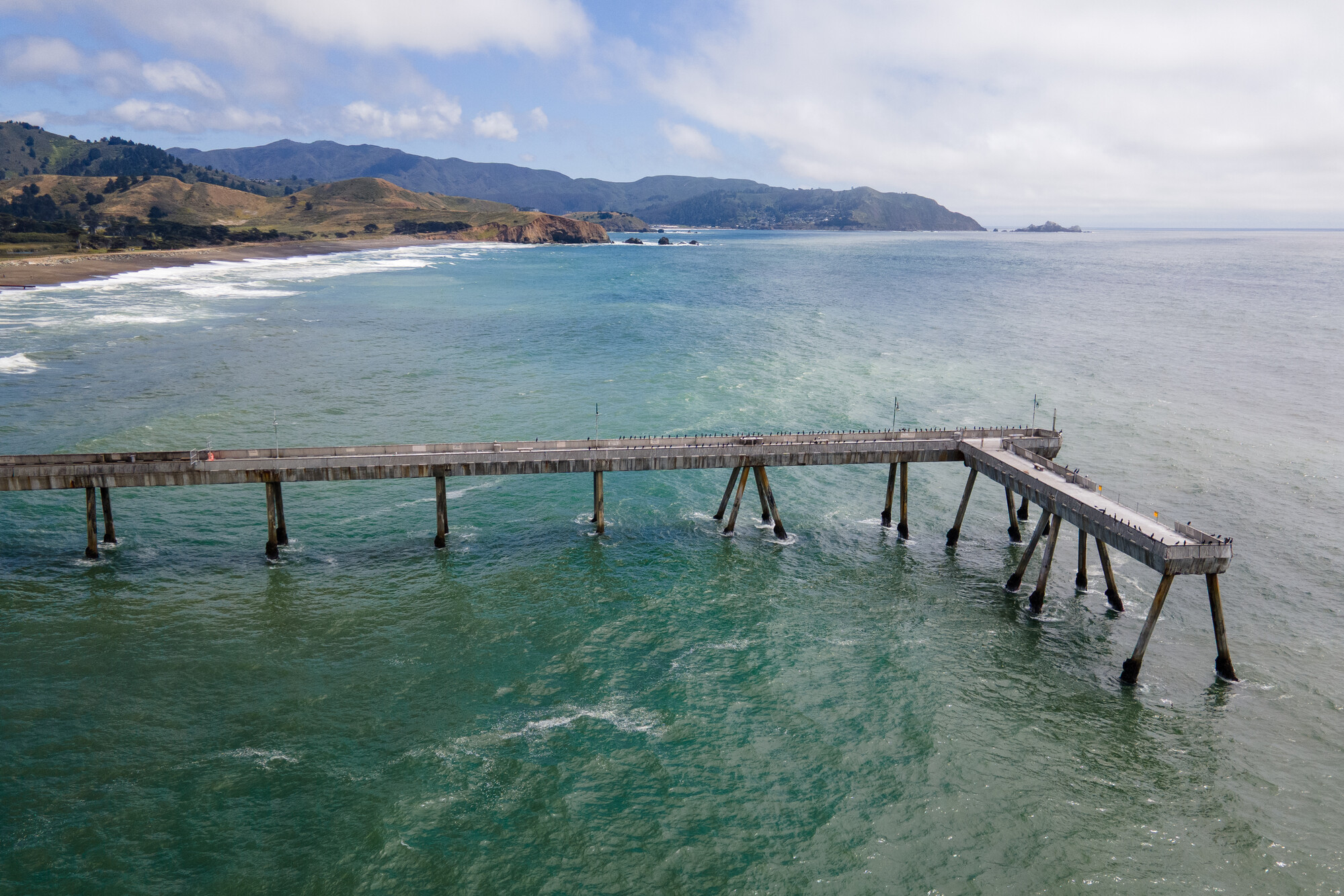
Ericka Cruz Guevarra [00:00:46] The city of Pacifica said goodbye last week to a beloved local cafe that sat on the city’s iconic but crumbling pier. Now it’s an open question of what happens to the pier from here and what would it look like to rebuild or retreat from the coastline?
Christine Boles [00:01:08] So this is where the tough process of actually visioning for our city and planning for the long term, we have not been able to do. It’s been very divisive.
Ericka Cruz Guevarra [00:01:20] Today, Pacifica’s crumbling pier, and a glimpse into the future of California’s coastline. This pier in Pacifica that we’re talking about, I’ve actually never been there myself, but as I understand it, it’s pretty iconic, very beloved to the community. Is that right?
Ezra David Romero [00:01:48] It’s just this iconic place that people have loved in Pacifica for a long time. It’s basically a community park in some way.
Ericka Cruz Guevarra [00:01:56] Ezra David Romero is a climate reporter for KQED.
Ericka Cruz Guevarra [00:02:01] It’s been there for quite a while now, right?
Ezra David Romero [00:02:03] Yeah, something like 50 years or more.
Ericka Cruz Guevarra [00:02:05] Oh wow.
Ezra David Romero [00:02:07] The pier’s off Beach Boulevard, which is sort of this promenade in Pacifica, a few blocks away from what looks like their downtown, jets out into the Pacific Ocean. And at its start was this cafe called the Chit Chat Cafe. It’s like sort of like this octagonal building into the entrance of the pier. So if you’ve gone to the pier, you’ve passed by the Chit Chat Cafe.
Ericka Cruz Guevarra [00:02:33] Very quaint name also.
Ezra David Romero [00:02:35] Exactly.
Ericka Cruz Guevarra [00:02:39] And what was happening when you went to visit it recently.
Ezra David Romero [00:02:43] We had heard that the city had some contractors who were going to begin to tear down the Chit Chat Cafe. And we got there within 15 minutes, some two excavators got their claws out and took the cafe down within a couple of hours. Honestly, I thought people were going to be like booing and screaming, you know, like chanting, but the crowd was just absolutely silent. It was almost like everyone was mourning for something they love so much.
Ericka Cruz Guevarra [00:03:31] It was a pretty incredible sight, right? Like, as I understand it, it was actually too dangerous for the owners of the Chit Chat Cafe to even retrieve anything inside, right.
Ezra David Romero [00:03:42] Yeah, that was super sad. Everyone was talking about how, like, they couldn’t go inside. But there was actually this moment when they were tearing it down that they had taken down like half of the cafe and one of the workers went inside and got a painting and walked out and the whole crowd like clapped and like did a hurrah. So that day I got coffee at the Chit Chat Cafe, their other location that morning, and was just sitting there and conversation around me everywhere was talking about this.
Kirk Edison [00:04:11] I know who the owners are, I don’t know them personally, but I just feel bad for them, like I mentioned earlier.
Ezra David Romero [00:04:20] I talked to a guy named Kirk Edison about this.
Kirk Edison [00:04:22] Like the peer in general, I brought my kids here. Like everybody else says, families and kids, man. A lot of people come here every single day. And you can’t beat Mother Nature, man, she always gonna win. Yeah.
Ericka Cruz Guevarra [00:04:41] I mean, I have to ask Ezra, why is this happening?
Ezra David Romero [00:04:44] This plainly is happening because the pier broke, and so did this cafe. The building was crumbling, literally could fall into the ocean. It was sitting on top of this seawall. And the reason why that seawal is there is because there was so much coastal erosion already happening. And that’s where waves, the ocean eats away at the coastline. And they have to put a barrier there to stop that from happening. The city chose to put seawalls. This cafe was on top that seafall. It failed for some reason. And the crack formed in the pier and then in the cafe itself. So coastal erosion is a natural process. It happens everywhere on the coast and climate change in the way of sea level rise could exacerbate that and make it worse in the future. You know, if seas rise, if the waves get bigger, more coastal erosion, which could mean more houses falling into the sea, more places like the chitchat cafe happening all along the California coast.
Ericka Cruz Guevarra [00:05:52] Right, like, it’s pretty normal for coasts to sort of crumble into the sea. That’s a very natural process. But it sounds like that’s being made worse by climate change and sea level rise.
Ezra David Romero [00:06:04] Yeah, I think when it comes to sea level rise, we’ve had about eight inches of sea level rise since 1880 or so. We could have six inches to like six feet of sea-level rise in the coming hundred years. And then we have El Nino, which is officially back. And that’s basically where the ocean heats up. And then it has all these effects, like thousands of miles away. In California, it can mean we have a stormier winter. Also lead to like six inches to a foot of temporary sea level rise in California, scientists have told me. And that really freaks out Pacifica’s mayor, Christine Boles, because if sea level is six inches more this winter, that’s a real glimpse into the future of what could happen.
Christine Boles [00:06:50] I saw an article in the Chronicle and it showed maps of the ocean with the ocean temperatures during the previous El Nino’s, 1982, 1996. And those are all the years that we’ve had incredible impacts to town.
Ezra David Romero [00:07:05] Today is that we have such an altered coastline, we have this seawall, we have homes right up there. This is a place where you go out there, you’re literally an asphalt next to the ocean, the rocks you’re seeing there are placed there, you have a pier people built, so this is a system that we have manufactured when the natural system beyond it wants to destroy it. So they’re sort of in this place of Do we fix this pier or don’t we?
Ericka Cruz Guevarra [00:07:32] Coming up, what Pacifica could do with its iconic pier. By the way, if you enjoy the local deep dives that we bring you here on the Bay, consider becoming a KQED member. We can’t do this work without your support. Just go to donate.kqed.org slash podcasts. We’ll be right back.
Ericka Cruz Guevarra [00:08:03] What has the city done already to deal with this issue of coastal erosion?
Ezra David Romero [00:08:10] The city has been working on this issue for decades. I mean, as long as Pacifica has really been a thing, I’ve been reading stories about this since I lived in other cities as well. But in this particular piece of shoreline, they have this resiliency project, which basically means they wanna rebuild that seawall. They’ve already started that process. They’ve been trying to get funding for it. They’ve had restoration in other parts of the shoreline. They have worked with landowners and apartment complexes. A lot of this has happened because of necessity. Right, it’s not just like in other cities. We know this thing is gonna happen in the future because sea level rise. Pacifica is a place where they’re dealing with this right now. It’s going on now and it’s just gonna get worse.
Ericka Cruz Guevarra [00:08:56] Looking ahead here, Ezra, it sounds like the city of Pacifica is in this place where they have to decide, I guess, whether or not to let this pier go. I mean, what are the options here? I guess is it like, yeah, rebuild or or let this thing go?
Ezra David Romero [00:09:15] So I think they have multiple options here. One is a do nothing approach, just leave it as it is. Or two, they could rebuild it, figure out how to find the funds to rebuild it do the studies or reinforce it. Or they could retreat. They could pull back from the edge of the ocean, no longer have this pier, but maybe no longer even use this area for what they use it for today. Maybe homes aren’t there. This is a process called managed retreat. It’s sort of a dirty word in places like Pacifica because it means you have to rethink how your community is gonna look and feel. It might mean you have to move away from the ocean if you have a house near the sea.
City Council meeting speaker [00:10:00] So again, if anybody else in the room wants to comment on the peer, please fill out a yellow card in the back.
Ezra David Romero [00:10:05] I tuned into the Pacifica City Council meeting earlier this week on Monday, and a dozen or so people spoke and there were people on either side.
Julie Bauman [00:10:14] My name is Julie Bauman. I live here in Pacifica. I’ve been here for more than 40 years.
Ezra David Romero [00:10:18] You had people on one side who claimed the city was being negligent and didn’t fix this pier.
Julie Bauman [00:10:24] I’m here tonight because I believe our pier is worth saving. The Pacifica Pier is more than a structure extending into the ocean, it’s one of our most recognizable landmarks. The Pacific Ocean has always tested everything built along its shoreline. That’s not the issue before us tonight. The issue is whether Pacifica is willing to invest in preserving one of its most important public assets.
Ezra David Romero [00:10:48] And then you had people on the other side who talked about mandatory treat and why that should be something Pacifica really thinks about.
City Council meeting speaker [00:10:56] The next commenter I have is Sam C. Go ahead, Sam.
Sam C. [00:11:01] This whole anti-managed retreat position is just really irresponsible. Whether we want to admit it or not, we are ground zero for climate change. And now that we have to basically take down the chit chat, we’re left with unmanaged retreat. Is that what we’re going to continue to do?
Ezra David Romero [00:11:27] They’re still trying to really figure that out, and the big issue is funding. To fix up here, even though it’s like, it might just look like cement and steel, you know, it costs millions and millions of dollars.
Christine Boles [00:11:41] So this is where the tough process of actually visioning for our city and planning for the long term, we have not been able to do.
Ezra David Romero [00:11:51] I talked to Pacifica’s mayor, Christine Boles, about this. You know, she said this has been very divisive in the community.
Christine Boles [00:11:58] Have a very strong environmentalist community and a very strong real estate property rights-focused community. And these issues bring us really at odds with each other.
Ezra David Romero [00:12:09] This debate’s been going on for like decades, actually. This is not the first time something has failed. You know, they’ve had houses fall into the sea. They’ve had access roads cut off. That whole coastline is in trouble. And so the city really has some big decisions ahead of it.
Ericka Cruz Guevarra [00:12:26] What is the state of the pier now? I mean, it sounds like the cafe is gone, but what about the rest of it?
Ezra David Romero [00:12:31] The Chit Chat Cafe is no more there. The pier is closed indefinitely at this point. You cannot go out on it. They were already having issues with the railings and things like that, and now there’s cracks in it. You can literally see where the pier is sort of leaning towards the ocean at its beginning. So it’s closed for now, and it’s gonna be closed indefinately for a long time, I think, until they can either raise the money to fix it or decide not to and take it down or let it be a statue in the sea.
Ericka Cruz Guevarra [00:13:07] I mean, it sounds like what has happened with the pier is really just representative of this bigger question that this community is gonna continue debating, which is this idea of like, do we rebuild or do we retreat from the coastline, which honestly is like, that’s a, it’s very surreal to think about.
Ezra David Romero [00:13:30] Totally. I think it’s kind of interesting because it’s obvious. Like a pier is going to be the first thing that’s going to be hit by waves or sea level rise. And we as humans who live in these places that are volatile because of where we built our homes and our cities are going to have to think about that as the climate shifts because of our own decisions, because the climate crisis is a human made crisis. And we have a decision ahead of us and like, will we still build in these places and live in them? Often we hear about that when it comes to wildfires, or air quality, or droughts, but I think the next frontier of this really is people who live near the ocean as seas rise in the coming decades. In places like Pacifica, who are already on the water’s edge, and already eroding, are dealing with that now, and they can give us a glimpse into the future of what might happen in other places, like San Francisco, or other parts of the California coastline.
Ericka Cruz Guevarra [00:14:35] Ezra, thank you so much.