Here’s How Philip Morris Designed Lunchables to Hook Generations of Kids
A new study in the American Journal of Public Health relies on internal corporate documents to chronicle how the tobacco giant applied cigarette research to its development of ultra-processed foods.
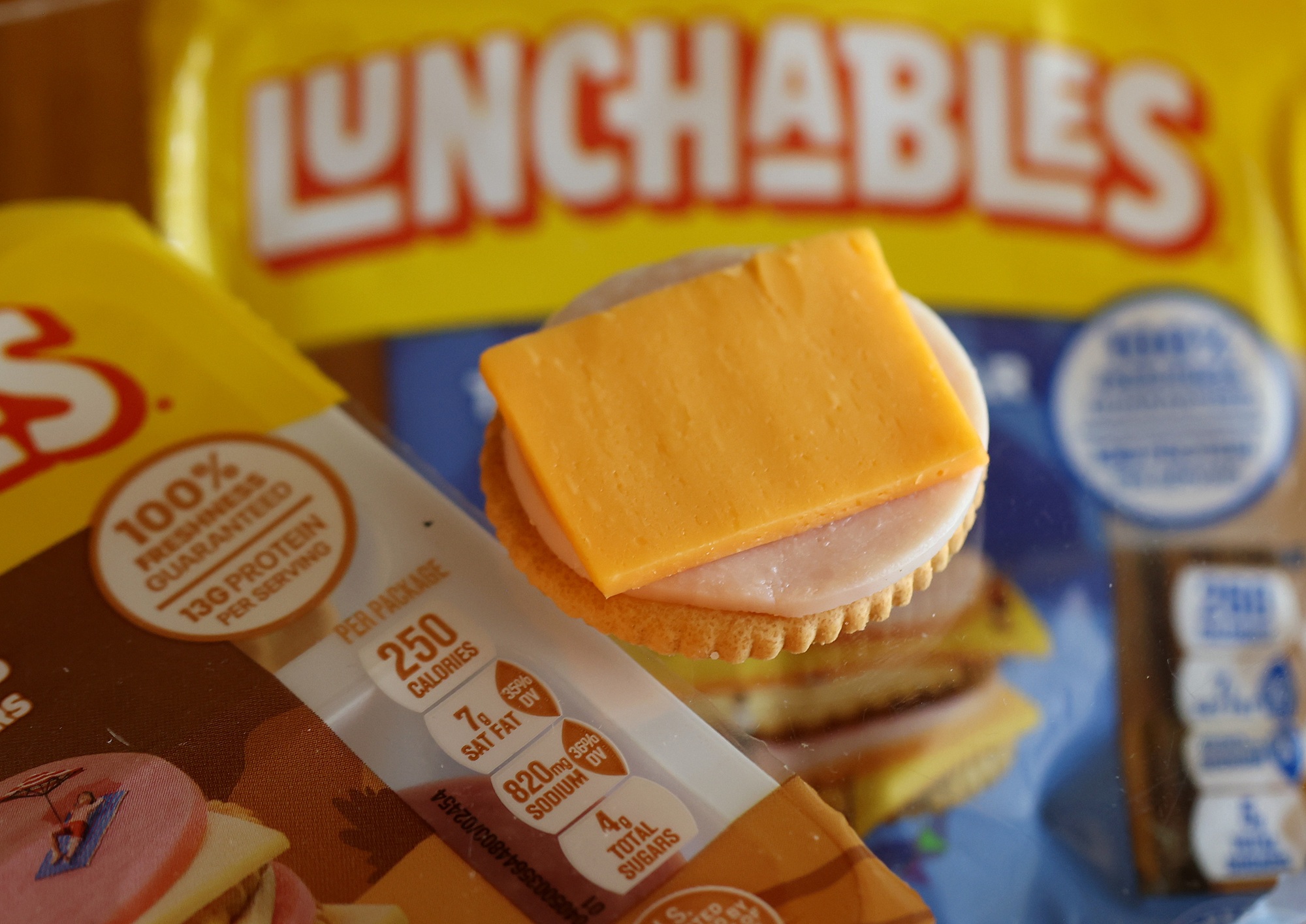
A pack of Lunchables is displayed on April 10, 2024, in San Anselmo, California. (Justin Sullivan/Getty Images)
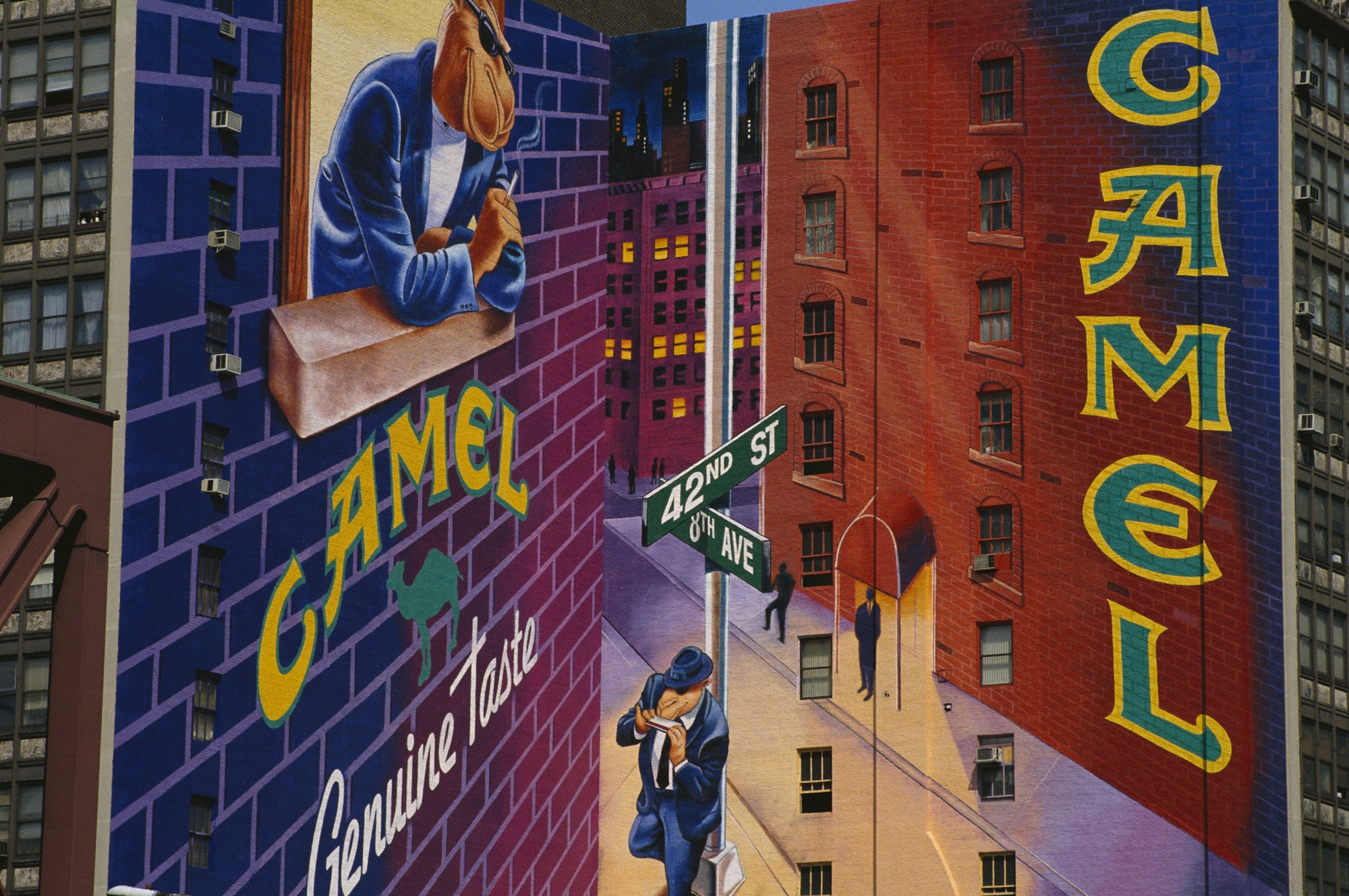
At the same time tobacco companies were accused of using a cartoon Joe Camel to market cigarettes to children; they were using a similar corporate playbook to sell Lunchables — turning the DIY cheese-and-cracker tray into one of the most popular ultra-processed foods in American school cafeterias.
Tobacco giant Philip Morris acquired cereal and Kool-Aid manufacturer General Foods in 1985, when Lunchables was in development. According to a new study from UCSF published Wednesday, the cigarette maker relied on flavor technology and market research from tobacco to maximize the snack kit’s appeal to children.
“Lunchables blurs the boundary between food and toy,” said Laura Schmidt, a professor at UCSF’s Institute for Health Policy Studies and the essay’s author. “The child can take crackers and processed meat and processed cheese and stack it up and play with it before they eat it. That was very intentionally taking advantage of cigarette design technologies to develop an ultra-processed food brand.”
Schmidt relied on internal corporate documents acquired through lawsuits to demonstrate how Philip Morris engineered Lunchables and other ultra-processed foods to be “hyper-palatable,” which separate studies have shown leads to overeating and weight gain. The paper was included in a special issue of the American Journal of Public Health devoted to ultra-processed foods and intended to inspire federal officials, including Health Secretary Robert F. Kennedy, Jr., to take steps to regulate the industry.
The UCSF analysis describes the extensive focus groups and market research Philip Morris conducted around the Lunchables brand. They tested 17 prototypes on children, watching them interact with the product, and determined that kids were highly motivated by a desire for autonomy.
“They want to be in control. They want to feel bigger,” Schmidt said.
Lunchables mix-and-match design fulfilled that desire, the same way R.J. Reynolds’ advent of a child-sized juice box did, empowering kids to insert the straw themselves.
Philip Morris also studied the working moms who typically purchased Lunchables to satisfy their wishes. They put plastic windows in the packaging, knowing that women felt better about the food they gave their children if they could see it, and added a bright yellow band around the box, suggestive of a gift, in order to “alleviate mothers’ guilt about opting for a prepackaged meal,” Schmidt said.
Though all packaged food companies conduct this kind of research today and strive to appeal to consumers’ evolving tastes and habits, Schmidt said the tobacco industry shaped the practice and the philosophy behind it. Former tobacco executive Geoffrey Bible discussed the power of cross-industry pollination when he became CEO of Kraft General Foods, then owned by Philip Morris, in 1990.
“Cigarettes may not have much to do with cheese or beer or mayo. But test methodologies excavating one hierarchy of needs might well apply to the other,” Bible said at a research and development symposium in 1990. “Remember, our mission is to plumb the sometimes-murky recesses of the customer’s attitudes, behavior and hierarchy of needs that may remain unarticulated, locked away in a corner somewhere.”
Related Article
As consumer attitudes shifted toward a healthier, low-cholesterol, reduced-fat diet, Philip Morris leaned on technology it developed to strip nicotine out of tobacco and make “light” cigarettes to remove fat from cheese and meat and make low-fat Lunchables, Schmidt said. The company then sent the taste scientists from its nicotine research center in Germany, who figured out which chemical additives replaced the flavor lost by nicotine extraction, to make fat-free foods taste better.
“We consistently come up with ways to satisfy consumers, like our $700 million fat-free food business here in North America,” Bible said in a 1995 speech to stockholders. He called Lunchables “one of the best new product success stories in the industry.”
Philip Morris, which merged General Foods with Kraft and then sold its stake in 2007, did not respond to a request for comment on the UCSF study. Nicolas Amaya, president of North American business at Kraft Heinz, emphasized that the food company has had no affiliation with tobacco for two decades. There are now 52 varieties of Lunchables, including packs featuring pizza, nachos and chicken nuggets.
“Our portfolio today includes affordable options with more protein, more whole grains, less sugar and sodium, and no artificial dyes,” Amaya said in a statement. “We continue to evolve our portfolio based on consumer preferences and feel proud of the role we play in helping people live delicious, healthy and balanced lives.”
A national survey of 2,000 adults, included in the journal’s special edition, showed 60% of respondents from across political parties believed ultra-processed foods were addictive and caused obesity and Type 2 diabetes. A bipartisan majority also supported government interventions like chemical safety testing, warning labels, banning artificial dyes and limiting advertising of ultra-processed foods to children.
Ashley Gearhardt, psychology professor at the University of Michigan, which conducted the survey, suggested the same legal strategies, education campaigns and government regulation that were used to expose and mitigate the harms of cigarettes should be applied to ultra-processed foods.
“People want these large companies to be held to account,” Gearhardt said.