Ericka Cruz Guevarra: [00:00:00] I’m Ericka Cruz Guevarra and welcome to The Bay, local news to keep you rooted.
When Kylie Tatom was a sophomore at Rodriguez High School in Fairfield, she started getting involved in student leadership. She helped organize things like pep rallies and prom, and through that, she worked with a popular teacher named Jason Agan.
Kylie Tatom: [00:00:28] Everybody knew him. As a teacher, he was good. People would want to get on his good side. He was a very charismatic, like the cool teacher.
Ericka Cruz Guevarra: [00:00:41] Agan had been on campus for years. He taught AP Calculus and ran student government. Some considered him a mentor, even a second father. But behind the scenes, some students also talked about how they felt uncomfortable around him. They say that Agan touched them in public in ways that felt inappropriate, including hugging students and massaging their shoulders unprompted.
Kylie Tatom: [00:01:12] As a kid, you don’t realize it’s bad, because it’s like, oh, this is a teacher, this is somebody that’s like supposed to be older than you that knows everything. Like that’s, like, you’re supposed to look up to
Ericka Cruz Guevarra: [00:01:26] Tatom graduated in 2017. The following year, on the heels of the Me Too movement, at least 11 other students and one parent submitted written complaints to school administrators about Agan’s behavior. And in 2019, Agan was fired by the Fairfield-Suisun Unified School District. But even though Agan was fired for sexually harassing students, he kept his license to teach in California, and he would go on to teach at two other schools. Kris Corey was the Fairfield-Suisun superintendent at the time.
Kris Corey: [00:02:11] I was just so angry about it. What a disservice it was to those girls. I was flabbergasted. I was like, how does this happen?
Ericka Cruz Guevarra: [00:02:23] According to reporting by KQED and ProPublica, Agan’s case is one of dozens where the state has not revoked the professional licenses of educators, even after school districts determined that they had sexually harassed students or committed other misconduct of a sexual nature. Today, how a Bay Area teacher was fired for sexually harassing students. And how California allowed him to keep teaching anyway.
Ericka Cruz Guevarra: [00:02:59] Your story starts with this teacher at my old high school, actually, Rodriguez High School in Fairfield. Mr. Jason Agan, and I remember him for being the teacher who led the student government. He was also the only teacher who taught AP calculus on campus, as I remember. But why did he become the focus of your reporting?
Holly McDede: [00:03:26] What happened was I had requested records from 300 of the largest school districts in California.
Ericka Cruz Guevarra: [00:03:32] Holly McDede is a reporter for KQED and ProPublica’s local reporting network.
Holly McDede: [00:03:38] I got these records from Fairfield-Suisun, which got my interest immediately because the records described how the school had taken steps to fire this teacher named Jason Agan who ultimately was fired.
So that got my attention immediately because it is very rare in California to fire teachers because it’s expensive, it’s also risky. So schools will often offer teachers settlements to allow them to resign instead. That way it’s a guarantee that the teacher won’t be back at your school. Whereas if you lose these dismissal cases, the teacher could end up back in the classroom all over again.
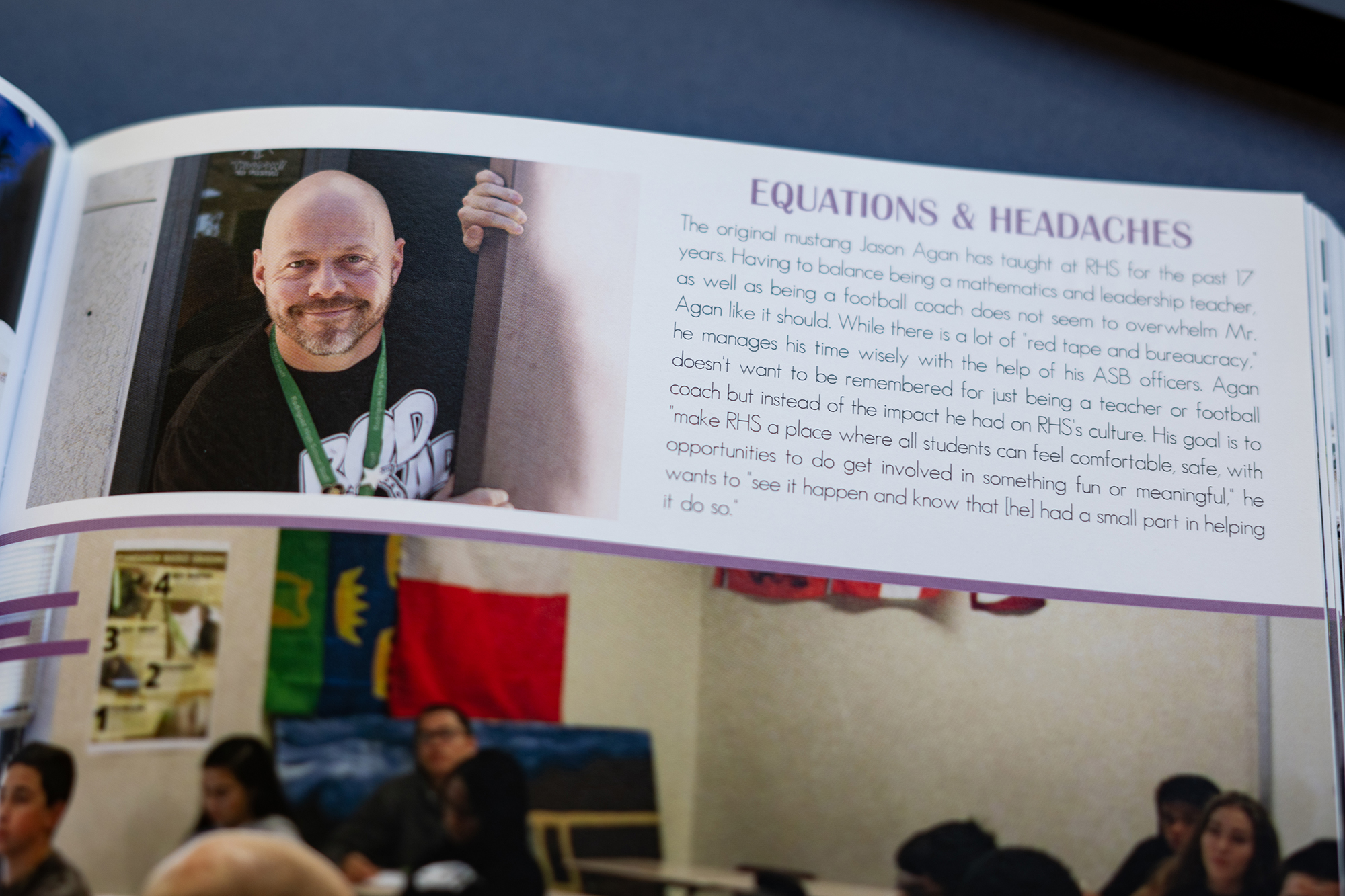
So Jason Agan had worked at Rodriguez High since 2001. He was there for almost the entirety of his teaching career. He called himself an “original Mustang” after the school’s mascot. And he was kind of this mathematician figure who you mentioned was in charge of leadership and student government. And so he describes himself as the man behind the curtain who organized things like pep rallies and prom. There were students who saw him as a mentor and a second father, and he was popular. But students had also talked for years about his behavior, making them uncomfortable.
Ericka Cruz Guevarra: [00:05:04] So, you spent time digging into these records on Jason Agan at Rodriguez High School. What exactly was he accused of?
Holly McDede: [00:05:14] The first documented complaint was by a student, a sophomore, who said that he took her cell phone out of her back pocket while she was sitting down. So she reported this to administration at the school, and she also told the school that Agan would massage students’ shoulders during class. So Agan is warned by an administrator at the school to stop touching students, that he’s making students uncomfortable by touching them when he walks around during class. That was the first complaint.
Then a father complained to the school when he wears a t-shirt with a pi sign that spells out “pimp”. And so he’s warned by another administrator to be mindful about how he talks to students and jokes. And again, that administrator warns him to also not touch students during class, Agan has said that he would touch students during class but only to support them while they’re doing their math work. The next school year, more students end up filing complaints related to his behavior. There’s one student in particular who says that he had massaged her neck underneath her hair during class, so she complains about that. She asks to transfer out of his class. She ends up having a panic attack soon after that. Ultimately, the school puts him on leave without pay and starts the long process to fire him.
Ericka Cruz Guevarra: [00:06:47] And this is happening in and around 2018, sort of the height of the MeToo movement, right? And many of these complaints coming from young women at the high school, is that right?
Holly McDede: [00:07:02] Yeah, this is soon after Me Too with the Harvey Weinstein allegations.
Julia Steed: [00:07:10] He was my math teacher for my sophomore year.
Holly McDede: [00:07:16] So I talked to Julia Steed and she was a sophomore, a 15 year old sophomore at the time. Now she’s 23.
Julia Steed: [00:07:23] I, to be honest, had already got in like, kind of like word of mouth, like, things from other students.
Holly McDede: [00:07:32] She had complained about Jason Egan. She said he had touched her head multiple times, and that she also saw him massage students’ shoulders during class.
Julia Steed: [00:07:40] I immediately was like, oh no, this is not feel good coming from a teacher that I was not close with whatsoever. I was like okay, this was very odd to me.
Holly McDede: [00:07:55] She and her classmates were definitely talking about MeToo and just boundaries and consent and were less afraid to enforce those boundaries and speak up about behavior that was making them uncomfortable. And Julia was one of the students who also filed a written complaint
Julia Steed: [00:08:14] I would have no desire whatsoever to do any of the actions that he did. Like, I don’t know, it’s like the older I get, the more messed up I realize it is.
Ericka Cruz Guevarra: [00:08:28] What happens with these formal complaints that these students are filing, Holly? Like, what is the process from there?
Holly McDede: [00:08:36] The school gathers all these complaints and moves to fire Agan, so they put him on leave without pay. Then that summer, so this is the summer of 2019, there is essentially a hearing. The superintendent of the school has recommended he be fired, but he objects to that. And in California, you can have a dismissal hearing, which means that Agan appoints a teacher, the school district appoints someone, and then there’s an administrative law judge. And so these three people here testimony from students, teachers, administrators, and then they have to make a decision whether to support the district’s effort to terminate him.
Ericka Cruz Guevarra: [00:09:18] And to be clear, this isn’t like a criminal trial. He’s not accused of a crime. And this is like a hearing, not a formal courtroom.
Holly McDede: [00:09:27] Yeah, that’s correct. So Agan has not been accused of a crime. This is an administrative process to decide whether he can keep his job or not.
Ericka Cruz Guevarra: [00:09:36] But there are people on both testifying on behalf of Agan, presumably positively and also students testifying against him. What are people saying in this hearing?
Holly McDede: [00:09:49] Yeah, so there were former students who testified on Agan’s behalf, and they all said that Agan would also squeeze, rub, or massage their shoulders, but they said that that behavior did not make them uncomfortable. I did speak to one student who testified on his behalf at the time, and she said that as an adult, she came to see that his behavior at the times was not appropriate, and tells me that now she would have switched to the other side. And then there were students who testified against him. They said that they would avoid raising their hand or speaking up in class, because they didn’t want to get his attention. There was a student who said she would try to sit against the wall, that way he could not massage her shoulders. And students who ultimately said that it was impacting their education and making them not want to take advanced math classes, because as you mentioned, she was the school’s AP calculus teacher.
Ericka Cruz Guevarra: [00:10:57] What did this panel find and what ultimately were the consequences?
Holly McDede: [00:11:02] So the panel found that he had sexually harassed female students. They found he had massaged student shoulders during class. And they also found that he continued this behavior despite warnings to stop. In their judgment, their determination in the records, they ultimately say that he is unfit to teach and that he should be fired.
Kris Corey: [00:11:24] The district did their case, the teacher was there. The students were remarkably brave. They testified with the teacher sitting there. They testified against the teacher.
Holly McDede: [00:11:41] Kris Corey was the superintendent of the Fairfield-Suisun School District at the time, and she talked to how rare it is to fire teachers and just how it was surprising really to have this panel of three people come to this unanimous decision.
Kris Corey: [00:11:58] Couldn’t believe it. I mean, we just, like, celebrated. And everyone was like, ‘What? How’d you do that?’ Because it just didn’t happen.
Ericka Cruz Guevarra: [00:12:12] Well, I want to zoom out from this one example, Holly, because I guess until you published this story, he was actually still teaching at another school district here in the Bay Area and, in fact, went on to teach at two more schools after Rodriguez, right?
Holly McDede: [00:12:30] Yeah, that’s correct. He’s fired December 2019 and by the next school year he already has a job teaching math at a middle school that’s about an hour away in Sacramento called Ephraim Williams College Prep. Even though he was fired he was able to keep his credential which allowed him to continue teaching.
Ericka Cruz Guevarra: [00:12:55] Coming up, how Jason Agan kept on teaching. If you appreciate these deep dives into local Bay Area news, consider becoming a KQED member. We can’t do this work without your support. So join your Bay Area neighbors and become a KQED member today at kqed.org slash donate. We’ll be right back.
[00:13:25] Welcome back to The Bay. I’m Ericka Cruz Guevarra. In the first part of this episode, we learned about Jason Agan, a former teacher at Rodriguez High School in Fairfield. In late 2019, he was fired for sexually harassing students, but he still went on to teach at two more California schools. As reporter Holly McDede explains, despite Agan’s firing from Fairfield-Suisun, the state allowed him to keep his teaching credential.
Holly McDede: [00:13:57] One of the systems that is in place is this agency called the Commission on Teacher Credentialing, which is where any public school teacher who resigns or is fired due to misconduct is reported to this agency. And then that agency decides what to do with their license. So it’s the agency that can take away licenses from teachers. So Fairfield-Suisun, they report Agan to the Commission of Teacher Credentialing. They’re investigating, but they don’t make a determination on what to do with Agan’s case for nearly 500 days later. During that time, when Agan applies for this other job in Sacramento, that school and schools in general, they can’t learn from the state that it’s investigating. I mean, schools can ask the school that the teacher has left and in this case, Agan did put in his job application that he had been fired. He put that he has been accused of inappropriately touching students on the shoulders during class and he wrote that while he disagreed with the dismissal, he did not mean to make anyone feel unsafe and he was offering student support and encouragement.
Ericka Cruz Guevarra: [00:15:16] Administrators at Ephraim Williams did not respond to questions about how the school vetted Jason Agan. The former principal at Rodriguez High, the school Jason Agan was fired from, did not respond to questions about a reference check. We do know that Agan received stellar letters of recommendation from former colleagues. Meanwhile, in April, 2021, 500 days after the Fairfield-Suisun District sent their investigation to the state, California’s teacher licensing board finally made a decision. Jason Agan’s license would be suspended for just seven days. The reason for his suspension was not made public and ultimately Agan would continue teaching in Sacramento. But the complaints about his behavior didn’t go away.
Just so that I’m understanding, even if a teacher is fired for sexual harassment at a school, it doesn’t necessarily mean that they lose their credential in California.
Holly McDede: [00:16:28] Yeah, that’s correct. So there’s no guarantee that teachers who are fired for sexual harassment will lose their teaching licenses. Instead, cases like that, that are not necessarily criminal conduct, they go before a committee within the state that reviews cases case by case and makes a determination. They make a recommendation, and this is a committee of about seven volunteers and so. They meet in Sacramento three days once a month, they review cases and they decide what to do.
Ericka Cruz Guevarra: [00:17:03] So in this case, Agan goes on to get hired at another middle school in Sacramento. He has his credentials suspended for seven days, and presumably he’s still allowed to teach. What was his experience like teaching at this middle school?
Holly McDede: [00:17:20] Pretty early into the next school year, which is when students are going back to school for in-person learning, because this is all during the pandemic. So that fall, he ends up having another complaint from an eighth grader at his new school. That student had told her doctor during a routine physical that Agan had touched her lower back. She says she asked him to to stop, he went to the front of the classroom, and then he touched her shoulder. And she says in the records that it felt like asking him to stop didn’t matter. So he gets a written warning, is told that he should not be touching students.
And Agan, in his response to that in the record, he does deny touching her lower back and says that he would have remembered doing so based on his previous experience. Agan continues teaching at that school. The student, she told me that the rest of the school year was so difficult, she ends up leaving middle school before the school-year ends.
But Agan, he resigns by August, 2022. He ends up teaching at Clifford School in Redwood City. When Agan is hired at Redwood city, he does not put in his application that he had been fired. He said he left Rodriguez High because he was seeking new challenges and opportunities. Um, and I talked to the deputy superintendent at Redwood city, um, school district, Wendy Kelly, and she, she wouldn’t answer any questions related to his hiring, but she told me that the school district, they conduct reference checks and they also check credentialing statuses with the state’s teacher licensing agency. And she told me that schools rely on that agency to determine who’s fit to be in a classroom.
And by the time Redwood City had hired Agan, he has a teaching license. He’s deemed by the state fit to work in any school in California.
Ericka Cruz Guevarra: [00:19:29] How many examples like Jason Agan are there, do we know?
Holly McDede: [00:19:33] It is hard to quantify, but in putting in all these record requests from schools I did find at least 67 examples, including Agan’s case, of educators where the state has not revoked their licenses after a school district determined they had sexually harassed students or committed other types of sexual misconduct.
Ericka Cruz Guevarra: [00:20:02] It seems like for students and school communities in the meantime, that means we’re sort of left with this less than transparent system. I guess, how would you sum up the problems with this system and your takeaways from your reporting about how this system works?
Holly McDede: [00:20:21] I think there are a few issues that I found through my reporting. I mean, there is this issue of delay. I mean in this case, it took nearly 500 days for the agency to make a determination. And once there was the seven-day suspension, you can’t see the reason behind it. Whereas in at least 12 other states around the country, when teachers, educators are disciplined, you can see the reason for the discipline. And then, I mean, then there is the question of why a seven-day suspension after a school found sexual harassment. So I think that it’s just hard to understand how the agency makes these decisions.
Alicia DeRollo: [00:21:03] There should be a higher level of transparency. We should have expectations, we should have guidelines, we should have rules by which we lead our profession.
Holly McDede: [00:21:12] So I talked to a former commissioner who had left by the time the Agan decision came down, but her name is Alicia DeRollo. For her, the big problem or shortcoming she sees is that she feels like teachers are treated differently than other professions.
Alicia DeRollo: [00:21:29] We cannot be given a license to have responsibility over children that we could potentially harm. We can’t.
Holly McDede: [00:21:40] For her, it doesn’t make sense and is not good that there isn’t this higher level of transparency. I mean, she thinks that if there’s this level of transparency where you can find out of why a dentist is disciplined, then the people who work in classrooms, you should be able access this basic information.
Alicia DeRollo: [00:22:02] Transparency would make it clear to teachers what they can’t get away with, would make clear to hiring agencies of what the person has done, and would set some higher standards for what we allow in the teaching profession.
Ericka Cruz Guevarra: [00:22:26] Has Jason Agan commented on this story or for this story at all?
Holly McDede: [00:22:31] No. So I sent Jason Agan a certified letter with a list of questions. I went outside his apartment and a person at his apartment answered when I rang the buzzer and then hung up. So, I haven’t been able to get in touch with Jason Agan, but in previous statements in the records, he has denied massaging students’ shoulders. He has said that he had no sexual motivation in touching students.
Ericka Cruz Guevarra: [00:23:01] What about anyone from the state credentialing agency? Did anyone comment on how someone like Agan has continued to be able to teach at other schools after what happened at Rodriguez?
Holly McDede: [00:23:16] A spokesperson said that the state’s credentialing agency is not in charge of deciding what type of offenses lead to mandatory revocation. So it would need to be lawmakers who would decide, say, for example, that sexual harassment of students should lead to revoking licenses. But the teacher licensing agency isn’t responsible for that. And they have said that they stand ready to implement any changes that the legislature wants to put forward.
Ericka Cruz Guevarra: [00:23:53] And as I understand it, Holly, there’s been some additional fallout since your story was published. What has been the impact since you published your story?
Holly McDede: [00:24:04] The impact was pretty immediate, which I think shows what information and public knowledge can do. So in the hours after the story published, some parents went to Clifford School and pulled their kids out of the school during the day.
Ericka Cruz Guevarra: [00:24:21] That’s the school that Agan was teaching at in Redwood City, right?
Holly McDede: [00:24:24] Yes. Parents went to the board meeting the next day. A parent there said he had filed a Title IX complaint against Agan, but he declined to talk to me about the specifics. Title IX is the federal law that prohibits sex-based discrimination and harassment in schools. I talked to another parent who also filed a complaint against Agan. He said his child reported seeing Agan touch students’ shoulders and yell during class. Agan has been replaced by a substitute and he’s no longer teaching at Clifford the rest of the school year. He didn’t respond to requests for comment about the new complaints.
Ericka Cruz Guevarra: [00:25:01] What are your takeaways from your reporting on this system and on this specific case?
Holly McDede: [00:25:08] This was an example worth reporting on because this teacher is not criminally accused of misconduct, but it was pretty clear in talking to students that he had made them uncomfortable over the years and it was impacting their education. There were students I talked to who at the time they tried to ignore it or looked away or didn’t say anything and regretted it.
And so they rely on. I mean, adults, administrators to do the right thing to protect them, but this case shows that a school can fire a teacher, but that doesn’t necessarily mean that they won’t go and teach somewhere else.
Students had talked among themselves about his behavior, making them uncomfortable, and some of the students I talked to didn’t necessarily think anything of it at the time, but then when they had left that experience, when they’d gone to college and when they were talking to other people, they started to see that that behavior at the time was not normal. And there were students I talked to who said that’s why they wanted to talk to me now, because they regretted not saying something sooner.
Schools have these policies in place that you should not touch students and things like that, but there were students I talked to who wish they had called it out.
Ericka Cruz Guevarra: [00:26:36] Well Holly, thank you so much for your reporting and for sharing it with us on the show. Appreciate it.
Holly McDede: [00:26:41] Thank you.
KQED and ProPublica will continue reporting on how California handles cases of alleged teacher misconduct. We need your help to get the full picture, and we want to hear from you. You can share your experience with the state’s disciplinary process online at propublica.org/kqed.