Episode transcript
Olivia Allen-Price: It’s a foggy day at San Francisco’s Ocean Beach … just like so many before it.
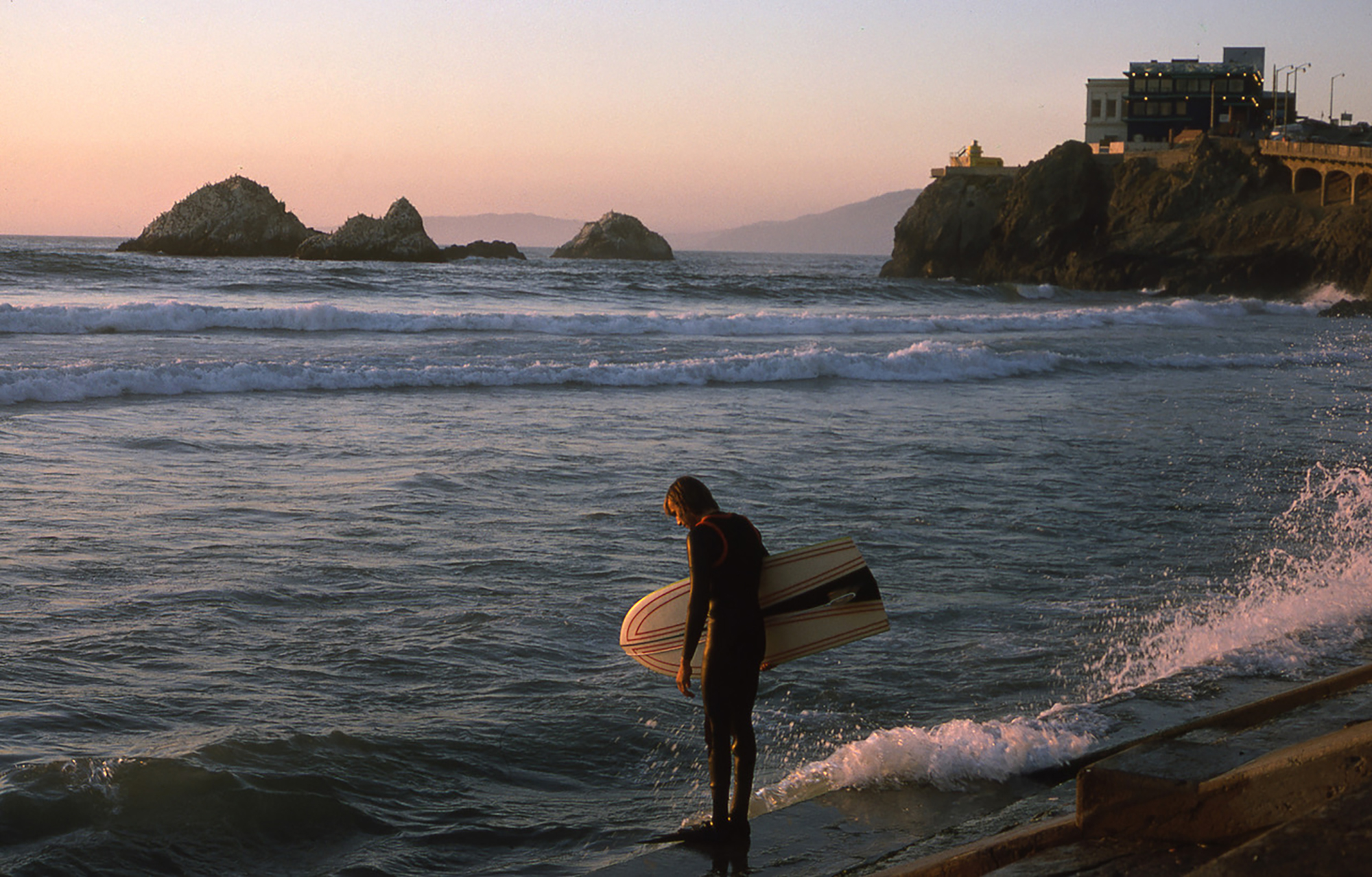
Everything’s gray … cold and windy … but familiar landmarks stick out in the fog … seal rock … the Cliff House …
It’s the early 1950s … and the waves are roaring.
Waves crashing
Olivia Allen-Price: There are a few surfers paddling out. They’re wearing … shorts.
Just shorts.
Jim Gallagher: When you first went in the water, your fingers would sting and your toes would sting, and that stinging would begin to increase a little bit up your arms and so forth.
Olivia Allen-Price: Jim Gallagher was part of a group of surfers who braved Northern California’s frigid waters in the early days of surfing here. A place where ocean temperature stays in the 50s for most of the year.
Jim Gallagher: And then after an hour or so, that stinging would abate, and you start feeling good, well, you’re about to die, so you better get out of the water fast.
Olivia Allen-Price: At Ocean Beach, surfers found community and creative ways to keep warm.
Jim Gallagher: We became experts on hypothermia …
Olivia Allen-Price: Bay Curious reporter Gabriela Glueck takes it from here.
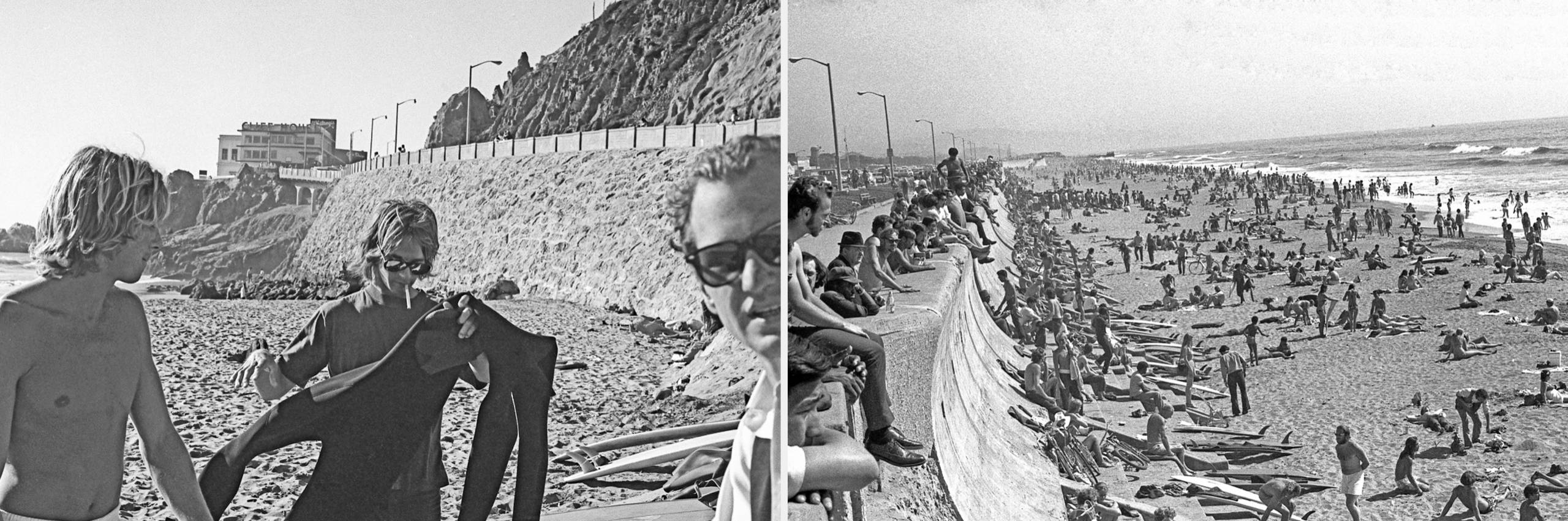
Gabriela Glueck: Jim got into body surfing as a kid and soon found a community of surfers at Kelly’s Cove, at the north end of Ocean Beach. It was one of the earliest board and body surfing spots in the city.
Jim Gallagher: A myth went out that somebody named Kelly died on the beach. There was a competing story that was a Foster & Kleiser sign, a big advertisement for Kelly’s tires. So people had been saying, where’s the beach, or go down to see the Kelly sign …
Gabriela Glueck: In the early days of the sport, people surfed in wool sweaters, covered their bodies in petroleum jelly, or tried warming up from the inside with brandy.
Jim Gallagher: Guys tried almost everything. There was a theory, two or three of them started by wearing your mother’s underwear was nylon and close fit, you would get have less cloth. And that got debunked pretty quick.
Gabriela Glueck: The solution was quick surf sessions, maybe ride a few waves and come running back to the beach, to the bonfires.
Jim Gallagher: Typically, somebody would bring down old tires, and because tires really hold the heat. And so you could be standing 5 and 6 feet away from the fire and be quite warmed by that fire. It didn’t smell too good, but it was better than freezing to death.
Gabriela Glueck: While Kelly’s Cove surfers were doing their best to outsmart the ocean … thousands of miles away, another group was having trouble with cold water too.
During World War II, the U.S. military learned the hard way that a soldier’s capacity to function in cold water could make or break an invasion.
World War II music
Gabriela Glueck: For the Allied forces, one of the major challenges of the war was figuring out how to land ships and soldiers on heavily fortified enemy coasts
The concrete, metal and wood obstacles could only really be dealt with by soldiers in the water.
War tape: The story of the United States Navy’s frogmen is a story of adventure, of brave men against the enemy and against the sea.
Gabriela Glueck: So-called “frogmen” trained in warm-weather Florida, in mild surf … not the kind of conditions you typically find off the coast of France.
War tape: The weather is none too good, but the little ships are plugging onto the beaches, bringing enormous support of manpower and weapons.
Gabriela Glueck: On D-Day, they deployed to Omaha Beach. And as historian Peter Westwick tells it, they were pretty poorly equipped.
Peter Westwick: And basically, they’re just wearing kind of like wool sweaters and things like that. And they suffered terribly. Their casualty rate was like 50%.
Gabriela Glueck: The soldiers were left exposed to enemy fire … doing precision work in cold water for a long time.
For the US military, the whole war was one big wake-up call.
Peter Westwick: The US Navy is quickly realizing, OK, the equipment that these divers are wearing really is going to make a difference. So the Navy started thinking more about how we can improve these things.
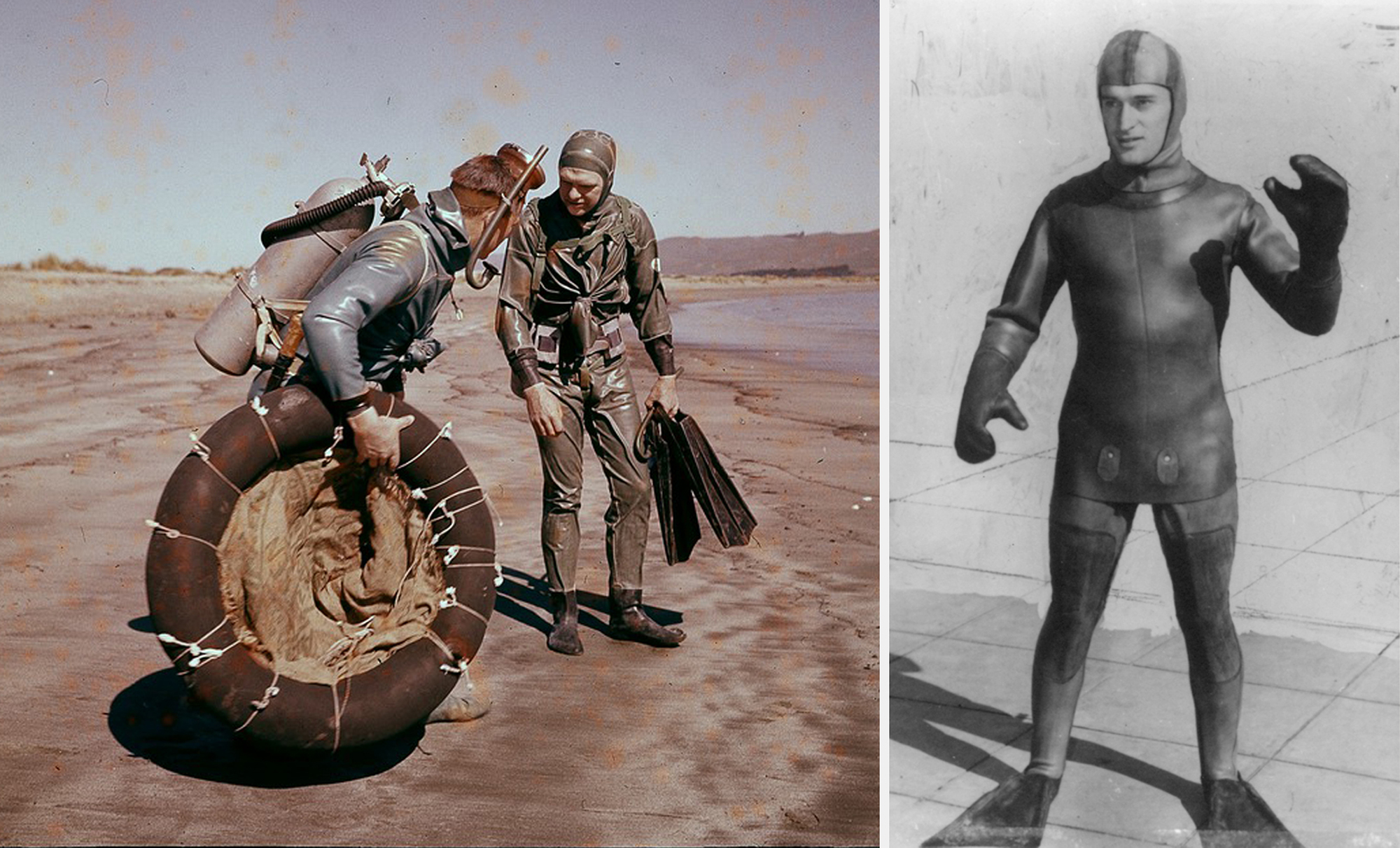
Gabriela Glueck: At the time, if you wanted to stay warm underwater … dry suits were the answer.
Peter Westwick: And what the dry suit basically did was, as its name suggests, was it kept you dry.
Gabriela Glueck: The suits were bulky. You’d bundle up in wool layers and then step into a watertight rubber shell.
Even today, many scuba divers use a more advanced version of this technology.
While Americans sometimes used drysuits during the war, they weren’t perfect.
Peter Westwick: The downside was, you know, you stayed relatively warm, but they’re really hard to move around.
Gabriela Glueck: “Suit squeeze” was common, pinching watermen in sensitive places at the most inopportune times.
Imagine trying to disarm a bomb underwater while wearing 20 leather jackets stacked on each other. Not exactly practical combat gear.
So, what’s a Navy to do?
After the war, the Navy turned to scientists for help. One man in particular seemed like a good bet — Hugh Bradner.
Peter Westwick: Bradner likes to dive, and has dived in cold water regions before.
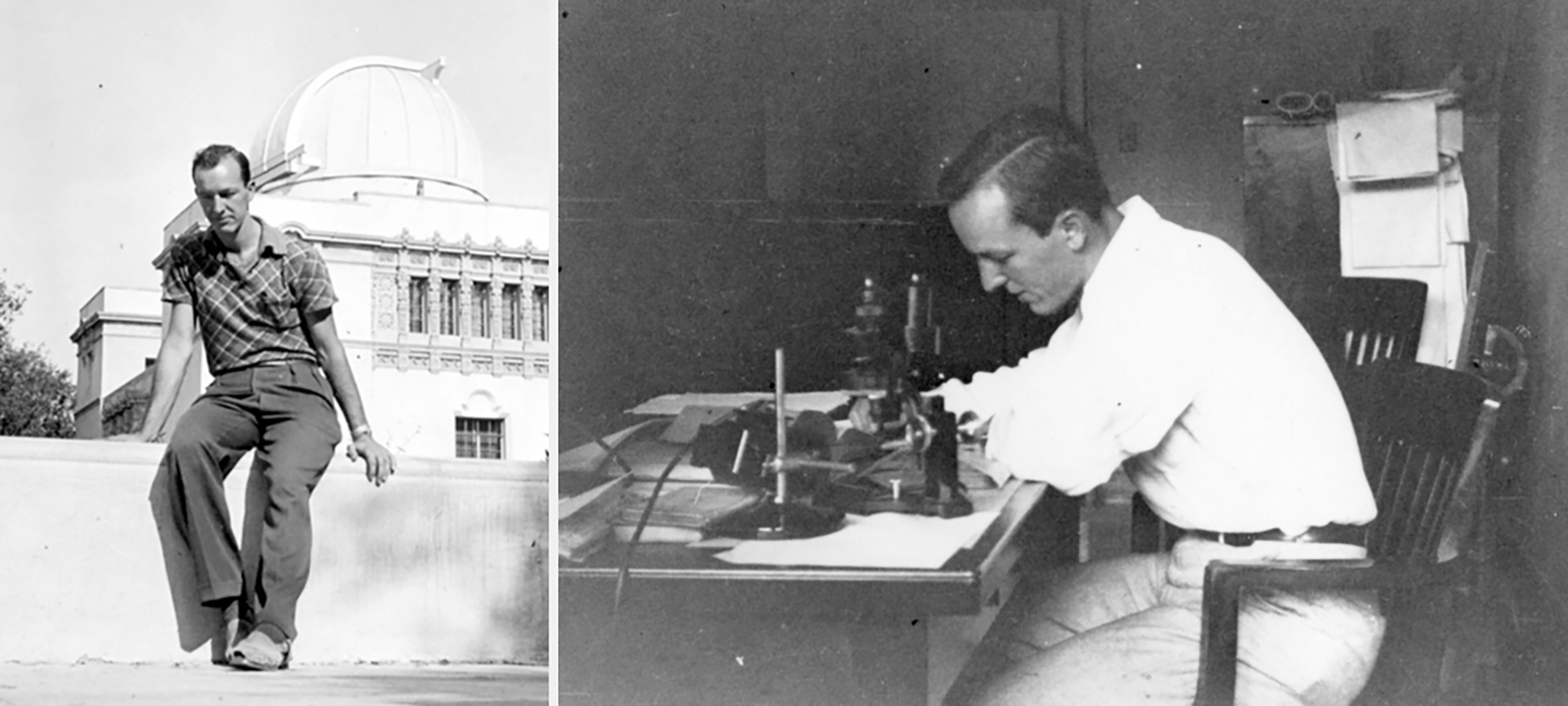
Gabriela Glueck: Bradner got his PhD in physics from Caltech. During World War II, he worked on the Manhattan Project… helping the United States develop the atomic bomb.
After that, he got a job as a professor at UC Berkeley.
Peter Westwick: He’s diving, swimming and playing water polo around the Bay Area. So avid kind of waterman, as we would call it now, but also a top-notch physicist.
Gabriela Glueck: Bradner joined the project … working first on a different problem … a suit to protect divers from underwater explosions.
He’s tinkering with these foam materials, using them like shock absorbers … and starts wondering if the foam could also help keep divers warm.
Peter Westwick: And then he comes in and ends up with the really fundamental contribution to this whole, this whole enterprise.
Gabriela Glueck: You don’t have to stay dry to stay warm.
In a letter dated June 21, 1951, Bradner shared his revolutionary idea with a colleague …
Voice over for Hugh Bradner: Actually, I do not think it is necessary to have a waterproof suit. It should be possible to obtain adequate warmth by use of a “dead water” space from a furry type of porous material …
Peter Westwick: There’s this really kind of central, counterintuitive insight there, before the whole assumption was that if you’re in cold water, the way you keep from getting cold is to keep the water out. The water is cold. If you keep the water out, you will stay warm. Bradner says you let the water in.
Gabriela Glueck: Let the water in, he thought, and your body would warm it up naturally.
Peter Westwick: And the material acts not as a barrier, but rather as an insulator. So this is really his crucial insight.
Gabriela Glueck: His other big breakthrough was identifying the kind of material needed to make that happen.
Peter Westwick: When he’s looking around for materials to test, here is this material right at hand that the chemical industry is cranking out in great quantities, especially for the U.S. military.
Gabriela Glueck: Neoprene.
The synthetic rubber was invented in the 1930s by chemists at DuPont.
During World War II, it became an important substitute for rubber, which was hard to come by. Inventors improved on the material, making it better and more widely available … just in time for Bradner to prototype his wetsuit.
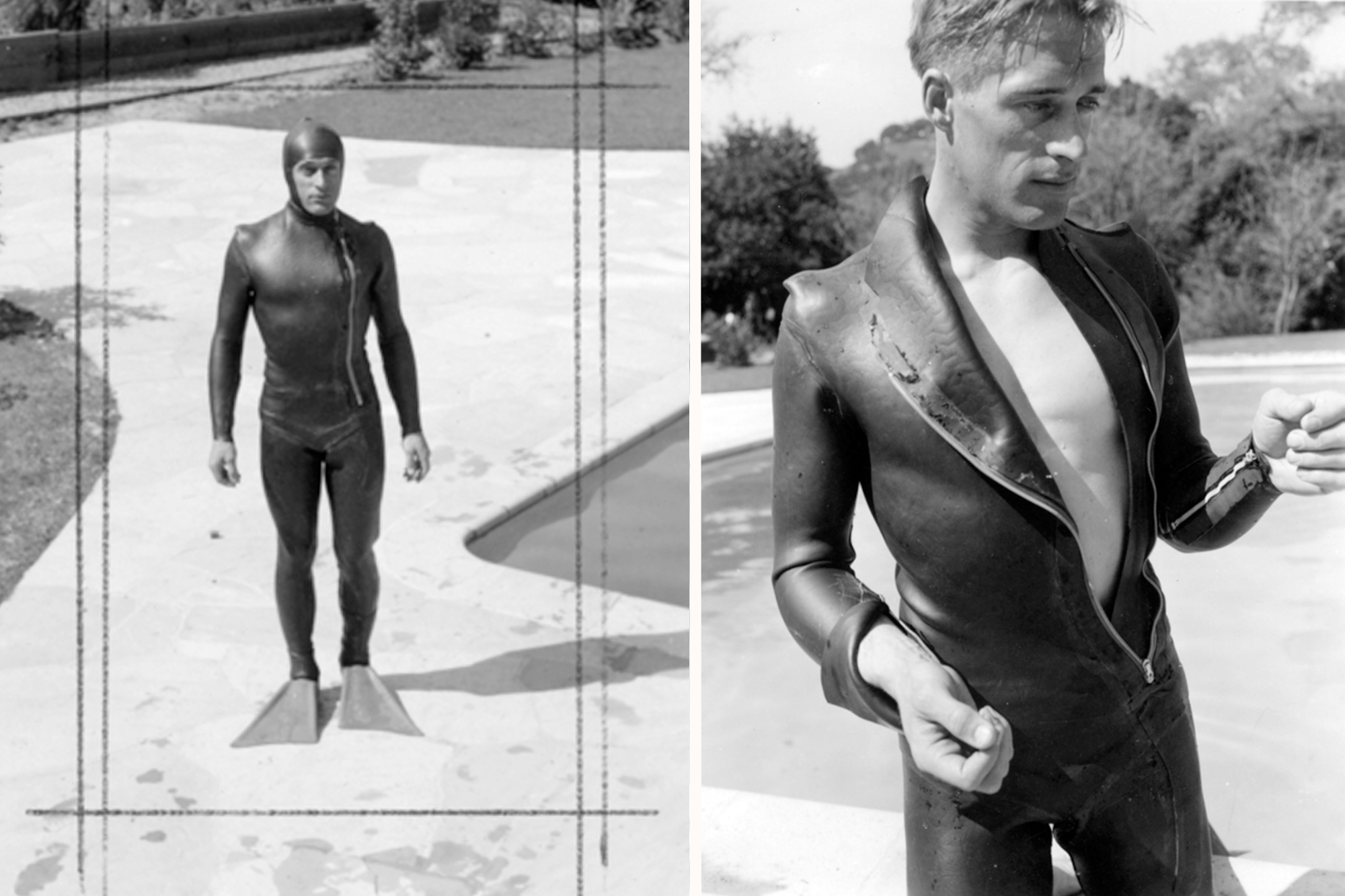
Peter Westwick: He begins testing this in 195. And he tests them in swimming pools. He tests them in Lake Tahoe, and they seem to work.
Gabriela Glueck: It was a novel idea and a patentable invention. Bradner’s 1951 letter describing his idea is the earliest known documentation for what would later come to be known as the wetsuit.
But chances are, unless you’re a physicist or history nerd, you probably haven’t heard of Hugh Bradner. That’s because he never patented his design.
Peter Westwick: So he says, no, no, I want to preserve my kind of objectivity here. I don’t want to be tainted with commercial bias or the perception of commercial bias … I just want to be available to advise the Navy if they want to call on me.
Gabriela Glueck: He was a science guy … not a businessman. And as the thinking went, diving and surfing were destined to remain small niches, not places to make real money.
Peter Westwick: And it’s funny, because some of the other panel members are actually writing Bradner at this time, saying, like, Dude, you’re blowing it. Like you can do both … you can be a businessman. And Brander says, like, no, no… forget it. I’m not going to patent it, and let’s just make it. Let’s just throw it out there and let people run with it, which is what happens.
Olivia Allen-Price: Bradner had no idea that the suit he’d invented would forever change the world of surfing and water sports. More on that when we return.
If you’re enjoying stories like this one, consider becoming a member of KQED. We can’t do this work without listener donations, so consider joining the hundreds of thousands of your Bay Area neighbors today. KQED.org/donate is the place to do it.
Sponsor messages
Olivia Allen-Price: We’re talking about the invention of the wetsuit, and its Bay Area connection. Berkeley physicist Hugh Bradner came up with the idea in 1951, but he never had it patented.
It didn’t take long for the novel concept to go mainstream, thanks in part to the ingenuity and marketing prowess of a few California surfing legends.
Here’s Bay Curious reporter Gabriela Glueck again.
Gabriela Glueck: Just a short time after Bradner comes up with his wetsuit, a local tinkerer at Kelly’s Cove stumbled upon a similar idea.
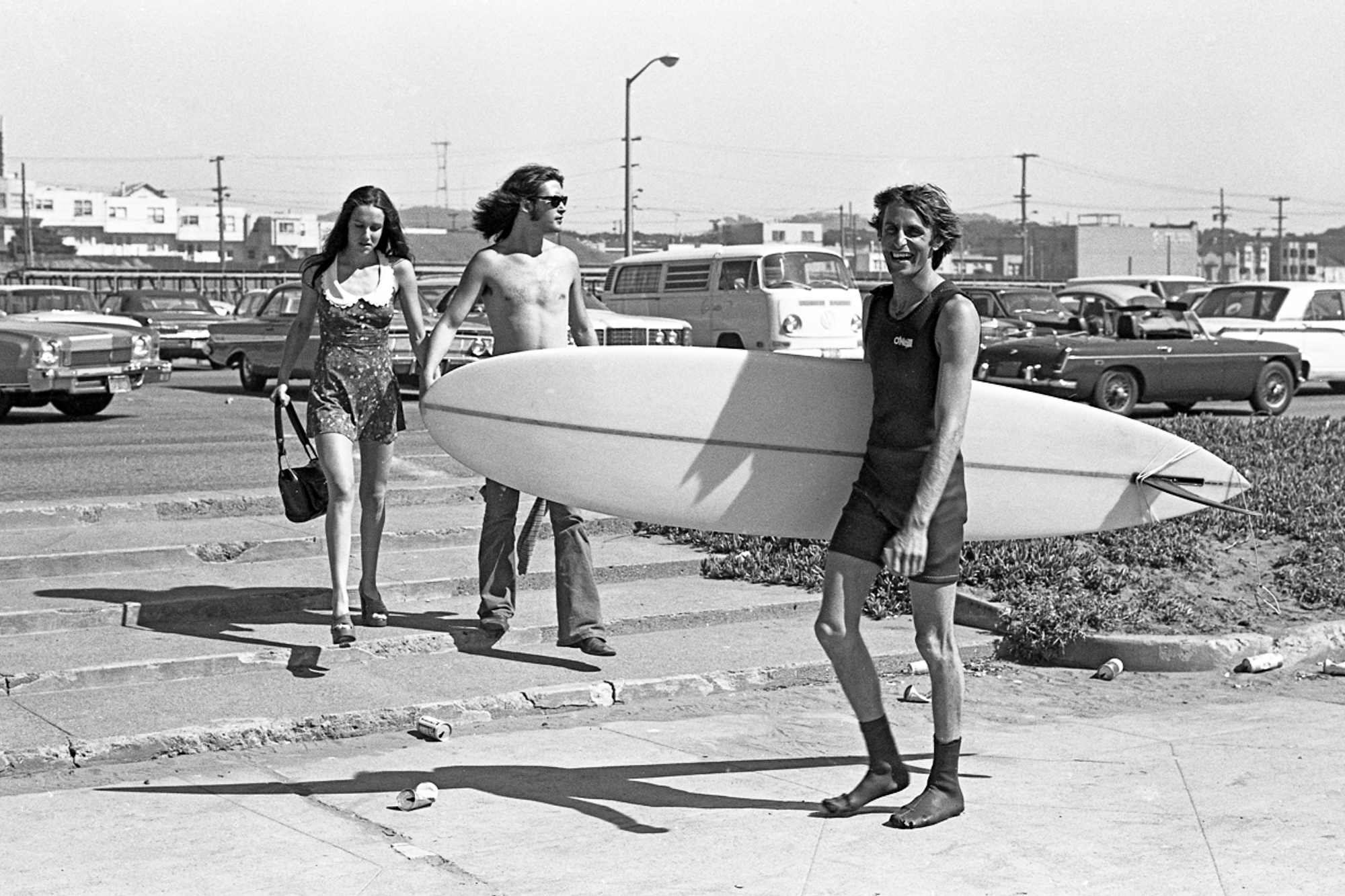
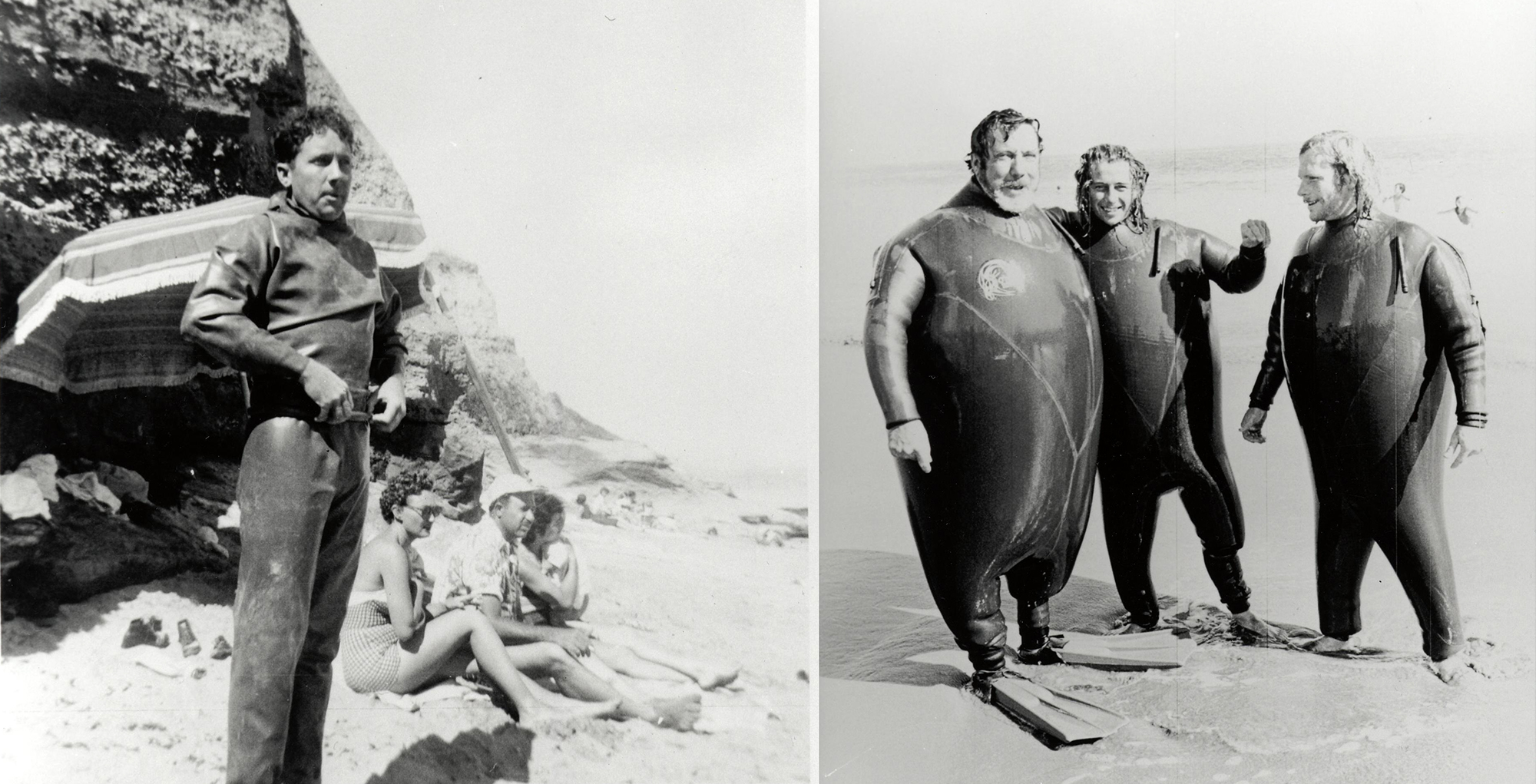
Jim Gallagher — the guy who used to warm up by tire fires on Ocean Beach — he was friends with him: a man named Jack O’Neill.
Jim Gallagher: He was a guy that was a salesman and did a bunch of different things, but he was a really curious sort of guy.
Gabriela Glueck: Legend has it that O’Neill experimented with all kinds of interesting suit solutions. But nothing really worked. Until he, like Bradner, came across neoprene.
Jim Gallagher: He made the neoprene suit, and he made one for himself, went out and came back, and people saw that, and he said, Well, how did I get one? He said, Well, I’ll make you one.
Gabriela Glueck: Unlike the mainstream wetsuits of today, Jack’s suits were always custom.
Jim Gallagher: And I remember when I went down to get mine, I went to his home. He was still living on Wawona, and his brother Bob was there. He was working for Jack, and you went in and he measured you like a tailor would … almost you know, the length of from your elbow midpoint to your wrist and up to your shoulders, around your waist or chest, arm length, legs, the whole body, and he might make a template and then cut the neoprene to that template and glue it together. And that’s how the first ones were made.
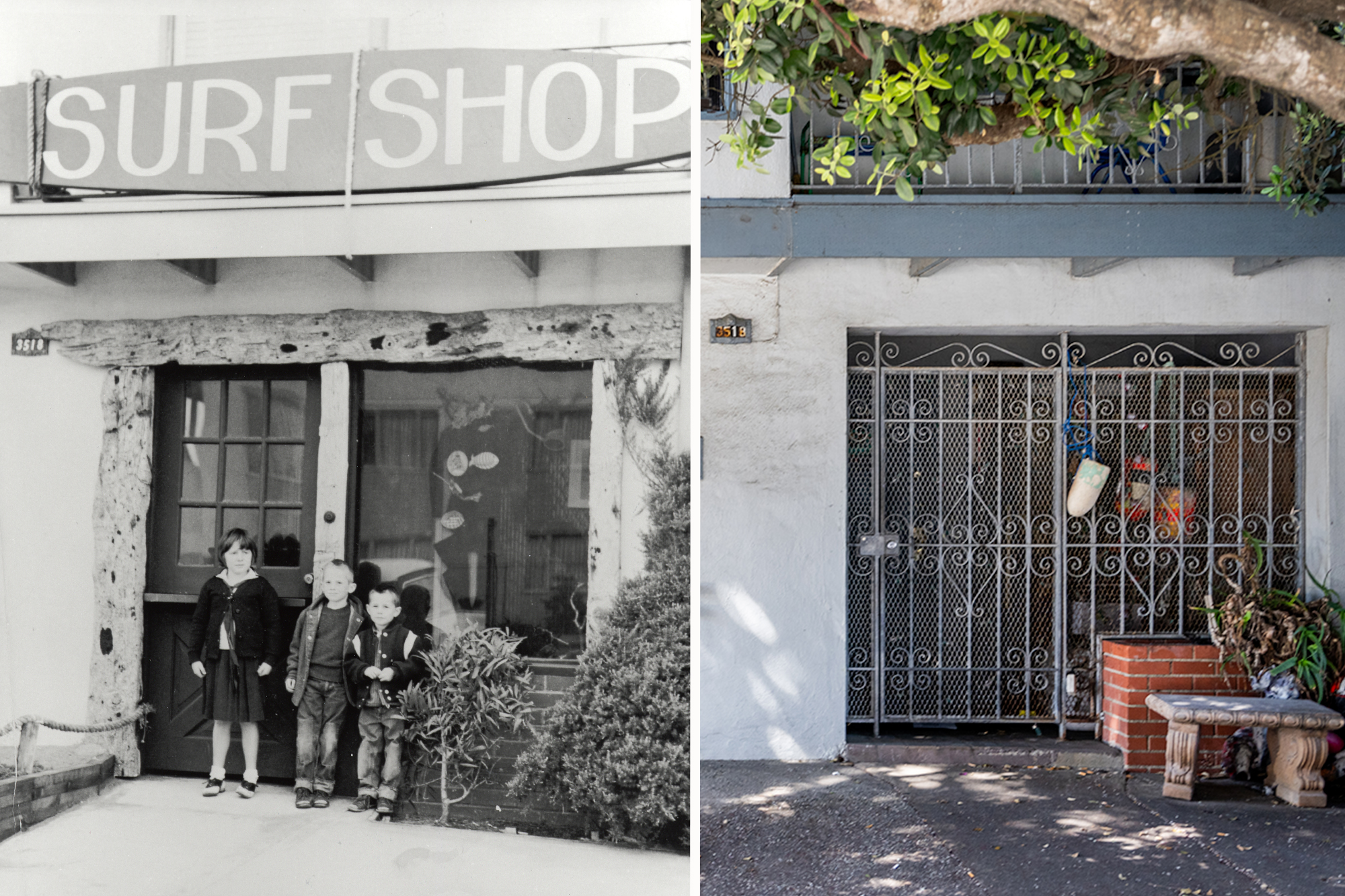
Gabriela Glueck: As demand for his surf gear grew, O’Neill opened up a store near Ocean Beach, often thought of as one of America’s first surf shops.
He continued refining his wetsuit, rolling out new styles … and dove headfirst into marketing. At a 1956 San Francisco trade show, for instance, he dressed up his six kids in little wetsuits and threw them into tubs of ice water.
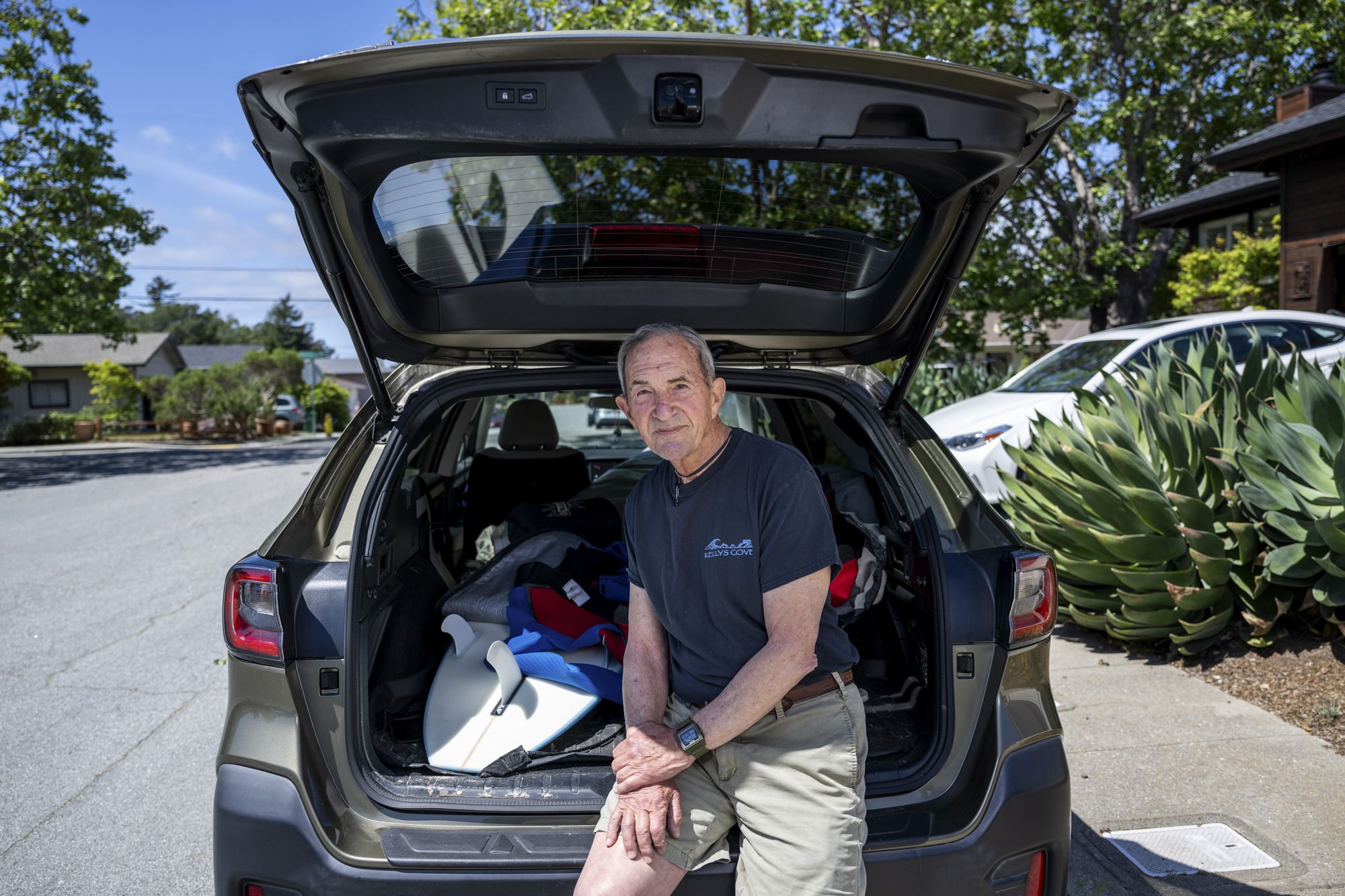
Kelly’s Cove surfer Gary Silberstein remembers this time well, when the early wetsuit was gaining traction, rudimentary as they were.
Gary Silberstein: They weren’t lined, okay, with any fabric. And … use cornstarch to or talc, something to make them slip on.
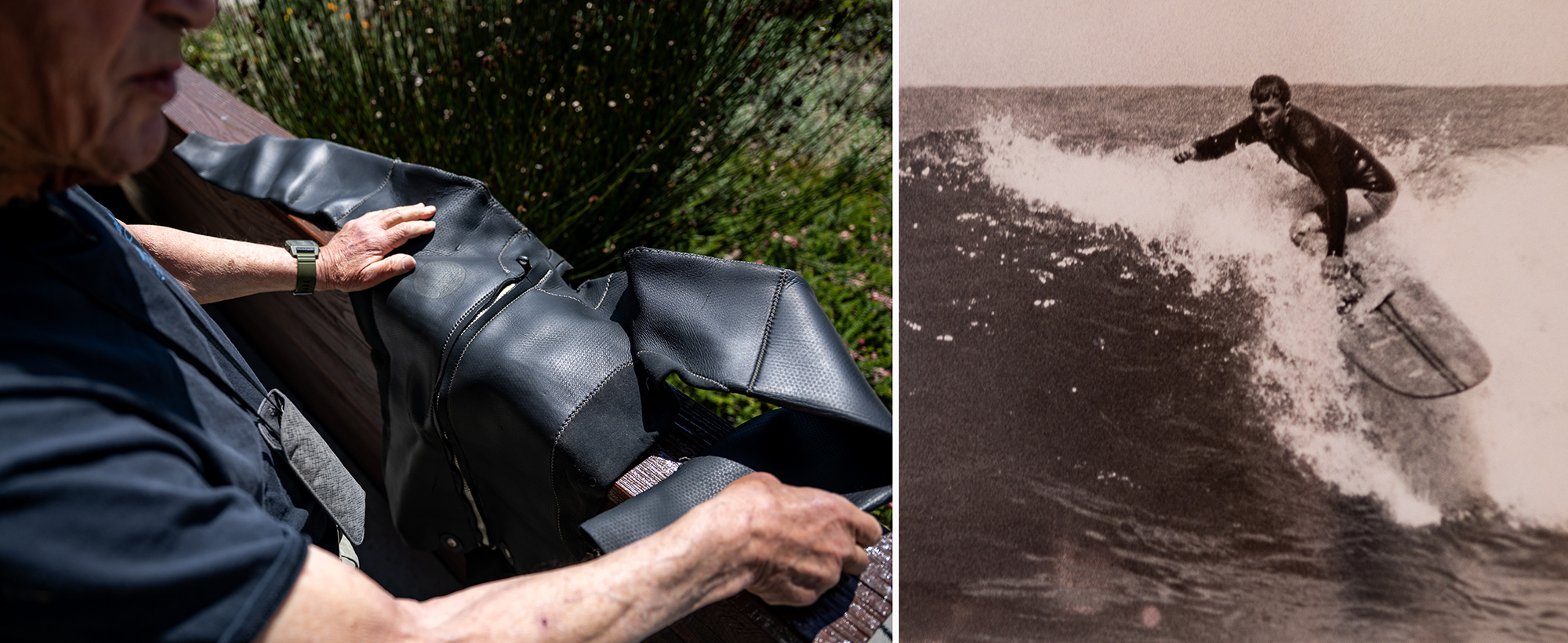
Gabriela Glueck: When I met up with Gary at his Santa Cruz home, he pulled an old O’Neill suit out to show me … like most early wetsuits, it’s just a jacket, nothing covering the legs.
Gary Silberstein: You are looking at Jack O’Neill. This is his logo, which is now all kind of etched away from years and years of surfing. And it’s a jacket. It’s simply a long sleeved, long sleeve jacket, pretty heavy neoprene.
Gabriela Glueck: The neoprene was rough … and cracked in places …
Gary Silberstein: You can see that the stitches hold the arm pieces. These are all pieces of neoprene that had to be cut before they’re stitched together.
Gabriela Glueck in scene: And do you remember how much they cost back in
the day?
Gary Silberstein: I’m guessing everything’s so much cheaper, probably 35-40 bucks.
Gabriela Glueck: I wouldn’t be surprised if Gary’s old O’Neill suit ended up in a museum one day. It’s well-preserved evidence of an invention that changed surfing.
Gary Silberstein: You think of the product, and it really was the foundation of the explosion of winter surfing sports all over the world.
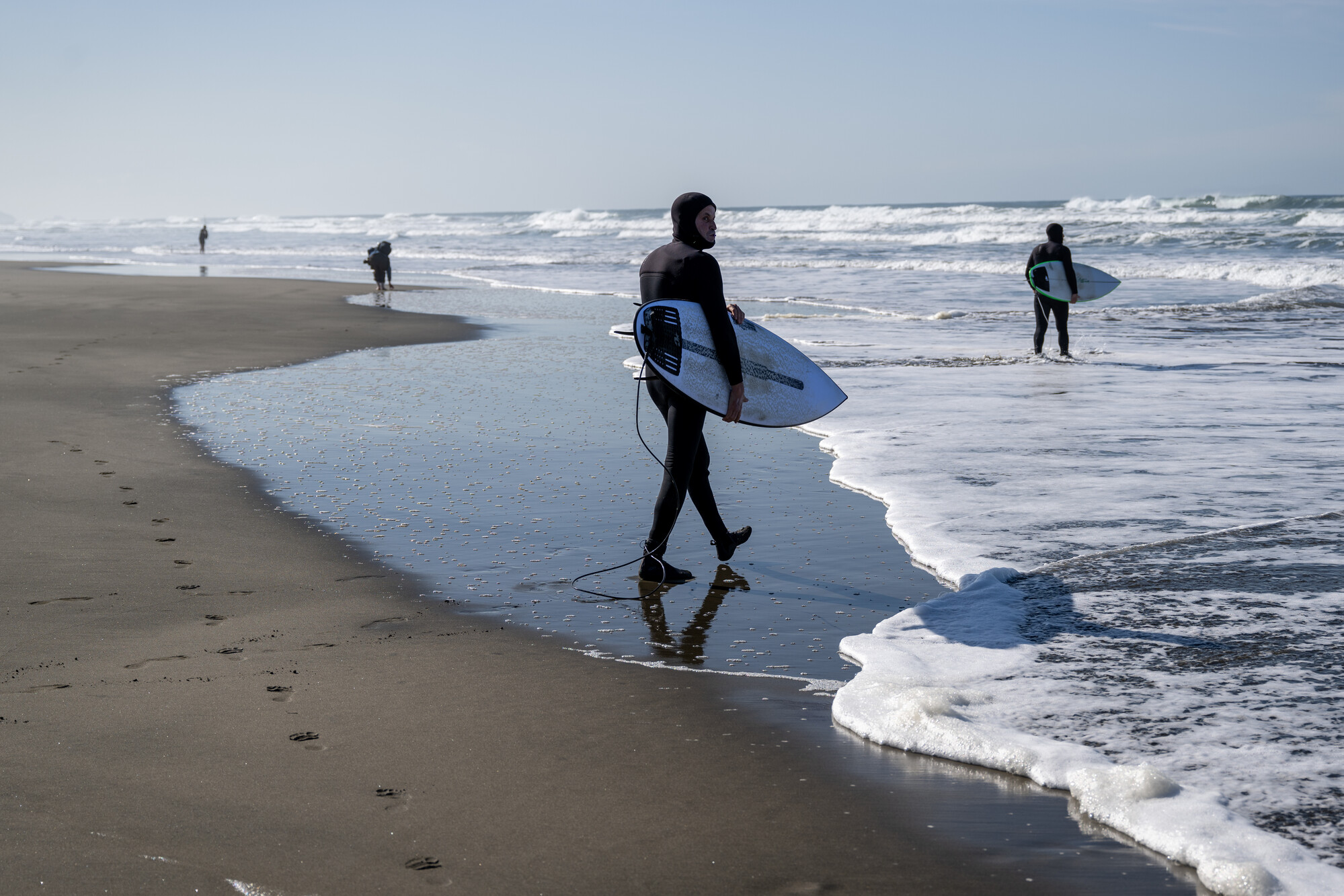
Gabriela Glueck: These days, people are surfing in Iceland, British Columbia, the Great Lakes in the middle of winter… and of course, at Ocean Beach.
Gary Silberstein: And so the whole culture, the whole availability of equipment, improved enormously over those years, from, let’s say, 58 to 65 or 64 when I left Kelly’s Cove … Wet suits became very inexpensive and available, and surfboards made of foam were mass produced.
Gabriela Glueck: When Gary goes out to surf on his home waves in Santa Cruz, it’s pretty much guaranteed to be packed
Gary Silberstein: I can go out here on a good day and see over 100 people in the water.
Gabriela Glueck: Due to his commercial success, O’Neill came to be known as one of the “fathers of the wetsuit.” Body Glove, an early SoCal surf and dive company, is often also given that accolade.
Bradner, though, was largely left out of the popular retelling.
But about 40 years after walking away from wetsuit development, Bradner began writing letters to try to clarify the history.
Voice Over for Hugh Bradner: Dear Jack, You have lately been getting much well-deserved publicity for your invention of the surfing wetsuit. You perhaps recall that I was early in the wetsuit too, but not for surfers.
Gabriela Glueck: One letter recipient? Jack O’Neill.
Voice Over for Hugh Bradner: The enclosed xerox of my June 21, 1951, letter to Larry Marshall has the disclosure that I believe may (underlined) have been the beginning of it all. I’d be interested to learn whether your wetsuit predates it.
Sincerely,
Hugh Bradner
Gabriela Glueck: Bradner’s copy of O’Neill’s reply, if one existed, isn’t in the archive.
But there are a lot of other letters. All following a similar thread.
Voice Over for Hugh Bradner: Dear Bill, I am enjoying very much your latest book … There is one experience in which I did participate: the wetsuit … We have there an important question of timing.”
I consider this very important because if your work predates June 21, 1951, I must set about recanting my claim and fame by contacting significant people and widely read publications.
Please set my mind at rest as soon as you can.
Gabriela Glueck: The letter recipients, all in all, seem to have been less concerned than Bradner about clearing up the timeline.
Voice Over Willard Bascom: “Dear Hugh … History is what we remember (including you).
My suggestion is that you let all statements stand …
Relax and have a merry Christmas. Kindest, Willard”
Gabriela Glueck: Like Hugh Bradner, I did some of my own due diligence … and reached out to O’Neill and Body Glove for comment.
Jenna Meistrell, the granddaughter of one of Body Glove’s founders, told me the family does not believe the founders knew of Hugh Bradner, and that the company credits itself with the first commercially viable wetsuit.
The O’Neill company didn’t respond to my request for comment … But they’ve got this line on their company blog.
Voice Over: Seeing the successful experiments of UC Berkeley physicist Hugh Bradner in the early 1950s, Jack O’Neill switched to neoprene.
Gabriela Glueck: Versions of this neoprene suit are everywhere these days. Now complete with gloves, booties, and a hood for the cold-weather rider. It’s a combination early Ocean Beach surfers could have only dreamed of.
Because, as Jack O’Neill would say, when you’re wearing a wetsuit, it’s always summer on the inside.
Olivia Allen-Price: That was Bay Curious reporter Gabriela Glueck.
I want to let you all in on something we’ve been working on behind the scenes for the last few months! A historically-themed gaming experience at San Francisco’s Conservatory of Flowers. It’s like nothing Bay Curious had done before … and now, it’s time to invite you to join us! Come out on June 20 and 21st and explore the history of the Conservatory and the people who created it. Tickets on sale at KQED.org/live.
There will be no episode dropping next week because of the Memorial Day holiday. We’ll be back with the freshy fresh on June 4.
Bay Curious is made by Katrina Schwartz, Christopher Beale and me Olivia Allen-Price.
We get extra support from Maha Sanad, Katie Sprenger, Jen Chien, Ethan Toven-Lindsey and everyone on Team KQED.
Some members of the KQED podcast team are represented by The Screen Actors Guild, American Federation of Television and Radio Artists, San Francisco Northern California Local.
I’m Olivia Allen-Price. Have a wonderful week.