Episode transcript
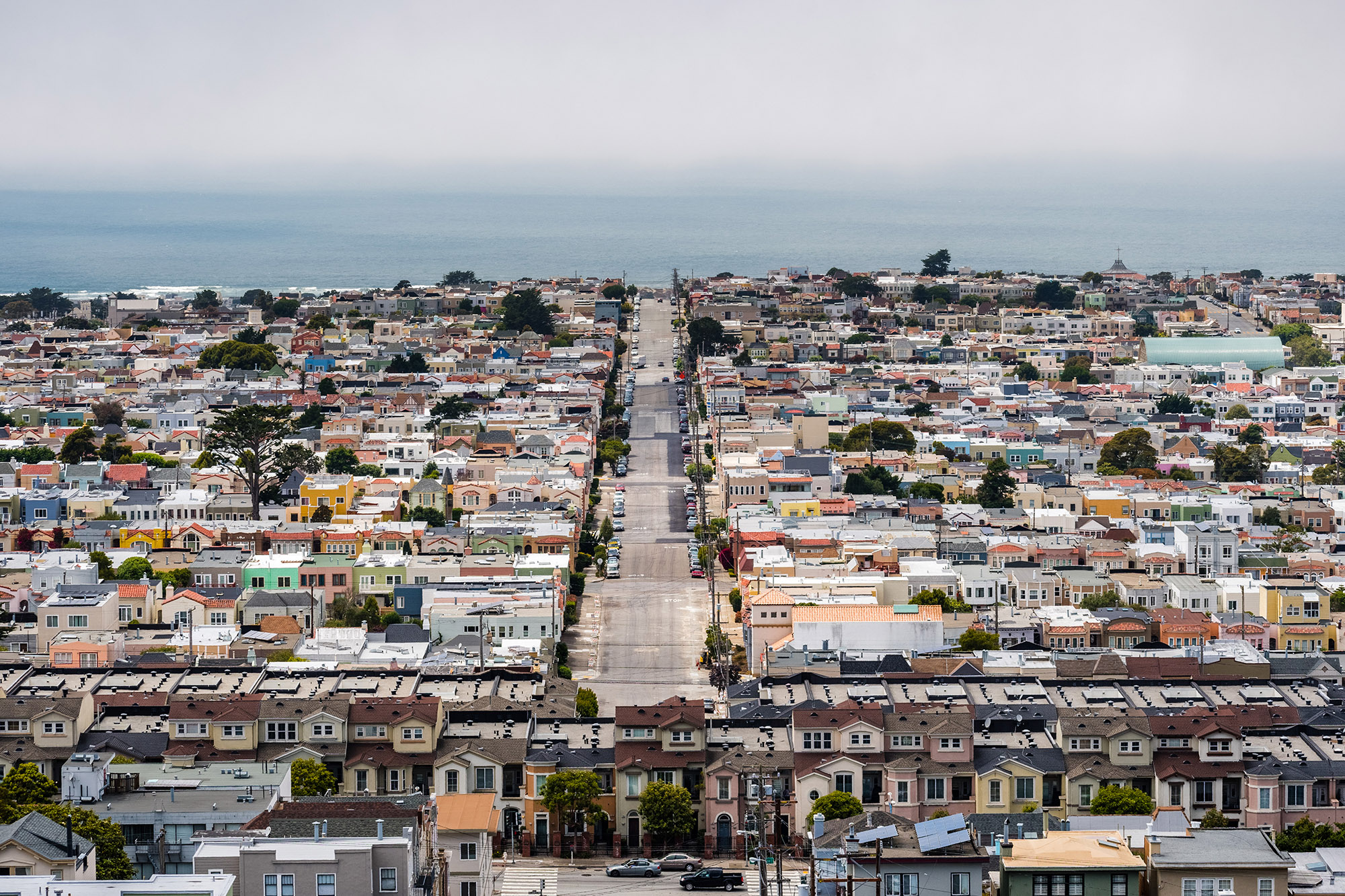
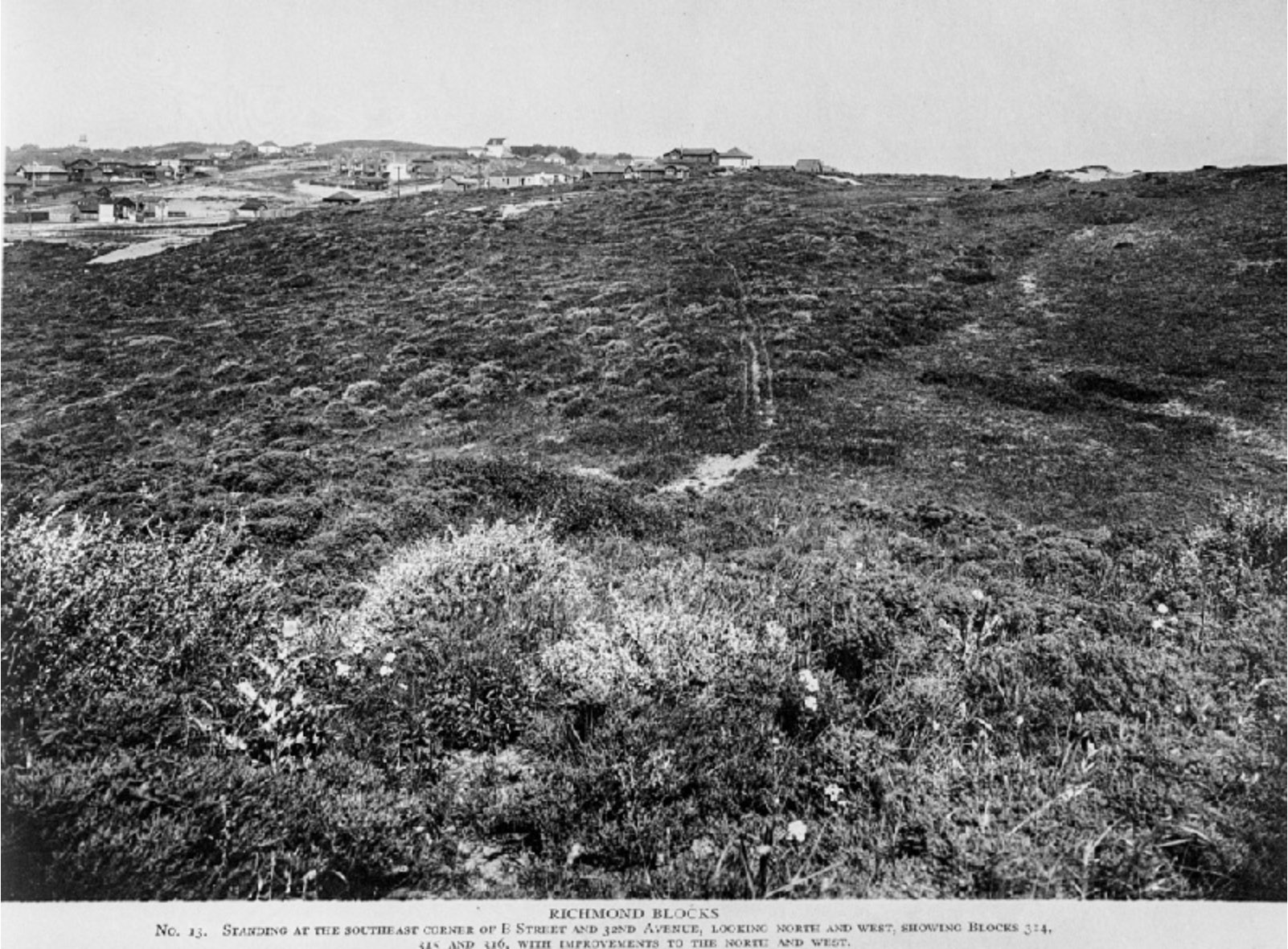
Olivia Allen-Price: If you travel from north to south on the west side of San Francisco – through the Richmond District, across Golden Gate Park, all the way through the Sunset – you may notice the streets running east to west follow a naming convention.
Computerized voice: Anza. Balboa. Cabrillo.
Olivia Allen-Price: A … B… C… And further south.
Computerized voice: Quintara. Rivera. Santiago. Taraval.
Olivia Allen-Price: Q … R… S… T… They’re alphabetized! A to Z! Well, almost…
Carolyn Karis: There’s no D and no E. There is a Fulton but then there’s no G or H.
Olivia Allen-Price: This is Carolyn Karras. (Care-as)
Carolyn Karis: I live in Ingleside Terraces in San Francisco.
Olivia Allen-Price: She’s a librarian and she’s into San Francisco history. So when a friend asked her about why a few of the letters are missing, she was frustrated when the answer didn’t turn up in some of the usual places she thought to look.
Carolyn Karis: It just seems like the order should be complete once you start it, it should end up being complete. So what happened to those street names since it seemed to go from A to at least Y.
Olivia Allen-Price: Here with some answers for Carolyn is Bay Curious editor and producer Katrina Schwartz. Hey, Katrina!
Katrina Schwartz: Hey, Olivia. I gotta say, I’m excited to answer this question because it’s my home turf. I grew up in the Richmond District and went to school in the Sunset and I’ve wondered about this naming situation too.
Olivia Allen-Price: OK, start at the beginning, when did San Francisco start naming it’s streets.
Katrina Schwartz: Always street names, but not always a lot of logic to the names. There were a lot of duplicates, which was confusing to people.
Olivia Allen-Price: Can you give me some examples of the kind of things that were confusing?
Katrina Schwartz: Yeah, so there were 4 Church streets at one point. Any time there was a church, the locals would call the alley behind in Church Lane or Church way… you get the idea. But most confusing of all, there were three sets of ordinal numbered streets. Like today, there were the numbered Avenues out west, and the numbered streets downtown, but there were also numbered streets in the Bayview, those just had “South” appended to them. So, Bayview had 9th avenue South, for example.
Olivia Allen-Price: It reminds me a lot of modern-day Washington D.C. If you get the cardinal direction wrong on the street name, you can wind up in the completely wrong place….
Katrina Schwartz: And remember, this was a time when people primarily communicated by post. The mail came several times a day…and postal codes had not been invented yet.
Olivia Allen-Price: So confusing.
Katrina Schwartz: Then 1906 earthquake happens. Things are in shambles. But it’s also an opportunity to make some changes. I spoke to John Freeman about all this. He’s a retired high school teacher, amateur historian and life-long Richmond District resident. He says one group in particular was not happy with the street name situation in SF.
John Freeman: So the post office was unhappy. We’re rebuilding a lot of San Francisco. There’s new streets, there’s new widening of streets and all that kind of stuff. So the perfect time to go and attack a problem that had just grown like over, you know, since the 1850s.
Katrina Schwartz: Right, so in 1909 they put together a committee of folks to look at this naming issue. It’s got a couple Board of Supervisors on it, a historian and someone from the post office. Pretty small group. And they’ve got this idea to rename the Richmond District avenues to honor San Francisco’s history…
John Freeman: This of course, was a time when the whole thing of Spanish, that time period of the development of California was very romanticized.
Olivia Allen-Price: OK, so like Anza, Balboa, Cabrillo…
Katrina Schwartz: All explorers with some degree of connection to SF. And The idea, was to actually name all the ordinal streets using this scheme. So, First Avenue would become Arguello, second Balboa, third Cabrillo, etc. They’d do that all the way out to 26th and then they’d start over alphabetically, but add San or Santa. So, 27th Ave would have been San Antonio, 28th would become San Benito, etc.
Olivia Allen-Price: That’s strange because the actual Anza, Balboa, Cabrillo streets run east west. And the avenues are still numbered even today. What happened.
Katrina Schwartz: John says the committee started sharing their ideas with the press and when residents of the Richmond and Sunset districts heard about it, they were pissed.
John Feeman: It starts getting the ire of the locals who had community meetings and started saying, you know, we don’t want to be named after those lowlife Spaniards.
Olivia Allen-Price: That’s harsh.
Katrina Schwartz: Yes, well, xenophobia was alive and well back then too. But also, you have to remember in 1909 the Spanish-American war had just ended 10 years before. Of course, that was actually fought in the Philippines. And as a west coast port, San Francisco had a big role in that war. People here would have known folks fighting…it felt like recent history to many people.
Olivia Allen-Price: So what happens with the whole naming conundrum then?
Katrina Schwartz: Basically, the committee backs off and says fine, we won’t change the names of the Avenues. To save face, they kept Arguello, which is basically First Avenue now. And they kept La Playa, the last name before the beach, which also means “beach” in Spanish. And then they used the Spanish name scheme going east west instead. Of course, they had to come up with a new A street because Arguello was already taken, so that’s how we got Anza.
John Feeman: Anza of course, he is definitely here. He explores the whole coast. He actually goes out and, you know, the only way he’s going to get through it, he went along to the actual ocean beach and then he comes inland and he did see as much as he possibly could. So he’s a legitimate early explorer.
Olivia Allen-Price: But, as Carolyn points out, they didn’t really follow the pattern going east west either. Why not?
Katrina Schwartz: Basically local politics. So, it had been agreed that any streets that extended out west from Downtown would not be changed. So, streets like California and Sacramento stayed the same. Geary Boulevard was sacrosanct. So this naming starts south of Geary. We get A, B, C and then what would have been D is actually “Fulton street.” That’s because it was a street extending from downtown, so they didn’t want to change it.
Since they had an F, they just kept going, except G was basically Golden Gate Park, which had been established in 1870, but was still nascent.
That brings us to H street, which should have run next to the park on the south side.
John Freeman: And it’s supposed to go all the way out to Sloat in alphabetical pattern. Well, h then this is eight nine, and we’re celebrating the 100th anniversary of the birth of Abraham Lincoln, so they’re naming all kinds of things after Abraham Lincoln. What a wonderful thing we’ll do away with those four little alleys down south of market that were named after Lincoln. And we’ll name this Grand Boulevard that is going to go alongside Golden Gate Park. We’ll take out the H and will make it Lincoln. So already the game is getting changed.
Olivia Allen-Price: OK…but Irving, Judah, Kirkum, Lawton…also not Spanish names.
Katrina Schwartz: Correct. This is where more local politics came into play. There was a very active group of residents in the inner Sunset who DID NOT want Spanish names. They wanted “American” names. So they lobbied hard for Irving…after washington Irving the writer. Judah…for Theodore Judah, a civil engineer largely responsible for the design and construction of the transcontinental railroad.
John Freeman: He was the clever engineer and nobody honored him for anything.
Katrina Schwartz: And then Kirkham and Lawton were military officers and thus deemed appropriate by the neighborhood groups.
Olivia Allen-Price: But after Lawton comes Moraga, named for José Joaquín Moraga, a Spanish explorer. So, we’re back to the pattern. What happened?
Katrina Schwartz: Development. The Parkside [Realty Company] owned a lot of land in the outer Sunset and they were developing plots to sell. They’d already started naming the streets in their section according to the proposed Spanish explorer scheme. So we basically have Spanish names all the way out to Y.
Olivia Allen-Price: But there’s no X or Z street.
Katrina Schwartz: Yep, more racism. X was supposed to Xavier Street, but the committee didn’t think anyone could pronounce it, so they just skipped it. And many of those other names aren’t actually Spanish explorers anyway. Taravel was a Native American guide who was part of the Anza expedition.
Olivia Allen-Price: So we have alphabetical-ish, Spanish-ish street names.
Katrina Schwartz: Totally. And, they were trying to work fast because they had to have it all done by the end of 1909 when the mayoral administration changed. So, maps after 1910 show the new names.
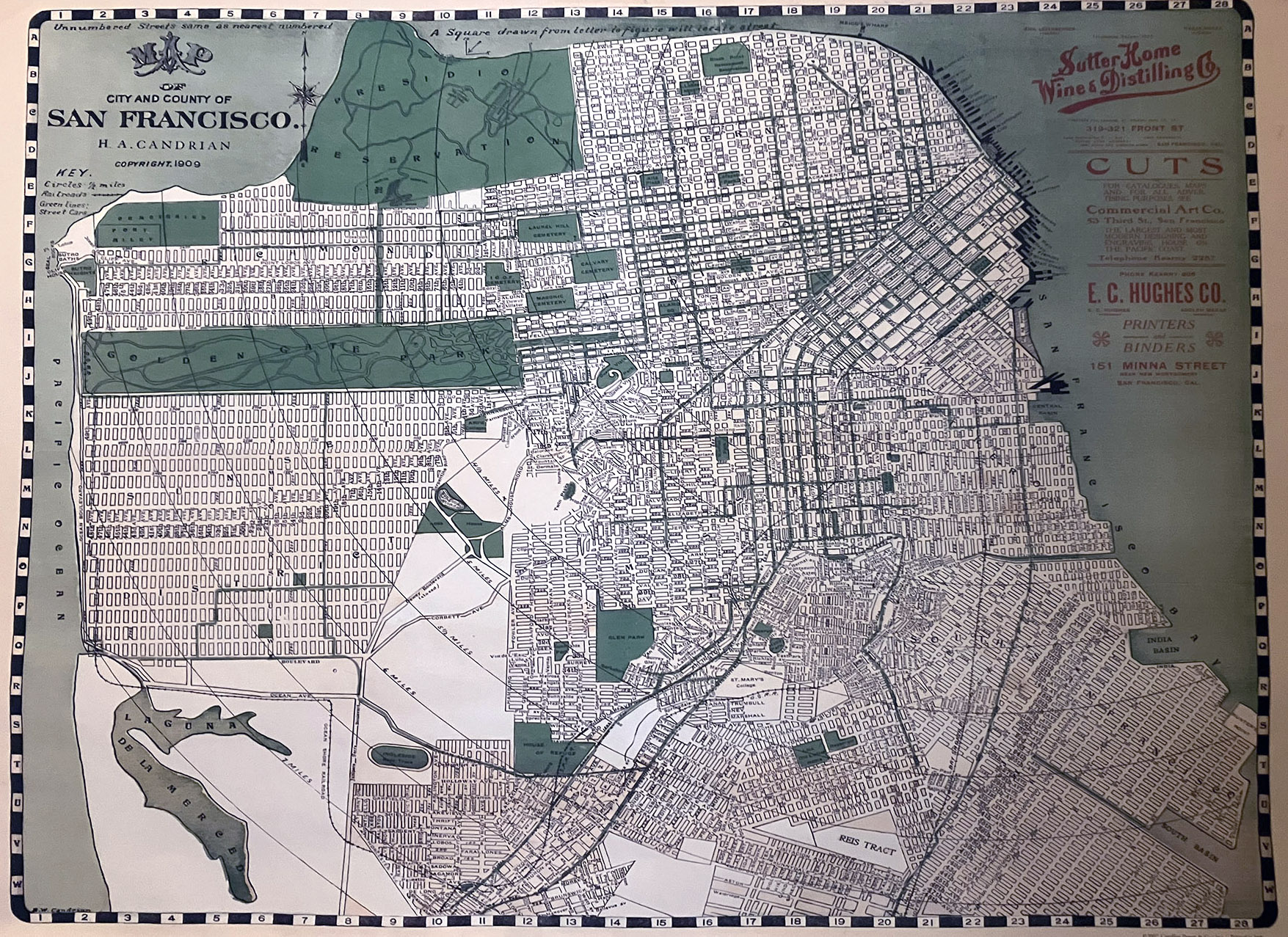
Olivia Allen-Price: Our question asker Carolyn actually mentioned an old map she’d found…
Carolyn Karis: We have a couple of older maps that we were looking at and one of them is 1909 map that we picked up somewhere and that has the letters. So it says like ABC above the park and then below the park, it just has the letter.
Katrina Schwartz: So presumably this was printed between the time when the plan for the alphabetical streets was made, and when the final names hadn’t been chosen yet. So, this is actually a very cool little piece of history.
Olivia Allen-Price: Yeah, a little time capsule window into the past. Thanks for all your reporting on this, Katrina.
Katrina Schwartz: My pleasure.
Olivia Allen-Price: Thanks to Carolyn Karras for asking this week’s question. You selected it in one of our monthly voting rounds and hey – our April voting round is now up and has some good questions…
Question 1: How many Bay food businesses are still in business after 10 years?
Question 2: Why does the SF Parks and Recreation still manage properties outside of the city limits?
Question 3: I’m curious about the history of Bay Area communal living and what makes things a communal living situation vs cult.
Olivia Allen-Price: Which of those do you want to hear on the show? Cast your vote at BayCurious.org. And while you’re there, sign up for our monthly newsletter where we answer even more listener questions.
Bay Curious is made in San Francisco at member-supported KQED. Our show is produced by… and me Olivia Allen-Price. With extra support from … and everyone on Team KQED. Some members of the KQED podcast team are represented by The Screen Actors Guild, American Federation of Television and Radio Artists, San Francisco Northern California Local.
I’m Olivia Allen-Price. Have a good one.