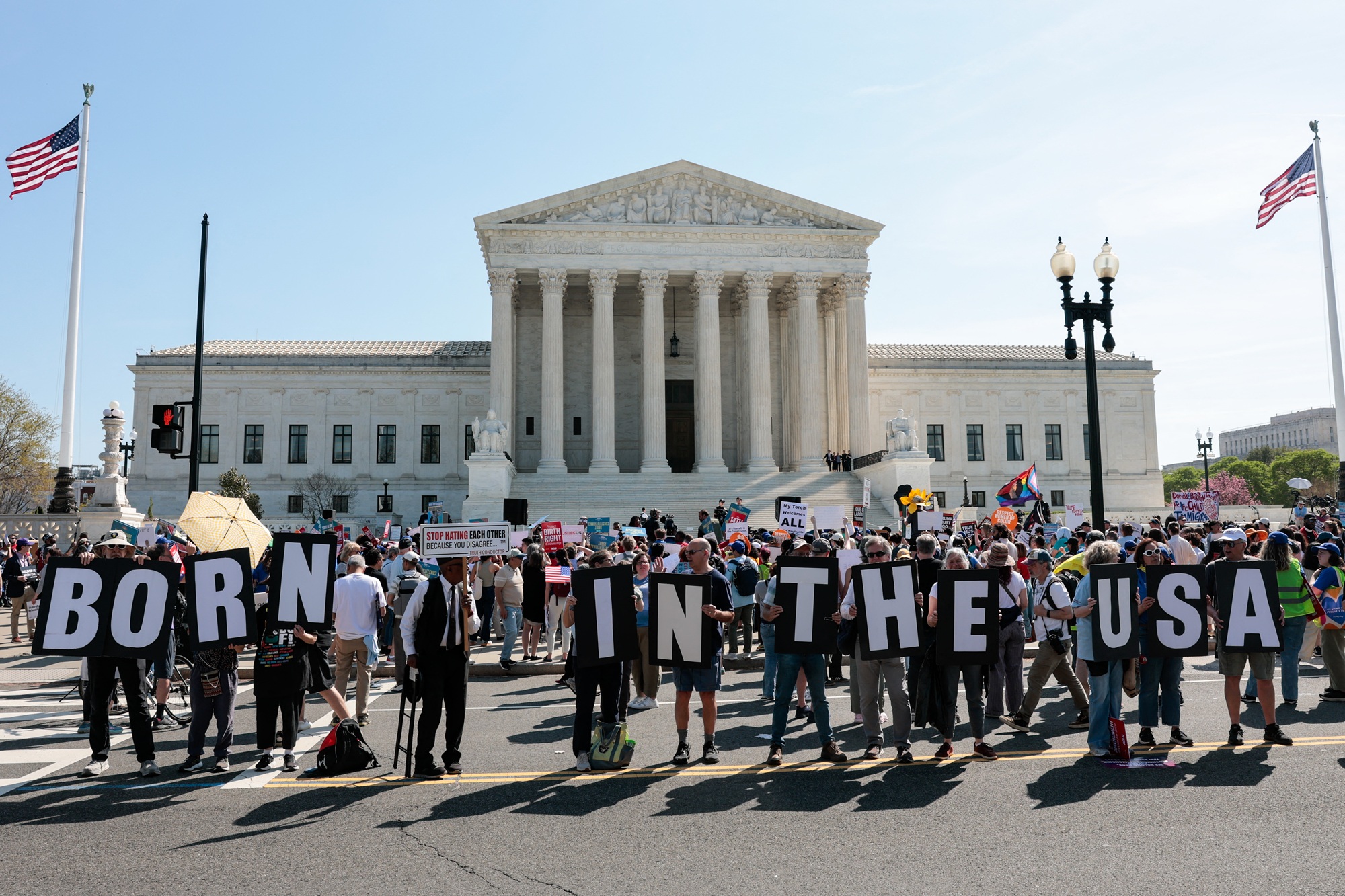
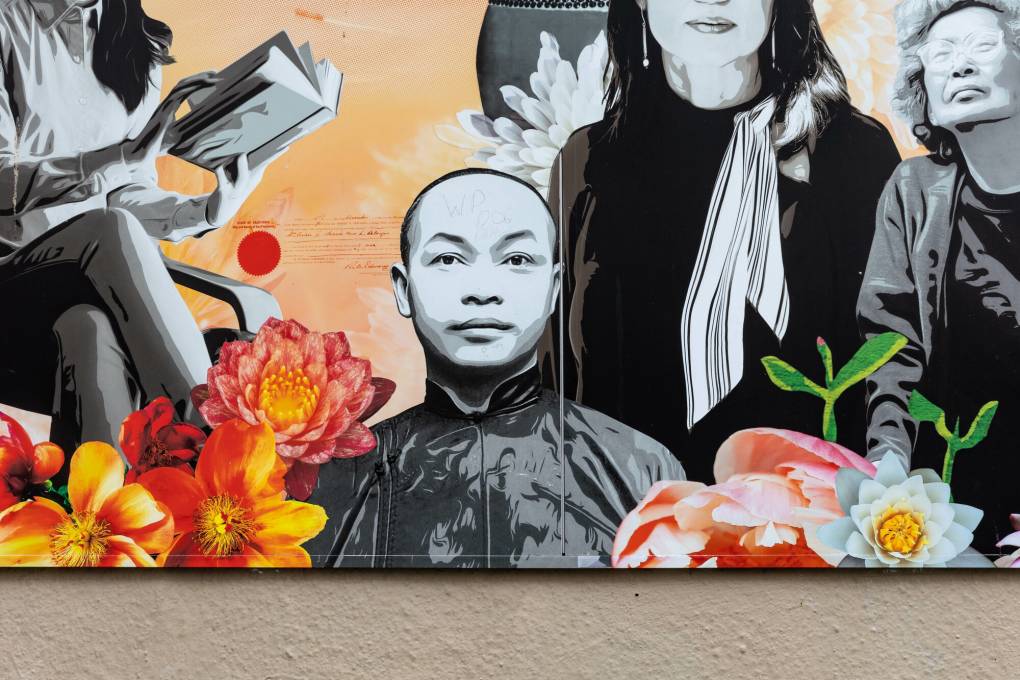
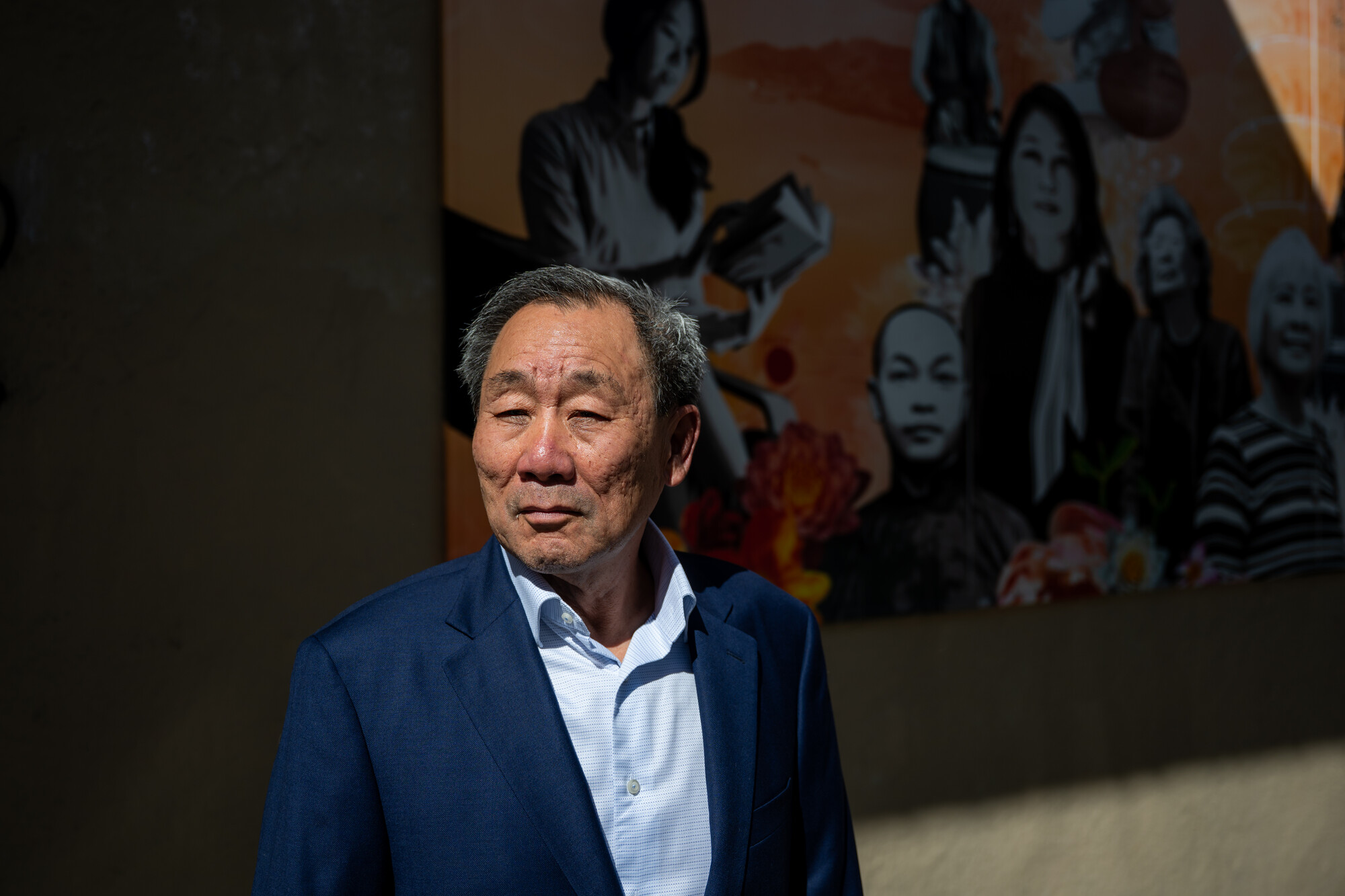
Among those outside the Supreme Court on Wednesday was Norman Wong. An East Bay resident and retired carpenter, Wong, 76, is the great-grandson of Wong Kim Ark.
Wong was born in San Francisco but didn’t grow up knowing the story of his ancestor or the role he played in U.S. history. He says when he first learned about Wong Kim Ark’s case 25 years ago, he thought it was “a curiosity of history” because birthright citizenship was settled law.
“I grew up knowing that I was American. All the kids that I ran around with, they knew they were American. Why? They were born here,” he told KQED ahead of the hearing. “It’s like assuming every time you breathe in and out, you get air. It was part of your whole being. We were proud to be American.”
After the Supreme Court hearing, California Attorney General Rob Bonta said birthright citizenship is foundational to American democracy and promises equality under law to all children, regardless of race, class or parental background.
“It’s a guarantee that every child born here has a personal stake in the American dream,” Bonta said. “It tells you something that President Trump willfully chose to start his second term by trying to knock down this fundamental and long-standing right. Fortunately, I believe he will fail.”
Speaking outside the courtroom, Cecillia Wang, who argued on behalf of the ACLU, said the case was “nerve-wracking,” but appeared hopeful.
“We could not be more confident that despite the policy preferences of the current administration, that this attack on what it means to be American in the most fundamental way … will be turned down,” she said.
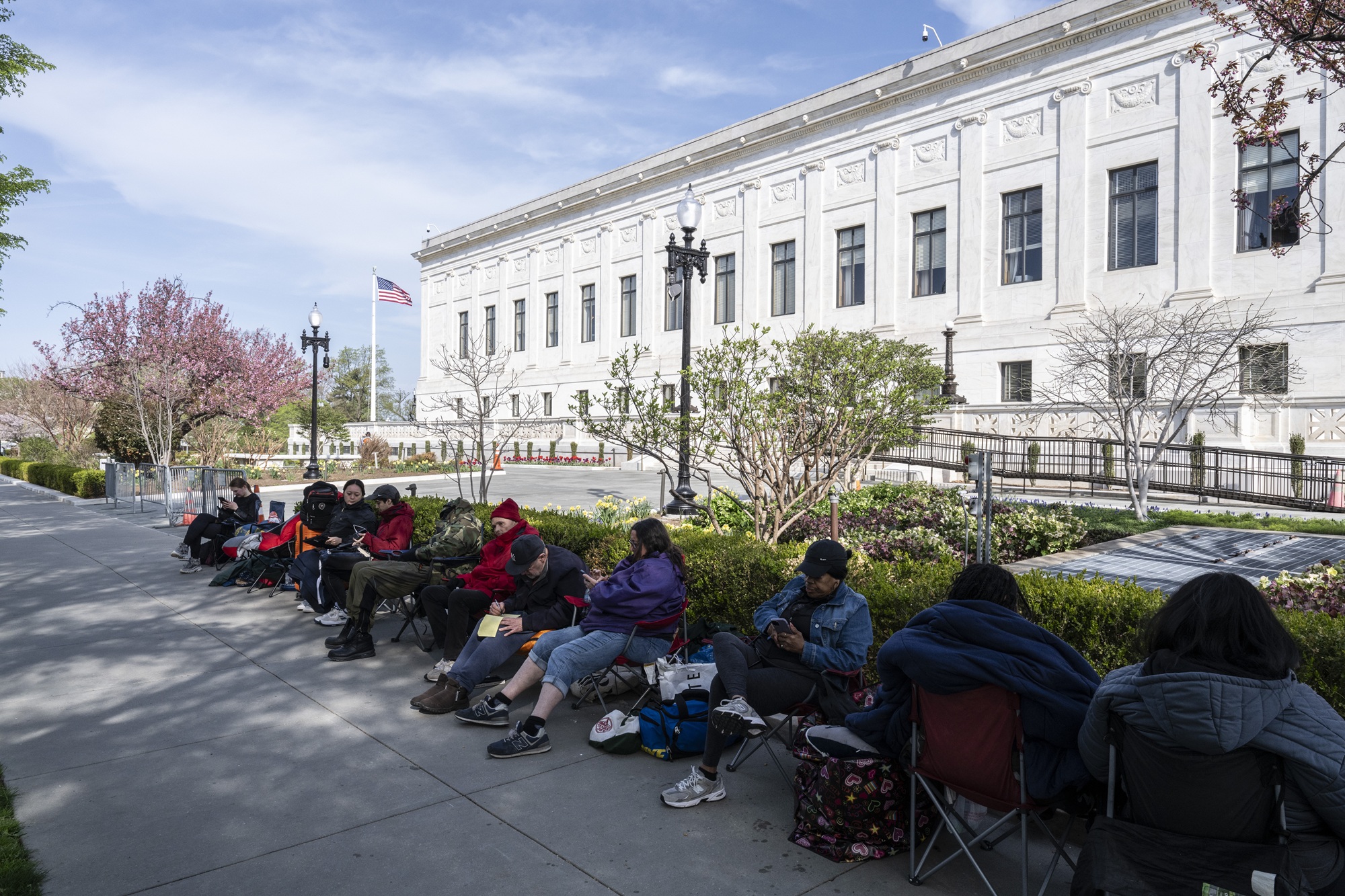
People wait in line outside the Supreme Court Justice building to attend oral arguments on birthright citizenship, a day before the court is scheduled to address the case, on March 31, 2026, in Washington, DC. The Supreme Court is set to convene on April 1 to consider the legality of President Trump’s executive order that seeks to end birthright citizenship.
Overturning the principle of birthright citizenship would create a bureaucratic nightmare and threaten the very fabric of American society, according to Winnie Kao, senior counsel with San Francisco’s Asian Law Caucus, who is an attorney of record on the Barbara case.
“It would be a radical departure from over 120 years of precedent and understanding,” said Kao, whose organization had attorneys in court Wednesday alongside the ACLU and others. “It would be really hard for the public to understand and, I think, to accept.”