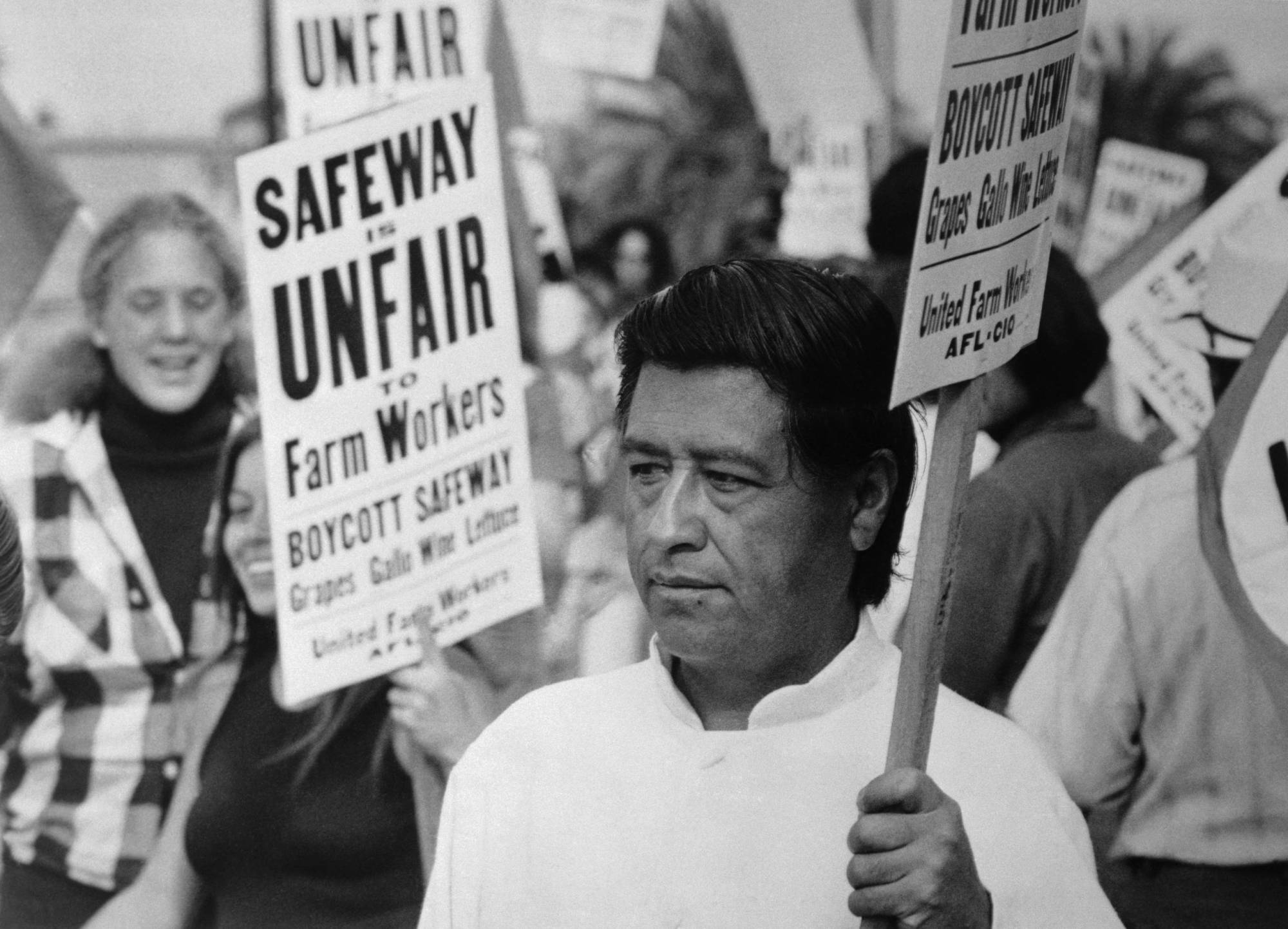
Ericka Cruz Guevarra [00:00:00] I’m Ericka Cruz-Guevarra and welcome to The Bay, local news to keep you rooted. Back when I was a student at San Francisco State, I used to walk by the Cesar Chavez Student Center almost every day. There’s also this mural above the entrance of the building of him carrying a torch. Chavez died in 1993, but he’s memorialized and honored on dozens of buildings, streets, murals, and even schools that celebrate his work as the co-founder of the United Farm Workers, which fought and won historic labor protections for farm workers. Growing up here, we learned that Cesar Chavez’s story is a California story, that it’s our history. Now California is reckoning with the more painful parts of Chavez’ legacy, after the New York Times published an investigation into allegations that Chavez sexually abused women and girls. Citing dozens of interviews, union records, emails, and photographs. Two women now in their 60s, Ana Murguia and Debra Rojas, say Chavez groomed and sexually abused them when they were children. Chavez’ prominent ally, Dolores Huerta, also says Chavez sexually assaulted her twice, but was discouraged from speaking out for years. Because of the stain it could leave on his legacy and the broader farm worker movement. Now Californians around the state say, it’s time to learn from this.
Luz Gallegos [00:01:49] Silence has never protected our farm worker communities. And we know that no movement for justice can ask people to stay silent about abuse, not then and not now.
Ericka Cruz Guevarra [00:02:02] Today we hear from organizers and farm workers about how the allegations against Cesar Chavez have rocked California.
Jessica Paz-Cedillos [00:02:20] Good afternoon. My name is Jessica Paz-Cedillos. I am the CEO here at the Mexican Heritage Plaza. I wish we were gathering under different circumstances, but we’re not, and this is a heavy moment. First and foremost, we stand with survivors. We believe you. This moment forces us to hold two truths at once. The farm workers movement transformed lives. And at the same time, we are confronting firsthand accounts of harm that cannot be ignored or minimized. For us here in East San Jose, this is personal. This is Cesar Chavez’s neighborhood. That proximity makes this moment more painful, but also more important. Because we don’t have the luxury of distancing ourselves from it. We have to face it. Movements for justice are not immune from harm. And survivors should never have to choose between telling the truth and protecting a movement.
Joseph Geha [00:03:51] So Maritza, will you just say your first, last name, titles, and so we can hear how you sound.
Maritza Maldonado [00:03:56] Maritza Maldonado, founder and executive director of Amigos Guadalupe Center for Justice and Empowerment. So this hits very personal to me as a child who was raised in East San Jose, a proud, proud East Sider. Cesar Chavez was our hero. It’s who we looked up to. And so to read what we heard this week has been beyond devastating. Every book that I read about Cesar and a historian of the movement has been really hard. The women as a woman of color and the campesinas that endured, our hearts are with them and we stand firmly with them in solidarity and know that this movement will continue by the people here, that it was never about one man.
Joseph Geha [00:04:53] And Amigos de Guadalupe purchased Cesar Chavez’s, was his, the home he lived in for a portion of his youth. Am I correct? Not too far from here, right? Tell us about that home. Tell us why your organization bought that home and tell us what comes next with that.
Maritza Maldonado [00:05:08] So obviously, it’s to lift up the Chavez legacy, right? It was important for me, for Amigos, to have that be part of the legacy of the San Jose. That said, that house will remain the people’s house. We are deciding what we’re going to name it, but it will remain a place for community organizers, a place for healing, a place for, a place of love. We are in deep, deep grief. Trust has been broken. But what I do know is “Si Se Puede” lives here every single day. The motto that Dolores Huerta said, “Si Se Puede.”
Maria Garcia Hernandez [00:06:14] My name is Maria García Hernández.
English Voiceover [00:06:21] I have been working in the fields for more than 30 years. I have worked on the entire grape harvest, from the clearing, the weeding, and the pruning of the grapevines.
Maria Garcia Hernandez [00:06:30] Yo estoy todavía de no creerlo porque…
English Voiceover [00:06:35] I still don’t believe it because such a courageous person who fought for all of us, for everything we have, because if this person hadn’t fought, if Cesar Chavez hadn’t fight to give us so much protection, to give a shade, water, clean bathrooms, better working conditions, better salaries, a person so dedicated to people, so humane, it’s hard to believe what’s going on.
Maria Garcia Hernandez [00:07:00] Es dificil creer…
English Voiceover [00:07:09] I also know Mrs. Dolores Huerta. My respects to her as well. I highly value her because we have had the opportunity to accompany her at events that she has also done to support us, so I am also super grateful to her too.
Maria Garcia Hernandez [00:07:22] Es demasiado…
English Voiceover [00:07:31] This is too much. If it’s true what happened, why wasn’t it talked about long ago? Why now? Mr. Cesar Chavez, may he rest in peace, has been dead already for many years. I think this should have been brought up a long time ago.
Maria Garcia Hernandez [00:07:45] Antes de este tema…
English Voiceover [00:07:53] I feel very sorry for them, truly, I was not there at the time, but if I was, if I had known, we could have done something, right?
Rolando Hernandez [00:08:16] Rolando Hernández,Yo creo que mucho de las veces…
English Voiceover [00:08:26] People keep quiet to protect the reputation of a leader. But I really think it’s something that you have to talk about. Because because otherwise, the root of the problem will always be there.
English Voiceover [00:08:44] We continue to fight so workers have better salaries. Because I truly believe that farm workers are still not valued enough for their work. They are still paid very unfairly. Maybe you get sick with something like diabetes, you’re dealing with all the stress of not getting paid enough, where you can’t even pay rent, the electricity bill, gas or even food. The cost of living keeps going up, but what workers are getting paid?
English Voiceover [00:09:28] I am worried about how much we’ve gained. The innocent should not pay for what the sinners have done. In other words, those of us who are still alive and fighting should not have to pay for what that person did.