Here are the morning’s top stories on Monday, March 9, 2026
- Over the past year, we’ve watched the Trump administration’s immigration crackdown unfold violently in places like Minneapolis and Chicago. But even in Northern California, immigration arrests have more than doubled. And one of them, early last year, left a Silicon Valley carpenter gravely disabled. His family – like thousands of others – is now coping with trauma, upheaval and financial strain.
- California’s state superintendent of schools is joining calls for the return of a 6-year-old deaf student from the Bay Area, who was deported to Colombia last week without his hearing aids.
- Longtime San Diego Republican Congressman Darrel Issa says he will not seek re-election.
A year after ICE detained South Bay immigrant, family trauma lingers
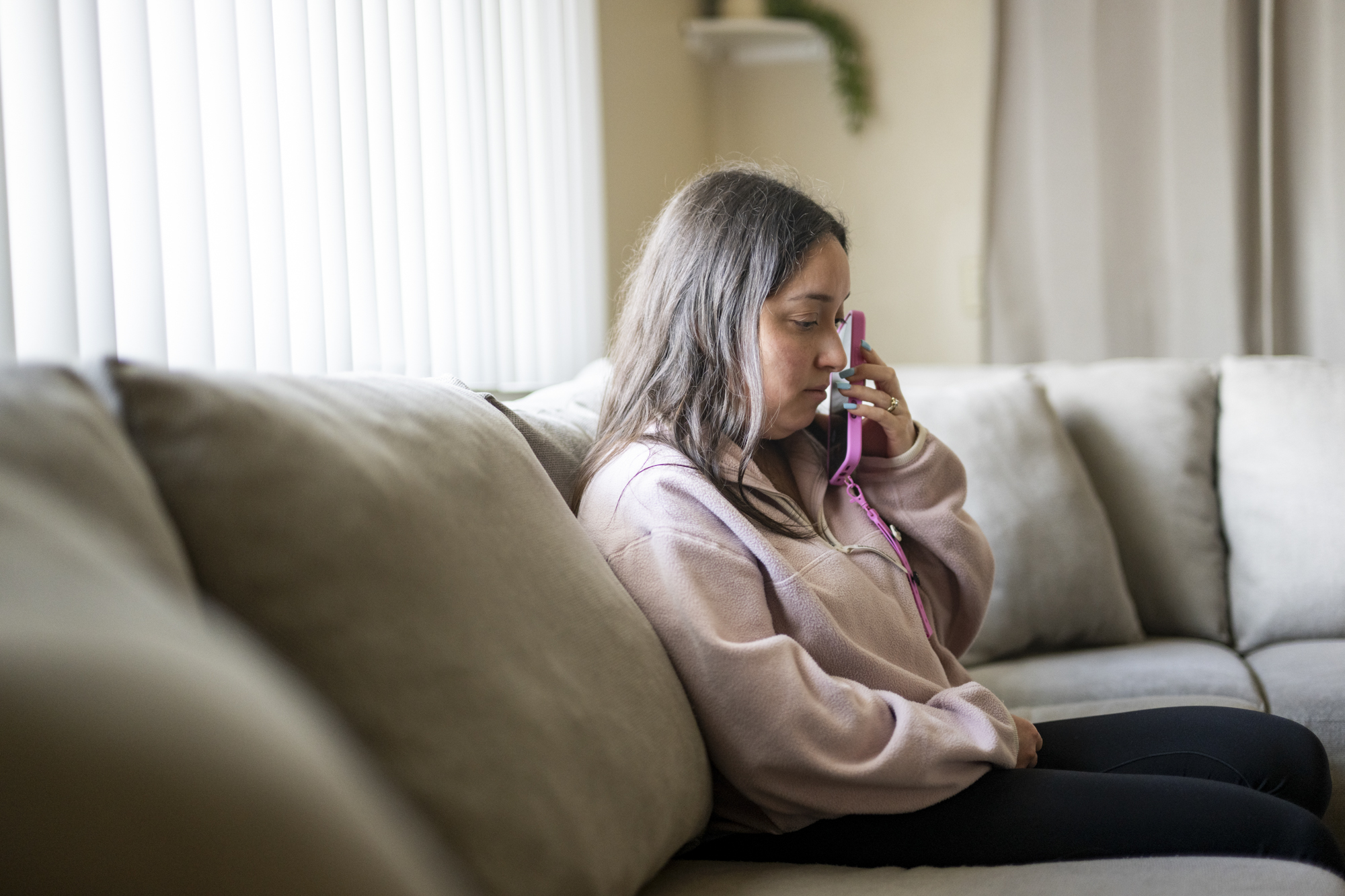
Sitting on the sofa in her Sunnyvale apartment, Aby Peña blew a kiss into her pink cellphone as she said goodbye to her husband, Ulises Peña López, 2,000 miles away in Uruapan, Mexico. It wasn’t their first call of the day, and it wouldn’t be their last. They’ve talked often since Ulises, 31, was deported in October. It’s been a year since the couple woke up together in this apartment and began what they thought would be a mundane morning of family errands. Ulises, a carpenter, went downstairs to warm up the car, while Aby got their then-3-year-old daughter Emily ready.
An hour later, Ulises would be in the emergency room at El Camino Health in Mountain View, barely conscious, with U.S. Immigration and Customs Enforcement officers stationed near his bed. His lawyers would later tell a court that ICE agents had beaten Ulises so severely he suffered a heart attack and a stroke, allegations the agency has denied. Meanwhile, Aby would be on the phone with the local Rapid Response Network, frantically trying to locate her husband while soothing her wailing daughter, who had watched from the window as the agents forced her father from the car at gunpoint, wrestled him into handcuffs and drove away.
What happened that February day, in the early weeks of President Donald Trump’s second term, prefigured the often-violent immigration arrests that have unfolded across the country over the past year. And the lasting trauma, upheaval and financial strain for this one Bay Area family is an early example of how Trump’s campaign of mass deportation has upended life for countless American children and families in the months that followed. Nearly 400,000 people were arrested by ICE last year, more than four times the number in 2024. Public attention has focused on the crackdown in cities like Los Angeles and Minneapolis, where federal agents have killed at least two people and observers have documented their use of aggressive tactics. But even in Northern California, where a planned Border Patrol surge was called off at the last minute last fall, immigration arrests have more than doubled. Ulises’ detention was just one of them. “Today, the right side of my body is paralyzed. I’ve lost vision and hearing and sensation,” Ulises said by phone from Mexico. “Before that day, I was a normal person working in construction.”
With the help of pro bono lawyers, Ulises has appealed his deportation and the family has filed personal injury claims against ICE. KQED reviewed legal filings in those cases, as well as government documents, and interviewed Ulises, Aby, their lawyers and outside experts about what the last year has been like for the family and how it illustrates what is now unfolding for tens of thousands of other families across the country. Under previous administrations, ICE sometimes violated the civil rights of immigrants — and its own policies — said Elena Hodges, an immigration attorney with Pangea Legal Services who’s part of the team representing Ulises. But now the intensity is escalating, she said. “This level of violence is becoming more common and is increasingly embraced as just the routine course of operations,” she said. “High-profile harms to people, where they end up in the hospital, their car window is smashed … that tracks with a new level of political acceptance and encouragement that we’re seeing from the Trump administration.”