Clara-Sophia Daly [00:01:56] It’s a very complicated process and it can depend. Generally, an asylum seeker will cross the border and they have a reasonable fear interview before they go to immigration court and then present themselves to the U.S. Government seeking asylum and then essentially it is up to them to prove to the United States government that they have high level of fear and that they are unsafe to return to their home country. A lot of asylum seekers have been in the process to try and legalize their status for a huge number of years. There are a lot of the asylum seekers from Colombia, a lot asylum seekers from Honduras, Mexico, Venezuela, Haiti. It’s interesting because with immigration law, there is obviously some subjectivity in regards to how a judge understands the law and how he or she implements it. San Francisco traditionally has been one of the immigration courts across the country that has the highest approval rates for asylum seekers. I think for a lot of immigrants that was a great thing, but also with that came a spotlight on that court and sort of the understanding that maybe these judges are not enforcing the law as they should from the perspective of some people and they’re being too lenient.
Ericka Cruz Guevarra [00:03:35] Some people, like the Trump administration. So I mean, it sounds like these two immigration courts in San Francisco played a pretty huge role, especially when it came to immigrants coming here to the Bay Area. But it’s also increasingly being gutted since the Trump Administration began its second term. What has changed at these courts, exactly?
Clara-Sophia Daly [00:03:59] A lot of the courtrooms are just empty. A huge number of judges have been fired, and they’re planning to close down one of the immigration courts downtown, the Montgomery Street Court, by the end of this year. Asylum seekers are confused. Attorneys are struggling to keep up with all these rulings and understand which immigration court takes precedent, who to listen to. Judges are confused, they’re getting fired, they are getting locked out of their emails.
Ericka Cruz Guevarra [00:04:29] Oh, wow.
Clara-Sophia Daly [00:04:30] It’s, it’s a mess. And it’s, I think, from a lot of the immigration advocates that I’ve spoken to, an intentional confusion and disruption of the system and kind of a way, again, to try and encourage immigrants living in the United States to go back to their home countries, which the federal government has made very clear is their goal.
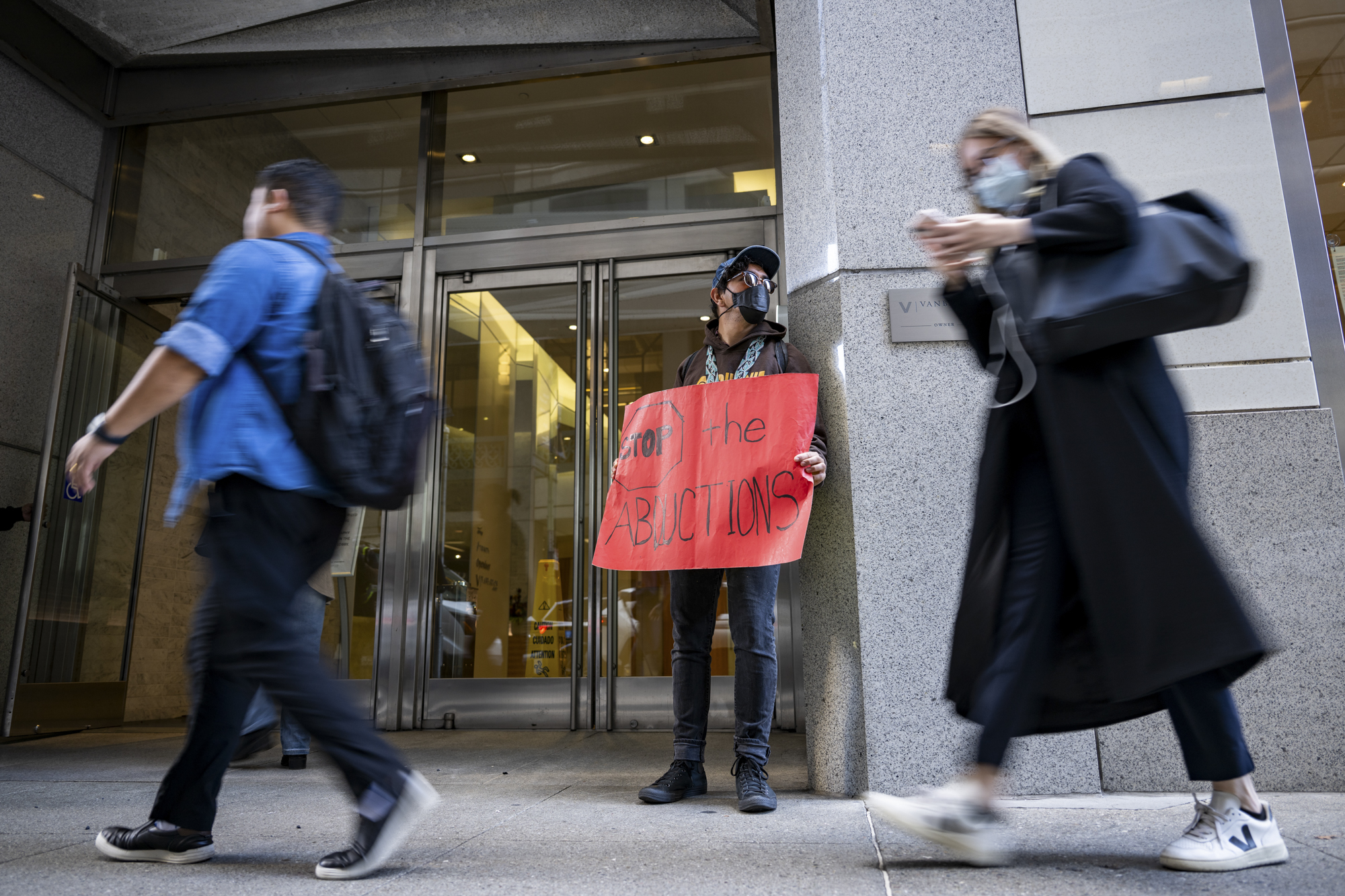
Ericka Cruz Guevarra [00:05:05] I know you spent a whole day and some time at one of these immigration court buildings in San Francisco. And I’m so curious what you saw, like what is the impact of this gutting of the courts having on the day-to-day operations when you even like go to these courts?
Clara-Sophia Daly [00:05:23] The majority of asylum seekers are not getting what’s known as an individual hearing, where they are presenting the evidence for their case and asking the judge for asylum. I was present in the courtroom while the Department of Homeland Security was doing these, they call them pre-termination. What happens at those hearings is the Department of Homeland security basically is saying, this asylum seeker should go to a third country, with which the United States has an agreement. And that they should essentially hear their asylum case in that third country instead of in the United States.
Ericka Cruz Guevarra [00:06:00] And these third countries they’re being sent to, they’re not even necessarily like countries that these folks have any connection.
Clara-Sophia Daly [00:06:07] Correct. So that includes Guatemala, Honduras, El Salvador. There’s even Uganda, Rwanda, South Sudan, a huge number of countries that are on this list. And what’s also complicated and nuanced and interesting here is that we haven’t seen very many people actually go through the process and get sent to these third countries. And this whole process is also being questioned by courts. But the Department of Homeland Security is really just kind of using this to rapidly close out cases and convince asylum seekers to take a voluntary departure or give up on their case. The time period in which asylum seekers have to appeal this pre-termination has just been changed from 30 days to 10 days. So again, just so many small steps forward that the federal government is using to limit immigrants’ ability to legalize their status.
Ericka Cruz Guevarra [00:07:18] I’m curious what you heard from just people out there waiting for their turn to get asylum in the United States. I mean, any conversations that really stood out to you or people who stood out?
Clara-Sophia Daly [00:07:33] There was one guy who I remember was standing in line and he was shaking and I’m looking around. It’s not that cold out. He was shaking. He was so scared. And the reason a lot of these people waiting for their ICE check-ins were so fearful was that just a couple months ago, a huge number of people in the San Francisco court who went to their ICE Check-ins, were arrested. There was also another immigrant asylum seeker in the courtroom whose case was pre-terminated and he was offered these other countries to like quote unquote go half his case, or half his cases sent to. And he, I remember asked the judge, he said, well can I have some more time because I can’t find an immigration attorney. It’s so expensive to get an immigration attorney and the judge basically said, you know. You’ve had time, sorry. Like, I’m not gonna give you an extension there.
Ericka Cruz Guevarra [00:08:38] I mean, you mentioned earlier that at least one of these courthouses is slated to close. I mean yeah, what is the timeline on that and what can happen from here when it comes to immigration court in the Bay Area?
Clara-Sophia Daly [00:08:53] By mid-March, there will be just two judges left in person at the immigration courts downtown. And it’s still unclear exactly what’s going to happen. There has been some conversations about military judges coming in to replace some of these immigration judges, but I don’t have any updates on that from my sources. You know, maybe they will hire new judges. There’s been conversations of some judges moving to the conquered immigration court. So everything is still constantly changing day by day, week by week. It just means that San Francisco will no longer be this place where immigrants have the opportunity to stand before a judge and make their case.
Ericka Cruz Guevarra [00:09:44] You know, I’ve been thinking, Clara-Sophia, about how there’s been just so much talk about illegal immigration, but seeking asylum and immigrant coming to the Bay Area to seek asylum, coming into these courthouses, has always been a legal pathway to staying here. And this just seems like one less sort of legal pathway that’s also being taken away. For folks, for immigrants who are trying to come here legally.