Episode Transcript
This is a computer-generated transcript. While our team has reviewed it, there may be errors.
Morgan Sung, Host: Yesterday was the first day of the lunar new year. I grew up celebrating it as Chinese New Year, and this year is kind of funny. I don’t know if you’ve heard, but being Chinese is like, really in right now.
[Audio clip from the TikTok account @kaynicole.m]
Ok, I’ve been Chinese for about 90 minutes now, and so far these are the things that I’ve learned.
[Audio clip from Youtube user @WillNeff]
We’ve been Chinamaxxing all day, feeling like a shu shu, you know what I mean?
[Audio clip from the TikTok account @seanghedi]
Send this video to a friend that you met during a very Chinese time in your life
[Audio clip from the TikTok account @nurseblake/video]
To all the Chinese baddies who told us all to drink a cup of hot water in the morning, thank you!
Morgan Sung: “You’ve met me at a very Chinese time in my life.” Speaking from a Chinese American perspective, this trend is pretty loaded. Being Chinese, for a Chinese person, isn’t something you can really opt in and out of.
We’re going to unpack these memes today, but first, let’s talk about when this obsession with China started. It goes back to just over a year ago, when TikTok went down in the United States. And we actually covered this in our very first episode of Close All Tabs. Some of you might remember when Americans fled to RedNote and called themselves TikTok refugees?
[Audio clip from the Close All Tabs episode “TikTok’s Vibe Shift”]
Dajia hao, Hi everybody! My name is Jeffrey, I’m a TikTok refugee. I’ve been practicing my Mandarin for a year now…
Morgan Sung: RedNote is also known by its Chinese name, Xiǎohóngshū. In January last year, the Supreme Court decided to uphold the law banning TikTok, unless its Chinese parent company ByteDance sold its U.S. assets and operations to an American company. So this mass migration of users from TikTok to another Chinese-owned app was like a collective middle finger to the U.S. government.
[Audio clip from the TikTok account@bsant102]
Ni hao, fine shyt
Morgan Sung: TikTok’s 14-hour shutdown actually led to some very sweet cultural exchange.
Yi-Ling Liu, Guest: It was delightful in a very earnest way, because this was the first time that I was seeing Chinese internet users. And, uh, American internet users actually engage with each other in this very direct way.
Morgan Sung: Yi-Ling Liu is a writer and journalist covering technology and censorship in China. She’s also the author of a new book: The Wall Dancers: Searching for Freedom and Connection on the Chinese Internet. Her book opens with this moment when TikTok went down and Americans went to RedNote.
Yi-Ling Liu: and they were like, genuinely curious about each other’s lives. Right? American users were volunteering English tutoring and Chinese users were like, demanding that they get paid a cat tax in return, which is like, essentially like, send me a cute photo of your, your cat. Um, and they were like flirting and like sharing jokes, So I, I just found it a to be a very beautiful moment of exchange
Morgan Sung: TikTok came back online in the United States the next morning, and returned with an ominous message crediting President Trump with “saving” the app.
A lot of users noticed a kind vibe shift when TikTok returned — this sense that political content was being suppressed.
Last month, ByteDance finalized a deal to sell its U.S. operations of TikTok to a group of American investors which included some Trump allies. And now, users are noticing that their For You Pages seem different. Content about immigration protests, ICE raids, and anything critical of Trump seems to be censored. And many TikTok creators have raised concerns over the app’s new data collection policies.
This system of surveillance and censorship online is what Yi-Ling calls a “walled garden.” Chinese social media users have been living in one for decades.
Yi-Ling Liu: People kind of assume that, um, it’s this like, complete barren landscape because of censorship, when in reality it’s this garden that’s just flowering with fauna and plants that are unique to its own cultural system and its own ecosystem.
On the flip side, people just assume that the American internet is this like, free and vast frontier, like, this open space where anyone can do whatever what they want. But increasingly we’re realizing it is also a walled garden in itself.
Morgan Sung: Today, we’re talking about how China’s walled garden was built, and we’ll dive into the story of one particular bloom inside those walls. Also, we’re talking about what Americans can learn from Chinese netizens especially now.
This is Close All Tabs, I’m Morgan Sung, tech journalist and your chronically online friend, here to open as many browser tabs as it takes to help you understand how the digital world affects our real lives. Let’s get into it.
Ok, let’s open a new tab: What is China’s great firewall?
Morgan Sung: Yi-Ling was born in 1995, two years before the British handover of Hong Kong back to China. And growing up in Hong Kong at that time, she had a very different understanding of censorship than someone growing up in mainland China.
Yi-Ling Liu: And Hong Kong in many ways is this faultline between two systems, both politically, culturally, but also online. And so, you know, moving back and forth between Hong Kong and the mainland and the U.S. where I ended up going to college, allowed me to straddle between these different divides and experience the internet ecosystems, both in mainland China and outside mainland China. And that has really shaped my worldview, being able to kind of be both an insider and outsider,
Morgan Sung: Yi-Ling didn’t understand the reality of China’s censorship until she was 15. She was interning at a state media newspaper in Beijing, and had written an article about Hong Kong’s literary magazine scene. One of the subjects of her article had mentioned the Tiananmen Square protests.
Yi-Ling Liu: And when I brought this to my editor, she was like, oh, this absolutely cannot be included in your article.
Morgan Sung: It’s not like her internship orientation included a list of explicitly forbidden topics. And growing up in Hong Kong, this had never been an issue for Yi-Ling. But those who grew up on the mainland had developed this sense for what was and wasn’t permitted to publish.
Yi-Ling Liu: One of the things that makes this censorship in China so tricky to live under, is that it’s very vague and vagueness is very powerful because it means that there’s no guidebook. And so it’s almost like following a kind of intuitive gut instinct, of, oh, maybe I shouldn’t go there. Most people will censor themselves before they’re even censored. I think this was the first time that I felt the hand of the censor and that really galvanized me and sparked a question, which is what does it mean to actually write truthfully and with integrity from within the bounds of the firewall?
Morgan Sung: Ok, let’s talk about this firewall. China got its first internet service provider in 1995.
Yi-Ling Liu: It was really exciting. Like, it was chaotic. It was overwhelming. It was, one of my friends described as, steamy, you know. Like it, it was this sense of wow, the entire world is opening up before me. Like, I can access things that I never could have accessed before. And you know, we see this in, in the lives of the subjects that I write about. So there’s this like overwhelming rush of information, I would say, just an incredible, incredible moment to be part of.
Morgan Sung: But this rush of information also had the potential to destabilize the authority of the Chinese Communist Party. The Party controls all aspects of the government, and political opposition is not allowed. At the time, the state maintained a tight grip on all media in the country — newspapers, TV shows, radio and then, state officials cracked down on the internet.
Yi-Ling Liu: So, you know, the Golden Shield project was created in 1997, and in some sense, the Chinese government was confronted with a dilemma. Right? The internet in their minds was this double edge sword. On one hand, it was gonna let in all this information that was gonna be a source of huge innovation. On the other hand, it was gonna be a huge source of instability.
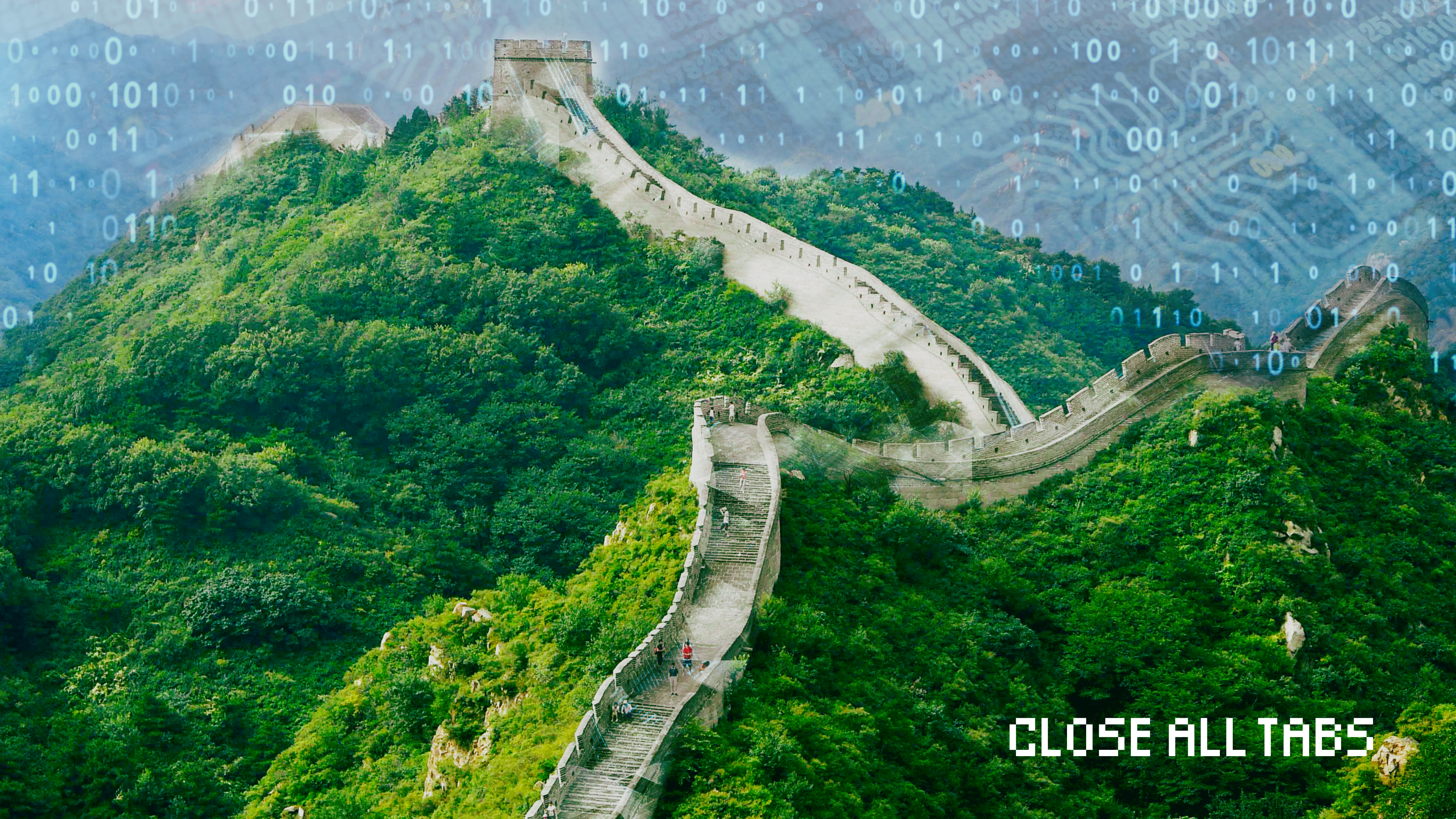
Morgan Sung: The Golden Shield Project took two approaches to censorship. First, it blocked forbidden websites and certain IP addresses from outside the country. It also included a complex system of surveillance to flag and track anyone who posted politically sensitive content. In 1997, Wired magazine dubbed the censorship system, “The Great Firewall of China” — a play on the nearly 3,000 year old Great Wall of China. And over the last 30 years, the censorship system has become even more robust as technology advances.
Yi-Ling Liu: I think it’s effective for its purposes. Right? The point of it was to prevent, um, I would say at core collective action. And so if we were to follow that logic, it doesn’t really need to get rid of all information it doesn’t like. Like, if some information that’s even critical of government officials come in that’s okay. I think the thing that they’re really worried about is people gathering and mobilizing and in that sense it has been very successful, um, at stopping that from happening.
So if success is measured in that way, yes. But if success is measured in terms of stifling vibrant, creative expression, um, turning China into kind of a barren landscape where everyone believes what the government believes, then no, I still think there’s like huge amounts of vibrant discourse, um, and creative expression even taking place within the bounds of the firewall.
Morgan Sung: Yi-Ling refers to them as “the wall dancers” — the people who push the boundaries of creative expression even in this system of censorship. It comes from the phrase “dancing in shackles,” which Chinese journalists used in the early 2000s to describe what it’s like to report under state constraints. It’s not just journalists in this position, though. Musicians, writers, artists, entrepreneurs even have all pushed the limits of state censorship.
Yi-Ling Liu: To live in Chinese society is this vacillation between freedom and control. It is very contradictory. It’s very dynamic, this push and pull between state and society. And so I found myself really gravitating towards people, individuals who were very adept at navigating this terrain.
Morgan Sung: We’re going to go deep into the story of one of these dancers: Ma Baoli. He created one of the most popular gay dating apps not just in China, but in the world. And it all started with a blog in the 90s, when being gay was still a crime.
That’s a new tab … but first, a quick break.
Morgan Sung: We’re back! Let’s get into the story of one particular wall dancer. His story will show us how people can learn to work the system — to survive and thrive under repression. And for that? We’re opening a new tab: Ma Baoli, and the rise and fall of China’s gay dating app. We’re going back to the 90s. This story starts with a teenager. Here’s Yi-Ling Liu again.
Yi-Ling Liu: His name is Ma Baoli and he grew up in Qinhuangdao, which is a small town up in northern China by the sea. And he attended a police academy as a young student before joining the police bureau. He kind of started having crushes on boys. From his school textbooks, he realized that he was “homosexual” and, according to his textbook, this was a crime and an illness. So he kept his secret to himself, hoping that one day he would be cured.
Morgan Sung: Historically, Chinese culture didn’t condemn homosexuality. They weren’t celebrating being gay, but they also weren’t persecuting people for same-sex relationships. There are references to queer life throughout Chinese literature. One of the most famous ones, of the Emperor and his cut sleeve, is nearly 2,000 years old.
Yi-Ling Liu: Really kind of strong, explicit repression only took place in the modern era after the 1900s through a combination of both, you know, Western influence as well as, the communist revolution, in the mid 1950s. Being gay was included under this broad umbrella of hooliganism, um, and considered a crime, uh, up until 1997. So it was only decriminalized in 1997, and it was only declassified as a mental illness until 2001.
Morgan Sung: So Up until the mid 90’s, when Ma Baoli was growing up, gay men and women were arrested, forced into conversion therapy, and even sent to labor camps.
Eventually, Ma became a police officer. In 1998, a new internet cafe opened in his town, right next to the police bureau. He wandered in, and by chance, stumbled across a story posted by an anonymous writer. It was a romance, about two young men who fall in love and start an affair.
Yi-Ling Liu: And it was this hugely cathartic experience for him because he realized like, oh my gosh, I’m not alone; In this world there are other people who love like me. And it just opens up this portal into a whole array of other websites where he connects and, you know, reads about the experiences of gay men.
Morgan Sung: The internet was life changing for him. A few years later, he taught himself how to code and built his own website. He named it Dànlán, or Light Blue, after the sea in his hometown.
Yi-Ling Liu: It was a very kind of like bare bones, HTML, lots of ads, kind of blurry photos and at some point there was also like a chat function where people could message each other across, uh, different provinces and cities. I don’t know what their exact user base looked like, I would say maybe in the thousands at first, but it grew pretty quickly. Within like, five years, Ma had recruited five other young men who he found through the website to join the team.
Morgan Sung: By the early 2000s, same-sex relationships were decriminalized, but depictions of homosexuality were still prohibited. The site was repeatedly shut down for “violating public morality.”
Yi-Ling Liu: And when they got shut down, they would have to, uh, get a new server, literally like buy a new server, shuttle a new server to a different location, which is something that’s very hard for us to like wrap our head around now, like literally moving a physical server. I had to like, get them to explain this to me many times. But say your server gets shut down in Qinhuangdao, you then like, apply for a server in Shanghai and you go and move that server to Shanghai and like, reapply for one there. You know, there’s this whole process of kind of like dodging different local and competing internet service providers and internet, um, bureau officials to try to, uh, what Ma called, you know, engage in guerilla warfare in some ways to keep the site alive.
So those early days were really hard, but after 2008, is a big turning point for China, most crucially because of the Beijing Summer Olympics.They wanted the world to see it step onto the global stage as this modern, um, cosmopolitan country, this modern nation. And a lot of people at the time actually referred to this moment as China’s coming out party. which is funny because China’s coming out party just also happened to coincide with Ma Baoli decision to come out, or at least to, to come out to Beijing. And so I think this was a moment of liberalization for China, and this also translated into a moment of liberalization for China’s queer community.
Morgan Sung: That summer, ahead of the Olympics, the newspaper People’s Daily published an article on Beijing’s burgeoning gay scene, and featured the hottest gay club in the city. People’s Daily was the biggest newspaper in China, and the official newspaper of the Chinese Communist Party. This was essentially the government’s mouthpiece, extolling Beijing’s queer community. And to top it off, the article even mentioned Ma’s website really positively.
Yi-Ling Liu: And he was thrilled. He was really delighted and he thought, well, this is the time A, to move to Beijing, kind of like moving from a small town and to see what, uh, queer life is like there, to build up his team, to hire more and to see if he can kind of gain legitimacy, uh, in the eyes of authority. And his way of doing this was through orchestrating collaborations with the government.
Morgan Sung: Ma’s gay friends were very concerned about safe sex and had reached out to him with questions about HIV. This was 2010 — sex education wasn’t mandatory yet, and many of Ma’s gay friends didn’t know that condoms prevented more than just pregnancy.
The Chinese government was very concerned about transmission, but their efforts weren’t reaching gay people. Ma saw a way in. After all, he was the founder of China’s largest gay website.
Yi-Ling Liu: And so he literally just like, picked up the phone and called someone at the Center for Disease Control and was like, can you support me? And they agreed and that collaboration changed everything.
Morgan Sung: It started with an HIV testing site on the first floor of a Beijing gay club. China’s CDC gave him a small grant to run HIV screenings and distribute educational resources. That led to Danlan’s national partnership with the Ministry of Health. They opened testing centers across the country. Ma’s website became the go-to source for HIV education.
And then in 2012, he was invited to a health conference with several high-ranking government officials.
Yi-Ling Liu: Including the premier at the time, Li Keqiang. And when he was invited to this conference, he shook the premier’s hand, which was captured in a photograph. And this was a huge turning point for him. It’s definitely not a fair equivalent, but if like, RuPaul shook hands with Ronald Reagan. I think that’s definitely not a fair equivalent, but, you know, that was what it was what it looked like.
Morgan Sung: Ma had been estranged from his parents since coming out, but that photograph convinced his mother that her son’s work wasn’t shameful at all.
Yi-Ling Liu: That photograph is still in the office. That photograph is given to investors because it essentially was proof to anyone who sees this photo, like, I am legitimate, my company is legitimate, my cause is legitimate from one of the most powerful men in the party.
Morgan Sung:This stamp of approval was invaluable as Ma’s business grew.
As a website Danlan had been very successful, but the world was moving toward apps. This American gay dating app called Jack’d was sweeping China’s queer scene. Like Grindr, Jack’d was location-based. Users in China called it the “Hookup King.”
Ma jumped at the opportunity to make a Chinese version. And that handshake with the premier? It turned out to be really helpful for attracting investors to fund the app.
So, he and a team of Danlan’s software engineers launched “Blued.”
Yi-Ling Liu: It was essentially like a straight up copy of Jack’d. Um, and this was how a lot of Chinese apps were formed, you know, in the early 2010s. People like copycat apps essentially.
Morgan Sung: Blued was a hit. It was so successful that Ma even considered buying Grindr, the preeminent queer hookup app. Blued expanded to other countries, and kept adding more features. It eventually became a whole queer social network, with a newsfeed, a livestreaming function, resources for HIV testing and education, Snapchat-like disappearing photo messaging, and chatrooms. At one point, Blued even ran a service to match aspiring gay fathers with potential surrogates.
At the same time, other Chinese tech companies were trying to market specifically to gay people – trying to get in on what’s called the “pink economy.” Queer acceptance was growing – and it was profitable.
But under the surface, the reality of gay rights was very different. Gay marriage wasn’t legal, and neither was adoption by same-sex couples. There were no openly gay government figures, and there was no protection against discrimination in the workplace. And attempts to establish institutional rights for gay people were heavily suppressed.
Yi-Ling Liu: I would say at its peak, you know, we were seeing a lot of gay content online. There was a really popular gay television show, as you were saying, all these companies were jumping on, uh, the pink economy bandwagon. The reality was, and I think this was what drove a lot of Ma Baoli’s logic when he was thinking about Blued, was that he was going to “build community without activism.”
That he was going to, uh, create greater visibility for gay people in China, but specifically through the marketplace, like specifically through business. And this meant not veering into politics, not veering into protest, not veering into civil society activism. And this really reflected what the state of gay rights was like in China at the time, which is you can be gay. You can live however you choose to live as a queer person, as long as you don’t organize, like, as long as you don’t try to create community that agitates for rights or that pushes for activism.
Morgan Sung: But around 2018, the tide had turned and this time, against China’s queer community.
Yi-Ling Liu: First I would say there was a much stronger crackdown on civil society. So a lot of LGBT groups were being shut down. A lot of, uh, LGBT activists were being told to stop doing their work or interrogated. Queer content was being scrubbed off the media. It was this clear shift towards a more patriarchal attitude towards gender and sexuality. And, um, there is like a promotion of like traditional marital norms, also part of an effort to get people to have more babies. So another part of it is like a fear of demographic decline, which was an issue in China.
Morgan Sung: So Blued was already facing increased scrutiny from the government, even as the company skirted actual political advocacy for gay people. In 2020, Blued went public on the New York Stock Exchange. This was a huge deal, for a gay company to be recognized as legitimate not just in China, but also in the global marketplace.
Unfortunately, this was the peak of the COVID pandemic, and U.S.-China relations were souring. This coincided with the Party’s larger crackdown on tech companies, too.
Yi-Ling Liu: Throughout the book I have mentioned these kind of waves of freedom and control or opening and tightening that’s actually taken place throughout the course of Chinese history. And I call this fang and shou. Fang being opening and shou being tightening. I think there was this sense that this like, freewheeling period of the mid 2000 and 2010’s where entrepreneurs were really emboldened to do whatever they want to, you know, start companies to raise funding to be innovative and bold was getting to kind of a fever pitch. So I think part of it was a sense of these tech moguls are getting out of hand. Like they need to remember, they need to fall in line and remember who the boss is.
Morgan Sung: Blued couldn’t turn a profit after going public — venture capital money wasn’t coming in like it used to, the stock price was plummeting, and the company struggled to monetize the app. So in 2022, Ma Baoli took the company private and delisted it from the New York Stock Exchange. To cover his losses, he sold a majority of Blued’s shares to another social media company, which asked him to resign as CEO. Then late last year, Blued was removed from the app store in China at the request of state regulators.
Yi-Ling Liu: It’s hard to say for sure exactly why it got taken down But I would say at the end of the day, it’s all linked to what I’ve been talking about. It’s all linked to this broader turn against, queer content and the shutting down and the silencing of queer voices in general in the public sphere.
Morgan Sung: Ma ended up moving back to his hometown by the sea, where it all started. For a while, he was depressed. But by the time Yi-Ling followed up with him for her book, he had already found a new purpose in his family, with his partner, their son, and Ma’s father all under the same roof for the first time. Despite the government’s mounting suppression of LGBTQ advocacy, Chinese society had changed — becoming more accepting of queer families than ever before.
What’s happening now with TikTok isn’t really a one to one equivalent of the censorship and surveillance in China. But this walled garden of the American internet is becoming increasingly restrictive. So what can we learn from Chinese netizens? And what does this have to do with the internet’s new obsession with China?
Let’s open one more tab: You’ve met me at a very Chinese time in my life.
This phrase became a meme late last year. It’s a twist on this line in the final scene of Fight Club.
[Audio clip from the film Fight Club]
You’ve met me at a very strange time in my life.
Morgan Sung: It blew up as this absurdist meme phrase online, kind of riding on the coattails of this other viral TikTok from a few years ago. It’s captioned, “When you get to heaven, but it’s Chinese.”
[Audio clip from TikTok user@papist_dalton]
No it’s fine, I just didn’t expect it to be Chinese.
Morgan Sung: So to become Chinese has kind of, become a joke online. Speaking as a Chinese-American, I think a lot of the surface-level jokes are just orientalism repackaged into a meme format. No, drinking hot water and wearing slippers in the house does not make you Chinese. But then there’s this deeper side to this trend, where people are genuinely becoming interested in Chinese food, Chinese herbalism, Chinese city infrastructure, Chinese tech, Chinese languages, Chinese internet culture and memes, and most of all, Chinese high speed rail. Welcome to Chinamaxxing.
Absolutely not.
Let’s go back to last year, to when American TikTok refugees fled to RedNote.
Yi-Ling Liu: There was just this like lovely irony to the whole situation, you know, for so many years the reverse was taking place like this desire to get out of the firewall and step into U.S. platforms and step into platforms outside of China. And now it was happening the other way around, like the American internet sphere had become, um, so boxed in and siloed that people we’re going into like literally the most, one of the more repressive internet spheres in the world to look for what they believe to be a, a freer, you know, a freer internet ecosystem. So the irony was hilarious.
Morgan Sung: Americans are treating Red Note as like a lifeboat outta the censorship that they were experiencing. What do you think about that?
Yi-Ling Liu: To me it’s just a sign that the American internet is paradoxically starting to look a lot more like the Chinese one. That, you know, I think for a long time Americans kind of took for granted that their internet would remain free and open and unsiloed, but in fact, it’s not. Like, in fact, like a lot of decisions and the way people engage on platforms are dictated by a handful of tech moguls in Silicon Valley.
You know, x, which used to be this like, uh, place that I think one journalist called it, like “throbbing networked intelligence,” where anyone who could say anything they want. This like, beautiful platform of democratic discourse is now like what some people call a hell site. Right? Where it’s just, at least when I open my x feed, it’s just like Andrew Tate YouTube videos, you know? And I didn’t even sign up for that.
And a lot of, we don’t know how its algorithms or being decided, it could very well be, you know, shaped by the whims of Elon Musk, who also happens to be, even though he’s not a political leader, like one of the most powerful men in the world. So I think there’s this sense of Americans realizing that their internet actually kind of sucks. Um, and like the, the, the irony of it is they’re turning to an internet that also kind of sucks.
Morgan Sung: We eventually got TikTok back, um, even though who knows if it’ll stay in, you know, in the capacity that we have it in but that cultural exchange that we had that night did really plant a seed. And now everyone on the Western internet is obsessed with China. We’re all Chinamaxing. I mean, as part of the Chinese diaspora myself, I have very mixed feelings about this meme. But then again, why do you think that everyone is in such a “Chinese time” in their lives?
Yi-Ling Liu: So I’ve been thinking about this a lot and kind of can unpack it. I think it’s part of a broader vibe shift that started with the TikTok refugees moving to Red Note and part of the vibe shift that started when DeepSeek was released in January of last year where a lot of Americans were kind of shocked by the power and the vibrancy of Chinese technology and freaking out.
I think it started with maybe like the chattering class. So a lot of like policy wonks, um, and Silicon Valley tech bros. And a lot of these guys were making like two week trips to China. You have like everyone from like Tom Friedman for the New York Times, Sador, Kash Patel, Silicon Valley podcasters, flocking to China and being like, oh my gosh, like, there are dancing humanoids and like, oh my gosh, high speed rail is so fast here. Or like, I, I have a TV screen in my Huawei car. And I think to me what I wanna point out is, is this discourse does really not reveal anything about China. Um, and it reveals a lot about America. Like it, when I speak to my friends in China, um, they don’t think their lives have really drastically changed over the past year, have become shinier or more incredible.
Like what has shifted is the American perspective. And it’s like, you know, Wired recently wrote a really great article, I think it was like Louise Matsakis and Zeyi Yang, um, where they said it, it isn’t really about China or or Chinese people. It’s a symbol of what Americans believe their country has lost.
So there’s this sense of like, it being really, I think a projection like it being China becoming this mirror onto which American fears and dreams and desires are being projected on. And I think the U.S. is suddenly obsessed with China’s ability to build bridges, you know, and on TikTok you’re seeing all this kind of infrastructure porn, because they’re increasingly aware of their own dysfunction and America’s own ability, inability to build and the erosion of its political system.
Yi-Ling Liu: And suddenly China becomes just like more appealing as a result of that. Americans are looking at this like alien empire in some ways and realizing like, oh actually they’re kind of like us. Like we’re the same in many ways except their OS is at least functioning. Like at least they have functioning infrastructure, you know?
Morgan Sung: At least they have high speed rail.
Yi-Ling Liu: Exactly. Exactly.
Morgan Sung: The U.S. has several pieces of legislation in the works that do restrict speech online from age verification laws, potential repeal of section 230, de-platforming adult content, but framing it as child safety, uh, vetting social media profiles before letting people into the country. And I’ve seen a lot of people being like, oh, this is just like China. This is what China does. They’re really trying to make comparisons to Chinese state censorship. Are those comparisons misguided? Like what similarities are there here?
Yi-Ling Liu: The U.S. state is using a lot of tactics of control and surveillance and censorship that are starting to look very similar to what I see in China. I think for example, like a border control and going through, um, phones and social media accounts before allowing people to enter the country. That’s something that has taken place in China pretty frequently. And the fact that it’s taking place in the U.S. now is actually quite eerie and they are quite similar.
I think that another similarity that I find quite startling is how big tech and the government are now working actually quite closely together to centralize power into their own hands. Like, that used to be something that I associated more with China, the fact that big tech companies would like, kowtow essentially to the party and do its bidding. When Trump was inaugurated last year, it was shocking to me to see, you know, the leaders of Meta and Apple and OpenAI essentially do the same thing and start speaking in the rhetoric of the administration.
So for all its differences, I do think that both of the internets or and both of those societies are becoming increasingly illiberal and increasingly putting the hands of technological control in the hands of a small elite.
Morgan Sung: Despite the amount of surveillance and censorship that Chinese netizens have existed under online, Chinese internet culture is still fun. It’s still vibrant. There’s still so much happening and still ways that people do try to get around these, these firewalls. Given the state of, of the U.S. right now, what can American internet users learn from Chinese netizens?
Yi-Ling Liu: I think maybe U.S. netizens already know this, don’t assume that your internet is freewheeling and not subject to censorship. Like always assume to a certain extent that the information you’re getting may be filtered in some shape or form and it might not be through the government, but it may be through specific digital and algorithmic ecosystems that you’re already living in. That’s something that I think American internet users are starting to become more aware of in the way that it’s always been the sixth sense in China.
The other thing that I would say is like, try to understand what other internet ecosystems look like outside of your own bubble. Because this also allows people to like, communicate and build solidarity across, um, different ecosystems and different platforms. And then lastly, it’s just like, be creative, and this is actually something that I do think American netizens have already, but like memes, viral slang, pushing it back against authority through jokes. Like, it’s both fun and extremely powerful. Like people really love a good joke and it brings people together and it creates solidarity and it creates like, a rallying cry around causes that you care about and I think Chinese people have always, um, turned to this during moments that they can’t come together because of various restraints.
Morgan Sung: Those are all my questions.
Yi-Ling Liu: Thank you Morgan.
Morgan Sung: Yeah. Thank you for joining us.
Yi-Ling Liu: Of course.
Morgan Sung:To all my fellow Chinamaxxers: Happy New Year! Let’s close all these tabs.
Close All Tabs is a production of KQED Studios, and is reported and hosted by me, Morgan Sung.
This episode was produced by Gabriela Glick with support from our show’s producer, Maya Cueva. It was edited by Jen Chien, who is KQED’s director of podcasts.
Our team includes our editor Chris Hambrick and senior editor is Chris Egusa, who also composed our theme song and credits music. Additional music by APM. Brendan Willard is our audio engineer. Audience engagement support from Maha Sanad. and Ethan Toven-Lindsey is our Editor in Chief.
Some members of the KQED podcast team are represented by The Screen Actors Guild, American Federation of Television and Radio Artists. San Francisco Northern California Local.
This episode’s keyboard sounds were submitted by my dad, Casey Sung, and recorded on his white and blue Epomaker Aula F99 keyboard with Graywood v3 switches, and Cherry profile PBT keycaps.
Ok, and I know it’s podcast cliche, but if you like these deep dives, and want us to keep making more, it would really help us out if you could rate and review us on Spotify, Apple podcasts, or wherever you listen to the show. Don’t forget to drop a comment and tell your friends, too. Or even your enemies! Or… frenemies? And if you really like Close All Tabs and want to support public media, go to donate.KQED.org/podcasts.
Thanks for listening!