Sponsor MessageBecome a KQED sponsor
upper waypoint

LA Fire Victims Look To 1940's Project To Build Homes Quicker

Save ArticleSave Article
Failed to save article

Please try again

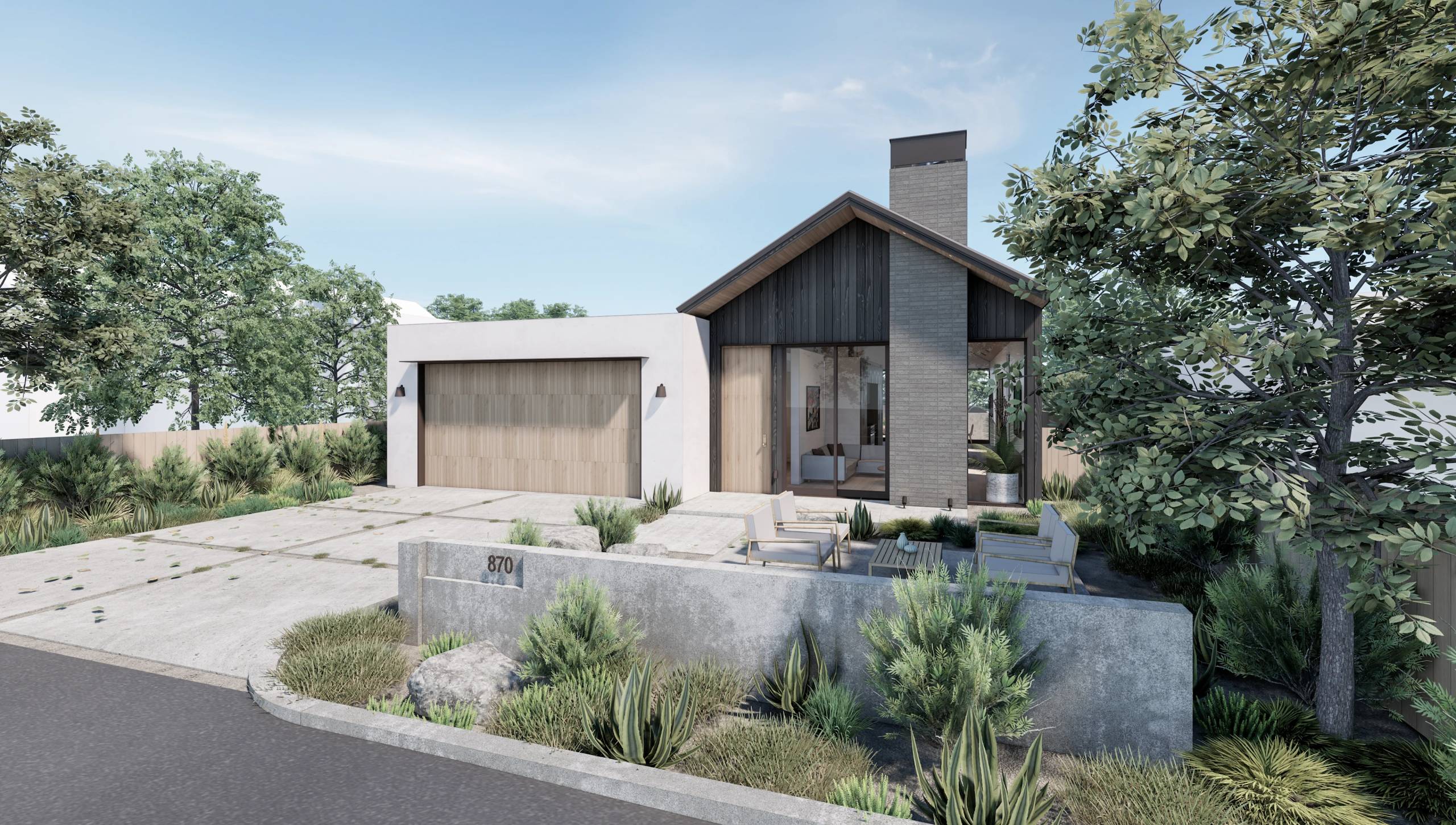
Richard Beard Architects designed the house Deborah and Doug Hafford picked from the Case Study 2.0 catalog. The process from selecting the design to getting it approved and permitted by the city took about five months (Photo courtesy of Richard Beard Architects)

Here are the morning’s top stories on Monday, February 2, 2026

  • Since the catastrophic fires in Los Angeles more than a year ago, rebuilding has been slow. So some local architects have been thinking about how to move things along. A few took inspiration from a project in the 1940s to build homes quickly, which ended up revolutionizing architecture and forever associating LA with the mid-century modern home. 
  • It seems like California just might be repeating last year’s snowpack story. Massive storms drenched the state in December. But California was virtually dry for most of January. 
  • As he prepares for his Super Bowl halftime show, Bad Bunny made history at Sunday night’s Grammy Awards, claiming album of the year, the first time a Spanish-language album has taken home the top prize.

Picking A New Home Off The Shelf To Speed Up Fire Rebuild

In the Palisades and Altadena, architects are pre-designing houses to save homeowners time and money. This comes a year after thousands of homes were lost in devastating wildfires in the region.  These programs carry on the legacy of one of LA’s most famous architectural experiments.

In 1945, the editor of Arts & Architecture magazine, John Entenza, started an experiment. LA needed homes for soldiers returning from World War II, and Entenza’s idea was to enlist hotshot architects to design homes that could be built quickly and inexpensively, with what were at the time new, low-cost materials. That project was called the Case Study House program, which produced two dozen homes in LA by architects like Schindler, Neutra, and Eames. Back then, the impetus for building quickly was to address the rise of the middle class. Now, the impetus is to rebuild communities destroyed in the fires a year ago.

And so, with thousands of homeowners desperate to design, permit, and build homes, some architects and builders have looked to the Case Study program as a model for speeding things up. A few of them have started projects to, once again, get hotshot architects to create house designs that homeowners could just pull off the shelf, saving everybody months of back-and-forth. That’s led to Case Study 2.0, a project started by brothers Steven and Jason Somers of Crest Real Estate. “We wanted to take a lot of that forward-thinking mentality that was a core tenet of the original Case Study houses program, and try to adapt it to the problems of today, where we’re trying to rebuild thousands of houses,” says Steven Somers. “But people don’t necessarily just want to rebuild what is the fastest or just the least expensive. People also want something that is beautiful.”

The Somerses asked dozens of high-end architects to design houses, pro bono, that homeowners could choose from. They’ve got a catalog of 74 homes so far. Another pre-designed housing project, Case Study-Adapt, is a nonprofit in partnership with the Eames Foundation. Most of those houses are mid-century modern. A third, focused on Altadena, is called The Foothill Catalog, and includes modern as well as Spanish and craftsman style homes.

Sponsored

Now the first Case Study 2.0 house is about to break ground, designed by San Francisco’s Richard Beard Architects for Deborah and Doug Hafford. The Haffords had lived in the Palisades for 35 years when the fires destroyed their 1941 bungalow and most of the other houses on their street. They’re retired, their kids are grown, and as they told me on a call from Idaho, they knew they wanted to get back ASAP. “Right from the get-go, I think we were pretty convinced that we wanted to stay there,” says Doug Hafford. “We definitely wanted this kind of mid-century modern vibe, right? And we wanted big open spaces and high ceilings and as much air and light as possible,” adds Deborah Hafford. With any luck, they could be in their new home by the end of the year.

California’s Snowpack Is Shrinking, But Winter Isn’t Over Yet

As state water officials surveyed the Sierra Nevada snowpack on Friday, California seems to be repeating last winter’s topsy-turvy weather whiplash between super wet and dry conditions, raising worries about diminishing snow reservoirs.

Three weeks ago, the snowpack was glistening white after storm after storm hit the Sierra during a December drenched by atmospheric rivers. But most of January, historically California’s wettest month, has been virtually dry, and today the snowpack sits at just 36% of the April 1 average, which water leaders look to as the measuring stick for the state’s frozen reservoir.

The size of the snowpack is a big deal because it accounts for about a third of the state’s water supply, which millions of people, cities and farms rely on the rest of the year. “We’ve been in this position before, and we’ve caught up in the past,” said Andy Reising, manager of the state’s Snow Surveys and Water Supply Forecasting Unit. “We don’t want to be going backwards at this time of year; we need more storms.”

The issue this winter, Reising said, is that big atmospheric rivers brought more rain than snow in late December and early January, especially at lower elevations. And then the temperatures warmed up.

What may be occurring is a phenomenon known as weather whiplash. Warming temperatures are deepening California’s natural weather pattern, which bounces from wet to super-dry conditions that warmer temperatures can worsen. This can melt precious snow reservoirs early. “We’re lucky that we got the fall and December that we did, because had this been the pattern all winter, we’d be in big trouble,” Daniel Swain, a University of California Agriculture and Natural Resources climate scientist, said in his virtual office hours YouTube series. But the snowpack across the Sierra Nevada is a tale of three realities. The northern part of the state is at 44% of normal, the Central Sierra at 59%, and the Southern Sierra at 77% for this time of year. Altogether, the state’s snowpack is at 59% of normal for this time of year.

Bad Bunny Wins Album Of The Year At 2026 Grammy Awards

Bad Bunny won album of the year at the 2026 Grammy Awards for his critically-acclaimed “Debí Tirar Más Fotos,” closing out a surprising and history-making night. It is the first time a Spanish-language album has taken home the top prize.

“Puerto Rico, believe me when I tell you that we are much bigger than 100 by 35,” he said in his acceptance speech in Spanish, referring to a Puerto Rican colloquialism about the island’s small size. “And there is nothing we can’t achieve. Thank God, thank you to the Academy, thank you to all the people who have believed in me throughout my career.

Immigration was a central theme of the night. The first time Bad Bunny was on stage — after winning the award for música urbana album — he used his speech to share an anti-ICE message, highlighting the humanity of all people. “Before I say thanks to God, I’m going to say ICE out,” he said, starting out his speech in English to huge applause. “We’re not savage, we’re not animals, we’re not aliens. We are humans and we are Americans.”

The award comes less than a week before Bad Bunny is set to take the stage at Levi’s Stadium for the Super Bowl halftime show. He has openly criticized the Trump administration for its immigration policies, and has said he’s performing less in the U.S. because of  concerns about potential ICE activity outside his concerts.

lower waypoint
next waypoint
Player sponsored by