Ericka Cruz Guevarra [00:02:18] Oh I knew that.
Azul Dahlstrom-Eckman [00:02:18] Yeah, you knew it. Okay.
Ericka Cruz Guevarra [00:02:19] Unfortunately.
Azul Dahlstrom-Eckman [00:02:20] It would take days for people to see the money on their accounts. So now funds are supposed to be added instantly to your account. There’s family accounts, so people can manage multiple cards on one account. So if you have children or a dependent, that’s nice. You can also apply for youth or senior cards online before you had to do it in person. And then there’s also improvements for riders, like tap to pay. Now, anywhere that Clipper is accepted, you can use a credit or debit card. And there’s discounted or free transfers, which I know is nice for someone like you who takes ferry in Muni, right?
Ericka Cruz Guevarra [00:03:03] Right. Exactly. So it sounds like it’s supposed to bring the Bay Area’s transit systems up to speed, technology-wise, but it’s been quite a flop.
Azul Dahlstrom-Eckman [00:03:13] Yeah, it’s not happening.
Ericka Cruz Guevarra [00:03:14] What went wrong exactly, Azul?
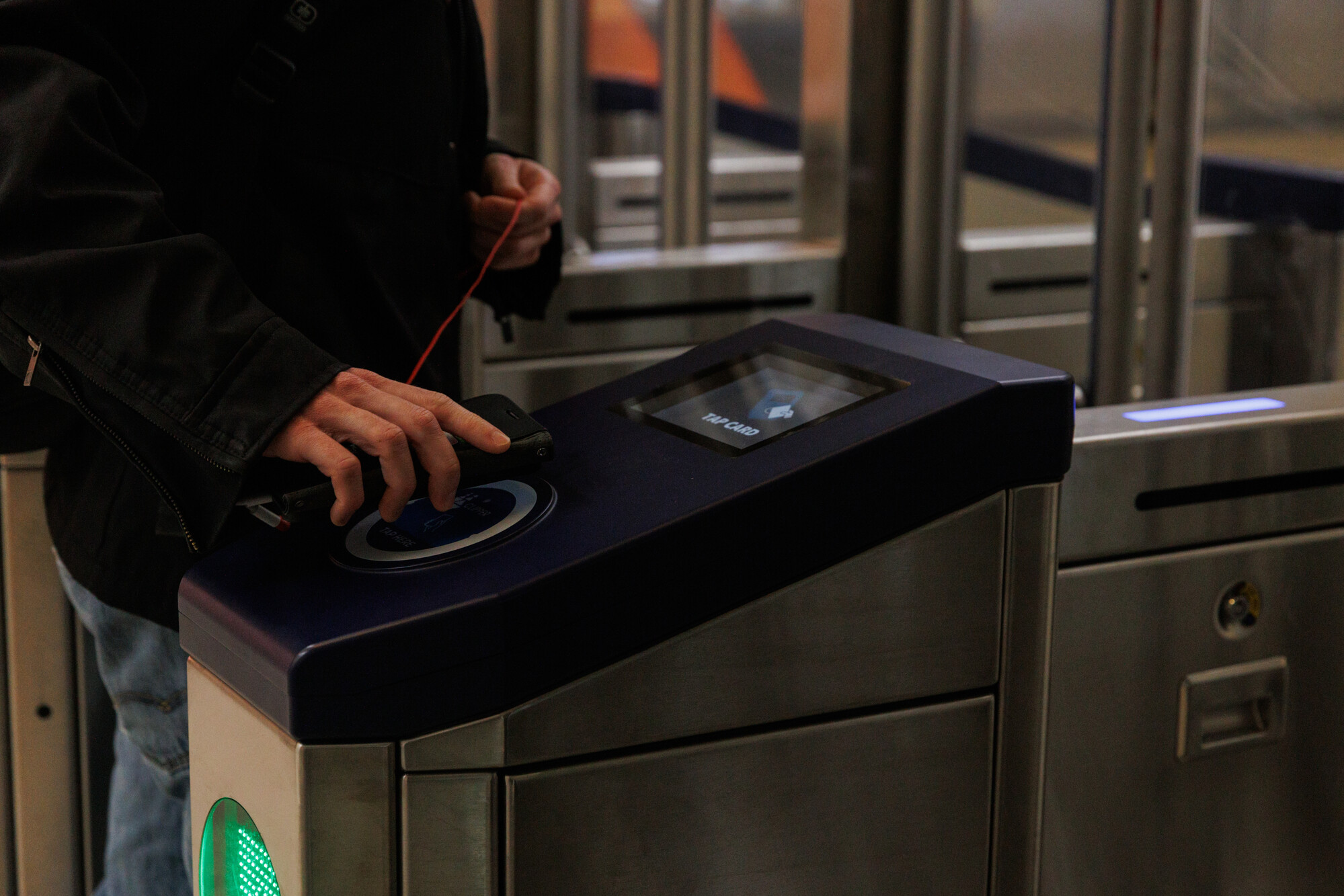
Azul Dahlstrom-Eckman [00:03:17] Well, pretty much from the get, the system’s just been crashing. There’s a bunch of different issues and it’s effectively preventing people from accessing their Clipper accounts, putting money on their Clippr accounts and essentially using the system. And most of it’s sort of been on the backend. It’s these sort of software related issues. So, Cubic, that’s the company that’s actually contracted to develop and operate what’s called Next Generation Clipper, this update. And it’s a $461 million contract from the Metropolitan Transportation Commission, which is sort of the regional body that allocates funding for transit in the Bay Area. Cubic went over this laundry list of issues they’re having, including problems with upgrading people’s existing Clipper accounts to the new version of Clipper. General slowness and crashing. Some SFMTA ticket vending machines were actually taking people’s money without adding them to Clipper cards. Fare inspection devices, like say if you’re riding Caltrain and a fare inspector comes up and wants to say, hey, did you pay for this ride? Those devices are sometimes not seeing if somebody who did pay, paid, which is frustrating both for the riders, because they’re like, this agency doesn’t really know what’s going on. And then it also puts these fare inspection workers in sort of difficult situations where it’s you’re saying one thing and my machine saying another auto load, which is how you regularly put money on your car, which is important for regular commuters. That’s having issues. Even just the internal monitoring of cubic knowing when a problem is happening is having slowness. And some representatives from the transit agencies said that their financial documents are also looking a bit weird. So on the back end for these transit agencies, they’re not sure if their accounting teams are getting the right information.
Ericka Cruz Guevarra [00:05:20] All of this is super annoying, Azul, and I have to imagine super frustrating for transit officials who were hoping that this change would help the system. What were you hearing from transit officials themselves about just how mad and angry people are?
Azul Dahlstrom-Eckman [00:05:42] People were pretty upset. At this recent meeting of the Clipper Executive Board, that’s a board within the Metropolitan Transportation Commission, public transit agency representatives and members of the public really aired out their grievances about how bad this rollout has been.
Denis Mulligan [00:06:00] We’re in the customer service business. We try to provide first-class customer service. And for the last six and a half weeks, we have been hurting our regular loyal customers.
Azul Dahlstrom-Eckman [00:06:09] Denis Mulligan, he’s the general manager of the Golden Gate Bridge Highway and Transportation District, had some choice words for Cubic.
Denis Mulligan [00:06:17] Someone comes in and they want to help and we can’t help them with the machines that you gave us So we take them out to the platform to see if we can help walk them through their transaction with an old ticket vending machine That is burning down the house with our regular customers.
Azul Dahlstrom-Eckman [00:06:34] Members of the public, regular transit riders, expressed basically exasperation.
Philip Weiss [00:06:40] It’s now been 48 days since I’ve been able to access my account.
Azul Dahlstrom-Eckman [00:06:44] One rider named Philip Weiss, who showed up to public comment, called Clipper 2.0 a colossal screw up and said he hasn’t been able to log into his account since Clipper two started.
Philip Weiss [00:06:56] During those 48 days, I have called customer support five times. Each time the wait time is announced as 30 minutes and it gets longer as you wait.
Azul Dahlstrom-Eckman [00:07:12] Another interesting piece of public comment was these sort of armchair software engineers who claimed to have years of experience in these sorts of systems and said that the kinds of databases that cubic was running were basically on the level of like hobby projects and startups and said that this was not, they actually looked into the reporting from cubic and said like, the systems y’all are running are not appropriate for a public facing, multi million user application.
Ericka Cruz Guevarra [00:07:44] Beyond problems with the rollout too, what criticisms have you heard about Clipper 2.0 around the Bay? Because I understand that some of these changes have been especially annoying for AC Transit riders.
Azul Dahlstrom-Eckman [00:07:59] Yeah, I’ve done some reporting on Clipper 2 when it first came out, and after that, some transit advocates who work with issues on AC Transit reached out to me and basically said, you know, we’re supportive of these improvements with Next Generation Clipper, but there’s a serious equity issue in that these benefits do not extend to riders who don’t have Clipper cards, people who use cash to ride AC Transit. And I looked into it, and it’s true. On AC Transit. If you pay with cash, you pay more than people who use Clipper cards. There’s potentially a pretty sizable population of AC Transit riders who use cash to ride. MTC data shows that about 50% of all AC Transit rides occur with Clipper, so around half aren’t using Clipper. These transit advocates are saying, these benefits are great, but we want them to extend to everyone, and especially the people who need them most.
Ericka Cruz Guevarra [00:09:04] Has there been any explanation, Azul, for why this has been such a hot mess? Any explanation from the company tasked with launching this new system?
Azul Dahlstrom-Eckman [00:09:14] Yeah, in this recent Clipper executive board meeting, there was explanation of the problems, but it was very reductive. It was just sort of like, here’s the problem, here’s this solution, and here’s our timeline for fixing it. So there wasn’t really any sort of explanation of why the problems occurred.
Peter Montgomery-Torrellas [00:09:32] I want to begin by acknowledging the experience around Clipper 2 transition. It has not yet met the standard that you, your operators, or Cubic expect.
Azul Dahlstrom-Eckman [00:09:41] Peter Montgomery Torellas is the president of Cubic’s transportation arm. He appeared over Zoom and he basically just apologized for the issues.
Peter Montgomery-Torrellas [00:09:53] We see that impact and we take it seriously. On behalf of Cubic, I want to say clearly that we regret any disruptions this has caused.
Ericka Cruz Guevarra [00:10:01] I mean, what now, I guess then, Azul? It sounds like there are some outstanding issues. Have any of these problems been resolved yet?
Azul Dahlstrom-Eckman [00:10:10] Peter Montgomery-Torellas said that many issues would be, quote, settling down by that week that the meeting happened, which was last week. They’re expecting that most of these issues will be resolved by mid-February. I will say that the Clipper executive board basically gave them an ultimatum and said, y’all need to have this basically pretty well buttoned up and make a 180 degree turn on this by our next meeting, which is February 23rd. Or else it would, quote, be a bridge too far, according to the chair Robert Powers.
Ericka Cruz Guevarra [00:10:42] What impact do you think has this had on these agencies around the Bay Area that have really already been struggling with getting people back on trains and busses and just struggling financially?
Azul Dahlstrom-Eckman [00:10:56] Yeah, something interesting that several of the board members talked about was the damage to the reputation of these transit agencies. These issues are coming at a time when transit agencies across the Bay are facing pretty significant budget deficits, in part due to drops in ridership from the pandemic. And they’re actually going to the ballot. These agencies are gonna be asking voters to tax themselves in order to fund public transit. And I think there’s a lot of frustration on behalf of the transit agencies because When a rider taps a clipper card on a bus or a ferry or a train and something doesn’t work or it doesn’t recognize their money, the riders don’t know that it’s this software company named Cubic who’s to blame. They blame the bus. Sometimes they blame the boss operator. Hey, why isn’t this working? And so I feel like it’s hard for the agencies. It’s another problem that they’re having to deal with that they really don’t need right now.
Ericka Cruz Guevarra [00:12:08] Yeah, and it is kind of ridiculous that we’re having these kind of tech issues in the Bay Area, you know, this tech capital of the world in a way. And I’m also thinking about the impact that this could have with the Superbowl coming very soon. Lots of visitors coming to the Bay area.
Azul Dahlstrom-Eckman [00:12:28] And at the same time, Waymo is announcing that it’s starting service at SFO. So we’re really at this kind of critical juncture for transit in the Bay Area. People are coming to the Bay area and saying, wow, this is the home of AI and Facebook and Google and all these different industries. And yet somehow we’re having this seemingly rudimentary problem with fare collection. And certainly with the Super Bowl coming and the World Cup coming, That’s giving an extra urgency to addressing these issues.