Episode Transcript
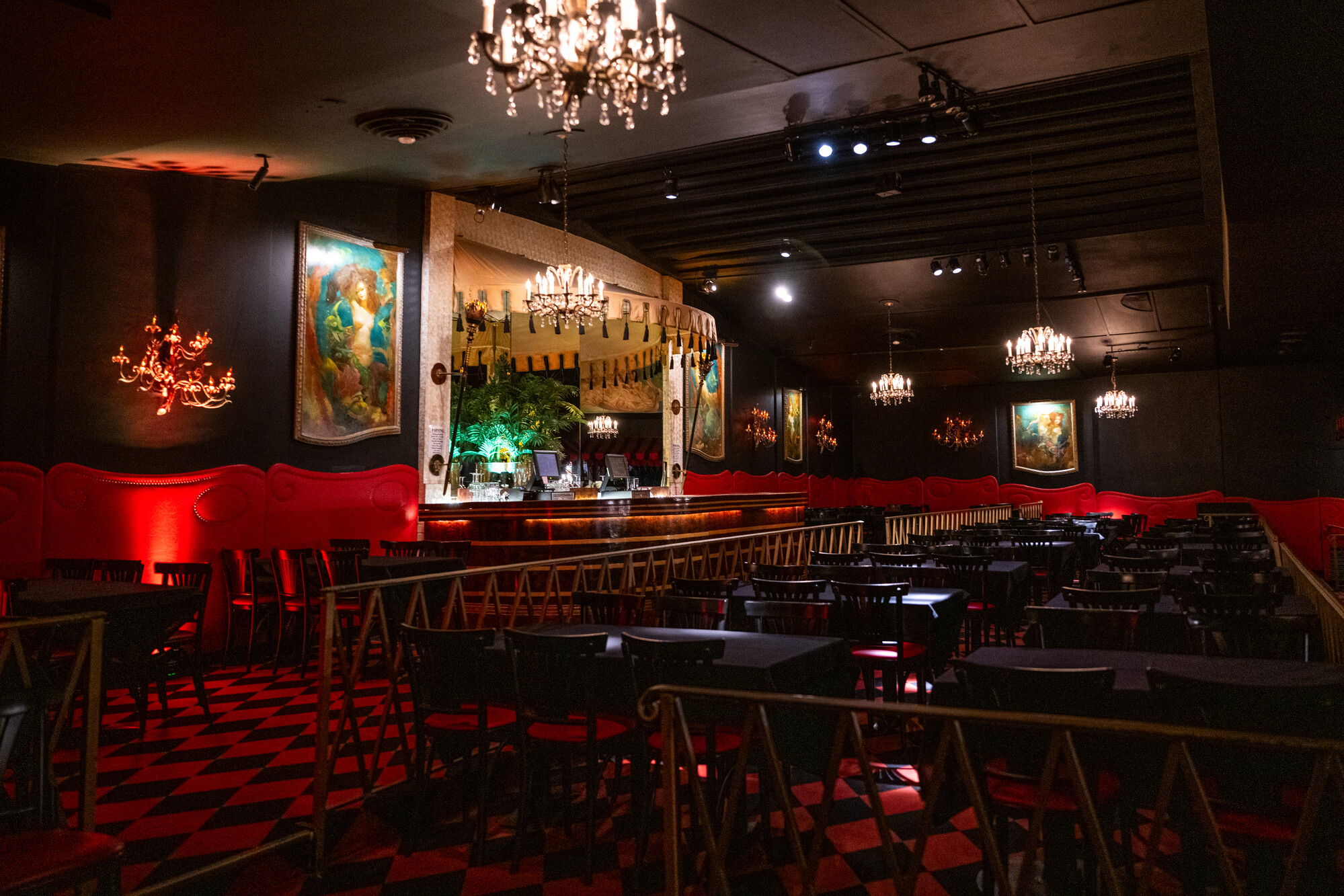
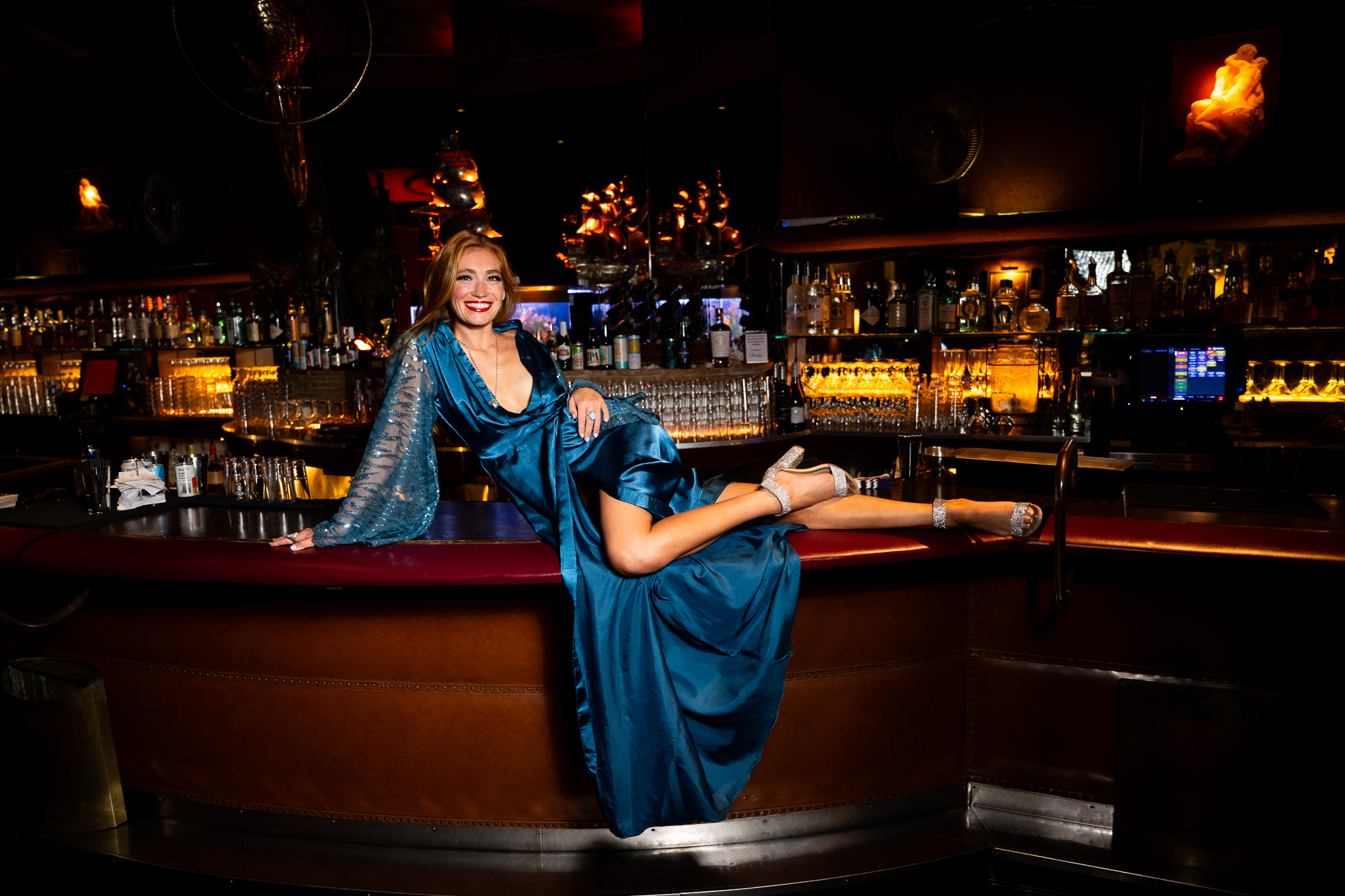
Katrina Schwartz: The inside of Bimbo’s 365 Club” in San Francisco’s North Beach is lush with red velvet, moody lighting, and dark wood paneling, you half expect the Rat Pack to step out from the coat room.
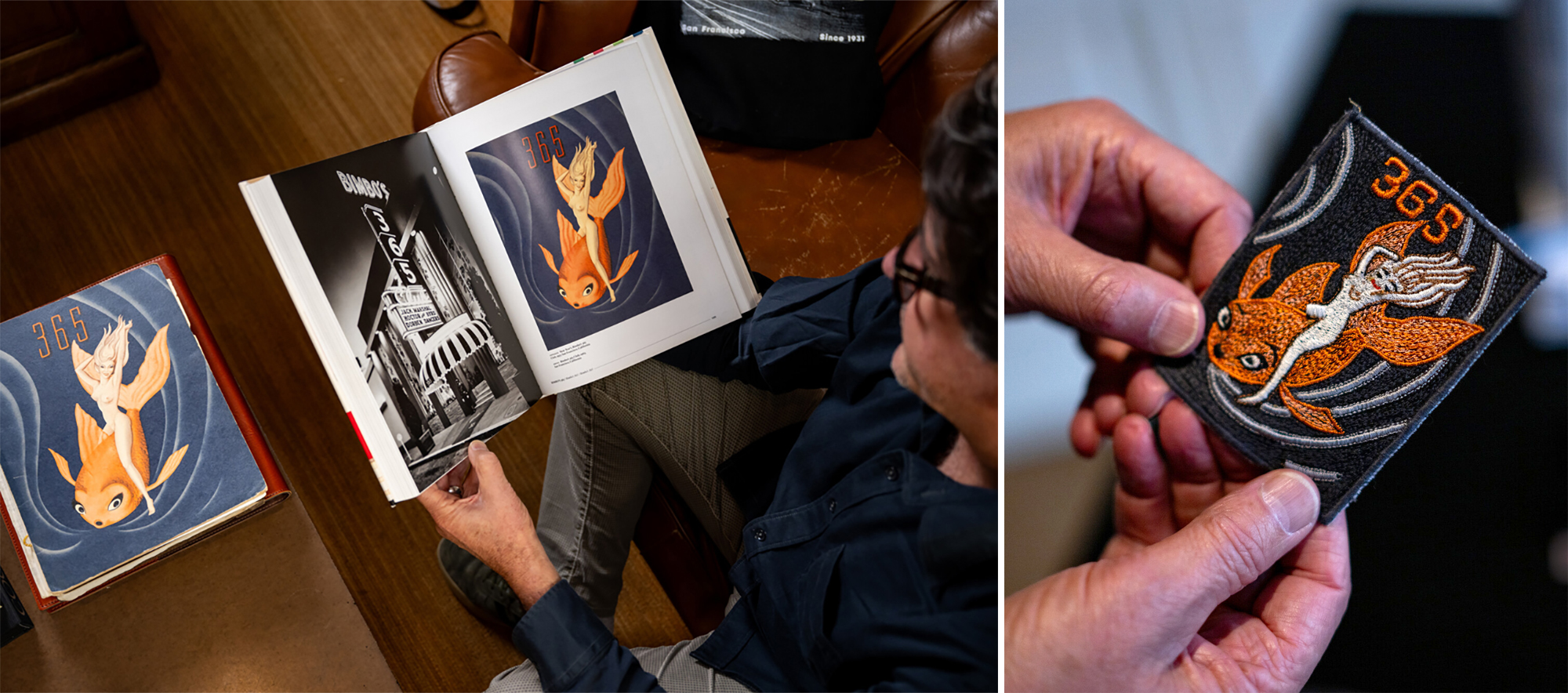
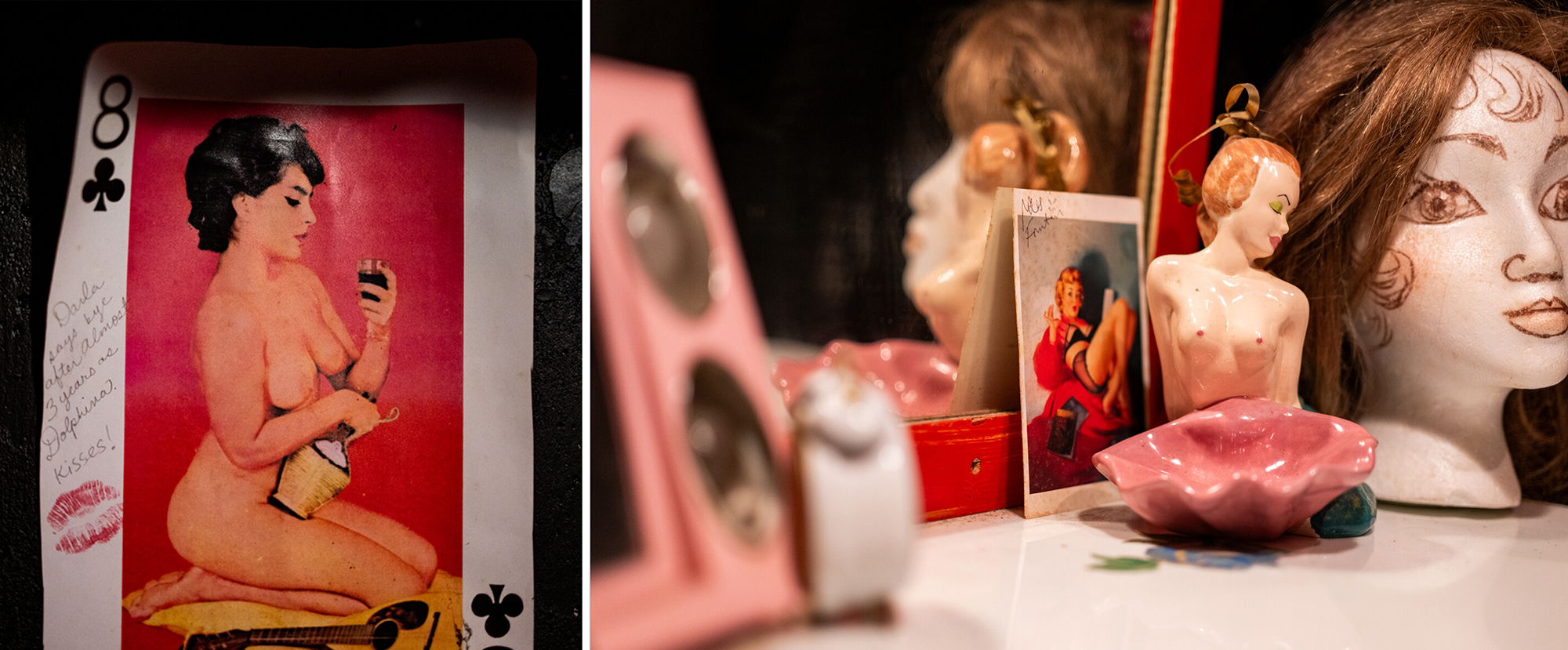
And almost everywhere you look, there are images of a naked woman on a fish. She’s etched into the glass on the front doors, painted on murals on the walls, even immortalized as an Italian marble statue in the lobby.
She’s Dolphina – the star of Bimbo’s Girl in the Fishbowl act who’s been luring customers in since 1931. What — and who — was this Girl in the Fish Bowl. And can you still see her?
Today on Bay Curious, we’re diving into the mysterious waters of the famous nightclub’s past. I’m Katrina Schwartz, stay with us.
Sponsor message
Katrina Schwartz: Bimbo’s 365 Club has been entertaining San Franciscans for 94 years. Huge stars have graced its stage from a young Adele to Robin Williams… but the act it’s MOST famous for is Dolphina, the Girl in the Fishbowl. KQED’s Bianca Taylor visited Bimbo’s to find out more.
Bianca Taylor: The story of Dolphina actually starts with the story of Agostino Giuntoli.
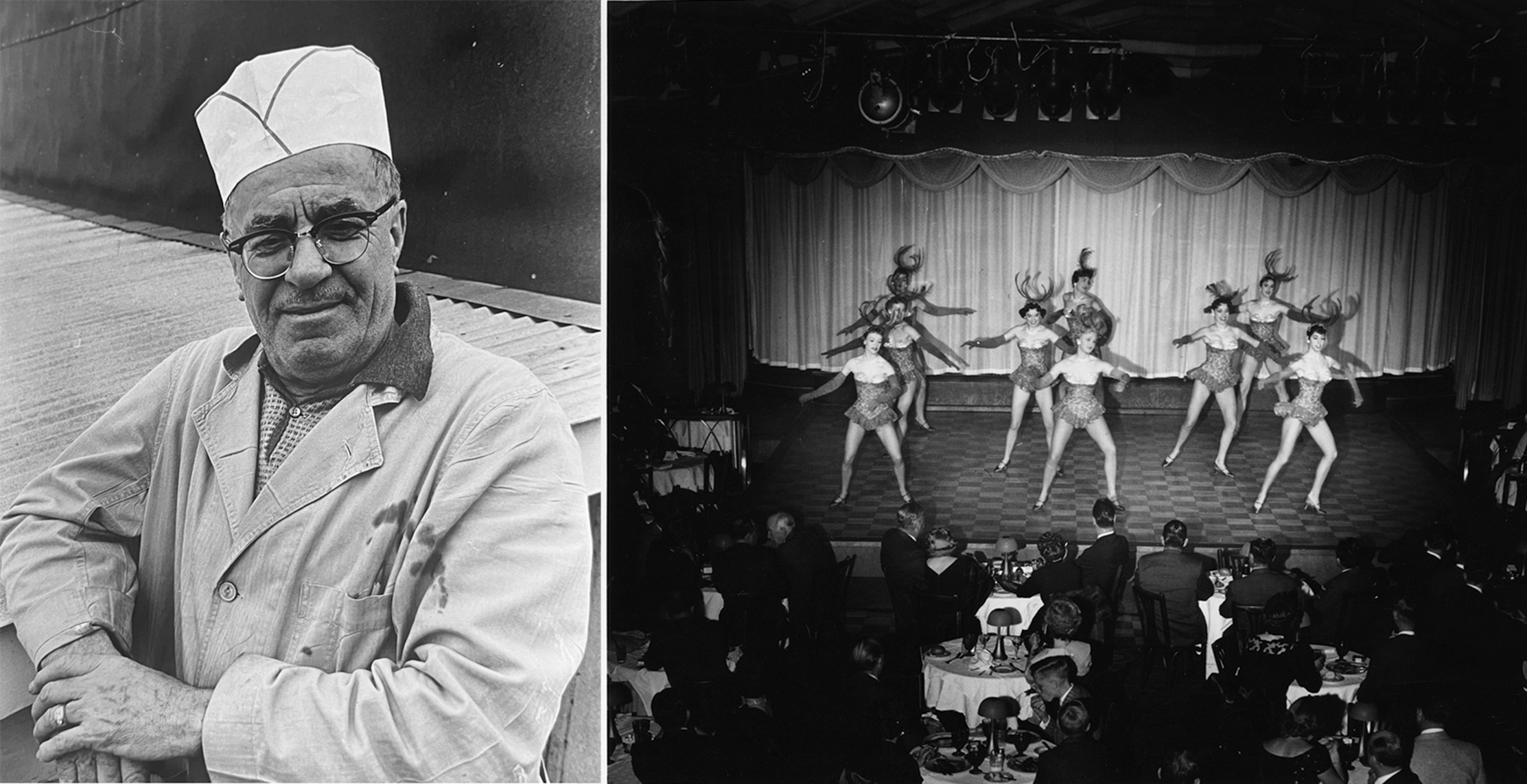
19-year-old Agostino immigrated to the United States from Tuscany, Italy, in 1922. When he arrived in San Francisco, he started working in hospitality … first as a janitor, then a cook, where his boss, Arthur Monk Young, gave him the nickname “Bimbo” – Italian slang for “boy”.
Michael Cerchiai: You know, old school Italian, he had a hot temper, he let him have it, but once he got his point across, water under the bridge and you know he’d put his arm around you and move on.
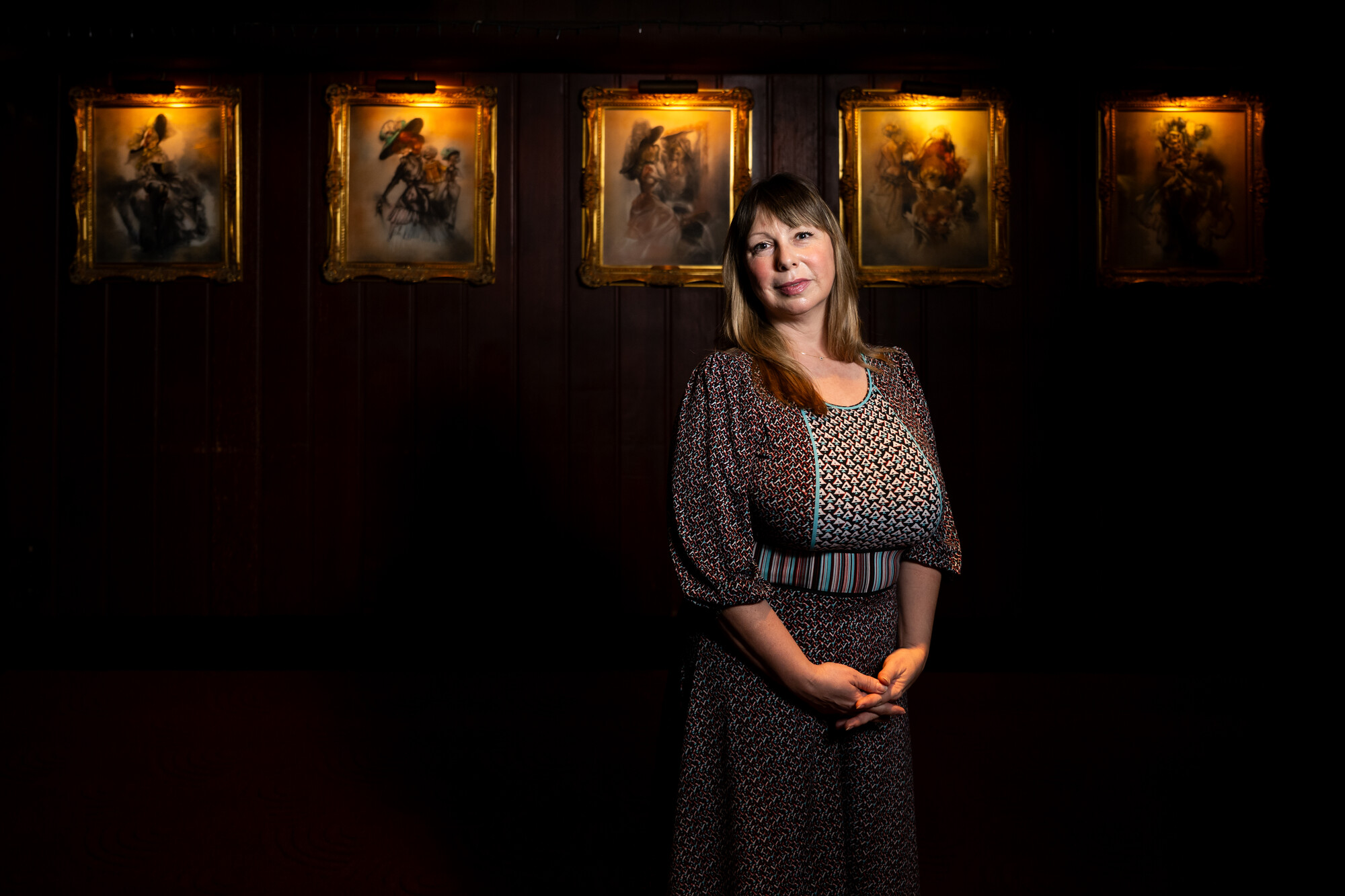
Bianca Taylor: That’s Michael Cerchiai, the current owner of Bimbos’ 365 Club and Bimbo’s grandson.
In 1931, Bimbo and Arthur opened their own nightclub on Market Street called the 365 Club. There, A young Rita Hayworth danced in the chorus line and guests ate steaks and sipped gin out of coffee mugs. Even though it was technically Prohibition, San Francisco openly flouted the law. Over the next few decades, Bimbo would buy out his partner, rename the joint to Bimbo’s 365 Club, and move the venue to a bigger spot on Columbus Avenue, where it still stands today.
Like his namesake club, Bimbo the man was larger than life.
Michael Cerchiai: My grandfather was like a celebrity. He had a lot of personality. He was very jovial. He was a showman.
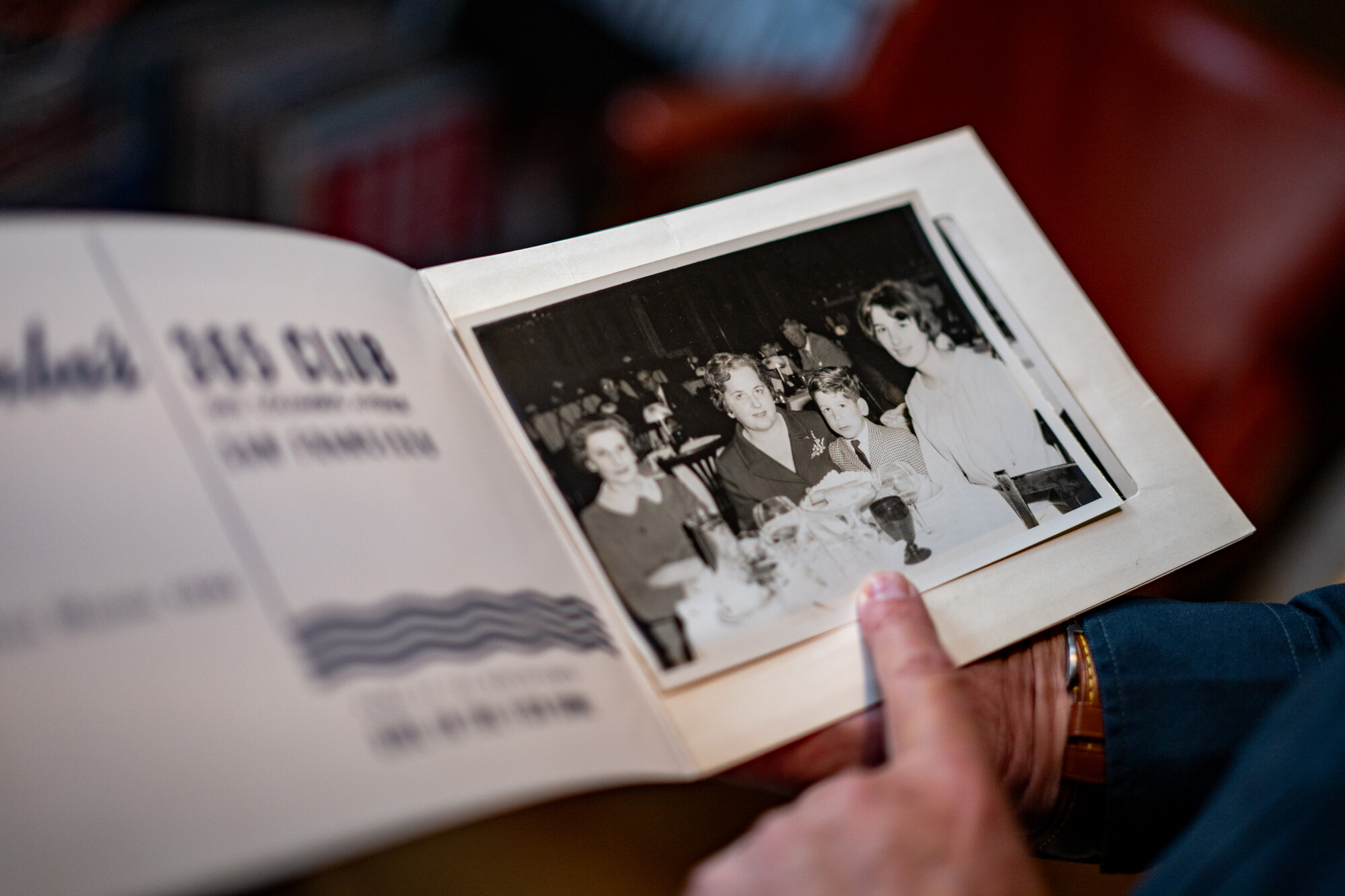
Bianca Taylor: Michael took over the family business from HIS dad, Graziano Cerchiai, who was Bimbo’s son-in-law. Michael’s earliest memories of being at the nightclub are running around with his cousins, drinking Shirley Temples, and meeting quite a few famous people.
Michael Cerchiai: I’ve got a picture sitting on Frank Sinatra, Jr.’s lap. Went up to meet Smokey Robinson.
Bianca Taylor: Here he is at 9 years old, on stage at Bimbo’s for a banquet honoring his grandfather in 1969.
Young Michael Cerchiai: Dear Nonna, I’m here tonight to thank you for all the things you have done. Like when you actually take me someplace or actually to help me or do something for me, you always say yes. And everyone says I look like you, and I’m glad I do because next to my dad, you’re the next man I love best.
Bianca Taylor: Michael may have grown up in the club, but his grandfather, Bimbo, was the club. He would do anything to drum up publicity and promote the Bimbo brand, including paging his own name at the airport so people would hear it.
Michael Cerchiai: You know, Mr. Bimbo, white courtesy telephone, Mr Bimbo, white, courtesy telephone, you know, and it was all about building the brand and all his publicity stunts. And the girl in the fishbowl was part of it.
Bianca Taylor: The Girl in the Fishbowl, aka Dolphina.
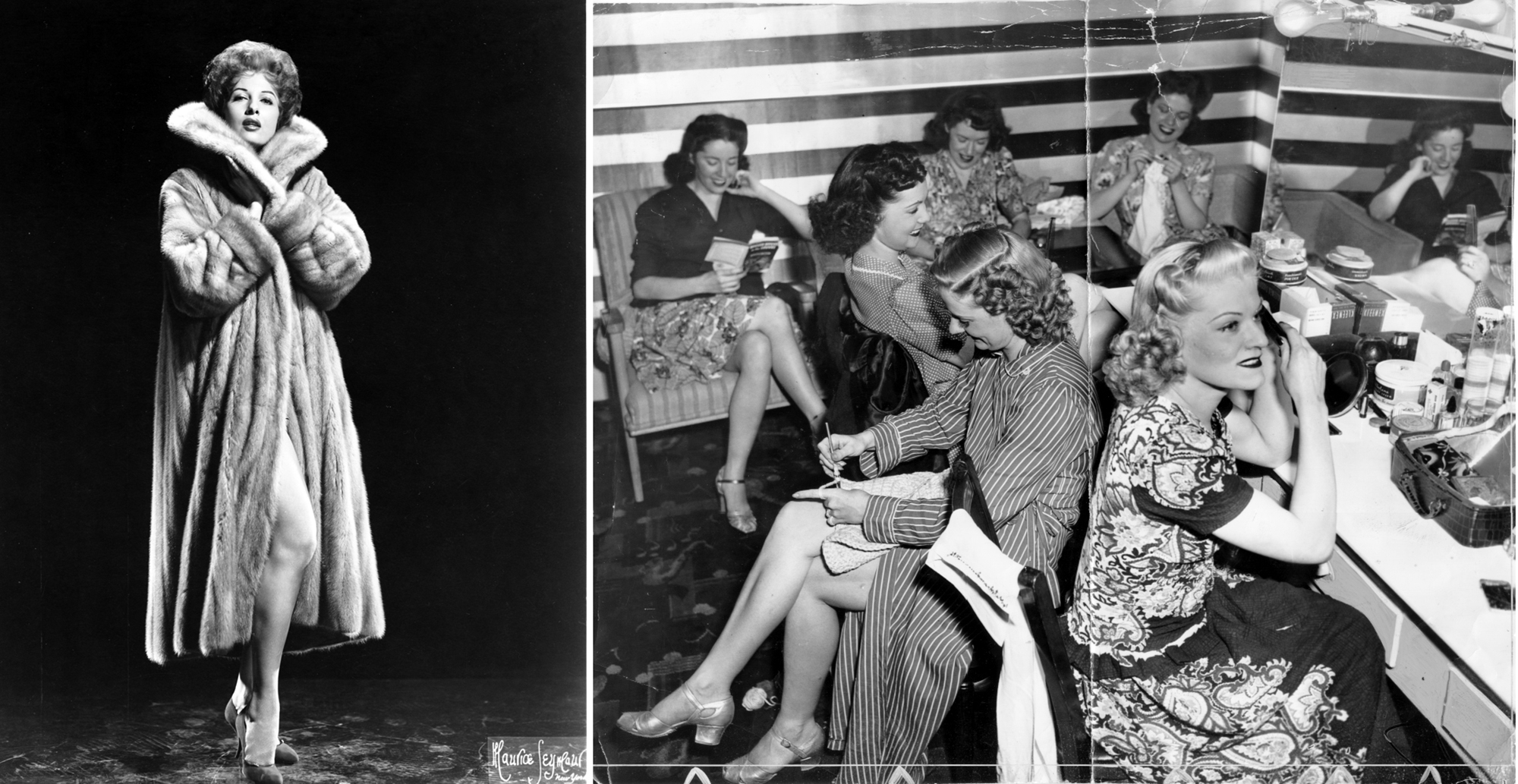
In post-prohibition San Francisco, every night club was competing for customers: Forbidden City on Sutter Street broke barriers as the first Chinese nightclub in the US… Mona’s 440 Club had drag kings on staff and advertised itself as a place where “girls could be boys.”
So, in addition to the good food and floor shows that the SF Chronicle called “miniature Broadway revues,” the Girl in the Fishbowl Act was yet another way to set Bimbo’s 365 Club apart from the crowd.
The Girl in the Fishbowl is both exactly what it sounds like and not.
Michael Cerchiai: Well, most people, to be honest, when they come in, they think that there’s a big fish tank, a huge fish tank with a life-size naked woman swimming in that tank. But that’s not the case.
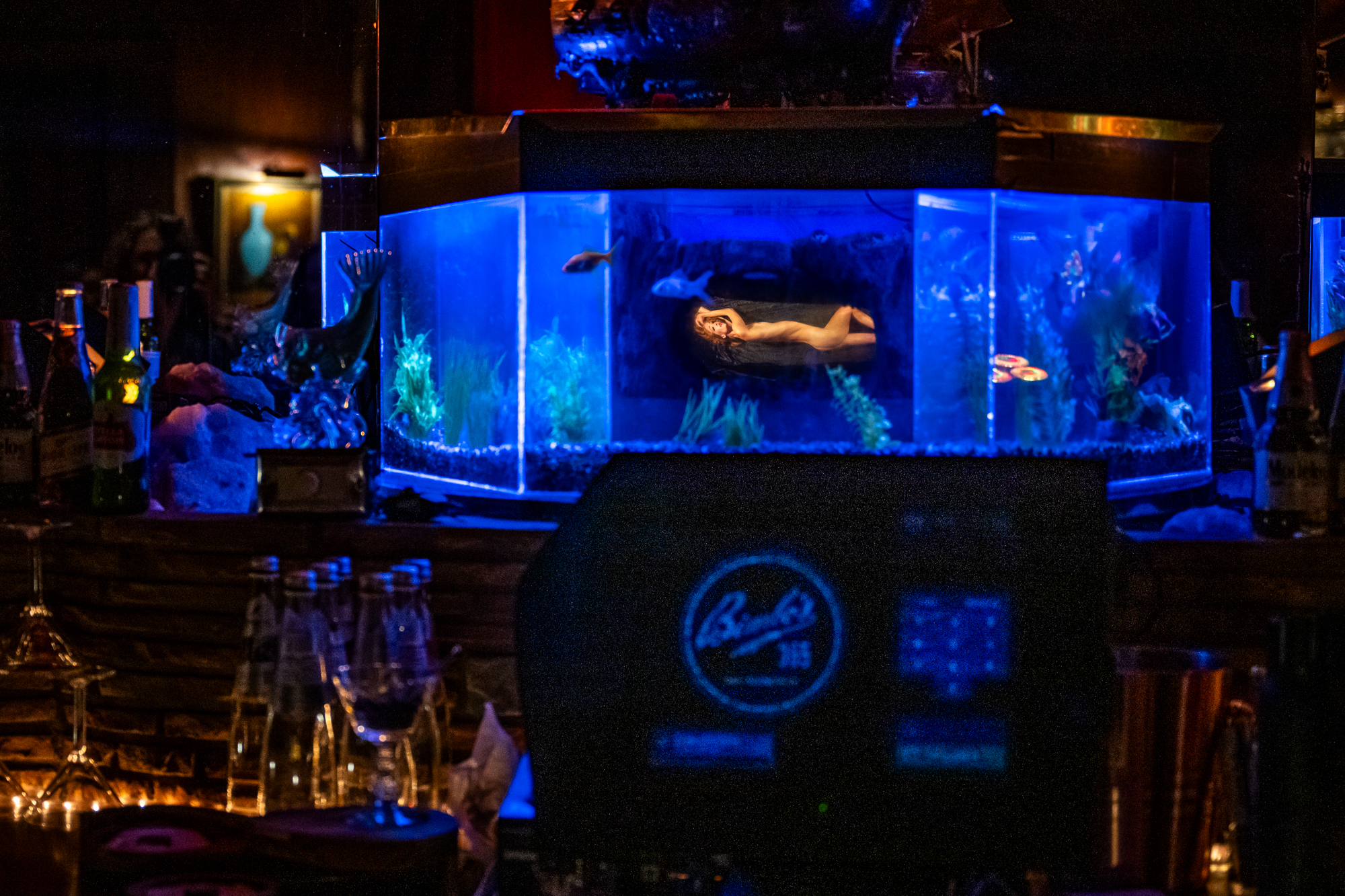
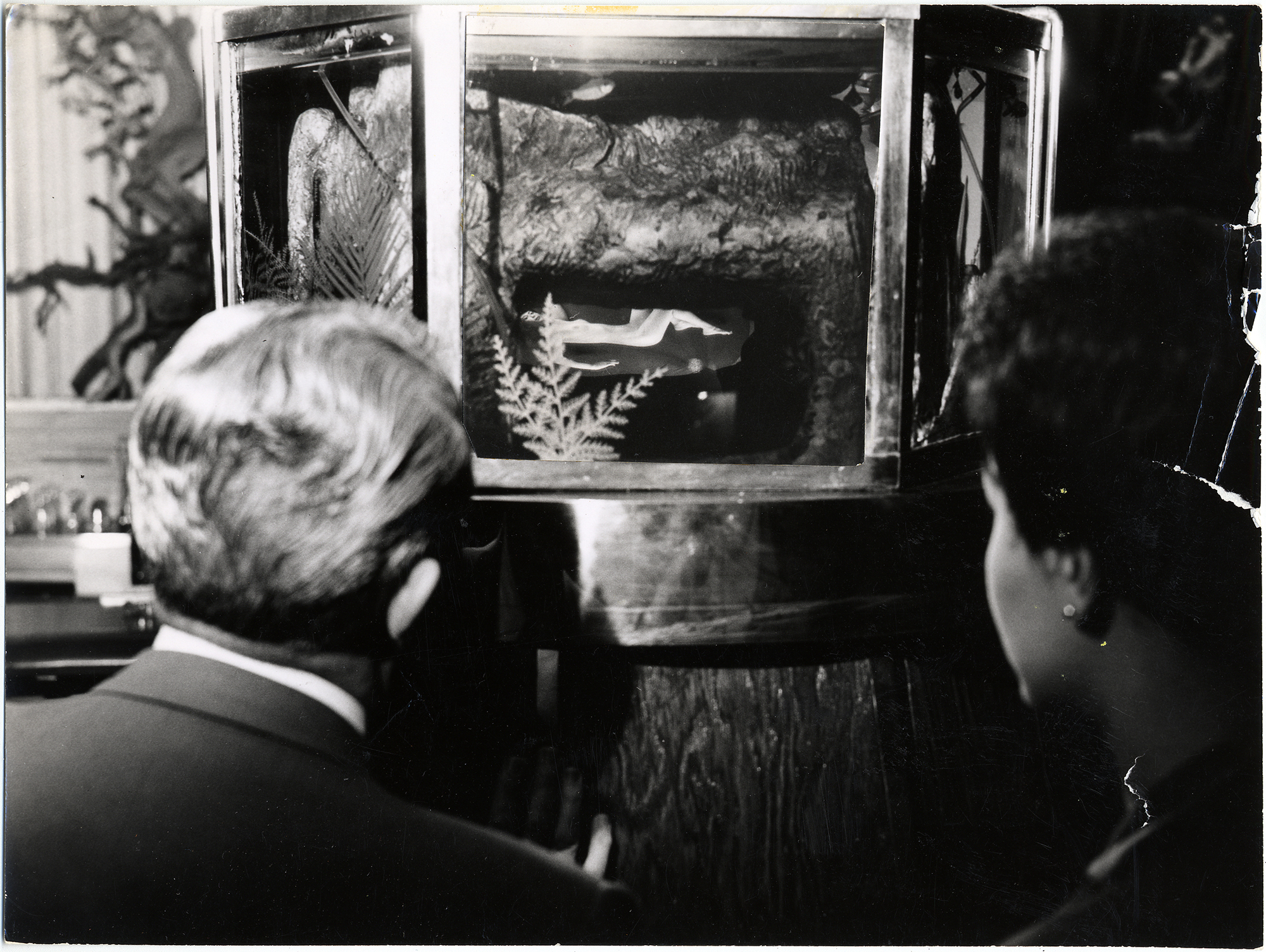
Bianca Taylor: In the main bar of Bimbo’s sits a standard fishtank. When Dolphina is performing, it looks like there’s a real, live woman, but shrunk down to about 6 inches, swimming in the tank with fish.
Michael Cerchiai: From my understanding, is that a magician came up with this idea and presented it to my grandfather, and he thought it was fantastic, so the two of them collaborated on the whole thing.
Bianca Taylor: The illusion behind the Girl in the Fishbowl is remarkably low-tech. In the basement of the club, there’s a mattress on a motor-powered turntable. When Dolphina lies down on the turntable, her image is projected up into the fishtank at the bar via curved mirrors that line the side of the tank. When the turntable rotates, her image ripples into the tank in such a way that it looks like she is “swimming.”
In between floor shows and comedy acts, the emcee at Bimbo’s would announce that Dolphina would be appearing in the fishtank.
Michael Cerchiai: And so people would get up and go to the bar, and want to see her, and of course, while they’re there, they were more likely to buy a cocktail. So it was just like, you know, it was a gimmick just to get people to go to the bar and spend some money.
Bianca Taylor: One of the earliest Dolphina performers was iconic burlesque star, Tempest Storm. With her flaming red hair and infamous bust, “the Queen of Exotic Dancers,” as she was known, owned the stage in the 50’s and 60’s. With performers like her, it didn’t take long for Bimbo’s to become known as the Home of the Girl in the Fishbowl. A 1939 travel guide called “How to Sin in San Francisco” described it like this:
Voice over reading: You’ll like the food, because it was cooked by Bimbo. You’ll like your drinks because they’re good. You’ll like the Girl in the Fish Bowl because she’s very naked.
Bianca Taylor: Yes, Dolphina was naked. But Michael says Bimbo never meant for the act to be be lewd:
Michael Cerchiai: Even though a naked woman and a club called Bimbo’s, you would think that it’s a strip joint, but it’s never ever not even close to something like that. But it was all done with taste and class. He used to always say, there’s no substitute for class.
Bianca Taylor: Bimbo himself was a conservative Italian Catholic family man, plus he had a tough critic who had to sign off on Dolphina: his wife Emelia.
Michael Cerchiai: It obviously got my grandmother’s approval because, really, nothing happened here without it going through her. And he used to call her the general, and if you had a question for him and you didn’t want to answer, you better go talk to the general.
Bianca Taylor: For nearly 4 decades, Dolphina performed every night of the week. She even made the cover of LIFE Magazine.
Michael Cerchiai: In the day, Life Magazine was, excuse my French, it was the s***, right? I mean, it was very prestigious. It was highly regarded. And to make it into LIFE Magazine in 1947 was a big deal.
Bianca Taylor: The era of nightly Dolphina shows came to an end on New Year’s Eve, 1969. Bimbo had made the decision to shut down the club’s expensive nightly shows and rent out the venue for events instead.
Michael Cerchiai: My grandfather was competing with, TV was becoming popular, people weren’t going out as much. So times were changing, and he just said, you know, it’s time for me to call it quits.
Bianca Taylor: You can still see lots of music and comedy shows at Bimbo’s these days, but Dolphina only performs on rare occasions. And for those who heed her siren call, the chance to perform in the fishtank is an alluring opportunity.
Celeste Knickerbocker: I mean, who doesn’t want to be a mermaid?
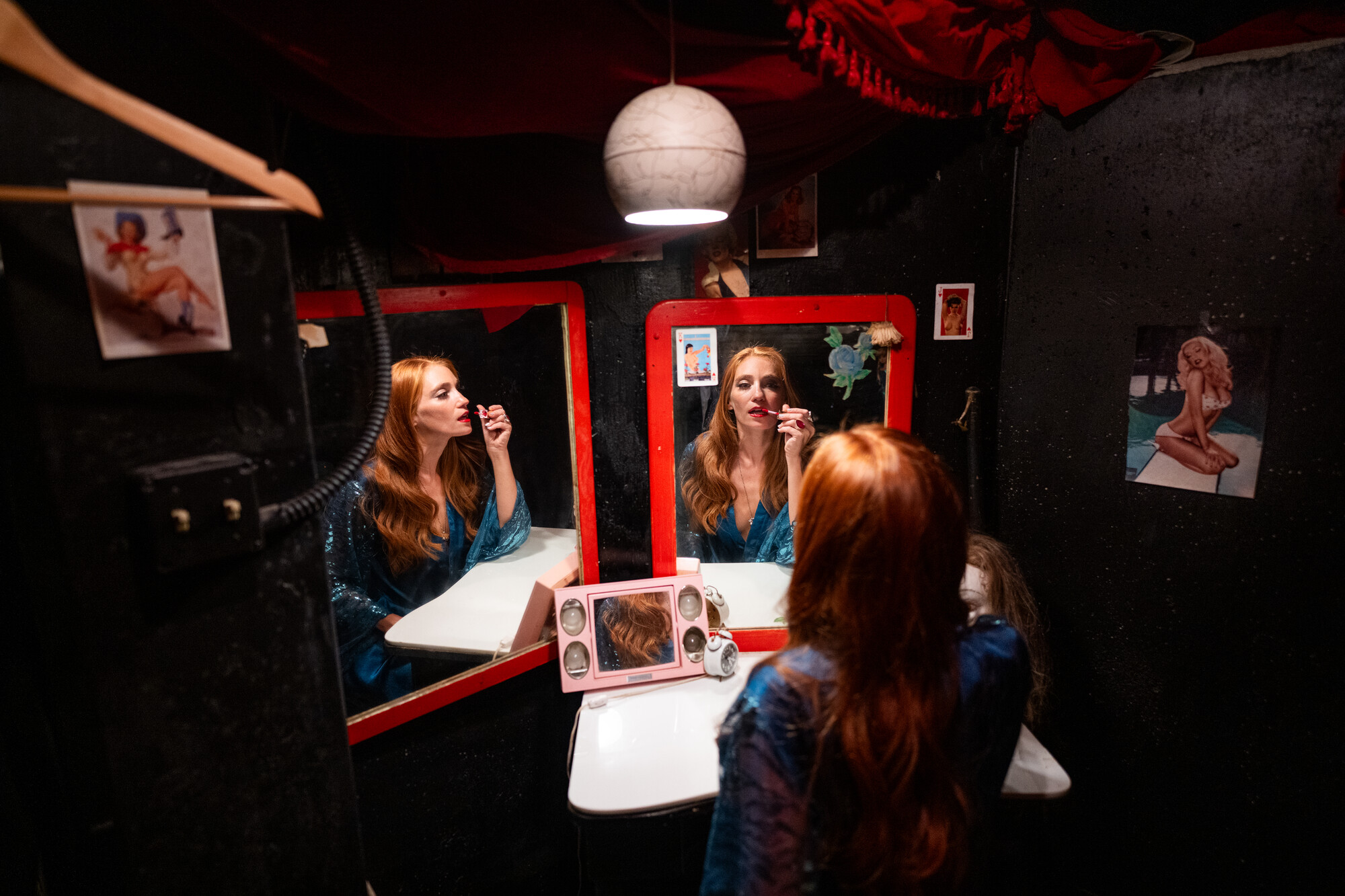
Bianca Taylor: Celeste Knickerbocker performed as Dolphina for 5 years. At the time, she was doing burlesque and studying to become a pilates instructor. One night, a friend called her and asked if she wouldn’t mind filling in for her shift at Bimbo’s. Celeste barely hesitated:
Celeste Knickerbocker: So, I really felt excited about being an iconic sort of legendary San Francisco creature, for lack of a better term.
Bianca Taylor: For a three-hour shift, Celeste made $150. On New Year’s Eve, she made $200. She credits being Dolphina as one of the things that helped launch her pilates career: It was good money and she could study for her exams in the basement in between shifts.
Working at the old club, though, did have its eerie moments … like the time she says she saw a ghost in the coatroom. For the record, Michael Cerchiai agrees — there is just too much history here for it not to be haunted.
Michael Cerchiai: You know, you walk through the room, and if it’s dark before the lights are on or it’s late at night, we’re closing up, you might hear a laugh or two. But like I said, they’re happy ghosts.
Bianca Taylor: There was also the fact that down in the basement, lying underneath the tunnel of mirrors projecting her image, Celeste could hear everything the people at the bar were saying about her, even though they couldn’t see her.
Celeste Knickerbocker: You know I would hear bar patrons standing at the bar and noticing that, you know, she was performing and, they, you know, like. I don’t really remember specifics other than I do remember one gentleman was analyzing which one of my breasts he thought was bigger than the other, you know, which of course just could have been the water. Changing the visual or whatever.
Bianca Taylor: For the most part, though, Celeste says the performance of Dolphina was, like burlesque, a way to reclaim her body and sexuality.
Celeste Knickerbocker: It was never even a question of, you know, is this something taboo or is this something that I’m gonna regret doing one day?
Bianca Taylor: Another Dolphina from the past is former Richmond city councilmember Donna Powers.
Donna started working as the Girl in the Fishbowl in 1969, when she was a 19-year-old art student. She performed as Dolphina for 25 years … a fact which surfaced when she ran for Richmond City Council in 1991. When people found out she “was swimming naked in the fishbowl”, there were calls for her to step down…but Donna refused.
In a 1992 story for the SF Chronicle, she said:
Voice-over reading: A lot of people get to be politicians, but how many people get to be a mermaid? I love being the girl in the fishbowl, the whole mystique, it’s very glamorous and charming.
Bianca Taylor: Like Donna, Celeste is PROUD of her time as Girl in the Fishbowl.
Celeste Knickerbocker: Plus, I got to be this iconic San Francisco, you know, to me, elegant, and classy kind of homage to the days when women’s bodies were still somewhat mysterious and you know, a lot was left to the imagination because a lot really is left to the imagination as the girl in the fishbowl.
Bianca Taylor: Yes, the Girl in the Fishbowl is a naked woman, but compared to advertisements and entertainment we see today, she seems almost demure. A reflection, just 6 inches long, seen for only seconds at a time as her watery image spins in and out of view. Dolphina is a reminder of a time when there were no cell phones, martinis cost 85 cents, and San Francisco was a place where the weird and wonderful could truly shine.
Katrina Schwartz: That was KQED’s Bianca Taylor.
Bay Curious is a production of member-supported KQED in San Francisco.
Our show is produced by Gabriela Glueck, Christopher Beale and me, Katrina Schwartz.
With extra support from Maha Sanad, Katie Sprenger, Jen Chien, Ethan Toven-Lindsey and everyone on team KQED.
Some members of the KQED podcast team are represented by the Screen Actors Guild American Federation of Television and Radio Artists, San Francisco, Northern California local.
I’m Katrina Schwartz. Have a great week.
 –>
–>