Ericka Cruz Guevarra [00:00:02] I’m Ericka Cruz Guevarra and welcome to The Bay local news to keep you rooted and welcome to our October news roundup. I’m joined today by The Bay senior editor, Alan Montecillo. What’s up, Alan?
Alan Montecillo [00:00:14] Hey, good morning.
Ericka Cruz Guevarra [00:00:15] And our very, very special guest this month, transportation editor Dan Brekke.
Dan Brekke [00:00:22] Hi Ericka.
Ericka Cruz Guevarra [00:00:23] Hi! Happy Halloween!
Dan Brekke [00:00:26] Is it Halloween already? Oh yeah, it is.
Ericka Cruz Guevarra [00:00:28] Yeah, spooky season. Actually, we wanted to have you on as our guest for this month because you are retiring. And I want to take it back a little bit because I feel like for longtime listeners of The Bay, they’re probably familiar with you, but maybe not so much of your backstory. Can you talk a little about how long you’ve been a reporter here in the Bay Area?
Dan Brekke [00:00:52] In the Bay Area, I’ve been doing some media or other since about 1980. And I am going to include the Daily Cal. Daily Cal, of course, is the student newspaper at UC Berkeley. And before that, I had been lucky enough to actually get a newsroom job in Chicago, my hometown, right out of high school. And so I was impressionable. And the impression that the newsroom laid down on me was this is a really fun thing to do. You wanna keep coming back and doing this. And here we are today.
Ericka Cruz Guevarra [00:01:27] 50 years later. Yeah on your last day at KQED.
Alan Montecillo [00:01:32] Listeners of the show know you for your knowledge of transportation, especially public transit. Have you been covering transit this whole time or how did your passion for transit begin?
Dan Brekke [00:01:42] It’s always been present in my life. I grew up in the suburbs mostly in Chicago, a town called Park Forest. Even out there in the suburb, we had a bus line, South Suburban Safeway Lines, and I believe that it cost us a nickel. And that first job I had that I was talking about, I got to commute all the way to the other end in downtown Chicago. I mean, I thought that was the greatest thing ever, that you didn’t have to drive. And you could sleep. And then it just kind of grew from there. First time I came out to the Bay Area in 1973 was on Amtrak, you know, landed at the 16th Street Station in West Oakland, and that was really cool. And yeah, so the rest is history.
Alan Montecillo [00:02:31] So, I mean, you’ve covered the Bay Area for a long time. Are there any Bay Area stories you’ve covered that really stand out to you?
Dan Brekke [00:02:39] Two of the epic occurrences in the Bay Area during my career, one was the earthquake in 1989, which was a terribly traumatic incident. And then just two years later, almost to the day, there was a terrible fire in the Oakland Hills. And yeah, if you worked in a daily newsroom, as I did then, I was at the San Francisco Examiner with a bunch of really good people. You find yourself right in the middle of it.
Ericka Cruz Guevarra [00:03:09] Wow, I mean, it’s incredible to think about all the stories you’ve witnessed and lived through in the Bay Area in the last 50 years as a journalist. Dan and I, just to transition, imagine you’ve probably seen many a government shutdown in your lifetime as well. Of course, it’s been almost a month now since the government shutdown first began, and Alan, I want to stick with you and the shutdown impacts. You’re bringing a story today about the end of the month, and that means SNAP recipients won’t be getting any money next month as a result of the shutdown, right?
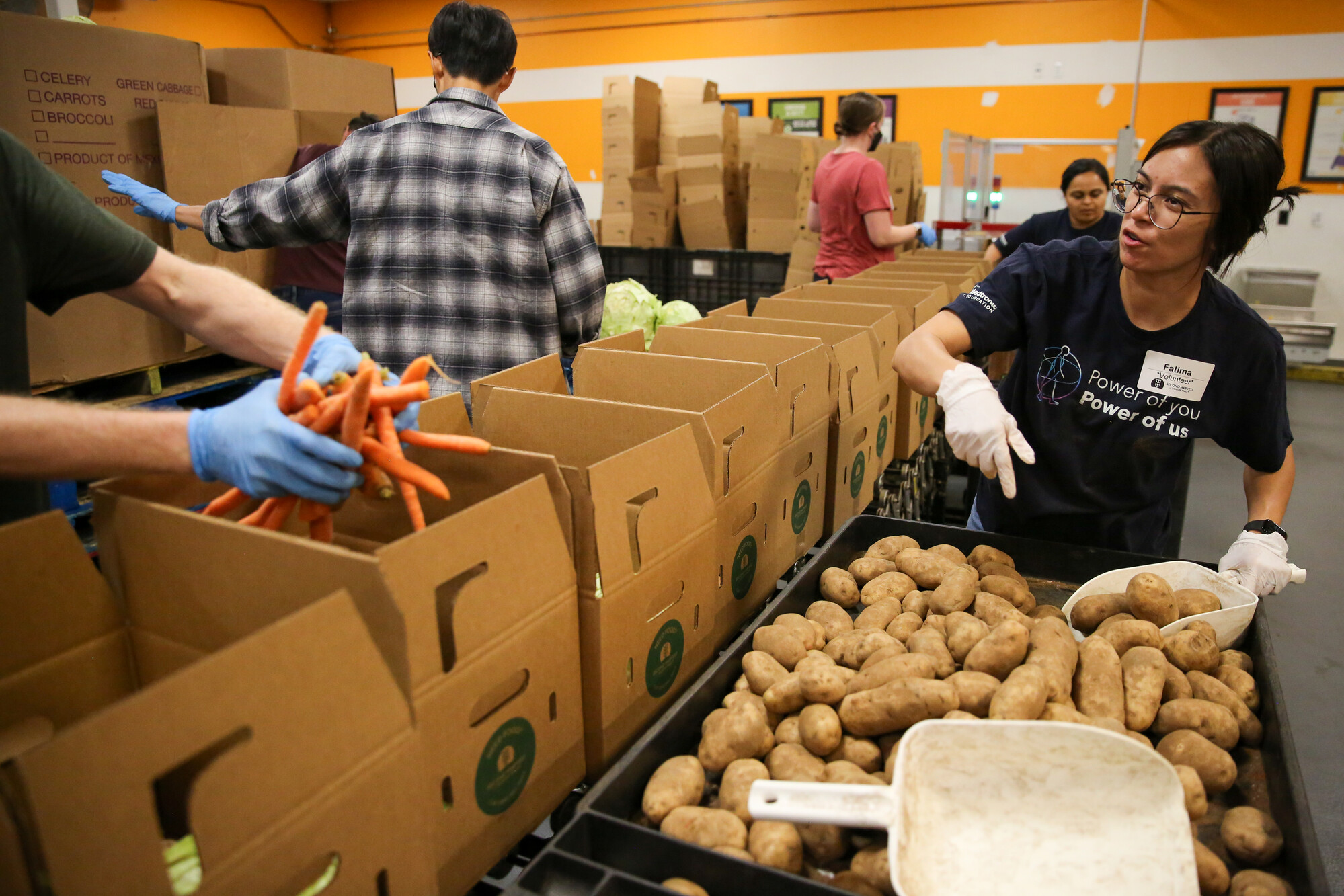
Alan Montecillo [00:03:46] Yeah, I mean, I feel like, at least in my life, this is all anyone’s talking about. This episode comes out a day before SNAP benefits are supposed to begin being dispersed for the month of November. But roughly 5.5 million Californians, about 42 million residents in the U.S. are set to not receive those benefits for actually the first time in the program’s history. So this is really, I mean, this is really code red in terms of food insecurity, in terms of people just struggling to get by. We’ve seen huge spikes in demand at food banks, lots of efforts to sort of help and fill in the gaps, but there’s really no substitute for the federal government with a program like SNAP.
Dan Brekke [00:04:27] There are visible signs of this in either people’s lives or out on the street. In Berkeley, we live around the corner from a food pantry. And there was a long line outside there yesterday. And so, I mean, that’s one sign. We know that there’s a record demand for a lot of food banks. And this is another sign of that. And I’ll also say, just on a personal level, we have a family member who sent us a text. And he and his family are dependent on SNAP, and his message to us a couple days ago was, we’re effed, and people are afraid. And then there’s some efforts on the local government front, which have far fewer resources of course than the federal government, to try to answer the need.
Alan Montecillo [00:05:13] That’s right. We are seeing efforts from local businesses, local governments, KQED and other news outlets have stories up listing the many restaurants that have volunteered to provide either free or discounted meals to the public. And then in terms of local government, San Francisco is actually going to cover the cost of SNAP benefits for. San Francisco residents only, for the month of November. Costs about $18 million, half of that coming from city money, half of it coming from private foundation money. The Alameda County Board of Supervisors has approved about 10 million extra dollars for the Alamedo County Community Food Bank. But, you know, I think everyone’s scrambling here and trying to do what they can.
Ericka Cruz Guevarra [00:05:57] Yeah, I mean, as you said, there’s no real replacement to these benefits at the federal level, but it seems like some stuff is happening locally. And I know Contra Costa County is also planning to give CalFresh recipients some food money if SNAP is paused as well. But I mean is there any sort of relief in sight at the dederal level for SNAP recipients?
Alan Montecillo [00:06:23] Well, the most straightforward way is for the shutdown to end. As of this taping, there is no indication that that is going to happen soon. There is currently a lawsuit. I mean, even as we’re taping this, there is a hearing in the US District Court in Boston. About two dozen states have sued the Trump administration, accusing them essentially of illegally withholding funds for SNAP in November. There is about $5 billion in contingency funds that the USDA has. Basically, these states are saying you can and should spend this money. The Trump administration actually originally said they would use these funds for the continuation of SNAP, but now says they can only be used for natural disasters. So that hearing is happening as we’re taping this, and obviously it’s coming down to the wire here with November 1st coming very, very soon.
Ericka Cruz Guevarra [00:07:13] Well, I’m sure many people will be watching what happens with that very closely. Thanks so much for bringing that story, Alan. And we’re gonna take a quick break, but when we come back, we’re going to get into the stories that Dan and I have been following this month. We’ll be right back.
Ericka Cruz Guevarra [00:07:38] Welcome back to the Bay’s October News Roundup, where we talk about some of the other stories that we’ve been following this month. And we’re gonna turn to you and your story now, Dan, which is about robo-taxis and driverless cars, which I feel like we’ve talked a lot about here on the show, but your story is about even more driverless vehicles coming to the bay area potentially.
Dan Brekke [00:08:01] You know, if you are in the KQED neighborhood anytime soon, any day of the week, you see a lot of these things, right? Waymo is going around the block, it seems like, all the time. But Uber and a couple of other companies announced that they are going to bring sort of a Uber-branded robotaxi to the San Francisco Bay Area. There’s a lot that’s not known about this, but we know who the partners are. It’s a company called Neuro. Which is down on the peninsula, and the other company is Lucid, and Lucid may not be a really familiar name, but we’ve seen their cars on the streets. They are kind of cool-looking electric cars, and Uber has a deal with them to deliver as many as 20,000 new vehicles, which will have this driving system, autonomous driving system from Neuro. And put them on the street in various markets. And we know that their plan first is to come to the San Francisco Bay Area. We don’t know exactly where yet, but that’ll come out probably over the next year.
Alan Montecillo [00:09:10] Uber has talked about robotaxis forever through multiple CEOs. This has been a dream of theirs, of the companies to have robotaxis and tech giants make pronouncements all the time. We’re going to do this. We’re gonna shake things up. We’re to change everything. So why is this announcement significant?
Dan Brekke [00:09:28] Well, I think there are a couple of reasons. I think one, it shows that the technology has matured to the point where it could actually be adopted on a much wider basis than it has in the past. When Uber is starting to talk about putting 20,000 cars on the street and Waymo is always talking about expanding, and they are expanding, throughout the United States, I mean, these are all demonstrations that this is becoming a much more widely adopted thing that customers are ready for. But the other thing is it raises a lot of questions about what’s happening to the Uber and Lyft drivers, the humans who have joined this workforce by the hundreds of thousands. There’s an estimate that there are 800,000 Uber and lyft drivers in California. What happens to them? And most of these people are doing gig work to fill in sort of a mosaic of employment. Roles that they have that they’re really depending on. To me, those are sort of the major issues that are raised by the increasingly rapid adoption of autonomous taxi services.
Ericka Cruz Guevarra [00:10:39] So what has to happen before these Uber-Robo taxis can hit the streets?
Dan Brekke [00:10:44] It may be a year or two before this actually is in business. They have all sorts of regulatory stuff to get passed first, right? The DMV actually has to look at the vehicle. They have to look the driving system and they have to sort of assign what they call an operational design domain. These are the areas that a company is actually allowed to operate within. So, you know, this venture by Uber we’ll still need to get you know, that kind of clearance before they can move on and then get permission to carry paying passengers in a driverless vehicle from the California Public Utilities Commission. Those approvals can take time, but the technology has matured and that there’s more market acceptance is one level of importance. And I also think that this is pointing the way toward the future of transportation in cities. We’ll see many, many more autonomous vehicles on the street over the next 10 years.
Ericka Cruz Guevarra [00:11:47] Well, Dan, thank you so much for bringing that story.
Dan Brekke [00:11:49] You’re welcome, my pleasure.
Ericka Cruz Guevarra [00:11:57] And we’ll finish up with my story about the comeback of the California condor, which is sort of a spooky Halloween-y resurrection story, if you will. After facing near extinction, the California Condor is making a comeback in the Bay Area. These birds are really important to the ecosystem. You know, they’re the ones who pick at dead carcasses and clean up the streets of-
Dan Brekke [00:12:30] They’re scavenger birds.
Alan Montecillo [00:12:32] It is gross, but it’s important.
Ericka Cruz Guevarra [00:12:34] And about a century ago, the proliferation of poisons for wolves and grizzly bears and other predators by sort of early pioneers led to higher death rates among these condors, who would eat these dead carcasses that were filled with poison. Have any of you seen what these birds look like, by the way?
Dan Brekke [00:12:58] I’ve seen them in the wild.
Ericka Cruz Guevarra [00:12:59] Really? Yeah. That’s very rare, I hear.
Dan Brekke [00:13:02] Well, maybe the best place to see them, relatively close to the Bay Area, is Pinnacles National Park, which is about 100 miles straight south of San Francisco.
Ericka Cruz Guevarra [00:13:12] But you gotta be pretty up there to see them, right?
Dan Brekke [00:13:14] Well, yes and no. I mean, the one time I saw them there, I was, we visited and we were in the parking lot and there were six really big birds circling slowly, slowly, slowly going up into the air. And they are pretty, as you described them, sort of Halloweeny, kind of spooky looking birds. You have this naked pink head and a big kind of ugly hook beak and… You’re really seeing a very old piece of history when you see these things.
Alan Montecillo [00:13:45] I have not seen the California condor, Ericka, can you explain why they’re coming back?
Ericka Cruz Guevarra [00:13:52] Yes, so I mean these are very, very rare birds to catch a glimpse of nowadays and they haven’t been seen in the Bay Area for more than a century now, but an effort to bring them back seems to have been working. There is a group called the Ventana Wildlife Society based in Monterey and they focus on trapping and breeding. And rehabbing these condors for release. So far, the Ventana Wildlife Society has tracked 30 different condors that took multiple trips to parts of Alameda and Contra Costa County in the last two years. And I mean, these are the first sort of movements of these condor in the Bay Area documented in over 100 years, if you can believe it.
Alan Montecillo [00:14:44] How does one rehab condors?
Ericka Cruz Guevarra [00:14:47] It’s really hard to do, actually, because these condors reproduce notoriously slow compared to other animals, actually. One condor will lay a single egg roughly every two years, and then they spend a year hatching and raising that chick before hatching another.
Dan Brekke [00:15:10] You know, this is one of the great come back stories, as you’ve said. I mean, there were, I mean I’ve heard different numbers, but there were about 17 condors left in the wild in the 1980s and they were brought in. They were all captured and brought in and subject to a captive breeding program. And now we have about 400 that are free flying. That Ventana group you talked about, they’ve been releasing condors and managing condors down there along the Big Sur coast. Sometimes I’ve heard, I haven’t seen this, you’re driving down highway one and there’ll be a condor sitting on the guard rail looking at you. Anyway, just the fact that they survived and the fact they’re still very, very fragile I think makes this a really cool story that they’ve made it back here.
Ericka Cruz Guevarra [00:15:56] And it definitely is a challenge keeping them alive. And while their return to the Bay is, I mean, really exciting because it hasn’t happened for so long, biologists believe that until their population grows substantially bigger, their work is really cut out for them.
Dan Brekke [00:16:13] You know, one of the threats to them ongoing has been the presence of lead in the environment. And one of sources of lead is a shot that hunters use. So there’s been an effort to sort of replace lead ammunition and shot with steel or copper. And so places like the Ventana Society are, they actually, you know, try to give them a smorgasbord to pick apart, instead of let them go out and. And get into a carcass that might be contaminated.
Ericka Cruz Guevarra [00:16:46] I will say, I just found out actually this morning that the Ventana Society has live camera, did you know this Dan? They have live streamed cameras of condors eating the dead carcasses of baby calves.
Dan Brekke [00:17:03] Yes, they’re being fed, right, you know, the circle of life.
Ericka Cruz Guevarra [00:17:11] Well, I guess if you need anything to watch this Halloween, check out that live stream. That’s it for my story and that’s also it for this edition of the Bay’s Monthly News Roundup. Before we let you go, Dan, any retirement plans for you?
Dan Brekke [00:17:32] Well, you know, I’m not sure journalists can ever retire. So I feel like I’m going to still be involved in journalism in some way. And because I’m a transportation editor, I’m gonna be using modes of transportation to travel. We’ll see where, maybe up to the Sierra right soon. I’m go to visit the Dallas area for Thanksgiving and then maybe, you now, visit these islands I’ve heard are out in the middle of the Pacific Ocean. Of 50th state, I think, and maybe we’ll see what’s happening out there.
Alan Montecillo [00:18:06] I went back and counted the number of times you were on the bay. I did not ask AI for this, I went and checked. And I believe this is your 21st appearance on the Bay. I don’t know if that’s the most appearances, it’s got to be in the top three. And I know how much you hate receiving direct praise on mic, but we’ve so appreciated your work with us. Every time you come on, we always learn so much. And I know our listeners appreciate it too.
Dan Brekke [00:18:31] Well, you know, 21 is a great number in Las Vegas, okay, I’ll say that, and for my part, I’ll just say that I really appreciate how seriously you’ve taken the mission of serving our audience and really getting into aspects of stories that sometimes we can’t tell as completely as we want to. And I absolutely love the way you can turn sometimes a halting account of something from somebody like me into something that sounds like such good radio, and you’re also really nice folks.
Ericka Cruz Guevarra [00:19:13] Well, our show is nothing without reporters like you, Dan. So, thank you so much for everything.