Ericka Cruz Guevarra [00:02:33] I know you met someone out there from Yosemite Conservancy who is kind of trying to fill that gap. Can you tell me about what Yosamite Conservency is and what they’re really trying to do out there?
Sarah Wright [00:02:47] Yeah so Yosemite Conservancy is a non-profit partner of the park and every national park has these sort of non-profits, friends of groups, and the conservancy for the past couple years actually has been staffing a welcome center in the valley so right now that center is fully staffed with employees.
Cory Coehring [00:03:06] Thank you again.
Ericka Cruz Guevarra [00:03:09] Cory Goehring who’s a senior naturalist with the non-profit told me that they’ve seen a bit of a longer line than usual maybe at the Welcome Center given that the regular visitor center is not open and there aren’t as many rangers roaming around so they’re trying to fill in that gap of kind of educating and answering questions for people.
Cory Coehring [00:03:30] We’re providing just general park information right now. You know, what are the sites for people to see? We’re bringing out maps and helping people navigate around their national park and enjoy their visit. The most frequent question, of course, is the most frequent question at almost everywhere is where’s the bathroom? But yeah, a lot of questions of what is open, what is accessible that we can do right now in the park. So what we’re seeing now is the continuation of our work that we normally do, but just our lines are a little bit longer now that we don’t have our colleagues from the National Park Service by our side.
Ericka Cruz Guevarra [00:04:05] So Sarah, it’s been nearly a month since the government shutdown started. Remind us why Yosemite is still open in the first place.
Sarah Wright [00:04:15] The sort of plan that the Trump administration came up with in case of a shutdown has basically instructions for any park that can stay open, should stay open. And it really is prioritizing sort of the visitor experience. So at a place like Yosemite, the park is open and anybody who is working sort of with or without pay. Is going to be focused on things like taking out the trash, cleaning the bathroom, kind of making sure that visitors are having an okay experience. What isn’t happening is all the work that the furloughed scientists, biologists, naturalists are normally doing in the park that isn’t as visitor-facing. So research or trail maintenance, for example. And so the parks are open, people are able to recreate, but what I’ve heard from from folks who have worked in parks for a long time is that there is a sort of underneath that’s just not happening.
Ericka Cruz Guevarra [00:05:20] And of course we’re hearing about some of these horror stories as well, of people sort of taking advantage of the park still being open without park rangers around, the sort of stories of these free-for-alls, I mean, how do these horror-stories sort of square with what you and also the visitors that you’re speaking with out there are really scene.
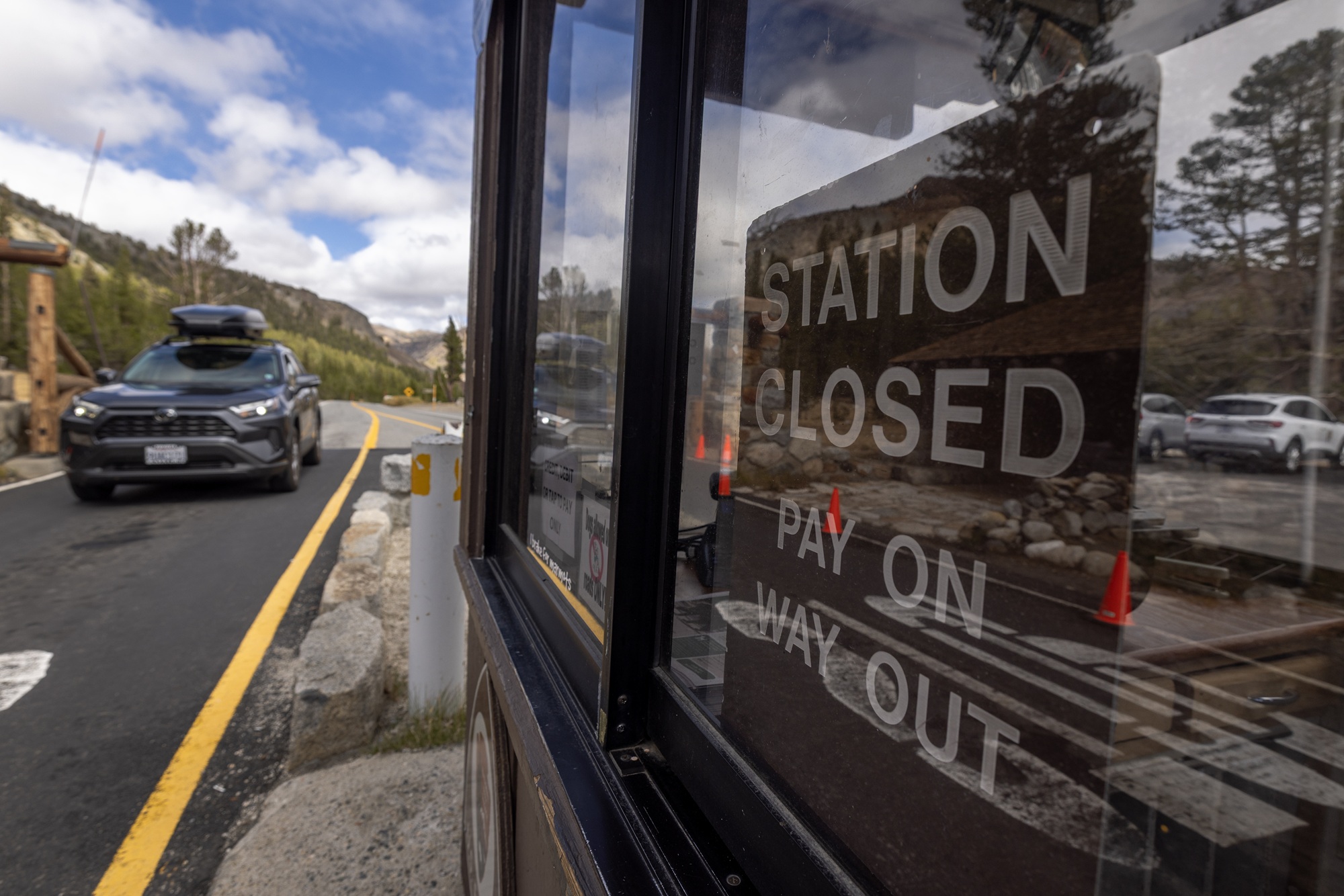
Sarah Wright [00:05:44] Yeah, so a lot of people that I’ve spoken to and I have noticed myself have said, things seem normal. And I think that that’s true. The most reported thing that I’ve heard is, it seems a little busy for October. And some people attribute that to the shutdown, not charging fares at the entrance has attracted people. The fall colors are really popping right now. And it’s also peak climbing, Susan. So all of those things might, you know, have some influence on why it’s so busy. I could see definitely with fewer rangers roaming around and just the knowledge that it’s during a government shutdown and there’s less enforcement ability that people would be more inclined to try to bend or even break the rules in terms of camping in their cars or bringing dogs on trails or flying drones. I personally haven’t seen this activity yet, but I have talked to a couple of people who say that they have. If you’ve ever been to Yosemite, there’s sort of the valley and there’s the upper areas and right now the valley seems to be pretty well maintained and pretty in control and it’s possible that these other incidents are kind of happening one-off in the higher elevations of the park.
Ericka Cruz Guevarra [00:07:06] And what about the bathroom situation? I feel like I gotta ask you about that. What are the bathrooms looking like?
Sarah Wright [00:07:12] All the bathrooms that I’ve used have been great. So no complaints there. I also, yeah, I haven’t seen any major trash overflowing, no major sewage issues. And to be clear, the priority of the Trump administration during the shutdown has been to keep on essential staff to deal with these types of maintenance issues so that visitors can have an enjoyable experience. So. That is what they’re prioritizing, say, over having a Ranger stationed at an entrance.
Ericka Cruz Guevarra [00:07:47] And I know you talk with two tourists who had a reservation to Yosemite. Can you tell me about Katie Cook and Susan Bennet?
Katie Cook [00:07:57] I mean, I’ve traveled with other people into Yosemite over the years, but this is our first trip together.
Susan Bennet [00:08:03] We’re sister in-laws.
Sarah Wright [00:08:06] Oh my gosh, how sweet.
Katie Cook [00:08:07] She’s married to my brother. Thank goodness for her.
Ericka Cruz Guevarra [00:08:11] So Katie and Susan are sister-in-laws and I met them at the Yosemite Valley Lodge at the courtyard there.
Susan Bennet [00:08:18] Before I came from Monterey, I read all sorts of stuff online about how all the scary things about people squatting in campgrounds and illegal base jumping, people forcing their way up on the half.
Ericka Cruz Guevarra [00:08:31] They told me that they had heard the horror stories, and they almost didn’t come to the park, but their main motivation for almost canceling their trip was they didn’t want to be part of the problem.
Susan Bennet [00:08:42] So we thought about it. And what if the bathrooms are closed? And we were lucky enough, my husband Dave and I, had a girlfriend that came in the beginning of the week. So we were in contact with her.
Ericka Cruz Guevarra [00:08:54] You know, they said that they actually reached out to folks working in and around the park who said, look, things are okay, it’s a good experience here still. And so they said they’ve had a great visit so far.
Katie Cook [00:09:07] Our experience here has really been quite pleasant. I’m just astounded with all the fall colors. They’re just gorgeous.
Ericka Cruz Guevarra [00:09:15] They felt that sort of the reports of illegal activity were a bit overblown.
Susan Bennet [00:09:21] Things were okay in the campground areas in the happy aisle areas you know all the camp grounds are there and i knew there wouldn’t be anybody at the main gate knew that there would be a bit there but we had a we had arranger at the camp ground so it’s all good
Sarah Wright [00:09:39] You know, one thing I talk to Corey Goehrig at Yosemite Conservancy about is if you are going to come right now, just be a good steward of the park. And I feel like they were really taking that to heart.
Susan Bennet [00:09:52] Part of my research online was I stumbled upon the Yosemite Conservancy website, and they were animate about, you know, please consider donating your entrance fee to the conservancy.
Ericka Cruz Guevarra [00:10:12] Coming up, the long-term effects of the shutdown on Yosemite and park staff. Stay with us.
Ericka Cruz Guevarra [00:10:29] Sarah, it seems like things are mostly normal for visitors at Yosemite, but as you mentioned earlier, there’s a lot of stuff not happening sort of beneath the surface that maybe most visitors are not privy to. How long do you think this can go on, and what happens if this drags on even longer?
Sarah Wright [00:10:51] Well, I think in some ways there is a bit of luck in the timing of this shutdown, you know, here in California, the winter months are when a lot of our national parks go a little bit dormant, although that’s not true for Southern California, of course, but if this were the peak of summer, I would be really worried because the impact I think would really start start to pile up. As far as how long can it go on, I mean, I spoke to some folks, for example, a former superintendent at Channel Islands who told me, you know, that’s a whole month of research that’s just lost. So like when we look back at the records of the fish biology or the algae biology, like there’s just going to be a month of records missing. So it’s kind of a question of how much longer are we willing to just kind of not be investing in the future. Of these parks and instead sort of band-aiding over them for the full purpose of the visitor experience. The worries that we’ve actually seen in the Bay Area, for example, with Muir Woods and Alcatraz, what has happened as a result is private companies have stepped in to reopen those parks. And so it’s really a question of who’s going to foot the bill in the long term. And here in Yosemite, they’re using, you know, fee dollars from things like campground fees to continue funding these sort of visitor-facing… Expenses. And that also will, you know, presumably run out at some point.
Ericka Cruz Guevarra [00:12:31] And I mean, do we know anything also about morale among National Park staff as well? I mean the Trump administration has also been talking about more layoffs for the National Park Service, right?
Sarah Wright [00:12:43] The only national park service employees, including Rangers, that I’ve been able to speak to have only been able speak to me anonymously. Staffing has been decimated over the course of this year. It’s down by 24% estimated amount throughout all national parks. So the Trump administration, as we know, has also been trying to permanently eliminate some positions during the furlough. And that has a lot of people concerned that, you know, places like Yosemite are already working off of a barebone staff, and if you actually lay off the folks that are currently furloughed, that’s just going to cut even deeper to a point that is not at all sustainable.
Ericka Cruz Guevarra [00:13:29] I guess Sarah, I mean, what is your main takeaway for people who are interested in visiting Yosemite, but I mean who are also hearing, I mean what you just said about what this shutdown is gonna mean for the parks in the long run heading into the winter.