Sponsor MessageBecome a KQED sponsor
upper waypoint

East Bay Workers Now Earn More, But Many Still Struggle to Make Ends Meet

Save ArticleSave Article
Failed to save article

Please try again

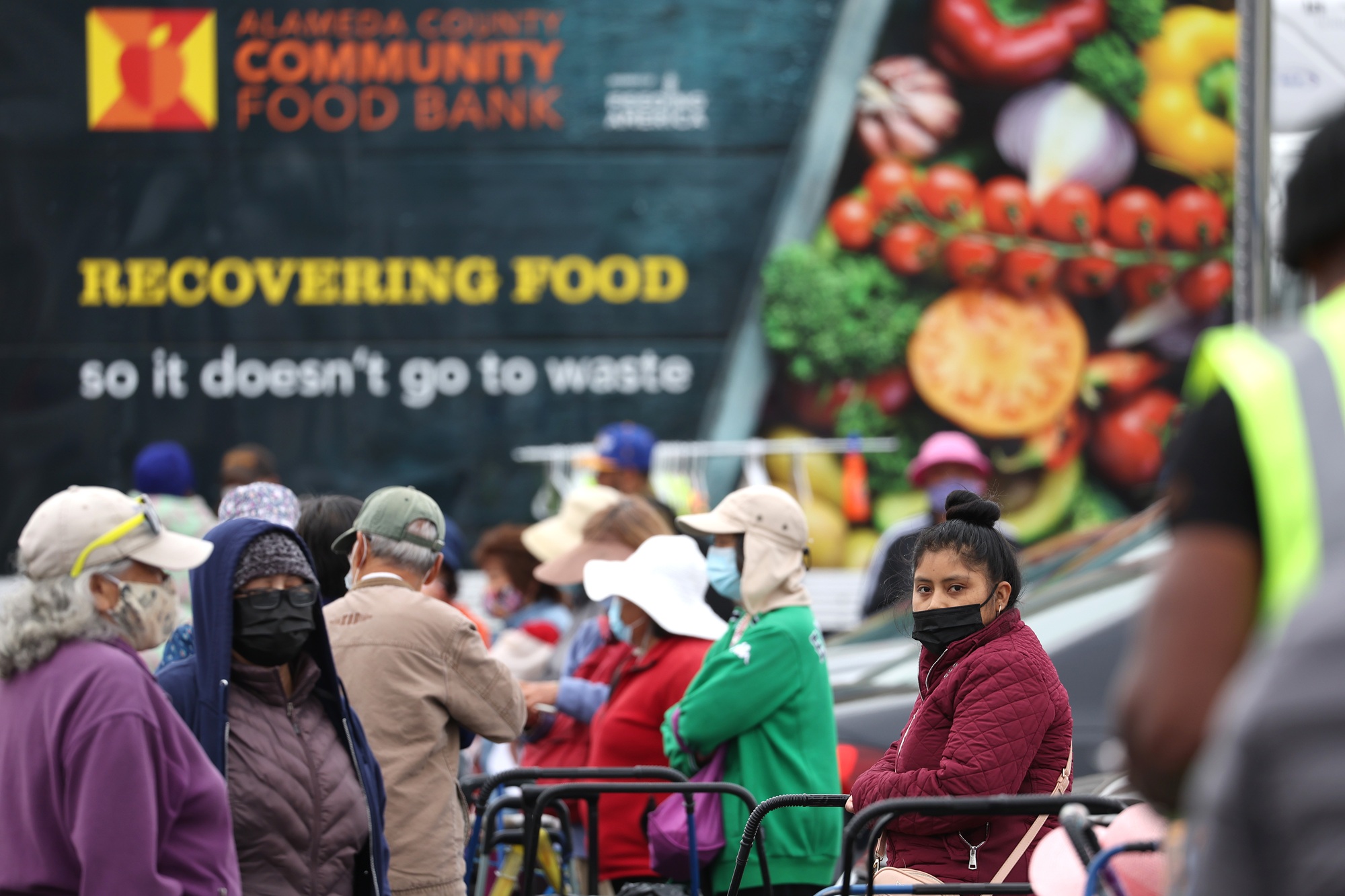
People wait in line to receive packages of food during an Alameda County Community Food Bank food giveaway at Acts Full Gospel Church on July 15, 2022, in Oakland, California. Over half of East Bay workers were not paid enough to support a four-person household, UC Berkeley researchers found.  (Justin Sullivan/Getty Images)

Workers’ wages in Alameda and Contra Costa counties rose during the COVID-19 pandemic recovery, but the gains were not enough for many to afford the region’s high cost of living, according to a UC Berkeley Labor Center report published Tuesday.

Researchers estimated that the median hourly wage in the East Bay region reached more than $35.43 in 2023, nearly $3 higher than in 2019, adjusting for inflation. Despite the higher individual income, which added up thousands of dollars per year, the number of workers living at or near poverty increased to nearly 97,000, or one in 10.

“The wage gains are really important and that is a true bright spot in the story, but in the aggregate, it didn’t really move the needle,” said Savannah Hunter, a senior researcher at the UC Berkeley Labor Center who co-authored the report. “A lot of people still don’t make enough to make ends meet in the East Bay.”

Sponsored

More than half of East Bay workers weren’t paid enough to support a household of two full-time worker parents and two children. Among renters, about one-third of workers struggled to afford housing costs, according to the report’s findings.

Latino and Black workers disproportionately experienced lower incomes than whites and Asians. Hispanic immigrants earned a median hourly wage that rose to just $22, the lowest when compared to other race and ethnicity groups, as well as other U.S.-born and foreign-born workers.

The end of pandemic-era relief programs in 2022, such as stimulus payments and tax credits, likely dimmed the higher earnings employers paid to attract and retain workers in a tight labor market, Hunter said. The federal government’s choice to let those social support policies expire led to a spike in poverty nationwide, especially for children.

Stasia Hansen, research and policy director with the East Bay Alliance for a Sustainable Economy, said state and local governments must invest public dollars to make housing more affordable and ensure that employers in industries where wage theft is common pay workers what they are owed.

“Too many East Bay workers are trapped in poverty while working full-time. That’s honestly a policy failure; it’s not an accident. That is something that we have the power to change,” Hansen said. “We are seeing so much wealth in the East Bay and more broadly the Bay Area, and the concentration of that wealth is not going into our immigrant and Black communities.”

Hansen worried that the Trump administration’s steps to shrink healthcare access and the social safety net could exacerbate poverty. Trump’s ‘Big Beautiful’ spending bill, for instance, is expected to cut about $184 billion from the Supplemental Nutrition Assistance Program through 2034.

“That’s going the wrong direction for what we need for our workers and for our communities and families in the East Bay,” she said.

lower waypoint
next waypoint