This partial transcript was computer-generated. While our team has reviewed it, there may be errors.
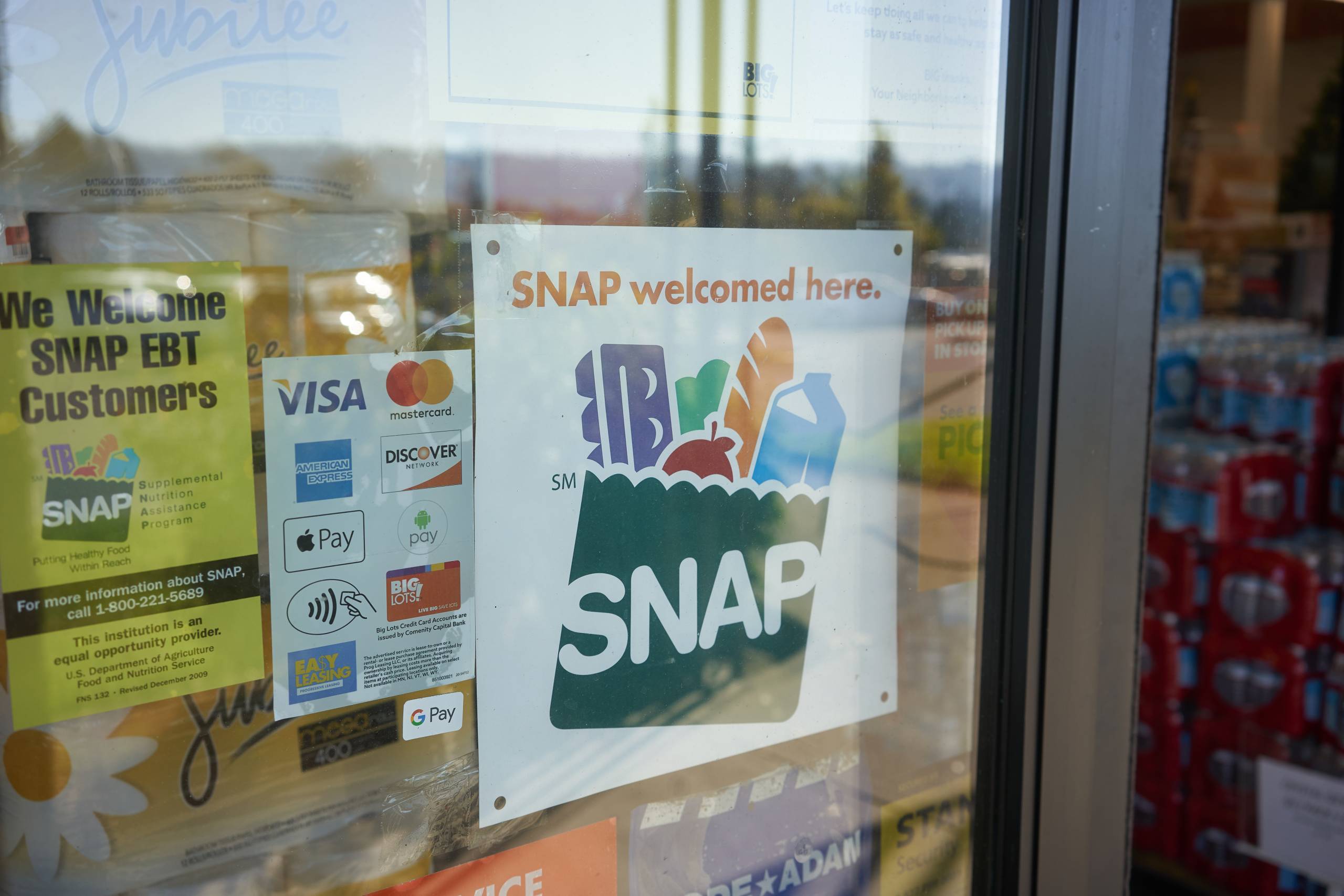
Alexis Madrigal: Welcome to Forum. It may be hard for many of our listeners to believe, given the wealth of our region, but there are a lot of hungry people in the Bay Area. Hundreds of thousands of our neighbors do not have enough to eat, and the primary place they can turn for governmental help is SNAP — which you might remember as food stamps, or as it’s known in California, CalFresh.
That program received a massive cut in Donald Trump’s budget bill, and it’s going to have a major impact on Californians, especially older people and children who rely on CalFresh.
To talk about this dire situation, we’re joined by Lauren Bauer, a fellow in economic studies at the Brookings Institution. Bauer is associate director of the Hamilton Project, and her research focuses on social safety net policies. Welcome, Lauren.
Lauren Bauer: Good to be here.
Alexis Madrigal: We also have Rebecca Piazza, executive director of Safety Net Strategy with Code for America. She served in the Biden-Harris administration as chief of staff at the USDA’s Food and Nutrition Service, modernizing delivery of SNAP, WIC, and other nutrition programs. Welcome, Rebecca.
Rebecca Piazza: Thank you. Happy to be here.
Alexis Madrigal: So, Lauren, just for people who aren’t familiar with SNAP, can you explain how it works? What does it do, and how is it funded?
Lauren Bauer: SNAP right now is fully funded by the federal government. When people are eligible — meaning they have low enough income or they’ve just lost their job — they can apply for benefits. They receive what is essentially grocery money on a debit card to spend in their local grocery stores. That’s the program. It’s really simple, straightforward, and efficient.
Alexis Madrigal: And just give us some of the numbers. How many people use it? What’s the scale of the program?
Lauren Bauer: It’s a pretty big program. Right now, about 42 million people in the U.S. use SNAP, and about 5.5 million people in California. That’s about 14 percent of California’s population.
Alexis Madrigal: And what are the roots of the program?
Lauren Bauer: The roots are very old. As you said, it used to be the food stamp program. But for a long time now, it’s just been grocery money that people can spend to buy what their family needs. They can address allergies, kids’ preferences, the kind of milk they like. When families are in need and they qualify, they get these resources and spend them how they like.
Alexis Madrigal: And how is this different from other food programs people may have heard of? Food banks, for example, or WIC?
Lauren Bauer: WIC provides a prescribed package of goods, with some flexibility around fruits and vegetables, but it’s more limited. Charitable food assistance — food banks — provide commodities and groceries, but you can only choose from what’s available. Another piece of the safety net is prepared meal programs like school breakfasts and lunches. So the U.S. food safety net is a combination: SNAP, which lets you buy groceries; WIC, with a list of items; prepared meals; and charitable food assistance.
Alexis Madrigal: Rebecca, before these recent changes to SNAP, was the benefit sufficient to cover people so they didn’t go hungry?
Rebecca Piazza: SNAP is a supplemental nutrition assistance program — it’s meant to supplement people’s grocery budgets. But in practice, for many families it constitutes their entire grocery budget. A lot of people rely on it for the majority, if not all, of their food purchases.
Alexis Madrigal: And in your role in the Biden-Harris administration, there was a big effort to expand access to SNAP. Does everyone who’s eligible automatically get it?
Rebecca Piazza: No. People have to apply, and while SNAP has relatively high participation compared to other programs — about 85 percent of eligible people — that still leaves many who don’t get it. WIC, by comparison, only reaches about half of eligible participants. The SNAP application is lengthy: many forms, pay stubs, other documents, and even an interview. Each step is a potential barrier where people can fall out of the process and miss out on benefits.
Alexis Madrigal: So, Lauren, what are the changes that were made to the program in Trump’s budget bill?
Lauren Bauer: Right now, SNAP is fully federally funded. The bill changes that. If states have a payment error rate above a certain percentage, they’ll now be required to cover benefits — destroying SNAP’s role as an automatic stabilizer, which expands when the economy contracts.
The bill also changes work requirements. Older participants, parents of teenagers, homeless people, veterans, and youth who’ve aged out of foster care will all now have to meet a work requirement to receive benefits. It restricts states from getting waivers from those requirements, even if the labor market is weak.
It also shifts costs: currently, administration is split 50-50 between states and the federal government. Under the bill, states would cover 75 percent.
Alexis Madrigal: But there’s always been a work requirement in SNAP, right?
Lauren Bauer: Yes. Since 1996, there’s been a “time limit” requirement. For certain participants, if they fail to meet requirements for three months, they lose benefits until they comply or until three years pass.
Alexis Madrigal: And this “payment error rate” that the bill emphasizes — what is that?
Lauren Bauer: It’s not a measure of fraud or whether states fail to enroll people who qualify. It’s about whether the state correctly determines the amount of benefits. If they’re off by more than $58, that counts as an error.
Alexis Madrigal: Why make that such a focal point?
Lauren Bauer: States have always been monitored for error rates, and there are policies to help them improve. But tying state financial liability to benefit error rates is unprecedented and untested. It’s never been done before, and researchers are scrambling to figure out what it could mean.
Alexis Madrigal: We’re going to keep talking about the radical cuts made by the Trump administration and Republicans to SNAP — the social safety net program that addresses hunger among the poor. In California, it’s called CalFresh.
We’re joined by Lauren Bauer of the Brookings Institution and Rebecca Piazza of Code for America. We also want to hear from you. Have you or someone you know received CalFresh or SNAP benefits? How did they help? Are you worried about the changes being made to the program?
Give us a call at 866-733-6786. You can also email [email protected] or find us on social media at KQED Forum. I’m Alexis Madrigal. Stay tuned.