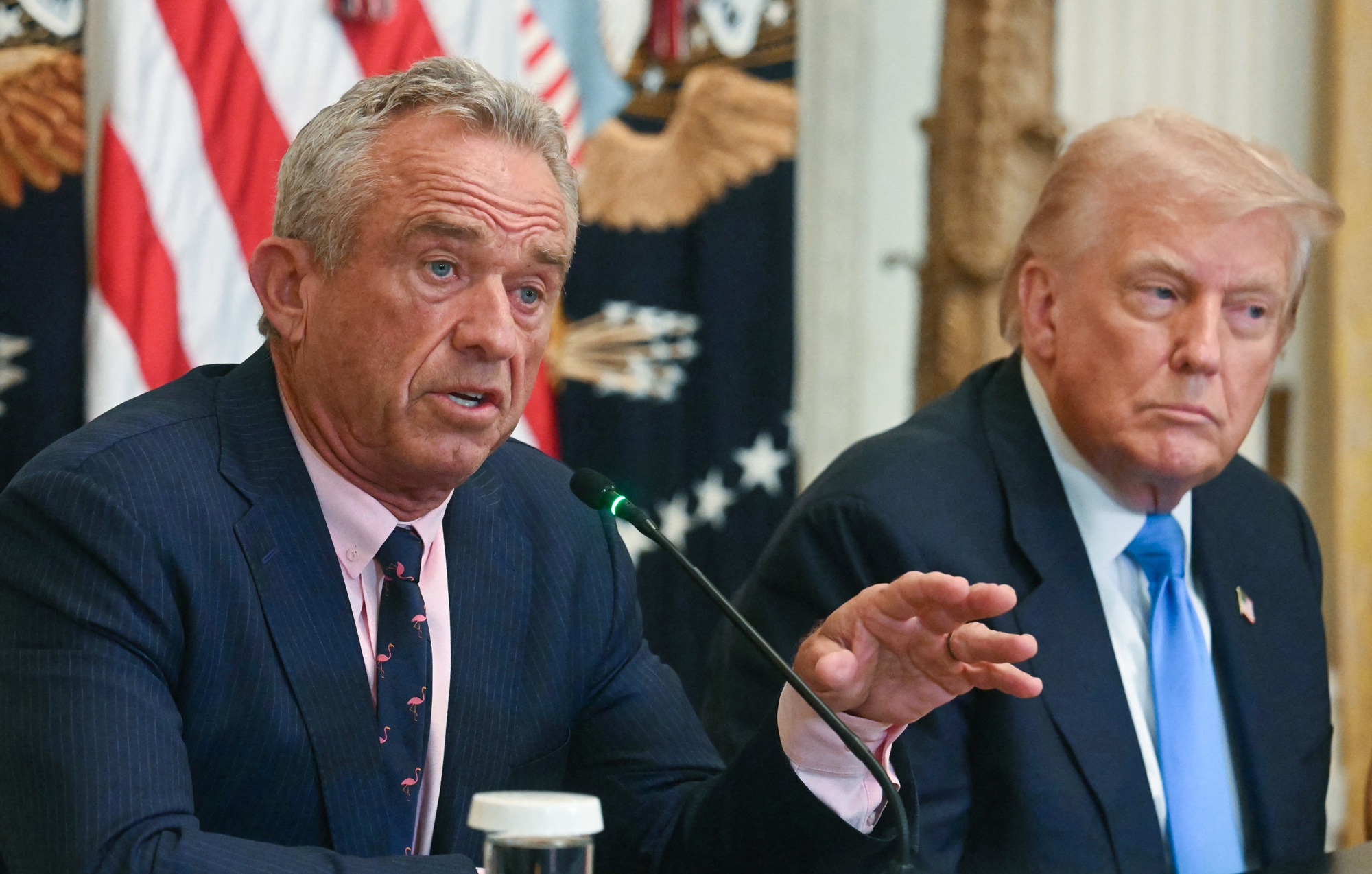
On Monday, Trump suggested splitting the MMR vaccine’s administration into multiple visits.
“Don’t let them pump your baby up with the largest pile of stuff you’ve ever seen in your life, going into the delicate little body of a baby, even if it’s two years, three years, four years, you just break it up into, I would say five, but let’s say four, four visits to the doctor instead of one.”
Tager-Flusberg said Trump raising the concern is “likely to raise fear among mothers, confusion and chaos for pediatricians.”
“This is really not what our society needs right now,” she added.
Tager-Flusberg said that while a “promising” small-scale study showed language improvement for a group of children who were administered leucovorin, the treatment has — at best — “weak evidence in support of it.”
She added that researchers need to build on early studies with a large-scale, randomized controlled trial and that they need to know what outcomes can be expected, dosage levels and which children to observe.
“We need a study to investigate this right now, far before the FDA … should be approving this medication,” Tager-Flusberg said. “They haven’t done this for a single other medication in the history of autism.”
Transcript:
MICHEL MARTIN, HOST:
We wanted to hear more about the science behind some of these claims, so we’ve turned to Helen Tager-Flusberg. She is the director of the Center for Autism Research Excellence at Boston University and founder of the Coalition of Autism Scientists. And as Leila said earlier, she’s been studying autism for decades. Professor Tager-Flusberg, thanks so much for joining us once again.
HELEN TAGER-FLUSBERG: Thank you for inviting me.
MARTIN: Can we just back up for a second? What is autism?
TAGER-FLUSBERG: So autism is a neurodevelopmental disorder which impacts the development of a child’s cognition, their language, their social engagement, and, in many cases, also affects sensory processing. But there’s wide variability in both the severity and different presentation of this cluster of behavioral symptoms.
MARTIN: So at Monday’s White House announcement on autism, we heard the president offered this advice.
(SOUNDBITE OF ARCHIVED RECORDING)
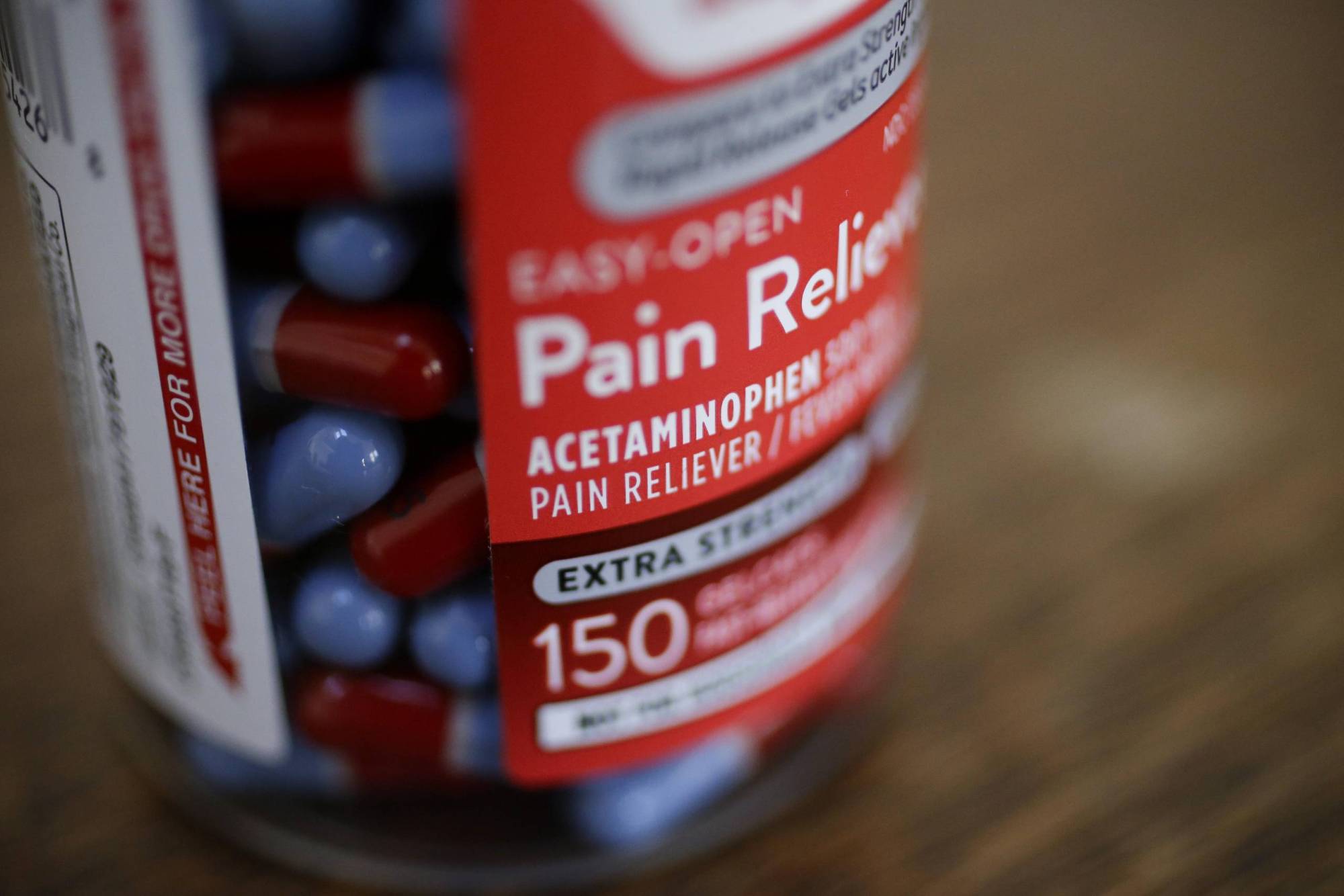
PRESIDENT DONALD TRUMP: Fight like hell not to take it. There may be a point where you have to, and that you’ll – you have to work out with yourself. So don’t take Tylenol.
MARTIN: So what does the science say about the use of acetaminophen during pregnancy?
TAGER-FLUSBERG: Well, I think, as Jon just reported, it’s a much more complex story. If there is an association, it’s small, it’s limited and it interacts, most likely, with the genetics, which is the main contribution to what causes autism. So there’s absolutely no evidence out there to support the kind of strong statement that we heard from President Trump.
MARTIN: The president of the American College of Obstetricians and Gynecologists, or ACOG, said that suggestions that acetaminophen use in pregnancy causes autism is, quote, “irresponsible when considering the harmful and confusing message they send to pregnant patients.” I want to focus on the harmful here. What is harmful about this message?
TAGER-FLUSBERG: Well, what’s harmful is we have to think about why pregnant women are taking Tylenol. And the reason they’re doing that is they have a fever. They have an infection, most likely. And what we do know from the science is that both fever and infection in mothers during pregnancy poses a more significant risk to the developing fetus than Tylenol ever would. And so that’s why we recommend that mothers do their best to treat the fever and infection and take Tylenol, which is the safest of all medications to treat such conditions.
MARTIN: You sound – forgive me, you’re obviously a scientist. You’ve been working on this. And your job is to, you know, do the research, study the facts. But you sound very worried about this, as do other scientists who’ve worked in this field. Why are you so concerned? Why are you and other people who’ve worked in this field so worried about this?
TAGER-FLUSBERG: I’m so worried because this is a very significant distortion of what we know in the scientific literature. And it’s a distortion with a message that is likely to impact millions of lives of pregnant women right now, mothers of autistic children who are going to be so fearful that this is what they did to cause their child’s autism, which is absolutely not the case. And of course, they’re just going to raise – it’s just this kind of fear mongering that is not based in the scientific evidence, which is so appalling.
MARTIN: So let us talk about the vaccines now. At the announcement, the president also suggested changing the pace of childhood vaccines. This is what he said.
(SOUNDBITE OF ARCHIVED RECORDING)
TRUMP: It’s so important to me to take – see the doctor four times or five times for a vaccine. Don’t let them pump your baby up with the largest pile of stuff you’ve ever seen in your life, going into the delicate little body of a baby. Even if it’s 2 years, 3 years, 4 years, you just break it up into, I would say five, but let’s say four. Four visits to the doctor instead of one.
MARTIN: So what about this, the whole question of the vaccine schedule? Is there research to speak to this question?
TAGER-FLUSBERG: Though all the research on vaccines shows that the measles-mumps-rubella vaccine, which is the combination vaccine that the president was referring to, is a perfectly safe combination. And so raising concerns about that is, again, completely irresponsible and likely to raise fear among mothers, confusion and chaos for pediatricians. This is really not what our society needs right now. These vaccines are perfectly safe. And we have completely debunked any link between vaccines themselves, the vaccine schedule and the risk of autism. There is no link.
MARTIN: What about leucovorin, which the administration touched on in its HHS announcement as a potential treatment for speech-related deficits associated with autism? Is there evidence for that?
TAGER-FLUSBERG: Well, there was a small-scale study that did show improvement in language in a group of children who were administered leucovorin. And that, I would say, is a potential promising start. But the way things go is we need to take these early promising studies, and we need to build on them. And now what the field absolutely could use is a large-scale, randomized, controlled trial with a rigorous defining of end points, what outcomes we think we can expect and thinking about which children, what kind of dosage and so forth. That’s what we need. We need a study to investigate this right now, far before the FDA is like, it should be approving this medication. They haven’t done this for a single other medication in the history of autism. And it’s alarming that they would choose to do so for leucovorin, which really has, at best, weak evidence in support of it.
MARTIN: Before we let you go, here’s one last bit from the president speaking on this announcement.
(SOUNDBITE OF ARCHIVED RECORDING)
TRUMP: You know, I’m just making these statements from me. I’m not making them from these doctors ’cause when they talk about, you know, different results, different studies, I talk about a lot of common sense. And they have that, too.
MARTIN: So before we let you go, what about parents who say, I am confused now, what do I do?
TAGER-FLUSBERG: I would say what parents need to do is to step back and think about who they’re hearing the messages from. Are they going to listen to people who are not physicians, who have no expertise in autism, or are they going to turn to their medical providers, their treatment providers and ask them what their view of the current science is? That’s what they should be doing. The physicians know.
MARTIN: That is Helen Tager-Flusberg. She’s the director of Boston University’s Center for Autism Research Excellence. Thank you so much for joining us.
TAGER-FLUSBERG: Thank you.