Episode Transcript
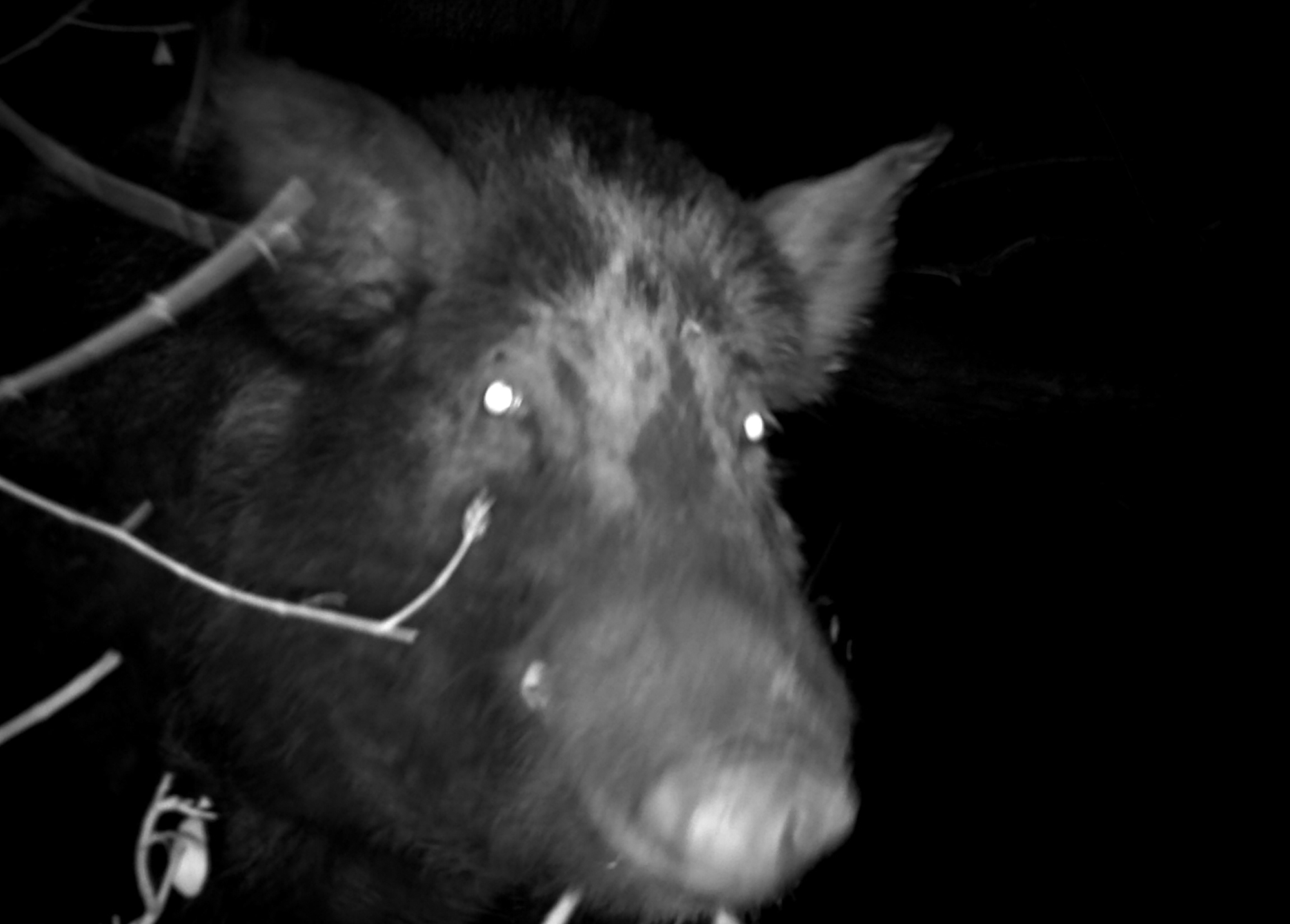
Katrina Schwartz: South Bay residents have been struggling with a weird garden invasion. Not hungry caterpillars, or cats pooping in the vegetable bed. No, think bigger. Think pigs.
News Clip 1: Wild boars are increasing their range across open spaces in the Bay Area this year. From parkland to backyards, to water district properties and hiking trails.
Katrina Schwartz: Wild pigs travel in packs, rip up suburban lawns and mess with sensitive habitats
News Clip 2: OK, it has plagued Morgan Hill for years, the periodic pig fest, as in wild pigs feasting on neighborhood lawns and fields…
News Clip 3: Look at this big clump of lawn. We talked to one homeowner who says he woke up to this this morning, after pigs turned his lawn upside down.
Katrina Schwartz: Experts say the problem has gotten worse in recent years, especially after a series of wet winters has left moist soil teeming with grubs — a pig’s favorite food. Travis Mowbray of Menlo Park has followed these headlines. He’s never seen a boar, but he’s concerned about the effect they’re having on the natural spaces he loves.
Travis Mowbray: I’ve read that invasive wild boars present big problems for endemic wildlife, and for farmers, and for homeowners in the Bay Area. Do mountain lions or perhaps coyotes hunt these wild boars? Could they be convinced to try?
Katrina Schwartz: He’s even got some ideas to help entice predators to take on the pigs.
Travis Mowbray: I was thinking maybe recipe cards or a sauce?
Katrina Schwartz: All kidding aside, the boars ARE out of control. Today on the show, we’ll take a trip to see some of their destruction, learn how they got here in the first place, and gather some ideas on how to get rid of them. I’m Katrina Schwartz and you’re listening to Bay Curious. Stay with us.
Sponsor message
Katrina Schwartz: Wild boars have been wrecking havoc in communities like San Jose, Morgan Hill and Lafayette for years. They can do a number on a lawn, but they’re also causing problems for wildland protection in some of our nature preserves. KQED’s Rachael Myrow did some rooting around to find out more.
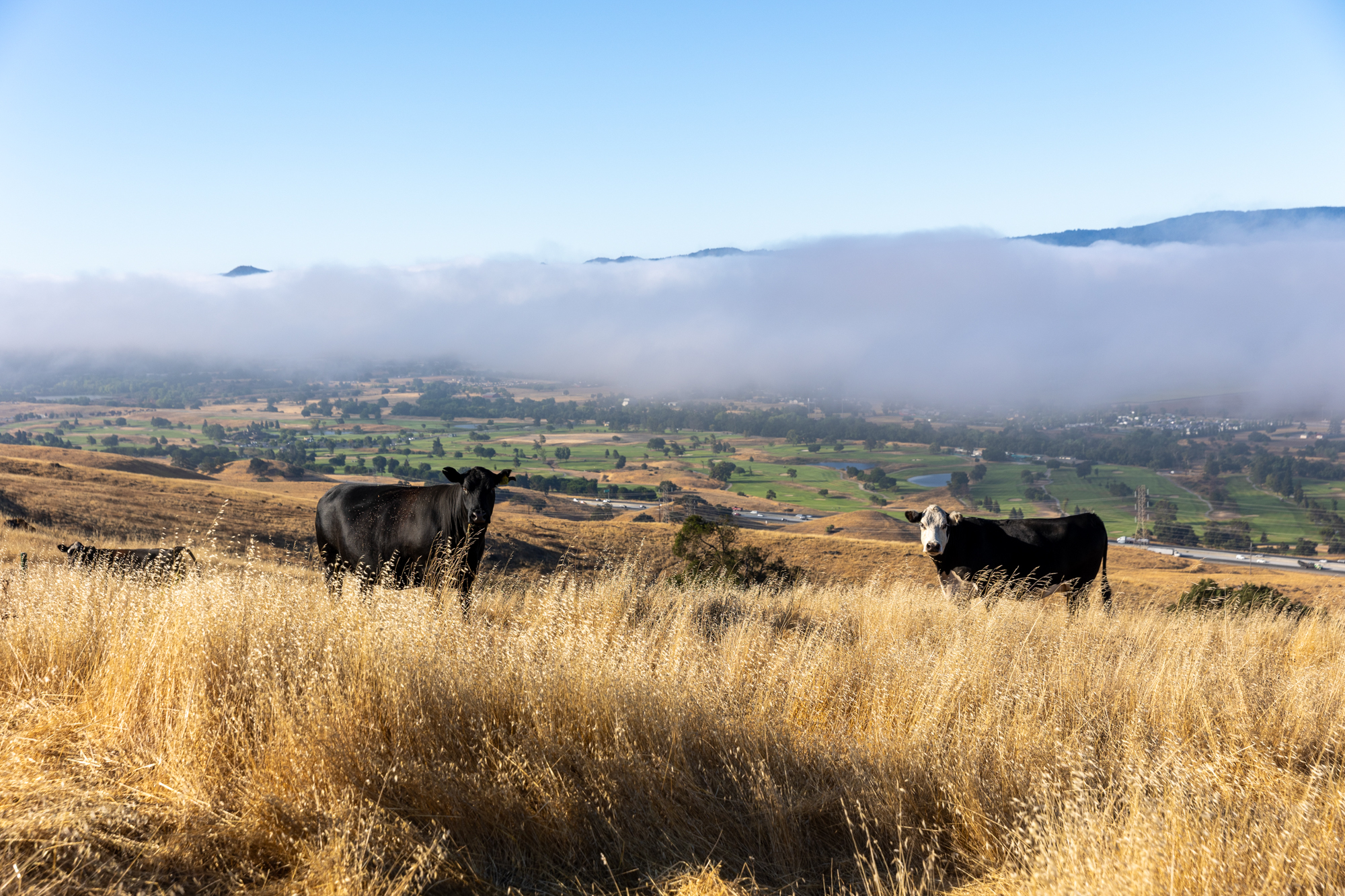
Rachael Myrow: Our question asker, Travis, and I met up for a tour of wild boar damage at the Máyyan ‘Ooyákma — Coyote Ridge Open Space Preserve, located in the Diablo Range south of San Jose.
Door slams sounds of driving in a truck over bumpy ground
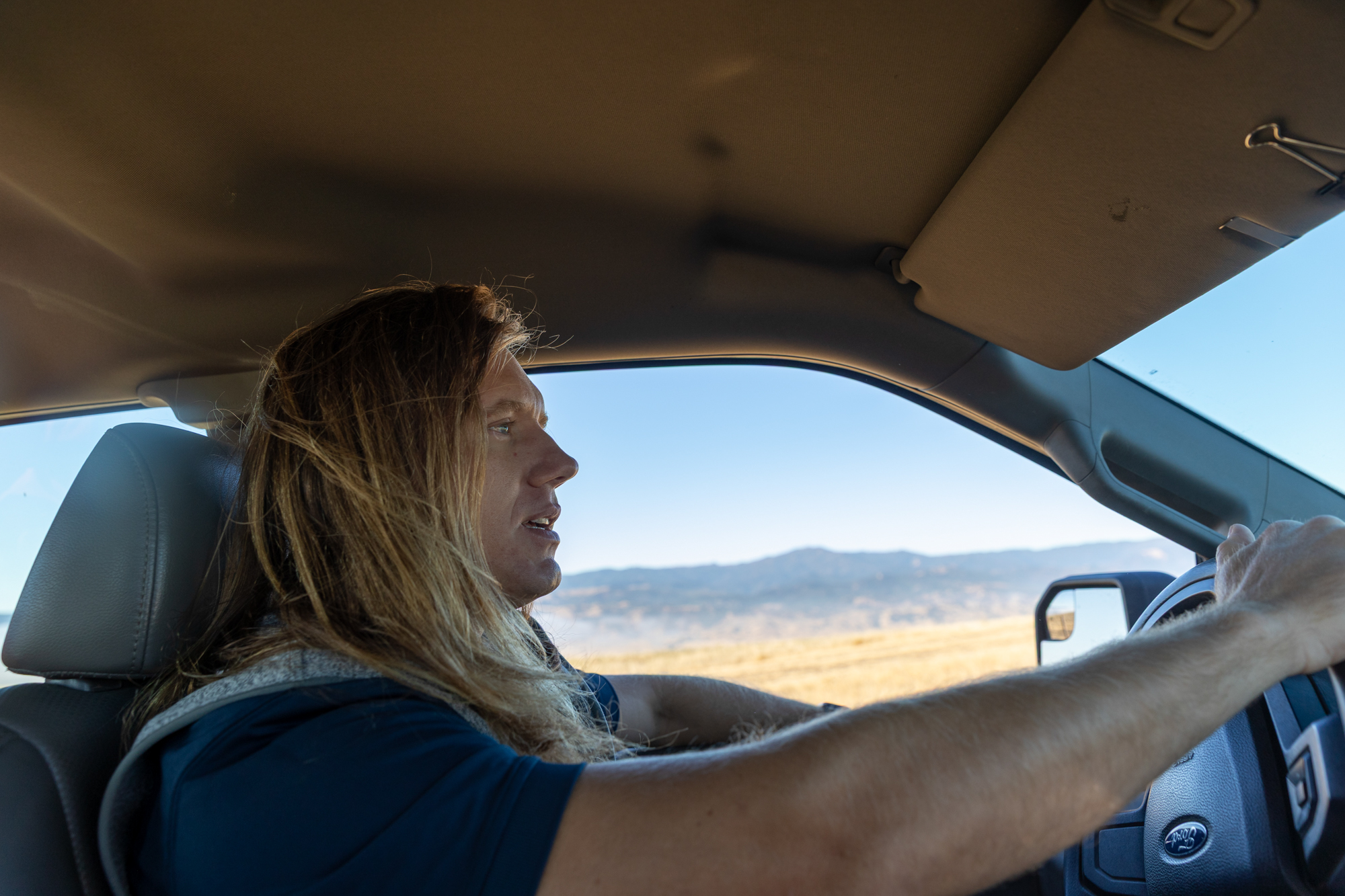
Rachael Myrow: We’re with David Mauk, a Natural Resource Technician for the Santa Clara Open Space Authority, on a driving tour of this newish preserve, open to the public for only about two years. We rumbled up an old farm road in David’s truck.
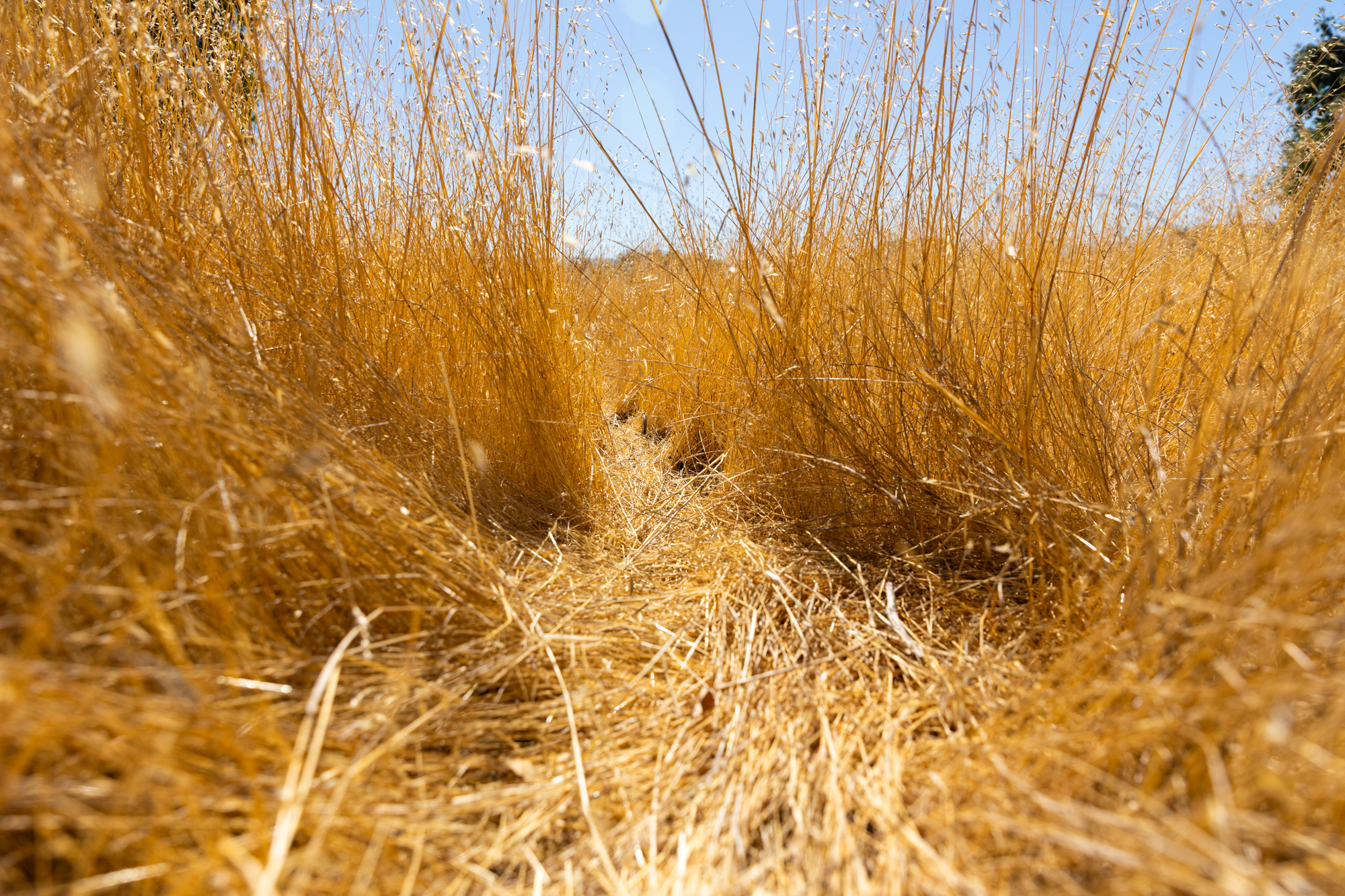
David Mauk: Most of these grasses are actually non native, and these non native grasses were bred to be really hearty food for cows. So they grow a lot taller and denser than our native grasses would.
Rachael Myrow: David’s job is to help the native flora and fauna recover from this type of human intervention. The views are gorgeous everywhere you look in these rolling, yellow hills. That is…
Sound of door slam
Rachael Myrow: Until you look down and see soccer pitch-sized stretches of soil wild boars have turned over in their search for tasty treats underneath.
David Mauk: Primarily we’ll see them go after, like, grubs that are in the soil, insect larva, acorns and different kinds of you know vegetative material like that.
Rachael Myrow: All that vigorous digging boars do creates excellent conditions for invasive grasses and plants that love setting up shop in disturbed soil.
David Mauk: They’ll also go after bulb plants. Like, our soap plant is a popular target for them.
Rachael Myrow: That’s particularly distressing here…in this preserve..special because it’s one of the last protected areas for what’s called serpentine habitat.
A very special set of plants and animals have developed over millenia to survive on this volcanic soil. For example, there’s the rare Bay checkerspot butterfly, the official superstar species of this preserve, with wings that look like they’re dotted with confetti in a host of harvest season colors.
There’s a host of native flora, too, like fragrant fritillary.
David Mauk: The fragrant fritillary is one of our most sensitive species here on the ridge. There’s only a handful of spots where we have viable populations of them growing. The plant has a really short bloom window in the spring and can be sensitive to damage by, especially pigs.
Rachael Myrow: It’s not just that the wild boars tear up the soil. They um — there’s no nice way to say this — they poop in the water.
And their poop can spread more than 30 infectious diseases, 20 of which can be transmitted to humans. Something to consider, as David explains that, especially in warm weather, pigs love to hang out in streams and ponds.
David Mauk: They’ll wallow in the water sources, which is one of the types of damage they do. Harms the sides of banks, causes a lot of erosion, damages the vegetation in those riparian areas, and really, destroys the habitat for other animals, like the California red legged frog.
Rachael Myrow: Which is another threatened species.
So … how did the pigs get here?
In the early 1700s, Spanish and Russian settlers introduced domestic pigs to California as livestock. Many became feral.
Then, in the 1920s, a wealthy land owner named George Gordon Moore introduced wild boar from the Ural mountains of Russia onto his property south of Monterey, as he proudly described in a letter to his neighbor.
Voice reading letter: The biggest boar we ever killed on the ranch, when hung, measured 9 ft. from tip to tip. The skin on his neck was three inches thick; eleven bullets were found which over the years had been embedded in the fat.
Rachael Myrow: Moore apparently thought it was a great idea to release wild boars onto his property—because nothing says “wholesome weekend hunting trip” like importing a literal chaos pig from the Russian wilderness.
And shocker: it went exactly how you’d expect it to go. Some of those boars broke out—because of course they did—and started getting very friendly with the now local Spanish pigs.
David Mauk: At the time, people didn’t realize just how damaging it can be to bring in an animal from another ecosystem and let it loose.
Rachael Myrow: Sows start breeding as early as four months old—yes, four months—and the sows can pop out not one, but two litters a year. Most litters have 4 to 12 piglets, but some overachieving boars have cranked out eighteen. Fast forward to today, and wild pigs are now running loose in 56 of California’s 58 counties.
So, that’s how they got here and why they’re so damaging. But our question asker, Travis, wants to know whether they have natural predators that could help keep their populations in check.
David Mauk: Their main predator where they originally came from in Eurasia were brown bears! We don’t really have brown bears here in the Bay Area anymore. So the job kinda falls to us.
Rachael Myrow: A young pig might be fair game for predators like coyotes and mountain lions. But adult pigs are another matter. Mature males weigh 200 pounds or more, females about 150-175 pounds. And where there’s a piglet, there’s a protective parent lurking nearby. Because pigs travel in packs, called “sounders.”
David Mauk: Their sounders can range from about, you know, 5-6 pigs, to sometimes, 10-12 pigs.
Rachael Myrow: Most coyotes and mountain lions know better than to risk an encounter with a big, fast animal that travels in packs and sports super sharp tusks. Tracking and hunting these boars is difficult for humans too.
Estimates put California’s feral pig population between 200,000 and 400,000, concentrated in central and coastal regions. Wild pigs are a designated pest that can be hunted year-round without limit, but in 2023-24 hunters only reported killing around 3-thousand of them. Meanwhile, David says, they continue to devastate the delicate serpentine habitat he’s keen to protect.
David Mauk: I’m compassionate towards the pigs, because they are an intelligent animal. It’s not their fault they’re here. It’s not their fault that they don’t have a predator like the brown bear here. We just need to do our role in the ecosystem to make sure they don’t cause the damage that they are causing.
Rachael Myrow: Now, if you like to hunt, this sounds like… it’s bacon time. But it will come as no surprise to learn local authorities have local rules governing where and how you can go after wild boars.
Dana Page: We gets lots of calls, lots of hunters. ‘Hey, what are you guys doing about your pigs? I’d love to come to your park.’
Rachael Myrow: That’s Dana Page, a natural resource program manager for Santa Clara County Parks.
In a park, she says, authorities don’t want to risk the possibility that some hiker photographing a Bay checkerspot butterfly will get shot.
Also, there’s a county ordinance against hunting in parks. For another thing, if you’re close enough to shoot a boar, you’re close enough to be noticed by the sounder and attacked.
Dana Page: Definitely, you don’t want to get close to a pig. Hahah!
Rachael Myrow: For a third thing, Dana adds, pigs are really, really clever. If they notice they’re being hunted, they’ll retreat into the night, or move someplace else. Also, they’ll breed more.
She’s hopeful science will eventually offer some solves, like maybe pig birth control. Whatever the case, she figures such strategies will only reduce the wild boar population, not end them.
Dana Page: The population has gotten to a point where we have to realize that they are here and they’re never going to be eliminated from the landscape.
Rachael Myrow: Despite that sobering thought, local officials are finally getting serious about dealing with the problem. Multiple agencies are teaming up to track the boars and working with professional outfits to trap and kill them.
Katrina Schwartz: That was KQED Senior Editor Rachael Myrow.
Thanks to Travis Mowbray for asking this week’s question. If you’ve got a burning curiosity that you think we should investigate, head on over to baycurious.org. Right at the top of the page there’s a spot to submit your questions. And don’t forget to vote on what we should cover next while you’re there!
Bay Curious is made in San Francisco at member supported KQED.
Our show is produced by Christopher Beale, Gabriela Glueck and me, Katrina Schwartz.
With extra support from Maha Sanad, Katie Sprenger, Jen Chien and everyone on team KQED.
Some members of the KQED podcast team are represented by The Screen Actors Guild, American Federation of Television and Radio Artists. San Francisco Northern California Local.
Thanks for listening and have a great week.