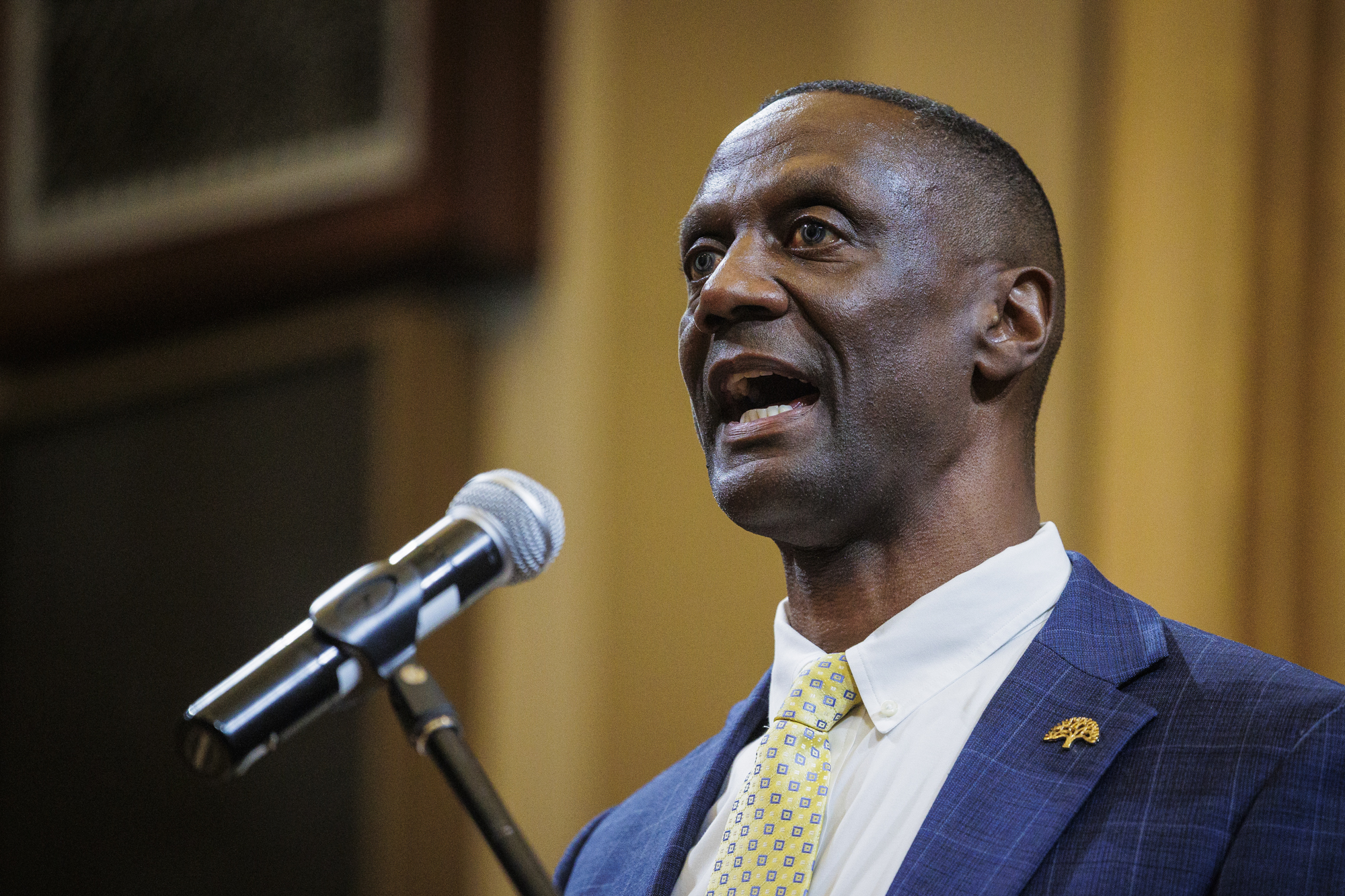
Floyd Mitchell, Oakland’s newly appointed police chief, made his first public address on Wednesday, less than a week after Mayor Sheng Thao announced him as her pick for the position.
“My approach begins with strong community engagement and collaboration. I’m here to work with the citizens of Oakland,” Mitchell said.
Mitchell — who is expected to start work in late April or early May — previously served for four years as police chief of Lubbock, Texas, a city with a population roughly 60% the size of Oakland’s. But in his address, he focused more on his hometown of Kansas City, Missouri, where he spent most of his law enforcement career.
“Much like Oakland, Kansas City is a large, diverse, metropolitan city with many of the same social, economic and violent crime issues that are facing Oakland,” Mitchell said.
Mitchell will have a lot to catch up on to address the most pressing matters facing the department. Foremost is the city’s ongoing struggle to stem a spike in violent crime, prompting amplified calls from a growing number of residents for more decisive police action.
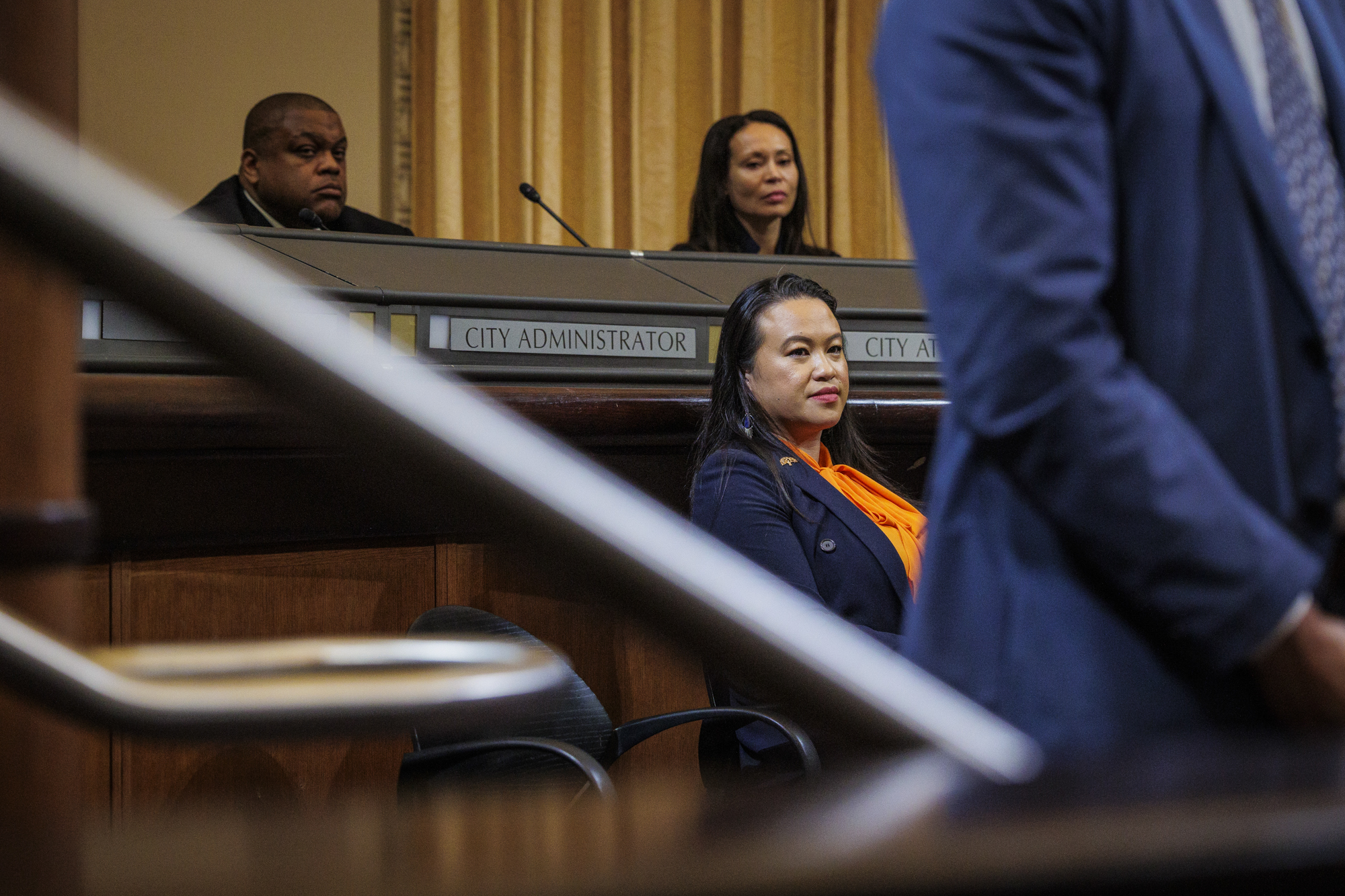
Frustrations over the city’s handling of crime have been focused on Thao, who is now facing a recall effort. Among the criticisms levied against her, members of the recall campaign argue that the mayor’s decision to fire former police Chief LeRonne Armstrong — and the amount of time it took to find his replacement — have hampered the city’s public safety efforts. Thao’s appointment of Mitchell holds high political stakes, and his ability — or inability — to address the city’s problems will likely reflect back on the mayor.
Thao fired Armstrong amid allegations that the department mishandled two officer misconduct investigations under his watch. Armstrong, who still has many supporters in the city and recently sought to get his job back, has since sued for wrongful termination, and his firing is one of the complaints cited by backers of Thao’s recall.
As Armstrong’s replacement, Mitchell will also be tasked with stewarding the department through the remaining court-mandated civil rights reforms it must still make to emerge from federal oversight, which it has now been under for more than two decades.