California’s Reparations Task Force is about two months away from submitting its recommendations to the state Legislature.
As the deadline nears, some task force members and observers are expressing concern about whether the body’s research is reaching people. And the recommendations will require broad public support to survive the intense scrutiny they will likely receive — from members of the Legislature and the public.
On Monday, the task force released a draft of its recommendations (PDF), including calculations for up to $1.2 million in compensation for qualifying residents. The task force is expected to finalize recommendations at its next meeting on Saturday in Oakland.
At the last task force meeting in late March, callers during public comment spoke in opposition of reparations for the first time. In a few instances, the comments included racist stereotypes about Black people, revealing an ignorance of the state’s systemic discrimination against Black residents since its founding.
“The fight for public opinion is now,” Chris Lodgson, a community organizer with the Coalition for a Just and Equitable California, said at that meeting in Sacramento.
Lodgson’s organization has been holding listening sessions throughout the state for two years to raise awareness in Black communities about the task force. He said he had hoped the task force would take on more of the work building public understanding of the state’s reparations endeavor.
The task force named public engagement as a central goal at its first meeting in June 2021. Then it backed it up with money: In November 2021, the task force entered into a nearly $1 million contract with the UCLA Ralph J. Bunche Center for African American Studies to develop a series of public listening sessions across the state, and bring in a communications firm to support the sessions and publicize the task force’s findings.
Given the controversial nature of reparations in the United States, task force members emphasized that clear communication with the public and wide buy-in would be essential to the ultimate success of their recommendations. But a year and a half later, the publicity work has been delayed by infighting and complications with communication firms. The first three communications firms quit, and a fourth, Charles Communications Group, only started in September.
“We are at the 11th hour, and the average Black person in California has no clue that this task force has been operating for the last two years,” said one unidentified caller during the late March meeting.
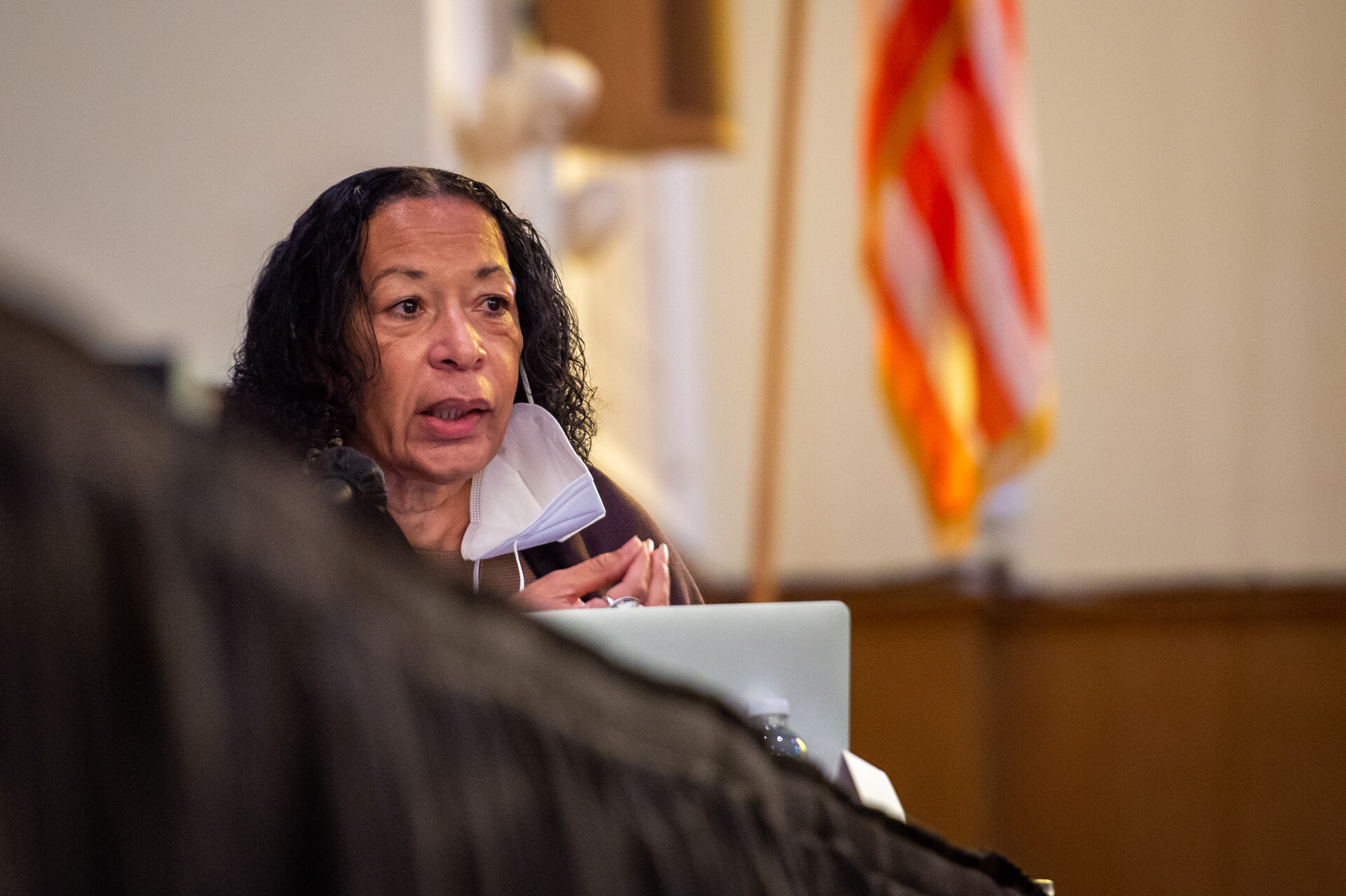
Dr. Cheryl Grills, the task force member initially selected to lead the community engagement effort, acknowledged that the revolving door of communications firms had created confusion.
“It cost the task force a semblance of credibility,” Grills, director of the Psychology Applied Research Center at Loyola Marymount University, told KQED during the March meeting. “People don’t know all the behind-the-scenes things that actually contributed to us being where we’re at with communications. They’re just looking at the surface.”
“We’re very late in the game, not because of the capacity or the skills of these communication firms, but because of the behavior of the chair,” Grills continued, referring to Kamilah Moore, the task force chair.
The first three firms left because of disagreements with Moore, according to Grills and the Bunche Center. The initial two, New York-based A—B and Los Angeles-based Young Communications, were hired together. A—B was to manage a national communications strategy while Young Communications would handle the statewide messaging. But by the winter of 2021, the relationship between Moore and the firms had soured.