Clyde Julian landed on Mountain View’s streets in November 2020. He used to live with his wife and two kids in Roseville, north of Sacramento, but after a domestic dispute, moved to the heart of Silicon Valley to stay with his brother in a trailer park community.
But the community had strict rules about long-term guests, and without other options to fall back on, Julian started living on the streets.
“Living on the streets, not knowing if you’re going to wake up the next day, it was just hard sleeping on the outside, sometimes without blankets, in the freezing cold,” he said.
Over the next six months, Julian gained 60 pounds and developed a myriad of health issues. But he caught a break after being referred to LifeMoves, a South Bay housing nonprofit. And in May, he was among the first to move into the organization’s new modular housing site.
“I’m just glad to be here. I mean, everything is great out here,” Julian said. “Better than staying out on the streets.”
LifeMoves Mountain View, as it’s called, is part of Homekey, a statewide program that in just the last year has produced nearly 6,000 new units of housing at 94 different sites across the state. While the majority of the program’s new sites are hotel and motel conversions, they also include apartment buildings and tiny homes, in addition to former vacation rentals, mobile homes and single-family homes.
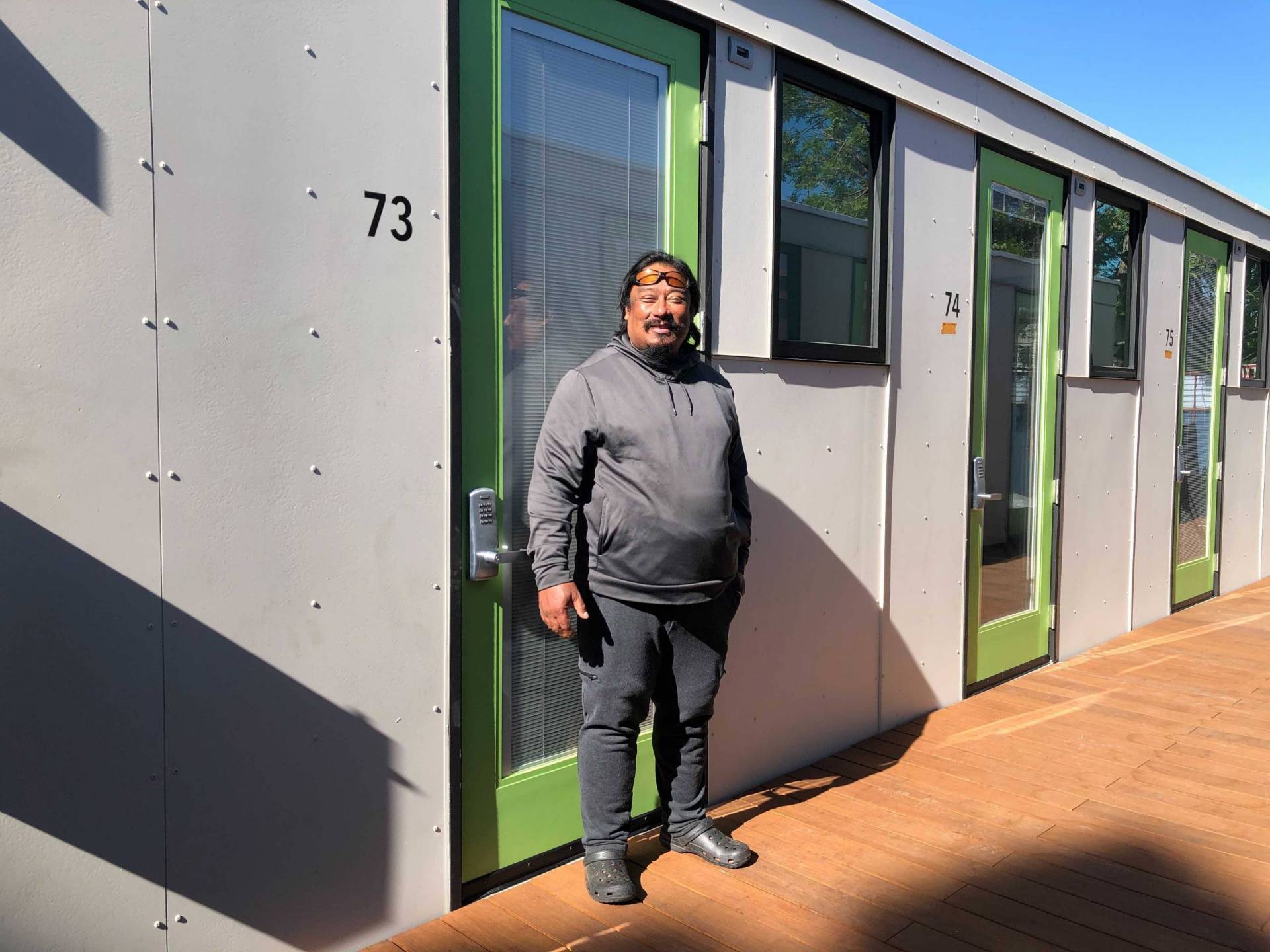
LifeMoves worked with the city to build modular housing on an empty industrial parking lot. The prefabricated units were built in a factory and assembled on site. Joanne Price, LifeMoves’ vice president of real estate and operations, says modular housing was much cheaper and faster to build: The entire site came together in nine months.
“[Hotels] still need renovation, so they may be built already, but then it’s really hard to modify hotels when you’re occupying them,” she said. “Rapid housing, like the modular [we built] with Homekey, can be purchased and installed within a matter of months.”
Christina Dickerson, who sits on the LifeMoves’ board, says the site is also more customizable than typical brick-and-mortar models, and its layout is optimized for the services LifeMoves offers.
“So not only is it cost-effective, but it’s flexible, which allows cities that we partner with to redevelop as is needed or change the type of housing that is needed in a particular area,” Dickerson said. “Brick-and-mortar infrastructure is more expensive.”
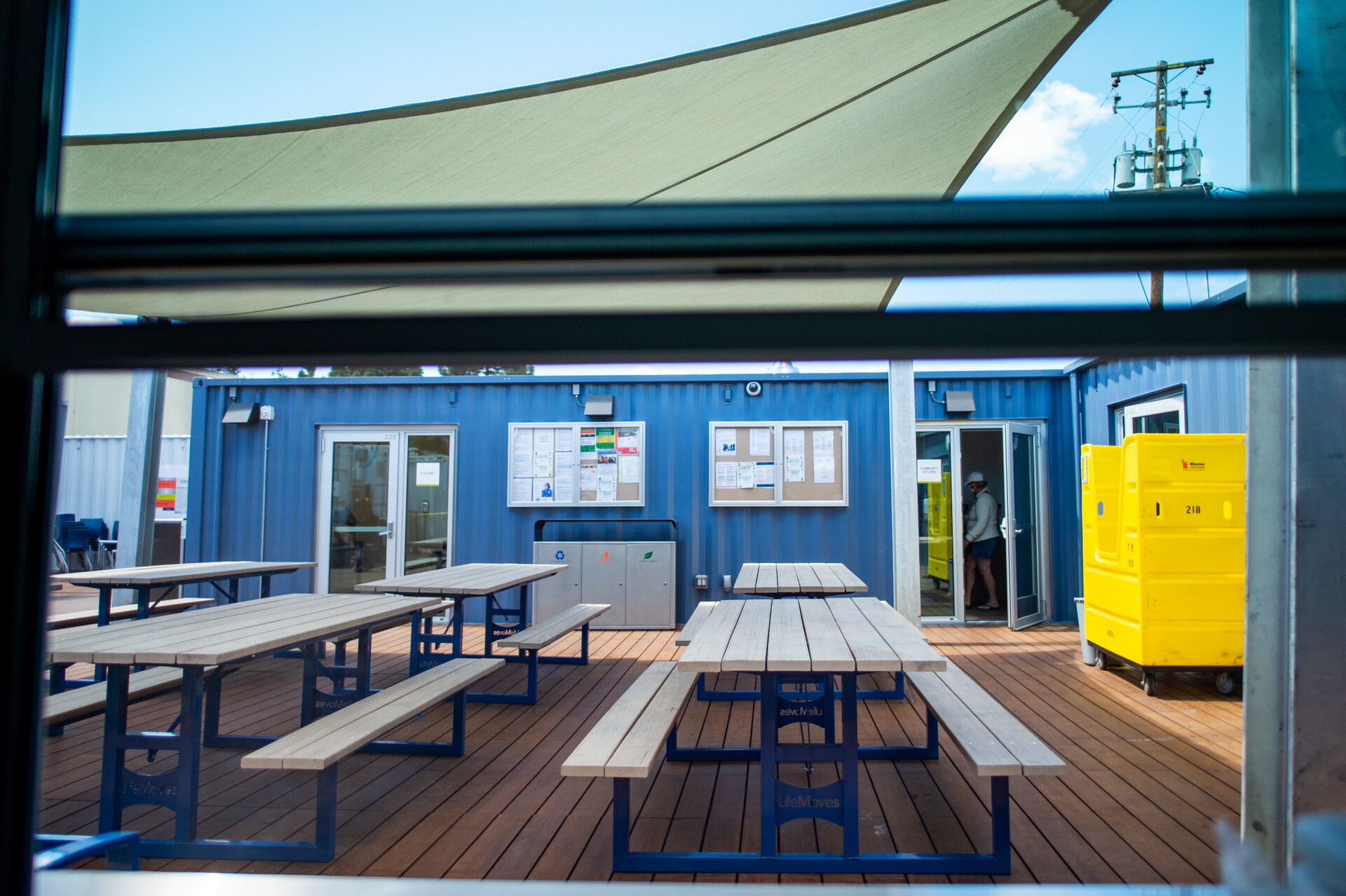
The site, which expects to receive ongoing funding from Santa Clara County and corporate donors after support from the state dries up, resembles neat rows of shipping containers. Close to the entrance are family units with private bathrooms, and a nearby playground. Behind that is a communal kitchen, which provides three meals a day, and a small hall where LifeMoves plans to offer job fairs, movie nights and other social activities for residents.
The nonprofit also provides access to supportive services, including mental health treatment, financial literacy and job training.
“Every client that is homeless has got there by a different reason, and we need to unravel that reason and connect that client with the right resources,” Price said. “Be it health care, be it social services, be it connection to jobs, employment, reuniting with family.”
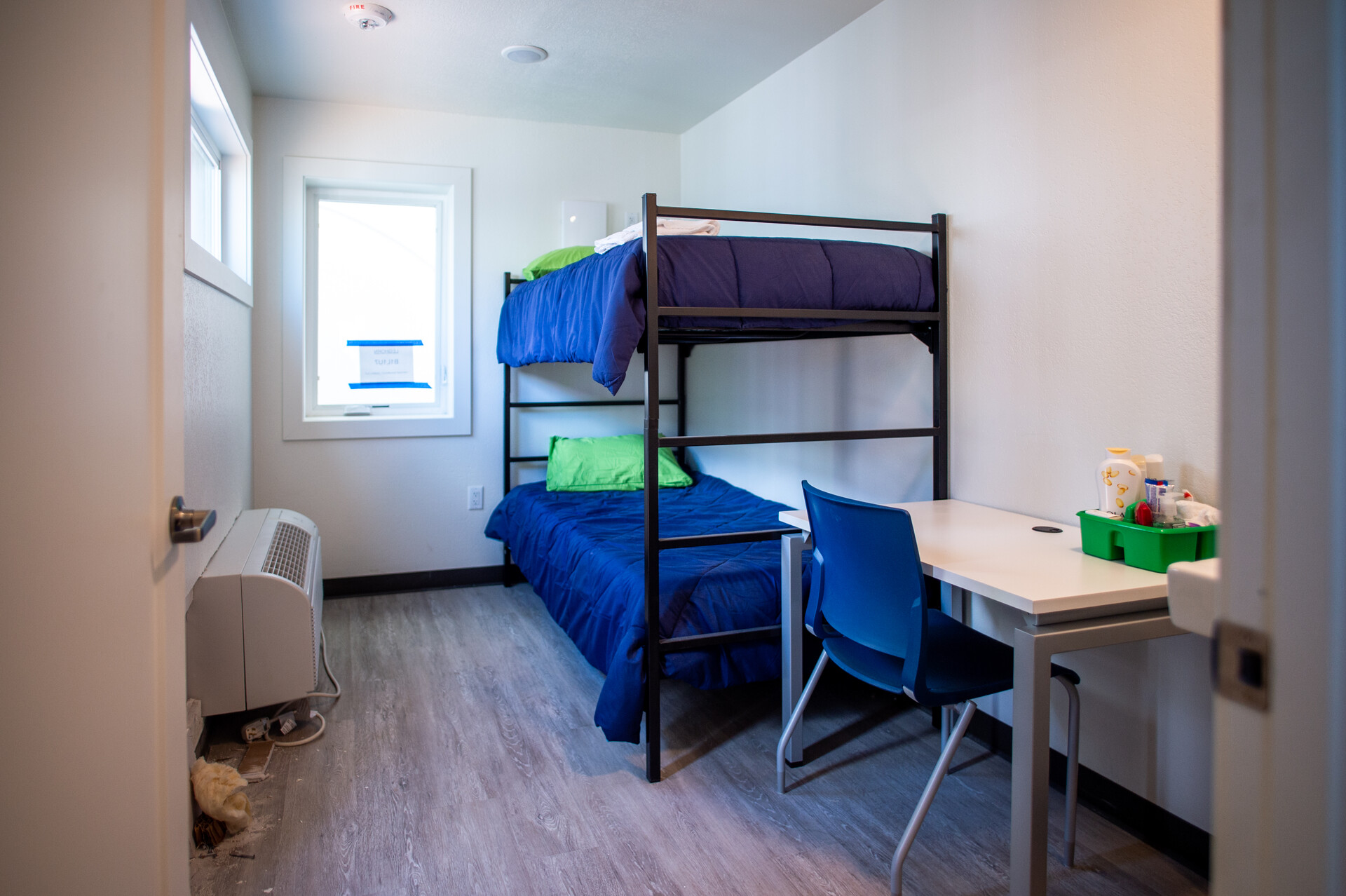
Toward the back of the site are the single units — where Julian is now staying. Each one consists of a narrow room with a bed and a desk.
“Now I can just relax and be calm and see my next step,” Julian said.
“Right now, it’s just a peace of mind for me to relax here and get my mind cleared up,” he added. “Next would be to get back to work, hopefully to get my own place and have my two little ones come live with me here.”