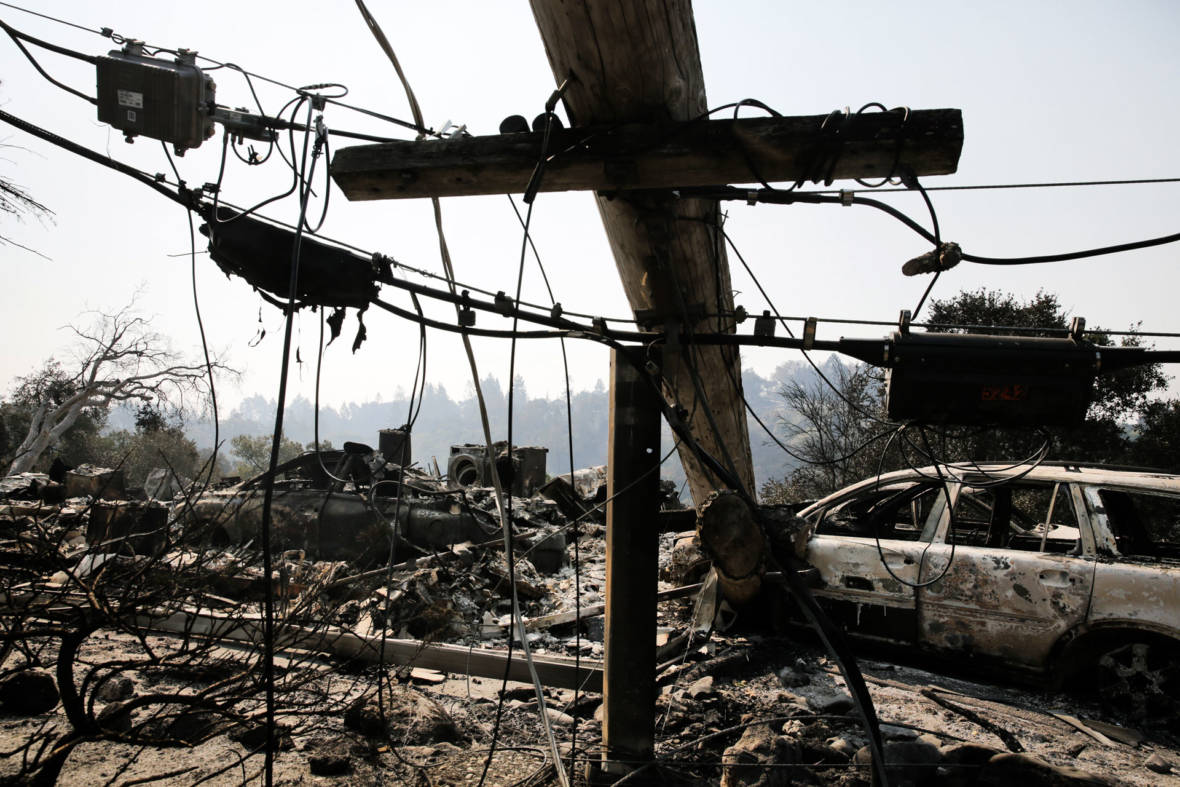
In the early hours of Sept. 22, 2006, P.J. Phillips was awakened by a phone call from his parents. Phillips’ sheep ranch in the Capay Valley — a rural stretch of walnut orchards northwest of Sacramento — was on fire.
“You could hear the grass burning,” Phillips said. “The snap, crackle, pop.” By the next morning, everything had burned. Phillips lost 270 sheep. The fire cost the Yolo County ranch thousands of dollars, and about a week later, a local sheriff discovered a second fire in almost the exact same spot.
Phillips was raised with wildfires. When the winter rains stop in California the state becomes a tinderbox and, as climate change accelerates, the resulting wildfires are getting worse. Most of them are started by accident, but there was something different about the way the fires on Phillips’ ranch started. A few weeks after his sheep burned, Phillips received a call from the local district attorney, who told him that both fires had been started on purpose.
He was shocked. “Who would do something so demented as to set something on fire?” he said.
A Valley With A Fire Problem
Nobody really knows how many wildfires are started by arsonists, in California or anywhere else. Cal Fire says arsonists set around 7 percent of the state’s wildfires. Other studies suggest they set about 20 percent. According to multiple arson investigators and profilers, many wildland arsonists feel frustrated by their lives or shortchanged. Setting fires can be a way for them to regain control or exert control over others.
Wildland arsonists also tend to set a lot of fires, operating for years before they’re caught. “I would say that at some points in time, I was probably working over 20 arson cases,” said Alan Carlson, a former Cal Fire investigator who has helped solve wildland arson cases around the country.
Carlson oversaw Operation High Desert, the team of investigators that eventually tracked down the arsonist who burned P.J. Phillips’ sheep in 2006. That case is now considered one of California’s exemplary wildland arson investigations.
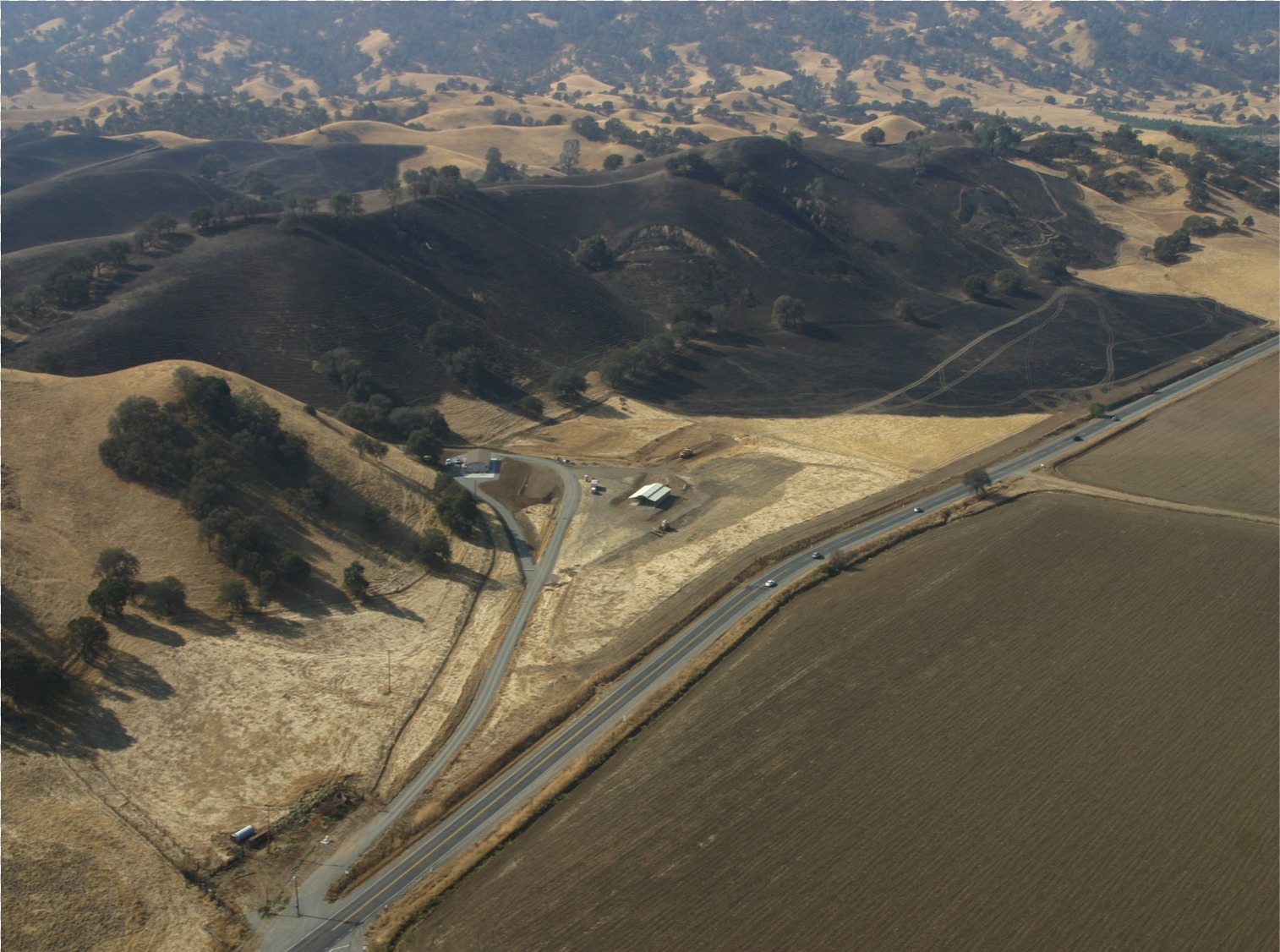
Before they caught the man who burned Phillips’ sheep, most people in the Capay Valley didn’t think they had a fire problem. In the ’90s, the majority of the fires in the area were small. But as the years went by, there were more and more of them. By 2004, there were about 10 times more fires in the Capay Valley than there used to be. Then later that year, a fire outside town engulfed an area bigger than San Francisco. The cause was undetermined, but many suspected arson.
That’s when Alan Carlson and his team, Operation High Desert, got involved in the case. Their first step was figuring out how the Capay Valley arsonist liked to set his fires. Many serial wildland arsonists jerry-rig household items into incendiary devices, and in some cases, they’re built with a time-delay, so that the fire doesn’t start until after the arsonist is far away. It’s one of the reasons serial arsonists are so hard to catch.
Cal Fire investigators combed through the Capay Valley’s burn sites looking for any evidence the arsonist may have left behind. And in 2005, local investigators found a brittle piece of material that curved in the shape of a “C.” It was part of a small, flat coil — every fire investigator interviewed for this story requested that KQED not describe it in further detail. Carlson said it’s one of the most dangerous arsonist’s devices he’s ever found.
When the coil burns, it rarely leaves any trace of itself behind. “As they smolder down,” Carlson explained, “the ash drops off the coil like a cigarette ash and mixes in with what will become burned later on.”
The coil can also take up to four hours to actually start a fire, giving the arsonist plenty of time to get away. It’s like a murder weapon where the trigger isn’t pulled until the killer is in another state. Then in most cases, it erases itself, deleting any evidence that it was there.
The coil confirmed a suspicion that Carlson and the High Desert Team had from the very beginning. Whoever designed it had a feel for fire and how it works. That meant the Capay Valley arsonist could be a local firefighter.
A Dedicated Fire Captain
When it comes to wildfires, firefighter arsonists are more common than you might think. According to multiple retired arson investigators, roughly one-third of the wildland arsonists they arrested worked in emergency services.
Toward the end of 2005, a full year in to the Cal Fire team’s investigation, Carlson started combing through two decades of reports from the Capay Valley’s fires. He was looking for firefighters who responded to the fires a little too quickly, the cars that always seemed to pass by a hillside a few hours before it caught fire. And one name kept popping up: Bob Eason Jr.
Eason joined the Capay Valley’s volunteer Fire Department when he was 18 and he loved it. If there was a car accident, chances are it was Eason’s voice that the volunteers heard over the radio, directing paramedics to the crash scene. By the time Carlson and the High Desert investigation team started closing in on him as a suspect, Eason had been promoted to fire captain.
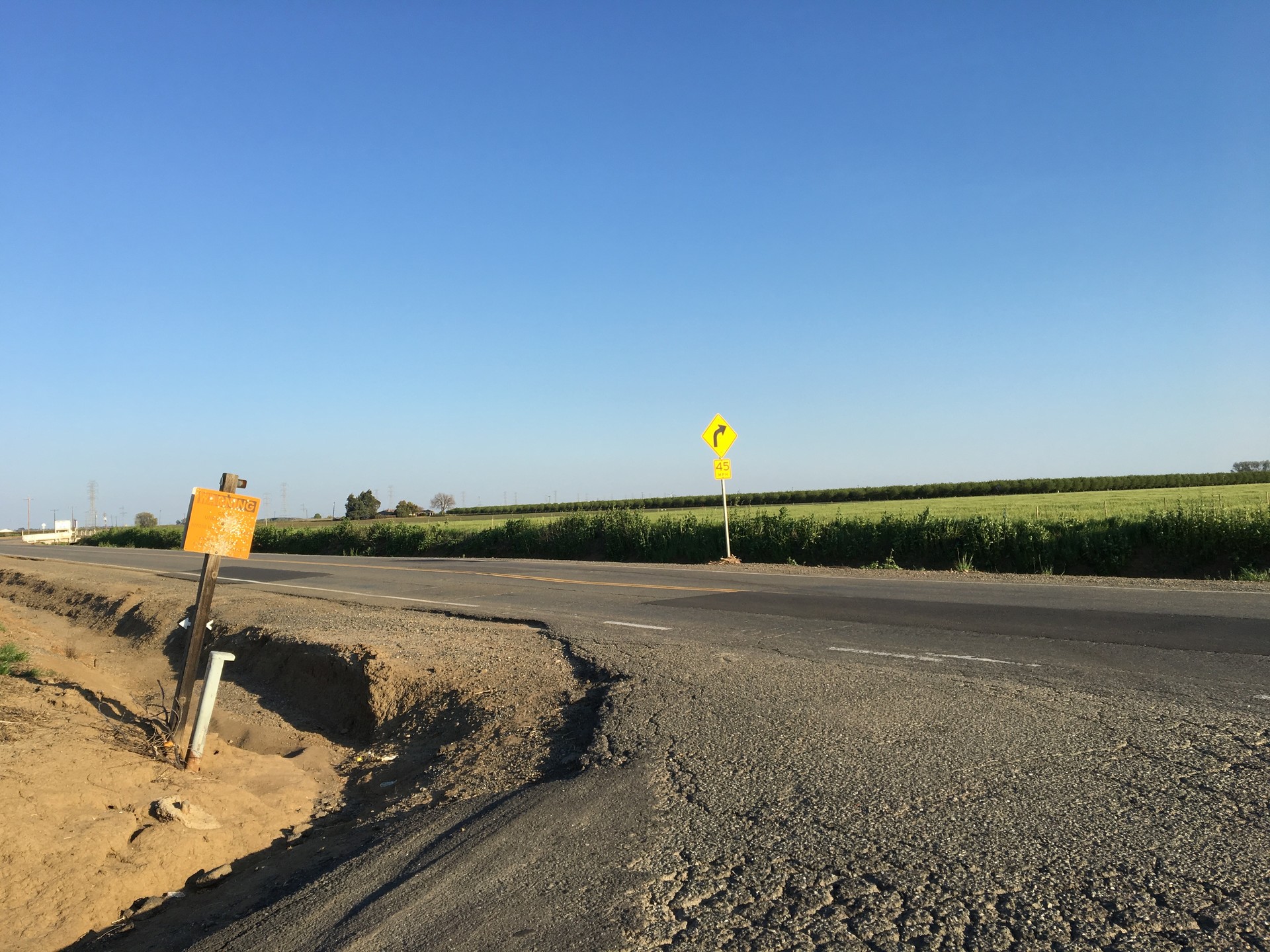
According to Carlson, the fires in the Capay Valley started burning right after Eason and his family moved to the area, and they tended to happen whenever Eason’s life took a turn for the worse. There was a flurry of fires after Eason lost his job at the ambulance company and an uptick in fires when his son was colicky. Eason used to drive through the Capay Valley’s back roads in the middle of the night, until his baby fell asleep. Carlson suspects he lit fires as he went.
Beginning in June 2006, Carlson and his team of investigators began conducting surveillance of the Capay Valley area. They staked out a dozen different locations for months. Their investigation also relied on roadside cameras, and one of them caught Robert Eason driving suspiciously close to several fire scenes. In August 2006, the team received clearance from a judge to sneak a tracker onto Eason’s car. It showed Eason driving suspiciously close to a fire scene later that night.
On Sept. 21, 2006, at around midnight, the tracker showed Eason driving past a large hill, then turning around and driving by it again. The hillside started to burn a few hours later. This was the fire that killed P.J. Phillips’ sheep.
It is one of the most damaging fires that Eason is accused of starting and it was also one of the last. A few weeks after the fire, Carlson’s team arrested Eason and searched his house and car. They didn’t find anything at first. Then in the trash, beneath a pile of dirty diapers, they found two coils ready to go.
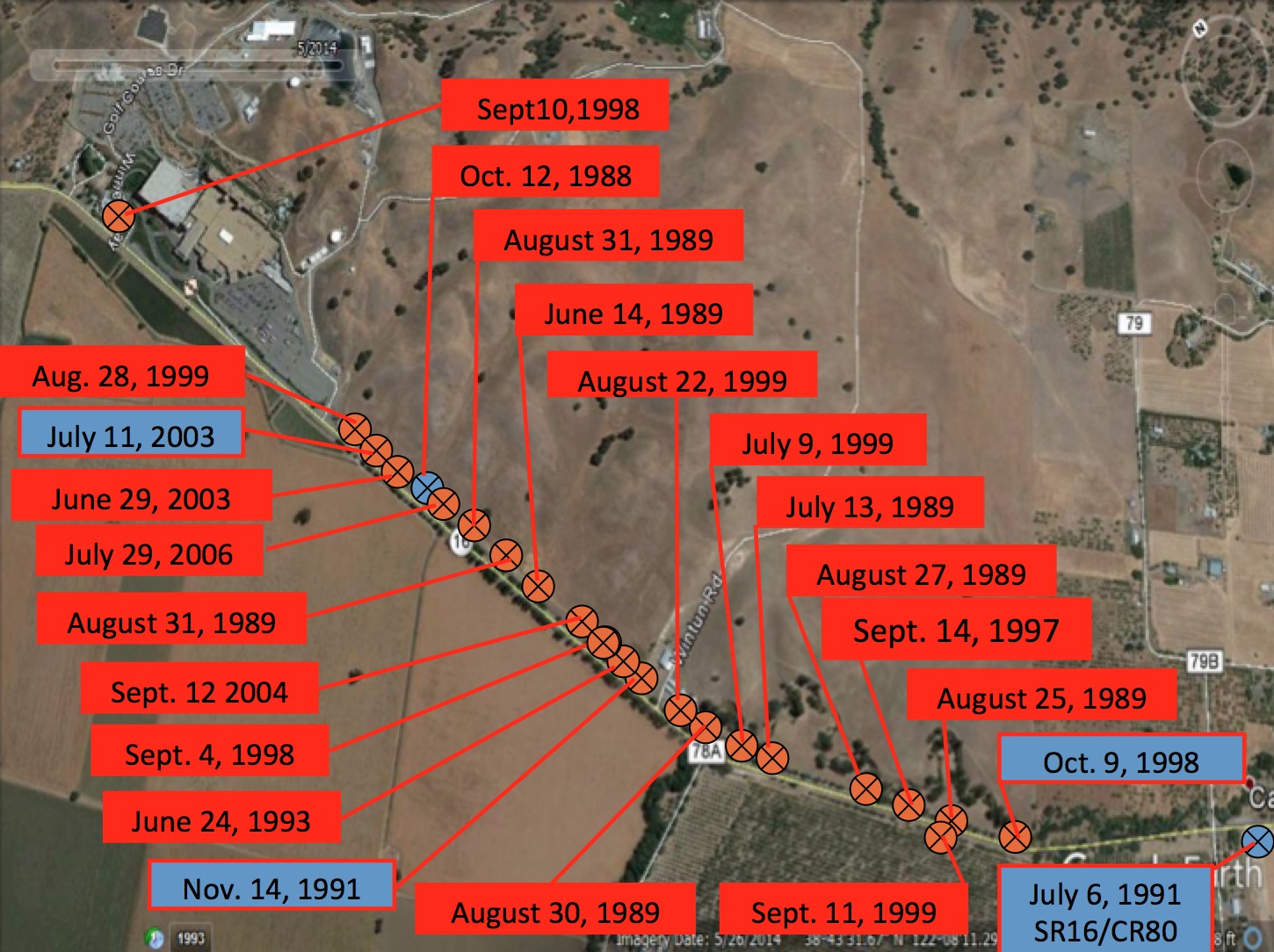
Eason was accused of lighting 16 fires in three months and he was suspected of starting a lot more than that. During the investigation, Carlson produced a detailed map of the Valley’s suspicious fires over the past two decades. He now believes that Eason set 152 fires over the course of 18 years.
“In His Mind, He Was The Hero Every Time”
Eason’s arrest shocked many of the volunteer firefighters in his department. That included members of his family. Eason’s father, Bob Eason Sr., was once a fire captain in the San Francisco Bay Area. When the family moved to the Capay Valley, he and his son had joined the local volunteer fire department together.