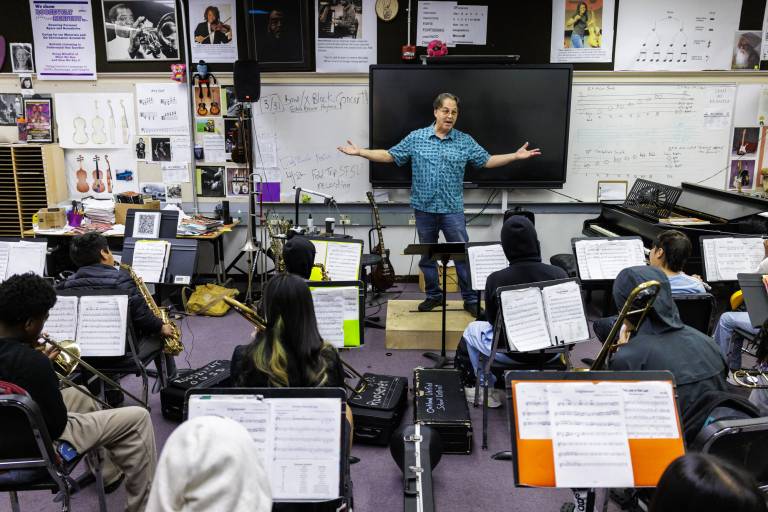
Sun Ra and Symphony in Middle School: OUSD Music Teacher Retires After Four Decades
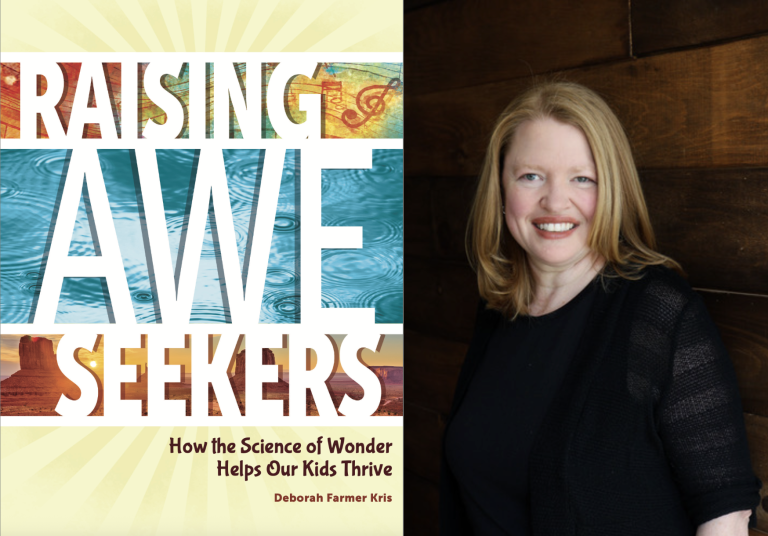
Deborah Farmer Kris: How Awe Helps Us Flourish
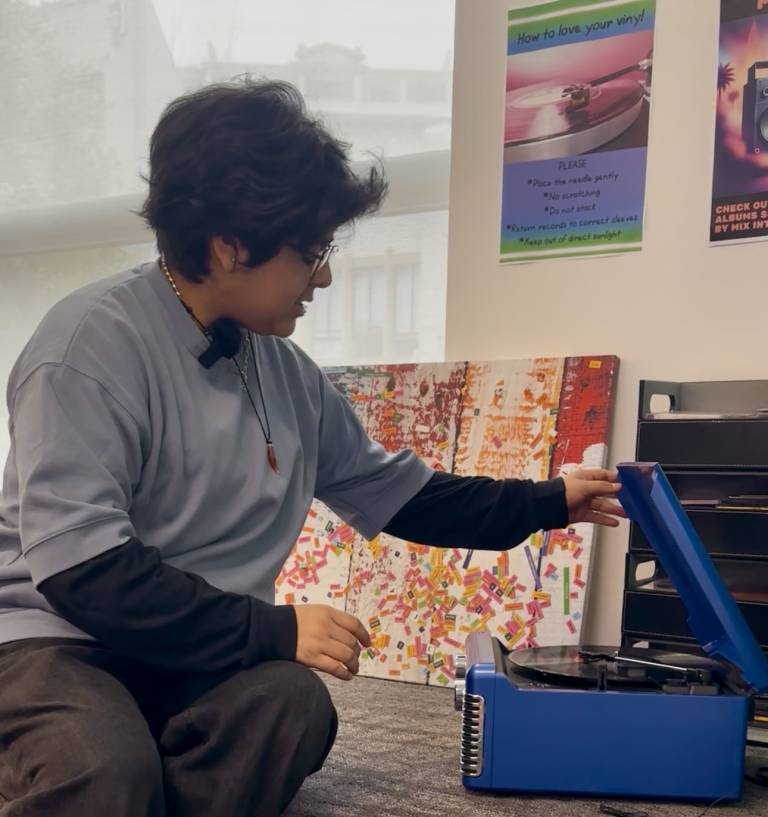
Why Teens Love to Hang Out at the Library
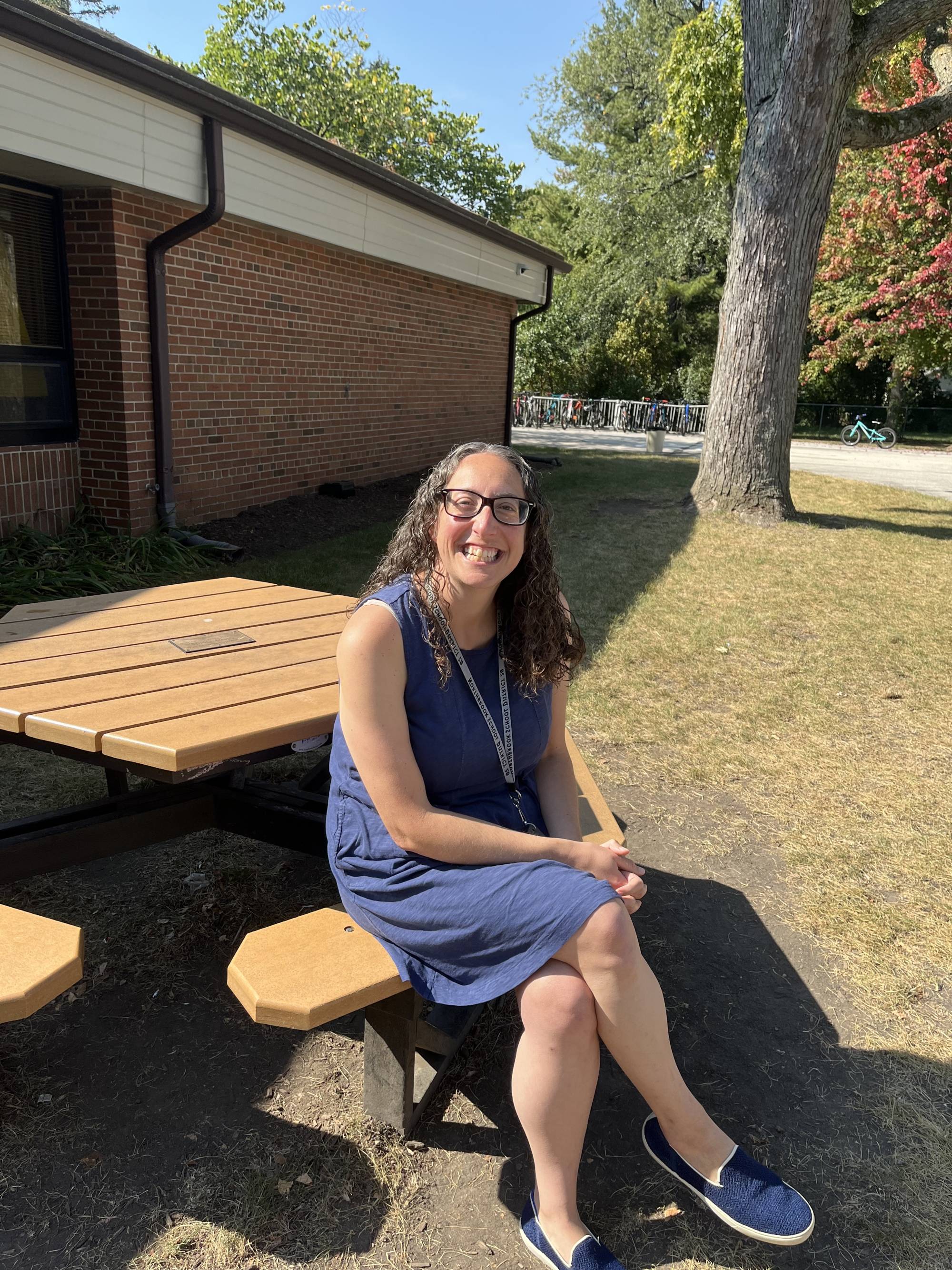
Finding Your Voice Isn't Just For Students. It's For Teachers, Too
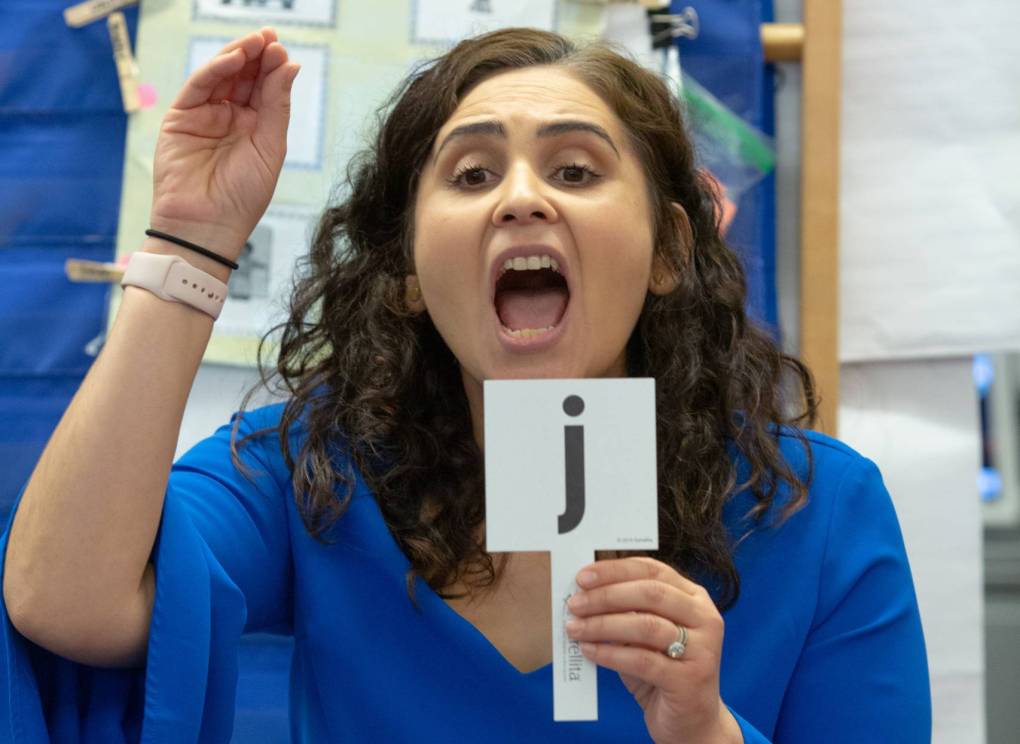
As Schools Embrace the Science of Reading, Researchers are Criticizing an Overemphasis on Auditory Skills
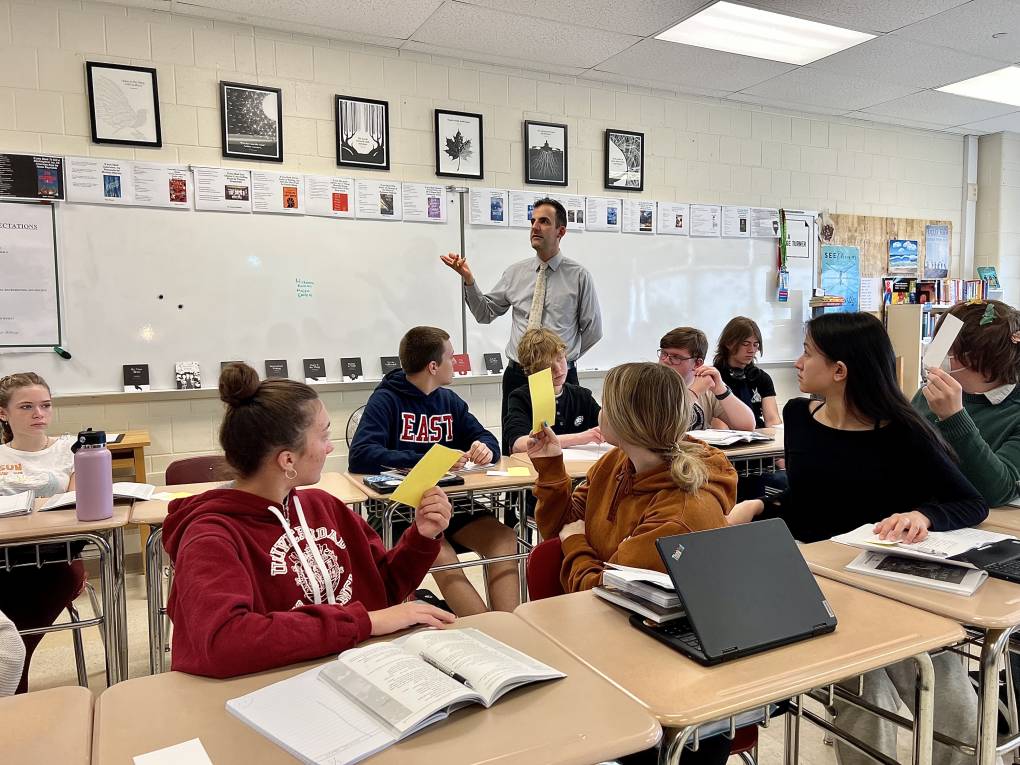
How Extroverted Teachers Can Engage Introverted Students
How do you stop cheating students? (Hint: tech isn’t the only answer)
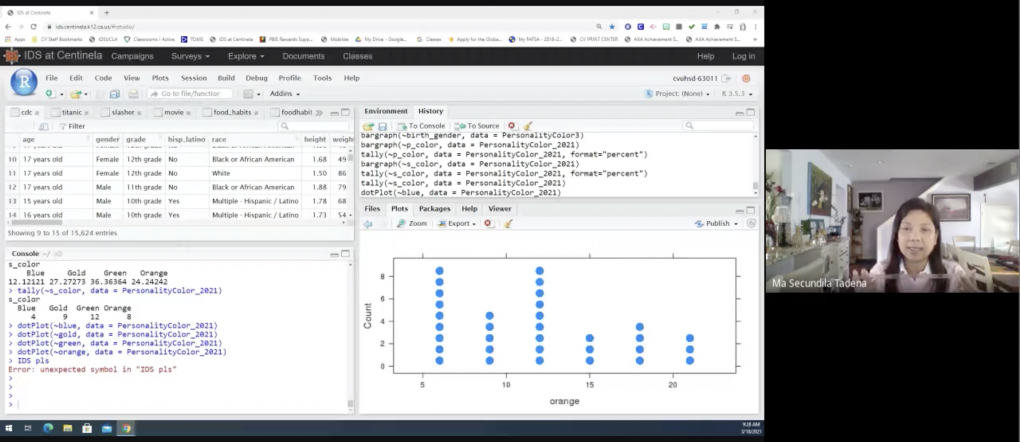
Could Data Science Diversify the STEM Field? Why Courses Designed This Century Feel so Relevant to All Students
Major support for MindShift comes from
Player sponsored by
window.__IS_SSR__=true
window.__INITIAL_STATE__={
"attachmentsReducer": {
"audio_0": {
"type": "attachments",
"id": "audio_0",
"imgSizes": {
"kqedFullSize": {
"file": "https://ww2.kqed.org/news/wp-content/themes/KQED-unified/img/audio_bgs/background0.jpg"
}
}
},
"audio_1": {
"type": "attachments",
"id": "audio_1",
"imgSizes": {
"kqedFullSize": {
"file": "https://ww2.kqed.org/news/wp-content/themes/KQED-unified/img/audio_bgs/background1.jpg"
}
}
},
"audio_2": {
"type": "attachments",
"id": "audio_2",
"imgSizes": {
"kqedFullSize": {
"file": "https://ww2.kqed.org/news/wp-content/themes/KQED-unified/img/audio_bgs/background2.jpg"
}
}
},
"audio_3": {
"type": "attachments",
"id": "audio_3",
"imgSizes": {
"kqedFullSize": {
"file": "https://ww2.kqed.org/news/wp-content/themes/KQED-unified/img/audio_bgs/background3.jpg"
}
}
},
"audio_4": {
"type": "attachments",
"id": "audio_4",
"imgSizes": {
"kqedFullSize": {
"file": "https://ww2.kqed.org/news/wp-content/themes/KQED-unified/img/audio_bgs/background4.jpg"
}
}
},
"placeholder": {
"type": "attachments",
"id": "placeholder",
"imgSizes": {
"thumbnail": {
"file": "https://cdn.kqed.org/wp-content/uploads/2024/12/KQED-Default-Image-816638274-2000x1333-1-160x107.jpg",
"width": 160,
"height": 107,
"mimeType": "image/jpeg"
},
"medium": {
"file": "https://cdn.kqed.org/wp-content/uploads/2024/12/KQED-Default-Image-816638274-2000x1333-1-800x533.jpg",
"width": 800,
"height": 533,
"mimeType": "image/jpeg"
},
"medium_large": {
"file": "https://cdn.kqed.org/wp-content/uploads/2024/12/KQED-Default-Image-816638274-2000x1333-1-768x512.jpg",
"width": 768,
"height": 512,
"mimeType": "image/jpeg"
},
"large": {
"file": "https://cdn.kqed.org/wp-content/uploads/2024/12/KQED-Default-Image-816638274-2000x1333-1-1020x680.jpg",
"width": 1020,
"height": 680,
"mimeType": "image/jpeg"
},
"1536x1536": {
"file": "https://cdn.kqed.org/wp-content/uploads/2024/12/KQED-Default-Image-816638274-2000x1333-1-1536x1024.jpg",
"width": 1536,
"height": 1024,
"mimeType": "image/jpeg"
},
"fd-lrg": {
"file": "https://cdn.kqed.org/wp-content/uploads/2024/12/KQED-Default-Image-816638274-2000x1333-1-1536x1024.jpg",
"width": 1536,
"height": 1024,
"mimeType": "image/jpeg"
},
"fd-med": {
"file": "https://cdn.kqed.org/wp-content/uploads/2024/12/KQED-Default-Image-816638274-2000x1333-1-1020x680.jpg",
"width": 1020,
"height": 680,
"mimeType": "image/jpeg"
},
"fd-sm": {
"file": "https://cdn.kqed.org/wp-content/uploads/2024/12/KQED-Default-Image-816638274-2000x1333-1-800x533.jpg",
"width": 800,
"height": 533,
"mimeType": "image/jpeg"
},
"post-thumbnail": {
"file": "https://cdn.kqed.org/wp-content/uploads/2024/12/KQED-Default-Image-816638274-2000x1333-1-672x372.jpg",
"width": 672,
"height": 372,
"mimeType": "image/jpeg"
},
"twentyfourteen-full-width": {
"file": "https://cdn.kqed.org/wp-content/uploads/2024/12/KQED-Default-Image-816638274-2000x1333-1-1038x576.jpg",
"width": 1038,
"height": 576,
"mimeType": "image/jpeg"
},
"xxsmall": {
"file": "https://cdn.kqed.org/wp-content/uploads/2024/12/KQED-Default-Image-816638274-2000x1333-1-160x107.jpg",
"width": 160,
"height": 107,
"mimeType": "image/jpeg"
},
"xsmall": {
"file": "https://cdn.kqed.org/wp-content/uploads/2024/12/KQED-Default-Image-816638274-2000x1333-1-672x372.jpg",
"width": 672,
"height": 372,
"mimeType": "image/jpeg"
},
"small": {
"file": "https://cdn.kqed.org/wp-content/uploads/2024/12/KQED-Default-Image-816638274-2000x1333-1-672x372.jpg",
"width": 672,
"height": 372,
"mimeType": "image/jpeg"
},
"xlarge": {
"file": "https://cdn.kqed.org/wp-content/uploads/2024/12/KQED-Default-Image-816638274-2000x1333-1-1020x680.jpg",
"width": 1020,
"height": 680,
"mimeType": "image/jpeg"
},
"full-width": {
"file": "https://cdn.kqed.org/wp-content/uploads/2024/12/KQED-Default-Image-816638274-2000x1333-1-1920x1280.jpg",
"width": 1920,
"height": 1280,
"mimeType": "image/jpeg"
},
"guest-author-32": {
"file": "https://cdn.kqed.org/wp-content/uploads/2025/01/KQED-Default-Image-816638274-1333x1333-1-160x160.jpg",
"width": 32,
"height": 32,
"mimeType": "image/jpeg"
},
"guest-author-50": {
"file": "https://cdn.kqed.org/wp-content/uploads/2025/01/KQED-Default-Image-816638274-1333x1333-1-160x160.jpg",
"width": 50,
"height": 50,
"mimeType": "image/jpeg"
},
"guest-author-64": {
"file": "https://cdn.kqed.org/wp-content/uploads/2025/01/KQED-Default-Image-816638274-1333x1333-1-160x160.jpg",
"width": 64,
"height": 64,
"mimeType": "image/jpeg"
},
"guest-author-96": {
"file": "https://cdn.kqed.org/wp-content/uploads/2025/01/KQED-Default-Image-816638274-1333x1333-1-160x160.jpg",
"width": 96,
"height": 96,
"mimeType": "image/jpeg"
},
"guest-author-128": {
"file": "https://cdn.kqed.org/wp-content/uploads/2025/01/KQED-Default-Image-816638274-1333x1333-1-160x160.jpg",
"width": 128,
"height": 128,
"mimeType": "image/jpeg"
},
"detail": {
"file": "https://cdn.kqed.org/wp-content/uploads/2025/01/KQED-Default-Image-816638274-1333x1333-1-160x160.jpg",
"width": 160,
"height": 160,
"mimeType": "image/jpeg"
},
"kqedFullSize": {
"file": "https://cdn.kqed.org/wp-content/uploads/2024/12/KQED-Default-Image-816638274-2000x1333-1.jpg",
"width": 2000,
"height": 1333
}
}
},
"mindshift_66280": {
"type": "attachments",
"id": "mindshift_66280",
"meta": {
"index": "attachments_1716263798",
"site": "mindshift",
"id": "66280",
"found": true
},
"title": "Adult Woman Tutoring Teenage Girl during Home Learning Session",
"publishDate": 1776791353,
"status": "inherit",
"parent": 66279,
"modified": 1776791386,
"caption": null,
"credit": "DragonImages/iStock",
"altTag": "Woman helping girl with school work.",
"description": null,
"imgSizes": {
"medium": {
"file": "https://cdn.kqed.org/wp-content/uploads/sites/23/2026/04/iStock-2268486714-2000x1333.jpg",
"width": 2000,
"height": 1333,
"mimeType": "image/jpeg"
},
"large": {
"file": "https://cdn.kqed.org/wp-content/uploads/sites/23/2026/04/iStock-2268486714-2000x1333.jpg",
"width": 2000,
"height": 1333,
"mimeType": "image/jpeg"
},
"thumbnail": {
"file": "https://cdn.kqed.org/wp-content/uploads/sites/23/2026/04/iStock-2268486714-160x107.jpg",
"width": 160,
"height": 107,
"mimeType": "image/jpeg"
},
"medium_large": {
"file": "https://cdn.kqed.org/wp-content/uploads/sites/23/2026/04/iStock-2268486714-768x512.jpg",
"width": 768,
"height": 512,
"mimeType": "image/jpeg"
},
"1536x1536": {
"file": "https://cdn.kqed.org/wp-content/uploads/sites/23/2026/04/iStock-2268486714-1536x1024.jpg",
"width": 1536,
"height": 1024,
"mimeType": "image/jpeg"
},
"2048x2048": {
"file": "https://cdn.kqed.org/wp-content/uploads/sites/23/2026/04/iStock-2268486714-2048x1365.jpg",
"width": 2048,
"height": 1365,
"mimeType": "image/jpeg"
},
"post-thumbnail": {
"file": "https://cdn.kqed.org/wp-content/uploads/sites/23/2026/04/iStock-2268486714-672x372.jpg",
"width": 672,
"height": 372,
"mimeType": "image/jpeg"
},
"twentyfourteen-full-width": {
"file": "https://cdn.kqed.org/wp-content/uploads/sites/23/2026/04/iStock-2268486714-1038x576.jpg",
"width": 1038,
"height": 576,
"mimeType": "image/jpeg"
},
"full-width": {
"file": "https://cdn.kqed.org/wp-content/uploads/sites/23/2026/04/iStock-2268486714-2000x1333.jpg",
"width": 2000,
"height": 1333,
"mimeType": "image/jpeg"
},
"npr-cds-wide": {
"file": "https://cdn.kqed.org/wp-content/uploads/sites/23/2026/04/iStock-2268486714-1200x675.jpg",
"width": 1200,
"height": 675,
"mimeType": "image/jpeg"
},
"npr-cds-square": {
"file": "https://cdn.kqed.org/wp-content/uploads/sites/23/2026/04/iStock-2268486714-600x600.jpg",
"width": 600,
"height": 600,
"mimeType": "image/jpeg"
},
"kqedFullSize": {
"file": "https://cdn.kqed.org/wp-content/uploads/sites/23/2026/04/iStock-2268486714.jpg",
"width": 2121,
"height": 1414
}
},
"isLoading": false,
"fetchFailed": false
},
"mindshift_66250": {
"type": "attachments",
"id": "mindshift_66250",
"meta": {
"index": "attachments_1716263798",
"site": "mindshift",
"id": "66250",
"found": true
},
"title": "260313-RANDY PORTER RETIRES-MD-06_qed",
"publishDate": 1775507070,
"status": "inherit",
"parent": 66243,
"modified": 1775507289,
"caption": "Randy Porter teaches class at Roosevelt Middle School in Oakland on March 14, 2026.",
"credit": "Martin do Nascimento/KQED",
"altTag": "Man stands in front of students in band class.",
"description": null,
"imgSizes": {
"thumbnail": {
"file": "https://cdn.kqed.org/wp-content/uploads/sites/23/2026/04/260313-RANDY-PORTER-RETIRES-MD-06_qed-160x107.jpg",
"width": 160,
"height": 107,
"mimeType": "image/jpeg"
},
"medium_large": {
"file": "https://cdn.kqed.org/wp-content/uploads/sites/23/2026/04/260313-RANDY-PORTER-RETIRES-MD-06_qed-768x512.jpg",
"width": 768,
"height": 512,
"mimeType": "image/jpeg"
},
"1536x1536": {
"file": "https://cdn.kqed.org/wp-content/uploads/sites/23/2026/04/260313-RANDY-PORTER-RETIRES-MD-06_qed-1536x1024.jpg",
"width": 1536,
"height": 1024,
"mimeType": "image/jpeg"
},
"post-thumbnail": {
"file": "https://cdn.kqed.org/wp-content/uploads/sites/23/2026/04/260313-RANDY-PORTER-RETIRES-MD-06_qed-672x372.jpg",
"width": 672,
"height": 372,
"mimeType": "image/jpeg"
},
"twentyfourteen-full-width": {
"file": "https://cdn.kqed.org/wp-content/uploads/sites/23/2026/04/260313-RANDY-PORTER-RETIRES-MD-06_qed-1038x576.jpg",
"width": 1038,
"height": 576,
"mimeType": "image/jpeg"
},
"npr-cds-wide": {
"file": "https://cdn.kqed.org/wp-content/uploads/sites/23/2026/04/260313-RANDY-PORTER-RETIRES-MD-06_qed-1200x675.jpg",
"width": 1200,
"height": 675,
"mimeType": "image/jpeg"
},
"npr-cds-square": {
"file": "https://cdn.kqed.org/wp-content/uploads/sites/23/2026/04/260313-RANDY-PORTER-RETIRES-MD-06_qed-600x600.jpg",
"width": 600,
"height": 600,
"mimeType": "image/jpeg"
},
"kqedFullSize": {
"file": "https://cdn.kqed.org/wp-content/uploads/sites/23/2026/04/260313-RANDY-PORTER-RETIRES-MD-06_qed.jpg",
"width": 1999,
"height": 1333
}
},
"isLoading": false,
"fetchFailed": false
},
"mindshift_65966": {
"type": "attachments",
"id": "mindshift_65966",
"meta": {
"index": "attachments_1716263798",
"site": "mindshift",
"id": "65966",
"found": true
},
"title": "Raising Awe Seekers Cover",
"publishDate": 1762891385,
"status": "inherit",
"parent": 65961,
"modified": 1762891421,
"caption": null,
"credit": "Courtesy of Deborah Farmer Kris ",
"altTag": "Book jacket next to author photo",
"description": null,
"imgSizes": {
"thumbnail": {
"file": "https://cdn.kqed.org/wp-content/uploads/sites/23/2025/11/Raising-Awe-Seekers-Cover-160x112.png",
"width": 160,
"height": 112,
"mimeType": "image/png"
},
"medium_large": {
"file": "https://cdn.kqed.org/wp-content/uploads/sites/23/2025/11/Raising-Awe-Seekers-Cover-768x536.png",
"width": 768,
"height": 536,
"mimeType": "image/png"
},
"1536x1536": {
"file": "https://cdn.kqed.org/wp-content/uploads/sites/23/2025/11/Raising-Awe-Seekers-Cover-1536x1072.png",
"width": 1536,
"height": 1072,
"mimeType": "image/png"
},
"post-thumbnail": {
"file": "https://cdn.kqed.org/wp-content/uploads/sites/23/2025/11/Raising-Awe-Seekers-Cover-672x372.png",
"width": 672,
"height": 372,
"mimeType": "image/png"
},
"twentyfourteen-full-width": {
"file": "https://cdn.kqed.org/wp-content/uploads/sites/23/2025/11/Raising-Awe-Seekers-Cover-1038x576.png",
"width": 1038,
"height": 576,
"mimeType": "image/png"
},
"npr-cds-wide": {
"file": "https://cdn.kqed.org/wp-content/uploads/sites/23/2025/11/Raising-Awe-Seekers-Cover-1200x675.png",
"width": 1200,
"height": 675,
"mimeType": "image/png"
},
"kqedFullSize": {
"file": "https://cdn.kqed.org/wp-content/uploads/sites/23/2025/11/Raising-Awe-Seekers-Cover.png",
"width": 1748,
"height": 1220
}
},
"isLoading": false,
"fetchFailed": false
},
"mindshift_65824": {
"type": "attachments",
"id": "mindshift_65824",
"meta": {
"index": "attachments_1716263798",
"site": "mindshift",
"id": "65824",
"found": true
},
"title": "IMG_8561 (1)",
"publishDate": 1758604156,
"status": "inherit",
"parent": 65817,
"modified": 1758604156,
"caption": null,
"credit": null,
"altTag": null,
"description": null,
"imgSizes": {
"thumbnail": {
"file": "https://cdn.kqed.org/wp-content/uploads/sites/23/2025/09/IMG_8561-1-160x170.jpg",
"width": 160,
"height": 170,
"mimeType": "image/jpeg"
},
"medium_large": {
"file": "https://cdn.kqed.org/wp-content/uploads/sites/23/2025/09/IMG_8561-1-768x817.jpg",
"width": 768,
"height": 817,
"mimeType": "image/jpeg"
},
"post-thumbnail": {
"file": "https://cdn.kqed.org/wp-content/uploads/sites/23/2025/09/IMG_8561-1-672x372.jpg",
"width": 672,
"height": 372,
"mimeType": "image/jpeg"
},
"twentyfourteen-full-width": {
"file": "https://cdn.kqed.org/wp-content/uploads/sites/23/2025/09/IMG_8561-1-1038x576.jpg",
"width": 1038,
"height": 576,
"mimeType": "image/jpeg"
},
"kqedFullSize": {
"file": "https://cdn.kqed.org/wp-content/uploads/sites/23/2025/09/IMG_8561-1.jpg",
"width": 1290,
"height": 1373
}
},
"isLoading": false,
"fetchFailed": false
},
"mindshift_65617": {
"type": "attachments",
"id": "mindshift_65617",
"meta": {
"index": "attachments_1716263798",
"site": "mindshift",
"id": "65617",
"found": true
},
"title": "Lifshitz Outside of School",
"publishDate": 1752519909,
"status": "inherit",
"parent": 65612,
"modified": 1752557200,
"caption": "Teacher Jess Lifshitz developed a personal narrative unit based on \"The Moth\" podcast to tap into the personal stories students were so excited to share that weren't entirely captured in traditional writing prompts.",
"credit": "Courtesy of Jess Lifshitz",
"altTag": "Woman sitting at bench",
"description": null,
"imgSizes": {
"medium": {
"file": "https://cdn.kqed.org/wp-content/uploads/sites/23/2025/07/Lifshitz-Outside-of-School-2000x2667.jpg",
"width": 2000,
"height": 2667,
"mimeType": "image/jpeg"
},
"large": {
"file": "https://cdn.kqed.org/wp-content/uploads/sites/23/2025/07/Lifshitz-Outside-of-School-2000x2667.jpg",
"width": 2000,
"height": 2667,
"mimeType": "image/jpeg"
},
"thumbnail": {
"file": "https://cdn.kqed.org/wp-content/uploads/sites/23/2025/07/Lifshitz-Outside-of-School-scaled-e1752520128963-160x117.jpg",
"width": 160,
"height": 117,
"mimeType": "image/jpeg"
},
"medium_large": {
"file": "https://cdn.kqed.org/wp-content/uploads/sites/23/2025/07/Lifshitz-Outside-of-School-scaled-e1752520128963-768x563.jpg",
"width": 768,
"height": 563,
"mimeType": "image/jpeg"
},
"1536x1536": {
"file": "https://cdn.kqed.org/wp-content/uploads/sites/23/2025/07/Lifshitz-Outside-of-School-scaled-e1752520128963-1536x1126.jpg",
"width": 1536,
"height": 1126,
"mimeType": "image/jpeg"
},
"2048x2048": {
"file": "https://cdn.kqed.org/wp-content/uploads/sites/23/2025/07/Lifshitz-Outside-of-School-1536x2048.jpg",
"width": 1536,
"height": 2048,
"mimeType": "image/jpeg"
},
"post-thumbnail": {
"file": "https://cdn.kqed.org/wp-content/uploads/sites/23/2025/07/Lifshitz-Outside-of-School-scaled-e1752520128963-672x372.jpg",
"width": 672,
"height": 372,
"mimeType": "image/jpeg"
},
"twentyfourteen-full-width": {
"file": "https://cdn.kqed.org/wp-content/uploads/sites/23/2025/07/Lifshitz-Outside-of-School-scaled-e1752520128963-1038x576.jpg",
"width": 1038,
"height": 576,
"mimeType": "image/jpeg"
},
"full-width": {
"file": "https://cdn.kqed.org/wp-content/uploads/sites/23/2025/07/Lifshitz-Outside-of-School-2000x2667.jpg",
"width": 2000,
"height": 2667,
"mimeType": "image/jpeg"
},
"kqedFullSize": {
"file": "https://cdn.kqed.org/wp-content/uploads/sites/23/2025/07/Lifshitz-Outside-of-School-scaled-e1752520128963.jpg",
"width": 1920,
"height": 1408
}
},
"isLoading": false,
"fetchFailed": false
},
"mindshift_63242": {
"type": "attachments",
"id": "mindshift_63242",
"meta": {
"index": "attachments_1716263798",
"site": "mindshift",
"id": "63242",
"found": true
},
"parent": 63241,
"imgSizes": {
"twentyfourteen-full-width": {
"file": "https://cdn.kqed.org/wp-content/uploads/sites/23/2024/02/AMERICANED_UCLACOMM_003-scaled-e1708712886109-1038x576.jpg",
"width": 1038,
"mimeType": "image/jpeg",
"height": 576
},
"thumbnail": {
"file": "https://cdn.kqed.org/wp-content/uploads/sites/23/2024/02/AMERICANED_UCLACOMM_003-scaled-e1708712886109-160x117.jpg",
"width": 160,
"mimeType": "image/jpeg",
"height": 117
},
"post-thumbnail": {
"file": "https://cdn.kqed.org/wp-content/uploads/sites/23/2024/02/AMERICANED_UCLACOMM_003-scaled-e1708712886109-672x372.jpg",
"width": 672,
"mimeType": "image/jpeg",
"height": 372
},
"kqedFullSize": {
"file": "https://cdn.kqed.org/wp-content/uploads/sites/23/2024/02/AMERICANED_UCLACOMM_003-scaled-e1708712886109.jpg",
"width": 1706,
"height": 1245
},
"2048x2048": {
"file": "https://cdn.kqed.org/wp-content/uploads/sites/23/2024/02/AMERICANED_UCLACOMM_003-1365x2048.jpg",
"width": 1365,
"mimeType": "image/jpeg",
"height": 2048
},
"large": {
"file": "https://cdn.kqed.org/wp-content/uploads/sites/23/2024/02/AMERICANED_UCLACOMM_003-scaled-e1708712886109-1020x744.jpg",
"width": 1020,
"mimeType": "image/jpeg",
"height": 744
},
"1536x1536": {
"file": "https://cdn.kqed.org/wp-content/uploads/sites/23/2024/02/AMERICANED_UCLACOMM_003-scaled-e1708712886109-1536x1121.jpg",
"width": 1536,
"mimeType": "image/jpeg",
"height": 1121
},
"full-width": {
"file": "https://cdn.kqed.org/wp-content/uploads/sites/23/2024/02/AMERICANED_UCLACOMM_003-1920x2880.jpg",
"width": 1920,
"mimeType": "image/jpeg",
"height": 2880
},
"medium": {
"file": "https://cdn.kqed.org/wp-content/uploads/sites/23/2024/02/AMERICANED_UCLACOMM_003-scaled-e1708712886109-800x584.jpg",
"width": 800,
"mimeType": "image/jpeg",
"height": 584
},
"medium_large": {
"file": "https://cdn.kqed.org/wp-content/uploads/sites/23/2024/02/AMERICANED_UCLACOMM_003-scaled-e1708712886109-768x560.jpg",
"width": 768,
"mimeType": "image/jpeg",
"height": 560
}
},
"publishDate": 1708712768,
"modified": 1708712956,
"caption": null,
"description": null,
"title": "Preschool letter lesson",
"credit": "Allison Shelley for EDUimages",
"status": "inherit",
"altTag": "A teacher in a blue shirt holds up the letter \"j\" her hand.",
"isLoading": false,
"fetchFailed": false
},
"mindshift_62130": {
"type": "attachments",
"id": "mindshift_62130",
"meta": {
"index": "attachments_1716263798",
"site": "mindshift",
"id": "62130",
"found": true
},
"parent": 62119,
"imgSizes": {
"twentyfourteen-full-width": {
"file": "https://ww2.kqed.org/app/uploads/sites/23/2023/07/BrettVogelsingerFEAT-1038x576.jpg",
"width": 1038,
"mimeType": "image/jpeg",
"height": 576
},
"thumbnail": {
"file": "https://ww2.kqed.org/app/uploads/sites/23/2023/07/BrettVogelsingerFEAT-160x120.jpg",
"width": 160,
"mimeType": "image/jpeg",
"height": 120
},
"post-thumbnail": {
"file": "https://ww2.kqed.org/app/uploads/sites/23/2023/07/BrettVogelsingerFEAT-672x372.jpg",
"width": 672,
"mimeType": "image/jpeg",
"height": 372
},
"kqedFullSize": {
"file": "https://ww2.kqed.org/app/uploads/sites/23/2023/07/BrettVogelsingerFEAT-scaled.jpg",
"width": 2560,
"height": 1920
},
"2048x2048": {
"file": "https://ww2.kqed.org/app/uploads/sites/23/2023/07/BrettVogelsingerFEAT-2048x1536.jpg",
"width": 2048,
"mimeType": "image/jpeg",
"height": 1536
},
"large": {
"file": "https://ww2.kqed.org/app/uploads/sites/23/2023/07/BrettVogelsingerFEAT-1020x765.jpg",
"width": 1020,
"mimeType": "image/jpeg",
"height": 765
},
"1536x1536": {
"file": "https://ww2.kqed.org/app/uploads/sites/23/2023/07/BrettVogelsingerFEAT-1536x1152.jpg",
"width": 1536,
"mimeType": "image/jpeg",
"height": 1152
},
"full-width": {
"file": "https://ww2.kqed.org/app/uploads/sites/23/2023/07/BrettVogelsingerFEAT-1920x1440.jpg",
"width": 1920,
"mimeType": "image/jpeg",
"height": 1440
},
"medium": {
"file": "https://ww2.kqed.org/app/uploads/sites/23/2023/07/BrettVogelsingerFEAT-800x600.jpg",
"width": 800,
"mimeType": "image/jpeg",
"height": 600
},
"medium_large": {
"file": "https://ww2.kqed.org/app/uploads/sites/23/2023/07/BrettVogelsingerFEAT-768x576.jpg",
"width": 768,
"mimeType": "image/jpeg",
"height": 576
}
},
"publishDate": 1690838059,
"modified": 1690838391,
"caption": "English teacher Brett Vogelsinger has developed creative strategies to invite participation from introverted students. In one discussion style, students raise a white index card to share a new idea or a yellow index card to build on a classmate's idea.",
"description": null,
"title": "BrettVogelsingerFEAT",
"credit": "Kara Newhouse/KQED",
"status": "inherit",
"altTag": null,
"isLoading": false,
"fetchFailed": false
},
"mindshift_59568": {
"type": "attachments",
"id": "mindshift_59568",
"meta": {
"index": "attachments_1716263798",
"site": "mindshift",
"id": "59568",
"found": true
},
"parent": 59560,
"imgSizes": {
"twentyfourteen-full-width": {
"file": "https://ww2.kqed.org/app/uploads/sites/23/2022/07/AMERICANED_MIDDLETOWN_217-1000x576.jpg",
"width": 1000,
"mimeType": "image/jpeg",
"height": 576
},
"thumbnail": {
"file": "https://ww2.kqed.org/app/uploads/sites/23/2022/07/AMERICANED_MIDDLETOWN_217-160x107.jpg",
"width": 160,
"mimeType": "image/jpeg",
"height": 107
},
"post-thumbnail": {
"file": "https://ww2.kqed.org/app/uploads/sites/23/2022/07/AMERICANED_MIDDLETOWN_217-672x372.jpg",
"width": 672,
"mimeType": "image/jpeg",
"height": 372
},
"kqedFullSize": {
"file": "https://ww2.kqed.org/app/uploads/sites/23/2022/07/AMERICANED_MIDDLETOWN_217.jpg",
"width": 1000,
"height": 667
},
"medium": {
"file": "https://ww2.kqed.org/app/uploads/sites/23/2022/07/AMERICANED_MIDDLETOWN_217-800x534.jpg",
"width": 800,
"mimeType": "image/jpeg",
"height": 534
},
"medium_large": {
"file": "https://ww2.kqed.org/app/uploads/sites/23/2022/07/AMERICANED_MIDDLETOWN_217-768x512.jpg",
"width": 768,
"mimeType": "image/jpeg",
"height": 512
}
},
"publishDate": 1657908541,
"modified": 1657908601,
"caption": null,
"description": null,
"title": "AMERICANED_MIDDLETOWN_217",
"credit": "Allison Shelley/ EDUimages",
"status": "inherit",
"altTag": "Male student learning in dining room",
"isLoading": false,
"fetchFailed": false
},
"mindshift_58329": {
"type": "attachments",
"id": "mindshift_58329",
"meta": {
"index": "attachments_1716263798",
"site": "mindshift",
"id": "58329",
"found": true
},
"parent": 58326,
"imgSizes": {
"twentyfourteen-full-width": {
"file": "https://ww2.kqed.org/app/uploads/sites/23/2021/08/Tadena-IDS-Class-1038x576.png",
"width": 1038,
"mimeType": "image/png",
"height": 576
},
"thumbnail": {
"file": "https://ww2.kqed.org/app/uploads/sites/23/2021/08/Tadena-IDS-Class-160x69.png",
"width": 160,
"mimeType": "image/png",
"height": 69
},
"post-thumbnail": {
"file": "https://ww2.kqed.org/app/uploads/sites/23/2021/08/Tadena-IDS-Class-672x372.png",
"width": 672,
"mimeType": "image/png",
"height": 372
},
"kqedFullSize": {
"file": "https://ww2.kqed.org/app/uploads/sites/23/2021/08/Tadena-IDS-Class-e1629186463131.png",
"width": 1920,
"height": 832
},
"2048x2048": {
"file": "https://ww2.kqed.org/app/uploads/sites/23/2021/08/Tadena-IDS-Class-2048x888.png",
"width": 2048,
"mimeType": "image/png",
"height": 888
},
"large": {
"file": "https://ww2.kqed.org/app/uploads/sites/23/2021/08/Tadena-IDS-Class-1020x442.png",
"width": 1020,
"mimeType": "image/png",
"height": 442
},
"1536x1536": {
"file": "https://ww2.kqed.org/app/uploads/sites/23/2021/08/Tadena-IDS-Class-1536x666.png",
"width": 1536,
"mimeType": "image/png",
"height": 666
},
"full-width": {
"file": "https://ww2.kqed.org/app/uploads/sites/23/2021/08/Tadena-IDS-Class-1920x832.png",
"width": 1920,
"mimeType": "image/png",
"height": 832
},
"medium": {
"file": "https://ww2.kqed.org/app/uploads/sites/23/2021/08/Tadena-IDS-Class-800x347.png",
"width": 800,
"mimeType": "image/png",
"height": 347
},
"medium_large": {
"file": "https://ww2.kqed.org/app/uploads/sites/23/2021/08/Tadena-IDS-Class-768x333.png",
"width": 768,
"mimeType": "image/png",
"height": 333
}
},
"publishDate": 1629186332,
"modified": 1629186497,
"caption": null,
"description": null,
"title": "Tadena IDS Class",
"credit": "Screen grab of introduction to data science course taught by Ding-ay Tadena. ",
"status": "inherit",
"altTag": null,
"isLoading": false,
"fetchFailed": false
}
},
"audioPlayerReducer": {
"postId": "stream_live",
"isPaused": true,
"isPlaying": false,
"pfsActive": false,
"pledgeModalIsOpen": true,
"playerDrawerIsOpen": false
},
"authorsReducer": {
"byline_mindshift_63241": {
"type": "authors",
"id": "byline_mindshift_63241",
"meta": {
"override": true
},
"slug": "byline_mindshift_63241",
"name": "Jill Barshay, \u003ca href=\"https://hechingerreport.org/\" target=\"_blank\">The Hechinger Report\u003c/a>",
"isLoading": false
},
"ksung": {
"type": "authors",
"id": "4596",
"meta": {
"index": "authors_1716337520",
"id": "4596",
"found": true
},
"name": "Ki Sung",
"firstName": "Ki",
"lastName": "Sung",
"slug": "ksung",
"email": "ksung@kqed.org",
"display_author_email": false,
"staff_mastheads": [
"news"
],
"title": "KQED Contributor",
"bio": "Ki Sung is Managing Editor of Digital News at KQED. She is former Senior Editor of MindShift and worked at NPR before joining KQED in 2014.",
"avatar": "https://secure.gravatar.com/avatar/4ab131bca80bafb89a073bf2348fce93?s=600&d=blank&r=g",
"twitter": null,
"facebook": null,
"instagram": null,
"linkedin": null,
"sites": [
{
"site": "news",
"roles": [
"editor"
]
},
{
"site": "mindshift",
"roles": [
"administrator"
]
},
{
"site": "elections",
"roles": [
"administrator"
]
}
],
"headData": {
"title": "Ki Sung | KQED",
"description": "KQED Contributor",
"ogImgSrc": "https://secure.gravatar.com/avatar/4ab131bca80bafb89a073bf2348fce93?s=600&d=blank&r=g",
"twImgSrc": "https://secure.gravatar.com/avatar/4ab131bca80bafb89a073bf2348fce93?s=600&d=blank&r=g"
},
"isLoading": false,
"link": "/author/ksung"
},
"kdnewhouse": {
"type": "authors",
"id": "11487",
"meta": {
"index": "authors_1716337520",
"id": "11487",
"found": true
},
"name": "Kara Newhouse",
"firstName": "Kara",
"lastName": "Newhouse",
"slug": "kdnewhouse",
"email": "knewhouse@kqed.org",
"display_author_email": false,
"staff_mastheads": [],
"title": "MindShift Editor",
"bio": null,
"avatar": "https://secure.gravatar.com/avatar/3dceed6fb271527113abfa9a8e9df34e?s=600&d=blank&r=g",
"twitter": null,
"facebook": null,
"instagram": null,
"linkedin": null,
"sites": [
{
"site": "",
"roles": [
"editor"
]
},
{
"site": "mindshift",
"roles": []
}
],
"headData": {
"title": "Kara Newhouse | KQED",
"description": "MindShift Editor",
"ogImgSrc": "https://secure.gravatar.com/avatar/3dceed6fb271527113abfa9a8e9df34e?s=600&d=blank&r=g",
"twImgSrc": "https://secure.gravatar.com/avatar/3dceed6fb271527113abfa9a8e9df34e?s=600&d=blank&r=g"
},
"isLoading": false,
"link": "/author/kdnewhouse"
},
"ngobir": {
"type": "authors",
"id": "11721",
"meta": {
"index": "authors_1716337520",
"id": "11721",
"found": true
},
"name": "Nimah Gobir",
"firstName": "Nimah",
"lastName": "Gobir",
"slug": "ngobir",
"email": "ngobir@kqed.org",
"display_author_email": false,
"staff_mastheads": [],
"title": "KQED Contributor",
"bio": null,
"avatar": "https://secure.gravatar.com/avatar/e08e101e43fc79cc7bcd0c19038d7d08?s=600&d=blank&r=g",
"twitter": null,
"facebook": null,
"instagram": null,
"linkedin": null,
"sites": [
{
"site": "mindshift",
"roles": [
"editor"
]
}
],
"headData": {
"title": "Nimah Gobir | KQED",
"description": "KQED Contributor",
"ogImgSrc": "https://secure.gravatar.com/avatar/e08e101e43fc79cc7bcd0c19038d7d08?s=600&d=blank&r=g",
"twImgSrc": "https://secure.gravatar.com/avatar/e08e101e43fc79cc7bcd0c19038d7d08?s=600&d=blank&r=g"
},
"isLoading": false,
"link": "/author/ngobir"
},
"mjacksonretondo": {
"type": "authors",
"id": "11759",
"meta": {
"index": "authors_1716337520",
"id": "11759",
"found": true
},
"name": "Marlena Jackson-Retondo",
"firstName": "Marlena",
"lastName": "Jackson-Retondo",
"slug": "mjacksonretondo",
"email": "mjacksonretondo@kqed.org",
"display_author_email": false,
"staff_mastheads": [],
"title": "Engagement Producer",
"bio": "Marlena Jackson-Retondo is the engagement producer for KQED's \u003cem>Forum \u003c/em>and \u003cem>Mindshift\u003c/em>. Prior to joining the team in 2022, Marlena was an intern with the KQED Digital News Engagement team. She grew up in the Bay Area.\u003cem> \u003c/em>",
"avatar": "https://secure.gravatar.com/avatar/94ab429312e9a676559e31d1894130df?s=600&d=blank&r=g",
"twitter": null,
"facebook": null,
"instagram": null,
"linkedin": null,
"sites": [
{
"site": "arts",
"roles": [
"editor"
]
},
{
"site": "news",
"roles": [
"contributor"
]
},
{
"site": "mindshift",
"roles": [
"editor"
]
},
{
"site": "forum",
"roles": [
"editor"
]
}
],
"headData": {
"title": "Marlena Jackson-Retondo | KQED",
"description": "Engagement Producer",
"ogImgSrc": "https://secure.gravatar.com/avatar/94ab429312e9a676559e31d1894130df?s=600&d=blank&r=g",
"twImgSrc": "https://secure.gravatar.com/avatar/94ab429312e9a676559e31d1894130df?s=600&d=blank&r=g"
},
"isLoading": false,
"link": "/author/mjacksonretondo"
}
},
"breakingNewsReducer": {},
"pagesReducer": {},
"postsReducer": {
"stream_live": {
"type": "live",
"id": "stream_live",
"audioUrl": "https://streams.kqed.org/kqedradio",
"title": "Live Stream",
"excerpt": "Live Stream information currently unavailable.",
"link": "/radio",
"featImg": "",
"label": {
"name": "KQED Live",
"link": "/"
}
},
"stream_kqedNewscast": {
"type": "posts",
"id": "stream_kqedNewscast",
"audioUrl": "https://www.kqed.org/.stream/anon/radio/RDnews/newscast.mp3?_=1",
"title": "KQED Newscast",
"featImg": "",
"label": {
"name": "88.5 FM",
"link": "/"
}
},
"mindshift_66279": {
"type": "posts",
"id": "mindshift_66279",
"meta": {
"index": "posts_1716263798",
"site": "mindshift",
"id": "66279",
"score": null,
"sort": [
1776877231000
]
},
"guestAuthors": [],
"slug": "who-misses-out-when-tutoring-starts-too-late",
"title": "Who Misses Out When Tutoring Starts Too Late?",
"publishDate": 1776877231,
"format": "audio",
"headTitle": "Who Misses Out When Tutoring Starts Too Late? | KQED",
"labelTerm": {
"term": 21847,
"site": "mindshift"
},
"content": "\u003cp>\u003ca href=\"#episode-transcript\">\u003ci>View the full episode transcript.\u003c/i>\u003c/a>\u003c/p>\n\u003cp>For 30 years, Bellevue Elementary in Santa Rosa has relied on AmeriCorps services to support their students that need extra help. But when federal funding was cut, and later reinstated, that programming stalled, leaving some students behind.\u003c/p>\n\u003cp>In this episode, principal Nina Craig explains how the loss of tutors affected instruction and student relationships, while new AmeriCorps members, Maya Nurse and Elena Zeoli, describe stepping into classrooms with limited time and resources. We learn how even a few missed months of literacy support reduces how many students can be served.\u003c/p>\n\u003cp>\u003c!-- iframe plugin v.4.3 wordpress.org/plugins/iframe/ -->\u003cbr>\n\u003ciframe loading=\"lazy\" frameborder=\"0\" height=\"200\" scrolling=\"no\" src=\"https://playlist.megaphone.fm?e=KQINC1557384124\" width=\"100%\" class=\"iframe-class\">\u003c/iframe>\u003c/p>\n\u003ch2 id=\"episode-transcript\">Episode Transcript\u003c/h2>\n\u003cp>\u003cstrong>Marlena Jackson-Retondo: \u003c/strong>Welcome to Mind Shift, where we explore the future of learning and how we raise our kids. I’m Marlena Jackson Rotondo. It’s almost Winter break at Bellevue Elementary in Santa Rosa, California, and tutoring sessions for the school year have just begun. The schools to AmeriCorps tutors have gone through a crash course of training to prepare for the reading and writing support they’ll provide for the rest of the year.\u003c/p>\n\u003cp>[ad fullwidth]\u003c/p>\n\u003cp>\u003cstrong>Jackson-Retondo: \u003c/strong>AmeriCorps is an independent government agency whose volunteer members provide educational support and services to schools across the country.\u003c/p>\n\u003cp>\u003cstrong>Jackson-Retondo: \u003c/strong>On this morning, a small group of fourth graders reluctantly file into the room.\u003c/p>\n\u003cp>\u003cstrong>Jackson-Retondo: \u003c/strong>They’ve been pulled out of their classroom to spend 30 minutes with the tutors, Maya Nurse and Elena Zeoli.\u003c/p>\n\u003cp>Maya has the students get straight to work reading a story out loud from a workbook In unison.\u003c/p>\n\u003cp>\u003cstrong>Mya Nurse:\u003c/strong> We’re gonna start with our choral style of reading today.\u003c/p>\n\u003cp>\u003cstrong>Mya Nurse:\u003c/strong> Ready? Go!\u003c/p>\n\u003cp>\u003cstrong>All reading:\u003c/strong> My mother says to me, I choose a pretty paper fan with a picture of leaves and fireflies. I will keep my fan forever. When I grow up I will look at it and remember this night.\u003c/p>\n\u003cp>\u003cstrong>Jackson-Retondo: \u003c/strong>The tutors stop the students every couple of sentences to ask about vocabulary in the text.\u003c/p>\n\u003cp>\u003cstrong>Elena Zeoli:\u003c/strong> So what happened?\u003c/p>\n\u003cp>\u003cstrong>Elena Zeoli:\u003c/strong> What unexpectedly happened? The wet… they were warned about the weather. They thought the waves were only gonna get to how tall? Do you remember from the first page? Student: mmmm….\u003c/p>\n\u003cp>\u003cstrong>Jackson-Retondo: \u003c/strong>The students seem timid, and when they do speak up, it’s very quiet. And sometimes the students don’t answer the questions at all, but Maya and Elena, unfazed by the silence, move on.\u003c/p>\n\u003cp>\u003cstrong>Jackson-Retondo:\u003c/strong> This is normal student behavior for the first week of tutoring at Bellevue Elementary, but what isn’t normal is that the first week of tutoring has been delayed this year by more than two months. Tutoring was supposed to start in early fall. Last April, all AmeriCorps funding was terminated by the Trump administration.\u003c/p>\n\u003cp>\u003cstrong>Jackson-Retondo: \u003c/strong> This ended an almost three decade long collaboration between Bellevue Elementary and AmeriCorps.\u003c/p>\n\u003cp>These cuts happened immediately and without explanation.\u003c/p>\n\u003cp>\u003cstrong>Nina Craig:\u003c/strong> It was shocking how quickly it happened. Um, uh, literally felt like overnight.\u003c/p>\n\u003cp>\u003cstrong>Nina Craig:\u003c/strong> so it kind of felt like the rug was pulled out from us.\u003c/p>\n\u003cp>\u003cstrong>Jackson-Retondo:\u003c/strong> That’s Nina Craig Bellevue, elementary’s principal of 10 years. Before that, she was a fifth grade teacher and she recalls working with AmeriCorps members then.\u003c/p>\n\u003cp>\u003cstrong>Nina Craig:\u003c/strong> As a classroom teacher I remember them coming into my room and working with some of my students and having that partnership as a teacher\u003c/p>\n\u003cp>\u003cstrong>Jackson-Retondo:\u003c/strong> And because the AmeriCorps members were such an integral part of the school community, the cuts were difficult for Bellevue students too.\u003c/p>\n\u003cp>\u003cstrong>Nina Craig:\u003c/strong> The relationship with the kids that was established and for the kids to all of a sudden have these people gone that are such a vital part of our school.\u003c/p>\n\u003cp>\u003cstrong>Nina Craig:\u003c/strong> was really sad and really hard to explain, because they really do become a part of our school culture.\u003c/p>\n\u003cp>\u003cstrong>Jackson-Retondo: \u003c/strong> Through lawsuits. AmeriCorps funding cuts were reversed in June of last year, but by that time, schools like Bellevue Elementary were already behind for the next school year’s cycle of tutoring. Some schools across the district opted not to continue with tutoring and mentoring support from AmeriCorps members for the next school year.\u003c/p>\n\u003cp>\u003cstrong>Jackson-Retondo:\u003c/strong> This is because they had to make decisions about their funding and without the certainty of AmeriCorps services, they had to go without. And because programming was delayed, Bellevue students didn’t start tutoring until December instead of October.\u003c/p>\n\u003cp>\u003cstrong>Nina Craig:\u003c/strong> there hasn’t been any tutoring offered for our third through sixth grade students until now.\u003c/p>\n\u003cp>\u003cstrong>Nina Craig:\u003c/strong> So without AmeriCorps, those students aren’t receiving any type of tutoring or intervention. And unless the teacher’s able to carve out time within their day to provide that,\u003c/p>\n\u003cp>\u003cstrong>Jackson-Retondo:\u003c/strong> AmeriCorps members provide one of Bellevue elementary’s only forms of tier two support. That’s targeted support in a small group setting. In this case, it helps students who are struggling with reading.\u003c/p>\n\u003cp>\u003cstrong>Nina Craig:\u003c/strong> In years past, we’ve had literacy paraprofessionals that could support our tier two. Um, however, with budget cuts, this is our first year without having them.\u003c/p>\n\u003cp>\u003cstrong>Nina Craig:\u003c/strong> And so, um, we have one instructional aide. For the entire school\u003c/p>\n\u003cp>\u003cstrong>Nina Craig:\u003c/strong> But yeah, we’re very limited.\u003c/p>\n\u003cp>\u003cstrong>Jackson-Retondo: \u003c/strong>The two AmeriCorps tutors contribute greatly to Bellevue’s tier two manpower, but it’s still not enough. The school reduced the kindergarten day by one and a half hours so that kindergarten teachers could provide extra support for Bellevue’s first and second grade classrooms. On short notice, and with no wiggle room in their budget.\u003c/p>\n\u003cp>\u003cstrong>Jackson-Retondo:\u003c/strong> Bellevue Elementary had to make some hard choices. We’ll find out how they’re doing right after this break.\u003c/p>\n\u003cp>***Midroll Break***\u003c/p>\n\u003cp>\u003cstrong>Jackson-Retondo: \u003c/strong>When I visited Bellevue Elementary back in December, I spoke with Fonzi, a fourth grader, receiving small group literacy tutoring for 30 minutes per day, four days per week.\u003c/p>\n\u003cp>\u003cstrong> Fonzi: \u003c/strong>Dog Man and then I Survived.\u003c/p>\n\u003cp>Fonzi’s telling me about the books he likes to read at home.,\u003c/p>\n\u003cp>\u003cstrong>Jackson-Retondo:\u003c/strong> What was that one?\u003c/p>\n\u003cp>\u003cstrong>Fonzi:\u003c/strong> I Survived.\u003c/p>\n\u003cp>\u003cstrong>Jackson-Retondo:\u003c/strong> What’s that one about?\u003c/p>\n\u003cp>\u003cstrong>Fonzi:\u003c/strong> It’s um, there’s like different books.\u003c/p>\n\u003cp>\u003cstrong> Fonzi:\u003c/strong> There’s, um, a Titanic book that, um, sunk in the ocean.\u003c/p>\n\u003cp>\u003cstrong>Jackson-Retondo:\u003c/strong> So you read about different survival stories? Whoa, that’s pretty cool.\u003c/p>\n\u003cp>\u003cstrong>Jackson-Retondo:\u003c/strong> He feels like there’s less reading time when he’s in his classroom.\u003c/p>\n\u003cp>\u003cstrong>Fonzi:\u003c/strong> The things that are different is, um, we don’t like read a lot of books,\u003c/p>\n\u003cp>\u003cstrong>Jackson-Retondo:\u003c/strong> But when he’s in his tutoring sessions, reading time, one of his favorite things to do, is extended\u003c/p>\n\u003cp>\u003cstrong>Fonzi:\u003c/strong> At AR time, we um, read, we read books for 15 minutes.\u003c/p>\n\u003cp>\u003cstrong>Jackson-Retondo:\u003c/strong> Fonzi is part of a small group of fourth grade students who have been identified as needing extra support with reading. During a normal year, there’s enough time for two groups of students to cycle through tutoring support from AmeriCorps members. But this year, since tutoring at Bellevue started late, AmeriCorps members only have time to help half of the students that they normally would.\u003c/p>\n\u003cp>\u003cstrong>Jackson-Retondo:\u003c/strong> At sites like Bellevue, the AmeriCorps tutors have become a staple in the school community.\u003c/p>\n\u003cp>\u003cstrong>Nina Craig:\u003c/strong> There’s so many ways AmeriCorps impacts because of the tutoring, the recess playtime, the mentoring. It’s so much connection. You guys probably know more of the kids’ names than I do, um, at this point. And you just started\u003c/p>\n\u003cp>\u003cstrong>Jackson-Retondo:\u003c/strong> And for Maya and Elena who are just starting their careers, the program offers them a glimpse into their professional future\u003c/p>\n\u003cp>\u003cstrong>Maya Nurse:\u003c/strong> I know I want to do a job where I’m helping people and so I thought this was a great opportunity to, yeah, like, get some real life experience where I’m like serving others and I’m thinking of maybe doing something with social work.\u003c/p>\n\u003cp>\u003cstrong>Jackson-Retondo:\u003c/strong> The opportunity to work with students in a school setting also offered Maya something new.\u003c/p>\n\u003cp>\u003cstrong>Maya Nurse:\u003c/strong> I’ve never worked with kids, and so I was kind of like, I feel like I don’t know what I’m doing. Like, I don’t know if I..\u003c/p>\n\u003cp>\u003cstrong>Maya Nurse:\u003c/strong> …If I can do this, at first, you know, I was a little timid, but then you kind of just jump in and, um, you start connecting with the kids.\u003c/p>\n\u003cp>\u003cstrong>Jackson-Retondo: \u003c/strong>When I spoke with the tutoring pair back in December, Elena was already feeling optimistic about her future.\u003c/p>\n\u003cp>\u003cstrong>Elena Zeoli:\u003c/strong> So far this job I feel extremely passionate about, which is, it’s just really nice waking up in the morning and I, I wake up early, like I wake up before my alarm clock ’cause I’m just excited to come to the school.\u003c/p>\n\u003cp>\u003cstrong>Jackson-Retondo:\u003c/strong> A couple months later, Maya and Elena felt comfortable in their roles,\u003c/p>\n\u003cp>\u003cstrong>Maya Nurse:\u003c/strong> I just like know what I’m doing a little more. I kinda have a sense of like, we have a daily routine. I have really like good relationships with students now, so I’m like so excited to see them every day and they’re excited to see me and yeah, it’s great. It’s really good.\u003c/p>\n\u003cp>\u003cstrong>Jackson-Retondo:\u003c/strong> And the AmeriCorps tutors have also noticed improvements in their students as well.\u003c/p>\n\u003cp>\u003cstrong>Maya Nurse:\u003c/strong> One of my students in sixth grade, in one of his tests, he was and like the 26th percentile for reading in like November. And now he is like in the 42nd percentile and I’m like, whoa, that’s so like rewarding and exciting that he’s like doing so much better and able to do that on his own now, like do it more on his own.\u003c/p>\n\u003cp>\u003cstrong>Jackson-Retondo:\u003c/strong> But the reality of having to work within the school’s limited resources has also sunk in for Maya.\u003c/p>\n\u003cp>\u003cstrong>Maya Nurse:\u003c/strong> Sometimes also it’s like really hard to see like how some students struggle so much in school or like, you know, and I can only do so much and help them so much in that 30 minutes.\u003c/p>\n\u003cp>\u003cstrong>Maya Nurse:\u003c/strong> yeah, just doing the best you can every day with what you have.\u003c/p>\n\u003cp>\u003cstrong>ambi:\u003c/strong> Cat was going to wait the cat, and then this could change to hundreds of bugs in one.\u003c/p>\n\u003cp>\u003cstrong>ambi:\u003c/strong> He called his keys and…\u003c/p>\n\u003cp>\u003cstrong>Jackson-Retondo: \u003c/strong>I walked into the tutoring classroom in February.\u003c/p>\n\u003cp>\u003cstrong>Jackson-Retondo:\u003c/strong> It felt like a transformed space with students who were relaxed and eager to learn.\u003c/p>\n\u003cp>\u003cstrong>Jackson-Retondo:\u003c/strong> Elena had also noticed a difference in her students too.\u003c/p>\n\u003cp>\u003cstrong>Elena Zeoli:\u003c/strong> I feel like they’re a lot more confident in answering questions and what to write down. So I feel like that’s. That’s like the biggest difference I’ve seen is like their confidence in what they’re writing.\u003c/p>\n\u003cp>\u003cstrong>ambi:\u003c/strong> So the door, what’s the door? Who does he know? What’s the door? It’s D, the OOR. Yeah. I thought it was E-D-O-O-O-R-H. What? All right.\u003c/p>\n\u003cp>\u003cstrong>Jackson-Retondo:\u003c/strong> Fonzi has also gained confidence in his reading abilities since December. He told me he’s reading three to four books a day and even tackling some chapter books.\u003c/p>\n\u003cp>\u003cstrong>Fonzi:\u003c/strong> When I first came in and reading groups, um, we started reading books and stuff and I kind of got into it and I started reading books every day.\u003c/p>\n\u003cp>\u003cstrong>Jackson-Retondo:\u003c/strong> The benefits of extra reading support provided by the AmeriCorps tutors at school has extended into Fonzie’s home life as well. He and his siblings made up a reading game that they like to play at home.\u003c/p>\n\u003cp>\u003cstrong>Fonzi:\u003c/strong> We guess, like, the book that they have. They don’t show the covers. And we, guess, and then if we get it right, the people that have the book that the people say, they’re eliminated.\u003c/p>\n\u003cp>\u003cstrong>Jackson-Retondo: \u003c/strong>Even though there won’t be enough time to bring in another group of fourth graders for tutoring this school year, Elena and Maya look forward to the rest of their time with the students that they are able to help.\u003c/p>\n\u003cp>\u003cstrong>Jackson-Retondo:\u003c/strong> Thank you to Bellevue Elementary’s faculty and staff who contributed their time to make this episode possible.\u003c/p>\n\u003cp>\u003cstrong>Jackson-Retondo: \u003c/strong>The MindShift team includes me, Marlena Jackson-Retondo, Nimah Gobir, and Ki Sung. Our editor is Chris Hambrick. Seth Samuel is our sound designer. Jen Chien is head of podcasts and Ethan Toven-Lindsey is KQED’s, editor-in-chief. We receive additional support from Maha Sanad.\u003c/p>\n\u003cp>\u003cstrong>Jackson-Retondo: \u003c/strong>Mindshift is supported in part by the generosity of the William and Flora Hewlett Foundation and members of KQED, some members of the KQED podcast team are represented by the Screen Actors Guild, American Federation of Television and Radio artists. San Francisco, Northern California Local.\u003c/p>\n\u003cp>[ad floatright]\u003c/p>\n\u003cp>\u003cstrong>Jackson-Retondo: \u003c/strong>Thanks for listening.\u003c/p>\n\n",
"blocks": [],
"excerpt": "Tutoring can be a helpful resource for students. But when budgets are unreliable, even a few missed months of literacy support reduces how many students can be served. ",
"status": "publish",
"parent": 0,
"modified": 1779122502,
"stats": {
"hasAudio": true,
"hasVideo": false,
"hasChartOrMap": false,
"iframeSrcs": [],
"hasGoogleForm": false,
"hasGallery": false,
"hasHearkenModule": false,
"hasPolis": false,
"paragraphCount": 83,
"wordCount": 2250
},
"headData": {
"title": "Who Misses Out When Tutoring Starts Too Late? | KQED",
"description": "Tutoring can be a helpful resource for students. But when budgets are unreliable, even a few missed months of literacy support reduces how many students can be served. ",
"ogTitle": "",
"ogDescription": "",
"ogImgId": "",
"twTitle": "",
"twDescription": "",
"twImgId": "",
"schema": {
"@context": "https://schema.org",
"@type": "Article",
"headline": "Who Misses Out When Tutoring Starts Too Late?",
"datePublished": "2026-04-22T10:00:31-07:00",
"dateModified": "2026-05-18T09:41:42-07:00",
"image": "https://cdn.kqed.org/wp-content/uploads/2020/02/KQED-OG-Image@1x.png"
}
},
"primaryCategory": {
"termId": 192,
"slug": "big-ideas",
"name": "Big Ideas"
},
"sticky": false,
"nprStoryId": "kqed-66279",
"templateType": "standard",
"featuredImageType": "standard",
"excludeFromSiteSearch": "Include",
"articleAge": "0",
"path": "/mindshift/66279/who-misses-out-when-tutoring-starts-too-late",
"audioTrackLength": null,
"parsedContent": [
{
"type": "contentString",
"content": "\u003cdiv class=\"post-body\">\u003cp>\u003cp>\u003ca href=\"#episode-transcript\">\u003ci>View the full episode transcript.\u003c/i>\u003c/a>\u003c/p>\n\u003cp>For 30 years, Bellevue Elementary in Santa Rosa has relied on AmeriCorps services to support their students that need extra help. But when federal funding was cut, and later reinstated, that programming stalled, leaving some students behind.\u003c/p>\n\u003cp>In this episode, principal Nina Craig explains how the loss of tutors affected instruction and student relationships, while new AmeriCorps members, Maya Nurse and Elena Zeoli, describe stepping into classrooms with limited time and resources. We learn how even a few missed months of literacy support reduces how many students can be served.\u003c/p>\n\u003cp>\u003c!-- iframe plugin v.4.3 wordpress.org/plugins/iframe/ -->\u003cbr>\n\u003ciframe loading=\"lazy\" frameborder=\"0\" height=\"200\" scrolling=\"no\" src=\"https://playlist.megaphone.fm?e=KQINC1557384124\" width=\"100%\" class=\"iframe-class\">\u003c/iframe>\u003c/div>",
"attributes": {
"named": {},
"numeric": []
}
},
{
"type": "contentString",
"content": "\u003cdiv class=\"post-content post-body\">\u003ch2 id=\"episode-transcript\">Episode Transcript\u003c/h2>\n\u003cp>\u003cstrong>Marlena Jackson-Retondo: \u003c/strong>Welcome to Mind Shift, where we explore the future of learning and how we raise our kids. I’m Marlena Jackson Rotondo. It’s almost Winter break at Bellevue Elementary in Santa Rosa, California, and tutoring sessions for the school year have just begun. The schools to AmeriCorps tutors have gone through a crash course of training to prepare for the reading and writing support they’ll provide for the rest of the year.\u003c/p>\n\u003cp>\u003c/p>\n\u003cp>\u003cstrong>Jackson-Retondo: \u003c/strong>AmeriCorps is an independent government agency whose volunteer members provide educational support and services to schools across the country.\u003c/p>\n\u003cp>\u003cstrong>Jackson-Retondo: \u003c/strong>On this morning, a small group of fourth graders reluctantly file into the room.\u003c/p>\n\u003cp>\u003cstrong>Jackson-Retondo: \u003c/strong>They’ve been pulled out of their classroom to spend 30 minutes with the tutors, Maya Nurse and Elena Zeoli.\u003c/p>\n\u003cp>Maya has the students get straight to work reading a story out loud from a workbook In unison.\u003c/p>\n\u003cp>\u003cstrong>Mya Nurse:\u003c/strong> We’re gonna start with our choral style of reading today.\u003c/p>\n\u003cp>\u003cstrong>Mya Nurse:\u003c/strong> Ready? Go!\u003c/p>\n\u003cp>\u003cstrong>All reading:\u003c/strong> My mother says to me, I choose a pretty paper fan with a picture of leaves and fireflies. I will keep my fan forever. When I grow up I will look at it and remember this night.\u003c/p>\n\u003cp>\u003cstrong>Jackson-Retondo: \u003c/strong>The tutors stop the students every couple of sentences to ask about vocabulary in the text.\u003c/p>\n\u003cp>\u003cstrong>Elena Zeoli:\u003c/strong> So what happened?\u003c/p>\n\u003cp>\u003cstrong>Elena Zeoli:\u003c/strong> What unexpectedly happened? The wet… they were warned about the weather. They thought the waves were only gonna get to how tall? Do you remember from the first page? Student: mmmm….\u003c/p>\n\u003cp>\u003cstrong>Jackson-Retondo: \u003c/strong>The students seem timid, and when they do speak up, it’s very quiet. And sometimes the students don’t answer the questions at all, but Maya and Elena, unfazed by the silence, move on.\u003c/p>\n\u003cp>\u003cstrong>Jackson-Retondo:\u003c/strong> This is normal student behavior for the first week of tutoring at Bellevue Elementary, but what isn’t normal is that the first week of tutoring has been delayed this year by more than two months. Tutoring was supposed to start in early fall. Last April, all AmeriCorps funding was terminated by the Trump administration.\u003c/p>\n\u003cp>\u003cstrong>Jackson-Retondo: \u003c/strong> This ended an almost three decade long collaboration between Bellevue Elementary and AmeriCorps.\u003c/p>\n\u003cp>These cuts happened immediately and without explanation.\u003c/p>\n\u003cp>\u003cstrong>Nina Craig:\u003c/strong> It was shocking how quickly it happened. Um, uh, literally felt like overnight.\u003c/p>\n\u003cp>\u003cstrong>Nina Craig:\u003c/strong> so it kind of felt like the rug was pulled out from us.\u003c/p>\n\u003cp>\u003cstrong>Jackson-Retondo:\u003c/strong> That’s Nina Craig Bellevue, elementary’s principal of 10 years. Before that, she was a fifth grade teacher and she recalls working with AmeriCorps members then.\u003c/p>\n\u003cp>\u003cstrong>Nina Craig:\u003c/strong> As a classroom teacher I remember them coming into my room and working with some of my students and having that partnership as a teacher\u003c/p>\n\u003cp>\u003cstrong>Jackson-Retondo:\u003c/strong> And because the AmeriCorps members were such an integral part of the school community, the cuts were difficult for Bellevue students too.\u003c/p>\n\u003cp>\u003cstrong>Nina Craig:\u003c/strong> The relationship with the kids that was established and for the kids to all of a sudden have these people gone that are such a vital part of our school.\u003c/p>\n\u003cp>\u003cstrong>Nina Craig:\u003c/strong> was really sad and really hard to explain, because they really do become a part of our school culture.\u003c/p>\n\u003cp>\u003cstrong>Jackson-Retondo: \u003c/strong> Through lawsuits. AmeriCorps funding cuts were reversed in June of last year, but by that time, schools like Bellevue Elementary were already behind for the next school year’s cycle of tutoring. Some schools across the district opted not to continue with tutoring and mentoring support from AmeriCorps members for the next school year.\u003c/p>\n\u003cp>\u003cstrong>Jackson-Retondo:\u003c/strong> This is because they had to make decisions about their funding and without the certainty of AmeriCorps services, they had to go without. And because programming was delayed, Bellevue students didn’t start tutoring until December instead of October.\u003c/p>\n\u003cp>\u003cstrong>Nina Craig:\u003c/strong> there hasn’t been any tutoring offered for our third through sixth grade students until now.\u003c/p>\n\u003cp>\u003cstrong>Nina Craig:\u003c/strong> So without AmeriCorps, those students aren’t receiving any type of tutoring or intervention. And unless the teacher’s able to carve out time within their day to provide that,\u003c/p>\n\u003cp>\u003cstrong>Jackson-Retondo:\u003c/strong> AmeriCorps members provide one of Bellevue elementary’s only forms of tier two support. That’s targeted support in a small group setting. In this case, it helps students who are struggling with reading.\u003c/p>\n\u003cp>\u003cstrong>Nina Craig:\u003c/strong> In years past, we’ve had literacy paraprofessionals that could support our tier two. Um, however, with budget cuts, this is our first year without having them.\u003c/p>\n\u003cp>\u003cstrong>Nina Craig:\u003c/strong> And so, um, we have one instructional aide. For the entire school\u003c/p>\n\u003cp>\u003cstrong>Nina Craig:\u003c/strong> But yeah, we’re very limited.\u003c/p>\n\u003cp>\u003cstrong>Jackson-Retondo: \u003c/strong>The two AmeriCorps tutors contribute greatly to Bellevue’s tier two manpower, but it’s still not enough. The school reduced the kindergarten day by one and a half hours so that kindergarten teachers could provide extra support for Bellevue’s first and second grade classrooms. On short notice, and with no wiggle room in their budget.\u003c/p>\n\u003cp>\u003cstrong>Jackson-Retondo:\u003c/strong> Bellevue Elementary had to make some hard choices. We’ll find out how they’re doing right after this break.\u003c/p>\n\u003cp>***Midroll Break***\u003c/p>\n\u003cp>\u003cstrong>Jackson-Retondo: \u003c/strong>When I visited Bellevue Elementary back in December, I spoke with Fonzi, a fourth grader, receiving small group literacy tutoring for 30 minutes per day, four days per week.\u003c/p>\n\u003cp>\u003cstrong> Fonzi: \u003c/strong>Dog Man and then I Survived.\u003c/p>\n\u003cp>Fonzi’s telling me about the books he likes to read at home.,\u003c/p>\n\u003cp>\u003cstrong>Jackson-Retondo:\u003c/strong> What was that one?\u003c/p>\n\u003cp>\u003cstrong>Fonzi:\u003c/strong> I Survived.\u003c/p>\n\u003cp>\u003cstrong>Jackson-Retondo:\u003c/strong> What’s that one about?\u003c/p>\n\u003cp>\u003cstrong>Fonzi:\u003c/strong> It’s um, there’s like different books.\u003c/p>\n\u003cp>\u003cstrong> Fonzi:\u003c/strong> There’s, um, a Titanic book that, um, sunk in the ocean.\u003c/p>\n\u003cp>\u003cstrong>Jackson-Retondo:\u003c/strong> So you read about different survival stories? Whoa, that’s pretty cool.\u003c/p>\n\u003cp>\u003cstrong>Jackson-Retondo:\u003c/strong> He feels like there’s less reading time when he’s in his classroom.\u003c/p>\n\u003cp>\u003cstrong>Fonzi:\u003c/strong> The things that are different is, um, we don’t like read a lot of books,\u003c/p>\n\u003cp>\u003cstrong>Jackson-Retondo:\u003c/strong> But when he’s in his tutoring sessions, reading time, one of his favorite things to do, is extended\u003c/p>\n\u003cp>\u003cstrong>Fonzi:\u003c/strong> At AR time, we um, read, we read books for 15 minutes.\u003c/p>\n\u003cp>\u003cstrong>Jackson-Retondo:\u003c/strong> Fonzi is part of a small group of fourth grade students who have been identified as needing extra support with reading. During a normal year, there’s enough time for two groups of students to cycle through tutoring support from AmeriCorps members. But this year, since tutoring at Bellevue started late, AmeriCorps members only have time to help half of the students that they normally would.\u003c/p>\n\u003cp>\u003cstrong>Jackson-Retondo:\u003c/strong> At sites like Bellevue, the AmeriCorps tutors have become a staple in the school community.\u003c/p>\n\u003cp>\u003cstrong>Nina Craig:\u003c/strong> There’s so many ways AmeriCorps impacts because of the tutoring, the recess playtime, the mentoring. It’s so much connection. You guys probably know more of the kids’ names than I do, um, at this point. And you just started\u003c/p>\n\u003cp>\u003cstrong>Jackson-Retondo:\u003c/strong> And for Maya and Elena who are just starting their careers, the program offers them a glimpse into their professional future\u003c/p>\n\u003cp>\u003cstrong>Maya Nurse:\u003c/strong> I know I want to do a job where I’m helping people and so I thought this was a great opportunity to, yeah, like, get some real life experience where I’m like serving others and I’m thinking of maybe doing something with social work.\u003c/p>\n\u003cp>\u003cstrong>Jackson-Retondo:\u003c/strong> The opportunity to work with students in a school setting also offered Maya something new.\u003c/p>\n\u003cp>\u003cstrong>Maya Nurse:\u003c/strong> I’ve never worked with kids, and so I was kind of like, I feel like I don’t know what I’m doing. Like, I don’t know if I..\u003c/p>\n\u003cp>\u003cstrong>Maya Nurse:\u003c/strong> …If I can do this, at first, you know, I was a little timid, but then you kind of just jump in and, um, you start connecting with the kids.\u003c/p>\n\u003cp>\u003cstrong>Jackson-Retondo: \u003c/strong>When I spoke with the tutoring pair back in December, Elena was already feeling optimistic about her future.\u003c/p>\n\u003cp>\u003cstrong>Elena Zeoli:\u003c/strong> So far this job I feel extremely passionate about, which is, it’s just really nice waking up in the morning and I, I wake up early, like I wake up before my alarm clock ’cause I’m just excited to come to the school.\u003c/p>\n\u003cp>\u003cstrong>Jackson-Retondo:\u003c/strong> A couple months later, Maya and Elena felt comfortable in their roles,\u003c/p>\n\u003cp>\u003cstrong>Maya Nurse:\u003c/strong> I just like know what I’m doing a little more. I kinda have a sense of like, we have a daily routine. I have really like good relationships with students now, so I’m like so excited to see them every day and they’re excited to see me and yeah, it’s great. It’s really good.\u003c/p>\n\u003cp>\u003cstrong>Jackson-Retondo:\u003c/strong> And the AmeriCorps tutors have also noticed improvements in their students as well.\u003c/p>\n\u003cp>\u003cstrong>Maya Nurse:\u003c/strong> One of my students in sixth grade, in one of his tests, he was and like the 26th percentile for reading in like November. And now he is like in the 42nd percentile and I’m like, whoa, that’s so like rewarding and exciting that he’s like doing so much better and able to do that on his own now, like do it more on his own.\u003c/p>\n\u003cp>\u003cstrong>Jackson-Retondo:\u003c/strong> But the reality of having to work within the school’s limited resources has also sunk in for Maya.\u003c/p>\n\u003cp>\u003cstrong>Maya Nurse:\u003c/strong> Sometimes also it’s like really hard to see like how some students struggle so much in school or like, you know, and I can only do so much and help them so much in that 30 minutes.\u003c/p>\n\u003cp>\u003cstrong>Maya Nurse:\u003c/strong> yeah, just doing the best you can every day with what you have.\u003c/p>\n\u003cp>\u003cstrong>ambi:\u003c/strong> Cat was going to wait the cat, and then this could change to hundreds of bugs in one.\u003c/p>\n\u003cp>\u003cstrong>ambi:\u003c/strong> He called his keys and…\u003c/p>\n\u003cp>\u003cstrong>Jackson-Retondo: \u003c/strong>I walked into the tutoring classroom in February.\u003c/p>\n\u003cp>\u003cstrong>Jackson-Retondo:\u003c/strong> It felt like a transformed space with students who were relaxed and eager to learn.\u003c/p>\n\u003cp>\u003cstrong>Jackson-Retondo:\u003c/strong> Elena had also noticed a difference in her students too.\u003c/p>\n\u003cp>\u003cstrong>Elena Zeoli:\u003c/strong> I feel like they’re a lot more confident in answering questions and what to write down. So I feel like that’s. That’s like the biggest difference I’ve seen is like their confidence in what they’re writing.\u003c/p>\n\u003cp>\u003cstrong>ambi:\u003c/strong> So the door, what’s the door? Who does he know? What’s the door? It’s D, the OOR. Yeah. I thought it was E-D-O-O-O-R-H. What? All right.\u003c/p>\n\u003cp>\u003cstrong>Jackson-Retondo:\u003c/strong> Fonzi has also gained confidence in his reading abilities since December. He told me he’s reading three to four books a day and even tackling some chapter books.\u003c/p>\n\u003cp>\u003cstrong>Fonzi:\u003c/strong> When I first came in and reading groups, um, we started reading books and stuff and I kind of got into it and I started reading books every day.\u003c/p>\n\u003cp>\u003cstrong>Jackson-Retondo:\u003c/strong> The benefits of extra reading support provided by the AmeriCorps tutors at school has extended into Fonzie’s home life as well. He and his siblings made up a reading game that they like to play at home.\u003c/p>\n\u003cp>\u003cstrong>Fonzi:\u003c/strong> We guess, like, the book that they have. They don’t show the covers. And we, guess, and then if we get it right, the people that have the book that the people say, they’re eliminated.\u003c/p>\n\u003cp>\u003cstrong>Jackson-Retondo: \u003c/strong>Even though there won’t be enough time to bring in another group of fourth graders for tutoring this school year, Elena and Maya look forward to the rest of their time with the students that they are able to help.\u003c/p>\n\u003cp>\u003cstrong>Jackson-Retondo:\u003c/strong> Thank you to Bellevue Elementary’s faculty and staff who contributed their time to make this episode possible.\u003c/p>\n\u003cp>\u003cstrong>Jackson-Retondo: \u003c/strong>The MindShift team includes me, Marlena Jackson-Retondo, Nimah Gobir, and Ki Sung. Our editor is Chris Hambrick. Seth Samuel is our sound designer. Jen Chien is head of podcasts and Ethan Toven-Lindsey is KQED’s, editor-in-chief. We receive additional support from Maha Sanad.\u003c/p>\n\u003cp>\u003cstrong>Jackson-Retondo: \u003c/strong>Mindshift is supported in part by the generosity of the William and Flora Hewlett Foundation and members of KQED, some members of the KQED podcast team are represented by the Screen Actors Guild, American Federation of Television and Radio artists. San Francisco, Northern California Local.\u003c/p>\n\u003cp>\u003c/p>\n\u003cp>\u003cstrong>Jackson-Retondo: \u003c/strong>Thanks for listening.\u003c/p>\n\n\u003c/div>"
}
],
"link": "/mindshift/66279/who-misses-out-when-tutoring-starts-too-late",
"authors": [
"11759"
],
"programs": [
"mindshift_21942",
"mindshift_21847"
],
"categories": [
"mindshift_192",
"mindshift_21130"
],
"tags": [
"mindshift_21132",
"mindshift_21213",
"mindshift_21413"
],
"featImg": "mindshift_66280",
"label": "mindshift_21847"
},
"mindshift_66243": {
"type": "posts",
"id": "mindshift_66243",
"meta": {
"index": "posts_1716263798",
"site": "mindshift",
"id": "66243",
"score": null,
"sort": [
1775556016000
]
},
"guestAuthors": [],
"slug": "sun-ra-and-symphony-in-middle-school-ousd-music-teacher-retires-after-four-decades",
"title": "Sun Ra and Symphony in Middle School: OUSD Music Teacher Retires After Four Decades",
"publishDate": 1775556016,
"format": "audio",
"headTitle": "Sun Ra and Symphony in Middle School: OUSD Music Teacher Retires After Four Decades | KQED",
"labelTerm": {
"term": 21847,
"site": "mindshift"
},
"content": "\u003cp>Randy Porter has been teaching music in the Oakland Unified School District for 40 years, but he never set out to become a music teacher.\u003c/p>\n\u003cp>When he was younger, he had his sights set on a professional music career as a guitarist. Then in the 1980s, he landed a long-term substitute teaching role in two very different schools within the same district: Hillcrest, which is in an affluent neighborhood in the Oakland Hills, and Whittier in East Oakland, which was an epicenter of the crack cocaine epidemic.\u003c/p>\n\u003cp>The stark disparity between the two schools challenged Porter’s perception of his own impact on the students who weren’t receiving the education they deserved. So, he decided to continue on with his teaching career and eventually landed permanent teaching positions throughout the district.\u003c/p>\n\u003cfigure id=\"attachment_66246\" class=\"wp-caption alignnone\" style=\"max-width: 1999px\">\u003cimg loading=\"lazy\" decoding=\"async\" class=\"size-full wp-image-66246\" src=\"https://cdn.kqed.org/wp-content/uploads/sites/23/2026/04/260313-RANDY-PORTER-RETIRES-MD-05_qed.jpg\" alt=\"Photo of students\" width=\"1999\" height=\"1333\" srcset=\"https://cdn.kqed.org/wp-content/uploads/sites/23/2026/04/260313-RANDY-PORTER-RETIRES-MD-05_qed.jpg 1999w, https://cdn.kqed.org/wp-content/uploads/sites/23/2026/04/260313-RANDY-PORTER-RETIRES-MD-05_qed-160x107.jpg 160w, https://cdn.kqed.org/wp-content/uploads/sites/23/2026/04/260313-RANDY-PORTER-RETIRES-MD-05_qed-768x512.jpg 768w, https://cdn.kqed.org/wp-content/uploads/sites/23/2026/04/260313-RANDY-PORTER-RETIRES-MD-05_qed-1536x1024.jpg 1536w\" sizes=\"auto, (max-width: 1999px) 100vw, 1999px\">\u003cfigcaption class=\"wp-caption-text\">A Randy Porter and a group of students at Cazadero Music Camp from in 2019 hangs on the wall in Porter’s classroom at Roosevelt Middle School in Oakland on March 14, 2026. \u003ccite>(Martin do Nascimento/KQED)\u003c/cite>\u003c/figcaption>\u003c/figure>\n\u003cp>These days at Roosevelt Middle School, his classroom stands out. When most middle schoolers are learning the classics, Porter’s students dive deep into the world of jazz, even going so far as to play avant-garde compositions.\u003c/p>\n\u003cp>“We’re the only middle school band in the Local Supercluster, as far as I know, certainly in the Milky Way galaxy, that specializes in the music of Sun Ra,” said Porter. Sun Ra was an American jazz composer and band leader, known for his experimental music style and cosmic philosophy.\u003c/p>\n\u003cp>[ad fullwidth]\u003c/p>\n\u003cp>Porter truly believes in the musical ability of kids of all ages. When he was Berkeley Symphony’s director of music education, he would have the orchestra perform pieces composed by 5-year-olds. And in years past, he’s created opportunities for his elementary and middle school students to record their own albums – something that he’s doing for his current middle school students.\u003c/p>\n\u003cfigure id=\"attachment_66244\" class=\"wp-caption alignnone\" style=\"max-width: 2000px\">\u003cimg loading=\"lazy\" decoding=\"async\" class=\"size-full wp-image-66244\" src=\"https://cdn.kqed.org/wp-content/uploads/sites/23/2026/04/260313-RANDY-PORTER-RETIRES-MD-02_qed.jpg\" alt=\"Photo of newspaper clipping on a wall.\" width=\"2000\" height=\"1333\" srcset=\"https://cdn.kqed.org/wp-content/uploads/sites/23/2026/04/260313-RANDY-PORTER-RETIRES-MD-02_qed.jpg 2000w, https://cdn.kqed.org/wp-content/uploads/sites/23/2026/04/260313-RANDY-PORTER-RETIRES-MD-02_qed-160x107.jpg 160w, https://cdn.kqed.org/wp-content/uploads/sites/23/2026/04/260313-RANDY-PORTER-RETIRES-MD-02_qed-768x512.jpg 768w, https://cdn.kqed.org/wp-content/uploads/sites/23/2026/04/260313-RANDY-PORTER-RETIRES-MD-02_qed-1536x1024.jpg 1536w\" sizes=\"auto, (max-width: 2000px) 100vw, 2000px\">\u003cfigcaption class=\"wp-caption-text\">News clippings of Randy Porter from 1994 hang on the wall in Porter’s classroom at Roosevelt Middle School in Oakland on March 14, 2026. \u003ccite>(Martin do Nascimento/KQED)\u003c/cite>\u003c/figcaption>\u003c/figure>\n\u003cp>Porter’s the type of teacher who provides a safe space for his students to practice, hang out and have a snack after school. But this is Mr. Porter’s last year teaching because he is retiring.\u003c/p>\n\u003cp>At this juncture, the future of music classes in Oakland public schools is uncertain because of \u003ca href=\"https://www.kqed.org/news/12064579/oaklands-school-district-must-cut-100-million-its-proposed-plan-doesnt-get-close\">looming budget cuts\u003c/a> across the district. Porter does not want arts education to fall to the wayside so he started a \u003ca href=\"https://ebayc.liveimpact.org/fundraiser/li/7632/D/200582\">fundraiser for Roosevelt’s music program\u003c/a>.\u003c/p>\n\u003cfigure id=\"attachment_66247\" class=\"wp-caption alignnone\" style=\"max-width: 1999px\">\u003cimg loading=\"lazy\" decoding=\"async\" class=\"size-full wp-image-66247\" src=\"https://cdn.kqed.org/wp-content/uploads/sites/23/2026/04/260313-RANDY-PORTER-RETIRES-MD-04_qed.jpg\" alt=\"Man holds repaired cello\" width=\"1999\" height=\"1333\" srcset=\"https://cdn.kqed.org/wp-content/uploads/sites/23/2026/04/260313-RANDY-PORTER-RETIRES-MD-04_qed.jpg 1999w, https://cdn.kqed.org/wp-content/uploads/sites/23/2026/04/260313-RANDY-PORTER-RETIRES-MD-04_qed-160x107.jpg 160w, https://cdn.kqed.org/wp-content/uploads/sites/23/2026/04/260313-RANDY-PORTER-RETIRES-MD-04_qed-768x512.jpg 768w, https://cdn.kqed.org/wp-content/uploads/sites/23/2026/04/260313-RANDY-PORTER-RETIRES-MD-04_qed-1536x1024.jpg 1536w\" sizes=\"auto, (max-width: 1999px) 100vw, 1999px\">\u003cfigcaption class=\"wp-caption-text\">Randy Porter sets up a cello that he repaired with Gorilla Glue in his classroom at Roosevelt Middle School in Oakland on March 14, 2026. \u003ccite>(Martin do Nascimento/KQED)\u003c/cite>\u003c/figcaption>\u003c/figure>\n\u003cp>“[The arts] is an absolutely essential part of a kid’s development. Music, art, PE, manipulating things with your hands – this is how kids learn,” he said. “It’s how a lot of people learn. And when you take them away, a certain portion of the population gets a little bit left behind,” Porter said.\u003c/p>\n\u003cp>There are many benefits for students who study and play music. Research conducted by the University of Southern California’s Brain and Creativity Institute found that \u003ca href=\"https://today.usc.edu/childrens-brains-develop-faster-with-music-training/\">learning music enhances auditory pathways in the brain\u003c/a>, which could help with other learning systems affected by these neural pathways like reading and language. In 2022, policy caught up with science when California voters passed \u003ca href=\"https://www.kqed.org/news/11934191/what-prop-28-funding-will-mean-for-arts-education-in-california\">Proposition 28\u003c/a>, requiring the state to provide additional funding for music and arts programs for public schools.\u003c/p>\n\u003cp>For students like seventh grader Diego, Porter’s band class wasn’t a natural choice when he entered middle school. “It was so weird,” Diego said of jazz music. “I was like, ‘will people actually wanna listen to this?’ I didn’t even want to play it at first.” But, he marched forward.\u003c/p>\n\u003cp>“I hesitated and then I just stuck with it,” he said. “I like that there’s so many possibilities and different combinations so that you can make any different one.”\u003c/p>\n\u003cp>Another of Porter’s seventh grade students, Imani, who plays guitar, became interested in playing Sun Ra’s music in band class. “All the parts are so different and they all come together into chaotic bliss,” she said.\u003c/p>\n\u003cfigure id=\"attachment_66245\" class=\"wp-caption alignnone\" style=\"max-width: 2000px\">\u003cimg loading=\"lazy\" decoding=\"async\" class=\"size-full wp-image-66245\" src=\"https://cdn.kqed.org/wp-content/uploads/sites/23/2026/04/260313-RANDY-PORTER-RETIRES-MD-01_qed.jpg\" alt=\"Student holding guitar\" width=\"2000\" height=\"1333\" srcset=\"https://cdn.kqed.org/wp-content/uploads/sites/23/2026/04/260313-RANDY-PORTER-RETIRES-MD-01_qed.jpg 2000w, https://cdn.kqed.org/wp-content/uploads/sites/23/2026/04/260313-RANDY-PORTER-RETIRES-MD-01_qed-160x107.jpg 160w, https://cdn.kqed.org/wp-content/uploads/sites/23/2026/04/260313-RANDY-PORTER-RETIRES-MD-01_qed-768x512.jpg 768w, https://cdn.kqed.org/wp-content/uploads/sites/23/2026/04/260313-RANDY-PORTER-RETIRES-MD-01_qed-1536x1024.jpg 1536w\" sizes=\"auto, (max-width: 2000px) 100vw, 2000px\">\u003cfigcaption class=\"wp-caption-text\">Imani plays the guitar in Randy Porter’s music class at Roosevelt Middle School in Oakland on March 14, 2026. \u003ccite>(Martin do Nascimento/KQED)\u003c/cite>\u003c/figcaption>\u003c/figure>\n\u003cp>Some of Porter’s former students have gone on to new heights, like 10th grade student Ryan, who comes back to Porter’s classroom at Roosevelt every Thursday to mentor middle schoolers. When Ryan arrived in Porter’s classroom about five years ago, he had experience playing violin and had picked up the cello. But Porter’s jazz-filled band class presented something new.\u003c/p>\n\u003cp>“It just felt exciting to be in the music class…that’s when I started to think, ‘wait, I need to switch to an instrument that’s more suitable for jazz,’” said Ryan.\u003c/p>\n\u003cp>So, at the suggestion of Porter, Ryan picked up his third instrument – the trombone. “It really opened up a new world for me,” said Ryan.\u003c/p>\n\u003cp>Now, he plays a total of fifteen instruments, is a member of the SFJAZZ High School All-Stars Band, and has played in a youth orchestra for three years, all at the encouragement of Porter.\u003c/p>\n\u003cp>Middle school students are in an age group that is notorious in schools and among teachers for their unpredictability, high energy, and increased social awareness. But if you can tap into their interests, the potential for growth is what Porter finds most exciting about this age group, he said.\u003c/p>\n\u003cfigure id=\"attachment_66248\" class=\"wp-caption alignnone\" style=\"max-width: 1998px\">\u003cimg loading=\"lazy\" decoding=\"async\" class=\"size-full wp-image-66248\" src=\"https://cdn.kqed.org/wp-content/uploads/sites/23/2026/04/260313-RANDY-PORTER-RETIRES-MD-03_qed.jpg\" alt=\"Man holding bass instrument\" width=\"1998\" height=\"1333\" srcset=\"https://cdn.kqed.org/wp-content/uploads/sites/23/2026/04/260313-RANDY-PORTER-RETIRES-MD-03_qed.jpg 1998w, https://cdn.kqed.org/wp-content/uploads/sites/23/2026/04/260313-RANDY-PORTER-RETIRES-MD-03_qed-160x107.jpg 160w, https://cdn.kqed.org/wp-content/uploads/sites/23/2026/04/260313-RANDY-PORTER-RETIRES-MD-03_qed-768x512.jpg 768w, https://cdn.kqed.org/wp-content/uploads/sites/23/2026/04/260313-RANDY-PORTER-RETIRES-MD-03_qed-1536x1025.jpg 1536w\" sizes=\"auto, (max-width: 1998px) 100vw, 1998px\">\u003cfigcaption class=\"wp-caption-text\">Randy Porter tests an upright bass before the start of classes at Roosevelt Middle School in Oakland on March 14, 2026. \u003ccite>(Martin do Nascimento/KQED)\u003c/cite>\u003c/figcaption>\u003c/figure>\n\u003cp>He plans on being an active member of the local music education community in his retirement, but the students are what he’ll miss most. “I wanna be helpful. I wanna mentor teachers. I want to do what I can just to see things continue to be successful,” he said.\u003c/p>\n\u003cp>But he’ll also take time to tap back into the professional music world. This summer you can find Porter playing at one of his annual \u003ca href=\"https://oakland.chapelofthechimes.com/about-us/news-and-events/event-detail/58006-oakland-annual-solstice-concert\">gigs\u003c/a>, Chapel of the Chimes.\u003c/p>\n\u003cp>[ad floatright]\u003c/p>\n\u003cp>\u003c!-- iframe plugin v.4.3 wordpress.org/plugins/iframe/ -->\u003cbr>\n\u003ciframe loading=\"lazy\" frameborder=\"0\" height=\"200\" scrolling=\"no\" src=\"https://playlist.megaphone.fm?e=KQINC6654357560\" width=\"100%\" class=\"iframe-class\">\u003c/iframe>\u003c/p>\n\n",
"blocks": [],
"excerpt": "Randy Porter knows the benefit of music education in developing minds. His day job as a teacher is coming to an end, but he's doing all he can to ensure music continues despite looming budget cuts. ",
"status": "publish",
"parent": 0,
"modified": 1779122519,
"stats": {
"hasAudio": true,
"hasVideo": false,
"hasChartOrMap": false,
"iframeSrcs": [],
"hasGoogleForm": false,
"hasGallery": false,
"hasHearkenModule": false,
"hasPolis": false,
"paragraphCount": 23,
"wordCount": 1116
},
"headData": {
"title": "Sun Ra and Symphony in Middle School: OUSD Music Teacher Retires After Four Decades | KQED",
"description": "Randy Porter knows the benefit of music education in developing minds. His day job as a teacher is coming to an end, but he's doing all he can to ensure music continues despite looming budget cuts. ",
"ogTitle": "",
"ogDescription": "",
"ogImgId": "",
"twTitle": "",
"twDescription": "",
"twImgId": "",
"schema": {
"@context": "https://schema.org",
"@type": "Article",
"headline": "Sun Ra and Symphony in Middle School: OUSD Music Teacher Retires After Four Decades",
"datePublished": "2026-04-07T03:00:16-07:00",
"dateModified": "2026-05-18T09:41:59-07:00",
"image": "https://cdn.kqed.org/wp-content/uploads/2020/02/KQED-OG-Image@1x.png"
}
},
"primaryCategory": {
"termId": 21504,
"slug": "education-research",
"name": "Education research"
},
"audioUrl": "https://www.podtrac.com/pts/redirect.mp3/traffic.megaphone.fm/KQINC6654357560.mp3?updated=1773118897",
"sticky": false,
"nprStoryId": "kqed-66243",
"templateType": "standard",
"featuredImageType": "standard",
"excludeFromSiteSearch": "Include",
"articleAge": "0",
"path": "/mindshift/66243/sun-ra-and-symphony-in-middle-school-ousd-music-teacher-retires-after-four-decades",
"audioTrackLength": null,
"parsedContent": [
{
"type": "contentString",
"content": "\u003cdiv class=\"post-body\">\u003cp>\u003cp>Randy Porter has been teaching music in the Oakland Unified School District for 40 years, but he never set out to become a music teacher.\u003c/p>\n\u003cp>When he was younger, he had his sights set on a professional music career as a guitarist. Then in the 1980s, he landed a long-term substitute teaching role in two very different schools within the same district: Hillcrest, which is in an affluent neighborhood in the Oakland Hills, and Whittier in East Oakland, which was an epicenter of the crack cocaine epidemic.\u003c/p>\n\u003cp>The stark disparity between the two schools challenged Porter’s perception of his own impact on the students who weren’t receiving the education they deserved. So, he decided to continue on with his teaching career and eventually landed permanent teaching positions throughout the district.\u003c/p>\n\u003cfigure id=\"attachment_66246\" class=\"wp-caption alignnone\" style=\"max-width: 1999px\">\u003cimg loading=\"lazy\" decoding=\"async\" class=\"size-full wp-image-66246\" src=\"https://cdn.kqed.org/wp-content/uploads/sites/23/2026/04/260313-RANDY-PORTER-RETIRES-MD-05_qed.jpg\" alt=\"Photo of students\" width=\"1999\" height=\"1333\" srcset=\"https://cdn.kqed.org/wp-content/uploads/sites/23/2026/04/260313-RANDY-PORTER-RETIRES-MD-05_qed.jpg 1999w, https://cdn.kqed.org/wp-content/uploads/sites/23/2026/04/260313-RANDY-PORTER-RETIRES-MD-05_qed-160x107.jpg 160w, https://cdn.kqed.org/wp-content/uploads/sites/23/2026/04/260313-RANDY-PORTER-RETIRES-MD-05_qed-768x512.jpg 768w, https://cdn.kqed.org/wp-content/uploads/sites/23/2026/04/260313-RANDY-PORTER-RETIRES-MD-05_qed-1536x1024.jpg 1536w\" sizes=\"auto, (max-width: 1999px) 100vw, 1999px\">\u003cfigcaption class=\"wp-caption-text\">A Randy Porter and a group of students at Cazadero Music Camp from in 2019 hangs on the wall in Porter’s classroom at Roosevelt Middle School in Oakland on March 14, 2026. \u003ccite>(Martin do Nascimento/KQED)\u003c/cite>\u003c/figcaption>\u003c/figure>\n\u003cp>These days at Roosevelt Middle School, his classroom stands out. When most middle schoolers are learning the classics, Porter’s students dive deep into the world of jazz, even going so far as to play avant-garde compositions.\u003c/p>\n\u003cp>“We’re the only middle school band in the Local Supercluster, as far as I know, certainly in the Milky Way galaxy, that specializes in the music of Sun Ra,” said Porter. Sun Ra was an American jazz composer and band leader, known for his experimental music style and cosmic philosophy.\u003c/p>\n\u003cp>\u003c/p>\u003c/div>",
"attributes": {
"named": {},
"numeric": []
}
},
{
"type": "component",
"content": "",
"name": "ad",
"attributes": {
"named": {
"label": "fullwidth"
},
"numeric": [
"fullwidth"
]
}
},
{
"type": "contentString",
"content": "\u003cdiv class=\"post-body\">\u003cp>\u003c/p>\n\u003cp>Porter truly believes in the musical ability of kids of all ages. When he was Berkeley Symphony’s director of music education, he would have the orchestra perform pieces composed by 5-year-olds. And in years past, he’s created opportunities for his elementary and middle school students to record their own albums – something that he’s doing for his current middle school students.\u003c/p>\n\u003cfigure id=\"attachment_66244\" class=\"wp-caption alignnone\" style=\"max-width: 2000px\">\u003cimg loading=\"lazy\" decoding=\"async\" class=\"size-full wp-image-66244\" src=\"https://cdn.kqed.org/wp-content/uploads/sites/23/2026/04/260313-RANDY-PORTER-RETIRES-MD-02_qed.jpg\" alt=\"Photo of newspaper clipping on a wall.\" width=\"2000\" height=\"1333\" srcset=\"https://cdn.kqed.org/wp-content/uploads/sites/23/2026/04/260313-RANDY-PORTER-RETIRES-MD-02_qed.jpg 2000w, https://cdn.kqed.org/wp-content/uploads/sites/23/2026/04/260313-RANDY-PORTER-RETIRES-MD-02_qed-160x107.jpg 160w, https://cdn.kqed.org/wp-content/uploads/sites/23/2026/04/260313-RANDY-PORTER-RETIRES-MD-02_qed-768x512.jpg 768w, https://cdn.kqed.org/wp-content/uploads/sites/23/2026/04/260313-RANDY-PORTER-RETIRES-MD-02_qed-1536x1024.jpg 1536w\" sizes=\"auto, (max-width: 2000px) 100vw, 2000px\">\u003cfigcaption class=\"wp-caption-text\">News clippings of Randy Porter from 1994 hang on the wall in Porter’s classroom at Roosevelt Middle School in Oakland on March 14, 2026. \u003ccite>(Martin do Nascimento/KQED)\u003c/cite>\u003c/figcaption>\u003c/figure>\n\u003cp>Porter’s the type of teacher who provides a safe space for his students to practice, hang out and have a snack after school. But this is Mr. Porter’s last year teaching because he is retiring.\u003c/p>\n\u003cp>At this juncture, the future of music classes in Oakland public schools is uncertain because of \u003ca href=\"https://www.kqed.org/news/12064579/oaklands-school-district-must-cut-100-million-its-proposed-plan-doesnt-get-close\">looming budget cuts\u003c/a> across the district. Porter does not want arts education to fall to the wayside so he started a \u003ca href=\"https://ebayc.liveimpact.org/fundraiser/li/7632/D/200582\">fundraiser for Roosevelt’s music program\u003c/a>.\u003c/p>\n\u003cfigure id=\"attachment_66247\" class=\"wp-caption alignnone\" style=\"max-width: 1999px\">\u003cimg loading=\"lazy\" decoding=\"async\" class=\"size-full wp-image-66247\" src=\"https://cdn.kqed.org/wp-content/uploads/sites/23/2026/04/260313-RANDY-PORTER-RETIRES-MD-04_qed.jpg\" alt=\"Man holds repaired cello\" width=\"1999\" height=\"1333\" srcset=\"https://cdn.kqed.org/wp-content/uploads/sites/23/2026/04/260313-RANDY-PORTER-RETIRES-MD-04_qed.jpg 1999w, https://cdn.kqed.org/wp-content/uploads/sites/23/2026/04/260313-RANDY-PORTER-RETIRES-MD-04_qed-160x107.jpg 160w, https://cdn.kqed.org/wp-content/uploads/sites/23/2026/04/260313-RANDY-PORTER-RETIRES-MD-04_qed-768x512.jpg 768w, https://cdn.kqed.org/wp-content/uploads/sites/23/2026/04/260313-RANDY-PORTER-RETIRES-MD-04_qed-1536x1024.jpg 1536w\" sizes=\"auto, (max-width: 1999px) 100vw, 1999px\">\u003cfigcaption class=\"wp-caption-text\">Randy Porter sets up a cello that he repaired with Gorilla Glue in his classroom at Roosevelt Middle School in Oakland on March 14, 2026. \u003ccite>(Martin do Nascimento/KQED)\u003c/cite>\u003c/figcaption>\u003c/figure>\n\u003cp>“[The arts] is an absolutely essential part of a kid’s development. Music, art, PE, manipulating things with your hands – this is how kids learn,” he said. “It’s how a lot of people learn. And when you take them away, a certain portion of the population gets a little bit left behind,” Porter said.\u003c/p>\n\u003cp>There are many benefits for students who study and play music. Research conducted by the University of Southern California’s Brain and Creativity Institute found that \u003ca href=\"https://today.usc.edu/childrens-brains-develop-faster-with-music-training/\">learning music enhances auditory pathways in the brain\u003c/a>, which could help with other learning systems affected by these neural pathways like reading and language. In 2022, policy caught up with science when California voters passed \u003ca href=\"https://www.kqed.org/news/11934191/what-prop-28-funding-will-mean-for-arts-education-in-california\">Proposition 28\u003c/a>, requiring the state to provide additional funding for music and arts programs for public schools.\u003c/p>\n\u003cp>For students like seventh grader Diego, Porter’s band class wasn’t a natural choice when he entered middle school. “It was so weird,” Diego said of jazz music. “I was like, ‘will people actually wanna listen to this?’ I didn’t even want to play it at first.” But, he marched forward.\u003c/p>\n\u003cp>“I hesitated and then I just stuck with it,” he said. “I like that there’s so many possibilities and different combinations so that you can make any different one.”\u003c/p>\n\u003cp>Another of Porter’s seventh grade students, Imani, who plays guitar, became interested in playing Sun Ra’s music in band class. “All the parts are so different and they all come together into chaotic bliss,” she said.\u003c/p>\n\u003cfigure id=\"attachment_66245\" class=\"wp-caption alignnone\" style=\"max-width: 2000px\">\u003cimg loading=\"lazy\" decoding=\"async\" class=\"size-full wp-image-66245\" src=\"https://cdn.kqed.org/wp-content/uploads/sites/23/2026/04/260313-RANDY-PORTER-RETIRES-MD-01_qed.jpg\" alt=\"Student holding guitar\" width=\"2000\" height=\"1333\" srcset=\"https://cdn.kqed.org/wp-content/uploads/sites/23/2026/04/260313-RANDY-PORTER-RETIRES-MD-01_qed.jpg 2000w, https://cdn.kqed.org/wp-content/uploads/sites/23/2026/04/260313-RANDY-PORTER-RETIRES-MD-01_qed-160x107.jpg 160w, https://cdn.kqed.org/wp-content/uploads/sites/23/2026/04/260313-RANDY-PORTER-RETIRES-MD-01_qed-768x512.jpg 768w, https://cdn.kqed.org/wp-content/uploads/sites/23/2026/04/260313-RANDY-PORTER-RETIRES-MD-01_qed-1536x1024.jpg 1536w\" sizes=\"auto, (max-width: 2000px) 100vw, 2000px\">\u003cfigcaption class=\"wp-caption-text\">Imani plays the guitar in Randy Porter’s music class at Roosevelt Middle School in Oakland on March 14, 2026. \u003ccite>(Martin do Nascimento/KQED)\u003c/cite>\u003c/figcaption>\u003c/figure>\n\u003cp>Some of Porter’s former students have gone on to new heights, like 10th grade student Ryan, who comes back to Porter’s classroom at Roosevelt every Thursday to mentor middle schoolers. When Ryan arrived in Porter’s classroom about five years ago, he had experience playing violin and had picked up the cello. But Porter’s jazz-filled band class presented something new.\u003c/p>\n\u003cp>“It just felt exciting to be in the music class…that’s when I started to think, ‘wait, I need to switch to an instrument that’s more suitable for jazz,’” said Ryan.\u003c/p>\n\u003cp>So, at the suggestion of Porter, Ryan picked up his third instrument – the trombone. “It really opened up a new world for me,” said Ryan.\u003c/p>\n\u003cp>Now, he plays a total of fifteen instruments, is a member of the SFJAZZ High School All-Stars Band, and has played in a youth orchestra for three years, all at the encouragement of Porter.\u003c/p>\n\u003cp>Middle school students are in an age group that is notorious in schools and among teachers for their unpredictability, high energy, and increased social awareness. But if you can tap into their interests, the potential for growth is what Porter finds most exciting about this age group, he said.\u003c/p>\n\u003cfigure id=\"attachment_66248\" class=\"wp-caption alignnone\" style=\"max-width: 1998px\">\u003cimg loading=\"lazy\" decoding=\"async\" class=\"size-full wp-image-66248\" src=\"https://cdn.kqed.org/wp-content/uploads/sites/23/2026/04/260313-RANDY-PORTER-RETIRES-MD-03_qed.jpg\" alt=\"Man holding bass instrument\" width=\"1998\" height=\"1333\" srcset=\"https://cdn.kqed.org/wp-content/uploads/sites/23/2026/04/260313-RANDY-PORTER-RETIRES-MD-03_qed.jpg 1998w, https://cdn.kqed.org/wp-content/uploads/sites/23/2026/04/260313-RANDY-PORTER-RETIRES-MD-03_qed-160x107.jpg 160w, https://cdn.kqed.org/wp-content/uploads/sites/23/2026/04/260313-RANDY-PORTER-RETIRES-MD-03_qed-768x512.jpg 768w, https://cdn.kqed.org/wp-content/uploads/sites/23/2026/04/260313-RANDY-PORTER-RETIRES-MD-03_qed-1536x1025.jpg 1536w\" sizes=\"auto, (max-width: 1998px) 100vw, 1998px\">\u003cfigcaption class=\"wp-caption-text\">Randy Porter tests an upright bass before the start of classes at Roosevelt Middle School in Oakland on March 14, 2026. \u003ccite>(Martin do Nascimento/KQED)\u003c/cite>\u003c/figcaption>\u003c/figure>\n\u003cp>He plans on being an active member of the local music education community in his retirement, but the students are what he’ll miss most. “I wanna be helpful. I wanna mentor teachers. I want to do what I can just to see things continue to be successful,” he said.\u003c/p>\n\u003cp>But he’ll also take time to tap back into the professional music world. This summer you can find Porter playing at one of his annual \u003ca href=\"https://oakland.chapelofthechimes.com/about-us/news-and-events/event-detail/58006-oakland-annual-solstice-concert\">gigs\u003c/a>, Chapel of the Chimes.\u003c/p>\n\u003cp>\u003c/p>\u003c/div>",
"attributes": {
"named": {},
"numeric": []
}
},
{
"type": "component",
"content": "",
"name": "ad",
"attributes": {
"named": {
"label": "floatright"
},
"numeric": [
"floatright"
]
}
},
{
"type": "contentString",
"content": "\u003cdiv class=\"post-body\">\u003cp>\u003c/p>\n\u003cp>\u003c!-- iframe plugin v.4.3 wordpress.org/plugins/iframe/ -->\u003cbr>\n\u003ciframe loading=\"lazy\" frameborder=\"0\" height=\"200\" scrolling=\"no\" src=\"https://playlist.megaphone.fm?e=KQINC6654357560\" width=\"100%\" class=\"iframe-class\">\u003c/iframe>\u003c/p>\n\n\u003c/div>\u003c/p>",
"attributes": {
"named": {},
"numeric": []
}
}
],
"link": "/mindshift/66243/sun-ra-and-symphony-in-middle-school-ousd-music-teacher-retires-after-four-decades",
"authors": [
"11759"
],
"programs": [
"mindshift_21942",
"mindshift_21847"
],
"categories": [
"mindshift_21504",
"mindshift_21130"
],
"tags": [
"mindshift_767",
"mindshift_21132",
"mindshift_364",
"mindshift_21159"
],
"featImg": "mindshift_66250",
"label": "mindshift_21847"
},
"mindshift_65961": {
"type": "posts",
"id": "mindshift_65961",
"meta": {
"index": "posts_1716263798",
"site": "mindshift",
"id": "65961",
"score": null,
"sort": [
1762945248000
]
},
"guestAuthors": [],
"slug": "deborah-farmer-kris-how-awe-helps-us-flourish",
"title": "Deborah Farmer Kris: How Awe Helps Us Flourish",
"publishDate": 1762945248,
"format": "audio",
"headTitle": "Deborah Farmer Kris: How Awe Helps Us Flourish | KQED",
"labelTerm": {
"term": 21847,
"site": "mindshift"
},
"content": "\u003cp>\u003ca href=\"#episode-transcript\">\u003ci>View the full episode transcript.\u003c/i>\u003c/a>\u003c/p>\n\u003cp>In recent years, educators and academics have studied many aspects of how students learn. The role of grit, resilience and growth mindset, for example, have been closely studied and strategies to develop them widely shared.\u003c/p>\n\u003cp>Additionally, the connection between \u003ca href=\"https://www.kqed.org/mindshift/45201/why-emotions-are-integral-to-learning\">emotions and learning\u003c/a> has acquired more attention, as has the role of \u003ca href=\"https://ggsc.berkeley.edu/images/uploads/GGSC-JTF_White_Paper-Awe_FINAL.pdf\">awe in human development\u003c/a>.\u003c/p>\n\u003cp>K-12 educator Deborah Farmer Kris wrote about the benefits of awe in our daily lives in her book, “\u003ca href=\"https://www.teachercreatedmaterials.com/products/raising-awe-seekers-how-the-science-of-wonder-helps-our-kids-thrive-153673\">Raising Awe Seekers: How The Science of Wonder Helps our Kids Thrive,\u003c/a>” and joined the MindShift Podcast to talk about her surprising findings. She also has tips on how to\u003ca href=\"https://www.kqed.org/mindshift/65520/how-experiencing-wonder-helps-kids-learn\"> cultivate awe in children and adults\u003c/a>.\u003c/p>\n\u003cp>And as someone who has taught for two decades, she has advice on what educators can do to find the wonder in subjects they teach several times a day, year over year, to a large number of students.\u003c/p>\n\u003cp>[ad fullwidth]\u003c/p>\n\u003cp>\u003c!-- iframe plugin v.4.3 wordpress.org/plugins/iframe/ -->\u003cbr>\n\u003ciframe loading=\"lazy\" frameborder=\"0\" height=\"200\" scrolling=\"no\" src=\"https://playlist.megaphone.fm?e=KQINC9148141574\" width=\"100%\" class=\"iframe-class\">\u003c/iframe>\u003c/p>\n\u003ch2 id=\"episode-transcript\">Episode Transcript\u003c/h2>\n\u003cp>\u003cstrong>Ki Sung:\u003c/strong> Welcome to the MindShift Podcast where we explore the future of learning and how we raise our kids. I’m Ki Sung. Today I’m speaking to longtime MindShift contributor Debra Farmer Kris. She’s a child development expert and author of the book, “\u003ca href=\"https://www.teachercreatedmaterials.com/products/raising-awe-seekers-how-the-science-of-wonder-helps-our-kids-thrive-153673\">Raising Awe Seekers: How The Science of Wonder Helps our Kids Thrive\u003c/a>.” During the depths of pandemic-era parenting, Deborah Farmer Kris discovered that awe is an often overlooked but powerful emotion. We’ll discuss how parents and educators can use awe to drive engagement with classroom materials and connection with the world around us. That conversation, coming up right after this.\u003c/p>\n\u003cp>\u003cstrong>Ki Sung: \u003c/strong>Let’s start by diving right into the title of your book, “Raising Awe Seekers.” We hear the word awe and its variations like awesome all the time, but let’s take a step back and have you define for us what awe is and why it’s important for human development.\u003c/p>\n\u003cp>\u003cstrong>Deborah Farmer Kris :\u003c/strong> So first awe is an emotion, and that is important because as an emotion, it is something we can feel, uh, and we can recognize when we’re feeling it. And so when you look at emotions, um, you have kind of your core four, like happy, mad, sad, scared, and you have variations of those. So underneath mad, you might have irate or frustrated.\u003c/p>\n\u003cp>Awe is more of a subset of surprise and a is what you feel when you encounter something that is vast. That is, um, wondrous, that is beyond your ordinary frame of reference. You might see something new that moves you, that touches you, that excites you. And the way researchers often talk about how you know you’re feeling it is things like, uh, chills or goosebumps for some people.\u003c/p>\n\u003cp>Um, maybe your eyes involuntarily spring you with tears, uh, the sound. Wow. Or whoa, you know, you have somebody choose a half court shot and it goes in and people aren’t saying That was an amazing shot. Now they’re making a all guttural sound of Wow. And I think for children as a, as an educator and as a parent, I would put in that category, this wide eyes that it’s almost like they want to absorb what they’re seeing.\u003c/p>\n\u003cp>The really neat thing about this particular emotion is that there is a wealth of research, uh, about 25 years now, most of it out of the \u003ca href=\"https://greatergood.berkeley.edu/topic/awe\">Greater Good Science Center at University of California Berkeley\u003c/a>,\u003c/p>\n\u003cp>and it turns out that, most good things we want for our kids from, uh, \u003ca href=\"https://www.kqed.org/mindshift/38260/whats-going-on-inside-the-brain-of-a-curious-child\">curiosity and cognitive development\u003c/a> to a sense of mental and emotional wellness, to a sense of connectedness, awe supports all of those outcomes.\u003c/p>\n\u003cp>\u003cstrong>Ki Sung:\u003c/strong> it’s interesting that the research has been out for 25 years or around for 25 years because, you know, we see a lot of different types of behaviors getting academic and media scrutiny, like, you know, the popular ones :grit, resilience, anxiety, growth, mindset, but all doesn’t quite get as much attention. Do you know why?\u003c/p>\n\u003cp>\u003cstrong>Deborah Farmer Kris :\u003c/strong> You know, I think there wasn’t really the popularized book for the moment, you know, \u003ca href=\"https://ggsc.berkeley.edu/images/uploads/GGSC-JTF_White_Paper-Awe_FINAL.pdf\">Dacher Keltner\u003c/a>, who’s the main researcher on this, one of the lead ones, a year and a half ago, came out with a \u003ca href=\"https://www.amazon.com/Awe-Science-Everyday-Wonder-Transform/dp/1984879685\">wonderful book\u003c/a> that has been getting more press.\u003c/p>\n\u003cp>So I think awe is beginning to have a bit of a moment now. But before then you had to kind of be like me, the, the kind of the nerd looking through the journals and looking through the articles and, you know, I was always kind of, because I write for Mind Shift and other sources on the lookout for good research that could be translated, for teachers and parents. And so while it was there, it really hadn’t had its, um, you know it, it’s social moment yet, and I think hopefully we’re at the beginnings of that right now\u003c/p>\n\u003cp>\u003cstrong>Ki Sung:\u003c/strong> What does awe have to do with, say, being able to pay attention in class, especially for kids who are overscheduled or have a high amount of screen time?\u003c/p>\n\u003cp>\u003cstrong>Deborah Farmer Kris :\u003c/strong> Mm-hmm. So where awe is really helpful. Academically is that it is highly correlated with curiosity. And one thing we know about curiosity from reams of research is that curiosity is a key indicator of academic success. ’cause it relates to internal motivation. I mean, think about it. You have curious about something, you want to learn it, you’re motivated.\u003c/p>\n\u003cp>Um, and so the link between awe and curiosity is just really tight because you see something you don’t understand. And awe is often related to this wow moment of, you know, I’m, I’m looking at these stars and I’m wondering, I have these, I, I wish I knew more. And that feeling, that curiosity is what propels kids to, to want to learn. And one of the really cool pieces of research that I describe in the book was that when you’re curious about something, it actually primes the brain to remember things. And I, I think about this often with very young children, how you might have a 4-year-old who can memorize the names of all the dinosaurs.\u003c/p>\n\u003cp>So they might be talking about the diplodocus. But they might be struggling with some of their other more basic vocabulary, but because their interest level is so high, they are primed to remember. And so really deep learning often happens at this intersection of, you know, of focus and interest. And so, um, one of the things they have.\u003c/p>\n\u003cp>Researchers have also found is that when the brain is primed with curiosity on wonder that even say 30 minutes later when you’re engaged in an activity that’s not as interesting, not as awe inspiring, your brain is still primed to learn. And so that gets me thinking about how it maybe a class is organized, right?\u003c/p>\n\u003cp>So am I doing something at the beginning of class that’s really capturing the imagination or the wonder, um, or the curiosity of students, uh. To prime their brain to remember something that later in the class may be important, but not necessarily as, um, wondrous for them. And so I think this is an interesting way for us to think about students who may not be as engaged,\u003c/p>\n\u003cp>If they’re not as engaged in everything, can we find the one thing? Can we find the thing that excites them, that sparks that awe, that lights them up, and use that as kind of a foundation for other academic learning.\u003c/p>\n\u003cp>\u003cstrong>Ki Sung:\u003c/strong> I wanna talk about parents real quick. Um, when you talk about wonder, I don’t know if I have time for it, because we’re literally so busy. Um, what is the benefit of making the time to wonder, um, how should I exercise restraint in not wanting to rush, Um, tell me how to restrain myself.\u003c/p>\n\u003cp>\u003cstrong>Deborah Farmer Kris :\u003c/strong> So researching awe has absolutely in subtle but profound ways transformed how I parent my kids, um, partly because it has made me more attentive to the world around me. Many of the sources of awe are deeply tied to our sensory system, so sounds, sight, smells, what we’re taking in. One of the great things about awe that you, you don’t need to go to the Sistine Chapel or the Grand Canyon, that it’s a very everyday ordinary emotion, and it’s more about putting ourselves in, in the path of it.\u003c/p>\n\u003cp>So for me as a parent, the first thing I had to do was make sure I was making some space for it myself. And the simplest way I, I did this, um, was by adopting, um, one of the practices from research, which was taking an a walk. Now I have a dog, so I am outside with the dog at least three times a day, usually morning, midday, and evening.\u003c/p>\n\u003cp>And I made the decision that one of those. Times I was outside, even for five or 10 minutes, I would not have my phone on, I would not be listening to music. I would just be paying attention. I’d be looking up, uh, I would be looking at the trees. Um, and I, I, I literally call it my awe walk, right? Five minutes a day, 10 minutes a day.\u003c/p>\n\u003cp>And I noticed that. Over the course of nearly two years now, this has transformed my relationship with my neighborhood. And I don’t just mean my neighbors, although being outside has helped me connect with them. But the trees, the, the birds who I really didn’t even notice were in the neighborhood. And now I can identify so many of them, the, the changing of the seasons.\u003c/p>\n\u003cp>Um, and then I made the very conscious decision as a parent that when I did notice these things, I was going to be more active about sharing them. Uh, and that means that, you know, if I hear a story that of say a human being kind or brave, which is a key source of awe and wonder. Um, I’m gonna talk to my kids about it.\u003c/p>\n\u003cp>Um, if I see a really beautiful sunset, I am going to be the mom who says, come out and look. Just the other day we were driving home and there was a incredible double rainbow. And I pulled over, I was driving my son home from piano lessons and behind me another parent pulled over with their four or 5-year-old and the two of us were standing out there with our two children in the drizzling rain looking at this gorgeous rainbow.\u003c/p>\n\u003cp>And I just, you know, thought this was a moment where it’s gonna take me two minutes longer to get home, but this will be something my child remembers where typically a drive home you don’t remember. so it, it’s really not about the big experience, it’s about the little moments in the day of the song, the what you see, the smell that you pause, you notice, and then you take the next step to share.\u003c/p>\n\u003cp>Uh, because one of the things I have found slowly over time is that because I do so much sharing of my awe moments, and Itry to just be super authentic in how I do it, because I. Do love sharing and talking to my kids. They are much more likely to share them with me, to tell me their stories or to send me the picture they find or the song they think I will like.\u003c/p>\n\u003cp>And so for me, it becomes almost this very authentic way of just sharing our day together and paying attention to what lights me up and what lights my kids up. And yes, that requires a little bit of slowing down, but it doesn’t require. You know, this is gonna be a day of no screens and nothing, or we’re gonna get, take an entirely unplugged vacation for a week, which none of us have the time or resources to do.\u003c/p>\n\u003cp>\u003cstrong>Ki Sung:\u003c/strong> It’s quite, um. Uh, contrast I think to maybe how our brains are wired to think about only bad things that are very sticky or, um, uh, the worst things that can happen to us. I think a lot of us are just inclined to, um, you know, think negatively, um, and dwell on those things, but seeing the beautiful positive things in the world, um, may also provide a more accurate. Picture or depiction of our daily lives that there are beautiful wonder, wonderful things around us if we just take the time, uh, time to look.\u003c/p>\n\u003cp>\u003cstrong>Deborah Farmer Kris :\u003c/strong> Yeah, sometimes I describe awe as the ultimate and emotion. So, you know, awe is different than gratitude. Gratitude is actually, um, it can be quite a cerebral. Emotion where you think back and even though in the moment you didn’t appreciate it, now you do and you’re grateful for that. Um, awe is very involuntary emotion, right?\u003c/p>\n\u003cp>You see something beautiful, you feel it. And you know, for me, I call it the “and” emotion because you know, I may be having a really tough day and I’m disturbed by something on the news and just before coming up here, Ki, there was this mass of robins, um, outside that was chattering so loudly. I didn’t actually think they were robins because it was midday. And normally they’re not as that loud midday. And I pulled out my Merlin app to see what they were, and I’m watching them hovering. And I’m wondering, like, I actually Googled, like, why would there be the swarm of Robin’s midday? Um, and it was just a, a brief moment where it was. Again, this, you know, the world is difficult. The world is messy. The world is complicated, and people are doing brave, kind, wonderful things every day. And there are artists making incredible works that will move us. And there’s a natural world out there that is. You know, still full of such mystery.\u003c/p>\n\u003cp>And so it’s not, you know, as somebody would talk about toxic positivity saying, you know, just look on the bright side, it’s more of just acknowledging that you can have a difficult day and, you know, taking a step outside, taking a deep breath and hearing that bird song or getting that text from a friend who brings you a moment of, of, of warmth and kindness. Um, those moments can coexist.\u003c/p>\n\u003cp>\u003cstrong>Ki Sung:\u003c/strong> So speaking of bird song or something that has that resonant rhythm, um, you interviewed Dacher Keltner of UC, Berkeley, and he had some advice on finding awe that you wrote about a. In your book, uh, can you read to me what his advice was?\u003c/p>\n\u003cp>\u003cstrong>Deborah Farmer Kris :\u003c/strong> Yes, I actually structure it like a poem, uh, in the book. And while I was interviewing him, he was actually out on a walk, which I find quite lovely. And so I said to him, you know, what is your best advice for finding awe? And this is what he said. How do you find awe? You allow unstructured time. How do you find awe?\u003c/p>\n\u003cp>You wander, you drift through. You take a walk with no aim. How do you find awe? You slow things down. You allow for mystery and open questions rather than test driven answers, you allow people to engage in the humanities of dance and visual art and music.\u003c/p>\n\u003cp>\u003cstrong>Ki Sung:\u003c/strong> That really is beautiful. so let’s break it down a little bit. Uh, you have spent 20 years as a K to 12 teacher. What does awe look like for the different age groups? for elementary years, the middle school years, or maybe even the high school years?\u003c/p>\n\u003cp>\u003cstrong>Deborah Farmer Kris :\u003c/strong> That’s a great question, and I think to answer this, I, I first need to just very briefly talk about the sources because some of these sources will look different at different ages. So when you think about. General categories where people find awe. You have nature and music, the arts, big questions, big ideas.\u003c/p>\n\u003cp>Uh, that feeling of belonging and this, uh, this life cycle. And of course kinda human goodness. So people being kind and brave, and I think at different ages, different of those take priorities. So, you know, for a 4-year-old, one of the things they’re really driven by are why questions. You know, why is this happening?\u003c/p>\n\u003cp>In fact, there’s some research. That shows, depending on the source, that four year olds can ask, you know, between kind of 70 and a hundred questions a day. Uh, and if you’re raising a kid that age that may actually feel like, you know, a low estimate, but they’re really trying to understand their world and so they’re constantly asking questions, engaging with their world.\u003c/p>\n\u003cp>And so. That’s really exciting and, and in fact, one of the challenges I think for educators and parents are how do you get high schoolers to still want to have that sense of wonder and engagement with their world? You know, when your kids are hitting the, the middle of high school years, the. The wonder of belonging.\u003c/p>\n\u003cp>Um, there’s a, an expression from Émile Durkheim called Collective Effervescence. Um, that is really key because they want to be part of a group. And collective effervescence basically means that you’re part of a group that is doing, uh, engaged harmoniously toward a common good cause. And so you might think of a sports team or a choral group, or even a Model UN or d and d or robotics club where people are working together toward this common aim, and that feels really good. Um, so when kids, especially teenagers, don’t find that they’re missing out on a. A source of wonder that they’re actually biologically primed for, because this is an age where they’re pulling away from parents and looking to be part of a peer group.\u003c/p>\n\u003cp>And so that becomes a really important thing to help kids navigate. How do you find the in-person, peer group?\u003c/p>\n\u003cp>\u003cstrong>Deborah Farmer Kris :\u003c/strong> Um, I think. You know, for any age group being out in nature, um, engaging with art, finding music that speaks to them and that may change dramatically their musical tastes. Um. Those are all kind of ready-made sources of awe that we can be tapping into as, as teachers.\u003c/p>\n\u003cp>One of the things I really love about the whole developmental range of childhood is that interest change and that what makes them tick, what lights them up, change, and, um I’ve taught almost every grade K through 12, and really one of my favorites is middle school, partly because it’s such a time of intense change.\u003c/p>\n\u003cp>And I think for parents and educators, it can feel tricky when it looks like they are, um, letting go of things that used to make them happy with sources of awe and, and, and wonder for them.\u003c/p>\n\u003cp>And so it might look like they’re just getting jaded or cynical when in fact they’re undergoing a very natural transition into. Perhaps what is going to be the new face. And so being patient with them and kind of going with it and getting curious, um, have practicing some radical curiosity about, okay, so your kid doesn’t really like soccer anymore after all these years on a, you know, soccer squad, but it looks like they might be interested in joining, um, a drama troupe. And so I’m gonna take a deep breath and go with that.\u003c/p>\n\u003cp>Or there might be a sticky time in between where they don’t know who their friend group is and what their interests are. But that is such a great identity formation time, and I feel like awe and wonder are a great tool for parents during that identity formation because if you can start just paying attention to, okay, so what is sparking their interests? What does light them up? What? Where can I see that their eyes did grow wide? And maybe we explore that a little bit. Maybe it sticks, maybe it doesn’t, and that’s okay. But these are all pathways in to mental wellness, emotional wellness, and even academic growth.\u003c/p>\n\u003cp>\u003cstrong>Ki Sung:\u003c/strong> That sounds like great advice and you cited, uh, Benjamin Bloom’s research, I believe, when describing that spark.\u003c/p>\n\u003cp>\u003cstrong>Deborah Farmer Kris :\u003c/strong> Yeah\u003c/p>\n\u003cp>\u003cstrong>Ki Sung:\u003c/strong> Um, and parents, you know, encouraging kids along that path. Uh. I do have a question for you, for educators. What amazes me whenever I observe teachers in the classroom is how they can be still enthusiastic teaching the same topic, bringing the sense of awe to 30 different kids six times a day for the many, many years they’ve been teaching. How do awe and wonder continue to exist in a classroom when one might get a little tired of doing the same thing over and over again?\u003c/p>\n\u003cp>\u003cstrong>Deborah Farmer Kris :\u003c/strong> I love that question. I was an English teacher for years as well as an elementary school teacher. And I, I think between reflecting on my own teaching experience. And now this research, I had a bit of an aha moment\u003c/p>\n\u003cp>uh, what kept it fresh was watching my students first encounter with it. their moments of awe, I remember a student coming in and we had just finished Taylor two cities, and she came in and she was crying and she was angry and she threw the book down. She had finished the book in the hallway and she said. It’s not supposed to end this way. And I thought, you know, I’ve read this book a dozen times, but for the first time here, she’s experiencing this emotional catharsis of seeing this kind of final sacrifice of the, the protagonist of this book. And, um, you know, that’s a really exciting thing as a teacher.\u003c/p>\n\u003cp>You know, I, I write about my freshman year in college ’cause it’s still so transformational to me. I had this professor who took us out of the classroom. He was an education professor, but he took us to the Museum of Fine Arts. He took us to the Isabella Stewart Garden Museum in Boston. And, um. At one point, uh, you know, I, it was several weeks later I was reading, uh, I, I went to the Isabella Stewart Gardner to, to do some homework.\u003c/p>\n\u003cp>It was cold in Boston. It was a beautiful courtyard. Um, and he ended up capturing a picture of, of me reading something and giving that to me as a gift. This kind of emblem of, you know, me reading a book in an art museum. And I actually kept that picture in my classroom for years as kind of this reminder of a teacher who saw me, a teacher, introduced me to beauty, uh, and that that was the type, even though I didn’t have the word awe for it at the time, it was absolutely what drew me back to that place. Um, and so I knew almost intuitively that that was the emotion that I wanted to connect with, with the students. And so, you know, if I am bored with what I’m teaching, I need to freshen it up a little bit. Um, but it may be that I just. I also need to tune into the kids in front of me in a way that what sparks me is their spark, um, more than the content itself.\u003c/p>\n\u003cp>\u003cstrong>Ki Sung:\u003c/strong> I think what I’m hearing you say is awe is this connective feeling that motivates you, motivates the students, um, and maybe motivates a lot of people to shape their worlds into something different than what they had before or had been expecting for themselves.\u003c/p>\n\u003cp>\u003cstrong>Deborah Farmer Kris :\u003c/strong> I think that’s fair because one of the characteristics of awe is what scientists call the small self, uh, which is when you know. I think about this with teenagers where they, they think everybody’s staring at them. Uh, I think a lot of adults feel that too, right? I, I made a mistake. Everybody’s thinking about that.\u003c/p>\n\u003cp>And anything that helps you zoom out and get a broader perspective, uh, is something that can help quiet that kind of internal chatter that we have, um, and just kind of realign. Our understanding of the world and our place in it. And one of my favorite pieces of research, uh, and I, I share this with kids a lot and they love it.\u003c/p>\n\u003cp>\u003cstrong>\u003cbr>\n\u003c/strong>Um, it, it was conducted at uc, Berkeley, and there’s a science building, which from the back is really a nondescript brick building. Nothing particularly awe inspiring about that architecture. But if you turn your body around, there’s this grove of, um, old growth trees. And so the researchers had their subjects one by one come out and either face the nondescript brick building or face the beautiful grove of trees.\u003c/p>\n\u003cp>And then after a span of time, somebody else in the study, unbeknownst to the test subject, wanders by and drops things. And they were measuring like, well, who’s gonna help the stranger pick up their things? And it turns out. At a statistically significant level, those who were staring at the trees, uh, were more likely to help a stranger than those staring at a brick building.\u003c/p>\n\u003cp>And what I love about the study is that it’s just, it’s such a metaphor for life in the sense that we can be standing in the exact same place. Right, the same circumstances, but where we direct our gaze, um, what we choose to see also can increase our sense of connectedness, um, to people around us. And one of the other things we know is that, um performing acts of kindness, right? That is a boost to wellbeing as well. Uh, that when somebody is feeling lonely or down or depressed, that acts of service turned out to be a really, really effective and powerful intervention. And so, you know, I. Researchers speculate. Why have we evolved to feel this?\u003c/p>\n\u003cp>Because all feelings have functions, right? Disgust is there because we don’t want to eat the rotten chicken and fear motivates us to avoid danger. Uh, so the hypothesis is that awe is designed to help us um be more connected to our communities, um, to kind of bind people toward a common purpose, right? If you know, I, I think about the eclipse and how I was near the path of totality and how the entire neighborhood came out.\u003c/p>\n\u003cp>And here we are, the whole neighborhood staring up at the sky together. Like these are moments. Um. You think of all the people who, who go to a World Series game, um, to cheer together that are, are binding us as a community. And those are things that help us with wellbeing and even survival. And so that’s, that’s a hypothesis and it’s, it’s one I, I think we should continue to explore.\u003c/p>\n\u003cp>\u003cstrong>Ki Sung:\u003c/strong> Deborah, thanks so much for bringing awe to our attention. I hope that just by bringing this topic into the world or sharing it more with a wider audience, that more people create this positive impact to create a better world. It sounds like we’re already on our way.\u003c/p>\n\u003cp>\u003cstrong>Deborah Farmer Kris :\u003c/strong> Thanks so much.\u003c/p>\n\u003cp>\u003cstrong>Ki Sung: \u003c/strong>Debra Farmer Kris is a child development expert and author of “\u003ca href=\"https://www.teachercreatedmaterials.com/products/raising-awe-seekers-how-the-science-of-wonder-helps-our-kids-thrive-153673\">Raising Awe Seekers, how The Science of Wonder Helps our Kids Thrive\u003c/a>.” She’s also a longtime MindShift contributor who’s written a lot about emotion so I encourage you to look up those stories. And she also works for PBS Kids as a show consultant.\u003c/p>\n\u003cp>You can also check out her children’s book series “All the Time” and “I See You”.\u003c/p>\n\u003cp>\u003cstrong>Ki Sung\u003c/strong>\u003cstrong>\u003cbr>\n\u003c/strong>The MindShift team includes me, Ki Sung, Nimah Gobir, Marlena Jackson-Retondo and Marnette Federis. Our editor is Chris Hambrick. Seth Samuel is our sound designer. Jen Chien is our head of podcasts. Katie Sprenger is podcast operations manager and Ethan Toven Lindsey is our editor in chief. We receive additional support from Maha Sanad.\u003c/p>\n\u003cp>MindShift is supported in part by the generosity of the William & Flora Hewlett Foundation and members of KQED.\u003c/p>\n\u003cp>Some members of the KQED podcast team are represented by The Screen Actors Guild, American Federation of Television and Radio Artists. San Francisco Northern California Local.\u003c/p>\n\u003cp>[ad floatright]\u003c/p>\n\u003cp>Thanks for listening to MindShift.\u003c/p>\n\n",
"blocks": [],
"excerpt": "In her new book, \"Raising Awe Seekers: How The Science of Wonder Helps our Kids Thrive,\" Deborah Farmer Kris shares the powerful emotion that primes people to learn.",
"status": "publish",
"parent": 0,
"modified": 1762900125,
"stats": {
"hasAudio": true,
"hasVideo": false,
"hasChartOrMap": false,
"iframeSrcs": [],
"hasGoogleForm": false,
"hasGallery": false,
"hasHearkenModule": false,
"hasPolis": false,
"paragraphCount": 77,
"wordCount": 4996
},
"headData": {
"title": "Deborah Farmer Kris: How Awe Helps Us Flourish | KQED",
"description": "In her new book, "Raising Awe Seekers: How The Science of Wonder Helps our Kids Thrive," Deborah Farmer Kris shares the powerful emotion that primes people to learn.",
"ogTitle": "",
"ogDescription": "",
"ogImgId": "",
"twTitle": "",
"twDescription": "",
"twImgId": "",
"schema": {
"@context": "https://schema.org",
"@type": "Article",
"headline": "Deborah Farmer Kris: How Awe Helps Us Flourish",
"datePublished": "2025-11-12T03:00:48-08:00",
"dateModified": "2025-11-11T14:28:45-08:00",
"image": "https://cdn.kqed.org/wp-content/uploads/2020/02/KQED-OG-Image@1x.png"
}
},
"primaryCategory": {
"termId": 21504,
"slug": "education-research",
"name": "Education research"
},
"audioUrl": "https://www.podtrac.com/pts/redirect.mp3/chrt.fm/track/G6C7C3/traffic.megaphone.fm/KQINC9148141574.mp3?updated=1762832441",
"sticky": false,
"templateType": "standard",
"featuredImageType": "standard",
"excludeFromSiteSearch": "Include",
"articleAge": "1",
"path": "/mindshift/65961/deborah-farmer-kris-how-awe-helps-us-flourish",
"audioTrackLength": null,
"parsedContent": [
{
"type": "contentString",
"content": "\u003cdiv class=\"post-body\">\u003cp>\u003cp>\u003ca href=\"#episode-transcript\">\u003ci>View the full episode transcript.\u003c/i>\u003c/a>\u003c/p>\n\u003cp>In recent years, educators and academics have studied many aspects of how students learn. The role of grit, resilience and growth mindset, for example, have been closely studied and strategies to develop them widely shared.\u003c/p>\n\u003cp>Additionally, the connection between \u003ca href=\"https://www.kqed.org/mindshift/45201/why-emotions-are-integral-to-learning\">emotions and learning\u003c/a> has acquired more attention, as has the role of \u003ca href=\"https://ggsc.berkeley.edu/images/uploads/GGSC-JTF_White_Paper-Awe_FINAL.pdf\">awe in human development\u003c/a>.\u003c/p>\n\u003cp>K-12 educator Deborah Farmer Kris wrote about the benefits of awe in our daily lives in her book, “\u003ca href=\"https://www.teachercreatedmaterials.com/products/raising-awe-seekers-how-the-science-of-wonder-helps-our-kids-thrive-153673\">Raising Awe Seekers: How The Science of Wonder Helps our Kids Thrive,\u003c/a>” and joined the MindShift Podcast to talk about her surprising findings. She also has tips on how to\u003ca href=\"https://www.kqed.org/mindshift/65520/how-experiencing-wonder-helps-kids-learn\"> cultivate awe in children and adults\u003c/a>.\u003c/p>\n\u003cp>And as someone who has taught for two decades, she has advice on what educators can do to find the wonder in subjects they teach several times a day, year over year, to a large number of students.\u003c/p>\n\u003cp>\u003c/p>\u003c/div>",
"attributes": {
"named": {},
"numeric": []
}
},
{
"type": "component",
"content": "",
"name": "ad",
"attributes": {
"named": {
"label": "fullwidth"
},
"numeric": [
"fullwidth"
]
}
},
{
"type": "contentString",
"content": "\u003cdiv class=\"post-body\">\u003cp>\u003c/p>\n\u003cp>\u003c!-- iframe plugin v.4.3 wordpress.org/plugins/iframe/ -->\u003cbr>\n\u003ciframe loading=\"lazy\" frameborder=\"0\" height=\"200\" scrolling=\"no\" src=\"https://playlist.megaphone.fm?e=KQINC9148141574\" width=\"100%\" class=\"iframe-class\">\u003c/iframe>\u003c/div>",
"attributes": {
"named": {},
"numeric": []
}
},
{
"type": "contentString",
"content": "\u003cdiv class=\"post-content post-body\">\u003ch2 id=\"episode-transcript\">Episode Transcript\u003c/h2>\n\u003cp>\u003cstrong>Ki Sung:\u003c/strong> Welcome to the MindShift Podcast where we explore the future of learning and how we raise our kids. I’m Ki Sung. Today I’m speaking to longtime MindShift contributor Debra Farmer Kris. She’s a child development expert and author of the book, “\u003ca href=\"https://www.teachercreatedmaterials.com/products/raising-awe-seekers-how-the-science-of-wonder-helps-our-kids-thrive-153673\">Raising Awe Seekers: How The Science of Wonder Helps our Kids Thrive\u003c/a>.” During the depths of pandemic-era parenting, Deborah Farmer Kris discovered that awe is an often overlooked but powerful emotion. We’ll discuss how parents and educators can use awe to drive engagement with classroom materials and connection with the world around us. That conversation, coming up right after this.\u003c/p>\n\u003cp>\u003cstrong>Ki Sung: \u003c/strong>Let’s start by diving right into the title of your book, “Raising Awe Seekers.” We hear the word awe and its variations like awesome all the time, but let’s take a step back and have you define for us what awe is and why it’s important for human development.\u003c/p>\n\u003cp>\u003cstrong>Deborah Farmer Kris :\u003c/strong> So first awe is an emotion, and that is important because as an emotion, it is something we can feel, uh, and we can recognize when we’re feeling it. And so when you look at emotions, um, you have kind of your core four, like happy, mad, sad, scared, and you have variations of those. So underneath mad, you might have irate or frustrated.\u003c/p>\n\u003cp>Awe is more of a subset of surprise and a is what you feel when you encounter something that is vast. That is, um, wondrous, that is beyond your ordinary frame of reference. You might see something new that moves you, that touches you, that excites you. And the way researchers often talk about how you know you’re feeling it is things like, uh, chills or goosebumps for some people.\u003c/p>\n\u003cp>Um, maybe your eyes involuntarily spring you with tears, uh, the sound. Wow. Or whoa, you know, you have somebody choose a half court shot and it goes in and people aren’t saying That was an amazing shot. Now they’re making a all guttural sound of Wow. And I think for children as a, as an educator and as a parent, I would put in that category, this wide eyes that it’s almost like they want to absorb what they’re seeing.\u003c/p>\n\u003cp>The really neat thing about this particular emotion is that there is a wealth of research, uh, about 25 years now, most of it out of the \u003ca href=\"https://greatergood.berkeley.edu/topic/awe\">Greater Good Science Center at University of California Berkeley\u003c/a>,\u003c/p>\n\u003cp>and it turns out that, most good things we want for our kids from, uh, \u003ca href=\"https://www.kqed.org/mindshift/38260/whats-going-on-inside-the-brain-of-a-curious-child\">curiosity and cognitive development\u003c/a> to a sense of mental and emotional wellness, to a sense of connectedness, awe supports all of those outcomes.\u003c/p>\n\u003cp>\u003cstrong>Ki Sung:\u003c/strong> it’s interesting that the research has been out for 25 years or around for 25 years because, you know, we see a lot of different types of behaviors getting academic and media scrutiny, like, you know, the popular ones :grit, resilience, anxiety, growth, mindset, but all doesn’t quite get as much attention. Do you know why?\u003c/p>\n\u003cp>\u003cstrong>Deborah Farmer Kris :\u003c/strong> You know, I think there wasn’t really the popularized book for the moment, you know, \u003ca href=\"https://ggsc.berkeley.edu/images/uploads/GGSC-JTF_White_Paper-Awe_FINAL.pdf\">Dacher Keltner\u003c/a>, who’s the main researcher on this, one of the lead ones, a year and a half ago, came out with a \u003ca href=\"https://www.amazon.com/Awe-Science-Everyday-Wonder-Transform/dp/1984879685\">wonderful book\u003c/a> that has been getting more press.\u003c/p>\n\u003cp>So I think awe is beginning to have a bit of a moment now. But before then you had to kind of be like me, the, the kind of the nerd looking through the journals and looking through the articles and, you know, I was always kind of, because I write for Mind Shift and other sources on the lookout for good research that could be translated, for teachers and parents. And so while it was there, it really hadn’t had its, um, you know it, it’s social moment yet, and I think hopefully we’re at the beginnings of that right now\u003c/p>\n\u003cp>\u003cstrong>Ki Sung:\u003c/strong> What does awe have to do with, say, being able to pay attention in class, especially for kids who are overscheduled or have a high amount of screen time?\u003c/p>\n\u003cp>\u003cstrong>Deborah Farmer Kris :\u003c/strong> Mm-hmm. So where awe is really helpful. Academically is that it is highly correlated with curiosity. And one thing we know about curiosity from reams of research is that curiosity is a key indicator of academic success. ’cause it relates to internal motivation. I mean, think about it. You have curious about something, you want to learn it, you’re motivated.\u003c/p>\n\u003cp>Um, and so the link between awe and curiosity is just really tight because you see something you don’t understand. And awe is often related to this wow moment of, you know, I’m, I’m looking at these stars and I’m wondering, I have these, I, I wish I knew more. And that feeling, that curiosity is what propels kids to, to want to learn. And one of the really cool pieces of research that I describe in the book was that when you’re curious about something, it actually primes the brain to remember things. And I, I think about this often with very young children, how you might have a 4-year-old who can memorize the names of all the dinosaurs.\u003c/p>\n\u003cp>So they might be talking about the diplodocus. But they might be struggling with some of their other more basic vocabulary, but because their interest level is so high, they are primed to remember. And so really deep learning often happens at this intersection of, you know, of focus and interest. And so, um, one of the things they have.\u003c/p>\n\u003cp>Researchers have also found is that when the brain is primed with curiosity on wonder that even say 30 minutes later when you’re engaged in an activity that’s not as interesting, not as awe inspiring, your brain is still primed to learn. And so that gets me thinking about how it maybe a class is organized, right?\u003c/p>\n\u003cp>So am I doing something at the beginning of class that’s really capturing the imagination or the wonder, um, or the curiosity of students, uh. To prime their brain to remember something that later in the class may be important, but not necessarily as, um, wondrous for them. And so I think this is an interesting way for us to think about students who may not be as engaged,\u003c/p>\n\u003cp>If they’re not as engaged in everything, can we find the one thing? Can we find the thing that excites them, that sparks that awe, that lights them up, and use that as kind of a foundation for other academic learning.\u003c/p>\n\u003cp>\u003cstrong>Ki Sung:\u003c/strong> I wanna talk about parents real quick. Um, when you talk about wonder, I don’t know if I have time for it, because we’re literally so busy. Um, what is the benefit of making the time to wonder, um, how should I exercise restraint in not wanting to rush, Um, tell me how to restrain myself.\u003c/p>\n\u003cp>\u003cstrong>Deborah Farmer Kris :\u003c/strong> So researching awe has absolutely in subtle but profound ways transformed how I parent my kids, um, partly because it has made me more attentive to the world around me. Many of the sources of awe are deeply tied to our sensory system, so sounds, sight, smells, what we’re taking in. One of the great things about awe that you, you don’t need to go to the Sistine Chapel or the Grand Canyon, that it’s a very everyday ordinary emotion, and it’s more about putting ourselves in, in the path of it.\u003c/p>\n\u003cp>So for me as a parent, the first thing I had to do was make sure I was making some space for it myself. And the simplest way I, I did this, um, was by adopting, um, one of the practices from research, which was taking an a walk. Now I have a dog, so I am outside with the dog at least three times a day, usually morning, midday, and evening.\u003c/p>\n\u003cp>And I made the decision that one of those. Times I was outside, even for five or 10 minutes, I would not have my phone on, I would not be listening to music. I would just be paying attention. I’d be looking up, uh, I would be looking at the trees. Um, and I, I, I literally call it my awe walk, right? Five minutes a day, 10 minutes a day.\u003c/p>\n\u003cp>And I noticed that. Over the course of nearly two years now, this has transformed my relationship with my neighborhood. And I don’t just mean my neighbors, although being outside has helped me connect with them. But the trees, the, the birds who I really didn’t even notice were in the neighborhood. And now I can identify so many of them, the, the changing of the seasons.\u003c/p>\n\u003cp>Um, and then I made the very conscious decision as a parent that when I did notice these things, I was going to be more active about sharing them. Uh, and that means that, you know, if I hear a story that of say a human being kind or brave, which is a key source of awe and wonder. Um, I’m gonna talk to my kids about it.\u003c/p>\n\u003cp>Um, if I see a really beautiful sunset, I am going to be the mom who says, come out and look. Just the other day we were driving home and there was a incredible double rainbow. And I pulled over, I was driving my son home from piano lessons and behind me another parent pulled over with their four or 5-year-old and the two of us were standing out there with our two children in the drizzling rain looking at this gorgeous rainbow.\u003c/p>\n\u003cp>And I just, you know, thought this was a moment where it’s gonna take me two minutes longer to get home, but this will be something my child remembers where typically a drive home you don’t remember. so it, it’s really not about the big experience, it’s about the little moments in the day of the song, the what you see, the smell that you pause, you notice, and then you take the next step to share.\u003c/p>\n\u003cp>Uh, because one of the things I have found slowly over time is that because I do so much sharing of my awe moments, and Itry to just be super authentic in how I do it, because I. Do love sharing and talking to my kids. They are much more likely to share them with me, to tell me their stories or to send me the picture they find or the song they think I will like.\u003c/p>\n\u003cp>And so for me, it becomes almost this very authentic way of just sharing our day together and paying attention to what lights me up and what lights my kids up. And yes, that requires a little bit of slowing down, but it doesn’t require. You know, this is gonna be a day of no screens and nothing, or we’re gonna get, take an entirely unplugged vacation for a week, which none of us have the time or resources to do.\u003c/p>\n\u003cp>\u003cstrong>Ki Sung:\u003c/strong> It’s quite, um. Uh, contrast I think to maybe how our brains are wired to think about only bad things that are very sticky or, um, uh, the worst things that can happen to us. I think a lot of us are just inclined to, um, you know, think negatively, um, and dwell on those things, but seeing the beautiful positive things in the world, um, may also provide a more accurate. Picture or depiction of our daily lives that there are beautiful wonder, wonderful things around us if we just take the time, uh, time to look.\u003c/p>\n\u003cp>\u003cstrong>Deborah Farmer Kris :\u003c/strong> Yeah, sometimes I describe awe as the ultimate and emotion. So, you know, awe is different than gratitude. Gratitude is actually, um, it can be quite a cerebral. Emotion where you think back and even though in the moment you didn’t appreciate it, now you do and you’re grateful for that. Um, awe is very involuntary emotion, right?\u003c/p>\n\u003cp>You see something beautiful, you feel it. And you know, for me, I call it the “and” emotion because you know, I may be having a really tough day and I’m disturbed by something on the news and just before coming up here, Ki, there was this mass of robins, um, outside that was chattering so loudly. I didn’t actually think they were robins because it was midday. And normally they’re not as that loud midday. And I pulled out my Merlin app to see what they were, and I’m watching them hovering. And I’m wondering, like, I actually Googled, like, why would there be the swarm of Robin’s midday? Um, and it was just a, a brief moment where it was. Again, this, you know, the world is difficult. The world is messy. The world is complicated, and people are doing brave, kind, wonderful things every day. And there are artists making incredible works that will move us. And there’s a natural world out there that is. You know, still full of such mystery.\u003c/p>\n\u003cp>And so it’s not, you know, as somebody would talk about toxic positivity saying, you know, just look on the bright side, it’s more of just acknowledging that you can have a difficult day and, you know, taking a step outside, taking a deep breath and hearing that bird song or getting that text from a friend who brings you a moment of, of, of warmth and kindness. Um, those moments can coexist.\u003c/p>\n\u003cp>\u003cstrong>Ki Sung:\u003c/strong> So speaking of bird song or something that has that resonant rhythm, um, you interviewed Dacher Keltner of UC, Berkeley, and he had some advice on finding awe that you wrote about a. In your book, uh, can you read to me what his advice was?\u003c/p>\n\u003cp>\u003cstrong>Deborah Farmer Kris :\u003c/strong> Yes, I actually structure it like a poem, uh, in the book. And while I was interviewing him, he was actually out on a walk, which I find quite lovely. And so I said to him, you know, what is your best advice for finding awe? And this is what he said. How do you find awe? You allow unstructured time. How do you find awe?\u003c/p>\n\u003cp>You wander, you drift through. You take a walk with no aim. How do you find awe? You slow things down. You allow for mystery and open questions rather than test driven answers, you allow people to engage in the humanities of dance and visual art and music.\u003c/p>\n\u003cp>\u003cstrong>Ki Sung:\u003c/strong> That really is beautiful. so let’s break it down a little bit. Uh, you have spent 20 years as a K to 12 teacher. What does awe look like for the different age groups? for elementary years, the middle school years, or maybe even the high school years?\u003c/p>\n\u003cp>\u003cstrong>Deborah Farmer Kris :\u003c/strong> That’s a great question, and I think to answer this, I, I first need to just very briefly talk about the sources because some of these sources will look different at different ages. So when you think about. General categories where people find awe. You have nature and music, the arts, big questions, big ideas.\u003c/p>\n\u003cp>Uh, that feeling of belonging and this, uh, this life cycle. And of course kinda human goodness. So people being kind and brave, and I think at different ages, different of those take priorities. So, you know, for a 4-year-old, one of the things they’re really driven by are why questions. You know, why is this happening?\u003c/p>\n\u003cp>In fact, there’s some research. That shows, depending on the source, that four year olds can ask, you know, between kind of 70 and a hundred questions a day. Uh, and if you’re raising a kid that age that may actually feel like, you know, a low estimate, but they’re really trying to understand their world and so they’re constantly asking questions, engaging with their world.\u003c/p>\n\u003cp>And so. That’s really exciting and, and in fact, one of the challenges I think for educators and parents are how do you get high schoolers to still want to have that sense of wonder and engagement with their world? You know, when your kids are hitting the, the middle of high school years, the. The wonder of belonging.\u003c/p>\n\u003cp>Um, there’s a, an expression from Émile Durkheim called Collective Effervescence. Um, that is really key because they want to be part of a group. And collective effervescence basically means that you’re part of a group that is doing, uh, engaged harmoniously toward a common good cause. And so you might think of a sports team or a choral group, or even a Model UN or d and d or robotics club where people are working together toward this common aim, and that feels really good. Um, so when kids, especially teenagers, don’t find that they’re missing out on a. A source of wonder that they’re actually biologically primed for, because this is an age where they’re pulling away from parents and looking to be part of a peer group.\u003c/p>\n\u003cp>And so that becomes a really important thing to help kids navigate. How do you find the in-person, peer group?\u003c/p>\n\u003cp>\u003cstrong>Deborah Farmer Kris :\u003c/strong> Um, I think. You know, for any age group being out in nature, um, engaging with art, finding music that speaks to them and that may change dramatically their musical tastes. Um. Those are all kind of ready-made sources of awe that we can be tapping into as, as teachers.\u003c/p>\n\u003cp>One of the things I really love about the whole developmental range of childhood is that interest change and that what makes them tick, what lights them up, change, and, um I’ve taught almost every grade K through 12, and really one of my favorites is middle school, partly because it’s such a time of intense change.\u003c/p>\n\u003cp>And I think for parents and educators, it can feel tricky when it looks like they are, um, letting go of things that used to make them happy with sources of awe and, and, and wonder for them.\u003c/p>\n\u003cp>And so it might look like they’re just getting jaded or cynical when in fact they’re undergoing a very natural transition into. Perhaps what is going to be the new face. And so being patient with them and kind of going with it and getting curious, um, have practicing some radical curiosity about, okay, so your kid doesn’t really like soccer anymore after all these years on a, you know, soccer squad, but it looks like they might be interested in joining, um, a drama troupe. And so I’m gonna take a deep breath and go with that.\u003c/p>\n\u003cp>Or there might be a sticky time in between where they don’t know who their friend group is and what their interests are. But that is such a great identity formation time, and I feel like awe and wonder are a great tool for parents during that identity formation because if you can start just paying attention to, okay, so what is sparking their interests? What does light them up? What? Where can I see that their eyes did grow wide? And maybe we explore that a little bit. Maybe it sticks, maybe it doesn’t, and that’s okay. But these are all pathways in to mental wellness, emotional wellness, and even academic growth.\u003c/p>\n\u003cp>\u003cstrong>Ki Sung:\u003c/strong> That sounds like great advice and you cited, uh, Benjamin Bloom’s research, I believe, when describing that spark.\u003c/p>\n\u003cp>\u003cstrong>Deborah Farmer Kris :\u003c/strong> Yeah\u003c/p>\n\u003cp>\u003cstrong>Ki Sung:\u003c/strong> Um, and parents, you know, encouraging kids along that path. Uh. I do have a question for you, for educators. What amazes me whenever I observe teachers in the classroom is how they can be still enthusiastic teaching the same topic, bringing the sense of awe to 30 different kids six times a day for the many, many years they’ve been teaching. How do awe and wonder continue to exist in a classroom when one might get a little tired of doing the same thing over and over again?\u003c/p>\n\u003cp>\u003cstrong>Deborah Farmer Kris :\u003c/strong> I love that question. I was an English teacher for years as well as an elementary school teacher. And I, I think between reflecting on my own teaching experience. And now this research, I had a bit of an aha moment\u003c/p>\n\u003cp>uh, what kept it fresh was watching my students first encounter with it. their moments of awe, I remember a student coming in and we had just finished Taylor two cities, and she came in and she was crying and she was angry and she threw the book down. She had finished the book in the hallway and she said. It’s not supposed to end this way. And I thought, you know, I’ve read this book a dozen times, but for the first time here, she’s experiencing this emotional catharsis of seeing this kind of final sacrifice of the, the protagonist of this book. And, um, you know, that’s a really exciting thing as a teacher.\u003c/p>\n\u003cp>You know, I, I write about my freshman year in college ’cause it’s still so transformational to me. I had this professor who took us out of the classroom. He was an education professor, but he took us to the Museum of Fine Arts. He took us to the Isabella Stewart Garden Museum in Boston. And, um. At one point, uh, you know, I, it was several weeks later I was reading, uh, I, I went to the Isabella Stewart Gardner to, to do some homework.\u003c/p>\n\u003cp>It was cold in Boston. It was a beautiful courtyard. Um, and he ended up capturing a picture of, of me reading something and giving that to me as a gift. This kind of emblem of, you know, me reading a book in an art museum. And I actually kept that picture in my classroom for years as kind of this reminder of a teacher who saw me, a teacher, introduced me to beauty, uh, and that that was the type, even though I didn’t have the word awe for it at the time, it was absolutely what drew me back to that place. Um, and so I knew almost intuitively that that was the emotion that I wanted to connect with, with the students. And so, you know, if I am bored with what I’m teaching, I need to freshen it up a little bit. Um, but it may be that I just. I also need to tune into the kids in front of me in a way that what sparks me is their spark, um, more than the content itself.\u003c/p>\n\u003cp>\u003cstrong>Ki Sung:\u003c/strong> I think what I’m hearing you say is awe is this connective feeling that motivates you, motivates the students, um, and maybe motivates a lot of people to shape their worlds into something different than what they had before or had been expecting for themselves.\u003c/p>\n\u003cp>\u003cstrong>Deborah Farmer Kris :\u003c/strong> I think that’s fair because one of the characteristics of awe is what scientists call the small self, uh, which is when you know. I think about this with teenagers where they, they think everybody’s staring at them. Uh, I think a lot of adults feel that too, right? I, I made a mistake. Everybody’s thinking about that.\u003c/p>\n\u003cp>And anything that helps you zoom out and get a broader perspective, uh, is something that can help quiet that kind of internal chatter that we have, um, and just kind of realign. Our understanding of the world and our place in it. And one of my favorite pieces of research, uh, and I, I share this with kids a lot and they love it.\u003c/p>\n\u003cp>\u003cstrong>\u003cbr>\n\u003c/strong>Um, it, it was conducted at uc, Berkeley, and there’s a science building, which from the back is really a nondescript brick building. Nothing particularly awe inspiring about that architecture. But if you turn your body around, there’s this grove of, um, old growth trees. And so the researchers had their subjects one by one come out and either face the nondescript brick building or face the beautiful grove of trees.\u003c/p>\n\u003cp>And then after a span of time, somebody else in the study, unbeknownst to the test subject, wanders by and drops things. And they were measuring like, well, who’s gonna help the stranger pick up their things? And it turns out. At a statistically significant level, those who were staring at the trees, uh, were more likely to help a stranger than those staring at a brick building.\u003c/p>\n\u003cp>And what I love about the study is that it’s just, it’s such a metaphor for life in the sense that we can be standing in the exact same place. Right, the same circumstances, but where we direct our gaze, um, what we choose to see also can increase our sense of connectedness, um, to people around us. And one of the other things we know is that, um performing acts of kindness, right? That is a boost to wellbeing as well. Uh, that when somebody is feeling lonely or down or depressed, that acts of service turned out to be a really, really effective and powerful intervention. And so, you know, I. Researchers speculate. Why have we evolved to feel this?\u003c/p>\n\u003cp>Because all feelings have functions, right? Disgust is there because we don’t want to eat the rotten chicken and fear motivates us to avoid danger. Uh, so the hypothesis is that awe is designed to help us um be more connected to our communities, um, to kind of bind people toward a common purpose, right? If you know, I, I think about the eclipse and how I was near the path of totality and how the entire neighborhood came out.\u003c/p>\n\u003cp>And here we are, the whole neighborhood staring up at the sky together. Like these are moments. Um. You think of all the people who, who go to a World Series game, um, to cheer together that are, are binding us as a community. And those are things that help us with wellbeing and even survival. And so that’s, that’s a hypothesis and it’s, it’s one I, I think we should continue to explore.\u003c/p>\n\u003cp>\u003cstrong>Ki Sung:\u003c/strong> Deborah, thanks so much for bringing awe to our attention. I hope that just by bringing this topic into the world or sharing it more with a wider audience, that more people create this positive impact to create a better world. It sounds like we’re already on our way.\u003c/p>\n\u003cp>\u003cstrong>Deborah Farmer Kris :\u003c/strong> Thanks so much.\u003c/p>\n\u003cp>\u003cstrong>Ki Sung: \u003c/strong>Debra Farmer Kris is a child development expert and author of “\u003ca href=\"https://www.teachercreatedmaterials.com/products/raising-awe-seekers-how-the-science-of-wonder-helps-our-kids-thrive-153673\">Raising Awe Seekers, how The Science of Wonder Helps our Kids Thrive\u003c/a>.” She’s also a longtime MindShift contributor who’s written a lot about emotion so I encourage you to look up those stories. And she also works for PBS Kids as a show consultant.\u003c/p>\n\u003cp>You can also check out her children’s book series “All the Time” and “I See You”.\u003c/p>\n\u003cp>\u003cstrong>Ki Sung\u003c/strong>\u003cstrong>\u003cbr>\n\u003c/strong>The MindShift team includes me, Ki Sung, Nimah Gobir, Marlena Jackson-Retondo and Marnette Federis. Our editor is Chris Hambrick. Seth Samuel is our sound designer. Jen Chien is our head of podcasts. Katie Sprenger is podcast operations manager and Ethan Toven Lindsey is our editor in chief. We receive additional support from Maha Sanad.\u003c/p>\n\u003cp>MindShift is supported in part by the generosity of the William & Flora Hewlett Foundation and members of KQED.\u003c/p>\n\u003cp>Some members of the KQED podcast team are represented by The Screen Actors Guild, American Federation of Television and Radio Artists. San Francisco Northern California Local.\u003c/p>\n\u003cp>\u003c/p>\n\u003cp>Thanks for listening to MindShift.\u003c/p>\n\n\u003c/div>"
}
],
"link": "/mindshift/65961/deborah-farmer-kris-how-awe-helps-us-flourish",
"authors": [
"4596"
],
"programs": [
"mindshift_21847"
],
"categories": [
"mindshift_21504",
"mindshift_21130"
],
"tags": [
"mindshift_21998",
"mindshift_945",
"mindshift_21132",
"mindshift_21038",
"mindshift_20616"
],
"featImg": "mindshift_65966",
"label": "mindshift_21847"
},
"mindshift_65817": {
"type": "posts",
"id": "mindshift_65817",
"meta": {
"index": "posts_1716263798",
"site": "mindshift",
"id": "65817",
"score": null,
"sort": [
1758621621000
]
},
"guestAuthors": [],
"slug": "why-teens-love-to-hang-out-at-the-library",
"title": "Why Teens Love to Hang Out at the Library",
"publishDate": 1758621621,
"format": "aside",
"headTitle": "Why Teens Love to Hang Out at the Library | KQED",
"labelTerm": {
"term": 21942,
"site": "mindshift"
},
"content": "\u003cfigure id=\"attachment_65821\" class=\"wp-caption alignnone\" style=\"max-width: 1290px\">\u003cimg loading=\"lazy\" decoding=\"async\" class=\"size-full wp-image-65821\" src=\"https://cdn.kqed.org/wp-content/uploads/sites/23/2025/09/IMG_8561.jpg\" alt=\"Teen opening record player with crate of records at his feet.\" width=\"1290\" height=\"2275\" srcset=\"https://cdn.kqed.org/wp-content/uploads/sites/23/2025/09/IMG_8561.jpg 1290w, https://cdn.kqed.org/wp-content/uploads/sites/23/2025/09/IMG_8561-160x282.jpg 160w, https://cdn.kqed.org/wp-content/uploads/sites/23/2025/09/IMG_8561-768x1354.jpg 768w, https://cdn.kqed.org/wp-content/uploads/sites/23/2025/09/IMG_8561-871x1536.jpg 871w, https://cdn.kqed.org/wp-content/uploads/sites/23/2025/09/IMG_8561-1161x2048.jpg 1161w\" sizes=\"auto, (max-width: 1290px) 100vw, 1290px\">\u003cfigcaption class=\"wp-caption-text\">Student Shane Solis plays a record at The Mix, the teen-only section of the San Francisco Public Library main branch. \u003ccite>(Ki Sung/KQED)\u003c/cite>\u003c/figcaption>\u003c/figure>\n\u003cp>\u003ca href=\"#episode-transcript\">\u003ci>View the full episode transcript.\u003c/i>\u003c/a>\u003c/p>\n\u003cp>Public libraries have made significant transformations over the past decade to better serve community needs in the wake of technological and social change. Now, as public school funding faces an uncertain future, how will libraries step in? We’ll talk to some library kids who go to teen-only spaces after school and hear about how librarians are working hard to meet their needs.\u003c/p>\n\u003cp>\u003c!-- iframe plugin v.4.3 wordpress.org/plugins/iframe/ -->\u003cbr>\n\u003ciframe loading=\"lazy\" frameborder=\"0\" height=\"200\" scrolling=\"no\" src=\"https://playlist.megaphone.fm?e=KQINC3269390167\" width=\"100%\" class=\"iframe-class\">\u003c/iframe>\u003c/p>\n\u003ch2 id=\"episode-transcript\">Episode Transcript\u003c/h2>\n\u003cp>\u003cstrong>Ki Sung\u003c/strong>: Welcome to the MindShift Podcast where we explore the future of learning and how we raise our kids. I’m Ki Sung.\u003c/p>\n\u003cp>In San Francisco, there is a really cool place where teens love to hang out; no parents are allowed. There is no fee for admission but you gotta be checked in. What is this place?\u003cbr>\nIt’s \u003ca href=\"https://sfpl.org/teens/the-mix\">The Mix,\u003c/a> the teen only space inside the main branch of the San Francisco Public Library.\u003c/p>\n\u003cp>[ad fullwidth]\u003c/p>\n\u003cp>Student Maelynn likes the hands-on activities\u003c/p>\n\u003cp>\u003cstrong>Maelynn: \u003c/strong>I just paint a canvas or I make, like, some bracelets, which is really cool to me. And then also, they have, like, video games, which is cool because I love playing Mario Kart.\u003c/p>\n\u003cp>\u003cstrong>Ki Sung\u003c/strong>: 14-year-old Adam likes to make online content, after he finishes his homework, of course.\u003c/p>\n\u003cp>\u003cstrong>Adam: \u003c/strong>I just record gameplay sometimes with my voice and it’s really fun because I’m pretty good at it, but and the games I like to play just makes me happy.\u003c/p>\n\u003cp>\u003cstrong>Maelynn: \u003c/strong>Like I don’t ever hear nobody say like oh We’re gonna hang out at library. It’s just be like, oh, I’m gonna hang out at The Mix but also not many people know about The Mix.\u003c/p>\n\u003cp>\u003cstrong>Ki Sung\u003c/strong>: The Mix has its own entrance on the second floor of the library. Inside there’s everything you can imagine to foster creativity. There’s a room with 3-d printers, sewing machines, mannequins and cabinets full of art supplies.\u003c/p>\n\u003cp>There are two soundproof rooms with instruments where teens can make studio quality music recordings, podcasts or make green screen videos. There are tables for playing games like dungeons and dragons, a “carpet garden” lounge area for chilling or scrolling on phones; nooks with seating for large and small groups; a row of computers for playing video games; and of course bookshelves full of manga.\u003c/p>\n\u003cp>While I’m there, I see teens occupying every section of The Mix doing activities or just happily hanging out\u003c/p>\n\u003cp>On today’s episode of the MindShift Podcast, you’ll hear about how three libraries have transformed their services to create third spaces, that are neither home nor school, where teens can flourish. Stay with us.\u003c/p>\n\u003cp>\u003cstrong>Ki Sung\u003c/strong>: In order to understand The Mix in San Francisco, you have to go back in time to 2009 in Chicago.\u003c/p>\n\u003cp>\u003cstrong>Ki Sung\u003c/strong>: That was when Chicago Public Libraries embarked on a bold plan through a program called YOUMedia. It was part of a broader initiative called \u003ca href=\"https://www.macfound.org/programs/pastwork/learning/\">Digital Media and Learning\u003c/a>. YOUMedia was designed to give students access to tech and digital media while in a safe environment with trusted adult mentors. Remember, this was in an era when there were fewer computers with WiFi at home for kids, so having these services at libraries made a lot of sense.\u003c/p>\n\u003cp>The idea was to lean into tech and build a bridge between letting teens do what they want, and making sure teens are in a positive environment. And it was a really new idea at the time.\u003c/p>\n\u003cp>In order to teach digital media skills, educators tried a structured curriculum similar to school but found that that wasn’t widely popular with youth.\u003cbr>\nSo they rolled out workshop models that teens could explore at their own pace.\u003c/p>\n\u003cp>Eric Brown who helped conduct research about YOUmedia’s impact, explained how staff gets teens to engage with technology, during a 2013 seminar:\u003c/p>\n\u003cp>\u003cstrong>Eric Brown:\u003c/strong> they’re not forcing it down your throat. It’s a good place that gives you the option. You can pursue it or you can just chill. And you pursue it when you’re ready. And that’s very much the ethos of teens who go to YOU media.\u003c/p>\n\u003cp>\u003cstrong>Ki Sung\u003c/strong>:The YOUmedia model was so successful that the Chicago Public Library system expanded it to \u003ca href=\"https://www.chipublib.org/programs-and-partnerships/youmedia/\">29 branch locations\u003c/a>.\u003c/p>\n\u003cp>Other library systems around the country soon followed their example.\u003c/p>\n\u003cp>But teens will always keep you on your toes. So being on the look out for what they need is something librarians are always focused on. And in New York, they saw one of those needs emerge recently. Here’s Siva Ramakrishnan, director of young adult services at the New York Public Library.\u003c/p>\n\u003cp>\u003cstrong>Siva Ramakrishnan: \u003c/strong>The pandemic really like brought into sharp relief the need for spaces where teens can build community again.\u003c/p>\n\u003cp>\u003cstrong>Siva Ramakrishnan: \u003c/strong>After all of that isolation, you know, it was such a difficult and weird and for many teens like traumatic time, right? And so at NYPL, we have done a number of things.\u003cbr>\n\u003cstrong>\u003cbr>\nSiva Ramakrishnan: \u003c/strong>So one is that we have really invested in our spaces. This is kind of a, you know, historically a trend in libraries nationwide is that often there isn’t a space that is actually reserved for teenagers, right? Just historically there might be a general children’s area and that tends to skew, fairly young and adorable, right? But then there’s an adult area, right? And that tends to be very quiet with adults who are like in deep focus, right?\u003c/p>\n\u003cp>Siva Ramakrishnan: So we have really engaged in work over the past few years in carving out spaces in our libraries that are for teens.\u003c/p>\n\u003cp>\u003cstrong>Ki Sung\u003c/strong>: What’s important is that the library isn’t just a space, but offers programming. \u003ca href=\"https://www.nypl.org/blog/2024/05/01/siva-ramakrishnan-and-steven-mahoney-receive-movers-shakers-honor-library-journal\">And in the new york public library’s teen centers, that are in several branches all over the city, they focus on\u003c/a> programs that teach civic engagement, college and career readiness along with cool things like how to run a 3d printer or facilitate a banned book club, or how to organize fashion design boot camps.\u003c/p>\n\u003cp>\u003cstrong>Siva Ramakrishnan:\u003c/strong> We actually see a ton of teens across our libraries. NYPL has like over 90 neighborhood libraries. And like last school year in summer, we saw almost 120,000 teens who chose after a super long day at school to come to the library to their local branch and to participate in an after school program.\u003c/p>\n\u003cp>\u003cstrong>Ki Sung\u003c/strong>: Critics of teen spaces that focus on things other than literacy can take heart because there’s one really fascinating upside about the teens in New York. According to Ramakrishnan, they’re not only coming to the library more, these teens actually read more.\u003c/p>\n\u003cp>\u003cstrong>Doreen:\u003c/strong> Hmm, There are so many types of different media that we consume now.\u003c/p>\n\u003cp>\u003cstrong>Ki Sung\u003c/strong>: That’s Doreen, a New York Public Library student ambassador whose job is to tutor kids.\u003c/p>\n\u003cp>\u003cstrong>Doreen: \u003c/strong>I think that people perceive reading only as books or physical books. I know a lot of people who read on their Kindles or me personally, I have a heavy book bag. I take my iPad and I download a PDF of my book or my textbook and I read through there.\u003c/p>\n\u003cp>\u003cstrong>MUSIC\u003c/strong>\u003c/p>\n\u003cp>\u003cstrong>Ki Sung\u003c/strong>: It turns out, being IN a library can help facilitate reading even if your original reason for showing up is totally unrelated.\u003c/p>\n\u003cp>\u003cstrong>Ki Sung\u003c/strong>: Back in San Francisco at The Mix, student library ambassador Shane Macias considers his current relationship with reading.\u003c/p>\n\u003cp>\u003cstrong>Shane: \u003c/strong>Like I’ve checked out books and taken books that were there, they get for free. I read them at home.\u003c/p>\n\u003cp>\u003cstrong>Ki Sung\u003c/strong>: The Mix really reinvented what a library could be to its community. But when it started about a decade ago, the concept behind a teen space also ran counter to a traditional understanding of libraries as a place that houses books.\u003c/p>\n\u003cp>\u003cstrong>Eric Hannan: \u003c/strong>Some people were against this project in the community and voiced concern, like this sounds like a rec center and a daycare center for teenagers.\u003c/p>\n\u003cp>\u003cstrong>Ki Sung\u003c/strong>: That’s Eric Hannan, a librarian who helped start The Mix.\u003c/p>\n\u003cp>\u003cstrong>Eric Hannan: \u003c/strong>And I’ve worked in libraries 35 years, that isn’t what libraries are supposed to do, but often it ends up being part of your job that you have what we used to call latchkey kids in the library after school, they have nowhere to go, both parents working or single parent working, they go chill in the libraries. So they’re gonna be there anyway, so we might as well kind of cater to that.\u003c/p>\n\u003cp>\u003cstrong>Ki Sung\u003c/strong>: In order to cater to teens, the library got input from them. \u003ca href=\"https://youmedia.org/blog/in-san-francisco-teens-design-a-living-room-for-high-tech-learning-at-the-public-library/\">a board of advising youth (bay) weighed in and designed the San Francisco space around the idea of HoMaGo (ho-mah-go), an acronum for hang out, mess around, geek out. This board got final say on specific aspects of the space\u003c/a> like furniture preferences, programming and they even advocated for a dedicated bathroom in the mix. For Shane, a teen-designed space fits the bill.\u003cbr>\n\u003cstrong>\u003cbr>\nShane:\u003c/strong> I’d say to have space like this is very important because for me, in school and other libraries I’ve went to, I was either stuck with adults or little kids, which wasn’t uncomfortable, but it’s like, I wasn’t around people my age, so it felt really awkward and I guess did feel uncomfortable. It just kind of bothered me why the teens don’t have many places to go. Like, obviously we can go chill at the park or go back home but sometimes maybe we want more, I’d say.\u003c/p>\n\u003cp>\u003cstrong>Ki Sung\u003c/strong>: It turns out, as more libraries act as community centers for teens, they are meeting needs that schools, among other institutions, are unable to serve.\u003c/p>\n\u003cp>\u003cstrong>Eric Hannan: \u003c/strong>The Library has a big role to play in helping teens in particular adapt to stress, stressors in life, be they political or, you know, biological COVID or just developmental. They’re just going through a unique time that is very short in their life, six or seven-ish years. And there’s a lot libraries can do to help ease some of the pain.\u003c/p>\n\u003cp>\u003cstrong>Ki Sung\u003c/strong>: The MindShift team includes me, Ki Sung, Nimah Gobir, Marlena Jackson-Retondo and Marnette Federis. Our editor is Chris Hambrick. Seth Samuel is our sound designer. Jen Chien is our head of podcasts. Katie Sprenger is podcast operations manager and Ethan Toven Lindsey is our editor in chief. We receive additional support from Maha Sanad.\u003c/p>\n\u003cp>MindShift is supported in part by the generosity of the William & Flora Hewlett Foundation and members of KQED.”\u003c/p>\n\u003cp>Some members of the KQED podcast team are represented by The Screen Actors Guild, American Federation of Television and Radio Artists. San Francisco Northern California Local.\u003c/p>\n\u003cp>[ad floatright]\u003c/p>\n\u003cp>Thanks for listening to MindShift.\u003c/p>\n\n",
"blocks": [],
"excerpt": "Libraries across the country have embraced teen input and created spaces where teens can relax, study, play games, eat and be creative, at their own pace. ",
"status": "publish",
"parent": 0,
"modified": 1776098652,
"stats": {
"hasAudio": true,
"hasVideo": false,
"hasChartOrMap": false,
"iframeSrcs": [],
"hasGoogleForm": false,
"hasGallery": false,
"hasHearkenModule": false,
"hasPolis": false,
"paragraphCount": 49,
"wordCount": 1892
},
"headData": {
"title": "Why Teens Love to Hang Out at the Library | KQED",
"description": "Libraries across the country have embraced teen input and created spaces where teens can relax, study, play games, eat and be creative, at their own pace. ",
"ogTitle": "",
"ogDescription": "",
"ogImgId": "",
"twTitle": "",
"twDescription": "",
"twImgId": "",
"schema": {
"@context": "https://schema.org",
"@type": "Article",
"headline": "Why Teens Love to Hang Out at the Library",
"datePublished": "2025-09-23T03:00:21-07:00",
"dateModified": "2026-04-13T09:44:12-07:00",
"image": "https://cdn.kqed.org/wp-content/uploads/2020/02/KQED-OG-Image@1x.png"
}
},
"primaryCategory": {
"termId": 192,
"slug": "big-ideas",
"name": "Big Ideas"
},
"audioUrl": "https://www.podtrac.com/pts/redirect.mp3/chrt.fm/track/G6C7C3/traffic.megaphone.fm/KQINC3269390167.mp3?updated=1758584826",
"sticky": false,
"nprStoryId": "kqed-65817",
"templateType": "standard",
"featuredImageType": "standard",
"excludeFromSiteSearch": "Include",
"articleAge": "0",
"path": "/mindshift/65817/why-teens-love-to-hang-out-at-the-library",
"audioTrackLength": null,
"parsedContent": [
{
"type": "contentString",
"content": "\u003cdiv class=\"post-body\">\u003cp>\u003cfigure id=\"attachment_65821\" class=\"wp-caption alignnone\" style=\"max-width: 1290px\">\u003cimg loading=\"lazy\" decoding=\"async\" class=\"size-full wp-image-65821\" src=\"https://cdn.kqed.org/wp-content/uploads/sites/23/2025/09/IMG_8561.jpg\" alt=\"Teen opening record player with crate of records at his feet.\" width=\"1290\" height=\"2275\" srcset=\"https://cdn.kqed.org/wp-content/uploads/sites/23/2025/09/IMG_8561.jpg 1290w, https://cdn.kqed.org/wp-content/uploads/sites/23/2025/09/IMG_8561-160x282.jpg 160w, https://cdn.kqed.org/wp-content/uploads/sites/23/2025/09/IMG_8561-768x1354.jpg 768w, https://cdn.kqed.org/wp-content/uploads/sites/23/2025/09/IMG_8561-871x1536.jpg 871w, https://cdn.kqed.org/wp-content/uploads/sites/23/2025/09/IMG_8561-1161x2048.jpg 1161w\" sizes=\"auto, (max-width: 1290px) 100vw, 1290px\">\u003cfigcaption class=\"wp-caption-text\">Student Shane Solis plays a record at The Mix, the teen-only section of the San Francisco Public Library main branch. \u003ccite>(Ki Sung/KQED)\u003c/cite>\u003c/figcaption>\u003c/figure>\n\u003cp>\u003ca href=\"#episode-transcript\">\u003ci>View the full episode transcript.\u003c/i>\u003c/a>\u003c/p>\n\u003cp>Public libraries have made significant transformations over the past decade to better serve community needs in the wake of technological and social change. Now, as public school funding faces an uncertain future, how will libraries step in? We’ll talk to some library kids who go to teen-only spaces after school and hear about how librarians are working hard to meet their needs.\u003c/p>\n\u003cp>\u003c!-- iframe plugin v.4.3 wordpress.org/plugins/iframe/ -->\u003cbr>\n\u003ciframe loading=\"lazy\" frameborder=\"0\" height=\"200\" scrolling=\"no\" src=\"https://playlist.megaphone.fm?e=KQINC3269390167\" width=\"100%\" class=\"iframe-class\">\u003c/iframe>\u003c/div>",
"attributes": {
"named": {},
"numeric": []
}
},
{
"type": "contentString",
"content": "\u003cdiv class=\"post-content post-body\">\u003ch2 id=\"episode-transcript\">Episode Transcript\u003c/h2>\n\u003cp>\u003cstrong>Ki Sung\u003c/strong>: Welcome to the MindShift Podcast where we explore the future of learning and how we raise our kids. I’m Ki Sung.\u003c/p>\n\u003cp>In San Francisco, there is a really cool place where teens love to hang out; no parents are allowed. There is no fee for admission but you gotta be checked in. What is this place?\u003cbr>\nIt’s \u003ca href=\"https://sfpl.org/teens/the-mix\">The Mix,\u003c/a> the teen only space inside the main branch of the San Francisco Public Library.\u003c/p>\n\u003cp>\u003c/p>\n\u003cp>Student Maelynn likes the hands-on activities\u003c/p>\n\u003cp>\u003cstrong>Maelynn: \u003c/strong>I just paint a canvas or I make, like, some bracelets, which is really cool to me. And then also, they have, like, video games, which is cool because I love playing Mario Kart.\u003c/p>\n\u003cp>\u003cstrong>Ki Sung\u003c/strong>: 14-year-old Adam likes to make online content, after he finishes his homework, of course.\u003c/p>\n\u003cp>\u003cstrong>Adam: \u003c/strong>I just record gameplay sometimes with my voice and it’s really fun because I’m pretty good at it, but and the games I like to play just makes me happy.\u003c/p>\n\u003cp>\u003cstrong>Maelynn: \u003c/strong>Like I don’t ever hear nobody say like oh We’re gonna hang out at library. It’s just be like, oh, I’m gonna hang out at The Mix but also not many people know about The Mix.\u003c/p>\n\u003cp>\u003cstrong>Ki Sung\u003c/strong>: The Mix has its own entrance on the second floor of the library. Inside there’s everything you can imagine to foster creativity. There’s a room with 3-d printers, sewing machines, mannequins and cabinets full of art supplies.\u003c/p>\n\u003cp>There are two soundproof rooms with instruments where teens can make studio quality music recordings, podcasts or make green screen videos. There are tables for playing games like dungeons and dragons, a “carpet garden” lounge area for chilling or scrolling on phones; nooks with seating for large and small groups; a row of computers for playing video games; and of course bookshelves full of manga.\u003c/p>\n\u003cp>While I’m there, I see teens occupying every section of The Mix doing activities or just happily hanging out\u003c/p>\n\u003cp>On today’s episode of the MindShift Podcast, you’ll hear about how three libraries have transformed their services to create third spaces, that are neither home nor school, where teens can flourish. Stay with us.\u003c/p>\n\u003cp>\u003cstrong>Ki Sung\u003c/strong>: In order to understand The Mix in San Francisco, you have to go back in time to 2009 in Chicago.\u003c/p>\n\u003cp>\u003cstrong>Ki Sung\u003c/strong>: That was when Chicago Public Libraries embarked on a bold plan through a program called YOUMedia. It was part of a broader initiative called \u003ca href=\"https://www.macfound.org/programs/pastwork/learning/\">Digital Media and Learning\u003c/a>. YOUMedia was designed to give students access to tech and digital media while in a safe environment with trusted adult mentors. Remember, this was in an era when there were fewer computers with WiFi at home for kids, so having these services at libraries made a lot of sense.\u003c/p>\n\u003cp>The idea was to lean into tech and build a bridge between letting teens do what they want, and making sure teens are in a positive environment. And it was a really new idea at the time.\u003c/p>\n\u003cp>In order to teach digital media skills, educators tried a structured curriculum similar to school but found that that wasn’t widely popular with youth.\u003cbr>\nSo they rolled out workshop models that teens could explore at their own pace.\u003c/p>\n\u003cp>Eric Brown who helped conduct research about YOUmedia’s impact, explained how staff gets teens to engage with technology, during a 2013 seminar:\u003c/p>\n\u003cp>\u003cstrong>Eric Brown:\u003c/strong> they’re not forcing it down your throat. It’s a good place that gives you the option. You can pursue it or you can just chill. And you pursue it when you’re ready. And that’s very much the ethos of teens who go to YOU media.\u003c/p>\n\u003cp>\u003cstrong>Ki Sung\u003c/strong>:The YOUmedia model was so successful that the Chicago Public Library system expanded it to \u003ca href=\"https://www.chipublib.org/programs-and-partnerships/youmedia/\">29 branch locations\u003c/a>.\u003c/p>\n\u003cp>Other library systems around the country soon followed their example.\u003c/p>\n\u003cp>But teens will always keep you on your toes. So being on the look out for what they need is something librarians are always focused on. And in New York, they saw one of those needs emerge recently. Here’s Siva Ramakrishnan, director of young adult services at the New York Public Library.\u003c/p>\n\u003cp>\u003cstrong>Siva Ramakrishnan: \u003c/strong>The pandemic really like brought into sharp relief the need for spaces where teens can build community again.\u003c/p>\n\u003cp>\u003cstrong>Siva Ramakrishnan: \u003c/strong>After all of that isolation, you know, it was such a difficult and weird and for many teens like traumatic time, right? And so at NYPL, we have done a number of things.\u003cbr>\n\u003cstrong>\u003cbr>\nSiva Ramakrishnan: \u003c/strong>So one is that we have really invested in our spaces. This is kind of a, you know, historically a trend in libraries nationwide is that often there isn’t a space that is actually reserved for teenagers, right? Just historically there might be a general children’s area and that tends to skew, fairly young and adorable, right? But then there’s an adult area, right? And that tends to be very quiet with adults who are like in deep focus, right?\u003c/p>\n\u003cp>Siva Ramakrishnan: So we have really engaged in work over the past few years in carving out spaces in our libraries that are for teens.\u003c/p>\n\u003cp>\u003cstrong>Ki Sung\u003c/strong>: What’s important is that the library isn’t just a space, but offers programming. \u003ca href=\"https://www.nypl.org/blog/2024/05/01/siva-ramakrishnan-and-steven-mahoney-receive-movers-shakers-honor-library-journal\">And in the new york public library’s teen centers, that are in several branches all over the city, they focus on\u003c/a> programs that teach civic engagement, college and career readiness along with cool things like how to run a 3d printer or facilitate a banned book club, or how to organize fashion design boot camps.\u003c/p>\n\u003cp>\u003cstrong>Siva Ramakrishnan:\u003c/strong> We actually see a ton of teens across our libraries. NYPL has like over 90 neighborhood libraries. And like last school year in summer, we saw almost 120,000 teens who chose after a super long day at school to come to the library to their local branch and to participate in an after school program.\u003c/p>\n\u003cp>\u003cstrong>Ki Sung\u003c/strong>: Critics of teen spaces that focus on things other than literacy can take heart because there’s one really fascinating upside about the teens in New York. According to Ramakrishnan, they’re not only coming to the library more, these teens actually read more.\u003c/p>\n\u003cp>\u003cstrong>Doreen:\u003c/strong> Hmm, There are so many types of different media that we consume now.\u003c/p>\n\u003cp>\u003cstrong>Ki Sung\u003c/strong>: That’s Doreen, a New York Public Library student ambassador whose job is to tutor kids.\u003c/p>\n\u003cp>\u003cstrong>Doreen: \u003c/strong>I think that people perceive reading only as books or physical books. I know a lot of people who read on their Kindles or me personally, I have a heavy book bag. I take my iPad and I download a PDF of my book or my textbook and I read through there.\u003c/p>\n\u003cp>\u003cstrong>MUSIC\u003c/strong>\u003c/p>\n\u003cp>\u003cstrong>Ki Sung\u003c/strong>: It turns out, being IN a library can help facilitate reading even if your original reason for showing up is totally unrelated.\u003c/p>\n\u003cp>\u003cstrong>Ki Sung\u003c/strong>: Back in San Francisco at The Mix, student library ambassador Shane Macias considers his current relationship with reading.\u003c/p>\n\u003cp>\u003cstrong>Shane: \u003c/strong>Like I’ve checked out books and taken books that were there, they get for free. I read them at home.\u003c/p>\n\u003cp>\u003cstrong>Ki Sung\u003c/strong>: The Mix really reinvented what a library could be to its community. But when it started about a decade ago, the concept behind a teen space also ran counter to a traditional understanding of libraries as a place that houses books.\u003c/p>\n\u003cp>\u003cstrong>Eric Hannan: \u003c/strong>Some people were against this project in the community and voiced concern, like this sounds like a rec center and a daycare center for teenagers.\u003c/p>\n\u003cp>\u003cstrong>Ki Sung\u003c/strong>: That’s Eric Hannan, a librarian who helped start The Mix.\u003c/p>\n\u003cp>\u003cstrong>Eric Hannan: \u003c/strong>And I’ve worked in libraries 35 years, that isn’t what libraries are supposed to do, but often it ends up being part of your job that you have what we used to call latchkey kids in the library after school, they have nowhere to go, both parents working or single parent working, they go chill in the libraries. So they’re gonna be there anyway, so we might as well kind of cater to that.\u003c/p>\n\u003cp>\u003cstrong>Ki Sung\u003c/strong>: In order to cater to teens, the library got input from them. \u003ca href=\"https://youmedia.org/blog/in-san-francisco-teens-design-a-living-room-for-high-tech-learning-at-the-public-library/\">a board of advising youth (bay) weighed in and designed the San Francisco space around the idea of HoMaGo (ho-mah-go), an acronum for hang out, mess around, geek out. This board got final say on specific aspects of the space\u003c/a> like furniture preferences, programming and they even advocated for a dedicated bathroom in the mix. For Shane, a teen-designed space fits the bill.\u003cbr>\n\u003cstrong>\u003cbr>\nShane:\u003c/strong> I’d say to have space like this is very important because for me, in school and other libraries I’ve went to, I was either stuck with adults or little kids, which wasn’t uncomfortable, but it’s like, I wasn’t around people my age, so it felt really awkward and I guess did feel uncomfortable. It just kind of bothered me why the teens don’t have many places to go. Like, obviously we can go chill at the park or go back home but sometimes maybe we want more, I’d say.\u003c/p>\n\u003cp>\u003cstrong>Ki Sung\u003c/strong>: It turns out, as more libraries act as community centers for teens, they are meeting needs that schools, among other institutions, are unable to serve.\u003c/p>\n\u003cp>\u003cstrong>Eric Hannan: \u003c/strong>The Library has a big role to play in helping teens in particular adapt to stress, stressors in life, be they political or, you know, biological COVID or just developmental. They’re just going through a unique time that is very short in their life, six or seven-ish years. And there’s a lot libraries can do to help ease some of the pain.\u003c/p>\n\u003cp>\u003cstrong>Ki Sung\u003c/strong>: The MindShift team includes me, Ki Sung, Nimah Gobir, Marlena Jackson-Retondo and Marnette Federis. Our editor is Chris Hambrick. Seth Samuel is our sound designer. Jen Chien is our head of podcasts. Katie Sprenger is podcast operations manager and Ethan Toven Lindsey is our editor in chief. We receive additional support from Maha Sanad.\u003c/p>\n\u003cp>MindShift is supported in part by the generosity of the William & Flora Hewlett Foundation and members of KQED.”\u003c/p>\n\u003cp>Some members of the KQED podcast team are represented by The Screen Actors Guild, American Federation of Television and Radio Artists. San Francisco Northern California Local.\u003c/p>\n\u003cp>\u003c/p>\n\u003cp>Thanks for listening to MindShift.\u003c/p>\n\n\u003c/div>"
}
],
"link": "/mindshift/65817/why-teens-love-to-hang-out-at-the-library",
"authors": [
"4596"
],
"programs": [
"mindshift_21847",
"mindshift_21942"
],
"categories": [
"mindshift_192",
"mindshift_21130"
],
"tags": [
"mindshift_21093",
"mindshift_895",
"mindshift_21132",
"mindshift_1038"
],
"featImg": "mindshift_65824",
"label": "mindshift_21942"
},
"mindshift_65612": {
"type": "posts",
"id": "mindshift_65612",
"meta": {
"index": "posts_1716263798",
"site": "mindshift",
"id": "65612",
"score": null,
"sort": [
1752573633000
]
},
"guestAuthors": [],
"slug": "finding-your-voice-isnt-just-for-students-its-for-teachers-too",
"title": "Finding Your Voice Isn't Just For Students. It's For Teachers, Too",
"publishDate": 1752573633,
"format": "audio",
"headTitle": "Finding Your Voice Isn’t Just For Students. It’s For Teachers, Too | KQED",
"labelTerm": {
"term": 21942,
"site": "mindshift"
},
"content": "\u003cp>\u003ca href=\"#episode-transcript\">\u003ci>View the full episode transcript.\u003c/i>\u003c/a>\u003c/p>\n\u003cp>Jessica Lifshitz noticed a shift in the writing stamina of her fifth graders in recent years. Students weren’t connecting to text-heavy personal narratives in the way that they used to.\u003c/p>\n\u003cp>She couldn’t pinpoint the reason for this steady decline in writing stamina, but the disconnect was clear. “Our kids are just having a harder time writing longer pieces compared to what they used to be able to do,” said Lifshitz, who has been teaching for 21 years.\u003c/p>\n\u003cp>Looking at examples of writing and storytelling is an important element of building students’ literacy and writing skills. Since her students were struggling with the existing material, she decided to do something different: have her students rely on themselves and their voices for that narrative.\u003c/p>\n\u003cp>Last fall, Lifshitz decided to introduce the first writing unit of the year using “\u003ca href=\"https://themoth.org/\">The Moth\u003c/a>,” the popular podcast, public radio program and event.\u003c/p>\n\u003cp>[ad fullwidth]\u003c/p>\n\u003cp>Students spent six weeks listening to, watching, developing, writing and eventually recording their own stories. The unit was a success; it sparked the young readers’ and writers’ storytelling abilities and offered lessons in empathy, courage and multi-modal literacy.\u003c/p>\n\u003cp>“We certainly practice [responding to prompts about short readings] in other ways, but I also wanted to just bring the joy of storytelling back to kids,” said Lifshitz.\u003c/p>\n\u003cp>In an age where writing in school is often focused on fulfilling standardized test requirements, personal narrative writing units can offer a more personalized approach to literacy.\u003c/p>\n\u003cp>\u003cstrong>Personal Narrative Unit\u003c/strong>\u003c/p>\n\u003cp>Lifshitz starts the unit by introducing her students to examples of personal narratives from The Moth’s archives. The fifth graders then sample more of the pre-approved stories on their own. As the students listened to the stories, watched the videos and read the transcripts, they worked on annotating the text and answered questions like: What is this story about? How can this story help others?\u003c/p>\n\u003cp>Then students brainstormed stories from their own lives and shared these stories with their peers. Lifshitz said the energy from her students during the brainstorming was palpable and resulted in stories with titles like, “When Petsitting Goes Wrong,” “The Hardest Math Problem” and “Grandpa and Grandma Day.”\u003c/p>\n\u003cp>Once each student landed on a story they wanted to develop further, they mapped them out using a graphic organizer and studied four storytelling strategies. “Snapshots” describe in detail things that could be seen; “Thought-shots” describe the thoughts and emotions that the writer was experiencing; “Exploding important moments” magnified significant parts of the story; And “Adding in reflection” encouraged students to share a lesson that their story could teach.\u003c/p>\n\u003cp>Additionally, Lifshitz reflected on her own journey using The Moth in our latest episode of the MindShift Podcast. She describes the community of teachers she developed as she started sharing her own teaching stories with the world, and the difference it made in reigniting her excitement with teaching.\u003c/p>\n\u003cp>“As my voice found an audience, as our stories formed the basis for a strong community, my teaching began to change and I began to grow, and writing was such a huge part of that for me,” Lifshitz said in the podcast. “Maybe that is why storytelling is so important to me, because it was this storytelling that allowed me to connect with audiences, to develop community, to be challenged, to be exposed to others in the world.”\u003c/p>\n\u003cp>\u003c!-- iframe plugin v.4.3 wordpress.org/plugins/iframe/ -->\u003cbr>\n\u003ciframe loading=\"lazy\" frameborder=\"0\" height=\"200\" scrolling=\"no\" src=\"https://playlist.megaphone.fm?e=KQINC8799077194\" width=\"100%\" class=\"iframe-class\">\u003c/iframe>\u003c/p>\n\u003cp>\u003cstrong>The Moth Model\u003c/strong>\u003c/p>\n\u003cp>While Lifshitz developed her own unit, \u003ca href=\"https://themoth.org/the-moths-education-program\">The Moth has a curriculum for K-12 teachers\u003c/a> who are a part of their Teacher’s Lounge program. The Moth also hosts in-person afterschool and summer programs for teens, as well as virtual workshops.\u003c/p>\n\u003cp>It’s rare for teens to find a space where they are free to tell their own stories, uninterrupted, for five minutes “unless you’re talking to the internet in a void,” said Ana Stern, The Moth’s senior manager of education. At the end of the eight-week sessions, the teens share their stories for the whole group. The “slam,” as they call it, is also recorded. The recordings are given to each student and they get to decide what they want to do with them.\u003c/p>\n\u003cp>Some teens perform their story at the slam and never look at the recording again, said Stern, and that’s okay.\u003c/p>\n\u003cp>According to Stern, building a community comes first because storytelling can be a vulnerable experience. “We really spend a lot of time concentrating on building as brave and as safe a space as possible,” she said. And the program encourages students to lead with curiosity and withhold judgement when giving peer-to-peer feedback, she continued. Often, by the end of the eight-week program Stern hears feedback from students like, “I never thought my story would matter” and “I never thought I had anything to say.”\u003c/p>\n\u003cp>“Through the workshop, they’re realizing not only do they have something to say, but they have folks who want to hear them as well,” said Stern.\u003c/p>\n\u003cp>\u003c!-- iframe plugin v.4.3 wordpress.org/plugins/iframe/ -->\u003cbr>\n\u003ciframe loading=\"lazy\" frameborder=\"0\" height=\"200\" scrolling=\"no\" src=\"https://playlist.megaphone.fm?e=KQINC8799077194\" width=\"100%\" class=\"iframe-class\">\u003c/iframe>\u003c/p>\n\u003ch2 id=\"episode-transcript\">Episode Transcript\u003c/h2>\n\u003cp>\u003ci>This is a computer-generated transcript. While our team has reviewed it, there may be errors.\u003c/i>\u003c/p>\n\u003cp>\u003cstrong>Ki Sung:\u003c/strong> Welcome to MindShift, the podcast about the future of learning and how we raise our kids. I’m Ki Sung, and with me today is MindShift reporter Marlena Jackson-Retondo.\u003c/p>\n\u003cp>\u003cstrong>Marlena Jackson-Retondo: \u003c/strong>Hi, Ki.\u003c/p>\n\u003cp>\u003cstrong>Ki Sung: \u003c/strong>Hi, Marlena. So you have a story today that’s about writing, but it’s really about something else. Tell us more.\u003c/p>\n\u003cp>\u003cstrong>Marlena Jackson-Retondo: \u003c/strong>Yeah, I’m here to tell you about a teacher named Jessica Lifshitz. Jessica has been teaching for two decades, but over time, she began to notice a shift in the writing stamina of her fifth graders. They were petering out and not really interested in writing.\u003c/p>\n\u003cp>\u003cstrong>Ki Sung:\u003c/strong> Struggling with student engagement, that sounds like a really familiar problem teachers have, especially post pandemic.\u003c/p>\n\u003cp>\u003cstrong>Marlena Jackson-Retondo:\u003c/strong> Yeah, students weren’t connecting to traditional writing prompts for personal narratives in the way that they used to. Like how did the student spend their summer? What was their favorite memory? Something was missing, both from the text prompts and the student assignments, so she out an idea from the moth. In the moth, adults perform their stories in front of a live audience, usually about three stories per episode, and these stories are grouped by themes like timeless love, football, and grocery trips.\u003c/p>\n\u003cp>Jess’s students read their moth-style stories about fifth grade stuff, with titles like When Pet Sitting Goes Wrong.\u003c/p>\n\u003cp>\u003cstrong>Speaker: \u003c/strong>When I got into the backyard, I couldn’t find the pit bull. I was just like, oh my god, oh god, oh my God, oh God, Oh my God.\u003c/p>\n\u003cp>\u003cstrong>Marlena Jackson-Retondo\u003c/strong>: Grandpa and grandma day.\u003c/p>\n\u003cp>\u003cstrong>Speaker: \u003c/strong>Grandma always makes the best lunches. Cucumbers, mango, watermelon, tuna, croissants, grapes. I would put it all on my plate and start making food monsters.\u003c/p>\n\u003cp>\u003cstrong>Marlena Jackson-Retondo\u003c/strong>: And the hardest math problem.\u003c/p>\n\u003cp>\u003cstrong>Speaker:\u003c/strong> Once, when I was doing math, my teacher introduced me to an indescribably hard math problem. If my head had a fuse, like where a bomb would be, it would blow.\u003c/p>\n\u003cp>\u003cstrong>Marlena Jackson-Retondo: \u003c/strong>We’ll tell you why Jessica wanted to do this after the break.\u003c/p>\n\u003cp>\u003cstrong>Announcer: \u003c/strong>Support for MindShift comes from Landmark College. Landmark college’s fully online certificate in learning differences and neurodiversity provides educators with research-based skills and strategies that improve learning outcomes for neurodivergent students. Earn up to 15 graduate level credits and specialize in one of the following areas, post-secondary disability services, executive function, or autism on campus or online. Learn more at landmark.edu slash certificate.\u003c/p>\n\u003cp>\u003cstrong>Marlena Jackson-Retondo:\u003c/strong> Teacher Jessica Lifshitz does something special in her classroom. Instead of having her students respond to boring writing prompts on paper, she has them tell stories about their lives to each other.\u003c/p>\n\u003cp>\u003cstrong>Ki Sung:\u003c/strong> Okay Marlena, that sounds great. So what’s the real reason Jess has her students do this?\u003c/p>\n\u003cp>\u003cstrong>Marlena Jackson-Retondo:\u003c/strong> Well, I thought we’d get a little meta, so I asked Jess Lifshitz to do something a little different for you, our listeners. I asked just to tell the story of why she came to teach her students about narrative storytelling all of the month. She performed her piece in front of a tiny audience live near Chicago. Please welcome Jess Lifshitz.\u003c/p>\n\u003cp>\u003cstrong>Jess Lifshitz:\u003c/strong> My students are storytellers.\u003c/p>\n\u003cp>Their stories fill the spaces in which we learn. And when I think of my storytellers, I think of one student in particular. She is a master storyteller and her name is Lucy. Every morning we begin our days with a check-in question, a quick way to ease into our morning, a way for everyone to have their voice heard before we dig into the harder work of the day.\u003c/p>\n\u003cp>The questions are simple. What is the thing you are most proud of or what is your biggest fear?\u003c/p>\n\u003cp>And Lucy, she turns every answer into an adventure. Like the time when the question asked about your scariest moment. And Lucy launched into the ordeal that ensued when her dog ran away and she searched her entire neighborhood to find her only to return home and find her dog waiting for her in the backyard. Or the time she was answering a question about the worst injury you’ve ever had and it turned into a five minute retelling. Or the time she was wrapped in a mermaid blanket and turned over in her bed and fell directly onto her humidifier, smacking her face and leaving her with a permanent scar on her cheek.\u003c/p>\n\u003cp>There is rarely a day that goes by where she doesn’t give us all a good story.\u003c/p>\n\u003cp>Now I’ve been a teacher for more than 20 years. In those 20 years, I have heard my share of childhood adventures told through the dramatic voices of my students. But in those 20 years, I have also had to read the often dry words of those same students as they write in response to the boring prompts that we are required to assign from time to time. You know the kind. Prompts like, ‘What is something you did this summer?’ Or ‘What is an important moment you spent with someone you love?’\u003c/p>\n\u003cp>I don’t know what it is, but something about those prompts just sucks the soul out of a story. All that heart, all that voice that students like Lucy naturally pour into their stories seems to disappear when they are asked to write those same stories out for an assignment.\u003c/p>\n\u003cp>And after 20 years of watching the joy slip out of a story, I decided that I needed to do something to try to recapture the energy that filled my students’ stories when they were not writing for an an assignment, I wanted their classroom writing to be filled with the same kind of energy that filled every one of Lucy’s stories.\u003c/p>\n\u003cp>As I began to wrestle with how to bring this joy back to my students and to their stories, I started to think about my own history with writing. When I was a kid, I never saw myself as a writer. I saw writing as something I had to do, a task that I had complete. But at a certain point in my life, that changed. At some point, writing became a way for me to process the world.\u003c/p>\n\u003cp>Writing brought me peace. Writing became so much more than a task. It became a way to connect with myself and with others. Writing become a way for me to form community.\u003c/p>\n\u003cp>So when did that happen? For me, that transformation occurred when I started to write about my life as a fifth grade literacy teacher. This was in the days when the internet was a kinder place, when blogging wasn’t a career, when we weren’t worried about being influencers.\u003c/p>\n\u003cp>And this amazing thing happened through my writing. In a time when I felt isolated as a teacher, stagnant and bored with the teaching I was doing, I found others who opened up a whole new world for me through the sharing of their stories. I read the stories of others and they inspired me to think about teaching in a whole way.\u003c/p>\n\u003cp>As my voice found an audience, as our stories formed the basis for a strong community, my teaching began to change and I began to grow. And writing was such a huge part of that for me. Maybe that is why storytelling is so important to me, because it was this storytelling that allowed me to connect with audiences, to develop community, to be challenged, to be exposed to others in the world.\u003c/p>\n\u003cp>I was fine until I learned what else was out there. And then I became better because of it.\u003c/p>\n\u003cp>That is what I wanted for my students. I wanted my students to see storytelling as a way to connect with others. As a way to feel less alone in this world.\u003c/p>\n\u003cp>So I started to think about how to cultivate the same kind of experience for my students. And I kept thinking about the role that an audience plays in our storytelling. When our stories have a place to land, a place where they matter and can cause others to see the world in a new or different way, that is when our stories feel the most worthwhile.\u003c/p>\n\u003cp>And in all those boring writing prompts, the only audience my students saw for their stories was me, their teacher.\u003c/p>\n\u003cp>I needed to find a way to give them an audience beyond just me and to make their stories matter. And as I started to think about telling stories for an audience, my mind began to wander to one of my favorite public radio podcasts, the Moth Radio Hour.\u003c/p>\n\u003cp>How many times did I sat in my car at the end of a long day needing to hear the end of a Moth radio hour story? Sometimes those driveway moments were filled with laughter and sometimes with tears, but every one of those moments had one thing in common, a compelling story told in front of an audience that caused me to feel something in connection with the person telling the story.\u003c/p>\n\u003cp>It was those thoughts of the purpose of storytelling and of the Moth radio hour that led me to the realization that this year, my fifth graders and I would start our writing year with our very own Moth story hour. We would find a way to tell our stories, to use our stories to connect us, to learn from one another’s stories and to build our classroom community on the foundation of the stories that we would share.\u003c/p>\n\u003cp>I have a lot of hopes for my students and I had a lot hopes of what a Moth Story Hour might be able to do for my student and for me.\u003c/p>\n\u003cp>Let me share a few of those hopes with you.\u003c/p>\n\u003cp>Hope number one. In a world where far too much of the writing we ask our students to do in school is connected to the tests that they will take, it is my hope that my students can find a way to use writing to connect us to each other instead.\u003c/p>\n\u003cp>Hope number two, it is hope that if my students are able to feel the ways in which writing can serve a genuine purpose, that it can make them better, they will see the other benefits of writing on their own.\u003c/p>\n\u003cp>And finally, hope number three is really a hope for myself and my fellow educators. In order for our students to be able to feel the ways in which writing can serve these genuine purposes, we as educators must have the freedom to craft for our student the kinds of writing experiences that cultivate those possibilities.\u003c/p>\n\u003cp>And for me and for my fifth grade students, the Moth story hour was just that kind of experience.\u003c/p>\n\u003cp>\u003cstrong>Marlena Jackson-Retondo:\u003c/strong> That was Jess Lifshitz, a fifth grade teacher near Chicago. When I talked with her earlier this year, she said that this revamped writing unit not only allowed her students to connect with their own stories, but also help them develop empathy for one another. And who doesn’t love that?\u003c/p>\n\u003cp>\u003cstrong>Ki Sung: \u003c/strong>Sounds like a happy ending. Thanks Marlena for sharing that story with us.\u003c/p>\n\u003cp>\u003cstrong>Marlena Jackson-Retondo:\u003c/strong> You’re welcome.\u003c/p>\n\u003cp>[ad floatright]\u003c/p>\n\u003cp>\u003cstrong>Ki Sung: \u003c/strong>That was MindShift reporter Marlena Jackson-Retondo. We’ll bring you more ideas and innovations from experts in education and beyond. Hit follow on your favorite podcast app so you don’t miss a thing. The MindShift team includes me, Ki Sung, Nima Gobier, Marlena Jackson- Retondo, and Marnette Federis. Our editor is Chris Hambrick. Seth Samuel is our sound designer. Additional support from Jen Chien, Katie Sprenger, and Maha Sanad. MindShift is supported in part by the generosity of the William and Flora Hewlett Foundation and members of KQED. Some members of the KQED podcast team are represented by the Screen Actors Guild American Federation of Television and Radio Artists, San Francisco, Northern California Local. Thanks for listening.\u003c/p>\n\n",
"blocks": [],
"excerpt": "The Moth podcast resonated with teacher Jessica Lifshitz as a teaching tool because speaking in front of an audience can be the pathway to finding community.",
"status": "publish",
"parent": 0,
"modified": 1752868365,
"stats": {
"hasAudio": true,
"hasVideo": false,
"hasChartOrMap": false,
"iframeSrcs": [],
"hasGoogleForm": false,
"hasGallery": false,
"hasHearkenModule": false,
"hasPolis": false,
"paragraphCount": 72,
"wordCount": 2950
},
"headData": {
"title": "Finding Your Voice Isn't Just For Students. It's For Teachers, Too | KQED",
"description": "The Moth podcast resonated with teacher Jessica Lifshitz as a teaching tool because speaking in front of an audience can be the pathway to finding community.",
"ogTitle": "",
"ogDescription": "",
"ogImgId": "",
"twTitle": "",
"twDescription": "",
"twImgId": "",
"schema": {
"@context": "https://schema.org",
"@type": "Article",
"headline": "Finding Your Voice Isn't Just For Students. It's For Teachers, Too",
"datePublished": "2025-07-15T03:00:33-07:00",
"dateModified": "2025-07-18T12:52:45-07:00",
"image": "https://cdn.kqed.org/wp-content/uploads/2020/02/KQED-OG-Image@1x.png"
}
},
"primaryCategory": {
"termId": 193,
"slug": "teaching-strategies",
"name": "Teaching Strategies"
},
"audioUrl": "https://www.podtrac.com/pts/redirect.mp3/chrt.fm/track/G6C7C3/traffic.megaphone.fm/KQINC8799077194.mp3?updated=1751525407",
"sticky": false,
"nprStoryId": "kqed-65612",
"templateType": "standard",
"featuredImageType": "standard",
"excludeFromSiteSearch": "Include",
"articleAge": "0",
"path": "/mindshift/65612/finding-your-voice-isnt-just-for-students-its-for-teachers-too",
"audioTrackLength": null,
"parsedContent": [
{
"type": "contentString",
"content": "\u003cdiv class=\"post-body\">\u003cp>\u003cp>\u003ca href=\"#episode-transcript\">\u003ci>View the full episode transcript.\u003c/i>\u003c/a>\u003c/p>\n\u003cp>Jessica Lifshitz noticed a shift in the writing stamina of her fifth graders in recent years. Students weren’t connecting to text-heavy personal narratives in the way that they used to.\u003c/p>\n\u003cp>She couldn’t pinpoint the reason for this steady decline in writing stamina, but the disconnect was clear. “Our kids are just having a harder time writing longer pieces compared to what they used to be able to do,” said Lifshitz, who has been teaching for 21 years.\u003c/p>\n\u003cp>Looking at examples of writing and storytelling is an important element of building students’ literacy and writing skills. Since her students were struggling with the existing material, she decided to do something different: have her students rely on themselves and their voices for that narrative.\u003c/p>\n\u003cp>Last fall, Lifshitz decided to introduce the first writing unit of the year using “\u003ca href=\"https://themoth.org/\">The Moth\u003c/a>,” the popular podcast, public radio program and event.\u003c/p>\n\u003cp>\u003c/p>\u003c/div>",
"attributes": {
"named": {},
"numeric": []
}
},
{
"type": "component",
"content": "",
"name": "ad",
"attributes": {
"named": {
"label": "fullwidth"
},
"numeric": [
"fullwidth"
]
}
},
{
"type": "contentString",
"content": "\u003cdiv class=\"post-body\">\u003cp>\u003c/p>\n\u003cp>Students spent six weeks listening to, watching, developing, writing and eventually recording their own stories. The unit was a success; it sparked the young readers’ and writers’ storytelling abilities and offered lessons in empathy, courage and multi-modal literacy.\u003c/p>\n\u003cp>“We certainly practice [responding to prompts about short readings] in other ways, but I also wanted to just bring the joy of storytelling back to kids,” said Lifshitz.\u003c/p>\n\u003cp>In an age where writing in school is often focused on fulfilling standardized test requirements, personal narrative writing units can offer a more personalized approach to literacy.\u003c/p>\n\u003cp>\u003cstrong>Personal Narrative Unit\u003c/strong>\u003c/p>\n\u003cp>Lifshitz starts the unit by introducing her students to examples of personal narratives from The Moth’s archives. The fifth graders then sample more of the pre-approved stories on their own. As the students listened to the stories, watched the videos and read the transcripts, they worked on annotating the text and answered questions like: What is this story about? How can this story help others?\u003c/p>\n\u003cp>Then students brainstormed stories from their own lives and shared these stories with their peers. Lifshitz said the energy from her students during the brainstorming was palpable and resulted in stories with titles like, “When Petsitting Goes Wrong,” “The Hardest Math Problem” and “Grandpa and Grandma Day.”\u003c/p>\n\u003cp>Once each student landed on a story they wanted to develop further, they mapped them out using a graphic organizer and studied four storytelling strategies. “Snapshots” describe in detail things that could be seen; “Thought-shots” describe the thoughts and emotions that the writer was experiencing; “Exploding important moments” magnified significant parts of the story; And “Adding in reflection” encouraged students to share a lesson that their story could teach.\u003c/p>\n\u003cp>Additionally, Lifshitz reflected on her own journey using The Moth in our latest episode of the MindShift Podcast. She describes the community of teachers she developed as she started sharing her own teaching stories with the world, and the difference it made in reigniting her excitement with teaching.\u003c/p>\n\u003cp>“As my voice found an audience, as our stories formed the basis for a strong community, my teaching began to change and I began to grow, and writing was such a huge part of that for me,” Lifshitz said in the podcast. “Maybe that is why storytelling is so important to me, because it was this storytelling that allowed me to connect with audiences, to develop community, to be challenged, to be exposed to others in the world.”\u003c/p>\n\u003cp>\u003c!-- iframe plugin v.4.3 wordpress.org/plugins/iframe/ -->\u003cbr>\n\u003ciframe loading=\"lazy\" frameborder=\"0\" height=\"200\" scrolling=\"no\" src=\"https://playlist.megaphone.fm?e=KQINC8799077194\" width=\"100%\" class=\"iframe-class\">\u003c/iframe>\u003c/p>\n\u003cp>\u003cstrong>The Moth Model\u003c/strong>\u003c/p>\n\u003cp>While Lifshitz developed her own unit, \u003ca href=\"https://themoth.org/the-moths-education-program\">The Moth has a curriculum for K-12 teachers\u003c/a> who are a part of their Teacher’s Lounge program. The Moth also hosts in-person afterschool and summer programs for teens, as well as virtual workshops.\u003c/p>\n\u003cp>It’s rare for teens to find a space where they are free to tell their own stories, uninterrupted, for five minutes “unless you’re talking to the internet in a void,” said Ana Stern, The Moth’s senior manager of education. At the end of the eight-week sessions, the teens share their stories for the whole group. The “slam,” as they call it, is also recorded. The recordings are given to each student and they get to decide what they want to do with them.\u003c/p>\n\u003cp>Some teens perform their story at the slam and never look at the recording again, said Stern, and that’s okay.\u003c/p>\n\u003cp>According to Stern, building a community comes first because storytelling can be a vulnerable experience. “We really spend a lot of time concentrating on building as brave and as safe a space as possible,” she said. And the program encourages students to lead with curiosity and withhold judgement when giving peer-to-peer feedback, she continued. Often, by the end of the eight-week program Stern hears feedback from students like, “I never thought my story would matter” and “I never thought I had anything to say.”\u003c/p>\n\u003cp>“Through the workshop, they’re realizing not only do they have something to say, but they have folks who want to hear them as well,” said Stern.\u003c/p>\n\u003cp>\u003c!-- iframe plugin v.4.3 wordpress.org/plugins/iframe/ -->\u003cbr>\n\u003ciframe loading=\"lazy\" frameborder=\"0\" height=\"200\" scrolling=\"no\" src=\"https://playlist.megaphone.fm?e=KQINC8799077194\" width=\"100%\" class=\"iframe-class\">\u003c/iframe>\u003c/div>",
"attributes": {
"named": {},
"numeric": []
}
},
{
"type": "contentString",
"content": "\u003cdiv class=\"post-content post-body\">\u003ch2 id=\"episode-transcript\">Episode Transcript\u003c/h2>\n\u003cp>\u003ci>This is a computer-generated transcript. While our team has reviewed it, there may be errors.\u003c/i>\u003c/p>\n\u003cp>\u003cstrong>Ki Sung:\u003c/strong> Welcome to MindShift, the podcast about the future of learning and how we raise our kids. I’m Ki Sung, and with me today is MindShift reporter Marlena Jackson-Retondo.\u003c/p>\n\u003cp>\u003cstrong>Marlena Jackson-Retondo: \u003c/strong>Hi, Ki.\u003c/p>\n\u003cp>\u003cstrong>Ki Sung: \u003c/strong>Hi, Marlena. So you have a story today that’s about writing, but it’s really about something else. Tell us more.\u003c/p>\n\u003cp>\u003cstrong>Marlena Jackson-Retondo: \u003c/strong>Yeah, I’m here to tell you about a teacher named Jessica Lifshitz. Jessica has been teaching for two decades, but over time, she began to notice a shift in the writing stamina of her fifth graders. They were petering out and not really interested in writing.\u003c/p>\n\u003cp>\u003cstrong>Ki Sung:\u003c/strong> Struggling with student engagement, that sounds like a really familiar problem teachers have, especially post pandemic.\u003c/p>\n\u003cp>\u003cstrong>Marlena Jackson-Retondo:\u003c/strong> Yeah, students weren’t connecting to traditional writing prompts for personal narratives in the way that they used to. Like how did the student spend their summer? What was their favorite memory? Something was missing, both from the text prompts and the student assignments, so she out an idea from the moth. In the moth, adults perform their stories in front of a live audience, usually about three stories per episode, and these stories are grouped by themes like timeless love, football, and grocery trips.\u003c/p>\n\u003cp>Jess’s students read their moth-style stories about fifth grade stuff, with titles like When Pet Sitting Goes Wrong.\u003c/p>\n\u003cp>\u003cstrong>Speaker: \u003c/strong>When I got into the backyard, I couldn’t find the pit bull. I was just like, oh my god, oh god, oh my God, oh God, Oh my God.\u003c/p>\n\u003cp>\u003cstrong>Marlena Jackson-Retondo\u003c/strong>: Grandpa and grandma day.\u003c/p>\n\u003cp>\u003cstrong>Speaker: \u003c/strong>Grandma always makes the best lunches. Cucumbers, mango, watermelon, tuna, croissants, grapes. I would put it all on my plate and start making food monsters.\u003c/p>\n\u003cp>\u003cstrong>Marlena Jackson-Retondo\u003c/strong>: And the hardest math problem.\u003c/p>\n\u003cp>\u003cstrong>Speaker:\u003c/strong> Once, when I was doing math, my teacher introduced me to an indescribably hard math problem. If my head had a fuse, like where a bomb would be, it would blow.\u003c/p>\n\u003cp>\u003cstrong>Marlena Jackson-Retondo: \u003c/strong>We’ll tell you why Jessica wanted to do this after the break.\u003c/p>\n\u003cp>\u003cstrong>Announcer: \u003c/strong>Support for MindShift comes from Landmark College. Landmark college’s fully online certificate in learning differences and neurodiversity provides educators with research-based skills and strategies that improve learning outcomes for neurodivergent students. Earn up to 15 graduate level credits and specialize in one of the following areas, post-secondary disability services, executive function, or autism on campus or online. Learn more at landmark.edu slash certificate.\u003c/p>\n\u003cp>\u003cstrong>Marlena Jackson-Retondo:\u003c/strong> Teacher Jessica Lifshitz does something special in her classroom. Instead of having her students respond to boring writing prompts on paper, she has them tell stories about their lives to each other.\u003c/p>\n\u003cp>\u003cstrong>Ki Sung:\u003c/strong> Okay Marlena, that sounds great. So what’s the real reason Jess has her students do this?\u003c/p>\n\u003cp>\u003cstrong>Marlena Jackson-Retondo:\u003c/strong> Well, I thought we’d get a little meta, so I asked Jess Lifshitz to do something a little different for you, our listeners. I asked just to tell the story of why she came to teach her students about narrative storytelling all of the month. She performed her piece in front of a tiny audience live near Chicago. Please welcome Jess Lifshitz.\u003c/p>\n\u003cp>\u003cstrong>Jess Lifshitz:\u003c/strong> My students are storytellers.\u003c/p>\n\u003cp>Their stories fill the spaces in which we learn. And when I think of my storytellers, I think of one student in particular. She is a master storyteller and her name is Lucy. Every morning we begin our days with a check-in question, a quick way to ease into our morning, a way for everyone to have their voice heard before we dig into the harder work of the day.\u003c/p>\n\u003cp>The questions are simple. What is the thing you are most proud of or what is your biggest fear?\u003c/p>\n\u003cp>And Lucy, she turns every answer into an adventure. Like the time when the question asked about your scariest moment. And Lucy launched into the ordeal that ensued when her dog ran away and she searched her entire neighborhood to find her only to return home and find her dog waiting for her in the backyard. Or the time she was answering a question about the worst injury you’ve ever had and it turned into a five minute retelling. Or the time she was wrapped in a mermaid blanket and turned over in her bed and fell directly onto her humidifier, smacking her face and leaving her with a permanent scar on her cheek.\u003c/p>\n\u003cp>There is rarely a day that goes by where she doesn’t give us all a good story.\u003c/p>\n\u003cp>Now I’ve been a teacher for more than 20 years. In those 20 years, I have heard my share of childhood adventures told through the dramatic voices of my students. But in those 20 years, I have also had to read the often dry words of those same students as they write in response to the boring prompts that we are required to assign from time to time. You know the kind. Prompts like, ‘What is something you did this summer?’ Or ‘What is an important moment you spent with someone you love?’\u003c/p>\n\u003cp>I don’t know what it is, but something about those prompts just sucks the soul out of a story. All that heart, all that voice that students like Lucy naturally pour into their stories seems to disappear when they are asked to write those same stories out for an assignment.\u003c/p>\n\u003cp>And after 20 years of watching the joy slip out of a story, I decided that I needed to do something to try to recapture the energy that filled my students’ stories when they were not writing for an an assignment, I wanted their classroom writing to be filled with the same kind of energy that filled every one of Lucy’s stories.\u003c/p>\n\u003cp>As I began to wrestle with how to bring this joy back to my students and to their stories, I started to think about my own history with writing. When I was a kid, I never saw myself as a writer. I saw writing as something I had to do, a task that I had complete. But at a certain point in my life, that changed. At some point, writing became a way for me to process the world.\u003c/p>\n\u003cp>Writing brought me peace. Writing became so much more than a task. It became a way to connect with myself and with others. Writing become a way for me to form community.\u003c/p>\n\u003cp>So when did that happen? For me, that transformation occurred when I started to write about my life as a fifth grade literacy teacher. This was in the days when the internet was a kinder place, when blogging wasn’t a career, when we weren’t worried about being influencers.\u003c/p>\n\u003cp>And this amazing thing happened through my writing. In a time when I felt isolated as a teacher, stagnant and bored with the teaching I was doing, I found others who opened up a whole new world for me through the sharing of their stories. I read the stories of others and they inspired me to think about teaching in a whole way.\u003c/p>\n\u003cp>As my voice found an audience, as our stories formed the basis for a strong community, my teaching began to change and I began to grow. And writing was such a huge part of that for me. Maybe that is why storytelling is so important to me, because it was this storytelling that allowed me to connect with audiences, to develop community, to be challenged, to be exposed to others in the world.\u003c/p>\n\u003cp>I was fine until I learned what else was out there. And then I became better because of it.\u003c/p>\n\u003cp>That is what I wanted for my students. I wanted my students to see storytelling as a way to connect with others. As a way to feel less alone in this world.\u003c/p>\n\u003cp>So I started to think about how to cultivate the same kind of experience for my students. And I kept thinking about the role that an audience plays in our storytelling. When our stories have a place to land, a place where they matter and can cause others to see the world in a new or different way, that is when our stories feel the most worthwhile.\u003c/p>\n\u003cp>And in all those boring writing prompts, the only audience my students saw for their stories was me, their teacher.\u003c/p>\n\u003cp>I needed to find a way to give them an audience beyond just me and to make their stories matter. And as I started to think about telling stories for an audience, my mind began to wander to one of my favorite public radio podcasts, the Moth Radio Hour.\u003c/p>\n\u003cp>How many times did I sat in my car at the end of a long day needing to hear the end of a Moth radio hour story? Sometimes those driveway moments were filled with laughter and sometimes with tears, but every one of those moments had one thing in common, a compelling story told in front of an audience that caused me to feel something in connection with the person telling the story.\u003c/p>\n\u003cp>It was those thoughts of the purpose of storytelling and of the Moth radio hour that led me to the realization that this year, my fifth graders and I would start our writing year with our very own Moth story hour. We would find a way to tell our stories, to use our stories to connect us, to learn from one another’s stories and to build our classroom community on the foundation of the stories that we would share.\u003c/p>\n\u003cp>I have a lot of hopes for my students and I had a lot hopes of what a Moth Story Hour might be able to do for my student and for me.\u003c/p>\n\u003cp>Let me share a few of those hopes with you.\u003c/p>\n\u003cp>Hope number one. In a world where far too much of the writing we ask our students to do in school is connected to the tests that they will take, it is my hope that my students can find a way to use writing to connect us to each other instead.\u003c/p>\n\u003cp>Hope number two, it is hope that if my students are able to feel the ways in which writing can serve a genuine purpose, that it can make them better, they will see the other benefits of writing on their own.\u003c/p>\n\u003cp>And finally, hope number three is really a hope for myself and my fellow educators. In order for our students to be able to feel the ways in which writing can serve these genuine purposes, we as educators must have the freedom to craft for our student the kinds of writing experiences that cultivate those possibilities.\u003c/p>\n\u003cp>And for me and for my fifth grade students, the Moth story hour was just that kind of experience.\u003c/p>\n\u003cp>\u003cstrong>Marlena Jackson-Retondo:\u003c/strong> That was Jess Lifshitz, a fifth grade teacher near Chicago. When I talked with her earlier this year, she said that this revamped writing unit not only allowed her students to connect with their own stories, but also help them develop empathy for one another. And who doesn’t love that?\u003c/p>\n\u003cp>\u003cstrong>Ki Sung: \u003c/strong>Sounds like a happy ending. Thanks Marlena for sharing that story with us.\u003c/p>\n\u003cp>\u003cstrong>Marlena Jackson-Retondo:\u003c/strong> You’re welcome.\u003c/p>\n\u003cp>\u003c/p>\n\u003cp>\u003cstrong>Ki Sung: \u003c/strong>That was MindShift reporter Marlena Jackson-Retondo. We’ll bring you more ideas and innovations from experts in education and beyond. Hit follow on your favorite podcast app so you don’t miss a thing. The MindShift team includes me, Ki Sung, Nima Gobier, Marlena Jackson- Retondo, and Marnette Federis. Our editor is Chris Hambrick. Seth Samuel is our sound designer. Additional support from Jen Chien, Katie Sprenger, and Maha Sanad. MindShift is supported in part by the generosity of the William and Flora Hewlett Foundation and members of KQED. Some members of the KQED podcast team are represented by the Screen Actors Guild American Federation of Television and Radio Artists, San Francisco, Northern California Local. Thanks for listening.\u003c/p>\n\n\u003c/div>"
}
],
"link": "/mindshift/65612/finding-your-voice-isnt-just-for-students-its-for-teachers-too",
"authors": [
"11759",
"4596"
],
"programs": [
"mindshift_21847",
"mindshift_21942"
],
"categories": [
"mindshift_193"
],
"tags": [
"mindshift_20822",
"mindshift_21052",
"mindshift_21132",
"mindshift_74",
"mindshift_21166"
],
"featImg": "mindshift_65617",
"label": "mindshift_21942"
},
"mindshift_63241": {
"type": "posts",
"id": "mindshift_63241",
"meta": {
"index": "posts_1716263798",
"site": "mindshift",
"id": "63241",
"score": null,
"sort": [
1708945251000
]
},
"guestAuthors": [],
"slug": "as-schools-embrace-the-science-of-reading-researchers-are-criticizing-an-overemphasis-on-auditory-skills",
"title": "As Schools Embrace the Science of Reading, Researchers are Criticizing an Overemphasis on Auditory Skills",
"publishDate": 1708945251,
"format": "audio",
"headTitle": "As Schools Embrace the Science of Reading, Researchers are Criticizing an Overemphasis on Auditory Skills | KQED",
"labelTerm": {
"term": 21942,
"site": "mindshift"
},
"content": "\u003ch2>\u003ca href=\"#episode-transcript\">\u003ci>View the full episode transcript.\u003c/i>\u003c/a>\u003c/h2>\n\u003cp>Educators around the country have embraced the “science of reading” in their classrooms, but that doesn’t mean there’s a truce in the reading wars. In fact, controversies are emerging about an important but less understood aspect of learning to read: phonemic awareness.\u003c/p>\n\u003cp>\u003cspan style=\"font-weight: 400\">That’s the technical name for showing children how to break down words into their component letter sounds and then fuse the sounds together. In a phonemic awareness lesson, a teacher might ask how many sounds are in the word cat. The answer is three: “k,” “a,” and “t.” Then the class blends the sounds back into the familiar sounding word: from “kuh-aah-tuh” to “kat.” The 26 letters of the English alphabet produce \u003c/span>\u003ca href=\"https://www.readingrockets.org/sites/default/files/migrated/the-44-phonemes-of-english.pdf\">\u003cspan style=\"font-weight: 400\">44 phonemes\u003c/span>\u003c/a>\u003cspan style=\"font-weight: 400\">, which include unique sounds made from combinations of letters, such as “ch” and “oo.” \u003c/span>\u003c/p>\n\u003cp>\u003cspan style=\"font-weight: 400\">Many schools have purchased scripted oral phonemic awareness lessons that do not include the visual display of letters. The oral lessons are popular because they are easy to teach and fun for students. And that’s the source of the current debate. Should kids in kindergarten or first grade be spending so much time on sounds without understanding how those sounds correspond to letters? \u003c/span>\u003c/p>\n\u003cp>\u003cspan style=\"font-weight: 400\">A \u003c/span>\u003ca href=\"https://www.tandfonline.com/eprint/AN2XIWFWJ3YZDJ3SIFPZ/full?target=10.1080/10888438.2024.2309386\">\u003cspan style=\"font-weight: 400\">new meta-analysis\u003c/span>\u003c/a>\u003cspan style=\"font-weight: 400\"> confirms that the answer is no. In January 2024, five researchers from Texas A&M University published their findings online in the journal Scientific Studies of Reading. They found that struggling readers, ages 4 to 6, no longer benefited after 10.2 hours of auditory instruction in small group or tutoring sessions, but continued to make progress if visual displays of the letters were combined with the sounds. That means that instead of just asking students to repeat sounds, a teacher might hold up cards with the letters C, A and T printed on them as students isolate and blend the sounds.\u003c/span>\u003c/p>\n\u003cp>\u003cspan style=\"font-weight: 400\">Meta-analyses sweep up all the best research on a topic and use statistics to tell us where the preponderance of the evidence lies. This newest 2024 synthesis follows three previous meta-analyses on phonemic awareness in the past 25 years. While there are sometimes shortcomings in the underlying studies, the conclusions from all the phonemic meta-analyses appear to be pointing in the same direction. \u003c/span>\u003c/p>\n\u003cp>[ad fullwidth]\u003c/p>\n\u003cp>\u003c!-- iframe plugin v.4.3 wordpress.org/plugins/iframe/ -->\u003cbr>\n\u003ciframe loading=\"lazy\" frameborder=\"0\" height=\"200\" scrolling=\"no\" src=\"https://playlist.megaphone.fm/?e=KQINC3050981118&light=true\" width=\"100%\" class=\"iframe-class\">\u003c/iframe>\u003c/p>\n\u003cp>\u003cspan style=\"font-weight: 400\">“If you teach phonemic awareness, students will learn phonemic awareness,” which isn’t the goal, said \u003c/span>\u003ca href=\"https://understandingreading.home.blog/\">\u003cspan style=\"font-weight: 400\">Tiffany Peltier\u003c/span>\u003c/a>\u003cspan style=\"font-weight: 400\">, a learning scientist who consults on literacy training for teachers at NWEA, an assessment company. “If you teach blending and segmenting using letters, students are learning to read and spell.” \u003c/span>\u003c/p>\n\u003cp>\u003cspan style=\"font-weight: 400\">Phonemic awareness has a complicated history. In the 1970s, researchers discovered that good readers also had a good \u003c/span>\u003ca href=\"https://www.jstor.org/stable/23769540\">\u003cspan style=\"font-weight: 400\">sense of the sounds that constitute words\u003c/span>\u003c/a>\u003cspan style=\"font-weight: 400\">. This sound awareness helps students map the written alphabet to the sounds, an important step in learning to read and write. Researchers proved that these auditory skills could be taught and early studies showed that they could be taught as a \u003c/span>\u003ca href=\"https://www.jstor.org/stable/748042\">\u003cspan style=\"font-weight: 400\">purely oral exercise without letters\u003c/span>\u003c/a>\u003cspan style=\"font-weight: 400\">.\u003c/span>\u003c/p>\n\u003cp>\u003cspan style=\"font-weight: 400\">But science evolved. In 2000, the National Reading Panel outlined the five pillars of evidence-based reading instruction: phonemic awareness, phonics, fluency, vocabulary and comprehension. This has come to be known as the science of reading. By then, more studies on phonemic awareness had been conducted and oral lessons alone were not as successful. The reading panel’s meta-analysis of \u003c/span>\u003ca href=\"https://www.nichd.nih.gov/sites/default/files/publications/pubs/nrp/Documents/report.pdf\">\u003cspan style=\"font-weight: 400\">52 studies\u003c/span>\u003c/a>\u003cspan style=\"font-weight: 400\"> showed that phonemic awareness instruction was almost twice as effective when letters were presented along with the sounds. \u003c/span>\u003c/p>\n\u003cp>\u003cspan style=\"font-weight: 400\">Many schools ignored the reading panel’s recommendations and chose different approaches that didn’t systematically teach phonics or phonemic awareness. But as the science of reading grew in popularity in the past decade, phonemic awareness lessons also exploded. Teacher training programs in the science of reading emphasized the \u003c/span>\u003cspan style=\"font-weight: 400\">importance of phonemic awareness\u003c/span>\u003cspan style=\"font-weight: 400\">. \u003c/span>\u003ca href=\"https://heggerty.org/curriculum/?utm_term=heggerty&utm_campaign=(D)+Branded+-+Search+(CORE)&utm_source=adwords&utm_medium=ppc&hsa_acc=8080130874&hsa_cam=10845962543&hsa_grp=105585801103&hsa_ad=473028550698&hsa_src=g&hsa_tgt=kwd-315916039120&hsa_kw=heggerty&hsa_mt=e&hsa_net=adwords&hsa_ver=3&gad_source=1&gclid=CjwKCAiA_tuuBhAUEiwAvxkgTrb7QXk6Q-sfzjdjbXZ0Slz4rS0CvAY10pE_vHsD2ggQe_OxB4Z-gxoCtAUQAvD_BwE\">\u003cspan style=\"font-weight: 400\">Companies sold phonemic programs to schools\u003c/span>\u003c/a>\u003cspan style=\"font-weight: 400\"> and told teachers to teach it every day. Many of these lessons were auditory, including chants and \u003c/span>\u003ca href=\"https://www.youtube.com/watch?v=UDSGFUhCxjI\">\u003cspan style=\"font-weight: 400\">songs without letters\u003c/span>\u003c/a>\u003cspan style=\"font-weight: 400\">.\u003c/span>\u003c/p>\n\u003cp>\u003cspan style=\"font-weight: 400\">Researchers worried that educators were overemphasizing auditory training. A 2021 article, “\u003c/span>\u003ca href=\"https://osf.io/preprints/psyarxiv/ajxbv\">\u003cspan style=\"font-weight: 400\">They Say You Can Do Phonemic Awareness Instruction ‘In the Dark’, But Should You?\u003c/span>\u003c/a>\u003cspan style=\"font-weight: 400\">” by nine prominent reading researchers criticized how phonemic awareness was being taught in schools. \u003c/span>\u003c/p>\n\u003cp>\u003cspan style=\"font-weight: 400\">Twenty years after the reading panel’s report, a \u003c/span>\u003ca href=\"https://pubs.asha.org/doi/10.1044/2022_LSHSS-21-00160\">\u003cspan style=\"font-weight: 400\">second meta-analysis came out in 2022\u003c/span>\u003c/a>\u003cspan style=\"font-weight: 400\"> with even fresher studies but arrived at the same conclusion. Researchers from Baylor University analyzed over 130 studies and found twice the benefits for phonemic awareness when it was taught with letters. A \u003c/span>\u003ca href=\"https://www.triplesr.org/sites/default/files/uploads/draft_program_6-18-2022.pdf\">\u003cspan style=\"font-weight: 400\">third meta-analysis\u003c/span>\u003c/a>\u003cspan style=\"font-weight: 400\"> was presented at a poster session of the 2022 annual meeting of the Society for the Scientific Study of Reading. It also found that instruction was more effective when sounds and letters were combined.\u003c/span>\u003c/p>\n\u003cp>\u003cspan style=\"font-weight: 400\">On the surface, adding letters to sounds might seem identical to teaching phonics. But some reading experts say phonemic awareness with letters still emphasizes the auditory skills of segmenting words into sounds and blending the sounds together. The visual display of the letter is almost like a subliminal teaching of phonics without explicitly saying, “This alphabetic symbol ‘a’ makes the sound ‘ah’.” Others explain that there isn’t a bright line between phonemic awareness and phonics and they can be taught in tandem.\u003c/span>\u003c/p>\n\u003cp>\u003cspan style=\"font-weight: 400\">The authors of the latest 2024 meta-analysis had hoped to give teachers more guidance on how much classroom time to invest on phonemic awareness. But unfortunately, the classroom studies they found didn’t keep track of the minutes. The researchers were left with only 16 high-quality studies, all of which were interventions with struggling students. These were small group or individual tutoring sessions on top of whatever phonemic awareness lessons children may also have been receiving in their regular classrooms, which was not documented. So it’s impossible to say from this meta-analysis exactly how much sound training students need. \u003c/span>\u003c/p>\n\u003cp>\u003cspan style=\"font-weight: 400\">The lead author of the 2024 meta-analysis, Florina Erbeli, an education psychologist at Texas A&M, said that the 10.2 hours number in her paper isn’t a “magic number.” It’s just an average of the results of the 16 studies that met her criteria for being included in the meta-analysis. The right amount of phonemic awareness might be more or less, depending on the child. \u003c/span>\u003c/p>\n\u003cp>\u003cspan style=\"font-weight: 400\">Erbeli said the bigger point for teachers to understand is that there are diminishing returns to auditory-only instruction and that students learn much more when auditory skills are combined with visible letters.\u003c/span>\u003c/p>\n\u003cp>\u003cspan style=\"font-weight: 400\">I corresponded with Heggerty, the market leader in phonemic awareness lessons, which says its programs are in 70% of U.S. school districts. The company acknowledged that the science of reading has evolved, and that’s why it revised its phonemic awareness program in 2022 to incorporate letters and introduced a new program in 2023 to pair it with phonics. The company says it is working with outside researchers to keep improving the instructional materials it sells to schools. Because many schools cannot afford to buy a new instructional program, Heggerty says it also explains how teachers can modify older auditory lessons.\u003c/span>\u003c/p>\n\u003cp>\u003cspan style=\"font-weight: 400\">The company still recommends that teachers spend eight to 12 minutes a day on phonemic awareness through the end of first grade. This recommendation contrasts with the advice of many reading researchers who say the average kid doesn’t need this much. Many researchers say that phonemic awareness continues to develop automatically as the child’s reading skills improve without advanced auditory training. \u003c/span>\u003c/p>\n\u003cp>\u003cspan style=\"font-weight: 400\">NWEA literacy consultant Peltier, whom I quoted earlier, suggests that phonemic awareness can be tapered off by the fall of first grade. More phonemic awareness isn’t necessarily harmful, but there’s only so much instructional time in the day. She thinks that precious minutes currently devoted to oral phonemic awareness could be better spent on phonics, building vocabulary and content knowledge through reading books aloud, classroom discussions and writing.\u003c/span>\u003c/p>\n\u003cp>\u003cspan style=\"font-weight: 400\">Another developer of a \u003c/span>\u003ca href=\"https://www.equippedforreadingsuccess.com/\">\u003cspan style=\"font-weight: 400\">phonemic awareness program\u003c/span>\u003c/a>\u003cspan style=\"font-weight: 400\"> aimed at older, struggling readers is David Kilpatrick, professor emeritus at the State University of New York at Cortland. He told me that five minutes a day might be enough for the average student in a classroom, but some struggling students need a lot more. Kilpatrick disagrees with the conclusions of the meta-analyses because they lump different types of students together. He says severely dyslexic students need more auditory training. He explained that extra time is needed for advanced auditory work that helps these students build long-term memories, he said, and the meta-analyses didn’t measure that outcome.\u003c/span>\u003c/p>\n\u003cp>\u003cspan style=\"font-weight: 400\">Another reading expert, Susan Brady, professor emerita at the University of Rhode Island, concurs that some of the more advanced manipulations can help some students. Moving a sound in and out of a word can heighten awareness of a consonant cluster, such as taking the “l” out of the word “plant” to get “pant,” and then inserting it back in again.* But she says this kind of sound substitution should only be done with visible letters. Doing all the sound manipulations in your head is too taxing for young children, she said.\u003c/span>\u003c/p>\n\u003cp>\u003cspan style=\"font-weight: 400\">Brady’s concern is the misunderstanding that teachers need to teach all the phonemes before moving on to phonics. It’s not a precursor or a prerequisite to reading and writing, she says. Instead, sound training should be taught at the same time as new groups of letters are introduced. “The letters reinforce the phoneme awareness and the phoneme awareness reinforces the letters,” said Brady, speaking at a 2022 teacher training session. She said that researchers and teacher trainers need to help educators shift to integrating letters into their early reading instruction. “It’s going to take a while to penetrate the belief system that’s out there,” she said.\u003c/span>\u003c/p>\n\u003cp>\u003cspan style=\"font-weight: 400\">I once thought that the reading wars were about whether to teach phonics. But there are fierce debates even among those who support a phonics-heavy science of reading. I’ve come to understand that the research hasn’t yet answered all our questions about the best way to teach all the steps. Schools might be over-teaching phonemic awareness. And children with dyslexia might need more than other children. More importantly, the science of reading is the same as any other scientific inquiry. Every new answer may also raise new questions as we get closer to the truth. \u003c/span>\u003c/p>\n\u003cp>\u003c!-- iframe plugin v.4.3 wordpress.org/plugins/iframe/ -->\u003cbr>\n\u003ciframe loading=\"lazy\" frameborder=\"0\" height=\"200\" scrolling=\"no\" src=\"https://playlist.megaphone.fm/?e=KQINC3050981118&light=true\" width=\"100%\" class=\"iframe-class\">\u003c/iframe>\u003c/p>\n\u003cp>\u003ci>\u003cspan style=\"font-weight: 400\">This story about\u003c/span>\u003c/i> \u003ca href=\"https://hechingerreport.org/proof-points-controversies-within-the-science-of-reading/\">\u003ci>\u003cspan style=\"font-weight: 400\">phonemic awareness\u003c/span>\u003c/i>\u003c/a>\u003ci>\u003cspan style=\"font-weight: 400\"> was written by Jill Barshay and produced by \u003c/span>\u003c/i>\u003cspan style=\"font-weight: 400\">The Hechinger Report\u003c/span>\u003ci>\u003cspan style=\"font-weight: 400\">, a nonprofit, independent news organization focused on inequality and innovation in education. Sign up for the \u003c/span>\u003c/i>\u003ca href=\"https://hechingerreport.org/proofpoints/\">\u003ci>\u003cspan style=\"font-weight: 400\">Proof Points newsletter\u003c/span>\u003c/i>\u003c/a>\u003ci>\u003cspan style=\"font-weight: 400\">.\u003c/span>\u003c/i>\u003c/p>\n\u003cp>\u003cem>*Clarification: An earlier version of this story suggested a different example of removing the “r” sound from “first,” but “r” is not an independent phoneme in this word. So a teacher would be unlikely to ask a student to do this particular sound manipulation.\u003c/em>\u003c/p>\n\u003ch2 id=\"episode-transcript\">Episode Transcript\u003c/h2>\n\u003cp>\u003ci>This is a computer-generated transcript. While our team has reviewed it, there may be errors.\u003c/i>\u003c/p>\n\u003cp>\u003cstrong>Ki Sung:\u003c/strong> Welcome to MindShift where we explore the future of learning and how we raise our kids. I’m Ki Sung.\u003c/p>\n\u003cp>Today we’re going to talk about a really important skill that’s at the root of learning how to read, phonemic awareness. How it’s taught in schools is hotly debated and reading is something too many students and adults still struggle with.\u003c/p>\n\u003cp>Our guest is education journalist Jill Barshay of the Hechinger Report. She has a weekly column about education research called “Proof Points.” She’s here to discuss her latest piece about phonemic awareness. Stay with us.\u003c/p>\n\u003cp>\u003cstrong>Ki Sung:\u003c/strong> Jill Barshay I’m so glad you’re here.\u003c/p>\n\u003cp>\u003cstrong>Jill Barshay:\u003c/strong> It’s a pleasure to be here.\u003c/p>\n\u003cp>\u003cstrong>Ki Sung:\u003c/strong> Your article about phonemic awareness is the most viewed on MindShift right now.\u003c/p>\n\u003cp>So clearly, there’s a lot of interest in this topic.\u003c/p>\n\u003cp>\u003cstrong>Jill Barshay:\u003c/strong> Really?! [laughs]\u003cbr>\n\u003cstrong>\u003cbr>\nKi Sung:\u003c/strong> I mean, literally tens of thousands of people are reading about phonemic awareness right now.\u003c/p>\n\u003cp>I’d like to start by asking you to establish a glossary of terms related to learning how to read. Three terms I’d like for you to explain very simply are phonics, phonemes and phonemic awareness. And on phonemes, can you also spell the word out for us?\u003c/p>\n\u003cp>\u003cstrong>Jill Barshay:\u003c/strong> Sure, phone name, phoneme phoneme.\u003cbr>\nSo it’s sort of like the word phone with em at the end.\u003cbr>\nAnd what that is, I had a hard time grasping it for many years. It’s sort of sound awareness that you understand the sounds that words are made up of. So, for example, in the word cat, there are three phonemes and they are Cuh, aa, tuh. Phonics is about the letters that we see and what sounds they make. So when you see the circle shape that you know, that’s an O and that it makes the o sound like, as in pot.\u003c/p>\n\u003cp>Now, phonemic awareness is this awareness that words are made up of sounds. So just like I did cat before, that would be a segmenting or isolating skill cuh, aa , tuh. And then another phonemic awareness skill would be blending them back together, going from cuh aa, tuh to cat.\u003c/p>\n\u003cp>\u003cstrong>Jill Barshay:\u003c/strong> There are also some other fancy schmancy phonemic awareness skills, but maybe we’ll talk about those later.\u003c/p>\n\u003cp>\u003cstrong>Ki Sung:\u003c/strong> I appreciate how you said it took you some time to understand these because it took me some time to understand this too because it is so complex.And maybe that speaks to the fact that there are more phonemes than there are letters in the alphabet. And that makes learning how to teach kids how to read all the more challenging.\u003c/p>\n\u003cp>\u003cstrong>Jill Barshay:\u003c/strong> Right, I just learned in reporting this story that while there are 26 letters to the English alphabet, there are 44 phonemes.\u003c/p>\n\u003cp>So every letter has a sound like, R is err, but IR is its own phoneme and CH makes the chuh sound that’s a phone name, OO, oooh, that’s a phoneme.\u003c/p>\n\u003cp>And so yes, there’s more.\u003c/p>\n\u003cp>\u003cstrong>Ki Sung:\u003c/strong> So, what did you learn about how phonemic awareness is being taught in schools, especially for kids, age 4 to 6?\u003c/p>\n\u003cp>\u003cstrong>Jill Barshay:\u003c/strong> I had become aware from a bunch of reading researchers and also reading advocates that schools were embracing phonemic awareness lessons with the whole rise of the science of reading. And they’re spending many, many minutes in kindergarten and first grade, especially, with all kinds of oral exercises. There are songs that they can do to segment and blend the sounds. And there was a concern that maybe schools are going a little bit overboard with phonemic awareness. Maybe students don’t need so much.\u003c/p>\n\u003cp>\u003cstrong>Ki Sung:\u003c/strong> Can you explain what educators’ understanding of phonemic awareness was? Was it just auditory or was it also how it connects to the visual experience of reading?\u003c/p>\n\u003cp>\u003cstrong>Jill Barshay:\u003c/strong> My understanding is that many teachers were trained that there are two separate things to teach kids. One is phonemic awareness and another thing is phonics and in many teacher training sessions, they were saying this is auditory, an oral only skill and you don’t need letters to teach it.\u003c/p>\n\u003cp>And one of the leading vendors of phonemic awareness lessons was encouraging teachers to teach it as an auditory only lesson. And the instructional materials were largely auditory until very recently.\u003c/p>\n\u003cp>\u003cstrong>Ki Sung:\u003c/strong> And what problem does that introduce when it’s just auditory?\u003c/p>\n\u003cp>\u003cstrong>Jill Barshay:\u003c/strong> In my research, I learned that when phonemic awareness was first being talked about by education or reading experts, they first thought that it could be taught as an oral only exercise.\u003c/p>\n\u003cp>And so there were experiments in the 1970’s showing that students who were explicitly taught phonemic awareness became better readers just through these kind of songs and chants.\u003c/p>\n\u003cp>But then more and more researchers started to do studies in it. And by 2000, one of the first meta analysis, this is a kind of study where you sweep up lots of studies together and you use statistics to say where the evidence lies, Already over 20 years ago, they said it was much more effective if you combine these phonemic awareness exercises like Cuh aah tuh Cat, with visible displays of the letters.\u003c/p>\n\u003cp>So like a teacher could hold up a card or write it on the chalkboard and then the students would see the letters as they say the sounds and become aware of the sounds in their brains.\u003c/p>\n\u003cp>But what was funny was how even as this research was building and building, many schools weren’t teaching much phonemic awareness at all or phonics, phonics again, is putting the sounds to the visible letters.\u003c/p>\n\u003cp>And many, many schools around the country were ignoring this and using different methods to teach reading, things that you may have heard of like balanced literacy or the reader’s workshop, reading recovery. And those were methods that didn’t emphasize phonemic awareness or phonics.\u003c/p>\n\u003cp>Then more recently, like in the last five years, the science of reading has really gained traction around the country and schools have been really embracing phonemic awareness and that’s where the concern came, that maybe they’re doing too much of it without the letters while all this research is showing, dating back to the year 2000, that if you do phonemic awareness with the letters, it’s much more effective.\u003c/p>\n\u003cp>\u003cstrong>Ki Sung:\u003c/strong> And what was the connection you found or maybe the advice around how much time to spend on phonemic awareness?\u003c/p>\n\u003cp>\u003cstrong>Jill Barshay:\u003c/strong> Well, that was the study that really caught my attention. Just earlier this year, a group of researchers from Texas A&M University, they were really trying to like nail down the dosage.\u003cbr>\nLike how many minutes of this stuff do the kids really need? Is it two? Is it five, is it 10?\u003c/p>\n\u003cp>And they collected all the studies that they could find that measured the minutes and they were so frustrated because none of the classroom studies documented the minutes well. And instead they were just left with 16 studies that looked at the amount of time that struggling kids were spending on phonemic awareness in extra sessions.\u003c/p>\n\u003cp>So these might be like a special small group session for a child who’s at risk of dyslexia or a 1 to 1 tutoring session and there they measured the minutes and what they noticed was after 10 hours, phonemic awareness, the auditory only phonemic awareness topped out. Kids weren’t benefiting at all anymore after 10 hours of it.\u003c/p>\n\u003cp>But if the tutors or the small group teachers, if they combined it with letters, the kids kept getting better and better and better. And so it showed the researchers that if you combine phonemic awareness with the display of the letters, it’s so much more effective.\u003c/p>\n\u003cp>\u003cstrong>Ki Sung:\u003c/strong> So it sounds like just the auditory lessons for this sample, 10 hours was fine, though like even just settling on that number is questionable because of the data the researchers have to work with.\u003cbr>\nOverall, the takeaway is connect the sound with the visual letters.\u003c/p>\n\u003cp>\u003cstrong>Jill Barshay:\u003c/strong> Right. What they found is phonemic awareness, oral only can be effective in say a small dose or a medium dose of it, 10 hours, right? But if you want to keep children learning and if you want them to keep improving, that it needs to be connected with the letters after a certain amount of time.\u003c/p>\n\u003cp>\u003cstrong>Ki Sung:\u003c/strong> You’ve explained a lot about phonemic awareness and we’ve talked about 4 to 6 year olds. But what, I guess there are also advanced phonemic awareness techniques that we should also be aware of.\u003c/p>\n\u003cp>\u003cstrong>Jill Barshay:\u003c/strong> This is where I thought I had went really deep down the rabbit hole. I couldn’t believe advanced phonemic awareness.\u003c/p>\n\u003cp>So in addition to the segmenting cuh aa tuh and blending cat that I discussed before, there are all these other manipulations like you could subtract a sound.\u003c/p>\n\u003cp>So instead of plant, you get pant and then you can add a sound. Let’s say you can add L back into pant and make it plant. Then there are substitutions. So you can take mat and, and substitute the M with a P and make it pat. And can you imagine doing all these in your head? They’re really hard. And so it, it actually takes many…That’s one of the reasons that so much class time is being spent on these advanced phonemic awareness skills.\u003c/p>\n\u003cp>And what the research literature shows is that the two very simple ones of segmenting and blending, they give you the biggest benefits and some experts say just focus on those and just do them as a quick warm up exercise.\u003c/p>\n\u003cp>\u003cstrong>Jill Barshay:\u003c/strong> But there are other people, particularly experts in helping children with dyslexia that say no, these really, these advanced phonemic awareness skills can be really helpful in building long term memories.\u003c/p>\n\u003cp>And others have said to me, you know, it can really heighten awareness of a consonant cluster like the difference between Puh and Pula. But they say really these are very complicated exercises, they should only be done with letters, not as oral, only exercises and probably best for struggling students in you know, maybe a pull out session or a tutoring session.\u003c/p>\n\u003cp>\u003cstrong>Ki Sung:\u003c/strong> I hear a lot about the term phonological awareness. I know we’re adding a lot of we’re adding another term to our glossary list. But can you explain what phonological awareness is and its role in learning how to read?\u003c/p>\n\u003cp>\u003cstrong>Jill Barshay:\u003c/strong> I was really confused about this. And I personally used to use phonological awareness and phonemic awareness interchangeably. And in researching this story, I learned that they’re separate and that phonemic awareness is really the important ingredient in learning to read. And that this phonological awareness is not as important.\u003c/p>\n\u003cp>Phonological awareness is a much broader category that includes not just the sounds that letters and clusters of letters make, but also syllables like pantry that you would clap [claps] pan-try 1, 2 or rhymes like flight, night, sight.\u003c/p>\n\u003cp>And there are probably zillions, more of these various sound exercises that are really disconnected from the letters and the sounds that they make. And the researchers are very concerned that teachers who have embraced the science of reading have been told to do too much of these broader phonological awareness exercises that are, you know, great for a poetry unit but not essential building blocks to read.\u003c/p>\n\u003cp>\u003cstrong>Ki Sung:\u003c/strong> I want to ask you about curriculum because at the root of a lot of these issues, you know, you can maybe even call them mistakes, is curriculum. And ultimately teachers have to go along with the curriculum, the district purchases and sometimes it’s not up to date or not correct or not caught up with the latest research. So what can teachers do when they come across curriculum that goes against what they know works with students?\u003c/p>\n\u003cp>\u003cstrong>Jill Barshay:\u003c/strong> I am not an expert in teaching and I don’t feel like my role is to give advice.\u003c/p>\n\u003cp>But what I can say is that the leading purveyor of phonemic awareness lessons and curriculum, if you, you can call it, it’s called Haggerty and they themselves responded to the science and in 2022 they added letters to their phonemic awareness lessons. And then in 2023 they added a a phonics approach to show how to combine phonemic awareness and phonics together in the classroom.\u003c/p>\n\u003cp>There, there’s a misunderstanding, that a lot of teachers have, that you need to teach phonemic awareness first and students need to master it first before you move on to phonics. And the reading researchers, I talked to say, no, you kind of do them in tandem, like you can have a group of letters and simultaneously be teaching the phonemic awareness with them and the phonics with them and then move on to another group of letters. And you just, you keep teaching both together.\u003c/p>\n\u003cp>\u003cstrong>Jill Barshay:\u003c/strong> And so I was impressed that this leading seller of phonemic awareness programs has, has moved on and is now combining it with letters and also with phonics and it says for, it knows that many teachers in many schools cannot afford to buy brand new lesson plans and curriculum. And it says that it offers ideas on how teachers can modify their old books and their old printed lessons, and to do things better.\u003c/p>\n\u003cp>I don’t know if that’s a good answer.I mean, it’s probably hard to do these modifications on the fly. And as a journalist from the outside it seems like if, like, when a company says our products not working well and they recall it and they, they put out a new product, they should probably, like, just give you the new product, I’m thinking.\u003c/p>\n\u003cp>\u003cstrong>Ki Sung:\u003c/strong> And what have you heard from people, you know, especially on social media or maybe they’re reaching out to you by email, like what have people been telling you about your reporting?\u003c/p>\n\u003cp>\u003cstrong>Jill Barshay:\u003c/strong> I’ve seen two reactions to it. One is people are grateful that the science of reading isn’t a cult and that just because someone says you need a lot of phonemic awareness in order to do the science of reading, right, that isn’t necessarily correct. You have to look at what the studies actually say and also the science evolved. So we, we have more meta analysis now, more syntheses of the research confirming that auditory alone is not as effective today. Whereas in the seventies, it seemed like it was the best way to do it.\u003c/p>\n\u003cp>And we, I think people who are you know, hold up signs, science of reading, science of reading need to understand that the science of reading, like any science evolves.\u003c/p>\n\u003cp>The other reaction I’ve seen are for people who have been critics of the science of reading and say, “see the, the researchers are arguing. Who knows what’s right? This shows we should go back to something called balanced literacy.”\u003cbr>\nAnd so I’ve also, I’ve also seen people taking this as ammunition that,, the whole science of reading is perhaps misguided.\u003c/p>\n\u003cp>\u003cstrong>Ki Sung:\u003c/strong> And where’s the truth?\u003c/p>\n\u003cp>\u003cstrong>Jill Barshay:\u003c/strong> Well, I think I tried to just express that, that science evolves. I mean, it, it, I think about it like, oh, masking and COVID, remember how first when COVID broke out, the federal authorities were saying, “well, you don’t need to wear masks. It’s not so important.”\u003c/p>\n\u003cp>And then later, more studies came out and said, you know what, “we should really wear masks,” and I think we need to be comfortable with science evolving.\u003c/p>\n\u003cp>And so so maybe there was a time almost 50 years ago that oral only phonemic awareness was the way to go. And now we have a ton of confirmation that we need to combine it with letters and there are still questions out there. We still don’t know the exact right dosage in the classroom for example.\u003c/p>\n\u003cp>\u003cstrong>Ki Sung:\u003c/strong> Jill, thank you for taking the time to talk through this complex issue.\u003c/p>\n\u003cp>Well, thanks for talking this through. It’s a complicated area and I appreciate another chance to talk about it.\u003c/p>\n\u003cp>\u003cstrong>Ki Sung:\u003c/strong> Jill Barshay is a journalist with the Hechinger report. She has a weekly column about education research called Proof Points. Her latest piece is about phonemic awareness research. We’ll bring you ideas and innovations from experts in education and beyond. Hit follow on your favorite podcast app so you don’t miss a thing.\u003c/p>\n\u003cp>\u003cstrong>Ki Sung:\u003c/strong> The MindShift team includes me, Ki Sung, Nimah Gobir, Kara Newhouse, Marlena Jackson-Retondo and Jennifer Ng.\u003c/p>\n\u003cp>Our editor is Chris Hambrick, Chris Hoff is our sound designer.\u003c/p>\n\u003cp>Additional support from Jen Chien and Katie Sprenger, Cesar Saldaña and Holly Kernan.\u003c/p>\n\u003cp>MindShift is supported in part by the generosity of the William and Flora Hewlett Foundation and members of KQED.\u003c/p>\n\u003cp>Thanks for listening.\u003c/p>\n\u003cp>[ad floatright]\u003c/p>\n\u003cp> \u003c/p>\n\n",
"blocks": [],
"excerpt": "Four meta-analyses conclude that it’s more effective to teach phonemic awareness with letters, not as an oral-only exercise.",
"status": "publish",
"parent": 0,
"modified": 1726872284,
"stats": {
"hasAudio": true,
"hasVideo": false,
"hasChartOrMap": false,
"iframeSrcs": [],
"hasGoogleForm": false,
"hasGallery": false,
"hasHearkenModule": false,
"hasPolis": false,
"paragraphCount": 98,
"wordCount": 4875
},
"headData": {
"title": "As Schools Embrace the Science of Reading, Researchers are Criticizing an Overemphasis on Auditory Skills | KQED",
"description": "Four meta-analyses conclude that it’s more effective to teach phonemic awareness with letters, not as an oral-only exercise.",
"ogTitle": "",
"ogDescription": "",
"ogImgId": "",
"twTitle": "",
"twDescription": "",
"twImgId": "",
"socialDescription": "Four meta-analyses conclude that it’s more effective to teach phonemic awareness with letters, not as an oral-only exercise.",
"schema": {
"@context": "https://schema.org",
"@type": "Article",
"headline": "As Schools Embrace the Science of Reading, Researchers are Criticizing an Overemphasis on Auditory Skills",
"datePublished": "2024-02-26T03:00:51-08:00",
"dateModified": "2024-09-20T15:44:44-07:00",
"image": "https://cdn.kqed.org/wp-content/uploads/2020/02/KQED-OG-Image@1x.png"
}
},
"audioUrl": "https://www.podtrac.com/pts/redirect.mp3/chrt.fm/track/G6C7C3/traffic.megaphone.fm/KQINC3050981118.mp3?updated=1710227310",
"sticky": false,
"nprByline": "Jill Barshay, \u003ca href=\"https://hechingerreport.org/\" target=\"_blank\">The Hechinger Report\u003c/a>",
"excludeFromSiteSearch": "Include",
"showOnAuthorArchivePages": "No",
"articleAge": "0",
"path": "/mindshift/63241/as-schools-embrace-the-science-of-reading-researchers-are-criticizing-an-overemphasis-on-auditory-skills",
"audioTrackLength": null,
"parsedContent": [
{
"type": "contentString",
"content": "\u003cdiv class=\"post-body\">\u003cp>\u003ch2>\u003ca href=\"#episode-transcript\">\u003ci>View the full episode transcript.\u003c/i>\u003c/a>\u003c/h2>\n\u003cp>Educators around the country have embraced the “science of reading” in their classrooms, but that doesn’t mean there’s a truce in the reading wars. In fact, controversies are emerging about an important but less understood aspect of learning to read: phonemic awareness.\u003c/p>\n\u003cp>\u003cspan style=\"font-weight: 400\">That’s the technical name for showing children how to break down words into their component letter sounds and then fuse the sounds together. In a phonemic awareness lesson, a teacher might ask how many sounds are in the word cat. The answer is three: “k,” “a,” and “t.” Then the class blends the sounds back into the familiar sounding word: from “kuh-aah-tuh” to “kat.” The 26 letters of the English alphabet produce \u003c/span>\u003ca href=\"https://www.readingrockets.org/sites/default/files/migrated/the-44-phonemes-of-english.pdf\">\u003cspan style=\"font-weight: 400\">44 phonemes\u003c/span>\u003c/a>\u003cspan style=\"font-weight: 400\">, which include unique sounds made from combinations of letters, such as “ch” and “oo.” \u003c/span>\u003c/p>\n\u003cp>\u003cspan style=\"font-weight: 400\">Many schools have purchased scripted oral phonemic awareness lessons that do not include the visual display of letters. The oral lessons are popular because they are easy to teach and fun for students. And that’s the source of the current debate. Should kids in kindergarten or first grade be spending so much time on sounds without understanding how those sounds correspond to letters? \u003c/span>\u003c/p>\n\u003cp>\u003cspan style=\"font-weight: 400\">A \u003c/span>\u003ca href=\"https://www.tandfonline.com/eprint/AN2XIWFWJ3YZDJ3SIFPZ/full?target=10.1080/10888438.2024.2309386\">\u003cspan style=\"font-weight: 400\">new meta-analysis\u003c/span>\u003c/a>\u003cspan style=\"font-weight: 400\"> confirms that the answer is no. In January 2024, five researchers from Texas A&M University published their findings online in the journal Scientific Studies of Reading. They found that struggling readers, ages 4 to 6, no longer benefited after 10.2 hours of auditory instruction in small group or tutoring sessions, but continued to make progress if visual displays of the letters were combined with the sounds. That means that instead of just asking students to repeat sounds, a teacher might hold up cards with the letters C, A and T printed on them as students isolate and blend the sounds.\u003c/span>\u003c/p>\n\u003cp>\u003cspan style=\"font-weight: 400\">Meta-analyses sweep up all the best research on a topic and use statistics to tell us where the preponderance of the evidence lies. This newest 2024 synthesis follows three previous meta-analyses on phonemic awareness in the past 25 years. While there are sometimes shortcomings in the underlying studies, the conclusions from all the phonemic meta-analyses appear to be pointing in the same direction. \u003c/span>\u003c/p>\n\u003cp>\u003c/p>\u003c/div>",
"attributes": {
"named": {},
"numeric": []
}
},
{
"type": "component",
"content": "",
"name": "ad",
"attributes": {
"named": {
"label": "fullwidth"
},
"numeric": [
"fullwidth"
]
}
},
{
"type": "contentString",
"content": "\u003cdiv class=\"post-body\">\u003cp>\u003c/p>\n\u003cp>\u003c!-- iframe plugin v.4.3 wordpress.org/plugins/iframe/ -->\u003cbr>\n\u003ciframe loading=\"lazy\" frameborder=\"0\" height=\"200\" scrolling=\"no\" src=\"https://playlist.megaphone.fm/?e=KQINC3050981118&light=true\" width=\"100%\" class=\"iframe-class\">\u003c/iframe>\u003c/p>\n\u003cp>\u003cspan style=\"font-weight: 400\">“If you teach phonemic awareness, students will learn phonemic awareness,” which isn’t the goal, said \u003c/span>\u003ca href=\"https://understandingreading.home.blog/\">\u003cspan style=\"font-weight: 400\">Tiffany Peltier\u003c/span>\u003c/a>\u003cspan style=\"font-weight: 400\">, a learning scientist who consults on literacy training for teachers at NWEA, an assessment company. “If you teach blending and segmenting using letters, students are learning to read and spell.” \u003c/span>\u003c/p>\n\u003cp>\u003cspan style=\"font-weight: 400\">Phonemic awareness has a complicated history. In the 1970s, researchers discovered that good readers also had a good \u003c/span>\u003ca href=\"https://www.jstor.org/stable/23769540\">\u003cspan style=\"font-weight: 400\">sense of the sounds that constitute words\u003c/span>\u003c/a>\u003cspan style=\"font-weight: 400\">. This sound awareness helps students map the written alphabet to the sounds, an important step in learning to read and write. Researchers proved that these auditory skills could be taught and early studies showed that they could be taught as a \u003c/span>\u003ca href=\"https://www.jstor.org/stable/748042\">\u003cspan style=\"font-weight: 400\">purely oral exercise without letters\u003c/span>\u003c/a>\u003cspan style=\"font-weight: 400\">.\u003c/span>\u003c/p>\n\u003cp>\u003cspan style=\"font-weight: 400\">But science evolved. In 2000, the National Reading Panel outlined the five pillars of evidence-based reading instruction: phonemic awareness, phonics, fluency, vocabulary and comprehension. This has come to be known as the science of reading. By then, more studies on phonemic awareness had been conducted and oral lessons alone were not as successful. The reading panel’s meta-analysis of \u003c/span>\u003ca href=\"https://www.nichd.nih.gov/sites/default/files/publications/pubs/nrp/Documents/report.pdf\">\u003cspan style=\"font-weight: 400\">52 studies\u003c/span>\u003c/a>\u003cspan style=\"font-weight: 400\"> showed that phonemic awareness instruction was almost twice as effective when letters were presented along with the sounds. \u003c/span>\u003c/p>\n\u003cp>\u003cspan style=\"font-weight: 400\">Many schools ignored the reading panel’s recommendations and chose different approaches that didn’t systematically teach phonics or phonemic awareness. But as the science of reading grew in popularity in the past decade, phonemic awareness lessons also exploded. Teacher training programs in the science of reading emphasized the \u003c/span>\u003cspan style=\"font-weight: 400\">importance of phonemic awareness\u003c/span>\u003cspan style=\"font-weight: 400\">. \u003c/span>\u003ca href=\"https://heggerty.org/curriculum/?utm_term=heggerty&utm_campaign=(D)+Branded+-+Search+(CORE)&utm_source=adwords&utm_medium=ppc&hsa_acc=8080130874&hsa_cam=10845962543&hsa_grp=105585801103&hsa_ad=473028550698&hsa_src=g&hsa_tgt=kwd-315916039120&hsa_kw=heggerty&hsa_mt=e&hsa_net=adwords&hsa_ver=3&gad_source=1&gclid=CjwKCAiA_tuuBhAUEiwAvxkgTrb7QXk6Q-sfzjdjbXZ0Slz4rS0CvAY10pE_vHsD2ggQe_OxB4Z-gxoCtAUQAvD_BwE\">\u003cspan style=\"font-weight: 400\">Companies sold phonemic programs to schools\u003c/span>\u003c/a>\u003cspan style=\"font-weight: 400\"> and told teachers to teach it every day. Many of these lessons were auditory, including chants and \u003c/span>\u003ca href=\"https://www.youtube.com/watch?v=UDSGFUhCxjI\">\u003cspan style=\"font-weight: 400\">songs without letters\u003c/span>\u003c/a>\u003cspan style=\"font-weight: 400\">.\u003c/span>\u003c/p>\n\u003cp>\u003cspan style=\"font-weight: 400\">Researchers worried that educators were overemphasizing auditory training. A 2021 article, “\u003c/span>\u003ca href=\"https://osf.io/preprints/psyarxiv/ajxbv\">\u003cspan style=\"font-weight: 400\">They Say You Can Do Phonemic Awareness Instruction ‘In the Dark’, But Should You?\u003c/span>\u003c/a>\u003cspan style=\"font-weight: 400\">” by nine prominent reading researchers criticized how phonemic awareness was being taught in schools. \u003c/span>\u003c/p>\n\u003cp>\u003cspan style=\"font-weight: 400\">Twenty years after the reading panel’s report, a \u003c/span>\u003ca href=\"https://pubs.asha.org/doi/10.1044/2022_LSHSS-21-00160\">\u003cspan style=\"font-weight: 400\">second meta-analysis came out in 2022\u003c/span>\u003c/a>\u003cspan style=\"font-weight: 400\"> with even fresher studies but arrived at the same conclusion. Researchers from Baylor University analyzed over 130 studies and found twice the benefits for phonemic awareness when it was taught with letters. A \u003c/span>\u003ca href=\"https://www.triplesr.org/sites/default/files/uploads/draft_program_6-18-2022.pdf\">\u003cspan style=\"font-weight: 400\">third meta-analysis\u003c/span>\u003c/a>\u003cspan style=\"font-weight: 400\"> was presented at a poster session of the 2022 annual meeting of the Society for the Scientific Study of Reading. It also found that instruction was more effective when sounds and letters were combined.\u003c/span>\u003c/p>\n\u003cp>\u003cspan style=\"font-weight: 400\">On the surface, adding letters to sounds might seem identical to teaching phonics. But some reading experts say phonemic awareness with letters still emphasizes the auditory skills of segmenting words into sounds and blending the sounds together. The visual display of the letter is almost like a subliminal teaching of phonics without explicitly saying, “This alphabetic symbol ‘a’ makes the sound ‘ah’.” Others explain that there isn’t a bright line between phonemic awareness and phonics and they can be taught in tandem.\u003c/span>\u003c/p>\n\u003cp>\u003cspan style=\"font-weight: 400\">The authors of the latest 2024 meta-analysis had hoped to give teachers more guidance on how much classroom time to invest on phonemic awareness. But unfortunately, the classroom studies they found didn’t keep track of the minutes. The researchers were left with only 16 high-quality studies, all of which were interventions with struggling students. These were small group or individual tutoring sessions on top of whatever phonemic awareness lessons children may also have been receiving in their regular classrooms, which was not documented. So it’s impossible to say from this meta-analysis exactly how much sound training students need. \u003c/span>\u003c/p>\n\u003cp>\u003cspan style=\"font-weight: 400\">The lead author of the 2024 meta-analysis, Florina Erbeli, an education psychologist at Texas A&M, said that the 10.2 hours number in her paper isn’t a “magic number.” It’s just an average of the results of the 16 studies that met her criteria for being included in the meta-analysis. The right amount of phonemic awareness might be more or less, depending on the child. \u003c/span>\u003c/p>\n\u003cp>\u003cspan style=\"font-weight: 400\">Erbeli said the bigger point for teachers to understand is that there are diminishing returns to auditory-only instruction and that students learn much more when auditory skills are combined with visible letters.\u003c/span>\u003c/p>\n\u003cp>\u003cspan style=\"font-weight: 400\">I corresponded with Heggerty, the market leader in phonemic awareness lessons, which says its programs are in 70% of U.S. school districts. The company acknowledged that the science of reading has evolved, and that’s why it revised its phonemic awareness program in 2022 to incorporate letters and introduced a new program in 2023 to pair it with phonics. The company says it is working with outside researchers to keep improving the instructional materials it sells to schools. Because many schools cannot afford to buy a new instructional program, Heggerty says it also explains how teachers can modify older auditory lessons.\u003c/span>\u003c/p>\n\u003cp>\u003cspan style=\"font-weight: 400\">The company still recommends that teachers spend eight to 12 minutes a day on phonemic awareness through the end of first grade. This recommendation contrasts with the advice of many reading researchers who say the average kid doesn’t need this much. Many researchers say that phonemic awareness continues to develop automatically as the child’s reading skills improve without advanced auditory training. \u003c/span>\u003c/p>\n\u003cp>\u003cspan style=\"font-weight: 400\">NWEA literacy consultant Peltier, whom I quoted earlier, suggests that phonemic awareness can be tapered off by the fall of first grade. More phonemic awareness isn’t necessarily harmful, but there’s only so much instructional time in the day. She thinks that precious minutes currently devoted to oral phonemic awareness could be better spent on phonics, building vocabulary and content knowledge through reading books aloud, classroom discussions and writing.\u003c/span>\u003c/p>\n\u003cp>\u003cspan style=\"font-weight: 400\">Another developer of a \u003c/span>\u003ca href=\"https://www.equippedforreadingsuccess.com/\">\u003cspan style=\"font-weight: 400\">phonemic awareness program\u003c/span>\u003c/a>\u003cspan style=\"font-weight: 400\"> aimed at older, struggling readers is David Kilpatrick, professor emeritus at the State University of New York at Cortland. He told me that five minutes a day might be enough for the average student in a classroom, but some struggling students need a lot more. Kilpatrick disagrees with the conclusions of the meta-analyses because they lump different types of students together. He says severely dyslexic students need more auditory training. He explained that extra time is needed for advanced auditory work that helps these students build long-term memories, he said, and the meta-analyses didn’t measure that outcome.\u003c/span>\u003c/p>\n\u003cp>\u003cspan style=\"font-weight: 400\">Another reading expert, Susan Brady, professor emerita at the University of Rhode Island, concurs that some of the more advanced manipulations can help some students. Moving a sound in and out of a word can heighten awareness of a consonant cluster, such as taking the “l” out of the word “plant” to get “pant,” and then inserting it back in again.* But she says this kind of sound substitution should only be done with visible letters. Doing all the sound manipulations in your head is too taxing for young children, she said.\u003c/span>\u003c/p>\n\u003cp>\u003cspan style=\"font-weight: 400\">Brady’s concern is the misunderstanding that teachers need to teach all the phonemes before moving on to phonics. It’s not a precursor or a prerequisite to reading and writing, she says. Instead, sound training should be taught at the same time as new groups of letters are introduced. “The letters reinforce the phoneme awareness and the phoneme awareness reinforces the letters,” said Brady, speaking at a 2022 teacher training session. She said that researchers and teacher trainers need to help educators shift to integrating letters into their early reading instruction. “It’s going to take a while to penetrate the belief system that’s out there,” she said.\u003c/span>\u003c/p>\n\u003cp>\u003cspan style=\"font-weight: 400\">I once thought that the reading wars were about whether to teach phonics. But there are fierce debates even among those who support a phonics-heavy science of reading. I’ve come to understand that the research hasn’t yet answered all our questions about the best way to teach all the steps. Schools might be over-teaching phonemic awareness. And children with dyslexia might need more than other children. More importantly, the science of reading is the same as any other scientific inquiry. Every new answer may also raise new questions as we get closer to the truth. \u003c/span>\u003c/p>\n\u003cp>\u003c!-- iframe plugin v.4.3 wordpress.org/plugins/iframe/ -->\u003cbr>\n\u003ciframe loading=\"lazy\" frameborder=\"0\" height=\"200\" scrolling=\"no\" src=\"https://playlist.megaphone.fm/?e=KQINC3050981118&light=true\" width=\"100%\" class=\"iframe-class\">\u003c/iframe>\u003c/p>\n\u003cp>\u003ci>\u003cspan style=\"font-weight: 400\">This story about\u003c/span>\u003c/i> \u003ca href=\"https://hechingerreport.org/proof-points-controversies-within-the-science-of-reading/\">\u003ci>\u003cspan style=\"font-weight: 400\">phonemic awareness\u003c/span>\u003c/i>\u003c/a>\u003ci>\u003cspan style=\"font-weight: 400\"> was written by Jill Barshay and produced by \u003c/span>\u003c/i>\u003cspan style=\"font-weight: 400\">The Hechinger Report\u003c/span>\u003ci>\u003cspan style=\"font-weight: 400\">, a nonprofit, independent news organization focused on inequality and innovation in education. Sign up for the \u003c/span>\u003c/i>\u003ca href=\"https://hechingerreport.org/proofpoints/\">\u003ci>\u003cspan style=\"font-weight: 400\">Proof Points newsletter\u003c/span>\u003c/i>\u003c/a>\u003ci>\u003cspan style=\"font-weight: 400\">.\u003c/span>\u003c/i>\u003c/p>\n\u003cp>\u003cem>*Clarification: An earlier version of this story suggested a different example of removing the “r” sound from “first,” but “r” is not an independent phoneme in this word. So a teacher would be unlikely to ask a student to do this particular sound manipulation.\u003c/em>\u003c/div>",
"attributes": {
"named": {},
"numeric": []
}
},
{
"type": "contentString",
"content": "\u003cdiv class=\"post-content post-body\">\u003ch2 id=\"episode-transcript\">Episode Transcript\u003c/h2>\n\u003cp>\u003ci>This is a computer-generated transcript. While our team has reviewed it, there may be errors.\u003c/i>\u003c/p>\n\u003cp>\u003cstrong>Ki Sung:\u003c/strong> Welcome to MindShift where we explore the future of learning and how we raise our kids. I’m Ki Sung.\u003c/p>\n\u003cp>Today we’re going to talk about a really important skill that’s at the root of learning how to read, phonemic awareness. How it’s taught in schools is hotly debated and reading is something too many students and adults still struggle with.\u003c/p>\n\u003cp>Our guest is education journalist Jill Barshay of the Hechinger Report. She has a weekly column about education research called “Proof Points.” She’s here to discuss her latest piece about phonemic awareness. Stay with us.\u003c/p>\n\u003cp>\u003cstrong>Ki Sung:\u003c/strong> Jill Barshay I’m so glad you’re here.\u003c/p>\n\u003cp>\u003cstrong>Jill Barshay:\u003c/strong> It’s a pleasure to be here.\u003c/p>\n\u003cp>\u003cstrong>Ki Sung:\u003c/strong> Your article about phonemic awareness is the most viewed on MindShift right now.\u003c/p>\n\u003cp>So clearly, there’s a lot of interest in this topic.\u003c/p>\n\u003cp>\u003cstrong>Jill Barshay:\u003c/strong> Really?! [laughs]\u003cbr>\n\u003cstrong>\u003cbr>\nKi Sung:\u003c/strong> I mean, literally tens of thousands of people are reading about phonemic awareness right now.\u003c/p>\n\u003cp>I’d like to start by asking you to establish a glossary of terms related to learning how to read. Three terms I’d like for you to explain very simply are phonics, phonemes and phonemic awareness. And on phonemes, can you also spell the word out for us?\u003c/p>\n\u003cp>\u003cstrong>Jill Barshay:\u003c/strong> Sure, phone name, phoneme phoneme.\u003cbr>\nSo it’s sort of like the word phone with em at the end.\u003cbr>\nAnd what that is, I had a hard time grasping it for many years. It’s sort of sound awareness that you understand the sounds that words are made up of. So, for example, in the word cat, there are three phonemes and they are Cuh, aa, tuh. Phonics is about the letters that we see and what sounds they make. So when you see the circle shape that you know, that’s an O and that it makes the o sound like, as in pot.\u003c/p>\n\u003cp>Now, phonemic awareness is this awareness that words are made up of sounds. So just like I did cat before, that would be a segmenting or isolating skill cuh, aa , tuh. And then another phonemic awareness skill would be blending them back together, going from cuh aa, tuh to cat.\u003c/p>\n\u003cp>\u003cstrong>Jill Barshay:\u003c/strong> There are also some other fancy schmancy phonemic awareness skills, but maybe we’ll talk about those later.\u003c/p>\n\u003cp>\u003cstrong>Ki Sung:\u003c/strong> I appreciate how you said it took you some time to understand these because it took me some time to understand this too because it is so complex.And maybe that speaks to the fact that there are more phonemes than there are letters in the alphabet. And that makes learning how to teach kids how to read all the more challenging.\u003c/p>\n\u003cp>\u003cstrong>Jill Barshay:\u003c/strong> Right, I just learned in reporting this story that while there are 26 letters to the English alphabet, there are 44 phonemes.\u003c/p>\n\u003cp>So every letter has a sound like, R is err, but IR is its own phoneme and CH makes the chuh sound that’s a phone name, OO, oooh, that’s a phoneme.\u003c/p>\n\u003cp>And so yes, there’s more.\u003c/p>\n\u003cp>\u003cstrong>Ki Sung:\u003c/strong> So, what did you learn about how phonemic awareness is being taught in schools, especially for kids, age 4 to 6?\u003c/p>\n\u003cp>\u003cstrong>Jill Barshay:\u003c/strong> I had become aware from a bunch of reading researchers and also reading advocates that schools were embracing phonemic awareness lessons with the whole rise of the science of reading. And they’re spending many, many minutes in kindergarten and first grade, especially, with all kinds of oral exercises. There are songs that they can do to segment and blend the sounds. And there was a concern that maybe schools are going a little bit overboard with phonemic awareness. Maybe students don’t need so much.\u003c/p>\n\u003cp>\u003cstrong>Ki Sung:\u003c/strong> Can you explain what educators’ understanding of phonemic awareness was? Was it just auditory or was it also how it connects to the visual experience of reading?\u003c/p>\n\u003cp>\u003cstrong>Jill Barshay:\u003c/strong> My understanding is that many teachers were trained that there are two separate things to teach kids. One is phonemic awareness and another thing is phonics and in many teacher training sessions, they were saying this is auditory, an oral only skill and you don’t need letters to teach it.\u003c/p>\n\u003cp>And one of the leading vendors of phonemic awareness lessons was encouraging teachers to teach it as an auditory only lesson. And the instructional materials were largely auditory until very recently.\u003c/p>\n\u003cp>\u003cstrong>Ki Sung:\u003c/strong> And what problem does that introduce when it’s just auditory?\u003c/p>\n\u003cp>\u003cstrong>Jill Barshay:\u003c/strong> In my research, I learned that when phonemic awareness was first being talked about by education or reading experts, they first thought that it could be taught as an oral only exercise.\u003c/p>\n\u003cp>And so there were experiments in the 1970’s showing that students who were explicitly taught phonemic awareness became better readers just through these kind of songs and chants.\u003c/p>\n\u003cp>But then more and more researchers started to do studies in it. And by 2000, one of the first meta analysis, this is a kind of study where you sweep up lots of studies together and you use statistics to say where the evidence lies, Already over 20 years ago, they said it was much more effective if you combine these phonemic awareness exercises like Cuh aah tuh Cat, with visible displays of the letters.\u003c/p>\n\u003cp>So like a teacher could hold up a card or write it on the chalkboard and then the students would see the letters as they say the sounds and become aware of the sounds in their brains.\u003c/p>\n\u003cp>But what was funny was how even as this research was building and building, many schools weren’t teaching much phonemic awareness at all or phonics, phonics again, is putting the sounds to the visible letters.\u003c/p>\n\u003cp>And many, many schools around the country were ignoring this and using different methods to teach reading, things that you may have heard of like balanced literacy or the reader’s workshop, reading recovery. And those were methods that didn’t emphasize phonemic awareness or phonics.\u003c/p>\n\u003cp>Then more recently, like in the last five years, the science of reading has really gained traction around the country and schools have been really embracing phonemic awareness and that’s where the concern came, that maybe they’re doing too much of it without the letters while all this research is showing, dating back to the year 2000, that if you do phonemic awareness with the letters, it’s much more effective.\u003c/p>\n\u003cp>\u003cstrong>Ki Sung:\u003c/strong> And what was the connection you found or maybe the advice around how much time to spend on phonemic awareness?\u003c/p>\n\u003cp>\u003cstrong>Jill Barshay:\u003c/strong> Well, that was the study that really caught my attention. Just earlier this year, a group of researchers from Texas A&M University, they were really trying to like nail down the dosage.\u003cbr>\nLike how many minutes of this stuff do the kids really need? Is it two? Is it five, is it 10?\u003c/p>\n\u003cp>And they collected all the studies that they could find that measured the minutes and they were so frustrated because none of the classroom studies documented the minutes well. And instead they were just left with 16 studies that looked at the amount of time that struggling kids were spending on phonemic awareness in extra sessions.\u003c/p>\n\u003cp>So these might be like a special small group session for a child who’s at risk of dyslexia or a 1 to 1 tutoring session and there they measured the minutes and what they noticed was after 10 hours, phonemic awareness, the auditory only phonemic awareness topped out. Kids weren’t benefiting at all anymore after 10 hours of it.\u003c/p>\n\u003cp>But if the tutors or the small group teachers, if they combined it with letters, the kids kept getting better and better and better. And so it showed the researchers that if you combine phonemic awareness with the display of the letters, it’s so much more effective.\u003c/p>\n\u003cp>\u003cstrong>Ki Sung:\u003c/strong> So it sounds like just the auditory lessons for this sample, 10 hours was fine, though like even just settling on that number is questionable because of the data the researchers have to work with.\u003cbr>\nOverall, the takeaway is connect the sound with the visual letters.\u003c/p>\n\u003cp>\u003cstrong>Jill Barshay:\u003c/strong> Right. What they found is phonemic awareness, oral only can be effective in say a small dose or a medium dose of it, 10 hours, right? But if you want to keep children learning and if you want them to keep improving, that it needs to be connected with the letters after a certain amount of time.\u003c/p>\n\u003cp>\u003cstrong>Ki Sung:\u003c/strong> You’ve explained a lot about phonemic awareness and we’ve talked about 4 to 6 year olds. But what, I guess there are also advanced phonemic awareness techniques that we should also be aware of.\u003c/p>\n\u003cp>\u003cstrong>Jill Barshay:\u003c/strong> This is where I thought I had went really deep down the rabbit hole. I couldn’t believe advanced phonemic awareness.\u003c/p>\n\u003cp>So in addition to the segmenting cuh aa tuh and blending cat that I discussed before, there are all these other manipulations like you could subtract a sound.\u003c/p>\n\u003cp>So instead of plant, you get pant and then you can add a sound. Let’s say you can add L back into pant and make it plant. Then there are substitutions. So you can take mat and, and substitute the M with a P and make it pat. And can you imagine doing all these in your head? They’re really hard. And so it, it actually takes many…That’s one of the reasons that so much class time is being spent on these advanced phonemic awareness skills.\u003c/p>\n\u003cp>And what the research literature shows is that the two very simple ones of segmenting and blending, they give you the biggest benefits and some experts say just focus on those and just do them as a quick warm up exercise.\u003c/p>\n\u003cp>\u003cstrong>Jill Barshay:\u003c/strong> But there are other people, particularly experts in helping children with dyslexia that say no, these really, these advanced phonemic awareness skills can be really helpful in building long term memories.\u003c/p>\n\u003cp>And others have said to me, you know, it can really heighten awareness of a consonant cluster like the difference between Puh and Pula. But they say really these are very complicated exercises, they should only be done with letters, not as oral, only exercises and probably best for struggling students in you know, maybe a pull out session or a tutoring session.\u003c/p>\n\u003cp>\u003cstrong>Ki Sung:\u003c/strong> I hear a lot about the term phonological awareness. I know we’re adding a lot of we’re adding another term to our glossary list. But can you explain what phonological awareness is and its role in learning how to read?\u003c/p>\n\u003cp>\u003cstrong>Jill Barshay:\u003c/strong> I was really confused about this. And I personally used to use phonological awareness and phonemic awareness interchangeably. And in researching this story, I learned that they’re separate and that phonemic awareness is really the important ingredient in learning to read. And that this phonological awareness is not as important.\u003c/p>\n\u003cp>Phonological awareness is a much broader category that includes not just the sounds that letters and clusters of letters make, but also syllables like pantry that you would clap [claps] pan-try 1, 2 or rhymes like flight, night, sight.\u003c/p>\n\u003cp>And there are probably zillions, more of these various sound exercises that are really disconnected from the letters and the sounds that they make. And the researchers are very concerned that teachers who have embraced the science of reading have been told to do too much of these broader phonological awareness exercises that are, you know, great for a poetry unit but not essential building blocks to read.\u003c/p>\n\u003cp>\u003cstrong>Ki Sung:\u003c/strong> I want to ask you about curriculum because at the root of a lot of these issues, you know, you can maybe even call them mistakes, is curriculum. And ultimately teachers have to go along with the curriculum, the district purchases and sometimes it’s not up to date or not correct or not caught up with the latest research. So what can teachers do when they come across curriculum that goes against what they know works with students?\u003c/p>\n\u003cp>\u003cstrong>Jill Barshay:\u003c/strong> I am not an expert in teaching and I don’t feel like my role is to give advice.\u003c/p>\n\u003cp>But what I can say is that the leading purveyor of phonemic awareness lessons and curriculum, if you, you can call it, it’s called Haggerty and they themselves responded to the science and in 2022 they added letters to their phonemic awareness lessons. And then in 2023 they added a a phonics approach to show how to combine phonemic awareness and phonics together in the classroom.\u003c/p>\n\u003cp>There, there’s a misunderstanding, that a lot of teachers have, that you need to teach phonemic awareness first and students need to master it first before you move on to phonics. And the reading researchers, I talked to say, no, you kind of do them in tandem, like you can have a group of letters and simultaneously be teaching the phonemic awareness with them and the phonics with them and then move on to another group of letters. And you just, you keep teaching both together.\u003c/p>\n\u003cp>\u003cstrong>Jill Barshay:\u003c/strong> And so I was impressed that this leading seller of phonemic awareness programs has, has moved on and is now combining it with letters and also with phonics and it says for, it knows that many teachers in many schools cannot afford to buy brand new lesson plans and curriculum. And it says that it offers ideas on how teachers can modify their old books and their old printed lessons, and to do things better.\u003c/p>\n\u003cp>I don’t know if that’s a good answer.I mean, it’s probably hard to do these modifications on the fly. And as a journalist from the outside it seems like if, like, when a company says our products not working well and they recall it and they, they put out a new product, they should probably, like, just give you the new product, I’m thinking.\u003c/p>\n\u003cp>\u003cstrong>Ki Sung:\u003c/strong> And what have you heard from people, you know, especially on social media or maybe they’re reaching out to you by email, like what have people been telling you about your reporting?\u003c/p>\n\u003cp>\u003cstrong>Jill Barshay:\u003c/strong> I’ve seen two reactions to it. One is people are grateful that the science of reading isn’t a cult and that just because someone says you need a lot of phonemic awareness in order to do the science of reading, right, that isn’t necessarily correct. You have to look at what the studies actually say and also the science evolved. So we, we have more meta analysis now, more syntheses of the research confirming that auditory alone is not as effective today. Whereas in the seventies, it seemed like it was the best way to do it.\u003c/p>\n\u003cp>And we, I think people who are you know, hold up signs, science of reading, science of reading need to understand that the science of reading, like any science evolves.\u003c/p>\n\u003cp>The other reaction I’ve seen are for people who have been critics of the science of reading and say, “see the, the researchers are arguing. Who knows what’s right? This shows we should go back to something called balanced literacy.”\u003cbr>\nAnd so I’ve also, I’ve also seen people taking this as ammunition that,, the whole science of reading is perhaps misguided.\u003c/p>\n\u003cp>\u003cstrong>Ki Sung:\u003c/strong> And where’s the truth?\u003c/p>\n\u003cp>\u003cstrong>Jill Barshay:\u003c/strong> Well, I think I tried to just express that, that science evolves. I mean, it, it, I think about it like, oh, masking and COVID, remember how first when COVID broke out, the federal authorities were saying, “well, you don’t need to wear masks. It’s not so important.”\u003c/p>\n\u003cp>And then later, more studies came out and said, you know what, “we should really wear masks,” and I think we need to be comfortable with science evolving.\u003c/p>\n\u003cp>And so so maybe there was a time almost 50 years ago that oral only phonemic awareness was the way to go. And now we have a ton of confirmation that we need to combine it with letters and there are still questions out there. We still don’t know the exact right dosage in the classroom for example.\u003c/p>\n\u003cp>\u003cstrong>Ki Sung:\u003c/strong> Jill, thank you for taking the time to talk through this complex issue.\u003c/p>\n\u003cp>Well, thanks for talking this through. It’s a complicated area and I appreciate another chance to talk about it.\u003c/p>\n\u003cp>\u003cstrong>Ki Sung:\u003c/strong> Jill Barshay is a journalist with the Hechinger report. She has a weekly column about education research called Proof Points. Her latest piece is about phonemic awareness research. We’ll bring you ideas and innovations from experts in education and beyond. Hit follow on your favorite podcast app so you don’t miss a thing.\u003c/p>\n\u003cp>\u003cstrong>Ki Sung:\u003c/strong> The MindShift team includes me, Ki Sung, Nimah Gobir, Kara Newhouse, Marlena Jackson-Retondo and Jennifer Ng.\u003c/p>\n\u003cp>Our editor is Chris Hambrick, Chris Hoff is our sound designer.\u003c/p>\n\u003cp>Additional support from Jen Chien and Katie Sprenger, Cesar Saldaña and Holly Kernan.\u003c/p>\n\u003cp>MindShift is supported in part by the generosity of the William and Flora Hewlett Foundation and members of KQED.\u003c/p>\n\u003cp>Thanks for listening.\u003c/p>\n\u003cp>\u003c/p>\n\u003cp> \u003c/p>\n\n\u003c/div>"
}
],
"link": "/mindshift/63241/as-schools-embrace-the-science-of-reading-researchers-are-criticizing-an-overemphasis-on-auditory-skills",
"authors": [
"byline_mindshift_63241"
],
"programs": [
"mindshift_21942"
],
"categories": [
"mindshift_21504",
"mindshift_21130",
"mindshift_21848",
"mindshift_193"
],
"tags": [
"mindshift_397",
"mindshift_444",
"mindshift_21132",
"mindshift_21335",
"mindshift_550",
"mindshift_21616"
],
"featImg": "mindshift_63242",
"label": "mindshift_21942"
},
"mindshift_62119": {
"type": "posts",
"id": "mindshift_62119",
"meta": {
"index": "posts_1716263798",
"site": "mindshift",
"id": "62119",
"score": null,
"sort": [
1690884022000
]
},
"guestAuthors": [],
"slug": "how-extroverted-teachers-can-engage-introverted-students",
"title": "How Extroverted Teachers Can Engage Introverted Students",
"publishDate": 1690884022,
"format": "audio",
"headTitle": "How Extroverted Teachers Can Engage Introverted Students | KQED",
"labelTerm": {
"term": 21942,
"site": "mindshift"
},
"content": "\u003cp>\u003cspan style=\"font-weight: 400\">Middle school English teacher \u003ca href=\"https://twitter.com/theVogelman\">Brett Vogelsinger\u003c/a> wasn’t always attuned to the needs of introverts. As an extrovert himself, he found it easy to raise his hand and be vocal in school. So when he \u003ca href=\"https://www.kqed.org/mindshift/61361/using-poetry-to-sharpen-students-claims-for-argument-writing\">became a teacher\u003c/a>, he believed those were the hallmarks of a good student.\u003c/span>\u003c/p>\n\u003cp>\u003cspan style=\"font-weight: 400\">“I would even see a student in an honors class who wasn’t super participatory, and I’d think to myself, ‘What are they doing in an honors class?’ They don’t seem that into English class,” he said. “I don’t really like that I thought that, but I did.”\u003c/span>\u003c/p>\n\u003cfigure id=\"attachment_62135\" class=\"wp-caption alignleft\" style=\"max-width: 250px\">\u003cimg loading=\"lazy\" decoding=\"async\" class=\"wp-image-62135\" src=\"https://ww2.kqed.org/app/uploads/sites/23/2023/07/brett-vogelsinger-160x222.jpg\" alt=\"\" width=\"250\" height=\"347\" srcset=\"https://cdn.kqed.org/wp-content/uploads/sites/23/2023/07/brett-vogelsinger-160x222.jpg 160w, https://cdn.kqed.org/wp-content/uploads/sites/23/2023/07/brett-vogelsinger-800x1109.jpg 800w, https://cdn.kqed.org/wp-content/uploads/sites/23/2023/07/brett-vogelsinger-1020x1414.jpg 1020w, https://cdn.kqed.org/wp-content/uploads/sites/23/2023/07/brett-vogelsinger-768x1065.jpg 768w, https://cdn.kqed.org/wp-content/uploads/sites/23/2023/07/brett-vogelsinger-1108x1536.jpg 1108w, https://cdn.kqed.org/wp-content/uploads/sites/23/2023/07/brett-vogelsinger-1477x2048.jpg 1477w, https://cdn.kqed.org/wp-content/uploads/sites/23/2023/07/brett-vogelsinger-1920x2663.jpg 1920w, https://cdn.kqed.org/wp-content/uploads/sites/23/2023/07/brett-vogelsinger-scaled.jpg 1846w\" sizes=\"(max-width: 250px) 100vw, 250px\">\u003cfigcaption class=\"wp-caption-text\">Teacher Brett Vogelsinger reads a passage from Shakespeare’s Romeo and Juliet. \u003ccite>(Kara Newhouse/KQED)\u003c/cite>\u003c/figcaption>\u003c/figure>\n\u003cp>\u003cspan style=\"font-weight: 400\">Vogelsinger has taught at Central Bucks School District – a large, suburban district outside Philadelphia – for 20 years. In that time, the concepts of introversion and extroversion have become more widely known. As author Susan Cain explained in a \u003c/span>\u003ca href=\"https://www.ted.com/talks/susan_cain_the_power_of_introverts\">\u003cspan style=\"font-weight: 400\">viral Ted Talk in 2012\u003c/span>\u003c/a>\u003cspan style=\"font-weight: 400\">, “extroverts really crave large amounts of stimulation, whereas introverts feel at their most alive and their most switched-on and their most capable when they’re in quieter, more low-key environments.”\u003c/span>\u003c/p>\n\u003cp>\u003cspan style=\"font-weight: 400\">In an education landscape where speaking up often \u003c/span>\u003ca href=\"https://quietrev.com/class-participation-lets-talk-about-it-2/\">\u003cspan style=\"font-weight: 400\">counts towards grades\u003c/span>\u003c/a>\u003cspan style=\"font-weight: 400\"> and collaboration is \u003c/span>\u003ca href=\"https://www.kqed.org/mindshift/58155/grades-have-huge-impact-but-are-they-effective\">\u003cspan style=\"font-weight: 400\">highly valued\u003c/span>\u003c/a>\u003cspan style=\"font-weight: 400\">, today’s classrooms are sometimes noisy and stimulating places to learn. That can be draining for introverted students, who may do their best thinking solo or in calmer settings. Teaching strategies that build in think time, encourage students to listen to each other’s ideas, and include options for written responses can help make space for introverted voices.\u003c/span>\u003c/p>\n\u003cp>\u003cspan style=\"font-weight: 400\">“Those kinds of things help to move towards 100% participation without making introverts feel cornered,” said Vogelsinger, who uses all these methods.\u003c/span>\u003c/p>\n\u003cp>[ad fullwidth]\u003c/p>\n\u003cp>\u003cspan style=\"font-weight: 400\">While popular understanding of introversion was rising, Vogelsinger was getting a personal education. Because he married an introvert, he began to see the strengths that come from introverts’ propensity for quiet reflection. Just as importantly, he noticed that some of the most powerful writing assignments in his classes came from students who rarely spoke in class. These observations raised questions for how he structured classes in \u003c/span>\u003ca href=\"https://www.kqed.org/mindshift/61848/whats-the-best-way-to-teach-it-depends-on-the-subject\">\u003cspan style=\"font-weight: 400\">a subject where conversation is king\u003c/span>\u003c/a>\u003cspan style=\"font-weight: 400\">.\u003c/span>\u003c/p>\n\u003cp>\u003cspan style=\"font-weight: 400\">“It took me a while to realize that someone can engage rigorously mentally with what’s going on in the classroom, and you might not hear it as a teacher,” Vogelsinger said. “So then how do we make that learning visible? How do we give them chances to share what they’re learning?”\u003c/span>\u003c/p>\n\u003cblockquote class=\"twitter-tweet\">\n\u003cp dir=\"ltr\" lang=\"en\">Summer Reading Series: “Quiet” by \u003ca href=\"https://twitter.com/susancain?ref_src=twsrc%5Etfw\">@SusanCain\u003c/a> \u003ca href=\"https://t.co/tZ8TNdLmU3\">pic.twitter.com/tZ8TNdLmU3\u003c/a>\u003c/p>\n\u003cp>— Mr. John Curtis (@curtiswords) \u003ca href=\"https://twitter.com/curtiswords/status/1676198396736991232?ref_src=twsrc%5Etfw\">July 4, 2023\u003c/a>\u003c/p>\u003c/blockquote>\n\u003ch2>\u003cb>Adding more voices to the conversation with colored index cards\u003c/b>\u003c/h2>\n\u003cp>\u003cspan style=\"font-weight: 400\">Last spring, Vogelsinger’s English class at Holicong Middle School was discussing whether fate or decision-making played a bigger role in the tragic outcome of Shakespeare’s \u003ci>Romeo and Juliet\u003c/i>. Each student had a white index card and a yellow index card on their desk. At the start, he reminded students that a white card “means a fresh new idea no one’s brought up yet,” and a yellow card means you’re building on someone’s line of thinking, “just like yellow snow means someone’s been there before.” He calls this discussion format “white snow/yellow snow.”\u003c/span>\u003c/p>\n\u003cp>\u003cspan style=\"font-weight: 400\">As students spoke, classmates raised a white or yellow card to be called on, shuffling between cards after hearing peers’ comments. Vogelsinger devised this strategy to create more on-ramps to class discussions for introverted students, who might take a beat (or several) before volunteering, and by the time they do, their more voluble classmates have gone in a different direction.\u003c/span>\u003c/p>\n\u003cfigure id=\"attachment_62136\" class=\"wp-caption alignright\" style=\"max-width: 160px\">\u003cimg loading=\"lazy\" decoding=\"async\" class=\"size-thumbnail wp-image-62136\" src=\"https://ww2.kqed.org/app/uploads/sites/23/2023/07/white-snow-yellow-snow-160x213.jpg\" alt=\"\" width=\"160\" height=\"213\" srcset=\"https://cdn.kqed.org/wp-content/uploads/sites/23/2023/07/white-snow-yellow-snow-160x213.jpg 160w, https://cdn.kqed.org/wp-content/uploads/sites/23/2023/07/white-snow-yellow-snow-800x1067.jpg 800w, https://cdn.kqed.org/wp-content/uploads/sites/23/2023/07/white-snow-yellow-snow-1020x1360.jpg 1020w, https://cdn.kqed.org/wp-content/uploads/sites/23/2023/07/white-snow-yellow-snow-768x1024.jpg 768w, https://cdn.kqed.org/wp-content/uploads/sites/23/2023/07/white-snow-yellow-snow-1152x1536.jpg 1152w, https://cdn.kqed.org/wp-content/uploads/sites/23/2023/07/white-snow-yellow-snow-1536x2048.jpg 1536w, https://cdn.kqed.org/wp-content/uploads/sites/23/2023/07/white-snow-yellow-snow-scaled.jpg 1920w\" sizes=\"(max-width: 160px) 100vw, 160px\">\u003cfigcaption class=\"wp-caption-text\">In a “white snow/yellow snow” discussion, students raise a white index card to share a new idea or a yellow index card to build on a classmate’s idea. \u003ccite>(Kara Newhouse/KQED)\u003c/cite>\u003c/figcaption>\u003c/figure>\n\u003cp>\u003cspan style=\"font-weight: 400\">About halfway through the \u003ci>Romeo and Juliet\u003c/i> discussion, a student named Mary tentatively raised a yellow card about halfway. Another classmate took a turn, and Mary raised her card higher. Vogelsinger nodded to her, giving her the floor, and she softly shared a counterpoint to her classmates’ claims about Romeo’s bad choices.\u003c/span>\u003c/p>\n\u003cp>\u003cspan style=\"font-weight: 400\">Vogelsinger said his introverted students usually speak up more when using the index cards. Plus, his extroverted students are reminded to listen and reflect a little more than usual. “Instead of just raising your hand, which you’re doing all day, now you have this other element and you have to think about how [what you want to say] connects to other things with the white snow/yellow snow.”\u003c/span>\u003c/p>\n\u003cp>\u003cspan style=\"font-weight: 400\">The index cards also help Vogelsinger monitor the flow of conversation and redirect when things go off track or one idea drags on too long. And they aren’t the only way Vogelsinger invites introverts to participate in class.\u003c/span>\u003c/p>\n\u003ch2>\u003cb>Discussion boards and think time\u003c/b>\u003c/h2>\n\u003cp>\u003cspan style=\"font-weight: 400\">Before classroom discussions start, Vogelsinger also builds in opportunities for students to engage with ideas on their own. Online message boards are one of those opportunities. Though some teachers used online discussion boards before the COVID-19 pandemic, their popularity surged during distance learning. Many teachers \u003c/span>\u003ca href=\"https://www.kqed.org/mindshift/58377/unplanned-lessons-what-pandemic-education-has-taught-teachers\">\u003cspan style=\"font-weight: 400\">heard from new voices\u003c/span>\u003c/a>\u003cspan style=\"font-weight: 400\"> through those forums.\u003c/span>\u003c/p>\n\u003cp>\u003cspan style=\"font-weight: 400\">“Kids who had been really quiet were responding really well on discussion boards in that last part of the spring from March to June [2020],” Vogelsinger said of his classes. Now he uses message boards as an introvert-friendly form of participation throughout the semester. Sometimes he highlights comments from the boards in class before moving on to another activity. Other times, the message boards lead into a verbal discussion, like the white snow/yellow snow discussion of \u003c/span>\u003ci>\u003cspan style=\"font-weight: 400\">Romeo and Juliet\u003c/span>\u003c/i>\u003cspan style=\"font-weight: 400\">.\u003c/span>\u003c/p>\n\u003cp>\u003cspan style=\"font-weight: 400\">“They’ve already done some thinking about it online. They’ve even interacted with [ChatGPT] and how it wrote about [the play’s themes],” Vogelsinger said. That preparation gives students “roots to the conversation.” Plus, he carved out several minutes before the discussion for students to revisit what they wrote and read each other’s responses. That “think time” is especially helpful for introverted students, who may not want to \u003c/span>\u003ca href=\"https://quietrev.com/encouraging-introverts-to-speak-up-in-school/\">\u003cspan style=\"font-weight: 400\">speak on the spot\u003c/span>\u003c/a>\u003cspan style=\"font-weight: 400\"> as soon as a teacher throws out a question.\u003c/span>\u003c/p>\n\u003cp>\u003cspan style=\"font-weight: 400\">“Introversion is not about being quiet, shy or reserved,” Vogelsinger said. “It’s about feeling recharged and energized by quiet time, reflective time. … And in English class that’s really valuable. And in learning, that’s really valuable.”\u003c/span>\u003c/p>\n\u003cblockquote class=\"twitter-tweet\">\n\u003cp dir=\"ltr\" lang=\"en\">🕒 Wait time 🕒 between asking a question and calling on someone for an answer — as well as waiting to respond to an answer — is an important strategy to include all learners.\u003c/p>\n\u003cp>Sketchnote via \u003ca href=\"https://twitter.com/ValentinaESL?ref_src=twsrc%5Etfw\">@ValentinaESL\u003c/a> \u003ca href=\"https://t.co/I510pm7x5u\">pic.twitter.com/I510pm7x5u\u003c/a>\u003c/p>\n\u003cp>— MindShift (@MindShiftKQED) \u003ca href=\"https://twitter.com/MindShiftKQED/status/1683090835917664258?ref_src=twsrc%5Etfw\">July 23, 2023\u003c/a>\u003c/p>\u003c/blockquote>\n\u003ch2>\u003cb>Engagement as a continuum\u003c/b>\u003c/h2>\n\u003cp>\u003cspan style=\"font-weight: 400\">For Vogelsinger, learning about introversion helped him move from deficit thinking to tackling a creative challenge. “I’ve learned not to see an introverted student as someone who’s not engaging as much as I think they should, and rather to see my responsibility as giving a variety of ways to engage,” he said.\u003c/span>\u003c/p>\n\u003cp>\u003cspan style=\"font-weight: 400\">He uses the word “engage” intentionally. While “participation” when used in grading usually emphasizes talking in class, engagement encompasses a range of learning behaviors. Education researcher Amy Berry developed \u003c/span>\u003ca href=\"https://www.kqed.org/mindshift/61926/reimagining-student-engagement-as-a-continuum-of-learning-behaviors\">\u003cspan style=\"font-weight: 400\">a continuum of student engagement\u003c/span>\u003c/a>\u003cspan style=\"font-weight: 400\"> that illustrates this concept.\u003c/span>\u003c/p>\n\u003cfigure id=\"attachment_61940\" class=\"wp-caption aligncenter\" style=\"max-width: 1816px\">\u003cimg loading=\"lazy\" decoding=\"async\" class=\"wp-image-61940 size-full\" src=\"https://ww2.kqed.org/app/uploads/sites/23/2023/06/Figure-1.2-Berry_Reimagining-Student-Engagement-e1688161876432.png\" alt=\"\" width=\"1816\" height=\"939\" srcset=\"https://cdn.kqed.org/wp-content/uploads/sites/23/2023/06/Figure-1.2-Berry_Reimagining-Student-Engagement-e1688161876432.png 1816w, https://cdn.kqed.org/wp-content/uploads/sites/23/2023/06/Figure-1.2-Berry_Reimagining-Student-Engagement-e1688161876432-800x414.png 800w, https://cdn.kqed.org/wp-content/uploads/sites/23/2023/06/Figure-1.2-Berry_Reimagining-Student-Engagement-e1688161876432-1020x527.png 1020w, https://cdn.kqed.org/wp-content/uploads/sites/23/2023/06/Figure-1.2-Berry_Reimagining-Student-Engagement-e1688161876432-160x83.png 160w, https://cdn.kqed.org/wp-content/uploads/sites/23/2023/06/Figure-1.2-Berry_Reimagining-Student-Engagement-e1688161876432-768x397.png 768w, https://cdn.kqed.org/wp-content/uploads/sites/23/2023/06/Figure-1.2-Berry_Reimagining-Student-Engagement-e1688161876432-1536x794.png 1536w\" sizes=\"(max-width: 1816px) 100vw, 1816px\">\u003cfigcaption class=\"wp-caption-text\">A continuum of student engagement, from Reimagining Student Engagement by Amy Berry. \u003ccite>(Courtesy of Corwin Press)\u003c/cite>\u003c/figcaption>\u003c/figure>\n\u003cp>\u003cspan style=\"font-weight: 400\">In Berry’s continuum, responding to teacher questions is considered a passive form of engagement, whereas more active engagement includes habits such as asking questions, setting goals, and seeking feedback. These behaviors can occur in both extroverted and introverted ways. What’s essential, according to Berry, is to find out from students themselves what these things look like. “That’s when you’re really going to get somewhere when both teacher and student are able to use the continuum as kind of a foundation and anchor for their conversations about engagement,” she said.\u003c/span>\u003c/p>\n\u003cp>\u003cspan style=\"font-weight: 400\">Vogelsinger showed his students the engagement continuum for the first time last year. But he and the other English teachers at Holicong Middle School were asking students what engaged learning looks like well before that. A few years ago, as part of a rethinking process around grades, Vogelsinger and his colleagues created a quarterly self-reflection for students. Students are encouraged to look at patterns in their homework completion, class participation and assignment feedback before responding to several prompts. One of those prompts is: \u003c/span>\u003c/p>\n\u003cul>\n\u003cli>\u003ci>\u003cspan style=\"font-weight: 400\">Engagement and participation are vital to success, but can look different to different students. Explain how you participate and engage in class.\u003c/span>\u003c/i>\u003c/li>\n\u003c/ul>\n\u003cp>\u003cspan style=\"font-weight: 400\">Questions like that can help teachers \u003c/span>\u003ca href=\"https://www.kqed.org/mindshift/60088/using-a-strengths-based-approach-to-help-students-realize-their-potential\">\u003cspan style=\"font-weight: 400\">see strengths in all students\u003c/span>\u003c/a>\u003cspan style=\"font-weight: 400\"> – and spark ideas for how to help them learn. Two decades into his career, it’s not just the idea of an extrovert as the model student that Vogelsinger has shed; it’s the entire concept of a model student.\u003c/span>\u003c/p>\n\u003cp>\u003cspan style=\"font-weight: 400\">“Now I think I’m much better at seeing the individual students,” he said. “I’m looking more for growth.”\u003c/span>\u003c/p>\n\u003cp>\u003c!-- iframe plugin v.4.3 wordpress.org/plugins/iframe/ -->\u003cbr>\n\u003ciframe loading=\"lazy\" frameborder=\"0\" height=\"200\" scrolling=\"no\" src=\"https://playlist.megaphone.fm/?e=KQINC6014610124&light=true\" width=\"100%\" class=\"iframe-class\">\u003c/iframe>\u003c/p>\n\u003ch2>\u003cb>Taking a shot\u003c/b>\u003c/h2>\n\u003cp>\u003cspan style=\"font-weight: 400\">On the same day as the white snow/yellow snow discussions of \u003c/span>\u003ci>\u003cspan style=\"font-weight: 400\">Romeo and Juliet\u003c/span>\u003c/i>\u003cspan style=\"font-weight: 400\">, Vogelsinger took a different approach in one of his classes. For third period, he went with a basketball discussion. To kick things off, students ripped a page out of their notebooks and answered one question: \u003c/span>\u003ci>\u003cspan style=\"font-weight: 400\">If you could tell one character one thing that might fix this whole play (apart from how it ends), what would it be?\u003c/span>\u003c/i>\u003c/p>\n\u003cp>\u003cspan style=\"font-weight: 400\">After several minutes of scribbling, Vogelsinger instructed students to crumple their page into a ball. The ideas they’d written would be the launching point for the discussion. The paper balls would be launched into a plastic blue crate at the front of the room.\u003c/span>\u003c/p>\n\u003cp>\u003cspan style=\"font-weight: 400\">Students raised their hands to speak, and three times during the period, Vogelsinger paused the conversation. At those moments, everyone who’d spoken up so far could stand and take a shot with their paper ball. By the end, only three class members hadn’t participated. Vogelsinger collected the crumpled papers from those students before they exited.\u003c/span>\u003c/p>\n\u003cp>\u003cspan style=\"font-weight: 400\">In the empty classroom, he smoothed the pages, and his eyes tracked over the penciled words. One student wrote: \u003c/span>\u003ci>\u003cspan style=\"font-weight: 400\">I would tell Romeo that Lady Capulet is sending an assassin after him, because she’s going to send someone with poison to Mantua to kill him\u003c/span>\u003c/i>\u003cspan style=\"font-weight: 400\">.\u003c/span>\u003c/p>\n\u003cfigure id=\"attachment_62134\" class=\"wp-caption alignleft\" style=\"max-width: 300px\">\u003cimg loading=\"lazy\" decoding=\"async\" class=\"wp-image-62134\" src=\"https://ww2.kqed.org/app/uploads/sites/23/2023/07/basketball2-160x120.jpg\" alt=\"\" width=\"300\" height=\"225\" srcset=\"https://cdn.kqed.org/wp-content/uploads/sites/23/2023/07/basketball2-160x120.jpg 160w, https://cdn.kqed.org/wp-content/uploads/sites/23/2023/07/basketball2-800x600.jpg 800w, https://cdn.kqed.org/wp-content/uploads/sites/23/2023/07/basketball2-1020x765.jpg 1020w, https://cdn.kqed.org/wp-content/uploads/sites/23/2023/07/basketball2-768x576.jpg 768w, https://cdn.kqed.org/wp-content/uploads/sites/23/2023/07/basketball2-1536x1152.jpg 1536w, https://cdn.kqed.org/wp-content/uploads/sites/23/2023/07/basketball2-2048x1536.jpg 2048w, https://cdn.kqed.org/wp-content/uploads/sites/23/2023/07/basketball2-1920x1440.jpg 1920w\" sizes=\"(max-width: 300px) 100vw, 300px\">\u003cfigcaption class=\"wp-caption-text\">Students in Brett Vogelsinger’s English class at Holicong Middle School shoot paper balls into a basket during a discussion of Romeo and Juliet. \u003ccite>(Kara Newhouse/KQED)\u003c/cite>\u003c/figcaption>\u003c/figure>\n\u003cp>\u003cspan style=\"font-weight: 400\">“That was a great observation. I kind of wish it would have come up in class, but I can still respond to the student now this way,” Vogelsinger said. That’s key. In the basketball discussion, the chance to shoot the ball may motivate kids who like to move, whether introverted or extroverted. But the written responses ensure that Vogelsinger gets a window into the thinking of students who opt out of speaking.\u003c/span>\u003c/p>\n\u003cp>[ad floatright]\u003c/p>\n\u003cp>\u003cspan style=\"font-weight: 400\">“In just a regular classroom conversation, I wouldn’t have heard anything from them, so I wouldn’t have known they had these thoughts,” he said.\u003c/span>\u003c/p>\n\n",
"blocks": [],
"excerpt": "Teacher Brett Vogelsinger said his introverted students speak up more when using colored index cards for different types of responses. Plus, his extroverted students are reminded to listen and reflect a little more than usual.",
"status": "publish",
"parent": 0,
"modified": 1726872346,
"stats": {
"hasAudio": true,
"hasVideo": false,
"hasChartOrMap": false,
"iframeSrcs": [],
"hasGoogleForm": false,
"hasGallery": false,
"hasHearkenModule": false,
"hasPolis": false,
"paragraphCount": 34,
"wordCount": 1944
},
"headData": {
"title": "How Extroverted Teachers Can Engage Introverted Students | KQED",
"description": "Colored index cards give introverts more ways to speak up in class. Plus, extroverted students are reminded to listen and reflect.",
"ogTitle": "",
"ogDescription": "",
"ogImgId": "",
"twTitle": "",
"twDescription": "",
"twImgId": "",
"socialDescription": "Colored index cards give introverts more ways to speak up in class. Plus, extroverted students are reminded to listen and reflect.",
"schema": {
"@context": "https://schema.org",
"@type": "Article",
"headline": "How Extroverted Teachers Can Engage Introverted Students",
"datePublished": "2023-08-01T03:00:22-07:00",
"dateModified": "2024-09-20T15:45:46-07:00",
"image": "https://cdn.kqed.org/wp-content/uploads/2020/02/KQED-OG-Image@1x.png"
}
},
"audioUrl": "https://www.podtrac.com/pts/redirect.mp3/chrt.fm/track/G6C7C3/traffic.megaphone.fm/KQINC6014610124.mp3?updated=1690828652",
"sticky": false,
"excludeFromSiteSearch": "Include",
"articleAge": "0",
"path": "/mindshift/62119/how-extroverted-teachers-can-engage-introverted-students",
"audioTrackLength": null,
"parsedContent": [
{
"type": "contentString",
"content": "\u003cdiv class=\"post-body\">\u003cp>\u003cp>\u003cspan style=\"font-weight: 400\">Middle school English teacher \u003ca href=\"https://twitter.com/theVogelman\">Brett Vogelsinger\u003c/a> wasn’t always attuned to the needs of introverts. As an extrovert himself, he found it easy to raise his hand and be vocal in school. So when he \u003ca href=\"https://www.kqed.org/mindshift/61361/using-poetry-to-sharpen-students-claims-for-argument-writing\">became a teacher\u003c/a>, he believed those were the hallmarks of a good student.\u003c/span>\u003c/p>\n\u003cp>\u003cspan style=\"font-weight: 400\">“I would even see a student in an honors class who wasn’t super participatory, and I’d think to myself, ‘What are they doing in an honors class?’ They don’t seem that into English class,” he said. “I don’t really like that I thought that, but I did.”\u003c/span>\u003c/p>\n\u003cfigure id=\"attachment_62135\" class=\"wp-caption alignleft\" style=\"max-width: 250px\">\u003cimg loading=\"lazy\" decoding=\"async\" class=\"wp-image-62135\" src=\"https://ww2.kqed.org/app/uploads/sites/23/2023/07/brett-vogelsinger-160x222.jpg\" alt=\"\" width=\"250\" height=\"347\" srcset=\"https://cdn.kqed.org/wp-content/uploads/sites/23/2023/07/brett-vogelsinger-160x222.jpg 160w, https://cdn.kqed.org/wp-content/uploads/sites/23/2023/07/brett-vogelsinger-800x1109.jpg 800w, https://cdn.kqed.org/wp-content/uploads/sites/23/2023/07/brett-vogelsinger-1020x1414.jpg 1020w, https://cdn.kqed.org/wp-content/uploads/sites/23/2023/07/brett-vogelsinger-768x1065.jpg 768w, https://cdn.kqed.org/wp-content/uploads/sites/23/2023/07/brett-vogelsinger-1108x1536.jpg 1108w, https://cdn.kqed.org/wp-content/uploads/sites/23/2023/07/brett-vogelsinger-1477x2048.jpg 1477w, https://cdn.kqed.org/wp-content/uploads/sites/23/2023/07/brett-vogelsinger-1920x2663.jpg 1920w, https://cdn.kqed.org/wp-content/uploads/sites/23/2023/07/brett-vogelsinger-scaled.jpg 1846w\" sizes=\"(max-width: 250px) 100vw, 250px\">\u003cfigcaption class=\"wp-caption-text\">Teacher Brett Vogelsinger reads a passage from Shakespeare’s Romeo and Juliet. \u003ccite>(Kara Newhouse/KQED)\u003c/cite>\u003c/figcaption>\u003c/figure>\n\u003cp>\u003cspan style=\"font-weight: 400\">Vogelsinger has taught at Central Bucks School District – a large, suburban district outside Philadelphia – for 20 years. In that time, the concepts of introversion and extroversion have become more widely known. As author Susan Cain explained in a \u003c/span>\u003ca href=\"https://www.ted.com/talks/susan_cain_the_power_of_introverts\">\u003cspan style=\"font-weight: 400\">viral Ted Talk in 2012\u003c/span>\u003c/a>\u003cspan style=\"font-weight: 400\">, “extroverts really crave large amounts of stimulation, whereas introverts feel at their most alive and their most switched-on and their most capable when they’re in quieter, more low-key environments.”\u003c/span>\u003c/p>\n\u003cp>\u003cspan style=\"font-weight: 400\">In an education landscape where speaking up often \u003c/span>\u003ca href=\"https://quietrev.com/class-participation-lets-talk-about-it-2/\">\u003cspan style=\"font-weight: 400\">counts towards grades\u003c/span>\u003c/a>\u003cspan style=\"font-weight: 400\"> and collaboration is \u003c/span>\u003ca href=\"https://www.kqed.org/mindshift/58155/grades-have-huge-impact-but-are-they-effective\">\u003cspan style=\"font-weight: 400\">highly valued\u003c/span>\u003c/a>\u003cspan style=\"font-weight: 400\">, today’s classrooms are sometimes noisy and stimulating places to learn. That can be draining for introverted students, who may do their best thinking solo or in calmer settings. Teaching strategies that build in think time, encourage students to listen to each other’s ideas, and include options for written responses can help make space for introverted voices.\u003c/span>\u003c/p>\n\u003cp>\u003cspan style=\"font-weight: 400\">“Those kinds of things help to move towards 100% participation without making introverts feel cornered,” said Vogelsinger, who uses all these methods.\u003c/span>\u003c/p>\n\u003cp>\u003c/p>\u003c/div>",
"attributes": {
"named": {},
"numeric": []
}
},
{
"type": "component",
"content": "",
"name": "ad",
"attributes": {
"named": {
"label": "fullwidth"
},
"numeric": [
"fullwidth"
]
}
},
{
"type": "contentString",
"content": "\u003cdiv class=\"post-body\">\u003cp>\u003c/p>\n\u003cp>\u003cspan style=\"font-weight: 400\">While popular understanding of introversion was rising, Vogelsinger was getting a personal education. Because he married an introvert, he began to see the strengths that come from introverts’ propensity for quiet reflection. Just as importantly, he noticed that some of the most powerful writing assignments in his classes came from students who rarely spoke in class. These observations raised questions for how he structured classes in \u003c/span>\u003ca href=\"https://www.kqed.org/mindshift/61848/whats-the-best-way-to-teach-it-depends-on-the-subject\">\u003cspan style=\"font-weight: 400\">a subject where conversation is king\u003c/span>\u003c/a>\u003cspan style=\"font-weight: 400\">.\u003c/span>\u003c/p>\n\u003cp>\u003cspan style=\"font-weight: 400\">“It took me a while to realize that someone can engage rigorously mentally with what’s going on in the classroom, and you might not hear it as a teacher,” Vogelsinger said. “So then how do we make that learning visible? How do we give them chances to share what they’re learning?”\u003c/span>\u003c/p>\n\u003cblockquote class=\"twitter-tweet\">\n\u003cp dir=\"ltr\" lang=\"en\">Summer Reading Series: “Quiet” by \u003ca href=\"https://twitter.com/susancain?ref_src=twsrc%5Etfw\">@SusanCain\u003c/a> \u003ca href=\"https://t.co/tZ8TNdLmU3\">pic.twitter.com/tZ8TNdLmU3\u003c/a>\u003c/p>\n\u003cp>— Mr. John Curtis (@curtiswords) \u003ca href=\"https://twitter.com/curtiswords/status/1676198396736991232?ref_src=twsrc%5Etfw\">July 4, 2023\u003c/a>\u003c/p>\u003c/blockquote>\n\u003ch2>\u003cb>Adding more voices to the conversation with colored index cards\u003c/b>\u003c/h2>\n\u003cp>\u003cspan style=\"font-weight: 400\">Last spring, Vogelsinger’s English class at Holicong Middle School was discussing whether fate or decision-making played a bigger role in the tragic outcome of Shakespeare’s \u003ci>Romeo and Juliet\u003c/i>. Each student had a white index card and a yellow index card on their desk. At the start, he reminded students that a white card “means a fresh new idea no one’s brought up yet,” and a yellow card means you’re building on someone’s line of thinking, “just like yellow snow means someone’s been there before.” He calls this discussion format “white snow/yellow snow.”\u003c/span>\u003c/p>\n\u003cp>\u003cspan style=\"font-weight: 400\">As students spoke, classmates raised a white or yellow card to be called on, shuffling between cards after hearing peers’ comments. Vogelsinger devised this strategy to create more on-ramps to class discussions for introverted students, who might take a beat (or several) before volunteering, and by the time they do, their more voluble classmates have gone in a different direction.\u003c/span>\u003c/p>\n\u003cfigure id=\"attachment_62136\" class=\"wp-caption alignright\" style=\"max-width: 160px\">\u003cimg loading=\"lazy\" decoding=\"async\" class=\"size-thumbnail wp-image-62136\" src=\"https://ww2.kqed.org/app/uploads/sites/23/2023/07/white-snow-yellow-snow-160x213.jpg\" alt=\"\" width=\"160\" height=\"213\" srcset=\"https://cdn.kqed.org/wp-content/uploads/sites/23/2023/07/white-snow-yellow-snow-160x213.jpg 160w, https://cdn.kqed.org/wp-content/uploads/sites/23/2023/07/white-snow-yellow-snow-800x1067.jpg 800w, https://cdn.kqed.org/wp-content/uploads/sites/23/2023/07/white-snow-yellow-snow-1020x1360.jpg 1020w, https://cdn.kqed.org/wp-content/uploads/sites/23/2023/07/white-snow-yellow-snow-768x1024.jpg 768w, https://cdn.kqed.org/wp-content/uploads/sites/23/2023/07/white-snow-yellow-snow-1152x1536.jpg 1152w, https://cdn.kqed.org/wp-content/uploads/sites/23/2023/07/white-snow-yellow-snow-1536x2048.jpg 1536w, https://cdn.kqed.org/wp-content/uploads/sites/23/2023/07/white-snow-yellow-snow-scaled.jpg 1920w\" sizes=\"(max-width: 160px) 100vw, 160px\">\u003cfigcaption class=\"wp-caption-text\">In a “white snow/yellow snow” discussion, students raise a white index card to share a new idea or a yellow index card to build on a classmate’s idea. \u003ccite>(Kara Newhouse/KQED)\u003c/cite>\u003c/figcaption>\u003c/figure>\n\u003cp>\u003cspan style=\"font-weight: 400\">About halfway through the \u003ci>Romeo and Juliet\u003c/i> discussion, a student named Mary tentatively raised a yellow card about halfway. Another classmate took a turn, and Mary raised her card higher. Vogelsinger nodded to her, giving her the floor, and she softly shared a counterpoint to her classmates’ claims about Romeo’s bad choices.\u003c/span>\u003c/p>\n\u003cp>\u003cspan style=\"font-weight: 400\">Vogelsinger said his introverted students usually speak up more when using the index cards. Plus, his extroverted students are reminded to listen and reflect a little more than usual. “Instead of just raising your hand, which you’re doing all day, now you have this other element and you have to think about how [what you want to say] connects to other things with the white snow/yellow snow.”\u003c/span>\u003c/p>\n\u003cp>\u003cspan style=\"font-weight: 400\">The index cards also help Vogelsinger monitor the flow of conversation and redirect when things go off track or one idea drags on too long. And they aren’t the only way Vogelsinger invites introverts to participate in class.\u003c/span>\u003c/p>\n\u003ch2>\u003cb>Discussion boards and think time\u003c/b>\u003c/h2>\n\u003cp>\u003cspan style=\"font-weight: 400\">Before classroom discussions start, Vogelsinger also builds in opportunities for students to engage with ideas on their own. Online message boards are one of those opportunities. Though some teachers used online discussion boards before the COVID-19 pandemic, their popularity surged during distance learning. Many teachers \u003c/span>\u003ca href=\"https://www.kqed.org/mindshift/58377/unplanned-lessons-what-pandemic-education-has-taught-teachers\">\u003cspan style=\"font-weight: 400\">heard from new voices\u003c/span>\u003c/a>\u003cspan style=\"font-weight: 400\"> through those forums.\u003c/span>\u003c/p>\n\u003cp>\u003cspan style=\"font-weight: 400\">“Kids who had been really quiet were responding really well on discussion boards in that last part of the spring from March to June [2020],” Vogelsinger said of his classes. Now he uses message boards as an introvert-friendly form of participation throughout the semester. Sometimes he highlights comments from the boards in class before moving on to another activity. Other times, the message boards lead into a verbal discussion, like the white snow/yellow snow discussion of \u003c/span>\u003ci>\u003cspan style=\"font-weight: 400\">Romeo and Juliet\u003c/span>\u003c/i>\u003cspan style=\"font-weight: 400\">.\u003c/span>\u003c/p>\n\u003cp>\u003cspan style=\"font-weight: 400\">“They’ve already done some thinking about it online. They’ve even interacted with [ChatGPT] and how it wrote about [the play’s themes],” Vogelsinger said. That preparation gives students “roots to the conversation.” Plus, he carved out several minutes before the discussion for students to revisit what they wrote and read each other’s responses. That “think time” is especially helpful for introverted students, who may not want to \u003c/span>\u003ca href=\"https://quietrev.com/encouraging-introverts-to-speak-up-in-school/\">\u003cspan style=\"font-weight: 400\">speak on the spot\u003c/span>\u003c/a>\u003cspan style=\"font-weight: 400\"> as soon as a teacher throws out a question.\u003c/span>\u003c/p>\n\u003cp>\u003cspan style=\"font-weight: 400\">“Introversion is not about being quiet, shy or reserved,” Vogelsinger said. “It’s about feeling recharged and energized by quiet time, reflective time. … And in English class that’s really valuable. And in learning, that’s really valuable.”\u003c/span>\u003c/p>\n\u003cblockquote class=\"twitter-tweet\">\n\u003cp dir=\"ltr\" lang=\"en\">🕒 Wait time 🕒 between asking a question and calling on someone for an answer — as well as waiting to respond to an answer — is an important strategy to include all learners.\u003c/p>\n\u003cp>Sketchnote via \u003ca href=\"https://twitter.com/ValentinaESL?ref_src=twsrc%5Etfw\">@ValentinaESL\u003c/a> \u003ca href=\"https://t.co/I510pm7x5u\">pic.twitter.com/I510pm7x5u\u003c/a>\u003c/p>\n\u003cp>— MindShift (@MindShiftKQED) \u003ca href=\"https://twitter.com/MindShiftKQED/status/1683090835917664258?ref_src=twsrc%5Etfw\">July 23, 2023\u003c/a>\u003c/p>\u003c/blockquote>\n\u003ch2>\u003cb>Engagement as a continuum\u003c/b>\u003c/h2>\n\u003cp>\u003cspan style=\"font-weight: 400\">For Vogelsinger, learning about introversion helped him move from deficit thinking to tackling a creative challenge. “I’ve learned not to see an introverted student as someone who’s not engaging as much as I think they should, and rather to see my responsibility as giving a variety of ways to engage,” he said.\u003c/span>\u003c/p>\n\u003cp>\u003cspan style=\"font-weight: 400\">He uses the word “engage” intentionally. While “participation” when used in grading usually emphasizes talking in class, engagement encompasses a range of learning behaviors. Education researcher Amy Berry developed \u003c/span>\u003ca href=\"https://www.kqed.org/mindshift/61926/reimagining-student-engagement-as-a-continuum-of-learning-behaviors\">\u003cspan style=\"font-weight: 400\">a continuum of student engagement\u003c/span>\u003c/a>\u003cspan style=\"font-weight: 400\"> that illustrates this concept.\u003c/span>\u003c/p>\n\u003cfigure id=\"attachment_61940\" class=\"wp-caption aligncenter\" style=\"max-width: 1816px\">\u003cimg loading=\"lazy\" decoding=\"async\" class=\"wp-image-61940 size-full\" src=\"https://ww2.kqed.org/app/uploads/sites/23/2023/06/Figure-1.2-Berry_Reimagining-Student-Engagement-e1688161876432.png\" alt=\"\" width=\"1816\" height=\"939\" srcset=\"https://cdn.kqed.org/wp-content/uploads/sites/23/2023/06/Figure-1.2-Berry_Reimagining-Student-Engagement-e1688161876432.png 1816w, https://cdn.kqed.org/wp-content/uploads/sites/23/2023/06/Figure-1.2-Berry_Reimagining-Student-Engagement-e1688161876432-800x414.png 800w, https://cdn.kqed.org/wp-content/uploads/sites/23/2023/06/Figure-1.2-Berry_Reimagining-Student-Engagement-e1688161876432-1020x527.png 1020w, https://cdn.kqed.org/wp-content/uploads/sites/23/2023/06/Figure-1.2-Berry_Reimagining-Student-Engagement-e1688161876432-160x83.png 160w, https://cdn.kqed.org/wp-content/uploads/sites/23/2023/06/Figure-1.2-Berry_Reimagining-Student-Engagement-e1688161876432-768x397.png 768w, https://cdn.kqed.org/wp-content/uploads/sites/23/2023/06/Figure-1.2-Berry_Reimagining-Student-Engagement-e1688161876432-1536x794.png 1536w\" sizes=\"(max-width: 1816px) 100vw, 1816px\">\u003cfigcaption class=\"wp-caption-text\">A continuum of student engagement, from Reimagining Student Engagement by Amy Berry. \u003ccite>(Courtesy of Corwin Press)\u003c/cite>\u003c/figcaption>\u003c/figure>\n\u003cp>\u003cspan style=\"font-weight: 400\">In Berry’s continuum, responding to teacher questions is considered a passive form of engagement, whereas more active engagement includes habits such as asking questions, setting goals, and seeking feedback. These behaviors can occur in both extroverted and introverted ways. What’s essential, according to Berry, is to find out from students themselves what these things look like. “That’s when you’re really going to get somewhere when both teacher and student are able to use the continuum as kind of a foundation and anchor for their conversations about engagement,” she said.\u003c/span>\u003c/p>\n\u003cp>\u003cspan style=\"font-weight: 400\">Vogelsinger showed his students the engagement continuum for the first time last year. But he and the other English teachers at Holicong Middle School were asking students what engaged learning looks like well before that. A few years ago, as part of a rethinking process around grades, Vogelsinger and his colleagues created a quarterly self-reflection for students. Students are encouraged to look at patterns in their homework completion, class participation and assignment feedback before responding to several prompts. One of those prompts is: \u003c/span>\u003c/p>\n\u003cul>\n\u003cli>\u003ci>\u003cspan style=\"font-weight: 400\">Engagement and participation are vital to success, but can look different to different students. Explain how you participate and engage in class.\u003c/span>\u003c/i>\u003c/li>\n\u003c/ul>\n\u003cp>\u003cspan style=\"font-weight: 400\">Questions like that can help teachers \u003c/span>\u003ca href=\"https://www.kqed.org/mindshift/60088/using-a-strengths-based-approach-to-help-students-realize-their-potential\">\u003cspan style=\"font-weight: 400\">see strengths in all students\u003c/span>\u003c/a>\u003cspan style=\"font-weight: 400\"> – and spark ideas for how to help them learn. Two decades into his career, it’s not just the idea of an extrovert as the model student that Vogelsinger has shed; it’s the entire concept of a model student.\u003c/span>\u003c/p>\n\u003cp>\u003cspan style=\"font-weight: 400\">“Now I think I’m much better at seeing the individual students,” he said. “I’m looking more for growth.”\u003c/span>\u003c/p>\n\u003cp>\u003c!-- iframe plugin v.4.3 wordpress.org/plugins/iframe/ -->\u003cbr>\n\u003ciframe loading=\"lazy\" frameborder=\"0\" height=\"200\" scrolling=\"no\" src=\"https://playlist.megaphone.fm/?e=KQINC6014610124&light=true\" width=\"100%\" class=\"iframe-class\">\u003c/iframe>\u003c/p>\n\u003ch2>\u003cb>Taking a shot\u003c/b>\u003c/h2>\n\u003cp>\u003cspan style=\"font-weight: 400\">On the same day as the white snow/yellow snow discussions of \u003c/span>\u003ci>\u003cspan style=\"font-weight: 400\">Romeo and Juliet\u003c/span>\u003c/i>\u003cspan style=\"font-weight: 400\">, Vogelsinger took a different approach in one of his classes. For third period, he went with a basketball discussion. To kick things off, students ripped a page out of their notebooks and answered one question: \u003c/span>\u003ci>\u003cspan style=\"font-weight: 400\">If you could tell one character one thing that might fix this whole play (apart from how it ends), what would it be?\u003c/span>\u003c/i>\u003c/p>\n\u003cp>\u003cspan style=\"font-weight: 400\">After several minutes of scribbling, Vogelsinger instructed students to crumple their page into a ball. The ideas they’d written would be the launching point for the discussion. The paper balls would be launched into a plastic blue crate at the front of the room.\u003c/span>\u003c/p>\n\u003cp>\u003cspan style=\"font-weight: 400\">Students raised their hands to speak, and three times during the period, Vogelsinger paused the conversation. At those moments, everyone who’d spoken up so far could stand and take a shot with their paper ball. By the end, only three class members hadn’t participated. Vogelsinger collected the crumpled papers from those students before they exited.\u003c/span>\u003c/p>\n\u003cp>\u003cspan style=\"font-weight: 400\">In the empty classroom, he smoothed the pages, and his eyes tracked over the penciled words. One student wrote: \u003c/span>\u003ci>\u003cspan style=\"font-weight: 400\">I would tell Romeo that Lady Capulet is sending an assassin after him, because she’s going to send someone with poison to Mantua to kill him\u003c/span>\u003c/i>\u003cspan style=\"font-weight: 400\">.\u003c/span>\u003c/p>\n\u003cfigure id=\"attachment_62134\" class=\"wp-caption alignleft\" style=\"max-width: 300px\">\u003cimg loading=\"lazy\" decoding=\"async\" class=\"wp-image-62134\" src=\"https://ww2.kqed.org/app/uploads/sites/23/2023/07/basketball2-160x120.jpg\" alt=\"\" width=\"300\" height=\"225\" srcset=\"https://cdn.kqed.org/wp-content/uploads/sites/23/2023/07/basketball2-160x120.jpg 160w, https://cdn.kqed.org/wp-content/uploads/sites/23/2023/07/basketball2-800x600.jpg 800w, https://cdn.kqed.org/wp-content/uploads/sites/23/2023/07/basketball2-1020x765.jpg 1020w, https://cdn.kqed.org/wp-content/uploads/sites/23/2023/07/basketball2-768x576.jpg 768w, https://cdn.kqed.org/wp-content/uploads/sites/23/2023/07/basketball2-1536x1152.jpg 1536w, https://cdn.kqed.org/wp-content/uploads/sites/23/2023/07/basketball2-2048x1536.jpg 2048w, https://cdn.kqed.org/wp-content/uploads/sites/23/2023/07/basketball2-1920x1440.jpg 1920w\" sizes=\"(max-width: 300px) 100vw, 300px\">\u003cfigcaption class=\"wp-caption-text\">Students in Brett Vogelsinger’s English class at Holicong Middle School shoot paper balls into a basket during a discussion of Romeo and Juliet. \u003ccite>(Kara Newhouse/KQED)\u003c/cite>\u003c/figcaption>\u003c/figure>\n\u003cp>\u003cspan style=\"font-weight: 400\">“That was a great observation. I kind of wish it would have come up in class, but I can still respond to the student now this way,” Vogelsinger said. That’s key. In the basketball discussion, the chance to shoot the ball may motivate kids who like to move, whether introverted or extroverted. But the written responses ensure that Vogelsinger gets a window into the thinking of students who opt out of speaking.\u003c/span>\u003c/p>\n\u003cp>\u003c/p>\u003c/div>",
"attributes": {
"named": {},
"numeric": []
}
},
{
"type": "component",
"content": "",
"name": "ad",
"attributes": {
"named": {
"label": "floatright"
},
"numeric": [
"floatright"
]
}
},
{
"type": "contentString",
"content": "\u003cdiv class=\"post-body\">\u003cp>\u003c/p>\n\u003cp>\u003cspan style=\"font-weight: 400\">“In just a regular classroom conversation, I wouldn’t have heard anything from them, so I wouldn’t have known they had these thoughts,” he said.\u003c/span>\u003c/p>\n\n\u003c/div>\u003c/p>",
"attributes": {
"named": {},
"numeric": []
}
}
],
"link": "/mindshift/62119/how-extroverted-teachers-can-engage-introverted-students",
"authors": [
"11487"
],
"programs": [
"mindshift_21847",
"mindshift_21942"
],
"categories": [
"mindshift_21130",
"mindshift_21848",
"mindshift_193"
],
"tags": [
"mindshift_21693",
"mindshift_21737",
"mindshift_21741",
"mindshift_21739",
"mindshift_20646",
"mindshift_21736",
"mindshift_21734",
"mindshift_21777",
"mindshift_21735",
"mindshift_20970",
"mindshift_21733",
"mindshift_21132",
"mindshift_21740",
"mindshift_21742",
"mindshift_20616",
"mindshift_21692",
"mindshift_20852",
"mindshift_20971"
],
"featImg": "mindshift_62130",
"label": "mindshift_21942"
},
"mindshift_59560": {
"type": "posts",
"id": "mindshift_59560",
"meta": {
"index": "posts_1716263798",
"site": "mindshift",
"id": "59560",
"score": null,
"sort": [
1658216441000
]
},
"guestAuthors": [],
"slug": "how-do-you-stop-cheating-students-hint-tech-isnt-the-only-answer",
"title": "How do you stop cheating students? (Hint: tech isn’t the only answer)",
"publishDate": 1658216441,
"format": "audio",
"headTitle": "How do you stop cheating students? (Hint: tech isn’t the only answer) | KQED",
"labelTerm": {
"term": 21942,
"site": "mindshift"
},
"content": "\u003cp>\u003cspan style=\"font-weight: 400\">\u003cem>This article was updated on August 30 to include more information about a recent court ruling related to virtual proctoring. \u003c/em>\u003c/span>\u003c/p>\n\u003cp>Amaya Ross encountered artificial intelligence (AI) proctoring this year when she tried to take her biology quiz online in her dorm room at Ohio State University. Despite repeated attempts, the software could not detect her face, so it would not let her start taking the test, which was stressful. So she started to do some troubleshooting, like getting closer to the screen, moving around her room and standing up on a table to put her face under the overhead light attached to the ceiling. None of that worked. Finally, she grabbed a flashlight to shine on her face. “And it ended up working,” she said.\u003c/p>\n\u003cp>\u003cspan style=\"font-weight: 400\">In person, a teacher could check Ross’s identification or monitor wandering students’ eyes during a test. But as so much learning goes online, there’s also been a growth in virtual test proctoring. \u003c/span>\u003c/p>\n\u003cp>\u003cspan style=\"font-weight: 400\">Virtual proctoring isn’t new – students have had lockdown browsers so they can’t go to other tabs while taking a test or have been supervised by human proctors who can watch students through webcams. But in the wake of the pandemic, AI proctoring has found a home in colleges, high schools, and even elementary schools, with some virtual proctoring companies \u003c/span>\u003ca href=\"https://www.nytimes.com/2020/05/10/us/online-testing-cheating-universities-coronavirus.html\">\u003cspan style=\"font-weight: 400\">growing as much as 900%\u003c/span>\u003c/a>\u003cspan style=\"font-weight: 400\">. AI proctoring systems may scan a student’s face, ask for a 360-degree view of their workspace, and track keystrokes or mouse movement. The data is used to flag irregularities, such as unusual eye movement, additional people in the test space, navigation to another browser and talking. \u003c/span>\u003c/p>\n\u003cp>\u003cspan style=\"font-weight: 400\">But there are many problems with this approach. Virtual proctoring invites privacy and security concerns that don’t come into play when a teacher monitors a test in-person. For instance, the inside of one’s home is visible and recorded; the program can identify who else is there, and their scanned faces may enter a database. In January, a \u003c/span>\u003ca href=\"https://www.rtlnieuws.nl/nieuws/nederland/artikel/5273869/studenten-nederland-proctorio-hacken-plugin-uva\">\u003cspan style=\"font-weight: 400\">proctoring service was hacked, giving hackers access to students’ web history and their webcams\u003c/span>\u003c/a>\u003cspan style=\"font-weight: 400\">. \u003c/span>\u003c/p>\n\u003cp>[ad fullwidth]\u003c/p>\n\u003cp>\u003cspan style=\"font-weight: 400\">“There’s all these ways that the scope and scale of these things is magnified by using these technologies,” said Chris Gilliard, a fellow at the Harvard Kennedy School Shorenstein Center. \u003c/span>\u003c/p>\n\u003cp>\u003cspan style=\"font-weight: 400\">Since light was a factor, Ross had a feeling that the AI proctoring program was racially biased. After all, her light-skinned classmates didn’t seem to have any issues taking their test. Ross is Black. \u003c/span>\u003c/p>\n\u003cp>\u003cspan style=\"font-weight: 400\">These kinds of problems are well documented in AI and they \u003c/span>\u003ca href=\"https://www.nytimes.com/2021/03/15/technology/artificial-intelligence-google-bias.html\">\u003cspan style=\"font-weight: 400\">stem from the lack of diversity in who creates the software\u003c/span>\u003c/a>\u003cspan style=\"font-weight: 400\">. The outcome is often racist. Recent examples of AI discrimination include incidents from \u003c/span>\u003ca href=\"https://www.vice.com/en/article/qj4abv/palantir-says-faulty-ai-and-privacy-regulation-are-a-risk-to-the-company\">\u003cspan style=\"font-weight: 400\">Palantir\u003c/span>\u003c/a>\u003cspan style=\"font-weight: 400\">, \u003c/span>\u003ca href=\"https://theintercept.com/2018/09/06/nypd-surveillance-camera-skin-tone-search/\">\u003cspan style=\"font-weight: 400\">IBM\u003c/span>\u003c/a>\u003cspan style=\"font-weight: 400\">, \u003c/span>\u003ca href=\"https://venturebeat.com/2021/09/03/bias-persists-in-face-detection-systems-from-amazon-microsoft-and-google/\">\u003cspan style=\"font-weight: 400\">Microsoft, Google and Amazon\u003c/span>\u003c/a>\u003cspan style=\"font-weight: 400\">. \u003c/span>\u003c/p>\n\u003cblockquote class=\"twitter-tweet\" data-width=\"550\" data-dnt=\"true\">\n\u003cp lang=\"zxx\" dir=\"ltr\">\u003ca href=\"https://t.co/BELU35m6Bg\">pic.twitter.com/BELU35m6Bg\u003c/a>\u003c/p>\n\u003cp>— Janice Wyatt-Ross, EdD (@JaniceWyattRoss) \u003ca href=\"https://twitter.com/JaniceWyattRoss/status/1375439448582856711?ref_src=twsrc%5Etfw\">March 26, 2021\u003c/a>\u003c/p>\u003c/blockquote>\n\u003cp>\u003cscript async src=\"https://platform.twitter.com/widgets.js\" charset=\"utf-8\">\u003c/script>\u003c/p>\n\u003cp>\u003cspan style=\"font-weight: 400\">While corporations may prioritize business interests over the harmful consequences AI can have on the broader population, schools are different. Children are still developing and discriminatory ed tech can cause lasting damage as young people grapple with their place and purpose in the world. Despite racial bias and ableism claims leveled against popular AI proctoring systems like \u003c/span>\u003ca href=\"https://www.eff.org/deeplinks/2021/06/long-overdue-reckoning-online-proctoring-companies-may-finally-be-here\">\u003cspan style=\"font-weight: 400\">ExamSoft, ProctorU, and Proctorio\u003c/span>\u003c/a>\u003cspan style=\"font-weight: 400\">, \u003c/span>\u003ca href=\"https://er.educause.edu/articles/2021/2/proctoring-software-in-higher-ed-prevalence-and-patterns#:~:text=A%20November%202020%20Washington%20Post,had%20been%20using%20proctoring%20software.&text=The%20proctoring%20company%20Examity%20indicates,works%20with%20over%201%2C000%20institutions.\">\u003cspan style=\"font-weight: 400\">many colleges\u003c/span>\u003c/a>\u003cspan style=\"font-weight: 400\"> continue to use proctoring software to administer millions of tests. \u003c/span>\u003c/p>\n\u003cp>\u003cspan style=\"font-weight: 400\">This raises questions about what’s acceptable by education decision makers and who is served by AI proctoring services. When remote learning was sudden and new, teachers who were not familiar with online proctoring felt panicked. “Test proctoring companies came along and said, ‘We have a solution to help you address some of these issues.’ And so lots of places found it easier – at least initially – to adopt those kinds of approaches,” said MIT educator \u003ca href=\"https://tsl.mit.edu/team/justin-reich/\">Justin Reich, \u003c/a>author of the book, “\u003ca href=\"https://failuretodisrupt.com/\">Failure to Disrupt: Why Technology Alone Can’t Transform Education.\u003c/a>“\u003c/span>\u003c/p>\n\u003cp>“Teachers have hard jobs and they have to make hard choices, and I’m sympathetic to folks who decide them,” he said. After all, teachers were also navigating uncertainty, anxiety, grief and loss as COVID-19 caused school closures and devastated communities. AI proctoring systems seemed to promise that testing could function normally.\u003c/p>\n\u003cp>\u003cspan style=\"font-weight: 400\">Because these software programs disadvantage Black and brown students – not to mention, those who don’t have adequate internet or share space with family members and siblings – Gilliard said they have no place in schools. “There’s no acceptable level of harm when we’re talking about these kinds of systems. Even if you’re only discriminating against two percent or three percent or 10 percent of your population, that’s completely unacceptable.”\u003c/span>\u003c/p>\n\u003ch2>\u003cb>100% Test Scores \u003c/b>\u003c/h2>\n\u003cp>\u003cspan style=\"font-weight: 400\">Cheating is, however, a big problem, especially during distance learning, when teachers couldn’t walk up and down the rows of desks in the classroom. \u003c/span>\u003c/p>\n\u003cp>\u003cspan style=\"font-weight: 400\">Students kept getting 100% on their tests in Julia Anker’s precalculus class when she was teaching online during COVID-19 school closures. But when she gave out a different test that required students to explain how they got their answers, the average grade on the test was significantly lower than usual. That confirmed it for her: “There was rampant cheating,” said Anker. Phones and tech tools gave students the ability to cheat in ways that would not have been possible even ten years ago. “There are \u003c/span>\u003ca href=\"https://photomath.com/en\">\u003cspan style=\"font-weight: 400\">these apps\u003c/span>\u003c/a>\u003cspan style=\"font-weight: 400\"> where they can scan the problem with their phone camera and it’ll give them the answer,” she said.\u003c/span>\u003c/p>\n\u003cp>\u003cspan style=\"font-weight: 400\">\u003cbr>\n\u003c!-- iframe plugin v.4.3 wordpress.org/plugins/iframe/ -->\u003cbr>\n\u003ciframe loading=\"lazy\" frameborder=\"0\" height=\"200\" scrolling=\"no\" src=\"https://playlist.megaphone.fm?e=KQINC5076798519\" width=\"100%\" class=\"iframe-class\">\u003c/iframe>\u003cbr>\n\u003c/span>\u003c/p>\n\u003cp>\u003cspan style=\"font-weight: 400\">Being new to teaching remotely, Anker didn’t feel like there was much she could do at the time. “I just told them, ‘You know what, if you guys are choosing to cheat, this is precalculus – you’re going to have a bad time in calculus next year,’” she said.\u003c/span>\u003c/p>\n\u003cp>\u003cspan style=\"font-weight: 400\">Anker wasn’t alone in being unsure about how to address cheating. It has stumped teachers since long before the pandemic. \u003c/span>\u003ca href=\"https://mds.marshall.edu/cgi/viewcontent.cgi?article=1000&context=eft_faculty\">\u003cspan style=\"font-weight: 400\">One out of three students\u003c/span>\u003c/a>\u003cspan style=\"font-weight: 400\"> admit to cheating online and the same proportion of students admit to cheating in-person. Many educators feel that if cheating is allowed to go unchecked, it puts students on an uneven playing field, cheapens assessments and, in some cases, \u003c/span>\u003ca href=\"https://www.hbs.edu/ris/Publication%20Files/16-137_f21f96ff-961d-4d57-a5b4-7eae7fda50c8.pdf\">\u003cspan style=\"font-weight: 400\">tarnishes a school’s reputation\u003c/span>\u003c/a>\u003cspan style=\"font-weight: 400\">. To curb cheating, many schools have academic integrity policies in place. \u003c/span>\u003c/p>\n\u003cp>\u003cspan style=\"font-weight: 400\">Even with policies, some students will still take their chances with cheating; getting into college has only gotten harder, in addition to the internships and jobs a college degree is supposed to unlock. “We want there to be some kind of academic integrity and there are enormous pressures on students to be academically successful,” said Reich about why students opt to cheat. “They perceive the cost of not succeeding as high.” \u003c/span>\u003c/p>\n\u003cp>\u003cspan style=\"font-weight: 400\">Some teachers breathed a sigh of relief when virtual proctoring technologies became available at their schools. Sophie Morton was a live proctor for her fifth grade students in Georgia when they had to take their yearly Measure of Academic Progress (MAP) test online. She monitored her students on Zoom and required them to keep their cameras on during the test. She also used GoGuardian, which allows teachers to see students’ screens. The tool gave her access to data, such as how long students spent on each question. \u003c/span>\u003c/p>\n\u003cp>\u003cspan style=\"font-weight: 400\">Ultimately, she was happy to have a way to keep her 5th grade students focused. “I was comfortable using it. I’m seeing your face, looking at your body language. I can see if you get up off the chair,” she said. Morton also emphasized the importance of having a relationship with her students before using surveillance and monitoring technologies. She had taught these same students the year before. “The behavior definitely could have been different or the results could have been different. They know who their teacher is versus if we would have gotten substitute teachers to monitor testing.”\u003c/span>\u003c/p>\n\u003cp>\u003cspan style=\"font-weight: 400\">However, Gilliard questions traditional testing and the proctoring services it requires because it applies a misunderstanding of how learning happens. \u003c/span>\u003c/p>\n\u003cp>\u003cspan style=\"font-weight: 400\">“Learning is a very social activity,” he said. For instance, a veterinarian who encounters an animal with a rare disease they’ve never seen before might go to a message board or call up a colleague to get more information about how to treat the disease. \u003c/span>\u003c/p>\n\u003cp>\u003cspan style=\"font-weight: 400\">“In these old-fashioned or traditional ways of testing, there’s an idea that you’re a solitary person by yourself and the knowledge that you have in your head at that moment somehow represents your capabilities. If you don’t know the answer to a particular question at that time, then you’re somehow seen as lacking or deficient,” said Gilliard. \u003c/span>\u003c/p>\n\u003cp>\u003cspan style=\"font-weight: 400\">Teachers claim tests prepare students for their future in the real world, but students don’t see the connection between high-stakes testing and holding down a real job. “You’re going to have Google and all this other stuff at your fingertips,” said Ross. “It’s not like you’re not going to have these resources. So trying to be so rigorous and say you should know this information doesn’t make sense.” \u003c/span>\u003c/p>\n\u003ch2>\u003cb>Pushback from students\u003c/b>\u003c/h2>\n\u003cp>\u003cspan style=\"font-weight: 400\">In the age of COVID, rising prices, climate change and polarized politics, people are rethinking the value of everything. And students are questioning how they learn. \u003c/span>\u003c/p>\n\u003cp>\u003ca href=\"https://www.kqed.org/mindshift/58274/safety-agency-connection-priorities-to-help-students-transition-back-to-school\">\u003cspan style=\"font-weight: 400\">During distance learning, people craved\u003c/span>\u003c/a>\u003cspan style=\"font-weight: 400\"> connection, but some students say AI proctoring has frayed the relationship between teachers and learners. While the full picture of the pandemic’s \u003c/span>\u003ca href=\"https://www.edweek.org/technology/extreme-chronic-absenteeism-pandemic-school-attendance-data-is-bleak-but-incomplete/2021/07\">\u003cspan style=\"font-weight: 400\">effects on student engagement is incomplete\u003c/span>\u003c/a>\u003cspan style=\"font-weight: 400\">, many schools report that \u003c/span>\u003ca href=\"https://www.edweek.org/leadership/how-bad-is-student-absenteeism-right-now-educators-tell-us/2022/01\">\u003cspan style=\"font-weight: 400\">significantly more kids are chronically absent\u003c/span>\u003c/a>\u003cspan style=\"font-weight: 400\">. \u003c/span>\u003c/p>\n\u003cp>\u003cspan style=\"font-weight: 400\">Students have been pushing back against these technologies being a part of their learning experience, with \u003c/span>\u003ca href=\"https://www.eff.org/deeplinks/2020/09/students-are-pushing-back-against-proctoring-surveillance-apps\">\u003cspan style=\"font-weight: 400\">petitions springing up in dozens of states across this country\u003c/span>\u003c/a>\u003cspan style=\"font-weight: 400\">. An Ohio State University student sued his school for scanning his room before he took an online test. He claimed that it violated his Fourth Amendment right against “unreasonable search and seizure.” A federal judge ruled in the student’s favor deciding in a first-of-its-kind case that \u003ca href=\"https://www.kqed.org/mindshift/59560/how-do-you-stop-cheating-students-hint-tech-isnt-the-only-answer\">room scans violate students’ constitutional rights\u003c/a>.\u003cbr>\n\u003c/span>\u003c/p>\n\u003cp>\u003cspan style=\"font-weight: 400\">Zoe Harwood, an intern at Oakland-based youth organization YR Media, created \u003c/span>\u003ca href=\"https://docs.google.com/document/d/1AOVNpZN27YA4KmWgMbVrJkMESNoBApfA3-CCcw9DFx0/edit\">\u003cspan style=\"font-weight: 400\">Surveillance U\u003c/span>\u003c/a>\u003cspan style=\"font-weight: 400\"> to highlight students’ experiences with proctoring software. \u003c/span>\u003c/p>\n\u003cp>\u003cspan style=\"font-weight: 400\">“I want to make people more aware of [AI] proctoring and try to protect the little bit of privacy we have. Granted, we live in a day and age where – let’s face it – I don’t even know what privacy means,” said Harwood. “I have grown up my entire life with Google and Apple and Facebook and Instagram and all the major tech companies mining me for every single bit of data I have.” \u003c/span>\u003c/p>\n\u003cp>\u003cspan style=\"font-weight: 400\">In Surveillance U, students shared that virtual proctoring feels invasive and adds more anxiety to already stressful circumstances. Additionally, many students spoke about racial bias, telling stories similar to Ross’s about having to stand on tables to get enough light for their faces to be detected. \u003c/span>\u003c/p>\n\u003cp>\u003cspan style=\"font-weight: 400\">“There’s this misperception that AI is colorblind when study after study, after study showed that is just not true. And the last thing I think we want to do is automate racism,” said Harwood. \u003c/span>\u003c/p>\n\u003cp>\u003cspan style=\"font-weight: 400\">Gilliard urges educators to discuss data and security with students instead of leveraging these technologies to exploit students further.\u003c/span>\u003c/p>\n\u003cp>\u003cspan style=\"font-weight: 400\"> “They’ve grown up using a lot of these technologies, but they’ve also grown up under the microscope of these technologies,” said Gilliard. Even video monitors, at one time used to make sure babies are sleeping through the night, \u003c/span>\u003ca href=\"https://parenting.blogs.nytimes.com/2014/09/24/thanks-to-video-monitors-parents-are-the-new-big-brother/?referringSource=articleShare\">\u003cspan style=\"font-weight: 400\">have become increasingly widespread and used past the baby stage\u003c/span>\u003c/a>\u003cspan style=\"font-weight: 400\">. As a result, kids are becoming used to less privacy and possibly more prone to narcissism. “Some of them don’t know, for instance, that there existed a way of being on the web in the before times when every single action that you did wasn’t tracked,” said Gilliard. \u003c/span>\u003c/p>\n\u003cp>\u003cspan style=\"font-weight: 400\">Given the near future of AI proctoring, students have reason for concern. \u003c/span>\u003c/p>\n\u003cp>\u003cspan style=\"font-weight: 400\">As school buildings reopened and students are no longer learning from home, \u003c/span>\u003ca href=\"https://www.kqed.org/forum/2010101886864/as-more-schools-surveil-students-online-privacy-concerns-intensify\">\u003cspan style=\"font-weight: 400\">these surveillance tools don’t seem to be going anywhere any time soon\u003c/span>\u003c/a>\u003cspan style=\"font-weight: 400\">. The ability to take a test at home remains appealing to those who don’t want to commute to a testing facility; even the \u003c/span>\u003ca href=\"https://www.kqed.org/mindshift/59002/for-those-who-need-to-take-the-sat-testing-will-shift-to-online-starting-2024-in-u-s\">\u003cspan style=\"font-weight: 400\">SATs will be offered online starting 2024 in the U.S.\u003c/span>\u003c/a>\u003cspan style=\"font-weight: 400\"> \u003c/span>\u003c/p>\n\u003cp>\u003cspan style=\"font-weight: 400\">Schools may not know it, but they play a meaningful role in teaching students privacy and data practices. Reich does an exercise with his MIT students in which he asks them to list all the data they think their school has on them. “People start with the obvious like, ‘They know my age. They know my grades,’” he said. “And then they’re like, ‘I need to have this smartphone app to use the laundry.’” \u003c/span>\u003c/p>\n\u003cp>\u003cspan style=\"font-weight: 400\">School-related apps, campus WiFi and even a keycard used to scan into buildings provide schools with all kinds of information about a student’s movement and online activity.\u003c/span>\u003c/p>\n\u003cp>\u003cspan style=\"font-weight: 400\">“We’ve got to think really carefully as educators [about] what kind of world we want to model and invite young people to be in,” said Reich.\u003c/span>\u003c/p>\n\u003cp>\u003cspan style=\"font-weight: 400\">Before inviting a new technology into a school, Reich suggests school leaders do a deep dive into what these systems say they offer. “Find out what kind of research there is about them and whether or not the lofty claims that they often make have any bearing in truth and to what extent these companies are engaged in a level of hype that promises things that they can’t deliver.” \u003c/span>\u003c/p>\n\u003cp>\u003cspan style=\"font-weight: 400\">Though many proctoring companies say they reduce cheating, \u003c/span>\u003ca href=\"https://www.eff.org/deeplinks/2021/06/long-overdue-reckoning-online-proctoring-companies-may-finally-be-here\">\u003cspan style=\"font-weight: 400\">there has been no independent research that supports this claim.\u003c/span>\u003c/a>\u003cspan style=\"font-weight: 400\"> Reich also encourages schools to ask themselves a simple question: “Will this new technology make students feel like it’s okay to be surveilled?”\u003c/span>\u003c/p>\n\u003ch2>\u003cb>How to makes a class “cheat-proof”\u003c/b>\u003c/h2>\n\u003cp>\u003cspan style=\"font-weight: 400\">Teachers are finding a way to make tests totally cheat-proof, and it turns out, what they’re doing is really just good teaching. \u003c/span>\u003c/p>\n\u003cp>\u003cspan style=\"font-weight: 400\">In her role as distance education coordinator, Maritez Apigo was approached by students who said they don’t want to be required to use virtual proctoring services. She worked with a team of instructional designers and accessibility specialists to draft guidelines for online testing. They focused on accessibility and equity and ended up with \u003c/span>\u003ca href=\"https://docs.google.com/document/d/1Gl-9sCB6LePMYS9kIsrpeWuGHcG1gVu_Ic0iOa6kY3w/edit\">\u003cspan style=\"font-weight: 400\">a guidance memo that shows ways to break away from Scantron tests and virtual proctoring\u003c/span>\u003c/a>\u003cspan style=\"font-weight: 400\">. The majority of educators voted to adopt the guidelines, which lay out the equity concerns with AI proctoring and ways for educators to do “authentic assessment,” which reduces the need for proctoring services. \u003c/span>\u003c/p>\n\u003cp>\u003cspan style=\"font-weight: 400\">It takes a lot of time to create tests in general and it’s even more time-consuming to create assessments that are “cheat-proof.” “It actually requires more work to grade, especially if you’re giving feedback to students,” said Apigo. “But you do get to be more creative in your assessment.”\u003c/span>\u003c/p>\n\u003cp>\u003cspan style=\"font-weight: 400\">In a biology class, instead of having a 100-question multiple choice test where students have to regurgitate information that they’ve memorized, an authentic assessment method may require students to instead create a brochure that might be found in a doctor’s office on a topic they studied. Alternatively, teachers can provide students with a list of topics and students can choose one to create a final project around. Students are able to demonstrate what they’ve learned while eliminating the ability to cheat because there is not one right answer. \u003c/span>\u003c/p>\n\u003cp>\u003cspan style=\"font-weight: 400\">“You need to set up your class keeping cheating already in mind, so it’s already part of your design. [Then] the types of assessments that you give your students are already designed so that students can’t cheat,” said Apigo.\u003c/span>\u003c/p>\n\u003cp>[ad floatright]\u003c/p>\n\u003cp>\u003cspan style=\"font-weight: 400\">Teachers who use authentic assessment are on the cutting edge right now, but they are few. Switching over to new assessment practices while teachers are facing increased student behavioral issues and burnout might feel impossible. Certainly, AI and Scantron tests are way easier, but if schools are tasked with providing meaningful learning experiences, caring for students’ mental health and helping young people see their place in a world without “automated racism,” isn’t it worth the effort?\u003c/span>\u003c/p>\n\n",
"blocks": [],
"excerpt": "These teaching strategies prevent cheating and ensure academic integrity without relying on harmful tech services that claim to detect cheaters. ",
"status": "publish",
"parent": 0,
"modified": 1726872435,
"stats": {
"hasAudio": true,
"hasVideo": false,
"hasChartOrMap": false,
"iframeSrcs": [],
"hasGoogleForm": false,
"hasGallery": false,
"hasHearkenModule": false,
"hasPolis": false,
"paragraphCount": 50,
"wordCount": 2837
},
"headData": {
"title": "How do you stop cheating students? (Hint: tech isn’t the only answer) | KQED",
"description": "These teaching strategies prevent cheating and ensure academic integrity without relying on harmful tech services that claim to detect cheaters.",
"ogTitle": "",
"ogDescription": "",
"ogImgId": "",
"twTitle": "",
"twDescription": "",
"twImgId": "",
"socialDescription": "These teaching strategies prevent cheating and ensure academic integrity without relying on harmful tech services that claim to detect cheaters.",
"schema": {
"@context": "https://schema.org",
"@type": "Article",
"headline": "How do you stop cheating students? (Hint: tech isn’t the only answer)",
"datePublished": "2022-07-19T00:40:41-07:00",
"dateModified": "2024-09-20T15:47:15-07:00",
"image": "https://cdn.kqed.org/wp-content/uploads/2020/02/KQED-OG-Image@1x.png"
}
},
"audioUrl": "https://www.podtrac.com/pts/redirect.mp3/traffic.megaphone.fm/KQINC5076798519.mp3?updated=1658183104",
"sticky": false,
"excludeFromSiteSearch": "Include",
"articleAge": "0",
"path": "/mindshift/59560/how-do-you-stop-cheating-students-hint-tech-isnt-the-only-answer",
"audioTrackLength": null,
"parsedContent": [
{
"type": "contentString",
"content": "\u003cdiv class=\"post-body\">\u003cp>\u003cp>\u003cspan style=\"font-weight: 400\">\u003cem>This article was updated on August 30 to include more information about a recent court ruling related to virtual proctoring. \u003c/em>\u003c/span>\u003c/p>\n\u003cp>Amaya Ross encountered artificial intelligence (AI) proctoring this year when she tried to take her biology quiz online in her dorm room at Ohio State University. Despite repeated attempts, the software could not detect her face, so it would not let her start taking the test, which was stressful. So she started to do some troubleshooting, like getting closer to the screen, moving around her room and standing up on a table to put her face under the overhead light attached to the ceiling. None of that worked. Finally, she grabbed a flashlight to shine on her face. “And it ended up working,” she said.\u003c/p>\n\u003cp>\u003cspan style=\"font-weight: 400\">In person, a teacher could check Ross’s identification or monitor wandering students’ eyes during a test. But as so much learning goes online, there’s also been a growth in virtual test proctoring. \u003c/span>\u003c/p>\n\u003cp>\u003cspan style=\"font-weight: 400\">Virtual proctoring isn’t new – students have had lockdown browsers so they can’t go to other tabs while taking a test or have been supervised by human proctors who can watch students through webcams. But in the wake of the pandemic, AI proctoring has found a home in colleges, high schools, and even elementary schools, with some virtual proctoring companies \u003c/span>\u003ca href=\"https://www.nytimes.com/2020/05/10/us/online-testing-cheating-universities-coronavirus.html\">\u003cspan style=\"font-weight: 400\">growing as much as 900%\u003c/span>\u003c/a>\u003cspan style=\"font-weight: 400\">. AI proctoring systems may scan a student’s face, ask for a 360-degree view of their workspace, and track keystrokes or mouse movement. The data is used to flag irregularities, such as unusual eye movement, additional people in the test space, navigation to another browser and talking. \u003c/span>\u003c/p>\n\u003cp>\u003cspan style=\"font-weight: 400\">But there are many problems with this approach. Virtual proctoring invites privacy and security concerns that don’t come into play when a teacher monitors a test in-person. For instance, the inside of one’s home is visible and recorded; the program can identify who else is there, and their scanned faces may enter a database. In January, a \u003c/span>\u003ca href=\"https://www.rtlnieuws.nl/nieuws/nederland/artikel/5273869/studenten-nederland-proctorio-hacken-plugin-uva\">\u003cspan style=\"font-weight: 400\">proctoring service was hacked, giving hackers access to students’ web history and their webcams\u003c/span>\u003c/a>\u003cspan style=\"font-weight: 400\">. \u003c/span>\u003c/p>\n\u003cp>\u003c/p>\u003c/div>",
"attributes": {
"named": {},
"numeric": []
}
},
{
"type": "component",
"content": "",
"name": "ad",
"attributes": {
"named": {
"label": "fullwidth"
},
"numeric": [
"fullwidth"
]
}
},
{
"type": "contentString",
"content": "\u003cdiv class=\"post-body\">\u003cp>\u003c/p>\n\u003cp>\u003cspan style=\"font-weight: 400\">“There’s all these ways that the scope and scale of these things is magnified by using these technologies,” said Chris Gilliard, a fellow at the Harvard Kennedy School Shorenstein Center. \u003c/span>\u003c/p>\n\u003cp>\u003cspan style=\"font-weight: 400\">Since light was a factor, Ross had a feeling that the AI proctoring program was racially biased. After all, her light-skinned classmates didn’t seem to have any issues taking their test. Ross is Black. \u003c/span>\u003c/p>\n\u003cp>\u003cspan style=\"font-weight: 400\">These kinds of problems are well documented in AI and they \u003c/span>\u003ca href=\"https://www.nytimes.com/2021/03/15/technology/artificial-intelligence-google-bias.html\">\u003cspan style=\"font-weight: 400\">stem from the lack of diversity in who creates the software\u003c/span>\u003c/a>\u003cspan style=\"font-weight: 400\">. The outcome is often racist. Recent examples of AI discrimination include incidents from \u003c/span>\u003ca href=\"https://www.vice.com/en/article/qj4abv/palantir-says-faulty-ai-and-privacy-regulation-are-a-risk-to-the-company\">\u003cspan style=\"font-weight: 400\">Palantir\u003c/span>\u003c/a>\u003cspan style=\"font-weight: 400\">, \u003c/span>\u003ca href=\"https://theintercept.com/2018/09/06/nypd-surveillance-camera-skin-tone-search/\">\u003cspan style=\"font-weight: 400\">IBM\u003c/span>\u003c/a>\u003cspan style=\"font-weight: 400\">, \u003c/span>\u003ca href=\"https://venturebeat.com/2021/09/03/bias-persists-in-face-detection-systems-from-amazon-microsoft-and-google/\">\u003cspan style=\"font-weight: 400\">Microsoft, Google and Amazon\u003c/span>\u003c/a>\u003cspan style=\"font-weight: 400\">. \u003c/span>\u003c/p>\n\u003cblockquote class=\"twitter-tweet\" data-width=\"550\" data-dnt=\"true\">\n\u003cp lang=\"zxx\" dir=\"ltr\">\u003ca href=\"https://t.co/BELU35m6Bg\">pic.twitter.com/BELU35m6Bg\u003c/a>\u003c/p>\n\u003cp>— Janice Wyatt-Ross, EdD (@JaniceWyattRoss) \u003ca href=\"https://twitter.com/JaniceWyattRoss/status/1375439448582856711?ref_src=twsrc%5Etfw\">March 26, 2021\u003c/a>\u003c/p>\u003c/blockquote>\n\u003cp>\u003cscript async src=\"https://platform.twitter.com/widgets.js\" charset=\"utf-8\">\u003c/script>\u003c/p>\n\u003cp>\u003cspan style=\"font-weight: 400\">While corporations may prioritize business interests over the harmful consequences AI can have on the broader population, schools are different. Children are still developing and discriminatory ed tech can cause lasting damage as young people grapple with their place and purpose in the world. Despite racial bias and ableism claims leveled against popular AI proctoring systems like \u003c/span>\u003ca href=\"https://www.eff.org/deeplinks/2021/06/long-overdue-reckoning-online-proctoring-companies-may-finally-be-here\">\u003cspan style=\"font-weight: 400\">ExamSoft, ProctorU, and Proctorio\u003c/span>\u003c/a>\u003cspan style=\"font-weight: 400\">, \u003c/span>\u003ca href=\"https://er.educause.edu/articles/2021/2/proctoring-software-in-higher-ed-prevalence-and-patterns#:~:text=A%20November%202020%20Washington%20Post,had%20been%20using%20proctoring%20software.&text=The%20proctoring%20company%20Examity%20indicates,works%20with%20over%201%2C000%20institutions.\">\u003cspan style=\"font-weight: 400\">many colleges\u003c/span>\u003c/a>\u003cspan style=\"font-weight: 400\"> continue to use proctoring software to administer millions of tests. \u003c/span>\u003c/p>\n\u003cp>\u003cspan style=\"font-weight: 400\">This raises questions about what’s acceptable by education decision makers and who is served by AI proctoring services. When remote learning was sudden and new, teachers who were not familiar with online proctoring felt panicked. “Test proctoring companies came along and said, ‘We have a solution to help you address some of these issues.’ And so lots of places found it easier – at least initially – to adopt those kinds of approaches,” said MIT educator \u003ca href=\"https://tsl.mit.edu/team/justin-reich/\">Justin Reich, \u003c/a>author of the book, “\u003ca href=\"https://failuretodisrupt.com/\">Failure to Disrupt: Why Technology Alone Can’t Transform Education.\u003c/a>“\u003c/span>\u003c/p>\n\u003cp>“Teachers have hard jobs and they have to make hard choices, and I’m sympathetic to folks who decide them,” he said. After all, teachers were also navigating uncertainty, anxiety, grief and loss as COVID-19 caused school closures and devastated communities. AI proctoring systems seemed to promise that testing could function normally.\u003c/p>\n\u003cp>\u003cspan style=\"font-weight: 400\">Because these software programs disadvantage Black and brown students – not to mention, those who don’t have adequate internet or share space with family members and siblings – Gilliard said they have no place in schools. “There’s no acceptable level of harm when we’re talking about these kinds of systems. Even if you’re only discriminating against two percent or three percent or 10 percent of your population, that’s completely unacceptable.”\u003c/span>\u003c/p>\n\u003ch2>\u003cb>100% Test Scores \u003c/b>\u003c/h2>\n\u003cp>\u003cspan style=\"font-weight: 400\">Cheating is, however, a big problem, especially during distance learning, when teachers couldn’t walk up and down the rows of desks in the classroom. \u003c/span>\u003c/p>\n\u003cp>\u003cspan style=\"font-weight: 400\">Students kept getting 100% on their tests in Julia Anker’s precalculus class when she was teaching online during COVID-19 school closures. But when she gave out a different test that required students to explain how they got their answers, the average grade on the test was significantly lower than usual. That confirmed it for her: “There was rampant cheating,” said Anker. Phones and tech tools gave students the ability to cheat in ways that would not have been possible even ten years ago. “There are \u003c/span>\u003ca href=\"https://photomath.com/en\">\u003cspan style=\"font-weight: 400\">these apps\u003c/span>\u003c/a>\u003cspan style=\"font-weight: 400\"> where they can scan the problem with their phone camera and it’ll give them the answer,” she said.\u003c/span>\u003c/p>\n\u003cp>\u003cspan style=\"font-weight: 400\">\u003cbr>\n\u003c!-- iframe plugin v.4.3 wordpress.org/plugins/iframe/ -->\u003cbr>\n\u003ciframe loading=\"lazy\" frameborder=\"0\" height=\"200\" scrolling=\"no\" src=\"https://playlist.megaphone.fm?e=KQINC5076798519\" width=\"100%\" class=\"iframe-class\">\u003c/iframe>\u003cbr>\n\u003c/span>\u003c/p>\n\u003cp>\u003cspan style=\"font-weight: 400\">Being new to teaching remotely, Anker didn’t feel like there was much she could do at the time. “I just told them, ‘You know what, if you guys are choosing to cheat, this is precalculus – you’re going to have a bad time in calculus next year,’” she said.\u003c/span>\u003c/p>\n\u003cp>\u003cspan style=\"font-weight: 400\">Anker wasn’t alone in being unsure about how to address cheating. It has stumped teachers since long before the pandemic. \u003c/span>\u003ca href=\"https://mds.marshall.edu/cgi/viewcontent.cgi?article=1000&context=eft_faculty\">\u003cspan style=\"font-weight: 400\">One out of three students\u003c/span>\u003c/a>\u003cspan style=\"font-weight: 400\"> admit to cheating online and the same proportion of students admit to cheating in-person. Many educators feel that if cheating is allowed to go unchecked, it puts students on an uneven playing field, cheapens assessments and, in some cases, \u003c/span>\u003ca href=\"https://www.hbs.edu/ris/Publication%20Files/16-137_f21f96ff-961d-4d57-a5b4-7eae7fda50c8.pdf\">\u003cspan style=\"font-weight: 400\">tarnishes a school’s reputation\u003c/span>\u003c/a>\u003cspan style=\"font-weight: 400\">. To curb cheating, many schools have academic integrity policies in place. \u003c/span>\u003c/p>\n\u003cp>\u003cspan style=\"font-weight: 400\">Even with policies, some students will still take their chances with cheating; getting into college has only gotten harder, in addition to the internships and jobs a college degree is supposed to unlock. “We want there to be some kind of academic integrity and there are enormous pressures on students to be academically successful,” said Reich about why students opt to cheat. “They perceive the cost of not succeeding as high.” \u003c/span>\u003c/p>\n\u003cp>\u003cspan style=\"font-weight: 400\">Some teachers breathed a sigh of relief when virtual proctoring technologies became available at their schools. Sophie Morton was a live proctor for her fifth grade students in Georgia when they had to take their yearly Measure of Academic Progress (MAP) test online. She monitored her students on Zoom and required them to keep their cameras on during the test. She also used GoGuardian, which allows teachers to see students’ screens. The tool gave her access to data, such as how long students spent on each question. \u003c/span>\u003c/p>\n\u003cp>\u003cspan style=\"font-weight: 400\">Ultimately, she was happy to have a way to keep her 5th grade students focused. “I was comfortable using it. I’m seeing your face, looking at your body language. I can see if you get up off the chair,” she said. Morton also emphasized the importance of having a relationship with her students before using surveillance and monitoring technologies. She had taught these same students the year before. “The behavior definitely could have been different or the results could have been different. They know who their teacher is versus if we would have gotten substitute teachers to monitor testing.”\u003c/span>\u003c/p>\n\u003cp>\u003cspan style=\"font-weight: 400\">However, Gilliard questions traditional testing and the proctoring services it requires because it applies a misunderstanding of how learning happens. \u003c/span>\u003c/p>\n\u003cp>\u003cspan style=\"font-weight: 400\">“Learning is a very social activity,” he said. For instance, a veterinarian who encounters an animal with a rare disease they’ve never seen before might go to a message board or call up a colleague to get more information about how to treat the disease. \u003c/span>\u003c/p>\n\u003cp>\u003cspan style=\"font-weight: 400\">“In these old-fashioned or traditional ways of testing, there’s an idea that you’re a solitary person by yourself and the knowledge that you have in your head at that moment somehow represents your capabilities. If you don’t know the answer to a particular question at that time, then you’re somehow seen as lacking or deficient,” said Gilliard. \u003c/span>\u003c/p>\n\u003cp>\u003cspan style=\"font-weight: 400\">Teachers claim tests prepare students for their future in the real world, but students don’t see the connection between high-stakes testing and holding down a real job. “You’re going to have Google and all this other stuff at your fingertips,” said Ross. “It’s not like you’re not going to have these resources. So trying to be so rigorous and say you should know this information doesn’t make sense.” \u003c/span>\u003c/p>\n\u003ch2>\u003cb>Pushback from students\u003c/b>\u003c/h2>\n\u003cp>\u003cspan style=\"font-weight: 400\">In the age of COVID, rising prices, climate change and polarized politics, people are rethinking the value of everything. And students are questioning how they learn. \u003c/span>\u003c/p>\n\u003cp>\u003ca href=\"https://www.kqed.org/mindshift/58274/safety-agency-connection-priorities-to-help-students-transition-back-to-school\">\u003cspan style=\"font-weight: 400\">During distance learning, people craved\u003c/span>\u003c/a>\u003cspan style=\"font-weight: 400\"> connection, but some students say AI proctoring has frayed the relationship between teachers and learners. While the full picture of the pandemic’s \u003c/span>\u003ca href=\"https://www.edweek.org/technology/extreme-chronic-absenteeism-pandemic-school-attendance-data-is-bleak-but-incomplete/2021/07\">\u003cspan style=\"font-weight: 400\">effects on student engagement is incomplete\u003c/span>\u003c/a>\u003cspan style=\"font-weight: 400\">, many schools report that \u003c/span>\u003ca href=\"https://www.edweek.org/leadership/how-bad-is-student-absenteeism-right-now-educators-tell-us/2022/01\">\u003cspan style=\"font-weight: 400\">significantly more kids are chronically absent\u003c/span>\u003c/a>\u003cspan style=\"font-weight: 400\">. \u003c/span>\u003c/p>\n\u003cp>\u003cspan style=\"font-weight: 400\">Students have been pushing back against these technologies being a part of their learning experience, with \u003c/span>\u003ca href=\"https://www.eff.org/deeplinks/2020/09/students-are-pushing-back-against-proctoring-surveillance-apps\">\u003cspan style=\"font-weight: 400\">petitions springing up in dozens of states across this country\u003c/span>\u003c/a>\u003cspan style=\"font-weight: 400\">. An Ohio State University student sued his school for scanning his room before he took an online test. He claimed that it violated his Fourth Amendment right against “unreasonable search and seizure.” A federal judge ruled in the student’s favor deciding in a first-of-its-kind case that \u003ca href=\"https://www.kqed.org/mindshift/59560/how-do-you-stop-cheating-students-hint-tech-isnt-the-only-answer\">room scans violate students’ constitutional rights\u003c/a>.\u003cbr>\n\u003c/span>\u003c/p>\n\u003cp>\u003cspan style=\"font-weight: 400\">Zoe Harwood, an intern at Oakland-based youth organization YR Media, created \u003c/span>\u003ca href=\"https://docs.google.com/document/d/1AOVNpZN27YA4KmWgMbVrJkMESNoBApfA3-CCcw9DFx0/edit\">\u003cspan style=\"font-weight: 400\">Surveillance U\u003c/span>\u003c/a>\u003cspan style=\"font-weight: 400\"> to highlight students’ experiences with proctoring software. \u003c/span>\u003c/p>\n\u003cp>\u003cspan style=\"font-weight: 400\">“I want to make people more aware of [AI] proctoring and try to protect the little bit of privacy we have. Granted, we live in a day and age where – let’s face it – I don’t even know what privacy means,” said Harwood. “I have grown up my entire life with Google and Apple and Facebook and Instagram and all the major tech companies mining me for every single bit of data I have.” \u003c/span>\u003c/p>\n\u003cp>\u003cspan style=\"font-weight: 400\">In Surveillance U, students shared that virtual proctoring feels invasive and adds more anxiety to already stressful circumstances. Additionally, many students spoke about racial bias, telling stories similar to Ross’s about having to stand on tables to get enough light for their faces to be detected. \u003c/span>\u003c/p>\n\u003cp>\u003cspan style=\"font-weight: 400\">“There’s this misperception that AI is colorblind when study after study, after study showed that is just not true. And the last thing I think we want to do is automate racism,” said Harwood. \u003c/span>\u003c/p>\n\u003cp>\u003cspan style=\"font-weight: 400\">Gilliard urges educators to discuss data and security with students instead of leveraging these technologies to exploit students further.\u003c/span>\u003c/p>\n\u003cp>\u003cspan style=\"font-weight: 400\"> “They’ve grown up using a lot of these technologies, but they’ve also grown up under the microscope of these technologies,” said Gilliard. Even video monitors, at one time used to make sure babies are sleeping through the night, \u003c/span>\u003ca href=\"https://parenting.blogs.nytimes.com/2014/09/24/thanks-to-video-monitors-parents-are-the-new-big-brother/?referringSource=articleShare\">\u003cspan style=\"font-weight: 400\">have become increasingly widespread and used past the baby stage\u003c/span>\u003c/a>\u003cspan style=\"font-weight: 400\">. As a result, kids are becoming used to less privacy and possibly more prone to narcissism. “Some of them don’t know, for instance, that there existed a way of being on the web in the before times when every single action that you did wasn’t tracked,” said Gilliard. \u003c/span>\u003c/p>\n\u003cp>\u003cspan style=\"font-weight: 400\">Given the near future of AI proctoring, students have reason for concern. \u003c/span>\u003c/p>\n\u003cp>\u003cspan style=\"font-weight: 400\">As school buildings reopened and students are no longer learning from home, \u003c/span>\u003ca href=\"https://www.kqed.org/forum/2010101886864/as-more-schools-surveil-students-online-privacy-concerns-intensify\">\u003cspan style=\"font-weight: 400\">these surveillance tools don’t seem to be going anywhere any time soon\u003c/span>\u003c/a>\u003cspan style=\"font-weight: 400\">. The ability to take a test at home remains appealing to those who don’t want to commute to a testing facility; even the \u003c/span>\u003ca href=\"https://www.kqed.org/mindshift/59002/for-those-who-need-to-take-the-sat-testing-will-shift-to-online-starting-2024-in-u-s\">\u003cspan style=\"font-weight: 400\">SATs will be offered online starting 2024 in the U.S.\u003c/span>\u003c/a>\u003cspan style=\"font-weight: 400\"> \u003c/span>\u003c/p>\n\u003cp>\u003cspan style=\"font-weight: 400\">Schools may not know it, but they play a meaningful role in teaching students privacy and data practices. Reich does an exercise with his MIT students in which he asks them to list all the data they think their school has on them. “People start with the obvious like, ‘They know my age. They know my grades,’” he said. “And then they’re like, ‘I need to have this smartphone app to use the laundry.’” \u003c/span>\u003c/p>\n\u003cp>\u003cspan style=\"font-weight: 400\">School-related apps, campus WiFi and even a keycard used to scan into buildings provide schools with all kinds of information about a student’s movement and online activity.\u003c/span>\u003c/p>\n\u003cp>\u003cspan style=\"font-weight: 400\">“We’ve got to think really carefully as educators [about] what kind of world we want to model and invite young people to be in,” said Reich.\u003c/span>\u003c/p>\n\u003cp>\u003cspan style=\"font-weight: 400\">Before inviting a new technology into a school, Reich suggests school leaders do a deep dive into what these systems say they offer. “Find out what kind of research there is about them and whether or not the lofty claims that they often make have any bearing in truth and to what extent these companies are engaged in a level of hype that promises things that they can’t deliver.” \u003c/span>\u003c/p>\n\u003cp>\u003cspan style=\"font-weight: 400\">Though many proctoring companies say they reduce cheating, \u003c/span>\u003ca href=\"https://www.eff.org/deeplinks/2021/06/long-overdue-reckoning-online-proctoring-companies-may-finally-be-here\">\u003cspan style=\"font-weight: 400\">there has been no independent research that supports this claim.\u003c/span>\u003c/a>\u003cspan style=\"font-weight: 400\"> Reich also encourages schools to ask themselves a simple question: “Will this new technology make students feel like it’s okay to be surveilled?”\u003c/span>\u003c/p>\n\u003ch2>\u003cb>How to makes a class “cheat-proof”\u003c/b>\u003c/h2>\n\u003cp>\u003cspan style=\"font-weight: 400\">Teachers are finding a way to make tests totally cheat-proof, and it turns out, what they’re doing is really just good teaching. \u003c/span>\u003c/p>\n\u003cp>\u003cspan style=\"font-weight: 400\">In her role as distance education coordinator, Maritez Apigo was approached by students who said they don’t want to be required to use virtual proctoring services. She worked with a team of instructional designers and accessibility specialists to draft guidelines for online testing. They focused on accessibility and equity and ended up with \u003c/span>\u003ca href=\"https://docs.google.com/document/d/1Gl-9sCB6LePMYS9kIsrpeWuGHcG1gVu_Ic0iOa6kY3w/edit\">\u003cspan style=\"font-weight: 400\">a guidance memo that shows ways to break away from Scantron tests and virtual proctoring\u003c/span>\u003c/a>\u003cspan style=\"font-weight: 400\">. The majority of educators voted to adopt the guidelines, which lay out the equity concerns with AI proctoring and ways for educators to do “authentic assessment,” which reduces the need for proctoring services. \u003c/span>\u003c/p>\n\u003cp>\u003cspan style=\"font-weight: 400\">It takes a lot of time to create tests in general and it’s even more time-consuming to create assessments that are “cheat-proof.” “It actually requires more work to grade, especially if you’re giving feedback to students,” said Apigo. “But you do get to be more creative in your assessment.”\u003c/span>\u003c/p>\n\u003cp>\u003cspan style=\"font-weight: 400\">In a biology class, instead of having a 100-question multiple choice test where students have to regurgitate information that they’ve memorized, an authentic assessment method may require students to instead create a brochure that might be found in a doctor’s office on a topic they studied. Alternatively, teachers can provide students with a list of topics and students can choose one to create a final project around. Students are able to demonstrate what they’ve learned while eliminating the ability to cheat because there is not one right answer. \u003c/span>\u003c/p>\n\u003cp>\u003cspan style=\"font-weight: 400\">“You need to set up your class keeping cheating already in mind, so it’s already part of your design. [Then] the types of assessments that you give your students are already designed so that students can’t cheat,” said Apigo.\u003c/span>\u003c/p>\n\u003cp>\u003c/p>\u003c/div>",
"attributes": {
"named": {},
"numeric": []
}
},
{
"type": "component",
"content": "",
"name": "ad",
"attributes": {
"named": {
"label": "floatright"
},
"numeric": [
"floatright"
]
}
},
{
"type": "contentString",
"content": "\u003cdiv class=\"post-body\">\u003cp>\u003c/p>\n\u003cp>\u003cspan style=\"font-weight: 400\">Teachers who use authentic assessment are on the cutting edge right now, but they are few. Switching over to new assessment practices while teachers are facing increased student behavioral issues and burnout might feel impossible. Certainly, AI and Scantron tests are way easier, but if schools are tasked with providing meaningful learning experiences, caring for students’ mental health and helping young people see their place in a world without “automated racism,” isn’t it worth the effort?\u003c/span>\u003c/p>\n\n\u003c/div>\u003c/p>",
"attributes": {
"named": {},
"numeric": []
}
}
],
"link": "/mindshift/59560/how-do-you-stop-cheating-students-hint-tech-isnt-the-only-answer",
"authors": [
"11721"
],
"programs": [
"mindshift_21847",
"mindshift_21942"
],
"categories": [
"mindshift_21130",
"mindshift_21848",
"mindshift_193"
],
"tags": [
"mindshift_1023",
"mindshift_108",
"mindshift_20818",
"mindshift_739",
"mindshift_21294",
"mindshift_21132",
"mindshift_21317",
"mindshift_21355",
"mindshift_21094"
],
"featImg": "mindshift_59568",
"label": "mindshift_21942"
},
"mindshift_58326": {
"type": "posts",
"id": "mindshift_58326",
"meta": {
"index": "posts_1716263798",
"site": "mindshift",
"id": "58326",
"score": null,
"sort": [
1629191378000
]
},
"guestAuthors": [],
"slug": "could-data-science-diversify-the-stem-field-why-courses-designed-this-century-feel-so-relevant-to-all-students",
"title": "Could Data Science Diversify the STEM Field? Why Courses Designed This Century Feel so Relevant to All Students",
"publishDate": 1629191378,
"format": "audio",
"headTitle": "Could Data Science Diversify the STEM Field? Why Courses Designed This Century Feel so Relevant to All Students | KQED",
"labelTerm": {
"term": 21942,
"site": "mindshift"
},
"content": "\u003cp>\u003cem>You can listen to this episode of the MindShift Podcast on \u003cstrong>\u003ca href=\"https://podcasts.apple.com/us/podcast/could-data-science-diversify-the-stem-field/id1078765985?i=1000532256214\">Apple Podcasts\u003c/a>, \u003ca href=\"https://podcasts.google.com/feed/aHR0cHM6Ly9mZWVkcy5tZWdhcGhvbmUuZm0vS1FJTkM1NzY0NjAwNDI5/episode/NjA5YWUxMDAtMTRkNS0xMWVjLTkyZGQtZmJmZThkOWZiZGY5?sa=X&ved=0CAcQkfYCahcKEwigsp2Qp__yAhUAAAAAHQAAAAAQcQ&hl=en\">Google Podcasts\u003c/a>, \u003ca href=\"https://www.npr.org/podcasts/464615685/mind-shift-podcast\">NPR One\u003c/a>, \u003ca href=\"https://open.spotify.com/episode/2HCGMMmYrXNYHTl0Hro7DW?si=VTdbD-qCSZmoHdSJ0IFcUw&dl_branch=1\">Spotify\u003c/a>, \u003c/strong>\u003ca href=\"https://www.stitcher.com/show/stories-teachers-share/episode/could-data-science-diversify-the-stem-field-86155696\">\u003cstrong>Stitcher\u003c/strong>\u003c/a> or wherever you get your podcasts.\u003c/em>\u003c/p>\n\u003cp>\u003cspan style=\"font-weight: 400\">There are many reasons students don’t like math: stressful timed tests, right and wrong answers, \u003ca href=\"https://www.kqed.org/mindshift/45012/how-a-strengths-based-approach-to-math-redefines-who-is-smart\">isolated work\u003c/a>, math \u003ca href=\"https://www.kqed.org/mindshift/52749/how-to-make-sure-your-math-anxiety-doesnt-make-your-kids-hate-math\">anxiety\u003c/a> learned from adults around you.\u003c/span>\u003cspan style=\"font-weight: 400\"> A 2012 PISA \u003c/span>\u003ca href=\"https://www.oecd.org/pisa/keyfindings/PISA2012-Vol3-Chap4.pdf\">\u003cspan style=\"font-weight: 400\">survey\u003c/span>\u003c/a>\u003cspan style=\"font-weight: 400\"> found that one third of high school students feel helpless and emotionally stressed when doing math. And if you don’t see people who look like you succeeding in a subject or a field, it can be isolating, especially for young people. \u003c/span>\u003c/p>\n\u003cp>\u003cspan style=\"font-weight: 400\">“\u003c/span>\u003cspan style=\"font-weight: 400\">Something that’s really important, particularly for adolescents and high school students, is that they feel a sense of belonging inside STEM,” said Stanford maths education professor Jo Boaler. \u003c/span>\u003c/p>\n\u003cp>\u003ca href=\"https://www.hewlett.org/wp-content/uploads/2016/08/Academic_Mindsets_as_a_Critical_Component_of_Deeper_Learning_CAMILLE_FARRINGTON_April_20_2013.pdf\">\u003cspan style=\"font-weight: 400\">R\u003c/span>\u003c/a>\u003ca href=\"https://www.hewlett.org/wp-content/uploads/2016/08/Academic_Mindsets_as_a_Critical_Component_of_Deeper_Learning_CAMILLE_FARRINGTON_April_20_2013.pdf\">\u003cspan style=\"font-weight: 400\">esearchers\u003c/span>\u003c/a>\u003cspan style=\"font-weight: 400\"> have found that a sense of belonging helps students succeed, in part because feeling like you’re a part of a community of learners is a powerful motivator to do well. “And unfortunately, a lot of students do not feel that they belong inside traditional high school maths classes,” said Boaler.\u003c/span>\u003c/p>\n\u003cp>\u003cspan style=\"font-weight: 400\">But there is one subject that students, including those who are math confident, enjoy learning: data science. As of 2020, \u003c/span>\u003ca href=\"https://edsource.org/2020/university-of-california-expands-list-of-courses-that-meet-math-requirement-for-admission/643173\">\u003cspan style=\"font-weight: 400\">data science is accepted math coursework\u003c/span>\u003c/a>\u003cspan style=\"font-weight: 400\"> for University of California and Cal State University’s A-G requirements, so students might see it offered in more schools.\u003c/span>\u003c/p>\n\u003cp>[ad fullwidth]\u003c/p>\n\u003cp>\u003cspan style=\"font-weight: 400\">Over the last decade, teams of teachers, researchers and academics have been developing data science curriculum and tools for the classroom, and having a modern approach to teaching is resonating with students. \u003c/span>\u003c/p>\n\u003cp>\u003cspan style=\"font-weight: 400\">“It’s kind of a unique opportunity because there wasn’t a high school data science course before,” said Suyen Machado, director of the \u003c/span>\u003ca href=\"https://www.idsucla.org/\">\u003cspan style=\"font-weight: 400\">Introduction to Data Science\u003c/span>\u003c/a>\u003cspan style=\"font-weight: 400\"> program, which was started as a partnership between UCLA and the Los Angeles Unified School District nearly ten years ago. The program was funded with a National Science Foundation grant to increase the amount of students going into STEM careers and to bring computational and statistical thinking to underrepresented high school students, according to Machado. \u003c/span>\u003c/p>\n\u003cp>\u003c!-- iframe plugin v.4.3 wordpress.org/plugins/iframe/ -->\u003cbr>\n\u003ciframe loading=\"lazy\" frameborder=\"0\" height=\"200\" scrolling=\"no\" src=\"https://playlist.megaphone.fm?e=KQINC1092079008\" width=\"100%\" class=\"iframe-class\">\u003c/iframe>\u003c/p>\n\u003cp>\u003cspan style=\"font-weight: 400\">“Engaging lessons that are inquiry driven, student driven and collaborative are really well suited for underrepresented groups, and you will find all of that in our \u003c/span>\u003ca href=\"https://curriculum.idsucla.org/\">\u003cspan style=\"font-weight: 400\">curriculum\u003c/span>\u003c/a>\u003cspan style=\"font-weight: 400\">. And they’re good for students in general,” Machado said. \u003c/span>\u003c/p>\n\u003ch2>\u003cb>REAL WORLD USES\u003c/b>\u003c/h2>\n\u003cp>\u003cspan style=\"font-weight: 400\">The data science curriculum gives students opportunities to look at real data instead of abstract formulas. \u003c/span>\u003c/p>\n\u003cp>\u003cspan style=\"font-weight: 400\">“It’s just so much fun,” said \u003c/span>\u003cspan style=\"font-weight: 400\">James Molyneux, a professor at Oregon State University who was involved in the development of IDS. For example, students can collect their data and compare themselves to larger government data sets, like the American \u003c/span>\u003ca href=\"https://www.bls.gov/news.release/pdf/atus.pdf\">\u003cspan style=\"font-weight: 400\">Time Use Survey\u003c/span>\u003c/a>\u003cspan style=\"font-weight: 400\"> from the Bureau of Labor Statistics. Students can measure how much time they spend grooming, eating, being with family and consuming social media, according to Molyneux. \u003c/span>\u003c/p>\n\u003cfigure id=\"attachment_58333\" class=\"wp-caption alignnone\" style=\"max-width: 1024px\">\u003cimg loading=\"lazy\" decoding=\"async\" class=\"size-full wp-image-58333\" src=\"https://ww2.kqed.org/app/uploads/sites/23/2021/08/IMG_9804.jpg\" alt=\"\" width=\"1024\" height=\"629\" srcset=\"https://cdn.kqed.org/wp-content/uploads/sites/23/2021/08/IMG_9804.jpg 1024w, https://cdn.kqed.org/wp-content/uploads/sites/23/2021/08/IMG_9804-800x491.jpg 800w, https://cdn.kqed.org/wp-content/uploads/sites/23/2021/08/IMG_9804-1020x627.jpg 1020w, https://cdn.kqed.org/wp-content/uploads/sites/23/2021/08/IMG_9804-160x98.jpg 160w, https://cdn.kqed.org/wp-content/uploads/sites/23/2021/08/IMG_9804-768x472.jpg 768w\" sizes=\"(max-width: 1024px) 100vw, 1024px\">\u003cfigcaption class=\"wp-caption-text\">A snapshot of students in Ding-ay Tadena’s class. \u003ccite>(Courtesy of Ding-ay Tadena)\u003c/cite>\u003c/figcaption>\u003c/figure>\n\u003cp>\u003cspan style=\"font-weight: 400\">Among students, there’s a growing interest in data sets, such as \u003c/span>\u003ca href=\"https://www.kqed.org/mindshift/56450/how-culturally-relevant-teaching-can-build-relationships-while-students-are-home\">\u003cspan style=\"font-weight: 400\">pollution\u003c/span>\u003c/a>\u003cspan style=\"font-weight: 400\"> in \u003c/span>\u003ca href=\"https://iase-web.org/documents/papers/rt2016/Gould.pdf\">\u003cspan style=\"font-weight: 400\">school communities\u003c/span>\u003c/a>\u003cspan style=\"font-weight: 400\"> and which \u003c/span>\u003ca href=\"https://curriculum.idsucla.org/unit2/lab2e/\">\u003cspan style=\"font-weight: 400\">gender\u003c/span>\u003c/a>\u003cspan style=\"font-weight: 400\"> character is most likely to survive a horror film. For IDS participants, the most popular data project involves \u003ca href=\"https://curriculum.idsucla.org/unit1/lesson6/\">snacks\u003c/a>. \u003c/span>\u003c/p>\n\u003cp>\u003cspan style=\"font-weight: 400\">“It honestly made me more aware of what I was taking in and putting in my body,” said student Linda Solares of Leuzinger High School of the snack project. Not to worry, the unit is not about encouraging weight loss or anything. Students used the IDS app to track information like the amount of salt, sugar content, cost, number of ingredients or their reasons for eating.\u003cbr>\n\u003c/span>\u003cspan style=\"font-weight: 400\">\u003cbr>\n\u003c/span>\u003cspan style=\"font-weight: 400\">“We’re in quarantine, \u003c/span>\u003cspan style=\"font-weight: 400\">we’re eating a lot more out of boredom and stuff. So honestly, it really helped me,” said Solares. “After I finished the survey, I was like, whoa,” she said, “I was really eating not so healthy.”\u003c/span>\u003c/p>\n\u003cp>\u003ca href=\"https://drive.google.com/file/d/0B1Nho2Ty0ZnYbE5wT1FCU2RtZExSN290WVJsM0htc0NqbzFn/view?resourcekey=0-VL7HSox62czWW_XB9gGXYw\">\u003cspan style=\"font-weight: 400\">Surveys\u003c/span>\u003c/a>\u003cspan style=\"font-weight: 400\"> of IDS students in LAUSD found that coding was the most challenging part of the course, but also, the most important skill students learned. Using programming tools, like RStudio, they persisted by trying over and over again to get their code right. And that helped boost confidence in their ability to problem solve. \u003c/span>\u003c/p>\n\u003cp>\u003cspan style=\"font-weight: 400\">“The lab is a lesson for us to learn about the codes and how we can implement them in certain situations,” said Leuzinger student Peter Tran, who would \u003c/span>\u003ca href=\"https://curriculum.idsucla.org/table/\">\u003cspan style=\"font-weight: 400\">test\u003c/span>\u003c/a>\u003cspan style=\"font-weight: 400\"> different variables against one another, like finding the most common time of day students ate unhealthy snacks. \u003c/span>\u003c/p>\n\u003cp>An important part of the data science curriculum is understanding privacy matters, and knowing how data is collected about people and used against them. This knowledge can help develop a person’s media literacy.\u003c/p>\n\u003cp>“There’s a lot of misinformation out there,” said Boaler. “Having students develop a critical perspective – that’s one of the things we can teach in data science. Be skeptical of data that’s put in front of you, ask questions of it, think about who put that data together, what purpose did they have for it.”\u003c/p>\n\u003ch2>\u003cb>LEARNING GETS MESSY\u003c/b>\u003c/h2>\n\u003cp>\u003cspan style=\"font-weight: 400\">The messiness of the data sets is part of the appeal for students; it’s what engages them in learning and not shying away from unknown outcomes, according to \u003ca href=\"https://concord.org/data-fluency/\">Concord Consortium\u003c/a>’s Chad Dorsey. \u003c/span>\u003c/p>\n\u003cp>\u003cspan style=\"font-weight: 400\">“It’s almost sort of pre-chewed and preordained,” said Dorsey of traditional curriculum that doesn’t engage students. “And when we do that, we take a lot of the discovery away. We’re finding the value in putting students into the place of needing to ask and answer questions with data that might be ambiguous or that might have a missing value,” said Dorsey. As part of an NSF grant, the group developed the free CODAP tool so teachers can integrate data skills into their classes, such as science. The group also provides teachers with professional development. \u003c/span>\u003c/p>\n\u003cp>\u003cspan style=\"font-weight: 400\">“We’re finding the value of putting students in the driver’s seat to do the exploration themselves, to uncover new things in the data that maybe the teachers didn’t understand was there in the first place and where students are finding something different than their neighbors,” said Dorsey.\u003c/span>\u003c/p>\n\u003cp>https://www.youtube.com/watch?v=nAwu2x6HPNg\u003c/p>\n\u003cp>\u003cspan style=\"font-weight: 400\">For Leuzinger High School IDS t\u003c/span>\u003cspan style=\"font-weight: 400\">eacher Ding-ay Tadena, that has meant giving students agency over the topics they want to investigate, such as sports. “They learn how to think deeper and then use these math skills and eventually they love it,” says Tadena, who has seen students of all math levels succeed in data science. She says that in data science class, students see themselves as more than the math track they’re in. \u003c/span>\u003c/p>\n\u003cp>\u003cspan style=\"font-weight: 400\">“It taught them how to dream bigger rather than just being profiled as lower performing in terms of math,” she said. “And that is the beauty of it because you teach them how to code, how to do this data, how to scrape data from the internet and push it in R in the field that interests them.” Tadena, who has been teaching math for about two decades, says data science is in many ways a re\u003c/span>\u003cspan style=\"font-weight: 400\">spite for math teachers like herself who are looking for ways to engage their students. \u003c/span>\u003c/p>\n\u003cp>\u003cspan style=\"font-weight: 400\">“The students are so interested,” Tadena said. “They’re so into it.” \u003c/span>\u003c/p>\n\u003cp>\u003cspan style=\"font-weight: 400\">For science teacher \u003c/span>\u003ca href=\"https://concord.org/blog/never-stop-learning/\">\u003cspan style=\"font-weight: 400\">Emerlyn Gatchalian\u003c/span>\u003c/a>\u003cspan style=\"font-weight: 400\">, having Concord Consortium’s CODAP tool makes understanding the periodic table easier for some of her students. “They’re looking at the different properties of elements in the periodic table using data like the atomic size, ionic size,” she said. “Because they’re using data using CODAP, it’s so easy for them to look for patterns and trends and make them feel that they can actually understand and interpret data instead of using all the equations that they’re learning in math.”\u003c/span>\u003c/p>\n\u003cp>\u003cspan style=\"font-weight: 400\">For high school special education teacher \u003c/span>\u003ca href=\"https://concord.org/blog/the-science-teacher-accessible-physics-for-all/\">\u003cspan style=\"font-weight: 400\">Michelle Murtha\u003c/span>\u003c/a>\u003cspan style=\"font-weight: 400\">, students’ ability to graph their data using digital tools helped them understand it. “Sometimes, graphing itself is so hard for the students. But because the program helps them through it,” she said, “they’re able to actually see the graph. And for us, that’s more important, so they can actually analyze the data versus, ‘can you plot this point?’”\u003c/span>\u003c/p>\n\u003cp>\u003cstrong>REDEFINING HIGH SCHOOL\u003c/strong>\u003c/p>\n\u003cp>\u003cspan style=\"font-weight: 400\">When Emilio Jaime was a student at Phineas Banning High School, he was on track to take AP Calculus his senior year. He had been confident about math throughout school, but decided to take IDS based on a teacher’s suggestion. Plus, one less AP class would help ease his senior year course load. \u003c/span>\u003c/p>\n\u003cp>\u003cb>\u003c/b>“I decided to let go of calculus and took on IDS, which I’m so glad I did, because I guess I was just scared because it wasn’t the norm that students were doing,\u003cem>” \u003c/em>said Jaime, who graduated from UC Berkeley last spring.\u003c/p>\n\u003cfigure id=\"attachment_58348\" class=\"wp-caption alignnone\" style=\"max-width: 1136px\">\u003cimg loading=\"lazy\" decoding=\"async\" class=\"size-full wp-image-58348\" src=\"https://ww2.kqed.org/app/uploads/sites/23/2021/08/Emilio-Jaime-2.png\" alt=\"\" width=\"1136\" height=\"1702\" srcset=\"https://cdn.kqed.org/wp-content/uploads/sites/23/2021/08/Emilio-Jaime-2.png 1136w, https://cdn.kqed.org/wp-content/uploads/sites/23/2021/08/Emilio-Jaime-2-800x1199.png 800w, https://cdn.kqed.org/wp-content/uploads/sites/23/2021/08/Emilio-Jaime-2-1020x1528.png 1020w, https://cdn.kqed.org/wp-content/uploads/sites/23/2021/08/Emilio-Jaime-2-160x240.png 160w, https://cdn.kqed.org/wp-content/uploads/sites/23/2021/08/Emilio-Jaime-2-768x1151.png 768w, https://cdn.kqed.org/wp-content/uploads/sites/23/2021/08/Emilio-Jaime-2-1025x1536.png 1025w\" sizes=\"(max-width: 1136px) 100vw, 1136px\">\u003cfigcaption class=\"wp-caption-text\">Emilio Jaime \u003ccite>(Courtesy of Emilio Jaime)\u003c/cite>\u003c/figcaption>\u003c/figure>\n\u003cp>\u003cspan style=\"font-weight: 400\">What he liked about data science was the ability to play with formulas and not feel limited by right and wrong answers that were the hallmark of his math education. “This is how the formula is, and this is the answer, and there is a wrong answer,” he said of his earlier relationship to math. But data science was more fluid. “On our projects, I tried so many different graphs and so many different solutions to try to create so many different conclusions.” \u003c/span>\u003c/p>\n\u003cp>\u003cspan style=\"font-weight: 400\">“I think IDS and data science really allows students to try different things without being scared to fail,” he said. \u003c/span>\u003c/p>\n\u003cp>\u003cspan style=\"font-weight: 400\">IDS trains teachers across the country and abroad on how to teach data science as a course. It’s one of several programs, including ones operated by the \u003ca href=\"https://concord.org/data-fluency/\">Concord Consortium\u003c/a> and Boaler’s \u003ca href=\"https://www.youcubed.org/resource/data-literacy/\">YouCubed\u003c/a>. The outcome of getting more underrepresented students in the STEM field has yet to be seen. But for now, these educators are shifting students’ experiences with STEM to increase the odds that they’ll stay. \u003c/span>\u003c/p>\n\u003cfigure id=\"attachment_58330\" class=\"wp-caption alignnone\" style=\"max-width: 800px\">\u003cimg loading=\"lazy\" decoding=\"async\" class=\"size-full wp-image-58330\" src=\"https://ww2.kqed.org/app/uploads/sites/23/2021/08/IMG_9812.jpg\" alt=\"\" width=\"800\" height=\"600\" srcset=\"https://cdn.kqed.org/wp-content/uploads/sites/23/2021/08/IMG_9812.jpg 800w, https://cdn.kqed.org/wp-content/uploads/sites/23/2021/08/IMG_9812-160x120.jpg 160w, https://cdn.kqed.org/wp-content/uploads/sites/23/2021/08/IMG_9812-768x576.jpg 768w\" sizes=\"(max-width: 800px) 100vw, 800px\">\u003cfigcaption class=\"wp-caption-text\">Students in Ding-ay Tadena’s data science class. \u003ccite>(Courtesy of Ding-ay Tadena)\u003c/cite>\u003c/figcaption>\u003c/figure>\n\u003cp>\u003cspan style=\"font-weight: 400\">All of these skills will hopefully help students become better informed members of society. \u003c/span>\u003c/p>\n\u003cp>\u003c!-- iframe plugin v.4.3 wordpress.org/plugins/iframe/ -->\u003cbr>\n\u003ciframe loading=\"lazy\" frameborder=\"0\" height=\"200\" scrolling=\"no\" src=\"https://playlist.megaphone.fm?e=KQINC1092079008\" width=\"100%\" class=\"iframe-class\">\u003c/iframe>\u003c/p>\n\u003cp>\u003cspan style=\"font-weight: 400\">“I think that’s the biggest gift that we can give students right now – no matter how we’re doing it – is to help them understand that there are data all around them, that those data have answers, that they come from people, and that the things that they are doing are generating data all over, and to give them the ability to start to feel empowered to work with this data themselves,” said Dorsey. \u003c/span>\u003c/p>\n\u003cp>[ad floatright]\u003c/p>\n\u003cp>\u003cstrong>Subscribe to the MindShift Podcast in your favorite podcast app so you won’t miss a single episode. You can listen on \u003ca href=\"https://podcasts.apple.com/us/podcast/mindshift-podcast/id1078765985\">Apple Podcasts\u003c/a>, \u003ca href=\"https://play.google.com/music/listen?u=0#/ps/I4hhfs3azg3avjzbuowzeal5sze\">Google Podcasts\u003c/a>, \u003ca href=\"https://www.npr.org/podcasts/464615685/mind-shift-podcast\">NPR One\u003c/a>, \u003ca href=\"https://open.spotify.com/show/0MxSpNYZKNprFLCl7eEtyx\">Spotify\u003c/a>, \u003ca href=\"https://www.stitcher.com/podcast/kqed/stories-teachers-share\">Stitcher\u003c/a> or wherever you get your podcasts. \u003c/strong>\u003c/p>\n\n",
"blocks": [],
"excerpt": "There’s a growing movement to teach data science in schools and students are enjoying it. Some experts hope data science will disrupt maths education and lead to more diversity in STEM. ",
"status": "publish",
"parent": 0,
"modified": 1726872495,
"stats": {
"hasAudio": true,
"hasVideo": true,
"hasChartOrMap": false,
"iframeSrcs": [],
"hasGoogleForm": false,
"hasGallery": false,
"hasHearkenModule": false,
"hasPolis": false,
"paragraphCount": 37,
"wordCount": 1913
},
"headData": {
"title": "Could Data Science Diversify the STEM Field? Why Courses Designed This Century Feel so Relevant to All Students | KQED",
"description": "There’s a growing movement to teach data science in schools and students are enjoying it. Some experts hope data science will disrupt maths education and lead to more diversity in STEM. ",
"ogTitle": "",
"ogDescription": "",
"ogImgId": "",
"twTitle": "",
"twDescription": "",
"twImgId": "",
"schema": {
"@context": "https://schema.org",
"@type": "Article",
"headline": "Could Data Science Diversify the STEM Field? Why Courses Designed This Century Feel so Relevant to All Students",
"datePublished": "2021-08-17T02:09:38-07:00",
"dateModified": "2024-09-20T15:48:15-07:00",
"image": "https://cdn.kqed.org/wp-content/uploads/2020/02/KQED-OG-Image@1x.png"
}
},
"audioUrl": "https://www.podtrac.com/pts/redirect.mp3/traffic.megaphone.fm/KQINC1092079008.mp3?updated=1628203037",
"sticky": false,
"path": "/mindshift/58326/could-data-science-diversify-the-stem-field-why-courses-designed-this-century-feel-so-relevant-to-all-students",
"audioTrackLength": null,
"parsedContent": [
{
"type": "contentString",
"content": "\u003cdiv class=\"post-body\">\u003cp>\u003cp>\u003cem>You can listen to this episode of the MindShift Podcast on \u003cstrong>\u003ca href=\"https://podcasts.apple.com/us/podcast/could-data-science-diversify-the-stem-field/id1078765985?i=1000532256214\">Apple Podcasts\u003c/a>, \u003ca href=\"https://podcasts.google.com/feed/aHR0cHM6Ly9mZWVkcy5tZWdhcGhvbmUuZm0vS1FJTkM1NzY0NjAwNDI5/episode/NjA5YWUxMDAtMTRkNS0xMWVjLTkyZGQtZmJmZThkOWZiZGY5?sa=X&ved=0CAcQkfYCahcKEwigsp2Qp__yAhUAAAAAHQAAAAAQcQ&hl=en\">Google Podcasts\u003c/a>, \u003ca href=\"https://www.npr.org/podcasts/464615685/mind-shift-podcast\">NPR One\u003c/a>, \u003ca href=\"https://open.spotify.com/episode/2HCGMMmYrXNYHTl0Hro7DW?si=VTdbD-qCSZmoHdSJ0IFcUw&dl_branch=1\">Spotify\u003c/a>, \u003c/strong>\u003ca href=\"https://www.stitcher.com/show/stories-teachers-share/episode/could-data-science-diversify-the-stem-field-86155696\">\u003cstrong>Stitcher\u003c/strong>\u003c/a> or wherever you get your podcasts.\u003c/em>\u003c/p>\n\u003cp>\u003cspan style=\"font-weight: 400\">There are many reasons students don’t like math: stressful timed tests, right and wrong answers, \u003ca href=\"https://www.kqed.org/mindshift/45012/how-a-strengths-based-approach-to-math-redefines-who-is-smart\">isolated work\u003c/a>, math \u003ca href=\"https://www.kqed.org/mindshift/52749/how-to-make-sure-your-math-anxiety-doesnt-make-your-kids-hate-math\">anxiety\u003c/a> learned from adults around you.\u003c/span>\u003cspan style=\"font-weight: 400\"> A 2012 PISA \u003c/span>\u003ca href=\"https://www.oecd.org/pisa/keyfindings/PISA2012-Vol3-Chap4.pdf\">\u003cspan style=\"font-weight: 400\">survey\u003c/span>\u003c/a>\u003cspan style=\"font-weight: 400\"> found that one third of high school students feel helpless and emotionally stressed when doing math. And if you don’t see people who look like you succeeding in a subject or a field, it can be isolating, especially for young people. \u003c/span>\u003c/p>\n\u003cp>\u003cspan style=\"font-weight: 400\">“\u003c/span>\u003cspan style=\"font-weight: 400\">Something that’s really important, particularly for adolescents and high school students, is that they feel a sense of belonging inside STEM,” said Stanford maths education professor Jo Boaler. \u003c/span>\u003c/p>\n\u003cp>\u003ca href=\"https://www.hewlett.org/wp-content/uploads/2016/08/Academic_Mindsets_as_a_Critical_Component_of_Deeper_Learning_CAMILLE_FARRINGTON_April_20_2013.pdf\">\u003cspan style=\"font-weight: 400\">R\u003c/span>\u003c/a>\u003ca href=\"https://www.hewlett.org/wp-content/uploads/2016/08/Academic_Mindsets_as_a_Critical_Component_of_Deeper_Learning_CAMILLE_FARRINGTON_April_20_2013.pdf\">\u003cspan style=\"font-weight: 400\">esearchers\u003c/span>\u003c/a>\u003cspan style=\"font-weight: 400\"> have found that a sense of belonging helps students succeed, in part because feeling like you’re a part of a community of learners is a powerful motivator to do well. “And unfortunately, a lot of students do not feel that they belong inside traditional high school maths classes,” said Boaler.\u003c/span>\u003c/p>\n\u003cp>\u003cspan style=\"font-weight: 400\">But there is one subject that students, including those who are math confident, enjoy learning: data science. As of 2020, \u003c/span>\u003ca href=\"https://edsource.org/2020/university-of-california-expands-list-of-courses-that-meet-math-requirement-for-admission/643173\">\u003cspan style=\"font-weight: 400\">data science is accepted math coursework\u003c/span>\u003c/a>\u003cspan style=\"font-weight: 400\"> for University of California and Cal State University’s A-G requirements, so students might see it offered in more schools.\u003c/span>\u003c/p>\n\u003cp>\u003c/p>\u003c/div>",
"attributes": {
"named": {},
"numeric": []
}
},
{
"type": "component",
"content": "",
"name": "ad",
"attributes": {
"named": {
"label": "fullwidth"
},
"numeric": [
"fullwidth"
]
}
},
{
"type": "contentString",
"content": "\u003cdiv class=\"post-body\">\u003cp>\u003c/p>\n\u003cp>\u003cspan style=\"font-weight: 400\">Over the last decade, teams of teachers, researchers and academics have been developing data science curriculum and tools for the classroom, and having a modern approach to teaching is resonating with students. \u003c/span>\u003c/p>\n\u003cp>\u003cspan style=\"font-weight: 400\">“It’s kind of a unique opportunity because there wasn’t a high school data science course before,” said Suyen Machado, director of the \u003c/span>\u003ca href=\"https://www.idsucla.org/\">\u003cspan style=\"font-weight: 400\">Introduction to Data Science\u003c/span>\u003c/a>\u003cspan style=\"font-weight: 400\"> program, which was started as a partnership between UCLA and the Los Angeles Unified School District nearly ten years ago. The program was funded with a National Science Foundation grant to increase the amount of students going into STEM careers and to bring computational and statistical thinking to underrepresented high school students, according to Machado. \u003c/span>\u003c/p>\n\u003cp>\u003c!-- iframe plugin v.4.3 wordpress.org/plugins/iframe/ -->\u003cbr>\n\u003ciframe loading=\"lazy\" frameborder=\"0\" height=\"200\" scrolling=\"no\" src=\"https://playlist.megaphone.fm?e=KQINC1092079008\" width=\"100%\" class=\"iframe-class\">\u003c/iframe>\u003c/p>\n\u003cp>\u003cspan style=\"font-weight: 400\">“Engaging lessons that are inquiry driven, student driven and collaborative are really well suited for underrepresented groups, and you will find all of that in our \u003c/span>\u003ca href=\"https://curriculum.idsucla.org/\">\u003cspan style=\"font-weight: 400\">curriculum\u003c/span>\u003c/a>\u003cspan style=\"font-weight: 400\">. And they’re good for students in general,” Machado said. \u003c/span>\u003c/p>\n\u003ch2>\u003cb>REAL WORLD USES\u003c/b>\u003c/h2>\n\u003cp>\u003cspan style=\"font-weight: 400\">The data science curriculum gives students opportunities to look at real data instead of abstract formulas. \u003c/span>\u003c/p>\n\u003cp>\u003cspan style=\"font-weight: 400\">“It’s just so much fun,” said \u003c/span>\u003cspan style=\"font-weight: 400\">James Molyneux, a professor at Oregon State University who was involved in the development of IDS. For example, students can collect their data and compare themselves to larger government data sets, like the American \u003c/span>\u003ca href=\"https://www.bls.gov/news.release/pdf/atus.pdf\">\u003cspan style=\"font-weight: 400\">Time Use Survey\u003c/span>\u003c/a>\u003cspan style=\"font-weight: 400\"> from the Bureau of Labor Statistics. Students can measure how much time they spend grooming, eating, being with family and consuming social media, according to Molyneux. \u003c/span>\u003c/p>\n\u003cfigure id=\"attachment_58333\" class=\"wp-caption alignnone\" style=\"max-width: 1024px\">\u003cimg loading=\"lazy\" decoding=\"async\" class=\"size-full wp-image-58333\" src=\"https://ww2.kqed.org/app/uploads/sites/23/2021/08/IMG_9804.jpg\" alt=\"\" width=\"1024\" height=\"629\" srcset=\"https://cdn.kqed.org/wp-content/uploads/sites/23/2021/08/IMG_9804.jpg 1024w, https://cdn.kqed.org/wp-content/uploads/sites/23/2021/08/IMG_9804-800x491.jpg 800w, https://cdn.kqed.org/wp-content/uploads/sites/23/2021/08/IMG_9804-1020x627.jpg 1020w, https://cdn.kqed.org/wp-content/uploads/sites/23/2021/08/IMG_9804-160x98.jpg 160w, https://cdn.kqed.org/wp-content/uploads/sites/23/2021/08/IMG_9804-768x472.jpg 768w\" sizes=\"(max-width: 1024px) 100vw, 1024px\">\u003cfigcaption class=\"wp-caption-text\">A snapshot of students in Ding-ay Tadena’s class. \u003ccite>(Courtesy of Ding-ay Tadena)\u003c/cite>\u003c/figcaption>\u003c/figure>\n\u003cp>\u003cspan style=\"font-weight: 400\">Among students, there’s a growing interest in data sets, such as \u003c/span>\u003ca href=\"https://www.kqed.org/mindshift/56450/how-culturally-relevant-teaching-can-build-relationships-while-students-are-home\">\u003cspan style=\"font-weight: 400\">pollution\u003c/span>\u003c/a>\u003cspan style=\"font-weight: 400\"> in \u003c/span>\u003ca href=\"https://iase-web.org/documents/papers/rt2016/Gould.pdf\">\u003cspan style=\"font-weight: 400\">school communities\u003c/span>\u003c/a>\u003cspan style=\"font-weight: 400\"> and which \u003c/span>\u003ca href=\"https://curriculum.idsucla.org/unit2/lab2e/\">\u003cspan style=\"font-weight: 400\">gender\u003c/span>\u003c/a>\u003cspan style=\"font-weight: 400\"> character is most likely to survive a horror film. For IDS participants, the most popular data project involves \u003ca href=\"https://curriculum.idsucla.org/unit1/lesson6/\">snacks\u003c/a>. \u003c/span>\u003c/p>\n\u003cp>\u003cspan style=\"font-weight: 400\">“It honestly made me more aware of what I was taking in and putting in my body,” said student Linda Solares of Leuzinger High School of the snack project. Not to worry, the unit is not about encouraging weight loss or anything. Students used the IDS app to track information like the amount of salt, sugar content, cost, number of ingredients or their reasons for eating.\u003cbr>\n\u003c/span>\u003cspan style=\"font-weight: 400\">\u003cbr>\n\u003c/span>\u003cspan style=\"font-weight: 400\">“We’re in quarantine, \u003c/span>\u003cspan style=\"font-weight: 400\">we’re eating a lot more out of boredom and stuff. So honestly, it really helped me,” said Solares. “After I finished the survey, I was like, whoa,” she said, “I was really eating not so healthy.”\u003c/span>\u003c/p>\n\u003cp>\u003ca href=\"https://drive.google.com/file/d/0B1Nho2Ty0ZnYbE5wT1FCU2RtZExSN290WVJsM0htc0NqbzFn/view?resourcekey=0-VL7HSox62czWW_XB9gGXYw\">\u003cspan style=\"font-weight: 400\">Surveys\u003c/span>\u003c/a>\u003cspan style=\"font-weight: 400\"> of IDS students in LAUSD found that coding was the most challenging part of the course, but also, the most important skill students learned. Using programming tools, like RStudio, they persisted by trying over and over again to get their code right. And that helped boost confidence in their ability to problem solve. \u003c/span>\u003c/p>\n\u003cp>\u003cspan style=\"font-weight: 400\">“The lab is a lesson for us to learn about the codes and how we can implement them in certain situations,” said Leuzinger student Peter Tran, who would \u003c/span>\u003ca href=\"https://curriculum.idsucla.org/table/\">\u003cspan style=\"font-weight: 400\">test\u003c/span>\u003c/a>\u003cspan style=\"font-weight: 400\"> different variables against one another, like finding the most common time of day students ate unhealthy snacks. \u003c/span>\u003c/p>\n\u003cp>An important part of the data science curriculum is understanding privacy matters, and knowing how data is collected about people and used against them. This knowledge can help develop a person’s media literacy.\u003c/p>\n\u003cp>“There’s a lot of misinformation out there,” said Boaler. “Having students develop a critical perspective – that’s one of the things we can teach in data science. Be skeptical of data that’s put in front of you, ask questions of it, think about who put that data together, what purpose did they have for it.”\u003c/p>\n\u003ch2>\u003cb>LEARNING GETS MESSY\u003c/b>\u003c/h2>\n\u003cp>\u003cspan style=\"font-weight: 400\">The messiness of the data sets is part of the appeal for students; it’s what engages them in learning and not shying away from unknown outcomes, according to \u003ca href=\"https://concord.org/data-fluency/\">Concord Consortium\u003c/a>’s Chad Dorsey. \u003c/span>\u003c/p>\n\u003cp>\u003cspan style=\"font-weight: 400\">“It’s almost sort of pre-chewed and preordained,” said Dorsey of traditional curriculum that doesn’t engage students. “And when we do that, we take a lot of the discovery away. We’re finding the value in putting students into the place of needing to ask and answer questions with data that might be ambiguous or that might have a missing value,” said Dorsey. As part of an NSF grant, the group developed the free CODAP tool so teachers can integrate data skills into their classes, such as science. The group also provides teachers with professional development. \u003c/span>\u003c/p>\n\u003cp>\u003cspan style=\"font-weight: 400\">“We’re finding the value of putting students in the driver’s seat to do the exploration themselves, to uncover new things in the data that maybe the teachers didn’t understand was there in the first place and where students are finding something different than their neighbors,” said Dorsey.\u003c/span>\u003c/p>\u003c/p>\u003cp>\u003cspan class='utils-parseShortcode-shortcodes-__youtubeShortcode__embedYoutube'>\n \u003cspan class='utils-parseShortcode-shortcodes-__youtubeShortcode__embedYoutubeInside'>\n \u003ciframe\n loading='lazy'\n class='utils-parseShortcode-shortcodes-__youtubeShortcode__youtubePlayer'\n type='text/html'\n src='//www.youtube.com/embed/nAwu2x6HPNg'\n title='//www.youtube.com/embed/nAwu2x6HPNg'\n allowfullscreen='true'\n style='border:0;'>\u003c/iframe>\n \u003c/span>\n \u003c/span>\u003c/p>\u003cp>\u003cp>\u003cspan style=\"font-weight: 400\">For Leuzinger High School IDS t\u003c/span>\u003cspan style=\"font-weight: 400\">eacher Ding-ay Tadena, that has meant giving students agency over the topics they want to investigate, such as sports. “They learn how to think deeper and then use these math skills and eventually they love it,” says Tadena, who has seen students of all math levels succeed in data science. She says that in data science class, students see themselves as more than the math track they’re in. \u003c/span>\u003c/p>\n\u003cp>\u003cspan style=\"font-weight: 400\">“It taught them how to dream bigger rather than just being profiled as lower performing in terms of math,” she said. “And that is the beauty of it because you teach them how to code, how to do this data, how to scrape data from the internet and push it in R in the field that interests them.” Tadena, who has been teaching math for about two decades, says data science is in many ways a re\u003c/span>\u003cspan style=\"font-weight: 400\">spite for math teachers like herself who are looking for ways to engage their students. \u003c/span>\u003c/p>\n\u003cp>\u003cspan style=\"font-weight: 400\">“The students are so interested,” Tadena said. “They’re so into it.” \u003c/span>\u003c/p>\n\u003cp>\u003cspan style=\"font-weight: 400\">For science teacher \u003c/span>\u003ca href=\"https://concord.org/blog/never-stop-learning/\">\u003cspan style=\"font-weight: 400\">Emerlyn Gatchalian\u003c/span>\u003c/a>\u003cspan style=\"font-weight: 400\">, having Concord Consortium’s CODAP tool makes understanding the periodic table easier for some of her students. “They’re looking at the different properties of elements in the periodic table using data like the atomic size, ionic size,” she said. “Because they’re using data using CODAP, it’s so easy for them to look for patterns and trends and make them feel that they can actually understand and interpret data instead of using all the equations that they’re learning in math.”\u003c/span>\u003c/p>\n\u003cp>\u003cspan style=\"font-weight: 400\">For high school special education teacher \u003c/span>\u003ca href=\"https://concord.org/blog/the-science-teacher-accessible-physics-for-all/\">\u003cspan style=\"font-weight: 400\">Michelle Murtha\u003c/span>\u003c/a>\u003cspan style=\"font-weight: 400\">, students’ ability to graph their data using digital tools helped them understand it. “Sometimes, graphing itself is so hard for the students. But because the program helps them through it,” she said, “they’re able to actually see the graph. And for us, that’s more important, so they can actually analyze the data versus, ‘can you plot this point?’”\u003c/span>\u003c/p>\n\u003cp>\u003cstrong>REDEFINING HIGH SCHOOL\u003c/strong>\u003c/p>\n\u003cp>\u003cspan style=\"font-weight: 400\">When Emilio Jaime was a student at Phineas Banning High School, he was on track to take AP Calculus his senior year. He had been confident about math throughout school, but decided to take IDS based on a teacher’s suggestion. Plus, one less AP class would help ease his senior year course load. \u003c/span>\u003c/p>\n\u003cp>\u003cb>\u003c/b>“I decided to let go of calculus and took on IDS, which I’m so glad I did, because I guess I was just scared because it wasn’t the norm that students were doing,\u003cem>” \u003c/em>said Jaime, who graduated from UC Berkeley last spring.\u003c/p>\n\u003cfigure id=\"attachment_58348\" class=\"wp-caption alignnone\" style=\"max-width: 1136px\">\u003cimg loading=\"lazy\" decoding=\"async\" class=\"size-full wp-image-58348\" src=\"https://ww2.kqed.org/app/uploads/sites/23/2021/08/Emilio-Jaime-2.png\" alt=\"\" width=\"1136\" height=\"1702\" srcset=\"https://cdn.kqed.org/wp-content/uploads/sites/23/2021/08/Emilio-Jaime-2.png 1136w, https://cdn.kqed.org/wp-content/uploads/sites/23/2021/08/Emilio-Jaime-2-800x1199.png 800w, https://cdn.kqed.org/wp-content/uploads/sites/23/2021/08/Emilio-Jaime-2-1020x1528.png 1020w, https://cdn.kqed.org/wp-content/uploads/sites/23/2021/08/Emilio-Jaime-2-160x240.png 160w, https://cdn.kqed.org/wp-content/uploads/sites/23/2021/08/Emilio-Jaime-2-768x1151.png 768w, https://cdn.kqed.org/wp-content/uploads/sites/23/2021/08/Emilio-Jaime-2-1025x1536.png 1025w\" sizes=\"(max-width: 1136px) 100vw, 1136px\">\u003cfigcaption class=\"wp-caption-text\">Emilio Jaime \u003ccite>(Courtesy of Emilio Jaime)\u003c/cite>\u003c/figcaption>\u003c/figure>\n\u003cp>\u003cspan style=\"font-weight: 400\">What he liked about data science was the ability to play with formulas and not feel limited by right and wrong answers that were the hallmark of his math education. “This is how the formula is, and this is the answer, and there is a wrong answer,” he said of his earlier relationship to math. But data science was more fluid. “On our projects, I tried so many different graphs and so many different solutions to try to create so many different conclusions.” \u003c/span>\u003c/p>\n\u003cp>\u003cspan style=\"font-weight: 400\">“I think IDS and data science really allows students to try different things without being scared to fail,” he said. \u003c/span>\u003c/p>\n\u003cp>\u003cspan style=\"font-weight: 400\">IDS trains teachers across the country and abroad on how to teach data science as a course. It’s one of several programs, including ones operated by the \u003ca href=\"https://concord.org/data-fluency/\">Concord Consortium\u003c/a> and Boaler’s \u003ca href=\"https://www.youcubed.org/resource/data-literacy/\">YouCubed\u003c/a>. The outcome of getting more underrepresented students in the STEM field has yet to be seen. But for now, these educators are shifting students’ experiences with STEM to increase the odds that they’ll stay. \u003c/span>\u003c/p>\n\u003cfigure id=\"attachment_58330\" class=\"wp-caption alignnone\" style=\"max-width: 800px\">\u003cimg loading=\"lazy\" decoding=\"async\" class=\"size-full wp-image-58330\" src=\"https://ww2.kqed.org/app/uploads/sites/23/2021/08/IMG_9812.jpg\" alt=\"\" width=\"800\" height=\"600\" srcset=\"https://cdn.kqed.org/wp-content/uploads/sites/23/2021/08/IMG_9812.jpg 800w, https://cdn.kqed.org/wp-content/uploads/sites/23/2021/08/IMG_9812-160x120.jpg 160w, https://cdn.kqed.org/wp-content/uploads/sites/23/2021/08/IMG_9812-768x576.jpg 768w\" sizes=\"(max-width: 800px) 100vw, 800px\">\u003cfigcaption class=\"wp-caption-text\">Students in Ding-ay Tadena’s data science class. \u003ccite>(Courtesy of Ding-ay Tadena)\u003c/cite>\u003c/figcaption>\u003c/figure>\n\u003cp>\u003cspan style=\"font-weight: 400\">All of these skills will hopefully help students become better informed members of society. \u003c/span>\u003c/p>\n\u003cp>\u003c!-- iframe plugin v.4.3 wordpress.org/plugins/iframe/ -->\u003cbr>\n\u003ciframe loading=\"lazy\" frameborder=\"0\" height=\"200\" scrolling=\"no\" src=\"https://playlist.megaphone.fm?e=KQINC1092079008\" width=\"100%\" class=\"iframe-class\">\u003c/iframe>\u003c/p>\n\u003cp>\u003cspan style=\"font-weight: 400\">“I think that’s the biggest gift that we can give students right now – no matter how we’re doing it – is to help them understand that there are data all around them, that those data have answers, that they come from people, and that the things that they are doing are generating data all over, and to give them the ability to start to feel empowered to work with this data themselves,” said Dorsey. \u003c/span>\u003c/p>\n\u003cp>\u003c/p>\u003c/div>",
"attributes": {
"named": {},
"numeric": []
}
},
{
"type": "component",
"content": "",
"name": "ad",
"attributes": {
"named": {
"label": "floatright"
},
"numeric": [
"floatright"
]
}
},
{
"type": "contentString",
"content": "\u003cdiv class=\"post-body\">\u003cp>\u003c/p>\n\u003cp>\u003cstrong>Subscribe to the MindShift Podcast in your favorite podcast app so you won’t miss a single episode. You can listen on \u003ca href=\"https://podcasts.apple.com/us/podcast/mindshift-podcast/id1078765985\">Apple Podcasts\u003c/a>, \u003ca href=\"https://play.google.com/music/listen?u=0#/ps/I4hhfs3azg3avjzbuowzeal5sze\">Google Podcasts\u003c/a>, \u003ca href=\"https://www.npr.org/podcasts/464615685/mind-shift-podcast\">NPR One\u003c/a>, \u003ca href=\"https://open.spotify.com/show/0MxSpNYZKNprFLCl7eEtyx\">Spotify\u003c/a>, \u003ca href=\"https://www.stitcher.com/podcast/kqed/stories-teachers-share\">Stitcher\u003c/a> or wherever you get your podcasts. \u003c/strong>\u003c/p>\n\n\u003c/div>\u003c/p>",
"attributes": {
"named": {},
"numeric": []
}
}
],
"link": "/mindshift/58326/could-data-science-diversify-the-stem-field-why-courses-designed-this-century-feel-so-relevant-to-all-students",
"authors": [
"4596"
],
"programs": [
"mindshift_21847",
"mindshift_21942"
],
"categories": [
"mindshift_21130",
"mindshift_21848"
],
"tags": [
"mindshift_21446",
"mindshift_20701",
"mindshift_392",
"mindshift_20893",
"mindshift_21132",
"mindshift_391"
],
"featImg": "mindshift_58329",
"label": "mindshift_21942"
}
},
"programsReducer": {
"all-things-considered": {
"id": "all-things-considered",
"title": "All Things Considered",
"info": "Every weekday, \u003cem>All Things Considered\u003c/em> hosts Robert Siegel, Audie Cornish, Ari Shapiro, and Kelly McEvers present the program's trademark mix of news, interviews, commentaries, reviews, and offbeat features. Michel Martin hosts on the weekends.",
"airtime": "MON-FRI 1pm-2pm, 4:30pm-6:30pm\u003cbr />SAT-SUN 5pm-6pm",
"imageSrc": "https://cdn.kqed.org/wp-content/uploads/2024/04/All-Things-Considered-Podcast-Tile-360x360-1.jpg",
"officialWebsiteLink": "https://www.npr.org/programs/all-things-considered/",
"meta": {
"site": "news",
"source": "npr"
},
"link": "/radio/program/all-things-considered"
},
"american-suburb-podcast": {
"id": "american-suburb-podcast",
"title": "American Suburb: The Podcast",
"tagline": "The flip side of gentrification, told through one town",
"info": "Gentrification is changing cities across America, forcing people from neighborhoods they have long called home. Call them the displaced. Now those priced out of the Bay Area are looking for a better life in an unlikely place. American Suburb follows this migration to one California town along the Delta, 45 miles from San Francisco. But is this once sleepy suburb ready for them?",
"imageSrc": "https://cdn.kqed.org/wp-content/uploads/2024/04/American-Suburb-Podcast-Tile-703x703-1.jpg",
"officialWebsiteLink": "/news/series/american-suburb-podcast",
"meta": {
"site": "news",
"source": "kqed",
"order": 19
},
"link": "/news/series/american-suburb-podcast/",
"subscribe": {
"npr": "https://rpb3r.app.goo.gl/RBrW",
"apple": "https://itunes.apple.com/WebObjects/MZStore.woa/wa/viewPodcast?mt=2&id=1287748328",
"tuneIn": "https://tunein.com/radio/American-Suburb-p1086805/",
"rss": "https://ww2.kqed.org/news/series/american-suburb-podcast/feed/podcast",
"google": "https://podcasts.google.com/feed/aHR0cHM6Ly9mZWVkcy5tZWdhcGhvbmUuZm0vS1FJTkMzMDExODgxNjA5"
}
},
"baycurious": {
"id": "baycurious",
"title": "Bay Curious",
"tagline": "Exploring the Bay Area, one question at a time",
"info": "KQED’s new podcast, Bay Curious, gets to the bottom of the mysteries — both profound and peculiar — that give the Bay Area its unique identity. And we’ll do it with your help! You ask the questions. You decide what Bay Curious investigates. And you join us on the journey to find the answers.",
"imageSrc": "https://cdn.kqed.org/wp-content/uploads/2024/04/Bay-Curious-Podcast-Tile-703x703-1.jpg",
"imageAlt": "KQED Bay Curious",
"officialWebsiteLink": "/news/series/baycurious",
"meta": {
"site": "news",
"source": "kqed",
"order": 3
},
"link": "/podcasts/baycurious",
"subscribe": {
"apple": "https://podcasts.apple.com/us/podcast/bay-curious/id1172473406",
"npr": "https://www.npr.org/podcasts/500557090/bay-curious",
"rss": "https://ww2.kqed.org/news/category/bay-curious-podcast/feed/podcast",
"amazon": "https://music.amazon.com/podcasts/9a90d476-aa04-455d-9a4c-0871ed6216d4/bay-curious",
"stitcher": "https://www.stitcher.com/podcast/kqed/bay-curious",
"spotify": "https://open.spotify.com/show/6O76IdmhixfijmhTZLIJ8k"
}
},
"bbc-world-service": {
"id": "bbc-world-service",
"title": "BBC World Service",
"info": "The day's top stories from BBC News compiled twice daily in the week, once at weekends.",
"airtime": "MON-FRI 9pm-10pm, TUE-FRI 1am-2am",
"imageSrc": "https://cdn.kqed.org/wp-content/uploads/2024/04/BBC-World-Service-Podcast-Tile-360x360-1.jpg",
"officialWebsiteLink": "https://www.bbc.co.uk/sounds/play/live:bbc_world_service",
"meta": {
"site": "news",
"source": "BBC World Service"
},
"link": "/radio/program/bbc-world-service",
"subscribe": {
"apple": "https://itunes.apple.com/us/podcast/global-news-podcast/id135067274?mt=2",
"tuneIn": "https://tunein.com/radio/BBC-World-Service-p455581/",
"rss": "https://podcasts.files.bbci.co.uk/p02nq0gn.rss"
}
},
"californiareport": {
"id": "californiareport",
"title": "The California Report",
"tagline": "California, day by day",
"info": "KQED’s statewide radio news program providing daily coverage of issues, trends and public policy decisions.",
"imageSrc": "https://cdn.kqed.org/wp-content/uploads/2024/04/The-California-Report-Podcast-Tile-703x703-1.jpg",
"imageAlt": "KQED The California Report",
"officialWebsiteLink": "/californiareport",
"meta": {
"site": "news",
"source": "kqed",
"order": 8
},
"link": "/californiareport",
"subscribe": {
"apple": "https://podcasts.apple.com/us/podcast/kqeds-the-california-report/id79681292",
"amazon": "https://music.amazon.com/podcasts/26099305-72af-4542-9dde-ac1807fe36d5/kqed-s-the-california-report",
"npr": "https://www.npr.org/podcasts/432285393/the-california-report",
"stitcher": "https://www.stitcher.com/podcast/kqedfm-kqeds-the-california-report-podcast-8838",
"rss": "https://ww2.kqed.org/news/tag/tcram/feed/podcast"
}
},
"californiareportmagazine": {
"id": "californiareportmagazine",
"title": "The California Report Magazine",
"tagline": "Your state, your stories",
"info": "Every week, The California Report Magazine takes you on a road trip for the ears: to visit the places and meet the people who make California unique. The in-depth storytelling podcast from the California Report.",
"airtime": "FRI 4:30pm-5pm, 6:30pm-7pm, 11pm-11:30pm",
"imageSrc": "https://cdn.kqed.org/wp-content/uploads/2024/04/The-California-Report-Magazine-Podcast-Tile-703x703-1.jpg",
"imageAlt": "KQED The California Report Magazine",
"officialWebsiteLink": "/californiareportmagazine",
"meta": {
"site": "news",
"source": "kqed",
"order": 10
},
"link": "/californiareportmagazine",
"subscribe": {
"apple": "https://podcasts.apple.com/us/podcast/the-california-report-magazine/id1314750545",
"google": "https://podcasts.google.com/feed/aHR0cHM6Ly9mZWVkcy5tZWdhcGhvbmUuZm0vS1FJTkM3NjkwNjk1OTAz",
"npr": "https://www.npr.org/podcasts/564733126/the-california-report-magazine",
"stitcher": "https://www.stitcher.com/podcast/kqed/the-california-report-magazine",
"rss": "https://ww2.kqed.org/news/tag/tcrmag/feed/podcast"
}
},
"city-arts": {
"id": "city-arts",
"title": "City Arts & Lectures",
"info": "A one-hour radio program to hear celebrated writers, artists and thinkers address contemporary ideas and values, often discussing the creative process. Please note: tapes or transcripts are not available",
"imageSrc": "https://ww2.kqed.org/radio/wp-content/uploads/sites/50/2018/05/cityartsandlecture-300x300.jpg",
"officialWebsiteLink": "https://www.cityarts.net/",
"airtime": "SUN 1pm-2pm, TUE 10pm, WED 1am",
"meta": {
"site": "news",
"source": "City Arts & Lectures"
},
"link": "https://www.cityarts.net",
"subscribe": {
"tuneIn": "https://tunein.com/radio/City-Arts-and-Lectures-p692/",
"rss": "https://www.cityarts.net/feed/"
}
},
"closealltabs": {
"id": "closealltabs",
"title": "Close All Tabs",
"tagline": "Your irreverent guide to the trends redefining our world",
"info": "Close All Tabs breaks down how digital culture shapes our world through thoughtful insights and irreverent humor.",
"imageSrc": "https://cdn.kqed.org/wp-content/uploads/2025/02/CAT_2_Tile-scaled.jpg",
"imageAlt": "KQED Close All Tabs",
"officialWebsiteLink": "/podcasts/closealltabs",
"meta": {
"site": "news",
"source": "kqed",
"order": 1
},
"link": "/podcasts/closealltabs",
"subscribe": {
"apple": "https://podcasts.apple.com/us/podcast/close-all-tabs/id214663465",
"rss": "https://feeds.megaphone.fm/KQINC6993880386",
"amazon": "https://music.amazon.com/podcasts/92d9d4ac-67a3-4eed-b10a-fb45d45b1ef2/close-all-tabs",
"spotify": "https://open.spotify.com/show/6LAJFHnGK1pYXYzv6SIol6?si=deb0cae19813417c"
}
},
"code-switch-life-kit": {
"id": "code-switch-life-kit",
"title": "Code Switch / Life Kit",
"info": "\u003cem>Code Switch\u003c/em>, which listeners will hear in the first part of the hour, has fearless and much-needed conversations about race. Hosted by journalists of color, the show tackles the subject of race head-on, exploring how it impacts every part of society — from politics and pop culture to history, sports and more.\u003cbr />\u003cbr />\u003cem>Life Kit\u003c/em>, which will be in the second part of the hour, guides you through spaces and feelings no one prepares you for — from finances to mental health, from workplace microaggressions to imposter syndrome, from relationships to parenting. The show features experts with real world experience and shares their knowledge. Because everyone needs a little help being human.\u003cbr />\u003cbr />\u003ca href=\"https://www.npr.org/podcasts/510312/codeswitch\">\u003cem>Code Switch\u003c/em> offical site and podcast\u003c/a>\u003cbr />\u003ca href=\"https://www.npr.org/lifekit\">\u003cem>Life Kit\u003c/em> offical site and podcast\u003c/a>\u003cbr />",
"airtime": "SUN 9pm-10pm",
"imageSrc": "https://cdn.kqed.org/wp-content/uploads/2024/04/Code-Switch-Life-Kit-Podcast-Tile-360x360-1.jpg",
"meta": {
"site": "radio",
"source": "npr"
},
"link": "/radio/program/code-switch-life-kit",
"subscribe": {
"apple": "https://podcasts.apple.com/podcast/1112190608?mt=2&at=11l79Y&ct=nprdirectory",
"google": "https://podcasts.google.com/feed/aHR0cHM6Ly93d3cubnByLm9yZy9yc3MvcG9kY2FzdC5waHA_aWQ9NTEwMzEy",
"spotify": "https://open.spotify.com/show/3bExJ9JQpkwNhoHvaIIuyV",
"rss": "https://feeds.npr.org/510312/podcast.xml"
}
},
"commonwealth-club": {
"id": "commonwealth-club",
"title": "Commonwealth Club of California Podcast",
"info": "The Commonwealth Club of California is the nation's oldest and largest public affairs forum. As a non-partisan forum, The Club brings to the public airwaves diverse viewpoints on important topics. The Club's weekly radio broadcast - the oldest in the U.S., dating back to 1924 - is carried across the nation on public radio stations and is now podcasting. Our website archive features audio of our recent programs, as well as selected speeches from our long and distinguished history. This podcast feed is usually updated twice a week and is always un-edited.",
"airtime": "THU 10pm, FRI 1am",
"imageSrc": "https://cdn.kqed.org/wp-content/uploads/2024/04/Commonwealth-Club-Podcast-Tile-360x360-1.jpg",
"officialWebsiteLink": "https://www.commonwealthclub.org/podcasts",
"meta": {
"site": "news",
"source": "Commonwealth Club of California"
},
"link": "/radio/program/commonwealth-club",
"subscribe": {
"apple": "https://itunes.apple.com/us/podcast/commonwealth-club-of-california-podcast/id976334034?mt=2",
"google": "https://podcasts.google.com/feed/aHR0cDovL3d3dy5jb21tb253ZWFsdGhjbHViLm9yZy9hdWRpby9wb2RjYXN0L3dlZWtseS54bWw",
"tuneIn": "https://tunein.com/radio/Commonwealth-Club-of-California-p1060/"
}
},
"forum": {
"id": "forum",
"title": "Forum",
"tagline": "The conversation starts here",
"info": "KQED’s live call-in program discussing local, state, national and international issues, as well as in-depth interviews.",
"airtime": "MON-FRI 9am-11am, 10pm-11pm",
"imageSrc": "https://cdn.kqed.org/wp-content/uploads/2024/04/Forum-Podcast-Tile-703x703-1.jpg",
"imageAlt": "KQED Forum with Mina Kim and Alexis Madrigal",
"officialWebsiteLink": "/forum",
"meta": {
"site": "news",
"source": "kqed",
"order": 9
},
"link": "/forum",
"subscribe": {
"apple": "https://podcasts.apple.com/us/podcast/kqeds-forum/id73329719",
"google": "https://podcasts.google.com/feed/aHR0cHM6Ly9mZWVkcy5tZWdhcGhvbmUuZm0vS1FJTkM5NTU3MzgxNjMz",
"npr": "https://www.npr.org/podcasts/432307980/forum",
"stitcher": "https://www.stitcher.com/podcast/kqedfm-kqeds-forum-podcast",
"rss": "https://feeds.megaphone.fm/KQINC9557381633"
}
},
"freakonomics-radio": {
"id": "freakonomics-radio",
"title": "Freakonomics Radio",
"info": "Freakonomics Radio is a one-hour award-winning podcast and public-radio project hosted by Stephen Dubner, with co-author Steve Levitt as a regular guest. It is produced in partnership with WNYC.",
"imageSrc": "https://ww2.kqed.org/news/wp-content/uploads/sites/10/2018/05/freakonomicsRadio.png",
"officialWebsiteLink": "http://freakonomics.com/",
"airtime": "SUN 1am-2am, SAT 3pm-4pm",
"meta": {
"site": "radio",
"source": "WNYC"
},
"link": "/radio/program/freakonomics-radio",
"subscribe": {
"npr": "https://rpb3r.app.goo.gl/4s8b",
"apple": "https://itunes.apple.com/us/podcast/freakonomics-radio/id354668519",
"tuneIn": "https://tunein.com/podcasts/WNYC-Podcasts/Freakonomics-Radio-p272293/",
"rss": "https://feeds.feedburner.com/freakonomicsradio"
}
},
"fresh-air": {
"id": "fresh-air",
"title": "Fresh Air",
"info": "Hosted by Terry Gross, \u003cem>Fresh Air from WHYY\u003c/em> is the Peabody Award-winning weekday magazine of contemporary arts and issues. One of public radio's most popular programs, Fresh Air features intimate conversations with today's biggest luminaries.",
"airtime": "MON-FRI 7pm-8pm",
"imageSrc": "https://cdn.kqed.org/wp-content/uploads/2024/04/Fresh-Air-Podcast-Tile-360x360-1.jpg",
"officialWebsiteLink": "https://www.npr.org/programs/fresh-air/",
"meta": {
"site": "radio",
"source": "npr"
},
"link": "/radio/program/fresh-air",
"subscribe": {
"npr": "https://rpb3r.app.goo.gl/4s8b",
"apple": "https://itunes.apple.com/WebObjects/MZStore.woa/wa/viewPodcast?s=143441&mt=2&id=214089682&at=11l79Y&ct=nprdirectory",
"tuneIn": "https://tunein.com/radio/Fresh-Air-p17/",
"rss": "https://feeds.npr.org/381444908/podcast.xml"
}
},
"here-and-now": {
"id": "here-and-now",
"title": "Here & Now",
"info": "A live production of NPR and WBUR Boston, in collaboration with stations across the country, Here & Now reflects the fluid world of news as it's happening in the middle of the day, with timely, in-depth news, interviews and conversation. Hosted by Robin Young, Jeremy Hobson and Tonya Mosley.",
"airtime": "MON-THU 11am-12pm",
"imageSrc": "https://cdn.kqed.org/wp-content/uploads/2024/04/Here-And-Now-Podcast-Tile-360x360-1.jpg",
"officialWebsiteLink": "http://www.wbur.org/hereandnow",
"meta": {
"site": "news",
"source": "npr"
},
"link": "/radio/program/here-and-now",
"subsdcribe": {
"apple": "https://itunes.apple.com/WebObjects/MZStore.woa/wa/viewPodcast?mt=2&id=426698661",
"tuneIn": "https://tunein.com/radio/Here--Now-p211/",
"rss": "https://feeds.npr.org/510051/podcast.xml"
}
},
"hidden-brain": {
"id": "hidden-brain",
"title": "Hidden Brain",
"info": "Shankar Vedantam uses science and storytelling to reveal the unconscious patterns that drive human behavior, shape our choices and direct our relationships.",
"imageSrc": "https://ww2.kqed.org/radio/wp-content/uploads/sites/50/2018/05/hiddenbrain.jpg",
"officialWebsiteLink": "https://www.npr.org/series/423302056/hidden-brain",
"airtime": "SUN 7pm-8pm",
"meta": {
"site": "news",
"source": "NPR"
},
"link": "/radio/program/hidden-brain",
"subscribe": {
"apple": "https://itunes.apple.com/us/podcast/hidden-brain/id1028908750?mt=2",
"tuneIn": "https://tunein.com/podcasts/Science-Podcasts/Hidden-Brain-p787503/",
"rss": "https://feeds.npr.org/510308/podcast.xml"
}
},
"how-i-built-this": {
"id": "how-i-built-this",
"title": "How I Built This with Guy Raz",
"info": "Guy Raz dives into the stories behind some of the world's best known companies. How I Built This weaves a narrative journey about innovators, entrepreneurs and idealists—and the movements they built.",
"imageSrc": "https://ww2.kqed.org/news/wp-content/uploads/sites/10/2018/05/howIBuiltThis.png",
"officialWebsiteLink": "https://www.npr.org/podcasts/510313/how-i-built-this",
"airtime": "SUN 7:30pm-8pm",
"meta": {
"site": "news",
"source": "npr"
},
"link": "/radio/program/how-i-built-this",
"subscribe": {
"npr": "https://rpb3r.app.goo.gl/3zxy",
"apple": "https://itunes.apple.com/us/podcast/how-i-built-this-with-guy-raz/id1150510297?mt=2",
"tuneIn": "https://tunein.com/podcasts/Arts--Culture-Podcasts/How-I-Built-This-p910896/",
"rss": "https://feeds.npr.org/510313/podcast.xml"
}
},
"hyphenacion": {
"id": "hyphenacion",
"title": "Hyphenación",
"tagline": "Where conversation and cultura meet",
"info": "What kind of no sabo word is Hyphenación? For us, it’s about living within a hyphenation. Like being a third-gen Mexican-American from the Texas border now living that Bay Area Chicano life. Like Xorje! Each week we bring together a couple of hyphenated Latinos to talk all about personal life choices: family, careers, relationships, belonging … everything is on the table. ",
"imageSrc": "https://cdn.kqed.org/wp-content/uploads/2025/03/Hyphenacion_FinalAssets_PodcastTile.png",
"imageAlt": "KQED Hyphenación",
"officialWebsiteLink": "/podcasts/hyphenacion",
"meta": {
"site": "news",
"source": "kqed",
"order": 15
},
"link": "/podcasts/hyphenacion",
"subscribe": {
"apple": "https://podcasts.apple.com/us/podcast/hyphenaci%C3%B3n/id1191591838",
"spotify": "https://open.spotify.com/show/2p3Fifq96nw9BPcmFdIq0o?si=39209f7b25774f38",
"youtube": "https://www.youtube.com/c/kqedarts",
"amazon": "https://music.amazon.com/podcasts/6c3dd23c-93fb-4aab-97ba-1725fa6315f1/hyphenaci%C3%B3n",
"rss": "https://feeds.megaphone.fm/KQINC2275451163"
}
},
"jerrybrown": {
"id": "jerrybrown",
"title": "The Political Mind of Jerry Brown",
"tagline": "Lessons from a lifetime in politics",
"info": "The Political Mind of Jerry Brown brings listeners the wisdom of the former Governor, Mayor, and presidential candidate. Scott Shafer interviewed Brown for more than 40 hours, covering the former governor's life and half-century in the political game – and Brown has some lessons he'd like to share. ",
"imageSrc": "https://cdn.kqed.org/wp-content/uploads/2024/04/The-Political-Mind-of-Jerry-Brown-Podcast-Tile-703x703-1.jpg",
"imageAlt": "KQED The Political Mind of Jerry Brown",
"officialWebsiteLink": "/podcasts/jerrybrown",
"meta": {
"site": "news",
"source": "kqed",
"order": 18
},
"link": "/podcasts/jerrybrown",
"subscribe": {
"npr": "https://www.npr.org/podcasts/790253322/the-political-mind-of-jerry-brown",
"apple": "https://itunes.apple.com/us/podcast/id1492194549",
"rss": "https://ww2.kqed.org/news/series/jerrybrown/feed/podcast/",
"tuneIn": "http://tun.in/pjGcK",
"stitcher": "https://www.stitcher.com/podcast/kqed/the-political-mind-of-jerry-brown",
"spotify": "https://open.spotify.com/show/54C1dmuyFyKMFttY6X2j6r?si=K8SgRCoISNK6ZbjpXrX5-w",
"amazon": "https://music.amazon.com/podcasts/44420f75-3b0e-4301-ab3b-16da6b09e543/the-political-mind-of-jerry-brown"
}
},
"latino-usa": {
"id": "latino-usa",
"title": "Latino USA",
"airtime": "MON 1am-2am, SUN 6pm-7pm",
"info": "Latino USA, the radio journal of news and culture, is the only national, English-language radio program produced from a Latino perspective.",
"imageSrc": "https://ww2.kqed.org/radio/wp-content/uploads/sites/50/2018/04/latinoUsa.jpg",
"officialWebsiteLink": "http://latinousa.org/",
"meta": {
"site": "news",
"source": "npr"
},
"link": "/radio/program/latino-usa",
"subscribe": {
"npr": "https://rpb3r.app.goo.gl/xtTd",
"apple": "https://itunes.apple.com/WebObjects/MZStore.woa/wa/viewPodcast?s=143441&mt=2&id=79681317&at=11l79Y&ct=nprdirectory",
"tuneIn": "https://tunein.com/radio/Latino-USA-p621/",
"rss": "https://feeds.npr.org/510016/podcast.xml"
}
},
"marketplace": {
"id": "marketplace",
"title": "Marketplace",
"info": "Our flagship program, helmed by Kai Ryssdal, examines what the day in money delivered, through stories, conversations, newsworthy numbers and more. Updated Monday through Friday at about 3:30 p.m. PT.",
"airtime": "MON-FRI 4pm-4:30pm, MON-WED 6:30pm-7pm",
"imageSrc": "https://cdn.kqed.org/wp-content/uploads/2024/04/Marketplace-Podcast-Tile-360x360-1.jpg",
"officialWebsiteLink": "https://www.marketplace.org/",
"meta": {
"site": "news",
"source": "American Public Media"
},
"link": "/radio/program/marketplace",
"subscribe": {
"apple": "https://itunes.apple.com/WebObjects/MZStore.woa/wa/viewPodcast?s=143441&mt=2&id=201853034&at=11l79Y&ct=nprdirectory",
"tuneIn": "https://tunein.com/radio/APM-Marketplace-p88/",
"rss": "https://feeds.publicradio.org/public_feeds/marketplace-pm/rss/rss"
}
},
"masters-of-scale": {
"id": "masters-of-scale",
"title": "Masters of Scale",
"info": "Masters of Scale is an original podcast in which LinkedIn co-founder and Greylock Partner Reid Hoffman sets out to describe and prove theories that explain how great entrepreneurs take their companies from zero to a gazillion in ingenious fashion.",
"airtime": "Every other Wednesday June 12 through October 16 at 8pm (repeats Thursdays at 2am)",
"imageSrc": "https://cdn.kqed.org/wp-content/uploads/2024/04/Masters-of-Scale-Podcast-Tile-360x360-1.jpg",
"officialWebsiteLink": "https://mastersofscale.com/",
"meta": {
"site": "radio",
"source": "WaitWhat"
},
"link": "/radio/program/masters-of-scale",
"subscribe": {
"apple": "http://mastersofscale.app.link/",
"rss": "https://rss.art19.com/masters-of-scale"
}
},
"mindshift": {
"id": "mindshift",
"title": "MindShift",
"tagline": "A podcast about the future of learning and how we raise our kids",
"info": "The MindShift podcast explores the innovations in education that are shaping how kids learn. Hosts Ki Sung and Katrina Schwartz introduce listeners to educators, researchers, parents and students who are developing effective ways to improve how kids learn. We cover topics like how fed-up administrators are developing surprising tactics to deal with classroom disruptions; how listening to podcasts are helping kids develop reading skills; the consequences of overparenting; and why interdisciplinary learning can engage students on all ends of the traditional achievement spectrum. This podcast is part of the MindShift education site, a division of KQED News. KQED is an NPR/PBS member station based in San Francisco. You can also visit the MindShift website for episodes and supplemental blog posts or tweet us \u003ca href=\"https://twitter.com/MindShiftKQED\">@MindShiftKQED\u003c/a> or visit us at \u003ca href=\"/mindshift\">MindShift.KQED.org\u003c/a>",
"imageSrc": "https://cdn.kqed.org/wp-content/uploads/2024/04/Mindshift-Podcast-Tile-703x703-1.jpg",
"imageAlt": "KQED MindShift: How We Will Learn",
"officialWebsiteLink": "/mindshift/",
"meta": {
"site": "news",
"source": "kqed",
"order": 12
},
"link": "/podcasts/mindshift",
"subscribe": {
"apple": "https://podcasts.apple.com/us/podcast/mindshift-podcast/id1078765985",
"google": "https://podcasts.google.com/feed/aHR0cHM6Ly9mZWVkcy5tZWdhcGhvbmUuZm0vS1FJTkM1NzY0NjAwNDI5",
"npr": "https://www.npr.org/podcasts/464615685/mind-shift-podcast",
"stitcher": "https://www.stitcher.com/podcast/kqed/stories-teachers-share",
"spotify": "https://open.spotify.com/show/0MxSpNYZKNprFLCl7eEtyx"
}
},
"morning-edition": {
"id": "morning-edition",
"title": "Morning Edition",
"info": "\u003cem>Morning Edition\u003c/em> takes listeners around the country and the world with multi-faceted stories and commentaries every weekday. Hosts Steve Inskeep, David Greene and Rachel Martin bring you the latest breaking news and features to prepare you for the day.",
"airtime": "MON-FRI 3am-9am",
"imageSrc": "https://cdn.kqed.org/wp-content/uploads/2024/04/Morning-Edition-Podcast-Tile-360x360-1.jpg",
"officialWebsiteLink": "https://www.npr.org/programs/morning-edition/",
"meta": {
"site": "news",
"source": "npr"
},
"link": "/radio/program/morning-edition"
},
"onourwatch": {
"id": "onourwatch",
"title": "On Our Watch",
"tagline": "Deeply-reported investigative journalism",
"info": "For decades, the process for how police police themselves has been inconsistent – if not opaque. In some states, like California, these proceedings were completely hidden. After a new police transparency law unsealed scores of internal affairs files, our reporters set out to examine these cases and the shadow world of police discipline. On Our Watch brings listeners into the rooms where officers are questioned and witnesses are interrogated to find out who this system is really protecting. Is it the officers, or the public they've sworn to serve?",
"imageSrc": "https://cdn.kqed.org/wp-content/uploads/2024/04/On-Our-Watch-Podcast-Tile-703x703-1.jpg",
"imageAlt": "On Our Watch from NPR and KQED",
"officialWebsiteLink": "/podcasts/onourwatch",
"meta": {
"site": "news",
"source": "kqed",
"order": 11
},
"link": "/podcasts/onourwatch",
"subscribe": {
"apple": "https://podcasts.apple.com/podcast/id1567098962",
"google": "https://podcasts.google.com/feed/aHR0cHM6Ly9mZWVkcy5ucHIub3JnLzUxMDM2MC9wb2RjYXN0LnhtbD9zYz1nb29nbGVwb2RjYXN0cw",
"npr": "https://rpb3r.app.goo.gl/onourwatch",
"spotify": "https://open.spotify.com/show/0OLWoyizopu6tY1XiuX70x",
"tuneIn": "https://tunein.com/radio/On-Our-Watch-p1436229/",
"stitcher": "https://www.stitcher.com/show/on-our-watch",
"rss": "https://feeds.npr.org/510360/podcast.xml"
}
},
"on-the-media": {
"id": "on-the-media",
"title": "On The Media",
"info": "Our weekly podcast explores how the media 'sausage' is made, casts an incisive eye on fluctuations in the marketplace of ideas, and examines threats to the freedom of information and expression in America and abroad. For one hour a week, the show tries to lift the veil from the process of \"making media,\" especially news media, because it's through that lens that we see the world and the world sees us",
"airtime": "SUN 2pm-3pm, MON 12am-1am",
"imageSrc": "https://ww2.kqed.org/radio/wp-content/uploads/sites/50/2018/04/onTheMedia.png",
"officialWebsiteLink": "https://www.wnycstudios.org/shows/otm",
"meta": {
"site": "news",
"source": "wnyc"
},
"link": "/radio/program/on-the-media",
"subscribe": {
"apple": "https://itunes.apple.com/us/podcast/on-the-media/id73330715?mt=2",
"tuneIn": "https://tunein.com/radio/On-the-Media-p69/",
"rss": "http://feeds.wnyc.org/onthemedia"
}
},
"pbs-newshour": {
"id": "pbs-newshour",
"title": "PBS NewsHour",
"info": "Analysis, background reports and updates from the PBS NewsHour putting today's news in context.",
"airtime": "MON-FRI 3pm-4pm",
"imageSrc": "https://cdn.kqed.org/wp-content/uploads/2024/04/PBS-News-Hour-Podcast-Tile-360x360-1.jpg",
"officialWebsiteLink": "https://www.pbs.org/newshour/",
"meta": {
"site": "news",
"source": "pbs"
},
"link": "/radio/program/pbs-newshour",
"subscribe": {
"apple": "https://itunes.apple.com/us/podcast/pbs-newshour-full-show/id394432287?mt=2",
"tuneIn": "https://tunein.com/radio/PBS-NewsHour---Full-Show-p425698/",
"rss": "https://www.pbs.org/newshour/feeds/rss/podcasts/show"
}
},
"perspectives": {
"id": "perspectives",
"title": "Perspectives",
"tagline": "KQED's series of daily listener commentaries since 1991",
"info": "KQED's series of daily listener commentaries since 1991.",
"imageSrc": "https://cdn.kqed.org/wp-content/uploads/2025/01/Perspectives_Tile_Final.jpg",
"imageAlt": "KQED Perspectives",
"officialWebsiteLink": "/perspectives/",
"meta": {
"site": "radio",
"source": "kqed",
"order": 14
},
"link": "/perspectives",
"subscribe": {
"apple": "https://podcasts.apple.com/us/podcast/id73801135",
"npr": "https://www.npr.org/podcasts/432309616/perspectives",
"rss": "https://ww2.kqed.org/perspectives/category/perspectives/feed/",
"google": "https://podcasts.google.com/feed/aHR0cHM6Ly93dzIua3FlZC5vcmcvcGVyc3BlY3RpdmVzL2NhdGVnb3J5L3BlcnNwZWN0aXZlcy9mZWVkLw"
}
},
"planet-money": {
"id": "planet-money",
"title": "Planet Money",
"info": "The economy explained. Imagine you could call up a friend and say, Meet me at the bar and tell me what's going on with the economy. Now imagine that's actually a fun evening.",
"airtime": "SUN 3pm-4pm",
"imageSrc": "https://ww2.kqed.org/radio/wp-content/uploads/sites/50/2018/04/planetmoney.jpg",
"officialWebsiteLink": "https://www.npr.org/sections/money/",
"meta": {
"site": "news",
"source": "npr"
},
"link": "/radio/program/planet-money",
"subscribe": {
"npr": "https://rpb3r.app.goo.gl/M4f5",
"apple": "https://itunes.apple.com/us/podcast/planet-money/id290783428?mt=2",
"tuneIn": "https://tunein.com/podcasts/Business--Economics-Podcasts/Planet-Money-p164680/",
"rss": "https://feeds.npr.org/510289/podcast.xml"
}
},
"politicalbreakdown": {
"id": "politicalbreakdown",
"title": "Political Breakdown",
"tagline": "Politics from a personal perspective",
"info": "Political Breakdown is a new series that explores the political intersection of California and the nation. Each week hosts Scott Shafer and Marisa Lagos are joined with a new special guest to unpack politics -- with personality — and offer an insider’s glimpse at how politics happens.",
"airtime": "THU 6:30pm-7pm",
"imageSrc": "https://cdn.kqed.org/wp-content/uploads/2024/04/Political-Breakdown-2024-Podcast-Tile-703x703-1.jpg",
"imageAlt": "KQED Political Breakdown",
"officialWebsiteLink": "/podcasts/politicalbreakdown",
"meta": {
"site": "radio",
"source": "kqed",
"order": 5
},
"link": "/podcasts/politicalbreakdown",
"subscribe": {
"apple": "https://podcasts.apple.com/us/podcast/political-breakdown/id1327641087",
"amazon": "https://music.amazon.com/podcasts/e0c2d153-ad36-4c8d-901d-f1da6a724824/political-breakdown",
"npr": "https://www.npr.org/podcasts/572155894/political-breakdown",
"stitcher": "https://www.stitcher.com/podcast/kqed/political-breakdown",
"spotify": "https://open.spotify.com/show/07RVyIjIdk2WDuVehvBMoN",
"rss": "https://ww2.kqed.org/news/tag/political-breakdown/feed/podcast"
}
},
"possible": {
"id": "possible",
"title": "Possible",
"info": "Possible is hosted by entrepreneur Reid Hoffman and writer Aria Finger. Together in Possible, Hoffman and Finger lead enlightening discussions about building a brighter collective future. The show features interviews with visionary guests like Trevor Noah, Sam Altman and Janette Sadik-Khan. Possible paints an optimistic portrait of the world we can create through science, policy, business, art and our shared humanity. It asks: What if everything goes right for once? How can we get there? Each episode also includes a short fiction story generated by advanced AI GPT-4, serving as a thought-provoking springboard to speculate how humanity could leverage technology for good.",
"airtime": "SUN 2pm",
"imageSrc": "https://cdn.kqed.org/wp-content/uploads/2024/04/Possible-Podcast-Tile-360x360-1.jpg",
"officialWebsiteLink": "https://www.possible.fm/",
"meta": {
"site": "news",
"source": "Possible"
},
"link": "/radio/program/possible",
"subscribe": {
"apple": "https://podcasts.apple.com/us/podcast/possible/id1677184070",
"spotify": "https://open.spotify.com/show/730YpdUSNlMyPQwNnyjp4k"
}
},
"pri-the-world": {
"id": "pri-the-world",
"title": "PRI's The World: Latest Edition",
"info": "Each weekday, host Marco Werman and his team of producers bring you the world's most interesting stories in an hour of radio that reminds us just how small our planet really is.",
"airtime": "MON-FRI 2pm-3pm",
"imageSrc": "https://cdn.kqed.org/wp-content/uploads/2024/04/The-World-Podcast-Tile-360x360-1.jpg",
"officialWebsiteLink": "https://www.pri.org/programs/the-world",
"meta": {
"site": "news",
"source": "PRI"
},
"link": "/radio/program/pri-the-world",
"subscribe": {
"apple": "https://itunes.apple.com/us/podcast/pris-the-world-latest-edition/id278196007?mt=2",
"tuneIn": "https://tunein.com/podcasts/News--Politics-Podcasts/PRIs-The-World-p24/",
"rss": "http://feeds.feedburner.com/pri/theworld"
}
},
"radiolab": {
"id": "radiolab",
"title": "Radiolab",
"info": "A two-time Peabody Award-winner, Radiolab is an investigation told through sounds and stories, and centered around one big idea. In the Radiolab world, information sounds like music and science and culture collide. Hosted by Jad Abumrad and Robert Krulwich, the show is designed for listeners who demand skepticism, but appreciate wonder. WNYC Studios is the producer of other leading podcasts including Freakonomics Radio, Death, Sex & Money, On the Media and many more.",
"airtime": "SUN 12am-1am, SAT 2pm-3pm",
"imageSrc": "https://ww2.kqed.org/radio/wp-content/uploads/sites/50/2018/04/radiolab1400.png",
"officialWebsiteLink": "https://www.wnycstudios.org/shows/radiolab/",
"meta": {
"site": "science",
"source": "WNYC"
},
"link": "/radio/program/radiolab",
"subscribe": {
"apple": "https://itunes.apple.com/us/podcast/radiolab/id152249110?mt=2",
"tuneIn": "https://tunein.com/radio/RadioLab-p68032/",
"rss": "https://feeds.wnyc.org/radiolab"
}
},
"reveal": {
"id": "reveal",
"title": "Reveal",
"info": "Created by The Center for Investigative Reporting and PRX, Reveal is public radios first one-hour weekly radio show and podcast dedicated to investigative reporting. Credible, fact based and without a partisan agenda, Reveal combines the power and artistry of driveway moment storytelling with data-rich reporting on critically important issues. The result is stories that inform and inspire, arming our listeners with information to right injustices, hold the powerful accountable and improve lives.Reveal is hosted by Al Letson and showcases the award-winning work of CIR and newsrooms large and small across the nation. In a radio and podcast market crowded with choices, Reveal focuses on important and often surprising stories that illuminate the world for our listeners.",
"airtime": "SAT 4pm-5pm",
"imageSrc": "https://ww2.kqed.org/radio/wp-content/uploads/sites/50/2018/04/reveal300px.png",
"officialWebsiteLink": "https://www.revealnews.org/episodes/",
"meta": {
"site": "news",
"source": "npr"
},
"link": "/radio/program/reveal",
"subscribe": {
"apple": "https://itunes.apple.com/us/podcast/reveal/id886009669",
"tuneIn": "https://tunein.com/radio/Reveal-p679597/",
"rss": "http://feeds.revealradio.org/revealpodcast"
}
},
"rightnowish": {
"id": "rightnowish",
"title": "Rightnowish",
"tagline": "Art is where you find it",
"info": "Rightnowish digs into life in the Bay Area right now… ish. Journalist Pendarvis Harshaw takes us to galleries painted on the sides of liquor stores in West Oakland. We'll dance in warehouses in the Bayview, make smoothies with kids in South Berkeley, and listen to classical music in a 1984 Cutlass Supreme in Richmond. Every week, Pen talks to movers and shakers about how the Bay Area shapes what they create, and how they shape the place we call home.",
"imageSrc": "https://cdn.kqed.org/wp-content/uploads/2024/04/Rightnowish-Podcast-Tile-500x500-1.jpg",
"imageAlt": "KQED Rightnowish with Pendarvis Harshaw",
"officialWebsiteLink": "/podcasts/rightnowish",
"meta": {
"site": "arts",
"source": "kqed",
"order": 16
},
"link": "/podcasts/rightnowish",
"subscribe": {
"npr": "https://www.npr.org/podcasts/721590300/rightnowish",
"rss": "https://ww2.kqed.org/arts/programs/rightnowish/feed/podcast",
"apple": "https://podcasts.apple.com/us/podcast/rightnowish/id1482187648",
"stitcher": "https://www.stitcher.com/podcast/kqed/rightnowish",
"google": "https://podcasts.google.com/feed/aHR0cHM6Ly9mZWVkcy5tZWdhcGhvbmUuZm0vS1FJTkMxMjU5MTY3NDc4",
"spotify": "https://open.spotify.com/show/7kEJuafTzTVan7B78ttz1I"
}
},
"science-friday": {
"id": "science-friday",
"title": "Science Friday",
"info": "Science Friday is a weekly science talk show, broadcast live over public radio stations nationwide. Each week, the show focuses on science topics that are in the news and tries to bring an educated, balanced discussion to bear on the scientific issues at hand. Panels of expert guests join host Ira Flatow, a veteran science journalist, to discuss science and to take questions from listeners during the call-in portion of the program.",
"airtime": "FRI 11am-1pm",
"imageSrc": "https://cdn.kqed.org/wp-content/uploads/2024/04/Science-Friday-Podcast-Tile-360x360-1.jpg",
"officialWebsiteLink": "https://www.wnycstudios.org/shows/science-friday",
"meta": {
"site": "news",
"source": "npr"
},
"link": "/radio/program/science-friday",
"subscribe": {
"apple": "https://itunes.apple.com/WebObjects/MZStore.woa/wa/viewPodcast?s=143441&mt=2&id=73329284&at=11l79Y&ct=nprdirectory",
"tuneIn": "https://tunein.com/radio/Science-Friday-p394/",
"rss": "http://feeds.wnyc.org/science-friday"
}
},
"snap-judgment": {
"id": "snap-judgment",
"title": "Snap Judgment",
"tagline": "Real stories with killer beats",
"info": "The Snap Judgment radio show and podcast mixes real stories with killer beats to produce cinematic, dramatic radio. Snap's musical brand of storytelling dares listeners to see the world through the eyes of another. This is storytelling... with a BEAT!! Snap first aired on public radio stations nationwide in July 2010. Today, Snap Judgment airs on over 450 public radio stations and is brought to the airwaves by KQED & PRX.",
"airtime": "SAT 1pm-2pm, 9pm-10pm",
"imageSrc": "https://cdn.kqed.org/wp-content/uploads/2024/05/Snap-Judgment-Podcast-Tile-703x703-1.jpg",
"imageAlt": "KQED Snap Judgment",
"officialWebsiteLink": "https://snapjudgment.org",
"meta": {
"site": "arts",
"source": "kqed",
"order": 4
},
"link": "https://snapjudgment.org",
"subscribe": {
"apple": "https://podcasts.apple.com/us/podcast/snap-judgment/id283657561",
"npr": "https://www.npr.org/podcasts/449018144/snap-judgment",
"stitcher": "https://www.pandora.com/podcast/snap-judgment/PC:241?source=stitcher-sunset",
"spotify": "https://open.spotify.com/show/3Cct7ZWmxHNAtLgBTqjC5v",
"rss": "https://snap.feed.snapjudgment.org/"
}
},
"soldout": {
"id": "soldout",
"title": "SOLD OUT: Rethinking Housing in America",
"tagline": "A new future for housing",
"info": "Sold Out: Rethinking Housing in America",
"imageSrc": "https://cdn.kqed.org/wp-content/uploads/2024/04/Sold-Out-Podcast-Tile-703x703-1.jpg",
"imageAlt": "KQED Sold Out: Rethinking Housing in America",
"officialWebsiteLink": "/podcasts/soldout",
"meta": {
"site": "news",
"source": "kqed",
"order": 13
},
"link": "/podcasts/soldout",
"subscribe": {
"npr": "https://www.npr.org/podcasts/911586047/s-o-l-d-o-u-t-a-new-future-for-housing",
"apple": "https://podcasts.apple.com/us/podcast/introducing-sold-out-rethinking-housing-in-america/id1531354937",
"rss": "https://feeds.megaphone.fm/soldout",
"spotify": "https://open.spotify.com/show/38dTBSk2ISFoPiyYNoKn1X",
"stitcher": "https://www.stitcher.com/podcast/kqed/sold-out-rethinking-housing-in-america",
"tunein": "https://tunein.com/radio/SOLD-OUT-Rethinking-Housing-in-America-p1365871/"
}
},
"spooked": {
"id": "spooked",
"title": "Spooked",
"tagline": "True-life supernatural stories",
"info": "",
"imageSrc": "https://cdn.kqed.org/wp-content/uploads/2024/10/Spooked-Podcast-Tile-703x703-1.jpg",
"imageAlt": "KQED Spooked",
"officialWebsiteLink": "https://spookedpodcast.org/",
"meta": {
"site": "news",
"source": "kqed",
"order": 7
},
"link": "https://spookedpodcast.org/",
"subscribe": {
"apple": "https://podcasts.apple.com/us/podcast/spooked/id1279361017",
"npr": "https://www.npr.org/podcasts/549547848/snap-judgment-presents-spooked",
"spotify": "https://open.spotify.com/show/76571Rfl3m7PLJQZKQIGCT",
"rss": "https://feeds.simplecast.com/TBotaapn"
}
},
"tech-nation": {
"id": "tech-nation",
"title": "Tech Nation Radio Podcast",
"info": "Tech Nation is a weekly public radio program, hosted by Dr. Moira Gunn. Founded in 1993, it has grown from a simple interview show to a multi-faceted production, featuring conversations with noted technology and science leaders, and a weekly science and technology-related commentary.",
"airtime": "FRI 10pm",
"imageSrc": "https://cdn.kqed.org/wp-content/uploads/2024/04/Tech-Nation-Radio-Podcast-Tile-360x360-1.jpg",
"officialWebsiteLink": "http://technation.podomatic.com/",
"meta": {
"site": "science",
"source": "Tech Nation Media"
},
"link": "/radio/program/tech-nation",
"subscribe": {
"rss": "https://technation.podomatic.com/rss2.xml"
}
},
"ted-radio-hour": {
"id": "ted-radio-hour",
"title": "TED Radio Hour",
"info": "The TED Radio Hour is a journey through fascinating ideas, astonishing inventions, fresh approaches to old problems, and new ways to think and create.",
"airtime": "SUN 3pm-4pm, SAT 10pm-11pm",
"imageSrc": "https://ww2.kqed.org/radio/wp-content/uploads/sites/50/2018/04/tedRadioHour.jpg",
"officialWebsiteLink": "https://www.npr.org/programs/ted-radio-hour/?showDate=2018-06-22",
"meta": {
"site": "news",
"source": "npr"
},
"link": "/radio/program/ted-radio-hour",
"subscribe": {
"npr": "https://rpb3r.app.goo.gl/8vsS",
"apple": "https://itunes.apple.com/WebObjects/MZStore.woa/wa/viewPodcast?s=143441&mt=2&id=523121474&at=11l79Y&ct=nprdirectory",
"tuneIn": "https://tunein.com/radio/TED-Radio-Hour-p418021/",
"rss": "https://feeds.npr.org/510298/podcast.xml"
}
},
"thebay": {
"id": "thebay",
"title": "The Bay",
"tagline": "Local news to keep you rooted",
"info": "Host Devin Katayama walks you through the biggest story of the day with reporters and newsmakers.",
"imageSrc": "https://cdn.kqed.org/wp-content/uploads/2024/04/The-Bay-Podcast-Tile-703x703-1.jpg",
"imageAlt": "KQED The Bay",
"officialWebsiteLink": "/podcasts/thebay",
"meta": {
"site": "radio",
"source": "kqed",
"order": 2
},
"link": "/podcasts/thebay",
"subscribe": {
"apple": "https://podcasts.apple.com/us/podcast/the-bay/id1350043452",
"amazon": "https://music.amazon.com/podcasts/d800ea4c-7a2c-42f2-b861-edaf78a5db0b/the-bay",
"npr": "https://www.npr.org/podcasts/586725995/the-bay",
"stitcher": "https://www.stitcher.com/podcast/kqed/the-bay",
"spotify": "https://open.spotify.com/show/4BIKBKIujizLHlIlBNaAqQ",
"rss": "https://feeds.megaphone.fm/KQINC8259786327"
}
},
"thelatest": {
"id": "thelatest",
"title": "The Latest",
"tagline": "Trusted local news in real time",
"info": "",
"imageSrc": "https://cdn.kqed.org/wp-content/uploads/2025/05/The-Latest-2025-Podcast-Tile-703x703-1.jpg",
"imageAlt": "KQED The Latest",
"officialWebsiteLink": "/thelatest",
"meta": {
"site": "news",
"source": "kqed",
"order": 6
},
"link": "/thelatest",
"subscribe": {
"apple": "https://podcasts.apple.com/us/podcast/the-latest-from-kqed/id1197721799",
"npr": "https://www.npr.org/podcasts/1257949365/the-latest-from-k-q-e-d",
"spotify": "https://open.spotify.com/show/5KIIXMgM9GTi5AepwOYvIZ?si=bd3053fec7244dba",
"rss": "https://feeds.megaphone.fm/KQINC9137121918"
}
},
"theleap": {
"id": "theleap",
"title": "The Leap",
"tagline": "What if you closed your eyes, and jumped?",
"info": "Stories about people making dramatic, risky changes, told by award-winning public radio reporter Judy Campbell.",
"imageSrc": "https://cdn.kqed.org/wp-content/uploads/2024/04/The-Leap-Podcast-Tile-703x703-1.jpg",
"imageAlt": "KQED The Leap",
"officialWebsiteLink": "/podcasts/theleap",
"meta": {
"site": "news",
"source": "kqed",
"order": 17
},
"link": "/podcasts/theleap",
"subscribe": {
"apple": "https://podcasts.apple.com/us/podcast/the-leap/id1046668171",
"npr": "https://www.npr.org/podcasts/447248267/the-leap",
"stitcher": "https://www.stitcher.com/podcast/kqed/the-leap",
"spotify": "https://open.spotify.com/show/3sSlVHHzU0ytLwuGs1SD1U",
"rss": "https://ww2.kqed.org/news/programs/the-leap/feed/podcast"
}
},
"the-moth-radio-hour": {
"id": "the-moth-radio-hour",
"title": "The Moth Radio Hour",
"info": "Since its launch in 1997, The Moth has presented thousands of true stories, told live and without notes, to standing-room-only crowds worldwide. Moth storytellers stand alone, under a spotlight, with only a microphone and a roomful of strangers. The storyteller and the audience embark on a high-wire act of shared experience which is both terrifying and exhilarating. Since 2008, The Moth podcast has featured many of our favorite stories told live on Moth stages around the country. For information on all of our programs and live events, visit themoth.org.",
"airtime": "SAT 8pm-9pm and SUN 11am-12pm",
"imageSrc": "https://ww2.kqed.org/radio/wp-content/uploads/sites/50/2018/04/theMoth.jpg",
"officialWebsiteLink": "https://themoth.org/",
"meta": {
"site": "arts",
"source": "prx"
},
"link": "/radio/program/the-moth-radio-hour",
"subscribe": {
"apple": "https://itunes.apple.com/us/podcast/the-moth-podcast/id275699983?mt=2",
"tuneIn": "https://tunein.com/radio/The-Moth-p273888/",
"rss": "http://feeds.themoth.org/themothpodcast"
}
},
"the-new-yorker-radio-hour": {
"id": "the-new-yorker-radio-hour",
"title": "The New Yorker Radio Hour",
"info": "The New Yorker Radio Hour is a weekly program presented by the magazine's editor, David Remnick, and produced by WNYC Studios and The New Yorker. Each episode features a diverse mix of interviews, profiles, storytelling, and an occasional burst of humor inspired by the magazine, and shaped by its writers, artists, and editors. This isn't a radio version of a magazine, but something all its own, reflecting the rich possibilities of audio storytelling and conversation. Theme music for the show was composed and performed by Merrill Garbus of tUnE-YArDs.",
"airtime": "SAT 10am-11am",
"imageSrc": "https://cdn.kqed.org/wp-content/uploads/2024/04/The-New-Yorker-Podcast-Tile-360x360-1.jpg",
"officialWebsiteLink": "https://www.wnycstudios.org/shows/tnyradiohour",
"meta": {
"site": "arts",
"source": "WNYC"
},
"link": "/radio/program/the-new-yorker-radio-hour",
"subscribe": {
"apple": "https://itunes.apple.com/us/podcast/id1050430296",
"tuneIn": "https://tunein.com/podcasts/WNYC-Podcasts/New-Yorker-Radio-Hour-p803804/",
"rss": "https://feeds.feedburner.com/newyorkerradiohour"
}
},
"the-sam-sanders-show": {
"id": "the-sam-sanders-show",
"title": "The Sam Sanders Show",
"info": "One of public radio's most dynamic voices, Sam Sanders helped launch The NPR Politics Podcast and hosted NPR's hit show It's Been A Minute. Now, the award-winning host returns with something brand new, The Sam Sanders Show. Every week, Sam Sanders and friends dig into the culture that shapes our lives: what's driving the biggest trends, how artists really think, and even the memes you can't stop scrolling past. Sam is beloved for his way of unpacking the world and bringing you up close to fresh currents and engaging conversations. The Sam Sanders Show is smart, funny and always a good time.",
"airtime": "FRI 12-1pm AND SAT 11am-12pm",
"imageSrc": "https://cdn.kqed.org/wp-content/uploads/2025/11/The-Sam-Sanders-Show-Podcast-Tile-400x400-1.jpg",
"officialWebsiteLink": "https://www.kcrw.com/shows/the-sam-sanders-show/latest",
"meta": {
"site": "arts",
"source": "KCRW"
},
"link": "https://www.kcrw.com/shows/the-sam-sanders-show/latest",
"subscribe": {
"rss": "https://feed.cdnstream1.com/zjb/feed/download/ac/28/59/ac28594c-e1d0-4231-8728-61865cdc80e8.xml"
}
},
"the-splendid-table": {
"id": "the-splendid-table",
"title": "The Splendid Table",
"info": "\u003cem>The Splendid Table\u003c/em> hosts our nation's conversations about cooking, sustainability and food culture.",
"imageSrc": "https://cdn.kqed.org/wp-content/uploads/2024/04/The-Splendid-Table-Podcast-Tile-360x360-1.jpg",
"officialWebsiteLink": "https://www.splendidtable.org/",
"airtime": "SUN 10-11 pm",
"meta": {
"site": "radio",
"source": "npr"
},
"link": "/radio/program/the-splendid-table"
},
"this-american-life": {
"id": "this-american-life",
"title": "This American Life",
"info": "This American Life is a weekly public radio show, heard by 2.2 million people on more than 500 stations. Another 2.5 million people download the weekly podcast. It is hosted by Ira Glass, produced in collaboration with Chicago Public Media, delivered to stations by PRX The Public Radio Exchange, and has won all of the major broadcasting awards.",
"airtime": "SAT 12pm-1pm, 7pm-8pm",
"imageSrc": "https://ww2.kqed.org/radio/wp-content/uploads/sites/50/2018/04/thisAmericanLife.png",
"officialWebsiteLink": "https://www.thisamericanlife.org/",
"meta": {
"site": "news",
"source": "wbez"
},
"link": "/radio/program/this-american-life",
"subscribe": {
"apple": "https://itunes.apple.com/WebObjects/MZStore.woa/wa/viewPodcast?s=143441&mt=2&id=201671138&at=11l79Y&ct=nprdirectory",
"rss": "https://www.thisamericanlife.org/podcast/rss.xml"
}
},
"tinydeskradio": {
"id": "tinydeskradio",
"title": "Tiny Desk Radio",
"info": "We're bringing the best of Tiny Desk to the airwaves, only on public radio.",
"airtime": "SUN 8pm and SAT 9pm",
"imageSrc": "https://cdn.kqed.org/wp-content/uploads/2025/04/300x300-For-Member-Station-Logo-Tiny-Desk-Radio-@2x.png",
"officialWebsiteLink": "https://www.npr.org/series/g-s1-52030/tiny-desk-radio",
"meta": {
"site": "news",
"source": "npr"
},
"link": "/radio/program/tinydeskradio",
"subscribe": {
"rss": "https://feeds.npr.org/g-s1-52030/rss.xml"
}
},
"wait-wait-dont-tell-me": {
"id": "wait-wait-dont-tell-me",
"title": "Wait Wait... Don't Tell Me!",
"info": "Peter Sagal and Bill Kurtis host the weekly NPR News quiz show alongside some of the best and brightest news and entertainment personalities.",
"airtime": "SUN 10am-11am, SAT 11am-12pm, SAT 6pm-7pm",
"imageSrc": "https://cdn.kqed.org/wp-content/uploads/2024/04/Wait-Wait-Podcast-Tile-300x300-1.jpg",
"officialWebsiteLink": "https://www.npr.org/programs/wait-wait-dont-tell-me/",
"meta": {
"site": "news",
"source": "npr"
},
"link": "/radio/program/wait-wait-dont-tell-me",
"subscribe": {
"npr": "https://rpb3r.app.goo.gl/Xogv",
"apple": "https://itunes.apple.com/WebObjects/MZStore.woa/wa/viewPodcast?s=143441&mt=2&id=121493804&at=11l79Y&ct=nprdirectory",
"tuneIn": "https://tunein.com/radio/Wait-Wait-Dont-Tell-Me-p46/",
"rss": "https://feeds.npr.org/344098539/podcast.xml"
}
},
"weekend-edition-saturday": {
"id": "weekend-edition-saturday",
"title": "Weekend Edition Saturday",
"info": "Weekend Edition Saturday wraps up the week's news and offers a mix of analysis and features on a wide range of topics, including arts, sports, entertainment, and human interest stories. The two-hour program is hosted by NPR's Peabody Award-winning Scott Simon.",
"airtime": "SAT 5am-10am",
"imageSrc": "https://cdn.kqed.org/wp-content/uploads/2024/04/Weekend-Edition-Podcast-Tile-360x360-1.jpg",
"officialWebsiteLink": "https://www.npr.org/programs/weekend-edition-saturday/",
"meta": {
"site": "news",
"source": "npr"
},
"link": "/radio/program/weekend-edition-saturday"
},
"weekend-edition-sunday": {
"id": "weekend-edition-sunday",
"title": "Weekend Edition Sunday",
"info": "Weekend Edition Sunday features interviews with newsmakers, artists, scientists, politicians, musicians, writers, theologians and historians. The program has covered news events from Nelson Mandela's 1990 release from a South African prison to the capture of Saddam Hussein.",
"airtime": "SUN 5am-10am",
"imageSrc": "https://cdn.kqed.org/wp-content/uploads/2024/04/Weekend-Edition-Podcast-Tile-360x360-1.jpg",
"officialWebsiteLink": "https://www.npr.org/programs/weekend-edition-sunday/",
"meta": {
"site": "news",
"source": "npr"
},
"link": "/radio/program/weekend-edition-sunday"
}
},
"racesReducer": {},
"racesGenElectionReducer": {},
"racesGenElection2026Reducer": {},
"radioSchedulesReducer": {},
"listsReducer": {
"posts/mindshift?tag=mindshift-podcast": {
"isFetching": false,
"latestQuery": {
"from": 0,
"postsToRender": 9
},
"tag": null,
"vitalsOnly": true,
"totalRequested": 9,
"isLoading": false,
"isLoadingMore": true,
"total": {
"value": 30,
"relation": "eq"
},
"items": [
"mindshift_66279",
"mindshift_66243",
"mindshift_65961",
"mindshift_65817",
"mindshift_65612",
"mindshift_63241",
"mindshift_62119",
"mindshift_59560",
"mindshift_58326"
]
}
},
"recallGuideReducer": {
"intros": {},
"policy": {},
"candidates": {}
},
"savedArticleReducer": {
"articles": [],
"status": {}
},
"pfsSessionReducer": {},
"subscriptionsReducer": {},
"termsReducer": {
"about": {
"name": "About",
"type": "terms",
"id": "about",
"slug": "about",
"link": "/about",
"taxonomy": "site"
},
"arts": {
"name": "Arts & Culture",
"grouping": [
"arts",
"pop",
"trulyca"
],
"description": "KQED Arts provides daily in-depth coverage of the Bay Area's music, art, film, performing arts, literature and arts news, as well as cultural commentary and criticism.",
"type": "terms",
"id": "arts",
"slug": "arts",
"link": "/arts",
"taxonomy": "site"
},
"artschool": {
"name": "Art School",
"parent": "arts",
"type": "terms",
"id": "artschool",
"slug": "artschool",
"link": "/artschool",
"taxonomy": "site"
},
"bayareabites": {
"name": "KQED food",
"grouping": [
"food",
"bayareabites",
"checkplease"
],
"parent": "food",
"type": "terms",
"id": "bayareabites",
"slug": "bayareabites",
"link": "/food",
"taxonomy": "site"
},
"bayareahiphop": {
"name": "Bay Area Hiphop",
"type": "terms",
"id": "bayareahiphop",
"slug": "bayareahiphop",
"link": "/bayareahiphop",
"taxonomy": "site"
},
"campaign21": {
"name": "Campaign 21",
"type": "terms",
"id": "campaign21",
"slug": "campaign21",
"link": "/campaign21",
"taxonomy": "site"
},
"checkplease": {
"name": "KQED food",
"grouping": [
"food",
"bayareabites",
"checkplease"
],
"parent": "food",
"type": "terms",
"id": "checkplease",
"slug": "checkplease",
"link": "/food",
"taxonomy": "site"
},
"education": {
"name": "Education",
"grouping": [
"education"
],
"type": "terms",
"id": "education",
"slug": "education",
"link": "/education",
"taxonomy": "site"
},
"elections": {
"name": "Elections",
"type": "terms",
"id": "elections",
"slug": "elections",
"link": "/elections",
"taxonomy": "site"
},
"events": {
"name": "Events",
"type": "terms",
"id": "events",
"slug": "events",
"link": "/events",
"taxonomy": "site"
},
"event": {
"name": "Event",
"alias": "events",
"type": "terms",
"id": "event",
"slug": "event",
"link": "/event",
"taxonomy": "site"
},
"filmschoolshorts": {
"name": "Film School Shorts",
"type": "terms",
"id": "filmschoolshorts",
"slug": "filmschoolshorts",
"link": "/filmschoolshorts",
"taxonomy": "site"
},
"food": {
"name": "KQED food",
"grouping": [
"food",
"bayareabites",
"checkplease"
],
"type": "terms",
"id": "food",
"slug": "food",
"link": "/food",
"taxonomy": "site"
},
"forum": {
"name": "Forum",
"relatedContentQuery": "posts/forum?",
"parent": "news",
"type": "terms",
"id": "forum",
"slug": "forum",
"link": "/forum",
"taxonomy": "site"
},
"futureofyou": {
"name": "Future of You",
"grouping": [
"science",
"futureofyou"
],
"parent": "science",
"type": "terms",
"id": "futureofyou",
"slug": "futureofyou",
"link": "/futureofyou",
"taxonomy": "site"
},
"jpepinheart": {
"name": "KQED food",
"relatedContentQuery": "posts/food,bayareabites,checkplease",
"parent": "food",
"type": "terms",
"id": "jpepinheart",
"slug": "jpepinheart",
"link": "/food",
"taxonomy": "site"
},
"liveblog": {
"name": "Live Blog",
"type": "terms",
"id": "liveblog",
"slug": "liveblog",
"link": "/liveblog",
"taxonomy": "site"
},
"livetv": {
"name": "Live TV",
"parent": "tv",
"type": "terms",
"id": "livetv",
"slug": "livetv",
"link": "/livetv",
"taxonomy": "site"
},
"lowdown": {
"name": "The Lowdown",
"relatedContentQuery": "posts/lowdown?",
"parent": "news",
"type": "terms",
"id": "lowdown",
"slug": "lowdown",
"link": "/lowdown",
"taxonomy": "site"
},
"mindshift": {
"name": "Mindshift",
"parent": "news",
"description": "MindShift explores the future of education by highlighting the innovative – and sometimes counterintuitive – ways educators and parents are helping all children succeed.",
"type": "terms",
"id": "mindshift",
"slug": "mindshift",
"link": "/mindshift",
"taxonomy": "site"
},
"news": {
"name": "News",
"grouping": [
"news",
"forum"
],
"type": "terms",
"id": "news",
"slug": "news",
"link": "/news",
"taxonomy": "site"
},
"perspectives": {
"name": "Perspectives",
"parent": "radio",
"type": "terms",
"id": "perspectives",
"slug": "perspectives",
"link": "/perspectives",
"taxonomy": "site"
},
"podcasts": {
"name": "Podcasts",
"type": "terms",
"id": "podcasts",
"slug": "podcasts",
"link": "/podcasts",
"taxonomy": "site"
},
"pop": {
"name": "Pop",
"parent": "arts",
"type": "terms",
"id": "pop",
"slug": "pop",
"link": "/pop",
"taxonomy": "site"
},
"pressroom": {
"name": "Pressroom",
"type": "terms",
"id": "pressroom",
"slug": "pressroom",
"link": "/pressroom",
"taxonomy": "site"
},
"quest": {
"name": "Quest",
"parent": "science",
"type": "terms",
"id": "quest",
"slug": "quest",
"link": "/quest",
"taxonomy": "site"
},
"radio": {
"name": "Radio",
"grouping": [
"forum",
"perspectives"
],
"description": "Listen to KQED Public Radio – home of Forum and The California Report – on 88.5 FM in San Francisco, 89.3 FM in Sacramento, 88.3 FM in Santa Rosa and 88.1 FM in Martinez.",
"type": "terms",
"id": "radio",
"slug": "radio",
"link": "/radio",
"taxonomy": "site"
},
"root": {
"name": "KQED",
"image": "https://ww2.kqed.org/app/uploads/2020/02/KQED-OG-Image@1x.png",
"imageWidth": 1200,
"imageHeight": 630,
"headData": {
"title": "KQED | News, Radio, Podcasts, TV | Public Media for Northern California",
"description": "KQED provides public radio, television, and independent reporting on issues that matter to the Bay Area. We’re the NPR and PBS member station for Northern California."
},
"type": "terms",
"id": "root",
"slug": "root",
"link": "/root",
"taxonomy": "site"
},
"science": {
"name": "Science",
"grouping": [
"science",
"futureofyou"
],
"description": "KQED Science brings you award-winning science and environment coverage from the Bay Area and beyond.",
"type": "terms",
"id": "science",
"slug": "science",
"link": "/science",
"taxonomy": "site"
},
"stateofhealth": {
"name": "State of Health",
"parent": "science",
"type": "terms",
"id": "stateofhealth",
"slug": "stateofhealth",
"link": "/stateofhealth",
"taxonomy": "site"
},
"support": {
"name": "Support",
"type": "terms",
"id": "support",
"slug": "support",
"link": "/support",
"taxonomy": "site"
},
"thedolist": {
"name": "The Do List",
"parent": "arts",
"type": "terms",
"id": "thedolist",
"slug": "thedolist",
"link": "/thedolist",
"taxonomy": "site"
},
"trulyca": {
"name": "Truly CA",
"grouping": [
"arts",
"pop",
"trulyca"
],
"parent": "arts",
"type": "terms",
"id": "trulyca",
"slug": "trulyca",
"link": "/trulyca",
"taxonomy": "site"
},
"tv": {
"name": "TV",
"type": "terms",
"id": "tv",
"slug": "tv",
"link": "/tv",
"taxonomy": "site"
},
"voterguide": {
"name": "Voter Guide",
"parent": "elections",
"alias": "elections",
"type": "terms",
"id": "voterguide",
"slug": "voterguide",
"link": "/voterguide",
"taxonomy": "site"
},
"guiaelectoral": {
"name": "Guia Electoral",
"parent": "elections",
"alias": "elections",
"type": "terms",
"id": "guiaelectoral",
"slug": "guiaelectoral",
"link": "/guiaelectoral",
"taxonomy": "site"
},
"mindshift_21132": {
"type": "terms",
"id": "mindshift_21132",
"meta": {
"index": "terms_1716263798",
"site": "mindshift",
"id": "21132",
"found": true
},
"relationships": {},
"featImg": null,
"name": "MindShift Podcast",
"description": null,
"taxonomy": "tag",
"headData": {
"twImgId": null,
"twTitle": null,
"ogTitle": null,
"ogImgId": null,
"twDescription": null,
"description": null,
"title": "MindShift Podcast Archives | KQED Mindshift",
"ogDescription": null,
"imageData": {
"ogImageSize": {
"file": "https://cdn.kqed.org/wp-content/uploads/2020/02/KQED-OG-Image@1x.png",
"width": 1200,
"height": 630
},
"twImageSize": {
"file": "https://cdn.kqed.org/wp-content/uploads/2020/02/KQED-OG-Image@1x.png"
},
"twitterCard": "summary_large_image"
}
},
"ttid": 20404,
"slug": "mindshift-podcast",
"isLoading": false,
"link": "/mindshift/tag/mindshift-podcast"
},
"mindshift_21942": {
"type": "terms",
"id": "mindshift_21942",
"meta": {
"index": "terms_1716263798",
"site": "mindshift",
"id": "21942",
"found": true
},
"relationships": {},
"name": "Mindshift Podcast",
"slug": "mindshiftpodcast",
"taxonomy": "program",
"description": null,
"featImg": null,
"headData": {
"title": "Mindshift Podcast - KQED Mindshift",
"description": null,
"ogTitle": null,
"ogDescription": null,
"ogImgId": null,
"twTitle": null,
"twDescription": null,
"twImgId": null
},
"ttid": 21214,
"isLoading": false,
"link": "/mindshift/program/mindshiftpodcast"
},
"mindshift_21847": {
"type": "terms",
"id": "mindshift_21847",
"meta": {
"index": "terms_1716263798",
"site": "mindshift",
"id": "21847",
"found": true
},
"relationships": {},
"featImg": null,
"name": "MindShift",
"description": null,
"taxonomy": "program",
"headData": {
"twImgId": null,
"twTitle": null,
"ogTitle": null,
"ogImgId": null,
"twDescription": null,
"description": null,
"title": "MindShift Archives - KQED Mindshift",
"ogDescription": null
},
"ttid": 21119,
"slug": "mindshift",
"isLoading": false,
"link": "/mindshift/program/mindshift"
},
"mindshift_192": {
"type": "terms",
"id": "mindshift_192",
"meta": {
"index": "terms_1716263798",
"site": "mindshift",
"id": "192",
"found": true
},
"relationships": {},
"featImg": null,
"name": "Big Ideas",
"description": "The latest findings from experts in the field related to the future of learning.",
"taxonomy": "category",
"headData": {
"twImgId": null,
"twTitle": null,
"ogTitle": null,
"ogImgId": null,
"twDescription": null,
"description": "The latest findings from experts in the field related to the future of learning.",
"title": "Big Ideas Archives | KQED Mindshift",
"ogDescription": null
},
"ttid": 192,
"slug": "big-ideas",
"isLoading": false,
"link": "/mindshift/category/big-ideas"
},
"mindshift_21130": {
"type": "terms",
"id": "mindshift_21130",
"meta": {
"index": "terms_1716263798",
"site": "mindshift",
"id": "21130",
"found": true
},
"relationships": {},
"featImg": "https://ww2.kqed.org/app/uploads/sites/23/2017/08/Mindshift_KQEDorg_1440x1103_02-1.jpg",
"name": "MindShift Podcast",
"description": "It’s easy to see a child’s education as a path determined by grades, test scores and extra curricular activities. But genuine learning is about so much more than the points schools tally. MindShift explores the future of education by investigating innovations and issues that are shaping how kids learn.\r\nEmotional safety, trust, and relationships: this season, we investigate the intangible, and often overlooked, elements of academic success. You’ll hear how teacher home visits can help parents see themselves as a valued a partner in their child’s education; how far a public high school goes to develop an inclusive experience for the crucial transition to ninth grade; how parents and schools can address childhood trauma so it doesn’t become an obstacle to learning, and what parents and communities can do to help kids grow.\r\nThis podcast is part of the MindShift education site, a division of KQED News. KQED is an NPR/PBS member station based in San Francisco. You can also visit the MindShift website for episodes and supplemental blog posts or tweet us @MindShiftKQED or visit us at MindShift.KQED.org.",
"taxonomy": "category",
"headData": {
"twImgId": null,
"twTitle": null,
"ogTitle": null,
"ogImgId": null,
"twDescription": null,
"description": "It’s easy to see a child’s education as a path determined by grades, test scores and extra curricular activities. But genuine learning is about so much more than the points schools tally. MindShift explores the future of education by investigating innovations and issues that are shaping how kids learn. Emotional safety, trust, and relationships: this season, we investigate the intangible, and often overlooked, elements of academic success. You’ll hear how teacher home visits can help parents see themselves as a valued a partner in their child’s education; how far a public high school goes to develop an inclusive experience for the crucial transition to ninth grade; how parents and schools can address childhood trauma so it doesn’t become an obstacle to learning, and what parents and communities can do to help kids grow. This podcast is part of the MindShift education site, a division of KQED News. KQED is an NPR/PBS member station based in San Francisco. You can also visit the MindShift website for episodes and supplemental blog posts or tweet us @MindShiftKQED or visit us at MindShift.KQED.org.",
"title": "MindShift Podcast Archives | KQED Mindshift",
"ogDescription": null
},
"ttid": 20402,
"slug": "mindshiftpodcast",
"isLoading": false,
"link": "/mindshift/category/mindshiftpodcast"
},
"mindshift_21213": {
"type": "terms",
"id": "mindshift_21213",
"meta": {
"index": "terms_1716263798",
"site": "mindshift",
"id": "21213",
"found": true
},
"relationships": {},
"featImg": null,
"name": "relationships",
"description": null,
"taxonomy": "tag",
"headData": {
"twImgId": null,
"twTitle": null,
"ogTitle": null,
"ogImgId": null,
"twDescription": null,
"description": null,
"title": "relationships Archives - KQED Mindshift",
"ogDescription": null
},
"ttid": 20485,
"slug": "relationships",
"isLoading": false,
"link": "/mindshift/tag/relationships"
},
"mindshift_21413": {
"type": "terms",
"id": "mindshift_21413",
"meta": {
"index": "terms_1716263798",
"site": "mindshift",
"id": "21413",
"found": true
},
"relationships": {},
"featImg": null,
"name": "tutoring",
"description": null,
"taxonomy": "tag",
"headData": {
"twImgId": null,
"twTitle": null,
"ogTitle": null,
"ogImgId": null,
"twDescription": null,
"description": null,
"title": "tutoring Archives | KQED Mindshift",
"ogDescription": null
},
"ttid": 20685,
"slug": "tutoring",
"isLoading": false,
"link": "/mindshift/tag/tutoring"
},
"mindshift_21892": {
"type": "terms",
"id": "mindshift_21892",
"meta": {
"index": "terms_1716263798",
"site": "mindshift",
"id": "21892",
"found": true
},
"relationships": {},
"featImg": null,
"name": "Education",
"description": null,
"taxonomy": "interest",
"headData": {
"twImgId": null,
"twTitle": null,
"ogTitle": null,
"ogImgId": null,
"twDescription": null,
"description": null,
"title": "Education Archives - MindShift",
"ogDescription": null
},
"ttid": 21164,
"slug": "education",
"isLoading": false,
"link": "/mindshift/interest/education"
},
"mindshift_21504": {
"type": "terms",
"id": "mindshift_21504",
"meta": {
"index": "terms_1716263798",
"site": "mindshift",
"id": "21504",
"found": true
},
"relationships": {},
"featImg": null,
"name": "Education research",
"description": null,
"taxonomy": "category",
"headData": {
"twImgId": null,
"twTitle": null,
"ogTitle": null,
"ogImgId": null,
"twDescription": null,
"description": null,
"title": "Education research Archives | KQED Mindshift",
"ogDescription": null
},
"ttid": 20776,
"slug": "education-research",
"isLoading": false,
"link": "/mindshift/category/education-research"
},
"mindshift_767": {
"type": "terms",
"id": "mindshift_767",
"meta": {
"index": "terms_1716263798",
"site": "mindshift",
"id": "767",
"found": true
},
"relationships": {},
"featImg": null,
"name": "brain research",
"description": null,
"taxonomy": "tag",
"headData": {
"twImgId": null,
"twTitle": null,
"ogTitle": null,
"ogImgId": null,
"twDescription": null,
"description": null,
"title": "brain research Archives | KQED Mindshift",
"ogDescription": null
},
"ttid": 770,
"slug": "brain-research",
"isLoading": false,
"link": "/mindshift/tag/brain-research"
},
"mindshift_364": {
"type": "terms",
"id": "mindshift_364",
"meta": {
"index": "terms_1716263798",
"site": "mindshift",
"id": "364",
"found": true
},
"relationships": {},
"featImg": null,
"name": "music",
"description": null,
"taxonomy": "tag",
"headData": {
"twImgId": null,
"twTitle": null,
"ogTitle": null,
"ogImgId": null,
"twDescription": null,
"description": null,
"title": "music Archives | KQED Mindshift",
"ogDescription": null
},
"ttid": 365,
"slug": "music",
"isLoading": false,
"link": "/mindshift/tag/music"
},
"mindshift_21159": {
"type": "terms",
"id": "mindshift_21159",
"meta": {
"index": "terms_1716263798",
"site": "mindshift",
"id": "21159",
"found": true
},
"relationships": {},
"featImg": null,
"name": "teenage brain",
"description": null,
"taxonomy": "tag",
"headData": {
"twImgId": null,
"twTitle": null,
"ogTitle": null,
"ogImgId": null,
"twDescription": null,
"description": null,
"title": "teenage brain Archives | KQED Mindshift",
"ogDescription": null
},
"ttid": 20431,
"slug": "teenage-brain",
"isLoading": false,
"link": "/mindshift/tag/teenage-brain"
},
"mindshift_21998": {
"type": "terms",
"id": "mindshift_21998",
"meta": {
"index": "terms_1716263798",
"site": "mindshift",
"id": "21998",
"found": true
},
"relationships": {},
"name": "awe",
"slug": "awe",
"taxonomy": "tag",
"description": null,
"featImg": null,
"headData": {
"title": "awe - KQED Mindshift",
"description": null,
"ogTitle": null,
"ogDescription": null,
"ogImgId": null,
"twTitle": null,
"twDescription": null,
"twImgId": null
},
"ttid": 21270,
"isLoading": false,
"link": "/mindshift/tag/awe"
},
"mindshift_945": {
"type": "terms",
"id": "mindshift_945",
"meta": {
"index": "terms_1716263798",
"site": "mindshift",
"id": "945",
"found": true
},
"relationships": {},
"featImg": null,
"name": "grit",
"description": null,
"taxonomy": "tag",
"headData": {
"twImgId": null,
"twTitle": null,
"ogTitle": null,
"ogImgId": null,
"twDescription": null,
"description": null,
"title": "grit Archives | KQED Mindshift",
"ogDescription": null
},
"ttid": 950,
"slug": "grit",
"isLoading": false,
"link": "/mindshift/tag/grit"
},
"mindshift_21038": {
"type": "terms",
"id": "mindshift_21038",
"meta": {
"index": "terms_1716263798",
"site": "mindshift",
"id": "21038",
"found": true
},
"relationships": {},
"featImg": null,
"name": "resilience",
"description": null,
"taxonomy": "tag",
"headData": {
"twImgId": null,
"twTitle": null,
"ogTitle": null,
"ogImgId": null,
"twDescription": null,
"description": null,
"title": "resilience Archives | KQED Mindshift",
"ogDescription": null
},
"ttid": 20310,
"slug": "resilience",
"isLoading": false,
"link": "/mindshift/tag/resilience"
},
"mindshift_20616": {
"type": "terms",
"id": "mindshift_20616",
"meta": {
"index": "terms_1716263798",
"site": "mindshift",
"id": "20616",
"found": true
},
"relationships": {},
"featImg": null,
"name": "student engagement",
"description": null,
"taxonomy": "tag",
"headData": {
"twImgId": null,
"twTitle": null,
"ogTitle": null,
"ogImgId": null,
"twDescription": null,
"description": null,
"title": "student engagement Archives | KQED Mindshift",
"ogDescription": null
},
"ttid": 19893,
"slug": "student-engagement",
"isLoading": false,
"link": "/mindshift/tag/student-engagement"
},
"mindshift_21093": {
"type": "terms",
"id": "mindshift_21093",
"meta": {
"index": "terms_1716263798",
"site": "mindshift",
"id": "21093",
"found": true
},
"relationships": {},
"featImg": null,
"name": "adolescence",
"description": null,
"taxonomy": "tag",
"headData": {
"twImgId": null,
"twTitle": null,
"ogTitle": null,
"ogImgId": null,
"twDescription": null,
"description": null,
"title": "adolescence Archives | KQED Mindshift",
"ogDescription": null
},
"ttid": 20365,
"slug": "adolescence",
"isLoading": false,
"link": "/mindshift/tag/adolescence"
},
"mindshift_895": {
"type": "terms",
"id": "mindshift_895",
"meta": {
"index": "terms_1716263798",
"site": "mindshift",
"id": "895",
"found": true
},
"relationships": {},
"featImg": null,
"name": "libraries",
"description": null,
"taxonomy": "tag",
"headData": {
"twImgId": null,
"twTitle": null,
"ogTitle": null,
"ogImgId": null,
"twDescription": null,
"description": null,
"title": "libraries Archives | KQED Mindshift",
"ogDescription": null
},
"ttid": 899,
"slug": "libraries",
"isLoading": false,
"link": "/mindshift/tag/libraries"
},
"mindshift_1038": {
"type": "terms",
"id": "mindshift_1038",
"meta": {
"index": "terms_1716263798",
"site": "mindshift",
"id": "1038",
"found": true
},
"relationships": {},
"featImg": null,
"name": "teens",
"description": null,
"taxonomy": "tag",
"headData": {
"twImgId": null,
"twTitle": null,
"ogTitle": null,
"ogImgId": null,
"twDescription": null,
"description": null,
"title": "teens Archives | KQED Mindshift",
"ogDescription": null
},
"ttid": 1043,
"slug": "teens",
"isLoading": false,
"link": "/mindshift/tag/teens"
},
"mindshift_193": {
"type": "terms",
"id": "mindshift_193",
"meta": {
"index": "terms_1716263798",
"site": "mindshift",
"id": "193",
"found": true
},
"relationships": {},
"featImg": null,
"name": "Teaching Strategies",
"description": "Innovative ideas - projects, processes, curricula, and more - that are transforming how we teach and learn.",
"taxonomy": "category",
"headData": {
"twImgId": null,
"twTitle": null,
"ogTitle": null,
"ogImgId": null,
"twDescription": null,
"description": "Innovative ideas - projects, processes, curricula, and more - that are transforming how we teach and learn.",
"title": "Teaching Strategies Archives | KQED Mindshift",
"ogDescription": null
},
"ttid": 193,
"slug": "teaching-strategies",
"isLoading": false,
"link": "/mindshift/category/teaching-strategies"
},
"mindshift_20822": {
"type": "terms",
"id": "mindshift_20822",
"meta": {
"index": "terms_1716263798",
"site": "mindshift",
"id": "20822",
"found": true
},
"relationships": {},
"featImg": null,
"name": "audio",
"description": null,
"taxonomy": "tag",
"headData": {
"twImgId": null,
"twTitle": null,
"ogTitle": null,
"ogImgId": null,
"twDescription": null,
"description": null,
"title": "audio Archives | KQED Mindshift",
"ogDescription": null
},
"ttid": 20099,
"slug": "audio",
"isLoading": false,
"link": "/mindshift/tag/audio"
},
"mindshift_21052": {
"type": "terms",
"id": "mindshift_21052",
"meta": {
"index": "terms_1716263798",
"site": "mindshift",
"id": "21052",
"found": true
},
"relationships": {},
"featImg": null,
"name": "auditory learning",
"description": null,
"taxonomy": "tag",
"headData": {
"twImgId": null,
"twTitle": null,
"ogTitle": null,
"ogImgId": null,
"twDescription": null,
"description": null,
"title": "auditory learning Archives | KQED Mindshift",
"ogDescription": null
},
"ttid": 20324,
"slug": "auditory-learning",
"isLoading": false,
"link": "/mindshift/tag/auditory-learning"
},
"mindshift_74": {
"type": "terms",
"id": "mindshift_74",
"meta": {
"index": "terms_1716263798",
"site": "mindshift",
"id": "74",
"found": true
},
"relationships": {},
"featImg": null,
"name": "Podcasts",
"description": null,
"taxonomy": "tag",
"headData": {
"twImgId": null,
"twTitle": null,
"ogTitle": null,
"ogImgId": null,
"twDescription": null,
"description": null,
"title": "Podcasts Archives | KQED Mindshift",
"ogDescription": null
},
"ttid": 74,
"slug": "podcasts",
"isLoading": false,
"link": "/mindshift/tag/podcasts"
},
"mindshift_21166": {
"type": "terms",
"id": "mindshift_21166",
"meta": {
"index": "terms_1716263798",
"site": "mindshift",
"id": "21166",
"found": true
},
"relationships": {},
"featImg": null,
"name": "storytelling",
"description": null,
"taxonomy": "tag",
"headData": {
"twImgId": null,
"twTitle": null,
"ogTitle": null,
"ogImgId": null,
"twDescription": null,
"description": null,
"title": "storytelling Archives | KQED Mindshift",
"ogDescription": null
},
"ttid": 20438,
"slug": "storytelling",
"isLoading": false,
"link": "/mindshift/tag/storytelling"
},
"mindshift_21848": {
"type": "terms",
"id": "mindshift_21848",
"meta": {
"index": "terms_1716263798",
"site": "mindshift",
"id": "21848",
"found": true
},
"relationships": {},
"featImg": null,
"name": "Podcast",
"description": null,
"taxonomy": "category",
"headData": {
"twImgId": null,
"twTitle": null,
"ogTitle": null,
"ogImgId": null,
"twDescription": null,
"description": null,
"title": "Podcast Archives - KQED Mindshift",
"ogDescription": null
},
"ttid": 21120,
"slug": "podcast",
"isLoading": false,
"link": "/mindshift/category/podcast"
},
"mindshift_397": {
"type": "terms",
"id": "mindshift_397",
"meta": {
"index": "terms_1716263798",
"site": "mindshift",
"id": "397",
"found": true
},
"relationships": {},
"featImg": null,
"name": "English language learning",
"description": null,
"taxonomy": "tag",
"headData": {
"twImgId": null,
"twTitle": null,
"ogTitle": null,
"ogImgId": null,
"twDescription": null,
"description": null,
"title": "English language learning Archives | KQED Mindshift",
"ogDescription": null
},
"ttid": 398,
"slug": "english-language-learning",
"isLoading": false,
"link": "/mindshift/tag/english-language-learning"
},
"mindshift_444": {
"type": "terms",
"id": "mindshift_444",
"meta": {
"index": "terms_1716263798",
"site": "mindshift",
"id": "444",
"found": true
},
"relationships": {},
"featImg": null,
"name": "literacy",
"description": null,
"taxonomy": "tag",
"headData": {
"twImgId": null,
"twTitle": null,
"ogTitle": null,
"ogImgId": null,
"twDescription": null,
"description": null,
"title": "literacy Archives | KQED Mindshift",
"ogDescription": null
},
"ttid": 446,
"slug": "literacy",
"isLoading": false,
"link": "/mindshift/tag/literacy"
},
"mindshift_21335": {
"type": "terms",
"id": "mindshift_21335",
"meta": {
"index": "terms_1716263798",
"site": "mindshift",
"id": "21335",
"found": true
},
"relationships": {},
"featImg": null,
"name": "phonemic awareness",
"description": null,
"taxonomy": "tag",
"headData": {
"twImgId": null,
"twTitle": null,
"ogTitle": null,
"ogImgId": null,
"twDescription": null,
"description": null,
"title": "phonemic awareness Archives | KQED Mindshift",
"ogDescription": null
},
"ttid": 20607,
"slug": "phonemic-awareness",
"isLoading": false,
"link": "/mindshift/tag/phonemic-awareness"
},
"mindshift_550": {
"type": "terms",
"id": "mindshift_550",
"meta": {
"index": "terms_1716263798",
"site": "mindshift",
"id": "550",
"found": true
},
"relationships": {},
"featImg": null,
"name": "Reading",
"description": null,
"taxonomy": "tag",
"headData": {
"twImgId": null,
"twTitle": null,
"ogTitle": null,
"ogImgId": null,
"twDescription": null,
"description": null,
"title": "Reading Archives | KQED Mindshift",
"ogDescription": null
},
"ttid": 553,
"slug": "reading",
"isLoading": false,
"link": "/mindshift/tag/reading"
},
"mindshift_21616": {
"type": "terms",
"id": "mindshift_21616",
"meta": {
"index": "terms_1716263798",
"site": "mindshift",
"id": "21616",
"found": true
},
"relationships": {},
"featImg": null,
"name": "science of reading",
"description": null,
"taxonomy": "tag",
"headData": {
"twImgId": null,
"twTitle": null,
"ogTitle": null,
"ogImgId": null,
"twDescription": null,
"description": null,
"title": "science of reading Archives - KQED Mindshift",
"ogDescription": null
},
"ttid": 20888,
"slug": "science-of-reading",
"isLoading": false,
"link": "/mindshift/tag/science-of-reading"
},
"mindshift_21693": {
"type": "terms",
"id": "mindshift_21693",
"meta": {
"index": "terms_1716263798",
"site": "mindshift",
"id": "21693",
"found": true
},
"relationships": {},
"featImg": null,
"name": "Amy Berry",
"description": null,
"taxonomy": "tag",
"headData": {
"twImgId": null,
"twTitle": null,
"ogTitle": null,
"ogImgId": null,
"twDescription": null,
"description": null,
"title": "Amy Berry Archives - KQED Mindshift",
"ogDescription": null
},
"ttid": 20965,
"slug": "amy-berry",
"isLoading": false,
"link": "/mindshift/tag/amy-berry"
},
"mindshift_21737": {
"type": "terms",
"id": "mindshift_21737",
"meta": {
"index": "terms_1716263798",
"site": "mindshift",
"id": "21737",
"found": true
},
"relationships": {},
"featImg": null,
"name": "Brett Vogelsinger",
"description": null,
"taxonomy": "tag",
"headData": {
"twImgId": null,
"twTitle": null,
"ogTitle": null,
"ogImgId": null,
"twDescription": null,
"description": null,
"title": "Brett Vogelsinger Archives - KQED Mindshift",
"ogDescription": null
},
"ttid": 21009,
"slug": "brett-vogelsinger",
"isLoading": false,
"link": "/mindshift/tag/brett-vogelsinger"
},
"mindshift_21741": {
"type": "terms",
"id": "mindshift_21741",
"meta": {
"index": "terms_1716263798",
"site": "mindshift",
"id": "21741",
"found": true
},
"relationships": {},
"featImg": null,
"name": "class participation",
"description": null,
"taxonomy": "tag",
"headData": {
"twImgId": null,
"twTitle": null,
"ogTitle": null,
"ogImgId": null,
"twDescription": null,
"description": null,
"title": "class participation Archives - KQED Mindshift",
"ogDescription": null
},
"ttid": 21013,
"slug": "class-participation",
"isLoading": false,
"link": "/mindshift/tag/class-participation"
},
"mindshift_21739": {
"type": "terms",
"id": "mindshift_21739",
"meta": {
"index": "terms_1716263798",
"site": "mindshift",
"id": "21739",
"found": true
},
"relationships": {},
"featImg": null,
"name": "discussion strategies",
"description": null,
"taxonomy": "tag",
"headData": {
"twImgId": null,
"twTitle": null,
"ogTitle": null,
"ogImgId": null,
"twDescription": null,
"description": null,
"title": "discussion strategies Archives - KQED Mindshift",
"ogDescription": null
},
"ttid": 21011,
"slug": "discussion-strategies",
"isLoading": false,
"link": "/mindshift/tag/discussion-strategies"
},
"mindshift_20646": {
"type": "terms",
"id": "mindshift_20646",
"meta": {
"index": "terms_1716263798",
"site": "mindshift",
"id": "20646",
"found": true
},
"relationships": {},
"featImg": null,
"name": "English Language Arts",
"description": null,
"taxonomy": "tag",
"headData": {
"twImgId": null,
"twTitle": null,
"ogTitle": null,
"ogImgId": null,
"twDescription": null,
"description": null,
"title": "English Language Arts Archives | KQED Mindshift",
"ogDescription": null
},
"ttid": 19923,
"slug": "english-language-arts",
"isLoading": false,
"link": "/mindshift/tag/english-language-arts"
},
"mindshift_21736": {
"type": "terms",
"id": "mindshift_21736",
"meta": {
"index": "terms_1716263798",
"site": "mindshift",
"id": "21736",
"found": true
},
"relationships": {},
"featImg": null,
"name": "extroversion",
"description": null,
"taxonomy": "tag",
"headData": {
"twImgId": null,
"twTitle": null,
"ogTitle": null,
"ogImgId": null,
"twDescription": null,
"description": null,
"title": "extroversion Archives - KQED Mindshift",
"ogDescription": null
},
"ttid": 21008,
"slug": "extroversion",
"isLoading": false,
"link": "/mindshift/tag/extroversion"
},
"mindshift_21734": {
"type": "terms",
"id": "mindshift_21734",
"meta": {
"index": "terms_1716263798",
"site": "mindshift",
"id": "21734",
"found": true
},
"relationships": {},
"featImg": null,
"name": "extroverts",
"description": null,
"taxonomy": "tag",
"headData": {
"twImgId": null,
"twTitle": null,
"ogTitle": null,
"ogImgId": null,
"twDescription": null,
"description": null,
"title": "extroverts Archives - KQED Mindshift",
"ogDescription": null
},
"ttid": 21006,
"slug": "extroverts",
"isLoading": false,
"link": "/mindshift/tag/extroverts"
},
"mindshift_21777": {
"type": "terms",
"id": "mindshift_21777",
"meta": {
"index": "terms_1716263798",
"site": "mindshift",
"id": "21777",
"found": true
},
"relationships": {},
"featImg": null,
"name": "intellectual humility",
"description": null,
"taxonomy": "tag",
"headData": {
"twImgId": null,
"twTitle": null,
"ogTitle": null,
"ogImgId": null,
"twDescription": null,
"description": null,
"title": "intellectual humility Archives - KQED Mindshift",
"ogDescription": null
},
"ttid": 21049,
"slug": "intellectual-humility",
"isLoading": false,
"link": "/mindshift/tag/intellectual-humility"
},
"mindshift_21735": {
"type": "terms",
"id": "mindshift_21735",
"meta": {
"index": "terms_1716263798",
"site": "mindshift",
"id": "21735",
"found": true
},
"relationships": {},
"featImg": null,
"name": "introversion",
"description": null,
"taxonomy": "tag",
"headData": {
"twImgId": null,
"twTitle": null,
"ogTitle": null,
"ogImgId": null,
"twDescription": null,
"description": null,
"title": "introversion Archives - KQED Mindshift",
"ogDescription": null
},
"ttid": 21007,
"slug": "introversion",
"isLoading": false,
"link": "/mindshift/tag/introversion"
},
"mindshift_20970": {
"type": "terms",
"id": "mindshift_20970",
"meta": {
"index": "terms_1716263798",
"site": "mindshift",
"id": "20970",
"found": true
},
"relationships": {},
"featImg": null,
"name": "introvert",
"description": null,
"taxonomy": "tag",
"headData": {
"twImgId": null,
"twTitle": null,
"ogTitle": null,
"ogImgId": null,
"twDescription": null,
"description": null,
"title": "introvert Archives | KQED Mindshift",
"ogDescription": null
},
"ttid": 20242,
"slug": "introvert",
"isLoading": false,
"link": "/mindshift/tag/introvert"
},
"mindshift_21733": {
"type": "terms",
"id": "mindshift_21733",
"meta": {
"index": "terms_1716263798",
"site": "mindshift",
"id": "21733",
"found": true
},
"relationships": {},
"featImg": null,
"name": "introverts",
"description": null,
"taxonomy": "tag",
"headData": {
"twImgId": null,
"twTitle": null,
"ogTitle": null,
"ogImgId": null,
"twDescription": null,
"description": null,
"title": "introverts Archives - KQED Mindshift",
"ogDescription": null
},
"ttid": 21005,
"slug": "introverts",
"isLoading": false,
"link": "/mindshift/tag/introverts"
},
"mindshift_21740": {
"type": "terms",
"id": "mindshift_21740",
"meta": {
"index": "terms_1716263798",
"site": "mindshift",
"id": "21740",
"found": true
},
"relationships": {},
"featImg": null,
"name": "participation",
"description": null,
"taxonomy": "tag",
"headData": {
"twImgId": null,
"twTitle": null,
"ogTitle": null,
"ogImgId": null,
"twDescription": null,
"description": null,
"title": "participation Archives - KQED Mindshift",
"ogDescription": null
},
"ttid": 21012,
"slug": "participation",
"isLoading": false,
"link": "/mindshift/tag/participation"
},
"mindshift_21742": {
"type": "terms",
"id": "mindshift_21742",
"meta": {
"index": "terms_1716263798",
"site": "mindshift",
"id": "21742",
"found": true
},
"relationships": {},
"featImg": null,
"name": "student discussion",
"description": null,
"taxonomy": "tag",
"headData": {
"twImgId": null,
"twTitle": null,
"ogTitle": null,
"ogImgId": null,
"twDescription": null,
"description": null,
"title": "student discussion Archives - KQED Mindshift",
"ogDescription": null
},
"ttid": 21014,
"slug": "student-discussion",
"isLoading": false,
"link": "/mindshift/tag/student-discussion"
},
"mindshift_21692": {
"type": "terms",
"id": "mindshift_21692",
"meta": {
"index": "terms_1716263798",
"site": "mindshift",
"id": "21692",
"found": true
},
"relationships": {},
"featImg": null,
"name": "student engagement continuum",
"description": null,
"taxonomy": "tag",
"headData": {
"twImgId": null,
"twTitle": null,
"ogTitle": null,
"ogImgId": null,
"twDescription": null,
"description": null,
"title": "student engagement continuum Archives - KQED Mindshift",
"ogDescription": null
},
"ttid": 20964,
"slug": "student-engagement-continuum",
"isLoading": false,
"link": "/mindshift/tag/student-engagement-continuum"
},
"mindshift_20852": {
"type": "terms",
"id": "mindshift_20852",
"meta": {
"index": "terms_1716263798",
"site": "mindshift",
"id": "20852",
"found": true
},
"relationships": {},
"featImg": null,
"name": "student-centered learning",
"description": null,
"taxonomy": "tag",
"headData": {
"twImgId": null,
"twTitle": null,
"ogTitle": null,
"ogImgId": null,
"twDescription": null,
"description": null,
"title": "student-centered learning Archives | KQED Mindshift",
"ogDescription": null
},
"ttid": 20130,
"slug": "student-centered-learning",
"isLoading": false,
"link": "/mindshift/tag/student-centered-learning"
},
"mindshift_20971": {
"type": "terms",
"id": "mindshift_20971",
"meta": {
"index": "terms_1716263798",
"site": "mindshift",
"id": "20971",
"found": true
},
"relationships": {},
"featImg": null,
"name": "Susan Cain",
"description": null,
"taxonomy": "tag",
"headData": {
"twImgId": null,
"twTitle": null,
"ogTitle": null,
"ogImgId": null,
"twDescription": null,
"description": null,
"title": "Susan Cain Archives | KQED Mindshift",
"ogDescription": null
},
"ttid": 20243,
"slug": "susan-cain",
"isLoading": false,
"link": "/mindshift/tag/susan-cain"
},
"mindshift_1023": {
"type": "terms",
"id": "mindshift_1023",
"meta": {
"index": "terms_1716263798",
"site": "mindshift",
"id": "1023",
"found": true
},
"relationships": {},
"featImg": null,
"name": "artificial intelligence",
"description": null,
"taxonomy": "tag",
"headData": {
"twImgId": null,
"twTitle": null,
"ogTitle": null,
"ogImgId": null,
"twDescription": null,
"description": null,
"title": "artificial intelligence Archives | KQED Mindshift",
"ogDescription": null
},
"ttid": 1028,
"slug": "artificial-intelligence",
"isLoading": false,
"link": "/mindshift/tag/artificial-intelligence"
},
"mindshift_108": {
"type": "terms",
"id": "mindshift_108",
"meta": {
"index": "terms_1716263798",
"site": "mindshift",
"id": "108",
"found": true
},
"relationships": {},
"featImg": null,
"name": "assessment",
"description": null,
"taxonomy": "tag",
"headData": {
"twImgId": null,
"twTitle": null,
"ogTitle": null,
"ogImgId": null,
"twDescription": null,
"description": null,
"title": "assessment Archives | KQED Mindshift",
"ogDescription": null
},
"ttid": 108,
"slug": "assessments",
"isLoading": false,
"link": "/mindshift/tag/assessments"
},
"mindshift_20818": {
"type": "terms",
"id": "mindshift_20818",
"meta": {
"index": "terms_1716263798",
"site": "mindshift",
"id": "20818",
"found": true
},
"relationships": {},
"featImg": null,
"name": "bias",
"description": null,
"taxonomy": "tag",
"headData": {
"twImgId": null,
"twTitle": null,
"ogTitle": null,
"ogImgId": null,
"twDescription": null,
"description": null,
"title": "bias Archives | KQED Mindshift",
"ogDescription": null
},
"ttid": 20095,
"slug": "bias",
"isLoading": false,
"link": "/mindshift/tag/bias"
},
"mindshift_739": {
"type": "terms",
"id": "mindshift_739",
"meta": {
"index": "terms_1716263798",
"site": "mindshift",
"id": "739",
"found": true
},
"relationships": {},
"featImg": null,
"name": "cheating",
"description": null,
"taxonomy": "tag",
"headData": {
"twImgId": null,
"twTitle": null,
"ogTitle": null,
"ogImgId": null,
"twDescription": null,
"description": null,
"title": "cheating Archives | KQED Mindshift",
"ogDescription": null
},
"ttid": 742,
"slug": "cheating",
"isLoading": false,
"link": "/mindshift/tag/cheating"
},
"mindshift_21294": {
"type": "terms",
"id": "mindshift_21294",
"meta": {
"index": "terms_1716263798",
"site": "mindshift",
"id": "21294",
"found": true
},
"relationships": {},
"featImg": null,
"name": "edtech",
"description": null,
"taxonomy": "tag",
"headData": {
"twImgId": null,
"twTitle": null,
"ogTitle": null,
"ogImgId": null,
"twDescription": null,
"description": null,
"title": "edtech Archives | KQED Mindshift",
"ogDescription": null
},
"ttid": 20566,
"slug": "edtech",
"isLoading": false,
"link": "/mindshift/tag/edtech"
},
"mindshift_21317": {
"type": "terms",
"id": "mindshift_21317",
"meta": {
"index": "terms_1716263798",
"site": "mindshift",
"id": "21317",
"found": true
},
"relationships": {},
"featImg": null,
"name": "racism",
"description": null,
"taxonomy": "tag",
"headData": {
"twImgId": null,
"twTitle": null,
"ogTitle": null,
"ogImgId": null,
"twDescription": null,
"description": null,
"title": "racism Archives | KQED Mindshift",
"ogDescription": null
},
"ttid": 20589,
"slug": "racism",
"isLoading": false,
"link": "/mindshift/tag/racism"
},
"mindshift_21355": {
"type": "terms",
"id": "mindshift_21355",
"meta": {
"index": "terms_1716263798",
"site": "mindshift",
"id": "21355",
"found": true
},
"relationships": {},
"featImg": null,
"name": "student protest",
"description": null,
"taxonomy": "tag",
"headData": {
"twImgId": null,
"twTitle": null,
"ogTitle": null,
"ogImgId": null,
"twDescription": null,
"description": null,
"title": "student protest Archives | KQED Mindshift",
"ogDescription": null
},
"ttid": 20627,
"slug": "student-protest",
"isLoading": false,
"link": "/mindshift/tag/student-protest"
},
"mindshift_21094": {
"type": "terms",
"id": "mindshift_21094",
"meta": {
"index": "terms_1716263798",
"site": "mindshift",
"id": "21094",
"found": true
},
"relationships": {},
"featImg": null,
"name": "testing",
"description": null,
"taxonomy": "tag",
"headData": {
"twImgId": null,
"twTitle": null,
"ogTitle": null,
"ogImgId": null,
"twDescription": null,
"description": null,
"title": "testing Archives | KQED Mindshift",
"ogDescription": null
},
"ttid": 20366,
"slug": "testing",
"isLoading": false,
"link": "/mindshift/tag/testing"
},
"mindshift_21446": {
"type": "terms",
"id": "mindshift_21446",
"meta": {
"index": "terms_1716263798",
"site": "mindshift",
"id": "21446",
"found": true
},
"relationships": {},
"featImg": null,
"name": "data science",
"description": null,
"taxonomy": "tag",
"headData": {
"twImgId": null,
"twTitle": null,
"ogTitle": null,
"ogImgId": null,
"twDescription": null,
"description": null,
"title": "data science Archives | KQED Mindshift",
"ogDescription": null
},
"ttid": 20718,
"slug": "data-science",
"isLoading": false,
"link": "/mindshift/tag/data-science"
},
"mindshift_20701": {
"type": "terms",
"id": "mindshift_20701",
"meta": {
"index": "terms_1716263798",
"site": "mindshift",
"id": "20701",
"found": true
},
"relationships": {},
"featImg": null,
"name": "equity",
"description": null,
"taxonomy": "tag",
"headData": {
"twImgId": null,
"twTitle": null,
"ogTitle": null,
"ogImgId": null,
"twDescription": null,
"description": null,
"title": "equity Archives - KQED Mindshift",
"ogDescription": null
},
"ttid": 19978,
"slug": "equity",
"isLoading": false,
"link": "/mindshift/tag/equity"
},
"mindshift_392": {
"type": "terms",
"id": "mindshift_392",
"meta": {
"index": "terms_1716263798",
"site": "mindshift",
"id": "392",
"found": true
},
"relationships": {},
"featImg": null,
"name": "math",
"description": null,
"taxonomy": "tag",
"headData": {
"twImgId": null,
"twTitle": null,
"ogTitle": null,
"ogImgId": null,
"twDescription": null,
"description": null,
"title": "math Archives - KQED Mindshift",
"ogDescription": null
},
"ttid": 393,
"slug": "math",
"isLoading": false,
"link": "/mindshift/tag/math"
},
"mindshift_20893": {
"type": "terms",
"id": "mindshift_20893",
"meta": {
"index": "terms_1716263798",
"site": "mindshift",
"id": "20893",
"found": true
},
"relationships": {},
"featImg": null,
"name": "math anxiety",
"description": null,
"taxonomy": "tag",
"headData": {
"twImgId": null,
"twTitle": null,
"ogTitle": null,
"ogImgId": null,
"twDescription": null,
"description": null,
"title": "math anxiety Archives | KQED Mindshift",
"ogDescription": null
},
"ttid": 20171,
"slug": "math-anxiety",
"isLoading": false,
"link": "/mindshift/tag/math-anxiety"
},
"mindshift_391": {
"type": "terms",
"id": "mindshift_391",
"meta": {
"index": "terms_1716263798",
"site": "mindshift",
"id": "391",
"found": true
},
"relationships": {},
"featImg": null,
"name": "STEM education",
"description": null,
"taxonomy": "tag",
"headData": {
"twImgId": null,
"twTitle": null,
"ogTitle": null,
"ogImgId": null,
"twDescription": null,
"description": null,
"title": "STEM education Archives | KQED Mindshift",
"ogDescription": null
},
"ttid": 392,
"slug": "stem-education",
"isLoading": false,
"link": "/mindshift/tag/stem-education"
}
},
"userAgentReducer": {
"userAgent": "Mozilla/5.0 AppleWebKit/537.36 (KHTML, like Gecko; compatible; ClaudeBot/1.0; +claudebot@anthropic.com)",
"isBot": true
},
"userPermissionsReducer": {
"wpLoggedIn": false
},
"localStorageReducer": {},
"browserHistoryReducer": [],
"eventsReducer": {},
"fssReducer": {},
"tvDailyScheduleReducer": {},
"tvWeeklyScheduleReducer": {},
"tvPrimetimeScheduleReducer": {},
"tvMonthlyScheduleReducer": {},
"userAccountReducer": {
"user": {
"email": null,
"emailStatus": "EMAIL_UNVALIDATED",
"loggedStatus": "LOGGED_OUT",
"loggingChecked": false,
"articles": [],
"firstName": null,
"lastName": null,
"phoneNumber": null,
"fetchingMembership": false,
"membershipError": false,
"memberships": [
{
"id": null,
"startDate": null,
"firstName": null,
"lastName": null,
"familyNumber": null,
"memberNumber": null,
"memberSince": null,
"expirationDate": null,
"pfsEligible": false,
"isSustaining": false,
"membershipLevel": "Prospect",
"membershipStatus": "Non Member",
"lastGiftDate": null,
"renewalDate": null,
"lastDonationAmount": null
}
]
},
"authModal": {
"isOpen": false,
"view": "LANDING_VIEW"
},
"error": null
},
"youthMediaReducer": {},
"checkPleaseReducer": {
"filterData": {
"region": {
"key": "Restaurant Region",
"filters": [
"Any Region"
]
},
"cuisine": {
"key": "Restaurant Cuisine",
"filters": [
"Any Cuisine"
]
}
},
"restaurantDataById": {},
"restaurantIdsSorted": [],
"error": null
},
"location": {
"pathname": "/mindshift/tag/mindshift-podcast",
"previousPathname": "/"
}
}