Episode Transcript
This is a computer-generated transcript. While our team has reviewed it, there may be errors.
Ki Sung: Welcome to MindShift where we explore the future of learning and how we raise our kids. I’m Ki Sung.
Today we’re going to talk about a really important skill that’s at the root of learning how to read, phonemic awareness. How it’s taught in schools is hotly debated and reading is something too many students and adults still struggle with.
Our guest is education journalist Jill Barshay of the Hechinger Report. She has a weekly column about education research called “Proof Points.” She’s here to discuss her latest piece about phonemic awareness. Stay with us.
Ki Sung: Jill Barshay I’m so glad you’re here.
Jill Barshay: It’s a pleasure to be here.
Ki Sung: Your article about phonemic awareness is the most viewed on MindShift right now.
So clearly, there’s a lot of interest in this topic.
Jill Barshay: Really?! [laughs]
Ki Sung: I mean, literally tens of thousands of people are reading about phonemic awareness right now.
I’d like to start by asking you to establish a glossary of terms related to learning how to read. Three terms I’d like for you to explain very simply are phonics, phonemes and phonemic awareness. And on phonemes, can you also spell the word out for us?
Jill Barshay: Sure, phone name, phoneme phoneme.
So it’s sort of like the word phone with em at the end.
And what that is, I had a hard time grasping it for many years. It’s sort of sound awareness that you understand the sounds that words are made up of. So, for example, in the word cat, there are three phonemes and they are Cuh, aa, tuh. Phonics is about the letters that we see and what sounds they make. So when you see the circle shape that you know, that’s an O and that it makes the o sound like, as in pot.
Now, phonemic awareness is this awareness that words are made up of sounds. So just like I did cat before, that would be a segmenting or isolating skill cuh, aa , tuh. And then another phonemic awareness skill would be blending them back together, going from cuh aa, tuh to cat.
Jill Barshay: There are also some other fancy schmancy phonemic awareness skills, but maybe we’ll talk about those later.
Ki Sung: I appreciate how you said it took you some time to understand these because it took me some time to understand this too because it is so complex.And maybe that speaks to the fact that there are more phonemes than there are letters in the alphabet. And that makes learning how to teach kids how to read all the more challenging.
Jill Barshay: Right, I just learned in reporting this story that while there are 26 letters to the English alphabet, there are 44 phonemes.
So every letter has a sound like, R is err, but IR is its own phoneme and CH makes the chuh sound that’s a phone name, OO, oooh, that’s a phoneme.
And so yes, there’s more.
Ki Sung: So, what did you learn about how phonemic awareness is being taught in schools, especially for kids, age 4 to 6?
Jill Barshay: I had become aware from a bunch of reading researchers and also reading advocates that schools were embracing phonemic awareness lessons with the whole rise of the science of reading. And they’re spending many, many minutes in kindergarten and first grade, especially, with all kinds of oral exercises. There are songs that they can do to segment and blend the sounds. And there was a concern that maybe schools are going a little bit overboard with phonemic awareness. Maybe students don’t need so much.
Ki Sung: Can you explain what educators’ understanding of phonemic awareness was? Was it just auditory or was it also how it connects to the visual experience of reading?
Jill Barshay: My understanding is that many teachers were trained that there are two separate things to teach kids. One is phonemic awareness and another thing is phonics and in many teacher training sessions, they were saying this is auditory, an oral only skill and you don’t need letters to teach it.
And one of the leading vendors of phonemic awareness lessons was encouraging teachers to teach it as an auditory only lesson. And the instructional materials were largely auditory until very recently.
Ki Sung: And what problem does that introduce when it’s just auditory?
Jill Barshay: In my research, I learned that when phonemic awareness was first being talked about by education or reading experts, they first thought that it could be taught as an oral only exercise.
And so there were experiments in the 1970’s showing that students who were explicitly taught phonemic awareness became better readers just through these kind of songs and chants.
But then more and more researchers started to do studies in it. And by 2000, one of the first meta analysis, this is a kind of study where you sweep up lots of studies together and you use statistics to say where the evidence lies, Already over 20 years ago, they said it was much more effective if you combine these phonemic awareness exercises like Cuh aah tuh Cat, with visible displays of the letters.
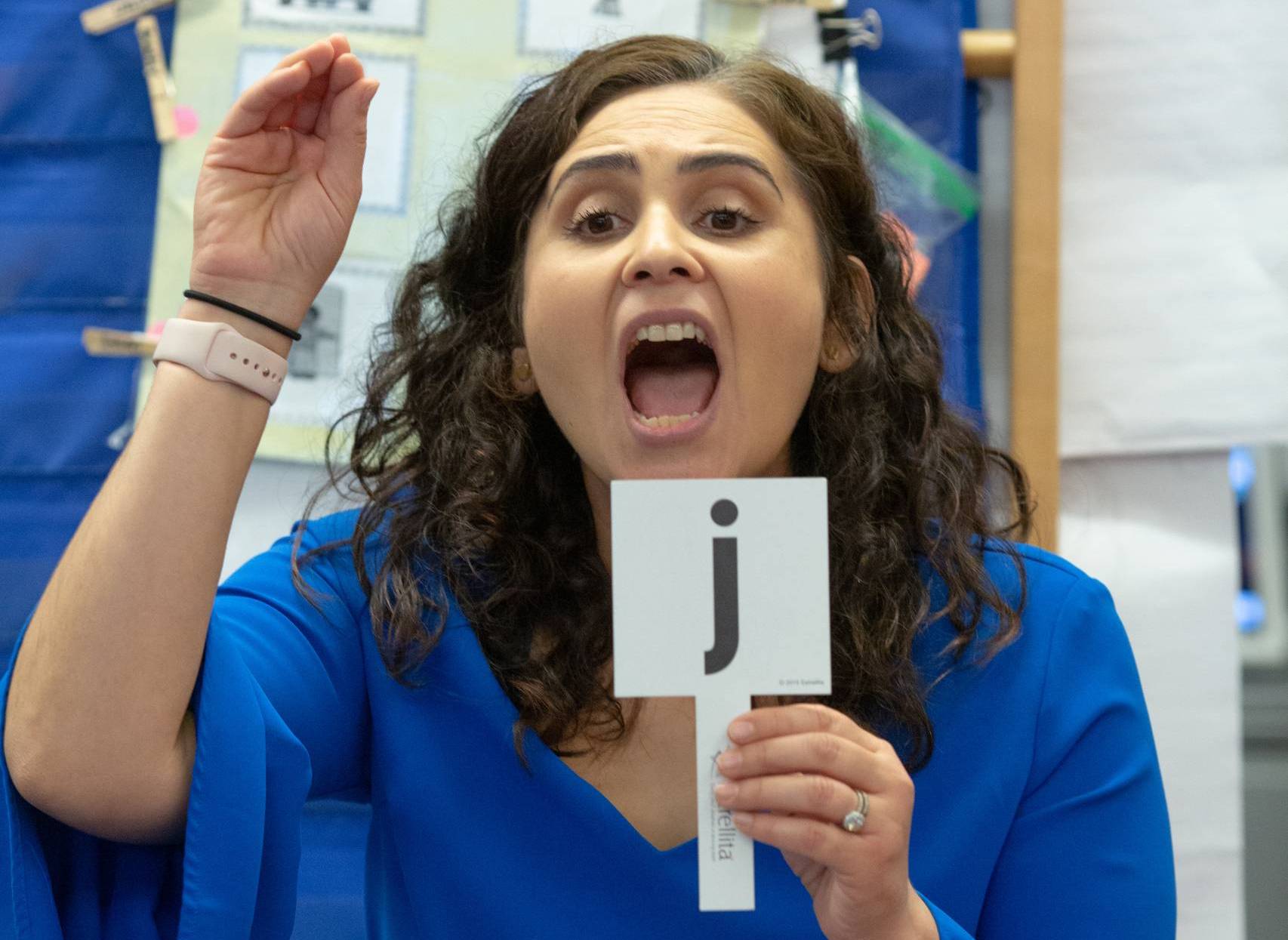
So like a teacher could hold up a card or write it on the chalkboard and then the students would see the letters as they say the sounds and become aware of the sounds in their brains.
But what was funny was how even as this research was building and building, many schools weren’t teaching much phonemic awareness at all or phonics, phonics again, is putting the sounds to the visible letters.
And many, many schools around the country were ignoring this and using different methods to teach reading, things that you may have heard of like balanced literacy or the reader’s workshop, reading recovery. And those were methods that didn’t emphasize phonemic awareness or phonics.
Then more recently, like in the last five years, the science of reading has really gained traction around the country and schools have been really embracing phonemic awareness and that’s where the concern came, that maybe they’re doing too much of it without the letters while all this research is showing, dating back to the year 2000, that if you do phonemic awareness with the letters, it’s much more effective.
Ki Sung: And what was the connection you found or maybe the advice around how much time to spend on phonemic awareness?
Jill Barshay: Well, that was the study that really caught my attention. Just earlier this year, a group of researchers from Texas A&M University, they were really trying to like nail down the dosage.
Like how many minutes of this stuff do the kids really need? Is it two? Is it five, is it 10?
And they collected all the studies that they could find that measured the minutes and they were so frustrated because none of the classroom studies documented the minutes well. And instead they were just left with 16 studies that looked at the amount of time that struggling kids were spending on phonemic awareness in extra sessions.
So these might be like a special small group session for a child who’s at risk of dyslexia or a 1 to 1 tutoring session and there they measured the minutes and what they noticed was after 10 hours, phonemic awareness, the auditory only phonemic awareness topped out. Kids weren’t benefiting at all anymore after 10 hours of it.
But if the tutors or the small group teachers, if they combined it with letters, the kids kept getting better and better and better. And so it showed the researchers that if you combine phonemic awareness with the display of the letters, it’s so much more effective.
Ki Sung: So it sounds like just the auditory lessons for this sample, 10 hours was fine, though like even just settling on that number is questionable because of the data the researchers have to work with.
Overall, the takeaway is connect the sound with the visual letters.
Jill Barshay: Right. What they found is phonemic awareness, oral only can be effective in say a small dose or a medium dose of it, 10 hours, right? But if you want to keep children learning and if you want them to keep improving, that it needs to be connected with the letters after a certain amount of time.
Ki Sung: You’ve explained a lot about phonemic awareness and we’ve talked about 4 to 6 year olds. But what, I guess there are also advanced phonemic awareness techniques that we should also be aware of.
Jill Barshay: This is where I thought I had went really deep down the rabbit hole. I couldn’t believe advanced phonemic awareness.
So in addition to the segmenting cuh aa tuh and blending cat that I discussed before, there are all these other manipulations like you could subtract a sound.
So instead of plant, you get pant and then you can add a sound. Let’s say you can add L back into pant and make it plant. Then there are substitutions. So you can take mat and, and substitute the M with a P and make it pat. And can you imagine doing all these in your head? They’re really hard. And so it, it actually takes many…That’s one of the reasons that so much class time is being spent on these advanced phonemic awareness skills.
And what the research literature shows is that the two very simple ones of segmenting and blending, they give you the biggest benefits and some experts say just focus on those and just do them as a quick warm up exercise.
Jill Barshay: But there are other people, particularly experts in helping children with dyslexia that say no, these really, these advanced phonemic awareness skills can be really helpful in building long term memories.
And others have said to me, you know, it can really heighten awareness of a consonant cluster like the difference between Puh and Pula. But they say really these are very complicated exercises, they should only be done with letters, not as oral, only exercises and probably best for struggling students in you know, maybe a pull out session or a tutoring session.
Ki Sung: I hear a lot about the term phonological awareness. I know we’re adding a lot of we’re adding another term to our glossary list. But can you explain what phonological awareness is and its role in learning how to read?
Jill Barshay: I was really confused about this. And I personally used to use phonological awareness and phonemic awareness interchangeably. And in researching this story, I learned that they’re separate and that phonemic awareness is really the important ingredient in learning to read. And that this phonological awareness is not as important.
Phonological awareness is a much broader category that includes not just the sounds that letters and clusters of letters make, but also syllables like pantry that you would clap [claps] pan-try 1, 2 or rhymes like flight, night, sight.
And there are probably zillions, more of these various sound exercises that are really disconnected from the letters and the sounds that they make. And the researchers are very concerned that teachers who have embraced the science of reading have been told to do too much of these broader phonological awareness exercises that are, you know, great for a poetry unit but not essential building blocks to read.
Ki Sung: I want to ask you about curriculum because at the root of a lot of these issues, you know, you can maybe even call them mistakes, is curriculum. And ultimately teachers have to go along with the curriculum, the district purchases and sometimes it’s not up to date or not correct or not caught up with the latest research. So what can teachers do when they come across curriculum that goes against what they know works with students?
Jill Barshay: I am not an expert in teaching and I don’t feel like my role is to give advice.
But what I can say is that the leading purveyor of phonemic awareness lessons and curriculum, if you, you can call it, it’s called Haggerty and they themselves responded to the science and in 2022 they added letters to their phonemic awareness lessons. And then in 2023 they added a a phonics approach to show how to combine phonemic awareness and phonics together in the classroom.
There, there’s a misunderstanding, that a lot of teachers have, that you need to teach phonemic awareness first and students need to master it first before you move on to phonics. And the reading researchers, I talked to say, no, you kind of do them in tandem, like you can have a group of letters and simultaneously be teaching the phonemic awareness with them and the phonics with them and then move on to another group of letters. And you just, you keep teaching both together.
Jill Barshay: And so I was impressed that this leading seller of phonemic awareness programs has, has moved on and is now combining it with letters and also with phonics and it says for, it knows that many teachers in many schools cannot afford to buy brand new lesson plans and curriculum. And it says that it offers ideas on how teachers can modify their old books and their old printed lessons, and to do things better.
I don’t know if that’s a good answer.I mean, it’s probably hard to do these modifications on the fly. And as a journalist from the outside it seems like if, like, when a company says our products not working well and they recall it and they, they put out a new product, they should probably, like, just give you the new product, I’m thinking.
Ki Sung: And what have you heard from people, you know, especially on social media or maybe they’re reaching out to you by email, like what have people been telling you about your reporting?
Jill Barshay: I’ve seen two reactions to it. One is people are grateful that the science of reading isn’t a cult and that just because someone says you need a lot of phonemic awareness in order to do the science of reading, right, that isn’t necessarily correct. You have to look at what the studies actually say and also the science evolved. So we, we have more meta analysis now, more syntheses of the research confirming that auditory alone is not as effective today. Whereas in the seventies, it seemed like it was the best way to do it.
And we, I think people who are you know, hold up signs, science of reading, science of reading need to understand that the science of reading, like any science evolves.
The other reaction I’ve seen are for people who have been critics of the science of reading and say, “see the, the researchers are arguing. Who knows what’s right? This shows we should go back to something called balanced literacy.”
And so I’ve also, I’ve also seen people taking this as ammunition that,, the whole science of reading is perhaps misguided.
Ki Sung: And where’s the truth?
Jill Barshay: Well, I think I tried to just express that, that science evolves. I mean, it, it, I think about it like, oh, masking and COVID, remember how first when COVID broke out, the federal authorities were saying, “well, you don’t need to wear masks. It’s not so important.”
And then later, more studies came out and said, you know what, “we should really wear masks,” and I think we need to be comfortable with science evolving.
And so so maybe there was a time almost 50 years ago that oral only phonemic awareness was the way to go. And now we have a ton of confirmation that we need to combine it with letters and there are still questions out there. We still don’t know the exact right dosage in the classroom for example.
Ki Sung: Jill, thank you for taking the time to talk through this complex issue.
Well, thanks for talking this through. It’s a complicated area and I appreciate another chance to talk about it.
Ki Sung: Jill Barshay is a journalist with the Hechinger report. She has a weekly column about education research called Proof Points. Her latest piece is about phonemic awareness research. We’ll bring you ideas and innovations from experts in education and beyond. Hit follow on your favorite podcast app so you don’t miss a thing.
Ki Sung: The MindShift team includes me, Ki Sung, Nimah Gobir, Kara Newhouse, Marlena Jackson-Retondo and Jennifer Ng.
Our editor is Chris Hambrick, Chris Hoff is our sound designer.
Additional support from Jen Chien and Katie Sprenger, Cesar Saldaña and Holly Kernan.
MindShift is supported in part by the generosity of the William and Flora Hewlett Foundation and members of KQED.
Thanks for listening.