window.__IS_SSR__=true
window.__INITIAL_STATE__={
"attachmentsReducer": {
"audio_0": {
"type": "attachments",
"id": "audio_0",
"imgSizes": {
"kqedFullSize": {
"file": "https://ww2.kqed.org/news/wp-content/themes/KQED-unified/img/audio_bgs/background0.jpg"
}
}
},
"audio_1": {
"type": "attachments",
"id": "audio_1",
"imgSizes": {
"kqedFullSize": {
"file": "https://ww2.kqed.org/news/wp-content/themes/KQED-unified/img/audio_bgs/background1.jpg"
}
}
},
"audio_2": {
"type": "attachments",
"id": "audio_2",
"imgSizes": {
"kqedFullSize": {
"file": "https://ww2.kqed.org/news/wp-content/themes/KQED-unified/img/audio_bgs/background2.jpg"
}
}
},
"audio_3": {
"type": "attachments",
"id": "audio_3",
"imgSizes": {
"kqedFullSize": {
"file": "https://ww2.kqed.org/news/wp-content/themes/KQED-unified/img/audio_bgs/background3.jpg"
}
}
},
"audio_4": {
"type": "attachments",
"id": "audio_4",
"imgSizes": {
"kqedFullSize": {
"file": "https://ww2.kqed.org/news/wp-content/themes/KQED-unified/img/audio_bgs/background4.jpg"
}
}
},
"placeholder": {
"type": "attachments",
"id": "placeholder",
"imgSizes": {
"thumbnail": {
"file": "https://cdn.kqed.org/wp-content/uploads/2024/12/KQED-Default-Image-816638274-2000x1333-1-160x107.jpg",
"width": 160,
"height": 107,
"mimeType": "image/jpeg"
},
"medium": {
"file": "https://cdn.kqed.org/wp-content/uploads/2024/12/KQED-Default-Image-816638274-2000x1333-1-800x533.jpg",
"width": 800,
"height": 533,
"mimeType": "image/jpeg"
},
"medium_large": {
"file": "https://cdn.kqed.org/wp-content/uploads/2024/12/KQED-Default-Image-816638274-2000x1333-1-768x512.jpg",
"width": 768,
"height": 512,
"mimeType": "image/jpeg"
},
"large": {
"file": "https://cdn.kqed.org/wp-content/uploads/2024/12/KQED-Default-Image-816638274-2000x1333-1-1020x680.jpg",
"width": 1020,
"height": 680,
"mimeType": "image/jpeg"
},
"1536x1536": {
"file": "https://cdn.kqed.org/wp-content/uploads/2024/12/KQED-Default-Image-816638274-2000x1333-1-1536x1024.jpg",
"width": 1536,
"height": 1024,
"mimeType": "image/jpeg"
},
"fd-lrg": {
"file": "https://cdn.kqed.org/wp-content/uploads/2024/12/KQED-Default-Image-816638274-2000x1333-1-1536x1024.jpg",
"width": 1536,
"height": 1024,
"mimeType": "image/jpeg"
},
"fd-med": {
"file": "https://cdn.kqed.org/wp-content/uploads/2024/12/KQED-Default-Image-816638274-2000x1333-1-1020x680.jpg",
"width": 1020,
"height": 680,
"mimeType": "image/jpeg"
},
"fd-sm": {
"file": "https://cdn.kqed.org/wp-content/uploads/2024/12/KQED-Default-Image-816638274-2000x1333-1-800x533.jpg",
"width": 800,
"height": 533,
"mimeType": "image/jpeg"
},
"post-thumbnail": {
"file": "https://cdn.kqed.org/wp-content/uploads/2024/12/KQED-Default-Image-816638274-2000x1333-1-672x372.jpg",
"width": 672,
"height": 372,
"mimeType": "image/jpeg"
},
"twentyfourteen-full-width": {
"file": "https://cdn.kqed.org/wp-content/uploads/2024/12/KQED-Default-Image-816638274-2000x1333-1-1038x576.jpg",
"width": 1038,
"height": 576,
"mimeType": "image/jpeg"
},
"xxsmall": {
"file": "https://cdn.kqed.org/wp-content/uploads/2024/12/KQED-Default-Image-816638274-2000x1333-1-160x107.jpg",
"width": 160,
"height": 107,
"mimeType": "image/jpeg"
},
"xsmall": {
"file": "https://cdn.kqed.org/wp-content/uploads/2024/12/KQED-Default-Image-816638274-2000x1333-1-672x372.jpg",
"width": 672,
"height": 372,
"mimeType": "image/jpeg"
},
"small": {
"file": "https://cdn.kqed.org/wp-content/uploads/2024/12/KQED-Default-Image-816638274-2000x1333-1-672x372.jpg",
"width": 672,
"height": 372,
"mimeType": "image/jpeg"
},
"xlarge": {
"file": "https://cdn.kqed.org/wp-content/uploads/2024/12/KQED-Default-Image-816638274-2000x1333-1-1020x680.jpg",
"width": 1020,
"height": 680,
"mimeType": "image/jpeg"
},
"full-width": {
"file": "https://cdn.kqed.org/wp-content/uploads/2024/12/KQED-Default-Image-816638274-2000x1333-1-1920x1280.jpg",
"width": 1920,
"height": 1280,
"mimeType": "image/jpeg"
},
"guest-author-32": {
"file": "https://cdn.kqed.org/wp-content/uploads/2025/01/KQED-Default-Image-816638274-1333x1333-1-160x160.jpg",
"width": 32,
"height": 32,
"mimeType": "image/jpeg"
},
"guest-author-50": {
"file": "https://cdn.kqed.org/wp-content/uploads/2025/01/KQED-Default-Image-816638274-1333x1333-1-160x160.jpg",
"width": 50,
"height": 50,
"mimeType": "image/jpeg"
},
"guest-author-64": {
"file": "https://cdn.kqed.org/wp-content/uploads/2025/01/KQED-Default-Image-816638274-1333x1333-1-160x160.jpg",
"width": 64,
"height": 64,
"mimeType": "image/jpeg"
},
"guest-author-96": {
"file": "https://cdn.kqed.org/wp-content/uploads/2025/01/KQED-Default-Image-816638274-1333x1333-1-160x160.jpg",
"width": 96,
"height": 96,
"mimeType": "image/jpeg"
},
"guest-author-128": {
"file": "https://cdn.kqed.org/wp-content/uploads/2025/01/KQED-Default-Image-816638274-1333x1333-1-160x160.jpg",
"width": 128,
"height": 128,
"mimeType": "image/jpeg"
},
"detail": {
"file": "https://cdn.kqed.org/wp-content/uploads/2025/01/KQED-Default-Image-816638274-1333x1333-1-160x160.jpg",
"width": 160,
"height": 160,
"mimeType": "image/jpeg"
},
"kqedFullSize": {
"file": "https://cdn.kqed.org/wp-content/uploads/2024/12/KQED-Default-Image-816638274-2000x1333-1.jpg",
"width": 2000,
"height": 1333
}
}
},
"mindshift_64879": {
"type": "attachments",
"id": "mindshift_64879",
"meta": {
"index": "attachments_1716263798",
"site": "mindshift",
"id": "64879",
"found": true
},
"title": "Magnifier with Brainstorm inside to smart, idea, creative, thinking;, education, innovation smart intelligence concept.",
"publishDate": 1728971341,
"status": "inherit",
"parent": 64877,
"modified": 1728971373,
"caption": null,
"credit": "champpixs/iStock",
"altTag": "Illustration of a brain magnified by a magnifying glass",
"description": null,
"imgSizes": {
"medium": {
"file": "https://cdn.kqed.org/wp-content/uploads/sites/23/2024/10/iStock-1492377092-800x538.jpg",
"width": 800,
"height": 538,
"mimeType": "image/jpeg"
},
"large": {
"file": "https://cdn.kqed.org/wp-content/uploads/sites/23/2024/10/iStock-1492377092-1020x686.jpg",
"width": 1020,
"height": 686,
"mimeType": "image/jpeg"
},
"thumbnail": {
"file": "https://cdn.kqed.org/wp-content/uploads/sites/23/2024/10/iStock-1492377092-160x108.jpg",
"width": 160,
"height": 108,
"mimeType": "image/jpeg"
},
"medium_large": {
"file": "https://cdn.kqed.org/wp-content/uploads/sites/23/2024/10/iStock-1492377092-768x517.jpg",
"width": 768,
"height": 517,
"mimeType": "image/jpeg"
},
"1536x1536": {
"file": "https://cdn.kqed.org/wp-content/uploads/sites/23/2024/10/iStock-1492377092-1536x1034.jpg",
"width": 1536,
"height": 1034,
"mimeType": "image/jpeg"
},
"2048x2048": {
"file": "https://cdn.kqed.org/wp-content/uploads/sites/23/2024/10/iStock-1492377092-2048x1378.jpg",
"width": 2048,
"height": 1378,
"mimeType": "image/jpeg"
},
"post-thumbnail": {
"file": "https://cdn.kqed.org/wp-content/uploads/sites/23/2024/10/iStock-1492377092-672x372.jpg",
"width": 672,
"height": 372,
"mimeType": "image/jpeg"
},
"twentyfourteen-full-width": {
"file": "https://cdn.kqed.org/wp-content/uploads/sites/23/2024/10/iStock-1492377092-1038x576.jpg",
"width": 1038,
"height": 576,
"mimeType": "image/jpeg"
},
"full-width": {
"file": "https://cdn.kqed.org/wp-content/uploads/sites/23/2024/10/iStock-1492377092-1920x1292.jpg",
"width": 1920,
"height": 1292,
"mimeType": "image/jpeg"
},
"kqedFullSize": {
"file": "https://cdn.kqed.org/wp-content/uploads/sites/23/2024/10/iStock-1492377092.jpg",
"width": 2110,
"height": 1420
}
},
"fetchFailed": false,
"isLoading": false
},
"mindshift_64872": {
"type": "attachments",
"id": "mindshift_64872",
"meta": {
"index": "attachments_1716263798",
"site": "mindshift",
"id": "64872",
"found": true
},
"title": "Tennessee State Capitol",
"publishDate": 1728915591,
"status": "inherit",
"parent": 64867,
"modified": 1728915621,
"caption": "View of the Tennessee State Capitol, where lawmakers were the first in the nation to pass a law in 2014 to make community college tuition free for future high school graduates. Credit: Joe Sohm/Visions of America/Universal Images Group via Getty Images",
"credit": null,
"altTag": "Overhead view of a state capitol building",
"description": null,
"imgSizes": {
"medium": {
"file": "https://cdn.kqed.org/wp-content/uploads/sites/23/2024/10/Tennessee-State-Capitol-800x597.png",
"width": 800,
"height": 597,
"mimeType": "image/png"
},
"thumbnail": {
"file": "https://cdn.kqed.org/wp-content/uploads/sites/23/2024/10/Tennessee-State-Capitol-160x119.png",
"width": 160,
"height": 119,
"mimeType": "image/png"
},
"medium_large": {
"file": "https://cdn.kqed.org/wp-content/uploads/sites/23/2024/10/Tennessee-State-Capitol-768x573.png",
"width": 768,
"height": 573,
"mimeType": "image/png"
},
"post-thumbnail": {
"file": "https://cdn.kqed.org/wp-content/uploads/sites/23/2024/10/Tennessee-State-Capitol-672x372.png",
"width": 672,
"height": 372,
"mimeType": "image/png"
},
"twentyfourteen-full-width": {
"file": "https://cdn.kqed.org/wp-content/uploads/sites/23/2024/10/Tennessee-State-Capitol-977x576.png",
"width": 977,
"height": 576,
"mimeType": "image/png"
},
"kqedFullSize": {
"file": "https://cdn.kqed.org/wp-content/uploads/sites/23/2024/10/Tennessee-State-Capitol.png",
"width": 977,
"height": 729
}
},
"fetchFailed": false,
"isLoading": false
},
"mindshift_64856": {
"type": "attachments",
"id": "mindshift_64856",
"meta": {
"index": "attachments_1716263798",
"site": "mindshift",
"id": "64856",
"found": true
},
"title": "week2_digital_mainimage_fullsize.gif",
"publishDate": 1728447361,
"status": "inherit",
"parent": 64855,
"modified": 1728447361,
"caption": null,
"credit": null,
"altTag": null,
"description": null,
"imgSizes": {
"medium": {
"file": "https://cdn.kqed.org/wp-content/uploads/sites/23/2024/10/week2-digital-mainimage-fullsize-800x450.gif",
"width": 800,
"height": 450,
"mimeType": "image/gif"
},
"large": {
"file": "https://cdn.kqed.org/wp-content/uploads/sites/23/2024/10/week2-digital-mainimage-fullsize-1020x574.gif",
"width": 1020,
"height": 574,
"mimeType": "image/gif"
},
"thumbnail": {
"file": "https://cdn.kqed.org/wp-content/uploads/sites/23/2024/10/week2-digital-mainimage-fullsize-160x90.gif",
"width": 160,
"height": 90,
"mimeType": "image/gif"
},
"medium_large": {
"file": "https://cdn.kqed.org/wp-content/uploads/sites/23/2024/10/week2-digital-mainimage-fullsize-768x432.gif",
"width": 768,
"height": 432,
"mimeType": "image/gif"
},
"1536x1536": {
"file": "https://cdn.kqed.org/wp-content/uploads/sites/23/2024/10/week2-digital-mainimage-fullsize-1536x864.gif",
"width": 1536,
"height": 864,
"mimeType": "image/gif"
},
"2048x2048": {
"file": "https://cdn.kqed.org/wp-content/uploads/sites/23/2024/10/week2-digital-mainimage-fullsize-2048x1152.gif",
"width": 2048,
"height": 1152,
"mimeType": "image/gif"
},
"post-thumbnail": {
"file": "https://cdn.kqed.org/wp-content/uploads/sites/23/2024/10/week2-digital-mainimage-fullsize-672x372.gif",
"width": 672,
"height": 372,
"mimeType": "image/gif"
},
"twentyfourteen-full-width": {
"file": "https://cdn.kqed.org/wp-content/uploads/sites/23/2024/10/week2-digital-mainimage-fullsize-1038x576.gif",
"width": 1038,
"height": 576,
"mimeType": "image/gif"
},
"full-width": {
"file": "https://cdn.kqed.org/wp-content/uploads/sites/23/2024/10/week2-digital-mainimage-fullsize-1920x1080.gif",
"width": 1920,
"height": 1080,
"mimeType": "image/gif"
},
"kqedFullSize": {
"file": "https://cdn.kqed.org/wp-content/uploads/sites/23/2024/10/week2-digital-mainimage-fullsize-scaled.gif",
"width": 2560,
"height": 1440
}
},
"fetchFailed": false,
"isLoading": false
},
"mindshift_64835": {
"type": "attachments",
"id": "mindshift_64835",
"meta": {
"index": "attachments_1716263798",
"site": "mindshift",
"id": "64835",
"found": true
},
"title": null,
"publishDate": 1728308810,
"status": "inherit",
"parent": 64833,
"modified": 1728308856,
"caption": null,
"credit": "Getty Images/\taldomurillo",
"altTag": "Female student using laptop at table in library",
"description": null,
"imgSizes": {
"medium": {
"file": "https://cdn.kqed.org/wp-content/uploads/sites/23/2024/10/GettyImages-1372604887-800x533.jpg",
"width": 800,
"height": 533,
"mimeType": "image/jpeg"
},
"large": {
"file": "https://cdn.kqed.org/wp-content/uploads/sites/23/2024/10/GettyImages-1372604887-1020x680.jpg",
"width": 1020,
"height": 680,
"mimeType": "image/jpeg"
},
"thumbnail": {
"file": "https://cdn.kqed.org/wp-content/uploads/sites/23/2024/10/GettyImages-1372604887-160x107.jpg",
"width": 160,
"height": 107,
"mimeType": "image/jpeg"
},
"medium_large": {
"file": "https://cdn.kqed.org/wp-content/uploads/sites/23/2024/10/GettyImages-1372604887-768x512.jpg",
"width": 768,
"height": 512,
"mimeType": "image/jpeg"
},
"1536x1536": {
"file": "https://cdn.kqed.org/wp-content/uploads/sites/23/2024/10/GettyImages-1372604887-1536x1024.jpg",
"width": 1536,
"height": 1024,
"mimeType": "image/jpeg"
},
"2048x2048": {
"file": "https://cdn.kqed.org/wp-content/uploads/sites/23/2024/10/GettyImages-1372604887-2048x1365.jpg",
"width": 2048,
"height": 1365,
"mimeType": "image/jpeg"
},
"post-thumbnail": {
"file": "https://cdn.kqed.org/wp-content/uploads/sites/23/2024/10/GettyImages-1372604887-672x372.jpg",
"width": 672,
"height": 372,
"mimeType": "image/jpeg"
},
"twentyfourteen-full-width": {
"file": "https://cdn.kqed.org/wp-content/uploads/sites/23/2024/10/GettyImages-1372604887-1038x576.jpg",
"width": 1038,
"height": 576,
"mimeType": "image/jpeg"
},
"full-width": {
"file": "https://cdn.kqed.org/wp-content/uploads/sites/23/2024/10/GettyImages-1372604887-1920x1280.jpg",
"width": 1920,
"height": 1280,
"mimeType": "image/jpeg"
},
"kqedFullSize": {
"file": "https://cdn.kqed.org/wp-content/uploads/sites/23/2024/10/GettyImages-1372604887.jpg",
"width": 2121,
"height": 1414
}
},
"fetchFailed": false,
"isLoading": false
},
"mindshift_64823": {
"type": "attachments",
"id": "mindshift_64823",
"meta": {
"index": "attachments_1716263798",
"site": "mindshift",
"id": "64823",
"found": true
},
"title": "Writing an exam at the university",
"publishDate": 1728073351,
"status": "inherit",
"parent": 64821,
"modified": 1728073400,
"caption": "A dashboard from the Canvas learning management system is displayed to students in this college lecture hall. A University of Michigan study finds that students with last names at the end of the alphabet are penalized when instructors grade in alphabetical order, a default setting in Canvas and other widely used learning management systems (LMS). ",
"credit": "Getty Images",
"altTag": "Female college student writing an exam during a class at lecture hall. Her classmate are in the background.",
"description": null,
"imgSizes": {
"medium": {
"file": "https://cdn.kqed.org/wp-content/uploads/sites/23/2024/10/GettyImages-2122148349-800x534.jpg",
"width": 800,
"height": 534,
"mimeType": "image/jpeg"
},
"large": {
"file": "https://cdn.kqed.org/wp-content/uploads/sites/23/2024/10/GettyImages-2122148349-1020x680.jpg",
"width": 1020,
"height": 680,
"mimeType": "image/jpeg"
},
"thumbnail": {
"file": "https://cdn.kqed.org/wp-content/uploads/sites/23/2024/10/GettyImages-2122148349-160x107.jpg",
"width": 160,
"height": 107,
"mimeType": "image/jpeg"
},
"medium_large": {
"file": "https://cdn.kqed.org/wp-content/uploads/sites/23/2024/10/GettyImages-2122148349-768x512.jpg",
"width": 768,
"height": 512,
"mimeType": "image/jpeg"
},
"1536x1536": {
"file": "https://cdn.kqed.org/wp-content/uploads/sites/23/2024/10/GettyImages-2122148349-1536x1024.jpg",
"width": 1536,
"height": 1024,
"mimeType": "image/jpeg"
},
"2048x2048": {
"file": "https://cdn.kqed.org/wp-content/uploads/sites/23/2024/10/GettyImages-2122148349-2048x1366.jpg",
"width": 2048,
"height": 1366,
"mimeType": "image/jpeg"
},
"post-thumbnail": {
"file": "https://cdn.kqed.org/wp-content/uploads/sites/23/2024/10/GettyImages-2122148349-672x372.jpg",
"width": 672,
"height": 372,
"mimeType": "image/jpeg"
},
"twentyfourteen-full-width": {
"file": "https://cdn.kqed.org/wp-content/uploads/sites/23/2024/10/GettyImages-2122148349-1038x576.jpg",
"width": 1038,
"height": 576,
"mimeType": "image/jpeg"
},
"full-width": {
"file": "https://cdn.kqed.org/wp-content/uploads/sites/23/2024/10/GettyImages-2122148349-1920x1281.jpg",
"width": 1920,
"height": 1281,
"mimeType": "image/jpeg"
},
"kqedFullSize": {
"file": "https://cdn.kqed.org/wp-content/uploads/sites/23/2024/10/GettyImages-2122148349.jpg",
"width": 2120,
"height": 1414
}
},
"fetchFailed": false,
"isLoading": false
},
"mindshift_64829": {
"type": "attachments",
"id": "mindshift_64829",
"meta": {
"index": "attachments_1716263798",
"site": "mindshift",
"id": "64829",
"found": true
},
"title": "Affectionate mother touching noses with her young son",
"publishDate": 1728139540,
"status": "inherit",
"parent": 64818,
"modified": 1728139573,
"caption": null,
"credit": "iStock/jacoblund",
"altTag": "Affectionate mother touching noses with her young son in the kitchen.",
"description": null,
"imgSizes": {
"medium": {
"file": "https://cdn.kqed.org/wp-content/uploads/sites/23/2024/10/iStock-1358737791-800x534.jpg",
"width": 800,
"height": 534,
"mimeType": "image/jpeg"
},
"large": {
"file": "https://cdn.kqed.org/wp-content/uploads/sites/23/2024/10/iStock-1358737791-1020x680.jpg",
"width": 1020,
"height": 680,
"mimeType": "image/jpeg"
},
"thumbnail": {
"file": "https://cdn.kqed.org/wp-content/uploads/sites/23/2024/10/iStock-1358737791-160x107.jpg",
"width": 160,
"height": 107,
"mimeType": "image/jpeg"
},
"medium_large": {
"file": "https://cdn.kqed.org/wp-content/uploads/sites/23/2024/10/iStock-1358737791-768x512.jpg",
"width": 768,
"height": 512,
"mimeType": "image/jpeg"
},
"1536x1536": {
"file": "https://cdn.kqed.org/wp-content/uploads/sites/23/2024/10/iStock-1358737791-1536x1024.jpg",
"width": 1536,
"height": 1024,
"mimeType": "image/jpeg"
},
"2048x2048": {
"file": "https://cdn.kqed.org/wp-content/uploads/sites/23/2024/10/iStock-1358737791-2048x1366.jpg",
"width": 2048,
"height": 1366,
"mimeType": "image/jpeg"
},
"post-thumbnail": {
"file": "https://cdn.kqed.org/wp-content/uploads/sites/23/2024/10/iStock-1358737791-672x372.jpg",
"width": 672,
"height": 372,
"mimeType": "image/jpeg"
},
"twentyfourteen-full-width": {
"file": "https://cdn.kqed.org/wp-content/uploads/sites/23/2024/10/iStock-1358737791-1038x576.jpg",
"width": 1038,
"height": 576,
"mimeType": "image/jpeg"
},
"full-width": {
"file": "https://cdn.kqed.org/wp-content/uploads/sites/23/2024/10/iStock-1358737791-1920x1281.jpg",
"width": 1920,
"height": 1281,
"mimeType": "image/jpeg"
},
"kqedFullSize": {
"file": "https://cdn.kqed.org/wp-content/uploads/sites/23/2024/10/iStock-1358737791.jpg",
"width": 2120,
"height": 1414
}
},
"fetchFailed": false,
"isLoading": false
},
"mindshift_64813": {
"type": "attachments",
"id": "mindshift_64813",
"meta": {
"index": "attachments_1716263798",
"site": "mindshift",
"id": "64813",
"found": true
},
"title": "Kid's shadow on zebra crossing",
"publishDate": 1727884864,
"status": "inherit",
"parent": 64798,
"modified": 1727884910,
"caption": null,
"credit": "AlexLinch/iStock",
"altTag": "Shadow of a child with backpack crossing the street",
"description": null,
"imgSizes": {
"medium": {
"file": "https://cdn.kqed.org/wp-content/uploads/sites/23/2024/10/iStock-649664148-800x533.jpg",
"width": 800,
"height": 533,
"mimeType": "image/jpeg"
},
"large": {
"file": "https://cdn.kqed.org/wp-content/uploads/sites/23/2024/10/iStock-649664148-1020x680.jpg",
"width": 1020,
"height": 680,
"mimeType": "image/jpeg"
},
"thumbnail": {
"file": "https://cdn.kqed.org/wp-content/uploads/sites/23/2024/10/iStock-649664148-160x107.jpg",
"width": 160,
"height": 107,
"mimeType": "image/jpeg"
},
"medium_large": {
"file": "https://cdn.kqed.org/wp-content/uploads/sites/23/2024/10/iStock-649664148-768x512.jpg",
"width": 768,
"height": 512,
"mimeType": "image/jpeg"
},
"1536x1536": {
"file": "https://cdn.kqed.org/wp-content/uploads/sites/23/2024/10/iStock-649664148-1536x1024.jpg",
"width": 1536,
"height": 1024,
"mimeType": "image/jpeg"
},
"2048x2048": {
"file": "https://cdn.kqed.org/wp-content/uploads/sites/23/2024/10/iStock-649664148-2048x1365.jpg",
"width": 2048,
"height": 1365,
"mimeType": "image/jpeg"
},
"post-thumbnail": {
"file": "https://cdn.kqed.org/wp-content/uploads/sites/23/2024/10/iStock-649664148-672x372.jpg",
"width": 672,
"height": 372,
"mimeType": "image/jpeg"
},
"twentyfourteen-full-width": {
"file": "https://cdn.kqed.org/wp-content/uploads/sites/23/2024/10/iStock-649664148-1038x576.jpg",
"width": 1038,
"height": 576,
"mimeType": "image/jpeg"
},
"full-width": {
"file": "https://cdn.kqed.org/wp-content/uploads/sites/23/2024/10/iStock-649664148-1920x1280.jpg",
"width": 1920,
"height": 1280,
"mimeType": "image/jpeg"
},
"kqedFullSize": {
"file": "https://cdn.kqed.org/wp-content/uploads/sites/23/2024/10/iStock-649664148.jpg",
"width": 2121,
"height": 1414
}
},
"fetchFailed": false,
"isLoading": false
},
"mindshift_64802": {
"type": "attachments",
"id": "mindshift_64802",
"meta": {
"index": "attachments_1716263798",
"site": "mindshift",
"id": "64802",
"found": true
},
"title": "47c64c7b-2c3c-4a3b-8c73-bf42b47d494f",
"publishDate": 1727753822,
"status": "inherit",
"parent": 64796,
"modified": 1727754140,
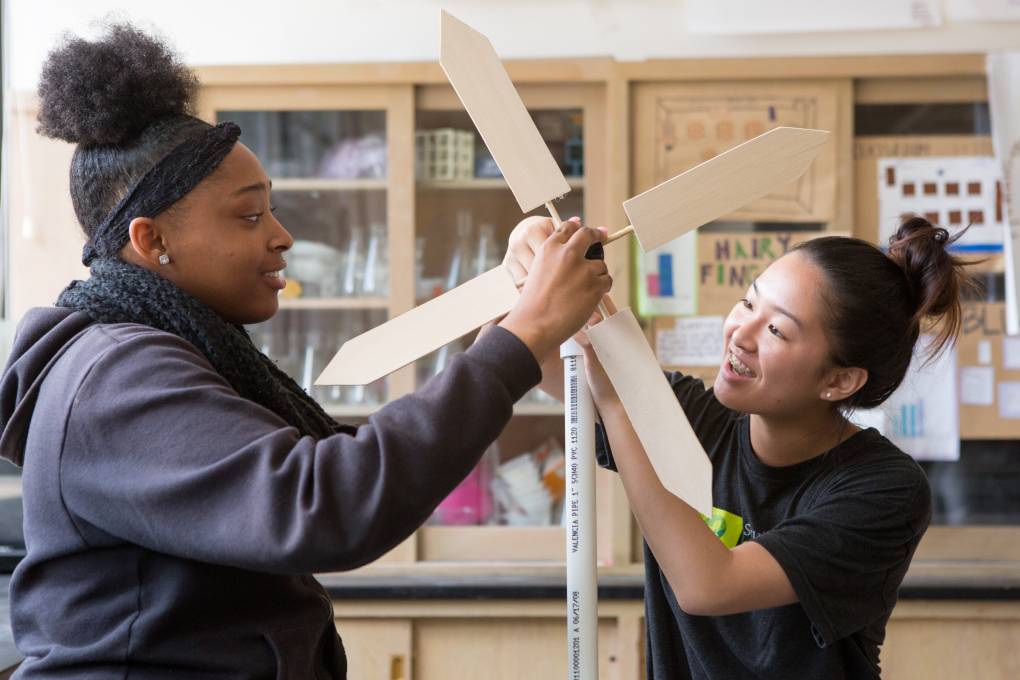
"caption": "Students assemble a model wind turbine they constructed. ",
"credit": "Allison Shelley/The Verbatim Agency for EDUimages",
"altTag": "Two students with hands on a turbine",
"description": null,
"imgSizes": {
"medium": {
"file": "https://cdn.kqed.org/wp-content/uploads/sites/23/2024/09/47c64c7b-2c3c-4a3b-8c73-bf42b47d494f-800x533.jpg",
"width": 800,
"height": 533,
"mimeType": "image/jpeg"
},
"large": {
"file": "https://cdn.kqed.org/wp-content/uploads/sites/23/2024/09/47c64c7b-2c3c-4a3b-8c73-bf42b47d494f-1020x680.jpg",
"width": 1020,
"height": 680,
"mimeType": "image/jpeg"
},
"thumbnail": {
"file": "https://cdn.kqed.org/wp-content/uploads/sites/23/2024/09/47c64c7b-2c3c-4a3b-8c73-bf42b47d494f-160x107.jpg",
"width": 160,
"height": 107,
"mimeType": "image/jpeg"
},
"medium_large": {
"file": "https://cdn.kqed.org/wp-content/uploads/sites/23/2024/09/47c64c7b-2c3c-4a3b-8c73-bf42b47d494f-768x512.jpg",
"width": 768,
"height": 512,
"mimeType": "image/jpeg"
},
"1536x1536": {
"file": "https://cdn.kqed.org/wp-content/uploads/sites/23/2024/09/47c64c7b-2c3c-4a3b-8c73-bf42b47d494f-1536x1024.jpg",
"width": 1536,
"height": 1024,
"mimeType": "image/jpeg"
},
"2048x2048": {
"file": "https://cdn.kqed.org/wp-content/uploads/sites/23/2024/09/47c64c7b-2c3c-4a3b-8c73-bf42b47d494f-2048x1365.jpg",
"width": 2048,
"height": 1365,
"mimeType": "image/jpeg"
},
"post-thumbnail": {
"file": "https://cdn.kqed.org/wp-content/uploads/sites/23/2024/09/47c64c7b-2c3c-4a3b-8c73-bf42b47d494f-672x372.jpg",
"width": 672,
"height": 372,
"mimeType": "image/jpeg"
},
"twentyfourteen-full-width": {
"file": "https://cdn.kqed.org/wp-content/uploads/sites/23/2024/09/47c64c7b-2c3c-4a3b-8c73-bf42b47d494f-1038x576.jpg",
"width": 1038,
"height": 576,
"mimeType": "image/jpeg"
},
"full-width": {
"file": "https://cdn.kqed.org/wp-content/uploads/sites/23/2024/09/47c64c7b-2c3c-4a3b-8c73-bf42b47d494f-1920x1280.jpg",
"width": 1920,
"height": 1280,
"mimeType": "image/jpeg"
},
"kqedFullSize": {
"file": "https://cdn.kqed.org/wp-content/uploads/sites/23/2024/09/47c64c7b-2c3c-4a3b-8c73-bf42b47d494f-scaled.jpg",
"width": 2560,
"height": 1707
}
},
"fetchFailed": false,
"isLoading": false
},
"mindshift_64790": {
"type": "attachments",
"id": "mindshift_64790",
"meta": {
"index": "attachments_1716263798",
"site": "mindshift",
"id": "64790",
"found": true
},
"title": "Hechinger Report Proof Points Featured Image",
"publishDate": 1727478396,
"status": "inherit",
"parent": 64787,
"modified": 1727478440,
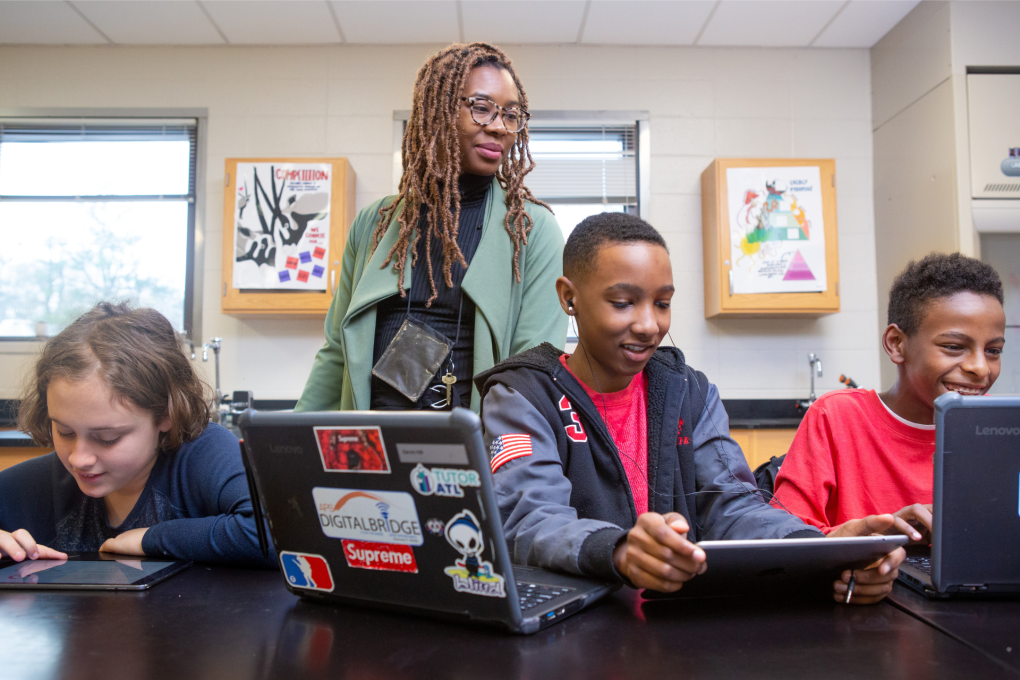
"caption": "Allison Shelley for EDUimages",
"credit": null,
"altTag": "An adult overlooks three students shoulders as they work on computers.",
"description": null,
"imgSizes": {
"medium": {
"file": "https://cdn.kqed.org/wp-content/uploads/sites/23/2024/09/Hechinger-Report-Proof-Points-Featured-Image-800x533.png",
"width": 800,
"height": 533,
"mimeType": "image/png"
},
"large": {
"file": "https://cdn.kqed.org/wp-content/uploads/sites/23/2024/09/Hechinger-Report-Proof-Points-Featured-Image-1020x680.png",
"width": 1020,
"height": 680,
"mimeType": "image/png"
},
"thumbnail": {
"file": "https://cdn.kqed.org/wp-content/uploads/sites/23/2024/09/Hechinger-Report-Proof-Points-Featured-Image-160x107.png",
"width": 160,
"height": 107,
"mimeType": "image/png"
},
"medium_large": {
"file": "https://cdn.kqed.org/wp-content/uploads/sites/23/2024/09/Hechinger-Report-Proof-Points-Featured-Image-768x512.png",
"width": 768,
"height": 512,
"mimeType": "image/png"
},
"1536x1536": {
"file": "https://cdn.kqed.org/wp-content/uploads/sites/23/2024/09/Hechinger-Report-Proof-Points-Featured-Image-1536x1024.png",
"width": 1536,
"height": 1024,
"mimeType": "image/png"
},
"post-thumbnail": {
"file": "https://cdn.kqed.org/wp-content/uploads/sites/23/2024/09/Hechinger-Report-Proof-Points-Featured-Image-672x372.png",
"width": 672,
"height": 372,
"mimeType": "image/png"
},
"twentyfourteen-full-width": {
"file": "https://cdn.kqed.org/wp-content/uploads/sites/23/2024/09/Hechinger-Report-Proof-Points-Featured-Image-1038x576.png",
"width": 1038,
"height": 576,
"mimeType": "image/png"
},
"kqedFullSize": {
"file": "https://cdn.kqed.org/wp-content/uploads/sites/23/2024/09/Hechinger-Report-Proof-Points-Featured-Image.png",
"width": 1920,
"height": 1280
}
},
"fetchFailed": false,
"isLoading": false
}
},
"audioPlayerReducer": {
"postId": "stream_live",
"isPaused": true,
"isPlaying": false,
"pfsActive": false,
"pledgeModalIsOpen": true,
"playerDrawerIsOpen": false
},
"authorsReducer": {
"byline_mindshift_64867": {
"type": "authors",
"id": "byline_mindshift_64867",
"meta": {
"override": true
},
"slug": "byline_mindshift_64867",
"name": "Jill Barshay, \u003ca href=\"https://hechingerreport.org/\">The Hechinger Report\u003c/a>",
"isLoading": false
},
"byline_mindshift_64855": {
"type": "authors",
"id": "byline_mindshift_64855",
"meta": {
"override": true
},
"slug": "byline_mindshift_64855",
"name": "Allison Aubrey",
"isLoading": false
},
"byline_mindshift_64821": {
"type": "authors",
"id": "byline_mindshift_64821",
"meta": {
"override": true
},
"slug": "byline_mindshift_64821",
"name": "Jill Barshay, \u003ca href=\"https://hechingerreport.org/\">The Hechinger Report\u003c/a>",
"isLoading": false
},
"byline_mindshift_64818": {
"type": "authors",
"id": "byline_mindshift_64818",
"meta": {
"override": true
},
"slug": "byline_mindshift_64818",
"name": "Cara Goodwin, \u003ca href=\"https://parentingtranslator.org\">The Parenting Translator\u003c/a>",
"isLoading": false
},
"byline_mindshift_64798": {
"type": "authors",
"id": "byline_mindshift_64798",
"meta": {
"override": true
},
"slug": "byline_mindshift_64798",
"name": "Cara Goodwin, \u003ca href=\"https://parentingtranslator.org\" target=\"_blank\">The Parenting Translator\u003c/a>",
"isLoading": false
},
"byline_mindshift_64796": {
"type": "authors",
"id": "byline_mindshift_64796",
"meta": {
"override": true
},
"slug": "byline_mindshift_64796",
"name": "Anya Kamenetez, The Hechinger Report",
"isLoading": false
},
"byline_mindshift_64787": {
"type": "authors",
"id": "byline_mindshift_64787",
"meta": {
"override": true
},
"slug": "byline_mindshift_64787",
"name": "Jill Barshay, The Hechinger Report",
"isLoading": false
},
"mfederis": {
"type": "authors",
"id": "11509",
"meta": {
"index": "authors_1716337520",
"id": "11509",
"found": true
},
"name": "Marnette Federis",
"firstName": "Marnette",
"lastName": "Federis",
"slug": "mfederis",
"email": "mfederis@kqed.org",
"display_author_email": false,
"staff_mastheads": [],
"title": "KQED Contributor",
"bio": null,
"avatar": "https://secure.gravatar.com/avatar/6553b16260501cef36787444651fa5ed?s=600&d=blank&r=g",
"twitter": null,
"facebook": null,
"instagram": null,
"linkedin": null,
"sites": [
{
"site": "news",
"roles": [
"editor"
]
},
{
"site": "mindshift",
"roles": [
"editor"
]
},
{
"site": "science",
"roles": [
"editor"
]
},
{
"site": "podcasts",
"roles": [
"editor"
]
}
],
"headData": {
"title": "Marnette Federis | KQED",
"description": "KQED Contributor",
"ogImgSrc": "https://secure.gravatar.com/avatar/6553b16260501cef36787444651fa5ed?s=600&d=blank&r=g",
"twImgSrc": "https://secure.gravatar.com/avatar/6553b16260501cef36787444651fa5ed?s=600&d=blank&r=g"
},
"isLoading": false,
"link": "/author/mfederis"
},
"mjacksonretondo": {
"type": "authors",
"id": "11759",
"meta": {
"index": "authors_1716337520",
"id": "11759",
"found": true
},
"name": "Marlena Jackson-Retondo",
"firstName": "Marlena",
"lastName": "Jackson-Retondo",
"slug": "mjacksonretondo",
"email": "mjacksonretondo@kqed.org",
"display_author_email": false,
"staff_mastheads": [],
"title": "Engagement Producer",
"bio": "Marlena Jackson-Retondo is the engagement producer for KQED's \u003cem>Forum \u003c/em>and \u003cem>Mindshift\u003c/em>. Prior to joining the team in 2022, Marlena was an intern with the KQED Digital News Engagement team. She grew up in the Bay Area.\u003cem> \u003c/em>",
"avatar": "https://secure.gravatar.com/avatar/94ab429312e9a676559e31d1894130df?s=600&d=blank&r=g",
"twitter": null,
"facebook": null,
"instagram": null,
"linkedin": null,
"sites": [
{
"site": "arts",
"roles": [
"editor"
]
},
{
"site": "news",
"roles": [
"contributor"
]
},
{
"site": "mindshift",
"roles": [
"editor"
]
},
{
"site": "forum",
"roles": [
"editor"
]
}
],
"headData": {
"title": "Marlena Jackson-Retondo | KQED",
"description": "Engagement Producer",
"ogImgSrc": "https://secure.gravatar.com/avatar/94ab429312e9a676559e31d1894130df?s=600&d=blank&r=g",
"twImgSrc": "https://secure.gravatar.com/avatar/94ab429312e9a676559e31d1894130df?s=600&d=blank&r=g"
},
"isLoading": false,
"link": "/author/mjacksonretondo"
}
},
"breakingNewsReducer": {},
"pagesReducer": {},
"postsReducer": {
"stream_live": {
"type": "live",
"id": "stream_live",
"audioUrl": "https://streams.kqed.org/kqedradio",
"title": "Live Stream",
"excerpt": "Live Stream information currently unavailable.",
"link": "/radio",
"featImg": "",
"label": {
"name": "KQED Live",
"link": "/"
}
},
"stream_kqedNewscast": {
"type": "posts",
"id": "stream_kqedNewscast",
"audioUrl": "https://www.kqed.org/.stream/anon/radio/RDnews/newscast.mp3?_=1",
"title": "KQED Newscast",
"featImg": "",
"label": {
"name": "88.5 FM",
"link": "/"
}
},
"mindshift_64877": {
"type": "posts",
"id": "mindshift_64877",
"meta": {
"index": "posts_1716263798",
"site": "mindshift",
"id": "64877",
"score": null,
"sort": [
1728986466000
]
},
"guestAuthors": [],
"slug": "students-wont-always-remember-what-theyve-learned-heres-how-to-help",
"title": "Students Won’t Always Remember What They’ve Learned. Here's How to Help.",
"publishDate": 1728986466,
"format": "standard",
"headTitle": "Students Won’t Always Remember What They’ve Learned. Here’s How to Help. | KQED",
"labelTerm": {
"site": "mindshift"
},
"content": "\u003cp>Spanish teacher Dorie Conlon, like so many teachers, is extremely familiar with hearing phrases from students like, “I don’t remember that” or “you never taught us that.” Conlon generally teaches her students for a few years in a row, so she knows exactly what those students have been taught in her classes.\u003c/p>\n\u003cp>Conlon’s response to those students? “You may not have acquired it, but it was definitely something that has been covered,” she said.\u003c/p>\n\u003cp>While it’s easy to get frustrated, Conlon doesn’t assume that a student is lying when they tell her that she never taught them a certain concept. Instead, she tries to take the perspective of the student and understand what they are trying to tell her.\u003c/p>\n\u003cp>Usually, “the student is actually saying, ‘I need more time with this concept’…and it’s my job as a teacher to provide that,” said Conlon.\u003c/p>\n\u003cp>Oftentimes teachers and other adults can forget what it’s like to be a student learning information for the first time. Additionally, there are other issues that can influence the ability to retain information.\u003c/p>\n\u003ch2>\u003cstrong>How learning new information works\u003c/strong>\u003c/h2>\n\u003cp>“The more you know, the easier it is to learn new things,” said \u003ca href=\"http://www.danielwillingham.com/\">Daniel Willingham\u003c/a>, a professor of psychology at the University of Virginia. When children learn new information, their ability to take in that information is informed by their prior knowledge of a related topic.\u003c/p>\n\u003cp>[ad fullwidth]\u003c/p>\n\u003cp>However, when students lack the foundational knowledge that they might be able to relate to the new information provided, they may struggle with getting to a good understanding of the material.\u003c/p>\n\u003cp>Additionally, students who are pressed to memorize information without truly understanding the material can stymie their future learning. Why? When students are required to memorize information that they don’t understand, “that’s going to be something you’re going to forget really rapidly,” Willingham continued. “Understanding is really the cornerstone of remembering.”\u003c/p>\n\u003cp>Another reason why students can’t remember what they learned is because people just forget things.\u003c/p>\n\u003cp>Cara Goodwin, a child psychologist, said there is a neurological reason why students may not remember something that they were present for. The prefrontal cortex and hippocampus, the regions of the brain responsible for memory integration and retrieval, are not fully developed until 25 years of age, she said. “Our brain is developing very gradually throughout the course of childhood, so…these memory skills should get better and better as children get older,” she said.\u003c/p>\n\u003cp>According to Willingham, “forgetting is a natural part of memory.”\u003c/p>\n\u003ch2>\u003cstrong>Teaching tools for information retention\u003c/strong>\u003c/h2>\n\u003cp>Despite some forgetting, Conlon has her toolkit of strategies to help her students retain as much information as possible, such as speaking in Spanish for most of the class time to ensure kids have lots of exposure to Spanish. She also makes activities and lessons \u003ca href=\"https://www.kqed.org/mindshift/45201/why-emotions-are-integral-to-learning\">emotionally engaging\u003c/a> for her students. “I do think that the more invested they are, the more they are going to be able to learn that language, and really pay attention to the input they’re getting,” said Conlon.\u003c/p>\n\u003cp>For Conlon’s first through fifth graders, emotionally engaged learning is done through play, singing, dancing and reading stories. In Connecticut, where she teaches, \u003ca href=\"https://medicine.yale.edu/news-article/play-is-the-law-in-ct/\">play-based learning is mandated\u003c/a> for preschool and kindergarten, and schools are required to allow teachers to use a play-based learning approach through fifth grade.\u003c/p>\n\u003cp>According to Willingham, one effective strategy for learning is low stakes and ungraded quizzes with immediate feedback. “Going into your memory and trying to find something, even if you fail, is a really good way to cement something into memory that was in there, but kind of fragile,” he said.\u003c/p>\n\u003cp>Context clues can also be very helpful when helping students retrieve information that they think they’ve forgotten. This is also true for adults, said Goodwin. For example, if someone asks you what the capital of Virginia is, you might not remember, but if they give you a context clue like “it starts with the letter ‘R’” you might be able to guess that it’s Richmond, she continued.\u003c/p>\n\u003ch2>\u003cstrong>Year-over-Year Curriculum Alignment and Teacher-to-Teacher Communication\u003c/strong>\u003c/h2>\n\u003cp>Teachers can help students retain knowledge, but these processes need to be baked into the curriculum, at appropriate times, said Willingham. If there’s a skill or knowledge that must be retained by the time a student graduates from high school, but that student acquired this information for the first time in middle school, “then that content needs to be periodically revisited,” in meaningful ways, Willingham said.\u003c/p>\n\u003cp>Oftentimes teachers and other adults can forget what it’s like to be a student learning information for the first time. The “curse of knowledge,” as Willingham describes it, makes it difficult “to put yourself back in the mindset of someone who doesn’t yet know [certain information], and so it seems like it ought to be a whole lot simpler than it is.”\u003c/p>\n\u003cp>Conlon credited a district-wide push for stronger vertical articulation for the helpful inter-level conversations she’s had with other teachers in her department. Through these meetings Conlon and her elementary teacher colleagues are able to meet with middle school teachers to discuss how students prepare for sixth grade\u003c/p>\n\u003cp>\u003c/p>\n\u003cp>Conlon encouraged teachers to take an observation day to see what other teachers at different levels are doing in their classrooms. At the elementary level, you might see students playing, “but that playing is leading to learning, and language acquisition, and social emotional skills and all those things that hopefully are setting them up for success for sixth grade,” said Conlon.\u003c/p>\n\n",
"blocks": [],
"excerpt": "Kids will forget things, but understanding how they best learn new information can help them retain it and build new knowledge. ",
"status": "publish",
"parent": 0,
"modified": 1729134069,
"stats": {
"hasAudio": false,
"hasVideo": false,
"hasChartOrMap": false,
"iframeSrcs": [],
"hasGoogleForm": false,
"hasGallery": false,
"hasHearkenModule": false,
"hasPolis": false,
"paragraphCount": 21,
"wordCount": 987
},
"headData": {
"title": "Students Won’t Always Remember What They’ve Learned. Here's How to Help. | KQED",
"description": "Kids will forget things, but understanding how they best learn new information can help them retain it and build new knowledge. ",
"ogTitle": "",
"ogDescription": "",
"ogImgId": "",
"twTitle": "",
"twDescription": "",
"twImgId": "",
"schema": {
"@context": "https://schema.org",
"@type": "Article",
"headline": "Students Won’t Always Remember What They’ve Learned. Here's How to Help.",
"datePublished": "2024-10-15T03:01:06-07:00",
"dateModified": "2024-10-16T20:01:09-07:00",
"image": "https://cdn.kqed.org/wp-content/uploads/2020/02/KQED-OG-Image@1x.png"
}
},
"sticky": false,
"excludeFromSiteSearch": "Include",
"articleAge": "0",
"path": "/mindshift/64877/students-wont-always-remember-what-theyve-learned-heres-how-to-help",
"audioTrackLength": null,
"parsedContent": [
{
"type": "contentString",
"content": "\u003cdiv class=\"post-body\">\u003cp>\u003cp>Spanish teacher Dorie Conlon, like so many teachers, is extremely familiar with hearing phrases from students like, “I don’t remember that” or “you never taught us that.” Conlon generally teaches her students for a few years in a row, so she knows exactly what those students have been taught in her classes.\u003c/p>\n\u003cp>Conlon’s response to those students? “You may not have acquired it, but it was definitely something that has been covered,” she said.\u003c/p>\n\u003cp>While it’s easy to get frustrated, Conlon doesn’t assume that a student is lying when they tell her that she never taught them a certain concept. Instead, she tries to take the perspective of the student and understand what they are trying to tell her.\u003c/p>\n\u003cp>Usually, “the student is actually saying, ‘I need more time with this concept’…and it’s my job as a teacher to provide that,” said Conlon.\u003c/p>\n\u003cp>Oftentimes teachers and other adults can forget what it’s like to be a student learning information for the first time. Additionally, there are other issues that can influence the ability to retain information.\u003c/p>\n\u003ch2>\u003cstrong>How learning new information works\u003c/strong>\u003c/h2>\n\u003cp>“The more you know, the easier it is to learn new things,” said \u003ca href=\"http://www.danielwillingham.com/\">Daniel Willingham\u003c/a>, a professor of psychology at the University of Virginia. When children learn new information, their ability to take in that information is informed by their prior knowledge of a related topic.\u003c/p>\n\u003cp>\u003c/p>\u003c/div>",
"attributes": {
"named": {},
"numeric": []
}
},
{
"type": "component",
"content": "",
"name": "ad",
"attributes": {
"named": {
"label": "fullwidth"
},
"numeric": [
"fullwidth"
]
}
},
{
"type": "contentString",
"content": "\u003cdiv class=\"post-body\">\u003cp>\u003c/p>\n\u003cp>However, when students lack the foundational knowledge that they might be able to relate to the new information provided, they may struggle with getting to a good understanding of the material.\u003c/p>\n\u003cp>Additionally, students who are pressed to memorize information without truly understanding the material can stymie their future learning. Why? When students are required to memorize information that they don’t understand, “that’s going to be something you’re going to forget really rapidly,” Willingham continued. “Understanding is really the cornerstone of remembering.”\u003c/p>\n\u003cp>Another reason why students can’t remember what they learned is because people just forget things.\u003c/p>\n\u003cp>Cara Goodwin, a child psychologist, said there is a neurological reason why students may not remember something that they were present for. The prefrontal cortex and hippocampus, the regions of the brain responsible for memory integration and retrieval, are not fully developed until 25 years of age, she said. “Our brain is developing very gradually throughout the course of childhood, so…these memory skills should get better and better as children get older,” she said.\u003c/p>\n\u003cp>According to Willingham, “forgetting is a natural part of memory.”\u003c/p>\n\u003ch2>\u003cstrong>Teaching tools for information retention\u003c/strong>\u003c/h2>\n\u003cp>Despite some forgetting, Conlon has her toolkit of strategies to help her students retain as much information as possible, such as speaking in Spanish for most of the class time to ensure kids have lots of exposure to Spanish. She also makes activities and lessons \u003ca href=\"https://www.kqed.org/mindshift/45201/why-emotions-are-integral-to-learning\">emotionally engaging\u003c/a> for her students. “I do think that the more invested they are, the more they are going to be able to learn that language, and really pay attention to the input they’re getting,” said Conlon.\u003c/p>\n\u003cp>For Conlon’s first through fifth graders, emotionally engaged learning is done through play, singing, dancing and reading stories. In Connecticut, where she teaches, \u003ca href=\"https://medicine.yale.edu/news-article/play-is-the-law-in-ct/\">play-based learning is mandated\u003c/a> for preschool and kindergarten, and schools are required to allow teachers to use a play-based learning approach through fifth grade.\u003c/p>\n\u003cp>According to Willingham, one effective strategy for learning is low stakes and ungraded quizzes with immediate feedback. “Going into your memory and trying to find something, even if you fail, is a really good way to cement something into memory that was in there, but kind of fragile,” he said.\u003c/p>\n\u003cp>Context clues can also be very helpful when helping students retrieve information that they think they’ve forgotten. This is also true for adults, said Goodwin. For example, if someone asks you what the capital of Virginia is, you might not remember, but if they give you a context clue like “it starts with the letter ‘R’” you might be able to guess that it’s Richmond, she continued.\u003c/p>\n\u003ch2>\u003cstrong>Year-over-Year Curriculum Alignment and Teacher-to-Teacher Communication\u003c/strong>\u003c/h2>\n\u003cp>Teachers can help students retain knowledge, but these processes need to be baked into the curriculum, at appropriate times, said Willingham. If there’s a skill or knowledge that must be retained by the time a student graduates from high school, but that student acquired this information for the first time in middle school, “then that content needs to be periodically revisited,” in meaningful ways, Willingham said.\u003c/p>\n\u003cp>Oftentimes teachers and other adults can forget what it’s like to be a student learning information for the first time. The “curse of knowledge,” as Willingham describes it, makes it difficult “to put yourself back in the mindset of someone who doesn’t yet know [certain information], and so it seems like it ought to be a whole lot simpler than it is.”\u003c/p>\n\u003cp>Conlon credited a district-wide push for stronger vertical articulation for the helpful inter-level conversations she’s had with other teachers in her department. Through these meetings Conlon and her elementary teacher colleagues are able to meet with middle school teachers to discuss how students prepare for sixth grade\u003c/p>\n\u003cp>\u003c/p>\n\u003cp>Conlon encouraged teachers to take an observation day to see what other teachers at different levels are doing in their classrooms. At the elementary level, you might see students playing, “but that playing is leading to learning, and language acquisition, and social emotional skills and all those things that hopefully are setting them up for success for sixth grade,” said Conlon.\u003c/p>\n\n\u003c/div>\u003c/p>",
"attributes": {
"named": {},
"numeric": []
}
}
],
"link": "/mindshift/64877/students-wont-always-remember-what-theyve-learned-heres-how-to-help",
"authors": [
"11759"
],
"categories": [
"mindshift_21848",
"mindshift_193"
],
"tags": [
"mindshift_20777",
"mindshift_20556",
"mindshift_20953",
"mindshift_21421"
],
"featImg": "mindshift_64879",
"label": "mindshift"
},
"mindshift_64867": {
"type": "posts",
"id": "mindshift_64867",
"meta": {
"index": "posts_1716263798",
"site": "mindshift",
"id": "64867",
"score": null,
"sort": [
1728915993000
]
},
"guestAuthors": [],
"slug": "what-one-state-learned-after-a-decade-of-free-community-college",
"title": "What One State Learned After a Decade of Free Community College",
"publishDate": 1728915993,
"format": "standard",
"headTitle": "What One State Learned After a Decade of Free Community College | KQED",
"labelTerm": {
"site": "mindshift"
},
"content": "\u003cp>The free community college movement effectively began in 2014 when Republican Gov. Bill Haslam of Tennessee signed the Tennessee Promise Scholarship Act, which offered the state’s high school graduates free tuition to attend any two-year public community college or technical college in Tennessee.\u003c/p>\n\u003cp>Communities around the country had been experimenting with free college programs since 2005, usually with private funding, but Tennessee was the first to make it a statewide policy, and it inspired 36 states to follow suit. This year, Massachusetts was the most recent to make community college free. (Here is a search tool for \u003ca href=\"https://mypromisetool.org/\">all the free college programs\u003c/a>, including more than 400 local ones.)\u003c/p>\n\u003cp>But as free-tuition programs have multiplied, so have questions and doubts. Are low-income students benefiting? Is free tuition leading to more college graduates?\u003c/p>\n\u003cfigure id=\"attachment_64868\" class=\"wp-caption alignnone\" style=\"max-width: 977px\">\u003cimg loading=\"lazy\" decoding=\"async\" class=\"size-full wp-image-64868\" src=\"https://cdn.kqed.org/wp-content/uploads/sites/23/2024/10/Statewide-free-college-programs.png\" alt=\"Map of United States\" width=\"977\" height=\"539\" srcset=\"https://cdn.kqed.org/wp-content/uploads/sites/23/2024/10/Statewide-free-college-programs.png 977w, https://cdn.kqed.org/wp-content/uploads/sites/23/2024/10/Statewide-free-college-programs-800x441.png 800w, https://cdn.kqed.org/wp-content/uploads/sites/23/2024/10/Statewide-free-college-programs-160x88.png 160w, https://cdn.kqed.org/wp-content/uploads/sites/23/2024/10/Statewide-free-college-programs-768x424.png 768w, https://cdn.kqed.org/wp-content/uploads/sites/23/2024/10/Statewide-free-college-programs-672x372.png 672w\" sizes=\"(max-width: 977px) 100vw, 977px\">\u003cfigcaption class=\"wp-caption-text\">Thirty-seven states operate statewide free college tuition programs. Some programs cover all tuition and fees; others don’t. Some just cover two-year community colleges while others include four-year institutions. Some only give assistance to low-income students; others give aid only to students who meet certain academic thresholds. Some states offer free tuition to a combination of those with need and merit. Source: College Promise\u003c/figcaption>\u003c/figure>\n\u003cp>Unfortunately we have to wait years to allow students time to get through college, but answers to these important questions are starting to emerge from Tennessee. College Promise, a nonprofit that advocates for making college free, along with tnAchieves, the nonprofit that helps administer the Tennessee program, released a 10-year anniversary report on Oct. 14. The report offers encouraging signs that the Tennessee Promise scholarship program, which now costs about $29 million a year in tuition subsidies and other services, has helped more students go to college and earn two-year associate degrees. In addition, Tennessee shared some of the lessons learned.\u003c/p>\n\u003cp>First the numbers. The report highlights that more than 90 percent of all Tennessee high school seniors apply for the free college program. All students regardless of family income are eligible, and roughly 15,000 students a year ultimately use the program to enroll in college right after high school. About half come from low-income families who \u003ca href=\"https://studentaid.gov/articles/dont-miss-out-on-pell-grants/\">qualify for the Federal Pell Grant\u003c/a>.\u003c/p>\n\u003cp>[ad fullwidth]\u003c/p>\n\u003cp>Thirty-seven percent of students who initially enrolled in college with the Promise scholarship program earned a two-year associate degree within three years, compared with only 11 percent of students who applied for the scholarship but never met its requirements, such as financial aid paperwork and service hours.* Tennessee projects that since its inception, the scholarship program will have produced a total of 50,000 college graduates by 2025, administrators told me in an interview.\u003c/p>\n\u003cp>Before the free tuition program went statewide, only 16 percent of Tennessee students who started community college in 2011 had earned an associate degree three years later. Graduation rates then rose to 22 percent for students who started community college in 2014. At this time, 27 Tennessee counties had launched their own free tuition programs, but the statewide policy had not yet gone into effect.\u003c/p>\n\u003cp>By 2020, when free tuition statewide had been in effect for five years, 28 percent of Tennessee’s community college students had earned a degree in three years. Not all of these students participated in the free tuition program, but many did.\u003c/p>\n\u003cp>It’s unclear if the free tuition program is the driving force behind the rising graduation rates. It could be that motivated students sign up for it and abide by the rules of the scholarship program and might have still graduated in higher numbers without it. It could also be that unrelated nationwide reforms, from increases in federal financial aid to academic advising, have helped more students make it to the finish line.\u003c/p>\n\u003cp>I talked with Celeste Carruthers, an economist at University of Tennessee Knoxville, who has been studying the free tuition program in her state. She is currently crunching the numbers to figure out whether the program is causing graduation rates to climb, but the signs she sees right now are giving her “cause for optimism.” Using U.S. Census data, she compared Tennessee’s college attainment rates with the rest of the United States. In the years immediately following the statewide scholarship program, beginning with the high school class of 2015, there is a striking jump in the share of young adults with associate degrees a few years later, while associate degree attainment elsewhere in the nation improved only mildly. Tennessee quickly went from being a laggard in young adult college attainment to a leader – at least until the pandemic hit. (See graph.)\u003c/p>\n\u003cfigure id=\"attachment_64869\" class=\"wp-caption alignnone\" style=\"max-width: 977px\">\u003cimg loading=\"lazy\" decoding=\"async\" class=\"size-full wp-image-64869\" src=\"https://cdn.kqed.org/wp-content/uploads/sites/23/2024/10/Celeste-Carruthers-Associates-Degree.png\" alt=\"Graph showing rise in associates degrees\" width=\"977\" height=\"675\" srcset=\"https://cdn.kqed.org/wp-content/uploads/sites/23/2024/10/Celeste-Carruthers-Associates-Degree.png 977w, https://cdn.kqed.org/wp-content/uploads/sites/23/2024/10/Celeste-Carruthers-Associates-Degree-800x553.png 800w, https://cdn.kqed.org/wp-content/uploads/sites/23/2024/10/Celeste-Carruthers-Associates-Degree-160x111.png 160w, https://cdn.kqed.org/wp-content/uploads/sites/23/2024/10/Celeste-Carruthers-Associates-Degree-768x531.png 768w\" sizes=\"(max-width: 977px) 100vw, 977px\">\u003cfigcaption class=\"wp-caption-text\">Computations by Celeste Carruthers, University of Tennessee Knoxville. Data Source: American Community Survey, via IPUMS (https://usa.ipums.org/usa/index.shtml). Graph produced by Jill Barshay/The Hechinger Report.\u003c/figcaption>\u003c/figure>\n\u003cp>Although there will likely be continuing evaluation of the Tennessee program, researchers and program officers point to three lessons learned so far:\u003c/p>\n\u003cul>\n\u003cli>\u003cstrong>The scholarship program hasn’t helped many low-income students financially.\u003c/strong> The Federal Pell Grant of $7,395 far exceeds annual tuition and fees at Tennessee’s community colleges, which hover around $4,500 for a full-time student. Community college was already free for low-income students, who represent roughly half of the students in Tennessee’s free college program. \u003ca href=\"https://hechingerreport.org/popular-free-college-programs-yield-mixed-results/\">Like other free college programs\u003c/a> around the country, Tennessee’s is structured as a “last dollar” program, which means that it only pays out after other forms of financial aid are exhausted.\u003c/li>\n\u003c/ul>\n\u003cp>That means that tuition subsidies have primarily gone to students from higher income families that don’t qualify for the Pell Grant. In Tennessee, the funding source is the state lottery. Roughly $22 million of lottery proceeds were used to pay for community college tuition in the most recent year.\u003c/p>\n\u003cul>\n\u003cli>\u003cstrong>Free tuition alone isn’t enough help.\u003c/strong> In 2018, Tennessee added coaching and mentoring for low-income students to give them extra support. (Low-income students hadn’t been receiving any tuition subsidies because other financial aid sources already covered their tuition.) Then, in 2022, Tennessee added emergency grants for books and other living expenses for needy students – up to $1,000 per student per semester.* The extra assistance for low-income students is financed through state budget allocations and private fundraising. For students who are the first generation in their families to attend college, current graduation rates have jumped to 34 percent with this extra support compared with 11 percent without it, the 10-year report said.\u003c/li>\n\u003c/ul>\n\u003cp>“Pairing the financial support with the non-financial support – that mentoring support, the coaching support – is really the sweet spot,” said Graham Thomas, chief community and government relations officer at tnAchieves. “It’s the game changer, and that is often overlooked for the money part.”\u003c/p>\n\u003cp>Coaching is best conducted in person on campus. During COVID, Tennessee launched an online mentoring platform, but students didn’t engage with it. “We learned our lesson that in-person is the most valuable way to go when building relationships,” said Ben Sterling, chief content officer at tnAchieves.\u003c/p>\n\u003cul>\n\u003cli>\u003cstrong>The worst case scenario didn’t happen.\u003c/strong> When free community college was first announced, critics fretted that the zero price tag would lure students away from four-year colleges, which aren’t free. That’s bad because the transfer process from community college back to a four-year school can be rocky with students losing credits and the time invested. Studies have shown that \u003ca href=\"https://www.air.org/sites/default/files/downloads/report/AIR-CALDER-Understanding-the-College-Dropout-Population-Jan14.pdf\">most students\u003c/a> are more likely to complete a four-year degree if they\u003ca href=\"https://www.nber.org/system/files/working_papers/w14367/w14367.pdf\"> start at a four-year institution\u003c/a>. But the number of bachelor’s degrees did not fall. It seems possible that the free tuition policy lured students who wouldn’t have gone to college at all in the past, without cannibalizing four-year colleges. However, bachelor’s degree acquisition in Tennessee, though rising, remains far below the rest of the nation. (See graph.)\u003c/li>\n\u003c/ul>\n\u003cfigure id=\"attachment_64870\" class=\"wp-caption alignnone\" style=\"max-width: 977px\">\u003cimg loading=\"lazy\" decoding=\"async\" class=\"size-full wp-image-64870\" src=\"https://cdn.kqed.org/wp-content/uploads/sites/23/2024/10/Celeste-Carruthers.png\" alt=\"Graph of two lines indicating rise in bachelor's degrees\" width=\"977\" height=\"604\" srcset=\"https://cdn.kqed.org/wp-content/uploads/sites/23/2024/10/Celeste-Carruthers.png 977w, https://cdn.kqed.org/wp-content/uploads/sites/23/2024/10/Celeste-Carruthers-800x495.png 800w, https://cdn.kqed.org/wp-content/uploads/sites/23/2024/10/Celeste-Carruthers-160x99.png 160w, https://cdn.kqed.org/wp-content/uploads/sites/23/2024/10/Celeste-Carruthers-768x475.png 768w\" sizes=\"(max-width: 977px) 100vw, 977px\">\u003cfigcaption class=\"wp-caption-text\">Computations by Celeste Carruthers, University of Tennessee Knoxville. Source: American Community Survey, via IPUMS (https://usa.ipums.org/usa/index.shtml). Graph produced by Jill Barshay/The Hechinger Report.\u003c/figcaption>\u003c/figure>\n\u003cp>As an aside, students are also able to use their Tennessee Promise scholarship funds at a limited number of public four-year colleges that offer associate degrees. About 10 percent of the program’s students take advantage of this option.\u003c/p>\n\u003cp>Despite all the positive signs for educational attainment in Tennessee, recent years have not been kind. “Everything that’s happened to enrollment since COVID kind of erased all of the gains from Tennessee Promise,” said the University of Tennessee’s Carruthers. The combination of pandemic disruptions, a strong job market and changing public sentiment about higher education hammered enrollment at community colleges nationwide. Students have started returning again in Tennessee, but community college enrollment is still below what it was in 2019.\u003c/p>\n\u003cp>\u003cem>* Correction and clarifications: Because of incorrect information supplied to The Hechinger Report, an earlier version of this story mischaracterized the two groups of students that succeeded in earning a college degree within three years. This story was also modified to clarify that only coaching was introduced in 2018. A separate mentoring service already existed. In addition, the $1,000 emergency grants, which began in 2022, are not one-time grants but can be issued multiple times. \u003c/em>\u003c/p>\n\u003cp>[ad floatright]\u003c/p>\n\u003cp>\u003cem>This story about \u003c/em>\u003ca href=\"https://hechingerreport.org/proof-points-decade-free-community-college/\">\u003cem>free community college\u003c/em>\u003c/a>\u003cem> was written by Jill Barshay and produced by \u003c/em>\u003ca href=\"https://hechingerreport.org/special-reports/higher-education/\">The Hechinger Report\u003c/a>\u003cem>, a nonprofit, independent news organization focused on inequality and innovation in education. Sign up for \u003c/em>\u003ca href=\"https://hechingerreport.org/proofpoints/\">\u003cem>Proof Points\u003c/em>\u003c/a>\u003cem> and other \u003c/em>\u003ca href=\"https://hechingerreport.org/newsletters/\">\u003cem>Hechinger newsletters\u003c/em>\u003c/a>\u003cem>.\u003c/em>\u003c/p>\n\n",
"blocks": [],
"excerpt": "36 states have since followed Tennessee’s lead and offer some version of free tuition to residents",
"status": "publish",
"parent": 0,
"modified": 1729134123,
"stats": {
"hasAudio": false,
"hasVideo": false,
"hasChartOrMap": false,
"iframeSrcs": [],
"hasGoogleForm": false,
"hasGallery": false,
"hasHearkenModule": false,
"hasPolis": false,
"paragraphCount": 20,
"wordCount": 1626
},
"headData": {
"title": "What One State Learned After a Decade of Free Community College | KQED",
"description": "36 states have since followed Tennessee’s lead and offer some version of free tuition to residents",
"ogTitle": "",
"ogDescription": "",
"ogImgId": "",
"twTitle": "",
"twDescription": "",
"twImgId": "",
"schema": {
"@context": "https://schema.org",
"@type": "Article",
"headline": "What One State Learned After a Decade of Free Community College",
"datePublished": "2024-10-14T07:26:33-07:00",
"dateModified": "2024-10-16T20:02:03-07:00",
"image": "https://cdn.kqed.org/wp-content/uploads/2020/02/KQED-OG-Image@1x.png"
}
},
"sticky": false,
"nprByline": "Jill Barshay, \u003ca href=\"https://hechingerreport.org/\">The Hechinger Report\u003c/a>",
"nprStoryId": "kqed-64867",
"excludeFromSiteSearch": "Include",
"showOnAuthorArchivePages": "No",
"articleAge": "0",
"path": "/mindshift/64867/what-one-state-learned-after-a-decade-of-free-community-college",
"audioTrackLength": null,
"parsedContent": [
{
"type": "contentString",
"content": "\u003cdiv class=\"post-body\">\u003cp>\u003cp>The free community college movement effectively began in 2014 when Republican Gov. Bill Haslam of Tennessee signed the Tennessee Promise Scholarship Act, which offered the state’s high school graduates free tuition to attend any two-year public community college or technical college in Tennessee.\u003c/p>\n\u003cp>Communities around the country had been experimenting with free college programs since 2005, usually with private funding, but Tennessee was the first to make it a statewide policy, and it inspired 36 states to follow suit. This year, Massachusetts was the most recent to make community college free. (Here is a search tool for \u003ca href=\"https://mypromisetool.org/\">all the free college programs\u003c/a>, including more than 400 local ones.)\u003c/p>\n\u003cp>But as free-tuition programs have multiplied, so have questions and doubts. Are low-income students benefiting? Is free tuition leading to more college graduates?\u003c/p>\n\u003cfigure id=\"attachment_64868\" class=\"wp-caption alignnone\" style=\"max-width: 977px\">\u003cimg loading=\"lazy\" decoding=\"async\" class=\"size-full wp-image-64868\" src=\"https://cdn.kqed.org/wp-content/uploads/sites/23/2024/10/Statewide-free-college-programs.png\" alt=\"Map of United States\" width=\"977\" height=\"539\" srcset=\"https://cdn.kqed.org/wp-content/uploads/sites/23/2024/10/Statewide-free-college-programs.png 977w, https://cdn.kqed.org/wp-content/uploads/sites/23/2024/10/Statewide-free-college-programs-800x441.png 800w, https://cdn.kqed.org/wp-content/uploads/sites/23/2024/10/Statewide-free-college-programs-160x88.png 160w, https://cdn.kqed.org/wp-content/uploads/sites/23/2024/10/Statewide-free-college-programs-768x424.png 768w, https://cdn.kqed.org/wp-content/uploads/sites/23/2024/10/Statewide-free-college-programs-672x372.png 672w\" sizes=\"(max-width: 977px) 100vw, 977px\">\u003cfigcaption class=\"wp-caption-text\">Thirty-seven states operate statewide free college tuition programs. Some programs cover all tuition and fees; others don’t. Some just cover two-year community colleges while others include four-year institutions. Some only give assistance to low-income students; others give aid only to students who meet certain academic thresholds. Some states offer free tuition to a combination of those with need and merit. Source: College Promise\u003c/figcaption>\u003c/figure>\n\u003cp>Unfortunately we have to wait years to allow students time to get through college, but answers to these important questions are starting to emerge from Tennessee. College Promise, a nonprofit that advocates for making college free, along with tnAchieves, the nonprofit that helps administer the Tennessee program, released a 10-year anniversary report on Oct. 14. The report offers encouraging signs that the Tennessee Promise scholarship program, which now costs about $29 million a year in tuition subsidies and other services, has helped more students go to college and earn two-year associate degrees. In addition, Tennessee shared some of the lessons learned.\u003c/p>\n\u003cp>First the numbers. The report highlights that more than 90 percent of all Tennessee high school seniors apply for the free college program. All students regardless of family income are eligible, and roughly 15,000 students a year ultimately use the program to enroll in college right after high school. About half come from low-income families who \u003ca href=\"https://studentaid.gov/articles/dont-miss-out-on-pell-grants/\">qualify for the Federal Pell Grant\u003c/a>.\u003c/p>\n\u003cp>\u003c/p>\u003c/div>",
"attributes": {
"named": {},
"numeric": []
}
},
{
"type": "component",
"content": "",
"name": "ad",
"attributes": {
"named": {
"label": "fullwidth"
},
"numeric": [
"fullwidth"
]
}
},
{
"type": "contentString",
"content": "\u003cdiv class=\"post-body\">\u003cp>\u003c/p>\n\u003cp>Thirty-seven percent of students who initially enrolled in college with the Promise scholarship program earned a two-year associate degree within three years, compared with only 11 percent of students who applied for the scholarship but never met its requirements, such as financial aid paperwork and service hours.* Tennessee projects that since its inception, the scholarship program will have produced a total of 50,000 college graduates by 2025, administrators told me in an interview.\u003c/p>\n\u003cp>Before the free tuition program went statewide, only 16 percent of Tennessee students who started community college in 2011 had earned an associate degree three years later. Graduation rates then rose to 22 percent for students who started community college in 2014. At this time, 27 Tennessee counties had launched their own free tuition programs, but the statewide policy had not yet gone into effect.\u003c/p>\n\u003cp>By 2020, when free tuition statewide had been in effect for five years, 28 percent of Tennessee’s community college students had earned a degree in three years. Not all of these students participated in the free tuition program, but many did.\u003c/p>\n\u003cp>It’s unclear if the free tuition program is the driving force behind the rising graduation rates. It could be that motivated students sign up for it and abide by the rules of the scholarship program and might have still graduated in higher numbers without it. It could also be that unrelated nationwide reforms, from increases in federal financial aid to academic advising, have helped more students make it to the finish line.\u003c/p>\n\u003cp>I talked with Celeste Carruthers, an economist at University of Tennessee Knoxville, who has been studying the free tuition program in her state. She is currently crunching the numbers to figure out whether the program is causing graduation rates to climb, but the signs she sees right now are giving her “cause for optimism.” Using U.S. Census data, she compared Tennessee’s college attainment rates with the rest of the United States. In the years immediately following the statewide scholarship program, beginning with the high school class of 2015, there is a striking jump in the share of young adults with associate degrees a few years later, while associate degree attainment elsewhere in the nation improved only mildly. Tennessee quickly went from being a laggard in young adult college attainment to a leader – at least until the pandemic hit. (See graph.)\u003c/p>\n\u003cfigure id=\"attachment_64869\" class=\"wp-caption alignnone\" style=\"max-width: 977px\">\u003cimg loading=\"lazy\" decoding=\"async\" class=\"size-full wp-image-64869\" src=\"https://cdn.kqed.org/wp-content/uploads/sites/23/2024/10/Celeste-Carruthers-Associates-Degree.png\" alt=\"Graph showing rise in associates degrees\" width=\"977\" height=\"675\" srcset=\"https://cdn.kqed.org/wp-content/uploads/sites/23/2024/10/Celeste-Carruthers-Associates-Degree.png 977w, https://cdn.kqed.org/wp-content/uploads/sites/23/2024/10/Celeste-Carruthers-Associates-Degree-800x553.png 800w, https://cdn.kqed.org/wp-content/uploads/sites/23/2024/10/Celeste-Carruthers-Associates-Degree-160x111.png 160w, https://cdn.kqed.org/wp-content/uploads/sites/23/2024/10/Celeste-Carruthers-Associates-Degree-768x531.png 768w\" sizes=\"(max-width: 977px) 100vw, 977px\">\u003cfigcaption class=\"wp-caption-text\">Computations by Celeste Carruthers, University of Tennessee Knoxville. Data Source: American Community Survey, via IPUMS (https://usa.ipums.org/usa/index.shtml). Graph produced by Jill Barshay/The Hechinger Report.\u003c/figcaption>\u003c/figure>\n\u003cp>Although there will likely be continuing evaluation of the Tennessee program, researchers and program officers point to three lessons learned so far:\u003c/p>\n\u003cul>\n\u003cli>\u003cstrong>The scholarship program hasn’t helped many low-income students financially.\u003c/strong> The Federal Pell Grant of $7,395 far exceeds annual tuition and fees at Tennessee’s community colleges, which hover around $4,500 for a full-time student. Community college was already free for low-income students, who represent roughly half of the students in Tennessee’s free college program. \u003ca href=\"https://hechingerreport.org/popular-free-college-programs-yield-mixed-results/\">Like other free college programs\u003c/a> around the country, Tennessee’s is structured as a “last dollar” program, which means that it only pays out after other forms of financial aid are exhausted.\u003c/li>\n\u003c/ul>\n\u003cp>That means that tuition subsidies have primarily gone to students from higher income families that don’t qualify for the Pell Grant. In Tennessee, the funding source is the state lottery. Roughly $22 million of lottery proceeds were used to pay for community college tuition in the most recent year.\u003c/p>\n\u003cul>\n\u003cli>\u003cstrong>Free tuition alone isn’t enough help.\u003c/strong> In 2018, Tennessee added coaching and mentoring for low-income students to give them extra support. (Low-income students hadn’t been receiving any tuition subsidies because other financial aid sources already covered their tuition.) Then, in 2022, Tennessee added emergency grants for books and other living expenses for needy students – up to $1,000 per student per semester.* The extra assistance for low-income students is financed through state budget allocations and private fundraising. For students who are the first generation in their families to attend college, current graduation rates have jumped to 34 percent with this extra support compared with 11 percent without it, the 10-year report said.\u003c/li>\n\u003c/ul>\n\u003cp>“Pairing the financial support with the non-financial support – that mentoring support, the coaching support – is really the sweet spot,” said Graham Thomas, chief community and government relations officer at tnAchieves. “It’s the game changer, and that is often overlooked for the money part.”\u003c/p>\n\u003cp>Coaching is best conducted in person on campus. During COVID, Tennessee launched an online mentoring platform, but students didn’t engage with it. “We learned our lesson that in-person is the most valuable way to go when building relationships,” said Ben Sterling, chief content officer at tnAchieves.\u003c/p>\n\u003cul>\n\u003cli>\u003cstrong>The worst case scenario didn’t happen.\u003c/strong> When free community college was first announced, critics fretted that the zero price tag would lure students away from four-year colleges, which aren’t free. That’s bad because the transfer process from community college back to a four-year school can be rocky with students losing credits and the time invested. Studies have shown that \u003ca href=\"https://www.air.org/sites/default/files/downloads/report/AIR-CALDER-Understanding-the-College-Dropout-Population-Jan14.pdf\">most students\u003c/a> are more likely to complete a four-year degree if they\u003ca href=\"https://www.nber.org/system/files/working_papers/w14367/w14367.pdf\"> start at a four-year institution\u003c/a>. But the number of bachelor’s degrees did not fall. It seems possible that the free tuition policy lured students who wouldn’t have gone to college at all in the past, without cannibalizing four-year colleges. However, bachelor’s degree acquisition in Tennessee, though rising, remains far below the rest of the nation. (See graph.)\u003c/li>\n\u003c/ul>\n\u003cfigure id=\"attachment_64870\" class=\"wp-caption alignnone\" style=\"max-width: 977px\">\u003cimg loading=\"lazy\" decoding=\"async\" class=\"size-full wp-image-64870\" src=\"https://cdn.kqed.org/wp-content/uploads/sites/23/2024/10/Celeste-Carruthers.png\" alt=\"Graph of two lines indicating rise in bachelor's degrees\" width=\"977\" height=\"604\" srcset=\"https://cdn.kqed.org/wp-content/uploads/sites/23/2024/10/Celeste-Carruthers.png 977w, https://cdn.kqed.org/wp-content/uploads/sites/23/2024/10/Celeste-Carruthers-800x495.png 800w, https://cdn.kqed.org/wp-content/uploads/sites/23/2024/10/Celeste-Carruthers-160x99.png 160w, https://cdn.kqed.org/wp-content/uploads/sites/23/2024/10/Celeste-Carruthers-768x475.png 768w\" sizes=\"(max-width: 977px) 100vw, 977px\">\u003cfigcaption class=\"wp-caption-text\">Computations by Celeste Carruthers, University of Tennessee Knoxville. Source: American Community Survey, via IPUMS (https://usa.ipums.org/usa/index.shtml). Graph produced by Jill Barshay/The Hechinger Report.\u003c/figcaption>\u003c/figure>\n\u003cp>As an aside, students are also able to use their Tennessee Promise scholarship funds at a limited number of public four-year colleges that offer associate degrees. About 10 percent of the program’s students take advantage of this option.\u003c/p>\n\u003cp>Despite all the positive signs for educational attainment in Tennessee, recent years have not been kind. “Everything that’s happened to enrollment since COVID kind of erased all of the gains from Tennessee Promise,” said the University of Tennessee’s Carruthers. The combination of pandemic disruptions, a strong job market and changing public sentiment about higher education hammered enrollment at community colleges nationwide. Students have started returning again in Tennessee, but community college enrollment is still below what it was in 2019.\u003c/p>\n\u003cp>\u003cem>* Correction and clarifications: Because of incorrect information supplied to The Hechinger Report, an earlier version of this story mischaracterized the two groups of students that succeeded in earning a college degree within three years. This story was also modified to clarify that only coaching was introduced in 2018. A separate mentoring service already existed. In addition, the $1,000 emergency grants, which began in 2022, are not one-time grants but can be issued multiple times. \u003c/em>\u003c/p>\n\u003cp>\u003c/p>\u003c/div>",
"attributes": {
"named": {},
"numeric": []
}
},
{
"type": "component",
"content": "",
"name": "ad",
"attributes": {
"named": {
"label": "floatright"
},
"numeric": [
"floatright"
]
}
},
{
"type": "contentString",
"content": "\u003cdiv class=\"post-body\">\u003cp>\u003c/p>\n\u003cp>\u003cem>This story about \u003c/em>\u003ca href=\"https://hechingerreport.org/proof-points-decade-free-community-college/\">\u003cem>free community college\u003c/em>\u003c/a>\u003cem> was written by Jill Barshay and produced by \u003c/em>\u003ca href=\"https://hechingerreport.org/special-reports/higher-education/\">The Hechinger Report\u003c/a>\u003cem>, a nonprofit, independent news organization focused on inequality and innovation in education. Sign up for \u003c/em>\u003ca href=\"https://hechingerreport.org/proofpoints/\">\u003cem>Proof Points\u003c/em>\u003c/a>\u003cem> and other \u003c/em>\u003ca href=\"https://hechingerreport.org/newsletters/\">\u003cem>Hechinger newsletters\u003c/em>\u003c/a>\u003cem>.\u003c/em>\u003c/p>\n\n\u003c/div>\u003c/p>",
"attributes": {
"named": {},
"numeric": []
}
}
],
"link": "/mindshift/64867/what-one-state-learned-after-a-decade-of-free-community-college",
"authors": [
"byline_mindshift_64867"
],
"categories": [
"mindshift_21694",
"mindshift_21848"
],
"tags": [
"mindshift_20966",
"mindshift_21218"
],
"featImg": "mindshift_64872",
"label": "mindshift"
},
"mindshift_64855": {
"type": "posts",
"id": "mindshift_64855",
"meta": {
"index": "posts_1716263798",
"site": "mindshift",
"id": "64855",
"score": null,
"sort": [
1728468083000
]
},
"guestAuthors": [],
"slug": "6-ways-to-turn-climate-change-anxiety-into-action",
"title": "6 Ways to Turn Climate Change Anxiety Into Action",
"publishDate": 1728468083,
"format": "aside",
"headTitle": "6 Ways to Turn Climate Change Anxiety Into Action | KQED",
"labelTerm": {
"site": "mindshift"
},
"content": "\u003cfigure class=\"wp-block-image size-large\">\u003cimg decoding=\"async\" src=\"https://npr.brightspotcdn.com/dims3/default/strip/false/crop/3000x1688+0+0/resize/1200/quality/75/format/jpeg/?url=http%3A%2F%2Fnpr-brightspot.s3.amazonaws.com%2F4f%2F29%2F8cace8424800920a5f66f221c2c8%2Fweek2-digital-mainimage-fullsize.gif\">\u003cfigcaption>\u003ccite> (Maria Fabrizio for NPR)\u003c/cite>\u003c/figcaption>\u003c/figure>\n\u003cp>Imagine something you love. Then imagine it’s threatened.\u003c/p>\n\u003cp>That’s what Jada Alexander experienced when she was studying coral reefs in French Polynesia. During her first trip, as a student at the University of California, Santa Barbara, she was captivated. “The coral reef was vibrant. It was beautiful,” she recalls. It was teeming with life, full of crabs and fish.\u003c/p>\n\u003cp>But on a return trip one year later, much of the reef \u003ca href=\"https://www.npr.org/2024/04/17/1245085914/coral-reefs-bleaching-climate-change-algae\">appeared dead\u003c/a>. “It was dull and gray,” she says, which left her feeling hopeless.\u003c/p>\n\u003cp>Alexander is not alone. \u003ca href=\"https://www.sciencedirect.com/science/article/pii/S2542519621002783#:~:text=Findings,and%20associated%20feelings%20of%20betrayal\">Survey data \u003c/a>has shown that more than half of young adults have felt anxious, angry, powerless or helpless about human-driven climate change.\u003c/p>\n\u003cp>“If our young people can’t have hope and engage in climate action, then we’re going to have that much harder of a time bending the curve back,” says \u003ca href=\"https://profiles.ucsf.edu/elissa.epel\">Elissa Epel, \u003c/a>a renowned stress researcher at UC San Francisco.\u003c/p>\n\u003cp>[ad fullwidth]\u003c/p>\n\u003cp>So, she and a group of her colleagues developed a new course, called \u003ca href=\"https://www.climateresilience.online/\">Climate Resilience\u003c/a>, which they offered for the first time at several UC campuses last spring. The goal is to turn students’ distress about the climate into collective action. Alexander signed up for the class and became a teaching assistant.\u003c/p>\n\u003cp>The course offers inspiring lectures from scientists and leaders in the climate movement to introduce a counternarrative to the doom and gloom. Many of us are living in an “information bubble” that can be devastating, Epel says. We’re inundated with negative stories about record heat, hurricanes, floods and wildfires. The challenge is real, but so too are the potential solutions.\u003c/p>\n\u003cp>And, crucially, the course teaches resilience and coping skills, including mindfulness meditation, to empower students.\u003c/p>\n\u003cp>“There’s an arc — or a process — for leading people out of these dark inner worlds where they feel alone and separate,” Epel says.\u003c/p>\n\u003cp>People who feel negative and hopeless are more likely to disengage or walk away.\u003c/p>\n\u003cp>“The great Zen master Thich Nhat Hanh says \u003ca href=\"https://plumvillage.org/podcasts/the-way-out-is-in\">the way out is in\u003c/a>,” she says. To transcend fear and anger, people need to practice compassion, not only for themselves but for others.\u003c/p>\n\u003cp>“Students do come in very skeptical,” says\u003ca href=\"https://profiles.ucsd.edu/jyoti.mishra\"> Jyoti Mishra, \u003c/a>a neuroscientist at UC San Diego and co-director of the course. But by the end of the class, there’s a shift in mindset among many, she says. Once a person feels more positive, it can be easier for them to imagine being part of the solution.\u003c/p>\n\u003cp>End-of-class surveys were very positive, and the course will be offered at 10 UC campuses next spring.\u003c/p>\n\u003cp>Students reported an increased sense of belonging and a belief that they could “work with others” on climate change, says \u003ca href=\"https://health.ucdavis.edu/nursing/ourteam/faculty/Goldin_bio.html\">Philippe Goldin\u003c/a>, a clinical neuroscientist at UC Davis who co-leads the Climate Resilience course.\u003c/p>\n\u003cp>Students in the course took action: They worked in community gardens dedicated to sustainable agriculture, a waste reduction workshop and a recycling project focused on clothing. Jada Alexander, who has graduated, is now starting \u003ca href=\"https://www.daybreakbeachclub.com/\">an initiative\u003c/a> that integrates surfing with environmental stewardship.\u003c/p>\n\u003cp>Alexander knows the solutions are complex, and she still fears for the planet, but “I think that the class increased my ability to be a part of the solution,” she says.\u003c/p>\n\u003cp>Epel says the techniques and exercises taught in the class are “universal skills” that can help people manage stress from all sorts of situations. If you want to try, here are some strategies adapted from the course.\u003c/p>\n\u003ch2>1. Slow down with moments of calm\u003c/h2>\n\u003cfigure class=\"wp-block-image size-large\">\u003cimg decoding=\"async\" src=\"https://npr.brightspotcdn.com/dims3/default/strip/false/crop/800x800+0+0/resize/1200/quality/75/format/jpeg/?url=http%3A%2F%2Fnpr-brightspot.s3.amazonaws.com%2Fec%2F23%2F4aabecba4e43b9187baeb6ed9532%2Fweek2-digital-spot-calm-beach.png\">\u003cfigcaption>\u003ccite> (Maria Fabrizio for NPR)\u003c/cite>\u003c/figcaption>\u003c/figure>\n\u003cp>If you want to stay engaged with the world’s problems, you have to start with your own well-being.\u003c/p>\n\u003cp>When you pause to be present and let go of worries, it’s a chance for a quick reset.\u003c/p>\n\u003cp>In daily life, you can look for prompts or create new rituals to help you slow down. For instance, if there’s a church, town hall or campus bell that chimes, you can use that as a moment to pause. Or you can set a reminder on your phone to take pauses throughout your day.\u003c/p>\n\u003cp>“There’s all sorts of cues and signals that can remind us to stop and take a breath,” \u003ca href=\"https://drdianahill.com/\">says Diana Hill,\u003c/a> a clinical psychologist who teaches the course at UC Santa Barbara. When we focus on breath we can activate the parasympathetic nervous system — so our body feels more at ease.\u003c/p>\n\u003cp>If you want to try a longer self-care pause, \u003ca href=\"https://ucsf.box.com/s/gw0hwww8q407wxoxerxfvvoqmnaqtmws\">here’s a nature meditation\u003c/a> used in the course from meditation teacher Mark Coleman.\u003c/p>\n\u003ch2>2. Just like me: Stare into the eyes of a stranger\u003c/h2>\n\u003cp>In the class, people are asked to pick a partner, typically someone they don’t know. Then, they’re asked to look into each other’s eyes as they’re led through a guided meditation. “This can be uncomfortable,” Hill says, so it’s OK to close your eyes.\u003c/p>\n\u003cp>You can use this \u003ca href=\"https://www.youtube.com/watch?v=o3QRFeFOlm4\">recording \u003c/a>by Jack Kornfield as a guide.\u003c/p>\n\u003cp>\u003cem>“This person was once a small child just like me. This person has had happy times, just like me,” it begins.\u003c/em>\u003c/p>\n\u003cp>The exercise is intended to help people see how much they have in common with every human, even strangers or people who see the world differently.\u003c/p>\n\u003cp>“\u003cem>This person has been hurt, just like me.\u003c/em> \u003cem>This person has experienced physical pain, just like me. This person wants to be loved, just like me.” \u003c/em>\u003c/p>\n\u003cp>The meditation ends by asking you to picture your partner’s happy moments and to send them this message: “I know you want to be happy, just like me.”\u003c/p>\n\u003cp>This practice of seeing that common humanity is pretty powerful, Hill says.\u003c/p>\n\u003cp>You can also use the \u003cem>Just Like Me\u003c/em> exercise with someone you have a difficult relationship with. Even if they’re not sitting opposite you, you can imagine looking at them.\u003c/p>\n\u003ch2>3. Honoring others’ pain: It’s OK to cry\u003c/h2>\n\u003cfigure class=\"wp-block-image size-large\">\u003cimg decoding=\"async\" src=\"https://npr.brightspotcdn.com/dims3/default/strip/false/crop/800x800+0+0/resize/1200/quality/75/format/jpeg/?url=http%3A%2F%2Fnpr-brightspot.s3.amazonaws.com%2Fd9%2Fee%2Ffba3a1344932943b9c4003494239%2Fweek2-digital-spot-honoring-pain.png\">\u003cfigcaption>\u003ccite> (Maria Fabrizio for NPR)\u003c/cite>\u003c/figcaption>\u003c/figure>\n\u003cp>“To be activists for any cause, we need to work together, and that starts by expressing our grief, ” Epel says. The course adapted a practice from Joanna Macy and Molly Brown, called \u003ca href=\"https://workthatreconnects.org/resources/open-sentences-on-honoring-our-pain/\">Honoring our Pain\u003c/a>, which takes about 15 minutes.\u003c/p>\n\u003cp>Find a friend to try this with. Take turns voicing your concerns. Begin with this prompt: “What concerns me most about the world and society today is….” As one person speaks, the other listens.\u003c/p>\n\u003cp>People think no one wants to hear any thoughts of gloom or grief, Epel says. “But we need to talk about it. We need to process these very heavy emotions of sorrow.”\u003c/p>\n\u003cp>And here’s an important takeaway: Listening is a gift. “The quality with which we really listen and offer our attention to others is an act of compassion,” \u003ca href=\"https://health.ucdavis.edu/nursing/ourteam/faculty/Goldin_bio.html\">Goldin\u003c/a> says.\u003c/p>\n\u003cp>During these conversations, “you begin to experience a sense of trust in experiencing your own emotions, sitting with your own emotions and the emotions of others,” he says.\u003c/p>\n\u003cp>If you do this repeatedly, you really begin to understand what is possible in trusting and being with another person. “It’s very powerful,” Goldin says.\u003c/p>\n\u003ch2>4. Joy spreads, and so do grumbles\u003c/h2>\n\u003cfigure class=\"wp-block-image size-large\">\u003cimg decoding=\"async\" src=\"https://npr.brightspotcdn.com/dims3/default/strip/false/crop/800x800+0+0/resize/1200/quality/75/format/jpeg/?url=http%3A%2F%2Fnpr-brightspot.s3.amazonaws.com%2F60%2Ffd%2F5989bf2b41a7adf3cf93225dcb84%2Fweek2-digital-spot-spreading-joy.png\">\u003cfigcaption>\u003ccite> (Maria Fabrizio for NPR)\u003c/cite>\u003c/figcaption>\u003c/figure>\n\u003cp>Partners again! This takes about 10 minutes, with each person talking about half the time. For two minutes, you get to complain. It can be a stream of consciousness gripe session — everything that annoys you, anything that’s wrong!\u003c/p>\n\u003cp>Notice how it feels to let it all out. Now it’s time to flip the script.\u003c/p>\n\u003cp>For the next two minutes, talk about things that bring you joy. What is bringing you happiness today? What are you grateful for at this moment? \u003ca href=\"https://www.ncbi.nlm.nih.gov/pmc/articles/PMC10393216/\">A recent study\u003c/a> found that people who are taught to practice gratitude have better mental health and fewer symptoms of anxiety and depression.\u003c/p>\n\u003cp>“I very distinctly remember this exercise,” says Alexander. When people complained, the negative energy spread really quickly. Then there was a distinct shift when they switched to gratitude. “People were laughing, people were smiling, and it created such a vibrant energy throughout the room, “ she says.\u003c/p>\n\u003ch2>5. Write a love letter to the Earth\u003c/h2>\n\u003cfigure class=\"wp-block-image size-large\">\u003cimg decoding=\"async\" src=\"https://npr.brightspotcdn.com/dims3/default/strip/false/crop/800x800+0+0/resize/1200/quality/75/format/jpeg/?url=http%3A%2F%2Fnpr-brightspot.s3.amazonaws.com%2F81%2F3c%2Ff4efd8b14a1daca760cc6595379b%2Fweek2-digital-spot-letter-earth.png\">\u003cfigcaption>\u003ccite> (Maria Fabrizio for NPR)\u003c/cite>\u003c/figcaption>\u003c/figure>\n\u003cp>Take a short walk outside — five or 10 minutes should do it — or just sit quietly in a favorite outdoor spot. Think of it as a mini nature retreat to connect with the natural world. When you feel relaxed, you can start to write down some thoughts and compose a letter. Here are some potential prompt questions borrowed from the class.\u003c/p>\n\u003cp>What has your experience been like in nature? Have you felt love?\u003c/p>\n\u003cp>Epel says letting yourself feel love and gratitude for the Earth can elicit strong emotions, so let go and fall into the stillness. You can check out Vietnamese Buddhist monk \u003ca href=\"https://emergencemagazine.org/essay/ten-love-letters-to-the-earth/\">Thich Nhat Hanh’s love letters to the Earth\u003c/a> to help you get started.\u003c/p>\n\u003ch2>6. Letter to your future self\u003c/h2>\n\u003cp>Writing a letter to your future self is a “perspective taking” practice, says Hill. It’s a way to step away from your current struggles or stressors and shift the focus to all your potential opportunities.\u003c/p>\n\u003cp>Start by imagining yourself at some date in the future, be it one year from now or even 20 years down the road. What is it that you hope for yourself? Where do you want to be? What kind of hurdles have you overcome?\u003c/p>\n\u003cfigure class=\"wp-block-embed npr-promo-card insettwocolumn\">\n\u003cdiv class=\"wp-block-embed__wrapper\">\u003c/div>\n\u003c/figure>\n\u003cp>Maybe you can see a future where the climate crisis is being solved, where you’re working with others on solutions to specific problems. Once you have that kind of future in mind, you could start thinking about some specific goals — and steps to take — to get there. “It can be quite motivating,” Hill says.\u003c/p>\n\u003cp>Another option is to write a letter to your future self about what happens if you don’t engage in helping solve the problem. “If you bring awareness to the pain or the discomfort of what could happen if you didn’t do anything, that can be a motivating force too,” Hill says.\u003c/p>\n\u003cp>[ad floatright]\u003c/p>\n\u003cp>\u003cem>Stress Less editors are Carmel Wroth and Jane Greenhalgh.\u003c/em>\u003c/p>\n\n",
"blocks": [],
"excerpt": "More than half of young adults feel anxious, angry and powerless over climate change, a recent survey found. But there are ways to help turn that distress around. Here's how to give them a try.",
"status": "publish",
"parent": 0,
"modified": 1729134149,
"stats": {
"hasAudio": false,
"hasVideo": false,
"hasChartOrMap": false,
"iframeSrcs": [],
"hasGoogleForm": false,
"hasGallery": false,
"hasHearkenModule": false,
"hasPolis": false,
"paragraphCount": 50,
"wordCount": 1768
},
"headData": {
"title": "6 Ways to Turn Climate Change Anxiety Into Action | KQED",
"description": "More than half of young adults feel anxious, angry and powerless over climate change, a recent survey found. But there are ways to help turn that distress around. Here's how to give them a try.",
"ogTitle": "",
"ogDescription": "",
"ogImgId": "",
"twTitle": "",
"twDescription": "",
"twImgId": "",
"schema": {
"@context": "https://schema.org",
"@type": "Article",
"headline": "6 Ways to Turn Climate Change Anxiety Into Action",
"datePublished": "2024-10-09T03:01:23-07:00",
"dateModified": "2024-10-16T20:02:29-07:00",
"image": "https://cdn.kqed.org/wp-content/uploads/2020/02/KQED-OG-Image@1x.png"
}
},
"sticky": false,
"nprByline": "Allison Aubrey",
"nprStoryId": "nx-s1-5057430",
"nprHtmlLink": "https://www.npr.org/sections/shots-health-news/2024/10/07/nx-s1-5057430/stress-anxiety-climate-change-action-positive",
"nprRetrievedStory": "1",
"nprPubDate": "2024-10-08T05:00:00-04:00",
"nprStoryDate": "2024-10-08T05:00:00-04:00",
"nprLastModifiedDate": "2024-10-08T15:05:54.039-04:00",
"nprAudio": "https://ondemand.npr.org/anon.npr-mp3/npr/me/2024/10/20241008_me_here_s_how_to_turn_climate_change_anxiety_into_action.mp3?size=6152404&d=384480&e=nx-s1-5057430",
"excludeFromSiteSearch": "Include",
"showOnAuthorArchivePages": "No",
"articleAge": "0",
"path": "/mindshift/64855/6-ways-to-turn-climate-change-anxiety-into-action",
"audioUrl": "https://ondemand.npr.org/anon.npr-mp3/npr/me/2024/10/20241008_me_here_s_how_to_turn_climate_change_anxiety_into_action.mp3?size=6152404&d=384480&e=nx-s1-5057430",
"audioTrackLength": null,
"parsedContent": [
{
"type": "contentString",
"content": "\u003cdiv class=\"post-body\">\u003cp>\u003cfigure class=\"wp-block-image size-large\">\u003cimg decoding=\"async\" src=\"https://npr.brightspotcdn.com/dims3/default/strip/false/crop/3000x1688+0+0/resize/1200/quality/75/format/jpeg/?url=http%3A%2F%2Fnpr-brightspot.s3.amazonaws.com%2F4f%2F29%2F8cace8424800920a5f66f221c2c8%2Fweek2-digital-mainimage-fullsize.gif\">\u003cfigcaption>\u003ccite> (Maria Fabrizio for NPR)\u003c/cite>\u003c/figcaption>\u003c/figure>\n\u003cp>Imagine something you love. Then imagine it’s threatened.\u003c/p>\n\u003cp>That’s what Jada Alexander experienced when she was studying coral reefs in French Polynesia. During her first trip, as a student at the University of California, Santa Barbara, she was captivated. “The coral reef was vibrant. It was beautiful,” she recalls. It was teeming with life, full of crabs and fish.\u003c/p>\n\u003cp>But on a return trip one year later, much of the reef \u003ca href=\"https://www.npr.org/2024/04/17/1245085914/coral-reefs-bleaching-climate-change-algae\">appeared dead\u003c/a>. “It was dull and gray,” she says, which left her feeling hopeless.\u003c/p>\n\u003cp>Alexander is not alone. \u003ca href=\"https://www.sciencedirect.com/science/article/pii/S2542519621002783#:~:text=Findings,and%20associated%20feelings%20of%20betrayal\">Survey data \u003c/a>has shown that more than half of young adults have felt anxious, angry, powerless or helpless about human-driven climate change.\u003c/p>\n\u003cp>“If our young people can’t have hope and engage in climate action, then we’re going to have that much harder of a time bending the curve back,” says \u003ca href=\"https://profiles.ucsf.edu/elissa.epel\">Elissa Epel, \u003c/a>a renowned stress researcher at UC San Francisco.\u003c/p>\n\u003cp>\u003c/p>\u003c/div>",
"attributes": {
"named": {},
"numeric": []
}
},
{
"type": "component",
"content": "",
"name": "ad",
"attributes": {
"named": {
"label": "fullwidth"
},
"numeric": [
"fullwidth"
]
}
},
{
"type": "contentString",
"content": "\u003cdiv class=\"post-body\">\u003cp>\u003c/p>\n\u003cp>So, she and a group of her colleagues developed a new course, called \u003ca href=\"https://www.climateresilience.online/\">Climate Resilience\u003c/a>, which they offered for the first time at several UC campuses last spring. The goal is to turn students’ distress about the climate into collective action. Alexander signed up for the class and became a teaching assistant.\u003c/p>\n\u003cp>The course offers inspiring lectures from scientists and leaders in the climate movement to introduce a counternarrative to the doom and gloom. Many of us are living in an “information bubble” that can be devastating, Epel says. We’re inundated with negative stories about record heat, hurricanes, floods and wildfires. The challenge is real, but so too are the potential solutions.\u003c/p>\n\u003cp>And, crucially, the course teaches resilience and coping skills, including mindfulness meditation, to empower students.\u003c/p>\n\u003cp>“There’s an arc — or a process — for leading people out of these dark inner worlds where they feel alone and separate,” Epel says.\u003c/p>\n\u003cp>People who feel negative and hopeless are more likely to disengage or walk away.\u003c/p>\n\u003cp>“The great Zen master Thich Nhat Hanh says \u003ca href=\"https://plumvillage.org/podcasts/the-way-out-is-in\">the way out is in\u003c/a>,” she says. To transcend fear and anger, people need to practice compassion, not only for themselves but for others.\u003c/p>\n\u003cp>“Students do come in very skeptical,” says\u003ca href=\"https://profiles.ucsd.edu/jyoti.mishra\"> Jyoti Mishra, \u003c/a>a neuroscientist at UC San Diego and co-director of the course. But by the end of the class, there’s a shift in mindset among many, she says. Once a person feels more positive, it can be easier for them to imagine being part of the solution.\u003c/p>\n\u003cp>End-of-class surveys were very positive, and the course will be offered at 10 UC campuses next spring.\u003c/p>\n\u003cp>Students reported an increased sense of belonging and a belief that they could “work with others” on climate change, says \u003ca href=\"https://health.ucdavis.edu/nursing/ourteam/faculty/Goldin_bio.html\">Philippe Goldin\u003c/a>, a clinical neuroscientist at UC Davis who co-leads the Climate Resilience course.\u003c/p>\n\u003cp>Students in the course took action: They worked in community gardens dedicated to sustainable agriculture, a waste reduction workshop and a recycling project focused on clothing. Jada Alexander, who has graduated, is now starting \u003ca href=\"https://www.daybreakbeachclub.com/\">an initiative\u003c/a> that integrates surfing with environmental stewardship.\u003c/p>\n\u003cp>Alexander knows the solutions are complex, and she still fears for the planet, but “I think that the class increased my ability to be a part of the solution,” she says.\u003c/p>\n\u003cp>Epel says the techniques and exercises taught in the class are “universal skills” that can help people manage stress from all sorts of situations. If you want to try, here are some strategies adapted from the course.\u003c/p>\n\u003ch2>1. Slow down with moments of calm\u003c/h2>\n\u003cfigure class=\"wp-block-image size-large\">\u003cimg decoding=\"async\" src=\"https://npr.brightspotcdn.com/dims3/default/strip/false/crop/800x800+0+0/resize/1200/quality/75/format/jpeg/?url=http%3A%2F%2Fnpr-brightspot.s3.amazonaws.com%2Fec%2F23%2F4aabecba4e43b9187baeb6ed9532%2Fweek2-digital-spot-calm-beach.png\">\u003cfigcaption>\u003ccite> (Maria Fabrizio for NPR)\u003c/cite>\u003c/figcaption>\u003c/figure>\n\u003cp>If you want to stay engaged with the world’s problems, you have to start with your own well-being.\u003c/p>\n\u003cp>When you pause to be present and let go of worries, it’s a chance for a quick reset.\u003c/p>\n\u003cp>In daily life, you can look for prompts or create new rituals to help you slow down. For instance, if there’s a church, town hall or campus bell that chimes, you can use that as a moment to pause. Or you can set a reminder on your phone to take pauses throughout your day.\u003c/p>\n\u003cp>“There’s all sorts of cues and signals that can remind us to stop and take a breath,” \u003ca href=\"https://drdianahill.com/\">says Diana Hill,\u003c/a> a clinical psychologist who teaches the course at UC Santa Barbara. When we focus on breath we can activate the parasympathetic nervous system — so our body feels more at ease.\u003c/p>\n\u003cp>If you want to try a longer self-care pause, \u003ca href=\"https://ucsf.box.com/s/gw0hwww8q407wxoxerxfvvoqmnaqtmws\">here’s a nature meditation\u003c/a> used in the course from meditation teacher Mark Coleman.\u003c/p>\n\u003ch2>2. Just like me: Stare into the eyes of a stranger\u003c/h2>\n\u003cp>In the class, people are asked to pick a partner, typically someone they don’t know. Then, they’re asked to look into each other’s eyes as they’re led through a guided meditation. “This can be uncomfortable,” Hill says, so it’s OK to close your eyes.\u003c/p>\n\u003cp>You can use this \u003ca href=\"https://www.youtube.com/watch?v=o3QRFeFOlm4\">recording \u003c/a>by Jack Kornfield as a guide.\u003c/p>\n\u003cp>\u003cem>“This person was once a small child just like me. This person has had happy times, just like me,” it begins.\u003c/em>\u003c/p>\n\u003cp>The exercise is intended to help people see how much they have in common with every human, even strangers or people who see the world differently.\u003c/p>\n\u003cp>“\u003cem>This person has been hurt, just like me.\u003c/em> \u003cem>This person has experienced physical pain, just like me. This person wants to be loved, just like me.” \u003c/em>\u003c/p>\n\u003cp>The meditation ends by asking you to picture your partner’s happy moments and to send them this message: “I know you want to be happy, just like me.”\u003c/p>\n\u003cp>This practice of seeing that common humanity is pretty powerful, Hill says.\u003c/p>\n\u003cp>You can also use the \u003cem>Just Like Me\u003c/em> exercise with someone you have a difficult relationship with. Even if they’re not sitting opposite you, you can imagine looking at them.\u003c/p>\n\u003ch2>3. Honoring others’ pain: It’s OK to cry\u003c/h2>\n\u003cfigure class=\"wp-block-image size-large\">\u003cimg decoding=\"async\" src=\"https://npr.brightspotcdn.com/dims3/default/strip/false/crop/800x800+0+0/resize/1200/quality/75/format/jpeg/?url=http%3A%2F%2Fnpr-brightspot.s3.amazonaws.com%2Fd9%2Fee%2Ffba3a1344932943b9c4003494239%2Fweek2-digital-spot-honoring-pain.png\">\u003cfigcaption>\u003ccite> (Maria Fabrizio for NPR)\u003c/cite>\u003c/figcaption>\u003c/figure>\n\u003cp>“To be activists for any cause, we need to work together, and that starts by expressing our grief, ” Epel says. The course adapted a practice from Joanna Macy and Molly Brown, called \u003ca href=\"https://workthatreconnects.org/resources/open-sentences-on-honoring-our-pain/\">Honoring our Pain\u003c/a>, which takes about 15 minutes.\u003c/p>\n\u003cp>Find a friend to try this with. Take turns voicing your concerns. Begin with this prompt: “What concerns me most about the world and society today is….” As one person speaks, the other listens.\u003c/p>\n\u003cp>People think no one wants to hear any thoughts of gloom or grief, Epel says. “But we need to talk about it. We need to process these very heavy emotions of sorrow.”\u003c/p>\n\u003cp>And here’s an important takeaway: Listening is a gift. “The quality with which we really listen and offer our attention to others is an act of compassion,” \u003ca href=\"https://health.ucdavis.edu/nursing/ourteam/faculty/Goldin_bio.html\">Goldin\u003c/a> says.\u003c/p>\n\u003cp>During these conversations, “you begin to experience a sense of trust in experiencing your own emotions, sitting with your own emotions and the emotions of others,” he says.\u003c/p>\n\u003cp>If you do this repeatedly, you really begin to understand what is possible in trusting and being with another person. “It’s very powerful,” Goldin says.\u003c/p>\n\u003ch2>4. Joy spreads, and so do grumbles\u003c/h2>\n\u003cfigure class=\"wp-block-image size-large\">\u003cimg decoding=\"async\" src=\"https://npr.brightspotcdn.com/dims3/default/strip/false/crop/800x800+0+0/resize/1200/quality/75/format/jpeg/?url=http%3A%2F%2Fnpr-brightspot.s3.amazonaws.com%2F60%2Ffd%2F5989bf2b41a7adf3cf93225dcb84%2Fweek2-digital-spot-spreading-joy.png\">\u003cfigcaption>\u003ccite> (Maria Fabrizio for NPR)\u003c/cite>\u003c/figcaption>\u003c/figure>\n\u003cp>Partners again! This takes about 10 minutes, with each person talking about half the time. For two minutes, you get to complain. It can be a stream of consciousness gripe session — everything that annoys you, anything that’s wrong!\u003c/p>\n\u003cp>Notice how it feels to let it all out. Now it’s time to flip the script.\u003c/p>\n\u003cp>For the next two minutes, talk about things that bring you joy. What is bringing you happiness today? What are you grateful for at this moment? \u003ca href=\"https://www.ncbi.nlm.nih.gov/pmc/articles/PMC10393216/\">A recent study\u003c/a> found that people who are taught to practice gratitude have better mental health and fewer symptoms of anxiety and depression.\u003c/p>\n\u003cp>“I very distinctly remember this exercise,” says Alexander. When people complained, the negative energy spread really quickly. Then there was a distinct shift when they switched to gratitude. “People were laughing, people were smiling, and it created such a vibrant energy throughout the room, “ she says.\u003c/p>\n\u003ch2>5. Write a love letter to the Earth\u003c/h2>\n\u003cfigure class=\"wp-block-image size-large\">\u003cimg decoding=\"async\" src=\"https://npr.brightspotcdn.com/dims3/default/strip/false/crop/800x800+0+0/resize/1200/quality/75/format/jpeg/?url=http%3A%2F%2Fnpr-brightspot.s3.amazonaws.com%2F81%2F3c%2Ff4efd8b14a1daca760cc6595379b%2Fweek2-digital-spot-letter-earth.png\">\u003cfigcaption>\u003ccite> (Maria Fabrizio for NPR)\u003c/cite>\u003c/figcaption>\u003c/figure>\n\u003cp>Take a short walk outside — five or 10 minutes should do it — or just sit quietly in a favorite outdoor spot. Think of it as a mini nature retreat to connect with the natural world. When you feel relaxed, you can start to write down some thoughts and compose a letter. Here are some potential prompt questions borrowed from the class.\u003c/p>\n\u003cp>What has your experience been like in nature? Have you felt love?\u003c/p>\n\u003cp>Epel says letting yourself feel love and gratitude for the Earth can elicit strong emotions, so let go and fall into the stillness. You can check out Vietnamese Buddhist monk \u003ca href=\"https://emergencemagazine.org/essay/ten-love-letters-to-the-earth/\">Thich Nhat Hanh’s love letters to the Earth\u003c/a> to help you get started.\u003c/p>\n\u003ch2>6. Letter to your future self\u003c/h2>\n\u003cp>Writing a letter to your future self is a “perspective taking” practice, says Hill. It’s a way to step away from your current struggles or stressors and shift the focus to all your potential opportunities.\u003c/p>\n\u003cp>Start by imagining yourself at some date in the future, be it one year from now or even 20 years down the road. What is it that you hope for yourself? Where do you want to be? What kind of hurdles have you overcome?\u003c/p>\n\u003cfigure class=\"wp-block-embed npr-promo-card insettwocolumn\">\n\u003cdiv class=\"wp-block-embed__wrapper\">\u003c/div>\n\u003c/figure>\n\u003cp>Maybe you can see a future where the climate crisis is being solved, where you’re working with others on solutions to specific problems. Once you have that kind of future in mind, you could start thinking about some specific goals — and steps to take — to get there. “It can be quite motivating,” Hill says.\u003c/p>\n\u003cp>Another option is to write a letter to your future self about what happens if you don’t engage in helping solve the problem. “If you bring awareness to the pain or the discomfort of what could happen if you didn’t do anything, that can be a motivating force too,” Hill says.\u003c/p>\n\u003cp>\u003c/p>\u003c/div>",
"attributes": {
"named": {},
"numeric": []
}
},
{
"type": "component",
"content": "",
"name": "ad",
"attributes": {
"named": {
"label": "floatright"
},
"numeric": [
"floatright"
]
}
},
{
"type": "contentString",
"content": "\u003cdiv class=\"post-body\">\u003cp>\u003c/p>\n\u003cp>\u003cem>Stress Less editors are Carmel Wroth and Jane Greenhalgh.\u003c/em>\u003c/p>\n\n\u003c/div>\u003c/p>",
"attributes": {
"named": {},
"numeric": []
}
}
],
"link": "/mindshift/64855/6-ways-to-turn-climate-change-anxiety-into-action",
"authors": [
"byline_mindshift_64855"
],
"categories": [
"mindshift_21280",
"mindshift_21848"
],
"tags": [
"mindshift_20589",
"mindshift_21897",
"mindshift_21124",
"mindshift_21819",
"mindshift_20925"
],
"featImg": "mindshift_64856",
"label": "mindshift"
},
"mindshift_64833": {
"type": "posts",
"id": "mindshift_64833",
"meta": {
"index": "posts_1716263798",
"site": "mindshift",
"id": "64833",
"score": null,
"sort": [
1728381768000
]
},
"guestAuthors": [],
"slug": "why-are-students-paying-fees-to-access-homework-assignments",
"title": "Why Are Students Paying Fees to Access Homework Assignments?",
"publishDate": 1728381768,
"format": "standard",
"headTitle": "Why Are Students Paying Fees to Access Homework Assignments? | KQED",
"labelTerm": {
"site": "mindshift"
},
"content": "\u003cp>\u003cspan style=\"font-weight: 400\">Years ago, Virginia Clinton-Lisell, a professor of educational psychology at the University of North Dakota, decided to use a commercial textbook for her class along with an online homework platform. \u003c/span>\u003c/p>\n\u003cp>\u003cspan style=\"font-weight: 400\">Clinton-Lisell said the publishing company rep told her that if she used their homework platform in her course, students would benefit from adaptive learning technology. If students got the questions wrong, they would be given questions more suited for them — “so it was ‘scaffolded,’” Clinton-Lisell said. She was also told this homework was “free.” What she didn’t learn until later was that the homework platform was free \u003c/span>\u003ci>\u003cspan style=\"font-weight: 400\">with\u003c/span>\u003c/i>\u003cspan style=\"font-weight: 400\"> the purchase of the hard copy of the book.\u003c/span>\u003c/p>\n\u003cp>\u003cspan style=\"font-weight: 400\">“It was a lot of education buzzwords that, being an educational psychologist, I was very interested in,” she said. When class started, a student approached her wanting to use the hard copy from a friend who took the class the previous term. But the student wondered how to access the homework. Clinton-Lisell realized students would need to pay for a \u003c/span>\u003ci>\u003cspan style=\"font-weight: 400\">new \u003c/span>\u003c/i>\u003cspan style=\"font-weight: 400\">copy of the book before they could do the exercises she was so excited about. \u003c/span>\u003c/p>\n\u003cp>\u003cspan style=\"font-weight: 400\">“I had all these students who had to purchase access,” she said. \u003c/span>\u003c/p>\n\u003cp>\u003cspan style=\"font-weight: 400\">In recent years, use of online homework systems that students gain access to by buying a code has become more widespread. \u003c/span>\u003ca href=\"https://www.ijtes.net/index.php/ijtes/article/view/547\">\u003cspan style=\"font-weight: 400\">A recent survey\u003c/span>\u003c/a>\u003cspan style=\"font-weight: 400\"> conducted by Clinton-Lisell and her colleague Alison Kelly, found that nearly 80% of students say they have been required to purchase an access code to an online homework system. A 2022 study found most faculty in the United States, \u003c/span>\u003ca href=\"https://www.bayviewanalytics.com/reports/turningpointdigitalcurricula_infographic.pdf\">\u003cspan style=\"font-weight: 400\">72%, have required or recommended use of online homework systems\u003c/span>\u003c/a>\u003cspan style=\"font-weight: 400\"> for their students to complete coursework in at least one of their classes. \u003c/span>\u003c/p>\n\u003cp>[ad fullwidth]\u003c/p>\n\u003cp>\u003cspan style=\"font-weight: 400\">Often the homework systems are bundled with required digital or hard copy textbooks and the digital platforms offer students supplemental materials such as practice questions, quizzes and videos. \u003c/span>\u003cspan style=\"font-weight: 400\">And they come with a price tag — an \u003c/span>\u003cspan style=\"font-weight: 400\">average of $90 per course, according to the survey findings.\u003c/span>\u003c/p>\n\u003cp>\u003cspan style=\"font-weight: 400\">“If you’re taking five courses and they all require access codes, that is an additional $450 for that semester that you need to pay just to do your homework,” Clinton-Lisell said. “It creates a financial barrier to what used to be free resources.” \u003c/span>\u003c/p>\n\u003cp>\u003cspan style=\"font-weight: 400\">Access codes for homework platforms, created by educational publishing companies, are assigned individually, are not reusable by others and they expire after a certain period of time. For many students, their grades could be dependent on whether they complete assignments within the system.\u003c/span>\u003c/p>\n\u003cp>\u003cspan style=\"font-weight: 400\">The survey conducted by Clinton-Lisell and Kelly received responses from 966 students at campuses across the county. \u003c/span>\u003c/p>\n\u003cp>\u003cspan style=\"font-weight: 400\">Some students noted in the survey that they like the immediate feedback they receive from the homework systems and that it encourages interaction with their courses. But others complained of costs and were concerned that questions in the homework systems might be different from what’s being presented in class.\u003c/span>\u003c/p>\n\u003cp>\u003cspan style=\"font-weight: 400\">In the survey, Black students said the homework systems were more helpful compared to other students. Latinx students were more likely to say that their grades went down because they were not able to afford access codes. Additionally, more first-generation students reported avoiding certain courses requiring online homework systems compared to continuing-generation students, according to the survey. \u003c/span>\u003c/p>\n\u003cp>\u003cspan style=\"font-weight: 400\">“We are always sensitive to and aware of the challenges that students face in the context of the environment these days and the costs that they’re having to navigate and juggle, and that is one of the motivations and drivers for us to how to sort of create digital products that are affordable, of high quality and improve student outcomes,” said Kate Edwards, senior vice president of efficacy and research at Pearson, one of the largest course material publishers in the country.\u003c/span>\u003c/p>\n\u003ch2>\u003cb>Students think the price of doing homework is “unreasonable”\u003c/b>\u003c/h2>\n\u003cp>\u003cspan style=\"font-weight: 400\">Features of an online homework platform often include quizzes, interactive problems, videos and other visuals that can help students learn course concepts. \u003c/span>\u003c/p>\n\u003cp>\u003cspan style=\"font-weight: 400\">In the survey by Clinton-Lisell, students described the costs of online homework systems to be “somewhat unreasonable.” In comparison, the price students considered to be fair for these features was one-third of the actual figure. \u003c/span>\u003c/p>\n\u003cp>\u003cspan style=\"font-weight: 400\">Jake Twomey, a student at University of California Santa Barbara and a member of Student Public Interest Research Group (PIRG) is appalled by the idea of paying for homework. \u003c/span>\u003c/p>\n\u003cp>\u003cspan style=\"font-weight: 400\">“[Students are] not the most well off people,” said Twomey. “I know students who sometimes, really unfortunately, have to make the decision between buying access codes for a class, or getting dinner tomorrow. These are very real decisions for students.”\u003c/span>\u003cb> \u003c/b>\u003c/p>\n\u003cp>\u003cspan style=\"font-weight: 400\">Students in the survey also questioned the seamlessness of the systems. Clinton-Lisell said many students feel that because publishers are the ones creating the exercises, professors end up not being knowledgeable about the problems their students are working on or they are unable to help troubleshoot technical issues that might come up. \u003c/span>\u003c/p>\n\u003cp>\u003cspan style=\"font-weight: 400\">“[Faculty are] not involved in curating or developing the homework, or at least as much,” said Clinton-Lisell, citing a lack of alignment sometimes between the homework and the class content. \u003c/span>\u003c/p>\n\u003cp>\u003cspan style=\"font-weight: 400\">Edwards said Pearson’s online homework platforms such as MyLab, provides a selection of assessments from the core content of a course and an instructor is then able to have “the flexibility to select the questions that they think are most suitable for their own class context.” Edwards adds that there are many opportunities for an instructor to personalize and ensure that their classes and the assignments align. \u003c/span>\u003c/p>\n\u003ch2>\u003cb>What historically underrepresented students say about homework platforms\u003c/b>\u003c/h2>\n\u003cp>\u003cspan style=\"font-weight: 400\">First-generation college students are spending more per semester for online materials compared to their continuing-generation peers, \u003c/span>\u003ca href=\"https://www.ijtes.net/index.php/ijtes/article/view/547\">\u003cspan style=\"font-weight: 400\">according to the survey\u003c/span>\u003c/a>\u003cspan style=\"font-weight: 400\">. At the same time, 11% of first-generation students reported failing a class because they could not afford the access codes compared with 2.9% of continuing generation students. And 35.8% of first-generation students said they got worse grades compared to 25.6% of continuing generation students because of the costs of online homework systems.\u003c/span>\u003c/p>\n\u003cp>\u003cspan style=\"font-weight: 400\">“We have students who are already marginalized by systemic barriers now being given another,” said Clinton-Lisell. \u003c/span>\u003c/p>\n\u003cp>\u003cspan style=\"font-weight: 400\">Latinx students reported high levels of stress over the cost of online homework systems and were more likely to not purchase textbooks, and have their grades suffer because of it. Black students said they paid for more access codes than any other student groups but had the lowest stress levels related to cost. \u003c/span>\u003c/p>\n\u003ch2>\u003cb>The benefits to online homework systems\u003c/b>\u003c/h2>\n\u003cp>\u003cspan style=\"font-weight: 400\">Despite the fees, some students who were part of Clinton-Lisell’s survey did report benefits. Black students in particular said they were useful and reported more course content engagement compared to other students. \u003c/span>\u003c/p>\n\u003cp>\u003cspan style=\"font-weight: 400\">Clinton-Lisell said that in the survey, students praised the idea of homework itself rather than the platforms where they complete the work. \u003c/span>\u003c/p>\n\u003cp>\u003cspan style=\"font-weight: 400\">“They want to be able to practice, they don’t want to wait until the test to find out if they know it, and it’s a way for them to support their grade,” she said. \u003c/span>\u003c/p>\n\u003cp>\u003cspan style=\"font-weight: 400\">For students who are more visually inclined or need to understand dense material, online exercises are especially helpful for visualizing certain concepts. The online systems will often include videos and other visuals to explain complex ideas. \u003c/span>\u003c/p>\n\u003cp>\u003cspan style=\"font-weight: 400\">But Clinton-Lisell said those benefits should be weighed against the impact of costs on students. \u003c/span>\u003c/p>\n\u003cp>\u003cspan style=\"font-weight: 400\">Kyle Goodin, an accounting professor at Missouri State University, uses an online homework system by McGraw Hill, where he is also a \u003ca href=\"https://www.mheducation.com/highered/blog/2024/06/dfc-spotlight-kyle-goodin-secrets-to-increasing-2024-accounting-enrollments-at-missouri-state.html\">consultant\u003c/a>. He said the platform, called Connect, has increased student engagement and improved “drop, fail, withdrawal” rates for some classes.\u003c/span>\u003c/p>\n\u003cp>\u003cspan style=\"font-weight: 400\">“I think the value that students get for what they pay for these is astronomical,” Goodin said. \u003c/span>\u003c/p>\n\u003cp>\u003cspan style=\"font-weight: 400\">In Goodin’s \u003c/span>\u003cspan style=\"font-weight: 400\">financial accounting course, for example, students pay $152 for a digital book, homework manager, proctoring service and additional resources per term. \u003c/span>\u003cspan style=\"font-weight: 400\">Goodin said because of the homework platform, students can immerse themselves in data analysis and visualizations, which is increasingly important in the field of accounting.\u003c/span>\u003c/p>\n\u003cp>\u003cspan style=\"font-weight: 400\">“I remember paying much more than this, for much less when I was a student,” Goodin said. \u003c/span>\u003c/p>\n\u003ch2>\u003cb>Moving toward open education resources\u003c/b>\u003c/h2>\n\u003cp>\u003cspan style=\"font-weight: 400\">Back in 2020, when the coronavirus pandemic forced campuses to shut down, big publishers made online homework platforms free. Many faculty incorporated them into their courses and have kept on using them even after the fees were reinstated. \u003c/span>\u003c/p>\n\u003cp>\u003cspan style=\"font-weight: 400\">But Clinton-Lisell said results of her survey shows faculty could look more into open education resources — course materials available under public domain or open license that are free or accessible at a nominal fee. \u003c/span>\u003c/p>\n\u003cp>\u003cspan style=\"font-weight: 400\">Dan Xie, political director of PIRG Campus Action, said in a world where knowledge and information is everywhere, students shouldn’t have to pay exorbitant amounts to learn course material and do their homework. \u003c/span>\u003c/p>\n\u003cp>\u003cspan style=\"font-weight: 400\">“We have open textbooks … that are extremely high quality, peer reviewed, that professors can and do choose from,” Xie said. \u003c/span>\u003c/p>\n\u003cp>\u003cspan style=\"font-weight: 400\">But professors like Goodin are skeptical about widespread use of open education resources.\u003c/span>\u003c/p>\n\u003cp>\u003cspan style=\"font-weight: 400\">“These textbook companies like Wiley and McGraw Hill and Pearson, they’ve got authors that are vetted experts in their subject matter,” he said. Goodin said he doesn’t believe, at this point in time, that open-source textbooks can provide as much value compared to what publishers’ course materials provide. \u003c/span>\u003c/p>\n\u003cp>\u003cspan style=\"font-weight: 400\">Still, there’s a movement to try and incentivize faculty — through grants and stipends — into creating their own open textbooks and course materials. \u003c/span>\u003c/p>\n\u003cp>[ad floatright]\u003c/p>\n\u003cp>\u003cspan style=\"font-weight: 400\">“I really think that’s the future of education,” said Xie. \u003c/span>\u003c/p>\n\n",
"blocks": [],
"excerpt": "Online homework access fees are growing, and no, buying a used book doesn’t help. ",
"status": "publish",
"parent": 0,
"modified": 1729134389,
"stats": {
"hasAudio": false,
"hasVideo": false,
"hasChartOrMap": false,
"iframeSrcs": [],
"hasGoogleForm": false,
"hasGallery": false,
"hasHearkenModule": false,
"hasPolis": false,
"paragraphCount": 41,
"wordCount": 1689
},
"headData": {
"title": "Why Are Students Paying Fees to Access Homework Assignments? | KQED",
"description": "Online homework access fees are growing, and no, buying a used book doesn’t help. ",
"ogTitle": "",
"ogDescription": "",
"ogImgId": "",
"twTitle": "",
"twDescription": "",
"twImgId": "",
"schema": {
"@context": "https://schema.org",
"@type": "Article",
"headline": "Why Are Students Paying Fees to Access Homework Assignments?",
"datePublished": "2024-10-08T03:02:48-07:00",
"dateModified": "2024-10-16T20:06:29-07:00",
"image": "https://cdn.kqed.org/wp-content/uploads/2020/02/KQED-OG-Image@1x.png"
}
},
"sticky": false,
"nprStoryId": "kqed-64833",
"excludeFromSiteSearch": "Include",
"articleAge": "0",
"path": "/mindshift/64833/why-are-students-paying-fees-to-access-homework-assignments",
"audioTrackLength": null,
"parsedContent": [
{
"type": "contentString",
"content": "\u003cdiv class=\"post-body\">\u003cp>\u003cp>\u003cspan style=\"font-weight: 400\">Years ago, Virginia Clinton-Lisell, a professor of educational psychology at the University of North Dakota, decided to use a commercial textbook for her class along with an online homework platform. \u003c/span>\u003c/p>\n\u003cp>\u003cspan style=\"font-weight: 400\">Clinton-Lisell said the publishing company rep told her that if she used their homework platform in her course, students would benefit from adaptive learning technology. If students got the questions wrong, they would be given questions more suited for them — “so it was ‘scaffolded,’” Clinton-Lisell said. She was also told this homework was “free.” What she didn’t learn until later was that the homework platform was free \u003c/span>\u003ci>\u003cspan style=\"font-weight: 400\">with\u003c/span>\u003c/i>\u003cspan style=\"font-weight: 400\"> the purchase of the hard copy of the book.\u003c/span>\u003c/p>\n\u003cp>\u003cspan style=\"font-weight: 400\">“It was a lot of education buzzwords that, being an educational psychologist, I was very interested in,” she said. When class started, a student approached her wanting to use the hard copy from a friend who took the class the previous term. But the student wondered how to access the homework. Clinton-Lisell realized students would need to pay for a \u003c/span>\u003ci>\u003cspan style=\"font-weight: 400\">new \u003c/span>\u003c/i>\u003cspan style=\"font-weight: 400\">copy of the book before they could do the exercises she was so excited about. \u003c/span>\u003c/p>\n\u003cp>\u003cspan style=\"font-weight: 400\">“I had all these students who had to purchase access,” she said. \u003c/span>\u003c/p>\n\u003cp>\u003cspan style=\"font-weight: 400\">In recent years, use of online homework systems that students gain access to by buying a code has become more widespread. \u003c/span>\u003ca href=\"https://www.ijtes.net/index.php/ijtes/article/view/547\">\u003cspan style=\"font-weight: 400\">A recent survey\u003c/span>\u003c/a>\u003cspan style=\"font-weight: 400\"> conducted by Clinton-Lisell and her colleague Alison Kelly, found that nearly 80% of students say they have been required to purchase an access code to an online homework system. A 2022 study found most faculty in the United States, \u003c/span>\u003ca href=\"https://www.bayviewanalytics.com/reports/turningpointdigitalcurricula_infographic.pdf\">\u003cspan style=\"font-weight: 400\">72%, have required or recommended use of online homework systems\u003c/span>\u003c/a>\u003cspan style=\"font-weight: 400\"> for their students to complete coursework in at least one of their classes. \u003c/span>\u003c/p>\n\u003cp>\u003c/p>\u003c/div>",
"attributes": {
"named": {},
"numeric": []
}
},
{
"type": "component",
"content": "",
"name": "ad",
"attributes": {
"named": {
"label": "fullwidth"
},
"numeric": [
"fullwidth"
]
}
},
{
"type": "contentString",
"content": "\u003cdiv class=\"post-body\">\u003cp>\u003c/p>\n\u003cp>\u003cspan style=\"font-weight: 400\">Often the homework systems are bundled with required digital or hard copy textbooks and the digital platforms offer students supplemental materials such as practice questions, quizzes and videos. \u003c/span>\u003cspan style=\"font-weight: 400\">And they come with a price tag — an \u003c/span>\u003cspan style=\"font-weight: 400\">average of $90 per course, according to the survey findings.\u003c/span>\u003c/p>\n\u003cp>\u003cspan style=\"font-weight: 400\">“If you’re taking five courses and they all require access codes, that is an additional $450 for that semester that you need to pay just to do your homework,” Clinton-Lisell said. “It creates a financial barrier to what used to be free resources.” \u003c/span>\u003c/p>\n\u003cp>\u003cspan style=\"font-weight: 400\">Access codes for homework platforms, created by educational publishing companies, are assigned individually, are not reusable by others and they expire after a certain period of time. For many students, their grades could be dependent on whether they complete assignments within the system.\u003c/span>\u003c/p>\n\u003cp>\u003cspan style=\"font-weight: 400\">The survey conducted by Clinton-Lisell and Kelly received responses from 966 students at campuses across the county. \u003c/span>\u003c/p>\n\u003cp>\u003cspan style=\"font-weight: 400\">Some students noted in the survey that they like the immediate feedback they receive from the homework systems and that it encourages interaction with their courses. But others complained of costs and were concerned that questions in the homework systems might be different from what’s being presented in class.\u003c/span>\u003c/p>\n\u003cp>\u003cspan style=\"font-weight: 400\">In the survey, Black students said the homework systems were more helpful compared to other students. Latinx students were more likely to say that their grades went down because they were not able to afford access codes. Additionally, more first-generation students reported avoiding certain courses requiring online homework systems compared to continuing-generation students, according to the survey. \u003c/span>\u003c/p>\n\u003cp>\u003cspan style=\"font-weight: 400\">“We are always sensitive to and aware of the challenges that students face in the context of the environment these days and the costs that they’re having to navigate and juggle, and that is one of the motivations and drivers for us to how to sort of create digital products that are affordable, of high quality and improve student outcomes,” said Kate Edwards, senior vice president of efficacy and research at Pearson, one of the largest course material publishers in the country.\u003c/span>\u003c/p>\n\u003ch2>\u003cb>Students think the price of doing homework is “unreasonable”\u003c/b>\u003c/h2>\n\u003cp>\u003cspan style=\"font-weight: 400\">Features of an online homework platform often include quizzes, interactive problems, videos and other visuals that can help students learn course concepts. \u003c/span>\u003c/p>\n\u003cp>\u003cspan style=\"font-weight: 400\">In the survey by Clinton-Lisell, students described the costs of online homework systems to be “somewhat unreasonable.” In comparison, the price students considered to be fair for these features was one-third of the actual figure. \u003c/span>\u003c/p>\n\u003cp>\u003cspan style=\"font-weight: 400\">Jake Twomey, a student at University of California Santa Barbara and a member of Student Public Interest Research Group (PIRG) is appalled by the idea of paying for homework. \u003c/span>\u003c/p>\n\u003cp>\u003cspan style=\"font-weight: 400\">“[Students are] not the most well off people,” said Twomey. “I know students who sometimes, really unfortunately, have to make the decision between buying access codes for a class, or getting dinner tomorrow. These are very real decisions for students.”\u003c/span>\u003cb> \u003c/b>\u003c/p>\n\u003cp>\u003cspan style=\"font-weight: 400\">Students in the survey also questioned the seamlessness of the systems. Clinton-Lisell said many students feel that because publishers are the ones creating the exercises, professors end up not being knowledgeable about the problems their students are working on or they are unable to help troubleshoot technical issues that might come up. \u003c/span>\u003c/p>\n\u003cp>\u003cspan style=\"font-weight: 400\">“[Faculty are] not involved in curating or developing the homework, or at least as much,” said Clinton-Lisell, citing a lack of alignment sometimes between the homework and the class content. \u003c/span>\u003c/p>\n\u003cp>\u003cspan style=\"font-weight: 400\">Edwards said Pearson’s online homework platforms such as MyLab, provides a selection of assessments from the core content of a course and an instructor is then able to have “the flexibility to select the questions that they think are most suitable for their own class context.” Edwards adds that there are many opportunities for an instructor to personalize and ensure that their classes and the assignments align. \u003c/span>\u003c/p>\n\u003ch2>\u003cb>What historically underrepresented students say about homework platforms\u003c/b>\u003c/h2>\n\u003cp>\u003cspan style=\"font-weight: 400\">First-generation college students are spending more per semester for online materials compared to their continuing-generation peers, \u003c/span>\u003ca href=\"https://www.ijtes.net/index.php/ijtes/article/view/547\">\u003cspan style=\"font-weight: 400\">according to the survey\u003c/span>\u003c/a>\u003cspan style=\"font-weight: 400\">. At the same time, 11% of first-generation students reported failing a class because they could not afford the access codes compared with 2.9% of continuing generation students. And 35.8% of first-generation students said they got worse grades compared to 25.6% of continuing generation students because of the costs of online homework systems.\u003c/span>\u003c/p>\n\u003cp>\u003cspan style=\"font-weight: 400\">“We have students who are already marginalized by systemic barriers now being given another,” said Clinton-Lisell. \u003c/span>\u003c/p>\n\u003cp>\u003cspan style=\"font-weight: 400\">Latinx students reported high levels of stress over the cost of online homework systems and were more likely to not purchase textbooks, and have their grades suffer because of it. Black students said they paid for more access codes than any other student groups but had the lowest stress levels related to cost. \u003c/span>\u003c/p>\n\u003ch2>\u003cb>The benefits to online homework systems\u003c/b>\u003c/h2>\n\u003cp>\u003cspan style=\"font-weight: 400\">Despite the fees, some students who were part of Clinton-Lisell’s survey did report benefits. Black students in particular said they were useful and reported more course content engagement compared to other students. \u003c/span>\u003c/p>\n\u003cp>\u003cspan style=\"font-weight: 400\">Clinton-Lisell said that in the survey, students praised the idea of homework itself rather than the platforms where they complete the work. \u003c/span>\u003c/p>\n\u003cp>\u003cspan style=\"font-weight: 400\">“They want to be able to practice, they don’t want to wait until the test to find out if they know it, and it’s a way for them to support their grade,” she said. \u003c/span>\u003c/p>\n\u003cp>\u003cspan style=\"font-weight: 400\">For students who are more visually inclined or need to understand dense material, online exercises are especially helpful for visualizing certain concepts. The online systems will often include videos and other visuals to explain complex ideas. \u003c/span>\u003c/p>\n\u003cp>\u003cspan style=\"font-weight: 400\">But Clinton-Lisell said those benefits should be weighed against the impact of costs on students. \u003c/span>\u003c/p>\n\u003cp>\u003cspan style=\"font-weight: 400\">Kyle Goodin, an accounting professor at Missouri State University, uses an online homework system by McGraw Hill, where he is also a \u003ca href=\"https://www.mheducation.com/highered/blog/2024/06/dfc-spotlight-kyle-goodin-secrets-to-increasing-2024-accounting-enrollments-at-missouri-state.html\">consultant\u003c/a>. He said the platform, called Connect, has increased student engagement and improved “drop, fail, withdrawal” rates for some classes.\u003c/span>\u003c/p>\n\u003cp>\u003cspan style=\"font-weight: 400\">“I think the value that students get for what they pay for these is astronomical,” Goodin said. \u003c/span>\u003c/p>\n\u003cp>\u003cspan style=\"font-weight: 400\">In Goodin’s \u003c/span>\u003cspan style=\"font-weight: 400\">financial accounting course, for example, students pay $152 for a digital book, homework manager, proctoring service and additional resources per term. \u003c/span>\u003cspan style=\"font-weight: 400\">Goodin said because of the homework platform, students can immerse themselves in data analysis and visualizations, which is increasingly important in the field of accounting.\u003c/span>\u003c/p>\n\u003cp>\u003cspan style=\"font-weight: 400\">“I remember paying much more than this, for much less when I was a student,” Goodin said. \u003c/span>\u003c/p>\n\u003ch2>\u003cb>Moving toward open education resources\u003c/b>\u003c/h2>\n\u003cp>\u003cspan style=\"font-weight: 400\">Back in 2020, when the coronavirus pandemic forced campuses to shut down, big publishers made online homework platforms free. Many faculty incorporated them into their courses and have kept on using them even after the fees were reinstated. \u003c/span>\u003c/p>\n\u003cp>\u003cspan style=\"font-weight: 400\">But Clinton-Lisell said results of her survey shows faculty could look more into open education resources — course materials available under public domain or open license that are free or accessible at a nominal fee. \u003c/span>\u003c/p>\n\u003cp>\u003cspan style=\"font-weight: 400\">Dan Xie, political director of PIRG Campus Action, said in a world where knowledge and information is everywhere, students shouldn’t have to pay exorbitant amounts to learn course material and do their homework. \u003c/span>\u003c/p>\n\u003cp>\u003cspan style=\"font-weight: 400\">“We have open textbooks … that are extremely high quality, peer reviewed, that professors can and do choose from,” Xie said. \u003c/span>\u003c/p>\n\u003cp>\u003cspan style=\"font-weight: 400\">But professors like Goodin are skeptical about widespread use of open education resources.\u003c/span>\u003c/p>\n\u003cp>\u003cspan style=\"font-weight: 400\">“These textbook companies like Wiley and McGraw Hill and Pearson, they’ve got authors that are vetted experts in their subject matter,” he said. Goodin said he doesn’t believe, at this point in time, that open-source textbooks can provide as much value compared to what publishers’ course materials provide. \u003c/span>\u003c/p>\n\u003cp>\u003cspan style=\"font-weight: 400\">Still, there’s a movement to try and incentivize faculty — through grants and stipends — into creating their own open textbooks and course materials. \u003c/span>\u003c/p>\n\u003cp>\u003c/p>\u003c/div>",
"attributes": {
"named": {},
"numeric": []
}
},
{
"type": "component",
"content": "",
"name": "ad",
"attributes": {
"named": {
"label": "floatright"
},
"numeric": [
"floatright"
]
}
},
{
"type": "contentString",
"content": "\u003cdiv class=\"post-body\">\u003cp>\u003c/p>\n\u003cp>\u003cspan style=\"font-weight: 400\">“I really think that’s the future of education,” said Xie. \u003c/span>\u003c/p>\n\n\u003c/div>\u003c/p>",
"attributes": {
"named": {},
"numeric": []
}
}
],
"link": "/mindshift/64833/why-are-students-paying-fees-to-access-homework-assignments",
"authors": [
"11509"
],
"categories": [
"mindshift_21504",
"mindshift_21848"
],
"tags": [
"mindshift_21305",
"mindshift_106",
"mindshift_563",
"mindshift_458",
"mindshift_452"
],
"featImg": "mindshift_64835",
"label": "mindshift"
},
"mindshift_64821": {
"type": "posts",
"id": "mindshift_64821",
"meta": {
"index": "posts_1716263798",
"site": "mindshift",
"id": "64821",
"score": null,
"sort": [
1728295307000
]
},
"guestAuthors": [],
"slug": "what-does-the-first-letter-of-your-last-name-say-about-your-grades-a-lot-according-to-a-study",
"title": "How the First Letter of Your Last Name Can Affect Your Grades in College",
"publishDate": 1728295307,
"format": "standard",
"headTitle": "How the First Letter of Your Last Name Can Affect Your Grades in College | KQED",
"labelTerm": {
"site": "mindshift"
},
"content": "\u003cp>If your last name starts with an A, that could mean that you’re also more likely to score an A on a test. But if you’re a Wilson or a Ziegler, you may be suffering from a new slight of the modern age: lower college grades.\u003c/p>\n\u003cp>Grading processes have profoundly changed at colleges and universities in the past decade. Instead of placing assignments on a table in the front of the classroom, students today upload their work to a website, called a Learning Management System or LMS, where course documents, assignments and communications are all housed. Students can even take their exams directly within the LMS.\u003c/p>\n\u003cp>Course instructors mark assignments, papers and exams within the LMS, which also functions as a computerized grade book. The default setting is to sort student submissions in alphabetical order by surname. The computer system automatically guides the instructor to grade Adams before Baker all the way down to Zimmerman.\u003c/p>\n\u003cp>A trio of researchers at the University of Michigan, including one whose surname begins with W, documented an unintended consequence of grading in alphabetical order. “There is such a tendency of graders to give lower grades as they grade more,” said Helen Wang, lead author of the study and a doctoral student at the University of Michigan’s business school.\u003c/p>\n\u003cp>Wang and her two co-authors analyzed over 30 million grades at a large university that uses the most popular LMS, which is called Canvas. They calculated that surnames starting with U to Z were docked a little more than half a point (0.6 points) on a 100-point scale compared with A-to-E surnames. That’s a rather small penalty. But cumulatively, these small dings can add up and eventually translate into the difference between an A-minus and a B-plus on a final grade.\u003c/p>\n\u003cp>[ad fullwidth]\u003c/p>\n\u003cp>The study is described in a \u003ca href=\"https://papers.ssrn.com/sol3/papers.cfm?abstract_id=4603146\">2024 draft paper\u003c/a> posted on the website of SSRN, formerly known as the Social Science Research Network. It is currently undergoing revisions with the academic journal Management Science.\u003c/p>\n\u003cp>The researchers detected grading bias against the end of the alphabet in a wide range of subjects. However, the grading penalty was more pronounced in the social sciences and the humanities compared to engineering, science and medicine.\u003c/p>\n\u003cp>In addition to lower grades, the researchers also found that students at the bottom of the alphabet received more negative and impolite comments. For example, “why no answers to Q 2 and 3? You are setting yourself up for a failing grade,” and “NEVER DO THAT AGAIN.” Top-of-the-alphabet students were more likely to receive, “Much better work on this draft, [Student First Name]! Thank you!”\u003c/p>\n\u003cp>The researchers cannot prove precisely why extra points are deducted for the Wilsons of the world, but they suspect it’s because instructors – mostly graduate students at the unnamed university in this study – have heavy grading loads and they get tired and cranky, especially after grading the 50th student in a row. Even before the era of electronic grading, it’s quite likely the instructors were not as fair to students at the bottom of the paper pile. But in the paper world, a student’s position in the stack was always changing, depending on when the papers were turned in and how the instructors picked them up. No student was likely to be in the bottom of the pile every time. In the LMS world, the U’s, V’s, W’s, X’s, Y’s and Z’s almost always are.\u003c/p>\n\u003cp>Another theory mentioned by the authors in the paper is that instructors may feel the need to be stricter if they’ve already given out a string of A’s, so as not to be too generous with high marks. Students at the bottom of the alphabet may be the victims of a well-intentioned effort to restrain grade inflation. It’s also possible that instructors are too generous with students at the top of the alphabet, but grade more accurately as they proceed. Either way, students at the bottom are being graded differently.\u003c/p>\n\u003cp>Some college instructors seem to be aware of their human frailty. In 2018, one posted \u003ca href=\"https://community.canvaslms.com/t5/Canvas-Ideas/Speedgrader-Randomize-submissions/idi-p/345482\">on a message board\u003c/a> at Canvas, asking the company to randomize the grade book. “For me, bias starts to creep in with fatigue,” the instructor wrote. “I grade a few, go away from it, grade a few more, take a break. Or that’s the goal when I’m not up against a deadline.”\u003c/p>\n\u003cp>If you’ve read this far, perhaps you are wondering how the researchers know that the grades for the U-to-Z students were unfair. Maybe they’re comparatively worse students? But the researchers matched the grades in Canvas with the student records in the registrar’s office and they were able to control for a host of student characteristics, from high school grades and college GPA to race, ethnicity, gender, family background and income. End-of-the alphabet surnames consistently received lower marks even among similar students who were graded by the same instructor.\u003c/p>\n\u003cp>The researchers also found that a tiny fraction of instructors tinkered with the default settings and graded in reverse alphabetical order, from Z to A. That led to the exact opposite results; students with end-of-the alphabet names earned higher grades, while the grades for A, B and C surnames were lower.\u003c/p>\n\u003cp>The bias against end-of-alphabet surnames is probably not unique to students who use the Canvas LMS. All four major LMS companies, which collectively control 90 percent of the U.S. and Canadian market with more than 48 million students, order submissions alphabetically for grading, according to the researchers. Even Coursera, a separate online learning platform, does it this way.\u003c/p>\n\u003cp>Wang’s solution is to shake things up and have the LMS present student work for grading in random order. Indeed, Canvas added a \u003ca href=\"https://community.canvaslms.com/t5/Canvas-Releases/Canvas-Deploy-Notes-2024-05-22/ta-p/603158#toc-hId--865365132\">randomize option for instructors in May 2024\u003c/a>, after the company saw a draft of this University of Michigan study. “It was something that we had on our radar and that we’d heard from some users, but had not completed it yet,” a company spokesman said. “The report from the University of Michigan definitely pushed that work to top priority.”\u003c/p>\n\u003cp>However, the default remains alphabetical order and instructors need to navigate to the settings to change it. (Changing this default, according to the study authors, has “low visibility” within system settings on the site.) I hope this story helps to get the word out.\u003c/p>\n\u003cp>\u003cem>This story about \u003c/em>\u003ca href=\"https://hechingerreport.org/proof-points-last-name-skew-grades/\">\u003cem>learning management systems\u003c/em>\u003c/a>\u003cem> was written by Jill Barshay and produced by \u003c/em>\u003ca href=\"https://hechingerreport.org/special-reports/higher-education/\">The Hechinger Report\u003c/a>\u003cem>, a nonprofit, independent news organization focused on inequality and innovation in education. Sign up for \u003c/em>\u003ca href=\"https://hechingerreport.org/proofpoints/\">\u003cem>Proof Points\u003c/em>\u003c/a>\u003cem> and other \u003c/em>\u003ca href=\"https://hechingerreport.org/newsletters/\">\u003cem>Hechinger newsletters\u003c/em>\u003c/a>\u003cem>.\u003c/em>\u003c/p>\n\u003cp>[ad floatright]\u003c/p>\n\u003cp> \u003c/p>\n\n",
"blocks": [],
"excerpt": "A study reveals bias in grades depending on where your last name falls on the alphabet. ",
"status": "publish",
"parent": 0,
"modified": 1729134414,
"stats": {
"hasAudio": false,
"hasVideo": false,
"hasChartOrMap": false,
"iframeSrcs": [],
"hasGoogleForm": false,
"hasGallery": false,
"hasHearkenModule": false,
"hasPolis": false,
"paragraphCount": 19,
"wordCount": 1174
},
"headData": {
"title": "How the First Letter of Your Last Name Can Affect Your Grades in College | KQED",
"description": "A study reveals bias in grades depending on where your last name falls on the alphabet. ",
"ogTitle": "",
"ogDescription": "",
"ogImgId": "",
"twTitle": "",
"twDescription": "",
"twImgId": "",
"schema": {
"@context": "https://schema.org",
"@type": "Article",
"headline": "How the First Letter of Your Last Name Can Affect Your Grades in College",
"datePublished": "2024-10-07T03:01:47-07:00",
"dateModified": "2024-10-16T20:06:54-07:00",
"image": "https://cdn.kqed.org/wp-content/uploads/2020/02/KQED-OG-Image@1x.png"
}
},
"sticky": false,
"nprByline": "Jill Barshay, \u003ca href=\"https://hechingerreport.org/\">The Hechinger Report\u003c/a>",
"nprStoryId": "kqed-64821",
"excludeFromSiteSearch": "Include",
"showOnAuthorArchivePages": "No",
"articleAge": "0",
"path": "/mindshift/64821/what-does-the-first-letter-of-your-last-name-say-about-your-grades-a-lot-according-to-a-study",
"audioTrackLength": null,
"parsedContent": [
{
"type": "contentString",
"content": "\u003cdiv class=\"post-body\">\u003cp>\u003cp>If your last name starts with an A, that could mean that you’re also more likely to score an A on a test. But if you’re a Wilson or a Ziegler, you may be suffering from a new slight of the modern age: lower college grades.\u003c/p>\n\u003cp>Grading processes have profoundly changed at colleges and universities in the past decade. Instead of placing assignments on a table in the front of the classroom, students today upload their work to a website, called a Learning Management System or LMS, where course documents, assignments and communications are all housed. Students can even take their exams directly within the LMS.\u003c/p>\n\u003cp>Course instructors mark assignments, papers and exams within the LMS, which also functions as a computerized grade book. The default setting is to sort student submissions in alphabetical order by surname. The computer system automatically guides the instructor to grade Adams before Baker all the way down to Zimmerman.\u003c/p>\n\u003cp>A trio of researchers at the University of Michigan, including one whose surname begins with W, documented an unintended consequence of grading in alphabetical order. “There is such a tendency of graders to give lower grades as they grade more,” said Helen Wang, lead author of the study and a doctoral student at the University of Michigan’s business school.\u003c/p>\n\u003cp>Wang and her two co-authors analyzed over 30 million grades at a large university that uses the most popular LMS, which is called Canvas. They calculated that surnames starting with U to Z were docked a little more than half a point (0.6 points) on a 100-point scale compared with A-to-E surnames. That’s a rather small penalty. But cumulatively, these small dings can add up and eventually translate into the difference between an A-minus and a B-plus on a final grade.\u003c/p>\n\u003cp>\u003c/p>\u003c/div>",
"attributes": {
"named": {},
"numeric": []
}
},
{
"type": "component",
"content": "",
"name": "ad",
"attributes": {
"named": {
"label": "fullwidth"
},
"numeric": [
"fullwidth"
]
}
},
{
"type": "contentString",
"content": "\u003cdiv class=\"post-body\">\u003cp>\u003c/p>\n\u003cp>The study is described in a \u003ca href=\"https://papers.ssrn.com/sol3/papers.cfm?abstract_id=4603146\">2024 draft paper\u003c/a> posted on the website of SSRN, formerly known as the Social Science Research Network. It is currently undergoing revisions with the academic journal Management Science.\u003c/p>\n\u003cp>The researchers detected grading bias against the end of the alphabet in a wide range of subjects. However, the grading penalty was more pronounced in the social sciences and the humanities compared to engineering, science and medicine.\u003c/p>\n\u003cp>In addition to lower grades, the researchers also found that students at the bottom of the alphabet received more negative and impolite comments. For example, “why no answers to Q 2 and 3? You are setting yourself up for a failing grade,” and “NEVER DO THAT AGAIN.” Top-of-the-alphabet students were more likely to receive, “Much better work on this draft, [Student First Name]! Thank you!”\u003c/p>\n\u003cp>The researchers cannot prove precisely why extra points are deducted for the Wilsons of the world, but they suspect it’s because instructors – mostly graduate students at the unnamed university in this study – have heavy grading loads and they get tired and cranky, especially after grading the 50th student in a row. Even before the era of electronic grading, it’s quite likely the instructors were not as fair to students at the bottom of the paper pile. But in the paper world, a student’s position in the stack was always changing, depending on when the papers were turned in and how the instructors picked them up. No student was likely to be in the bottom of the pile every time. In the LMS world, the U’s, V’s, W’s, X’s, Y’s and Z’s almost always are.\u003c/p>\n\u003cp>Another theory mentioned by the authors in the paper is that instructors may feel the need to be stricter if they’ve already given out a string of A’s, so as not to be too generous with high marks. Students at the bottom of the alphabet may be the victims of a well-intentioned effort to restrain grade inflation. It’s also possible that instructors are too generous with students at the top of the alphabet, but grade more accurately as they proceed. Either way, students at the bottom are being graded differently.\u003c/p>\n\u003cp>Some college instructors seem to be aware of their human frailty. In 2018, one posted \u003ca href=\"https://community.canvaslms.com/t5/Canvas-Ideas/Speedgrader-Randomize-submissions/idi-p/345482\">on a message board\u003c/a> at Canvas, asking the company to randomize the grade book. “For me, bias starts to creep in with fatigue,” the instructor wrote. “I grade a few, go away from it, grade a few more, take a break. Or that’s the goal when I’m not up against a deadline.”\u003c/p>\n\u003cp>If you’ve read this far, perhaps you are wondering how the researchers know that the grades for the U-to-Z students were unfair. Maybe they’re comparatively worse students? But the researchers matched the grades in Canvas with the student records in the registrar’s office and they were able to control for a host of student characteristics, from high school grades and college GPA to race, ethnicity, gender, family background and income. End-of-the alphabet surnames consistently received lower marks even among similar students who were graded by the same instructor.\u003c/p>\n\u003cp>The researchers also found that a tiny fraction of instructors tinkered with the default settings and graded in reverse alphabetical order, from Z to A. That led to the exact opposite results; students with end-of-the alphabet names earned higher grades, while the grades for A, B and C surnames were lower.\u003c/p>\n\u003cp>The bias against end-of-alphabet surnames is probably not unique to students who use the Canvas LMS. All four major LMS companies, which collectively control 90 percent of the U.S. and Canadian market with more than 48 million students, order submissions alphabetically for grading, according to the researchers. Even Coursera, a separate online learning platform, does it this way.\u003c/p>\n\u003cp>Wang’s solution is to shake things up and have the LMS present student work for grading in random order. Indeed, Canvas added a \u003ca href=\"https://community.canvaslms.com/t5/Canvas-Releases/Canvas-Deploy-Notes-2024-05-22/ta-p/603158#toc-hId--865365132\">randomize option for instructors in May 2024\u003c/a>, after the company saw a draft of this University of Michigan study. “It was something that we had on our radar and that we’d heard from some users, but had not completed it yet,” a company spokesman said. “The report from the University of Michigan definitely pushed that work to top priority.”\u003c/p>\n\u003cp>However, the default remains alphabetical order and instructors need to navigate to the settings to change it. (Changing this default, according to the study authors, has “low visibility” within system settings on the site.) I hope this story helps to get the word out.\u003c/p>\n\u003cp>\u003cem>This story about \u003c/em>\u003ca href=\"https://hechingerreport.org/proof-points-last-name-skew-grades/\">\u003cem>learning management systems\u003c/em>\u003c/a>\u003cem> was written by Jill Barshay and produced by \u003c/em>\u003ca href=\"https://hechingerreport.org/special-reports/higher-education/\">The Hechinger Report\u003c/a>\u003cem>, a nonprofit, independent news organization focused on inequality and innovation in education. Sign up for \u003c/em>\u003ca href=\"https://hechingerreport.org/proofpoints/\">\u003cem>Proof Points\u003c/em>\u003c/a>\u003cem> and other \u003c/em>\u003ca href=\"https://hechingerreport.org/newsletters/\">\u003cem>Hechinger newsletters\u003c/em>\u003c/a>\u003cem>.\u003c/em>\u003c/p>\n\u003cp>\u003c/p>\u003c/div>",
"attributes": {
"named": {},
"numeric": []
}
},
{
"type": "component",
"content": "",
"name": "ad",
"attributes": {
"named": {
"label": "floatright"
},
"numeric": [
"floatright"
]
}
},
{
"type": "contentString",
"content": "\u003cdiv class=\"post-body\">\u003cp>\u003c/p>\n\u003cp> \u003c/p>\n\n\u003c/div>\u003c/p>",
"attributes": {
"named": {},
"numeric": []
}
}
],
"link": "/mindshift/64821/what-does-the-first-letter-of-your-last-name-say-about-your-grades-a-lot-according-to-a-study",
"authors": [
"byline_mindshift_64821"
],
"categories": [
"mindshift_21504",
"mindshift_21848",
"mindshift_193"
],
"tags": [
"mindshift_20818",
"mindshift_21443"
],
"featImg": "mindshift_64823",
"label": "mindshift"
},
"mindshift_64818": {
"type": "posts",
"id": "mindshift_64818",
"meta": {
"index": "posts_1716263798",
"site": "mindshift",
"id": "64818",
"score": null,
"sort": [
1728140037000
]
},
"guestAuthors": [],
"slug": "how-to-raise-a-well-adjusted-adult",
"title": "How To Raise a Well-Adjusted Adult",
"publishDate": 1728140037,
"format": "standard",
"headTitle": "How To Raise a Well-Adjusted Adult | KQED",
"labelTerm": {
"site": "mindshift"
},
"content": "\u003cp>When you are in the trenches of parenthood, it is easy to forget that the ultimate goal is to raise well-adjusted, happy, fully-formed adults. This goalpost may seem far away and abstract, particularly for those of us with young children, and it can be so easy to focus only on the strategies we need to get us through our everyday lives. However, it is nice to zoom out occasionally and consider the bigger picture.\u003c/p>\n\u003cp>So can research give us any insight here? Can we look at well-functioning adults and figure out what their parents did “right” and “wrong”? Well, researchers have done just that by following people from childhood to adulthood and looking at the parenting practices that are associated with “psychological well-being” in adulthood. Psychological well-being is a measure of life satisfaction and psychological health that includes personal growth, self-acceptance and having purpose in life (translation: how well-adjusted you are). I think we can all agree that this is something that we would want for our children.\u003c/p>\n\u003cp>Two relatively large studies (see \u003ca href=\"https://www.ncbi.nlm.nih.gov/pmc/articles/PMC3204412/\">here\u003c/a> and \u003ca href=\"https://www.tandfonline.com/doi/pdf/10.1080/17439760.2015.1081971\">here\u003c/a>) have found two parenting factors that are associated with psychological well-being as adults:\u003c/p>\n\u003col>\n\u003cli>\u003cstrong>High levels of parental care\u003c/strong>: Parental care refers to a warm and loving relationship with parents. Parental care has been linked to having positive relationships later in life. This may be because the parent-child relationship provides a template for healthy relationships for their children.\u003c/li>\n\u003cli>\u003cstrong>Low levels of psychological control:\u003c/strong> Psychological control is a parenting approach that involves trying to control your child’s thoughts and feelings. This may involve inducing guilt, manipulating your child to feel or think the way you want them to, shaming, invalidation, personal attacks, or withdrawing affection when your child doesn’t share your thoughts or feelings. Psychological control can be contrasted with behavioral control, which simply means putting limits on your child’s behavior. Psychological control is typically linked to worse psychological outcomes while behavioral control is linked to better outcomes\u003c/li>\n\u003c/ol>\n\u003cp>\u003cstrong>What does parental care actually look like in practice? \u003c/strong>\u003c/p>\n\u003cul>\n\u003cli>Being affectionate (both physically and verbally) (see this \u003ca href=\"https://parentingtranslator.substack.com/p/parenting-hack-activate-your-childs\">previous newsletter \u003c/a>for tips on being more affectionate)\u003c/li>\n\u003cli>Listening to and truly seeking to understand your child’s problems and worries\u003c/li>\n\u003cli>Using a warm and friendly voice with them and showing them positive emotions\u003c/li>\n\u003cli>Praising them and giving them positive attention whenever possible\u003c/li>\n\u003cli>Showing your children that you enjoy spending time with them and are interested in what they have to say\u003c/li>\n\u003cli>Helping them to feel better when they are upset\u003c/li>\n\u003cli>Making them feel valued and important\u003c/li>\n\u003c/ul>\n\u003cp>\u003cstrong>What do low levels of psychological control look like in practice? \u003c/strong>\u003c/p>\n\u003cul>\n\u003cli>Encouraging your child’s increasing independence from you\u003c/li>\n\u003cli>Letting them know that you trust them\u003c/li>\n\u003cli>Allowing them to make decisions on their own whenever possible\u003c/li>\n\u003cli>Validating their emotions even when you aren’t experiencing the same emotions\u003c/li>\n\u003cli>Asking about their thoughts and opinions and really listening to what they say\u003c/li>\n\u003cli>Allowing them to explore their own interests and passions\u003c/li>\n\u003c/ul>\n\u003cp>\u003cstrong>Overall Translation\u003c/strong>\u003c/p>\n\u003cp>[ad fullwidth]\u003c/p>\n\u003cp>The most well-adjusted adults are more likely to have had parents that were loving and warm and did not try to control their thoughts and feelings. These studies are only correlational, so we do not know whether parental care and psychological control actually cause children to grow into well-adjusted adults or were simply associated with this outcome. However, these studies are some of the best evidence that we currently have for understanding how parenting impacts well-being in adulthood. Although these concepts can seem very complicated, it really boils down to simply showing your child love and allowing them the space to have their own thoughts and feelings.\u003c/p>\n\u003cp>\u003ci>Cara Goodwin, PhD, is a licensed psychologist, a mother of four and the founder of \u003ca href=\"https://parentingtranslator.substack.com/\" target=\"_blank\" rel=\"noopener\">Parenting Translator\u003c/a>, a nonprofit newsletter that turns scientific research into information that is accurate, relevant and useful for parents.\u003c/i>\u003c/p>\n\u003cp>\u003c/p>\n\u003cp> \u003c/p>\n\n",
"blocks": [],
"excerpt": "Making sure a child feels heard can help with their path to a well-adjusted adulthood; shaming and invalidation does not. ",
"status": "publish",
"parent": 0,
"modified": 1729134427,
"stats": {
"hasAudio": false,
"hasVideo": false,
"hasChartOrMap": false,
"iframeSrcs": [],
"hasGoogleForm": false,
"hasGallery": false,
"hasHearkenModule": false,
"hasPolis": false,
"paragraphCount": 10,
"wordCount": 662
},
"headData": {
"title": "How To Raise a Well-Adjusted Adult | KQED",
"description": "Making sure a child feels heard can help with their path to a well-adjusted adulthood; shaming and invalidation does not. ",
"ogTitle": "",
"ogDescription": "",
"ogImgId": "",
"twTitle": "",
"twDescription": "",
"twImgId": "",
"schema": {
"@context": "https://schema.org",
"@type": "Article",
"headline": "How To Raise a Well-Adjusted Adult",
"datePublished": "2024-10-05T07:53:57-07:00",
"dateModified": "2024-10-16T20:07:07-07:00",
"image": "https://cdn.kqed.org/wp-content/uploads/2020/02/KQED-OG-Image@1x.png"
}
},
"sticky": false,
"nprByline": "Cara Goodwin, \u003ca href=\"https://parentingtranslator.org\">The Parenting Translator\u003c/a>",
"nprStoryId": "kqed-64818",
"excludeFromSiteSearch": "Include",
"showOnAuthorArchivePages": "No",
"articleAge": "0",
"path": "/mindshift/64818/how-to-raise-a-well-adjusted-adult",
"audioTrackLength": null,
"parsedContent": [
{
"type": "contentString",
"content": "\u003cdiv class=\"post-body\">\u003cp>\u003cp>When you are in the trenches of parenthood, it is easy to forget that the ultimate goal is to raise well-adjusted, happy, fully-formed adults. This goalpost may seem far away and abstract, particularly for those of us with young children, and it can be so easy to focus only on the strategies we need to get us through our everyday lives. However, it is nice to zoom out occasionally and consider the bigger picture.\u003c/p>\n\u003cp>So can research give us any insight here? Can we look at well-functioning adults and figure out what their parents did “right” and “wrong”? Well, researchers have done just that by following people from childhood to adulthood and looking at the parenting practices that are associated with “psychological well-being” in adulthood. Psychological well-being is a measure of life satisfaction and psychological health that includes personal growth, self-acceptance and having purpose in life (translation: how well-adjusted you are). I think we can all agree that this is something that we would want for our children.\u003c/p>\n\u003cp>Two relatively large studies (see \u003ca href=\"https://www.ncbi.nlm.nih.gov/pmc/articles/PMC3204412/\">here\u003c/a> and \u003ca href=\"https://www.tandfonline.com/doi/pdf/10.1080/17439760.2015.1081971\">here\u003c/a>) have found two parenting factors that are associated with psychological well-being as adults:\u003c/p>\n\u003col>\n\u003cli>\u003cstrong>High levels of parental care\u003c/strong>: Parental care refers to a warm and loving relationship with parents. Parental care has been linked to having positive relationships later in life. This may be because the parent-child relationship provides a template for healthy relationships for their children.\u003c/li>\n\u003cli>\u003cstrong>Low levels of psychological control:\u003c/strong> Psychological control is a parenting approach that involves trying to control your child’s thoughts and feelings. This may involve inducing guilt, manipulating your child to feel or think the way you want them to, shaming, invalidation, personal attacks, or withdrawing affection when your child doesn’t share your thoughts or feelings. Psychological control can be contrasted with behavioral control, which simply means putting limits on your child’s behavior. Psychological control is typically linked to worse psychological outcomes while behavioral control is linked to better outcomes\u003c/li>\n\u003c/ol>\n\u003cp>\u003cstrong>What does parental care actually look like in practice? \u003c/strong>\u003c/p>\n\u003cul>\n\u003cli>Being affectionate (both physically and verbally) (see this \u003ca href=\"https://parentingtranslator.substack.com/p/parenting-hack-activate-your-childs\">previous newsletter \u003c/a>for tips on being more affectionate)\u003c/li>\n\u003cli>Listening to and truly seeking to understand your child’s problems and worries\u003c/li>\n\u003cli>Using a warm and friendly voice with them and showing them positive emotions\u003c/li>\n\u003cli>Praising them and giving them positive attention whenever possible\u003c/li>\n\u003cli>Showing your children that you enjoy spending time with them and are interested in what they have to say\u003c/li>\n\u003cli>Helping them to feel better when they are upset\u003c/li>\n\u003cli>Making them feel valued and important\u003c/li>\n\u003c/ul>\n\u003cp>\u003cstrong>What do low levels of psychological control look like in practice? \u003c/strong>\u003c/p>\n\u003cul>\n\u003cli>Encouraging your child’s increasing independence from you\u003c/li>\n\u003cli>Letting them know that you trust them\u003c/li>\n\u003cli>Allowing them to make decisions on their own whenever possible\u003c/li>\n\u003cli>Validating their emotions even when you aren’t experiencing the same emotions\u003c/li>\n\u003cli>Asking about their thoughts and opinions and really listening to what they say\u003c/li>\n\u003cli>Allowing them to explore their own interests and passions\u003c/li>\n\u003c/ul>\n\u003cp>\u003cstrong>Overall Translation\u003c/strong>\u003c/p>\n\u003cp>\u003c/p>\u003c/div>",
"attributes": {
"named": {},
"numeric": []
}
},
{
"type": "component",
"content": "",
"name": "ad",
"attributes": {
"named": {
"label": "fullwidth"
},
"numeric": [
"fullwidth"
]
}
},
{
"type": "contentString",
"content": "\u003cdiv class=\"post-body\">\u003cp>\u003c/p>\n\u003cp>The most well-adjusted adults are more likely to have had parents that were loving and warm and did not try to control their thoughts and feelings. These studies are only correlational, so we do not know whether parental care and psychological control actually cause children to grow into well-adjusted adults or were simply associated with this outcome. However, these studies are some of the best evidence that we currently have for understanding how parenting impacts well-being in adulthood. Although these concepts can seem very complicated, it really boils down to simply showing your child love and allowing them the space to have their own thoughts and feelings.\u003c/p>\n\u003cp>\u003ci>Cara Goodwin, PhD, is a licensed psychologist, a mother of four and the founder of \u003ca href=\"https://parentingtranslator.substack.com/\" target=\"_blank\" rel=\"noopener\">Parenting Translator\u003c/a>, a nonprofit newsletter that turns scientific research into information that is accurate, relevant and useful for parents.\u003c/i>\u003c/p>\n\u003cp>\u003c/p>\n\u003cp> \u003c/p>\n\n\u003c/div>\u003c/p>",
"attributes": {
"named": {},
"numeric": []
}
}
],
"link": "/mindshift/64818/how-to-raise-a-well-adjusted-adult",
"authors": [
"byline_mindshift_64818"
],
"categories": [
"mindshift_21385",
"mindshift_21848"
],
"tags": [
"mindshift_21603",
"mindshift_20870",
"mindshift_21706"
],
"featImg": "mindshift_64829",
"label": "mindshift"
},
"mindshift_64798": {
"type": "posts",
"id": "mindshift_64798",
"meta": {
"index": "posts_1716263798",
"site": "mindshift",
"id": "64798",
"score": null,
"sort": [
1727884914000
]
},
"guestAuthors": [],
"slug": "what-hurried-child-syndrome-is-and-isnt",
"title": "What 'Hurried Child Syndrome' Is and Isn't",
"publishDate": 1727884914,
"format": "standard",
"headTitle": "What ‘Hurried Child Syndrome’ Is and Isn’t | KQED",
"labelTerm": {
"site": "mindshift"
},
"content": "\u003cp>The list of what we are not supposed to say as parents seems to be getting longer— first we were told we could not say “good job,” then “be careful” became off-limits. [For the record, I don’t think there is anything wrong with “good job” or “be careful”— except that these phrases are perhaps not specific enough to communicate most efficiently with your children.] Now the phrase “hurry up” has been effectively cancelled.\u003c/p>\n\u003cp>The recent controversy over “hurry up” seems to stem from \u003ca href=\"https://www.instagram.com/reel/C_uY-PSNOMX/?utm_source=ig_web_copy_link&igsh=MzRlODBiNWFlZA==\">a post that went viral on Instagram\u003c/a> claiming that the \u003cb>#1 cause of anxiety in children is parents rushing them\u003c/b>. But almost any parent who has young children that go to school or participate in literally \u003ci>any \u003c/i>activity that happens at a certain time has probably tried to rush or hurry their child out the door. So is this a real concern or just another way to make parents feel guilty about very normal behavior?\u003c/p>\n\u003cp>Because I am not one to let parent-shaming happen without at least challenging the source of the claims, I asked the psychologist who made these bold statements whether she could please send me a link to the research to which she was referring. She sent me this \u003ca href=\"https://www.paediatricnursing.net/article/view/11/1-2-3\">article\u003c/a>, which claims that hurried child syndrome leads to stress and depression but does not cite any actual research but only cites other articles on hurried child syndrome that are also not based in any actual research. Furthermore, hurried child syndrome, as described in this article, seems to be a different and broader concept than simply rushing a child to get out the door.\u003c/p>\n\u003ch2>\u003cb>What is Hurried Child Syndrome?\u003c/b>\u003c/h2>\n\u003cp>So where did this concept come from if it isn’t based in research? Psychologist Dr. David Elkins coined the term “hurried child syndrome” in his book, \u003ca href=\"https://www.amazon.com/Hurried-Child-25th-anniversary/dp/073821082X\">The Hurried Chil\u003c/a>d, which was originally published in 1981. According to Dr. Elkin, hurried child syndrome is when a child is pushed to grow up “too fast,” such as when a child is over-scheduled with extracurricular activities, pressured to achieve or expected to act older than they are. However, hurried child syndrome is not an official diagnosis used by mental health professionals and it seems to be a more theoretical concept.\u003c/p>\n\u003ch2>\u003cb>But Does Saying “Hurry Up” Actually Cause Anxiety? \u003c/b>\u003c/h2>\n\u003cp>So hurried child syndrome seems to be a different concept than simply telling your child to “hurry up” occasionally, but you may still be wondering whether rushing causes anxiety in children. It seems possible that regularly rushing children may cause stress that then leads to more chronic anxiety. However, we currently have \u003ci>no\u003c/i> evidence that saying “hurry up” or rushing a child causes anxiety or any negative outcomes. \u003ca href=\"https://www.sciencedirect.com/science/article/pii/S0005796723001249\">Research\u003c/a> suggests that anxiety disorders in children are caused by both genetic and environmental factors (translation: both nature and nurture) and it is unlikely that one factor alone would cause an anxiety disorder. \u003ca href=\"https://weiszlab.fas.harvard.edu/files/jweisz/files/mcleod_wood_weisz_2007_clinc_psych_rev_anxiety.pdf\">Some research\u003c/a> has linked parents being overly controlling to anxiety in children. This might look like not allowing your child to make any choices during the getting ready process, not permitting them to have any control whatsoever over their schedule, or doing everything for your child. Yet, asking your child to hurry or rush doesn’t seem to be overly controlling or intrusive. More broadly, \u003ca href=\"https://www.sciencedirect.com/science/article/abs/pii/S0272735806001127\">research\u003c/a> finds that parenting only accounts for 4% of the variance in child anxiety, suggesting that your parenting decisions alone are unlikely to cause an anxiety disorder in your children.\u003c/p>\n\u003ch2>\u003cb>Overall Translation\u003c/b>\u003c/h2>\n\u003cp>We have no evidence that hurried child syndrome is a real concern for parents or that asking your child to “hurry up” causes anxiety. However, telling your child to “hurry up” may not be most effective strategy because it isn’t informative and doesn’t teach any skills. In addition, rushing may cause more immediate stress for both you and your child.\u003c/p>\n\u003cp>[ad fullwidth]\u003c/p>\n\u003cp>So what can you do when you feel the need to say “hurry up”?\u003c/p>\n\u003col>\n\u003cli style=\"font-weight: 400;\" aria-level=\"1\">\u003cb>Be more specific\u003c/b>. There is nothing inherently wrong with saying “hurry up” or rushing your child. However, it does not provide them with information as to what they \u003ci>should \u003c/i>be doing. Although it may seem obvious to us as adults, it isn’t always obvious to kids. For example, instead of “hurry up,” you could say “walk to the car please.” One of my colleagues, \u003ca href=\"https://themompsychologist.com/2023/10/05/what-to-say-instead-of-hurry-up/\">The Mom Psychologis\u003c/a>\u003ca href=\"https://themompsychologist.com/2023/10/05/what-to-say-instead-of-hurry-up/\">t\u003c/a>, recommends that parents give one or two words to tell kids what they need to do such as “shoes” or “breakfast” and I agree that limiting the language can be very helpful for overwhelmed parents and children in these situations\u003c/li>\n\u003cli style=\"font-weight: 400;\" aria-level=\"1\">\u003cb>Help your children to develop time management skills\u003c/b>. Give children a sense of time through timers (visual timers such as the Time Timer can be particularly useful), songs, or other concrete ways of explaining length of time. One of our goals as parents is to teach children to ultimately manage their own time.\u003c/li>\n\u003cli style=\"font-weight: 400;\" aria-level=\"1\">\u003cb>Allow more than enough time\u003c/b>. Everything with kids takes longer than you think and a lot of our time pressure is self-induced because we do not allow enough time (and trust me when I say that I know how hard this is— I am guilty of this at least once per day). Instead, aim to be ready 15 minutes before you have to leave, so when the inevitable diaper blowout or missing shoes happen, you won’t stress about being late!\u003c/li>\n\u003cli style=\"font-weight: 400;\" aria-level=\"1\">\u003cb>Let them face natural consequences of being late\u003c/b>. This isn’t always possible but try to let your children face the natural consequences of being late whenever you can. Of course you would not want to let your child arrive late for school every day but if you are going somewhere that your child is motivated to arrive on time, such as a birthday party or a movie, allow them to face the natural consequences of being late which might mean they miss some or all of the event. Of course, it is only fair to give them a warning (such as, “I’m going to set a timer for 5 minutes and if we don’t leave before the timer goes off, you will miss some of the movie.”)\u003c/li>\n\u003cli style=\"font-weight: 400;\" aria-level=\"1\">\u003cb>Manage your own anxiety when you are running lat\u003c/b>\u003cstrong>e\u003c/strong>. Running late is a common trigger for anxiety in parents and it makes sense because there are real implications for being late as an adult. If you arrived late everyday for work, you would probably lose your job, or at least the respect of your co-workers. Your rising anxiety may be compounded by children who are moving unimaginably slow. However, as you might know from experience, being anxious yourself or losing your cool will only make the situation worse. Stay calm by using coping skills such as deep breathing and self-talk (such as telling yourself “this is not an emergency” or “this isn’t worth losing my peace over”).\u003c/li>\n\u003c/ol>\n\u003cp>[ad floatright]\u003c/p>\n\u003cp>\u003ci>Cara Goodwin, PhD, is a licensed psychologist, a mother of four and the founder of \u003ca href=\"https://parentingtranslator.substack.com/\" target=\"_blank\" rel=\"noopener\">Parenting Translator\u003c/a>, a nonprofit newsletter that turns scientific research into information that is accurate, relevant and useful for parents.\u003c/i>\u003c/p>\n\n",
"blocks": [],
"excerpt": "Telling a child to \"hurry up\" is not the same as having a \"hurried child.\" Cara Goodwin debunks some misunderstandings and shares better ways to communicate with a child. ",
"status": "publish",
"parent": 0,
"modified": 1729134440,
"stats": {
"hasAudio": false,
"hasVideo": false,
"hasChartOrMap": false,
"iframeSrcs": [],
"hasGoogleForm": false,
"hasGallery": false,
"hasHearkenModule": false,
"hasPolis": false,
"paragraphCount": 10,
"wordCount": 1247
},
"headData": {
"title": "What 'Hurried Child Syndrome' Is and Isn't | KQED",
"description": "Telling a child to "hurry up" is not the same as having a "hurried child." Cara Goodwin debunks some misunderstandings and shares better ways to communicate with a child. ",
"ogTitle": "",
"ogDescription": "",
"ogImgId": "",
"twTitle": "",
"twDescription": "",
"twImgId": "",
"schema": {
"@context": "https://schema.org",
"@type": "Article",
"headline": "What 'Hurried Child Syndrome' Is and Isn't",
"datePublished": "2024-10-02T09:01:54-07:00",
"dateModified": "2024-10-16T20:07:20-07:00",
"image": "https://cdn.kqed.org/wp-content/uploads/2020/02/KQED-OG-Image@1x.png"
}
},
"sticky": false,
"nprByline": "Cara Goodwin, \u003ca href=\"https://parentingtranslator.org\" target=\"_blank\">The Parenting Translator\u003c/a>",
"nprStoryId": "kqed-64798",
"excludeFromSiteSearch": "Include",
"showOnAuthorArchivePages": "No",
"articleAge": "0",
"path": "/mindshift/64798/what-hurried-child-syndrome-is-and-isnt",
"audioTrackLength": null,
"parsedContent": [
{
"type": "contentString",
"content": "\u003cdiv class=\"post-body\">\u003cp>\u003cp>The list of what we are not supposed to say as parents seems to be getting longer— first we were told we could not say “good job,” then “be careful” became off-limits. [For the record, I don’t think there is anything wrong with “good job” or “be careful”— except that these phrases are perhaps not specific enough to communicate most efficiently with your children.] Now the phrase “hurry up” has been effectively cancelled.\u003c/p>\n\u003cp>The recent controversy over “hurry up” seems to stem from \u003ca href=\"https://www.instagram.com/reel/C_uY-PSNOMX/?utm_source=ig_web_copy_link&igsh=MzRlODBiNWFlZA==\">a post that went viral on Instagram\u003c/a> claiming that the \u003cb>#1 cause of anxiety in children is parents rushing them\u003c/b>. But almost any parent who has young children that go to school or participate in literally \u003ci>any \u003c/i>activity that happens at a certain time has probably tried to rush or hurry their child out the door. So is this a real concern or just another way to make parents feel guilty about very normal behavior?\u003c/p>\n\u003cp>Because I am not one to let parent-shaming happen without at least challenging the source of the claims, I asked the psychologist who made these bold statements whether she could please send me a link to the research to which she was referring. She sent me this \u003ca href=\"https://www.paediatricnursing.net/article/view/11/1-2-3\">article\u003c/a>, which claims that hurried child syndrome leads to stress and depression but does not cite any actual research but only cites other articles on hurried child syndrome that are also not based in any actual research. Furthermore, hurried child syndrome, as described in this article, seems to be a different and broader concept than simply rushing a child to get out the door.\u003c/p>\n\u003ch2>\u003cb>What is Hurried Child Syndrome?\u003c/b>\u003c/h2>\n\u003cp>So where did this concept come from if it isn’t based in research? Psychologist Dr. David Elkins coined the term “hurried child syndrome” in his book, \u003ca href=\"https://www.amazon.com/Hurried-Child-25th-anniversary/dp/073821082X\">The Hurried Chil\u003c/a>d, which was originally published in 1981. According to Dr. Elkin, hurried child syndrome is when a child is pushed to grow up “too fast,” such as when a child is over-scheduled with extracurricular activities, pressured to achieve or expected to act older than they are. However, hurried child syndrome is not an official diagnosis used by mental health professionals and it seems to be a more theoretical concept.\u003c/p>\n\u003ch2>\u003cb>But Does Saying “Hurry Up” Actually Cause Anxiety? \u003c/b>\u003c/h2>\n\u003cp>So hurried child syndrome seems to be a different concept than simply telling your child to “hurry up” occasionally, but you may still be wondering whether rushing causes anxiety in children. It seems possible that regularly rushing children may cause stress that then leads to more chronic anxiety. However, we currently have \u003ci>no\u003c/i> evidence that saying “hurry up” or rushing a child causes anxiety or any negative outcomes. \u003ca href=\"https://www.sciencedirect.com/science/article/pii/S0005796723001249\">Research\u003c/a> suggests that anxiety disorders in children are caused by both genetic and environmental factors (translation: both nature and nurture) and it is unlikely that one factor alone would cause an anxiety disorder. \u003ca href=\"https://weiszlab.fas.harvard.edu/files/jweisz/files/mcleod_wood_weisz_2007_clinc_psych_rev_anxiety.pdf\">Some research\u003c/a> has linked parents being overly controlling to anxiety in children. This might look like not allowing your child to make any choices during the getting ready process, not permitting them to have any control whatsoever over their schedule, or doing everything for your child. Yet, asking your child to hurry or rush doesn’t seem to be overly controlling or intrusive. More broadly, \u003ca href=\"https://www.sciencedirect.com/science/article/abs/pii/S0272735806001127\">research\u003c/a> finds that parenting only accounts for 4% of the variance in child anxiety, suggesting that your parenting decisions alone are unlikely to cause an anxiety disorder in your children.\u003c/p>\n\u003ch2>\u003cb>Overall Translation\u003c/b>\u003c/h2>\n\u003cp>We have no evidence that hurried child syndrome is a real concern for parents or that asking your child to “hurry up” causes anxiety. However, telling your child to “hurry up” may not be most effective strategy because it isn’t informative and doesn’t teach any skills. In addition, rushing may cause more immediate stress for both you and your child.\u003c/p>\n\u003cp>\u003c/p>\u003c/div>",
"attributes": {
"named": {},
"numeric": []
}
},
{
"type": "component",
"content": "",
"name": "ad",
"attributes": {
"named": {
"label": "fullwidth"
},
"numeric": [
"fullwidth"
]
}
},
{
"type": "contentString",
"content": "\u003cdiv class=\"post-body\">\u003cp>\u003c/p>\n\u003cp>So what can you do when you feel the need to say “hurry up”?\u003c/p>\n\u003col>\n\u003cli style=\"font-weight: 400;\" aria-level=\"1\">\u003cb>Be more specific\u003c/b>. There is nothing inherently wrong with saying “hurry up” or rushing your child. However, it does not provide them with information as to what they \u003ci>should \u003c/i>be doing. Although it may seem obvious to us as adults, it isn’t always obvious to kids. For example, instead of “hurry up,” you could say “walk to the car please.” One of my colleagues, \u003ca href=\"https://themompsychologist.com/2023/10/05/what-to-say-instead-of-hurry-up/\">The Mom Psychologis\u003c/a>\u003ca href=\"https://themompsychologist.com/2023/10/05/what-to-say-instead-of-hurry-up/\">t\u003c/a>, recommends that parents give one or two words to tell kids what they need to do such as “shoes” or “breakfast” and I agree that limiting the language can be very helpful for overwhelmed parents and children in these situations\u003c/li>\n\u003cli style=\"font-weight: 400;\" aria-level=\"1\">\u003cb>Help your children to develop time management skills\u003c/b>. Give children a sense of time through timers (visual timers such as the Time Timer can be particularly useful), songs, or other concrete ways of explaining length of time. One of our goals as parents is to teach children to ultimately manage their own time.\u003c/li>\n\u003cli style=\"font-weight: 400;\" aria-level=\"1\">\u003cb>Allow more than enough time\u003c/b>. Everything with kids takes longer than you think and a lot of our time pressure is self-induced because we do not allow enough time (and trust me when I say that I know how hard this is— I am guilty of this at least once per day). Instead, aim to be ready 15 minutes before you have to leave, so when the inevitable diaper blowout or missing shoes happen, you won’t stress about being late!\u003c/li>\n\u003cli style=\"font-weight: 400;\" aria-level=\"1\">\u003cb>Let them face natural consequences of being late\u003c/b>. This isn’t always possible but try to let your children face the natural consequences of being late whenever you can. Of course you would not want to let your child arrive late for school every day but if you are going somewhere that your child is motivated to arrive on time, such as a birthday party or a movie, allow them to face the natural consequences of being late which might mean they miss some or all of the event. Of course, it is only fair to give them a warning (such as, “I’m going to set a timer for 5 minutes and if we don’t leave before the timer goes off, you will miss some of the movie.”)\u003c/li>\n\u003cli style=\"font-weight: 400;\" aria-level=\"1\">\u003cb>Manage your own anxiety when you are running lat\u003c/b>\u003cstrong>e\u003c/strong>. Running late is a common trigger for anxiety in parents and it makes sense because there are real implications for being late as an adult. If you arrived late everyday for work, you would probably lose your job, or at least the respect of your co-workers. Your rising anxiety may be compounded by children who are moving unimaginably slow. However, as you might know from experience, being anxious yourself or losing your cool will only make the situation worse. Stay calm by using coping skills such as deep breathing and self-talk (such as telling yourself “this is not an emergency” or “this isn’t worth losing my peace over”).\u003c/li>\n\u003c/ol>\n\u003cp>\u003c/p>\u003c/div>",
"attributes": {
"named": {},
"numeric": []
}
},
{
"type": "component",
"content": "",
"name": "ad",
"attributes": {
"named": {
"label": "floatright"
},
"numeric": [
"floatright"
]
}
},
{
"type": "contentString",
"content": "\u003cdiv class=\"post-body\">\u003cp>\u003c/p>\n\u003cp>\u003ci>Cara Goodwin, PhD, is a licensed psychologist, a mother of four and the founder of \u003ca href=\"https://parentingtranslator.substack.com/\" target=\"_blank\" rel=\"noopener\">Parenting Translator\u003c/a>, a nonprofit newsletter that turns scientific research into information that is accurate, relevant and useful for parents.\u003c/i>\u003c/p>\n\n\u003c/div>\u003c/p>",
"attributes": {
"named": {},
"numeric": []
}
}
],
"link": "/mindshift/64798/what-hurried-child-syndrome-is-and-isnt",
"authors": [
"byline_mindshift_64798"
],
"categories": [
"mindshift_21385",
"mindshift_21848"
],
"tags": [
"mindshift_21827",
"mindshift_20870",
"mindshift_21706",
"mindshift_21190"
],
"featImg": "mindshift_64813",
"label": "mindshift"
},
"mindshift_64796": {
"type": "posts",
"id": "mindshift_64796",
"meta": {
"index": "posts_1716263798",
"site": "mindshift",
"id": "64796",
"score": null,
"sort": [
1727776729000
]
},
"guestAuthors": [],
"slug": "how-climate-education-based-on-action-can-help-youth-be-part-of-the-progress",
"title": "How Climate Education Based on Action Can Help Youth Be Part of the Progress",
"publishDate": 1727776729,
"format": "standard",
"headTitle": "How Climate Education Based on Action Can Help Youth Be Part of the Progress | KQED",
"labelTerm": {
"site": "mindshift"
},
"content": "\u003cp>\u003cem>This column about \u003c/em>\u003ca href=\"https://hechingerreport.org/column-education-that-convinces-kids-the-world-isnt-doomed/\">\u003cem>climate literacy\u003c/em>\u003c/a>\u003cem> was produced by \u003c/em>\u003ca href=\"https://hechingerreport.org/\">The Hechinger Report\u003c/a>\u003cem>, a nonprofit, independent news organization focused on inequality and innovation in education. Sign up for the \u003c/em>\u003ca href=\"https://hechingerreport.org/climate-change/\">\u003cem>Hechinger climate change and education newsletter\u003c/em>\u003c/a>\u003cem>. \u003c/em>\u003c/p>\n\u003cp>Until she was nine years old, Aisha O’Neil grew up in Zion National Park, where her father was a ranger. “That place raised me just as much as my family,” she said. Her love of the park’s sandstone cliffs and caverns became the bedrock of her passion for the environment, and for securing a future where her own children could enjoy the same experiences that she did.\u003c/p>\n\u003cp>But O’Neil never learned much about climate change in school. What she did learn came from the news, and it was “dramatically horrifying,” she said. “I started seeing articles every day — this city’s on fire, these people were evacuated.”\u003c/p>\n\u003cp>As a senior in high school last year, in rural Durango, Colorado, O’Neil started a statewide climate action group called Good Trouble. She and fellow students campaigned for state legislation to create a “seal of climate literacy” that high school graduates across Colorado could earn.\u003c/p>\n\u003cp>Thanks in part to their lobbying, \u003ca href=\"https://leg.colorado.gov/bills/sb24-014\">the \u003c/a>\u003ca href=\"https://leg.colorado.gov/bills/sb24-014\">bill\u003c/a> passed with bipartisan support, and O’Neil became part of the first group of students to earn the seal on her diploma this spring. “An education without referencing climate change is not complete,” she said. “You can’t say you’re educating kids about our future without telling them what that future will look like.”\u003c/p>\n\u003cp>[ad fullwidth]\u003c/p>\n\u003cp>But just what is “climate literacy”? What are the ABCs, the grammar and vocabulary, of climate change?\u003c/p>\n\u003cp>The U.N. and other leading global organizations have identified education at all levels and across disciplines as a key strategy for fighting the climate crisis. The world is going through a historically rapid transition to clean energy and sustainable infrastructure, and the \u003ca href=\"https://hechingerreport.org/column-new-climate-legislation-could-create-9-million-jobs-who-will-fill-them/\">workforce is thirsty for people with the skills to do the necessary climate mitigation and adaptation work\u003c/a>. Communities also need empowered citizens to push back against fossil fuel interests. But as of now, few states have comprehensive climate education, and most of the lessons that exist are confined to science classes — lacking in areas like justice and solutions.\u003c/p>\n\u003cp>Colorado’s seal of climate literacy, which high school graduates can earn through a combination of coursework and out-of-school projects, is one attempt to build support for more comprehensive climate education. Another attempt was on display in late September. The U.S. Global Change Research Program, with input from agencies including the State Department, NASA and the Department of Transportation, released a document called \u003ca href=\"https://downloads.globalchange.gov/Literacy/Climate-Literacy-Guide-2024.pdf\">“Climate Literacy: Essential Principles for Understanding and Addressing Climate Change.” \u003c/a>\u003c/p>\n\u003cp>The definition of climate literacy its authors arrived at, after 21 months of work, includes eight essential principles that I’m summarizing here:\u003c/p>\n\u003col>\n\u003cli>How we know: climate science, interdisciplinary observations and modeling\u003c/li>\n\u003cli>Climate change: greenhouse gases shape Earth’s climate\u003c/li>\n\u003cli>Causes: burning fossil fuels and other human activities\u003c/li>\n\u003cli>Impacts: threats to human life and ecological systems\u003c/li>\n\u003cli>Equity: climate justice\u003c/li>\n\u003cli>Adaptation: social, built, natural environments\u003c/li>\n\u003cli>Mitigation: reducing emissions, net zero by 2050\u003c/li>\n\u003cli>Hope and urgency: “A livable and sustainable future for all is possible with rapid, just, and transformational climate action.”\u003c/li>\n\u003c/ol>\n\u003cp>During Climate Week NYC, dozens of educators crowded into a basement room beneath the grand marble Museum of the American Indian, in downtown Manhattan, to hear about the new guide. Standing at the front of the room was Frank Niepold, of the National Oceanic and Atmospheric Administration. He has been engaged in climate education within the federal government for 30 years, and he’s been as involved as anyone in helping this effort see the light of day. “This is a guide for educators, communicators and decision makers,” he said. “We’re not just talking to classroom teachers.”\u003c/p>\n\u003cp>This guide is technically a third edition. The first one appeared in 2008, during the George W. Bush administration; it was rapidly updated in 2009 when President Barack Obama took office. Then came the Trump administration, and, in Niepold’s words, the thinking was, “Don’t try to do this really complicated thing at that time.” Efforts restarted after Joe Biden was elected president, many new staffers who came in as part of the Inflation Reduction Act provided input to the new guide— and now here we are.\u003c/p>\n\u003cp>Niepold said that since the 2000s, there’s been a lot of evolution in our collective understanding of both the problem and the solutions. “Before, the document was called ‘essential principles of climate science literacy,’” he said. “We knew that was too narrow. We wanted something that gets you into an action, not just an understanding orientation.”\u003c/p>\n\u003cp>Still, earlier editions of the document were influential: They informed the Next Generation Science Standards, some version of which is now in use in 48 states. The previous guide was also incorporated into K-12 and college curricula and into museum and park exhibits.\u003c/p>\n\u003cp>With the new edition, Niepold hopes to see even more impact. The guide is unusually clear and accessible for a government report. The pages are laid out like a textbook, featuring artwork that depicts some of the core themes of climate literacy — as defined in the report – like climate justice and traditional and Indigenous knowledges (the plural s is intentional).\u003c/p>\n\u003cp>“Success means it would activate all forms of education, all stages, across all disciplines,” and outside the United States as well as within it, Niepold said. He wants to see more prominent NGOs taking on climate education as part of their purview — such as Planet Ed at the Aspen Institute, where, disclosure, I’m an advisor.\u003c/p>\n\u003cp>Niepold would like to see community-based climate efforts take public communication and workforce development seriously, and to see media coverage promote a fuller picture of climate literacy as well. “Success is: People, regardless of where they’re coming from, understand [climate change] and address it.”\u003c/p>\n\u003cp>His concern is similar to that of Aisha O’Neil in Colorado: that young people are currently learning about climate change primarily through the media, in a way that’s not solution-oriented, emotionally supportive, or trauma-informed. “That opportunity to be blindsided is high,” Niepold said. That’s why the guideline’s eighth principle unites urgency with hope. Said O’Neil:\u003c/p>\n\u003cp>“Being taught about issues in a way that emphasizes solutions is telling our youth that they can be part of progress and that the world isn’t doomed.”\u003c/p>\n\u003cp>Upgrading lessons to meet the moment is taking time. Even in New Jersey, \u003ca href=\"https://hechingerreport.org/one-state-mandates-teaching-climate-change-in-almost-all-subjects-even-pe/\">known as a national leader for its comprehensive state-level climate education standards\u003c/a>, teachers have shared concern about a lack of resources for implementation and training. Mary Seawell, whose organization Lyra campaigned for the climate literacy seal in Colorado, said her group wanted to take a grassroots, student-led approach. “We want to show demand. What the seal really is doing is creating an opportunity for youth to direct their own learning.”\u003c/p>\n\u003cp>In order to earn the seal of climate literacy, Colorado students have to take at least one science class in high school — which currently is not a general graduation requirement — and at least one other class that satisfies principles of climate literacy. They also have to engage in some kind of out-of-school learning or action. “This is opt-in,” said Colorado state Sen. Chris Hansen, who co-sponsored the legislation. “The state can’t tell districts what classes to offer. This is for districts that want to have something that is easily recognizable across the state and beyond.”\u003c/p>\n\u003cp>O’Neil, now a freshman at University of Colorado Boulder, said it’s a good start. Her student group at the college is campaigning for new state curriculum standards. “This is the only logical next move. “ she said. Although the climate seal of literacy encourages climate learning, “we need everyone to be educated, not just the ones who go out of their way.”\u003c/p>\n\u003cp>O’Neil thinks students could especially use tutelage on taking climate action, something she has had to figure out on her own, with some mentorship from her debate coach and from a state legislator. Planet Ed, for one, has just released a\u003ca href=\"https://www.thisisplaneted.org/img/YCAT.pdf\"> Youth Climate Action Guide \u003c/a>with the Nature Conservancy that engages many areas of climate literacy, from mitigation to adaptation to justice.\u003c/p>\n\u003cp>“I feel like in an ideal world we would learn how climate impacts every element of our lives,” O’Neil said. “Not just the science, but social justice. Policy positions that have created it, and policies that can get us out. My goal right now would be to have students get to a place where they feel like they aren’t terrified by the climate crisis, but empowered by it.”\u003c/p>\n\u003cp>\u003cem>Contact the editor of this story, Caroline Preston, at 212-870-8965 or \u003c/em>\u003ca href=\"mailto:preston@hechingerreport.org\">\u003cem>preston@hechingerreport.org\u003c/em>\u003c/a>.\u003c/p>\n\u003cp>[ad floatright]\u003c/p>\n\u003cp>\u003cem>This column about \u003c/em>\u003ca href=\"https://hechingerreport.org/column-education-that-convinces-kids-the-world-isnt-doomed/\">\u003cem>climate literacy\u003c/em>\u003c/a>\u003cem> was produced by \u003c/em>\u003ca href=\"https://hechingerreport.org/\">The Hechinger Report\u003c/a>\u003cem>, a nonprofit, independent news organization focused on inequality and innovation in education. Sign up for the \u003c/em>\u003ca href=\"https://hechingerreport.org/climate-change/\">\u003cem>Hechinger climate change and education newsletter\u003c/em>\u003c/a>\u003cem>.\u003c/em>\u003c/p>\n\n",
"blocks": [],
"excerpt": "Recognizing that students need to know more about climate change than just the science, dozens of federal agencies released a major new guide on ‘climate literacy,’ and one state, Colorado, inaugurated a ‘seal of climate literacy’ for high school diplomas. ",
"status": "publish",
"parent": 0,
"modified": 1729134454,
"stats": {
"hasAudio": false,
"hasVideo": false,
"hasChartOrMap": false,
"iframeSrcs": [],
"hasGoogleForm": false,
"hasGallery": false,
"hasHearkenModule": false,
"hasPolis": false,
"paragraphCount": 27,
"wordCount": 1599
},
"headData": {
"title": "How Climate Education Based on Action Can Help Youth Be Part of the Progress | KQED",
"description": "Recognizing that students need to know more about climate change than just the science, dozens of federal agencies released a major new guide on ‘climate literacy,’ and one state, Colorado, inaugurated a ‘seal of climate literacy’ for high school diplomas. ",
"ogTitle": "",
"ogDescription": "",
"ogImgId": "",
"twTitle": "",
"twDescription": "",
"twImgId": "",
"schema": {
"@context": "https://schema.org",
"@type": "Article",
"headline": "How Climate Education Based on Action Can Help Youth Be Part of the Progress",
"datePublished": "2024-10-01T02:58:49-07:00",
"dateModified": "2024-10-16T20:07:34-07:00",
"image": "https://cdn.kqed.org/wp-content/uploads/2020/02/KQED-OG-Image@1x.png"
}
},
"sticky": false,
"nprByline": "Anya Kamenetez, The Hechinger Report",
"excludeFromSiteSearch": "Include",
"showOnAuthorArchivePages": "No",
"articleAge": "0",
"path": "/mindshift/64796/how-climate-education-based-on-action-can-help-youth-be-part-of-the-progress",
"audioTrackLength": null,
"parsedContent": [
{
"type": "contentString",
"content": "\u003cdiv class=\"post-body\">\u003cp>\u003cp>\u003cem>This column about \u003c/em>\u003ca href=\"https://hechingerreport.org/column-education-that-convinces-kids-the-world-isnt-doomed/\">\u003cem>climate literacy\u003c/em>\u003c/a>\u003cem> was produced by \u003c/em>\u003ca href=\"https://hechingerreport.org/\">The Hechinger Report\u003c/a>\u003cem>, a nonprofit, independent news organization focused on inequality and innovation in education. Sign up for the \u003c/em>\u003ca href=\"https://hechingerreport.org/climate-change/\">\u003cem>Hechinger climate change and education newsletter\u003c/em>\u003c/a>\u003cem>. \u003c/em>\u003c/p>\n\u003cp>Until she was nine years old, Aisha O’Neil grew up in Zion National Park, where her father was a ranger. “That place raised me just as much as my family,” she said. Her love of the park’s sandstone cliffs and caverns became the bedrock of her passion for the environment, and for securing a future where her own children could enjoy the same experiences that she did.\u003c/p>\n\u003cp>But O’Neil never learned much about climate change in school. What she did learn came from the news, and it was “dramatically horrifying,” she said. “I started seeing articles every day — this city’s on fire, these people were evacuated.”\u003c/p>\n\u003cp>As a senior in high school last year, in rural Durango, Colorado, O’Neil started a statewide climate action group called Good Trouble. She and fellow students campaigned for state legislation to create a “seal of climate literacy” that high school graduates across Colorado could earn.\u003c/p>\n\u003cp>Thanks in part to their lobbying, \u003ca href=\"https://leg.colorado.gov/bills/sb24-014\">the \u003c/a>\u003ca href=\"https://leg.colorado.gov/bills/sb24-014\">bill\u003c/a> passed with bipartisan support, and O’Neil became part of the first group of students to earn the seal on her diploma this spring. “An education without referencing climate change is not complete,” she said. “You can’t say you’re educating kids about our future without telling them what that future will look like.”\u003c/p>\n\u003cp>\u003c/p>\u003c/div>",
"attributes": {
"named": {},
"numeric": []
}
},
{
"type": "component",
"content": "",
"name": "ad",
"attributes": {
"named": {
"label": "fullwidth"
},
"numeric": [
"fullwidth"
]
}
},
{
"type": "contentString",
"content": "\u003cdiv class=\"post-body\">\u003cp>\u003c/p>\n\u003cp>But just what is “climate literacy”? What are the ABCs, the grammar and vocabulary, of climate change?\u003c/p>\n\u003cp>The U.N. and other leading global organizations have identified education at all levels and across disciplines as a key strategy for fighting the climate crisis. The world is going through a historically rapid transition to clean energy and sustainable infrastructure, and the \u003ca href=\"https://hechingerreport.org/column-new-climate-legislation-could-create-9-million-jobs-who-will-fill-them/\">workforce is thirsty for people with the skills to do the necessary climate mitigation and adaptation work\u003c/a>. Communities also need empowered citizens to push back against fossil fuel interests. But as of now, few states have comprehensive climate education, and most of the lessons that exist are confined to science classes — lacking in areas like justice and solutions.\u003c/p>\n\u003cp>Colorado’s seal of climate literacy, which high school graduates can earn through a combination of coursework and out-of-school projects, is one attempt to build support for more comprehensive climate education. Another attempt was on display in late September. The U.S. Global Change Research Program, with input from agencies including the State Department, NASA and the Department of Transportation, released a document called \u003ca href=\"https://downloads.globalchange.gov/Literacy/Climate-Literacy-Guide-2024.pdf\">“Climate Literacy: Essential Principles for Understanding and Addressing Climate Change.” \u003c/a>\u003c/p>\n\u003cp>The definition of climate literacy its authors arrived at, after 21 months of work, includes eight essential principles that I’m summarizing here:\u003c/p>\n\u003col>\n\u003cli>How we know: climate science, interdisciplinary observations and modeling\u003c/li>\n\u003cli>Climate change: greenhouse gases shape Earth’s climate\u003c/li>\n\u003cli>Causes: burning fossil fuels and other human activities\u003c/li>\n\u003cli>Impacts: threats to human life and ecological systems\u003c/li>\n\u003cli>Equity: climate justice\u003c/li>\n\u003cli>Adaptation: social, built, natural environments\u003c/li>\n\u003cli>Mitigation: reducing emissions, net zero by 2050\u003c/li>\n\u003cli>Hope and urgency: “A livable and sustainable future for all is possible with rapid, just, and transformational climate action.”\u003c/li>\n\u003c/ol>\n\u003cp>During Climate Week NYC, dozens of educators crowded into a basement room beneath the grand marble Museum of the American Indian, in downtown Manhattan, to hear about the new guide. Standing at the front of the room was Frank Niepold, of the National Oceanic and Atmospheric Administration. He has been engaged in climate education within the federal government for 30 years, and he’s been as involved as anyone in helping this effort see the light of day. “This is a guide for educators, communicators and decision makers,” he said. “We’re not just talking to classroom teachers.”\u003c/p>\n\u003cp>This guide is technically a third edition. The first one appeared in 2008, during the George W. Bush administration; it was rapidly updated in 2009 when President Barack Obama took office. Then came the Trump administration, and, in Niepold’s words, the thinking was, “Don’t try to do this really complicated thing at that time.” Efforts restarted after Joe Biden was elected president, many new staffers who came in as part of the Inflation Reduction Act provided input to the new guide— and now here we are.\u003c/p>\n\u003cp>Niepold said that since the 2000s, there’s been a lot of evolution in our collective understanding of both the problem and the solutions. “Before, the document was called ‘essential principles of climate science literacy,’” he said. “We knew that was too narrow. We wanted something that gets you into an action, not just an understanding orientation.”\u003c/p>\n\u003cp>Still, earlier editions of the document were influential: They informed the Next Generation Science Standards, some version of which is now in use in 48 states. The previous guide was also incorporated into K-12 and college curricula and into museum and park exhibits.\u003c/p>\n\u003cp>With the new edition, Niepold hopes to see even more impact. The guide is unusually clear and accessible for a government report. The pages are laid out like a textbook, featuring artwork that depicts some of the core themes of climate literacy — as defined in the report – like climate justice and traditional and Indigenous knowledges (the plural s is intentional).\u003c/p>\n\u003cp>“Success means it would activate all forms of education, all stages, across all disciplines,” and outside the United States as well as within it, Niepold said. He wants to see more prominent NGOs taking on climate education as part of their purview — such as Planet Ed at the Aspen Institute, where, disclosure, I’m an advisor.\u003c/p>\n\u003cp>Niepold would like to see community-based climate efforts take public communication and workforce development seriously, and to see media coverage promote a fuller picture of climate literacy as well. “Success is: People, regardless of where they’re coming from, understand [climate change] and address it.”\u003c/p>\n\u003cp>His concern is similar to that of Aisha O’Neil in Colorado: that young people are currently learning about climate change primarily through the media, in a way that’s not solution-oriented, emotionally supportive, or trauma-informed. “That opportunity to be blindsided is high,” Niepold said. That’s why the guideline’s eighth principle unites urgency with hope. Said O’Neil:\u003c/p>\n\u003cp>“Being taught about issues in a way that emphasizes solutions is telling our youth that they can be part of progress and that the world isn’t doomed.”\u003c/p>\n\u003cp>Upgrading lessons to meet the moment is taking time. Even in New Jersey, \u003ca href=\"https://hechingerreport.org/one-state-mandates-teaching-climate-change-in-almost-all-subjects-even-pe/\">known as a national leader for its comprehensive state-level climate education standards\u003c/a>, teachers have shared concern about a lack of resources for implementation and training. Mary Seawell, whose organization Lyra campaigned for the climate literacy seal in Colorado, said her group wanted to take a grassroots, student-led approach. “We want to show demand. What the seal really is doing is creating an opportunity for youth to direct their own learning.”\u003c/p>\n\u003cp>In order to earn the seal of climate literacy, Colorado students have to take at least one science class in high school — which currently is not a general graduation requirement — and at least one other class that satisfies principles of climate literacy. They also have to engage in some kind of out-of-school learning or action. “This is opt-in,” said Colorado state Sen. Chris Hansen, who co-sponsored the legislation. “The state can’t tell districts what classes to offer. This is for districts that want to have something that is easily recognizable across the state and beyond.”\u003c/p>\n\u003cp>O’Neil, now a freshman at University of Colorado Boulder, said it’s a good start. Her student group at the college is campaigning for new state curriculum standards. “This is the only logical next move. “ she said. Although the climate seal of literacy encourages climate learning, “we need everyone to be educated, not just the ones who go out of their way.”\u003c/p>\n\u003cp>O’Neil thinks students could especially use tutelage on taking climate action, something she has had to figure out on her own, with some mentorship from her debate coach and from a state legislator. Planet Ed, for one, has just released a\u003ca href=\"https://www.thisisplaneted.org/img/YCAT.pdf\"> Youth Climate Action Guide \u003c/a>with the Nature Conservancy that engages many areas of climate literacy, from mitigation to adaptation to justice.\u003c/p>\n\u003cp>“I feel like in an ideal world we would learn how climate impacts every element of our lives,” O’Neil said. “Not just the science, but social justice. Policy positions that have created it, and policies that can get us out. My goal right now would be to have students get to a place where they feel like they aren’t terrified by the climate crisis, but empowered by it.”\u003c/p>\n\u003cp>\u003cem>Contact the editor of this story, Caroline Preston, at 212-870-8965 or \u003c/em>\u003ca href=\"mailto:preston@hechingerreport.org\">\u003cem>preston@hechingerreport.org\u003c/em>\u003c/a>.\u003c/p>\n\u003cp>\u003c/p>\u003c/div>",
"attributes": {
"named": {},
"numeric": []
}
},
{
"type": "component",
"content": "",
"name": "ad",
"attributes": {
"named": {
"label": "floatright"
},
"numeric": [
"floatright"
]
}
},
{
"type": "contentString",
"content": "\u003cdiv class=\"post-body\">\u003cp>\u003c/p>\n\u003cp>\u003cem>This column about \u003c/em>\u003ca href=\"https://hechingerreport.org/column-education-that-convinces-kids-the-world-isnt-doomed/\">\u003cem>climate literacy\u003c/em>\u003c/a>\u003cem> was produced by \u003c/em>\u003ca href=\"https://hechingerreport.org/\">The Hechinger Report\u003c/a>\u003cem>, a nonprofit, independent news organization focused on inequality and innovation in education. Sign up for the \u003c/em>\u003ca href=\"https://hechingerreport.org/climate-change/\">\u003cem>Hechinger climate change and education newsletter\u003c/em>\u003c/a>\u003cem>.\u003c/em>\u003c/p>\n\n\u003c/div>\u003c/p>",
"attributes": {
"named": {},
"numeric": []
}
}
],
"link": "/mindshift/64796/how-climate-education-based-on-action-can-help-youth-be-part-of-the-progress",
"authors": [
"byline_mindshift_64796"
],
"categories": [
"mindshift_21508",
"mindshift_21848"
],
"tags": [
"mindshift_21757",
"mindshift_21592",
"mindshift_21463"
],
"featImg": "mindshift_64802",
"label": "mindshift"
},
"mindshift_64787": {
"type": "posts",
"id": "mindshift_64787",
"meta": {
"index": "posts_1716263798",
"site": "mindshift",
"id": "64787",
"score": null,
"sort": [
1727690536000
]
},
"guestAuthors": [],
"slug": "the-habits-of-7-highly-effective-schools",
"title": "The Habits of 7 Highly Effective Schools",
"publishDate": 1727690536,
"format": "standard",
"headTitle": "The Habits of 7 Highly Effective Schools | KQED",
"labelTerm": {
"term": 21847,
"site": "mindshift"
},
"content": "\u003cp>Everybody is trying to find ways to help students catch up after the pandemic. One \u003ca href=\"https://tntp.org/publication/the-opportunity-makers/\">new data analysis\u003c/a> suggests some promising ideas.\u003c/p>\n\u003cp>\u003ca href=\"https://tntp.org/\">TNTP\u003c/a>, a nonprofit based in New York that advocates for improving K-12 education, wanted to identify schools that are the most effective at helping kids recover academically and understand what those schools are doing differently. These are not schools where students post the highest test scores, but schools where kids learn more each school year than students typically do.\u003c/p>\n\u003cp>TNTP researchers plunged into a giant pool of data housed at \u003ca href=\"https://edopportunity.org/\">Stanford University \u003c/a> that tracked hundreds of millions of students’ scores on state tests at more than half the elementary and middle schools in the nation from 2009 to 2018. The researchers found that at 28,000 of the 51,000 elementary and middle schools in the database, students entered third grade or middle school below grade level. TNTP calculated that the top 5 percent of these start-behind schools – 1,345 of them – were helping students learn at least 1.3 year’s worth of material every year, based on how test scores improved as students progressed from grade to grade. In other words, the students at the top 5 percent of the start-behind schools learned the equivalent of an extra full year or more of math and reading every three years.\u003c/p>\n\u003cp>“Growing at this rate allows most students to catch up to grade level during their time in school,” concluded the \u003ca href=\"https://tntp.org/publication/the-opportunity-makers/\">report\u003c/a>, which was released in September 2024.\u003c/p>\n\u003cp>Previous researchers conducted a similar analysis in \u003ca href=\"https://cepa.stanford.edu/content/educational-opportunity-early-and-middle-childhood-using-full-population-administrative-data-study-variation-place-and-age\">2017 with whole school districts\u003c/a> instead of individual schools. In that study, \u003ca href=\"https://www.nytimes.com/interactive/2017/12/05/upshot/a-better-way-to-compare-public-schools.html\">Chicago emerged as\u003c/a> the nation’s most effective school district. Like the schools in the 2024 analysis, Chicago didn’t post the highest test scores, but its students were progressing the most each year.\u003c/p>\n\u003cp>[ad fullwidth]\u003c/p>\n\u003cp>“There are many schools that are effective at helping students learn, even in high-poverty communities,” said Sean Reardon, a Stanford sociologist who was part of the team that developed the Stanford Education Data Archive. “The TNTP report uses our data to identify some of them and then digs in to understand what makes them particularly effective. This is exactly what we hoped people would do with the data.”\u003c/p>\n\u003cp>TNTP did identify seven of the 1,345 highly effective schools that it selected to study in depth. Only one of the seven schools had a majority Black population, reflecting the fact that Black students are underrepresented at the most effective schools.\u003c/p>\n\u003cp>The seven schools ranged widely. Some were large. Some were small. Some were city schools with many Hispanic students. Others were mostly white, rural schools. They used different instructional materials and did a lot of things differently, but TNTP teased out three traits that it thought these schools had in common.\u003c/p>\n\u003ch2>\u003cstrong>Seven of the 1,345 schools where students started behind but made large learning gains over a decade from 2009 to 2018\u003c/strong>\u003c/h2>\n\u003cp> \u003c/p>\n\u003cfigure id=\"attachment_64791\" class=\"wp-caption aligncenter\" style=\"max-width: 977px\">\u003cimg loading=\"lazy\" decoding=\"async\" class=\"wp-image-64791 size-full\" src=\"https://cdn.kqed.org/wp-content/uploads/sites/23/2024/09/TNTP-Map.png\" alt=\"\" width=\"977\" height=\"408\" srcset=\"https://cdn.kqed.org/wp-content/uploads/sites/23/2024/09/TNTP-Map.png 977w, https://cdn.kqed.org/wp-content/uploads/sites/23/2024/09/TNTP-Map-800x334.png 800w, https://cdn.kqed.org/wp-content/uploads/sites/23/2024/09/TNTP-Map-160x67.png 160w, https://cdn.kqed.org/wp-content/uploads/sites/23/2024/09/TNTP-Map-768x321.png 768w\" sizes=\"(max-width: 977px) 100vw, 977px\">\u003cfigcaption class=\"wp-caption-text\">Red dots represent the seven schools that TNTP named and studied in depth. Green dots represent all 1,345 schools that TNTP identified as producing large annual gains in learning for students who entered school behind grade level. Source: TNTP Opportunity Makers report 2024.\u003c/figcaption>\u003c/figure>\n\u003cp>“What we found was not a silver-bullet solution, a perfect curriculum, or a rockstar principal,” the report said. “Instead, these schools shared a commitment to doing three core things well: they create a culture of belonging, deliver consistent grade-level instruction, and build a coherent instructional program.\u003c/p>\n\u003cp>According to TNTP’s classroom observations, students received good or strong instruction in nine out of 10 classrooms. “Across all classrooms, the steady accumulation of good lessons—not unattainably perfect ones—sets trajectory-changing schools apart,” the report said, contrasting this consistent level of “good” with \u003ca href=\"https://opportunitymyth.tntp.org/\">its earlier observation\u003c/a> that most U.S. schools have some good teaching, but there is a lot of variation from one classroom to the next.\u003c/p>\n\u003cp>In addition to good instruction, TNTP said that students in these seven schools were receiving grade-level content in their English and math classes although most students were behind. Teachers in each school used the same shared curriculum. According to the TNTP report, only about a third of elementary school teachers nationwide say they “mostly use” the curriculum adopted by their school. At Trousdale County Elementary in Tennessee, one of the exemplar schools, 80 percent of teachers said they did.\u003c/p>\n\u003cp>While many education advocates are pushing for the \u003ca href=\"https://www.aei.org/events/the-case-for-curriculum-reform/\">adoption of better curriculum as a lever to improve schools\u003c/a>, “It’s possible to get trajectory-changing results without a perfect curriculum,” TNTP wrote in its report.\u003c/p>\n\u003cp>Teachers also had regular, scheduled sessions to collaborate, discuss their instruction, and note what did and did not work. “Everyone holds the same high expectations and works together to improve,” the report said.\u003c/p>\n\u003cp>The schools also gave students extra instruction to fill knowledge gaps and extra practice to solidify their skills. These extra support classes, called “intervention blocks,” are now commonplace at many low-income schools, but TNTP noted one major difference at the seven schools they studied. The intervention blocks were connected to what students were learning in their main classrooms. That requires school leaders to make sure that interventionists, classroom aides and the main classroom teachers have time to talk and collaborate during the school day.\u003c/p>\n\u003cp>These seven schools all had strong principals. Although many of the principals came and left during the decade that TNTP studied, the schools maintained strong results.\u003c/p>\n\u003cp>The seven schools also emphasized student-teacher relationships and built a caring community. At Brightwood, a small charter school in Washington, D.C., that serves an immigrant population, staff members try to learn the names of every student and to be collectively responsible for both their academics and well-being. During one staff meeting, teachers wrote more than 250 student names on giant pads of paper. Teachers put check marks by each child they felt like they had a genuine relationship with and then brainstormed ways to reach the students without checks.\u003c/p>\n\u003cp>At New Heights Academy Charter School in New York City, each teacher contacts 10 parents a week—by text, email, or phone—and logs the calls in a journal. Teachers don’t just call when something goes wrong. They also reach out to parents to talk about an “A” on a test, academic improvement, or good attendance, the report said.\u003c/p>\n\u003cp>It’s always risky to highlight what successful schools are doing because other educators might be tempted to just copy ideas. But TNTP warns that every school is different. What works in one place might not in another. The organization’s advice for schools is to change one practice at a time, perhaps starting with a category that the school is already pretty good at, and improve it. TNTP warns against trying to change too many things at once.\u003c/p>\n\u003cp>TNTP’s view is that any school can become a highly effective school, and that there aren’t particular educational philosophies or materials that a school must use to accomplish this rare feat. A lot of it is simply about increasing communication among teachers, between teachers and students, and with families. It’s a bit like weight-loss diets that don’t dictate which foods you can and cannot eat, as long as you eat less and exercise more. It’s the basic principles that matter most.\u003c/p>\n\u003cp>\u003cem>Contact staff writer \u003c/em>\u003ca href=\"https://hechingerreport.org/author/jill-barshay/\">\u003cem>Jill Barshay\u003c/em>\u003c/a>\u003cem> at (212) 678-3595 or barshay@hechingerreport.org\u003c/em>.\u003c/p>\n\u003cp>[ad floatright]\u003c/p>\n\u003cp>\u003cem>This story about \u003c/em>\u003ca href=\"https://hechingerreport.org/proof-points-tntp-effective-schools/\">\u003cem>how to catch up at school\u003c/em>\u003c/a>\u003cem> was written by Jill Barshay and produced by \u003c/em>\u003ca href=\"https://hechingerreport.org/special-reports/higher-education/\">The Hechinger Report\u003c/a>\u003cem>, a nonprofit, independent news organization focused on inequality and innovation in education. Sign up for \u003c/em>\u003ca href=\"https://hechingerreport.org/proofpoints/\">\u003cem>Proof Points\u003c/em>\u003c/a>\u003cem> and other \u003c/em>\u003ca href=\"https://hechingerreport.org/newsletters/\">\u003cem>Hechinger newsletters\u003c/em>\u003c/a>\u003cem>.\u003c/em>\u003c/p>\n\n",
"blocks": [],
"excerpt": "Nonprofit counts more than 1,300 U.S. schools where students beat the odds.",
"status": "publish",
"parent": 0,
"modified": 1729134473,
"stats": {
"hasAudio": false,
"hasVideo": false,
"hasChartOrMap": false,
"iframeSrcs": [],
"hasGoogleForm": false,
"hasGallery": false,
"hasHearkenModule": false,
"hasPolis": false,
"paragraphCount": 23,
"wordCount": 1335
},
"headData": {
"title": "The Habits of 7 Highly Effective Schools | KQED",
"description": "Nonprofit counts more than 1,300 U.S. schools where students beat the odds.",
"ogTitle": "",
"ogDescription": "",
"ogImgId": "",
"twTitle": "",
"twDescription": "",
"twImgId": "",
"schema": {
"@context": "https://schema.org",
"@type": "Article",
"headline": "The Habits of 7 Highly Effective Schools",
"datePublished": "2024-09-30T03:02:16-07:00",
"dateModified": "2024-10-16T20:07:53-07:00",
"image": "https://cdn.kqed.org/wp-content/uploads/2020/02/KQED-OG-Image@1x.png"
}
},
"sticky": false,
"nprByline": "Jill Barshay, The Hechinger Report",
"excludeFromSiteSearch": "Include",
"showOnAuthorArchivePages": "Yes",
"articleAge": "0",
"path": "/mindshift/64787/the-habits-of-7-highly-effective-schools",
"audioTrackLength": null,
"parsedContent": [
{
"type": "contentString",
"content": "\u003cdiv class=\"post-body\">\u003cp>\u003cp>Everybody is trying to find ways to help students catch up after the pandemic. One \u003ca href=\"https://tntp.org/publication/the-opportunity-makers/\">new data analysis\u003c/a> suggests some promising ideas.\u003c/p>\n\u003cp>\u003ca href=\"https://tntp.org/\">TNTP\u003c/a>, a nonprofit based in New York that advocates for improving K-12 education, wanted to identify schools that are the most effective at helping kids recover academically and understand what those schools are doing differently. These are not schools where students post the highest test scores, but schools where kids learn more each school year than students typically do.\u003c/p>\n\u003cp>TNTP researchers plunged into a giant pool of data housed at \u003ca href=\"https://edopportunity.org/\">Stanford University \u003c/a> that tracked hundreds of millions of students’ scores on state tests at more than half the elementary and middle schools in the nation from 2009 to 2018. The researchers found that at 28,000 of the 51,000 elementary and middle schools in the database, students entered third grade or middle school below grade level. TNTP calculated that the top 5 percent of these start-behind schools – 1,345 of them – were helping students learn at least 1.3 year’s worth of material every year, based on how test scores improved as students progressed from grade to grade. In other words, the students at the top 5 percent of the start-behind schools learned the equivalent of an extra full year or more of math and reading every three years.\u003c/p>\n\u003cp>“Growing at this rate allows most students to catch up to grade level during their time in school,” concluded the \u003ca href=\"https://tntp.org/publication/the-opportunity-makers/\">report\u003c/a>, which was released in September 2024.\u003c/p>\n\u003cp>Previous researchers conducted a similar analysis in \u003ca href=\"https://cepa.stanford.edu/content/educational-opportunity-early-and-middle-childhood-using-full-population-administrative-data-study-variation-place-and-age\">2017 with whole school districts\u003c/a> instead of individual schools. In that study, \u003ca href=\"https://www.nytimes.com/interactive/2017/12/05/upshot/a-better-way-to-compare-public-schools.html\">Chicago emerged as\u003c/a> the nation’s most effective school district. Like the schools in the 2024 analysis, Chicago didn’t post the highest test scores, but its students were progressing the most each year.\u003c/p>\n\u003cp>\u003c/p>\u003c/div>",
"attributes": {
"named": {},
"numeric": []
}
},
{
"type": "component",
"content": "",
"name": "ad",
"attributes": {
"named": {
"label": "fullwidth"
},
"numeric": [
"fullwidth"
]
}
},
{
"type": "contentString",
"content": "\u003cdiv class=\"post-body\">\u003cp>\u003c/p>\n\u003cp>“There are many schools that are effective at helping students learn, even in high-poverty communities,” said Sean Reardon, a Stanford sociologist who was part of the team that developed the Stanford Education Data Archive. “The TNTP report uses our data to identify some of them and then digs in to understand what makes them particularly effective. This is exactly what we hoped people would do with the data.”\u003c/p>\n\u003cp>TNTP did identify seven of the 1,345 highly effective schools that it selected to study in depth. Only one of the seven schools had a majority Black population, reflecting the fact that Black students are underrepresented at the most effective schools.\u003c/p>\n\u003cp>The seven schools ranged widely. Some were large. Some were small. Some were city schools with many Hispanic students. Others were mostly white, rural schools. They used different instructional materials and did a lot of things differently, but TNTP teased out three traits that it thought these schools had in common.\u003c/p>\n\u003ch2>\u003cstrong>Seven of the 1,345 schools where students started behind but made large learning gains over a decade from 2009 to 2018\u003c/strong>\u003c/h2>\n\u003cp> \u003c/p>\n\u003cfigure id=\"attachment_64791\" class=\"wp-caption aligncenter\" style=\"max-width: 977px\">\u003cimg loading=\"lazy\" decoding=\"async\" class=\"wp-image-64791 size-full\" src=\"https://cdn.kqed.org/wp-content/uploads/sites/23/2024/09/TNTP-Map.png\" alt=\"\" width=\"977\" height=\"408\" srcset=\"https://cdn.kqed.org/wp-content/uploads/sites/23/2024/09/TNTP-Map.png 977w, https://cdn.kqed.org/wp-content/uploads/sites/23/2024/09/TNTP-Map-800x334.png 800w, https://cdn.kqed.org/wp-content/uploads/sites/23/2024/09/TNTP-Map-160x67.png 160w, https://cdn.kqed.org/wp-content/uploads/sites/23/2024/09/TNTP-Map-768x321.png 768w\" sizes=\"(max-width: 977px) 100vw, 977px\">\u003cfigcaption class=\"wp-caption-text\">Red dots represent the seven schools that TNTP named and studied in depth. Green dots represent all 1,345 schools that TNTP identified as producing large annual gains in learning for students who entered school behind grade level. Source: TNTP Opportunity Makers report 2024.\u003c/figcaption>\u003c/figure>\n\u003cp>“What we found was not a silver-bullet solution, a perfect curriculum, or a rockstar principal,” the report said. “Instead, these schools shared a commitment to doing three core things well: they create a culture of belonging, deliver consistent grade-level instruction, and build a coherent instructional program.\u003c/p>\n\u003cp>According to TNTP’s classroom observations, students received good or strong instruction in nine out of 10 classrooms. “Across all classrooms, the steady accumulation of good lessons—not unattainably perfect ones—sets trajectory-changing schools apart,” the report said, contrasting this consistent level of “good” with \u003ca href=\"https://opportunitymyth.tntp.org/\">its earlier observation\u003c/a> that most U.S. schools have some good teaching, but there is a lot of variation from one classroom to the next.\u003c/p>\n\u003cp>In addition to good instruction, TNTP said that students in these seven schools were receiving grade-level content in their English and math classes although most students were behind. Teachers in each school used the same shared curriculum. According to the TNTP report, only about a third of elementary school teachers nationwide say they “mostly use” the curriculum adopted by their school. At Trousdale County Elementary in Tennessee, one of the exemplar schools, 80 percent of teachers said they did.\u003c/p>\n\u003cp>While many education advocates are pushing for the \u003ca href=\"https://www.aei.org/events/the-case-for-curriculum-reform/\">adoption of better curriculum as a lever to improve schools\u003c/a>, “It’s possible to get trajectory-changing results without a perfect curriculum,” TNTP wrote in its report.\u003c/p>\n\u003cp>Teachers also had regular, scheduled sessions to collaborate, discuss their instruction, and note what did and did not work. “Everyone holds the same high expectations and works together to improve,” the report said.\u003c/p>\n\u003cp>The schools also gave students extra instruction to fill knowledge gaps and extra practice to solidify their skills. These extra support classes, called “intervention blocks,” are now commonplace at many low-income schools, but TNTP noted one major difference at the seven schools they studied. The intervention blocks were connected to what students were learning in their main classrooms. That requires school leaders to make sure that interventionists, classroom aides and the main classroom teachers have time to talk and collaborate during the school day.\u003c/p>\n\u003cp>These seven schools all had strong principals. Although many of the principals came and left during the decade that TNTP studied, the schools maintained strong results.\u003c/p>\n\u003cp>The seven schools also emphasized student-teacher relationships and built a caring community. At Brightwood, a small charter school in Washington, D.C., that serves an immigrant population, staff members try to learn the names of every student and to be collectively responsible for both their academics and well-being. During one staff meeting, teachers wrote more than 250 student names on giant pads of paper. Teachers put check marks by each child they felt like they had a genuine relationship with and then brainstormed ways to reach the students without checks.\u003c/p>\n\u003cp>At New Heights Academy Charter School in New York City, each teacher contacts 10 parents a week—by text, email, or phone—and logs the calls in a journal. Teachers don’t just call when something goes wrong. They also reach out to parents to talk about an “A” on a test, academic improvement, or good attendance, the report said.\u003c/p>\n\u003cp>It’s always risky to highlight what successful schools are doing because other educators might be tempted to just copy ideas. But TNTP warns that every school is different. What works in one place might not in another. The organization’s advice for schools is to change one practice at a time, perhaps starting with a category that the school is already pretty good at, and improve it. TNTP warns against trying to change too many things at once.\u003c/p>\n\u003cp>TNTP’s view is that any school can become a highly effective school, and that there aren’t particular educational philosophies or materials that a school must use to accomplish this rare feat. A lot of it is simply about increasing communication among teachers, between teachers and students, and with families. It’s a bit like weight-loss diets that don’t dictate which foods you can and cannot eat, as long as you eat less and exercise more. It’s the basic principles that matter most.\u003c/p>\n\u003cp>\u003cem>Contact staff writer \u003c/em>\u003ca href=\"https://hechingerreport.org/author/jill-barshay/\">\u003cem>Jill Barshay\u003c/em>\u003c/a>\u003cem> at (212) 678-3595 or barshay@hechingerreport.org\u003c/em>.\u003c/p>\n\u003cp>\u003c/p>\u003c/div>",
"attributes": {
"named": {},
"numeric": []
}
},
{
"type": "component",
"content": "",
"name": "ad",
"attributes": {
"named": {
"label": "floatright"
},
"numeric": [
"floatright"
]
}
},
{
"type": "contentString",
"content": "\u003cdiv class=\"post-body\">\u003cp>\u003c/p>\n\u003cp>\u003cem>This story about \u003c/em>\u003ca href=\"https://hechingerreport.org/proof-points-tntp-effective-schools/\">\u003cem>how to catch up at school\u003c/em>\u003c/a>\u003cem> was written by Jill Barshay and produced by \u003c/em>\u003ca href=\"https://hechingerreport.org/special-reports/higher-education/\">The Hechinger Report\u003c/a>\u003cem>, a nonprofit, independent news organization focused on inequality and innovation in education. Sign up for \u003c/em>\u003ca href=\"https://hechingerreport.org/proofpoints/\">\u003cem>Proof Points\u003c/em>\u003c/a>\u003cem> and other \u003c/em>\u003ca href=\"https://hechingerreport.org/newsletters/\">\u003cem>Hechinger newsletters\u003c/em>\u003c/a>\u003cem>.\u003c/em>\u003c/p>\n\n\u003c/div>\u003c/p>",
"attributes": {
"named": {},
"numeric": []
}
}
],
"link": "/mindshift/64787/the-habits-of-7-highly-effective-schools",
"authors": [
"byline_mindshift_64787"
],
"programs": [
"mindshift_21847"
],
"categories": [
"mindshift_21504",
"mindshift_21848"
],
"tags": [
"mindshift_21186",
"mindshift_21269"
],
"featImg": "mindshift_64790",
"label": "mindshift_21847"
}
},
"programsReducer": {
"all-things-considered": {
"id": "all-things-considered",
"title": "All Things Considered",
"info": "Every weekday, \u003cem>All Things Considered\u003c/em> hosts Robert Siegel, Audie Cornish, Ari Shapiro, and Kelly McEvers present the program's trademark mix of news, interviews, commentaries, reviews, and offbeat features. Michel Martin hosts on the weekends.",
"airtime": "MON-FRI 1pm-2pm, 4:30pm-6:30pm\u003cbr />SAT-SUN 5pm-6pm",
"imageSrc": "https://cdn.kqed.org/wp-content/uploads/2024/04/All-Things-Considered-Podcast-Tile-360x360-1.jpg",
"officialWebsiteLink": "https://www.npr.org/programs/all-things-considered/",
"meta": {
"site": "news",
"source": "npr"
},
"link": "/radio/program/all-things-considered"
},
"american-suburb-podcast": {
"id": "american-suburb-podcast",
"title": "American Suburb: The Podcast",
"tagline": "The flip side of gentrification, told through one town",
"info": "Gentrification is changing cities across America, forcing people from neighborhoods they have long called home. Call them the displaced. Now those priced out of the Bay Area are looking for a better life in an unlikely place. American Suburb follows this migration to one California town along the Delta, 45 miles from San Francisco. But is this once sleepy suburb ready for them?",
"imageSrc": "https://cdn.kqed.org/wp-content/uploads/2024/04/American-Suburb-Podcast-Tile-703x703-1.jpg",
"officialWebsiteLink": "/news/series/american-suburb-podcast",
"meta": {
"site": "news",
"source": "kqed",
"order": 19
},
"link": "/news/series/american-suburb-podcast/",
"subscribe": {
"npr": "https://rpb3r.app.goo.gl/RBrW",
"apple": "https://itunes.apple.com/WebObjects/MZStore.woa/wa/viewPodcast?mt=2&id=1287748328",
"tuneIn": "https://tunein.com/radio/American-Suburb-p1086805/",
"rss": "https://ww2.kqed.org/news/series/american-suburb-podcast/feed/podcast",
"google": "https://podcasts.google.com/feed/aHR0cHM6Ly9mZWVkcy5tZWdhcGhvbmUuZm0vS1FJTkMzMDExODgxNjA5"
}
},
"baycurious": {
"id": "baycurious",
"title": "Bay Curious",
"tagline": "Exploring the Bay Area, one question at a time",
"info": "KQED’s new podcast, Bay Curious, gets to the bottom of the mysteries — both profound and peculiar — that give the Bay Area its unique identity. And we’ll do it with your help! You ask the questions. You decide what Bay Curious investigates. And you join us on the journey to find the answers.",
"imageSrc": "https://cdn.kqed.org/wp-content/uploads/2024/04/Bay-Curious-Podcast-Tile-703x703-1.jpg",
"imageAlt": "\"KQED Bay Curious",
"officialWebsiteLink": "/news/series/baycurious",
"meta": {
"site": "news",
"source": "kqed",
"order": 3
},
"link": "/podcasts/baycurious",
"subscribe": {
"apple": "https://podcasts.apple.com/us/podcast/bay-curious/id1172473406",
"npr": "https://www.npr.org/podcasts/500557090/bay-curious",
"rss": "https://ww2.kqed.org/news/category/bay-curious-podcast/feed/podcast",
"google": "https://podcasts.google.com/feed/aHR0cHM6Ly93dzIua3FlZC5vcmcvbmV3cy9jYXRlZ29yeS9iYXktY3VyaW91cy1wb2RjYXN0L2ZlZWQvcG9kY2FzdA",
"stitcher": "https://www.stitcher.com/podcast/kqed/bay-curious",
"spotify": "https://open.spotify.com/show/6O76IdmhixfijmhTZLIJ8k"
}
},
"bbc-world-service": {
"id": "bbc-world-service",
"title": "BBC World Service",
"info": "The day's top stories from BBC News compiled twice daily in the week, once at weekends.",
"airtime": "MON-FRI 9pm-10pm, TUE-FRI 1am-2am",
"imageSrc": "https://cdn.kqed.org/wp-content/uploads/2024/04/BBC-World-Service-Podcast-Tile-360x360-1.jpg",
"officialWebsiteLink": "https://www.bbc.co.uk/sounds/play/live:bbc_world_service",
"meta": {
"site": "news",
"source": "BBC World Service"
},
"link": "/radio/program/bbc-world-service",
"subscribe": {
"apple": "https://itunes.apple.com/us/podcast/global-news-podcast/id135067274?mt=2",
"tuneIn": "https://tunein.com/radio/BBC-World-Service-p455581/",
"rss": "https://podcasts.files.bbci.co.uk/p02nq0gn.rss"
}
},
"californiareport": {
"id": "californiareport",
"title": "The California Report",
"tagline": "California, day by day",
"info": "KQED’s statewide radio news program providing daily coverage of issues, trends and public policy decisions.",
"imageSrc": "https://cdn.kqed.org/wp-content/uploads/2024/04/The-California-Report-Podcast-Tile-703x703-1.jpg",
"imageAlt": "KQED The California Report",
"officialWebsiteLink": "/californiareport",
"meta": {
"site": "news",
"source": "kqed",
"order": 8
},
"link": "/californiareport",
"subscribe": {
"apple": "https://podcasts.apple.com/us/podcast/kqeds-the-california-report/id79681292",
"google": "https://podcasts.google.com/feed/aHR0cHM6Ly9mZWVkcy5tZWdhcGhvbmUuZm0vS1FJTkM1MDAyODE4NTgz",
"npr": "https://www.npr.org/podcasts/432285393/the-california-report",
"stitcher": "https://www.stitcher.com/podcast/kqedfm-kqeds-the-california-report-podcast-8838",
"rss": "https://ww2.kqed.org/news/tag/tcram/feed/podcast"
}
},
"californiareportmagazine": {
"id": "californiareportmagazine",
"title": "The California Report Magazine",
"tagline": "Your state, your stories",
"info": "Every week, The California Report Magazine takes you on a road trip for the ears: to visit the places and meet the people who make California unique. The in-depth storytelling podcast from the California Report.",
"airtime": "FRI 4:30pm-5pm, 6:30pm-7pm, 11pm-11:30pm",
"imageSrc": "https://cdn.kqed.org/wp-content/uploads/2024/04/The-California-Report-Magazine-Podcast-Tile-703x703-1.jpg",
"imageAlt": "KQED The California Report Magazine",
"officialWebsiteLink": "/californiareportmagazine",
"meta": {
"site": "news",
"source": "kqed",
"order": 10
},
"link": "/californiareportmagazine",
"subscribe": {
"apple": "https://podcasts.apple.com/us/podcast/the-california-report-magazine/id1314750545",
"google": "https://podcasts.google.com/feed/aHR0cHM6Ly9mZWVkcy5tZWdhcGhvbmUuZm0vS1FJTkM3NjkwNjk1OTAz",
"npr": "https://www.npr.org/podcasts/564733126/the-california-report-magazine",
"stitcher": "https://www.stitcher.com/podcast/kqed/the-california-report-magazine",
"rss": "https://ww2.kqed.org/news/tag/tcrmag/feed/podcast"
}
},
"city-arts": {
"id": "city-arts",
"title": "City Arts & Lectures",
"info": "A one-hour radio program to hear celebrated writers, artists and thinkers address contemporary ideas and values, often discussing the creative process. Please note: tapes or transcripts are not available",
"imageSrc": "https://ww2.kqed.org/radio/wp-content/uploads/sites/50/2018/05/cityartsandlecture-300x300.jpg",
"officialWebsiteLink": "https://www.cityarts.net/",
"airtime": "SUN 1pm-2pm, TUE 10pm, WED 1am",
"meta": {
"site": "news",
"source": "City Arts & Lectures"
},
"link": "https://www.cityarts.net",
"subscribe": {
"tuneIn": "https://tunein.com/radio/City-Arts-and-Lectures-p692/",
"rss": "https://www.cityarts.net/feed/"
}
},
"closealltabs": {
"id": "closealltabs",
"title": "Close All Tabs",
"tagline": "Your irreverent guide to the trends redefining our world",
"info": "Close All Tabs breaks down how digital culture shapes our world through thoughtful insights and irreverent humor.",
"imageSrc": "https://cdn.kqed.org/wp-content/uploads/2025/02/CAT_2_Tile-scaled.jpg",
"imageAlt": "\"KQED Close All Tabs",
"officialWebsiteLink": "/podcasts/closealltabs",
"meta": {
"site": "news",
"source": "kqed",
"order": 1
},
"link": "/podcasts/closealltabs",
"subscribe": {
"apple": "https://podcasts.apple.com/us/podcast/close-all-tabs/id214663465",
"rss": "https://feeds.megaphone.fm/KQINC6993880386",
"amazon": "https://music.amazon.com/podcasts/92d9d4ac-67a3-4eed-b10a-fb45d45b1ef2/close-all-tabs",
"spotify": "https://open.spotify.com/show/6LAJFHnGK1pYXYzv6SIol6?si=deb0cae19813417c"
}
},
"code-switch-life-kit": {
"id": "code-switch-life-kit",
"title": "Code Switch / Life Kit",
"info": "\u003cem>Code Switch\u003c/em>, which listeners will hear in the first part of the hour, has fearless and much-needed conversations about race. Hosted by journalists of color, the show tackles the subject of race head-on, exploring how it impacts every part of society — from politics and pop culture to history, sports and more.\u003cbr />\u003cbr />\u003cem>Life Kit\u003c/em>, which will be in the second part of the hour, guides you through spaces and feelings no one prepares you for — from finances to mental health, from workplace microaggressions to imposter syndrome, from relationships to parenting. The show features experts with real world experience and shares their knowledge. Because everyone needs a little help being human.\u003cbr />\u003cbr />\u003ca href=\"https://www.npr.org/podcasts/510312/codeswitch\">\u003cem>Code Switch\u003c/em> offical site and podcast\u003c/a>\u003cbr />\u003ca href=\"https://www.npr.org/lifekit\">\u003cem>Life Kit\u003c/em> offical site and podcast\u003c/a>\u003cbr />",
"airtime": "SUN 9pm-10pm",
"imageSrc": "https://cdn.kqed.org/wp-content/uploads/2024/04/Code-Switch-Life-Kit-Podcast-Tile-360x360-1.jpg",
"meta": {
"site": "radio",
"source": "npr"
},
"link": "/radio/program/code-switch-life-kit",
"subscribe": {
"apple": "https://podcasts.apple.com/podcast/1112190608?mt=2&at=11l79Y&ct=nprdirectory",
"google": "https://podcasts.google.com/feed/aHR0cHM6Ly93d3cubnByLm9yZy9yc3MvcG9kY2FzdC5waHA_aWQ9NTEwMzEy",
"spotify": "https://open.spotify.com/show/3bExJ9JQpkwNhoHvaIIuyV",
"rss": "https://feeds.npr.org/510312/podcast.xml"
}
},
"commonwealth-club": {
"id": "commonwealth-club",
"title": "Commonwealth Club of California Podcast",
"info": "The Commonwealth Club of California is the nation's oldest and largest public affairs forum. As a non-partisan forum, The Club brings to the public airwaves diverse viewpoints on important topics. The Club's weekly radio broadcast - the oldest in the U.S., dating back to 1924 - is carried across the nation on public radio stations and is now podcasting. Our website archive features audio of our recent programs, as well as selected speeches from our long and distinguished history. This podcast feed is usually updated twice a week and is always un-edited.",
"airtime": "THU 10pm, FRI 1am",
"imageSrc": "https://cdn.kqed.org/wp-content/uploads/2024/04/Commonwealth-Club-Podcast-Tile-360x360-1.jpg",
"officialWebsiteLink": "https://www.commonwealthclub.org/podcasts",
"meta": {
"site": "news",
"source": "Commonwealth Club of California"
},
"link": "/radio/program/commonwealth-club",
"subscribe": {
"apple": "https://itunes.apple.com/us/podcast/commonwealth-club-of-california-podcast/id976334034?mt=2",
"google": "https://podcasts.google.com/feed/aHR0cDovL3d3dy5jb21tb253ZWFsdGhjbHViLm9yZy9hdWRpby9wb2RjYXN0L3dlZWtseS54bWw",
"tuneIn": "https://tunein.com/radio/Commonwealth-Club-of-California-p1060/"
}
},
"forum": {
"id": "forum",
"title": "Forum",
"tagline": "The conversation starts here",
"info": "KQED’s live call-in program discussing local, state, national and international issues, as well as in-depth interviews.",
"airtime": "MON-FRI 9am-11am, 10pm-11pm",
"imageSrc": "https://cdn.kqed.org/wp-content/uploads/2024/04/Forum-Podcast-Tile-703x703-1.jpg",
"imageAlt": "KQED Forum with Mina Kim and Alexis Madrigal",
"officialWebsiteLink": "/forum",
"meta": {
"site": "news",
"source": "kqed",
"order": 9
},
"link": "/forum",
"subscribe": {
"apple": "https://podcasts.apple.com/us/podcast/kqeds-forum/id73329719",
"google": "https://podcasts.google.com/feed/aHR0cHM6Ly9mZWVkcy5tZWdhcGhvbmUuZm0vS1FJTkM5NTU3MzgxNjMz",
"npr": "https://www.npr.org/podcasts/432307980/forum",
"stitcher": "https://www.stitcher.com/podcast/kqedfm-kqeds-forum-podcast",
"rss": "https://feeds.megaphone.fm/KQINC9557381633"
}
},
"freakonomics-radio": {
"id": "freakonomics-radio",
"title": "Freakonomics Radio",
"info": "Freakonomics Radio is a one-hour award-winning podcast and public-radio project hosted by Stephen Dubner, with co-author Steve Levitt as a regular guest. It is produced in partnership with WNYC.",
"imageSrc": "https://ww2.kqed.org/news/wp-content/uploads/sites/10/2018/05/freakonomicsRadio.png",
"officialWebsiteLink": "http://freakonomics.com/",
"airtime": "SUN 1am-2am, SAT 3pm-4pm",
"meta": {
"site": "radio",
"source": "WNYC"
},
"link": "/radio/program/freakonomics-radio",
"subscribe": {
"npr": "https://rpb3r.app.goo.gl/4s8b",
"apple": "https://itunes.apple.com/us/podcast/freakonomics-radio/id354668519",
"tuneIn": "https://tunein.com/podcasts/WNYC-Podcasts/Freakonomics-Radio-p272293/",
"rss": "https://feeds.feedburner.com/freakonomicsradio"
}
},
"fresh-air": {
"id": "fresh-air",
"title": "Fresh Air",
"info": "Hosted by Terry Gross, \u003cem>Fresh Air from WHYY\u003c/em> is the Peabody Award-winning weekday magazine of contemporary arts and issues. One of public radio's most popular programs, Fresh Air features intimate conversations with today's biggest luminaries.",
"airtime": "MON-FRI 7pm-8pm",
"imageSrc": "https://cdn.kqed.org/wp-content/uploads/2024/04/Fresh-Air-Podcast-Tile-360x360-1.jpg",
"officialWebsiteLink": "https://www.npr.org/programs/fresh-air/",
"meta": {
"site": "radio",
"source": "npr"
},
"link": "/radio/program/fresh-air",
"subscribe": {
"npr": "https://rpb3r.app.goo.gl/4s8b",
"apple": "https://itunes.apple.com/WebObjects/MZStore.woa/wa/viewPodcast?s=143441&mt=2&id=214089682&at=11l79Y&ct=nprdirectory",
"tuneIn": "https://tunein.com/radio/Fresh-Air-p17/",
"rss": "https://feeds.npr.org/381444908/podcast.xml"
}
},
"here-and-now": {
"id": "here-and-now",
"title": "Here & Now",
"info": "A live production of NPR and WBUR Boston, in collaboration with stations across the country, Here & Now reflects the fluid world of news as it's happening in the middle of the day, with timely, in-depth news, interviews and conversation. Hosted by Robin Young, Jeremy Hobson and Tonya Mosley.",
"airtime": "MON-THU 11am-12pm",
"imageSrc": "https://cdn.kqed.org/wp-content/uploads/2024/04/Here-And-Now-Podcast-Tile-360x360-1.jpg",
"officialWebsiteLink": "http://www.wbur.org/hereandnow",
"meta": {
"site": "news",
"source": "npr"
},
"link": "/radio/program/here-and-now",
"subsdcribe": {
"apple": "https://itunes.apple.com/WebObjects/MZStore.woa/wa/viewPodcast?mt=2&id=426698661",
"tuneIn": "https://tunein.com/radio/Here--Now-p211/",
"rss": "https://feeds.npr.org/510051/podcast.xml"
}
},
"hidden-brain": {
"id": "hidden-brain",
"title": "Hidden Brain",
"info": "Shankar Vedantam uses science and storytelling to reveal the unconscious patterns that drive human behavior, shape our choices and direct our relationships.",
"imageSrc": "https://ww2.kqed.org/radio/wp-content/uploads/sites/50/2018/05/hiddenbrain.jpg",
"officialWebsiteLink": "https://www.npr.org/series/423302056/hidden-brain",
"airtime": "SUN 7pm-8pm",
"meta": {
"site": "news",
"source": "NPR"
},
"link": "/radio/program/hidden-brain",
"subscribe": {
"apple": "https://itunes.apple.com/us/podcast/hidden-brain/id1028908750?mt=2",
"tuneIn": "https://tunein.com/podcasts/Science-Podcasts/Hidden-Brain-p787503/",
"rss": "https://feeds.npr.org/510308/podcast.xml"
}
},
"how-i-built-this": {
"id": "how-i-built-this",
"title": "How I Built This with Guy Raz",
"info": "Guy Raz dives into the stories behind some of the world's best known companies. How I Built This weaves a narrative journey about innovators, entrepreneurs and idealists—and the movements they built.",
"imageSrc": "https://ww2.kqed.org/news/wp-content/uploads/sites/10/2018/05/howIBuiltThis.png",
"officialWebsiteLink": "https://www.npr.org/podcasts/510313/how-i-built-this",
"airtime": "SUN 7:30pm-8pm",
"meta": {
"site": "news",
"source": "npr"
},
"link": "/radio/program/how-i-built-this",
"subscribe": {
"npr": "https://rpb3r.app.goo.gl/3zxy",
"apple": "https://itunes.apple.com/us/podcast/how-i-built-this-with-guy-raz/id1150510297?mt=2",
"tuneIn": "https://tunein.com/podcasts/Arts--Culture-Podcasts/How-I-Built-This-p910896/",
"rss": "https://feeds.npr.org/510313/podcast.xml"
}
},
"hyphenacion": {
"id": "hyphenacion",
"title": "Hyphenación",
"tagline": "Where conversation and cultura meet",
"info": "What kind of no sabo word is Hyphenación? For us, it’s about living within a hyphenation. Like being a third-gen Mexican-American from the Texas border now living that Bay Area Chicano life. Like Xorje! Each week we bring together a couple of hyphenated Latinos to talk all about personal life choices: family, careers, relationships, belonging … everything is on the table. ",
"imageSrc": "https://cdn.kqed.org/wp-content/uploads/2025/03/Hyphenacion_FinalAssets_PodcastTile.png",
"imageAlt": "KQED Hyphenación",
"officialWebsiteLink": "/podcasts/hyphenacion",
"meta": {
"site": "news",
"source": "kqed",
"order": 15
},
"link": "/podcasts/hyphenacion",
"subscribe": {
"apple": "https://podcasts.apple.com/us/podcast/hyphenaci%C3%B3n/id1191591838",
"spotify": "https://open.spotify.com/show/2p3Fifq96nw9BPcmFdIq0o?si=39209f7b25774f38",
"youtube": "https://www.youtube.com/c/kqedarts",
"amazon": "https://music.amazon.com/podcasts/6c3dd23c-93fb-4aab-97ba-1725fa6315f1/hyphenaci%C3%B3n",
"rss": "https://feeds.megaphone.fm/KQINC2275451163"
}
},
"jerrybrown": {
"id": "jerrybrown",
"title": "The Political Mind of Jerry Brown",
"tagline": "Lessons from a lifetime in politics",
"info": "The Political Mind of Jerry Brown brings listeners the wisdom of the former Governor, Mayor, and presidential candidate. Scott Shafer interviewed Brown for more than 40 hours, covering the former governor's life and half-century in the political game – and Brown has some lessons he'd like to share. ",
"imageSrc": "https://cdn.kqed.org/wp-content/uploads/2024/04/The-Political-Mind-of-Jerry-Brown-Podcast-Tile-703x703-1.jpg",
"imageAlt": "KQED The Political Mind of Jerry Brown",
"officialWebsiteLink": "/podcasts/jerrybrown",
"meta": {
"site": "news",
"source": "kqed",
"order": 18
},
"link": "/podcasts/jerrybrown",
"subscribe": {
"npr": "https://www.npr.org/podcasts/790253322/the-political-mind-of-jerry-brown",
"apple": "https://itunes.apple.com/us/podcast/id1492194549",
"rss": "https://ww2.kqed.org/news/series/jerrybrown/feed/podcast/",
"tuneIn": "http://tun.in/pjGcK",
"stitcher": "https://www.stitcher.com/podcast/kqed/the-political-mind-of-jerry-brown",
"spotify": "https://open.spotify.com/show/54C1dmuyFyKMFttY6X2j6r?si=K8SgRCoISNK6ZbjpXrX5-w",
"google": "https://podcasts.google.com/feed/aHR0cHM6Ly93dzIua3FlZC5vcmcvbmV3cy9zZXJpZXMvamVycnlicm93bi9mZWVkL3BvZGNhc3Qv"
}
},
"latino-usa": {
"id": "latino-usa",
"title": "Latino USA",
"airtime": "MON 1am-2am, SUN 6pm-7pm",
"info": "Latino USA, the radio journal of news and culture, is the only national, English-language radio program produced from a Latino perspective.",
"imageSrc": "https://ww2.kqed.org/radio/wp-content/uploads/sites/50/2018/04/latinoUsa.jpg",
"officialWebsiteLink": "http://latinousa.org/",
"meta": {
"site": "news",
"source": "npr"
},
"link": "/radio/program/latino-usa",
"subscribe": {
"npr": "https://rpb3r.app.goo.gl/xtTd",
"apple": "https://itunes.apple.com/WebObjects/MZStore.woa/wa/viewPodcast?s=143441&mt=2&id=79681317&at=11l79Y&ct=nprdirectory",
"tuneIn": "https://tunein.com/radio/Latino-USA-p621/",
"rss": "https://feeds.npr.org/510016/podcast.xml"
}
},
"marketplace": {
"id": "marketplace",
"title": "Marketplace",
"info": "Our flagship program, helmed by Kai Ryssdal, examines what the day in money delivered, through stories, conversations, newsworthy numbers and more. Updated Monday through Friday at about 3:30 p.m. PT.",
"airtime": "MON-FRI 4pm-4:30pm, MON-WED 6:30pm-7pm",
"imageSrc": "https://cdn.kqed.org/wp-content/uploads/2024/04/Marketplace-Podcast-Tile-360x360-1.jpg",
"officialWebsiteLink": "https://www.marketplace.org/",
"meta": {
"site": "news",
"source": "American Public Media"
},
"link": "/radio/program/marketplace",
"subscribe": {
"apple": "https://itunes.apple.com/WebObjects/MZStore.woa/wa/viewPodcast?s=143441&mt=2&id=201853034&at=11l79Y&ct=nprdirectory",
"tuneIn": "https://tunein.com/radio/APM-Marketplace-p88/",
"rss": "https://feeds.publicradio.org/public_feeds/marketplace-pm/rss/rss"
}
},
"masters-of-scale": {
"id": "masters-of-scale",
"title": "Masters of Scale",
"info": "Masters of Scale is an original podcast in which LinkedIn co-founder and Greylock Partner Reid Hoffman sets out to describe and prove theories that explain how great entrepreneurs take their companies from zero to a gazillion in ingenious fashion.",
"airtime": "Every other Wednesday June 12 through October 16 at 8pm (repeats Thursdays at 2am)",
"imageSrc": "https://cdn.kqed.org/wp-content/uploads/2024/04/Masters-of-Scale-Podcast-Tile-360x360-1.jpg",
"officialWebsiteLink": "https://mastersofscale.com/",
"meta": {
"site": "radio",
"source": "WaitWhat"
},
"link": "/radio/program/masters-of-scale",
"subscribe": {
"apple": "http://mastersofscale.app.link/",
"rss": "https://rss.art19.com/masters-of-scale"
}
},
"mindshift": {
"id": "mindshift",
"title": "MindShift",
"tagline": "A podcast about the future of learning and how we raise our kids",
"info": "The MindShift podcast explores the innovations in education that are shaping how kids learn. Hosts Ki Sung and Katrina Schwartz introduce listeners to educators, researchers, parents and students who are developing effective ways to improve how kids learn. We cover topics like how fed-up administrators are developing surprising tactics to deal with classroom disruptions; how listening to podcasts are helping kids develop reading skills; the consequences of overparenting; and why interdisciplinary learning can engage students on all ends of the traditional achievement spectrum. This podcast is part of the MindShift education site, a division of KQED News. KQED is an NPR/PBS member station based in San Francisco. You can also visit the MindShift website for episodes and supplemental blog posts or tweet us \u003ca href=\"https://twitter.com/MindShiftKQED\">@MindShiftKQED\u003c/a> or visit us at \u003ca href=\"/mindshift\">MindShift.KQED.org\u003c/a>",
"imageSrc": "https://cdn.kqed.org/wp-content/uploads/2024/04/Mindshift-Podcast-Tile-703x703-1.jpg",
"imageAlt": "KQED MindShift: How We Will Learn",
"officialWebsiteLink": "/mindshift/",
"meta": {
"site": "news",
"source": "kqed",
"order": 12
},
"link": "/podcasts/mindshift",
"subscribe": {
"apple": "https://podcasts.apple.com/us/podcast/mindshift-podcast/id1078765985",
"google": "https://podcasts.google.com/feed/aHR0cHM6Ly9mZWVkcy5tZWdhcGhvbmUuZm0vS1FJTkM1NzY0NjAwNDI5",
"npr": "https://www.npr.org/podcasts/464615685/mind-shift-podcast",
"stitcher": "https://www.stitcher.com/podcast/kqed/stories-teachers-share",
"spotify": "https://open.spotify.com/show/0MxSpNYZKNprFLCl7eEtyx"
}
},
"morning-edition": {
"id": "morning-edition",
"title": "Morning Edition",
"info": "\u003cem>Morning Edition\u003c/em> takes listeners around the country and the world with multi-faceted stories and commentaries every weekday. Hosts Steve Inskeep, David Greene and Rachel Martin bring you the latest breaking news and features to prepare you for the day.",
"airtime": "MON-FRI 3am-9am",
"imageSrc": "https://cdn.kqed.org/wp-content/uploads/2024/04/Morning-Edition-Podcast-Tile-360x360-1.jpg",
"officialWebsiteLink": "https://www.npr.org/programs/morning-edition/",
"meta": {
"site": "news",
"source": "npr"
},
"link": "/radio/program/morning-edition"
},
"onourwatch": {
"id": "onourwatch",
"title": "On Our Watch",
"tagline": "Deeply-reported investigative journalism",
"info": "For decades, the process for how police police themselves has been inconsistent – if not opaque. In some states, like California, these proceedings were completely hidden. After a new police transparency law unsealed scores of internal affairs files, our reporters set out to examine these cases and the shadow world of police discipline. On Our Watch brings listeners into the rooms where officers are questioned and witnesses are interrogated to find out who this system is really protecting. Is it the officers, or the public they've sworn to serve?",
"imageSrc": "https://cdn.kqed.org/wp-content/uploads/2024/04/On-Our-Watch-Podcast-Tile-703x703-1.jpg",
"imageAlt": "On Our Watch from NPR and KQED",
"officialWebsiteLink": "/podcasts/onourwatch",
"meta": {
"site": "news",
"source": "kqed",
"order": 11
},
"link": "/podcasts/onourwatch",
"subscribe": {
"apple": "https://podcasts.apple.com/podcast/id1567098962",
"google": "https://podcasts.google.com/feed/aHR0cHM6Ly9mZWVkcy5ucHIub3JnLzUxMDM2MC9wb2RjYXN0LnhtbD9zYz1nb29nbGVwb2RjYXN0cw",
"npr": "https://rpb3r.app.goo.gl/onourwatch",
"spotify": "https://open.spotify.com/show/0OLWoyizopu6tY1XiuX70x",
"tuneIn": "https://tunein.com/radio/On-Our-Watch-p1436229/",
"stitcher": "https://www.stitcher.com/show/on-our-watch",
"rss": "https://feeds.npr.org/510360/podcast.xml"
}
},
"on-the-media": {
"id": "on-the-media",
"title": "On The Media",
"info": "Our weekly podcast explores how the media 'sausage' is made, casts an incisive eye on fluctuations in the marketplace of ideas, and examines threats to the freedom of information and expression in America and abroad. For one hour a week, the show tries to lift the veil from the process of \"making media,\" especially news media, because it's through that lens that we see the world and the world sees us",
"airtime": "SUN 2pm-3pm, MON 12am-1am",
"imageSrc": "https://ww2.kqed.org/radio/wp-content/uploads/sites/50/2018/04/onTheMedia.png",
"officialWebsiteLink": "https://www.wnycstudios.org/shows/otm",
"meta": {
"site": "news",
"source": "wnyc"
},
"link": "/radio/program/on-the-media",
"subscribe": {
"apple": "https://itunes.apple.com/us/podcast/on-the-media/id73330715?mt=2",
"tuneIn": "https://tunein.com/radio/On-the-Media-p69/",
"rss": "http://feeds.wnyc.org/onthemedia"
}
},
"pbs-newshour": {
"id": "pbs-newshour",
"title": "PBS NewsHour",
"info": "Analysis, background reports and updates from the PBS NewsHour putting today's news in context.",
"airtime": "MON-FRI 3pm-4pm",
"imageSrc": "https://cdn.kqed.org/wp-content/uploads/2024/04/PBS-News-Hour-Podcast-Tile-360x360-1.jpg",
"officialWebsiteLink": "https://www.pbs.org/newshour/",
"meta": {
"site": "news",
"source": "pbs"
},
"link": "/radio/program/pbs-newshour",
"subscribe": {
"apple": "https://itunes.apple.com/us/podcast/pbs-newshour-full-show/id394432287?mt=2",
"tuneIn": "https://tunein.com/radio/PBS-NewsHour---Full-Show-p425698/",
"rss": "https://www.pbs.org/newshour/feeds/rss/podcasts/show"
}
},
"perspectives": {
"id": "perspectives",
"title": "Perspectives",
"tagline": "KQED's series of daily listener commentaries since 1991",
"info": "KQED's series of daily listener commentaries since 1991.",
"imageSrc": "https://cdn.kqed.org/wp-content/uploads/2025/01/Perspectives_Tile_Final.jpg",
"officialWebsiteLink": "/perspectives/",
"meta": {
"site": "radio",
"source": "kqed",
"order": 14
},
"link": "/perspectives",
"subscribe": {
"apple": "https://podcasts.apple.com/us/podcast/id73801135",
"npr": "https://www.npr.org/podcasts/432309616/perspectives",
"rss": "https://ww2.kqed.org/perspectives/category/perspectives/feed/",
"google": "https://podcasts.google.com/feed/aHR0cHM6Ly93dzIua3FlZC5vcmcvcGVyc3BlY3RpdmVzL2NhdGVnb3J5L3BlcnNwZWN0aXZlcy9mZWVkLw"
}
},
"planet-money": {
"id": "planet-money",
"title": "Planet Money",
"info": "The economy explained. Imagine you could call up a friend and say, Meet me at the bar and tell me what's going on with the economy. Now imagine that's actually a fun evening.",
"airtime": "SUN 3pm-4pm",
"imageSrc": "https://ww2.kqed.org/radio/wp-content/uploads/sites/50/2018/04/planetmoney.jpg",
"officialWebsiteLink": "https://www.npr.org/sections/money/",
"meta": {
"site": "news",
"source": "npr"
},
"link": "/radio/program/planet-money",
"subscribe": {
"npr": "https://rpb3r.app.goo.gl/M4f5",
"apple": "https://itunes.apple.com/us/podcast/planet-money/id290783428?mt=2",
"tuneIn": "https://tunein.com/podcasts/Business--Economics-Podcasts/Planet-Money-p164680/",
"rss": "https://feeds.npr.org/510289/podcast.xml"
}
},
"politicalbreakdown": {
"id": "politicalbreakdown",
"title": "Political Breakdown",
"tagline": "Politics from a personal perspective",
"info": "Political Breakdown is a new series that explores the political intersection of California and the nation. Each week hosts Scott Shafer and Marisa Lagos are joined with a new special guest to unpack politics -- with personality — and offer an insider’s glimpse at how politics happens.",
"airtime": "THU 6:30pm-7pm",
"imageSrc": "https://cdn.kqed.org/wp-content/uploads/2024/04/Political-Breakdown-2024-Podcast-Tile-703x703-1.jpg",
"imageAlt": "KQED Political Breakdown",
"officialWebsiteLink": "/podcasts/politicalbreakdown",
"meta": {
"site": "radio",
"source": "kqed",
"order": 5
},
"link": "/podcasts/politicalbreakdown",
"subscribe": {
"apple": "https://podcasts.apple.com/us/podcast/political-breakdown/id1327641087",
"google": "https://podcasts.google.com/feed/aHR0cHM6Ly9mZWVkcy5tZWdhcGhvbmUuZm0vS1FJTkM5Nzk2MzI2MTEx",
"npr": "https://www.npr.org/podcasts/572155894/political-breakdown",
"stitcher": "https://www.stitcher.com/podcast/kqed/political-breakdown",
"spotify": "https://open.spotify.com/show/07RVyIjIdk2WDuVehvBMoN",
"rss": "https://ww2.kqed.org/news/tag/political-breakdown/feed/podcast"
}
},
"possible": {
"id": "possible",
"title": "Possible",
"info": "Possible is hosted by entrepreneur Reid Hoffman and writer Aria Finger. Together in Possible, Hoffman and Finger lead enlightening discussions about building a brighter collective future. The show features interviews with visionary guests like Trevor Noah, Sam Altman and Janette Sadik-Khan. Possible paints an optimistic portrait of the world we can create through science, policy, business, art and our shared humanity. It asks: What if everything goes right for once? How can we get there? Each episode also includes a short fiction story generated by advanced AI GPT-4, serving as a thought-provoking springboard to speculate how humanity could leverage technology for good.",
"airtime": "SUN 2pm",
"imageSrc": "https://cdn.kqed.org/wp-content/uploads/2024/04/Possible-Podcast-Tile-360x360-1.jpg",
"officialWebsiteLink": "https://www.possible.fm/",
"meta": {
"site": "news",
"source": "Possible"
},
"link": "/radio/program/possible",
"subscribe": {
"apple": "https://podcasts.apple.com/us/podcast/possible/id1677184070",
"spotify": "https://open.spotify.com/show/730YpdUSNlMyPQwNnyjp4k"
}
},
"pri-the-world": {
"id": "pri-the-world",
"title": "PRI's The World: Latest Edition",
"info": "Each weekday, host Marco Werman and his team of producers bring you the world's most interesting stories in an hour of radio that reminds us just how small our planet really is.",
"airtime": "MON-FRI 2pm-3pm",
"imageSrc": "https://cdn.kqed.org/wp-content/uploads/2024/04/The-World-Podcast-Tile-360x360-1.jpg",
"officialWebsiteLink": "https://www.pri.org/programs/the-world",
"meta": {
"site": "news",
"source": "PRI"
},
"link": "/radio/program/pri-the-world",
"subscribe": {
"apple": "https://itunes.apple.com/us/podcast/pris-the-world-latest-edition/id278196007?mt=2",
"tuneIn": "https://tunein.com/podcasts/News--Politics-Podcasts/PRIs-The-World-p24/",
"rss": "http://feeds.feedburner.com/pri/theworld"
}
},
"radiolab": {
"id": "radiolab",
"title": "Radiolab",
"info": "A two-time Peabody Award-winner, Radiolab is an investigation told through sounds and stories, and centered around one big idea. In the Radiolab world, information sounds like music and science and culture collide. Hosted by Jad Abumrad and Robert Krulwich, the show is designed for listeners who demand skepticism, but appreciate wonder. WNYC Studios is the producer of other leading podcasts including Freakonomics Radio, Death, Sex & Money, On the Media and many more.",
"airtime": "SUN 12am-1am, SAT 2pm-3pm",
"imageSrc": "https://ww2.kqed.org/radio/wp-content/uploads/sites/50/2018/04/radiolab1400.png",
"officialWebsiteLink": "https://www.wnycstudios.org/shows/radiolab/",
"meta": {
"site": "science",
"source": "WNYC"
},
"link": "/radio/program/radiolab",
"subscribe": {
"apple": "https://itunes.apple.com/us/podcast/radiolab/id152249110?mt=2",
"tuneIn": "https://tunein.com/radio/RadioLab-p68032/",
"rss": "https://feeds.wnyc.org/radiolab"
}
},
"reveal": {
"id": "reveal",
"title": "Reveal",
"info": "Created by The Center for Investigative Reporting and PRX, Reveal is public radios first one-hour weekly radio show and podcast dedicated to investigative reporting. Credible, fact based and without a partisan agenda, Reveal combines the power and artistry of driveway moment storytelling with data-rich reporting on critically important issues. The result is stories that inform and inspire, arming our listeners with information to right injustices, hold the powerful accountable and improve lives.Reveal is hosted by Al Letson and showcases the award-winning work of CIR and newsrooms large and small across the nation. In a radio and podcast market crowded with choices, Reveal focuses on important and often surprising stories that illuminate the world for our listeners.",
"airtime": "SAT 4pm-5pm",
"imageSrc": "https://ww2.kqed.org/radio/wp-content/uploads/sites/50/2018/04/reveal300px.png",
"officialWebsiteLink": "https://www.revealnews.org/episodes/",
"meta": {
"site": "news",
"source": "npr"
},
"link": "/radio/program/reveal",
"subscribe": {
"apple": "https://itunes.apple.com/us/podcast/reveal/id886009669",
"tuneIn": "https://tunein.com/radio/Reveal-p679597/",
"rss": "http://feeds.revealradio.org/revealpodcast"
}
},
"rightnowish": {
"id": "rightnowish",
"title": "Rightnowish",
"tagline": "Art is where you find it",
"info": "Rightnowish digs into life in the Bay Area right now… ish. Journalist Pendarvis Harshaw takes us to galleries painted on the sides of liquor stores in West Oakland. We'll dance in warehouses in the Bayview, make smoothies with kids in South Berkeley, and listen to classical music in a 1984 Cutlass Supreme in Richmond. Every week, Pen talks to movers and shakers about how the Bay Area shapes what they create, and how they shape the place we call home.",
"imageSrc": "https://cdn.kqed.org/wp-content/uploads/2024/04/Rightnowish-Podcast-Tile-500x500-1.jpg",
"imageAlt": "KQED Rightnowish with Pendarvis Harshaw",
"officialWebsiteLink": "/podcasts/rightnowish",
"meta": {
"site": "arts",
"source": "kqed",
"order": 16
},
"link": "/podcasts/rightnowish",
"subscribe": {
"npr": "https://www.npr.org/podcasts/721590300/rightnowish",
"rss": "https://ww2.kqed.org/arts/programs/rightnowish/feed/podcast",
"apple": "https://podcasts.apple.com/us/podcast/rightnowish/id1482187648",
"stitcher": "https://www.stitcher.com/podcast/kqed/rightnowish",
"google": "https://podcasts.google.com/feed/aHR0cHM6Ly9mZWVkcy5tZWdhcGhvbmUuZm0vS1FJTkMxMjU5MTY3NDc4",
"spotify": "https://open.spotify.com/show/7kEJuafTzTVan7B78ttz1I"
}
},
"science-friday": {
"id": "science-friday",
"title": "Science Friday",
"info": "Science Friday is a weekly science talk show, broadcast live over public radio stations nationwide. Each week, the show focuses on science topics that are in the news and tries to bring an educated, balanced discussion to bear on the scientific issues at hand. Panels of expert guests join host Ira Flatow, a veteran science journalist, to discuss science and to take questions from listeners during the call-in portion of the program.",
"airtime": "FRI 11am-1pm",
"imageSrc": "https://cdn.kqed.org/wp-content/uploads/2024/04/Science-Friday-Podcast-Tile-360x360-1.jpg",
"officialWebsiteLink": "https://www.wnycstudios.org/shows/science-friday",
"meta": {
"site": "news",
"source": "npr"
},
"link": "/radio/program/science-friday",
"subscribe": {
"apple": "https://itunes.apple.com/WebObjects/MZStore.woa/wa/viewPodcast?s=143441&mt=2&id=73329284&at=11l79Y&ct=nprdirectory",
"tuneIn": "https://tunein.com/radio/Science-Friday-p394/",
"rss": "http://feeds.wnyc.org/science-friday"
}
},
"snap-judgment": {
"id": "snap-judgment",
"title": "Snap Judgment",
"tagline": "Real stories with killer beats",
"info": "The Snap Judgment radio show and podcast mixes real stories with killer beats to produce cinematic, dramatic radio. Snap's musical brand of storytelling dares listeners to see the world through the eyes of another. This is storytelling... with a BEAT!! Snap first aired on public radio stations nationwide in July 2010. Today, Snap Judgment airs on over 450 public radio stations and is brought to the airwaves by KQED & PRX.",
"airtime": "SAT 1pm-2pm, 9pm-10pm",
"imageSrc": "https://cdn.kqed.org/wp-content/uploads/2024/05/Snap-Judgment-Podcast-Tile-703x703-1.jpg",
"officialWebsiteLink": "https://snapjudgment.org",
"meta": {
"site": "arts",
"source": "kqed",
"order": 4
},
"link": "https://snapjudgment.org",
"subscribe": {
"apple": "https://podcasts.apple.com/us/podcast/snap-judgment/id283657561",
"npr": "https://www.npr.org/podcasts/449018144/snap-judgment",
"stitcher": "https://www.pandora.com/podcast/snap-judgment/PC:241?source=stitcher-sunset",
"spotify": "https://open.spotify.com/show/3Cct7ZWmxHNAtLgBTqjC5v",
"rss": "https://snap.feed.snapjudgment.org/"
}
},
"soldout": {
"id": "soldout",
"title": "SOLD OUT: Rethinking Housing in America",
"tagline": "A new future for housing",
"info": "Sold Out: Rethinking Housing in America",
"imageSrc": "https://cdn.kqed.org/wp-content/uploads/2024/04/Sold-Out-Podcast-Tile-703x703-1.jpg",
"imageAlt": "KQED Sold Out: Rethinking Housing in America",
"officialWebsiteLink": "/podcasts/soldout",
"meta": {
"site": "news",
"source": "kqed",
"order": 13
},
"link": "/podcasts/soldout",
"subscribe": {
"npr": "https://www.npr.org/podcasts/911586047/s-o-l-d-o-u-t-a-new-future-for-housing",
"apple": "https://podcasts.apple.com/us/podcast/introducing-sold-out-rethinking-housing-in-america/id1531354937",
"rss": "https://feeds.megaphone.fm/soldout",
"spotify": "https://open.spotify.com/show/38dTBSk2ISFoPiyYNoKn1X",
"stitcher": "https://www.stitcher.com/podcast/kqed/sold-out-rethinking-housing-in-america",
"tunein": "https://tunein.com/radio/SOLD-OUT-Rethinking-Housing-in-America-p1365871/",
"google": "https://podcasts.google.com/feed/aHR0cHM6Ly9mZWVkcy5tZWdhcGhvbmUuZm0vc29sZG91dA"
}
},
"spooked": {
"id": "spooked",
"title": "Spooked",
"tagline": "True-life supernatural stories",
"info": "",
"imageSrc": "https://cdn.kqed.org/wp-content/uploads/2024/10/Spooked-Podcast-Tile-703x703-1.jpg",
"imageAlt": "",
"officialWebsiteLink": "https://spookedpodcast.org/",
"meta": {
"site": "news",
"source": "kqed",
"order": 7
},
"link": "https://spookedpodcast.org/",
"subscribe": {
"apple": "https://podcasts.apple.com/us/podcast/spooked/id1279361017",
"npr": "https://www.npr.org/podcasts/549547848/snap-judgment-presents-spooked",
"spotify": "https://open.spotify.com/show/76571Rfl3m7PLJQZKQIGCT",
"rss": "https://feeds.simplecast.com/TBotaapn"
}
},
"tech-nation": {
"id": "tech-nation",
"title": "Tech Nation Radio Podcast",
"info": "Tech Nation is a weekly public radio program, hosted by Dr. Moira Gunn. Founded in 1993, it has grown from a simple interview show to a multi-faceted production, featuring conversations with noted technology and science leaders, and a weekly science and technology-related commentary.",
"airtime": "FRI 10pm",
"imageSrc": "https://cdn.kqed.org/wp-content/uploads/2024/04/Tech-Nation-Radio-Podcast-Tile-360x360-1.jpg",
"officialWebsiteLink": "http://technation.podomatic.com/",
"meta": {
"site": "science",
"source": "Tech Nation Media"
},
"link": "/radio/program/tech-nation",
"subscribe": {
"rss": "https://technation.podomatic.com/rss2.xml"
}
},
"ted-radio-hour": {
"id": "ted-radio-hour",
"title": "TED Radio Hour",
"info": "The TED Radio Hour is a journey through fascinating ideas, astonishing inventions, fresh approaches to old problems, and new ways to think and create.",
"airtime": "SUN 3pm-4pm, SAT 10pm-11pm",
"imageSrc": "https://ww2.kqed.org/radio/wp-content/uploads/sites/50/2018/04/tedRadioHour.jpg",
"officialWebsiteLink": "https://www.npr.org/programs/ted-radio-hour/?showDate=2018-06-22",
"meta": {
"site": "news",
"source": "npr"
},
"link": "/radio/program/ted-radio-hour",
"subscribe": {
"npr": "https://rpb3r.app.goo.gl/8vsS",
"apple": "https://itunes.apple.com/WebObjects/MZStore.woa/wa/viewPodcast?s=143441&mt=2&id=523121474&at=11l79Y&ct=nprdirectory",
"tuneIn": "https://tunein.com/radio/TED-Radio-Hour-p418021/",
"rss": "https://feeds.npr.org/510298/podcast.xml"
}
},
"thebay": {
"id": "thebay",
"title": "The Bay",
"tagline": "Local news to keep you rooted",
"info": "Host Devin Katayama walks you through the biggest story of the day with reporters and newsmakers.",
"imageSrc": "https://cdn.kqed.org/wp-content/uploads/2024/04/The-Bay-Podcast-Tile-703x703-1.jpg",
"imageAlt": "KQED The Bay",
"officialWebsiteLink": "/podcasts/thebay",
"meta": {
"site": "radio",
"source": "kqed",
"order": 2
},
"link": "/podcasts/thebay",
"subscribe": {
"apple": "https://podcasts.apple.com/us/podcast/the-bay/id1350043452",
"google": "https://podcasts.google.com/feed/aHR0cHM6Ly9mZWVkcy5tZWdhcGhvbmUuZm0vS1FJTkM4MjU5Nzg2MzI3",
"npr": "https://www.npr.org/podcasts/586725995/the-bay",
"stitcher": "https://www.stitcher.com/podcast/kqed/the-bay",
"spotify": "https://open.spotify.com/show/4BIKBKIujizLHlIlBNaAqQ",
"rss": "https://feeds.megaphone.fm/KQINC8259786327"
}
},
"thelatest": {
"id": "thelatest",
"title": "The Latest",
"tagline": "Trusted local news in real time",
"info": "",
"imageSrc": "https://cdn.kqed.org/wp-content/uploads/2025/05/The-Latest-2025-Podcast-Tile-703x703-1.jpg",
"imageAlt": "KQED The Latest",
"officialWebsiteLink": "/thelatest",
"meta": {
"site": "news",
"source": "kqed",
"order": 6
},
"link": "/thelatest",
"subscribe": {
"apple": "https://podcasts.apple.com/us/podcast/the-latest-from-kqed/id1197721799",
"npr": "https://www.npr.org/podcasts/1257949365/the-latest-from-k-q-e-d",
"spotify": "https://open.spotify.com/show/5KIIXMgM9GTi5AepwOYvIZ?si=bd3053fec7244dba",
"rss": "https://feeds.megaphone.fm/KQINC9137121918"
}
},
"theleap": {
"id": "theleap",
"title": "The Leap",
"tagline": "What if you closed your eyes, and jumped?",
"info": "Stories about people making dramatic, risky changes, told by award-winning public radio reporter Judy Campbell.",
"imageSrc": "https://cdn.kqed.org/wp-content/uploads/2024/04/The-Leap-Podcast-Tile-703x703-1.jpg",
"imageAlt": "KQED The Leap",
"officialWebsiteLink": "/podcasts/theleap",
"meta": {
"site": "news",
"source": "kqed",
"order": 17
},
"link": "/podcasts/theleap",
"subscribe": {
"apple": "https://podcasts.apple.com/us/podcast/the-leap/id1046668171",
"google": "https://podcasts.google.com/feed/aHR0cHM6Ly9mZWVkcy5tZWdhcGhvbmUuZm0vS1FJTkM0NTcwODQ2MjY2",
"npr": "https://www.npr.org/podcasts/447248267/the-leap",
"stitcher": "https://www.stitcher.com/podcast/kqed/the-leap",
"spotify": "https://open.spotify.com/show/3sSlVHHzU0ytLwuGs1SD1U",
"rss": "https://ww2.kqed.org/news/programs/the-leap/feed/podcast"
}
},
"the-moth-radio-hour": {
"id": "the-moth-radio-hour",
"title": "The Moth Radio Hour",
"info": "Since its launch in 1997, The Moth has presented thousands of true stories, told live and without notes, to standing-room-only crowds worldwide. Moth storytellers stand alone, under a spotlight, with only a microphone and a roomful of strangers. The storyteller and the audience embark on a high-wire act of shared experience which is both terrifying and exhilarating. Since 2008, The Moth podcast has featured many of our favorite stories told live on Moth stages around the country. For information on all of our programs and live events, visit themoth.org.",
"airtime": "SAT 8pm-9pm and SUN 11am-12pm",
"imageSrc": "https://ww2.kqed.org/radio/wp-content/uploads/sites/50/2018/04/theMoth.jpg",
"officialWebsiteLink": "https://themoth.org/",
"meta": {
"site": "arts",
"source": "prx"
},
"link": "/radio/program/the-moth-radio-hour",
"subscribe": {
"apple": "https://itunes.apple.com/us/podcast/the-moth-podcast/id275699983?mt=2",
"tuneIn": "https://tunein.com/radio/The-Moth-p273888/",
"rss": "http://feeds.themoth.org/themothpodcast"
}
},
"the-new-yorker-radio-hour": {
"id": "the-new-yorker-radio-hour",
"title": "The New Yorker Radio Hour",
"info": "The New Yorker Radio Hour is a weekly program presented by the magazine's editor, David Remnick, and produced by WNYC Studios and The New Yorker. Each episode features a diverse mix of interviews, profiles, storytelling, and an occasional burst of humor inspired by the magazine, and shaped by its writers, artists, and editors. This isn't a radio version of a magazine, but something all its own, reflecting the rich possibilities of audio storytelling and conversation. Theme music for the show was composed and performed by Merrill Garbus of tUnE-YArDs.",
"airtime": "SAT 10am-11am",
"imageSrc": "https://cdn.kqed.org/wp-content/uploads/2024/04/The-New-Yorker-Podcast-Tile-360x360-1.jpg",
"officialWebsiteLink": "https://www.wnycstudios.org/shows/tnyradiohour",
"meta": {
"site": "arts",
"source": "WNYC"
},
"link": "/radio/program/the-new-yorker-radio-hour",
"subscribe": {
"apple": "https://itunes.apple.com/us/podcast/id1050430296",
"tuneIn": "https://tunein.com/podcasts/WNYC-Podcasts/New-Yorker-Radio-Hour-p803804/",
"rss": "https://feeds.feedburner.com/newyorkerradiohour"
}
},
"the-sam-sanders-show": {
"id": "the-sam-sanders-show",
"title": "The Sam Sanders Show",
"info": "One of public radio's most dynamic voices, Sam Sanders helped launch The NPR Politics Podcast and hosted NPR's hit show It's Been A Minute. Now, the award-winning host returns with something brand new, The Sam Sanders Show. Every week, Sam Sanders and friends dig into the culture that shapes our lives: what's driving the biggest trends, how artists really think, and even the memes you can't stop scrolling past. Sam is beloved for his way of unpacking the world and bringing you up close to fresh currents and engaging conversations. The Sam Sanders Show is smart, funny and always a good time.",
"airtime": "FRI 12-1pm AND SAT 11am-12pm",
"imageSrc": "https://cdn.kqed.org/wp-content/uploads/2025/11/The-Sam-Sanders-Show-Podcast-Tile-400x400-1.jpg",
"officialWebsiteLink": "https://www.kcrw.com/shows/the-sam-sanders-show/latest",
"meta": {
"site": "arts",
"source": "KCRW"
},
"link": "https://www.kcrw.com/shows/the-sam-sanders-show/latest",
"subscribe": {
"rss": "https://feed.cdnstream1.com/zjb/feed/download/ac/28/59/ac28594c-e1d0-4231-8728-61865cdc80e8.xml"
}
},
"the-splendid-table": {
"id": "the-splendid-table",
"title": "The Splendid Table",
"info": "\u003cem>The Splendid Table\u003c/em> hosts our nation's conversations about cooking, sustainability and food culture.",
"imageSrc": "https://cdn.kqed.org/wp-content/uploads/2024/04/The-Splendid-Table-Podcast-Tile-360x360-1.jpg",
"officialWebsiteLink": "https://www.splendidtable.org/",
"airtime": "SUN 10-11 pm",
"meta": {
"site": "radio",
"source": "npr"
},
"link": "/radio/program/the-splendid-table"
},
"this-american-life": {
"id": "this-american-life",
"title": "This American Life",
"info": "This American Life is a weekly public radio show, heard by 2.2 million people on more than 500 stations. Another 2.5 million people download the weekly podcast. It is hosted by Ira Glass, produced in collaboration with Chicago Public Media, delivered to stations by PRX The Public Radio Exchange, and has won all of the major broadcasting awards.",
"airtime": "SAT 12pm-1pm, 7pm-8pm",
"imageSrc": "https://ww2.kqed.org/radio/wp-content/uploads/sites/50/2018/04/thisAmericanLife.png",
"officialWebsiteLink": "https://www.thisamericanlife.org/",
"meta": {
"site": "news",
"source": "wbez"
},
"link": "/radio/program/this-american-life",
"subscribe": {
"apple": "https://itunes.apple.com/WebObjects/MZStore.woa/wa/viewPodcast?s=143441&mt=2&id=201671138&at=11l79Y&ct=nprdirectory",
"rss": "https://www.thisamericanlife.org/podcast/rss.xml"
}
},
"tinydeskradio": {
"id": "tinydeskradio",
"title": "Tiny Desk Radio",
"info": "We're bringing the best of Tiny Desk to the airwaves, only on public radio.",
"airtime": "SUN 8pm and SAT 9pm",
"imageSrc": "https://cdn.kqed.org/wp-content/uploads/2025/04/300x300-For-Member-Station-Logo-Tiny-Desk-Radio-@2x.png",
"officialWebsiteLink": "https://www.npr.org/series/g-s1-52030/tiny-desk-radio",
"meta": {
"site": "news",
"source": "npr"
},
"link": "/radio/program/tinydeskradio",
"subscribe": {
"rss": "https://feeds.npr.org/g-s1-52030/rss.xml"
}
},
"wait-wait-dont-tell-me": {
"id": "wait-wait-dont-tell-me",
"title": "Wait Wait... Don't Tell Me!",
"info": "Peter Sagal and Bill Kurtis host the weekly NPR News quiz show alongside some of the best and brightest news and entertainment personalities.",
"airtime": "SUN 10am-11am, SAT 11am-12pm, SAT 6pm-7pm",
"imageSrc": "https://cdn.kqed.org/wp-content/uploads/2024/04/Wait-Wait-Podcast-Tile-300x300-1.jpg",
"officialWebsiteLink": "https://www.npr.org/programs/wait-wait-dont-tell-me/",
"meta": {
"site": "news",
"source": "npr"
},
"link": "/radio/program/wait-wait-dont-tell-me",
"subscribe": {
"npr": "https://rpb3r.app.goo.gl/Xogv",
"apple": "https://itunes.apple.com/WebObjects/MZStore.woa/wa/viewPodcast?s=143441&mt=2&id=121493804&at=11l79Y&ct=nprdirectory",
"tuneIn": "https://tunein.com/radio/Wait-Wait-Dont-Tell-Me-p46/",
"rss": "https://feeds.npr.org/344098539/podcast.xml"
}
},
"weekend-edition-saturday": {
"id": "weekend-edition-saturday",
"title": "Weekend Edition Saturday",
"info": "Weekend Edition Saturday wraps up the week's news and offers a mix of analysis and features on a wide range of topics, including arts, sports, entertainment, and human interest stories. The two-hour program is hosted by NPR's Peabody Award-winning Scott Simon.",
"airtime": "SAT 5am-10am",
"imageSrc": "https://cdn.kqed.org/wp-content/uploads/2024/04/Weekend-Edition-Podcast-Tile-360x360-1.jpg",
"officialWebsiteLink": "https://www.npr.org/programs/weekend-edition-saturday/",
"meta": {
"site": "news",
"source": "npr"
},
"link": "/radio/program/weekend-edition-saturday"
},
"weekend-edition-sunday": {
"id": "weekend-edition-sunday",
"title": "Weekend Edition Sunday",
"info": "Weekend Edition Sunday features interviews with newsmakers, artists, scientists, politicians, musicians, writers, theologians and historians. The program has covered news events from Nelson Mandela's 1990 release from a South African prison to the capture of Saddam Hussein.",
"airtime": "SUN 5am-10am",
"imageSrc": "https://cdn.kqed.org/wp-content/uploads/2024/04/Weekend-Edition-Podcast-Tile-360x360-1.jpg",
"officialWebsiteLink": "https://www.npr.org/programs/weekend-edition-sunday/",
"meta": {
"site": "news",
"source": "npr"
},
"link": "/radio/program/weekend-edition-sunday"
}
},
"racesReducer": {},
"racesGenElectionReducer": {},
"radioSchedulesReducer": {},
"listsReducer": {
"posts/mindshift?category=podcast": {
"isFetching": false,
"latestQuery": {
"from": 0,
"postsToRender": 9
},
"tag": null,
"vitalsOnly": true,
"totalRequested": 9,
"isLoading": false,
"isLoadingMore": true,
"total": {
"value": 101,
"relation": "eq"
},
"items": [
"mindshift_64877",
"mindshift_64867",
"mindshift_64855",
"mindshift_64833",
"mindshift_64821",
"mindshift_64818",
"mindshift_64798",
"mindshift_64796",
"mindshift_64787"
]
}
},
"recallGuideReducer": {
"intros": {},
"policy": {},
"candidates": {}
},
"savedArticleReducer": {
"articles": [],
"status": {}
},
"pfsSessionReducer": {},
"subscriptionsReducer": {},
"termsReducer": {
"about": {
"name": "About",
"type": "terms",
"id": "about",
"slug": "about",
"link": "/about",
"taxonomy": "site"
},
"arts": {
"name": "Arts & Culture",
"grouping": [
"arts",
"pop",
"trulyca"
],
"description": "KQED Arts provides daily in-depth coverage of the Bay Area's music, art, film, performing arts, literature and arts news, as well as cultural commentary and criticism.",
"type": "terms",
"id": "arts",
"slug": "arts",
"link": "/arts",
"taxonomy": "site"
},
"artschool": {
"name": "Art School",
"parent": "arts",
"type": "terms",
"id": "artschool",
"slug": "artschool",
"link": "/artschool",
"taxonomy": "site"
},
"bayareabites": {
"name": "KQED food",
"grouping": [
"food",
"bayareabites",
"checkplease"
],
"parent": "food",
"type": "terms",
"id": "bayareabites",
"slug": "bayareabites",
"link": "/food",
"taxonomy": "site"
},
"bayareahiphop": {
"name": "Bay Area Hiphop",
"type": "terms",
"id": "bayareahiphop",
"slug": "bayareahiphop",
"link": "/bayareahiphop",
"taxonomy": "site"
},
"campaign21": {
"name": "Campaign 21",
"type": "terms",
"id": "campaign21",
"slug": "campaign21",
"link": "/campaign21",
"taxonomy": "site"
},
"checkplease": {
"name": "KQED food",
"grouping": [
"food",
"bayareabites",
"checkplease"
],
"parent": "food",
"type": "terms",
"id": "checkplease",
"slug": "checkplease",
"link": "/food",
"taxonomy": "site"
},
"education": {
"name": "Education",
"grouping": [
"education"
],
"type": "terms",
"id": "education",
"slug": "education",
"link": "/education",
"taxonomy": "site"
},
"elections": {
"name": "Elections",
"type": "terms",
"id": "elections",
"slug": "elections",
"link": "/elections",
"taxonomy": "site"
},
"events": {
"name": "Events",
"type": "terms",
"id": "events",
"slug": "events",
"link": "/events",
"taxonomy": "site"
},
"event": {
"name": "Event",
"alias": "events",
"type": "terms",
"id": "event",
"slug": "event",
"link": "/event",
"taxonomy": "site"
},
"filmschoolshorts": {
"name": "Film School Shorts",
"type": "terms",
"id": "filmschoolshorts",
"slug": "filmschoolshorts",
"link": "/filmschoolshorts",
"taxonomy": "site"
},
"food": {
"name": "KQED food",
"grouping": [
"food",
"bayareabites",
"checkplease"
],
"type": "terms",
"id": "food",
"slug": "food",
"link": "/food",
"taxonomy": "site"
},
"forum": {
"name": "Forum",
"relatedContentQuery": "posts/forum?",
"parent": "news",
"type": "terms",
"id": "forum",
"slug": "forum",
"link": "/forum",
"taxonomy": "site"
},
"futureofyou": {
"name": "Future of You",
"grouping": [
"science",
"futureofyou"
],
"parent": "science",
"type": "terms",
"id": "futureofyou",
"slug": "futureofyou",
"link": "/futureofyou",
"taxonomy": "site"
},
"jpepinheart": {
"name": "KQED food",
"relatedContentQuery": "posts/food,bayareabites,checkplease",
"parent": "food",
"type": "terms",
"id": "jpepinheart",
"slug": "jpepinheart",
"link": "/food",
"taxonomy": "site"
},
"liveblog": {
"name": "Live Blog",
"type": "terms",
"id": "liveblog",
"slug": "liveblog",
"link": "/liveblog",
"taxonomy": "site"
},
"livetv": {
"name": "Live TV",
"parent": "tv",
"type": "terms",
"id": "livetv",
"slug": "livetv",
"link": "/livetv",
"taxonomy": "site"
},
"lowdown": {
"name": "The Lowdown",
"relatedContentQuery": "posts/lowdown?",
"parent": "news",
"type": "terms",
"id": "lowdown",
"slug": "lowdown",
"link": "/lowdown",
"taxonomy": "site"
},
"mindshift": {
"name": "Mindshift",
"parent": "news",
"description": "MindShift explores the future of education by highlighting the innovative – and sometimes counterintuitive – ways educators and parents are helping all children succeed.",
"type": "terms",
"id": "mindshift",
"slug": "mindshift",
"link": "/mindshift",
"taxonomy": "site"
},
"news": {
"name": "News",
"grouping": [
"news",
"forum"
],
"type": "terms",
"id": "news",
"slug": "news",
"link": "/news",
"taxonomy": "site"
},
"perspectives": {
"name": "Perspectives",
"parent": "radio",
"type": "terms",
"id": "perspectives",
"slug": "perspectives",
"link": "/perspectives",
"taxonomy": "site"
},
"podcasts": {
"name": "Podcasts",
"type": "terms",
"id": "podcasts",
"slug": "podcasts",
"link": "/podcasts",
"taxonomy": "site"
},
"pop": {
"name": "Pop",
"parent": "arts",
"type": "terms",
"id": "pop",
"slug": "pop",
"link": "/pop",
"taxonomy": "site"
},
"pressroom": {
"name": "Pressroom",
"type": "terms",
"id": "pressroom",
"slug": "pressroom",
"link": "/pressroom",
"taxonomy": "site"
},
"quest": {
"name": "Quest",
"parent": "science",
"type": "terms",
"id": "quest",
"slug": "quest",
"link": "/quest",
"taxonomy": "site"
},
"radio": {
"name": "Radio",
"grouping": [
"forum",
"perspectives"
],
"description": "Listen to KQED Public Radio – home of Forum and The California Report – on 88.5 FM in San Francisco, 89.3 FM in Sacramento, 88.3 FM in Santa Rosa and 88.1 FM in Martinez.",
"type": "terms",
"id": "radio",
"slug": "radio",
"link": "/radio",
"taxonomy": "site"
},
"root": {
"name": "KQED",
"image": "https://ww2.kqed.org/app/uploads/2020/02/KQED-OG-Image@1x.png",
"imageWidth": 1200,
"imageHeight": 630,
"headData": {
"title": "KQED | News, Radio, Podcasts, TV | Public Media for Northern California",
"description": "KQED provides public radio, television, and independent reporting on issues that matter to the Bay Area. We’re the NPR and PBS member station for Northern California."
},
"type": "terms",
"id": "root",
"slug": "root",
"link": "/root",
"taxonomy": "site"
},
"science": {
"name": "Science",
"grouping": [
"science",
"futureofyou"
],
"description": "KQED Science brings you award-winning science and environment coverage from the Bay Area and beyond.",
"type": "terms",
"id": "science",
"slug": "science",
"link": "/science",
"taxonomy": "site"
},
"stateofhealth": {
"name": "State of Health",
"parent": "science",
"type": "terms",
"id": "stateofhealth",
"slug": "stateofhealth",
"link": "/stateofhealth",
"taxonomy": "site"
},
"support": {
"name": "Support",
"type": "terms",
"id": "support",
"slug": "support",
"link": "/support",
"taxonomy": "site"
},
"thedolist": {
"name": "The Do List",
"parent": "arts",
"type": "terms",
"id": "thedolist",
"slug": "thedolist",
"link": "/thedolist",
"taxonomy": "site"
},
"trulyca": {
"name": "Truly CA",
"grouping": [
"arts",
"pop",
"trulyca"
],
"parent": "arts",
"type": "terms",
"id": "trulyca",
"slug": "trulyca",
"link": "/trulyca",
"taxonomy": "site"
},
"tv": {
"name": "TV",
"type": "terms",
"id": "tv",
"slug": "tv",
"link": "/tv",
"taxonomy": "site"
},
"voterguide": {
"name": "Voter Guide",
"parent": "elections",
"alias": "elections",
"type": "terms",
"id": "voterguide",
"slug": "voterguide",
"link": "/voterguide",
"taxonomy": "site"
},
"guiaelectoral": {
"name": "Guia Electoral",
"parent": "elections",
"alias": "elections",
"type": "terms",
"id": "guiaelectoral",
"slug": "guiaelectoral",
"link": "/guiaelectoral",
"taxonomy": "site"
},
"mindshift_21848": {
"type": "terms",
"id": "mindshift_21848",
"meta": {
"index": "terms_1716263798",
"site": "mindshift",
"id": "21848",
"found": true
},
"relationships": {},
"featImg": null,
"name": "Podcast",
"description": null,
"taxonomy": "category",
"headData": {
"twImgId": null,
"twTitle": null,
"ogTitle": null,
"ogImgId": null,
"twDescription": null,
"description": null,
"title": "Podcast Archives - KQED Mindshift",
"ogDescription": null,
"imageData": {
"ogImageSize": {
"file": "https://cdn.kqed.org/wp-content/uploads/2020/02/KQED-OG-Image@1x.png",
"width": 1200,
"height": 630
},
"twImageSize": {
"file": "https://cdn.kqed.org/wp-content/uploads/2020/02/KQED-OG-Image@1x.png"
},
"twitterCard": "summary_large_image"
}
},
"ttid": 21120,
"slug": "podcast",
"isLoading": false,
"link": "/mindshift/category/podcast"
},
"mindshift_193": {
"type": "terms",
"id": "mindshift_193",
"meta": {
"index": "terms_1716263798",
"site": "mindshift",
"id": "193",
"found": true
},
"relationships": {},
"featImg": null,
"name": "Teaching Strategies",
"description": "Innovative ideas - projects, processes, curricula, and more - that are transforming how we teach and learn.",
"taxonomy": "category",
"headData": {
"twImgId": null,
"twTitle": null,
"ogTitle": null,
"ogImgId": null,
"twDescription": null,
"description": "Innovative ideas - projects, processes, curricula, and more - that are transforming how we teach and learn.",
"title": "Teaching Strategies Archives | KQED Mindshift",
"ogDescription": null
},
"ttid": 193,
"slug": "teaching-strategies",
"isLoading": false,
"link": "/mindshift/category/teaching-strategies"
},
"mindshift_20777": {
"type": "terms",
"id": "mindshift_20777",
"meta": {
"index": "terms_1716263798",
"site": "mindshift",
"id": "20777",
"found": true
},
"relationships": {},
"featImg": null,
"name": "interleaved learning",
"description": null,
"taxonomy": "tag",
"headData": {
"twImgId": null,
"twTitle": null,
"ogTitle": null,
"ogImgId": null,
"twDescription": null,
"description": null,
"title": "interleaved learning Archives | KQED Mindshift",
"ogDescription": null
},
"ttid": 20054,
"slug": "interleaved-learning",
"isLoading": false,
"link": "/mindshift/tag/interleaved-learning"
},
"mindshift_20556": {
"type": "terms",
"id": "mindshift_20556",
"meta": {
"index": "terms_1716263798",
"site": "mindshift",
"id": "20556",
"found": true
},
"relationships": {},
"featImg": null,
"name": "memory",
"description": null,
"taxonomy": "tag",
"headData": {
"twImgId": null,
"twTitle": null,
"ogTitle": null,
"ogImgId": null,
"twDescription": null,
"description": null,
"title": "memory Archives | KQED Mindshift",
"ogDescription": null
},
"ttid": 19833,
"slug": "memory",
"isLoading": false,
"link": "/mindshift/tag/memory"
},
"mindshift_20953": {
"type": "terms",
"id": "mindshift_20953",
"meta": {
"index": "terms_1716263798",
"site": "mindshift",
"id": "20953",
"found": true
},
"relationships": {},
"featImg": null,
"name": "prefrontal cortex",
"description": null,
"taxonomy": "tag",
"headData": {
"twImgId": null,
"twTitle": null,
"ogTitle": null,
"ogImgId": null,
"twDescription": null,
"description": null,
"title": "prefrontal cortex Archives | KQED Mindshift",
"ogDescription": null
},
"ttid": 20225,
"slug": "prefrontal-cortex",
"isLoading": false,
"link": "/mindshift/tag/prefrontal-cortex"
},
"mindshift_21421": {
"type": "terms",
"id": "mindshift_21421",
"meta": {
"index": "terms_1716263798",
"site": "mindshift",
"id": "21421",
"found": true
},
"relationships": {},
"featImg": null,
"name": "study strategies",
"description": null,
"taxonomy": "tag",
"headData": {
"twImgId": null,
"twTitle": null,
"ogTitle": null,
"ogImgId": null,
"twDescription": null,
"description": null,
"title": "study strategies Archives | KQED Mindshift",
"ogDescription": null
},
"ttid": 20693,
"slug": "study-strategies",
"isLoading": false,
"link": "/mindshift/tag/study-strategies"
},
"mindshift_21694": {
"type": "terms",
"id": "mindshift_21694",
"meta": {
"index": "terms_1716263798",
"site": "mindshift",
"id": "21694",
"found": true
},
"relationships": {},
"featImg": null,
"name": "Higher Education",
"description": null,
"taxonomy": "category",
"headData": {
"twImgId": null,
"twTitle": null,
"ogTitle": null,
"ogImgId": null,
"twDescription": null,
"description": null,
"title": "Higher Education Archives - KQED Mindshift",
"ogDescription": null
},
"ttid": 20966,
"slug": "higher-education",
"isLoading": false,
"link": "/mindshift/category/higher-education"
},
"mindshift_20966": {
"type": "terms",
"id": "mindshift_20966",
"meta": {
"index": "terms_1716263798",
"site": "mindshift",
"id": "20966",
"found": true
},
"relationships": {},
"featImg": null,
"name": "community college",
"description": null,
"taxonomy": "tag",
"headData": {
"twImgId": null,
"twTitle": null,
"ogTitle": null,
"ogImgId": null,
"twDescription": null,
"description": null,
"title": "community college Archives | KQED Mindshift",
"ogDescription": null
},
"ttid": 20238,
"slug": "community-college",
"isLoading": false,
"link": "/mindshift/tag/community-college"
},
"mindshift_21218": {
"type": "terms",
"id": "mindshift_21218",
"meta": {
"index": "terms_1716263798",
"site": "mindshift",
"id": "21218",
"found": true
},
"relationships": {},
"featImg": null,
"name": "free college",
"description": null,
"taxonomy": "tag",
"headData": {
"twImgId": null,
"twTitle": null,
"ogTitle": null,
"ogImgId": null,
"twDescription": null,
"description": null,
"title": "free college Archives | KQED Mindshift",
"ogDescription": null
},
"ttid": 20490,
"slug": "free-college",
"isLoading": false,
"link": "/mindshift/tag/free-college"
},
"mindshift_21892": {
"type": "terms",
"id": "mindshift_21892",
"meta": {
"index": "terms_1716263798",
"site": "mindshift",
"id": "21892",
"found": true
},
"relationships": {},
"featImg": null,
"name": "Education",
"description": null,
"taxonomy": "interest",
"headData": {
"twImgId": null,
"twTitle": null,
"ogTitle": null,
"ogImgId": null,
"twDescription": null,
"description": null,
"title": "Education Archives - MindShift",
"ogDescription": null
},
"ttid": 21164,
"slug": "education",
"isLoading": false,
"link": "/mindshift/interest/education"
},
"mindshift_21280": {
"type": "terms",
"id": "mindshift_21280",
"meta": {
"index": "terms_1716263798",
"site": "mindshift",
"id": "21280",
"found": true
},
"relationships": {},
"featImg": null,
"name": "Mental Health",
"description": null,
"taxonomy": "category",
"headData": {
"twImgId": null,
"twTitle": null,
"ogTitle": null,
"ogImgId": null,
"twDescription": null,
"description": null,
"title": "Mental Health Archives | KQED Mindshift",
"ogDescription": null
},
"ttid": 20552,
"slug": "mental-health",
"isLoading": false,
"link": "/mindshift/category/mental-health"
},
"mindshift_20589": {
"type": "terms",
"id": "mindshift_20589",
"meta": {
"index": "terms_1716263798",
"site": "mindshift",
"id": "20589",
"found": true
},
"relationships": {},
"featImg": null,
"name": "anxiety",
"description": null,
"taxonomy": "tag",
"headData": {
"twImgId": null,
"twTitle": null,
"ogTitle": null,
"ogImgId": null,
"twDescription": null,
"description": null,
"title": "anxiety Archives | KQED Mindshift",
"ogDescription": null
},
"ttid": 19866,
"slug": "anxiety",
"isLoading": false,
"link": "/mindshift/tag/anxiety"
},
"mindshift_21897": {
"type": "terms",
"id": "mindshift_21897",
"meta": {
"index": "terms_1716263798",
"site": "mindshift",
"id": "21897",
"found": true
},
"relationships": {},
"featImg": null,
"name": "climate",
"description": null,
"taxonomy": "tag",
"headData": {
"twImgId": null,
"twTitle": null,
"ogTitle": null,
"ogImgId": null,
"twDescription": null,
"description": null,
"title": "climate Archives - KQED Mindshift",
"ogDescription": null
},
"ttid": 21169,
"slug": "climate",
"isLoading": false,
"link": "/mindshift/tag/climate"
},
"mindshift_21124": {
"type": "terms",
"id": "mindshift_21124",
"meta": {
"index": "terms_1716263798",
"site": "mindshift",
"id": "21124",
"found": true
},
"relationships": {},
"featImg": null,
"name": "climate change",
"description": null,
"taxonomy": "tag",
"headData": {
"twImgId": null,
"twTitle": null,
"ogTitle": null,
"ogImgId": null,
"twDescription": null,
"description": null,
"title": "climate change Archives | KQED Mindshift",
"ogDescription": null
},
"ttid": 20396,
"slug": "climate-change",
"isLoading": false,
"link": "/mindshift/tag/climate-change"
},
"mindshift_21819": {
"type": "terms",
"id": "mindshift_21819",
"meta": {
"index": "terms_1716263798",
"site": "mindshift",
"id": "21819",
"found": true
},
"relationships": {},
"featImg": null,
"name": "extreme weather",
"description": null,
"taxonomy": "tag",
"headData": {
"twImgId": null,
"twTitle": null,
"ogTitle": null,
"ogImgId": null,
"twDescription": null,
"description": null,
"title": "extreme weather Archives - KQED Mindshift",
"ogDescription": null
},
"ttid": 21091,
"slug": "extreme-weather",
"isLoading": false,
"link": "/mindshift/tag/extreme-weather"
},
"mindshift_20925": {
"type": "terms",
"id": "mindshift_20925",
"meta": {
"index": "terms_1716263798",
"site": "mindshift",
"id": "20925",
"found": true
},
"relationships": {},
"featImg": null,
"name": "stress",
"description": null,
"taxonomy": "tag",
"headData": {
"twImgId": null,
"twTitle": null,
"ogTitle": null,
"ogImgId": null,
"twDescription": null,
"description": null,
"title": "stress Archives | KQED Mindshift",
"ogDescription": null
},
"ttid": 20197,
"slug": "stress",
"isLoading": false,
"link": "/mindshift/tag/stress"
},
"mindshift_21896": {
"type": "terms",
"id": "mindshift_21896",
"meta": {
"index": "terms_1716263798",
"site": "mindshift",
"id": "21896",
"found": true
},
"relationships": {},
"featImg": null,
"name": "Climate",
"description": null,
"taxonomy": "interest",
"headData": {
"twImgId": null,
"twTitle": null,
"ogTitle": null,
"ogImgId": null,
"twDescription": null,
"description": null,
"title": "Climate Archives - MindShift",
"ogDescription": null
},
"ttid": 21168,
"slug": "climate",
"isLoading": false,
"link": "/mindshift/interest/climate"
},
"mindshift_21504": {
"type": "terms",
"id": "mindshift_21504",
"meta": {
"index": "terms_1716263798",
"site": "mindshift",
"id": "21504",
"found": true
},
"relationships": {},
"featImg": null,
"name": "Education research",
"description": null,
"taxonomy": "category",
"headData": {
"twImgId": null,
"twTitle": null,
"ogTitle": null,
"ogImgId": null,
"twDescription": null,
"description": null,
"title": "Education research Archives | KQED Mindshift",
"ogDescription": null
},
"ttid": 20776,
"slug": "education-research",
"isLoading": false,
"link": "/mindshift/category/education-research"
},
"mindshift_21305": {
"type": "terms",
"id": "mindshift_21305",
"meta": {
"index": "terms_1716263798",
"site": "mindshift",
"id": "21305",
"found": true
},
"relationships": {},
"featImg": null,
"name": "college affordability",
"description": null,
"taxonomy": "tag",
"headData": {
"twImgId": null,
"twTitle": null,
"ogTitle": null,
"ogImgId": null,
"twDescription": null,
"description": null,
"title": "college affordability Archives | KQED Mindshift",
"ogDescription": null
},
"ttid": 20577,
"slug": "college-affordability",
"isLoading": false,
"link": "/mindshift/tag/college-affordability"
},
"mindshift_106": {
"type": "terms",
"id": "mindshift_106",
"meta": {
"index": "terms_1716263798",
"site": "mindshift",
"id": "106",
"found": true
},
"relationships": {},
"featImg": null,
"name": "college textbooks",
"description": null,
"taxonomy": "tag",
"headData": {
"twImgId": null,
"twTitle": null,
"ogTitle": null,
"ogImgId": null,
"twDescription": null,
"description": null,
"title": "college textbooks Archives | KQED Mindshift",
"ogDescription": null
},
"ttid": 106,
"slug": "college-textbooks",
"isLoading": false,
"link": "/mindshift/tag/college-textbooks"
},
"mindshift_563": {
"type": "terms",
"id": "mindshift_563",
"meta": {
"index": "terms_1716263798",
"site": "mindshift",
"id": "563",
"found": true
},
"relationships": {},
"featImg": null,
"name": "homework",
"description": null,
"taxonomy": "tag",
"headData": {
"twImgId": null,
"twTitle": null,
"ogTitle": null,
"ogImgId": null,
"twDescription": null,
"description": null,
"title": "homework Archives | KQED Mindshift",
"ogDescription": null
},
"ttid": 566,
"slug": "homework",
"isLoading": false,
"link": "/mindshift/tag/homework"
},
"mindshift_458": {
"type": "terms",
"id": "mindshift_458",
"meta": {
"index": "terms_1716263798",
"site": "mindshift",
"id": "458",
"found": true
},
"relationships": {},
"featImg": null,
"name": "OER",
"description": null,
"taxonomy": "tag",
"headData": {
"twImgId": null,
"twTitle": null,
"ogTitle": null,
"ogImgId": null,
"twDescription": null,
"description": null,
"title": "OER Archives | KQED Mindshift",
"ogDescription": null
},
"ttid": 460,
"slug": "oer",
"isLoading": false,
"link": "/mindshift/tag/oer"
},
"mindshift_452": {
"type": "terms",
"id": "mindshift_452",
"meta": {
"index": "terms_1716263798",
"site": "mindshift",
"id": "452",
"found": true
},
"relationships": {},
"featImg": null,
"name": "open educational resources",
"description": null,
"taxonomy": "tag",
"headData": {
"twImgId": null,
"twTitle": null,
"ogTitle": null,
"ogImgId": null,
"twDescription": null,
"description": null,
"title": "open educational resources Archives | KQED Mindshift",
"ogDescription": null
},
"ttid": 454,
"slug": "open-educational-resources",
"isLoading": false,
"link": "/mindshift/tag/open-educational-resources"
},
"mindshift_20818": {
"type": "terms",
"id": "mindshift_20818",
"meta": {
"index": "terms_1716263798",
"site": "mindshift",
"id": "20818",
"found": true
},
"relationships": {},
"featImg": null,
"name": "bias",
"description": null,
"taxonomy": "tag",
"headData": {
"twImgId": null,
"twTitle": null,
"ogTitle": null,
"ogImgId": null,
"twDescription": null,
"description": null,
"title": "bias Archives | KQED Mindshift",
"ogDescription": null
},
"ttid": 20095,
"slug": "bias",
"isLoading": false,
"link": "/mindshift/tag/bias"
},
"mindshift_21443": {
"type": "terms",
"id": "mindshift_21443",
"meta": {
"index": "terms_1716263798",
"site": "mindshift",
"id": "21443",
"found": true
},
"relationships": {},
"featImg": null,
"name": "equitable grading",
"description": null,
"taxonomy": "tag",
"headData": {
"twImgId": null,
"twTitle": null,
"ogTitle": null,
"ogImgId": null,
"twDescription": null,
"description": null,
"title": "equitable grading Archives | KQED Mindshift",
"ogDescription": null
},
"ttid": 20715,
"slug": "equitable-grading",
"isLoading": false,
"link": "/mindshift/tag/equitable-grading"
},
"mindshift_21385": {
"type": "terms",
"id": "mindshift_21385",
"meta": {
"index": "terms_1716263798",
"site": "mindshift",
"id": "21385",
"found": true
},
"relationships": {},
"featImg": null,
"name": "Parenting",
"description": null,
"taxonomy": "category",
"headData": {
"twImgId": null,
"twTitle": null,
"ogTitle": null,
"ogImgId": null,
"twDescription": null,
"description": null,
"title": "Parenting Archives | KQED Mindshift",
"ogDescription": null
},
"ttid": 20657,
"slug": "parenting",
"isLoading": false,
"link": "/mindshift/category/parenting"
},
"mindshift_21603": {
"type": "terms",
"id": "mindshift_21603",
"meta": {
"index": "terms_1716263798",
"site": "mindshift",
"id": "21603",
"found": true
},
"relationships": {},
"featImg": null,
"name": "delayed adulthood",
"description": null,
"taxonomy": "tag",
"headData": {
"twImgId": null,
"twTitle": null,
"ogTitle": null,
"ogImgId": null,
"twDescription": null,
"description": null,
"title": "delayed adulthood Archives - KQED Mindshift",
"ogDescription": null
},
"ttid": 20875,
"slug": "delayed-adulthood",
"isLoading": false,
"link": "/mindshift/tag/delayed-adulthood"
},
"mindshift_20870": {
"type": "terms",
"id": "mindshift_20870",
"meta": {
"index": "terms_1716263798",
"site": "mindshift",
"id": "20870",
"found": true
},
"relationships": {},
"featImg": null,
"name": "overparenting",
"description": null,
"taxonomy": "tag",
"headData": {
"twImgId": null,
"twTitle": null,
"ogTitle": null,
"ogImgId": null,
"twDescription": null,
"description": null,
"title": "overparenting Archives | KQED Mindshift",
"ogDescription": null
},
"ttid": 20148,
"slug": "overparenting",
"isLoading": false,
"link": "/mindshift/tag/overparenting"
},
"mindshift_21706": {
"type": "terms",
"id": "mindshift_21706",
"meta": {
"index": "terms_1716263798",
"site": "mindshift",
"id": "21706",
"found": true
},
"relationships": {},
"featImg": null,
"name": "Parenting Translator",
"description": null,
"taxonomy": "tag",
"headData": {
"twImgId": null,
"twTitle": null,
"ogTitle": null,
"ogImgId": null,
"twDescription": null,
"description": null,
"title": "Parenting Translator Archives - KQED Mindshift",
"ogDescription": null
},
"ttid": 20978,
"slug": "parenting-translator",
"isLoading": false,
"link": "/mindshift/tag/parenting-translator"
},
"mindshift_21827": {
"type": "terms",
"id": "mindshift_21827",
"meta": {
"index": "terms_1716263798",
"site": "mindshift",
"id": "21827",
"found": true
},
"relationships": {},
"featImg": null,
"name": "child anxiety",
"description": null,
"taxonomy": "tag",
"headData": {
"twImgId": null,
"twTitle": null,
"ogTitle": null,
"ogImgId": null,
"twDescription": null,
"description": null,
"title": "child anxiety Archives - KQED Mindshift",
"ogDescription": null
},
"ttid": 21099,
"slug": "child-anxiety",
"isLoading": false,
"link": "/mindshift/tag/child-anxiety"
},
"mindshift_21190": {
"type": "terms",
"id": "mindshift_21190",
"meta": {
"index": "terms_1716263798",
"site": "mindshift",
"id": "21190",
"found": true
},
"relationships": {},
"featImg": null,
"name": "time management",
"description": null,
"taxonomy": "tag",
"headData": {
"twImgId": null,
"twTitle": null,
"ogTitle": null,
"ogImgId": null,
"twDescription": null,
"description": null,
"title": "time management Archives | KQED Mindshift",
"ogDescription": null
},
"ttid": 20462,
"slug": "time-management",
"isLoading": false,
"link": "/mindshift/tag/time-management"
},
"mindshift_21508": {
"type": "terms",
"id": "mindshift_21508",
"meta": {
"index": "terms_1716263798",
"site": "mindshift",
"id": "21508",
"found": true
},
"relationships": {},
"featImg": null,
"name": "Climate change",
"description": null,
"taxonomy": "category",
"headData": {
"twImgId": null,
"twTitle": null,
"ogTitle": null,
"ogImgId": null,
"twDescription": null,
"description": null,
"title": "Climate change Archives | KQED Mindshift",
"ogDescription": null
},
"ttid": 20780,
"slug": "climate-change",
"isLoading": false,
"link": "/mindshift/category/climate-change"
},
"mindshift_21757": {
"type": "terms",
"id": "mindshift_21757",
"meta": {
"index": "terms_1716263798",
"site": "mindshift",
"id": "21757",
"found": true
},
"relationships": {},
"featImg": null,
"name": "climate anxiety",
"description": null,
"taxonomy": "tag",
"headData": {
"twImgId": null,
"twTitle": null,
"ogTitle": null,
"ogImgId": null,
"twDescription": null,
"description": null,
"title": "climate anxiety Archives - KQED Mindshift",
"ogDescription": null
},
"ttid": 21029,
"slug": "climate-anxiety",
"isLoading": false,
"link": "/mindshift/tag/climate-anxiety"
},
"mindshift_21592": {
"type": "terms",
"id": "mindshift_21592",
"meta": {
"index": "terms_1716263798",
"site": "mindshift",
"id": "21592",
"found": true
},
"relationships": {},
"featImg": null,
"name": "climate education",
"description": null,
"taxonomy": "tag",
"headData": {
"twImgId": null,
"twTitle": null,
"ogTitle": null,
"ogImgId": null,
"twDescription": null,
"description": null,
"title": "climate education Archives - KQED Mindshift",
"ogDescription": null
},
"ttid": 20864,
"slug": "climate-education",
"isLoading": false,
"link": "/mindshift/tag/climate-education"
},
"mindshift_21463": {
"type": "terms",
"id": "mindshift_21463",
"meta": {
"index": "terms_1716263798",
"site": "mindshift",
"id": "21463",
"found": true
},
"relationships": {},
"featImg": null,
"name": "climate-action",
"description": null,
"taxonomy": "tag",
"headData": {
"twImgId": null,
"twTitle": null,
"ogTitle": null,
"ogImgId": null,
"twDescription": null,
"description": null,
"title": "climate-action Archives | KQED Mindshift",
"ogDescription": null
},
"ttid": 20735,
"slug": "climate-action",
"isLoading": false,
"link": "/mindshift/tag/climate-action"
},
"mindshift_21847": {
"type": "terms",
"id": "mindshift_21847",
"meta": {
"index": "terms_1716263798",
"site": "mindshift",
"id": "21847",
"found": true
},
"relationships": {},
"featImg": null,
"name": "MindShift",
"description": null,
"taxonomy": "program",
"headData": {
"twImgId": null,
"twTitle": null,
"ogTitle": null,
"ogImgId": null,
"twDescription": null,
"description": null,
"title": "MindShift Archives - KQED Mindshift",
"ogDescription": null
},
"ttid": 21119,
"slug": "mindshift",
"isLoading": false,
"link": "/mindshift/program/mindshift"
},
"mindshift_21186": {
"type": "terms",
"id": "mindshift_21186",
"meta": {
"index": "terms_1716263798",
"site": "mindshift",
"id": "21186",
"found": true
},
"relationships": {},
"featImg": null,
"name": "improvement science",
"description": null,
"taxonomy": "tag",
"headData": {
"twImgId": null,
"twTitle": null,
"ogTitle": null,
"ogImgId": null,
"twDescription": null,
"description": null,
"title": "improvement science Archives | KQED Mindshift",
"ogDescription": null
},
"ttid": 20458,
"slug": "improvement-science",
"isLoading": false,
"link": "/mindshift/tag/improvement-science"
},
"mindshift_21269": {
"type": "terms",
"id": "mindshift_21269",
"meta": {
"index": "terms_1716263798",
"site": "mindshift",
"id": "21269",
"found": true
},
"relationships": {},
"featImg": null,
"name": "school improvement",
"description": null,
"taxonomy": "tag",
"headData": {
"twImgId": null,
"twTitle": null,
"ogTitle": null,
"ogImgId": null,
"twDescription": null,
"description": null,
"title": "school improvement Archives | KQED Mindshift",
"ogDescription": null
},
"ttid": 20541,
"slug": "school-improvement",
"isLoading": false,
"link": "/mindshift/tag/school-improvement"
}
},
"userAgentReducer": {
"userAgent": "Mozilla/5.0 AppleWebKit/537.36 (KHTML, like Gecko; compatible; ClaudeBot/1.0; +claudebot@anthropic.com)",
"isBot": true
},
"userPermissionsReducer": {
"wpLoggedIn": false
},
"localStorageReducer": {},
"browserHistoryReducer": [],
"eventsReducer": {},
"fssReducer": {},
"tvDailyScheduleReducer": {},
"tvWeeklyScheduleReducer": {},
"tvPrimetimeScheduleReducer": {},
"tvMonthlyScheduleReducer": {},
"userAccountReducer": {
"user": {
"email": null,
"emailStatus": "EMAIL_UNVALIDATED",
"loggedStatus": "LOGGED_OUT",
"loggingChecked": false,
"articles": [],
"firstName": null,
"lastName": null,
"phoneNumber": null,
"fetchingMembership": false,
"membershipError": false,
"memberships": [
{
"id": null,
"startDate": null,
"firstName": null,
"lastName": null,
"familyNumber": null,
"memberNumber": null,
"memberSince": null,
"expirationDate": null,
"pfsEligible": false,
"isSustaining": false,
"membershipLevel": "Prospect",
"membershipStatus": "Non Member",
"lastGiftDate": null,
"renewalDate": null,
"lastDonationAmount": null
}
]
},
"authModal": {
"isOpen": false,
"view": "LANDING_VIEW"
},
"error": null
},
"youthMediaReducer": {},
"checkPleaseReducer": {
"filterData": {
"region": {
"key": "Restaurant Region",
"filters": [
"Any Region"
]
},
"cuisine": {
"key": "Restaurant Cuisine",
"filters": [
"Any Cuisine"
]
}
},
"restaurantDataById": {},
"restaurantIdsSorted": [],
"error": null
},
"location": {
"pathname": "/mindshift/category/podcast",
"previousPathname": "/"
}
}