This partial transcript was computer-generated. While our team has reviewed it, there may be errors.
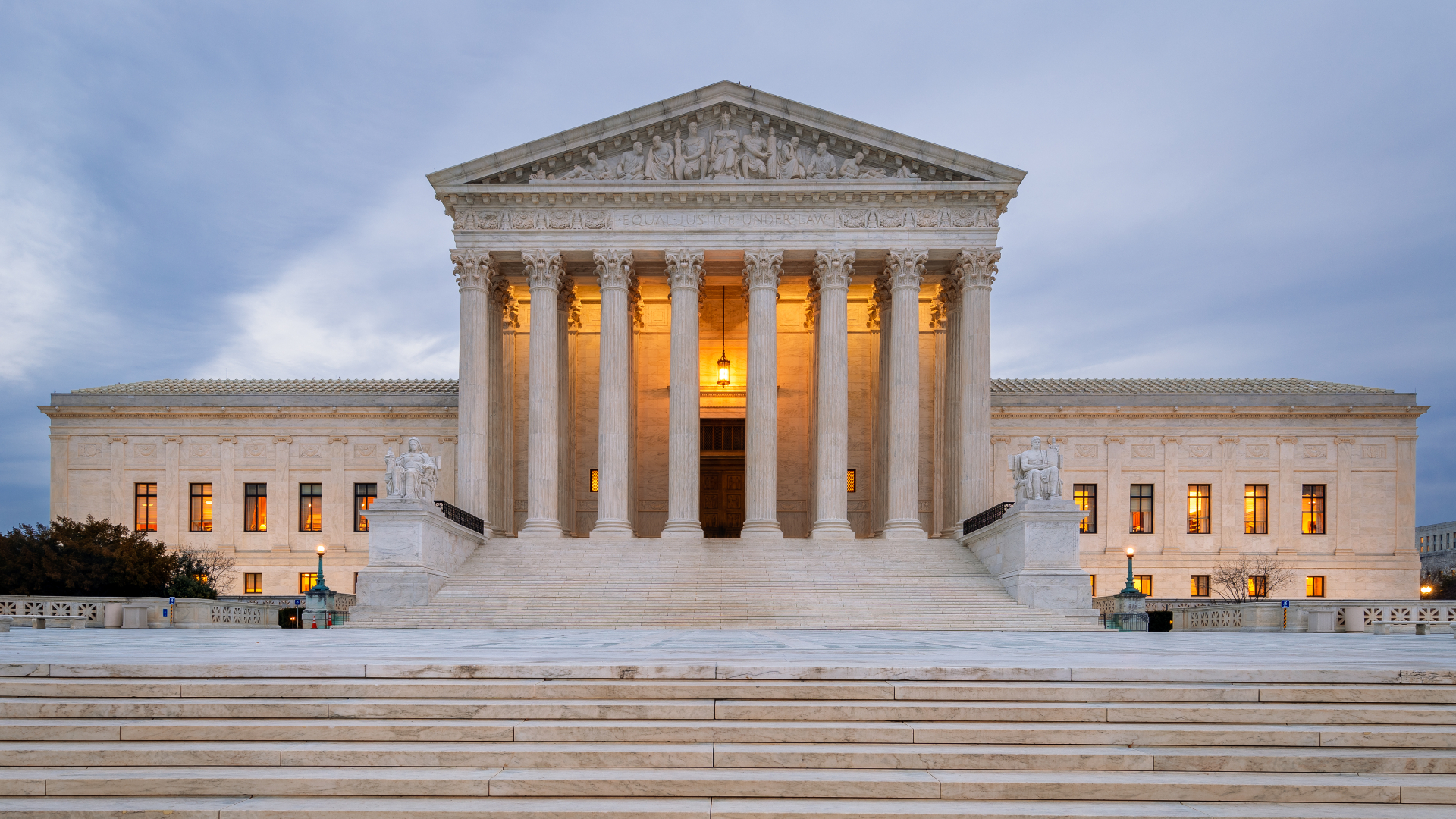
Mina Kim: Welcome to Forum, I’m Mina Kim. When the Supreme Court ruled in June that federal courts did not have a role in reviewing the executive branch’s decisions to end temporary protected status, it applied to hundreds of thousands of Haitians and Syrians living in the U.S. And the ripple effect is even greater — more than a million TPS holders could be affected by the high court’s decision to allow the Trump administration to end TPS more easily, in addition to their employers and the people they care for. We take a closer look at this impact.
And listeners, have you or a loved one been affected by recent changes to temporary protected status? You can tell us by calling 866-733-6786, posting on our social channels, or by emailing [email protected].
Joining me this hour is Jazmine Ulloa, national reporter covering immigration for the New York Times. Jazmine, so glad to have you here.
Jazmine Ulloa: Thank you for having me.
Mina Kim: Also, Emi MacLean is a senior staff attorney at the ACLU of Northern California, who has argued before the Supreme Court for TPS holders. Emi, really glad to have you too.
Emi MacLean: I’m glad to be here.
Mina Kim: So, Emi, can you first remind us what temporary protected status is?
Emi MacLean: Yes. Temporary protected status is a form of humanitarian immigration protection for people whose countries are in crisis. So these are people who are in the United States and cannot safely return to their home countries because their countries are at war, there’s a humanitarian crisis, or there’s a natural disaster.
There’s a 1990 law, a 35-year-old law, that is intended to limit executive discretion and create rules for when countries can be designated for TPS and how countries’ designations for TPS can end. This was a law that was signed by President George H.W. Bush.
Mina Kim: I understand.
Emi MacLean: Yes. And it ended a period where there was complete executive discretion. It was Congress’s intent at the time to create rules that govern how countries can get TPS and how individuals who cannot safely return to their home countries can be protected against deportation and detention, and be provided work authorization while they’re living in the United States and their countries are in crisis.
Mina Kim: Now, I understand that TPS foreign nationals basically remain in the country for up to 18 months if their home countries are in the types of situations that you describe. But why are many TPS holders here much longer than that?
Emi MacLean: Each individual designation is up to 18 months, but the law is clear that at the end of a period of a country’s designation, the government must review the conditions in the country. And if it’s still unsafe for individuals to return to that country, their TPS designation must be extended.
And we know that wars, natural disasters, humanitarian crises don’t come in 12- or 18-month intervals. Sometimes countries can be in crisis for five years, 10 years, or more. The law is clear that TPS must be extended if the country’s conditions remain unsafe, and may be terminated only if it is safe for individuals to return to that country.
Mina Kim: Jazmine, the Trump administration is seeking to — or has said it’s seeking to — terminate the program entirely. Though for now, it seems like it’s gutting it, essentially. Tell me what they’ve said about it and why they say this program needs to go.
Jazmine Ulloa: Well, they have talked more about — I think this falls more into this broader shift away from these international commitments that the United States has held for decades. These were international commitments that the U.S. took on in the aftermath of the Holocaust.
So we have to really understand it as the Trump administration pushing to take another step in remaking the role the United States is holding in that global order. They haven’t necessarily said they want to terminate the program altogether, but they’ve suggested it in the way that they’ve approached it. They’re making it harder for refugees to enter, they’ve cut the number of refugees to record lows, and they’ve made it much harder for asylum seekers to seek asylum in the courts.
So this is part of that much broader movement, this broader shift away from establishing those humanitarian protections for people. For now, more than a dozen countries have now been eliminated. Only a few remain standing — El Salvador and Ukraine among them — so I keep saying this is part of a broader shift away from that commitment.
Mina Kim: Yeah. One of the things the Trump administration is doing is ending temporary protected status, right, Emi, for people who currently hold it. And you have been arguing before the Supreme Court that this is not something the executive branch can do unilaterally.
Emi MacLean: Under the law, the administration has the authority to terminate TPS designations for individual countries, but only where they follow certain criteria. One of the central issues that was before the Supreme Court is: does the government have to follow the law?
Essentially, the government’s argument was, in no uncertain terms, there’s nothing the courts can do about it. In response to a question from a Supreme Court justice, they said: if the secretary made a decision relying on a Ouija board rather than evaluating country conditions, would we be able to have any review? The solicitor general, one of the top lawyers in the United States, said there would be no judicial review in that case.
So the law is clear that there are processes that must be followed for a TPS designation to be terminated, where hundreds of thousands of lives are at risk. And a central question now is: can courts do anything about it when they completely violate the law?
Mina Kim: And the Supreme Court, in its decision to say that essentially the federal courts need to stay out of it — tell me what that essentially does. Does it essentially say, absolutely yes, that the federal courts really have no say when the Secretary of the Department of Homeland Security says, “I am ending TPS for this particular nation”?
Emi MacLean: It doesn’t completely eliminate all avenues for judicial review, but it severely constrains the avenues that are available. And it essentially gives the administration what it was asking for, which no other court had allowed.
There are more than a dozen cases across the country before all sorts of judges where TPS holders are challenging the Trump administration’s illegal terminations of TPS. Every single judge in every single case had recognized that there must be checks and balances, that there must be oversight — otherwise the TPS statute is just advisory. And the Supreme Court endorsed the extreme position that the government presented, which is that it is effectively advisory.
What the Supreme Court did say is that there may still be constitutional claims, including claims related to the unconstitutional termination of TPS, because the TPS terminations were motivated by racism.
Mina Kim: That was one of the arguments that was being made — that this was motivated by racism — and it seemed during oral arguments that the liberal justices were agreeing with that particular argument. How did the Trump administration respond to that?
Emi MacLean: The Trump administration essentially asked the justices to close their eyes and their ears to the clearly racist statements by President Trump and then-Secretary of the Department of Homeland Security Kristi Noem.
Mina Kim: Which statements were specifically noted?
Emi MacLean: The constitutionality of the TPS termination question was related directly to the termination of TPS for Haiti. We’ll all remember that during the campaign, and while Trump was president, he talked about Haitians and Haitian TPS holders in particular as eating the cats and dogs of their neighbors. He talked about Haitians as poisoning the blood of the country. And he described Haiti, in the context of talking about TPS, as a — quote — “S-hole country.” I won’t use the word here.
Essentially, what the solicitor general was saying is that those are just statements of policy differences. And in an egregious majority decision, the supermajority, in a six-to-three decision, the Supreme Court agreed and said this is heated language and an expression of policy differences. They essentially ignored the very clearly racist statements, but they did not prevent TPS holders from continuing to bring constitutional challenges.
We should remember that this case arrived at the Supreme Court in a completely irregular fashion — a very preliminary case where there was no evidence in the record. So all the court was really looking at was these statements by the president and the former DHS secretary. That doesn’t mean there would not be a case, but it’s deeply concerning that the Supreme Court, in its supermajority, was endorsing these extreme statements, which really ignore very clear evidence of racism from the highest levels of the U.S. government.
Mina Kim: Jazmine, you reported that the Supreme Court’s decision — that federal law prohibits courts from second-guessing an administration’s determination of which nationalities no longer have TPS — could have implications for all 1.3 million TPS holders in the U.S. You touched on this earlier, but help us understand why.
Jazmine Ulloa: Yeah, I want to correct something I said earlier — it’s actually four nations that still have TPS: El Salvador, Lebanon, Ukraine, and Sudan. The Trump administration remains locked in litigation over whether it can end protections for more than a million people from Afghanistan, Cameroon, Ethiopia, Honduras, Myanmar, Nepal, Venezuela, Somalia, South Sudan, and Yemen.
I’ve been talking to TPS holders from many of these nations who are scrambling to find other forms of protection and trying to make life-and-death decisions right now about whether to stay in the country or be forced to return to countries that they say are still very unstable. Some people are having to make the hard decision of whether to stay here and live in the shadows. And they’re doing so at a time when the administration is ramping up surges in arrests all across the country.
Mina Kim: We’re talking with Jazmine Ulloa, a national reporter covering immigration for the New York Times, and Emi MacLean, senior staff attorney at the ACLU of Northern California, who has been part of the defense team arguing before the Supreme Court for TPS holders. We’ll have more with them, and with you, listeners.
What questions do you have about the impacts of the Supreme Court’s TPS decision? And how do you feel about the Trump administration’s efforts to limit TPS? Stay with us — this is Forum. I’m Mina Kim.