This partial transcript was computer-generated. While our team has reviewed it, there may be errors.
Mina Kim: Welcome to Forum. I’m Mina Kim.
If commemorations like America’s 250th tell us as much about the times we’re in as they do about the events they’re marking — according to historian Jelani Cobb — then what does it say, just as a starting point, that there are two federal entities charged with honoring the anniversary of the Declaration of Independence, one created by Congress and another created largely by the president, and that they are competing with each other for branding and resources?
The New York Times’ Jennifer Schuessler has been covering the dispute over how to honor the nation’s 250th at the highest levels of government, and she joins me now. Welcome to Forum, Jennifer.
Jennifer Schuessler: Thanks for having me.
Mina Kim: Help me understand, in broad strokes, how far back planning for America’s 250th has been going on — and how we’ve arrived at a point where two competing entities are in charge of the festivities.
Jennifer Schuessler: It really all got started back in 2016, when Congress passed a law establishing a bipartisan commission — the U.S. Semiquincentennial Commission. Try saying that three times fast. They were charged with planning and coordinating festivities for the 250th anniversary of the Declaration of Independence, which falls next week on July 4th — including coordinating among the states. The commission got off to a slow and rocky start, and around 2022 there was some housecleaning and a new chair was brought in, but it was still functioning as a bipartisan body trying to get its programs off the ground.
On the campaign trail, President Trump took a great interest in this anniversary. He promised to throw a massive yearlong birthday party, said he would create his own task force on day one of his second term, and talked about staging events like a Great American State Fair that would last all year somewhere out in America. After returning to office in January 2025, he issued an executive order almost immediately establishing that task force. They began working with America250 — the colloquial name for the congressional commission — and there was some tentative cooperation, but also tensions and disagreements. Late last year, President Trump announced he had formed his own separate group called Freedom250, which would essentially take over planning for many big national events and would also compete for fundraising dollars.
So right now, America250 is still operating, but Freedom250 exists alongside it. There’s been a lot of confusion, particularly among Americans who only realized very recently that this anniversary was happening at all — confusion over who is doing what, and to what degree different things are partisan.
Mina Kim: So America250 is mainly the congressional body, and Freedom250 is largely a presidential creation. Where has the conflict between them shown up most?
Jennifer Schuessler: It’s been largely behind the scenes — they haven’t directly clashed in public. But they’ve essentially gone their separate ways in terms of events. Most of what has happened or will happen in Washington relating to the 250th is being put on by Freedom250, the Trump-backed group. For example, they are organizing the Great American State Fair, which opens tomorrow on the National Mall. About a month ago, there was a wave of news around that event when musicians who had been scheduled to perform at evening concerts began dropping out almost as soon as the concerts were announced, saying they hadn’t realized how closely tied the event was to President Trump and that they saw it as partisan. The president then got out ahead of them and said the concerts should just be canceled — that he would headline the fair himself. Tonight he is set to speak at a big kickoff event on the Mall, and tomorrow all the fair’s booths, rides, and the giant Ferris wheel will open.
Mina Kim: The fair runs through July 10th, as I understand it. And there’s also been competition for money. Congress appropriated $150 million for the 250th anniversary commemoration, and America250 says they’ve received very little of it — that most has gone to Freedom250?
Jennifer Schuessler: Yes. To be clear, America250 had received about $60 million through normal appropriations prior to this. But of this new $150 million final push, America250 says they’ve only received $25 million, with much of the rest — it’s not entirely clear how much has been disbursed or exactly where it’s gone — apparently going to Freedom250.
Mina Kim: I want to invite listeners in. How will you mark America’s 250th this July 4th? Are you planning to? Why or why not? How do you feel about celebrating our country at this moment? Email [email protected], find us on Discord, Bluesky, Facebook, or Instagram at KQED Forum, or call us at 866-733-6786.
The state fair on the National Mall is Trump’s marquee event, as you describe it. But you also note that he has described July 4th itself as functioning like a Trump rally. What do you know about that?
Jennifer Schuessler: On July 4th itself, in a somewhat different area of the Mall — down by the Lincoln Memorial and the reflecting pool — there will be a gigantic fireworks event. Organizers are claiming it will be the largest fireworks event in history anywhere, breaking a record set recently in the Philippines. They say there will be 851,000 individual fireworks, military flyovers, patriotic music, and a speech by President Trump. He has described it on social media as a Trump rally, which he wrote in all caps. It remains to be seen exactly what it will be, but it will be a very large event.
Mina Kim: This has drawn significant criticism from Democrats and others. The argument is that the president is making America’s 250th about himself and using public funds to do it through Freedom250?
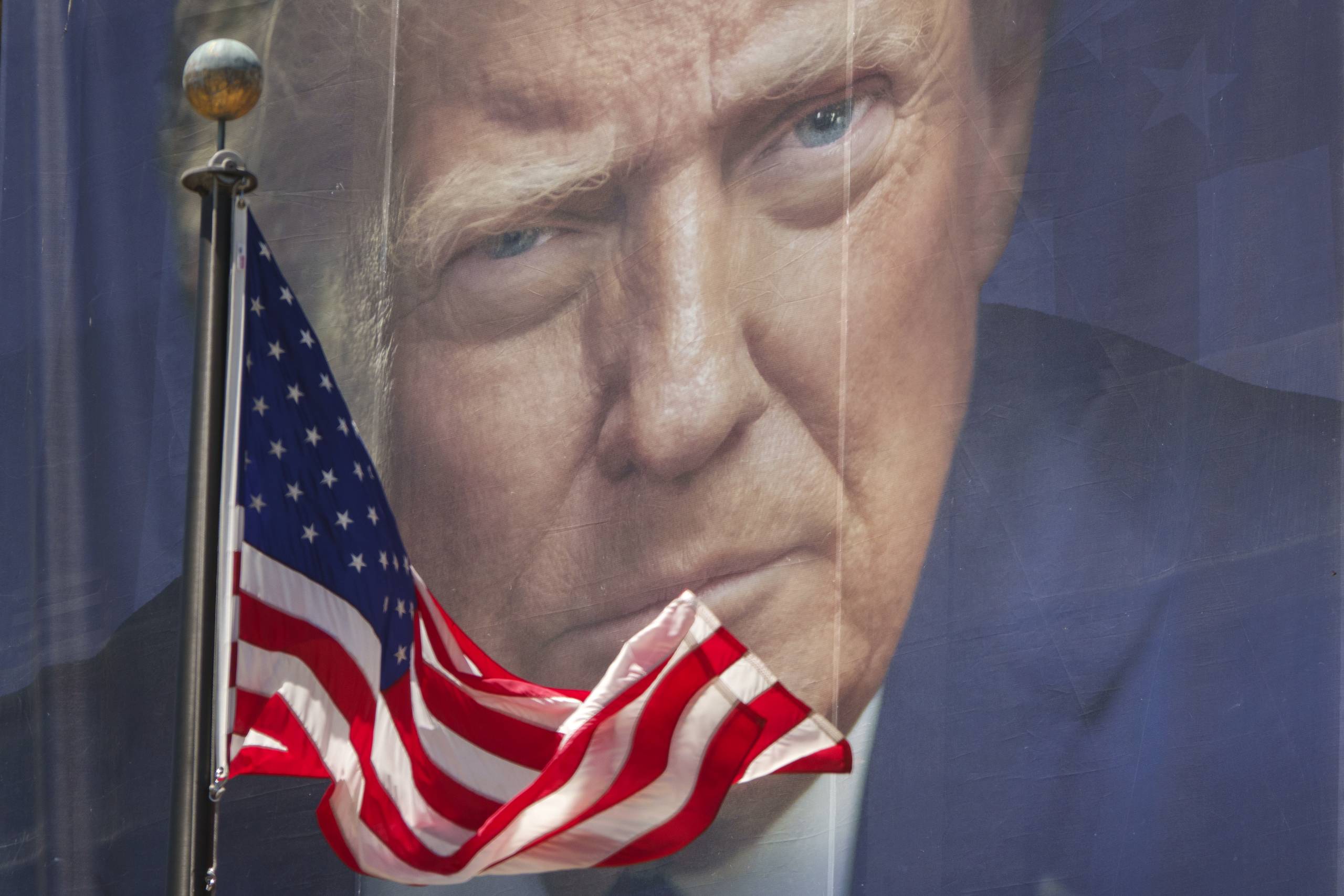
Jennifer Schuessler: Yes, that’s the criticism from Democrats and from some watchdog groups calling for greater transparency around the fundraising. More broadly, some people feel the president is centering himself in the national story rather than making this a celebration of the country’s history writ large. I haven’t been to Washington in a couple of weeks — I’m going down tomorrow for opening day of the fair — but on social media you can see photos of large banners on some federal buildings featuring President Trump’s face alongside George Washington. That is not going over well with people who think this should be a more unifying celebration of all of America and all of our history.
Mina Kim: Many have also accused the president of using the milestone to promote a sanitized version of American history. Can you remind us of this administration’s efforts to remove historical markers that it interprets as disparaging American historical figures?
Jennifer Schuessler: It goes back, in some ways, to President Trump’s first term. He took a great interest in history and called for a return to what he describes as patriotic history — one that celebrates the heroes of the past. That’s when he first called for the creation of a National Garden of American Heroes, a sculpture garden honoring 250 heroic Americans from across history. He revived that in his second term, and last April he issued an executive order called “Restoring Faith and Sanity to American History,” in which he claimed that progressives were promoting a negative, racially divisive view of the country.
That executive order had two main parts. He attacked the Smithsonian for promoting what he called divisive racial ideology — he’s been on a sustained campaign to pressure the Smithsonian to adjust its exhibits. And he called on the National Park Service, which is part of the Department of the Interior, to conduct a broad review of all historical material at its sites. The Park Service oversees hundreds of sites across the country — not just large parks like Yosemite or Yellowstone, but all sorts of historical sites, including the Mall itself.
There has been significant pressure to remove or revise signage, and there have been some very high-profile examples. Perhaps most visibly: in Philadelphia in February, Park Service employees were ordered to use crowbars to remove signage at a site called the President’s House, which sits right next to the Liberty Bell, very close to Independence Hall. This is the excavated and partly reconstructed foundation of a mansion where George Washington and then John Adams lived during the first decade of the new country, when Philadelphia was still the capital. The signage and memorial there had focused strongly on the enslaved people who had lived at that site — owned by George Washington — their stories, and their efforts to escape, as well as Washington’s dogged efforts to recapture them. The site had become something of a flashpoint among critics on the right, and in February, workers were ordered in to remove those signs with crowbars. Some have since been restored, but a court recently ruled that the Park Service has authority over the site, so the outcome remains uncertain. It’s a vivid example of what some people see as history being erased.
Mina Kim: You have to leave us, but since you’ve covered the so-called history wars for years — is the American public broadly open to understanding the darker parts of our history, or closed off to it?
Jennifer Schuessler: That’s a big, open question. But people who work in museums, at historical sites, and in public history will very frequently point to research from multiple groups showing that across the political spectrum — including Americans who describe themselves as very conservative — the majority of people are genuinely open to honest, fact-based history. They don’t want to be told what to think, but they do want to hear the truth.
Mina Kim: Jennifer Schuessler of The New York Times, thank you. More after the break. This is Forum.