This partial transcript was computer-generated. While our team has reviewed it, there may be errors.
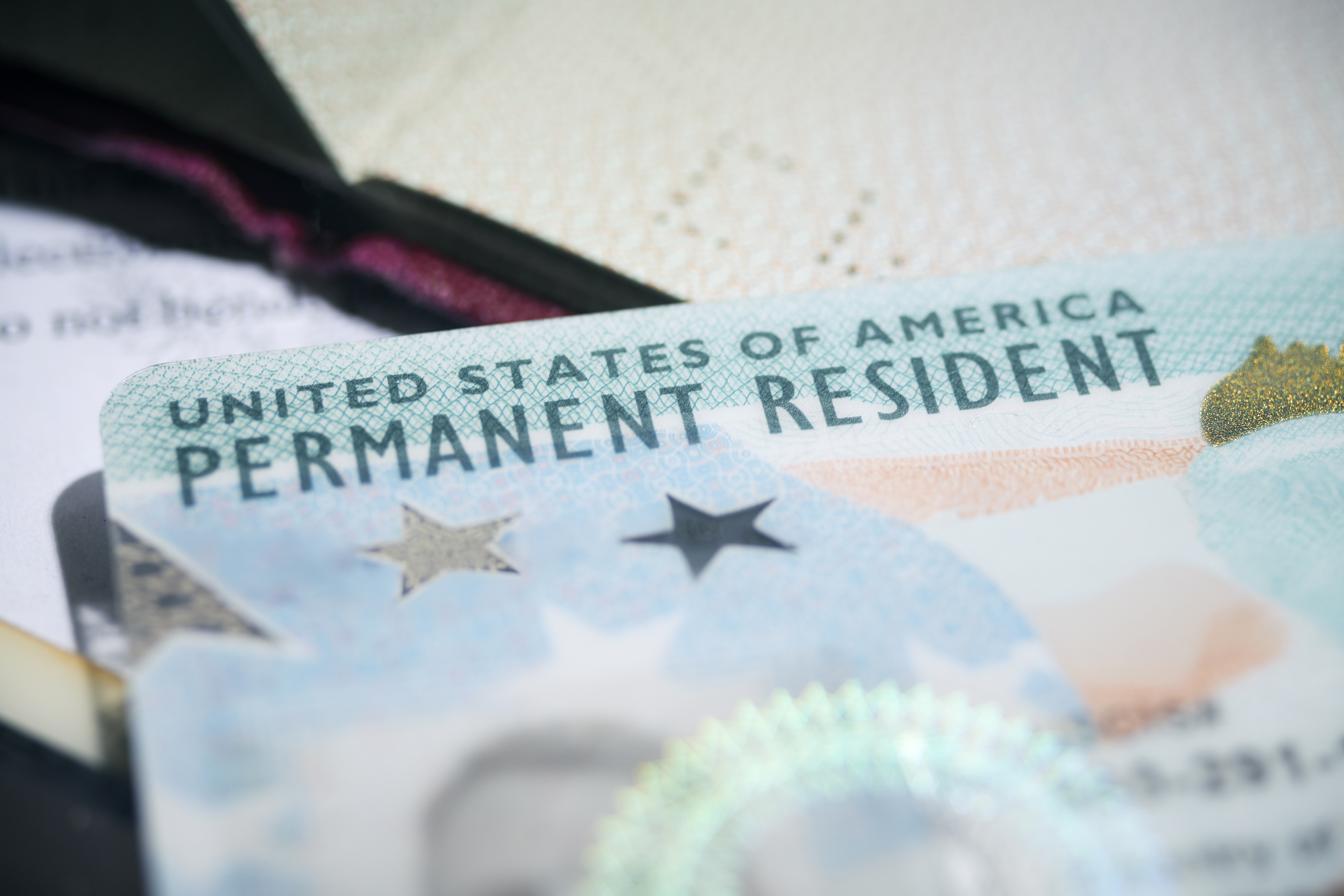
Mina Kim: Welcome to Forum. I’m Mina Kim. The Trump administration on Friday appeared to be walking back an earlier announcement that most green card applicants would need to apply for permanent residency abroad rather than in the US. The shift in longstanding practice sparked chaos and confusion among applicants, foreign workers, and people married to US citizens, who faced the prospect of having to leave the country for months or even years with no guarantee their applications would be approved or that they’d be able to return. The partial backpedaling on Friday appears to have done little to allay their fears. This hour, we try to get some clarity on where things stand, joined by an immigration lawyer and journalists who’ve been covering this latest effort to reduce US immigration through legal channels. Joining me is Hamed Aleaziz, who covers the Department of Homeland Security and US immigration policy for The New York Times. Hamed, thanks so much for being with us.
Hamed Aleaziz: Thanks for having me.
Mina Kim: Also with us is Michelle Hackman, a reporter for The Wall Street Journal, where she also covers US immigration policy. Michelle, glad to have you too.
Michelle Hackman: Thank you.
Mina Kim: Michelle, take us back to when the administration first made this announcement about the green card process on May 22nd. What did that memo say?
Michelle Hackman: Importantly, they put out a memo on the Friday of Memorial Day weekend — they do love to drop big pieces of news then. There was a memo, but there was also a press release describing what the memo did, and I think the press release is really what set off alarms. It said in no uncertain terms that most green card applicants would have to go abroad to apply, and that only people with exceptional circumstances would be allowed to apply from within the country. If that was indeed the plan, it would have upended the way the immigration system has worked for decades — since roughly the 1950s and ’60s. People who live here already, who are on visas, who have families and jobs — there’s a reason Congress created a process for them to apply for green cards without leaving the country, and this administration appeared to want to upend that. Interestingly, it took people a little while to realize this, but the actual memo sent to individual green card adjudicators did not give those adjudicators anywhere near as strong an instruction. That’s where we got our first hints that things were going to unravel.
Mina Kim: I can imagine the chaos and confusion that ensued — which is what prompted them to issue a clarification last Friday, May 29th. You called it a partial walkback. What did it say?
Michelle Hackman: They put out a statement saying that actually, most applicants will be allowed to continue applying for their green cards without leaving the country. They’ve set up a new standard: if you provide an economic benefit to the United States, you can proceed as normal. But if there’s any reason for doubt about your application — say, a criminal charge on your record, or any gaps in your legal status, which happen all the time due to government processing issues — that could still cause problems and potentially force people to go abroad.
Mina Kim: Let’s step back for a moment. As Michelle was saying, this green card process has been in place for decades. I actually went through it in ’86 and ’87 when I came to the US with my mother, who was getting remarried here — and applying for a green card then definitely did not involve leaving the country and going back to Canada. Hamed, can you talk about who tends to apply and who tends to be eligible for a green card?
Hamed Aleaziz: All kinds of people — folks who marry US citizens, individuals who’ve been working here on worker visas. There’s a whole host of people who can use this process. As you said, it’s been in place for so long. It allows people to apply for this so-called adjustment of status — a green card — and upwards of 800,000 people a year go through this process. So it’s quite common.
Mina Kim: And it’s really the last step before citizenship, right?
Hamed Aleaziz: Yes. The green card is very key. Of course, it’s not foolproof — if you have certain criminal issues, you can still have it stripped — but it puts you very close, just a few years away from US citizenship.
Mina Kim: And why does it make sense to have people adjust their status from within the US?
Hamed Aleaziz: Well, take the example of a spouse married to a US citizen — the whole idea is to keep families together and not separate them for months or years at a time. And then you have workers who’ve come from across the globe to work at American companies. Those companies want them here long term and want to give them an incentive to stay. The idea is that the more integrated people are here, the better it is for the system as a whole.
Mina Kim: Certainly businesses wouldn’t want someone leaving for an unknown period of time when they’ve hired them. So after the May 29th clarification — do you think it offered real clarity, or do a lot of questions still remain?
Hamed Aleaziz: I think a lot of questions remain. Anytime you put out a dramatic policy essentially telling potentially hundreds of thousands of people they have to leave, there’s a lot of panic and fear. And when your clarification comes through background statements to the media, confusion naturally persists. Looking at the comments on our Friday coverage, people were still skeptical and uncertain about what it all meant. The original memo and press release haven’t been pulled back — those are still the on-the-record, front-facing statements. So it remains to be seen how this plays out on the ground. But at least in terms of what they’re signaling to the press, there’s a sense they are walking this back and trying to reframe what it means.
Mina Kim: Right — they were saying this isn’t really a change, that DHS officers have long had the ability to determine on a case-by-case basis who can stay during the application process, and that they were simply encouraging officers to use that authority. But as you say, the language saying only people with extraordinary circumstances would be allowed to stay is still out there and hasn’t been specifically walked back. Let me invite our listeners into the conversation — are you applying for a green card, or are you an immigration attorney or advocate? How have you been affected by this news, and what questions remain for you after the initial memo on the 22nd and the attempted clarification on the 29th? And if you’ve already been through the green card process, I’d be curious about your experience, whether recent or in the past. The email address is [email protected]. You can find us on Discord, Bluesky, Facebook, or Instagram at KQED Forum, or call us at 866-733-6786. Michelle, in addition to the chaos and confusion — why do you think they attempted this clarification or partial walkback? Chaos and confusion haven’t typically stopped this administration from a big policy shift before.
Michelle Hackman: It’s a good question. Over and over again, we’ve seen this tug of war play out inside the administration and the broader MAGA movement. There are hardcore immigration restrictionists for whom this policy — making most people leave the country to apply for a green card — has been a long-held goal. They’re banking on a lot of people abandoning the process, expecting fewer green cards would be issued as a result. What we believe happened is that the policy originated with those people and their goals. But as it trickled out over Memorial Day weekend, you saw tech executives tweeting that this would be calamitous for the country and for their industry. The response was enormous — we were told USCIS was actually surprised by the scale of the reaction. And there are people in the White House and across the administration who do care about economic consequences. I think that pressure is what prompted the walkback.
Mina Kim: Hamed, how do you understand this latest move in the broader context of this administration’s immigration actions and goals?
Hamed Aleaziz: This administration views a crackdown on legal immigration as one of its key focuses. The head of USCIS — the agency that put out this policy — is Joe Edlow, and he has spoken about the immigration system as being rampant with fraud and abuse, and in need of real reform in how it’s overseen. What you’re seeing is a series of policies aimed at what they believe has been a poorly managed system. For example, there is currently a travel ban covering 39 countries that’s been in place since President Trump took office. As part of that, USCIS has made it so nationals of those countries who are already in the United States cannot have other immigration applications processed. People from Iran and other affected countries currently cannot obtain citizenship, green cards, or other immigration benefits. This latest episode, I think, is just one piece of an overall focus on reshaping the immigration system.
Mina Kim: We’re talking with Hamed Aleaziz, who covers the Department of Homeland Security and US immigration policy for The New York Times, and Michelle Hackman, who covers US immigration policy for The Wall Street Journal. Stay with us — we’ll have more right after the break. This is Forum. I’m Mina Kim.