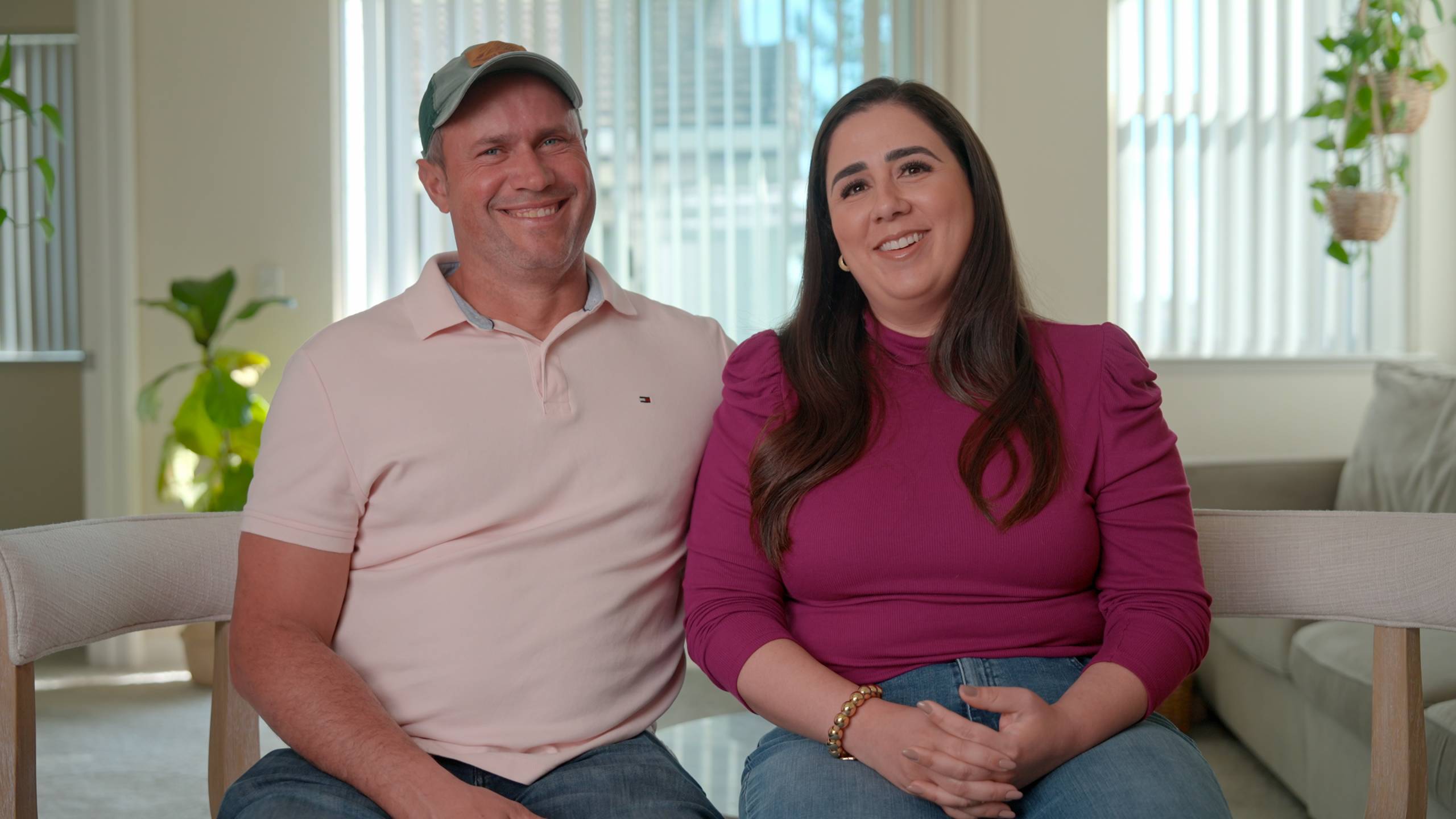
Mina Kim: Welcome to Forum. I’m Mina Kim. Trying to rid our lives of plastic can feel overwhelming—and even fruitless—since it’s basically everywhere. But a buzzy new Netflix documentary, sparking both hope and debate, suggests it might be worth the effort to improve our health and even our fertility.
It features six couples trying to have a baby who embark on a three-month “plastic detox,” which is also the documentary’s title. The results are far from conclusive, but along the way, the couples—and viewers—get a crash course on the potential harms to our health and planet from chemicals in plastic, and the intriguing possibility that reducing exposure, even for a short time, can have measurable results.
Joining me now is Dr. Shanna Swan, whose research is central to the film. Swan is a professor of environmental medicine at the Icahn School of Medicine in New York and founder and director of the Action Science Initiative. Dr. Swan, welcome to Forum.
Shanna Swan: Thank you, Mina. Happy to be here.
Mina Kim: So tell me what you were seeking to find out with your experiment with these couples that’s featured in The Plastic Detox.
Shanna Swan: Yeah, so the question we were trying to answer is, first of all, can people change their behaviors in a way that changes their exposure? Can they do that? What would it take? And then, if they succeed, are there effects on their reproductive health?
We couldn’t look at everything—unfortunately, there are many outcomes we couldn’t measure—but we did look at the men’s semen quality and, ultimately, whether or not they got pregnant.
Mina Kim: And you say from the very beginning that this is not a scientific study—meaning there’s no control group, and the number of couples is only six, correct?
Shanna Swan: It started out as six, and one couple left the study, so it was ultimately five.
Mina Kim: So how did you design the experiment to help answer those questions?
Shanna Swan: We viewed it as a pilot study—and we still do. It’s a pilot for a full-scale, nationally funded scientific study that we’re now applying for.
As someone who’s conducted federally funded research for over 25 years, I would say this is a scientific study. It’s just very small, and it doesn’t have a traditional control group—except that the participants serve as their own controls before changing their behavior. So there’s a clear before-and-after comparison.
We have solid measures of exposure, solid measures of outcomes, and measures of compliance. The work has been written up and accepted in a peer-reviewed journal, and it will form the basis for a larger randomized trial.
Mina Kim: So you had couples remove as much plastic as possible from their everyday lives, and then you collected data. How did you choose which couples would participate?
Shanna Swan: We wanted couples who were infertile—meaning they had been trying to get pregnant for at least 12 months unsuccessfully. They also had to be willing to participate fully, including being part of the film.
We also wanted to rule out clear risk factors for infertility. So we excluded people who were obese, smokers, or had high exposures we couldn’t control. The idea was to reduce confounding factors so that any effects we saw might more likely be environmental.
Mina Kim: Right—so it would be more likely the causes were environmental.
Shanna Swan: Exactly.
Mina Kim: And you zeroed in on two main types of chemicals found in plastic. Can you talk about those and why you chose them?
Shanna Swan: We focused on chemicals that affect hormones—specifically those involved in reproduction, like testosterone and estrogen.
We looked at phthalates, which are known to lower testosterone, and bisphenols, which can increase estrogen. These are classes of chemicals, not just single compounds. We also looked at parabens, though less centrally.
We couldn’t study everything, but phthalates and bisphenols were the main focus because of their direct links to reproductive hormones.
Mina Kim: And bisphenols are better known as BPA, right?
Shanna Swan: BPA and its substitutes—like BPS and BPF. And phthalates are a large class as well.
Mina Kim: We’re talking with Dr. Shanna Swan, professor of environmental medicine, featured in the new Netflix documentary The Plastic Detox.
I want to bring in Monique Tavares, owner of the Bay Area construction company BLP Pavers, who participated in the study. Monique, why did you want to be part of this?
Monique Tavares: That’s a good question. At first, we didn’t realize it would become a big production. We knew it might be part of a film, but our main focus was getting answers.
Before that, we had gone through two miscarriages. We had been trying to conceive for two years and had no clear answers. Doctors told us, “It is what it is—miscarriages happen,” but I couldn’t accept that.
So when we heard about this, I thought maybe we could learn something new or try something different.
Mina Kim: One of the things shown in the documentary is Dr. Swan coming into your home and pointing out what needed to be removed or replaced. What was that like?
Monique Tavares: It was very surprising. I had hoped we’d hear something like, “Take this vitamin,” something internal. But instead, it was all external—our environment.
At first, I wasn’t sure how that could affect our bodies. But the whole journey was eye-opening and, honestly, shocking. I’m really glad we did it.
Mina Kim: So, Shanna, what are you looking for when you walk into a home? What do you tell couples to remove?
Shanna Swan: I usually start in the kitchen. I look at how food is stored—is it in glass or plastic? How is it cooked? What kinds of utensils are used?
We also talk about cookware, like nonstick surfaces, and then move through the house. I remember Bruno, Monique’s husband, loved coffee pods and used them many times a day. Those had to go—they contain plastics and other chemicals.
We also look at the bathroom—what products people use on their bodies, including fragrances.
Monique Tavares: The fragrance part was very hard for me. I used perfume every day—even before bed. It was tough at first, but now I don’t miss it. In fact, I can’t tolerate strong smells anymore, and I’m happy about that.
Mina Kim: You also went grocery shopping together to point things out.
Shanna Swan: Yes, that was fun. We went with Monique’s 12-year-old daughter, Cecilia. We looked at how many products are packaged in plastic—and even cans, which people think are metal, are often lined with bisphenols.
Mina Kim: So even aluminum cans are lined with plastic?
Shanna Swan: Exactly. They look safe, but they’re lined.
We compared prices, too—unwrapped produce versus plastic-wrapped—and found that the non-plastic options were often cheaper and healthier. Then we made it into a game: how little plastic can you put in your cart?
Mina Kim: And I imagine that made it feel less overwhelming. We’re talking about why my guests say it may be worth trying a plastic detox. More after the break.