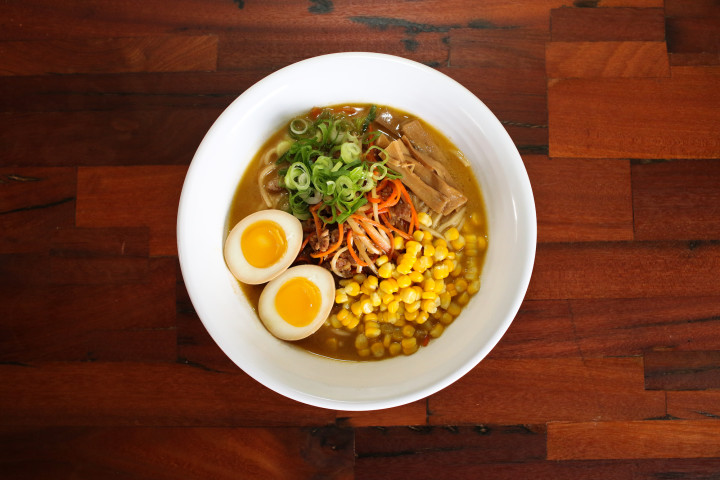
Shiba Ramen Modeled on Japanese Ramen Shops Opening Soon in Emeryville
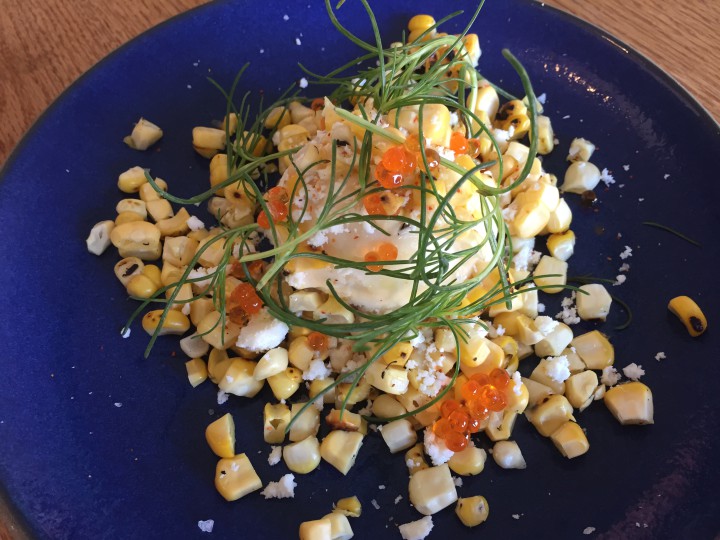
Salsipuedes Brings Baja Coastal Cuisine with a Bay Area Spin To North Oakland
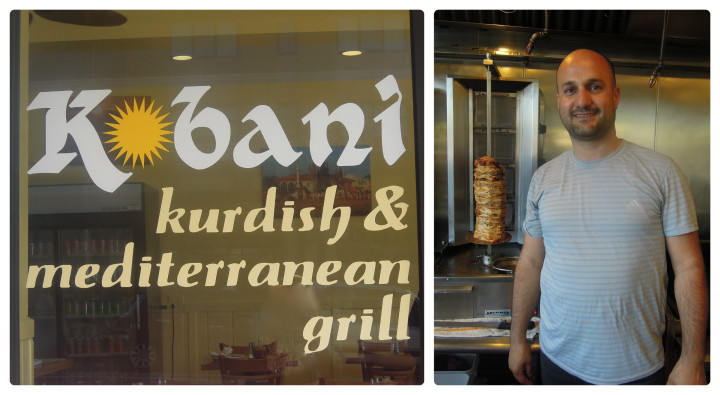
Kobani Kurdish Restaurant: Defiant and Delicious
Disputed UC Berkeley Land Next to Albany’s Gill Tract Gets Green Light For Sprouts Grocery
Sunset is moving to Oakland’s Jack London Square
East Bay Restaurants Adapt to New Minimum Wage
Port Kitchens Merges Co-working and Cooking
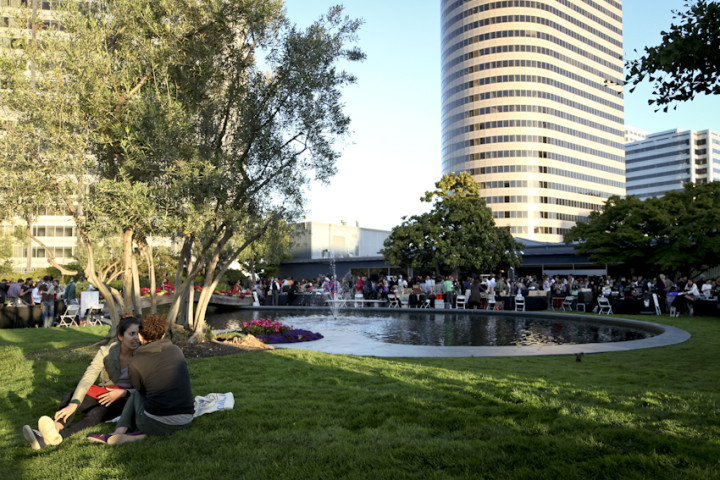
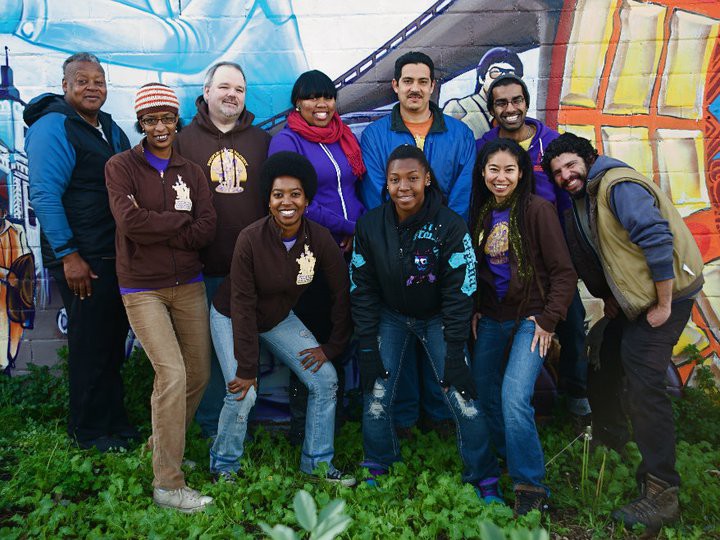
3 Food Initiatives That Could Transform West Oakland's Food Desert
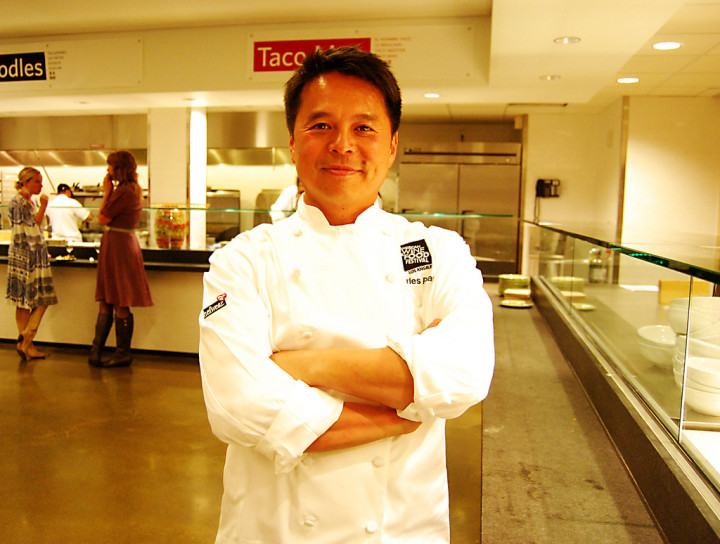
Charles Phan Plans to Open Café at UC Berkeley
Player sponsored by
window.__IS_SSR__=true
window.__INITIAL_STATE__={
"attachmentsReducer": {
"audio_0": {
"type": "attachments",
"id": "audio_0",
"imgSizes": {
"kqedFullSize": {
"file": "https://ww2.kqed.org/news/wp-content/themes/KQED-unified/img/audio_bgs/background0.jpg"
}
}
},
"audio_1": {
"type": "attachments",
"id": "audio_1",
"imgSizes": {
"kqedFullSize": {
"file": "https://ww2.kqed.org/news/wp-content/themes/KQED-unified/img/audio_bgs/background1.jpg"
}
}
},
"audio_2": {
"type": "attachments",
"id": "audio_2",
"imgSizes": {
"kqedFullSize": {
"file": "https://ww2.kqed.org/news/wp-content/themes/KQED-unified/img/audio_bgs/background2.jpg"
}
}
},
"audio_3": {
"type": "attachments",
"id": "audio_3",
"imgSizes": {
"kqedFullSize": {
"file": "https://ww2.kqed.org/news/wp-content/themes/KQED-unified/img/audio_bgs/background3.jpg"
}
}
},
"audio_4": {
"type": "attachments",
"id": "audio_4",
"imgSizes": {
"kqedFullSize": {
"file": "https://ww2.kqed.org/news/wp-content/themes/KQED-unified/img/audio_bgs/background4.jpg"
}
}
},
"placeholder": {
"type": "attachments",
"id": "placeholder",
"imgSizes": {
"thumbnail": {
"file": "https://cdn.kqed.org/wp-content/uploads/2024/12/KQED-Default-Image-816638274-2000x1333-1-160x107.jpg",
"width": 160,
"height": 107,
"mimeType": "image/jpeg"
},
"medium": {
"file": "https://cdn.kqed.org/wp-content/uploads/2024/12/KQED-Default-Image-816638274-2000x1333-1-800x533.jpg",
"width": 800,
"height": 533,
"mimeType": "image/jpeg"
},
"medium_large": {
"file": "https://cdn.kqed.org/wp-content/uploads/2024/12/KQED-Default-Image-816638274-2000x1333-1-768x512.jpg",
"width": 768,
"height": 512,
"mimeType": "image/jpeg"
},
"large": {
"file": "https://cdn.kqed.org/wp-content/uploads/2024/12/KQED-Default-Image-816638274-2000x1333-1-1020x680.jpg",
"width": 1020,
"height": 680,
"mimeType": "image/jpeg"
},
"1536x1536": {
"file": "https://cdn.kqed.org/wp-content/uploads/2024/12/KQED-Default-Image-816638274-2000x1333-1-1536x1024.jpg",
"width": 1536,
"height": 1024,
"mimeType": "image/jpeg"
},
"fd-lrg": {
"file": "https://cdn.kqed.org/wp-content/uploads/2024/12/KQED-Default-Image-816638274-2000x1333-1-1536x1024.jpg",
"width": 1536,
"height": 1024,
"mimeType": "image/jpeg"
},
"fd-med": {
"file": "https://cdn.kqed.org/wp-content/uploads/2024/12/KQED-Default-Image-816638274-2000x1333-1-1020x680.jpg",
"width": 1020,
"height": 680,
"mimeType": "image/jpeg"
},
"fd-sm": {
"file": "https://cdn.kqed.org/wp-content/uploads/2024/12/KQED-Default-Image-816638274-2000x1333-1-800x533.jpg",
"width": 800,
"height": 533,
"mimeType": "image/jpeg"
},
"post-thumbnail": {
"file": "https://cdn.kqed.org/wp-content/uploads/2024/12/KQED-Default-Image-816638274-2000x1333-1-672x372.jpg",
"width": 672,
"height": 372,
"mimeType": "image/jpeg"
},
"twentyfourteen-full-width": {
"file": "https://cdn.kqed.org/wp-content/uploads/2024/12/KQED-Default-Image-816638274-2000x1333-1-1038x576.jpg",
"width": 1038,
"height": 576,
"mimeType": "image/jpeg"
},
"xxsmall": {
"file": "https://cdn.kqed.org/wp-content/uploads/2024/12/KQED-Default-Image-816638274-2000x1333-1-160x107.jpg",
"width": 160,
"height": 107,
"mimeType": "image/jpeg"
},
"xsmall": {
"file": "https://cdn.kqed.org/wp-content/uploads/2024/12/KQED-Default-Image-816638274-2000x1333-1-672x372.jpg",
"width": 672,
"height": 372,
"mimeType": "image/jpeg"
},
"small": {
"file": "https://cdn.kqed.org/wp-content/uploads/2024/12/KQED-Default-Image-816638274-2000x1333-1-672x372.jpg",
"width": 672,
"height": 372,
"mimeType": "image/jpeg"
},
"xlarge": {
"file": "https://cdn.kqed.org/wp-content/uploads/2024/12/KQED-Default-Image-816638274-2000x1333-1-1020x680.jpg",
"width": 1020,
"height": 680,
"mimeType": "image/jpeg"
},
"full-width": {
"file": "https://cdn.kqed.org/wp-content/uploads/2024/12/KQED-Default-Image-816638274-2000x1333-1-1920x1280.jpg",
"width": 1920,
"height": 1280,
"mimeType": "image/jpeg"
},
"guest-author-32": {
"file": "https://cdn.kqed.org/wp-content/uploads/2025/01/KQED-Default-Image-816638274-1333x1333-1-160x160.jpg",
"width": 32,
"height": 32,
"mimeType": "image/jpeg"
},
"guest-author-50": {
"file": "https://cdn.kqed.org/wp-content/uploads/2025/01/KQED-Default-Image-816638274-1333x1333-1-160x160.jpg",
"width": 50,
"height": 50,
"mimeType": "image/jpeg"
},
"guest-author-64": {
"file": "https://cdn.kqed.org/wp-content/uploads/2025/01/KQED-Default-Image-816638274-1333x1333-1-160x160.jpg",
"width": 64,
"height": 64,
"mimeType": "image/jpeg"
},
"guest-author-96": {
"file": "https://cdn.kqed.org/wp-content/uploads/2025/01/KQED-Default-Image-816638274-1333x1333-1-160x160.jpg",
"width": 96,
"height": 96,
"mimeType": "image/jpeg"
},
"guest-author-128": {
"file": "https://cdn.kqed.org/wp-content/uploads/2025/01/KQED-Default-Image-816638274-1333x1333-1-160x160.jpg",
"width": 128,
"height": 128,
"mimeType": "image/jpeg"
},
"detail": {
"file": "https://cdn.kqed.org/wp-content/uploads/2025/01/KQED-Default-Image-816638274-1333x1333-1-160x160.jpg",
"width": 160,
"height": 160,
"mimeType": "image/jpeg"
},
"kqedFullSize": {
"file": "https://cdn.kqed.org/wp-content/uploads/2024/12/KQED-Default-Image-816638274-2000x1333-1.jpg",
"width": 2000,
"height": 1333
}
}
},
"bayareabites_104565": {
"type": "attachments",
"id": "bayareabites_104565",
"meta": {
"index": "attachments_1716263798",
"site": "bayareabites",
"id": "104565",
"found": true
},
"parent": 104560,
"imgSizes": {
"thumbnail": {
"file": "https://ww2.kqed.org/app/uploads/sites/24/2015/12/IMG_4895-720x480-400x267.jpg",
"width": 400,
"mimeType": "image/jpeg",
"height": 267
},
"post-thumbnail": {
"file": "https://ww2.kqed.org/app/uploads/sites/24/2015/12/IMG_4895-720x480-672x372.jpg",
"width": 672,
"mimeType": "image/jpeg",
"height": 372
},
"kqedFullSize": {
"file": "https://ww2.kqed.org/app/uploads/sites/24/2015/12/IMG_4895-720x480.jpg",
"width": 720,
"height": 480
},
"cat_post_thumb_sizecategory-posts-2": {
"file": "https://ww2.kqed.org/app/uploads/sites/24/2015/12/IMG_4895-720x480-150x150.jpg",
"width": 150,
"mimeType": "image/jpeg",
"height": 150
},
"guest-author-96": {
"file": "https://ww2.kqed.org/app/uploads/sites/24/2015/12/IMG_4895-720x480-96x96.jpg",
"width": 96,
"mimeType": "image/jpeg",
"height": 96
},
"guest-author-64": {
"file": "https://ww2.kqed.org/app/uploads/sites/24/2015/12/IMG_4895-720x480-64x64.jpg",
"width": 64,
"mimeType": "image/jpeg",
"height": 64
},
"detail": {
"file": "https://ww2.kqed.org/app/uploads/sites/24/2015/12/IMG_4895-720x480-75x75.jpg",
"width": 75,
"mimeType": "image/jpeg",
"height": 75
},
"guest-author-32": {
"file": "https://ww2.kqed.org/app/uploads/sites/24/2015/12/IMG_4895-720x480-32x32.jpg",
"width": 32,
"mimeType": "image/jpeg",
"height": 32
},
"guest-author-128": {
"file": "https://ww2.kqed.org/app/uploads/sites/24/2015/12/IMG_4895-720x480-128x128.jpg",
"width": 128,
"mimeType": "image/jpeg",
"height": 128
}
},
"publishDate": 1449728865,
"modified": 1449729809,
"caption": "Shiba Ramen’s miso ramen will include ground pork sautéed with the fermented soy bean paste. ",
"description": "Shiba Ramen’s miso ramen will include ground pork sautéed with the fermented soy bean paste. ",
"title": "Shiba Ramen’s miso ramen will include ground pork sautéed with the fermented soy bean paste.",
"credit": "Jake Freed",
"status": "inherit",
"isLoading": false,
"fetchFailed": false
},
"bayareabites_99572": {
"type": "attachments",
"id": "bayareabites_99572",
"meta": {
"index": "attachments_1716263798",
"site": "bayareabites",
"id": "99572",
"found": true
},
"parent": 99565,
"imgSizes": {
"thumbnail": {
"file": "https://ww2.kqed.org/app/uploads/sites/24/2015/08/IMG_0975-720x540-400x300.jpg",
"width": 400,
"mimeType": "image/jpeg",
"height": 300
},
"post-thumbnail": {
"file": "https://ww2.kqed.org/app/uploads/sites/24/2015/08/IMG_0975-720x540-672x372.jpg",
"width": 672,
"mimeType": "image/jpeg",
"height": 372
},
"kqedFullSize": {
"file": "https://ww2.kqed.org/app/uploads/sites/24/2015/08/IMG_0975-720x540.jpg",
"width": 720,
"height": 540
},
"cat_post_thumb_sizecategory-posts-2": {
"file": "https://ww2.kqed.org/app/uploads/sites/24/2015/08/IMG_0975-720x540-150x150.jpg",
"width": 150,
"mimeType": "image/jpeg",
"height": 150
},
"guest-author-96": {
"file": "https://ww2.kqed.org/app/uploads/sites/24/2015/08/IMG_0975-720x540-96x96.jpg",
"width": 96,
"mimeType": "image/jpeg",
"height": 96
},
"guest-author-64": {
"file": "https://ww2.kqed.org/app/uploads/sites/24/2015/08/IMG_0975-720x540-64x64.jpg",
"width": 64,
"mimeType": "image/jpeg",
"height": 64
},
"detail": {
"file": "https://ww2.kqed.org/app/uploads/sites/24/2015/08/IMG_0975-720x540-75x75.jpg",
"width": 75,
"mimeType": "image/jpeg",
"height": 75
},
"guest-author-32": {
"file": "https://ww2.kqed.org/app/uploads/sites/24/2015/08/IMG_0975-720x540-32x32.jpg",
"width": 32,
"mimeType": "image/jpeg",
"height": 32
},
"guest-author-128": {
"file": "https://ww2.kqed.org/app/uploads/sites/24/2015/08/IMG_0975-720x540-128x128.jpg",
"width": 128,
"mimeType": "image/jpeg",
"height": 128
}
},
"publishDate": 1440024843,
"modified": 1440024896,
"caption": "A dish of roasted corn, nixtamal nieves, trout roe is one of the most unusual on offer at Oakland’s new Salsipuedes.",
"description": "A dish of roasted corn, nixtamal nieves, trout roe is one of the most unusual on offer at Oakland’s new Salsipuedes.",
"title": "A dish of roasted corn, nixtamal nieves, trout roe is one of the most unusual on offer at Oakland’s new Salsipuedes.",
"credit": "Alix Wall",
"status": "inherit",
"isLoading": false,
"fetchFailed": false
},
"bayareabites_98375": {
"type": "attachments",
"id": "bayareabites_98375",
"meta": {
"index": "attachments_1716263798",
"site": "bayareabites",
"id": "98375",
"found": true
},
"parent": 98373,
"imgSizes": {
"thumbnail": {
"file": "https://ww2.kqed.org/app/uploads/sites/24/2015/07/1.Emin-2-Collage-720x395-400x219.jpg",
"width": 400,
"mimeType": "image/jpeg",
"height": 219
},
"post-thumbnail": {
"file": "https://ww2.kqed.org/app/uploads/sites/24/2015/07/1.Emin-2-Collage-720x395-672x372.jpg",
"width": 672,
"mimeType": "image/jpeg",
"height": 372
},
"kqedFullSize": {
"file": "https://ww2.kqed.org/app/uploads/sites/24/2015/07/1.Emin-2-Collage-720x395.jpg",
"width": 720,
"height": 395
},
"cat_post_thumb_sizecategory-posts-2": {
"file": "https://ww2.kqed.org/app/uploads/sites/24/2015/07/1.Emin-2-Collage-720x395-150x150.jpg",
"width": 150,
"mimeType": "image/jpeg",
"height": 150
},
"guest-author-96": {
"file": "https://ww2.kqed.org/app/uploads/sites/24/2015/07/1.Emin-2-Collage-720x395-96x96.jpg",
"width": 96,
"mimeType": "image/jpeg",
"height": 96
},
"guest-author-64": {
"file": "https://ww2.kqed.org/app/uploads/sites/24/2015/07/1.Emin-2-Collage-720x395-64x64.jpg",
"width": 64,
"mimeType": "image/jpeg",
"height": 64
},
"detail": {
"file": "https://ww2.kqed.org/app/uploads/sites/24/2015/07/1.Emin-2-Collage-720x395-75x75.jpg",
"width": 75,
"mimeType": "image/jpeg",
"height": 75
},
"guest-author-32": {
"file": "https://ww2.kqed.org/app/uploads/sites/24/2015/07/1.Emin-2-Collage-720x395-32x32.jpg",
"width": 32,
"mimeType": "image/jpeg",
"height": 32
},
"guest-author-128": {
"file": "https://ww2.kqed.org/app/uploads/sites/24/2015/07/1.Emin-2-Collage-720x395-128x128.jpg",
"width": 128,
"mimeType": "image/jpeg",
"height": 128
}
},
"publishDate": 1437605420,
"modified": 1437605526,
"caption": "Kobani’s owner Emin Tekin.",
"description": "Kobani’s owner Emin Tekin.",
"title": "Kobani’s owner Emin Tekin.",
"credit": "Anna Mindess",
"status": "inherit",
"isLoading": false,
"fetchFailed": false
},
"bayareabites_97491": {
"type": "attachments",
"id": "bayareabites_97491",
"meta": {
"index": "attachments_1716263798",
"site": "bayareabites",
"id": "97491",
"found": true
},
"parent": 97484,
"imgSizes": {
"thumbnail": {
"file": "https://ww2.kqed.org/app/uploads/sites/24/2015/06/Press-Release-UC-Village-Litigation-061715-720x387-400x215.jpg",
"width": 400,
"mimeType": "image/jpeg",
"height": 215
},
"post-thumbnail": {
"file": "https://ww2.kqed.org/app/uploads/sites/24/2015/06/Press-Release-UC-Village-Litigation-061715-720x387-672x372.jpg",
"width": 672,
"mimeType": "image/jpeg",
"height": 372
},
"kqedFullSize": {
"file": "https://ww2.kqed.org/app/uploads/sites/24/2015/06/Press-Release-UC-Village-Litigation-061715-720x387.jpg",
"width": 720,
"height": 387
},
"cat_post_thumb_sizecategory-posts-2": {
"file": "https://ww2.kqed.org/app/uploads/sites/24/2015/06/Press-Release-UC-Village-Litigation-061715-720x387-150x150.jpg",
"width": 150,
"mimeType": "image/jpeg",
"height": 150
},
"guest-author-96": {
"file": "https://ww2.kqed.org/app/uploads/sites/24/2015/06/Press-Release-UC-Village-Litigation-061715-720x387-96x96.jpg",
"width": 96,
"mimeType": "image/jpeg",
"height": 96
},
"guest-author-64": {
"file": "https://ww2.kqed.org/app/uploads/sites/24/2015/06/Press-Release-UC-Village-Litigation-061715-720x387-64x64.jpg",
"width": 64,
"mimeType": "image/jpeg",
"height": 64
},
"detail": {
"file": "https://ww2.kqed.org/app/uploads/sites/24/2015/06/Press-Release-UC-Village-Litigation-061715-720x387-75x75.jpg",
"width": 75,
"mimeType": "image/jpeg",
"height": 75
},
"guest-author-32": {
"file": "https://ww2.kqed.org/app/uploads/sites/24/2015/06/Press-Release-UC-Village-Litigation-061715-720x387-32x32.jpg",
"width": 32,
"mimeType": "image/jpeg",
"height": 32
},
"guest-author-128": {
"file": "https://ww2.kqed.org/app/uploads/sites/24/2015/06/Press-Release-UC-Village-Litigation-061715-720x387-128x128.jpg",
"width": 128,
"mimeType": "image/jpeg",
"height": 128
}
},
"publishDate": 1435286885,
"modified": 1435287394,
"caption": "A rendering of the University Village development shows a new Sprouts Farmers Market and additional retail space. A final appeal on the part of Occupy the Farm to stop the project was rejected last week.",
"description": null,
"title": "A rendering of the University Village development shows a new Sprouts Farmers Market and additional retail space. A final appeal on the part of Occupy the Farm to stop the project was rejected last week.",
"credit": "City of Albany",
"status": "inherit",
"isLoading": false,
"fetchFailed": false
},
"bayareabites_96575": {
"type": "attachments",
"id": "bayareabites_96575",
"meta": {
"index": "attachments_1716263798",
"site": "bayareabites",
"id": "96575",
"found": true
},
"parent": 96572,
"imgSizes": {
"thumbnail": {
"file": "https://ww2.kqed.org/app/uploads/sites/24/2015/06/jacklondonsquaremove-400x287.jpg",
"width": 400,
"mimeType": "image/jpeg",
"height": 287
},
"post-thumbnail": {
"file": "https://ww2.kqed.org/app/uploads/sites/24/2015/06/jacklondonsquaremove-640x372.jpg",
"width": 640,
"mimeType": "image/jpeg",
"height": 372
},
"kqedFullSize": {
"file": "https://ww2.kqed.org/app/uploads/sites/24/2015/06/jacklondonsquaremove.jpg",
"width": 640,
"height": 459
},
"cat_post_thumb_sizecategory-posts-2": {
"file": "https://ww2.kqed.org/app/uploads/sites/24/2015/06/jacklondonsquaremove-150x150.jpg",
"width": 150,
"mimeType": "image/jpeg",
"height": 150
},
"guest-author-96": {
"file": "https://ww2.kqed.org/app/uploads/sites/24/2015/06/jacklondonsquaremove-96x96.jpg",
"width": 96,
"mimeType": "image/jpeg",
"height": 96
},
"guest-author-64": {
"file": "https://ww2.kqed.org/app/uploads/sites/24/2015/06/jacklondonsquaremove-64x64.jpg",
"width": 64,
"mimeType": "image/jpeg",
"height": 64
},
"detail": {
"file": "https://ww2.kqed.org/app/uploads/sites/24/2015/06/jacklondonsquaremove-75x75.jpg",
"width": 75,
"mimeType": "image/jpeg",
"height": 75
},
"guest-author-32": {
"file": "https://ww2.kqed.org/app/uploads/sites/24/2015/06/jacklondonsquaremove-32x32.jpg",
"width": 32,
"mimeType": "image/jpeg",
"height": 32
},
"guest-author-128": {
"file": "https://ww2.kqed.org/app/uploads/sites/24/2015/06/jacklondonsquaremove-128x128.jpg",
"width": 128,
"mimeType": "image/jpeg",
"height": 128
}
},
"publishDate": 1433370091,
"modified": 1433370144,
"caption": "Sunset today announced its move to Jack London Square in Oakland. The company’s editorial and business offices will be located in the new Water Street Market development at 55 Harrison St. ",
"description": null,
"title": "jacklondonsquaremove",
"credit": "Sunset",
"status": "inherit",
"isLoading": false,
"fetchFailed": false
},
"bayareabites_96352": {
"type": "attachments",
"id": "bayareabites_96352",
"meta": {
"index": "attachments_1716263798",
"site": "bayareabites",
"id": "96352",
"found": true
},
"parent": 96350,
"imgSizes": {
"thumbnail": {
"file": "https://ww2.kqed.org/app/uploads/sites/24/2015/05/IMG_0707-720x540-400x300.jpg",
"width": 400,
"mimeType": "image/jpeg",
"height": 300
},
"post-thumbnail": {
"file": "https://ww2.kqed.org/app/uploads/sites/24/2015/05/IMG_0707-720x540-672x372.jpg",
"width": 672,
"mimeType": "image/jpeg",
"height": 372
},
"kqedFullSize": {
"file": "https://ww2.kqed.org/app/uploads/sites/24/2015/05/IMG_0707-720x540.jpg",
"width": 720,
"height": 540
},
"cat_post_thumb_sizecategory-posts-2": {
"file": "https://ww2.kqed.org/app/uploads/sites/24/2015/05/IMG_0707-720x540-150x150.jpg",
"width": 150,
"mimeType": "image/jpeg",
"height": 150
},
"guest-author-96": {
"file": "https://ww2.kqed.org/app/uploads/sites/24/2015/05/IMG_0707-720x540-96x96.jpg",
"width": 96,
"mimeType": "image/jpeg",
"height": 96
},
"guest-author-64": {
"file": "https://ww2.kqed.org/app/uploads/sites/24/2015/05/IMG_0707-720x540-64x64.jpg",
"width": 64,
"mimeType": "image/jpeg",
"height": 64
},
"detail": {
"file": "https://ww2.kqed.org/app/uploads/sites/24/2015/05/IMG_0707-720x540-75x75.jpg",
"width": 75,
"mimeType": "image/jpeg",
"height": 75
},
"guest-author-32": {
"file": "https://ww2.kqed.org/app/uploads/sites/24/2015/05/IMG_0707-720x540-32x32.jpg",
"width": 32,
"mimeType": "image/jpeg",
"height": 32
},
"guest-author-128": {
"file": "https://ww2.kqed.org/app/uploads/sites/24/2015/05/IMG_0707-720x540-128x128.jpg",
"width": 128,
"mimeType": "image/jpeg",
"height": 128
}
},
"publishDate": 1432321672,
"modified": 1432336729,
"caption": "Camino is one of several East Bay restaurants that has re-formatted its entire wage structure and eliminated tipping in light of the new Oakland minimum wage.",
"description": null,
"title": "IMG_0707-720x540",
"credit": "Emilie Raguso",
"status": "inherit",
"isLoading": false,
"fetchFailed": false
},
"bayareabites_96362": {
"type": "attachments",
"id": "bayareabites_96362",
"meta": {
"index": "attachments_1716263798",
"site": "bayareabites",
"id": "96362",
"found": true
},
"parent": 96361,
"imgSizes": {
"thumbnail": {
"file": "https://ww2.kqed.org/app/uploads/sites/24/2015/05/8907213437_8e4c481f84_o-720x480-400x267.jpg",
"width": 400,
"mimeType": "image/jpeg",
"height": 267
},
"post-thumbnail": {
"file": "https://ww2.kqed.org/app/uploads/sites/24/2015/05/8907213437_8e4c481f84_o-720x480-672x372.jpg",
"width": 672,
"mimeType": "image/jpeg",
"height": 372
},
"kqedFullSize": {
"file": "https://ww2.kqed.org/app/uploads/sites/24/2015/05/8907213437_8e4c481f84_o-720x480.jpg",
"width": 720,
"height": 480
},
"cat_post_thumb_sizecategory-posts-2": {
"file": "https://ww2.kqed.org/app/uploads/sites/24/2015/05/8907213437_8e4c481f84_o-720x480-150x150.jpg",
"width": 150,
"mimeType": "image/jpeg",
"height": 150
},
"guest-author-96": {
"file": "https://ww2.kqed.org/app/uploads/sites/24/2015/05/8907213437_8e4c481f84_o-720x480-96x96.jpg",
"width": 96,
"mimeType": "image/jpeg",
"height": 96
},
"guest-author-64": {
"file": "https://ww2.kqed.org/app/uploads/sites/24/2015/05/8907213437_8e4c481f84_o-720x480-64x64.jpg",
"width": 64,
"mimeType": "image/jpeg",
"height": 64
},
"detail": {
"file": "https://ww2.kqed.org/app/uploads/sites/24/2015/05/8907213437_8e4c481f84_o-720x480-75x75.jpg",
"width": 75,
"mimeType": "image/jpeg",
"height": 75
},
"guest-author-32": {
"file": "https://ww2.kqed.org/app/uploads/sites/24/2015/05/8907213437_8e4c481f84_o-720x480-32x32.jpg",
"width": 32,
"mimeType": "image/jpeg",
"height": 32
},
"guest-author-128": {
"file": "https://ww2.kqed.org/app/uploads/sites/24/2015/05/8907213437_8e4c481f84_o-720x480-128x128.jpg",
"width": 128,
"mimeType": "image/jpeg",
"height": 128
}
},
"publishDate": 1432324849,
"modified": 1432324878,
"caption": "Oakland Indie Awards at the Kaiser Center. May 30, 2013. Oakland, Calif. ",
"description": null,
"title": "8907213437_8e4c481f84_o-720x480",
"credit": "Bonnie Chan/Oakland Local",
"status": "inherit",
"isLoading": false,
"fetchFailed": false
},
"bayareabites_94130": {
"type": "attachments",
"id": "bayareabites_94130",
"meta": {
"index": "attachments_1716263798",
"site": "bayareabites",
"id": "94130",
"found": true
},
"parent": 94113,
"imgSizes": {
"fd-sm": {
"file": "https://ww2.kqed.org/app/uploads/sites/24/2015/03/Peoples-Grocery-staff-720x540-320x240.jpg",
"width": 320,
"mimeType": "image/jpeg",
"height": 240
},
"post-thumbnail": {
"file": "https://ww2.kqed.org/app/uploads/sites/24/2015/03/Peoples-Grocery-staff-720x540-672x372.jpg",
"width": 672,
"mimeType": "image/jpeg",
"height": 372
},
"kqedFullSize": {
"file": "https://ww2.kqed.org/app/uploads/sites/24/2015/03/Peoples-Grocery-staff-720x540.jpg",
"width": 720,
"height": 540
},
"cat_post_thumb_sizecategory-posts-2": {
"file": "https://ww2.kqed.org/app/uploads/sites/24/2015/03/Peoples-Grocery-staff-720x540-50x50.jpg",
"width": 50,
"mimeType": "image/jpeg",
"height": 50
},
"guest-author-96": {
"file": "https://ww2.kqed.org/app/uploads/sites/24/2015/03/Peoples-Grocery-staff-720x540-96x96.jpg",
"width": 96,
"mimeType": "image/jpeg",
"height": 96
},
"guest-author-64": {
"file": "https://ww2.kqed.org/app/uploads/sites/24/2015/03/Peoples-Grocery-staff-720x540-64x64.jpg",
"width": 64,
"mimeType": "image/jpeg",
"height": 64
},
"detail": {
"file": "https://ww2.kqed.org/app/uploads/sites/24/2015/03/Peoples-Grocery-staff-720x540-75x75.jpg",
"width": 75,
"mimeType": "image/jpeg",
"height": 75
},
"guest-author-32": {
"file": "https://ww2.kqed.org/app/uploads/sites/24/2015/03/Peoples-Grocery-staff-720x540-32x32.jpg",
"width": 32,
"mimeType": "image/jpeg",
"height": 32
},
"guest-author-128": {
"file": "https://ww2.kqed.org/app/uploads/sites/24/2015/03/Peoples-Grocery-staff-720x540-128x128.jpg",
"width": 128,
"mimeType": "image/jpeg",
"height": 128
}
},
"publishDate": 1426720174,
"modified": 1426721394,
"caption": "The staff of People’s Grocery, a nonprofit whose projects range from educating local kids to subsidized CSA boxes. Photo: People’s Grocery",
"description": null,
"title": "Peoples-Grocery-staff-720x540",
"credit": null,
"status": "inherit",
"isLoading": false,
"fetchFailed": false
},
"bayareabites_93909": {
"type": "attachments",
"id": "bayareabites_93909",
"meta": {
"index": "attachments_1716263798",
"site": "bayareabites",
"id": "93909",
"found": true
},
"parent": 93907,
"imgSizes": {
"thumbnail": {
"file": "https://ww2.kqed.org/app/uploads/sites/24/2015/03/Charles-Phan-Photo-Jennifer-Yin-720x544-400x302.jpg",
"width": 400,
"mimeType": "image/jpeg",
"height": 302
},
"fd-sm": {
"file": "https://ww2.kqed.org/app/uploads/sites/24/2015/03/Charles-Phan-Photo-Jennifer-Yin-720x544-320x242.jpg",
"width": 320,
"mimeType": "image/jpeg",
"height": 242
},
"post-thumbnail": {
"file": "https://ww2.kqed.org/app/uploads/sites/24/2015/03/Charles-Phan-Photo-Jennifer-Yin-720x544-672x372.jpg",
"width": 672,
"mimeType": "image/jpeg",
"height": 372
},
"kqedFullSize": {
"file": "https://ww2.kqed.org/app/uploads/sites/24/2015/03/Charles-Phan-Photo-Jennifer-Yin-720x544.jpg",
"width": 720,
"height": 544
},
"cat_post_thumb_sizecategory-posts-2": {
"file": "https://ww2.kqed.org/app/uploads/sites/24/2015/03/Charles-Phan-Photo-Jennifer-Yin-720x544-50x50.jpg",
"width": 50,
"mimeType": "image/jpeg",
"height": 50
},
"guest-author-96": {
"file": "https://ww2.kqed.org/app/uploads/sites/24/2015/03/Charles-Phan-Photo-Jennifer-Yin-720x544-96x96.jpg",
"width": 96,
"mimeType": "image/jpeg",
"height": 96
},
"guest-author-64": {
"file": "https://ww2.kqed.org/app/uploads/sites/24/2015/03/Charles-Phan-Photo-Jennifer-Yin-720x544-64x64.jpg",
"width": 64,
"mimeType": "image/jpeg",
"height": 64
},
"detail": {
"file": "https://ww2.kqed.org/app/uploads/sites/24/2015/03/Charles-Phan-Photo-Jennifer-Yin-720x544-75x75.jpg",
"width": 75,
"mimeType": "image/jpeg",
"height": 75
},
"guest-author-32": {
"file": "https://ww2.kqed.org/app/uploads/sites/24/2015/03/Charles-Phan-Photo-Jennifer-Yin-720x544-32x32.jpg",
"width": 32,
"mimeType": "image/jpeg",
"height": 32
},
"guest-author-128": {
"file": "https://ww2.kqed.org/app/uploads/sites/24/2015/03/Charles-Phan-Photo-Jennifer-Yin-720x544-128x128.jpg",
"width": 128,
"mimeType": "image/jpeg",
"height": 128
}
},
"publishDate": 1426315187,
"modified": 1426315228,
"caption": "Charles Phan photographed in 2008: the famous restaurateur hopes to open a café on the UC Berkeley campus. Photo: Jennifer Yin",
"description": null,
"title": "Charles-Phan-Photo-Jennifer-Yin-720x544",
"credit": null,
"status": "inherit",
"isLoading": false,
"fetchFailed": false
}
},
"audioPlayerReducer": {
"postId": "stream_live",
"isPaused": true,
"isPlaying": false,
"pfsActive": false,
"pledgeModalIsOpen": true,
"playerDrawerIsOpen": false,
"liveAudioPlayStartedAt": 0,
"liveAudioPlayContext": ""
},
"authorsReducer": {
"byline_bayareabites_97484": {
"type": "authors",
"id": "byline_bayareabites_97484",
"meta": {
"override": true
},
"slug": "byline_bayareabites_97484",
"name": "\u003ca href=\"http://ww2.kqed.org/bayareabites/author/katewilliams/\">Kate Williams\u003c/a>, \u003ca href=\"http://ww2.kqed.org/bayareabites/author/berkeleysidenosh/\">Berkeleyside NOSH\u003c/a>",
"isLoading": false
},
"byline_bayareabites_96572": {
"type": "authors",
"id": "byline_bayareabites_96572",
"meta": {
"override": true
},
"slug": "byline_bayareabites_96572",
"name": "Tracey Taylor, \u003ca href=\"http://ww2.kqed.org/bayareabites/author/berkeleysidenosh/\">Berkeleyside NOSH\u003c/a>",
"isLoading": false
},
"byline_bayareabites_96350": {
"type": "authors",
"id": "byline_bayareabites_96350",
"meta": {
"override": true
},
"slug": "byline_bayareabites_96350",
"name": "Kate Williams, \u003ca href=\"http://ww2.kqed.org/bayareabites/author/berkeleysidenosh/\">Berkeleyside NOSH\u003c/a>",
"isLoading": false
},
"byline_bayareabites_96361": {
"type": "authors",
"id": "byline_bayareabites_96361",
"meta": {
"override": true
},
"slug": "byline_bayareabites_96361",
"name": "Kate Williams, \u003ca href=\"http://ww2.kqed.org/bayareabites/author/berkeleysidenosh/\">Berkeleyside NOSH\u003c/a>",
"isLoading": false
},
"annamindess": {
"type": "authors",
"id": "5283",
"meta": {
"index": "authors_1716337520",
"id": "5283",
"found": true
},
"name": "Anna Mindess",
"firstName": "Anna",
"lastName": "Mindess",
"slug": "annamindess",
"email": "amindess@aol.com",
"display_author_email": false,
"staff_mastheads": [],
"title": null,
"bio": "My passion is exploring the connections between food, travel and culture. I am a regular contributor to AFAR, Edible East Bay Magazine, Oakland Magazine, Berkeleyside's NOSH and other publications. I usually take a route that's slightly off the beaten path, like \u003ca href=\"http://edibleeastbay.com/online-magazine/fall-harvest-2017/fun-with-food-insults/\">collecting food-related insults\u003c/a> around the world or \u003ca href=\"https://www.afar.com/magazine/what-i-learned-hawking-sweet-potatoes-with-a-street-vendor-in-taiwan?email=amindess%40aol.com&utm_source=Sailthru&utm_medium=email&utm_campaign=Doctors%20Without%20Borders&utm_term=Daily%20Wander%20Newsletter\">volunteering with a Sweet Potato Mama\u003c/a> (street food seller) in Tapei.\r\n\r\nCulture is the thread that ties together my several careers. I also work as a sign language interpreter, educator and author. My study of Deaf culture has taken me around the world, where I am always on a quest to find Deaf-owned restaurants. I love making connections between my different worlds, for example in this AFAR story where I share \u003ca href=\"https://www.afar.com/magazine/tips-from-a-sign-language-interpreter-for-overcoming-language-barriers\">tips for communicating across cultures\u003c/a> that I learned from the real experts, Deaf people. Or this \u003ca href=\"http://edibleeastbay.com/online-magazine/fall-harvest-2017/deaf-chefs-compete/\">profile of a Deaf chef and culinary arts instructor\u003c/a> at the California School for the Deaf.\r\n\r\nTo see my visual/edible take on the world, follow me on Instagram: \u003ca href=\"https://www.instagram.com/annamindess/\">annamindess. \u003c/a>\r\n\r\nFor more of my stories: visit Contently \u003ca href=\"http://annamindess.contently.com\">annamindess.contently.com\u003c/a>",
"avatar": "https://secure.gravatar.com/avatar/5c0a68a51a07d3996f57634ef0cddaa6?s=600&d=blank&r=g",
"twitter": null,
"facebook": null,
"instagram": null,
"linkedin": null,
"sites": [
{
"site": "arts",
"roles": [
"author"
]
},
{
"site": "bayareabites",
"roles": [
"author"
]
},
{
"site": "food",
"roles": [
"contributor"
]
}
],
"headData": {
"title": "Anna Mindess | KQED",
"description": null,
"ogImgSrc": "https://secure.gravatar.com/avatar/5c0a68a51a07d3996f57634ef0cddaa6?s=600&d=blank&r=g",
"twImgSrc": "https://secure.gravatar.com/avatar/5c0a68a51a07d3996f57634ef0cddaa6?s=600&d=blank&r=g"
},
"isLoading": false,
"link": "/author/annamindess"
},
"katewilliams": {
"type": "authors",
"id": "5485",
"meta": {
"index": "authors_1716337520",
"id": "5485",
"found": true
},
"name": "Kate Williams",
"firstName": "Kate",
"lastName": "Williams",
"slug": "katewilliams",
"email": "williaka@gmail.com",
"display_author_email": false,
"staff_mastheads": [],
"title": null,
"bio": "Kate Williams grew up outside of Atlanta, where twenty-pound baskets of peaches were an end-of-summer tradition. After spending time in Boston developing recipes for America's Test Kitchen and pretending to be a New Englander, she moved to sunny Berkeley. Here she works as a personal chef and food writer, covering topics ranging from taco trucks to modernist cookbooks. In addition to KQED's Bay Area Bites, Kate's work appears on Serious Eats, Berkeleyside NOSH, The Oxford American, America's Test Kitchen cookbooks, and Food52.",
"avatar": "https://secure.gravatar.com/avatar/25623fe56e181fe8b6ee92fd0ea077de?s=600&d=blank&r=g",
"twitter": "KateHWilliams",
"facebook": null,
"instagram": null,
"linkedin": null,
"sites": [
{
"site": "bayareabites",
"roles": [
"contributor"
]
},
{
"site": "food",
"roles": [
"contributor"
]
}
],
"headData": {
"title": "Kate Williams | KQED",
"description": null,
"ogImgSrc": "https://secure.gravatar.com/avatar/25623fe56e181fe8b6ee92fd0ea077de?s=600&d=blank&r=g",
"twImgSrc": "https://secure.gravatar.com/avatar/25623fe56e181fe8b6ee92fd0ea077de?s=600&d=blank&r=g"
},
"isLoading": false,
"link": "/author/katewilliams"
},
"berkeleysidenosh": {
"type": "authors",
"id": "5592",
"meta": {
"index": "authors_1716337520",
"id": "5592",
"found": true
},
"name": "Berkeleyside NOSH",
"firstName": "Berkeleyside",
"lastName": "NOSH",
"slug": "berkeleysidenosh",
"email": "nosh@berkeleyside.com",
"display_author_email": false,
"staff_mastheads": [],
"title": null,
"bio": "\u003ca href=\"http://www.berkeleyside.com/nosh/\">NOSH\u003c/a> covers all the hot news and scrumptious food-related stories in the East Bay. NOSH provides the buzz on new restaurants and bars, the chefs, the pioneers, the artisans, the food reformers and all things delicious in Berkeley, Oakland, Alameda and the surrounding area. NOSH is produced by \u003ca href=\"http://www.berkeleyside.com/\">Berkeleyside\u003c/a>, Berkeley’s locally grown, independent news website.",
"avatar": "https://secure.gravatar.com/avatar/81dfb429e31c636d536dc580cea21903?s=600&d=blank&r=g",
"twitter": "ebnosh",
"facebook": "ebnosh",
"instagram": null,
"linkedin": null,
"sites": [
{
"site": "bayareabites",
"roles": [
"contributor"
]
},
{
"site": "food",
"roles": [
"contributor"
]
}
],
"headData": {
"title": "Berkeleyside NOSH | KQED",
"description": null,
"ogImgSrc": "https://secure.gravatar.com/avatar/81dfb429e31c636d536dc580cea21903?s=600&d=blank&r=g",
"twImgSrc": "https://secure.gravatar.com/avatar/81dfb429e31c636d536dc580cea21903?s=600&d=blank&r=g"
},
"isLoading": false,
"link": "/author/berkeleysidenosh"
}
},
"pagesReducer": {
"bayareabites_category_berkeleyside-nosh": {
"type": "terms",
"id": "bayareabites_13813",
"meta": {
"index": "terms_1716263798",
"site": "bayareabites",
"id": "13813",
"score": 14.40045
},
"featImg": null,
"name": "Berkeleyside NOSH",
"description": null,
"taxonomy": "category",
"headData": {
"twImgId": null,
"twTitle": null,
"ogTitle": null,
"ogImgId": null,
"twDescription": null,
"description": null,
"title": "Berkeleyside NOSH Archives | KQED Bay Area Bites",
"ogDescription": null
},
"ttid": 8286,
"slug": "berkeleyside-nosh",
"isLoading": false,
"title": "Berkeleyside NOSH",
"pageMeta": {
"site": "bayareabites",
"WpPageTemplate": "page-topic-editorial"
},
"blocks": [
{
"blockName": "kqed/post-list",
"attrs": {
"layout": "cardArticle2",
"query": "posts/bayareabites?category=berkeleyside-nosh",
"seeMore": true
}
},
{
"blockName": "kqed/ad"
}
]
}
},
"pfsSessionReducer": {},
"postsReducer": {
"stream_live": {
"type": "live",
"id": "stream_live",
"audioUrl": "https://streams.kqed.org/kqedradio",
"title": "Live Stream",
"excerpt": "Live Stream information currently unavailable.",
"link": "/radio",
"featImg": "",
"label": {
"name": "KQED Live",
"link": "/"
}
},
"stream_kqedNewscast": {
"type": "posts",
"id": "stream_kqedNewscast",
"audioUrl": "https://www.kqed.org/.stream/anon/radio/RDnews/newscast.mp3?_=1",
"title": "KQED Newscast",
"featImg": "",
"label": {
"name": "88.5 FM",
"link": "/"
}
},
"bayareabites_104560": {
"type": "posts",
"id": "bayareabites_104560",
"meta": {
"index": "posts_1716263798",
"site": "bayareabites",
"id": "104560",
"score": null,
"sort": [
1449759641000
]
},
"parent": 0,
"labelTerm": {
"site": "bayareabites"
},
"blocks": [],
"publishDate": 1449759641,
"format": "standard",
"disqusTitle": "Shiba Ramen Modeled on Japanese Ramen Shops Opening Soon in Emeryville",
"title": "Shiba Ramen Modeled on Japanese Ramen Shops Opening Soon in Emeryville",
"headTitle": "Bay Area Bites | KQED Food",
"content": "\u003cp>When Jake Freed and Hiroko Nakamura moved to Oakland four years ago, they were shocked at the lack of good ramen in the East Bay. The couple had been living in San Mateo, where ramen is relatively abundant. “It’s a whole different world over here,” said Freed.\u003c/p>\n\u003cp>Instead of taking to Yelp or lamenting the lack of tonokotsu in silence, Freed and Nakamura decided to tackle the problem head-on. About 18 months ago, they started plotting their own ramen shop.\u003c/p>\n\u003cp>Any day now, that restaurant, \u003ca href=\"http://www.shibaramen.com/\" target=\"_blank\">Shiba Ramen\u003c/a>, will open in Emeryville’s renovated \u003ca href=\"http://publicmarketemeryville.com/\" target=\"_blank\">Public Market\u003c/a>.\u003c/p>\n\u003cfigure id=\"attachment_104569\" class=\"wp-caption alignright\" style=\"max-width: 288px\">\u003cimg src=\"http://ww2.kqed.org/bayareabites/wp-content/uploads/sites/24/2015/12/Shiba-Ramen-before-opening-288x360.jpg\" alt=\"The new restaurant in the final stages of construction. \" width=\"288\" height=\"360\" class=\"size-full wp-image-104569\">\u003cfigcaption class=\"wp-caption-text\">The new restaurant in the final stages of construction. \u003ccite>(Shiba Ramen)\u003c/cite>\u003c/figcaption>\u003c/figure>\n\u003cp>It will not, Freed and Nakamura insist, be a clone of Oakland’s trendy Ramen Shop. “Ramen Shop is not really a ramen shop,” said Freed. “It’s a fancy restaurant that happens to serve ramen.” Instead, Shiba Ramen will be modeled on Japanese ramen shops — it will have counter service, a short menu, and low prices.\u003c/p>\n\u003cp>“We’re taking the opposite approach to Ramen Shop,” said Nakamura. “Ramen doesn’t have to be expensive or made from specialty cuts of bone. We’re using things like chicken wing tips for broth.”\u003c/p>\n\u003cp>[ad fullwidth]\u003c/p>\n\u003cp>Added Freed: “We’re trying to keep prices around $9 to $12, and we don’t want people to feel like they need to add a lot of toppings.”\u003c/p>\n\u003cp>Freed and Nakamura’s measured approach to pricing also reflects the bigger goal of Shiba Ramen — to be approachable. “We are adjusting ramen for American tastes and culture,” said Nakamura. “We don’t have to be completely authentic.”\u003c/p>\n\u003cp>“We’re trying to strike a balance between authenticity and accessibility,” said Freed. “We want to bring ramen to people who aren’t San Francisco foodies. We want people to come here who are eating ramen for the first time.”\u003c/p>\n\u003cp>It’s not necessarily an easy task. Both Freed and Nakamura are ex-chemists, not chefs. However, they’re channeling their scientific background into the restaurant planning process.\u003c/p>\n\u003cp>In order to develop the skills necessary to run the Shiba Ramen kitchen, Nakamura, who will be the restaurant’s chef, took an intensive, 10-day crash course at \u003ca href=\"http://www.syoku-doujyou.com/en-about/en-profile/\" target=\"_blank\">Syokuno Dojo\u003c/a>, a ramen school in Chiba, Japan earlier this year.\u003c/p>\n\u003cp>Over the summer, both Freed and Nakamura visited Japan for a whirlwind tasting of as many styles of ramen they could find.\u003c/p>\n\u003cfigure id=\"attachment_104568\" class=\"wp-caption aligncenter\" style=\"max-width: 1238px\">\u003cimg src=\"http://ww2.kqed.org/bayareabites/wp-content/uploads/sites/24/2015/12/Public-Market-Emeryville.jpg\" alt=\"Shiba Ramen will be located in Emeryville Public Market, which is currently undergoing a massive re-design and renovation. \" width=\"1238\" height=\"915\" class=\"size-full wp-image-104568\" srcset=\"https://ww2.kqed.org/app/uploads/sites/24/2015/12/Public-Market-Emeryville.jpg 1238w, https://ww2.kqed.org/app/uploads/sites/24/2015/12/Public-Market-Emeryville-400x296.jpg 400w, https://ww2.kqed.org/app/uploads/sites/24/2015/12/Public-Market-Emeryville-800x591.jpg 800w, https://ww2.kqed.org/app/uploads/sites/24/2015/12/Public-Market-Emeryville-1180x872.jpg 1180w, https://ww2.kqed.org/app/uploads/sites/24/2015/12/Public-Market-Emeryville-960x710.jpg 960w\" sizes=\"(max-width: 1238px) 100vw, 1238px\">\u003cfigcaption class=\"wp-caption-text\">Shiba Ramen will be located in Emeryville Public Market, which is currently undergoing a massive re-design and renovation. \u003ccite>(Public Market Emeryville)\u003c/cite>\u003c/figcaption>\u003c/figure>\n\u003cp>“We thought that a great way to evaluate our own product would be to go to Tokyo and eat ramen day after day, trying styles and flavors and absorbing the atmosphere,” Freed wrote on his blog, \u003ca href=\"http://www.ramenchemistry.com\" target=\"_blank\">Ramen Chemistry\u003c/a>. “Daily ramen intake would help sharpen our ramen sensitivities, in a way that would be hard to achieve in the U.S. … This kind of experience would give us a better lens to look at what we’re doing with Shiba Ramen.”\u003c/p>\n\u003cp>The pair even took a salinometer on the trip to measure the salt level in each bowl of soup. “Ramen in Japan is much saltier than here,” said Freed.\u003c/p>\n\u003cp>They ate 13 different bowls of ramen over six days, mainly at restaurants that specialize in one particular style of ramen. Freed wrote: “We went to one restaurant that specializes in clam ramen, one that specializes in spicy ramens, with over-the-top use of high-flavor additives like bonito powder, and one that sells 1,500\u003cem> \u003c/em>bowls a day of Yokohama \u003cem>iekei\u003c/em>-style ramen (tonkotsu shoyu).”\u003c/p>\n\u003cfigure id=\"attachment_104566\" class=\"wp-caption aligncenter\" style=\"max-width: 720px\">\u003cimg src=\"http://ww2.kqed.org/bayareabites/wp-content/uploads/sites/24/2015/12/IMG_4947-720x480.jpg\" alt=\"Shiba Ramen’s spicy ramen is a take on tan tan mein. \" width=\"720\" height=\"480\" class=\"size-full wp-image-104566\" srcset=\"https://ww2.kqed.org/app/uploads/sites/24/2015/12/IMG_4947-720x480.jpg 720w, https://ww2.kqed.org/app/uploads/sites/24/2015/12/IMG_4947-720x480-400x267.jpg 400w\" sizes=\"(max-width: 720px) 100vw, 720px\">\u003cfigcaption class=\"wp-caption-text\">Shiba Ramen’s spicy ramen is a take on tan tan mein. \u003ccite>(Jake Freed)\u003c/cite>\u003c/figcaption>\u003c/figure>\n\u003cp>At Shiba Ramen, however, Freed and Nakamura will offer a variety of styles. “We will have something for everyone,” said Freed. “It will be a very streamlined, ramen-focused menu.” Some items — miso ramen and shio ramen — will be familiar to those who frequent ramen shops, while others, like tori paitan, a creamy chicken ramen similar to tonkotsu, may not. Shiba Ramen will also offer a spicy tan tan mein and a dry, broth-less ramen that is hard to find in the Bay. There will always be a vegetarian option and a chicken option, as well as traditional pork-based soups.\u003c/p>\n\u003cp>On the side will be fried chicken wings tossed with sesame seeds and black pepper, onigiri rice balls, gyoza dumplings, pickles, and one dessert — an ice cream sandwich made with Fenton’s ice cream and crisp mochi shells instead of cookies. (“It’s like a fastidiously Japanese ice-cream cone,” said Freed. “You bite down and smush the shells together and they protect the ice cream from dripping as it melts.”)\u003c/p>\n\u003cp>To drink, rotating local brews and imported bottles of Japanese craft beer, including a curiously named beer called “Wednesday Cat.”\u003c/p>\n\u003cp>All of the dishes will have a unique name, in English. Tan tan mein will be called “spicy,” the shio ramen will be called “clear,” the tori paitan will be “white bird,” and that ice cream dessert will get the somewhat cutesy name “Shiba ‘Scream.”\u003c/p>\n\u003cp>Each ramen will use noodles from Sun Noodle, called the “secret weapon of America’s best ramen shops,” on \u003ca href=\"http://www.eater.com/2014/7/22/6184305/inside-sun-noodle-the-secret-weapon-of-americas-best-ramen-shops\" target=\"_blank\">Eater\u003c/a>. Nakamura entertained the idea of making homemade noodles, but didn’t want to dedicate the space and time to noodle making. Further, she finds most homemade noodles too soft. And Sun Noodles are “really delicious,” she said. (For those who want to try a taste of Sun Noodle at home, its product line is available at Berkeley’s \u003ca href=\"http://www.tokyofish.net/\" target=\"_blank\">Tokyo Fish Market\u003c/a>.)\u003c/p>\n\u003cfigure id=\"attachment_104567\" class=\"wp-caption aligncenter\" style=\"max-width: 720px\">\u003cimg src=\"http://ww2.kqed.org/bayareabites/wp-content/uploads/sites/24/2015/12/IMG_5668-720x480.jpg\" alt=\"Shiba ‘Scream ice cream sandwiches feature Fenton’s ice cream. \" width=\"720\" height=\"480\" class=\"size-full wp-image-104567\" srcset=\"https://ww2.kqed.org/app/uploads/sites/24/2015/12/IMG_5668-720x480.jpg 720w, https://ww2.kqed.org/app/uploads/sites/24/2015/12/IMG_5668-720x480-400x267.jpg 400w\" sizes=\"(max-width: 720px) 100vw, 720px\">\u003cfigcaption class=\"wp-caption-text\">Shiba ‘Scream ice cream sandwiches feature Fenton’s ice cream. \u003ccite>(Jake Freed)\u003c/cite>\u003c/figcaption>\u003c/figure>\n\u003cp>This carefully constructed menu is all Shiba Ramen’s desire to be accessible. “We want to give people a new language to talk about our ramen,” said Freed. Similarly, the restaurant’s design is borrowing elements from Japan, while retaining a distinctly modern look. “Too often ramen places go too Japanese with their name, and it can be hard to remember,” said Freed. They also, Freed said, often follow too-traditional of a model for their design, which doesn’t distinguish the restaurant. (You can read much, much more about the restaurant’s design on \u003ca href=\"http://www.ramenchemistry.com/blog?category=Design\" target=\"_blank\">Freed’s blog\u003c/a>.)\u003c/p>\n\u003cp>These concepts are especially important for Freed and Nakamura because they hope to replicate Shiba Ramen in other places that aren’t well-served by ramen restaurants. “We hope this Shiba Ramen will be the first of many,” said Freed. “We’re designing it to be very scalable.”\u003c/p>\n\u003cp>The other distinctive characteristic of Shiba Ramen will be its tipping model — it won’t exist. Shiba Ramen’s design and lack of table service makes this model easy to implement, but Freed and Nakamura said they wouldn’t have allowed tipping even in a full-service iteration of the restaurant: “It shouldn’t be the responsibility of the customer to determine how much money employees make. We’ll pay employees fairly with what we can afford to pay. We want to make it worth their while and want people to want to work here.”\u003c/p>\n\u003cp>This lack of tipping also makes the restaurant a bit more Japanese. Neither full- or quick-service restaurants in Japan take tips. “In Japan, it was so refreshing,” said Freed. “We didn’t have to think about [tipping] and the service was better.”\u003c/p>\n\u003cp>Shiba Ramen is currently in its final throes of health inspections, and Freed and Nakamura hope to hold a soft opening this week. Throughout December the restaurant will offer a limited dinner menu. It will hold a grand opening in January with the full menu.\u003c/p>\n\u003cp>[ad floatright]\u003c/p>\n\u003cp>\u003cem>\u003ca href=\"http://www.shibaramen.com\" target=\"_blank\">Shiba Ramen\u003c/a> will be at 5959 Shellmound St., Emeryville. Connect with the restaurant on \u003ca href=\"https://www.facebook.com/ramenchemistry\" target=\"_blank\">Facebook\u003c/a>, \u003ca href=\"https://twitter.com/ramenchemistry\" target=\"_blank\">Twitter\u003c/a> and \u003ca href=\"https://instagram.com/ramenchemistry/\" target=\"_blank\">Instagram\u003c/a>.\u003c/em>\u003c/p>\n\n",
"disqusIdentifier": "104560 http://ww2.kqed.org/bayareabites/?p=104560",
"disqusUrl": "https://ww2.kqed.org/bayareabites/2015/12/10/shiba-ramen-modeled-on-japanese-ramen-shops-opening-soon-in-emeryville/",
"stats": {
"hasVideo": false,
"hasChartOrMap": false,
"hasAudio": false,
"hasPolis": false,
"wordCount": 1427,
"hasGoogleForm": false,
"hasGallery": false,
"hasHearkenModule": false,
"iframeSrcs": [],
"paragraphCount": 27
},
"modified": 1449757210,
"excerpt": "Any day now, Shiba Ramen, will open in Emeryville’s renovated Public Market. The restaurant will be modeled on Japanese ramen shops — it will have counter service, a short menu, and low prices.",
"headData": {
"twImgId": "",
"twTitle": "",
"ogTitle": "",
"ogImgId": "",
"twDescription": "",
"description": "Any day now, Shiba Ramen, will open in Emeryville’s renovated Public Market. The restaurant will be modeled on Japanese ramen shops — it will have counter service, a short menu, and low prices.",
"title": "Shiba Ramen Modeled on Japanese Ramen Shops Opening Soon in Emeryville | KQED",
"ogDescription": "",
"schema": {
"@context": "https://schema.org",
"@type": "Article",
"headline": "Shiba Ramen Modeled on Japanese Ramen Shops Opening Soon in Emeryville",
"datePublished": "2015-12-10T07:00:41-08:00",
"dateModified": "2015-12-10T06:20:10-08:00",
"image": "https://cdn.kqed.org/wp-content/uploads/2020/02/KQED-OG-Image@1x.png"
}
},
"guestAuthors": [],
"slug": "shiba-ramen-modeled-on-japanese-ramen-shops-opening-soon-in-emeryville",
"status": "publish",
"path": "/bayareabites/104560/shiba-ramen-modeled-on-japanese-ramen-shops-opening-soon-in-emeryville",
"audioTrackLength": null,
"parsedContent": [
{
"type": "contentString",
"content": "\u003cdiv class=\"post-body\">\u003cp>\u003cp>When Jake Freed and Hiroko Nakamura moved to Oakland four years ago, they were shocked at the lack of good ramen in the East Bay. The couple had been living in San Mateo, where ramen is relatively abundant. “It’s a whole different world over here,” said Freed.\u003c/p>\n\u003cp>Instead of taking to Yelp or lamenting the lack of tonokotsu in silence, Freed and Nakamura decided to tackle the problem head-on. About 18 months ago, they started plotting their own ramen shop.\u003c/p>\n\u003cp>Any day now, that restaurant, \u003ca href=\"http://www.shibaramen.com/\" target=\"_blank\">Shiba Ramen\u003c/a>, will open in Emeryville’s renovated \u003ca href=\"http://publicmarketemeryville.com/\" target=\"_blank\">Public Market\u003c/a>.\u003c/p>\n\u003cfigure id=\"attachment_104569\" class=\"wp-caption alignright\" style=\"max-width: 288px\">\u003cimg src=\"http://ww2.kqed.org/bayareabites/wp-content/uploads/sites/24/2015/12/Shiba-Ramen-before-opening-288x360.jpg\" alt=\"The new restaurant in the final stages of construction. \" width=\"288\" height=\"360\" class=\"size-full wp-image-104569\">\u003cfigcaption class=\"wp-caption-text\">The new restaurant in the final stages of construction. \u003ccite>(Shiba Ramen)\u003c/cite>\u003c/figcaption>\u003c/figure>\n\u003cp>It will not, Freed and Nakamura insist, be a clone of Oakland’s trendy Ramen Shop. “Ramen Shop is not really a ramen shop,” said Freed. “It’s a fancy restaurant that happens to serve ramen.” Instead, Shiba Ramen will be modeled on Japanese ramen shops — it will have counter service, a short menu, and low prices.\u003c/p>\n\u003cp>“We’re taking the opposite approach to Ramen Shop,” said Nakamura. “Ramen doesn’t have to be expensive or made from specialty cuts of bone. We’re using things like chicken wing tips for broth.”\u003c/p>\n\u003cp>\u003c/p>\u003c/div>",
"attributes": {
"named": {},
"numeric": []
}
},
{
"type": "component",
"content": "",
"name": "ad",
"attributes": {
"named": {
"label": "fullwidth"
},
"numeric": [
"fullwidth"
]
}
},
{
"type": "contentString",
"content": "\u003cdiv class=\"post-body\">\u003cp>\u003c/p>\n\u003cp>Added Freed: “We’re trying to keep prices around $9 to $12, and we don’t want people to feel like they need to add a lot of toppings.”\u003c/p>\n\u003cp>Freed and Nakamura’s measured approach to pricing also reflects the bigger goal of Shiba Ramen — to be approachable. “We are adjusting ramen for American tastes and culture,” said Nakamura. “We don’t have to be completely authentic.”\u003c/p>\n\u003cp>“We’re trying to strike a balance between authenticity and accessibility,” said Freed. “We want to bring ramen to people who aren’t San Francisco foodies. We want people to come here who are eating ramen for the first time.”\u003c/p>\n\u003cp>It’s not necessarily an easy task. Both Freed and Nakamura are ex-chemists, not chefs. However, they’re channeling their scientific background into the restaurant planning process.\u003c/p>\n\u003cp>In order to develop the skills necessary to run the Shiba Ramen kitchen, Nakamura, who will be the restaurant’s chef, took an intensive, 10-day crash course at \u003ca href=\"http://www.syoku-doujyou.com/en-about/en-profile/\" target=\"_blank\">Syokuno Dojo\u003c/a>, a ramen school in Chiba, Japan earlier this year.\u003c/p>\n\u003cp>Over the summer, both Freed and Nakamura visited Japan for a whirlwind tasting of as many styles of ramen they could find.\u003c/p>\n\u003cfigure id=\"attachment_104568\" class=\"wp-caption aligncenter\" style=\"max-width: 1238px\">\u003cimg src=\"http://ww2.kqed.org/bayareabites/wp-content/uploads/sites/24/2015/12/Public-Market-Emeryville.jpg\" alt=\"Shiba Ramen will be located in Emeryville Public Market, which is currently undergoing a massive re-design and renovation. \" width=\"1238\" height=\"915\" class=\"size-full wp-image-104568\" srcset=\"https://ww2.kqed.org/app/uploads/sites/24/2015/12/Public-Market-Emeryville.jpg 1238w, https://ww2.kqed.org/app/uploads/sites/24/2015/12/Public-Market-Emeryville-400x296.jpg 400w, https://ww2.kqed.org/app/uploads/sites/24/2015/12/Public-Market-Emeryville-800x591.jpg 800w, https://ww2.kqed.org/app/uploads/sites/24/2015/12/Public-Market-Emeryville-1180x872.jpg 1180w, https://ww2.kqed.org/app/uploads/sites/24/2015/12/Public-Market-Emeryville-960x710.jpg 960w\" sizes=\"(max-width: 1238px) 100vw, 1238px\">\u003cfigcaption class=\"wp-caption-text\">Shiba Ramen will be located in Emeryville Public Market, which is currently undergoing a massive re-design and renovation. \u003ccite>(Public Market Emeryville)\u003c/cite>\u003c/figcaption>\u003c/figure>\n\u003cp>“We thought that a great way to evaluate our own product would be to go to Tokyo and eat ramen day after day, trying styles and flavors and absorbing the atmosphere,” Freed wrote on his blog, \u003ca href=\"http://www.ramenchemistry.com\" target=\"_blank\">Ramen Chemistry\u003c/a>. “Daily ramen intake would help sharpen our ramen sensitivities, in a way that would be hard to achieve in the U.S. … This kind of experience would give us a better lens to look at what we’re doing with Shiba Ramen.”\u003c/p>\n\u003cp>The pair even took a salinometer on the trip to measure the salt level in each bowl of soup. “Ramen in Japan is much saltier than here,” said Freed.\u003c/p>\n\u003cp>They ate 13 different bowls of ramen over six days, mainly at restaurants that specialize in one particular style of ramen. Freed wrote: “We went to one restaurant that specializes in clam ramen, one that specializes in spicy ramens, with over-the-top use of high-flavor additives like bonito powder, and one that sells 1,500\u003cem> \u003c/em>bowls a day of Yokohama \u003cem>iekei\u003c/em>-style ramen (tonkotsu shoyu).”\u003c/p>\n\u003cfigure id=\"attachment_104566\" class=\"wp-caption aligncenter\" style=\"max-width: 720px\">\u003cimg src=\"http://ww2.kqed.org/bayareabites/wp-content/uploads/sites/24/2015/12/IMG_4947-720x480.jpg\" alt=\"Shiba Ramen’s spicy ramen is a take on tan tan mein. \" width=\"720\" height=\"480\" class=\"size-full wp-image-104566\" srcset=\"https://ww2.kqed.org/app/uploads/sites/24/2015/12/IMG_4947-720x480.jpg 720w, https://ww2.kqed.org/app/uploads/sites/24/2015/12/IMG_4947-720x480-400x267.jpg 400w\" sizes=\"(max-width: 720px) 100vw, 720px\">\u003cfigcaption class=\"wp-caption-text\">Shiba Ramen’s spicy ramen is a take on tan tan mein. \u003ccite>(Jake Freed)\u003c/cite>\u003c/figcaption>\u003c/figure>\n\u003cp>At Shiba Ramen, however, Freed and Nakamura will offer a variety of styles. “We will have something for everyone,” said Freed. “It will be a very streamlined, ramen-focused menu.” Some items — miso ramen and shio ramen — will be familiar to those who frequent ramen shops, while others, like tori paitan, a creamy chicken ramen similar to tonkotsu, may not. Shiba Ramen will also offer a spicy tan tan mein and a dry, broth-less ramen that is hard to find in the Bay. There will always be a vegetarian option and a chicken option, as well as traditional pork-based soups.\u003c/p>\n\u003cp>On the side will be fried chicken wings tossed with sesame seeds and black pepper, onigiri rice balls, gyoza dumplings, pickles, and one dessert — an ice cream sandwich made with Fenton’s ice cream and crisp mochi shells instead of cookies. (“It’s like a fastidiously Japanese ice-cream cone,” said Freed. “You bite down and smush the shells together and they protect the ice cream from dripping as it melts.”)\u003c/p>\n\u003cp>To drink, rotating local brews and imported bottles of Japanese craft beer, including a curiously named beer called “Wednesday Cat.”\u003c/p>\n\u003cp>All of the dishes will have a unique name, in English. Tan tan mein will be called “spicy,” the shio ramen will be called “clear,” the tori paitan will be “white bird,” and that ice cream dessert will get the somewhat cutesy name “Shiba ‘Scream.”\u003c/p>\n\u003cp>Each ramen will use noodles from Sun Noodle, called the “secret weapon of America’s best ramen shops,” on \u003ca href=\"http://www.eater.com/2014/7/22/6184305/inside-sun-noodle-the-secret-weapon-of-americas-best-ramen-shops\" target=\"_blank\">Eater\u003c/a>. Nakamura entertained the idea of making homemade noodles, but didn’t want to dedicate the space and time to noodle making. Further, she finds most homemade noodles too soft. And Sun Noodles are “really delicious,” she said. (For those who want to try a taste of Sun Noodle at home, its product line is available at Berkeley’s \u003ca href=\"http://www.tokyofish.net/\" target=\"_blank\">Tokyo Fish Market\u003c/a>.)\u003c/p>\n\u003cfigure id=\"attachment_104567\" class=\"wp-caption aligncenter\" style=\"max-width: 720px\">\u003cimg src=\"http://ww2.kqed.org/bayareabites/wp-content/uploads/sites/24/2015/12/IMG_5668-720x480.jpg\" alt=\"Shiba ‘Scream ice cream sandwiches feature Fenton’s ice cream. \" width=\"720\" height=\"480\" class=\"size-full wp-image-104567\" srcset=\"https://ww2.kqed.org/app/uploads/sites/24/2015/12/IMG_5668-720x480.jpg 720w, https://ww2.kqed.org/app/uploads/sites/24/2015/12/IMG_5668-720x480-400x267.jpg 400w\" sizes=\"(max-width: 720px) 100vw, 720px\">\u003cfigcaption class=\"wp-caption-text\">Shiba ‘Scream ice cream sandwiches feature Fenton’s ice cream. \u003ccite>(Jake Freed)\u003c/cite>\u003c/figcaption>\u003c/figure>\n\u003cp>This carefully constructed menu is all Shiba Ramen’s desire to be accessible. “We want to give people a new language to talk about our ramen,” said Freed. Similarly, the restaurant’s design is borrowing elements from Japan, while retaining a distinctly modern look. “Too often ramen places go too Japanese with their name, and it can be hard to remember,” said Freed. They also, Freed said, often follow too-traditional of a model for their design, which doesn’t distinguish the restaurant. (You can read much, much more about the restaurant’s design on \u003ca href=\"http://www.ramenchemistry.com/blog?category=Design\" target=\"_blank\">Freed’s blog\u003c/a>.)\u003c/p>\n\u003cp>These concepts are especially important for Freed and Nakamura because they hope to replicate Shiba Ramen in other places that aren’t well-served by ramen restaurants. “We hope this Shiba Ramen will be the first of many,” said Freed. “We’re designing it to be very scalable.”\u003c/p>\n\u003cp>The other distinctive characteristic of Shiba Ramen will be its tipping model — it won’t exist. Shiba Ramen’s design and lack of table service makes this model easy to implement, but Freed and Nakamura said they wouldn’t have allowed tipping even in a full-service iteration of the restaurant: “It shouldn’t be the responsibility of the customer to determine how much money employees make. We’ll pay employees fairly with what we can afford to pay. We want to make it worth their while and want people to want to work here.”\u003c/p>\n\u003cp>This lack of tipping also makes the restaurant a bit more Japanese. Neither full- or quick-service restaurants in Japan take tips. “In Japan, it was so refreshing,” said Freed. “We didn’t have to think about [tipping] and the service was better.”\u003c/p>\n\u003cp>Shiba Ramen is currently in its final throes of health inspections, and Freed and Nakamura hope to hold a soft opening this week. Throughout December the restaurant will offer a limited dinner menu. It will hold a grand opening in January with the full menu.\u003c/p>\n\u003cp>\u003c/p>\u003c/div>",
"attributes": {
"named": {},
"numeric": []
}
},
{
"type": "component",
"content": "",
"name": "ad",
"attributes": {
"named": {
"label": "floatright"
},
"numeric": [
"floatright"
]
}
},
{
"type": "contentString",
"content": "\u003cdiv class=\"post-body\">\u003cp>\u003c/p>\n\u003cp>\u003cem>\u003ca href=\"http://www.shibaramen.com\" target=\"_blank\">Shiba Ramen\u003c/a> will be at 5959 Shellmound St., Emeryville. Connect with the restaurant on \u003ca href=\"https://www.facebook.com/ramenchemistry\" target=\"_blank\">Facebook\u003c/a>, \u003ca href=\"https://twitter.com/ramenchemistry\" target=\"_blank\">Twitter\u003c/a> and \u003ca href=\"https://instagram.com/ramenchemistry/\" target=\"_blank\">Instagram\u003c/a>.\u003c/em>\u003c/p>\n\n\u003c/div>\u003c/p>",
"attributes": {
"named": {},
"numeric": []
}
}
],
"link": "/bayareabites/104560/shiba-ramen-modeled-on-japanese-ramen-shops-opening-soon-in-emeryville",
"authors": [
"5592",
"5485"
],
"categories": [
"bayareabites_2998",
"bayareabites_109",
"bayareabites_13813",
"bayareabites_8770",
"bayareabites_1875",
"bayareabites_1807"
],
"tags": [
"bayareabites_4042"
],
"featImg": "bayareabites_104565",
"label": "bayareabites"
},
"bayareabites_99565": {
"type": "posts",
"id": "bayareabites_99565",
"meta": {
"index": "posts_1716263798",
"site": "bayareabites",
"id": "99565",
"score": null,
"sort": [
1440026148000
]
},
"parent": 0,
"labelTerm": {
"site": "bayareabites"
},
"blocks": [],
"publishDate": 1440026148,
"format": "standard",
"disqusTitle": "Salsipuedes Brings Baja Coastal Cuisine with a Bay Area Spin To North Oakland",
"title": "Salsipuedes Brings Baja Coastal Cuisine with a Bay Area Spin To North Oakland",
"headTitle": "Bay Area Bites | KQED Food",
"content": "\u003cp>It’s yet another indication that Oakland is the place to be when a chef who worked at a Napa restaurant with three Michelin stars leaves to be in his own kitchen on a nondescript corner of 42nd and Market streets.\u003c/p>\n\u003cp>That’s just what \u003ca href=\"http://www.berkeleyside.com/tag/marcus-krauss/\" target=\"_blank\">Marcus Krauss\u003c/a>, a former cook at the Restaurant at Meadowood, did. He left the celebrated Restaurant at Meadowood to become a partner and executive chef at \u003ca href=\"http://www.berkeleyside.com/tag/salsipuedes/\" target=\"_blank\">Salsipuedes\u003c/a>, a restaurant a long time in the making.\u003c/p>\n\u003cp>Salsipuedes was built by \u003ca href=\"http://www.berkeleyside.com/tag/the-half-orange/\" target=\"_blank\">The Half Orange\u003c/a>‘s \u003ca href=\"http://www.berkeleyside.com/tag/jay-porter/\" target=\"_blank\">Jay Porter\u003c/a> in a former salon in North Oakland’s Longfellow district. A wrap-around mural in sea-tone blues is still being painted on the outside by a local artist, while the inside gives off a casual, beachy vibe with white tiles and aqua walls. There’s one large communal table in the middle, with bar seating around the open kitchen, and facing the street.\u003c/p>\n\u003cp>Longfellow has yet to undergo the same changes as neighboring Temescal, but it’s been identified as an up-and-coming neighborhood. Many don’t know that it’s called the Longfellow district at all.\u003c/p>\n\u003cp>Recognizing that the neighborhood is “greatly underserved,” Porter first signed a conditional lease for the space in September of 2013. He \u003ca href=\"http://www.berkeleyside.com/2014/01/10/salsipuedes-aims-for-heartfelt-cooking-in-north-oakland/\" target=\"_blank\">spoke to NOSH about the restaurant in early 2014\u003c/a>. After a successful sale of pre-opening credit, the restaurant is currently in soft opening mode and will have its grand opening August 20.\u003c/p>\n\u003cfigure id=\"attachment_99570\" class=\"wp-caption aligncenter\" style=\"max-width: 720px\">\u003cimg src=\"http://ww2.kqed.org/bayareabites/wp-content/uploads/sites/24/2015/08/IMG_0970-720x540.jpg\" alt=\"Chef Marcus Krauss (right) works in the open kitchen at Salsipuedes.\" width=\"720\" height=\"540\" class=\"size-full wp-image-99570\" srcset=\"https://ww2.kqed.org/app/uploads/sites/24/2015/08/IMG_0970-720x540.jpg 720w, https://ww2.kqed.org/app/uploads/sites/24/2015/08/IMG_0970-720x540-400x300.jpg 400w\" sizes=\"(max-width: 720px) 100vw, 720px\">\u003cfigcaption class=\"wp-caption-text\">Chef Marcus Krauss (right) works in the open kitchen at Salsipuedes. \u003ccite>(Alix Wall)\u003c/cite>\u003c/figcaption>\u003c/figure>\n\u003cp>Salsipuedes is named for a bay in Ensenada on the Baja coast of California. Roughly translated, it means “get out if you can,” so when Krauss decided to join the team, he and Porter took a trip to the namesake bay for inspiration.\u003c/p>\n\u003cp>[ad fullwidth]\u003c/p>\n\u003cp>“It wasn’t to eat specific dishes, but to get my head around the vibe and the atmosphere and how the food felt,” said Krauss. “After coming back, I started writing a draft menu, and about 90 percent of it is on our opening menu.”\u003c/p>\n\u003cp>Porter, who frequently traveled south of the border when he lived in San Diego, wanted to combine the approach to food in Ensenada — think beachside barbecues with significant Japanese influence —with a Bay Area spin, using the best of local, seasonal ingredients.\u003c/p>\n\u003cp>For his part, Krauss is excited to be at the helm of his own kitchen. “The kind of food I was cooking under [Christopher Kostow at the Restaurant at Meadowood] had really clean flavors with some Pacific Rim influence,” but that’s where the similarities end, he said. “This is a lot more casual and it’s not even the same type of cuisine, but the cleanness of the flavors really translate.”\u003c/p>\n\u003cp>Nonetheless, he’s held on to his tweezers. While Porter and Krauss may describe the food as “beach barbecue,” it’s certainly more elaborate and pretty than most of us are accustomed to at such a meal.\u003c/p>\n\u003cp>The current menu has one snack, corn nuts with seaweed salt ($3.50), four cold dishes, and seven hot dishes, all of them on small plates, meant to be shared. Salsipuedes treated NOSH to quite a few of them.\u003c/p>\n\u003cfigure id=\"attachment_99571\" class=\"wp-caption aligncenter\" style=\"max-width: 720px\">\u003cimg src=\"http://ww2.kqed.org/bayareabites/wp-content/uploads/sites/24/2015/08/IMG_0973-720x540.jpg\" alt=\"Marcus Krauss’s tiradito features black cod, yuzu ponzu, and Serrano chiles. \" width=\"720\" height=\"540\" class=\"size-full wp-image-99571\" srcset=\"https://ww2.kqed.org/app/uploads/sites/24/2015/08/IMG_0973-720x540.jpg 720w, https://ww2.kqed.org/app/uploads/sites/24/2015/08/IMG_0973-720x540-400x300.jpg 400w\" sizes=\"(max-width: 720px) 100vw, 720px\">\u003cfigcaption class=\"wp-caption-text\">Marcus Krauss’s tiradito features black cod, yuzu ponzu, and Serrano chiles. \u003ccite>(Alix Wall)\u003c/cite>\u003c/figcaption>\u003c/figure>\n\u003cp>We first tried the tiradito, a Peruvian crudo of raw black cod fish in a spicy yuzu ponzu sauce with Serrano chile slices ($17).\u003c/p>\n\u003cp>Porter also suggested we try what may be his favorite dish on the menu: roasted corn with nixtamal nieves and trout roe ($12). We didn’t realize the dish included savory corn ice cream (or hominy ice milk, if you want to be more exact) in addition to the roasted corn until it came out. With its garnish of sea grass and bright orange trout row, this dish was not only stunning, but was among the most unusual.\u003c/p>\n\u003cfigure id=\"attachment_99573\" class=\"wp-caption aligncenter\" style=\"max-width: 720px\">\u003cimg src=\"http://ww2.kqed.org/bayareabites/wp-content/uploads/sites/24/2015/08/IMG_0979-720x540.jpg\" alt=\"Tempura sea beans, served with kewpie mayo, are delightfully crunchy. \" width=\"720\" height=\"540\" class=\"size-full wp-image-99573\" srcset=\"https://ww2.kqed.org/app/uploads/sites/24/2015/08/IMG_0979-720x540.jpg 720w, https://ww2.kqed.org/app/uploads/sites/24/2015/08/IMG_0979-720x540-400x300.jpg 400w\" sizes=\"(max-width: 720px) 100vw, 720px\">\u003cfigcaption class=\"wp-caption-text\">Tempura sea beans, served with kewpie mayo, are delightfully crunchy. \u003ccite>(Alix Wall)\u003c/cite>\u003c/figcaption>\u003c/figure>\n\u003cp>Tempura sea beans — served with a kewpie mayo — were dredged in rice flour, making them not only gluten-free but delightfully crunchy ($8). Both Porter and Krauss are also excited about their version of Cioppino, which is nothing like the traditional stew. Theirs is made with heirloom Rancho Gordo cranberry beans, clams, fish and Mendocino seaweeds ($18), with no tomatoes in sight.\u003c/p>\n\u003cp>“I consider it a bean dish more than a seafood dish,” said Krauss. “This one has really great beans with a bit of seafood and seaweeds as well. It has the aroma and flavors to evoke the coast.”\u003c/p>\n\u003cfigure id=\"attachment_99574\" class=\"wp-caption aligncenter\" style=\"max-width: 720px\">\u003cimg src=\"http://ww2.kqed.org/bayareabites/wp-content/uploads/sites/24/2015/08/IMG_0985-720x540.jpg\" alt=\"The “Octopus Melt Bao” comes with Oregon shrimp and cracklin’s.\" width=\"720\" height=\"540\" class=\"size-full wp-image-99574\" srcset=\"https://ww2.kqed.org/app/uploads/sites/24/2015/08/IMG_0985-720x540.jpg 720w, https://ww2.kqed.org/app/uploads/sites/24/2015/08/IMG_0985-720x540-400x300.jpg 400w\" sizes=\"(max-width: 720px) 100vw, 720px\">\u003cfigcaption class=\"wp-caption-text\">The “Octopus Melt Bao” comes with Oregon shrimp and cracklin’s. \u003ccite>(Alix Wall)\u003c/cite>\u003c/figcaption>\u003c/figure>\n\u003cp>Krauss’s “Octopus Melt Bao” offers a similar mash-up of flavors, with Oregon shrimp and pork cracklin’s ($15).\u003c/p>\n\u003cp>Last, we tried the drowned chicken torta ($13). It’s given a Japanese treatment, covered in a bright orange katsu sauce with kimchi and wakame seaweed inside. Krauss calls it “the most delicious, messy kind of thing on the menu.”\u003c/p>\n\u003cp>On Tuesdays, the torta is highlighted. Salsipuedes is offering it as a kind of “burger and fries” special alongside sea bean tempura and a draft beer for $20.\u003c/p>\n\u003cfigure id=\"attachment_99575\" class=\"wp-caption aligncenter\" style=\"max-width: 720px\">\u003cimg src=\"http://ww2.kqed.org/bayareabites/wp-content/uploads/sites/24/2015/08/IMG_0988-720x540.jpg\" alt=\"The chicken torta is also offered as a part of a “burger and fries” special on Tuesdays.\" width=\"720\" height=\"540\" class=\"size-full wp-image-99575\" srcset=\"https://ww2.kqed.org/app/uploads/sites/24/2015/08/IMG_0988-720x540.jpg 720w, https://ww2.kqed.org/app/uploads/sites/24/2015/08/IMG_0988-720x540-400x300.jpg 400w\" sizes=\"(max-width: 720px) 100vw, 720px\">\u003cfigcaption class=\"wp-caption-text\">The chicken torta is also offered as a part of a “burger and fries” special on Tuesdays. \u003ccite>(Alix Wall)\u003c/cite>\u003c/figcaption>\u003c/figure>\n\u003cp>A few of the menu items we did not try were a salad of local greens with stone fruit, tomato and cheese ($9); shisito peppers with grilled fruit and salt plum ($7); grilled eggplant and tomatoes with olive oil and pistachio ($10); and a pork steak with cipollini onions and sorrel ($27).\u003c/p>\n\u003cp>A beef tongue dish with sea urchin, seaweed and green salsa ($18) has already proven to be an early favorite. In fact, it is so popular that the kitchen had already run out of it during our visit.\u003c/p>\n\u003cp>Dessert was a rose petal ice cream with rhubarb and pickled strawberries ($5). Porter is working with the artisanal ice cream brand Nieves Cinco de Mayo to include specialty ice creams for dessert. (Luis Abundis, the owner of Nieves Cinco de Mayo, is also a partner in the restaurant.)\u003c/p>\n\u003cfigure id=\"attachment_99576\" class=\"wp-caption aligncenter\" style=\"max-width: 720px\">\u003cimg src=\"http://ww2.kqed.org/bayareabites/wp-content/uploads/sites/24/2015/08/IMG_0990-720x540.jpg\" alt=\"The rose petal ice cream from Nieves Cinco de Mayo comes topped with with rhubarb and pickled strawberries.\" width=\"720\" height=\"540\" class=\"size-full wp-image-99576\" srcset=\"https://ww2.kqed.org/app/uploads/sites/24/2015/08/IMG_0990-720x540.jpg 720w, https://ww2.kqed.org/app/uploads/sites/24/2015/08/IMG_0990-720x540-400x300.jpg 400w\" sizes=\"(max-width: 720px) 100vw, 720px\">\u003cfigcaption class=\"wp-caption-text\">The rose petal ice cream from Nieves Cinco de Mayo comes topped with with rhubarb and pickled strawberries. \u003ccite>(Alix Wall)\u003c/cite>\u003c/figcaption>\u003c/figure>\n\u003cp>To drink, Salispuedes has a carefully-curated wine list. “The beer selections are all food-pairing driven,” said Porter. “They’re typically under 6% alcohol by volume because the higher-alcohol beers don’t typically pair as well with delicate flavors as you’ll find in our menu. With that in mind, we’ve got a variety of very well-crafted beers made locally and in Ensenada.”\u003c/p>\n\u003cp>The wine list was put together by Bradford Taylor, owner of Oakland’s \u003ca href=\"http://www.berkeleyside.com/tag/ordinaire/\" target=\"_blank\">Ordinaire\u003c/a> wine bar. Glasses range in price from $8.50 to $15 and bottles range from $32 to $58.\u003c/p>\n\u003cp>“The wine list is composed entirely of natural wines from coastal and maritime regions to go with our food,” said Porter. “Bradford selected a range of flavors and types of wine that pair well with the specific dishes on the menu and give a good breadth of options, and also that are exciting and perhaps not yet well-known.”\u003c/p>\n\u003cp>If Longfellow becomes the next Temescal, let it be said here first that Porter and Krauss should be given the credit.\u003c/p>\n\u003cp>\u003cem>\u003ca href=\"http://www.salsipuedes.us/\" target=\"_blank\">Salsipuedes\u003c/a> is at 4201 Market St. (at 42nd Street), Oakland. Open Tuesdays to Saturdays from 5 to 10 p.m. No reservations. Connect with the restaurant on \u003ca href=\"https://www.facebook.com/salsipuedesrestaurant?fref=ts\" target=\"_blank\">Facebook\u003c/a> and \u003ca href=\"https://twitter.com/SalsipuedesUS\" target=\"_blank\">Twitter\u003c/a>.\u003c/em>\u003c/p>\n\u003cp>[ad floatright]\u003c/p>\n\u003cp>\u003cstrong>\u003cem>This post by \u003ca href=\"http://www.berkeleyside.com/author/alix-wall/\" target=\"_blank\">Alix Wall\u003c/a> was originally published on Berkeleyside \u003ca href=\"http://www.berkeleyside.com/2015/08/12/salsipuedes-brings-baja-cooking-to-north-oakland/\" target=\"_blank\">NOSH\u003c/a> .\u003c/em>\u003c/strong>\u003c/p>\n\n",
"disqusIdentifier": "99565 http://ww2.kqed.org/bayareabites/?p=99565",
"disqusUrl": "https://ww2.kqed.org/bayareabites/2015/08/19/salsipuedes-brings-baja-coastal-cuisine-with-a-bay-area-spin-to-north-oakland/",
"stats": {
"hasVideo": false,
"hasChartOrMap": false,
"hasAudio": false,
"hasPolis": false,
"wordCount": 1343,
"hasGoogleForm": false,
"hasGallery": false,
"hasHearkenModule": false,
"iframeSrcs": [],
"paragraphCount": 29
},
"modified": 1440455297,
"excerpt": "Grand Opening August 20 in Oakland's Longfellow district — think beachside barbecues with significant Japanese influence —with a Bay Area spin, using the best of local, seasonal ingredients.",
"headData": {
"twImgId": "",
"twTitle": "",
"ogTitle": "",
"ogImgId": "",
"twDescription": "",
"description": "Grand Opening August 20 in Oakland's Longfellow district — think beachside barbecues with significant Japanese influence —with a Bay Area spin, using the best of local, seasonal ingredients.",
"title": "Salsipuedes Brings Baja Coastal Cuisine with a Bay Area Spin To North Oakland | KQED",
"ogDescription": "",
"schema": {
"@context": "https://schema.org",
"@type": "Article",
"headline": "Salsipuedes Brings Baja Coastal Cuisine with a Bay Area Spin To North Oakland",
"datePublished": "2015-08-19T16:15:48-07:00",
"dateModified": "2015-08-24T15:28:17-07:00",
"image": "https://cdn.kqed.org/wp-content/uploads/2020/02/KQED-OG-Image@1x.png"
}
},
"guestAuthors": [],
"slug": "salsipuedes-brings-baja-coastal-cuisine-with-a-bay-area-spin-to-north-oakland",
"status": "publish",
"path": "/bayareabites/99565/salsipuedes-brings-baja-coastal-cuisine-with-a-bay-area-spin-to-north-oakland",
"audioTrackLength": null,
"parsedContent": [
{
"type": "contentString",
"content": "\u003cdiv class=\"post-body\">\u003cp>\u003cp>It’s yet another indication that Oakland is the place to be when a chef who worked at a Napa restaurant with three Michelin stars leaves to be in his own kitchen on a nondescript corner of 42nd and Market streets.\u003c/p>\n\u003cp>That’s just what \u003ca href=\"http://www.berkeleyside.com/tag/marcus-krauss/\" target=\"_blank\">Marcus Krauss\u003c/a>, a former cook at the Restaurant at Meadowood, did. He left the celebrated Restaurant at Meadowood to become a partner and executive chef at \u003ca href=\"http://www.berkeleyside.com/tag/salsipuedes/\" target=\"_blank\">Salsipuedes\u003c/a>, a restaurant a long time in the making.\u003c/p>\n\u003cp>Salsipuedes was built by \u003ca href=\"http://www.berkeleyside.com/tag/the-half-orange/\" target=\"_blank\">The Half Orange\u003c/a>‘s \u003ca href=\"http://www.berkeleyside.com/tag/jay-porter/\" target=\"_blank\">Jay Porter\u003c/a> in a former salon in North Oakland’s Longfellow district. A wrap-around mural in sea-tone blues is still being painted on the outside by a local artist, while the inside gives off a casual, beachy vibe with white tiles and aqua walls. There’s one large communal table in the middle, with bar seating around the open kitchen, and facing the street.\u003c/p>\n\u003cp>Longfellow has yet to undergo the same changes as neighboring Temescal, but it’s been identified as an up-and-coming neighborhood. Many don’t know that it’s called the Longfellow district at all.\u003c/p>\n\u003cp>Recognizing that the neighborhood is “greatly underserved,” Porter first signed a conditional lease for the space in September of 2013. He \u003ca href=\"http://www.berkeleyside.com/2014/01/10/salsipuedes-aims-for-heartfelt-cooking-in-north-oakland/\" target=\"_blank\">spoke to NOSH about the restaurant in early 2014\u003c/a>. After a successful sale of pre-opening credit, the restaurant is currently in soft opening mode and will have its grand opening August 20.\u003c/p>\n\u003cfigure id=\"attachment_99570\" class=\"wp-caption aligncenter\" style=\"max-width: 720px\">\u003cimg src=\"http://ww2.kqed.org/bayareabites/wp-content/uploads/sites/24/2015/08/IMG_0970-720x540.jpg\" alt=\"Chef Marcus Krauss (right) works in the open kitchen at Salsipuedes.\" width=\"720\" height=\"540\" class=\"size-full wp-image-99570\" srcset=\"https://ww2.kqed.org/app/uploads/sites/24/2015/08/IMG_0970-720x540.jpg 720w, https://ww2.kqed.org/app/uploads/sites/24/2015/08/IMG_0970-720x540-400x300.jpg 400w\" sizes=\"(max-width: 720px) 100vw, 720px\">\u003cfigcaption class=\"wp-caption-text\">Chef Marcus Krauss (right) works in the open kitchen at Salsipuedes. \u003ccite>(Alix Wall)\u003c/cite>\u003c/figcaption>\u003c/figure>\n\u003cp>Salsipuedes is named for a bay in Ensenada on the Baja coast of California. Roughly translated, it means “get out if you can,” so when Krauss decided to join the team, he and Porter took a trip to the namesake bay for inspiration.\u003c/p>\n\u003cp>\u003c/p>\u003c/div>",
"attributes": {
"named": {},
"numeric": []
}
},
{
"type": "component",
"content": "",
"name": "ad",
"attributes": {
"named": {
"label": "fullwidth"
},
"numeric": [
"fullwidth"
]
}
},
{
"type": "contentString",
"content": "\u003cdiv class=\"post-body\">\u003cp>\u003c/p>\n\u003cp>“It wasn’t to eat specific dishes, but to get my head around the vibe and the atmosphere and how the food felt,” said Krauss. “After coming back, I started writing a draft menu, and about 90 percent of it is on our opening menu.”\u003c/p>\n\u003cp>Porter, who frequently traveled south of the border when he lived in San Diego, wanted to combine the approach to food in Ensenada — think beachside barbecues with significant Japanese influence —with a Bay Area spin, using the best of local, seasonal ingredients.\u003c/p>\n\u003cp>For his part, Krauss is excited to be at the helm of his own kitchen. “The kind of food I was cooking under [Christopher Kostow at the Restaurant at Meadowood] had really clean flavors with some Pacific Rim influence,” but that’s where the similarities end, he said. “This is a lot more casual and it’s not even the same type of cuisine, but the cleanness of the flavors really translate.”\u003c/p>\n\u003cp>Nonetheless, he’s held on to his tweezers. While Porter and Krauss may describe the food as “beach barbecue,” it’s certainly more elaborate and pretty than most of us are accustomed to at such a meal.\u003c/p>\n\u003cp>The current menu has one snack, corn nuts with seaweed salt ($3.50), four cold dishes, and seven hot dishes, all of them on small plates, meant to be shared. Salsipuedes treated NOSH to quite a few of them.\u003c/p>\n\u003cfigure id=\"attachment_99571\" class=\"wp-caption aligncenter\" style=\"max-width: 720px\">\u003cimg src=\"http://ww2.kqed.org/bayareabites/wp-content/uploads/sites/24/2015/08/IMG_0973-720x540.jpg\" alt=\"Marcus Krauss’s tiradito features black cod, yuzu ponzu, and Serrano chiles. \" width=\"720\" height=\"540\" class=\"size-full wp-image-99571\" srcset=\"https://ww2.kqed.org/app/uploads/sites/24/2015/08/IMG_0973-720x540.jpg 720w, https://ww2.kqed.org/app/uploads/sites/24/2015/08/IMG_0973-720x540-400x300.jpg 400w\" sizes=\"(max-width: 720px) 100vw, 720px\">\u003cfigcaption class=\"wp-caption-text\">Marcus Krauss’s tiradito features black cod, yuzu ponzu, and Serrano chiles. \u003ccite>(Alix Wall)\u003c/cite>\u003c/figcaption>\u003c/figure>\n\u003cp>We first tried the tiradito, a Peruvian crudo of raw black cod fish in a spicy yuzu ponzu sauce with Serrano chile slices ($17).\u003c/p>\n\u003cp>Porter also suggested we try what may be his favorite dish on the menu: roasted corn with nixtamal nieves and trout roe ($12). We didn’t realize the dish included savory corn ice cream (or hominy ice milk, if you want to be more exact) in addition to the roasted corn until it came out. With its garnish of sea grass and bright orange trout row, this dish was not only stunning, but was among the most unusual.\u003c/p>\n\u003cfigure id=\"attachment_99573\" class=\"wp-caption aligncenter\" style=\"max-width: 720px\">\u003cimg src=\"http://ww2.kqed.org/bayareabites/wp-content/uploads/sites/24/2015/08/IMG_0979-720x540.jpg\" alt=\"Tempura sea beans, served with kewpie mayo, are delightfully crunchy. \" width=\"720\" height=\"540\" class=\"size-full wp-image-99573\" srcset=\"https://ww2.kqed.org/app/uploads/sites/24/2015/08/IMG_0979-720x540.jpg 720w, https://ww2.kqed.org/app/uploads/sites/24/2015/08/IMG_0979-720x540-400x300.jpg 400w\" sizes=\"(max-width: 720px) 100vw, 720px\">\u003cfigcaption class=\"wp-caption-text\">Tempura sea beans, served with kewpie mayo, are delightfully crunchy. \u003ccite>(Alix Wall)\u003c/cite>\u003c/figcaption>\u003c/figure>\n\u003cp>Tempura sea beans — served with a kewpie mayo — were dredged in rice flour, making them not only gluten-free but delightfully crunchy ($8). Both Porter and Krauss are also excited about their version of Cioppino, which is nothing like the traditional stew. Theirs is made with heirloom Rancho Gordo cranberry beans, clams, fish and Mendocino seaweeds ($18), with no tomatoes in sight.\u003c/p>\n\u003cp>“I consider it a bean dish more than a seafood dish,” said Krauss. “This one has really great beans with a bit of seafood and seaweeds as well. It has the aroma and flavors to evoke the coast.”\u003c/p>\n\u003cfigure id=\"attachment_99574\" class=\"wp-caption aligncenter\" style=\"max-width: 720px\">\u003cimg src=\"http://ww2.kqed.org/bayareabites/wp-content/uploads/sites/24/2015/08/IMG_0985-720x540.jpg\" alt=\"The “Octopus Melt Bao” comes with Oregon shrimp and cracklin’s.\" width=\"720\" height=\"540\" class=\"size-full wp-image-99574\" srcset=\"https://ww2.kqed.org/app/uploads/sites/24/2015/08/IMG_0985-720x540.jpg 720w, https://ww2.kqed.org/app/uploads/sites/24/2015/08/IMG_0985-720x540-400x300.jpg 400w\" sizes=\"(max-width: 720px) 100vw, 720px\">\u003cfigcaption class=\"wp-caption-text\">The “Octopus Melt Bao” comes with Oregon shrimp and cracklin’s. \u003ccite>(Alix Wall)\u003c/cite>\u003c/figcaption>\u003c/figure>\n\u003cp>Krauss’s “Octopus Melt Bao” offers a similar mash-up of flavors, with Oregon shrimp and pork cracklin’s ($15).\u003c/p>\n\u003cp>Last, we tried the drowned chicken torta ($13). It’s given a Japanese treatment, covered in a bright orange katsu sauce with kimchi and wakame seaweed inside. Krauss calls it “the most delicious, messy kind of thing on the menu.”\u003c/p>\n\u003cp>On Tuesdays, the torta is highlighted. Salsipuedes is offering it as a kind of “burger and fries” special alongside sea bean tempura and a draft beer for $20.\u003c/p>\n\u003cfigure id=\"attachment_99575\" class=\"wp-caption aligncenter\" style=\"max-width: 720px\">\u003cimg src=\"http://ww2.kqed.org/bayareabites/wp-content/uploads/sites/24/2015/08/IMG_0988-720x540.jpg\" alt=\"The chicken torta is also offered as a part of a “burger and fries” special on Tuesdays.\" width=\"720\" height=\"540\" class=\"size-full wp-image-99575\" srcset=\"https://ww2.kqed.org/app/uploads/sites/24/2015/08/IMG_0988-720x540.jpg 720w, https://ww2.kqed.org/app/uploads/sites/24/2015/08/IMG_0988-720x540-400x300.jpg 400w\" sizes=\"(max-width: 720px) 100vw, 720px\">\u003cfigcaption class=\"wp-caption-text\">The chicken torta is also offered as a part of a “burger and fries” special on Tuesdays. \u003ccite>(Alix Wall)\u003c/cite>\u003c/figcaption>\u003c/figure>\n\u003cp>A few of the menu items we did not try were a salad of local greens with stone fruit, tomato and cheese ($9); shisito peppers with grilled fruit and salt plum ($7); grilled eggplant and tomatoes with olive oil and pistachio ($10); and a pork steak with cipollini onions and sorrel ($27).\u003c/p>\n\u003cp>A beef tongue dish with sea urchin, seaweed and green salsa ($18) has already proven to be an early favorite. In fact, it is so popular that the kitchen had already run out of it during our visit.\u003c/p>\n\u003cp>Dessert was a rose petal ice cream with rhubarb and pickled strawberries ($5). Porter is working with the artisanal ice cream brand Nieves Cinco de Mayo to include specialty ice creams for dessert. (Luis Abundis, the owner of Nieves Cinco de Mayo, is also a partner in the restaurant.)\u003c/p>\n\u003cfigure id=\"attachment_99576\" class=\"wp-caption aligncenter\" style=\"max-width: 720px\">\u003cimg src=\"http://ww2.kqed.org/bayareabites/wp-content/uploads/sites/24/2015/08/IMG_0990-720x540.jpg\" alt=\"The rose petal ice cream from Nieves Cinco de Mayo comes topped with with rhubarb and pickled strawberries.\" width=\"720\" height=\"540\" class=\"size-full wp-image-99576\" srcset=\"https://ww2.kqed.org/app/uploads/sites/24/2015/08/IMG_0990-720x540.jpg 720w, https://ww2.kqed.org/app/uploads/sites/24/2015/08/IMG_0990-720x540-400x300.jpg 400w\" sizes=\"(max-width: 720px) 100vw, 720px\">\u003cfigcaption class=\"wp-caption-text\">The rose petal ice cream from Nieves Cinco de Mayo comes topped with with rhubarb and pickled strawberries. \u003ccite>(Alix Wall)\u003c/cite>\u003c/figcaption>\u003c/figure>\n\u003cp>To drink, Salispuedes has a carefully-curated wine list. “The beer selections are all food-pairing driven,” said Porter. “They’re typically under 6% alcohol by volume because the higher-alcohol beers don’t typically pair as well with delicate flavors as you’ll find in our menu. With that in mind, we’ve got a variety of very well-crafted beers made locally and in Ensenada.”\u003c/p>\n\u003cp>The wine list was put together by Bradford Taylor, owner of Oakland’s \u003ca href=\"http://www.berkeleyside.com/tag/ordinaire/\" target=\"_blank\">Ordinaire\u003c/a> wine bar. Glasses range in price from $8.50 to $15 and bottles range from $32 to $58.\u003c/p>\n\u003cp>“The wine list is composed entirely of natural wines from coastal and maritime regions to go with our food,” said Porter. “Bradford selected a range of flavors and types of wine that pair well with the specific dishes on the menu and give a good breadth of options, and also that are exciting and perhaps not yet well-known.”\u003c/p>\n\u003cp>If Longfellow becomes the next Temescal, let it be said here first that Porter and Krauss should be given the credit.\u003c/p>\n\u003cp>\u003cem>\u003ca href=\"http://www.salsipuedes.us/\" target=\"_blank\">Salsipuedes\u003c/a> is at 4201 Market St. (at 42nd Street), Oakland. Open Tuesdays to Saturdays from 5 to 10 p.m. No reservations. Connect with the restaurant on \u003ca href=\"https://www.facebook.com/salsipuedesrestaurant?fref=ts\" target=\"_blank\">Facebook\u003c/a> and \u003ca href=\"https://twitter.com/SalsipuedesUS\" target=\"_blank\">Twitter\u003c/a>.\u003c/em>\u003c/p>\n\u003cp>\u003c/p>\u003c/div>",
"attributes": {
"named": {},
"numeric": []
}
},
{
"type": "component",
"content": "",
"name": "ad",
"attributes": {
"named": {
"label": "floatright"
},
"numeric": [
"floatright"
]
}
},
{
"type": "contentString",
"content": "\u003cdiv class=\"post-body\">\u003cp>\u003c/p>\n\u003cp>\u003cstrong>\u003cem>This post by \u003ca href=\"http://www.berkeleyside.com/author/alix-wall/\" target=\"_blank\">Alix Wall\u003c/a> was originally published on Berkeleyside \u003ca href=\"http://www.berkeleyside.com/2015/08/12/salsipuedes-brings-baja-cooking-to-north-oakland/\" target=\"_blank\">NOSH\u003c/a> .\u003c/em>\u003c/strong>\u003c/p>\n\n\u003c/div>\u003c/p>",
"attributes": {
"named": {},
"numeric": []
}
}
],
"link": "/bayareabites/99565/salsipuedes-brings-baja-coastal-cuisine-with-a-bay-area-spin-to-north-oakland",
"authors": [
"5592"
],
"categories": [
"bayareabites_13813",
"bayareabites_366",
"bayareabites_1807"
],
"tags": [
"bayareabites_14713",
"bayareabites_13654",
"bayareabites_14714"
],
"featImg": "bayareabites_99572",
"label": "bayareabites"
},
"bayareabites_98373": {
"type": "posts",
"id": "bayareabites_98373",
"meta": {
"index": "posts_1716263798",
"site": "bayareabites",
"id": "98373",
"score": null,
"sort": [
1437759993000
]
},
"parent": 0,
"labelTerm": {
"site": "bayareabites"
},
"blocks": [],
"publishDate": 1437759993,
"format": "standard",
"disqusTitle": "Kobani Kurdish Restaurant: Defiant and Delicious",
"title": "Kobani Kurdish Restaurant: Defiant and Delicious",
"headTitle": "Bay Area Bites | KQED Food",
"content": "\u003cp>Kobani’s succulent chunks of chicken kebab, creamy hummus, moist dolmas, richly flavored lentil soup and generous gyros are a welcome addition to the corner of University Avenue and Martin Luther King Jr. Way in Berkeley.\u003c/p>\n\u003cp>But there is more to this new casual dining spot than meets the mouth.\u003c/p>\n\u003cp>The name of the restaurant may be familiar if you follow the news. Kobani, a city in northern Syria, was the site of the biggest defeat dealt to ISIS by Kurdish soldiers. But the four-month-long battle that raged from September 2014 until ISIS militants were driven out in January resulted in the widespread destruction of the 100-year-old city that was \u003ca href=\"http://www.thedailybeast.com/articles/2014/11/08/remembering-kobani-before-the-siege.html\" target=\"_blank\">famous for its olive-oil and cultural diversity\u003c/a>. And in a recent, disheartening \u003ca href=\"http://www.bbc.com/news/world-middle-east-29688108\" target=\"_blank\">reversal in June\u003c/a>, Islamic State militants re-entered Kobani, killing dozens of civilians.\u003cspan id=\"more-197744\">\u003c/span>\u003c/p>\n\u003cp>The restaurant’s logo features a massive golden sun that in Kurdish culture signifies rebirth and figures prominently on the Kurdish flag, whose red, white and green stripes grace a sign above Kobani. Both the name and the logo are acts of defiance.\u003c/p>\n\u003cp>“That flag is still illegal in Turkey and the Kurdish language is rarely spoken,” said Emin Tekin, Kobani’s owner, who grew up in Van, a Kurdish city in Eastern Turkey, and immigrated to San Francisco in 1999. Perhaps Tekin’s most daring move is the simple description on his window, “Kurdish and Mediterranean Grill.”\u003c/p>\n\u003cfigure id=\"attachment_98377\" class=\"wp-caption aligncenter\" style=\"max-width: 720px\">\u003cimg src=\"http://ww2.kqed.org/bayareabites/wp-content/uploads/sites/24/2015/07/3.-Kobani-Collage-720-720x600.jpg\" alt=\"Assorted starters: dolmas, babaganoush, hummus, kibbeh.\" width=\"720\" height=\"600\" class=\"size-full wp-image-98377\" srcset=\"https://ww2.kqed.org/app/uploads/sites/24/2015/07/3.-Kobani-Collage-720-720x600.jpg 720w, https://ww2.kqed.org/app/uploads/sites/24/2015/07/3.-Kobani-Collage-720-720x600-400x333.jpg 400w\" sizes=\"(max-width: 720px) 100vw, 720px\">\u003cfigcaption class=\"wp-caption-text\">Assorted starters: dolmas, babaganoush, hummus, kibbeh. \u003ccite>(Anna Mindess)\u003c/cite>\u003c/figcaption>\u003c/figure>\n\u003cp>For some historical context, \u003ca href=\"http://www.bbc.com/news/world-middle-east-29702440\">the BBC summarizes\u003c/a>: “Kurds received harsh treatment at the hands of the Turkish authorities for generations. In response to uprisings in the 1920s and 1930s, many Kurds were resettled, Kurdish names and costumes were banned, the use of the Kurdish language was restricted and even the existence of a Kurdish ethnic identity was denied, with people designated ‘Mountain Turks.'”\u003c/p>\n\u003cp>[ad fullwidth]\u003c/p>\n\u003cp>In recent years there have been a few in-roads: Kurdish music, theater and film are more visible in Turkey than they were a decade ago. But tensions still remain high and surprisingly extend to Kurdish cooking, as reflected in this story from \u003ca href=\"http://www.themedialine.org/mideast-cafe/kurdish-food-takes-off-in-turkey-2/\">The Media Line:\u003c/a> “It may seem strange to outsiders that in Turkey, where Kurds represent 15 to 20 percent of the population and boast a century-old culinary tradition, there is not a single Kurdish restaurant. There are however, restaurants with ‘southeastern’ food, referring to the regions of Turkey with a predominantly Kurdish population.”\u003c/p>\n\u003cp>While we in the Bay Area are under no such restrictions, and several restaurants do serve Kurdish food, it seems Kobani, which opened in May, stands out for its proud proclamation of Kurdish-ness.\u003c/p>\n\u003cp>Whether taking orders, delivering plates loaded with freshly sliced, marinated meat to the eight tables in his restaurant, or chatting with his already loyal customers, Tekin is a charmer. His position as the youngest son in a family of nine children served him well. All of his older brothers, except one, opened restaurants, which became training grounds for the succeeding siblings. But Tekin is quick to admit that his family’s menus do not exclusively feature Kurdish dishes.\u003c/p>\n\u003cp>“Being from the Mediterranean side of the world,” he said, “in every country from Greece to Turkey, Syria to Lebanon, Israel to Morocco, people eat almost the same things but with different herbs and spices. In our casual dining joints, the idea is to provide comfort food that people are familiar with.”\u003c/p>\n\u003cfigure id=\"attachment_98376\" class=\"wp-caption aligncenter\" style=\"max-width: 720px\">\u003cimg src=\"http://ww2.kqed.org/bayareabites/wp-content/uploads/sites/24/2015/07/2.-soup-and-salad-720x573.jpg\" alt=\"Kobani’s arugula and beet salad with creamy lentil soup.\" width=\"720\" height=\"573\" class=\"size-full wp-image-98376\" srcset=\"https://ww2.kqed.org/app/uploads/sites/24/2015/07/2.-soup-and-salad-720x573.jpg 720w, https://ww2.kqed.org/app/uploads/sites/24/2015/07/2.-soup-and-salad-720x573-400x318.jpg 400w\" sizes=\"(max-width: 720px) 100vw, 720px\">\u003cfigcaption class=\"wp-caption-text\">Kobani’s arugula and beet salad with creamy lentil soup. \u003ccite>(Anna Mindess)\u003c/cite>\u003c/figcaption>\u003c/figure>\n\u003cp>According to Tekin, however, a few of the dishes on his menu do carry a subtle Kurdish spin: take, for example, the tangy pomegranate dressing on the beet, arugula and goat cheese salad, the bulgur pilaf with pepper paste; the couscous salad; \u003cem>mast o sir \u003c/em>(yogurt and cucumber dip) and the Kurdish baklava layered with cooked semolina flour and milk.\u003c/p>\n\u003cp>Although gyro spits rotate on many a Berkeley street, the smoky babaganoush, meltingly smooth hummus, and tender, deftly spiced meat at Kobani are definitely a cut above the rest. And the wrap sandwiches are large and reasonably priced for the student crowd who often orders them to go.\u003c/p>\n\u003cp>One evening, however, I find a large group of international students seated around a table, sharing the “family style mixed grill platter” — a wide, wooden board lined with lavash and topped with a mountain of sliced meats, assorted kebabs, mounds of bulgur and vegetable-studded rice.\u003c/p>\n\u003cfigure id=\"attachment_98379\" class=\"wp-caption aligncenter\" style=\"max-width: 720px\">\u003cimg src=\"http://ww2.kqed.org/bayareabites/wp-content/uploads/sites/24/2015/07/5.-family-platter-720x518.jpg\" alt=\"Kobani’s mixed grill platter is enough to feed a crowd.\" width=\"720\" height=\"518\" class=\"size-full wp-image-98379\" srcset=\"https://ww2.kqed.org/app/uploads/sites/24/2015/07/5.-family-platter-720x518.jpg 720w, https://ww2.kqed.org/app/uploads/sites/24/2015/07/5.-family-platter-720x518-400x288.jpg 400w\" sizes=\"(max-width: 720px) 100vw, 720px\">\u003cfigcaption class=\"wp-caption-text\">Kobani’s mixed grill platter is enough to feed a crowd. \u003ccite>(Anna Mindess)\u003c/cite>\u003c/figcaption>\u003c/figure>\n\u003cp>“This is the traditional way we Kurdish people eat, sitting around a big platter and all partaking from the same dish,” explains Filiz Celik, a Kurdish woman from Eastern Turkey, who is taking a break from her doctoral studies in Wales to visit friends in the Bay Area.\u003c/p>\n\u003cp>Celik was attracted to this new restaurant as soon as she saw its name. To her, “Kobani signifies the solidarity and strength of the Kurdish people uniting in the face of atrocity, as Kurdish forces from different countries cooperated to singlehandedly liberate Kobani, a Kurdish town, from ISIS.”\u003c/p>\n\u003cp>“It is thrilling to see a restaurant that proclaims itself Kurdish,” adds Celik. “In Europe, I’ve seen many Kurdish activists open restaurants that are labeled ‘Turkish food’, although recently there is a momentum to broaden the description of their eateries to ‘Mediterranean.'”\u003c/p>\n\u003cp>To Tekin, the name Kobani also signifies his pride in other Kurdish accomplishments: “The power of women and the fight against inequality. In Syria, 80% of the fighters are women. To us, men and women are equal,” he says. “For the last ten years, whenever there are elections for mayors, we elect one man and one woman to run the city as co-mayors.”\u003c/p>\n\u003cfigure id=\"attachment_98378\" class=\"wp-caption aligncenter\" style=\"max-width: 720px\">\u003cimg src=\"http://ww2.kqed.org/bayareabites/wp-content/uploads/sites/24/2015/07/4.-lamb-kebabs-720x405.jpg\" alt=\"Kobani’s lamb shish kebab plate.\" width=\"720\" height=\"405\" class=\"size-full wp-image-98378\" srcset=\"https://ww2.kqed.org/app/uploads/sites/24/2015/07/4.-lamb-kebabs-720x405.jpg 720w, https://ww2.kqed.org/app/uploads/sites/24/2015/07/4.-lamb-kebabs-720x405-400x225.jpg 400w\" sizes=\"(max-width: 720px) 100vw, 720px\">\u003cfigcaption class=\"wp-caption-text\">Kobani’s lamb shish kebab plate. \u003ccite>(Anna Mindess)\u003c/cite>\u003c/figcaption>\u003c/figure>\n\u003cp>Tekin is enjoying the success of his new restaurant. But his road to Berkeley was not a smooth one. He saw the Kurdish villages around his hometown burned down by Turkish forces, the men executed, the women and children left to survive on their own.\u003c/p>\n\u003cp>“Being a Kurdish person living in Turkey was always dangerous,” he said. “There were aggressive words and racist discrimination, with people saying things like ‘Dirty Kurds. You shouldn’t be in our country. Go back where you came from.’”\u003c/p>\n\u003cp>In 1997, Tekin moved to Marmaris, a Turkish resort town on the Mediterranean, where his brother managed a restaurant. “One night,” he said, “four [plain-clothed] policemen came to the restaurant where I was working.” His gaze switches to look off in the distance, as he recites the disturbing events of that night.\u003c/p>\n\u003cp>“Two of them were very drunk. They attacked my friend who was working there as a bodyguard and stabbed him 29 times. He died. As I rushed over to try and save him, they stabbed me too, in the spine. Then the uniformed Turkish police arrived. A bystander screamed at them to take me to the hospital. The policeman said, ‘I don’t want to take him in my police car because it will make it dirty with Kurdish blood.’”\u003c/p>\n\u003cp>Tekin continues, seemingly driven to finish the story, “After lying in the street in the rain for an hour, waiting for an ambulance that never came, a taxi driver saw me and volunteered to take me to the hospital. At the hospital, they never asked me my name or what happened because they didn’t want to write up a report that would make the Turkish officials look bad. So I couldn’t take them to court because I had no evidence.”\u003c/p>\n\u003cp>Tekin was temporarily paralyzed for three months, but thanks to one brother living in the Netherlands, he received treatment there and a got visa to come to the U.S., where another brother had settled in San Francisco. After sharing the details of these traumatic events, there’s a slight pause, then Tekin returns to his role as congenial host.\u003c/p>\n\u003cp>While he attended Foothill College in Los Altos, Tekin taught Kurdish folk dancing at the local Jewish community center. He had been part of a prize-winning professional folk dance company in his homeland and in Los Altos brought Jews and Kurds to dance together. “Kurds, Jews and Muslims should all live together in peace,” he says. “All religions come from the same God, so all are equal.”\u003c/p>\n\u003cp>He later transferred to Stanford University to study finance, but before he could graduate, he eased into the real-estate business.\u003c/p>\n\u003cfigure id=\"attachment_98380\" class=\"wp-caption aligncenter\" style=\"max-width: 720px\">\u003cimg src=\"http://ww2.kqed.org/bayareabites/wp-content/uploads/sites/24/2015/07/6.-Kunefe-720x676.jpg\" alt=\"Kobani’s kunefe, a warm dessert of sweet shredded filo dough stuffed with cheese. \" width=\"720\" height=\"676\" class=\"size-full wp-image-98380\" srcset=\"https://ww2.kqed.org/app/uploads/sites/24/2015/07/6.-Kunefe-720x676.jpg 720w, https://ww2.kqed.org/app/uploads/sites/24/2015/07/6.-Kunefe-720x676-400x376.jpg 400w\" sizes=\"(max-width: 720px) 100vw, 720px\">\u003cfigcaption class=\"wp-caption-text\">Kobani’s kunefe, a warm dessert of sweet shredded filo dough stuffed with cheese. \u003ccite>(Anna Mindess)\u003c/cite>\u003c/figcaption>\u003c/figure>\n\u003cp>Today, Tekin is a busy man. He is opening two more restaurants in San Francisco that will also be called Kobani, and is helping his brother to re-open his popular restaurant, Hayes and Kebab, after renovations are complete in 2016. That’s not all: Tekin also owns a parking garage in a densely populated area of San Francisco and has a real-estate business specializing in restaurants and cafés.\u003c/p>\n\u003cp>“When you are born hungry, and you get some opportunities, you must use them wisely and not become spoiled,” he said. “My intent is to work as much as I can so I can contribute to my communities both here and back home. I have, and will continue to support, several non-profit organizations, like those that provide help for breast cancer, children’s education and abused women and children. I also intend to support associations that are against war — any war that will oppress a nation and destroy innocent civilians. As I have financial success, I will use that to contribute to people in need.”\u003c/p>\n\u003cp>[ad floatright]\u003c/p>\n\u003cp>\u003cem>\u003ca href=\"http://www.yelp.com/biz/kobani-berkeley\" target=\"_blank\">Kobani Kurdish & Mediterranean Grill\u003c/a> is at 1901 University Ave. (at Martin Luther King Jr. Way), Berkeley.\u003c/em>\u003c/p>\n\n",
"disqusIdentifier": "98373 http://ww2.kqed.org/bayareabites/?p=98373",
"disqusUrl": "https://ww2.kqed.org/bayareabites/2015/07/24/kobani-kurdish-restaurant-defiant-and-delicious/",
"stats": {
"hasVideo": false,
"hasChartOrMap": false,
"hasAudio": false,
"hasPolis": false,
"wordCount": 1725,
"hasGoogleForm": false,
"hasGallery": false,
"hasHearkenModule": false,
"iframeSrcs": [],
"paragraphCount": 30
},
"modified": 1437759993,
"excerpt": "Kobani’s succulent chunks of chicken kebab, creamy hummus, moist dolmas, richly flavored lentil soup and generous gyros are a welcome addition to the corner of University Avenue and Martin Luther King Jr. Way in Berkeley. But there is more to this new casual dining spot than meets the mouth.\r\n",
"headData": {
"twImgId": "",
"twTitle": "",
"ogTitle": "",
"ogImgId": "",
"twDescription": "",
"description": "Kobani’s succulent chunks of chicken kebab, creamy hummus, moist dolmas, richly flavored lentil soup and generous gyros are a welcome addition to the corner of University Avenue and Martin Luther King Jr. Way in Berkeley. But there is more to this new casual dining spot than meets the mouth.\r\n",
"title": "Kobani Kurdish Restaurant: Defiant and Delicious | KQED",
"ogDescription": "",
"schema": {
"@context": "https://schema.org",
"@type": "Article",
"headline": "Kobani Kurdish Restaurant: Defiant and Delicious",
"datePublished": "2015-07-24T10:46:33-07:00",
"dateModified": "2015-07-24T10:46:33-07:00",
"image": "https://cdn.kqed.org/wp-content/uploads/2020/02/KQED-OG-Image@1x.png"
}
},
"guestAuthors": [],
"slug": "kobani-kurdish-restaurant-defiant-and-delicious",
"status": "publish",
"path": "/bayareabites/98373/kobani-kurdish-restaurant-defiant-and-delicious",
"audioTrackLength": null,
"parsedContent": [
{
"type": "contentString",
"content": "\u003cdiv class=\"post-body\">\u003cp>\u003cp>Kobani’s succulent chunks of chicken kebab, creamy hummus, moist dolmas, richly flavored lentil soup and generous gyros are a welcome addition to the corner of University Avenue and Martin Luther King Jr. Way in Berkeley.\u003c/p>\n\u003cp>But there is more to this new casual dining spot than meets the mouth.\u003c/p>\n\u003cp>The name of the restaurant may be familiar if you follow the news. Kobani, a city in northern Syria, was the site of the biggest defeat dealt to ISIS by Kurdish soldiers. But the four-month-long battle that raged from September 2014 until ISIS militants were driven out in January resulted in the widespread destruction of the 100-year-old city that was \u003ca href=\"http://www.thedailybeast.com/articles/2014/11/08/remembering-kobani-before-the-siege.html\" target=\"_blank\">famous for its olive-oil and cultural diversity\u003c/a>. And in a recent, disheartening \u003ca href=\"http://www.bbc.com/news/world-middle-east-29688108\" target=\"_blank\">reversal in June\u003c/a>, Islamic State militants re-entered Kobani, killing dozens of civilians.\u003cspan id=\"more-197744\">\u003c/span>\u003c/p>\n\u003cp>The restaurant’s logo features a massive golden sun that in Kurdish culture signifies rebirth and figures prominently on the Kurdish flag, whose red, white and green stripes grace a sign above Kobani. Both the name and the logo are acts of defiance.\u003c/p>\n\u003cp>“That flag is still illegal in Turkey and the Kurdish language is rarely spoken,” said Emin Tekin, Kobani’s owner, who grew up in Van, a Kurdish city in Eastern Turkey, and immigrated to San Francisco in 1999. Perhaps Tekin’s most daring move is the simple description on his window, “Kurdish and Mediterranean Grill.”\u003c/p>\n\u003cfigure id=\"attachment_98377\" class=\"wp-caption aligncenter\" style=\"max-width: 720px\">\u003cimg src=\"http://ww2.kqed.org/bayareabites/wp-content/uploads/sites/24/2015/07/3.-Kobani-Collage-720-720x600.jpg\" alt=\"Assorted starters: dolmas, babaganoush, hummus, kibbeh.\" width=\"720\" height=\"600\" class=\"size-full wp-image-98377\" srcset=\"https://ww2.kqed.org/app/uploads/sites/24/2015/07/3.-Kobani-Collage-720-720x600.jpg 720w, https://ww2.kqed.org/app/uploads/sites/24/2015/07/3.-Kobani-Collage-720-720x600-400x333.jpg 400w\" sizes=\"(max-width: 720px) 100vw, 720px\">\u003cfigcaption class=\"wp-caption-text\">Assorted starters: dolmas, babaganoush, hummus, kibbeh. \u003ccite>(Anna Mindess)\u003c/cite>\u003c/figcaption>\u003c/figure>\n\u003cp>For some historical context, \u003ca href=\"http://www.bbc.com/news/world-middle-east-29702440\">the BBC summarizes\u003c/a>: “Kurds received harsh treatment at the hands of the Turkish authorities for generations. In response to uprisings in the 1920s and 1930s, many Kurds were resettled, Kurdish names and costumes were banned, the use of the Kurdish language was restricted and even the existence of a Kurdish ethnic identity was denied, with people designated ‘Mountain Turks.'”\u003c/p>\n\u003cp>\u003c/p>\u003c/div>",
"attributes": {
"named": {},
"numeric": []
}
},
{
"type": "component",
"content": "",
"name": "ad",
"attributes": {
"named": {
"label": "fullwidth"
},
"numeric": [
"fullwidth"
]
}
},
{
"type": "contentString",
"content": "\u003cdiv class=\"post-body\">\u003cp>\u003c/p>\n\u003cp>In recent years there have been a few in-roads: Kurdish music, theater and film are more visible in Turkey than they were a decade ago. But tensions still remain high and surprisingly extend to Kurdish cooking, as reflected in this story from \u003ca href=\"http://www.themedialine.org/mideast-cafe/kurdish-food-takes-off-in-turkey-2/\">The Media Line:\u003c/a> “It may seem strange to outsiders that in Turkey, where Kurds represent 15 to 20 percent of the population and boast a century-old culinary tradition, there is not a single Kurdish restaurant. There are however, restaurants with ‘southeastern’ food, referring to the regions of Turkey with a predominantly Kurdish population.”\u003c/p>\n\u003cp>While we in the Bay Area are under no such restrictions, and several restaurants do serve Kurdish food, it seems Kobani, which opened in May, stands out for its proud proclamation of Kurdish-ness.\u003c/p>\n\u003cp>Whether taking orders, delivering plates loaded with freshly sliced, marinated meat to the eight tables in his restaurant, or chatting with his already loyal customers, Tekin is a charmer. His position as the youngest son in a family of nine children served him well. All of his older brothers, except one, opened restaurants, which became training grounds for the succeeding siblings. But Tekin is quick to admit that his family’s menus do not exclusively feature Kurdish dishes.\u003c/p>\n\u003cp>“Being from the Mediterranean side of the world,” he said, “in every country from Greece to Turkey, Syria to Lebanon, Israel to Morocco, people eat almost the same things but with different herbs and spices. In our casual dining joints, the idea is to provide comfort food that people are familiar with.”\u003c/p>\n\u003cfigure id=\"attachment_98376\" class=\"wp-caption aligncenter\" style=\"max-width: 720px\">\u003cimg src=\"http://ww2.kqed.org/bayareabites/wp-content/uploads/sites/24/2015/07/2.-soup-and-salad-720x573.jpg\" alt=\"Kobani’s arugula and beet salad with creamy lentil soup.\" width=\"720\" height=\"573\" class=\"size-full wp-image-98376\" srcset=\"https://ww2.kqed.org/app/uploads/sites/24/2015/07/2.-soup-and-salad-720x573.jpg 720w, https://ww2.kqed.org/app/uploads/sites/24/2015/07/2.-soup-and-salad-720x573-400x318.jpg 400w\" sizes=\"(max-width: 720px) 100vw, 720px\">\u003cfigcaption class=\"wp-caption-text\">Kobani’s arugula and beet salad with creamy lentil soup. \u003ccite>(Anna Mindess)\u003c/cite>\u003c/figcaption>\u003c/figure>\n\u003cp>According to Tekin, however, a few of the dishes on his menu do carry a subtle Kurdish spin: take, for example, the tangy pomegranate dressing on the beet, arugula and goat cheese salad, the bulgur pilaf with pepper paste; the couscous salad; \u003cem>mast o sir \u003c/em>(yogurt and cucumber dip) and the Kurdish baklava layered with cooked semolina flour and milk.\u003c/p>\n\u003cp>Although gyro spits rotate on many a Berkeley street, the smoky babaganoush, meltingly smooth hummus, and tender, deftly spiced meat at Kobani are definitely a cut above the rest. And the wrap sandwiches are large and reasonably priced for the student crowd who often orders them to go.\u003c/p>\n\u003cp>One evening, however, I find a large group of international students seated around a table, sharing the “family style mixed grill platter” — a wide, wooden board lined with lavash and topped with a mountain of sliced meats, assorted kebabs, mounds of bulgur and vegetable-studded rice.\u003c/p>\n\u003cfigure id=\"attachment_98379\" class=\"wp-caption aligncenter\" style=\"max-width: 720px\">\u003cimg src=\"http://ww2.kqed.org/bayareabites/wp-content/uploads/sites/24/2015/07/5.-family-platter-720x518.jpg\" alt=\"Kobani’s mixed grill platter is enough to feed a crowd.\" width=\"720\" height=\"518\" class=\"size-full wp-image-98379\" srcset=\"https://ww2.kqed.org/app/uploads/sites/24/2015/07/5.-family-platter-720x518.jpg 720w, https://ww2.kqed.org/app/uploads/sites/24/2015/07/5.-family-platter-720x518-400x288.jpg 400w\" sizes=\"(max-width: 720px) 100vw, 720px\">\u003cfigcaption class=\"wp-caption-text\">Kobani’s mixed grill platter is enough to feed a crowd. \u003ccite>(Anna Mindess)\u003c/cite>\u003c/figcaption>\u003c/figure>\n\u003cp>“This is the traditional way we Kurdish people eat, sitting around a big platter and all partaking from the same dish,” explains Filiz Celik, a Kurdish woman from Eastern Turkey, who is taking a break from her doctoral studies in Wales to visit friends in the Bay Area.\u003c/p>\n\u003cp>Celik was attracted to this new restaurant as soon as she saw its name. To her, “Kobani signifies the solidarity and strength of the Kurdish people uniting in the face of atrocity, as Kurdish forces from different countries cooperated to singlehandedly liberate Kobani, a Kurdish town, from ISIS.”\u003c/p>\n\u003cp>“It is thrilling to see a restaurant that proclaims itself Kurdish,” adds Celik. “In Europe, I’ve seen many Kurdish activists open restaurants that are labeled ‘Turkish food’, although recently there is a momentum to broaden the description of their eateries to ‘Mediterranean.'”\u003c/p>\n\u003cp>To Tekin, the name Kobani also signifies his pride in other Kurdish accomplishments: “The power of women and the fight against inequality. In Syria, 80% of the fighters are women. To us, men and women are equal,” he says. “For the last ten years, whenever there are elections for mayors, we elect one man and one woman to run the city as co-mayors.”\u003c/p>\n\u003cfigure id=\"attachment_98378\" class=\"wp-caption aligncenter\" style=\"max-width: 720px\">\u003cimg src=\"http://ww2.kqed.org/bayareabites/wp-content/uploads/sites/24/2015/07/4.-lamb-kebabs-720x405.jpg\" alt=\"Kobani’s lamb shish kebab plate.\" width=\"720\" height=\"405\" class=\"size-full wp-image-98378\" srcset=\"https://ww2.kqed.org/app/uploads/sites/24/2015/07/4.-lamb-kebabs-720x405.jpg 720w, https://ww2.kqed.org/app/uploads/sites/24/2015/07/4.-lamb-kebabs-720x405-400x225.jpg 400w\" sizes=\"(max-width: 720px) 100vw, 720px\">\u003cfigcaption class=\"wp-caption-text\">Kobani’s lamb shish kebab plate. \u003ccite>(Anna Mindess)\u003c/cite>\u003c/figcaption>\u003c/figure>\n\u003cp>Tekin is enjoying the success of his new restaurant. But his road to Berkeley was not a smooth one. He saw the Kurdish villages around his hometown burned down by Turkish forces, the men executed, the women and children left to survive on their own.\u003c/p>\n\u003cp>“Being a Kurdish person living in Turkey was always dangerous,” he said. “There were aggressive words and racist discrimination, with people saying things like ‘Dirty Kurds. You shouldn’t be in our country. Go back where you came from.’”\u003c/p>\n\u003cp>In 1997, Tekin moved to Marmaris, a Turkish resort town on the Mediterranean, where his brother managed a restaurant. “One night,” he said, “four [plain-clothed] policemen came to the restaurant where I was working.” His gaze switches to look off in the distance, as he recites the disturbing events of that night.\u003c/p>\n\u003cp>“Two of them were very drunk. They attacked my friend who was working there as a bodyguard and stabbed him 29 times. He died. As I rushed over to try and save him, they stabbed me too, in the spine. Then the uniformed Turkish police arrived. A bystander screamed at them to take me to the hospital. The policeman said, ‘I don’t want to take him in my police car because it will make it dirty with Kurdish blood.’”\u003c/p>\n\u003cp>Tekin continues, seemingly driven to finish the story, “After lying in the street in the rain for an hour, waiting for an ambulance that never came, a taxi driver saw me and volunteered to take me to the hospital. At the hospital, they never asked me my name or what happened because they didn’t want to write up a report that would make the Turkish officials look bad. So I couldn’t take them to court because I had no evidence.”\u003c/p>\n\u003cp>Tekin was temporarily paralyzed for three months, but thanks to one brother living in the Netherlands, he received treatment there and a got visa to come to the U.S., where another brother had settled in San Francisco. After sharing the details of these traumatic events, there’s a slight pause, then Tekin returns to his role as congenial host.\u003c/p>\n\u003cp>While he attended Foothill College in Los Altos, Tekin taught Kurdish folk dancing at the local Jewish community center. He had been part of a prize-winning professional folk dance company in his homeland and in Los Altos brought Jews and Kurds to dance together. “Kurds, Jews and Muslims should all live together in peace,” he says. “All religions come from the same God, so all are equal.”\u003c/p>\n\u003cp>He later transferred to Stanford University to study finance, but before he could graduate, he eased into the real-estate business.\u003c/p>\n\u003cfigure id=\"attachment_98380\" class=\"wp-caption aligncenter\" style=\"max-width: 720px\">\u003cimg src=\"http://ww2.kqed.org/bayareabites/wp-content/uploads/sites/24/2015/07/6.-Kunefe-720x676.jpg\" alt=\"Kobani’s kunefe, a warm dessert of sweet shredded filo dough stuffed with cheese. \" width=\"720\" height=\"676\" class=\"size-full wp-image-98380\" srcset=\"https://ww2.kqed.org/app/uploads/sites/24/2015/07/6.-Kunefe-720x676.jpg 720w, https://ww2.kqed.org/app/uploads/sites/24/2015/07/6.-Kunefe-720x676-400x376.jpg 400w\" sizes=\"(max-width: 720px) 100vw, 720px\">\u003cfigcaption class=\"wp-caption-text\">Kobani’s kunefe, a warm dessert of sweet shredded filo dough stuffed with cheese. \u003ccite>(Anna Mindess)\u003c/cite>\u003c/figcaption>\u003c/figure>\n\u003cp>Today, Tekin is a busy man. He is opening two more restaurants in San Francisco that will also be called Kobani, and is helping his brother to re-open his popular restaurant, Hayes and Kebab, after renovations are complete in 2016. That’s not all: Tekin also owns a parking garage in a densely populated area of San Francisco and has a real-estate business specializing in restaurants and cafés.\u003c/p>\n\u003cp>“When you are born hungry, and you get some opportunities, you must use them wisely and not become spoiled,” he said. “My intent is to work as much as I can so I can contribute to my communities both here and back home. I have, and will continue to support, several non-profit organizations, like those that provide help for breast cancer, children’s education and abused women and children. I also intend to support associations that are against war — any war that will oppress a nation and destroy innocent civilians. As I have financial success, I will use that to contribute to people in need.”\u003c/p>\n\u003cp>\u003c/p>\u003c/div>",
"attributes": {
"named": {},
"numeric": []
}
},
{
"type": "component",
"content": "",
"name": "ad",
"attributes": {
"named": {
"label": "floatright"
},
"numeric": [
"floatright"
]
}
},
{
"type": "contentString",
"content": "\u003cdiv class=\"post-body\">\u003cp>\u003c/p>\n\u003cp>\u003cem>\u003ca href=\"http://www.yelp.com/biz/kobani-berkeley\" target=\"_blank\">Kobani Kurdish & Mediterranean Grill\u003c/a> is at 1901 University Ave. (at Martin Luther King Jr. Way), Berkeley.\u003c/em>\u003c/p>\n\n\u003c/div>\u003c/p>",
"attributes": {
"named": {},
"numeric": []
}
}
],
"link": "/bayareabites/98373/kobani-kurdish-restaurant-defiant-and-delicious",
"authors": [
"5283",
"5592"
],
"categories": [
"bayareabites_109",
"bayareabites_264",
"bayareabites_13813",
"bayareabites_8770",
"bayareabites_1875",
"bayareabites_1807"
],
"tags": [
"bayareabites_14656",
"bayareabites_14657",
"bayareabites_153",
"bayareabites_10705"
],
"featImg": "bayareabites_98375",
"label": "bayareabites"
},
"bayareabites_97484": {
"type": "posts",
"id": "bayareabites_97484",
"meta": {
"index": "posts_1716263798",
"site": "bayareabites",
"id": "97484",
"score": null,
"sort": [
1435343127000
]
},
"parent": 0,
"labelTerm": {
"site": "bayareabites"
},
"blocks": [],
"publishDate": 1435343127,
"format": "standard",
"disqusTitle": "Disputed UC Berkeley Land Next to Albany’s Gill Tract Gets Green Light For Sprouts Grocery",
"title": "Disputed UC Berkeley Land Next to Albany’s Gill Tract Gets Green Light For Sprouts Grocery",
"headTitle": "Bay Area Bites | KQED Food",
"content": "\u003cp>The disputed UC Berkeley land next to Albany’s \u003ca href=\"http://www.berkeleyside.com/tag/gill-tract/\" target=\"_blank\">Gill Tract\u003c/a> is in contention no more. Last week, the California Court of Appeals ruled in favor of the university to build a senior housing development and \u003ca href=\"http://www.berkeleyside.com/tag/sprouts-farmers-market/\" target=\"_blank\">Sprouts Farmers Market\u003c/a> grocery store on San Pablo Avenue in University Village.\u003c/p>\n\u003cp>The development, on a long-vacant lot next to the Gill Tract research field, has been the site of protests since April 2012 on the part of \u003ca href=\"http://www.berkeleyside.com/tag/occupy-the-farm/\" target=\"_blank\">Occupy the Farm\u003c/a>, which has stated that UC Berkeley’s plans would “pave over a rare natural resource” and that the Gill Tract is “public farmland that belongs to the people.”\u003c/p>\n\u003cp>Stefanie Rawlings, of Occupy the Farm, originally filed a lawsuit against the city of Albany and UC Berkeley that alleged that the city’s approved Environmental Impact Report was deficient. When Rawlings lost the suit, she filed an appeal on the grounds that the report did not lay out appropriate alternatives for the building plan, and that the city did not appropriately consider the alternatives listed.\u003cspan id=\"more-195689\">\u003c/span>\u003c/p>\n\u003cp>In a statement, Occupy participant Vanessa Raditz, a public-health student at UC Berkeley, said the city’s “failure to explore alternatives is a severe public health threat to the community. This area has long been known for its dangerous air pollution from the 580 and 80 freeways and the Pacific Steel Casting factory, which has led to high levels of asthma in the community. The EIR highlights that the proposed development would be bringing in 6,500 new cars per day on Monroe Street, right next to the village daycare center, the little league fields, and Oceanview Elementary School. The EIR even states clearly that these traffic impacts cannot be mitigated. The only solution is a smaller project or none at all.”\u003c/p>\n\u003cp>The courts disagreed and rejected the appeal June 16.\u003c/p>\n\u003cp>[ad fullwidth]\u003c/p>\n\u003cp>Albany Mayor Peter Maass expressed strong support for the project. “After a very extensive planning and vetting process, I was happy to hear that the last of the legal hurdles has been cleared,” he said in a prepared statement. “With its attention to walking and cycling access, creek restoration, green building standards and more, this project will set a high standard for urban development and will have enduring benefits for the Albany community.”\u003c/p>\n\u003cp>Now that the legal challenges have been mitigated, tenants plan to begin construction later this year.\u003c/p>\n\u003cfigure id=\"attachment_97490\" class=\"wp-caption aligncenter\" style=\"max-width: 720px\">\u003cimg src=\"http://ww2.kqed.org/bayareabites/wp-content/uploads/sites/24/2015/06/homepage_project_site__0-720x432.jpg\" alt=\"The site plan for UC Berkeley’s mixed-use project in Albany.\" width=\"720\" height=\"432\" class=\"size-full wp-image-97490\" srcset=\"https://ww2.kqed.org/app/uploads/sites/24/2015/06/homepage_project_site__0-720x432.jpg 720w, https://ww2.kqed.org/app/uploads/sites/24/2015/06/homepage_project_site__0-720x432-400x240.jpg 400w\" sizes=\"(max-width: 720px) 100vw, 720px\">\u003cfigcaption class=\"wp-caption-text\">The site plan for UC Berkeley’s mixed-use project in Albany.\u003c/figcaption>\u003c/figure>\n\u003cp>The development was initially approved by the city of Albany in 2014, though it had been part of a community planning process that had been ongoing for several years. It originally included a Whole Foods Market in addition to the senior housing complex. But Whole Foods pulled out of the project after the prolonged protests, and Sprouts signed on. While Occupy the Farm contends that the project will destroy the Gill Tract community farm, construction is not planned on either the 10-acre agricultural research fields where there is a community farm.\u003c/p>\n\u003cp>Occupy the Farm has argued that the Gill Tract historically spanned the entirety of the area where University Village, UC Berkeley’s family housing development, was built, and is not limited only to the research fields.\u003c/p>\n\u003cfigure id=\"attachment_97492\" class=\"wp-caption alignleft\" style=\"max-width: 210px\">\u003cimg src=\"http://ww2.kqed.org/bayareabites/wp-content/uploads/sites/24/2015/06/Screen-Shot-2015-06-24-at-11.12.44-AM.png\" alt=\"Approved public art by Bruce Beasley. \" width=\"210\" height=\"258\" class=\"size-full wp-image-97492\">\u003cfigcaption class=\"wp-caption-text\">Approved public art by Bruce Beasley. \u003ccite>(City of Albany)\u003c/cite>\u003c/figcaption>\u003c/figure>\n\u003cp>The current plans also include the construction of new walking and bike paths, as well as a 22-foot-tall stainless steel sculpture by East Bay artist Bruce Beasley.\u003c/p>\n\u003cp>In addition to their opposition to the construction as a whole, the protesters contend that Sprouts is a poor choice. They have organized regular protest events at Bay Area Sprouts locations, most recently at the Fremont and Mountain View locations May 30.\u003c/p>\n\u003cp>“Sprouts is not a Farmer’s Market. Using that name for a big-box supermarket is an insult to local farmers who are actually working to fix our broken food system,” said Hank Herrera of New Hope Farms and the Gill Tract Farm Coalition in a statement.\u003c/p>\n\u003cp>The last protest to take place at Gill Tract concerned \u003ca href=\"http://www.berkeleyside.com/2015/02/26/53-trees-come-down-on-uc-berkeley-land-as-grocery-store-senior-living-project-kicks-off/\">the removal of 53 trees\u003c/a> on the property this past February. Occupy the Farm also disrupted a UC Regents meeting May 21, carrying signs saying, “We want produce, not privatization.”\u003c/p>\n\u003cp>\u003c/p>\n\u003cp> \u003c/p>\n\n",
"disqusIdentifier": "97484 http://ww2.kqed.org/bayareabites/?p=97484",
"disqusUrl": "https://ww2.kqed.org/bayareabites/2015/06/26/disputed-uc-berkeley-land-next-to-albanys-gill-tract-gets-green-light-for-sprouts-grocery/",
"stats": {
"hasVideo": false,
"hasChartOrMap": false,
"hasAudio": false,
"hasPolis": false,
"wordCount": 730,
"hasGoogleForm": false,
"hasGallery": false,
"hasHearkenModule": false,
"iframeSrcs": [],
"paragraphCount": 15
},
"modified": 1435343604,
"excerpt": "The disputed UC Berkeley land next to Albany’s Gill Tract is in contention no more. Last week, the California Court of Appeals ruled in favor of the university to build a senior housing development and Sprouts Farmers Market grocery store on San Pablo Avenue in University Village.",
"headData": {
"twImgId": "",
"twTitle": "",
"ogTitle": "",
"ogImgId": "",
"twDescription": "",
"description": "The disputed UC Berkeley land next to Albany’s Gill Tract is in contention no more. Last week, the California Court of Appeals ruled in favor of the university to build a senior housing development and Sprouts Farmers Market grocery store on San Pablo Avenue in University Village.",
"title": "Disputed UC Berkeley Land Next to Albany’s Gill Tract Gets Green Light For Sprouts Grocery | KQED",
"ogDescription": "",
"schema": {
"@context": "https://schema.org",
"@type": "Article",
"headline": "Disputed UC Berkeley Land Next to Albany’s Gill Tract Gets Green Light For Sprouts Grocery",
"datePublished": "2015-06-26T11:25:27-07:00",
"dateModified": "2015-06-26T11:33:24-07:00",
"image": "https://cdn.kqed.org/wp-content/uploads/2020/02/KQED-OG-Image@1x.png"
}
},
"guestAuthors": [],
"slug": "disputed-uc-berkeley-land-next-to-albanys-gill-tract-gets-green-light-for-sprouts-grocery",
"status": "publish",
"nprByline": "\u003ca href=\"http://ww2.kqed.org/bayareabites/author/katewilliams/\">Kate Williams\u003c/a>, \u003ca href=\"http://ww2.kqed.org/bayareabites/author/berkeleysidenosh/\">Berkeleyside NOSH\u003c/a>",
"path": "/bayareabites/97484/disputed-uc-berkeley-land-next-to-albanys-gill-tract-gets-green-light-for-sprouts-grocery",
"audioTrackLength": null,
"parsedContent": [
{
"type": "contentString",
"content": "\u003cdiv class=\"post-body\">\u003cp>\u003cp>The disputed UC Berkeley land next to Albany’s \u003ca href=\"http://www.berkeleyside.com/tag/gill-tract/\" target=\"_blank\">Gill Tract\u003c/a> is in contention no more. Last week, the California Court of Appeals ruled in favor of the university to build a senior housing development and \u003ca href=\"http://www.berkeleyside.com/tag/sprouts-farmers-market/\" target=\"_blank\">Sprouts Farmers Market\u003c/a> grocery store on San Pablo Avenue in University Village.\u003c/p>\n\u003cp>The development, on a long-vacant lot next to the Gill Tract research field, has been the site of protests since April 2012 on the part of \u003ca href=\"http://www.berkeleyside.com/tag/occupy-the-farm/\" target=\"_blank\">Occupy the Farm\u003c/a>, which has stated that UC Berkeley’s plans would “pave over a rare natural resource” and that the Gill Tract is “public farmland that belongs to the people.”\u003c/p>\n\u003cp>Stefanie Rawlings, of Occupy the Farm, originally filed a lawsuit against the city of Albany and UC Berkeley that alleged that the city’s approved Environmental Impact Report was deficient. When Rawlings lost the suit, she filed an appeal on the grounds that the report did not lay out appropriate alternatives for the building plan, and that the city did not appropriately consider the alternatives listed.\u003cspan id=\"more-195689\">\u003c/span>\u003c/p>\n\u003cp>In a statement, Occupy participant Vanessa Raditz, a public-health student at UC Berkeley, said the city’s “failure to explore alternatives is a severe public health threat to the community. This area has long been known for its dangerous air pollution from the 580 and 80 freeways and the Pacific Steel Casting factory, which has led to high levels of asthma in the community. The EIR highlights that the proposed development would be bringing in 6,500 new cars per day on Monroe Street, right next to the village daycare center, the little league fields, and Oceanview Elementary School. The EIR even states clearly that these traffic impacts cannot be mitigated. The only solution is a smaller project or none at all.”\u003c/p>\n\u003cp>The courts disagreed and rejected the appeal June 16.\u003c/p>\n\u003cp>\u003c/p>\u003c/div>",
"attributes": {
"named": {},
"numeric": []
}
},
{
"type": "component",
"content": "",
"name": "ad",
"attributes": {
"named": {
"label": "fullwidth"
},
"numeric": [
"fullwidth"
]
}
},
{
"type": "contentString",
"content": "\u003cdiv class=\"post-body\">\u003cp>\u003c/p>\n\u003cp>Albany Mayor Peter Maass expressed strong support for the project. “After a very extensive planning and vetting process, I was happy to hear that the last of the legal hurdles has been cleared,” he said in a prepared statement. “With its attention to walking and cycling access, creek restoration, green building standards and more, this project will set a high standard for urban development and will have enduring benefits for the Albany community.”\u003c/p>\n\u003cp>Now that the legal challenges have been mitigated, tenants plan to begin construction later this year.\u003c/p>\n\u003cfigure id=\"attachment_97490\" class=\"wp-caption aligncenter\" style=\"max-width: 720px\">\u003cimg src=\"http://ww2.kqed.org/bayareabites/wp-content/uploads/sites/24/2015/06/homepage_project_site__0-720x432.jpg\" alt=\"The site plan for UC Berkeley’s mixed-use project in Albany.\" width=\"720\" height=\"432\" class=\"size-full wp-image-97490\" srcset=\"https://ww2.kqed.org/app/uploads/sites/24/2015/06/homepage_project_site__0-720x432.jpg 720w, https://ww2.kqed.org/app/uploads/sites/24/2015/06/homepage_project_site__0-720x432-400x240.jpg 400w\" sizes=\"(max-width: 720px) 100vw, 720px\">\u003cfigcaption class=\"wp-caption-text\">The site plan for UC Berkeley’s mixed-use project in Albany.\u003c/figcaption>\u003c/figure>\n\u003cp>The development was initially approved by the city of Albany in 2014, though it had been part of a community planning process that had been ongoing for several years. It originally included a Whole Foods Market in addition to the senior housing complex. But Whole Foods pulled out of the project after the prolonged protests, and Sprouts signed on. While Occupy the Farm contends that the project will destroy the Gill Tract community farm, construction is not planned on either the 10-acre agricultural research fields where there is a community farm.\u003c/p>\n\u003cp>Occupy the Farm has argued that the Gill Tract historically spanned the entirety of the area where University Village, UC Berkeley’s family housing development, was built, and is not limited only to the research fields.\u003c/p>\n\u003cfigure id=\"attachment_97492\" class=\"wp-caption alignleft\" style=\"max-width: 210px\">\u003cimg src=\"http://ww2.kqed.org/bayareabites/wp-content/uploads/sites/24/2015/06/Screen-Shot-2015-06-24-at-11.12.44-AM.png\" alt=\"Approved public art by Bruce Beasley. \" width=\"210\" height=\"258\" class=\"size-full wp-image-97492\">\u003cfigcaption class=\"wp-caption-text\">Approved public art by Bruce Beasley. \u003ccite>(City of Albany)\u003c/cite>\u003c/figcaption>\u003c/figure>\n\u003cp>The current plans also include the construction of new walking and bike paths, as well as a 22-foot-tall stainless steel sculpture by East Bay artist Bruce Beasley.\u003c/p>\n\u003cp>In addition to their opposition to the construction as a whole, the protesters contend that Sprouts is a poor choice. They have organized regular protest events at Bay Area Sprouts locations, most recently at the Fremont and Mountain View locations May 30.\u003c/p>\n\u003cp>“Sprouts is not a Farmer’s Market. Using that name for a big-box supermarket is an insult to local farmers who are actually working to fix our broken food system,” said Hank Herrera of New Hope Farms and the Gill Tract Farm Coalition in a statement.\u003c/p>\n\u003cp>The last protest to take place at Gill Tract concerned \u003ca href=\"http://www.berkeleyside.com/2015/02/26/53-trees-come-down-on-uc-berkeley-land-as-grocery-store-senior-living-project-kicks-off/\">the removal of 53 trees\u003c/a> on the property this past February. Occupy the Farm also disrupted a UC Regents meeting May 21, carrying signs saying, “We want produce, not privatization.”\u003c/p>\n\u003cp>\u003c/p>\n\u003cp> \u003c/p>\n\n\u003c/div>\u003c/p>",
"attributes": {
"named": {},
"numeric": []
}
}
],
"link": "/bayareabites/97484/disputed-uc-berkeley-land-next-to-albanys-gill-tract-gets-green-light-for-sprouts-grocery",
"authors": [
"byline_bayareabites_97484"
],
"categories": [
"bayareabites_109",
"bayareabites_13813",
"bayareabites_8770",
"bayareabites_10028",
"bayareabites_2554",
"bayareabites_2035",
"bayareabites_60"
],
"tags": [
"bayareabites_10407",
"bayareabites_10406",
"bayareabites_14592",
"bayareabites_9649"
],
"featImg": "bayareabites_97491",
"label": "bayareabites"
},
"bayareabites_96572": {
"type": "posts",
"id": "bayareabites_96572",
"meta": {
"index": "posts_1716263798",
"site": "bayareabites",
"id": "96572",
"score": null,
"sort": [
1433371210000
]
},
"parent": 0,
"labelTerm": {
"site": "bayareabites"
},
"blocks": [],
"publishDate": 1433371210,
"format": "standard",
"disqusTitle": "Sunset is moving to Oakland’s Jack London Square",
"title": "Sunset is moving to Oakland’s Jack London Square",
"headTitle": "Bay Area Bites | KQED Food",
"content": "\u003cp>Sunset, the venerable Californian publishing company best known for the monthly Sunset Magazine, is moving its headquarters to Jack London Square in Oakland.\u003c/p>\n\u003cp>The move, which is set for December, will see the company leave the \u003ca href=\"http://eod.houseplans.com/2014/11/21/selling-sunset-headquarters-a-landmark-of-environmental-design/\">beautiful Cliff May-designed Menlo Park campus\u003c/a> that it has occupied since 1951. That property was \u003ca href=\"http://www.nytimes.com/2014/12/10/dining/time-inc-sells-sunset-magazines-test-kitchens-and-gardens.html\">sold last year\u003c/a> by Sunset’s owners, Time Inc., to Embarcadero Capital Partners, a San Francisco real-estate investment and management company.\u003c/p>\n\u003cp>Along with the company’s Oakland editorial and business offices, to be designed by San Francisco architects RMW, Sunset will establish an additional presence at Cornerstone in Sonoma. That will include a test garden, outdoor kitchen and live programming.\u003c/p>\n\u003cp>The new headquarters will be located at 55 Harrison Street, Sunset announced today. The company will be in the same building that will house the \u003ca href=\"http://www.berkeleyside.com/2015/03/09/jack-london-square-to-get-food-marketplace/\">Water Street Market\u003c/a>, an artisan food marketplace being developed by Carlin Company, the team behind San Francisco’s Ferry Building Marketplace and Napa’s Oxbow Public Market.\u003c/p>\n\u003cp>\u003cimg class=\"alignleft size-full wp-image-96576\" src=\"http://ww2.kqed.org/bayareabites/wp-content/uploads/sites/24/2015/06/Sunset.jpg\" alt=\"Sunset Magazine\" width=\"260\" height=\"326\">Sunset will occupy approximately 20,000 square feet on the second floor of the mixed-use building, and its offices will include a test kitchen and wine cellar.\u003c/p>\n\u003cp>[ad fullwidth]\u003c/p>\n\u003cp>“Cities like Oakland are at the heart of some of the most exciting trends and innovations coming out of the West, and we’re thrilled to be where the action is,” Peggy Northrop, Editor-in-Chief of Sunset, said in a press release. “We’re especially looking forward to moving to such a vibrant neighborhood, where readers will have the chance to interact with the Sunset brand each and every day.”\u003c/p>\n\u003cp>In a \u003ca href=\"http://westphoria.sunset.com/2015/06/02/sunset-magazine-moving-to-oakland/#sthash.7SZudXbX.dpuf\">letter about the move posted on the Sunset website\u003c/a> Northrop wrote: “Though we will all miss the gorgeous campus and gardens we have called home for so long, the move is consistent with Sunset’s longtime mission to reflect our readers’ lives and aspirations. In 1951 when Sunset moved from San Francisco to the south Bay, people all over the United States were leaving cities for the wide-open suburbs. Now the trend has reversed and Westerners — young people starting careers and empty-nesters alike — are opting to live where we can walk, bike or take public transit to work and experience new restaurants, shopping and culture out our front doors. We’ve documented this migration all over the West, from Denver to Portland, Seattle to San Francisco, Phoenix to LA. And now we’re part of it.\"\u003c/p>\n\u003cp>In addition to its new flagship location in Oakland, Sunset will have a continuous presence in California wine country at Cornerstone, a public garden, event and retail space in Sonoma. Cornerstone and Sunset have formed a strategic partnership that will entail hosting Sunset’s main test garden, an outdoor kitchen and on-site programming.\u003c/p>\n\u003cfigure id=\"attachment_96574\" class=\"wp-caption aligncenter\" style=\"max-width: 720px\">\u003cimg class=\"size-full wp-image-96574\" src=\"http://ww2.kqed.org/bayareabites/wp-content/uploads/sites/24/2015/06/ET_6111_st-720x480.jpg\" alt=\"A Sunset Celebration weekend at the company’s Menlo Park campus. \" width=\"720\" height=\"480\" srcset=\"https://ww2.kqed.org/app/uploads/sites/24/2015/06/ET_6111_st-720x480.jpg 720w, https://ww2.kqed.org/app/uploads/sites/24/2015/06/ET_6111_st-720x480-400x267.jpg 400w\" sizes=\"(max-width: 720px) 100vw, 720px\">\u003cfigcaption class=\"wp-caption-text\">A Sunset Celebration weekend at the company’s Menlo Park campus. \u003ccite>(Sunset)\u003c/cite>\u003c/figcaption>\u003c/figure>\n\u003cp>Of the company’s move from a bucolic location on the Peninsula to a bustling urban site, Oakland Mayor Libby Schaaf said in the release: “The addition of Sunset is a coup for Jack London Square, our burgeoning waterfront center, and underscores just how attractive the Oakland market is right now for emerging and established companies eager to grow and thrive.”\u003c/p>\n\u003cp>\u003c/p>\n\u003cp>Sunset, whose interests span books and magazines, events and experiences, will hold its \u003ca href=\"http://www.sunset.com/marketplace/sunset-celebration-weekend-2015\">final, annual Sunset Celebration Weekend\u003c/a> this weekend, \u003cspan>June 6 to 7\u003c/span>, at its Menlo Park headquarters at 80 Willow Road.\u003c/p>\n\n",
"disqusIdentifier": "96572 http://ww2.kqed.org/bayareabites/?p=96572",
"disqusUrl": "https://ww2.kqed.org/bayareabites/2015/06/03/sunset-is-moving-to-oaklands-jack-london-square/",
"stats": {
"hasVideo": false,
"hasChartOrMap": false,
"hasAudio": false,
"hasPolis": false,
"wordCount": 602,
"hasGoogleForm": false,
"hasGallery": false,
"hasHearkenModule": false,
"iframeSrcs": [],
"paragraphCount": 12
},
"modified": 1556745980,
"excerpt": "Sunset, the venerable Californian publishing company best known for the monthly Sunset Magazine, is moving its headquarters to Jack London Square in Oakland.",
"headData": {
"twImgId": "",
"twTitle": "",
"ogTitle": "",
"ogImgId": "",
"twDescription": "",
"description": "Sunset, the venerable Californian publishing company best known for the monthly Sunset Magazine, is moving its headquarters to Jack London Square in Oakland.",
"title": "Sunset is moving to Oakland’s Jack London Square | KQED",
"ogDescription": "",
"schema": {
"@context": "https://schema.org",
"@type": "Article",
"headline": "Sunset is moving to Oakland’s Jack London Square",
"datePublished": "2015-06-03T15:40:10-07:00",
"dateModified": "2019-05-01T14:26:20-07:00",
"image": "https://cdn.kqed.org/wp-content/uploads/2020/02/KQED-OG-Image@1x.png"
}
},
"guestAuthors": [],
"slug": "sunset-is-moving-to-oaklands-jack-london-square",
"status": "publish",
"nprByline": "Tracey Taylor, \u003ca href=\"http://ww2.kqed.org/bayareabites/author/berkeleysidenosh/\">Berkeleyside NOSH\u003c/a>",
"path": "/bayareabites/96572/sunset-is-moving-to-oaklands-jack-london-square",
"audioTrackLength": null,
"parsedContent": [
{
"type": "contentString",
"content": "\u003cdiv class=\"post-body\">\u003cp>\u003cp>Sunset, the venerable Californian publishing company best known for the monthly Sunset Magazine, is moving its headquarters to Jack London Square in Oakland.\u003c/p>\n\u003cp>The move, which is set for December, will see the company leave the \u003ca href=\"http://eod.houseplans.com/2014/11/21/selling-sunset-headquarters-a-landmark-of-environmental-design/\">beautiful Cliff May-designed Menlo Park campus\u003c/a> that it has occupied since 1951. That property was \u003ca href=\"http://www.nytimes.com/2014/12/10/dining/time-inc-sells-sunset-magazines-test-kitchens-and-gardens.html\">sold last year\u003c/a> by Sunset’s owners, Time Inc., to Embarcadero Capital Partners, a San Francisco real-estate investment and management company.\u003c/p>\n\u003cp>Along with the company’s Oakland editorial and business offices, to be designed by San Francisco architects RMW, Sunset will establish an additional presence at Cornerstone in Sonoma. That will include a test garden, outdoor kitchen and live programming.\u003c/p>\n\u003cp>The new headquarters will be located at 55 Harrison Street, Sunset announced today. The company will be in the same building that will house the \u003ca href=\"http://www.berkeleyside.com/2015/03/09/jack-london-square-to-get-food-marketplace/\">Water Street Market\u003c/a>, an artisan food marketplace being developed by Carlin Company, the team behind San Francisco’s Ferry Building Marketplace and Napa’s Oxbow Public Market.\u003c/p>\n\u003cp>\u003cimg class=\"alignleft size-full wp-image-96576\" src=\"http://ww2.kqed.org/bayareabites/wp-content/uploads/sites/24/2015/06/Sunset.jpg\" alt=\"Sunset Magazine\" width=\"260\" height=\"326\">Sunset will occupy approximately 20,000 square feet on the second floor of the mixed-use building, and its offices will include a test kitchen and wine cellar.\u003c/p>\n\u003cp>\u003c/p>\u003c/div>",
"attributes": {
"named": {},
"numeric": []
}
},
{
"type": "component",
"content": "",
"name": "ad",
"attributes": {
"named": {
"label": "fullwidth"
},
"numeric": [
"fullwidth"
]
}
},
{
"type": "contentString",
"content": "\u003cdiv class=\"post-body\">\u003cp>\u003c/p>\n\u003cp>“Cities like Oakland are at the heart of some of the most exciting trends and innovations coming out of the West, and we’re thrilled to be where the action is,” Peggy Northrop, Editor-in-Chief of Sunset, said in a press release. “We’re especially looking forward to moving to such a vibrant neighborhood, where readers will have the chance to interact with the Sunset brand each and every day.”\u003c/p>\n\u003cp>In a \u003ca href=\"http://westphoria.sunset.com/2015/06/02/sunset-magazine-moving-to-oakland/#sthash.7SZudXbX.dpuf\">letter about the move posted on the Sunset website\u003c/a> Northrop wrote: “Though we will all miss the gorgeous campus and gardens we have called home for so long, the move is consistent with Sunset’s longtime mission to reflect our readers’ lives and aspirations. In 1951 when Sunset moved from San Francisco to the south Bay, people all over the United States were leaving cities for the wide-open suburbs. Now the trend has reversed and Westerners — young people starting careers and empty-nesters alike — are opting to live where we can walk, bike or take public transit to work and experience new restaurants, shopping and culture out our front doors. We’ve documented this migration all over the West, from Denver to Portland, Seattle to San Francisco, Phoenix to LA. And now we’re part of it.\"\u003c/p>\n\u003cp>In addition to its new flagship location in Oakland, Sunset will have a continuous presence in California wine country at Cornerstone, a public garden, event and retail space in Sonoma. Cornerstone and Sunset have formed a strategic partnership that will entail hosting Sunset’s main test garden, an outdoor kitchen and on-site programming.\u003c/p>\n\u003cfigure id=\"attachment_96574\" class=\"wp-caption aligncenter\" style=\"max-width: 720px\">\u003cimg class=\"size-full wp-image-96574\" src=\"http://ww2.kqed.org/bayareabites/wp-content/uploads/sites/24/2015/06/ET_6111_st-720x480.jpg\" alt=\"A Sunset Celebration weekend at the company’s Menlo Park campus. \" width=\"720\" height=\"480\" srcset=\"https://ww2.kqed.org/app/uploads/sites/24/2015/06/ET_6111_st-720x480.jpg 720w, https://ww2.kqed.org/app/uploads/sites/24/2015/06/ET_6111_st-720x480-400x267.jpg 400w\" sizes=\"(max-width: 720px) 100vw, 720px\">\u003cfigcaption class=\"wp-caption-text\">A Sunset Celebration weekend at the company’s Menlo Park campus. \u003ccite>(Sunset)\u003c/cite>\u003c/figcaption>\u003c/figure>\n\u003cp>Of the company’s move from a bucolic location on the Peninsula to a bustling urban site, Oakland Mayor Libby Schaaf said in the release: “The addition of Sunset is a coup for Jack London Square, our burgeoning waterfront center, and underscores just how attractive the Oakland market is right now for emerging and established companies eager to grow and thrive.”\u003c/p>\n\u003cp>\u003c/p>\n\u003cp>Sunset, whose interests span books and magazines, events and experiences, will hold its \u003ca href=\"http://www.sunset.com/marketplace/sunset-celebration-weekend-2015\">final, annual Sunset Celebration Weekend\u003c/a> this weekend, \u003cspan>June 6 to 7\u003c/span>, at its Menlo Park headquarters at 80 Willow Road.\u003c/p>\n\n\u003c/div>\u003c/p>",
"attributes": {
"named": {},
"numeric": []
}
}
],
"link": "/bayareabites/96572/sunset-is-moving-to-oaklands-jack-london-square",
"authors": [
"byline_bayareabites_96572"
],
"categories": [
"bayareabites_109",
"bayareabites_13813",
"bayareabites_2254",
"bayareabites_8770",
"bayareabites_10028",
"bayareabites_366"
],
"tags": [
"bayareabites_2643",
"bayareabites_14757",
"bayareabites_8515"
],
"featImg": "bayareabites_96575",
"label": "bayareabites"
},
"bayareabites_96350": {
"type": "posts",
"id": "bayareabites_96350",
"meta": {
"index": "posts_1716263798",
"site": "bayareabites",
"id": "96350",
"score": null,
"sort": [
1432479647000
]
},
"parent": 0,
"labelTerm": {
"site": "bayareabites"
},
"blocks": [],
"publishDate": 1432479647,
"format": "standard",
"disqusTitle": "East Bay Restaurants Adapt to New Minimum Wage",
"title": "East Bay Restaurants Adapt to New Minimum Wage",
"headTitle": "Bay Area Bites | KQED Food",
"content": "\u003cp>On March 2, the city of Oakland raised its minimum wage by 36%. At $12.25 per hour, the new wage is the highest in the country — for now. San Francisco matched this wage on May 1, and Emeryville will leapfrog both cities in July.\u003c/p>\n\u003cp>The wage increase was voted into law last November as a part of Measure FF. Over 80% of Oakland residents supported the measure. And while all Oakland businesses are now required to abide by the new wage, conversations about its benefits and repercussions have been most active in the restaurant industry.\u003c/p>\n\u003cp>Restaurants have notoriously small operational budget margins, and are, according to \u003ca href=\"http://www.berkeleyside.com/tag/saru-jayaraman/\" target=\"_blank\">Saru Jayaraman\u003c/a>, the co-director of \u003ca href=\"http://www.berkeleyside.com/tag/restaurant-opportunities-centers-united/\" target=\"_blank\">Restaurant Opportunity Centers United\u003c/a> (ROC-United) and director of the Food Labor Research Center at UC Berkeley, one of the largest employers of low-wage workers in the United States. Jayaraman reports that seven out of the ten lowest paying jobs in the country are restaurant jobs.\u003c/p>\n\u003cfigure id=\"attachment_96353\" class=\"wp-caption aligncenter\" style=\"max-width: 720px\">\u003cimg src=\"http://ww2.kqed.org/bayareabites/wp-content/uploads/sites/24/2015/05/Frances-with-Saru-by-Pete-Rosos-720x480.jpg\" alt=\"Saru Jayaraman, seen here speaking with Berkeleyside’s Frances Dinkelspiel at Uncharted 2014, says in the long run wage increases in the restaurant field will be better for business.\" width=\"720\" height=\"480\" class=\"size-full wp-image-96353\" srcset=\"https://ww2.kqed.org/app/uploads/sites/24/2015/05/Frances-with-Saru-by-Pete-Rosos-720x480.jpg 720w, https://ww2.kqed.org/app/uploads/sites/24/2015/05/Frances-with-Saru-by-Pete-Rosos-720x480-400x267.jpg 400w\" sizes=\"(max-width: 720px) 100vw, 720px\">\u003cfigcaption class=\"wp-caption-text\">Saru Jayaraman, seen here speaking with Berkeleyside’s Frances Dinkelspiel at Uncharted 2014, says in the long run wage increases in the restaurant field will be better for business. \u003ccite>(Pete Rosos)\u003c/cite>\u003c/figcaption>\u003c/figure>\n\u003cp>California does, however, have some protections for restaurant workers. Service staff is required to make at least the state minimum wage; they are not permitted to be paid a “tipped minimum” of $2.13 per hour as they are in other states. Still, the state’s minimum wage of $9 per hour doesn’t go very far in the Bay Area’s booming economy. (Indeed, according to \u003ca href=\"http://livingwage.mit.edu/places/0600153000\" target=\"_blank\">MIT’s Living Wage Calculator\u003c/a>, the minimum wage needed to support a single adult in Oakland is over $11; one needs to make over double that number to support even a small family.)\u003c/p>\n\u003cp>“There’s been an ongoing problem in the restaurant industry where many of our employees have trouble paying the bills. It is bad for the industry and bad for the community,” said \u003ca href=\"http://www.berkeleyside.com/tag/jay-porter/\" target=\"_blank\">Jay Porter\u003c/a>, the owner of \u003ca href=\"http://www.berkeleyside.com/tag/the-half-orange/\" target=\"_blank\">The Half Orange\u003c/a> in Fruitvale and upcoming \u003ca href=\"http://www.berkeleyside.com/tag/salsipuedes/\" target=\"_blank\">Salsipuedes\u003c/a> in North Oakland. “When one of your most significant industries as a whole employs people at a sub-living wage, that’s not good for the community. That’s money that’s not circulating in the economy. It also means that there’s a really high turnover. It means that a lot of people are having to work 70 to 80 hours a week to pay the bills.”\u003c/p>\n\u003cp>[ad fullwidth]\u003c/p>\n\u003cp>Measure FF was an attempt to change that problem. The measure not only set Oakland’s minimum wage at $12.25 per hour, but it also added mandatory paid sick leave and provided means for retaliation should employers not follow the new rules. Oakland’s new wage is now also tied to the Consumer Price Index, and it will be allowed to rise each year on January 1.\u003c/p>\n\u003cp>Restaurant owners have adapted to the wage increase in various ways. Most, like Porter, have simply increased prices to account for the higher labor costs. Other restaurants, such as \u003ca href=\"http://www.berkeleyside.com/tag/homestead/\" target=\"_blank\">Homestead,\u003c/a> \u003ca href=\"http://www.berkeleyside.com/tag/dopo/\" target=\"_blank\">Dopo\u003c/a>, \u003ca href=\"http://www.berkeleyside.com/tag/camino/\" target=\"_blank\">Camino\u003c/a> in Oakland, and \u003ca href=\"http://www.berkeleyside.com/tag/comal/\" target=\"_blank\">Comal\u003c/a> in Berkeley, have used this wage increase to re-format their entire wage structure. All four have eliminated tipping and have incorporated the average tip amount (around 20% of the total bill) to the line item charge for each dish on their menus. Still others, like \u003ca href=\"http://www.berkeleyside.com/tag/bocanova/\" target=\"_blank\">Bocanova\u003c/a> in Jack London Square, have added a mandatory service charge to their bill.\u003c/p>\n\u003cp>These adaptations are part of a larger conversation. Last month saw \u003ca href=\"http://www.berkeleyside.com/tag/fight-for-15/\" target=\"_blank\">local and national protests\u003c/a> for a $15 minimum wage. Measure FF has prompted many restaurants to reconsider tipping and fair pay between employees. Small, non-English speaking food businesses are closing, or considering it. Emeryville is considering an historically large wage bump — from $9 per hour to over $14. And everyone, especially restaurant workers, are reconsidering what, exactly, a fair wage means.\u003c/p>\n\u003cfigure id=\"attachment_96354\" class=\"wp-caption aligncenter\" style=\"max-width: 720px\">\u003cimg src=\"http://ww2.kqed.org/bayareabites/wp-content/uploads/sites/24/2015/05/JayPorter-KatieMayfield.jpg\" alt=\"Jay Porter and Katie Mayfield own The Half Orange and forthcoming Salsipuedes. Porter has been an advocate for disrupting the traditional tipping systems in restaurants. \" width=\"720\" height=\"503\" class=\"size-full wp-image-96354\" srcset=\"https://ww2.kqed.org/app/uploads/sites/24/2015/05/JayPorter-KatieMayfield.jpg 720w, https://ww2.kqed.org/app/uploads/sites/24/2015/05/JayPorter-KatieMayfield-400x279.jpg 400w\" sizes=\"(max-width: 720px) 100vw, 720px\">\u003cfigcaption class=\"wp-caption-text\">Jay Porter and Katie Mayfield own The Half Orange and forthcoming Salsipuedes. Porter has been an advocate for disrupting the traditional tipping systems in restaurants. \u003ccite>(Jay Porter)\u003c/cite>\u003c/figcaption>\u003c/figure>\n\u003ch4>Increases better for business?\u003c/h4>\n\u003cp>UC Berkeley’s \u003ca href=\"http://www.berkeleyside.com/tag/institute-for-research-on-labor-and-employment/\" target=\"_blank\">Institute for Research on Labor and Employment\u003c/a> (IRLE) prepared a policy brief on the Oakland measure last June. The research suggested that restaurants and retail businesses would likely be most affected by the increase, but restaurants would only need to raise their prices by 2.5%. Authors Michael Reich, Ken Jacobs, Annette Berndardt and Ian Perry suggested that reduced employee turnover costs and improved work performance would make up for increased labor costs.\u003c/p>\n\u003cp>However, most of the restaurant owners we have spoken to have all raised their prices much more than 2.5%. Chris Hillyard of \u003ca href=\"http://www.berkeleyside.com/tag/farleys-east/\" target=\"_blank\">Farley’s\u003c/a> coffee shops in Uptown and in Emeryville raised his prices between 5% and 15%, depending on the item. \u003ca href=\"http://www.berkeleyside.com/tag/sal-bednarz/\" target=\"_blank\">Sal Bednarz\u003c/a> of \u003ca href=\"http://www.berkeleyside.com/tag/actual-cafe/\" target=\"_blank\">Actual Café\u003c/a> and \u003ca href=\"http://www.berkeleyside.com/tag/victory-burger/\" target=\"_blank\">Victory Burger\u003c/a> gave most of his items at 9% bump. Porter’s prices went up around 15%.\u003c/p>\n\u003cp>“It is clear that the researchers missed some of the important parts of the picture. They talked about a restaurant price increase of 3%. That still may be the average price increase, but for the small restaurants that I’m talking to, none of us can do it for 3%, none of us,” said Bednarz. “A lot of us are doing double digit price increases, much more.”\u003c/p>\n\u003cp>Hillyard noted labor costs are more complicated than the direct wage cost. “There are also sick days. Plus workers compensation goes up because your payroll costs have gone up,” he said. Indeed, the IRLE report didn’t include the increased costs of paid sick leave. However, Reich noted in an email that Oakland area restaurant prices have been increasing around 2.4% per year, which makes these bumps part of a general trend.\u003c/p>\n\u003cp>Despite these price increases, most Oakland restaurants are still doing what they do best.\u003c/p>\n\u003cp>“Our revenue is up a bit, and our customer traffic is close to what it was before we made the changes. We’ve had a lot of customers who have noticed the price increases. Some already understood why [they were] going up, some didn’t,” said Bednarz. “My crew was well equipped to educate them and had good conversations across the counter.”\u003c/p>\n\u003cp>However, Bednarz did report that his morning coffee business has been a bit slower than usual. “Who knows what that is. It could be something like our customers are driving a different direction to get to work or that schools in the neighborhood have different hours this week. In a few weeks it may come back, but it may not.” Porter and Hillyard also report fairly consistent business.\u003c/p>\n\u003cp>Jayaraman says that in the long run, the wage increase will be better for business. “The economy is going to do better. I think we’re going to see better restaurants, better service, better food. I think we’re going to see actually faster job growth. That’s what we’ve seen everywhere else every time the wage has gone up,” she said.\u003c/p>\n\u003cp>Another IRLE overview report on local minimum wage laws said that wage increases do increase the spending power of employees and that they do typically spend that extra money. The authors did note, however, that research still needs to be done to estimate the economic stimulus created by this new spending power.\u003c/p>\n\u003cp>Perhaps just as important as spending power is employee morale. “You’re going to have healthier workers because they have paid sick days. You’re going to have happier workers because they’re better paid. You’re going to have better service. It’s going to be good for everybody,” said Jayaraman.\u003c/p>\n\u003cp>However, as Bednarz explained, these changes will not happen overnight. His employees received their first increased pay check three weeks after restaurants instated higher prices. “That’s a number of weeks of lag,” he said. “The folks who are coming to a place like mine in the morning are coming up for their morning coffee, and they’re often daily customers. A small increase in what they’re paying, that increases five times. It accumulates. I’m not saying that these people don’t care about what we’re doing, but they may not be able to afford to care.”\u003c/p>\n\u003cfigure id=\"attachment_96355\" class=\"wp-caption aligncenter\" style=\"max-width: 720px\">\u003cimg src=\"http://ww2.kqed.org/bayareabites/wp-content/uploads/sites/24/2015/05/IMG_2339.jpg\" alt=\"Sandwiches at Victory Burger have gone up in price by around 9% after the wage increase went into effect.\" width=\"720\" height=\"540\" class=\"size-full wp-image-96355\" srcset=\"https://ww2.kqed.org/app/uploads/sites/24/2015/05/IMG_2339.jpg 720w, https://ww2.kqed.org/app/uploads/sites/24/2015/05/IMG_2339-400x300.jpg 400w\" sizes=\"(max-width: 720px) 100vw, 720px\">\u003cfigcaption class=\"wp-caption-text\">Sandwiches at Victory Burger have gone up in price by around 9% after the wage increase went into effect. \u003ccite>(Emilie Raguso)\u003c/cite>\u003c/figcaption>\u003c/figure>\n\u003ch4>Front of house or back of the house? Unequal pay\u003c/h4>\n\u003cp>Historically, there have been three different wage structures in place in restaurants. Employees in the “back of the house” — cooks, dishwashers, bussers — make a single hourly wage without tips. Those in the “front of the house” — servers and hosts — make an hourly minimum plus tips on their bills. Managers usually get a salary.\u003c/p>\n\u003cp>Because California doesn’t allow for a tipped minimum, front-of-house workers typically take home far more income than the cooks and dishwashers in the back of the house — even if the back-of-the-house workers are making more than the minimum wage. This means that, even if all employees get a wage increase, the front of house still stands to bring home substantially more income. If prices increase, tips will increase as well, further increasing take-home pay. (Some restaurant owners we spoke to, like Porter, gave everyone a raise, while others, like Bednarz, raised wages only for those making below $12.25, with a few exceptions.)\u003c/p>\n\u003cp>At a high-end restaurant where diners are tipping 20% on a $100 tab, the profits for servers can be very high. “I understand that for servers in places that they’re still getting tipped, they’re making a killing,” said Tim Veatch, a cook at Camino.\u003c/p>\n\u003cp>It is a fairly common practice for restaurants to “pool” tips at the end of service and divide up the total among employees. Typically under this system, servers take home a higher proportion of the tip, while back-of-the-house employees get a smaller percentage.\u003c/p>\n\u003cp>California’s labor code makes this practice a little more complicated. It does allow for tip pooling, but the original legislation says that tips must go to those who are in a “direct line of service.” However, in 2009, the California Supreme Court ruled on several cases that challenged the wording of the legislation. In Etheridge v. Reins International, the court held that all employees in the “chain of service” are eligible to receive a share of tips, which included dishwashers and other members of the kitchen staff. In Budrow v. Dave & Busters, the court expanded that idea to say that the decision regarding who can participate in the tip pool can be “based on a reasonable assessment of the patron’s intentions.” The differences between a “direct line of” and “chain of” service aren’t exactly clear-cut, and the definition of a “reasonable assessment” is open to legal interpretation.\u003c/p>\n\u003cp>Each restaurant owner that we spoke to said that they try to balance wages between the front and back of the house as best as possible, but have been wary of violating the law. When Hillyard and his wife and co-owner Amy Hillyard opened Farley’s, the pair intentionally gave their cooks the job of delivering food to customers so that they could legally participate in the tip pool. Bednarz says that he has always pooled tips and has suggested raising the tip share between employees, but the final say came down to the employees.\u003c/p>\n\u003cp>“There’s a legal minefield that we’re trying to maneuver here as we try to do right. And there are lots of ways that we can do wrong,” said Bednarz. “My interest is in making sure that the staff also feels like it is fair. None of the front of house crew, who have to give up a little bit more of what they take in, is unhappy to give a little bit more of it to the kitchen.”\u003c/p>\n\u003cp>Part of the reason for their willingness, Bednarz added, is because tip amounts have gone up along with prices. “Prices go up, tips go up, a lot more of the crew get to share more deeply in the pool of tips, and effectively everybody gets a raise,” he said.\u003c/p>\n\u003cp>When California’s state minimum wage rose from $8 per hour to $9 in July 2014, Camino owners \u003ca href=\"http://www.berkeleyside.com/tag/russell-moore/\" target=\"_blank\">Russell Moore\u003c/a> and \u003ca href=\"http://www.berkeleyside.com/tag/allison-hopelain/\" target=\"_blank\">Allison Hopelain\u003c/a> made attempts to encourage the service staff to distribute tips. Unlike Bendarz’s employees, they chose not to.\u003c/p>\n\u003cp>This was around the time that Veatch started working at the restaurant. “Russ and Allison had made a few attempts to allow the service staff to give us larger portions of the tipped money that was coming in, to cut the kitchen in,” he said. “But the law dictates that you, as the manager of a restaurant, are not allowed to distribute a server’s tips. They have to do that for themselves.”\u003c/p>\n\u003cp>Veatch believes this system to be entirely inequitable. “The real issue is that the money from tips is part of the kitchen’s doing. That imbalance has always bothered me, as someone who puts the hours in and who puts the passion in. Then there are other people who can walk in, serve your passion and walk out with two times the amount of money that you made in half the time,” he said.\u003c/p>\n\u003cp>This fact was part of Moore’s impetus for completely re-formatting his pay structure. “I was tired of the semi-legal prospect of trying to get the waiters to tip out more to the back of the house or trying to alter the tip pool,” he said. “We all know it’s sort of a grey area.” As of January 31, Camino no longer accepts tips.\u003c/p>\n\u003cfigure id=\"attachment_96356\" class=\"wp-caption aligncenter\" style=\"max-width: 720px\">\u003cimg src=\"http://ww2.kqed.org/bayareabites/wp-content/uploads/sites/24/2015/05/Russell-Moore-720x539.jpg\" alt=\"Russell Moore, co-owner of Camino: “Why don’t we just charge people what it costs to eat at our restaurant?” \" width=\"720\" height=\"539\" class=\"size-full wp-image-96356\" srcset=\"https://ww2.kqed.org/app/uploads/sites/24/2015/05/Russell-Moore-720x539.jpg 720w, https://ww2.kqed.org/app/uploads/sites/24/2015/05/Russell-Moore-720x539-400x299.jpg 400w\" sizes=\"(max-width: 720px) 100vw, 720px\">\u003cfigcaption class=\"wp-caption-text\">Russell Moore, co-owner of Camino: “Why don’t we just charge people what it costs to eat at our restaurant?” \u003ccite>(Courtesy Russell Moore)\u003c/cite>\u003c/figcaption>\u003c/figure>\n\u003ch4>The not-so-simple question of tipping\u003c/h4>\n\u003cp>Moore and Hopelain had always wanted to eliminate tips. Before opening Camino, Moore worked at \u003ca href=\"http://www.berkeleyside.com/tag/chez-panisse/\" target=\"_blank\">Chez Panisse\u003c/a>, where there is a 17% service charge on all bills. He and Hopelain wanted to take this principle one step further and incorporate that charge into the cost of the dishes. But, he said, “we kind of chickened out. We were going to be in this weird stretch of Oakland and back then there weren’t many restaurants opening there.” The pair instead instated a regular tipping system with a tip pool. They kept all front of house employees at the same wage, where they all shared tasks and tips.\u003c/p>\n\u003cp>However, Moore said, “As minimum wage has been going up, we’ve thought more and more about how we could change it and what we could do.” They entertained the idea of adding a service charge, as at Chez Panisse, but changed their mind once they read the wording of Measure FF. According to the measure, service charges “shall be paid over in their entirety to the Hospitality Workers performing services for the customers.” The measure also stipulates that supervisors and owners could not take in any of the service charges. Moore was concerned that he wouldn’t legally be able to divide a service charge with the back of the house workers.\u003c/p>\n\u003cp>“It didn’t seem like we could cleanly have a service charge and cleanly decide where all that money goes,” he said. “So we thought, ‘Why don’t we just charge people what it costs to eat at our restaurant?’”\u003c/p>\n\u003cp>Each of Camino’s menus advertises its tip-less system in bold type. And the dishes themselves are significantly more expensive — more than 20% — than they were before the change. The increased item price goes directly to paying employees’ higher wages.\u003c/p>\n\u003cp>So far, says Moore, there hasn’t been any backlash from customers.\u003c/p>\n\u003cp>Host Hannah Rice is often the first person to explain the new system to guests. “I thought people wouldn’t be so accepting. But everyone has been really excited about it,” she said.\u003c/p>\n\u003cp>Veatch has been in to eat in the restaurant on his days off and he says that his friends find it exciting. “They’re like, ‘Oh there’s no tip!’ There’s confusion as to what you’re supposed to do, but I talk them through it,” he said. “I think everyone has really accepted it as a beneficial form of dining. You just get to sign your check and leave.”\u003c/p>\n\u003cp>Porter says that models like Camino’s have been met with criticism from labor activists because “they say it removes money from the pockets of servers and that is against the intent of Measure FF.”\u003c/p>\n\u003cp>However, notes Jayaraman, “The impetus to move more and more towards living wages paid by the employer as opposed to by consumer tips is a good thing.”\u003c/p>\n\u003cp>Moore admits that he did lose servers over the wage change. “For some of our more experienced servers, this just gave them the impetus to do that other career that they wanted to do, start that business, go back to school, or do something else. They didn’t leave with ill will,” he said. “A couple went to other restaurants to make more money. But everyone gave lots of notice and we had plenty of time and at the end of the day, we have a really great staff, front and back.”\u003c/p>\n\u003cp>He has tried to combat employee turnover by increasing hours and reformatting the wage structure to encourage employees to work for promotion. Importantly, Moore says that the current wage structure incentivizes his servers to work five days a week, which qualifies them for health insurance.\u003c/p>\n\u003cp>Servers’ wages are also more predictable, he said. “I’ve always hated that feeling that servers are guns for hire. Like, ‘Oh it’s going to be a slow night, let’s cut them. Things are dying down, let’s send them home,’” he said. “Our selling points to servers were, ‘Yes, on a good Saturday night you’ll make less money. But on a slow Saturday brunch you’re going to make more.’” On those slow days, Moore gives the front of house staff other tasks to do, such as helping with kitchen prep work, in order for them to keep their hours up.\u003c/p>\n\u003cp>Moore has also built in a growth track for his front of house employees. Typically, servers do not want to get promoted to a management position, he said, because that salary pays less than the server was making in tips. Plus, in his old system, all servers were paid the same. Now he gives servers with more experience a higher starting wage. “There’s incentive for the new server to learn more and become a better server and manager,” he said. “Like any other job in the world, you can get a raise, or you can not get a raise. We can manage people like you can manage people in any other line of work.”\u003c/p>\n\u003cp>Rice was hired before the change, and she decided to stay on, despite losing her tips. “Overall I probably make less, but I’m OK with that. I think it is the right thing to do,” she said. “The minimum wage should be helping everyone, and with tips it is only really helping the front of the house. The dishwashers and the bussers get left behind. Everyone works together, so for one person to be making more is unfair.” Rice added that she would be happy to work at another restaurant with a similar tipless pay structure.\u003c/p>\n\u003cp>For now, though, she hopes to continue to work and move up the ranks at the restaurant. “They’re providing a chance for everyone to move around and be familiar with other parts of the restaurant,” she said. “We get to see different sides of the restaurant and experience a different position.”\u003c/p>\n\u003cp>On the other hand, Cabril Barnes, a manager at both Actual Café and Victory Burger, says that he would be one of those servers to leave if tips had been eliminated at his restaurant. “Tips are definitely an incentive. I personally would not want to work in a place without tips and work just for a flat base rate,” he said.\u003c/p>\n\u003cp>Despite the staffing changes, Moore and his employees all report that the restaurant’s service has improved. “We have a better sense of teamwork now,” said Rice. “Guests are looking closer at our service and they’re applauding us. Everyone is noticing positive effects.”\u003c/p>\n\u003cp>Porter has long been an advocate for eliminating tips. He famously did so at his San Diego restaurant, The Linkery. “The idea that servers are motivated by tips is an enormous fallacy that has been totally disproven,” he said. “Great servers, as long as they are well-compensated, are going to do great work without tipping incentives. It turns out that that is pretty much how every other American works. When you’re fairly compensated, you’re going to do great work out of your own personal pride and the joy of doing great work.”\u003c/p>\n\u003cp>Indeed, Moore reports that his servers feel just like that. “The servers said something curious the other day at staff meal. They said, ‘There’s something about this which makes everything feel more professional. It makes it feel less like I’m putting on an act for a customer in the hopes that they might tip me. It’s more like I have an incentive to just do a really good job.’”\u003c/p>\n\u003cp>Bednarz agrees. “You can argue all day long about how tips deviate based on the level of service or product that we give — they don’t. On a crappy day, our tips are just as good as on a good day. We know when we’re screwing up on the floor and when we’re kicking ass. And tips are mostly the same,” he said.\u003c/p>\n\u003cp>Not surprisingly, Moore’s back of the house team is pleased with the changes. “The cooks got raises and they’re excited that we’ve taken an interest in making it so they can keep living here. Our cooking crew has always been fairly solid, but now it’s really solid,” said Moore. “We pay more than almost anyone now. It’s still not enough, but it’s getting there.”\u003c/p>\n\u003cp>Added Veatch, “I’ve been in the industry for ten years and I’ve never worked at a restaurant that was more respectful for my hours, did more to pay me for the moments that I’m in there, and cared more for me from a quality-of-life perspective and a cost of living perspective than Camino. I would never go back to a restaurant with a traditional tipping system.”\u003c/p>\n\u003cp>Moore hopes that more restaurants will see Camino’s success and mimic their payment approach. “What I would love is for the restaurants that are really busy and popular, that make more money, for them to make the change,” he said. “But I think they’re nervous about losing their floor staff.”\u003c/p>\n\u003cp>“It’s going to be a really big change, and there’s going to be a big transition,” Moore continued. “I think the ‘no tipping’ model might be the model because I think customers are going to get tired of weird charges at restaurants.”\u003c/p>\n\u003cp>Rice agrees. “I think that we’re going to be seeing a lot of less traditional restaurant [pay structures] over time. We’ll be seeing more restaurants that are adopting what Camino is doing,” said Rice. “Restaurants are also becoming more professional than they were before, which is a big deal for the Bay Area because restaurants are such a big part of our economy.”\u003c/p>\n\u003cp>Overall, Moore is pleased with the change. “It’s sort of scary being the test case but Allison and I are super happy with it,” he said.\u003c/p>\n\u003cfigure id=\"attachment_96357\" class=\"wp-caption aligncenter\" style=\"max-width: 720px\">\u003cimg src=\"http://ww2.kqed.org/bayareabites/wp-content/uploads/sites/24/2015/05/7373492948_4ac0b22e13_k-720x540.jpg\" alt=\"Chinatown’s Legendary Palace shut down earlier this year.\" width=\"720\" height=\"540\" class=\"size-full wp-image-96357\" srcset=\"https://ww2.kqed.org/app/uploads/sites/24/2015/05/7373492948_4ac0b22e13_k-720x540.jpg 720w, https://ww2.kqed.org/app/uploads/sites/24/2015/05/7373492948_4ac0b22e13_k-720x540-400x300.jpg 400w\" sizes=\"(max-width: 720px) 100vw, 720px\">\u003cfigcaption class=\"wp-caption-text\">Chinatown’s Legendary Palace shut down earlier this year. \u003ccite>( sfbaywalk/Flickr)\u003c/cite>\u003c/figcaption>\u003c/figure>\n\u003ch4>Wages increase and Chinatown struggles\u003c/h4>\n\u003cp>Other restaurateurs in Oakland have not been as happy.\u003c/p>\n\u003cp>In March, stories in on \u003ca href=\"http://www.nbcbayarea.com/news/local/Its-the-Final-Nail-to-the-Coffin-Chinatown-Businesses-Struggle-Over-Oaklands-New-Minimum-Wage-296527421.html\" target=\"_blank\">NBC Bay Area\u003c/a>, on \u003ca href=\"http://sanfrancisco.cbslocal.com/2015/03/16/minimum-wage-hike-hits-oakland-chinatown-shop-restaurant-owners-hard/\" target=\"_blank\">CBS SF Bay Area\u003c/a>, and in the \u003ca href=\"http://www.sfchronicle.com/bayarea/article/Minimum-wage-hike-hurts-Oakland-Chinatown-6133798.php\" target=\"_blank\">San Francisco Chronicle\u003c/a> documented struggles in Oakland’s Chinatown. The Chronicle reported that four restaurants and six grocery stores in and around Chinatown closed in advance of the wage hike, including Legendary Palace, a popular banquet restaurant.\u003c/p>\n\u003cp>However, Bednarz, who has been working with the Chinatown Chamber of Commerce, says the problem in Chinatown is greater than the repercussions of increased labor costs. “There’s kind of a perfect storm going on in Chinatown. The port strike really hurt during Chinese New Year. There is the competition around Chinatown. Other cities now have more Asian markets and restaurants popping up so that people that used to commute to Chinatown to do their shopping now sometimes do it in their home city. Real-estate prices are starting to go up,” he said. “And now there’s this wage increase.”\u003c/p>\n\u003cp>Chinatown restaurants have generally not followed the same trends as the newer, pricier restaurants in booming parts of Oakland. Instead, they have succeeded based on providing food and other goods at super-low prices. According to Bednarz, it is this pricing structure that may be these businesses’ downfall. “It’s apparent that some Chinatown businesses might need to find other strategies to differentiate themselves. Rather than using price as the primary means to compete, they may need to focus on service and product instead,” Bednarz wrote in an \u003ca href=\"http://oaklandlocal.com/2015/04/oakland-minimum-wage-part-3-a-perfect-storm-in-chinatown-community-voices/\" target=\"_blank\">op-ed for Oakland Local\u003c/a>. “They might need to use different marketing strategies to reach non-Chinese customers, but need to do this carefully so they don’t alienate their Chinese neighbors.”\u003c/p>\n\u003cp>Jayaraman takes a harder stance. She points out that all restaurants have to refigure their budgets for all sorts of unexpected price increases, such as food costs or rental agreements. “When other costs go up and you see a business close, the public doesn’t say, ‘Oh well, that means we should have kept food costs artificially down.’ They say, ‘That’s too bad the restaurant couldn’t figure out how to make it work,’” she said. “Why is it that with wages alone, as opposed to every other cost, we say, ‘We should artificially depress wages to help out these business owners?’ We don’t say that with food costs, we don’t say that with supplier costs of any other kind. We can’t say that with human costs either. Human costs have so much greater impact on so many more people than all the other costs that a restaurant has to pay.”\u003c/p>\n\u003cp>Both Bednarz and Jayaraman agree that outreach and business support will go a long way to preventing more businesses from closing. “Our feeling is that business that just outright close when the minimum wage goes up either weren’t properly operating to begin with or don’t have the support or the know-how and the technical assistance to figure out how to make it work,” said Jayaraman. “I would love these employers that are struggling to be in touch with us and we can provide … peer support, or even potential access to various supports and capital.”\u003c/p>\n\u003cp>Jayaraman has organized a group of what she calls “\u003ca href=\"http://rocunited.org/our-work/high-road/\" target=\"_blank\">High Road Restaurants\u003c/a>” within ROC-United. “It’s not only a group of folks that are advocating for better wages and working conditions but it’s also a peer network for employers to learn from one another how to continually raise wages and do the right thing,” she said. In the East Bay, her group includes Arizmendi, Café Gabriela, \u003ca href=\"http://www.berkeleyside.com/tag/fusebox/\" target=\"_blank\">FuseBOX\u003c/a>, \u003ca href=\"http://www.berkeleyside.com/tag/kainbigan/\" target=\"_blank\">Kain’bigan\u003c/a>, \u003ca href=\"http://www.berkeleyside.com/tag/kingston-11/\" target=\"_blank\">Kingston 11\u003c/a>, \u003ca href=\"http://www.berkeleyside.com/tag/pietisserie/\" target=\"_blank\">PieTisserie\u003c/a>, \u003ca href=\"http://www.berkeleyside.com/tag/sweet-bar-bakery/\" target=\"_blank\">Sweet Bar Bakery\u003c/a>, \u003ca href=\"http://www.berkeleyside.com/tag/tamales-la-oaxaquena/\" target=\"_blank\">Tamales la Oaxaquena\u003c/a>, and the \u003ca href=\"http://www.berkeleyside.com/tag/swans-market/\" target=\"_blank\">Swan’s Marketplace\u003c/a> businesses \u003ca href=\"http://www.berkeleyside.com/tag/b-dama/\" target=\"_blank\">B-Dama\u003c/a>, \u003ca href=\"http://www.berkeleyside.com/tag/cosecha/\" target=\"_blank\">Cosecha\u003c/a>, \u003ca href=\"http://www.berkeleyside.com/tag/miss-ollies/\" target=\"_blank\">Miss Ollie’s\u003c/a>, and \u003ca href=\"http://www.berkeleyside.com/tag/the-cook-and-her-farmer/\" target=\"_blank\">The Cook and Her Farmer\u003c/a>. Kingston 11, in particular, has been involved in the group. Jayaraman says that the owners Adrian Henderson, Nigel Jones and Andre King came with her to Washington D.C. during the “Fight for 15” rallies on April 15.\u003c/p>\n\u003cp>Similarly, Bednarz, along with Hillyard and several other prominent Oakland restaurateurs like \u003ca href=\"http://www.berkeleyside.com/tag/charlie-hallowell/\" target=\"_blank\">Charlie Hallowell\u003c/a> of \u003ca href=\"http://www.berkeleyside.com/tag/pizzaiolo/\" target=\"_blank\">Pizzaiolo\u003c/a>, \u003ca href=\"http://www.berkeleyside.com/tag/penrose/\" target=\"_blank\">Penrose\u003c/a>, and \u003ca href=\"http://www.berkeleyside.com/tag/boot-and-shoe-service/\" target=\"_blank\">Boot and Shoe Service\u003c/a>; \u003ca href=\"http://www.berkeleyside.com/tag/chris-pastena/\" target=\"_blank\">Chris Pastena\u003c/a> of \u003ca href=\"http://www.berkeleyside.com/tag/chop-bar/\" target=\"_blank\">Chop Bar\u003c/a> and \u003ca href=\"http://www.berkeleyside.com/tag/lungomare/\" target=\"_blank\">Lungomare\u003c/a>; Emily and Scott Goldenberg of Caffe 817; and Allison Arevalo and Erin Wade of \u003ca href=\"http://www.berkeleyside.com/tag/homeroom/\" target=\"_blank\">Homeroom\u003c/a> teamed up earlier this year to brainstorm ways to adapt their budget and support other small business owners. “I would characterize the group as being a collection of values-driven restaurant owners, folks who are as concerned about fairness as they are about their own personal financial well-being,” said Bednarz.\u003c/p>\n\u003cp>“We didn’t form it to be an advocacy group or anything, it was more about partnering together,” said Hillyard. “If we wanted to do social marketing stuff together, great. If we just wanted to be a sounding board for ideas for one another, that’s OK too.”\u003c/p>\n\u003cp>The group’s main objective quickly became clear — education. “We needed to educate the public on why prices were going up and why it’s a good thing because everyone is going to be earning more income,” said Hillyard. “Our customers understood why prices went up and it’s fortunately worked out OK so far.” Member restaurants were active supporters of the Lift Up Oakland campaign, and some, like Bednarz and Hillyard, spoke at rallies and wrote letters to members of Oakland’s government.\u003c/p>\n\u003cp>“Speaking for myself personally, and interpreting what I hear and see from other folks, we genuinely give a crap about what is happening in all parts of Oakland,” said Bednarz. “And the last thing that I want to see is small businesses that have been anchors of neighborhoods for decades go out of business because they are unable to adapt to the change in their cost structure.”\u003c/p>\n\u003cp>Barnes, who works for Bednarz, was so impressed with his employer’s involvement that he, too, got involved. He spoke with other neighborhood restaurants and wrote a letter to the new mayor, Libby Schaff, who was been a vocal supporter of the campaign.\u003c/p>\n\u003cp>The best way to help any business struggling with the wage increase, say both Bednarz and Jayaraman, is to continue to support Oakland businesses, especially those in Chinatown. “Visit Chinatown. Remind yourself that it’s full of interesting restaurants and eat at your favorites. Tell the staff that you’d support them even if they raised their prices a bit,” said Bednarz.\u003c/p>\n\u003cfigure id=\"attachment_96358\" class=\"wp-caption aligncenter\" style=\"max-width: 720px\">\u003cimg src=\"http://ww2.kqed.org/bayareabites/wp-content/uploads/sites/24/2015/05/4434448412_6822b151cf_o-720x480.png\" alt=\"Actual Café. \" width=\"720\" height=\"480\" class=\"size-full wp-image-96358\" srcset=\"https://ww2.kqed.org/app/uploads/sites/24/2015/05/4434448412_6822b151cf_o-720x480.png 720w, https://ww2.kqed.org/app/uploads/sites/24/2015/05/4434448412_6822b151cf_o-720x480-400x267.png 400w\" sizes=\"(max-width: 720px) 100vw, 720px\">\u003cfigcaption class=\"wp-caption-text\">Actual Café. \u003ccite>(Carrie Cizauskas/Flickr)\u003c/cite>\u003c/figcaption>\u003c/figure>\n\u003ch4>Emeryville set for highest minimum wage in country\u003c/h4>\n\u003cp>Only three miles but a world away from Chinatown, Oakland’s neighbor to the west has been having minimum wage debates of its own. Last week, Emeryville’s city council unanimously approved a rapid minimum wage increase — from $9 to over $14 per hour — to occur this July.\u003c/p>\n\u003cp>Unlike Oakland’s wage increase, Emeryville’s change did not come about via an election. Instead, the council members drafted and voted on an ordinance to increase the wage on their own, \u003ca href=\"http://www.berkeleyside.com/tag/berkeley-minimum-wage/\" target=\"_blank\">as they did in Berkeley last year\u003c/a>. The council has accepted public comments at special city council meetings, but did not call for a study of the increase or ask for input other than during meetings.\u003c/p>\n\u003cp>The council’s wage will be, by far, the highest in the country, and it is set to increase almost to $16 per hour by 2019. Despite support for a fair wage, Emeryville small businesses were not supportive of the original proposal, which would have included all businesses with at least 10 employees.\u003c/p>\n\u003cp>Businesses with fewer than 10 employees would be able to take a small business exemption and phase in the wage increase over three years. Those who take the exemption would need to match Oakland’s $12.25 wage on July 1; the following year, wages would rise to $13 per hour and continue to increase by one dollar per hour each year until 2019, when the wage would need to match the rest of Emeryville. After push back from business owners like Hillyard, who has 12 employees at his Emeryville location and wouldn’t have qualified for the exemption, the council has amended its proposal to define a small business at 55 employees.\u003c/p>\n\u003cp>The problem, said Hillyard, who opened his Emeryville Farley’s location in 2010, is that the increase is scheduled to go in effect overnight. Hillyard has already raised his prices at his Emeryville location to match those at Farley’s East, but doesn’t believe he could retain his customers with a second price increase this summer. “There would definitely be customer push back at that point. I don’t know what we would do,” he said. “Even our employees are saying, ‘Wow, that’s a big increase. That would be great, but that might be hard for the business.’”\u003c/p>\n\u003cp>Another concern about Emeryville’s wage increase is that it will shift the economic dynamic between it and other East Bay cities. Employees could theoretically leave jobs in Berkeley or Oakland to go work in Emervyille, while customers could theoretically abandon pricier Emeryville restaurants for others across the border.\u003c/p>\n\u003cp>As Bendarz explained, it isn’t difficult for potential customers to comparison shop. “A latte is a latte and you can get something fairly similar at plenty of places around town. For customers who are particularly price sensitive, it’s not a big trip for them to go two blocks across the Berkeley border and get a similar drink for less,” he said.\u003c/p>\n\u003cp>In an attempt to stymie these concerns, Berkeley mayor \u003ca href=\"http://www.berkeleyside.com/2014/04/22/berkeley-mayor-proposes-east-bay-minimum-wage/\" target=\"_blank\">Tom Bates proposed a coordinated regional minimum wage\u003c/a> last spring between the East Bay cites of Berkeley, Oakland, Emeryville, Alameda, Albany and El Cerrito. Bates suggested that each neighboring city match Oakland’s wage plan in order to level the playing field between regional businesses. “I don’t want to put our businesses at a disadvantage with regard to neighboring communities. It makes sense for everyone to have the same wage,” he told Berkeleyside in April 2014.\u003c/p>\n\u003cp>Likewise, Hillyard is in support of a regional approach to wage increase. “It would make it much easier for businesses. For example, [Bednarz’s] Actual Cafe is a block and half away from our Emeryville store. If they’re paying a wage that’s two dollars less per hour that means their prices are going to be less as well and it puts our Emeryville store in a difficult competitive situation. The increase would be a real challenge for Emeryville small businesses,” he said.\u003c/p>\n\u003cp>As of October, when Berkeley’s minimum wage went up to $10 per hour, \u003ca href=\"http://www.berkeleyside.com/2014/10/01/berkeleys-minimum-wage-is-10-starting-today-oct-1/\" target=\"_blank\">Bates was still advocating for a regional wage\u003c/a>. It may happen without actual legislation. Both Oakland and Emeryville’s wage increases have prompted further discussion on the part of Berkeley City Council’s Labor Commission. Last month, the commission proposed a revised minimum wage law that would increase wages to $16 by 2017 and include language similar to Measure FF regarding service charges. The council is expected to consider the proposal June 9; meanwhile Berkeley’s Minimum Wage Initiative Coalition plans on filing for a ballot measure petition should the proposal fall through, according to the \u003ca href=\"http://www.contracostatimes.com/breaking-news/ci_27775621/berkeley-could-have-16-minimum-wage-by-2017\" target=\"_blank\">Conta Costa Times\u003c/a>.\u003c/p>\n\u003cfigure id=\"attachment_96359\" class=\"wp-caption aligncenter\" style=\"max-width: 720px\">\u003cimg src=\"http://ww2.kqed.org/bayareabites/wp-content/uploads/sites/24/2015/05/Chris-Farleys-SF-720x480.jpg\" alt=\"Chris Hillyard, owner of Farley’s on 65th in Emeryville and Farley’s East in Uptown, supported Measure FF, but has concerns about Emeryville’s proposed wage increase. \" width=\"720\" height=\"480\" class=\"size-full wp-image-96359\" srcset=\"https://ww2.kqed.org/app/uploads/sites/24/2015/05/Chris-Farleys-SF-720x480.jpg 720w, https://ww2.kqed.org/app/uploads/sites/24/2015/05/Chris-Farleys-SF-720x480-400x267.jpg 400w\" sizes=\"(max-width: 720px) 100vw, 720px\">\u003cfigcaption class=\"wp-caption-text\">Chris Hillyard, owner of Farley’s on 65th in Emeryville and Farley’s East in Uptown, supported Measure FF, but has concerns about Emeryville’s proposed wage increase. \u003ccite>(courtesy Chris Hillyard)\u003c/cite>\u003c/figcaption>\u003c/figure>\n\u003ch4>Looking to the future: diners encouraged to get involved\u003c/h4>\n\u003cp>The IRLE is currently researching how Oakland restaurants have adapted to the wage increase. The research center collected data on prices before and after the increase, and, according to Reich, plans to release the research soon.\u003c/p>\n\u003cp>Regardless of the results, Oakland restaurant employees and owners predict more changes to come.\u003c/p>\n\u003cp>“This is such a big picture win for everybody, but any time that there’s a change in the industry, any time there’s a disruption like this, it will have some kind of random effects,” said Porter. “Some might unfortunately take a hit to their business, and that could be me. There’s no guarantee that it won’t be me. So everyone’s a little nervous because you know that when there’s a sea change like this, it’s the roll of the dice could be that it doesn’t work for me short term.”\u003c/p>\n\u003cp>However, added Porter, “The only way to make the business sustainable is for price of going out to reflect the price of paying employees in our community enough to live on.”\u003c/p>\n\u003cp>Pina Kahlo, a barista at the new Speaker Box Café in Uptown, thinks that the minimum wage issue is more complicated. “Minimum wage is going to be minimum wage. The system was never meant to fully take care of [service workers]. It is up to us as individuals to be good neighbors to one another, to see one another as human,” she said.\u003c/p>\n\u003cp>Her solution? Stay active and engaged. “Come out for fair wage, come be with people who also think and want to hang out and make friends too. If you are not out being with people who expressly say ‘I am about this thing,’ then you are the one that’s missing out,” she said.\u003c/p>\n\u003cp>[ad floatright]\u003c/p>\n\u003cp>Similarly, Jayaraman encourages diners to continue to participate in the wage discussion. “I would encourage the consuming public to continue to express their support for workers having better wages and working conditions every time they eat out,” she said. “It’s both a way to let restaurants know that customers really value these things, and it’s also a way to express support to employers who are making the change, staying in business, doing it right, not complaining and trying to figure it out. … More than ever we should be supporting Oakland restaurants because they’ve made a huge leap.”\u003c/p>\n\n",
"disqusIdentifier": "96350 http://ww2.kqed.org/bayareabites/?p=96350",
"disqusUrl": "https://ww2.kqed.org/bayareabites/2015/05/24/east-bay-restaurants-adapt-to-new-minimum-wage/",
"stats": {
"hasVideo": false,
"hasChartOrMap": false,
"hasAudio": false,
"hasPolis": false,
"wordCount": 6693,
"hasGoogleForm": false,
"hasGallery": false,
"hasHearkenModule": false,
"iframeSrcs": [],
"paragraphCount": 89
},
"modified": 1432340055,
"excerpt": "The effects of new minimum wages are causing a ripple effect of changes across the East Bay restaurant scene.",
"headData": {
"twImgId": "",
"twTitle": "",
"ogTitle": "",
"ogImgId": "",
"twDescription": "",
"description": "The effects of new minimum wages are causing a ripple effect of changes across the East Bay restaurant scene.",
"title": "East Bay Restaurants Adapt to New Minimum Wage | KQED",
"ogDescription": "",
"schema": {
"@context": "https://schema.org",
"@type": "Article",
"headline": "East Bay Restaurants Adapt to New Minimum Wage",
"datePublished": "2015-05-24T08:00:47-07:00",
"dateModified": "2015-05-22T17:14:15-07:00",
"image": "https://cdn.kqed.org/wp-content/uploads/2020/02/KQED-OG-Image@1x.png"
}
},
"guestAuthors": [],
"slug": "east-bay-restaurants-adapt-to-new-minimum-wage",
"status": "publish",
"nprByline": "Kate Williams, \u003ca href=\"http://ww2.kqed.org/bayareabites/author/berkeleysidenosh/\">Berkeleyside NOSH\u003c/a>",
"path": "/bayareabites/96350/east-bay-restaurants-adapt-to-new-minimum-wage",
"audioTrackLength": null,
"parsedContent": [
{
"type": "contentString",
"content": "\u003cdiv class=\"post-body\">\u003cp>\u003cp>On March 2, the city of Oakland raised its minimum wage by 36%. At $12.25 per hour, the new wage is the highest in the country — for now. San Francisco matched this wage on May 1, and Emeryville will leapfrog both cities in July.\u003c/p>\n\u003cp>The wage increase was voted into law last November as a part of Measure FF. Over 80% of Oakland residents supported the measure. And while all Oakland businesses are now required to abide by the new wage, conversations about its benefits and repercussions have been most active in the restaurant industry.\u003c/p>\n\u003cp>Restaurants have notoriously small operational budget margins, and are, according to \u003ca href=\"http://www.berkeleyside.com/tag/saru-jayaraman/\" target=\"_blank\">Saru Jayaraman\u003c/a>, the co-director of \u003ca href=\"http://www.berkeleyside.com/tag/restaurant-opportunities-centers-united/\" target=\"_blank\">Restaurant Opportunity Centers United\u003c/a> (ROC-United) and director of the Food Labor Research Center at UC Berkeley, one of the largest employers of low-wage workers in the United States. Jayaraman reports that seven out of the ten lowest paying jobs in the country are restaurant jobs.\u003c/p>\n\u003cfigure id=\"attachment_96353\" class=\"wp-caption aligncenter\" style=\"max-width: 720px\">\u003cimg src=\"http://ww2.kqed.org/bayareabites/wp-content/uploads/sites/24/2015/05/Frances-with-Saru-by-Pete-Rosos-720x480.jpg\" alt=\"Saru Jayaraman, seen here speaking with Berkeleyside’s Frances Dinkelspiel at Uncharted 2014, says in the long run wage increases in the restaurant field will be better for business.\" width=\"720\" height=\"480\" class=\"size-full wp-image-96353\" srcset=\"https://ww2.kqed.org/app/uploads/sites/24/2015/05/Frances-with-Saru-by-Pete-Rosos-720x480.jpg 720w, https://ww2.kqed.org/app/uploads/sites/24/2015/05/Frances-with-Saru-by-Pete-Rosos-720x480-400x267.jpg 400w\" sizes=\"(max-width: 720px) 100vw, 720px\">\u003cfigcaption class=\"wp-caption-text\">Saru Jayaraman, seen here speaking with Berkeleyside’s Frances Dinkelspiel at Uncharted 2014, says in the long run wage increases in the restaurant field will be better for business. \u003ccite>(Pete Rosos)\u003c/cite>\u003c/figcaption>\u003c/figure>\n\u003cp>California does, however, have some protections for restaurant workers. Service staff is required to make at least the state minimum wage; they are not permitted to be paid a “tipped minimum” of $2.13 per hour as they are in other states. Still, the state’s minimum wage of $9 per hour doesn’t go very far in the Bay Area’s booming economy. (Indeed, according to \u003ca href=\"http://livingwage.mit.edu/places/0600153000\" target=\"_blank\">MIT’s Living Wage Calculator\u003c/a>, the minimum wage needed to support a single adult in Oakland is over $11; one needs to make over double that number to support even a small family.)\u003c/p>\n\u003cp>“There’s been an ongoing problem in the restaurant industry where many of our employees have trouble paying the bills. It is bad for the industry and bad for the community,” said \u003ca href=\"http://www.berkeleyside.com/tag/jay-porter/\" target=\"_blank\">Jay Porter\u003c/a>, the owner of \u003ca href=\"http://www.berkeleyside.com/tag/the-half-orange/\" target=\"_blank\">The Half Orange\u003c/a> in Fruitvale and upcoming \u003ca href=\"http://www.berkeleyside.com/tag/salsipuedes/\" target=\"_blank\">Salsipuedes\u003c/a> in North Oakland. “When one of your most significant industries as a whole employs people at a sub-living wage, that’s not good for the community. That’s money that’s not circulating in the economy. It also means that there’s a really high turnover. It means that a lot of people are having to work 70 to 80 hours a week to pay the bills.”\u003c/p>\n\u003cp>\u003c/p>\u003c/div>",
"attributes": {
"named": {},
"numeric": []
}
},
{
"type": "component",
"content": "",
"name": "ad",
"attributes": {
"named": {
"label": "fullwidth"
},
"numeric": [
"fullwidth"
]
}
},
{
"type": "contentString",
"content": "\u003cdiv class=\"post-body\">\u003cp>\u003c/p>\n\u003cp>Measure FF was an attempt to change that problem. The measure not only set Oakland’s minimum wage at $12.25 per hour, but it also added mandatory paid sick leave and provided means for retaliation should employers not follow the new rules. Oakland’s new wage is now also tied to the Consumer Price Index, and it will be allowed to rise each year on January 1.\u003c/p>\n\u003cp>Restaurant owners have adapted to the wage increase in various ways. Most, like Porter, have simply increased prices to account for the higher labor costs. Other restaurants, such as \u003ca href=\"http://www.berkeleyside.com/tag/homestead/\" target=\"_blank\">Homestead,\u003c/a> \u003ca href=\"http://www.berkeleyside.com/tag/dopo/\" target=\"_blank\">Dopo\u003c/a>, \u003ca href=\"http://www.berkeleyside.com/tag/camino/\" target=\"_blank\">Camino\u003c/a> in Oakland, and \u003ca href=\"http://www.berkeleyside.com/tag/comal/\" target=\"_blank\">Comal\u003c/a> in Berkeley, have used this wage increase to re-format their entire wage structure. All four have eliminated tipping and have incorporated the average tip amount (around 20% of the total bill) to the line item charge for each dish on their menus. Still others, like \u003ca href=\"http://www.berkeleyside.com/tag/bocanova/\" target=\"_blank\">Bocanova\u003c/a> in Jack London Square, have added a mandatory service charge to their bill.\u003c/p>\n\u003cp>These adaptations are part of a larger conversation. Last month saw \u003ca href=\"http://www.berkeleyside.com/tag/fight-for-15/\" target=\"_blank\">local and national protests\u003c/a> for a $15 minimum wage. Measure FF has prompted many restaurants to reconsider tipping and fair pay between employees. Small, non-English speaking food businesses are closing, or considering it. Emeryville is considering an historically large wage bump — from $9 per hour to over $14. And everyone, especially restaurant workers, are reconsidering what, exactly, a fair wage means.\u003c/p>\n\u003cfigure id=\"attachment_96354\" class=\"wp-caption aligncenter\" style=\"max-width: 720px\">\u003cimg src=\"http://ww2.kqed.org/bayareabites/wp-content/uploads/sites/24/2015/05/JayPorter-KatieMayfield.jpg\" alt=\"Jay Porter and Katie Mayfield own The Half Orange and forthcoming Salsipuedes. Porter has been an advocate for disrupting the traditional tipping systems in restaurants. \" width=\"720\" height=\"503\" class=\"size-full wp-image-96354\" srcset=\"https://ww2.kqed.org/app/uploads/sites/24/2015/05/JayPorter-KatieMayfield.jpg 720w, https://ww2.kqed.org/app/uploads/sites/24/2015/05/JayPorter-KatieMayfield-400x279.jpg 400w\" sizes=\"(max-width: 720px) 100vw, 720px\">\u003cfigcaption class=\"wp-caption-text\">Jay Porter and Katie Mayfield own The Half Orange and forthcoming Salsipuedes. Porter has been an advocate for disrupting the traditional tipping systems in restaurants. \u003ccite>(Jay Porter)\u003c/cite>\u003c/figcaption>\u003c/figure>\n\u003ch4>Increases better for business?\u003c/h4>\n\u003cp>UC Berkeley’s \u003ca href=\"http://www.berkeleyside.com/tag/institute-for-research-on-labor-and-employment/\" target=\"_blank\">Institute for Research on Labor and Employment\u003c/a> (IRLE) prepared a policy brief on the Oakland measure last June. The research suggested that restaurants and retail businesses would likely be most affected by the increase, but restaurants would only need to raise their prices by 2.5%. Authors Michael Reich, Ken Jacobs, Annette Berndardt and Ian Perry suggested that reduced employee turnover costs and improved work performance would make up for increased labor costs.\u003c/p>\n\u003cp>However, most of the restaurant owners we have spoken to have all raised their prices much more than 2.5%. Chris Hillyard of \u003ca href=\"http://www.berkeleyside.com/tag/farleys-east/\" target=\"_blank\">Farley’s\u003c/a> coffee shops in Uptown and in Emeryville raised his prices between 5% and 15%, depending on the item. \u003ca href=\"http://www.berkeleyside.com/tag/sal-bednarz/\" target=\"_blank\">Sal Bednarz\u003c/a> of \u003ca href=\"http://www.berkeleyside.com/tag/actual-cafe/\" target=\"_blank\">Actual Café\u003c/a> and \u003ca href=\"http://www.berkeleyside.com/tag/victory-burger/\" target=\"_blank\">Victory Burger\u003c/a> gave most of his items at 9% bump. Porter’s prices went up around 15%.\u003c/p>\n\u003cp>“It is clear that the researchers missed some of the important parts of the picture. They talked about a restaurant price increase of 3%. That still may be the average price increase, but for the small restaurants that I’m talking to, none of us can do it for 3%, none of us,” said Bednarz. “A lot of us are doing double digit price increases, much more.”\u003c/p>\n\u003cp>Hillyard noted labor costs are more complicated than the direct wage cost. “There are also sick days. Plus workers compensation goes up because your payroll costs have gone up,” he said. Indeed, the IRLE report didn’t include the increased costs of paid sick leave. However, Reich noted in an email that Oakland area restaurant prices have been increasing around 2.4% per year, which makes these bumps part of a general trend.\u003c/p>\n\u003cp>Despite these price increases, most Oakland restaurants are still doing what they do best.\u003c/p>\n\u003cp>“Our revenue is up a bit, and our customer traffic is close to what it was before we made the changes. We’ve had a lot of customers who have noticed the price increases. Some already understood why [they were] going up, some didn’t,” said Bednarz. “My crew was well equipped to educate them and had good conversations across the counter.”\u003c/p>\n\u003cp>However, Bednarz did report that his morning coffee business has been a bit slower than usual. “Who knows what that is. It could be something like our customers are driving a different direction to get to work or that schools in the neighborhood have different hours this week. In a few weeks it may come back, but it may not.” Porter and Hillyard also report fairly consistent business.\u003c/p>\n\u003cp>Jayaraman says that in the long run, the wage increase will be better for business. “The economy is going to do better. I think we’re going to see better restaurants, better service, better food. I think we’re going to see actually faster job growth. That’s what we’ve seen everywhere else every time the wage has gone up,” she said.\u003c/p>\n\u003cp>Another IRLE overview report on local minimum wage laws said that wage increases do increase the spending power of employees and that they do typically spend that extra money. The authors did note, however, that research still needs to be done to estimate the economic stimulus created by this new spending power.\u003c/p>\n\u003cp>Perhaps just as important as spending power is employee morale. “You’re going to have healthier workers because they have paid sick days. You’re going to have happier workers because they’re better paid. You’re going to have better service. It’s going to be good for everybody,” said Jayaraman.\u003c/p>\n\u003cp>However, as Bednarz explained, these changes will not happen overnight. His employees received their first increased pay check three weeks after restaurants instated higher prices. “That’s a number of weeks of lag,” he said. “The folks who are coming to a place like mine in the morning are coming up for their morning coffee, and they’re often daily customers. A small increase in what they’re paying, that increases five times. It accumulates. I’m not saying that these people don’t care about what we’re doing, but they may not be able to afford to care.”\u003c/p>\n\u003cfigure id=\"attachment_96355\" class=\"wp-caption aligncenter\" style=\"max-width: 720px\">\u003cimg src=\"http://ww2.kqed.org/bayareabites/wp-content/uploads/sites/24/2015/05/IMG_2339.jpg\" alt=\"Sandwiches at Victory Burger have gone up in price by around 9% after the wage increase went into effect.\" width=\"720\" height=\"540\" class=\"size-full wp-image-96355\" srcset=\"https://ww2.kqed.org/app/uploads/sites/24/2015/05/IMG_2339.jpg 720w, https://ww2.kqed.org/app/uploads/sites/24/2015/05/IMG_2339-400x300.jpg 400w\" sizes=\"(max-width: 720px) 100vw, 720px\">\u003cfigcaption class=\"wp-caption-text\">Sandwiches at Victory Burger have gone up in price by around 9% after the wage increase went into effect. \u003ccite>(Emilie Raguso)\u003c/cite>\u003c/figcaption>\u003c/figure>\n\u003ch4>Front of house or back of the house? Unequal pay\u003c/h4>\n\u003cp>Historically, there have been three different wage structures in place in restaurants. Employees in the “back of the house” — cooks, dishwashers, bussers — make a single hourly wage without tips. Those in the “front of the house” — servers and hosts — make an hourly minimum plus tips on their bills. Managers usually get a salary.\u003c/p>\n\u003cp>Because California doesn’t allow for a tipped minimum, front-of-house workers typically take home far more income than the cooks and dishwashers in the back of the house — even if the back-of-the-house workers are making more than the minimum wage. This means that, even if all employees get a wage increase, the front of house still stands to bring home substantially more income. If prices increase, tips will increase as well, further increasing take-home pay. (Some restaurant owners we spoke to, like Porter, gave everyone a raise, while others, like Bednarz, raised wages only for those making below $12.25, with a few exceptions.)\u003c/p>\n\u003cp>At a high-end restaurant where diners are tipping 20% on a $100 tab, the profits for servers can be very high. “I understand that for servers in places that they’re still getting tipped, they’re making a killing,” said Tim Veatch, a cook at Camino.\u003c/p>\n\u003cp>It is a fairly common practice for restaurants to “pool” tips at the end of service and divide up the total among employees. Typically under this system, servers take home a higher proportion of the tip, while back-of-the-house employees get a smaller percentage.\u003c/p>\n\u003cp>California’s labor code makes this practice a little more complicated. It does allow for tip pooling, but the original legislation says that tips must go to those who are in a “direct line of service.” However, in 2009, the California Supreme Court ruled on several cases that challenged the wording of the legislation. In Etheridge v. Reins International, the court held that all employees in the “chain of service” are eligible to receive a share of tips, which included dishwashers and other members of the kitchen staff. In Budrow v. Dave & Busters, the court expanded that idea to say that the decision regarding who can participate in the tip pool can be “based on a reasonable assessment of the patron’s intentions.” The differences between a “direct line of” and “chain of” service aren’t exactly clear-cut, and the definition of a “reasonable assessment” is open to legal interpretation.\u003c/p>\n\u003cp>Each restaurant owner that we spoke to said that they try to balance wages between the front and back of the house as best as possible, but have been wary of violating the law. When Hillyard and his wife and co-owner Amy Hillyard opened Farley’s, the pair intentionally gave their cooks the job of delivering food to customers so that they could legally participate in the tip pool. Bednarz says that he has always pooled tips and has suggested raising the tip share between employees, but the final say came down to the employees.\u003c/p>\n\u003cp>“There’s a legal minefield that we’re trying to maneuver here as we try to do right. And there are lots of ways that we can do wrong,” said Bednarz. “My interest is in making sure that the staff also feels like it is fair. None of the front of house crew, who have to give up a little bit more of what they take in, is unhappy to give a little bit more of it to the kitchen.”\u003c/p>\n\u003cp>Part of the reason for their willingness, Bednarz added, is because tip amounts have gone up along with prices. “Prices go up, tips go up, a lot more of the crew get to share more deeply in the pool of tips, and effectively everybody gets a raise,” he said.\u003c/p>\n\u003cp>When California’s state minimum wage rose from $8 per hour to $9 in July 2014, Camino owners \u003ca href=\"http://www.berkeleyside.com/tag/russell-moore/\" target=\"_blank\">Russell Moore\u003c/a> and \u003ca href=\"http://www.berkeleyside.com/tag/allison-hopelain/\" target=\"_blank\">Allison Hopelain\u003c/a> made attempts to encourage the service staff to distribute tips. Unlike Bendarz’s employees, they chose not to.\u003c/p>\n\u003cp>This was around the time that Veatch started working at the restaurant. “Russ and Allison had made a few attempts to allow the service staff to give us larger portions of the tipped money that was coming in, to cut the kitchen in,” he said. “But the law dictates that you, as the manager of a restaurant, are not allowed to distribute a server’s tips. They have to do that for themselves.”\u003c/p>\n\u003cp>Veatch believes this system to be entirely inequitable. “The real issue is that the money from tips is part of the kitchen’s doing. That imbalance has always bothered me, as someone who puts the hours in and who puts the passion in. Then there are other people who can walk in, serve your passion and walk out with two times the amount of money that you made in half the time,” he said.\u003c/p>\n\u003cp>This fact was part of Moore’s impetus for completely re-formatting his pay structure. “I was tired of the semi-legal prospect of trying to get the waiters to tip out more to the back of the house or trying to alter the tip pool,” he said. “We all know it’s sort of a grey area.” As of January 31, Camino no longer accepts tips.\u003c/p>\n\u003cfigure id=\"attachment_96356\" class=\"wp-caption aligncenter\" style=\"max-width: 720px\">\u003cimg src=\"http://ww2.kqed.org/bayareabites/wp-content/uploads/sites/24/2015/05/Russell-Moore-720x539.jpg\" alt=\"Russell Moore, co-owner of Camino: “Why don’t we just charge people what it costs to eat at our restaurant?” \" width=\"720\" height=\"539\" class=\"size-full wp-image-96356\" srcset=\"https://ww2.kqed.org/app/uploads/sites/24/2015/05/Russell-Moore-720x539.jpg 720w, https://ww2.kqed.org/app/uploads/sites/24/2015/05/Russell-Moore-720x539-400x299.jpg 400w\" sizes=\"(max-width: 720px) 100vw, 720px\">\u003cfigcaption class=\"wp-caption-text\">Russell Moore, co-owner of Camino: “Why don’t we just charge people what it costs to eat at our restaurant?” \u003ccite>(Courtesy Russell Moore)\u003c/cite>\u003c/figcaption>\u003c/figure>\n\u003ch4>The not-so-simple question of tipping\u003c/h4>\n\u003cp>Moore and Hopelain had always wanted to eliminate tips. Before opening Camino, Moore worked at \u003ca href=\"http://www.berkeleyside.com/tag/chez-panisse/\" target=\"_blank\">Chez Panisse\u003c/a>, where there is a 17% service charge on all bills. He and Hopelain wanted to take this principle one step further and incorporate that charge into the cost of the dishes. But, he said, “we kind of chickened out. We were going to be in this weird stretch of Oakland and back then there weren’t many restaurants opening there.” The pair instead instated a regular tipping system with a tip pool. They kept all front of house employees at the same wage, where they all shared tasks and tips.\u003c/p>\n\u003cp>However, Moore said, “As minimum wage has been going up, we’ve thought more and more about how we could change it and what we could do.” They entertained the idea of adding a service charge, as at Chez Panisse, but changed their mind once they read the wording of Measure FF. According to the measure, service charges “shall be paid over in their entirety to the Hospitality Workers performing services for the customers.” The measure also stipulates that supervisors and owners could not take in any of the service charges. Moore was concerned that he wouldn’t legally be able to divide a service charge with the back of the house workers.\u003c/p>\n\u003cp>“It didn’t seem like we could cleanly have a service charge and cleanly decide where all that money goes,” he said. “So we thought, ‘Why don’t we just charge people what it costs to eat at our restaurant?’”\u003c/p>\n\u003cp>Each of Camino’s menus advertises its tip-less system in bold type. And the dishes themselves are significantly more expensive — more than 20% — than they were before the change. The increased item price goes directly to paying employees’ higher wages.\u003c/p>\n\u003cp>So far, says Moore, there hasn’t been any backlash from customers.\u003c/p>\n\u003cp>Host Hannah Rice is often the first person to explain the new system to guests. “I thought people wouldn’t be so accepting. But everyone has been really excited about it,” she said.\u003c/p>\n\u003cp>Veatch has been in to eat in the restaurant on his days off and he says that his friends find it exciting. “They’re like, ‘Oh there’s no tip!’ There’s confusion as to what you’re supposed to do, but I talk them through it,” he said. “I think everyone has really accepted it as a beneficial form of dining. You just get to sign your check and leave.”\u003c/p>\n\u003cp>Porter says that models like Camino’s have been met with criticism from labor activists because “they say it removes money from the pockets of servers and that is against the intent of Measure FF.”\u003c/p>\n\u003cp>However, notes Jayaraman, “The impetus to move more and more towards living wages paid by the employer as opposed to by consumer tips is a good thing.”\u003c/p>\n\u003cp>Moore admits that he did lose servers over the wage change. “For some of our more experienced servers, this just gave them the impetus to do that other career that they wanted to do, start that business, go back to school, or do something else. They didn’t leave with ill will,” he said. “A couple went to other restaurants to make more money. But everyone gave lots of notice and we had plenty of time and at the end of the day, we have a really great staff, front and back.”\u003c/p>\n\u003cp>He has tried to combat employee turnover by increasing hours and reformatting the wage structure to encourage employees to work for promotion. Importantly, Moore says that the current wage structure incentivizes his servers to work five days a week, which qualifies them for health insurance.\u003c/p>\n\u003cp>Servers’ wages are also more predictable, he said. “I’ve always hated that feeling that servers are guns for hire. Like, ‘Oh it’s going to be a slow night, let’s cut them. Things are dying down, let’s send them home,’” he said. “Our selling points to servers were, ‘Yes, on a good Saturday night you’ll make less money. But on a slow Saturday brunch you’re going to make more.’” On those slow days, Moore gives the front of house staff other tasks to do, such as helping with kitchen prep work, in order for them to keep their hours up.\u003c/p>\n\u003cp>Moore has also built in a growth track for his front of house employees. Typically, servers do not want to get promoted to a management position, he said, because that salary pays less than the server was making in tips. Plus, in his old system, all servers were paid the same. Now he gives servers with more experience a higher starting wage. “There’s incentive for the new server to learn more and become a better server and manager,” he said. “Like any other job in the world, you can get a raise, or you can not get a raise. We can manage people like you can manage people in any other line of work.”\u003c/p>\n\u003cp>Rice was hired before the change, and she decided to stay on, despite losing her tips. “Overall I probably make less, but I’m OK with that. I think it is the right thing to do,” she said. “The minimum wage should be helping everyone, and with tips it is only really helping the front of the house. The dishwashers and the bussers get left behind. Everyone works together, so for one person to be making more is unfair.” Rice added that she would be happy to work at another restaurant with a similar tipless pay structure.\u003c/p>\n\u003cp>For now, though, she hopes to continue to work and move up the ranks at the restaurant. “They’re providing a chance for everyone to move around and be familiar with other parts of the restaurant,” she said. “We get to see different sides of the restaurant and experience a different position.”\u003c/p>\n\u003cp>On the other hand, Cabril Barnes, a manager at both Actual Café and Victory Burger, says that he would be one of those servers to leave if tips had been eliminated at his restaurant. “Tips are definitely an incentive. I personally would not want to work in a place without tips and work just for a flat base rate,” he said.\u003c/p>\n\u003cp>Despite the staffing changes, Moore and his employees all report that the restaurant’s service has improved. “We have a better sense of teamwork now,” said Rice. “Guests are looking closer at our service and they’re applauding us. Everyone is noticing positive effects.”\u003c/p>\n\u003cp>Porter has long been an advocate for eliminating tips. He famously did so at his San Diego restaurant, The Linkery. “The idea that servers are motivated by tips is an enormous fallacy that has been totally disproven,” he said. “Great servers, as long as they are well-compensated, are going to do great work without tipping incentives. It turns out that that is pretty much how every other American works. When you’re fairly compensated, you’re going to do great work out of your own personal pride and the joy of doing great work.”\u003c/p>\n\u003cp>Indeed, Moore reports that his servers feel just like that. “The servers said something curious the other day at staff meal. They said, ‘There’s something about this which makes everything feel more professional. It makes it feel less like I’m putting on an act for a customer in the hopes that they might tip me. It’s more like I have an incentive to just do a really good job.’”\u003c/p>\n\u003cp>Bednarz agrees. “You can argue all day long about how tips deviate based on the level of service or product that we give — they don’t. On a crappy day, our tips are just as good as on a good day. We know when we’re screwing up on the floor and when we’re kicking ass. And tips are mostly the same,” he said.\u003c/p>\n\u003cp>Not surprisingly, Moore’s back of the house team is pleased with the changes. “The cooks got raises and they’re excited that we’ve taken an interest in making it so they can keep living here. Our cooking crew has always been fairly solid, but now it’s really solid,” said Moore. “We pay more than almost anyone now. It’s still not enough, but it’s getting there.”\u003c/p>\n\u003cp>Added Veatch, “I’ve been in the industry for ten years and I’ve never worked at a restaurant that was more respectful for my hours, did more to pay me for the moments that I’m in there, and cared more for me from a quality-of-life perspective and a cost of living perspective than Camino. I would never go back to a restaurant with a traditional tipping system.”\u003c/p>\n\u003cp>Moore hopes that more restaurants will see Camino’s success and mimic their payment approach. “What I would love is for the restaurants that are really busy and popular, that make more money, for them to make the change,” he said. “But I think they’re nervous about losing their floor staff.”\u003c/p>\n\u003cp>“It’s going to be a really big change, and there’s going to be a big transition,” Moore continued. “I think the ‘no tipping’ model might be the model because I think customers are going to get tired of weird charges at restaurants.”\u003c/p>\n\u003cp>Rice agrees. “I think that we’re going to be seeing a lot of less traditional restaurant [pay structures] over time. We’ll be seeing more restaurants that are adopting what Camino is doing,” said Rice. “Restaurants are also becoming more professional than they were before, which is a big deal for the Bay Area because restaurants are such a big part of our economy.”\u003c/p>\n\u003cp>Overall, Moore is pleased with the change. “It’s sort of scary being the test case but Allison and I are super happy with it,” he said.\u003c/p>\n\u003cfigure id=\"attachment_96357\" class=\"wp-caption aligncenter\" style=\"max-width: 720px\">\u003cimg src=\"http://ww2.kqed.org/bayareabites/wp-content/uploads/sites/24/2015/05/7373492948_4ac0b22e13_k-720x540.jpg\" alt=\"Chinatown’s Legendary Palace shut down earlier this year.\" width=\"720\" height=\"540\" class=\"size-full wp-image-96357\" srcset=\"https://ww2.kqed.org/app/uploads/sites/24/2015/05/7373492948_4ac0b22e13_k-720x540.jpg 720w, https://ww2.kqed.org/app/uploads/sites/24/2015/05/7373492948_4ac0b22e13_k-720x540-400x300.jpg 400w\" sizes=\"(max-width: 720px) 100vw, 720px\">\u003cfigcaption class=\"wp-caption-text\">Chinatown’s Legendary Palace shut down earlier this year. \u003ccite>( sfbaywalk/Flickr)\u003c/cite>\u003c/figcaption>\u003c/figure>\n\u003ch4>Wages increase and Chinatown struggles\u003c/h4>\n\u003cp>Other restaurateurs in Oakland have not been as happy.\u003c/p>\n\u003cp>In March, stories in on \u003ca href=\"http://www.nbcbayarea.com/news/local/Its-the-Final-Nail-to-the-Coffin-Chinatown-Businesses-Struggle-Over-Oaklands-New-Minimum-Wage-296527421.html\" target=\"_blank\">NBC Bay Area\u003c/a>, on \u003ca href=\"http://sanfrancisco.cbslocal.com/2015/03/16/minimum-wage-hike-hits-oakland-chinatown-shop-restaurant-owners-hard/\" target=\"_blank\">CBS SF Bay Area\u003c/a>, and in the \u003ca href=\"http://www.sfchronicle.com/bayarea/article/Minimum-wage-hike-hurts-Oakland-Chinatown-6133798.php\" target=\"_blank\">San Francisco Chronicle\u003c/a> documented struggles in Oakland’s Chinatown. The Chronicle reported that four restaurants and six grocery stores in and around Chinatown closed in advance of the wage hike, including Legendary Palace, a popular banquet restaurant.\u003c/p>\n\u003cp>However, Bednarz, who has been working with the Chinatown Chamber of Commerce, says the problem in Chinatown is greater than the repercussions of increased labor costs. “There’s kind of a perfect storm going on in Chinatown. The port strike really hurt during Chinese New Year. There is the competition around Chinatown. Other cities now have more Asian markets and restaurants popping up so that people that used to commute to Chinatown to do their shopping now sometimes do it in their home city. Real-estate prices are starting to go up,” he said. “And now there’s this wage increase.”\u003c/p>\n\u003cp>Chinatown restaurants have generally not followed the same trends as the newer, pricier restaurants in booming parts of Oakland. Instead, they have succeeded based on providing food and other goods at super-low prices. According to Bednarz, it is this pricing structure that may be these businesses’ downfall. “It’s apparent that some Chinatown businesses might need to find other strategies to differentiate themselves. Rather than using price as the primary means to compete, they may need to focus on service and product instead,” Bednarz wrote in an \u003ca href=\"http://oaklandlocal.com/2015/04/oakland-minimum-wage-part-3-a-perfect-storm-in-chinatown-community-voices/\" target=\"_blank\">op-ed for Oakland Local\u003c/a>. “They might need to use different marketing strategies to reach non-Chinese customers, but need to do this carefully so they don’t alienate their Chinese neighbors.”\u003c/p>\n\u003cp>Jayaraman takes a harder stance. She points out that all restaurants have to refigure their budgets for all sorts of unexpected price increases, such as food costs or rental agreements. “When other costs go up and you see a business close, the public doesn’t say, ‘Oh well, that means we should have kept food costs artificially down.’ They say, ‘That’s too bad the restaurant couldn’t figure out how to make it work,’” she said. “Why is it that with wages alone, as opposed to every other cost, we say, ‘We should artificially depress wages to help out these business owners?’ We don’t say that with food costs, we don’t say that with supplier costs of any other kind. We can’t say that with human costs either. Human costs have so much greater impact on so many more people than all the other costs that a restaurant has to pay.”\u003c/p>\n\u003cp>Both Bednarz and Jayaraman agree that outreach and business support will go a long way to preventing more businesses from closing. “Our feeling is that business that just outright close when the minimum wage goes up either weren’t properly operating to begin with or don’t have the support or the know-how and the technical assistance to figure out how to make it work,” said Jayaraman. “I would love these employers that are struggling to be in touch with us and we can provide … peer support, or even potential access to various supports and capital.”\u003c/p>\n\u003cp>Jayaraman has organized a group of what she calls “\u003ca href=\"http://rocunited.org/our-work/high-road/\" target=\"_blank\">High Road Restaurants\u003c/a>” within ROC-United. “It’s not only a group of folks that are advocating for better wages and working conditions but it’s also a peer network for employers to learn from one another how to continually raise wages and do the right thing,” she said. In the East Bay, her group includes Arizmendi, Café Gabriela, \u003ca href=\"http://www.berkeleyside.com/tag/fusebox/\" target=\"_blank\">FuseBOX\u003c/a>, \u003ca href=\"http://www.berkeleyside.com/tag/kainbigan/\" target=\"_blank\">Kain’bigan\u003c/a>, \u003ca href=\"http://www.berkeleyside.com/tag/kingston-11/\" target=\"_blank\">Kingston 11\u003c/a>, \u003ca href=\"http://www.berkeleyside.com/tag/pietisserie/\" target=\"_blank\">PieTisserie\u003c/a>, \u003ca href=\"http://www.berkeleyside.com/tag/sweet-bar-bakery/\" target=\"_blank\">Sweet Bar Bakery\u003c/a>, \u003ca href=\"http://www.berkeleyside.com/tag/tamales-la-oaxaquena/\" target=\"_blank\">Tamales la Oaxaquena\u003c/a>, and the \u003ca href=\"http://www.berkeleyside.com/tag/swans-market/\" target=\"_blank\">Swan’s Marketplace\u003c/a> businesses \u003ca href=\"http://www.berkeleyside.com/tag/b-dama/\" target=\"_blank\">B-Dama\u003c/a>, \u003ca href=\"http://www.berkeleyside.com/tag/cosecha/\" target=\"_blank\">Cosecha\u003c/a>, \u003ca href=\"http://www.berkeleyside.com/tag/miss-ollies/\" target=\"_blank\">Miss Ollie’s\u003c/a>, and \u003ca href=\"http://www.berkeleyside.com/tag/the-cook-and-her-farmer/\" target=\"_blank\">The Cook and Her Farmer\u003c/a>. Kingston 11, in particular, has been involved in the group. Jayaraman says that the owners Adrian Henderson, Nigel Jones and Andre King came with her to Washington D.C. during the “Fight for 15” rallies on April 15.\u003c/p>\n\u003cp>Similarly, Bednarz, along with Hillyard and several other prominent Oakland restaurateurs like \u003ca href=\"http://www.berkeleyside.com/tag/charlie-hallowell/\" target=\"_blank\">Charlie Hallowell\u003c/a> of \u003ca href=\"http://www.berkeleyside.com/tag/pizzaiolo/\" target=\"_blank\">Pizzaiolo\u003c/a>, \u003ca href=\"http://www.berkeleyside.com/tag/penrose/\" target=\"_blank\">Penrose\u003c/a>, and \u003ca href=\"http://www.berkeleyside.com/tag/boot-and-shoe-service/\" target=\"_blank\">Boot and Shoe Service\u003c/a>; \u003ca href=\"http://www.berkeleyside.com/tag/chris-pastena/\" target=\"_blank\">Chris Pastena\u003c/a> of \u003ca href=\"http://www.berkeleyside.com/tag/chop-bar/\" target=\"_blank\">Chop Bar\u003c/a> and \u003ca href=\"http://www.berkeleyside.com/tag/lungomare/\" target=\"_blank\">Lungomare\u003c/a>; Emily and Scott Goldenberg of Caffe 817; and Allison Arevalo and Erin Wade of \u003ca href=\"http://www.berkeleyside.com/tag/homeroom/\" target=\"_blank\">Homeroom\u003c/a> teamed up earlier this year to brainstorm ways to adapt their budget and support other small business owners. “I would characterize the group as being a collection of values-driven restaurant owners, folks who are as concerned about fairness as they are about their own personal financial well-being,” said Bednarz.\u003c/p>\n\u003cp>“We didn’t form it to be an advocacy group or anything, it was more about partnering together,” said Hillyard. “If we wanted to do social marketing stuff together, great. If we just wanted to be a sounding board for ideas for one another, that’s OK too.”\u003c/p>\n\u003cp>The group’s main objective quickly became clear — education. “We needed to educate the public on why prices were going up and why it’s a good thing because everyone is going to be earning more income,” said Hillyard. “Our customers understood why prices went up and it’s fortunately worked out OK so far.” Member restaurants were active supporters of the Lift Up Oakland campaign, and some, like Bednarz and Hillyard, spoke at rallies and wrote letters to members of Oakland’s government.\u003c/p>\n\u003cp>“Speaking for myself personally, and interpreting what I hear and see from other folks, we genuinely give a crap about what is happening in all parts of Oakland,” said Bednarz. “And the last thing that I want to see is small businesses that have been anchors of neighborhoods for decades go out of business because they are unable to adapt to the change in their cost structure.”\u003c/p>\n\u003cp>Barnes, who works for Bednarz, was so impressed with his employer’s involvement that he, too, got involved. He spoke with other neighborhood restaurants and wrote a letter to the new mayor, Libby Schaff, who was been a vocal supporter of the campaign.\u003c/p>\n\u003cp>The best way to help any business struggling with the wage increase, say both Bednarz and Jayaraman, is to continue to support Oakland businesses, especially those in Chinatown. “Visit Chinatown. Remind yourself that it’s full of interesting restaurants and eat at your favorites. Tell the staff that you’d support them even if they raised their prices a bit,” said Bednarz.\u003c/p>\n\u003cfigure id=\"attachment_96358\" class=\"wp-caption aligncenter\" style=\"max-width: 720px\">\u003cimg src=\"http://ww2.kqed.org/bayareabites/wp-content/uploads/sites/24/2015/05/4434448412_6822b151cf_o-720x480.png\" alt=\"Actual Café. \" width=\"720\" height=\"480\" class=\"size-full wp-image-96358\" srcset=\"https://ww2.kqed.org/app/uploads/sites/24/2015/05/4434448412_6822b151cf_o-720x480.png 720w, https://ww2.kqed.org/app/uploads/sites/24/2015/05/4434448412_6822b151cf_o-720x480-400x267.png 400w\" sizes=\"(max-width: 720px) 100vw, 720px\">\u003cfigcaption class=\"wp-caption-text\">Actual Café. \u003ccite>(Carrie Cizauskas/Flickr)\u003c/cite>\u003c/figcaption>\u003c/figure>\n\u003ch4>Emeryville set for highest minimum wage in country\u003c/h4>\n\u003cp>Only three miles but a world away from Chinatown, Oakland’s neighbor to the west has been having minimum wage debates of its own. Last week, Emeryville’s city council unanimously approved a rapid minimum wage increase — from $9 to over $14 per hour — to occur this July.\u003c/p>\n\u003cp>Unlike Oakland’s wage increase, Emeryville’s change did not come about via an election. Instead, the council members drafted and voted on an ordinance to increase the wage on their own, \u003ca href=\"http://www.berkeleyside.com/tag/berkeley-minimum-wage/\" target=\"_blank\">as they did in Berkeley last year\u003c/a>. The council has accepted public comments at special city council meetings, but did not call for a study of the increase or ask for input other than during meetings.\u003c/p>\n\u003cp>The council’s wage will be, by far, the highest in the country, and it is set to increase almost to $16 per hour by 2019. Despite support for a fair wage, Emeryville small businesses were not supportive of the original proposal, which would have included all businesses with at least 10 employees.\u003c/p>\n\u003cp>Businesses with fewer than 10 employees would be able to take a small business exemption and phase in the wage increase over three years. Those who take the exemption would need to match Oakland’s $12.25 wage on July 1; the following year, wages would rise to $13 per hour and continue to increase by one dollar per hour each year until 2019, when the wage would need to match the rest of Emeryville. After push back from business owners like Hillyard, who has 12 employees at his Emeryville location and wouldn’t have qualified for the exemption, the council has amended its proposal to define a small business at 55 employees.\u003c/p>\n\u003cp>The problem, said Hillyard, who opened his Emeryville Farley’s location in 2010, is that the increase is scheduled to go in effect overnight. Hillyard has already raised his prices at his Emeryville location to match those at Farley’s East, but doesn’t believe he could retain his customers with a second price increase this summer. “There would definitely be customer push back at that point. I don’t know what we would do,” he said. “Even our employees are saying, ‘Wow, that’s a big increase. That would be great, but that might be hard for the business.’”\u003c/p>\n\u003cp>Another concern about Emeryville’s wage increase is that it will shift the economic dynamic between it and other East Bay cities. Employees could theoretically leave jobs in Berkeley or Oakland to go work in Emervyille, while customers could theoretically abandon pricier Emeryville restaurants for others across the border.\u003c/p>\n\u003cp>As Bendarz explained, it isn’t difficult for potential customers to comparison shop. “A latte is a latte and you can get something fairly similar at plenty of places around town. For customers who are particularly price sensitive, it’s not a big trip for them to go two blocks across the Berkeley border and get a similar drink for less,” he said.\u003c/p>\n\u003cp>In an attempt to stymie these concerns, Berkeley mayor \u003ca href=\"http://www.berkeleyside.com/2014/04/22/berkeley-mayor-proposes-east-bay-minimum-wage/\" target=\"_blank\">Tom Bates proposed a coordinated regional minimum wage\u003c/a> last spring between the East Bay cites of Berkeley, Oakland, Emeryville, Alameda, Albany and El Cerrito. Bates suggested that each neighboring city match Oakland’s wage plan in order to level the playing field between regional businesses. “I don’t want to put our businesses at a disadvantage with regard to neighboring communities. It makes sense for everyone to have the same wage,” he told Berkeleyside in April 2014.\u003c/p>\n\u003cp>Likewise, Hillyard is in support of a regional approach to wage increase. “It would make it much easier for businesses. For example, [Bednarz’s] Actual Cafe is a block and half away from our Emeryville store. If they’re paying a wage that’s two dollars less per hour that means their prices are going to be less as well and it puts our Emeryville store in a difficult competitive situation. The increase would be a real challenge for Emeryville small businesses,” he said.\u003c/p>\n\u003cp>As of October, when Berkeley’s minimum wage went up to $10 per hour, \u003ca href=\"http://www.berkeleyside.com/2014/10/01/berkeleys-minimum-wage-is-10-starting-today-oct-1/\" target=\"_blank\">Bates was still advocating for a regional wage\u003c/a>. It may happen without actual legislation. Both Oakland and Emeryville’s wage increases have prompted further discussion on the part of Berkeley City Council’s Labor Commission. Last month, the commission proposed a revised minimum wage law that would increase wages to $16 by 2017 and include language similar to Measure FF regarding service charges. The council is expected to consider the proposal June 9; meanwhile Berkeley’s Minimum Wage Initiative Coalition plans on filing for a ballot measure petition should the proposal fall through, according to the \u003ca href=\"http://www.contracostatimes.com/breaking-news/ci_27775621/berkeley-could-have-16-minimum-wage-by-2017\" target=\"_blank\">Conta Costa Times\u003c/a>.\u003c/p>\n\u003cfigure id=\"attachment_96359\" class=\"wp-caption aligncenter\" style=\"max-width: 720px\">\u003cimg src=\"http://ww2.kqed.org/bayareabites/wp-content/uploads/sites/24/2015/05/Chris-Farleys-SF-720x480.jpg\" alt=\"Chris Hillyard, owner of Farley’s on 65th in Emeryville and Farley’s East in Uptown, supported Measure FF, but has concerns about Emeryville’s proposed wage increase. \" width=\"720\" height=\"480\" class=\"size-full wp-image-96359\" srcset=\"https://ww2.kqed.org/app/uploads/sites/24/2015/05/Chris-Farleys-SF-720x480.jpg 720w, https://ww2.kqed.org/app/uploads/sites/24/2015/05/Chris-Farleys-SF-720x480-400x267.jpg 400w\" sizes=\"(max-width: 720px) 100vw, 720px\">\u003cfigcaption class=\"wp-caption-text\">Chris Hillyard, owner of Farley’s on 65th in Emeryville and Farley’s East in Uptown, supported Measure FF, but has concerns about Emeryville’s proposed wage increase. \u003ccite>(courtesy Chris Hillyard)\u003c/cite>\u003c/figcaption>\u003c/figure>\n\u003ch4>Looking to the future: diners encouraged to get involved\u003c/h4>\n\u003cp>The IRLE is currently researching how Oakland restaurants have adapted to the wage increase. The research center collected data on prices before and after the increase, and, according to Reich, plans to release the research soon.\u003c/p>\n\u003cp>Regardless of the results, Oakland restaurant employees and owners predict more changes to come.\u003c/p>\n\u003cp>“This is such a big picture win for everybody, but any time that there’s a change in the industry, any time there’s a disruption like this, it will have some kind of random effects,” said Porter. “Some might unfortunately take a hit to their business, and that could be me. There’s no guarantee that it won’t be me. So everyone’s a little nervous because you know that when there’s a sea change like this, it’s the roll of the dice could be that it doesn’t work for me short term.”\u003c/p>\n\u003cp>However, added Porter, “The only way to make the business sustainable is for price of going out to reflect the price of paying employees in our community enough to live on.”\u003c/p>\n\u003cp>Pina Kahlo, a barista at the new Speaker Box Café in Uptown, thinks that the minimum wage issue is more complicated. “Minimum wage is going to be minimum wage. The system was never meant to fully take care of [service workers]. It is up to us as individuals to be good neighbors to one another, to see one another as human,” she said.\u003c/p>\n\u003cp>Her solution? Stay active and engaged. “Come out for fair wage, come be with people who also think and want to hang out and make friends too. If you are not out being with people who expressly say ‘I am about this thing,’ then you are the one that’s missing out,” she said.\u003c/p>\n\u003cp>\u003c/p>\u003c/div>",
"attributes": {
"named": {},
"numeric": []
}
},
{
"type": "component",
"content": "",
"name": "ad",
"attributes": {
"named": {
"label": "floatright"
},
"numeric": [
"floatright"
]
}
},
{
"type": "contentString",
"content": "\u003cdiv class=\"post-body\">\u003cp>\u003c/p>\n\u003cp>Similarly, Jayaraman encourages diners to continue to participate in the wage discussion. “I would encourage the consuming public to continue to express their support for workers having better wages and working conditions every time they eat out,” she said. “It’s both a way to let restaurants know that customers really value these things, and it’s also a way to express support to employers who are making the change, staying in business, doing it right, not complaining and trying to figure it out. … More than ever we should be supporting Oakland restaurants because they’ve made a huge leap.”\u003c/p>\n\n\u003c/div>\u003c/p>",
"attributes": {
"named": {},
"numeric": []
}
}
],
"link": "/bayareabites/96350/east-bay-restaurants-adapt-to-new-minimum-wage",
"authors": [
"byline_bayareabites_96350"
],
"categories": [
"bayareabites_109",
"bayareabites_13813",
"bayareabites_8770",
"bayareabites_1962",
"bayareabites_10028",
"bayareabites_1875"
],
"tags": [
"bayareabites_14506",
"bayareabites_11505",
"bayareabites_1147"
],
"featImg": "bayareabites_96352",
"label": "bayareabites"
},
"bayareabites_96361": {
"type": "posts",
"id": "bayareabites_96361",
"meta": {
"index": "posts_1716263798",
"site": "bayareabites",
"id": "96361",
"score": null,
"sort": [
1432396801000
]
},
"parent": 0,
"labelTerm": {
"site": "bayareabites"
},
"blocks": [],
"publishDate": 1432396801,
"format": "standard",
"disqusTitle": "Port Kitchens Merges Co-working and Cooking",
"title": "Port Kitchens Merges Co-working and Cooking",
"headTitle": "Bay Area Bites | KQED Food",
"content": "\u003cp>Stepping off the elevator at the top floor of the Kaiser Center mall is like walking into an alternate reality. The doors open up to a quiet, perfectly manicured 3.5 acre garden that is completely hidden from the rest of downtown Oakland.\u003c/p>\n\u003cp>The Kaiser Center’s garden was commissioned in 1960 by Edgar Kaiser, Sr., son of Henry Kaiser, founder of Kaiser Steel and Kaiser Aluminum, to mimic the view Edgar saw of the Rockefeller gardens in his office in New York. Today, the space doesn’t see much action. Occasionally, an event or a wedding will rent out the space, but for much of the day, the garden sits empty.\u003c/p>\n\u003cp>That’s all about to change.\u003c/p>\n\u003cp>Mark Dessert, the owner of \u003ca href=\"http://www.berkeleyside.com/tag/raise-the-root/\" target=\"_blank\">Raise the Root Cooking Collective\u003c/a>, and Oakland-based Port Workspaces have just opened a unique kitchen co-working space in the former Garden Room restaurant that overlooks the garden. Called the Port Kitchens, this collaborative kitchen space is part of The Port’s newest co-working office space on the floor below.\u003c/p>\n\u003cp>Shared commercial kitchen space is nothing new for the Bay Area. \u003ca href=\"http://www.berkeleyside.com/tag/kitchener-oakland/\" target=\"_blank\">Kitchener\u003c/a> and \u003ca href=\"http://www.berkeleyside.com/tag/uptown-kitchen/\" target=\"_blank\">Uptown Kitchen\u003c/a> both operate a large commercial kitchen that plays host to a rotating array of small food businesses. But what Dessert hopes the Port Kitchens will offer is a more modern, technology-aided collaboration between entrepreneurs. “We’re bringing commercial kitchen space into the modern age,” he said. It “is a new culinary community that will bring food entrepreneurs together in a shared environment to create, thrive, market and sell their goods. It will be an incubator for new ideas and culinary collaborations.”\u003c/p>\n\u003cp>[ad fullwidth]\u003c/p>\n\u003cp>Port Kitchens opened at the end of April, and currently has five tenants, including \u003ca href=\"http://www.thetownkitchen.com/\" target=\"_blank\">The Town Kitchen\u003c/a>, \u003ca href=\"http://www.sugarknife.com/#home/\" target=\"_blank\">Sugar Knife Artisan Sweets\u003c/a>, and \u003ca href=\"http://www.realfoodcup.com/\" target=\"_blank\">Real Food Cup\u003c/a>. Dessert hopes to fill out the space with a total of 15 or 20 businesses. “We want to have a dynamic mix of artisans” in the kitchens, he said, across a wide spectrum of size and scope.\u003c/p>\n\u003cp>“The whole idea is to incubate the smaller companies until they can get to a large enough scale to get their own kitchen space,” said Dessert. He says that he wants to be able to support small business growth without entrepreneurs needing to take on investors in order to grow, and hopes that everyone that comes through the kitchen eventually grows out of the space.\u003c/p>\n\u003cp>At 2,500 square feet, Port Kitchen is sizable — close to twice the square footage of nearby Kitchener and Uptown Kitchens. Dessert and his team were able to keep much of the original restaurant equipment in the kitchen, which saved them money in the renovation. The range and ovens are over 50 years’ old, but, Dessert says, “the parts are the same” as anything you’d buy now and just needed a thorough cleaning. The kitchen also includes a double-deck smoker that triple-functions as a low temperature and steam oven, a 40-gallon steam kettle, shared appliances, convection ovens, a large walk-in refrigerator and freezer, several reach-in refrigerators, and abundant storage space.\u003c/p>\n\u003cp>It’s the storage space that is most appealing to the entrepreneurs Dessert has spoken with. “Storage is a big issue with commercial kitchens. I didn’t want people to have to lug their stuff in and out of the kitchen,” he said. Dessert also plans on instating a bulk pantry goods ordering system to help the food business save money on commonly used items like flour and salt.\u003c/p>\n\u003cfigure id=\"attachment_96363\" class=\"wp-caption aligncenter\" style=\"max-width: 720px\">\u003cimg src=\"http://ww2.kqed.org/bayareabites/wp-content/uploads/sites/24/2015/05/1233138_659711527382176_1879067913_o-720x540.jpg\" alt=\"Mark Dessert (left, pictured with friend), founder of Raise the Root Cooking Collective, is now running Port Kitchens in collaboration with Port Workspaces in Uptown Oakland.\" width=\"720\" height=\"540\" class=\"size-full wp-image-96363\" srcset=\"https://ww2.kqed.org/app/uploads/sites/24/2015/05/1233138_659711527382176_1879067913_o-720x540.jpg 720w, https://ww2.kqed.org/app/uploads/sites/24/2015/05/1233138_659711527382176_1879067913_o-720x540-400x300.jpg 400w\" sizes=\"(max-width: 720px) 100vw, 720px\">\u003cfigcaption class=\"wp-caption-text\">Mark Dessert (left, pictured with friend), founder of Raise the Root Cooking Collective, is now running Port Kitchens in collaboration with Port Workspaces in Uptown Oakland. \u003ccite>(Raise the Root)\u003c/cite>\u003c/figcaption>\u003c/figure>\n\u003cp>Because Port Kitchens is in a former restaurant, it comes with a large dining space, complete with a large bar. Starting in a few weeks, the shell of the restaurant will be transformed into a shared “café” space for members of Port Workspaces and the kitchen. And outside, there will be a terrace area, complete with grills and planter boxes for growing edible gardens. At night, the café space will be available to rent out for events, just like the garden.\u003c/p>\n\u003cp>Each member of the Port Kitchens is also required to become a member of Port Workspaces, which, Dessert says, will be a boon to these young entrepreneurs. Basic office equipment is readily available, and, he hopes, so will business advice.\u003c/p>\n\u003cp>It is the nature of modern co-working spaces to encourage collaboration, and Dessert believes that this type of community is lacking in the shared kitchen spaces currently in operation. The Port Kitchens provide “the first real synergy between kitchen space and co-working,” he said. He is adopting the tech-based scheduling program, LiquidSpace, to keep the kitchen operating efficiently and will encourage his tenants to reach out to co-working colleagues who may be able to help with accounting or legal services. “We want to encourage people to be into a collaborative community.”\u003c/p>\n\u003cp>All of the kitchen tenants will be able to sell their wares directly to other co-working tenants, and Dessert plans to create a Port Kitchens online marketplace for sales outside of the building. Port Kitchens will also host monthly pop-up events in the gardens, as well as occasional special events. Port Kitchens has already thrown two parties, and all of the entrepreneurs currently working in the kitchen were given the opportunity to serve their food.\u003c/p>\n\u003cp>Dessert also hopes to open what he is calling a “cookbook café” in the former ToGo’s space at 344 20th Street on the ground floor of the Kaiser Center. The café will, appropriately, be decorated with cookbooks and will sell “hand crafted” food products from the Port Kitchen, as well as other local food businesses.\u003c/p>\n\u003cp>Besides running the new kitchen space, Dessert organizes and teaches cooking classes through Raise the Root. He wants his new tenants to do the same. Teaching, Dessert says, can be a great way for the entrepreneurs “to connect with their fans, to show off their skills and to enlighten the public about the process they go through to create their hand crafted artisanal products.”\u003c/p>\n\u003cp>[ad floatright]\u003c/p>\n\u003cp>In the end, though, Dessert says that the mission of Port Kitchens is simple. “We want to create community and opportunity for burgeoning food entrepreneurs.”\u003c/p>\n\n",
"disqusIdentifier": "96361 http://ww2.kqed.org/bayareabites/?p=96361",
"disqusUrl": "https://ww2.kqed.org/bayareabites/2015/05/23/port-kitchens-merges-co-working-and-cooking/",
"stats": {
"hasVideo": false,
"hasChartOrMap": false,
"hasAudio": false,
"hasPolis": false,
"wordCount": 1096,
"hasGoogleForm": false,
"hasGallery": false,
"hasHearkenModule": false,
"iframeSrcs": [],
"paragraphCount": 18
},
"modified": 1432336051,
"excerpt": "A new shared kitchen space has opened in Uptown Oakland at the top of the Kaiser Center mall. ",
"headData": {
"twImgId": "",
"twTitle": "",
"ogTitle": "",
"ogImgId": "",
"twDescription": "",
"description": "A new shared kitchen space has opened in Uptown Oakland at the top of the Kaiser Center mall. ",
"title": "Port Kitchens Merges Co-working and Cooking | KQED",
"ogDescription": "",
"schema": {
"@context": "https://schema.org",
"@type": "Article",
"headline": "Port Kitchens Merges Co-working and Cooking",
"datePublished": "2015-05-23T09:00:01-07:00",
"dateModified": "2015-05-22T16:07:31-07:00",
"image": "https://cdn.kqed.org/wp-content/uploads/2020/02/KQED-OG-Image@1x.png"
}
},
"guestAuthors": [],
"slug": "port-kitchens-merges-co-working-and-cooking",
"status": "publish",
"nprByline": "Kate Williams, \u003ca href=\"http://ww2.kqed.org/bayareabites/author/berkeleysidenosh/\">Berkeleyside NOSH\u003c/a>",
"path": "/bayareabites/96361/port-kitchens-merges-co-working-and-cooking",
"audioTrackLength": null,
"parsedContent": [
{
"type": "contentString",
"content": "\u003cdiv class=\"post-body\">\u003cp>\u003cp>Stepping off the elevator at the top floor of the Kaiser Center mall is like walking into an alternate reality. The doors open up to a quiet, perfectly manicured 3.5 acre garden that is completely hidden from the rest of downtown Oakland.\u003c/p>\n\u003cp>The Kaiser Center’s garden was commissioned in 1960 by Edgar Kaiser, Sr., son of Henry Kaiser, founder of Kaiser Steel and Kaiser Aluminum, to mimic the view Edgar saw of the Rockefeller gardens in his office in New York. Today, the space doesn’t see much action. Occasionally, an event or a wedding will rent out the space, but for much of the day, the garden sits empty.\u003c/p>\n\u003cp>That’s all about to change.\u003c/p>\n\u003cp>Mark Dessert, the owner of \u003ca href=\"http://www.berkeleyside.com/tag/raise-the-root/\" target=\"_blank\">Raise the Root Cooking Collective\u003c/a>, and Oakland-based Port Workspaces have just opened a unique kitchen co-working space in the former Garden Room restaurant that overlooks the garden. Called the Port Kitchens, this collaborative kitchen space is part of The Port’s newest co-working office space on the floor below.\u003c/p>\n\u003cp>Shared commercial kitchen space is nothing new for the Bay Area. \u003ca href=\"http://www.berkeleyside.com/tag/kitchener-oakland/\" target=\"_blank\">Kitchener\u003c/a> and \u003ca href=\"http://www.berkeleyside.com/tag/uptown-kitchen/\" target=\"_blank\">Uptown Kitchen\u003c/a> both operate a large commercial kitchen that plays host to a rotating array of small food businesses. But what Dessert hopes the Port Kitchens will offer is a more modern, technology-aided collaboration between entrepreneurs. “We’re bringing commercial kitchen space into the modern age,” he said. It “is a new culinary community that will bring food entrepreneurs together in a shared environment to create, thrive, market and sell their goods. It will be an incubator for new ideas and culinary collaborations.”\u003c/p>\n\u003cp>\u003c/p>\u003c/div>",
"attributes": {
"named": {},
"numeric": []
}
},
{
"type": "component",
"content": "",
"name": "ad",
"attributes": {
"named": {
"label": "fullwidth"
},
"numeric": [
"fullwidth"
]
}
},
{
"type": "contentString",
"content": "\u003cdiv class=\"post-body\">\u003cp>\u003c/p>\n\u003cp>Port Kitchens opened at the end of April, and currently has five tenants, including \u003ca href=\"http://www.thetownkitchen.com/\" target=\"_blank\">The Town Kitchen\u003c/a>, \u003ca href=\"http://www.sugarknife.com/#home/\" target=\"_blank\">Sugar Knife Artisan Sweets\u003c/a>, and \u003ca href=\"http://www.realfoodcup.com/\" target=\"_blank\">Real Food Cup\u003c/a>. Dessert hopes to fill out the space with a total of 15 or 20 businesses. “We want to have a dynamic mix of artisans” in the kitchens, he said, across a wide spectrum of size and scope.\u003c/p>\n\u003cp>“The whole idea is to incubate the smaller companies until they can get to a large enough scale to get their own kitchen space,” said Dessert. He says that he wants to be able to support small business growth without entrepreneurs needing to take on investors in order to grow, and hopes that everyone that comes through the kitchen eventually grows out of the space.\u003c/p>\n\u003cp>At 2,500 square feet, Port Kitchen is sizable — close to twice the square footage of nearby Kitchener and Uptown Kitchens. Dessert and his team were able to keep much of the original restaurant equipment in the kitchen, which saved them money in the renovation. The range and ovens are over 50 years’ old, but, Dessert says, “the parts are the same” as anything you’d buy now and just needed a thorough cleaning. The kitchen also includes a double-deck smoker that triple-functions as a low temperature and steam oven, a 40-gallon steam kettle, shared appliances, convection ovens, a large walk-in refrigerator and freezer, several reach-in refrigerators, and abundant storage space.\u003c/p>\n\u003cp>It’s the storage space that is most appealing to the entrepreneurs Dessert has spoken with. “Storage is a big issue with commercial kitchens. I didn’t want people to have to lug their stuff in and out of the kitchen,” he said. Dessert also plans on instating a bulk pantry goods ordering system to help the food business save money on commonly used items like flour and salt.\u003c/p>\n\u003cfigure id=\"attachment_96363\" class=\"wp-caption aligncenter\" style=\"max-width: 720px\">\u003cimg src=\"http://ww2.kqed.org/bayareabites/wp-content/uploads/sites/24/2015/05/1233138_659711527382176_1879067913_o-720x540.jpg\" alt=\"Mark Dessert (left, pictured with friend), founder of Raise the Root Cooking Collective, is now running Port Kitchens in collaboration with Port Workspaces in Uptown Oakland.\" width=\"720\" height=\"540\" class=\"size-full wp-image-96363\" srcset=\"https://ww2.kqed.org/app/uploads/sites/24/2015/05/1233138_659711527382176_1879067913_o-720x540.jpg 720w, https://ww2.kqed.org/app/uploads/sites/24/2015/05/1233138_659711527382176_1879067913_o-720x540-400x300.jpg 400w\" sizes=\"(max-width: 720px) 100vw, 720px\">\u003cfigcaption class=\"wp-caption-text\">Mark Dessert (left, pictured with friend), founder of Raise the Root Cooking Collective, is now running Port Kitchens in collaboration with Port Workspaces in Uptown Oakland. \u003ccite>(Raise the Root)\u003c/cite>\u003c/figcaption>\u003c/figure>\n\u003cp>Because Port Kitchens is in a former restaurant, it comes with a large dining space, complete with a large bar. Starting in a few weeks, the shell of the restaurant will be transformed into a shared “café” space for members of Port Workspaces and the kitchen. And outside, there will be a terrace area, complete with grills and planter boxes for growing edible gardens. At night, the café space will be available to rent out for events, just like the garden.\u003c/p>\n\u003cp>Each member of the Port Kitchens is also required to become a member of Port Workspaces, which, Dessert says, will be a boon to these young entrepreneurs. Basic office equipment is readily available, and, he hopes, so will business advice.\u003c/p>\n\u003cp>It is the nature of modern co-working spaces to encourage collaboration, and Dessert believes that this type of community is lacking in the shared kitchen spaces currently in operation. The Port Kitchens provide “the first real synergy between kitchen space and co-working,” he said. He is adopting the tech-based scheduling program, LiquidSpace, to keep the kitchen operating efficiently and will encourage his tenants to reach out to co-working colleagues who may be able to help with accounting or legal services. “We want to encourage people to be into a collaborative community.”\u003c/p>\n\u003cp>All of the kitchen tenants will be able to sell their wares directly to other co-working tenants, and Dessert plans to create a Port Kitchens online marketplace for sales outside of the building. Port Kitchens will also host monthly pop-up events in the gardens, as well as occasional special events. Port Kitchens has already thrown two parties, and all of the entrepreneurs currently working in the kitchen were given the opportunity to serve their food.\u003c/p>\n\u003cp>Dessert also hopes to open what he is calling a “cookbook café” in the former ToGo’s space at 344 20th Street on the ground floor of the Kaiser Center. The café will, appropriately, be decorated with cookbooks and will sell “hand crafted” food products from the Port Kitchen, as well as other local food businesses.\u003c/p>\n\u003cp>Besides running the new kitchen space, Dessert organizes and teaches cooking classes through Raise the Root. He wants his new tenants to do the same. Teaching, Dessert says, can be a great way for the entrepreneurs “to connect with their fans, to show off their skills and to enlighten the public about the process they go through to create their hand crafted artisanal products.”\u003c/p>\n\u003cp>\u003c/p>\u003c/div>",
"attributes": {
"named": {},
"numeric": []
}
},
{
"type": "component",
"content": "",
"name": "ad",
"attributes": {
"named": {
"label": "floatright"
},
"numeric": [
"floatright"
]
}
},
{
"type": "contentString",
"content": "\u003cdiv class=\"post-body\">\u003cp>\u003c/p>\n\u003cp>In the end, though, Dessert says that the mission of Port Kitchens is simple. “We want to create community and opportunity for burgeoning food entrepreneurs.”\u003c/p>\n\n\u003c/div>\u003c/p>",
"attributes": {
"named": {},
"numeric": []
}
}
],
"link": "/bayareabites/96361/port-kitchens-merges-co-working-and-cooking",
"authors": [
"byline_bayareabites_96361"
],
"categories": [
"bayareabites_109",
"bayareabites_13813",
"bayareabites_1875",
"bayareabites_1807"
],
"tags": [
"bayareabites_14499",
"bayareabites_14505",
"bayareabites_14503",
"bayareabites_14504",
"bayareabites_14500",
"bayareabites_14498",
"bayareabites_14501",
"bayareabites_14502"
],
"featImg": "bayareabites_96362",
"label": "bayareabites"
},
"bayareabites_94113": {
"type": "posts",
"id": "bayareabites_94113",
"meta": {
"index": "posts_1716263798",
"site": "bayareabites",
"id": "94113",
"score": null,
"sort": [
1426787472000
]
},
"parent": 0,
"labelTerm": {
"site": "bayareabites"
},
"blocks": [],
"publishDate": 1426787472,
"format": "aside",
"disqusTitle": "3 Food Initiatives That Could Transform West Oakland's Food Desert",
"title": "3 Food Initiatives That Could Transform West Oakland's Food Desert",
"headTitle": "Bay Area Bites | KQED Food",
"content": "\u003cfigure id=\"attachment_94130\" class=\"wp-caption aligncenter\" style=\"max-width: 720px\">\u003ca href=\"http://ww2.kqed.org/bayareabites/wp-content/uploads/sites/24/2015/03/Peoples-Grocery-staff-720x540.jpg\">\u003cimg src=\"http://ww2.kqed.org/bayareabites/wp-content/uploads/sites/24/2015/03/Peoples-Grocery-staff-720x540.jpg\" alt=\"The staff of People’s Grocery, a nonprofit whose projects range from educating local kids to subsidized CSA boxes. Photo: People’s Grocery\" width=\"720\" height=\"540\" class=\"size-full wp-image-94130\" srcset=\"https://ww2.kqed.org/app/uploads/sites/24/2015/03/Peoples-Grocery-staff-720x540.jpg 720w, https://ww2.kqed.org/app/uploads/sites/24/2015/03/Peoples-Grocery-staff-720x540-320x240.jpg 320w\" sizes=\"(max-width: 720px) 100vw, 720px\">\u003c/a>\u003cfigcaption class=\"wp-caption-text\">The staff of People’s Grocery, a nonprofit whose projects range from educating local kids to subsidized CSA boxes. Photo: People’s Grocery\u003c/figcaption>\u003c/figure>\n\u003cp>By \u003ca href=\"http://www.berkeleyside.com/author/piper-wheeler/\" target=\"_blank\">Piper Wheeler\u003c/a>, \u003ca href=\"http://www.berkeleyside.com/2015/02/27/efforts-to-give-west-oakland-healthy-future-take-off/\" target=\"_blank\">Berkeleyside NOSH\u003c/a> (2/27/15)\u003c/p>\n\u003cp>It is well-known that fresh produce and alternatives to fast-food are both sorely lacking in West Oakland, an area sometimes referred to as a “food desert.” With perhaps one exception, efforts to date to rectify the situation have either not been forthcoming, or failed to get off the ground. However, three initiatives close to the hearts of food-justice activists are picking up steam and promise to bring real and lasting change for the neighborhood.\u003c/p>\n\u003ch3>People’s Grocery: Improving the local food system in myriad ways\u003c/h3>\n\u003cp>Founded in 2003 with the mission of improving West Oakland’s health and economy through the local food system, \u003ca href=\"http://www.peoplesgrocery.org/welcome?splash=1\" target=\"_blank\">People’s Grocery\u003c/a> is now host to a dizzying array of programs, from foodways education for local kids to subsidized CSA boxes and farmers markets that accept food stamps. West Oakland residents can purchase staple foods at wholesale prices through the organization, as well as indulge in days of “meditative weeding” at one of their several community gardens.\u003c/p>\n\u003cfigure id=\"attachment_94129\" class=\"wp-caption aligncenter\" style=\"max-width: 720px\">\u003ca href=\"http://ww2.kqed.org/bayareabites/wp-content/uploads/sites/24/2015/03/Peoples-Grocery-garden-at-Hotel-California-720x421.jpg\">\u003cimg src=\"http://ww2.kqed.org/bayareabites/wp-content/uploads/sites/24/2015/03/Peoples-Grocery-garden-at-Hotel-California-720x421.jpg\" alt=\"People’s Grocery’s vegetable garden at low-income apartment building Hotel California. Photo: People’s Grocery\" width=\"720\" height=\"421\" class=\"size-full wp-image-94129\" srcset=\"https://ww2.kqed.org/app/uploads/sites/24/2015/03/Peoples-Grocery-garden-at-Hotel-California-720x421.jpg 720w, https://ww2.kqed.org/app/uploads/sites/24/2015/03/Peoples-Grocery-garden-at-Hotel-California-720x421-400x234.jpg 400w, https://ww2.kqed.org/app/uploads/sites/24/2015/03/Peoples-Grocery-garden-at-Hotel-California-720x421-320x187.jpg 320w\" sizes=\"(max-width: 720px) 100vw, 720px\">\u003c/a>\u003cfigcaption class=\"wp-caption-text\">People’s Grocery’s vegetable garden at low-income apartment building Hotel California. Photo: People’s Grocery\u003c/figcaption>\u003c/figure>\n\u003cp>People’s Grocery has been in flux over the last few months, and has recently installed Wanda Stewart as its new director. Stewart hopes to continue to grow People’s Grocery’s presence on the local and national stage, and to make sure that People’s continues to be “a place where people talk about food, where we grow food, cook food, talk about food policy, and empower people to make money with food-based enterprises,” she said.\u003c/p>\n\u003cp>A key part of her new agenda is to continue to revitalize the land around Oakland’s California Hotel, which re-opened as an apartment building for low-income residents in 2014. People’s has a community garden in the rear of the building, and Stewart hopes to add a labyrinth and medicinal herbs. Stewart places great importance in the act of gardening: “When you teach someone to grow a vegetable, you teach them to grow and change in life, and teach them to transform themselves as well as the land.”\u003c/p>\n\u003cp>[ad fullwidth]\u003c/p>\n\u003cp>The California Hotel will also be the site of People’s Grocery’s next event, this weekend’s Black History Month celebration. The event, titled \u003ca href=\"http://www.peoplesgrocery.org/\" target=\"_blank\">“Know Our History, Grow Our Future,”\u003c/a> will feature a panel of environmental and activist leaders like Carl Anthony and David Roach, as well as an all-ages dance party, an open garden day, and a farmer’s market.\u003c/p>\n\u003cp>But while the efforts of People’s Grocery do much to improve West Oaklanders’ access to healthy foods, most of the neighborhood’s 25,000 residents still make do without a convenience many city dwellers take for granted: a full-service grocery store.\u003c/p>\n\u003ch3>A grocery store in the Jack London Gateway shopping center\u003c/h3>\n\u003cp>This lack has been making headlines lately. Just before the New Year, Oakland investor \u003ca href=\"http://www.berkeleyside.com/2013/02/01/two-big-new-restaurants-land-in-jack-london-square/\" target=\"_blank\">Tom Henderson\u003c/a> announced his plans to open a new store in the Jack London Gateway shopping center.\u003c/p>\n\u003cp>Oakland’s king of EB-5 investments, Henderson has already funneled millions into Oakland projects considered too high-risk to garner bank financing. His San Francisco Regional Center raises funds via a federal “Immigrant Investor” program, which grants green cards to foreigners who contribute at least $500,000 to a project that creates a minimum of ten jobs. Henderson also owns the Tribune Tower and the restaurant \u003ca href=\"http://www.berkeleyside.com/tag/tribune-tavern/\" target=\"_blank\">Tribune Tavern\u003c/a> in Uptown.\u003c/p>\n\u003cp>The new store, to be located in a long-vacant retail space near the corner of Market and 7th streets, will reportedly require initial start-up costs of $25 million. Henderson vows his 20,000-square-foot market will make “Safeway look like 7-Eleven.”\u003c/p>\n\u003cp>The neighborhood, to be sure, is hungry for it. Residents of this underserved area, many with lower incomes and no cars, must schlepp heavy grocery bags home from Emeryville, Alameda, Berkeley, and far-flung Oakland neighborhoods. This annoyance robs locals of money as well as time: according to one market analysis, the neighborhood leaks $43 million a year in grocery purchases alone. Reclaiming some of this money, activists say, could help mend a local economy still scarred from disruptive city-planning missteps and discriminatory lending practices of past decades.\u003c/p>\n\u003cp>Tom Henderson’s plans have been met with cautious optimism. Many city officials, including mayor Libby Schaff, applaud the investor’s ability to bring new money into Oakland. But some longtime merchants and community activists in the neighborhood doubt the Piedmont native’s ability to succeed in a difficult market.\u003c/p>\n\u003ch3>People’s Community Market: Raising more funds for a grocery store\u003c/h3>\n\u003cfigure id=\"attachment_94126\" class=\"wp-caption alignright\" style=\"max-width: 360px\">\u003ca href=\"http://ww2.kqed.org/bayareabites/wp-content/uploads/sites/24/2015/03/12840-1377647833-360x313.jpg\">\u003cimg src=\"http://ww2.kqed.org/bayareabites/wp-content/uploads/sites/24/2015/03/12840-1377647833-360x313.jpg\" alt=\"Brahm Ahmadi. Photo: People’s Community Market\" width=\"360\" height=\"313\" class=\"size-full wp-image-94126\" srcset=\"https://ww2.kqed.org/app/uploads/sites/24/2015/03/12840-1377647833-360x313.jpg 360w, https://ww2.kqed.org/app/uploads/sites/24/2015/03/12840-1377647833-360x313-320x278.jpg 320w\" sizes=\"(max-width: 360px) 100vw, 360px\">\u003c/a>\u003cfigcaption class=\"wp-caption-text\">Brahm Ahmadi. Photo: People’s Community Market\u003c/figcaption>\u003c/figure>\n\u003cp>No one understands the challenges of opening a store in West Oakland better than \u003ca href=\"http://www.berkeleyside.com/tag/brahm-ahmadi/\" target=\"_blank\">Brahm Ahmadi\u003c/a>, who has devoted the better part of his adult life to the neighborhood’s food system. The founder and former director of People’s Grocery, Ahmadi split amicably from the nonprofit about two years ago in order to devote his energies to \u003ca href=\"http://www.berkeleyside.com/tag/peoples-community-market/\" target=\"_blank\">People’s Community Market\u003c/a> (PCM). This for-profit, socially-conscious organization is now in the final stages of securing a site for their own 10,000 square foot store. \u003ca href=\"http://peoplescommunitymarket.com/\" target=\"_blank\">PCM\u003c/a> leaders are in talks with multiple landowners, but a site at the corner of Market Street and Grand Avenue is a top contender.\u003c/p>\n\u003cp>Just days after Henderson announced his investment plans, Ahmadi wrote an update to his own investors. These shareholders are, for the most part, working people with ties to West Oakland. Ahmadi and his partners managed to raise PCM’s current capitalization of $1.2 million through a grassroots direct public offering. Of PCM’s 402 current shareholders, a little over half bought in with the $1,000 minimum investment.\u003c/p>\n\u003cp>PCM’s word-of-mouth campaign earned the prospective market not just much-needed funds, but social currency and a foothold in the neighborhood. “People — our future customers — have been involved from the very beginning,” Ahmadi says. “They’re excited to support us.”\u003c/p>\n\u003cp>To further ensure that the store will cater to the neighborhood, PCM relies on a Community Advisory Board — assembled and facilitated by People’s Grocery — that is helping to plan everything from the store’s layout and design to product lines and community outreach.\u003c/p>\n\u003cp>Unfortunately, $1.2 million doesn’t buy much in West Oakland’s newly hot commercial real-estate market. Ahmadi describes unmotivated landowners determined to garner $80 per square foot for land that would have sold for $50 just last year. Initially, the organizers had expected their current funds to cover land and construction; now it seems it will go to land alone.\u003c/p>\n\u003cp>Ahmadi is hopeful that more money will come. He says that the success of their first direct public offering has earned PCM “credibility” with bank lenders who previously wouldn’t consider touching such a project. More small investors, who missed the first round of fundraising, are waiting in the wings.\u003c/p>\n\u003cp>[youtube https://www.youtube.com/watch?v=2i_2USfWdlg]\u003c/p>\n\u003cp>The activists behind People’s Community Market are nothing if not patient. For years they have been researching, preparing and planning this store. At stake is not just their own success, but the redemption of a neighborhood long stigmatized by store closures. “We were looking to open a store fifteen years ago,” Ahmadi says, “but the risks were too high. … Failure would be too damaging to the community.”\u003c/p>\n\u003cp>Such painstaking preparation stands in stark contrast to the hustle of Tom Henderson’s enterprise, which has reportedly not yet commissioned a feasibility study. Ahmadi emphasizes that he welcomes Henderson’s efforts, and isn’t concerned about a competitive threat. But he is worried Henderson’s project will fail, leaving the neighborhood in the lurch.\u003c/p>\n\u003cp>People’s Community Market had already rejected Henderson’s selected site, unimpressed with its location. The Jack London Gateway shopping center, while convenient to several freeways, is on the edge of the neighborhood, with poor street frontage and limited public transit nearby. “We had to consider the limitations of this community, [in which] most people are walking or taking the bus, and shop every few days instead of once a week,” Ahmadi explains.\u003c/p>\n\u003cp>He speculates that Henderson is perhaps counting on gentrification to bring in more affluent customers — but those drivers who might come in off the freeway will have their choice of other markets within an easy drive. And while Jack London Gateway is technically bracketed by two fast-changing neighborhoods (Jack London Square and the area around the West Oakland BART), it’s not an easy walk from either.\u003c/p>\n\u003cp>One key to solving the crisis of food deserts, Ahmadi contends, is understanding how to market to low-income communities of color. In urban areas across the U.S., much-needed supermarkets have failed to gain traction when their physical plans appear too high-end. Even if prices are kept low, he says, locals won’t patronize a store they perceive to be pricey.\u003c/p>\n\u003cfigure id=\"attachment_94127\" class=\"wp-caption aligncenter\" style=\"max-width: 720px\">\u003ca href=\"http://ww2.kqed.org/bayareabites/wp-content/uploads/sites/24/2015/03/abfe07_4f6a3c86572a42ffb5e29f58d52c7d23.jpg_srz_847_635_75_22_0.50_1.20_0.00_jpg_srz-720x540.jpeg\">\u003cimg src=\"http://ww2.kqed.org/bayareabites/wp-content/uploads/sites/24/2015/03/abfe07_4f6a3c86572a42ffb5e29f58d52c7d23.jpg_srz_847_635_75_22_0.50_1.20_0.00_jpg_srz-720x540.jpeg\" alt=\"The Mandela Foods Cooperative, located across the street from the West Oakland BART, has been a model of success. Photo: Mandela Foods Cooperative\" width=\"720\" height=\"540\" class=\"size-full wp-image-94127\" srcset=\"https://ww2.kqed.org/app/uploads/sites/24/2015/03/abfe07_4f6a3c86572a42ffb5e29f58d52c7d23.jpg_srz_847_635_75_22_0.50_1.20_0.00_jpg_srz-720x540.jpeg 720w, https://ww2.kqed.org/app/uploads/sites/24/2015/03/abfe07_4f6a3c86572a42ffb5e29f58d52c7d23.jpg_srz_847_635_75_22_0.50_1.20_0.00_jpg_srz-720x540-320x240.jpeg 320w\" sizes=\"(max-width: 720px) 100vw, 720px\">\u003c/a>\u003cfigcaption class=\"wp-caption-text\">The Mandela Foods Cooperative, located across the street from the West Oakland BART, has been a model of success. Photo: Mandela Foods Cooperative\u003c/figcaption>\u003c/figure>\n\u003cp>One success story in West Oakland is the much-loved \u003ca href=\"http://www.mandelafoods.com/\" target=\"_blank\">Mandela Foods Cooperative\u003c/a>, located in a small retail space across the street from the West Oakland BART. The worker-owned shop is ideally positioned to catch foot traffic, and its clever pricing system allows it to sell fresh fruit, vegetables, and other healthy staples at a significant discount, while charging more than usual for more frivolous products, like organic unbleached paper products.\u003c/p>\n\u003cp>People’s Community Market plans to adopt a similar two-tiered pricing model: a foundation of familiar, affordable products will be supplemented by a few higher-end choices. And the “center aisles” of the store — where chain supermarkets typically house vast swathes of packaged sweets, sodas and snacks — will be shrunk to make room for larger offerings of produce, dairy, and other fresh foods.\u003c/p>\n\u003cp>While the store seeks to make a profit, its central mission will be to improve the neighborhood’s health and economy, as well as to stem the tide of displacement spurred by gentrification. Eventually, the store’s 100 employees will become owners of the business. Employees’ loyalty, as well as their value to the community and the business, will be increased through extensive trainings in nutrition, cooking, and financial literacy.\u003c/p>\n\u003cfigure id=\"attachment_94128\" class=\"wp-caption aligncenter\" style=\"max-width: 720px\">\u003ca href=\"http://ww2.kqed.org/bayareabites/wp-content/uploads/sites/24/2015/03/Peoples-Front-Porch-Concept-720x377.jpg\">\u003cimg src=\"http://ww2.kqed.org/bayareabites/wp-content/uploads/sites/24/2015/03/Peoples-Front-Porch-Concept-720x377.jpg\" alt=\"A rendering of People’s Community Market shows a dining area at its front entrance. Image: People’s Community Market\" width=\"720\" height=\"377\" class=\"size-full wp-image-94128\" srcset=\"https://ww2.kqed.org/app/uploads/sites/24/2015/03/Peoples-Front-Porch-Concept-720x377.jpg 720w, https://ww2.kqed.org/app/uploads/sites/24/2015/03/Peoples-Front-Porch-Concept-720x377-400x209.jpg 400w, https://ww2.kqed.org/app/uploads/sites/24/2015/03/Peoples-Front-Porch-Concept-720x377-320x168.jpg 320w\" sizes=\"(max-width: 720px) 100vw, 720px\">\u003c/a>\u003cfigcaption class=\"wp-caption-text\">A rendering of People’s Community Market shows a dining area at its front entrance. Image: People’s Community Market\u003c/figcaption>\u003c/figure>\n\u003cp>Ahmadi speaks of West Oakland as a community fractured by divisions between rich and poor; newcomer and native; and black, white and Latino. As a business enterprise, PCM must win over all segments of the local population. As a social experiment, it will strive “to attract the full diversity of the community.”\u003c/p>\n\u003cp>“For us, a grocery store is in some ways just a medium,” Ahmadi says. “We’re building a laboratory for community engagement.” An in-house venue space, managed by PCM’s community partners, will offer educational and cultural programs. A cafe will provide a place for socializing. These additions are vital for this neighborhood, Ahmadi says, whose public spaces have long suffered from neglect. The store will represent a much-needed space for neighbors to rub shoulders.\u003c/p>\n\u003cp>It’s admittedly a lot to ask of a grocery store.\u003c/p>\n\u003cp>On a recent sunny afternoon, though, PCM’s future neighborhood seemed primed for bottom-up growth. In the tiny Tamales la Oaxaquena on Market and 30th streets, visitors were delighted with Rosa’s homemade chicken mole. A dimly lit corner store across the street was doing a brisk trade in hot fried chicken, steamed corn and biscuits. Just over on San Pablo, shoppers maneuvered their baskets through the tight aisles of Produce Pro, where a well-staffed meat counter, bright Mexican piñatas and heaps of fresh produce take up every available square foot of floor and ceiling.\u003c/p>\n\u003cp>These independent operators have found a foothold where chain stores dare not go, and won a loyal customer base by tailoring services to their neighbors’ cultural backgrounds, spending habits and tastes. People’s Community Market seeks to recreate the responsiveness of such small enterprises on a larger scale, with a generous dose of social consciousness.\u003c/p>\n\u003cp>[ad floatright]\u003c/p>\n\u003cp>Until then, People’s Grocery will continue to fill in the gaps with education, urban farms, and community events.\u003c/p>\n\n",
"disqusIdentifier": "94113 http://blogs.kqed.org/bayareabites/?p=94113",
"disqusUrl": "https://ww2.kqed.org/bayareabites/2015/03/19/3-food-initiatives-that-could-transform-west-oaklands-food-desert/",
"stats": {
"hasVideo": true,
"hasChartOrMap": false,
"hasAudio": false,
"hasPolis": false,
"wordCount": 2198,
"hasGoogleForm": false,
"hasGallery": false,
"hasHearkenModule": false,
"iframeSrcs": [],
"paragraphCount": 35
},
"modified": 1426787472,
"excerpt": "Three initiatives close to the hearts of food-justice activists are picking up steam and promise to bring real and lasting change for the West Oakland neighborhood.",
"headData": {
"twImgId": "",
"twTitle": "",
"ogTitle": "",
"ogImgId": "",
"twDescription": "",
"description": "Three initiatives close to the hearts of food-justice activists are picking up steam and promise to bring real and lasting change for the West Oakland neighborhood.",
"title": "3 Food Initiatives That Could Transform West Oakland's Food Desert | KQED",
"ogDescription": "",
"schema": {
"@context": "https://schema.org",
"@type": "Article",
"headline": "3 Food Initiatives That Could Transform West Oakland's Food Desert",
"datePublished": "2015-03-19T10:51:12-07:00",
"dateModified": "2015-03-19T10:51:12-07:00",
"image": "https://cdn.kqed.org/wp-content/uploads/2020/02/KQED-OG-Image@1x.png"
}
},
"guestAuthors": [],
"slug": "3-food-initiatives-that-could-transform-west-oaklands-food-desert",
"status": "publish",
"path": "/bayareabites/94113/3-food-initiatives-that-could-transform-west-oaklands-food-desert",
"audioTrackLength": null,
"parsedContent": [
{
"type": "contentString",
"content": "\u003cdiv class=\"post-body\">\u003cp>\u003cfigure id=\"attachment_94130\" class=\"wp-caption aligncenter\" style=\"max-width: 720px\">\u003ca href=\"http://ww2.kqed.org/bayareabites/wp-content/uploads/sites/24/2015/03/Peoples-Grocery-staff-720x540.jpg\">\u003cimg src=\"http://ww2.kqed.org/bayareabites/wp-content/uploads/sites/24/2015/03/Peoples-Grocery-staff-720x540.jpg\" alt=\"The staff of People’s Grocery, a nonprofit whose projects range from educating local kids to subsidized CSA boxes. Photo: People’s Grocery\" width=\"720\" height=\"540\" class=\"size-full wp-image-94130\" srcset=\"https://ww2.kqed.org/app/uploads/sites/24/2015/03/Peoples-Grocery-staff-720x540.jpg 720w, https://ww2.kqed.org/app/uploads/sites/24/2015/03/Peoples-Grocery-staff-720x540-320x240.jpg 320w\" sizes=\"(max-width: 720px) 100vw, 720px\">\u003c/a>\u003cfigcaption class=\"wp-caption-text\">The staff of People’s Grocery, a nonprofit whose projects range from educating local kids to subsidized CSA boxes. Photo: People’s Grocery\u003c/figcaption>\u003c/figure>\n\u003cp>By \u003ca href=\"http://www.berkeleyside.com/author/piper-wheeler/\" target=\"_blank\">Piper Wheeler\u003c/a>, \u003ca href=\"http://www.berkeleyside.com/2015/02/27/efforts-to-give-west-oakland-healthy-future-take-off/\" target=\"_blank\">Berkeleyside NOSH\u003c/a> (2/27/15)\u003c/p>\n\u003cp>It is well-known that fresh produce and alternatives to fast-food are both sorely lacking in West Oakland, an area sometimes referred to as a “food desert.” With perhaps one exception, efforts to date to rectify the situation have either not been forthcoming, or failed to get off the ground. However, three initiatives close to the hearts of food-justice activists are picking up steam and promise to bring real and lasting change for the neighborhood.\u003c/p>\n\u003ch3>People’s Grocery: Improving the local food system in myriad ways\u003c/h3>\n\u003cp>Founded in 2003 with the mission of improving West Oakland’s health and economy through the local food system, \u003ca href=\"http://www.peoplesgrocery.org/welcome?splash=1\" target=\"_blank\">People’s Grocery\u003c/a> is now host to a dizzying array of programs, from foodways education for local kids to subsidized CSA boxes and farmers markets that accept food stamps. West Oakland residents can purchase staple foods at wholesale prices through the organization, as well as indulge in days of “meditative weeding” at one of their several community gardens.\u003c/p>\n\u003cfigure id=\"attachment_94129\" class=\"wp-caption aligncenter\" style=\"max-width: 720px\">\u003ca href=\"http://ww2.kqed.org/bayareabites/wp-content/uploads/sites/24/2015/03/Peoples-Grocery-garden-at-Hotel-California-720x421.jpg\">\u003cimg src=\"http://ww2.kqed.org/bayareabites/wp-content/uploads/sites/24/2015/03/Peoples-Grocery-garden-at-Hotel-California-720x421.jpg\" alt=\"People’s Grocery’s vegetable garden at low-income apartment building Hotel California. Photo: People’s Grocery\" width=\"720\" height=\"421\" class=\"size-full wp-image-94129\" srcset=\"https://ww2.kqed.org/app/uploads/sites/24/2015/03/Peoples-Grocery-garden-at-Hotel-California-720x421.jpg 720w, https://ww2.kqed.org/app/uploads/sites/24/2015/03/Peoples-Grocery-garden-at-Hotel-California-720x421-400x234.jpg 400w, https://ww2.kqed.org/app/uploads/sites/24/2015/03/Peoples-Grocery-garden-at-Hotel-California-720x421-320x187.jpg 320w\" sizes=\"(max-width: 720px) 100vw, 720px\">\u003c/a>\u003cfigcaption class=\"wp-caption-text\">People’s Grocery’s vegetable garden at low-income apartment building Hotel California. Photo: People’s Grocery\u003c/figcaption>\u003c/figure>\n\u003cp>People’s Grocery has been in flux over the last few months, and has recently installed Wanda Stewart as its new director. Stewart hopes to continue to grow People’s Grocery’s presence on the local and national stage, and to make sure that People’s continues to be “a place where people talk about food, where we grow food, cook food, talk about food policy, and empower people to make money with food-based enterprises,” she said.\u003c/p>\n\u003cp>A key part of her new agenda is to continue to revitalize the land around Oakland’s California Hotel, which re-opened as an apartment building for low-income residents in 2014. People’s has a community garden in the rear of the building, and Stewart hopes to add a labyrinth and medicinal herbs. Stewart places great importance in the act of gardening: “When you teach someone to grow a vegetable, you teach them to grow and change in life, and teach them to transform themselves as well as the land.”\u003c/p>\n\u003cp>\u003c/p>\u003c/div>",
"attributes": {
"named": {},
"numeric": []
}
},
{
"type": "component",
"content": "",
"name": "ad",
"attributes": {
"named": {
"label": "fullwidth"
},
"numeric": [
"fullwidth"
]
}
},
{
"type": "contentString",
"content": "\u003cdiv class=\"post-body\">\u003cp>\u003c/p>\n\u003cp>The California Hotel will also be the site of People’s Grocery’s next event, this weekend’s Black History Month celebration. The event, titled \u003ca href=\"http://www.peoplesgrocery.org/\" target=\"_blank\">“Know Our History, Grow Our Future,”\u003c/a> will feature a panel of environmental and activist leaders like Carl Anthony and David Roach, as well as an all-ages dance party, an open garden day, and a farmer’s market.\u003c/p>\n\u003cp>But while the efforts of People’s Grocery do much to improve West Oaklanders’ access to healthy foods, most of the neighborhood’s 25,000 residents still make do without a convenience many city dwellers take for granted: a full-service grocery store.\u003c/p>\n\u003ch3>A grocery store in the Jack London Gateway shopping center\u003c/h3>\n\u003cp>This lack has been making headlines lately. Just before the New Year, Oakland investor \u003ca href=\"http://www.berkeleyside.com/2013/02/01/two-big-new-restaurants-land-in-jack-london-square/\" target=\"_blank\">Tom Henderson\u003c/a> announced his plans to open a new store in the Jack London Gateway shopping center.\u003c/p>\n\u003cp>Oakland’s king of EB-5 investments, Henderson has already funneled millions into Oakland projects considered too high-risk to garner bank financing. His San Francisco Regional Center raises funds via a federal “Immigrant Investor” program, which grants green cards to foreigners who contribute at least $500,000 to a project that creates a minimum of ten jobs. Henderson also owns the Tribune Tower and the restaurant \u003ca href=\"http://www.berkeleyside.com/tag/tribune-tavern/\" target=\"_blank\">Tribune Tavern\u003c/a> in Uptown.\u003c/p>\n\u003cp>The new store, to be located in a long-vacant retail space near the corner of Market and 7th streets, will reportedly require initial start-up costs of $25 million. Henderson vows his 20,000-square-foot market will make “Safeway look like 7-Eleven.”\u003c/p>\n\u003cp>The neighborhood, to be sure, is hungry for it. Residents of this underserved area, many with lower incomes and no cars, must schlepp heavy grocery bags home from Emeryville, Alameda, Berkeley, and far-flung Oakland neighborhoods. This annoyance robs locals of money as well as time: according to one market analysis, the neighborhood leaks $43 million a year in grocery purchases alone. Reclaiming some of this money, activists say, could help mend a local economy still scarred from disruptive city-planning missteps and discriminatory lending practices of past decades.\u003c/p>\n\u003cp>Tom Henderson’s plans have been met with cautious optimism. Many city officials, including mayor Libby Schaff, applaud the investor’s ability to bring new money into Oakland. But some longtime merchants and community activists in the neighborhood doubt the Piedmont native’s ability to succeed in a difficult market.\u003c/p>\n\u003ch3>People’s Community Market: Raising more funds for a grocery store\u003c/h3>\n\u003cfigure id=\"attachment_94126\" class=\"wp-caption alignright\" style=\"max-width: 360px\">\u003ca href=\"http://ww2.kqed.org/bayareabites/wp-content/uploads/sites/24/2015/03/12840-1377647833-360x313.jpg\">\u003cimg src=\"http://ww2.kqed.org/bayareabites/wp-content/uploads/sites/24/2015/03/12840-1377647833-360x313.jpg\" alt=\"Brahm Ahmadi. Photo: People’s Community Market\" width=\"360\" height=\"313\" class=\"size-full wp-image-94126\" srcset=\"https://ww2.kqed.org/app/uploads/sites/24/2015/03/12840-1377647833-360x313.jpg 360w, https://ww2.kqed.org/app/uploads/sites/24/2015/03/12840-1377647833-360x313-320x278.jpg 320w\" sizes=\"(max-width: 360px) 100vw, 360px\">\u003c/a>\u003cfigcaption class=\"wp-caption-text\">Brahm Ahmadi. Photo: People’s Community Market\u003c/figcaption>\u003c/figure>\n\u003cp>No one understands the challenges of opening a store in West Oakland better than \u003ca href=\"http://www.berkeleyside.com/tag/brahm-ahmadi/\" target=\"_blank\">Brahm Ahmadi\u003c/a>, who has devoted the better part of his adult life to the neighborhood’s food system. The founder and former director of People’s Grocery, Ahmadi split amicably from the nonprofit about two years ago in order to devote his energies to \u003ca href=\"http://www.berkeleyside.com/tag/peoples-community-market/\" target=\"_blank\">People’s Community Market\u003c/a> (PCM). This for-profit, socially-conscious organization is now in the final stages of securing a site for their own 10,000 square foot store. \u003ca href=\"http://peoplescommunitymarket.com/\" target=\"_blank\">PCM\u003c/a> leaders are in talks with multiple landowners, but a site at the corner of Market Street and Grand Avenue is a top contender.\u003c/p>\n\u003cp>Just days after Henderson announced his investment plans, Ahmadi wrote an update to his own investors. These shareholders are, for the most part, working people with ties to West Oakland. Ahmadi and his partners managed to raise PCM’s current capitalization of $1.2 million through a grassroots direct public offering. Of PCM’s 402 current shareholders, a little over half bought in with the $1,000 minimum investment.\u003c/p>\n\u003cp>PCM’s word-of-mouth campaign earned the prospective market not just much-needed funds, but social currency and a foothold in the neighborhood. “People — our future customers — have been involved from the very beginning,” Ahmadi says. “They’re excited to support us.”\u003c/p>\n\u003cp>To further ensure that the store will cater to the neighborhood, PCM relies on a Community Advisory Board — assembled and facilitated by People’s Grocery — that is helping to plan everything from the store’s layout and design to product lines and community outreach.\u003c/p>\n\u003cp>Unfortunately, $1.2 million doesn’t buy much in West Oakland’s newly hot commercial real-estate market. Ahmadi describes unmotivated landowners determined to garner $80 per square foot for land that would have sold for $50 just last year. Initially, the organizers had expected their current funds to cover land and construction; now it seems it will go to land alone.\u003c/p>\n\u003cp>Ahmadi is hopeful that more money will come. He says that the success of their first direct public offering has earned PCM “credibility” with bank lenders who previously wouldn’t consider touching such a project. More small investors, who missed the first round of fundraising, are waiting in the wings.\u003c/p>\n\u003cp>\u003c/p>\u003cp>\u003cspan class='utils-parseShortcode-shortcodes-__youtubeShortcode__embedYoutube'>\n \u003cspan class='utils-parseShortcode-shortcodes-__youtubeShortcode__embedYoutubeInside'>\n \u003ciframe\n loading='lazy'\n class='utils-parseShortcode-shortcodes-__youtubeShortcode__youtubePlayer'\n type='text/html'\n src='//www.youtube.com/embed/2i_2USfWdlg'\n title='//www.youtube.com/embed/2i_2USfWdlg'\n allowfullscreen='true'\n style='border:0;'>\u003c/iframe>\n \u003c/span>\n \u003c/span>\u003c/p>\u003cp>\u003c/p>\n\u003cp>The activists behind People’s Community Market are nothing if not patient. For years they have been researching, preparing and planning this store. At stake is not just their own success, but the redemption of a neighborhood long stigmatized by store closures. “We were looking to open a store fifteen years ago,” Ahmadi says, “but the risks were too high. … Failure would be too damaging to the community.”\u003c/p>\n\u003cp>Such painstaking preparation stands in stark contrast to the hustle of Tom Henderson’s enterprise, which has reportedly not yet commissioned a feasibility study. Ahmadi emphasizes that he welcomes Henderson’s efforts, and isn’t concerned about a competitive threat. But he is worried Henderson’s project will fail, leaving the neighborhood in the lurch.\u003c/p>\n\u003cp>People’s Community Market had already rejected Henderson’s selected site, unimpressed with its location. The Jack London Gateway shopping center, while convenient to several freeways, is on the edge of the neighborhood, with poor street frontage and limited public transit nearby. “We had to consider the limitations of this community, [in which] most people are walking or taking the bus, and shop every few days instead of once a week,” Ahmadi explains.\u003c/p>\n\u003cp>He speculates that Henderson is perhaps counting on gentrification to bring in more affluent customers — but those drivers who might come in off the freeway will have their choice of other markets within an easy drive. And while Jack London Gateway is technically bracketed by two fast-changing neighborhoods (Jack London Square and the area around the West Oakland BART), it’s not an easy walk from either.\u003c/p>\n\u003cp>One key to solving the crisis of food deserts, Ahmadi contends, is understanding how to market to low-income communities of color. In urban areas across the U.S., much-needed supermarkets have failed to gain traction when their physical plans appear too high-end. Even if prices are kept low, he says, locals won’t patronize a store they perceive to be pricey.\u003c/p>\n\u003cfigure id=\"attachment_94127\" class=\"wp-caption aligncenter\" style=\"max-width: 720px\">\u003ca href=\"http://ww2.kqed.org/bayareabites/wp-content/uploads/sites/24/2015/03/abfe07_4f6a3c86572a42ffb5e29f58d52c7d23.jpg_srz_847_635_75_22_0.50_1.20_0.00_jpg_srz-720x540.jpeg\">\u003cimg src=\"http://ww2.kqed.org/bayareabites/wp-content/uploads/sites/24/2015/03/abfe07_4f6a3c86572a42ffb5e29f58d52c7d23.jpg_srz_847_635_75_22_0.50_1.20_0.00_jpg_srz-720x540.jpeg\" alt=\"The Mandela Foods Cooperative, located across the street from the West Oakland BART, has been a model of success. Photo: Mandela Foods Cooperative\" width=\"720\" height=\"540\" class=\"size-full wp-image-94127\" srcset=\"https://ww2.kqed.org/app/uploads/sites/24/2015/03/abfe07_4f6a3c86572a42ffb5e29f58d52c7d23.jpg_srz_847_635_75_22_0.50_1.20_0.00_jpg_srz-720x540.jpeg 720w, https://ww2.kqed.org/app/uploads/sites/24/2015/03/abfe07_4f6a3c86572a42ffb5e29f58d52c7d23.jpg_srz_847_635_75_22_0.50_1.20_0.00_jpg_srz-720x540-320x240.jpeg 320w\" sizes=\"(max-width: 720px) 100vw, 720px\">\u003c/a>\u003cfigcaption class=\"wp-caption-text\">The Mandela Foods Cooperative, located across the street from the West Oakland BART, has been a model of success. Photo: Mandela Foods Cooperative\u003c/figcaption>\u003c/figure>\n\u003cp>One success story in West Oakland is the much-loved \u003ca href=\"http://www.mandelafoods.com/\" target=\"_blank\">Mandela Foods Cooperative\u003c/a>, located in a small retail space across the street from the West Oakland BART. The worker-owned shop is ideally positioned to catch foot traffic, and its clever pricing system allows it to sell fresh fruit, vegetables, and other healthy staples at a significant discount, while charging more than usual for more frivolous products, like organic unbleached paper products.\u003c/p>\n\u003cp>People’s Community Market plans to adopt a similar two-tiered pricing model: a foundation of familiar, affordable products will be supplemented by a few higher-end choices. And the “center aisles” of the store — where chain supermarkets typically house vast swathes of packaged sweets, sodas and snacks — will be shrunk to make room for larger offerings of produce, dairy, and other fresh foods.\u003c/p>\n\u003cp>While the store seeks to make a profit, its central mission will be to improve the neighborhood’s health and economy, as well as to stem the tide of displacement spurred by gentrification. Eventually, the store’s 100 employees will become owners of the business. Employees’ loyalty, as well as their value to the community and the business, will be increased through extensive trainings in nutrition, cooking, and financial literacy.\u003c/p>\n\u003cfigure id=\"attachment_94128\" class=\"wp-caption aligncenter\" style=\"max-width: 720px\">\u003ca href=\"http://ww2.kqed.org/bayareabites/wp-content/uploads/sites/24/2015/03/Peoples-Front-Porch-Concept-720x377.jpg\">\u003cimg src=\"http://ww2.kqed.org/bayareabites/wp-content/uploads/sites/24/2015/03/Peoples-Front-Porch-Concept-720x377.jpg\" alt=\"A rendering of People’s Community Market shows a dining area at its front entrance. Image: People’s Community Market\" width=\"720\" height=\"377\" class=\"size-full wp-image-94128\" srcset=\"https://ww2.kqed.org/app/uploads/sites/24/2015/03/Peoples-Front-Porch-Concept-720x377.jpg 720w, https://ww2.kqed.org/app/uploads/sites/24/2015/03/Peoples-Front-Porch-Concept-720x377-400x209.jpg 400w, https://ww2.kqed.org/app/uploads/sites/24/2015/03/Peoples-Front-Porch-Concept-720x377-320x168.jpg 320w\" sizes=\"(max-width: 720px) 100vw, 720px\">\u003c/a>\u003cfigcaption class=\"wp-caption-text\">A rendering of People’s Community Market shows a dining area at its front entrance. Image: People’s Community Market\u003c/figcaption>\u003c/figure>\n\u003cp>Ahmadi speaks of West Oakland as a community fractured by divisions between rich and poor; newcomer and native; and black, white and Latino. As a business enterprise, PCM must win over all segments of the local population. As a social experiment, it will strive “to attract the full diversity of the community.”\u003c/p>\n\u003cp>“For us, a grocery store is in some ways just a medium,” Ahmadi says. “We’re building a laboratory for community engagement.” An in-house venue space, managed by PCM’s community partners, will offer educational and cultural programs. A cafe will provide a place for socializing. These additions are vital for this neighborhood, Ahmadi says, whose public spaces have long suffered from neglect. The store will represent a much-needed space for neighbors to rub shoulders.\u003c/p>\n\u003cp>It’s admittedly a lot to ask of a grocery store.\u003c/p>\n\u003cp>On a recent sunny afternoon, though, PCM’s future neighborhood seemed primed for bottom-up growth. In the tiny Tamales la Oaxaquena on Market and 30th streets, visitors were delighted with Rosa’s homemade chicken mole. A dimly lit corner store across the street was doing a brisk trade in hot fried chicken, steamed corn and biscuits. Just over on San Pablo, shoppers maneuvered their baskets through the tight aisles of Produce Pro, where a well-staffed meat counter, bright Mexican piñatas and heaps of fresh produce take up every available square foot of floor and ceiling.\u003c/p>\n\u003cp>These independent operators have found a foothold where chain stores dare not go, and won a loyal customer base by tailoring services to their neighbors’ cultural backgrounds, spending habits and tastes. People’s Community Market seeks to recreate the responsiveness of such small enterprises on a larger scale, with a generous dose of social consciousness.\u003c/p>\n\u003cp>\u003c/p>\u003c/div>",
"attributes": {
"named": {},
"numeric": []
}
},
{
"type": "component",
"content": "",
"name": "ad",
"attributes": {
"named": {
"label": "floatright"
},
"numeric": [
"floatright"
]
}
},
{
"type": "contentString",
"content": "\u003cdiv class=\"post-body\">\u003cp>\u003c/p>\n\u003cp>Until then, People’s Grocery will continue to fill in the gaps with education, urban farms, and community events.\u003c/p>\n\n\u003c/div>\u003c/p>",
"attributes": {
"named": {},
"numeric": []
}
}
],
"link": "/bayareabites/94113/3-food-initiatives-that-could-transform-west-oaklands-food-desert",
"authors": [
"5592"
],
"categories": [
"bayareabites_13813",
"bayareabites_1962"
],
"tags": [
"bayareabites_2722",
"bayareabites_14223",
"bayareabites_9532",
"bayareabites_9097",
"bayareabites_9998"
],
"featImg": "bayareabites_94130",
"label": "bayareabites"
},
"bayareabites_93907": {
"type": "posts",
"id": "bayareabites_93907",
"meta": {
"index": "posts_1716263798",
"site": "bayareabites",
"id": "93907",
"score": null,
"sort": [
1426378372000
]
},
"parent": 0,
"labelTerm": {
"site": "bayareabites"
},
"blocks": [],
"publishDate": 1426378372,
"format": "aside",
"disqusTitle": "Charles Phan Plans to Open Café at UC Berkeley",
"title": "Charles Phan Plans to Open Café at UC Berkeley",
"headTitle": "Bay Area Bites | KQED Food",
"content": "\u003cfigure id=\"attachment_93909\" class=\"wp-caption aligncenter\" style=\"max-width: 720px\">\u003ca href=\"http://ww2.kqed.org/bayareabites/wp-content/uploads/sites/24/2015/03/Charles-Phan-Photo-Jennifer-Yin-720x544.jpg\">\u003cimg src=\"http://ww2.kqed.org/bayareabites/wp-content/uploads/sites/24/2015/03/Charles-Phan-Photo-Jennifer-Yin-720x544.jpg\" alt=\"Charles Phan photographed in 2008: the famous restaurateur hopes to open a café on the UC Berkeley campus. Photo: Jennifer Yin\" width=\"720\" height=\"544\" class=\"size-full wp-image-93909\" srcset=\"https://ww2.kqed.org/app/uploads/sites/24/2015/03/Charles-Phan-Photo-Jennifer-Yin-720x544.jpg 720w, https://ww2.kqed.org/app/uploads/sites/24/2015/03/Charles-Phan-Photo-Jennifer-Yin-720x544-400x302.jpg 400w, https://ww2.kqed.org/app/uploads/sites/24/2015/03/Charles-Phan-Photo-Jennifer-Yin-720x544-320x242.jpg 320w\" sizes=\"(max-width: 720px) 100vw, 720px\">\u003c/a>\u003cfigcaption class=\"wp-caption-text\">Charles Phan photographed in 2008: the famous restaurateur hopes to open a café on the UC Berkeley campus. Photo: \u003ca href=\"https://www.flickr.com/photos/bittermelon/2888234925/in/photolist-5pik8d-5piefN-5pio1q-5pijgY-5pic6f-5pdVjB-5pioBC-5pe4ce-5pikys-5pe2gR-5piq3S-5pideq-5pikYj-5pe4Nx-5pe2vz-5pifzm-5pdWsF-5pdXoa-5pdXBT-5pdWB4-5pdVYT-5pioJj-5pip91-5pe9ze-5picof-5pigcG-5pibdN-5pe97k-5pifFf-5pinVq-5pdZjc-5pdXbz-5pif4E-5pe616-5pe2C4-5pij9L-5pe46V-5pibLW-5pdY6V-5pe6hK-5pig7f-5pijyU-5pifK1-5pidm1-5pdYJH-5pe5vc-5pe4pz-5pdXfa-5piiPs-5pdYu2\" target=\"_blank\">Jennifer Yin\u003c/a>\u003c/figcaption>\u003c/figure>\n\u003cp>By Berkeleyside Editors, \u003ca href=\"http://www.berkeleyside.com/2015/03/13/charles-phan-plans-to-open-cafe-at-uc-berkeley/\" target=\"_blank\">Berkeleyside NOSH\u003c/a> (3/13/15)\u003c/p>\n\u003cp>When Charles Phan was an architecture student at UC Berkeley, he spent a lot of time in Wurster Hall.\u003c/p>\n\u003cp>Phan left Cal before he graduated, but he is about, once again, to spend time at Wurster, as he is planning to take over the café there in the fall serving his trademark organic, international food. It will be the famous chef’s first venture in the East Bay.\u003c/p>\n\u003cp>“I am 99%, not 100% sure,” Phan said about the opening. Describing his vision for the space, he said: “You walk up, you get some food. It’s affordable, it’s fast. My goal is to take care of the students.”\u003c/p>\n\u003cp>Robert Lalanne, the vice-chancellor of real estate at UC Berkeley, approached Phan many months ago about serving food at UC Berkeley. Phan is best known for the critically acclaimed \u003ca href=\"http://www.slanteddoor.com/\" target=\"_blank\">The Slanted Door restaurant\u003c/a> in San Francisco. Talks are ongoing, but both men told Berkeleyside they feel confident they will strike a deal. UC plans to redo the plaza outside Wurster Hall for the new café, said Lalanne. The building is named after William Wurster, the famed architect and dean of the Berkeley Architectural School, now known as the College of Environmental Design.\u003c/p>\n\u003cfigure id=\"attachment_93910\" class=\"wp-caption aligncenter\" style=\"max-width: 720px\">\u003ca href=\"http://ww2.kqed.org/bayareabites/wp-content/uploads/sites/24/2015/03/Slanted-Door-Photo-Sierra-Valley-Girl-720x540.jpg\">\u003cimg src=\"http://ww2.kqed.org/bayareabites/wp-content/uploads/sites/24/2015/03/Slanted-Door-Photo-Sierra-Valley-Girl-720x540.jpg\" alt=\"Charles Phan’s restaurant Slanted Door which is celebrating its 20th anniversary. Photo: SierraValleyGirl\" width=\"720\" height=\"540\" class=\"size-full wp-image-93910\" srcset=\"https://ww2.kqed.org/app/uploads/sites/24/2015/03/Slanted-Door-Photo-Sierra-Valley-Girl-720x540.jpg 720w, https://ww2.kqed.org/app/uploads/sites/24/2015/03/Slanted-Door-Photo-Sierra-Valley-Girl-720x540-320x240.jpg 320w\" sizes=\"(max-width: 720px) 100vw, 720px\">\u003c/a>\u003cfigcaption class=\"wp-caption-text\">Charles Phan’s restaurant Slanted Door which is celebrating its 20th anniversary. Photo: \u003ca href=\"https://www.flickr.com/photos/sierravalleygirl/10180982995/in/photolist-gvEcxz-gvELRX-gvDGxQ-gvEvNJ-gvEx2W-5CyVku-npcaiR-3bfmC-8xUTp-25J1Y-boqDVA-gvEbVc-gvEvB1-gvEMS4-gvEwbY-gvEcaa-gvDGAW-gvELFg-aND6VK-5i6CFY-5CRrA8-5CVKn5-6wwazr-4WcM98-5i6CNj-4Wh2KQ-5CmQ4H-6bseY2-2kBv3p-6f3zY5-9Kpzuu-8mEvuo-8zrtCP-8zruLt-8zrtSn-8zru6V-8zuCQA-8zrv54-8zrurB-5Cr7P9-6j9GnT-6go47D-4qWN7w-8Hjoc2-8HgfHM-8Hjors-8Hnn8J-9xywr-4hheu3-8efi7z\" target=\"_blank\">SierraValleyGirl\u003c/a>\u003c/figcaption>\u003c/figure>\n\u003cp>The Phan family opened the original Slanted Door on Valencia Street in 1995 and it remains one of the area’s most highly regarded restaurants. It is now located in the Ferry Building, and is celebrating its 20th anniversary. Phan has been involved with several other restaurant projects over the past few years, including the Moss Room at the California Academy of Sciences. Along with Slanted Door, his current interests include two Out The Door take-out restaurants, Mexican eatery South at the SFJazz Center, and the Hard Water whiskey bar, all in San Francisco. Phan said he employs a total of around 400 people.\u003c/p>\n\u003cp>[ad fullwidth]\u003c/p>\n\u003cp>Phan said his career is dotted with times he tried to take organic and sustainable food into unlikely places, like when he opened Out The Door in Westfield Mall in San Francisco.\u003c/p>\n\u003cp>“It has always been our model to change the world… we’ve got to make good food and change the way people eat,” he said.\u003c/p>\n\u003cp>That Out The Door closed because of some plumbing issues, but, even though it wasn’t the best fit, Phan said he doesn’t shy away from experimenting. His recently shuttered Coachman was an homage to his father who had to flee China in 1951 and Vietnam in 1975. After bringing his second family of 10 to the United States via Guam, and settling in a two-room apartment in the Tenderloin district of San Francisco, Phan’s father supported his family by working at the old Coachman, a British pub.\u003c/p>\n\u003cp>Phan worked as a busboy at the Coachman when he was 15 years old, the first of many jobs in the food industry. He attended Marina Junior High and Mission High School. He was always artistic and wanted to be a potter. “I always liked to do stuff with my hands,” he said.\u003c/p>\n\u003cfigure id=\"attachment_93911\" class=\"wp-caption alignleft\" style=\"max-width: 250px\">\u003ca href=\"http://ww2.kqed.org/bayareabites/wp-content/uploads/sites/24/2015/03/Wurster-Hall.-Photo-Daniel-Ramirez.jpg\">\u003cimg src=\"http://ww2.kqed.org/bayareabites/wp-content/uploads/sites/24/2015/03/Wurster-Hall.-Photo-Daniel-Ramirez.jpg\" alt=\"Wurster Hall. Photo Daniel Ramirez\" width=\"250\" class=\"size-full wp-image-93911\" srcset=\"https://ww2.kqed.org/app/uploads/sites/24/2015/03/Wurster-Hall.-Photo-Daniel-Ramirez.jpg 480w, https://ww2.kqed.org/app/uploads/sites/24/2015/03/Wurster-Hall.-Photo-Daniel-Ramirez-400x533.jpg 400w, https://ww2.kqed.org/app/uploads/sites/24/2015/03/Wurster-Hall.-Photo-Daniel-Ramirez-320x427.jpg 320w\" sizes=\"(max-width: 480px) 100vw, 480px\">\u003c/a>\u003cfigcaption class=\"wp-caption-text\">Wurster Hall. Photo \u003ca href=\"https://www.flickr.com/photos/danramarch/4426311318/in/photolist-7K919o-burFRh-dj1PuS-6WgDUQ-bNvVeg-73pfxA-73ULPj-8dSr1D-8dVGeL-egW2cU-8dSr8a-5dX9cY-8dVFmb-4eWifW-4eWiky-4eSjFe-4eSjVc-4eSjEn-4eSjGk-4eSjNc-8dSq38-iQ5C9V-Qqy2-4eSjCH-8dVFdy-8dVFRs-8dSq9c-8dSqFF-B89Wf-7Xd5aT-7Qqcgf-7BCMcV-51KvRf-8CDMiU-8CDxmY-8CAFsg-dbrj4P-4zsJdQ-fy6JRf-fxRtZ6-7k9a1h-7k9hrL-3wEft-7k9fA7-7k9j3N-7k9fqG-7k9cPd-7k5ppv-7k5mNK-7k5pPP\" target=\"_blank\">Daniel Ramirez\u003c/a>\u003c/figcaption>\u003c/figure>\n\u003cp>Phan’s father told him he hadn’t escaped Vietnam to have his son become an artist. So Phan decided to enroll in the architecture program at UC Berkeley.\u003c/p>\n\u003cp>Phan never ate at Chez Panisse when he was a Cal student, or at Zuni Café, the trendsetting San Francisco restaurant owned by Judy Rodgers. But when he decided to start his own restaurant he looked at them for what to do. Phan noticed they had a limited number of items on the menu, maybe six plates. Chinese restaurants, in contrast, had 175 menu items. Phan thought he could do something in between.\u003c/p>\n\u003cp>“I figured it couldn’t be that hard,” he said.\u003c/p>\n\u003cp>Phan also knew he didn’t want to open a clichéd Asian restaurant with bamboo and lanterns. His family’s house in Vietnam had been modern, and he had an appreciation for design because of his architectural studies. The Slanted Door in the Mission was architecturally forward, one of the many reasons it received so much acclaim when it opened.\u003c/p>\n\u003cp>\u003c/p>\n\u003cp>Wurster Hall, one of the most loved and also most reviled buildings on the UC Berkeley campus, currently houses \u003ca href=\"http://caldining.berkeley.edu/locations/on-campus-retail/ramonas\" target=\"_blank\">Ramona’s\u003c/a> café which offers made-to-order panini, Asian rice bowls, as well as baked goods. It has indoor and outdoor seating.\u003c/p>\n\n",
"disqusIdentifier": "93907 http://blogs.kqed.org/bayareabites/?p=93907",
"disqusUrl": "https://ww2.kqed.org/bayareabites/2015/03/14/charles-phan-plans-to-open-cafe-at-uc-berkeley/",
"stats": {
"hasVideo": false,
"hasChartOrMap": false,
"hasAudio": false,
"hasPolis": false,
"wordCount": 805,
"hasGoogleForm": false,
"hasGallery": false,
"hasHearkenModule": false,
"iframeSrcs": [],
"paragraphCount": 17
},
"modified": 1426378564,
"excerpt": "Charles Phan is planning to take over the café at UC Berkeley's Wurster Hall in the fall serving his trademark organic, international food. It will be the famous chef’s first venture in the East Bay.",
"headData": {
"twImgId": "",
"twTitle": "",
"ogTitle": "",
"ogImgId": "",
"twDescription": "",
"description": "Charles Phan is planning to take over the café at UC Berkeley's Wurster Hall in the fall serving his trademark organic, international food. It will be the famous chef’s first venture in the East Bay.",
"title": "Charles Phan Plans to Open Café at UC Berkeley | KQED",
"ogDescription": "",
"schema": {
"@context": "https://schema.org",
"@type": "Article",
"headline": "Charles Phan Plans to Open Café at UC Berkeley",
"datePublished": "2015-03-14T17:12:52-07:00",
"dateModified": "2015-03-14T17:16:04-07:00",
"image": "https://cdn.kqed.org/wp-content/uploads/2020/02/KQED-OG-Image@1x.png"
}
},
"guestAuthors": [],
"slug": "charles-phan-plans-to-open-cafe-at-uc-berkeley",
"status": "publish",
"path": "/bayareabites/93907/charles-phan-plans-to-open-cafe-at-uc-berkeley",
"audioTrackLength": null,
"parsedContent": [
{
"type": "contentString",
"content": "\u003cdiv class=\"post-body\">\u003cp>\u003cfigure id=\"attachment_93909\" class=\"wp-caption aligncenter\" style=\"max-width: 720px\">\u003ca href=\"http://ww2.kqed.org/bayareabites/wp-content/uploads/sites/24/2015/03/Charles-Phan-Photo-Jennifer-Yin-720x544.jpg\">\u003cimg src=\"http://ww2.kqed.org/bayareabites/wp-content/uploads/sites/24/2015/03/Charles-Phan-Photo-Jennifer-Yin-720x544.jpg\" alt=\"Charles Phan photographed in 2008: the famous restaurateur hopes to open a café on the UC Berkeley campus. Photo: Jennifer Yin\" width=\"720\" height=\"544\" class=\"size-full wp-image-93909\" srcset=\"https://ww2.kqed.org/app/uploads/sites/24/2015/03/Charles-Phan-Photo-Jennifer-Yin-720x544.jpg 720w, https://ww2.kqed.org/app/uploads/sites/24/2015/03/Charles-Phan-Photo-Jennifer-Yin-720x544-400x302.jpg 400w, https://ww2.kqed.org/app/uploads/sites/24/2015/03/Charles-Phan-Photo-Jennifer-Yin-720x544-320x242.jpg 320w\" sizes=\"(max-width: 720px) 100vw, 720px\">\u003c/a>\u003cfigcaption class=\"wp-caption-text\">Charles Phan photographed in 2008: the famous restaurateur hopes to open a café on the UC Berkeley campus. Photo: \u003ca href=\"https://www.flickr.com/photos/bittermelon/2888234925/in/photolist-5pik8d-5piefN-5pio1q-5pijgY-5pic6f-5pdVjB-5pioBC-5pe4ce-5pikys-5pe2gR-5piq3S-5pideq-5pikYj-5pe4Nx-5pe2vz-5pifzm-5pdWsF-5pdXoa-5pdXBT-5pdWB4-5pdVYT-5pioJj-5pip91-5pe9ze-5picof-5pigcG-5pibdN-5pe97k-5pifFf-5pinVq-5pdZjc-5pdXbz-5pif4E-5pe616-5pe2C4-5pij9L-5pe46V-5pibLW-5pdY6V-5pe6hK-5pig7f-5pijyU-5pifK1-5pidm1-5pdYJH-5pe5vc-5pe4pz-5pdXfa-5piiPs-5pdYu2\" target=\"_blank\">Jennifer Yin\u003c/a>\u003c/figcaption>\u003c/figure>\n\u003cp>By Berkeleyside Editors, \u003ca href=\"http://www.berkeleyside.com/2015/03/13/charles-phan-plans-to-open-cafe-at-uc-berkeley/\" target=\"_blank\">Berkeleyside NOSH\u003c/a> (3/13/15)\u003c/p>\n\u003cp>When Charles Phan was an architecture student at UC Berkeley, he spent a lot of time in Wurster Hall.\u003c/p>\n\u003cp>Phan left Cal before he graduated, but he is about, once again, to spend time at Wurster, as he is planning to take over the café there in the fall serving his trademark organic, international food. It will be the famous chef’s first venture in the East Bay.\u003c/p>\n\u003cp>“I am 99%, not 100% sure,” Phan said about the opening. Describing his vision for the space, he said: “You walk up, you get some food. It’s affordable, it’s fast. My goal is to take care of the students.”\u003c/p>\n\u003cp>Robert Lalanne, the vice-chancellor of real estate at UC Berkeley, approached Phan many months ago about serving food at UC Berkeley. Phan is best known for the critically acclaimed \u003ca href=\"http://www.slanteddoor.com/\" target=\"_blank\">The Slanted Door restaurant\u003c/a> in San Francisco. Talks are ongoing, but both men told Berkeleyside they feel confident they will strike a deal. UC plans to redo the plaza outside Wurster Hall for the new café, said Lalanne. The building is named after William Wurster, the famed architect and dean of the Berkeley Architectural School, now known as the College of Environmental Design.\u003c/p>\n\u003cfigure id=\"attachment_93910\" class=\"wp-caption aligncenter\" style=\"max-width: 720px\">\u003ca href=\"http://ww2.kqed.org/bayareabites/wp-content/uploads/sites/24/2015/03/Slanted-Door-Photo-Sierra-Valley-Girl-720x540.jpg\">\u003cimg src=\"http://ww2.kqed.org/bayareabites/wp-content/uploads/sites/24/2015/03/Slanted-Door-Photo-Sierra-Valley-Girl-720x540.jpg\" alt=\"Charles Phan’s restaurant Slanted Door which is celebrating its 20th anniversary. Photo: SierraValleyGirl\" width=\"720\" height=\"540\" class=\"size-full wp-image-93910\" srcset=\"https://ww2.kqed.org/app/uploads/sites/24/2015/03/Slanted-Door-Photo-Sierra-Valley-Girl-720x540.jpg 720w, https://ww2.kqed.org/app/uploads/sites/24/2015/03/Slanted-Door-Photo-Sierra-Valley-Girl-720x540-320x240.jpg 320w\" sizes=\"(max-width: 720px) 100vw, 720px\">\u003c/a>\u003cfigcaption class=\"wp-caption-text\">Charles Phan’s restaurant Slanted Door which is celebrating its 20th anniversary. Photo: \u003ca href=\"https://www.flickr.com/photos/sierravalleygirl/10180982995/in/photolist-gvEcxz-gvELRX-gvDGxQ-gvEvNJ-gvEx2W-5CyVku-npcaiR-3bfmC-8xUTp-25J1Y-boqDVA-gvEbVc-gvEvB1-gvEMS4-gvEwbY-gvEcaa-gvDGAW-gvELFg-aND6VK-5i6CFY-5CRrA8-5CVKn5-6wwazr-4WcM98-5i6CNj-4Wh2KQ-5CmQ4H-6bseY2-2kBv3p-6f3zY5-9Kpzuu-8mEvuo-8zrtCP-8zruLt-8zrtSn-8zru6V-8zuCQA-8zrv54-8zrurB-5Cr7P9-6j9GnT-6go47D-4qWN7w-8Hjoc2-8HgfHM-8Hjors-8Hnn8J-9xywr-4hheu3-8efi7z\" target=\"_blank\">SierraValleyGirl\u003c/a>\u003c/figcaption>\u003c/figure>\n\u003cp>The Phan family opened the original Slanted Door on Valencia Street in 1995 and it remains one of the area’s most highly regarded restaurants. It is now located in the Ferry Building, and is celebrating its 20th anniversary. Phan has been involved with several other restaurant projects over the past few years, including the Moss Room at the California Academy of Sciences. Along with Slanted Door, his current interests include two Out The Door take-out restaurants, Mexican eatery South at the SFJazz Center, and the Hard Water whiskey bar, all in San Francisco. Phan said he employs a total of around 400 people.\u003c/p>\n\u003cp>\u003c/p>\u003c/div>",
"attributes": {
"named": {},
"numeric": []
}
},
{
"type": "component",
"content": "",
"name": "ad",
"attributes": {
"named": {
"label": "fullwidth"
},
"numeric": [
"fullwidth"
]
}
},
{
"type": "contentString",
"content": "\u003cdiv class=\"post-body\">\u003cp>\u003c/p>\n\u003cp>Phan said his career is dotted with times he tried to take organic and sustainable food into unlikely places, like when he opened Out The Door in Westfield Mall in San Francisco.\u003c/p>\n\u003cp>“It has always been our model to change the world… we’ve got to make good food and change the way people eat,” he said.\u003c/p>\n\u003cp>That Out The Door closed because of some plumbing issues, but, even though it wasn’t the best fit, Phan said he doesn’t shy away from experimenting. His recently shuttered Coachman was an homage to his father who had to flee China in 1951 and Vietnam in 1975. After bringing his second family of 10 to the United States via Guam, and settling in a two-room apartment in the Tenderloin district of San Francisco, Phan’s father supported his family by working at the old Coachman, a British pub.\u003c/p>\n\u003cp>Phan worked as a busboy at the Coachman when he was 15 years old, the first of many jobs in the food industry. He attended Marina Junior High and Mission High School. He was always artistic and wanted to be a potter. “I always liked to do stuff with my hands,” he said.\u003c/p>\n\u003cfigure id=\"attachment_93911\" class=\"wp-caption alignleft\" style=\"max-width: 250px\">\u003ca href=\"http://ww2.kqed.org/bayareabites/wp-content/uploads/sites/24/2015/03/Wurster-Hall.-Photo-Daniel-Ramirez.jpg\">\u003cimg src=\"http://ww2.kqed.org/bayareabites/wp-content/uploads/sites/24/2015/03/Wurster-Hall.-Photo-Daniel-Ramirez.jpg\" alt=\"Wurster Hall. Photo Daniel Ramirez\" width=\"250\" class=\"size-full wp-image-93911\" srcset=\"https://ww2.kqed.org/app/uploads/sites/24/2015/03/Wurster-Hall.-Photo-Daniel-Ramirez.jpg 480w, https://ww2.kqed.org/app/uploads/sites/24/2015/03/Wurster-Hall.-Photo-Daniel-Ramirez-400x533.jpg 400w, https://ww2.kqed.org/app/uploads/sites/24/2015/03/Wurster-Hall.-Photo-Daniel-Ramirez-320x427.jpg 320w\" sizes=\"(max-width: 480px) 100vw, 480px\">\u003c/a>\u003cfigcaption class=\"wp-caption-text\">Wurster Hall. Photo \u003ca href=\"https://www.flickr.com/photos/danramarch/4426311318/in/photolist-7K919o-burFRh-dj1PuS-6WgDUQ-bNvVeg-73pfxA-73ULPj-8dSr1D-8dVGeL-egW2cU-8dSr8a-5dX9cY-8dVFmb-4eWifW-4eWiky-4eSjFe-4eSjVc-4eSjEn-4eSjGk-4eSjNc-8dSq38-iQ5C9V-Qqy2-4eSjCH-8dVFdy-8dVFRs-8dSq9c-8dSqFF-B89Wf-7Xd5aT-7Qqcgf-7BCMcV-51KvRf-8CDMiU-8CDxmY-8CAFsg-dbrj4P-4zsJdQ-fy6JRf-fxRtZ6-7k9a1h-7k9hrL-3wEft-7k9fA7-7k9j3N-7k9fqG-7k9cPd-7k5ppv-7k5mNK-7k5pPP\" target=\"_blank\">Daniel Ramirez\u003c/a>\u003c/figcaption>\u003c/figure>\n\u003cp>Phan’s father told him he hadn’t escaped Vietnam to have his son become an artist. So Phan decided to enroll in the architecture program at UC Berkeley.\u003c/p>\n\u003cp>Phan never ate at Chez Panisse when he was a Cal student, or at Zuni Café, the trendsetting San Francisco restaurant owned by Judy Rodgers. But when he decided to start his own restaurant he looked at them for what to do. Phan noticed they had a limited number of items on the menu, maybe six plates. Chinese restaurants, in contrast, had 175 menu items. Phan thought he could do something in between.\u003c/p>\n\u003cp>“I figured it couldn’t be that hard,” he said.\u003c/p>\n\u003cp>Phan also knew he didn’t want to open a clichéd Asian restaurant with bamboo and lanterns. His family’s house in Vietnam had been modern, and he had an appreciation for design because of his architectural studies. The Slanted Door in the Mission was architecturally forward, one of the many reasons it received so much acclaim when it opened.\u003c/p>\n\u003cp>\u003c/p>\n\u003cp>Wurster Hall, one of the most loved and also most reviled buildings on the UC Berkeley campus, currently houses \u003ca href=\"http://caldining.berkeley.edu/locations/on-campus-retail/ramonas\" target=\"_blank\">Ramona’s\u003c/a> café which offers made-to-order panini, Asian rice bowls, as well as baked goods. It has indoor and outdoor seating.\u003c/p>\n\n\u003c/div>\u003c/p>",
"attributes": {
"named": {},
"numeric": []
}
}
],
"link": "/bayareabites/93907/charles-phan-plans-to-open-cafe-at-uc-berkeley",
"authors": [
"5592"
],
"categories": [
"bayareabites_109",
"bayareabites_264",
"bayareabites_13813",
"bayareabites_63",
"bayareabites_8770",
"bayareabites_1807"
],
"tags": [
"bayareabites_1676",
"bayareabites_9649"
],
"featImg": "bayareabites_93909",
"label": "bayareabites"
}
},
"podcastsReducer": {
"isFetching": false,
"fetchFailed": false,
"hasFetched": false,
"podcasts": {}
},
"radioProgramsReducer": {
"isFetching": false,
"fetchFailed": false,
"hasFetched": false,
"radioPrograms": {}
},
"programsReducer": {
"all-things-considered": {
"id": "all-things-considered",
"title": "All Things Considered",
"info": "Every weekday, \u003cem>All Things Considered\u003c/em> hosts Robert Siegel, Audie Cornish, Ari Shapiro, and Kelly McEvers present the program's trademark mix of news, interviews, commentaries, reviews, and offbeat features. Michel Martin hosts on the weekends.",
"airtime": "MON-FRI 1pm-2pm, 4:30pm-6:30pm\u003cbr />SAT-SUN 5pm-6pm",
"imageSrc": "https://cdn.kqed.org/wp-content/uploads/2024/04/All-Things-Considered-Podcast-Tile-360x360-1.jpg",
"officialWebsiteLink": "https://www.npr.org/programs/all-things-considered/",
"meta": {
"site": "news",
"source": "npr"
},
"link": "/radio/program/all-things-considered"
},
"american-suburb-podcast": {
"id": "american-suburb-podcast",
"title": "American Suburb: The Podcast",
"tagline": "The flip side of gentrification, told through one town",
"info": "Gentrification is changing cities across America, forcing people from neighborhoods they have long called home. Call them the displaced. Now those priced out of the Bay Area are looking for a better life in an unlikely place. American Suburb follows this migration to one California town along the Delta, 45 miles from San Francisco. But is this once sleepy suburb ready for them?",
"imageSrc": "https://cdn.kqed.org/wp-content/uploads/2024/04/American-Suburb-Podcast-Tile-703x703-1.jpg",
"officialWebsiteLink": "/news/series/american-suburb-podcast",
"meta": {
"site": "news",
"source": "kqed",
"order": 19
},
"link": "/news/series/american-suburb-podcast/",
"subscribe": {
"npr": "https://rpb3r.app.goo.gl/RBrW",
"apple": "https://itunes.apple.com/WebObjects/MZStore.woa/wa/viewPodcast?mt=2&id=1287748328",
"tuneIn": "https://tunein.com/radio/American-Suburb-p1086805/",
"rss": "https://ww2.kqed.org/news/series/american-suburb-podcast/feed/podcast",
"google": "https://podcasts.google.com/feed/aHR0cHM6Ly9mZWVkcy5tZWdhcGhvbmUuZm0vS1FJTkMzMDExODgxNjA5"
}
},
"baycurious": {
"id": "baycurious",
"title": "Bay Curious",
"tagline": "Exploring the Bay Area, one question at a time",
"info": "KQED’s new podcast, Bay Curious, gets to the bottom of the mysteries — both profound and peculiar — that give the Bay Area its unique identity. And we’ll do it with your help! You ask the questions. You decide what Bay Curious investigates. And you join us on the journey to find the answers.",
"imageSrc": "https://cdn.kqed.org/wp-content/uploads/2024/04/Bay-Curious-Podcast-Tile-703x703-1.jpg",
"imageAlt": "KQED Bay Curious",
"officialWebsiteLink": "/news/series/baycurious",
"meta": {
"site": "news",
"source": "kqed",
"order": 3
},
"link": "/podcasts/baycurious",
"subscribe": {
"apple": "https://podcasts.apple.com/us/podcast/bay-curious/id1172473406",
"npr": "https://www.npr.org/podcasts/500557090/bay-curious",
"rss": "https://ww2.kqed.org/news/category/bay-curious-podcast/feed/podcast",
"amazon": "https://music.amazon.com/podcasts/9a90d476-aa04-455d-9a4c-0871ed6216d4/bay-curious",
"stitcher": "https://www.stitcher.com/podcast/kqed/bay-curious",
"spotify": "https://open.spotify.com/show/6O76IdmhixfijmhTZLIJ8k"
}
},
"bbc-world-service": {
"id": "bbc-world-service",
"title": "BBC World Service",
"info": "The day's top stories from BBC News compiled twice daily in the week, once at weekends.",
"airtime": "MON-FRI 9pm-10pm, TUE-FRI 1am-2am",
"imageSrc": "https://cdn.kqed.org/wp-content/uploads/2024/04/BBC-World-Service-Podcast-Tile-360x360-1.jpg",
"officialWebsiteLink": "https://www.bbc.co.uk/sounds/play/live:bbc_world_service",
"meta": {
"site": "news",
"source": "BBC World Service"
},
"link": "/radio/program/bbc-world-service",
"subscribe": {
"apple": "https://itunes.apple.com/us/podcast/global-news-podcast/id135067274?mt=2",
"tuneIn": "https://tunein.com/radio/BBC-World-Service-p455581/",
"rss": "https://podcasts.files.bbci.co.uk/p02nq0gn.rss"
}
},
"californiareport": {
"id": "californiareport",
"title": "The California Report",
"tagline": "California, day by day",
"info": "KQED’s statewide radio news program providing daily coverage of issues, trends and public policy decisions.",
"imageSrc": "https://cdn.kqed.org/wp-content/uploads/2024/04/The-California-Report-Podcast-Tile-703x703-1.jpg",
"imageAlt": "KQED The California Report",
"officialWebsiteLink": "/californiareport",
"meta": {
"site": "news",
"source": "kqed",
"order": 8
},
"link": "/californiareport",
"subscribe": {
"apple": "https://podcasts.apple.com/us/podcast/kqeds-the-california-report/id79681292",
"amazon": "https://music.amazon.com/podcasts/26099305-72af-4542-9dde-ac1807fe36d5/kqed-s-the-california-report",
"npr": "https://www.npr.org/podcasts/432285393/the-california-report",
"stitcher": "https://www.stitcher.com/podcast/kqedfm-kqeds-the-california-report-podcast-8838",
"rss": "https://ww2.kqed.org/news/tag/tcram/feed/podcast"
}
},
"californiareportmagazine": {
"id": "californiareportmagazine",
"title": "The California Report Magazine",
"tagline": "Your state, your stories",
"info": "Every week, The California Report Magazine takes you on a road trip for the ears: to visit the places and meet the people who make California unique. The in-depth storytelling podcast from the California Report.",
"airtime": "FRI 4:30pm-5pm, 6:30pm-7pm, 11pm-11:30pm",
"imageSrc": "https://cdn.kqed.org/wp-content/uploads/2024/04/The-California-Report-Magazine-Podcast-Tile-703x703-1.jpg",
"imageAlt": "KQED The California Report Magazine",
"officialWebsiteLink": "/californiareportmagazine",
"meta": {
"site": "news",
"source": "kqed",
"order": 10
},
"link": "/californiareportmagazine",
"subscribe": {
"apple": "https://podcasts.apple.com/us/podcast/the-california-report-magazine/id1314750545",
"google": "https://podcasts.google.com/feed/aHR0cHM6Ly9mZWVkcy5tZWdhcGhvbmUuZm0vS1FJTkM3NjkwNjk1OTAz",
"npr": "https://www.npr.org/podcasts/564733126/the-california-report-magazine",
"stitcher": "https://www.stitcher.com/podcast/kqed/the-california-report-magazine",
"rss": "https://ww2.kqed.org/news/tag/tcrmag/feed/podcast"
}
},
"city-arts": {
"id": "city-arts",
"title": "City Arts & Lectures",
"info": "A one-hour radio program to hear celebrated writers, artists and thinkers address contemporary ideas and values, often discussing the creative process. Please note: tapes or transcripts are not available",
"imageSrc": "https://ww2.kqed.org/radio/wp-content/uploads/sites/50/2018/05/cityartsandlecture-300x300.jpg",
"officialWebsiteLink": "https://www.cityarts.net/",
"airtime": "SUN 1pm-2pm, TUE 10pm, WED 1am",
"meta": {
"site": "news",
"source": "City Arts & Lectures"
},
"link": "https://www.cityarts.net",
"subscribe": {
"tuneIn": "https://tunein.com/radio/City-Arts-and-Lectures-p692/",
"rss": "https://www.cityarts.net/feed/"
}
},
"closealltabs": {
"id": "closealltabs",
"title": "Close All Tabs",
"tagline": "Your irreverent guide to the trends redefining our world",
"info": "Close All Tabs breaks down how digital culture shapes our world through thoughtful insights and irreverent humor.",
"imageSrc": "https://cdn.kqed.org/wp-content/uploads/2025/02/CAT_2_Tile-scaled.jpg",
"imageAlt": "KQED Close All Tabs",
"officialWebsiteLink": "/podcasts/closealltabs",
"meta": {
"site": "news",
"source": "kqed",
"order": 1
},
"link": "/podcasts/closealltabs",
"subscribe": {
"apple": "https://podcasts.apple.com/us/podcast/close-all-tabs/id214663465",
"rss": "https://feeds.megaphone.fm/KQINC6993880386",
"amazon": "https://music.amazon.com/podcasts/92d9d4ac-67a3-4eed-b10a-fb45d45b1ef2/close-all-tabs",
"spotify": "https://open.spotify.com/show/6LAJFHnGK1pYXYzv6SIol6?si=deb0cae19813417c"
}
},
"code-switch-life-kit": {
"id": "code-switch-life-kit",
"title": "Code Switch / Life Kit",
"info": "\u003cem>Code Switch\u003c/em>, which listeners will hear in the first part of the hour, has fearless and much-needed conversations about race. Hosted by journalists of color, the show tackles the subject of race head-on, exploring how it impacts every part of society — from politics and pop culture to history, sports and more.\u003cbr />\u003cbr />\u003cem>Life Kit\u003c/em>, which will be in the second part of the hour, guides you through spaces and feelings no one prepares you for — from finances to mental health, from workplace microaggressions to imposter syndrome, from relationships to parenting. The show features experts with real world experience and shares their knowledge. Because everyone needs a little help being human.\u003cbr />\u003cbr />\u003ca href=\"https://www.npr.org/podcasts/510312/codeswitch\">\u003cem>Code Switch\u003c/em> offical site and podcast\u003c/a>\u003cbr />\u003ca href=\"https://www.npr.org/lifekit\">\u003cem>Life Kit\u003c/em> offical site and podcast\u003c/a>\u003cbr />",
"airtime": "SUN 9pm-10pm",
"imageSrc": "https://cdn.kqed.org/wp-content/uploads/2024/04/Code-Switch-Life-Kit-Podcast-Tile-360x360-1.jpg",
"meta": {
"site": "radio",
"source": "npr"
},
"link": "/radio/program/code-switch-life-kit",
"subscribe": {
"apple": "https://podcasts.apple.com/podcast/1112190608?mt=2&at=11l79Y&ct=nprdirectory",
"google": "https://podcasts.google.com/feed/aHR0cHM6Ly93d3cubnByLm9yZy9yc3MvcG9kY2FzdC5waHA_aWQ9NTEwMzEy",
"spotify": "https://open.spotify.com/show/3bExJ9JQpkwNhoHvaIIuyV",
"rss": "https://feeds.npr.org/510312/podcast.xml"
}
},
"commonwealth-club": {
"id": "commonwealth-club",
"title": "Commonwealth Club of California Podcast",
"info": "The Commonwealth Club of California is the nation's oldest and largest public affairs forum. As a non-partisan forum, The Club brings to the public airwaves diverse viewpoints on important topics. The Club's weekly radio broadcast - the oldest in the U.S., dating back to 1924 - is carried across the nation on public radio stations and is now podcasting. Our website archive features audio of our recent programs, as well as selected speeches from our long and distinguished history. This podcast feed is usually updated twice a week and is always un-edited.",
"airtime": "THU 10pm, FRI 1am",
"imageSrc": "https://cdn.kqed.org/wp-content/uploads/2024/04/Commonwealth-Club-Podcast-Tile-360x360-1.jpg",
"officialWebsiteLink": "https://www.commonwealthclub.org/podcasts",
"meta": {
"site": "news",
"source": "Commonwealth Club of California"
},
"link": "/radio/program/commonwealth-club",
"subscribe": {
"apple": "https://itunes.apple.com/us/podcast/commonwealth-club-of-california-podcast/id976334034?mt=2",
"google": "https://podcasts.google.com/feed/aHR0cDovL3d3dy5jb21tb253ZWFsdGhjbHViLm9yZy9hdWRpby9wb2RjYXN0L3dlZWtseS54bWw",
"tuneIn": "https://tunein.com/radio/Commonwealth-Club-of-California-p1060/"
}
},
"forum": {
"id": "forum",
"title": "Forum",
"tagline": "The conversation starts here",
"info": "KQED’s live call-in program discussing local, state, national and international issues, as well as in-depth interviews.",
"airtime": "MON-FRI 9am-11am, 10pm-11pm",
"imageSrc": "https://cdn.kqed.org/wp-content/uploads/2024/04/Forum-Podcast-Tile-703x703-1.jpg",
"imageAlt": "KQED Forum with Mina Kim and Alexis Madrigal",
"officialWebsiteLink": "/forum",
"meta": {
"site": "news",
"source": "kqed",
"order": 9
},
"link": "/forum",
"subscribe": {
"apple": "https://podcasts.apple.com/us/podcast/kqeds-forum/id73329719",
"google": "https://podcasts.google.com/feed/aHR0cHM6Ly9mZWVkcy5tZWdhcGhvbmUuZm0vS1FJTkM5NTU3MzgxNjMz",
"npr": "https://www.npr.org/podcasts/432307980/forum",
"stitcher": "https://www.stitcher.com/podcast/kqedfm-kqeds-forum-podcast",
"rss": "https://feeds.megaphone.fm/KQINC9557381633"
}
},
"freakonomics-radio": {
"id": "freakonomics-radio",
"title": "Freakonomics Radio",
"info": "Freakonomics Radio is a one-hour award-winning podcast and public-radio project hosted by Stephen Dubner, with co-author Steve Levitt as a regular guest. It is produced in partnership with WNYC.",
"imageSrc": "https://ww2.kqed.org/news/wp-content/uploads/sites/10/2018/05/freakonomicsRadio.png",
"officialWebsiteLink": "http://freakonomics.com/",
"airtime": "SUN 1am-2am, SAT 3pm-4pm",
"meta": {
"site": "radio",
"source": "WNYC"
},
"link": "/radio/program/freakonomics-radio",
"subscribe": {
"npr": "https://rpb3r.app.goo.gl/4s8b",
"apple": "https://itunes.apple.com/us/podcast/freakonomics-radio/id354668519",
"tuneIn": "https://tunein.com/podcasts/WNYC-Podcasts/Freakonomics-Radio-p272293/",
"rss": "https://feeds.feedburner.com/freakonomicsradio"
}
},
"fresh-air": {
"id": "fresh-air",
"title": "Fresh Air",
"info": "Hosted by Terry Gross, \u003cem>Fresh Air from WHYY\u003c/em> is the Peabody Award-winning weekday magazine of contemporary arts and issues. One of public radio's most popular programs, Fresh Air features intimate conversations with today's biggest luminaries.",
"airtime": "MON-FRI 7pm-8pm",
"imageSrc": "https://cdn.kqed.org/wp-content/uploads/2024/04/Fresh-Air-Podcast-Tile-360x360-1.jpg",
"officialWebsiteLink": "https://www.npr.org/programs/fresh-air/",
"meta": {
"site": "radio",
"source": "npr"
},
"link": "/radio/program/fresh-air",
"subscribe": {
"npr": "https://rpb3r.app.goo.gl/4s8b",
"apple": "https://itunes.apple.com/WebObjects/MZStore.woa/wa/viewPodcast?s=143441&mt=2&id=214089682&at=11l79Y&ct=nprdirectory",
"tuneIn": "https://tunein.com/radio/Fresh-Air-p17/",
"rss": "https://feeds.npr.org/381444908/podcast.xml"
}
},
"here-and-now": {
"id": "here-and-now",
"title": "Here & Now",
"info": "A live production of NPR and WBUR Boston, in collaboration with stations across the country, Here & Now reflects the fluid world of news as it's happening in the middle of the day, with timely, in-depth news, interviews and conversation. Hosted by Robin Young, Jeremy Hobson and Tonya Mosley.",
"airtime": "MON-THU 11am-12pm",
"imageSrc": "https://cdn.kqed.org/wp-content/uploads/2024/04/Here-And-Now-Podcast-Tile-360x360-1.jpg",
"officialWebsiteLink": "http://www.wbur.org/hereandnow",
"meta": {
"site": "news",
"source": "npr"
},
"link": "/radio/program/here-and-now",
"subsdcribe": {
"apple": "https://itunes.apple.com/WebObjects/MZStore.woa/wa/viewPodcast?mt=2&id=426698661",
"tuneIn": "https://tunein.com/radio/Here--Now-p211/",
"rss": "https://feeds.npr.org/510051/podcast.xml"
}
},
"hidden-brain": {
"id": "hidden-brain",
"title": "Hidden Brain",
"info": "Shankar Vedantam uses science and storytelling to reveal the unconscious patterns that drive human behavior, shape our choices and direct our relationships.",
"imageSrc": "https://ww2.kqed.org/radio/wp-content/uploads/sites/50/2018/05/hiddenbrain.jpg",
"officialWebsiteLink": "https://www.npr.org/series/423302056/hidden-brain",
"airtime": "SUN 7pm-8pm",
"meta": {
"site": "news",
"source": "NPR"
},
"link": "/radio/program/hidden-brain",
"subscribe": {
"apple": "https://itunes.apple.com/us/podcast/hidden-brain/id1028908750?mt=2",
"tuneIn": "https://tunein.com/podcasts/Science-Podcasts/Hidden-Brain-p787503/",
"rss": "https://feeds.npr.org/510308/podcast.xml"
}
},
"how-i-built-this": {
"id": "how-i-built-this",
"title": "How I Built This with Guy Raz",
"info": "Guy Raz dives into the stories behind some of the world's best known companies. How I Built This weaves a narrative journey about innovators, entrepreneurs and idealists—and the movements they built.",
"imageSrc": "https://ww2.kqed.org/news/wp-content/uploads/sites/10/2018/05/howIBuiltThis.png",
"officialWebsiteLink": "https://www.npr.org/podcasts/510313/how-i-built-this",
"airtime": "SUN 7:30pm-8pm",
"meta": {
"site": "news",
"source": "npr"
},
"link": "/radio/program/how-i-built-this",
"subscribe": {
"npr": "https://rpb3r.app.goo.gl/3zxy",
"apple": "https://itunes.apple.com/us/podcast/how-i-built-this-with-guy-raz/id1150510297?mt=2",
"tuneIn": "https://tunein.com/podcasts/Arts--Culture-Podcasts/How-I-Built-This-p910896/",
"rss": "https://feeds.npr.org/510313/podcast.xml"
}
},
"hyphenacion": {
"id": "hyphenacion",
"title": "Hyphenación",
"tagline": "Where conversation and cultura meet",
"info": "What kind of no sabo word is Hyphenación? For us, it’s about living within a hyphenation. Like being a third-gen Mexican-American from the Texas border now living that Bay Area Chicano life. Like Xorje! Each week we bring together a couple of hyphenated Latinos to talk all about personal life choices: family, careers, relationships, belonging … everything is on the table. ",
"imageSrc": "https://cdn.kqed.org/wp-content/uploads/2025/03/Hyphenacion_FinalAssets_PodcastTile.png",
"imageAlt": "KQED Hyphenación",
"officialWebsiteLink": "/podcasts/hyphenacion",
"meta": {
"site": "news",
"source": "kqed",
"order": 15
},
"link": "/podcasts/hyphenacion",
"subscribe": {
"apple": "https://podcasts.apple.com/us/podcast/hyphenaci%C3%B3n/id1191591838",
"spotify": "https://open.spotify.com/show/2p3Fifq96nw9BPcmFdIq0o?si=39209f7b25774f38",
"youtube": "https://www.youtube.com/c/kqedarts",
"amazon": "https://music.amazon.com/podcasts/6c3dd23c-93fb-4aab-97ba-1725fa6315f1/hyphenaci%C3%B3n",
"rss": "https://feeds.megaphone.fm/KQINC2275451163"
}
},
"jerrybrown": {
"id": "jerrybrown",
"title": "The Political Mind of Jerry Brown",
"tagline": "Lessons from a lifetime in politics",
"info": "The Political Mind of Jerry Brown brings listeners the wisdom of the former Governor, Mayor, and presidential candidate. Scott Shafer interviewed Brown for more than 40 hours, covering the former governor's life and half-century in the political game – and Brown has some lessons he'd like to share. ",
"imageSrc": "https://cdn.kqed.org/wp-content/uploads/2024/04/The-Political-Mind-of-Jerry-Brown-Podcast-Tile-703x703-1.jpg",
"imageAlt": "KQED The Political Mind of Jerry Brown",
"officialWebsiteLink": "/podcasts/jerrybrown",
"meta": {
"site": "news",
"source": "kqed",
"order": 18
},
"link": "/podcasts/jerrybrown",
"subscribe": {
"npr": "https://www.npr.org/podcasts/790253322/the-political-mind-of-jerry-brown",
"apple": "https://itunes.apple.com/us/podcast/id1492194549",
"rss": "https://ww2.kqed.org/news/series/jerrybrown/feed/podcast/",
"tuneIn": "http://tun.in/pjGcK",
"stitcher": "https://www.stitcher.com/podcast/kqed/the-political-mind-of-jerry-brown",
"spotify": "https://open.spotify.com/show/54C1dmuyFyKMFttY6X2j6r?si=K8SgRCoISNK6ZbjpXrX5-w",
"amazon": "https://music.amazon.com/podcasts/44420f75-3b0e-4301-ab3b-16da6b09e543/the-political-mind-of-jerry-brown"
}
},
"latino-usa": {
"id": "latino-usa",
"title": "Latino USA",
"airtime": "MON 1am-2am, SUN 6pm-7pm",
"info": "Latino USA, the radio journal of news and culture, is the only national, English-language radio program produced from a Latino perspective.",
"imageSrc": "https://ww2.kqed.org/radio/wp-content/uploads/sites/50/2018/04/latinoUsa.jpg",
"officialWebsiteLink": "http://latinousa.org/",
"meta": {
"site": "news",
"source": "npr"
},
"link": "/radio/program/latino-usa",
"subscribe": {
"npr": "https://rpb3r.app.goo.gl/xtTd",
"apple": "https://itunes.apple.com/WebObjects/MZStore.woa/wa/viewPodcast?s=143441&mt=2&id=79681317&at=11l79Y&ct=nprdirectory",
"tuneIn": "https://tunein.com/radio/Latino-USA-p621/",
"rss": "https://feeds.npr.org/510016/podcast.xml"
}
},
"marketplace": {
"id": "marketplace",
"title": "Marketplace",
"info": "Our flagship program, helmed by Kai Ryssdal, examines what the day in money delivered, through stories, conversations, newsworthy numbers and more. Updated Monday through Friday at about 3:30 p.m. PT.",
"airtime": "MON-FRI 4pm-4:30pm, MON-WED 6:30pm-7pm",
"imageSrc": "https://cdn.kqed.org/wp-content/uploads/2024/04/Marketplace-Podcast-Tile-360x360-1.jpg",
"officialWebsiteLink": "https://www.marketplace.org/",
"meta": {
"site": "news",
"source": "American Public Media"
},
"link": "/radio/program/marketplace",
"subscribe": {
"apple": "https://itunes.apple.com/WebObjects/MZStore.woa/wa/viewPodcast?s=143441&mt=2&id=201853034&at=11l79Y&ct=nprdirectory",
"tuneIn": "https://tunein.com/radio/APM-Marketplace-p88/",
"rss": "https://feeds.publicradio.org/public_feeds/marketplace-pm/rss/rss"
}
},
"masters-of-scale": {
"id": "masters-of-scale",
"title": "Masters of Scale",
"info": "Masters of Scale is an original podcast in which LinkedIn co-founder and Greylock Partner Reid Hoffman sets out to describe and prove theories that explain how great entrepreneurs take their companies from zero to a gazillion in ingenious fashion.",
"airtime": "Every other Wednesday June 12 through October 16 at 8pm (repeats Thursdays at 2am)",
"imageSrc": "https://cdn.kqed.org/wp-content/uploads/2024/04/Masters-of-Scale-Podcast-Tile-360x360-1.jpg",
"officialWebsiteLink": "https://mastersofscale.com/",
"meta": {
"site": "radio",
"source": "WaitWhat"
},
"link": "/radio/program/masters-of-scale",
"subscribe": {
"apple": "http://mastersofscale.app.link/",
"rss": "https://rss.art19.com/masters-of-scale"
}
},
"mindshift": {
"id": "mindshift",
"title": "MindShift",
"tagline": "A podcast about the future of learning and how we raise our kids",
"info": "The MindShift podcast explores the innovations in education that are shaping how kids learn. Hosts Ki Sung and Katrina Schwartz introduce listeners to educators, researchers, parents and students who are developing effective ways to improve how kids learn. We cover topics like how fed-up administrators are developing surprising tactics to deal with classroom disruptions; how listening to podcasts are helping kids develop reading skills; the consequences of overparenting; and why interdisciplinary learning can engage students on all ends of the traditional achievement spectrum. This podcast is part of the MindShift education site, a division of KQED News. KQED is an NPR/PBS member station based in San Francisco. You can also visit the MindShift website for episodes and supplemental blog posts or tweet us \u003ca href=\"https://twitter.com/MindShiftKQED\">@MindShiftKQED\u003c/a> or visit us at \u003ca href=\"/mindshift\">MindShift.KQED.org\u003c/a>",
"imageSrc": "https://cdn.kqed.org/wp-content/uploads/2024/04/Mindshift-Podcast-Tile-703x703-1.jpg",
"imageAlt": "KQED MindShift: How We Will Learn",
"officialWebsiteLink": "/mindshift/",
"meta": {
"site": "news",
"source": "kqed",
"order": 12
},
"link": "/podcasts/mindshift",
"subscribe": {
"apple": "https://podcasts.apple.com/us/podcast/mindshift-podcast/id1078765985",
"google": "https://podcasts.google.com/feed/aHR0cHM6Ly9mZWVkcy5tZWdhcGhvbmUuZm0vS1FJTkM1NzY0NjAwNDI5",
"npr": "https://www.npr.org/podcasts/464615685/mind-shift-podcast",
"stitcher": "https://www.stitcher.com/podcast/kqed/stories-teachers-share",
"spotify": "https://open.spotify.com/show/0MxSpNYZKNprFLCl7eEtyx"
}
},
"morning-edition": {
"id": "morning-edition",
"title": "Morning Edition",
"info": "\u003cem>Morning Edition\u003c/em> takes listeners around the country and the world with multi-faceted stories and commentaries every weekday. Hosts Steve Inskeep, David Greene and Rachel Martin bring you the latest breaking news and features to prepare you for the day.",
"airtime": "MON-FRI 3am-9am",
"imageSrc": "https://cdn.kqed.org/wp-content/uploads/2024/04/Morning-Edition-Podcast-Tile-360x360-1.jpg",
"officialWebsiteLink": "https://www.npr.org/programs/morning-edition/",
"meta": {
"site": "news",
"source": "npr"
},
"link": "/radio/program/morning-edition"
},
"onourwatch": {
"id": "onourwatch",
"title": "On Our Watch",
"tagline": "Deeply-reported investigative journalism",
"info": "For decades, the process for how police police themselves has been inconsistent – if not opaque. In some states, like California, these proceedings were completely hidden. After a new police transparency law unsealed scores of internal affairs files, our reporters set out to examine these cases and the shadow world of police discipline. On Our Watch brings listeners into the rooms where officers are questioned and witnesses are interrogated to find out who this system is really protecting. Is it the officers, or the public they've sworn to serve?",
"imageSrc": "https://cdn.kqed.org/wp-content/uploads/2024/04/On-Our-Watch-Podcast-Tile-703x703-1.jpg",
"imageAlt": "On Our Watch from NPR and KQED",
"officialWebsiteLink": "/podcasts/onourwatch",
"meta": {
"site": "news",
"source": "kqed",
"order": 11
},
"link": "/podcasts/onourwatch",
"subscribe": {
"apple": "https://podcasts.apple.com/podcast/id1567098962",
"google": "https://podcasts.google.com/feed/aHR0cHM6Ly9mZWVkcy5ucHIub3JnLzUxMDM2MC9wb2RjYXN0LnhtbD9zYz1nb29nbGVwb2RjYXN0cw",
"npr": "https://rpb3r.app.goo.gl/onourwatch",
"spotify": "https://open.spotify.com/show/0OLWoyizopu6tY1XiuX70x",
"tuneIn": "https://tunein.com/radio/On-Our-Watch-p1436229/",
"stitcher": "https://www.stitcher.com/show/on-our-watch",
"rss": "https://feeds.npr.org/510360/podcast.xml"
}
},
"on-the-media": {
"id": "on-the-media",
"title": "On The Media",
"info": "Our weekly podcast explores how the media 'sausage' is made, casts an incisive eye on fluctuations in the marketplace of ideas, and examines threats to the freedom of information and expression in America and abroad. For one hour a week, the show tries to lift the veil from the process of \"making media,\" especially news media, because it's through that lens that we see the world and the world sees us",
"airtime": "SUN 2pm-3pm, MON 12am-1am",
"imageSrc": "https://ww2.kqed.org/radio/wp-content/uploads/sites/50/2018/04/onTheMedia.png",
"officialWebsiteLink": "https://www.wnycstudios.org/shows/otm",
"meta": {
"site": "news",
"source": "wnyc"
},
"link": "/radio/program/on-the-media",
"subscribe": {
"apple": "https://itunes.apple.com/us/podcast/on-the-media/id73330715?mt=2",
"tuneIn": "https://tunein.com/radio/On-the-Media-p69/",
"rss": "http://feeds.wnyc.org/onthemedia"
}
},
"pbs-newshour": {
"id": "pbs-newshour",
"title": "PBS NewsHour",
"info": "Analysis, background reports and updates from the PBS NewsHour putting today's news in context.",
"airtime": "MON-FRI 3pm-4pm",
"imageSrc": "https://cdn.kqed.org/wp-content/uploads/2024/04/PBS-News-Hour-Podcast-Tile-360x360-1.jpg",
"officialWebsiteLink": "https://www.pbs.org/newshour/",
"meta": {
"site": "news",
"source": "pbs"
},
"link": "/radio/program/pbs-newshour",
"subscribe": {
"apple": "https://itunes.apple.com/us/podcast/pbs-newshour-full-show/id394432287?mt=2",
"tuneIn": "https://tunein.com/radio/PBS-NewsHour---Full-Show-p425698/",
"rss": "https://www.pbs.org/newshour/feeds/rss/podcasts/show"
}
},
"perspectives": {
"id": "perspectives",
"title": "Perspectives",
"tagline": "KQED's series of daily listener commentaries since 1991",
"info": "KQED's series of daily listener commentaries since 1991.",
"imageSrc": "https://cdn.kqed.org/wp-content/uploads/2025/01/Perspectives_Tile_Final.jpg",
"imageAlt": "KQED Perspectives",
"officialWebsiteLink": "/perspectives/",
"meta": {
"site": "radio",
"source": "kqed",
"order": 14
},
"link": "/perspectives",
"subscribe": {
"apple": "https://podcasts.apple.com/us/podcast/id73801135",
"npr": "https://www.npr.org/podcasts/432309616/perspectives",
"rss": "https://ww2.kqed.org/perspectives/category/perspectives/feed/",
"google": "https://podcasts.google.com/feed/aHR0cHM6Ly93dzIua3FlZC5vcmcvcGVyc3BlY3RpdmVzL2NhdGVnb3J5L3BlcnNwZWN0aXZlcy9mZWVkLw"
}
},
"planet-money": {
"id": "planet-money",
"title": "Planet Money",
"info": "The economy explained. Imagine you could call up a friend and say, Meet me at the bar and tell me what's going on with the economy. Now imagine that's actually a fun evening.",
"airtime": "SUN 3pm-4pm",
"imageSrc": "https://ww2.kqed.org/radio/wp-content/uploads/sites/50/2018/04/planetmoney.jpg",
"officialWebsiteLink": "https://www.npr.org/sections/money/",
"meta": {
"site": "news",
"source": "npr"
},
"link": "/radio/program/planet-money",
"subscribe": {
"npr": "https://rpb3r.app.goo.gl/M4f5",
"apple": "https://itunes.apple.com/us/podcast/planet-money/id290783428?mt=2",
"tuneIn": "https://tunein.com/podcasts/Business--Economics-Podcasts/Planet-Money-p164680/",
"rss": "https://feeds.npr.org/510289/podcast.xml"
}
},
"politicalbreakdown": {
"id": "politicalbreakdown",
"title": "Political Breakdown",
"tagline": "Politics from a personal perspective",
"info": "Political Breakdown is a new series that explores the political intersection of California and the nation. Each week hosts Scott Shafer and Marisa Lagos are joined with a new special guest to unpack politics -- with personality — and offer an insider’s glimpse at how politics happens.",
"airtime": "THU 6:30pm-7pm",
"imageSrc": "https://cdn.kqed.org/wp-content/uploads/2024/04/Political-Breakdown-2024-Podcast-Tile-703x703-1.jpg",
"imageAlt": "KQED Political Breakdown",
"officialWebsiteLink": "/podcasts/politicalbreakdown",
"meta": {
"site": "radio",
"source": "kqed",
"order": 5
},
"link": "/podcasts/politicalbreakdown",
"subscribe": {
"apple": "https://podcasts.apple.com/us/podcast/political-breakdown/id1327641087",
"amazon": "https://music.amazon.com/podcasts/e0c2d153-ad36-4c8d-901d-f1da6a724824/political-breakdown",
"npr": "https://www.npr.org/podcasts/572155894/political-breakdown",
"stitcher": "https://www.stitcher.com/podcast/kqed/political-breakdown",
"spotify": "https://open.spotify.com/show/07RVyIjIdk2WDuVehvBMoN",
"rss": "https://ww2.kqed.org/news/tag/political-breakdown/feed/podcast"
}
},
"possible": {
"id": "possible",
"title": "Possible",
"info": "Possible is hosted by entrepreneur Reid Hoffman and writer Aria Finger. Together in Possible, Hoffman and Finger lead enlightening discussions about building a brighter collective future. The show features interviews with visionary guests like Trevor Noah, Sam Altman and Janette Sadik-Khan. Possible paints an optimistic portrait of the world we can create through science, policy, business, art and our shared humanity. It asks: What if everything goes right for once? How can we get there? Each episode also includes a short fiction story generated by advanced AI GPT-4, serving as a thought-provoking springboard to speculate how humanity could leverage technology for good.",
"airtime": "SUN 2pm",
"imageSrc": "https://cdn.kqed.org/wp-content/uploads/2024/04/Possible-Podcast-Tile-360x360-1.jpg",
"officialWebsiteLink": "https://www.possible.fm/",
"meta": {
"site": "news",
"source": "Possible"
},
"link": "/radio/program/possible",
"subscribe": {
"apple": "https://podcasts.apple.com/us/podcast/possible/id1677184070",
"spotify": "https://open.spotify.com/show/730YpdUSNlMyPQwNnyjp4k"
}
},
"pri-the-world": {
"id": "pri-the-world",
"title": "PRI's The World: Latest Edition",
"info": "Each weekday, host Marco Werman and his team of producers bring you the world's most interesting stories in an hour of radio that reminds us just how small our planet really is.",
"airtime": "MON-FRI 2pm-3pm",
"imageSrc": "https://cdn.kqed.org/wp-content/uploads/2024/04/The-World-Podcast-Tile-360x360-1.jpg",
"officialWebsiteLink": "https://www.pri.org/programs/the-world",
"meta": {
"site": "news",
"source": "PRI"
},
"link": "/radio/program/pri-the-world",
"subscribe": {
"apple": "https://itunes.apple.com/us/podcast/pris-the-world-latest-edition/id278196007?mt=2",
"tuneIn": "https://tunein.com/podcasts/News--Politics-Podcasts/PRIs-The-World-p24/",
"rss": "http://feeds.feedburner.com/pri/theworld"
}
},
"radiolab": {
"id": "radiolab",
"title": "Radiolab",
"info": "A two-time Peabody Award-winner, Radiolab is an investigation told through sounds and stories, and centered around one big idea. In the Radiolab world, information sounds like music and science and culture collide. Hosted by Jad Abumrad and Robert Krulwich, the show is designed for listeners who demand skepticism, but appreciate wonder. WNYC Studios is the producer of other leading podcasts including Freakonomics Radio, Death, Sex & Money, On the Media and many more.",
"airtime": "SUN 12am-1am, SAT 2pm-3pm",
"imageSrc": "https://ww2.kqed.org/radio/wp-content/uploads/sites/50/2018/04/radiolab1400.png",
"officialWebsiteLink": "https://www.wnycstudios.org/shows/radiolab/",
"meta": {
"site": "science",
"source": "WNYC"
},
"link": "/radio/program/radiolab",
"subscribe": {
"apple": "https://itunes.apple.com/us/podcast/radiolab/id152249110?mt=2",
"tuneIn": "https://tunein.com/radio/RadioLab-p68032/",
"rss": "https://feeds.wnyc.org/radiolab"
}
},
"reveal": {
"id": "reveal",
"title": "Reveal",
"info": "Created by The Center for Investigative Reporting and PRX, Reveal is public radios first one-hour weekly radio show and podcast dedicated to investigative reporting. Credible, fact based and without a partisan agenda, Reveal combines the power and artistry of driveway moment storytelling with data-rich reporting on critically important issues. The result is stories that inform and inspire, arming our listeners with information to right injustices, hold the powerful accountable and improve lives.Reveal is hosted by Al Letson and showcases the award-winning work of CIR and newsrooms large and small across the nation. In a radio and podcast market crowded with choices, Reveal focuses on important and often surprising stories that illuminate the world for our listeners.",
"airtime": "SAT 4pm-5pm",
"imageSrc": "https://ww2.kqed.org/radio/wp-content/uploads/sites/50/2018/04/reveal300px.png",
"officialWebsiteLink": "https://www.revealnews.org/episodes/",
"meta": {
"site": "news",
"source": "npr"
},
"link": "/radio/program/reveal",
"subscribe": {
"apple": "https://itunes.apple.com/us/podcast/reveal/id886009669",
"tuneIn": "https://tunein.com/radio/Reveal-p679597/",
"rss": "http://feeds.revealradio.org/revealpodcast"
}
},
"rightnowish": {
"id": "rightnowish",
"title": "Rightnowish",
"tagline": "Art is where you find it",
"info": "Rightnowish digs into life in the Bay Area right now… ish. Journalist Pendarvis Harshaw takes us to galleries painted on the sides of liquor stores in West Oakland. We'll dance in warehouses in the Bayview, make smoothies with kids in South Berkeley, and listen to classical music in a 1984 Cutlass Supreme in Richmond. Every week, Pen talks to movers and shakers about how the Bay Area shapes what they create, and how they shape the place we call home.",
"imageSrc": "https://cdn.kqed.org/wp-content/uploads/2024/04/Rightnowish-Podcast-Tile-500x500-1.jpg",
"imageAlt": "KQED Rightnowish with Pendarvis Harshaw",
"officialWebsiteLink": "/podcasts/rightnowish",
"meta": {
"site": "arts",
"source": "kqed",
"order": 16
},
"link": "/podcasts/rightnowish",
"subscribe": {
"npr": "https://www.npr.org/podcasts/721590300/rightnowish",
"rss": "https://ww2.kqed.org/arts/programs/rightnowish/feed/podcast",
"apple": "https://podcasts.apple.com/us/podcast/rightnowish/id1482187648",
"stitcher": "https://www.stitcher.com/podcast/kqed/rightnowish",
"google": "https://podcasts.google.com/feed/aHR0cHM6Ly9mZWVkcy5tZWdhcGhvbmUuZm0vS1FJTkMxMjU5MTY3NDc4",
"spotify": "https://open.spotify.com/show/7kEJuafTzTVan7B78ttz1I"
}
},
"science-friday": {
"id": "science-friday",
"title": "Science Friday",
"info": "Science Friday is a weekly science talk show, broadcast live over public radio stations nationwide. Each week, the show focuses on science topics that are in the news and tries to bring an educated, balanced discussion to bear on the scientific issues at hand. Panels of expert guests join host Ira Flatow, a veteran science journalist, to discuss science and to take questions from listeners during the call-in portion of the program.",
"airtime": "FRI 11am-1pm",
"imageSrc": "https://cdn.kqed.org/wp-content/uploads/2024/04/Science-Friday-Podcast-Tile-360x360-1.jpg",
"officialWebsiteLink": "https://www.wnycstudios.org/shows/science-friday",
"meta": {
"site": "news",
"source": "npr"
},
"link": "/radio/program/science-friday",
"subscribe": {
"apple": "https://itunes.apple.com/WebObjects/MZStore.woa/wa/viewPodcast?s=143441&mt=2&id=73329284&at=11l79Y&ct=nprdirectory",
"tuneIn": "https://tunein.com/radio/Science-Friday-p394/",
"rss": "http://feeds.wnyc.org/science-friday"
}
},
"snap-judgment": {
"id": "snap-judgment",
"title": "Snap Judgment",
"tagline": "Real stories with killer beats",
"info": "The Snap Judgment radio show and podcast mixes real stories with killer beats to produce cinematic, dramatic radio. Snap's musical brand of storytelling dares listeners to see the world through the eyes of another. This is storytelling... with a BEAT!! Snap first aired on public radio stations nationwide in July 2010. Today, Snap Judgment airs on over 450 public radio stations and is brought to the airwaves by KQED & PRX.",
"airtime": "SAT 1pm-2pm, 9pm-10pm",
"imageSrc": "https://cdn.kqed.org/wp-content/uploads/2024/05/Snap-Judgment-Podcast-Tile-703x703-1.jpg",
"imageAlt": "KQED Snap Judgment",
"officialWebsiteLink": "https://snapjudgment.org",
"meta": {
"site": "arts",
"source": "kqed",
"order": 4
},
"link": "https://snapjudgment.org",
"subscribe": {
"apple": "https://podcasts.apple.com/us/podcast/snap-judgment/id283657561",
"npr": "https://www.npr.org/podcasts/449018144/snap-judgment",
"stitcher": "https://www.pandora.com/podcast/snap-judgment/PC:241?source=stitcher-sunset",
"spotify": "https://open.spotify.com/show/3Cct7ZWmxHNAtLgBTqjC5v",
"rss": "https://snap.feed.snapjudgment.org/"
}
},
"soldout": {
"id": "soldout",
"title": "SOLD OUT: Rethinking Housing in America",
"tagline": "A new future for housing",
"info": "Sold Out: Rethinking Housing in America",
"imageSrc": "https://cdn.kqed.org/wp-content/uploads/2024/04/Sold-Out-Podcast-Tile-703x703-1.jpg",
"imageAlt": "KQED Sold Out: Rethinking Housing in America",
"officialWebsiteLink": "/podcasts/soldout",
"meta": {
"site": "news",
"source": "kqed",
"order": 13
},
"link": "/podcasts/soldout",
"subscribe": {
"npr": "https://www.npr.org/podcasts/911586047/s-o-l-d-o-u-t-a-new-future-for-housing",
"apple": "https://podcasts.apple.com/us/podcast/introducing-sold-out-rethinking-housing-in-america/id1531354937",
"rss": "https://feeds.megaphone.fm/soldout",
"spotify": "https://open.spotify.com/show/38dTBSk2ISFoPiyYNoKn1X",
"stitcher": "https://www.stitcher.com/podcast/kqed/sold-out-rethinking-housing-in-america",
"tunein": "https://tunein.com/radio/SOLD-OUT-Rethinking-Housing-in-America-p1365871/"
}
},
"spooked": {
"id": "spooked",
"title": "Spooked",
"tagline": "True-life supernatural stories",
"info": "",
"imageSrc": "https://cdn.kqed.org/wp-content/uploads/2024/10/Spooked-Podcast-Tile-703x703-1.jpg",
"imageAlt": "KQED Spooked",
"officialWebsiteLink": "https://spookedpodcast.org/",
"meta": {
"site": "news",
"source": "kqed",
"order": 7
},
"link": "https://spookedpodcast.org/",
"subscribe": {
"apple": "https://podcasts.apple.com/us/podcast/spooked/id1279361017",
"npr": "https://www.npr.org/podcasts/549547848/snap-judgment-presents-spooked",
"spotify": "https://open.spotify.com/show/76571Rfl3m7PLJQZKQIGCT",
"rss": "https://feeds.simplecast.com/TBotaapn"
}
},
"tech-nation": {
"id": "tech-nation",
"title": "Tech Nation Radio Podcast",
"info": "Tech Nation is a weekly public radio program, hosted by Dr. Moira Gunn. Founded in 1993, it has grown from a simple interview show to a multi-faceted production, featuring conversations with noted technology and science leaders, and a weekly science and technology-related commentary.",
"airtime": "FRI 10pm",
"imageSrc": "https://cdn.kqed.org/wp-content/uploads/2024/04/Tech-Nation-Radio-Podcast-Tile-360x360-1.jpg",
"officialWebsiteLink": "http://technation.podomatic.com/",
"meta": {
"site": "science",
"source": "Tech Nation Media"
},
"link": "/radio/program/tech-nation",
"subscribe": {
"rss": "https://technation.podomatic.com/rss2.xml"
}
},
"ted-radio-hour": {
"id": "ted-radio-hour",
"title": "TED Radio Hour",
"info": "The TED Radio Hour is a journey through fascinating ideas, astonishing inventions, fresh approaches to old problems, and new ways to think and create.",
"airtime": "SUN 3pm-4pm, SAT 10pm-11pm",
"imageSrc": "https://ww2.kqed.org/radio/wp-content/uploads/sites/50/2018/04/tedRadioHour.jpg",
"officialWebsiteLink": "https://www.npr.org/programs/ted-radio-hour/?showDate=2018-06-22",
"meta": {
"site": "news",
"source": "npr"
},
"link": "/radio/program/ted-radio-hour",
"subscribe": {
"npr": "https://rpb3r.app.goo.gl/8vsS",
"apple": "https://itunes.apple.com/WebObjects/MZStore.woa/wa/viewPodcast?s=143441&mt=2&id=523121474&at=11l79Y&ct=nprdirectory",
"tuneIn": "https://tunein.com/radio/TED-Radio-Hour-p418021/",
"rss": "https://feeds.npr.org/510298/podcast.xml"
}
},
"thebay": {
"id": "thebay",
"title": "The Bay",
"tagline": "Local news to keep you rooted",
"info": "Host Devin Katayama walks you through the biggest story of the day with reporters and newsmakers.",
"imageSrc": "https://cdn.kqed.org/wp-content/uploads/2024/04/The-Bay-Podcast-Tile-703x703-1.jpg",
"imageAlt": "KQED The Bay",
"officialWebsiteLink": "/podcasts/thebay",
"meta": {
"site": "radio",
"source": "kqed",
"order": 2
},
"link": "/podcasts/thebay",
"subscribe": {
"apple": "https://podcasts.apple.com/us/podcast/the-bay/id1350043452",
"amazon": "https://music.amazon.com/podcasts/d800ea4c-7a2c-42f2-b861-edaf78a5db0b/the-bay",
"npr": "https://www.npr.org/podcasts/586725995/the-bay",
"stitcher": "https://www.stitcher.com/podcast/kqed/the-bay",
"spotify": "https://open.spotify.com/show/4BIKBKIujizLHlIlBNaAqQ",
"rss": "https://feeds.megaphone.fm/KQINC8259786327"
}
},
"thelatest": {
"id": "thelatest",
"title": "The Latest",
"tagline": "Trusted local news in real time",
"info": "",
"imageSrc": "https://cdn.kqed.org/wp-content/uploads/2025/05/The-Latest-2025-Podcast-Tile-703x703-1.jpg",
"imageAlt": "KQED The Latest",
"officialWebsiteLink": "/thelatest",
"meta": {
"site": "news",
"source": "kqed",
"order": 6
},
"link": "/thelatest",
"subscribe": {
"apple": "https://podcasts.apple.com/us/podcast/the-latest-from-kqed/id1197721799",
"npr": "https://www.npr.org/podcasts/1257949365/the-latest-from-k-q-e-d",
"spotify": "https://open.spotify.com/show/5KIIXMgM9GTi5AepwOYvIZ?si=bd3053fec7244dba",
"rss": "https://feeds.megaphone.fm/KQINC9137121918"
}
},
"theleap": {
"id": "theleap",
"title": "The Leap",
"tagline": "What if you closed your eyes, and jumped?",
"info": "Stories about people making dramatic, risky changes, told by award-winning public radio reporter Judy Campbell.",
"imageSrc": "https://cdn.kqed.org/wp-content/uploads/2024/04/The-Leap-Podcast-Tile-703x703-1.jpg",
"imageAlt": "KQED The Leap",
"officialWebsiteLink": "/podcasts/theleap",
"meta": {
"site": "news",
"source": "kqed",
"order": 17
},
"link": "/podcasts/theleap",
"subscribe": {
"apple": "https://podcasts.apple.com/us/podcast/the-leap/id1046668171",
"npr": "https://www.npr.org/podcasts/447248267/the-leap",
"stitcher": "https://www.stitcher.com/podcast/kqed/the-leap",
"spotify": "https://open.spotify.com/show/3sSlVHHzU0ytLwuGs1SD1U",
"rss": "https://ww2.kqed.org/news/programs/the-leap/feed/podcast"
}
},
"the-moth-radio-hour": {
"id": "the-moth-radio-hour",
"title": "The Moth Radio Hour",
"info": "Since its launch in 1997, The Moth has presented thousands of true stories, told live and without notes, to standing-room-only crowds worldwide. Moth storytellers stand alone, under a spotlight, with only a microphone and a roomful of strangers. The storyteller and the audience embark on a high-wire act of shared experience which is both terrifying and exhilarating. Since 2008, The Moth podcast has featured many of our favorite stories told live on Moth stages around the country. For information on all of our programs and live events, visit themoth.org.",
"airtime": "SAT 8pm-9pm and SUN 11am-12pm",
"imageSrc": "https://ww2.kqed.org/radio/wp-content/uploads/sites/50/2018/04/theMoth.jpg",
"officialWebsiteLink": "https://themoth.org/",
"meta": {
"site": "arts",
"source": "prx"
},
"link": "/radio/program/the-moth-radio-hour",
"subscribe": {
"apple": "https://itunes.apple.com/us/podcast/the-moth-podcast/id275699983?mt=2",
"tuneIn": "https://tunein.com/radio/The-Moth-p273888/",
"rss": "http://feeds.themoth.org/themothpodcast"
}
},
"the-new-yorker-radio-hour": {
"id": "the-new-yorker-radio-hour",
"title": "The New Yorker Radio Hour",
"info": "The New Yorker Radio Hour is a weekly program presented by the magazine's editor, David Remnick, and produced by WNYC Studios and The New Yorker. Each episode features a diverse mix of interviews, profiles, storytelling, and an occasional burst of humor inspired by the magazine, and shaped by its writers, artists, and editors. This isn't a radio version of a magazine, but something all its own, reflecting the rich possibilities of audio storytelling and conversation. Theme music for the show was composed and performed by Merrill Garbus of tUnE-YArDs.",
"airtime": "SAT 10am-11am",
"imageSrc": "https://cdn.kqed.org/wp-content/uploads/2024/04/The-New-Yorker-Podcast-Tile-360x360-1.jpg",
"officialWebsiteLink": "https://www.wnycstudios.org/shows/tnyradiohour",
"meta": {
"site": "arts",
"source": "WNYC"
},
"link": "/radio/program/the-new-yorker-radio-hour",
"subscribe": {
"apple": "https://itunes.apple.com/us/podcast/id1050430296",
"tuneIn": "https://tunein.com/podcasts/WNYC-Podcasts/New-Yorker-Radio-Hour-p803804/",
"rss": "https://feeds.feedburner.com/newyorkerradiohour"
}
},
"the-sam-sanders-show": {
"id": "the-sam-sanders-show",
"title": "The Sam Sanders Show",
"info": "One of public radio's most dynamic voices, Sam Sanders helped launch The NPR Politics Podcast and hosted NPR's hit show It's Been A Minute. Now, the award-winning host returns with something brand new, The Sam Sanders Show. Every week, Sam Sanders and friends dig into the culture that shapes our lives: what's driving the biggest trends, how artists really think, and even the memes you can't stop scrolling past. Sam is beloved for his way of unpacking the world and bringing you up close to fresh currents and engaging conversations. The Sam Sanders Show is smart, funny and always a good time.",
"airtime": "FRI 12-1pm AND SAT 11am-12pm",
"imageSrc": "https://cdn.kqed.org/wp-content/uploads/2025/11/The-Sam-Sanders-Show-Podcast-Tile-400x400-1.jpg",
"officialWebsiteLink": "https://www.kcrw.com/shows/the-sam-sanders-show/latest",
"meta": {
"site": "arts",
"source": "KCRW"
},
"link": "https://www.kcrw.com/shows/the-sam-sanders-show/latest",
"subscribe": {
"rss": "https://feed.cdnstream1.com/zjb/feed/download/ac/28/59/ac28594c-e1d0-4231-8728-61865cdc80e8.xml"
}
},
"the-splendid-table": {
"id": "the-splendid-table",
"title": "The Splendid Table",
"info": "\u003cem>The Splendid Table\u003c/em> hosts our nation's conversations about cooking, sustainability and food culture.",
"imageSrc": "https://cdn.kqed.org/wp-content/uploads/2024/04/The-Splendid-Table-Podcast-Tile-360x360-1.jpg",
"officialWebsiteLink": "https://www.splendidtable.org/",
"airtime": "SUN 10-11 pm",
"meta": {
"site": "radio",
"source": "npr"
},
"link": "/radio/program/the-splendid-table"
},
"this-american-life": {
"id": "this-american-life",
"title": "This American Life",
"info": "This American Life is a weekly public radio show, heard by 2.2 million people on more than 500 stations. Another 2.5 million people download the weekly podcast. It is hosted by Ira Glass, produced in collaboration with Chicago Public Media, delivered to stations by PRX The Public Radio Exchange, and has won all of the major broadcasting awards.",
"airtime": "SAT 12pm-1pm, 7pm-8pm",
"imageSrc": "https://ww2.kqed.org/radio/wp-content/uploads/sites/50/2018/04/thisAmericanLife.png",
"officialWebsiteLink": "https://www.thisamericanlife.org/",
"meta": {
"site": "news",
"source": "wbez"
},
"link": "/radio/program/this-american-life",
"subscribe": {
"apple": "https://itunes.apple.com/WebObjects/MZStore.woa/wa/viewPodcast?s=143441&mt=2&id=201671138&at=11l79Y&ct=nprdirectory",
"rss": "https://www.thisamericanlife.org/podcast/rss.xml"
}
},
"tinydeskradio": {
"id": "tinydeskradio",
"title": "Tiny Desk Radio",
"info": "We're bringing the best of Tiny Desk to the airwaves, only on public radio.",
"airtime": "SUN 8pm and SAT 9pm",
"imageSrc": "https://cdn.kqed.org/wp-content/uploads/2025/04/300x300-For-Member-Station-Logo-Tiny-Desk-Radio-@2x.png",
"officialWebsiteLink": "https://www.npr.org/series/g-s1-52030/tiny-desk-radio",
"meta": {
"site": "news",
"source": "npr"
},
"link": "/radio/program/tinydeskradio",
"subscribe": {
"rss": "https://feeds.npr.org/g-s1-52030/rss.xml"
}
},
"wait-wait-dont-tell-me": {
"id": "wait-wait-dont-tell-me",
"title": "Wait Wait... Don't Tell Me!",
"info": "Peter Sagal and Bill Kurtis host the weekly NPR News quiz show alongside some of the best and brightest news and entertainment personalities.",
"airtime": "SUN 10am-11am, SAT 11am-12pm, SAT 6pm-7pm",
"imageSrc": "https://cdn.kqed.org/wp-content/uploads/2024/04/Wait-Wait-Podcast-Tile-300x300-1.jpg",
"officialWebsiteLink": "https://www.npr.org/programs/wait-wait-dont-tell-me/",
"meta": {
"site": "news",
"source": "npr"
},
"link": "/radio/program/wait-wait-dont-tell-me",
"subscribe": {
"npr": "https://rpb3r.app.goo.gl/Xogv",
"apple": "https://itunes.apple.com/WebObjects/MZStore.woa/wa/viewPodcast?s=143441&mt=2&id=121493804&at=11l79Y&ct=nprdirectory",
"tuneIn": "https://tunein.com/radio/Wait-Wait-Dont-Tell-Me-p46/",
"rss": "https://feeds.npr.org/344098539/podcast.xml"
}
},
"weekend-edition-saturday": {
"id": "weekend-edition-saturday",
"title": "Weekend Edition Saturday",
"info": "Weekend Edition Saturday wraps up the week's news and offers a mix of analysis and features on a wide range of topics, including arts, sports, entertainment, and human interest stories. The two-hour program is hosted by NPR's Peabody Award-winning Scott Simon.",
"airtime": "SAT 5am-10am",
"imageSrc": "https://cdn.kqed.org/wp-content/uploads/2024/04/Weekend-Edition-Podcast-Tile-360x360-1.jpg",
"officialWebsiteLink": "https://www.npr.org/programs/weekend-edition-saturday/",
"meta": {
"site": "news",
"source": "npr"
},
"link": "/radio/program/weekend-edition-saturday"
},
"weekend-edition-sunday": {
"id": "weekend-edition-sunday",
"title": "Weekend Edition Sunday",
"info": "Weekend Edition Sunday features interviews with newsmakers, artists, scientists, politicians, musicians, writers, theologians and historians. The program has covered news events from Nelson Mandela's 1990 release from a South African prison to the capture of Saddam Hussein.",
"airtime": "SUN 5am-10am",
"imageSrc": "https://cdn.kqed.org/wp-content/uploads/2024/04/Weekend-Edition-Podcast-Tile-360x360-1.jpg",
"officialWebsiteLink": "https://www.npr.org/programs/weekend-edition-sunday/",
"meta": {
"site": "news",
"source": "npr"
},
"link": "/radio/program/weekend-edition-sunday"
}
},
"racesReducer": {},
"racesGenElectionReducer": {},
"racesGenElection2026Reducer": {},
"radioSchedulesReducer": {},
"listsReducer": {
"posts/bayareabites?category=berkeleyside-nosh": {
"isFetching": false,
"latestQuery": {
"from": 0,
"size": 9
},
"vitalsOnly": false,
"totalRequested": 9,
"isLoading": false,
"isLoadingMore": true,
"total": {
"value": 13,
"relation": "eq"
},
"items": [
"bayareabites_104560",
"bayareabites_99565",
"bayareabites_98373",
"bayareabites_97484",
"bayareabites_96572",
"bayareabites_96350",
"bayareabites_96361",
"bayareabites_94113",
"bayareabites_93907"
],
"complete": true
}
},
"recallGuideReducer": {
"intros": {},
"policy": {},
"candidates": {}
},
"savedArticleReducer": {
"articles": [],
"status": {}
},
"newslettersReducer": {
"isFetching": false,
"fetchFailed": false,
"hasFetched": false,
"newsletters": {},
"isSubscribing": false,
"isUnsubscribing": false,
"subscribedNewsletters": {}
},
"termsReducer": {
"about": {
"name": "About",
"type": "terms",
"id": "about",
"slug": "about",
"link": "/about",
"taxonomy": "site"
},
"arts": {
"name": "Arts & Culture",
"grouping": [
"arts",
"pop",
"trulyca"
],
"description": "KQED Arts provides daily in-depth coverage of the Bay Area's music, art, film, performing arts, literature and arts news, as well as cultural commentary and criticism.",
"type": "terms",
"id": "arts",
"slug": "arts",
"link": "/arts",
"taxonomy": "site"
},
"artschool": {
"name": "Art School",
"parent": "arts",
"type": "terms",
"id": "artschool",
"slug": "artschool",
"link": "/artschool",
"taxonomy": "site"
},
"bayareabites": {
"name": "KQED food",
"grouping": [
"food",
"bayareabites",
"checkplease"
],
"parent": "food",
"type": "terms",
"id": "bayareabites",
"slug": "bayareabites",
"link": "/food",
"taxonomy": "site"
},
"bayareahiphop": {
"name": "Bay Area Hiphop",
"type": "terms",
"id": "bayareahiphop",
"slug": "bayareahiphop",
"link": "/bayareahiphop",
"taxonomy": "site"
},
"campaign21": {
"name": "Campaign 21",
"type": "terms",
"id": "campaign21",
"slug": "campaign21",
"link": "/campaign21",
"taxonomy": "site"
},
"careers": {
"name": "Careers",
"type": "terms",
"id": "careers",
"slug": "careers",
"link": "/careers",
"taxonomy": "site"
},
"checkplease": {
"name": "KQED food",
"grouping": [
"food",
"bayareabites",
"checkplease"
],
"parent": "food",
"type": "terms",
"id": "checkplease",
"slug": "checkplease",
"link": "/food",
"taxonomy": "site"
},
"education": {
"name": "Education",
"grouping": [
"education"
],
"type": "terms",
"id": "education",
"slug": "education",
"link": "/education",
"taxonomy": "site"
},
"elections": {
"name": "Elections",
"type": "terms",
"id": "elections",
"slug": "elections",
"link": "/elections",
"taxonomy": "site"
},
"events": {
"name": "Events",
"type": "terms",
"id": "events",
"slug": "events",
"link": "/events",
"taxonomy": "site"
},
"event": {
"name": "Event",
"alias": "events",
"type": "terms",
"id": "event",
"slug": "event",
"link": "/event",
"taxonomy": "site"
},
"filmschoolshorts": {
"name": "Film School Shorts",
"type": "terms",
"id": "filmschoolshorts",
"slug": "filmschoolshorts",
"link": "/filmschoolshorts",
"taxonomy": "site"
},
"food": {
"name": "KQED food",
"grouping": [
"food",
"bayareabites",
"checkplease"
],
"type": "terms",
"id": "food",
"slug": "food",
"link": "/food",
"taxonomy": "site"
},
"forum": {
"name": "Forum",
"relatedContentQuery": "posts/forum?",
"parent": "news",
"type": "terms",
"id": "forum",
"slug": "forum",
"link": "/forum",
"taxonomy": "site"
},
"futureofyou": {
"name": "Future of You",
"grouping": [
"science",
"futureofyou"
],
"parent": "science",
"type": "terms",
"id": "futureofyou",
"slug": "futureofyou",
"link": "/futureofyou",
"taxonomy": "site"
},
"jpepinheart": {
"name": "KQED food",
"relatedContentQuery": "posts/food,bayareabites,checkplease",
"parent": "food",
"type": "terms",
"id": "jpepinheart",
"slug": "jpepinheart",
"link": "/food",
"taxonomy": "site"
},
"liveblog": {
"name": "Live Blog",
"type": "terms",
"id": "liveblog",
"slug": "liveblog",
"link": "/liveblog",
"taxonomy": "site"
},
"livetv": {
"name": "Live TV",
"parent": "tv",
"type": "terms",
"id": "livetv",
"slug": "livetv",
"link": "/livetv",
"taxonomy": "site"
},
"lowdown": {
"name": "The Lowdown",
"relatedContentQuery": "posts/lowdown?",
"parent": "news",
"type": "terms",
"id": "lowdown",
"slug": "lowdown",
"link": "/lowdown",
"taxonomy": "site"
},
"mindshift": {
"name": "Mindshift",
"parent": "news",
"description": "MindShift explores the future of education by highlighting the innovative – and sometimes counterintuitive – ways educators and parents are helping all children succeed.",
"type": "terms",
"id": "mindshift",
"slug": "mindshift",
"link": "/mindshift",
"taxonomy": "site"
},
"news": {
"name": "News",
"grouping": [
"news",
"forum"
],
"type": "terms",
"id": "news",
"slug": "news",
"link": "/news",
"taxonomy": "site"
},
"newsletters": {
"name": "newsletters",
"type": "terms",
"id": "newsletters",
"slug": "newsletters",
"link": "/newsletters",
"taxonomy": "site"
},
"perspectives": {
"name": "Perspectives",
"parent": "radio",
"type": "terms",
"id": "perspectives",
"slug": "perspectives",
"link": "/perspectives",
"taxonomy": "site"
},
"podcasts": {
"name": "Podcasts",
"type": "terms",
"id": "podcasts",
"slug": "podcasts",
"link": "/podcasts",
"taxonomy": "site"
},
"pop": {
"name": "Pop",
"parent": "arts",
"type": "terms",
"id": "pop",
"slug": "pop",
"link": "/pop",
"taxonomy": "site"
},
"pressroom": {
"name": "Pressroom",
"type": "terms",
"id": "pressroom",
"slug": "pressroom",
"link": "/pressroom",
"taxonomy": "site"
},
"quest": {
"name": "Quest",
"parent": "science",
"type": "terms",
"id": "quest",
"slug": "quest",
"link": "/quest",
"taxonomy": "site"
},
"radio": {
"name": "Radio",
"grouping": [
"forum",
"perspectives"
],
"description": "Listen to KQED Public Radio – home of Forum and The California Report – on 88.5 FM in San Francisco, 89.3 FM in Sacramento, 88.3 FM in Santa Rosa and 88.1 FM in Martinez.",
"type": "terms",
"id": "radio",
"slug": "radio",
"link": "/radio",
"taxonomy": "site"
},
"root": {
"name": "KQED",
"image": "https://ww2.kqed.org/app/uploads/2020/02/KQED-OG-Image@1x.png",
"imageWidth": 1200,
"imageHeight": 630,
"headData": {
"title": "KQED | News, Radio, Podcasts, TV | Public Media for Northern California",
"description": "KQED provides public radio, television, and independent reporting on issues that matter to the Bay Area. We’re the NPR and PBS member station for Northern California."
},
"type": "terms",
"id": "root",
"slug": "root",
"link": "/root",
"taxonomy": "site"
},
"science": {
"name": "Science",
"grouping": [
"science",
"futureofyou"
],
"description": "KQED Science brings you award-winning science and environment coverage from the Bay Area and beyond.",
"type": "terms",
"id": "science",
"slug": "science",
"link": "/science",
"taxonomy": "site"
},
"stateofhealth": {
"name": "State of Health",
"parent": "science",
"type": "terms",
"id": "stateofhealth",
"slug": "stateofhealth",
"link": "/stateofhealth",
"taxonomy": "site"
},
"support": {
"name": "Support",
"type": "terms",
"id": "support",
"slug": "support",
"link": "/support",
"taxonomy": "site"
},
"thedolist": {
"name": "The Do List",
"parent": "arts",
"type": "terms",
"id": "thedolist",
"slug": "thedolist",
"link": "/thedolist",
"taxonomy": "site"
},
"trulyca": {
"name": "Truly CA",
"grouping": [
"arts",
"pop",
"trulyca"
],
"parent": "arts",
"type": "terms",
"id": "trulyca",
"slug": "trulyca",
"link": "/trulyca",
"taxonomy": "site"
},
"tv": {
"name": "TV",
"type": "terms",
"id": "tv",
"slug": "tv",
"link": "/tv",
"taxonomy": "site"
},
"voterguide": {
"name": "Voter Guide",
"parent": "elections",
"alias": "elections",
"type": "terms",
"id": "voterguide",
"slug": "voterguide",
"link": "/voterguide",
"taxonomy": "site"
},
"guiaelectoral": {
"name": "Guia Electoral",
"parent": "elections",
"alias": "elections",
"type": "terms",
"id": "guiaelectoral",
"slug": "guiaelectoral",
"link": "/guiaelectoral",
"taxonomy": "site"
},
"bayareabites_category_berkeleyside-nosh": {
"isLoading": true
},
"bayareabites_13813": {
"type": "terms",
"id": "bayareabites_13813",
"meta": {
"index": "terms_1716263798",
"site": "bayareabites",
"id": "13813",
"found": true
},
"relationships": {},
"featImg": null,
"name": "Berkeleyside NOSH",
"description": null,
"taxonomy": "category",
"headData": {
"twImgId": null,
"twTitle": null,
"ogTitle": null,
"ogImgId": null,
"twDescription": null,
"description": null,
"title": "Berkeleyside NOSH Archives | KQED Bay Area Bites",
"ogDescription": null
},
"ttid": 8286,
"slug": "berkeleyside-nosh",
"isLoading": false,
"link": "/bayareabites/category/berkeleyside-nosh"
},
"bayareabites_2998": {
"type": "terms",
"id": "bayareabites_2998",
"meta": {
"index": "terms_1716263798",
"site": "bayareabites",
"id": "2998",
"found": true
},
"relationships": {},
"featImg": null,
"name": "asian food and drink",
"description": null,
"taxonomy": "category",
"headData": {
"twImgId": null,
"twTitle": null,
"ogTitle": null,
"ogImgId": null,
"twDescription": null,
"description": null,
"title": "asian food and drink Archives | KQED Bay Area Bites",
"ogDescription": null
},
"ttid": 58,
"slug": "asian-food-and-drink",
"isLoading": false,
"link": "/bayareabites/category/asian-food-and-drink"
},
"bayareabites_109": {
"type": "terms",
"id": "bayareabites_109",
"meta": {
"index": "terms_1716263798",
"site": "bayareabites",
"id": "109",
"found": true
},
"relationships": {},
"featImg": null,
"name": "bay area",
"description": null,
"taxonomy": "category",
"headData": {
"twImgId": null,
"twTitle": null,
"ogTitle": null,
"ogImgId": null,
"twDescription": null,
"description": null,
"title": "bay area Archives | KQED Bay Area Bites",
"ogDescription": null
},
"ttid": 73,
"slug": "bay-area",
"isLoading": false,
"link": "/bayareabites/category/bay-area"
},
"bayareabites_8770": {
"type": "terms",
"id": "bayareabites_8770",
"meta": {
"index": "terms_1716263798",
"site": "bayareabites",
"id": "8770",
"found": true
},
"relationships": {},
"featImg": null,
"name": "east bay",
"description": null,
"taxonomy": "category",
"headData": {
"twImgId": null,
"twTitle": null,
"ogTitle": null,
"ogImgId": null,
"twDescription": null,
"description": null,
"title": "east bay Archives | KQED Bay Area Bites",
"ogDescription": null
},
"ttid": 7634,
"slug": "east-bay",
"isLoading": false,
"link": "/bayareabites/category/east-bay"
},
"bayareabites_1875": {
"type": "terms",
"id": "bayareabites_1875",
"meta": {
"index": "terms_1716263798",
"site": "bayareabites",
"id": "1875",
"found": true
},
"relationships": {},
"featImg": null,
"name": "local food businesses",
"description": null,
"taxonomy": "category",
"headData": {
"twImgId": null,
"twTitle": null,
"ogTitle": null,
"ogImgId": null,
"twDescription": null,
"description": null,
"title": "local food businesses Archives | KQED Bay Area Bites",
"ogDescription": null
},
"ttid": 1453,
"slug": "local-food-businesses",
"isLoading": false,
"link": "/bayareabites/category/local-food-businesses"
},
"bayareabites_1807": {
"type": "terms",
"id": "bayareabites_1807",
"meta": {
"index": "terms_1716263798",
"site": "bayareabites",
"id": "1807",
"found": true
},
"relationships": {},
"featImg": null,
"name": "restaurants, bars, cafes, pop-ups",
"description": null,
"taxonomy": "category",
"headData": {
"twImgId": null,
"twTitle": null,
"ogTitle": null,
"ogImgId": null,
"twDescription": null,
"description": null,
"title": "restaurants, bars, cafes, pop-ups Archives | KQED Bay Area Bites",
"ogDescription": null
},
"ttid": 56,
"slug": "restaurants-and-bars",
"isLoading": false,
"link": "/bayareabites/category/restaurants-and-bars"
},
"bayareabites_4042": {
"type": "terms",
"id": "bayareabites_4042",
"meta": {
"index": "terms_1716263798",
"site": "bayareabites",
"id": "4042",
"found": true
},
"relationships": {},
"featImg": null,
"name": "ramen",
"description": null,
"taxonomy": "tag",
"headData": {
"twImgId": null,
"twTitle": null,
"ogTitle": null,
"ogImgId": null,
"twDescription": null,
"description": null,
"title": "ramen Archives | KQED Bay Area Bites",
"ogDescription": null
},
"ttid": 2547,
"slug": "ramen",
"isLoading": false,
"link": "/bayareabites/tag/ramen"
},
"bayareabites_366": {
"type": "terms",
"id": "bayareabites_366",
"meta": {
"index": "terms_1716263798",
"site": "bayareabites",
"id": "366",
"found": true
},
"relationships": {},
"featImg": null,
"name": "oakland",
"description": null,
"taxonomy": "category",
"headData": {
"twImgId": null,
"twTitle": null,
"ogTitle": null,
"ogImgId": null,
"twDescription": null,
"description": null,
"title": "oakland Archives | KQED Bay Area Bites",
"ogDescription": null
},
"ttid": 7635,
"slug": "oakland",
"isLoading": false,
"link": "/bayareabites/category/oakland"
},
"bayareabites_14713": {
"type": "terms",
"id": "bayareabites_14713",
"meta": {
"index": "terms_1716263798",
"site": "bayareabites",
"id": "14713",
"found": true
},
"relationships": {},
"featImg": null,
"name": "Longfellow",
"description": null,
"taxonomy": "tag",
"headData": {
"twImgId": null,
"twTitle": null,
"ogTitle": null,
"ogImgId": null,
"twDescription": null,
"description": null,
"title": "Longfellow Archives | KQED Bay Area Bites",
"ogDescription": null
},
"ttid": 99089,
"slug": "longfellow",
"isLoading": false,
"link": "/bayareabites/tag/longfellow"
},
"bayareabites_13654": {
"type": "terms",
"id": "bayareabites_13654",
"meta": {
"index": "terms_1716263798",
"site": "bayareabites",
"id": "13654",
"found": true
},
"relationships": {},
"featImg": null,
"name": "north oakland",
"description": null,
"taxonomy": "tag",
"headData": {
"twImgId": null,
"twTitle": null,
"ogTitle": null,
"ogImgId": null,
"twDescription": null,
"description": null,
"title": "north oakland Archives | KQED Bay Area Bites",
"ogDescription": null
},
"ttid": 8124,
"slug": "north-oakland",
"isLoading": false,
"link": "/bayareabites/tag/north-oakland"
},
"bayareabites_14714": {
"type": "terms",
"id": "bayareabites_14714",
"meta": {
"index": "terms_1716263798",
"site": "bayareabites",
"id": "14714",
"found": true
},
"relationships": {},
"featImg": null,
"name": "Salsipuedes",
"description": null,
"taxonomy": "tag",
"headData": {
"twImgId": null,
"twTitle": null,
"ogTitle": null,
"ogImgId": null,
"twDescription": null,
"description": null,
"title": "Salsipuedes Archives | KQED Bay Area Bites",
"ogDescription": null
},
"ttid": 99090,
"slug": "salsipuedes",
"isLoading": false,
"link": "/bayareabites/tag/salsipuedes"
},
"bayareabites_264": {
"type": "terms",
"id": "bayareabites_264",
"meta": {
"index": "terms_1716263798",
"site": "bayareabites",
"id": "264",
"found": true
},
"relationships": {},
"featImg": null,
"name": "berkeley",
"description": null,
"taxonomy": "category",
"headData": {
"twImgId": null,
"twTitle": null,
"ogTitle": null,
"ogImgId": null,
"twDescription": null,
"description": null,
"title": "berkeley Archives | KQED Bay Area Bites",
"ogDescription": null
},
"ttid": 7636,
"slug": "berkeley",
"isLoading": false,
"link": "/bayareabites/category/berkeley"
},
"bayareabites_14656": {
"type": "terms",
"id": "bayareabites_14656",
"meta": {
"index": "terms_1716263798",
"site": "bayareabites",
"id": "14656",
"found": true
},
"relationships": {},
"featImg": null,
"name": "Kobani's",
"description": null,
"taxonomy": "tag",
"headData": {
"twImgId": null,
"twTitle": null,
"ogTitle": null,
"ogImgId": null,
"twDescription": null,
"description": null,
"title": "Kobani's Archives | KQED Bay Area Bites",
"ogDescription": null
},
"ttid": 99032,
"slug": "kobanis",
"isLoading": false,
"link": "/bayareabites/tag/kobanis"
},
"bayareabites_14657": {
"type": "terms",
"id": "bayareabites_14657",
"meta": {
"index": "terms_1716263798",
"site": "bayareabites",
"id": "14657",
"found": true
},
"relationships": {},
"featImg": null,
"name": "Kurdish",
"description": null,
"taxonomy": "tag",
"headData": {
"twImgId": null,
"twTitle": null,
"ogTitle": null,
"ogImgId": null,
"twDescription": null,
"description": null,
"title": "Kurdish Archives | KQED Bay Area Bites",
"ogDescription": null
},
"ttid": 99033,
"slug": "kurdish",
"isLoading": false,
"link": "/bayareabites/tag/kurdish"
},
"bayareabites_153": {
"type": "terms",
"id": "bayareabites_153",
"meta": {
"index": "terms_1716263798",
"site": "bayareabites",
"id": "153",
"found": true
},
"relationships": {},
"featImg": null,
"name": "mediterranean",
"description": null,
"taxonomy": "tag",
"headData": {
"twImgId": null,
"twTitle": null,
"ogTitle": null,
"ogImgId": null,
"twDescription": null,
"description": null,
"title": "mediterranean Archives | KQED Bay Area Bites",
"ogDescription": null
},
"ttid": 118,
"slug": "mediterranean",
"isLoading": false,
"link": "/bayareabites/tag/mediterranean"
},
"bayareabites_10705": {
"type": "terms",
"id": "bayareabites_10705",
"meta": {
"index": "terms_1716263798",
"site": "bayareabites",
"id": "10705",
"found": true
},
"relationships": {},
"featImg": null,
"name": "Turkish",
"description": null,
"taxonomy": "tag",
"headData": {
"twImgId": null,
"twTitle": null,
"ogTitle": null,
"ogImgId": null,
"twDescription": null,
"description": null,
"title": "Turkish Archives | KQED Bay Area Bites",
"ogDescription": null
},
"ttid": 5159,
"slug": "turkish",
"isLoading": false,
"link": "/bayareabites/tag/turkish"
},
"bayareabites_10028": {
"type": "terms",
"id": "bayareabites_10028",
"meta": {
"index": "terms_1716263798",
"site": "bayareabites",
"id": "10028",
"found": true
},
"relationships": {},
"featImg": null,
"name": "food news",
"description": null,
"taxonomy": "category",
"headData": {
"twImgId": null,
"twTitle": null,
"ogTitle": null,
"ogImgId": null,
"twDescription": null,
"description": null,
"title": "food news Archives | KQED Bay Area Bites",
"ogDescription": null
},
"ttid": 8301,
"slug": "food-news",
"isLoading": false,
"link": "/bayareabites/category/food-news"
},
"bayareabites_2554": {
"type": "terms",
"id": "bayareabites_2554",
"meta": {
"index": "terms_1716263798",
"site": "bayareabites",
"id": "2554",
"found": true
},
"relationships": {},
"featImg": null,
"name": "gardening and urban farming",
"description": null,
"taxonomy": "category",
"headData": {
"twImgId": null,
"twTitle": null,
"ogTitle": null,
"ogImgId": null,
"twDescription": null,
"description": null,
"title": "gardening and urban farming Archives | KQED Bay Area Bites",
"ogDescription": null
},
"ttid": 1016,
"slug": "gardening-and-urban-farming",
"isLoading": false,
"link": "/bayareabites/category/gardening-and-urban-farming"
},
"bayareabites_2035": {
"type": "terms",
"id": "bayareabites_2035",
"meta": {
"index": "terms_1716263798",
"site": "bayareabites",
"id": "2035",
"found": true
},
"relationships": {},
"featImg": null,
"name": "politics, activism, food safety",
"description": null,
"taxonomy": "category",
"headData": {
"twImgId": null,
"twTitle": null,
"ogTitle": null,
"ogImgId": null,
"twDescription": null,
"description": null,
"title": "politics, activism, food safety Archives | KQED Bay Area Bites",
"ogDescription": null
},
"ttid": 943,
"slug": "politics-activism-food-safety",
"isLoading": false,
"link": "/bayareabites/category/politics-activism-food-safety"
},
"bayareabites_60": {
"type": "terms",
"id": "bayareabites_60",
"meta": {
"index": "terms_1716263798",
"site": "bayareabites",
"id": "60",
"found": true
},
"relationships": {},
"featImg": null,
"name": "sustainability, environment, climate change",
"description": null,
"taxonomy": "category",
"headData": {
"twImgId": null,
"twTitle": null,
"ogTitle": null,
"ogImgId": null,
"twDescription": null,
"description": null,
"title": "sustainability, environment, climate change Archives | KQED Bay Area Bites",
"ogDescription": null
},
"ttid": 23,
"slug": "sustainability",
"isLoading": false,
"link": "/bayareabites/category/sustainability"
},
"bayareabites_10407": {
"type": "terms",
"id": "bayareabites_10407",
"meta": {
"index": "terms_1716263798",
"site": "bayareabites",
"id": "10407",
"found": true
},
"relationships": {},
"featImg": null,
"name": "gill tract",
"description": null,
"taxonomy": "tag",
"headData": {
"twImgId": null,
"twTitle": null,
"ogTitle": null,
"ogImgId": null,
"twDescription": null,
"description": null,
"title": "gill tract Archives | KQED Bay Area Bites",
"ogDescription": null
},
"ttid": 4861,
"slug": "gill-tract",
"isLoading": false,
"link": "/bayareabites/tag/gill-tract"
},
"bayareabites_10406": {
"type": "terms",
"id": "bayareabites_10406",
"meta": {
"index": "terms_1716263798",
"site": "bayareabites",
"id": "10406",
"found": true
},
"relationships": {},
"featImg": null,
"name": "occupy the farm",
"description": null,
"taxonomy": "tag",
"headData": {
"twImgId": null,
"twTitle": null,
"ogTitle": null,
"ogImgId": null,
"twDescription": null,
"description": null,
"title": "occupy the farm Archives | KQED Bay Area Bites",
"ogDescription": null
},
"ttid": 4860,
"slug": "occupy-the-farm",
"isLoading": false,
"link": "/bayareabites/tag/occupy-the-farm"
},
"bayareabites_14592": {
"type": "terms",
"id": "bayareabites_14592",
"meta": {
"index": "terms_1716263798",
"site": "bayareabites",
"id": "14592",
"found": true
},
"relationships": {},
"featImg": null,
"name": "Sprouts",
"description": null,
"taxonomy": "tag",
"headData": {
"twImgId": null,
"twTitle": null,
"ogTitle": null,
"ogImgId": null,
"twDescription": null,
"description": null,
"title": "Sprouts Archives | KQED Bay Area Bites",
"ogDescription": null
},
"ttid": 98968,
"slug": "sprouts",
"isLoading": false,
"link": "/bayareabites/tag/sprouts"
},
"bayareabites_9649": {
"type": "terms",
"id": "bayareabites_9649",
"meta": {
"index": "terms_1716263798",
"site": "bayareabites",
"id": "9649",
"found": true
},
"relationships": {},
"featImg": null,
"name": "UC Berkeley",
"description": null,
"taxonomy": "tag",
"headData": {
"twImgId": null,
"twTitle": null,
"ogTitle": null,
"ogImgId": null,
"twDescription": null,
"description": null,
"title": "UC Berkeley Archives | KQED Bay Area Bites",
"ogDescription": null
},
"ttid": 4103,
"slug": "uc-berkeley",
"isLoading": false,
"link": "/bayareabites/tag/uc-berkeley"
},
"bayareabites_2254": {
"type": "terms",
"id": "bayareabites_2254",
"meta": {
"index": "terms_1716263798",
"site": "bayareabites",
"id": "2254",
"found": true
},
"relationships": {},
"featImg": null,
"name": "books, magazines, newspapers",
"description": null,
"taxonomy": "category",
"headData": {
"twImgId": null,
"twTitle": null,
"ogTitle": null,
"ogImgId": null,
"twDescription": null,
"description": null,
"title": "books, magazines, newspapers Archives | KQED Bay Area Bites",
"ogDescription": null
},
"ttid": 11,
"slug": "books-and-magazines",
"isLoading": false,
"link": "/bayareabites/category/books-and-magazines"
},
"bayareabites_2643": {
"type": "terms",
"id": "bayareabites_2643",
"meta": {
"index": "terms_1716263798",
"site": "bayareabites",
"id": "2643",
"found": true
},
"relationships": {},
"featImg": null,
"name": "Jack London Square",
"description": null,
"taxonomy": "tag",
"headData": {
"twImgId": null,
"twTitle": null,
"ogTitle": null,
"ogImgId": null,
"twDescription": null,
"description": null,
"title": "Jack London Square Archives | KQED Bay Area Bites",
"ogDescription": null
},
"ttid": 1882,
"slug": "jack-london-square",
"isLoading": false,
"link": "/bayareabites/tag/jack-london-square"
},
"bayareabites_14757": {
"type": "terms",
"id": "bayareabites_14757",
"meta": {
"index": "terms_1716263798",
"site": "bayareabites",
"id": "14757",
"found": true
},
"relationships": {},
"featImg": null,
"name": "oakland",
"description": null,
"taxonomy": "tag",
"headData": {
"twImgId": null,
"twTitle": null,
"ogTitle": null,
"ogImgId": null,
"twDescription": null,
"description": null,
"title": "oakland Archives | KQED Bay Area Bites",
"ogDescription": null
},
"ttid": 331,
"slug": "oakland",
"isLoading": false,
"link": "/bayareabites/tag/oakland"
},
"bayareabites_8515": {
"type": "terms",
"id": "bayareabites_8515",
"meta": {
"index": "terms_1716263798",
"site": "bayareabites",
"id": "8515",
"found": true
},
"relationships": {},
"featImg": null,
"name": "sunset magazine",
"description": null,
"taxonomy": "tag",
"headData": {
"twImgId": null,
"twTitle": null,
"ogTitle": null,
"ogImgId": null,
"twDescription": null,
"description": null,
"title": "sunset magazine Archives | KQED Bay Area Bites",
"ogDescription": null
},
"ttid": 2968,
"slug": "sunset-magazine",
"isLoading": false,
"link": "/bayareabites/tag/sunset-magazine"
},
"bayareabites_1962": {
"type": "terms",
"id": "bayareabites_1962",
"meta": {
"index": "terms_1716263798",
"site": "bayareabites",
"id": "1962",
"found": true
},
"relationships": {},
"featImg": null,
"name": "economy and food costs",
"description": null,
"taxonomy": "category",
"headData": {
"twImgId": null,
"twTitle": null,
"ogTitle": null,
"ogImgId": null,
"twDescription": null,
"description": null,
"title": "economy and food costs Archives | KQED Bay Area Bites",
"ogDescription": null
},
"ttid": 1488,
"slug": "economy-and-food-costs",
"isLoading": false,
"link": "/bayareabites/category/economy-and-food-costs"
},
"bayareabites_14506": {
"type": "terms",
"id": "bayareabites_14506",
"meta": {
"index": "terms_1716263798",
"site": "bayareabites",
"id": "14506",
"found": true
},
"relationships": {},
"featImg": null,
"name": "cost of dining out",
"description": null,
"taxonomy": "tag",
"headData": {
"twImgId": null,
"twTitle": null,
"ogTitle": null,
"ogImgId": null,
"twDescription": null,
"description": null,
"title": "cost of dining out Archives | KQED Bay Area Bites",
"ogDescription": null
},
"ttid": 98882,
"slug": "cost-of-dining-out",
"isLoading": false,
"link": "/bayareabites/tag/cost-of-dining-out"
},
"bayareabites_11505": {
"type": "terms",
"id": "bayareabites_11505",
"meta": {
"index": "terms_1716263798",
"site": "bayareabites",
"id": "11505",
"found": true
},
"relationships": {},
"featImg": null,
"name": "minimum wage",
"description": null,
"taxonomy": "tag",
"headData": {
"twImgId": null,
"twTitle": null,
"ogTitle": null,
"ogImgId": null,
"twDescription": null,
"description": null,
"title": "minimum wage Archives | KQED Bay Area Bites",
"ogDescription": null
},
"ttid": 5966,
"slug": "minimum-wage",
"isLoading": false,
"link": "/bayareabites/tag/minimum-wage"
},
"bayareabites_1147": {
"type": "terms",
"id": "bayareabites_1147",
"meta": {
"index": "terms_1716263798",
"site": "bayareabites",
"id": "1147",
"found": true
},
"relationships": {},
"featImg": null,
"name": "tipping",
"description": null,
"taxonomy": "tag",
"headData": {
"twImgId": null,
"twTitle": null,
"ogTitle": null,
"ogImgId": null,
"twDescription": null,
"description": null,
"title": "tipping Archives | KQED Bay Area Bites",
"ogDescription": null
},
"ttid": 1018,
"slug": "tipping",
"isLoading": false,
"link": "/bayareabites/tag/tipping"
},
"bayareabites_14499": {
"type": "terms",
"id": "bayareabites_14499",
"meta": {
"index": "terms_1716263798",
"site": "bayareabites",
"id": "14499",
"found": true
},
"relationships": {},
"featImg": null,
"name": "Kaiser Center",
"description": null,
"taxonomy": "tag",
"headData": {
"twImgId": null,
"twTitle": null,
"ogTitle": null,
"ogImgId": null,
"twDescription": null,
"description": null,
"title": "Kaiser Center Archives | KQED Bay Area Bites",
"ogDescription": null
},
"ttid": 98875,
"slug": "kaiser-center",
"isLoading": false,
"link": "/bayareabites/tag/kaiser-center"
},
"bayareabites_14505": {
"type": "terms",
"id": "bayareabites_14505",
"meta": {
"index": "terms_1716263798",
"site": "bayareabites",
"id": "14505",
"found": true
},
"relationships": {},
"featImg": null,
"name": "Mark Dessert",
"description": null,
"taxonomy": "tag",
"headData": {
"twImgId": null,
"twTitle": null,
"ogTitle": null,
"ogImgId": null,
"twDescription": null,
"description": null,
"title": "Mark Dessert Archives | KQED Bay Area Bites",
"ogDescription": null
},
"ttid": 98881,
"slug": "mark-dessert",
"isLoading": false,
"link": "/bayareabites/tag/mark-dessert"
},
"bayareabites_14503": {
"type": "terms",
"id": "bayareabites_14503",
"meta": {
"index": "terms_1716263798",
"site": "bayareabites",
"id": "14503",
"found": true
},
"relationships": {},
"featImg": null,
"name": "Port Kitchens",
"description": null,
"taxonomy": "tag",
"headData": {
"twImgId": null,
"twTitle": null,
"ogTitle": null,
"ogImgId": null,
"twDescription": null,
"description": null,
"title": "Port Kitchens Archives | KQED Bay Area Bites",
"ogDescription": null
},
"ttid": 98879,
"slug": "port-kitchens",
"isLoading": false,
"link": "/bayareabites/tag/port-kitchens"
},
"bayareabites_14504": {
"type": "terms",
"id": "bayareabites_14504",
"meta": {
"index": "terms_1716263798",
"site": "bayareabites",
"id": "14504",
"found": true
},
"relationships": {},
"featImg": null,
"name": "Raise the Root Cooking Collective",
"description": null,
"taxonomy": "tag",
"headData": {
"twImgId": null,
"twTitle": null,
"ogTitle": null,
"ogImgId": null,
"twDescription": null,
"description": null,
"title": "Raise the Root Cooking Collective Archives | KQED Bay Area Bites",
"ogDescription": null
},
"ttid": 98880,
"slug": "raise-the-root-cooking-collective",
"isLoading": false,
"link": "/bayareabites/tag/raise-the-root-cooking-collective"
},
"bayareabites_14500": {
"type": "terms",
"id": "bayareabites_14500",
"meta": {
"index": "terms_1716263798",
"site": "bayareabites",
"id": "14500",
"found": true
},
"relationships": {},
"featImg": null,
"name": "Real Food Cup",
"description": null,
"taxonomy": "tag",
"headData": {
"twImgId": null,
"twTitle": null,
"ogTitle": null,
"ogImgId": null,
"twDescription": null,
"description": null,
"title": "Real Food Cup Archives | KQED Bay Area Bites",
"ogDescription": null
},
"ttid": 98876,
"slug": "real-food-cup",
"isLoading": false,
"link": "/bayareabites/tag/real-food-cup"
},
"bayareabites_14498": {
"type": "terms",
"id": "bayareabites_14498",
"meta": {
"index": "terms_1716263798",
"site": "bayareabites",
"id": "14498",
"found": true
},
"relationships": {},
"featImg": null,
"name": "shared kitchen",
"description": null,
"taxonomy": "tag",
"headData": {
"twImgId": null,
"twTitle": null,
"ogTitle": null,
"ogImgId": null,
"twDescription": null,
"description": null,
"title": "shared kitchen Archives | KQED Bay Area Bites",
"ogDescription": null
},
"ttid": 98874,
"slug": "shared-kitchen",
"isLoading": false,
"link": "/bayareabites/tag/shared-kitchen"
},
"bayareabites_14501": {
"type": "terms",
"id": "bayareabites_14501",
"meta": {
"index": "terms_1716263798",
"site": "bayareabites",
"id": "14501",
"found": true
},
"relationships": {},
"featImg": null,
"name": "Sugar Knife Artisan Sweets",
"description": null,
"taxonomy": "tag",
"headData": {
"twImgId": null,
"twTitle": null,
"ogTitle": null,
"ogImgId": null,
"twDescription": null,
"description": null,
"title": "Sugar Knife Artisan Sweets Archives | KQED Bay Area Bites",
"ogDescription": null
},
"ttid": 98877,
"slug": "sugar-knife-artisan-sweets",
"isLoading": false,
"link": "/bayareabites/tag/sugar-knife-artisan-sweets"
},
"bayareabites_14502": {
"type": "terms",
"id": "bayareabites_14502",
"meta": {
"index": "terms_1716263798",
"site": "bayareabites",
"id": "14502",
"found": true
},
"relationships": {},
"featImg": null,
"name": "The Town Kitchen",
"description": null,
"taxonomy": "tag",
"headData": {
"twImgId": null,
"twTitle": null,
"ogTitle": null,
"ogImgId": null,
"twDescription": null,
"description": null,
"title": "The Town Kitchen Archives | KQED Bay Area Bites",
"ogDescription": null
},
"ttid": 98878,
"slug": "the-town-kitchen",
"isLoading": false,
"link": "/bayareabites/tag/the-town-kitchen"
},
"bayareabites_2722": {
"type": "terms",
"id": "bayareabites_2722",
"meta": {
"index": "terms_1716263798",
"site": "bayareabites",
"id": "2722",
"found": true
},
"relationships": {},
"featImg": null,
"name": "food justice",
"description": null,
"taxonomy": "tag",
"headData": {
"twImgId": null,
"twTitle": null,
"ogTitle": null,
"ogImgId": null,
"twDescription": null,
"description": null,
"title": "food justice Archives | KQED Bay Area Bites",
"ogDescription": null
},
"ttid": 1927,
"slug": "food-justice",
"isLoading": false,
"link": "/bayareabites/tag/food-justice"
},
"bayareabites_14223": {
"type": "terms",
"id": "bayareabites_14223",
"meta": {
"index": "terms_1716263798",
"site": "bayareabites",
"id": "14223",
"found": true
},
"relationships": {},
"featImg": null,
"name": "Mandela Foods Cooperative",
"description": null,
"taxonomy": "tag",
"headData": {
"twImgId": null,
"twTitle": null,
"ogTitle": null,
"ogImgId": null,
"twDescription": null,
"description": null,
"title": "Mandela Foods Cooperative Archives | KQED Bay Area Bites",
"ogDescription": null
},
"ttid": 8699,
"slug": "mandela-foods-cooperative",
"isLoading": false,
"link": "/bayareabites/tag/mandela-foods-cooperative"
},
"bayareabites_9532": {
"type": "terms",
"id": "bayareabites_9532",
"meta": {
"index": "terms_1716263798",
"site": "bayareabites",
"id": "9532",
"found": true
},
"relationships": {},
"featImg": null,
"name": "People's Community Market",
"description": null,
"taxonomy": "tag",
"headData": {
"twImgId": null,
"twTitle": null,
"ogTitle": null,
"ogImgId": null,
"twDescription": null,
"description": null,
"title": "People's Community Market Archives | KQED Bay Area Bites",
"ogDescription": null
},
"ttid": 3986,
"slug": "peoples-community-market",
"isLoading": false,
"link": "/bayareabites/tag/peoples-community-market"
},
"bayareabites_9097": {
"type": "terms",
"id": "bayareabites_9097",
"meta": {
"index": "terms_1716263798",
"site": "bayareabites",
"id": "9097",
"found": true
},
"relationships": {},
"featImg": null,
"name": "people's grocery",
"description": null,
"taxonomy": "tag",
"headData": {
"twImgId": null,
"twTitle": null,
"ogTitle": null,
"ogImgId": null,
"twDescription": null,
"description": null,
"title": "people's grocery Archives | KQED Bay Area Bites",
"ogDescription": null
},
"ttid": 3551,
"slug": "peoples-grocery",
"isLoading": false,
"link": "/bayareabites/tag/peoples-grocery"
},
"bayareabites_9998": {
"type": "terms",
"id": "bayareabites_9998",
"meta": {
"index": "terms_1716263798",
"site": "bayareabites",
"id": "9998",
"found": true
},
"relationships": {},
"featImg": null,
"name": "west oakland",
"description": null,
"taxonomy": "tag",
"headData": {
"twImgId": null,
"twTitle": null,
"ogTitle": null,
"ogImgId": null,
"twDescription": null,
"description": null,
"title": "west oakland Archives | KQED Bay Area Bites",
"ogDescription": null
},
"ttid": 4452,
"slug": "west-oakland",
"isLoading": false,
"link": "/bayareabites/tag/west-oakland"
},
"bayareabites_63": {
"type": "terms",
"id": "bayareabites_63",
"meta": {
"index": "terms_1716263798",
"site": "bayareabites",
"id": "63",
"found": true
},
"relationships": {},
"featImg": null,
"name": "chefs",
"description": null,
"taxonomy": "category",
"headData": {
"twImgId": null,
"twTitle": null,
"ogTitle": null,
"ogImgId": null,
"twDescription": null,
"description": null,
"title": "chefs Archives | KQED Bay Area Bites",
"ogDescription": null
},
"ttid": 27,
"slug": "chefs",
"isLoading": false,
"link": "/bayareabites/category/chefs"
},
"bayareabites_1676": {
"type": "terms",
"id": "bayareabites_1676",
"meta": {
"index": "terms_1716263798",
"site": "bayareabites",
"id": "1676",
"found": true
},
"relationships": {},
"featImg": null,
"name": "Charles Phan",
"description": null,
"taxonomy": "tag",
"headData": {
"twImgId": null,
"twTitle": null,
"ogTitle": null,
"ogImgId": null,
"twDescription": null,
"description": null,
"title": "Charles Phan Archives | KQED Bay Area Bites",
"ogDescription": null
},
"ttid": 1339,
"slug": "charles-phan",
"isLoading": false,
"link": "/bayareabites/tag/charles-phan"
}
},
"userPermissionsReducer": {
"wpLoggedIn": false
},
"eventsReducer": {},
"fssReducer": {},
"tvDailyScheduleReducer": {},
"tvWeeklyScheduleReducer": {},
"tvPrimetimeScheduleReducer": {},
"tvMonthlyScheduleReducer": {},
"userAccountReducer": {
"user": {
"email": null,
"emailStatus": "EMAIL_UNVALIDATED",
"loggedStatus": "LOGGED_OUT",
"loggingChecked": false,
"articles": [],
"firstName": null,
"lastName": null,
"phoneNumber": null,
"fetchingMembership": false,
"membershipError": false,
"memberships": [
{
"id": null,
"startDate": null,
"firstName": null,
"lastName": null,
"familyNumber": null,
"memberNumber": null,
"memberSince": null,
"expirationDate": null,
"pfsEligible": false,
"isSustaining": false,
"membershipLevel": "Prospect",
"membershipStatus": "Non Member",
"lastGiftDate": null,
"renewalDate": null,
"lastDonationAmount": null
}
]
},
"authModal": {
"isOpen": false,
"view": "LANDING_VIEW"
},
"error": null
},
"youthMediaReducer": {},
"checkPleaseReducer": {
"filterData": {
"region": {
"key": "Restaurant Region",
"filters": [
"Any Region"
]
},
"cuisine": {
"key": "Restaurant Cuisine",
"filters": [
"Any Cuisine"
]
}
},
"restaurantDataById": {},
"restaurantIdsSorted": [],
"error": null
},
"userAgentReducer": {
"userAgent": "Mozilla/5.0 AppleWebKit/537.36 (KHTML, like Gecko; compatible; ClaudeBot/1.0; +claudebot@anthropic.com)",
"isBot": true
}
}