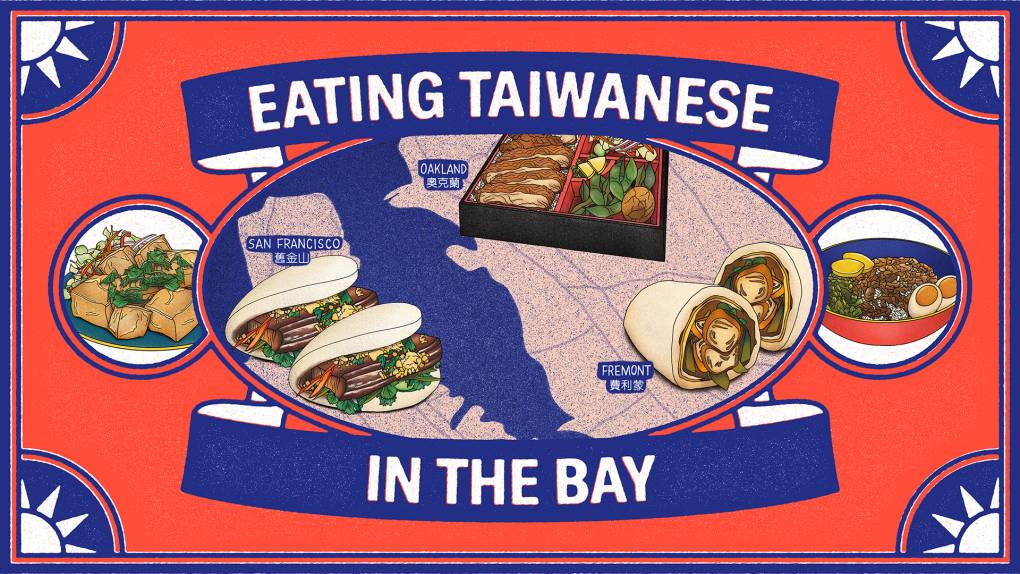
KQED’s Ultimate Guide to Taiwanese Restaurants in the Bay
Growing Asian Produce Helped This Sonoma Farmer Connect With Her Taiwanese Heritage
Player sponsored by
window.__IS_SSR__=true
window.__INITIAL_STATE__={
"attachmentsReducer": {
"audio_0": {
"type": "attachments",
"id": "audio_0",
"imgSizes": {
"kqedFullSize": {
"file": "https://ww2.kqed.org/news/wp-content/themes/KQED-unified/img/audio_bgs/background0.jpg"
}
}
},
"audio_1": {
"type": "attachments",
"id": "audio_1",
"imgSizes": {
"kqedFullSize": {
"file": "https://ww2.kqed.org/news/wp-content/themes/KQED-unified/img/audio_bgs/background1.jpg"
}
}
},
"audio_2": {
"type": "attachments",
"id": "audio_2",
"imgSizes": {
"kqedFullSize": {
"file": "https://ww2.kqed.org/news/wp-content/themes/KQED-unified/img/audio_bgs/background2.jpg"
}
}
},
"audio_3": {
"type": "attachments",
"id": "audio_3",
"imgSizes": {
"kqedFullSize": {
"file": "https://ww2.kqed.org/news/wp-content/themes/KQED-unified/img/audio_bgs/background3.jpg"
}
}
},
"audio_4": {
"type": "attachments",
"id": "audio_4",
"imgSizes": {
"kqedFullSize": {
"file": "https://ww2.kqed.org/news/wp-content/themes/KQED-unified/img/audio_bgs/background4.jpg"
}
}
},
"placeholder": {
"type": "attachments",
"id": "placeholder",
"imgSizes": {
"thumbnail": {
"file": "https://cdn.kqed.org/wp-content/uploads/2024/12/KQED-Default-Image-816638274-2000x1333-1-160x107.jpg",
"width": 160,
"height": 107,
"mimeType": "image/jpeg"
},
"medium": {
"file": "https://cdn.kqed.org/wp-content/uploads/2024/12/KQED-Default-Image-816638274-2000x1333-1-800x533.jpg",
"width": 800,
"height": 533,
"mimeType": "image/jpeg"
},
"medium_large": {
"file": "https://cdn.kqed.org/wp-content/uploads/2024/12/KQED-Default-Image-816638274-2000x1333-1-768x512.jpg",
"width": 768,
"height": 512,
"mimeType": "image/jpeg"
},
"large": {
"file": "https://cdn.kqed.org/wp-content/uploads/2024/12/KQED-Default-Image-816638274-2000x1333-1-1020x680.jpg",
"width": 1020,
"height": 680,
"mimeType": "image/jpeg"
},
"1536x1536": {
"file": "https://cdn.kqed.org/wp-content/uploads/2024/12/KQED-Default-Image-816638274-2000x1333-1-1536x1024.jpg",
"width": 1536,
"height": 1024,
"mimeType": "image/jpeg"
},
"fd-lrg": {
"file": "https://cdn.kqed.org/wp-content/uploads/2024/12/KQED-Default-Image-816638274-2000x1333-1-1536x1024.jpg",
"width": 1536,
"height": 1024,
"mimeType": "image/jpeg"
},
"fd-med": {
"file": "https://cdn.kqed.org/wp-content/uploads/2024/12/KQED-Default-Image-816638274-2000x1333-1-1020x680.jpg",
"width": 1020,
"height": 680,
"mimeType": "image/jpeg"
},
"fd-sm": {
"file": "https://cdn.kqed.org/wp-content/uploads/2024/12/KQED-Default-Image-816638274-2000x1333-1-800x533.jpg",
"width": 800,
"height": 533,
"mimeType": "image/jpeg"
},
"post-thumbnail": {
"file": "https://cdn.kqed.org/wp-content/uploads/2024/12/KQED-Default-Image-816638274-2000x1333-1-672x372.jpg",
"width": 672,
"height": 372,
"mimeType": "image/jpeg"
},
"twentyfourteen-full-width": {
"file": "https://cdn.kqed.org/wp-content/uploads/2024/12/KQED-Default-Image-816638274-2000x1333-1-1038x576.jpg",
"width": 1038,
"height": 576,
"mimeType": "image/jpeg"
},
"xxsmall": {
"file": "https://cdn.kqed.org/wp-content/uploads/2024/12/KQED-Default-Image-816638274-2000x1333-1-160x107.jpg",
"width": 160,
"height": 107,
"mimeType": "image/jpeg"
},
"xsmall": {
"file": "https://cdn.kqed.org/wp-content/uploads/2024/12/KQED-Default-Image-816638274-2000x1333-1-672x372.jpg",
"width": 672,
"height": 372,
"mimeType": "image/jpeg"
},
"small": {
"file": "https://cdn.kqed.org/wp-content/uploads/2024/12/KQED-Default-Image-816638274-2000x1333-1-672x372.jpg",
"width": 672,
"height": 372,
"mimeType": "image/jpeg"
},
"xlarge": {
"file": "https://cdn.kqed.org/wp-content/uploads/2024/12/KQED-Default-Image-816638274-2000x1333-1-1020x680.jpg",
"width": 1020,
"height": 680,
"mimeType": "image/jpeg"
},
"full-width": {
"file": "https://cdn.kqed.org/wp-content/uploads/2024/12/KQED-Default-Image-816638274-2000x1333-1-1920x1280.jpg",
"width": 1920,
"height": 1280,
"mimeType": "image/jpeg"
},
"guest-author-32": {
"file": "https://cdn.kqed.org/wp-content/uploads/2025/01/KQED-Default-Image-816638274-1333x1333-1-160x160.jpg",
"width": 32,
"height": 32,
"mimeType": "image/jpeg"
},
"guest-author-50": {
"file": "https://cdn.kqed.org/wp-content/uploads/2025/01/KQED-Default-Image-816638274-1333x1333-1-160x160.jpg",
"width": 50,
"height": 50,
"mimeType": "image/jpeg"
},
"guest-author-64": {
"file": "https://cdn.kqed.org/wp-content/uploads/2025/01/KQED-Default-Image-816638274-1333x1333-1-160x160.jpg",
"width": 64,
"height": 64,
"mimeType": "image/jpeg"
},
"guest-author-96": {
"file": "https://cdn.kqed.org/wp-content/uploads/2025/01/KQED-Default-Image-816638274-1333x1333-1-160x160.jpg",
"width": 96,
"height": 96,
"mimeType": "image/jpeg"
},
"guest-author-128": {
"file": "https://cdn.kqed.org/wp-content/uploads/2025/01/KQED-Default-Image-816638274-1333x1333-1-160x160.jpg",
"width": 128,
"height": 128,
"mimeType": "image/jpeg"
},
"detail": {
"file": "https://cdn.kqed.org/wp-content/uploads/2025/01/KQED-Default-Image-816638274-1333x1333-1-160x160.jpg",
"width": 160,
"height": 160,
"mimeType": "image/jpeg"
},
"kqedFullSize": {
"file": "https://cdn.kqed.org/wp-content/uploads/2024/12/KQED-Default-Image-816638274-2000x1333-1.jpg",
"width": 2000,
"height": 1333
}
}
},
"arts_13897982": {
"type": "attachments",
"id": "arts_13897982",
"meta": {
"index": "attachments_1716263798",
"site": "arts",
"id": "13897982",
"found": true
},
"parent": 13897936,
"imgSizes": {
"twentyfourteen-full-width": {
"file": "https://ww2.kqed.org/app/uploads/sites/2/2021/05/TaiwanMap_FinalFeatureImage-1038x576.jpg",
"width": 1038,
"mimeType": "image/jpeg",
"height": 576
},
"thumbnail": {
"file": "https://ww2.kqed.org/app/uploads/sites/2/2021/05/TaiwanMap_FinalFeatureImage-160x90.jpg",
"width": 160,
"mimeType": "image/jpeg",
"height": 90
},
"post-thumbnail": {
"file": "https://ww2.kqed.org/app/uploads/sites/2/2021/05/TaiwanMap_FinalFeatureImage-672x372.jpg",
"width": 672,
"mimeType": "image/jpeg",
"height": 372
},
"kqedFullSize": {
"file": "https://ww2.kqed.org/app/uploads/sites/2/2021/05/TaiwanMap_FinalFeatureImage.jpg",
"width": 1920,
"height": 1080
},
"large": {
"file": "https://ww2.kqed.org/app/uploads/sites/2/2021/05/TaiwanMap_FinalFeatureImage-1020x574.jpg",
"width": 1020,
"mimeType": "image/jpeg",
"height": 574
},
"1536x1536": {
"file": "https://ww2.kqed.org/app/uploads/sites/2/2021/05/TaiwanMap_FinalFeatureImage-1536x864.jpg",
"width": 1536,
"mimeType": "image/jpeg",
"height": 864
},
"medium": {
"file": "https://ww2.kqed.org/app/uploads/sites/2/2021/05/TaiwanMap_FinalFeatureImage-800x450.jpg",
"width": 800,
"mimeType": "image/jpeg",
"height": 450
},
"medium_large": {
"file": "https://ww2.kqed.org/app/uploads/sites/2/2021/05/TaiwanMap_FinalFeatureImage-768x432.jpg",
"width": 768,
"mimeType": "image/jpeg",
"height": 432
}
},
"publishDate": 1622138388,
"modified": 1622138491,
"caption": null,
"description": null,
"title": "TaiwanMap_FinalFeatureImage",
"credit": "Illustration by Felicia Liang; design by Rebecca Kao",
"status": "inherit",
"altTag": null,
"isLoading": false,
"fetchFailed": false
},
"arts_13897762": {
"type": "attachments",
"id": "arts_13897762",
"meta": {
"index": "attachments_1716263798",
"site": "arts",
"id": "13897762",
"found": true
},
"parent": 13897752,
"imgSizes": {
"twentyfourteen-full-width": {
"file": "https://ww2.kqed.org/app/uploads/sites/2/2021/05/RadicalFamilyFarm_Feature-1038x576.jpg",
"width": 1038,
"mimeType": "image/jpeg",
"height": 576
},
"thumbnail": {
"file": "https://ww2.kqed.org/app/uploads/sites/2/2021/05/RadicalFamilyFarm_Feature-160x90.jpg",
"width": 160,
"mimeType": "image/jpeg",
"height": 90
},
"post-thumbnail": {
"file": "https://ww2.kqed.org/app/uploads/sites/2/2021/05/RadicalFamilyFarm_Feature-672x372.jpg",
"width": 672,
"mimeType": "image/jpeg",
"height": 372
},
"kqedFullSize": {
"file": "https://ww2.kqed.org/app/uploads/sites/2/2021/05/RadicalFamilyFarm_Feature.jpg",
"width": 1920,
"height": 1080
},
"large": {
"file": "https://ww2.kqed.org/app/uploads/sites/2/2021/05/RadicalFamilyFarm_Feature-1020x574.jpg",
"width": 1020,
"mimeType": "image/jpeg",
"height": 574
},
"1536x1536": {
"file": "https://ww2.kqed.org/app/uploads/sites/2/2021/05/RadicalFamilyFarm_Feature-1536x864.jpg",
"width": 1536,
"mimeType": "image/jpeg",
"height": 864
},
"medium": {
"file": "https://ww2.kqed.org/app/uploads/sites/2/2021/05/RadicalFamilyFarm_Feature-800x450.jpg",
"width": 800,
"mimeType": "image/jpeg",
"height": 450
},
"medium_large": {
"file": "https://ww2.kqed.org/app/uploads/sites/2/2021/05/RadicalFamilyFarm_Feature-768x432.jpg",
"width": 768,
"mimeType": "image/jpeg",
"height": 432
}
},
"publishDate": 1621891552,
"modified": 1621891688,
"caption": null,
"description": null,
"title": "RadicalFamilyFarm_Feature",
"credit": "Photo by Sarah Deragon; design by Rebecca Kao",
"status": "inherit",
"altTag": "Leslie Wiser pushes a plow; the image is inside a red-and-blue frame patterned after the Taiwanese flag.",
"isLoading": false,
"fetchFailed": false
}
},
"audioPlayerReducer": {
"postId": "stream_live",
"isPaused": true,
"isPlaying": false,
"pfsActive": false,
"pledgeModalIsOpen": true,
"playerDrawerIsOpen": false,
"liveAudioPlayStartedAt": 0,
"liveAudioPlayContext": ""
},
"authorsReducer": {
"mchang": {
"type": "authors",
"id": "11754",
"meta": {
"index": "authors_1716337520",
"id": "11754",
"found": true
},
"name": "Momo Chang",
"firstName": "Momo",
"lastName": "Chang",
"slug": "mchang",
"email": "momo.y.chang@gmail.com",
"display_author_email": false,
"staff_mastheads": [],
"title": "KQED Contributor",
"bio": null,
"avatar": "https://secure.gravatar.com/avatar/97d239ae67c3d897c07cb6813dcda359?s=600&d=blank&r=g",
"twitter": null,
"facebook": null,
"instagram": null,
"linkedin": null,
"sites": [
{
"site": "arts",
"roles": [
"contributor"
]
}
],
"headData": {
"title": "Momo Chang | KQED",
"description": "KQED Contributor",
"ogImgSrc": "https://secure.gravatar.com/avatar/97d239ae67c3d897c07cb6813dcda359?s=600&d=blank&r=g",
"twImgSrc": "https://secure.gravatar.com/avatar/97d239ae67c3d897c07cb6813dcda359?s=600&d=blank&r=g"
},
"isLoading": false,
"link": "/author/mchang"
},
"gracehwanglynch": {
"type": "authors",
"id": "11713",
"meta": {
"index": "authors_1716337520",
"id": "11713",
"found": true
},
"name": "Grace Hwang Lynch",
"firstName": "Grace Hwang",
"lastName": "Lynch",
"slug": "gracehwanglynch",
"email": "gracehwanglynch@gmail.com",
"display_author_email": false,
"staff_mastheads": [],
"title": "KQED Contributor",
"bio": null,
"avatar": "https://secure.gravatar.com/avatar/ce75e1abf2f68f1fd3b9c1f429047fd3149abed5b3617d0c13736984ddfcae06?s=600&d=blank&r=g",
"twitter": null,
"bluesky": null,
"facebook": null,
"instagram": null,
"linkedin": null,
"sites": [
{
"site": "arts",
"roles": [
"subscriber"
]
}
],
"headData": {
"title": "Grace Hwang Lynch | KQED",
"description": "KQED Contributor",
"ogImgSrc": "https://secure.gravatar.com/avatar/ce75e1abf2f68f1fd3b9c1f429047fd3149abed5b3617d0c13736984ddfcae06?s=600&d=blank&r=g",
"twImgSrc": "https://secure.gravatar.com/avatar/ce75e1abf2f68f1fd3b9c1f429047fd3149abed5b3617d0c13736984ddfcae06?s=600&d=blank&r=g"
},
"isLoading": false,
"link": "/author/gracehwanglynch"
},
"ltsai": {
"type": "authors",
"id": "11743",
"meta": {
"index": "authors_1716337520",
"id": "11743",
"found": true
},
"name": "Luke Tsai",
"firstName": "Luke",
"lastName": "Tsai",
"slug": "ltsai",
"email": "ltsai@kqed.org",
"display_author_email": true,
"staff_mastheads": [
"arts"
],
"title": "Food Editor",
"bio": "Luke Tsai is KQED's food editor and resident stinky tofu connoisseur. Prior to KQED, he was an editor at Eater SF, \u003cem>San Francisco \u003c/em>magazine, and the \u003cem>East Bay Express\u003c/em>, and his work has also appeared in TASTE, the \u003cem>San Francisco Chronicle\u003c/em>, and the \u003cem>Best Food Writing\u003c/em> anthology. When he isn't writing or editing, you'll find him eating most everything he can get his hands on.",
"avatar": "https://secure.gravatar.com/avatar/1e59b45bf191526e7339d6ba46e33a57b2030d25c27660ecc64ea3cb863e34f7?s=600&d=blank&r=g",
"twitter": "theluketsai",
"bluesky": null,
"facebook": null,
"instagram": null,
"linkedin": null,
"sites": [
{
"site": "",
"roles": [
"editor"
]
},
{
"site": "arts",
"roles": [
"administrator"
]
},
{
"site": "news",
"roles": [
"editor",
"contributor"
]
},
{
"site": "bayareabites",
"roles": [
"editor"
]
},
{
"site": "food",
"roles": [
"editor"
]
}
],
"headData": {
"title": "Luke Tsai | KQED",
"description": "Food Editor",
"ogImgSrc": "https://secure.gravatar.com/avatar/1e59b45bf191526e7339d6ba46e33a57b2030d25c27660ecc64ea3cb863e34f7?s=600&d=blank&r=g",
"twImgSrc": "https://secure.gravatar.com/avatar/1e59b45bf191526e7339d6ba46e33a57b2030d25c27660ecc64ea3cb863e34f7?s=600&d=blank&r=g"
},
"isLoading": false,
"link": "/author/ltsai"
}
},
"pagesReducer": {
"author_mchang": {
"type": "pages",
"id": "11754",
"meta": {
"index": "authors_1716337520",
"id": "11754",
"score": 6.795706,
"site": "authors"
},
"name": "Momo Chang",
"firstName": "Momo",
"lastName": "Chang",
"slug": "mchang",
"email": "momo.y.chang@gmail.com",
"display_author_email": false,
"staff_mastheads": [],
"title": "KQED Contributor",
"bio": null,
"avatar": "https://secure.gravatar.com/avatar/97d239ae67c3d897c07cb6813dcda359?s=600&d=blank&r=g",
"twitter": null,
"facebook": null,
"instagram": null,
"linkedin": null,
"sites": [
{
"site": "arts",
"roles": [
"contributor"
]
}
],
"headData": {
"title": "Momo Chang | KQED",
"description": "KQED Contributor",
"ogImgSrc": "https://secure.gravatar.com/avatar/97d239ae67c3d897c07cb6813dcda359?s=600&d=blank&r=g",
"twImgSrc": "https://secure.gravatar.com/avatar/97d239ae67c3d897c07cb6813dcda359?s=600&d=blank&r=g"
},
"isLoading": false,
"hasAllInfo": true,
"blocks": [
{
"blockName": "kqed/staff-member",
"attrs": {
"author": {
"type": "authors",
"id": "11754",
"meta": {
"index": "authors_1716337520",
"id": "11754",
"score": 6.795706
},
"name": "Momo Chang",
"firstName": "Momo",
"lastName": "Chang",
"slug": "mchang",
"email": "momo.y.chang@gmail.com",
"display_author_email": false,
"staff_mastheads": "[Circular]",
"title": "KQED Contributor",
"bio": null,
"avatar": "https://secure.gravatar.com/avatar/97d239ae67c3d897c07cb6813dcda359?s=600&d=blank&r=g",
"twitter": null,
"facebook": null,
"instagram": null,
"linkedin": null,
"sites": "[Circular]",
"headData": {
"title": "Momo Chang | KQED",
"description": "KQED Contributor",
"ogImgSrc": "https://secure.gravatar.com/avatar/97d239ae67c3d897c07cb6813dcda359?s=600&d=blank&r=g",
"twImgSrc": "https://secure.gravatar.com/avatar/97d239ae67c3d897c07cb6813dcda359?s=600&d=blank&r=g"
},
"isLoading": false,
"link": "/author/mchang",
"hasAllInfo": true
}
}
},
{
"blockName": "kqed/post-list",
"attrs": {
"query": "posts?author=11754&authorName=Momo Chang",
"title": "By Momo Chang",
"layout": "cardArticle2",
"className": "wp-block--nomargintop",
"seeMore": true
}
}
]
}
},
"pfsSessionReducer": {},
"postsReducer": {
"stream_live": {
"type": "live",
"id": "stream_live",
"audioUrl": "https://streams.kqed.org/kqedradio",
"title": "Live Stream",
"excerpt": "Live Stream information currently unavailable.",
"link": "/radio",
"featImg": "",
"label": {
"name": "KQED Live",
"link": "/"
}
},
"stream_kqedNewscast": {
"type": "posts",
"id": "stream_kqedNewscast",
"audioUrl": "https://www.kqed.org/.stream/anon/radio/RDnews/newscast.mp3?_=1",
"title": "KQED Newscast",
"featImg": "",
"label": {
"name": "88.5 FM",
"link": "/"
}
},
"arts_13897936": {
"type": "posts",
"id": "arts_13897936",
"meta": {
"index": "posts_1716263798",
"site": "arts",
"id": "13897936",
"score": null,
"sort": [
1622217624000
]
},
"parent": 0,
"labelTerm": {},
"blocks": [],
"publishDate": 1622217624,
"format": "aside",
"title": "KQED’s Ultimate Guide to Taiwanese Restaurants in the Bay",
"headTitle": "KQED’s Ultimate Guide to Taiwanese Restaurants in the Bay | KQED",
"content": "\u003cfigure id=\"attachment_13897983\" class=\"wp-caption alignnone\" style=\"max-width: 1920px\">\u003cimg loading=\"lazy\" decoding=\"async\" class=\"size-full wp-image-13897983\" src=\"https://ww2.kqed.org/app/uploads/sites/2/2021/05/TaiwanMap_FinalInArticlePhoto.jpg\" alt=\"An illustrated map of the Bay Area with drawings of various Taiwanese foods at different locations on the map—gua bao near San Francisco, stinky tofu near San Mateo, pork chop bento near Oakland, fan tuan near Fremont, and lu rou fan near Milpitas.\" width=\"1920\" height=\"1536\" srcset=\"https://cdn.kqed.org/wp-content/uploads/sites/2/2021/05/TaiwanMap_FinalInArticlePhoto.jpg 1920w, https://cdn.kqed.org/wp-content/uploads/sites/2/2021/05/TaiwanMap_FinalInArticlePhoto-800x640.jpg 800w, https://cdn.kqed.org/wp-content/uploads/sites/2/2021/05/TaiwanMap_FinalInArticlePhoto-1020x816.jpg 1020w, https://cdn.kqed.org/wp-content/uploads/sites/2/2021/05/TaiwanMap_FinalInArticlePhoto-160x128.jpg 160w, https://cdn.kqed.org/wp-content/uploads/sites/2/2021/05/TaiwanMap_FinalInArticlePhoto-768x614.jpg 768w, https://cdn.kqed.org/wp-content/uploads/sites/2/2021/05/TaiwanMap_FinalInArticlePhoto-1536x1229.jpg 1536w\" sizes=\"(max-width: 1920px) 100vw, 1920px\">\u003cfigcaption class=\"wp-caption-text\">\u003cem>(Illustration by \u003ca href=\"https://www.felicia-liang.com/\">Felicia Liang\u003c/a>; design by Rebecca Kao)\u003c/em>\u003c/figcaption>\u003c/figure>\n\u003cp>\u003cem>\u003ci data-stringify-type=\"italic\">KQED’s \u003c/i>\u003c/em>Eating Taiwanese in the Bay\u003cem>\u003ci data-stringify-type=\"italic\"> is a \u003ca href=\"https://www.kqed.org/eatingtaiwanese\">series of stories\u003c/a> exploring Taiwanese food culture in all of its glorious, delicious complexity.\u003c/i>\u003c/em>\u003c/p>\n\u003cp>If you ask a Taiwanese American about the Bay Area’s Taiwanese food scene, chances are they’ll complain about how hard it is to find stinky tofu or savory soy milk or a decent bowl of beef noodle soup. And it’s true: This isn’t exactly the San Gabriel Valley. But it’s also true that anyone who knocks the Bay Area’s Taiwanese food community probably hasn’t spent a lot of time in suburban enclaves like Fremont and Cupertino, where there’s big enough of a Taiwanese market that even niche restaurants—specializing in sweet potato congee or Taiwanese breakfast sandwiches—can survive and thrive. They also probably haven’t paid attention to the new wave of pop-ups that are bringing Taiwanese food into the mainstream in Oakland and San Francisco.\u003c/p>\n\u003cp>Here, then, are 26 of the Bay Area’s most delicious Taiwanese dining destinations, from the UC Berkeley campus down to the strip malls of Cupertino. Eating your way through the list will help cure any expat’s culinary homesickness. For newcomers to the cuisine, it also serves as an excellent introduction.\u003c/p>\n\u003cp>\u003ci>Note: These entries aren’t ranked; instead, they’re listed in rough geographical order from north to south.\u003c/i>\u003c/p>\n\u003cp>\u003cimg loading=\"lazy\" decoding=\"async\" class=\"alignnone size-full wp-image-13897264\" src=\"https://ww2.kqed.org/app/uploads/sites/2/2021/05/Taiwan.logobreak.greyish.jpg\" alt=\"\" width=\"800\" height=\"127\" srcset=\"https://cdn.kqed.org/wp-content/uploads/sites/2/2021/05/Taiwan.logobreak.greyish.jpg 800w, https://cdn.kqed.org/wp-content/uploads/sites/2/2021/05/Taiwan.logobreak.greyish-160x25.jpg 160w, https://cdn.kqed.org/wp-content/uploads/sites/2/2021/05/Taiwan.logobreak.greyish-768x122.jpg 768w\" sizes=\"(max-width: 800px) 100vw, 800px\">\u003c/p>\n\u003ch4>1. Shihlin Taiwan Street Snacks\u003c/h4>\n\u003cp>\u003ci>2431 Durant Ave. Suite B, Berkeley\u003c/i>\u003cbr>\n\u003ca href=\"https://www.shihlinca.com/\" target=\"_blank\" rel=\"noopener noreferrer\">This local chain\u003c/a> specializes in the kinds of quick bites you’d find at Taiwan’s night markets and street stalls, including a surprisingly homey version of orh ah mee sua, aka oyster vermicelli. But the headliner is the “XXL” crispy chicken, a solid rendition of the oversized fried cutlets that are one of the signatures of the actual Shilin night market in Taipei. In addition to this Cal campus-adjacent storefront, which has been a hit with students from day one, and its original Milpitas shop, Shihlin has also expanded to Pleasanton, San Mateo and the Stonestown Galleria mall. —L.T.\u003c/p>\n\u003ch4>2. Yilan Foods\u003c/h4>\n\u003cp>\u003ci>Previously at 4066 Piedmont Ave. in Oakland\u003c/i>\u003cbr>\n\u003ca href=\"https://yilan-foods.square.site/\" target=\"_blank\" rel=\"noopener noreferrer\">This popular pop-up restaurant\u003c/a> that started during the pandemic has been a welcome addition to the local Taiwanese food scene. Offering Sunday-only pickup for preorder customers in San Francisco and Oakland, the pop-up quickly amassed a following through social media and word-of-mouth. Yilan’s collagen-rich niu rou mian is truly a standout among the Bay Area’s beef noodle soup options, and its chunky, fatty pork over rice (lu rou fan) is hearty and satisfying. Yilan Foods is on temporary hiatus while its owners search for a permanent brick-and-mortar location; in the meantime, they’re also seeking a new home for the pop-up incarnation. Follow their \u003ca href=\"https://www.instagram.com/yilanfoods/\" target=\"_blank\" rel=\"noopener noreferrer\">Instagram page\u003c/a> for the latest updates. —M.C.\u003c/p>\n\u003cfigure id=\"attachment_13897876\" class=\"wp-caption alignnone\" style=\"max-width: 1761px\">\u003cimg loading=\"lazy\" decoding=\"async\" class=\"size-full wp-image-13897876\" src=\"https://ww2.kqed.org/app/uploads/sites/2/2021/05/005_KQEDArts_TaiwanBento_05082021.jpg\" alt=\"Overhead view of a takeout box with sticky rice rolls, scallion egg pancake, and other Taiwanese breakfast items from Taiwan Bento.\" width=\"1761\" height=\"1174\" srcset=\"https://cdn.kqed.org/wp-content/uploads/sites/2/2021/05/005_KQEDArts_TaiwanBento_05082021.jpg 1761w, https://cdn.kqed.org/wp-content/uploads/sites/2/2021/05/005_KQEDArts_TaiwanBento_05082021-800x533.jpg 800w, https://cdn.kqed.org/wp-content/uploads/sites/2/2021/05/005_KQEDArts_TaiwanBento_05082021-1020x680.jpg 1020w, https://cdn.kqed.org/wp-content/uploads/sites/2/2021/05/005_KQEDArts_TaiwanBento_05082021-160x107.jpg 160w, https://cdn.kqed.org/wp-content/uploads/sites/2/2021/05/005_KQEDArts_TaiwanBento_05082021-768x512.jpg 768w, https://cdn.kqed.org/wp-content/uploads/sites/2/2021/05/005_KQEDArts_TaiwanBento_05082021-1536x1024.jpg 1536w\" sizes=\"(max-width: 1761px) 100vw, 1761px\">\u003cfigcaption class=\"wp-caption-text\">Taiwan Bento is now hosting occasional Taiwanese breakfast pop-ups. \u003ccite>(Beth LaBerge/KQED)\u003c/cite>\u003c/figcaption>\u003c/figure>\n\u003ch4>3. Taiwan Bento\u003c/h4>\n\u003cp>\u003ci>412 22nd St., Oakland\u003c/i>\u003cbr>\nOpen since 2014, \u003ca href=\"http://www.taiwanbento.us/\" target=\"_blank\" rel=\"noopener noreferrer\">Taiwan Bento\u003c/a> is one of the mainstays of Oakland’s Taiwanese restaurant community. As its name suggests, the restaurant is best known for its biandang, or Taiwanese lunch boxes—set meals that might come with a fried pork chop or braised minced pork, some pickled vegetables, a half a tea egg and a scoop of rice.The beef noodle soup is a hearty, belly-warming option; the basil-topped popcorn chicken is impeccably fried. Recently, the restaurant has also been dabbling in \u003ca href=\"https://www.kqed.org/arts/13897868/taiwanese-breakfast-bay-area\">Taiwanese breakfast\u003c/a>—fan tuan (rice rolls) and dan bing (scallion egg pancakes)—during occasional weekend pop-ups. —L.T.\u003c/p>\n\u003ch4>4. HoDaLa\u003c/h4>\n\u003cp>\u003ci>5801 Geary Blvd., San Francisco\u003c/i>\u003cbr>\nThe most \u003ca href=\"https://www.hodalausa.com/\" target=\"_blank\" rel=\"noopener noreferrer\">prominent new Taiwanese restaurant\u003c/a> to open in S.F. proper in many years, this Outer Richmond restaurant rocks a vintage aesthetic, with a display of old Taiwanese post office memorabilia and toys front and center. The menu leans toward Taiwan Beer–friendly bar snacks, with plenty of fried foods in the mix. The gua bao (or steamed bun “sandwich”) section alone runs five options deep and includes fusion-y versions stuffed with fried fish or barbecue pulled pork. HoDaLa is also one of the few spots in the city that serves tsua bing, or Taiwanese-style shaved ice, available with a host of \u003ca href=\"https://www.kqed.org/arts/13897410/taiwanese-food-texture-q-boba-love-boat\">different QQ toppings\u003c/a>. —L.T.\u003c/p>\n\u003ch4>5. Dragon Gate Bar and Grille\u003c/h4>\n\u003cp>\u003ci>300 Broadway, Oakland\u003c/i>\u003cbr>\nThis moody, neon-backlit cocktail bar has private karaoke rooms and one of the most extensive Taiwanese food menus in the entire East Bay—a win-win for devotees of these two cornerstones of Taiwanese culture. \u003ca href=\"https://www.dragongate300.com/\" target=\"_blank\" rel=\"noopener noreferrer\">Dragon Gate\u003c/a> has long been one of the only restaurants in Oakland where you can get stinky tofu, but the highlights of the menu are actually the more rustic, homestyle dishes: dried radish omelet, a variety of three-cup dishes (traditionally made with an entire cup each of soy sauce, sesame oil and rice wine) and one of the East Bay’s better bowls of beef noodle soup. After staying closed for the bulk of the pandemic, the karaoke rooms are now back open for small gatherings as well. —L.T.\u003c/p>\n\u003cfigure id=\"attachment_13898040\" class=\"wp-caption alignnone\" style=\"max-width: 2015px\">\u003cimg loading=\"lazy\" decoding=\"async\" class=\"size-full wp-image-13898040\" src=\"https://ww2.kqed.org/app/uploads/sites/2/2021/05/GoodToEat_potstickers.jpg\" alt=\"A plate of long potstickers next to a takeout carton of noodles.\" width=\"2015\" height=\"2048\" srcset=\"https://cdn.kqed.org/wp-content/uploads/sites/2/2021/05/GoodToEat_potstickers.jpg 2015w, https://cdn.kqed.org/wp-content/uploads/sites/2/2021/05/GoodToEat_potstickers-800x813.jpg 800w, https://cdn.kqed.org/wp-content/uploads/sites/2/2021/05/GoodToEat_potstickers-1020x1037.jpg 1020w, https://cdn.kqed.org/wp-content/uploads/sites/2/2021/05/GoodToEat_potstickers-160x163.jpg 160w, https://cdn.kqed.org/wp-content/uploads/sites/2/2021/05/GoodToEat_potstickers-768x781.jpg 768w, https://cdn.kqed.org/wp-content/uploads/sites/2/2021/05/GoodToEat_potstickers-1511x1536.jpg 1511w, https://cdn.kqed.org/wp-content/uploads/sites/2/2021/05/GoodToEat_potstickers-1920x1951.jpg 1920w\" sizes=\"(max-width: 2015px) 100vw, 2015px\">\u003cfigcaption class=\"wp-caption-text\">The potstickers are Good-to-Eat Dumplings’ signature dish. \u003ccite>(Good-to-Eat Dumplings)\u003c/cite>\u003c/figcaption>\u003c/figure>\n\u003ch4>6. Good-to-Eat Dumplings\u003c/h4>\n\u003cp>\u003ci>292 4th St., Oakland\u003c/i>\u003cbr>\nRun by founders Tony Tung and Angie Lin, \u003ca href=\"https://www.goodtoeatdumplings.com\">this casual restaurant\u003c/a> specializes in Taiwan-style potstickers—elongated pan-fried dumplings with a thin wrapper and crunchy bottom. These are notable for their fillings, which include a popular version that’s filled with chicken and basil. While dumplings are the focus, the flavorful gua baos and wontons are also just like what you’d find in Taiwan. And during the pandemic, the pop-up has expanded its repertoire of locally-sourced Taiwanese dishes even further outside the realm of dumplings, serving things like noodles with minced pork sauce and \u003ca href=\"https://sf.eater.com/2020/9/16/21439018/good-to-eat-dumplings-taiwanese-caprese-tomatoes-soy-sauce-pop-up-oakland\" target=\"_blank\" rel=\"noopener noreferrer\">Taiwanese\u003c/a> “\u003ca href=\"https://sf.eater.com/2020/9/16/21439018/good-to-eat-dumplings-taiwanese-caprese-tomatoes-soy-sauce-pop-up-oakland\" target=\"_blank\" rel=\"noopener noreferrer\">Caprese\u003c/a>.” Good-to-Eat is located at Original Pattern Brewing in Oakland’s Jack London neighborhood, and has plenty of outdoor seating. —M.C.\u003c/p>\n\u003ch4>7. Bentolicious\u003c/h4>\n\u003cp>\u003ci>4833 Hopyard Rd. E3, Pleasanton\u003c/i>\u003cbr>\nMarvel at the efficiency of this strip mall \u003ca href=\"https://bentolicious.us/\" target=\"_blank\" rel=\"noopener noreferrer\">bento shop’s\u003c/a> assembly line setup, as bandanna-clad workers load up your lunchbox, scooping home-style dishes from a steam table that gets replenished so frequently, the food never has a chance to lose its freshness. Main course options run the gamut from railroad (i.e., fried pork chop) bentos to lion’s head meatballs and saucy Chiayi chicken rice, and the rotating selection of sides, like fried pumpkin and Taiwanese-style mapo tofu, is just as compelling. Come on the early side, as the most popular dishes tend to sell out well before the end of the lunch rush. —L.T.\u003c/p>\n\u003cfigure id=\"attachment_13898053\" class=\"wp-caption alignnone\" style=\"max-width: 971px\">\u003cimg loading=\"lazy\" decoding=\"async\" class=\"size-full wp-image-13898053\" src=\"https://ww2.kqed.org/app/uploads/sites/2/2021/05/ElChinoGrande_TaiwanTaco.jpg\" alt='A view of the \"Taiwan taco,\" a scallion pancake stuffed with eggs, slaw, and edible flowers.' width=\"971\" height=\"1295\" srcset=\"https://cdn.kqed.org/wp-content/uploads/sites/2/2021/05/ElChinoGrande_TaiwanTaco.jpg 971w, https://cdn.kqed.org/wp-content/uploads/sites/2/2021/05/ElChinoGrande_TaiwanTaco-800x1067.jpg 800w, https://cdn.kqed.org/wp-content/uploads/sites/2/2021/05/ElChinoGrande_TaiwanTaco-160x213.jpg 160w, https://cdn.kqed.org/wp-content/uploads/sites/2/2021/05/ElChinoGrande_TaiwanTaco-768x1024.jpg 768w\" sizes=\"(max-width: 971px) 100vw, 971px\">\u003cfigcaption class=\"wp-caption-text\">El Chino Grande’s “Taiwan Taco.” \u003ccite>(El Chino Grande)\u003c/cite>\u003c/figcaption>\u003c/figure>\n\u003ch4>8. El Chino Grande / Hén-zhi\u003c/h4>\n\u003cp>\u003ci>1195 Evans Ave., San Francisco; various other locations\u003c/i>\u003cbr>\nBefore he started these pop-ups with his partner Marcelle Gonzales Yang, Christopher Yang made a name for himself cooking at celebrated Bay Area restaurants like the now-shuttered ’Aina in S.F. \u003ca href=\"https://www.instagram.com/el_chino_grande/\" target=\"_blank\" rel=\"noopener noreferrer\">El Chino Grande\u003c/a> and \u003ca href=\"https://www.henzhisf.com/\" target=\"_blank\" rel=\"noopener noreferrer\">Hén-zhí\u003c/a> are the chef’s tribute to his Taiwanese heritage—and to Taiwanese night markets, specifically. At El Chino Grande, for instance, he mixes Taiwanese flavors with California ingredients to create dishes like his “Taiwan Taco,” a take on a scallion pancake roll, or dan bing, that incorporates kabayaki tare, mayo, crispy nori furikake, cabbage slaw and pickled daikon. Hén-zhí, which takes more of a fine dining approach, has been doing mostly private events during the pandemic, but El Chino Grande makes regular appearances at Hunters Point Brewery on Sundays and at a Lafayette commissary kitchen every other Saturday. —L.T.\u003c/p>\n\u003ch4>9. China Bee\u003c/h4>\n\u003cp>\u003ci>31 S. B St., San Mateo\u003c/i>\u003cbr>\n\u003cspan style=\"font-weight: 400\">[aside tag='eating-taiwanese' label='Eating Taiwanese']\u003c/span>Mixed in among Chinese American standards like chow mein and General’s chicken, Taiwanese dishes are the real star and focal point at \u003ca href=\"https://www.facebook.com/chinabeerestaurant/\">China Bee\u003c/a>—even more so during the pandemic, when the downtown San Mateo restaurant has served an abbreviated (and almost entirely Taiwanese) takeout menu. It’s one of a handful of spots on the Peninsula that serves Taiwanese breakfast on the weekend, and the impeccably fried stinky tofu is one of the best versions around. —L.T.\u003c/p>\n\u003ch4>10. Joy Restaurant\u003c/h4>\n\u003cp>\u003ci>1489 Beach Park Blvd., Foster City\u003c/i>\u003cbr>\nLocated near the Foster City waterfront, \u003ca href=\"http://joystw.com/\">Joy Restaurant\u003c/a> spans a wide range of regional Chinese cuisines, from Sichuan to Shanghainese, in addition to its explicitly Taiwanese dishes. At its core, however, the kitchen is cooking to suit Taiwanese tastes. The oversized Chunghua Road potstickers have a fantastically lacy, crunchy crust; the stinky tofu is genuinely pungent and delicious; and the claypot lion’s head meatball is just spectacular. —L.T.\u003c/p>\n\u003ch4>11. Mary’s Bakery\u003c/h4>\n\u003cp>\u003ci>34370 Fremont Blvd., Fremont\u003c/i>\u003cbr>\n\u003ca href=\"https://marys-bakery.square.site\" target=\"_blank\" rel=\"noopener noreferrer\">Mary’s Bakery\u003c/a> is the kind of small bakery you would wander into while walking around a local neighborhood in Taipei. It specializes in Taiwanese-style cakes such as fresh mango cake, covered in thinly sliced mangoes shaped like flowers, as well as Taiwanese-style baked goods, and it’s a little bit more homey and idiosyncratic than what you’d find at big bakery chains. The concise menu includes popular staples such as green onion buns and several different varieties of pineapple bun (buo luo bao). Call ahead if you’ve got your heart set on a particular cake. —M.C.\u003c/p>\n\u003cfigure id=\"attachment_13898027\" class=\"wp-caption alignnone\" style=\"max-width: 2560px\">\u003cimg loading=\"lazy\" decoding=\"async\" class=\"size-full wp-image-13898027\" src=\"https://ww2.kqed.org/app/uploads/sites/2/2021/05/chefwu_soymilk-scaled.jpg\" alt=\"A bowl of savory soy milk in a bowl, with pieces of fried cruller floating on top.\" width=\"2560\" height=\"1778\" srcset=\"https://cdn.kqed.org/wp-content/uploads/sites/2/2021/05/chefwu_soymilk-scaled.jpg 2560w, https://cdn.kqed.org/wp-content/uploads/sites/2/2021/05/chefwu_soymilk-800x556.jpg 800w, https://cdn.kqed.org/wp-content/uploads/sites/2/2021/05/chefwu_soymilk-1020x708.jpg 1020w, https://cdn.kqed.org/wp-content/uploads/sites/2/2021/05/chefwu_soymilk-160x111.jpg 160w, https://cdn.kqed.org/wp-content/uploads/sites/2/2021/05/chefwu_soymilk-768x533.jpg 768w, https://cdn.kqed.org/wp-content/uploads/sites/2/2021/05/chefwu_soymilk-1536x1067.jpg 1536w, https://cdn.kqed.org/wp-content/uploads/sites/2/2021/05/chefwu_soymilk-2048x1422.jpg 2048w, https://cdn.kqed.org/wp-content/uploads/sites/2/2021/05/chefwu_soymilk-1920x1333.jpg 1920w\" sizes=\"(max-width: 2560px) 100vw, 2560px\">\u003cfigcaption class=\"wp-caption-text\">Chef Wu is one of the only local restaurants that serves Taiwanese breakfast dishes like savory soy milk five days a week. \u003ccite>(Chef Wu)\u003c/cite>\u003c/figcaption>\u003c/figure>\n\u003ch4>12. Chef Wu\u003c/h4>\n\u003cp>\u003ci>36926 Sycamore St., Newark\u003c/i>\u003cbr>\n\u003ca href=\"http://chefwuchineserestaurant.com\" target=\"_blank\" rel=\"noopener noreferrer\">This Newark mainstay\u003c/a> is one of the Bay Area’s only restaurants (perhaps \u003ci>the\u003c/i> only restaurant) that’s primarily known for serving \u003ca href=\"https://www.kqed.org/arts/13897868/taiwanese-breakfast-bay-area\">Taiwanese breakfast\u003c/a>—the kind that includes fresh soy milk, shaobing (sesame flatbread), you tiao (fried crullers) and fan tuan (Taiwanese rice rolls). All of the dough-based specialties are made in-house, and, unlike most of the local Taiwanese restaurants dabbling in breakfast, Chef Wu doesn’t relegate those items to weekend service only. The restaurant has been closed for the duration of the pandemic, but it’s planning to reopen in mid-June. —L.T.\u003c/p>\n\u003ch4>13. Cafe Mei\u003c/h4>\n\u003cp>\u003ci>43761 Boscell Rd. #5125, Fremont\u003c/i>\u003cbr>\nAccording to owner Kandy Wang, this new Fremont strip mall spot is the first restaurant to bring the recipes of Mei Er Mei, Taiwan’s most popular Western-style breakfast chain, to the U.S. When \u003ca href=\"http://www.cafemeiusa.com/\" target=\"_blank\" rel=\"noopener noreferrer\">Cafe Mei\u003c/a> officially opens, probably in mid-June, the restaurant will serve crustless ham-and-egg breakfast sandwiches, dan bing (egg crepe rolls) and \u003ca href=\"https://www.kqed.org/arts/13897868/taiwanese-breakfast-bay-area\">Taiwanese-style breakfast burgers\u003c/a> featuring a proprietary marinated pork patty, sliced cucumbers, a fried egg and sweet mayonnaise. —L.T.\u003c/p>\n\u003cfigure id=\"attachment_13898033\" class=\"wp-caption alignnone\" style=\"max-width: 2560px\">\u003cimg loading=\"lazy\" decoding=\"async\" class=\"size-full wp-image-13898033\" src=\"https://ww2.kqed.org/app/uploads/sites/2/2021/05/DuXiaoYue_redporkrice-scaled.jpg\" alt=\"Overhead view of a red yeast pork bento box: slices of red-tinged crispy pork, corn kernels, a braised egg and tofu over white rice. \" width=\"2560\" height=\"1920\" srcset=\"https://cdn.kqed.org/wp-content/uploads/sites/2/2021/05/DuXiaoYue_redporkrice-scaled.jpg 2560w, https://cdn.kqed.org/wp-content/uploads/sites/2/2021/05/DuXiaoYue_redporkrice-800x600.jpg 800w, https://cdn.kqed.org/wp-content/uploads/sites/2/2021/05/DuXiaoYue_redporkrice-1020x765.jpg 1020w, https://cdn.kqed.org/wp-content/uploads/sites/2/2021/05/DuXiaoYue_redporkrice-160x120.jpg 160w, https://cdn.kqed.org/wp-content/uploads/sites/2/2021/05/DuXiaoYue_redporkrice-768x576.jpg 768w, https://cdn.kqed.org/wp-content/uploads/sites/2/2021/05/DuXiaoYue_redporkrice-1536x1152.jpg 1536w, https://cdn.kqed.org/wp-content/uploads/sites/2/2021/05/DuXiaoYue_redporkrice-2048x1536.jpg 2048w, https://cdn.kqed.org/wp-content/uploads/sites/2/2021/05/DuXiaoYue_redporkrice-1920x1440.jpg 1920w\" sizes=\"(max-width: 2560px) 100vw, 2560px\">\u003cfigcaption class=\"wp-caption-text\">Du Xiao Yue’s lunchbox game is topnotch: The red yeast pork over rice is a thing of beauty. \u003ccite>(Luke Tsai/KQED)\u003c/cite>\u003c/figcaption>\u003c/figure>\n\u003ch4>14. Du Xiao Yue\u003c/h4>\n\u003cp>\u003ci>4161 Cushing Pkwy., Fremont\u003c/i>\u003cbr>\nThough it has nothing to do with the famous \u003ca href=\"https://hungryintaipei.blogspot.com/2018/10/taiwaneserevisited-i-still-strongly.html\" target=\"_blank\" rel=\"noopener noreferrer\">Tainan-style noodle chain\u003c/a> in Taiwan that shares its name, the Fremont incarnation of Du Xiao Yue nevertheless serves some of the tastiest Taiwanese food in the area, with a particular emphasis on the kinds of snacky foods you might find at a night market—your pork blood rice cakes and oyster vermicellis. The restaurant’s lunchtime bento game is especially strong: The slightly tangy, immaculately crispy red yeast pork rice is a thing of beauty. —L.T.\u003c/p>\n\u003ch4>15. Old Taro\u003c/h4>\n\u003cp>\u003ci>46825 Warm Springs Blvd., Fremont\u003c/i>\u003cbr>\nNewly moved across town to a different Fremont strip mall, \u003ca href=\"https://www.facebook.com/laoyuzai/\" target=\"_blank\" rel=\"noopener noreferrer\">Old Taro\u003c/a> has a fairly extensive menu of Taiwanese rice plates and noodle soups, but the restaurant’s main point of attraction is its seven—count them!—different varieties of gloriously overstuffed fan tuan, including one version that features sweet Taiwanese sausage and another that’s spicy and includes an entire braised egg. —L.T.\u003c/p>\n\u003ch4>16. Taiwan Cafe\u003c/h4>\n\u003cp>\u003ci>568 N. Abel St., Milpitas\u003c/i>\u003cbr>\nDuring the pandemic, \u003ca href=\"https://www.taiwancafemilpitas.com/\" target=\"_blank\" rel=\"noopener noreferrer\">this country-style restaurant\u003c/a> has been delivering frozen Taiwanese and Hakka specialities to 24 states. Wan Luan pork hock with bamboo shoots is the speciality here, but the southern-style bah ûan (Taiwanese meatball) and five-spice rolls taste just like they do on the island. Hot bentos, oyster omelets and other ready-to-eat dishes can be ordered through the \u003ca href=\"https://www.facebook.com/groups/taiwancafemilpitas\" target=\"_blank\" rel=\"noopener noreferrer\">Taiwan Cafe Facebook group\u003c/a> for weekend pickup. The dining room is currently closed. —G.H.L.\u003c/p>\n\u003cfigure id=\"attachment_13898034\" class=\"wp-caption alignnone\" style=\"max-width: 2560px\">\u003cimg loading=\"lazy\" decoding=\"async\" class=\"size-full wp-image-13898034\" src=\"https://ww2.kqed.org/app/uploads/sites/2/2021/05/MamaLiu_stinkytofu-scaled.jpg\" alt=\"A takeout container of fried stinky tofu, with pickled cabbage and a tub of sauce on the side.\" width=\"2560\" height=\"1920\" srcset=\"https://cdn.kqed.org/wp-content/uploads/sites/2/2021/05/MamaLiu_stinkytofu-scaled.jpg 2560w, https://cdn.kqed.org/wp-content/uploads/sites/2/2021/05/MamaLiu_stinkytofu-800x600.jpg 800w, https://cdn.kqed.org/wp-content/uploads/sites/2/2021/05/MamaLiu_stinkytofu-1020x765.jpg 1020w, https://cdn.kqed.org/wp-content/uploads/sites/2/2021/05/MamaLiu_stinkytofu-160x120.jpg 160w, https://cdn.kqed.org/wp-content/uploads/sites/2/2021/05/MamaLiu_stinkytofu-768x576.jpg 768w, https://cdn.kqed.org/wp-content/uploads/sites/2/2021/05/MamaLiu_stinkytofu-1536x1152.jpg 1536w, https://cdn.kqed.org/wp-content/uploads/sites/2/2021/05/MamaLiu_stinkytofu-2048x1536.jpg 2048w, https://cdn.kqed.org/wp-content/uploads/sites/2/2021/05/MamaLiu_stinkytofu-1920x1440.jpg 1920w\" sizes=\"(max-width: 2560px) 100vw, 2560px\">\u003cfigcaption class=\"wp-caption-text\">Mama Liu’s stinky tofu is one of the Bay Area’s most potent versions. \u003ccite>(Luke Tsai/KQED)\u003c/cite>\u003c/figcaption>\u003c/figure>\n\u003ch4>17. Mama Liu\u003c/h4>\n\u003cp>\u003ci>550 Barber Ln., Milpitas and other locations\u003c/i>\u003cbr>\nDuring pre-pandemic times, \u003ca href=\"https://www.facebook.com/Mama-Liu-Taiwanese-Street-Food-424857264260232/\" target=\"_blank\" rel=\"noopener noreferrer\">Mama Liu\u003c/a> made its money on the lunchtime office park circuit, following a set route that included several Silicon Valley tech campuses. But with in-person working still largely on hold, the food truck, which specializes in Taiwanese street food, has only been selling once a week, at a different location each week (Milpitas, Fremont, Cupertino and so forth), to customers who pre-order via its \u003ca href=\"https://www.facebook.com/Mama-Liu-Taiwanese-Street-Food-424857264260232/\" target=\"_blank\" rel=\"noopener noreferrer\">Chinese-language online form\u003c/a>. One the truck’s showstoppers is one of the Bay Area’s best versions of fried stinky tofu—extra juicy and pungent because they fry larger cubes of the tofu first before cutting them into smaller pieces. Another is an incredibly \u003ca href=\"https://www.kqed.org/arts/13897498/mama-liu-lu-rou-fan-taiwanese-food-comic\">tender, well balanced lu rou fan\u003c/a> (braised pork belly rice), made with hand-cut pork belly. —L.T.\u003c/p>\n\u003ch4>18. Queen House\u003c/h4>\n\u003cp>\u003ci>273 Castro Street, Mountain View\u003c/i>\u003cbr>\nOne of the oldest restaurants on Castro Street in Mountain View, \u003ca href=\"http://www.queenhouserestaurant.com/\" target=\"_blank\" rel=\"noopener noreferrer\">Queen House\u003c/a> offers an array of Taiwanese dishes hidden on the back side of its American Chinese menu. The restaurant is best known for its beef noodle soup, which boasts generous cuts of meat. Other items to check out are the squid soup, which will appeal to fans of hot and sour, and the Taiwanese breakfast foods, which include beef rolls and crispy you tiao to dip into fresh soybean milk—all available on weekend mornings only. Outdoor dining, takeout and delivery are available. —G.H.L.\u003c/p>\n\u003ch4>19. Chick & Tea\u003c/h4>\n\u003cp>\u003ci>587 E. El Camino Real, Sunnyvale\u003c/i>\u003cbr>\nOriginally located in \u003ca href=\"https://eastbayexpress.com/where-to-get-taiwanese-fried-chicken-in-the-east-bay-2-1/\" target=\"_blank\" rel=\"noopener noreferrer\">Oakland\u003c/a>, this \u003ca href=\"https://www.chick-tea.com/\" target=\"_blank\" rel=\"noopener noreferrer\">standout boba drink and bento shop\u003c/a> now has storefronts in Sunnyvale and Milpitas. The cafe sells a variety of lunch boxes and five-spice-dusted fried appetizers, but the main reason to visit is the house special “GPIE.” That’s what the shop calls its wonderfully crunchy and well seasoned version of ji pai, the oversized fried chicken cutlets that are a staple of Taiwanese night markets. For the full experience, order your GPIE whole, not sliced, and eat it standing up, straight out of the paper bag. —L.T.\u003c/p>\n\u003cfigure id=\"attachment_13898037\" class=\"wp-caption alignnone\" style=\"max-width: 2560px\">\u003cimg loading=\"lazy\" decoding=\"async\" class=\"size-full wp-image-13898037\" src=\"https://ww2.kqed.org/app/uploads/sites/2/2021/05/TaiwanPorridge_sides-scaled.jpg\" alt=\"Side dishes to be eaten with Taiwan Porridge Kingdom's sweet potato congee: pork ribs, pig's tongue, a dried radish omelet, fried peanuts and more.\" width=\"2560\" height=\"1920\" srcset=\"https://cdn.kqed.org/wp-content/uploads/sites/2/2021/05/TaiwanPorridge_sides-scaled.jpg 2560w, https://cdn.kqed.org/wp-content/uploads/sites/2/2021/05/TaiwanPorridge_sides-800x600.jpg 800w, https://cdn.kqed.org/wp-content/uploads/sites/2/2021/05/TaiwanPorridge_sides-1020x765.jpg 1020w, https://cdn.kqed.org/wp-content/uploads/sites/2/2021/05/TaiwanPorridge_sides-160x120.jpg 160w, https://cdn.kqed.org/wp-content/uploads/sites/2/2021/05/TaiwanPorridge_sides-768x576.jpg 768w, https://cdn.kqed.org/wp-content/uploads/sites/2/2021/05/TaiwanPorridge_sides-1536x1152.jpg 1536w, https://cdn.kqed.org/wp-content/uploads/sites/2/2021/05/TaiwanPorridge_sides-2048x1536.jpg 2048w, https://cdn.kqed.org/wp-content/uploads/sites/2/2021/05/TaiwanPorridge_sides-1920x1440.jpg 1920w\" sizes=\"(max-width: 2560px) 100vw, 2560px\">\u003cfigcaption class=\"wp-caption-text\">The congee at Taiwan Porridge Kingdom is meant to be a blank canvas for the restaurant’s many delicious side dishes. \u003ccite>(Taiwan Porridge Kingdom)\u003c/cite>\u003c/figcaption>\u003c/figure>\n\u003ch4>20. Taiwan Porridge Kingdom\u003c/h4>\n\u003cp>\u003ci>20956 Homestead Rd. Ste. A1, Cupertino\u003c/i>\u003cbr>\nThere’s a stretch of Fuxing S. Road in Taipei that’s made up almost entirely of 24-hour restaurants that specialize in congee, or rice porridge, served on an all-you-can-eat basis. What you pay for are the dozens of little side dishes that you eat with it, pulling what you like off the cafeteria-style buffet. The South Bay might not have a whole street dedicated to the genre, but it is lucky enough to have at least one truly great restaurant in this style: Cupertino’s \u003ca href=\"https://www.taiwanporridge.com/\" target=\"_blank\" rel=\"noopener noreferrer\">Taiwan Porridge Kingdom\u003c/a>. The restaurant’s velvety, comfortingly bland sweet potato congee is a soothing blank canvas for a huge array of tasty side dishes—everything from tangy marinated bamboo shoots to tender slices of spicy pig tongue. For takeout orders, the rice porridge isn’t all-you-can-eat, but it does come in big, absurdly inexpensive tubs. —L.T.\u003c/p>\n\u003ch4>21. Liang’s Village\u003c/h4>\n\u003cp>\u003ci>19772 Stevens Creek Blvd., Cupertino\u003c/i>\u003cbr>\n\u003ca href=\"https://liangsvillage.com\" target=\"_blank\" rel=\"noopener noreferrer\">This restaurant\u003c/a> in Cupertino’s Merlion Center features Chinese-Taiwanese military village cooking. The beef tendon noodle soup, with its many bite-size chunks of beef and rich but not oily broth, is one of the best versions in the South Bay. The pigs’ feet with peanut noodle soup is another classic, made succulent by long braising. Currently offering takeout and \u003ca href=\"https://www.kqed.org/arts/13897684/pandemic-taiwanese-food-liangs-village\">Bay Area–wide delivery\u003c/a> (with free pickup available at several designated locations)—but no in-person dining—Liang’s also gives the option of providing uncooked noodles that can be boiled at home. —G.H.L.\u003c/p>\n\u003ch4>22. L’Epi D’Or\u003c/h4>\n\u003cp>\u003ci>19675 Stevens Creek Blvd., Cupertino\u003c/i>\u003cbr>\nAt \u003ca href=\"https://www.facebook.com/Lepi-Dor-Bakery-291550974196298/\" target=\"_blank\" rel=\"noopener noreferrer\">this independent bakery\u003c/a>, cloud-like milk bread is shaped into buns with traditional fillings (red bean, taro, mustard greens) and unexpected fusion pastries like conchas or jalapeño buns. Don’t pass up on the refrigerated case, which is packed with fried egg or potato salad sandwiches, as well as a rainbow of konjac desserts flavored with osmanthus, lychee or matcha. Or if you want shaved ice or boba, the shop still has you covered. During non-pandemic times, the bakery often turned out fresh waffle-like wheel cakes on the weekend. Everything’s baked in small batches, so visit in the morning for best selection. —G.H.L.\u003c/p>\n\u003ch4>23. Tiger Sugar\u003c/h4>\n\u003cp>\u003ci>19620 Stevens Creek Blvd. Ste. 180, Cupertino\u003c/i>\u003cbr>\nThis Cupertino shop is the Bay Area’s first location of \u003ca href=\"https://www.toasttab.com/tigersugarcupertino/v3\" target=\"_blank\" rel=\"noopener noreferrer\">Tiger Sugar\u003c/a>, a wildly popular boba chain from Taiwan that’s widely credited with kicking off the whole brown sugar boba milk craze on Instagram and TikTok. It’s one of those rare viral food products that lives up to the hype—not \u003ci>just\u003c/i> aesthetically pleasing, with the tiger stripe-shaped streaks of syrup running down the length of the cup, but also satisfyingly creamy and refreshing. On a hot day, you’ll want to make sure to grab a \u003ca href=\"https://www.kqed.org/arts/13897410/taiwanese-food-texture-q-boba-love-boat\">brown sugar boba ice cream\u003c/a> pop out of the freezer while you’re there. —L.T.\u003c/p>\n\u003ch4>24. Red Hot Wok\u003c/h4>\n\u003cp>\u003ci>10074 E. Estates Dr., Cupertino\u003c/i>\u003cbr>\n\u003ca href=\"http://www.redhotwokcupertino.com\" target=\"_blank\" rel=\"noopener noreferrer\">Red Hot Wok\u003c/a> is a Taiwanese restaurant-pub that makes for a great hangout spot where friends can share bar bites and popular Taiwanese dishes and enjoy a Taiwan Beer. Standout dishes include the san bei ji (three-cup chicken)—a clay pot of aromatic, caramelized goodness—or the stir-fried clam and basil dish. Don’t miss the shaved ice; their version of the popular Taiwanese summer treat is a fluffy snow ice, which comes in flavors such as green tea or taro, and gets topped with fresh mango. The cozy restaurant has reopened indoor dining; it also offers one table outside for dining al fresco, as well as delivery and takeout. —M.C.\u003c/p>\n\u003cfigure id=\"attachment_13898038\" class=\"wp-caption alignnone\" style=\"max-width: 1432px\">\u003cimg loading=\"lazy\" decoding=\"async\" class=\"size-full wp-image-13898038\" src=\"https://ww2.kqed.org/app/uploads/sites/2/2021/05/016_Cupertino_MamaChensKitchen_05172021.jpg\" alt=\"A traditional pork belly gua bao on a plate, on a white countertop.\" width=\"1432\" height=\"955\" srcset=\"https://cdn.kqed.org/wp-content/uploads/sites/2/2021/05/016_Cupertino_MamaChensKitchen_05172021.jpg 1432w, https://cdn.kqed.org/wp-content/uploads/sites/2/2021/05/016_Cupertino_MamaChensKitchen_05172021-800x534.jpg 800w, https://cdn.kqed.org/wp-content/uploads/sites/2/2021/05/016_Cupertino_MamaChensKitchen_05172021-1020x680.jpg 1020w, https://cdn.kqed.org/wp-content/uploads/sites/2/2021/05/016_Cupertino_MamaChensKitchen_05172021-160x107.jpg 160w, https://cdn.kqed.org/wp-content/uploads/sites/2/2021/05/016_Cupertino_MamaChensKitchen_05172021-768x512.jpg 768w\" sizes=\"(max-width: 1432px) 100vw, 1432px\">\u003cfigcaption class=\"wp-caption-text\">A traditional pork belly gua bao at Mama Chen’s Kitchen. \u003ccite>(Beth LaBerge)\u003c/cite>\u003c/figcaption>\u003c/figure>\n\u003ch4>25. Mama Chen’s Kitchen\u003c/h4>\n\u003cp>\u003ci>19052 Stevens Creek Blvd., Cupertino\u003c/i>\u003cbr>\nThe vast menu at \u003ca href=\"https://www.facebook.com/Mama-Chens-Kitchen-292054490826\" target=\"_blank\" rel=\"noopener noreferrer\">this South Bay institution\u003c/a>, which is named after a local matriarch, includes nearly 200 items. Many of the best choices are listed under the snacks and “Ma Ma Chen’s Special” categories, including the oyster pancake, bah ûan (a kind of Taiwanese steamed meatball) and gua bao, i.e. braised pork belly folded inside a fluffy steamed bun, all made with family recipes. Order small plates to share, and round out the meal with an order of stir-fried rice noodles. The restaurant currently offers both takeout and dine-in service. —G.H.L.\u003c/p>\n\u003ch4>26. O2 Valley\u003c/h4>\n\u003cp>\u003ci>19058 Stevens Creek Blvd., Cupertino\u003c/i>\u003cbr>\nNext door to Mama Chen’s Kitchen, \u003ca href=\"https://order.o2-valley.com\">O2 Valley\u003c/a> is a small boba and bento shop that offers classic Taiwanese flavors in its excellent, takeout-friendly rice plates, whose main entree options include pork chop (fried, braised, or grilled), fried squid and several vegetarian dishes like three-cup oyster mushrooms or dried tofu. Appetizers include street food favorites such as pig’s blood cake, grilled squid and fried mantou. It’s all great drinking food—though at O2 Valley, what you’ll want to wash everything down with is the shop’s wide variety of boba drinks, including many tea-forward options. —G.H.L.\u003c/p>\n\u003cp>[ad fullwidth]\u003c/p>\n\u003cp>[ad floatright]\u003c/p>\n\u003cp>\u003cimg loading=\"lazy\" decoding=\"async\" class=\"alignnone size-full wp-image-13897264\" src=\"https://ww2.kqed.org/app/uploads/sites/2/2021/05/Taiwan.logobreak.greyish.jpg\" alt=\"\" width=\"800\" height=\"127\" srcset=\"https://cdn.kqed.org/wp-content/uploads/sites/2/2021/05/Taiwan.logobreak.greyish.jpg 800w, https://cdn.kqed.org/wp-content/uploads/sites/2/2021/05/Taiwan.logobreak.greyish-160x25.jpg 160w, https://cdn.kqed.org/wp-content/uploads/sites/2/2021/05/Taiwan.logobreak.greyish-768x122.jpg 768w\" sizes=\"(max-width: 800px) 100vw, 800px\">\u003c/p>\n\n",
"stats": {
"hasVideo": false,
"hasChartOrMap": false,
"hasAudio": false,
"hasPolis": false,
"wordCount": 3486,
"hasGoogleForm": false,
"hasGallery": false,
"hasHearkenModule": false,
"iframeSrcs": [],
"paragraphCount": 34
},
"modified": 1705008297,
"excerpt": "Where to find the tastiest beef noodle soup, the crispiest pork chop bento and the most pungent stinky tofu.",
"headData": {
"twImgId": "",
"twTitle": "",
"socialTitle": "26 Outstanding Taiwanese Restaurants in the Bay Area %%page%% %%sep%% KQED",
"ogTitle": "",
"ogImgId": "",
"twDescription": "",
"description": "Where to find the tastiest beef noodle soup, the crispiest pork chop bento and the most pungent stinky tofu.",
"title": "26 Outstanding Taiwanese Restaurants in the Bay Area | KQED",
"ogDescription": "",
"schema": {
"@context": "https://schema.org",
"@type": "Article",
"headline": "KQED’s Ultimate Guide to Taiwanese Restaurants in the Bay",
"datePublished": "2021-05-28T09:00:24-07:00",
"dateModified": "2024-01-11T13:24:57-08:00",
"image": "https://cdn.kqed.org/wp-content/uploads/2020/02/KQED-OG-Image@1x.png"
}
},
"guestAuthors": [],
"slug": "best-taiwanese-restaurants-sf-oakland-cupertino-bay-area",
"status": "publish",
"sourceUrl": "https://www.kqed.org/food",
"templateType": "standard",
"featuredImageType": "standard",
"sticky": false,
"source": "Food",
"path": "/arts/13897936/best-taiwanese-restaurants-sf-oakland-cupertino-bay-area",
"audioTrackLength": null,
"parsedContent": [
{
"type": "contentString",
"content": "\u003cdiv class=\"post-body\">\u003cp>\u003cfigure id=\"attachment_13897983\" class=\"wp-caption alignnone\" style=\"max-width: 1920px\">\u003cimg loading=\"lazy\" decoding=\"async\" class=\"size-full wp-image-13897983\" src=\"https://ww2.kqed.org/app/uploads/sites/2/2021/05/TaiwanMap_FinalInArticlePhoto.jpg\" alt=\"An illustrated map of the Bay Area with drawings of various Taiwanese foods at different locations on the map—gua bao near San Francisco, stinky tofu near San Mateo, pork chop bento near Oakland, fan tuan near Fremont, and lu rou fan near Milpitas.\" width=\"1920\" height=\"1536\" srcset=\"https://cdn.kqed.org/wp-content/uploads/sites/2/2021/05/TaiwanMap_FinalInArticlePhoto.jpg 1920w, https://cdn.kqed.org/wp-content/uploads/sites/2/2021/05/TaiwanMap_FinalInArticlePhoto-800x640.jpg 800w, https://cdn.kqed.org/wp-content/uploads/sites/2/2021/05/TaiwanMap_FinalInArticlePhoto-1020x816.jpg 1020w, https://cdn.kqed.org/wp-content/uploads/sites/2/2021/05/TaiwanMap_FinalInArticlePhoto-160x128.jpg 160w, https://cdn.kqed.org/wp-content/uploads/sites/2/2021/05/TaiwanMap_FinalInArticlePhoto-768x614.jpg 768w, https://cdn.kqed.org/wp-content/uploads/sites/2/2021/05/TaiwanMap_FinalInArticlePhoto-1536x1229.jpg 1536w\" sizes=\"(max-width: 1920px) 100vw, 1920px\">\u003cfigcaption class=\"wp-caption-text\">\u003cem>(Illustration by \u003ca href=\"https://www.felicia-liang.com/\">Felicia Liang\u003c/a>; design by Rebecca Kao)\u003c/em>\u003c/figcaption>\u003c/figure>\n\u003cp>\u003cem>\u003ci data-stringify-type=\"italic\">KQED’s \u003c/i>\u003c/em>Eating Taiwanese in the Bay\u003cem>\u003ci data-stringify-type=\"italic\"> is a \u003ca href=\"https://www.kqed.org/eatingtaiwanese\">series of stories\u003c/a> exploring Taiwanese food culture in all of its glorious, delicious complexity.\u003c/i>\u003c/em>\u003c/p>\n\u003cp>If you ask a Taiwanese American about the Bay Area’s Taiwanese food scene, chances are they’ll complain about how hard it is to find stinky tofu or savory soy milk or a decent bowl of beef noodle soup. And it’s true: This isn’t exactly the San Gabriel Valley. But it’s also true that anyone who knocks the Bay Area’s Taiwanese food community probably hasn’t spent a lot of time in suburban enclaves like Fremont and Cupertino, where there’s big enough of a Taiwanese market that even niche restaurants—specializing in sweet potato congee or Taiwanese breakfast sandwiches—can survive and thrive. They also probably haven’t paid attention to the new wave of pop-ups that are bringing Taiwanese food into the mainstream in Oakland and San Francisco.\u003c/p>\n\u003cp>Here, then, are 26 of the Bay Area’s most delicious Taiwanese dining destinations, from the UC Berkeley campus down to the strip malls of Cupertino. Eating your way through the list will help cure any expat’s culinary homesickness. For newcomers to the cuisine, it also serves as an excellent introduction.\u003c/p>\n\u003cp>\u003ci>Note: These entries aren’t ranked; instead, they’re listed in rough geographical order from north to south.\u003c/i>\u003c/p>\n\u003cp>\u003cimg loading=\"lazy\" decoding=\"async\" class=\"alignnone size-full wp-image-13897264\" src=\"https://ww2.kqed.org/app/uploads/sites/2/2021/05/Taiwan.logobreak.greyish.jpg\" alt=\"\" width=\"800\" height=\"127\" srcset=\"https://cdn.kqed.org/wp-content/uploads/sites/2/2021/05/Taiwan.logobreak.greyish.jpg 800w, https://cdn.kqed.org/wp-content/uploads/sites/2/2021/05/Taiwan.logobreak.greyish-160x25.jpg 160w, https://cdn.kqed.org/wp-content/uploads/sites/2/2021/05/Taiwan.logobreak.greyish-768x122.jpg 768w\" sizes=\"(max-width: 800px) 100vw, 800px\">\u003c/p>\n\u003ch4>1. Shihlin Taiwan Street Snacks\u003c/h4>\n\u003cp>\u003ci>2431 Durant Ave. Suite B, Berkeley\u003c/i>\u003cbr>\n\u003ca href=\"https://www.shihlinca.com/\" target=\"_blank\" rel=\"noopener noreferrer\">This local chain\u003c/a> specializes in the kinds of quick bites you’d find at Taiwan’s night markets and street stalls, including a surprisingly homey version of orh ah mee sua, aka oyster vermicelli. But the headliner is the “XXL” crispy chicken, a solid rendition of the oversized fried cutlets that are one of the signatures of the actual Shilin night market in Taipei. In addition to this Cal campus-adjacent storefront, which has been a hit with students from day one, and its original Milpitas shop, Shihlin has also expanded to Pleasanton, San Mateo and the Stonestown Galleria mall. —L.T.\u003c/p>\n\u003ch4>2. Yilan Foods\u003c/h4>\n\u003cp>\u003ci>Previously at 4066 Piedmont Ave. in Oakland\u003c/i>\u003cbr>\n\u003ca href=\"https://yilan-foods.square.site/\" target=\"_blank\" rel=\"noopener noreferrer\">This popular pop-up restaurant\u003c/a> that started during the pandemic has been a welcome addition to the local Taiwanese food scene. Offering Sunday-only pickup for preorder customers in San Francisco and Oakland, the pop-up quickly amassed a following through social media and word-of-mouth. Yilan’s collagen-rich niu rou mian is truly a standout among the Bay Area’s beef noodle soup options, and its chunky, fatty pork over rice (lu rou fan) is hearty and satisfying. Yilan Foods is on temporary hiatus while its owners search for a permanent brick-and-mortar location; in the meantime, they’re also seeking a new home for the pop-up incarnation. Follow their \u003ca href=\"https://www.instagram.com/yilanfoods/\" target=\"_blank\" rel=\"noopener noreferrer\">Instagram page\u003c/a> for the latest updates. —M.C.\u003c/p>\n\u003cfigure id=\"attachment_13897876\" class=\"wp-caption alignnone\" style=\"max-width: 1761px\">\u003cimg loading=\"lazy\" decoding=\"async\" class=\"size-full wp-image-13897876\" src=\"https://ww2.kqed.org/app/uploads/sites/2/2021/05/005_KQEDArts_TaiwanBento_05082021.jpg\" alt=\"Overhead view of a takeout box with sticky rice rolls, scallion egg pancake, and other Taiwanese breakfast items from Taiwan Bento.\" width=\"1761\" height=\"1174\" srcset=\"https://cdn.kqed.org/wp-content/uploads/sites/2/2021/05/005_KQEDArts_TaiwanBento_05082021.jpg 1761w, https://cdn.kqed.org/wp-content/uploads/sites/2/2021/05/005_KQEDArts_TaiwanBento_05082021-800x533.jpg 800w, https://cdn.kqed.org/wp-content/uploads/sites/2/2021/05/005_KQEDArts_TaiwanBento_05082021-1020x680.jpg 1020w, https://cdn.kqed.org/wp-content/uploads/sites/2/2021/05/005_KQEDArts_TaiwanBento_05082021-160x107.jpg 160w, https://cdn.kqed.org/wp-content/uploads/sites/2/2021/05/005_KQEDArts_TaiwanBento_05082021-768x512.jpg 768w, https://cdn.kqed.org/wp-content/uploads/sites/2/2021/05/005_KQEDArts_TaiwanBento_05082021-1536x1024.jpg 1536w\" sizes=\"(max-width: 1761px) 100vw, 1761px\">\u003cfigcaption class=\"wp-caption-text\">Taiwan Bento is now hosting occasional Taiwanese breakfast pop-ups. \u003ccite>(Beth LaBerge/KQED)\u003c/cite>\u003c/figcaption>\u003c/figure>\n\u003ch4>3. Taiwan Bento\u003c/h4>\n\u003cp>\u003ci>412 22nd St., Oakland\u003c/i>\u003cbr>\nOpen since 2014, \u003ca href=\"http://www.taiwanbento.us/\" target=\"_blank\" rel=\"noopener noreferrer\">Taiwan Bento\u003c/a> is one of the mainstays of Oakland’s Taiwanese restaurant community. As its name suggests, the restaurant is best known for its biandang, or Taiwanese lunch boxes—set meals that might come with a fried pork chop or braised minced pork, some pickled vegetables, a half a tea egg and a scoop of rice.The beef noodle soup is a hearty, belly-warming option; the basil-topped popcorn chicken is impeccably fried. Recently, the restaurant has also been dabbling in \u003ca href=\"https://www.kqed.org/arts/13897868/taiwanese-breakfast-bay-area\">Taiwanese breakfast\u003c/a>—fan tuan (rice rolls) and dan bing (scallion egg pancakes)—during occasional weekend pop-ups. —L.T.\u003c/p>\n\u003ch4>4. HoDaLa\u003c/h4>\n\u003cp>\u003ci>5801 Geary Blvd., San Francisco\u003c/i>\u003cbr>\nThe most \u003ca href=\"https://www.hodalausa.com/\" target=\"_blank\" rel=\"noopener noreferrer\">prominent new Taiwanese restaurant\u003c/a> to open in S.F. proper in many years, this Outer Richmond restaurant rocks a vintage aesthetic, with a display of old Taiwanese post office memorabilia and toys front and center. The menu leans toward Taiwan Beer–friendly bar snacks, with plenty of fried foods in the mix. The gua bao (or steamed bun “sandwich”) section alone runs five options deep and includes fusion-y versions stuffed with fried fish or barbecue pulled pork. HoDaLa is also one of the few spots in the city that serves tsua bing, or Taiwanese-style shaved ice, available with a host of \u003ca href=\"https://www.kqed.org/arts/13897410/taiwanese-food-texture-q-boba-love-boat\">different QQ toppings\u003c/a>. —L.T.\u003c/p>\n\u003ch4>5. Dragon Gate Bar and Grille\u003c/h4>\n\u003cp>\u003ci>300 Broadway, Oakland\u003c/i>\u003cbr>\nThis moody, neon-backlit cocktail bar has private karaoke rooms and one of the most extensive Taiwanese food menus in the entire East Bay—a win-win for devotees of these two cornerstones of Taiwanese culture. \u003ca href=\"https://www.dragongate300.com/\" target=\"_blank\" rel=\"noopener noreferrer\">Dragon Gate\u003c/a> has long been one of the only restaurants in Oakland where you can get stinky tofu, but the highlights of the menu are actually the more rustic, homestyle dishes: dried radish omelet, a variety of three-cup dishes (traditionally made with an entire cup each of soy sauce, sesame oil and rice wine) and one of the East Bay’s better bowls of beef noodle soup. After staying closed for the bulk of the pandemic, the karaoke rooms are now back open for small gatherings as well. —L.T.\u003c/p>\n\u003cfigure id=\"attachment_13898040\" class=\"wp-caption alignnone\" style=\"max-width: 2015px\">\u003cimg loading=\"lazy\" decoding=\"async\" class=\"size-full wp-image-13898040\" src=\"https://ww2.kqed.org/app/uploads/sites/2/2021/05/GoodToEat_potstickers.jpg\" alt=\"A plate of long potstickers next to a takeout carton of noodles.\" width=\"2015\" height=\"2048\" srcset=\"https://cdn.kqed.org/wp-content/uploads/sites/2/2021/05/GoodToEat_potstickers.jpg 2015w, https://cdn.kqed.org/wp-content/uploads/sites/2/2021/05/GoodToEat_potstickers-800x813.jpg 800w, https://cdn.kqed.org/wp-content/uploads/sites/2/2021/05/GoodToEat_potstickers-1020x1037.jpg 1020w, https://cdn.kqed.org/wp-content/uploads/sites/2/2021/05/GoodToEat_potstickers-160x163.jpg 160w, https://cdn.kqed.org/wp-content/uploads/sites/2/2021/05/GoodToEat_potstickers-768x781.jpg 768w, https://cdn.kqed.org/wp-content/uploads/sites/2/2021/05/GoodToEat_potstickers-1511x1536.jpg 1511w, https://cdn.kqed.org/wp-content/uploads/sites/2/2021/05/GoodToEat_potstickers-1920x1951.jpg 1920w\" sizes=\"(max-width: 2015px) 100vw, 2015px\">\u003cfigcaption class=\"wp-caption-text\">The potstickers are Good-to-Eat Dumplings’ signature dish. \u003ccite>(Good-to-Eat Dumplings)\u003c/cite>\u003c/figcaption>\u003c/figure>\n\u003ch4>6. Good-to-Eat Dumplings\u003c/h4>\n\u003cp>\u003ci>292 4th St., Oakland\u003c/i>\u003cbr>\nRun by founders Tony Tung and Angie Lin, \u003ca href=\"https://www.goodtoeatdumplings.com\">this casual restaurant\u003c/a> specializes in Taiwan-style potstickers—elongated pan-fried dumplings with a thin wrapper and crunchy bottom. These are notable for their fillings, which include a popular version that’s filled with chicken and basil. While dumplings are the focus, the flavorful gua baos and wontons are also just like what you’d find in Taiwan. And during the pandemic, the pop-up has expanded its repertoire of locally-sourced Taiwanese dishes even further outside the realm of dumplings, serving things like noodles with minced pork sauce and \u003ca href=\"https://sf.eater.com/2020/9/16/21439018/good-to-eat-dumplings-taiwanese-caprese-tomatoes-soy-sauce-pop-up-oakland\" target=\"_blank\" rel=\"noopener noreferrer\">Taiwanese\u003c/a> “\u003ca href=\"https://sf.eater.com/2020/9/16/21439018/good-to-eat-dumplings-taiwanese-caprese-tomatoes-soy-sauce-pop-up-oakland\" target=\"_blank\" rel=\"noopener noreferrer\">Caprese\u003c/a>.” Good-to-Eat is located at Original Pattern Brewing in Oakland’s Jack London neighborhood, and has plenty of outdoor seating. —M.C.\u003c/p>\n\u003ch4>7. Bentolicious\u003c/h4>\n\u003cp>\u003ci>4833 Hopyard Rd. E3, Pleasanton\u003c/i>\u003cbr>\nMarvel at the efficiency of this strip mall \u003ca href=\"https://bentolicious.us/\" target=\"_blank\" rel=\"noopener noreferrer\">bento shop’s\u003c/a> assembly line setup, as bandanna-clad workers load up your lunchbox, scooping home-style dishes from a steam table that gets replenished so frequently, the food never has a chance to lose its freshness. Main course options run the gamut from railroad (i.e., fried pork chop) bentos to lion’s head meatballs and saucy Chiayi chicken rice, and the rotating selection of sides, like fried pumpkin and Taiwanese-style mapo tofu, is just as compelling. Come on the early side, as the most popular dishes tend to sell out well before the end of the lunch rush. —L.T.\u003c/p>\n\u003cfigure id=\"attachment_13898053\" class=\"wp-caption alignnone\" style=\"max-width: 971px\">\u003cimg loading=\"lazy\" decoding=\"async\" class=\"size-full wp-image-13898053\" src=\"https://ww2.kqed.org/app/uploads/sites/2/2021/05/ElChinoGrande_TaiwanTaco.jpg\" alt='A view of the \"Taiwan taco,\" a scallion pancake stuffed with eggs, slaw, and edible flowers.' width=\"971\" height=\"1295\" srcset=\"https://cdn.kqed.org/wp-content/uploads/sites/2/2021/05/ElChinoGrande_TaiwanTaco.jpg 971w, https://cdn.kqed.org/wp-content/uploads/sites/2/2021/05/ElChinoGrande_TaiwanTaco-800x1067.jpg 800w, https://cdn.kqed.org/wp-content/uploads/sites/2/2021/05/ElChinoGrande_TaiwanTaco-160x213.jpg 160w, https://cdn.kqed.org/wp-content/uploads/sites/2/2021/05/ElChinoGrande_TaiwanTaco-768x1024.jpg 768w\" sizes=\"(max-width: 971px) 100vw, 971px\">\u003cfigcaption class=\"wp-caption-text\">El Chino Grande’s “Taiwan Taco.” \u003ccite>(El Chino Grande)\u003c/cite>\u003c/figcaption>\u003c/figure>\n\u003ch4>8. El Chino Grande / Hén-zhi\u003c/h4>\n\u003cp>\u003ci>1195 Evans Ave., San Francisco; various other locations\u003c/i>\u003cbr>\nBefore he started these pop-ups with his partner Marcelle Gonzales Yang, Christopher Yang made a name for himself cooking at celebrated Bay Area restaurants like the now-shuttered ’Aina in S.F. \u003ca href=\"https://www.instagram.com/el_chino_grande/\" target=\"_blank\" rel=\"noopener noreferrer\">El Chino Grande\u003c/a> and \u003ca href=\"https://www.henzhisf.com/\" target=\"_blank\" rel=\"noopener noreferrer\">Hén-zhí\u003c/a> are the chef’s tribute to his Taiwanese heritage—and to Taiwanese night markets, specifically. At El Chino Grande, for instance, he mixes Taiwanese flavors with California ingredients to create dishes like his “Taiwan Taco,” a take on a scallion pancake roll, or dan bing, that incorporates kabayaki tare, mayo, crispy nori furikake, cabbage slaw and pickled daikon. Hén-zhí, which takes more of a fine dining approach, has been doing mostly private events during the pandemic, but El Chino Grande makes regular appearances at Hunters Point Brewery on Sundays and at a Lafayette commissary kitchen every other Saturday. —L.T.\u003c/p>\n\u003ch4>9. China Bee\u003c/h4>\n\u003cp>\u003ci>31 S. B St., San Mateo\u003c/i>\u003cbr>\n\u003cspan style=\"font-weight: 400\">\u003c/p>\u003c/div>",
"attributes": {
"named": {},
"numeric": []
}
},
{
"type": "component",
"content": "",
"name": "aside",
"attributes": {
"named": {
"tag": "eating-taiwanese",
"label": "Eating Taiwanese "
},
"numeric": []
}
},
{
"type": "contentString",
"content": "\u003cdiv class=\"post-body\">\u003cp>\u003c/span>Mixed in among Chinese American standards like chow mein and General’s chicken, Taiwanese dishes are the real star and focal point at \u003ca href=\"https://www.facebook.com/chinabeerestaurant/\">China Bee\u003c/a>—even more so during the pandemic, when the downtown San Mateo restaurant has served an abbreviated (and almost entirely Taiwanese) takeout menu. It’s one of a handful of spots on the Peninsula that serves Taiwanese breakfast on the weekend, and the impeccably fried stinky tofu is one of the best versions around. —L.T.\u003c/p>\n\u003ch4>10. Joy Restaurant\u003c/h4>\n\u003cp>\u003ci>1489 Beach Park Blvd., Foster City\u003c/i>\u003cbr>\nLocated near the Foster City waterfront, \u003ca href=\"http://joystw.com/\">Joy Restaurant\u003c/a> spans a wide range of regional Chinese cuisines, from Sichuan to Shanghainese, in addition to its explicitly Taiwanese dishes. At its core, however, the kitchen is cooking to suit Taiwanese tastes. The oversized Chunghua Road potstickers have a fantastically lacy, crunchy crust; the stinky tofu is genuinely pungent and delicious; and the claypot lion’s head meatball is just spectacular. —L.T.\u003c/p>\n\u003ch4>11. Mary’s Bakery\u003c/h4>\n\u003cp>\u003ci>34370 Fremont Blvd., Fremont\u003c/i>\u003cbr>\n\u003ca href=\"https://marys-bakery.square.site\" target=\"_blank\" rel=\"noopener noreferrer\">Mary’s Bakery\u003c/a> is the kind of small bakery you would wander into while walking around a local neighborhood in Taipei. It specializes in Taiwanese-style cakes such as fresh mango cake, covered in thinly sliced mangoes shaped like flowers, as well as Taiwanese-style baked goods, and it’s a little bit more homey and idiosyncratic than what you’d find at big bakery chains. The concise menu includes popular staples such as green onion buns and several different varieties of pineapple bun (buo luo bao). Call ahead if you’ve got your heart set on a particular cake. —M.C.\u003c/p>\n\u003cfigure id=\"attachment_13898027\" class=\"wp-caption alignnone\" style=\"max-width: 2560px\">\u003cimg loading=\"lazy\" decoding=\"async\" class=\"size-full wp-image-13898027\" src=\"https://ww2.kqed.org/app/uploads/sites/2/2021/05/chefwu_soymilk-scaled.jpg\" alt=\"A bowl of savory soy milk in a bowl, with pieces of fried cruller floating on top.\" width=\"2560\" height=\"1778\" srcset=\"https://cdn.kqed.org/wp-content/uploads/sites/2/2021/05/chefwu_soymilk-scaled.jpg 2560w, https://cdn.kqed.org/wp-content/uploads/sites/2/2021/05/chefwu_soymilk-800x556.jpg 800w, https://cdn.kqed.org/wp-content/uploads/sites/2/2021/05/chefwu_soymilk-1020x708.jpg 1020w, https://cdn.kqed.org/wp-content/uploads/sites/2/2021/05/chefwu_soymilk-160x111.jpg 160w, https://cdn.kqed.org/wp-content/uploads/sites/2/2021/05/chefwu_soymilk-768x533.jpg 768w, https://cdn.kqed.org/wp-content/uploads/sites/2/2021/05/chefwu_soymilk-1536x1067.jpg 1536w, https://cdn.kqed.org/wp-content/uploads/sites/2/2021/05/chefwu_soymilk-2048x1422.jpg 2048w, https://cdn.kqed.org/wp-content/uploads/sites/2/2021/05/chefwu_soymilk-1920x1333.jpg 1920w\" sizes=\"(max-width: 2560px) 100vw, 2560px\">\u003cfigcaption class=\"wp-caption-text\">Chef Wu is one of the only local restaurants that serves Taiwanese breakfast dishes like savory soy milk five days a week. \u003ccite>(Chef Wu)\u003c/cite>\u003c/figcaption>\u003c/figure>\n\u003ch4>12. Chef Wu\u003c/h4>\n\u003cp>\u003ci>36926 Sycamore St., Newark\u003c/i>\u003cbr>\n\u003ca href=\"http://chefwuchineserestaurant.com\" target=\"_blank\" rel=\"noopener noreferrer\">This Newark mainstay\u003c/a> is one of the Bay Area’s only restaurants (perhaps \u003ci>the\u003c/i> only restaurant) that’s primarily known for serving \u003ca href=\"https://www.kqed.org/arts/13897868/taiwanese-breakfast-bay-area\">Taiwanese breakfast\u003c/a>—the kind that includes fresh soy milk, shaobing (sesame flatbread), you tiao (fried crullers) and fan tuan (Taiwanese rice rolls). All of the dough-based specialties are made in-house, and, unlike most of the local Taiwanese restaurants dabbling in breakfast, Chef Wu doesn’t relegate those items to weekend service only. The restaurant has been closed for the duration of the pandemic, but it’s planning to reopen in mid-June. —L.T.\u003c/p>\n\u003ch4>13. Cafe Mei\u003c/h4>\n\u003cp>\u003ci>43761 Boscell Rd. #5125, Fremont\u003c/i>\u003cbr>\nAccording to owner Kandy Wang, this new Fremont strip mall spot is the first restaurant to bring the recipes of Mei Er Mei, Taiwan’s most popular Western-style breakfast chain, to the U.S. When \u003ca href=\"http://www.cafemeiusa.com/\" target=\"_blank\" rel=\"noopener noreferrer\">Cafe Mei\u003c/a> officially opens, probably in mid-June, the restaurant will serve crustless ham-and-egg breakfast sandwiches, dan bing (egg crepe rolls) and \u003ca href=\"https://www.kqed.org/arts/13897868/taiwanese-breakfast-bay-area\">Taiwanese-style breakfast burgers\u003c/a> featuring a proprietary marinated pork patty, sliced cucumbers, a fried egg and sweet mayonnaise. —L.T.\u003c/p>\n\u003cfigure id=\"attachment_13898033\" class=\"wp-caption alignnone\" style=\"max-width: 2560px\">\u003cimg loading=\"lazy\" decoding=\"async\" class=\"size-full wp-image-13898033\" src=\"https://ww2.kqed.org/app/uploads/sites/2/2021/05/DuXiaoYue_redporkrice-scaled.jpg\" alt=\"Overhead view of a red yeast pork bento box: slices of red-tinged crispy pork, corn kernels, a braised egg and tofu over white rice. \" width=\"2560\" height=\"1920\" srcset=\"https://cdn.kqed.org/wp-content/uploads/sites/2/2021/05/DuXiaoYue_redporkrice-scaled.jpg 2560w, https://cdn.kqed.org/wp-content/uploads/sites/2/2021/05/DuXiaoYue_redporkrice-800x600.jpg 800w, https://cdn.kqed.org/wp-content/uploads/sites/2/2021/05/DuXiaoYue_redporkrice-1020x765.jpg 1020w, https://cdn.kqed.org/wp-content/uploads/sites/2/2021/05/DuXiaoYue_redporkrice-160x120.jpg 160w, https://cdn.kqed.org/wp-content/uploads/sites/2/2021/05/DuXiaoYue_redporkrice-768x576.jpg 768w, https://cdn.kqed.org/wp-content/uploads/sites/2/2021/05/DuXiaoYue_redporkrice-1536x1152.jpg 1536w, https://cdn.kqed.org/wp-content/uploads/sites/2/2021/05/DuXiaoYue_redporkrice-2048x1536.jpg 2048w, https://cdn.kqed.org/wp-content/uploads/sites/2/2021/05/DuXiaoYue_redporkrice-1920x1440.jpg 1920w\" sizes=\"(max-width: 2560px) 100vw, 2560px\">\u003cfigcaption class=\"wp-caption-text\">Du Xiao Yue’s lunchbox game is topnotch: The red yeast pork over rice is a thing of beauty. \u003ccite>(Luke Tsai/KQED)\u003c/cite>\u003c/figcaption>\u003c/figure>\n\u003ch4>14. Du Xiao Yue\u003c/h4>\n\u003cp>\u003ci>4161 Cushing Pkwy., Fremont\u003c/i>\u003cbr>\nThough it has nothing to do with the famous \u003ca href=\"https://hungryintaipei.blogspot.com/2018/10/taiwaneserevisited-i-still-strongly.html\" target=\"_blank\" rel=\"noopener noreferrer\">Tainan-style noodle chain\u003c/a> in Taiwan that shares its name, the Fremont incarnation of Du Xiao Yue nevertheless serves some of the tastiest Taiwanese food in the area, with a particular emphasis on the kinds of snacky foods you might find at a night market—your pork blood rice cakes and oyster vermicellis. The restaurant’s lunchtime bento game is especially strong: The slightly tangy, immaculately crispy red yeast pork rice is a thing of beauty. —L.T.\u003c/p>\n\u003ch4>15. Old Taro\u003c/h4>\n\u003cp>\u003ci>46825 Warm Springs Blvd., Fremont\u003c/i>\u003cbr>\nNewly moved across town to a different Fremont strip mall, \u003ca href=\"https://www.facebook.com/laoyuzai/\" target=\"_blank\" rel=\"noopener noreferrer\">Old Taro\u003c/a> has a fairly extensive menu of Taiwanese rice plates and noodle soups, but the restaurant’s main point of attraction is its seven—count them!—different varieties of gloriously overstuffed fan tuan, including one version that features sweet Taiwanese sausage and another that’s spicy and includes an entire braised egg. —L.T.\u003c/p>\n\u003ch4>16. Taiwan Cafe\u003c/h4>\n\u003cp>\u003ci>568 N. Abel St., Milpitas\u003c/i>\u003cbr>\nDuring the pandemic, \u003ca href=\"https://www.taiwancafemilpitas.com/\" target=\"_blank\" rel=\"noopener noreferrer\">this country-style restaurant\u003c/a> has been delivering frozen Taiwanese and Hakka specialities to 24 states. Wan Luan pork hock with bamboo shoots is the speciality here, but the southern-style bah ûan (Taiwanese meatball) and five-spice rolls taste just like they do on the island. Hot bentos, oyster omelets and other ready-to-eat dishes can be ordered through the \u003ca href=\"https://www.facebook.com/groups/taiwancafemilpitas\" target=\"_blank\" rel=\"noopener noreferrer\">Taiwan Cafe Facebook group\u003c/a> for weekend pickup. The dining room is currently closed. —G.H.L.\u003c/p>\n\u003cfigure id=\"attachment_13898034\" class=\"wp-caption alignnone\" style=\"max-width: 2560px\">\u003cimg loading=\"lazy\" decoding=\"async\" class=\"size-full wp-image-13898034\" src=\"https://ww2.kqed.org/app/uploads/sites/2/2021/05/MamaLiu_stinkytofu-scaled.jpg\" alt=\"A takeout container of fried stinky tofu, with pickled cabbage and a tub of sauce on the side.\" width=\"2560\" height=\"1920\" srcset=\"https://cdn.kqed.org/wp-content/uploads/sites/2/2021/05/MamaLiu_stinkytofu-scaled.jpg 2560w, https://cdn.kqed.org/wp-content/uploads/sites/2/2021/05/MamaLiu_stinkytofu-800x600.jpg 800w, https://cdn.kqed.org/wp-content/uploads/sites/2/2021/05/MamaLiu_stinkytofu-1020x765.jpg 1020w, https://cdn.kqed.org/wp-content/uploads/sites/2/2021/05/MamaLiu_stinkytofu-160x120.jpg 160w, https://cdn.kqed.org/wp-content/uploads/sites/2/2021/05/MamaLiu_stinkytofu-768x576.jpg 768w, https://cdn.kqed.org/wp-content/uploads/sites/2/2021/05/MamaLiu_stinkytofu-1536x1152.jpg 1536w, https://cdn.kqed.org/wp-content/uploads/sites/2/2021/05/MamaLiu_stinkytofu-2048x1536.jpg 2048w, https://cdn.kqed.org/wp-content/uploads/sites/2/2021/05/MamaLiu_stinkytofu-1920x1440.jpg 1920w\" sizes=\"(max-width: 2560px) 100vw, 2560px\">\u003cfigcaption class=\"wp-caption-text\">Mama Liu’s stinky tofu is one of the Bay Area’s most potent versions. \u003ccite>(Luke Tsai/KQED)\u003c/cite>\u003c/figcaption>\u003c/figure>\n\u003ch4>17. Mama Liu\u003c/h4>\n\u003cp>\u003ci>550 Barber Ln., Milpitas and other locations\u003c/i>\u003cbr>\nDuring pre-pandemic times, \u003ca href=\"https://www.facebook.com/Mama-Liu-Taiwanese-Street-Food-424857264260232/\" target=\"_blank\" rel=\"noopener noreferrer\">Mama Liu\u003c/a> made its money on the lunchtime office park circuit, following a set route that included several Silicon Valley tech campuses. But with in-person working still largely on hold, the food truck, which specializes in Taiwanese street food, has only been selling once a week, at a different location each week (Milpitas, Fremont, Cupertino and so forth), to customers who pre-order via its \u003ca href=\"https://www.facebook.com/Mama-Liu-Taiwanese-Street-Food-424857264260232/\" target=\"_blank\" rel=\"noopener noreferrer\">Chinese-language online form\u003c/a>. One the truck’s showstoppers is one of the Bay Area’s best versions of fried stinky tofu—extra juicy and pungent because they fry larger cubes of the tofu first before cutting them into smaller pieces. Another is an incredibly \u003ca href=\"https://www.kqed.org/arts/13897498/mama-liu-lu-rou-fan-taiwanese-food-comic\">tender, well balanced lu rou fan\u003c/a> (braised pork belly rice), made with hand-cut pork belly. —L.T.\u003c/p>\n\u003ch4>18. Queen House\u003c/h4>\n\u003cp>\u003ci>273 Castro Street, Mountain View\u003c/i>\u003cbr>\nOne of the oldest restaurants on Castro Street in Mountain View, \u003ca href=\"http://www.queenhouserestaurant.com/\" target=\"_blank\" rel=\"noopener noreferrer\">Queen House\u003c/a> offers an array of Taiwanese dishes hidden on the back side of its American Chinese menu. The restaurant is best known for its beef noodle soup, which boasts generous cuts of meat. Other items to check out are the squid soup, which will appeal to fans of hot and sour, and the Taiwanese breakfast foods, which include beef rolls and crispy you tiao to dip into fresh soybean milk—all available on weekend mornings only. Outdoor dining, takeout and delivery are available. —G.H.L.\u003c/p>\n\u003ch4>19. Chick & Tea\u003c/h4>\n\u003cp>\u003ci>587 E. El Camino Real, Sunnyvale\u003c/i>\u003cbr>\nOriginally located in \u003ca href=\"https://eastbayexpress.com/where-to-get-taiwanese-fried-chicken-in-the-east-bay-2-1/\" target=\"_blank\" rel=\"noopener noreferrer\">Oakland\u003c/a>, this \u003ca href=\"https://www.chick-tea.com/\" target=\"_blank\" rel=\"noopener noreferrer\">standout boba drink and bento shop\u003c/a> now has storefronts in Sunnyvale and Milpitas. The cafe sells a variety of lunch boxes and five-spice-dusted fried appetizers, but the main reason to visit is the house special “GPIE.” That’s what the shop calls its wonderfully crunchy and well seasoned version of ji pai, the oversized fried chicken cutlets that are a staple of Taiwanese night markets. For the full experience, order your GPIE whole, not sliced, and eat it standing up, straight out of the paper bag. —L.T.\u003c/p>\n\u003cfigure id=\"attachment_13898037\" class=\"wp-caption alignnone\" style=\"max-width: 2560px\">\u003cimg loading=\"lazy\" decoding=\"async\" class=\"size-full wp-image-13898037\" src=\"https://ww2.kqed.org/app/uploads/sites/2/2021/05/TaiwanPorridge_sides-scaled.jpg\" alt=\"Side dishes to be eaten with Taiwan Porridge Kingdom's sweet potato congee: pork ribs, pig's tongue, a dried radish omelet, fried peanuts and more.\" width=\"2560\" height=\"1920\" srcset=\"https://cdn.kqed.org/wp-content/uploads/sites/2/2021/05/TaiwanPorridge_sides-scaled.jpg 2560w, https://cdn.kqed.org/wp-content/uploads/sites/2/2021/05/TaiwanPorridge_sides-800x600.jpg 800w, https://cdn.kqed.org/wp-content/uploads/sites/2/2021/05/TaiwanPorridge_sides-1020x765.jpg 1020w, https://cdn.kqed.org/wp-content/uploads/sites/2/2021/05/TaiwanPorridge_sides-160x120.jpg 160w, https://cdn.kqed.org/wp-content/uploads/sites/2/2021/05/TaiwanPorridge_sides-768x576.jpg 768w, https://cdn.kqed.org/wp-content/uploads/sites/2/2021/05/TaiwanPorridge_sides-1536x1152.jpg 1536w, https://cdn.kqed.org/wp-content/uploads/sites/2/2021/05/TaiwanPorridge_sides-2048x1536.jpg 2048w, https://cdn.kqed.org/wp-content/uploads/sites/2/2021/05/TaiwanPorridge_sides-1920x1440.jpg 1920w\" sizes=\"(max-width: 2560px) 100vw, 2560px\">\u003cfigcaption class=\"wp-caption-text\">The congee at Taiwan Porridge Kingdom is meant to be a blank canvas for the restaurant’s many delicious side dishes. \u003ccite>(Taiwan Porridge Kingdom)\u003c/cite>\u003c/figcaption>\u003c/figure>\n\u003ch4>20. Taiwan Porridge Kingdom\u003c/h4>\n\u003cp>\u003ci>20956 Homestead Rd. Ste. A1, Cupertino\u003c/i>\u003cbr>\nThere’s a stretch of Fuxing S. Road in Taipei that’s made up almost entirely of 24-hour restaurants that specialize in congee, or rice porridge, served on an all-you-can-eat basis. What you pay for are the dozens of little side dishes that you eat with it, pulling what you like off the cafeteria-style buffet. The South Bay might not have a whole street dedicated to the genre, but it is lucky enough to have at least one truly great restaurant in this style: Cupertino’s \u003ca href=\"https://www.taiwanporridge.com/\" target=\"_blank\" rel=\"noopener noreferrer\">Taiwan Porridge Kingdom\u003c/a>. The restaurant’s velvety, comfortingly bland sweet potato congee is a soothing blank canvas for a huge array of tasty side dishes—everything from tangy marinated bamboo shoots to tender slices of spicy pig tongue. For takeout orders, the rice porridge isn’t all-you-can-eat, but it does come in big, absurdly inexpensive tubs. —L.T.\u003c/p>\n\u003ch4>21. Liang’s Village\u003c/h4>\n\u003cp>\u003ci>19772 Stevens Creek Blvd., Cupertino\u003c/i>\u003cbr>\n\u003ca href=\"https://liangsvillage.com\" target=\"_blank\" rel=\"noopener noreferrer\">This restaurant\u003c/a> in Cupertino’s Merlion Center features Chinese-Taiwanese military village cooking. The beef tendon noodle soup, with its many bite-size chunks of beef and rich but not oily broth, is one of the best versions in the South Bay. The pigs’ feet with peanut noodle soup is another classic, made succulent by long braising. Currently offering takeout and \u003ca href=\"https://www.kqed.org/arts/13897684/pandemic-taiwanese-food-liangs-village\">Bay Area–wide delivery\u003c/a> (with free pickup available at several designated locations)—but no in-person dining—Liang’s also gives the option of providing uncooked noodles that can be boiled at home. —G.H.L.\u003c/p>\n\u003ch4>22. L’Epi D’Or\u003c/h4>\n\u003cp>\u003ci>19675 Stevens Creek Blvd., Cupertino\u003c/i>\u003cbr>\nAt \u003ca href=\"https://www.facebook.com/Lepi-Dor-Bakery-291550974196298/\" target=\"_blank\" rel=\"noopener noreferrer\">this independent bakery\u003c/a>, cloud-like milk bread is shaped into buns with traditional fillings (red bean, taro, mustard greens) and unexpected fusion pastries like conchas or jalapeño buns. Don’t pass up on the refrigerated case, which is packed with fried egg or potato salad sandwiches, as well as a rainbow of konjac desserts flavored with osmanthus, lychee or matcha. Or if you want shaved ice or boba, the shop still has you covered. During non-pandemic times, the bakery often turned out fresh waffle-like wheel cakes on the weekend. Everything’s baked in small batches, so visit in the morning for best selection. —G.H.L.\u003c/p>\n\u003ch4>23. Tiger Sugar\u003c/h4>\n\u003cp>\u003ci>19620 Stevens Creek Blvd. Ste. 180, Cupertino\u003c/i>\u003cbr>\nThis Cupertino shop is the Bay Area’s first location of \u003ca href=\"https://www.toasttab.com/tigersugarcupertino/v3\" target=\"_blank\" rel=\"noopener noreferrer\">Tiger Sugar\u003c/a>, a wildly popular boba chain from Taiwan that’s widely credited with kicking off the whole brown sugar boba milk craze on Instagram and TikTok. It’s one of those rare viral food products that lives up to the hype—not \u003ci>just\u003c/i> aesthetically pleasing, with the tiger stripe-shaped streaks of syrup running down the length of the cup, but also satisfyingly creamy and refreshing. On a hot day, you’ll want to make sure to grab a \u003ca href=\"https://www.kqed.org/arts/13897410/taiwanese-food-texture-q-boba-love-boat\">brown sugar boba ice cream\u003c/a> pop out of the freezer while you’re there. —L.T.\u003c/p>\n\u003ch4>24. Red Hot Wok\u003c/h4>\n\u003cp>\u003ci>10074 E. Estates Dr., Cupertino\u003c/i>\u003cbr>\n\u003ca href=\"http://www.redhotwokcupertino.com\" target=\"_blank\" rel=\"noopener noreferrer\">Red Hot Wok\u003c/a> is a Taiwanese restaurant-pub that makes for a great hangout spot where friends can share bar bites and popular Taiwanese dishes and enjoy a Taiwan Beer. Standout dishes include the san bei ji (three-cup chicken)—a clay pot of aromatic, caramelized goodness—or the stir-fried clam and basil dish. Don’t miss the shaved ice; their version of the popular Taiwanese summer treat is a fluffy snow ice, which comes in flavors such as green tea or taro, and gets topped with fresh mango. The cozy restaurant has reopened indoor dining; it also offers one table outside for dining al fresco, as well as delivery and takeout. —M.C.\u003c/p>\n\u003cfigure id=\"attachment_13898038\" class=\"wp-caption alignnone\" style=\"max-width: 1432px\">\u003cimg loading=\"lazy\" decoding=\"async\" class=\"size-full wp-image-13898038\" src=\"https://ww2.kqed.org/app/uploads/sites/2/2021/05/016_Cupertino_MamaChensKitchen_05172021.jpg\" alt=\"A traditional pork belly gua bao on a plate, on a white countertop.\" width=\"1432\" height=\"955\" srcset=\"https://cdn.kqed.org/wp-content/uploads/sites/2/2021/05/016_Cupertino_MamaChensKitchen_05172021.jpg 1432w, https://cdn.kqed.org/wp-content/uploads/sites/2/2021/05/016_Cupertino_MamaChensKitchen_05172021-800x534.jpg 800w, https://cdn.kqed.org/wp-content/uploads/sites/2/2021/05/016_Cupertino_MamaChensKitchen_05172021-1020x680.jpg 1020w, https://cdn.kqed.org/wp-content/uploads/sites/2/2021/05/016_Cupertino_MamaChensKitchen_05172021-160x107.jpg 160w, https://cdn.kqed.org/wp-content/uploads/sites/2/2021/05/016_Cupertino_MamaChensKitchen_05172021-768x512.jpg 768w\" sizes=\"(max-width: 1432px) 100vw, 1432px\">\u003cfigcaption class=\"wp-caption-text\">A traditional pork belly gua bao at Mama Chen’s Kitchen. \u003ccite>(Beth LaBerge)\u003c/cite>\u003c/figcaption>\u003c/figure>\n\u003ch4>25. Mama Chen’s Kitchen\u003c/h4>\n\u003cp>\u003ci>19052 Stevens Creek Blvd., Cupertino\u003c/i>\u003cbr>\nThe vast menu at \u003ca href=\"https://www.facebook.com/Mama-Chens-Kitchen-292054490826\" target=\"_blank\" rel=\"noopener noreferrer\">this South Bay institution\u003c/a>, which is named after a local matriarch, includes nearly 200 items. Many of the best choices are listed under the snacks and “Ma Ma Chen’s Special” categories, including the oyster pancake, bah ûan (a kind of Taiwanese steamed meatball) and gua bao, i.e. braised pork belly folded inside a fluffy steamed bun, all made with family recipes. Order small plates to share, and round out the meal with an order of stir-fried rice noodles. The restaurant currently offers both takeout and dine-in service. —G.H.L.\u003c/p>\n\u003ch4>26. O2 Valley\u003c/h4>\n\u003cp>\u003ci>19058 Stevens Creek Blvd., Cupertino\u003c/i>\u003cbr>\nNext door to Mama Chen’s Kitchen, \u003ca href=\"https://order.o2-valley.com\">O2 Valley\u003c/a> is a small boba and bento shop that offers classic Taiwanese flavors in its excellent, takeout-friendly rice plates, whose main entree options include pork chop (fried, braised, or grilled), fried squid and several vegetarian dishes like three-cup oyster mushrooms or dried tofu. Appetizers include street food favorites such as pig’s blood cake, grilled squid and fried mantou. It’s all great drinking food—though at O2 Valley, what you’ll want to wash everything down with is the shop’s wide variety of boba drinks, including many tea-forward options. —G.H.L.\u003c/p>\n\u003cp>\u003c/p>\u003c/div>",
"attributes": {
"named": {},
"numeric": []
}
},
{
"type": "component",
"content": "",
"name": "ad",
"attributes": {
"named": {
"label": "fullwidth"
},
"numeric": [
"fullwidth"
]
}
},
{
"type": "contentString",
"content": "\u003cdiv class=\"post-body\">\u003cp>\u003c/p>\n\u003cp>\u003c/p>\u003c/div>",
"attributes": {
"named": {},
"numeric": []
}
},
{
"type": "component",
"content": "",
"name": "ad",
"attributes": {
"named": {
"label": "floatright"
},
"numeric": [
"floatright"
]
}
},
{
"type": "contentString",
"content": "\u003cdiv class=\"post-body\">\u003cp>\u003c/p>\n\u003cp>\u003cimg loading=\"lazy\" decoding=\"async\" class=\"alignnone size-full wp-image-13897264\" src=\"https://ww2.kqed.org/app/uploads/sites/2/2021/05/Taiwan.logobreak.greyish.jpg\" alt=\"\" width=\"800\" height=\"127\" srcset=\"https://cdn.kqed.org/wp-content/uploads/sites/2/2021/05/Taiwan.logobreak.greyish.jpg 800w, https://cdn.kqed.org/wp-content/uploads/sites/2/2021/05/Taiwan.logobreak.greyish-160x25.jpg 160w, https://cdn.kqed.org/wp-content/uploads/sites/2/2021/05/Taiwan.logobreak.greyish-768x122.jpg 768w\" sizes=\"(max-width: 800px) 100vw, 800px\">\u003c/p>\n\n\u003c/div>\u003c/p>",
"attributes": {
"named": {},
"numeric": []
}
}
],
"link": "/arts/13897936/best-taiwanese-restaurants-sf-oakland-cupertino-bay-area",
"authors": [
"11743",
"11754",
"11713"
],
"categories": [
"arts_1",
"arts_12276"
],
"tags": [
"arts_14125",
"arts_14406",
"arts_14375",
"arts_10342",
"arts_10278",
"arts_11460",
"arts_14396"
],
"featImg": "arts_13897982",
"label": "source_arts_13897936"
},
"arts_13897752": {
"type": "posts",
"id": "arts_13897752",
"meta": {
"index": "posts_1716263798",
"site": "arts",
"id": "13897752",
"score": null,
"sort": [
1621958445000
]
},
"parent": 0,
"labelTerm": {},
"blocks": [],
"publishDate": 1621958445,
"format": "aside",
"title": "Growing Asian Produce Helped This Sonoma Farmer Connect With Her Taiwanese Heritage",
"headTitle": "Growing Asian Produce Helped This Sonoma Farmer Connect With Her Taiwanese Heritage | KQED",
"content": "\u003cfigure id=\"attachment_13897763\" class=\"wp-caption alignnone\" style=\"max-width: 1920px\">\u003cimg loading=\"lazy\" decoding=\"async\" class=\"size-full wp-image-13897763\" src=\"https://ww2.kqed.org/app/uploads/sites/2/2021/05/RadicalFamilyFarm_InArticle.jpg\" alt=\"Leslie Wiser pushes a plow in a field; the backdrop of the field is shaded blue.\" width=\"1920\" height=\"1277\" srcset=\"https://cdn.kqed.org/wp-content/uploads/sites/2/2021/05/RadicalFamilyFarm_InArticle.jpg 1920w, https://cdn.kqed.org/wp-content/uploads/sites/2/2021/05/RadicalFamilyFarm_InArticle-800x532.jpg 800w, https://cdn.kqed.org/wp-content/uploads/sites/2/2021/05/RadicalFamilyFarm_InArticle-1020x678.jpg 1020w, https://cdn.kqed.org/wp-content/uploads/sites/2/2021/05/RadicalFamilyFarm_InArticle-160x106.jpg 160w, https://cdn.kqed.org/wp-content/uploads/sites/2/2021/05/RadicalFamilyFarm_InArticle-768x511.jpg 768w, https://cdn.kqed.org/wp-content/uploads/sites/2/2021/05/RadicalFamilyFarm_InArticle-1536x1022.jpg 1536w\" sizes=\"(max-width: 1920px) 100vw, 1920px\">\u003cfigcaption class=\"wp-caption-text\">\u003cem>(Photo by Sarah Deragon; design by Rebecca Kao)\u003c/em>\u003c/figcaption>\u003c/figure>\n\u003cp>\u003cem>\u003ci data-stringify-type=\"italic\">KQED’s \u003c/i>\u003c/em>Eating Taiwanese in the Bay\u003cem>\u003ci data-stringify-type=\"italic\"> is a \u003ca href=\"https://www.kqed.org/eatingtaiwanese\">series of stories\u003c/a> exploring Taiwanese food culture in all of its glorious, delicious complexity.\u003c/i>\u003c/em>\u003c/p>\n\u003cp>\u003cspan style=\"font-weight: 400\">[dropcap]A[/dropcap]cross from a few sheep bleating and baaing behind a fence, rainbow pride and Black Lives Matter flags softly wave in the wind. A “Stop Asian Hate” poster is propped against a wall. Around the corner, the property opens up to a 1.5-acre farm filled with trellises of bitter melon, rows of napa cabbage, and hoophouses holding dozens of other Asian herbs and vegetables. All signs, perhaps, that this is a farm with a strong sense of its own identity. \u003c/span>\u003c/p>\n\u003cp>\u003cspan style=\"font-weight: 400\">But when Leslie Wiser founded Sebastopol’s Radical Family Farms in 2018, she didn’t necessarily feel very connected to her Taiwanese and Chinese heritage. Over the course of the past three years, however, she has become one of the go-to local farmers for Asian produce—and she’s learned a lot about her roots in the process. Wiser runs the farm, and her partner, Sarah Deragon, grows flowers there. It is, as Wiser describes it, a chemical-free, low-till small farm specializing in Asian heritage vegetables and herbs. Wiser says her Chinese-Taiwanese background informs her choices, and in turn, she is also giving back to the culture here in the Bay Area through farming, food and education.\u003c/span>\u003c/p>\n\u003cp>\u003cspan style=\"font-weight: 400\">“The farm has been great in terms of personal exploration of this side of me that I didn’t know about,” Wiser, who is in her early 40s, says. Her mom grew up in Taiwan as part of the generation of people who left mainland China during the Communist war (a group known, collectively, as “waishengren” or the “1949’ers”); her father’s side of the family is German and Polish-Jewish.\u003c/span>\u003c/p>\n\u003cp>\u003cspan style=\"font-weight: 400\">Growing up in the Midwest—in Chicago, Cleveland, Minnesota and Indiana—Wiser says she never celebrated Chinese or Taiwanese holidays such as Lunar New Year. Her family did hold on to a few aspects of Taiwanese culture, including ordering a thousand copies of \u003c/span>\u003ca href=\"https://sf.eater.com/2020/11/17/21570459/radical-family-farms-fu-pei-mei-chinese-cookbook-taiwan-cook-off\">\u003cspan style=\"font-weight: 400\">Fu Pei Mei’s popular cookbook from Taiwan in the early ’80s\u003c/span>\u003c/a>\u003cspan style=\"font-weight: 400\">, and her mom sometimes cooked Chinese dishes. By and large, though, Wiser didn’t have much contact with the Chinese and Taiwanese sides of her identity in her day-to-day life. Before growing them herself, she had never even tried some of the vegetables on the farm, such as bitter melon. \u003c/span>\u003c/p>\n\u003cp>[ad fullwidth]\u003c/p>\n\u003cp>\u003cspan style=\"font-weight: 400\">“[The farm is]…a way for me and my kids to hold on to our Asian heritage that has, for the most part, been assimilated,” notes Wiser, whose children have Chinese, Korean, Scandanavian, German and Polish-Jewish ancestry. \u003c/span>\u003c/p>\n\u003cp>\u003cspan style=\"font-weight: 400\">As for the “radical” in the farm’s name, Wiser says that’s a nod to her family story: Her parents married shortly after the Loving Act of 1967, during a time when interracial marriages in the Midwest were not the norm. Wiser, who is queer, is mixed race, as are her children, and the farm takes an intersectional stance on social justice issues—hence all of the flags waving proudly out front.\u003c/span>\u003c/p>\n\u003cfigure id=\"attachment_13897804\" class=\"wp-caption alignnone\" style=\"max-width: 1613px\">\u003cimg loading=\"lazy\" decoding=\"async\" class=\"size-full wp-image-13897804\" src=\"https://ww2.kqed.org/app/uploads/sites/2/2021/05/RadicalFamilyFarm_paigegreen.jpg\" alt=\"A family portrait of Leslie Wiser, her wife Sarah Deragon and their two children, standing in front of the lush green backdrop of their farm.\" width=\"1613\" height=\"1075\" srcset=\"https://cdn.kqed.org/wp-content/uploads/sites/2/2021/05/RadicalFamilyFarm_paigegreen.jpg 1613w, https://cdn.kqed.org/wp-content/uploads/sites/2/2021/05/RadicalFamilyFarm_paigegreen-800x533.jpg 800w, https://cdn.kqed.org/wp-content/uploads/sites/2/2021/05/RadicalFamilyFarm_paigegreen-1020x680.jpg 1020w, https://cdn.kqed.org/wp-content/uploads/sites/2/2021/05/RadicalFamilyFarm_paigegreen-160x107.jpg 160w, https://cdn.kqed.org/wp-content/uploads/sites/2/2021/05/RadicalFamilyFarm_paigegreen-768x512.jpg 768w, https://cdn.kqed.org/wp-content/uploads/sites/2/2021/05/RadicalFamilyFarm_paigegreen-1536x1024.jpg 1536w\" sizes=\"(max-width: 1613px) 100vw, 1613px\">\u003cfigcaption class=\"wp-caption-text\">Wiser (back right) started Radical Family Farms in part because she wanted to give her kids the experience of growing up on a farm. \u003ccite>(Paige Green)\u003c/cite>\u003c/figcaption>\u003c/figure>\n\u003cp>\u003cspan style=\"font-weight: 400\">None of Wiser’s family members in Taiwan have been farmers, but there is a rich history of agriculture in Taiwan, from its tea farms to its lush fields of sweet potatoes, pineapples and rice. Her own path to farming was somewhat circuitous: The summer after her sophomore year in college, after taking a class on food and farming, Wiser worked on a farm in Alaska for one season, staying with a family with young children who also helped out on the farm. \u003c/span>\u003c/p>\n\u003cp>\u003cspan style=\"font-weight: 400\">Though Wiser enjoyed the experience, she never envisioned that she would pursue farming as a career. “I never thought I could…have the land access,” she says. \u003c/span>\u003c/p>\n\u003cp>\u003cspan style=\"font-weight: 400\">Instead, she finished college, then graduate school, and started working in digital media, marketing, animation and project management. After having children, though, she started to dream of raising her kids on a farm the way she’d seen that family in Alaska do. \u003c/span>\u003c/p>\n\u003cp>\u003cspan style=\"font-weight: 400\">“It took years of thinking about it and wanting to do it,” Wiser says. She looked for land in the Midwest, but eventually moved to Sonoma, completing a master gardeners program there, and eventually found the three-acre farm in Sebastopol.\u003c/span>\u003c/p>\n\u003cp>\u003cspan style=\"font-weight: 400\">In the Bay Area, more small-scale, Asian American-run farms specializing in Asian vegetables have cropped up in recent years: Namu Farm led by Kristyn Leach in Winters, CA; Shao Shan Farm in Bolinas; and Mai Nguyen in Sonoma, who also founded the Asian American Farmers Alliance.\u003c/span>\u003c/p>\n\u003cp>\u003cspan style=\"font-weight: 400\">Wiser’s farm grows as many as 50 different crop varieties on the 1.5 acres that she currently uses: Japanese eggplants, Thai and Italian basil, si gua (aka sponge gourd or loofah), rau ram (Vietnamese coriander), kabocha squash, bitter melon, winter melon, sweet corn, Chinese broccoli, perilla leaves—and a lot more. Wiser is even experimenting with planting things that likely have never been farmed commercially in the Bay Area—red quinoa, a grain eaten by indigenous Taiwanese people, for instance. Most of the seeds are from Oakland-based Kitazawa Seed Company, which was started more than 100 years ago by a Japanese American man named Gijiu Kitazawa and specializes in Asian vegetable seeds. \u003c/span>\u003c/p>\n\u003cp>\u003cspan style=\"font-weight: 400\">The farm reminds me of my wai po’s—my maternal grandmother’s—backyard trees in Southern California, as well as my parents’ backyard, where they planted Asian fruits and vegetables that were hard to find in markets here in the United States. For immigrants from Taiwan, these fruits—persimmons, guavas, longans and Taiwanese mountain apples shaped like bells—are reminders of home.\u003c/span>\u003c/p>\n\u003cp>\u003cspan style=\"font-weight: 400\">Radical Family Farms isn’t \u003c/span>\u003ci>\u003cspan style=\"font-weight: 400\">just \u003c/span>\u003c/i>\u003cspan style=\"font-weight: 400\">a tribute to the farmer’s family ancestry—it’s also a business. It mostly operates under a Community Supported Agriculture (CSA) model during its May-through-November growing season. The every-other-week \u003c/span>\u003ca href=\"https://www.radicalfamilyfarms.com/farmstore\">\u003cspan style=\"font-weight: 400\">CSA produce and herb box\u003c/span>\u003c/a>\u003cspan style=\"font-weight: 400\"> is delivered throughout the Bay Area, with pickup points at many popular, Asian American–run restaurants. (There’s currently a waiting list to join.) Wiser’s partner, Sarah Deragon, manages a flower CSA box, which can be delivered together or separately with the produce.\u003c/span>\u003c/p>\n\u003cp>\u003cspan style=\"font-weight: 400\">Harvesting began this month, and Wiser and her small staff are busy checking on the seedlings, chasing away gophers and admiring some of the produce that’s already flourishing. In a matter of a few days, the gophers have eaten more than a dozen cabbage heads. “You can do your best to plan ahead but sometimes it doesn’t work out that way,” she says.\u003c/span>\u003c/p>\n\u003cfigure id=\"attachment_13897806\" class=\"wp-caption alignnone\" style=\"max-width: 2560px\">\u003cimg loading=\"lazy\" decoding=\"async\" class=\"size-full wp-image-13897806\" src=\"https://ww2.kqed.org/app/uploads/sites/2/2021/05/RadicalFamilyFarms_hands_MC-scaled.jpg\" alt=\"Two hands cupped together holding a large quantity of tiny quinoa seeds.\" width=\"2560\" height=\"1707\" srcset=\"https://cdn.kqed.org/wp-content/uploads/sites/2/2021/05/RadicalFamilyFarms_hands_MC-scaled.jpg 2560w, https://cdn.kqed.org/wp-content/uploads/sites/2/2021/05/RadicalFamilyFarms_hands_MC-800x533.jpg 800w, https://cdn.kqed.org/wp-content/uploads/sites/2/2021/05/RadicalFamilyFarms_hands_MC-1020x680.jpg 1020w, https://cdn.kqed.org/wp-content/uploads/sites/2/2021/05/RadicalFamilyFarms_hands_MC-160x107.jpg 160w, https://cdn.kqed.org/wp-content/uploads/sites/2/2021/05/RadicalFamilyFarms_hands_MC-768x512.jpg 768w, https://cdn.kqed.org/wp-content/uploads/sites/2/2021/05/RadicalFamilyFarms_hands_MC-1536x1024.jpg 1536w, https://cdn.kqed.org/wp-content/uploads/sites/2/2021/05/RadicalFamilyFarms_hands_MC-2048x1365.jpg 2048w, https://cdn.kqed.org/wp-content/uploads/sites/2/2021/05/RadicalFamilyFarms_hands_MC-1920x1280.jpg 1920w\" sizes=\"(max-width: 2560px) 100vw, 2560px\">\u003cfigcaption class=\"wp-caption-text\">Quinoa seeds from Taiwan are among the Asian varietals grown on the farm. \u003ccite>(Momo Chang)\u003c/cite>\u003c/figcaption>\u003c/figure>\n\u003cp>\u003cspan style=\"font-weight: 400\">[dropcap]I[/dropcap]n many ways, Radical Family Farms’ exploration of Taiwanese identity has extended far beyond the borders of the farm itself. While the farm is only starting its third season, Wiser has already established working relationships with a number of Taiwanese and other Asian American restaurants in the Bay Area such as \u003c/span>\u003ca href=\"https://www.liondancecafe.com/\">\u003cspan style=\"font-weight: 400\">Lion Dance Cafe\u003c/span>\u003c/a>\u003cspan style=\"font-weight: 400\">, \u003c/span>\u003ca href=\"http://www.taiwanbento.us/\">\u003cspan style=\"font-weight: 400\">Taiwan Bento\u003c/span>\u003c/a>\u003cspan style=\"font-weight: 400\"> and \u003c/span>\u003ca href=\"https://www.goodtoeatdumplings.com/\">\u003cspan style=\"font-weight: 400\">Good-to-Eat Dumplings\u003c/span>\u003c/a>\u003cspan style=\"font-weight: 400\">, which all source from the farm and have become collaborators of sorts. (They are also CSA pickup points.) \u003c/span>\u003c/p>\n\u003cp>\u003cspan style=\"font-weight: 400\">Oakland’s Good-to-Eat Dumplings specializes in handmade Taiwanese potstickers. Co-founded by Tony Tung and Angie Lin, the restaurant, based at Original Pattern Brewing in Oakland’s Jack London neighborhood, had been looking for locally grown, Asian produce to use for their Taiwanese-style pan-fried dumplings and gua bao. Instead of buying packaged fermented mustard greens, which are readily available at most Chinese markets, Good-to-Eat Dumplings ferments their own version using mustard greens grown on Radical Family Farms. The fermented greens are used in their pork belly gua bao, “one of the most famous Taiwanese street food staples,” Lin notes. \u003c/span>\u003c/p>\n\u003cp>\u003cspan style=\"font-weight: 400\">[aside tag='eating-taiwanese' label='Eating Taiwanese']Starting this year, the farm will sun-dry the mustard greens for the restaurant on new drying racks, an idea inspired by a Radical Family Farms CSA member, Henry Hsu.\u003c/span>\u003c/p>\n\u003cp>\u003cspan style=\"font-weight: 400\">“Through the partnership with Leslie, we learned a lot too,” Lin, an immigrant from Taiwan, says about figuring out which Taiwanese fruits and vegetables can grow in the Bay Area.\u003c/span>\u003c/p>\n\u003cp>\u003cspan style=\"font-weight: 400\">Christopher Yang, whose parents were born in Taiwan, began sourcing produce from the farm for his two Taiwanese-inspired pop-ups, Hén-zhi and El Chino Grande, in 2019. Yang turns the farm’s wax gourd, or winter melon, into a syrup by cooking it with sugar, then strains it into black tea. Or he’ll braise the winter melon with smoked shoyu dashi broth, serving it with a shrimp coconut leche de tigre. The relationship between restaurant and farm is “symbiotic,” Yang says. “I love to develop menu items with products [Leslie] is excited about.”\u003c/span>\u003c/p>\n\u003cp>\u003cspan style=\"font-weight: 400\">Even the farm’s CSA members get more than just a box of produce; they, too, have an opportunity to learn more about Taiwanese food culture. And here’s where the farm really puts “radical” front and center—where farming and activism intersect. \u003c/span>\u003c/p>\n\u003cp>\u003cspan style=\"font-weight: 400\">Two years ago, for instance, members gathered for a reading of \u003c/span>\u003ca href=\"https://gracelin.com/the-ugly-vegetables/\">\u003ci>\u003cspan style=\"font-weight: 400\">Ugly Vegetables\u003c/span>\u003c/i>\u003c/a>\u003cspan style=\"font-weight: 400\">, a children’s book by Grace Lin. The family-friendly event started with a land acknowledgment by Christine Su, a CSA member and one of the farm’s first customers, honoring the coastal Miwok and Pomo people, who still live in the area. “We are grateful to be settlers on this land, and also are responsible for stewarding it carefully while sharing our own cultural traditions,” Su told the audience. The book reading was bilingual in Mandarin—by Su, whose family is from Taiwan—and in English, by Adrian Chang of \u003c/span>\u003ca href=\"https://www.instagram.com/mykitsunecafe/\">\u003cspan style=\"font-weight: 400\">My Kitsune Cafe\u003c/span>\u003c/a>\u003cspan style=\"font-weight: 400\">. After the reading, children had the opportunity to look at and eat some of the vegetables from the book. Many of the plants were labeled, so that kids could see how a bitter melon, for instance, grows on the vine. \u003c/span>\u003c/p>\n\u003cp>\u003cspan style=\"font-weight: 400\">For many Asian Americans at the event, this celebration of vegetables not found in many Western grocery stores felt incredibly moving. “I never imagined sitting on a haystack, reading to kids in Mandarin about our vegetables, and then touring the same veggies like bitter melon and A-choy growing a few feet away, with the same kind of reverence I feel like is often reserved for heirloom tomatoes in the Bay,” Su says. “I really wish that I had had that growing up here in America.” \u003c/span>\u003c/p>\n\u003cp>\u003cspan style=\"font-weight: 400\">Many of the CSA members, 70% of whom Wiser estimates to be Asian American, have become friends and co-conspirators. “We all want to learn more about our own Asian American culture and heritage,” Wiser says. \u003c/span>\u003c/p>\n\u003cp>\u003cspan style=\"font-weight: 400\">There is a lot to learn. Not everyone knows how to cook a winter melon, after all. One CSA member, Linda Tay Esposito, a food business consultant and a cooking instructor, has created a monthly itinerary based on the seasonal produce that comes in the boxes, including a Zoom cooking class that started this month. “The CSA is a community; we’re all tied together through food,” says Esposito, who was previously the director of La Cocina’s Municipal Marketplace in SF’s Tenderloin district. \u003c/span>\u003c/p>\n\u003cp>\u003cspan style=\"font-weight: 400\">Last year, the names of the vegetables in each box were written on beautiful hand-lettered cards created by artist Jess Wu, which were made available to CSA members on the farm’s website. The cards were written in pinyin, bopomofo (the phonetic alphabet used in Taiwan) and Chinese characters, and some were also translated into Korean, Thai, Vietnamese and Japanese. CSA members also get access to a website full of recipes, many of them submitted by fellow customers, such as Chinese sweet and spicy pickles and winter melon soup.\u003c/span>\u003c/p>\n\u003cfigure id=\"attachment_13897807\" class=\"wp-caption alignnone\" style=\"max-width: 2153px\">\u003cimg loading=\"lazy\" decoding=\"async\" class=\"size-full wp-image-13897807\" src=\"https://ww2.kqed.org/app/uploads/sites/2/2021/05/RadicalFamilyFarms_CSA_SD-scaled.jpg\" alt=\"The vegetables from a CSA produce box, including long beans, okra and several varieties of eggplant, arranged artfully on a white wooden board.\" width=\"2153\" height=\"2560\" srcset=\"https://cdn.kqed.org/wp-content/uploads/sites/2/2021/05/RadicalFamilyFarms_CSA_SD-scaled.jpg 2153w, https://cdn.kqed.org/wp-content/uploads/sites/2/2021/05/RadicalFamilyFarms_CSA_SD-800x951.jpg 800w, https://cdn.kqed.org/wp-content/uploads/sites/2/2021/05/RadicalFamilyFarms_CSA_SD-1020x1213.jpg 1020w, https://cdn.kqed.org/wp-content/uploads/sites/2/2021/05/RadicalFamilyFarms_CSA_SD-160x190.jpg 160w, https://cdn.kqed.org/wp-content/uploads/sites/2/2021/05/RadicalFamilyFarms_CSA_SD-768x913.jpg 768w, https://cdn.kqed.org/wp-content/uploads/sites/2/2021/05/RadicalFamilyFarms_CSA_SD-1292x1536.jpg 1292w, https://cdn.kqed.org/wp-content/uploads/sites/2/2021/05/RadicalFamilyFarms_CSA_SD-1723x2048.jpg 1723w, https://cdn.kqed.org/wp-content/uploads/sites/2/2021/05/RadicalFamilyFarms_CSA_SD-1920x2282.jpg 1920w\" sizes=\"(max-width: 2153px) 100vw, 2153px\">\u003cfigcaption class=\"wp-caption-text\">The produce from one of last year’s CSA boxes, each vegetable labeled with its Chinese name. \u003ccite>(Sarah Deragon)\u003c/cite>\u003c/figcaption>\u003c/figure>\n\u003cp>\u003cspan style=\"font-weight: 400\">While most of the farm’s focus is on the family’s Asian roots, Wiser is also exploring her father’s ancestry. She lived for some time with her paternal grandparents in Indianapolis, Indiana. She saw how her grandmother, an immigrant of German and Polish-Jewish ancestry, yearned for her own homeland—the way she shopped for vegetables, baked goods and pantry items that were tied to her culture. “I learned sourcing from my grandmother,” Wiser notes.\u003c/span>\u003c/p>\n\u003cp>\u003cspan style=\"font-weight: 400\">Last season, Wiser began planting varieties of gooseberries, currants and kohlrabi in honor of her grandmother, who passed away in October before she could taste the fruits of her granddaughter’s labor. When I visited the farm in April, Wiser showed me one of the gooseberry plants—waist-high scrubs that will eventually have little green orbs popping out. “I think my grandmother would be very proud.” \u003c/span>\u003c/p>\n\u003cp>\u003cspan style=\"font-weight: 400\">Near the gooseberry bush are a few other berry plants that speak to the farm’s mission and identity: Sichuan peppercorns, with their prickly heat that helps form the foundation for Taiwan’s national dish of beef noodle soup, and sweet goji berries, whose medicinal qualities infused the soups my own mother made for me after I gave birth to my daughter—part of a rich tradition of taking care of each other through food.\u003c/span>\u003c/p>\n\u003cp>\u003cimg loading=\"lazy\" decoding=\"async\" class=\"alignnone size-full wp-image-13897264\" src=\"https://ww2.kqed.org/app/uploads/sites/2/2021/05/Taiwan.logobreak.greyish.jpg\" alt=\"\" width=\"800\" height=\"127\" srcset=\"https://cdn.kqed.org/wp-content/uploads/sites/2/2021/05/Taiwan.logobreak.greyish.jpg 800w, https://cdn.kqed.org/wp-content/uploads/sites/2/2021/05/Taiwan.logobreak.greyish-160x25.jpg 160w, https://cdn.kqed.org/wp-content/uploads/sites/2/2021/05/Taiwan.logobreak.greyish-768x122.jpg 768w\" sizes=\"(max-width: 800px) 100vw, 800px\">\u003c/p>\n\u003cp>[ad floatright]\u003c/p>\n\u003cp>\u003ca href=\"https://www.momochang.com/\">\u003ci>\u003cspan style=\"font-weight: 400\">Momo Chang\u003c/span>\u003c/i>\u003c/a>\u003ci>\u003cspan style=\"font-weight: 400\"> is a freelance writer based in the East Bay and the alumni coordinator for \u003c/span>\u003c/i>\u003ca href=\"https://oaklandvoices.us/\">\u003ci>\u003cspan style=\"font-weight: 400\">Oakland Voices\u003c/span>\u003c/i>\u003c/a>\u003ci>\u003cspan style=\"font-weight: 400\">, a project of the \u003c/span>\u003c/i>\u003ci>\u003cspan style=\"font-weight: 400\">\u003ca href=\"https://mije.org/\">Maynard Institute for Journalism Education\u003c/a>\u003c/span>\u003c/i>\u003ci>\u003cspan style=\"font-weight: 400\">. Follow her on Twitter \u003c/span>\u003c/i>\u003ca href=\"https://twitter.com/_momo_chang\">\u003ci>\u003cspan style=\"font-weight: 400\">@_momo_chang\u003c/span>\u003c/i>\u003c/a>\u003ci>\u003cspan style=\"font-weight: 400\">.\u003c/span>\u003c/i>\u003c/p>\n\n",
"stats": {
"hasVideo": false,
"hasChartOrMap": false,
"hasAudio": false,
"hasPolis": false,
"wordCount": 2378,
"hasGoogleForm": false,
"hasGallery": false,
"hasHearkenModule": false,
"iframeSrcs": [],
"paragraphCount": 34
},
"modified": 1705008323,
"excerpt": "Now, Radical Family Farms' Leslie Wiser is one of the Bay Area's go-to farmers for Asian produce.",
"headData": {
"twImgId": "",
"twTitle": "",
"ogTitle": "",
"ogImgId": "",
"twDescription": "",
"description": "Now, Radical Family Farms' Leslie Wiser is one of the Bay Area's go-to farmers for Asian produce.",
"title": "Growing Asian Produce Helped This Sonoma Farmer Connect With Her Taiwanese Heritage | KQED",
"ogDescription": "",
"schema": {
"@context": "https://schema.org",
"@type": "Article",
"headline": "Growing Asian Produce Helped This Sonoma Farmer Connect With Her Taiwanese Heritage",
"datePublished": "2021-05-25T09:00:45-07:00",
"dateModified": "2024-01-11T13:25:23-08:00",
"image": "https://cdn.kqed.org/wp-content/uploads/2020/02/KQED-OG-Image@1x.png"
}
},
"guestAuthors": [],
"slug": "radical-family-farms-asian-produce-taiwanese-identity-sonoma",
"status": "publish",
"sourceUrl": "https://www.kqed.org/food",
"sticky": false,
"source": "Food",
"WpOldSlug": "radical-family-farms-asian-produce-taiwanese-identity-helped-this-sonoma-farmer-connect-with-her-taiwanese-heritage-sonoma",
"path": "/arts/13897752/radical-family-farms-asian-produce-taiwanese-identity-sonoma",
"audioTrackLength": null,
"parsedContent": [
{
"type": "contentString",
"content": "\u003cdiv class=\"post-body\">\u003cp>\u003cfigure id=\"attachment_13897763\" class=\"wp-caption alignnone\" style=\"max-width: 1920px\">\u003cimg loading=\"lazy\" decoding=\"async\" class=\"size-full wp-image-13897763\" src=\"https://ww2.kqed.org/app/uploads/sites/2/2021/05/RadicalFamilyFarm_InArticle.jpg\" alt=\"Leslie Wiser pushes a plow in a field; the backdrop of the field is shaded blue.\" width=\"1920\" height=\"1277\" srcset=\"https://cdn.kqed.org/wp-content/uploads/sites/2/2021/05/RadicalFamilyFarm_InArticle.jpg 1920w, https://cdn.kqed.org/wp-content/uploads/sites/2/2021/05/RadicalFamilyFarm_InArticle-800x532.jpg 800w, https://cdn.kqed.org/wp-content/uploads/sites/2/2021/05/RadicalFamilyFarm_InArticle-1020x678.jpg 1020w, https://cdn.kqed.org/wp-content/uploads/sites/2/2021/05/RadicalFamilyFarm_InArticle-160x106.jpg 160w, https://cdn.kqed.org/wp-content/uploads/sites/2/2021/05/RadicalFamilyFarm_InArticle-768x511.jpg 768w, https://cdn.kqed.org/wp-content/uploads/sites/2/2021/05/RadicalFamilyFarm_InArticle-1536x1022.jpg 1536w\" sizes=\"(max-width: 1920px) 100vw, 1920px\">\u003cfigcaption class=\"wp-caption-text\">\u003cem>(Photo by Sarah Deragon; design by Rebecca Kao)\u003c/em>\u003c/figcaption>\u003c/figure>\n\u003cp>\u003cem>\u003ci data-stringify-type=\"italic\">KQED’s \u003c/i>\u003c/em>Eating Taiwanese in the Bay\u003cem>\u003ci data-stringify-type=\"italic\"> is a \u003ca href=\"https://www.kqed.org/eatingtaiwanese\">series of stories\u003c/a> exploring Taiwanese food culture in all of its glorious, delicious complexity.\u003c/i>\u003c/em>\u003c/p>\n\u003cp>\u003cspan style=\"font-weight: 400\">\u003c/p>\u003cp>\u003cspan class=\"utils-parseShortcode-shortcodes-__dropcapShortcode__dropcap\">A\u003c/span>\u003c/p>\u003cp>cross from a few sheep bleating and baaing behind a fence, rainbow pride and Black Lives Matter flags softly wave in the wind. A “Stop Asian Hate” poster is propped against a wall. Around the corner, the property opens up to a 1.5-acre farm filled with trellises of bitter melon, rows of napa cabbage, and hoophouses holding dozens of other Asian herbs and vegetables. All signs, perhaps, that this is a farm with a strong sense of its own identity. \u003c/span>\u003c/p>\n\u003cp>\u003cspan style=\"font-weight: 400\">But when Leslie Wiser founded Sebastopol’s Radical Family Farms in 2018, she didn’t necessarily feel very connected to her Taiwanese and Chinese heritage. Over the course of the past three years, however, she has become one of the go-to local farmers for Asian produce—and she’s learned a lot about her roots in the process. Wiser runs the farm, and her partner, Sarah Deragon, grows flowers there. It is, as Wiser describes it, a chemical-free, low-till small farm specializing in Asian heritage vegetables and herbs. Wiser says her Chinese-Taiwanese background informs her choices, and in turn, she is also giving back to the culture here in the Bay Area through farming, food and education.\u003c/span>\u003c/p>\n\u003cp>\u003cspan style=\"font-weight: 400\">“The farm has been great in terms of personal exploration of this side of me that I didn’t know about,” Wiser, who is in her early 40s, says. Her mom grew up in Taiwan as part of the generation of people who left mainland China during the Communist war (a group known, collectively, as “waishengren” or the “1949’ers”); her father’s side of the family is German and Polish-Jewish.\u003c/span>\u003c/p>\n\u003cp>\u003cspan style=\"font-weight: 400\">Growing up in the Midwest—in Chicago, Cleveland, Minnesota and Indiana—Wiser says she never celebrated Chinese or Taiwanese holidays such as Lunar New Year. Her family did hold on to a few aspects of Taiwanese culture, including ordering a thousand copies of \u003c/span>\u003ca href=\"https://sf.eater.com/2020/11/17/21570459/radical-family-farms-fu-pei-mei-chinese-cookbook-taiwan-cook-off\">\u003cspan style=\"font-weight: 400\">Fu Pei Mei’s popular cookbook from Taiwan in the early ’80s\u003c/span>\u003c/a>\u003cspan style=\"font-weight: 400\">, and her mom sometimes cooked Chinese dishes. By and large, though, Wiser didn’t have much contact with the Chinese and Taiwanese sides of her identity in her day-to-day life. Before growing them herself, she had never even tried some of the vegetables on the farm, such as bitter melon. \u003c/span>\u003c/p>\n\u003cp>\u003c/p>\u003c/div>",
"attributes": {
"named": {},
"numeric": []
}
},
{
"type": "component",
"content": "",
"name": "ad",
"attributes": {
"named": {
"label": "fullwidth"
},
"numeric": [
"fullwidth"
]
}
},
{
"type": "contentString",
"content": "\u003cdiv class=\"post-body\">\u003cp>\u003c/p>\n\u003cp>\u003cspan style=\"font-weight: 400\">“[The farm is]…a way for me and my kids to hold on to our Asian heritage that has, for the most part, been assimilated,” notes Wiser, whose children have Chinese, Korean, Scandanavian, German and Polish-Jewish ancestry. \u003c/span>\u003c/p>\n\u003cp>\u003cspan style=\"font-weight: 400\">As for the “radical” in the farm’s name, Wiser says that’s a nod to her family story: Her parents married shortly after the Loving Act of 1967, during a time when interracial marriages in the Midwest were not the norm. Wiser, who is queer, is mixed race, as are her children, and the farm takes an intersectional stance on social justice issues—hence all of the flags waving proudly out front.\u003c/span>\u003c/p>\n\u003cfigure id=\"attachment_13897804\" class=\"wp-caption alignnone\" style=\"max-width: 1613px\">\u003cimg loading=\"lazy\" decoding=\"async\" class=\"size-full wp-image-13897804\" src=\"https://ww2.kqed.org/app/uploads/sites/2/2021/05/RadicalFamilyFarm_paigegreen.jpg\" alt=\"A family portrait of Leslie Wiser, her wife Sarah Deragon and their two children, standing in front of the lush green backdrop of their farm.\" width=\"1613\" height=\"1075\" srcset=\"https://cdn.kqed.org/wp-content/uploads/sites/2/2021/05/RadicalFamilyFarm_paigegreen.jpg 1613w, https://cdn.kqed.org/wp-content/uploads/sites/2/2021/05/RadicalFamilyFarm_paigegreen-800x533.jpg 800w, https://cdn.kqed.org/wp-content/uploads/sites/2/2021/05/RadicalFamilyFarm_paigegreen-1020x680.jpg 1020w, https://cdn.kqed.org/wp-content/uploads/sites/2/2021/05/RadicalFamilyFarm_paigegreen-160x107.jpg 160w, https://cdn.kqed.org/wp-content/uploads/sites/2/2021/05/RadicalFamilyFarm_paigegreen-768x512.jpg 768w, https://cdn.kqed.org/wp-content/uploads/sites/2/2021/05/RadicalFamilyFarm_paigegreen-1536x1024.jpg 1536w\" sizes=\"(max-width: 1613px) 100vw, 1613px\">\u003cfigcaption class=\"wp-caption-text\">Wiser (back right) started Radical Family Farms in part because she wanted to give her kids the experience of growing up on a farm. \u003ccite>(Paige Green)\u003c/cite>\u003c/figcaption>\u003c/figure>\n\u003cp>\u003cspan style=\"font-weight: 400\">None of Wiser’s family members in Taiwan have been farmers, but there is a rich history of agriculture in Taiwan, from its tea farms to its lush fields of sweet potatoes, pineapples and rice. Her own path to farming was somewhat circuitous: The summer after her sophomore year in college, after taking a class on food and farming, Wiser worked on a farm in Alaska for one season, staying with a family with young children who also helped out on the farm. \u003c/span>\u003c/p>\n\u003cp>\u003cspan style=\"font-weight: 400\">Though Wiser enjoyed the experience, she never envisioned that she would pursue farming as a career. “I never thought I could…have the land access,” she says. \u003c/span>\u003c/p>\n\u003cp>\u003cspan style=\"font-weight: 400\">Instead, she finished college, then graduate school, and started working in digital media, marketing, animation and project management. After having children, though, she started to dream of raising her kids on a farm the way she’d seen that family in Alaska do. \u003c/span>\u003c/p>\n\u003cp>\u003cspan style=\"font-weight: 400\">“It took years of thinking about it and wanting to do it,” Wiser says. She looked for land in the Midwest, but eventually moved to Sonoma, completing a master gardeners program there, and eventually found the three-acre farm in Sebastopol.\u003c/span>\u003c/p>\n\u003cp>\u003cspan style=\"font-weight: 400\">In the Bay Area, more small-scale, Asian American-run farms specializing in Asian vegetables have cropped up in recent years: Namu Farm led by Kristyn Leach in Winters, CA; Shao Shan Farm in Bolinas; and Mai Nguyen in Sonoma, who also founded the Asian American Farmers Alliance.\u003c/span>\u003c/p>\n\u003cp>\u003cspan style=\"font-weight: 400\">Wiser’s farm grows as many as 50 different crop varieties on the 1.5 acres that she currently uses: Japanese eggplants, Thai and Italian basil, si gua (aka sponge gourd or loofah), rau ram (Vietnamese coriander), kabocha squash, bitter melon, winter melon, sweet corn, Chinese broccoli, perilla leaves—and a lot more. Wiser is even experimenting with planting things that likely have never been farmed commercially in the Bay Area—red quinoa, a grain eaten by indigenous Taiwanese people, for instance. Most of the seeds are from Oakland-based Kitazawa Seed Company, which was started more than 100 years ago by a Japanese American man named Gijiu Kitazawa and specializes in Asian vegetable seeds. \u003c/span>\u003c/p>\n\u003cp>\u003cspan style=\"font-weight: 400\">The farm reminds me of my wai po’s—my maternal grandmother’s—backyard trees in Southern California, as well as my parents’ backyard, where they planted Asian fruits and vegetables that were hard to find in markets here in the United States. For immigrants from Taiwan, these fruits—persimmons, guavas, longans and Taiwanese mountain apples shaped like bells—are reminders of home.\u003c/span>\u003c/p>\n\u003cp>\u003cspan style=\"font-weight: 400\">Radical Family Farms isn’t \u003c/span>\u003ci>\u003cspan style=\"font-weight: 400\">just \u003c/span>\u003c/i>\u003cspan style=\"font-weight: 400\">a tribute to the farmer’s family ancestry—it’s also a business. It mostly operates under a Community Supported Agriculture (CSA) model during its May-through-November growing season. The every-other-week \u003c/span>\u003ca href=\"https://www.radicalfamilyfarms.com/farmstore\">\u003cspan style=\"font-weight: 400\">CSA produce and herb box\u003c/span>\u003c/a>\u003cspan style=\"font-weight: 400\"> is delivered throughout the Bay Area, with pickup points at many popular, Asian American–run restaurants. (There’s currently a waiting list to join.) Wiser’s partner, Sarah Deragon, manages a flower CSA box, which can be delivered together or separately with the produce.\u003c/span>\u003c/p>\n\u003cp>\u003cspan style=\"font-weight: 400\">Harvesting began this month, and Wiser and her small staff are busy checking on the seedlings, chasing away gophers and admiring some of the produce that’s already flourishing. In a matter of a few days, the gophers have eaten more than a dozen cabbage heads. “You can do your best to plan ahead but sometimes it doesn’t work out that way,” she says.\u003c/span>\u003c/p>\n\u003cfigure id=\"attachment_13897806\" class=\"wp-caption alignnone\" style=\"max-width: 2560px\">\u003cimg loading=\"lazy\" decoding=\"async\" class=\"size-full wp-image-13897806\" src=\"https://ww2.kqed.org/app/uploads/sites/2/2021/05/RadicalFamilyFarms_hands_MC-scaled.jpg\" alt=\"Two hands cupped together holding a large quantity of tiny quinoa seeds.\" width=\"2560\" height=\"1707\" srcset=\"https://cdn.kqed.org/wp-content/uploads/sites/2/2021/05/RadicalFamilyFarms_hands_MC-scaled.jpg 2560w, https://cdn.kqed.org/wp-content/uploads/sites/2/2021/05/RadicalFamilyFarms_hands_MC-800x533.jpg 800w, https://cdn.kqed.org/wp-content/uploads/sites/2/2021/05/RadicalFamilyFarms_hands_MC-1020x680.jpg 1020w, https://cdn.kqed.org/wp-content/uploads/sites/2/2021/05/RadicalFamilyFarms_hands_MC-160x107.jpg 160w, https://cdn.kqed.org/wp-content/uploads/sites/2/2021/05/RadicalFamilyFarms_hands_MC-768x512.jpg 768w, https://cdn.kqed.org/wp-content/uploads/sites/2/2021/05/RadicalFamilyFarms_hands_MC-1536x1024.jpg 1536w, https://cdn.kqed.org/wp-content/uploads/sites/2/2021/05/RadicalFamilyFarms_hands_MC-2048x1365.jpg 2048w, https://cdn.kqed.org/wp-content/uploads/sites/2/2021/05/RadicalFamilyFarms_hands_MC-1920x1280.jpg 1920w\" sizes=\"(max-width: 2560px) 100vw, 2560px\">\u003cfigcaption class=\"wp-caption-text\">Quinoa seeds from Taiwan are among the Asian varietals grown on the farm. \u003ccite>(Momo Chang)\u003c/cite>\u003c/figcaption>\u003c/figure>\n\u003cp>\u003cspan style=\"font-weight: 400\">\u003c/p>\u003cp>\u003cspan class=\"utils-parseShortcode-shortcodes-__dropcapShortcode__dropcap\">I\u003c/span>\u003c/p>\u003cp>n many ways, Radical Family Farms’ exploration of Taiwanese identity has extended far beyond the borders of the farm itself. While the farm is only starting its third season, Wiser has already established working relationships with a number of Taiwanese and other Asian American restaurants in the Bay Area such as \u003c/span>\u003ca href=\"https://www.liondancecafe.com/\">\u003cspan style=\"font-weight: 400\">Lion Dance Cafe\u003c/span>\u003c/a>\u003cspan style=\"font-weight: 400\">, \u003c/span>\u003ca href=\"http://www.taiwanbento.us/\">\u003cspan style=\"font-weight: 400\">Taiwan Bento\u003c/span>\u003c/a>\u003cspan style=\"font-weight: 400\"> and \u003c/span>\u003ca href=\"https://www.goodtoeatdumplings.com/\">\u003cspan style=\"font-weight: 400\">Good-to-Eat Dumplings\u003c/span>\u003c/a>\u003cspan style=\"font-weight: 400\">, which all source from the farm and have become collaborators of sorts. (They are also CSA pickup points.) \u003c/span>\u003c/p>\n\u003cp>\u003cspan style=\"font-weight: 400\">Oakland’s Good-to-Eat Dumplings specializes in handmade Taiwanese potstickers. Co-founded by Tony Tung and Angie Lin, the restaurant, based at Original Pattern Brewing in Oakland’s Jack London neighborhood, had been looking for locally grown, Asian produce to use for their Taiwanese-style pan-fried dumplings and gua bao. Instead of buying packaged fermented mustard greens, which are readily available at most Chinese markets, Good-to-Eat Dumplings ferments their own version using mustard greens grown on Radical Family Farms. The fermented greens are used in their pork belly gua bao, “one of the most famous Taiwanese street food staples,” Lin notes. \u003c/span>\u003c/p>\n\u003cp>\u003cspan style=\"font-weight: 400\">\u003c/p>\u003c/div>",
"attributes": {
"named": {},
"numeric": []
}
},
{
"type": "component",
"content": "",
"name": "aside",
"attributes": {
"named": {
"tag": "eating-taiwanese",
"label": "Eating Taiwanese "
},
"numeric": []
}
},
{
"type": "contentString",
"content": "\u003cdiv class=\"post-body\">\u003cp>Starting this year, the farm will sun-dry the mustard greens for the restaurant on new drying racks, an idea inspired by a Radical Family Farms CSA member, Henry Hsu.\u003c/span>\u003c/p>\n\u003cp>\u003cspan style=\"font-weight: 400\">“Through the partnership with Leslie, we learned a lot too,” Lin, an immigrant from Taiwan, says about figuring out which Taiwanese fruits and vegetables can grow in the Bay Area.\u003c/span>\u003c/p>\n\u003cp>\u003cspan style=\"font-weight: 400\">Christopher Yang, whose parents were born in Taiwan, began sourcing produce from the farm for his two Taiwanese-inspired pop-ups, Hén-zhi and El Chino Grande, in 2019. Yang turns the farm’s wax gourd, or winter melon, into a syrup by cooking it with sugar, then strains it into black tea. Or he’ll braise the winter melon with smoked shoyu dashi broth, serving it with a shrimp coconut leche de tigre. The relationship between restaurant and farm is “symbiotic,” Yang says. “I love to develop menu items with products [Leslie] is excited about.”\u003c/span>\u003c/p>\n\u003cp>\u003cspan style=\"font-weight: 400\">Even the farm’s CSA members get more than just a box of produce; they, too, have an opportunity to learn more about Taiwanese food culture. And here’s where the farm really puts “radical” front and center—where farming and activism intersect. \u003c/span>\u003c/p>\n\u003cp>\u003cspan style=\"font-weight: 400\">Two years ago, for instance, members gathered for a reading of \u003c/span>\u003ca href=\"https://gracelin.com/the-ugly-vegetables/\">\u003ci>\u003cspan style=\"font-weight: 400\">Ugly Vegetables\u003c/span>\u003c/i>\u003c/a>\u003cspan style=\"font-weight: 400\">, a children’s book by Grace Lin. The family-friendly event started with a land acknowledgment by Christine Su, a CSA member and one of the farm’s first customers, honoring the coastal Miwok and Pomo people, who still live in the area. “We are grateful to be settlers on this land, and also are responsible for stewarding it carefully while sharing our own cultural traditions,” Su told the audience. The book reading was bilingual in Mandarin—by Su, whose family is from Taiwan—and in English, by Adrian Chang of \u003c/span>\u003ca href=\"https://www.instagram.com/mykitsunecafe/\">\u003cspan style=\"font-weight: 400\">My Kitsune Cafe\u003c/span>\u003c/a>\u003cspan style=\"font-weight: 400\">. After the reading, children had the opportunity to look at and eat some of the vegetables from the book. Many of the plants were labeled, so that kids could see how a bitter melon, for instance, grows on the vine. \u003c/span>\u003c/p>\n\u003cp>\u003cspan style=\"font-weight: 400\">For many Asian Americans at the event, this celebration of vegetables not found in many Western grocery stores felt incredibly moving. “I never imagined sitting on a haystack, reading to kids in Mandarin about our vegetables, and then touring the same veggies like bitter melon and A-choy growing a few feet away, with the same kind of reverence I feel like is often reserved for heirloom tomatoes in the Bay,” Su says. “I really wish that I had had that growing up here in America.” \u003c/span>\u003c/p>\n\u003cp>\u003cspan style=\"font-weight: 400\">Many of the CSA members, 70% of whom Wiser estimates to be Asian American, have become friends and co-conspirators. “We all want to learn more about our own Asian American culture and heritage,” Wiser says. \u003c/span>\u003c/p>\n\u003cp>\u003cspan style=\"font-weight: 400\">There is a lot to learn. Not everyone knows how to cook a winter melon, after all. One CSA member, Linda Tay Esposito, a food business consultant and a cooking instructor, has created a monthly itinerary based on the seasonal produce that comes in the boxes, including a Zoom cooking class that started this month. “The CSA is a community; we’re all tied together through food,” says Esposito, who was previously the director of La Cocina’s Municipal Marketplace in SF’s Tenderloin district. \u003c/span>\u003c/p>\n\u003cp>\u003cspan style=\"font-weight: 400\">Last year, the names of the vegetables in each box were written on beautiful hand-lettered cards created by artist Jess Wu, which were made available to CSA members on the farm’s website. The cards were written in pinyin, bopomofo (the phonetic alphabet used in Taiwan) and Chinese characters, and some were also translated into Korean, Thai, Vietnamese and Japanese. CSA members also get access to a website full of recipes, many of them submitted by fellow customers, such as Chinese sweet and spicy pickles and winter melon soup.\u003c/span>\u003c/p>\n\u003cfigure id=\"attachment_13897807\" class=\"wp-caption alignnone\" style=\"max-width: 2153px\">\u003cimg loading=\"lazy\" decoding=\"async\" class=\"size-full wp-image-13897807\" src=\"https://ww2.kqed.org/app/uploads/sites/2/2021/05/RadicalFamilyFarms_CSA_SD-scaled.jpg\" alt=\"The vegetables from a CSA produce box, including long beans, okra and several varieties of eggplant, arranged artfully on a white wooden board.\" width=\"2153\" height=\"2560\" srcset=\"https://cdn.kqed.org/wp-content/uploads/sites/2/2021/05/RadicalFamilyFarms_CSA_SD-scaled.jpg 2153w, https://cdn.kqed.org/wp-content/uploads/sites/2/2021/05/RadicalFamilyFarms_CSA_SD-800x951.jpg 800w, https://cdn.kqed.org/wp-content/uploads/sites/2/2021/05/RadicalFamilyFarms_CSA_SD-1020x1213.jpg 1020w, https://cdn.kqed.org/wp-content/uploads/sites/2/2021/05/RadicalFamilyFarms_CSA_SD-160x190.jpg 160w, https://cdn.kqed.org/wp-content/uploads/sites/2/2021/05/RadicalFamilyFarms_CSA_SD-768x913.jpg 768w, https://cdn.kqed.org/wp-content/uploads/sites/2/2021/05/RadicalFamilyFarms_CSA_SD-1292x1536.jpg 1292w, https://cdn.kqed.org/wp-content/uploads/sites/2/2021/05/RadicalFamilyFarms_CSA_SD-1723x2048.jpg 1723w, https://cdn.kqed.org/wp-content/uploads/sites/2/2021/05/RadicalFamilyFarms_CSA_SD-1920x2282.jpg 1920w\" sizes=\"(max-width: 2153px) 100vw, 2153px\">\u003cfigcaption class=\"wp-caption-text\">The produce from one of last year’s CSA boxes, each vegetable labeled with its Chinese name. \u003ccite>(Sarah Deragon)\u003c/cite>\u003c/figcaption>\u003c/figure>\n\u003cp>\u003cspan style=\"font-weight: 400\">While most of the farm’s focus is on the family’s Asian roots, Wiser is also exploring her father’s ancestry. She lived for some time with her paternal grandparents in Indianapolis, Indiana. She saw how her grandmother, an immigrant of German and Polish-Jewish ancestry, yearned for her own homeland—the way she shopped for vegetables, baked goods and pantry items that were tied to her culture. “I learned sourcing from my grandmother,” Wiser notes.\u003c/span>\u003c/p>\n\u003cp>\u003cspan style=\"font-weight: 400\">Last season, Wiser began planting varieties of gooseberries, currants and kohlrabi in honor of her grandmother, who passed away in October before she could taste the fruits of her granddaughter’s labor. When I visited the farm in April, Wiser showed me one of the gooseberry plants—waist-high scrubs that will eventually have little green orbs popping out. “I think my grandmother would be very proud.” \u003c/span>\u003c/p>\n\u003cp>\u003cspan style=\"font-weight: 400\">Near the gooseberry bush are a few other berry plants that speak to the farm’s mission and identity: Sichuan peppercorns, with their prickly heat that helps form the foundation for Taiwan’s national dish of beef noodle soup, and sweet goji berries, whose medicinal qualities infused the soups my own mother made for me after I gave birth to my daughter—part of a rich tradition of taking care of each other through food.\u003c/span>\u003c/p>\n\u003cp>\u003cimg loading=\"lazy\" decoding=\"async\" class=\"alignnone size-full wp-image-13897264\" src=\"https://ww2.kqed.org/app/uploads/sites/2/2021/05/Taiwan.logobreak.greyish.jpg\" alt=\"\" width=\"800\" height=\"127\" srcset=\"https://cdn.kqed.org/wp-content/uploads/sites/2/2021/05/Taiwan.logobreak.greyish.jpg 800w, https://cdn.kqed.org/wp-content/uploads/sites/2/2021/05/Taiwan.logobreak.greyish-160x25.jpg 160w, https://cdn.kqed.org/wp-content/uploads/sites/2/2021/05/Taiwan.logobreak.greyish-768x122.jpg 768w\" sizes=\"(max-width: 800px) 100vw, 800px\">\u003c/p>\n\u003cp>\u003c/p>\u003c/div>",
"attributes": {
"named": {},
"numeric": []
}
},
{
"type": "component",
"content": "",
"name": "ad",
"attributes": {
"named": {
"label": "floatright"
},
"numeric": [
"floatright"
]
}
},
{
"type": "contentString",
"content": "\u003cdiv class=\"post-body\">\u003cp>\u003c/p>\n\u003cp>\u003ca href=\"https://www.momochang.com/\">\u003ci>\u003cspan style=\"font-weight: 400\">Momo Chang\u003c/span>\u003c/i>\u003c/a>\u003ci>\u003cspan style=\"font-weight: 400\"> is a freelance writer based in the East Bay and the alumni coordinator for \u003c/span>\u003c/i>\u003ca href=\"https://oaklandvoices.us/\">\u003ci>\u003cspan style=\"font-weight: 400\">Oakland Voices\u003c/span>\u003c/i>\u003c/a>\u003ci>\u003cspan style=\"font-weight: 400\">, a project of the \u003c/span>\u003c/i>\u003ci>\u003cspan style=\"font-weight: 400\">\u003ca href=\"https://mije.org/\">Maynard Institute for Journalism Education\u003c/a>\u003c/span>\u003c/i>\u003ci>\u003cspan style=\"font-weight: 400\">. Follow her on Twitter \u003c/span>\u003c/i>\u003ca href=\"https://twitter.com/_momo_chang\">\u003ci>\u003cspan style=\"font-weight: 400\">@_momo_chang\u003c/span>\u003c/i>\u003c/a>\u003ci>\u003cspan style=\"font-weight: 400\">.\u003c/span>\u003c/i>\u003c/p>\n\n\u003c/div>\u003c/p>",
"attributes": {
"named": {},
"numeric": []
}
}
],
"link": "/arts/13897752/radical-family-farms-asian-produce-taiwanese-identity-sonoma",
"authors": [
"11754"
],
"categories": [
"arts_1",
"arts_12276"
],
"tags": [
"arts_4672",
"arts_14406",
"arts_14375",
"arts_14476",
"arts_10278",
"arts_1297",
"arts_14475",
"arts_11460",
"arts_14396"
],
"featImg": "arts_13897762",
"label": "source_arts_13897752"
}
},
"podcastsReducer": {
"isFetching": false,
"fetchFailed": false,
"hasFetched": false,
"podcasts": {}
},
"radioProgramsReducer": {
"isFetching": false,
"fetchFailed": false,
"hasFetched": false,
"radioPrograms": {}
},
"radioSearchSegmentsReducer": {},
"programsReducer": {
"all-things-considered": {
"id": "all-things-considered",
"title": "All Things Considered",
"info": "Every weekday, \u003cem>All Things Considered\u003c/em> hosts Robert Siegel, Audie Cornish, Ari Shapiro, and Kelly McEvers present the program's trademark mix of news, interviews, commentaries, reviews, and offbeat features. Michel Martin hosts on the weekends.",
"airtime": "MON-FRI 1pm-2pm, 4:30pm-6:30pm\u003cbr />SAT-SUN 5pm-6pm",
"imageSrc": "https://cdn.kqed.org/wp-content/uploads/2024/04/All-Things-Considered-Podcast-Tile-360x360-1.jpg",
"officialWebsiteLink": "https://www.npr.org/programs/all-things-considered/",
"meta": {
"site": "news",
"source": "npr"
},
"link": "/radio/program/all-things-considered"
},
"american-suburb-podcast": {
"id": "american-suburb-podcast",
"title": "American Suburb: The Podcast",
"tagline": "The flip side of gentrification, told through one town",
"info": "Gentrification is changing cities across America, forcing people from neighborhoods they have long called home. Call them the displaced. Now those priced out of the Bay Area are looking for a better life in an unlikely place. American Suburb follows this migration to one California town along the Delta, 45 miles from San Francisco. But is this once sleepy suburb ready for them?",
"imageSrc": "https://cdn.kqed.org/wp-content/uploads/2024/04/American-Suburb-Podcast-Tile-703x703-1.jpg",
"officialWebsiteLink": "/news/series/american-suburb-podcast",
"meta": {
"site": "news",
"source": "kqed",
"order": 19
},
"link": "/news/series/american-suburb-podcast/",
"subscribe": {
"npr": "https://rpb3r.app.goo.gl/RBrW",
"apple": "https://itunes.apple.com/WebObjects/MZStore.woa/wa/viewPodcast?mt=2&id=1287748328",
"tuneIn": "https://tunein.com/radio/American-Suburb-p1086805/",
"rss": "https://ww2.kqed.org/news/series/american-suburb-podcast/feed/podcast",
"google": "https://podcasts.google.com/feed/aHR0cHM6Ly9mZWVkcy5tZWdhcGhvbmUuZm0vS1FJTkMzMDExODgxNjA5"
}
},
"baycurious": {
"id": "baycurious",
"title": "Bay Curious",
"tagline": "Exploring the Bay Area, one question at a time",
"info": "KQED’s new podcast, Bay Curious, gets to the bottom of the mysteries — both profound and peculiar — that give the Bay Area its unique identity. And we’ll do it with your help! You ask the questions. You decide what Bay Curious investigates. And you join us on the journey to find the answers.",
"imageSrc": "https://cdn.kqed.org/wp-content/uploads/2024/04/Bay-Curious-Podcast-Tile-703x703-1.jpg",
"imageAlt": "KQED Bay Curious",
"officialWebsiteLink": "/news/series/baycurious",
"meta": {
"site": "news",
"source": "kqed",
"order": 3
},
"link": "/podcasts/baycurious",
"subscribe": {
"apple": "https://podcasts.apple.com/us/podcast/bay-curious/id1172473406",
"npr": "https://www.npr.org/podcasts/500557090/bay-curious",
"rss": "https://ww2.kqed.org/news/category/bay-curious-podcast/feed/podcast",
"amazon": "https://music.amazon.com/podcasts/9a90d476-aa04-455d-9a4c-0871ed6216d4/bay-curious",
"stitcher": "https://www.stitcher.com/podcast/kqed/bay-curious",
"spotify": "https://open.spotify.com/show/6O76IdmhixfijmhTZLIJ8k"
}
},
"bbc-world-service": {
"id": "bbc-world-service",
"title": "BBC World Service",
"info": "The day's top stories from BBC News compiled twice daily in the week, once at weekends.",
"airtime": "MON-FRI 9pm-10pm, TUE-FRI 1am-2am",
"imageSrc": "https://cdn.kqed.org/wp-content/uploads/2024/04/BBC-World-Service-Podcast-Tile-360x360-1.jpg",
"officialWebsiteLink": "https://www.bbc.co.uk/sounds/play/live:bbc_world_service",
"meta": {
"site": "news",
"source": "BBC World Service"
},
"link": "/radio/program/bbc-world-service",
"subscribe": {
"apple": "https://itunes.apple.com/us/podcast/global-news-podcast/id135067274?mt=2",
"tuneIn": "https://tunein.com/radio/BBC-World-Service-p455581/",
"rss": "https://podcasts.files.bbci.co.uk/p02nq0gn.rss"
}
},
"californiareport": {
"id": "californiareport",
"title": "The California Report",
"tagline": "California, day by day",
"info": "KQED’s statewide radio news program providing daily coverage of issues, trends and public policy decisions.",
"imageSrc": "https://cdn.kqed.org/wp-content/uploads/2024/04/The-California-Report-Podcast-Tile-703x703-1.jpg",
"imageAlt": "KQED The California Report",
"officialWebsiteLink": "/californiareport",
"meta": {
"site": "news",
"source": "kqed",
"order": 8
},
"link": "/californiareport",
"subscribe": {
"apple": "https://podcasts.apple.com/us/podcast/kqeds-the-california-report/id79681292",
"amazon": "https://music.amazon.com/podcasts/26099305-72af-4542-9dde-ac1807fe36d5/kqed-s-the-california-report",
"npr": "https://www.npr.org/podcasts/432285393/the-california-report",
"stitcher": "https://www.stitcher.com/podcast/kqedfm-kqeds-the-california-report-podcast-8838",
"rss": "https://ww2.kqed.org/news/tag/tcram/feed/podcast"
}
},
"californiareportmagazine": {
"id": "californiareportmagazine",
"title": "The California Report Magazine",
"tagline": "Your state, your stories",
"info": "Every week, The California Report Magazine takes you on a road trip for the ears: to visit the places and meet the people who make California unique. The in-depth storytelling podcast from the California Report.",
"airtime": "FRI 4:30pm-5pm, 6:30pm-7pm, 11pm-11:30pm",
"imageSrc": "https://cdn.kqed.org/wp-content/uploads/2024/04/The-California-Report-Magazine-Podcast-Tile-703x703-1.jpg",
"imageAlt": "KQED The California Report Magazine",
"officialWebsiteLink": "/californiareportmagazine",
"meta": {
"site": "news",
"source": "kqed",
"order": 10
},
"link": "/californiareportmagazine",
"subscribe": {
"apple": "https://podcasts.apple.com/us/podcast/the-california-report-magazine/id1314750545",
"google": "https://podcasts.google.com/feed/aHR0cHM6Ly9mZWVkcy5tZWdhcGhvbmUuZm0vS1FJTkM3NjkwNjk1OTAz",
"npr": "https://www.npr.org/podcasts/564733126/the-california-report-magazine",
"stitcher": "https://www.stitcher.com/podcast/kqed/the-california-report-magazine",
"rss": "https://ww2.kqed.org/news/tag/tcrmag/feed/podcast"
}
},
"city-arts": {
"id": "city-arts",
"title": "City Arts & Lectures",
"info": "A one-hour radio program to hear celebrated writers, artists and thinkers address contemporary ideas and values, often discussing the creative process. Please note: tapes or transcripts are not available",
"imageSrc": "https://ww2.kqed.org/radio/wp-content/uploads/sites/50/2018/05/cityartsandlecture-300x300.jpg",
"officialWebsiteLink": "https://www.cityarts.net/",
"airtime": "SUN 1pm-2pm, TUE 10pm, WED 1am",
"meta": {
"site": "news",
"source": "City Arts & Lectures"
},
"link": "https://www.cityarts.net",
"subscribe": {
"tuneIn": "https://tunein.com/radio/City-Arts-and-Lectures-p692/",
"rss": "https://www.cityarts.net/feed/"
}
},
"closealltabs": {
"id": "closealltabs",
"title": "Close All Tabs",
"tagline": "Your irreverent guide to the trends redefining our world",
"info": "Close All Tabs breaks down how digital culture shapes our world through thoughtful insights and irreverent humor.",
"imageSrc": "https://cdn.kqed.org/wp-content/uploads/2025/02/CAT_2_Tile-scaled.jpg",
"imageAlt": "KQED Close All Tabs",
"officialWebsiteLink": "/podcasts/closealltabs",
"meta": {
"site": "news",
"source": "kqed",
"order": 1
},
"link": "/podcasts/closealltabs",
"subscribe": {
"apple": "https://podcasts.apple.com/us/podcast/close-all-tabs/id214663465",
"rss": "https://feeds.megaphone.fm/KQINC6993880386",
"amazon": "https://music.amazon.com/podcasts/92d9d4ac-67a3-4eed-b10a-fb45d45b1ef2/close-all-tabs",
"spotify": "https://open.spotify.com/show/6LAJFHnGK1pYXYzv6SIol6?si=deb0cae19813417c"
}
},
"code-switch-life-kit": {
"id": "code-switch-life-kit",
"title": "Code Switch / Life Kit",
"info": "\u003cem>Code Switch\u003c/em>, which listeners will hear in the first part of the hour, has fearless and much-needed conversations about race. Hosted by journalists of color, the show tackles the subject of race head-on, exploring how it impacts every part of society — from politics and pop culture to history, sports and more.\u003cbr />\u003cbr />\u003cem>Life Kit\u003c/em>, which will be in the second part of the hour, guides you through spaces and feelings no one prepares you for — from finances to mental health, from workplace microaggressions to imposter syndrome, from relationships to parenting. The show features experts with real world experience and shares their knowledge. Because everyone needs a little help being human.\u003cbr />\u003cbr />\u003ca href=\"https://www.npr.org/podcasts/510312/codeswitch\">\u003cem>Code Switch\u003c/em> offical site and podcast\u003c/a>\u003cbr />\u003ca href=\"https://www.npr.org/lifekit\">\u003cem>Life Kit\u003c/em> offical site and podcast\u003c/a>\u003cbr />",
"airtime": "SUN 9pm-10pm",
"imageSrc": "https://cdn.kqed.org/wp-content/uploads/2024/04/Code-Switch-Life-Kit-Podcast-Tile-360x360-1.jpg",
"meta": {
"site": "radio",
"source": "npr"
},
"link": "/radio/program/code-switch-life-kit",
"subscribe": {
"apple": "https://podcasts.apple.com/podcast/1112190608?mt=2&at=11l79Y&ct=nprdirectory",
"google": "https://podcasts.google.com/feed/aHR0cHM6Ly93d3cubnByLm9yZy9yc3MvcG9kY2FzdC5waHA_aWQ9NTEwMzEy",
"spotify": "https://open.spotify.com/show/3bExJ9JQpkwNhoHvaIIuyV",
"rss": "https://feeds.npr.org/510312/podcast.xml"
}
},
"commonwealth-club": {
"id": "commonwealth-club",
"title": "Commonwealth Club of California Podcast",
"info": "The Commonwealth Club of California is the nation's oldest and largest public affairs forum. As a non-partisan forum, The Club brings to the public airwaves diverse viewpoints on important topics. The Club's weekly radio broadcast - the oldest in the U.S., dating back to 1924 - is carried across the nation on public radio stations and is now podcasting. Our website archive features audio of our recent programs, as well as selected speeches from our long and distinguished history. This podcast feed is usually updated twice a week and is always un-edited.",
"airtime": "THU 10pm, FRI 1am",
"imageSrc": "https://cdn.kqed.org/wp-content/uploads/2024/04/Commonwealth-Club-Podcast-Tile-360x360-1.jpg",
"officialWebsiteLink": "https://www.commonwealthclub.org/podcasts",
"meta": {
"site": "news",
"source": "Commonwealth Club of California"
},
"link": "/radio/program/commonwealth-club",
"subscribe": {
"apple": "https://itunes.apple.com/us/podcast/commonwealth-club-of-california-podcast/id976334034?mt=2",
"google": "https://podcasts.google.com/feed/aHR0cDovL3d3dy5jb21tb253ZWFsdGhjbHViLm9yZy9hdWRpby9wb2RjYXN0L3dlZWtseS54bWw",
"tuneIn": "https://tunein.com/radio/Commonwealth-Club-of-California-p1060/"
}
},
"forum": {
"id": "forum",
"title": "Forum",
"tagline": "The conversation starts here",
"info": "KQED’s live call-in program discussing local, state, national and international issues, as well as in-depth interviews.",
"airtime": "MON-FRI 9am-11am, 10pm-11pm",
"imageSrc": "https://cdn.kqed.org/wp-content/uploads/2024/04/Forum-Podcast-Tile-703x703-1.jpg",
"imageAlt": "KQED Forum with Mina Kim and Alexis Madrigal",
"officialWebsiteLink": "/forum",
"meta": {
"site": "news",
"source": "kqed",
"order": 9
},
"link": "/forum",
"subscribe": {
"apple": "https://podcasts.apple.com/us/podcast/kqeds-forum/id73329719",
"google": "https://podcasts.google.com/feed/aHR0cHM6Ly9mZWVkcy5tZWdhcGhvbmUuZm0vS1FJTkM5NTU3MzgxNjMz",
"npr": "https://www.npr.org/podcasts/432307980/forum",
"stitcher": "https://www.stitcher.com/podcast/kqedfm-kqeds-forum-podcast",
"rss": "https://feeds.megaphone.fm/KQINC9557381633"
}
},
"freakonomics-radio": {
"id": "freakonomics-radio",
"title": "Freakonomics Radio",
"info": "Freakonomics Radio is a one-hour award-winning podcast and public-radio project hosted by Stephen Dubner, with co-author Steve Levitt as a regular guest. It is produced in partnership with WNYC.",
"imageSrc": "https://ww2.kqed.org/news/wp-content/uploads/sites/10/2018/05/freakonomicsRadio.png",
"officialWebsiteLink": "http://freakonomics.com/",
"airtime": "SUN 1am-2am, SAT 3pm-4pm",
"meta": {
"site": "radio",
"source": "WNYC"
},
"link": "/radio/program/freakonomics-radio",
"subscribe": {
"npr": "https://rpb3r.app.goo.gl/4s8b",
"apple": "https://itunes.apple.com/us/podcast/freakonomics-radio/id354668519",
"tuneIn": "https://tunein.com/podcasts/WNYC-Podcasts/Freakonomics-Radio-p272293/",
"rss": "https://feeds.feedburner.com/freakonomicsradio"
}
},
"fresh-air": {
"id": "fresh-air",
"title": "Fresh Air",
"info": "Hosted by Terry Gross, \u003cem>Fresh Air from WHYY\u003c/em> is the Peabody Award-winning weekday magazine of contemporary arts and issues. One of public radio's most popular programs, Fresh Air features intimate conversations with today's biggest luminaries.",
"airtime": "MON-FRI 7pm-8pm",
"imageSrc": "https://cdn.kqed.org/wp-content/uploads/2024/04/Fresh-Air-Podcast-Tile-360x360-1.jpg",
"officialWebsiteLink": "https://www.npr.org/programs/fresh-air/",
"meta": {
"site": "radio",
"source": "npr"
},
"link": "/radio/program/fresh-air",
"subscribe": {
"npr": "https://rpb3r.app.goo.gl/4s8b",
"apple": "https://itunes.apple.com/WebObjects/MZStore.woa/wa/viewPodcast?s=143441&mt=2&id=214089682&at=11l79Y&ct=nprdirectory",
"tuneIn": "https://tunein.com/radio/Fresh-Air-p17/",
"rss": "https://feeds.npr.org/381444908/podcast.xml"
}
},
"here-and-now": {
"id": "here-and-now",
"title": "Here & Now",
"info": "A live production of NPR and WBUR Boston, in collaboration with stations across the country, Here & Now reflects the fluid world of news as it's happening in the middle of the day, with timely, in-depth news, interviews and conversation. Hosted by Robin Young, Jeremy Hobson and Tonya Mosley.",
"airtime": "MON-THU 11am-12pm",
"imageSrc": "https://cdn.kqed.org/wp-content/uploads/2024/04/Here-And-Now-Podcast-Tile-360x360-1.jpg",
"officialWebsiteLink": "http://www.wbur.org/hereandnow",
"meta": {
"site": "news",
"source": "npr"
},
"link": "/radio/program/here-and-now",
"subsdcribe": {
"apple": "https://itunes.apple.com/WebObjects/MZStore.woa/wa/viewPodcast?mt=2&id=426698661",
"tuneIn": "https://tunein.com/radio/Here--Now-p211/",
"rss": "https://feeds.npr.org/510051/podcast.xml"
}
},
"hidden-brain": {
"id": "hidden-brain",
"title": "Hidden Brain",
"info": "Shankar Vedantam uses science and storytelling to reveal the unconscious patterns that drive human behavior, shape our choices and direct our relationships.",
"imageSrc": "https://ww2.kqed.org/radio/wp-content/uploads/sites/50/2018/05/hiddenbrain.jpg",
"officialWebsiteLink": "https://www.npr.org/series/423302056/hidden-brain",
"airtime": "SUN 7pm-8pm",
"meta": {
"site": "news",
"source": "NPR"
},
"link": "/radio/program/hidden-brain",
"subscribe": {
"apple": "https://itunes.apple.com/us/podcast/hidden-brain/id1028908750?mt=2",
"tuneIn": "https://tunein.com/podcasts/Science-Podcasts/Hidden-Brain-p787503/",
"rss": "https://feeds.npr.org/510308/podcast.xml"
}
},
"how-i-built-this": {
"id": "how-i-built-this",
"title": "How I Built This with Guy Raz",
"info": "Guy Raz dives into the stories behind some of the world's best known companies. How I Built This weaves a narrative journey about innovators, entrepreneurs and idealists—and the movements they built.",
"imageSrc": "https://ww2.kqed.org/news/wp-content/uploads/sites/10/2018/05/howIBuiltThis.png",
"officialWebsiteLink": "https://www.npr.org/podcasts/510313/how-i-built-this",
"airtime": "SUN 7:30pm-8pm",
"meta": {
"site": "news",
"source": "npr"
},
"link": "/radio/program/how-i-built-this",
"subscribe": {
"npr": "https://rpb3r.app.goo.gl/3zxy",
"apple": "https://itunes.apple.com/us/podcast/how-i-built-this-with-guy-raz/id1150510297?mt=2",
"tuneIn": "https://tunein.com/podcasts/Arts--Culture-Podcasts/How-I-Built-This-p910896/",
"rss": "https://feeds.npr.org/510313/podcast.xml"
}
},
"hyphenacion": {
"id": "hyphenacion",
"title": "Hyphenación",
"tagline": "Where conversation and cultura meet",
"info": "What kind of no sabo word is Hyphenación? For us, it’s about living within a hyphenation. Like being a third-gen Mexican-American from the Texas border now living that Bay Area Chicano life. Like Xorje! Each week we bring together a couple of hyphenated Latinos to talk all about personal life choices: family, careers, relationships, belonging … everything is on the table. ",
"imageSrc": "https://cdn.kqed.org/wp-content/uploads/2025/03/Hyphenacion_FinalAssets_PodcastTile.png",
"imageAlt": "KQED Hyphenación",
"officialWebsiteLink": "/podcasts/hyphenacion",
"meta": {
"site": "news",
"source": "kqed",
"order": 15
},
"link": "/podcasts/hyphenacion",
"subscribe": {
"apple": "https://podcasts.apple.com/us/podcast/hyphenaci%C3%B3n/id1191591838",
"spotify": "https://open.spotify.com/show/2p3Fifq96nw9BPcmFdIq0o?si=39209f7b25774f38",
"youtube": "https://www.youtube.com/c/kqedarts",
"amazon": "https://music.amazon.com/podcasts/6c3dd23c-93fb-4aab-97ba-1725fa6315f1/hyphenaci%C3%B3n",
"rss": "https://feeds.megaphone.fm/KQINC2275451163"
}
},
"jerrybrown": {
"id": "jerrybrown",
"title": "The Political Mind of Jerry Brown",
"tagline": "Lessons from a lifetime in politics",
"info": "The Political Mind of Jerry Brown brings listeners the wisdom of the former Governor, Mayor, and presidential candidate. Scott Shafer interviewed Brown for more than 40 hours, covering the former governor's life and half-century in the political game – and Brown has some lessons he'd like to share. ",
"imageSrc": "https://cdn.kqed.org/wp-content/uploads/2024/04/The-Political-Mind-of-Jerry-Brown-Podcast-Tile-703x703-1.jpg",
"imageAlt": "KQED The Political Mind of Jerry Brown",
"officialWebsiteLink": "/podcasts/jerrybrown",
"meta": {
"site": "news",
"source": "kqed",
"order": 18
},
"link": "/podcasts/jerrybrown",
"subscribe": {
"npr": "https://www.npr.org/podcasts/790253322/the-political-mind-of-jerry-brown",
"apple": "https://itunes.apple.com/us/podcast/id1492194549",
"rss": "https://ww2.kqed.org/news/series/jerrybrown/feed/podcast/",
"tuneIn": "http://tun.in/pjGcK",
"stitcher": "https://www.stitcher.com/podcast/kqed/the-political-mind-of-jerry-brown",
"spotify": "https://open.spotify.com/show/54C1dmuyFyKMFttY6X2j6r?si=K8SgRCoISNK6ZbjpXrX5-w",
"amazon": "https://music.amazon.com/podcasts/44420f75-3b0e-4301-ab3b-16da6b09e543/the-political-mind-of-jerry-brown"
}
},
"latino-usa": {
"id": "latino-usa",
"title": "Latino USA",
"airtime": "MON 1am-2am, SUN 6pm-7pm",
"info": "Latino USA, the radio journal of news and culture, is the only national, English-language radio program produced from a Latino perspective.",
"imageSrc": "https://ww2.kqed.org/radio/wp-content/uploads/sites/50/2018/04/latinoUsa.jpg",
"officialWebsiteLink": "http://latinousa.org/",
"meta": {
"site": "news",
"source": "npr"
},
"link": "/radio/program/latino-usa",
"subscribe": {
"npr": "https://rpb3r.app.goo.gl/xtTd",
"apple": "https://itunes.apple.com/WebObjects/MZStore.woa/wa/viewPodcast?s=143441&mt=2&id=79681317&at=11l79Y&ct=nprdirectory",
"tuneIn": "https://tunein.com/radio/Latino-USA-p621/",
"rss": "https://feeds.npr.org/510016/podcast.xml"
}
},
"marketplace": {
"id": "marketplace",
"title": "Marketplace",
"info": "Our flagship program, helmed by Kai Ryssdal, examines what the day in money delivered, through stories, conversations, newsworthy numbers and more. Updated Monday through Friday at about 3:30 p.m. PT.",
"airtime": "MON-FRI 4pm-4:30pm, MON-WED 6:30pm-7pm",
"imageSrc": "https://cdn.kqed.org/wp-content/uploads/2024/04/Marketplace-Podcast-Tile-360x360-1.jpg",
"officialWebsiteLink": "https://www.marketplace.org/",
"meta": {
"site": "news",
"source": "American Public Media"
},
"link": "/radio/program/marketplace",
"subscribe": {
"apple": "https://itunes.apple.com/WebObjects/MZStore.woa/wa/viewPodcast?s=143441&mt=2&id=201853034&at=11l79Y&ct=nprdirectory",
"tuneIn": "https://tunein.com/radio/APM-Marketplace-p88/",
"rss": "https://feeds.publicradio.org/public_feeds/marketplace-pm/rss/rss"
}
},
"masters-of-scale": {
"id": "masters-of-scale",
"title": "Masters of Scale",
"info": "Masters of Scale is an original podcast in which LinkedIn co-founder and Greylock Partner Reid Hoffman sets out to describe and prove theories that explain how great entrepreneurs take their companies from zero to a gazillion in ingenious fashion.",
"airtime": "Every other Wednesday June 12 through October 16 at 8pm (repeats Thursdays at 2am)",
"imageSrc": "https://cdn.kqed.org/wp-content/uploads/2024/04/Masters-of-Scale-Podcast-Tile-360x360-1.jpg",
"officialWebsiteLink": "https://mastersofscale.com/",
"meta": {
"site": "radio",
"source": "WaitWhat"
},
"link": "/radio/program/masters-of-scale",
"subscribe": {
"apple": "http://mastersofscale.app.link/",
"rss": "https://rss.art19.com/masters-of-scale"
}
},
"mindshift": {
"id": "mindshift",
"title": "MindShift",
"tagline": "A podcast about the future of learning and how we raise our kids",
"info": "The MindShift podcast explores the innovations in education that are shaping how kids learn. Hosts Ki Sung and Katrina Schwartz introduce listeners to educators, researchers, parents and students who are developing effective ways to improve how kids learn. We cover topics like how fed-up administrators are developing surprising tactics to deal with classroom disruptions; how listening to podcasts are helping kids develop reading skills; the consequences of overparenting; and why interdisciplinary learning can engage students on all ends of the traditional achievement spectrum. This podcast is part of the MindShift education site, a division of KQED News. KQED is an NPR/PBS member station based in San Francisco. You can also visit the MindShift website for episodes and supplemental blog posts or tweet us \u003ca href=\"https://twitter.com/MindShiftKQED\">@MindShiftKQED\u003c/a> or visit us at \u003ca href=\"/mindshift\">MindShift.KQED.org\u003c/a>",
"imageSrc": "https://cdn.kqed.org/wp-content/uploads/2024/04/Mindshift-Podcast-Tile-703x703-1.jpg",
"imageAlt": "KQED MindShift: How We Will Learn",
"officialWebsiteLink": "/mindshift/",
"meta": {
"site": "news",
"source": "kqed",
"order": 12
},
"link": "/podcasts/mindshift",
"subscribe": {
"apple": "https://podcasts.apple.com/us/podcast/mindshift-podcast/id1078765985",
"google": "https://podcasts.google.com/feed/aHR0cHM6Ly9mZWVkcy5tZWdhcGhvbmUuZm0vS1FJTkM1NzY0NjAwNDI5",
"npr": "https://www.npr.org/podcasts/464615685/mind-shift-podcast",
"stitcher": "https://www.stitcher.com/podcast/kqed/stories-teachers-share",
"spotify": "https://open.spotify.com/show/0MxSpNYZKNprFLCl7eEtyx"
}
},
"morning-edition": {
"id": "morning-edition",
"title": "Morning Edition",
"info": "\u003cem>Morning Edition\u003c/em> takes listeners around the country and the world with multi-faceted stories and commentaries every weekday. Hosts Steve Inskeep, David Greene and Rachel Martin bring you the latest breaking news and features to prepare you for the day.",
"airtime": "MON-FRI 3am-9am",
"imageSrc": "https://cdn.kqed.org/wp-content/uploads/2024/04/Morning-Edition-Podcast-Tile-360x360-1.jpg",
"officialWebsiteLink": "https://www.npr.org/programs/morning-edition/",
"meta": {
"site": "news",
"source": "npr"
},
"link": "/radio/program/morning-edition"
},
"onourwatch": {
"id": "onourwatch",
"title": "On Our Watch",
"tagline": "Deeply-reported investigative journalism",
"info": "For decades, the process for how police police themselves has been inconsistent – if not opaque. In some states, like California, these proceedings were completely hidden. After a new police transparency law unsealed scores of internal affairs files, our reporters set out to examine these cases and the shadow world of police discipline. On Our Watch brings listeners into the rooms where officers are questioned and witnesses are interrogated to find out who this system is really protecting. Is it the officers, or the public they've sworn to serve?",
"imageSrc": "https://cdn.kqed.org/wp-content/uploads/2024/04/On-Our-Watch-Podcast-Tile-703x703-1.jpg",
"imageAlt": "On Our Watch from NPR and KQED",
"officialWebsiteLink": "/podcasts/onourwatch",
"meta": {
"site": "news",
"source": "kqed",
"order": 11
},
"link": "/podcasts/onourwatch",
"subscribe": {
"apple": "https://podcasts.apple.com/podcast/id1567098962",
"google": "https://podcasts.google.com/feed/aHR0cHM6Ly9mZWVkcy5ucHIub3JnLzUxMDM2MC9wb2RjYXN0LnhtbD9zYz1nb29nbGVwb2RjYXN0cw",
"npr": "https://rpb3r.app.goo.gl/onourwatch",
"spotify": "https://open.spotify.com/show/0OLWoyizopu6tY1XiuX70x",
"tuneIn": "https://tunein.com/radio/On-Our-Watch-p1436229/",
"stitcher": "https://www.stitcher.com/show/on-our-watch",
"rss": "https://feeds.npr.org/510360/podcast.xml"
}
},
"on-the-media": {
"id": "on-the-media",
"title": "On The Media",
"info": "Our weekly podcast explores how the media 'sausage' is made, casts an incisive eye on fluctuations in the marketplace of ideas, and examines threats to the freedom of information and expression in America and abroad. For one hour a week, the show tries to lift the veil from the process of \"making media,\" especially news media, because it's through that lens that we see the world and the world sees us",
"airtime": "SUN 2pm-3pm, MON 12am-1am",
"imageSrc": "https://ww2.kqed.org/radio/wp-content/uploads/sites/50/2018/04/onTheMedia.png",
"officialWebsiteLink": "https://www.wnycstudios.org/shows/otm",
"meta": {
"site": "news",
"source": "wnyc"
},
"link": "/radio/program/on-the-media",
"subscribe": {
"apple": "https://itunes.apple.com/us/podcast/on-the-media/id73330715?mt=2",
"tuneIn": "https://tunein.com/radio/On-the-Media-p69/",
"rss": "http://feeds.wnyc.org/onthemedia"
}
},
"pbs-newshour": {
"id": "pbs-newshour",
"title": "PBS NewsHour",
"info": "Analysis, background reports and updates from the PBS NewsHour putting today's news in context.",
"airtime": "MON-FRI 3pm-4pm",
"imageSrc": "https://cdn.kqed.org/wp-content/uploads/2024/04/PBS-News-Hour-Podcast-Tile-360x360-1.jpg",
"officialWebsiteLink": "https://www.pbs.org/newshour/",
"meta": {
"site": "news",
"source": "pbs"
},
"link": "/radio/program/pbs-newshour",
"subscribe": {
"apple": "https://itunes.apple.com/us/podcast/pbs-newshour-full-show/id394432287?mt=2",
"tuneIn": "https://tunein.com/radio/PBS-NewsHour---Full-Show-p425698/",
"rss": "https://www.pbs.org/newshour/feeds/rss/podcasts/show"
}
},
"perspectives": {
"id": "perspectives",
"title": "Perspectives",
"tagline": "KQED's series of daily listener commentaries since 1991",
"info": "KQED's series of daily listener commentaries since 1991.",
"imageSrc": "https://cdn.kqed.org/wp-content/uploads/2025/01/Perspectives_Tile_Final.jpg",
"imageAlt": "KQED Perspectives",
"officialWebsiteLink": "/perspectives/",
"meta": {
"site": "radio",
"source": "kqed",
"order": 14
},
"link": "/perspectives",
"subscribe": {
"apple": "https://podcasts.apple.com/us/podcast/id73801135",
"npr": "https://www.npr.org/podcasts/432309616/perspectives",
"rss": "https://ww2.kqed.org/perspectives/category/perspectives/feed/",
"google": "https://podcasts.google.com/feed/aHR0cHM6Ly93dzIua3FlZC5vcmcvcGVyc3BlY3RpdmVzL2NhdGVnb3J5L3BlcnNwZWN0aXZlcy9mZWVkLw"
}
},
"planet-money": {
"id": "planet-money",
"title": "Planet Money",
"info": "The economy explained. Imagine you could call up a friend and say, Meet me at the bar and tell me what's going on with the economy. Now imagine that's actually a fun evening.",
"airtime": "SUN 3pm-4pm",
"imageSrc": "https://ww2.kqed.org/radio/wp-content/uploads/sites/50/2018/04/planetmoney.jpg",
"officialWebsiteLink": "https://www.npr.org/sections/money/",
"meta": {
"site": "news",
"source": "npr"
},
"link": "/radio/program/planet-money",
"subscribe": {
"npr": "https://rpb3r.app.goo.gl/M4f5",
"apple": "https://itunes.apple.com/us/podcast/planet-money/id290783428?mt=2",
"tuneIn": "https://tunein.com/podcasts/Business--Economics-Podcasts/Planet-Money-p164680/",
"rss": "https://feeds.npr.org/510289/podcast.xml"
}
},
"politicalbreakdown": {
"id": "politicalbreakdown",
"title": "Political Breakdown",
"tagline": "Politics from a personal perspective",
"info": "Political Breakdown is a new series that explores the political intersection of California and the nation. Each week hosts Scott Shafer and Marisa Lagos are joined with a new special guest to unpack politics -- with personality — and offer an insider’s glimpse at how politics happens.",
"airtime": "THU 6:30pm-7pm",
"imageSrc": "https://cdn.kqed.org/wp-content/uploads/2024/04/Political-Breakdown-2024-Podcast-Tile-703x703-1.jpg",
"imageAlt": "KQED Political Breakdown",
"officialWebsiteLink": "/podcasts/politicalbreakdown",
"meta": {
"site": "radio",
"source": "kqed",
"order": 5
},
"link": "/podcasts/politicalbreakdown",
"subscribe": {
"apple": "https://podcasts.apple.com/us/podcast/political-breakdown/id1327641087",
"amazon": "https://music.amazon.com/podcasts/e0c2d153-ad36-4c8d-901d-f1da6a724824/political-breakdown",
"npr": "https://www.npr.org/podcasts/572155894/political-breakdown",
"stitcher": "https://www.stitcher.com/podcast/kqed/political-breakdown",
"spotify": "https://open.spotify.com/show/07RVyIjIdk2WDuVehvBMoN",
"rss": "https://ww2.kqed.org/news/tag/political-breakdown/feed/podcast"
}
},
"possible": {
"id": "possible",
"title": "Possible",
"info": "Possible is hosted by entrepreneur Reid Hoffman and writer Aria Finger. Together in Possible, Hoffman and Finger lead enlightening discussions about building a brighter collective future. The show features interviews with visionary guests like Trevor Noah, Sam Altman and Janette Sadik-Khan. Possible paints an optimistic portrait of the world we can create through science, policy, business, art and our shared humanity. It asks: What if everything goes right for once? How can we get there? Each episode also includes a short fiction story generated by advanced AI GPT-4, serving as a thought-provoking springboard to speculate how humanity could leverage technology for good.",
"airtime": "SUN 2pm",
"imageSrc": "https://cdn.kqed.org/wp-content/uploads/2024/04/Possible-Podcast-Tile-360x360-1.jpg",
"officialWebsiteLink": "https://www.possible.fm/",
"meta": {
"site": "news",
"source": "Possible"
},
"link": "/radio/program/possible",
"subscribe": {
"apple": "https://podcasts.apple.com/us/podcast/possible/id1677184070",
"spotify": "https://open.spotify.com/show/730YpdUSNlMyPQwNnyjp4k"
}
},
"pri-the-world": {
"id": "pri-the-world",
"title": "PRI's The World: Latest Edition",
"info": "Each weekday, host Marco Werman and his team of producers bring you the world's most interesting stories in an hour of radio that reminds us just how small our planet really is.",
"airtime": "MON-FRI 2pm-3pm",
"imageSrc": "https://cdn.kqed.org/wp-content/uploads/2024/04/The-World-Podcast-Tile-360x360-1.jpg",
"officialWebsiteLink": "https://www.pri.org/programs/the-world",
"meta": {
"site": "news",
"source": "PRI"
},
"link": "/radio/program/pri-the-world",
"subscribe": {
"apple": "https://itunes.apple.com/us/podcast/pris-the-world-latest-edition/id278196007?mt=2",
"tuneIn": "https://tunein.com/podcasts/News--Politics-Podcasts/PRIs-The-World-p24/",
"rss": "http://feeds.feedburner.com/pri/theworld"
}
},
"radiolab": {
"id": "radiolab",
"title": "Radiolab",
"info": "A two-time Peabody Award-winner, Radiolab is an investigation told through sounds and stories, and centered around one big idea. In the Radiolab world, information sounds like music and science and culture collide. Hosted by Jad Abumrad and Robert Krulwich, the show is designed for listeners who demand skepticism, but appreciate wonder. WNYC Studios is the producer of other leading podcasts including Freakonomics Radio, Death, Sex & Money, On the Media and many more.",
"airtime": "SUN 12am-1am, SAT 2pm-3pm",
"imageSrc": "https://ww2.kqed.org/radio/wp-content/uploads/sites/50/2018/04/radiolab1400.png",
"officialWebsiteLink": "https://www.wnycstudios.org/shows/radiolab/",
"meta": {
"site": "science",
"source": "WNYC"
},
"link": "/radio/program/radiolab",
"subscribe": {
"apple": "https://itunes.apple.com/us/podcast/radiolab/id152249110?mt=2",
"tuneIn": "https://tunein.com/radio/RadioLab-p68032/",
"rss": "https://feeds.wnyc.org/radiolab"
}
},
"reveal": {
"id": "reveal",
"title": "Reveal",
"info": "Created by The Center for Investigative Reporting and PRX, Reveal is public radios first one-hour weekly radio show and podcast dedicated to investigative reporting. Credible, fact based and without a partisan agenda, Reveal combines the power and artistry of driveway moment storytelling with data-rich reporting on critically important issues. The result is stories that inform and inspire, arming our listeners with information to right injustices, hold the powerful accountable and improve lives.Reveal is hosted by Al Letson and showcases the award-winning work of CIR and newsrooms large and small across the nation. In a radio and podcast market crowded with choices, Reveal focuses on important and often surprising stories that illuminate the world for our listeners.",
"airtime": "SAT 4pm-5pm",
"imageSrc": "https://ww2.kqed.org/radio/wp-content/uploads/sites/50/2018/04/reveal300px.png",
"officialWebsiteLink": "https://www.revealnews.org/episodes/",
"meta": {
"site": "news",
"source": "npr"
},
"link": "/radio/program/reveal",
"subscribe": {
"apple": "https://itunes.apple.com/us/podcast/reveal/id886009669",
"tuneIn": "https://tunein.com/radio/Reveal-p679597/",
"rss": "http://feeds.revealradio.org/revealpodcast"
}
},
"rightnowish": {
"id": "rightnowish",
"title": "Rightnowish",
"tagline": "Art is where you find it",
"info": "Rightnowish digs into life in the Bay Area right now… ish. Journalist Pendarvis Harshaw takes us to galleries painted on the sides of liquor stores in West Oakland. We'll dance in warehouses in the Bayview, make smoothies with kids in South Berkeley, and listen to classical music in a 1984 Cutlass Supreme in Richmond. Every week, Pen talks to movers and shakers about how the Bay Area shapes what they create, and how they shape the place we call home.",
"imageSrc": "https://cdn.kqed.org/wp-content/uploads/2024/04/Rightnowish-Podcast-Tile-500x500-1.jpg",
"imageAlt": "KQED Rightnowish with Pendarvis Harshaw",
"officialWebsiteLink": "/podcasts/rightnowish",
"meta": {
"site": "arts",
"source": "kqed",
"order": 16
},
"link": "/podcasts/rightnowish",
"subscribe": {
"npr": "https://www.npr.org/podcasts/721590300/rightnowish",
"rss": "https://ww2.kqed.org/arts/programs/rightnowish/feed/podcast",
"apple": "https://podcasts.apple.com/us/podcast/rightnowish/id1482187648",
"stitcher": "https://www.stitcher.com/podcast/kqed/rightnowish",
"google": "https://podcasts.google.com/feed/aHR0cHM6Ly9mZWVkcy5tZWdhcGhvbmUuZm0vS1FJTkMxMjU5MTY3NDc4",
"spotify": "https://open.spotify.com/show/7kEJuafTzTVan7B78ttz1I"
}
},
"science-friday": {
"id": "science-friday",
"title": "Science Friday",
"info": "Science Friday is a weekly science talk show, broadcast live over public radio stations nationwide. Each week, the show focuses on science topics that are in the news and tries to bring an educated, balanced discussion to bear on the scientific issues at hand. Panels of expert guests join host Ira Flatow, a veteran science journalist, to discuss science and to take questions from listeners during the call-in portion of the program.",
"airtime": "FRI 11am-1pm",
"imageSrc": "https://cdn.kqed.org/wp-content/uploads/2024/04/Science-Friday-Podcast-Tile-360x360-1.jpg",
"officialWebsiteLink": "https://www.wnycstudios.org/shows/science-friday",
"meta": {
"site": "news",
"source": "npr"
},
"link": "/radio/program/science-friday",
"subscribe": {
"apple": "https://itunes.apple.com/WebObjects/MZStore.woa/wa/viewPodcast?s=143441&mt=2&id=73329284&at=11l79Y&ct=nprdirectory",
"tuneIn": "https://tunein.com/radio/Science-Friday-p394/",
"rss": "http://feeds.wnyc.org/science-friday"
}
},
"snap-judgment": {
"id": "snap-judgment",
"title": "Snap Judgment",
"tagline": "Real stories with killer beats",
"info": "The Snap Judgment radio show and podcast mixes real stories with killer beats to produce cinematic, dramatic radio. Snap's musical brand of storytelling dares listeners to see the world through the eyes of another. This is storytelling... with a BEAT!! Snap first aired on public radio stations nationwide in July 2010. Today, Snap Judgment airs on over 450 public radio stations and is brought to the airwaves by KQED & PRX.",
"airtime": "SAT 1pm-2pm, 9pm-10pm",
"imageSrc": "https://cdn.kqed.org/wp-content/uploads/2024/05/Snap-Judgment-Podcast-Tile-703x703-1.jpg",
"imageAlt": "KQED Snap Judgment",
"officialWebsiteLink": "https://snapjudgment.org",
"meta": {
"site": "arts",
"source": "kqed",
"order": 4
},
"link": "https://snapjudgment.org",
"subscribe": {
"apple": "https://podcasts.apple.com/us/podcast/snap-judgment/id283657561",
"npr": "https://www.npr.org/podcasts/449018144/snap-judgment",
"stitcher": "https://www.pandora.com/podcast/snap-judgment/PC:241?source=stitcher-sunset",
"spotify": "https://open.spotify.com/show/3Cct7ZWmxHNAtLgBTqjC5v",
"rss": "https://snap.feed.snapjudgment.org/"
}
},
"soldout": {
"id": "soldout",
"title": "SOLD OUT: Rethinking Housing in America",
"tagline": "A new future for housing",
"info": "Sold Out: Rethinking Housing in America",
"imageSrc": "https://cdn.kqed.org/wp-content/uploads/2024/04/Sold-Out-Podcast-Tile-703x703-1.jpg",
"imageAlt": "KQED Sold Out: Rethinking Housing in America",
"officialWebsiteLink": "/podcasts/soldout",
"meta": {
"site": "news",
"source": "kqed",
"order": 13
},
"link": "/podcasts/soldout",
"subscribe": {
"npr": "https://www.npr.org/podcasts/911586047/s-o-l-d-o-u-t-a-new-future-for-housing",
"apple": "https://podcasts.apple.com/us/podcast/introducing-sold-out-rethinking-housing-in-america/id1531354937",
"rss": "https://feeds.megaphone.fm/soldout",
"spotify": "https://open.spotify.com/show/38dTBSk2ISFoPiyYNoKn1X",
"stitcher": "https://www.stitcher.com/podcast/kqed/sold-out-rethinking-housing-in-america",
"tunein": "https://tunein.com/radio/SOLD-OUT-Rethinking-Housing-in-America-p1365871/"
}
},
"spooked": {
"id": "spooked",
"title": "Spooked",
"tagline": "True-life supernatural stories",
"info": "",
"imageSrc": "https://cdn.kqed.org/wp-content/uploads/2024/10/Spooked-Podcast-Tile-703x703-1.jpg",
"imageAlt": "KQED Spooked",
"officialWebsiteLink": "https://spookedpodcast.org/",
"meta": {
"site": "news",
"source": "kqed",
"order": 7
},
"link": "https://spookedpodcast.org/",
"subscribe": {
"apple": "https://podcasts.apple.com/us/podcast/spooked/id1279361017",
"npr": "https://www.npr.org/podcasts/549547848/snap-judgment-presents-spooked",
"spotify": "https://open.spotify.com/show/76571Rfl3m7PLJQZKQIGCT",
"rss": "https://feeds.simplecast.com/TBotaapn"
}
},
"tech-nation": {
"id": "tech-nation",
"title": "Tech Nation Radio Podcast",
"info": "Tech Nation is a weekly public radio program, hosted by Dr. Moira Gunn. Founded in 1993, it has grown from a simple interview show to a multi-faceted production, featuring conversations with noted technology and science leaders, and a weekly science and technology-related commentary.",
"airtime": "FRI 10pm",
"imageSrc": "https://cdn.kqed.org/wp-content/uploads/2024/04/Tech-Nation-Radio-Podcast-Tile-360x360-1.jpg",
"officialWebsiteLink": "http://technation.podomatic.com/",
"meta": {
"site": "science",
"source": "Tech Nation Media"
},
"link": "/radio/program/tech-nation",
"subscribe": {
"rss": "https://technation.podomatic.com/rss2.xml"
}
},
"ted-radio-hour": {
"id": "ted-radio-hour",
"title": "TED Radio Hour",
"info": "The TED Radio Hour is a journey through fascinating ideas, astonishing inventions, fresh approaches to old problems, and new ways to think and create.",
"airtime": "SUN 3pm-4pm, SAT 10pm-11pm",
"imageSrc": "https://ww2.kqed.org/radio/wp-content/uploads/sites/50/2018/04/tedRadioHour.jpg",
"officialWebsiteLink": "https://www.npr.org/programs/ted-radio-hour/?showDate=2018-06-22",
"meta": {
"site": "news",
"source": "npr"
},
"link": "/radio/program/ted-radio-hour",
"subscribe": {
"npr": "https://rpb3r.app.goo.gl/8vsS",
"apple": "https://itunes.apple.com/WebObjects/MZStore.woa/wa/viewPodcast?s=143441&mt=2&id=523121474&at=11l79Y&ct=nprdirectory",
"tuneIn": "https://tunein.com/radio/TED-Radio-Hour-p418021/",
"rss": "https://feeds.npr.org/510298/podcast.xml"
}
},
"thebay": {
"id": "thebay",
"title": "The Bay",
"tagline": "Local news to keep you rooted",
"info": "Host Devin Katayama walks you through the biggest story of the day with reporters and newsmakers.",
"imageSrc": "https://cdn.kqed.org/wp-content/uploads/2024/04/The-Bay-Podcast-Tile-703x703-1.jpg",
"imageAlt": "KQED The Bay",
"officialWebsiteLink": "/podcasts/thebay",
"meta": {
"site": "radio",
"source": "kqed",
"order": 2
},
"link": "/podcasts/thebay",
"subscribe": {
"apple": "https://podcasts.apple.com/us/podcast/the-bay/id1350043452",
"amazon": "https://music.amazon.com/podcasts/d800ea4c-7a2c-42f2-b861-edaf78a5db0b/the-bay",
"npr": "https://www.npr.org/podcasts/586725995/the-bay",
"stitcher": "https://www.stitcher.com/podcast/kqed/the-bay",
"spotify": "https://open.spotify.com/show/4BIKBKIujizLHlIlBNaAqQ",
"rss": "https://feeds.megaphone.fm/KQINC8259786327"
}
},
"thelatest": {
"id": "thelatest",
"title": "The Latest",
"tagline": "Trusted local news in real time",
"info": "",
"imageSrc": "https://cdn.kqed.org/wp-content/uploads/2025/05/The-Latest-2025-Podcast-Tile-703x703-1.jpg",
"imageAlt": "KQED The Latest",
"officialWebsiteLink": "/thelatest",
"meta": {
"site": "news",
"source": "kqed",
"order": 6
},
"link": "/thelatest",
"subscribe": {
"apple": "https://podcasts.apple.com/us/podcast/the-latest-from-kqed/id1197721799",
"npr": "https://www.npr.org/podcasts/1257949365/the-latest-from-k-q-e-d",
"spotify": "https://open.spotify.com/show/5KIIXMgM9GTi5AepwOYvIZ?si=bd3053fec7244dba",
"rss": "https://feeds.megaphone.fm/KQINC9137121918"
}
},
"theleap": {
"id": "theleap",
"title": "The Leap",
"tagline": "What if you closed your eyes, and jumped?",
"info": "Stories about people making dramatic, risky changes, told by award-winning public radio reporter Judy Campbell.",
"imageSrc": "https://cdn.kqed.org/wp-content/uploads/2024/04/The-Leap-Podcast-Tile-703x703-1.jpg",
"imageAlt": "KQED The Leap",
"officialWebsiteLink": "/podcasts/theleap",
"meta": {
"site": "news",
"source": "kqed",
"order": 17
},
"link": "/podcasts/theleap",
"subscribe": {
"apple": "https://podcasts.apple.com/us/podcast/the-leap/id1046668171",
"npr": "https://www.npr.org/podcasts/447248267/the-leap",
"stitcher": "https://www.stitcher.com/podcast/kqed/the-leap",
"spotify": "https://open.spotify.com/show/3sSlVHHzU0ytLwuGs1SD1U",
"rss": "https://ww2.kqed.org/news/programs/the-leap/feed/podcast"
}
},
"the-moth-radio-hour": {
"id": "the-moth-radio-hour",
"title": "The Moth Radio Hour",
"info": "Since its launch in 1997, The Moth has presented thousands of true stories, told live and without notes, to standing-room-only crowds worldwide. Moth storytellers stand alone, under a spotlight, with only a microphone and a roomful of strangers. The storyteller and the audience embark on a high-wire act of shared experience which is both terrifying and exhilarating. Since 2008, The Moth podcast has featured many of our favorite stories told live on Moth stages around the country. For information on all of our programs and live events, visit themoth.org.",
"airtime": "SAT 8pm-9pm and SUN 11am-12pm",
"imageSrc": "https://ww2.kqed.org/radio/wp-content/uploads/sites/50/2018/04/theMoth.jpg",
"officialWebsiteLink": "https://themoth.org/",
"meta": {
"site": "arts",
"source": "prx"
},
"link": "/radio/program/the-moth-radio-hour",
"subscribe": {
"apple": "https://itunes.apple.com/us/podcast/the-moth-podcast/id275699983?mt=2",
"tuneIn": "https://tunein.com/radio/The-Moth-p273888/",
"rss": "http://feeds.themoth.org/themothpodcast"
}
},
"the-new-yorker-radio-hour": {
"id": "the-new-yorker-radio-hour",
"title": "The New Yorker Radio Hour",
"info": "The New Yorker Radio Hour is a weekly program presented by the magazine's editor, David Remnick, and produced by WNYC Studios and The New Yorker. Each episode features a diverse mix of interviews, profiles, storytelling, and an occasional burst of humor inspired by the magazine, and shaped by its writers, artists, and editors. This isn't a radio version of a magazine, but something all its own, reflecting the rich possibilities of audio storytelling and conversation. Theme music for the show was composed and performed by Merrill Garbus of tUnE-YArDs.",
"airtime": "SAT 10am-11am",
"imageSrc": "https://cdn.kqed.org/wp-content/uploads/2024/04/The-New-Yorker-Podcast-Tile-360x360-1.jpg",
"officialWebsiteLink": "https://www.wnycstudios.org/shows/tnyradiohour",
"meta": {
"site": "arts",
"source": "WNYC"
},
"link": "/radio/program/the-new-yorker-radio-hour",
"subscribe": {
"apple": "https://itunes.apple.com/us/podcast/id1050430296",
"tuneIn": "https://tunein.com/podcasts/WNYC-Podcasts/New-Yorker-Radio-Hour-p803804/",
"rss": "https://feeds.feedburner.com/newyorkerradiohour"
}
},
"the-sam-sanders-show": {
"id": "the-sam-sanders-show",
"title": "The Sam Sanders Show",
"info": "One of public radio's most dynamic voices, Sam Sanders helped launch The NPR Politics Podcast and hosted NPR's hit show It's Been A Minute. Now, the award-winning host returns with something brand new, The Sam Sanders Show. Every week, Sam Sanders and friends dig into the culture that shapes our lives: what's driving the biggest trends, how artists really think, and even the memes you can't stop scrolling past. Sam is beloved for his way of unpacking the world and bringing you up close to fresh currents and engaging conversations. The Sam Sanders Show is smart, funny and always a good time.",
"airtime": "FRI 12-1pm AND SAT 11am-12pm",
"imageSrc": "https://cdn.kqed.org/wp-content/uploads/2025/11/The-Sam-Sanders-Show-Podcast-Tile-400x400-1.jpg",
"officialWebsiteLink": "https://www.kcrw.com/shows/the-sam-sanders-show/latest",
"meta": {
"site": "arts",
"source": "KCRW"
},
"link": "https://www.kcrw.com/shows/the-sam-sanders-show/latest",
"subscribe": {
"rss": "https://feed.cdnstream1.com/zjb/feed/download/ac/28/59/ac28594c-e1d0-4231-8728-61865cdc80e8.xml"
}
},
"the-splendid-table": {
"id": "the-splendid-table",
"title": "The Splendid Table",
"info": "\u003cem>The Splendid Table\u003c/em> hosts our nation's conversations about cooking, sustainability and food culture.",
"imageSrc": "https://cdn.kqed.org/wp-content/uploads/2024/04/The-Splendid-Table-Podcast-Tile-360x360-1.jpg",
"officialWebsiteLink": "https://www.splendidtable.org/",
"airtime": "SUN 10-11 pm",
"meta": {
"site": "radio",
"source": "npr"
},
"link": "/radio/program/the-splendid-table"
},
"this-american-life": {
"id": "this-american-life",
"title": "This American Life",
"info": "This American Life is a weekly public radio show, heard by 2.2 million people on more than 500 stations. Another 2.5 million people download the weekly podcast. It is hosted by Ira Glass, produced in collaboration with Chicago Public Media, delivered to stations by PRX The Public Radio Exchange, and has won all of the major broadcasting awards.",
"airtime": "SAT 12pm-1pm, 7pm-8pm",
"imageSrc": "https://ww2.kqed.org/radio/wp-content/uploads/sites/50/2018/04/thisAmericanLife.png",
"officialWebsiteLink": "https://www.thisamericanlife.org/",
"meta": {
"site": "news",
"source": "wbez"
},
"link": "/radio/program/this-american-life",
"subscribe": {
"apple": "https://itunes.apple.com/WebObjects/MZStore.woa/wa/viewPodcast?s=143441&mt=2&id=201671138&at=11l79Y&ct=nprdirectory",
"rss": "https://www.thisamericanlife.org/podcast/rss.xml"
}
},
"tinydeskradio": {
"id": "tinydeskradio",
"title": "Tiny Desk Radio",
"info": "We're bringing the best of Tiny Desk to the airwaves, only on public radio.",
"airtime": "SUN 8pm and SAT 9pm",
"imageSrc": "https://cdn.kqed.org/wp-content/uploads/2025/04/300x300-For-Member-Station-Logo-Tiny-Desk-Radio-@2x.png",
"officialWebsiteLink": "https://www.npr.org/series/g-s1-52030/tiny-desk-radio",
"meta": {
"site": "news",
"source": "npr"
},
"link": "/radio/program/tinydeskradio",
"subscribe": {
"rss": "https://feeds.npr.org/g-s1-52030/rss.xml"
}
},
"wait-wait-dont-tell-me": {
"id": "wait-wait-dont-tell-me",
"title": "Wait Wait... Don't Tell Me!",
"info": "Peter Sagal and Bill Kurtis host the weekly NPR News quiz show alongside some of the best and brightest news and entertainment personalities.",
"airtime": "SUN 10am-11am, SAT 11am-12pm, SAT 6pm-7pm",
"imageSrc": "https://cdn.kqed.org/wp-content/uploads/2024/04/Wait-Wait-Podcast-Tile-300x300-1.jpg",
"officialWebsiteLink": "https://www.npr.org/programs/wait-wait-dont-tell-me/",
"meta": {
"site": "news",
"source": "npr"
},
"link": "/radio/program/wait-wait-dont-tell-me",
"subscribe": {
"npr": "https://rpb3r.app.goo.gl/Xogv",
"apple": "https://itunes.apple.com/WebObjects/MZStore.woa/wa/viewPodcast?s=143441&mt=2&id=121493804&at=11l79Y&ct=nprdirectory",
"tuneIn": "https://tunein.com/radio/Wait-Wait-Dont-Tell-Me-p46/",
"rss": "https://feeds.npr.org/344098539/podcast.xml"
}
},
"weekend-edition-saturday": {
"id": "weekend-edition-saturday",
"title": "Weekend Edition Saturday",
"info": "Weekend Edition Saturday wraps up the week's news and offers a mix of analysis and features on a wide range of topics, including arts, sports, entertainment, and human interest stories. The two-hour program is hosted by NPR's Peabody Award-winning Scott Simon.",
"airtime": "SAT 5am-10am",
"imageSrc": "https://cdn.kqed.org/wp-content/uploads/2024/04/Weekend-Edition-Podcast-Tile-360x360-1.jpg",
"officialWebsiteLink": "https://www.npr.org/programs/weekend-edition-saturday/",
"meta": {
"site": "news",
"source": "npr"
},
"link": "/radio/program/weekend-edition-saturday"
},
"weekend-edition-sunday": {
"id": "weekend-edition-sunday",
"title": "Weekend Edition Sunday",
"info": "Weekend Edition Sunday features interviews with newsmakers, artists, scientists, politicians, musicians, writers, theologians and historians. The program has covered news events from Nelson Mandela's 1990 release from a South African prison to the capture of Saddam Hussein.",
"airtime": "SUN 5am-10am",
"imageSrc": "https://cdn.kqed.org/wp-content/uploads/2024/04/Weekend-Edition-Podcast-Tile-360x360-1.jpg",
"officialWebsiteLink": "https://www.npr.org/programs/weekend-edition-sunday/",
"meta": {
"site": "news",
"source": "npr"
},
"link": "/radio/program/weekend-edition-sunday"
}
},
"racesReducer": {},
"racesGenElectionReducer": {},
"racesGenElection2026Reducer": {},
"racesGenElection2026PresidentialReducer": {},
"radioSchedulesReducer": {},
"listsReducer": {
"posts?author=11754&authorName=Momo Chang": {
"isFetching": false,
"latestQuery": {
"from": 0,
"size": 12
},
"vitalsOnly": false,
"totalRequested": 2,
"isLoading": false,
"isLoadingMore": true,
"total": {
"value": 2,
"relation": "eq"
},
"items": [
"arts_13897936",
"arts_13897752"
],
"complete": true
}
},
"recallGuideReducer": {
"intros": {},
"policy": {},
"candidates": {}
},
"savedArticleReducer": {
"articles": [],
"status": {}
},
"newslettersReducer": {
"isFetching": false,
"fetchFailed": false,
"hasFetched": false,
"newsletters": {},
"isSubscribing": false,
"isUnsubscribing": false,
"subscribedNewsletters": {}
},
"termsReducer": {
"about": {
"name": "About",
"type": "terms",
"id": "about",
"slug": "about",
"link": "/about",
"taxonomy": "site"
},
"arts": {
"name": "Arts & Culture",
"grouping": [
"arts",
"pop",
"trulyca"
],
"description": "KQED Arts provides daily in-depth coverage of the Bay Area's music, art, film, performing arts, literature and arts news, as well as cultural commentary and criticism.",
"type": "terms",
"id": "arts",
"slug": "arts",
"link": "/arts",
"taxonomy": "site"
},
"artschool": {
"name": "Art School",
"parent": "arts",
"type": "terms",
"id": "artschool",
"slug": "artschool",
"link": "/artschool",
"taxonomy": "site"
},
"bayareabites": {
"name": "KQED food",
"grouping": [
"food",
"bayareabites",
"checkplease"
],
"parent": "food",
"type": "terms",
"id": "bayareabites",
"slug": "bayareabites",
"link": "/food",
"taxonomy": "site"
},
"bayareahiphop": {
"name": "Bay Area Hiphop",
"type": "terms",
"id": "bayareahiphop",
"slug": "bayareahiphop",
"link": "/bayareahiphop",
"taxonomy": "site"
},
"campaign21": {
"name": "Campaign 21",
"type": "terms",
"id": "campaign21",
"slug": "campaign21",
"link": "/campaign21",
"taxonomy": "site"
},
"careers": {
"name": "Careers",
"type": "terms",
"id": "careers",
"slug": "careers",
"link": "/careers",
"taxonomy": "site"
},
"checkplease": {
"name": "KQED food",
"grouping": [
"food",
"bayareabites",
"checkplease"
],
"parent": "food",
"type": "terms",
"id": "checkplease",
"slug": "checkplease",
"link": "/food",
"taxonomy": "site"
},
"education": {
"name": "Education",
"grouping": [
"education"
],
"type": "terms",
"id": "education",
"slug": "education",
"link": "/education",
"taxonomy": "site"
},
"elections": {
"name": "Elections",
"type": "terms",
"id": "elections",
"slug": "elections",
"link": "/elections",
"taxonomy": "site"
},
"events": {
"name": "Events",
"type": "terms",
"id": "events",
"slug": "events",
"link": "/events",
"taxonomy": "site"
},
"event": {
"name": "Event",
"alias": "events",
"type": "terms",
"id": "event",
"slug": "event",
"link": "/event",
"taxonomy": "site"
},
"filmschoolshorts": {
"name": "Film School Shorts",
"type": "terms",
"id": "filmschoolshorts",
"slug": "filmschoolshorts",
"link": "/filmschoolshorts",
"taxonomy": "site"
},
"food": {
"name": "KQED food",
"grouping": [
"food",
"bayareabites",
"checkplease"
],
"type": "terms",
"id": "food",
"slug": "food",
"link": "/food",
"taxonomy": "site"
},
"forum": {
"name": "Forum",
"relatedContentQuery": "posts/forum?",
"parent": "news",
"type": "terms",
"id": "forum",
"slug": "forum",
"link": "/forum",
"taxonomy": "site"
},
"futureofyou": {
"name": "Future of You",
"grouping": [
"science",
"futureofyou"
],
"parent": "science",
"type": "terms",
"id": "futureofyou",
"slug": "futureofyou",
"link": "/futureofyou",
"taxonomy": "site"
},
"jpepinheart": {
"name": "KQED food",
"relatedContentQuery": "posts/food,bayareabites,checkplease",
"parent": "food",
"type": "terms",
"id": "jpepinheart",
"slug": "jpepinheart",
"link": "/food",
"taxonomy": "site"
},
"liveblog": {
"name": "Live Blog",
"type": "terms",
"id": "liveblog",
"slug": "liveblog",
"link": "/liveblog",
"taxonomy": "site"
},
"livetv": {
"name": "Live TV",
"parent": "tv",
"type": "terms",
"id": "livetv",
"slug": "livetv",
"link": "/livetv",
"taxonomy": "site"
},
"lowdown": {
"name": "The Lowdown",
"relatedContentQuery": "posts/lowdown?",
"parent": "news",
"type": "terms",
"id": "lowdown",
"slug": "lowdown",
"link": "/lowdown",
"taxonomy": "site"
},
"mindshift": {
"name": "Mindshift",
"parent": "news",
"description": "MindShift explores the future of education by highlighting the innovative – and sometimes counterintuitive – ways educators and parents are helping all children succeed.",
"type": "terms",
"id": "mindshift",
"slug": "mindshift",
"link": "/mindshift",
"taxonomy": "site"
},
"news": {
"name": "News",
"grouping": [
"news",
"forum"
],
"type": "terms",
"id": "news",
"slug": "news",
"link": "/news",
"taxonomy": "site"
},
"newsletters": {
"name": "newsletters",
"type": "terms",
"id": "newsletters",
"slug": "newsletters",
"link": "/newsletters",
"taxonomy": "site"
},
"perspectives": {
"name": "Perspectives",
"parent": "radio",
"type": "terms",
"id": "perspectives",
"slug": "perspectives",
"link": "/perspectives",
"taxonomy": "site"
},
"podcasts": {
"name": "Podcasts",
"type": "terms",
"id": "podcasts",
"slug": "podcasts",
"link": "/podcasts",
"taxonomy": "site"
},
"pop": {
"name": "Pop",
"parent": "arts",
"type": "terms",
"id": "pop",
"slug": "pop",
"link": "/pop",
"taxonomy": "site"
},
"pressroom": {
"name": "Pressroom",
"type": "terms",
"id": "pressroom",
"slug": "pressroom",
"link": "/pressroom",
"taxonomy": "site"
},
"quest": {
"name": "Quest",
"parent": "science",
"type": "terms",
"id": "quest",
"slug": "quest",
"link": "/quest",
"taxonomy": "site"
},
"radio": {
"name": "Radio",
"grouping": [
"forum",
"perspectives"
],
"description": "Listen to KQED Public Radio – home of Forum and The California Report – on 88.5 FM in San Francisco, 89.3 FM in Sacramento, 88.3 FM in Santa Rosa and 88.1 FM in Martinez.",
"type": "terms",
"id": "radio",
"slug": "radio",
"link": "/radio",
"taxonomy": "site"
},
"root": {
"name": "KQED",
"image": "https://ww2.kqed.org/app/uploads/2020/02/KQED-OG-Image@1x.png",
"imageWidth": 1200,
"imageHeight": 630,
"headData": {
"title": "KQED | News, Radio, Podcasts, TV | Public Media for Northern California",
"description": "KQED provides public radio, television, and independent reporting on issues that matter to the Bay Area. We’re the NPR and PBS member station for Northern California."
},
"type": "terms",
"id": "root",
"slug": "root",
"link": "/root",
"taxonomy": "site"
},
"science": {
"name": "Science",
"grouping": [
"science",
"futureofyou"
],
"description": "KQED Science brings you award-winning science and environment coverage from the Bay Area and beyond.",
"type": "terms",
"id": "science",
"slug": "science",
"link": "/science",
"taxonomy": "site"
},
"stateofhealth": {
"name": "State of Health",
"parent": "science",
"type": "terms",
"id": "stateofhealth",
"slug": "stateofhealth",
"link": "/stateofhealth",
"taxonomy": "site"
},
"support": {
"name": "Support",
"type": "terms",
"id": "support",
"slug": "support",
"link": "/support",
"taxonomy": "site"
},
"thedolist": {
"name": "The Do List",
"parent": "arts",
"type": "terms",
"id": "thedolist",
"slug": "thedolist",
"link": "/thedolist",
"taxonomy": "site"
},
"trulyca": {
"name": "Truly CA",
"grouping": [
"arts",
"pop",
"trulyca"
],
"parent": "arts",
"type": "terms",
"id": "trulyca",
"slug": "trulyca",
"link": "/trulyca",
"taxonomy": "site"
},
"tv": {
"name": "TV",
"type": "terms",
"id": "tv",
"slug": "tv",
"link": "/tv",
"taxonomy": "site"
},
"voterguide": {
"name": "Voter Guide",
"parent": "elections",
"alias": "elections",
"type": "terms",
"id": "voterguide",
"slug": "voterguide",
"link": "/voterguide",
"taxonomy": "site"
},
"guiaelectoral": {
"name": "Guia Electoral",
"parent": "elections",
"alias": "elections",
"type": "terms",
"id": "guiaelectoral",
"slug": "guiaelectoral",
"link": "/guiaelectoral",
"taxonomy": "site"
},
"source_arts_13897936": {
"type": "terms",
"id": "source_arts_13897936",
"meta": {
"override": true
},
"name": "Food",
"link": "https://www.kqed.org/food",
"isLoading": false
},
"source_arts_13897752": {
"type": "terms",
"id": "source_arts_13897752",
"meta": {
"override": true
},
"name": "Food",
"link": "https://www.kqed.org/food",
"isLoading": false
},
"arts_1": {
"type": "terms",
"id": "arts_1",
"meta": {
"index": "terms_1716263798",
"site": "arts",
"id": "1",
"found": true
},
"relationships": {},
"featImg": null,
"name": "Arts",
"description": null,
"taxonomy": "category",
"headData": {
"twImgId": null,
"twTitle": null,
"ogTitle": null,
"ogImgId": null,
"twDescription": null,
"description": null,
"title": "Arts Archives | KQED Arts",
"ogDescription": null
},
"ttid": 1,
"slug": "arts",
"isLoading": false,
"link": "/arts/category/arts"
},
"arts_12276": {
"type": "terms",
"id": "arts_12276",
"meta": {
"index": "terms_1716263798",
"site": "arts",
"id": "12276",
"found": true
},
"relationships": {},
"featImg": null,
"name": "Food",
"description": null,
"taxonomy": "category",
"headData": {
"twImgId": null,
"twTitle": null,
"ogTitle": null,
"ogImgId": null,
"twDescription": null,
"description": "Explore the Bay Area culinary scene through KQED's food stories, recipes, dining experiences, and stories from the diverse tastemakers that define the Bay's cuisines.",
"title": "Bay Area Food Archives, Articles, News, and Reviews | KQED",
"ogDescription": null
},
"ttid": 12288,
"slug": "food",
"isLoading": false,
"link": "/arts/category/food"
},
"arts_14125": {
"type": "terms",
"id": "arts_14125",
"meta": {
"index": "terms_1716263798",
"site": "arts",
"id": "14125",
"found": true
},
"relationships": {},
"featImg": null,
"name": "beef noodle soup",
"description": null,
"taxonomy": "tag",
"headData": {
"twImgId": null,
"twTitle": null,
"ogTitle": null,
"ogImgId": null,
"twDescription": null,
"description": null,
"title": "beef noodle soup Archives | KQED Arts",
"ogDescription": null
},
"ttid": 14137,
"slug": "beef-noodle-soup",
"isLoading": false,
"link": "/arts/tag/beef-noodle-soup"
},
"arts_14406": {
"type": "terms",
"id": "arts_14406",
"meta": {
"index": "terms_1716263798",
"site": "arts",
"id": "14406",
"found": true
},
"relationships": {},
"featImg": null,
"name": "eating-taiwanese",
"description": null,
"taxonomy": "tag",
"headData": {
"twImgId": null,
"twTitle": null,
"ogTitle": null,
"ogImgId": null,
"twDescription": null,
"description": null,
"title": "eating-taiwanese Archives | KQED Arts",
"ogDescription": null
},
"ttid": 14418,
"slug": "eating-taiwanese",
"isLoading": false,
"link": "/arts/tag/eating-taiwanese"
},
"arts_14375": {
"type": "terms",
"id": "arts_14375",
"meta": {
"index": "terms_1716263798",
"site": "arts",
"id": "14375",
"found": true
},
"relationships": {},
"featImg": null,
"name": "eatingtaiwanese",
"description": null,
"taxonomy": "tag",
"headData": {
"twImgId": null,
"twTitle": null,
"ogTitle": null,
"ogImgId": null,
"twDescription": null,
"description": null,
"title": "eatingtaiwanese Archives | KQED Arts",
"ogDescription": null
},
"ttid": 14387,
"slug": "eatingtaiwanese",
"isLoading": false,
"link": "/arts/tag/eatingtaiwanese"
},
"arts_10342": {
"type": "terms",
"id": "arts_10342",
"meta": {
"index": "terms_1716263798",
"site": "arts",
"id": "10342",
"found": true
},
"relationships": {},
"featImg": null,
"name": "editorspick",
"description": null,
"taxonomy": "tag",
"headData": {
"twImgId": null,
"twTitle": null,
"ogTitle": null,
"ogImgId": null,
"twDescription": null,
"description": null,
"title": "editorspick Archives | KQED Arts",
"ogDescription": null
},
"ttid": 10354,
"slug": "editorspick",
"isLoading": false,
"link": "/arts/tag/editorspick"
},
"arts_10278": {
"type": "terms",
"id": "arts_10278",
"meta": {
"index": "terms_1716263798",
"site": "arts",
"id": "10278",
"found": true
},
"relationships": {},
"featImg": null,
"name": "featured-arts",
"description": null,
"taxonomy": "tag",
"headData": {
"twImgId": null,
"twTitle": null,
"ogTitle": null,
"ogImgId": null,
"twDescription": null,
"description": null,
"title": "featured-arts Archives | KQED Arts",
"ogDescription": null
},
"ttid": 10290,
"slug": "featured-arts",
"isLoading": false,
"link": "/arts/tag/featured-arts"
},
"arts_11460": {
"type": "terms",
"id": "arts_11460",
"meta": {
"index": "terms_1716263798",
"site": "arts",
"id": "11460",
"found": true
},
"relationships": {},
"featImg": null,
"name": "Taiwan",
"description": null,
"taxonomy": "tag",
"headData": {
"twImgId": null,
"twTitle": null,
"ogTitle": null,
"ogImgId": null,
"twDescription": null,
"description": null,
"title": "Taiwan Archives | KQED Arts",
"ogDescription": null
},
"ttid": 11472,
"slug": "taiwan",
"isLoading": false,
"link": "/arts/tag/taiwan"
},
"arts_14396": {
"type": "terms",
"id": "arts_14396",
"meta": {
"index": "terms_1716263798",
"site": "arts",
"id": "14396",
"found": true
},
"relationships": {},
"featImg": null,
"name": "taiwanese",
"description": null,
"taxonomy": "tag",
"headData": {
"twImgId": null,
"twTitle": null,
"ogTitle": null,
"ogImgId": null,
"twDescription": null,
"description": null,
"title": "taiwanese Archives | KQED Arts",
"ogDescription": null
},
"ttid": 14408,
"slug": "taiwanese",
"isLoading": false,
"link": "/arts/tag/taiwanese"
},
"arts_4672": {
"type": "terms",
"id": "arts_4672",
"meta": {
"index": "terms_1716263798",
"site": "arts",
"id": "4672",
"found": true
},
"relationships": {},
"featImg": null,
"name": "Asian American",
"description": null,
"taxonomy": "tag",
"headData": {
"twImgId": null,
"twTitle": null,
"ogTitle": null,
"ogImgId": null,
"twDescription": null,
"description": null,
"title": "Asian American Archives | KQED Arts",
"ogDescription": null
},
"ttid": 4684,
"slug": "asian-american",
"isLoading": false,
"link": "/arts/tag/asian-american"
},
"arts_14476": {
"type": "terms",
"id": "arts_14476",
"meta": {
"index": "terms_1716263798",
"site": "arts",
"id": "14476",
"found": true
},
"relationships": {},
"featImg": null,
"name": "farm",
"description": null,
"taxonomy": "tag",
"headData": {
"twImgId": null,
"twTitle": null,
"ogTitle": null,
"ogImgId": null,
"twDescription": null,
"description": null,
"title": "farm Archives | KQED Arts",
"ogDescription": null
},
"ttid": 14488,
"slug": "farm",
"isLoading": false,
"link": "/arts/tag/farm"
},
"arts_1297": {
"type": "terms",
"id": "arts_1297",
"meta": {
"index": "terms_1716263798",
"site": "arts",
"id": "1297",
"found": true
},
"relationships": {},
"featImg": null,
"name": "food",
"description": null,
"taxonomy": "tag",
"headData": {
"twImgId": null,
"twTitle": null,
"ogTitle": null,
"ogImgId": null,
"twDescription": null,
"description": null,
"title": "food Archives | KQED Arts",
"ogDescription": null
},
"ttid": 1309,
"slug": "food",
"isLoading": false,
"link": "/arts/tag/food"
},
"arts_14475": {
"type": "terms",
"id": "arts_14475",
"meta": {
"index": "terms_1716263798",
"site": "arts",
"id": "14475",
"found": true
},
"relationships": {},
"featImg": null,
"name": "sebastopol",
"description": null,
"taxonomy": "tag",
"headData": {
"twImgId": null,
"twTitle": null,
"ogTitle": null,
"ogImgId": null,
"twDescription": null,
"description": null,
"title": "sebastopol Archives | KQED Arts",
"ogDescription": null
},
"ttid": 14487,
"slug": "sebastopol",
"isLoading": false,
"link": "/arts/tag/sebastopol"
}
},
"userPermissionsReducer": {
"wpLoggedIn": false
},
"eventsReducer": {},
"fssReducer": {},
"tvDailyScheduleReducer": {},
"tvWeeklyScheduleReducer": {},
"tvPrimetimeScheduleReducer": {},
"tvMonthlyScheduleReducer": {},
"userAccountReducer": {
"user": {
"email": null,
"emailStatus": "EMAIL_UNVALIDATED",
"loggedStatus": "LOGGED_OUT",
"loggingChecked": false,
"articles": [],
"firstName": null,
"lastName": null,
"phoneNumber": null,
"fetchingMembership": false,
"membershipError": false,
"memberships": [
{
"id": null,
"startDate": null,
"firstName": null,
"lastName": null,
"familyNumber": null,
"memberNumber": null,
"memberSince": null,
"expirationDate": null,
"pfsEligible": false,
"isSustaining": false,
"membershipLevel": "Prospect",
"membershipStatus": "Non Member",
"lastGiftDate": null,
"renewalDate": null,
"lastDonationAmount": null
}
]
},
"authModal": {
"isOpen": false,
"view": "LANDING_VIEW"
},
"error": null
},
"youthMediaReducer": {},
"checkPleaseReducer": {
"filterData": {
"region": {
"key": "Restaurant Region",
"filters": [
"Any Region"
]
},
"cuisine": {
"key": "Restaurant Cuisine",
"filters": [
"Any Cuisine"
]
}
},
"restaurantDataById": {},
"restaurantIdsSorted": [],
"error": null
},
"userAgentReducer": {
"userAgent": "Mozilla/5.0 AppleWebKit/537.36 (KHTML, like Gecko; compatible; ClaudeBot/1.0; +claudebot@anthropic.com)",
"isBot": true
},
"requestOutcomesReducer": {
"notFound": []
}
}