State Aims to Close Funding Gap for Lead Contamination Cleanup, Neighbors Skeptical
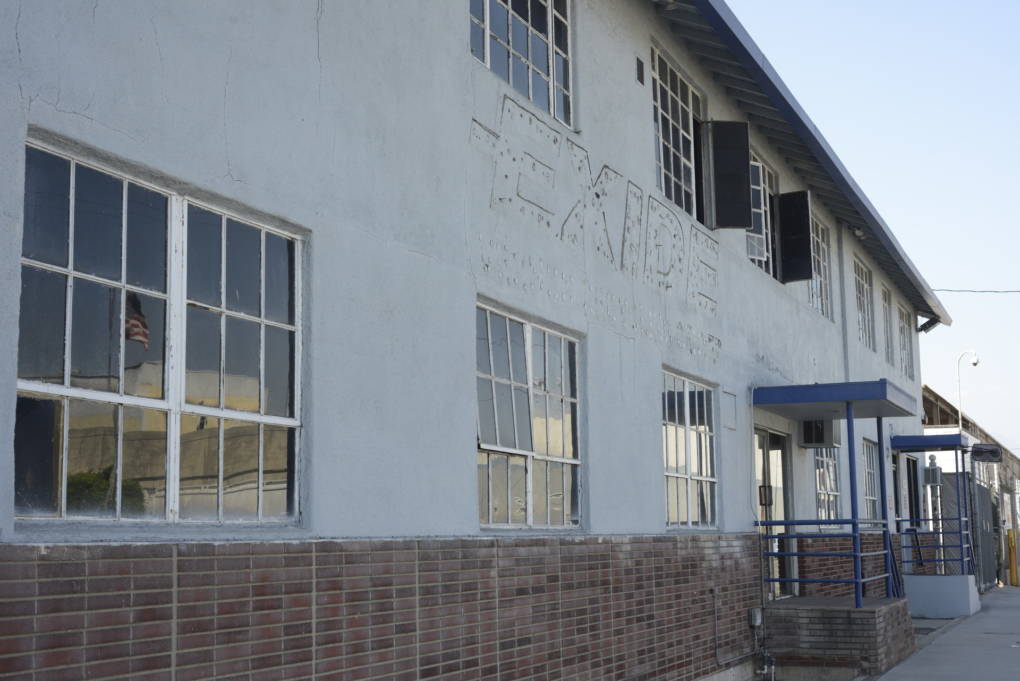
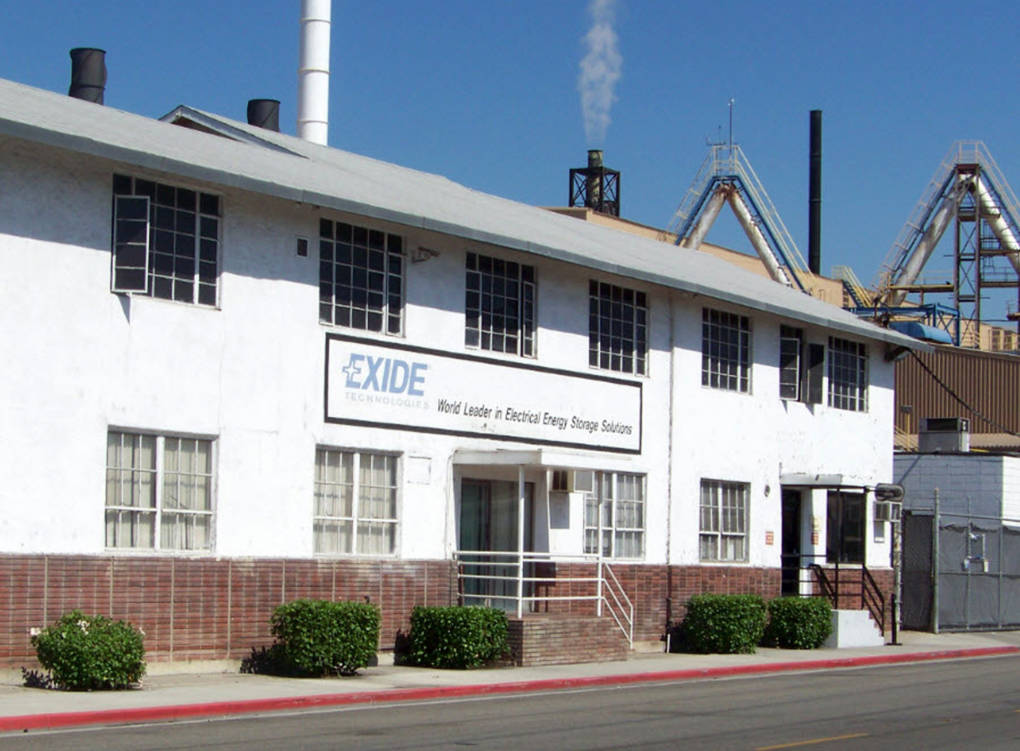
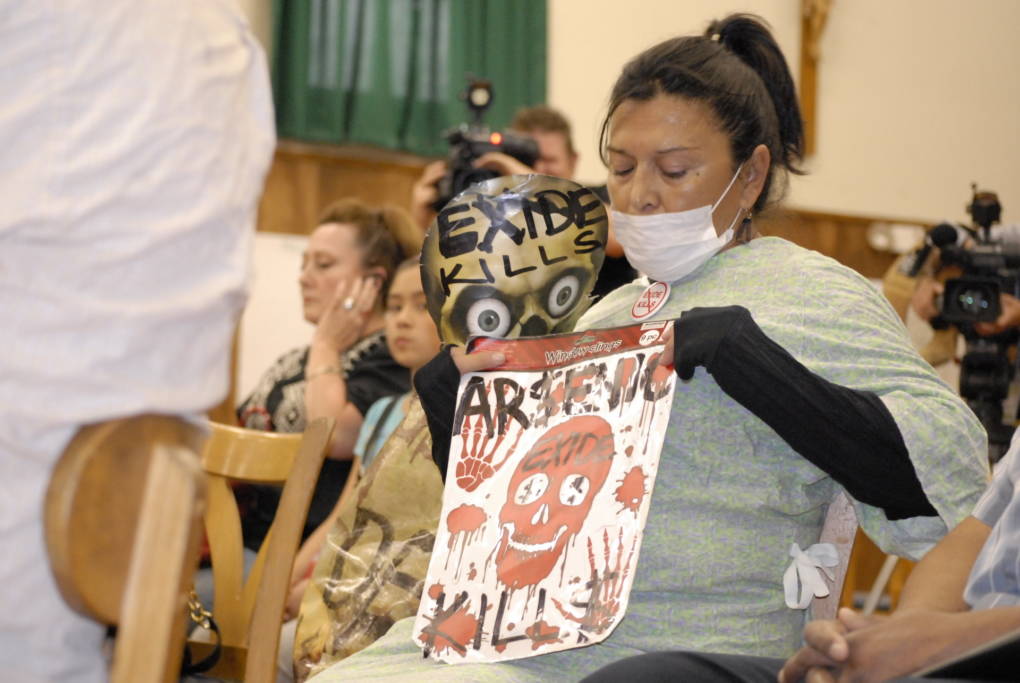
After Decades of Pollution, State Details Cleanup From L.A.’s Exide Battery Plant
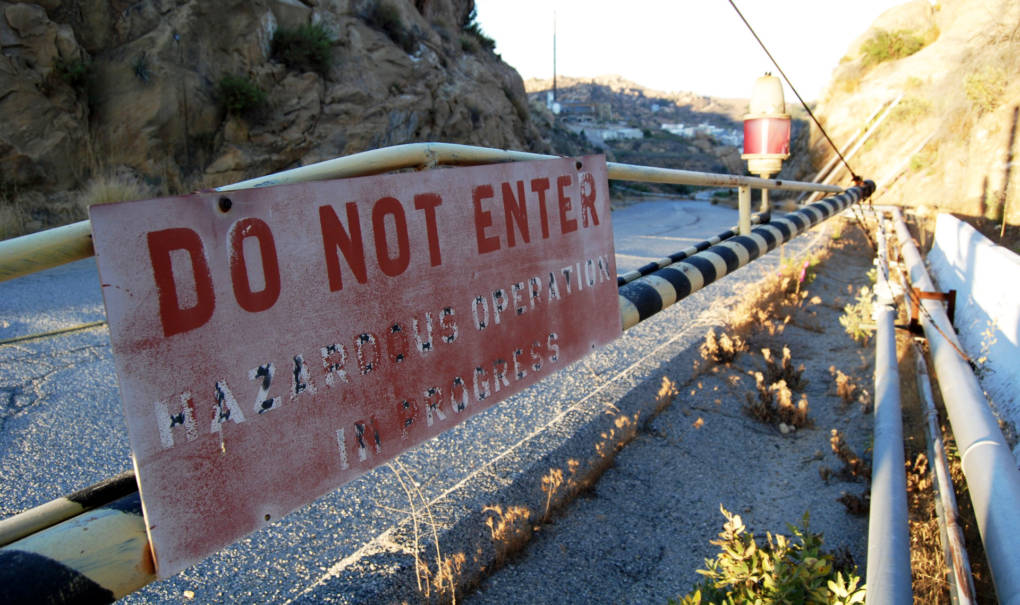
At Contaminated Lab Site, Rigorous Cleanup Standards Again in Question
Is California’s Toxic Waste Regulator Letting Oversight Slide?
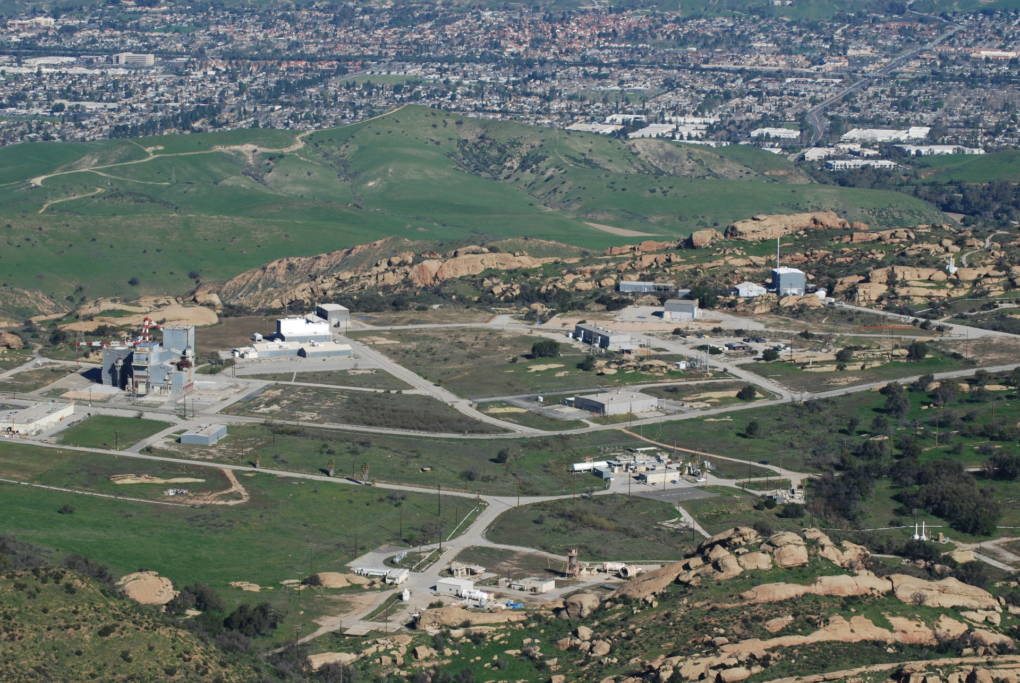
Decades Later, Industry and Regulators Fail to Clean Up Former Rocket Test Site
Decades Later, Industry and Regulators Fail to Clean Up Former Rocket Test Site
Decades of Budget Shortfalls Frustrate L.A. County Coroner
Decades of Budget Shortfalls Frustrate L.A. County Coroner
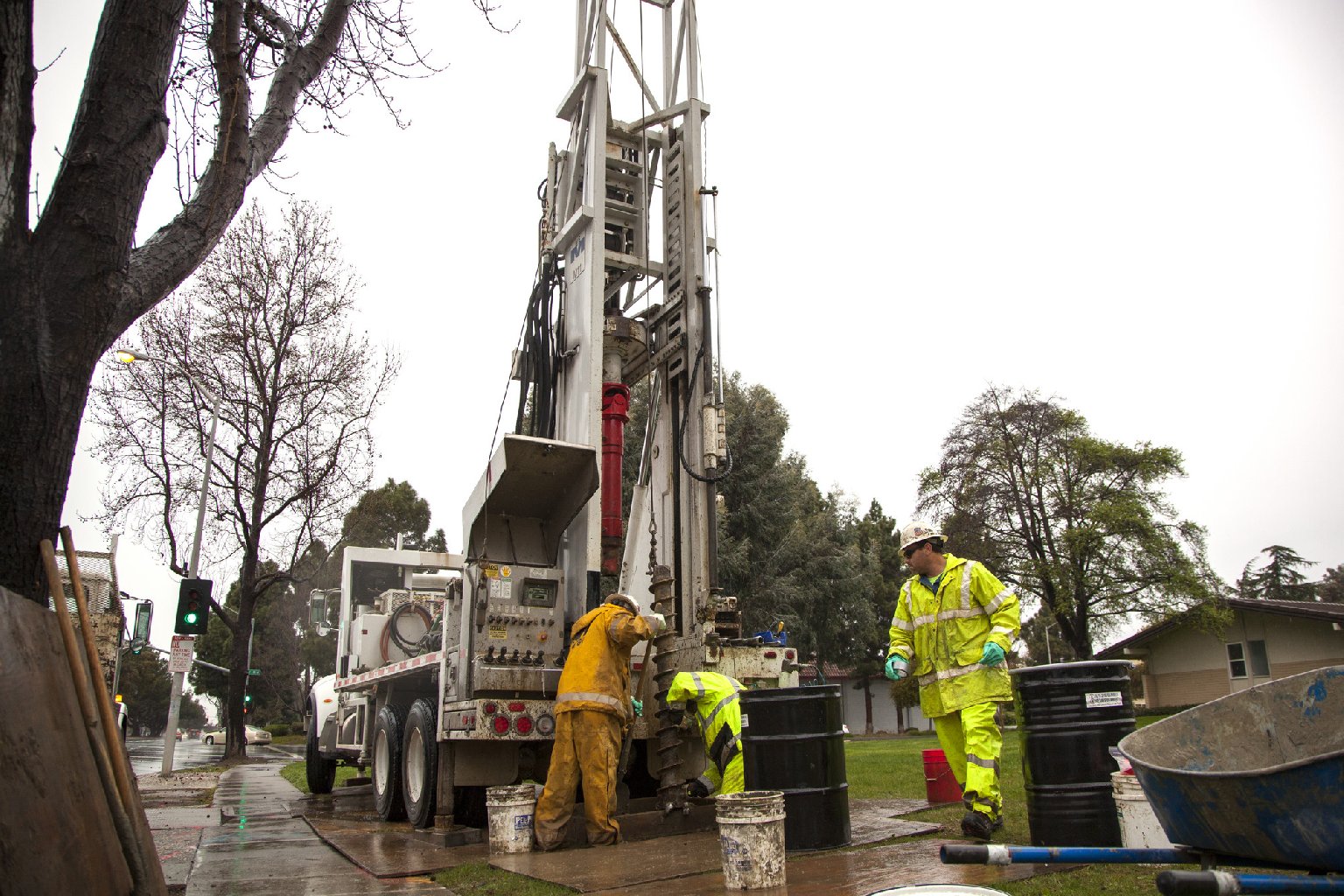
California Fuel Leak Cleanup Rules Leave Lingering Spills to Nature
Player sponsored by
window.__IS_SSR__=true
window.__INITIAL_STATE__={
"attachmentsReducer": {
"audio_0": {
"type": "attachments",
"id": "audio_0",
"imgSizes": {
"kqedFullSize": {
"file": "https://ww2.kqed.org/news/wp-content/themes/KQED-unified/img/audio_bgs/background0.jpg"
}
}
},
"audio_1": {
"type": "attachments",
"id": "audio_1",
"imgSizes": {
"kqedFullSize": {
"file": "https://ww2.kqed.org/news/wp-content/themes/KQED-unified/img/audio_bgs/background1.jpg"
}
}
},
"audio_2": {
"type": "attachments",
"id": "audio_2",
"imgSizes": {
"kqedFullSize": {
"file": "https://ww2.kqed.org/news/wp-content/themes/KQED-unified/img/audio_bgs/background2.jpg"
}
}
},
"audio_3": {
"type": "attachments",
"id": "audio_3",
"imgSizes": {
"kqedFullSize": {
"file": "https://ww2.kqed.org/news/wp-content/themes/KQED-unified/img/audio_bgs/background3.jpg"
}
}
},
"audio_4": {
"type": "attachments",
"id": "audio_4",
"imgSizes": {
"kqedFullSize": {
"file": "https://ww2.kqed.org/news/wp-content/themes/KQED-unified/img/audio_bgs/background4.jpg"
}
}
},
"placeholder": {
"type": "attachments",
"id": "placeholder",
"imgSizes": {
"thumbnail": {
"file": "https://cdn.kqed.org/wp-content/uploads/2024/12/KQED-Default-Image-816638274-2000x1333-1-160x107.jpg",
"width": 160,
"height": 107,
"mimeType": "image/jpeg"
},
"medium": {
"file": "https://cdn.kqed.org/wp-content/uploads/2024/12/KQED-Default-Image-816638274-2000x1333-1-800x533.jpg",
"width": 800,
"height": 533,
"mimeType": "image/jpeg"
},
"medium_large": {
"file": "https://cdn.kqed.org/wp-content/uploads/2024/12/KQED-Default-Image-816638274-2000x1333-1-768x512.jpg",
"width": 768,
"height": 512,
"mimeType": "image/jpeg"
},
"large": {
"file": "https://cdn.kqed.org/wp-content/uploads/2024/12/KQED-Default-Image-816638274-2000x1333-1-1020x680.jpg",
"width": 1020,
"height": 680,
"mimeType": "image/jpeg"
},
"1536x1536": {
"file": "https://cdn.kqed.org/wp-content/uploads/2024/12/KQED-Default-Image-816638274-2000x1333-1-1536x1024.jpg",
"width": 1536,
"height": 1024,
"mimeType": "image/jpeg"
},
"fd-lrg": {
"file": "https://cdn.kqed.org/wp-content/uploads/2024/12/KQED-Default-Image-816638274-2000x1333-1-1536x1024.jpg",
"width": 1536,
"height": 1024,
"mimeType": "image/jpeg"
},
"fd-med": {
"file": "https://cdn.kqed.org/wp-content/uploads/2024/12/KQED-Default-Image-816638274-2000x1333-1-1020x680.jpg",
"width": 1020,
"height": 680,
"mimeType": "image/jpeg"
},
"fd-sm": {
"file": "https://cdn.kqed.org/wp-content/uploads/2024/12/KQED-Default-Image-816638274-2000x1333-1-800x533.jpg",
"width": 800,
"height": 533,
"mimeType": "image/jpeg"
},
"post-thumbnail": {
"file": "https://cdn.kqed.org/wp-content/uploads/2024/12/KQED-Default-Image-816638274-2000x1333-1-672x372.jpg",
"width": 672,
"height": 372,
"mimeType": "image/jpeg"
},
"twentyfourteen-full-width": {
"file": "https://cdn.kqed.org/wp-content/uploads/2024/12/KQED-Default-Image-816638274-2000x1333-1-1038x576.jpg",
"width": 1038,
"height": 576,
"mimeType": "image/jpeg"
},
"xxsmall": {
"file": "https://cdn.kqed.org/wp-content/uploads/2024/12/KQED-Default-Image-816638274-2000x1333-1-160x107.jpg",
"width": 160,
"height": 107,
"mimeType": "image/jpeg"
},
"xsmall": {
"file": "https://cdn.kqed.org/wp-content/uploads/2024/12/KQED-Default-Image-816638274-2000x1333-1-672x372.jpg",
"width": 672,
"height": 372,
"mimeType": "image/jpeg"
},
"small": {
"file": "https://cdn.kqed.org/wp-content/uploads/2024/12/KQED-Default-Image-816638274-2000x1333-1-672x372.jpg",
"width": 672,
"height": 372,
"mimeType": "image/jpeg"
},
"xlarge": {
"file": "https://cdn.kqed.org/wp-content/uploads/2024/12/KQED-Default-Image-816638274-2000x1333-1-1020x680.jpg",
"width": 1020,
"height": 680,
"mimeType": "image/jpeg"
},
"full-width": {
"file": "https://cdn.kqed.org/wp-content/uploads/2024/12/KQED-Default-Image-816638274-2000x1333-1-1920x1280.jpg",
"width": 1920,
"height": 1280,
"mimeType": "image/jpeg"
},
"guest-author-32": {
"file": "https://cdn.kqed.org/wp-content/uploads/2025/01/KQED-Default-Image-816638274-1333x1333-1-160x160.jpg",
"width": 32,
"height": 32,
"mimeType": "image/jpeg"
},
"guest-author-50": {
"file": "https://cdn.kqed.org/wp-content/uploads/2025/01/KQED-Default-Image-816638274-1333x1333-1-160x160.jpg",
"width": 50,
"height": 50,
"mimeType": "image/jpeg"
},
"guest-author-64": {
"file": "https://cdn.kqed.org/wp-content/uploads/2025/01/KQED-Default-Image-816638274-1333x1333-1-160x160.jpg",
"width": 64,
"height": 64,
"mimeType": "image/jpeg"
},
"guest-author-96": {
"file": "https://cdn.kqed.org/wp-content/uploads/2025/01/KQED-Default-Image-816638274-1333x1333-1-160x160.jpg",
"width": 96,
"height": 96,
"mimeType": "image/jpeg"
},
"guest-author-128": {
"file": "https://cdn.kqed.org/wp-content/uploads/2025/01/KQED-Default-Image-816638274-1333x1333-1-160x160.jpg",
"width": 128,
"height": 128,
"mimeType": "image/jpeg"
},
"detail": {
"file": "https://cdn.kqed.org/wp-content/uploads/2025/01/KQED-Default-Image-816638274-1333x1333-1-160x160.jpg",
"width": 160,
"height": 160,
"mimeType": "image/jpeg"
},
"kqedFullSize": {
"file": "https://cdn.kqed.org/wp-content/uploads/2024/12/KQED-Default-Image-816638274-2000x1333-1.jpg",
"width": 2000,
"height": 1333
}
}
},
"news_11613081": {
"type": "attachments",
"id": "news_11613081",
"meta": {
"index": "attachments_1716263798",
"site": "news",
"id": "11613081",
"found": true
},
"parent": 11613080,
"imgSizes": {
"small": {
"file": "https://ww2.kqed.org/app/uploads/sites/10/2017/08/RS26279_ExideMoney1-qut-520x347.jpg",
"width": 520,
"mimeType": "image/jpeg",
"height": 347
},
"twentyfourteen-full-width": {
"file": "https://ww2.kqed.org/app/uploads/sites/10/2017/08/RS26279_ExideMoney1-qut-1038x576.jpg",
"width": 1038,
"mimeType": "image/jpeg",
"height": 576
},
"thumbnail": {
"file": "https://ww2.kqed.org/app/uploads/sites/10/2017/08/RS26279_ExideMoney1-qut-160x107.jpg",
"width": 160,
"mimeType": "image/jpeg",
"height": 107
},
"fd-sm": {
"file": "https://ww2.kqed.org/app/uploads/sites/10/2017/08/RS26279_ExideMoney1-qut-960x641.jpg",
"width": 960,
"mimeType": "image/jpeg",
"height": 641
},
"post-thumbnail": {
"file": "https://ww2.kqed.org/app/uploads/sites/10/2017/08/RS26279_ExideMoney1-qut-672x372.jpg",
"width": 672,
"mimeType": "image/jpeg",
"height": 372
},
"xsmall": {
"file": "https://ww2.kqed.org/app/uploads/sites/10/2017/08/RS26279_ExideMoney1-qut-375x250.jpg",
"width": 375,
"mimeType": "image/jpeg",
"height": 250
},
"kqedFullSize": {
"file": "https://ww2.kqed.org/app/uploads/sites/10/2017/08/RS26279_ExideMoney1-qut.jpg",
"width": 1920,
"height": 1281
},
"large": {
"file": "https://ww2.kqed.org/app/uploads/sites/10/2017/08/RS26279_ExideMoney1-qut-1020x681.jpg",
"width": 1020,
"mimeType": "image/jpeg",
"height": 681
},
"xlarge": {
"file": "https://ww2.kqed.org/app/uploads/sites/10/2017/08/RS26279_ExideMoney1-qut-1180x787.jpg",
"width": 1180,
"mimeType": "image/jpeg",
"height": 787
},
"guest-author-50": {
"file": "https://ww2.kqed.org/app/uploads/sites/10/2017/08/RS26279_ExideMoney1-qut-50x50.jpg",
"width": 50,
"mimeType": "image/jpeg",
"height": 50
},
"guest-author-96": {
"file": "https://ww2.kqed.org/app/uploads/sites/10/2017/08/RS26279_ExideMoney1-qut-96x96.jpg",
"width": 96,
"mimeType": "image/jpeg",
"height": 96
},
"medium": {
"file": "https://ww2.kqed.org/app/uploads/sites/10/2017/08/RS26279_ExideMoney1-qut-800x534.jpg",
"width": 800,
"mimeType": "image/jpeg",
"height": 534
},
"guest-author-64": {
"file": "https://ww2.kqed.org/app/uploads/sites/10/2017/08/RS26279_ExideMoney1-qut-64x64.jpg",
"width": 64,
"mimeType": "image/jpeg",
"height": 64
},
"guest-author-32": {
"file": "https://ww2.kqed.org/app/uploads/sites/10/2017/08/RS26279_ExideMoney1-qut-32x32.jpg",
"width": 32,
"mimeType": "image/jpeg",
"height": 32
},
"fd-lrg": {
"file": "https://ww2.kqed.org/app/uploads/sites/10/2017/08/RS26279_ExideMoney1-qut-1920x1281.jpg",
"width": 1920,
"mimeType": "image/jpeg",
"height": 1281
},
"fd-med": {
"file": "https://ww2.kqed.org/app/uploads/sites/10/2017/08/RS26279_ExideMoney1-qut-1180x787.jpg",
"width": 1180,
"mimeType": "image/jpeg",
"height": 787
},
"full-width": {
"file": "https://ww2.kqed.org/app/uploads/sites/10/2017/08/RS26279_ExideMoney1-qut-1920x1281.jpg",
"width": 1920,
"mimeType": "image/jpeg",
"height": 1281
},
"detail": {
"file": "https://ww2.kqed.org/app/uploads/sites/10/2017/08/RS26279_ExideMoney1-qut-150x150.jpg",
"width": 150,
"mimeType": "image/jpeg",
"height": 150
},
"guest-author-128": {
"file": "https://ww2.kqed.org/app/uploads/sites/10/2017/08/RS26279_ExideMoney1-qut-128x128.jpg",
"width": 128,
"mimeType": "image/jpeg",
"height": 128
},
"xxsmall": {
"file": "https://ww2.kqed.org/app/uploads/sites/10/2017/08/RS26279_ExideMoney1-qut-240x160.jpg",
"width": 240,
"mimeType": "image/jpeg",
"height": 160
}
},
"publishDate": 1503124991,
"modified": 1503534173,
"caption": "The Exide Technologies battery recycling plant in Vernon was closed two years ago and is awaiting demolition.",
"description": null,
"title": "RS26279_ExideMoney1-qut",
"credit": "Chris Richard/KQED",
"status": "inherit",
"isLoading": false,
"fetchFailed": false
},
"news_11559988": {
"type": "attachments",
"id": "news_11559988",
"meta": {
"index": "attachments_1716263798",
"site": "news",
"id": "11559988",
"found": true
},
"parent": 11553538,
"imgSizes": {
"small": {
"file": "https://ww2.kqed.org/app/uploads/sites/10/2017/07/ExidePlant-520x383.jpg",
"width": 520,
"mimeType": "image/jpeg",
"height": 383
},
"twentyfourteen-full-width": {
"file": "https://ww2.kqed.org/app/uploads/sites/10/2017/07/ExidePlant-1038x576.jpg",
"width": 1038,
"mimeType": "image/jpeg",
"height": 576
},
"thumbnail": {
"file": "https://ww2.kqed.org/app/uploads/sites/10/2017/07/ExidePlant-160x118.jpg",
"width": 160,
"mimeType": "image/jpeg",
"height": 118
},
"fd-sm": {
"file": "https://ww2.kqed.org/app/uploads/sites/10/2017/07/ExidePlant-960x707.jpg",
"width": 960,
"mimeType": "image/jpeg",
"height": 707
},
"post-thumbnail": {
"file": "https://ww2.kqed.org/app/uploads/sites/10/2017/07/ExidePlant-672x372.jpg",
"width": 672,
"mimeType": "image/jpeg",
"height": 372
},
"xsmall": {
"file": "https://ww2.kqed.org/app/uploads/sites/10/2017/07/ExidePlant-375x276.jpg",
"width": 375,
"mimeType": "image/jpeg",
"height": 276
},
"kqedFullSize": {
"file": "https://ww2.kqed.org/app/uploads/sites/10/2017/07/ExidePlant.jpg",
"width": 1920,
"height": 1413
},
"large": {
"file": "https://ww2.kqed.org/app/uploads/sites/10/2017/07/ExidePlant-1020x751.jpg",
"width": 1020,
"mimeType": "image/jpeg",
"height": 751
},
"xlarge": {
"file": "https://ww2.kqed.org/app/uploads/sites/10/2017/07/ExidePlant-1180x868.jpg",
"width": 1180,
"mimeType": "image/jpeg",
"height": 868
},
"guest-author-50": {
"file": "https://ww2.kqed.org/app/uploads/sites/10/2017/07/ExidePlant-50x50.jpg",
"width": 50,
"mimeType": "image/jpeg",
"height": 50
},
"guest-author-96": {
"file": "https://ww2.kqed.org/app/uploads/sites/10/2017/07/ExidePlant-96x96.jpg",
"width": 96,
"mimeType": "image/jpeg",
"height": 96
},
"medium": {
"file": "https://ww2.kqed.org/app/uploads/sites/10/2017/07/ExidePlant-800x589.jpg",
"width": 800,
"mimeType": "image/jpeg",
"height": 589
},
"guest-author-64": {
"file": "https://ww2.kqed.org/app/uploads/sites/10/2017/07/ExidePlant-64x64.jpg",
"width": 64,
"mimeType": "image/jpeg",
"height": 64
},
"guest-author-32": {
"file": "https://ww2.kqed.org/app/uploads/sites/10/2017/07/ExidePlant-32x32.jpg",
"width": 32,
"mimeType": "image/jpeg",
"height": 32
},
"fd-lrg": {
"file": "https://ww2.kqed.org/app/uploads/sites/10/2017/07/ExidePlant-1920x1413.jpg",
"width": 1920,
"mimeType": "image/jpeg",
"height": 1413
},
"fd-med": {
"file": "https://ww2.kqed.org/app/uploads/sites/10/2017/07/ExidePlant-1180x868.jpg",
"width": 1180,
"mimeType": "image/jpeg",
"height": 868
},
"full-width": {
"file": "https://ww2.kqed.org/app/uploads/sites/10/2017/07/ExidePlant-1920x1413.jpg",
"width": 1920,
"mimeType": "image/jpeg",
"height": 1413
},
"detail": {
"file": "https://ww2.kqed.org/app/uploads/sites/10/2017/07/ExidePlant-150x150.jpg",
"width": 150,
"mimeType": "image/jpeg",
"height": 150
},
"guest-author-128": {
"file": "https://ww2.kqed.org/app/uploads/sites/10/2017/07/ExidePlant-128x128.jpg",
"width": 128,
"mimeType": "image/jpeg",
"height": 128
},
"xxsmall": {
"file": "https://ww2.kqed.org/app/uploads/sites/10/2017/07/ExidePlant-240x177.jpg",
"width": 240,
"mimeType": "image/jpeg",
"height": 177
}
},
"publishDate": 1499719643,
"modified": 1499727478,
"caption": "The Exide Technologies plant in Vernon, California.",
"description": "The Exide Technologies plant in Vernon.",
"title": "ExidePlant",
"credit": "Chris Richard/KQED",
"status": "inherit",
"isLoading": false,
"fetchFailed": false
},
"news_11459627": {
"type": "attachments",
"id": "news_11459627",
"meta": {
"index": "attachments_1716263798",
"site": "news",
"id": "11459627",
"found": true
},
"parent": 11359487,
"imgSizes": {
"small": {
"file": "https://ww2.kqed.org/app/uploads/sites/10/2017/05/SantaSusanaSign-520x308.jpg",
"width": 520,
"mimeType": "image/jpeg",
"height": 308
},
"twentyfourteen-full-width": {
"file": "https://ww2.kqed.org/app/uploads/sites/10/2017/05/SantaSusanaSign-1038x576.jpg",
"width": 1038,
"mimeType": "image/jpeg",
"height": 576
},
"thumbnail": {
"file": "https://ww2.kqed.org/app/uploads/sites/10/2017/05/SantaSusanaSign-160x95.jpg",
"width": 160,
"mimeType": "image/jpeg",
"height": 95
},
"fd-sm": {
"file": "https://ww2.kqed.org/app/uploads/sites/10/2017/05/SantaSusanaSign-960x570.jpg",
"width": 960,
"mimeType": "image/jpeg",
"height": 570
},
"post-thumbnail": {
"file": "https://ww2.kqed.org/app/uploads/sites/10/2017/05/SantaSusanaSign-672x372.jpg",
"width": 672,
"mimeType": "image/jpeg",
"height": 372
},
"xsmall": {
"file": "https://ww2.kqed.org/app/uploads/sites/10/2017/05/SantaSusanaSign-375x222.jpg",
"width": 375,
"mimeType": "image/jpeg",
"height": 222
},
"kqedFullSize": {
"file": "https://ww2.kqed.org/app/uploads/sites/10/2017/05/SantaSusanaSign.jpg",
"width": 1920,
"height": 1139
},
"large": {
"file": "https://ww2.kqed.org/app/uploads/sites/10/2017/05/SantaSusanaSign-1020x605.jpg",
"width": 1020,
"mimeType": "image/jpeg",
"height": 605
},
"xlarge": {
"file": "https://ww2.kqed.org/app/uploads/sites/10/2017/05/SantaSusanaSign-1180x700.jpg",
"width": 1180,
"mimeType": "image/jpeg",
"height": 700
},
"guest-author-50": {
"file": "https://ww2.kqed.org/app/uploads/sites/10/2017/05/SantaSusanaSign-50x50.jpg",
"width": 50,
"mimeType": "image/jpeg",
"height": 50
},
"guest-author-96": {
"file": "https://ww2.kqed.org/app/uploads/sites/10/2017/05/SantaSusanaSign-96x96.jpg",
"width": 96,
"mimeType": "image/jpeg",
"height": 96
},
"medium": {
"file": "https://ww2.kqed.org/app/uploads/sites/10/2017/05/SantaSusanaSign-800x475.jpg",
"width": 800,
"mimeType": "image/jpeg",
"height": 475
},
"guest-author-64": {
"file": "https://ww2.kqed.org/app/uploads/sites/10/2017/05/SantaSusanaSign-64x64.jpg",
"width": 64,
"mimeType": "image/jpeg",
"height": 64
},
"guest-author-32": {
"file": "https://ww2.kqed.org/app/uploads/sites/10/2017/05/SantaSusanaSign-32x32.jpg",
"width": 32,
"mimeType": "image/jpeg",
"height": 32
},
"fd-lrg": {
"file": "https://ww2.kqed.org/app/uploads/sites/10/2017/05/SantaSusanaSign-1920x1139.jpg",
"width": 1920,
"mimeType": "image/jpeg",
"height": 1139
},
"fd-med": {
"file": "https://ww2.kqed.org/app/uploads/sites/10/2017/05/SantaSusanaSign-1180x700.jpg",
"width": 1180,
"mimeType": "image/jpeg",
"height": 700
},
"full-width": {
"file": "https://ww2.kqed.org/app/uploads/sites/10/2017/05/SantaSusanaSign-1920x1139.jpg",
"width": 1920,
"mimeType": "image/jpeg",
"height": 1139
},
"detail": {
"file": "https://ww2.kqed.org/app/uploads/sites/10/2017/05/SantaSusanaSign-150x150.jpg",
"width": 150,
"mimeType": "image/jpeg",
"height": 150
},
"guest-author-128": {
"file": "https://ww2.kqed.org/app/uploads/sites/10/2017/05/SantaSusanaSign-128x128.jpg",
"width": 128,
"mimeType": "image/jpeg",
"height": 128
},
"xxsmall": {
"file": "https://ww2.kqed.org/app/uploads/sites/10/2017/05/SantaSusanaSign-240x142.jpg",
"width": 240,
"mimeType": "image/jpeg",
"height": 142
}
},
"publishDate": 1494887755,
"modified": 1494887784,
"caption": "Decades of chemical and nuclear contamination pollute the Santa Susana Field Laboratory near Los Angeles.",
"description": "Decades of chemical and nuclear contamination pollute the Santa Susana Field Laboratory near Los Angeles.",
"title": "SantaSusanaSign",
"credit": "William Preston Bowling",
"status": "inherit",
"isLoading": false,
"fetchFailed": false
},
"news_11420112": {
"type": "attachments",
"id": "news_11420112",
"meta": {
"index": "attachments_1716263798",
"site": "news",
"id": "11420112",
"found": true
},
"parent": 11359491,
"imgSizes": {
"small": {
"file": "https://ww2.kqed.org/app/uploads/sites/10/2017/04/RS24643_ExideLead2-qut-520x348.jpg",
"width": 520,
"mimeType": "image/jpeg",
"height": 348
},
"twentyfourteen-full-width": {
"file": "https://ww2.kqed.org/app/uploads/sites/10/2017/04/RS24643_ExideLead2-qut-1038x576.jpg",
"width": 1038,
"mimeType": "image/jpeg",
"height": 576
},
"thumbnail": {
"file": "https://ww2.kqed.org/app/uploads/sites/10/2017/04/RS24643_ExideLead2-qut-160x107.jpg",
"width": 160,
"mimeType": "image/jpeg",
"height": 107
},
"fd-sm": {
"file": "https://ww2.kqed.org/app/uploads/sites/10/2017/04/RS24643_ExideLead2-qut-960x643.jpg",
"width": 960,
"mimeType": "image/jpeg",
"height": 643
},
"post-thumbnail": {
"file": "https://ww2.kqed.org/app/uploads/sites/10/2017/04/RS24643_ExideLead2-qut-672x372.jpg",
"width": 672,
"mimeType": "image/jpeg",
"height": 372
},
"xsmall": {
"file": "https://ww2.kqed.org/app/uploads/sites/10/2017/04/RS24643_ExideLead2-qut-375x251.jpg",
"width": 375,
"mimeType": "image/jpeg",
"height": 251
},
"kqedFullSize": {
"file": "https://ww2.kqed.org/app/uploads/sites/10/2017/04/RS24643_ExideLead2-qut.jpg",
"width": 1920,
"height": 1285
},
"large": {
"file": "https://ww2.kqed.org/app/uploads/sites/10/2017/04/RS24643_ExideLead2-qut-1020x683.jpg",
"width": 1020,
"mimeType": "image/jpeg",
"height": 683
},
"xlarge": {
"file": "https://ww2.kqed.org/app/uploads/sites/10/2017/04/RS24643_ExideLead2-qut-1180x790.jpg",
"width": 1180,
"mimeType": "image/jpeg",
"height": 790
},
"guest-author-50": {
"file": "https://ww2.kqed.org/app/uploads/sites/10/2017/04/RS24643_ExideLead2-qut-50x50.jpg",
"width": 50,
"mimeType": "image/jpeg",
"height": 50
},
"guest-author-96": {
"file": "https://ww2.kqed.org/app/uploads/sites/10/2017/04/RS24643_ExideLead2-qut-96x96.jpg",
"width": 96,
"mimeType": "image/jpeg",
"height": 96
},
"medium": {
"file": "https://ww2.kqed.org/app/uploads/sites/10/2017/04/RS24643_ExideLead2-qut-800x535.jpg",
"width": 800,
"mimeType": "image/jpeg",
"height": 535
},
"guest-author-64": {
"file": "https://ww2.kqed.org/app/uploads/sites/10/2017/04/RS24643_ExideLead2-qut-64x64.jpg",
"width": 64,
"mimeType": "image/jpeg",
"height": 64
},
"guest-author-32": {
"file": "https://ww2.kqed.org/app/uploads/sites/10/2017/04/RS24643_ExideLead2-qut-32x32.jpg",
"width": 32,
"mimeType": "image/jpeg",
"height": 32
},
"fd-lrg": {
"file": "https://ww2.kqed.org/app/uploads/sites/10/2017/04/RS24643_ExideLead2-qut-1920x1285.jpg",
"width": 1920,
"mimeType": "image/jpeg",
"height": 1285
},
"fd-med": {
"file": "https://ww2.kqed.org/app/uploads/sites/10/2017/04/RS24643_ExideLead2-qut-1180x790.jpg",
"width": 1180,
"mimeType": "image/jpeg",
"height": 790
},
"full-width": {
"file": "https://ww2.kqed.org/app/uploads/sites/10/2017/04/RS24643_ExideLead2-qut-1920x1285.jpg",
"width": 1920,
"mimeType": "image/jpeg",
"height": 1285
},
"detail": {
"file": "https://ww2.kqed.org/app/uploads/sites/10/2017/04/RS24643_ExideLead2-qut-150x150.jpg",
"width": 150,
"mimeType": "image/jpeg",
"height": 150
},
"guest-author-128": {
"file": "https://ww2.kqed.org/app/uploads/sites/10/2017/04/RS24643_ExideLead2-qut-128x128.jpg",
"width": 128,
"mimeType": "image/jpeg",
"height": 128
},
"xxsmall": {
"file": "https://ww2.kqed.org/app/uploads/sites/10/2017/04/RS24643_ExideLead2-qut-240x161.jpg",
"width": 240,
"mimeType": "image/jpeg",
"height": 161
}
},
"publishDate": 1492798039,
"modified": 1493068997,
"caption": "Dolores Mejia is a frequent protester at public meetings when DTSC officials describe their cleanup plans for houses surrounding the Exide Technologies recycling plant.",
"description": "Dolores Mejia is a frequent protester at public meetings when DTSC officials describe their cleanup plans for houses surrounding the Exide Technologies recycling plant.",
"title": "RS24643_ExideLead2-qut",
"credit": "Chris Richard/KQED",
"status": "inherit",
"isLoading": false,
"fetchFailed": false
},
"news_11361555": {
"type": "attachments",
"id": "news_11361555",
"meta": {
"index": "attachments_1716263798",
"site": "news",
"id": "11361555",
"found": true
},
"parent": 11359480,
"imgSizes": {
"small": {
"file": "https://ww2.kqed.org/app/uploads/sites/10/2017/03/RS24625_DSC_0026-qut-520x348.jpg",
"width": 520,
"mimeType": "image/jpeg",
"height": 348
},
"twentyfourteen-full-width": {
"file": "https://ww2.kqed.org/app/uploads/sites/10/2017/03/RS24625_DSC_0026-qut-1038x576.jpg",
"width": 1038,
"mimeType": "image/jpeg",
"height": 576
},
"thumbnail": {
"file": "https://ww2.kqed.org/app/uploads/sites/10/2017/03/RS24625_DSC_0026-qut-160x107.jpg",
"width": 160,
"mimeType": "image/jpeg",
"height": 107
},
"fd-sm": {
"file": "https://ww2.kqed.org/app/uploads/sites/10/2017/03/RS24625_DSC_0026-qut-960x643.jpg",
"width": 960,
"mimeType": "image/jpeg",
"height": 643
},
"post-thumbnail": {
"file": "https://ww2.kqed.org/app/uploads/sites/10/2017/03/RS24625_DSC_0026-qut-672x372.jpg",
"width": 672,
"mimeType": "image/jpeg",
"height": 372
},
"xsmall": {
"file": "https://ww2.kqed.org/app/uploads/sites/10/2017/03/RS24625_DSC_0026-qut-375x251.jpg",
"width": 375,
"mimeType": "image/jpeg",
"height": 251
},
"kqedFullSize": {
"file": "https://ww2.kqed.org/app/uploads/sites/10/2017/03/RS24625_DSC_0026-qut.jpg",
"width": 1920,
"height": 1285
},
"large": {
"file": "https://ww2.kqed.org/app/uploads/sites/10/2017/03/RS24625_DSC_0026-qut-1020x683.jpg",
"width": 1020,
"mimeType": "image/jpeg",
"height": 683
},
"xlarge": {
"file": "https://ww2.kqed.org/app/uploads/sites/10/2017/03/RS24625_DSC_0026-qut-1180x790.jpg",
"width": 1180,
"mimeType": "image/jpeg",
"height": 790
},
"guest-author-50": {
"file": "https://ww2.kqed.org/app/uploads/sites/10/2017/03/RS24625_DSC_0026-qut-50x50.jpg",
"width": 50,
"mimeType": "image/jpeg",
"height": 50
},
"guest-author-96": {
"file": "https://ww2.kqed.org/app/uploads/sites/10/2017/03/RS24625_DSC_0026-qut-96x96.jpg",
"width": 96,
"mimeType": "image/jpeg",
"height": 96
},
"medium": {
"file": "https://ww2.kqed.org/app/uploads/sites/10/2017/03/RS24625_DSC_0026-qut-800x535.jpg",
"width": 800,
"mimeType": "image/jpeg",
"height": 535
},
"guest-author-64": {
"file": "https://ww2.kqed.org/app/uploads/sites/10/2017/03/RS24625_DSC_0026-qut-64x64.jpg",
"width": 64,
"mimeType": "image/jpeg",
"height": 64
},
"guest-author-32": {
"file": "https://ww2.kqed.org/app/uploads/sites/10/2017/03/RS24625_DSC_0026-qut-32x32.jpg",
"width": 32,
"mimeType": "image/jpeg",
"height": 32
},
"fd-lrg": {
"file": "https://ww2.kqed.org/app/uploads/sites/10/2017/03/RS24625_DSC_0026-qut-1920x1285.jpg",
"width": 1920,
"mimeType": "image/jpeg",
"height": 1285
},
"fd-med": {
"file": "https://ww2.kqed.org/app/uploads/sites/10/2017/03/RS24625_DSC_0026-qut-1180x790.jpg",
"width": 1180,
"mimeType": "image/jpeg",
"height": 790
},
"full-width": {
"file": "https://ww2.kqed.org/app/uploads/sites/10/2017/03/RS24625_DSC_0026-qut-1920x1285.jpg",
"width": 1920,
"mimeType": "image/jpeg",
"height": 1285
},
"detail": {
"file": "https://ww2.kqed.org/app/uploads/sites/10/2017/03/RS24625_DSC_0026-qut-150x150.jpg",
"width": 150,
"mimeType": "image/jpeg",
"height": 150
},
"guest-author-128": {
"file": "https://ww2.kqed.org/app/uploads/sites/10/2017/03/RS24625_DSC_0026-qut-128x128.jpg",
"width": 128,
"mimeType": "image/jpeg",
"height": 128
},
"xxsmall": {
"file": "https://ww2.kqed.org/app/uploads/sites/10/2017/03/RS24625_DSC_0026-qut-240x161.jpg",
"width": 240,
"mimeType": "image/jpeg",
"height": 161
}
},
"publishDate": 1489644496,
"modified": 1492734749,
"caption": "The Santa Susana Field Laboratory lies in a mountain range between the San Fernando Valley and the city of Simi Valley. This is a view of the part of the laboratory where a nuclear reactor underwent a partial meltdown in 1959. Santa Susana's nuclear and chemical contamination has never been fully cleaned up.",
"description": "The Santa Susana Field Laboratory lies in a mountain range between the San Fernando Valley and the city of Simi Valley. This is a view of the part of the laboratory where a nuclear reactor underwent a partial meltdown in 1954. Santa Susana's nuclear and chemical contamination has never been cleaned up.",
"title": "RS24625_DSC_0026-qut",
"credit": "William Preston Bowling",
"status": "inherit",
"isLoading": false,
"fetchFailed": false
},
"stateofhealth_203260": {
"type": "attachments",
"id": "stateofhealth_203260",
"meta": {
"index": "attachments_1716263798",
"site": "stateofhealth",
"id": "203260",
"found": true
},
"parent": 202919,
"imgSizes": {
"twentyfourteen-full-width": {
"file": "https://ww2.kqed.org/app/uploads/sites/27/2016/06/CoronerFunding-1038x576.jpg",
"width": 1038,
"mimeType": "image/jpeg",
"height": 576
},
"thumbnail": {
"file": "https://ww2.kqed.org/app/uploads/sites/27/2016/06/CoronerFunding-400x268.jpg",
"width": 400,
"mimeType": "image/jpeg",
"height": 268
},
"fd-sm": {
"file": "https://ww2.kqed.org/app/uploads/sites/27/2016/06/CoronerFunding-960x643.jpg",
"width": 960,
"mimeType": "image/jpeg",
"height": 643
},
"post-thumbnail": {
"file": "https://ww2.kqed.org/app/uploads/sites/27/2016/06/CoronerFunding-672x372.jpg",
"width": 672,
"mimeType": "image/jpeg",
"height": 372
},
"kqedFullSize": {
"file": "https://ww2.kqed.org/app/uploads/sites/27/2016/06/CoronerFunding-e1466786665913.jpg",
"width": 1920,
"height": 1285
},
"large": {
"file": "https://ww2.kqed.org/app/uploads/sites/27/2016/06/CoronerFunding-1440x964.jpg",
"width": 1440,
"mimeType": "image/jpeg",
"height": 964
},
"guest-author-50": {
"file": "https://ww2.kqed.org/app/uploads/sites/27/2016/06/CoronerFunding-50x50.jpg",
"width": 50,
"mimeType": "image/jpeg",
"height": 50
},
"guest-author-96": {
"file": "https://ww2.kqed.org/app/uploads/sites/27/2016/06/CoronerFunding-96x96.jpg",
"width": 96,
"mimeType": "image/jpeg",
"height": 96
},
"medium": {
"file": "https://ww2.kqed.org/app/uploads/sites/27/2016/06/CoronerFunding-800x536.jpg",
"width": 800,
"mimeType": "image/jpeg",
"height": 536
},
"guest-author-64": {
"file": "https://ww2.kqed.org/app/uploads/sites/27/2016/06/CoronerFunding-64x64.jpg",
"width": 64,
"mimeType": "image/jpeg",
"height": 64
},
"guest-author-32": {
"file": "https://ww2.kqed.org/app/uploads/sites/27/2016/06/CoronerFunding-32x32.jpg",
"width": 32,
"mimeType": "image/jpeg",
"height": 32
},
"jmtc-small-thumb": {
"file": "https://ww2.kqed.org/app/uploads/sites/27/2016/06/CoronerFunding-280x150.jpg",
"width": 280,
"mimeType": "image/jpeg",
"height": 150
},
"fd-lrg": {
"file": "https://ww2.kqed.org/app/uploads/sites/27/2016/06/CoronerFunding-1920x1285.jpg",
"width": 1920,
"mimeType": "image/jpeg",
"height": 1285
},
"fd-med": {
"file": "https://ww2.kqed.org/app/uploads/sites/27/2016/06/CoronerFunding-1180x790.jpg",
"width": 1180,
"mimeType": "image/jpeg",
"height": 790
},
"detail": {
"file": "https://ww2.kqed.org/app/uploads/sites/27/2016/06/CoronerFunding-150x150.jpg",
"width": 150,
"mimeType": "image/jpeg",
"height": 150
},
"medium_large": {
"file": "https://ww2.kqed.org/app/uploads/sites/27/2016/06/CoronerFunding-768x514.jpg",
"width": 768,
"mimeType": "image/jpeg",
"height": 514
},
"guest-author-128": {
"file": "https://ww2.kqed.org/app/uploads/sites/27/2016/06/CoronerFunding-128x128.jpg",
"width": 128,
"mimeType": "image/jpeg",
"height": 128
}
},
"publishDate": 1466786644,
"modified": 1467406651,
"caption": "Boxes filled with containers of human blood await toxicological examination in a laboratory at the Los Angeles County Coroner-Medical Examiner’s office. According to former coroner Mark Fajardo, inadequate funding and staffing for his department led to a nine-month backlog on such tests. In April, Fajardo quit in protest. ",
"description": "Boxes filled with containers of human blood await toxicological examination in a laboratory at the Los Angeles County Coroner-Medical Examiner’s office. According to former coroner Mark Fajardo, inadequate funding and staffing for his department led to a nine-month backlog on such tests. In April, Fajardo quit in protest. ",
"title": "CoronerFunding",
"credit": "Chris Richard",
"status": "inherit",
"isLoading": false,
"fetchFailed": false
},
"news_128348": {
"type": "attachments",
"id": "news_128348",
"meta": {
"index": "attachments_1716263798",
"site": "news",
"id": "128348",
"found": true
},
"parent": 127354,
"imgSizes": {
"kqedFullSize": {
"file": "https://ww2.kqed.org/app/uploads/sites/10/2014/03/RS9008_IMG_5580-copy-lpr.jpg",
"width": 1536,
"height": 1024
}
},
"publishDate": 1393973964,
"modified": 1393973964,
"caption": "Alameda County Water District employees dig a groundwater monitoring well on the property of First Presbyterian Church in Newark. (Mark Andrew Boyer/KQED)",
"description": null,
"title": "RS9008_IMG_5580 copy-lpr",
"credit": null,
"status": "inherit",
"isLoading": false,
"fetchFailed": false
}
},
"audioPlayerReducer": {
"postId": "stream_live",
"isPaused": true,
"isPlaying": false,
"pfsActive": false,
"pledgeModalIsOpen": true,
"playerDrawerIsOpen": false,
"liveAudioPlayStartedAt": 0,
"liveAudioPlayContext": ""
},
"authorsReducer": {
"chrisrichard": {
"type": "authors",
"id": "219",
"meta": {
"index": "authors_1716337520",
"id": "219",
"found": true
},
"name": "Chris Richard",
"firstName": "Chris",
"lastName": "Richard",
"slug": "chrisrichard",
"email": "chris@chrisrichard.org",
"display_author_email": false,
"staff_mastheads": [],
"title": null,
"bio": null,
"avatar": "https://secure.gravatar.com/avatar/0a5aab2628cba861c36f5f2142bf3e9c?s=600&d=blank&r=g",
"twitter": null,
"facebook": null,
"instagram": null,
"linkedin": null,
"sites": [
{
"site": "news",
"roles": [
"author"
]
},
{
"site": "stateofhealth",
"roles": [
"author"
]
}
],
"headData": {
"title": "Chris Richard | KQED",
"description": null,
"ogImgSrc": "https://secure.gravatar.com/avatar/0a5aab2628cba861c36f5f2142bf3e9c?s=600&d=blank&r=g",
"twImgSrc": "https://secure.gravatar.com/avatar/0a5aab2628cba861c36f5f2142bf3e9c?s=600&d=blank&r=g"
},
"isLoading": false,
"link": "/author/chrisrichard"
}
},
"pagesReducer": {
"author_chrisrichard": {
"type": "pages",
"id": "219",
"meta": {
"index": "authors_1716337520",
"id": "219",
"score": 6.799427,
"site": "authors"
},
"name": "Chris Richard",
"firstName": "Chris",
"lastName": "Richard",
"slug": "chrisrichard",
"email": "chris@chrisrichard.org",
"display_author_email": false,
"staff_mastheads": [],
"title": null,
"bio": null,
"avatar": "https://secure.gravatar.com/avatar/0a5aab2628cba861c36f5f2142bf3e9c?s=600&d=blank&r=g",
"twitter": null,
"facebook": null,
"instagram": null,
"linkedin": null,
"sites": [
{
"site": "news",
"roles": [
"author"
]
},
{
"site": "stateofhealth",
"roles": [
"author"
]
}
],
"headData": {
"title": "Chris Richard | KQED",
"description": null,
"ogImgSrc": "https://secure.gravatar.com/avatar/0a5aab2628cba861c36f5f2142bf3e9c?s=600&d=blank&r=g",
"twImgSrc": "https://secure.gravatar.com/avatar/0a5aab2628cba861c36f5f2142bf3e9c?s=600&d=blank&r=g"
},
"isLoading": false,
"hasAllInfo": true,
"blocks": [
{
"blockName": "kqed/staff-member",
"attrs": {
"author": {
"type": "authors",
"id": "219",
"meta": {
"index": "authors_1716337520",
"id": "219",
"score": 6.799427
},
"name": "Chris Richard",
"firstName": "Chris",
"lastName": "Richard",
"slug": "chrisrichard",
"email": "chris@chrisrichard.org",
"display_author_email": false,
"staff_mastheads": "[Circular]",
"title": null,
"bio": null,
"avatar": "https://secure.gravatar.com/avatar/0a5aab2628cba861c36f5f2142bf3e9c?s=600&d=blank&r=g",
"twitter": null,
"facebook": null,
"instagram": null,
"linkedin": null,
"sites": "[Circular]",
"headData": {
"title": "Chris Richard | KQED",
"description": null,
"ogImgSrc": "https://secure.gravatar.com/avatar/0a5aab2628cba861c36f5f2142bf3e9c?s=600&d=blank&r=g",
"twImgSrc": "https://secure.gravatar.com/avatar/0a5aab2628cba861c36f5f2142bf3e9c?s=600&d=blank&r=g"
},
"isLoading": false,
"link": "/author/chrisrichard",
"hasAllInfo": true
}
}
},
{
"blockName": "kqed/post-list",
"attrs": {
"query": "posts?author=219&authorName=Chris Richard",
"title": "By Chris Richard",
"layout": "cardArticle2",
"className": "wp-block--nomargintop",
"seeMore": true
}
}
]
}
},
"pfsSessionReducer": {},
"postsReducer": {
"stream_live": {
"type": "live",
"id": "stream_live",
"audioUrl": "https://streams.kqed.org/kqedradio",
"title": "Live Stream",
"excerpt": "Live Stream information currently unavailable.",
"link": "/radio",
"featImg": "",
"label": {
"name": "KQED Live",
"link": "/"
}
},
"stream_kqedNewscast": {
"type": "posts",
"id": "stream_kqedNewscast",
"audioUrl": "https://www.kqed.org/.stream/anon/radio/RDnews/newscast.mp3?_=1",
"title": "KQED Newscast",
"featImg": "",
"label": {
"name": "88.5 FM",
"link": "/"
}
},
"news_11613080": {
"type": "posts",
"id": "news_11613080",
"meta": {
"index": "posts_1716263798",
"site": "news",
"id": "11613080",
"score": null,
"sort": [
1503576001000
]
},
"guestAuthors": [],
"slug": "state-aims-to-close-funding-gap-for-lead-contamination-cleanup-neighbors-skeptical",
"title": "State Aims to Close Funding Gap for Lead Contamination Cleanup, Neighbors Skeptical",
"publishDate": 1503576001,
"format": "standard",
"headTitle": "State Aims to Close Funding Gap for Lead Contamination Cleanup, Neighbors Skeptical | KQED",
"labelTerm": {
"term": 72,
"site": "news"
},
"content": "\u003cp>In some ways, the neighborhood around the \u003ca href=\"https://www.exide.com\" target=\"_blank\" rel=\"noopener noreferrer\">Exide Technologies\u003c/a> battery recycling plant in Vernon doesn’t seem to have changed much in the two years since Exide \u003ca href=\"http://www.latimes.com/local/california/la-me-exide-sg-storygallery.html\" target=\"_blank\" rel=\"noopener noreferrer\">shut down\u003c/a> operations there.\u003c/p>\n\u003cp>Trucks keep rumbling by. The summer sun bears down on the treeless street, sending up waves of heat from the asphalt. And once again, each faint puff of wind carries a bolus of foul air, the stench of decaying flesh from a rendering plant down the block, solid and heavy, like blows to the stomach.\u003c/p>\n\u003cp>But even when the Exide plant was still operating, often the only sign of the industrial work behind the gates was the occasional employee crossing the street between buildings, or the very thin, very pale streams of fumes from the chimneys.\u003c/p>\n\u003caside class=\"pullquote alignright\">‘It just kept falling on us and falling on us. We didn’t know much about it. Then suddenly it was a real big problem, and I haven’t heard yet how they’re going to make everybody safe.’\u003ccite>Joaquin Romero\u003c/cite>\u003c/aside>\n\u003cp>Just before it closed, the Exide plant — several miles southeast of downtown Los Angeles — was recycling as many as 40,000 car batteries a day. Authorities believe it showered the neighborhood with lead dust for decades.\u003c/p>\n\u003cp>Today there are a few outward signs that the factory infrastructure is going away.\u003c/p>\n\u003cp>[ad fullwidth]\u003c/p>\n\u003cp>The “God Bless America” poster has vanished from a factory wall, as have the company’s navy-blue Exide logos.\u003c/p>\n\u003cp>The state Department of Toxic Substances Control, which regulates hazardous waste sites, \u003ca href=\"https://www.dtsc.ca.gov/HazardousWaste/Projects/upload/Exide_Notice_Final-EIR.pdf\" target=\"_blank\" rel=\"noopener noreferrer\">has approved a conceptual plan\u003c/a> for demolishing the plant and \u003ca href=\"https://www.youtube.com/watch?v=3Mip1bobZ0I&feature=youtu.be\" target=\"_blank\" rel=\"noopener noreferrer\">is studying procedures\u003c/a> for doing that without further polluting the surrounding area. In July, the department \u003ca href=\"https://www.documentcloud.org/documents/3890581-7-6-2017-Cleanup-Plan-Exec-Summary-English-Final.html#document/p4/a361487\" target=\"_blank\" rel=\"noopener noreferrer\">issued a plan\u003c/a> for cleaning up about a quarter of the most contaminated homes nearby.\u003c/p>\n\u003cp>But some people living near the plant fear the cleanup could drag on indefinitely or peter out with the job incomplete.\u003c/p>\n\u003cp>“With some things, you take one look or you get one little sniff and you know it’s bad news. You know to stay away from it or to complain,” said Joaquin Romero, watching his son at a park about 2 miles from the battery recycling plant.\u003cbr>\n[contextly_sidebar id=”unZ8JwbXIaUFD6MSMVa6oHzQxoEE88Rm”]\u003cbr>\nRomero added: “With Exide, it’s not like the lead stank or anything. It just kept falling on us and falling on us. We didn’t know much about it. Then suddenly it was a real big problem, and I haven’t heard yet how they’re going to make everybody safe.”\u003c/p>\n\u003cp>In March 2015, as public protests mounted against the battery recycler for allegedly poisoning its neighbors with lead and arsenic, the company struck a deal with the federal Department of Justice \u003ca href=\"https://www.documentcloud.org/documents/2804657-Exide-Agreement.html#document/p1/a289739\" target=\"_blank\" rel=\"noopener noreferrer\">to avoid felony prosecution\u003c/a> for illegally storing and transporting lead and acid.\u003c/p>\n\u003cp>Lead is a potent \u003ca href=\"http://www.who.int/mediacentre/factsheets/fs379/en/\" target=\"_blank\" rel=\"noopener noreferrer\">neurotoxin\u003c/a>, especially dangerous to \u003ca href=\"https://www.ncbi.nlm.nih.gov/pubmed/11083332\" target=\"_blank\" rel=\"noopener noreferrer\">children\u003c/a>, pregnant women and the elderly. \u003ca href=\"https://www.cdc.gov/niosh/topics/lead/health.html\" target=\"_blank\" rel=\"noopener noreferrer\">Studies\u003c/a> also have \u003ca href=\"https://www.urmc.rochester.edu/news/story/1212/study-links-lead-exposure-to-brain-cancer-in-adults.aspx\">linked\u003c/a> lead exposure to cancer.\u003c/p>\n\u003cp>An estimated 10,000 homes are contaminated. So far, the state has only come up with enough \u003ca href=\"https://www.documentcloud.org/documents/3935511-EIR-Summary.html#document/p6/a369613\" target=\"_blank\" rel=\"noopener noreferrer\">to clean up 2,500\u003c/a>.\u003c/p>\n\u003cfigure id=\"attachment_11613090\" class=\"wp-caption alignright\" style=\"max-width: 1920px\">\u003cimg loading=\"lazy\" decoding=\"async\" class=\"wp-image-11613090 size-full\" src=\"https://ww2.kqed.org/news/wp-content/uploads/sites/10/2017/08/RS26280_BarbaraLee-qut.jpg\" alt=\"\" width=\"1920\" height=\"1281\" srcset=\"https://cdn.kqed.org/wp-content/uploads/sites/10/2017/08/RS26280_BarbaraLee-qut.jpg 1920w, https://cdn.kqed.org/wp-content/uploads/sites/10/2017/08/RS26280_BarbaraLee-qut-160x107.jpg 160w, https://cdn.kqed.org/wp-content/uploads/sites/10/2017/08/RS26280_BarbaraLee-qut-800x534.jpg 800w, https://cdn.kqed.org/wp-content/uploads/sites/10/2017/08/RS26280_BarbaraLee-qut-1020x681.jpg 1020w, https://cdn.kqed.org/wp-content/uploads/sites/10/2017/08/RS26280_BarbaraLee-qut-1180x787.jpg 1180w, https://cdn.kqed.org/wp-content/uploads/sites/10/2017/08/RS26280_BarbaraLee-qut-960x641.jpg 960w, https://cdn.kqed.org/wp-content/uploads/sites/10/2017/08/RS26280_BarbaraLee-qut-240x160.jpg 240w, https://cdn.kqed.org/wp-content/uploads/sites/10/2017/08/RS26280_BarbaraLee-qut-375x250.jpg 375w, https://cdn.kqed.org/wp-content/uploads/sites/10/2017/08/RS26280_BarbaraLee-qut-520x347.jpg 520w\" sizes=\"(max-width: 1920px) 100vw, 1920px\">\u003cfigcaption class=\"wp-caption-text\">Barbara Lee, director of the state Department of Toxic Substances Control. \u003ccite>(Chris Richard/KQED)\u003c/cite>\u003c/figcaption>\u003c/figure>\n\u003cp>At a recent community meeting, state Department of Toxic Substances Control Director \u003ca href=\"http://www.dtsc.ca.gov/InformationResources/Exec/BarbaraLee.cfm\" target=\"_blank\" rel=\"noopener noreferrer\">Barbara Lee\u003c/a> told Exide neighbors that her department is doing the best it can to clean up the contamination with the money it has.\u003c/p>\n\u003cp>“I’m not going to tell you that the other properties aren’t contaminated,” she said. “But I am going to tell you that in this phase of the cleanup, we are cleaning up all of the properties that have the highest levels of lead.”\u003c/p>\n\u003cp>She said it’s just a start.\u003c/p>\n\u003cp>“Exide is obligated under the law to clean up all its contamination and we are going to make sure they do that,” she said.\u003c/p>\n\u003cp>Teresa Marquez wonders, with a great deal of skepticism, how far that pledge will go.\u003c/p>\n\u003cp>Marquez lives on a leafy street in Boyle Heights, outside the radius that the department has drawn for its cleanup program. She says she built her house for family, a place where her grandchildren could come play in the dirt.\u003c/p>\n\u003cp>But Marquez says she can’t risk having her grandchildren play in her yard after a lead survey found high levels of contamination.\u003c/p>\n\u003cp>“Do you know how much that hurts me?” she said. “It hurts.”\u003c/p>\n\u003cfigure id=\"attachment_11613099\" class=\"wp-caption aligncenter\" style=\"max-width: 1920px\">\u003cimg loading=\"lazy\" decoding=\"async\" class=\"wp-image-11613099 size-full\" src=\"https://ww2.kqed.org/news/wp-content/uploads/sites/10/2017/08/RS26282_TeresaMarquez-qut.jpg\" alt=\"\" width=\"1920\" height=\"1281\" srcset=\"https://cdn.kqed.org/wp-content/uploads/sites/10/2017/08/RS26282_TeresaMarquez-qut.jpg 1920w, https://cdn.kqed.org/wp-content/uploads/sites/10/2017/08/RS26282_TeresaMarquez-qut-160x107.jpg 160w, https://cdn.kqed.org/wp-content/uploads/sites/10/2017/08/RS26282_TeresaMarquez-qut-800x534.jpg 800w, https://cdn.kqed.org/wp-content/uploads/sites/10/2017/08/RS26282_TeresaMarquez-qut-1020x681.jpg 1020w, https://cdn.kqed.org/wp-content/uploads/sites/10/2017/08/RS26282_TeresaMarquez-qut-1180x787.jpg 1180w, https://cdn.kqed.org/wp-content/uploads/sites/10/2017/08/RS26282_TeresaMarquez-qut-960x641.jpg 960w, https://cdn.kqed.org/wp-content/uploads/sites/10/2017/08/RS26282_TeresaMarquez-qut-240x160.jpg 240w, https://cdn.kqed.org/wp-content/uploads/sites/10/2017/08/RS26282_TeresaMarquez-qut-375x250.jpg 375w, https://cdn.kqed.org/wp-content/uploads/sites/10/2017/08/RS26282_TeresaMarquez-qut-520x347.jpg 520w\" sizes=\"(max-width: 1920px) 100vw, 1920px\">\u003cfigcaption class=\"wp-caption-text\">Teresa Marquez says she built her home to welcome family. When a study turned up high lead levels on her property, Marquez said she felt compelled to keep her grandchildren from playing in the yard. \u003ccite>(Chris Richard/KQED)\u003c/cite>\u003c/figcaption>\u003c/figure>\n\u003cp>Marquez serves on a \u003ca href=\"http://www.dtsc.ca.gov/HazardousWaste/Projects/ExideAdvisory.cfm\" target=\"_blank\" rel=\"noopener noreferrer\">neighborhood group\u003c/a> that advises the Department of Toxic Substances Control on the cleanup. She is campaigning to nearly triple the size of region that the department has identified as contaminated by Exide.\u003c/p>\n\u003cp>“This is a family neighborhood,” she said. “The children here all face the same risks.”\u003c/p>\n\u003cp>But it could be at least two years before the department can press Exide on the cleanup area it has now.\u003c/p>\n\u003cp>When state officials ordered the battery recycler closed, \u003ca href=\"https://www.documentcloud.org/documents/2804657-Exide-Agreement.html#document/p198/a369615\" target=\"_blank\" rel=\"noopener noreferrer\">it gave Exide until 2019\u003c/a> to identify the extent of the contamination and make a cleanup plan. It also ordered the company to pay into a remediation fund.\u003c/p>\n\u003cp>Los Angeles County Supervisor Hilda Solis, who represents parts of the contaminated area, believes the full cleanup could cost at least $500 million.\u003c/p>\n\u003cp>So far, the state has required Exide to put up only \u003ca href=\"https://www.documentcloud.org/documents/3935515-Exide-FCI2014-StipOrder112114.html#document/p7/a369614\" target=\"_blank\" rel=\"noopener noreferrer\">$9 million\u003c/a>. When Exide shut down, the department didn’t know how widespread the contamination was.\u003c/p>\n\u003cfigure id=\"attachment_11613102\" class=\"wp-caption aligncenter\" style=\"max-width: 800px\">\u003cimg loading=\"lazy\" decoding=\"async\" class=\"wp-image-11613102 size-medium\" src=\"https://ww2.kqed.org/news/wp-content/uploads/sites/10/2017/08/RS26283_ExideChild-qut-800x534.jpg\" alt=\"\" width=\"800\" height=\"534\" srcset=\"https://cdn.kqed.org/wp-content/uploads/sites/10/2017/08/RS26283_ExideChild-qut-800x534.jpg 800w, https://cdn.kqed.org/wp-content/uploads/sites/10/2017/08/RS26283_ExideChild-qut-160x107.jpg 160w, https://cdn.kqed.org/wp-content/uploads/sites/10/2017/08/RS26283_ExideChild-qut-1020x681.jpg 1020w, https://cdn.kqed.org/wp-content/uploads/sites/10/2017/08/RS26283_ExideChild-qut.jpg 1920w, https://cdn.kqed.org/wp-content/uploads/sites/10/2017/08/RS26283_ExideChild-qut-1180x787.jpg 1180w, https://cdn.kqed.org/wp-content/uploads/sites/10/2017/08/RS26283_ExideChild-qut-960x641.jpg 960w, https://cdn.kqed.org/wp-content/uploads/sites/10/2017/08/RS26283_ExideChild-qut-240x160.jpg 240w, https://cdn.kqed.org/wp-content/uploads/sites/10/2017/08/RS26283_ExideChild-qut-375x250.jpg 375w, https://cdn.kqed.org/wp-content/uploads/sites/10/2017/08/RS26283_ExideChild-qut-520x347.jpg 520w\" sizes=\"(max-width: 800px) 100vw, 800px\">\u003cfigcaption class=\"wp-caption-text\">Jaedyn Mercado, 8, plays on a trampoline in Boyle Heights, just outside the area the state Department of Toxic Substances Control has designated as likely to have been contaminated with lead dust from the Exide Technologies battery recycling plant. Activists say the department’s contamination map is too small, and children outside its boundaries also are in danger of lead poisoning. \u003ccite>(Chris Richard/KQED)\u003c/cite>\u003c/figcaption>\u003c/figure>\n\u003cp>“Now that we have much more information — you know, we have tens of thousands of sampling results — we are pursuing Exide for a much greater cleanup,” said the department’s \u003ca href=\"http://www.dtsc.ca.gov/InformationResources/Exec/MohsenNazemi.cfm\" target=\"_blank\" rel=\"noopener noreferrer\">Mohsen Nazemi\u003c/a>, who is overseeing the cleanup.\u003c/p>\n\u003cp>Nazemi says there may be a legal fight. The company has repeatedly challenged claims that it is primarily responsible for the lead contamination. Exide has \u003ca href=\"https://www.documentcloud.org/documents/3935521-ExideLawsuitAgainstPublicHealth-April2016.html\" target=\"_blank\" rel=\"noopener noreferrer\">sued the state\u003c/a> for data it claims may point to other polluters.\u003c/p>\n\u003cp>In a \u003ca href=\"https://www.documentcloud.org/documents/3935519-Exide-Technologies-Response-Aug-18-2017-002.html#document/p1/a369617\" target=\"_blank\" rel=\"noopener noreferrer\">written response to questions\u003c/a>, Exide spokeswoman Melissa Floyd points out that the region has a long history of exposure to leaded gasoline and lead-based paint. The company did not answer questions about what it considers a fair payment to be.\u003c/p>\n\u003cp>Nazemi said in order to make an effective argument in court, the department must be able to demonstrate that it has considered all possible sources of pollution. The department will assess cleanup costs to any other alleged polluters identified besides Exide, Nazemi said.\u003c/p>\n\u003cp>For years, courts have applied a principle called “joint and several liability” to such cases, said \u003ca href=\"https://law.ucla.edu/faculty/faculty-profiles/sean-b-hecht/\" target=\"_blank\" rel=\"noopener noreferrer\">Sean Hecht\u003c/a>, co-director of the Emmett Institute on Climate Change and the Environment at the UCLA School of Law. It’s a little like the reasoning that can find a getaway car driver criminally liable for violence during a bank robbery.\u003c/p>\n\u003cfigure id=\"attachment_11613094\" class=\"wp-caption alignright\" style=\"max-width: 1920px\">\u003cimg loading=\"lazy\" decoding=\"async\" class=\"wp-image-11613094 size-full\" src=\"https://ww2.kqed.org/news/wp-content/uploads/sites/10/2017/08/RS26281_MohsenNazemi-qut.jpg\" alt=\"\" width=\"1920\" height=\"1281\" srcset=\"https://cdn.kqed.org/wp-content/uploads/sites/10/2017/08/RS26281_MohsenNazemi-qut.jpg 1920w, https://cdn.kqed.org/wp-content/uploads/sites/10/2017/08/RS26281_MohsenNazemi-qut-160x107.jpg 160w, https://cdn.kqed.org/wp-content/uploads/sites/10/2017/08/RS26281_MohsenNazemi-qut-800x534.jpg 800w, https://cdn.kqed.org/wp-content/uploads/sites/10/2017/08/RS26281_MohsenNazemi-qut-1020x681.jpg 1020w, https://cdn.kqed.org/wp-content/uploads/sites/10/2017/08/RS26281_MohsenNazemi-qut-1180x787.jpg 1180w, https://cdn.kqed.org/wp-content/uploads/sites/10/2017/08/RS26281_MohsenNazemi-qut-960x641.jpg 960w, https://cdn.kqed.org/wp-content/uploads/sites/10/2017/08/RS26281_MohsenNazemi-qut-240x160.jpg 240w, https://cdn.kqed.org/wp-content/uploads/sites/10/2017/08/RS26281_MohsenNazemi-qut-375x250.jpg 375w, https://cdn.kqed.org/wp-content/uploads/sites/10/2017/08/RS26281_MohsenNazemi-qut-520x347.jpg 520w\" sizes=\"(max-width: 1920px) 100vw, 1920px\">\u003cfigcaption class=\"wp-caption-text\">Mohsen Nazemi, who is overseeing the state Department of Toxic Substances Control’s cleanup program near the Exide Technologies battery recycling plant, listens to a question at a public presentation on the cleanup. Nazemi is a deputy director with the department. \u003ccite>(Chris Richard/KQED)\u003c/cite>\u003c/figcaption>\u003c/figure>\n\u003cp>Courts have been prepared to hold polluters responsible for cleanups even when they created only part of the mess. But Hecht says in several recent cases, those penalties have been reduced.\u003c/p>\n\u003cp>In such cases, “[Plaintiffs are] taking a risk that ultimately an appeals court might decide to shave off the liability and only hold the defendant responsible for some much smaller percentage of the contamination, and so typically there will be a settlement,” he said.\u003c/p>\n\u003cp>\u003ca href=\"https://www.nrdc.org/experts/david-pettit\" target=\"_blank\" rel=\"noopener noreferrer\">David Pettit\u003c/a>, a senior attorney at the Natural Resources Defense Council, said the Department of Toxic Substances Control’s record of lax enforcement could undermine its legal strategy.\u003c/p>\n\u003cp>The department \u003ca href=\"https://www.documentcloud.org/documents/2492399-exides-interim-permit.html#document/p1/a256852\" target=\"_blank\" rel=\"noopener noreferrer\">let the Exide plant operate\u003c/a> without a fully approved hazardous waste permit for 33 years.\u003c/p>\n\u003cp>In all that time, Exide didn’t satisfy regulators that it fully met California’s rules for the safe operation of such toxic sites. Further, state investigators failed to follow up in repeated instances where Exide allegedly violated department regulations, \u003ca href=\"https://www.documentcloud.org/documents/2491555-gnb-inc-rcra-facility-assessment-10-1990-pages-1.html#document/p6/a256858\" target=\"_blank\" rel=\"noopener noreferrer\">records show\u003c/a>.\u003c/p>\n\u003cp>“What [Exide] will say is, ‘We had monitoring and you knew what was coming in and going out, and you didn’t do a thing until it became politically expedient for you to do something because politicians started making noise,’ ” Pettit said.\u003c/p>\n\u003cp>Ingrid Brostrom, a senior attorney with the \u003ca href=\"http://www.crpe-ej.org/\" target=\"_blank\" rel=\"noopener noreferrer\">Center on Race, Poverty & the Environment\u003c/a>, said the department’s lapses in oversight could end up costing taxpayers.\u003c/p>\n\u003cp>“I have seen on numerous occasions companies simply walking away and vanishing and leaving communities holding the bag, or that there just isn’t enough money available to the company to pay for the harm it has caused,” she said.\u003c/p>\n\u003cp>Brostrom supports proposed legislation, \u003ca href=\"https://leginfo.legislature.ca.gov/faces/billNavClient.xhtml?bill_id=201720180AB245\" target=\"_blank\" rel=\"noopener noreferrer\">Assembly Bill 245\u003c/a>, that increases requirements for facilities that handle hazardous waste, as did Exide, to fund the cleanup of contamination they have caused. The legislation would also increase the penalties for violations of waste disposal laws.\u003c/p>\n\u003cp>In April, another piece of Exide-related \u003ca href=\"https://leginfo.legislature.ca.gov/faces/billNavClient.xhtml?bill_id=201520160AB2153\" target=\"_blank\" rel=\"noopener noreferrer\">legislation\u003c/a> by Assemblywoman Cristina Garcia, D-Bell Gardens, took effect. For each lead-acid battery sold, the state would impose a $1 fee on the purchaser and another $1 fee on the manufacturer, with the money devoted to a special fund for cleaning up lead contamination. A state \u003ca href=\"https://www.boe.ca.gov/legdiv/pdf/2153abEnrolled16jc.pdf\" target=\"_blank\" rel=\"noopener noreferrer\">analysis\u003c/a> predicts the fees could raise $26 million annually.\u003c/p>\n\u003cp>[ad floatright]\u003c/p>\n\u003cp>Garcia spokeswoman Teala Schaff said some of that money could go to the neighborhoods around Exide.\u003c/p>\n\n",
"blocks": [],
"excerpt": "The battery recycling company has been closed for two years but cleanup is just getting underway.",
"status": "publish",
"parent": 0,
"modified": 1721152594,
"stats": {
"hasAudio": false,
"hasVideo": false,
"hasChartOrMap": false,
"iframeSrcs": [],
"hasGoogleForm": false,
"hasGallery": false,
"hasHearkenModule": false,
"hasPolis": false,
"paragraphCount": 44,
"wordCount": 1754
},
"headData": {
"title": "State Aims to Close Funding Gap for Lead Contamination Cleanup, Neighbors Skeptical | KQED",
"description": "The battery recycling company has been closed for two years but cleanup is just getting underway.",
"ogTitle": "",
"ogDescription": "",
"ogImgId": "",
"twTitle": "",
"twDescription": "",
"twImgId": "",
"schema": {
"@context": "https://schema.org",
"@type": "NewsArticle",
"headline": "State Aims to Close Funding Gap for Lead Contamination Cleanup, Neighbors Skeptical",
"datePublished": "2017-08-24T05:00:01-07:00",
"dateModified": "2024-07-16T10:56:34-07:00",
"image": "https://cdn.kqed.org/wp-content/uploads/2020/02/KQED-OG-Image@1x.png",
"isAccessibleForFree": "True",
"publisher": {
"@type": "NewsMediaOrganization",
"@id": "https://www.kqed.org/#organization",
"name": "KQED",
"logo": "https://cdn.kqed.org/wp-content/uploads/2020/02/KQED-OG-Image@1x.png",
"url": "https://www.kqed.org",
"sameAs": [
"https://www.facebook.com/KQED",
"https://twitter.com/KQED",
"https://www.instagram.com/kqed/",
"https://www.tiktok.com/@kqedofficial",
"https://www.linkedin.com/company/kqed",
"https://www.youtube.com/channel/UCeC0IOo7i1P_61zVUWbJ4nw"
]
}
}
},
"sticky": false,
"path": "/news/11613080/state-aims-to-close-funding-gap-for-lead-contamination-cleanup-neighbors-skeptical",
"audioTrackLength": null,
"parsedContent": [
{
"type": "contentString",
"content": "\u003cdiv class=\"post-body\">\u003cp>\u003cp>In some ways, the neighborhood around the \u003ca href=\"https://www.exide.com\" target=\"_blank\" rel=\"noopener noreferrer\">Exide Technologies\u003c/a> battery recycling plant in Vernon doesn’t seem to have changed much in the two years since Exide \u003ca href=\"http://www.latimes.com/local/california/la-me-exide-sg-storygallery.html\" target=\"_blank\" rel=\"noopener noreferrer\">shut down\u003c/a> operations there.\u003c/p>\n\u003cp>Trucks keep rumbling by. The summer sun bears down on the treeless street, sending up waves of heat from the asphalt. And once again, each faint puff of wind carries a bolus of foul air, the stench of decaying flesh from a rendering plant down the block, solid and heavy, like blows to the stomach.\u003c/p>\n\u003cp>But even when the Exide plant was still operating, often the only sign of the industrial work behind the gates was the occasional employee crossing the street between buildings, or the very thin, very pale streams of fumes from the chimneys.\u003c/p>\n\u003caside class=\"pullquote alignright\">‘It just kept falling on us and falling on us. We didn’t know much about it. Then suddenly it was a real big problem, and I haven’t heard yet how they’re going to make everybody safe.’\u003ccite>Joaquin Romero\u003c/cite>\u003c/aside>\n\u003cp>Just before it closed, the Exide plant — several miles southeast of downtown Los Angeles — was recycling as many as 40,000 car batteries a day. Authorities believe it showered the neighborhood with lead dust for decades.\u003c/p>\n\u003cp>Today there are a few outward signs that the factory infrastructure is going away.\u003c/p>\n\u003cp>\u003c/p>\u003c/div>",
"attributes": {
"named": {},
"numeric": []
}
},
{
"type": "component",
"content": "",
"name": "ad",
"attributes": {
"named": {
"label": "fullwidth"
},
"numeric": [
"fullwidth"
]
}
},
{
"type": "contentString",
"content": "\u003cdiv class=\"post-body\">\u003cp>\u003c/p>\n\u003cp>The “God Bless America” poster has vanished from a factory wall, as have the company’s navy-blue Exide logos.\u003c/p>\n\u003cp>The state Department of Toxic Substances Control, which regulates hazardous waste sites, \u003ca href=\"https://www.dtsc.ca.gov/HazardousWaste/Projects/upload/Exide_Notice_Final-EIR.pdf\" target=\"_blank\" rel=\"noopener noreferrer\">has approved a conceptual plan\u003c/a> for demolishing the plant and \u003ca href=\"https://www.youtube.com/watch?v=3Mip1bobZ0I&feature=youtu.be\" target=\"_blank\" rel=\"noopener noreferrer\">is studying procedures\u003c/a> for doing that without further polluting the surrounding area. In July, the department \u003ca href=\"https://www.documentcloud.org/documents/3890581-7-6-2017-Cleanup-Plan-Exec-Summary-English-Final.html#document/p4/a361487\" target=\"_blank\" rel=\"noopener noreferrer\">issued a plan\u003c/a> for cleaning up about a quarter of the most contaminated homes nearby.\u003c/p>\n\u003cp>But some people living near the plant fear the cleanup could drag on indefinitely or peter out with the job incomplete.\u003c/p>\n\u003cp>“With some things, you take one look or you get one little sniff and you know it’s bad news. You know to stay away from it or to complain,” said Joaquin Romero, watching his son at a park about 2 miles from the battery recycling plant.\u003cbr>\n\u003c/p>\u003cp>\u003c/p>\u003cp>\u003cbr>\nRomero added: “With Exide, it’s not like the lead stank or anything. It just kept falling on us and falling on us. We didn’t know much about it. Then suddenly it was a real big problem, and I haven’t heard yet how they’re going to make everybody safe.”\u003c/p>\n\u003cp>In March 2015, as public protests mounted against the battery recycler for allegedly poisoning its neighbors with lead and arsenic, the company struck a deal with the federal Department of Justice \u003ca href=\"https://www.documentcloud.org/documents/2804657-Exide-Agreement.html#document/p1/a289739\" target=\"_blank\" rel=\"noopener noreferrer\">to avoid felony prosecution\u003c/a> for illegally storing and transporting lead and acid.\u003c/p>\n\u003cp>Lead is a potent \u003ca href=\"http://www.who.int/mediacentre/factsheets/fs379/en/\" target=\"_blank\" rel=\"noopener noreferrer\">neurotoxin\u003c/a>, especially dangerous to \u003ca href=\"https://www.ncbi.nlm.nih.gov/pubmed/11083332\" target=\"_blank\" rel=\"noopener noreferrer\">children\u003c/a>, pregnant women and the elderly. \u003ca href=\"https://www.cdc.gov/niosh/topics/lead/health.html\" target=\"_blank\" rel=\"noopener noreferrer\">Studies\u003c/a> also have \u003ca href=\"https://www.urmc.rochester.edu/news/story/1212/study-links-lead-exposure-to-brain-cancer-in-adults.aspx\">linked\u003c/a> lead exposure to cancer.\u003c/p>\n\u003cp>An estimated 10,000 homes are contaminated. So far, the state has only come up with enough \u003ca href=\"https://www.documentcloud.org/documents/3935511-EIR-Summary.html#document/p6/a369613\" target=\"_blank\" rel=\"noopener noreferrer\">to clean up 2,500\u003c/a>.\u003c/p>\n\u003cfigure id=\"attachment_11613090\" class=\"wp-caption alignright\" style=\"max-width: 1920px\">\u003cimg loading=\"lazy\" decoding=\"async\" class=\"wp-image-11613090 size-full\" src=\"https://ww2.kqed.org/news/wp-content/uploads/sites/10/2017/08/RS26280_BarbaraLee-qut.jpg\" alt=\"\" width=\"1920\" height=\"1281\" srcset=\"https://cdn.kqed.org/wp-content/uploads/sites/10/2017/08/RS26280_BarbaraLee-qut.jpg 1920w, https://cdn.kqed.org/wp-content/uploads/sites/10/2017/08/RS26280_BarbaraLee-qut-160x107.jpg 160w, https://cdn.kqed.org/wp-content/uploads/sites/10/2017/08/RS26280_BarbaraLee-qut-800x534.jpg 800w, https://cdn.kqed.org/wp-content/uploads/sites/10/2017/08/RS26280_BarbaraLee-qut-1020x681.jpg 1020w, https://cdn.kqed.org/wp-content/uploads/sites/10/2017/08/RS26280_BarbaraLee-qut-1180x787.jpg 1180w, https://cdn.kqed.org/wp-content/uploads/sites/10/2017/08/RS26280_BarbaraLee-qut-960x641.jpg 960w, https://cdn.kqed.org/wp-content/uploads/sites/10/2017/08/RS26280_BarbaraLee-qut-240x160.jpg 240w, https://cdn.kqed.org/wp-content/uploads/sites/10/2017/08/RS26280_BarbaraLee-qut-375x250.jpg 375w, https://cdn.kqed.org/wp-content/uploads/sites/10/2017/08/RS26280_BarbaraLee-qut-520x347.jpg 520w\" sizes=\"(max-width: 1920px) 100vw, 1920px\">\u003cfigcaption class=\"wp-caption-text\">Barbara Lee, director of the state Department of Toxic Substances Control. \u003ccite>(Chris Richard/KQED)\u003c/cite>\u003c/figcaption>\u003c/figure>\n\u003cp>At a recent community meeting, state Department of Toxic Substances Control Director \u003ca href=\"http://www.dtsc.ca.gov/InformationResources/Exec/BarbaraLee.cfm\" target=\"_blank\" rel=\"noopener noreferrer\">Barbara Lee\u003c/a> told Exide neighbors that her department is doing the best it can to clean up the contamination with the money it has.\u003c/p>\n\u003cp>“I’m not going to tell you that the other properties aren’t contaminated,” she said. “But I am going to tell you that in this phase of the cleanup, we are cleaning up all of the properties that have the highest levels of lead.”\u003c/p>\n\u003cp>She said it’s just a start.\u003c/p>\n\u003cp>“Exide is obligated under the law to clean up all its contamination and we are going to make sure they do that,” she said.\u003c/p>\n\u003cp>Teresa Marquez wonders, with a great deal of skepticism, how far that pledge will go.\u003c/p>\n\u003cp>Marquez lives on a leafy street in Boyle Heights, outside the radius that the department has drawn for its cleanup program. She says she built her house for family, a place where her grandchildren could come play in the dirt.\u003c/p>\n\u003cp>But Marquez says she can’t risk having her grandchildren play in her yard after a lead survey found high levels of contamination.\u003c/p>\n\u003cp>“Do you know how much that hurts me?” she said. “It hurts.”\u003c/p>\n\u003cfigure id=\"attachment_11613099\" class=\"wp-caption aligncenter\" style=\"max-width: 1920px\">\u003cimg loading=\"lazy\" decoding=\"async\" class=\"wp-image-11613099 size-full\" src=\"https://ww2.kqed.org/news/wp-content/uploads/sites/10/2017/08/RS26282_TeresaMarquez-qut.jpg\" alt=\"\" width=\"1920\" height=\"1281\" srcset=\"https://cdn.kqed.org/wp-content/uploads/sites/10/2017/08/RS26282_TeresaMarquez-qut.jpg 1920w, https://cdn.kqed.org/wp-content/uploads/sites/10/2017/08/RS26282_TeresaMarquez-qut-160x107.jpg 160w, https://cdn.kqed.org/wp-content/uploads/sites/10/2017/08/RS26282_TeresaMarquez-qut-800x534.jpg 800w, https://cdn.kqed.org/wp-content/uploads/sites/10/2017/08/RS26282_TeresaMarquez-qut-1020x681.jpg 1020w, https://cdn.kqed.org/wp-content/uploads/sites/10/2017/08/RS26282_TeresaMarquez-qut-1180x787.jpg 1180w, https://cdn.kqed.org/wp-content/uploads/sites/10/2017/08/RS26282_TeresaMarquez-qut-960x641.jpg 960w, https://cdn.kqed.org/wp-content/uploads/sites/10/2017/08/RS26282_TeresaMarquez-qut-240x160.jpg 240w, https://cdn.kqed.org/wp-content/uploads/sites/10/2017/08/RS26282_TeresaMarquez-qut-375x250.jpg 375w, https://cdn.kqed.org/wp-content/uploads/sites/10/2017/08/RS26282_TeresaMarquez-qut-520x347.jpg 520w\" sizes=\"(max-width: 1920px) 100vw, 1920px\">\u003cfigcaption class=\"wp-caption-text\">Teresa Marquez says she built her home to welcome family. When a study turned up high lead levels on her property, Marquez said she felt compelled to keep her grandchildren from playing in the yard. \u003ccite>(Chris Richard/KQED)\u003c/cite>\u003c/figcaption>\u003c/figure>\n\u003cp>Marquez serves on a \u003ca href=\"http://www.dtsc.ca.gov/HazardousWaste/Projects/ExideAdvisory.cfm\" target=\"_blank\" rel=\"noopener noreferrer\">neighborhood group\u003c/a> that advises the Department of Toxic Substances Control on the cleanup. She is campaigning to nearly triple the size of region that the department has identified as contaminated by Exide.\u003c/p>\n\u003cp>“This is a family neighborhood,” she said. “The children here all face the same risks.”\u003c/p>\n\u003cp>But it could be at least two years before the department can press Exide on the cleanup area it has now.\u003c/p>\n\u003cp>When state officials ordered the battery recycler closed, \u003ca href=\"https://www.documentcloud.org/documents/2804657-Exide-Agreement.html#document/p198/a369615\" target=\"_blank\" rel=\"noopener noreferrer\">it gave Exide until 2019\u003c/a> to identify the extent of the contamination and make a cleanup plan. It also ordered the company to pay into a remediation fund.\u003c/p>\n\u003cp>Los Angeles County Supervisor Hilda Solis, who represents parts of the contaminated area, believes the full cleanup could cost at least $500 million.\u003c/p>\n\u003cp>So far, the state has required Exide to put up only \u003ca href=\"https://www.documentcloud.org/documents/3935515-Exide-FCI2014-StipOrder112114.html#document/p7/a369614\" target=\"_blank\" rel=\"noopener noreferrer\">$9 million\u003c/a>. When Exide shut down, the department didn’t know how widespread the contamination was.\u003c/p>\n\u003cfigure id=\"attachment_11613102\" class=\"wp-caption aligncenter\" style=\"max-width: 800px\">\u003cimg loading=\"lazy\" decoding=\"async\" class=\"wp-image-11613102 size-medium\" src=\"https://ww2.kqed.org/news/wp-content/uploads/sites/10/2017/08/RS26283_ExideChild-qut-800x534.jpg\" alt=\"\" width=\"800\" height=\"534\" srcset=\"https://cdn.kqed.org/wp-content/uploads/sites/10/2017/08/RS26283_ExideChild-qut-800x534.jpg 800w, https://cdn.kqed.org/wp-content/uploads/sites/10/2017/08/RS26283_ExideChild-qut-160x107.jpg 160w, https://cdn.kqed.org/wp-content/uploads/sites/10/2017/08/RS26283_ExideChild-qut-1020x681.jpg 1020w, https://cdn.kqed.org/wp-content/uploads/sites/10/2017/08/RS26283_ExideChild-qut.jpg 1920w, https://cdn.kqed.org/wp-content/uploads/sites/10/2017/08/RS26283_ExideChild-qut-1180x787.jpg 1180w, https://cdn.kqed.org/wp-content/uploads/sites/10/2017/08/RS26283_ExideChild-qut-960x641.jpg 960w, https://cdn.kqed.org/wp-content/uploads/sites/10/2017/08/RS26283_ExideChild-qut-240x160.jpg 240w, https://cdn.kqed.org/wp-content/uploads/sites/10/2017/08/RS26283_ExideChild-qut-375x250.jpg 375w, https://cdn.kqed.org/wp-content/uploads/sites/10/2017/08/RS26283_ExideChild-qut-520x347.jpg 520w\" sizes=\"(max-width: 800px) 100vw, 800px\">\u003cfigcaption class=\"wp-caption-text\">Jaedyn Mercado, 8, plays on a trampoline in Boyle Heights, just outside the area the state Department of Toxic Substances Control has designated as likely to have been contaminated with lead dust from the Exide Technologies battery recycling plant. Activists say the department’s contamination map is too small, and children outside its boundaries also are in danger of lead poisoning. \u003ccite>(Chris Richard/KQED)\u003c/cite>\u003c/figcaption>\u003c/figure>\n\u003cp>“Now that we have much more information — you know, we have tens of thousands of sampling results — we are pursuing Exide for a much greater cleanup,” said the department’s \u003ca href=\"http://www.dtsc.ca.gov/InformationResources/Exec/MohsenNazemi.cfm\" target=\"_blank\" rel=\"noopener noreferrer\">Mohsen Nazemi\u003c/a>, who is overseeing the cleanup.\u003c/p>\n\u003cp>Nazemi says there may be a legal fight. The company has repeatedly challenged claims that it is primarily responsible for the lead contamination. Exide has \u003ca href=\"https://www.documentcloud.org/documents/3935521-ExideLawsuitAgainstPublicHealth-April2016.html\" target=\"_blank\" rel=\"noopener noreferrer\">sued the state\u003c/a> for data it claims may point to other polluters.\u003c/p>\n\u003cp>In a \u003ca href=\"https://www.documentcloud.org/documents/3935519-Exide-Technologies-Response-Aug-18-2017-002.html#document/p1/a369617\" target=\"_blank\" rel=\"noopener noreferrer\">written response to questions\u003c/a>, Exide spokeswoman Melissa Floyd points out that the region has a long history of exposure to leaded gasoline and lead-based paint. The company did not answer questions about what it considers a fair payment to be.\u003c/p>\n\u003cp>Nazemi said in order to make an effective argument in court, the department must be able to demonstrate that it has considered all possible sources of pollution. The department will assess cleanup costs to any other alleged polluters identified besides Exide, Nazemi said.\u003c/p>\n\u003cp>For years, courts have applied a principle called “joint and several liability” to such cases, said \u003ca href=\"https://law.ucla.edu/faculty/faculty-profiles/sean-b-hecht/\" target=\"_blank\" rel=\"noopener noreferrer\">Sean Hecht\u003c/a>, co-director of the Emmett Institute on Climate Change and the Environment at the UCLA School of Law. It’s a little like the reasoning that can find a getaway car driver criminally liable for violence during a bank robbery.\u003c/p>\n\u003cfigure id=\"attachment_11613094\" class=\"wp-caption alignright\" style=\"max-width: 1920px\">\u003cimg loading=\"lazy\" decoding=\"async\" class=\"wp-image-11613094 size-full\" src=\"https://ww2.kqed.org/news/wp-content/uploads/sites/10/2017/08/RS26281_MohsenNazemi-qut.jpg\" alt=\"\" width=\"1920\" height=\"1281\" srcset=\"https://cdn.kqed.org/wp-content/uploads/sites/10/2017/08/RS26281_MohsenNazemi-qut.jpg 1920w, https://cdn.kqed.org/wp-content/uploads/sites/10/2017/08/RS26281_MohsenNazemi-qut-160x107.jpg 160w, https://cdn.kqed.org/wp-content/uploads/sites/10/2017/08/RS26281_MohsenNazemi-qut-800x534.jpg 800w, https://cdn.kqed.org/wp-content/uploads/sites/10/2017/08/RS26281_MohsenNazemi-qut-1020x681.jpg 1020w, https://cdn.kqed.org/wp-content/uploads/sites/10/2017/08/RS26281_MohsenNazemi-qut-1180x787.jpg 1180w, https://cdn.kqed.org/wp-content/uploads/sites/10/2017/08/RS26281_MohsenNazemi-qut-960x641.jpg 960w, https://cdn.kqed.org/wp-content/uploads/sites/10/2017/08/RS26281_MohsenNazemi-qut-240x160.jpg 240w, https://cdn.kqed.org/wp-content/uploads/sites/10/2017/08/RS26281_MohsenNazemi-qut-375x250.jpg 375w, https://cdn.kqed.org/wp-content/uploads/sites/10/2017/08/RS26281_MohsenNazemi-qut-520x347.jpg 520w\" sizes=\"(max-width: 1920px) 100vw, 1920px\">\u003cfigcaption class=\"wp-caption-text\">Mohsen Nazemi, who is overseeing the state Department of Toxic Substances Control’s cleanup program near the Exide Technologies battery recycling plant, listens to a question at a public presentation on the cleanup. Nazemi is a deputy director with the department. \u003ccite>(Chris Richard/KQED)\u003c/cite>\u003c/figcaption>\u003c/figure>\n\u003cp>Courts have been prepared to hold polluters responsible for cleanups even when they created only part of the mess. But Hecht says in several recent cases, those penalties have been reduced.\u003c/p>\n\u003cp>In such cases, “[Plaintiffs are] taking a risk that ultimately an appeals court might decide to shave off the liability and only hold the defendant responsible for some much smaller percentage of the contamination, and so typically there will be a settlement,” he said.\u003c/p>\n\u003cp>\u003ca href=\"https://www.nrdc.org/experts/david-pettit\" target=\"_blank\" rel=\"noopener noreferrer\">David Pettit\u003c/a>, a senior attorney at the Natural Resources Defense Council, said the Department of Toxic Substances Control’s record of lax enforcement could undermine its legal strategy.\u003c/p>\n\u003cp>The department \u003ca href=\"https://www.documentcloud.org/documents/2492399-exides-interim-permit.html#document/p1/a256852\" target=\"_blank\" rel=\"noopener noreferrer\">let the Exide plant operate\u003c/a> without a fully approved hazardous waste permit for 33 years.\u003c/p>\n\u003cp>In all that time, Exide didn’t satisfy regulators that it fully met California’s rules for the safe operation of such toxic sites. Further, state investigators failed to follow up in repeated instances where Exide allegedly violated department regulations, \u003ca href=\"https://www.documentcloud.org/documents/2491555-gnb-inc-rcra-facility-assessment-10-1990-pages-1.html#document/p6/a256858\" target=\"_blank\" rel=\"noopener noreferrer\">records show\u003c/a>.\u003c/p>\n\u003cp>“What [Exide] will say is, ‘We had monitoring and you knew what was coming in and going out, and you didn’t do a thing until it became politically expedient for you to do something because politicians started making noise,’ ” Pettit said.\u003c/p>\n\u003cp>Ingrid Brostrom, a senior attorney with the \u003ca href=\"http://www.crpe-ej.org/\" target=\"_blank\" rel=\"noopener noreferrer\">Center on Race, Poverty & the Environment\u003c/a>, said the department’s lapses in oversight could end up costing taxpayers.\u003c/p>\n\u003cp>“I have seen on numerous occasions companies simply walking away and vanishing and leaving communities holding the bag, or that there just isn’t enough money available to the company to pay for the harm it has caused,” she said.\u003c/p>\n\u003cp>Brostrom supports proposed legislation, \u003ca href=\"https://leginfo.legislature.ca.gov/faces/billNavClient.xhtml?bill_id=201720180AB245\" target=\"_blank\" rel=\"noopener noreferrer\">Assembly Bill 245\u003c/a>, that increases requirements for facilities that handle hazardous waste, as did Exide, to fund the cleanup of contamination they have caused. The legislation would also increase the penalties for violations of waste disposal laws.\u003c/p>\n\u003cp>In April, another piece of Exide-related \u003ca href=\"https://leginfo.legislature.ca.gov/faces/billNavClient.xhtml?bill_id=201520160AB2153\" target=\"_blank\" rel=\"noopener noreferrer\">legislation\u003c/a> by Assemblywoman Cristina Garcia, D-Bell Gardens, took effect. For each lead-acid battery sold, the state would impose a $1 fee on the purchaser and another $1 fee on the manufacturer, with the money devoted to a special fund for cleaning up lead contamination. A state \u003ca href=\"https://www.boe.ca.gov/legdiv/pdf/2153abEnrolled16jc.pdf\" target=\"_blank\" rel=\"noopener noreferrer\">analysis\u003c/a> predicts the fees could raise $26 million annually.\u003c/p>\n\u003cp>\u003c/p>\u003c/div>",
"attributes": {
"named": {},
"numeric": []
}
},
{
"type": "component",
"content": "",
"name": "ad",
"attributes": {
"named": {
"label": "floatright"
},
"numeric": [
"floatright"
]
}
},
{
"type": "contentString",
"content": "\u003cdiv class=\"post-body\">\u003cp>\u003c/p>\n\u003cp>Garcia spokeswoman Teala Schaff said some of that money could go to the neighborhoods around Exide.\u003c/p>\n\n\u003c/div>\u003c/p>",
"attributes": {
"named": {},
"numeric": []
}
}
],
"link": "/news/11613080/state-aims-to-close-funding-gap-for-lead-contamination-cleanup-neighbors-skeptical",
"authors": [
"219"
],
"programs": [
"news_72"
],
"categories": [
"news_19906",
"news_8"
],
"tags": [
"news_20023",
"news_18299",
"news_17286",
"news_17041"
],
"featImg": "news_11613081",
"label": "news_72"
},
"news_11553538": {
"type": "posts",
"id": "news_11553538",
"meta": {
"index": "posts_1716263798",
"site": "news",
"id": "11553538",
"score": null,
"sort": [
1499726324000
]
},
"guestAuthors": [],
"slug": "after-decades-of-pollution-state-details-cleanup-from-l-a-s-exide-battery-plant",
"title": "After Decades of Pollution, State Details Cleanup From L.A.’s Exide Battery Plant",
"publishDate": 1499726324,
"format": "standard",
"headTitle": "After Decades of Pollution, State Details Cleanup From L.A.’s Exide Battery Plant | KQED",
"labelTerm": {
"term": 72,
"site": "news"
},
"content": "\u003cp>State regulators have released plans to clean up lead contamination from thousands of homes near the Exide Technologies battery recycling plant in Vernon, just east of downtown Los Angeles.\u003c/p>\n\u003cp>Officials call it the biggest industrial waste cleanup project in California, and one of the largest in the country. But they said their funding — \u003ca href=\"https://www.documentcloud.org/documents/3882495-2-17-16-Exide-Letter.html#document/p1/a360466\" target=\"_blank\" rel=\"noopener noreferrer\">$176.6 million\u003c/a> allocated by state legislators last year — is only sufficient to clean up about a quarter of the estimated 10,000 properties that have been contaminated in a 1.7 mile-radius around the plant.\u003c/p>\n\u003cp>The state Department of Toxic Substances Control (DTSC) hopes to pick a cleanup contractor next month and work should start shortly after that, said Mohsen Nazemi, who is overseeing the project.\u003c/p>\n\u003cp>[contextly_sidebar id=”35xTUe4SHNIMlF8WoWwC5xFUNre4Rj1X”]\u003c/p>\n\u003cp>Regulators measure contamination by its concentration, expressed as parts per million. For the Exide project, the DTSC will give the highest priority to properties it considers most contaminated and that pose the greatest risk to vulnerable people. Lead is a potent neurotoxin. \u003ca href=\"http://www.who.int/mediacentre/factsheets/fs379/en/\" target=\"_blank\" rel=\"noopener noreferrer\">Studies have found\u003c/a> young children are especially vulnerable to lead exposure.\u003c/p>\n\u003cp>[ad fullwidth]\u003c/p>\n\u003cp>At the top of \u003ca href=\"https://www.documentcloud.org/documents/3890581-7-6-2017-Cleanup-Plan-Exec-Summary-English-Final.html#document/p4/a361487\" target=\"_blank\" rel=\"noopener noreferrer\">DTSC’s priority list\u003c/a> will be:\u003c/p>\n\u003cul>\n\u003cli>Homes with soil lead concentrations of at least 400 parts per million.\u003c/li>\n\u003cli>Residential properties where cumulative sampling finds contamination at less than 400 parts per million, but that have hot spots of at least 1,000 parts per million.\u003c/li>\n\u003cli>Day care and child care centers with soil lead concentrations of 80 parts per million or higher that have not yet been cleaned.\u003c/li>\n\u003c/ul>\n\u003cp>Originally, the cleanup set a safety threshold of 80 parts per million. DTSC director Barbara Lee said the department still will clean the properties it can work on now to that level. But cleaning up where the contamination is between 80 and 400 parts per million “depends entirely on available funding,” Lee said.\u003c/p>\n\u003cfigure id=\"attachment_11560064\" class=\"wp-caption aligncenter\" style=\"max-width: 800px\">\u003cimg loading=\"lazy\" decoding=\"async\" class=\"size-medium wp-image-11560064\" src=\"https://ww2.kqed.org/news/wp-content/uploads/sites/10/2017/07/RS24641_ExideLead3-qut-800x535.jpg\" alt=\"Boyle Heights resident Claudia Gonzalez says she tries to keep her 7-month-old daughter Perla’s hands very clean, for fear that the baby might be poisoned by lead contamination in the neighborhood. Boyle Heights is a center of community activism concerning Exide.\" width=\"800\" height=\"535\" srcset=\"https://cdn.kqed.org/wp-content/uploads/sites/10/2017/07/RS24641_ExideLead3-qut-800x535.jpg 800w, https://cdn.kqed.org/wp-content/uploads/sites/10/2017/07/RS24641_ExideLead3-qut-160x107.jpg 160w, https://cdn.kqed.org/wp-content/uploads/sites/10/2017/07/RS24641_ExideLead3-qut-1020x683.jpg 1020w, https://cdn.kqed.org/wp-content/uploads/sites/10/2017/07/RS24641_ExideLead3-qut.jpg 1920w, https://cdn.kqed.org/wp-content/uploads/sites/10/2017/07/RS24641_ExideLead3-qut-1180x790.jpg 1180w, https://cdn.kqed.org/wp-content/uploads/sites/10/2017/07/RS24641_ExideLead3-qut-960x643.jpg 960w, https://cdn.kqed.org/wp-content/uploads/sites/10/2017/07/RS24641_ExideLead3-qut-240x161.jpg 240w, https://cdn.kqed.org/wp-content/uploads/sites/10/2017/07/RS24641_ExideLead3-qut-375x251.jpg 375w, https://cdn.kqed.org/wp-content/uploads/sites/10/2017/07/RS24641_ExideLead3-qut-520x348.jpg 520w\" sizes=\"(max-width: 800px) 100vw, 800px\">\u003cfigcaption class=\"wp-caption-text\">Boyle Heights resident Claudia Gonzalez says she tries to keep her 7-month-old daughter Perla’s hands very clean, for fear that the baby might be poisoned by lead contamination in the neighborhood. Boyle Heights is a center of community activism concerning Exide. \u003ccite>(Chris Richard/KQED)\u003c/cite>\u003c/figcaption>\u003c/figure>\n\u003cp>The DTSC’s plan does include some concessions to local concerns. The draft plan had proposed to give the highest priority to properties with lead contamination at or above 1,000 parts per million.\u003c/p>\n\u003cp>That drew criticism from Angelo Bellomo, deputy director for health protection at the Los Angeles County Department of Public Health. He noted that at that level, the soil would be contaminated enough that it would have to go to specially licensed landfills.\u003c/p>\n\u003cp>Further, he predicted that the DTSC might underestimate some of the worst contamination, because the department arrives at its figures by averaging all the lead it discovers on a property. He cautioned that might inappropriately minimize the health threat posed by a spot of very high contamination.\u003c/p>\n\u003cp>On Thursday, Nazemi stood by the department’s method for calculating contamination.\u003c/p>\n\u003cp>[contextly_sidebar id=”MnttNWpqmZbh9cp75FCKocNXcYwYCL13″]\u003c/p>\n\u003cp>But the department’s final cleanup plan drops the threshold for priority cleanup significantly, to 400 parts per million. Department director Lee pointed out that is also the U.S. Environmental Protection Agency’s standard for residential cleanups and the benchmark that the state Department of Public Health uses for flagging contamination in children’s play areas.\u003c/p>\n\u003cp>The final plan also takes hot spots into account.\u003c/p>\n\u003cp>Nazemi said the department took heed of another community concern as well.\u003c/p>\n\u003cp>Earlier, the DTSC had proposed to give the highest priority to homes where young children or pregnant women live. But Nazemi said many people pointed out that children and pregnant women regularly visit other homes in the neighborhood.\u003c/p>\n\u003cp>“We took all that to heart, and that’s why the prioritization in the final cleanup plan is the way it is,” Nazemi said.\u003c/p>\n\u003cfigure id=\"attachment_11553819\" class=\"wp-caption aligncenter\" style=\"max-width: 1920px\">\u003cimg loading=\"lazy\" decoding=\"async\" class=\"wp-image-11553819 size-full\" src=\"https://ww2.kqed.org/news/wp-content/uploads/sites/10/2017/07/RS25895_ExideSurvey2-qut.jpg\" alt=\"\" width=\"1920\" height=\"1285\" srcset=\"https://cdn.kqed.org/wp-content/uploads/sites/10/2017/07/RS25895_ExideSurvey2-qut.jpg 1920w, https://cdn.kqed.org/wp-content/uploads/sites/10/2017/07/RS25895_ExideSurvey2-qut-160x107.jpg 160w, https://cdn.kqed.org/wp-content/uploads/sites/10/2017/07/RS25895_ExideSurvey2-qut-800x535.jpg 800w, https://cdn.kqed.org/wp-content/uploads/sites/10/2017/07/RS25895_ExideSurvey2-qut-1020x683.jpg 1020w, https://cdn.kqed.org/wp-content/uploads/sites/10/2017/07/RS25895_ExideSurvey2-qut-1180x790.jpg 1180w, https://cdn.kqed.org/wp-content/uploads/sites/10/2017/07/RS25895_ExideSurvey2-qut-960x643.jpg 960w, https://cdn.kqed.org/wp-content/uploads/sites/10/2017/07/RS25895_ExideSurvey2-qut-240x161.jpg 240w, https://cdn.kqed.org/wp-content/uploads/sites/10/2017/07/RS25895_ExideSurvey2-qut-375x251.jpg 375w, https://cdn.kqed.org/wp-content/uploads/sites/10/2017/07/RS25895_ExideSurvey2-qut-520x348.jpg 520w\" sizes=\"(max-width: 1920px) 100vw, 1920px\">\u003cfigcaption class=\"wp-caption-text\">As members of the news media look on, East Los Angeles resident Tomás Cortes (L) answers community health worker Lindsey Lastra’s questions about his and his family’s health. Lastra is a community liaison for the Los Angeles County Department of Public Health. Hundreds of volunteers from county agencies and community organizations joined in a survey recently to identify the possible risks and health consequences of lead contamination caused by the Exide Technologies battery recycling plant in Vernon. \u003ccite>(Chris Richard)\u003c/cite>\u003c/figcaption>\u003c/figure>\n\u003cp>Jill Johnston, an assistant professor of preventive medicine at the University of Southern California who serves on a \u003ca href=\"http://www.dtsc.ca.gov/HazardousWaste/Projects/ExideAdvisory.cfm\" target=\"_blank\" rel=\"noopener noreferrer\">DTSC community advisory group\u003c/a>, welcomed those changes.\u003c/p>\n\u003cp>“I think what they have here is a lot more clear than what they had presented earlier,” she said.\u003c/p>\n\u003cp>At Resurrection Catholic Church in Boyle Heights, a center of community activism concerning Exide, Monsignor John Moretta said he’s still concerned that the cleanup does not appear to address parkways. While it’s true that those tree yards are public and not formally part of residential properties, people regularly cross them and children play on them, Moretta said.\u003c/p>\n\u003cp>He said he’ll continue to demand attention to that issue.\u003c/p>\n\u003cp>Exide’s neighbors have been increasingly critical of the DTSC’s oversight and cleanup plans.\u003c/p>\n\u003caside class=\"pullquote alignright\">‘There’s no way in heck that the DTSC should be in charge of the cleanup because all they’re going to do is try to cover their tracks as to how much they messed up.’\u003ccite>Joe Gonzalez, cancer patient and Exide neighbor\u003c/cite>\u003c/aside>\n\u003cp>The battery plant shut down two years ago. Just before it closed, it was recycling as many as 40,000 car batteries a day. Authorities believe it vented a lot of pollution, showering nearby homes with lead dust for decades. The DTSC \u003ca href=\"https://www.documentcloud.org/documents/2492399-exides-interim-permit.html#document/p1/a256852\" target=\"_blank\" rel=\"noopener noreferrer\">let the polluter operate for 33 years\u003c/a> on a permit that was supposed to be temporary.\u003c/p>\n\u003cp>Recently the Los Angeles County Department of Public Health released results of a community \u003ca href=\"https://www.documentcloud.org/documents/3883215-ExideCommunitySurvey.html\">survey \u003c/a>that showed:\u003c/p>\n\u003cul>\n\u003cli>48 percent of those questioned had at least one child under 6 years of age, or that such children spent time in their homes and yards.\u003c/li>\n\u003cli>65 percent of those surveyed reported that their yards had been tested for lead. But of those, more than half said they hadn’t received their testing results.\u003c/li>\n\u003cli>52 percent of those surveyed said they’re not satisfied with the pace of the cleanup.\u003c/li>\n\u003c/ul>\n\u003cp>In an email, Department of Toxic Substances Control spokeswoman Abbott Dutton writes that the DTSC is trying to protect children who might be exposed to Exide’s lead.\u003c/p>\n\u003cp>“The health and safety of this community, especially the youngest and most vulnerable, is the department’s top priority,” the email states.\u003c/p>\n\u003cp>“The proposed cleanup is the largest of its kind undertaken in California; it demonstrates the Administration’s strong commitment to protecting the health of those who live in these communities.”\u003c/p>\n\u003cfigure id=\"attachment_11553822\" class=\"wp-caption aligncenter\" style=\"max-width: 1920px\">\u003cimg loading=\"lazy\" decoding=\"async\" class=\"wp-image-11553822 size-full\" src=\"https://ww2.kqed.org/news/wp-content/uploads/sites/10/2017/07/RS25901_ExideSurvey6-qut.jpg\" alt=\"\" width=\"1920\" height=\"1281\" srcset=\"https://cdn.kqed.org/wp-content/uploads/sites/10/2017/07/RS25901_ExideSurvey6-qut.jpg 1920w, https://cdn.kqed.org/wp-content/uploads/sites/10/2017/07/RS25901_ExideSurvey6-qut-160x107.jpg 160w, https://cdn.kqed.org/wp-content/uploads/sites/10/2017/07/RS25901_ExideSurvey6-qut-800x534.jpg 800w, https://cdn.kqed.org/wp-content/uploads/sites/10/2017/07/RS25901_ExideSurvey6-qut-1020x681.jpg 1020w, https://cdn.kqed.org/wp-content/uploads/sites/10/2017/07/RS25901_ExideSurvey6-qut-1180x787.jpg 1180w, https://cdn.kqed.org/wp-content/uploads/sites/10/2017/07/RS25901_ExideSurvey6-qut-960x641.jpg 960w, https://cdn.kqed.org/wp-content/uploads/sites/10/2017/07/RS25901_ExideSurvey6-qut-240x160.jpg 240w, https://cdn.kqed.org/wp-content/uploads/sites/10/2017/07/RS25901_ExideSurvey6-qut-375x250.jpg 375w, https://cdn.kqed.org/wp-content/uploads/sites/10/2017/07/RS25901_ExideSurvey6-qut-520x347.jpg 520w\" sizes=\"(max-width: 1920px) 100vw, 1920px\">\u003cfigcaption class=\"wp-caption-text\">Exide neighbor Joe Gonzalez blames a lifetime of exposure to contaminants from the battery recycling plant for his terminal cancer \u003ccite>(Chris Richard/KQED)\u003c/cite>\u003c/figcaption>\u003c/figure>\n\u003cp>Dutton notes that DTSC contractors have taken samples from some 8,221 parcels out of the total 10,129 in the area it is assigned to investigate. The department has mailed lab-certified results to the property owners of more than half the sites tested, and weekly shipments continue, Dutton writes. And she states the department holds regular workshops in how to read the reports.\u003c/p>\n\u003cp>In response to criticisms over the pace of the cleanup, Dutton points out that work was suspended when the department was required to prepare an environmental impact report under the California Environmental Quality Act. She notes that Gov. Jerry Brown originally proposed waiving the requirement for a report, but the department acceded to community and state legislative concerns and proceeded with the review.\u003c/p>\n\u003cp>Speaking at a press conference last week to announce the results of the community survey, lifelong Exide neighbor Joe Gonzalez said he no longer trusts what the DTSC says. He suspects his two cancer diagnoses are linked to a lifetime of exposure to contaminants from the plant. He blames the DTSC for not enforcing environmental laws sooner, and he thoroughly distrusts the current cleanup.\u003c/p>\n\u003cp>“This is what happens when you put the fox in charge of the hen house,” he said. “There’s no way in heck that the DTSC should be in charge of the cleanup because all they’re going to do is try to cover their tracks as how much they messed up.”\u003c/p>\n\u003cfigure id=\"attachment_11560073\" class=\"wp-caption aligncenter\" style=\"max-width: 800px\">\u003cimg loading=\"lazy\" decoding=\"async\" class=\"wp-image-11560073 size-medium\" src=\"https://ww2.kqed.org/news/wp-content/uploads/sites/10/2017/07/HildaSolis-800x613.jpg\" alt=\"Los Angeles County Supervisor Hilda Solis (R) called on state officials to work faster on cleaning up homes contaminated by lead dust from the Exide battery recycling plant at a press conference in June.\" width=\"800\" height=\"613\" srcset=\"https://cdn.kqed.org/wp-content/uploads/sites/10/2017/07/HildaSolis-800x613.jpg 800w, https://cdn.kqed.org/wp-content/uploads/sites/10/2017/07/HildaSolis-160x123.jpg 160w, https://cdn.kqed.org/wp-content/uploads/sites/10/2017/07/HildaSolis-1020x782.jpg 1020w, https://cdn.kqed.org/wp-content/uploads/sites/10/2017/07/HildaSolis.jpg 1920w, https://cdn.kqed.org/wp-content/uploads/sites/10/2017/07/HildaSolis-1180x905.jpg 1180w, https://cdn.kqed.org/wp-content/uploads/sites/10/2017/07/HildaSolis-960x736.jpg 960w, https://cdn.kqed.org/wp-content/uploads/sites/10/2017/07/HildaSolis-240x184.jpg 240w, https://cdn.kqed.org/wp-content/uploads/sites/10/2017/07/HildaSolis-375x288.jpg 375w, https://cdn.kqed.org/wp-content/uploads/sites/10/2017/07/HildaSolis-520x399.jpg 520w\" sizes=\"(max-width: 800px) 100vw, 800px\">\u003cfigcaption class=\"wp-caption-text\">Los Angeles County Supervisor Hilda Solis (R), at a press conference in June, called on state officials to work faster on cleaning up homes contaminated by lead dust from the Exide battery recycling plant. \u003ccite>(Chris Richard/KQED)\u003c/cite>\u003c/figcaption>\u003c/figure>\n\u003cp>One big question remains: how to pay to clean up the properties not covered by the DTSC’s recently announced plan.\u003c/p>\n\u003cp>Los Angeles County Supervisor Hilda Solis estimates the total cleanup cost at $500 million. At the press conference where the survey results were announced, Solis urged state officials to find new funding, including expedited action on applying funds from\u003ca href=\"https://leginfo.legislature.ca.gov/faces/billNavClient.xhtml?bill_id=201520160AB2153\" target=\"_blank\" rel=\"noopener noreferrer\"> a new state fee \u003c/a>on car batteries to cover cleanup costs.\u003c/p>\n\u003cp>But DTSC director Lee said it’s too soon to predict how much money that fee will raise.\u003c/p>\n\u003cp>[ad floatright]\u003c/p>\n\u003cp>Exide is\u003ca href=\"https://www.documentcloud.org/documents/3891368-IndependentReviewPanelSummary.html#document/p11/a361633\" target=\"_blank\" rel=\"noopener noreferrer\"> legally bound \u003c/a>to pay $26 million to help pay for cleaning up the contamination it caused to homes near the plant. So far, it’s \u003ca href=\"https://www.documentcloud.org/documents/3891368-IndependentReviewPanelSummary.html#document/p11/a361635\">chipped in $9 million\u003c/a>, with another $5 million due in 2020.\u003c/p>\n\n",
"blocks": [],
"excerpt": "Regulators say they have only enough funding to clean about a quarter of an estimated 10,000 contaminated properties.",
"status": "publish",
"parent": 0,
"modified": 1721152598,
"stats": {
"hasAudio": false,
"hasVideo": false,
"hasChartOrMap": false,
"iframeSrcs": [],
"hasGoogleForm": false,
"hasGallery": false,
"hasHearkenModule": false,
"hasPolis": false,
"paragraphCount": 37,
"wordCount": 1602
},
"headData": {
"title": "After Decades of Pollution, State Details Cleanup From L.A.’s Exide Battery Plant | KQED",
"description": "Regulators say they have only enough funding to clean about a quarter of an estimated 10,000 contaminated properties.",
"ogTitle": "",
"ogDescription": "",
"ogImgId": "",
"twTitle": "",
"twDescription": "",
"twImgId": "",
"schema": {
"@context": "https://schema.org",
"@type": "NewsArticle",
"headline": "After Decades of Pollution, State Details Cleanup From L.A.’s Exide Battery Plant",
"datePublished": "2017-07-10T15:38:44-07:00",
"dateModified": "2024-07-16T10:56:38-07:00",
"image": "https://cdn.kqed.org/wp-content/uploads/2020/02/KQED-OG-Image@1x.png",
"isAccessibleForFree": "True",
"publisher": {
"@type": "NewsMediaOrganization",
"@id": "https://www.kqed.org/#organization",
"name": "KQED",
"logo": "https://cdn.kqed.org/wp-content/uploads/2020/02/KQED-OG-Image@1x.png",
"url": "https://www.kqed.org",
"sameAs": [
"https://www.facebook.com/KQED",
"https://twitter.com/KQED",
"https://www.instagram.com/kqed/",
"https://www.tiktok.com/@kqedofficial",
"https://www.linkedin.com/company/kqed",
"https://www.youtube.com/channel/UCeC0IOo7i1P_61zVUWbJ4nw"
]
}
}
},
"sticky": false,
"path": "/news/11553538/after-decades-of-pollution-state-details-cleanup-from-l-a-s-exide-battery-plant",
"audioTrackLength": null,
"parsedContent": [
{
"type": "contentString",
"content": "\u003cdiv class=\"post-body\">\u003cp>\u003cp>State regulators have released plans to clean up lead contamination from thousands of homes near the Exide Technologies battery recycling plant in Vernon, just east of downtown Los Angeles.\u003c/p>\n\u003cp>Officials call it the biggest industrial waste cleanup project in California, and one of the largest in the country. But they said their funding — \u003ca href=\"https://www.documentcloud.org/documents/3882495-2-17-16-Exide-Letter.html#document/p1/a360466\" target=\"_blank\" rel=\"noopener noreferrer\">$176.6 million\u003c/a> allocated by state legislators last year — is only sufficient to clean up about a quarter of the estimated 10,000 properties that have been contaminated in a 1.7 mile-radius around the plant.\u003c/p>\n\u003cp>The state Department of Toxic Substances Control (DTSC) hopes to pick a cleanup contractor next month and work should start shortly after that, said Mohsen Nazemi, who is overseeing the project.\u003c/p>\n\u003cp>\u003c/p>\u003cp>\u003c/p>\u003cp>\u003c/p>\n\u003cp>Regulators measure contamination by its concentration, expressed as parts per million. For the Exide project, the DTSC will give the highest priority to properties it considers most contaminated and that pose the greatest risk to vulnerable people. Lead is a potent neurotoxin. \u003ca href=\"http://www.who.int/mediacentre/factsheets/fs379/en/\" target=\"_blank\" rel=\"noopener noreferrer\">Studies have found\u003c/a> young children are especially vulnerable to lead exposure.\u003c/p>\n\u003cp>\u003c/p>\u003c/div>",
"attributes": {
"named": {},
"numeric": []
}
},
{
"type": "component",
"content": "",
"name": "ad",
"attributes": {
"named": {
"label": "fullwidth"
},
"numeric": [
"fullwidth"
]
}
},
{
"type": "contentString",
"content": "\u003cdiv class=\"post-body\">\u003cp>\u003c/p>\n\u003cp>At the top of \u003ca href=\"https://www.documentcloud.org/documents/3890581-7-6-2017-Cleanup-Plan-Exec-Summary-English-Final.html#document/p4/a361487\" target=\"_blank\" rel=\"noopener noreferrer\">DTSC’s priority list\u003c/a> will be:\u003c/p>\n\u003cul>\n\u003cli>Homes with soil lead concentrations of at least 400 parts per million.\u003c/li>\n\u003cli>Residential properties where cumulative sampling finds contamination at less than 400 parts per million, but that have hot spots of at least 1,000 parts per million.\u003c/li>\n\u003cli>Day care and child care centers with soil lead concentrations of 80 parts per million or higher that have not yet been cleaned.\u003c/li>\n\u003c/ul>\n\u003cp>Originally, the cleanup set a safety threshold of 80 parts per million. DTSC director Barbara Lee said the department still will clean the properties it can work on now to that level. But cleaning up where the contamination is between 80 and 400 parts per million “depends entirely on available funding,” Lee said.\u003c/p>\n\u003cfigure id=\"attachment_11560064\" class=\"wp-caption aligncenter\" style=\"max-width: 800px\">\u003cimg loading=\"lazy\" decoding=\"async\" class=\"size-medium wp-image-11560064\" src=\"https://ww2.kqed.org/news/wp-content/uploads/sites/10/2017/07/RS24641_ExideLead3-qut-800x535.jpg\" alt=\"Boyle Heights resident Claudia Gonzalez says she tries to keep her 7-month-old daughter Perla’s hands very clean, for fear that the baby might be poisoned by lead contamination in the neighborhood. Boyle Heights is a center of community activism concerning Exide.\" width=\"800\" height=\"535\" srcset=\"https://cdn.kqed.org/wp-content/uploads/sites/10/2017/07/RS24641_ExideLead3-qut-800x535.jpg 800w, https://cdn.kqed.org/wp-content/uploads/sites/10/2017/07/RS24641_ExideLead3-qut-160x107.jpg 160w, https://cdn.kqed.org/wp-content/uploads/sites/10/2017/07/RS24641_ExideLead3-qut-1020x683.jpg 1020w, https://cdn.kqed.org/wp-content/uploads/sites/10/2017/07/RS24641_ExideLead3-qut.jpg 1920w, https://cdn.kqed.org/wp-content/uploads/sites/10/2017/07/RS24641_ExideLead3-qut-1180x790.jpg 1180w, https://cdn.kqed.org/wp-content/uploads/sites/10/2017/07/RS24641_ExideLead3-qut-960x643.jpg 960w, https://cdn.kqed.org/wp-content/uploads/sites/10/2017/07/RS24641_ExideLead3-qut-240x161.jpg 240w, https://cdn.kqed.org/wp-content/uploads/sites/10/2017/07/RS24641_ExideLead3-qut-375x251.jpg 375w, https://cdn.kqed.org/wp-content/uploads/sites/10/2017/07/RS24641_ExideLead3-qut-520x348.jpg 520w\" sizes=\"(max-width: 800px) 100vw, 800px\">\u003cfigcaption class=\"wp-caption-text\">Boyle Heights resident Claudia Gonzalez says she tries to keep her 7-month-old daughter Perla’s hands very clean, for fear that the baby might be poisoned by lead contamination in the neighborhood. Boyle Heights is a center of community activism concerning Exide. \u003ccite>(Chris Richard/KQED)\u003c/cite>\u003c/figcaption>\u003c/figure>\n\u003cp>The DTSC’s plan does include some concessions to local concerns. The draft plan had proposed to give the highest priority to properties with lead contamination at or above 1,000 parts per million.\u003c/p>\n\u003cp>That drew criticism from Angelo Bellomo, deputy director for health protection at the Los Angeles County Department of Public Health. He noted that at that level, the soil would be contaminated enough that it would have to go to specially licensed landfills.\u003c/p>\n\u003cp>Further, he predicted that the DTSC might underestimate some of the worst contamination, because the department arrives at its figures by averaging all the lead it discovers on a property. He cautioned that might inappropriately minimize the health threat posed by a spot of very high contamination.\u003c/p>\n\u003cp>On Thursday, Nazemi stood by the department’s method for calculating contamination.\u003c/p>\n\u003cp>\u003c/p>\u003cp>\u003c/p>\u003cp>\u003c/p>\n\u003cp>But the department’s final cleanup plan drops the threshold for priority cleanup significantly, to 400 parts per million. Department director Lee pointed out that is also the U.S. Environmental Protection Agency’s standard for residential cleanups and the benchmark that the state Department of Public Health uses for flagging contamination in children’s play areas.\u003c/p>\n\u003cp>The final plan also takes hot spots into account.\u003c/p>\n\u003cp>Nazemi said the department took heed of another community concern as well.\u003c/p>\n\u003cp>Earlier, the DTSC had proposed to give the highest priority to homes where young children or pregnant women live. But Nazemi said many people pointed out that children and pregnant women regularly visit other homes in the neighborhood.\u003c/p>\n\u003cp>“We took all that to heart, and that’s why the prioritization in the final cleanup plan is the way it is,” Nazemi said.\u003c/p>\n\u003cfigure id=\"attachment_11553819\" class=\"wp-caption aligncenter\" style=\"max-width: 1920px\">\u003cimg loading=\"lazy\" decoding=\"async\" class=\"wp-image-11553819 size-full\" src=\"https://ww2.kqed.org/news/wp-content/uploads/sites/10/2017/07/RS25895_ExideSurvey2-qut.jpg\" alt=\"\" width=\"1920\" height=\"1285\" srcset=\"https://cdn.kqed.org/wp-content/uploads/sites/10/2017/07/RS25895_ExideSurvey2-qut.jpg 1920w, https://cdn.kqed.org/wp-content/uploads/sites/10/2017/07/RS25895_ExideSurvey2-qut-160x107.jpg 160w, https://cdn.kqed.org/wp-content/uploads/sites/10/2017/07/RS25895_ExideSurvey2-qut-800x535.jpg 800w, https://cdn.kqed.org/wp-content/uploads/sites/10/2017/07/RS25895_ExideSurvey2-qut-1020x683.jpg 1020w, https://cdn.kqed.org/wp-content/uploads/sites/10/2017/07/RS25895_ExideSurvey2-qut-1180x790.jpg 1180w, https://cdn.kqed.org/wp-content/uploads/sites/10/2017/07/RS25895_ExideSurvey2-qut-960x643.jpg 960w, https://cdn.kqed.org/wp-content/uploads/sites/10/2017/07/RS25895_ExideSurvey2-qut-240x161.jpg 240w, https://cdn.kqed.org/wp-content/uploads/sites/10/2017/07/RS25895_ExideSurvey2-qut-375x251.jpg 375w, https://cdn.kqed.org/wp-content/uploads/sites/10/2017/07/RS25895_ExideSurvey2-qut-520x348.jpg 520w\" sizes=\"(max-width: 1920px) 100vw, 1920px\">\u003cfigcaption class=\"wp-caption-text\">As members of the news media look on, East Los Angeles resident Tomás Cortes (L) answers community health worker Lindsey Lastra’s questions about his and his family’s health. Lastra is a community liaison for the Los Angeles County Department of Public Health. Hundreds of volunteers from county agencies and community organizations joined in a survey recently to identify the possible risks and health consequences of lead contamination caused by the Exide Technologies battery recycling plant in Vernon. \u003ccite>(Chris Richard)\u003c/cite>\u003c/figcaption>\u003c/figure>\n\u003cp>Jill Johnston, an assistant professor of preventive medicine at the University of Southern California who serves on a \u003ca href=\"http://www.dtsc.ca.gov/HazardousWaste/Projects/ExideAdvisory.cfm\" target=\"_blank\" rel=\"noopener noreferrer\">DTSC community advisory group\u003c/a>, welcomed those changes.\u003c/p>\n\u003cp>“I think what they have here is a lot more clear than what they had presented earlier,” she said.\u003c/p>\n\u003cp>At Resurrection Catholic Church in Boyle Heights, a center of community activism concerning Exide, Monsignor John Moretta said he’s still concerned that the cleanup does not appear to address parkways. While it’s true that those tree yards are public and not formally part of residential properties, people regularly cross them and children play on them, Moretta said.\u003c/p>\n\u003cp>He said he’ll continue to demand attention to that issue.\u003c/p>\n\u003cp>Exide’s neighbors have been increasingly critical of the DTSC’s oversight and cleanup plans.\u003c/p>\n\u003caside class=\"pullquote alignright\">‘There’s no way in heck that the DTSC should be in charge of the cleanup because all they’re going to do is try to cover their tracks as to how much they messed up.’\u003ccite>Joe Gonzalez, cancer patient and Exide neighbor\u003c/cite>\u003c/aside>\n\u003cp>The battery plant shut down two years ago. Just before it closed, it was recycling as many as 40,000 car batteries a day. Authorities believe it vented a lot of pollution, showering nearby homes with lead dust for decades. The DTSC \u003ca href=\"https://www.documentcloud.org/documents/2492399-exides-interim-permit.html#document/p1/a256852\" target=\"_blank\" rel=\"noopener noreferrer\">let the polluter operate for 33 years\u003c/a> on a permit that was supposed to be temporary.\u003c/p>\n\u003cp>Recently the Los Angeles County Department of Public Health released results of a community \u003ca href=\"https://www.documentcloud.org/documents/3883215-ExideCommunitySurvey.html\">survey \u003c/a>that showed:\u003c/p>\n\u003cul>\n\u003cli>48 percent of those questioned had at least one child under 6 years of age, or that such children spent time in their homes and yards.\u003c/li>\n\u003cli>65 percent of those surveyed reported that their yards had been tested for lead. But of those, more than half said they hadn’t received their testing results.\u003c/li>\n\u003cli>52 percent of those surveyed said they’re not satisfied with the pace of the cleanup.\u003c/li>\n\u003c/ul>\n\u003cp>In an email, Department of Toxic Substances Control spokeswoman Abbott Dutton writes that the DTSC is trying to protect children who might be exposed to Exide’s lead.\u003c/p>\n\u003cp>“The health and safety of this community, especially the youngest and most vulnerable, is the department’s top priority,” the email states.\u003c/p>\n\u003cp>“The proposed cleanup is the largest of its kind undertaken in California; it demonstrates the Administration’s strong commitment to protecting the health of those who live in these communities.”\u003c/p>\n\u003cfigure id=\"attachment_11553822\" class=\"wp-caption aligncenter\" style=\"max-width: 1920px\">\u003cimg loading=\"lazy\" decoding=\"async\" class=\"wp-image-11553822 size-full\" src=\"https://ww2.kqed.org/news/wp-content/uploads/sites/10/2017/07/RS25901_ExideSurvey6-qut.jpg\" alt=\"\" width=\"1920\" height=\"1281\" srcset=\"https://cdn.kqed.org/wp-content/uploads/sites/10/2017/07/RS25901_ExideSurvey6-qut.jpg 1920w, https://cdn.kqed.org/wp-content/uploads/sites/10/2017/07/RS25901_ExideSurvey6-qut-160x107.jpg 160w, https://cdn.kqed.org/wp-content/uploads/sites/10/2017/07/RS25901_ExideSurvey6-qut-800x534.jpg 800w, https://cdn.kqed.org/wp-content/uploads/sites/10/2017/07/RS25901_ExideSurvey6-qut-1020x681.jpg 1020w, https://cdn.kqed.org/wp-content/uploads/sites/10/2017/07/RS25901_ExideSurvey6-qut-1180x787.jpg 1180w, https://cdn.kqed.org/wp-content/uploads/sites/10/2017/07/RS25901_ExideSurvey6-qut-960x641.jpg 960w, https://cdn.kqed.org/wp-content/uploads/sites/10/2017/07/RS25901_ExideSurvey6-qut-240x160.jpg 240w, https://cdn.kqed.org/wp-content/uploads/sites/10/2017/07/RS25901_ExideSurvey6-qut-375x250.jpg 375w, https://cdn.kqed.org/wp-content/uploads/sites/10/2017/07/RS25901_ExideSurvey6-qut-520x347.jpg 520w\" sizes=\"(max-width: 1920px) 100vw, 1920px\">\u003cfigcaption class=\"wp-caption-text\">Exide neighbor Joe Gonzalez blames a lifetime of exposure to contaminants from the battery recycling plant for his terminal cancer \u003ccite>(Chris Richard/KQED)\u003c/cite>\u003c/figcaption>\u003c/figure>\n\u003cp>Dutton notes that DTSC contractors have taken samples from some 8,221 parcels out of the total 10,129 in the area it is assigned to investigate. The department has mailed lab-certified results to the property owners of more than half the sites tested, and weekly shipments continue, Dutton writes. And she states the department holds regular workshops in how to read the reports.\u003c/p>\n\u003cp>In response to criticisms over the pace of the cleanup, Dutton points out that work was suspended when the department was required to prepare an environmental impact report under the California Environmental Quality Act. She notes that Gov. Jerry Brown originally proposed waiving the requirement for a report, but the department acceded to community and state legislative concerns and proceeded with the review.\u003c/p>\n\u003cp>Speaking at a press conference last week to announce the results of the community survey, lifelong Exide neighbor Joe Gonzalez said he no longer trusts what the DTSC says. He suspects his two cancer diagnoses are linked to a lifetime of exposure to contaminants from the plant. He blames the DTSC for not enforcing environmental laws sooner, and he thoroughly distrusts the current cleanup.\u003c/p>\n\u003cp>“This is what happens when you put the fox in charge of the hen house,” he said. “There’s no way in heck that the DTSC should be in charge of the cleanup because all they’re going to do is try to cover their tracks as how much they messed up.”\u003c/p>\n\u003cfigure id=\"attachment_11560073\" class=\"wp-caption aligncenter\" style=\"max-width: 800px\">\u003cimg loading=\"lazy\" decoding=\"async\" class=\"wp-image-11560073 size-medium\" src=\"https://ww2.kqed.org/news/wp-content/uploads/sites/10/2017/07/HildaSolis-800x613.jpg\" alt=\"Los Angeles County Supervisor Hilda Solis (R) called on state officials to work faster on cleaning up homes contaminated by lead dust from the Exide battery recycling plant at a press conference in June.\" width=\"800\" height=\"613\" srcset=\"https://cdn.kqed.org/wp-content/uploads/sites/10/2017/07/HildaSolis-800x613.jpg 800w, https://cdn.kqed.org/wp-content/uploads/sites/10/2017/07/HildaSolis-160x123.jpg 160w, https://cdn.kqed.org/wp-content/uploads/sites/10/2017/07/HildaSolis-1020x782.jpg 1020w, https://cdn.kqed.org/wp-content/uploads/sites/10/2017/07/HildaSolis.jpg 1920w, https://cdn.kqed.org/wp-content/uploads/sites/10/2017/07/HildaSolis-1180x905.jpg 1180w, https://cdn.kqed.org/wp-content/uploads/sites/10/2017/07/HildaSolis-960x736.jpg 960w, https://cdn.kqed.org/wp-content/uploads/sites/10/2017/07/HildaSolis-240x184.jpg 240w, https://cdn.kqed.org/wp-content/uploads/sites/10/2017/07/HildaSolis-375x288.jpg 375w, https://cdn.kqed.org/wp-content/uploads/sites/10/2017/07/HildaSolis-520x399.jpg 520w\" sizes=\"(max-width: 800px) 100vw, 800px\">\u003cfigcaption class=\"wp-caption-text\">Los Angeles County Supervisor Hilda Solis (R), at a press conference in June, called on state officials to work faster on cleaning up homes contaminated by lead dust from the Exide battery recycling plant. \u003ccite>(Chris Richard/KQED)\u003c/cite>\u003c/figcaption>\u003c/figure>\n\u003cp>One big question remains: how to pay to clean up the properties not covered by the DTSC’s recently announced plan.\u003c/p>\n\u003cp>Los Angeles County Supervisor Hilda Solis estimates the total cleanup cost at $500 million. At the press conference where the survey results were announced, Solis urged state officials to find new funding, including expedited action on applying funds from\u003ca href=\"https://leginfo.legislature.ca.gov/faces/billNavClient.xhtml?bill_id=201520160AB2153\" target=\"_blank\" rel=\"noopener noreferrer\"> a new state fee \u003c/a>on car batteries to cover cleanup costs.\u003c/p>\n\u003cp>But DTSC director Lee said it’s too soon to predict how much money that fee will raise.\u003c/p>\n\u003cp>\u003c/p>\u003c/div>",
"attributes": {
"named": {},
"numeric": []
}
},
{
"type": "component",
"content": "",
"name": "ad",
"attributes": {
"named": {
"label": "floatright"
},
"numeric": [
"floatright"
]
}
},
{
"type": "contentString",
"content": "\u003cdiv class=\"post-body\">\u003cp>\u003c/p>\n\u003cp>Exide is\u003ca href=\"https://www.documentcloud.org/documents/3891368-IndependentReviewPanelSummary.html#document/p11/a361633\" target=\"_blank\" rel=\"noopener noreferrer\"> legally bound \u003c/a>to pay $26 million to help pay for cleaning up the contamination it caused to homes near the plant. So far, it’s \u003ca href=\"https://www.documentcloud.org/documents/3891368-IndependentReviewPanelSummary.html#document/p11/a361635\">chipped in $9 million\u003c/a>, with another $5 million due in 2020.\u003c/p>\n\n\u003c/div>\u003c/p>",
"attributes": {
"named": {},
"numeric": []
}
}
],
"link": "/news/11553538/after-decades-of-pollution-state-details-cleanup-from-l-a-s-exide-battery-plant",
"authors": [
"219"
],
"programs": [
"news_72"
],
"categories": [
"news_19906",
"news_457",
"news_8",
"news_356"
],
"tags": [
"news_18299",
"news_3025",
"news_4",
"news_19960",
"news_17286",
"news_17041"
],
"featImg": "news_11559988",
"label": "news_72"
},
"news_11359487": {
"type": "posts",
"id": "news_11359487",
"meta": {
"index": "posts_1716263798",
"site": "news",
"id": "11359487",
"score": null,
"sort": [
1494918613000
]
},
"guestAuthors": [],
"slug": "at-contaminated-lab-site-rigorous-cleanup-standards-again-in-question",
"title": "At Contaminated Lab Site, Rigorous Cleanup Standards Again in Question",
"publishDate": 1494918613,
"format": "image",
"headTitle": "At Contaminated Lab Site, Rigorous Cleanup Standards Again in Question | KQED",
"labelTerm": {
"term": 72,
"site": "news"
},
"content": "\u003cp>It’s been more than half a century since an experimental nuclear reactor at the Santa Susana Field Laboratory near Los Angeles \u003ca href=\"https://www.documentcloud.org/documents/2271069-report-of-the-santa-susana-field-laboratory-panel.html#document/p10/a352292\">suffered a partial nuclear meltdown\u003c/a>, spewing radiation over a period of weeks.\u003c/p>\n\u003cp>Private industry and government agencies followed that with repeated \u003ca href=\"https://www.documentcloud.org/documents/2424338-11-30-07-preliminary-assessment-site-inspection.html#document/p21/a351479\">chemical \u003c/a>spills,\u003ca href=\"https://www.documentcloud.org/documents/2271069-report-of-the-santa-susana-field-laboratory-panel.html#document/p9/a339581\"> accidental releases \u003c/a>of more radioactive material and \u003ca href=\"https://www.documentcloud.org/documents/2752144-1958-Burn-Pit-Memo.html#document/p1/a282086\">the open-air burning of poisonous chemicals\u003c/a> and \u003ca href=\"https://www.documentcloud.org/documents/2337520-carr-declaration.html#document/p40/a238263\">gases\u003c/a> at the former site use for the development and testing of nuclear reactors, rockets, missiles and munitions.\u003c/p>\n\u003cp>Both\u003ca href=\"https://www.documentcloud.org/documents/2761443-NASA-DTSC-Final-AOC-Dec-2010.html#document/p12/a352294\"> NASA\u003c/a> and the federal \u003ca href=\"https://www.documentcloud.org/documents/2761442-64791-SSFL-DOE-AOC-Final.html#document/p5/a339563\">Department of Energy\u003c/a> are behind on their legal \u003ca href=\"https://www.nasa.gov/home/hqnews/2010/dec/HQ_10-326_Santa_Susana.html\">agreements \u003c/a>to clean up all traces of the pollution they’d caused at the mountaintop laboratory about 30 miles northwest of downtown Los Angeles.\u003c/p>\n\u003cp>The Boeing Company, which inherited more than three-quarters of the laboratory grounds when it acquired \u003ca href=\"http://www.rocket.com/\">Aerojet Rocketdyne\u003c/a> in 1996, waged a\u003ca href=\"https://www.documentcloud.org/documents/2428063-the-federal-court-ruling-that-overturned-sb-990.html#document/p13/a242520\"> successful lawsuit\u003c/a> to overturn similarly \u003ca href=\"http://leginfo.legislature.ca.gov/faces/billNavClient.xhtml?bill_id=200720080SB990&search_keywords=\">rigorous cleanup requirements\u003c/a> for its share of the land.\u003c/p>\n\u003cp>Instead, it has been preparing its cleanup under the terms of a 2007 consent order in which the state Department of Toxic Substances Control \u003ca href=\"https://www.documentcloud.org/documents/2500793-ref-13.html#document/p8/a352028\">allows the company to write \u003c/a>its own risk assessment.\u003c/p>\n\u003cp>[ad fullwidth]\u003c/p>\n\u003cp>[contextly_sidebar id=”Qk5l28CgHB2xlwhGy1TZJOiCNrqhhiVM”]\u003c/p>\n\u003cp>Boeing has completed numerous studies on where the contamination is and how to clean it up, in accordance with DTSC requirements. It’s filed scores of reports.\u003c/p>\n\u003cp>The 2007 order stipulates that Boeing must complete remediation of contaminated soil and related cleanup tasks \u003ca href=\"https://www.documentcloud.org/documents/2500793-ref-13.html#document/p10/a352720\">by the end of next month\u003c/a>. Dave Dassler, the company’s site closure director, estimates that might require digging out and hauling away up to 400,000 cubic yards of dirt, enough to fill the Rose Bowl. The digging hasn’t even started.\u003c/p>\n\u003ch3>Boeing Creates Easement to Set Aside Land as Open Space\u003c/h3>\n\u003cp>Many public health and environmental activists say that Boeing’s characterization of the threat posed by the contamination at Santa Susana is far too permissive for a severely contaminated site that is only half a mile away and steeply uphill from residential neighborhoods.\u003c/p>\n\u003cp>But a recent Boeing legal maneuver may clear the way for the company to negotiate terms that are even less rigorous.\u003c/p>\n\u003cfigure id=\"attachment_11367884\" class=\"wp-caption aligncenter\" style=\"max-width: 800px\">\u003cimg loading=\"lazy\" decoding=\"async\" class=\"size-medium wp-image-11367884\" src=\"https://ww2.kqed.org/news/wp-content/uploads/sites/10/2017/03/RS24633_DSC_0055-qut-800x535.jpg\" alt=\"The Santa Susana Field Laboratory is surrounded by suburbs that extend to within half a mile of the lab gate.\" width=\"800\" height=\"535\" srcset=\"https://cdn.kqed.org/wp-content/uploads/sites/10/2017/03/RS24633_DSC_0055-qut-800x535.jpg 800w, https://cdn.kqed.org/wp-content/uploads/sites/10/2017/03/RS24633_DSC_0055-qut-160x107.jpg 160w, https://cdn.kqed.org/wp-content/uploads/sites/10/2017/03/RS24633_DSC_0055-qut-1020x683.jpg 1020w, https://cdn.kqed.org/wp-content/uploads/sites/10/2017/03/RS24633_DSC_0055-qut.jpg 1920w, https://cdn.kqed.org/wp-content/uploads/sites/10/2017/03/RS24633_DSC_0055-qut-1180x790.jpg 1180w, https://cdn.kqed.org/wp-content/uploads/sites/10/2017/03/RS24633_DSC_0055-qut-960x643.jpg 960w, https://cdn.kqed.org/wp-content/uploads/sites/10/2017/03/RS24633_DSC_0055-qut-240x161.jpg 240w, https://cdn.kqed.org/wp-content/uploads/sites/10/2017/03/RS24633_DSC_0055-qut-375x251.jpg 375w, https://cdn.kqed.org/wp-content/uploads/sites/10/2017/03/RS24633_DSC_0055-qut-520x348.jpg 520w\" sizes=\"(max-width: 800px) 100vw, 800px\">\u003cfigcaption class=\"wp-caption-text\">The Santa Susana Field Laboratory is surrounded by suburbs that extend to within half a mile of the lab gate. \u003ccite>(Chris Richard)\u003c/cite>\u003c/figcaption>\u003c/figure>\n\u003cp>Company officials have long declared that Boeing will preserve its property as open space to protect wildlife and preserve pre-Columbian historic sites in the hills adjacent to former test and accident sites.\u003c/p>\n\u003cp>Now, Boeing has made that commitment legally binding by granting the Pennsylvania-based \u003ca href=\"http://northamericanlandtrust.org/\">North American Land Trust\u003c/a> a \u003ca href=\"https://www.documentcloud.org/documents/3698554-Grant-Deed.html#document/p4/a351999\">conservation easement\u003c/a> that declares the company’s property permanent open space.\u003c/p>\n\u003cp>For years, activists have predicted that Santa Susana, which is surrounded by suburbs, might be turned into a housing development. Now the company’s agreement with the land trust \u003ca href=\"https://www.documentcloud.org/documents/3698554-Grant-Deed.html#document/p8/a352001\">bars \u003c/a>residential, commercial, industrial or agricultural development, North American president Stephen Johnson said.\u003c/p>\n\u003caside class=\"pullquote alignright\">‘My organization never felt this land had a secure open space future until now.’\u003ccite>Clark Stevens, Resource Conservation District of the Santa Monica Mountains\u003c/cite>\u003c/aside>\n\u003cp>Clark Stevens, executive officer of the \u003ca href=\"http://www.rcdsmm.org/\">Resource Conservation District of the Santa Monica Mountains\u003c/a>, said the agreement protects a vital travel corridor for wildlife, such as deer and mountain lions, between the Los Padres National Forest to the north and the Santa Monica Mountains.\u003c/p>\n\u003cp>Stevens, who has worked with conservation easements for 15 years, said Boeing stands to receive a substantial tax write-off for voiding its property’s development value. He said the public will benefit as well, because the building ban is legally inviolable.\u003c/p>\n\u003cp>“It rides with the land,” he said. “It doesn’t matter who the owner is in the future. They will be restricted by the conservation easement. My organization never felt this land had a secure open space future until now, because Boeing saying they would keep it open space was just a policy that could change. This easement changes that. It has teeth.”\u003c/p>\n\u003cp>With a firm development prohibition in place, it’s appropriate to reconsider cleanup standards, Stevens said.\u003c/p>\n\u003cp>“Now that we know we have protected open space, we should take seriously the fact that no one will ever live there and not overdo the cleanup,” he said. “My organization does habitat restoration. You can’t restore land that has been scraped to bare rock.”\u003c/p>\n\u003cfigure id=\"attachment_11459642\" class=\"wp-caption aligncenter\" style=\"max-width: 800px\">\u003cimg loading=\"lazy\" decoding=\"async\" class=\"size-medium wp-image-11459642\" src=\"https://ww2.kqed.org/news/wp-content/uploads/sites/10/2017/05/HirschMic-800x510.jpg\" alt=\"Dan Hirsch, president of the nuclear watchdog group Committee to Bridge the Gap and director of the Program on Environmental and Nuclear Policy at UC Santa Cruz. \" width=\"800\" height=\"510\" srcset=\"https://cdn.kqed.org/wp-content/uploads/sites/10/2017/05/HirschMic-800x510.jpg 800w, https://cdn.kqed.org/wp-content/uploads/sites/10/2017/05/HirschMic-160x102.jpg 160w, https://cdn.kqed.org/wp-content/uploads/sites/10/2017/05/HirschMic-1020x650.jpg 1020w, https://cdn.kqed.org/wp-content/uploads/sites/10/2017/05/HirschMic.jpg 1920w, https://cdn.kqed.org/wp-content/uploads/sites/10/2017/05/HirschMic-1180x752.jpg 1180w, https://cdn.kqed.org/wp-content/uploads/sites/10/2017/05/HirschMic-960x612.jpg 960w, https://cdn.kqed.org/wp-content/uploads/sites/10/2017/05/HirschMic-240x153.jpg 240w, https://cdn.kqed.org/wp-content/uploads/sites/10/2017/05/HirschMic-375x239.jpg 375w, https://cdn.kqed.org/wp-content/uploads/sites/10/2017/05/HirschMic-520x331.jpg 520w\" sizes=\"(max-width: 800px) 100vw, 800px\">\u003cfigcaption class=\"wp-caption-text\">Dan Hirsch, president of the nuclear watchdog group Committee to Bridge the Gap and director of the Program on Environmental and Nuclear Policy at UC Santa Cruz. \u003ccite>(Chris Richard/KQED)\u003c/cite>\u003c/figcaption>\u003c/figure>\n\u003cp>Like other Boeing officials, company spokeswoman Megan Hilfer has argued that Boeing is committed to making its property clean enough for people to live there.\u003c/p>\n\u003cp>Now, with the easement in place, the cleanup standard Boeing will apply “remains to be seen,” Hilfer said in a telephone interview.\u003c/p>\n\u003caside class=\"pullquote alignright\">‘The problem is that the people living nearby aren’t open space. They are real people who for the rest of their lives will face the risk of exposure to the toxic contamination leaking off that site.’\u003ccite>Dan Hirsh, president, Committee to Bridge the Gap\u003c/cite>\u003c/aside>\n\u003cp>“We look forward to working with the DTSC to determine the appropriate cleanup actions for Boeing’s portion of Santa Susana,” she said.\u003c/p>\n\u003cp>Dan Hirsch, president of the nuclear watchdog group \u003ca href=\"http://committeetobridgethegap.org/\">Committee to Bridge the Gap\u003c/a> and director of the \u003ca href=\"https://socialsciences.ucsc.edu/academics/singleton.php?&singleton=true&cruz_id=dohirsch\" target=\"_blank\" rel=\"noopener noreferrer\">Program on Environmental and Nuclear Policy at UC Santa Cruz,\u003c/a> fears the conservation easement will undermine a thorough cleanup at the field laboratory. By declaring its land “open space,” Boeing glosses over the fact that its contamination is very close to residential neighborhoods, Hirsch said.\u003c/p>\n\u003cp>“The problem is that the people living nearby aren’t open space. They are real people who for the rest of their lives will face the risk of exposure to the toxic contamination leaking off that site,” he said.\u003c/p>\n\u003cp>The Simi Hills, where the laboratory is located, lie between the suburban communities of Chatsworth and Simi Valley. Residential neighborhoods extend to within half a mile of the laboratory gates, and \u003ca href=\"http://www.simivalley.org/index.aspx?page=795\">a new housing development\u003c/a> is rising just north of the portion of Santa Susana where the experimental reactor once operated.\u003c/p>\n\u003cp>At a public meeting this month, the \u003ca href=\"http://www.dtsc.ca.gov/SiteCleanup/Santa_Susana_Field_Lab/ssfl_contacts.cfm\" target=\"_blank\" rel=\"noopener noreferrer\">project team leader \u003c/a>for Santa Susana at the state \u003ca href=\"http://www.dtsc.ca.gov\" target=\"_blank\" rel=\"noopener noreferrer\">Department of Toxic Substances Control\u003c/a>, Mark Malinowski, said the department only recently received a copy of Boeing’s easement agreement and hasn’t determined how it might affect the cleanup.\u003c/p>\n\u003cp>But Malinowski questioned whether the laboratory endangers its neighbors. He said a detailed survey of a property next to the laboratory’s most active radiological site didn’t find any contaminants that would pose a public threat. DTSC spokesman Russ Edmondson said the same holds true for the rest of the land around the laboratory.\u003c/p>\n\u003cfigure id=\"attachment_11439172\" class=\"wp-caption aligncenter\" style=\"max-width: 1920px\">\u003cimg loading=\"lazy\" decoding=\"async\" class=\"wp-image-11439172 size-full\" src=\"https://ww2.kqed.org/news/wp-content/uploads/sites/10/2017/05/RS25132__DSC0190-qut.jpg\" alt=\"\" width=\"1920\" height=\"1285\" srcset=\"https://cdn.kqed.org/wp-content/uploads/sites/10/2017/05/RS25132__DSC0190-qut.jpg 1920w, https://cdn.kqed.org/wp-content/uploads/sites/10/2017/05/RS25132__DSC0190-qut-160x107.jpg 160w, https://cdn.kqed.org/wp-content/uploads/sites/10/2017/05/RS25132__DSC0190-qut-800x535.jpg 800w, https://cdn.kqed.org/wp-content/uploads/sites/10/2017/05/RS25132__DSC0190-qut-1020x683.jpg 1020w, https://cdn.kqed.org/wp-content/uploads/sites/10/2017/05/RS25132__DSC0190-qut-1180x790.jpg 1180w, https://cdn.kqed.org/wp-content/uploads/sites/10/2017/05/RS25132__DSC0190-qut-960x643.jpg 960w, https://cdn.kqed.org/wp-content/uploads/sites/10/2017/05/RS25132__DSC0190-qut-240x161.jpg 240w, https://cdn.kqed.org/wp-content/uploads/sites/10/2017/05/RS25132__DSC0190-qut-375x251.jpg 375w, https://cdn.kqed.org/wp-content/uploads/sites/10/2017/05/RS25132__DSC0190-qut-520x348.jpg 520w\" sizes=\"(max-width: 1920px) 100vw, 1920px\">\u003cfigcaption class=\"wp-caption-text\">Mark Malinowski, Santa Susana project team leader for the state Department of Toxic Substances Control, answers a question at a public meeting. \u003ccite>(Chris Richard)\u003c/cite>\u003c/figcaption>\u003c/figure>\n\u003cp>That drew a terse response from Denise Duffield, associate director of Physicians for Social Responsibility in Los Angeles.\u003c/p>\n\u003cp>“So how do they know better than the National Academy of Sciences?” she asked. “The academy says there is \u003ca href=\"https://www.nirs.org/press/06-30-2005/\">no safe exposure level\u003c/a> for radioactivity.”\u003c/p>\n\u003ch3>How Rigorous Should the Safety Standards Be?\u003c/h3>\n\u003cp>The \u003ca href=\"http://www.waterboards.ca.gov/losangeles/\">Los Angeles Regional Water Quality Control Board \u003c/a>has repeatedly called attention to poisons and radioactive material in runoff from the laboratory. In 2007, for instance, it fined Boeing \u003ca href=\"https://www.documentcloud.org/documents/3701400-pressrelease2007-0911boeingpaysfine.html\">$471,000 \u003c/a> for releasing wastewater with elevated levels of chromium, dioxin, lead and mercury. Tests in 2009 found elevated levels of \u003ca href=\"https://www.documentcloud.org/documents/3717250-RWQCB-NPDES-Outfal-008-and-009-Status-Report.html#document/p2/a352759\">cesium-137\u003c/a>, copper and\u003ca href=\"https://www.documentcloud.org/documents/3717250-RWQCB-NPDES-Outfal-008-and-009-Status-Report.html#document/p2/a352758\"> lead\u003c/a>. In 2010, the board fined Boeing again after the laboratory’s runoff contained levels of radioactive materials, dioxins, mercury and other contaminants that the board \u003ca href=\"https://www.documentcloud.org/documents/3717282-50621720-Complaint.html#document/p5/a352775\">considered excessive\u003c/a>. This time, the fine was for \u003ca href=\"https://www.documentcloud.org/documents/3699738-50624955-CJ.html#document/p3/a352286\">$500,000.\u003c/a>\u003cspan class=\"SS_L3\">\u003cspan class=\"verdana\">\u003cbr>\n\u003c/span>\u003c/span>\u003c/p>\n\u003cp>In an interview, Malinowski stood by his claim.\u003c/p>\n\u003cp>“The numbers that the water board looks at for their discharge limits are much, much lower than human health standards are,” he said. “They are extremely low numbers.”\u003c/p>\n\u003cp>The water board isn’t the only government agency with stricter requirements than those the DTSC is applying at Santa Susana. Records show the department is holding Boeing to much weaker standards than the federal government’ s general guidelines as well. One example: The state has accepted a threshold for strontium 90, a carcinogen, that is \u003ca href=\"https://www.documentcloud.org/documents/3453382-PRGs-EPA-vs-DTSC.html#document/p2/a337179\">more than 1,000 times\u003c/a> more lenient than the EPA \u003ca href=\"https://www.documentcloud.org/documents/3453382-PRGs-EPA-vs-DTSC.html#document/p1/a337178\">cleanup standard\u003c/a>.\u003c/p>\n\u003cp>\u003ca href=\"https://ww2.kqed.org/news/wp-content/uploads/sites/10/2017/03/RS24779_Lead-qut.jpg\">\u003cimg loading=\"lazy\" decoding=\"async\" class=\"aligncenter wp-image-11378766 size-medium\" src=\"https://ww2.kqed.org/news/wp-content/uploads/sites/10/2017/03/RS24779_Lead-qut-800x550.jpg\" alt=\"RS24779_Lead-qut\" width=\"800\" height=\"550\" srcset=\"https://cdn.kqed.org/wp-content/uploads/sites/10/2017/03/RS24779_Lead-qut-800x550.jpg 800w, https://cdn.kqed.org/wp-content/uploads/sites/10/2017/03/RS24779_Lead-qut-160x110.jpg 160w, https://cdn.kqed.org/wp-content/uploads/sites/10/2017/03/RS24779_Lead-qut-1020x702.jpg 1020w, https://cdn.kqed.org/wp-content/uploads/sites/10/2017/03/RS24779_Lead-qut.jpg 1920w, https://cdn.kqed.org/wp-content/uploads/sites/10/2017/03/RS24779_Lead-qut-1180x812.jpg 1180w, https://cdn.kqed.org/wp-content/uploads/sites/10/2017/03/RS24779_Lead-qut-960x661.jpg 960w, https://cdn.kqed.org/wp-content/uploads/sites/10/2017/03/RS24779_Lead-qut-240x165.jpg 240w, https://cdn.kqed.org/wp-content/uploads/sites/10/2017/03/RS24779_Lead-qut-375x258.jpg 375w, https://cdn.kqed.org/wp-content/uploads/sites/10/2017/03/RS24779_Lead-qut-520x358.jpg 520w\" sizes=\"(max-width: 800px) 100vw, 800px\">\u003c/a>\u003c/p>\n\u003cp>Before it can clean up a toxic site, a pollution control agency has to identify where the contamination is and how dangerous it is. To do that, it chooses from a range of possible “risk-based screening levels” that can be used to create a pollution map.\u003c/p>\n\u003cp>The federal EPA’s standard for determining how much pollution must be removed from a polluted site is to achieve a contaminant level low enough that the pollution can be expected to cause no more than one cancer per million people over a 30-year period.\u003c/p>\n\u003cp>Regulators may set different screening levels depending on the land’s expected use, but residential scenarios are strict, because that’s where people spend the most time and face the greatest risk from pollutants.\u003c/p>\n\u003cp>For instance, the EPA considers the possibility that residents will eat fruit and vegetables from backyard gardens. It’s not that the EPA is trying to promote gardening. It’s the agency’s way of acknowledging that often, ingesting contaminants is more dangerous than merely passing by them or touching them.\u003c/p>\n\u003cp>Boeing has argued that a residential cleanup isn’t necessary at Santa Susana because nobody is going to live there. The company has promised that it would clean the land to a residential standard anyway, to be absolutely sure that the environment is protected, as well as the health of people living nearby or visiting the site.\u003c/p>\n\u003cp>Some residential scenarios are more rigorous than others. DTSC scientists who assesses the health risks of pollution \u003ca href=\"https://www.documentcloud.org/documents/3519086-65750-DTSC-Comments-on-Draft-HH-RBSLs-TM-2012-05.html#document/p6/a344374\">recommended \u003c/a>including a strict residential standard in setting the screening levels for Santa Susana. But in 2013, the department \u003ca href=\"https://www.documentcloud.org/documents/2433969-boeing-soil-scl-submittal-and-dtsc-approval.html#document/p4/a245064\">accepted\u003c/a> a Boeing method that \u003ca href=\"https://www.documentcloud.org/documents/3516752-Risk-Assessment-Excerpt.html\">skipped\u003c/a> the strictest benchmarks.\u003c/p>\n\u003cp>One result was a 2015 risk assessment in which Boeing discreetly contradicted itself. It started out by claiming the pollution \u003ca href=\"https://www.documentcloud.org/documents/3515375-66635-Draft-RCRA-Facility-Investigation-Data.html#document/p26/a343144\">really wasn’t that bad\u003c/a>. But buried in an appendix was an acknowledgment that if Boeing were to factor in the possibility of people eating fruit and vegetables grown on the site, it would have to admit to a cancer risk as high as \u003ca href=\"https://www.documentcloud.org/documents/3515375-66635-Draft-RCRA-Facility-Investigation-Data.html#document/p622/a343149\">three in 10\u003c/a>.\u003c/p>\n\u003cp>An assessment for another portion of the laboratory grounds acknowledged that if Boeing were to apply the strict standard there, it would have to admit the pollution was severe enough that for every 10 hypothetical people living there,\u003ca href=\"https://www.documentcloud.org/documents/3522589-Draft-RCRA-Facility-Investigation-Data-Summary.html#document/p2856/a345374\"> nine would get cancer\u003c/a>.\u003c/p>\n\u003cp>The revelations\u003ca href=\"https://www.documentcloud.org/documents/3515481-SSFL-Letter-to-B-Lee.html#document/p2/a343151\"> infuriated elected officials\u003c/a>, who pointed out that real people live very close to these sites. The DTSC \u003ca href=\"https://www.documentcloud.org/documents/3514661-67213-2016-08-23-DTSC-Cmmnt-Ltr-and-Cmmnts-for.html#document/p2/a343156\">ordered\u003c/a> Boeing to change its assessments to include gardens. But Boeing didn’t change its screening methods.\u003c/p>\n\u003cfigure id=\"attachment_11459714\" class=\"wp-caption aligncenter\" style=\"max-width: 800px\">\u003cimg loading=\"lazy\" decoding=\"async\" class=\"size-medium wp-image-11459714\" src=\"https://ww2.kqed.org/news/wp-content/uploads/sites/10/2017/05/Detwiler-800x529.jpg\" alt=\"John Detwiler, who lives just downhill from the Santa Susana Field Laboratory, told a public meeting recently that he’s angry and disappointed at the state Department of Toxic Substances Control’s failure to clean up the laboratory. \" width=\"800\" height=\"529\" srcset=\"https://cdn.kqed.org/wp-content/uploads/sites/10/2017/05/Detwiler-800x529.jpg 800w, https://cdn.kqed.org/wp-content/uploads/sites/10/2017/05/Detwiler-160x106.jpg 160w, https://cdn.kqed.org/wp-content/uploads/sites/10/2017/05/Detwiler-1020x674.jpg 1020w, https://cdn.kqed.org/wp-content/uploads/sites/10/2017/05/Detwiler.jpg 1920w, https://cdn.kqed.org/wp-content/uploads/sites/10/2017/05/Detwiler-1180x780.jpg 1180w, https://cdn.kqed.org/wp-content/uploads/sites/10/2017/05/Detwiler-960x635.jpg 960w, https://cdn.kqed.org/wp-content/uploads/sites/10/2017/05/Detwiler-240x159.jpg 240w, https://cdn.kqed.org/wp-content/uploads/sites/10/2017/05/Detwiler-375x248.jpg 375w, https://cdn.kqed.org/wp-content/uploads/sites/10/2017/05/Detwiler-520x344.jpg 520w\" sizes=\"(max-width: 800px) 100vw, 800px\">\u003cfigcaption class=\"wp-caption-text\">John Detwiler, who lives just downhill from the Santa Susana Field Laboratory, told a public meeting recently that he’s angry and disappointed at the state Department of Toxic Substances Control’s failure to clean up the laboratory. \u003ccite>(Chris Richard/KQED)\u003c/cite>\u003c/figcaption>\u003c/figure>\n\u003cp>In response to repeated inquiries, department public affairs officials offered no explanation as to why the DTSC allowed Boeing to continue to employ a screening method the department had expressly forbidden.\u003c/p>\n\u003cp>However, in a March 24 email, Boeing spokeswoman Megan Hilfer defended the company’s ongoing use of the less rigorous standard.\u003c/p>\n\u003cp>“When considering a risk-based approach, future land use is a critical consideration to ensure the property is adequately cleaned for that end use, while also protecting against adverse cleanup impacts to natural and cultural resources,” the email states.\u003c/p>\n\u003cp>“This is why including a garden exposure pathway in that assessment for Santa Susana, as some have suggested, makes no sense: the property will be legally-restricted open space where no produce of any kind will ever be grown for consumption on-site.”\u003c/p>\n\u003cp>Such arguments anger John Detwiler, who lives just downhill from the laboratory.\u003c/p>\n\u003cp>“Don’t tell me no pollution comes down every time it rains, every time the ground shakes, when the wind blows, we’re all victims,” he said. “Including me. Including my wife. Including her daughter. We’re all victims.”\u003c/p>\n\u003cp>[ad floatright]\u003c/p>\n\u003cp>\u003cem>\u003cstrong>Note:\u003c/strong> Reporting for this \u003ca href=\"https://ww2.kqed.org/news/tag/santa-susana-field-laboratory/\" target=\"_blank\" rel=\"noopener noreferrer\">series of stories\u003c/a> received financial support from the \u003ca href=\"http://www.fij.org\">Fund for Investigative Journalism\u003c/a>.\u003c/em>\u003c/p>\n\n",
"blocks": [],
"excerpt": "Boeing set aside the land near L.A. for conservation, but watchdogs fear cleanup standards will slip at Santa Susana Field Laboratory.",
"status": "publish",
"parent": 0,
"modified": 1726009380,
"stats": {
"hasAudio": false,
"hasVideo": false,
"hasChartOrMap": false,
"iframeSrcs": [],
"hasGoogleForm": false,
"hasGallery": false,
"hasHearkenModule": false,
"hasPolis": false,
"paragraphCount": 51,
"wordCount": 2134
},
"headData": {
"title": "At Contaminated Lab Site, Rigorous Cleanup Standards Again in Question | KQED",
"description": "Boeing set aside the land near L.A. for conservation, but watchdogs fear cleanup standards will slip at Santa Susana Field Laboratory.",
"ogTitle": "",
"ogDescription": "",
"ogImgId": "",
"twTitle": "",
"twDescription": "",
"twImgId": "",
"schema": {
"@context": "https://schema.org",
"@type": "NewsArticle",
"headline": "At Contaminated Lab Site, Rigorous Cleanup Standards Again in Question",
"datePublished": "2017-05-16T00:10:13-07:00",
"dateModified": "2024-09-10T16:03:00-07:00",
"image": "https://cdn.kqed.org/wp-content/uploads/2020/02/KQED-OG-Image@1x.png",
"isAccessibleForFree": "True",
"publisher": {
"@type": "NewsMediaOrganization",
"@id": "https://www.kqed.org/#organization",
"name": "KQED",
"logo": "https://cdn.kqed.org/wp-content/uploads/2020/02/KQED-OG-Image@1x.png",
"url": "https://www.kqed.org",
"sameAs": [
"https://www.facebook.com/KQED",
"https://twitter.com/KQED",
"https://www.instagram.com/kqed/",
"https://www.tiktok.com/@kqedofficial",
"https://www.linkedin.com/company/kqed",
"https://www.youtube.com/channel/UCeC0IOo7i1P_61zVUWbJ4nw"
]
}
}
},
"sticky": false,
"path": "/news/11359487/at-contaminated-lab-site-rigorous-cleanup-standards-again-in-question",
"audioTrackLength": null,
"parsedContent": [
{
"type": "contentString",
"content": "\u003cdiv class=\"post-body\">\u003cp>\u003cp>It’s been more than half a century since an experimental nuclear reactor at the Santa Susana Field Laboratory near Los Angeles \u003ca href=\"https://www.documentcloud.org/documents/2271069-report-of-the-santa-susana-field-laboratory-panel.html#document/p10/a352292\">suffered a partial nuclear meltdown\u003c/a>, spewing radiation over a period of weeks.\u003c/p>\n\u003cp>Private industry and government agencies followed that with repeated \u003ca href=\"https://www.documentcloud.org/documents/2424338-11-30-07-preliminary-assessment-site-inspection.html#document/p21/a351479\">chemical \u003c/a>spills,\u003ca href=\"https://www.documentcloud.org/documents/2271069-report-of-the-santa-susana-field-laboratory-panel.html#document/p9/a339581\"> accidental releases \u003c/a>of more radioactive material and \u003ca href=\"https://www.documentcloud.org/documents/2752144-1958-Burn-Pit-Memo.html#document/p1/a282086\">the open-air burning of poisonous chemicals\u003c/a> and \u003ca href=\"https://www.documentcloud.org/documents/2337520-carr-declaration.html#document/p40/a238263\">gases\u003c/a> at the former site use for the development and testing of nuclear reactors, rockets, missiles and munitions.\u003c/p>\n\u003cp>Both\u003ca href=\"https://www.documentcloud.org/documents/2761443-NASA-DTSC-Final-AOC-Dec-2010.html#document/p12/a352294\"> NASA\u003c/a> and the federal \u003ca href=\"https://www.documentcloud.org/documents/2761442-64791-SSFL-DOE-AOC-Final.html#document/p5/a339563\">Department of Energy\u003c/a> are behind on their legal \u003ca href=\"https://www.nasa.gov/home/hqnews/2010/dec/HQ_10-326_Santa_Susana.html\">agreements \u003c/a>to clean up all traces of the pollution they’d caused at the mountaintop laboratory about 30 miles northwest of downtown Los Angeles.\u003c/p>\n\u003cp>The Boeing Company, which inherited more than three-quarters of the laboratory grounds when it acquired \u003ca href=\"http://www.rocket.com/\">Aerojet Rocketdyne\u003c/a> in 1996, waged a\u003ca href=\"https://www.documentcloud.org/documents/2428063-the-federal-court-ruling-that-overturned-sb-990.html#document/p13/a242520\"> successful lawsuit\u003c/a> to overturn similarly \u003ca href=\"http://leginfo.legislature.ca.gov/faces/billNavClient.xhtml?bill_id=200720080SB990&search_keywords=\">rigorous cleanup requirements\u003c/a> for its share of the land.\u003c/p>\n\u003cp>Instead, it has been preparing its cleanup under the terms of a 2007 consent order in which the state Department of Toxic Substances Control \u003ca href=\"https://www.documentcloud.org/documents/2500793-ref-13.html#document/p8/a352028\">allows the company to write \u003c/a>its own risk assessment.\u003c/p>\n\u003cp>\u003c/p>\u003c/div>",
"attributes": {
"named": {},
"numeric": []
}
},
{
"type": "component",
"content": "",
"name": "ad",
"attributes": {
"named": {
"label": "fullwidth"
},
"numeric": [
"fullwidth"
]
}
},
{
"type": "contentString",
"content": "\u003cdiv class=\"post-body\">\u003cp>\u003c/p>\n\u003cp>\u003c/p>\u003cp>\u003c/p>\u003cp>\u003c/p>\n\u003cp>Boeing has completed numerous studies on where the contamination is and how to clean it up, in accordance with DTSC requirements. It’s filed scores of reports.\u003c/p>\n\u003cp>The 2007 order stipulates that Boeing must complete remediation of contaminated soil and related cleanup tasks \u003ca href=\"https://www.documentcloud.org/documents/2500793-ref-13.html#document/p10/a352720\">by the end of next month\u003c/a>. Dave Dassler, the company’s site closure director, estimates that might require digging out and hauling away up to 400,000 cubic yards of dirt, enough to fill the Rose Bowl. The digging hasn’t even started.\u003c/p>\n\u003ch3>Boeing Creates Easement to Set Aside Land as Open Space\u003c/h3>\n\u003cp>Many public health and environmental activists say that Boeing’s characterization of the threat posed by the contamination at Santa Susana is far too permissive for a severely contaminated site that is only half a mile away and steeply uphill from residential neighborhoods.\u003c/p>\n\u003cp>But a recent Boeing legal maneuver may clear the way for the company to negotiate terms that are even less rigorous.\u003c/p>\n\u003cfigure id=\"attachment_11367884\" class=\"wp-caption aligncenter\" style=\"max-width: 800px\">\u003cimg loading=\"lazy\" decoding=\"async\" class=\"size-medium wp-image-11367884\" src=\"https://ww2.kqed.org/news/wp-content/uploads/sites/10/2017/03/RS24633_DSC_0055-qut-800x535.jpg\" alt=\"The Santa Susana Field Laboratory is surrounded by suburbs that extend to within half a mile of the lab gate.\" width=\"800\" height=\"535\" srcset=\"https://cdn.kqed.org/wp-content/uploads/sites/10/2017/03/RS24633_DSC_0055-qut-800x535.jpg 800w, https://cdn.kqed.org/wp-content/uploads/sites/10/2017/03/RS24633_DSC_0055-qut-160x107.jpg 160w, https://cdn.kqed.org/wp-content/uploads/sites/10/2017/03/RS24633_DSC_0055-qut-1020x683.jpg 1020w, https://cdn.kqed.org/wp-content/uploads/sites/10/2017/03/RS24633_DSC_0055-qut.jpg 1920w, https://cdn.kqed.org/wp-content/uploads/sites/10/2017/03/RS24633_DSC_0055-qut-1180x790.jpg 1180w, https://cdn.kqed.org/wp-content/uploads/sites/10/2017/03/RS24633_DSC_0055-qut-960x643.jpg 960w, https://cdn.kqed.org/wp-content/uploads/sites/10/2017/03/RS24633_DSC_0055-qut-240x161.jpg 240w, https://cdn.kqed.org/wp-content/uploads/sites/10/2017/03/RS24633_DSC_0055-qut-375x251.jpg 375w, https://cdn.kqed.org/wp-content/uploads/sites/10/2017/03/RS24633_DSC_0055-qut-520x348.jpg 520w\" sizes=\"(max-width: 800px) 100vw, 800px\">\u003cfigcaption class=\"wp-caption-text\">The Santa Susana Field Laboratory is surrounded by suburbs that extend to within half a mile of the lab gate. \u003ccite>(Chris Richard)\u003c/cite>\u003c/figcaption>\u003c/figure>\n\u003cp>Company officials have long declared that Boeing will preserve its property as open space to protect wildlife and preserve pre-Columbian historic sites in the hills adjacent to former test and accident sites.\u003c/p>\n\u003cp>Now, Boeing has made that commitment legally binding by granting the Pennsylvania-based \u003ca href=\"http://northamericanlandtrust.org/\">North American Land Trust\u003c/a> a \u003ca href=\"https://www.documentcloud.org/documents/3698554-Grant-Deed.html#document/p4/a351999\">conservation easement\u003c/a> that declares the company’s property permanent open space.\u003c/p>\n\u003cp>For years, activists have predicted that Santa Susana, which is surrounded by suburbs, might be turned into a housing development. Now the company’s agreement with the land trust \u003ca href=\"https://www.documentcloud.org/documents/3698554-Grant-Deed.html#document/p8/a352001\">bars \u003c/a>residential, commercial, industrial or agricultural development, North American president Stephen Johnson said.\u003c/p>\n\u003caside class=\"pullquote alignright\">‘My organization never felt this land had a secure open space future until now.’\u003ccite>Clark Stevens, Resource Conservation District of the Santa Monica Mountains\u003c/cite>\u003c/aside>\n\u003cp>Clark Stevens, executive officer of the \u003ca href=\"http://www.rcdsmm.org/\">Resource Conservation District of the Santa Monica Mountains\u003c/a>, said the agreement protects a vital travel corridor for wildlife, such as deer and mountain lions, between the Los Padres National Forest to the north and the Santa Monica Mountains.\u003c/p>\n\u003cp>Stevens, who has worked with conservation easements for 15 years, said Boeing stands to receive a substantial tax write-off for voiding its property’s development value. He said the public will benefit as well, because the building ban is legally inviolable.\u003c/p>\n\u003cp>“It rides with the land,” he said. “It doesn’t matter who the owner is in the future. They will be restricted by the conservation easement. My organization never felt this land had a secure open space future until now, because Boeing saying they would keep it open space was just a policy that could change. This easement changes that. It has teeth.”\u003c/p>\n\u003cp>With a firm development prohibition in place, it’s appropriate to reconsider cleanup standards, Stevens said.\u003c/p>\n\u003cp>“Now that we know we have protected open space, we should take seriously the fact that no one will ever live there and not overdo the cleanup,” he said. “My organization does habitat restoration. You can’t restore land that has been scraped to bare rock.”\u003c/p>\n\u003cfigure id=\"attachment_11459642\" class=\"wp-caption aligncenter\" style=\"max-width: 800px\">\u003cimg loading=\"lazy\" decoding=\"async\" class=\"size-medium wp-image-11459642\" src=\"https://ww2.kqed.org/news/wp-content/uploads/sites/10/2017/05/HirschMic-800x510.jpg\" alt=\"Dan Hirsch, president of the nuclear watchdog group Committee to Bridge the Gap and director of the Program on Environmental and Nuclear Policy at UC Santa Cruz. \" width=\"800\" height=\"510\" srcset=\"https://cdn.kqed.org/wp-content/uploads/sites/10/2017/05/HirschMic-800x510.jpg 800w, https://cdn.kqed.org/wp-content/uploads/sites/10/2017/05/HirschMic-160x102.jpg 160w, https://cdn.kqed.org/wp-content/uploads/sites/10/2017/05/HirschMic-1020x650.jpg 1020w, https://cdn.kqed.org/wp-content/uploads/sites/10/2017/05/HirschMic.jpg 1920w, https://cdn.kqed.org/wp-content/uploads/sites/10/2017/05/HirschMic-1180x752.jpg 1180w, https://cdn.kqed.org/wp-content/uploads/sites/10/2017/05/HirschMic-960x612.jpg 960w, https://cdn.kqed.org/wp-content/uploads/sites/10/2017/05/HirschMic-240x153.jpg 240w, https://cdn.kqed.org/wp-content/uploads/sites/10/2017/05/HirschMic-375x239.jpg 375w, https://cdn.kqed.org/wp-content/uploads/sites/10/2017/05/HirschMic-520x331.jpg 520w\" sizes=\"(max-width: 800px) 100vw, 800px\">\u003cfigcaption class=\"wp-caption-text\">Dan Hirsch, president of the nuclear watchdog group Committee to Bridge the Gap and director of the Program on Environmental and Nuclear Policy at UC Santa Cruz. \u003ccite>(Chris Richard/KQED)\u003c/cite>\u003c/figcaption>\u003c/figure>\n\u003cp>Like other Boeing officials, company spokeswoman Megan Hilfer has argued that Boeing is committed to making its property clean enough for people to live there.\u003c/p>\n\u003cp>Now, with the easement in place, the cleanup standard Boeing will apply “remains to be seen,” Hilfer said in a telephone interview.\u003c/p>\n\u003caside class=\"pullquote alignright\">‘The problem is that the people living nearby aren’t open space. They are real people who for the rest of their lives will face the risk of exposure to the toxic contamination leaking off that site.’\u003ccite>Dan Hirsh, president, Committee to Bridge the Gap\u003c/cite>\u003c/aside>\n\u003cp>“We look forward to working with the DTSC to determine the appropriate cleanup actions for Boeing’s portion of Santa Susana,” she said.\u003c/p>\n\u003cp>Dan Hirsch, president of the nuclear watchdog group \u003ca href=\"http://committeetobridgethegap.org/\">Committee to Bridge the Gap\u003c/a> and director of the \u003ca href=\"https://socialsciences.ucsc.edu/academics/singleton.php?&singleton=true&cruz_id=dohirsch\" target=\"_blank\" rel=\"noopener noreferrer\">Program on Environmental and Nuclear Policy at UC Santa Cruz,\u003c/a> fears the conservation easement will undermine a thorough cleanup at the field laboratory. By declaring its land “open space,” Boeing glosses over the fact that its contamination is very close to residential neighborhoods, Hirsch said.\u003c/p>\n\u003cp>“The problem is that the people living nearby aren’t open space. They are real people who for the rest of their lives will face the risk of exposure to the toxic contamination leaking off that site,” he said.\u003c/p>\n\u003cp>The Simi Hills, where the laboratory is located, lie between the suburban communities of Chatsworth and Simi Valley. Residential neighborhoods extend to within half a mile of the laboratory gates, and \u003ca href=\"http://www.simivalley.org/index.aspx?page=795\">a new housing development\u003c/a> is rising just north of the portion of Santa Susana where the experimental reactor once operated.\u003c/p>\n\u003cp>At a public meeting this month, the \u003ca href=\"http://www.dtsc.ca.gov/SiteCleanup/Santa_Susana_Field_Lab/ssfl_contacts.cfm\" target=\"_blank\" rel=\"noopener noreferrer\">project team leader \u003c/a>for Santa Susana at the state \u003ca href=\"http://www.dtsc.ca.gov\" target=\"_blank\" rel=\"noopener noreferrer\">Department of Toxic Substances Control\u003c/a>, Mark Malinowski, said the department only recently received a copy of Boeing’s easement agreement and hasn’t determined how it might affect the cleanup.\u003c/p>\n\u003cp>But Malinowski questioned whether the laboratory endangers its neighbors. He said a detailed survey of a property next to the laboratory’s most active radiological site didn’t find any contaminants that would pose a public threat. DTSC spokesman Russ Edmondson said the same holds true for the rest of the land around the laboratory.\u003c/p>\n\u003cfigure id=\"attachment_11439172\" class=\"wp-caption aligncenter\" style=\"max-width: 1920px\">\u003cimg loading=\"lazy\" decoding=\"async\" class=\"wp-image-11439172 size-full\" src=\"https://ww2.kqed.org/news/wp-content/uploads/sites/10/2017/05/RS25132__DSC0190-qut.jpg\" alt=\"\" width=\"1920\" height=\"1285\" srcset=\"https://cdn.kqed.org/wp-content/uploads/sites/10/2017/05/RS25132__DSC0190-qut.jpg 1920w, https://cdn.kqed.org/wp-content/uploads/sites/10/2017/05/RS25132__DSC0190-qut-160x107.jpg 160w, https://cdn.kqed.org/wp-content/uploads/sites/10/2017/05/RS25132__DSC0190-qut-800x535.jpg 800w, https://cdn.kqed.org/wp-content/uploads/sites/10/2017/05/RS25132__DSC0190-qut-1020x683.jpg 1020w, https://cdn.kqed.org/wp-content/uploads/sites/10/2017/05/RS25132__DSC0190-qut-1180x790.jpg 1180w, https://cdn.kqed.org/wp-content/uploads/sites/10/2017/05/RS25132__DSC0190-qut-960x643.jpg 960w, https://cdn.kqed.org/wp-content/uploads/sites/10/2017/05/RS25132__DSC0190-qut-240x161.jpg 240w, https://cdn.kqed.org/wp-content/uploads/sites/10/2017/05/RS25132__DSC0190-qut-375x251.jpg 375w, https://cdn.kqed.org/wp-content/uploads/sites/10/2017/05/RS25132__DSC0190-qut-520x348.jpg 520w\" sizes=\"(max-width: 1920px) 100vw, 1920px\">\u003cfigcaption class=\"wp-caption-text\">Mark Malinowski, Santa Susana project team leader for the state Department of Toxic Substances Control, answers a question at a public meeting. \u003ccite>(Chris Richard)\u003c/cite>\u003c/figcaption>\u003c/figure>\n\u003cp>That drew a terse response from Denise Duffield, associate director of Physicians for Social Responsibility in Los Angeles.\u003c/p>\n\u003cp>“So how do they know better than the National Academy of Sciences?” she asked. “The academy says there is \u003ca href=\"https://www.nirs.org/press/06-30-2005/\">no safe exposure level\u003c/a> for radioactivity.”\u003c/p>\n\u003ch3>How Rigorous Should the Safety Standards Be?\u003c/h3>\n\u003cp>The \u003ca href=\"http://www.waterboards.ca.gov/losangeles/\">Los Angeles Regional Water Quality Control Board \u003c/a>has repeatedly called attention to poisons and radioactive material in runoff from the laboratory. In 2007, for instance, it fined Boeing \u003ca href=\"https://www.documentcloud.org/documents/3701400-pressrelease2007-0911boeingpaysfine.html\">$471,000 \u003c/a> for releasing wastewater with elevated levels of chromium, dioxin, lead and mercury. Tests in 2009 found elevated levels of \u003ca href=\"https://www.documentcloud.org/documents/3717250-RWQCB-NPDES-Outfal-008-and-009-Status-Report.html#document/p2/a352759\">cesium-137\u003c/a>, copper and\u003ca href=\"https://www.documentcloud.org/documents/3717250-RWQCB-NPDES-Outfal-008-and-009-Status-Report.html#document/p2/a352758\"> lead\u003c/a>. In 2010, the board fined Boeing again after the laboratory’s runoff contained levels of radioactive materials, dioxins, mercury and other contaminants that the board \u003ca href=\"https://www.documentcloud.org/documents/3717282-50621720-Complaint.html#document/p5/a352775\">considered excessive\u003c/a>. This time, the fine was for \u003ca href=\"https://www.documentcloud.org/documents/3699738-50624955-CJ.html#document/p3/a352286\">$500,000.\u003c/a>\u003cspan class=\"SS_L3\">\u003cspan class=\"verdana\">\u003cbr>\n\u003c/span>\u003c/span>\u003c/p>\n\u003cp>In an interview, Malinowski stood by his claim.\u003c/p>\n\u003cp>“The numbers that the water board looks at for their discharge limits are much, much lower than human health standards are,” he said. “They are extremely low numbers.”\u003c/p>\n\u003cp>The water board isn’t the only government agency with stricter requirements than those the DTSC is applying at Santa Susana. Records show the department is holding Boeing to much weaker standards than the federal government’ s general guidelines as well. One example: The state has accepted a threshold for strontium 90, a carcinogen, that is \u003ca href=\"https://www.documentcloud.org/documents/3453382-PRGs-EPA-vs-DTSC.html#document/p2/a337179\">more than 1,000 times\u003c/a> more lenient than the EPA \u003ca href=\"https://www.documentcloud.org/documents/3453382-PRGs-EPA-vs-DTSC.html#document/p1/a337178\">cleanup standard\u003c/a>.\u003c/p>\n\u003cp>\u003ca href=\"https://ww2.kqed.org/news/wp-content/uploads/sites/10/2017/03/RS24779_Lead-qut.jpg\">\u003cimg loading=\"lazy\" decoding=\"async\" class=\"aligncenter wp-image-11378766 size-medium\" src=\"https://ww2.kqed.org/news/wp-content/uploads/sites/10/2017/03/RS24779_Lead-qut-800x550.jpg\" alt=\"RS24779_Lead-qut\" width=\"800\" height=\"550\" srcset=\"https://cdn.kqed.org/wp-content/uploads/sites/10/2017/03/RS24779_Lead-qut-800x550.jpg 800w, https://cdn.kqed.org/wp-content/uploads/sites/10/2017/03/RS24779_Lead-qut-160x110.jpg 160w, https://cdn.kqed.org/wp-content/uploads/sites/10/2017/03/RS24779_Lead-qut-1020x702.jpg 1020w, https://cdn.kqed.org/wp-content/uploads/sites/10/2017/03/RS24779_Lead-qut.jpg 1920w, https://cdn.kqed.org/wp-content/uploads/sites/10/2017/03/RS24779_Lead-qut-1180x812.jpg 1180w, https://cdn.kqed.org/wp-content/uploads/sites/10/2017/03/RS24779_Lead-qut-960x661.jpg 960w, https://cdn.kqed.org/wp-content/uploads/sites/10/2017/03/RS24779_Lead-qut-240x165.jpg 240w, https://cdn.kqed.org/wp-content/uploads/sites/10/2017/03/RS24779_Lead-qut-375x258.jpg 375w, https://cdn.kqed.org/wp-content/uploads/sites/10/2017/03/RS24779_Lead-qut-520x358.jpg 520w\" sizes=\"(max-width: 800px) 100vw, 800px\">\u003c/a>\u003c/p>\n\u003cp>Before it can clean up a toxic site, a pollution control agency has to identify where the contamination is and how dangerous it is. To do that, it chooses from a range of possible “risk-based screening levels” that can be used to create a pollution map.\u003c/p>\n\u003cp>The federal EPA’s standard for determining how much pollution must be removed from a polluted site is to achieve a contaminant level low enough that the pollution can be expected to cause no more than one cancer per million people over a 30-year period.\u003c/p>\n\u003cp>Regulators may set different screening levels depending on the land’s expected use, but residential scenarios are strict, because that’s where people spend the most time and face the greatest risk from pollutants.\u003c/p>\n\u003cp>For instance, the EPA considers the possibility that residents will eat fruit and vegetables from backyard gardens. It’s not that the EPA is trying to promote gardening. It’s the agency’s way of acknowledging that often, ingesting contaminants is more dangerous than merely passing by them or touching them.\u003c/p>\n\u003cp>Boeing has argued that a residential cleanup isn’t necessary at Santa Susana because nobody is going to live there. The company has promised that it would clean the land to a residential standard anyway, to be absolutely sure that the environment is protected, as well as the health of people living nearby or visiting the site.\u003c/p>\n\u003cp>Some residential scenarios are more rigorous than others. DTSC scientists who assesses the health risks of pollution \u003ca href=\"https://www.documentcloud.org/documents/3519086-65750-DTSC-Comments-on-Draft-HH-RBSLs-TM-2012-05.html#document/p6/a344374\">recommended \u003c/a>including a strict residential standard in setting the screening levels for Santa Susana. But in 2013, the department \u003ca href=\"https://www.documentcloud.org/documents/2433969-boeing-soil-scl-submittal-and-dtsc-approval.html#document/p4/a245064\">accepted\u003c/a> a Boeing method that \u003ca href=\"https://www.documentcloud.org/documents/3516752-Risk-Assessment-Excerpt.html\">skipped\u003c/a> the strictest benchmarks.\u003c/p>\n\u003cp>One result was a 2015 risk assessment in which Boeing discreetly contradicted itself. It started out by claiming the pollution \u003ca href=\"https://www.documentcloud.org/documents/3515375-66635-Draft-RCRA-Facility-Investigation-Data.html#document/p26/a343144\">really wasn’t that bad\u003c/a>. But buried in an appendix was an acknowledgment that if Boeing were to factor in the possibility of people eating fruit and vegetables grown on the site, it would have to admit to a cancer risk as high as \u003ca href=\"https://www.documentcloud.org/documents/3515375-66635-Draft-RCRA-Facility-Investigation-Data.html#document/p622/a343149\">three in 10\u003c/a>.\u003c/p>\n\u003cp>An assessment for another portion of the laboratory grounds acknowledged that if Boeing were to apply the strict standard there, it would have to admit the pollution was severe enough that for every 10 hypothetical people living there,\u003ca href=\"https://www.documentcloud.org/documents/3522589-Draft-RCRA-Facility-Investigation-Data-Summary.html#document/p2856/a345374\"> nine would get cancer\u003c/a>.\u003c/p>\n\u003cp>The revelations\u003ca href=\"https://www.documentcloud.org/documents/3515481-SSFL-Letter-to-B-Lee.html#document/p2/a343151\"> infuriated elected officials\u003c/a>, who pointed out that real people live very close to these sites. The DTSC \u003ca href=\"https://www.documentcloud.org/documents/3514661-67213-2016-08-23-DTSC-Cmmnt-Ltr-and-Cmmnts-for.html#document/p2/a343156\">ordered\u003c/a> Boeing to change its assessments to include gardens. But Boeing didn’t change its screening methods.\u003c/p>\n\u003cfigure id=\"attachment_11459714\" class=\"wp-caption aligncenter\" style=\"max-width: 800px\">\u003cimg loading=\"lazy\" decoding=\"async\" class=\"size-medium wp-image-11459714\" src=\"https://ww2.kqed.org/news/wp-content/uploads/sites/10/2017/05/Detwiler-800x529.jpg\" alt=\"John Detwiler, who lives just downhill from the Santa Susana Field Laboratory, told a public meeting recently that he’s angry and disappointed at the state Department of Toxic Substances Control’s failure to clean up the laboratory. \" width=\"800\" height=\"529\" srcset=\"https://cdn.kqed.org/wp-content/uploads/sites/10/2017/05/Detwiler-800x529.jpg 800w, https://cdn.kqed.org/wp-content/uploads/sites/10/2017/05/Detwiler-160x106.jpg 160w, https://cdn.kqed.org/wp-content/uploads/sites/10/2017/05/Detwiler-1020x674.jpg 1020w, https://cdn.kqed.org/wp-content/uploads/sites/10/2017/05/Detwiler.jpg 1920w, https://cdn.kqed.org/wp-content/uploads/sites/10/2017/05/Detwiler-1180x780.jpg 1180w, https://cdn.kqed.org/wp-content/uploads/sites/10/2017/05/Detwiler-960x635.jpg 960w, https://cdn.kqed.org/wp-content/uploads/sites/10/2017/05/Detwiler-240x159.jpg 240w, https://cdn.kqed.org/wp-content/uploads/sites/10/2017/05/Detwiler-375x248.jpg 375w, https://cdn.kqed.org/wp-content/uploads/sites/10/2017/05/Detwiler-520x344.jpg 520w\" sizes=\"(max-width: 800px) 100vw, 800px\">\u003cfigcaption class=\"wp-caption-text\">John Detwiler, who lives just downhill from the Santa Susana Field Laboratory, told a public meeting recently that he’s angry and disappointed at the state Department of Toxic Substances Control’s failure to clean up the laboratory. \u003ccite>(Chris Richard/KQED)\u003c/cite>\u003c/figcaption>\u003c/figure>\n\u003cp>In response to repeated inquiries, department public affairs officials offered no explanation as to why the DTSC allowed Boeing to continue to employ a screening method the department had expressly forbidden.\u003c/p>\n\u003cp>However, in a March 24 email, Boeing spokeswoman Megan Hilfer defended the company’s ongoing use of the less rigorous standard.\u003c/p>\n\u003cp>“When considering a risk-based approach, future land use is a critical consideration to ensure the property is adequately cleaned for that end use, while also protecting against adverse cleanup impacts to natural and cultural resources,” the email states.\u003c/p>\n\u003cp>“This is why including a garden exposure pathway in that assessment for Santa Susana, as some have suggested, makes no sense: the property will be legally-restricted open space where no produce of any kind will ever be grown for consumption on-site.”\u003c/p>\n\u003cp>Such arguments anger John Detwiler, who lives just downhill from the laboratory.\u003c/p>\n\u003cp>“Don’t tell me no pollution comes down every time it rains, every time the ground shakes, when the wind blows, we’re all victims,” he said. “Including me. Including my wife. Including her daughter. We’re all victims.”\u003c/p>\n\u003cp>\u003c/p>\u003c/div>",
"attributes": {
"named": {},
"numeric": []
}
},
{
"type": "component",
"content": "",
"name": "ad",
"attributes": {
"named": {
"label": "floatright"
},
"numeric": [
"floatright"
]
}
},
{
"type": "contentString",
"content": "\u003cdiv class=\"post-body\">\u003cp>\u003c/p>\n\u003cp>\u003cem>\u003cstrong>Note:\u003c/strong> Reporting for this \u003ca href=\"https://ww2.kqed.org/news/tag/santa-susana-field-laboratory/\" target=\"_blank\" rel=\"noopener noreferrer\">series of stories\u003c/a> received financial support from the \u003ca href=\"http://www.fij.org\">Fund for Investigative Journalism\u003c/a>.\u003c/em>\u003c/p>\n\n\u003c/div>\u003c/p>",
"attributes": {
"named": {},
"numeric": []
}
}
],
"link": "/news/11359487/at-contaminated-lab-site-rigorous-cleanup-standards-again-in-question",
"authors": [
"219"
],
"programs": [
"news_72"
],
"categories": [
"news_19906",
"news_457",
"news_8",
"news_13",
"news_356"
],
"tags": [
"news_20023",
"news_18299",
"news_18543",
"news_17286"
],
"featImg": "news_11459627",
"label": "news_72"
},
"news_11359491": {
"type": "posts",
"id": "news_11359491",
"meta": {
"index": "posts_1716263798",
"site": "news",
"id": "11359491",
"score": null,
"sort": [
1493073024000
]
},
"guestAuthors": [],
"slug": "is-californias-toxic-waste-regulator-letting-enforcement-slide",
"title": "Is California’s Toxic Waste Regulator Letting Oversight Slide?",
"publishDate": 1493073024,
"format": "audio",
"headTitle": "Is California’s Toxic Waste Regulator Letting Oversight Slide? | KQED",
"labelTerm": {
"term": 72,
"site": "news"
},
"content": "\u003cp>\u003cem>Reporting for this series of stories received financial support from the \u003ca href=\"http://www.fij.org\">Fund for Investigative Journalism\u003c/a>.\u003c/em>\u003c/p>\n\u003cp>California generates an \u003ca href=\"https://www.documentcloud.org/documents/3469186-Kettleman-FAQ-Final-5-20-14.html#document/p8/a339164\" target=\"_blank\" rel=\"noopener\">average of 1.7 million tons\u003c/a> of hazardous waste each year. That ranges from industrial pollution to discarded household products. It includes liquids, solid, or gases that science has determined \u003ca href=\"https://www.documentcloud.org/documents/3469185-Hwmp-defininghw111.html#document/p1/a339165\" target=\"_blank\" rel=\"noopener\">pose a threat\u003c/a> to human or other life.\u003c/p>\n\u003cp>The state agency charged with protecting California’s people and environment by making sure these substances are handled safely is the \u003ca href=\"http://www.dtsc.ca.gov/InformationResources/DTSC_Overview.cfm\" target=\"_blank\" rel=\"noopener\">Department of Toxic Substances Control (DTSC).\u003c/a> The DTSC regulates thousands of businesses and institutions and \u003ca href=\"http://www.dtsc.ca.gov/sitecleanup/\" target=\"_blank\" rel=\"noopener\">completes some 125 cleanups\u003c/a> a year.\u003c/p>\n\u003cp>[contextly_sidebar id=”6QfGDFTtTQRDemAtpql54frXzk5eVwbd”]\u003c/p>\n\u003cp>In recent years the department has faced criticism from environmentalists, neighbors of industrial sites and state legislators. They accuse the department of allowing some cleanup projects to drag on, \u003ca href=\"https://ww2.kqed.org/news/2017/04/21/decades-later-industry-and-regulators-fail-to-clean-up-former-rocket-test-site/\" target=\"_blank\" rel=\"noopener\">sometimes for decades\u003c/a>. They point to fiscal mismanagement, sloppy record keeping and an opaque institutional culture that makes it hard to find out when the public is in danger or what’s being done about it. Some of these critics say state regulators have been indifferent to the public, cozy with polluters and slow in enforcing regulations.\u003c/p>\n\u003cp>[ad fullwidth]\u003c/p>\n\u003cp>Responding to the critiques, DTSC executives published a reform plan five years ago called \u003ca href=\"https://www.documentcloud.org/documents/3468895-Fixing-the-Foundation-WP.html\">Fixing the Foundation: Restoring Public Trust in the DTSC\u003c/a>. The plan called for improving communication with the public and identified ways to shift cleanup costs from taxpayers to polluters. It also laid out strategies to make enforcement actions more consistent and transparent.\u003c/p>\n\u003cp>More recently, the department has set up a branch specifically assigned to investigate and correct environmental problems in poor minority communities plagued with the worst pollution.\u003c/p>\n\u003cfigure id=\"attachment_11420398\" class=\"wp-caption aligncenter\" style=\"max-width: 800px\">\u003cimg loading=\"lazy\" decoding=\"async\" class=\"wp-image-11420398 size-medium\" src=\"https://ww2.kqed.org/news/wp-content/uploads/sites/10/2017/04/RS24999_BLeeAMascarenas-qut-800x606.jpg\" alt=\"Barbara Lee, director of the state Department of Toxic Substances Control, left, swears in Ana Mascareñas, right, as the department's first assistant director for environmental justice.\" width=\"800\" height=\"606\" srcset=\"https://cdn.kqed.org/wp-content/uploads/sites/10/2017/04/RS24999_BLeeAMascarenas-qut-800x606.jpg 800w, https://cdn.kqed.org/wp-content/uploads/sites/10/2017/04/RS24999_BLeeAMascarenas-qut-160x121.jpg 160w, https://cdn.kqed.org/wp-content/uploads/sites/10/2017/04/RS24999_BLeeAMascarenas-qut-960x728.jpg 960w, https://cdn.kqed.org/wp-content/uploads/sites/10/2017/04/RS24999_BLeeAMascarenas-qut-240x182.jpg 240w, https://cdn.kqed.org/wp-content/uploads/sites/10/2017/04/RS24999_BLeeAMascarenas-qut-375x284.jpg 375w, https://cdn.kqed.org/wp-content/uploads/sites/10/2017/04/RS24999_BLeeAMascarenas-qut-520x394.jpg 520w, https://cdn.kqed.org/wp-content/uploads/sites/10/2017/04/RS24999_BLeeAMascarenas-qut.jpg 1000w\" sizes=\"(max-width: 800px) 100vw, 800px\">\u003cfigcaption class=\"wp-caption-text\">Barbara Lee, director of the state Department of Toxic Substances Control, swears in Ana Mascareñas, right, as the department’s first assistant director for environmental justice. \u003ccite>(Source: California Department of Toxic Substances Control)\u003c/cite>\u003c/figcaption>\u003c/figure>\n\u003cp>To encourage progress, state lawmakers established an \u003ca href=\"https://www.dtsc.ca.gov/GetInvolved/ReviewPanel/Independent-Review-Panel.cfm\" target=\"_blank\" rel=\"noopener\">Independent Review Panel \u003c/a> — currently consisting of an environmental \u003ca href=\"http://www.dtsc.ca.gov/GetInvolved/ReviewPanel/Kracov.cfm\" target=\"_blank\" rel=\"noopener\">attorney\u003c/a>, a former San Diego County environmental \u003ca href=\"http://www.dtsc.ca.gov/GetInvolved/ReviewPanel/Vizzier.cfm\">regulator \u003c/a>and a \u003ca href=\"http://www.dtsc.ca.gov/GetInvolved/ReviewPanel/Campbell.cfm\" target=\"_blank\" rel=\"noopener\">toxicologist \u003c/a> — to make recommendations on the department’s performance.\u003c/p>\n\u003cp>The panel’s suggestions have ranged from bookkeeping improvements to better public notice on how a factory’s emissions might threaten neighbors’ health.\u003c/p>\n\u003cp>The DTSC director, Barbara Lee, says she’s committed to transforming her department.\u003c/p>\n\u003cp>Lee’s staff turned down requests over two years for an interview. But in a letter to the review panel last September, Lee \u003ca href=\"https://www.documentcloud.org/documents/3675305-DTSC-Report-on-People-S-Senate-2015-Site.html#document/p2/a349571\">described \u003c/a>actions the department has taken to improve its programs and policies. These include including hiring seven new executive leaders over the past year; giving the department’s public participation office more authority and resources; creating the Office of Environmental Justice and Tribal Affairs; and starting an Organizational Excellence Initiative to make the DTSC more diverse and inclusive.\u003c/p>\n\u003cp>Lee also said she’s changing the permitting process for hazardous waste sites so they will be more protective, more enforceable and better explained to the public. The letter included a site-by-site \u003ca href=\"https://www.documentcloud.org/documents/3675305-DTSC-Report-on-People-S-Senate-2015-Site.html#document/p5/a349572\">description \u003c/a>of DTSC actions and how the department has responded to neighbors’ and environmentalists’ concerns.\u003c/p>\n\u003cp>Department executives point to the department’s oversight at the Chemical Waste Management \u003ca href=\"http://www.dtsc.ca.gov/HazardousWaste/Projects/CWMI_Kettleman.cfm\" target=\"_blank\" rel=\"noopener\">landfill in Kettleman Hills\u003c/a> as an example of the DTSC’s new focus on environmental justice.\u003c/p>\n\u003cp>Kettleman Hills neighbors have long fought for tougher regulation. They blame the landfill’s polychlorinated biphenyls, or PCBs, for serious illnesses and birth defects in the surrounding communities.\u003c/p>\n\u003cp>In August, the DTSC settled a federal civil rights complaint filed by Kettleman Hills neighbors after the department gave permission for the landfill to expand.\u003c/p>\n\u003caside class=\"pullquote alignright\">‘We have access to agency heads that we’ve never had before.’\u003ccite>Kettleman Hills neighbor Maricela Mares-Alatorre\u003c/cite>\u003c/aside>\n\u003cp>The agreement includes the department’s promise to \u003ca href=\"https://www.documentcloud.org/documents/3675334-Kettleman-TitleVI-Settlement.html#document/p5/a349589\">support a health assessment\u003c/a> that analyzes the health effects in Kettleman City from exposure to pollution, including air pollution, hazardous waste and other contaminants. It sets \u003ca href=\"https://www.documentcloud.org/documents/3675334-Kettleman-TitleVI-Settlement.html#document/p4/a349588\">standards \u003c/a>for air monitoring.\u003c/p>\n\u003cp>For the next three years, the agreement requires the DTSC to consider \u003ca href=\"https://www.documentcloud.org/documents/3675334-Kettleman-TitleVI-Settlement.html#document/p4/a349587\">a list of factors\u003c/a> related to environmental justice in reviewing applications to expand the landfill or renew its operating permit.\u003c/p>\n\u003cp>“The settlement is groundbreaking,” said Maricela Mares-Alatorre, a Kettleman Hills neighbor and community organizer for the environmental group \u003ca href=\"http://greenaction.org/?page_id=183\">Greenaction\u003c/a>.\u003c/p>\n\u003cp>“Before this, it wasn’t in (the department’s) nature to respond to civil rights complaints,” she said. “We’ve filed complaints where it took them 18 years to respond. But this agreement is court-enforceable. We have access to agency heads that we’ve never had before. We’re hoping this will be a model not only for our community, but throughout the state.”\u003c/p>\n\u003cp>Environmental activists say the DTSC’s recent record elsewhere in California is far less promising.\u003c/p>\n\u003cp>Responding to Lee’s reports of progress on DTSC improvements, a coalition of activists from hazardous waste sites throughout the state \u003ca href=\"https://www.documentcloud.org/documents/3468930-Groundtruthing-Report-Final-Draft.html#document/p1/a339161\">reported last October \u003c/a>that the department has neglected its promises to reform. In January, \u003ca href=\"https://www.documentcloud.org/documents/3468931-CEJA-AgencyAssessment-2016-FINAL.html#document/p5/a339162\">a follow-up report from the Environmental Justice Alliance \u003c/a>gave the department poor marks for meeting principles of environmental justice such as communication. In some cases DTSC decisions taken behind closed doors have made situations worse, the report states.\u003c/p>\n\u003cp>Gideon Kracov is chairman of the Independent Review Panel. In his \u003ca href=\"http://calchannel.granicus.com/MediaPlayer.php?view_id=7&clip_id=4113\"> annual report to state legislators\u003c/a> in February, he, too, described some of the reform efforts as falling short.\u003c/p>\n\u003ch3>Backlogged Permitting Process Weakens Enforcement Efforts\u003c/h3>\n\u003cp>Permitting facilities is an area where the department struggles.\u003c/p>\n\u003cp>Regulators at the DTSC are responsible for issuing what’s called “Tier 1” \u003ca href=\"https://www.dtsc.ca.gov/HazardousWaste/upload/hazwaste_facility_permits.pdf\" target=\"_blank\" rel=\"noopener\">permits \u003c/a>to the 118 facilities that store or handle the most hazardous waste. These permits are like company-specific regulation books, issued for 10-year terms, with operators required to seek renewal six months before their permits expire.\u003c/p>\n\u003cp>If an operator meets that deadline, the facility may continue to operate under a “continued” permit. While the original conditions still apply, there’s no way to require improved safeguards, technologies and practices that may have been developed since the original one was issued. Further, the old permit won’t address changes that have occurred near the facility, such as new housing construction.\u003c/p>\n\u003cp>In his legislative report, Kracov said the DTSC continues to let some companies operate for years on expired permits. Seven years from now, in 2024, the department still expects to have \u003ca href=\"https://www.documentcloud.org/documents/3462861-April-21-2016-57014-F-Letter-Report-1.html#document/p5/a344874\">30 of the facilities it oversees\u003c/a> operating on permits that are more than five years past their expiration dates.\u003c/p>\n\u003cfigure id=\"attachment_11368502\" class=\"wp-caption aligncenter\" style=\"max-width: 1920px\">\u003ca href=\"https://ww2.kqed.org/news/wp-content/uploads/sites/10/2017/03/RS24673_April-21-2016-IRP-qut.jpg\">\u003cimg loading=\"lazy\" decoding=\"async\" class=\"wp-image-11368502 size-full\" src=\"https://ww2.kqed.org/news/wp-content/uploads/sites/10/2017/03/RS24673_April-21-2016-IRP-qut.jpg\" alt=\"The Department of Toxic Substances Control let Exide Technologies, an East Los Angeles battery recycling plant, operate for more than 30 years on an "interim" hazardous waste permit. Such permits are vital tools to regulate companies that store and handle the most dangerous pollution. Failing to keep a permit up to date impedes the DTSC in regulating the company. Revelations about out-of-date licenses at Exide and other companies prompted a wave of public outrage. The DTSC promised to catch up. This table from a report by the department's Independent Review Panel shows that the department doesn't expect to have all licenses up to date anytime soon.\" width=\"1920\" height=\"1460\" srcset=\"https://cdn.kqed.org/wp-content/uploads/sites/10/2017/03/RS24673_April-21-2016-IRP-qut.jpg 1920w, https://cdn.kqed.org/wp-content/uploads/sites/10/2017/03/RS24673_April-21-2016-IRP-qut-160x122.jpg 160w, https://cdn.kqed.org/wp-content/uploads/sites/10/2017/03/RS24673_April-21-2016-IRP-qut-800x608.jpg 800w, https://cdn.kqed.org/wp-content/uploads/sites/10/2017/03/RS24673_April-21-2016-IRP-qut-1020x776.jpg 1020w, https://cdn.kqed.org/wp-content/uploads/sites/10/2017/03/RS24673_April-21-2016-IRP-qut-1180x897.jpg 1180w, https://cdn.kqed.org/wp-content/uploads/sites/10/2017/03/RS24673_April-21-2016-IRP-qut-960x730.jpg 960w, https://cdn.kqed.org/wp-content/uploads/sites/10/2017/03/RS24673_April-21-2016-IRP-qut-240x183.jpg 240w, https://cdn.kqed.org/wp-content/uploads/sites/10/2017/03/RS24673_April-21-2016-IRP-qut-375x285.jpg 375w, https://cdn.kqed.org/wp-content/uploads/sites/10/2017/03/RS24673_April-21-2016-IRP-qut-520x395.jpg 520w\" sizes=\"(max-width: 1920px) 100vw, 1920px\">\u003c/a>\u003cfigcaption class=\"wp-caption-text\">The Department of Toxic Substances Control let Exide Technologies, an East Los Angeles battery recycling plant, operate for more than 30 years on an interim hazardous waste permit. Such permits are vital tools to regulate companies that store and handle the most dangerous pollution. Revelations about out-of-date licenses at Exide and other companies prompted a wave of public outrage. The DTSC promised to catch up. This table from a report by the department’s Independent Review Panel shows that the department doesn’t expect to have all licenses up to date anytime soon. \u003ccite>(Source: DTSC Independent Review Panel)\u003c/cite>\u003c/figcaption>\u003c/figure>\n\u003cp>A legislative hearing included several exchanges about the funding the department might need to process permits faster. But Shawn Martin, an analyst at the nonpartisan Legislative Analyst’s Office, noted that the DTSC had failed to provide a scheduled report on its funding needs.\u003c/p>\n\u003cp>The department’s grasp on its own finances has sometimes been weak. In August 2014, the state auditor issued a withering report on the DTSC’s failure to collect an estimated \u003ca href=\"https://www.documentcloud.org/documents/3461892-2013-122.html#document/p3/a338491\">$194 million in cleanup costs from polluters since 1987\u003c/a>. The department failed to send out nearly $142 million in bills. For $52 million in assessments the DTSC did mail, it never collected, the report found.\u003c/p>\n\u003cp>During his presentation to the Legislature, Kracov said the department originally thought it should be able to collect $90 million in unpaid costs. With data corrections, write-offs and settlement agreements, it actually took in $7 million, Kracov said.\u003c/p>\n\u003ch3>Changing the Department’s Culture Isn’t Easy\u003c/h3>\n\u003cp>Such lapses have drawn criticism from legislators, neighbors of contaminated sites and environmental activists.\u003c/p>\n\u003cp>Phil Chandler, a veteran DTSC engineering geologist, says he’s seen several reform programs like the current one come to nothing over the years.\u003c/p>\n\u003cp>He says his superiors have sometimes taken him to task for criticizing department decisions or policies, telling him that such public comments by a DTSC employee might make it appear that he’s speaking for the department. Today, when he questions something the DTSC does, he stresses that he’s speaking as a private citizen.\u003c/p>\n\u003cp>“I’ve worked for some bright people,” he says. “I didn’t like the way we did business, but that didn’t stop them from having a high IQ.”\u003c/p>\n\u003cp>He describes what he sees as a disconnect. “I’d sit in these (reform program) classes and listen to them answer the questions perfectly. Then I’d watch them come back in the office and do exactly the opposite, in everyday practice, to what we’d just been taught.”\u003c/p>\n\u003cp>Chandler acknowledges that Lee has made a number of appointments from outside the DTSC, trying to bring in fresh ideas. Still, he says the department’s entrenched culture is very difficult to change.\u003c/p>\n\u003cp>Chandler appears to be a rarity in his willingness to be publicly identified as a department critic.\u003c/p>\n\u003cp>Other DTSC employees, who asked not to be named for fear they could face retaliation at work, describe a department long demoralized by inadequate budgets, tripped up by its own bureaucracy and confused by frequent changes in leadership and mandate.\u003c/p>\n\u003cp>The official designation for project directors, Career Executive Assignment positions (CEA), has a parody title: Career Ends Abruptly, reportedly because it’s easy to be stripped of authority for antagonizing influential people.\u003c/p>\n\u003cp>One longtime employee has published a satire, \u003ca href=\"https://www.amazon.com/Toxic-Mismanagement-Freedonia-fartificatory-self-absorbed-ebook/dp/B01EPCX2WQ/ref=sr_1_1?ie=UTF8&qid=1492810824&sr=8-1&keywords=toxic+mismanagement\">“The Toxic Mismanagement of Freedonia,”\u003c/a> that pokes fun at regulators bowing to corporate pressure.\u003c/p>\n\u003cfigure id=\"attachment_11420688\" class=\"wp-caption aligncenter\" style=\"max-width: 1920px\">\u003cimg loading=\"lazy\" decoding=\"async\" class=\"wp-image-11420688 size-full\" src=\"https://ww2.kqed.org/news/wp-content/uploads/sites/10/2017/04/RS25000_FreedoniaCover-qut.jpg\" alt=\"The Toxic Mismanagement of Freedonia, written under a pen name by a long-time Department of Toxic Substances Control employee, pokes fun atregulators bowing to corporate pressure.\" width=\"1920\" height=\"2560\" srcset=\"https://cdn.kqed.org/wp-content/uploads/sites/10/2017/04/RS25000_FreedoniaCover-qut.jpg 1920w, https://cdn.kqed.org/wp-content/uploads/sites/10/2017/04/RS25000_FreedoniaCover-qut-160x213.jpg 160w, https://cdn.kqed.org/wp-content/uploads/sites/10/2017/04/RS25000_FreedoniaCover-qut-800x1067.jpg 800w, https://cdn.kqed.org/wp-content/uploads/sites/10/2017/04/RS25000_FreedoniaCover-qut-1020x1360.jpg 1020w, https://cdn.kqed.org/wp-content/uploads/sites/10/2017/04/RS25000_FreedoniaCover-qut-1180x1573.jpg 1180w, https://cdn.kqed.org/wp-content/uploads/sites/10/2017/04/RS25000_FreedoniaCover-qut-960x1280.jpg 960w, https://cdn.kqed.org/wp-content/uploads/sites/10/2017/04/RS25000_FreedoniaCover-qut-240x320.jpg 240w, https://cdn.kqed.org/wp-content/uploads/sites/10/2017/04/RS25000_FreedoniaCover-qut-375x500.jpg 375w, https://cdn.kqed.org/wp-content/uploads/sites/10/2017/04/RS25000_FreedoniaCover-qut-520x693.jpg 520w\" sizes=\"(max-width: 1920px) 100vw, 1920px\">\u003cfigcaption class=\"wp-caption-text\">A book called “The Toxic Mismanagement of Freedonia” was written under a pen name by a longtime Department of Toxic Substances Control employee. \u003ccite>(Lucretius Jones )\u003c/cite>\u003c/figcaption>\u003c/figure>\n\u003cp>Concerns about the DTSC’s culture — and its commitment to change — were redoubled late in 2015 after an advocacy group published departmental \u003ca href=\"https://www.documentcloud.org/documents/2804447-RacistJokes.html\">emails\u003c/a> in which a pair of high-ranking regulators exchanged crudely racist jokes, sometimes about the communities they were assigned to protect. Lee has told lawmakers she disciplined and reassigned the offenders and plans extensive training in issues of environmental justice, race and cultural sensitivity.\u003c/p>\n\u003cp>Gale Filter, the former deputy director for enforcement and emergency response at the department, remembers running into a colleague at the grocery store.\u003c/p>\n\u003caside class=\"pullquote alignright\">‘When you have a department that has 10 new directors in the last 20 years, that speaks volumes of the internal dysfunction.’\u003ccite>State Senate President pro Tem Kevin de León\u003c/cite>\u003c/aside>\n\u003cp>“And she says, ‘You know, your environmental justice program that you started while you were there, Gale, do you realize how hard it is to work with these people?’ ” Filter recalled.\u003c/p>\n\u003cp>“And what was going through my mind, ‘Well, how could it be any harder working with those people than the industries that have captured you?’ ”\u003c/p>\n\u003cp>Filter believes the problems are pervasive.\u003c/p>\n\u003cp>“This organization has a lot of pathologies. And one of those pathologies is a culture that is antagonistic or at least removed from those people that it’s supposed to serve, i.e., the public,” he said\u003c/p>\n\u003cp>State Senate President pro Tempore Kevin de León also sees a broad failure.\u003c/p>\n\u003cp>“When you have a department that has 10 new directors in the last 20 years, that speaks volumes of the internal dysfunction of this department,” he said.\u003c/p>\n\u003cp>Filter pointed out that in such an uncertain atmosphere, what often counts most is friendship. Where the public is seen as a demanding stranger, the lobbyists of industries subject to DTSC regulation often have plenty of friends at the department.\u003c/p>\n\u003cp>“Isn’t it easier to work with people that you know?” Filter asks.\u003c/p>\n\u003ch3>Auto Recycling Methods Under New Scrutiny\u003c/h3>\n\u003cp>Filter points to California’s long-standing policy regarding the disposal of auto shredder waste as an example of industry getting too much of a say in decisions.\u003c/p>\n\u003cfigure id=\"attachment_11420132\" class=\"wp-caption aligncenter\" style=\"max-width: 1920px\">\u003cimg loading=\"lazy\" decoding=\"async\" class=\"wp-image-11420132 size-full\" src=\"https://ww2.kqed.org/news/wp-content/uploads/sites/10/2017/04/RS24672_DTSC_ASW1-qut.jpg\" alt=\"An auto shredder at work.\" width=\"1920\" height=\"3120\" srcset=\"https://cdn.kqed.org/wp-content/uploads/sites/10/2017/04/RS24672_DTSC_ASW1-qut.jpg 1920w, https://cdn.kqed.org/wp-content/uploads/sites/10/2017/04/RS24672_DTSC_ASW1-qut-160x260.jpg 160w, https://cdn.kqed.org/wp-content/uploads/sites/10/2017/04/RS24672_DTSC_ASW1-qut-800x1300.jpg 800w, https://cdn.kqed.org/wp-content/uploads/sites/10/2017/04/RS24672_DTSC_ASW1-qut-1020x1658.jpg 1020w, https://cdn.kqed.org/wp-content/uploads/sites/10/2017/04/RS24672_DTSC_ASW1-qut-1180x1918.jpg 1180w, https://cdn.kqed.org/wp-content/uploads/sites/10/2017/04/RS24672_DTSC_ASW1-qut-960x1560.jpg 960w, https://cdn.kqed.org/wp-content/uploads/sites/10/2017/04/RS24672_DTSC_ASW1-qut-240x390.jpg 240w, https://cdn.kqed.org/wp-content/uploads/sites/10/2017/04/RS24672_DTSC_ASW1-qut-375x609.jpg 375w, https://cdn.kqed.org/wp-content/uploads/sites/10/2017/04/RS24672_DTSC_ASW1-qut-520x845.jpg 520w\" sizes=\"(max-width: 1920px) 100vw, 1920px\">\u003cfigcaption class=\"wp-caption-text\">An auto shredder at work at a recycling plant. Safe disposal standards for this waste are currently being reviewed by the state. \u003ccite>(Source: Department of Toxic Substances Control)\u003c/cite>\u003c/figcaption>\u003c/figure>\n\u003cp>When auto recyclers recover metals from wrecked cars, they also have to figure out what to do with leftover engine fluids, rubber, plastics and dirt. The material is toxic and hard to dispose of safely.\u003c/p>\n\u003cp>Ordinarily, such waste, known as “auto fluff,” would be buried in landfills that are specially lined to contain any poisons and protect underground aquifers from contamination. That could be a big problem for the auto recycling industry, because it produces a lot of waste and these lined landfills charge high disposal fees.\u003c/p>\n\u003cp>In 1988, state regulators quietly approved a recycling industry solution: coat beads of waste with a concrete sealant, kind of like heavy metal M&Ms.\u003c/p>\n\u003cp>\u003ca href=\"https://www.documentcloud.org/documents/2484273-policy-and-procedure-88-6.html#document/p4/a254564\">Policy and Procedure 88-6\u003c/a> declared auto fluff safe and regulators granted recyclers special exemptions, called “\u003ca href=\"https://www.documentcloud.org/documents/2484982-a-sample-f-letter.html#document/p2/a254628\">F Letters\u003c/a>,” that gave them permission to send their waste to less protected — and, therefore, less expensive — landfills.\u003c/p>\n\u003cp>Even better for the auto recyclers, landfill operators often discount their disposal fees for industrial materials approved for use as “\u003ca href=\"https://www.google.com/url?sa=t&rct=j&q=&esrc=s&source=web&cd=3&cad=rja&uact=8&ved=0ahUKEwjQ182Zn5DSAhUijFQKHahTArAQFggnMAI&url=http%3A%2F%2Fwww.calrecycle.ca.gov%2Flaws%2Fregulations%2Ftitle27%2Fch3sb4a.htm&usg=AFQjCNElQFkw5JG7fQp5JLOiXzcJuseMZQ&sig2=2tIOPvCLILgogRHYik3ttA\">alternative daily cover\u003c/a>,” used to bury rotting garbage.\u003c/p>\n\u003cp>In 2001, the department’s own legal department \u003ca href=\"https://www.documentcloud.org/documents/2777064-2001-Ruling.html#document/p17/a285571\">declared\u003c/a> the F Letters “outdated and legally incorrect” because they were enacted in violation of the state’s \u003ca href=\"http://www.oal.ca.gov/rulemaking_process/regular_rulemaking_process/\">Administrative Procedures Act\u003c/a>, which mandates public participation when a state agency seeks to implement a new regulation.\u003c/p>\n\u003cp>It labeled the DTSC policy \u003ca href=\"https://www.documentcloud.org/documents/2777064-2001-Ruling.html#document/p17/a338856\">an illegal “underground regulation.”\u003c/a>\u003c/p>\n\u003cp>The following year, senior DTSC scientist Peter Wood filed a \u003ca href=\"https://www.documentcloud.org/documents/2488800-draft-dtsc-study-on-shredder-waste.html#document/p8/a255846\">report\u003c/a> that said both the treated and untreated shredder waste exceeded state regulatory thresholds for lead, zinc and cadmium.\u003c/p>\n\u003cp>Wood’s laboratory model cast doubt on how well the auto fluff’s industrial lime coating could withstand the highly corrosive sludge found inside landfills. Since most landfills accepting municipal garbage are either unlined or have only a clay liner, the concern is that toxic waste could leach into local water supplies. Wood urged that, pending further investigation, the department rescind Policy and Procedure 88-6 and revoke the F letters.\u003c/p>\n\u003cp>Instead, the DTSC shelved the report.\u003c/p>\n\u003cfigure id=\"attachment_11368430\" class=\"wp-caption aligncenter\" style=\"max-width: 1920px\">\u003cimg loading=\"lazy\" decoding=\"async\" class=\"wp-image-11368430 size-full\" src=\"https://ww2.kqed.org/news/wp-content/uploads/sites/10/2017/03/RS24669_DTSC_ASW2-qut.jpg\" alt='A page from a DTSC presentation on auto recycling. The TASR portrayed in the bottom column is \"treated auto shredder residue,\" or auto fluff. Special exemptions granted by the DTSC give auto shredders permission to send this material to landfills for use in covering rotting garbage. In 2002, a DTSC report pointed to risks of environmental and public health threats from the treated waste. The DTSC shelved the report.' width=\"1920\" height=\"1440\" srcset=\"https://cdn.kqed.org/wp-content/uploads/sites/10/2017/03/RS24669_DTSC_ASW2-qut.jpg 1920w, https://cdn.kqed.org/wp-content/uploads/sites/10/2017/03/RS24669_DTSC_ASW2-qut-160x120.jpg 160w, https://cdn.kqed.org/wp-content/uploads/sites/10/2017/03/RS24669_DTSC_ASW2-qut-800x600.jpg 800w, https://cdn.kqed.org/wp-content/uploads/sites/10/2017/03/RS24669_DTSC_ASW2-qut-1020x765.jpg 1020w, https://cdn.kqed.org/wp-content/uploads/sites/10/2017/03/RS24669_DTSC_ASW2-qut-1180x885.jpg 1180w, https://cdn.kqed.org/wp-content/uploads/sites/10/2017/03/RS24669_DTSC_ASW2-qut-960x720.jpg 960w, https://cdn.kqed.org/wp-content/uploads/sites/10/2017/03/RS24669_DTSC_ASW2-qut-240x180.jpg 240w, https://cdn.kqed.org/wp-content/uploads/sites/10/2017/03/RS24669_DTSC_ASW2-qut-375x281.jpg 375w, https://cdn.kqed.org/wp-content/uploads/sites/10/2017/03/RS24669_DTSC_ASW2-qut-520x390.jpg 520w\" sizes=\"(max-width: 1920px) 100vw, 1920px\">\u003cfigcaption class=\"wp-caption-text\">A page from a DTSC presentation on auto recycling. Special exemptions granted by the DTSC give auto shredders permission to send shredded auto waste to landfills for use in covering rotting garbage. \u003ccite>(Source: California Department of Toxic Substances Control)\u003c/cite>\u003c/figcaption>\u003c/figure>\n\u003cp>Department spokesman Russ Edmondson refused repeated requests for an interview with Wood. The scientist’s report has remained a subject of contention in the DTSC and the auto recycling industry.\u003c/p>\n\u003cp>In 2008, then-department director Maureen Gorsen revived the issue, \u003ca href=\"https://www.documentcloud.org/documents/2488858-gorsen-letter.html#document/p1/a255943\">notifying\u003c/a> recyclers that she planned to carry out Wood’s recommendations.\u003c/p>\n\u003cp>Margaret Rosegay, whose legal and lobbying firm \u003ca href=\"http://cal-access.sos.ca.gov/Lobbying/Firms/Detail.aspx?id=1147279&view=activity&session=2015\">represents\u003c/a> the West Coast Chapter of the Institute of Scrap Recycling Industries, \u003ca href=\"https://www.documentcloud.org/documents/3676337-Metalshredderletterto-C-Heck.html#document/p2/a349734\">wrote back fast\u003c/a>, saying that removing the auto fluff exemptions would severely injure auto recycling companies.\u003c/p>\n\u003cp>Filter says what came next was an intense lobbying campaign, with Rosegay and Robert Hoffman, the former chief counsel for the DTSC, pressing legislators to keep the exemptions in place until the state Environmental Protection Agency had reported on the issue. At the time, Hoffman’s firm \u003ca href=\"http://cal-access.sos.ca.gov/Lobbying/Firms/Detail.aspx?id=1223535&session=2007\">represented\u003c/a> several recycling businesses, as well as an industry trade group. Neither Rosegay nor Hoffman responded to interview requests.\u003c/p>\n\u003cp>The DTSC extended the deadline three times. In September 2009, six months after Gorsen resigned, the department \u003ca href=\"https://www.documentcloud.org/documents/2804329-Dropping-F-Letter-Initiative.html#document/p1/a289651\">relented\u003c/a> on steps to revoke the special permits. But they would stay in place until the department approved some substitute for the existing formula that was safer.\u003c/p>\n\u003cp>The department had quietly reversed course. And no new standards for a safer substitute were forthcoming.\u003c/p>\n\u003cp>To this day, the DTSC continues to let the recyclers send \u003ca href=\"https://www.dtsc.ca.gov/HazardousWaste/MSRCleanmetals.cfm\">at least 400,000 tons of treated auto fluff\u003c/a> to landfills annually, where it is used as an acceptable material to bury trash.\u003c/p>\n\u003cp>State legislators intervened, and in 2014 the governor signed a \u003ca href=\"https://www.documentcloud.org/documents/2489411-sb-1249-bill-20140928-chaptered.html\">state law\u003c/a> aimed at making the disposal safer. It calls on the DTSC to set standards by next year that will ensure the shredder waste is not harmful.\u003c/p>\n\u003cfigure id=\"attachment_11363914\" class=\"wp-caption aligncenter\" style=\"max-width: 800px\">\u003cimg loading=\"lazy\" decoding=\"async\" class=\"size-medium wp-image-11363914\" src=\"https://ww2.kqed.org/news/wp-content/uploads/sites/10/2017/03/DSC0047-800x536.jpg\" alt=\"Ten years ago, Alice Sterling started compiling public records on auto fluff as part of her research into a proposed landfill expansion near her Simi Valley home. She’s developed a reputation among DTSC whistleblowers as a relentless investigator on shredder waste.\" width=\"800\" height=\"536\" srcset=\"https://cdn.kqed.org/wp-content/uploads/sites/10/2017/03/DSC0047-800x536.jpg 800w, https://cdn.kqed.org/wp-content/uploads/sites/10/2017/03/DSC0047-160x107.jpg 160w, https://cdn.kqed.org/wp-content/uploads/sites/10/2017/03/DSC0047-1020x683.jpg 1020w, https://cdn.kqed.org/wp-content/uploads/sites/10/2017/03/DSC0047-1920x1285.jpg 1920w, https://cdn.kqed.org/wp-content/uploads/sites/10/2017/03/DSC0047-1180x790.jpg 1180w, https://cdn.kqed.org/wp-content/uploads/sites/10/2017/03/DSC0047-960x643.jpg 960w, https://cdn.kqed.org/wp-content/uploads/sites/10/2017/03/DSC0047-240x161.jpg 240w, https://cdn.kqed.org/wp-content/uploads/sites/10/2017/03/DSC0047-375x251.jpg 375w, https://cdn.kqed.org/wp-content/uploads/sites/10/2017/03/DSC0047-520x348.jpg 520w\" sizes=\"(max-width: 800px) 100vw, 800px\">\u003cfigcaption class=\"wp-caption-text\">Ten years ago, Alice Sterling started compiling public records on auto fluff as part of her research into a proposed landfill expansion near her Simi Valley home. She’s developed a reputation among DTSC whistleblowers as a relentless investigator on shredder waste. \u003ccite>(Chris Richard/KQED)\u003c/cite>\u003c/figcaption>\u003c/figure>\n\u003cp>Alice Sterling says the department waited far too long to act.\u003c/p>\n\u003cp>Ten years ago, Sterling started compiling public records on auto fluff as part of her research into a proposed landfill expansion near her Simi Valley home. She’s developed a reputation among DTSC whistleblowers as a relentless investigator on shredder waste.\u003c/p>\n\u003cp>“I’m not a scientist, but I would think any armchair scientist would be able to look at this and think, ‘Here’s a lot of questions that haven’t been answered, but that can be answered. How much lead is in this stuff? What are the components? Is it safe to breathe? Can it migrate offsite? Does it leach?’ And we have these horrific winds in Simi Valley, and day after day, year after year of this stuff circulating in our air. It’s landing on things,” Sterling said.\u003c/p>\n\u003cp>“They don’t seem to run the department like a tight ship.”\u003c/p>\n\u003cp>Sterling believes that if DTSC would only get the answers to the questions about auto fluff, it would be logically compelled to enforce appropriate regulation.\u003c/p>\n\u003cp>Records show when the department has such detailed information — even when its own investigators log allegedly criminal actions by a polluter — it sometimes fails to act.\u003c/p>\n\u003ch3>Lead From Battery Recyclers Contaminates Homes\u003c/h3>\n\u003cp>In March 2015, as public protests mounted against the East Los Angeles battery recycler Exide Technologies for poisoning its neighbors with lead and arsenic, the company struck a deal with the federal Justice Department \u003ca href=\"https://www.documentcloud.org/documents/2804657-Exide-Agreement.html#document/p1/a289739\">to avoid felony prosecution\u003c/a>. In the agreement, Exide admitted that for two decades, it regularly violated federal law by illegally storing and transporting lead and acid in leaky truck trailers, and that those actions could have been treated as felonies.\u003c/p>\n\u003caside class=\"pullquote alignright\">‘I made [my kids] go outside and play in dirt. And now they’re sick.’\u003ccite>Exide neighbor Terry Cano\u003c/cite>\u003c/aside>\n\u003cp>The company agreed to close, level and clean up its plant, and to remove lead contamination from surrounding homes.\u003c/p>\n\u003cp>Records show that well before the period covered by the federal agreement, regulators knew Exide was operating illegally.\u003c/p>\n\u003cp>For instance, in 1990, an inspection report alleged that plant operators were using an unregistered trucking company to ship hazardous plastic waste to a recycler that didn’t have the proper permit.\u003c/p>\n\u003cp>“(DTSC’s predecessor agency, the Department of Health Services) has twice sampled polypropylene loads en route and have found hazardous levels of lead leaking on to Interstate 5,” the \u003ca href=\"https://www.documentcloud.org/documents/2491555-gnb-inc-rcra-facility-assessment-10-1990-pages-1.html#document/p6/a256858\">report states.\u003c/a>\u003c/p>\n\u003cp>Twenty-three years later, another inspector added a \u003ca href=\"https://www.documentcloud.org/documents/2494149-exide-fci2013-sov081613.html#document/p3/a256865\">handwritten note\u003c/a> to a “notice of violations” following a plant visit.\u003c/p>\n\u003cp>“DTSC is concerned that leaking from the containers while on public roads is an on-going problem, and this issue needs to be addressed immediately. Leaking of hazardous waste is considered illegal disposal,” the note warns.\u003c/p>\n\u003cfigure id=\"attachment_11420104\" class=\"wp-caption aligncenter\" style=\"max-width: 1920px\">\u003cimg loading=\"lazy\" decoding=\"async\" class=\"wp-image-11420104 size-full\" src=\"https://ww2.kqed.org/news/wp-content/uploads/sites/10/2017/04/RS24641_ExideLead3-qut.jpg\" alt=\"Boyle Heights resident Claudia Gonzalez says she tries to keep her seven-month-old daughter Perla’s hands very clean, for fear that the baby might be poisoned by lead contamination in the neighborhood.\" width=\"1920\" height=\"1285\" srcset=\"https://cdn.kqed.org/wp-content/uploads/sites/10/2017/04/RS24641_ExideLead3-qut.jpg 1920w, https://cdn.kqed.org/wp-content/uploads/sites/10/2017/04/RS24641_ExideLead3-qut-160x107.jpg 160w, https://cdn.kqed.org/wp-content/uploads/sites/10/2017/04/RS24641_ExideLead3-qut-800x535.jpg 800w, https://cdn.kqed.org/wp-content/uploads/sites/10/2017/04/RS24641_ExideLead3-qut-1020x683.jpg 1020w, https://cdn.kqed.org/wp-content/uploads/sites/10/2017/04/RS24641_ExideLead3-qut-1180x790.jpg 1180w, https://cdn.kqed.org/wp-content/uploads/sites/10/2017/04/RS24641_ExideLead3-qut-960x643.jpg 960w, https://cdn.kqed.org/wp-content/uploads/sites/10/2017/04/RS24641_ExideLead3-qut-240x161.jpg 240w, https://cdn.kqed.org/wp-content/uploads/sites/10/2017/04/RS24641_ExideLead3-qut-375x251.jpg 375w, https://cdn.kqed.org/wp-content/uploads/sites/10/2017/04/RS24641_ExideLead3-qut-520x348.jpg 520w\" sizes=\"(max-width: 1920px) 100vw, 1920px\">\u003cfigcaption class=\"wp-caption-text\">Boyle Heights resident Claudia Gonzalez says she tries to keep her 7-month-old daughter Perla’s hands very clean, for fear that the baby might be poisoned by lead contamination in the neighborhood. \u003ccite>(Chris Richard/KQED)\u003c/cite>\u003c/figcaption>\u003c/figure>\n\u003cp>The department \u003ca href=\"https://www.documentcloud.org/documents/2492399-exides-interim-permit.html#document/p1/a256852\">let the Exide plant operate\u003c/a> without a fully approved hazardous waste permit for 33 years.\u003c/p>\n\u003cp>In all that time, Exide didn’t satisfy regulators that it fully met California’s rules for the safe operation of such toxic sites.\u003c/p>\n\u003cp>In 2014, the department issued its third \u003ca href=\"https://www.documentcloud.org/documents/2804686-2014-06-17-Exide-3rd-NOD-Complete-1.html#document/p1/a289752\">“notice of deficiency”\u003c/a> on Exide’s permit application, acknowledging that the DTSC didn’t have complete information about how much lead-contaminated waste was on the factory site. In a press release, DTSC officials \u003ca href=\"https://www.documentcloud.org/documents/2804687-News-Release-T-13-14-Exide-NOD.html#document/p1/a289751\">pointed out\u003c/a> that Exide’s three deficient applications required them to start proceedings for denying the company a hazardous waste permit.\u003c/p>\n\u003cp>It never came to that. Exide, which had operated for so long on what was supposed to be a temporary permit, capitulated to federal prosecutors nine months later.\u003c/p>\n\u003cp>Today, the department is \u003ca href=\"https://www.documentcloud.org/documents/3467015-News-Release-T-20-16.html\">working on a plan\u003c/a> to clean up some 10,000 lead-contaminated homes near the Exide plant. Yet \u003ca href=\"https://www.documentcloud.org/documents/3467016-Exide-TCRA-Guidance.html\">all but the most severely polluted\u003c/a> will have to wait until after the department finishes an environmental review this summer.\u003c/p>\n\u003cp>In an email, DTSC spokeswoman Rosanna Westmoreland writes that the department needs to assess health risks for each house. The analysis will consider factors such as the amount of contamination on a property and how it is distributed, whether it is exposed in bare dirt, and whether there are pregnant women and children there, the email states.\u003c/p>\n\u003cp>Exide neighbor Terry Cano is frightened and doesn’t want to wait. She says soil tests at her home already show high lead levels.\u003c/p>\n\u003cp>“I had a flashback of me playing with the kids. ‘Get some fresh air. Get some exercise,’ ” she recalled recently, sobbing and gasping for breath.\u003c/p>\n\u003cp>[ad floatright]\u003c/p>\n\u003cp>“And I made them go outside and play in dirt. And now they’re sick.”\u003c/p>\n\n",
"blocks": [],
"excerpt": "Critics accuse the state's Department of Toxic Substances Control of being indifferent to the public, cozy with polluters and slow in enforcing regulations.\r\n",
"status": "publish",
"parent": 0,
"modified": 1721152603,
"stats": {
"hasAudio": false,
"hasVideo": false,
"hasChartOrMap": false,
"iframeSrcs": [],
"hasGoogleForm": false,
"hasGallery": false,
"hasHearkenModule": false,
"hasPolis": false,
"paragraphCount": 92,
"wordCount": 3716
},
"headData": {
"title": "Is California’s Toxic Waste Regulator Letting Oversight Slide? | KQED",
"description": "Critics accuse the state's Department of Toxic Substances Control of being indifferent to the public, cozy with polluters and slow in enforcing regulations.\r\n",
"ogTitle": "",
"ogDescription": "",
"ogImgId": "",
"twTitle": "",
"twDescription": "",
"twImgId": "",
"schema": {
"@context": "https://schema.org",
"@type": "NewsArticle",
"headline": "Is California’s Toxic Waste Regulator Letting Oversight Slide?",
"datePublished": "2017-04-24T15:30:24-07:00",
"dateModified": "2024-07-16T10:56:43-07:00",
"image": "https://cdn.kqed.org/wp-content/uploads/2020/02/KQED-OG-Image@1x.png",
"isAccessibleForFree": "True",
"publisher": {
"@type": "NewsMediaOrganization",
"@id": "https://www.kqed.org/#organization",
"name": "KQED",
"logo": "https://cdn.kqed.org/wp-content/uploads/2020/02/KQED-OG-Image@1x.png",
"url": "https://www.kqed.org",
"sameAs": [
"https://www.facebook.com/KQED",
"https://twitter.com/KQED",
"https://www.instagram.com/kqed/",
"https://www.tiktok.com/@kqedofficial",
"https://www.linkedin.com/company/kqed",
"https://www.youtube.com/channel/UCeC0IOo7i1P_61zVUWbJ4nw"
]
}
}
},
"audioUrl": "http://www.kqed.org/.stream/anon/radio/tcr/2017/04/2017-04-24a-tcr.mp3",
"guestFields": "0",
"sticky": false,
"path": "/news/11359491/is-californias-toxic-waste-regulator-letting-enforcement-slide",
"audioTrackLength": null,
"parsedContent": [
{
"type": "contentString",
"content": "\u003cdiv class=\"post-body\">\u003cp>\u003cp>\u003cem>Reporting for this series of stories received financial support from the \u003ca href=\"http://www.fij.org\">Fund for Investigative Journalism\u003c/a>.\u003c/em>\u003c/p>\n\u003cp>California generates an \u003ca href=\"https://www.documentcloud.org/documents/3469186-Kettleman-FAQ-Final-5-20-14.html#document/p8/a339164\" target=\"_blank\" rel=\"noopener\">average of 1.7 million tons\u003c/a> of hazardous waste each year. That ranges from industrial pollution to discarded household products. It includes liquids, solid, or gases that science has determined \u003ca href=\"https://www.documentcloud.org/documents/3469185-Hwmp-defininghw111.html#document/p1/a339165\" target=\"_blank\" rel=\"noopener\">pose a threat\u003c/a> to human or other life.\u003c/p>\n\u003cp>The state agency charged with protecting California’s people and environment by making sure these substances are handled safely is the \u003ca href=\"http://www.dtsc.ca.gov/InformationResources/DTSC_Overview.cfm\" target=\"_blank\" rel=\"noopener\">Department of Toxic Substances Control (DTSC).\u003c/a> The DTSC regulates thousands of businesses and institutions and \u003ca href=\"http://www.dtsc.ca.gov/sitecleanup/\" target=\"_blank\" rel=\"noopener\">completes some 125 cleanups\u003c/a> a year.\u003c/p>\n\u003cp>\u003c/p>\u003cp>\u003c/p>\u003cp>\u003c/p>\n\u003cp>In recent years the department has faced criticism from environmentalists, neighbors of industrial sites and state legislators. They accuse the department of allowing some cleanup projects to drag on, \u003ca href=\"https://ww2.kqed.org/news/2017/04/21/decades-later-industry-and-regulators-fail-to-clean-up-former-rocket-test-site/\" target=\"_blank\" rel=\"noopener\">sometimes for decades\u003c/a>. They point to fiscal mismanagement, sloppy record keeping and an opaque institutional culture that makes it hard to find out when the public is in danger or what’s being done about it. Some of these critics say state regulators have been indifferent to the public, cozy with polluters and slow in enforcing regulations.\u003c/p>\n\u003cp>\u003c/p>\u003c/div>",
"attributes": {
"named": {},
"numeric": []
}
},
{
"type": "component",
"content": "",
"name": "ad",
"attributes": {
"named": {
"label": "fullwidth"
},
"numeric": [
"fullwidth"
]
}
},
{
"type": "contentString",
"content": "\u003cdiv class=\"post-body\">\u003cp>\u003c/p>\n\u003cp>Responding to the critiques, DTSC executives published a reform plan five years ago called \u003ca href=\"https://www.documentcloud.org/documents/3468895-Fixing-the-Foundation-WP.html\">Fixing the Foundation: Restoring Public Trust in the DTSC\u003c/a>. The plan called for improving communication with the public and identified ways to shift cleanup costs from taxpayers to polluters. It also laid out strategies to make enforcement actions more consistent and transparent.\u003c/p>\n\u003cp>More recently, the department has set up a branch specifically assigned to investigate and correct environmental problems in poor minority communities plagued with the worst pollution.\u003c/p>\n\u003cfigure id=\"attachment_11420398\" class=\"wp-caption aligncenter\" style=\"max-width: 800px\">\u003cimg loading=\"lazy\" decoding=\"async\" class=\"wp-image-11420398 size-medium\" src=\"https://ww2.kqed.org/news/wp-content/uploads/sites/10/2017/04/RS24999_BLeeAMascarenas-qut-800x606.jpg\" alt=\"Barbara Lee, director of the state Department of Toxic Substances Control, left, swears in Ana Mascareñas, right, as the department's first assistant director for environmental justice.\" width=\"800\" height=\"606\" srcset=\"https://cdn.kqed.org/wp-content/uploads/sites/10/2017/04/RS24999_BLeeAMascarenas-qut-800x606.jpg 800w, https://cdn.kqed.org/wp-content/uploads/sites/10/2017/04/RS24999_BLeeAMascarenas-qut-160x121.jpg 160w, https://cdn.kqed.org/wp-content/uploads/sites/10/2017/04/RS24999_BLeeAMascarenas-qut-960x728.jpg 960w, https://cdn.kqed.org/wp-content/uploads/sites/10/2017/04/RS24999_BLeeAMascarenas-qut-240x182.jpg 240w, https://cdn.kqed.org/wp-content/uploads/sites/10/2017/04/RS24999_BLeeAMascarenas-qut-375x284.jpg 375w, https://cdn.kqed.org/wp-content/uploads/sites/10/2017/04/RS24999_BLeeAMascarenas-qut-520x394.jpg 520w, https://cdn.kqed.org/wp-content/uploads/sites/10/2017/04/RS24999_BLeeAMascarenas-qut.jpg 1000w\" sizes=\"(max-width: 800px) 100vw, 800px\">\u003cfigcaption class=\"wp-caption-text\">Barbara Lee, director of the state Department of Toxic Substances Control, swears in Ana Mascareñas, right, as the department’s first assistant director for environmental justice. \u003ccite>(Source: California Department of Toxic Substances Control)\u003c/cite>\u003c/figcaption>\u003c/figure>\n\u003cp>To encourage progress, state lawmakers established an \u003ca href=\"https://www.dtsc.ca.gov/GetInvolved/ReviewPanel/Independent-Review-Panel.cfm\" target=\"_blank\" rel=\"noopener\">Independent Review Panel \u003c/a> — currently consisting of an environmental \u003ca href=\"http://www.dtsc.ca.gov/GetInvolved/ReviewPanel/Kracov.cfm\" target=\"_blank\" rel=\"noopener\">attorney\u003c/a>, a former San Diego County environmental \u003ca href=\"http://www.dtsc.ca.gov/GetInvolved/ReviewPanel/Vizzier.cfm\">regulator \u003c/a>and a \u003ca href=\"http://www.dtsc.ca.gov/GetInvolved/ReviewPanel/Campbell.cfm\" target=\"_blank\" rel=\"noopener\">toxicologist \u003c/a> — to make recommendations on the department’s performance.\u003c/p>\n\u003cp>The panel’s suggestions have ranged from bookkeeping improvements to better public notice on how a factory’s emissions might threaten neighbors’ health.\u003c/p>\n\u003cp>The DTSC director, Barbara Lee, says she’s committed to transforming her department.\u003c/p>\n\u003cp>Lee’s staff turned down requests over two years for an interview. But in a letter to the review panel last September, Lee \u003ca href=\"https://www.documentcloud.org/documents/3675305-DTSC-Report-on-People-S-Senate-2015-Site.html#document/p2/a349571\">described \u003c/a>actions the department has taken to improve its programs and policies. These include including hiring seven new executive leaders over the past year; giving the department’s public participation office more authority and resources; creating the Office of Environmental Justice and Tribal Affairs; and starting an Organizational Excellence Initiative to make the DTSC more diverse and inclusive.\u003c/p>\n\u003cp>Lee also said she’s changing the permitting process for hazardous waste sites so they will be more protective, more enforceable and better explained to the public. The letter included a site-by-site \u003ca href=\"https://www.documentcloud.org/documents/3675305-DTSC-Report-on-People-S-Senate-2015-Site.html#document/p5/a349572\">description \u003c/a>of DTSC actions and how the department has responded to neighbors’ and environmentalists’ concerns.\u003c/p>\n\u003cp>Department executives point to the department’s oversight at the Chemical Waste Management \u003ca href=\"http://www.dtsc.ca.gov/HazardousWaste/Projects/CWMI_Kettleman.cfm\" target=\"_blank\" rel=\"noopener\">landfill in Kettleman Hills\u003c/a> as an example of the DTSC’s new focus on environmental justice.\u003c/p>\n\u003cp>Kettleman Hills neighbors have long fought for tougher regulation. They blame the landfill’s polychlorinated biphenyls, or PCBs, for serious illnesses and birth defects in the surrounding communities.\u003c/p>\n\u003cp>In August, the DTSC settled a federal civil rights complaint filed by Kettleman Hills neighbors after the department gave permission for the landfill to expand.\u003c/p>\n\u003caside class=\"pullquote alignright\">‘We have access to agency heads that we’ve never had before.’\u003ccite>Kettleman Hills neighbor Maricela Mares-Alatorre\u003c/cite>\u003c/aside>\n\u003cp>The agreement includes the department’s promise to \u003ca href=\"https://www.documentcloud.org/documents/3675334-Kettleman-TitleVI-Settlement.html#document/p5/a349589\">support a health assessment\u003c/a> that analyzes the health effects in Kettleman City from exposure to pollution, including air pollution, hazardous waste and other contaminants. It sets \u003ca href=\"https://www.documentcloud.org/documents/3675334-Kettleman-TitleVI-Settlement.html#document/p4/a349588\">standards \u003c/a>for air monitoring.\u003c/p>\n\u003cp>For the next three years, the agreement requires the DTSC to consider \u003ca href=\"https://www.documentcloud.org/documents/3675334-Kettleman-TitleVI-Settlement.html#document/p4/a349587\">a list of factors\u003c/a> related to environmental justice in reviewing applications to expand the landfill or renew its operating permit.\u003c/p>\n\u003cp>“The settlement is groundbreaking,” said Maricela Mares-Alatorre, a Kettleman Hills neighbor and community organizer for the environmental group \u003ca href=\"http://greenaction.org/?page_id=183\">Greenaction\u003c/a>.\u003c/p>\n\u003cp>“Before this, it wasn’t in (the department’s) nature to respond to civil rights complaints,” she said. “We’ve filed complaints where it took them 18 years to respond. But this agreement is court-enforceable. We have access to agency heads that we’ve never had before. We’re hoping this will be a model not only for our community, but throughout the state.”\u003c/p>\n\u003cp>Environmental activists say the DTSC’s recent record elsewhere in California is far less promising.\u003c/p>\n\u003cp>Responding to Lee’s reports of progress on DTSC improvements, a coalition of activists from hazardous waste sites throughout the state \u003ca href=\"https://www.documentcloud.org/documents/3468930-Groundtruthing-Report-Final-Draft.html#document/p1/a339161\">reported last October \u003c/a>that the department has neglected its promises to reform. In January, \u003ca href=\"https://www.documentcloud.org/documents/3468931-CEJA-AgencyAssessment-2016-FINAL.html#document/p5/a339162\">a follow-up report from the Environmental Justice Alliance \u003c/a>gave the department poor marks for meeting principles of environmental justice such as communication. In some cases DTSC decisions taken behind closed doors have made situations worse, the report states.\u003c/p>\n\u003cp>Gideon Kracov is chairman of the Independent Review Panel. In his \u003ca href=\"http://calchannel.granicus.com/MediaPlayer.php?view_id=7&clip_id=4113\"> annual report to state legislators\u003c/a> in February, he, too, described some of the reform efforts as falling short.\u003c/p>\n\u003ch3>Backlogged Permitting Process Weakens Enforcement Efforts\u003c/h3>\n\u003cp>Permitting facilities is an area where the department struggles.\u003c/p>\n\u003cp>Regulators at the DTSC are responsible for issuing what’s called “Tier 1” \u003ca href=\"https://www.dtsc.ca.gov/HazardousWaste/upload/hazwaste_facility_permits.pdf\" target=\"_blank\" rel=\"noopener\">permits \u003c/a>to the 118 facilities that store or handle the most hazardous waste. These permits are like company-specific regulation books, issued for 10-year terms, with operators required to seek renewal six months before their permits expire.\u003c/p>\n\u003cp>If an operator meets that deadline, the facility may continue to operate under a “continued” permit. While the original conditions still apply, there’s no way to require improved safeguards, technologies and practices that may have been developed since the original one was issued. Further, the old permit won’t address changes that have occurred near the facility, such as new housing construction.\u003c/p>\n\u003cp>In his legislative report, Kracov said the DTSC continues to let some companies operate for years on expired permits. Seven years from now, in 2024, the department still expects to have \u003ca href=\"https://www.documentcloud.org/documents/3462861-April-21-2016-57014-F-Letter-Report-1.html#document/p5/a344874\">30 of the facilities it oversees\u003c/a> operating on permits that are more than five years past their expiration dates.\u003c/p>\n\u003cfigure id=\"attachment_11368502\" class=\"wp-caption aligncenter\" style=\"max-width: 1920px\">\u003ca href=\"https://ww2.kqed.org/news/wp-content/uploads/sites/10/2017/03/RS24673_April-21-2016-IRP-qut.jpg\">\u003cimg loading=\"lazy\" decoding=\"async\" class=\"wp-image-11368502 size-full\" src=\"https://ww2.kqed.org/news/wp-content/uploads/sites/10/2017/03/RS24673_April-21-2016-IRP-qut.jpg\" alt=\"The Department of Toxic Substances Control let Exide Technologies, an East Los Angeles battery recycling plant, operate for more than 30 years on an "interim" hazardous waste permit. Such permits are vital tools to regulate companies that store and handle the most dangerous pollution. Failing to keep a permit up to date impedes the DTSC in regulating the company. Revelations about out-of-date licenses at Exide and other companies prompted a wave of public outrage. The DTSC promised to catch up. This table from a report by the department's Independent Review Panel shows that the department doesn't expect to have all licenses up to date anytime soon.\" width=\"1920\" height=\"1460\" srcset=\"https://cdn.kqed.org/wp-content/uploads/sites/10/2017/03/RS24673_April-21-2016-IRP-qut.jpg 1920w, https://cdn.kqed.org/wp-content/uploads/sites/10/2017/03/RS24673_April-21-2016-IRP-qut-160x122.jpg 160w, https://cdn.kqed.org/wp-content/uploads/sites/10/2017/03/RS24673_April-21-2016-IRP-qut-800x608.jpg 800w, https://cdn.kqed.org/wp-content/uploads/sites/10/2017/03/RS24673_April-21-2016-IRP-qut-1020x776.jpg 1020w, https://cdn.kqed.org/wp-content/uploads/sites/10/2017/03/RS24673_April-21-2016-IRP-qut-1180x897.jpg 1180w, https://cdn.kqed.org/wp-content/uploads/sites/10/2017/03/RS24673_April-21-2016-IRP-qut-960x730.jpg 960w, https://cdn.kqed.org/wp-content/uploads/sites/10/2017/03/RS24673_April-21-2016-IRP-qut-240x183.jpg 240w, https://cdn.kqed.org/wp-content/uploads/sites/10/2017/03/RS24673_April-21-2016-IRP-qut-375x285.jpg 375w, https://cdn.kqed.org/wp-content/uploads/sites/10/2017/03/RS24673_April-21-2016-IRP-qut-520x395.jpg 520w\" sizes=\"(max-width: 1920px) 100vw, 1920px\">\u003c/a>\u003cfigcaption class=\"wp-caption-text\">The Department of Toxic Substances Control let Exide Technologies, an East Los Angeles battery recycling plant, operate for more than 30 years on an interim hazardous waste permit. Such permits are vital tools to regulate companies that store and handle the most dangerous pollution. Revelations about out-of-date licenses at Exide and other companies prompted a wave of public outrage. The DTSC promised to catch up. This table from a report by the department’s Independent Review Panel shows that the department doesn’t expect to have all licenses up to date anytime soon. \u003ccite>(Source: DTSC Independent Review Panel)\u003c/cite>\u003c/figcaption>\u003c/figure>\n\u003cp>A legislative hearing included several exchanges about the funding the department might need to process permits faster. But Shawn Martin, an analyst at the nonpartisan Legislative Analyst’s Office, noted that the DTSC had failed to provide a scheduled report on its funding needs.\u003c/p>\n\u003cp>The department’s grasp on its own finances has sometimes been weak. In August 2014, the state auditor issued a withering report on the DTSC’s failure to collect an estimated \u003ca href=\"https://www.documentcloud.org/documents/3461892-2013-122.html#document/p3/a338491\">$194 million in cleanup costs from polluters since 1987\u003c/a>. The department failed to send out nearly $142 million in bills. For $52 million in assessments the DTSC did mail, it never collected, the report found.\u003c/p>\n\u003cp>During his presentation to the Legislature, Kracov said the department originally thought it should be able to collect $90 million in unpaid costs. With data corrections, write-offs and settlement agreements, it actually took in $7 million, Kracov said.\u003c/p>\n\u003ch3>Changing the Department’s Culture Isn’t Easy\u003c/h3>\n\u003cp>Such lapses have drawn criticism from legislators, neighbors of contaminated sites and environmental activists.\u003c/p>\n\u003cp>Phil Chandler, a veteran DTSC engineering geologist, says he’s seen several reform programs like the current one come to nothing over the years.\u003c/p>\n\u003cp>He says his superiors have sometimes taken him to task for criticizing department decisions or policies, telling him that such public comments by a DTSC employee might make it appear that he’s speaking for the department. Today, when he questions something the DTSC does, he stresses that he’s speaking as a private citizen.\u003c/p>\n\u003cp>“I’ve worked for some bright people,” he says. “I didn’t like the way we did business, but that didn’t stop them from having a high IQ.”\u003c/p>\n\u003cp>He describes what he sees as a disconnect. “I’d sit in these (reform program) classes and listen to them answer the questions perfectly. Then I’d watch them come back in the office and do exactly the opposite, in everyday practice, to what we’d just been taught.”\u003c/p>\n\u003cp>Chandler acknowledges that Lee has made a number of appointments from outside the DTSC, trying to bring in fresh ideas. Still, he says the department’s entrenched culture is very difficult to change.\u003c/p>\n\u003cp>Chandler appears to be a rarity in his willingness to be publicly identified as a department critic.\u003c/p>\n\u003cp>Other DTSC employees, who asked not to be named for fear they could face retaliation at work, describe a department long demoralized by inadequate budgets, tripped up by its own bureaucracy and confused by frequent changes in leadership and mandate.\u003c/p>\n\u003cp>The official designation for project directors, Career Executive Assignment positions (CEA), has a parody title: Career Ends Abruptly, reportedly because it’s easy to be stripped of authority for antagonizing influential people.\u003c/p>\n\u003cp>One longtime employee has published a satire, \u003ca href=\"https://www.amazon.com/Toxic-Mismanagement-Freedonia-fartificatory-self-absorbed-ebook/dp/B01EPCX2WQ/ref=sr_1_1?ie=UTF8&qid=1492810824&sr=8-1&keywords=toxic+mismanagement\">“The Toxic Mismanagement of Freedonia,”\u003c/a> that pokes fun at regulators bowing to corporate pressure.\u003c/p>\n\u003cfigure id=\"attachment_11420688\" class=\"wp-caption aligncenter\" style=\"max-width: 1920px\">\u003cimg loading=\"lazy\" decoding=\"async\" class=\"wp-image-11420688 size-full\" src=\"https://ww2.kqed.org/news/wp-content/uploads/sites/10/2017/04/RS25000_FreedoniaCover-qut.jpg\" alt=\"The Toxic Mismanagement of Freedonia, written under a pen name by a long-time Department of Toxic Substances Control employee, pokes fun atregulators bowing to corporate pressure.\" width=\"1920\" height=\"2560\" srcset=\"https://cdn.kqed.org/wp-content/uploads/sites/10/2017/04/RS25000_FreedoniaCover-qut.jpg 1920w, https://cdn.kqed.org/wp-content/uploads/sites/10/2017/04/RS25000_FreedoniaCover-qut-160x213.jpg 160w, https://cdn.kqed.org/wp-content/uploads/sites/10/2017/04/RS25000_FreedoniaCover-qut-800x1067.jpg 800w, https://cdn.kqed.org/wp-content/uploads/sites/10/2017/04/RS25000_FreedoniaCover-qut-1020x1360.jpg 1020w, https://cdn.kqed.org/wp-content/uploads/sites/10/2017/04/RS25000_FreedoniaCover-qut-1180x1573.jpg 1180w, https://cdn.kqed.org/wp-content/uploads/sites/10/2017/04/RS25000_FreedoniaCover-qut-960x1280.jpg 960w, https://cdn.kqed.org/wp-content/uploads/sites/10/2017/04/RS25000_FreedoniaCover-qut-240x320.jpg 240w, https://cdn.kqed.org/wp-content/uploads/sites/10/2017/04/RS25000_FreedoniaCover-qut-375x500.jpg 375w, https://cdn.kqed.org/wp-content/uploads/sites/10/2017/04/RS25000_FreedoniaCover-qut-520x693.jpg 520w\" sizes=\"(max-width: 1920px) 100vw, 1920px\">\u003cfigcaption class=\"wp-caption-text\">A book called “The Toxic Mismanagement of Freedonia” was written under a pen name by a longtime Department of Toxic Substances Control employee. \u003ccite>(Lucretius Jones )\u003c/cite>\u003c/figcaption>\u003c/figure>\n\u003cp>Concerns about the DTSC’s culture — and its commitment to change — were redoubled late in 2015 after an advocacy group published departmental \u003ca href=\"https://www.documentcloud.org/documents/2804447-RacistJokes.html\">emails\u003c/a> in which a pair of high-ranking regulators exchanged crudely racist jokes, sometimes about the communities they were assigned to protect. Lee has told lawmakers she disciplined and reassigned the offenders and plans extensive training in issues of environmental justice, race and cultural sensitivity.\u003c/p>\n\u003cp>Gale Filter, the former deputy director for enforcement and emergency response at the department, remembers running into a colleague at the grocery store.\u003c/p>\n\u003caside class=\"pullquote alignright\">‘When you have a department that has 10 new directors in the last 20 years, that speaks volumes of the internal dysfunction.’\u003ccite>State Senate President pro Tem Kevin de León\u003c/cite>\u003c/aside>\n\u003cp>“And she says, ‘You know, your environmental justice program that you started while you were there, Gale, do you realize how hard it is to work with these people?’ ” Filter recalled.\u003c/p>\n\u003cp>“And what was going through my mind, ‘Well, how could it be any harder working with those people than the industries that have captured you?’ ”\u003c/p>\n\u003cp>Filter believes the problems are pervasive.\u003c/p>\n\u003cp>“This organization has a lot of pathologies. And one of those pathologies is a culture that is antagonistic or at least removed from those people that it’s supposed to serve, i.e., the public,” he said\u003c/p>\n\u003cp>State Senate President pro Tempore Kevin de León also sees a broad failure.\u003c/p>\n\u003cp>“When you have a department that has 10 new directors in the last 20 years, that speaks volumes of the internal dysfunction of this department,” he said.\u003c/p>\n\u003cp>Filter pointed out that in such an uncertain atmosphere, what often counts most is friendship. Where the public is seen as a demanding stranger, the lobbyists of industries subject to DTSC regulation often have plenty of friends at the department.\u003c/p>\n\u003cp>“Isn’t it easier to work with people that you know?” Filter asks.\u003c/p>\n\u003ch3>Auto Recycling Methods Under New Scrutiny\u003c/h3>\n\u003cp>Filter points to California’s long-standing policy regarding the disposal of auto shredder waste as an example of industry getting too much of a say in decisions.\u003c/p>\n\u003cfigure id=\"attachment_11420132\" class=\"wp-caption aligncenter\" style=\"max-width: 1920px\">\u003cimg loading=\"lazy\" decoding=\"async\" class=\"wp-image-11420132 size-full\" src=\"https://ww2.kqed.org/news/wp-content/uploads/sites/10/2017/04/RS24672_DTSC_ASW1-qut.jpg\" alt=\"An auto shredder at work.\" width=\"1920\" height=\"3120\" srcset=\"https://cdn.kqed.org/wp-content/uploads/sites/10/2017/04/RS24672_DTSC_ASW1-qut.jpg 1920w, https://cdn.kqed.org/wp-content/uploads/sites/10/2017/04/RS24672_DTSC_ASW1-qut-160x260.jpg 160w, https://cdn.kqed.org/wp-content/uploads/sites/10/2017/04/RS24672_DTSC_ASW1-qut-800x1300.jpg 800w, https://cdn.kqed.org/wp-content/uploads/sites/10/2017/04/RS24672_DTSC_ASW1-qut-1020x1658.jpg 1020w, https://cdn.kqed.org/wp-content/uploads/sites/10/2017/04/RS24672_DTSC_ASW1-qut-1180x1918.jpg 1180w, https://cdn.kqed.org/wp-content/uploads/sites/10/2017/04/RS24672_DTSC_ASW1-qut-960x1560.jpg 960w, https://cdn.kqed.org/wp-content/uploads/sites/10/2017/04/RS24672_DTSC_ASW1-qut-240x390.jpg 240w, https://cdn.kqed.org/wp-content/uploads/sites/10/2017/04/RS24672_DTSC_ASW1-qut-375x609.jpg 375w, https://cdn.kqed.org/wp-content/uploads/sites/10/2017/04/RS24672_DTSC_ASW1-qut-520x845.jpg 520w\" sizes=\"(max-width: 1920px) 100vw, 1920px\">\u003cfigcaption class=\"wp-caption-text\">An auto shredder at work at a recycling plant. Safe disposal standards for this waste are currently being reviewed by the state. \u003ccite>(Source: Department of Toxic Substances Control)\u003c/cite>\u003c/figcaption>\u003c/figure>\n\u003cp>When auto recyclers recover metals from wrecked cars, they also have to figure out what to do with leftover engine fluids, rubber, plastics and dirt. The material is toxic and hard to dispose of safely.\u003c/p>\n\u003cp>Ordinarily, such waste, known as “auto fluff,” would be buried in landfills that are specially lined to contain any poisons and protect underground aquifers from contamination. That could be a big problem for the auto recycling industry, because it produces a lot of waste and these lined landfills charge high disposal fees.\u003c/p>\n\u003cp>In 1988, state regulators quietly approved a recycling industry solution: coat beads of waste with a concrete sealant, kind of like heavy metal M&Ms.\u003c/p>\n\u003cp>\u003ca href=\"https://www.documentcloud.org/documents/2484273-policy-and-procedure-88-6.html#document/p4/a254564\">Policy and Procedure 88-6\u003c/a> declared auto fluff safe and regulators granted recyclers special exemptions, called “\u003ca href=\"https://www.documentcloud.org/documents/2484982-a-sample-f-letter.html#document/p2/a254628\">F Letters\u003c/a>,” that gave them permission to send their waste to less protected — and, therefore, less expensive — landfills.\u003c/p>\n\u003cp>Even better for the auto recyclers, landfill operators often discount their disposal fees for industrial materials approved for use as “\u003ca href=\"https://www.google.com/url?sa=t&rct=j&q=&esrc=s&source=web&cd=3&cad=rja&uact=8&ved=0ahUKEwjQ182Zn5DSAhUijFQKHahTArAQFggnMAI&url=http%3A%2F%2Fwww.calrecycle.ca.gov%2Flaws%2Fregulations%2Ftitle27%2Fch3sb4a.htm&usg=AFQjCNElQFkw5JG7fQp5JLOiXzcJuseMZQ&sig2=2tIOPvCLILgogRHYik3ttA\">alternative daily cover\u003c/a>,” used to bury rotting garbage.\u003c/p>\n\u003cp>In 2001, the department’s own legal department \u003ca href=\"https://www.documentcloud.org/documents/2777064-2001-Ruling.html#document/p17/a285571\">declared\u003c/a> the F Letters “outdated and legally incorrect” because they were enacted in violation of the state’s \u003ca href=\"http://www.oal.ca.gov/rulemaking_process/regular_rulemaking_process/\">Administrative Procedures Act\u003c/a>, which mandates public participation when a state agency seeks to implement a new regulation.\u003c/p>\n\u003cp>It labeled the DTSC policy \u003ca href=\"https://www.documentcloud.org/documents/2777064-2001-Ruling.html#document/p17/a338856\">an illegal “underground regulation.”\u003c/a>\u003c/p>\n\u003cp>The following year, senior DTSC scientist Peter Wood filed a \u003ca href=\"https://www.documentcloud.org/documents/2488800-draft-dtsc-study-on-shredder-waste.html#document/p8/a255846\">report\u003c/a> that said both the treated and untreated shredder waste exceeded state regulatory thresholds for lead, zinc and cadmium.\u003c/p>\n\u003cp>Wood’s laboratory model cast doubt on how well the auto fluff’s industrial lime coating could withstand the highly corrosive sludge found inside landfills. Since most landfills accepting municipal garbage are either unlined or have only a clay liner, the concern is that toxic waste could leach into local water supplies. Wood urged that, pending further investigation, the department rescind Policy and Procedure 88-6 and revoke the F letters.\u003c/p>\n\u003cp>Instead, the DTSC shelved the report.\u003c/p>\n\u003cfigure id=\"attachment_11368430\" class=\"wp-caption aligncenter\" style=\"max-width: 1920px\">\u003cimg loading=\"lazy\" decoding=\"async\" class=\"wp-image-11368430 size-full\" src=\"https://ww2.kqed.org/news/wp-content/uploads/sites/10/2017/03/RS24669_DTSC_ASW2-qut.jpg\" alt='A page from a DTSC presentation on auto recycling. The TASR portrayed in the bottom column is \"treated auto shredder residue,\" or auto fluff. Special exemptions granted by the DTSC give auto shredders permission to send this material to landfills for use in covering rotting garbage. In 2002, a DTSC report pointed to risks of environmental and public health threats from the treated waste. The DTSC shelved the report.' width=\"1920\" height=\"1440\" srcset=\"https://cdn.kqed.org/wp-content/uploads/sites/10/2017/03/RS24669_DTSC_ASW2-qut.jpg 1920w, https://cdn.kqed.org/wp-content/uploads/sites/10/2017/03/RS24669_DTSC_ASW2-qut-160x120.jpg 160w, https://cdn.kqed.org/wp-content/uploads/sites/10/2017/03/RS24669_DTSC_ASW2-qut-800x600.jpg 800w, https://cdn.kqed.org/wp-content/uploads/sites/10/2017/03/RS24669_DTSC_ASW2-qut-1020x765.jpg 1020w, https://cdn.kqed.org/wp-content/uploads/sites/10/2017/03/RS24669_DTSC_ASW2-qut-1180x885.jpg 1180w, https://cdn.kqed.org/wp-content/uploads/sites/10/2017/03/RS24669_DTSC_ASW2-qut-960x720.jpg 960w, https://cdn.kqed.org/wp-content/uploads/sites/10/2017/03/RS24669_DTSC_ASW2-qut-240x180.jpg 240w, https://cdn.kqed.org/wp-content/uploads/sites/10/2017/03/RS24669_DTSC_ASW2-qut-375x281.jpg 375w, https://cdn.kqed.org/wp-content/uploads/sites/10/2017/03/RS24669_DTSC_ASW2-qut-520x390.jpg 520w\" sizes=\"(max-width: 1920px) 100vw, 1920px\">\u003cfigcaption class=\"wp-caption-text\">A page from a DTSC presentation on auto recycling. Special exemptions granted by the DTSC give auto shredders permission to send shredded auto waste to landfills for use in covering rotting garbage. \u003ccite>(Source: California Department of Toxic Substances Control)\u003c/cite>\u003c/figcaption>\u003c/figure>\n\u003cp>Department spokesman Russ Edmondson refused repeated requests for an interview with Wood. The scientist’s report has remained a subject of contention in the DTSC and the auto recycling industry.\u003c/p>\n\u003cp>In 2008, then-department director Maureen Gorsen revived the issue, \u003ca href=\"https://www.documentcloud.org/documents/2488858-gorsen-letter.html#document/p1/a255943\">notifying\u003c/a> recyclers that she planned to carry out Wood’s recommendations.\u003c/p>\n\u003cp>Margaret Rosegay, whose legal and lobbying firm \u003ca href=\"http://cal-access.sos.ca.gov/Lobbying/Firms/Detail.aspx?id=1147279&view=activity&session=2015\">represents\u003c/a> the West Coast Chapter of the Institute of Scrap Recycling Industries, \u003ca href=\"https://www.documentcloud.org/documents/3676337-Metalshredderletterto-C-Heck.html#document/p2/a349734\">wrote back fast\u003c/a>, saying that removing the auto fluff exemptions would severely injure auto recycling companies.\u003c/p>\n\u003cp>Filter says what came next was an intense lobbying campaign, with Rosegay and Robert Hoffman, the former chief counsel for the DTSC, pressing legislators to keep the exemptions in place until the state Environmental Protection Agency had reported on the issue. At the time, Hoffman’s firm \u003ca href=\"http://cal-access.sos.ca.gov/Lobbying/Firms/Detail.aspx?id=1223535&session=2007\">represented\u003c/a> several recycling businesses, as well as an industry trade group. Neither Rosegay nor Hoffman responded to interview requests.\u003c/p>\n\u003cp>The DTSC extended the deadline three times. In September 2009, six months after Gorsen resigned, the department \u003ca href=\"https://www.documentcloud.org/documents/2804329-Dropping-F-Letter-Initiative.html#document/p1/a289651\">relented\u003c/a> on steps to revoke the special permits. But they would stay in place until the department approved some substitute for the existing formula that was safer.\u003c/p>\n\u003cp>The department had quietly reversed course. And no new standards for a safer substitute were forthcoming.\u003c/p>\n\u003cp>To this day, the DTSC continues to let the recyclers send \u003ca href=\"https://www.dtsc.ca.gov/HazardousWaste/MSRCleanmetals.cfm\">at least 400,000 tons of treated auto fluff\u003c/a> to landfills annually, where it is used as an acceptable material to bury trash.\u003c/p>\n\u003cp>State legislators intervened, and in 2014 the governor signed a \u003ca href=\"https://www.documentcloud.org/documents/2489411-sb-1249-bill-20140928-chaptered.html\">state law\u003c/a> aimed at making the disposal safer. It calls on the DTSC to set standards by next year that will ensure the shredder waste is not harmful.\u003c/p>\n\u003cfigure id=\"attachment_11363914\" class=\"wp-caption aligncenter\" style=\"max-width: 800px\">\u003cimg loading=\"lazy\" decoding=\"async\" class=\"size-medium wp-image-11363914\" src=\"https://ww2.kqed.org/news/wp-content/uploads/sites/10/2017/03/DSC0047-800x536.jpg\" alt=\"Ten years ago, Alice Sterling started compiling public records on auto fluff as part of her research into a proposed landfill expansion near her Simi Valley home. She’s developed a reputation among DTSC whistleblowers as a relentless investigator on shredder waste.\" width=\"800\" height=\"536\" srcset=\"https://cdn.kqed.org/wp-content/uploads/sites/10/2017/03/DSC0047-800x536.jpg 800w, https://cdn.kqed.org/wp-content/uploads/sites/10/2017/03/DSC0047-160x107.jpg 160w, https://cdn.kqed.org/wp-content/uploads/sites/10/2017/03/DSC0047-1020x683.jpg 1020w, https://cdn.kqed.org/wp-content/uploads/sites/10/2017/03/DSC0047-1920x1285.jpg 1920w, https://cdn.kqed.org/wp-content/uploads/sites/10/2017/03/DSC0047-1180x790.jpg 1180w, https://cdn.kqed.org/wp-content/uploads/sites/10/2017/03/DSC0047-960x643.jpg 960w, https://cdn.kqed.org/wp-content/uploads/sites/10/2017/03/DSC0047-240x161.jpg 240w, https://cdn.kqed.org/wp-content/uploads/sites/10/2017/03/DSC0047-375x251.jpg 375w, https://cdn.kqed.org/wp-content/uploads/sites/10/2017/03/DSC0047-520x348.jpg 520w\" sizes=\"(max-width: 800px) 100vw, 800px\">\u003cfigcaption class=\"wp-caption-text\">Ten years ago, Alice Sterling started compiling public records on auto fluff as part of her research into a proposed landfill expansion near her Simi Valley home. She’s developed a reputation among DTSC whistleblowers as a relentless investigator on shredder waste. \u003ccite>(Chris Richard/KQED)\u003c/cite>\u003c/figcaption>\u003c/figure>\n\u003cp>Alice Sterling says the department waited far too long to act.\u003c/p>\n\u003cp>Ten years ago, Sterling started compiling public records on auto fluff as part of her research into a proposed landfill expansion near her Simi Valley home. She’s developed a reputation among DTSC whistleblowers as a relentless investigator on shredder waste.\u003c/p>\n\u003cp>“I’m not a scientist, but I would think any armchair scientist would be able to look at this and think, ‘Here’s a lot of questions that haven’t been answered, but that can be answered. How much lead is in this stuff? What are the components? Is it safe to breathe? Can it migrate offsite? Does it leach?’ And we have these horrific winds in Simi Valley, and day after day, year after year of this stuff circulating in our air. It’s landing on things,” Sterling said.\u003c/p>\n\u003cp>“They don’t seem to run the department like a tight ship.”\u003c/p>\n\u003cp>Sterling believes that if DTSC would only get the answers to the questions about auto fluff, it would be logically compelled to enforce appropriate regulation.\u003c/p>\n\u003cp>Records show when the department has such detailed information — even when its own investigators log allegedly criminal actions by a polluter — it sometimes fails to act.\u003c/p>\n\u003ch3>Lead From Battery Recyclers Contaminates Homes\u003c/h3>\n\u003cp>In March 2015, as public protests mounted against the East Los Angeles battery recycler Exide Technologies for poisoning its neighbors with lead and arsenic, the company struck a deal with the federal Justice Department \u003ca href=\"https://www.documentcloud.org/documents/2804657-Exide-Agreement.html#document/p1/a289739\">to avoid felony prosecution\u003c/a>. In the agreement, Exide admitted that for two decades, it regularly violated federal law by illegally storing and transporting lead and acid in leaky truck trailers, and that those actions could have been treated as felonies.\u003c/p>\n\u003caside class=\"pullquote alignright\">‘I made [my kids] go outside and play in dirt. And now they’re sick.’\u003ccite>Exide neighbor Terry Cano\u003c/cite>\u003c/aside>\n\u003cp>The company agreed to close, level and clean up its plant, and to remove lead contamination from surrounding homes.\u003c/p>\n\u003cp>Records show that well before the period covered by the federal agreement, regulators knew Exide was operating illegally.\u003c/p>\n\u003cp>For instance, in 1990, an inspection report alleged that plant operators were using an unregistered trucking company to ship hazardous plastic waste to a recycler that didn’t have the proper permit.\u003c/p>\n\u003cp>“(DTSC’s predecessor agency, the Department of Health Services) has twice sampled polypropylene loads en route and have found hazardous levels of lead leaking on to Interstate 5,” the \u003ca href=\"https://www.documentcloud.org/documents/2491555-gnb-inc-rcra-facility-assessment-10-1990-pages-1.html#document/p6/a256858\">report states.\u003c/a>\u003c/p>\n\u003cp>Twenty-three years later, another inspector added a \u003ca href=\"https://www.documentcloud.org/documents/2494149-exide-fci2013-sov081613.html#document/p3/a256865\">handwritten note\u003c/a> to a “notice of violations” following a plant visit.\u003c/p>\n\u003cp>“DTSC is concerned that leaking from the containers while on public roads is an on-going problem, and this issue needs to be addressed immediately. Leaking of hazardous waste is considered illegal disposal,” the note warns.\u003c/p>\n\u003cfigure id=\"attachment_11420104\" class=\"wp-caption aligncenter\" style=\"max-width: 1920px\">\u003cimg loading=\"lazy\" decoding=\"async\" class=\"wp-image-11420104 size-full\" src=\"https://ww2.kqed.org/news/wp-content/uploads/sites/10/2017/04/RS24641_ExideLead3-qut.jpg\" alt=\"Boyle Heights resident Claudia Gonzalez says she tries to keep her seven-month-old daughter Perla’s hands very clean, for fear that the baby might be poisoned by lead contamination in the neighborhood.\" width=\"1920\" height=\"1285\" srcset=\"https://cdn.kqed.org/wp-content/uploads/sites/10/2017/04/RS24641_ExideLead3-qut.jpg 1920w, https://cdn.kqed.org/wp-content/uploads/sites/10/2017/04/RS24641_ExideLead3-qut-160x107.jpg 160w, https://cdn.kqed.org/wp-content/uploads/sites/10/2017/04/RS24641_ExideLead3-qut-800x535.jpg 800w, https://cdn.kqed.org/wp-content/uploads/sites/10/2017/04/RS24641_ExideLead3-qut-1020x683.jpg 1020w, https://cdn.kqed.org/wp-content/uploads/sites/10/2017/04/RS24641_ExideLead3-qut-1180x790.jpg 1180w, https://cdn.kqed.org/wp-content/uploads/sites/10/2017/04/RS24641_ExideLead3-qut-960x643.jpg 960w, https://cdn.kqed.org/wp-content/uploads/sites/10/2017/04/RS24641_ExideLead3-qut-240x161.jpg 240w, https://cdn.kqed.org/wp-content/uploads/sites/10/2017/04/RS24641_ExideLead3-qut-375x251.jpg 375w, https://cdn.kqed.org/wp-content/uploads/sites/10/2017/04/RS24641_ExideLead3-qut-520x348.jpg 520w\" sizes=\"(max-width: 1920px) 100vw, 1920px\">\u003cfigcaption class=\"wp-caption-text\">Boyle Heights resident Claudia Gonzalez says she tries to keep her 7-month-old daughter Perla’s hands very clean, for fear that the baby might be poisoned by lead contamination in the neighborhood. \u003ccite>(Chris Richard/KQED)\u003c/cite>\u003c/figcaption>\u003c/figure>\n\u003cp>The department \u003ca href=\"https://www.documentcloud.org/documents/2492399-exides-interim-permit.html#document/p1/a256852\">let the Exide plant operate\u003c/a> without a fully approved hazardous waste permit for 33 years.\u003c/p>\n\u003cp>In all that time, Exide didn’t satisfy regulators that it fully met California’s rules for the safe operation of such toxic sites.\u003c/p>\n\u003cp>In 2014, the department issued its third \u003ca href=\"https://www.documentcloud.org/documents/2804686-2014-06-17-Exide-3rd-NOD-Complete-1.html#document/p1/a289752\">“notice of deficiency”\u003c/a> on Exide’s permit application, acknowledging that the DTSC didn’t have complete information about how much lead-contaminated waste was on the factory site. In a press release, DTSC officials \u003ca href=\"https://www.documentcloud.org/documents/2804687-News-Release-T-13-14-Exide-NOD.html#document/p1/a289751\">pointed out\u003c/a> that Exide’s three deficient applications required them to start proceedings for denying the company a hazardous waste permit.\u003c/p>\n\u003cp>It never came to that. Exide, which had operated for so long on what was supposed to be a temporary permit, capitulated to federal prosecutors nine months later.\u003c/p>\n\u003cp>Today, the department is \u003ca href=\"https://www.documentcloud.org/documents/3467015-News-Release-T-20-16.html\">working on a plan\u003c/a> to clean up some 10,000 lead-contaminated homes near the Exide plant. Yet \u003ca href=\"https://www.documentcloud.org/documents/3467016-Exide-TCRA-Guidance.html\">all but the most severely polluted\u003c/a> will have to wait until after the department finishes an environmental review this summer.\u003c/p>\n\u003cp>In an email, DTSC spokeswoman Rosanna Westmoreland writes that the department needs to assess health risks for each house. The analysis will consider factors such as the amount of contamination on a property and how it is distributed, whether it is exposed in bare dirt, and whether there are pregnant women and children there, the email states.\u003c/p>\n\u003cp>Exide neighbor Terry Cano is frightened and doesn’t want to wait. She says soil tests at her home already show high lead levels.\u003c/p>\n\u003cp>“I had a flashback of me playing with the kids. ‘Get some fresh air. Get some exercise,’ ” she recalled recently, sobbing and gasping for breath.\u003c/p>\n\u003cp>\u003c/p>\u003c/div>",
"attributes": {
"named": {},
"numeric": []
}
},
{
"type": "component",
"content": "",
"name": "ad",
"attributes": {
"named": {
"label": "floatright"
},
"numeric": [
"floatright"
]
}
},
{
"type": "contentString",
"content": "\u003cdiv class=\"post-body\">\u003cp>\u003c/p>\n\u003cp>“And I made them go outside and play in dirt. And now they’re sick.”\u003c/p>\n\n\u003c/div>\u003c/p>",
"attributes": {
"named": {},
"numeric": []
}
}
],
"link": "/news/11359491/is-californias-toxic-waste-regulator-letting-enforcement-slide",
"authors": [
"219"
],
"programs": [
"news_72"
],
"categories": [
"news_19906",
"news_8",
"news_13",
"news_356"
],
"tags": [
"news_20023",
"news_382",
"news_3195",
"news_17286",
"news_17041"
],
"featImg": "news_11420112",
"label": "news_72"
},
"news_11359480": {
"type": "posts",
"id": "news_11359480",
"meta": {
"index": "posts_1716263798",
"site": "news",
"id": "11359480",
"score": null,
"sort": [
1492758607000
]
},
"guestAuthors": [],
"slug": "decades-later-industry-and-regulators-fail-to-clean-up-former-rocket-test-site",
"title": "Decades Later, Industry and Regulators Fail to Clean Up Former Rocket Test Site",
"publishDate": 1492758607,
"format": "image",
"headTitle": "Decades Later, Industry and Regulators Fail to Clean Up Former Rocket Test Site | KQED",
"labelTerm": {
"term": 72,
"site": "news"
},
"content": "\u003cp>\u003cem> Reporting for this story was supported by the \u003ca href=\"http://www.fij.org\" target=\"_blank\" rel=\"noopener\">Fund for Investigative Journalism.\u003c/a>\u003c/em>\u003c/p>\n\u003cp>One sleepy Saturday morning in late August 1959, the federal Atomic Energy Commission issued \u003ca href=\"https://www.documentcloud.org/documents/2703248-Atomic-Energy-Commission-Press-Release.html\" target=\"_blank\" rel=\"noopener\">a press release\u003c/a>.\u003c/p>\n\u003cblockquote>\u003cp>During an inspection of fuel elements on July 26 at the Sodium Reactor Experiment, operated for the Atomic Energy Commission at Santa Susana, California by Atomics International, a division of North American Aviation, Inc., a parted fuel element was observed.\u003c/p>\n\u003cp>The fuel element damage is not an indication of unsafe reactor conditions. No release of radioactive materials to the plant or its environs occurred and operating personnel were not exposed to harmful conditions.\u003c/p>\u003c/blockquote>\n\u003cp>In fact, there was a partial nuclear plant meltdown in the hills just 30 miles northwest of downtown Los Angeles.\u003c/p>\n\u003cp>The details of what happened at the Santa Susana Field Laboratory, including the venting of an unknown amount of radioactive gases, did not receive much media attention, and the facts of the accident weren’t really known to the public for the better part of two decades.\u003c/p>\n\u003cp>Today, the environmental damage has yet to be fully addressed.\u003c/p>\n\u003cp>[ad fullwidth]\u003c/p>\n\u003cp>[audio src=\"http://www.kqed.org/.stream/anon/radio/tcr/2017/04/2017-04-21a-tcr.mp3\" Image=\"https://ww2.kqed.org/news/wp-content/uploads/sites/10/2017/03/RS24625_DSC_0026-qut-1920x1285.jpg\" Title=\"Decades Later, Industry and Regulators Fail to Clean Up Former Rocket Test Site\" program=\"The California Report\"]\u003c/p>\n\u003ch3>Decades of Polluting the Mountains\u003c/h3>\n\u003cp>Santa Susana was founded in the mid-1940s at what was then the remote fringe of a largely rural San Fernando Valley. The laboratory developed and tested 10 nuclear reactors for the federal government and tested rocket engines for half a century.\u003c/p>\n\u003cp>The 1959 meltdown was just one mishap in decades of pollution \u003ca href=\"https://www.documentcloud.org/documents/2271069-report-of-the-santa-susana-field-laboratory-panel.html\" target=\"_blank\" rel=\"noopener\">left by atomic research\u003c/a>, the open-air \u003ca href=\"https://www.documentcloud.org/documents/2339522-3131-a1bp-lr1.html#document/p17/a238264\" target=\"_blank\" rel=\"noopener\">burning of toxic wastes\u003c/a> and thousands of \u003ca href=\"https://www.documentcloud.org/documents/3473599-Space-History-at-SSFL-2010-04-28.html\">NASA rocket engine tests\u003c/a>.\u003c/p>\n\u003cp>[contextly_sidebar id=”WTxtI9KNKG0pwjmpsmg5Ci4rqA2kZbEX”]\u003c/p>\n\u003cp>Space agency technicians used at least 800,000 gallons of the carcinogenic chemical compound \u003ca href=\"https://www.epa.gov/assessing-and-managing-chemicals-under-tsca/trichloroethylene-tce\" target=\"_blank\" rel=\"noopener\">trichloroethylene (TCE) \u003c/a>as a degreasing agent, then poured it out on the ground, where it flowed into unlined ponds and percolated down to local aquifers, \u003ca href=\"https://www.documentcloud.org/documents/2752182-SSFL-PASI-Report-r2-Complete.html#document/p8/a282098\" target=\"_blank\" rel=\"noopener\">records show\u003c/a>. The \u003ca href=\"http://yosemite.epa.gov/r9/sfund/r9sfdocw.nsf/ViewByEPAID/CAN000908498\" target=\"_blank\" rel=\"noopener\">EPA estimates\u003c/a> that half a million gallons of the substance remain in the soil and groundwater beneath the lab. Other contaminants from NASA’s activities include \u003ca href=\"https://www.epa.gov/sites/production/files/2014-03/documents/ffrrofactsheet_contaminant_perchlorate_january2014_final.pdf\" target=\"_blank\" rel=\"noopener\">perchlorate, \u003c/a>\u003ca href=\"https://www.cdc.gov/niosh/topics/hydrazine/\" target=\"_blank\" rel=\"noopener\">hydrazines\u003c/a>, \u003ca href=\"https://www.epa.gov/pcbs/learn-about-polychlorinated-biphenyls-pcbs\" target=\"_blank\" rel=\"noopener\">PCBs\u003c/a>, \u003ca href=\"https://www.epa.gov/dioxin\" target=\"_blank\" rel=\"noopener\">dioxins\u003c/a> and heavy metals, \u003ca href=\"https://www.documentcloud.org/documents/2424338-11-30-07-preliminary-assessment-site-inspection.html\" target=\"_blank\" rel=\"noopener\">the EPA found\u003c/a>.\u003c/p>\n\u003cfigure id=\"attachment_11383385\" class=\"wp-caption aligncenter\" style=\"max-width: 1920px\">\u003cimg loading=\"lazy\" decoding=\"async\" class=\"size-full wp-image-11383385\" src=\"https://ww2.kqed.org/news/wp-content/uploads/sites/10/2017/03/RS24626_DSC_1223-photo-by-William-Preston-Bowling-qut.jpg\" alt=\"NASA used trichloroethylene, a carcinogen, as a degreaser on its rocket test stands, then poured it into unlined storage ponds. An estimated half-million gallons of trichloroethylene have contaminated the ground beneath Santa Susana.\" width=\"1920\" height=\"1285\" srcset=\"https://cdn.kqed.org/wp-content/uploads/sites/10/2017/03/RS24626_DSC_1223-photo-by-William-Preston-Bowling-qut.jpg 1920w, https://cdn.kqed.org/wp-content/uploads/sites/10/2017/03/RS24626_DSC_1223-photo-by-William-Preston-Bowling-qut-160x107.jpg 160w, https://cdn.kqed.org/wp-content/uploads/sites/10/2017/03/RS24626_DSC_1223-photo-by-William-Preston-Bowling-qut-800x535.jpg 800w, https://cdn.kqed.org/wp-content/uploads/sites/10/2017/03/RS24626_DSC_1223-photo-by-William-Preston-Bowling-qut-1020x683.jpg 1020w, https://cdn.kqed.org/wp-content/uploads/sites/10/2017/03/RS24626_DSC_1223-photo-by-William-Preston-Bowling-qut-1180x790.jpg 1180w, https://cdn.kqed.org/wp-content/uploads/sites/10/2017/03/RS24626_DSC_1223-photo-by-William-Preston-Bowling-qut-960x643.jpg 960w, https://cdn.kqed.org/wp-content/uploads/sites/10/2017/03/RS24626_DSC_1223-photo-by-William-Preston-Bowling-qut-240x161.jpg 240w, https://cdn.kqed.org/wp-content/uploads/sites/10/2017/03/RS24626_DSC_1223-photo-by-William-Preston-Bowling-qut-375x251.jpg 375w, https://cdn.kqed.org/wp-content/uploads/sites/10/2017/03/RS24626_DSC_1223-photo-by-William-Preston-Bowling-qut-520x348.jpg 520w\" sizes=\"(max-width: 1920px) 100vw, 1920px\">\u003cfigcaption class=\"wp-caption-text\">NASA used trichloroethylene, a carcinogen, as a degreaser on its rocket test stands, and then poured it into unlined storage ponds. An estimated half-million gallons of trichloroethylene have contaminated the ground beneath Santa Susana. \u003ccite>(William Preston Bowling)\u003c/cite>\u003c/figcaption>\u003c/figure>\n\u003cp>At its height in the 1960s, the laboratory employed some 9,000 workers and carried out as many as eight rocket engine tests a day. People remember how the thundering roar of the rockets used to rattle windows in the rapidly growing suburbs nearby.\u003c/p>\n\u003cp>Today, the lab sits idle behind a security fence. The last nuclear experiment there concluded nearly 30 years ago, and the rocket engine testing wound up in 2006.\u003c/p>\n\u003cp>Giant rocket engine test stands still loom intact, but many of the lab’s industrial buildings have been leveled. Those remaining are slowly weathering. The rusting industrial wasteland seems incongruous today, a silent blot on a vista of chaparral and majestic sandstone bluffs. Still, nature is fighting back. In places, black sage, mule fat bush and \u003ca href=\"http://www.flowersociety.org/Yerba_About.htm\" target=\"_blank\" rel=\"noopener\">yerba santa\u003c/a> are starting to crowd the roads. Mountain lions, bobcats, coyotes and deer roam the grounds.\u003c/p>\n\u003cp>\u003ca href=\"http://www.boeing.com\" target=\"_blank\" rel=\"noopener\">The Boeing Co. \u003c/a>took over most of the 2,850-acre lab site when it acquired \u003ca href=\"http://www.rocket.com/\" target=\"_blank\" rel=\"noopener\">Aerojet Rocketdyne\u003c/a> in 1996, and has pledged to preserve its portion of the land as open space.\u003c/p>\n\u003cfigure id=\"attachment_11371914\" class=\"wp-caption aligncenter\" style=\"max-width: 1920px\">\u003cimg loading=\"lazy\" decoding=\"async\" class=\"size-full wp-image-11371914\" src=\"https://ww2.kqed.org/news/wp-content/uploads/sites/10/2017/03/RS24703_DTSC_Map-qut-1.jpg\" alt=\"The Santa Susana Field Laboratory is in the Simi Hills about 30 miles west of downtown Los Angeles.\" width=\"1920\" height=\"1292\" srcset=\"https://cdn.kqed.org/wp-content/uploads/sites/10/2017/03/RS24703_DTSC_Map-qut-1.jpg 1920w, https://cdn.kqed.org/wp-content/uploads/sites/10/2017/03/RS24703_DTSC_Map-qut-1-160x108.jpg 160w, https://cdn.kqed.org/wp-content/uploads/sites/10/2017/03/RS24703_DTSC_Map-qut-1-800x538.jpg 800w, https://cdn.kqed.org/wp-content/uploads/sites/10/2017/03/RS24703_DTSC_Map-qut-1-1020x686.jpg 1020w, https://cdn.kqed.org/wp-content/uploads/sites/10/2017/03/RS24703_DTSC_Map-qut-1-1180x794.jpg 1180w, https://cdn.kqed.org/wp-content/uploads/sites/10/2017/03/RS24703_DTSC_Map-qut-1-960x646.jpg 960w, https://cdn.kqed.org/wp-content/uploads/sites/10/2017/03/RS24703_DTSC_Map-qut-1-240x162.jpg 240w, https://cdn.kqed.org/wp-content/uploads/sites/10/2017/03/RS24703_DTSC_Map-qut-1-375x252.jpg 375w, https://cdn.kqed.org/wp-content/uploads/sites/10/2017/03/RS24703_DTSC_Map-qut-1-520x350.jpg 520w\" sizes=\"(max-width: 1920px) 100vw, 1920px\">\u003cfigcaption class=\"wp-caption-text\">The Santa Susana Field Laboratory is in the Simi Hills about 30 miles northwest of downtown Los Angeles. \u003ccite>(Source: California Department of Toxic Substances Control)\u003c/cite>\u003c/figcaption>\u003c/figure>\n\u003cp>But some neighbors and nuclear watchdog groups call that a public relations ploy meant to obscure the extent of the contamination. They fear that by getting Santa Susana designated as parkland, Boeing could avoid hundreds of millions of dollars in cleanup costs. Environmental remediation standards for such land are less stringent than they are for places where people live. They point out that even if nobody ever lives on the mountain site itself, the suburbs extend to just half a mile from the lab gates.\u003c/p>\n\u003cp>Critics are also wary of the lab’s two other landowners, the \u003ca href=\"https://energy.gov/\" target=\"_blank\" rel=\"noopener\">Department of Energy, or DOE, \u003c/a>and\u003ca href=\"https://www.nasa.gov\" target=\"_blank\" rel=\"noopener\"> NASA. \u003c/a> In half a century of polluting the mountains, neither agency has come up with a thorough cleanup plan.\u003c/p>\n\u003ch3>A Moment of Hope Turns Sour\u003c/h3>\n\u003cp>In late 2010, the \u003ca href=\"http://www.dtsc.ca.gov\" target=\"_blank\" rel=\"noopener\">California Department of Toxic Substances Control \u003c/a> — the state agency in charge of regulating California’s most polluted sites — tried to get things moving. It signed \u003ca href=\"https://www.nasa.gov/home/hqnews/2010/dec/HQ_10-326_Santa_Susana.html\" target=\"_blank\" rel=\"noopener\">agreements\u003c/a> with \u003ca href=\"https://www.documentcloud.org/documents/2761442-64791-SSFL-DOE-AOC-Final.html#document/p5/a339563\">DOE\u003c/a> and \u003ca href=\"https://www.documentcloud.org/documents/2761443-NASA-DTSC-Final-AOC-Dec-2010.html\">NASA \u003c/a> that required the federal agencies to remove all radioactive and chemical contamination from federally controlled property at Santa Susana, restoring the land to the condition it was in before rocketry and nuclear experiments began.\u003c/p>\n\u003cp>Activists called the agreement a triumph for the environment and public health. They trusted state regulators’ \u003ca href=\"https://www.documentcloud.org/documents/2703460-DTSC-s-2010-Explanation-For-Applying.html#document/p21/a275250\" target=\"_blank\" rel=\"noopener\">promise\u003c/a> to make Boeing follow suit.\u003c/p>\n\u003caside class=\"pullquote alignright\">‘The history of this has been that of callous disregard for public health and safety, essentially cutting every corner you can.’\u003ccite>Dan Hirsch, UC Santa Cruz\u003c/cite>\u003c/aside>\n\u003cp>Instead, the standards for Boeing’s portion of the cleanup have been weakened to match company wishes. And both federal agencies are questioning the extent of their commitments to restore the land. The cleanup, which was supposed to be finished by now, hasn’t even cleared the planning stage.\u003c/p>\n\u003cp>Some activists wonder whether the toxic threats in the land will ever be removed.\u003c/p>\n\u003cp>“The history of this has been that of callous disregard for public health and safety, essentially cutting every corner you can, having a cozy relationship with regulators that lets you bypass normal rules,” says longtime lab critic Dan Hirsch. He’s president of the nuclear watchdog group \u003ca href=\"http://committeetobridgethegap.org/\">Committee to Bridge the Gap\u003c/a> and directs the \u003ca href=\"https://socialsciences.ucsc.edu/academics/singleton.php?&singleton=true&cruz_id=dohirsch\" target=\"_blank\" rel=\"noopener\">Program on Environmental and Nuclear Policy at UC Santa Cruz.\u003c/a>\u003c/p>\n\u003ch3>Cancer Risk Studies Hotly Debated\u003c/h3>\n\u003cp>Several studies have linked Santa Susana to increased cancer risks. However, scientists associated with the laboratory’s owners have questioned such findings, saying they make unwarranted assumptions about how much poison people actually are exposed to, or extrapolate from study populations that are too small.\u003c/p>\n\u003cp>The debate has gone on for decades.\u003c/p>\n\u003cp>In 1997, UCLA School of Public Health researchers \u003ca href=\"https://www.documentcloud.org/documents/2752394-UCLA-Rocketdyne-Radiation-Study-Sept-1997-Release.html#document/p8/a282262\">found\u003c/a> that field lab workers who were exposed to radiation at Santa Susana have an increased risk of dying of cancer. Researchers estimated the risks at six to eight times higher than those permitted under federal guidelines for long-term exposure to low-level radiation. News stories at the time quoted scholars hired by the laboratory to review the findings as questioning the study’s methodology.\u003c/p>\n\u003cp>Two years later, the School of Public Health scientists \u003ca href=\"https://www.documentcloud.org/documents/2752395-UCLA-Rocketdyne-Chemical-Study-Jan-1999.html#document/p7/a286836\" target=\"_blank\" rel=\"noopener\">published research\u003c/a> showing twice as many lung cancers in workers who faced a lot of exposure to hydrazine on the job, compared with workers who didn’t. The authors said they couldn’t prove hydrazine exposure was to blame, but they were confident some chemical or chemicals related to hydrazine or other aspects of rocket engine fueling was the source of the danger. Again, scholars under contract with the laboratory’s owners called the findings inconclusive.\u003c/p>\n\u003cp>In 2005, Boeing funded its own \u003ca href=\"https://www.documentcloud.org/documents/2339865-rocketdyne-worker-health-study-executive-summary.html#document/p8/a238275\" target=\"_blank\" rel=\"noopener\">study,\u003c/a> which offered sharply different findings. After examining more than 46,000 people who worked for six months or longer at Santa Susana and an affiliated research facility in Canoga Park, researchers found a cancer death rate lower than that of the general population. Further, the paper’s authors pointed out that “no cause of death was significantly elevated,” even among those exposed to radiation and toxic chemicals.\u003c/p>\n\u003cp>This time, press accounts quoted a UCLA researcher who noted that Boeing had paid a private research company more than twice what the DOE paid for the UCLA studies, and who speculated that the Boeing report’s conclusions were tailored to meet the client’s wishes.\u003c/p>\n\u003caside class=\"pullquote alignright\">‘All the older people who lived above me, to the east, they all died of some sort of cancer.’\u003ccite>Holly Huff, Santa Susana neighbor\u003c/cite>\u003c/aside>\n\u003cp>The debate resumed the following year, when another UCLA scholar published \u003ca href=\"https://www.documentcloud.org/documents/2752826-UCLA-2006-Cohen-UCLA-2006-02-02.html#document/p107/a282273\">findings\u003c/a> on how poisons appear to have migrated from Santa Susana. Researchers reported that, from the 1950s through the ’70s, people living within 2 miles of the field laboratory could have been exposed to significant amounts of TCE, hydrazine and other contaminants.\u003c/p>\n\u003cp>This time, Boeing \u003ca href=\"https://www.documentcloud.org/documents/2752866-Boeing-2006-Boeing-Comments-on-UCLA-Exposure.html#document/p1/a282285\" target=\"_blank\" rel=\"noopener\">replied with a letter\u003c/a> to the study’s lead author, with copies to federal, state and local legislators, saying he was overstating the health risks by consistently choosing the worst-case exposure scenario. Boeing asserted that many of the contaminants cited in the report probably dissipate as they migrate from the site.\u003c/p>\n\u003cp>In 2007, University of Michigan researchers found the incidence of thyroid, bladder and blood system cancers to be \u003ca href=\"https://www.documentcloud.org/documents/2343941-uofm-rocketdyne-epidemiologic-study-feb-2007.html#document/p4/a349138\">more than 60 percent higher\u003c/a> for people living within 2 miles of the site than for those more than 5 miles away.\u003c/p>\n\u003cp>For all the scientific claims and counterclaims, Santa Susana neighbor Holly Huff knows what she sees in her own body and among her friends and relatives. She has leukemia.\u003c/p>\n\u003cfigure id=\"attachment_11367302\" class=\"wp-caption aligncenter\" style=\"max-width: 800px\">\u003cimg loading=\"lazy\" decoding=\"async\" class=\"size-medium wp-image-11367302\" src=\"https://ww2.kqed.org/news/wp-content/uploads/sites/10/2017/03/RS24628__DSC0196-qut-800x535.jpg\" alt=\"Santa Susana neighbor Holly Huff recently visited the place just outside the the field laboratory where she once grew flowers for sale. She thinks poison from the laboratory caused her leukemia.\" width=\"800\" height=\"535\" srcset=\"https://cdn.kqed.org/wp-content/uploads/sites/10/2017/03/RS24628__DSC0196-qut-800x535.jpg 800w, https://cdn.kqed.org/wp-content/uploads/sites/10/2017/03/RS24628__DSC0196-qut-160x107.jpg 160w, https://cdn.kqed.org/wp-content/uploads/sites/10/2017/03/RS24628__DSC0196-qut-1020x683.jpg 1020w, https://cdn.kqed.org/wp-content/uploads/sites/10/2017/03/RS24628__DSC0196-qut.jpg 1920w, https://cdn.kqed.org/wp-content/uploads/sites/10/2017/03/RS24628__DSC0196-qut-1180x790.jpg 1180w, https://cdn.kqed.org/wp-content/uploads/sites/10/2017/03/RS24628__DSC0196-qut-960x643.jpg 960w, https://cdn.kqed.org/wp-content/uploads/sites/10/2017/03/RS24628__DSC0196-qut-240x161.jpg 240w, https://cdn.kqed.org/wp-content/uploads/sites/10/2017/03/RS24628__DSC0196-qut-375x251.jpg 375w, https://cdn.kqed.org/wp-content/uploads/sites/10/2017/03/RS24628__DSC0196-qut-520x348.jpg 520w\" sizes=\"(max-width: 800px) 100vw, 800px\">\u003cfigcaption class=\"wp-caption-text\">Santa Susana neighbor Holly Huff recently visited the place just outside the the field laboratory where she once grew flowers for sale. She thinks poison from the laboratory caused her leukemia. \u003ccite>(Chris Richard/KQED)\u003c/cite>\u003c/figcaption>\u003c/figure>\n\u003cp>“A good friend, I just found out has esophagus cancer,” she says. “My brother’s friend he went to school with all his life, over at Chatsworth Lake, she died last summer from a brain tumor. All the older people who lived above me, to the east, they all died of some sort of cancer. I don’t know. Is it just because cancer is everywhere? I don’t think so. I do know it’s here.”\u003c/p>\n\u003ch3>Local Governments Say Cleanup Plan Fails to Address Problem\u003c/h3>\n\u003cp>The DOE estimates that honoring its pledge to remove all the pollution it caused could mean excavating up to \u003ca href=\"https://www.documentcloud.org/documents/3472706-Summary.html#document/p49/a339476\" target=\"_blank\" rel=\"noopener\">1.4 million cubic yards\u003c/a> of contaminated dirt from the 130 acres of land it is responsible for. That’s more than three times the volume of the Rose Bowl — and removing that much dirt could cost at least \u003ca href=\"https://www.documentcloud.org/documents/3472706-Summary.html#document/p48/a339588\" target=\"_blank\" rel=\"noopener\">$468 million\u003c/a>.\u003c/p>\n\u003cp>A DOE study published in January proposes leaving \u003ca href=\"https://www.documentcloud.org/documents/3472706-Summary.html#document/p29/a346483\" target=\"_blank\" rel=\"noopener\">more than a third\u003c/a> of the department’s pollution in place. It includes the option of reducing the cleanup much more and cutting costs \u003ca href=\"https://www.documentcloud.org/documents/3472706-Summary.html#document/p48/a339588\" target=\"_blank\" rel=\"noopener\">by up to 75 percent\u003c/a>.\u003c/p>\n\u003cp>The \u003ca href=\"https://www.documentcloud.org/documents/3560276-Ventura-County-Board-of-Supervisors-Letter.html\">Ventura County Board of Supervisors\u003c/a>, the \u003ca href=\"https://www.documentcloud.org/documents/3515481-SSFL-Letter-to-B-Lee.html\" target=\"_blank\" rel=\"noopener\">Los Angeles County Board of Supervisors\u003c/a> and the \u003ca href=\"https://www.documentcloud.org/documents/3560273-LA-City-Mayor-Letter-and-Council-Resolution.html\" target=\"_blank\" rel=\"noopener\">Los Angeles City Council\u003c/a> have all protested the study — and this April they reiterated their criticism in a \u003ca href=\"https://www.documentcloud.org/documents/3617755-Signed-Joint-Letter-DOE-DEIS.html\" target=\"_blank\" rel=\"noopener\">joint letter\u003c/a>. The state Department of Toxic Substances Control also has \u003ca href=\"https://www.documentcloud.org/documents/3617756-DTSC-Comments-on-DOE-s-DEIS-for-Area-IV-Santa.html#document/p1/a348882\">declared\u003c/a> that the proposed cleanup fails to meet DOE’s 2010 commitment.\u003c/p>\n\u003cp>For its part, NASA has estimated that keeping its agreement to remove all its waste would mean digging out up to \u003ca href=\"https://www.documentcloud.org/documents/2755545-SSFL-Final-EIS.html#document/p91/a282753\" target=\"_blank\" rel=\"noopener\">half a million cubic yards of dirt at a cost of $200 million\u003c/a>. The agency’s inspector general has pointed out that that’s more than three times \u003ca href=\"https://www.documentcloud.org/documents/3473565-IG-14-021.html#document/p18/a339579\" target=\"_blank\" rel=\"noopener\">NASA’s annual cleanup budget\u003c/a> for the entire country. NASA has yet to come up with a concrete plan to proceed.\u003c/p>\n\u003caside class=\"pullquote alignright\">“It doesn’t make any sense at all to put this habitat at risk, and people use the term ‘moonscape.’ “\u003ccite>Dave Dassler, Boeing site program closure director\u003c/cite>\u003c/aside>\n\u003cp>The Boeing Co., which is responsible for more than three-quarters of the land, hasn’t published any cost analysis as detailed as the federal agencies have provided.\u003c/p>\n\u003cp>Whenever Boeing’s site program closure director, Dave Dassler, talks about cleanup standards, he stresses the environmental cost of removing too much dirt.\u003c/p>\n\u003cp>“It doesn’t make any sense at all to put this habitat at risk, and people use the term ‘moonscape,’ ” he says.\u003c/p>\n\u003cp>Dassler advocates what he calls a “suburban residential” cleanup standard for Boeing’s property. Environmental activists say that he’s distorting that regulatory category and that in fact the standards he’s pushing don’t meet residential requirements at all. Dassler insists that the standard is safe, especially since Santa Susana will eventually become a park where nobody lives and people visit only occasionally.\u003c/p>\n\u003cp>He estimates that the company could finish its share of the cleanup by removing no more than 400,000 cubic yards of dirt.\u003c/p>\n\u003cp>That’s less than either NASA or the DOE face on their much smaller portions of Santa Susana’s grounds.\u003c/p>\n\u003cfigure id=\"attachment_11367366\" class=\"wp-caption aligncenter\" style=\"max-width: 800px\">\u003cimg loading=\"lazy\" decoding=\"async\" class=\"wp-image-11367366 size-medium\" src=\"https://ww2.kqed.org/news/wp-content/uploads/sites/10/2017/03/RS24634_DSC_0064-qut-800x535.jpg\" alt=\"Abe Weitzberg, a former Santa Susana physicist who lives about three miles from the lab, is active in the SSFL Community Advisory Group, which opposes the stringent cleanups at Santa Susana that NASA and the federal Department of Energy have agreed to. Weitzberg predicts that if NASA and the DOE do meet the terms of their 2010 commitments, they’ll start a years-long parade of demolition debris through his neighborhood\" width=\"800\" height=\"535\" srcset=\"https://cdn.kqed.org/wp-content/uploads/sites/10/2017/03/RS24634_DSC_0064-qut-800x535.jpg 800w, https://cdn.kqed.org/wp-content/uploads/sites/10/2017/03/RS24634_DSC_0064-qut-160x107.jpg 160w, https://cdn.kqed.org/wp-content/uploads/sites/10/2017/03/RS24634_DSC_0064-qut-1020x683.jpg 1020w, https://cdn.kqed.org/wp-content/uploads/sites/10/2017/03/RS24634_DSC_0064-qut.jpg 1920w, https://cdn.kqed.org/wp-content/uploads/sites/10/2017/03/RS24634_DSC_0064-qut-1180x790.jpg 1180w, https://cdn.kqed.org/wp-content/uploads/sites/10/2017/03/RS24634_DSC_0064-qut-960x643.jpg 960w, https://cdn.kqed.org/wp-content/uploads/sites/10/2017/03/RS24634_DSC_0064-qut-240x161.jpg 240w, https://cdn.kqed.org/wp-content/uploads/sites/10/2017/03/RS24634_DSC_0064-qut-375x251.jpg 375w, https://cdn.kqed.org/wp-content/uploads/sites/10/2017/03/RS24634_DSC_0064-qut-520x348.jpg 520w\" sizes=\"(max-width: 800px) 100vw, 800px\">\u003cfigcaption class=\"wp-caption-text\">The Boeing Company’s Dave Dassler, right, with company attorney and lobbyist Peter Weiner, at a regulatory hearing. Weiner, a former environmental aide to Gov. Jerry Brown during Brown’s first administration, is considered to be one of the most influential environmental attorneys in the state.\u003c/figcaption>\u003c/figure>\n\u003cp>Boeing has acknowledged in \u003ca href=\"https://www.documentcloud.org/documents/2429094-64847-boeing-sj-memorandum.html#document/p40/a243517\" target=\"_blank\" rel=\"noopener\">a court filing\u003c/a> that requiring it to match NASA’s and the DOE’s cleanup standards could cost the company hundreds of millions of dollars. Any comparison of Boeing’s plan with what the federal agencies are facing makes clear that Boeing stands to save a lot more money than that.\u003c/p>\n\u003cp>The Santa Susana project director for the DOE, John Jones, also has questioned whether his department’s promise to clean up its nuclear waste needs to be as rigorous. He points out that Santa Susana is the only place where the DOE has agreed to such stringent cleanup rules.\u003c/p>\n\u003ch3>How Clean Is Clean Enough?\u003c/h3>\n\u003cp>In 2012, the federal Environmental Protection Agency completed a detailed radiation map.\u003c/p>\n\u003cp>Eight out of 10 times, when technicians found radiation, it was at concentrations low enough that it wasn’t considered a health threat that must be removed. But that \u003ca href=\"https://www.documentcloud.org/documents/2313920-65789-final-radiological-characterization-of.html#document/p64/a237500\" target=\"_blank\" rel=\"noopener\">still left\u003c/a> nearly 300 hot spots where radioactive \u003ca href=\"https://www.epa.gov/radiation/radionuclide-basics-cesium-137\" target=\"_blank\" rel=\"noopener\">cesium-137\u003c/a> exceeded the safety threshold. Another 153 samples had strontium-90 at much higher concentrations than regulators considered safe.\u003c/p>\n\u003cp>\u003ca href=\"http://www.psr-la.org/about-psr-la/board-of-directors/\" target=\"_blank\" rel=\"noopener\">Robert Dodge of Physicians for Social Responsibility \u003c/a>called the pollution a grave public health risk. To the human body, strontium-90 looks like calcium.\u003c/p>\n\u003cp>“It’s taken up and deposited where calcium would be, which means teeth and bones, therefore causing problems down the road of bone cancer and leukemia,” he says. And cesium can actually cause cancer in any organ of the body.”\u003c/p>\n\u003cp>During an October 2015 tour of the Field Lab grounds, DOE Santa Susana Project Director John Jones discounted the threat.\u003c/p>\n\u003cp>“Although there are those who are very politically connected who are very good for talking about vast radiological contamination, they need to define what is ‘vast amounts,’ ” he said.\u003c/p>\n\u003cfigure id=\"attachment_11367369\" class=\"wp-caption aligncenter\" style=\"max-width: 1920px\">\u003ca href=\"https://ww2.kqed.org/news/wp-content/uploads/sites/10/2017/03/RS24635_RadiationMap-qut.jpg\">\u003cimg loading=\"lazy\" decoding=\"async\" class=\"wp-image-11367369 size-full\" src=\"https://ww2.kqed.org/news/wp-content/uploads/sites/10/2017/03/RS24635_RadiationMap-qut.jpg\" alt=\"In a survey of land around the former reactor site, the U.S. EPA found radioactive cesium, strontium, cobalt and plutonium at levels exceeding the cleanup thresholds, or 'Radiation Trigger Levels.' This detail from a survey map superimposes radiation findings on an aerial photograph.\" width=\"1920\" height=\"1251\" srcset=\"https://cdn.kqed.org/wp-content/uploads/sites/10/2017/03/RS24635_RadiationMap-qut.jpg 1920w, https://cdn.kqed.org/wp-content/uploads/sites/10/2017/03/RS24635_RadiationMap-qut-160x104.jpg 160w, https://cdn.kqed.org/wp-content/uploads/sites/10/2017/03/RS24635_RadiationMap-qut-800x521.jpg 800w, https://cdn.kqed.org/wp-content/uploads/sites/10/2017/03/RS24635_RadiationMap-qut-1020x665.jpg 1020w, https://cdn.kqed.org/wp-content/uploads/sites/10/2017/03/RS24635_RadiationMap-qut-1180x769.jpg 1180w, https://cdn.kqed.org/wp-content/uploads/sites/10/2017/03/RS24635_RadiationMap-qut-960x626.jpg 960w, https://cdn.kqed.org/wp-content/uploads/sites/10/2017/03/RS24635_RadiationMap-qut-240x156.jpg 240w, https://cdn.kqed.org/wp-content/uploads/sites/10/2017/03/RS24635_RadiationMap-qut-375x244.jpg 375w, https://cdn.kqed.org/wp-content/uploads/sites/10/2017/03/RS24635_RadiationMap-qut-520x339.jpg 520w\" sizes=\"(max-width: 1920px) 100vw, 1920px\">\u003c/a>\u003cfigcaption class=\"wp-caption-text\">In a survey of land around the former reactor site, the U.S. EPA found radioactive cesium, strontium, cobalt and plutonium at levels exceeding the cleanup thresholds, or ‘Radiation Trigger Levels.’ This detail from a survey map superimposes radiation findings on an aerial photograph. \u003ccite>(United States Environmental Protection Agency)\u003c/cite>\u003c/figcaption>\u003c/figure>\n\u003cp>Jones described most of the hot spots identified in the survey as just slightly more radioactive than what the EPA had declared safe.\u003c/p>\n\u003cp>“I’m an engineer, so to me, the numbers don’t lie,” he said.\u003c/p>\n\u003cp>However, the numbers Jones cited to discredit fears of radiation poisoning were out of date. A year before the interview, the EPA had markedly tightened its national safety \u003ca href=\"http://epa-prgs.ornl.gov/cgi-bin/radionuclides/rprg_search\">guidelines\u003c/a>.\u003c/p>\n\u003cp>Jones has not responded to repeated requests to say whether he still considers the cleanup too rigorous.\u003c/p>\n\u003cp>To critic Dan Hirsch, the EPA’s new stricter rules mean that “the agreement to clean up everything they can detect, that they created, becomes critically more important.”\u003c/p>\n\u003ch3>Neighborhood Groups in Conflict\u003c/h3>\n\u003cp>Some neighborhood organizations are also pushing for a strict cleanup. The \u003ca href=\"http://www.rocketdynecleanupcoalition.org/\" target=\"_blank\" rel=\"noopener\">Rocketdyne Cleanup Coalition\u003c/a> and the \u003ca href=\"http://www.ssflworkgroup.org/\" target=\"_blank\" rel=\"noopener\">Santa Susana Field Laboratory Work Group\u003c/a> meet regularly for briefings on developments regarding the laboratory. Members frequently testify before local and state lawmakers, urging them to enforce the terms of the 2010 federal agreements and to strengthen the terms that Boeing must meet.\u003c/p>\n\u003caside class=\"pullquote alignright\">‘It feels like we’re back on square one.’\u003ccite>Devyn Gortner, founder Teens Against Toxins\u003c/cite>\u003c/aside>\n\u003cp>Another group, Teens Against Toxins, formed at the local high school. Co-founder Devyn Gortner has long since graduated.\u003c/p>\n\u003cp>Seven years ago, when NASA and the DOE signed their agreements, Devyn felt sure her neighborhood would soon be free of pollution.\u003c/p>\n\u003cfigure id=\"attachment_11369637\" class=\"wp-caption aligncenter\" style=\"max-width: 1920px\">\u003cimg loading=\"lazy\" decoding=\"async\" class=\"wp-image-11369637 size-full\" src=\"https://ww2.kqed.org/news/wp-content/uploads/sites/10/2017/03/RS24677__DSC0012-3-qut.jpg\" alt=\"Jeanne Fjelstand hands out a leaflet warning Santa Susana visitors of remaining chemical and nuclear contamination during a Boeing-sponsored nature tour. Activists say Boeing is emphasizing Santa Susana's environmental value as a tactic to minimize the risk posed by the pollutants that remain at the site.\" width=\"1920\" height=\"1285\" srcset=\"https://cdn.kqed.org/wp-content/uploads/sites/10/2017/03/RS24677__DSC0012-3-qut.jpg 1920w, https://cdn.kqed.org/wp-content/uploads/sites/10/2017/03/RS24677__DSC0012-3-qut-160x107.jpg 160w, https://cdn.kqed.org/wp-content/uploads/sites/10/2017/03/RS24677__DSC0012-3-qut-800x535.jpg 800w, https://cdn.kqed.org/wp-content/uploads/sites/10/2017/03/RS24677__DSC0012-3-qut-1020x683.jpg 1020w, https://cdn.kqed.org/wp-content/uploads/sites/10/2017/03/RS24677__DSC0012-3-qut-1180x790.jpg 1180w, https://cdn.kqed.org/wp-content/uploads/sites/10/2017/03/RS24677__DSC0012-3-qut-960x643.jpg 960w, https://cdn.kqed.org/wp-content/uploads/sites/10/2017/03/RS24677__DSC0012-3-qut-240x161.jpg 240w, https://cdn.kqed.org/wp-content/uploads/sites/10/2017/03/RS24677__DSC0012-3-qut-375x251.jpg 375w, https://cdn.kqed.org/wp-content/uploads/sites/10/2017/03/RS24677__DSC0012-3-qut-520x348.jpg 520w\" sizes=\"(max-width: 1920px) 100vw, 1920px\">\u003cfigcaption class=\"wp-caption-text\">Jeanne Fjelstad hands out a leaflet warning Santa Susana visitors of remaining chemical and nuclear contamination during a Boeing-sponsored nature tour. Activists say Boeing is emphasizing Santa Susana’s environmental value as a tactic to minimize the risk posed by the pollutants that remain at the site. \u003ccite>(Chris Richard/KQED)\u003c/cite>\u003c/figcaption>\u003c/figure>\n\u003cp>Today, “It feels like we’re back on square one,” she says.\u003c/p>\n\u003cp>Still, some of Santa Susana’s neighbors say the environmental activists worry about the wrong things.\u003c/p>\n\u003caside class=\"pullquote alignright\">‘You should only clean up those materials that pose a risk to communities.’\u003ccite>Abe Weitzberg, community advisory group member and former lab physicist\u003c/cite>\u003c/aside>\n\u003cp>The \u003ca href=\"http://ssflcag.net/\" target=\"_blank\" rel=\"noopener\">SSFL Community Advisory Group\u003c/a> is \u003ca href=\"https://www.documentcloud.org/documents/3474280-SSFL-CAG-Documents.html#document/p5/a339739\">against enforcing\u003c/a> the DOE’s and NASA’s cleanup commitments, arguing that scouring away all pollution will scar the beautiful Simi Hills, damage pre-Colombian historic sites, endanger local wildlife and jeopardize the health of neighbors. They are concerned about trucks carrying hazardous debris through the surrounding suburbs.\u003c/p>\n\u003cp>Group member Abe Weitzberg is a former Santa Susana physicist who lives about 3 miles from the lab. He says he helped start the advisory group in part because Hirsch and his supporters kept shouting down skeptics at meetings.\u003c/p>\n\u003cfigure id=\"attachment_11367364\" class=\"wp-caption aligncenter\" style=\"max-width: 800px\">\u003cimg loading=\"lazy\" decoding=\"async\" class=\"wp-image-11367364 size-medium\" src=\"https://ww2.kqed.org/news/wp-content/uploads/sites/10/2017/03/RS24637_DSC_0020-qut-800x535.jpg\" alt=\"Abe Weitzberg, a former Santa Susana physicist who lives about three miles from the lab, is active in the SSFL Community Advisory Group, which opposes the stringent cleanups at Santa Susana that NASA and the federal Department of Energy have agreed to. Weitzberg predicts that if NASA and the DOE do meet the terms of their 2010 commitments, they’ll start a years-long parade of demolition debris through his neighborhood.\" width=\"800\" height=\"535\" srcset=\"https://cdn.kqed.org/wp-content/uploads/sites/10/2017/03/RS24637_DSC_0020-qut-800x535.jpg 800w, https://cdn.kqed.org/wp-content/uploads/sites/10/2017/03/RS24637_DSC_0020-qut-160x107.jpg 160w, https://cdn.kqed.org/wp-content/uploads/sites/10/2017/03/RS24637_DSC_0020-qut-1020x683.jpg 1020w, https://cdn.kqed.org/wp-content/uploads/sites/10/2017/03/RS24637_DSC_0020-qut.jpg 1920w, https://cdn.kqed.org/wp-content/uploads/sites/10/2017/03/RS24637_DSC_0020-qut-1180x790.jpg 1180w, https://cdn.kqed.org/wp-content/uploads/sites/10/2017/03/RS24637_DSC_0020-qut-960x643.jpg 960w, https://cdn.kqed.org/wp-content/uploads/sites/10/2017/03/RS24637_DSC_0020-qut-240x161.jpg 240w, https://cdn.kqed.org/wp-content/uploads/sites/10/2017/03/RS24637_DSC_0020-qut-375x251.jpg 375w, https://cdn.kqed.org/wp-content/uploads/sites/10/2017/03/RS24637_DSC_0020-qut-520x348.jpg 520w\" sizes=\"(max-width: 800px) 100vw, 800px\">\u003cfigcaption class=\"wp-caption-text\">Abe Weitzberg, a former Santa Susana physicist who lives about 3 miles from the lab, is active in the SSFL Community Advisory Group, which opposes the stringent cleanups at Santa Susana that NASA and the federal Department of Energy have agreed to. Weitzberg predicts that if NASA and the DOE do meet the terms of their 2010 commitments, they’ll start a years-long parade of demolition debris through his neighborhood. \u003ccite>(Chris Richard/KQED)\u003c/cite>\u003c/figcaption>\u003c/figure>\n\u003cp>The advisory group has been asking Southern California neighborhood councils — appointed boards that report community sentiment to the Los Angeles City Council — to oppose the state’s cleanup agreements with NASA and the DOE.\u003c/p>\n\u003cp>“You should only clean up those materials that pose a risk to communities. The hydrocarbons from the truck traffic actually pose more of a risk than very small quantities of cesium or strontium or chemicals, up at a place remote to where you live,” Weitzberg says.\u003c/p>\n\u003cp>But not everyone agrees. Melissa Bumstead attended the West Hills Neighborhood Council one night early this month when it considered a resolution opposing the agreements.\u003c/p>\n\u003cp>“They voted overwhelmingly for a very limited cleanup option as I held up a picture of my daughter with no hair,” she says. “I feel that denial is a very, very powerful force.”\u003c/p>\n\u003cfigure id=\"attachment_11378520\" class=\"wp-caption aligncenter\" style=\"max-width: 1920px\">\u003cimg loading=\"lazy\" decoding=\"async\" class=\"wp-image-11378520 size-full\" src=\"https://ww2.kqed.org/news/wp-content/uploads/sites/10/2017/03/RS24774__DSC0106-2-qut.jpg\" alt=\"Gracie Bumstead, 7, was diagnosed at age 4 with a rare form of leukemia. The necklace she wears is made of "courage beads" she received each time she completed a chemotherapy treatment. She's been cancer-free since January 2016. Gracie's mother Melissa, right, says neighborhood children have an unusually high cancer rate.\" width=\"1920\" height=\"1285\" srcset=\"https://cdn.kqed.org/wp-content/uploads/sites/10/2017/03/RS24774__DSC0106-2-qut.jpg 1920w, https://cdn.kqed.org/wp-content/uploads/sites/10/2017/03/RS24774__DSC0106-2-qut-160x107.jpg 160w, https://cdn.kqed.org/wp-content/uploads/sites/10/2017/03/RS24774__DSC0106-2-qut-800x535.jpg 800w, https://cdn.kqed.org/wp-content/uploads/sites/10/2017/03/RS24774__DSC0106-2-qut-1020x683.jpg 1020w, https://cdn.kqed.org/wp-content/uploads/sites/10/2017/03/RS24774__DSC0106-2-qut-1180x790.jpg 1180w, https://cdn.kqed.org/wp-content/uploads/sites/10/2017/03/RS24774__DSC0106-2-qut-960x643.jpg 960w, https://cdn.kqed.org/wp-content/uploads/sites/10/2017/03/RS24774__DSC0106-2-qut-240x161.jpg 240w, https://cdn.kqed.org/wp-content/uploads/sites/10/2017/03/RS24774__DSC0106-2-qut-375x251.jpg 375w, https://cdn.kqed.org/wp-content/uploads/sites/10/2017/03/RS24774__DSC0106-2-qut-520x348.jpg 520w\" sizes=\"(max-width: 1920px) 100vw, 1920px\">\u003cfigcaption class=\"wp-caption-text\">Gracie Bumstead, 7, was diagnosed at age 4 with a rare form of leukemia. The necklace she wears is made of “courage beads” she received each time she completed a cancer treatment. She’s been cancer-free since January 2016, but still keeps the hairless Barbie doll her parents gave her to help her through the trauma of chemotherapy. Gracie’s mother, Melissa, right, believes neighborhood children have an unusually high cancer rate. \u003ccite>(Chris Richard/KQED)\u003c/cite>\u003c/figcaption>\u003c/figure>\n\u003cp>When Bumstead and her husband, Chad, bought their home in 2012, they thought they’d found a fantastic deal. Melissa had checked crime statistics and the performance of local schools. They were thrilled with the backyard pool.\u003c/p>\n\u003cp>Then in January 2014, they took their daughter, Gracie, to a hospital emergency room after she suddenly showed bruising all over her body. Gracie was diagnosed with a rare form of blood cancer.\u003c/p>\n\u003cp>As her child underwent two years of chemotherapy, Bumstead said she kept meeting other parents at the local hospital whose children suffered from rare illnesses.\u003c/p>\n\u003cp>She’s \u003ca href=\"https://www.documentcloud.org/documents/3525565-ReportPediatricCancerCluster-PUBLIC.html#document/p4/a345647\">made a map\u003c/a> of pediatric cancers in her neighborhood. She acknowledges that her data are comprised of family accounts.\u003c/p>\n\u003cp>Still, “even with our rudimentary data, the numbers are alarming,” Bumstead says.\u003c/p>\n\u003cp>Dan Hirsch believes the advisory group is a case of “Astroturfing,” where a polluter sets up a fake grass-roots organization that promotes its agenda and opposes strict environmental regulation. Email \u003ca href=\"https://www.documentcloud.org/documents/2474383-boeingcagemails.html\">records\u003c/a> show that a Boeing public relations executive advised the group as it was being formed.\u003c/p>\n\u003cp>But advisory group member John Luker gets tired of such talk. He says he has yet to see any pollution readings that make him fear Santa Susana will poison him. Meanwhile, he says, the need for a park is clear.\u003c/p>\n\u003cp>“There are people who say I work for the Boeing Co., or they qualify that by saying I work for the goals and the ends of the Boeing Co.,” he says. “My answer to that is the Boeing Co. works for me. Preserve what we can, clean up what we must, and save for future generations the wonders that are up here.”\u003c/p>\n\u003cp>In August 2015, the DOE \u003ca href=\"https://www.usaspending.gov/Pages/AdvancedSearch.aspx?k=SSFL%20CAG%20Foundation\" target=\"_blank\" rel=\"noopener\">awarded\u003c/a> a $34,100 grant to a \u003ca href=\"https://www.documentcloud.org/documents/3474345-2015-472219588-0c59ea88-Z.html#document/p2/a339756\" target=\"_blank\" rel=\"noopener\">foundation\u003c/a> set up and run by advisory group members. Alec Uzemeck, a former advisory group chairman who now serves as the foundation’s secretary and treasurer, says the foundation was created for educational purposes.\u003c/p>\n\u003cp>“The $34,000 is for the CAG (community advisory group) to understand the cleanup process, the documentation, and what’s going on with the agencies and (polluters) and to communicate that to the public. So we’re a communications service to the public and from the public,” he says. “We don’t lobby.”\u003c/p>\n\u003cp>He declined to provide a copy of the bid request and grant documents.\u003c/p>\n\u003cp>[ad floatright]\u003c/p>\n\u003cp>So far, the DOE has proved equally guarded. Responding to a Freedom of Information Act request in October, a DOE official said he’d completed his review of the documents, but the department’s Washington office wanted to check them prior to release. The department has not produced the records.\u003c/p>\n\n",
"blocks": [],
"excerpt": "Agencies, government and community groups debate risks and costs associated with cleanup at Santa Susana Field Lab in Ventura County.",
"status": "publish",
"parent": 0,
"modified": 1721152575,
"stats": {
"hasAudio": true,
"hasVideo": false,
"hasChartOrMap": false,
"iframeSrcs": [],
"hasGoogleForm": false,
"hasGallery": false,
"hasHearkenModule": false,
"hasPolis": false,
"paragraphCount": 80,
"wordCount": 3790
},
"headData": {
"title": "Decades Later, Industry and Regulators Fail to Clean Up Former Rocket Test Site | KQED",
"description": "Agencies, government and community groups debate risks and costs associated with cleanup at Santa Susana Field Lab in Ventura County.",
"ogTitle": "",
"ogDescription": "",
"ogImgId": "",
"twTitle": "",
"twDescription": "",
"twImgId": "",
"schema": {
"@context": "https://schema.org",
"@type": "NewsArticle",
"headline": "Decades Later, Industry and Regulators Fail to Clean Up Former Rocket Test Site",
"datePublished": "2017-04-21T00:10:07-07:00",
"dateModified": "2024-07-16T10:56:15-07:00",
"image": "https://cdn.kqed.org/wp-content/uploads/2020/02/KQED-OG-Image@1x.png",
"isAccessibleForFree": "True",
"publisher": {
"@type": "NewsMediaOrganization",
"@id": "https://www.kqed.org/#organization",
"name": "KQED",
"logo": "https://cdn.kqed.org/wp-content/uploads/2020/02/KQED-OG-Image@1x.png",
"url": "https://www.kqed.org",
"sameAs": [
"https://www.facebook.com/KQED",
"https://twitter.com/KQED",
"https://www.instagram.com/kqed/",
"https://www.tiktok.com/@kqedofficial",
"https://www.linkedin.com/company/kqed",
"https://www.youtube.com/channel/UCeC0IOo7i1P_61zVUWbJ4nw"
]
}
}
},
"sticky": false,
"path": "/news/11359480/decades-later-industry-and-regulators-fail-to-clean-up-former-rocket-test-site",
"audioTrackLength": null,
"parsedContent": [
{
"type": "contentString",
"content": "\u003cdiv class=\"post-body\">\u003cp>\u003cp>\u003cem> Reporting for this story was supported by the \u003ca href=\"http://www.fij.org\" target=\"_blank\" rel=\"noopener\">Fund for Investigative Journalism.\u003c/a>\u003c/em>\u003c/p>\n\u003cp>One sleepy Saturday morning in late August 1959, the federal Atomic Energy Commission issued \u003ca href=\"https://www.documentcloud.org/documents/2703248-Atomic-Energy-Commission-Press-Release.html\" target=\"_blank\" rel=\"noopener\">a press release\u003c/a>.\u003c/p>\n\u003cblockquote>\u003cp>During an inspection of fuel elements on July 26 at the Sodium Reactor Experiment, operated for the Atomic Energy Commission at Santa Susana, California by Atomics International, a division of North American Aviation, Inc., a parted fuel element was observed.\u003c/p>\n\u003cp>The fuel element damage is not an indication of unsafe reactor conditions. No release of radioactive materials to the plant or its environs occurred and operating personnel were not exposed to harmful conditions.\u003c/p>\u003c/blockquote>\n\u003cp>In fact, there was a partial nuclear plant meltdown in the hills just 30 miles northwest of downtown Los Angeles.\u003c/p>\n\u003cp>The details of what happened at the Santa Susana Field Laboratory, including the venting of an unknown amount of radioactive gases, did not receive much media attention, and the facts of the accident weren’t really known to the public for the better part of two decades.\u003c/p>\n\u003cp>Today, the environmental damage has yet to be fully addressed.\u003c/p>\n\u003cp>\u003c/p>\u003c/div>",
"attributes": {
"named": {},
"numeric": []
}
},
{
"type": "component",
"content": "",
"name": "ad",
"attributes": {
"named": {
"label": "fullwidth"
},
"numeric": [
"fullwidth"
]
}
},
{
"type": "contentString",
"content": "\u003cdiv class=\"post-body\">\u003cp>\u003c/p>\n\u003cp>\u003c/p>\u003c/div>",
"attributes": {
"named": {},
"numeric": []
}
},
{
"type": "component",
"content": "",
"name": "audio",
"attributes": {
"named": {
"src": "http://www.kqed.org/.stream/anon/radio/tcr/2017/04/2017-04-21a-tcr.mp3",
"image": "https://ww2.kqed.org/news/wp-content/uploads/sites/10/2017/03/RS24625_DSC_0026-qut-1920x1285.jpg",
"title": "Decades Later, Industry and Regulators Fail to Clean Up Former Rocket Test Site",
"program": "The California Report",
"label": ""
},
"numeric": []
}
},
{
"type": "contentString",
"content": "\u003cdiv class=\"post-body\">\u003cp>\u003c/p>\n\u003ch3>Decades of Polluting the Mountains\u003c/h3>\n\u003cp>Santa Susana was founded in the mid-1940s at what was then the remote fringe of a largely rural San Fernando Valley. The laboratory developed and tested 10 nuclear reactors for the federal government and tested rocket engines for half a century.\u003c/p>\n\u003cp>The 1959 meltdown was just one mishap in decades of pollution \u003ca href=\"https://www.documentcloud.org/documents/2271069-report-of-the-santa-susana-field-laboratory-panel.html\" target=\"_blank\" rel=\"noopener\">left by atomic research\u003c/a>, the open-air \u003ca href=\"https://www.documentcloud.org/documents/2339522-3131-a1bp-lr1.html#document/p17/a238264\" target=\"_blank\" rel=\"noopener\">burning of toxic wastes\u003c/a> and thousands of \u003ca href=\"https://www.documentcloud.org/documents/3473599-Space-History-at-SSFL-2010-04-28.html\">NASA rocket engine tests\u003c/a>.\u003c/p>\n\u003cp>\u003c/p>\u003cp>\u003c/p>\u003cp>\u003c/p>\n\u003cp>Space agency technicians used at least 800,000 gallons of the carcinogenic chemical compound \u003ca href=\"https://www.epa.gov/assessing-and-managing-chemicals-under-tsca/trichloroethylene-tce\" target=\"_blank\" rel=\"noopener\">trichloroethylene (TCE) \u003c/a>as a degreasing agent, then poured it out on the ground, where it flowed into unlined ponds and percolated down to local aquifers, \u003ca href=\"https://www.documentcloud.org/documents/2752182-SSFL-PASI-Report-r2-Complete.html#document/p8/a282098\" target=\"_blank\" rel=\"noopener\">records show\u003c/a>. The \u003ca href=\"http://yosemite.epa.gov/r9/sfund/r9sfdocw.nsf/ViewByEPAID/CAN000908498\" target=\"_blank\" rel=\"noopener\">EPA estimates\u003c/a> that half a million gallons of the substance remain in the soil and groundwater beneath the lab. Other contaminants from NASA’s activities include \u003ca href=\"https://www.epa.gov/sites/production/files/2014-03/documents/ffrrofactsheet_contaminant_perchlorate_january2014_final.pdf\" target=\"_blank\" rel=\"noopener\">perchlorate, \u003c/a>\u003ca href=\"https://www.cdc.gov/niosh/topics/hydrazine/\" target=\"_blank\" rel=\"noopener\">hydrazines\u003c/a>, \u003ca href=\"https://www.epa.gov/pcbs/learn-about-polychlorinated-biphenyls-pcbs\" target=\"_blank\" rel=\"noopener\">PCBs\u003c/a>, \u003ca href=\"https://www.epa.gov/dioxin\" target=\"_blank\" rel=\"noopener\">dioxins\u003c/a> and heavy metals, \u003ca href=\"https://www.documentcloud.org/documents/2424338-11-30-07-preliminary-assessment-site-inspection.html\" target=\"_blank\" rel=\"noopener\">the EPA found\u003c/a>.\u003c/p>\n\u003cfigure id=\"attachment_11383385\" class=\"wp-caption aligncenter\" style=\"max-width: 1920px\">\u003cimg loading=\"lazy\" decoding=\"async\" class=\"size-full wp-image-11383385\" src=\"https://ww2.kqed.org/news/wp-content/uploads/sites/10/2017/03/RS24626_DSC_1223-photo-by-William-Preston-Bowling-qut.jpg\" alt=\"NASA used trichloroethylene, a carcinogen, as a degreaser on its rocket test stands, then poured it into unlined storage ponds. An estimated half-million gallons of trichloroethylene have contaminated the ground beneath Santa Susana.\" width=\"1920\" height=\"1285\" srcset=\"https://cdn.kqed.org/wp-content/uploads/sites/10/2017/03/RS24626_DSC_1223-photo-by-William-Preston-Bowling-qut.jpg 1920w, https://cdn.kqed.org/wp-content/uploads/sites/10/2017/03/RS24626_DSC_1223-photo-by-William-Preston-Bowling-qut-160x107.jpg 160w, https://cdn.kqed.org/wp-content/uploads/sites/10/2017/03/RS24626_DSC_1223-photo-by-William-Preston-Bowling-qut-800x535.jpg 800w, https://cdn.kqed.org/wp-content/uploads/sites/10/2017/03/RS24626_DSC_1223-photo-by-William-Preston-Bowling-qut-1020x683.jpg 1020w, https://cdn.kqed.org/wp-content/uploads/sites/10/2017/03/RS24626_DSC_1223-photo-by-William-Preston-Bowling-qut-1180x790.jpg 1180w, https://cdn.kqed.org/wp-content/uploads/sites/10/2017/03/RS24626_DSC_1223-photo-by-William-Preston-Bowling-qut-960x643.jpg 960w, https://cdn.kqed.org/wp-content/uploads/sites/10/2017/03/RS24626_DSC_1223-photo-by-William-Preston-Bowling-qut-240x161.jpg 240w, https://cdn.kqed.org/wp-content/uploads/sites/10/2017/03/RS24626_DSC_1223-photo-by-William-Preston-Bowling-qut-375x251.jpg 375w, https://cdn.kqed.org/wp-content/uploads/sites/10/2017/03/RS24626_DSC_1223-photo-by-William-Preston-Bowling-qut-520x348.jpg 520w\" sizes=\"(max-width: 1920px) 100vw, 1920px\">\u003cfigcaption class=\"wp-caption-text\">NASA used trichloroethylene, a carcinogen, as a degreaser on its rocket test stands, and then poured it into unlined storage ponds. An estimated half-million gallons of trichloroethylene have contaminated the ground beneath Santa Susana. \u003ccite>(William Preston Bowling)\u003c/cite>\u003c/figcaption>\u003c/figure>\n\u003cp>At its height in the 1960s, the laboratory employed some 9,000 workers and carried out as many as eight rocket engine tests a day. People remember how the thundering roar of the rockets used to rattle windows in the rapidly growing suburbs nearby.\u003c/p>\n\u003cp>Today, the lab sits idle behind a security fence. The last nuclear experiment there concluded nearly 30 years ago, and the rocket engine testing wound up in 2006.\u003c/p>\n\u003cp>Giant rocket engine test stands still loom intact, but many of the lab’s industrial buildings have been leveled. Those remaining are slowly weathering. The rusting industrial wasteland seems incongruous today, a silent blot on a vista of chaparral and majestic sandstone bluffs. Still, nature is fighting back. In places, black sage, mule fat bush and \u003ca href=\"http://www.flowersociety.org/Yerba_About.htm\" target=\"_blank\" rel=\"noopener\">yerba santa\u003c/a> are starting to crowd the roads. Mountain lions, bobcats, coyotes and deer roam the grounds.\u003c/p>\n\u003cp>\u003ca href=\"http://www.boeing.com\" target=\"_blank\" rel=\"noopener\">The Boeing Co. \u003c/a>took over most of the 2,850-acre lab site when it acquired \u003ca href=\"http://www.rocket.com/\" target=\"_blank\" rel=\"noopener\">Aerojet Rocketdyne\u003c/a> in 1996, and has pledged to preserve its portion of the land as open space.\u003c/p>\n\u003cfigure id=\"attachment_11371914\" class=\"wp-caption aligncenter\" style=\"max-width: 1920px\">\u003cimg loading=\"lazy\" decoding=\"async\" class=\"size-full wp-image-11371914\" src=\"https://ww2.kqed.org/news/wp-content/uploads/sites/10/2017/03/RS24703_DTSC_Map-qut-1.jpg\" alt=\"The Santa Susana Field Laboratory is in the Simi Hills about 30 miles west of downtown Los Angeles.\" width=\"1920\" height=\"1292\" srcset=\"https://cdn.kqed.org/wp-content/uploads/sites/10/2017/03/RS24703_DTSC_Map-qut-1.jpg 1920w, https://cdn.kqed.org/wp-content/uploads/sites/10/2017/03/RS24703_DTSC_Map-qut-1-160x108.jpg 160w, https://cdn.kqed.org/wp-content/uploads/sites/10/2017/03/RS24703_DTSC_Map-qut-1-800x538.jpg 800w, https://cdn.kqed.org/wp-content/uploads/sites/10/2017/03/RS24703_DTSC_Map-qut-1-1020x686.jpg 1020w, https://cdn.kqed.org/wp-content/uploads/sites/10/2017/03/RS24703_DTSC_Map-qut-1-1180x794.jpg 1180w, https://cdn.kqed.org/wp-content/uploads/sites/10/2017/03/RS24703_DTSC_Map-qut-1-960x646.jpg 960w, https://cdn.kqed.org/wp-content/uploads/sites/10/2017/03/RS24703_DTSC_Map-qut-1-240x162.jpg 240w, https://cdn.kqed.org/wp-content/uploads/sites/10/2017/03/RS24703_DTSC_Map-qut-1-375x252.jpg 375w, https://cdn.kqed.org/wp-content/uploads/sites/10/2017/03/RS24703_DTSC_Map-qut-1-520x350.jpg 520w\" sizes=\"(max-width: 1920px) 100vw, 1920px\">\u003cfigcaption class=\"wp-caption-text\">The Santa Susana Field Laboratory is in the Simi Hills about 30 miles northwest of downtown Los Angeles. \u003ccite>(Source: California Department of Toxic Substances Control)\u003c/cite>\u003c/figcaption>\u003c/figure>\n\u003cp>But some neighbors and nuclear watchdog groups call that a public relations ploy meant to obscure the extent of the contamination. They fear that by getting Santa Susana designated as parkland, Boeing could avoid hundreds of millions of dollars in cleanup costs. Environmental remediation standards for such land are less stringent than they are for places where people live. They point out that even if nobody ever lives on the mountain site itself, the suburbs extend to just half a mile from the lab gates.\u003c/p>\n\u003cp>Critics are also wary of the lab’s two other landowners, the \u003ca href=\"https://energy.gov/\" target=\"_blank\" rel=\"noopener\">Department of Energy, or DOE, \u003c/a>and\u003ca href=\"https://www.nasa.gov\" target=\"_blank\" rel=\"noopener\"> NASA. \u003c/a> In half a century of polluting the mountains, neither agency has come up with a thorough cleanup plan.\u003c/p>\n\u003ch3>A Moment of Hope Turns Sour\u003c/h3>\n\u003cp>In late 2010, the \u003ca href=\"http://www.dtsc.ca.gov\" target=\"_blank\" rel=\"noopener\">California Department of Toxic Substances Control \u003c/a> — the state agency in charge of regulating California’s most polluted sites — tried to get things moving. It signed \u003ca href=\"https://www.nasa.gov/home/hqnews/2010/dec/HQ_10-326_Santa_Susana.html\" target=\"_blank\" rel=\"noopener\">agreements\u003c/a> with \u003ca href=\"https://www.documentcloud.org/documents/2761442-64791-SSFL-DOE-AOC-Final.html#document/p5/a339563\">DOE\u003c/a> and \u003ca href=\"https://www.documentcloud.org/documents/2761443-NASA-DTSC-Final-AOC-Dec-2010.html\">NASA \u003c/a> that required the federal agencies to remove all radioactive and chemical contamination from federally controlled property at Santa Susana, restoring the land to the condition it was in before rocketry and nuclear experiments began.\u003c/p>\n\u003cp>Activists called the agreement a triumph for the environment and public health. They trusted state regulators’ \u003ca href=\"https://www.documentcloud.org/documents/2703460-DTSC-s-2010-Explanation-For-Applying.html#document/p21/a275250\" target=\"_blank\" rel=\"noopener\">promise\u003c/a> to make Boeing follow suit.\u003c/p>\n\u003caside class=\"pullquote alignright\">‘The history of this has been that of callous disregard for public health and safety, essentially cutting every corner you can.’\u003ccite>Dan Hirsch, UC Santa Cruz\u003c/cite>\u003c/aside>\n\u003cp>Instead, the standards for Boeing’s portion of the cleanup have been weakened to match company wishes. And both federal agencies are questioning the extent of their commitments to restore the land. The cleanup, which was supposed to be finished by now, hasn’t even cleared the planning stage.\u003c/p>\n\u003cp>Some activists wonder whether the toxic threats in the land will ever be removed.\u003c/p>\n\u003cp>“The history of this has been that of callous disregard for public health and safety, essentially cutting every corner you can, having a cozy relationship with regulators that lets you bypass normal rules,” says longtime lab critic Dan Hirsch. He’s president of the nuclear watchdog group \u003ca href=\"http://committeetobridgethegap.org/\">Committee to Bridge the Gap\u003c/a> and directs the \u003ca href=\"https://socialsciences.ucsc.edu/academics/singleton.php?&singleton=true&cruz_id=dohirsch\" target=\"_blank\" rel=\"noopener\">Program on Environmental and Nuclear Policy at UC Santa Cruz.\u003c/a>\u003c/p>\n\u003ch3>Cancer Risk Studies Hotly Debated\u003c/h3>\n\u003cp>Several studies have linked Santa Susana to increased cancer risks. However, scientists associated with the laboratory’s owners have questioned such findings, saying they make unwarranted assumptions about how much poison people actually are exposed to, or extrapolate from study populations that are too small.\u003c/p>\n\u003cp>The debate has gone on for decades.\u003c/p>\n\u003cp>In 1997, UCLA School of Public Health researchers \u003ca href=\"https://www.documentcloud.org/documents/2752394-UCLA-Rocketdyne-Radiation-Study-Sept-1997-Release.html#document/p8/a282262\">found\u003c/a> that field lab workers who were exposed to radiation at Santa Susana have an increased risk of dying of cancer. Researchers estimated the risks at six to eight times higher than those permitted under federal guidelines for long-term exposure to low-level radiation. News stories at the time quoted scholars hired by the laboratory to review the findings as questioning the study’s methodology.\u003c/p>\n\u003cp>Two years later, the School of Public Health scientists \u003ca href=\"https://www.documentcloud.org/documents/2752395-UCLA-Rocketdyne-Chemical-Study-Jan-1999.html#document/p7/a286836\" target=\"_blank\" rel=\"noopener\">published research\u003c/a> showing twice as many lung cancers in workers who faced a lot of exposure to hydrazine on the job, compared with workers who didn’t. The authors said they couldn’t prove hydrazine exposure was to blame, but they were confident some chemical or chemicals related to hydrazine or other aspects of rocket engine fueling was the source of the danger. Again, scholars under contract with the laboratory’s owners called the findings inconclusive.\u003c/p>\n\u003cp>In 2005, Boeing funded its own \u003ca href=\"https://www.documentcloud.org/documents/2339865-rocketdyne-worker-health-study-executive-summary.html#document/p8/a238275\" target=\"_blank\" rel=\"noopener\">study,\u003c/a> which offered sharply different findings. After examining more than 46,000 people who worked for six months or longer at Santa Susana and an affiliated research facility in Canoga Park, researchers found a cancer death rate lower than that of the general population. Further, the paper’s authors pointed out that “no cause of death was significantly elevated,” even among those exposed to radiation and toxic chemicals.\u003c/p>\n\u003cp>This time, press accounts quoted a UCLA researcher who noted that Boeing had paid a private research company more than twice what the DOE paid for the UCLA studies, and who speculated that the Boeing report’s conclusions were tailored to meet the client’s wishes.\u003c/p>\n\u003caside class=\"pullquote alignright\">‘All the older people who lived above me, to the east, they all died of some sort of cancer.’\u003ccite>Holly Huff, Santa Susana neighbor\u003c/cite>\u003c/aside>\n\u003cp>The debate resumed the following year, when another UCLA scholar published \u003ca href=\"https://www.documentcloud.org/documents/2752826-UCLA-2006-Cohen-UCLA-2006-02-02.html#document/p107/a282273\">findings\u003c/a> on how poisons appear to have migrated from Santa Susana. Researchers reported that, from the 1950s through the ’70s, people living within 2 miles of the field laboratory could have been exposed to significant amounts of TCE, hydrazine and other contaminants.\u003c/p>\n\u003cp>This time, Boeing \u003ca href=\"https://www.documentcloud.org/documents/2752866-Boeing-2006-Boeing-Comments-on-UCLA-Exposure.html#document/p1/a282285\" target=\"_blank\" rel=\"noopener\">replied with a letter\u003c/a> to the study’s lead author, with copies to federal, state and local legislators, saying he was overstating the health risks by consistently choosing the worst-case exposure scenario. Boeing asserted that many of the contaminants cited in the report probably dissipate as they migrate from the site.\u003c/p>\n\u003cp>In 2007, University of Michigan researchers found the incidence of thyroid, bladder and blood system cancers to be \u003ca href=\"https://www.documentcloud.org/documents/2343941-uofm-rocketdyne-epidemiologic-study-feb-2007.html#document/p4/a349138\">more than 60 percent higher\u003c/a> for people living within 2 miles of the site than for those more than 5 miles away.\u003c/p>\n\u003cp>For all the scientific claims and counterclaims, Santa Susana neighbor Holly Huff knows what she sees in her own body and among her friends and relatives. She has leukemia.\u003c/p>\n\u003cfigure id=\"attachment_11367302\" class=\"wp-caption aligncenter\" style=\"max-width: 800px\">\u003cimg loading=\"lazy\" decoding=\"async\" class=\"size-medium wp-image-11367302\" src=\"https://ww2.kqed.org/news/wp-content/uploads/sites/10/2017/03/RS24628__DSC0196-qut-800x535.jpg\" alt=\"Santa Susana neighbor Holly Huff recently visited the place just outside the the field laboratory where she once grew flowers for sale. She thinks poison from the laboratory caused her leukemia.\" width=\"800\" height=\"535\" srcset=\"https://cdn.kqed.org/wp-content/uploads/sites/10/2017/03/RS24628__DSC0196-qut-800x535.jpg 800w, https://cdn.kqed.org/wp-content/uploads/sites/10/2017/03/RS24628__DSC0196-qut-160x107.jpg 160w, https://cdn.kqed.org/wp-content/uploads/sites/10/2017/03/RS24628__DSC0196-qut-1020x683.jpg 1020w, https://cdn.kqed.org/wp-content/uploads/sites/10/2017/03/RS24628__DSC0196-qut.jpg 1920w, https://cdn.kqed.org/wp-content/uploads/sites/10/2017/03/RS24628__DSC0196-qut-1180x790.jpg 1180w, https://cdn.kqed.org/wp-content/uploads/sites/10/2017/03/RS24628__DSC0196-qut-960x643.jpg 960w, https://cdn.kqed.org/wp-content/uploads/sites/10/2017/03/RS24628__DSC0196-qut-240x161.jpg 240w, https://cdn.kqed.org/wp-content/uploads/sites/10/2017/03/RS24628__DSC0196-qut-375x251.jpg 375w, https://cdn.kqed.org/wp-content/uploads/sites/10/2017/03/RS24628__DSC0196-qut-520x348.jpg 520w\" sizes=\"(max-width: 800px) 100vw, 800px\">\u003cfigcaption class=\"wp-caption-text\">Santa Susana neighbor Holly Huff recently visited the place just outside the the field laboratory where she once grew flowers for sale. She thinks poison from the laboratory caused her leukemia. \u003ccite>(Chris Richard/KQED)\u003c/cite>\u003c/figcaption>\u003c/figure>\n\u003cp>“A good friend, I just found out has esophagus cancer,” she says. “My brother’s friend he went to school with all his life, over at Chatsworth Lake, she died last summer from a brain tumor. All the older people who lived above me, to the east, they all died of some sort of cancer. I don’t know. Is it just because cancer is everywhere? I don’t think so. I do know it’s here.”\u003c/p>\n\u003ch3>Local Governments Say Cleanup Plan Fails to Address Problem\u003c/h3>\n\u003cp>The DOE estimates that honoring its pledge to remove all the pollution it caused could mean excavating up to \u003ca href=\"https://www.documentcloud.org/documents/3472706-Summary.html#document/p49/a339476\" target=\"_blank\" rel=\"noopener\">1.4 million cubic yards\u003c/a> of contaminated dirt from the 130 acres of land it is responsible for. That’s more than three times the volume of the Rose Bowl — and removing that much dirt could cost at least \u003ca href=\"https://www.documentcloud.org/documents/3472706-Summary.html#document/p48/a339588\" target=\"_blank\" rel=\"noopener\">$468 million\u003c/a>.\u003c/p>\n\u003cp>A DOE study published in January proposes leaving \u003ca href=\"https://www.documentcloud.org/documents/3472706-Summary.html#document/p29/a346483\" target=\"_blank\" rel=\"noopener\">more than a third\u003c/a> of the department’s pollution in place. It includes the option of reducing the cleanup much more and cutting costs \u003ca href=\"https://www.documentcloud.org/documents/3472706-Summary.html#document/p48/a339588\" target=\"_blank\" rel=\"noopener\">by up to 75 percent\u003c/a>.\u003c/p>\n\u003cp>The \u003ca href=\"https://www.documentcloud.org/documents/3560276-Ventura-County-Board-of-Supervisors-Letter.html\">Ventura County Board of Supervisors\u003c/a>, the \u003ca href=\"https://www.documentcloud.org/documents/3515481-SSFL-Letter-to-B-Lee.html\" target=\"_blank\" rel=\"noopener\">Los Angeles County Board of Supervisors\u003c/a> and the \u003ca href=\"https://www.documentcloud.org/documents/3560273-LA-City-Mayor-Letter-and-Council-Resolution.html\" target=\"_blank\" rel=\"noopener\">Los Angeles City Council\u003c/a> have all protested the study — and this April they reiterated their criticism in a \u003ca href=\"https://www.documentcloud.org/documents/3617755-Signed-Joint-Letter-DOE-DEIS.html\" target=\"_blank\" rel=\"noopener\">joint letter\u003c/a>. The state Department of Toxic Substances Control also has \u003ca href=\"https://www.documentcloud.org/documents/3617756-DTSC-Comments-on-DOE-s-DEIS-for-Area-IV-Santa.html#document/p1/a348882\">declared\u003c/a> that the proposed cleanup fails to meet DOE’s 2010 commitment.\u003c/p>\n\u003cp>For its part, NASA has estimated that keeping its agreement to remove all its waste would mean digging out up to \u003ca href=\"https://www.documentcloud.org/documents/2755545-SSFL-Final-EIS.html#document/p91/a282753\" target=\"_blank\" rel=\"noopener\">half a million cubic yards of dirt at a cost of $200 million\u003c/a>. The agency’s inspector general has pointed out that that’s more than three times \u003ca href=\"https://www.documentcloud.org/documents/3473565-IG-14-021.html#document/p18/a339579\" target=\"_blank\" rel=\"noopener\">NASA’s annual cleanup budget\u003c/a> for the entire country. NASA has yet to come up with a concrete plan to proceed.\u003c/p>\n\u003caside class=\"pullquote alignright\">“It doesn’t make any sense at all to put this habitat at risk, and people use the term ‘moonscape.’ “\u003ccite>Dave Dassler, Boeing site program closure director\u003c/cite>\u003c/aside>\n\u003cp>The Boeing Co., which is responsible for more than three-quarters of the land, hasn’t published any cost analysis as detailed as the federal agencies have provided.\u003c/p>\n\u003cp>Whenever Boeing’s site program closure director, Dave Dassler, talks about cleanup standards, he stresses the environmental cost of removing too much dirt.\u003c/p>\n\u003cp>“It doesn’t make any sense at all to put this habitat at risk, and people use the term ‘moonscape,’ ” he says.\u003c/p>\n\u003cp>Dassler advocates what he calls a “suburban residential” cleanup standard for Boeing’s property. Environmental activists say that he’s distorting that regulatory category and that in fact the standards he’s pushing don’t meet residential requirements at all. Dassler insists that the standard is safe, especially since Santa Susana will eventually become a park where nobody lives and people visit only occasionally.\u003c/p>\n\u003cp>He estimates that the company could finish its share of the cleanup by removing no more than 400,000 cubic yards of dirt.\u003c/p>\n\u003cp>That’s less than either NASA or the DOE face on their much smaller portions of Santa Susana’s grounds.\u003c/p>\n\u003cfigure id=\"attachment_11367366\" class=\"wp-caption aligncenter\" style=\"max-width: 800px\">\u003cimg loading=\"lazy\" decoding=\"async\" class=\"wp-image-11367366 size-medium\" src=\"https://ww2.kqed.org/news/wp-content/uploads/sites/10/2017/03/RS24634_DSC_0064-qut-800x535.jpg\" alt=\"Abe Weitzberg, a former Santa Susana physicist who lives about three miles from the lab, is active in the SSFL Community Advisory Group, which opposes the stringent cleanups at Santa Susana that NASA and the federal Department of Energy have agreed to. Weitzberg predicts that if NASA and the DOE do meet the terms of their 2010 commitments, they’ll start a years-long parade of demolition debris through his neighborhood\" width=\"800\" height=\"535\" srcset=\"https://cdn.kqed.org/wp-content/uploads/sites/10/2017/03/RS24634_DSC_0064-qut-800x535.jpg 800w, https://cdn.kqed.org/wp-content/uploads/sites/10/2017/03/RS24634_DSC_0064-qut-160x107.jpg 160w, https://cdn.kqed.org/wp-content/uploads/sites/10/2017/03/RS24634_DSC_0064-qut-1020x683.jpg 1020w, https://cdn.kqed.org/wp-content/uploads/sites/10/2017/03/RS24634_DSC_0064-qut.jpg 1920w, https://cdn.kqed.org/wp-content/uploads/sites/10/2017/03/RS24634_DSC_0064-qut-1180x790.jpg 1180w, https://cdn.kqed.org/wp-content/uploads/sites/10/2017/03/RS24634_DSC_0064-qut-960x643.jpg 960w, https://cdn.kqed.org/wp-content/uploads/sites/10/2017/03/RS24634_DSC_0064-qut-240x161.jpg 240w, https://cdn.kqed.org/wp-content/uploads/sites/10/2017/03/RS24634_DSC_0064-qut-375x251.jpg 375w, https://cdn.kqed.org/wp-content/uploads/sites/10/2017/03/RS24634_DSC_0064-qut-520x348.jpg 520w\" sizes=\"(max-width: 800px) 100vw, 800px\">\u003cfigcaption class=\"wp-caption-text\">The Boeing Company’s Dave Dassler, right, with company attorney and lobbyist Peter Weiner, at a regulatory hearing. Weiner, a former environmental aide to Gov. Jerry Brown during Brown’s first administration, is considered to be one of the most influential environmental attorneys in the state.\u003c/figcaption>\u003c/figure>\n\u003cp>Boeing has acknowledged in \u003ca href=\"https://www.documentcloud.org/documents/2429094-64847-boeing-sj-memorandum.html#document/p40/a243517\" target=\"_blank\" rel=\"noopener\">a court filing\u003c/a> that requiring it to match NASA’s and the DOE’s cleanup standards could cost the company hundreds of millions of dollars. Any comparison of Boeing’s plan with what the federal agencies are facing makes clear that Boeing stands to save a lot more money than that.\u003c/p>\n\u003cp>The Santa Susana project director for the DOE, John Jones, also has questioned whether his department’s promise to clean up its nuclear waste needs to be as rigorous. He points out that Santa Susana is the only place where the DOE has agreed to such stringent cleanup rules.\u003c/p>\n\u003ch3>How Clean Is Clean Enough?\u003c/h3>\n\u003cp>In 2012, the federal Environmental Protection Agency completed a detailed radiation map.\u003c/p>\n\u003cp>Eight out of 10 times, when technicians found radiation, it was at concentrations low enough that it wasn’t considered a health threat that must be removed. But that \u003ca href=\"https://www.documentcloud.org/documents/2313920-65789-final-radiological-characterization-of.html#document/p64/a237500\" target=\"_blank\" rel=\"noopener\">still left\u003c/a> nearly 300 hot spots where radioactive \u003ca href=\"https://www.epa.gov/radiation/radionuclide-basics-cesium-137\" target=\"_blank\" rel=\"noopener\">cesium-137\u003c/a> exceeded the safety threshold. Another 153 samples had strontium-90 at much higher concentrations than regulators considered safe.\u003c/p>\n\u003cp>\u003ca href=\"http://www.psr-la.org/about-psr-la/board-of-directors/\" target=\"_blank\" rel=\"noopener\">Robert Dodge of Physicians for Social Responsibility \u003c/a>called the pollution a grave public health risk. To the human body, strontium-90 looks like calcium.\u003c/p>\n\u003cp>“It’s taken up and deposited where calcium would be, which means teeth and bones, therefore causing problems down the road of bone cancer and leukemia,” he says. And cesium can actually cause cancer in any organ of the body.”\u003c/p>\n\u003cp>During an October 2015 tour of the Field Lab grounds, DOE Santa Susana Project Director John Jones discounted the threat.\u003c/p>\n\u003cp>“Although there are those who are very politically connected who are very good for talking about vast radiological contamination, they need to define what is ‘vast amounts,’ ” he said.\u003c/p>\n\u003cfigure id=\"attachment_11367369\" class=\"wp-caption aligncenter\" style=\"max-width: 1920px\">\u003ca href=\"https://ww2.kqed.org/news/wp-content/uploads/sites/10/2017/03/RS24635_RadiationMap-qut.jpg\">\u003cimg loading=\"lazy\" decoding=\"async\" class=\"wp-image-11367369 size-full\" src=\"https://ww2.kqed.org/news/wp-content/uploads/sites/10/2017/03/RS24635_RadiationMap-qut.jpg\" alt=\"In a survey of land around the former reactor site, the U.S. EPA found radioactive cesium, strontium, cobalt and plutonium at levels exceeding the cleanup thresholds, or 'Radiation Trigger Levels.' This detail from a survey map superimposes radiation findings on an aerial photograph.\" width=\"1920\" height=\"1251\" srcset=\"https://cdn.kqed.org/wp-content/uploads/sites/10/2017/03/RS24635_RadiationMap-qut.jpg 1920w, https://cdn.kqed.org/wp-content/uploads/sites/10/2017/03/RS24635_RadiationMap-qut-160x104.jpg 160w, https://cdn.kqed.org/wp-content/uploads/sites/10/2017/03/RS24635_RadiationMap-qut-800x521.jpg 800w, https://cdn.kqed.org/wp-content/uploads/sites/10/2017/03/RS24635_RadiationMap-qut-1020x665.jpg 1020w, https://cdn.kqed.org/wp-content/uploads/sites/10/2017/03/RS24635_RadiationMap-qut-1180x769.jpg 1180w, https://cdn.kqed.org/wp-content/uploads/sites/10/2017/03/RS24635_RadiationMap-qut-960x626.jpg 960w, https://cdn.kqed.org/wp-content/uploads/sites/10/2017/03/RS24635_RadiationMap-qut-240x156.jpg 240w, https://cdn.kqed.org/wp-content/uploads/sites/10/2017/03/RS24635_RadiationMap-qut-375x244.jpg 375w, https://cdn.kqed.org/wp-content/uploads/sites/10/2017/03/RS24635_RadiationMap-qut-520x339.jpg 520w\" sizes=\"(max-width: 1920px) 100vw, 1920px\">\u003c/a>\u003cfigcaption class=\"wp-caption-text\">In a survey of land around the former reactor site, the U.S. EPA found radioactive cesium, strontium, cobalt and plutonium at levels exceeding the cleanup thresholds, or ‘Radiation Trigger Levels.’ This detail from a survey map superimposes radiation findings on an aerial photograph. \u003ccite>(United States Environmental Protection Agency)\u003c/cite>\u003c/figcaption>\u003c/figure>\n\u003cp>Jones described most of the hot spots identified in the survey as just slightly more radioactive than what the EPA had declared safe.\u003c/p>\n\u003cp>“I’m an engineer, so to me, the numbers don’t lie,” he said.\u003c/p>\n\u003cp>However, the numbers Jones cited to discredit fears of radiation poisoning were out of date. A year before the interview, the EPA had markedly tightened its national safety \u003ca href=\"http://epa-prgs.ornl.gov/cgi-bin/radionuclides/rprg_search\">guidelines\u003c/a>.\u003c/p>\n\u003cp>Jones has not responded to repeated requests to say whether he still considers the cleanup too rigorous.\u003c/p>\n\u003cp>To critic Dan Hirsch, the EPA’s new stricter rules mean that “the agreement to clean up everything they can detect, that they created, becomes critically more important.”\u003c/p>\n\u003ch3>Neighborhood Groups in Conflict\u003c/h3>\n\u003cp>Some neighborhood organizations are also pushing for a strict cleanup. The \u003ca href=\"http://www.rocketdynecleanupcoalition.org/\" target=\"_blank\" rel=\"noopener\">Rocketdyne Cleanup Coalition\u003c/a> and the \u003ca href=\"http://www.ssflworkgroup.org/\" target=\"_blank\" rel=\"noopener\">Santa Susana Field Laboratory Work Group\u003c/a> meet regularly for briefings on developments regarding the laboratory. Members frequently testify before local and state lawmakers, urging them to enforce the terms of the 2010 federal agreements and to strengthen the terms that Boeing must meet.\u003c/p>\n\u003caside class=\"pullquote alignright\">‘It feels like we’re back on square one.’\u003ccite>Devyn Gortner, founder Teens Against Toxins\u003c/cite>\u003c/aside>\n\u003cp>Another group, Teens Against Toxins, formed at the local high school. Co-founder Devyn Gortner has long since graduated.\u003c/p>\n\u003cp>Seven years ago, when NASA and the DOE signed their agreements, Devyn felt sure her neighborhood would soon be free of pollution.\u003c/p>\n\u003cfigure id=\"attachment_11369637\" class=\"wp-caption aligncenter\" style=\"max-width: 1920px\">\u003cimg loading=\"lazy\" decoding=\"async\" class=\"wp-image-11369637 size-full\" src=\"https://ww2.kqed.org/news/wp-content/uploads/sites/10/2017/03/RS24677__DSC0012-3-qut.jpg\" alt=\"Jeanne Fjelstand hands out a leaflet warning Santa Susana visitors of remaining chemical and nuclear contamination during a Boeing-sponsored nature tour. Activists say Boeing is emphasizing Santa Susana's environmental value as a tactic to minimize the risk posed by the pollutants that remain at the site.\" width=\"1920\" height=\"1285\" srcset=\"https://cdn.kqed.org/wp-content/uploads/sites/10/2017/03/RS24677__DSC0012-3-qut.jpg 1920w, https://cdn.kqed.org/wp-content/uploads/sites/10/2017/03/RS24677__DSC0012-3-qut-160x107.jpg 160w, https://cdn.kqed.org/wp-content/uploads/sites/10/2017/03/RS24677__DSC0012-3-qut-800x535.jpg 800w, https://cdn.kqed.org/wp-content/uploads/sites/10/2017/03/RS24677__DSC0012-3-qut-1020x683.jpg 1020w, https://cdn.kqed.org/wp-content/uploads/sites/10/2017/03/RS24677__DSC0012-3-qut-1180x790.jpg 1180w, https://cdn.kqed.org/wp-content/uploads/sites/10/2017/03/RS24677__DSC0012-3-qut-960x643.jpg 960w, https://cdn.kqed.org/wp-content/uploads/sites/10/2017/03/RS24677__DSC0012-3-qut-240x161.jpg 240w, https://cdn.kqed.org/wp-content/uploads/sites/10/2017/03/RS24677__DSC0012-3-qut-375x251.jpg 375w, https://cdn.kqed.org/wp-content/uploads/sites/10/2017/03/RS24677__DSC0012-3-qut-520x348.jpg 520w\" sizes=\"(max-width: 1920px) 100vw, 1920px\">\u003cfigcaption class=\"wp-caption-text\">Jeanne Fjelstad hands out a leaflet warning Santa Susana visitors of remaining chemical and nuclear contamination during a Boeing-sponsored nature tour. Activists say Boeing is emphasizing Santa Susana’s environmental value as a tactic to minimize the risk posed by the pollutants that remain at the site. \u003ccite>(Chris Richard/KQED)\u003c/cite>\u003c/figcaption>\u003c/figure>\n\u003cp>Today, “It feels like we’re back on square one,” she says.\u003c/p>\n\u003cp>Still, some of Santa Susana’s neighbors say the environmental activists worry about the wrong things.\u003c/p>\n\u003caside class=\"pullquote alignright\">‘You should only clean up those materials that pose a risk to communities.’\u003ccite>Abe Weitzberg, community advisory group member and former lab physicist\u003c/cite>\u003c/aside>\n\u003cp>The \u003ca href=\"http://ssflcag.net/\" target=\"_blank\" rel=\"noopener\">SSFL Community Advisory Group\u003c/a> is \u003ca href=\"https://www.documentcloud.org/documents/3474280-SSFL-CAG-Documents.html#document/p5/a339739\">against enforcing\u003c/a> the DOE’s and NASA’s cleanup commitments, arguing that scouring away all pollution will scar the beautiful Simi Hills, damage pre-Colombian historic sites, endanger local wildlife and jeopardize the health of neighbors. They are concerned about trucks carrying hazardous debris through the surrounding suburbs.\u003c/p>\n\u003cp>Group member Abe Weitzberg is a former Santa Susana physicist who lives about 3 miles from the lab. He says he helped start the advisory group in part because Hirsch and his supporters kept shouting down skeptics at meetings.\u003c/p>\n\u003cfigure id=\"attachment_11367364\" class=\"wp-caption aligncenter\" style=\"max-width: 800px\">\u003cimg loading=\"lazy\" decoding=\"async\" class=\"wp-image-11367364 size-medium\" src=\"https://ww2.kqed.org/news/wp-content/uploads/sites/10/2017/03/RS24637_DSC_0020-qut-800x535.jpg\" alt=\"Abe Weitzberg, a former Santa Susana physicist who lives about three miles from the lab, is active in the SSFL Community Advisory Group, which opposes the stringent cleanups at Santa Susana that NASA and the federal Department of Energy have agreed to. Weitzberg predicts that if NASA and the DOE do meet the terms of their 2010 commitments, they’ll start a years-long parade of demolition debris through his neighborhood.\" width=\"800\" height=\"535\" srcset=\"https://cdn.kqed.org/wp-content/uploads/sites/10/2017/03/RS24637_DSC_0020-qut-800x535.jpg 800w, https://cdn.kqed.org/wp-content/uploads/sites/10/2017/03/RS24637_DSC_0020-qut-160x107.jpg 160w, https://cdn.kqed.org/wp-content/uploads/sites/10/2017/03/RS24637_DSC_0020-qut-1020x683.jpg 1020w, https://cdn.kqed.org/wp-content/uploads/sites/10/2017/03/RS24637_DSC_0020-qut.jpg 1920w, https://cdn.kqed.org/wp-content/uploads/sites/10/2017/03/RS24637_DSC_0020-qut-1180x790.jpg 1180w, https://cdn.kqed.org/wp-content/uploads/sites/10/2017/03/RS24637_DSC_0020-qut-960x643.jpg 960w, https://cdn.kqed.org/wp-content/uploads/sites/10/2017/03/RS24637_DSC_0020-qut-240x161.jpg 240w, https://cdn.kqed.org/wp-content/uploads/sites/10/2017/03/RS24637_DSC_0020-qut-375x251.jpg 375w, https://cdn.kqed.org/wp-content/uploads/sites/10/2017/03/RS24637_DSC_0020-qut-520x348.jpg 520w\" sizes=\"(max-width: 800px) 100vw, 800px\">\u003cfigcaption class=\"wp-caption-text\">Abe Weitzberg, a former Santa Susana physicist who lives about 3 miles from the lab, is active in the SSFL Community Advisory Group, which opposes the stringent cleanups at Santa Susana that NASA and the federal Department of Energy have agreed to. Weitzberg predicts that if NASA and the DOE do meet the terms of their 2010 commitments, they’ll start a years-long parade of demolition debris through his neighborhood. \u003ccite>(Chris Richard/KQED)\u003c/cite>\u003c/figcaption>\u003c/figure>\n\u003cp>The advisory group has been asking Southern California neighborhood councils — appointed boards that report community sentiment to the Los Angeles City Council — to oppose the state’s cleanup agreements with NASA and the DOE.\u003c/p>\n\u003cp>“You should only clean up those materials that pose a risk to communities. The hydrocarbons from the truck traffic actually pose more of a risk than very small quantities of cesium or strontium or chemicals, up at a place remote to where you live,” Weitzberg says.\u003c/p>\n\u003cp>But not everyone agrees. Melissa Bumstead attended the West Hills Neighborhood Council one night early this month when it considered a resolution opposing the agreements.\u003c/p>\n\u003cp>“They voted overwhelmingly for a very limited cleanup option as I held up a picture of my daughter with no hair,” she says. “I feel that denial is a very, very powerful force.”\u003c/p>\n\u003cfigure id=\"attachment_11378520\" class=\"wp-caption aligncenter\" style=\"max-width: 1920px\">\u003cimg loading=\"lazy\" decoding=\"async\" class=\"wp-image-11378520 size-full\" src=\"https://ww2.kqed.org/news/wp-content/uploads/sites/10/2017/03/RS24774__DSC0106-2-qut.jpg\" alt=\"Gracie Bumstead, 7, was diagnosed at age 4 with a rare form of leukemia. The necklace she wears is made of "courage beads" she received each time she completed a chemotherapy treatment. She's been cancer-free since January 2016. Gracie's mother Melissa, right, says neighborhood children have an unusually high cancer rate.\" width=\"1920\" height=\"1285\" srcset=\"https://cdn.kqed.org/wp-content/uploads/sites/10/2017/03/RS24774__DSC0106-2-qut.jpg 1920w, https://cdn.kqed.org/wp-content/uploads/sites/10/2017/03/RS24774__DSC0106-2-qut-160x107.jpg 160w, https://cdn.kqed.org/wp-content/uploads/sites/10/2017/03/RS24774__DSC0106-2-qut-800x535.jpg 800w, https://cdn.kqed.org/wp-content/uploads/sites/10/2017/03/RS24774__DSC0106-2-qut-1020x683.jpg 1020w, https://cdn.kqed.org/wp-content/uploads/sites/10/2017/03/RS24774__DSC0106-2-qut-1180x790.jpg 1180w, https://cdn.kqed.org/wp-content/uploads/sites/10/2017/03/RS24774__DSC0106-2-qut-960x643.jpg 960w, https://cdn.kqed.org/wp-content/uploads/sites/10/2017/03/RS24774__DSC0106-2-qut-240x161.jpg 240w, https://cdn.kqed.org/wp-content/uploads/sites/10/2017/03/RS24774__DSC0106-2-qut-375x251.jpg 375w, https://cdn.kqed.org/wp-content/uploads/sites/10/2017/03/RS24774__DSC0106-2-qut-520x348.jpg 520w\" sizes=\"(max-width: 1920px) 100vw, 1920px\">\u003cfigcaption class=\"wp-caption-text\">Gracie Bumstead, 7, was diagnosed at age 4 with a rare form of leukemia. The necklace she wears is made of “courage beads” she received each time she completed a cancer treatment. She’s been cancer-free since January 2016, but still keeps the hairless Barbie doll her parents gave her to help her through the trauma of chemotherapy. Gracie’s mother, Melissa, right, believes neighborhood children have an unusually high cancer rate. \u003ccite>(Chris Richard/KQED)\u003c/cite>\u003c/figcaption>\u003c/figure>\n\u003cp>When Bumstead and her husband, Chad, bought their home in 2012, they thought they’d found a fantastic deal. Melissa had checked crime statistics and the performance of local schools. They were thrilled with the backyard pool.\u003c/p>\n\u003cp>Then in January 2014, they took their daughter, Gracie, to a hospital emergency room after she suddenly showed bruising all over her body. Gracie was diagnosed with a rare form of blood cancer.\u003c/p>\n\u003cp>As her child underwent two years of chemotherapy, Bumstead said she kept meeting other parents at the local hospital whose children suffered from rare illnesses.\u003c/p>\n\u003cp>She’s \u003ca href=\"https://www.documentcloud.org/documents/3525565-ReportPediatricCancerCluster-PUBLIC.html#document/p4/a345647\">made a map\u003c/a> of pediatric cancers in her neighborhood. She acknowledges that her data are comprised of family accounts.\u003c/p>\n\u003cp>Still, “even with our rudimentary data, the numbers are alarming,” Bumstead says.\u003c/p>\n\u003cp>Dan Hirsch believes the advisory group is a case of “Astroturfing,” where a polluter sets up a fake grass-roots organization that promotes its agenda and opposes strict environmental regulation. Email \u003ca href=\"https://www.documentcloud.org/documents/2474383-boeingcagemails.html\">records\u003c/a> show that a Boeing public relations executive advised the group as it was being formed.\u003c/p>\n\u003cp>But advisory group member John Luker gets tired of such talk. He says he has yet to see any pollution readings that make him fear Santa Susana will poison him. Meanwhile, he says, the need for a park is clear.\u003c/p>\n\u003cp>“There are people who say I work for the Boeing Co., or they qualify that by saying I work for the goals and the ends of the Boeing Co.,” he says. “My answer to that is the Boeing Co. works for me. Preserve what we can, clean up what we must, and save for future generations the wonders that are up here.”\u003c/p>\n\u003cp>In August 2015, the DOE \u003ca href=\"https://www.usaspending.gov/Pages/AdvancedSearch.aspx?k=SSFL%20CAG%20Foundation\" target=\"_blank\" rel=\"noopener\">awarded\u003c/a> a $34,100 grant to a \u003ca href=\"https://www.documentcloud.org/documents/3474345-2015-472219588-0c59ea88-Z.html#document/p2/a339756\" target=\"_blank\" rel=\"noopener\">foundation\u003c/a> set up and run by advisory group members. Alec Uzemeck, a former advisory group chairman who now serves as the foundation’s secretary and treasurer, says the foundation was created for educational purposes.\u003c/p>\n\u003cp>“The $34,000 is for the CAG (community advisory group) to understand the cleanup process, the documentation, and what’s going on with the agencies and (polluters) and to communicate that to the public. So we’re a communications service to the public and from the public,” he says. “We don’t lobby.”\u003c/p>\n\u003cp>He declined to provide a copy of the bid request and grant documents.\u003c/p>\n\u003cp>\u003c/p>\u003c/div>",
"attributes": {
"named": {},
"numeric": []
}
},
{
"type": "component",
"content": "",
"name": "ad",
"attributes": {
"named": {
"label": "floatright"
},
"numeric": [
"floatright"
]
}
},
{
"type": "contentString",
"content": "\u003cdiv class=\"post-body\">\u003cp>\u003c/p>\n\u003cp>So far, the DOE has proved equally guarded. Responding to a Freedom of Information Act request in October, a DOE official said he’d completed his review of the documents, but the department’s Washington office wanted to check them prior to release. The department has not produced the records.\u003c/p>\n\n\u003c/div>\u003c/p>",
"attributes": {
"named": {},
"numeric": []
}
}
],
"link": "/news/11359480/decades-later-industry-and-regulators-fail-to-clean-up-former-rocket-test-site",
"authors": [
"219"
],
"programs": [
"news_72"
],
"categories": [
"news_19906",
"news_457",
"news_8",
"news_356"
],
"tags": [
"news_355",
"news_1029",
"news_2920",
"news_17286",
"news_17041"
],
"featImg": "news_11361555",
"label": "news_72"
},
"stateofhealth_202919": {
"type": "posts",
"id": "stateofhealth_202919",
"meta": {
"index": "posts_1716263798",
"site": "stateofhealth",
"id": "202919",
"score": null,
"sort": [
1467735598000
]
},
"parent": 0,
"labelTerm": {
"site": "stateofhealth"
},
"blocks": [],
"publishDate": 1467735598,
"format": "standard",
"disqusTitle": "Decades of Budget Shortfalls Frustrate L.A. County Coroner",
"title": "Decades of Budget Shortfalls Frustrate L.A. County Coroner",
"headTitle": "State of Health | KQED News",
"content": "\u003cp>In a refrigerated crypt at the Los Angeles County Coroner-Medical Examiner’s headquarters, the bodies lie awaiting examination on the shelves of metal racks, similar to what you might find in a Home Depot.\u003c/p>\n\u003cp>The coroner’s office is responsible for investigating violent and unusual death. With up to 80,000 deaths in Los Angeles County annually, about 20,000 are reported each year to the medical examiner’s office. The department examines from 8,000 to 9,000 bodies a year, records show.\u003c/p>\n\u003cp>Walking past the crypt’s steel shelves, you glimpse a bullet-pocked leg. There, the distended, bruised-looking belly of a corpse that lay out in the sun too long. And so on, dead person after dead person, a 160-corpse backlog.\u003c/p>\n\u003cp>In a laboratory upstairs, jars of blood are stacked in cartons.\u003c/p>\n\u003cp>“That blood backing up, for one thing, is so frightening to me, and so frustrating,” said Mark Fajardo, who quit as county coroner in April, saying he had not received the funding or staff he needed to carry out his duties.\u003c/p>\n\u003cp>[ad fullwidth]\u003c/p>\n\u003cp>As an example, Fajardo cites the need to investigate a surge in overdoses of the synthetic opiate fentanyl, the same drug that recently killed music icon Prince.\u003c/p>\n\u003cp>“(Public health officials) were asking coroners throughout California, ‘Hey, are you guys seeing a spike in fentanyl?’ To which I could not respond, because at the time of my resignation, we were nine months behind on toxicology tests,” Fajardo said.\u003c/p>\n\u003cp>His decision to leave the nation’s busiest coroner’s department points to a strain on public funding for death investigations that is especially severe in Los Angeles, but a growing problem throughout the state, experts say.\u003c/p>\n\u003cp>The shortage of resources has serious public health implications, such as delaying health alerts to ambulance crews and emergency room doctors when there’s a spike in overdoses such as those occurring now with fentanyl and other opioids. Likewise, we rely on pathologists’ reports to head off disease such as the tuberculosis epidemic that broke out a couple years ago on L.A.’s Skid Row. Findings by coroners’ departments help to identify trends in another public health issue, violent crime.\u003c/p>\n\u003cp>Finally, slowness in investigating questionable deaths causes additional anguish and sometimes financial hardship to friends and relatives of the deceased. Slowness in processing death certificates can substantially delay processing of life insurance policies, for example.\u003c/p>\n\u003cp>David Fowler, president of the National Association of Medical Examiners, or NAME, said many coroner’s offices nationwide are short on staff. He said some 40 forensic pathologists graduate from fellowship programs across the country annually, barely enough to keep up with retirements.\u003c/p>\n\u003cp>“This has been a slow, creeping problem, worsening over time,” Fowler said. “There was no trigger, no measurable point where you suddenly said, ‘Oh, dear!’”\u003c/p>\n\u003cp>While training programs for other specialties generally receive federal subsidies throughout their duration, the final year of a forensic pathologist’s education commonly does without such support, Fowler said.\u003c/p>\n\u003cp>Less demanding general pathology positions typically pay much better than does government work, adding to the shortage of specialists willing to work in the public sector, Fowler said.\u003c/p>\n\u003cp>Glenn Wagner, chief medical examiner for San Diego County, called staffing shortages a chronic problem.\u003c/p>\n\u003cp>With 57 employees, the San Diego medical examiner’s office evaluates some 900 deaths per month, Wagner said. Of those, from 200 to 300 bodies are unidentified. Wagner said ideally, he’d have his own DNA laboratory to help find out who these people are, but to avoid that expense his county depends on state laboratories.\u003c/p>\n\u003cp>Wagner said such a state check can take several months, during which time the body must be stored at county expense.\u003c/p>\n\u003cp>The county also struggles to keep up with requests for toxicological investigations. With 10 pathologists working around the clock, Wagner said it can take up to three months to complete test results on a case.\u003c/p>\n\u003cp>Still, Los Angeles County’s difficulties remain by far the most severe. In April, a civil grand jury report focused on chronic underfunding.\u003c/p>\n\u003cp>The report concluded that the Department of the Medical Examiner-Coroner “is significantly understaffed” in both coroner investigator and laboratory positions and has a “sobering backlog” in toxicology testing. The grand jury warned that the department is likely to lose its NAME accreditation if those issues are not addressed.\u003c/p>\n\u003cp>That “may subject Los Angeles County and (coroner’s office) to attacks on their credibility in criminal cases,” the report states.\u003c/p>\n\u003cp>Retired coroner’s investigator Vidal Herrera said the funding shortfalls go back decades. He remembers showing up at work to find no gloves available to protect workers’ hands during autopsies. Sometimes, he and his colleagues had time to buy heavy-duty dishwashing gloves at local stores, but often they did without, Herrera said.\u003c/p>\n\u003cp>“The bodies just kept coming in and coming in,” he said. “The work had to get done.”\u003c/p>\n\u003cp>As for staffing, in his last year at the head of the department, Fajardo requested funding for 80 new positions. When the draft county budget was released in April, it provided money for two.\u003c/p>\n\u003cp>Joel Sappell, a spokesman for county Chief Executive Officer Sachi Hamai, wrote in an email that Fajardo had failed to provide a sufficiently detailed justification for his request.\u003c/p>\n\u003cp>More recently, the CEO has authorized 24 temporary positions, while distributing some of the coroner’s workload to other departments, the email states. A study is underway to evaluate the coroner’s management issues, staffing requirements and technological needs, Sappell writes.\u003c/p>\n\u003cp>\u003c/p>\n\u003cp>Fajardo said he believes that by resigning and speaking out, he helped to draw the attention of the county Board of Supervisors and the general public to his department’s plight. He’s encouraged by the temporary hires. As for a broader solution, county supervisors are legally required to respond to the grand jury report within another month, Fajardo noted.\u003c/p>\n\n",
"disqusIdentifier": "202919 http://ww2.kqed.org/stateofhealth/?p=202919",
"disqusUrl": "https://ww2.kqed.org/stateofhealth/2016/07/05/decades-of-budget-shortfalls-frustrate-la-county-coroner/",
"stats": {
"hasVideo": false,
"hasChartOrMap": false,
"hasAudio": false,
"hasPolis": false,
"wordCount": 1023,
"hasGoogleForm": false,
"hasGallery": false,
"hasHearkenModule": false,
"iframeSrcs": [],
"paragraphCount": 29
},
"modified": 1467737294,
"excerpt": "The shortage of resources has serious public health implications.",
"headData": {
"twImgId": "",
"twTitle": "",
"ogTitle": "",
"ogImgId": "",
"twDescription": "",
"description": "The shortage of resources has serious public health implications.",
"title": "Decades of Budget Shortfalls Frustrate L.A. County Coroner | KQED",
"ogDescription": "",
"schema": {
"@context": "https://schema.org",
"@type": "Article",
"headline": "Decades of Budget Shortfalls Frustrate L.A. County Coroner",
"datePublished": "2016-07-05T09:19:58-07:00",
"dateModified": "2016-07-05T09:48:14-07:00",
"image": "https://cdn.kqed.org/wp-content/uploads/2020/02/KQED-OG-Image@1x.png"
}
},
"guestAuthors": [],
"slug": "decades-of-budget-shortfalls-frustrate-la-county-coroner",
"status": "publish",
"path": "/stateofhealth/202919/decades-of-budget-shortfalls-frustrate-la-county-coroner",
"audioTrackLength": null,
"parsedContent": [
{
"type": "contentString",
"content": "\u003cdiv class=\"post-body\">\u003cp>\u003cp>In a refrigerated crypt at the Los Angeles County Coroner-Medical Examiner’s headquarters, the bodies lie awaiting examination on the shelves of metal racks, similar to what you might find in a Home Depot.\u003c/p>\n\u003cp>The coroner’s office is responsible for investigating violent and unusual death. With up to 80,000 deaths in Los Angeles County annually, about 20,000 are reported each year to the medical examiner’s office. The department examines from 8,000 to 9,000 bodies a year, records show.\u003c/p>\n\u003cp>Walking past the crypt’s steel shelves, you glimpse a bullet-pocked leg. There, the distended, bruised-looking belly of a corpse that lay out in the sun too long. And so on, dead person after dead person, a 160-corpse backlog.\u003c/p>\n\u003cp>In a laboratory upstairs, jars of blood are stacked in cartons.\u003c/p>\n\u003cp>“That blood backing up, for one thing, is so frightening to me, and so frustrating,” said Mark Fajardo, who quit as county coroner in April, saying he had not received the funding or staff he needed to carry out his duties.\u003c/p>\n\u003cp>\u003c/p>\u003c/div>",
"attributes": {
"named": {},
"numeric": []
}
},
{
"type": "component",
"content": "",
"name": "ad",
"attributes": {
"named": {
"label": "fullwidth"
},
"numeric": [
"fullwidth"
]
}
},
{
"type": "contentString",
"content": "\u003cdiv class=\"post-body\">\u003cp>\u003c/p>\n\u003cp>As an example, Fajardo cites the need to investigate a surge in overdoses of the synthetic opiate fentanyl, the same drug that recently killed music icon Prince.\u003c/p>\n\u003cp>“(Public health officials) were asking coroners throughout California, ‘Hey, are you guys seeing a spike in fentanyl?’ To which I could not respond, because at the time of my resignation, we were nine months behind on toxicology tests,” Fajardo said.\u003c/p>\n\u003cp>His decision to leave the nation’s busiest coroner’s department points to a strain on public funding for death investigations that is especially severe in Los Angeles, but a growing problem throughout the state, experts say.\u003c/p>\n\u003cp>The shortage of resources has serious public health implications, such as delaying health alerts to ambulance crews and emergency room doctors when there’s a spike in overdoses such as those occurring now with fentanyl and other opioids. Likewise, we rely on pathologists’ reports to head off disease such as the tuberculosis epidemic that broke out a couple years ago on L.A.’s Skid Row. Findings by coroners’ departments help to identify trends in another public health issue, violent crime.\u003c/p>\n\u003cp>Finally, slowness in investigating questionable deaths causes additional anguish and sometimes financial hardship to friends and relatives of the deceased. Slowness in processing death certificates can substantially delay processing of life insurance policies, for example.\u003c/p>\n\u003cp>David Fowler, president of the National Association of Medical Examiners, or NAME, said many coroner’s offices nationwide are short on staff. He said some 40 forensic pathologists graduate from fellowship programs across the country annually, barely enough to keep up with retirements.\u003c/p>\n\u003cp>“This has been a slow, creeping problem, worsening over time,” Fowler said. “There was no trigger, no measurable point where you suddenly said, ‘Oh, dear!’”\u003c/p>\n\u003cp>While training programs for other specialties generally receive federal subsidies throughout their duration, the final year of a forensic pathologist’s education commonly does without such support, Fowler said.\u003c/p>\n\u003cp>Less demanding general pathology positions typically pay much better than does government work, adding to the shortage of specialists willing to work in the public sector, Fowler said.\u003c/p>\n\u003cp>Glenn Wagner, chief medical examiner for San Diego County, called staffing shortages a chronic problem.\u003c/p>\n\u003cp>With 57 employees, the San Diego medical examiner’s office evaluates some 900 deaths per month, Wagner said. Of those, from 200 to 300 bodies are unidentified. Wagner said ideally, he’d have his own DNA laboratory to help find out who these people are, but to avoid that expense his county depends on state laboratories.\u003c/p>\n\u003cp>Wagner said such a state check can take several months, during which time the body must be stored at county expense.\u003c/p>\n\u003cp>The county also struggles to keep up with requests for toxicological investigations. With 10 pathologists working around the clock, Wagner said it can take up to three months to complete test results on a case.\u003c/p>\n\u003cp>Still, Los Angeles County’s difficulties remain by far the most severe. In April, a civil grand jury report focused on chronic underfunding.\u003c/p>\n\u003cp>The report concluded that the Department of the Medical Examiner-Coroner “is significantly understaffed” in both coroner investigator and laboratory positions and has a “sobering backlog” in toxicology testing. The grand jury warned that the department is likely to lose its NAME accreditation if those issues are not addressed.\u003c/p>\n\u003cp>That “may subject Los Angeles County and (coroner’s office) to attacks on their credibility in criminal cases,” the report states.\u003c/p>\n\u003cp>Retired coroner’s investigator Vidal Herrera said the funding shortfalls go back decades. He remembers showing up at work to find no gloves available to protect workers’ hands during autopsies. Sometimes, he and his colleagues had time to buy heavy-duty dishwashing gloves at local stores, but often they did without, Herrera said.\u003c/p>\n\u003cp>“The bodies just kept coming in and coming in,” he said. “The work had to get done.”\u003c/p>\n\u003cp>As for staffing, in his last year at the head of the department, Fajardo requested funding for 80 new positions. When the draft county budget was released in April, it provided money for two.\u003c/p>\n\u003cp>Joel Sappell, a spokesman for county Chief Executive Officer Sachi Hamai, wrote in an email that Fajardo had failed to provide a sufficiently detailed justification for his request.\u003c/p>\n\u003cp>More recently, the CEO has authorized 24 temporary positions, while distributing some of the coroner’s workload to other departments, the email states. A study is underway to evaluate the coroner’s management issues, staffing requirements and technological needs, Sappell writes.\u003c/p>\n\u003cp>\u003c/p>\n\u003cp>Fajardo said he believes that by resigning and speaking out, he helped to draw the attention of the county Board of Supervisors and the general public to his department’s plight. He’s encouraged by the temporary hires. As for a broader solution, county supervisors are legally required to respond to the grand jury report within another month, Fajardo noted.\u003c/p>\n\n\u003c/div>\u003c/p>",
"attributes": {
"named": {},
"numeric": []
}
}
],
"link": "/stateofhealth/202919/decades-of-budget-shortfalls-frustrate-la-county-coroner",
"authors": [
"219"
],
"categories": [
"stateofhealth_2746"
],
"tags": [
"stateofhealth_2519"
],
"featImg": "stateofhealth_203260",
"label": "stateofhealth"
},
"news_127354": {
"type": "posts",
"id": "news_127354",
"meta": {
"index": "posts_1716263798",
"site": "news",
"id": "127354",
"score": null,
"sort": [
1394112626000
]
},
"guestAuthors": [],
"slug": "california-fuel-leak-cleanup-rules-leave-lingering-spills-to-nature",
"title": "California Fuel Leak Cleanup Rules Leave Lingering Spills to Nature",
"publishDate": 1394112626,
"format": "aside",
"headTitle": "California Fuel Leak Cleanup Rules Leave Lingering Spills to Nature | KQED",
"labelTerm": {
"term": 6944,
"site": "news"
},
"content": "\u003cfigure id=\"attachment_128348\" class=\"wp-caption aligncenter\" style=\"max-width: 640px\">\u003ca href=\"http://ww2.kqed.org/news/wp-content/uploads/sites/10/2014/03/RS9008_IMG_5580-copy-lpr.jpg\">\u003cimg loading=\"lazy\" decoding=\"async\" class=\"size-medium wp-image-128348\" src=\"http://ww2.kqed.org/news/wp-content/uploads/sites/10/2014/03/RS9008_IMG_5580-copy-lpr-640x426.jpg\" alt=\"An environmental remediation crew digs a groundwater monitoring well on the property of First Presbyterian Church in Newark. (Mark Andrew Boyer/KQED)\" width=\"640\" height=\"426\">\u003c/a>\u003cfigcaption class=\"wp-caption-text\">An environmental remediation crew digs a groundwater monitoring well on the property of First Presbyterian Church in Newark. (Mark Andrew Boyer/KQED)\u003c/figcaption>\u003c/figure>\n\u003cp>\u003cspan style=\"font-size: 4.6875em;float: left;line-height: 0.733em;padding: 0.05em 0.1em 0 0;font-family: times, serif, georgia\">T\u003c/span>he Mobil gas station at Harbor Boulevard and Gisler Avenue in Costa Mesa is long gone, replaced with an urgent care center. There’s a credit union next door and a restaurant nearby. Palm trees and plants screen slate-and-stucco buildings from nonstop traffic. And kids from a neighborhood middle school laugh and jostle each other on their way home to the tidy houses down the block.\u003c/p>\n\u003cp>The Orange County Water District sees a threat beneath this suburban neighborhood: a mile-long plume of the now-banned gasoline oxygenate methyl tertiary butyl ether, or MTBE, tainting the soil and groundwater at concentrations up to 77 times the state drinking water standard.\u003c/p>\n\u003cp>The district traces the pollution to a 1987 leak from buried gas tanks at the Mobil station. It’s fighting ExxonMobil’s bid to end cleanup and monitoring there under California’s \u003ca href=\"http://www.kqed.org/documentcloud/?doc=1021368-low-threat-underground-storage-tank-case-closure\">Low Threat Underground Tank Closure Policy\u003c/a>.\u003c/p>\n\u003cp>[contextly_sidebar id=”8814837b7c874c64e0b4421afbb78cf1″]\u003c/p>\n\u003cp>“The company’s consultants didn’t even know this plume was there,” said Roy Herndon, the water district’s chief hydrogeologist. “One of the key criteria in the low-risk closure policy is that a plume is stable and decreasing. If a plume hasn’t even been delineated, then how can it be shown to be stable and decreasing?”\u003c/p>\n\u003cp>[ad fullwidth]\u003c/p>\n\u003cp>In a written statement, ExxonMobil spokesman Todd Spitler noted that the Orange County Health Care Agency continues to monitor the site.\u003c/p>\n\u003cp>“ExxonMobil’s goal is the same as the community’s — to remediate as quickly and safely as possible,” Spitler wrote.\u003c/p>\n\u003cp>Herndon suspects the plume of subterranean pollution is heading toward a district drinking-water well.\u003c/p>\n\u003cp>“Every week, we’re getting new notices of sites being proposed for closure under this policy. And the question in my mind is how well investigated these sites have been,” he said.\u003c/p>\n\u003cp>It’s a question other water suppliers and regulators across the state are asking as well. Some of the most vocal skeptics are in \u003ca href=\"http://www.kqed.org/documentcloud/?doc=1021409-alameda-county-water-district-objections-march\">Alameda\u003c/a> and Santa Clara counties, which rely heavily on groundwater.\u003c/p>\n\u003cp>\u003cstrong>Problems in Santa Clara and Alameda counties\u003c/strong>\u003c/p>\n\u003cp>Local regulators once had broad discretion to judge what was appropriate for a site. In principle, though, most of California’s groundwater was to be considered potentially suitable for drinking, and pollution was supposed to be cleaned up.\u003c/p>\n\u003caside class=\"pullquote alignleft\"> The gas station where the leak occurred is about 300 feet from a well in a city park that includes community gardens and an organic farm. \u003c/aside>\n\u003cp>Then, in August 2012, the State Water Resources Control Board started closing cases where there are still additives and petroleum in the ground, but where regulators believe they are stable and far enough from municipal wells that the pollution won’t pose an immediate threat.\u003c/p>\n\u003cp>That approach puts a statewide policy ahead of the cherished local authority of city, county and regional water officials.\u003c/p>\n\u003cp>In August state regulators closed down a site, despite objections from the Santa Clara County Department of Environmental Health, the Santa Clara Valley Water District and \u003ca href=\"http://www.kqed.org/documentcloud/?doc=1030030-san-jose-city-hall-comments-emma-prusch-park-aug\">San Jose City Hall\u003c/a>.\u003c/p>\n\u003cp>The gas station where the leak occurred is about 300 feet from a well in a city park that includes community gardens and an organic farm. Irrigation water comes from city pipelines, but officials have considered switching to the well. The three agencies asked for more studies to measure the contaminant plume. State officials refused.\u003c/p>\n\u003cp>That leaves volunteer orchard keeper Nancy Garrison frightened and angry.\u003c/p>\n\u003cp>“I don’t know how bad the contamination is here, to tell you the truth,” Garrison said. “There’s not much information that’s gotten out about it that I have picked up on, and I would like to be more informed.”\u003c/p>\n\u003cp>So would Tom Berkins, groundwater protection program coordinator at the Alameda County Water District. Berkins said district officials requested an exemption for agencies like theirs, which rely heavily on local aquifers for drinking water supplies. The state board declined, Berkins said, promising to confer with Alameda County on individual closure cases.\u003c/p>\n\u003cp>Instead, he said, state regulators frequently \u003ca href=\"http://www.kqed.org/documentcloud/?doc=1030032-berkins-awcb-letter\">brush questions aside\u003c/a>.\u003c/p>\n\u003cp>“We submitted a 14-page letter spelling out all the reasons why a case shouldn’t be closed. And the response (came) back, ‘It’s not necessary,’ without responding to the actual detailed comments that we’d submitted,” Berkins said.\u003c/p>\n\u003cp>Kevin Graves, who oversees the state \u003ca href=\"http://www.waterboards.ca.gov/ust/\">Underground Storage Tank Program\u003c/a>, said his agency is trying to solve \u003ca href=\"http://www.kqed.org/documentcloud/?doc=1030038-water-resources-control-board-on-groundwater\">other pressing water contamination problems\u003c/a>, such as widespread nitrate and solvent pollution. And all the objections over these old gas leaks can interfere with that urgent work.\u003c/p>\n\u003cp>“Focusing on the details of one side of a plume being unstable or not, when that is really no likelihood of impacting a well ever, that’s not a good use of our resources and our time,” he said.\u003c/p>\n\u003cp>\u003cstrong>A Southern California case shows how policy has changed\u003c/strong>\u003c/p>\n\u003cp>Twenty-five ago, California legislators \u003ca href=\"http://www.kqed.org/documentcloud/?doc=1021212-fundperformanceaudit-2010\">established programs\u003c/a> to clean up leaking underground storage tanks at gas stations and storage locations throughout the state. Some 43,000 leaks have been identified, and all but 6,000 have been resolved. The other contaminated sites have been stabilized and ruled no longer a threat to drinking water.\u003c/p>\n\u003cfigure id=\"attachment_128367\" class=\"wp-caption alignleft\" style=\"max-width: 384px\">\u003ca href=\"http://ww2.kqed.org/news/wp-content/uploads/sites/10/2014/03/BuriedTanks1.jpg\">\u003cimg loading=\"lazy\" decoding=\"async\" class=\"size-medium wp-image-128367\" src=\"http://ww2.kqed.org/news/wp-content/uploads/sites/10/2014/03/BuriedTanks1-640x428.jpg\" alt='Wayne Ziegler, general manager of the environmental remediation company The Reynolds Group, checks \"sparging\" equipment at a cleanup site south of Los Angeles. (Chris Richard/KQED)' width=\"384\" height=\"257\">\u003c/a>\u003cfigcaption class=\"wp-caption-text\">Wayne Ziegler, general manager of the environmental remediation company The Reynolds Group, checks “sparging” equipment at a cleanup site south of Los Angeles. (Chris Richard/KQED)\u003c/figcaption>\u003c/figure>\n\u003cp>Many of the problems at the remaining sites are persistent and expensive to fix, like the former Sammons & Sons site in Lynwood. There, amid the rusting steel buildings of the defunct warehouse company south of Los Angeles, huge compressors force air deep into the ground. Bubbling back up through the groundwater, the air carries the residues of a decades-old gasoline leak to an air filtration system.\u003c/p>\n\u003cp>Until recently, remediation work like this was supposed to get the groundwater close to drinking water standards. That’s 1 part per billion for benzene, a known carcinogen, and 13 parts per billion for MTBE, which makes water taste like turpentine at only 5 parts per billion.\u003c/p>\n\u003cp>Recognizing that this standard of cleanliness is not always attainable,\u003ca href=\"http://www.waterboards.ca.gov/water_issues/programs/land_disposal/resolution_92_49.shtml\"> a long-standing Water Resources Control Board policy\u003c/a> directs that pollution sites be cleaned up either to “background” standards — the water quality in the surrounding area — or the best water quality that is reasonable if background water quality cannot be restored.\u003c/p>\n\u003cp>The low-threat policy makes an exception for some petroleum leak sites.\u003c/p>\n\u003cp>Remediation efforts began at the Sammons & Sons site in 2006, and so far the site has cost the state cleanup fund slightly more than $1.1 million. Today, benzene levels in the groundwater are approaching 3,000 ppb and MTBE is close to 1,000, said Dwayne Ziegler, general manager for the site’s current remediation company, the Reynolds Group.\u003c/p>\n\u003cp>“That’s generally what you’re shooting for, to where you can stop cleaning up and close the site down,” Ziegler said.\u003c/p>\n\u003cp>\u003cstrong>Five categories\u003c/strong>\u003c/p>\n\u003cp>The policy sets \u003ca href=\"http://www.kqed.org/documentcloud/?doc=1029931-fiveclasses\">five classes\u003c/a> for sites where it might be appropriate to end cleanup and monitoring.\u003c/p>\n\u003cp>They range from Class 1, where the contaminant plume must be under 100 feet long, to Class 5, which is determined by a regulator’s judgment that it doesn’t pose a threat to public health or the environment and will clean itself up in “a reasonable time.”\u003c/p>\n\u003cp>The policy makes no mention of tertiary butyl alcohol, or TBA, a byproduct of MTBE decomposition that has caused cancer in animals.\u003c/p>\n\u003cp>All these assessment tools rely on the fact that common microorganisms in the dirt consume such pollution in a process called \u003ca href=\"http://www.kqed.org/documentcloud/?doc=1021427-leaking-underground-fuel-tank-guidance-manual\">biodegradation\u003c/a>.\u003c/p>\n\u003cp>“At every underground storage tank site, biodegradation is demonstrating that it is working,” Graves said.\u003c/p>\n\u003cp>“The reason that we don’t see large petroleum plumes, (while) we do see widespread nitrate problems; we see widespread solvent problems, is because biodegradation is pervasive.”\u003c/p>\n\u003cp>Graves said that once a plume of petroleum pollution stops spreading, the microbes take over and it’s doomed. It might take decades. It might even take centuries. But eventually nature will clean itself up. Low-Threat seeks to define the point at which it’s safe to let nature take over.\u003c/p>\n\u003cp>The policy aims to ease the strain on \u003ca href=\"http://www.waterboards.ca.gov/water_issues/programs/ustcf/\">a state account\u003c/a>, funded by fees on fuel tank owners, that reimburses those owners for cleanup costs.\u003c/p>\n\u003cp>In 2012, a state performance audit found that remediation efforts sometimes took up to 17 years. In the preceding four years, the fund’s average total cost to complete a cleanup project nearly doubled, hitting $250,000, and costs for active projects had risen to about $400,000 per site, the auditors reported.\u003c/p>\n\u003cp>Today, John Russell, deputy director in the state water board’s Division of Financial Assistance, predicts that the fund will be about $2 billion short when it expires in January 2016.\u003c/p>\n\u003caside class=\"pullquote alignleft\"> In 2012, a state performance audit found that remediation efforts sometimes took up to 17 years. \u003c/aside>\n\u003cp>Jay McKeeman, of the \u003ca href=\"http://www.cioma.com/\">California Independent Oil Marketers Association\u003c/a>, served on an advisory committee that helped develop Low-Threat to speed things up.\u003c/p>\n\u003cp>“We need to get those sites that have been sitting around with nothing really going on, except for continuous monitoring out of the program, so that frees up money for sites where new discoveries have occurred, or sites that have been waiting to get into the reimbursement program,” McKeeman said.\u003c/p>\n\u003cp>Russell said the fund may expire without compensating most big companies, which are last in line for reimbursement, for their cleanup work.\u003c/p>\n\u003cp>In the face of such financial pressures, Russell said it’s only reasonable to make the biggest commitment to the state’s most polluted sites.\u003c/p>\n\u003cp>\u003cstrong>Reasonable calculation or gamble?\u003c/strong>\u003c/p>\n\u003cp>Where state officials portray a reasoned response based on proven science and fiscal responsibility, critics see a gamble that puts access to safe drinking water and the public health at risk.\u003c/p>\n\u003cp>Jim Munch, a former senior engineer with the Sacramento Regional Water Quality Control Board, said he can understand the need for stronger guiding policy. Over the years, authority over cleanup efforts had been divided among scores of local regulatory agencies throughout the state. In some cases, local officials with little training in groundwater remediation insisted on extravagant and impracticable cleanup programs, Munch said.\u003c/p>\n\u003cp>However, what the state board developed in response was a one-size-fits-all approach that doesn’t give proper consideration to local soil conditions or water use, Munch said.\u003c/p>\n\u003cp>For example, he said, in some mountainous areas with fractured rock in the ground, predicting the flow of water – and possible spread of contaminants – can be very difficult. In determining whether it’s safe to end cleanup efforts in such cases, it’s essential to rely on experts intimately familiar with the site, Munch said. But he said he sometimes saw state regulators far from the site invoke partial information in their own files to overrule local authorities who wanted to keep sites open.\u003c/p>\n\u003cp>Herndon, of the Orange County Water District, said a mistaken call on even one site could have broad implications. He is especially concerned by assertions that contamination like that around the Costa Mesa Mobil station won’t penetrate a clay layer between the aquifer where it’s spreading and the deeper aquifer set aside for drinking water.\u003c/p>\n\u003cp>“I’ve seen way too many examples where that’s not the case. Clay layers are laid down by nature, and they’re not always continuous, and they have holes in them,” Herndon said.\u003c/p>\n\u003cp>Barbara Bekins, a research hydrologist with the U.S. Geological Survey, said some deeper aquifers are anaerobic, or lacking in oxygen. In such cases, it may be harder to rely on biodegradation, she said.\u003c/p>\n\u003cp>\u003cstrong>Property rights\u003c/strong>\u003c/p>\n\u003cp>But attorney Howard Mehler said that whatever the pressure to move cases through the system, Low-Threat undermines long-standing state policies that seek to preserve water quality. He said the policy could set a dangerous precedent for other cleanup programs.\u003c/p>\n\u003cp>“There’s always been an emphasis on maintaining the original quality of the water,” he said. It’s never been board practice that “every time you have a contaminant that’s difficult to remove, you adjust your baseline higher because it’s too expensive to remove that contaminant.”\u003c/p>\n\u003cfigure id=\"attachment_128357\" class=\"wp-caption alignleft\" style=\"max-width: 384px\">\u003ca href=\"http://ww2.kqed.org/news/wp-content/uploads/sites/10/2014/03/BuriedTanks7.jpg\">\u003cimg loading=\"lazy\" decoding=\"async\" class=\" wp-image-128357 \" src=\"http://ww2.kqed.org/news/wp-content/uploads/sites/10/2014/03/BuriedTanks7-640x428.jpg\" alt=\"Attorney Howard Mehler says a lagging cleanup at this former gas station site has made it impossible for his client to find a suitable tenant. (Chris Richard/KQED)\" width=\"384\" height=\"257\">\u003c/a>\u003cfigcaption class=\"wp-caption-text\">Attorney Howard Mehler says a lagging cleanup at this former gas station site has made it impossible for his client to find a suitable tenant. (Chris Richard/KQED)\u003c/figcaption>\u003c/figure>\n\u003cp>Mehler’s clients are landowners who once rented a corner lot in Northridge to a gas station, The station is long since closed.\u003c/p>\n\u003cp>At the site, he unlocked a gate and walked over to a monitoring well covered by a metal plate in the asphalt, next to a concrete block wall. On the other side of the wall, there’s a house. Mehler said MTBE has tested at 400 parts per billion here.\u003c/p>\n\u003cp>He said his clients would love it if the state declared cleanup work completed. They don’t want to be left holding the bag for a partially finished job. “If closure’s granted, they want peace of mind that it will be full and final,” he said.\u003c/p>\n\u003cp>Chevron spokesman Ron Spackman said the spill occurred long before Chevron acquired the station, and his company has been diligent in cleaning up a problem it inherited. The landowner didn’t respond to an interview request.\u003c/p>\n\u003cp>Other attorneys have written to the state board\u003ca href=\"http://www.kqed.org/documentcloud/?doc=1030023-attorney-on-property-values\"> voicing\u003c/a> similar property rights and liability concerns.\u003c/p>\n\u003cp>\u003cstrong>Communication and the final say\u003c/strong>\u003c/p>\n\u003cp>Unlike Mehler’s clients, water agencies that draw on local aquifers for drinking supplies say they have to start planning now for the possibility that climate change may compel them to draw even more heavily on their aquifers.\u003c/p>\n\u003cp>Russell, the reimbursement fund administrator, acknowledged that there are still divisions within his agency over Low-Threat.\u003c/p>\n\u003cp>“Everyone’s not on the same page,” he said. “There are still a few people who think the low-threat policy was a bad idea.”\u003c/p>\n\u003cp>Barry Marcus, who helped write Low-Threat while serving as the supervising environmental specialist at the Sacramento County Environmental Management Department, suspects some of those questioning the policy from within may have ulterior motives.\u003c/p>\n\u003cp>“If all of these sites get closed, or the vast majority of them, get closed, they’re going to be out of a job,” he said.\u003c/p>\n\u003cp>Still, Graves said he and his staff try to keep open minds.\u003c/p>\n\u003cp>“We’re not above being told that we’re wrong. And when it’s pointed out, we say, ‘Wow, you know, we didn’t think of that,’ or ‘You’re right,’ ” he said.\u003c/p>\n\u003cp>[ad floatright]\u003c/p>\n\u003cp>So far, the board has upheld local regulators and refused to close a case five times. Six other cases have been “noticed for closure,” meaning that the board is leaning toward ending cleanup work there but is awaiting further public comment, records show.\u003c/p>\n\n",
"blocks": [],
"excerpt": "Some 6,000 leaking tanks remain unresolved, including in Alameda and Santa Clara counties.",
"status": "publish",
"parent": 0,
"modified": 1726009613,
"stats": {
"hasAudio": false,
"hasVideo": false,
"hasChartOrMap": false,
"iframeSrcs": [],
"hasGoogleForm": false,
"hasGallery": false,
"hasHearkenModule": false,
"hasPolis": false,
"paragraphCount": 73,
"wordCount": 2604
},
"headData": {
"title": "California Fuel Leak Cleanup Rules Leave Lingering Spills to Nature | KQED",
"description": "Some 6,000 leaking tanks remain unresolved, including in Alameda and Santa Clara counties.",
"ogTitle": "",
"ogDescription": "",
"ogImgId": "",
"twTitle": "",
"twDescription": "",
"twImgId": "",
"schema": {
"@context": "https://schema.org",
"@type": "NewsArticle",
"headline": "California Fuel Leak Cleanup Rules Leave Lingering Spills to Nature",
"datePublished": "2014-03-06T05:30:26-08:00",
"dateModified": "2024-09-10T16:06:53-07:00",
"image": "https://cdn.kqed.org/wp-content/uploads/2020/02/KQED-OG-Image@1x.png",
"isAccessibleForFree": "True",
"publisher": {
"@type": "NewsMediaOrganization",
"@id": "https://www.kqed.org/#organization",
"name": "KQED",
"logo": "https://cdn.kqed.org/wp-content/uploads/2020/02/KQED-OG-Image@1x.png",
"url": "https://www.kqed.org",
"sameAs": [
"https://www.facebook.com/KQED",
"https://twitter.com/KQED",
"https://www.instagram.com/kqed/",
"https://www.tiktok.com/@kqedofficial",
"https://www.linkedin.com/company/kqed",
"https://www.youtube.com/channel/UCeC0IOo7i1P_61zVUWbJ4nw"
]
}
}
},
"sticky": false,
"customPermalink": "2014/03/06/california-fuel-tank-cleanup-rules-leave-lingering-spills-to-nature/",
"path": "/news/127354/california-fuel-leak-cleanup-rules-leave-lingering-spills-to-nature",
"audioTrackLength": null,
"parsedContent": [
{
"type": "contentString",
"content": "\u003cdiv class=\"post-body\">\u003cp>\u003cfigure id=\"attachment_128348\" class=\"wp-caption aligncenter\" style=\"max-width: 640px\">\u003ca href=\"http://ww2.kqed.org/news/wp-content/uploads/sites/10/2014/03/RS9008_IMG_5580-copy-lpr.jpg\">\u003cimg loading=\"lazy\" decoding=\"async\" class=\"size-medium wp-image-128348\" src=\"http://ww2.kqed.org/news/wp-content/uploads/sites/10/2014/03/RS9008_IMG_5580-copy-lpr-640x426.jpg\" alt=\"An environmental remediation crew digs a groundwater monitoring well on the property of First Presbyterian Church in Newark. (Mark Andrew Boyer/KQED)\" width=\"640\" height=\"426\">\u003c/a>\u003cfigcaption class=\"wp-caption-text\">An environmental remediation crew digs a groundwater monitoring well on the property of First Presbyterian Church in Newark. (Mark Andrew Boyer/KQED)\u003c/figcaption>\u003c/figure>\n\u003cp>\u003cspan style=\"font-size: 4.6875em;float: left;line-height: 0.733em;padding: 0.05em 0.1em 0 0;font-family: times, serif, georgia\">T\u003c/span>he Mobil gas station at Harbor Boulevard and Gisler Avenue in Costa Mesa is long gone, replaced with an urgent care center. There’s a credit union next door and a restaurant nearby. Palm trees and plants screen slate-and-stucco buildings from nonstop traffic. And kids from a neighborhood middle school laugh and jostle each other on their way home to the tidy houses down the block.\u003c/p>\n\u003cp>The Orange County Water District sees a threat beneath this suburban neighborhood: a mile-long plume of the now-banned gasoline oxygenate methyl tertiary butyl ether, or MTBE, tainting the soil and groundwater at concentrations up to 77 times the state drinking water standard.\u003c/p>\n\u003cp>The district traces the pollution to a 1987 leak from buried gas tanks at the Mobil station. It’s fighting ExxonMobil’s bid to end cleanup and monitoring there under California’s \u003ca href=\"http://www.kqed.org/documentcloud/?doc=1021368-low-threat-underground-storage-tank-case-closure\">Low Threat Underground Tank Closure Policy\u003c/a>.\u003c/p>\n\u003cp>\u003c/p>\u003cp>\u003c/p>\u003cp>\u003c/p>\n\u003cp>“The company’s consultants didn’t even know this plume was there,” said Roy Herndon, the water district’s chief hydrogeologist. “One of the key criteria in the low-risk closure policy is that a plume is stable and decreasing. If a plume hasn’t even been delineated, then how can it be shown to be stable and decreasing?”\u003c/p>\n\u003cp>\u003c/p>\u003c/div>",
"attributes": {
"named": {},
"numeric": []
}
},
{
"type": "component",
"content": "",
"name": "ad",
"attributes": {
"named": {
"label": "fullwidth"
},
"numeric": [
"fullwidth"
]
}
},
{
"type": "contentString",
"content": "\u003cdiv class=\"post-body\">\u003cp>\u003c/p>\n\u003cp>In a written statement, ExxonMobil spokesman Todd Spitler noted that the Orange County Health Care Agency continues to monitor the site.\u003c/p>\n\u003cp>“ExxonMobil’s goal is the same as the community’s — to remediate as quickly and safely as possible,” Spitler wrote.\u003c/p>\n\u003cp>Herndon suspects the plume of subterranean pollution is heading toward a district drinking-water well.\u003c/p>\n\u003cp>“Every week, we’re getting new notices of sites being proposed for closure under this policy. And the question in my mind is how well investigated these sites have been,” he said.\u003c/p>\n\u003cp>It’s a question other water suppliers and regulators across the state are asking as well. Some of the most vocal skeptics are in \u003ca href=\"http://www.kqed.org/documentcloud/?doc=1021409-alameda-county-water-district-objections-march\">Alameda\u003c/a> and Santa Clara counties, which rely heavily on groundwater.\u003c/p>\n\u003cp>\u003cstrong>Problems in Santa Clara and Alameda counties\u003c/strong>\u003c/p>\n\u003cp>Local regulators once had broad discretion to judge what was appropriate for a site. In principle, though, most of California’s groundwater was to be considered potentially suitable for drinking, and pollution was supposed to be cleaned up.\u003c/p>\n\u003caside class=\"pullquote alignleft\"> The gas station where the leak occurred is about 300 feet from a well in a city park that includes community gardens and an organic farm. \u003c/aside>\n\u003cp>Then, in August 2012, the State Water Resources Control Board started closing cases where there are still additives and petroleum in the ground, but where regulators believe they are stable and far enough from municipal wells that the pollution won’t pose an immediate threat.\u003c/p>\n\u003cp>That approach puts a statewide policy ahead of the cherished local authority of city, county and regional water officials.\u003c/p>\n\u003cp>In August state regulators closed down a site, despite objections from the Santa Clara County Department of Environmental Health, the Santa Clara Valley Water District and \u003ca href=\"http://www.kqed.org/documentcloud/?doc=1030030-san-jose-city-hall-comments-emma-prusch-park-aug\">San Jose City Hall\u003c/a>.\u003c/p>\n\u003cp>The gas station where the leak occurred is about 300 feet from a well in a city park that includes community gardens and an organic farm. Irrigation water comes from city pipelines, but officials have considered switching to the well. The three agencies asked for more studies to measure the contaminant plume. State officials refused.\u003c/p>\n\u003cp>That leaves volunteer orchard keeper Nancy Garrison frightened and angry.\u003c/p>\n\u003cp>“I don’t know how bad the contamination is here, to tell you the truth,” Garrison said. “There’s not much information that’s gotten out about it that I have picked up on, and I would like to be more informed.”\u003c/p>\n\u003cp>So would Tom Berkins, groundwater protection program coordinator at the Alameda County Water District. Berkins said district officials requested an exemption for agencies like theirs, which rely heavily on local aquifers for drinking water supplies. The state board declined, Berkins said, promising to confer with Alameda County on individual closure cases.\u003c/p>\n\u003cp>Instead, he said, state regulators frequently \u003ca href=\"http://www.kqed.org/documentcloud/?doc=1030032-berkins-awcb-letter\">brush questions aside\u003c/a>.\u003c/p>\n\u003cp>“We submitted a 14-page letter spelling out all the reasons why a case shouldn’t be closed. And the response (came) back, ‘It’s not necessary,’ without responding to the actual detailed comments that we’d submitted,” Berkins said.\u003c/p>\n\u003cp>Kevin Graves, who oversees the state \u003ca href=\"http://www.waterboards.ca.gov/ust/\">Underground Storage Tank Program\u003c/a>, said his agency is trying to solve \u003ca href=\"http://www.kqed.org/documentcloud/?doc=1030038-water-resources-control-board-on-groundwater\">other pressing water contamination problems\u003c/a>, such as widespread nitrate and solvent pollution. And all the objections over these old gas leaks can interfere with that urgent work.\u003c/p>\n\u003cp>“Focusing on the details of one side of a plume being unstable or not, when that is really no likelihood of impacting a well ever, that’s not a good use of our resources and our time,” he said.\u003c/p>\n\u003cp>\u003cstrong>A Southern California case shows how policy has changed\u003c/strong>\u003c/p>\n\u003cp>Twenty-five ago, California legislators \u003ca href=\"http://www.kqed.org/documentcloud/?doc=1021212-fundperformanceaudit-2010\">established programs\u003c/a> to clean up leaking underground storage tanks at gas stations and storage locations throughout the state. Some 43,000 leaks have been identified, and all but 6,000 have been resolved. The other contaminated sites have been stabilized and ruled no longer a threat to drinking water.\u003c/p>\n\u003cfigure id=\"attachment_128367\" class=\"wp-caption alignleft\" style=\"max-width: 384px\">\u003ca href=\"http://ww2.kqed.org/news/wp-content/uploads/sites/10/2014/03/BuriedTanks1.jpg\">\u003cimg loading=\"lazy\" decoding=\"async\" class=\"size-medium wp-image-128367\" src=\"http://ww2.kqed.org/news/wp-content/uploads/sites/10/2014/03/BuriedTanks1-640x428.jpg\" alt='Wayne Ziegler, general manager of the environmental remediation company The Reynolds Group, checks \"sparging\" equipment at a cleanup site south of Los Angeles. (Chris Richard/KQED)' width=\"384\" height=\"257\">\u003c/a>\u003cfigcaption class=\"wp-caption-text\">Wayne Ziegler, general manager of the environmental remediation company The Reynolds Group, checks “sparging” equipment at a cleanup site south of Los Angeles. (Chris Richard/KQED)\u003c/figcaption>\u003c/figure>\n\u003cp>Many of the problems at the remaining sites are persistent and expensive to fix, like the former Sammons & Sons site in Lynwood. There, amid the rusting steel buildings of the defunct warehouse company south of Los Angeles, huge compressors force air deep into the ground. Bubbling back up through the groundwater, the air carries the residues of a decades-old gasoline leak to an air filtration system.\u003c/p>\n\u003cp>Until recently, remediation work like this was supposed to get the groundwater close to drinking water standards. That’s 1 part per billion for benzene, a known carcinogen, and 13 parts per billion for MTBE, which makes water taste like turpentine at only 5 parts per billion.\u003c/p>\n\u003cp>Recognizing that this standard of cleanliness is not always attainable,\u003ca href=\"http://www.waterboards.ca.gov/water_issues/programs/land_disposal/resolution_92_49.shtml\"> a long-standing Water Resources Control Board policy\u003c/a> directs that pollution sites be cleaned up either to “background” standards — the water quality in the surrounding area — or the best water quality that is reasonable if background water quality cannot be restored.\u003c/p>\n\u003cp>The low-threat policy makes an exception for some petroleum leak sites.\u003c/p>\n\u003cp>Remediation efforts began at the Sammons & Sons site in 2006, and so far the site has cost the state cleanup fund slightly more than $1.1 million. Today, benzene levels in the groundwater are approaching 3,000 ppb and MTBE is close to 1,000, said Dwayne Ziegler, general manager for the site’s current remediation company, the Reynolds Group.\u003c/p>\n\u003cp>“That’s generally what you’re shooting for, to where you can stop cleaning up and close the site down,” Ziegler said.\u003c/p>\n\u003cp>\u003cstrong>Five categories\u003c/strong>\u003c/p>\n\u003cp>The policy sets \u003ca href=\"http://www.kqed.org/documentcloud/?doc=1029931-fiveclasses\">five classes\u003c/a> for sites where it might be appropriate to end cleanup and monitoring.\u003c/p>\n\u003cp>They range from Class 1, where the contaminant plume must be under 100 feet long, to Class 5, which is determined by a regulator’s judgment that it doesn’t pose a threat to public health or the environment and will clean itself up in “a reasonable time.”\u003c/p>\n\u003cp>The policy makes no mention of tertiary butyl alcohol, or TBA, a byproduct of MTBE decomposition that has caused cancer in animals.\u003c/p>\n\u003cp>All these assessment tools rely on the fact that common microorganisms in the dirt consume such pollution in a process called \u003ca href=\"http://www.kqed.org/documentcloud/?doc=1021427-leaking-underground-fuel-tank-guidance-manual\">biodegradation\u003c/a>.\u003c/p>\n\u003cp>“At every underground storage tank site, biodegradation is demonstrating that it is working,” Graves said.\u003c/p>\n\u003cp>“The reason that we don’t see large petroleum plumes, (while) we do see widespread nitrate problems; we see widespread solvent problems, is because biodegradation is pervasive.”\u003c/p>\n\u003cp>Graves said that once a plume of petroleum pollution stops spreading, the microbes take over and it’s doomed. It might take decades. It might even take centuries. But eventually nature will clean itself up. Low-Threat seeks to define the point at which it’s safe to let nature take over.\u003c/p>\n\u003cp>The policy aims to ease the strain on \u003ca href=\"http://www.waterboards.ca.gov/water_issues/programs/ustcf/\">a state account\u003c/a>, funded by fees on fuel tank owners, that reimburses those owners for cleanup costs.\u003c/p>\n\u003cp>In 2012, a state performance audit found that remediation efforts sometimes took up to 17 years. In the preceding four years, the fund’s average total cost to complete a cleanup project nearly doubled, hitting $250,000, and costs for active projects had risen to about $400,000 per site, the auditors reported.\u003c/p>\n\u003cp>Today, John Russell, deputy director in the state water board’s Division of Financial Assistance, predicts that the fund will be about $2 billion short when it expires in January 2016.\u003c/p>\n\u003caside class=\"pullquote alignleft\"> In 2012, a state performance audit found that remediation efforts sometimes took up to 17 years. \u003c/aside>\n\u003cp>Jay McKeeman, of the \u003ca href=\"http://www.cioma.com/\">California Independent Oil Marketers Association\u003c/a>, served on an advisory committee that helped develop Low-Threat to speed things up.\u003c/p>\n\u003cp>“We need to get those sites that have been sitting around with nothing really going on, except for continuous monitoring out of the program, so that frees up money for sites where new discoveries have occurred, or sites that have been waiting to get into the reimbursement program,” McKeeman said.\u003c/p>\n\u003cp>Russell said the fund may expire without compensating most big companies, which are last in line for reimbursement, for their cleanup work.\u003c/p>\n\u003cp>In the face of such financial pressures, Russell said it’s only reasonable to make the biggest commitment to the state’s most polluted sites.\u003c/p>\n\u003cp>\u003cstrong>Reasonable calculation or gamble?\u003c/strong>\u003c/p>\n\u003cp>Where state officials portray a reasoned response based on proven science and fiscal responsibility, critics see a gamble that puts access to safe drinking water and the public health at risk.\u003c/p>\n\u003cp>Jim Munch, a former senior engineer with the Sacramento Regional Water Quality Control Board, said he can understand the need for stronger guiding policy. Over the years, authority over cleanup efforts had been divided among scores of local regulatory agencies throughout the state. In some cases, local officials with little training in groundwater remediation insisted on extravagant and impracticable cleanup programs, Munch said.\u003c/p>\n\u003cp>However, what the state board developed in response was a one-size-fits-all approach that doesn’t give proper consideration to local soil conditions or water use, Munch said.\u003c/p>\n\u003cp>For example, he said, in some mountainous areas with fractured rock in the ground, predicting the flow of water – and possible spread of contaminants – can be very difficult. In determining whether it’s safe to end cleanup efforts in such cases, it’s essential to rely on experts intimately familiar with the site, Munch said. But he said he sometimes saw state regulators far from the site invoke partial information in their own files to overrule local authorities who wanted to keep sites open.\u003c/p>\n\u003cp>Herndon, of the Orange County Water District, said a mistaken call on even one site could have broad implications. He is especially concerned by assertions that contamination like that around the Costa Mesa Mobil station won’t penetrate a clay layer between the aquifer where it’s spreading and the deeper aquifer set aside for drinking water.\u003c/p>\n\u003cp>“I’ve seen way too many examples where that’s not the case. Clay layers are laid down by nature, and they’re not always continuous, and they have holes in them,” Herndon said.\u003c/p>\n\u003cp>Barbara Bekins, a research hydrologist with the U.S. Geological Survey, said some deeper aquifers are anaerobic, or lacking in oxygen. In such cases, it may be harder to rely on biodegradation, she said.\u003c/p>\n\u003cp>\u003cstrong>Property rights\u003c/strong>\u003c/p>\n\u003cp>But attorney Howard Mehler said that whatever the pressure to move cases through the system, Low-Threat undermines long-standing state policies that seek to preserve water quality. He said the policy could set a dangerous precedent for other cleanup programs.\u003c/p>\n\u003cp>“There’s always been an emphasis on maintaining the original quality of the water,” he said. It’s never been board practice that “every time you have a contaminant that’s difficult to remove, you adjust your baseline higher because it’s too expensive to remove that contaminant.”\u003c/p>\n\u003cfigure id=\"attachment_128357\" class=\"wp-caption alignleft\" style=\"max-width: 384px\">\u003ca href=\"http://ww2.kqed.org/news/wp-content/uploads/sites/10/2014/03/BuriedTanks7.jpg\">\u003cimg loading=\"lazy\" decoding=\"async\" class=\" wp-image-128357 \" src=\"http://ww2.kqed.org/news/wp-content/uploads/sites/10/2014/03/BuriedTanks7-640x428.jpg\" alt=\"Attorney Howard Mehler says a lagging cleanup at this former gas station site has made it impossible for his client to find a suitable tenant. (Chris Richard/KQED)\" width=\"384\" height=\"257\">\u003c/a>\u003cfigcaption class=\"wp-caption-text\">Attorney Howard Mehler says a lagging cleanup at this former gas station site has made it impossible for his client to find a suitable tenant. (Chris Richard/KQED)\u003c/figcaption>\u003c/figure>\n\u003cp>Mehler’s clients are landowners who once rented a corner lot in Northridge to a gas station, The station is long since closed.\u003c/p>\n\u003cp>At the site, he unlocked a gate and walked over to a monitoring well covered by a metal plate in the asphalt, next to a concrete block wall. On the other side of the wall, there’s a house. Mehler said MTBE has tested at 400 parts per billion here.\u003c/p>\n\u003cp>He said his clients would love it if the state declared cleanup work completed. They don’t want to be left holding the bag for a partially finished job. “If closure’s granted, they want peace of mind that it will be full and final,” he said.\u003c/p>\n\u003cp>Chevron spokesman Ron Spackman said the spill occurred long before Chevron acquired the station, and his company has been diligent in cleaning up a problem it inherited. The landowner didn’t respond to an interview request.\u003c/p>\n\u003cp>Other attorneys have written to the state board\u003ca href=\"http://www.kqed.org/documentcloud/?doc=1030023-attorney-on-property-values\"> voicing\u003c/a> similar property rights and liability concerns.\u003c/p>\n\u003cp>\u003cstrong>Communication and the final say\u003c/strong>\u003c/p>\n\u003cp>Unlike Mehler’s clients, water agencies that draw on local aquifers for drinking supplies say they have to start planning now for the possibility that climate change may compel them to draw even more heavily on their aquifers.\u003c/p>\n\u003cp>Russell, the reimbursement fund administrator, acknowledged that there are still divisions within his agency over Low-Threat.\u003c/p>\n\u003cp>“Everyone’s not on the same page,” he said. “There are still a few people who think the low-threat policy was a bad idea.”\u003c/p>\n\u003cp>Barry Marcus, who helped write Low-Threat while serving as the supervising environmental specialist at the Sacramento County Environmental Management Department, suspects some of those questioning the policy from within may have ulterior motives.\u003c/p>\n\u003cp>“If all of these sites get closed, or the vast majority of them, get closed, they’re going to be out of a job,” he said.\u003c/p>\n\u003cp>Still, Graves said he and his staff try to keep open minds.\u003c/p>\n\u003cp>“We’re not above being told that we’re wrong. And when it’s pointed out, we say, ‘Wow, you know, we didn’t think of that,’ or ‘You’re right,’ ” he said.\u003c/p>\n\u003cp>\u003c/p>\u003c/div>",
"attributes": {
"named": {},
"numeric": []
}
},
{
"type": "component",
"content": "",
"name": "ad",
"attributes": {
"named": {
"label": "floatright"
},
"numeric": [
"floatright"
]
}
},
{
"type": "contentString",
"content": "\u003cdiv class=\"post-body\">\u003cp>\u003c/p>\n\u003cp>So far, the board has upheld local regulators and refused to close a case five times. Six other cases have been “noticed for closure,” meaning that the board is leaning toward ending cleanup work there but is awaiting further public comment, records show.\u003c/p>\n\n\u003c/div>\u003c/p>",
"attributes": {
"named": {},
"numeric": []
}
}
],
"link": "/news/127354/california-fuel-leak-cleanup-rules-leave-lingering-spills-to-nature",
"authors": [
"219"
],
"programs": [
"news_6944"
],
"categories": [
"news_19906",
"news_457",
"news_356"
],
"tags": [
"news_3273",
"news_5892",
"news_18543",
"news_5891"
],
"featImg": "news_128348",
"label": "news_6944"
}
},
"podcastsReducer": {
"isFetching": false,
"fetchFailed": false,
"hasFetched": false,
"podcasts": {}
},
"radioProgramsReducer": {
"isFetching": false,
"fetchFailed": false,
"hasFetched": false,
"radioPrograms": {}
},
"radioSearchSegmentsReducer": {},
"programsReducer": {
"all-things-considered": {
"id": "all-things-considered",
"title": "All Things Considered",
"info": "Every weekday, \u003cem>All Things Considered\u003c/em> hosts Robert Siegel, Audie Cornish, Ari Shapiro, and Kelly McEvers present the program's trademark mix of news, interviews, commentaries, reviews, and offbeat features. Michel Martin hosts on the weekends.",
"airtime": "MON-FRI 1pm-2pm, 4:30pm-6:30pm\u003cbr />SAT-SUN 5pm-6pm",
"imageSrc": "https://cdn.kqed.org/wp-content/uploads/2024/04/All-Things-Considered-Podcast-Tile-360x360-1.jpg",
"officialWebsiteLink": "https://www.npr.org/programs/all-things-considered/",
"meta": {
"site": "news",
"source": "npr"
},
"link": "/radio/program/all-things-considered"
},
"american-suburb-podcast": {
"id": "american-suburb-podcast",
"title": "American Suburb: The Podcast",
"tagline": "The flip side of gentrification, told through one town",
"info": "Gentrification is changing cities across America, forcing people from neighborhoods they have long called home. Call them the displaced. Now those priced out of the Bay Area are looking for a better life in an unlikely place. American Suburb follows this migration to one California town along the Delta, 45 miles from San Francisco. But is this once sleepy suburb ready for them?",
"imageSrc": "https://cdn.kqed.org/wp-content/uploads/2024/04/American-Suburb-Podcast-Tile-703x703-1.jpg",
"officialWebsiteLink": "/news/series/american-suburb-podcast",
"meta": {
"site": "news",
"source": "kqed",
"order": 19
},
"link": "/news/series/american-suburb-podcast/",
"subscribe": {
"npr": "https://rpb3r.app.goo.gl/RBrW",
"apple": "https://itunes.apple.com/WebObjects/MZStore.woa/wa/viewPodcast?mt=2&id=1287748328",
"tuneIn": "https://tunein.com/radio/American-Suburb-p1086805/",
"rss": "https://ww2.kqed.org/news/series/american-suburb-podcast/feed/podcast",
"google": "https://podcasts.google.com/feed/aHR0cHM6Ly9mZWVkcy5tZWdhcGhvbmUuZm0vS1FJTkMzMDExODgxNjA5"
}
},
"baycurious": {
"id": "baycurious",
"title": "Bay Curious",
"tagline": "Exploring the Bay Area, one question at a time",
"info": "KQED’s new podcast, Bay Curious, gets to the bottom of the mysteries — both profound and peculiar — that give the Bay Area its unique identity. And we’ll do it with your help! You ask the questions. You decide what Bay Curious investigates. And you join us on the journey to find the answers.",
"imageSrc": "https://cdn.kqed.org/wp-content/uploads/2024/04/Bay-Curious-Podcast-Tile-703x703-1.jpg",
"imageAlt": "KQED Bay Curious",
"officialWebsiteLink": "/news/series/baycurious",
"meta": {
"site": "news",
"source": "kqed",
"order": 3
},
"link": "/podcasts/baycurious",
"subscribe": {
"apple": "https://podcasts.apple.com/us/podcast/bay-curious/id1172473406",
"npr": "https://www.npr.org/podcasts/500557090/bay-curious",
"rss": "https://ww2.kqed.org/news/category/bay-curious-podcast/feed/podcast",
"amazon": "https://music.amazon.com/podcasts/9a90d476-aa04-455d-9a4c-0871ed6216d4/bay-curious",
"stitcher": "https://www.stitcher.com/podcast/kqed/bay-curious",
"spotify": "https://open.spotify.com/show/6O76IdmhixfijmhTZLIJ8k"
}
},
"bbc-world-service": {
"id": "bbc-world-service",
"title": "BBC World Service",
"info": "The day's top stories from BBC News compiled twice daily in the week, once at weekends.",
"airtime": "MON-FRI 9pm-10pm, TUE-FRI 1am-2am",
"imageSrc": "https://cdn.kqed.org/wp-content/uploads/2024/04/BBC-World-Service-Podcast-Tile-360x360-1.jpg",
"officialWebsiteLink": "https://www.bbc.co.uk/sounds/play/live:bbc_world_service",
"meta": {
"site": "news",
"source": "BBC World Service"
},
"link": "/radio/program/bbc-world-service",
"subscribe": {
"apple": "https://itunes.apple.com/us/podcast/global-news-podcast/id135067274?mt=2",
"tuneIn": "https://tunein.com/radio/BBC-World-Service-p455581/",
"rss": "https://podcasts.files.bbci.co.uk/p02nq0gn.rss"
}
},
"californiareport": {
"id": "californiareport",
"title": "The California Report",
"tagline": "California, day by day",
"info": "KQED’s statewide radio news program providing daily coverage of issues, trends and public policy decisions.",
"imageSrc": "https://cdn.kqed.org/wp-content/uploads/2024/04/The-California-Report-Podcast-Tile-703x703-1.jpg",
"imageAlt": "KQED The California Report",
"officialWebsiteLink": "/californiareport",
"meta": {
"site": "news",
"source": "kqed",
"order": 8
},
"link": "/californiareport",
"subscribe": {
"apple": "https://podcasts.apple.com/us/podcast/kqeds-the-california-report/id79681292",
"amazon": "https://music.amazon.com/podcasts/26099305-72af-4542-9dde-ac1807fe36d5/kqed-s-the-california-report",
"npr": "https://www.npr.org/podcasts/432285393/the-california-report",
"stitcher": "https://www.stitcher.com/podcast/kqedfm-kqeds-the-california-report-podcast-8838",
"rss": "https://ww2.kqed.org/news/tag/tcram/feed/podcast"
}
},
"californiareportmagazine": {
"id": "californiareportmagazine",
"title": "The California Report Magazine",
"tagline": "Your state, your stories",
"info": "Every week, The California Report Magazine takes you on a road trip for the ears: to visit the places and meet the people who make California unique. The in-depth storytelling podcast from the California Report.",
"airtime": "FRI 4:30pm-5pm, 6:30pm-7pm, 11pm-11:30pm",
"imageSrc": "https://cdn.kqed.org/wp-content/uploads/2024/04/The-California-Report-Magazine-Podcast-Tile-703x703-1.jpg",
"imageAlt": "KQED The California Report Magazine",
"officialWebsiteLink": "/californiareportmagazine",
"meta": {
"site": "news",
"source": "kqed",
"order": 10
},
"link": "/californiareportmagazine",
"subscribe": {
"apple": "https://podcasts.apple.com/us/podcast/the-california-report-magazine/id1314750545",
"google": "https://podcasts.google.com/feed/aHR0cHM6Ly9mZWVkcy5tZWdhcGhvbmUuZm0vS1FJTkM3NjkwNjk1OTAz",
"npr": "https://www.npr.org/podcasts/564733126/the-california-report-magazine",
"stitcher": "https://www.stitcher.com/podcast/kqed/the-california-report-magazine",
"rss": "https://ww2.kqed.org/news/tag/tcrmag/feed/podcast"
}
},
"city-arts": {
"id": "city-arts",
"title": "City Arts & Lectures",
"info": "A one-hour radio program to hear celebrated writers, artists and thinkers address contemporary ideas and values, often discussing the creative process. Please note: tapes or transcripts are not available",
"imageSrc": "https://ww2.kqed.org/radio/wp-content/uploads/sites/50/2018/05/cityartsandlecture-300x300.jpg",
"officialWebsiteLink": "https://www.cityarts.net/",
"airtime": "SUN 1pm-2pm, TUE 10pm, WED 1am",
"meta": {
"site": "news",
"source": "City Arts & Lectures"
},
"link": "https://www.cityarts.net",
"subscribe": {
"tuneIn": "https://tunein.com/radio/City-Arts-and-Lectures-p692/",
"rss": "https://www.cityarts.net/feed/"
}
},
"closealltabs": {
"id": "closealltabs",
"title": "Close All Tabs",
"tagline": "Your irreverent guide to the trends redefining our world",
"info": "Close All Tabs breaks down how digital culture shapes our world through thoughtful insights and irreverent humor.",
"imageSrc": "https://cdn.kqed.org/wp-content/uploads/2025/02/CAT_2_Tile-scaled.jpg",
"imageAlt": "KQED Close All Tabs",
"officialWebsiteLink": "/podcasts/closealltabs",
"meta": {
"site": "news",
"source": "kqed",
"order": 1
},
"link": "/podcasts/closealltabs",
"subscribe": {
"apple": "https://podcasts.apple.com/us/podcast/close-all-tabs/id214663465",
"rss": "https://feeds.megaphone.fm/KQINC6993880386",
"amazon": "https://music.amazon.com/podcasts/92d9d4ac-67a3-4eed-b10a-fb45d45b1ef2/close-all-tabs",
"spotify": "https://open.spotify.com/show/6LAJFHnGK1pYXYzv6SIol6?si=deb0cae19813417c"
}
},
"code-switch-life-kit": {
"id": "code-switch-life-kit",
"title": "Code Switch / Life Kit",
"info": "\u003cem>Code Switch\u003c/em>, which listeners will hear in the first part of the hour, has fearless and much-needed conversations about race. Hosted by journalists of color, the show tackles the subject of race head-on, exploring how it impacts every part of society — from politics and pop culture to history, sports and more.\u003cbr />\u003cbr />\u003cem>Life Kit\u003c/em>, which will be in the second part of the hour, guides you through spaces and feelings no one prepares you for — from finances to mental health, from workplace microaggressions to imposter syndrome, from relationships to parenting. The show features experts with real world experience and shares their knowledge. Because everyone needs a little help being human.\u003cbr />\u003cbr />\u003ca href=\"https://www.npr.org/podcasts/510312/codeswitch\">\u003cem>Code Switch\u003c/em> offical site and podcast\u003c/a>\u003cbr />\u003ca href=\"https://www.npr.org/lifekit\">\u003cem>Life Kit\u003c/em> offical site and podcast\u003c/a>\u003cbr />",
"airtime": "SUN 9pm-10pm",
"imageSrc": "https://cdn.kqed.org/wp-content/uploads/2024/04/Code-Switch-Life-Kit-Podcast-Tile-360x360-1.jpg",
"meta": {
"site": "radio",
"source": "npr"
},
"link": "/radio/program/code-switch-life-kit",
"subscribe": {
"apple": "https://podcasts.apple.com/podcast/1112190608?mt=2&at=11l79Y&ct=nprdirectory",
"google": "https://podcasts.google.com/feed/aHR0cHM6Ly93d3cubnByLm9yZy9yc3MvcG9kY2FzdC5waHA_aWQ9NTEwMzEy",
"spotify": "https://open.spotify.com/show/3bExJ9JQpkwNhoHvaIIuyV",
"rss": "https://feeds.npr.org/510312/podcast.xml"
}
},
"commonwealth-club": {
"id": "commonwealth-club",
"title": "Commonwealth Club of California Podcast",
"info": "The Commonwealth Club of California is the nation's oldest and largest public affairs forum. As a non-partisan forum, The Club brings to the public airwaves diverse viewpoints on important topics. The Club's weekly radio broadcast - the oldest in the U.S., dating back to 1924 - is carried across the nation on public radio stations and is now podcasting. Our website archive features audio of our recent programs, as well as selected speeches from our long and distinguished history. This podcast feed is usually updated twice a week and is always un-edited.",
"airtime": "THU 10pm, FRI 1am",
"imageSrc": "https://cdn.kqed.org/wp-content/uploads/2024/04/Commonwealth-Club-Podcast-Tile-360x360-1.jpg",
"officialWebsiteLink": "https://www.commonwealthclub.org/podcasts",
"meta": {
"site": "news",
"source": "Commonwealth Club of California"
},
"link": "/radio/program/commonwealth-club",
"subscribe": {
"apple": "https://itunes.apple.com/us/podcast/commonwealth-club-of-california-podcast/id976334034?mt=2",
"google": "https://podcasts.google.com/feed/aHR0cDovL3d3dy5jb21tb253ZWFsdGhjbHViLm9yZy9hdWRpby9wb2RjYXN0L3dlZWtseS54bWw",
"tuneIn": "https://tunein.com/radio/Commonwealth-Club-of-California-p1060/"
}
},
"forum": {
"id": "forum",
"title": "Forum",
"tagline": "The conversation starts here",
"info": "KQED’s live call-in program discussing local, state, national and international issues, as well as in-depth interviews.",
"airtime": "MON-FRI 9am-11am, 10pm-11pm",
"imageSrc": "https://cdn.kqed.org/wp-content/uploads/2024/04/Forum-Podcast-Tile-703x703-1.jpg",
"imageAlt": "KQED Forum with Mina Kim and Alexis Madrigal",
"officialWebsiteLink": "/forum",
"meta": {
"site": "news",
"source": "kqed",
"order": 9
},
"link": "/forum",
"subscribe": {
"apple": "https://podcasts.apple.com/us/podcast/kqeds-forum/id73329719",
"google": "https://podcasts.google.com/feed/aHR0cHM6Ly9mZWVkcy5tZWdhcGhvbmUuZm0vS1FJTkM5NTU3MzgxNjMz",
"npr": "https://www.npr.org/podcasts/432307980/forum",
"stitcher": "https://www.stitcher.com/podcast/kqedfm-kqeds-forum-podcast",
"rss": "https://feeds.megaphone.fm/KQINC9557381633"
}
},
"freakonomics-radio": {
"id": "freakonomics-radio",
"title": "Freakonomics Radio",
"info": "Freakonomics Radio is a one-hour award-winning podcast and public-radio project hosted by Stephen Dubner, with co-author Steve Levitt as a regular guest. It is produced in partnership with WNYC.",
"imageSrc": "https://ww2.kqed.org/news/wp-content/uploads/sites/10/2018/05/freakonomicsRadio.png",
"officialWebsiteLink": "http://freakonomics.com/",
"airtime": "SUN 1am-2am, SAT 3pm-4pm",
"meta": {
"site": "radio",
"source": "WNYC"
},
"link": "/radio/program/freakonomics-radio",
"subscribe": {
"npr": "https://rpb3r.app.goo.gl/4s8b",
"apple": "https://itunes.apple.com/us/podcast/freakonomics-radio/id354668519",
"tuneIn": "https://tunein.com/podcasts/WNYC-Podcasts/Freakonomics-Radio-p272293/",
"rss": "https://feeds.feedburner.com/freakonomicsradio"
}
},
"fresh-air": {
"id": "fresh-air",
"title": "Fresh Air",
"info": "Hosted by Terry Gross, \u003cem>Fresh Air from WHYY\u003c/em> is the Peabody Award-winning weekday magazine of contemporary arts and issues. One of public radio's most popular programs, Fresh Air features intimate conversations with today's biggest luminaries.",
"airtime": "MON-FRI 7pm-8pm",
"imageSrc": "https://cdn.kqed.org/wp-content/uploads/2024/04/Fresh-Air-Podcast-Tile-360x360-1.jpg",
"officialWebsiteLink": "https://www.npr.org/programs/fresh-air/",
"meta": {
"site": "radio",
"source": "npr"
},
"link": "/radio/program/fresh-air",
"subscribe": {
"npr": "https://rpb3r.app.goo.gl/4s8b",
"apple": "https://itunes.apple.com/WebObjects/MZStore.woa/wa/viewPodcast?s=143441&mt=2&id=214089682&at=11l79Y&ct=nprdirectory",
"tuneIn": "https://tunein.com/radio/Fresh-Air-p17/",
"rss": "https://feeds.npr.org/381444908/podcast.xml"
}
},
"here-and-now": {
"id": "here-and-now",
"title": "Here & Now",
"info": "A live production of NPR and WBUR Boston, in collaboration with stations across the country, Here & Now reflects the fluid world of news as it's happening in the middle of the day, with timely, in-depth news, interviews and conversation. Hosted by Robin Young, Jeremy Hobson and Tonya Mosley.",
"airtime": "MON-THU 11am-12pm",
"imageSrc": "https://cdn.kqed.org/wp-content/uploads/2024/04/Here-And-Now-Podcast-Tile-360x360-1.jpg",
"officialWebsiteLink": "http://www.wbur.org/hereandnow",
"meta": {
"site": "news",
"source": "npr"
},
"link": "/radio/program/here-and-now",
"subsdcribe": {
"apple": "https://itunes.apple.com/WebObjects/MZStore.woa/wa/viewPodcast?mt=2&id=426698661",
"tuneIn": "https://tunein.com/radio/Here--Now-p211/",
"rss": "https://feeds.npr.org/510051/podcast.xml"
}
},
"hidden-brain": {
"id": "hidden-brain",
"title": "Hidden Brain",
"info": "Shankar Vedantam uses science and storytelling to reveal the unconscious patterns that drive human behavior, shape our choices and direct our relationships.",
"imageSrc": "https://ww2.kqed.org/radio/wp-content/uploads/sites/50/2018/05/hiddenbrain.jpg",
"officialWebsiteLink": "https://www.npr.org/series/423302056/hidden-brain",
"airtime": "SUN 7pm-8pm",
"meta": {
"site": "news",
"source": "NPR"
},
"link": "/radio/program/hidden-brain",
"subscribe": {
"apple": "https://itunes.apple.com/us/podcast/hidden-brain/id1028908750?mt=2",
"tuneIn": "https://tunein.com/podcasts/Science-Podcasts/Hidden-Brain-p787503/",
"rss": "https://feeds.npr.org/510308/podcast.xml"
}
},
"how-i-built-this": {
"id": "how-i-built-this",
"title": "How I Built This with Guy Raz",
"info": "Guy Raz dives into the stories behind some of the world's best known companies. How I Built This weaves a narrative journey about innovators, entrepreneurs and idealists—and the movements they built.",
"imageSrc": "https://ww2.kqed.org/news/wp-content/uploads/sites/10/2018/05/howIBuiltThis.png",
"officialWebsiteLink": "https://www.npr.org/podcasts/510313/how-i-built-this",
"airtime": "SUN 7:30pm-8pm",
"meta": {
"site": "news",
"source": "npr"
},
"link": "/radio/program/how-i-built-this",
"subscribe": {
"npr": "https://rpb3r.app.goo.gl/3zxy",
"apple": "https://itunes.apple.com/us/podcast/how-i-built-this-with-guy-raz/id1150510297?mt=2",
"tuneIn": "https://tunein.com/podcasts/Arts--Culture-Podcasts/How-I-Built-This-p910896/",
"rss": "https://feeds.npr.org/510313/podcast.xml"
}
},
"hyphenacion": {
"id": "hyphenacion",
"title": "Hyphenación",
"tagline": "Where conversation and cultura meet",
"info": "What kind of no sabo word is Hyphenación? For us, it’s about living within a hyphenation. Like being a third-gen Mexican-American from the Texas border now living that Bay Area Chicano life. Like Xorje! Each week we bring together a couple of hyphenated Latinos to talk all about personal life choices: family, careers, relationships, belonging … everything is on the table. ",
"imageSrc": "https://cdn.kqed.org/wp-content/uploads/2025/03/Hyphenacion_FinalAssets_PodcastTile.png",
"imageAlt": "KQED Hyphenación",
"officialWebsiteLink": "/podcasts/hyphenacion",
"meta": {
"site": "news",
"source": "kqed",
"order": 15
},
"link": "/podcasts/hyphenacion",
"subscribe": {
"apple": "https://podcasts.apple.com/us/podcast/hyphenaci%C3%B3n/id1191591838",
"spotify": "https://open.spotify.com/show/2p3Fifq96nw9BPcmFdIq0o?si=39209f7b25774f38",
"youtube": "https://www.youtube.com/c/kqedarts",
"amazon": "https://music.amazon.com/podcasts/6c3dd23c-93fb-4aab-97ba-1725fa6315f1/hyphenaci%C3%B3n",
"rss": "https://feeds.megaphone.fm/KQINC2275451163"
}
},
"jerrybrown": {
"id": "jerrybrown",
"title": "The Political Mind of Jerry Brown",
"tagline": "Lessons from a lifetime in politics",
"info": "The Political Mind of Jerry Brown brings listeners the wisdom of the former Governor, Mayor, and presidential candidate. Scott Shafer interviewed Brown for more than 40 hours, covering the former governor's life and half-century in the political game – and Brown has some lessons he'd like to share. ",
"imageSrc": "https://cdn.kqed.org/wp-content/uploads/2024/04/The-Political-Mind-of-Jerry-Brown-Podcast-Tile-703x703-1.jpg",
"imageAlt": "KQED The Political Mind of Jerry Brown",
"officialWebsiteLink": "/podcasts/jerrybrown",
"meta": {
"site": "news",
"source": "kqed",
"order": 18
},
"link": "/podcasts/jerrybrown",
"subscribe": {
"npr": "https://www.npr.org/podcasts/790253322/the-political-mind-of-jerry-brown",
"apple": "https://itunes.apple.com/us/podcast/id1492194549",
"rss": "https://ww2.kqed.org/news/series/jerrybrown/feed/podcast/",
"tuneIn": "http://tun.in/pjGcK",
"stitcher": "https://www.stitcher.com/podcast/kqed/the-political-mind-of-jerry-brown",
"spotify": "https://open.spotify.com/show/54C1dmuyFyKMFttY6X2j6r?si=K8SgRCoISNK6ZbjpXrX5-w",
"amazon": "https://music.amazon.com/podcasts/44420f75-3b0e-4301-ab3b-16da6b09e543/the-political-mind-of-jerry-brown"
}
},
"latino-usa": {
"id": "latino-usa",
"title": "Latino USA",
"airtime": "MON 1am-2am, SUN 6pm-7pm",
"info": "Latino USA, the radio journal of news and culture, is the only national, English-language radio program produced from a Latino perspective.",
"imageSrc": "https://ww2.kqed.org/radio/wp-content/uploads/sites/50/2018/04/latinoUsa.jpg",
"officialWebsiteLink": "http://latinousa.org/",
"meta": {
"site": "news",
"source": "npr"
},
"link": "/radio/program/latino-usa",
"subscribe": {
"npr": "https://rpb3r.app.goo.gl/xtTd",
"apple": "https://itunes.apple.com/WebObjects/MZStore.woa/wa/viewPodcast?s=143441&mt=2&id=79681317&at=11l79Y&ct=nprdirectory",
"tuneIn": "https://tunein.com/radio/Latino-USA-p621/",
"rss": "https://feeds.npr.org/510016/podcast.xml"
}
},
"marketplace": {
"id": "marketplace",
"title": "Marketplace",
"info": "Our flagship program, helmed by Kai Ryssdal, examines what the day in money delivered, through stories, conversations, newsworthy numbers and more. Updated Monday through Friday at about 3:30 p.m. PT.",
"airtime": "MON-FRI 4pm-4:30pm, MON-WED 6:30pm-7pm",
"imageSrc": "https://cdn.kqed.org/wp-content/uploads/2024/04/Marketplace-Podcast-Tile-360x360-1.jpg",
"officialWebsiteLink": "https://www.marketplace.org/",
"meta": {
"site": "news",
"source": "American Public Media"
},
"link": "/radio/program/marketplace",
"subscribe": {
"apple": "https://itunes.apple.com/WebObjects/MZStore.woa/wa/viewPodcast?s=143441&mt=2&id=201853034&at=11l79Y&ct=nprdirectory",
"tuneIn": "https://tunein.com/radio/APM-Marketplace-p88/",
"rss": "https://feeds.publicradio.org/public_feeds/marketplace-pm/rss/rss"
}
},
"masters-of-scale": {
"id": "masters-of-scale",
"title": "Masters of Scale",
"info": "Masters of Scale is an original podcast in which LinkedIn co-founder and Greylock Partner Reid Hoffman sets out to describe and prove theories that explain how great entrepreneurs take their companies from zero to a gazillion in ingenious fashion.",
"airtime": "Every other Wednesday June 12 through October 16 at 8pm (repeats Thursdays at 2am)",
"imageSrc": "https://cdn.kqed.org/wp-content/uploads/2024/04/Masters-of-Scale-Podcast-Tile-360x360-1.jpg",
"officialWebsiteLink": "https://mastersofscale.com/",
"meta": {
"site": "radio",
"source": "WaitWhat"
},
"link": "/radio/program/masters-of-scale",
"subscribe": {
"apple": "http://mastersofscale.app.link/",
"rss": "https://rss.art19.com/masters-of-scale"
}
},
"mindshift": {
"id": "mindshift",
"title": "MindShift",
"tagline": "A podcast about the future of learning and how we raise our kids",
"info": "The MindShift podcast explores the innovations in education that are shaping how kids learn. Hosts Ki Sung and Katrina Schwartz introduce listeners to educators, researchers, parents and students who are developing effective ways to improve how kids learn. We cover topics like how fed-up administrators are developing surprising tactics to deal with classroom disruptions; how listening to podcasts are helping kids develop reading skills; the consequences of overparenting; and why interdisciplinary learning can engage students on all ends of the traditional achievement spectrum. This podcast is part of the MindShift education site, a division of KQED News. KQED is an NPR/PBS member station based in San Francisco. You can also visit the MindShift website for episodes and supplemental blog posts or tweet us \u003ca href=\"https://twitter.com/MindShiftKQED\">@MindShiftKQED\u003c/a> or visit us at \u003ca href=\"/mindshift\">MindShift.KQED.org\u003c/a>",
"imageSrc": "https://cdn.kqed.org/wp-content/uploads/2024/04/Mindshift-Podcast-Tile-703x703-1.jpg",
"imageAlt": "KQED MindShift: How We Will Learn",
"officialWebsiteLink": "/mindshift/",
"meta": {
"site": "news",
"source": "kqed",
"order": 12
},
"link": "/podcasts/mindshift",
"subscribe": {
"apple": "https://podcasts.apple.com/us/podcast/mindshift-podcast/id1078765985",
"google": "https://podcasts.google.com/feed/aHR0cHM6Ly9mZWVkcy5tZWdhcGhvbmUuZm0vS1FJTkM1NzY0NjAwNDI5",
"npr": "https://www.npr.org/podcasts/464615685/mind-shift-podcast",
"stitcher": "https://www.stitcher.com/podcast/kqed/stories-teachers-share",
"spotify": "https://open.spotify.com/show/0MxSpNYZKNprFLCl7eEtyx"
}
},
"morning-edition": {
"id": "morning-edition",
"title": "Morning Edition",
"info": "\u003cem>Morning Edition\u003c/em> takes listeners around the country and the world with multi-faceted stories and commentaries every weekday. Hosts Steve Inskeep, David Greene and Rachel Martin bring you the latest breaking news and features to prepare you for the day.",
"airtime": "MON-FRI 3am-9am",
"imageSrc": "https://cdn.kqed.org/wp-content/uploads/2024/04/Morning-Edition-Podcast-Tile-360x360-1.jpg",
"officialWebsiteLink": "https://www.npr.org/programs/morning-edition/",
"meta": {
"site": "news",
"source": "npr"
},
"link": "/radio/program/morning-edition"
},
"onourwatch": {
"id": "onourwatch",
"title": "On Our Watch",
"tagline": "Deeply-reported investigative journalism",
"info": "For decades, the process for how police police themselves has been inconsistent – if not opaque. In some states, like California, these proceedings were completely hidden. After a new police transparency law unsealed scores of internal affairs files, our reporters set out to examine these cases and the shadow world of police discipline. On Our Watch brings listeners into the rooms where officers are questioned and witnesses are interrogated to find out who this system is really protecting. Is it the officers, or the public they've sworn to serve?",
"imageSrc": "https://cdn.kqed.org/wp-content/uploads/2024/04/On-Our-Watch-Podcast-Tile-703x703-1.jpg",
"imageAlt": "On Our Watch from NPR and KQED",
"officialWebsiteLink": "/podcasts/onourwatch",
"meta": {
"site": "news",
"source": "kqed",
"order": 11
},
"link": "/podcasts/onourwatch",
"subscribe": {
"apple": "https://podcasts.apple.com/podcast/id1567098962",
"google": "https://podcasts.google.com/feed/aHR0cHM6Ly9mZWVkcy5ucHIub3JnLzUxMDM2MC9wb2RjYXN0LnhtbD9zYz1nb29nbGVwb2RjYXN0cw",
"npr": "https://rpb3r.app.goo.gl/onourwatch",
"spotify": "https://open.spotify.com/show/0OLWoyizopu6tY1XiuX70x",
"tuneIn": "https://tunein.com/radio/On-Our-Watch-p1436229/",
"stitcher": "https://www.stitcher.com/show/on-our-watch",
"rss": "https://feeds.npr.org/510360/podcast.xml"
}
},
"on-the-media": {
"id": "on-the-media",
"title": "On The Media",
"info": "Our weekly podcast explores how the media 'sausage' is made, casts an incisive eye on fluctuations in the marketplace of ideas, and examines threats to the freedom of information and expression in America and abroad. For one hour a week, the show tries to lift the veil from the process of \"making media,\" especially news media, because it's through that lens that we see the world and the world sees us",
"airtime": "SUN 2pm-3pm, MON 12am-1am",
"imageSrc": "https://ww2.kqed.org/radio/wp-content/uploads/sites/50/2018/04/onTheMedia.png",
"officialWebsiteLink": "https://www.wnycstudios.org/shows/otm",
"meta": {
"site": "news",
"source": "wnyc"
},
"link": "/radio/program/on-the-media",
"subscribe": {
"apple": "https://itunes.apple.com/us/podcast/on-the-media/id73330715?mt=2",
"tuneIn": "https://tunein.com/radio/On-the-Media-p69/",
"rss": "http://feeds.wnyc.org/onthemedia"
}
},
"pbs-newshour": {
"id": "pbs-newshour",
"title": "PBS NewsHour",
"info": "Analysis, background reports and updates from the PBS NewsHour putting today's news in context.",
"airtime": "MON-FRI 3pm-4pm",
"imageSrc": "https://cdn.kqed.org/wp-content/uploads/2024/04/PBS-News-Hour-Podcast-Tile-360x360-1.jpg",
"officialWebsiteLink": "https://www.pbs.org/newshour/",
"meta": {
"site": "news",
"source": "pbs"
},
"link": "/radio/program/pbs-newshour",
"subscribe": {
"apple": "https://itunes.apple.com/us/podcast/pbs-newshour-full-show/id394432287?mt=2",
"tuneIn": "https://tunein.com/radio/PBS-NewsHour---Full-Show-p425698/",
"rss": "https://www.pbs.org/newshour/feeds/rss/podcasts/show"
}
},
"perspectives": {
"id": "perspectives",
"title": "Perspectives",
"tagline": "KQED's series of daily listener commentaries since 1991",
"info": "KQED's series of daily listener commentaries since 1991.",
"imageSrc": "https://cdn.kqed.org/wp-content/uploads/2025/01/Perspectives_Tile_Final.jpg",
"imageAlt": "KQED Perspectives",
"officialWebsiteLink": "/perspectives/",
"meta": {
"site": "radio",
"source": "kqed",
"order": 14
},
"link": "/perspectives",
"subscribe": {
"apple": "https://podcasts.apple.com/us/podcast/id73801135",
"npr": "https://www.npr.org/podcasts/432309616/perspectives",
"rss": "https://ww2.kqed.org/perspectives/category/perspectives/feed/",
"google": "https://podcasts.google.com/feed/aHR0cHM6Ly93dzIua3FlZC5vcmcvcGVyc3BlY3RpdmVzL2NhdGVnb3J5L3BlcnNwZWN0aXZlcy9mZWVkLw"
}
},
"planet-money": {
"id": "planet-money",
"title": "Planet Money",
"info": "The economy explained. Imagine you could call up a friend and say, Meet me at the bar and tell me what's going on with the economy. Now imagine that's actually a fun evening.",
"airtime": "SUN 3pm-4pm",
"imageSrc": "https://ww2.kqed.org/radio/wp-content/uploads/sites/50/2018/04/planetmoney.jpg",
"officialWebsiteLink": "https://www.npr.org/sections/money/",
"meta": {
"site": "news",
"source": "npr"
},
"link": "/radio/program/planet-money",
"subscribe": {
"npr": "https://rpb3r.app.goo.gl/M4f5",
"apple": "https://itunes.apple.com/us/podcast/planet-money/id290783428?mt=2",
"tuneIn": "https://tunein.com/podcasts/Business--Economics-Podcasts/Planet-Money-p164680/",
"rss": "https://feeds.npr.org/510289/podcast.xml"
}
},
"politicalbreakdown": {
"id": "politicalbreakdown",
"title": "Political Breakdown",
"tagline": "Politics from a personal perspective",
"info": "Political Breakdown is a new series that explores the political intersection of California and the nation. Each week hosts Scott Shafer and Marisa Lagos are joined with a new special guest to unpack politics -- with personality — and offer an insider’s glimpse at how politics happens.",
"airtime": "THU 6:30pm-7pm",
"imageSrc": "https://cdn.kqed.org/wp-content/uploads/2024/04/Political-Breakdown-2024-Podcast-Tile-703x703-1.jpg",
"imageAlt": "KQED Political Breakdown",
"officialWebsiteLink": "/podcasts/politicalbreakdown",
"meta": {
"site": "radio",
"source": "kqed",
"order": 5
},
"link": "/podcasts/politicalbreakdown",
"subscribe": {
"apple": "https://podcasts.apple.com/us/podcast/political-breakdown/id1327641087",
"amazon": "https://music.amazon.com/podcasts/e0c2d153-ad36-4c8d-901d-f1da6a724824/political-breakdown",
"npr": "https://www.npr.org/podcasts/572155894/political-breakdown",
"stitcher": "https://www.stitcher.com/podcast/kqed/political-breakdown",
"spotify": "https://open.spotify.com/show/07RVyIjIdk2WDuVehvBMoN",
"rss": "https://ww2.kqed.org/news/tag/political-breakdown/feed/podcast"
}
},
"possible": {
"id": "possible",
"title": "Possible",
"info": "Possible is hosted by entrepreneur Reid Hoffman and writer Aria Finger. Together in Possible, Hoffman and Finger lead enlightening discussions about building a brighter collective future. The show features interviews with visionary guests like Trevor Noah, Sam Altman and Janette Sadik-Khan. Possible paints an optimistic portrait of the world we can create through science, policy, business, art and our shared humanity. It asks: What if everything goes right for once? How can we get there? Each episode also includes a short fiction story generated by advanced AI GPT-4, serving as a thought-provoking springboard to speculate how humanity could leverage technology for good.",
"airtime": "SUN 2pm",
"imageSrc": "https://cdn.kqed.org/wp-content/uploads/2024/04/Possible-Podcast-Tile-360x360-1.jpg",
"officialWebsiteLink": "https://www.possible.fm/",
"meta": {
"site": "news",
"source": "Possible"
},
"link": "/radio/program/possible",
"subscribe": {
"apple": "https://podcasts.apple.com/us/podcast/possible/id1677184070",
"spotify": "https://open.spotify.com/show/730YpdUSNlMyPQwNnyjp4k"
}
},
"pri-the-world": {
"id": "pri-the-world",
"title": "PRI's The World: Latest Edition",
"info": "Each weekday, host Marco Werman and his team of producers bring you the world's most interesting stories in an hour of radio that reminds us just how small our planet really is.",
"airtime": "MON-FRI 2pm-3pm",
"imageSrc": "https://cdn.kqed.org/wp-content/uploads/2024/04/The-World-Podcast-Tile-360x360-1.jpg",
"officialWebsiteLink": "https://www.pri.org/programs/the-world",
"meta": {
"site": "news",
"source": "PRI"
},
"link": "/radio/program/pri-the-world",
"subscribe": {
"apple": "https://itunes.apple.com/us/podcast/pris-the-world-latest-edition/id278196007?mt=2",
"tuneIn": "https://tunein.com/podcasts/News--Politics-Podcasts/PRIs-The-World-p24/",
"rss": "http://feeds.feedburner.com/pri/theworld"
}
},
"radiolab": {
"id": "radiolab",
"title": "Radiolab",
"info": "A two-time Peabody Award-winner, Radiolab is an investigation told through sounds and stories, and centered around one big idea. In the Radiolab world, information sounds like music and science and culture collide. Hosted by Jad Abumrad and Robert Krulwich, the show is designed for listeners who demand skepticism, but appreciate wonder. WNYC Studios is the producer of other leading podcasts including Freakonomics Radio, Death, Sex & Money, On the Media and many more.",
"airtime": "SUN 12am-1am, SAT 2pm-3pm",
"imageSrc": "https://ww2.kqed.org/radio/wp-content/uploads/sites/50/2018/04/radiolab1400.png",
"officialWebsiteLink": "https://www.wnycstudios.org/shows/radiolab/",
"meta": {
"site": "science",
"source": "WNYC"
},
"link": "/radio/program/radiolab",
"subscribe": {
"apple": "https://itunes.apple.com/us/podcast/radiolab/id152249110?mt=2",
"tuneIn": "https://tunein.com/radio/RadioLab-p68032/",
"rss": "https://feeds.wnyc.org/radiolab"
}
},
"reveal": {
"id": "reveal",
"title": "Reveal",
"info": "Created by The Center for Investigative Reporting and PRX, Reveal is public radios first one-hour weekly radio show and podcast dedicated to investigative reporting. Credible, fact based and without a partisan agenda, Reveal combines the power and artistry of driveway moment storytelling with data-rich reporting on critically important issues. The result is stories that inform and inspire, arming our listeners with information to right injustices, hold the powerful accountable and improve lives.Reveal is hosted by Al Letson and showcases the award-winning work of CIR and newsrooms large and small across the nation. In a radio and podcast market crowded with choices, Reveal focuses on important and often surprising stories that illuminate the world for our listeners.",
"airtime": "SAT 4pm-5pm",
"imageSrc": "https://ww2.kqed.org/radio/wp-content/uploads/sites/50/2018/04/reveal300px.png",
"officialWebsiteLink": "https://www.revealnews.org/episodes/",
"meta": {
"site": "news",
"source": "npr"
},
"link": "/radio/program/reveal",
"subscribe": {
"apple": "https://itunes.apple.com/us/podcast/reveal/id886009669",
"tuneIn": "https://tunein.com/radio/Reveal-p679597/",
"rss": "http://feeds.revealradio.org/revealpodcast"
}
},
"rightnowish": {
"id": "rightnowish",
"title": "Rightnowish",
"tagline": "Art is where you find it",
"info": "Rightnowish digs into life in the Bay Area right now… ish. Journalist Pendarvis Harshaw takes us to galleries painted on the sides of liquor stores in West Oakland. We'll dance in warehouses in the Bayview, make smoothies with kids in South Berkeley, and listen to classical music in a 1984 Cutlass Supreme in Richmond. Every week, Pen talks to movers and shakers about how the Bay Area shapes what they create, and how they shape the place we call home.",
"imageSrc": "https://cdn.kqed.org/wp-content/uploads/2024/04/Rightnowish-Podcast-Tile-500x500-1.jpg",
"imageAlt": "KQED Rightnowish with Pendarvis Harshaw",
"officialWebsiteLink": "/podcasts/rightnowish",
"meta": {
"site": "arts",
"source": "kqed",
"order": 16
},
"link": "/podcasts/rightnowish",
"subscribe": {
"npr": "https://www.npr.org/podcasts/721590300/rightnowish",
"rss": "https://ww2.kqed.org/arts/programs/rightnowish/feed/podcast",
"apple": "https://podcasts.apple.com/us/podcast/rightnowish/id1482187648",
"stitcher": "https://www.stitcher.com/podcast/kqed/rightnowish",
"google": "https://podcasts.google.com/feed/aHR0cHM6Ly9mZWVkcy5tZWdhcGhvbmUuZm0vS1FJTkMxMjU5MTY3NDc4",
"spotify": "https://open.spotify.com/show/7kEJuafTzTVan7B78ttz1I"
}
},
"science-friday": {
"id": "science-friday",
"title": "Science Friday",
"info": "Science Friday is a weekly science talk show, broadcast live over public radio stations nationwide. Each week, the show focuses on science topics that are in the news and tries to bring an educated, balanced discussion to bear on the scientific issues at hand. Panels of expert guests join host Ira Flatow, a veteran science journalist, to discuss science and to take questions from listeners during the call-in portion of the program.",
"airtime": "FRI 11am-1pm",
"imageSrc": "https://cdn.kqed.org/wp-content/uploads/2024/04/Science-Friday-Podcast-Tile-360x360-1.jpg",
"officialWebsiteLink": "https://www.wnycstudios.org/shows/science-friday",
"meta": {
"site": "news",
"source": "npr"
},
"link": "/radio/program/science-friday",
"subscribe": {
"apple": "https://itunes.apple.com/WebObjects/MZStore.woa/wa/viewPodcast?s=143441&mt=2&id=73329284&at=11l79Y&ct=nprdirectory",
"tuneIn": "https://tunein.com/radio/Science-Friday-p394/",
"rss": "http://feeds.wnyc.org/science-friday"
}
},
"snap-judgment": {
"id": "snap-judgment",
"title": "Snap Judgment",
"tagline": "Real stories with killer beats",
"info": "The Snap Judgment radio show and podcast mixes real stories with killer beats to produce cinematic, dramatic radio. Snap's musical brand of storytelling dares listeners to see the world through the eyes of another. This is storytelling... with a BEAT!! Snap first aired on public radio stations nationwide in July 2010. Today, Snap Judgment airs on over 450 public radio stations and is brought to the airwaves by KQED & PRX.",
"airtime": "SAT 1pm-2pm, 9pm-10pm",
"imageSrc": "https://cdn.kqed.org/wp-content/uploads/2024/05/Snap-Judgment-Podcast-Tile-703x703-1.jpg",
"imageAlt": "KQED Snap Judgment",
"officialWebsiteLink": "https://snapjudgment.org",
"meta": {
"site": "arts",
"source": "kqed",
"order": 4
},
"link": "https://snapjudgment.org",
"subscribe": {
"apple": "https://podcasts.apple.com/us/podcast/snap-judgment/id283657561",
"npr": "https://www.npr.org/podcasts/449018144/snap-judgment",
"stitcher": "https://www.pandora.com/podcast/snap-judgment/PC:241?source=stitcher-sunset",
"spotify": "https://open.spotify.com/show/3Cct7ZWmxHNAtLgBTqjC5v",
"rss": "https://snap.feed.snapjudgment.org/"
}
},
"soldout": {
"id": "soldout",
"title": "SOLD OUT: Rethinking Housing in America",
"tagline": "A new future for housing",
"info": "Sold Out: Rethinking Housing in America",
"imageSrc": "https://cdn.kqed.org/wp-content/uploads/2024/04/Sold-Out-Podcast-Tile-703x703-1.jpg",
"imageAlt": "KQED Sold Out: Rethinking Housing in America",
"officialWebsiteLink": "/podcasts/soldout",
"meta": {
"site": "news",
"source": "kqed",
"order": 13
},
"link": "/podcasts/soldout",
"subscribe": {
"npr": "https://www.npr.org/podcasts/911586047/s-o-l-d-o-u-t-a-new-future-for-housing",
"apple": "https://podcasts.apple.com/us/podcast/introducing-sold-out-rethinking-housing-in-america/id1531354937",
"rss": "https://feeds.megaphone.fm/soldout",
"spotify": "https://open.spotify.com/show/38dTBSk2ISFoPiyYNoKn1X",
"stitcher": "https://www.stitcher.com/podcast/kqed/sold-out-rethinking-housing-in-america",
"tunein": "https://tunein.com/radio/SOLD-OUT-Rethinking-Housing-in-America-p1365871/"
}
},
"spooked": {
"id": "spooked",
"title": "Spooked",
"tagline": "True-life supernatural stories",
"info": "",
"imageSrc": "https://cdn.kqed.org/wp-content/uploads/2024/10/Spooked-Podcast-Tile-703x703-1.jpg",
"imageAlt": "KQED Spooked",
"officialWebsiteLink": "https://spookedpodcast.org/",
"meta": {
"site": "news",
"source": "kqed",
"order": 7
},
"link": "https://spookedpodcast.org/",
"subscribe": {
"apple": "https://podcasts.apple.com/us/podcast/spooked/id1279361017",
"npr": "https://www.npr.org/podcasts/549547848/snap-judgment-presents-spooked",
"spotify": "https://open.spotify.com/show/76571Rfl3m7PLJQZKQIGCT",
"rss": "https://feeds.simplecast.com/TBotaapn"
}
},
"tech-nation": {
"id": "tech-nation",
"title": "Tech Nation Radio Podcast",
"info": "Tech Nation is a weekly public radio program, hosted by Dr. Moira Gunn. Founded in 1993, it has grown from a simple interview show to a multi-faceted production, featuring conversations with noted technology and science leaders, and a weekly science and technology-related commentary.",
"airtime": "FRI 10pm",
"imageSrc": "https://cdn.kqed.org/wp-content/uploads/2024/04/Tech-Nation-Radio-Podcast-Tile-360x360-1.jpg",
"officialWebsiteLink": "http://technation.podomatic.com/",
"meta": {
"site": "science",
"source": "Tech Nation Media"
},
"link": "/radio/program/tech-nation",
"subscribe": {
"rss": "https://technation.podomatic.com/rss2.xml"
}
},
"ted-radio-hour": {
"id": "ted-radio-hour",
"title": "TED Radio Hour",
"info": "The TED Radio Hour is a journey through fascinating ideas, astonishing inventions, fresh approaches to old problems, and new ways to think and create.",
"airtime": "SUN 3pm-4pm, SAT 10pm-11pm",
"imageSrc": "https://ww2.kqed.org/radio/wp-content/uploads/sites/50/2018/04/tedRadioHour.jpg",
"officialWebsiteLink": "https://www.npr.org/programs/ted-radio-hour/?showDate=2018-06-22",
"meta": {
"site": "news",
"source": "npr"
},
"link": "/radio/program/ted-radio-hour",
"subscribe": {
"npr": "https://rpb3r.app.goo.gl/8vsS",
"apple": "https://itunes.apple.com/WebObjects/MZStore.woa/wa/viewPodcast?s=143441&mt=2&id=523121474&at=11l79Y&ct=nprdirectory",
"tuneIn": "https://tunein.com/radio/TED-Radio-Hour-p418021/",
"rss": "https://feeds.npr.org/510298/podcast.xml"
}
},
"thebay": {
"id": "thebay",
"title": "The Bay",
"tagline": "Local news to keep you rooted",
"info": "Host Devin Katayama walks you through the biggest story of the day with reporters and newsmakers.",
"imageSrc": "https://cdn.kqed.org/wp-content/uploads/2024/04/The-Bay-Podcast-Tile-703x703-1.jpg",
"imageAlt": "KQED The Bay",
"officialWebsiteLink": "/podcasts/thebay",
"meta": {
"site": "radio",
"source": "kqed",
"order": 2
},
"link": "/podcasts/thebay",
"subscribe": {
"apple": "https://podcasts.apple.com/us/podcast/the-bay/id1350043452",
"amazon": "https://music.amazon.com/podcasts/d800ea4c-7a2c-42f2-b861-edaf78a5db0b/the-bay",
"npr": "https://www.npr.org/podcasts/586725995/the-bay",
"stitcher": "https://www.stitcher.com/podcast/kqed/the-bay",
"spotify": "https://open.spotify.com/show/4BIKBKIujizLHlIlBNaAqQ",
"rss": "https://feeds.megaphone.fm/KQINC8259786327"
}
},
"thelatest": {
"id": "thelatest",
"title": "The Latest",
"tagline": "Trusted local news in real time",
"info": "",
"imageSrc": "https://cdn.kqed.org/wp-content/uploads/2025/05/The-Latest-2025-Podcast-Tile-703x703-1.jpg",
"imageAlt": "KQED The Latest",
"officialWebsiteLink": "/thelatest",
"meta": {
"site": "news",
"source": "kqed",
"order": 6
},
"link": "/thelatest",
"subscribe": {
"apple": "https://podcasts.apple.com/us/podcast/the-latest-from-kqed/id1197721799",
"npr": "https://www.npr.org/podcasts/1257949365/the-latest-from-k-q-e-d",
"spotify": "https://open.spotify.com/show/5KIIXMgM9GTi5AepwOYvIZ?si=bd3053fec7244dba",
"rss": "https://feeds.megaphone.fm/KQINC9137121918"
}
},
"theleap": {
"id": "theleap",
"title": "The Leap",
"tagline": "What if you closed your eyes, and jumped?",
"info": "Stories about people making dramatic, risky changes, told by award-winning public radio reporter Judy Campbell.",
"imageSrc": "https://cdn.kqed.org/wp-content/uploads/2024/04/The-Leap-Podcast-Tile-703x703-1.jpg",
"imageAlt": "KQED The Leap",
"officialWebsiteLink": "/podcasts/theleap",
"meta": {
"site": "news",
"source": "kqed",
"order": 17
},
"link": "/podcasts/theleap",
"subscribe": {
"apple": "https://podcasts.apple.com/us/podcast/the-leap/id1046668171",
"npr": "https://www.npr.org/podcasts/447248267/the-leap",
"stitcher": "https://www.stitcher.com/podcast/kqed/the-leap",
"spotify": "https://open.spotify.com/show/3sSlVHHzU0ytLwuGs1SD1U",
"rss": "https://ww2.kqed.org/news/programs/the-leap/feed/podcast"
}
},
"the-moth-radio-hour": {
"id": "the-moth-radio-hour",
"title": "The Moth Radio Hour",
"info": "Since its launch in 1997, The Moth has presented thousands of true stories, told live and without notes, to standing-room-only crowds worldwide. Moth storytellers stand alone, under a spotlight, with only a microphone and a roomful of strangers. The storyteller and the audience embark on a high-wire act of shared experience which is both terrifying and exhilarating. Since 2008, The Moth podcast has featured many of our favorite stories told live on Moth stages around the country. For information on all of our programs and live events, visit themoth.org.",
"airtime": "SAT 8pm-9pm and SUN 11am-12pm",
"imageSrc": "https://ww2.kqed.org/radio/wp-content/uploads/sites/50/2018/04/theMoth.jpg",
"officialWebsiteLink": "https://themoth.org/",
"meta": {
"site": "arts",
"source": "prx"
},
"link": "/radio/program/the-moth-radio-hour",
"subscribe": {
"apple": "https://itunes.apple.com/us/podcast/the-moth-podcast/id275699983?mt=2",
"tuneIn": "https://tunein.com/radio/The-Moth-p273888/",
"rss": "http://feeds.themoth.org/themothpodcast"
}
},
"the-new-yorker-radio-hour": {
"id": "the-new-yorker-radio-hour",
"title": "The New Yorker Radio Hour",
"info": "The New Yorker Radio Hour is a weekly program presented by the magazine's editor, David Remnick, and produced by WNYC Studios and The New Yorker. Each episode features a diverse mix of interviews, profiles, storytelling, and an occasional burst of humor inspired by the magazine, and shaped by its writers, artists, and editors. This isn't a radio version of a magazine, but something all its own, reflecting the rich possibilities of audio storytelling and conversation. Theme music for the show was composed and performed by Merrill Garbus of tUnE-YArDs.",
"airtime": "SAT 10am-11am",
"imageSrc": "https://cdn.kqed.org/wp-content/uploads/2024/04/The-New-Yorker-Podcast-Tile-360x360-1.jpg",
"officialWebsiteLink": "https://www.wnycstudios.org/shows/tnyradiohour",
"meta": {
"site": "arts",
"source": "WNYC"
},
"link": "/radio/program/the-new-yorker-radio-hour",
"subscribe": {
"apple": "https://itunes.apple.com/us/podcast/id1050430296",
"tuneIn": "https://tunein.com/podcasts/WNYC-Podcasts/New-Yorker-Radio-Hour-p803804/",
"rss": "https://feeds.feedburner.com/newyorkerradiohour"
}
},
"the-sam-sanders-show": {
"id": "the-sam-sanders-show",
"title": "The Sam Sanders Show",
"info": "One of public radio's most dynamic voices, Sam Sanders helped launch The NPR Politics Podcast and hosted NPR's hit show It's Been A Minute. Now, the award-winning host returns with something brand new, The Sam Sanders Show. Every week, Sam Sanders and friends dig into the culture that shapes our lives: what's driving the biggest trends, how artists really think, and even the memes you can't stop scrolling past. Sam is beloved for his way of unpacking the world and bringing you up close to fresh currents and engaging conversations. The Sam Sanders Show is smart, funny and always a good time.",
"airtime": "FRI 12-1pm AND SAT 11am-12pm",
"imageSrc": "https://cdn.kqed.org/wp-content/uploads/2025/11/The-Sam-Sanders-Show-Podcast-Tile-400x400-1.jpg",
"officialWebsiteLink": "https://www.kcrw.com/shows/the-sam-sanders-show/latest",
"meta": {
"site": "arts",
"source": "KCRW"
},
"link": "https://www.kcrw.com/shows/the-sam-sanders-show/latest",
"subscribe": {
"rss": "https://feed.cdnstream1.com/zjb/feed/download/ac/28/59/ac28594c-e1d0-4231-8728-61865cdc80e8.xml"
}
},
"the-splendid-table": {
"id": "the-splendid-table",
"title": "The Splendid Table",
"info": "\u003cem>The Splendid Table\u003c/em> hosts our nation's conversations about cooking, sustainability and food culture.",
"imageSrc": "https://cdn.kqed.org/wp-content/uploads/2024/04/The-Splendid-Table-Podcast-Tile-360x360-1.jpg",
"officialWebsiteLink": "https://www.splendidtable.org/",
"airtime": "SUN 10-11 pm",
"meta": {
"site": "radio",
"source": "npr"
},
"link": "/radio/program/the-splendid-table"
},
"this-american-life": {
"id": "this-american-life",
"title": "This American Life",
"info": "This American Life is a weekly public radio show, heard by 2.2 million people on more than 500 stations. Another 2.5 million people download the weekly podcast. It is hosted by Ira Glass, produced in collaboration with Chicago Public Media, delivered to stations by PRX The Public Radio Exchange, and has won all of the major broadcasting awards.",
"airtime": "SAT 12pm-1pm, 7pm-8pm",
"imageSrc": "https://ww2.kqed.org/radio/wp-content/uploads/sites/50/2018/04/thisAmericanLife.png",
"officialWebsiteLink": "https://www.thisamericanlife.org/",
"meta": {
"site": "news",
"source": "wbez"
},
"link": "/radio/program/this-american-life",
"subscribe": {
"apple": "https://itunes.apple.com/WebObjects/MZStore.woa/wa/viewPodcast?s=143441&mt=2&id=201671138&at=11l79Y&ct=nprdirectory",
"rss": "https://www.thisamericanlife.org/podcast/rss.xml"
}
},
"tinydeskradio": {
"id": "tinydeskradio",
"title": "Tiny Desk Radio",
"info": "We're bringing the best of Tiny Desk to the airwaves, only on public radio.",
"airtime": "SUN 8pm and SAT 9pm",
"imageSrc": "https://cdn.kqed.org/wp-content/uploads/2025/04/300x300-For-Member-Station-Logo-Tiny-Desk-Radio-@2x.png",
"officialWebsiteLink": "https://www.npr.org/series/g-s1-52030/tiny-desk-radio",
"meta": {
"site": "news",
"source": "npr"
},
"link": "/radio/program/tinydeskradio",
"subscribe": {
"rss": "https://feeds.npr.org/g-s1-52030/rss.xml"
}
},
"wait-wait-dont-tell-me": {
"id": "wait-wait-dont-tell-me",
"title": "Wait Wait... Don't Tell Me!",
"info": "Peter Sagal and Bill Kurtis host the weekly NPR News quiz show alongside some of the best and brightest news and entertainment personalities.",
"airtime": "SUN 10am-11am, SAT 11am-12pm, SAT 6pm-7pm",
"imageSrc": "https://cdn.kqed.org/wp-content/uploads/2024/04/Wait-Wait-Podcast-Tile-300x300-1.jpg",
"officialWebsiteLink": "https://www.npr.org/programs/wait-wait-dont-tell-me/",
"meta": {
"site": "news",
"source": "npr"
},
"link": "/radio/program/wait-wait-dont-tell-me",
"subscribe": {
"npr": "https://rpb3r.app.goo.gl/Xogv",
"apple": "https://itunes.apple.com/WebObjects/MZStore.woa/wa/viewPodcast?s=143441&mt=2&id=121493804&at=11l79Y&ct=nprdirectory",
"tuneIn": "https://tunein.com/radio/Wait-Wait-Dont-Tell-Me-p46/",
"rss": "https://feeds.npr.org/344098539/podcast.xml"
}
},
"weekend-edition-saturday": {
"id": "weekend-edition-saturday",
"title": "Weekend Edition Saturday",
"info": "Weekend Edition Saturday wraps up the week's news and offers a mix of analysis and features on a wide range of topics, including arts, sports, entertainment, and human interest stories. The two-hour program is hosted by NPR's Peabody Award-winning Scott Simon.",
"airtime": "SAT 5am-10am",
"imageSrc": "https://cdn.kqed.org/wp-content/uploads/2024/04/Weekend-Edition-Podcast-Tile-360x360-1.jpg",
"officialWebsiteLink": "https://www.npr.org/programs/weekend-edition-saturday/",
"meta": {
"site": "news",
"source": "npr"
},
"link": "/radio/program/weekend-edition-saturday"
},
"weekend-edition-sunday": {
"id": "weekend-edition-sunday",
"title": "Weekend Edition Sunday",
"info": "Weekend Edition Sunday features interviews with newsmakers, artists, scientists, politicians, musicians, writers, theologians and historians. The program has covered news events from Nelson Mandela's 1990 release from a South African prison to the capture of Saddam Hussein.",
"airtime": "SUN 5am-10am",
"imageSrc": "https://cdn.kqed.org/wp-content/uploads/2024/04/Weekend-Edition-Podcast-Tile-360x360-1.jpg",
"officialWebsiteLink": "https://www.npr.org/programs/weekend-edition-sunday/",
"meta": {
"site": "news",
"source": "npr"
},
"link": "/radio/program/weekend-edition-sunday"
}
},
"racesReducer": {},
"racesGenElectionReducer": {},
"racesGenElection2026Reducer": {},
"racesGenElection2026PresidentialReducer": {},
"radioSchedulesReducer": {},
"listsReducer": {
"posts?author=219&authorName=Chris Richard": {
"isFetching": false,
"latestQuery": {
"from": 0,
"size": 12
},
"vitalsOnly": false,
"totalRequested": 9,
"isLoading": false,
"isLoadingMore": true,
"total": {
"value": 9,
"relation": "eq"
},
"items": [
"news_11613080",
"news_11553538",
"news_11359487",
"news_11359491",
"news_11359480",
"news_11359480",
"stateofhealth_202919",
"stateofhealth_202919",
"news_127354"
],
"complete": true
}
},
"recallGuideReducer": {
"intros": {},
"policy": {},
"candidates": {}
},
"savedArticleReducer": {
"articles": [],
"status": {}
},
"newslettersReducer": {
"isFetching": false,
"fetchFailed": false,
"hasFetched": false,
"newsletters": {},
"isSubscribing": false,
"isUnsubscribing": false,
"subscribedNewsletters": {}
},
"termsReducer": {
"about": {
"name": "About",
"type": "terms",
"id": "about",
"slug": "about",
"link": "/about",
"taxonomy": "site"
},
"arts": {
"name": "Arts & Culture",
"grouping": [
"arts",
"pop",
"trulyca"
],
"description": "KQED Arts provides daily in-depth coverage of the Bay Area's music, art, film, performing arts, literature and arts news, as well as cultural commentary and criticism.",
"type": "terms",
"id": "arts",
"slug": "arts",
"link": "/arts",
"taxonomy": "site"
},
"artschool": {
"name": "Art School",
"parent": "arts",
"type": "terms",
"id": "artschool",
"slug": "artschool",
"link": "/artschool",
"taxonomy": "site"
},
"bayareabites": {
"name": "KQED food",
"grouping": [
"food",
"bayareabites",
"checkplease"
],
"parent": "food",
"type": "terms",
"id": "bayareabites",
"slug": "bayareabites",
"link": "/food",
"taxonomy": "site"
},
"bayareahiphop": {
"name": "Bay Area Hiphop",
"type": "terms",
"id": "bayareahiphop",
"slug": "bayareahiphop",
"link": "/bayareahiphop",
"taxonomy": "site"
},
"campaign21": {
"name": "Campaign 21",
"type": "terms",
"id": "campaign21",
"slug": "campaign21",
"link": "/campaign21",
"taxonomy": "site"
},
"careers": {
"name": "Careers",
"type": "terms",
"id": "careers",
"slug": "careers",
"link": "/careers",
"taxonomy": "site"
},
"checkplease": {
"name": "KQED food",
"grouping": [
"food",
"bayareabites",
"checkplease"
],
"parent": "food",
"type": "terms",
"id": "checkplease",
"slug": "checkplease",
"link": "/food",
"taxonomy": "site"
},
"education": {
"name": "Education",
"grouping": [
"education"
],
"type": "terms",
"id": "education",
"slug": "education",
"link": "/education",
"taxonomy": "site"
},
"elections": {
"name": "Elections",
"type": "terms",
"id": "elections",
"slug": "elections",
"link": "/elections",
"taxonomy": "site"
},
"events": {
"name": "Events",
"type": "terms",
"id": "events",
"slug": "events",
"link": "/events",
"taxonomy": "site"
},
"event": {
"name": "Event",
"alias": "events",
"type": "terms",
"id": "event",
"slug": "event",
"link": "/event",
"taxonomy": "site"
},
"filmschoolshorts": {
"name": "Film School Shorts",
"type": "terms",
"id": "filmschoolshorts",
"slug": "filmschoolshorts",
"link": "/filmschoolshorts",
"taxonomy": "site"
},
"food": {
"name": "KQED food",
"grouping": [
"food",
"bayareabites",
"checkplease"
],
"type": "terms",
"id": "food",
"slug": "food",
"link": "/food",
"taxonomy": "site"
},
"forum": {
"name": "Forum",
"relatedContentQuery": "posts/forum?",
"parent": "news",
"type": "terms",
"id": "forum",
"slug": "forum",
"link": "/forum",
"taxonomy": "site"
},
"futureofyou": {
"name": "Future of You",
"grouping": [
"science",
"futureofyou"
],
"parent": "science",
"type": "terms",
"id": "futureofyou",
"slug": "futureofyou",
"link": "/futureofyou",
"taxonomy": "site"
},
"jpepinheart": {
"name": "KQED food",
"relatedContentQuery": "posts/food,bayareabites,checkplease",
"parent": "food",
"type": "terms",
"id": "jpepinheart",
"slug": "jpepinheart",
"link": "/food",
"taxonomy": "site"
},
"liveblog": {
"name": "Live Blog",
"type": "terms",
"id": "liveblog",
"slug": "liveblog",
"link": "/liveblog",
"taxonomy": "site"
},
"livetv": {
"name": "Live TV",
"parent": "tv",
"type": "terms",
"id": "livetv",
"slug": "livetv",
"link": "/livetv",
"taxonomy": "site"
},
"lowdown": {
"name": "The Lowdown",
"relatedContentQuery": "posts/lowdown?",
"parent": "news",
"type": "terms",
"id": "lowdown",
"slug": "lowdown",
"link": "/lowdown",
"taxonomy": "site"
},
"mindshift": {
"name": "Mindshift",
"parent": "news",
"description": "MindShift explores the future of education by highlighting the innovative – and sometimes counterintuitive – ways educators and parents are helping all children succeed.",
"type": "terms",
"id": "mindshift",
"slug": "mindshift",
"link": "/mindshift",
"taxonomy": "site"
},
"news": {
"name": "News",
"grouping": [
"news",
"forum"
],
"type": "terms",
"id": "news",
"slug": "news",
"link": "/news",
"taxonomy": "site"
},
"newsletters": {
"name": "newsletters",
"type": "terms",
"id": "newsletters",
"slug": "newsletters",
"link": "/newsletters",
"taxonomy": "site"
},
"perspectives": {
"name": "Perspectives",
"parent": "radio",
"type": "terms",
"id": "perspectives",
"slug": "perspectives",
"link": "/perspectives",
"taxonomy": "site"
},
"podcasts": {
"name": "Podcasts",
"type": "terms",
"id": "podcasts",
"slug": "podcasts",
"link": "/podcasts",
"taxonomy": "site"
},
"pop": {
"name": "Pop",
"parent": "arts",
"type": "terms",
"id": "pop",
"slug": "pop",
"link": "/pop",
"taxonomy": "site"
},
"pressroom": {
"name": "Pressroom",
"type": "terms",
"id": "pressroom",
"slug": "pressroom",
"link": "/pressroom",
"taxonomy": "site"
},
"quest": {
"name": "Quest",
"parent": "science",
"type": "terms",
"id": "quest",
"slug": "quest",
"link": "/quest",
"taxonomy": "site"
},
"radio": {
"name": "Radio",
"grouping": [
"forum",
"perspectives"
],
"description": "Listen to KQED Public Radio – home of Forum and The California Report – on 88.5 FM in San Francisco, 89.3 FM in Sacramento, 88.3 FM in Santa Rosa and 88.1 FM in Martinez.",
"type": "terms",
"id": "radio",
"slug": "radio",
"link": "/radio",
"taxonomy": "site"
},
"root": {
"name": "KQED",
"image": "https://ww2.kqed.org/app/uploads/2020/02/KQED-OG-Image@1x.png",
"imageWidth": 1200,
"imageHeight": 630,
"headData": {
"title": "KQED | News, Radio, Podcasts, TV | Public Media for Northern California",
"description": "KQED provides public radio, television, and independent reporting on issues that matter to the Bay Area. We’re the NPR and PBS member station for Northern California."
},
"type": "terms",
"id": "root",
"slug": "root",
"link": "/root",
"taxonomy": "site"
},
"science": {
"name": "Science",
"grouping": [
"science",
"futureofyou"
],
"description": "KQED Science brings you award-winning science and environment coverage from the Bay Area and beyond.",
"type": "terms",
"id": "science",
"slug": "science",
"link": "/science",
"taxonomy": "site"
},
"stateofhealth": {
"name": "State of Health",
"parent": "science",
"type": "terms",
"id": "stateofhealth",
"slug": "stateofhealth",
"link": "/stateofhealth",
"taxonomy": "site"
},
"support": {
"name": "Support",
"type": "terms",
"id": "support",
"slug": "support",
"link": "/support",
"taxonomy": "site"
},
"thedolist": {
"name": "The Do List",
"parent": "arts",
"type": "terms",
"id": "thedolist",
"slug": "thedolist",
"link": "/thedolist",
"taxonomy": "site"
},
"trulyca": {
"name": "Truly CA",
"grouping": [
"arts",
"pop",
"trulyca"
],
"parent": "arts",
"type": "terms",
"id": "trulyca",
"slug": "trulyca",
"link": "/trulyca",
"taxonomy": "site"
},
"tv": {
"name": "TV",
"type": "terms",
"id": "tv",
"slug": "tv",
"link": "/tv",
"taxonomy": "site"
},
"voterguide": {
"name": "Voter Guide",
"parent": "elections",
"alias": "elections",
"type": "terms",
"id": "voterguide",
"slug": "voterguide",
"link": "/voterguide",
"taxonomy": "site"
},
"guiaelectoral": {
"name": "Guia Electoral",
"parent": "elections",
"alias": "elections",
"type": "terms",
"id": "guiaelectoral",
"slug": "guiaelectoral",
"link": "/guiaelectoral",
"taxonomy": "site"
},
"news_72": {
"type": "terms",
"id": "news_72",
"meta": {
"index": "terms_1716263798",
"site": "news",
"id": "72",
"found": true
},
"relationships": {},
"featImg": "https://ww2.kqed.org/app/uploads/sites/10/2014/10/TCR-2-Logo-Web-Banners-03.png",
"name": "The California Report",
"description": null,
"taxonomy": "program",
"headData": {
"twImgId": null,
"twTitle": null,
"ogTitle": null,
"ogImgId": null,
"twDescription": null,
"description": null,
"title": "The California Report Archives | KQED News",
"ogDescription": null
},
"ttid": 6969,
"slug": "the-california-report",
"isLoading": false,
"link": "/news/program/the-california-report"
},
"news_19906": {
"type": "terms",
"id": "news_19906",
"meta": {
"index": "terms_1716263798",
"site": "news",
"id": "19906",
"found": true
},
"relationships": {},
"featImg": null,
"name": "Environment",
"description": null,
"taxonomy": "category",
"headData": {
"twImgId": null,
"twTitle": null,
"ogTitle": null,
"ogImgId": null,
"twDescription": null,
"description": null,
"title": "Environment Archives | KQED News",
"ogDescription": null
},
"ttid": 19923,
"slug": "environment",
"isLoading": false,
"link": "/news/category/environment"
},
"news_8": {
"type": "terms",
"id": "news_8",
"meta": {
"index": "terms_1716263798",
"site": "news",
"id": "8",
"found": true
},
"relationships": {},
"featImg": null,
"name": "News",
"description": null,
"taxonomy": "category",
"headData": {
"twImgId": null,
"twTitle": null,
"ogTitle": null,
"ogImgId": null,
"twDescription": null,
"description": null,
"title": "News Archives | KQED News",
"ogDescription": null
},
"ttid": 8,
"slug": "news",
"isLoading": false,
"link": "/news/category/news"
},
"news_20023": {
"type": "terms",
"id": "news_20023",
"meta": {
"index": "terms_1716263798",
"site": "news",
"id": "20023",
"found": true
},
"relationships": {},
"featImg": null,
"name": "environment",
"description": null,
"taxonomy": "tag",
"headData": {
"twImgId": null,
"twTitle": null,
"ogTitle": null,
"ogImgId": null,
"twDescription": null,
"description": null,
"title": "environment Archives | KQED News",
"ogDescription": null
},
"ttid": 20040,
"slug": "environment",
"isLoading": false,
"link": "/news/tag/environment"
},
"news_18299": {
"type": "terms",
"id": "news_18299",
"meta": {
"index": "terms_1716263798",
"site": "news",
"id": "18299",
"found": true
},
"relationships": {},
"featImg": null,
"name": "environmental justice",
"description": null,
"taxonomy": "tag",
"headData": {
"twImgId": null,
"twTitle": null,
"ogTitle": null,
"ogImgId": null,
"twDescription": null,
"description": null,
"title": "environmental justice Archives | KQED News",
"ogDescription": null
},
"ttid": 18333,
"slug": "environmental-justice",
"isLoading": false,
"link": "/news/tag/environmental-justice"
},
"news_17286": {
"type": "terms",
"id": "news_17286",
"meta": {
"index": "terms_1716263798",
"site": "news",
"id": "17286",
"found": true
},
"relationships": {},
"featImg": null,
"name": "tcr",
"description": null,
"taxonomy": "tag",
"headData": {
"twImgId": null,
"twTitle": null,
"ogTitle": null,
"ogImgId": null,
"twDescription": null,
"description": null,
"title": "tcr Archives | KQED News",
"ogDescription": null
},
"ttid": 17318,
"slug": "tcr",
"isLoading": false,
"link": "/news/tag/tcr"
},
"news_17041": {
"type": "terms",
"id": "news_17041",
"meta": {
"index": "terms_1716263798",
"site": "news",
"id": "17041",
"found": true
},
"relationships": {},
"featImg": null,
"name": "the-california-report-featured",
"description": null,
"taxonomy": "tag",
"headData": {
"twImgId": null,
"twTitle": null,
"ogTitle": null,
"ogImgId": null,
"twDescription": null,
"description": null,
"title": "the-california-report-featured Archives | KQED News",
"ogDescription": null
},
"ttid": 17067,
"slug": "the-california-report-featured",
"isLoading": false,
"link": "/news/tag/the-california-report-featured"
},
"news_457": {
"type": "terms",
"id": "news_457",
"meta": {
"index": "terms_1716263798",
"site": "news",
"id": "457",
"found": true
},
"relationships": {},
"featImg": null,
"name": "Health",
"description": null,
"taxonomy": "category",
"headData": {
"twImgId": null,
"twTitle": null,
"ogTitle": null,
"ogImgId": null,
"twDescription": null,
"description": null,
"title": "Health Archives | KQED News",
"ogDescription": null
},
"ttid": 16998,
"slug": "health",
"isLoading": false,
"link": "/news/category/health"
},
"news_356": {
"type": "terms",
"id": "news_356",
"meta": {
"index": "terms_1716263798",
"site": "news",
"id": "356",
"found": true
},
"relationships": {},
"featImg": null,
"name": "Science",
"description": null,
"taxonomy": "category",
"headData": {
"twImgId": null,
"twTitle": null,
"ogTitle": null,
"ogImgId": null,
"twDescription": null,
"description": null,
"title": "Science Archives | KQED News",
"ogDescription": null
},
"ttid": 364,
"slug": "science",
"isLoading": false,
"link": "/news/category/science"
},
"news_3025": {
"type": "terms",
"id": "news_3025",
"meta": {
"index": "terms_1716263798",
"site": "news",
"id": "3025",
"found": true
},
"relationships": {},
"featImg": null,
"name": "lead",
"description": null,
"taxonomy": "tag",
"headData": {
"twImgId": null,
"twTitle": null,
"ogTitle": null,
"ogImgId": null,
"twDescription": null,
"description": null,
"title": "lead Archives | KQED News",
"ogDescription": null
},
"ttid": 3043,
"slug": "lead",
"isLoading": false,
"link": "/news/tag/lead"
},
"news_4": {
"type": "terms",
"id": "news_4",
"meta": {
"index": "terms_1716263798",
"site": "news",
"id": "4",
"found": true
},
"relationships": {},
"featImg": null,
"name": "los angeles",
"description": null,
"taxonomy": "tag",
"headData": {
"twImgId": null,
"twTitle": null,
"ogTitle": null,
"ogImgId": null,
"twDescription": null,
"description": null,
"title": "los angeles Archives | KQED News",
"ogDescription": null
},
"ttid": 4,
"slug": "los-angeles",
"isLoading": false,
"link": "/news/tag/los-angeles"
},
"news_19960": {
"type": "terms",
"id": "news_19960",
"meta": {
"index": "terms_1716263798",
"site": "news",
"id": "19960",
"found": true
},
"relationships": {},
"featImg": null,
"name": "public health",
"description": null,
"taxonomy": "tag",
"headData": {
"twImgId": null,
"twTitle": null,
"ogTitle": null,
"ogImgId": null,
"twDescription": null,
"description": null,
"title": "public health Archives | KQED News",
"ogDescription": null
},
"ttid": 19977,
"slug": "public-health",
"isLoading": false,
"link": "/news/tag/public-health"
},
"news_13": {
"type": "terms",
"id": "news_13",
"meta": {
"index": "terms_1716263798",
"site": "news",
"id": "13",
"found": true
},
"relationships": {},
"name": "Politics",
"slug": "politics",
"taxonomy": "category",
"description": null,
"featImg": null,
"headData": {
"title": "Politics | KQED News",
"description": null,
"ogTitle": null,
"ogDescription": null,
"ogImgId": null,
"twTitle": null,
"twDescription": null,
"twImgId": null
},
"ttid": 13,
"isLoading": false,
"link": "/news/category/politics"
},
"news_18543": {
"type": "terms",
"id": "news_18543",
"meta": {
"index": "terms_1716263798",
"site": "news",
"id": "18543",
"found": true
},
"relationships": {},
"featImg": null,
"name": "Health",
"description": null,
"taxonomy": "tag",
"headData": {
"twImgId": null,
"twTitle": null,
"ogTitle": null,
"ogImgId": null,
"twDescription": null,
"description": null,
"title": "Health Archives | KQED News",
"ogDescription": null
},
"ttid": 466,
"slug": "health",
"isLoading": false,
"link": "/news/tag/health"
},
"news_382": {
"type": "terms",
"id": "news_382",
"meta": {
"index": "terms_1716263798",
"site": "news",
"id": "382",
"found": true
},
"relationships": {},
"featImg": null,
"name": "recycling",
"description": null,
"taxonomy": "tag",
"headData": {
"twImgId": null,
"twTitle": null,
"ogTitle": null,
"ogImgId": null,
"twDescription": null,
"description": null,
"title": "recycling Archives | KQED News",
"ogDescription": null
},
"ttid": 390,
"slug": "recycling",
"isLoading": false,
"link": "/news/tag/recycling"
},
"news_3195": {
"type": "terms",
"id": "news_3195",
"meta": {
"index": "terms_1716263798",
"site": "news",
"id": "3195",
"found": true
},
"relationships": {},
"featImg": null,
"name": "regulation",
"description": null,
"taxonomy": "tag",
"headData": {
"twImgId": null,
"twTitle": null,
"ogTitle": null,
"ogImgId": null,
"twDescription": null,
"description": null,
"title": "regulation Archives | KQED News",
"ogDescription": null
},
"ttid": 3213,
"slug": "regulation",
"isLoading": false,
"link": "/news/tag/regulation"
},
"news_355": {
"type": "terms",
"id": "news_355",
"meta": {
"index": "terms_1716263798",
"site": "news",
"id": "355",
"found": true
},
"relationships": {},
"featImg": null,
"name": "NASA",
"description": null,
"taxonomy": "tag",
"headData": {
"twImgId": null,
"twTitle": null,
"ogTitle": null,
"ogImgId": null,
"twDescription": null,
"description": null,
"title": "NASA Archives | KQED News",
"ogDescription": null
},
"ttid": 363,
"slug": "nasa",
"isLoading": false,
"link": "/news/tag/nasa"
},
"news_1029": {
"type": "terms",
"id": "news_1029",
"meta": {
"index": "terms_1716263798",
"site": "news",
"id": "1029",
"found": true
},
"relationships": {},
"featImg": null,
"name": "nuclear plants",
"description": null,
"taxonomy": "tag",
"headData": {
"twImgId": null,
"twTitle": null,
"ogTitle": null,
"ogImgId": null,
"twDescription": null,
"description": null,
"title": "nuclear plants Archives | KQED News",
"ogDescription": null
},
"ttid": 1039,
"slug": "nuclear-plants",
"isLoading": false,
"link": "/news/tag/nuclear-plants"
},
"news_2920": {
"type": "terms",
"id": "news_2920",
"meta": {
"index": "terms_1716263798",
"site": "news",
"id": "2920",
"found": true
},
"relationships": {},
"featImg": null,
"name": "pollution",
"description": null,
"taxonomy": "tag",
"headData": {
"twImgId": null,
"twTitle": null,
"ogTitle": null,
"ogImgId": null,
"twDescription": null,
"description": null,
"title": "pollution Archives | KQED News",
"ogDescription": null
},
"ttid": 2938,
"slug": "pollution",
"isLoading": false,
"link": "/news/tag/pollution"
},
"stateofhealth_2746": {
"type": "terms",
"id": "stateofhealth_2746",
"meta": {
"index": "terms_1716263798",
"site": "stateofhealth",
"id": "2746",
"found": true
},
"relationships": {},
"featImg": null,
"name": "Public Health",
"description": null,
"taxonomy": "category",
"headData": {
"twImgId": null,
"twTitle": null,
"ogTitle": null,
"ogImgId": null,
"twDescription": null,
"description": null,
"title": "Public Health Archives | KQED Arts",
"ogDescription": null
},
"ttid": 2755,
"slug": "public-health",
"isLoading": false,
"link": "/stateofhealth/category/public-health"
},
"stateofhealth_2519": {
"type": "terms",
"id": "stateofhealth_2519",
"meta": {
"index": "terms_1716263798",
"site": "stateofhealth",
"id": "2519",
"found": true
},
"relationships": {},
"featImg": null,
"name": "News",
"description": null,
"taxonomy": "tag",
"headData": {
"twImgId": null,
"twTitle": null,
"ogTitle": null,
"ogImgId": null,
"twDescription": null,
"description": null,
"title": "News Archives | KQED Arts",
"ogDescription": null
},
"ttid": 2528,
"slug": "news",
"isLoading": false,
"link": "/stateofhealth/tag/news"
},
"news_6944": {
"type": "terms",
"id": "news_6944",
"meta": {
"index": "terms_1716263798",
"site": "news",
"id": "6944",
"found": true
},
"relationships": {},
"featImg": "https://ww2.kqed.org/app/uploads/sites/10/2014/10/News-Fix-Logo-Web-Banners-04.png",
"name": "News Fix",
"description": null,
"taxonomy": "program",
"headData": {
"twImgId": null,
"twTitle": null,
"ogTitle": null,
"ogImgId": null,
"twDescription": null,
"description": "The News Fix is a daily news podcast from KQED that breaks down the latest headlines and provides in-depth analysis of the stories that matter to the Bay Area.",
"title": "News Fix - Daily Dose of Bay Area News | KQED",
"ogDescription": null
},
"ttid": 6968,
"slug": "news-fix",
"isLoading": false,
"link": "/news/program/news-fix"
},
"news_3273": {
"type": "terms",
"id": "news_3273",
"meta": {
"index": "terms_1716263798",
"site": "news",
"id": "3273",
"found": true
},
"relationships": {},
"featImg": null,
"name": "gasoline",
"description": null,
"taxonomy": "tag",
"headData": {
"twImgId": null,
"twTitle": null,
"ogTitle": null,
"ogImgId": null,
"twDescription": null,
"description": null,
"title": "gasoline Archives | KQED News",
"ogDescription": null
},
"ttid": 3291,
"slug": "gasoline",
"isLoading": false,
"link": "/news/tag/gasoline"
},
"news_5892": {
"type": "terms",
"id": "news_5892",
"meta": {
"index": "terms_1716263798",
"site": "news",
"id": "5892",
"found": true
},
"relationships": {},
"featImg": null,
"name": "groundwater",
"description": null,
"taxonomy": "tag",
"headData": {
"twImgId": null,
"twTitle": null,
"ogTitle": null,
"ogImgId": null,
"twDescription": null,
"description": null,
"title": "groundwater Archives | KQED News",
"ogDescription": null
},
"ttid": 5916,
"slug": "groundwater",
"isLoading": false,
"link": "/news/tag/groundwater"
},
"news_5891": {
"type": "terms",
"id": "news_5891",
"meta": {
"index": "terms_1716263798",
"site": "news",
"id": "5891",
"found": true
},
"relationships": {},
"featImg": null,
"name": "water pollution",
"description": null,
"taxonomy": "tag",
"headData": {
"twImgId": null,
"twTitle": null,
"ogTitle": null,
"ogImgId": null,
"twDescription": null,
"description": null,
"title": "water pollution Archives | KQED News",
"ogDescription": null
},
"ttid": 5915,
"slug": "water-pollution",
"isLoading": false,
"link": "/news/tag/water-pollution"
}
},
"userPermissionsReducer": {
"wpLoggedIn": false
},
"eventsReducer": {},
"fssReducer": {},
"tvDailyScheduleReducer": {},
"tvWeeklyScheduleReducer": {},
"tvPrimetimeScheduleReducer": {},
"tvMonthlyScheduleReducer": {},
"userAccountReducer": {
"user": {
"email": null,
"emailStatus": "EMAIL_UNVALIDATED",
"loggedStatus": "LOGGED_OUT",
"loggingChecked": false,
"articles": [],
"firstName": null,
"lastName": null,
"phoneNumber": null,
"fetchingMembership": false,
"membershipError": false,
"memberships": [
{
"id": null,
"startDate": null,
"firstName": null,
"lastName": null,
"familyNumber": null,
"memberNumber": null,
"memberSince": null,
"expirationDate": null,
"pfsEligible": false,
"isSustaining": false,
"membershipLevel": "Prospect",
"membershipStatus": "Non Member",
"lastGiftDate": null,
"renewalDate": null,
"lastDonationAmount": null
}
]
},
"authModal": {
"isOpen": false,
"view": "LANDING_VIEW"
},
"error": null
},
"youthMediaReducer": {},
"checkPleaseReducer": {
"filterData": {
"region": {
"key": "Restaurant Region",
"filters": [
"Any Region"
]
},
"cuisine": {
"key": "Restaurant Cuisine",
"filters": [
"Any Cuisine"
]
}
},
"restaurantDataById": {},
"restaurantIdsSorted": [],
"error": null
},
"userAgentReducer": {
"userAgent": "Mozilla/5.0 AppleWebKit/537.36 (KHTML, like Gecko; compatible; ClaudeBot/1.0; +claudebot@anthropic.com)",
"isBot": true
},
"requestOutcomesReducer": {
"notFound": []
}
}