window.__IS_SSR__=true
window.__INITIAL_STATE__={
"attachmentsReducer": {
"audio_0": {
"type": "attachments",
"id": "audio_0",
"imgSizes": {
"kqedFullSize": {
"file": "https://ww2.kqed.org/news/wp-content/themes/KQED-unified/img/audio_bgs/background0.jpg"
}
}
},
"audio_1": {
"type": "attachments",
"id": "audio_1",
"imgSizes": {
"kqedFullSize": {
"file": "https://ww2.kqed.org/news/wp-content/themes/KQED-unified/img/audio_bgs/background1.jpg"
}
}
},
"audio_2": {
"type": "attachments",
"id": "audio_2",
"imgSizes": {
"kqedFullSize": {
"file": "https://ww2.kqed.org/news/wp-content/themes/KQED-unified/img/audio_bgs/background2.jpg"
}
}
},
"audio_3": {
"type": "attachments",
"id": "audio_3",
"imgSizes": {
"kqedFullSize": {
"file": "https://ww2.kqed.org/news/wp-content/themes/KQED-unified/img/audio_bgs/background3.jpg"
}
}
},
"audio_4": {
"type": "attachments",
"id": "audio_4",
"imgSizes": {
"kqedFullSize": {
"file": "https://ww2.kqed.org/news/wp-content/themes/KQED-unified/img/audio_bgs/background4.jpg"
}
}
},
"placeholder": {
"type": "attachments",
"id": "placeholder",
"imgSizes": {
"thumbnail": {
"file": "https://cdn.kqed.org/wp-content/uploads/2024/12/KQED-Default-Image-816638274-2000x1333-1-160x107.jpg",
"width": 160,
"height": 107,
"mimeType": "image/jpeg"
},
"medium": {
"file": "https://cdn.kqed.org/wp-content/uploads/2024/12/KQED-Default-Image-816638274-2000x1333-1-800x533.jpg",
"width": 800,
"height": 533,
"mimeType": "image/jpeg"
},
"medium_large": {
"file": "https://cdn.kqed.org/wp-content/uploads/2024/12/KQED-Default-Image-816638274-2000x1333-1-768x512.jpg",
"width": 768,
"height": 512,
"mimeType": "image/jpeg"
},
"large": {
"file": "https://cdn.kqed.org/wp-content/uploads/2024/12/KQED-Default-Image-816638274-2000x1333-1-1020x680.jpg",
"width": 1020,
"height": 680,
"mimeType": "image/jpeg"
},
"1536x1536": {
"file": "https://cdn.kqed.org/wp-content/uploads/2024/12/KQED-Default-Image-816638274-2000x1333-1-1536x1024.jpg",
"width": 1536,
"height": 1024,
"mimeType": "image/jpeg"
},
"fd-lrg": {
"file": "https://cdn.kqed.org/wp-content/uploads/2024/12/KQED-Default-Image-816638274-2000x1333-1-1536x1024.jpg",
"width": 1536,
"height": 1024,
"mimeType": "image/jpeg"
},
"fd-med": {
"file": "https://cdn.kqed.org/wp-content/uploads/2024/12/KQED-Default-Image-816638274-2000x1333-1-1020x680.jpg",
"width": 1020,
"height": 680,
"mimeType": "image/jpeg"
},
"fd-sm": {
"file": "https://cdn.kqed.org/wp-content/uploads/2024/12/KQED-Default-Image-816638274-2000x1333-1-800x533.jpg",
"width": 800,
"height": 533,
"mimeType": "image/jpeg"
},
"post-thumbnail": {
"file": "https://cdn.kqed.org/wp-content/uploads/2024/12/KQED-Default-Image-816638274-2000x1333-1-672x372.jpg",
"width": 672,
"height": 372,
"mimeType": "image/jpeg"
},
"twentyfourteen-full-width": {
"file": "https://cdn.kqed.org/wp-content/uploads/2024/12/KQED-Default-Image-816638274-2000x1333-1-1038x576.jpg",
"width": 1038,
"height": 576,
"mimeType": "image/jpeg"
},
"xxsmall": {
"file": "https://cdn.kqed.org/wp-content/uploads/2024/12/KQED-Default-Image-816638274-2000x1333-1-160x107.jpg",
"width": 160,
"height": 107,
"mimeType": "image/jpeg"
},
"xsmall": {
"file": "https://cdn.kqed.org/wp-content/uploads/2024/12/KQED-Default-Image-816638274-2000x1333-1-672x372.jpg",
"width": 672,
"height": 372,
"mimeType": "image/jpeg"
},
"small": {
"file": "https://cdn.kqed.org/wp-content/uploads/2024/12/KQED-Default-Image-816638274-2000x1333-1-672x372.jpg",
"width": 672,
"height": 372,
"mimeType": "image/jpeg"
},
"xlarge": {
"file": "https://cdn.kqed.org/wp-content/uploads/2024/12/KQED-Default-Image-816638274-2000x1333-1-1020x680.jpg",
"width": 1020,
"height": 680,
"mimeType": "image/jpeg"
},
"full-width": {
"file": "https://cdn.kqed.org/wp-content/uploads/2024/12/KQED-Default-Image-816638274-2000x1333-1-1920x1280.jpg",
"width": 1920,
"height": 1280,
"mimeType": "image/jpeg"
},
"guest-author-32": {
"file": "https://cdn.kqed.org/wp-content/uploads/2025/01/KQED-Default-Image-816638274-1333x1333-1-160x160.jpg",
"width": 32,
"height": 32,
"mimeType": "image/jpeg"
},
"guest-author-50": {
"file": "https://cdn.kqed.org/wp-content/uploads/2025/01/KQED-Default-Image-816638274-1333x1333-1-160x160.jpg",
"width": 50,
"height": 50,
"mimeType": "image/jpeg"
},
"guest-author-64": {
"file": "https://cdn.kqed.org/wp-content/uploads/2025/01/KQED-Default-Image-816638274-1333x1333-1-160x160.jpg",
"width": 64,
"height": 64,
"mimeType": "image/jpeg"
},
"guest-author-96": {
"file": "https://cdn.kqed.org/wp-content/uploads/2025/01/KQED-Default-Image-816638274-1333x1333-1-160x160.jpg",
"width": 96,
"height": 96,
"mimeType": "image/jpeg"
},
"guest-author-128": {
"file": "https://cdn.kqed.org/wp-content/uploads/2025/01/KQED-Default-Image-816638274-1333x1333-1-160x160.jpg",
"width": 128,
"height": 128,
"mimeType": "image/jpeg"
},
"detail": {
"file": "https://cdn.kqed.org/wp-content/uploads/2025/01/KQED-Default-Image-816638274-1333x1333-1-160x160.jpg",
"width": 160,
"height": 160,
"mimeType": "image/jpeg"
},
"kqedFullSize": {
"file": "https://cdn.kqed.org/wp-content/uploads/2024/12/KQED-Default-Image-816638274-2000x1333-1.jpg",
"width": 2000,
"height": 1333
}
}
},
"arts_13832706": {
"type": "attachments",
"id": "arts_13832706",
"meta": {
"index": "attachments_1716263798",
"site": "arts",
"id": "13832706",
"found": true
},
"parent": 13832568,
"imgSizes": {
"small": {
"file": "https://ww2.kqed.org/app/uploads/sites/2/2018/05/Patty-Hearst-directed-by-Paul-Schrader-5-courtesy-Park-Circus_COVER-520x293.jpg",
"width": 520,
"mimeType": "image/jpeg",
"height": 293
},
"twentyfourteen-full-width": {
"file": "https://ww2.kqed.org/app/uploads/sites/2/2018/05/Patty-Hearst-directed-by-Paul-Schrader-5-courtesy-Park-Circus_COVER-1038x576.jpg",
"width": 1038,
"mimeType": "image/jpeg",
"height": 576
},
"thumbnail": {
"file": "https://ww2.kqed.org/app/uploads/sites/2/2018/05/Patty-Hearst-directed-by-Paul-Schrader-5-courtesy-Park-Circus_COVER-160x90.jpg",
"width": 160,
"mimeType": "image/jpeg",
"height": 90
},
"fd-sm": {
"file": "https://ww2.kqed.org/app/uploads/sites/2/2018/05/Patty-Hearst-directed-by-Paul-Schrader-5-courtesy-Park-Circus_COVER-960x540.jpg",
"width": 960,
"mimeType": "image/jpeg",
"height": 540
},
"post-thumbnail": {
"file": "https://ww2.kqed.org/app/uploads/sites/2/2018/05/Patty-Hearst-directed-by-Paul-Schrader-5-courtesy-Park-Circus_COVER-672x372.jpg",
"width": 672,
"mimeType": "image/jpeg",
"height": 372
},
"xsmall": {
"file": "https://ww2.kqed.org/app/uploads/sites/2/2018/05/Patty-Hearst-directed-by-Paul-Schrader-5-courtesy-Park-Circus_COVER-375x211.jpg",
"width": 375,
"mimeType": "image/jpeg",
"height": 211
},
"kqedFullSize": {
"file": "https://ww2.kqed.org/app/uploads/sites/2/2018/05/Patty-Hearst-directed-by-Paul-Schrader-5-courtesy-Park-Circus_COVER.jpg",
"width": 1920,
"height": 1080
},
"large": {
"file": "https://ww2.kqed.org/app/uploads/sites/2/2018/05/Patty-Hearst-directed-by-Paul-Schrader-5-courtesy-Park-Circus_COVER-1020x574.jpg",
"width": 1020,
"mimeType": "image/jpeg",
"height": 574
},
"xlarge": {
"file": "https://ww2.kqed.org/app/uploads/sites/2/2018/05/Patty-Hearst-directed-by-Paul-Schrader-5-courtesy-Park-Circus_COVER-1180x664.jpg",
"width": 1180,
"mimeType": "image/jpeg",
"height": 664
},
"complete_open_graph": {
"file": "https://ww2.kqed.org/app/uploads/sites/2/2018/05/Patty-Hearst-directed-by-Paul-Schrader-5-courtesy-Park-Circus_COVER-1200x675.jpg",
"width": 1200,
"mimeType": "image/jpeg",
"height": 675
},
"guest-author-50": {
"file": "https://ww2.kqed.org/app/uploads/sites/2/2018/05/Patty-Hearst-directed-by-Paul-Schrader-5-courtesy-Park-Circus_COVER-50x50.jpg",
"width": 50,
"mimeType": "image/jpeg",
"height": 50
},
"guest-author-96": {
"file": "https://ww2.kqed.org/app/uploads/sites/2/2018/05/Patty-Hearst-directed-by-Paul-Schrader-5-courtesy-Park-Circus_COVER-96x96.jpg",
"width": 96,
"mimeType": "image/jpeg",
"height": 96
},
"medium": {
"file": "https://ww2.kqed.org/app/uploads/sites/2/2018/05/Patty-Hearst-directed-by-Paul-Schrader-5-courtesy-Park-Circus_COVER-800x450.jpg",
"width": 800,
"mimeType": "image/jpeg",
"height": 450
},
"guest-author-64": {
"file": "https://ww2.kqed.org/app/uploads/sites/2/2018/05/Patty-Hearst-directed-by-Paul-Schrader-5-courtesy-Park-Circus_COVER-64x64.jpg",
"width": 64,
"mimeType": "image/jpeg",
"height": 64
},
"guest-author-32": {
"file": "https://ww2.kqed.org/app/uploads/sites/2/2018/05/Patty-Hearst-directed-by-Paul-Schrader-5-courtesy-Park-Circus_COVER-32x32.jpg",
"width": 32,
"mimeType": "image/jpeg",
"height": 32
},
"fd-lrg": {
"file": "https://ww2.kqed.org/app/uploads/sites/2/2018/05/Patty-Hearst-directed-by-Paul-Schrader-5-courtesy-Park-Circus_COVER-1920x1080.jpg",
"width": 1920,
"mimeType": "image/jpeg",
"height": 1080
},
"fd-med": {
"file": "https://ww2.kqed.org/app/uploads/sites/2/2018/05/Patty-Hearst-directed-by-Paul-Schrader-5-courtesy-Park-Circus_COVER-1180x664.jpg",
"width": 1180,
"mimeType": "image/jpeg",
"height": 664
},
"full-width": {
"file": "https://ww2.kqed.org/app/uploads/sites/2/2018/05/Patty-Hearst-directed-by-Paul-Schrader-5-courtesy-Park-Circus_COVER-1920x1080.jpg",
"width": 1920,
"mimeType": "image/jpeg",
"height": 1080
},
"detail": {
"file": "https://ww2.kqed.org/app/uploads/sites/2/2018/05/Patty-Hearst-directed-by-Paul-Schrader-5-courtesy-Park-Circus_COVER-150x150.jpg",
"width": 150,
"mimeType": "image/jpeg",
"height": 150
},
"medium_large": {
"file": "https://ww2.kqed.org/app/uploads/sites/2/2018/05/Patty-Hearst-directed-by-Paul-Schrader-5-courtesy-Park-Circus_COVER-768x432.jpg",
"width": 768,
"mimeType": "image/jpeg",
"height": 432
},
"guest-author-128": {
"file": "https://ww2.kqed.org/app/uploads/sites/2/2018/05/Patty-Hearst-directed-by-Paul-Schrader-5-courtesy-Park-Circus_COVER-128x128.jpg",
"width": 128,
"mimeType": "image/jpeg",
"height": 128
},
"xxsmall": {
"file": "https://ww2.kqed.org/app/uploads/sites/2/2018/05/Patty-Hearst-directed-by-Paul-Schrader-5-courtesy-Park-Circus_COVER-240x135.jpg",
"width": 240,
"mimeType": "image/jpeg",
"height": 135
}
},
"publishDate": 1526681404,
"modified": 1526681915,
"caption": "Natasha Richardson, William Forsythe, Ving Rhames, Frances Fisher and Jodi Long in Paul Schrader's 'Patty Hearst,' 1988.",
"description": "Natasha Richardson, William Forsythe, Ving Rhames, Frances Fisher and Jodi Long in Paul Schrader's 'Patty Hearst,' 1988.",
"title": "Patty Hearst",
"credit": "Courtesy of Park Circus",
"status": "inherit",
"isLoading": false,
"fetchFailed": false
},
"arts_13830959": {
"type": "attachments",
"id": "arts_13830959",
"meta": {
"index": "attachments_1716263798",
"site": "arts",
"id": "13830959",
"found": true
},
"parent": 13830950,
"imgSizes": {
"small": {
"file": "https://ww2.kqed.org/app/uploads/sites/2/2018/05/Khalid-plays-the-Fillmore-and-ARC-Arena-in-Davis-e1525285737247-520x292.jpg",
"width": 520,
"mimeType": "image/jpeg",
"height": 292
},
"twentyfourteen-full-width": {
"file": "https://ww2.kqed.org/app/uploads/sites/2/2018/05/Khalid-plays-the-Fillmore-and-ARC-Arena-in-Davis-e1525285737247-1038x576.jpg",
"width": 1038,
"mimeType": "image/jpeg",
"height": 576
},
"thumbnail": {
"file": "https://ww2.kqed.org/app/uploads/sites/2/2018/05/Khalid-plays-the-Fillmore-and-ARC-Arena-in-Davis-e1525285737247-160x90.jpg",
"width": 160,
"mimeType": "image/jpeg",
"height": 90
},
"fd-sm": {
"file": "https://ww2.kqed.org/app/uploads/sites/2/2018/05/Khalid-plays-the-Fillmore-and-ARC-Arena-in-Davis-e1525285737247-960x540.jpg",
"width": 960,
"mimeType": "image/jpeg",
"height": 540
},
"post-thumbnail": {
"file": "https://ww2.kqed.org/app/uploads/sites/2/2018/05/Khalid-plays-the-Fillmore-and-ARC-Arena-in-Davis-e1525285737247-672x372.jpg",
"width": 672,
"mimeType": "image/jpeg",
"height": 372
},
"xsmall": {
"file": "https://ww2.kqed.org/app/uploads/sites/2/2018/05/Khalid-plays-the-Fillmore-and-ARC-Arena-in-Davis-e1525285737247-375x211.jpg",
"width": 375,
"mimeType": "image/jpeg",
"height": 211
},
"kqedFullSize": {
"file": "https://ww2.kqed.org/app/uploads/sites/2/2018/05/Khalid-plays-the-Fillmore-and-ARC-Arena-in-Davis-e1525285737247.jpg",
"width": 1364,
"height": 767
},
"large": {
"file": "https://ww2.kqed.org/app/uploads/sites/2/2018/05/Khalid-plays-the-Fillmore-and-ARC-Arena-in-Davis-e1525285737247-1020x574.jpg",
"width": 1020,
"mimeType": "image/jpeg",
"height": 574
},
"xlarge": {
"file": "https://ww2.kqed.org/app/uploads/sites/2/2018/05/Khalid-plays-the-Fillmore-and-ARC-Arena-in-Davis-e1525285737247-1180x664.jpg",
"width": 1180,
"mimeType": "image/jpeg",
"height": 664
},
"complete_open_graph": {
"file": "https://ww2.kqed.org/app/uploads/sites/2/2018/05/Khalid-plays-the-Fillmore-and-ARC-Arena-in-Davis-e1525285737247-1200x675.jpg",
"width": 1200,
"mimeType": "image/jpeg",
"height": 675
},
"guest-author-50": {
"file": "https://ww2.kqed.org/app/uploads/sites/2/2018/05/Khalid-plays-the-Fillmore-and-ARC-Arena-in-Davis-e1525285737247-50x50.jpg",
"width": 50,
"mimeType": "image/jpeg",
"height": 50
},
"guest-author-96": {
"file": "https://ww2.kqed.org/app/uploads/sites/2/2018/05/Khalid-plays-the-Fillmore-and-ARC-Arena-in-Davis-e1525285737247-96x96.jpg",
"width": 96,
"mimeType": "image/jpeg",
"height": 96
},
"medium": {
"file": "https://ww2.kqed.org/app/uploads/sites/2/2018/05/Khalid-plays-the-Fillmore-and-ARC-Arena-in-Davis-e1525285737247-800x450.jpg",
"width": 800,
"mimeType": "image/jpeg",
"height": 450
},
"guest-author-64": {
"file": "https://ww2.kqed.org/app/uploads/sites/2/2018/05/Khalid-plays-the-Fillmore-and-ARC-Arena-in-Davis-e1525285737247-64x64.jpg",
"width": 64,
"mimeType": "image/jpeg",
"height": 64
},
"guest-author-32": {
"file": "https://ww2.kqed.org/app/uploads/sites/2/2018/05/Khalid-plays-the-Fillmore-and-ARC-Arena-in-Davis-e1525285737247-32x32.jpg",
"width": 32,
"mimeType": "image/jpeg",
"height": 32
},
"fd-med": {
"file": "https://ww2.kqed.org/app/uploads/sites/2/2018/05/Khalid-plays-the-Fillmore-and-ARC-Arena-in-Davis-e1525285737247-1180x664.jpg",
"width": 1180,
"mimeType": "image/jpeg",
"height": 664
},
"detail": {
"file": "https://ww2.kqed.org/app/uploads/sites/2/2018/05/Khalid-plays-the-Fillmore-and-ARC-Arena-in-Davis-e1525285737247-150x150.jpg",
"width": 150,
"mimeType": "image/jpeg",
"height": 150
},
"medium_large": {
"file": "https://ww2.kqed.org/app/uploads/sites/2/2018/05/Khalid-plays-the-Fillmore-and-ARC-Arena-in-Davis-e1525285737247-768x432.jpg",
"width": 768,
"mimeType": "image/jpeg",
"height": 432
},
"guest-author-128": {
"file": "https://ww2.kqed.org/app/uploads/sites/2/2018/05/Khalid-plays-the-Fillmore-and-ARC-Arena-in-Davis-e1525285737247-128x128.jpg",
"width": 128,
"mimeType": "image/jpeg",
"height": 128
},
"xxsmall": {
"file": "https://ww2.kqed.org/app/uploads/sites/2/2018/05/Khalid-plays-the-Fillmore-and-ARC-Arena-in-Davis-e1525285737247-240x135.jpg",
"width": 240,
"mimeType": "image/jpeg",
"height": 135
}
},
"publishDate": 1525285569,
"modified": 1525286469,
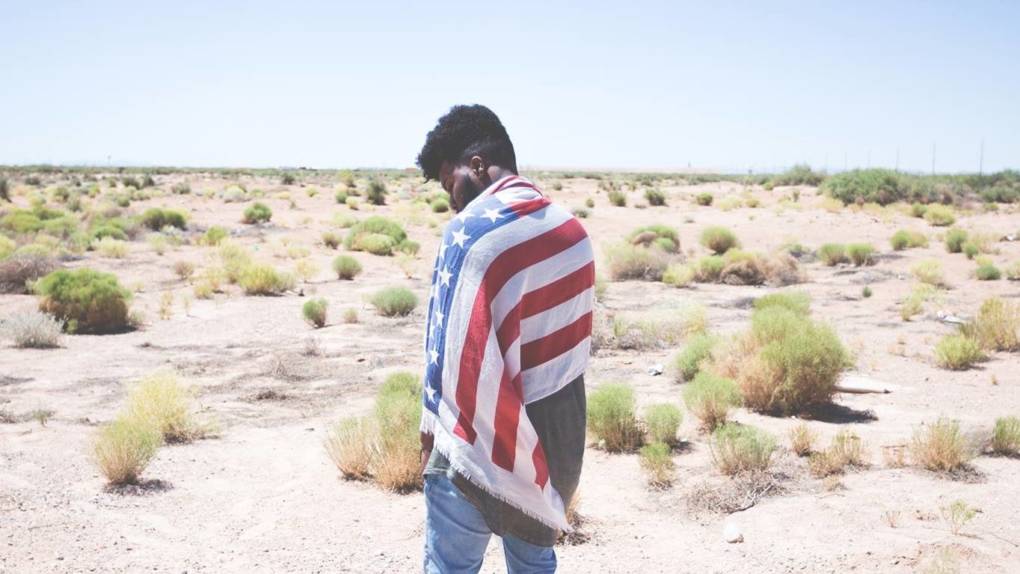
"caption": "Khalid plays the Fillmore and ARC Arena in Davis",
"description": "Khalid plays the Fillmore and ARC Arena in Davis",
"title": "Khalid plays the Fillmore and ARC Arena in Davis",
"credit": "Courtesy of the artist",
"status": "inherit",
"isLoading": false,
"fetchFailed": false
},
"arts_13830991": {
"type": "attachments",
"id": "arts_13830991",
"meta": {
"index": "attachments_1716263798",
"site": "arts",
"id": "13830991",
"found": true
},
"parent": 13830976,
"imgSizes": {
"small": {
"file": "https://ww2.kqed.org/app/uploads/sites/2/2018/05/Black-Women-Rock_BW-Photo-by-Anistique-Photography_preview-520x249.jpeg",
"width": 520,
"mimeType": "image/jpeg",
"height": 249
},
"twentyfourteen-full-width": {
"file": "https://ww2.kqed.org/app/uploads/sites/2/2018/05/Black-Women-Rock_BW-Photo-by-Anistique-Photography_preview-1038x576.jpeg",
"width": 1038,
"mimeType": "image/jpeg",
"height": 576
},
"thumbnail": {
"file": "https://ww2.kqed.org/app/uploads/sites/2/2018/05/Black-Women-Rock_BW-Photo-by-Anistique-Photography_preview-160x77.jpeg",
"width": 160,
"mimeType": "image/jpeg",
"height": 77
},
"fd-sm": {
"file": "https://ww2.kqed.org/app/uploads/sites/2/2018/05/Black-Women-Rock_BW-Photo-by-Anistique-Photography_preview-960x459.jpeg",
"width": 960,
"mimeType": "image/jpeg",
"height": 459
},
"post-thumbnail": {
"file": "https://ww2.kqed.org/app/uploads/sites/2/2018/05/Black-Women-Rock_BW-Photo-by-Anistique-Photography_preview-672x372.jpeg",
"width": 672,
"mimeType": "image/jpeg",
"height": 372
},
"xsmall": {
"file": "https://ww2.kqed.org/app/uploads/sites/2/2018/05/Black-Women-Rock_BW-Photo-by-Anistique-Photography_preview-375x179.jpeg",
"width": 375,
"mimeType": "image/jpeg",
"height": 179
},
"kqedFullSize": {
"file": "https://ww2.kqed.org/app/uploads/sites/2/2018/05/Black-Women-Rock_BW-Photo-by-Anistique-Photography_preview.jpeg",
"width": 1280,
"height": 612
},
"large": {
"file": "https://ww2.kqed.org/app/uploads/sites/2/2018/05/Black-Women-Rock_BW-Photo-by-Anistique-Photography_preview-1020x488.jpeg",
"width": 1020,
"mimeType": "image/jpeg",
"height": 488
},
"xlarge": {
"file": "https://ww2.kqed.org/app/uploads/sites/2/2018/05/Black-Women-Rock_BW-Photo-by-Anistique-Photography_preview-1180x564.jpeg",
"width": 1180,
"mimeType": "image/jpeg",
"height": 564
},
"complete_open_graph": {
"file": "https://ww2.kqed.org/app/uploads/sites/2/2018/05/Black-Women-Rock_BW-Photo-by-Anistique-Photography_preview-1200x574.jpeg",
"width": 1200,
"mimeType": "image/jpeg",
"height": 574
},
"guest-author-50": {
"file": "https://ww2.kqed.org/app/uploads/sites/2/2018/05/Black-Women-Rock_BW-Photo-by-Anistique-Photography_preview-50x50.jpeg",
"width": 50,
"mimeType": "image/jpeg",
"height": 50
},
"guest-author-96": {
"file": "https://ww2.kqed.org/app/uploads/sites/2/2018/05/Black-Women-Rock_BW-Photo-by-Anistique-Photography_preview-96x96.jpeg",
"width": 96,
"mimeType": "image/jpeg",
"height": 96
},
"medium": {
"file": "https://ww2.kqed.org/app/uploads/sites/2/2018/05/Black-Women-Rock_BW-Photo-by-Anistique-Photography_preview-800x383.jpeg",
"width": 800,
"mimeType": "image/jpeg",
"height": 383
},
"guest-author-64": {
"file": "https://ww2.kqed.org/app/uploads/sites/2/2018/05/Black-Women-Rock_BW-Photo-by-Anistique-Photography_preview-64x64.jpeg",
"width": 64,
"mimeType": "image/jpeg",
"height": 64
},
"guest-author-32": {
"file": "https://ww2.kqed.org/app/uploads/sites/2/2018/05/Black-Women-Rock_BW-Photo-by-Anistique-Photography_preview-32x32.jpeg",
"width": 32,
"mimeType": "image/jpeg",
"height": 32
},
"fd-med": {
"file": "https://ww2.kqed.org/app/uploads/sites/2/2018/05/Black-Women-Rock_BW-Photo-by-Anistique-Photography_preview-1180x564.jpeg",
"width": 1180,
"mimeType": "image/jpeg",
"height": 564
},
"detail": {
"file": "https://ww2.kqed.org/app/uploads/sites/2/2018/05/Black-Women-Rock_BW-Photo-by-Anistique-Photography_preview-150x150.jpeg",
"width": 150,
"mimeType": "image/jpeg",
"height": 150
},
"medium_large": {
"file": "https://ww2.kqed.org/app/uploads/sites/2/2018/05/Black-Women-Rock_BW-Photo-by-Anistique-Photography_preview-768x367.jpeg",
"width": 768,
"mimeType": "image/jpeg",
"height": 367
},
"guest-author-128": {
"file": "https://ww2.kqed.org/app/uploads/sites/2/2018/05/Black-Women-Rock_BW-Photo-by-Anistique-Photography_preview-128x128.jpeg",
"width": 128,
"mimeType": "image/jpeg",
"height": 128
},
"xxsmall": {
"file": "https://ww2.kqed.org/app/uploads/sites/2/2018/05/Black-Women-Rock_BW-Photo-by-Anistique-Photography_preview-240x115.jpeg",
"width": 240,
"mimeType": "image/jpeg",
"height": 115
}
},
"publishDate": 1525294769,
"modified": 1525295347,
"caption": "Black Women Rock do a tribute to 1970's rocker Betty Davis at YBCA's Transform Fest ",
"description": "Black Women Rock do a tribute to 1970's rocker Betty Davis at YBCA's Transform Fest ",
"title": "Black Women Rock do a tribute to 1970's rocker Betty Davis at YBCA's Transform Fest",
"credit": null,
"status": "inherit",
"isLoading": false,
"fetchFailed": false
},
"arts_13830530": {
"type": "attachments",
"id": "arts_13830530",
"meta": {
"index": "attachments_1716263798",
"site": "arts",
"id": "13830530",
"found": true
},
"parent": 13830528,
"imgSizes": {
"small": {
"file": "https://ww2.kqed.org/app/uploads/sites/2/2018/04/Flatbread-Society-520x347.jpg",
"width": 520,
"mimeType": "image/jpeg",
"height": 347
},
"twentyfourteen-full-width": {
"file": "https://ww2.kqed.org/app/uploads/sites/2/2018/04/Flatbread-Society-1038x576.jpg",
"width": 1038,
"mimeType": "image/jpeg",
"height": 576
},
"thumbnail": {
"file": "https://ww2.kqed.org/app/uploads/sites/2/2018/04/Flatbread-Society-160x107.jpg",
"width": 160,
"mimeType": "image/jpeg",
"height": 107
},
"fd-sm": {
"file": "https://ww2.kqed.org/app/uploads/sites/2/2018/04/Flatbread-Society-960x640.jpg",
"width": 960,
"mimeType": "image/jpeg",
"height": 640
},
"post-thumbnail": {
"file": "https://ww2.kqed.org/app/uploads/sites/2/2018/04/Flatbread-Society-672x372.jpg",
"width": 672,
"mimeType": "image/jpeg",
"height": 372
},
"xsmall": {
"file": "https://ww2.kqed.org/app/uploads/sites/2/2018/04/Flatbread-Society-375x250.jpg",
"width": 375,
"mimeType": "image/jpeg",
"height": 250
},
"kqedFullSize": {
"file": "https://ww2.kqed.org/app/uploads/sites/2/2018/04/Flatbread-Society.jpg",
"width": 2048,
"height": 1365
},
"large": {
"file": "https://ww2.kqed.org/app/uploads/sites/2/2018/04/Flatbread-Society-1020x680.jpg",
"width": 1020,
"mimeType": "image/jpeg",
"height": 680
},
"xlarge": {
"file": "https://ww2.kqed.org/app/uploads/sites/2/2018/04/Flatbread-Society-1180x787.jpg",
"width": 1180,
"mimeType": "image/jpeg",
"height": 787
},
"complete_open_graph": {
"file": "https://ww2.kqed.org/app/uploads/sites/2/2018/04/Flatbread-Society-1200x800.jpg",
"width": 1200,
"mimeType": "image/jpeg",
"height": 800
},
"guest-author-50": {
"file": "https://ww2.kqed.org/app/uploads/sites/2/2018/04/Flatbread-Society-50x50.jpg",
"width": 50,
"mimeType": "image/jpeg",
"height": 50
},
"guest-author-96": {
"file": "https://ww2.kqed.org/app/uploads/sites/2/2018/04/Flatbread-Society-96x96.jpg",
"width": 96,
"mimeType": "image/jpeg",
"height": 96
},
"medium": {
"file": "https://ww2.kqed.org/app/uploads/sites/2/2018/04/Flatbread-Society-800x533.jpg",
"width": 800,
"mimeType": "image/jpeg",
"height": 533
},
"guest-author-64": {
"file": "https://ww2.kqed.org/app/uploads/sites/2/2018/04/Flatbread-Society-64x64.jpg",
"width": 64,
"mimeType": "image/jpeg",
"height": 64
},
"guest-author-32": {
"file": "https://ww2.kqed.org/app/uploads/sites/2/2018/04/Flatbread-Society-32x32.jpg",
"width": 32,
"mimeType": "image/jpeg",
"height": 32
},
"fd-lrg": {
"file": "https://ww2.kqed.org/app/uploads/sites/2/2018/04/Flatbread-Society-1920x1280.jpg",
"width": 1920,
"mimeType": "image/jpeg",
"height": 1280
},
"fd-med": {
"file": "https://ww2.kqed.org/app/uploads/sites/2/2018/04/Flatbread-Society-1180x787.jpg",
"width": 1180,
"mimeType": "image/jpeg",
"height": 787
},
"full-width": {
"file": "https://ww2.kqed.org/app/uploads/sites/2/2018/04/Flatbread-Society-1920x1280.jpg",
"width": 1920,
"mimeType": "image/jpeg",
"height": 1280
},
"detail": {
"file": "https://ww2.kqed.org/app/uploads/sites/2/2018/04/Flatbread-Society-150x150.jpg",
"width": 150,
"mimeType": "image/jpeg",
"height": 150
},
"medium_large": {
"file": "https://ww2.kqed.org/app/uploads/sites/2/2018/04/Flatbread-Society-768x512.jpg",
"width": 768,
"mimeType": "image/jpeg",
"height": 512
},
"guest-author-128": {
"file": "https://ww2.kqed.org/app/uploads/sites/2/2018/04/Flatbread-Society-128x128.jpg",
"width": 128,
"mimeType": "image/jpeg",
"height": 128
},
"xxsmall": {
"file": "https://ww2.kqed.org/app/uploads/sites/2/2018/04/Flatbread-Society-240x160.jpg",
"width": 240,
"mimeType": "image/jpeg",
"height": 160
}
},
"publishDate": 1524711812,
"modified": 1525113275,
"caption": "Futurefarmers, 'Flatbread Society,' 2012–ongoing.",
"description": "Futurefarmers, 'Flatbread Society,' 2012–ongoing.",
"title": "Flatbread Society",
"credit": "Courtesy of Futurefarmers. Photograph: Monica Lovdahl",
"status": "inherit",
"isLoading": false,
"fetchFailed": false
},
"arts_13829730": {
"type": "attachments",
"id": "arts_13829730",
"meta": {
"index": "attachments_1716263798",
"site": "arts",
"id": "13829730",
"found": true
},
"parent": 13829726,
"imgSizes": {
"small": {
"file": "https://ww2.kqed.org/app/uploads/sites/2/2018/04/ZAM-still-004-520x293.jpg",
"width": 520,
"mimeType": "image/jpeg",
"height": 293
},
"twentyfourteen-full-width": {
"file": "https://ww2.kqed.org/app/uploads/sites/2/2018/04/ZAM-still-004-1038x576.jpg",
"width": 1038,
"mimeType": "image/jpeg",
"height": 576
},
"thumbnail": {
"file": "https://ww2.kqed.org/app/uploads/sites/2/2018/04/ZAM-still-004-160x90.jpg",
"width": 160,
"mimeType": "image/jpeg",
"height": 90
},
"fd-sm": {
"file": "https://ww2.kqed.org/app/uploads/sites/2/2018/04/ZAM-still-004-960x540.jpg",
"width": 960,
"mimeType": "image/jpeg",
"height": 540
},
"post-thumbnail": {
"file": "https://ww2.kqed.org/app/uploads/sites/2/2018/04/ZAM-still-004-672x372.jpg",
"width": 672,
"mimeType": "image/jpeg",
"height": 372
},
"xsmall": {
"file": "https://ww2.kqed.org/app/uploads/sites/2/2018/04/ZAM-still-004-375x211.jpg",
"width": 375,
"mimeType": "image/jpeg",
"height": 211
},
"kqedFullSize": {
"file": "https://ww2.kqed.org/app/uploads/sites/2/2018/04/ZAM-still-004.jpg",
"width": 1920,
"height": 1080
},
"large": {
"file": "https://ww2.kqed.org/app/uploads/sites/2/2018/04/ZAM-still-004-1020x574.jpg",
"width": 1020,
"mimeType": "image/jpeg",
"height": 574
},
"xlarge": {
"file": "https://ww2.kqed.org/app/uploads/sites/2/2018/04/ZAM-still-004-1180x664.jpg",
"width": 1180,
"mimeType": "image/jpeg",
"height": 664
},
"complete_open_graph": {
"file": "https://ww2.kqed.org/app/uploads/sites/2/2018/04/ZAM-still-004-1200x675.jpg",
"width": 1200,
"mimeType": "image/jpeg",
"height": 675
},
"guest-author-50": {
"file": "https://ww2.kqed.org/app/uploads/sites/2/2018/04/ZAM-still-004-50x50.jpg",
"width": 50,
"mimeType": "image/jpeg",
"height": 50
},
"guest-author-96": {
"file": "https://ww2.kqed.org/app/uploads/sites/2/2018/04/ZAM-still-004-96x96.jpg",
"width": 96,
"mimeType": "image/jpeg",
"height": 96
},
"medium": {
"file": "https://ww2.kqed.org/app/uploads/sites/2/2018/04/ZAM-still-004-800x450.jpg",
"width": 800,
"mimeType": "image/jpeg",
"height": 450
},
"guest-author-64": {
"file": "https://ww2.kqed.org/app/uploads/sites/2/2018/04/ZAM-still-004-64x64.jpg",
"width": 64,
"mimeType": "image/jpeg",
"height": 64
},
"guest-author-32": {
"file": "https://ww2.kqed.org/app/uploads/sites/2/2018/04/ZAM-still-004-32x32.jpg",
"width": 32,
"mimeType": "image/jpeg",
"height": 32
},
"fd-lrg": {
"file": "https://ww2.kqed.org/app/uploads/sites/2/2018/04/ZAM-still-004-1920x1080.jpg",
"width": 1920,
"mimeType": "image/jpeg",
"height": 1080
},
"fd-med": {
"file": "https://ww2.kqed.org/app/uploads/sites/2/2018/04/ZAM-still-004-1180x664.jpg",
"width": 1180,
"mimeType": "image/jpeg",
"height": 664
},
"full-width": {
"file": "https://ww2.kqed.org/app/uploads/sites/2/2018/04/ZAM-still-004-1920x1080.jpg",
"width": 1920,
"mimeType": "image/jpeg",
"height": 1080
},
"detail": {
"file": "https://ww2.kqed.org/app/uploads/sites/2/2018/04/ZAM-still-004-150x150.jpg",
"width": 150,
"mimeType": "image/jpeg",
"height": 150
},
"medium_large": {
"file": "https://ww2.kqed.org/app/uploads/sites/2/2018/04/ZAM-still-004-768x432.jpg",
"width": 768,
"mimeType": "image/jpeg",
"height": 432
},
"guest-author-128": {
"file": "https://ww2.kqed.org/app/uploads/sites/2/2018/04/ZAM-still-004-128x128.jpg",
"width": 128,
"mimeType": "image/jpeg",
"height": 128
},
"xxsmall": {
"file": "https://ww2.kqed.org/app/uploads/sites/2/2018/04/ZAM-still-004-240x135.jpg",
"width": 240,
"mimeType": "image/jpeg",
"height": 135
}
},
"publishDate": 1524030738,
"modified": 1524031548,
"caption": "Lola Dueñas as Luciana Piñares de Luenga in Lucrecia Martel's 'Zama.'",
"description": "Lola Dueñas as Luciana Piñares de Luenga in Lucrecia Martel's 'Zama.'",
"title": "ZAM-still-004",
"credit": "Strand Releasing",
"status": "inherit",
"isLoading": false,
"fetchFailed": false
},
"arts_13827998": {
"type": "attachments",
"id": "arts_13827998",
"meta": {
"index": "attachments_1716263798",
"site": "arts",
"id": "13827998",
"found": true
},
"parent": 13827981,
"imgSizes": {
"small": {
"file": "https://ww2.kqed.org/app/uploads/sites/2/2018/03/12-Days-by-Ramond-Depardon-2-courtesy-Distrib-Films-US-COVER-520x293.jpg",
"width": 520,
"mimeType": "image/jpeg",
"height": 293
},
"twentyfourteen-full-width": {
"file": "https://ww2.kqed.org/app/uploads/sites/2/2018/03/12-Days-by-Ramond-Depardon-2-courtesy-Distrib-Films-US-COVER-1038x576.jpg",
"width": 1038,
"mimeType": "image/jpeg",
"height": 576
},
"thumbnail": {
"file": "https://ww2.kqed.org/app/uploads/sites/2/2018/03/12-Days-by-Ramond-Depardon-2-courtesy-Distrib-Films-US-COVER-160x90.jpg",
"width": 160,
"mimeType": "image/jpeg",
"height": 90
},
"fd-sm": {
"file": "https://ww2.kqed.org/app/uploads/sites/2/2018/03/12-Days-by-Ramond-Depardon-2-courtesy-Distrib-Films-US-COVER-960x540.jpg",
"width": 960,
"mimeType": "image/jpeg",
"height": 540
},
"post-thumbnail": {
"file": "https://ww2.kqed.org/app/uploads/sites/2/2018/03/12-Days-by-Ramond-Depardon-2-courtesy-Distrib-Films-US-COVER-672x372.jpg",
"width": 672,
"mimeType": "image/jpeg",
"height": 372
},
"xsmall": {
"file": "https://ww2.kqed.org/app/uploads/sites/2/2018/03/12-Days-by-Ramond-Depardon-2-courtesy-Distrib-Films-US-COVER-375x211.jpg",
"width": 375,
"mimeType": "image/jpeg",
"height": 211
},
"kqedFullSize": {
"file": "https://ww2.kqed.org/app/uploads/sites/2/2018/03/12-Days-by-Ramond-Depardon-2-courtesy-Distrib-Films-US-COVER.jpg",
"width": 1920,
"height": 1080
},
"large": {
"file": "https://ww2.kqed.org/app/uploads/sites/2/2018/03/12-Days-by-Ramond-Depardon-2-courtesy-Distrib-Films-US-COVER-1020x574.jpg",
"width": 1020,
"mimeType": "image/jpeg",
"height": 574
},
"xlarge": {
"file": "https://ww2.kqed.org/app/uploads/sites/2/2018/03/12-Days-by-Ramond-Depardon-2-courtesy-Distrib-Films-US-COVER-1180x664.jpg",
"width": 1180,
"mimeType": "image/jpeg",
"height": 664
},
"guest-author-50": {
"file": "https://ww2.kqed.org/app/uploads/sites/2/2018/03/12-Days-by-Ramond-Depardon-2-courtesy-Distrib-Films-US-COVER-50x50.jpg",
"width": 50,
"mimeType": "image/jpeg",
"height": 50
},
"guest-author-96": {
"file": "https://ww2.kqed.org/app/uploads/sites/2/2018/03/12-Days-by-Ramond-Depardon-2-courtesy-Distrib-Films-US-COVER-96x96.jpg",
"width": 96,
"mimeType": "image/jpeg",
"height": 96
},
"medium": {
"file": "https://ww2.kqed.org/app/uploads/sites/2/2018/03/12-Days-by-Ramond-Depardon-2-courtesy-Distrib-Films-US-COVER-800x450.jpg",
"width": 800,
"mimeType": "image/jpeg",
"height": 450
},
"guest-author-64": {
"file": "https://ww2.kqed.org/app/uploads/sites/2/2018/03/12-Days-by-Ramond-Depardon-2-courtesy-Distrib-Films-US-COVER-64x64.jpg",
"width": 64,
"mimeType": "image/jpeg",
"height": 64
},
"guest-author-32": {
"file": "https://ww2.kqed.org/app/uploads/sites/2/2018/03/12-Days-by-Ramond-Depardon-2-courtesy-Distrib-Films-US-COVER-32x32.jpg",
"width": 32,
"mimeType": "image/jpeg",
"height": 32
},
"fd-lrg": {
"file": "https://ww2.kqed.org/app/uploads/sites/2/2018/03/12-Days-by-Ramond-Depardon-2-courtesy-Distrib-Films-US-COVER-1920x1080.jpg",
"width": 1920,
"mimeType": "image/jpeg",
"height": 1080
},
"fd-med": {
"file": "https://ww2.kqed.org/app/uploads/sites/2/2018/03/12-Days-by-Ramond-Depardon-2-courtesy-Distrib-Films-US-COVER-1180x664.jpg",
"width": 1180,
"mimeType": "image/jpeg",
"height": 664
},
"full-width": {
"file": "https://ww2.kqed.org/app/uploads/sites/2/2018/03/12-Days-by-Ramond-Depardon-2-courtesy-Distrib-Films-US-COVER-1920x1080.jpg",
"width": 1920,
"mimeType": "image/jpeg",
"height": 1080
},
"detail": {
"file": "https://ww2.kqed.org/app/uploads/sites/2/2018/03/12-Days-by-Ramond-Depardon-2-courtesy-Distrib-Films-US-COVER-150x150.jpg",
"width": 150,
"mimeType": "image/jpeg",
"height": 150
},
"medium_large": {
"file": "https://ww2.kqed.org/app/uploads/sites/2/2018/03/12-Days-by-Ramond-Depardon-2-courtesy-Distrib-Films-US-COVER-768x432.jpg",
"width": 768,
"mimeType": "image/jpeg",
"height": 432
},
"guest-author-128": {
"file": "https://ww2.kqed.org/app/uploads/sites/2/2018/03/12-Days-by-Ramond-Depardon-2-courtesy-Distrib-Films-US-COVER-128x128.jpg",
"width": 128,
"mimeType": "image/jpeg",
"height": 128
},
"xxsmall": {
"file": "https://ww2.kqed.org/app/uploads/sites/2/2018/03/12-Days-by-Ramond-Depardon-2-courtesy-Distrib-Films-US-COVER-240x135.jpg",
"width": 240,
"mimeType": "image/jpeg",
"height": 135
}
},
"publishDate": 1522085382,
"modified": 1522085745,
"caption": "Still from Ramond Depardon's '12 Days,' 2017. ",
"description": "Still from Ramond Depardon's '12 Days,' 2017.",
"title": "12 Days by Ramond Depardon - 2 - courtesy Distrib Films US COVER",
"credit": "Courtesy Distrib Films US",
"status": "inherit",
"isLoading": false,
"fetchFailed": false
},
"arts_13825219": {
"type": "attachments",
"id": "arts_13825219",
"meta": {
"index": "attachments_1716263798",
"site": "arts",
"id": "13825219",
"found": true
},
"parent": 13825218,
"imgSizes": {
"small": {
"file": "https://ww2.kqed.org/app/uploads/sites/2/2018/02/Bumper-Jacksons-e1519257954171-520x293.jpg",
"width": 520,
"mimeType": "image/jpeg",
"height": 293
},
"twentyfourteen-full-width": {
"file": "https://ww2.kqed.org/app/uploads/sites/2/2018/02/Bumper-Jacksons-e1519257954171-1038x576.jpg",
"width": 1038,
"mimeType": "image/jpeg",
"height": 576
},
"thumbnail": {
"file": "https://ww2.kqed.org/app/uploads/sites/2/2018/02/Bumper-Jacksons-e1519257954171-160x90.jpg",
"width": 160,
"mimeType": "image/jpeg",
"height": 90
},
"fd-sm": {
"file": "https://ww2.kqed.org/app/uploads/sites/2/2018/02/Bumper-Jacksons-e1519257954171-960x540.jpg",
"width": 960,
"mimeType": "image/jpeg",
"height": 540
},
"post-thumbnail": {
"file": "https://ww2.kqed.org/app/uploads/sites/2/2018/02/Bumper-Jacksons-e1519257954171-672x372.jpg",
"width": 672,
"mimeType": "image/jpeg",
"height": 372
},
"xsmall": {
"file": "https://ww2.kqed.org/app/uploads/sites/2/2018/02/Bumper-Jacksons-e1519257954171-375x211.jpg",
"width": 375,
"mimeType": "image/jpeg",
"height": 211
},
"kqedFullSize": {
"file": "https://ww2.kqed.org/app/uploads/sites/2/2018/02/Bumper-Jacksons-e1519257954171.jpg",
"width": 2048,
"height": 1152
},
"large": {
"file": "https://ww2.kqed.org/app/uploads/sites/2/2018/02/Bumper-Jacksons-e1519257954171-1020x574.jpg",
"width": 1020,
"mimeType": "image/jpeg",
"height": 574
},
"xlarge": {
"file": "https://ww2.kqed.org/app/uploads/sites/2/2018/02/Bumper-Jacksons-e1519257954171-1180x664.jpg",
"width": 1180,
"mimeType": "image/jpeg",
"height": 664
},
"guest-author-50": {
"file": "https://ww2.kqed.org/app/uploads/sites/2/2018/02/Bumper-Jacksons-e1519257954171-50x50.jpg",
"width": 50,
"mimeType": "image/jpeg",
"height": 50
},
"guest-author-96": {
"file": "https://ww2.kqed.org/app/uploads/sites/2/2018/02/Bumper-Jacksons-e1519257954171-96x96.jpg",
"width": 96,
"mimeType": "image/jpeg",
"height": 96
},
"medium": {
"file": "https://ww2.kqed.org/app/uploads/sites/2/2018/02/Bumper-Jacksons-e1519257954171-800x450.jpg",
"width": 800,
"mimeType": "image/jpeg",
"height": 450
},
"guest-author-64": {
"file": "https://ww2.kqed.org/app/uploads/sites/2/2018/02/Bumper-Jacksons-e1519257954171-64x64.jpg",
"width": 64,
"mimeType": "image/jpeg",
"height": 64
},
"guest-author-32": {
"file": "https://ww2.kqed.org/app/uploads/sites/2/2018/02/Bumper-Jacksons-e1519257954171-32x32.jpg",
"width": 32,
"mimeType": "image/jpeg",
"height": 32
},
"fd-lrg": {
"file": "https://ww2.kqed.org/app/uploads/sites/2/2018/02/Bumper-Jacksons-e1519257954171-1920x1080.jpg",
"width": 1920,
"mimeType": "image/jpeg",
"height": 1080
},
"fd-med": {
"file": "https://ww2.kqed.org/app/uploads/sites/2/2018/02/Bumper-Jacksons-e1519257954171-1180x664.jpg",
"width": 1180,
"mimeType": "image/jpeg",
"height": 664
},
"full-width": {
"file": "https://ww2.kqed.org/app/uploads/sites/2/2018/02/Bumper-Jacksons-e1519257954171-1920x1080.jpg",
"width": 1920,
"mimeType": "image/jpeg",
"height": 1080
},
"detail": {
"file": "https://ww2.kqed.org/app/uploads/sites/2/2018/02/Bumper-Jacksons-e1519257954171-150x150.jpg",
"width": 150,
"mimeType": "image/jpeg",
"height": 150
},
"medium_large": {
"file": "https://ww2.kqed.org/app/uploads/sites/2/2018/02/Bumper-Jacksons-e1519257954171-768x432.jpg",
"width": 768,
"mimeType": "image/jpeg",
"height": 432
},
"guest-author-128": {
"file": "https://ww2.kqed.org/app/uploads/sites/2/2018/02/Bumper-Jacksons-e1519257954171-128x128.jpg",
"width": 128,
"mimeType": "image/jpeg",
"height": 128
},
"xxsmall": {
"file": "https://ww2.kqed.org/app/uploads/sites/2/2018/02/Bumper-Jacksons-e1519257954171-240x135.jpg",
"width": 240,
"mimeType": "image/jpeg",
"height": 135
}
},
"publishDate": 1519257888,
"modified": 1519258106,
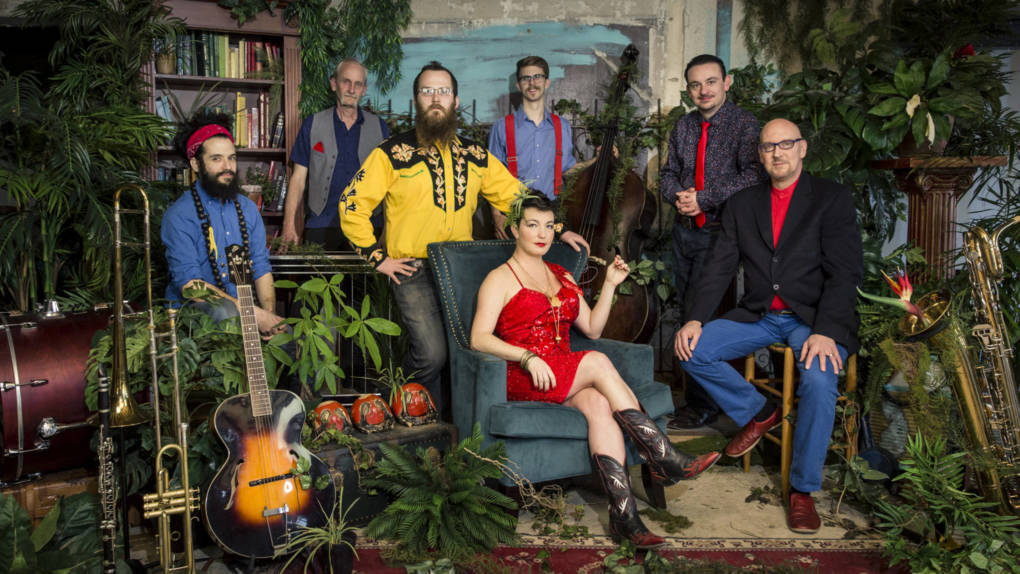
"caption": "Bumper Jacksons play the Napa Valley Performing Arts Center in Yountville and Bing Studio at Stanford",
"description": "Bumper Jacksons play the Napa Valley Performing Arts Center in Yountville and Bing Studio at Stanford",
"title": "Bumper Jacksons play the Napa Valley Performing Arts Center in Yountville and Bing Studio at Stanford",
"credit": "Photo: Michael O. Snyder/Bumper Jacksons",
"status": "inherit",
"isLoading": false,
"fetchFailed": false
},
"arts_13825172": {
"type": "attachments",
"id": "arts_13825172",
"meta": {
"index": "attachments_1716263798",
"site": "arts",
"id": "13825172",
"found": true
},
"parent": 13825159,
"imgSizes": {
"small": {
"file": "https://ww2.kqed.org/app/uploads/sites/2/2018/02/Robert-Moses-Kin-Bootstrap-Tales-2018-by-Steve-Disenhof-520x347.jpg",
"width": 520,
"mimeType": "image/jpeg",
"height": 347
},
"twentyfourteen-full-width": {
"file": "https://ww2.kqed.org/app/uploads/sites/2/2018/02/Robert-Moses-Kin-Bootstrap-Tales-2018-by-Steve-Disenhof-1038x576.jpg",
"width": 1038,
"mimeType": "image/jpeg",
"height": 576
},
"thumbnail": {
"file": "https://ww2.kqed.org/app/uploads/sites/2/2018/02/Robert-Moses-Kin-Bootstrap-Tales-2018-by-Steve-Disenhof-160x107.jpg",
"width": 160,
"mimeType": "image/jpeg",
"height": 107
},
"fd-sm": {
"file": "https://ww2.kqed.org/app/uploads/sites/2/2018/02/Robert-Moses-Kin-Bootstrap-Tales-2018-by-Steve-Disenhof-960x641.jpg",
"width": 960,
"mimeType": "image/jpeg",
"height": 641
},
"post-thumbnail": {
"file": "https://ww2.kqed.org/app/uploads/sites/2/2018/02/Robert-Moses-Kin-Bootstrap-Tales-2018-by-Steve-Disenhof-672x372.jpg",
"width": 672,
"mimeType": "image/jpeg",
"height": 372
},
"xsmall": {
"file": "https://ww2.kqed.org/app/uploads/sites/2/2018/02/Robert-Moses-Kin-Bootstrap-Tales-2018-by-Steve-Disenhof-375x250.jpg",
"width": 375,
"mimeType": "image/jpeg",
"height": 250
},
"kqedFullSize": {
"file": "https://ww2.kqed.org/app/uploads/sites/2/2018/02/Robert-Moses-Kin-Bootstrap-Tales-2018-by-Steve-Disenhof.jpg",
"width": 1200,
"height": 801
},
"large": {
"file": "https://ww2.kqed.org/app/uploads/sites/2/2018/02/Robert-Moses-Kin-Bootstrap-Tales-2018-by-Steve-Disenhof-1020x681.jpg",
"width": 1020,
"mimeType": "image/jpeg",
"height": 681
},
"xlarge": {
"file": "https://ww2.kqed.org/app/uploads/sites/2/2018/02/Robert-Moses-Kin-Bootstrap-Tales-2018-by-Steve-Disenhof-1180x788.jpg",
"width": 1180,
"mimeType": "image/jpeg",
"height": 788
},
"guest-author-50": {
"file": "https://ww2.kqed.org/app/uploads/sites/2/2018/02/Robert-Moses-Kin-Bootstrap-Tales-2018-by-Steve-Disenhof-50x50.jpg",
"width": 50,
"mimeType": "image/jpeg",
"height": 50
},
"guest-author-96": {
"file": "https://ww2.kqed.org/app/uploads/sites/2/2018/02/Robert-Moses-Kin-Bootstrap-Tales-2018-by-Steve-Disenhof-96x96.jpg",
"width": 96,
"mimeType": "image/jpeg",
"height": 96
},
"medium": {
"file": "https://ww2.kqed.org/app/uploads/sites/2/2018/02/Robert-Moses-Kin-Bootstrap-Tales-2018-by-Steve-Disenhof-800x534.jpg",
"width": 800,
"mimeType": "image/jpeg",
"height": 534
},
"guest-author-64": {
"file": "https://ww2.kqed.org/app/uploads/sites/2/2018/02/Robert-Moses-Kin-Bootstrap-Tales-2018-by-Steve-Disenhof-64x64.jpg",
"width": 64,
"mimeType": "image/jpeg",
"height": 64
},
"guest-author-32": {
"file": "https://ww2.kqed.org/app/uploads/sites/2/2018/02/Robert-Moses-Kin-Bootstrap-Tales-2018-by-Steve-Disenhof-32x32.jpg",
"width": 32,
"mimeType": "image/jpeg",
"height": 32
},
"fd-med": {
"file": "https://ww2.kqed.org/app/uploads/sites/2/2018/02/Robert-Moses-Kin-Bootstrap-Tales-2018-by-Steve-Disenhof-1180x788.jpg",
"width": 1180,
"mimeType": "image/jpeg",
"height": 788
},
"detail": {
"file": "https://ww2.kqed.org/app/uploads/sites/2/2018/02/Robert-Moses-Kin-Bootstrap-Tales-2018-by-Steve-Disenhof-150x150.jpg",
"width": 150,
"mimeType": "image/jpeg",
"height": 150
},
"medium_large": {
"file": "https://ww2.kqed.org/app/uploads/sites/2/2018/02/Robert-Moses-Kin-Bootstrap-Tales-2018-by-Steve-Disenhof-768x513.jpg",
"width": 768,
"mimeType": "image/jpeg",
"height": 513
},
"guest-author-128": {
"file": "https://ww2.kqed.org/app/uploads/sites/2/2018/02/Robert-Moses-Kin-Bootstrap-Tales-2018-by-Steve-Disenhof-128x128.jpg",
"width": 128,
"mimeType": "image/jpeg",
"height": 128
},
"xxsmall": {
"file": "https://ww2.kqed.org/app/uploads/sites/2/2018/02/Robert-Moses-Kin-Bootstrap-Tales-2018-by-Steve-Disenhof-240x160.jpg",
"width": 240,
"mimeType": "image/jpeg",
"height": 160
}
},
"publishDate": 1519247702,
"modified": 1519247885,
"caption": "Robert Moses Kin 'Bootstrap Tales'",
"description": "Robert Moses Kin 'Bootstrap Tales'",
"title": "Robert Moses Kin 'Bootstrap Tales'",
"credit": "Photo: Steve Disenhof/Robert Moses Kin",
"status": "inherit",
"isLoading": false,
"fetchFailed": false
},
"arts_13824374": {
"type": "attachments",
"id": "arts_13824374",
"meta": {
"index": "attachments_1716263798",
"site": "arts",
"id": "13824374",
"found": true
},
"parent": 0,
"imgSizes": {
"small": {
"file": "https://ww2.kqed.org/app/uploads/sites/2/2018/02/Arceneaux-Until-1-e1518635998952-520x293.jpeg",
"width": 520,
"mimeType": "image/jpeg",
"height": 293
},
"twentyfourteen-full-width": {
"file": "https://ww2.kqed.org/app/uploads/sites/2/2018/02/Arceneaux-Until-1-e1518635998952-1038x576.jpeg",
"width": 1038,
"mimeType": "image/jpeg",
"height": 576
},
"thumbnail": {
"file": "https://ww2.kqed.org/app/uploads/sites/2/2018/02/Arceneaux-Until-1-e1518635998952-160x90.jpeg",
"width": 160,
"mimeType": "image/jpeg",
"height": 90
},
"fd-sm": {
"file": "https://ww2.kqed.org/app/uploads/sites/2/2018/02/Arceneaux-Until-1-e1518635998952-960x540.jpeg",
"width": 960,
"mimeType": "image/jpeg",
"height": 540
},
"post-thumbnail": {
"file": "https://ww2.kqed.org/app/uploads/sites/2/2018/02/Arceneaux-Until-1-e1518635998952-672x372.jpeg",
"width": 672,
"mimeType": "image/jpeg",
"height": 372
},
"xsmall": {
"file": "https://ww2.kqed.org/app/uploads/sites/2/2018/02/Arceneaux-Until-1-e1518635998952-375x211.jpeg",
"width": 375,
"mimeType": "image/jpeg",
"height": 211
},
"kqedFullSize": {
"file": "https://ww2.kqed.org/app/uploads/sites/2/2018/02/Arceneaux-Until-1-e1518635998952.jpeg",
"width": 2048,
"height": 1152
},
"large": {
"file": "https://ww2.kqed.org/app/uploads/sites/2/2018/02/Arceneaux-Until-1-e1518635998952-1020x574.jpeg",
"width": 1020,
"mimeType": "image/jpeg",
"height": 574
},
"xlarge": {
"file": "https://ww2.kqed.org/app/uploads/sites/2/2018/02/Arceneaux-Until-1-e1518635998952-1180x664.jpeg",
"width": 1180,
"mimeType": "image/jpeg",
"height": 664
},
"guest-author-50": {
"file": "https://ww2.kqed.org/app/uploads/sites/2/2018/02/Arceneaux-Until-1-e1518635998952-50x50.jpeg",
"width": 50,
"mimeType": "image/jpeg",
"height": 50
},
"guest-author-96": {
"file": "https://ww2.kqed.org/app/uploads/sites/2/2018/02/Arceneaux-Until-1-e1518635998952-96x96.jpeg",
"width": 96,
"mimeType": "image/jpeg",
"height": 96
},
"medium": {
"file": "https://ww2.kqed.org/app/uploads/sites/2/2018/02/Arceneaux-Until-1-e1518635998952-800x450.jpeg",
"width": 800,
"mimeType": "image/jpeg",
"height": 450
},
"guest-author-64": {
"file": "https://ww2.kqed.org/app/uploads/sites/2/2018/02/Arceneaux-Until-1-e1518635998952-64x64.jpeg",
"width": 64,
"mimeType": "image/jpeg",
"height": 64
},
"guest-author-32": {
"file": "https://ww2.kqed.org/app/uploads/sites/2/2018/02/Arceneaux-Until-1-e1518635998952-32x32.jpeg",
"width": 32,
"mimeType": "image/jpeg",
"height": 32
},
"fd-lrg": {
"file": "https://ww2.kqed.org/app/uploads/sites/2/2018/02/Arceneaux-Until-1-e1518635998952-1920x1080.jpeg",
"width": 1920,
"mimeType": "image/jpeg",
"height": 1080
},
"fd-med": {
"file": "https://ww2.kqed.org/app/uploads/sites/2/2018/02/Arceneaux-Until-1-e1518635998952-1180x664.jpeg",
"width": 1180,
"mimeType": "image/jpeg",
"height": 664
},
"full-width": {
"file": "https://ww2.kqed.org/app/uploads/sites/2/2018/02/Arceneaux-Until-1-e1518635998952-1920x1080.jpeg",
"width": 1920,
"mimeType": "image/jpeg",
"height": 1080
},
"detail": {
"file": "https://ww2.kqed.org/app/uploads/sites/2/2018/02/Arceneaux-Until-1-e1518635998952-150x150.jpeg",
"width": 150,
"mimeType": "image/jpeg",
"height": 150
},
"medium_large": {
"file": "https://ww2.kqed.org/app/uploads/sites/2/2018/02/Arceneaux-Until-1-e1518635998952-768x432.jpeg",
"width": 768,
"mimeType": "image/jpeg",
"height": 432
},
"guest-author-128": {
"file": "https://ww2.kqed.org/app/uploads/sites/2/2018/02/Arceneaux-Until-1-e1518635998952-128x128.jpeg",
"width": 128,
"mimeType": "image/jpeg",
"height": 128
},
"xxsmall": {
"file": "https://ww2.kqed.org/app/uploads/sites/2/2018/02/Arceneaux-Until-1-e1518635998952-240x135.jpeg",
"width": 240,
"mimeType": "image/jpeg",
"height": 135
}
},
"publishDate": 1518551234,
"modified": 1518551520,
"caption": "An image from Edgar Arecenaux's exhibit 'Until, Until Until...'at the Yerba Buena Center for the Arts",
"description": "An image from Edgar Arecenaux's exhibit 'Until, Until Until...'at the Yerba Buena Center for the Arts",
"title": "An image from Edgar Arecenaux's exhibit 'Until, Until Until...'at the Yerba Buena Center for the Arts",
"credit": "Photo:Robert Wedemeyer/Courtesy the artist and Susanne Vielmetter Los Angeles Projects",
"status": "inherit",
"isLoading": false,
"fetchFailed": false
},
"arts_13817497": {
"type": "attachments",
"id": "arts_13817497",
"meta": {
"index": "attachments_1716263798",
"site": "arts",
"id": "13817497",
"found": true
},
"parent": 13817451,
"imgSizes": {
"small": {
"file": "https://ww2.kqed.org/app/uploads/sites/2/2017/12/EdLee.StevensBooks-520x293.jpg",
"width": 520,
"mimeType": "image/jpeg",
"height": 293
},
"twentyfourteen-full-width": {
"file": "https://ww2.kqed.org/app/uploads/sites/2/2017/12/EdLee.StevensBooks-1038x576.jpg",
"width": 1038,
"mimeType": "image/jpeg",
"height": 576
},
"thumbnail": {
"file": "https://ww2.kqed.org/app/uploads/sites/2/2017/12/EdLee.StevensBooks-160x90.jpg",
"width": 160,
"mimeType": "image/jpeg",
"height": 90
},
"fd-sm": {
"file": "https://ww2.kqed.org/app/uploads/sites/2/2017/12/EdLee.StevensBooks-960x540.jpg",
"width": 960,
"mimeType": "image/jpeg",
"height": 540
},
"post-thumbnail": {
"file": "https://ww2.kqed.org/app/uploads/sites/2/2017/12/EdLee.StevensBooks-672x372.jpg",
"width": 672,
"mimeType": "image/jpeg",
"height": 372
},
"xsmall": {
"file": "https://ww2.kqed.org/app/uploads/sites/2/2017/12/EdLee.StevensBooks-375x211.jpg",
"width": 375,
"mimeType": "image/jpeg",
"height": 211
},
"kqedFullSize": {
"file": "https://ww2.kqed.org/app/uploads/sites/2/2017/12/EdLee.StevensBooks.jpg",
"width": 1920,
"height": 1080
},
"large": {
"file": "https://ww2.kqed.org/app/uploads/sites/2/2017/12/EdLee.StevensBooks-1020x574.jpg",
"width": 1020,
"mimeType": "image/jpeg",
"height": 574
},
"xlarge": {
"file": "https://ww2.kqed.org/app/uploads/sites/2/2017/12/EdLee.StevensBooks-1180x664.jpg",
"width": 1180,
"mimeType": "image/jpeg",
"height": 664
},
"guest-author-50": {
"file": "https://ww2.kqed.org/app/uploads/sites/2/2017/12/EdLee.StevensBooks-50x50.jpg",
"width": 50,
"mimeType": "image/jpeg",
"height": 50
},
"guest-author-96": {
"file": "https://ww2.kqed.org/app/uploads/sites/2/2017/12/EdLee.StevensBooks-96x96.jpg",
"width": 96,
"mimeType": "image/jpeg",
"height": 96
},
"medium": {
"file": "https://ww2.kqed.org/app/uploads/sites/2/2017/12/EdLee.StevensBooks-800x450.jpg",
"width": 800,
"mimeType": "image/jpeg",
"height": 450
},
"guest-author-64": {
"file": "https://ww2.kqed.org/app/uploads/sites/2/2017/12/EdLee.StevensBooks-64x64.jpg",
"width": 64,
"mimeType": "image/jpeg",
"height": 64
},
"guest-author-32": {
"file": "https://ww2.kqed.org/app/uploads/sites/2/2017/12/EdLee.StevensBooks-32x32.jpg",
"width": 32,
"mimeType": "image/jpeg",
"height": 32
},
"fd-lrg": {
"file": "https://ww2.kqed.org/app/uploads/sites/2/2017/12/EdLee.StevensBooks-1920x1080.jpg",
"width": 1920,
"mimeType": "image/jpeg",
"height": 1080
},
"fd-med": {
"file": "https://ww2.kqed.org/app/uploads/sites/2/2017/12/EdLee.StevensBooks-1180x664.jpg",
"width": 1180,
"mimeType": "image/jpeg",
"height": 664
},
"full-width": {
"file": "https://ww2.kqed.org/app/uploads/sites/2/2017/12/EdLee.StevensBooks-1920x1080.jpg",
"width": 1920,
"mimeType": "image/jpeg",
"height": 1080
},
"detail": {
"file": "https://ww2.kqed.org/app/uploads/sites/2/2017/12/EdLee.StevensBooks-150x150.jpg",
"width": 150,
"mimeType": "image/jpeg",
"height": 150
},
"medium_large": {
"file": "https://ww2.kqed.org/app/uploads/sites/2/2017/12/EdLee.StevensBooks-768x432.jpg",
"width": 768,
"mimeType": "image/jpeg",
"height": 432
},
"guest-author-128": {
"file": "https://ww2.kqed.org/app/uploads/sites/2/2017/12/EdLee.StevensBooks-128x128.jpg",
"width": 128,
"mimeType": "image/jpeg",
"height": 128
},
"xxsmall": {
"file": "https://ww2.kqed.org/app/uploads/sites/2/2017/12/EdLee.StevensBooks-240x135.jpg",
"width": 240,
"mimeType": "image/jpeg",
"height": 135
}
},
"publishDate": 1513296524,
"modified": 1513296874,
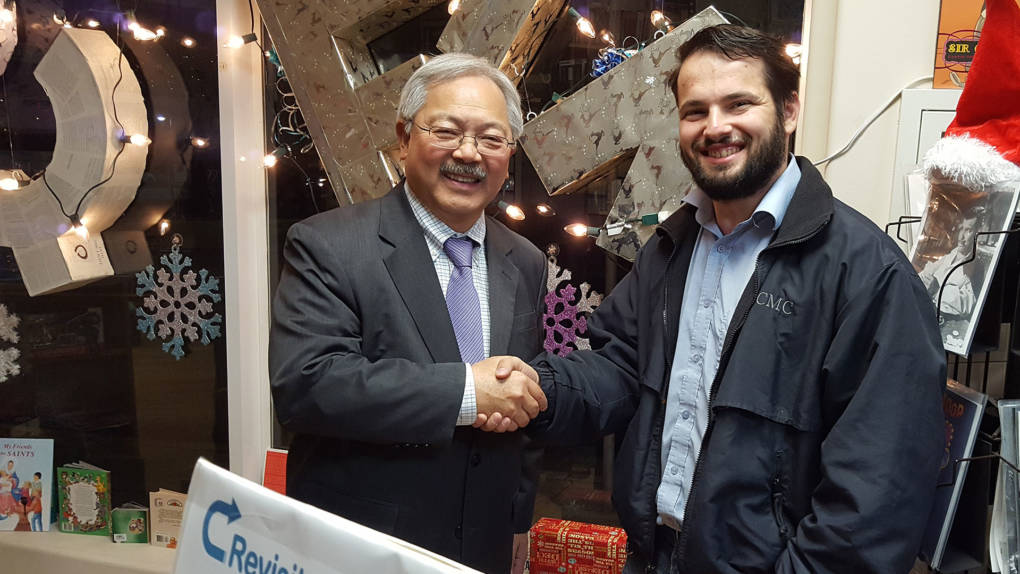
"caption": "Mayor Ed Lee poses with Stevens Books owner Joseph Volansky while visiting an art installation at the bookstore on Dec. 8, three days before he died.",
"description": "Mayor Ed Lee poses with Stevens Books owner Joseph Volansky while visiting an art installation at the bookstore on Dec. 8, three days before he died.",
"title": "EdLee.StevensBooks",
"credit": "Ezra Yu",
"status": "inherit",
"isLoading": false,
"fetchFailed": false
},
"arts_13816858": {
"type": "attachments",
"id": "arts_13816858",
"meta": {
"index": "attachments_1716263798",
"site": "arts",
"id": "13816858",
"found": true
},
"parent": 13816844,
"imgSizes": {
"small": {
"file": "https://ww2.kqed.org/app/uploads/sites/2/2017/12/BrakhageCOVERb-520x293.jpg",
"width": 520,
"mimeType": "image/jpeg",
"height": 293
},
"twentyfourteen-full-width": {
"file": "https://ww2.kqed.org/app/uploads/sites/2/2017/12/BrakhageCOVERb-1038x576.jpg",
"width": 1038,
"mimeType": "image/jpeg",
"height": 576
},
"thumbnail": {
"file": "https://ww2.kqed.org/app/uploads/sites/2/2017/12/BrakhageCOVERb-160x90.jpg",
"width": 160,
"mimeType": "image/jpeg",
"height": 90
},
"fd-sm": {
"file": "https://ww2.kqed.org/app/uploads/sites/2/2017/12/BrakhageCOVERb-960x540.jpg",
"width": 960,
"mimeType": "image/jpeg",
"height": 540
},
"post-thumbnail": {
"file": "https://ww2.kqed.org/app/uploads/sites/2/2017/12/BrakhageCOVERb-672x372.jpg",
"width": 672,
"mimeType": "image/jpeg",
"height": 372
},
"xsmall": {
"file": "https://ww2.kqed.org/app/uploads/sites/2/2017/12/BrakhageCOVERb-375x211.jpg",
"width": 375,
"mimeType": "image/jpeg",
"height": 211
},
"kqedFullSize": {
"file": "https://ww2.kqed.org/app/uploads/sites/2/2017/12/BrakhageCOVERb.jpg",
"width": 1920,
"height": 1080
},
"large": {
"file": "https://ww2.kqed.org/app/uploads/sites/2/2017/12/BrakhageCOVERb-1020x574.jpg",
"width": 1020,
"mimeType": "image/jpeg",
"height": 574
},
"xlarge": {
"file": "https://ww2.kqed.org/app/uploads/sites/2/2017/12/BrakhageCOVERb-1180x664.jpg",
"width": 1180,
"mimeType": "image/jpeg",
"height": 664
},
"guest-author-50": {
"file": "https://ww2.kqed.org/app/uploads/sites/2/2017/12/BrakhageCOVERb-50x50.jpg",
"width": 50,
"mimeType": "image/jpeg",
"height": 50
},
"guest-author-96": {
"file": "https://ww2.kqed.org/app/uploads/sites/2/2017/12/BrakhageCOVERb-96x96.jpg",
"width": 96,
"mimeType": "image/jpeg",
"height": 96
},
"medium": {
"file": "https://ww2.kqed.org/app/uploads/sites/2/2017/12/BrakhageCOVERb-800x450.jpg",
"width": 800,
"mimeType": "image/jpeg",
"height": 450
},
"guest-author-64": {
"file": "https://ww2.kqed.org/app/uploads/sites/2/2017/12/BrakhageCOVERb-64x64.jpg",
"width": 64,
"mimeType": "image/jpeg",
"height": 64
},
"guest-author-32": {
"file": "https://ww2.kqed.org/app/uploads/sites/2/2017/12/BrakhageCOVERb-32x32.jpg",
"width": 32,
"mimeType": "image/jpeg",
"height": 32
},
"fd-lrg": {
"file": "https://ww2.kqed.org/app/uploads/sites/2/2017/12/BrakhageCOVERb-1920x1080.jpg",
"width": 1920,
"mimeType": "image/jpeg",
"height": 1080
},
"fd-med": {
"file": "https://ww2.kqed.org/app/uploads/sites/2/2017/12/BrakhageCOVERb-1180x664.jpg",
"width": 1180,
"mimeType": "image/jpeg",
"height": 664
},
"full-width": {
"file": "https://ww2.kqed.org/app/uploads/sites/2/2017/12/BrakhageCOVERb-1920x1080.jpg",
"width": 1920,
"mimeType": "image/jpeg",
"height": 1080
},
"detail": {
"file": "https://ww2.kqed.org/app/uploads/sites/2/2017/12/BrakhageCOVERb-150x150.jpg",
"width": 150,
"mimeType": "image/jpeg",
"height": 150
},
"medium_large": {
"file": "https://ww2.kqed.org/app/uploads/sites/2/2017/12/BrakhageCOVERb-768x432.jpg",
"width": 768,
"mimeType": "image/jpeg",
"height": 432
},
"guest-author-128": {
"file": "https://ww2.kqed.org/app/uploads/sites/2/2017/12/BrakhageCOVERb-128x128.jpg",
"width": 128,
"mimeType": "image/jpeg",
"height": 128
},
"xxsmall": {
"file": "https://ww2.kqed.org/app/uploads/sites/2/2017/12/BrakhageCOVERb-240x135.jpg",
"width": 240,
"mimeType": "image/jpeg",
"height": 135
}
},
"publishDate": 1512590845,
"modified": 1512590895,
"caption": "Filmstrip from Stan Brakhage, 'The Art of Vision,' 16mm, 1961-1965.",
"description": "Filmstrip from Stan Brakhage, 'The Art of Vision,' 16mm, 1961-1965.",
"title": "BrakhageCOVERb",
"credit": "Courtesy the Estate of Stan Brakhage and Anthology Film Archives, New York",
"status": "inherit",
"isLoading": false,
"fetchFailed": false
}
},
"audioPlayerReducer": {
"postId": "stream_live",
"isPaused": true,
"isPlaying": false,
"pfsActive": false,
"pledgeModalIsOpen": true,
"playerDrawerIsOpen": false,
"liveAudioPlayStartedAt": 0,
"liveAudioPlayContext": ""
},
"authorsReducer": {
"byline_arts_13829726": {
"type": "authors",
"id": "byline_arts_13829726",
"meta": {
"override": true
},
"slug": "byline_arts_13829726",
"name": "Max Goldberg",
"isLoading": false
},
"byline_arts_13816844": {
"type": "authors",
"id": "byline_arts_13816844",
"meta": {
"override": true
},
"slug": "byline_arts_13816844",
"name": "Max Goldberg",
"isLoading": false
},
"mfox": {
"type": "authors",
"id": "22",
"meta": {
"index": "authors_1716337520",
"id": "22",
"found": true
},
"name": "Michael Fox",
"firstName": "Michael",
"lastName": "Fox",
"slug": "mfox",
"email": "foxonfilm@yahoo.com",
"display_author_email": false,
"staff_mastheads": [],
"title": "KQED Contributor",
"bio": "Michael Fox has written about film for dozens of publications since 1987. He is a founding member of the San Francisco Bay Area Film Critics Circle.",
"avatar": "https://secure.gravatar.com/avatar/d9849d6c659c41414795c471d907bb97b396e2a32b88e20e6ff66f65fbdd6dcd?s=600&d=blank&r=g",
"twitter": null,
"bluesky": null,
"facebook": null,
"instagram": null,
"linkedin": null,
"sites": [
{
"site": "arts",
"roles": [
"Contributor",
"contributor"
]
}
],
"headData": {
"title": "Michael Fox | KQED",
"description": "KQED Contributor",
"ogImgSrc": "https://secure.gravatar.com/avatar/d9849d6c659c41414795c471d907bb97b396e2a32b88e20e6ff66f65fbdd6dcd?s=600&d=blank&r=g",
"twImgSrc": "https://secure.gravatar.com/avatar/d9849d6c659c41414795c471d907bb97b396e2a32b88e20e6ff66f65fbdd6dcd?s=600&d=blank&r=g"
},
"isLoading": false,
"link": "/author/mfox"
},
"cmusiker": {
"type": "authors",
"id": "32",
"meta": {
"index": "authors_1716337520",
"id": "32",
"found": true
},
"name": "Cy Musiker",
"firstName": "Cy",
"lastName": "Musiker",
"slug": "cmusiker",
"email": "cmusiker@kqed.org",
"display_author_email": false,
"staff_mastheads": [],
"title": "KQED Contributor",
"bio": "Cy Musiker is a former co-host of The Do List and a former reporter covering the arts for KQED News and The California Report. He loves live performance, especially great theater, jazz, roots music, anything by Mahler. Cy has an MJ from UC Berkeley's School of Journalism, and got his BA from Hampshire College. His work has been recognized by the Society for Professional Journalists with their Sigma Delta Chi Award for Public Service in Journalism. When he can, Cy likes to swim in Tomales Bay, run with his dog in the East Bay Hills, and hike the Sierra.",
"avatar": "https://secure.gravatar.com/avatar/05eaba5c5696ce8f062e4ea2df428a43?s=600&d=blank&r=g",
"twitter": null,
"facebook": null,
"instagram": null,
"linkedin": null,
"sites": [
{
"site": "arts",
"roles": [
"Contributor",
"subscriber"
]
},
{
"site": "news",
"roles": [
"author"
]
},
{
"site": "bayareabites",
"roles": [
"contributor"
]
}
],
"headData": {
"title": "Cy Musiker | KQED",
"description": "KQED Contributor",
"ogImgSrc": "https://secure.gravatar.com/avatar/05eaba5c5696ce8f062e4ea2df428a43?s=600&d=blank&r=g",
"twImgSrc": "https://secure.gravatar.com/avatar/05eaba5c5696ce8f062e4ea2df428a43?s=600&d=blank&r=g"
},
"isLoading": false,
"link": "/author/cmusiker"
},
"gmeline": {
"type": "authors",
"id": "185",
"meta": {
"index": "authors_1716337520",
"id": "185",
"found": true
},
"name": "Gabe Meline",
"firstName": "Gabe",
"lastName": "Meline",
"slug": "gmeline",
"email": "gmeline@kqed.org",
"display_author_email": true,
"staff_mastheads": [
"arts"
],
"title": "Senior Editor, KQED Arts & Culture",
"bio": "Gabe Meline entered journalism at age 15 making photocopied zines, and has since earned awards from the Edward R. Murrow Awards, the Society for Professional Journalists, the Online Journalism Awards, the Association of Alternative Newsweeklies and the California Newspaper Publishers Association. Prior to KQED, he was the editor of the \u003cem>North Bay Bohemian\u003c/em> and a touring musician. He lives with his wife and daughter in his hometown of Santa Rosa, CA.",
"avatar": "https://secure.gravatar.com/avatar/5bebe57be0d8bc2dd318934feb47299e2d2d10cba28d09d8d7afb389a2ce2bdd?s=600&d=blank&r=g",
"twitter": null,
"bluesky": null,
"facebook": null,
"instagram": null,
"linkedin": null,
"sites": [
{
"site": "",
"roles": [
"editor"
]
},
{
"site": "arts",
"roles": [
"administrator"
]
},
{
"site": "artschool",
"roles": [
"editor"
]
},
{
"site": "news",
"roles": [
"author"
]
},
{
"site": "pop",
"roles": [
"editor"
]
},
{
"site": "bayareabites",
"roles": [
"editor"
]
},
{
"site": "food",
"roles": [
"editor"
]
},
{
"site": "forum",
"roles": [
"administrator"
]
},
{
"site": "liveblog",
"roles": [
"editor"
]
},
{
"site": "hiphop",
"roles": [
"editor"
]
}
],
"headData": {
"title": "Gabe Meline | KQED",
"description": "Senior Editor, KQED Arts & Culture",
"ogImgSrc": "https://secure.gravatar.com/avatar/5bebe57be0d8bc2dd318934feb47299e2d2d10cba28d09d8d7afb389a2ce2bdd?s=600&d=blank&r=g",
"twImgSrc": "https://secure.gravatar.com/avatar/5bebe57be0d8bc2dd318934feb47299e2d2d10cba28d09d8d7afb389a2ce2bdd?s=600&d=blank&r=g"
},
"isLoading": false,
"link": "/author/gmeline"
},
"mtedford": {
"type": "authors",
"id": "187",
"meta": {
"index": "authors_1716337520",
"id": "187",
"found": true
},
"name": "Matthew Harrison Tedford",
"firstName": "Matthew Harrison",
"lastName": "Tedford",
"slug": "mtedford",
"email": "mhtedford@gmail.com",
"display_author_email": false,
"staff_mastheads": [],
"title": null,
"bio": "\u003ca href=\"http://www.mhtedford.com\">Matthew Harrison Tedford\u003c/a> is a writer whose work focuses on contemporary art, film, and California history. His writing has appeared in \u003cem id=\"yui_3_17_2_1_1403197832753_7692\">Art Practical\u003c/em>, \u003cem>Daily Serving\u003c/em>, \u003cem>Glance\u003c/em> (California College of the Arts), the \u003cem>Huffington Post\u003c/em>, \u003cem>Oakland Standard\u003c/em> (Oakland Museum of California), \u003cem>Open Space\u003c/em> (SFMOMA), \u003cem>Poor Taste Magazine\u003c/em>, \u003cem>SF Weekly\u003c/em>, and \u003cem>Wilder Quarterly\u003c/em>.",
"avatar": "https://secure.gravatar.com/avatar/f6ae15e4c10b73a2ee9215e669ca0328?s=600&d=blank&r=g",
"twitter": null,
"facebook": null,
"instagram": null,
"linkedin": null,
"sites": [
{
"site": "arts",
"roles": [
"contributor"
]
}
],
"headData": {
"title": "Matthew Harrison Tedford | KQED",
"description": null,
"ogImgSrc": "https://secure.gravatar.com/avatar/f6ae15e4c10b73a2ee9215e669ca0328?s=600&d=blank&r=g",
"twImgSrc": "https://secure.gravatar.com/avatar/f6ae15e4c10b73a2ee9215e669ca0328?s=600&d=blank&r=g"
},
"isLoading": false,
"link": "/author/mtedford"
}
},
"pagesReducer": {
"arts_tag_ybca": {
"type": "terms",
"id": "arts_1040",
"meta": {
"index": "terms_1716263798",
"site": "arts",
"id": "1040",
"score": 10.403414
},
"featImg": null,
"name": "YBCA",
"description": null,
"taxonomy": "tag",
"headData": {
"twImgId": null,
"twTitle": null,
"ogTitle": null,
"ogImgId": null,
"twDescription": null,
"description": null,
"title": "YBCA Archives | KQED Arts",
"ogDescription": null
},
"ttid": 1057,
"slug": "ybca",
"isLoading": false,
"title": "YBCA",
"pageMeta": {
"site": "arts",
"WpPageTemplate": "page-topic-editorial",
"currentPage": 5
},
"blocks": [
{
"blockName": "kqed/post-list",
"attrs": {
"layout": "cardArticle2",
"query": "posts/arts?tag=ybca",
"seeMore": false,
"paginated": true,
"page": 5
}
},
{
"blockName": "kqed/ad"
}
]
}
},
"pfsSessionReducer": {},
"postsReducer": {
"stream_live": {
"type": "live",
"id": "stream_live",
"audioUrl": "https://streams.kqed.org/kqedradio",
"title": "Live Stream",
"excerpt": "Live Stream information currently unavailable.",
"link": "/radio",
"featImg": "",
"label": {
"name": "KQED Live",
"link": "/"
}
},
"stream_kqedNewscast": {
"type": "posts",
"id": "stream_kqedNewscast",
"audioUrl": "https://www.kqed.org/.stream/anon/radio/RDnews/newscast.mp3?_=1",
"title": "KQED Newscast",
"featImg": "",
"label": {
"name": "88.5 FM",
"link": "/"
}
},
"arts_13832568": {
"type": "posts",
"id": "arts_13832568",
"meta": {
"index": "posts_1716263798",
"site": "arts",
"id": "13832568",
"score": null,
"sort": [
1526929249000
]
},
"parent": 0,
"labelTerm": {
"site": "arts"
},
"blocks": [],
"publishDate": 1526929249,
"format": "standard",
"title": "Now Playing! Traces of San Francisco’s Dark Decade Flicker at YBCA",
"headTitle": "Now Playing! Traces of San Francisco’s Dark Decade Flicker at YBCA | KQED",
"content": "\u003cp>Some scenes in movies haunt you forever, especially when encountered at an impressionable age. Very late in \u003cem>Gimme Shelter\u003c/em>, Mick Jagger and Keith Richard watch—and re-watch—a gruesome bit of footage that Albert and David Maysles and Charlotte Zwerin shot at the Rolling Stones/Jefferson Airplane concert at Altamont Speedway in early December, 1969. The documentary spends a lot of time in S.F. lawyer Melvin Belli’s office, eavesdropping on the blunt negotiations leading to the now-infamous free show. But the great, crushing moment of revelation captured in this essential film occurs well after the concert, as Keith and Mick stare silently and helplessly at a small monitor in an editing room.\u003c/p>\n\u003cfigure id=\"attachment_13832707\" class=\"wp-caption aligncenter\" style=\"max-width: 1429px\">\u003cimg loading=\"lazy\" decoding=\"async\" src=\"https://ww2.kqed.org/arts/wp-content/uploads/sites/2/2018/05/Gimme-Shelter-2-courtesy-Janus-Films_crop.jpg\" alt=\"Mick Jagger in 'Gimme Shelter,' 1970.\" width=\"1429\" height=\"1070\" class=\"size-full wp-image-13832707\" srcset=\"https://cdn.kqed.org/wp-content/uploads/sites/2/2018/05/Gimme-Shelter-2-courtesy-Janus-Films_crop.jpg 1429w, https://cdn.kqed.org/wp-content/uploads/sites/2/2018/05/Gimme-Shelter-2-courtesy-Janus-Films_crop-160x120.jpg 160w, https://cdn.kqed.org/wp-content/uploads/sites/2/2018/05/Gimme-Shelter-2-courtesy-Janus-Films_crop-800x599.jpg 800w, https://cdn.kqed.org/wp-content/uploads/sites/2/2018/05/Gimme-Shelter-2-courtesy-Janus-Films_crop-768x575.jpg 768w, https://cdn.kqed.org/wp-content/uploads/sites/2/2018/05/Gimme-Shelter-2-courtesy-Janus-Films_crop-1020x764.jpg 1020w, https://cdn.kqed.org/wp-content/uploads/sites/2/2018/05/Gimme-Shelter-2-courtesy-Janus-Films_crop-1200x899.jpg 1200w, https://cdn.kqed.org/wp-content/uploads/sites/2/2018/05/Gimme-Shelter-2-courtesy-Janus-Films_crop-1180x884.jpg 1180w, https://cdn.kqed.org/wp-content/uploads/sites/2/2018/05/Gimme-Shelter-2-courtesy-Janus-Films_crop-960x719.jpg 960w, https://cdn.kqed.org/wp-content/uploads/sites/2/2018/05/Gimme-Shelter-2-courtesy-Janus-Films_crop-240x180.jpg 240w, https://cdn.kqed.org/wp-content/uploads/sites/2/2018/05/Gimme-Shelter-2-courtesy-Janus-Films_crop-375x281.jpg 375w, https://cdn.kqed.org/wp-content/uploads/sites/2/2018/05/Gimme-Shelter-2-courtesy-Janus-Films_crop-520x389.jpg 520w\" sizes=\"(max-width: 1429px) 100vw, 1429px\">\u003cfigcaption class=\"wp-caption-text\">Mick Jagger in ‘Gimme Shelter,’ 1970. \u003ccite>(Courtesy of Janus Films)\u003c/cite>\u003c/figcaption>\u003c/figure>\n\u003cp>\u003cem>Gimme Shelter\u003c/em> parts the curtain on \u003ca href=\"https://www.ybca.org/whats-on/sf-dark-decade\" target=\"_blank\" rel=\"noopener\">Please help me I am drownding: San Francisco’s Dark Decade\u003c/a> (May 24–27 at Yerba Buena Center for the Arts), a five-film immersion in the high-profile death and chaos that afflicted the Bay Area in the ’70s. The Maysles doc is a certified classic but \u003cem>Patty Hearst\u003c/em>, Paul Schrader’s unappreciated 1988 reenactment of the kidnapping and political awakening of the teenage granddaughter of William Randolph Hearst (himself the inspiration for a movie you may have heard of, \u003cem>Citizen Kane\u003c/em>) and future muse and pal of John Waters, is nearly forgotten. It deserves a fresh look.\u003c/p>\n\u003cp>The series includes David Fincher’s grimy 2007 thriller, \u003cem>Zodiac\u003c/em>, which devotes a lot of time, money and care to recreating early-’70s San Francisco. Better yet, check out the creepy 1971 quickie \u003cem>The Zodiac Killer\u003c/em>, shot on 16mm, which filmmaker Tom Hanson hoped would lure the titular murderer into a theater where he could be caught. It was far from the worst idea anybody had during that jittery, paranoid period.\u003c/p>\n\u003cp>[ad fullwidth]\u003c/p>\u003cp>\u003c/p>\n",
"stats": {
"hasVideo": false,
"hasChartOrMap": false,
"hasAudio": false,
"hasPolis": false,
"wordCount": 315,
"hasGoogleForm": false,
"hasGallery": false,
"hasHearkenModule": false,
"iframeSrcs": [],
"paragraphCount": 5
},
"modified": 1705027814,
"excerpt": "Murder, chaos, paranoia—local history comes alive at the movies!",
"headData": {
"twImgId": "",
"twTitle": "",
"ogTitle": "",
"ogImgId": "",
"twDescription": "",
"description": "Murder, chaos, paranoia—local history comes alive at the movies!",
"title": "Now Playing! Traces of San Francisco’s Dark Decade Flicker at YBCA | KQED",
"ogDescription": "",
"schema": {
"@context": "https://schema.org",
"@type": "Article",
"headline": "Now Playing! Traces of San Francisco’s Dark Decade Flicker at YBCA",
"datePublished": "2018-05-21T12:00:49-07:00",
"dateModified": "2024-01-11T18:50:14-08:00",
"image": "https://cdn.kqed.org/wp-content/uploads/2020/02/KQED-OG-Image@1x.png"
}
},
"guestAuthors": [],
"slug": "now-playing-traces-of-san-franciscos-dark-decade-flicker-at-ybca",
"status": "publish",
"sticky": false,
"path": "/arts/13832568/now-playing-traces-of-san-franciscos-dark-decade-flicker-at-ybca",
"audioTrackLength": null,
"parsedContent": [
{
"type": "contentString",
"content": "\u003cdiv class=\"post-body\">\u003cp>\u003cp>Some scenes in movies haunt you forever, especially when encountered at an impressionable age. Very late in \u003cem>Gimme Shelter\u003c/em>, Mick Jagger and Keith Richard watch—and re-watch—a gruesome bit of footage that Albert and David Maysles and Charlotte Zwerin shot at the Rolling Stones/Jefferson Airplane concert at Altamont Speedway in early December, 1969. The documentary spends a lot of time in S.F. lawyer Melvin Belli’s office, eavesdropping on the blunt negotiations leading to the now-infamous free show. But the great, crushing moment of revelation captured in this essential film occurs well after the concert, as Keith and Mick stare silently and helplessly at a small monitor in an editing room.\u003c/p>\n\u003cfigure id=\"attachment_13832707\" class=\"wp-caption aligncenter\" style=\"max-width: 1429px\">\u003cimg loading=\"lazy\" decoding=\"async\" src=\"https://ww2.kqed.org/arts/wp-content/uploads/sites/2/2018/05/Gimme-Shelter-2-courtesy-Janus-Films_crop.jpg\" alt=\"Mick Jagger in 'Gimme Shelter,' 1970.\" width=\"1429\" height=\"1070\" class=\"size-full wp-image-13832707\" srcset=\"https://cdn.kqed.org/wp-content/uploads/sites/2/2018/05/Gimme-Shelter-2-courtesy-Janus-Films_crop.jpg 1429w, https://cdn.kqed.org/wp-content/uploads/sites/2/2018/05/Gimme-Shelter-2-courtesy-Janus-Films_crop-160x120.jpg 160w, https://cdn.kqed.org/wp-content/uploads/sites/2/2018/05/Gimme-Shelter-2-courtesy-Janus-Films_crop-800x599.jpg 800w, https://cdn.kqed.org/wp-content/uploads/sites/2/2018/05/Gimme-Shelter-2-courtesy-Janus-Films_crop-768x575.jpg 768w, https://cdn.kqed.org/wp-content/uploads/sites/2/2018/05/Gimme-Shelter-2-courtesy-Janus-Films_crop-1020x764.jpg 1020w, https://cdn.kqed.org/wp-content/uploads/sites/2/2018/05/Gimme-Shelter-2-courtesy-Janus-Films_crop-1200x899.jpg 1200w, https://cdn.kqed.org/wp-content/uploads/sites/2/2018/05/Gimme-Shelter-2-courtesy-Janus-Films_crop-1180x884.jpg 1180w, https://cdn.kqed.org/wp-content/uploads/sites/2/2018/05/Gimme-Shelter-2-courtesy-Janus-Films_crop-960x719.jpg 960w, https://cdn.kqed.org/wp-content/uploads/sites/2/2018/05/Gimme-Shelter-2-courtesy-Janus-Films_crop-240x180.jpg 240w, https://cdn.kqed.org/wp-content/uploads/sites/2/2018/05/Gimme-Shelter-2-courtesy-Janus-Films_crop-375x281.jpg 375w, https://cdn.kqed.org/wp-content/uploads/sites/2/2018/05/Gimme-Shelter-2-courtesy-Janus-Films_crop-520x389.jpg 520w\" sizes=\"(max-width: 1429px) 100vw, 1429px\">\u003cfigcaption class=\"wp-caption-text\">Mick Jagger in ‘Gimme Shelter,’ 1970. \u003ccite>(Courtesy of Janus Films)\u003c/cite>\u003c/figcaption>\u003c/figure>\n\u003cp>\u003cem>Gimme Shelter\u003c/em> parts the curtain on \u003ca href=\"https://www.ybca.org/whats-on/sf-dark-decade\" target=\"_blank\" rel=\"noopener\">Please help me I am drownding: San Francisco’s Dark Decade\u003c/a> (May 24–27 at Yerba Buena Center for the Arts), a five-film immersion in the high-profile death and chaos that afflicted the Bay Area in the ’70s. The Maysles doc is a certified classic but \u003cem>Patty Hearst\u003c/em>, Paul Schrader’s unappreciated 1988 reenactment of the kidnapping and political awakening of the teenage granddaughter of William Randolph Hearst (himself the inspiration for a movie you may have heard of, \u003cem>Citizen Kane\u003c/em>) and future muse and pal of John Waters, is nearly forgotten. It deserves a fresh look.\u003c/p>\n\u003cp>The series includes David Fincher’s grimy 2007 thriller, \u003cem>Zodiac\u003c/em>, which devotes a lot of time, money and care to recreating early-’70s San Francisco. Better yet, check out the creepy 1971 quickie \u003cem>The Zodiac Killer\u003c/em>, shot on 16mm, which filmmaker Tom Hanson hoped would lure the titular murderer into a theater where he could be caught. It was far from the worst idea anybody had during that jittery, paranoid period.\u003c/p>\n\u003cp>\u003c/p>\u003c/div>",
"attributes": {
"named": {},
"numeric": []
}
},
{
"type": "component",
"content": "",
"name": "ad",
"attributes": {
"named": {
"label": "fullwidth"
},
"numeric": [
"fullwidth"
]
}
},
{
"type": "contentString",
"content": "\u003cdiv class=\"post-body\">\u003cp>\u003c/p>\u003cp>\u003c/p>\n\u003c/div>\u003c/p>",
"attributes": {
"named": {},
"numeric": []
}
}
],
"link": "/arts/13832568/now-playing-traces-of-san-franciscos-dark-decade-flicker-at-ybca",
"authors": [
"22"
],
"categories": [
"arts_74"
],
"tags": [
"arts_1118",
"arts_1006",
"arts_596",
"arts_1040",
"arts_4885"
],
"featImg": "arts_13832706",
"label": "arts"
},
"arts_13830950": {
"type": "posts",
"id": "arts_13830950",
"meta": {
"index": "posts_1716263798",
"site": "arts",
"id": "13830950",
"score": null,
"sort": [
1525307072000
]
},
"guestAuthors": [],
"slug": "on-the-air-cy-and-gabes-do-list-picks-for-may-4-2018",
"title": "On the Air: Cy and Gabe's Do List Picks for May 4, 2018",
"publishDate": 1525307072,
"format": "audio",
"headTitle": "On the Air: Cy and Gabe’s Do List Picks for May 4, 2018 | KQED",
"labelTerm": {
"term": 140,
"site": "arts"
},
"content": "\u003cp>We had terrible news this week. San Francisco Chronicle Assistant Managing Editor David Wiegand, my founding co-anchor on The Do List, was found dead in his home on Tuesday. He was omnivorous in his approach to the arts, and together we crafted The Do List out of that ideal, embracing everything from classical to rap, from Shakespeare to the weirdest performance piece, from veteran to young talent. David would have wanted the show to go on, and this week’s episode is dedicated to him, and his memory.\u003c/p>\n\u003cp>\u003cstrong>May 16-20:\u003c/strong> \u003ca href=\"https://www.kqed.org/arts/13830999/a-new-concerto-from-philip-glass-for-the-new-century-chamber-orchestra\" target=\"_blank\" rel=\"noopener\">The New Century Chamber Orchestra offers the West Coast debut of Philip Glass’ new piano concerto\u003c/a>\u003c/p>\n\u003cp>\u003cstrong>May 10-24:\u003c/strong> \u003ca href=\"https://www.kqed.org/arts/13831011/caam-fest-mixes-film-music-and-theater-for-its-36th-edition\" target=\"_blank\" rel=\"noopener\">The Center for Asian American Media’s film festival includes a documentary on former San Jose Mayor Norm Mineta.\u003c/a>\u003c/p>\n\u003cp>\u003cstrong>May 9-20:\u003c/strong> \u003ca href=\"https://www.kqed.org/arts/13830976/a-festival-of-transformative-art-at-ybca\" target=\"_blank\" rel=\"noopener\">The Yerba Buena Center for the Arts Transform Festival asks “where is our public imagination?”\u003c/a>\u003c/p>\n\u003cp>\u003cstrong>May 5-7:\u003c/strong> \u003ca href=\"https://www.kqed.org/arts/13830967/khalid-not-so-dumb-not-so-broke\" target=\"_blank\" rel=\"noopener\">Khalid plays the Bay Area, taking a satiric jab at our attitudes toward millennials\u003c/a>\u003c/p>\n\u003cp>[ad fullwidth]\u003c/p>\n\u003cp>\u003cstrong>May 4: \u003c/strong>\u003ca href=\"https://www.oakarts.org/about/227-a-front-page-cat/1163-vocal-music-s-spring-concert-fox-theatre-5-4\" target=\"_blank\" rel=\"noopener\">The kids are really, really talented at The Oakland School for the Arts in a concert at the Fox in Oakland\u003c/a>\u003c/p>\n\u003cp>\u003cstrong>May 4-July 20:\u003c/strong> \u003ca href=\"https://bettiono.com/2018/04/22/betti-ono-presents-signify-a-solo-exhibition-by-kierra-johnson-may-4-july-20-2018/\" target=\"_blank\" rel=\"noopener\">The Betti Ono Gallery in Oakland offers a photography show with intimate, detailed portraits of working-class African Americans.\u003c/a>\u003c/p>\n\u003cp>\u003c/p>\n\u003cp>\u003ca href=\"https://www.kqed.org/arts/13830891/david-wiegand-longtime-co-host-of-kqeds-the-do-list-dies-at-70\" target=\"_blank\" rel=\"noopener\">\u003cem>A fond goodbye to former Do List co-anchor David Wiegand\u003c/em> \u003c/a>\u003c/p>\n\u003cfigure id=\"attachment_13830917\" class=\"wp-caption aligncenter\" style=\"max-width: 800px\">\u003cimg loading=\"lazy\" decoding=\"async\" class=\"size-medium wp-image-13830917\" src=\"https://ww2.kqed.org/arts/wp-content/uploads/sites/2/2018/05/David-Wiegand-and-Cy-Musiker-at-The-Do-List-Live-event-at-The-Chapel-in-2015-e1525220054642-800x460.jpeg\" alt=\"The late David Wiegand and Cy Musiker at The Do List Live event at The Chapel in 2015\" width=\"800\" height=\"460\" srcset=\"https://cdn.kqed.org/wp-content/uploads/sites/2/2018/05/David-Wiegand-and-Cy-Musiker-at-The-Do-List-Live-event-at-The-Chapel-in-2015-e1525220054642-800x460.jpeg 800w, https://cdn.kqed.org/wp-content/uploads/sites/2/2018/05/David-Wiegand-and-Cy-Musiker-at-The-Do-List-Live-event-at-The-Chapel-in-2015-e1525220054642-160x92.jpeg 160w, https://cdn.kqed.org/wp-content/uploads/sites/2/2018/05/David-Wiegand-and-Cy-Musiker-at-The-Do-List-Live-event-at-The-Chapel-in-2015-e1525220054642-768x442.jpeg 768w, https://cdn.kqed.org/wp-content/uploads/sites/2/2018/05/David-Wiegand-and-Cy-Musiker-at-The-Do-List-Live-event-at-The-Chapel-in-2015-e1525220054642-960x552.jpeg 960w, https://cdn.kqed.org/wp-content/uploads/sites/2/2018/05/David-Wiegand-and-Cy-Musiker-at-The-Do-List-Live-event-at-The-Chapel-in-2015-e1525220054642-240x138.jpeg 240w, https://cdn.kqed.org/wp-content/uploads/sites/2/2018/05/David-Wiegand-and-Cy-Musiker-at-The-Do-List-Live-event-at-The-Chapel-in-2015-e1525220054642-375x216.jpeg 375w, https://cdn.kqed.org/wp-content/uploads/sites/2/2018/05/David-Wiegand-and-Cy-Musiker-at-The-Do-List-Live-event-at-The-Chapel-in-2015-e1525220054642-520x299.jpeg 520w, https://cdn.kqed.org/wp-content/uploads/sites/2/2018/05/David-Wiegand-and-Cy-Musiker-at-The-Do-List-Live-event-at-The-Chapel-in-2015-e1525220054642.jpeg 1000w\" sizes=\"auto, (max-width: 800px) 100vw, 800px\">\u003cfigcaption class=\"wp-caption-text\">The late David Wiegand and Cy Musiker at The Do List Live event at The Chapel in 2015 \u003ccite>(KQED)\u003c/cite>\u003c/figcaption>\u003c/figure>\n\n",
"blocks": [],
"excerpt": "We dedicate This edition of The Do List to the memory of former co-host David Wiegand who died early this week",
"status": "publish",
"parent": 0,
"modified": 1777324346,
"stats": {
"hasAudio": false,
"hasVideo": false,
"hasChartOrMap": false,
"iframeSrcs": [],
"hasGoogleForm": false,
"hasGallery": false,
"hasHearkenModule": false,
"hasPolis": false,
"paragraphCount": 10,
"wordCount": 251
},
"headData": {
"title": "On the Air: Cy and Gabe's Do List Picks for May 4, 2018 | KQED",
"description": "We dedicate This edition of The Do List to the memory of former co-host David Wiegand who died early this week",
"ogTitle": "",
"ogDescription": "",
"ogImgId": "",
"twTitle": "",
"twDescription": "",
"twImgId": "",
"schema": {
"@context": "https://schema.org",
"@type": "Article",
"headline": "On the Air: Cy and Gabe's Do List Picks for May 4, 2018",
"datePublished": "2018-05-02T17:24:32-07:00",
"dateModified": "2026-04-27T14:12:26-07:00",
"image": "https://cdn.kqed.org/wp-content/uploads/2020/02/KQED-OG-Image@1x.png"
}
},
"primaryCategory": {
"termId": 69,
"slug": "music",
"name": "Music"
},
"audioUrl": "https://www.kqed.org/.stream/anon/radio/thedolist/2018/05/TDL20180504.mp3",
"sticky": false,
"path": "/arts/13830950/on-the-air-cy-and-gabes-do-list-picks-for-may-4-2018",
"audioTrackLength": null,
"parsedContent": [
{
"type": "contentString",
"content": "\u003cdiv class=\"post-body\">\u003cp>\u003cp>We had terrible news this week. San Francisco Chronicle Assistant Managing Editor David Wiegand, my founding co-anchor on The Do List, was found dead in his home on Tuesday. He was omnivorous in his approach to the arts, and together we crafted The Do List out of that ideal, embracing everything from classical to rap, from Shakespeare to the weirdest performance piece, from veteran to young talent. David would have wanted the show to go on, and this week’s episode is dedicated to him, and his memory.\u003c/p>\n\u003cp>\u003cstrong>May 16-20:\u003c/strong> \u003ca href=\"https://www.kqed.org/arts/13830999/a-new-concerto-from-philip-glass-for-the-new-century-chamber-orchestra\" target=\"_blank\" rel=\"noopener\">The New Century Chamber Orchestra offers the West Coast debut of Philip Glass’ new piano concerto\u003c/a>\u003c/p>\n\u003cp>\u003cstrong>May 10-24:\u003c/strong> \u003ca href=\"https://www.kqed.org/arts/13831011/caam-fest-mixes-film-music-and-theater-for-its-36th-edition\" target=\"_blank\" rel=\"noopener\">The Center for Asian American Media’s film festival includes a documentary on former San Jose Mayor Norm Mineta.\u003c/a>\u003c/p>\n\u003cp>\u003cstrong>May 9-20:\u003c/strong> \u003ca href=\"https://www.kqed.org/arts/13830976/a-festival-of-transformative-art-at-ybca\" target=\"_blank\" rel=\"noopener\">The Yerba Buena Center for the Arts Transform Festival asks “where is our public imagination?”\u003c/a>\u003c/p>\n\u003cp>\u003cstrong>May 5-7:\u003c/strong> \u003ca href=\"https://www.kqed.org/arts/13830967/khalid-not-so-dumb-not-so-broke\" target=\"_blank\" rel=\"noopener\">Khalid plays the Bay Area, taking a satiric jab at our attitudes toward millennials\u003c/a>\u003c/p>\n\u003cp>\u003c/p>\u003c/div>",
"attributes": {
"named": {},
"numeric": []
}
},
{
"type": "component",
"content": "",
"name": "ad",
"attributes": {
"named": {
"label": "fullwidth"
},
"numeric": [
"fullwidth"
]
}
},
{
"type": "contentString",
"content": "\u003cdiv class=\"post-body\">\u003cp>\u003c/p>\n\u003cp>\u003cstrong>May 4: \u003c/strong>\u003ca href=\"https://www.oakarts.org/about/227-a-front-page-cat/1163-vocal-music-s-spring-concert-fox-theatre-5-4\" target=\"_blank\" rel=\"noopener\">The kids are really, really talented at The Oakland School for the Arts in a concert at the Fox in Oakland\u003c/a>\u003c/p>\n\u003cp>\u003cstrong>May 4-July 20:\u003c/strong> \u003ca href=\"https://bettiono.com/2018/04/22/betti-ono-presents-signify-a-solo-exhibition-by-kierra-johnson-may-4-july-20-2018/\" target=\"_blank\" rel=\"noopener\">The Betti Ono Gallery in Oakland offers a photography show with intimate, detailed portraits of working-class African Americans.\u003c/a>\u003c/p>\n\u003cp>\u003c/p>\n\u003cp>\u003ca href=\"https://www.kqed.org/arts/13830891/david-wiegand-longtime-co-host-of-kqeds-the-do-list-dies-at-70\" target=\"_blank\" rel=\"noopener\">\u003cem>A fond goodbye to former Do List co-anchor David Wiegand\u003c/em> \u003c/a>\u003c/p>\n\u003cfigure id=\"attachment_13830917\" class=\"wp-caption aligncenter\" style=\"max-width: 800px\">\u003cimg loading=\"lazy\" decoding=\"async\" class=\"size-medium wp-image-13830917\" src=\"https://ww2.kqed.org/arts/wp-content/uploads/sites/2/2018/05/David-Wiegand-and-Cy-Musiker-at-The-Do-List-Live-event-at-The-Chapel-in-2015-e1525220054642-800x460.jpeg\" alt=\"The late David Wiegand and Cy Musiker at The Do List Live event at The Chapel in 2015\" width=\"800\" height=\"460\" srcset=\"https://cdn.kqed.org/wp-content/uploads/sites/2/2018/05/David-Wiegand-and-Cy-Musiker-at-The-Do-List-Live-event-at-The-Chapel-in-2015-e1525220054642-800x460.jpeg 800w, https://cdn.kqed.org/wp-content/uploads/sites/2/2018/05/David-Wiegand-and-Cy-Musiker-at-The-Do-List-Live-event-at-The-Chapel-in-2015-e1525220054642-160x92.jpeg 160w, https://cdn.kqed.org/wp-content/uploads/sites/2/2018/05/David-Wiegand-and-Cy-Musiker-at-The-Do-List-Live-event-at-The-Chapel-in-2015-e1525220054642-768x442.jpeg 768w, https://cdn.kqed.org/wp-content/uploads/sites/2/2018/05/David-Wiegand-and-Cy-Musiker-at-The-Do-List-Live-event-at-The-Chapel-in-2015-e1525220054642-960x552.jpeg 960w, https://cdn.kqed.org/wp-content/uploads/sites/2/2018/05/David-Wiegand-and-Cy-Musiker-at-The-Do-List-Live-event-at-The-Chapel-in-2015-e1525220054642-240x138.jpeg 240w, https://cdn.kqed.org/wp-content/uploads/sites/2/2018/05/David-Wiegand-and-Cy-Musiker-at-The-Do-List-Live-event-at-The-Chapel-in-2015-e1525220054642-375x216.jpeg 375w, https://cdn.kqed.org/wp-content/uploads/sites/2/2018/05/David-Wiegand-and-Cy-Musiker-at-The-Do-List-Live-event-at-The-Chapel-in-2015-e1525220054642-520x299.jpeg 520w, https://cdn.kqed.org/wp-content/uploads/sites/2/2018/05/David-Wiegand-and-Cy-Musiker-at-The-Do-List-Live-event-at-The-Chapel-in-2015-e1525220054642.jpeg 1000w\" sizes=\"auto, (max-width: 800px) 100vw, 800px\">\u003cfigcaption class=\"wp-caption-text\">The late David Wiegand and Cy Musiker at The Do List Live event at The Chapel in 2015 \u003ccite>(KQED)\u003c/cite>\u003c/figcaption>\u003c/figure>\n\n\u003c/div>\u003c/p>",
"attributes": {
"named": {},
"numeric": []
}
}
],
"link": "/arts/13830950/on-the-air-cy-and-gabes-do-list-picks-for-may-4-2018",
"authors": [
"32"
],
"programs": [
"arts_140"
],
"categories": [
"arts_69",
"arts_967",
"arts_70"
],
"tags": [
"arts_2139",
"arts_15393",
"arts_1118",
"arts_1806",
"arts_977",
"arts_3649",
"arts_1006",
"arts_4696",
"arts_4693",
"arts_905",
"arts_626",
"arts_1072",
"arts_1040",
"arts_1955"
],
"featImg": "arts_13830959",
"label": "arts_140"
},
"arts_13830976": {
"type": "posts",
"id": "arts_13830976",
"meta": {
"index": "posts_1716263798",
"site": "arts",
"id": "13830976",
"score": null,
"sort": [
1525299893000
]
},
"guestAuthors": [],
"slug": "a-festival-of-transformative-art-at-ybca",
"title": "A Festival of Transformative Art at YBCA",
"publishDate": 1525299893,
"format": "standard",
"headTitle": "A Festival of Transformative Art at YBCA | KQED",
"labelTerm": {
"term": 140,
"site": "arts"
},
"content": "\u003cp>Marc Bamuthi Joseph, the Yerba Buena Center for the Art’s chief of pedagogy, says he was thinking recently about President John F. Kennedy’s call for the U.S. to send a man to the moon.\u003c/p>\n\u003cp>“Kennedy reminds us that the future is made of stumbles, hubris, and innovators who are humble enough to pursue it,” Joseph says.\u003c/p>\n\u003cp>Kennedy sparked the public imagination with the moonshot. And now Joseph and the YBCA have invited a group of artists for Transform Fest, a festival focused on the question, “where is our public imagination?”\u003c/p>\n\u003cp>https://www.youtube.com/watch?v=MfYQkiVMncQ\u003c/p>\n\u003cp>“How does creativity and forethought show up in public space,” Joseph told me by phone. “In my mind, it’s scientists, artists, it’s folks that are looking towards where we might go if we put down our dogmatic swords and look to a cultural horizon.”\u003c/p>\n\u003cp>[ad fullwidth]\u003c/p>\n\u003cp>The festival features a mix of the global and the local, including a musical tribute to funk pioneer Betty Davis, performed by poet Jessica Care Moore and her ensemble Black Women Rock!, with East Bay singer Zakiyah Harris joining in. San Francisco dance company Capacitor premieres a new piece. And my co-host Gabe Meline is also excited for another chance to see \u003cem>The Burden\u003c/em>, a terrific short film by Swedish director Niki Lindroth von Bahr. It’s the best representation of loneliness featuring singing fish heads you’ll ever find, and it’s part of a short film program on May 13.\u003c/p>\n\u003cfigure id=\"attachment_13830994\" class=\"wp-caption alignright\" style=\"max-width: 800px\">\u003cimg loading=\"lazy\" decoding=\"async\" class=\"size-medium wp-image-13830994\" src=\"https://ww2.kqed.org/arts/wp-content/uploads/sites/2/2018/05/Campo-Santo-featuring-Britney-Frazier-Delina-Patrick-Brooks-e1525295507169-800x473.jpeg\" alt=\"Campo Santo featuring Britney Frazier, Delina Patrick Brooks\" width=\"800\" height=\"473\" srcset=\"https://cdn.kqed.org/wp-content/uploads/sites/2/2018/05/Campo-Santo-featuring-Britney-Frazier-Delina-Patrick-Brooks-e1525295507169-800x473.jpeg 800w, https://cdn.kqed.org/wp-content/uploads/sites/2/2018/05/Campo-Santo-featuring-Britney-Frazier-Delina-Patrick-Brooks-e1525295507169-160x95.jpeg 160w, https://cdn.kqed.org/wp-content/uploads/sites/2/2018/05/Campo-Santo-featuring-Britney-Frazier-Delina-Patrick-Brooks-e1525295507169-768x455.jpeg 768w, https://cdn.kqed.org/wp-content/uploads/sites/2/2018/05/Campo-Santo-featuring-Britney-Frazier-Delina-Patrick-Brooks-e1525295507169-1020x604.jpeg 1020w, https://cdn.kqed.org/wp-content/uploads/sites/2/2018/05/Campo-Santo-featuring-Britney-Frazier-Delina-Patrick-Brooks-e1525295507169-1200x710.jpeg 1200w, https://cdn.kqed.org/wp-content/uploads/sites/2/2018/05/Campo-Santo-featuring-Britney-Frazier-Delina-Patrick-Brooks-e1525295507169-1920x1136.jpeg 1920w, https://cdn.kqed.org/wp-content/uploads/sites/2/2018/05/Campo-Santo-featuring-Britney-Frazier-Delina-Patrick-Brooks-e1525295507169-1180x698.jpeg 1180w, https://cdn.kqed.org/wp-content/uploads/sites/2/2018/05/Campo-Santo-featuring-Britney-Frazier-Delina-Patrick-Brooks-e1525295507169-960x568.jpeg 960w, https://cdn.kqed.org/wp-content/uploads/sites/2/2018/05/Campo-Santo-featuring-Britney-Frazier-Delina-Patrick-Brooks-e1525295507169-240x142.jpeg 240w, https://cdn.kqed.org/wp-content/uploads/sites/2/2018/05/Campo-Santo-featuring-Britney-Frazier-Delina-Patrick-Brooks-e1525295507169-375x222.jpeg 375w, https://cdn.kqed.org/wp-content/uploads/sites/2/2018/05/Campo-Santo-featuring-Britney-Frazier-Delina-Patrick-Brooks-e1525295507169-520x308.jpeg 520w, https://cdn.kqed.org/wp-content/uploads/sites/2/2018/05/Campo-Santo-featuring-Britney-Frazier-Delina-Patrick-Brooks-e1525295507169.jpeg 2048w\" sizes=\"(max-width: 800px) 100vw, 800px\">\u003cfigcaption class=\"wp-caption-text\">Campo Santo featuring Britney Frazier, Delina Patrick Brooks \u003ccite>(Destiny Evans)\u003c/cite>\u003c/figcaption>\u003c/figure>\n\u003cp>Transform is also hosting the San Francisco theater company Campo Santo and its new project from writer and director Roger Guenveur Smith. Their show \u003cem>Casa de Spirits\u003c/em> is about gentrification and liquor stores in the Tenderloin. Campo Santo is always tapping into the beauty and sometimes the weirdness of the public imagination.\u003c/p>\n\u003cp>\u003c/p>\n\u003cp>Transform Fest is at the Yerba Buena Center for the Arts in San Francisco from May 9 through May 20. \u003ca href=\"https://www.ybca.org/whats-on/transform-sp-2018\" target=\"_blank\" rel=\"noopener\">Details here.\u003c/a>\u003c/p>\n\n",
"blocks": [],
"excerpt": "YBCA's Transform Fest asks artists to be as bold as JFK's call for the US to land a man on the moon.",
"status": "publish",
"parent": 0,
"modified": 1726701083,
"stats": {
"hasAudio": false,
"hasVideo": true,
"hasChartOrMap": false,
"iframeSrcs": [],
"hasGoogleForm": false,
"hasGallery": false,
"hasHearkenModule": false,
"hasPolis": false,
"paragraphCount": 9,
"wordCount": 351
},
"headData": {
"title": "A Festival of Transformative Art at YBCA | KQED",
"description": "YBCA's Transform Fest asks artists to be as bold as JFK's call for the US to land a man on the moon.",
"ogTitle": "",
"ogDescription": "",
"ogImgId": "",
"twTitle": "",
"twDescription": "",
"twImgId": "",
"schema": {
"@context": "https://schema.org",
"@type": "Article",
"headline": "A Festival of Transformative Art at YBCA",
"datePublished": "2018-05-02T15:24:53-07:00",
"dateModified": "2024-09-18T16:11:23-07:00",
"image": "https://cdn.kqed.org/wp-content/uploads/2020/02/KQED-OG-Image@1x.png"
}
},
"sticky": false,
"path": "/arts/13830976/a-festival-of-transformative-art-at-ybca",
"audioTrackLength": null,
"parsedContent": [
{
"type": "contentString",
"content": "\u003cdiv class=\"post-body\">\u003cp>\u003cp>Marc Bamuthi Joseph, the Yerba Buena Center for the Art’s chief of pedagogy, says he was thinking recently about President John F. Kennedy’s call for the U.S. to send a man to the moon.\u003c/p>\n\u003cp>“Kennedy reminds us that the future is made of stumbles, hubris, and innovators who are humble enough to pursue it,” Joseph says.\u003c/p>\n\u003cp>Kennedy sparked the public imagination with the moonshot. And now Joseph and the YBCA have invited a group of artists for Transform Fest, a festival focused on the question, “where is our public imagination?”\u003c/p>\u003c/p>\u003cp>\u003cspan class='utils-parseShortcode-shortcodes-__youtubeShortcode__embedYoutube'>\n \u003cspan class='utils-parseShortcode-shortcodes-__youtubeShortcode__embedYoutubeInside'>\n \u003ciframe\n loading='lazy'\n class='utils-parseShortcode-shortcodes-__youtubeShortcode__youtubePlayer'\n type='text/html'\n src='//www.youtube.com/embed/MfYQkiVMncQ'\n title='//www.youtube.com/embed/MfYQkiVMncQ'\n allowfullscreen='true'\n style='border:0;'>\u003c/iframe>\n \u003c/span>\n \u003c/span>\u003c/p>\u003cp>\u003cp>“How does creativity and forethought show up in public space,” Joseph told me by phone. “In my mind, it’s scientists, artists, it’s folks that are looking towards where we might go if we put down our dogmatic swords and look to a cultural horizon.”\u003c/p>\n\u003cp>\u003c/p>\u003c/div>",
"attributes": {
"named": {},
"numeric": []
}
},
{
"type": "component",
"content": "",
"name": "ad",
"attributes": {
"named": {
"label": "fullwidth"
},
"numeric": [
"fullwidth"
]
}
},
{
"type": "contentString",
"content": "\u003cdiv class=\"post-body\">\u003cp>\u003c/p>\n\u003cp>The festival features a mix of the global and the local, including a musical tribute to funk pioneer Betty Davis, performed by poet Jessica Care Moore and her ensemble Black Women Rock!, with East Bay singer Zakiyah Harris joining in. San Francisco dance company Capacitor premieres a new piece. And my co-host Gabe Meline is also excited for another chance to see \u003cem>The Burden\u003c/em>, a terrific short film by Swedish director Niki Lindroth von Bahr. It’s the best representation of loneliness featuring singing fish heads you’ll ever find, and it’s part of a short film program on May 13.\u003c/p>\n\u003cfigure id=\"attachment_13830994\" class=\"wp-caption alignright\" style=\"max-width: 800px\">\u003cimg loading=\"lazy\" decoding=\"async\" class=\"size-medium wp-image-13830994\" src=\"https://ww2.kqed.org/arts/wp-content/uploads/sites/2/2018/05/Campo-Santo-featuring-Britney-Frazier-Delina-Patrick-Brooks-e1525295507169-800x473.jpeg\" alt=\"Campo Santo featuring Britney Frazier, Delina Patrick Brooks\" width=\"800\" height=\"473\" srcset=\"https://cdn.kqed.org/wp-content/uploads/sites/2/2018/05/Campo-Santo-featuring-Britney-Frazier-Delina-Patrick-Brooks-e1525295507169-800x473.jpeg 800w, https://cdn.kqed.org/wp-content/uploads/sites/2/2018/05/Campo-Santo-featuring-Britney-Frazier-Delina-Patrick-Brooks-e1525295507169-160x95.jpeg 160w, https://cdn.kqed.org/wp-content/uploads/sites/2/2018/05/Campo-Santo-featuring-Britney-Frazier-Delina-Patrick-Brooks-e1525295507169-768x455.jpeg 768w, https://cdn.kqed.org/wp-content/uploads/sites/2/2018/05/Campo-Santo-featuring-Britney-Frazier-Delina-Patrick-Brooks-e1525295507169-1020x604.jpeg 1020w, https://cdn.kqed.org/wp-content/uploads/sites/2/2018/05/Campo-Santo-featuring-Britney-Frazier-Delina-Patrick-Brooks-e1525295507169-1200x710.jpeg 1200w, https://cdn.kqed.org/wp-content/uploads/sites/2/2018/05/Campo-Santo-featuring-Britney-Frazier-Delina-Patrick-Brooks-e1525295507169-1920x1136.jpeg 1920w, https://cdn.kqed.org/wp-content/uploads/sites/2/2018/05/Campo-Santo-featuring-Britney-Frazier-Delina-Patrick-Brooks-e1525295507169-1180x698.jpeg 1180w, https://cdn.kqed.org/wp-content/uploads/sites/2/2018/05/Campo-Santo-featuring-Britney-Frazier-Delina-Patrick-Brooks-e1525295507169-960x568.jpeg 960w, https://cdn.kqed.org/wp-content/uploads/sites/2/2018/05/Campo-Santo-featuring-Britney-Frazier-Delina-Patrick-Brooks-e1525295507169-240x142.jpeg 240w, https://cdn.kqed.org/wp-content/uploads/sites/2/2018/05/Campo-Santo-featuring-Britney-Frazier-Delina-Patrick-Brooks-e1525295507169-375x222.jpeg 375w, https://cdn.kqed.org/wp-content/uploads/sites/2/2018/05/Campo-Santo-featuring-Britney-Frazier-Delina-Patrick-Brooks-e1525295507169-520x308.jpeg 520w, https://cdn.kqed.org/wp-content/uploads/sites/2/2018/05/Campo-Santo-featuring-Britney-Frazier-Delina-Patrick-Brooks-e1525295507169.jpeg 2048w\" sizes=\"(max-width: 800px) 100vw, 800px\">\u003cfigcaption class=\"wp-caption-text\">Campo Santo featuring Britney Frazier, Delina Patrick Brooks \u003ccite>(Destiny Evans)\u003c/cite>\u003c/figcaption>\u003c/figure>\n\u003cp>Transform is also hosting the San Francisco theater company Campo Santo and its new project from writer and director Roger Guenveur Smith. Their show \u003cem>Casa de Spirits\u003c/em> is about gentrification and liquor stores in the Tenderloin. Campo Santo is always tapping into the beauty and sometimes the weirdness of the public imagination.\u003c/p>\n\u003cp>\u003c/p>\n\u003cp>Transform Fest is at the Yerba Buena Center for the Arts in San Francisco from May 9 through May 20. \u003ca href=\"https://www.ybca.org/whats-on/transform-sp-2018\" target=\"_blank\" rel=\"noopener\">Details here.\u003c/a>\u003c/p>\n\n\u003c/div>\u003c/p>",
"attributes": {
"named": {},
"numeric": []
}
}
],
"link": "/arts/13830976/a-festival-of-transformative-art-at-ybca",
"authors": [
"32"
],
"programs": [
"arts_140"
],
"categories": [
"arts_966",
"arts_74",
"arts_69",
"arts_70"
],
"tags": [
"arts_2139",
"arts_1006",
"arts_905",
"arts_1040"
],
"featImg": "arts_13830991",
"label": "arts_140"
},
"arts_13830528": {
"type": "posts",
"id": "arts_13830528",
"meta": {
"index": "posts_1716263798",
"site": "arts",
"id": "13830528",
"score": null,
"sort": [
1525125640000
]
},
"parent": 0,
"labelTerm": {
"site": "arts"
},
"blocks": [],
"publishDate": 1525125640,
"format": "standard",
"title": "Join a Human Bank of Fog, Courtesy of Art Collective Futurefarmers",
"headTitle": "Join a Human Bank of Fog, Courtesy of Art Collective Futurefarmers | KQED",
"content": "\u003cp>Founded by artist Amy Franceschini in San Francisco in 1995, \u003ca href=\"http://www.futurefarmers.com/\" target=\"_blank\" rel=\"noopener\">Futurefarmers\u003c/a> is a group of artists, farmers, architects, and designers who create participatory art projects that address a diversity of issues, with an emphasis on social and ecological concerns. Futurefarmers projects often include the creation of temporary structures or sculptures, public talks, processions, and workshops, a number of which are presented in the Yerba Buena Center for the Arts’ (YBCA) retrospective \u003ca href=\"https://www.ybca.org/whats-on/futurefarmers-out-of-place-in-place\" target=\"_blank\" rel=\"noopener\">\u003cem>Futurefarmers: Out of Place, in Place\u003c/em>\u003c/a>.\u003c/p>\n\u003cp>True to their name, agriculture plays a large role in Futurefarmers’ work, and agriculture itself looms large when considering both the ingenuity of humans’ adaptation to our environments and its potential destructiveness. Grains in particular illustrate the life-giving and civilization-creating power of agriculture, as well as the harms of monocrops, inefficient resource allocation, destruction of land, and industrial food systems.\u003c/p>\n\u003cfigure id=\"attachment_13830531\" class=\"wp-caption aligncenter\" style=\"max-width: 1200px\">\u003cimg loading=\"lazy\" decoding=\"async\" class=\"size-full wp-image-13830531\" src=\"https://ww2.kqed.org/arts/wp-content/uploads/sites/2/2018/04/ThisIsNotATrojanHorse_catalogue-cover-e1525112949401.jpg\" alt=\"Futurefarmers, This is Not a Trojan Horse,' 2010.\" width=\"1200\" height=\"960\">\u003cfigcaption class=\"wp-caption-text\">Futurefarmers, This is Not a Trojan Horse,’ 2010. \u003ccite>(Courtesy of Futurefarmers)\u003c/cite>\u003c/figcaption>\u003c/figure>\n\u003cp>While some of Futurefarmers’ works can be considered speculative, \u003cem>Flatbread Society\u003c/em>, an ongoing project started in 2012, looks backwards in time for solutions to contemporary problems. The project began when the group was commissioned to create a permanent public artwork in Oslo, which resulted in the creation of a communal bakehouse, a series of public programs, and a demonstration site for cultivating discontinued heritage grain seeds. As a functional bakehouse and a gathering space, \u003cem>Flatbread Society\u003c/em> serves as a platform for community members to consider the means of food production and the use of land within the city.\u003c/p>\n\u003cp>Originating from \u003cem>Flatbread Society\u003c/em>, \u003cem>Seed Journey\u003c/em>, also ongoing, is one of Futurefarmers’ newest and most compelling projects. The work is conceived of as a voyage in which heritage seeds, such as Finnish rye, are “rescued” from locations across northern European and repatriated to the Middle East, their site of origin. Departing from Oslo, the journey, thus far, has made stops in London, Cardiff, Antwerp, San Sebastián, and points between. These stops are accompanied by talks, workshops, processions, and communal bakings. It’s a long, indirect, and discontinuous voyage, but \u003cem>Seed Journey\u003c/em> aims to enrich participants’ understanding of and relationship with grain.\u003c/p>\n\u003cfigure id=\"attachment_13830532\" class=\"wp-caption aligncenter\" style=\"max-width: 1200px\">\u003cimg loading=\"lazy\" decoding=\"async\" class=\"size-full wp-image-13830532\" src=\"https://ww2.kqed.org/arts/wp-content/uploads/sites/2/2018/04/SeedJourney-e1525113079548.jpg\" alt=\"Futurefarmers, 'Seed Journey,' installation view, 2016–ongoing.\" width=\"1200\" height=\"658\">\u003cfigcaption class=\"wp-caption-text\">Futurefarmers, ‘Seed Journey,’ installation view, 2016–ongoing. \u003ccite>(Courtesy of Yerba Buena Center for the Arts. Photograph: John Foster Cartwright)\u003c/cite>\u003c/figcaption>\u003c/figure>\n\u003cp>\u003cem>Seed Journey\u003c/em> poses questions about the relationship between individuals and cultures and our sources of sustenance. Some of these questions have become increasingly commonplace, such as those regarding factory farming, nutrition, and labor ethics, but \u003cem>Seed Journey\u003c/em> looks further afield. The project considers a more primal or fundamental relationship between humans and grains — not simply a biological relationship, but something social and historical. In essence, \u003cem>Seed Journey\u003c/em> treats loaves of bread as history books and the journey as a mean of reading it.\u003c/p>\n\u003cp>[ad fullwidth]\u003c/p>\n\u003cp>\u003cem>Out of Place, in Place\u003c/em> is brimming with ideas, but this sometimes proves challenging for the exhibition. The majority of the works presented took place in the public realm and across time. Ephemera and documentation stand in for much larger projects, often with varying results.\u003c/p>\n\u003cp>In addition to physical seed vessels and an 11-minute, 3-channel video, \u003cem>Seed Journey\u003c/em> is illustrated by a voyage log book, a fundraising poster, a route map, and considerable text. While I found myself drawn in by the concept of \u003cem>Seed Journey\u003c/em>, something seemed lost in translation when comparing the experience I imagine the original participants had with my own interaction with the ephemera.\u003c/p>\n\u003cfigure id=\"attachment_13830533\" class=\"wp-caption aligncenter\" style=\"max-width: 1200px\">\u003cimg loading=\"lazy\" decoding=\"async\" class=\"size-full wp-image-13830533\" src=\"https://ww2.kqed.org/arts/wp-content/uploads/sites/2/2018/04/SpeculativeMachine-e1525113171325.jpg\" alt=\"Futurefarmers, 'Speculative Machine,' installation view, 2018.\" width=\"1200\" height=\"797\">\u003cfigcaption class=\"wp-caption-text\">Futurefarmers, ‘Speculative Machine,’ installation view, 2018. \u003ccite>(Courtesy of Yerba Buena Center for the Arts. Photograph: John Foster Cartwright)\u003c/cite>\u003c/figcaption>\u003c/figure>\n\u003cp>The value of so many Futurefarmers projects seems to reside in the relationships generated among participants and the artists. And, as might be expected, the quality and character of these relationships can be difficult to represent at a later date within a gallery. \u003cem>Out of Place, in Place\u003c/em>, however, will create a new set of relationships and experiences with YBCA visitors during the course of the exhibition.\u003c/p>\n\u003cp>Fittingly, a major component of the retrospective is \u003cem>Speculative Machine\u003c/em>, a contraption that recalls something out of \u003ci>Dune\u003c/i>, that will be constructed in the gallery throughout the exhibition — with the hypothetical aim of harvesting fog. Construction will be accompanied by a number of free public events: screenings of films about fog, crystal harvesting workshops, performances, and a culminating procession from YBCA to Mount Sutro. In combination with the presentations of previous work, participation in these activities may offer the truest version of a Futurefarmers retrospective.\u003c/p>\n\u003cp>\u003cimg loading=\"lazy\" decoding=\"async\" class=\"aligncenter size-full wp-image-12127869\" src=\"https://ww2.kqed.org/arts/wp-content/uploads/sites/2/2016/09/Q.Logo_.Break_.jpg\" alt=\"\" width=\"800\" height=\"78\" srcset=\"https://cdn.kqed.org/wp-content/uploads/sites/2/2016/09/Q.Logo_.Break_.jpg 800w, https://cdn.kqed.org/wp-content/uploads/sites/2/2016/09/Q.Logo_.Break_-400x39.jpg 400w, https://cdn.kqed.org/wp-content/uploads/sites/2/2016/09/Q.Logo_.Break_-768x75.jpg 768w\" sizes=\"(max-width: 800px) 100vw, 800px\">\u003c/p>\n\u003cp>\u003c/p>\n\u003cp>\u003ci>‘Futurefarmers: Out of Place, in Place’ is on view at Yerba Buena Center for the Arts in San Francisco through Aug. 12, 2018. For more information, \u003ca href=\"https://www.ybca.org/whats-on/futurefarmers-out-of-place-in-place\" target=\"_blank\" rel=\"noopener\">click here\u003c/a>.\u003c/i>\u003c/p>\n\n",
"stats": {
"hasVideo": false,
"hasChartOrMap": false,
"hasAudio": false,
"hasPolis": false,
"wordCount": 782,
"hasGoogleForm": false,
"hasGallery": false,
"hasHearkenModule": false,
"iframeSrcs": [],
"paragraphCount": 13
},
"modified": 1705027980,
"excerpt": "At YBCA, a retrospective of Futurefarmers' work 23 years of participatory art projects and creates one more.",
"headData": {
"twImgId": "",
"twTitle": "",
"ogTitle": "",
"ogImgId": "",
"twDescription": "",
"description": "At YBCA, a retrospective of Futurefarmers' work 23 years of participatory art projects and creates one more.",
"title": "Join a Human Bank of Fog, Courtesy of Art Collective Futurefarmers | KQED",
"ogDescription": "",
"schema": {
"@context": "https://schema.org",
"@type": "Article",
"headline": "Join a Human Bank of Fog, Courtesy of Art Collective Futurefarmers",
"datePublished": "2018-04-30T15:00:40-07:00",
"dateModified": "2024-01-11T18:53:00-08:00",
"image": "https://cdn.kqed.org/wp-content/uploads/2020/02/KQED-OG-Image@1x.png"
}
},
"guestAuthors": [],
"slug": "futurefarmers-out-of-place-in-place-ybca",
"status": "publish",
"sticky": false,
"path": "/arts/13830528/futurefarmers-out-of-place-in-place-ybca",
"audioTrackLength": null,
"parsedContent": [
{
"type": "contentString",
"content": "\u003cdiv class=\"post-body\">\u003cp>\u003cp>Founded by artist Amy Franceschini in San Francisco in 1995, \u003ca href=\"http://www.futurefarmers.com/\" target=\"_blank\" rel=\"noopener\">Futurefarmers\u003c/a> is a group of artists, farmers, architects, and designers who create participatory art projects that address a diversity of issues, with an emphasis on social and ecological concerns. Futurefarmers projects often include the creation of temporary structures or sculptures, public talks, processions, and workshops, a number of which are presented in the Yerba Buena Center for the Arts’ (YBCA) retrospective \u003ca href=\"https://www.ybca.org/whats-on/futurefarmers-out-of-place-in-place\" target=\"_blank\" rel=\"noopener\">\u003cem>Futurefarmers: Out of Place, in Place\u003c/em>\u003c/a>.\u003c/p>\n\u003cp>True to their name, agriculture plays a large role in Futurefarmers’ work, and agriculture itself looms large when considering both the ingenuity of humans’ adaptation to our environments and its potential destructiveness. Grains in particular illustrate the life-giving and civilization-creating power of agriculture, as well as the harms of monocrops, inefficient resource allocation, destruction of land, and industrial food systems.\u003c/p>\n\u003cfigure id=\"attachment_13830531\" class=\"wp-caption aligncenter\" style=\"max-width: 1200px\">\u003cimg loading=\"lazy\" decoding=\"async\" class=\"size-full wp-image-13830531\" src=\"https://ww2.kqed.org/arts/wp-content/uploads/sites/2/2018/04/ThisIsNotATrojanHorse_catalogue-cover-e1525112949401.jpg\" alt=\"Futurefarmers, This is Not a Trojan Horse,' 2010.\" width=\"1200\" height=\"960\">\u003cfigcaption class=\"wp-caption-text\">Futurefarmers, This is Not a Trojan Horse,’ 2010. \u003ccite>(Courtesy of Futurefarmers)\u003c/cite>\u003c/figcaption>\u003c/figure>\n\u003cp>While some of Futurefarmers’ works can be considered speculative, \u003cem>Flatbread Society\u003c/em>, an ongoing project started in 2012, looks backwards in time for solutions to contemporary problems. The project began when the group was commissioned to create a permanent public artwork in Oslo, which resulted in the creation of a communal bakehouse, a series of public programs, and a demonstration site for cultivating discontinued heritage grain seeds. As a functional bakehouse and a gathering space, \u003cem>Flatbread Society\u003c/em> serves as a platform for community members to consider the means of food production and the use of land within the city.\u003c/p>\n\u003cp>Originating from \u003cem>Flatbread Society\u003c/em>, \u003cem>Seed Journey\u003c/em>, also ongoing, is one of Futurefarmers’ newest and most compelling projects. The work is conceived of as a voyage in which heritage seeds, such as Finnish rye, are “rescued” from locations across northern European and repatriated to the Middle East, their site of origin. Departing from Oslo, the journey, thus far, has made stops in London, Cardiff, Antwerp, San Sebastián, and points between. These stops are accompanied by talks, workshops, processions, and communal bakings. It’s a long, indirect, and discontinuous voyage, but \u003cem>Seed Journey\u003c/em> aims to enrich participants’ understanding of and relationship with grain.\u003c/p>\n\u003cfigure id=\"attachment_13830532\" class=\"wp-caption aligncenter\" style=\"max-width: 1200px\">\u003cimg loading=\"lazy\" decoding=\"async\" class=\"size-full wp-image-13830532\" src=\"https://ww2.kqed.org/arts/wp-content/uploads/sites/2/2018/04/SeedJourney-e1525113079548.jpg\" alt=\"Futurefarmers, 'Seed Journey,' installation view, 2016–ongoing.\" width=\"1200\" height=\"658\">\u003cfigcaption class=\"wp-caption-text\">Futurefarmers, ‘Seed Journey,’ installation view, 2016–ongoing. \u003ccite>(Courtesy of Yerba Buena Center for the Arts. Photograph: John Foster Cartwright)\u003c/cite>\u003c/figcaption>\u003c/figure>\n\u003cp>\u003cem>Seed Journey\u003c/em> poses questions about the relationship between individuals and cultures and our sources of sustenance. Some of these questions have become increasingly commonplace, such as those regarding factory farming, nutrition, and labor ethics, but \u003cem>Seed Journey\u003c/em> looks further afield. The project considers a more primal or fundamental relationship between humans and grains — not simply a biological relationship, but something social and historical. In essence, \u003cem>Seed Journey\u003c/em> treats loaves of bread as history books and the journey as a mean of reading it.\u003c/p>\n\u003cp>\u003c/p>\u003c/div>",
"attributes": {
"named": {},
"numeric": []
}
},
{
"type": "component",
"content": "",
"name": "ad",
"attributes": {
"named": {
"label": "fullwidth"
},
"numeric": [
"fullwidth"
]
}
},
{
"type": "contentString",
"content": "\u003cdiv class=\"post-body\">\u003cp>\u003c/p>\n\u003cp>\u003cem>Out of Place, in Place\u003c/em> is brimming with ideas, but this sometimes proves challenging for the exhibition. The majority of the works presented took place in the public realm and across time. Ephemera and documentation stand in for much larger projects, often with varying results.\u003c/p>\n\u003cp>In addition to physical seed vessels and an 11-minute, 3-channel video, \u003cem>Seed Journey\u003c/em> is illustrated by a voyage log book, a fundraising poster, a route map, and considerable text. While I found myself drawn in by the concept of \u003cem>Seed Journey\u003c/em>, something seemed lost in translation when comparing the experience I imagine the original participants had with my own interaction with the ephemera.\u003c/p>\n\u003cfigure id=\"attachment_13830533\" class=\"wp-caption aligncenter\" style=\"max-width: 1200px\">\u003cimg loading=\"lazy\" decoding=\"async\" class=\"size-full wp-image-13830533\" src=\"https://ww2.kqed.org/arts/wp-content/uploads/sites/2/2018/04/SpeculativeMachine-e1525113171325.jpg\" alt=\"Futurefarmers, 'Speculative Machine,' installation view, 2018.\" width=\"1200\" height=\"797\">\u003cfigcaption class=\"wp-caption-text\">Futurefarmers, ‘Speculative Machine,’ installation view, 2018. \u003ccite>(Courtesy of Yerba Buena Center for the Arts. Photograph: John Foster Cartwright)\u003c/cite>\u003c/figcaption>\u003c/figure>\n\u003cp>The value of so many Futurefarmers projects seems to reside in the relationships generated among participants and the artists. And, as might be expected, the quality and character of these relationships can be difficult to represent at a later date within a gallery. \u003cem>Out of Place, in Place\u003c/em>, however, will create a new set of relationships and experiences with YBCA visitors during the course of the exhibition.\u003c/p>\n\u003cp>Fittingly, a major component of the retrospective is \u003cem>Speculative Machine\u003c/em>, a contraption that recalls something out of \u003ci>Dune\u003c/i>, that will be constructed in the gallery throughout the exhibition — with the hypothetical aim of harvesting fog. Construction will be accompanied by a number of free public events: screenings of films about fog, crystal harvesting workshops, performances, and a culminating procession from YBCA to Mount Sutro. In combination with the presentations of previous work, participation in these activities may offer the truest version of a Futurefarmers retrospective.\u003c/p>\n\u003cp>\u003cimg loading=\"lazy\" decoding=\"async\" class=\"aligncenter size-full wp-image-12127869\" src=\"https://ww2.kqed.org/arts/wp-content/uploads/sites/2/2016/09/Q.Logo_.Break_.jpg\" alt=\"\" width=\"800\" height=\"78\" srcset=\"https://cdn.kqed.org/wp-content/uploads/sites/2/2016/09/Q.Logo_.Break_.jpg 800w, https://cdn.kqed.org/wp-content/uploads/sites/2/2016/09/Q.Logo_.Break_-400x39.jpg 400w, https://cdn.kqed.org/wp-content/uploads/sites/2/2016/09/Q.Logo_.Break_-768x75.jpg 768w\" sizes=\"(max-width: 800px) 100vw, 800px\">\u003c/p>\n\u003cp>\u003c/p>\n\u003cp>\u003ci>‘Futurefarmers: Out of Place, in Place’ is on view at Yerba Buena Center for the Arts in San Francisco through Aug. 12, 2018. For more information, \u003ca href=\"https://www.ybca.org/whats-on/futurefarmers-out-of-place-in-place\" target=\"_blank\" rel=\"noopener\">click here\u003c/a>.\u003c/i>\u003c/p>\n\n\u003c/div>\u003c/p>",
"attributes": {
"named": {},
"numeric": []
}
}
],
"link": "/arts/13830528/futurefarmers-out-of-place-in-place-ybca",
"authors": [
"187"
],
"categories": [
"arts_70"
],
"tags": [
"arts_1118",
"arts_596",
"arts_1040"
],
"featImg": "arts_13830530",
"label": "arts"
},
"arts_13829726": {
"type": "posts",
"id": "arts_13829726",
"meta": {
"index": "posts_1716263798",
"site": "arts",
"id": "13829726",
"score": null,
"sort": [
1524063630000
]
},
"parent": 0,
"labelTerm": {
"site": "arts"
},
"blocks": [],
"publishDate": 1524063630,
"format": "image",
"title": "Out of the Past With Lucrecia Martel",
"headTitle": "Out of the Past With Lucrecia Martel | KQED",
"content": "\u003cp>Every now and then, there emerges a film director who seems almost helplessly original, for whom making movies means reinventing the most basic elements of film grammar. One thinks of Orson Welles, Chantal Ackerman, Stanley Kubrick, and, more recently, Lucrecia Martel. It may have taken the New Argentine Cinema luminary a decade to follow \u003cem>The Headless Woman\u003c/em> (2008), but her latest film \u003cem>Zama\u003c/em> marks a brilliant advance for one of contemporary cinema’s most distinctive stylists. She appears in person multiple times in the Bay Area this weekend, at BAMPFA in Berkeley (April 22) and YBCA in San Francisco (April 23).\u003c/p>\n\u003cp>Martel’s earlier films—all of which screen in 35mm at BAMPFA over the coming weeks—burrow deeply into the Argentine bourgeoisie’s psyche, with characters drifting through threshold states of adolescence and midlife crisis. Not since Michelangelo Antonioni’s prime has disaffection seemed so perilously seductive, with a pervasive sense of decay felt at every level of composition. Indeed, Martel displays an almost preternatural sense for the way sounds and images can be combined and pulled apart to activate and envelope the audience’s affective experience, such that story comes to seem ancillary to the raw stuff of curiosity, dread, confusion, and desire.\u003c/p>\n\u003cfigure id=\"attachment_13829729\" class=\"wp-caption aligncenter\" style=\"max-width: 800px\">\u003cimg loading=\"lazy\" decoding=\"async\" src=\"https://ww2.kqed.org/arts/wp-content/uploads/sites/2/2018/04/ZAM-still-003-800x450.jpg\" alt=\"Daniel Giménez Cacho as Don Diego de Zama in Lucrecia Martel's 'Zama.'\" width=\"800\" height=\"450\" class=\"size-medium wp-image-13829729\" srcset=\"https://cdn.kqed.org/wp-content/uploads/sites/2/2018/04/ZAM-still-003-800x450.jpg 800w, https://cdn.kqed.org/wp-content/uploads/sites/2/2018/04/ZAM-still-003-160x90.jpg 160w, https://cdn.kqed.org/wp-content/uploads/sites/2/2018/04/ZAM-still-003-768x432.jpg 768w, https://cdn.kqed.org/wp-content/uploads/sites/2/2018/04/ZAM-still-003-1020x574.jpg 1020w, https://cdn.kqed.org/wp-content/uploads/sites/2/2018/04/ZAM-still-003-1200x675.jpg 1200w, https://cdn.kqed.org/wp-content/uploads/sites/2/2018/04/ZAM-still-003.jpg 1920w, https://cdn.kqed.org/wp-content/uploads/sites/2/2018/04/ZAM-still-003-1180x664.jpg 1180w, https://cdn.kqed.org/wp-content/uploads/sites/2/2018/04/ZAM-still-003-960x540.jpg 960w, https://cdn.kqed.org/wp-content/uploads/sites/2/2018/04/ZAM-still-003-240x135.jpg 240w, https://cdn.kqed.org/wp-content/uploads/sites/2/2018/04/ZAM-still-003-375x211.jpg 375w, https://cdn.kqed.org/wp-content/uploads/sites/2/2018/04/ZAM-still-003-520x293.jpg 520w\" sizes=\"(max-width: 800px) 100vw, 800px\">\u003cfigcaption class=\"wp-caption-text\">Daniel Giménez Cacho as Don Diego de Zama in Lucrecia Martel’s ‘Zama.’ \u003ccite>(Strand Releasing )\u003c/cite>\u003c/figcaption>\u003c/figure>\n\u003cp>In a 2005 profile fittingly titled “In the Thick of It,” critic Kent Jones tempered his admiration for Martel’s filmmaking chops by noting that the self-contained quality of her first two films made it difficult to see her next move. As the 18th century-set \u003cem>Zama\u003c/em> amply demonstrates, however, the hermetic style lends itself to distant imaginings. More particularly, Martel’s poetics of dislocation are well suited to a corrosive historical account of colonialism.\u003c/p>\n\u003cp>The locus of this malaise is Don Diego de Zama, a magistrate for the Spanish crown pining to be transferred from his backwater post in present-day Paraguay. The plot is the unraveling of his plot, with Zama biding his time in a series of increasingly hopeless ploys for promotion. A supremely slippery antihero, by turns pathetic and tragic, reticent and cruel, morally compromised and most assuredly not “relatable” in the Hollywood style, actor Daniel Giménez Cacho nonetheless evokes the character’s all-too-human desperation. Marked as a voyeur from the first scene, Zama’s power is inseparable from his impotence.\u003c/p>\n\u003cp>Martel adapted the script from Antonio Di Benedetto’s 1953 novel, a modernist landmark only recently published in English translation. The novel would seem unpromising material for a film given its densely matted first-person narration (notions of unreliable narrators and dramatic irony don’t even begin to suggest the chasm that Di Benedetto opens between reader and character). Remarkably, though, Martel achieves the same kind of disjunctive effects in the eccentric framing and cryptic details that make every shot its own mystery.\u003c/p>\n\u003cfigure id=\"attachment_13829728\" class=\"wp-caption aligncenter\" style=\"max-width: 800px\">\u003cimg loading=\"lazy\" decoding=\"async\" src=\"https://ww2.kqed.org/arts/wp-content/uploads/sites/2/2018/04/ZAM-still-002-800x450.jpg\" alt=\"A scene from Lucrecia Martel's 'Zama.'\" width=\"800\" height=\"450\" class=\"size-medium wp-image-13829728\" srcset=\"https://cdn.kqed.org/wp-content/uploads/sites/2/2018/04/ZAM-still-002-800x450.jpg 800w, https://cdn.kqed.org/wp-content/uploads/sites/2/2018/04/ZAM-still-002-160x90.jpg 160w, https://cdn.kqed.org/wp-content/uploads/sites/2/2018/04/ZAM-still-002-768x432.jpg 768w, https://cdn.kqed.org/wp-content/uploads/sites/2/2018/04/ZAM-still-002-1020x574.jpg 1020w, https://cdn.kqed.org/wp-content/uploads/sites/2/2018/04/ZAM-still-002-1200x675.jpg 1200w, https://cdn.kqed.org/wp-content/uploads/sites/2/2018/04/ZAM-still-002.jpg 1920w, https://cdn.kqed.org/wp-content/uploads/sites/2/2018/04/ZAM-still-002-1180x664.jpg 1180w, https://cdn.kqed.org/wp-content/uploads/sites/2/2018/04/ZAM-still-002-960x540.jpg 960w, https://cdn.kqed.org/wp-content/uploads/sites/2/2018/04/ZAM-still-002-240x135.jpg 240w, https://cdn.kqed.org/wp-content/uploads/sites/2/2018/04/ZAM-still-002-375x211.jpg 375w, https://cdn.kqed.org/wp-content/uploads/sites/2/2018/04/ZAM-still-002-520x293.jpg 520w\" sizes=\"(max-width: 800px) 100vw, 800px\">\u003cfigcaption class=\"wp-caption-text\">A scene from Lucrecia Martel’s ‘Zama.’ \u003ccite>(Strand Releasing)\u003c/cite>\u003c/figcaption>\u003c/figure>\n\u003cp>From a governor’s bright nail polish to a whining drone periodically heard on the soundtrack, Zama is freely anachronistic. In one scene, we unexpectedly find ourselves granted access to a minor character’s thoughts. In another, the camera is momentarily fixated on a horse’s mute gaze. As a result of these peculiar distancing effects, we are neither identified with Zama’s plight nor free of its foreboding. The character’s final descent is no less harrowing for its eerie calm, as if several Werner Herzog movies’ worth of lunacy had been distilled into a few spare sequences.\u003c/p>\n\u003cp>[ad fullwidth]\u003c/p>\n\u003cp>One wishes Hollywood’s revisionists might study \u003cem>Zama\u003c/em> for its implicit recognition that repudiating history’s myths requires a strong formal commitment. A period piece that seeks to redress past wrongs while maintaining clear lines of cause and effect—to say nothing of heroes and villains—can only take us so far. \u003cem>Zama\u003c/em> undermines teleology at every level, in the process suggesting that colonialism’s destiny is madness and that it enfolds us still. In this sense, Zama’s final line of dialogue insinuates the viewer as well: “I do for you what no one did for me. I say no to your hopes.”\u003c/p>\n\u003cp>\u003cimg loading=\"lazy\" decoding=\"async\" src=\"https://ww2.kqed.org/arts/wp-content/uploads/sites/2/2016/09/Q.Logo_.Break_-800x78.jpg\" alt=\"\" width=\"800\" height=\"78\" class=\"aligncenter size-medium wp-image-12127869\" srcset=\"https://cdn.kqed.org/wp-content/uploads/sites/2/2016/09/Q.Logo_.Break_.jpg 800w, https://cdn.kqed.org/wp-content/uploads/sites/2/2016/09/Q.Logo_.Break_-400x39.jpg 400w, https://cdn.kqed.org/wp-content/uploads/sites/2/2016/09/Q.Logo_.Break_-768x75.jpg 768w\" sizes=\"(max-width: 800px) 100vw, 800px\">\u003c/p>\n\u003cp>\u003c/p>\n\u003cp>\u003cem>Lucrecia Martel appears Sunday, April 22, at BAMPFA’s screenings of ‘Zama’ and ‘The Headless Woman’; \u003ca href=\"https://bampfa.org/program/anxiety-identity-films-lucrecia-martel\" rel=\"noopener\" target=\"_blank\">details here\u003c/a>. Martel also appears at the Yerba Buena Center for the Arts’ screening of ‘Zama’ in San Francisco on Monday, April 23; \u003ca href=\"https://www.ybca.org/whats-on/zama\" rel=\"noopener\" target=\"_blank\">details here\u003c/a>.\u003c/em>\u003c/p>\n\n",
"stats": {
"hasVideo": false,
"hasChartOrMap": false,
"hasAudio": false,
"hasPolis": false,
"wordCount": 785,
"hasGoogleForm": false,
"hasGallery": false,
"hasHearkenModule": false,
"iframeSrcs": [],
"paragraphCount": 11
},
"modified": 1705028063,
"excerpt": "The Argentine director visits the Bay Area with her masterful new film, 'Zama.'",
"headData": {
"twImgId": "",
"twTitle": "",
"ogTitle": "",
"ogImgId": "",
"twDescription": "",
"description": "The Argentine director visits the Bay Area with her masterful new film, 'Zama.'",
"title": "Out of the Past With Lucrecia Martel | KQED",
"ogDescription": "",
"schema": {
"@context": "https://schema.org",
"@type": "Article",
"headline": "Out of the Past With Lucrecia Martel",
"datePublished": "2018-04-18T08:00:30-07:00",
"dateModified": "2024-01-11T18:54:23-08:00",
"image": "https://cdn.kqed.org/wp-content/uploads/2020/02/KQED-OG-Image@1x.png"
}
},
"guestAuthors": [],
"slug": "out-of-the-past-with-lucrecia-martel",
"status": "publish",
"nprByline": "Max Goldberg",
"sticky": false,
"path": "/arts/13829726/out-of-the-past-with-lucrecia-martel",
"audioTrackLength": null,
"parsedContent": [
{
"type": "contentString",
"content": "\u003cdiv class=\"post-body\">\u003cp>\u003cp>Every now and then, there emerges a film director who seems almost helplessly original, for whom making movies means reinventing the most basic elements of film grammar. One thinks of Orson Welles, Chantal Ackerman, Stanley Kubrick, and, more recently, Lucrecia Martel. It may have taken the New Argentine Cinema luminary a decade to follow \u003cem>The Headless Woman\u003c/em> (2008), but her latest film \u003cem>Zama\u003c/em> marks a brilliant advance for one of contemporary cinema’s most distinctive stylists. She appears in person multiple times in the Bay Area this weekend, at BAMPFA in Berkeley (April 22) and YBCA in San Francisco (April 23).\u003c/p>\n\u003cp>Martel’s earlier films—all of which screen in 35mm at BAMPFA over the coming weeks—burrow deeply into the Argentine bourgeoisie’s psyche, with characters drifting through threshold states of adolescence and midlife crisis. Not since Michelangelo Antonioni’s prime has disaffection seemed so perilously seductive, with a pervasive sense of decay felt at every level of composition. Indeed, Martel displays an almost preternatural sense for the way sounds and images can be combined and pulled apart to activate and envelope the audience’s affective experience, such that story comes to seem ancillary to the raw stuff of curiosity, dread, confusion, and desire.\u003c/p>\n\u003cfigure id=\"attachment_13829729\" class=\"wp-caption aligncenter\" style=\"max-width: 800px\">\u003cimg loading=\"lazy\" decoding=\"async\" src=\"https://ww2.kqed.org/arts/wp-content/uploads/sites/2/2018/04/ZAM-still-003-800x450.jpg\" alt=\"Daniel Giménez Cacho as Don Diego de Zama in Lucrecia Martel's 'Zama.'\" width=\"800\" height=\"450\" class=\"size-medium wp-image-13829729\" srcset=\"https://cdn.kqed.org/wp-content/uploads/sites/2/2018/04/ZAM-still-003-800x450.jpg 800w, https://cdn.kqed.org/wp-content/uploads/sites/2/2018/04/ZAM-still-003-160x90.jpg 160w, https://cdn.kqed.org/wp-content/uploads/sites/2/2018/04/ZAM-still-003-768x432.jpg 768w, https://cdn.kqed.org/wp-content/uploads/sites/2/2018/04/ZAM-still-003-1020x574.jpg 1020w, https://cdn.kqed.org/wp-content/uploads/sites/2/2018/04/ZAM-still-003-1200x675.jpg 1200w, https://cdn.kqed.org/wp-content/uploads/sites/2/2018/04/ZAM-still-003.jpg 1920w, https://cdn.kqed.org/wp-content/uploads/sites/2/2018/04/ZAM-still-003-1180x664.jpg 1180w, https://cdn.kqed.org/wp-content/uploads/sites/2/2018/04/ZAM-still-003-960x540.jpg 960w, https://cdn.kqed.org/wp-content/uploads/sites/2/2018/04/ZAM-still-003-240x135.jpg 240w, https://cdn.kqed.org/wp-content/uploads/sites/2/2018/04/ZAM-still-003-375x211.jpg 375w, https://cdn.kqed.org/wp-content/uploads/sites/2/2018/04/ZAM-still-003-520x293.jpg 520w\" sizes=\"(max-width: 800px) 100vw, 800px\">\u003cfigcaption class=\"wp-caption-text\">Daniel Giménez Cacho as Don Diego de Zama in Lucrecia Martel’s ‘Zama.’ \u003ccite>(Strand Releasing )\u003c/cite>\u003c/figcaption>\u003c/figure>\n\u003cp>In a 2005 profile fittingly titled “In the Thick of It,” critic Kent Jones tempered his admiration for Martel’s filmmaking chops by noting that the self-contained quality of her first two films made it difficult to see her next move. As the 18th century-set \u003cem>Zama\u003c/em> amply demonstrates, however, the hermetic style lends itself to distant imaginings. More particularly, Martel’s poetics of dislocation are well suited to a corrosive historical account of colonialism.\u003c/p>\n\u003cp>The locus of this malaise is Don Diego de Zama, a magistrate for the Spanish crown pining to be transferred from his backwater post in present-day Paraguay. The plot is the unraveling of his plot, with Zama biding his time in a series of increasingly hopeless ploys for promotion. A supremely slippery antihero, by turns pathetic and tragic, reticent and cruel, morally compromised and most assuredly not “relatable” in the Hollywood style, actor Daniel Giménez Cacho nonetheless evokes the character’s all-too-human desperation. Marked as a voyeur from the first scene, Zama’s power is inseparable from his impotence.\u003c/p>\n\u003cp>Martel adapted the script from Antonio Di Benedetto’s 1953 novel, a modernist landmark only recently published in English translation. The novel would seem unpromising material for a film given its densely matted first-person narration (notions of unreliable narrators and dramatic irony don’t even begin to suggest the chasm that Di Benedetto opens between reader and character). Remarkably, though, Martel achieves the same kind of disjunctive effects in the eccentric framing and cryptic details that make every shot its own mystery.\u003c/p>\n\u003cfigure id=\"attachment_13829728\" class=\"wp-caption aligncenter\" style=\"max-width: 800px\">\u003cimg loading=\"lazy\" decoding=\"async\" src=\"https://ww2.kqed.org/arts/wp-content/uploads/sites/2/2018/04/ZAM-still-002-800x450.jpg\" alt=\"A scene from Lucrecia Martel's 'Zama.'\" width=\"800\" height=\"450\" class=\"size-medium wp-image-13829728\" srcset=\"https://cdn.kqed.org/wp-content/uploads/sites/2/2018/04/ZAM-still-002-800x450.jpg 800w, https://cdn.kqed.org/wp-content/uploads/sites/2/2018/04/ZAM-still-002-160x90.jpg 160w, https://cdn.kqed.org/wp-content/uploads/sites/2/2018/04/ZAM-still-002-768x432.jpg 768w, https://cdn.kqed.org/wp-content/uploads/sites/2/2018/04/ZAM-still-002-1020x574.jpg 1020w, https://cdn.kqed.org/wp-content/uploads/sites/2/2018/04/ZAM-still-002-1200x675.jpg 1200w, https://cdn.kqed.org/wp-content/uploads/sites/2/2018/04/ZAM-still-002.jpg 1920w, https://cdn.kqed.org/wp-content/uploads/sites/2/2018/04/ZAM-still-002-1180x664.jpg 1180w, https://cdn.kqed.org/wp-content/uploads/sites/2/2018/04/ZAM-still-002-960x540.jpg 960w, https://cdn.kqed.org/wp-content/uploads/sites/2/2018/04/ZAM-still-002-240x135.jpg 240w, https://cdn.kqed.org/wp-content/uploads/sites/2/2018/04/ZAM-still-002-375x211.jpg 375w, https://cdn.kqed.org/wp-content/uploads/sites/2/2018/04/ZAM-still-002-520x293.jpg 520w\" sizes=\"(max-width: 800px) 100vw, 800px\">\u003cfigcaption class=\"wp-caption-text\">A scene from Lucrecia Martel’s ‘Zama.’ \u003ccite>(Strand Releasing)\u003c/cite>\u003c/figcaption>\u003c/figure>\n\u003cp>From a governor’s bright nail polish to a whining drone periodically heard on the soundtrack, Zama is freely anachronistic. In one scene, we unexpectedly find ourselves granted access to a minor character’s thoughts. In another, the camera is momentarily fixated on a horse’s mute gaze. As a result of these peculiar distancing effects, we are neither identified with Zama’s plight nor free of its foreboding. The character’s final descent is no less harrowing for its eerie calm, as if several Werner Herzog movies’ worth of lunacy had been distilled into a few spare sequences.\u003c/p>\n\u003cp>\u003c/p>\u003c/div>",
"attributes": {
"named": {},
"numeric": []
}
},
{
"type": "component",
"content": "",
"name": "ad",
"attributes": {
"named": {
"label": "fullwidth"
},
"numeric": [
"fullwidth"
]
}
},
{
"type": "contentString",
"content": "\u003cdiv class=\"post-body\">\u003cp>\u003c/p>\n\u003cp>One wishes Hollywood’s revisionists might study \u003cem>Zama\u003c/em> for its implicit recognition that repudiating history’s myths requires a strong formal commitment. A period piece that seeks to redress past wrongs while maintaining clear lines of cause and effect—to say nothing of heroes and villains—can only take us so far. \u003cem>Zama\u003c/em> undermines teleology at every level, in the process suggesting that colonialism’s destiny is madness and that it enfolds us still. In this sense, Zama’s final line of dialogue insinuates the viewer as well: “I do for you what no one did for me. I say no to your hopes.”\u003c/p>\n\u003cp>\u003cimg loading=\"lazy\" decoding=\"async\" src=\"https://ww2.kqed.org/arts/wp-content/uploads/sites/2/2016/09/Q.Logo_.Break_-800x78.jpg\" alt=\"\" width=\"800\" height=\"78\" class=\"aligncenter size-medium wp-image-12127869\" srcset=\"https://cdn.kqed.org/wp-content/uploads/sites/2/2016/09/Q.Logo_.Break_.jpg 800w, https://cdn.kqed.org/wp-content/uploads/sites/2/2016/09/Q.Logo_.Break_-400x39.jpg 400w, https://cdn.kqed.org/wp-content/uploads/sites/2/2016/09/Q.Logo_.Break_-768x75.jpg 768w\" sizes=\"(max-width: 800px) 100vw, 800px\">\u003c/p>\n\u003cp>\u003c/p>\n\u003cp>\u003cem>Lucrecia Martel appears Sunday, April 22, at BAMPFA’s screenings of ‘Zama’ and ‘The Headless Woman’; \u003ca href=\"https://bampfa.org/program/anxiety-identity-films-lucrecia-martel\" rel=\"noopener\" target=\"_blank\">details here\u003c/a>. Martel also appears at the Yerba Buena Center for the Arts’ screening of ‘Zama’ in San Francisco on Monday, April 23; \u003ca href=\"https://www.ybca.org/whats-on/zama\" rel=\"noopener\" target=\"_blank\">details here\u003c/a>.\u003c/em>\u003c/p>\n\n\u003c/div>\u003c/p>",
"attributes": {
"named": {},
"numeric": []
}
}
],
"link": "/arts/13829726/out-of-the-past-with-lucrecia-martel",
"authors": [
"byline_arts_13829726"
],
"categories": [
"arts_74"
],
"tags": [
"arts_2227",
"arts_1118",
"arts_596",
"arts_1040"
],
"featImg": "arts_13829730",
"label": "arts"
},
"arts_13827981": {
"type": "posts",
"id": "arts_13827981",
"meta": {
"index": "posts_1716263798",
"site": "arts",
"id": "13827981",
"score": null,
"sort": [
1522090819000
]
},
"parent": 0,
"labelTerm": {
"site": "arts"
},
"blocks": [],
"publishDate": 1522090819,
"format": "standard",
"title": "Now Playing! Mental Health Meets French Jurisprudence in ‘12 Days’ at YBCA",
"headTitle": "Now Playing! Mental Health Meets French Jurisprudence in ‘12 Days’ at YBCA | KQED",
"content": "\u003cp>By law, anyone checked into a psychiatric hospital in France without their consent – ostensibly because they are a danger to themselves or others – must receive a judicial hearing within 12 days. We glean from veteran filmmaker Raymond Depardon’s empathetic 2017 observational documentary, \u003cem>12 Days\u003c/em>, that judges typically follow the doctors’ recommendations to release a patient or return him or her to custody for further treatment. The effect of the law (and its presumed intent), it appears, is to protect individuals from being indefinitely locked up, ignored and warehoused.\u003c/p>\n\u003cp>\u003cem>12 Days\u003c/em> (screening March 29 at 7:30pm and March 31 and April 1 at 2pm at \u003ca href=\"https://www.ybca.org/whats-on/12-days\">Yerba Buena Center for the Arts\u003c/a>), filmed at a hospital in Lyon, plays like a dispassionate dispatch from a civilized country. Depardon isn’t an investigative journalist, activist or sociologist, and is uninterested in how or why these troubled souls ended up in range of his camera. His aim, as with 2005’s \u003cem>10th District Court\u003c/em> and 1995’s \u003cem>Caught in the Act\u003c/em> (both of which played the S.F. International Film Festival), is to show the operation of an arm of the French justice system out of view of the not-quite-innocent majority.\u003c/p>\n\u003cp>https://youtu.be/Mn6CbSBi3ho\u003c/p>\n\u003cp>That said, Depardon does editorialize, via deliberate tracking shots through near-empty (but not silent) hallways lined with locked doors, and outdoor, fixed-camera sequences of patients pacing or sitting alone with their thoughts. These artfully composed passages convey a palpable sense of isolation and misery, and contrast sharply with the brightly lit rooms and ritualized interactions of the hearings.\u003c/p>\n\u003cp>\u003cem>12 Days\u003c/em> offers neither answers nor suggestions, neither complaints nor incitements. It provides a nonjudgmental glimpse of the human condition, steeped in compassion and respect. If you’ve read this far, that is likely sufficient incentive, and reward, for you.\u003c/p>\n\u003cp>[ad fullwidth]\u003c/p>\n\u003cp>\u003c/p>\n\u003cp>\u003cimg loading=\"lazy\" decoding=\"async\" src=\"https://ww2.kqed.org/arts/wp-content/uploads/sites/2/2016/09/Q.Logo_.Break_.jpg\" alt=\"\" width=\"800\" height=\"78\" class=\"aligncenter size-full wp-image-12127869\" srcset=\"https://cdn.kqed.org/wp-content/uploads/sites/2/2016/09/Q.Logo_.Break_.jpg 800w, https://cdn.kqed.org/wp-content/uploads/sites/2/2016/09/Q.Logo_.Break_-400x39.jpg 400w, https://cdn.kqed.org/wp-content/uploads/sites/2/2016/09/Q.Logo_.Break_-768x75.jpg 768w\" sizes=\"(max-width: 800px) 100vw, 800px\">\u003c/p>\n\n",
"stats": {
"hasVideo": false,
"hasChartOrMap": false,
"hasAudio": false,
"hasPolis": false,
"wordCount": 315,
"hasGoogleForm": false,
"hasGallery": false,
"hasHearkenModule": false,
"iframeSrcs": [],
"paragraphCount": 7
},
"modified": 1705028196,
"excerpt": "Raymond Depardon’s empathetic 2017 documentary plays like a dispatch from a civilized country.",
"headData": {
"twImgId": "",
"twTitle": "",
"ogTitle": "",
"ogImgId": "",
"twDescription": "",
"description": "Raymond Depardon’s empathetic 2017 documentary plays like a dispatch from a civilized country.",
"title": "Now Playing! Mental Health Meets French Jurisprudence in ‘12 Days’ at YBCA | KQED",
"ogDescription": "",
"schema": {
"@context": "https://schema.org",
"@type": "Article",
"headline": "Now Playing! Mental Health Meets French Jurisprudence in ‘12 Days’ at YBCA",
"datePublished": "2018-03-26T12:00:19-07:00",
"dateModified": "2024-01-11T18:56:36-08:00",
"image": "https://cdn.kqed.org/wp-content/uploads/2020/02/KQED-OG-Image@1x.png"
}
},
"guestAuthors": [],
"slug": "now-playing-mental-health-meets-french-jurisprudence-in-12-days-at-ybca",
"status": "publish",
"sticky": false,
"path": "/arts/13827981/now-playing-mental-health-meets-french-jurisprudence-in-12-days-at-ybca",
"audioTrackLength": null,
"parsedContent": [
{
"type": "contentString",
"content": "\u003cdiv class=\"post-body\">\u003cp>\u003cp>By law, anyone checked into a psychiatric hospital in France without their consent – ostensibly because they are a danger to themselves or others – must receive a judicial hearing within 12 days. We glean from veteran filmmaker Raymond Depardon’s empathetic 2017 observational documentary, \u003cem>12 Days\u003c/em>, that judges typically follow the doctors’ recommendations to release a patient or return him or her to custody for further treatment. The effect of the law (and its presumed intent), it appears, is to protect individuals from being indefinitely locked up, ignored and warehoused.\u003c/p>\n\u003cp>\u003cem>12 Days\u003c/em> (screening March 29 at 7:30pm and March 31 and April 1 at 2pm at \u003ca href=\"https://www.ybca.org/whats-on/12-days\">Yerba Buena Center for the Arts\u003c/a>), filmed at a hospital in Lyon, plays like a dispassionate dispatch from a civilized country. Depardon isn’t an investigative journalist, activist or sociologist, and is uninterested in how or why these troubled souls ended up in range of his camera. His aim, as with 2005’s \u003cem>10th District Court\u003c/em> and 1995’s \u003cem>Caught in the Act\u003c/em> (both of which played the S.F. International Film Festival), is to show the operation of an arm of the French justice system out of view of the not-quite-innocent majority.\u003c/p>\u003c/p>\u003cp>\u003cspan class='utils-parseShortcode-shortcodes-__youtubeShortcode__embedYoutube'>\n \u003cspan class='utils-parseShortcode-shortcodes-__youtubeShortcode__embedYoutubeInside'>\n \u003ciframe\n loading='lazy'\n class='utils-parseShortcode-shortcodes-__youtubeShortcode__youtubePlayer'\n type='text/html'\n src='//www.youtube.com/embed/Mn6CbSBi3ho'\n title='//www.youtube.com/embed/Mn6CbSBi3ho'\n allowfullscreen='true'\n style='border:0;'>\u003c/iframe>\n \u003c/span>\n \u003c/span>\u003c/p>\u003cp>\u003cp>That said, Depardon does editorialize, via deliberate tracking shots through near-empty (but not silent) hallways lined with locked doors, and outdoor, fixed-camera sequences of patients pacing or sitting alone with their thoughts. These artfully composed passages convey a palpable sense of isolation and misery, and contrast sharply with the brightly lit rooms and ritualized interactions of the hearings.\u003c/p>\n\u003cp>\u003cem>12 Days\u003c/em> offers neither answers nor suggestions, neither complaints nor incitements. It provides a nonjudgmental glimpse of the human condition, steeped in compassion and respect. If you’ve read this far, that is likely sufficient incentive, and reward, for you.\u003c/p>\n\u003cp>\u003c/p>\u003c/div>",
"attributes": {
"named": {},
"numeric": []
}
},
{
"type": "component",
"content": "",
"name": "ad",
"attributes": {
"named": {
"label": "fullwidth"
},
"numeric": [
"fullwidth"
]
}
},
{
"type": "contentString",
"content": "\u003cdiv class=\"post-body\">\u003cp>\u003c/p>\n\u003cp>\u003c/p>\n\u003cp>\u003cimg loading=\"lazy\" decoding=\"async\" src=\"https://ww2.kqed.org/arts/wp-content/uploads/sites/2/2016/09/Q.Logo_.Break_.jpg\" alt=\"\" width=\"800\" height=\"78\" class=\"aligncenter size-full wp-image-12127869\" srcset=\"https://cdn.kqed.org/wp-content/uploads/sites/2/2016/09/Q.Logo_.Break_.jpg 800w, https://cdn.kqed.org/wp-content/uploads/sites/2/2016/09/Q.Logo_.Break_-400x39.jpg 400w, https://cdn.kqed.org/wp-content/uploads/sites/2/2016/09/Q.Logo_.Break_-768x75.jpg 768w\" sizes=\"(max-width: 800px) 100vw, 800px\">\u003c/p>\n\n\u003c/div>\u003c/p>",
"attributes": {
"named": {},
"numeric": []
}
}
],
"link": "/arts/13827981/now-playing-mental-health-meets-french-jurisprudence-in-12-days-at-ybca",
"authors": [
"22"
],
"categories": [
"arts_74"
],
"tags": [
"arts_1118",
"arts_1006",
"arts_596",
"arts_1040"
],
"featImg": "arts_13827998",
"label": "arts"
},
"arts_13825199": {
"type": "posts",
"id": "arts_13825199",
"meta": {
"index": "posts_1716263798",
"site": "arts",
"id": "13825199",
"score": null,
"sort": [
1519265257000
]
},
"guestAuthors": [],
"slug": "on-the-air-cy-and-ninas-do-list-picks-for-feb-23-2018",
"title": "On the Air: Cy and Nina's Do List Picks for Feb. 23, 2018",
"publishDate": 1519265257,
"format": "audio",
"headTitle": "On the Air: Cy and Nina’s Do List Picks for Feb. 23, 2018 | KQED",
"labelTerm": {
"term": 140,
"site": "arts"
},
"content": "\u003cp>We were thrilled to work this week with KQED Radio News Producer Nina Thorsen, who’s helped with The Do List for nearly as long as the show has been on the air. We talk about the pairing of a teacher and his brilliant former student in a piano recital for four hands, a chance to sample five new operas by West Coast Composers, the “gypsy punk” of Gogol Bordello and more. Hope you like it.\u003c/p>\n\u003cp>\u003cstrong>Feb. 27\u003c/strong>: \u003ca href=\"https://ww2.kqed.org/arts/2018/02/21/the-student-has-become-the-master-trifonov-and-babayan-in-concert/\" target=\"_blank\" rel=\"noopener\">The brilliant pianist Daniil Trifonov and his mentor, Sergei Babayan, team up for a piano recital\u003c/a>.\u003c/p>\n\u003cp>\u003cstrong>Feb. 23-25: \u003c/strong>\u003ca href=\"https://ww2.kqed.org/arts/2018/02/21/street-musicians-foster-kids-inspire-new-dance-from-robert-moses-kin/\" target=\"_blank\" rel=\"noopener\">Choreographer Robert Moses tells stories in dance about foster youth and street musicians in \u003cem>Bootstrap Tales\u003c/em>\u003c/a>.\u003c/p>\n\u003cp>\u003cstrong>Feb. 24-25:\u003c/strong> \u003ca href=\"https://ww2.kqed.org/arts/2018/02/21/a-program-of-five-new-operas-by-west-coast-composers/\" rel=\"noopener\" target=\"_blank\">A rare chance to see excerpts of five brand new operas by West Coast composers at West Edge’s \u003cem>Snapshot\u003c/em>\u003c/a>.\u003c/p>\n\u003cp>\u003cstrong>Feb. 27-March 11\u003c/strong>: \u003ca href=\"https://ww2.kqed.org/arts/2018/02/21/cinequest-brings-glamor-and-substance-to-south-bay-theaters/\" target=\"_blank\" rel=\"noopener\">Cinequest brings glamour (Travolta, Macy, MacDowell, and Cage) and substance to the South Bay\u003c/a>.\u003c/p>\n\u003cp>[ad fullwidth]\u003c/p>\n\u003cp>\u003cstrong>Feb. 23-24:\u003c/strong> \u003ca href=\"https://ww2.kqed.org/arts/2018/02/21/the-new-orleans-and-bluegrass-mashup-of-bumper-jacksons/\" target=\"_blank\" rel=\"noopener\">Bumper Jacksons mix New Orleans jazz and bluegrass into a lively sound\u003c/a>.\u003c/p>\n\u003cp>\u003c/p>\n\u003cp>\u003cstrong>Feb. 24 and Feb. 26\u003c/strong>:\u003ca href=\"http://www.gogolbordello.com/\" target=\"_blank\" rel=\"noopener\"> The pro-immigration politics and gypsy punk of Gogol Bordello\u003c/a>.\u003c/p>\n\u003cfigure id=\"attachment_13825236\" class=\"wp-caption aligncenter\" style=\"max-width: 800px\">\u003cimg loading=\"lazy\" decoding=\"async\" class=\"size-medium wp-image-13825236\" src=\"https://ww2.kqed.org/arts/wp-content/uploads/sites/2/2018/02/Image-uploaded-from-iOS-e1519263034479-800x418.jpg\" alt=\"On the Do List this week, KQED's Cy Musiker and Nina Thorsen preview the glamour and substance at Cinequest in San Jose, a chance to see five new operas by West Coast Composers, and the gypsy punk of Gogol Bordello\" width=\"800\" height=\"418\" srcset=\"https://cdn.kqed.org/wp-content/uploads/sites/2/2018/02/Image-uploaded-from-iOS-e1519263034479-800x418.jpg 800w, https://cdn.kqed.org/wp-content/uploads/sites/2/2018/02/Image-uploaded-from-iOS-e1519263034479-160x84.jpg 160w, https://cdn.kqed.org/wp-content/uploads/sites/2/2018/02/Image-uploaded-from-iOS-e1519263034479-768x401.jpg 768w, https://cdn.kqed.org/wp-content/uploads/sites/2/2018/02/Image-uploaded-from-iOS-e1519263034479-1020x533.jpg 1020w, https://cdn.kqed.org/wp-content/uploads/sites/2/2018/02/Image-uploaded-from-iOS-e1519263034479-1180x616.jpg 1180w, https://cdn.kqed.org/wp-content/uploads/sites/2/2018/02/Image-uploaded-from-iOS-e1519263034479-960x501.jpg 960w, https://cdn.kqed.org/wp-content/uploads/sites/2/2018/02/Image-uploaded-from-iOS-e1519263034479-240x125.jpg 240w, https://cdn.kqed.org/wp-content/uploads/sites/2/2018/02/Image-uploaded-from-iOS-e1519263034479-375x196.jpg 375w, https://cdn.kqed.org/wp-content/uploads/sites/2/2018/02/Image-uploaded-from-iOS-e1519263034479-520x272.jpg 520w, https://cdn.kqed.org/wp-content/uploads/sites/2/2018/02/Image-uploaded-from-iOS-e1519263034479.jpg 1587w\" sizes=\"auto, (max-width: 800px) 100vw, 800px\">\u003cfigcaption class=\"wp-caption-text\">On the Do List this week, KQED’s Cy Musiker and Nina Thorsen preview the glamour and substance at Cinequest in San Jose, a chance to see five new operas by West Coast Composers, and the gypsy punk of Gogol Bordello. \u003ccite>(Photo: Nastia Voynovskaya/KQED)\u003c/cite>\u003c/figcaption>\u003c/figure>\n\n",
"blocks": [],
"excerpt": "On the Do List this week, KQED's Cy Musiker and Nina Thorsen discuss Cinequest, Daniil Trifonov, Bumper Jacksons, Robert Moses and more.",
"status": "publish",
"parent": 0,
"modified": 1777324351,
"stats": {
"hasAudio": false,
"hasVideo": false,
"hasChartOrMap": false,
"iframeSrcs": [],
"hasGoogleForm": false,
"hasGallery": false,
"hasHearkenModule": false,
"hasPolis": false,
"paragraphCount": 9,
"wordCount": 237
},
"headData": {
"title": "On the Air: Cy and Nina's Do List Picks for Feb. 23, 2018 | KQED",
"description": "On the Do List this week, KQED's Cy Musiker and Nina Thorsen discuss Cinequest, Daniil Trifonov, Bumper Jacksons, Robert Moses and more.",
"ogTitle": "",
"ogDescription": "",
"ogImgId": "",
"twTitle": "",
"twDescription": "",
"twImgId": "",
"schema": {
"@context": "https://schema.org",
"@type": "Article",
"headline": "On the Air: Cy and Nina's Do List Picks for Feb. 23, 2018",
"datePublished": "2018-02-21T18:07:37-08:00",
"dateModified": "2026-04-27T14:12:31-07:00",
"image": "https://cdn.kqed.org/wp-content/uploads/2020/02/KQED-OG-Image@1x.png"
}
},
"primaryCategory": {
"termId": 1,
"slug": "arts",
"name": "Arts"
},
"audioUrl": "https://www.kqed.org/.stream/anon/radio/thedolist/2018/02/TDL20180223.mp3",
"sticky": false,
"path": "/arts/13825199/on-the-air-cy-and-ninas-do-list-picks-for-feb-23-2018",
"audioTrackLength": null,
"parsedContent": [
{
"type": "contentString",
"content": "\u003cdiv class=\"post-body\">\u003cp>\u003cp>We were thrilled to work this week with KQED Radio News Producer Nina Thorsen, who’s helped with The Do List for nearly as long as the show has been on the air. We talk about the pairing of a teacher and his brilliant former student in a piano recital for four hands, a chance to sample five new operas by West Coast Composers, the “gypsy punk” of Gogol Bordello and more. Hope you like it.\u003c/p>\n\u003cp>\u003cstrong>Feb. 27\u003c/strong>: \u003ca href=\"https://ww2.kqed.org/arts/2018/02/21/the-student-has-become-the-master-trifonov-and-babayan-in-concert/\" target=\"_blank\" rel=\"noopener\">The brilliant pianist Daniil Trifonov and his mentor, Sergei Babayan, team up for a piano recital\u003c/a>.\u003c/p>\n\u003cp>\u003cstrong>Feb. 23-25: \u003c/strong>\u003ca href=\"https://ww2.kqed.org/arts/2018/02/21/street-musicians-foster-kids-inspire-new-dance-from-robert-moses-kin/\" target=\"_blank\" rel=\"noopener\">Choreographer Robert Moses tells stories in dance about foster youth and street musicians in \u003cem>Bootstrap Tales\u003c/em>\u003c/a>.\u003c/p>\n\u003cp>\u003cstrong>Feb. 24-25:\u003c/strong> \u003ca href=\"https://ww2.kqed.org/arts/2018/02/21/a-program-of-five-new-operas-by-west-coast-composers/\" rel=\"noopener\" target=\"_blank\">A rare chance to see excerpts of five brand new operas by West Coast composers at West Edge’s \u003cem>Snapshot\u003c/em>\u003c/a>.\u003c/p>\n\u003cp>\u003cstrong>Feb. 27-March 11\u003c/strong>: \u003ca href=\"https://ww2.kqed.org/arts/2018/02/21/cinequest-brings-glamor-and-substance-to-south-bay-theaters/\" target=\"_blank\" rel=\"noopener\">Cinequest brings glamour (Travolta, Macy, MacDowell, and Cage) and substance to the South Bay\u003c/a>.\u003c/p>\n\u003cp>\u003c/p>\u003c/div>",
"attributes": {
"named": {},
"numeric": []
}
},
{
"type": "component",
"content": "",
"name": "ad",
"attributes": {
"named": {
"label": "fullwidth"
},
"numeric": [
"fullwidth"
]
}
},
{
"type": "contentString",
"content": "\u003cdiv class=\"post-body\">\u003cp>\u003c/p>\n\u003cp>\u003cstrong>Feb. 23-24:\u003c/strong> \u003ca href=\"https://ww2.kqed.org/arts/2018/02/21/the-new-orleans-and-bluegrass-mashup-of-bumper-jacksons/\" target=\"_blank\" rel=\"noopener\">Bumper Jacksons mix New Orleans jazz and bluegrass into a lively sound\u003c/a>.\u003c/p>\n\u003cp>\u003c/p>\n\u003cp>\u003cstrong>Feb. 24 and Feb. 26\u003c/strong>:\u003ca href=\"http://www.gogolbordello.com/\" target=\"_blank\" rel=\"noopener\"> The pro-immigration politics and gypsy punk of Gogol Bordello\u003c/a>.\u003c/p>\n\u003cfigure id=\"attachment_13825236\" class=\"wp-caption aligncenter\" style=\"max-width: 800px\">\u003cimg loading=\"lazy\" decoding=\"async\" class=\"size-medium wp-image-13825236\" src=\"https://ww2.kqed.org/arts/wp-content/uploads/sites/2/2018/02/Image-uploaded-from-iOS-e1519263034479-800x418.jpg\" alt=\"On the Do List this week, KQED's Cy Musiker and Nina Thorsen preview the glamour and substance at Cinequest in San Jose, a chance to see five new operas by West Coast Composers, and the gypsy punk of Gogol Bordello\" width=\"800\" height=\"418\" srcset=\"https://cdn.kqed.org/wp-content/uploads/sites/2/2018/02/Image-uploaded-from-iOS-e1519263034479-800x418.jpg 800w, https://cdn.kqed.org/wp-content/uploads/sites/2/2018/02/Image-uploaded-from-iOS-e1519263034479-160x84.jpg 160w, https://cdn.kqed.org/wp-content/uploads/sites/2/2018/02/Image-uploaded-from-iOS-e1519263034479-768x401.jpg 768w, https://cdn.kqed.org/wp-content/uploads/sites/2/2018/02/Image-uploaded-from-iOS-e1519263034479-1020x533.jpg 1020w, https://cdn.kqed.org/wp-content/uploads/sites/2/2018/02/Image-uploaded-from-iOS-e1519263034479-1180x616.jpg 1180w, https://cdn.kqed.org/wp-content/uploads/sites/2/2018/02/Image-uploaded-from-iOS-e1519263034479-960x501.jpg 960w, https://cdn.kqed.org/wp-content/uploads/sites/2/2018/02/Image-uploaded-from-iOS-e1519263034479-240x125.jpg 240w, https://cdn.kqed.org/wp-content/uploads/sites/2/2018/02/Image-uploaded-from-iOS-e1519263034479-375x196.jpg 375w, https://cdn.kqed.org/wp-content/uploads/sites/2/2018/02/Image-uploaded-from-iOS-e1519263034479-520x272.jpg 520w, https://cdn.kqed.org/wp-content/uploads/sites/2/2018/02/Image-uploaded-from-iOS-e1519263034479.jpg 1587w\" sizes=\"auto, (max-width: 800px) 100vw, 800px\">\u003cfigcaption class=\"wp-caption-text\">On the Do List this week, KQED’s Cy Musiker and Nina Thorsen preview the glamour and substance at Cinequest in San Jose, a chance to see five new operas by West Coast Composers, and the gypsy punk of Gogol Bordello. \u003ccite>(Photo: Nastia Voynovskaya/KQED)\u003c/cite>\u003c/figcaption>\u003c/figure>\n\n\u003c/div>\u003c/p>",
"attributes": {
"named": {},
"numeric": []
}
}
],
"link": "/arts/13825199/on-the-air-cy-and-ninas-do-list-picks-for-feb-23-2018",
"authors": [
"32"
],
"programs": [
"arts_140"
],
"categories": [
"arts_1",
"arts_966",
"arts_74",
"arts_69",
"arts_235",
"arts_967"
],
"tags": [
"arts_4033",
"arts_1118",
"arts_1006",
"arts_2823",
"arts_596",
"arts_4051",
"arts_763",
"arts_626",
"arts_1072",
"arts_1040",
"arts_1955"
],
"featImg": "arts_13825219",
"label": "arts_140"
},
"arts_13825159": {
"type": "posts",
"id": "arts_13825159",
"meta": {
"index": "posts_1716263798",
"site": "arts",
"id": "13825159",
"score": null,
"sort": [
1519262114000
]
},
"guestAuthors": [],
"slug": "street-musicians-foster-kids-inspire-new-dance-from-robert-moses-kin",
"title": "Street Musicians, Foster Kids Inspire New Dance from Robert Moses' Kin",
"publishDate": 1519262114,
"format": "standard",
"headTitle": "Street Musicians, Foster Kids Inspire New Dance from Robert Moses’ Kin | KQED",
"labelTerm": {
"term": 140,
"site": "arts"
},
"content": "\u003cp>We talked a few weeks ago on The Do List about the rich dance scene in the Bay Area — and Robert Moses Kin is one of the best.\u003c/p>\n\u003cp>For his 23rd home season, Moses has created a dance out of an unlikely pair of influences: interviews with foster youth in the dance company’s arts training and mentorship program, and interactions with street musicians in San Francisco. The piece is called \u003cem>Bootstrap Tales\u003c/em>, and I met up with him recently with this week’s Do List co-host, KQED Producer Nina Thorsen.\u003c/p>\n\u003cp>“The very idea has motion,” Moses said, “you pull yourself up by your bootstraps. The core of the idea is motion, the core of the idea is the spirit soaring in some way, even if it starts on the ground.”\u003c/p>\n\u003cp>\u003cimg loading=\"lazy\" decoding=\"async\" class=\"aligncenter size-medium wp-image-13825177\" src=\"https://ww2.kqed.org/arts/wp-content/uploads/sites/2/2018/02/Vincent-Chavez-and-Crystaldawn-Bell-in-RMK27s-Bootstrap-Tales-photo-by-Steven-Disenhof-e1519248413342-800x502.jpg\" alt=\"\" width=\"800\" height=\"502\" srcset=\"https://cdn.kqed.org/wp-content/uploads/sites/2/2018/02/Vincent-Chavez-and-Crystaldawn-Bell-in-RMK27s-Bootstrap-Tales-photo-by-Steven-Disenhof-e1519248413342-800x502.jpg 800w, https://cdn.kqed.org/wp-content/uploads/sites/2/2018/02/Vincent-Chavez-and-Crystaldawn-Bell-in-RMK27s-Bootstrap-Tales-photo-by-Steven-Disenhof-e1519248413342-160x100.jpg 160w, https://cdn.kqed.org/wp-content/uploads/sites/2/2018/02/Vincent-Chavez-and-Crystaldawn-Bell-in-RMK27s-Bootstrap-Tales-photo-by-Steven-Disenhof-e1519248413342-768x482.jpg 768w, https://cdn.kqed.org/wp-content/uploads/sites/2/2018/02/Vincent-Chavez-and-Crystaldawn-Bell-in-RMK27s-Bootstrap-Tales-photo-by-Steven-Disenhof-e1519248413342-1020x640.jpg 1020w, https://cdn.kqed.org/wp-content/uploads/sites/2/2018/02/Vincent-Chavez-and-Crystaldawn-Bell-in-RMK27s-Bootstrap-Tales-photo-by-Steven-Disenhof-e1519248413342-1180x740.jpg 1180w, https://cdn.kqed.org/wp-content/uploads/sites/2/2018/02/Vincent-Chavez-and-Crystaldawn-Bell-in-RMK27s-Bootstrap-Tales-photo-by-Steven-Disenhof-e1519248413342-960x602.jpg 960w, https://cdn.kqed.org/wp-content/uploads/sites/2/2018/02/Vincent-Chavez-and-Crystaldawn-Bell-in-RMK27s-Bootstrap-Tales-photo-by-Steven-Disenhof-e1519248413342-240x151.jpg 240w, https://cdn.kqed.org/wp-content/uploads/sites/2/2018/02/Vincent-Chavez-and-Crystaldawn-Bell-in-RMK27s-Bootstrap-Tales-photo-by-Steven-Disenhof-e1519248413342-375x235.jpg 375w, https://cdn.kqed.org/wp-content/uploads/sites/2/2018/02/Vincent-Chavez-and-Crystaldawn-Bell-in-RMK27s-Bootstrap-Tales-photo-by-Steven-Disenhof-e1519248413342-520x326.jpg 520w, https://cdn.kqed.org/wp-content/uploads/sites/2/2018/02/Vincent-Chavez-and-Crystaldawn-Bell-in-RMK27s-Bootstrap-Tales-photo-by-Steven-Disenhof-e1519248413342.jpg 1191w\" sizes=\"auto, (max-width: 800px) 100vw, 800px\">\u003c/p>\n\u003cp>Nina and I couldn’t help but be impressed with the respect Moses shows for the street musicians he worked with. “If I spend too much time talking to them,” Moses told us, “and don’t compensate them in the moment, then I’m impinging on their ability to do their job and make a living.” Which is why Moses kept a wad of fives and twenties in his pocket as he walked the streets of San Francisco, paying the musicians for their time along the way.\u003c/p>\n\u003cp>[ad fullwidth]\u003c/p>\n\u003cp>The one thing street musicians hate the most, Moses said, are “zombies”: people who watch and listen, and don’t offer money, a smile, or a thank you. We think audiences for his new dance premiering Feb. 23-25 at the Yerba Buena Center for the Arts will definitely applaud. Details\u003ca href=\"https://www.robertmoseskin.org/performances\" target=\"_blank\" rel=\"noopener\"> here\u003c/a>.\u003c/p>\n\u003cp>\u003c/p>\n\u003cp>https://www.youtube.com/watch?v=NVqhtPvjDCQ\u003c/p>\n\n",
"blocks": [],
"excerpt": "Robert Moses draws inspiration for his new dance from street musicians and foster youth.",
"status": "publish",
"parent": 0,
"modified": 1777324356,
"stats": {
"hasAudio": false,
"hasVideo": true,
"hasChartOrMap": false,
"iframeSrcs": [],
"hasGoogleForm": false,
"hasGallery": false,
"hasHearkenModule": false,
"hasPolis": false,
"paragraphCount": 8,
"wordCount": 299
},
"headData": {
"title": "Street Musicians, Foster Kids Inspire New Dance from Robert Moses' Kin | KQED",
"description": "Robert Moses draws inspiration for his new dance from street musicians and foster youth.",
"ogTitle": "",
"ogDescription": "",
"ogImgId": "",
"twTitle": "",
"twDescription": "",
"twImgId": "",
"schema": {
"@context": "https://schema.org",
"@type": "Article",
"headline": "Street Musicians, Foster Kids Inspire New Dance from Robert Moses' Kin",
"datePublished": "2018-02-21T17:15:14-08:00",
"dateModified": "2026-04-27T14:12:36-07:00",
"image": "https://cdn.kqed.org/wp-content/uploads/2020/02/KQED-OG-Image@1x.png"
}
},
"primaryCategory": {
"termId": 966,
"slug": "dance",
"name": "Dance"
},
"sticky": false,
"path": "/arts/13825159/street-musicians-foster-kids-inspire-new-dance-from-robert-moses-kin",
"audioTrackLength": null,
"parsedContent": [
{
"type": "contentString",
"content": "\u003cdiv class=\"post-body\">\u003cp>\u003cp>We talked a few weeks ago on The Do List about the rich dance scene in the Bay Area — and Robert Moses Kin is one of the best.\u003c/p>\n\u003cp>For his 23rd home season, Moses has created a dance out of an unlikely pair of influences: interviews with foster youth in the dance company’s arts training and mentorship program, and interactions with street musicians in San Francisco. The piece is called \u003cem>Bootstrap Tales\u003c/em>, and I met up with him recently with this week’s Do List co-host, KQED Producer Nina Thorsen.\u003c/p>\n\u003cp>“The very idea has motion,” Moses said, “you pull yourself up by your bootstraps. The core of the idea is motion, the core of the idea is the spirit soaring in some way, even if it starts on the ground.”\u003c/p>\n\u003cp>\u003cimg loading=\"lazy\" decoding=\"async\" class=\"aligncenter size-medium wp-image-13825177\" src=\"https://ww2.kqed.org/arts/wp-content/uploads/sites/2/2018/02/Vincent-Chavez-and-Crystaldawn-Bell-in-RMK27s-Bootstrap-Tales-photo-by-Steven-Disenhof-e1519248413342-800x502.jpg\" alt=\"\" width=\"800\" height=\"502\" srcset=\"https://cdn.kqed.org/wp-content/uploads/sites/2/2018/02/Vincent-Chavez-and-Crystaldawn-Bell-in-RMK27s-Bootstrap-Tales-photo-by-Steven-Disenhof-e1519248413342-800x502.jpg 800w, https://cdn.kqed.org/wp-content/uploads/sites/2/2018/02/Vincent-Chavez-and-Crystaldawn-Bell-in-RMK27s-Bootstrap-Tales-photo-by-Steven-Disenhof-e1519248413342-160x100.jpg 160w, https://cdn.kqed.org/wp-content/uploads/sites/2/2018/02/Vincent-Chavez-and-Crystaldawn-Bell-in-RMK27s-Bootstrap-Tales-photo-by-Steven-Disenhof-e1519248413342-768x482.jpg 768w, https://cdn.kqed.org/wp-content/uploads/sites/2/2018/02/Vincent-Chavez-and-Crystaldawn-Bell-in-RMK27s-Bootstrap-Tales-photo-by-Steven-Disenhof-e1519248413342-1020x640.jpg 1020w, https://cdn.kqed.org/wp-content/uploads/sites/2/2018/02/Vincent-Chavez-and-Crystaldawn-Bell-in-RMK27s-Bootstrap-Tales-photo-by-Steven-Disenhof-e1519248413342-1180x740.jpg 1180w, https://cdn.kqed.org/wp-content/uploads/sites/2/2018/02/Vincent-Chavez-and-Crystaldawn-Bell-in-RMK27s-Bootstrap-Tales-photo-by-Steven-Disenhof-e1519248413342-960x602.jpg 960w, https://cdn.kqed.org/wp-content/uploads/sites/2/2018/02/Vincent-Chavez-and-Crystaldawn-Bell-in-RMK27s-Bootstrap-Tales-photo-by-Steven-Disenhof-e1519248413342-240x151.jpg 240w, https://cdn.kqed.org/wp-content/uploads/sites/2/2018/02/Vincent-Chavez-and-Crystaldawn-Bell-in-RMK27s-Bootstrap-Tales-photo-by-Steven-Disenhof-e1519248413342-375x235.jpg 375w, https://cdn.kqed.org/wp-content/uploads/sites/2/2018/02/Vincent-Chavez-and-Crystaldawn-Bell-in-RMK27s-Bootstrap-Tales-photo-by-Steven-Disenhof-e1519248413342-520x326.jpg 520w, https://cdn.kqed.org/wp-content/uploads/sites/2/2018/02/Vincent-Chavez-and-Crystaldawn-Bell-in-RMK27s-Bootstrap-Tales-photo-by-Steven-Disenhof-e1519248413342.jpg 1191w\" sizes=\"auto, (max-width: 800px) 100vw, 800px\">\u003c/p>\n\u003cp>Nina and I couldn’t help but be impressed with the respect Moses shows for the street musicians he worked with. “If I spend too much time talking to them,” Moses told us, “and don’t compensate them in the moment, then I’m impinging on their ability to do their job and make a living.” Which is why Moses kept a wad of fives and twenties in his pocket as he walked the streets of San Francisco, paying the musicians for their time along the way.\u003c/p>\n\u003cp>\u003c/p>\u003c/div>",
"attributes": {
"named": {},
"numeric": []
}
},
{
"type": "component",
"content": "",
"name": "ad",
"attributes": {
"named": {
"label": "fullwidth"
},
"numeric": [
"fullwidth"
]
}
},
{
"type": "contentString",
"content": "\u003cdiv class=\"post-body\">\u003cp>\u003c/p>\n\u003cp>The one thing street musicians hate the most, Moses said, are “zombies”: people who watch and listen, and don’t offer money, a smile, or a thank you. We think audiences for his new dance premiering Feb. 23-25 at the Yerba Buena Center for the Arts will definitely applaud. Details\u003ca href=\"https://www.robertmoseskin.org/performances\" target=\"_blank\" rel=\"noopener\"> here\u003c/a>.\u003c/p>\n\u003cp>\u003c/p>\u003c/p>\u003cp>\u003cspan class='utils-parseShortcode-shortcodes-__youtubeShortcode__embedYoutube'>\n \u003cspan class='utils-parseShortcode-shortcodes-__youtubeShortcode__embedYoutubeInside'>\n \u003ciframe\n loading='lazy'\n class='utils-parseShortcode-shortcodes-__youtubeShortcode__youtubePlayer'\n type='text/html'\n src='//www.youtube.com/embed/NVqhtPvjDCQ'\n title='//www.youtube.com/embed/NVqhtPvjDCQ'\n allowfullscreen='true'\n style='border:0;'>\u003c/iframe>\n \u003c/span>\n \u003c/span>\u003c/p>\u003cp>\n\u003c/div>\u003c/p>",
"attributes": {
"named": {},
"numeric": []
}
}
],
"link": "/arts/13825159/street-musicians-foster-kids-inspire-new-dance-from-robert-moses-kin",
"authors": [
"32"
],
"programs": [
"arts_140"
],
"categories": [
"arts_966"
],
"tags": [
"arts_1006",
"arts_596",
"arts_1040",
"arts_1955"
],
"featImg": "arts_13825172",
"label": "arts_140"
},
"arts_13824660": {
"type": "posts",
"id": "arts_13824660",
"meta": {
"index": "posts_1716263798",
"site": "arts",
"id": "13824660",
"score": null,
"sort": [
1518662103000
]
},
"guestAuthors": [],
"slug": "on-the-air-cy-and-jamedras-do-list-picks-for-feb-16-2018",
"title": "On the Air: Cy And Jamedra’s Do List Picks for Feb. 16, 2018",
"publishDate": 1518662103,
"format": "audio",
"headTitle": "On the Air: Cy And Jamedra’s Do List Picks for Feb. 16, 2018 | KQED",
"labelTerm": {
"term": 140,
"site": "arts"
},
"content": "\u003cp>Jamedra Brown Fleischman is back as co-host this week, with her twins adding to the fun, watching from the control room of the studio. The picks this week are a reminder that we’re deep into Black History Month, but every month should feature such deeply intriguing and emotionally satisfying music and theater. Take a listen.\u003c/p>\n\u003cp>\u003cstrong>Feb. 22-24: \u003c/strong>\u003ca href=\"https://ww2.kqed.org/arts/2018/02/14/what-viewers-didnt-see-changed-everything/\" target=\"_blank\" rel=\"noopener\">A musical performance about the troubling history of blackface, Ben Vereen and the 1981 Reagan Inauguration\u003c/a>.\u003c/p>\n\u003cp>\u003cstrong>Feb. 14-17:\u003c/strong>\u003ca href=\"https://ww2.kqed.org/arts/2018/02/14/the-effortlessly-hip-comedy-of-zainab-johnson/\" target=\"_blank\" rel=\"noopener\"> The effortlessly funny hipness of Zainab Johnson\u003c/a>.\u003c/p>\n\u003cp>\u003cstrong>Feb. 22-24:\u003c/strong> \u003ca href=\"https://ww2.kqed.org/arts/wp-admin/post.php?post=13824549&action=edit\" target=\"_blank\" rel=\"noopener\">The long pauses of funnyman Ron Funches\u003c/a>.\u003c/p>\n\u003cp>\u003cstrong>Feb. 22 and 28\u003c/strong>:\u003ca href=\"https://ww2.kqed.org/arts/2018/02/14/rapper-caleborate-is-still-a-real-person-despite-his-success/\" target=\"_blank\" rel=\"noopener\"> Rapper Caleborate still a “real person,” despite success\u003c/a>.\u003c/p>\n\u003cp>[ad fullwidth]\u003c/p>\n\u003cp>\u003cstrong>Feb. 25: \u003c/strong>\u003ca href=\"https://ww2.kqed.org/arts/2018/02/14/all-welcome-at-a-parade-of-black-joy-in-oakland/\" target=\"_blank\" rel=\"noopener\">A parade and street fair promise an afternoon of black joy\u003c/a>.\u003c/p>\n\u003cp>\u003cstrong>Oct. 17-March 11: \u003c/strong>\u003ca href=\"https://ww2.kqed.org/arts/2018/02/14/tales-of-seeking-sanctuary-woven-into-36-rugs-at-fort-mason/\" target=\"_blank\" rel=\"noopener\">For-Site gathers an exhibition of beautiful rugs on the theme of sanctuary for refugees\u003c/a>.\u003c/p>\n\u003cp>\u003cstrong>Feb. 19 and 26: \u003c/strong>\u003ca href=\"https://ww2.kqed.org/arts/2018/02/14/garage-rock-band-the-coathangers-have-plenty-to-be-pissed-off-about/\" target=\"_blank\" rel=\"noopener\">The Coathangers rock out with songs about men and other irritants\u003c/a>.\u003c/p>\n\u003cp>\u003cstrong>Feb 19, 22, and 23: \u003c/strong>\u003ca href=\"http://www.leeannwomack.com/p/tour-dates\" target=\"_blank\" rel=\"noopener\">Lee Ann Womack brings her earthy Texas country rock to the Bay Area\u003c/a>.\u003c/p>\n\u003cp>\u003c/p>\n\u003cp>\u003cstrong>Feb. 18:\u003c/strong> \u003ca href=\"https://www.belovedoakland.org/\" target=\"_blank\" rel=\"noopener\">Beloved Oakland is a chance to celebrate The Town and some of its civic and artistic leaders at the Paramount\u003c/a>.\u003c/p>\n\u003cfigure id=\"attachment_13824627\" class=\"wp-caption aligncenter\" style=\"max-width: 800px\">\u003cimg loading=\"lazy\" decoding=\"async\" class=\"size-medium wp-image-13824627\" src=\"https://ww2.kqed.org/arts/wp-content/uploads/sites/2/2018/02/ForSiteFoundation_Sanctuary_Al-Beik-1-800x601.jpg\" alt=\"\" width=\"800\" height=\"601\" srcset=\"https://cdn.kqed.org/wp-content/uploads/sites/2/2018/02/ForSiteFoundation_Sanctuary_Al-Beik-1-800x601.jpg 800w, https://cdn.kqed.org/wp-content/uploads/sites/2/2018/02/ForSiteFoundation_Sanctuary_Al-Beik-1-160x120.jpg 160w, https://cdn.kqed.org/wp-content/uploads/sites/2/2018/02/ForSiteFoundation_Sanctuary_Al-Beik-1-768x577.jpg 768w, https://cdn.kqed.org/wp-content/uploads/sites/2/2018/02/ForSiteFoundation_Sanctuary_Al-Beik-1-1020x766.jpg 1020w, https://cdn.kqed.org/wp-content/uploads/sites/2/2018/02/ForSiteFoundation_Sanctuary_Al-Beik-1-1920x1442.jpg 1920w, https://cdn.kqed.org/wp-content/uploads/sites/2/2018/02/ForSiteFoundation_Sanctuary_Al-Beik-1-1180x886.jpg 1180w, https://cdn.kqed.org/wp-content/uploads/sites/2/2018/02/ForSiteFoundation_Sanctuary_Al-Beik-1-960x721.jpg 960w, https://cdn.kqed.org/wp-content/uploads/sites/2/2018/02/ForSiteFoundation_Sanctuary_Al-Beik-1-240x180.jpg 240w, https://cdn.kqed.org/wp-content/uploads/sites/2/2018/02/ForSiteFoundation_Sanctuary_Al-Beik-1-375x282.jpg 375w, https://cdn.kqed.org/wp-content/uploads/sites/2/2018/02/ForSiteFoundation_Sanctuary_Al-Beik-1-520x391.jpg 520w, https://cdn.kqed.org/wp-content/uploads/sites/2/2018/02/ForSiteFoundation_Sanctuary_Al-Beik-1.jpg 2048w\" sizes=\"auto, (max-width: 800px) 100vw, 800px\">\u003cfigcaption class=\"wp-caption-text\">A rug designed by Ammar al-Beik in For-Site’s show ‘Sanctuary’ at the Fort Mason Chapel \u003ccite>(Photo: Robert Divers Herrick/For-Site Foundation)\u003c/cite>\u003c/figcaption>\u003c/figure>\n\n",
"blocks": [],
"excerpt": "The Do List this week features a show about Ben Vereen’s ill-fated blackface performance, and a chance to celebrate black joy.",
"status": "publish",
"parent": 0,
"modified": 1777324360,
"stats": {
"hasAudio": false,
"hasVideo": false,
"hasChartOrMap": false,
"iframeSrcs": [],
"hasGoogleForm": false,
"hasGallery": false,
"hasHearkenModule": false,
"hasPolis": false,
"paragraphCount": 12,
"wordCount": 228
},
"headData": {
"title": "On the Air: Cy And Jamedra’s Do List Picks for Feb. 16, 2018 | KQED",
"description": "The Do List this week features a show about Ben Vereen’s ill-fated blackface performance, and a chance to celebrate black joy.",
"ogTitle": "",
"ogDescription": "",
"ogImgId": "",
"twTitle": "",
"twDescription": "",
"twImgId": "",
"schema": {
"@context": "https://schema.org",
"@type": "Article",
"headline": "On the Air: Cy And Jamedra’s Do List Picks for Feb. 16, 2018",
"datePublished": "2018-02-14T18:35:03-08:00",
"dateModified": "2026-04-27T14:12:40-07:00",
"image": "https://cdn.kqed.org/wp-content/uploads/2020/02/KQED-OG-Image@1x.png"
}
},
"primaryCategory": {
"termId": 1,
"slug": "arts",
"name": "Arts"
},
"audioUrl": "https://www.kqed.org/.stream/anon/radio/thedolist/2018/02/TDL20180216.mp3",
"sticky": false,
"path": "/arts/13824660/on-the-air-cy-and-jamedras-do-list-picks-for-feb-16-2018",
"audioTrackLength": null,
"parsedContent": [
{
"type": "contentString",
"content": "\u003cdiv class=\"post-body\">\u003cp>\u003cp>Jamedra Brown Fleischman is back as co-host this week, with her twins adding to the fun, watching from the control room of the studio. The picks this week are a reminder that we’re deep into Black History Month, but every month should feature such deeply intriguing and emotionally satisfying music and theater. Take a listen.\u003c/p>\n\u003cp>\u003cstrong>Feb. 22-24: \u003c/strong>\u003ca href=\"https://ww2.kqed.org/arts/2018/02/14/what-viewers-didnt-see-changed-everything/\" target=\"_blank\" rel=\"noopener\">A musical performance about the troubling history of blackface, Ben Vereen and the 1981 Reagan Inauguration\u003c/a>.\u003c/p>\n\u003cp>\u003cstrong>Feb. 14-17:\u003c/strong>\u003ca href=\"https://ww2.kqed.org/arts/2018/02/14/the-effortlessly-hip-comedy-of-zainab-johnson/\" target=\"_blank\" rel=\"noopener\"> The effortlessly funny hipness of Zainab Johnson\u003c/a>.\u003c/p>\n\u003cp>\u003cstrong>Feb. 22-24:\u003c/strong> \u003ca href=\"https://ww2.kqed.org/arts/wp-admin/post.php?post=13824549&action=edit\" target=\"_blank\" rel=\"noopener\">The long pauses of funnyman Ron Funches\u003c/a>.\u003c/p>\n\u003cp>\u003cstrong>Feb. 22 and 28\u003c/strong>:\u003ca href=\"https://ww2.kqed.org/arts/2018/02/14/rapper-caleborate-is-still-a-real-person-despite-his-success/\" target=\"_blank\" rel=\"noopener\"> Rapper Caleborate still a “real person,” despite success\u003c/a>.\u003c/p>\n\u003cp>\u003c/p>\u003c/div>",
"attributes": {
"named": {},
"numeric": []
}
},
{
"type": "component",
"content": "",
"name": "ad",
"attributes": {
"named": {
"label": "fullwidth"
},
"numeric": [
"fullwidth"
]
}
},
{
"type": "contentString",
"content": "\u003cdiv class=\"post-body\">\u003cp>\u003c/p>\n\u003cp>\u003cstrong>Feb. 25: \u003c/strong>\u003ca href=\"https://ww2.kqed.org/arts/2018/02/14/all-welcome-at-a-parade-of-black-joy-in-oakland/\" target=\"_blank\" rel=\"noopener\">A parade and street fair promise an afternoon of black joy\u003c/a>.\u003c/p>\n\u003cp>\u003cstrong>Oct. 17-March 11: \u003c/strong>\u003ca href=\"https://ww2.kqed.org/arts/2018/02/14/tales-of-seeking-sanctuary-woven-into-36-rugs-at-fort-mason/\" target=\"_blank\" rel=\"noopener\">For-Site gathers an exhibition of beautiful rugs on the theme of sanctuary for refugees\u003c/a>.\u003c/p>\n\u003cp>\u003cstrong>Feb. 19 and 26: \u003c/strong>\u003ca href=\"https://ww2.kqed.org/arts/2018/02/14/garage-rock-band-the-coathangers-have-plenty-to-be-pissed-off-about/\" target=\"_blank\" rel=\"noopener\">The Coathangers rock out with songs about men and other irritants\u003c/a>.\u003c/p>\n\u003cp>\u003cstrong>Feb 19, 22, and 23: \u003c/strong>\u003ca href=\"http://www.leeannwomack.com/p/tour-dates\" target=\"_blank\" rel=\"noopener\">Lee Ann Womack brings her earthy Texas country rock to the Bay Area\u003c/a>.\u003c/p>\n\u003cp>\u003c/p>\n\u003cp>\u003cstrong>Feb. 18:\u003c/strong> \u003ca href=\"https://www.belovedoakland.org/\" target=\"_blank\" rel=\"noopener\">Beloved Oakland is a chance to celebrate The Town and some of its civic and artistic leaders at the Paramount\u003c/a>.\u003c/p>\n\u003cfigure id=\"attachment_13824627\" class=\"wp-caption aligncenter\" style=\"max-width: 800px\">\u003cimg loading=\"lazy\" decoding=\"async\" class=\"size-medium wp-image-13824627\" src=\"https://ww2.kqed.org/arts/wp-content/uploads/sites/2/2018/02/ForSiteFoundation_Sanctuary_Al-Beik-1-800x601.jpg\" alt=\"\" width=\"800\" height=\"601\" srcset=\"https://cdn.kqed.org/wp-content/uploads/sites/2/2018/02/ForSiteFoundation_Sanctuary_Al-Beik-1-800x601.jpg 800w, https://cdn.kqed.org/wp-content/uploads/sites/2/2018/02/ForSiteFoundation_Sanctuary_Al-Beik-1-160x120.jpg 160w, https://cdn.kqed.org/wp-content/uploads/sites/2/2018/02/ForSiteFoundation_Sanctuary_Al-Beik-1-768x577.jpg 768w, https://cdn.kqed.org/wp-content/uploads/sites/2/2018/02/ForSiteFoundation_Sanctuary_Al-Beik-1-1020x766.jpg 1020w, https://cdn.kqed.org/wp-content/uploads/sites/2/2018/02/ForSiteFoundation_Sanctuary_Al-Beik-1-1920x1442.jpg 1920w, https://cdn.kqed.org/wp-content/uploads/sites/2/2018/02/ForSiteFoundation_Sanctuary_Al-Beik-1-1180x886.jpg 1180w, https://cdn.kqed.org/wp-content/uploads/sites/2/2018/02/ForSiteFoundation_Sanctuary_Al-Beik-1-960x721.jpg 960w, https://cdn.kqed.org/wp-content/uploads/sites/2/2018/02/ForSiteFoundation_Sanctuary_Al-Beik-1-240x180.jpg 240w, https://cdn.kqed.org/wp-content/uploads/sites/2/2018/02/ForSiteFoundation_Sanctuary_Al-Beik-1-375x282.jpg 375w, https://cdn.kqed.org/wp-content/uploads/sites/2/2018/02/ForSiteFoundation_Sanctuary_Al-Beik-1-520x391.jpg 520w, https://cdn.kqed.org/wp-content/uploads/sites/2/2018/02/ForSiteFoundation_Sanctuary_Al-Beik-1.jpg 2048w\" sizes=\"auto, (max-width: 800px) 100vw, 800px\">\u003cfigcaption class=\"wp-caption-text\">A rug designed by Ammar al-Beik in For-Site’s show ‘Sanctuary’ at the Fort Mason Chapel \u003ccite>(Photo: Robert Divers Herrick/For-Site Foundation)\u003c/cite>\u003c/figcaption>\u003c/figure>\n\n\u003c/div>\u003c/p>",
"attributes": {
"named": {},
"numeric": []
}
}
],
"link": "/arts/13824660/on-the-air-cy-and-jamedras-do-list-picks-for-feb-16-2018",
"authors": [
"32"
],
"programs": [
"arts_140"
],
"categories": [
"arts_1",
"arts_968",
"arts_69",
"arts_235",
"arts_75",
"arts_967",
"arts_990",
"arts_70"
],
"tags": [
"arts_1604",
"arts_549",
"arts_3972",
"arts_1118",
"arts_1006",
"arts_6387",
"arts_596",
"arts_3986",
"arts_1111",
"arts_626",
"arts_1040",
"arts_1955"
],
"featImg": "arts_13824374",
"label": "arts_140"
},
"arts_13824539": {
"type": "posts",
"id": "arts_13824539",
"meta": {
"index": "posts_1716263798",
"site": "arts",
"id": "13824539",
"score": null,
"sort": [
1518644664000
]
},
"guestAuthors": [],
"slug": "what-viewers-didnt-see-changed-everything",
"title": "What Viewers Didn't See Changed Everything for Ben Vereen",
"publishDate": 1518644664,
"format": "standard",
"headTitle": "What Viewers Didn’t See Changed Everything for Ben Vereen | KQED",
"labelTerm": {
"term": 140,
"site": "arts"
},
"content": "\u003cp>Bert Williams was one of the great black vaudevillians, but like most black performers of the era, he had to perform in blackface before white audiences. Thirty seven years ago the Broadway star Ben Vereen (\u003cem>Pippin\u003c/em>) did a tribute to Williams at the inauguration gala for President Ronald Reagan, a performance that was broadcast live on television. Viewers saw the first half with Vereen in black face, strutting and singing the Williams hit “Waiting for the Robert E. Lee.”\u003c/p>\n\u003cp>https://www.youtube.com/watch?v=MvDpz1EJb_M\u003c/p>\n\u003cp>For black audiences watching the inaugural, it seemed as though Vereen, who a few years earlier had been celebrated for his role as “Chicken George” in the landmark miniseries \u003cem>Roots, \u003c/em> had shamed himself and the black community before a crowd of white conservatives.\u003c/p>\n\u003cp>Now there’s a musical play and art exhibition, \u003cem>Until, Until, Until…\u003c/em> by video artist Edgar Arceaux about that performance, its impact on Vereen’s career, and America’s racist heritage. \u003c/p>\n\u003cp>“When history presents itself so forcefully,” Arceneaux says, “you ask what does it mean.”\u003c/p>\n\u003cp>[ad fullwidth]\u003c/p>\n\u003cp>What TV viewers didn’t see, Arceneaux explains, was the second part of the performance, in which Vereen mimicked being refused service because of his color while trying to buy the Republican elite a congratulatory drink. \u003c/p>\n\u003cp>“So he’s essentially talking to the audience, “Arceneaux says, “who stands in as the bartender who denies him a drink, after practically giving him a standing ovation.”\u003c/p>\n\u003cp>So Vereen’s performance was meant as a critique of Republican civil rights policies. But the TV audience didn’t see that.\u003c/p>\n\u003cp>“You can imagine how hurtful it would be to do this performance in front of Republicans putting your career at risk for your community,” Arceneaux explained in a phone conversation last week. “Then they’re the ones who turn against him the most. He got death threats. People spit in his face.”\u003c/p>\n\u003cp>Details about Edgar Arceneaux’s ongoing art exhibition about Vereen, blackface, and the Reagan inaugural (through March 24), are \u003ca href=\"https://www.ybca.org/whats-on/edgar-arceneaux-until-until-until\" rel=\"noopener\" target=\"_blank\">here\u003c/a>. And details for the Feb. 22-24 musical performance \u003cem>Until, Until, Until…\u003c/em> \u003ca href=\"https://www.ybca.org/whats-on/edgar-arceneaux-until-until-until\" target=\"_blank\" rel=\"noopener\">are here. \u003c/a>\u003c/p>\n\u003cp>\u003c/p>\n\u003cp>https://www.youtube.com/watch?v=v2_Z3496jj8\u003c/p>\n\n",
"blocks": [],
"excerpt": "A play and exhibition explore the real meaning of a blackface performance at a Republican inaugural",
"status": "publish",
"parent": 0,
"modified": 1777324365,
"stats": {
"hasAudio": false,
"hasVideo": true,
"hasChartOrMap": false,
"iframeSrcs": [],
"hasGoogleForm": false,
"hasGallery": false,
"hasHearkenModule": false,
"hasPolis": false,
"paragraphCount": 11,
"wordCount": 388
},
"headData": {
"title": "What Viewers Didn't See Changed Everything for Ben Vereen | KQED",
"description": "A play and exhibition explore the real meaning of a blackface performance at a Republican inaugural",
"ogTitle": "",
"ogDescription": "",
"ogImgId": "",
"twTitle": "",
"twDescription": "",
"twImgId": "",
"schema": {
"@context": "https://schema.org",
"@type": "Article",
"headline": "What Viewers Didn't See Changed Everything for Ben Vereen",
"datePublished": "2018-02-14T13:44:24-08:00",
"dateModified": "2026-04-27T14:12:45-07:00",
"image": "https://cdn.kqed.org/wp-content/uploads/2020/02/KQED-OG-Image@1x.png"
}
},
"primaryCategory": {
"termId": 70,
"slug": "visualarts",
"name": "Visual Arts"
},
"sticky": false,
"path": "/arts/13824539/what-viewers-didnt-see-changed-everything",
"audioTrackLength": null,
"parsedContent": [
{
"type": "contentString",
"content": "\u003cdiv class=\"post-body\">\u003cp>\u003cp>Bert Williams was one of the great black vaudevillians, but like most black performers of the era, he had to perform in blackface before white audiences. Thirty seven years ago the Broadway star Ben Vereen (\u003cem>Pippin\u003c/em>) did a tribute to Williams at the inauguration gala for President Ronald Reagan, a performance that was broadcast live on television. Viewers saw the first half with Vereen in black face, strutting and singing the Williams hit “Waiting for the Robert E. Lee.”\u003c/p>\u003c/p>\u003cp>\u003cspan class='utils-parseShortcode-shortcodes-__youtubeShortcode__embedYoutube'>\n \u003cspan class='utils-parseShortcode-shortcodes-__youtubeShortcode__embedYoutubeInside'>\n \u003ciframe\n loading='lazy'\n class='utils-parseShortcode-shortcodes-__youtubeShortcode__youtubePlayer'\n type='text/html'\n src='//www.youtube.com/embed/MvDpz1EJb_M'\n title='//www.youtube.com/embed/MvDpz1EJb_M'\n allowfullscreen='true'\n style='border:0;'>\u003c/iframe>\n \u003c/span>\n \u003c/span>\u003c/p>\u003cp>\u003cp>For black audiences watching the inaugural, it seemed as though Vereen, who a few years earlier had been celebrated for his role as “Chicken George” in the landmark miniseries \u003cem>Roots, \u003c/em> had shamed himself and the black community before a crowd of white conservatives.\u003c/p>\n\u003cp>Now there’s a musical play and art exhibition, \u003cem>Until, Until, Until…\u003c/em> by video artist Edgar Arceaux about that performance, its impact on Vereen’s career, and America’s racist heritage. \u003c/p>\n\u003cp>“When history presents itself so forcefully,” Arceneaux says, “you ask what does it mean.”\u003c/p>\n\u003cp>\u003c/p>\u003c/div>",
"attributes": {
"named": {},
"numeric": []
}
},
{
"type": "component",
"content": "",
"name": "ad",
"attributes": {
"named": {
"label": "fullwidth"
},
"numeric": [
"fullwidth"
]
}
},
{
"type": "contentString",
"content": "\u003cdiv class=\"post-body\">\u003cp>\u003c/p>\n\u003cp>What TV viewers didn’t see, Arceneaux explains, was the second part of the performance, in which Vereen mimicked being refused service because of his color while trying to buy the Republican elite a congratulatory drink. \u003c/p>\n\u003cp>“So he’s essentially talking to the audience, “Arceneaux says, “who stands in as the bartender who denies him a drink, after practically giving him a standing ovation.”\u003c/p>\n\u003cp>So Vereen’s performance was meant as a critique of Republican civil rights policies. But the TV audience didn’t see that.\u003c/p>\n\u003cp>“You can imagine how hurtful it would be to do this performance in front of Republicans putting your career at risk for your community,” Arceneaux explained in a phone conversation last week. “Then they’re the ones who turn against him the most. He got death threats. People spit in his face.”\u003c/p>\n\u003cp>Details about Edgar Arceneaux’s ongoing art exhibition about Vereen, blackface, and the Reagan inaugural (through March 24), are \u003ca href=\"https://www.ybca.org/whats-on/edgar-arceneaux-until-until-until\" rel=\"noopener\" target=\"_blank\">here\u003c/a>. And details for the Feb. 22-24 musical performance \u003cem>Until, Until, Until…\u003c/em> \u003ca href=\"https://www.ybca.org/whats-on/edgar-arceneaux-until-until-until\" target=\"_blank\" rel=\"noopener\">are here. \u003c/a>\u003c/p>\n\u003cp>\u003c/p>\u003c/p>\u003cp>\u003cspan class='utils-parseShortcode-shortcodes-__youtubeShortcode__embedYoutube'>\n \u003cspan class='utils-parseShortcode-shortcodes-__youtubeShortcode__embedYoutubeInside'>\n \u003ciframe\n loading='lazy'\n class='utils-parseShortcode-shortcodes-__youtubeShortcode__youtubePlayer'\n type='text/html'\n src='//www.youtube.com/embed/v2_Z3496jj8'\n title='//www.youtube.com/embed/v2_Z3496jj8'\n allowfullscreen='true'\n style='border:0;'>\u003c/iframe>\n \u003c/span>\n \u003c/span>\u003c/p>\u003cp>\n\u003c/div>\u003c/p>",
"attributes": {
"named": {},
"numeric": []
}
}
],
"link": "/arts/13824539/what-viewers-didnt-see-changed-everything",
"authors": [
"32"
],
"programs": [
"arts_140"
],
"categories": [
"arts_70"
],
"tags": [
"arts_1006",
"arts_596",
"arts_1040",
"arts_1955"
],
"featImg": "arts_13824374",
"label": "arts_140"
},
"arts_13817451": {
"type": "posts",
"id": "arts_13817451",
"meta": {
"index": "posts_1716263798",
"site": "arts",
"id": "13817451",
"score": null,
"sort": [
1513301383000
]
},
"parent": 0,
"labelTerm": {
"site": "arts"
},
"blocks": [],
"publishDate": 1513301383,
"format": "image",
"title": "Will Ed Lee be Remembered as an Arts Advocate? It's Complicated",
"headTitle": "Will Ed Lee be Remembered as an Arts Advocate? It’s Complicated | KQED",
"content": "\u003cp>On Friday night, Dec. 8, Mayor Ed Lee was at Stevens Books in the Excelsior District of San Francisco, viewing the work of artist Aaron de la Cruz and talking with other artists who’d created storefront installations funded by the city. \u003c/p>\n\u003cp>Tom DeCaigny, cultural affairs director for the San Francisco Arts Commission, saw the mayor there that night. According to DeCaigny, Lee’s regular appearances at this and other local arts events prove the importance of the arts to the mayor, who suffered a heart attack and died Monday evening at age 65.\u003c/p>\n\u003cp>“I think he really saw the value of arts and culture, particularly at the neighborhood level,” DeCaigny says. “Many people have spoken about how he wasn’t a flashy politician. He much preferred meeting with a local artist, in a local storefront — and that’s where he was, late into the evening just last Friday, before he passed.”\u003c/p>\n\u003cfigure id=\"attachment_13817503\" class=\"wp-caption alignright\" style=\"max-width: 640px\">\u003cimg loading=\"lazy\" decoding=\"async\" src=\"https://ww2.kqed.org/arts/wp-content/uploads/sites/2/2017/12/EdLee.SFJAZZHardHat-1020x1530.jpg\" alt=\"Mayor Ed Lee at a groundbreaking ceremony for SFJAZZ's new performance space and center in May 2011.\" width=\"640\" height=\"960\" class=\"size-large wp-image-13817503\" srcset=\"https://cdn.kqed.org/wp-content/uploads/sites/2/2017/12/EdLee.SFJAZZHardHat-1020x1530.jpg 1020w, https://cdn.kqed.org/wp-content/uploads/sites/2/2017/12/EdLee.SFJAZZHardHat-160x240.jpg 160w, https://cdn.kqed.org/wp-content/uploads/sites/2/2017/12/EdLee.SFJAZZHardHat-800x1200.jpg 800w, https://cdn.kqed.org/wp-content/uploads/sites/2/2017/12/EdLee.SFJAZZHardHat-768x1152.jpg 768w, https://cdn.kqed.org/wp-content/uploads/sites/2/2017/12/EdLee.SFJAZZHardHat-1180x1770.jpg 1180w, https://cdn.kqed.org/wp-content/uploads/sites/2/2017/12/EdLee.SFJAZZHardHat-960x1440.jpg 960w, https://cdn.kqed.org/wp-content/uploads/sites/2/2017/12/EdLee.SFJAZZHardHat-240x360.jpg 240w, https://cdn.kqed.org/wp-content/uploads/sites/2/2017/12/EdLee.SFJAZZHardHat-375x562.jpg 375w, https://cdn.kqed.org/wp-content/uploads/sites/2/2017/12/EdLee.SFJAZZHardHat-520x780.jpg 520w, https://cdn.kqed.org/wp-content/uploads/sites/2/2017/12/EdLee.SFJAZZHardHat.jpg 1285w\" sizes=\"(max-width: 640px) 100vw, 640px\">\u003cfigcaption class=\"wp-caption-text\">Mayor Ed Lee at a groundbreaking ceremony for SFJAZZ’s new performance space and center in May 2011. \u003ccite>(Courtesy SFJAZZ)\u003c/cite>\u003c/figcaption>\u003c/figure>\n\u003cp>Such stories about Lee’s embrace of the arts, however, clash with a prevailing narrative in San Francisco’s creative community: specifically, that Lee’s tech- and developer-friendly policies sparked rent increases, low vacancy rates, and evictions that cumulatively pushed artists out of the city.\u003c/p>\n\u003cp>A 2015 survey from DeCaigny’s own San Francisco Arts Commission (SFAC) showed that of 600 artists polled, \u003ca href=\"https://ww2.kqed.org/arts/2015/09/16/survey-confirms-market-forces-pushing-artists-out-of-san-francisco/\" rel=\"noopener\" target=\"_blank\">70 percent had been displaced\u003c/a> from their home or studio. (Multiple artists contacted for this piece did not want to go on the record, citing Lee’s too-recent death, before unleashing a string of words that either started with “F” or had to do with tech’s takeover of San Francisco.)\u003c/p>\n\u003cp>[ad fullwidth]\u003c/p>\n\u003cp>Stuart Shuffman, a.k.a. Broke-Ass Stuart, ran for Mayor against Lee in a 2015 election on a platform that included the protection of artists.\u003c/p>\n\u003cp>“When there are policies to help the rich get richer, you can’t be an artist in San Francisco anymore,” he says. “Art doesn’t come from the top. Art is a bottom-up thing. And when you push out all the working-class people, all the poor people and artists, you just get a boring-ass city.”\u003c/p>\n\u003cp>Lee should have been able to see the direct connection between his tech-friendly policies and artist displacement, Shuffman says — a stance shared by most artists he knows. “Ed Lee wasn’t out there personally evicting artists. I don’t think he was a bad person, and I’m sure he liked art and artists. But the policy of tech by any means necessary was harmful to the city.” \u003c/p>\n\u003cfigure id=\"attachment_13809567\" class=\"wp-caption aligncenter\" style=\"max-width: 800px\">\u003cimg loading=\"lazy\" decoding=\"async\" src=\"https://ww2.kqed.org/arts/wp-content/uploads/sites/2/2017/09/Jonathan_Moscone_at_SF_Arts_Advocacy_Day_20170321-2838-800x524.jpg\" alt=\"\" width=\"800\" height=\"524\" class=\"size-medium wp-image-13809567\" srcset=\"https://cdn.kqed.org/wp-content/uploads/sites/2/2017/09/Jonathan_Moscone_at_SF_Arts_Advocacy_Day_20170321-2838-800x524.jpg 800w, https://cdn.kqed.org/wp-content/uploads/sites/2/2017/09/Jonathan_Moscone_at_SF_Arts_Advocacy_Day_20170321-2838-160x105.jpg 160w, https://cdn.kqed.org/wp-content/uploads/sites/2/2017/09/Jonathan_Moscone_at_SF_Arts_Advocacy_Day_20170321-2838-768x503.jpg 768w, https://cdn.kqed.org/wp-content/uploads/sites/2/2017/09/Jonathan_Moscone_at_SF_Arts_Advocacy_Day_20170321-2838-1020x668.jpg 1020w, https://cdn.kqed.org/wp-content/uploads/sites/2/2017/09/Jonathan_Moscone_at_SF_Arts_Advocacy_Day_20170321-2838-960x629.jpg 960w, https://cdn.kqed.org/wp-content/uploads/sites/2/2017/09/Jonathan_Moscone_at_SF_Arts_Advocacy_Day_20170321-2838-240x157.jpg 240w, https://cdn.kqed.org/wp-content/uploads/sites/2/2017/09/Jonathan_Moscone_at_SF_Arts_Advocacy_Day_20170321-2838-375x246.jpg 375w, https://cdn.kqed.org/wp-content/uploads/sites/2/2017/09/Jonathan_Moscone_at_SF_Arts_Advocacy_Day_20170321-2838-520x341.jpg 520w, https://cdn.kqed.org/wp-content/uploads/sites/2/2017/09/Jonathan_Moscone_at_SF_Arts_Advocacy_Day_20170321-2838.jpg 1024w\" sizes=\"(max-width: 800px) 100vw, 800px\">\u003cfigcaption class=\"wp-caption-text\">Jonathan Moscone at San Francisco Arts Advocacy Day in 2017. \u003ccite>(Pax Ahimsa Gethen / funcrunch.org)\u003c/cite>\u003c/figcaption>\u003c/figure>\n\u003cp>That conclusion — that Lee was friendly to tech and thus an enemy to artists — is an oversimplified one, says Jonathan Moscone, civic engagement chief at the Yerba Buena Center for the Arts and son of the late mayor George Moscone.\u003c/p>\n\u003cp>“There are a lot of forces that make arts difficult to sustain, in \u003cem>any\u003c/em> city in this country,” says Moscone. “I don’t think it’s a one-to-one ratio that tech caused this, considering the complexity of issues that San Francisco faces.”\u003c/p>\n\u003cp>Moscone was the leading proponent of Prop. S, a \u003ca href=\"https://ww2.kqed.org/arts/2016/05/27/sf-arts-and-homeless-organizations-join-forces-to-secure-more-city-funding/\" rel=\"noopener\" target=\"_blank\">2016 hotel tax initiative\u003c/a> that would have restored lost funding for the arts. Lee did not come out publicly for the proposal, and it failed at the polls by a narrow margin. Despite that, Moscone says, he understands that Lee had other priorities, and “insofar as we were able to get his ear, he did love the arts, that was very clear.”\u003c/p>\n\u003cp>\u003cimg loading=\"lazy\" decoding=\"async\" src=\"https://ww2.kqed.org/arts/wp-content/uploads/sites/2/2017/03/Q.Logo_.Break_-400x39.jpg\" alt=\"\" width=\"400\" height=\"39\" class=\"aligncenter size-full wp-image-12904247\" srcset=\"https://cdn.kqed.org/wp-content/uploads/sites/2/2017/03/Q.Logo_.Break_-400x39.jpg 400w, https://cdn.kqed.org/wp-content/uploads/sites/2/2017/03/Q.Logo_.Break_-400x39-160x16.jpg 160w, https://cdn.kqed.org/wp-content/uploads/sites/2/2017/03/Q.Logo_.Break_-400x39-240x23.jpg 240w, https://cdn.kqed.org/wp-content/uploads/sites/2/2017/03/Q.Logo_.Break_-400x39-375x37.jpg 375w\" sizes=\"(max-width: 400px) 100vw, 400px\">\u003c/p>\n\u003cp>Those in nonprofit arts organizations around the city echo the sentiment — that though Lee may not have loudly campaigned for the arts, he did understand their importance, and worked behind the scenes to mitigate the creative class’ exodus from San Francisco. Often that involved committees, meetings, boards, grants and other “not-so-sexy to the public” activities, says DeCaigny, but had tangible, and massive, results.\u003c/p>\n\u003cp>“One of his signature accomplishments was a historic \u003ca href=\"https://www.sfstation.com/2015/06/05/sf-commits-7-million-to-support-the-arts/\" rel=\"noopener\" target=\"_blank\">million-dollar increase to the Cultural Equity Endowment\u003c/a>. That’s the endowment that the Arts Commission manages that grants to both individual artists and small, mid-sized budget arts nonprofit organizations,” says DeCaigny of the 50-percent increase. “That endowment had been around for 20 years, so it’s something to say that it hadn’t been done before.”\u003c/p>\n\u003cp>Also as a result of that 2015 funding package, the \u003ca href=\"http://cast-sf.org/\" rel=\"noopener\" target=\"_blank\">Community Arts Stabilization Trust\u003c/a> (CAST) was able to secure long-term leases for both the Luggage Store Gallery and CounterPulse, both well-loved institutions. Moy Eng, CAST’s executive director, characterizes Lee’s approach with the funding package as “not just a kicking the can down the road, but finding a long-term and permanent solution.”\u003c/p>\n\u003cfigure id=\"attachment_11539534\" class=\"wp-caption aligncenter\" style=\"max-width: 800px\">\u003cimg loading=\"lazy\" decoding=\"async\" src=\"https://ww2.kqed.org/arts/wp-content/uploads/sites/2/2016/04/Equipto.MAIN_-800x450.jpg\" alt=\"Equipto.\" width=\"800\" height=\"450\" class=\"size-medium wp-image-11539534\" srcset=\"https://cdn.kqed.org/wp-content/uploads/sites/2/2016/04/Equipto.MAIN_-800x450.jpg 800w, https://cdn.kqed.org/wp-content/uploads/sites/2/2016/04/Equipto.MAIN_-400x225.jpg 400w, https://cdn.kqed.org/wp-content/uploads/sites/2/2016/04/Equipto.MAIN_-768x432.jpg 768w, https://cdn.kqed.org/wp-content/uploads/sites/2/2016/04/Equipto.MAIN_-1180x664.jpg 1180w, https://cdn.kqed.org/wp-content/uploads/sites/2/2016/04/Equipto.MAIN_-960x540.jpg 960w, https://cdn.kqed.org/wp-content/uploads/sites/2/2016/04/Equipto.MAIN_.jpg 1595w\" sizes=\"(max-width: 800px) 100vw, 800px\">\u003cfigcaption class=\"wp-caption-text\">Equipto, hip-hop artist and member of the ‘Frisco Five’ who personally addressed Mayor Ed Lee in a widely shared video.\u003c/figcaption>\u003c/figure>\n\u003cp>And yet in San Francisco, those approaches — wonky, not easy to digest, full of bureaucracy — didn’t quell his critics. Perhaps the loudest artist expressing anger toward Lee was longtime San Francisco hip-hop artist Equipto, who confronted the mayor at Max’s Opera Cafe in 2015. “You have no heart, man,” the rapper told him in a \u003ca href=\"https://www.facebook.com/equipto415/videos/1033058506733989/\" rel=\"noopener\" target=\"_blank\">widely shared video\u003c/a>. “The people that built this city, you’re kickin’ ’em all out of here, man. You’re a part of it, I know you are.” \u003c/p>\n\u003cp>Equipto — part of a \u003ca href=\"http://wineandbowties.com/music/four-one-fivin-san-francisco-rap-aint-dead-yet/\" rel=\"noopener\" target=\"_blank\">dwindling hip-hop community\u003c/a> in San Francisco, where the black population \u003ca href=\"https://ww2.kqed.org/news/2015/10/26/san-francisco-could-be-a-lot-whiter-in-25-years-predicts-a-new-profile-of-bay-area/\" rel=\"noopener\" target=\"_blank\">rapidly diminished under Lee\u003c/a> — did not respond to requests for comment. But his musical collaborator (and fellow \u003ca href=\"https://www.youtube.com/watch?v=6b2jsTGys8Y\" rel=\"noopener\" target=\"_blank\">Frisco Five\u003c/a> activist) Selassie took a \u003ca href=\"https://twitter.com/Sellassie/status/940682970993647616\" rel=\"noopener\" target=\"_blank\">conciliatory tone on Twitter\u003c/a>: “Even though we were adversaries in the ring of social justice in San Francisco, I respected him,” Selassie wrote. “Disagreed with him, but respected him as my elder. #RIP.”\u003c/p>\n\u003cp>\u003cimg loading=\"lazy\" decoding=\"async\" src=\"https://ww2.kqed.org/arts/wp-content/uploads/sites/2/2017/03/Q.Logo_.Break_-400x39.jpg\" alt=\"\" width=\"400\" height=\"39\" class=\"aligncenter size-full wp-image-12904247\" srcset=\"https://cdn.kqed.org/wp-content/uploads/sites/2/2017/03/Q.Logo_.Break_-400x39.jpg 400w, https://cdn.kqed.org/wp-content/uploads/sites/2/2017/03/Q.Logo_.Break_-400x39-160x16.jpg 160w, https://cdn.kqed.org/wp-content/uploads/sites/2/2017/03/Q.Logo_.Break_-400x39-240x23.jpg 240w, https://cdn.kqed.org/wp-content/uploads/sites/2/2017/03/Q.Logo_.Break_-400x39-375x37.jpg 375w\" sizes=\"(max-width: 400px) 100vw, 400px\">\u003c/p>\n\u003cp>Terri Winston, executive director of Women’s Audio Mission, which teaches women recording and engineering skills, says Lee was especially helpful when Women’s Audio Mission faced displacement in 2014.\u003c/p>\n\u003cp>“His support helped us keep the only professional recording studio in the world run by women in San Francisco and set us on the road to permanently owning our facility — which we now do,” Winston writes in an email to KQED Arts. “Mayor Ed Lee understood the importance of amplifying the voices of young women and girls of color and how our work was changing their relationship to technology.”\u003c/p>\n\u003cfigure id=\"attachment_13817505\" class=\"wp-caption alignright\" style=\"max-width: 800px\">\u003cimg loading=\"lazy\" decoding=\"async\" src=\"https://ww2.kqed.org/arts/wp-content/uploads/sites/2/2017/12/Melchor.Lee_.2011-800x1200.jpg\" alt=\"Josette Melchor of Gray Area Foundation with Mayor Ed Lee in 2011.\" width=\"800\" height=\"1200\" class=\"size-medium wp-image-13817505\" srcset=\"https://cdn.kqed.org/wp-content/uploads/sites/2/2017/12/Melchor.Lee_.2011-800x1200.jpg 800w, https://cdn.kqed.org/wp-content/uploads/sites/2/2017/12/Melchor.Lee_.2011-160x240.jpg 160w, https://cdn.kqed.org/wp-content/uploads/sites/2/2017/12/Melchor.Lee_.2011-768x1152.jpg 768w, https://cdn.kqed.org/wp-content/uploads/sites/2/2017/12/Melchor.Lee_.2011.jpg 960w, https://cdn.kqed.org/wp-content/uploads/sites/2/2017/12/Melchor.Lee_.2011-240x360.jpg 240w, https://cdn.kqed.org/wp-content/uploads/sites/2/2017/12/Melchor.Lee_.2011-375x563.jpg 375w, https://cdn.kqed.org/wp-content/uploads/sites/2/2017/12/Melchor.Lee_.2011-520x780.jpg 520w\" sizes=\"(max-width: 800px) 100vw, 800px\">\u003cfigcaption class=\"wp-caption-text\">Josette Melchor of Gray Area Foundation with Mayor Ed Lee in 2011. \u003ccite>(Courtesy Josette Melchor)\u003c/cite>\u003c/figcaption>\u003c/figure>\n\u003cp>That intersection of arts and tech was key to Lee’s efforts to revitalize the Central Market district, which he sought to populate with arts organizations and tech companies alike. It is also central to the mission of the Gray Area Foundation — and Josette Melchor, Gray Area’s founder and director, says that when she started in the Tenderloin, Lee’s support was crucial in helping them get their first city grant.\u003c/p>\n\u003cp>“Gray Area had only been a nonprofit at that point for like two years,” Melchor says. “Taking a risk on a young entrepreneur is always really hard for a government official to do, but that signaled more support from other departments, which was instrumental to our growth.”\u003c/p>\n\u003cp>When Gray Area leased the former Grand Theater on Mission Street in 2014, “it took us two years to get our permits through because of the historical nature of the building, on top of the backlog of permits with the city,” Melchor says. “We were on the brink of throwing our hands up.” \u003c/p>\n\u003cp>Melchor emailed Lee with her plight, and Lee responded within an hour. “He immediately got his staff on task,” Melchor says. “I don’t know if our project would have even happened without Ed Lee stepping up.\u003c/p>\n\u003cp>“I know a lot of people have negative things to say about what he did to support tech companies. On the other side, I know he was supporting arts groups as well — but I guess it wasn’t as big of a headline.”\u003c/p>\n\u003cfigure id=\"attachment_13809447\" class=\"wp-caption aligncenter\" style=\"max-width: 800px\">\u003cimg loading=\"lazy\" decoding=\"async\" src=\"https://ww2.kqed.org/arts/wp-content/uploads/sites/2/2017/09/ABADA%CC%81-Capoiera_at_SF_Arts_Advocacy_Day_20170321-2560-800x501.jpg\" alt=\"\" width=\"800\" height=\"501\" class=\"size-medium wp-image-13809447\" srcset=\"https://cdn.kqed.org/wp-content/uploads/sites/2/2017/09/ABADÁ-Capoiera_at_SF_Arts_Advocacy_Day_20170321-2560-800x501.jpg 800w, https://cdn.kqed.org/wp-content/uploads/sites/2/2017/09/ABADÁ-Capoiera_at_SF_Arts_Advocacy_Day_20170321-2560-160x100.jpg 160w, https://cdn.kqed.org/wp-content/uploads/sites/2/2017/09/ABADÁ-Capoiera_at_SF_Arts_Advocacy_Day_20170321-2560-768x481.jpg 768w, https://cdn.kqed.org/wp-content/uploads/sites/2/2017/09/ABADÁ-Capoiera_at_SF_Arts_Advocacy_Day_20170321-2560-1020x639.jpg 1020w, https://cdn.kqed.org/wp-content/uploads/sites/2/2017/09/ABADÁ-Capoiera_at_SF_Arts_Advocacy_Day_20170321-2560-1180x739.jpg 1180w, https://cdn.kqed.org/wp-content/uploads/sites/2/2017/09/ABADÁ-Capoiera_at_SF_Arts_Advocacy_Day_20170321-2560-960x602.jpg 960w, https://cdn.kqed.org/wp-content/uploads/sites/2/2017/09/ABADÁ-Capoiera_at_SF_Arts_Advocacy_Day_20170321-2560-240x150.jpg 240w, https://cdn.kqed.org/wp-content/uploads/sites/2/2017/09/ABADÁ-Capoiera_at_SF_Arts_Advocacy_Day_20170321-2560-375x235.jpg 375w, https://cdn.kqed.org/wp-content/uploads/sites/2/2017/09/ABADÁ-Capoiera_at_SF_Arts_Advocacy_Day_20170321-2560-520x326.jpg 520w, https://cdn.kqed.org/wp-content/uploads/sites/2/2017/09/ABADÁ-Capoiera_at_SF_Arts_Advocacy_Day_20170321-2560.jpg 1280w\" sizes=\"(max-width: 800px) 100vw, 800px\">\u003cfigcaption class=\"wp-caption-text\">ABADÁ-Capoiera performs on the steps of City Hall during San Francisco Arts Advocacy Day in March. \u003ccite>(Pax Ahimsa Gethen / funcrunch.org)\u003c/cite>\u003c/figcaption>\u003c/figure>\n\u003cp>In the same Mission District neighborhood is Galería de la Raza, whose director Ani Rivera first met Lee when he was the director of public works during the establishment of the Calle 24 Latino Cultural District.\u003c/p>\n\u003cp>“What I want to really honor and celebrate was his commitment to keeping San Francisco a sanctuary city,” Rivera says. In addition to his housing department’s \u003ca href=\"http://sfmayor.org/article/mayor-lee-announces-funding-small-site-acquisition-program-protect-longtime-san-francisco\" rel=\"noopener\" target=\"_blank\">Small Site Acquisition Program\u003c/a> for long-term residents, which directly helped Rivera stay in her home, it was Lee’s understanding that art and culture weren’t mutually exclusive that drove his neighborhood approach, says Rivera. “It was part of keeping people in place, and securing culture.”\u003c/p>\n\u003cp>\u003cimg loading=\"lazy\" decoding=\"async\" src=\"https://ww2.kqed.org/arts/wp-content/uploads/sites/2/2017/03/Q.Logo_.Break_-400x39.jpg\" alt=\"\" width=\"400\" height=\"39\" class=\"aligncenter size-full wp-image-12904247\" srcset=\"https://cdn.kqed.org/wp-content/uploads/sites/2/2017/03/Q.Logo_.Break_-400x39.jpg 400w, https://cdn.kqed.org/wp-content/uploads/sites/2/2017/03/Q.Logo_.Break_-400x39-160x16.jpg 160w, https://cdn.kqed.org/wp-content/uploads/sites/2/2017/03/Q.Logo_.Break_-400x39-240x23.jpg 240w, https://cdn.kqed.org/wp-content/uploads/sites/2/2017/03/Q.Logo_.Break_-400x39-375x37.jpg 375w\" sizes=\"(max-width: 400px) 100vw, 400px\">\u003c/p>\n\u003cp>“Securing culture” isn’t exactly how other artists would characterize Lee’s tenure. \u003c/p>\n\u003cp>“What’s always made this city special is the outsiders, and rebels, and people who never fit in anyplace else,” Shuffman says. “And under Ed Lee’s tenure, that was killed. You can’t be an artist in San Francisco anymore.”\u003c/p>\n\u003cp>Shuffman points to the many artists “living in warehouses or making stencils in their living rooms” who never had the benefit of grant writers and thus were forced to leave, eroding the cultural fabric of the city.\u003c/p>\n\u003cp>“While there has been criticism about the social fabric of the city, particularly with the influx of tech workers here, it’s tough to be the mayor,” says SFJAZZ’s executive director, Randall Kline. “It’s a no-win thing.” (The well-known artist \u003ca href=\"https://sillypinkbunnies.com/\" rel=\"noopener\" target=\"_blank\">Jeremy Fish\u003c/a>, who once had a day proclaimed in his honor by Lee while an \u003ca href=\"https://ww2.kqed.org/arts/2015/11/23/san-francisco-city-hall-illustrated-by-the-playful-provocative-jeremy-fish/\" rel=\"noopener\" target=\"_blank\">artist-in-residence at City Hall\u003c/a> for its centennial, says simply: “I don’t think people understand how hard a job that guy had.”)\u003c/p>\n\u003cfigure id=\"attachment_13817502\" class=\"wp-caption aligncenter\" style=\"max-width: 800px\">\u003cimg loading=\"lazy\" decoding=\"async\" src=\"https://ww2.kqed.org/arts/wp-content/uploads/sites/2/2017/12/EdLee.May6_.SFJAZZ-800x450.jpg\" alt=\"Mayor Ed Lee speaks at a groundbreaking ceremony for SFJAZZ's new performance space and center in May 2011.\" width=\"800\" height=\"450\" class=\"size-medium wp-image-13817502\" srcset=\"https://cdn.kqed.org/wp-content/uploads/sites/2/2017/12/EdLee.May6_.SFJAZZ-800x450.jpg 800w, https://cdn.kqed.org/wp-content/uploads/sites/2/2017/12/EdLee.May6_.SFJAZZ-160x90.jpg 160w, https://cdn.kqed.org/wp-content/uploads/sites/2/2017/12/EdLee.May6_.SFJAZZ-768x432.jpg 768w, https://cdn.kqed.org/wp-content/uploads/sites/2/2017/12/EdLee.May6_.SFJAZZ-1020x574.jpg 1020w, https://cdn.kqed.org/wp-content/uploads/sites/2/2017/12/EdLee.May6_.SFJAZZ.jpg 1920w, https://cdn.kqed.org/wp-content/uploads/sites/2/2017/12/EdLee.May6_.SFJAZZ-1180x664.jpg 1180w, https://cdn.kqed.org/wp-content/uploads/sites/2/2017/12/EdLee.May6_.SFJAZZ-960x540.jpg 960w, https://cdn.kqed.org/wp-content/uploads/sites/2/2017/12/EdLee.May6_.SFJAZZ-240x135.jpg 240w, https://cdn.kqed.org/wp-content/uploads/sites/2/2017/12/EdLee.May6_.SFJAZZ-375x211.jpg 375w, https://cdn.kqed.org/wp-content/uploads/sites/2/2017/12/EdLee.May6_.SFJAZZ-520x293.jpg 520w\" sizes=\"(max-width: 800px) 100vw, 800px\">\u003cfigcaption class=\"wp-caption-text\">Mayor Ed Lee speaks at a groundbreaking ceremony for SFJAZZ’s new performance space and center in May 2011. \u003ccite>(Courtesy SFJAZZ)\u003c/cite>\u003c/figcaption>\u003c/figure>\n\u003cp>At least for SFJAZZ, Lee was a key part of the SFJAZZ Center being built and opening in Hayes Valley in 2013. “It was not an easy project to embark upon,” says Kline, recalling how the mayor swung a sledgehammer at the groundbreaking and helped push the project through. “We owe him a great deal of gratitude for that.”\u003c/p>\n\u003cp>With many jazz musicians having had to move to the East Bay or beyond, “One of the things I’m most concerned about is housing for artists,” Kline says.\u003c/p>\n\u003cp>“I believe there were things brewing to make the city more affordable for artists, more livable for artists,” Kline says. “And it’s such a shame, because if the right project were put in front of him, I know he’d support it.”\u003c/p>\n\u003cp>That complexity, of weighing so many priorities in a city facing myriad issues, is echoed by YBCA’s Jonathan Moscone.\u003c/p>\n\u003cp>“I’m just sad,” says Moscone, “that we lost a mayor who was really trying his best, in a very difficult context, to do right by a lot of constituents.”\u003c/p>\n\u003cp>[ad floatright]\u003c/p>\n\u003cp>\u003cimg loading=\"lazy\" decoding=\"async\" src=\"https://ww2.kqed.org/arts/wp-content/uploads/sites/2/2016/09/Q.Logo_.Break_-800x78.jpg\" alt=\"\" width=\"800\" height=\"78\" class=\"aligncenter size-medium wp-image-12127869\" srcset=\"https://cdn.kqed.org/wp-content/uploads/sites/2/2016/09/Q.Logo_.Break_.jpg 800w, https://cdn.kqed.org/wp-content/uploads/sites/2/2016/09/Q.Logo_.Break_-400x39.jpg 400w, https://cdn.kqed.org/wp-content/uploads/sites/2/2016/09/Q.Logo_.Break_-768x75.jpg 768w\" sizes=\"(max-width: 800px) 100vw, 800px\">\u003c/p>\n\n",
"stats": {
"hasVideo": false,
"hasChartOrMap": false,
"hasAudio": false,
"hasPolis": false,
"wordCount": 2022,
"hasGoogleForm": false,
"hasGallery": false,
"hasHearkenModule": false,
"iframeSrcs": [],
"paragraphCount": 40
},
"modified": 1705028900,
"excerpt": "While San Francisco artists faced unprecedented displacement and eviction, the mayor increased funding for many arts organizations.",
"headData": {
"twImgId": "",
"twTitle": "",
"ogTitle": "",
"ogImgId": "",
"twDescription": "",
"description": "While San Francisco artists faced unprecedented displacement and eviction, the mayor increased funding for many arts organizations.",
"title": "Will Ed Lee be Remembered as an Arts Advocate? It's Complicated | KQED",
"ogDescription": "",
"schema": {
"@context": "https://schema.org",
"@type": "Article",
"headline": "Will Ed Lee be Remembered as an Arts Advocate? It's Complicated",
"datePublished": "2017-12-14T17:29:43-08:00",
"dateModified": "2024-01-11T19:08:20-08:00",
"image": "https://cdn.kqed.org/wp-content/uploads/2020/02/KQED-OG-Image@1x.png"
}
},
"guestAuthors": [],
"slug": "will-ed-lee-be-remembered-as-an-arts-advocate-its-complicated",
"status": "publish",
"sticky": false,
"path": "/arts/13817451/will-ed-lee-be-remembered-as-an-arts-advocate-its-complicated",
"audioTrackLength": null,
"parsedContent": [
{
"type": "contentString",
"content": "\u003cdiv class=\"post-body\">\u003cp>\u003cp>On Friday night, Dec. 8, Mayor Ed Lee was at Stevens Books in the Excelsior District of San Francisco, viewing the work of artist Aaron de la Cruz and talking with other artists who’d created storefront installations funded by the city. \u003c/p>\n\u003cp>Tom DeCaigny, cultural affairs director for the San Francisco Arts Commission, saw the mayor there that night. According to DeCaigny, Lee’s regular appearances at this and other local arts events prove the importance of the arts to the mayor, who suffered a heart attack and died Monday evening at age 65.\u003c/p>\n\u003cp>“I think he really saw the value of arts and culture, particularly at the neighborhood level,” DeCaigny says. “Many people have spoken about how he wasn’t a flashy politician. He much preferred meeting with a local artist, in a local storefront — and that’s where he was, late into the evening just last Friday, before he passed.”\u003c/p>\n\u003cfigure id=\"attachment_13817503\" class=\"wp-caption alignright\" style=\"max-width: 640px\">\u003cimg loading=\"lazy\" decoding=\"async\" src=\"https://ww2.kqed.org/arts/wp-content/uploads/sites/2/2017/12/EdLee.SFJAZZHardHat-1020x1530.jpg\" alt=\"Mayor Ed Lee at a groundbreaking ceremony for SFJAZZ's new performance space and center in May 2011.\" width=\"640\" height=\"960\" class=\"size-large wp-image-13817503\" srcset=\"https://cdn.kqed.org/wp-content/uploads/sites/2/2017/12/EdLee.SFJAZZHardHat-1020x1530.jpg 1020w, https://cdn.kqed.org/wp-content/uploads/sites/2/2017/12/EdLee.SFJAZZHardHat-160x240.jpg 160w, https://cdn.kqed.org/wp-content/uploads/sites/2/2017/12/EdLee.SFJAZZHardHat-800x1200.jpg 800w, https://cdn.kqed.org/wp-content/uploads/sites/2/2017/12/EdLee.SFJAZZHardHat-768x1152.jpg 768w, https://cdn.kqed.org/wp-content/uploads/sites/2/2017/12/EdLee.SFJAZZHardHat-1180x1770.jpg 1180w, https://cdn.kqed.org/wp-content/uploads/sites/2/2017/12/EdLee.SFJAZZHardHat-960x1440.jpg 960w, https://cdn.kqed.org/wp-content/uploads/sites/2/2017/12/EdLee.SFJAZZHardHat-240x360.jpg 240w, https://cdn.kqed.org/wp-content/uploads/sites/2/2017/12/EdLee.SFJAZZHardHat-375x562.jpg 375w, https://cdn.kqed.org/wp-content/uploads/sites/2/2017/12/EdLee.SFJAZZHardHat-520x780.jpg 520w, https://cdn.kqed.org/wp-content/uploads/sites/2/2017/12/EdLee.SFJAZZHardHat.jpg 1285w\" sizes=\"(max-width: 640px) 100vw, 640px\">\u003cfigcaption class=\"wp-caption-text\">Mayor Ed Lee at a groundbreaking ceremony for SFJAZZ’s new performance space and center in May 2011. \u003ccite>(Courtesy SFJAZZ)\u003c/cite>\u003c/figcaption>\u003c/figure>\n\u003cp>Such stories about Lee’s embrace of the arts, however, clash with a prevailing narrative in San Francisco’s creative community: specifically, that Lee’s tech- and developer-friendly policies sparked rent increases, low vacancy rates, and evictions that cumulatively pushed artists out of the city.\u003c/p>\n\u003cp>A 2015 survey from DeCaigny’s own San Francisco Arts Commission (SFAC) showed that of 600 artists polled, \u003ca href=\"https://ww2.kqed.org/arts/2015/09/16/survey-confirms-market-forces-pushing-artists-out-of-san-francisco/\" rel=\"noopener\" target=\"_blank\">70 percent had been displaced\u003c/a> from their home or studio. (Multiple artists contacted for this piece did not want to go on the record, citing Lee’s too-recent death, before unleashing a string of words that either started with “F” or had to do with tech’s takeover of San Francisco.)\u003c/p>\n\u003cp>\u003c/p>\u003c/div>",
"attributes": {
"named": {},
"numeric": []
}
},
{
"type": "component",
"content": "",
"name": "ad",
"attributes": {
"named": {
"label": "fullwidth"
},
"numeric": [
"fullwidth"
]
}
},
{
"type": "contentString",
"content": "\u003cdiv class=\"post-body\">\u003cp>\u003c/p>\n\u003cp>Stuart Shuffman, a.k.a. Broke-Ass Stuart, ran for Mayor against Lee in a 2015 election on a platform that included the protection of artists.\u003c/p>\n\u003cp>“When there are policies to help the rich get richer, you can’t be an artist in San Francisco anymore,” he says. “Art doesn’t come from the top. Art is a bottom-up thing. And when you push out all the working-class people, all the poor people and artists, you just get a boring-ass city.”\u003c/p>\n\u003cp>Lee should have been able to see the direct connection between his tech-friendly policies and artist displacement, Shuffman says — a stance shared by most artists he knows. “Ed Lee wasn’t out there personally evicting artists. I don’t think he was a bad person, and I’m sure he liked art and artists. But the policy of tech by any means necessary was harmful to the city.” \u003c/p>\n\u003cfigure id=\"attachment_13809567\" class=\"wp-caption aligncenter\" style=\"max-width: 800px\">\u003cimg loading=\"lazy\" decoding=\"async\" src=\"https://ww2.kqed.org/arts/wp-content/uploads/sites/2/2017/09/Jonathan_Moscone_at_SF_Arts_Advocacy_Day_20170321-2838-800x524.jpg\" alt=\"\" width=\"800\" height=\"524\" class=\"size-medium wp-image-13809567\" srcset=\"https://cdn.kqed.org/wp-content/uploads/sites/2/2017/09/Jonathan_Moscone_at_SF_Arts_Advocacy_Day_20170321-2838-800x524.jpg 800w, https://cdn.kqed.org/wp-content/uploads/sites/2/2017/09/Jonathan_Moscone_at_SF_Arts_Advocacy_Day_20170321-2838-160x105.jpg 160w, https://cdn.kqed.org/wp-content/uploads/sites/2/2017/09/Jonathan_Moscone_at_SF_Arts_Advocacy_Day_20170321-2838-768x503.jpg 768w, https://cdn.kqed.org/wp-content/uploads/sites/2/2017/09/Jonathan_Moscone_at_SF_Arts_Advocacy_Day_20170321-2838-1020x668.jpg 1020w, https://cdn.kqed.org/wp-content/uploads/sites/2/2017/09/Jonathan_Moscone_at_SF_Arts_Advocacy_Day_20170321-2838-960x629.jpg 960w, https://cdn.kqed.org/wp-content/uploads/sites/2/2017/09/Jonathan_Moscone_at_SF_Arts_Advocacy_Day_20170321-2838-240x157.jpg 240w, https://cdn.kqed.org/wp-content/uploads/sites/2/2017/09/Jonathan_Moscone_at_SF_Arts_Advocacy_Day_20170321-2838-375x246.jpg 375w, https://cdn.kqed.org/wp-content/uploads/sites/2/2017/09/Jonathan_Moscone_at_SF_Arts_Advocacy_Day_20170321-2838-520x341.jpg 520w, https://cdn.kqed.org/wp-content/uploads/sites/2/2017/09/Jonathan_Moscone_at_SF_Arts_Advocacy_Day_20170321-2838.jpg 1024w\" sizes=\"(max-width: 800px) 100vw, 800px\">\u003cfigcaption class=\"wp-caption-text\">Jonathan Moscone at San Francisco Arts Advocacy Day in 2017. \u003ccite>(Pax Ahimsa Gethen / funcrunch.org)\u003c/cite>\u003c/figcaption>\u003c/figure>\n\u003cp>That conclusion — that Lee was friendly to tech and thus an enemy to artists — is an oversimplified one, says Jonathan Moscone, civic engagement chief at the Yerba Buena Center for the Arts and son of the late mayor George Moscone.\u003c/p>\n\u003cp>“There are a lot of forces that make arts difficult to sustain, in \u003cem>any\u003c/em> city in this country,” says Moscone. “I don’t think it’s a one-to-one ratio that tech caused this, considering the complexity of issues that San Francisco faces.”\u003c/p>\n\u003cp>Moscone was the leading proponent of Prop. S, a \u003ca href=\"https://ww2.kqed.org/arts/2016/05/27/sf-arts-and-homeless-organizations-join-forces-to-secure-more-city-funding/\" rel=\"noopener\" target=\"_blank\">2016 hotel tax initiative\u003c/a> that would have restored lost funding for the arts. Lee did not come out publicly for the proposal, and it failed at the polls by a narrow margin. Despite that, Moscone says, he understands that Lee had other priorities, and “insofar as we were able to get his ear, he did love the arts, that was very clear.”\u003c/p>\n\u003cp>\u003cimg loading=\"lazy\" decoding=\"async\" src=\"https://ww2.kqed.org/arts/wp-content/uploads/sites/2/2017/03/Q.Logo_.Break_-400x39.jpg\" alt=\"\" width=\"400\" height=\"39\" class=\"aligncenter size-full wp-image-12904247\" srcset=\"https://cdn.kqed.org/wp-content/uploads/sites/2/2017/03/Q.Logo_.Break_-400x39.jpg 400w, https://cdn.kqed.org/wp-content/uploads/sites/2/2017/03/Q.Logo_.Break_-400x39-160x16.jpg 160w, https://cdn.kqed.org/wp-content/uploads/sites/2/2017/03/Q.Logo_.Break_-400x39-240x23.jpg 240w, https://cdn.kqed.org/wp-content/uploads/sites/2/2017/03/Q.Logo_.Break_-400x39-375x37.jpg 375w\" sizes=\"(max-width: 400px) 100vw, 400px\">\u003c/p>\n\u003cp>Those in nonprofit arts organizations around the city echo the sentiment — that though Lee may not have loudly campaigned for the arts, he did understand their importance, and worked behind the scenes to mitigate the creative class’ exodus from San Francisco. Often that involved committees, meetings, boards, grants and other “not-so-sexy to the public” activities, says DeCaigny, but had tangible, and massive, results.\u003c/p>\n\u003cp>“One of his signature accomplishments was a historic \u003ca href=\"https://www.sfstation.com/2015/06/05/sf-commits-7-million-to-support-the-arts/\" rel=\"noopener\" target=\"_blank\">million-dollar increase to the Cultural Equity Endowment\u003c/a>. That’s the endowment that the Arts Commission manages that grants to both individual artists and small, mid-sized budget arts nonprofit organizations,” says DeCaigny of the 50-percent increase. “That endowment had been around for 20 years, so it’s something to say that it hadn’t been done before.”\u003c/p>\n\u003cp>Also as a result of that 2015 funding package, the \u003ca href=\"http://cast-sf.org/\" rel=\"noopener\" target=\"_blank\">Community Arts Stabilization Trust\u003c/a> (CAST) was able to secure long-term leases for both the Luggage Store Gallery and CounterPulse, both well-loved institutions. Moy Eng, CAST’s executive director, characterizes Lee’s approach with the funding package as “not just a kicking the can down the road, but finding a long-term and permanent solution.”\u003c/p>\n\u003cfigure id=\"attachment_11539534\" class=\"wp-caption aligncenter\" style=\"max-width: 800px\">\u003cimg loading=\"lazy\" decoding=\"async\" src=\"https://ww2.kqed.org/arts/wp-content/uploads/sites/2/2016/04/Equipto.MAIN_-800x450.jpg\" alt=\"Equipto.\" width=\"800\" height=\"450\" class=\"size-medium wp-image-11539534\" srcset=\"https://cdn.kqed.org/wp-content/uploads/sites/2/2016/04/Equipto.MAIN_-800x450.jpg 800w, https://cdn.kqed.org/wp-content/uploads/sites/2/2016/04/Equipto.MAIN_-400x225.jpg 400w, https://cdn.kqed.org/wp-content/uploads/sites/2/2016/04/Equipto.MAIN_-768x432.jpg 768w, https://cdn.kqed.org/wp-content/uploads/sites/2/2016/04/Equipto.MAIN_-1180x664.jpg 1180w, https://cdn.kqed.org/wp-content/uploads/sites/2/2016/04/Equipto.MAIN_-960x540.jpg 960w, https://cdn.kqed.org/wp-content/uploads/sites/2/2016/04/Equipto.MAIN_.jpg 1595w\" sizes=\"(max-width: 800px) 100vw, 800px\">\u003cfigcaption class=\"wp-caption-text\">Equipto, hip-hop artist and member of the ‘Frisco Five’ who personally addressed Mayor Ed Lee in a widely shared video.\u003c/figcaption>\u003c/figure>\n\u003cp>And yet in San Francisco, those approaches — wonky, not easy to digest, full of bureaucracy — didn’t quell his critics. Perhaps the loudest artist expressing anger toward Lee was longtime San Francisco hip-hop artist Equipto, who confronted the mayor at Max’s Opera Cafe in 2015. “You have no heart, man,” the rapper told him in a \u003ca href=\"https://www.facebook.com/equipto415/videos/1033058506733989/\" rel=\"noopener\" target=\"_blank\">widely shared video\u003c/a>. “The people that built this city, you’re kickin’ ’em all out of here, man. You’re a part of it, I know you are.” \u003c/p>\n\u003cp>Equipto — part of a \u003ca href=\"http://wineandbowties.com/music/four-one-fivin-san-francisco-rap-aint-dead-yet/\" rel=\"noopener\" target=\"_blank\">dwindling hip-hop community\u003c/a> in San Francisco, where the black population \u003ca href=\"https://ww2.kqed.org/news/2015/10/26/san-francisco-could-be-a-lot-whiter-in-25-years-predicts-a-new-profile-of-bay-area/\" rel=\"noopener\" target=\"_blank\">rapidly diminished under Lee\u003c/a> — did not respond to requests for comment. But his musical collaborator (and fellow \u003ca href=\"https://www.youtube.com/watch?v=6b2jsTGys8Y\" rel=\"noopener\" target=\"_blank\">Frisco Five\u003c/a> activist) Selassie took a \u003ca href=\"https://twitter.com/Sellassie/status/940682970993647616\" rel=\"noopener\" target=\"_blank\">conciliatory tone on Twitter\u003c/a>: “Even though we were adversaries in the ring of social justice in San Francisco, I respected him,” Selassie wrote. “Disagreed with him, but respected him as my elder. #RIP.”\u003c/p>\n\u003cp>\u003cimg loading=\"lazy\" decoding=\"async\" src=\"https://ww2.kqed.org/arts/wp-content/uploads/sites/2/2017/03/Q.Logo_.Break_-400x39.jpg\" alt=\"\" width=\"400\" height=\"39\" class=\"aligncenter size-full wp-image-12904247\" srcset=\"https://cdn.kqed.org/wp-content/uploads/sites/2/2017/03/Q.Logo_.Break_-400x39.jpg 400w, https://cdn.kqed.org/wp-content/uploads/sites/2/2017/03/Q.Logo_.Break_-400x39-160x16.jpg 160w, https://cdn.kqed.org/wp-content/uploads/sites/2/2017/03/Q.Logo_.Break_-400x39-240x23.jpg 240w, https://cdn.kqed.org/wp-content/uploads/sites/2/2017/03/Q.Logo_.Break_-400x39-375x37.jpg 375w\" sizes=\"(max-width: 400px) 100vw, 400px\">\u003c/p>\n\u003cp>Terri Winston, executive director of Women’s Audio Mission, which teaches women recording and engineering skills, says Lee was especially helpful when Women’s Audio Mission faced displacement in 2014.\u003c/p>\n\u003cp>“His support helped us keep the only professional recording studio in the world run by women in San Francisco and set us on the road to permanently owning our facility — which we now do,” Winston writes in an email to KQED Arts. “Mayor Ed Lee understood the importance of amplifying the voices of young women and girls of color and how our work was changing their relationship to technology.”\u003c/p>\n\u003cfigure id=\"attachment_13817505\" class=\"wp-caption alignright\" style=\"max-width: 800px\">\u003cimg loading=\"lazy\" decoding=\"async\" src=\"https://ww2.kqed.org/arts/wp-content/uploads/sites/2/2017/12/Melchor.Lee_.2011-800x1200.jpg\" alt=\"Josette Melchor of Gray Area Foundation with Mayor Ed Lee in 2011.\" width=\"800\" height=\"1200\" class=\"size-medium wp-image-13817505\" srcset=\"https://cdn.kqed.org/wp-content/uploads/sites/2/2017/12/Melchor.Lee_.2011-800x1200.jpg 800w, https://cdn.kqed.org/wp-content/uploads/sites/2/2017/12/Melchor.Lee_.2011-160x240.jpg 160w, https://cdn.kqed.org/wp-content/uploads/sites/2/2017/12/Melchor.Lee_.2011-768x1152.jpg 768w, https://cdn.kqed.org/wp-content/uploads/sites/2/2017/12/Melchor.Lee_.2011.jpg 960w, https://cdn.kqed.org/wp-content/uploads/sites/2/2017/12/Melchor.Lee_.2011-240x360.jpg 240w, https://cdn.kqed.org/wp-content/uploads/sites/2/2017/12/Melchor.Lee_.2011-375x563.jpg 375w, https://cdn.kqed.org/wp-content/uploads/sites/2/2017/12/Melchor.Lee_.2011-520x780.jpg 520w\" sizes=\"(max-width: 800px) 100vw, 800px\">\u003cfigcaption class=\"wp-caption-text\">Josette Melchor of Gray Area Foundation with Mayor Ed Lee in 2011. \u003ccite>(Courtesy Josette Melchor)\u003c/cite>\u003c/figcaption>\u003c/figure>\n\u003cp>That intersection of arts and tech was key to Lee’s efforts to revitalize the Central Market district, which he sought to populate with arts organizations and tech companies alike. It is also central to the mission of the Gray Area Foundation — and Josette Melchor, Gray Area’s founder and director, says that when she started in the Tenderloin, Lee’s support was crucial in helping them get their first city grant.\u003c/p>\n\u003cp>“Gray Area had only been a nonprofit at that point for like two years,” Melchor says. “Taking a risk on a young entrepreneur is always really hard for a government official to do, but that signaled more support from other departments, which was instrumental to our growth.”\u003c/p>\n\u003cp>When Gray Area leased the former Grand Theater on Mission Street in 2014, “it took us two years to get our permits through because of the historical nature of the building, on top of the backlog of permits with the city,” Melchor says. “We were on the brink of throwing our hands up.” \u003c/p>\n\u003cp>Melchor emailed Lee with her plight, and Lee responded within an hour. “He immediately got his staff on task,” Melchor says. “I don’t know if our project would have even happened without Ed Lee stepping up.\u003c/p>\n\u003cp>“I know a lot of people have negative things to say about what he did to support tech companies. On the other side, I know he was supporting arts groups as well — but I guess it wasn’t as big of a headline.”\u003c/p>\n\u003cfigure id=\"attachment_13809447\" class=\"wp-caption aligncenter\" style=\"max-width: 800px\">\u003cimg loading=\"lazy\" decoding=\"async\" src=\"https://ww2.kqed.org/arts/wp-content/uploads/sites/2/2017/09/ABADA%CC%81-Capoiera_at_SF_Arts_Advocacy_Day_20170321-2560-800x501.jpg\" alt=\"\" width=\"800\" height=\"501\" class=\"size-medium wp-image-13809447\" srcset=\"https://cdn.kqed.org/wp-content/uploads/sites/2/2017/09/ABADÁ-Capoiera_at_SF_Arts_Advocacy_Day_20170321-2560-800x501.jpg 800w, https://cdn.kqed.org/wp-content/uploads/sites/2/2017/09/ABADÁ-Capoiera_at_SF_Arts_Advocacy_Day_20170321-2560-160x100.jpg 160w, https://cdn.kqed.org/wp-content/uploads/sites/2/2017/09/ABADÁ-Capoiera_at_SF_Arts_Advocacy_Day_20170321-2560-768x481.jpg 768w, https://cdn.kqed.org/wp-content/uploads/sites/2/2017/09/ABADÁ-Capoiera_at_SF_Arts_Advocacy_Day_20170321-2560-1020x639.jpg 1020w, https://cdn.kqed.org/wp-content/uploads/sites/2/2017/09/ABADÁ-Capoiera_at_SF_Arts_Advocacy_Day_20170321-2560-1180x739.jpg 1180w, https://cdn.kqed.org/wp-content/uploads/sites/2/2017/09/ABADÁ-Capoiera_at_SF_Arts_Advocacy_Day_20170321-2560-960x602.jpg 960w, https://cdn.kqed.org/wp-content/uploads/sites/2/2017/09/ABADÁ-Capoiera_at_SF_Arts_Advocacy_Day_20170321-2560-240x150.jpg 240w, https://cdn.kqed.org/wp-content/uploads/sites/2/2017/09/ABADÁ-Capoiera_at_SF_Arts_Advocacy_Day_20170321-2560-375x235.jpg 375w, https://cdn.kqed.org/wp-content/uploads/sites/2/2017/09/ABADÁ-Capoiera_at_SF_Arts_Advocacy_Day_20170321-2560-520x326.jpg 520w, https://cdn.kqed.org/wp-content/uploads/sites/2/2017/09/ABADÁ-Capoiera_at_SF_Arts_Advocacy_Day_20170321-2560.jpg 1280w\" sizes=\"(max-width: 800px) 100vw, 800px\">\u003cfigcaption class=\"wp-caption-text\">ABADÁ-Capoiera performs on the steps of City Hall during San Francisco Arts Advocacy Day in March. \u003ccite>(Pax Ahimsa Gethen / funcrunch.org)\u003c/cite>\u003c/figcaption>\u003c/figure>\n\u003cp>In the same Mission District neighborhood is Galería de la Raza, whose director Ani Rivera first met Lee when he was the director of public works during the establishment of the Calle 24 Latino Cultural District.\u003c/p>\n\u003cp>“What I want to really honor and celebrate was his commitment to keeping San Francisco a sanctuary city,” Rivera says. In addition to his housing department’s \u003ca href=\"http://sfmayor.org/article/mayor-lee-announces-funding-small-site-acquisition-program-protect-longtime-san-francisco\" rel=\"noopener\" target=\"_blank\">Small Site Acquisition Program\u003c/a> for long-term residents, which directly helped Rivera stay in her home, it was Lee’s understanding that art and culture weren’t mutually exclusive that drove his neighborhood approach, says Rivera. “It was part of keeping people in place, and securing culture.”\u003c/p>\n\u003cp>\u003cimg loading=\"lazy\" decoding=\"async\" src=\"https://ww2.kqed.org/arts/wp-content/uploads/sites/2/2017/03/Q.Logo_.Break_-400x39.jpg\" alt=\"\" width=\"400\" height=\"39\" class=\"aligncenter size-full wp-image-12904247\" srcset=\"https://cdn.kqed.org/wp-content/uploads/sites/2/2017/03/Q.Logo_.Break_-400x39.jpg 400w, https://cdn.kqed.org/wp-content/uploads/sites/2/2017/03/Q.Logo_.Break_-400x39-160x16.jpg 160w, https://cdn.kqed.org/wp-content/uploads/sites/2/2017/03/Q.Logo_.Break_-400x39-240x23.jpg 240w, https://cdn.kqed.org/wp-content/uploads/sites/2/2017/03/Q.Logo_.Break_-400x39-375x37.jpg 375w\" sizes=\"(max-width: 400px) 100vw, 400px\">\u003c/p>\n\u003cp>“Securing culture” isn’t exactly how other artists would characterize Lee’s tenure. \u003c/p>\n\u003cp>“What’s always made this city special is the outsiders, and rebels, and people who never fit in anyplace else,” Shuffman says. “And under Ed Lee’s tenure, that was killed. You can’t be an artist in San Francisco anymore.”\u003c/p>\n\u003cp>Shuffman points to the many artists “living in warehouses or making stencils in their living rooms” who never had the benefit of grant writers and thus were forced to leave, eroding the cultural fabric of the city.\u003c/p>\n\u003cp>“While there has been criticism about the social fabric of the city, particularly with the influx of tech workers here, it’s tough to be the mayor,” says SFJAZZ’s executive director, Randall Kline. “It’s a no-win thing.” (The well-known artist \u003ca href=\"https://sillypinkbunnies.com/\" rel=\"noopener\" target=\"_blank\">Jeremy Fish\u003c/a>, who once had a day proclaimed in his honor by Lee while an \u003ca href=\"https://ww2.kqed.org/arts/2015/11/23/san-francisco-city-hall-illustrated-by-the-playful-provocative-jeremy-fish/\" rel=\"noopener\" target=\"_blank\">artist-in-residence at City Hall\u003c/a> for its centennial, says simply: “I don’t think people understand how hard a job that guy had.”)\u003c/p>\n\u003cfigure id=\"attachment_13817502\" class=\"wp-caption aligncenter\" style=\"max-width: 800px\">\u003cimg loading=\"lazy\" decoding=\"async\" src=\"https://ww2.kqed.org/arts/wp-content/uploads/sites/2/2017/12/EdLee.May6_.SFJAZZ-800x450.jpg\" alt=\"Mayor Ed Lee speaks at a groundbreaking ceremony for SFJAZZ's new performance space and center in May 2011.\" width=\"800\" height=\"450\" class=\"size-medium wp-image-13817502\" srcset=\"https://cdn.kqed.org/wp-content/uploads/sites/2/2017/12/EdLee.May6_.SFJAZZ-800x450.jpg 800w, https://cdn.kqed.org/wp-content/uploads/sites/2/2017/12/EdLee.May6_.SFJAZZ-160x90.jpg 160w, https://cdn.kqed.org/wp-content/uploads/sites/2/2017/12/EdLee.May6_.SFJAZZ-768x432.jpg 768w, https://cdn.kqed.org/wp-content/uploads/sites/2/2017/12/EdLee.May6_.SFJAZZ-1020x574.jpg 1020w, https://cdn.kqed.org/wp-content/uploads/sites/2/2017/12/EdLee.May6_.SFJAZZ.jpg 1920w, https://cdn.kqed.org/wp-content/uploads/sites/2/2017/12/EdLee.May6_.SFJAZZ-1180x664.jpg 1180w, https://cdn.kqed.org/wp-content/uploads/sites/2/2017/12/EdLee.May6_.SFJAZZ-960x540.jpg 960w, https://cdn.kqed.org/wp-content/uploads/sites/2/2017/12/EdLee.May6_.SFJAZZ-240x135.jpg 240w, https://cdn.kqed.org/wp-content/uploads/sites/2/2017/12/EdLee.May6_.SFJAZZ-375x211.jpg 375w, https://cdn.kqed.org/wp-content/uploads/sites/2/2017/12/EdLee.May6_.SFJAZZ-520x293.jpg 520w\" sizes=\"(max-width: 800px) 100vw, 800px\">\u003cfigcaption class=\"wp-caption-text\">Mayor Ed Lee speaks at a groundbreaking ceremony for SFJAZZ’s new performance space and center in May 2011. \u003ccite>(Courtesy SFJAZZ)\u003c/cite>\u003c/figcaption>\u003c/figure>\n\u003cp>At least for SFJAZZ, Lee was a key part of the SFJAZZ Center being built and opening in Hayes Valley in 2013. “It was not an easy project to embark upon,” says Kline, recalling how the mayor swung a sledgehammer at the groundbreaking and helped push the project through. “We owe him a great deal of gratitude for that.”\u003c/p>\n\u003cp>With many jazz musicians having had to move to the East Bay or beyond, “One of the things I’m most concerned about is housing for artists,” Kline says.\u003c/p>\n\u003cp>“I believe there were things brewing to make the city more affordable for artists, more livable for artists,” Kline says. “And it’s such a shame, because if the right project were put in front of him, I know he’d support it.”\u003c/p>\n\u003cp>That complexity, of weighing so many priorities in a city facing myriad issues, is echoed by YBCA’s Jonathan Moscone.\u003c/p>\n\u003cp>“I’m just sad,” says Moscone, “that we lost a mayor who was really trying his best, in a very difficult context, to do right by a lot of constituents.”\u003c/p>\n\u003cp>\u003c/p>\u003c/div>",
"attributes": {
"named": {},
"numeric": []
}
},
{
"type": "component",
"content": "",
"name": "ad",
"attributes": {
"named": {
"label": "floatright"
},
"numeric": [
"floatright"
]
}
},
{
"type": "contentString",
"content": "\u003cdiv class=\"post-body\">\u003cp>\u003c/p>\n\u003cp>\u003cimg loading=\"lazy\" decoding=\"async\" src=\"https://ww2.kqed.org/arts/wp-content/uploads/sites/2/2016/09/Q.Logo_.Break_-800x78.jpg\" alt=\"\" width=\"800\" height=\"78\" class=\"aligncenter size-medium wp-image-12127869\" srcset=\"https://cdn.kqed.org/wp-content/uploads/sites/2/2016/09/Q.Logo_.Break_.jpg 800w, https://cdn.kqed.org/wp-content/uploads/sites/2/2016/09/Q.Logo_.Break_-400x39.jpg 400w, https://cdn.kqed.org/wp-content/uploads/sites/2/2016/09/Q.Logo_.Break_-768x75.jpg 768w\" sizes=\"(max-width: 800px) 100vw, 800px\">\u003c/p>\n\n\u003c/div>\u003c/p>",
"attributes": {
"named": {},
"numeric": []
}
}
],
"link": "/arts/13817451/will-ed-lee-be-remembered-as-an-arts-advocate-its-complicated",
"authors": [
"185"
],
"categories": [
"arts_1",
"arts_235"
],
"tags": [
"arts_3447",
"arts_1766",
"arts_746",
"arts_1091",
"arts_1879",
"arts_2048",
"arts_3448",
"arts_1040"
],
"featImg": "arts_13817497",
"label": "arts"
},
"arts_13816844": {
"type": "posts",
"id": "arts_13816844",
"meta": {
"index": "posts_1716263798",
"site": "arts",
"id": "13816844",
"score": null,
"sort": [
1512591413000
]
},
"parent": 0,
"labelTerm": {
"site": "arts"
},
"blocks": [],
"publishDate": 1512591413,
"format": "standard",
"title": "YBCA Celebrates Stan Brakhage's Visionary Manifesto on Cinema",
"headTitle": "YBCA Celebrates Stan Brakhage’s Visionary Manifesto on Cinema | KQED",
"content": "\u003cp>A self-styled prodigy, Stan Brakhage left his mark on American avant-garde cinema not only through his films, of which there are hundreds, but also as a vocal proponent for an ideal of filmmaking as being at once sacramental and self-sufficient. Of this less tangible legacy, \u003cem>\u003ca href=\"http://www.lightindustry.org/publications/\" rel=\"noopener\" target=\"_blank\">Metaphors on Vision\u003c/a>\u003c/em> is key. First published in 1963, and recently reprinted in a thoughtfully enhanced edition by Anthology Film Archives and Light Industry, \u003cem>Metaphors on Vision\u003c/em> is a wild book both in terms of what it says and how it says it. Arguing for a reformation of cinema based upon the redemption of the senses, Brakhage starts out promising the world: \u003c/p>\n\u003cblockquote>\u003cp>Imagine an eye unruled by man-made laws of perspective, an eye unprejudiced by compositional logic, an eye which does not respond to the name of everything but which must know each object encountered in life through an adventure of perception. How many colors are there in a field of grass to the crawling baby unaware of “Green?” How many rainbows can light create for the untutored eye?\u003c/p>\u003c/blockquote>\n\u003cp>Brakhage thought motion pictures uniquely capable of translating this “adventure of perception,” while allowing that the task required unlearning dramatic convention and formal technique. This, for Brakhage, is the filmmaker’s real work and hard work at that. Indeed, one of \u003cem>Metaphors on Vision\u003c/em>’s lasting insights is that the very design of the camera can conspire against fresh seeing (all the more so in our era of digital auto-correction).\u003c/p>\n\u003cfigure id=\"attachment_13816854\" class=\"wp-caption alignright\" style=\"max-width: 594px\">\u003cimg loading=\"lazy\" decoding=\"async\" src=\"https://ww2.kqed.org/arts/wp-content/uploads/sites/2/2017/12/Stan-Brakhage-p-16.jpeg\" alt=\"Stan Brakhage at work on 'Dog Star Man: Prelude.'\" width=\"594\" height=\"784\" class=\"size-full wp-image-13816854\" srcset=\"https://cdn.kqed.org/wp-content/uploads/sites/2/2017/12/Stan-Brakhage-p-16.jpeg 594w, https://cdn.kqed.org/wp-content/uploads/sites/2/2017/12/Stan-Brakhage-p-16-160x211.jpeg 160w, https://cdn.kqed.org/wp-content/uploads/sites/2/2017/12/Stan-Brakhage-p-16-240x317.jpeg 240w, https://cdn.kqed.org/wp-content/uploads/sites/2/2017/12/Stan-Brakhage-p-16-375x495.jpeg 375w, https://cdn.kqed.org/wp-content/uploads/sites/2/2017/12/Stan-Brakhage-p-16-520x686.jpeg 520w\" sizes=\"(max-width: 594px) 100vw, 594px\">\u003cfigcaption class=\"wp-caption-text\">Stan Brakhage at work on ‘Dog Star Man: Prelude.’ \u003ccite>(Photo by Robert Benson)\u003c/cite>\u003c/figcaption>\u003c/figure>\n\u003cp>Brakhage wasn’t the first American avant-garde filmmaker — he wrote lovingly of some of his predecessors in \u003cem>Film at Wit’s End\u003c/em> — but his preoccupation with perception itself was something new in the American cinema of the late 1950s and early 1960s. Here the facsimile treatment of \u003cem>Metaphors on Vision\u003c/em> becomes important, as the eccentric book design, conceived by Fluxus founder George Maciunas, conveys not only an inspired mind in full windup but also the allure of an underground transmission. As P. Adams Sitney, who edited the book as a young man and compiled the contextualizing footnotes as professor emeritus, describes it: “The first edition of \u003cem>Metaphors on Vision\u003c/em> was a beautiful and strange object. A corrugated-cardboard cover without a single word on its face, back, or spine… The text itself, densely printed on thick, absorbent (‘towel’) paper, ran 9 chapters in unbroken succession through 64 unnumbered pages. No index.” \u003c/p>\n\u003cp>Alas, too many of those 64 buckle under Brakhage’s torrential prose. Laboring through long paragraphs larded with Poundian punning and strenuous exaltation, I kept thinking back to a comparatively unencumbered text by Brakhage’s first wife, Jane Wodening, introducing her recent book \u003cem>Brakhage’s Childhood\u003c/em> (a kind of reverse shot to his films of the period in that here she’s framing his voice). “Stan was usually a pleasure to converse with, to think with, although sometimes he’d talk in circles out of nerves, just talking,” she recalls. “He wanted respect, always, so sometimes there were days when I did nothing from dawn to dusk but listen to Stan talking.” \u003c/p>\n\u003cfigure id=\"attachment_13816855\" class=\"wp-caption alignright\" style=\"max-width: 589px\">\u003cimg loading=\"lazy\" decoding=\"async\" src=\"https://ww2.kqed.org/arts/wp-content/uploads/sites/2/2017/12/MoVCover.jpg\" alt=\"Out of print for over 40 years, Stan Brakhage’s landmark 'Metaphors on Vision' has been republished by Anthology Film Archives and Light Industry.\" width=\"589\" height=\"775\" class=\"size-full wp-image-13816855\" srcset=\"https://cdn.kqed.org/wp-content/uploads/sites/2/2017/12/MoVCover.jpg 589w, https://cdn.kqed.org/wp-content/uploads/sites/2/2017/12/MoVCover-160x211.jpg 160w, https://cdn.kqed.org/wp-content/uploads/sites/2/2017/12/MoVCover-240x316.jpg 240w, https://cdn.kqed.org/wp-content/uploads/sites/2/2017/12/MoVCover-375x493.jpg 375w, https://cdn.kqed.org/wp-content/uploads/sites/2/2017/12/MoVCover-520x684.jpg 520w\" sizes=\"(max-width: 589px) 100vw, 589px\">\u003cfigcaption class=\"wp-caption-text\">Out of print for over 40 years, Stan Brakhage’s landmark ‘Metaphors on Vision’ has been republished by Anthology Film Archives and Light Industry.\u003c/figcaption>\u003c/figure>\n\u003cp>Wodening’s point of view is all the more salient given that Brakhage’s idealization of their marriage is the spark that lights \u003cem>Metaphors on Vision\u003c/em>. The book’s prefatory interview with Sitney begins midstream with Brakhage positing his marriage as a locus of creativity, and the book’s copyright statement reads in part: “‘By Brakhage’ should be understood to mean ‘by way of Stan and Jane Brakhage,’ as it does in all my films since marriage… all the discoveries which used to pass only thru the instrument of myself are coming to pass thru the sensibilities of those I love” — which can be read, skeptically, as domination masquerading as receptivity. To be sure, Brakhage saw Jane as more than a speechless muse and throughout the text cites her reactions and insights as a source of genuine wisdom, but ideals so adamantly maintained have a way of laying siege to reality. \u003c/p>\n\u003cp>[ad fullwidth]\u003c/p>\n\u003cp>For all that, I can think of no other book that so amply testifies to the spiritual fervor animating the film movement then known as the New American Cinema. This core intensity should be palpable in three key films screening at \u003ca href=\"https://www.ybca.org/whats-on/stan-brakhage-metaphors-on-vision\" rel=\"noopener\" target=\"_blank\">Yerba Buena Center for the Arts\u003c/a> on occasion of the new publication: \u003cem>Anticipation of Night\u003c/em> (1960), \u003cem>The Dead\u003c/em> (1960), and \u003cem>Mothlight\u003c/em> (1963). Watching these works, one understands that Brakhage’s films provided the ground for his theoretical musings rather than the other way around. \u003c/p>\n\u003cp>The event is co-presented by \u003ca href=\"http://www.sfcinematheque.org/\" rel=\"noopener\" target=\"_blank\">San Francisco Cinematheque\u003c/a>, \u003ca href=\"http://canyoncinema.com/\" rel=\"noopener\" target=\"_blank\">Canyon Cinema Foundation\u003c/a>, and the upstart \u003ca href=\"http://www.lightfieldfilm.org/\" rel=\"noopener\" target=\"_blank\">Light Field\u003c/a>, which in its second iteration features ten screenings spanning four days. The festival’s group programs, each designed by one of six curators, freely mix contemporary and retrospective works, with the caveat that everything be projected on film. I imagine many of the contemporary filmmakers being featured might well resist Brakhage’s romantic notion of vision, but at its best \u003cem>Metaphors on Vision\u003c/em> lives up to the pluralism of its title. It’s on this score that Brakhage’s bequest resonates in a young festival founded on enthusiasm and letting the films light the way. \u003c/p>\n\u003cp>\u003cimg loading=\"lazy\" decoding=\"async\" src=\"https://ww2.kqed.org/arts/wp-content/uploads/sites/2/2016/09/Q.Logo_.Break_.jpg\" alt=\"\" width=\"800\" height=\"78\" class=\"aligncenter size-full wp-image-12127869\" srcset=\"https://cdn.kqed.org/wp-content/uploads/sites/2/2016/09/Q.Logo_.Break_.jpg 800w, https://cdn.kqed.org/wp-content/uploads/sites/2/2016/09/Q.Logo_.Break_-400x39.jpg 400w, https://cdn.kqed.org/wp-content/uploads/sites/2/2016/09/Q.Logo_.Break_-768x75.jpg 768w\" sizes=\"(max-width: 800px) 100vw, 800px\">\u003c/p>\n\u003cp>\u003c/p>\n\u003cp>The program ‘Stan Brakhage: Metaphors on Vision’ screens at Yerba Buena Center for the Arts on Friday, Dec. 8 at 7:30pm. For tickets and more information, \u003ca href=\"https://www.ybca.org/whats-on/stan-brakhage-metaphors-on-vision\" rel=\"noopener\" target=\"_blank\">click here\u003c/a>.\u003c/p>\n\n",
"stats": {
"hasVideo": false,
"hasChartOrMap": false,
"hasAudio": false,
"hasPolis": false,
"wordCount": 977,
"hasGoogleForm": false,
"hasGallery": false,
"hasHearkenModule": false,
"iframeSrcs": [],
"paragraphCount": 12
},
"modified": 1705028962,
"excerpt": "A night of three films captures the spiritual fervor of the avant-garde filmmaker's 'Metaphors on Vision.' ",
"headData": {
"twImgId": "",
"twTitle": "",
"ogTitle": "",
"ogImgId": "",
"twDescription": "",
"description": "A night of three films captures the spiritual fervor of the avant-garde filmmaker's 'Metaphors on Vision.' ",
"title": "YBCA Celebrates Stan Brakhage's Visionary Manifesto on Cinema | KQED",
"ogDescription": "",
"schema": {
"@context": "https://schema.org",
"@type": "Article",
"headline": "YBCA Celebrates Stan Brakhage's Visionary Manifesto on Cinema",
"datePublished": "2017-12-06T12:16:53-08:00",
"dateModified": "2024-01-11T19:09:22-08:00",
"image": "https://cdn.kqed.org/wp-content/uploads/2020/02/KQED-OG-Image@1x.png"
}
},
"guestAuthors": [],
"slug": "stan-brakhage-metaphors-on-vision-ybca",
"status": "publish",
"nprByline": "Max Goldberg",
"sticky": false,
"path": "/arts/13816844/stan-brakhage-metaphors-on-vision-ybca",
"audioTrackLength": null,
"parsedContent": [
{
"type": "contentString",
"content": "\u003cdiv class=\"post-body\">\u003cp>\u003cp>A self-styled prodigy, Stan Brakhage left his mark on American avant-garde cinema not only through his films, of which there are hundreds, but also as a vocal proponent for an ideal of filmmaking as being at once sacramental and self-sufficient. Of this less tangible legacy, \u003cem>\u003ca href=\"http://www.lightindustry.org/publications/\" rel=\"noopener\" target=\"_blank\">Metaphors on Vision\u003c/a>\u003c/em> is key. First published in 1963, and recently reprinted in a thoughtfully enhanced edition by Anthology Film Archives and Light Industry, \u003cem>Metaphors on Vision\u003c/em> is a wild book both in terms of what it says and how it says it. Arguing for a reformation of cinema based upon the redemption of the senses, Brakhage starts out promising the world: \u003c/p>\n\u003cblockquote>\u003cp>Imagine an eye unruled by man-made laws of perspective, an eye unprejudiced by compositional logic, an eye which does not respond to the name of everything but which must know each object encountered in life through an adventure of perception. How many colors are there in a field of grass to the crawling baby unaware of “Green?” How many rainbows can light create for the untutored eye?\u003c/p>\u003c/blockquote>\n\u003cp>Brakhage thought motion pictures uniquely capable of translating this “adventure of perception,” while allowing that the task required unlearning dramatic convention and formal technique. This, for Brakhage, is the filmmaker’s real work and hard work at that. Indeed, one of \u003cem>Metaphors on Vision\u003c/em>’s lasting insights is that the very design of the camera can conspire against fresh seeing (all the more so in our era of digital auto-correction).\u003c/p>\n\u003cfigure id=\"attachment_13816854\" class=\"wp-caption alignright\" style=\"max-width: 594px\">\u003cimg loading=\"lazy\" decoding=\"async\" src=\"https://ww2.kqed.org/arts/wp-content/uploads/sites/2/2017/12/Stan-Brakhage-p-16.jpeg\" alt=\"Stan Brakhage at work on 'Dog Star Man: Prelude.'\" width=\"594\" height=\"784\" class=\"size-full wp-image-13816854\" srcset=\"https://cdn.kqed.org/wp-content/uploads/sites/2/2017/12/Stan-Brakhage-p-16.jpeg 594w, https://cdn.kqed.org/wp-content/uploads/sites/2/2017/12/Stan-Brakhage-p-16-160x211.jpeg 160w, https://cdn.kqed.org/wp-content/uploads/sites/2/2017/12/Stan-Brakhage-p-16-240x317.jpeg 240w, https://cdn.kqed.org/wp-content/uploads/sites/2/2017/12/Stan-Brakhage-p-16-375x495.jpeg 375w, https://cdn.kqed.org/wp-content/uploads/sites/2/2017/12/Stan-Brakhage-p-16-520x686.jpeg 520w\" sizes=\"(max-width: 594px) 100vw, 594px\">\u003cfigcaption class=\"wp-caption-text\">Stan Brakhage at work on ‘Dog Star Man: Prelude.’ \u003ccite>(Photo by Robert Benson)\u003c/cite>\u003c/figcaption>\u003c/figure>\n\u003cp>Brakhage wasn’t the first American avant-garde filmmaker — he wrote lovingly of some of his predecessors in \u003cem>Film at Wit’s End\u003c/em> — but his preoccupation with perception itself was something new in the American cinema of the late 1950s and early 1960s. Here the facsimile treatment of \u003cem>Metaphors on Vision\u003c/em> becomes important, as the eccentric book design, conceived by Fluxus founder George Maciunas, conveys not only an inspired mind in full windup but also the allure of an underground transmission. As P. Adams Sitney, who edited the book as a young man and compiled the contextualizing footnotes as professor emeritus, describes it: “The first edition of \u003cem>Metaphors on Vision\u003c/em> was a beautiful and strange object. A corrugated-cardboard cover without a single word on its face, back, or spine… The text itself, densely printed on thick, absorbent (‘towel’) paper, ran 9 chapters in unbroken succession through 64 unnumbered pages. No index.” \u003c/p>\n\u003cp>Alas, too many of those 64 buckle under Brakhage’s torrential prose. Laboring through long paragraphs larded with Poundian punning and strenuous exaltation, I kept thinking back to a comparatively unencumbered text by Brakhage’s first wife, Jane Wodening, introducing her recent book \u003cem>Brakhage’s Childhood\u003c/em> (a kind of reverse shot to his films of the period in that here she’s framing his voice). “Stan was usually a pleasure to converse with, to think with, although sometimes he’d talk in circles out of nerves, just talking,” she recalls. “He wanted respect, always, so sometimes there were days when I did nothing from dawn to dusk but listen to Stan talking.” \u003c/p>\n\u003cfigure id=\"attachment_13816855\" class=\"wp-caption alignright\" style=\"max-width: 589px\">\u003cimg loading=\"lazy\" decoding=\"async\" src=\"https://ww2.kqed.org/arts/wp-content/uploads/sites/2/2017/12/MoVCover.jpg\" alt=\"Out of print for over 40 years, Stan Brakhage’s landmark 'Metaphors on Vision' has been republished by Anthology Film Archives and Light Industry.\" width=\"589\" height=\"775\" class=\"size-full wp-image-13816855\" srcset=\"https://cdn.kqed.org/wp-content/uploads/sites/2/2017/12/MoVCover.jpg 589w, https://cdn.kqed.org/wp-content/uploads/sites/2/2017/12/MoVCover-160x211.jpg 160w, https://cdn.kqed.org/wp-content/uploads/sites/2/2017/12/MoVCover-240x316.jpg 240w, https://cdn.kqed.org/wp-content/uploads/sites/2/2017/12/MoVCover-375x493.jpg 375w, https://cdn.kqed.org/wp-content/uploads/sites/2/2017/12/MoVCover-520x684.jpg 520w\" sizes=\"(max-width: 589px) 100vw, 589px\">\u003cfigcaption class=\"wp-caption-text\">Out of print for over 40 years, Stan Brakhage’s landmark ‘Metaphors on Vision’ has been republished by Anthology Film Archives and Light Industry.\u003c/figcaption>\u003c/figure>\n\u003cp>Wodening’s point of view is all the more salient given that Brakhage’s idealization of their marriage is the spark that lights \u003cem>Metaphors on Vision\u003c/em>. The book’s prefatory interview with Sitney begins midstream with Brakhage positing his marriage as a locus of creativity, and the book’s copyright statement reads in part: “‘By Brakhage’ should be understood to mean ‘by way of Stan and Jane Brakhage,’ as it does in all my films since marriage… all the discoveries which used to pass only thru the instrument of myself are coming to pass thru the sensibilities of those I love” — which can be read, skeptically, as domination masquerading as receptivity. To be sure, Brakhage saw Jane as more than a speechless muse and throughout the text cites her reactions and insights as a source of genuine wisdom, but ideals so adamantly maintained have a way of laying siege to reality. \u003c/p>\n\u003cp>\u003c/p>\u003c/div>",
"attributes": {
"named": {},
"numeric": []
}
},
{
"type": "component",
"content": "",
"name": "ad",
"attributes": {
"named": {
"label": "fullwidth"
},
"numeric": [
"fullwidth"
]
}
},
{
"type": "contentString",
"content": "\u003cdiv class=\"post-body\">\u003cp>\u003c/p>\n\u003cp>For all that, I can think of no other book that so amply testifies to the spiritual fervor animating the film movement then known as the New American Cinema. This core intensity should be palpable in three key films screening at \u003ca href=\"https://www.ybca.org/whats-on/stan-brakhage-metaphors-on-vision\" rel=\"noopener\" target=\"_blank\">Yerba Buena Center for the Arts\u003c/a> on occasion of the new publication: \u003cem>Anticipation of Night\u003c/em> (1960), \u003cem>The Dead\u003c/em> (1960), and \u003cem>Mothlight\u003c/em> (1963). Watching these works, one understands that Brakhage’s films provided the ground for his theoretical musings rather than the other way around. \u003c/p>\n\u003cp>The event is co-presented by \u003ca href=\"http://www.sfcinematheque.org/\" rel=\"noopener\" target=\"_blank\">San Francisco Cinematheque\u003c/a>, \u003ca href=\"http://canyoncinema.com/\" rel=\"noopener\" target=\"_blank\">Canyon Cinema Foundation\u003c/a>, and the upstart \u003ca href=\"http://www.lightfieldfilm.org/\" rel=\"noopener\" target=\"_blank\">Light Field\u003c/a>, which in its second iteration features ten screenings spanning four days. The festival’s group programs, each designed by one of six curators, freely mix contemporary and retrospective works, with the caveat that everything be projected on film. I imagine many of the contemporary filmmakers being featured might well resist Brakhage’s romantic notion of vision, but at its best \u003cem>Metaphors on Vision\u003c/em> lives up to the pluralism of its title. It’s on this score that Brakhage’s bequest resonates in a young festival founded on enthusiasm and letting the films light the way. \u003c/p>\n\u003cp>\u003cimg loading=\"lazy\" decoding=\"async\" src=\"https://ww2.kqed.org/arts/wp-content/uploads/sites/2/2016/09/Q.Logo_.Break_.jpg\" alt=\"\" width=\"800\" height=\"78\" class=\"aligncenter size-full wp-image-12127869\" srcset=\"https://cdn.kqed.org/wp-content/uploads/sites/2/2016/09/Q.Logo_.Break_.jpg 800w, https://cdn.kqed.org/wp-content/uploads/sites/2/2016/09/Q.Logo_.Break_-400x39.jpg 400w, https://cdn.kqed.org/wp-content/uploads/sites/2/2016/09/Q.Logo_.Break_-768x75.jpg 768w\" sizes=\"(max-width: 800px) 100vw, 800px\">\u003c/p>\n\u003cp>\u003c/p>\n\u003cp>The program ‘Stan Brakhage: Metaphors on Vision’ screens at Yerba Buena Center for the Arts on Friday, Dec. 8 at 7:30pm. For tickets and more information, \u003ca href=\"https://www.ybca.org/whats-on/stan-brakhage-metaphors-on-vision\" rel=\"noopener\" target=\"_blank\">click here\u003c/a>.\u003c/p>\n\n\u003c/div>\u003c/p>",
"attributes": {
"named": {},
"numeric": []
}
}
],
"link": "/arts/13816844/stan-brakhage-metaphors-on-vision-ybca",
"authors": [
"byline_arts_13816844"
],
"categories": [
"arts_74"
],
"tags": [
"arts_1118",
"arts_1006",
"arts_596",
"arts_769",
"arts_1040"
],
"featImg": "arts_13816858",
"label": "arts"
}
},
"podcastsReducer": {
"isFetching": false,
"fetchFailed": false,
"hasFetched": false,
"podcasts": {}
},
"radioProgramsReducer": {
"isFetching": false,
"fetchFailed": false,
"hasFetched": false,
"radioPrograms": {}
},
"radioSearchSegmentsReducer": {},
"programsReducer": {
"all-things-considered": {
"id": "all-things-considered",
"title": "All Things Considered",
"info": "Every weekday, \u003cem>All Things Considered\u003c/em> hosts Robert Siegel, Audie Cornish, Ari Shapiro, and Kelly McEvers present the program's trademark mix of news, interviews, commentaries, reviews, and offbeat features. Michel Martin hosts on the weekends.",
"airtime": "MON-FRI 1pm-2pm, 4:30pm-6:30pm\u003cbr />SAT-SUN 5pm-6pm",
"imageSrc": "https://cdn.kqed.org/wp-content/uploads/2024/04/All-Things-Considered-Podcast-Tile-360x360-1.jpg",
"officialWebsiteLink": "https://www.npr.org/programs/all-things-considered/",
"meta": {
"site": "news",
"source": "npr"
},
"link": "/radio/program/all-things-considered"
},
"american-suburb-podcast": {
"id": "american-suburb-podcast",
"title": "American Suburb: The Podcast",
"tagline": "The flip side of gentrification, told through one town",
"info": "Gentrification is changing cities across America, forcing people from neighborhoods they have long called home. Call them the displaced. Now those priced out of the Bay Area are looking for a better life in an unlikely place. American Suburb follows this migration to one California town along the Delta, 45 miles from San Francisco. But is this once sleepy suburb ready for them?",
"imageSrc": "https://cdn.kqed.org/wp-content/uploads/2024/04/American-Suburb-Podcast-Tile-703x703-1.jpg",
"officialWebsiteLink": "/news/series/american-suburb-podcast",
"meta": {
"site": "news",
"source": "kqed",
"order": 19
},
"link": "/news/series/american-suburb-podcast/",
"subscribe": {
"npr": "https://rpb3r.app.goo.gl/RBrW",
"apple": "https://itunes.apple.com/WebObjects/MZStore.woa/wa/viewPodcast?mt=2&id=1287748328",
"tuneIn": "https://tunein.com/radio/American-Suburb-p1086805/",
"rss": "https://ww2.kqed.org/news/series/american-suburb-podcast/feed/podcast",
"google": "https://podcasts.google.com/feed/aHR0cHM6Ly9mZWVkcy5tZWdhcGhvbmUuZm0vS1FJTkMzMDExODgxNjA5"
}
},
"baycurious": {
"id": "baycurious",
"title": "Bay Curious",
"tagline": "Exploring the Bay Area, one question at a time",
"info": "KQED’s new podcast, Bay Curious, gets to the bottom of the mysteries — both profound and peculiar — that give the Bay Area its unique identity. And we’ll do it with your help! You ask the questions. You decide what Bay Curious investigates. And you join us on the journey to find the answers.",
"imageSrc": "https://cdn.kqed.org/wp-content/uploads/2024/04/Bay-Curious-Podcast-Tile-703x703-1.jpg",
"imageAlt": "KQED Bay Curious",
"officialWebsiteLink": "/news/series/baycurious",
"meta": {
"site": "news",
"source": "kqed",
"order": 3
},
"link": "/podcasts/baycurious",
"subscribe": {
"apple": "https://podcasts.apple.com/us/podcast/bay-curious/id1172473406",
"npr": "https://www.npr.org/podcasts/500557090/bay-curious",
"rss": "https://ww2.kqed.org/news/category/bay-curious-podcast/feed/podcast",
"amazon": "https://music.amazon.com/podcasts/9a90d476-aa04-455d-9a4c-0871ed6216d4/bay-curious",
"stitcher": "https://www.stitcher.com/podcast/kqed/bay-curious",
"spotify": "https://open.spotify.com/show/6O76IdmhixfijmhTZLIJ8k"
}
},
"bbc-world-service": {
"id": "bbc-world-service",
"title": "BBC World Service",
"info": "The day's top stories from BBC News compiled twice daily in the week, once at weekends.",
"airtime": "MON-FRI 9pm-10pm, TUE-FRI 1am-2am",
"imageSrc": "https://cdn.kqed.org/wp-content/uploads/2024/04/BBC-World-Service-Podcast-Tile-360x360-1.jpg",
"officialWebsiteLink": "https://www.bbc.co.uk/sounds/play/live:bbc_world_service",
"meta": {
"site": "news",
"source": "BBC World Service"
},
"link": "/radio/program/bbc-world-service",
"subscribe": {
"apple": "https://itunes.apple.com/us/podcast/global-news-podcast/id135067274?mt=2",
"tuneIn": "https://tunein.com/radio/BBC-World-Service-p455581/",
"rss": "https://podcasts.files.bbci.co.uk/p02nq0gn.rss"
}
},
"californiareport": {
"id": "californiareport",
"title": "The California Report",
"tagline": "California, day by day",
"info": "KQED’s statewide radio news program providing daily coverage of issues, trends and public policy decisions.",
"imageSrc": "https://cdn.kqed.org/wp-content/uploads/2024/04/The-California-Report-Podcast-Tile-703x703-1.jpg",
"imageAlt": "KQED The California Report",
"officialWebsiteLink": "/californiareport",
"meta": {
"site": "news",
"source": "kqed",
"order": 8
},
"link": "/californiareport",
"subscribe": {
"apple": "https://podcasts.apple.com/us/podcast/kqeds-the-california-report/id79681292",
"amazon": "https://music.amazon.com/podcasts/26099305-72af-4542-9dde-ac1807fe36d5/kqed-s-the-california-report",
"npr": "https://www.npr.org/podcasts/432285393/the-california-report",
"stitcher": "https://www.stitcher.com/podcast/kqedfm-kqeds-the-california-report-podcast-8838",
"rss": "https://ww2.kqed.org/news/tag/tcram/feed/podcast"
}
},
"californiareportmagazine": {
"id": "californiareportmagazine",
"title": "The California Report Magazine",
"tagline": "Your state, your stories",
"info": "Every week, The California Report Magazine takes you on a road trip for the ears: to visit the places and meet the people who make California unique. The in-depth storytelling podcast from the California Report.",
"airtime": "FRI 4:30pm-5pm, 6:30pm-7pm, 11pm-11:30pm",
"imageSrc": "https://cdn.kqed.org/wp-content/uploads/2024/04/The-California-Report-Magazine-Podcast-Tile-703x703-1.jpg",
"imageAlt": "KQED The California Report Magazine",
"officialWebsiteLink": "/californiareportmagazine",
"meta": {
"site": "news",
"source": "kqed",
"order": 10
},
"link": "/californiareportmagazine",
"subscribe": {
"apple": "https://podcasts.apple.com/us/podcast/the-california-report-magazine/id1314750545",
"google": "https://podcasts.google.com/feed/aHR0cHM6Ly9mZWVkcy5tZWdhcGhvbmUuZm0vS1FJTkM3NjkwNjk1OTAz",
"npr": "https://www.npr.org/podcasts/564733126/the-california-report-magazine",
"stitcher": "https://www.stitcher.com/podcast/kqed/the-california-report-magazine",
"rss": "https://ww2.kqed.org/news/tag/tcrmag/feed/podcast"
}
},
"city-arts": {
"id": "city-arts",
"title": "City Arts & Lectures",
"info": "A one-hour radio program to hear celebrated writers, artists and thinkers address contemporary ideas and values, often discussing the creative process. Please note: tapes or transcripts are not available",
"imageSrc": "https://ww2.kqed.org/radio/wp-content/uploads/sites/50/2018/05/cityartsandlecture-300x300.jpg",
"officialWebsiteLink": "https://www.cityarts.net/",
"airtime": "SUN 1pm-2pm, TUE 10pm, WED 1am",
"meta": {
"site": "news",
"source": "City Arts & Lectures"
},
"link": "https://www.cityarts.net",
"subscribe": {
"tuneIn": "https://tunein.com/radio/City-Arts-and-Lectures-p692/",
"rss": "https://www.cityarts.net/feed/"
}
},
"closealltabs": {
"id": "closealltabs",
"title": "Close All Tabs",
"tagline": "Your irreverent guide to the trends redefining our world",
"info": "Close All Tabs breaks down how digital culture shapes our world through thoughtful insights and irreverent humor.",
"imageSrc": "https://cdn.kqed.org/wp-content/uploads/2025/02/CAT_2_Tile-scaled.jpg",
"imageAlt": "KQED Close All Tabs",
"officialWebsiteLink": "/podcasts/closealltabs",
"meta": {
"site": "news",
"source": "kqed",
"order": 1
},
"link": "/podcasts/closealltabs",
"subscribe": {
"apple": "https://podcasts.apple.com/us/podcast/close-all-tabs/id214663465",
"rss": "https://feeds.megaphone.fm/KQINC6993880386",
"amazon": "https://music.amazon.com/podcasts/92d9d4ac-67a3-4eed-b10a-fb45d45b1ef2/close-all-tabs",
"spotify": "https://open.spotify.com/show/6LAJFHnGK1pYXYzv6SIol6?si=deb0cae19813417c"
}
},
"code-switch-life-kit": {
"id": "code-switch-life-kit",
"title": "Code Switch / Life Kit",
"info": "\u003cem>Code Switch\u003c/em>, which listeners will hear in the first part of the hour, has fearless and much-needed conversations about race. Hosted by journalists of color, the show tackles the subject of race head-on, exploring how it impacts every part of society — from politics and pop culture to history, sports and more.\u003cbr />\u003cbr />\u003cem>Life Kit\u003c/em>, which will be in the second part of the hour, guides you through spaces and feelings no one prepares you for — from finances to mental health, from workplace microaggressions to imposter syndrome, from relationships to parenting. The show features experts with real world experience and shares their knowledge. Because everyone needs a little help being human.\u003cbr />\u003cbr />\u003ca href=\"https://www.npr.org/podcasts/510312/codeswitch\">\u003cem>Code Switch\u003c/em> offical site and podcast\u003c/a>\u003cbr />\u003ca href=\"https://www.npr.org/lifekit\">\u003cem>Life Kit\u003c/em> offical site and podcast\u003c/a>\u003cbr />",
"airtime": "SUN 9pm-10pm",
"imageSrc": "https://cdn.kqed.org/wp-content/uploads/2024/04/Code-Switch-Life-Kit-Podcast-Tile-360x360-1.jpg",
"meta": {
"site": "radio",
"source": "npr"
},
"link": "/radio/program/code-switch-life-kit",
"subscribe": {
"apple": "https://podcasts.apple.com/podcast/1112190608?mt=2&at=11l79Y&ct=nprdirectory",
"google": "https://podcasts.google.com/feed/aHR0cHM6Ly93d3cubnByLm9yZy9yc3MvcG9kY2FzdC5waHA_aWQ9NTEwMzEy",
"spotify": "https://open.spotify.com/show/3bExJ9JQpkwNhoHvaIIuyV",
"rss": "https://feeds.npr.org/510312/podcast.xml"
}
},
"commonwealth-club": {
"id": "commonwealth-club",
"title": "Commonwealth Club of California Podcast",
"info": "The Commonwealth Club of California is the nation's oldest and largest public affairs forum. As a non-partisan forum, The Club brings to the public airwaves diverse viewpoints on important topics. The Club's weekly radio broadcast - the oldest in the U.S., dating back to 1924 - is carried across the nation on public radio stations and is now podcasting. Our website archive features audio of our recent programs, as well as selected speeches from our long and distinguished history. This podcast feed is usually updated twice a week and is always un-edited.",
"airtime": "THU 10pm, FRI 1am",
"imageSrc": "https://cdn.kqed.org/wp-content/uploads/2024/04/Commonwealth-Club-Podcast-Tile-360x360-1.jpg",
"officialWebsiteLink": "https://www.commonwealthclub.org/podcasts",
"meta": {
"site": "news",
"source": "Commonwealth Club of California"
},
"link": "/radio/program/commonwealth-club",
"subscribe": {
"apple": "https://itunes.apple.com/us/podcast/commonwealth-club-of-california-podcast/id976334034?mt=2",
"google": "https://podcasts.google.com/feed/aHR0cDovL3d3dy5jb21tb253ZWFsdGhjbHViLm9yZy9hdWRpby9wb2RjYXN0L3dlZWtseS54bWw",
"tuneIn": "https://tunein.com/radio/Commonwealth-Club-of-California-p1060/"
}
},
"forum": {
"id": "forum",
"title": "Forum",
"tagline": "The conversation starts here",
"info": "KQED’s live call-in program discussing local, state, national and international issues, as well as in-depth interviews.",
"airtime": "MON-FRI 9am-11am, 10pm-11pm",
"imageSrc": "https://cdn.kqed.org/wp-content/uploads/2024/04/Forum-Podcast-Tile-703x703-1.jpg",
"imageAlt": "KQED Forum with Mina Kim and Alexis Madrigal",
"officialWebsiteLink": "/forum",
"meta": {
"site": "news",
"source": "kqed",
"order": 9
},
"link": "/forum",
"subscribe": {
"apple": "https://podcasts.apple.com/us/podcast/kqeds-forum/id73329719",
"google": "https://podcasts.google.com/feed/aHR0cHM6Ly9mZWVkcy5tZWdhcGhvbmUuZm0vS1FJTkM5NTU3MzgxNjMz",
"npr": "https://www.npr.org/podcasts/432307980/forum",
"stitcher": "https://www.stitcher.com/podcast/kqedfm-kqeds-forum-podcast",
"rss": "https://feeds.megaphone.fm/KQINC9557381633"
}
},
"freakonomics-radio": {
"id": "freakonomics-radio",
"title": "Freakonomics Radio",
"info": "Freakonomics Radio is a one-hour award-winning podcast and public-radio project hosted by Stephen Dubner, with co-author Steve Levitt as a regular guest. It is produced in partnership with WNYC.",
"imageSrc": "https://ww2.kqed.org/news/wp-content/uploads/sites/10/2018/05/freakonomicsRadio.png",
"officialWebsiteLink": "http://freakonomics.com/",
"airtime": "SUN 1am-2am, SAT 3pm-4pm",
"meta": {
"site": "radio",
"source": "WNYC"
},
"link": "/radio/program/freakonomics-radio",
"subscribe": {
"npr": "https://rpb3r.app.goo.gl/4s8b",
"apple": "https://itunes.apple.com/us/podcast/freakonomics-radio/id354668519",
"tuneIn": "https://tunein.com/podcasts/WNYC-Podcasts/Freakonomics-Radio-p272293/",
"rss": "https://feeds.feedburner.com/freakonomicsradio"
}
},
"fresh-air": {
"id": "fresh-air",
"title": "Fresh Air",
"info": "Hosted by Terry Gross, \u003cem>Fresh Air from WHYY\u003c/em> is the Peabody Award-winning weekday magazine of contemporary arts and issues. One of public radio's most popular programs, Fresh Air features intimate conversations with today's biggest luminaries.",
"airtime": "MON-FRI 7pm-8pm",
"imageSrc": "https://cdn.kqed.org/wp-content/uploads/2024/04/Fresh-Air-Podcast-Tile-360x360-1.jpg",
"officialWebsiteLink": "https://www.npr.org/programs/fresh-air/",
"meta": {
"site": "radio",
"source": "npr"
},
"link": "/radio/program/fresh-air",
"subscribe": {
"npr": "https://rpb3r.app.goo.gl/4s8b",
"apple": "https://itunes.apple.com/WebObjects/MZStore.woa/wa/viewPodcast?s=143441&mt=2&id=214089682&at=11l79Y&ct=nprdirectory",
"tuneIn": "https://tunein.com/radio/Fresh-Air-p17/",
"rss": "https://feeds.npr.org/381444908/podcast.xml"
}
},
"here-and-now": {
"id": "here-and-now",
"title": "Here & Now",
"info": "A live production of NPR and WBUR Boston, in collaboration with stations across the country, Here & Now reflects the fluid world of news as it's happening in the middle of the day, with timely, in-depth news, interviews and conversation. Hosted by Robin Young, Jeremy Hobson and Tonya Mosley.",
"airtime": "MON-THU 11am-12pm",
"imageSrc": "https://cdn.kqed.org/wp-content/uploads/2024/04/Here-And-Now-Podcast-Tile-360x360-1.jpg",
"officialWebsiteLink": "http://www.wbur.org/hereandnow",
"meta": {
"site": "news",
"source": "npr"
},
"link": "/radio/program/here-and-now",
"subsdcribe": {
"apple": "https://itunes.apple.com/WebObjects/MZStore.woa/wa/viewPodcast?mt=2&id=426698661",
"tuneIn": "https://tunein.com/radio/Here--Now-p211/",
"rss": "https://feeds.npr.org/510051/podcast.xml"
}
},
"hidden-brain": {
"id": "hidden-brain",
"title": "Hidden Brain",
"info": "Shankar Vedantam uses science and storytelling to reveal the unconscious patterns that drive human behavior, shape our choices and direct our relationships.",
"imageSrc": "https://ww2.kqed.org/radio/wp-content/uploads/sites/50/2018/05/hiddenbrain.jpg",
"officialWebsiteLink": "https://www.npr.org/series/423302056/hidden-brain",
"airtime": "SUN 7pm-8pm",
"meta": {
"site": "news",
"source": "NPR"
},
"link": "/radio/program/hidden-brain",
"subscribe": {
"apple": "https://itunes.apple.com/us/podcast/hidden-brain/id1028908750?mt=2",
"tuneIn": "https://tunein.com/podcasts/Science-Podcasts/Hidden-Brain-p787503/",
"rss": "https://feeds.npr.org/510308/podcast.xml"
}
},
"how-i-built-this": {
"id": "how-i-built-this",
"title": "How I Built This with Guy Raz",
"info": "Guy Raz dives into the stories behind some of the world's best known companies. How I Built This weaves a narrative journey about innovators, entrepreneurs and idealists—and the movements they built.",
"imageSrc": "https://ww2.kqed.org/news/wp-content/uploads/sites/10/2018/05/howIBuiltThis.png",
"officialWebsiteLink": "https://www.npr.org/podcasts/510313/how-i-built-this",
"airtime": "SUN 7:30pm-8pm",
"meta": {
"site": "news",
"source": "npr"
},
"link": "/radio/program/how-i-built-this",
"subscribe": {
"npr": "https://rpb3r.app.goo.gl/3zxy",
"apple": "https://itunes.apple.com/us/podcast/how-i-built-this-with-guy-raz/id1150510297?mt=2",
"tuneIn": "https://tunein.com/podcasts/Arts--Culture-Podcasts/How-I-Built-This-p910896/",
"rss": "https://feeds.npr.org/510313/podcast.xml"
}
},
"hyphenacion": {
"id": "hyphenacion",
"title": "Hyphenación",
"tagline": "Where conversation and cultura meet",
"info": "What kind of no sabo word is Hyphenación? For us, it’s about living within a hyphenation. Like being a third-gen Mexican-American from the Texas border now living that Bay Area Chicano life. Like Xorje! Each week we bring together a couple of hyphenated Latinos to talk all about personal life choices: family, careers, relationships, belonging … everything is on the table. ",
"imageSrc": "https://cdn.kqed.org/wp-content/uploads/2025/03/Hyphenacion_FinalAssets_PodcastTile.png",
"imageAlt": "KQED Hyphenación",
"officialWebsiteLink": "/podcasts/hyphenacion",
"meta": {
"site": "news",
"source": "kqed",
"order": 15
},
"link": "/podcasts/hyphenacion",
"subscribe": {
"apple": "https://podcasts.apple.com/us/podcast/hyphenaci%C3%B3n/id1191591838",
"spotify": "https://open.spotify.com/show/2p3Fifq96nw9BPcmFdIq0o?si=39209f7b25774f38",
"youtube": "https://www.youtube.com/c/kqedarts",
"amazon": "https://music.amazon.com/podcasts/6c3dd23c-93fb-4aab-97ba-1725fa6315f1/hyphenaci%C3%B3n",
"rss": "https://feeds.megaphone.fm/KQINC2275451163"
}
},
"jerrybrown": {
"id": "jerrybrown",
"title": "The Political Mind of Jerry Brown",
"tagline": "Lessons from a lifetime in politics",
"info": "The Political Mind of Jerry Brown brings listeners the wisdom of the former Governor, Mayor, and presidential candidate. Scott Shafer interviewed Brown for more than 40 hours, covering the former governor's life and half-century in the political game – and Brown has some lessons he'd like to share. ",
"imageSrc": "https://cdn.kqed.org/wp-content/uploads/2024/04/The-Political-Mind-of-Jerry-Brown-Podcast-Tile-703x703-1.jpg",
"imageAlt": "KQED The Political Mind of Jerry Brown",
"officialWebsiteLink": "/podcasts/jerrybrown",
"meta": {
"site": "news",
"source": "kqed",
"order": 18
},
"link": "/podcasts/jerrybrown",
"subscribe": {
"npr": "https://www.npr.org/podcasts/790253322/the-political-mind-of-jerry-brown",
"apple": "https://itunes.apple.com/us/podcast/id1492194549",
"rss": "https://ww2.kqed.org/news/series/jerrybrown/feed/podcast/",
"tuneIn": "http://tun.in/pjGcK",
"stitcher": "https://www.stitcher.com/podcast/kqed/the-political-mind-of-jerry-brown",
"spotify": "https://open.spotify.com/show/54C1dmuyFyKMFttY6X2j6r?si=K8SgRCoISNK6ZbjpXrX5-w",
"amazon": "https://music.amazon.com/podcasts/44420f75-3b0e-4301-ab3b-16da6b09e543/the-political-mind-of-jerry-brown"
}
},
"latino-usa": {
"id": "latino-usa",
"title": "Latino USA",
"airtime": "MON 1am-2am, SUN 6pm-7pm",
"info": "Latino USA, the radio journal of news and culture, is the only national, English-language radio program produced from a Latino perspective.",
"imageSrc": "https://ww2.kqed.org/radio/wp-content/uploads/sites/50/2018/04/latinoUsa.jpg",
"officialWebsiteLink": "http://latinousa.org/",
"meta": {
"site": "news",
"source": "npr"
},
"link": "/radio/program/latino-usa",
"subscribe": {
"npr": "https://rpb3r.app.goo.gl/xtTd",
"apple": "https://itunes.apple.com/WebObjects/MZStore.woa/wa/viewPodcast?s=143441&mt=2&id=79681317&at=11l79Y&ct=nprdirectory",
"tuneIn": "https://tunein.com/radio/Latino-USA-p621/",
"rss": "https://feeds.npr.org/510016/podcast.xml"
}
},
"marketplace": {
"id": "marketplace",
"title": "Marketplace",
"info": "Our flagship program, helmed by Kai Ryssdal, examines what the day in money delivered, through stories, conversations, newsworthy numbers and more. Updated Monday through Friday at about 3:30 p.m. PT.",
"airtime": "MON-FRI 4pm-4:30pm, MON-WED 6:30pm-7pm",
"imageSrc": "https://cdn.kqed.org/wp-content/uploads/2024/04/Marketplace-Podcast-Tile-360x360-1.jpg",
"officialWebsiteLink": "https://www.marketplace.org/",
"meta": {
"site": "news",
"source": "American Public Media"
},
"link": "/radio/program/marketplace",
"subscribe": {
"apple": "https://itunes.apple.com/WebObjects/MZStore.woa/wa/viewPodcast?s=143441&mt=2&id=201853034&at=11l79Y&ct=nprdirectory",
"tuneIn": "https://tunein.com/radio/APM-Marketplace-p88/",
"rss": "https://feeds.publicradio.org/public_feeds/marketplace-pm/rss/rss"
}
},
"masters-of-scale": {
"id": "masters-of-scale",
"title": "Masters of Scale",
"info": "Masters of Scale is an original podcast in which LinkedIn co-founder and Greylock Partner Reid Hoffman sets out to describe and prove theories that explain how great entrepreneurs take their companies from zero to a gazillion in ingenious fashion.",
"airtime": "Every other Wednesday June 12 through October 16 at 8pm (repeats Thursdays at 2am)",
"imageSrc": "https://cdn.kqed.org/wp-content/uploads/2024/04/Masters-of-Scale-Podcast-Tile-360x360-1.jpg",
"officialWebsiteLink": "https://mastersofscale.com/",
"meta": {
"site": "radio",
"source": "WaitWhat"
},
"link": "/radio/program/masters-of-scale",
"subscribe": {
"apple": "http://mastersofscale.app.link/",
"rss": "https://rss.art19.com/masters-of-scale"
}
},
"mindshift": {
"id": "mindshift",
"title": "MindShift",
"tagline": "A podcast about the future of learning and how we raise our kids",
"info": "The MindShift podcast explores the innovations in education that are shaping how kids learn. Hosts Ki Sung and Katrina Schwartz introduce listeners to educators, researchers, parents and students who are developing effective ways to improve how kids learn. We cover topics like how fed-up administrators are developing surprising tactics to deal with classroom disruptions; how listening to podcasts are helping kids develop reading skills; the consequences of overparenting; and why interdisciplinary learning can engage students on all ends of the traditional achievement spectrum. This podcast is part of the MindShift education site, a division of KQED News. KQED is an NPR/PBS member station based in San Francisco. You can also visit the MindShift website for episodes and supplemental blog posts or tweet us \u003ca href=\"https://twitter.com/MindShiftKQED\">@MindShiftKQED\u003c/a> or visit us at \u003ca href=\"/mindshift\">MindShift.KQED.org\u003c/a>",
"imageSrc": "https://cdn.kqed.org/wp-content/uploads/2024/04/Mindshift-Podcast-Tile-703x703-1.jpg",
"imageAlt": "KQED MindShift: How We Will Learn",
"officialWebsiteLink": "/mindshift/",
"meta": {
"site": "news",
"source": "kqed",
"order": 12
},
"link": "/podcasts/mindshift",
"subscribe": {
"apple": "https://podcasts.apple.com/us/podcast/mindshift-podcast/id1078765985",
"google": "https://podcasts.google.com/feed/aHR0cHM6Ly9mZWVkcy5tZWdhcGhvbmUuZm0vS1FJTkM1NzY0NjAwNDI5",
"npr": "https://www.npr.org/podcasts/464615685/mind-shift-podcast",
"stitcher": "https://www.stitcher.com/podcast/kqed/stories-teachers-share",
"spotify": "https://open.spotify.com/show/0MxSpNYZKNprFLCl7eEtyx"
}
},
"morning-edition": {
"id": "morning-edition",
"title": "Morning Edition",
"info": "\u003cem>Morning Edition\u003c/em> takes listeners around the country and the world with multi-faceted stories and commentaries every weekday. Hosts Steve Inskeep, David Greene and Rachel Martin bring you the latest breaking news and features to prepare you for the day.",
"airtime": "MON-FRI 3am-9am",
"imageSrc": "https://cdn.kqed.org/wp-content/uploads/2024/04/Morning-Edition-Podcast-Tile-360x360-1.jpg",
"officialWebsiteLink": "https://www.npr.org/programs/morning-edition/",
"meta": {
"site": "news",
"source": "npr"
},
"link": "/radio/program/morning-edition"
},
"onourwatch": {
"id": "onourwatch",
"title": "On Our Watch",
"tagline": "Deeply-reported investigative journalism",
"info": "For decades, the process for how police police themselves has been inconsistent – if not opaque. In some states, like California, these proceedings were completely hidden. After a new police transparency law unsealed scores of internal affairs files, our reporters set out to examine these cases and the shadow world of police discipline. On Our Watch brings listeners into the rooms where officers are questioned and witnesses are interrogated to find out who this system is really protecting. Is it the officers, or the public they've sworn to serve?",
"imageSrc": "https://cdn.kqed.org/wp-content/uploads/2024/04/On-Our-Watch-Podcast-Tile-703x703-1.jpg",
"imageAlt": "On Our Watch from NPR and KQED",
"officialWebsiteLink": "/podcasts/onourwatch",
"meta": {
"site": "news",
"source": "kqed",
"order": 11
},
"link": "/podcasts/onourwatch",
"subscribe": {
"apple": "https://podcasts.apple.com/podcast/id1567098962",
"google": "https://podcasts.google.com/feed/aHR0cHM6Ly9mZWVkcy5ucHIub3JnLzUxMDM2MC9wb2RjYXN0LnhtbD9zYz1nb29nbGVwb2RjYXN0cw",
"npr": "https://rpb3r.app.goo.gl/onourwatch",
"spotify": "https://open.spotify.com/show/0OLWoyizopu6tY1XiuX70x",
"tuneIn": "https://tunein.com/radio/On-Our-Watch-p1436229/",
"stitcher": "https://www.stitcher.com/show/on-our-watch",
"rss": "https://feeds.npr.org/510360/podcast.xml"
}
},
"on-the-media": {
"id": "on-the-media",
"title": "On The Media",
"info": "Our weekly podcast explores how the media 'sausage' is made, casts an incisive eye on fluctuations in the marketplace of ideas, and examines threats to the freedom of information and expression in America and abroad. For one hour a week, the show tries to lift the veil from the process of \"making media,\" especially news media, because it's through that lens that we see the world and the world sees us",
"airtime": "SUN 2pm-3pm, MON 12am-1am",
"imageSrc": "https://ww2.kqed.org/radio/wp-content/uploads/sites/50/2018/04/onTheMedia.png",
"officialWebsiteLink": "https://www.wnycstudios.org/shows/otm",
"meta": {
"site": "news",
"source": "wnyc"
},
"link": "/radio/program/on-the-media",
"subscribe": {
"apple": "https://itunes.apple.com/us/podcast/on-the-media/id73330715?mt=2",
"tuneIn": "https://tunein.com/radio/On-the-Media-p69/",
"rss": "http://feeds.wnyc.org/onthemedia"
}
},
"pbs-newshour": {
"id": "pbs-newshour",
"title": "PBS NewsHour",
"info": "Analysis, background reports and updates from the PBS NewsHour putting today's news in context.",
"airtime": "MON-FRI 3pm-4pm",
"imageSrc": "https://cdn.kqed.org/wp-content/uploads/2024/04/PBS-News-Hour-Podcast-Tile-360x360-1.jpg",
"officialWebsiteLink": "https://www.pbs.org/newshour/",
"meta": {
"site": "news",
"source": "pbs"
},
"link": "/radio/program/pbs-newshour",
"subscribe": {
"apple": "https://itunes.apple.com/us/podcast/pbs-newshour-full-show/id394432287?mt=2",
"tuneIn": "https://tunein.com/radio/PBS-NewsHour---Full-Show-p425698/",
"rss": "https://www.pbs.org/newshour/feeds/rss/podcasts/show"
}
},
"perspectives": {
"id": "perspectives",
"title": "Perspectives",
"tagline": "KQED's series of daily listener commentaries since 1991",
"info": "KQED's series of daily listener commentaries since 1991.",
"imageSrc": "https://cdn.kqed.org/wp-content/uploads/2025/01/Perspectives_Tile_Final.jpg",
"imageAlt": "KQED Perspectives",
"officialWebsiteLink": "/perspectives/",
"meta": {
"site": "radio",
"source": "kqed",
"order": 14
},
"link": "/perspectives",
"subscribe": {
"apple": "https://podcasts.apple.com/us/podcast/id73801135",
"npr": "https://www.npr.org/podcasts/432309616/perspectives",
"rss": "https://ww2.kqed.org/perspectives/category/perspectives/feed/",
"google": "https://podcasts.google.com/feed/aHR0cHM6Ly93dzIua3FlZC5vcmcvcGVyc3BlY3RpdmVzL2NhdGVnb3J5L3BlcnNwZWN0aXZlcy9mZWVkLw"
}
},
"planet-money": {
"id": "planet-money",
"title": "Planet Money",
"info": "The economy explained. Imagine you could call up a friend and say, Meet me at the bar and tell me what's going on with the economy. Now imagine that's actually a fun evening.",
"airtime": "SUN 3pm-4pm",
"imageSrc": "https://ww2.kqed.org/radio/wp-content/uploads/sites/50/2018/04/planetmoney.jpg",
"officialWebsiteLink": "https://www.npr.org/sections/money/",
"meta": {
"site": "news",
"source": "npr"
},
"link": "/radio/program/planet-money",
"subscribe": {
"npr": "https://rpb3r.app.goo.gl/M4f5",
"apple": "https://itunes.apple.com/us/podcast/planet-money/id290783428?mt=2",
"tuneIn": "https://tunein.com/podcasts/Business--Economics-Podcasts/Planet-Money-p164680/",
"rss": "https://feeds.npr.org/510289/podcast.xml"
}
},
"politicalbreakdown": {
"id": "politicalbreakdown",
"title": "Political Breakdown",
"tagline": "Politics from a personal perspective",
"info": "Political Breakdown is a new series that explores the political intersection of California and the nation. Each week hosts Scott Shafer and Marisa Lagos are joined with a new special guest to unpack politics -- with personality — and offer an insider’s glimpse at how politics happens.",
"airtime": "THU 6:30pm-7pm",
"imageSrc": "https://cdn.kqed.org/wp-content/uploads/2024/04/Political-Breakdown-2024-Podcast-Tile-703x703-1.jpg",
"imageAlt": "KQED Political Breakdown",
"officialWebsiteLink": "/podcasts/politicalbreakdown",
"meta": {
"site": "radio",
"source": "kqed",
"order": 5
},
"link": "/podcasts/politicalbreakdown",
"subscribe": {
"apple": "https://podcasts.apple.com/us/podcast/political-breakdown/id1327641087",
"amazon": "https://music.amazon.com/podcasts/e0c2d153-ad36-4c8d-901d-f1da6a724824/political-breakdown",
"npr": "https://www.npr.org/podcasts/572155894/political-breakdown",
"stitcher": "https://www.stitcher.com/podcast/kqed/political-breakdown",
"spotify": "https://open.spotify.com/show/07RVyIjIdk2WDuVehvBMoN",
"rss": "https://ww2.kqed.org/news/tag/political-breakdown/feed/podcast"
}
},
"possible": {
"id": "possible",
"title": "Possible",
"info": "Possible is hosted by entrepreneur Reid Hoffman and writer Aria Finger. Together in Possible, Hoffman and Finger lead enlightening discussions about building a brighter collective future. The show features interviews with visionary guests like Trevor Noah, Sam Altman and Janette Sadik-Khan. Possible paints an optimistic portrait of the world we can create through science, policy, business, art and our shared humanity. It asks: What if everything goes right for once? How can we get there? Each episode also includes a short fiction story generated by advanced AI GPT-4, serving as a thought-provoking springboard to speculate how humanity could leverage technology for good.",
"airtime": "SUN 2pm",
"imageSrc": "https://cdn.kqed.org/wp-content/uploads/2024/04/Possible-Podcast-Tile-360x360-1.jpg",
"officialWebsiteLink": "https://www.possible.fm/",
"meta": {
"site": "news",
"source": "Possible"
},
"link": "/radio/program/possible",
"subscribe": {
"apple": "https://podcasts.apple.com/us/podcast/possible/id1677184070",
"spotify": "https://open.spotify.com/show/730YpdUSNlMyPQwNnyjp4k"
}
},
"pri-the-world": {
"id": "pri-the-world",
"title": "PRI's The World: Latest Edition",
"info": "Each weekday, host Marco Werman and his team of producers bring you the world's most interesting stories in an hour of radio that reminds us just how small our planet really is.",
"airtime": "MON-FRI 2pm-3pm",
"imageSrc": "https://cdn.kqed.org/wp-content/uploads/2024/04/The-World-Podcast-Tile-360x360-1.jpg",
"officialWebsiteLink": "https://www.pri.org/programs/the-world",
"meta": {
"site": "news",
"source": "PRI"
},
"link": "/radio/program/pri-the-world",
"subscribe": {
"apple": "https://itunes.apple.com/us/podcast/pris-the-world-latest-edition/id278196007?mt=2",
"tuneIn": "https://tunein.com/podcasts/News--Politics-Podcasts/PRIs-The-World-p24/",
"rss": "http://feeds.feedburner.com/pri/theworld"
}
},
"radiolab": {
"id": "radiolab",
"title": "Radiolab",
"info": "A two-time Peabody Award-winner, Radiolab is an investigation told through sounds and stories, and centered around one big idea. In the Radiolab world, information sounds like music and science and culture collide. Hosted by Jad Abumrad and Robert Krulwich, the show is designed for listeners who demand skepticism, but appreciate wonder. WNYC Studios is the producer of other leading podcasts including Freakonomics Radio, Death, Sex & Money, On the Media and many more.",
"airtime": "SUN 12am-1am, SAT 2pm-3pm",
"imageSrc": "https://ww2.kqed.org/radio/wp-content/uploads/sites/50/2018/04/radiolab1400.png",
"officialWebsiteLink": "https://www.wnycstudios.org/shows/radiolab/",
"meta": {
"site": "science",
"source": "WNYC"
},
"link": "/radio/program/radiolab",
"subscribe": {
"apple": "https://itunes.apple.com/us/podcast/radiolab/id152249110?mt=2",
"tuneIn": "https://tunein.com/radio/RadioLab-p68032/",
"rss": "https://feeds.wnyc.org/radiolab"
}
},
"reveal": {
"id": "reveal",
"title": "Reveal",
"info": "Created by The Center for Investigative Reporting and PRX, Reveal is public radios first one-hour weekly radio show and podcast dedicated to investigative reporting. Credible, fact based and without a partisan agenda, Reveal combines the power and artistry of driveway moment storytelling with data-rich reporting on critically important issues. The result is stories that inform and inspire, arming our listeners with information to right injustices, hold the powerful accountable and improve lives.Reveal is hosted by Al Letson and showcases the award-winning work of CIR and newsrooms large and small across the nation. In a radio and podcast market crowded with choices, Reveal focuses on important and often surprising stories that illuminate the world for our listeners.",
"airtime": "SAT 4pm-5pm",
"imageSrc": "https://ww2.kqed.org/radio/wp-content/uploads/sites/50/2018/04/reveal300px.png",
"officialWebsiteLink": "https://www.revealnews.org/episodes/",
"meta": {
"site": "news",
"source": "npr"
},
"link": "/radio/program/reveal",
"subscribe": {
"apple": "https://itunes.apple.com/us/podcast/reveal/id886009669",
"tuneIn": "https://tunein.com/radio/Reveal-p679597/",
"rss": "http://feeds.revealradio.org/revealpodcast"
}
},
"rightnowish": {
"id": "rightnowish",
"title": "Rightnowish",
"tagline": "Art is where you find it",
"info": "Rightnowish digs into life in the Bay Area right now… ish. Journalist Pendarvis Harshaw takes us to galleries painted on the sides of liquor stores in West Oakland. We'll dance in warehouses in the Bayview, make smoothies with kids in South Berkeley, and listen to classical music in a 1984 Cutlass Supreme in Richmond. Every week, Pen talks to movers and shakers about how the Bay Area shapes what they create, and how they shape the place we call home.",
"imageSrc": "https://cdn.kqed.org/wp-content/uploads/2024/04/Rightnowish-Podcast-Tile-500x500-1.jpg",
"imageAlt": "KQED Rightnowish with Pendarvis Harshaw",
"officialWebsiteLink": "/podcasts/rightnowish",
"meta": {
"site": "arts",
"source": "kqed",
"order": 16
},
"link": "/podcasts/rightnowish",
"subscribe": {
"npr": "https://www.npr.org/podcasts/721590300/rightnowish",
"rss": "https://ww2.kqed.org/arts/programs/rightnowish/feed/podcast",
"apple": "https://podcasts.apple.com/us/podcast/rightnowish/id1482187648",
"stitcher": "https://www.stitcher.com/podcast/kqed/rightnowish",
"google": "https://podcasts.google.com/feed/aHR0cHM6Ly9mZWVkcy5tZWdhcGhvbmUuZm0vS1FJTkMxMjU5MTY3NDc4",
"spotify": "https://open.spotify.com/show/7kEJuafTzTVan7B78ttz1I"
}
},
"science-friday": {
"id": "science-friday",
"title": "Science Friday",
"info": "Science Friday is a weekly science talk show, broadcast live over public radio stations nationwide. Each week, the show focuses on science topics that are in the news and tries to bring an educated, balanced discussion to bear on the scientific issues at hand. Panels of expert guests join host Ira Flatow, a veteran science journalist, to discuss science and to take questions from listeners during the call-in portion of the program.",
"airtime": "FRI 11am-1pm",
"imageSrc": "https://cdn.kqed.org/wp-content/uploads/2024/04/Science-Friday-Podcast-Tile-360x360-1.jpg",
"officialWebsiteLink": "https://www.wnycstudios.org/shows/science-friday",
"meta": {
"site": "news",
"source": "npr"
},
"link": "/radio/program/science-friday",
"subscribe": {
"apple": "https://itunes.apple.com/WebObjects/MZStore.woa/wa/viewPodcast?s=143441&mt=2&id=73329284&at=11l79Y&ct=nprdirectory",
"tuneIn": "https://tunein.com/radio/Science-Friday-p394/",
"rss": "http://feeds.wnyc.org/science-friday"
}
},
"snap-judgment": {
"id": "snap-judgment",
"title": "Snap Judgment",
"tagline": "Real stories with killer beats",
"info": "The Snap Judgment radio show and podcast mixes real stories with killer beats to produce cinematic, dramatic radio. Snap's musical brand of storytelling dares listeners to see the world through the eyes of another. This is storytelling... with a BEAT!! Snap first aired on public radio stations nationwide in July 2010. Today, Snap Judgment airs on over 450 public radio stations and is brought to the airwaves by KQED & PRX.",
"airtime": "SAT 1pm-2pm, 9pm-10pm",
"imageSrc": "https://cdn.kqed.org/wp-content/uploads/2024/05/Snap-Judgment-Podcast-Tile-703x703-1.jpg",
"imageAlt": "KQED Snap Judgment",
"officialWebsiteLink": "https://snapjudgment.org",
"meta": {
"site": "arts",
"source": "kqed",
"order": 4
},
"link": "https://snapjudgment.org",
"subscribe": {
"apple": "https://podcasts.apple.com/us/podcast/snap-judgment/id283657561",
"npr": "https://www.npr.org/podcasts/449018144/snap-judgment",
"stitcher": "https://www.pandora.com/podcast/snap-judgment/PC:241?source=stitcher-sunset",
"spotify": "https://open.spotify.com/show/3Cct7ZWmxHNAtLgBTqjC5v",
"rss": "https://snap.feed.snapjudgment.org/"
}
},
"soldout": {
"id": "soldout",
"title": "SOLD OUT: Rethinking Housing in America",
"tagline": "A new future for housing",
"info": "Sold Out: Rethinking Housing in America",
"imageSrc": "https://cdn.kqed.org/wp-content/uploads/2024/04/Sold-Out-Podcast-Tile-703x703-1.jpg",
"imageAlt": "KQED Sold Out: Rethinking Housing in America",
"officialWebsiteLink": "/podcasts/soldout",
"meta": {
"site": "news",
"source": "kqed",
"order": 13
},
"link": "/podcasts/soldout",
"subscribe": {
"npr": "https://www.npr.org/podcasts/911586047/s-o-l-d-o-u-t-a-new-future-for-housing",
"apple": "https://podcasts.apple.com/us/podcast/introducing-sold-out-rethinking-housing-in-america/id1531354937",
"rss": "https://feeds.megaphone.fm/soldout",
"spotify": "https://open.spotify.com/show/38dTBSk2ISFoPiyYNoKn1X",
"stitcher": "https://www.stitcher.com/podcast/kqed/sold-out-rethinking-housing-in-america",
"tunein": "https://tunein.com/radio/SOLD-OUT-Rethinking-Housing-in-America-p1365871/"
}
},
"spooked": {
"id": "spooked",
"title": "Spooked",
"tagline": "True-life supernatural stories",
"info": "",
"imageSrc": "https://cdn.kqed.org/wp-content/uploads/2024/10/Spooked-Podcast-Tile-703x703-1.jpg",
"imageAlt": "KQED Spooked",
"officialWebsiteLink": "https://spookedpodcast.org/",
"meta": {
"site": "news",
"source": "kqed",
"order": 7
},
"link": "https://spookedpodcast.org/",
"subscribe": {
"apple": "https://podcasts.apple.com/us/podcast/spooked/id1279361017",
"npr": "https://www.npr.org/podcasts/549547848/snap-judgment-presents-spooked",
"spotify": "https://open.spotify.com/show/76571Rfl3m7PLJQZKQIGCT",
"rss": "https://feeds.simplecast.com/TBotaapn"
}
},
"tech-nation": {
"id": "tech-nation",
"title": "Tech Nation Radio Podcast",
"info": "Tech Nation is a weekly public radio program, hosted by Dr. Moira Gunn. Founded in 1993, it has grown from a simple interview show to a multi-faceted production, featuring conversations with noted technology and science leaders, and a weekly science and technology-related commentary.",
"airtime": "FRI 10pm",
"imageSrc": "https://cdn.kqed.org/wp-content/uploads/2024/04/Tech-Nation-Radio-Podcast-Tile-360x360-1.jpg",
"officialWebsiteLink": "http://technation.podomatic.com/",
"meta": {
"site": "science",
"source": "Tech Nation Media"
},
"link": "/radio/program/tech-nation",
"subscribe": {
"rss": "https://technation.podomatic.com/rss2.xml"
}
},
"ted-radio-hour": {
"id": "ted-radio-hour",
"title": "TED Radio Hour",
"info": "The TED Radio Hour is a journey through fascinating ideas, astonishing inventions, fresh approaches to old problems, and new ways to think and create.",
"airtime": "SUN 3pm-4pm, SAT 10pm-11pm",
"imageSrc": "https://ww2.kqed.org/radio/wp-content/uploads/sites/50/2018/04/tedRadioHour.jpg",
"officialWebsiteLink": "https://www.npr.org/programs/ted-radio-hour/?showDate=2018-06-22",
"meta": {
"site": "news",
"source": "npr"
},
"link": "/radio/program/ted-radio-hour",
"subscribe": {
"npr": "https://rpb3r.app.goo.gl/8vsS",
"apple": "https://itunes.apple.com/WebObjects/MZStore.woa/wa/viewPodcast?s=143441&mt=2&id=523121474&at=11l79Y&ct=nprdirectory",
"tuneIn": "https://tunein.com/radio/TED-Radio-Hour-p418021/",
"rss": "https://feeds.npr.org/510298/podcast.xml"
}
},
"thebay": {
"id": "thebay",
"title": "The Bay",
"tagline": "Local news to keep you rooted",
"info": "Host Devin Katayama walks you through the biggest story of the day with reporters and newsmakers.",
"imageSrc": "https://cdn.kqed.org/wp-content/uploads/2024/04/The-Bay-Podcast-Tile-703x703-1.jpg",
"imageAlt": "KQED The Bay",
"officialWebsiteLink": "/podcasts/thebay",
"meta": {
"site": "radio",
"source": "kqed",
"order": 2
},
"link": "/podcasts/thebay",
"subscribe": {
"apple": "https://podcasts.apple.com/us/podcast/the-bay/id1350043452",
"amazon": "https://music.amazon.com/podcasts/d800ea4c-7a2c-42f2-b861-edaf78a5db0b/the-bay",
"npr": "https://www.npr.org/podcasts/586725995/the-bay",
"stitcher": "https://www.stitcher.com/podcast/kqed/the-bay",
"spotify": "https://open.spotify.com/show/4BIKBKIujizLHlIlBNaAqQ",
"rss": "https://feeds.megaphone.fm/KQINC8259786327"
}
},
"thelatest": {
"id": "thelatest",
"title": "The Latest",
"tagline": "Trusted local news in real time",
"info": "",
"imageSrc": "https://cdn.kqed.org/wp-content/uploads/2025/05/The-Latest-2025-Podcast-Tile-703x703-1.jpg",
"imageAlt": "KQED The Latest",
"officialWebsiteLink": "/thelatest",
"meta": {
"site": "news",
"source": "kqed",
"order": 6
},
"link": "/thelatest",
"subscribe": {
"apple": "https://podcasts.apple.com/us/podcast/the-latest-from-kqed/id1197721799",
"npr": "https://www.npr.org/podcasts/1257949365/the-latest-from-k-q-e-d",
"spotify": "https://open.spotify.com/show/5KIIXMgM9GTi5AepwOYvIZ?si=bd3053fec7244dba",
"rss": "https://feeds.megaphone.fm/KQINC9137121918"
}
},
"theleap": {
"id": "theleap",
"title": "The Leap",
"tagline": "What if you closed your eyes, and jumped?",
"info": "Stories about people making dramatic, risky changes, told by award-winning public radio reporter Judy Campbell.",
"imageSrc": "https://cdn.kqed.org/wp-content/uploads/2024/04/The-Leap-Podcast-Tile-703x703-1.jpg",
"imageAlt": "KQED The Leap",
"officialWebsiteLink": "/podcasts/theleap",
"meta": {
"site": "news",
"source": "kqed",
"order": 17
},
"link": "/podcasts/theleap",
"subscribe": {
"apple": "https://podcasts.apple.com/us/podcast/the-leap/id1046668171",
"npr": "https://www.npr.org/podcasts/447248267/the-leap",
"stitcher": "https://www.stitcher.com/podcast/kqed/the-leap",
"spotify": "https://open.spotify.com/show/3sSlVHHzU0ytLwuGs1SD1U",
"rss": "https://ww2.kqed.org/news/programs/the-leap/feed/podcast"
}
},
"the-moth-radio-hour": {
"id": "the-moth-radio-hour",
"title": "The Moth Radio Hour",
"info": "Since its launch in 1997, The Moth has presented thousands of true stories, told live and without notes, to standing-room-only crowds worldwide. Moth storytellers stand alone, under a spotlight, with only a microphone and a roomful of strangers. The storyteller and the audience embark on a high-wire act of shared experience which is both terrifying and exhilarating. Since 2008, The Moth podcast has featured many of our favorite stories told live on Moth stages around the country. For information on all of our programs and live events, visit themoth.org.",
"airtime": "SAT 8pm-9pm and SUN 11am-12pm",
"imageSrc": "https://ww2.kqed.org/radio/wp-content/uploads/sites/50/2018/04/theMoth.jpg",
"officialWebsiteLink": "https://themoth.org/",
"meta": {
"site": "arts",
"source": "prx"
},
"link": "/radio/program/the-moth-radio-hour",
"subscribe": {
"apple": "https://itunes.apple.com/us/podcast/the-moth-podcast/id275699983?mt=2",
"tuneIn": "https://tunein.com/radio/The-Moth-p273888/",
"rss": "http://feeds.themoth.org/themothpodcast"
}
},
"the-new-yorker-radio-hour": {
"id": "the-new-yorker-radio-hour",
"title": "The New Yorker Radio Hour",
"info": "The New Yorker Radio Hour is a weekly program presented by the magazine's editor, David Remnick, and produced by WNYC Studios and The New Yorker. Each episode features a diverse mix of interviews, profiles, storytelling, and an occasional burst of humor inspired by the magazine, and shaped by its writers, artists, and editors. This isn't a radio version of a magazine, but something all its own, reflecting the rich possibilities of audio storytelling and conversation. Theme music for the show was composed and performed by Merrill Garbus of tUnE-YArDs.",
"airtime": "SAT 10am-11am",
"imageSrc": "https://cdn.kqed.org/wp-content/uploads/2024/04/The-New-Yorker-Podcast-Tile-360x360-1.jpg",
"officialWebsiteLink": "https://www.wnycstudios.org/shows/tnyradiohour",
"meta": {
"site": "arts",
"source": "WNYC"
},
"link": "/radio/program/the-new-yorker-radio-hour",
"subscribe": {
"apple": "https://itunes.apple.com/us/podcast/id1050430296",
"tuneIn": "https://tunein.com/podcasts/WNYC-Podcasts/New-Yorker-Radio-Hour-p803804/",
"rss": "https://feeds.feedburner.com/newyorkerradiohour"
}
},
"the-sam-sanders-show": {
"id": "the-sam-sanders-show",
"title": "The Sam Sanders Show",
"info": "One of public radio's most dynamic voices, Sam Sanders helped launch The NPR Politics Podcast and hosted NPR's hit show It's Been A Minute. Now, the award-winning host returns with something brand new, The Sam Sanders Show. Every week, Sam Sanders and friends dig into the culture that shapes our lives: what's driving the biggest trends, how artists really think, and even the memes you can't stop scrolling past. Sam is beloved for his way of unpacking the world and bringing you up close to fresh currents and engaging conversations. The Sam Sanders Show is smart, funny and always a good time.",
"airtime": "FRI 12-1pm AND SAT 11am-12pm",
"imageSrc": "https://cdn.kqed.org/wp-content/uploads/2025/11/The-Sam-Sanders-Show-Podcast-Tile-400x400-1.jpg",
"officialWebsiteLink": "https://www.kcrw.com/shows/the-sam-sanders-show/latest",
"meta": {
"site": "arts",
"source": "KCRW"
},
"link": "https://www.kcrw.com/shows/the-sam-sanders-show/latest",
"subscribe": {
"rss": "https://feed.cdnstream1.com/zjb/feed/download/ac/28/59/ac28594c-e1d0-4231-8728-61865cdc80e8.xml"
}
},
"the-splendid-table": {
"id": "the-splendid-table",
"title": "The Splendid Table",
"info": "\u003cem>The Splendid Table\u003c/em> hosts our nation's conversations about cooking, sustainability and food culture.",
"imageSrc": "https://cdn.kqed.org/wp-content/uploads/2024/04/The-Splendid-Table-Podcast-Tile-360x360-1.jpg",
"officialWebsiteLink": "https://www.splendidtable.org/",
"airtime": "SUN 10-11 pm",
"meta": {
"site": "radio",
"source": "npr"
},
"link": "/radio/program/the-splendid-table"
},
"this-american-life": {
"id": "this-american-life",
"title": "This American Life",
"info": "This American Life is a weekly public radio show, heard by 2.2 million people on more than 500 stations. Another 2.5 million people download the weekly podcast. It is hosted by Ira Glass, produced in collaboration with Chicago Public Media, delivered to stations by PRX The Public Radio Exchange, and has won all of the major broadcasting awards.",
"airtime": "SAT 12pm-1pm, 7pm-8pm",
"imageSrc": "https://ww2.kqed.org/radio/wp-content/uploads/sites/50/2018/04/thisAmericanLife.png",
"officialWebsiteLink": "https://www.thisamericanlife.org/",
"meta": {
"site": "news",
"source": "wbez"
},
"link": "/radio/program/this-american-life",
"subscribe": {
"apple": "https://itunes.apple.com/WebObjects/MZStore.woa/wa/viewPodcast?s=143441&mt=2&id=201671138&at=11l79Y&ct=nprdirectory",
"rss": "https://www.thisamericanlife.org/podcast/rss.xml"
}
},
"tinydeskradio": {
"id": "tinydeskradio",
"title": "Tiny Desk Radio",
"info": "We're bringing the best of Tiny Desk to the airwaves, only on public radio.",
"airtime": "SUN 8pm and SAT 9pm",
"imageSrc": "https://cdn.kqed.org/wp-content/uploads/2025/04/300x300-For-Member-Station-Logo-Tiny-Desk-Radio-@2x.png",
"officialWebsiteLink": "https://www.npr.org/series/g-s1-52030/tiny-desk-radio",
"meta": {
"site": "news",
"source": "npr"
},
"link": "/radio/program/tinydeskradio",
"subscribe": {
"rss": "https://feeds.npr.org/g-s1-52030/rss.xml"
}
},
"wait-wait-dont-tell-me": {
"id": "wait-wait-dont-tell-me",
"title": "Wait Wait... Don't Tell Me!",
"info": "Peter Sagal and Bill Kurtis host the weekly NPR News quiz show alongside some of the best and brightest news and entertainment personalities.",
"airtime": "SUN 10am-11am, SAT 11am-12pm, SAT 6pm-7pm",
"imageSrc": "https://cdn.kqed.org/wp-content/uploads/2024/04/Wait-Wait-Podcast-Tile-300x300-1.jpg",
"officialWebsiteLink": "https://www.npr.org/programs/wait-wait-dont-tell-me/",
"meta": {
"site": "news",
"source": "npr"
},
"link": "/radio/program/wait-wait-dont-tell-me",
"subscribe": {
"npr": "https://rpb3r.app.goo.gl/Xogv",
"apple": "https://itunes.apple.com/WebObjects/MZStore.woa/wa/viewPodcast?s=143441&mt=2&id=121493804&at=11l79Y&ct=nprdirectory",
"tuneIn": "https://tunein.com/radio/Wait-Wait-Dont-Tell-Me-p46/",
"rss": "https://feeds.npr.org/344098539/podcast.xml"
}
},
"weekend-edition-saturday": {
"id": "weekend-edition-saturday",
"title": "Weekend Edition Saturday",
"info": "Weekend Edition Saturday wraps up the week's news and offers a mix of analysis and features on a wide range of topics, including arts, sports, entertainment, and human interest stories. The two-hour program is hosted by NPR's Peabody Award-winning Scott Simon.",
"airtime": "SAT 5am-10am",
"imageSrc": "https://cdn.kqed.org/wp-content/uploads/2024/04/Weekend-Edition-Podcast-Tile-360x360-1.jpg",
"officialWebsiteLink": "https://www.npr.org/programs/weekend-edition-saturday/",
"meta": {
"site": "news",
"source": "npr"
},
"link": "/radio/program/weekend-edition-saturday"
},
"weekend-edition-sunday": {
"id": "weekend-edition-sunday",
"title": "Weekend Edition Sunday",
"info": "Weekend Edition Sunday features interviews with newsmakers, artists, scientists, politicians, musicians, writers, theologians and historians. The program has covered news events from Nelson Mandela's 1990 release from a South African prison to the capture of Saddam Hussein.",
"airtime": "SUN 5am-10am",
"imageSrc": "https://cdn.kqed.org/wp-content/uploads/2024/04/Weekend-Edition-Podcast-Tile-360x360-1.jpg",
"officialWebsiteLink": "https://www.npr.org/programs/weekend-edition-sunday/",
"meta": {
"site": "news",
"source": "npr"
},
"link": "/radio/program/weekend-edition-sunday"
}
},
"racesReducer": {},
"racesGenElectionReducer": {},
"racesGenElection2026Reducer": {},
"radioSchedulesReducer": {},
"listsReducer": {
"posts/arts?tag=ybca": {
"isFetching": false,
"latestQuery": {
"from": 48,
"size": 12
},
"vitalsOnly": false,
"totalRequested": 12,
"isLoading": false,
"isLoadingMore": true,
"total": {
"value": 66,
"relation": "eq"
},
"items": [
"arts_13832568",
"arts_13830950",
"arts_13830976",
"arts_13830528",
"arts_13829726",
"arts_13827981",
"arts_13825199",
"arts_13825159",
"arts_13824660",
"arts_13824539",
"arts_13817451",
"arts_13816844"
],
"complete": true
}
},
"recallGuideReducer": {
"intros": {},
"policy": {},
"candidates": {}
},
"savedArticleReducer": {
"articles": [],
"status": {}
},
"newslettersReducer": {
"isFetching": false,
"fetchFailed": false,
"hasFetched": false,
"newsletters": {},
"isSubscribing": false,
"isUnsubscribing": false,
"subscribedNewsletters": {}
},
"termsReducer": {
"about": {
"name": "About",
"type": "terms",
"id": "about",
"slug": "about",
"link": "/about",
"taxonomy": "site"
},
"arts": {
"name": "Arts & Culture",
"grouping": [
"arts",
"pop",
"trulyca"
],
"description": "KQED Arts provides daily in-depth coverage of the Bay Area's music, art, film, performing arts, literature and arts news, as well as cultural commentary and criticism.",
"type": "terms",
"id": "arts",
"slug": "arts",
"link": "/arts",
"taxonomy": "site"
},
"artschool": {
"name": "Art School",
"parent": "arts",
"type": "terms",
"id": "artschool",
"slug": "artschool",
"link": "/artschool",
"taxonomy": "site"
},
"bayareabites": {
"name": "KQED food",
"grouping": [
"food",
"bayareabites",
"checkplease"
],
"parent": "food",
"type": "terms",
"id": "bayareabites",
"slug": "bayareabites",
"link": "/food",
"taxonomy": "site"
},
"bayareahiphop": {
"name": "Bay Area Hiphop",
"type": "terms",
"id": "bayareahiphop",
"slug": "bayareahiphop",
"link": "/bayareahiphop",
"taxonomy": "site"
},
"campaign21": {
"name": "Campaign 21",
"type": "terms",
"id": "campaign21",
"slug": "campaign21",
"link": "/campaign21",
"taxonomy": "site"
},
"careers": {
"name": "Careers",
"type": "terms",
"id": "careers",
"slug": "careers",
"link": "/careers",
"taxonomy": "site"
},
"checkplease": {
"name": "KQED food",
"grouping": [
"food",
"bayareabites",
"checkplease"
],
"parent": "food",
"type": "terms",
"id": "checkplease",
"slug": "checkplease",
"link": "/food",
"taxonomy": "site"
},
"education": {
"name": "Education",
"grouping": [
"education"
],
"type": "terms",
"id": "education",
"slug": "education",
"link": "/education",
"taxonomy": "site"
},
"elections": {
"name": "Elections",
"type": "terms",
"id": "elections",
"slug": "elections",
"link": "/elections",
"taxonomy": "site"
},
"events": {
"name": "Events",
"type": "terms",
"id": "events",
"slug": "events",
"link": "/events",
"taxonomy": "site"
},
"event": {
"name": "Event",
"alias": "events",
"type": "terms",
"id": "event",
"slug": "event",
"link": "/event",
"taxonomy": "site"
},
"filmschoolshorts": {
"name": "Film School Shorts",
"type": "terms",
"id": "filmschoolshorts",
"slug": "filmschoolshorts",
"link": "/filmschoolshorts",
"taxonomy": "site"
},
"food": {
"name": "KQED food",
"grouping": [
"food",
"bayareabites",
"checkplease"
],
"type": "terms",
"id": "food",
"slug": "food",
"link": "/food",
"taxonomy": "site"
},
"forum": {
"name": "Forum",
"relatedContentQuery": "posts/forum?",
"parent": "news",
"type": "terms",
"id": "forum",
"slug": "forum",
"link": "/forum",
"taxonomy": "site"
},
"futureofyou": {
"name": "Future of You",
"grouping": [
"science",
"futureofyou"
],
"parent": "science",
"type": "terms",
"id": "futureofyou",
"slug": "futureofyou",
"link": "/futureofyou",
"taxonomy": "site"
},
"jpepinheart": {
"name": "KQED food",
"relatedContentQuery": "posts/food,bayareabites,checkplease",
"parent": "food",
"type": "terms",
"id": "jpepinheart",
"slug": "jpepinheart",
"link": "/food",
"taxonomy": "site"
},
"liveblog": {
"name": "Live Blog",
"type": "terms",
"id": "liveblog",
"slug": "liveblog",
"link": "/liveblog",
"taxonomy": "site"
},
"livetv": {
"name": "Live TV",
"parent": "tv",
"type": "terms",
"id": "livetv",
"slug": "livetv",
"link": "/livetv",
"taxonomy": "site"
},
"lowdown": {
"name": "The Lowdown",
"relatedContentQuery": "posts/lowdown?",
"parent": "news",
"type": "terms",
"id": "lowdown",
"slug": "lowdown",
"link": "/lowdown",
"taxonomy": "site"
},
"mindshift": {
"name": "Mindshift",
"parent": "news",
"description": "MindShift explores the future of education by highlighting the innovative – and sometimes counterintuitive – ways educators and parents are helping all children succeed.",
"type": "terms",
"id": "mindshift",
"slug": "mindshift",
"link": "/mindshift",
"taxonomy": "site"
},
"news": {
"name": "News",
"grouping": [
"news",
"forum"
],
"type": "terms",
"id": "news",
"slug": "news",
"link": "/news",
"taxonomy": "site"
},
"newsletters": {
"name": "newsletters",
"type": "terms",
"id": "newsletters",
"slug": "newsletters",
"link": "/newsletters",
"taxonomy": "site"
},
"perspectives": {
"name": "Perspectives",
"parent": "radio",
"type": "terms",
"id": "perspectives",
"slug": "perspectives",
"link": "/perspectives",
"taxonomy": "site"
},
"podcasts": {
"name": "Podcasts",
"type": "terms",
"id": "podcasts",
"slug": "podcasts",
"link": "/podcasts",
"taxonomy": "site"
},
"pop": {
"name": "Pop",
"parent": "arts",
"type": "terms",
"id": "pop",
"slug": "pop",
"link": "/pop",
"taxonomy": "site"
},
"pressroom": {
"name": "Pressroom",
"type": "terms",
"id": "pressroom",
"slug": "pressroom",
"link": "/pressroom",
"taxonomy": "site"
},
"quest": {
"name": "Quest",
"parent": "science",
"type": "terms",
"id": "quest",
"slug": "quest",
"link": "/quest",
"taxonomy": "site"
},
"radio": {
"name": "Radio",
"grouping": [
"forum",
"perspectives"
],
"description": "Listen to KQED Public Radio – home of Forum and The California Report – on 88.5 FM in San Francisco, 89.3 FM in Sacramento, 88.3 FM in Santa Rosa and 88.1 FM in Martinez.",
"type": "terms",
"id": "radio",
"slug": "radio",
"link": "/radio",
"taxonomy": "site"
},
"root": {
"name": "KQED",
"image": "https://ww2.kqed.org/app/uploads/2020/02/KQED-OG-Image@1x.png",
"imageWidth": 1200,
"imageHeight": 630,
"headData": {
"title": "KQED | News, Radio, Podcasts, TV | Public Media for Northern California",
"description": "KQED provides public radio, television, and independent reporting on issues that matter to the Bay Area. We’re the NPR and PBS member station for Northern California."
},
"type": "terms",
"id": "root",
"slug": "root",
"link": "/root",
"taxonomy": "site"
},
"science": {
"name": "Science",
"grouping": [
"science",
"futureofyou"
],
"description": "KQED Science brings you award-winning science and environment coverage from the Bay Area and beyond.",
"type": "terms",
"id": "science",
"slug": "science",
"link": "/science",
"taxonomy": "site"
},
"stateofhealth": {
"name": "State of Health",
"parent": "science",
"type": "terms",
"id": "stateofhealth",
"slug": "stateofhealth",
"link": "/stateofhealth",
"taxonomy": "site"
},
"support": {
"name": "Support",
"type": "terms",
"id": "support",
"slug": "support",
"link": "/support",
"taxonomy": "site"
},
"thedolist": {
"name": "The Do List",
"parent": "arts",
"type": "terms",
"id": "thedolist",
"slug": "thedolist",
"link": "/thedolist",
"taxonomy": "site"
},
"trulyca": {
"name": "Truly CA",
"grouping": [
"arts",
"pop",
"trulyca"
],
"parent": "arts",
"type": "terms",
"id": "trulyca",
"slug": "trulyca",
"link": "/trulyca",
"taxonomy": "site"
},
"tv": {
"name": "TV",
"type": "terms",
"id": "tv",
"slug": "tv",
"link": "/tv",
"taxonomy": "site"
},
"voterguide": {
"name": "Voter Guide",
"parent": "elections",
"alias": "elections",
"type": "terms",
"id": "voterguide",
"slug": "voterguide",
"link": "/voterguide",
"taxonomy": "site"
},
"guiaelectoral": {
"name": "Guia Electoral",
"parent": "elections",
"alias": "elections",
"type": "terms",
"id": "guiaelectoral",
"slug": "guiaelectoral",
"link": "/guiaelectoral",
"taxonomy": "site"
},
"arts_tag_ybca": {
"isLoading": true
},
"arts_1040": {
"type": "terms",
"id": "arts_1040",
"meta": {
"index": "terms_1716263798",
"site": "arts",
"id": "1040",
"found": true
},
"relationships": {},
"featImg": null,
"name": "YBCA",
"description": null,
"taxonomy": "tag",
"headData": {
"twImgId": null,
"twTitle": null,
"ogTitle": null,
"ogImgId": null,
"twDescription": null,
"description": null,
"title": "YBCA Archives | KQED Arts",
"ogDescription": null
},
"ttid": 1057,
"slug": "ybca",
"isLoading": false,
"link": "/arts/tag/ybca"
},
"arts_74": {
"type": "terms",
"id": "arts_74",
"meta": {
"index": "terms_1716263798",
"site": "arts",
"id": "74",
"found": true
},
"relationships": {},
"featImg": null,
"name": "Movies",
"description": null,
"taxonomy": "category",
"headData": {
"twImgId": null,
"twTitle": null,
"ogTitle": null,
"ogImgId": null,
"twDescription": null,
"description": null,
"title": "Movies Archives | KQED Arts",
"ogDescription": null
},
"ttid": 75,
"slug": "movies",
"isLoading": false,
"link": "/arts/category/movies"
},
"arts_1118": {
"type": "terms",
"id": "arts_1118",
"meta": {
"index": "terms_1716263798",
"site": "arts",
"id": "1118",
"found": true
},
"relationships": {},
"featImg": null,
"name": "featured",
"description": null,
"taxonomy": "tag",
"headData": {
"twImgId": null,
"twTitle": null,
"ogTitle": null,
"ogImgId": null,
"twDescription": null,
"description": null,
"title": "featured Archives | KQED Arts",
"ogDescription": null
},
"ttid": 1135,
"slug": "featured",
"isLoading": false,
"link": "/arts/tag/featured"
},
"arts_1006": {
"type": "terms",
"id": "arts_1006",
"meta": {
"index": "terms_1716263798",
"site": "arts",
"id": "1006",
"found": true
},
"relationships": {},
"featImg": null,
"name": "guide",
"description": null,
"taxonomy": "tag",
"headData": {
"twImgId": null,
"twTitle": null,
"ogTitle": null,
"ogImgId": null,
"twDescription": null,
"description": null,
"title": "guide Archives | KQED Arts",
"ogDescription": null
},
"ttid": 1023,
"slug": "guide",
"isLoading": false,
"link": "/arts/tag/guide"
},
"arts_596": {
"type": "terms",
"id": "arts_596",
"meta": {
"index": "terms_1716263798",
"site": "arts",
"id": "596",
"found": true
},
"relationships": {},
"featImg": null,
"name": "ntv",
"description": null,
"taxonomy": "tag",
"headData": {
"twImgId": null,
"twTitle": null,
"ogTitle": null,
"ogImgId": null,
"twDescription": null,
"description": null,
"title": "ntv Archives | KQED Arts",
"ogDescription": null
},
"ttid": 602,
"slug": "ntv",
"isLoading": false,
"link": "/arts/tag/ntv"
},
"arts_4885": {
"type": "terms",
"id": "arts_4885",
"meta": {
"index": "terms_1716263798",
"site": "arts",
"id": "4885",
"found": true
},
"relationships": {},
"featImg": null,
"name": "zodiac killer",
"description": null,
"taxonomy": "tag",
"headData": {
"twImgId": null,
"twTitle": null,
"ogTitle": null,
"ogImgId": null,
"twDescription": null,
"description": null,
"title": "zodiac killer Archives | KQED Arts",
"ogDescription": null
},
"ttid": 4897,
"slug": "zodiac-killer",
"isLoading": false,
"link": "/arts/tag/zodiac-killer"
},
"arts_140": {
"type": "terms",
"id": "arts_140",
"meta": {
"index": "terms_1716263798",
"site": "arts",
"id": "140",
"found": true
},
"relationships": {},
"name": "The Do List",
"slug": "the-do-list",
"taxonomy": "program",
"description": null,
"featImg": "https://cdn.kqed.org/wp-content/uploads/sites/2/2015/11/The-Do-LIst-logo-2014-horizontal-015.png",
"headData": {
"title": "The Do List Archives | KQED Arts",
"description": null,
"ogTitle": null,
"ogDescription": null,
"ogImgId": null,
"twTitle": null,
"twDescription": null,
"twImgId": null
},
"ttid": 141,
"isLoading": false,
"link": "/arts/program/the-do-list"
},
"arts_69": {
"type": "terms",
"id": "arts_69",
"meta": {
"index": "terms_1716263798",
"site": "arts",
"id": "69",
"found": true
},
"relationships": {},
"featImg": null,
"name": "Music",
"description": null,
"taxonomy": "category",
"headData": {
"twImgId": null,
"twTitle": null,
"ogTitle": null,
"ogImgId": null,
"twDescription": null,
"description": null,
"title": "Music Archives | KQED Arts",
"ogDescription": null
},
"ttid": 70,
"slug": "music",
"isLoading": false,
"link": "/arts/category/music"
},
"arts_967": {
"type": "terms",
"id": "arts_967",
"meta": {
"index": "terms_1716263798",
"site": "arts",
"id": "967",
"found": true
},
"relationships": {},
"featImg": null,
"name": "Theater",
"description": null,
"taxonomy": "category",
"headData": {
"twImgId": null,
"twTitle": null,
"ogTitle": null,
"ogImgId": null,
"twDescription": null,
"description": null,
"title": "Theater Archives | KQED Arts",
"ogDescription": null
},
"ttid": 985,
"slug": "theater",
"isLoading": false,
"link": "/arts/category/theater"
},
"arts_70": {
"type": "terms",
"id": "arts_70",
"meta": {
"index": "terms_1716263798",
"site": "arts",
"id": "70",
"found": true
},
"relationships": {},
"featImg": null,
"name": "Visual Arts",
"description": null,
"taxonomy": "category",
"headData": {
"twImgId": null,
"twTitle": null,
"ogTitle": null,
"ogImgId": null,
"twDescription": null,
"description": null,
"title": "Visual Arts Archives | KQED Arts",
"ogDescription": null
},
"ttid": 71,
"slug": "visualarts",
"isLoading": false,
"link": "/arts/category/visualarts"
},
"arts_2139": {
"type": "terms",
"id": "arts_2139",
"meta": {
"index": "terms_1716263798",
"site": "arts",
"id": "2139",
"found": true
},
"relationships": {},
"featImg": null,
"name": "Campo Santo",
"description": null,
"taxonomy": "tag",
"headData": {
"twImgId": null,
"twTitle": null,
"ogTitle": null,
"ogImgId": null,
"twDescription": null,
"description": null,
"title": "Campo Santo Archives | KQED Arts",
"ogDescription": null
},
"ttid": 2151,
"slug": "campo-santo",
"isLoading": false,
"link": "/arts/tag/campo-santo"
},
"arts_15393": {
"type": "terms",
"id": "arts_15393",
"meta": {
"index": "terms_1716263798",
"site": "arts",
"id": "15393",
"found": true
},
"relationships": {},
"featImg": null,
"name": "classical",
"description": null,
"taxonomy": "tag",
"headData": {
"twImgId": null,
"twTitle": null,
"ogTitle": null,
"ogImgId": null,
"twDescription": null,
"description": null,
"title": "classical Archives | KQED Arts",
"ogDescription": null
},
"ttid": 15405,
"slug": "classical",
"isLoading": false,
"link": "/arts/tag/classical"
},
"arts_1806": {
"type": "terms",
"id": "arts_1806",
"meta": {
"index": "terms_1716263798",
"site": "arts",
"id": "1806",
"found": true
},
"relationships": {},
"featImg": null,
"name": "fillmore",
"description": null,
"taxonomy": "tag",
"headData": {
"twImgId": null,
"twTitle": null,
"ogTitle": null,
"ogImgId": null,
"twDescription": null,
"description": null,
"title": "fillmore Archives | KQED Arts",
"ogDescription": null
},
"ttid": 1818,
"slug": "fillmore",
"isLoading": false,
"link": "/arts/tag/fillmore"
},
"arts_977": {
"type": "terms",
"id": "arts_977",
"meta": {
"index": "terms_1716263798",
"site": "arts",
"id": "977",
"found": true
},
"relationships": {},
"name": "Film",
"slug": "film",
"taxonomy": "tag",
"description": null,
"featImg": null,
"headData": {
"title": "Film Archives | KQED Arts",
"description": null,
"ogTitle": null,
"ogDescription": null,
"ogImgId": null,
"twTitle": null,
"twDescription": null,
"twImgId": null
},
"ttid": 995,
"isLoading": false,
"link": "/arts/tag/film"
},
"arts_3649": {
"type": "terms",
"id": "arts_3649",
"meta": {
"index": "terms_1716263798",
"site": "arts",
"id": "3649",
"found": true
},
"relationships": {},
"featImg": null,
"name": "galleries",
"description": null,
"taxonomy": "tag",
"headData": {
"twImgId": null,
"twTitle": null,
"ogTitle": null,
"ogImgId": null,
"twDescription": null,
"description": null,
"title": "galleries Archives | KQED Arts",
"ogDescription": null
},
"ttid": 3661,
"slug": "galleries",
"isLoading": false,
"link": "/arts/tag/galleries"
},
"arts_4696": {
"type": "terms",
"id": "arts_4696",
"meta": {
"index": "terms_1716263798",
"site": "arts",
"id": "4696",
"found": true
},
"relationships": {},
"featImg": null,
"name": "Mark Izu",
"description": null,
"taxonomy": "tag",
"headData": {
"twImgId": null,
"twTitle": null,
"ogTitle": null,
"ogImgId": null,
"twDescription": null,
"description": null,
"title": "Mark Izu Archives | KQED Arts",
"ogDescription": null
},
"ttid": 4708,
"slug": "mark-izu",
"isLoading": false,
"link": "/arts/tag/mark-izu"
},
"arts_4693": {
"type": "terms",
"id": "arts_4693",
"meta": {
"index": "terms_1716263798",
"site": "arts",
"id": "4693",
"found": true
},
"relationships": {},
"featImg": null,
"name": "Oakland School for the Arts",
"description": null,
"taxonomy": "tag",
"headData": {
"twImgId": null,
"twTitle": null,
"ogTitle": null,
"ogImgId": null,
"twDescription": null,
"description": null,
"title": "Oakland School for the Arts Archives | KQED Arts",
"ogDescription": null
},
"ttid": 4705,
"slug": "oakland-school-for-the-arts",
"isLoading": false,
"link": "/arts/tag/oakland-school-for-the-arts"
},
"arts_905": {
"type": "terms",
"id": "arts_905",
"meta": {
"index": "terms_1716263798",
"site": "arts",
"id": "905",
"found": true
},
"relationships": {},
"featImg": null,
"name": "rock",
"description": null,
"taxonomy": "tag",
"headData": {
"twImgId": null,
"twTitle": null,
"ogTitle": null,
"ogImgId": null,
"twDescription": null,
"description": null,
"title": "rock Archives | KQED Arts",
"ogDescription": null
},
"ttid": 923,
"slug": "rock",
"isLoading": false,
"link": "/arts/tag/rock"
},
"arts_626": {
"type": "terms",
"id": "arts_626",
"meta": {
"index": "terms_1716263798",
"site": "arts",
"id": "626",
"found": true
},
"relationships": {},
"featImg": null,
"name": "the-do-list-featured",
"description": null,
"taxonomy": "tag",
"headData": {
"twImgId": null,
"twTitle": null,
"ogTitle": null,
"ogImgId": null,
"twDescription": null,
"description": null,
"title": "the-do-list-featured Archives | KQED Arts",
"ogDescription": null
},
"ttid": 634,
"slug": "the-do-list-featured",
"isLoading": false,
"link": "/arts/tag/the-do-list-featured"
},
"arts_1072": {
"type": "terms",
"id": "arts_1072",
"meta": {
"index": "terms_1716263798",
"site": "arts",
"id": "1072",
"found": true
},
"relationships": {},
"featImg": null,
"name": "theater",
"description": null,
"taxonomy": "tag",
"headData": {
"twImgId": null,
"twTitle": null,
"ogTitle": null,
"ogImgId": null,
"twDescription": null,
"description": null,
"title": "theater Archives | KQED Arts",
"ogDescription": null
},
"ttid": 1089,
"slug": "theater",
"isLoading": false,
"link": "/arts/tag/theater"
},
"arts_1955": {
"type": "terms",
"id": "arts_1955",
"meta": {
"index": "terms_1716263798",
"site": "arts",
"id": "1955",
"found": true
},
"relationships": {},
"featImg": null,
"name": "Yerba Buena Center for the Arts",
"description": null,
"taxonomy": "tag",
"headData": {
"twImgId": null,
"twTitle": null,
"ogTitle": null,
"ogImgId": null,
"twDescription": null,
"description": null,
"title": "Yerba Buena Center for the Arts Archives | KQED Arts",
"ogDescription": null
},
"ttid": 1967,
"slug": "yerba-buena-center-for-the-arts",
"isLoading": false,
"link": "/arts/tag/yerba-buena-center-for-the-arts"
},
"arts_966": {
"type": "terms",
"id": "arts_966",
"meta": {
"index": "terms_1716263798",
"site": "arts",
"id": "966",
"found": true
},
"relationships": {},
"featImg": null,
"name": "Dance",
"description": null,
"taxonomy": "category",
"headData": {
"twImgId": null,
"twTitle": null,
"ogTitle": null,
"ogImgId": null,
"twDescription": null,
"description": null,
"title": "Dance Archives | KQED Arts",
"ogDescription": null
},
"ttid": 984,
"slug": "dance",
"isLoading": false,
"link": "/arts/category/dance"
},
"arts_2227": {
"type": "terms",
"id": "arts_2227",
"meta": {
"index": "terms_1716263798",
"site": "arts",
"id": "2227",
"found": true
},
"relationships": {},
"featImg": null,
"name": "BAMPFA",
"description": null,
"taxonomy": "tag",
"headData": {
"twImgId": null,
"twTitle": null,
"ogTitle": null,
"ogImgId": null,
"twDescription": null,
"description": null,
"title": "BAMPFA Archives | KQED Arts",
"ogDescription": null
},
"ttid": 2239,
"slug": "bampfa",
"isLoading": false,
"link": "/arts/tag/bampfa"
},
"arts_1": {
"type": "terms",
"id": "arts_1",
"meta": {
"index": "terms_1716263798",
"site": "arts",
"id": "1",
"found": true
},
"relationships": {},
"featImg": null,
"name": "Arts",
"description": null,
"taxonomy": "category",
"headData": {
"twImgId": null,
"twTitle": null,
"ogTitle": null,
"ogImgId": null,
"twDescription": null,
"description": null,
"title": "Arts Archives | KQED Arts",
"ogDescription": null
},
"ttid": 1,
"slug": "arts",
"isLoading": false,
"link": "/arts/category/arts"
},
"arts_235": {
"type": "terms",
"id": "arts_235",
"meta": {
"index": "terms_1716263798",
"site": "arts",
"id": "235",
"found": true
},
"relationships": {},
"featImg": null,
"name": "News",
"description": null,
"taxonomy": "category",
"headData": {
"twImgId": null,
"twTitle": null,
"ogTitle": null,
"ogImgId": null,
"twDescription": null,
"description": null,
"title": "News Archives | KQED Arts",
"ogDescription": null
},
"ttid": 236,
"slug": "news",
"isLoading": false,
"link": "/arts/category/news"
},
"arts_4033": {
"type": "terms",
"id": "arts_4033",
"meta": {
"index": "terms_1716263798",
"site": "arts",
"id": "4033",
"found": true
},
"relationships": {},
"featImg": null,
"name": "Cinequest",
"description": null,
"taxonomy": "tag",
"headData": {
"twImgId": null,
"twTitle": null,
"ogTitle": null,
"ogImgId": null,
"twDescription": null,
"description": null,
"title": "Cinequest Archives | KQED Arts",
"ogDescription": null
},
"ttid": 4045,
"slug": "cinequest",
"isLoading": false,
"link": "/arts/tag/cinequest"
},
"arts_2823": {
"type": "terms",
"id": "arts_2823",
"meta": {
"index": "terms_1716263798",
"site": "arts",
"id": "2823",
"found": true
},
"relationships": {},
"featImg": null,
"name": "Napa Valley Performing Arts Center",
"description": null,
"taxonomy": "tag",
"headData": {
"twImgId": null,
"twTitle": null,
"ogTitle": null,
"ogImgId": null,
"twDescription": null,
"description": null,
"title": "Napa Valley Performing Arts Center Archives | KQED Arts",
"ogDescription": null
},
"ttid": 2835,
"slug": "napa-valley-performing-arts-center",
"isLoading": false,
"link": "/arts/tag/napa-valley-performing-arts-center"
},
"arts_4051": {
"type": "terms",
"id": "arts_4051",
"meta": {
"index": "terms_1716263798",
"site": "arts",
"id": "4051",
"found": true
},
"relationships": {},
"featImg": null,
"name": "Odd Fellows Hall",
"description": null,
"taxonomy": "tag",
"headData": {
"twImgId": null,
"twTitle": null,
"ogTitle": null,
"ogImgId": null,
"twDescription": null,
"description": null,
"title": "Odd Fellows Hall Archives | KQED Arts",
"ogDescription": null
},
"ttid": 4063,
"slug": "odd-fellows-hall",
"isLoading": false,
"link": "/arts/tag/odd-fellows-hall"
},
"arts_763": {
"type": "terms",
"id": "arts_763",
"meta": {
"index": "terms_1716263798",
"site": "arts",
"id": "763",
"found": true
},
"relationships": {},
"featImg": null,
"name": "Opera",
"description": null,
"taxonomy": "tag",
"headData": {
"twImgId": null,
"twTitle": null,
"ogTitle": null,
"ogImgId": null,
"twDescription": null,
"description": null,
"title": "Opera Archives | KQED Arts",
"ogDescription": null
},
"ttid": 781,
"slug": "opera",
"isLoading": false,
"link": "/arts/tag/opera"
},
"arts_968": {
"type": "terms",
"id": "arts_968",
"meta": {
"index": "terms_1716263798",
"site": "arts",
"id": "968",
"found": true
},
"relationships": {},
"featImg": null,
"name": "Comedy",
"description": null,
"taxonomy": "category",
"headData": {
"twImgId": null,
"twTitle": null,
"ogTitle": null,
"ogImgId": null,
"twDescription": null,
"description": null,
"title": "Comedy Archives | KQED Arts",
"ogDescription": null
},
"ttid": 986,
"slug": "comedy",
"isLoading": false,
"link": "/arts/category/comedy"
},
"arts_75": {
"type": "terms",
"id": "arts_75",
"meta": {
"index": "terms_1716263798",
"site": "arts",
"id": "75",
"found": true
},
"relationships": {},
"featImg": null,
"name": "Pop Culture",
"description": null,
"taxonomy": "category",
"headData": {
"twImgId": null,
"twTitle": null,
"ogTitle": null,
"ogImgId": null,
"twDescription": null,
"description": null,
"title": "Pop Culture Archives | KQED Arts",
"ogDescription": null
},
"ttid": 76,
"slug": "popculture",
"isLoading": false,
"link": "/arts/category/popculture"
},
"arts_990": {
"type": "terms",
"id": "arts_990",
"meta": {
"index": "terms_1716263798",
"site": "arts",
"id": "990",
"found": true
},
"relationships": {},
"featImg": null,
"name": "TV",
"description": null,
"taxonomy": "category",
"headData": {
"twImgId": null,
"twTitle": null,
"ogTitle": null,
"ogImgId": null,
"twDescription": null,
"description": null,
"title": "TV Archives | KQED Arts",
"ogDescription": null
},
"ttid": 1008,
"slug": "tv",
"isLoading": false,
"link": "/arts/category/tv"
},
"arts_1604": {
"type": "terms",
"id": "arts_1604",
"meta": {
"index": "terms_1716263798",
"site": "arts",
"id": "1604",
"found": true
},
"relationships": {},
"featImg": null,
"name": "caleborate",
"description": null,
"taxonomy": "tag",
"headData": {
"twImgId": null,
"twTitle": null,
"ogTitle": null,
"ogImgId": null,
"twDescription": null,
"description": null,
"title": "caleborate Archives | KQED Arts",
"ogDescription": null
},
"ttid": 1616,
"slug": "caleborate",
"isLoading": false,
"link": "/arts/tag/caleborate"
},
"arts_549": {
"type": "terms",
"id": "arts_549",
"meta": {
"index": "terms_1716263798",
"site": "arts",
"id": "549",
"found": true
},
"relationships": {},
"featImg": null,
"name": "comedy",
"description": null,
"taxonomy": "tag",
"headData": {
"twImgId": null,
"twTitle": null,
"ogTitle": null,
"ogImgId": null,
"twDescription": null,
"description": null,
"title": "comedy Archives | KQED Arts",
"ogDescription": null
},
"ttid": 550,
"slug": "comedy",
"isLoading": false,
"link": "/arts/tag/comedy"
},
"arts_3972": {
"type": "terms",
"id": "arts_3972",
"meta": {
"index": "terms_1716263798",
"site": "arts",
"id": "3972",
"found": true
},
"relationships": {},
"featImg": null,
"name": "Elisha Greenwell",
"description": null,
"taxonomy": "tag",
"headData": {
"twImgId": null,
"twTitle": null,
"ogTitle": null,
"ogImgId": null,
"twDescription": null,
"description": null,
"title": "Elisha Greenwell Archives | KQED Arts",
"ogDescription": null
},
"ttid": 3984,
"slug": "elisha-greenwell",
"isLoading": false,
"link": "/arts/tag/elisha-greenwell"
},
"arts_6387": {
"type": "terms",
"id": "arts_6387",
"meta": {
"index": "terms_1716263798",
"site": "arts",
"id": "6387",
"found": true
},
"relationships": {},
"featImg": null,
"name": "music venues",
"description": null,
"taxonomy": "tag",
"headData": {
"twImgId": null,
"twTitle": null,
"ogTitle": null,
"ogImgId": null,
"twDescription": null,
"description": null,
"title": "music venues Archives | KQED Arts",
"ogDescription": null
},
"ttid": 6399,
"slug": "music-venues",
"isLoading": false,
"link": "/arts/tag/music-venues"
},
"arts_3986": {
"type": "terms",
"id": "arts_3986",
"meta": {
"index": "terms_1716263798",
"site": "arts",
"id": "3986",
"found": true
},
"relationships": {},
"featImg": null,
"name": "Punchline San Francisco",
"description": null,
"taxonomy": "tag",
"headData": {
"twImgId": null,
"twTitle": null,
"ogTitle": null,
"ogImgId": null,
"twDescription": null,
"description": null,
"title": "Punchline San Francisco Archives | KQED Arts",
"ogDescription": null
},
"ttid": 3998,
"slug": "punchline-san-francisco",
"isLoading": false,
"link": "/arts/tag/punchline-san-francisco"
},
"arts_1111": {
"type": "terms",
"id": "arts_1111",
"meta": {
"index": "terms_1716263798",
"site": "arts",
"id": "1111",
"found": true
},
"relationships": {},
"featImg": null,
"name": "The Independent",
"description": null,
"taxonomy": "tag",
"headData": {
"twImgId": null,
"twTitle": null,
"ogTitle": null,
"ogImgId": null,
"twDescription": null,
"description": null,
"title": "The Independent Archives | KQED Arts",
"ogDescription": null
},
"ttid": 1128,
"slug": "the-independent",
"isLoading": false,
"link": "/arts/tag/the-independent"
},
"arts_3447": {
"type": "terms",
"id": "arts_3447",
"meta": {
"index": "terms_1716263798",
"site": "arts",
"id": "3447",
"found": true
},
"relationships": {},
"featImg": null,
"name": "galeria de la raza",
"description": null,
"taxonomy": "tag",
"headData": {
"twImgId": null,
"twTitle": null,
"ogTitle": null,
"ogImgId": null,
"twDescription": null,
"description": null,
"title": "galeria de la raza Archives | KQED Arts",
"ogDescription": null
},
"ttid": 3459,
"slug": "galeria-de-la-raza",
"isLoading": false,
"link": "/arts/tag/galeria-de-la-raza"
},
"arts_1766": {
"type": "terms",
"id": "arts_1766",
"meta": {
"index": "terms_1716263798",
"site": "arts",
"id": "1766",
"found": true
},
"relationships": {},
"featImg": null,
"name": "gray area",
"description": null,
"taxonomy": "tag",
"headData": {
"twImgId": null,
"twTitle": null,
"ogTitle": null,
"ogImgId": null,
"twDescription": null,
"description": null,
"title": "gray area Archives | KQED Arts",
"ogDescription": null
},
"ttid": 1778,
"slug": "gray-area",
"isLoading": false,
"link": "/arts/tag/gray-area"
},
"arts_746": {
"type": "terms",
"id": "arts_746",
"meta": {
"index": "terms_1716263798",
"site": "arts",
"id": "746",
"found": true
},
"relationships": {},
"featImg": null,
"name": "news",
"description": null,
"taxonomy": "tag",
"headData": {
"twImgId": null,
"twTitle": null,
"ogTitle": null,
"ogImgId": null,
"twDescription": null,
"description": null,
"title": "news Archives | KQED Arts",
"ogDescription": null
},
"ttid": 764,
"slug": "news-2",
"isLoading": false,
"link": "/arts/tag/news-2"
},
"arts_1091": {
"type": "terms",
"id": "arts_1091",
"meta": {
"index": "terms_1716263798",
"site": "arts",
"id": "1091",
"found": true
},
"relationships": {},
"featImg": null,
"name": "obit",
"description": null,
"taxonomy": "tag",
"headData": {
"twImgId": null,
"twTitle": null,
"ogTitle": null,
"ogImgId": null,
"twDescription": null,
"description": null,
"title": "obit Archives | KQED Arts",
"ogDescription": null
},
"ttid": 1108,
"slug": "obit",
"isLoading": false,
"link": "/arts/tag/obit"
},
"arts_1879": {
"type": "terms",
"id": "arts_1879",
"meta": {
"index": "terms_1716263798",
"site": "arts",
"id": "1879",
"found": true
},
"relationships": {},
"featImg": null,
"name": "sfac",
"description": null,
"taxonomy": "tag",
"headData": {
"twImgId": null,
"twTitle": null,
"ogTitle": null,
"ogImgId": null,
"twDescription": null,
"description": null,
"title": "sfac Archives | KQED Arts",
"ogDescription": null
},
"ttid": 1891,
"slug": "sfac",
"isLoading": false,
"link": "/arts/tag/sfac"
},
"arts_2048": {
"type": "terms",
"id": "arts_2048",
"meta": {
"index": "terms_1716263798",
"site": "arts",
"id": "2048",
"found": true
},
"relationships": {},
"featImg": null,
"name": "SFJAZZ",
"description": null,
"taxonomy": "tag",
"headData": {
"twImgId": null,
"twTitle": null,
"ogTitle": null,
"ogImgId": null,
"twDescription": null,
"description": null,
"title": "SFJAZZ Archives | KQED Arts",
"ogDescription": null
},
"ttid": 2060,
"slug": "sfjazz",
"isLoading": false,
"link": "/arts/tag/sfjazz"
},
"arts_3448": {
"type": "terms",
"id": "arts_3448",
"meta": {
"index": "terms_1716263798",
"site": "arts",
"id": "3448",
"found": true
},
"relationships": {},
"featImg": null,
"name": "women's audio mission",
"description": null,
"taxonomy": "tag",
"headData": {
"twImgId": null,
"twTitle": null,
"ogTitle": null,
"ogImgId": null,
"twDescription": null,
"description": null,
"title": "women's audio mission Archives | KQED Arts",
"ogDescription": null
},
"ttid": 3460,
"slug": "womens-audio-mission",
"isLoading": false,
"link": "/arts/tag/womens-audio-mission"
},
"arts_769": {
"type": "terms",
"id": "arts_769",
"meta": {
"index": "terms_1716263798",
"site": "arts",
"id": "769",
"found": true
},
"relationships": {},
"featImg": null,
"name": "review",
"description": null,
"taxonomy": "tag",
"headData": {
"twImgId": null,
"twTitle": null,
"ogTitle": null,
"ogImgId": null,
"twDescription": null,
"description": null,
"title": "review Archives | KQED Arts",
"ogDescription": null
},
"ttid": 787,
"slug": "review",
"isLoading": false,
"link": "/arts/tag/review"
}
},
"userPermissionsReducer": {
"wpLoggedIn": false
},
"eventsReducer": {},
"fssReducer": {},
"tvDailyScheduleReducer": {},
"tvWeeklyScheduleReducer": {},
"tvPrimetimeScheduleReducer": {},
"tvMonthlyScheduleReducer": {},
"userAccountReducer": {
"user": {
"email": null,
"emailStatus": "EMAIL_UNVALIDATED",
"loggedStatus": "LOGGED_OUT",
"loggingChecked": false,
"articles": [],
"firstName": null,
"lastName": null,
"phoneNumber": null,
"fetchingMembership": false,
"membershipError": false,
"memberships": [
{
"id": null,
"startDate": null,
"firstName": null,
"lastName": null,
"familyNumber": null,
"memberNumber": null,
"memberSince": null,
"expirationDate": null,
"pfsEligible": false,
"isSustaining": false,
"membershipLevel": "Prospect",
"membershipStatus": "Non Member",
"lastGiftDate": null,
"renewalDate": null,
"lastDonationAmount": null
}
]
},
"authModal": {
"isOpen": false,
"view": "LANDING_VIEW"
},
"error": null
},
"youthMediaReducer": {},
"checkPleaseReducer": {
"filterData": {
"region": {
"key": "Restaurant Region",
"filters": [
"Any Region"
]
},
"cuisine": {
"key": "Restaurant Cuisine",
"filters": [
"Any Cuisine"
]
}
},
"restaurantDataById": {},
"restaurantIdsSorted": [],
"error": null
},
"userAgentReducer": {
"userAgent": "Mozilla/5.0 AppleWebKit/537.36 (KHTML, like Gecko; compatible; ClaudeBot/1.0; +claudebot@anthropic.com)",
"isBot": true
},
"requestOutcomesReducer": {
"notFound": []
}
}