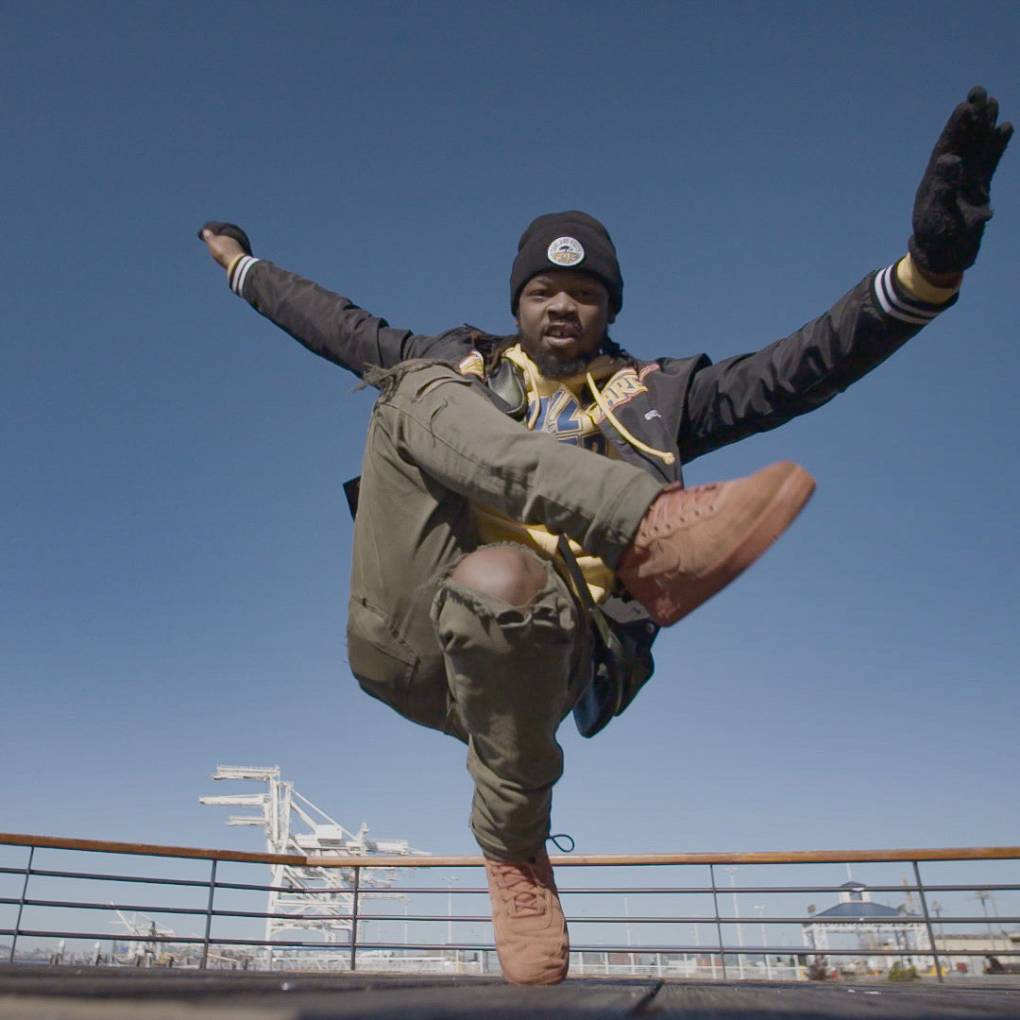
How Turf Dancing Came to Define Oakland Street Dance
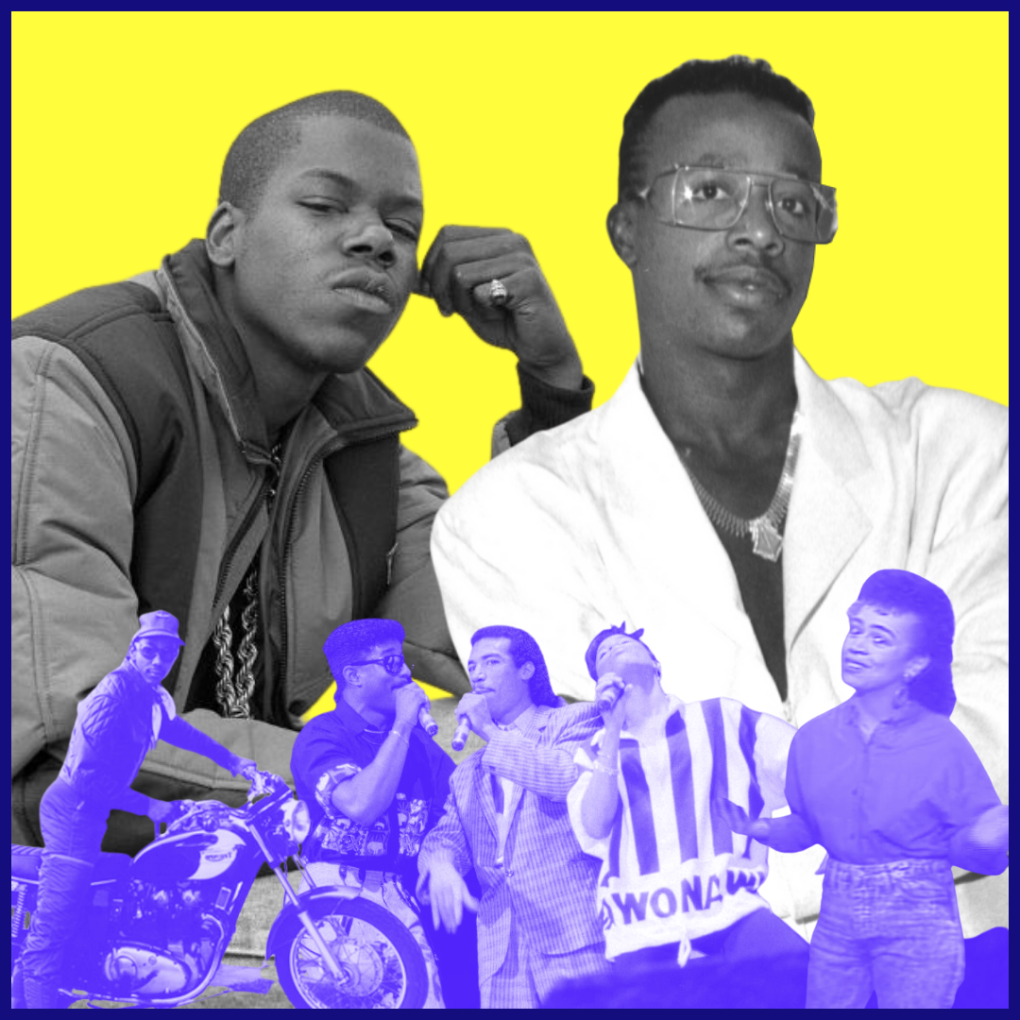
How Bay Area Hip-Hop Found Its Sound in the 1980s
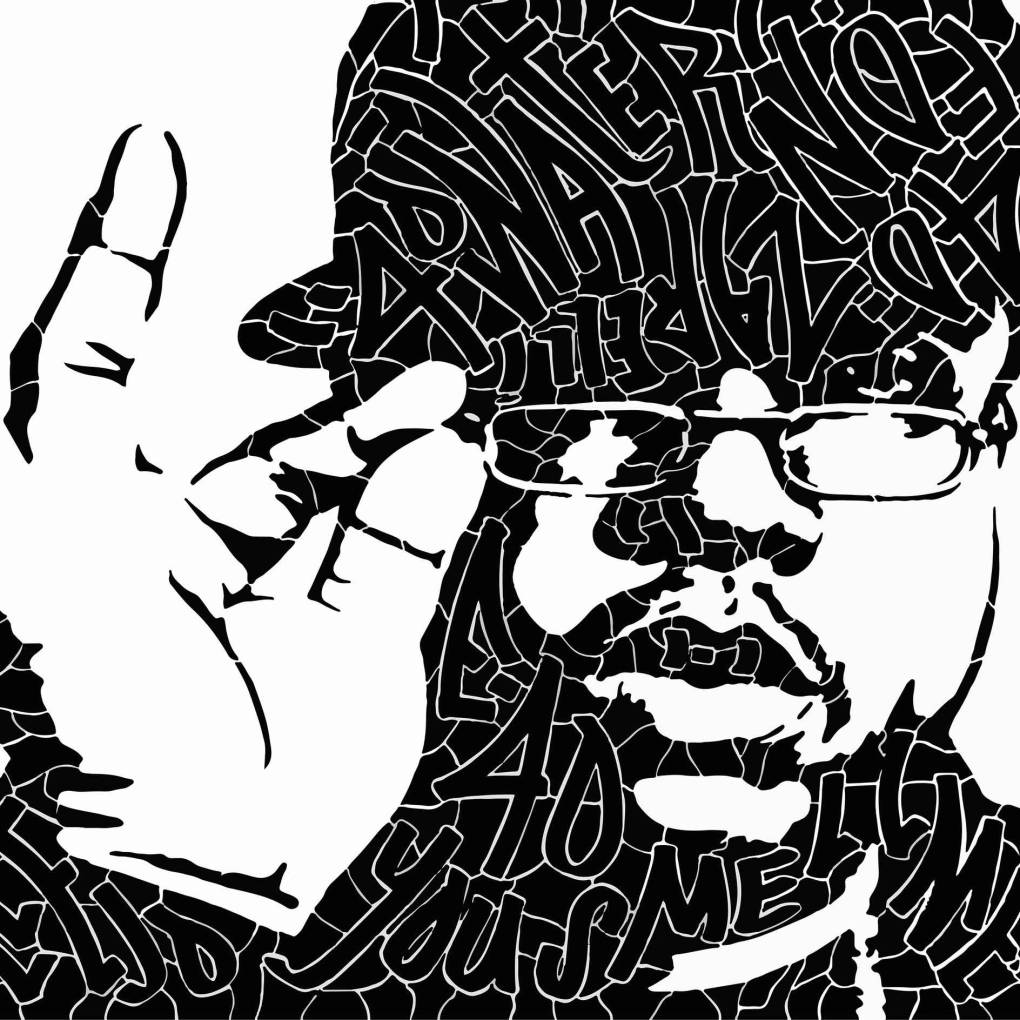
Why We’re Spending a Year Covering Bay Area Hip-Hop History
A Tribute to Soul Beat TV, the Black-Owned Network of East Oakland
How Daly City's Filipino Mobile DJ Scene Changed Hip-Hop Forever
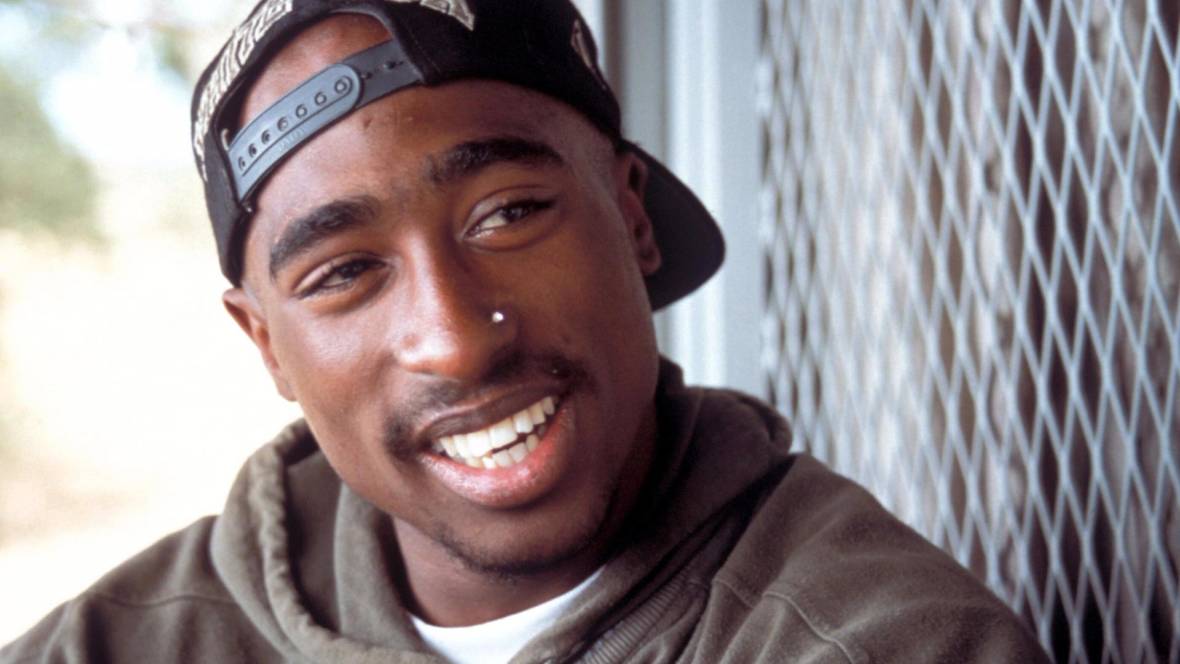
Remembering the Time Tupac Shakur Sued the Oakland Police for $10 Million
Sponsored
Player sponsored by
window.__IS_SSR__=true
window.__INITIAL_STATE__={
"attachmentsReducer": {
"audio_0": {
"type": "attachments",
"id": "audio_0",
"imgSizes": {
"kqedFullSize": {
"file": "https://ww2.kqed.org/news/wp-content/themes/KQED-unified/img/audio_bgs/background0.jpg"
}
}
},
"audio_1": {
"type": "attachments",
"id": "audio_1",
"imgSizes": {
"kqedFullSize": {
"file": "https://ww2.kqed.org/news/wp-content/themes/KQED-unified/img/audio_bgs/background1.jpg"
}
}
},
"audio_2": {
"type": "attachments",
"id": "audio_2",
"imgSizes": {
"kqedFullSize": {
"file": "https://ww2.kqed.org/news/wp-content/themes/KQED-unified/img/audio_bgs/background2.jpg"
}
}
},
"audio_3": {
"type": "attachments",
"id": "audio_3",
"imgSizes": {
"kqedFullSize": {
"file": "https://ww2.kqed.org/news/wp-content/themes/KQED-unified/img/audio_bgs/background3.jpg"
}
}
},
"audio_4": {
"type": "attachments",
"id": "audio_4",
"imgSizes": {
"kqedFullSize": {
"file": "https://ww2.kqed.org/news/wp-content/themes/KQED-unified/img/audio_bgs/background4.jpg"
}
}
},
"placeholder": {
"type": "attachments",
"id": "placeholder",
"imgSizes": {
"thumbnail": {
"file": "https://cdn.kqed.org/wp-content/uploads/2024/12/KQED-Default-Image-816638274-2000x1333-1-160x107.jpg",
"width": 160,
"height": 107,
"mimeType": "image/jpeg"
},
"medium": {
"file": "https://cdn.kqed.org/wp-content/uploads/2024/12/KQED-Default-Image-816638274-2000x1333-1-800x533.jpg",
"width": 800,
"height": 533,
"mimeType": "image/jpeg"
},
"medium_large": {
"file": "https://cdn.kqed.org/wp-content/uploads/2024/12/KQED-Default-Image-816638274-2000x1333-1-768x512.jpg",
"width": 768,
"height": 512,
"mimeType": "image/jpeg"
},
"large": {
"file": "https://cdn.kqed.org/wp-content/uploads/2024/12/KQED-Default-Image-816638274-2000x1333-1-1020x680.jpg",
"width": 1020,
"height": 680,
"mimeType": "image/jpeg"
},
"1536x1536": {
"file": "https://cdn.kqed.org/wp-content/uploads/2024/12/KQED-Default-Image-816638274-2000x1333-1-1536x1024.jpg",
"width": 1536,
"height": 1024,
"mimeType": "image/jpeg"
},
"fd-lrg": {
"file": "https://cdn.kqed.org/wp-content/uploads/2024/12/KQED-Default-Image-816638274-2000x1333-1-1536x1024.jpg",
"width": 1536,
"height": 1024,
"mimeType": "image/jpeg"
},
"fd-med": {
"file": "https://cdn.kqed.org/wp-content/uploads/2024/12/KQED-Default-Image-816638274-2000x1333-1-1020x680.jpg",
"width": 1020,
"height": 680,
"mimeType": "image/jpeg"
},
"fd-sm": {
"file": "https://cdn.kqed.org/wp-content/uploads/2024/12/KQED-Default-Image-816638274-2000x1333-1-800x533.jpg",
"width": 800,
"height": 533,
"mimeType": "image/jpeg"
},
"post-thumbnail": {
"file": "https://cdn.kqed.org/wp-content/uploads/2024/12/KQED-Default-Image-816638274-2000x1333-1-672x372.jpg",
"width": 672,
"height": 372,
"mimeType": "image/jpeg"
},
"twentyfourteen-full-width": {
"file": "https://cdn.kqed.org/wp-content/uploads/2024/12/KQED-Default-Image-816638274-2000x1333-1-1038x576.jpg",
"width": 1038,
"height": 576,
"mimeType": "image/jpeg"
},
"xxsmall": {
"file": "https://cdn.kqed.org/wp-content/uploads/2024/12/KQED-Default-Image-816638274-2000x1333-1-160x107.jpg",
"width": 160,
"height": 107,
"mimeType": "image/jpeg"
},
"xsmall": {
"file": "https://cdn.kqed.org/wp-content/uploads/2024/12/KQED-Default-Image-816638274-2000x1333-1-672x372.jpg",
"width": 672,
"height": 372,
"mimeType": "image/jpeg"
},
"small": {
"file": "https://cdn.kqed.org/wp-content/uploads/2024/12/KQED-Default-Image-816638274-2000x1333-1-672x372.jpg",
"width": 672,
"height": 372,
"mimeType": "image/jpeg"
},
"xlarge": {
"file": "https://cdn.kqed.org/wp-content/uploads/2024/12/KQED-Default-Image-816638274-2000x1333-1-1020x680.jpg",
"width": 1020,
"height": 680,
"mimeType": "image/jpeg"
},
"full-width": {
"file": "https://cdn.kqed.org/wp-content/uploads/2024/12/KQED-Default-Image-816638274-2000x1333-1-1920x1280.jpg",
"width": 1920,
"height": 1280,
"mimeType": "image/jpeg"
},
"guest-author-32": {
"file": "https://cdn.kqed.org/wp-content/uploads/2025/01/KQED-Default-Image-816638274-1333x1333-1-160x160.jpg",
"width": 32,
"height": 32,
"mimeType": "image/jpeg"
},
"guest-author-50": {
"file": "https://cdn.kqed.org/wp-content/uploads/2025/01/KQED-Default-Image-816638274-1333x1333-1-160x160.jpg",
"width": 50,
"height": 50,
"mimeType": "image/jpeg"
},
"guest-author-64": {
"file": "https://cdn.kqed.org/wp-content/uploads/2025/01/KQED-Default-Image-816638274-1333x1333-1-160x160.jpg",
"width": 64,
"height": 64,
"mimeType": "image/jpeg"
},
"guest-author-96": {
"file": "https://cdn.kqed.org/wp-content/uploads/2025/01/KQED-Default-Image-816638274-1333x1333-1-160x160.jpg",
"width": 96,
"height": 96,
"mimeType": "image/jpeg"
},
"guest-author-128": {
"file": "https://cdn.kqed.org/wp-content/uploads/2025/01/KQED-Default-Image-816638274-1333x1333-1-160x160.jpg",
"width": 128,
"height": 128,
"mimeType": "image/jpeg"
},
"detail": {
"file": "https://cdn.kqed.org/wp-content/uploads/2025/01/KQED-Default-Image-816638274-1333x1333-1-160x160.jpg",
"width": 160,
"height": 160,
"mimeType": "image/jpeg"
},
"kqedFullSize": {
"file": "https://cdn.kqed.org/wp-content/uploads/2024/12/KQED-Default-Image-816638274-2000x1333-1.jpg",
"width": 2000,
"height": 1333
}
}
},
"arts_13932908": {
"type": "attachments",
"id": "arts_13932908",
"meta": {
"index": "attachments_1716263798",
"site": "arts",
"id": "13932908",
"found": true
},
"parent": 0,
"imgSizes": {
"twentyfourteen-full-width": {
"file": "https://ww2.kqed.org/app/uploads/sites/2/2023/08/Gary_6.SQUARE-1038x576.jpg",
"width": 1038,
"mimeType": "image/jpeg",
"height": 576
},
"thumbnail": {
"file": "https://ww2.kqed.org/app/uploads/sites/2/2023/08/Gary_6.SQUARE-160x160.jpg",
"width": 160,
"mimeType": "image/jpeg",
"height": 160
},
"post-thumbnail": {
"file": "https://ww2.kqed.org/app/uploads/sites/2/2023/08/Gary_6.SQUARE-672x372.jpg",
"width": 672,
"mimeType": "image/jpeg",
"height": 372
},
"kqedFullSize": {
"file": "https://ww2.kqed.org/app/uploads/sites/2/2023/08/Gary_6.SQUARE.jpg",
"width": 1080,
"height": 1080
},
"large": {
"file": "https://ww2.kqed.org/app/uploads/sites/2/2023/08/Gary_6.SQUARE-1020x1020.jpg",
"width": 1020,
"mimeType": "image/jpeg",
"height": 1020
},
"medium": {
"file": "https://ww2.kqed.org/app/uploads/sites/2/2023/08/Gary_6.SQUARE-800x800.jpg",
"width": 800,
"mimeType": "image/jpeg",
"height": 800
},
"medium_large": {
"file": "https://ww2.kqed.org/app/uploads/sites/2/2023/08/Gary_6.SQUARE-768x768.jpg",
"width": 768,
"mimeType": "image/jpeg",
"height": 768
}
},
"publishDate": 1691645109,
"modified": 1691646646,
"caption": "Icecold 3000 of the Turf Fienz dances with the Port of Oakland in the background. ",
"description": null,
"title": "Gary_6.SQUARE",
"credit": "Elie M. Khadra",
"status": "inherit",
"altTag": null,
"fetchFailed": false,
"isLoading": false
},
"arts_13932907": {
"type": "attachments",
"id": "arts_13932907",
"meta": {
"index": "attachments_1716263798",
"site": "arts",
"id": "13932907",
"found": true
},
"parent": 13932887,
"imgSizes": {
"twentyfourteen-full-width": {
"file": "https://ww2.kqed.org/app/uploads/sites/2/2023/08/Gary_6-1038x576.jpg",
"width": 1038,
"mimeType": "image/jpeg",
"height": 576
},
"thumbnail": {
"file": "https://ww2.kqed.org/app/uploads/sites/2/2023/08/Gary_6-160x90.jpg",
"width": 160,
"mimeType": "image/jpeg",
"height": 90
},
"post-thumbnail": {
"file": "https://ww2.kqed.org/app/uploads/sites/2/2023/08/Gary_6-672x372.jpg",
"width": 672,
"mimeType": "image/jpeg",
"height": 372
},
"kqedFullSize": {
"file": "https://ww2.kqed.org/app/uploads/sites/2/2023/08/Gary_6.jpg",
"width": 1920,
"height": 1080
},
"large": {
"file": "https://ww2.kqed.org/app/uploads/sites/2/2023/08/Gary_6-1020x574.jpg",
"width": 1020,
"mimeType": "image/jpeg",
"height": 574
},
"1536x1536": {
"file": "https://ww2.kqed.org/app/uploads/sites/2/2023/08/Gary_6-1536x864.jpg",
"width": 1536,
"mimeType": "image/jpeg",
"height": 864
},
"medium": {
"file": "https://ww2.kqed.org/app/uploads/sites/2/2023/08/Gary_6-800x450.jpg",
"width": 800,
"mimeType": "image/jpeg",
"height": 450
},
"medium_large": {
"file": "https://ww2.kqed.org/app/uploads/sites/2/2023/08/Gary_6-768x432.jpg",
"width": 768,
"mimeType": "image/jpeg",
"height": 432
}
},
"publishDate": 1691645102,
"modified": 1691647336,
"caption": "Garion Morgan, a.k.a. Icecold 3000 of the Turf Fienz, dancing near the Port of Oakland in 2019. ",
"description": null,
"title": "Gary_6",
"credit": "Elie M. Khadra",
"status": "inherit",
"altTag": "Garion Morgan, a.k.a. Icecold 3000 of the Turf Fienz, dancing near the Port of Oakland in 2019.",
"fetchFailed": false,
"isLoading": false
},
"arts_13927364": {
"type": "attachments",
"id": "arts_13927364",
"meta": {
"index": "attachments_1716263798",
"site": "arts",
"id": "13927364",
"found": true
},
"parent": 13927349,
"imgSizes": {
"twentyfourteen-full-width": {
"file": "https://ww2.kqed.org/app/uploads/sites/2/2023/04/photo-forward_____separate_logos__2_-1038x576.png",
"width": 1038,
"mimeType": "image/png",
"height": 576
},
"thumbnail": {
"file": "https://ww2.kqed.org/app/uploads/sites/2/2023/04/photo-forward_____separate_logos__2_-160x160.png",
"width": 160,
"mimeType": "image/png",
"height": 160
},
"post-thumbnail": {
"file": "https://ww2.kqed.org/app/uploads/sites/2/2023/04/photo-forward_____separate_logos__2_-672x372.png",
"width": 672,
"mimeType": "image/png",
"height": 372
},
"kqedFullSize": {
"file": "https://ww2.kqed.org/app/uploads/sites/2/2023/04/photo-forward_____separate_logos__2_.png",
"width": 1080,
"height": 1080
},
"large": {
"file": "https://ww2.kqed.org/app/uploads/sites/2/2023/04/photo-forward_____separate_logos__2_-1020x1020.png",
"width": 1020,
"mimeType": "image/png",
"height": 1020
},
"medium": {
"file": "https://ww2.kqed.org/app/uploads/sites/2/2023/04/photo-forward_____separate_logos__2_-800x800.png",
"width": 800,
"mimeType": "image/png",
"height": 800
},
"medium_large": {
"file": "https://ww2.kqed.org/app/uploads/sites/2/2023/04/photo-forward_____separate_logos__2_-768x768.png",
"width": 768,
"mimeType": "image/png",
"height": 768
}
},
"publishDate": 1680663395,
"modified": 1680663902,
"caption": "In the 1980s, Bay Area hip-hop hadn't yet coalesced into an identifiable regional sound. After years of street dance, DJing and graffiti sharing equal space in hip-hop, however, rapping took over, and the Bay Area's bass-heavy trademark would arrive at the end of the decade. (Clockwise from top left: Too Short, MC Hammer, Dominique DiPrima, Club Nouveau, and Motorcycle Mike.)",
"description": null,
"title": "photo-forward_____separate_logos__2_",
"credit": "Steve Ringman/San Francisco Chronicle via Getty Images; Al Pereira/Michael Ochs Archives/Getty Images; SFSU Television Archives; Raymond Boyd/Getty Images; Hodisk Records",
"status": "inherit",
"altTag": null,
"fetchFailed": false,
"isLoading": false
},
"arts_13927363": {
"type": "attachments",
"id": "arts_13927363",
"meta": {
"index": "attachments_1716263798",
"site": "arts",
"id": "13927363",
"found": true
},
"parent": 13927349,
"imgSizes": {
"twentyfourteen-full-width": {
"file": "https://ww2.kqed.org/app/uploads/sites/2/2023/04/that_s_my_word_____featured_image__3_-1038x576.png",
"width": 1038,
"mimeType": "image/png",
"height": 576
},
"thumbnail": {
"file": "https://ww2.kqed.org/app/uploads/sites/2/2023/04/that_s_my_word_____featured_image__3_-160x90.png",
"width": 160,
"mimeType": "image/png",
"height": 90
},
"post-thumbnail": {
"file": "https://ww2.kqed.org/app/uploads/sites/2/2023/04/that_s_my_word_____featured_image__3_-672x372.png",
"width": 672,
"mimeType": "image/png",
"height": 372
},
"kqedFullSize": {
"file": "https://ww2.kqed.org/app/uploads/sites/2/2023/04/that_s_my_word_____featured_image__3_.png",
"width": 1920,
"height": 1080
},
"large": {
"file": "https://ww2.kqed.org/app/uploads/sites/2/2023/04/that_s_my_word_____featured_image__3_-1020x574.png",
"width": 1020,
"mimeType": "image/png",
"height": 574
},
"1536x1536": {
"file": "https://ww2.kqed.org/app/uploads/sites/2/2023/04/that_s_my_word_____featured_image__3_-1536x864.png",
"width": 1536,
"mimeType": "image/png",
"height": 864
},
"medium": {
"file": "https://ww2.kqed.org/app/uploads/sites/2/2023/04/that_s_my_word_____featured_image__3_-800x450.png",
"width": 800,
"mimeType": "image/png",
"height": 450
},
"medium_large": {
"file": "https://ww2.kqed.org/app/uploads/sites/2/2023/04/that_s_my_word_____featured_image__3_-768x432.png",
"width": 768,
"mimeType": "image/png",
"height": 432
}
},
"publishDate": 1680663386,
"modified": 1680663880,
"caption": "In the 1980s, Bay Area hip-hop hadn't yet coalesced into an identifiable regional sound. After years of street dance, DJing and graffiti sharing equal space in hip-hop, however, rapping took over, and the Bay Area's bass-heavy trademark would arrive at the end of the decade. (Clockwise from top left: Too Short, MC Hammer, Dominique DiPrima, Club Nouveau, and Motorcycle Mike.)",
"description": null,
"title": "that_s_my_word_____featured_image__3_",
"credit": "Steve Ringman/San Francisco Chronicle via Getty Images; Al Pereira/Michael Ochs Archives/Getty Images; SFSU Television Archives; Raymond Boyd/Getty Images; Hodisk Records",
"status": "inherit",
"altTag": null,
"fetchFailed": false,
"isLoading": false
},
"arts_13923951": {
"type": "attachments",
"id": "arts_13923951",
"meta": {
"index": "attachments_1716263798",
"site": "arts",
"id": "13923951",
"found": true
},
"parent": 13923938,
"imgSizes": {
"twentyfourteen-full-width": {
"file": "https://ww2.kqed.org/app/uploads/sites/2/2023/01/e-40.SQUARE-1038x576.jpg",
"width": 1038,
"mimeType": "image/jpeg",
"height": 576
},
"thumbnail": {
"file": "https://ww2.kqed.org/app/uploads/sites/2/2023/01/e-40.SQUARE-160x160.jpg",
"width": 160,
"mimeType": "image/jpeg",
"height": 160
},
"post-thumbnail": {
"file": "https://ww2.kqed.org/app/uploads/sites/2/2023/01/e-40.SQUARE-672x372.jpg",
"width": 672,
"mimeType": "image/jpeg",
"height": 372
},
"kqedFullSize": {
"file": "https://ww2.kqed.org/app/uploads/sites/2/2023/01/e-40.SQUARE.jpg",
"width": 1888,
"height": 1888
},
"large": {
"file": "https://ww2.kqed.org/app/uploads/sites/2/2023/01/e-40.SQUARE-1020x1020.jpg",
"width": 1020,
"mimeType": "image/jpeg",
"height": 1020
},
"1536x1536": {
"file": "https://ww2.kqed.org/app/uploads/sites/2/2023/01/e-40.SQUARE-1536x1536.jpg",
"width": 1536,
"mimeType": "image/jpeg",
"height": 1536
},
"medium": {
"file": "https://ww2.kqed.org/app/uploads/sites/2/2023/01/e-40.SQUARE-800x800.jpg",
"width": 800,
"mimeType": "image/jpeg",
"height": 800
},
"medium_large": {
"file": "https://ww2.kqed.org/app/uploads/sites/2/2023/01/e-40.SQUARE-768x768.jpg",
"width": 768,
"mimeType": "image/jpeg",
"height": 768
}
},
"publishDate": 1674275798,
"modified": 1674275842,
"caption": null,
"description": null,
"title": "e-40.SQUARE",
"credit": "Shomari Smith",
"status": "inherit",
"altTag": "an illustration of e-40 from my ghetto report card",
"fetchFailed": false,
"isLoading": false
},
"arts_13923952": {
"type": "attachments",
"id": "arts_13923952",
"meta": {
"index": "attachments_1716263798",
"site": "arts",
"id": "13923952",
"found": true
},
"parent": 13923938,
"imgSizes": {
"twentyfourteen-full-width": {
"file": "https://ww2.kqed.org/app/uploads/sites/2/2023/01/e-40.web_-1038x576.jpg",
"width": 1038,
"mimeType": "image/jpeg",
"height": 576
},
"thumbnail": {
"file": "https://ww2.kqed.org/app/uploads/sites/2/2023/01/e-40.web_-160x121.jpg",
"width": 160,
"mimeType": "image/jpeg",
"height": 121
},
"post-thumbnail": {
"file": "https://ww2.kqed.org/app/uploads/sites/2/2023/01/e-40.web_-672x372.jpg",
"width": 672,
"mimeType": "image/jpeg",
"height": 372
},
"kqedFullSize": {
"file": "https://ww2.kqed.org/app/uploads/sites/2/2023/01/e-40.web_.jpg",
"width": 1920,
"height": 1450
},
"large": {
"file": "https://ww2.kqed.org/app/uploads/sites/2/2023/01/e-40.web_-1020x770.jpg",
"width": 1020,
"mimeType": "image/jpeg",
"height": 770
},
"1536x1536": {
"file": "https://ww2.kqed.org/app/uploads/sites/2/2023/01/e-40.web_-1536x1160.jpg",
"width": 1536,
"mimeType": "image/jpeg",
"height": 1160
},
"medium": {
"file": "https://ww2.kqed.org/app/uploads/sites/2/2023/01/e-40.web_-800x604.jpg",
"width": 800,
"mimeType": "image/jpeg",
"height": 604
},
"medium_large": {
"file": "https://ww2.kqed.org/app/uploads/sites/2/2023/01/e-40.web_-768x580.jpg",
"width": 768,
"mimeType": "image/jpeg",
"height": 580
}
},
"publishDate": 1674275874,
"modified": 1675229005,
"caption": "'That's My Word' drops new stories each week throughout 2023.",
"description": null,
"title": "e-40.web",
"credit": "Illustration by Shomari Smith",
"status": "inherit",
"altTag": "An illustration of the rapper e-40, holding his glasses, based on the cover to the album 'my ghetto report card'",
"fetchFailed": false,
"isLoading": false
},
"arts_13877637": {
"type": "attachments",
"id": "arts_13877637",
"meta": {
"index": "attachments_1716263798",
"site": "arts",
"id": "13877637",
"found": true
},
"parent": 13877570,
"imgSizes": {
"thumbnail": {
"file": "https://ww2.kqed.org/app/uploads/sites/2/2020/03/SoulBeat-160x87.jpg",
"width": 160,
"mimeType": "image/jpeg",
"height": 87
},
"post-thumbnail": {
"file": "https://ww2.kqed.org/app/uploads/sites/2/2020/03/SoulBeat-672x372.jpg",
"width": 672,
"mimeType": "image/jpeg",
"height": 372
},
"kqedFullSize": {
"file": "https://ww2.kqed.org/app/uploads/sites/2/2020/03/SoulBeat.jpg",
"width": 720,
"height": 393
}
},
"publishDate": 1585335057,
"modified": 1585335092,
"caption": "Commercials on SoulBeat TV now serve as a time capsule to the Oakland of the 1980s. ",
"description": "Commercials on SoulBeat TV now serve as a time capsule to the Oakland of the 1980s. ",
"title": "SoulBeat",
"credit": "SoulBeat",
"status": "inherit",
"fetchFailed": false,
"isLoading": false
},
"arts_13812553": {
"type": "attachments",
"id": "arts_13812553",
"meta": {
"index": "attachments_1716263798",
"site": "arts",
"id": "13812553",
"found": true
},
"parent": 13812551,
"imgSizes": {
"small": {
"file": "https://ww2.kqed.org/app/uploads/sites/2/2017/10/ARTS_FILIPINODJS_1-520x293.jpg",
"width": 520,
"mimeType": "image/jpeg",
"height": 293
},
"twentyfourteen-full-width": {
"file": "https://ww2.kqed.org/app/uploads/sites/2/2017/10/ARTS_FILIPINODJS_1-1038x576.jpg",
"width": 1038,
"mimeType": "image/jpeg",
"height": 576
},
"thumbnail": {
"file": "https://ww2.kqed.org/app/uploads/sites/2/2017/10/ARTS_FILIPINODJS_1-160x90.jpg",
"width": 160,
"mimeType": "image/jpeg",
"height": 90
},
"fd-sm": {
"file": "https://ww2.kqed.org/app/uploads/sites/2/2017/10/ARTS_FILIPINODJS_1-960x540.jpg",
"width": 960,
"mimeType": "image/jpeg",
"height": 540
},
"post-thumbnail": {
"file": "https://ww2.kqed.org/app/uploads/sites/2/2017/10/ARTS_FILIPINODJS_1-672x372.jpg",
"width": 672,
"mimeType": "image/jpeg",
"height": 372
},
"xsmall": {
"file": "https://ww2.kqed.org/app/uploads/sites/2/2017/10/ARTS_FILIPINODJS_1-375x211.jpg",
"width": 375,
"mimeType": "image/jpeg",
"height": 211
},
"kqedFullSize": {
"file": "https://ww2.kqed.org/app/uploads/sites/2/2017/10/ARTS_FILIPINODJS_1.jpg",
"width": 1920,
"height": 1080
},
"large": {
"file": "https://ww2.kqed.org/app/uploads/sites/2/2017/10/ARTS_FILIPINODJS_1-1020x574.jpg",
"width": 1020,
"mimeType": "image/jpeg",
"height": 574
},
"xlarge": {
"file": "https://ww2.kqed.org/app/uploads/sites/2/2017/10/ARTS_FILIPINODJS_1-1180x664.jpg",
"width": 1180,
"mimeType": "image/jpeg",
"height": 664
},
"guest-author-50": {
"file": "https://ww2.kqed.org/app/uploads/sites/2/2017/10/ARTS_FILIPINODJS_1-50x50.jpg",
"width": 50,
"mimeType": "image/jpeg",
"height": 50
},
"guest-author-96": {
"file": "https://ww2.kqed.org/app/uploads/sites/2/2017/10/ARTS_FILIPINODJS_1-96x96.jpg",
"width": 96,
"mimeType": "image/jpeg",
"height": 96
},
"medium": {
"file": "https://ww2.kqed.org/app/uploads/sites/2/2017/10/ARTS_FILIPINODJS_1-800x450.jpg",
"width": 800,
"mimeType": "image/jpeg",
"height": 450
},
"guest-author-64": {
"file": "https://ww2.kqed.org/app/uploads/sites/2/2017/10/ARTS_FILIPINODJS_1-64x64.jpg",
"width": 64,
"mimeType": "image/jpeg",
"height": 64
},
"guest-author-32": {
"file": "https://ww2.kqed.org/app/uploads/sites/2/2017/10/ARTS_FILIPINODJS_1-32x32.jpg",
"width": 32,
"mimeType": "image/jpeg",
"height": 32
},
"fd-lrg": {
"file": "https://ww2.kqed.org/app/uploads/sites/2/2017/10/ARTS_FILIPINODJS_1-1920x1080.jpg",
"width": 1920,
"mimeType": "image/jpeg",
"height": 1080
},
"fd-med": {
"file": "https://ww2.kqed.org/app/uploads/sites/2/2017/10/ARTS_FILIPINODJS_1-1180x664.jpg",
"width": 1180,
"mimeType": "image/jpeg",
"height": 664
},
"full-width": {
"file": "https://ww2.kqed.org/app/uploads/sites/2/2017/10/ARTS_FILIPINODJS_1-1920x1080.jpg",
"width": 1920,
"mimeType": "image/jpeg",
"height": 1080
},
"detail": {
"file": "https://ww2.kqed.org/app/uploads/sites/2/2017/10/ARTS_FILIPINODJS_1-150x150.jpg",
"width": 150,
"mimeType": "image/jpeg",
"height": 150
},
"medium_large": {
"file": "https://ww2.kqed.org/app/uploads/sites/2/2017/10/ARTS_FILIPINODJS_1-768x432.jpg",
"width": 768,
"mimeType": "image/jpeg",
"height": 432
},
"guest-author-128": {
"file": "https://ww2.kqed.org/app/uploads/sites/2/2017/10/ARTS_FILIPINODJS_1-128x128.jpg",
"width": 128,
"mimeType": "image/jpeg",
"height": 128
},
"xxsmall": {
"file": "https://ww2.kqed.org/app/uploads/sites/2/2017/10/ARTS_FILIPINODJS_1-240x135.jpg",
"width": 240,
"mimeType": "image/jpeg",
"height": 135
}
},
"publishDate": 1508881425,
"modified": 1508881425,
"caption": null,
"description": null,
"title": "ARTS_FILIPINODJS_1",
"credit": null,
"status": "inherit",
"fetchFailed": false,
"isLoading": false
},
"arts_11696578": {
"type": "attachments",
"id": "arts_11696578",
"meta": {
"index": "attachments_1716263798",
"site": "arts",
"id": "11696578",
"found": true
},
"parent": 11696060,
"imgSizes": {
"twentyfourteen-full-width": {
"file": "https://ww2.kqed.org/app/uploads/sites/2/2016/06/2pac.MAIN_-1038x576.jpg",
"width": 1038,
"mimeType": "image/jpeg",
"height": 576
},
"thumbnail": {
"file": "https://ww2.kqed.org/app/uploads/sites/2/2016/06/2pac.MAIN_-400x225.jpg",
"width": 400,
"mimeType": "image/jpeg",
"height": 225
},
"fd-sm": {
"file": "https://ww2.kqed.org/app/uploads/sites/2/2016/06/2pac.MAIN_-960x540.jpg",
"width": 960,
"mimeType": "image/jpeg",
"height": 540
},
"post-thumbnail": {
"file": "https://ww2.kqed.org/app/uploads/sites/2/2016/06/2pac.MAIN_-672x372.jpg",
"width": 672,
"mimeType": "image/jpeg",
"height": 372
},
"kqedFullSize": {
"file": "https://ww2.kqed.org/app/uploads/sites/2/2016/06/2pac.MAIN_.jpg",
"width": 1920,
"height": 1080
},
"large": {
"file": "https://ww2.kqed.org/app/uploads/sites/2/2016/06/2pac.MAIN_-1180x664.jpg",
"width": 1180,
"mimeType": "image/jpeg",
"height": 664
},
"guest-author-50": {
"file": "https://ww2.kqed.org/app/uploads/sites/2/2016/06/2pac.MAIN_-50x50.jpg",
"width": 50,
"mimeType": "image/jpeg",
"height": 50
},
"guest-author-96": {
"file": "https://ww2.kqed.org/app/uploads/sites/2/2016/06/2pac.MAIN_-96x96.jpg",
"width": 96,
"mimeType": "image/jpeg",
"height": 96
},
"medium": {
"file": "https://ww2.kqed.org/app/uploads/sites/2/2016/06/2pac.MAIN_-800x450.jpg",
"width": 800,
"mimeType": "image/jpeg",
"height": 450
},
"guest-author-64": {
"file": "https://ww2.kqed.org/app/uploads/sites/2/2016/06/2pac.MAIN_-64x64.jpg",
"width": 64,
"mimeType": "image/jpeg",
"height": 64
},
"guest-author-32": {
"file": "https://ww2.kqed.org/app/uploads/sites/2/2016/06/2pac.MAIN_-32x32.jpg",
"width": 32,
"mimeType": "image/jpeg",
"height": 32
},
"fd-lrg": {
"file": "https://ww2.kqed.org/app/uploads/sites/2/2016/06/2pac.MAIN_-1920x1080.jpg",
"width": 1920,
"mimeType": "image/jpeg",
"height": 1080
},
"fd-med": {
"file": "https://ww2.kqed.org/app/uploads/sites/2/2016/06/2pac.MAIN_-1180x664.jpg",
"width": 1180,
"mimeType": "image/jpeg",
"height": 664
},
"detail": {
"file": "https://ww2.kqed.org/app/uploads/sites/2/2016/06/2pac.MAIN_-150x150.jpg",
"width": 150,
"mimeType": "image/jpeg",
"height": 150
},
"medium_large": {
"file": "https://ww2.kqed.org/app/uploads/sites/2/2016/06/2pac.MAIN_-768x432.jpg",
"width": 768,
"mimeType": "image/jpeg",
"height": 432
},
"guest-author-128": {
"file": "https://ww2.kqed.org/app/uploads/sites/2/2016/06/2pac.MAIN_-128x128.jpg",
"width": 128,
"mimeType": "image/jpeg",
"height": 128
}
},
"publishDate": 1466109409,
"modified": 1696010083,
"caption": "Tupac Shakur in a still from the 1993 film 'Poetic Justice,' three years before his death.",
"description": "Tupac Shakur in a still from 'Poetic Justice.'",
"title": "2pac.MAIN",
"credit": "Columbia Pictures",
"status": "inherit",
"altTag": "Tupac Shakur in a still from 'Poetic Justice.'",
"fetchFailed": false,
"isLoading": false
}
},
"audioPlayerReducer": {
"postId": "stream_live",
"isPaused": true,
"isPlaying": false,
"pfsActive": false,
"pledgeModalIsOpen": true,
"playerDrawerIsOpen": false
},
"authorsReducer": {
"gmeline": {
"type": "authors",
"id": "185",
"meta": {
"index": "authors_1716337520",
"id": "185",
"found": true
},
"name": "Gabe Meline",
"firstName": "Gabe",
"lastName": "Meline",
"slug": "gmeline",
"email": "gmeline@kqed.org",
"display_author_email": false,
"staff_mastheads": [
"arts"
],
"title": "Senior Editor, KQED Arts & Culture",
"bio": "Gabe Meline entered journalism at age 15 making photocopied zines, and has since earned awards from the Edward R. Murrow Awards, the Society for Professional Journalists, the Online Journalism Awards, the Association of Alternative Newsweeklies and the California Newspaper Publishers Association. Prior to KQED, he was the editor of the \u003cem>North Bay Bohemian\u003c/em> and a touring musician. He lives with his wife, his daughter, and a 1964 Volvo in his hometown of Santa Rosa, CA.",
"avatar": "https://secure.gravatar.com/avatar/80e9715844c5fc3f07edac5b08973b76?s=600&d=blank&r=g",
"twitter": null,
"facebook": null,
"instagram": "gmeline",
"linkedin": null,
"sites": [
{
"site": "",
"roles": [
"editor"
]
},
{
"site": "arts",
"roles": [
"administrator"
]
},
{
"site": "artschool",
"roles": [
"editor"
]
},
{
"site": "news",
"roles": [
"author"
]
},
{
"site": "pop",
"roles": [
"editor"
]
},
{
"site": "bayareabites",
"roles": [
"editor"
]
},
{
"site": "food",
"roles": [
"editor"
]
},
{
"site": "liveblog",
"roles": [
"editor"
]
},
{
"site": "hiphop",
"roles": [
"editor"
]
}
],
"headData": {
"title": "Gabe Meline | KQED",
"description": "Senior Editor, KQED Arts & Culture",
"ogImgSrc": "https://secure.gravatar.com/avatar/80e9715844c5fc3f07edac5b08973b76?s=600&d=blank&r=g",
"twImgSrc": "https://secure.gravatar.com/avatar/80e9715844c5fc3f07edac5b08973b76?s=600&d=blank&r=g"
},
"isLoading": false,
"link": "/author/gmeline"
},
"cescobar": {
"type": "authors",
"id": "11241",
"meta": {
"index": "authors_1716337520",
"id": "11241",
"found": true
},
"name": "Claudia Escobar",
"firstName": "Claudia",
"lastName": "Escobar",
"slug": "cescobar",
"email": "cescobar@kqed.org",
"display_author_email": false,
"staff_mastheads": [],
"title": "KQED Contributor",
"bio": "Tropical latin visual story teller extraordinaire! bread maker apprentice.",
"avatar": "https://secure.gravatar.com/avatar/88fd5f70de3d9e639900002806a7a708?s=600&d=blank&r=g",
"twitter": null,
"facebook": null,
"instagram": null,
"linkedin": null,
"sites": [
{
"site": "arts",
"roles": [
"author"
]
},
{
"site": "news",
"roles": [
"author"
]
}
],
"headData": {
"title": "Claudia Escobar | KQED",
"description": "KQED Contributor",
"ogImgSrc": "https://secure.gravatar.com/avatar/88fd5f70de3d9e639900002806a7a708?s=600&d=blank&r=g",
"twImgSrc": "https://secure.gravatar.com/avatar/88fd5f70de3d9e639900002806a7a708?s=600&d=blank&r=g"
},
"isLoading": false,
"link": "/author/cescobar"
},
"nvoynovskaya": {
"type": "authors",
"id": "11387",
"meta": {
"index": "authors_1716337520",
"id": "11387",
"found": true
},
"name": "Nastia Voynovskaya",
"firstName": "Nastia",
"lastName": "Voynovskaya",
"slug": "nvoynovskaya",
"email": "nvoynovskaya@kqed.org",
"display_author_email": false,
"staff_mastheads": [
"arts"
],
"title": "Editor and reporter",
"bio": "Nastia Voynovskaya is a reporter and editor at KQED Arts & Culture. She's been covering the arts in the Bay Area for over a decade, with a focus on music, queer culture, labor issues and grassroots organizing. She has edited KQED story series such as Trans Bay: A History of San Francisco's Gender-Diverse Community, and co-created KQED's Bay Area hip-hop history project, That's My Word. Nastia's work has been recognized by the Society of Professional Journalists and San Francisco Press Club. She holds a BA in comparative literature from UC Berkeley.",
"avatar": "https://secure.gravatar.com/avatar/310649817772dd2a98e5dfecb6b24842?s=600&d=blank&r=g",
"twitter": null,
"facebook": null,
"instagram": "https://www.instagram.com/nananastia/",
"linkedin": null,
"sites": [
{
"site": "arts",
"roles": [
"administrator"
]
},
{
"site": "news",
"roles": [
"editor"
]
},
{
"site": "pop",
"roles": [
"administrator"
]
},
{
"site": "bayareabites",
"roles": [
"editor"
]
},
{
"site": "podcasts",
"roles": [
"editor"
]
},
{
"site": "hiphop",
"roles": [
"editor"
]
}
],
"headData": {
"title": "Nastia Voynovskaya | KQED",
"description": "Editor and reporter",
"ogImgSrc": "https://secure.gravatar.com/avatar/310649817772dd2a98e5dfecb6b24842?s=600&d=blank&r=g",
"twImgSrc": "https://secure.gravatar.com/avatar/310649817772dd2a98e5dfecb6b24842?s=600&d=blank&r=g"
},
"isLoading": false,
"link": "/author/nvoynovskaya"
},
"ogpenn": {
"type": "authors",
"id": "11491",
"meta": {
"index": "authors_1716337520",
"id": "11491",
"found": true
},
"name": "Pendarvis Harshaw",
"firstName": "Pendarvis",
"lastName": "Harshaw",
"slug": "ogpenn",
"email": "ogpenn@gmail.com",
"display_author_email": false,
"staff_mastheads": [
"arts"
],
"title": "Community Engagement Reporter",
"bio": "Pendarvis Harshaw is an educator, host and writer with KQED Arts.",
"avatar": "https://secure.gravatar.com/avatar/093d33baff5354890e29ad83d58d2c49?s=600&d=blank&r=g",
"twitter": null,
"facebook": null,
"instagram": "ogpenn",
"linkedin": null,
"sites": [
{
"site": "arts",
"roles": [
"editor"
]
},
{
"site": "news",
"roles": [
"editor"
]
},
{
"site": "bayareabites",
"roles": [
"author"
]
},
{
"site": "hiphop",
"roles": [
"editor"
]
}
],
"headData": {
"title": "Pendarvis Harshaw | KQED",
"description": "Community Engagement Reporter",
"ogImgSrc": "https://secure.gravatar.com/avatar/093d33baff5354890e29ad83d58d2c49?s=600&d=blank&r=g",
"twImgSrc": "https://secure.gravatar.com/avatar/093d33baff5354890e29ad83d58d2c49?s=600&d=blank&r=g"
},
"isLoading": false,
"link": "/author/ogpenn"
},
"earnold": {
"type": "authors",
"id": "11839",
"meta": {
"index": "authors_1716337520",
"id": "11839",
"found": true
},
"name": "Eric Arnold",
"firstName": "Eric",
"lastName": "Arnold",
"slug": "earnold",
"email": "earnold@kqed.org",
"display_author_email": false,
"staff_mastheads": [],
"title": "Contributing Editor, 'That's My Word'",
"bio": "Eric Arnold has covered hip-hop locally and nationally for over 30 years. Formerly the managing editor of \u003cem>4080\u003c/em> and columnist for \u003cem>The Source\u003c/em>, he chronicled hyphy’s rise and fall, co-curated the Oakland Museum of California’s first hip-hop exhibit in 2018 and won a 2022 Northern California Emmy Award for a mini-documentary on Oakland’s Boogaloo dance culture. He is a contributing editor for \u003cem>That’s My Word\u003c/em>, KQED's series on the history of Bay Area hip-hop.",
"avatar": "https://secure.gravatar.com/avatar/ede45b04898456ad0893a2811e78b0a2?s=600&d=blank&r=g",
"twitter": null,
"facebook": null,
"instagram": null,
"linkedin": null,
"sites": [
{
"site": "arts",
"roles": [
"contributor"
]
},
{
"site": "news",
"roles": [
"contributor"
]
},
{
"site": "hiphop",
"roles": [
"contributor"
]
}
],
"headData": {
"title": "Eric Arnold | KQED",
"description": "Contributing Editor, 'That's My Word'",
"ogImgSrc": "https://secure.gravatar.com/avatar/ede45b04898456ad0893a2811e78b0a2?s=600&d=blank&r=g",
"twImgSrc": "https://secure.gravatar.com/avatar/ede45b04898456ad0893a2811e78b0a2?s=600&d=blank&r=g"
},
"isLoading": false,
"link": "/author/earnold"
},
"mreeves": {
"type": "authors",
"id": "11855",
"meta": {
"index": "authors_1716337520",
"id": "11855",
"found": true
},
"name": "Mosi Reeves",
"firstName": "Mosi",
"lastName": "Reeves",
"slug": "mreeves",
"email": "infamous30@gmail.com",
"display_author_email": false,
"staff_mastheads": [],
"title": "KQED Contributor",
"bio": "Mosi Reeves is a journalist and cultural critic based in Oakland, California. In addition to KQED, his work has appeared in \u003cem>Rolling Stone\u003c/em>, \u003cem>The Wire\u003c/em>, Pitchfork, \u003cem>Billboard\u003c/em>, and Grammy.com.",
"avatar": "https://secure.gravatar.com/avatar/6f376003ca1cf7a873edc107f5f331f1?s=600&d=blank&r=g",
"twitter": null,
"facebook": null,
"instagram": null,
"linkedin": null,
"sites": [
{
"site": "arts",
"roles": [
"contributor"
]
},
{
"site": "pop",
"roles": [
"contributor"
]
}
],
"headData": {
"title": "Mosi Reeves | KQED",
"description": "KQED Contributor",
"ogImgSrc": "https://secure.gravatar.com/avatar/6f376003ca1cf7a873edc107f5f331f1?s=600&d=blank&r=g",
"twImgSrc": "https://secure.gravatar.com/avatar/6f376003ca1cf7a873edc107f5f331f1?s=600&d=blank&r=g"
},
"isLoading": false,
"link": "/author/mreeves"
}
},
"breakingNewsReducer": {},
"pagesReducer": {},
"postsReducer": {
"stream_live": {
"type": "live",
"id": "stream_live",
"audioUrl": "https://streams.kqed.org/kqedradio",
"title": "Live Stream",
"excerpt": "Live Stream information currently unavailable.",
"link": "/radio",
"featImg": "",
"label": {
"name": "KQED Live",
"link": "/"
}
},
"stream_kqedNewscast": {
"type": "posts",
"id": "stream_kqedNewscast",
"audioUrl": "https://www.kqed.org/.stream/anon/radio/RDnews/newscast.mp3?_=1",
"title": "KQED Newscast",
"featImg": "",
"label": {
"name": "88.5 FM",
"link": "/"
}
},
"arts_13932887": {
"type": "posts",
"id": "arts_13932887",
"meta": {
"index": "posts_1716263798",
"site": "arts",
"id": "13932887",
"score": null,
"sort": [
1691688631000
]
},
"guestAuthors": [],
"slug": "turf-dancing-oakland-street-dance",
"title": "How Turf Dancing Came to Define Oakland Street Dance",
"publishDate": 1691688631,
"format": "aside",
"headTitle": "How Turf Dancing Came to Define Oakland Street Dance | KQED",
"labelTerm": {},
"content": "\u003cfigure id=\"attachment_13932907\" class=\"wp-caption aligncenter\" style=\"max-width: 1920px\">\u003cimg loading=\"lazy\" decoding=\"async\" src=\"https://ww2.kqed.org/app/uploads/sites/2/2023/08/Gary_6.jpg\" alt=\"Garion Morgan, a.k.a. Icecold 3000 of the Turf Fienz, dancing near the Port of Oakland in 2019.\" width=\"1920\" height=\"1080\" class=\"size-full wp-image-13932907\" srcset=\"https://cdn.kqed.org/wp-content/uploads/sites/2/2023/08/Gary_6.jpg 1920w, https://cdn.kqed.org/wp-content/uploads/sites/2/2023/08/Gary_6-800x450.jpg 800w, https://cdn.kqed.org/wp-content/uploads/sites/2/2023/08/Gary_6-1020x574.jpg 1020w, https://cdn.kqed.org/wp-content/uploads/sites/2/2023/08/Gary_6-160x90.jpg 160w, https://cdn.kqed.org/wp-content/uploads/sites/2/2023/08/Gary_6-768x432.jpg 768w, https://cdn.kqed.org/wp-content/uploads/sites/2/2023/08/Gary_6-1536x864.jpg 1536w\" sizes=\"(max-width: 1920px) 100vw, 1920px\">\u003cfigcaption class=\"wp-caption-text\">Garion Morgan, a.k.a. Icecold 3000 of the Turf Fienz, dancing near the Port of Oakland in 2019. In recent years, turf dancing has undergone a revival, extending and building upon its hyphy-era origins. \u003ccite>(Elie M. Khadra)\u003c/cite>\u003c/figcaption>\u003c/figure>\n\u003cp>\u003cem>Editor’s note: This story is part of \u003c/em>\u003ca href=\"https://www.kqed.org/bayareahiphop\">That’s My Word\u003c/a>\u003cem>, KQED’s year-long exploration of \u003ca href=\"https://www.kqed.org/bayareahiphop\">Bay Area hip-hop\u003c/a> history.\u003c/em>\u003c/p>\n\u003cp>[dropcap]I[/dropcap]t was a hard-fought dance battle in front of a live audience, with some of the region’s top turfers competing against an array of styles, from popping to fusion. After a rained-out Oakland contest, Red Bull’s Dance Your Style had reconvened in San Jose, and turf dancing — the Oakland-originated street dance form integral to Bay Area hyphy culture — took center stage. \u003c/p>\n\u003cp>When the smoke cleared, Oakland’s rising star Hector “Intricate” Ascencio stood alone at the top. With a flurry of Wing Chun-esque hand motions, floor drops, pantomimed gut punches, and expressive footwork, Intricate earned the right to compete in the National Finals, held in Chicago on May 20. Though he didn’t win, owing to tough competition and a song selected by the DJ that wasn’t especially turf-friendly (Ghost Town DJ’s “My Boo”), he represented the Bay to the fullest.\u003c/p>\n\u003cp>“Just winning for Oakland and in the Bay Area in general means so much, because we deserve to get put on the map,” Intricate said, a few days after his victory. “It’s a very rich culture in the Bay Area that obviously needs to be exposed more to the nation and to the world.”\u003c/p>\n\u003cfigure id=\"attachment_13932912\" class=\"wp-caption aligncenter\" style=\"max-width: 1920px\">\u003cimg loading=\"lazy\" decoding=\"async\" src=\"https://ww2.kqed.org/app/uploads/sites/2/2023/08/Hector-Intricate-Ascencio-wins-the-Red-Bull-Dance-Your-Style-competition-on-Friday-May-12-2023.-Estefany-Gonzalez002.jpg\" alt=\"\" width=\"1920\" height=\"1280\" class=\"size-full wp-image-13932912\" srcset=\"https://cdn.kqed.org/wp-content/uploads/sites/2/2023/08/Hector-Intricate-Ascencio-wins-the-Red-Bull-Dance-Your-Style-competition-on-Friday-May-12-2023.-Estefany-Gonzalez002.jpg 1920w, https://cdn.kqed.org/wp-content/uploads/sites/2/2023/08/Hector-Intricate-Ascencio-wins-the-Red-Bull-Dance-Your-Style-competition-on-Friday-May-12-2023.-Estefany-Gonzalez002-800x533.jpg 800w, https://cdn.kqed.org/wp-content/uploads/sites/2/2023/08/Hector-Intricate-Ascencio-wins-the-Red-Bull-Dance-Your-Style-competition-on-Friday-May-12-2023.-Estefany-Gonzalez002-1020x680.jpg 1020w, https://cdn.kqed.org/wp-content/uploads/sites/2/2023/08/Hector-Intricate-Ascencio-wins-the-Red-Bull-Dance-Your-Style-competition-on-Friday-May-12-2023.-Estefany-Gonzalez002-160x107.jpg 160w, https://cdn.kqed.org/wp-content/uploads/sites/2/2023/08/Hector-Intricate-Ascencio-wins-the-Red-Bull-Dance-Your-Style-competition-on-Friday-May-12-2023.-Estefany-Gonzalez002-768x512.jpg 768w, https://cdn.kqed.org/wp-content/uploads/sites/2/2023/08/Hector-Intricate-Ascencio-wins-the-Red-Bull-Dance-Your-Style-competition-on-Friday-May-12-2023.-Estefany-Gonzalez002-1536x1024.jpg 1536w\" sizes=\"(max-width: 1920px) 100vw, 1920px\">\u003cfigcaption class=\"wp-caption-text\">Hector ‘Intricate’ Ascencio wins the Red Bull Dance Your Style competition on Friday, May 12, 2023. \u003ccite>(Estefany Gonzalez for KQED)\u003c/cite>\u003c/figcaption>\u003c/figure>\n\u003cp>Indeed, turf dancing has undergone a resurgence, returning to local repute and national stages in the past few years. For the second year in a row, Red Bull’s Dance Your Style has chosen Oakland as one of its host cities around the globe. Platforms like TikTok have introduced turfing to a new generation, and this month, E-40 — who included turfing in his landmark “Tell Me When to Go” video — brought back turf dancers for his newest video, “\u003ca href=\"https://www.youtube.com/watch?v=HW1Xxbalqh4\">The Bay\u003c/a>.”\u003c/p>\n\u003cp>[ad fullwidth]\u003c/p>\n\u003cp>Red Bull has also named Turf Inc. founder Johnny “Johnny 5” Lopez a cultural ambassador, and spotlighted Oakland turfer \u003ca href=\"https://www.youtube.com/watch?v=pcsqyp85HmY\">Yung Phil in a mini-documentary\u003c/a>. In 2020, GoDaddy produced a \u003ca href=\"https://www.youtube.com/watch?v=N8IDHKWepzQ\">mini-doc on turfing\u003c/a>, featuring Ice Cold 3000 and T7, founding members of iconic Oakland crew the Turf Feinz. And this year, the Oakland Museum of California featured turf dancing as part of its 2023 Black History Month events. \u003c/p>\n\u003cp>With renewed attention on the culture coming from multiple sources, “I feel like turf dancing is at a renaissance point right now,” says Intricate. “Actually, it’s at a point of reviving, and keeping itself alive. The dancers in my generation, right now, are bringing it back to the people.”\u003c/p>\n\u003cp>https://www.youtube.com/watch?v=x2rYCB-DszM\u003c/p>\n\u003cp>\u003cspan style=\"color: #ffffff\">p\u003c/span>\u003c/p>\n\u003ch2>Street Origins and Early Battles\u003c/h2>\n\u003cp>Oakland’s street dance culture started with boogaloo in the 1960s, and predates the emergence of hip-hop dance by almost a decade. And yet its influential history – which includes turfing – is frequently overlooked. Media reports have mistakenly pegged turf dancing as a derivative of breakdancing, and until recently, many in the dance community assumed popping originated in Los Angeles, not Oakland. \u003c/p>\n\u003cp>The exact origin point of turf dancing is unknown. Some accounts date it back as far as the mid-’90s, as an improvisational, informal neighborhood dance that started in West Oakland’s Lower Bottoms and adapted stylistically as it spread to other parts of the city. But its cultural roots date back to the boogaloo era, which introduced now-ubiquitous moves like creeping, tutting, ticking, animation, and “the Oakland hit” (which became known as “the pop” when it traveled down to Southern California during the 1970s).\u003c/p>\n\u003cp>[aside postID='arts_13923938']Turfing added its own moves and aesthetic of expressive storytelling to the boogaloo blueprint – free-form Brookfield glides, buoyant West Oakland bounces, backflips, ballet-like jetes and \u003cem>en pointe\u003c/em> maneuvers, as well as “bone-breaking,” or disarticulation of limbs. It was more balanced than boogaloo in terms of upper- and lower-body movements, and typically didn’t incorporate breaking’s established footwork routines or power moves like windmills or headspins.\u003c/p>\n\u003cp>Originally, turfing was known as gigging, and was practiced by inner-city youth and even some adults as a form or creative expression — and a way to resolve hood disputes without resorting to violence. \u003c/p>\n\u003cfigure id=\"attachment_13932910\" class=\"wp-caption aligncenter\" style=\"max-width: 2264px\">\u003cimg loading=\"lazy\" decoding=\"async\" src=\"https://ww2.kqed.org/app/uploads/sites/2/2023/08/GettyImages-1408863528.jpg\" alt=\"\" width=\"2264\" height=\"2336\" class=\"size-full wp-image-13932910\" srcset=\"https://cdn.kqed.org/wp-content/uploads/sites/2/2023/08/GettyImages-1408863528.jpg 2264w, https://cdn.kqed.org/wp-content/uploads/sites/2/2023/08/GettyImages-1408863528-800x825.jpg 800w, https://cdn.kqed.org/wp-content/uploads/sites/2/2023/08/GettyImages-1408863528-1020x1052.jpg 1020w, https://cdn.kqed.org/wp-content/uploads/sites/2/2023/08/GettyImages-1408863528-160x165.jpg 160w, https://cdn.kqed.org/wp-content/uploads/sites/2/2023/08/GettyImages-1408863528-768x792.jpg 768w, https://cdn.kqed.org/wp-content/uploads/sites/2/2023/08/GettyImages-1408863528-1489x1536.jpg 1489w, https://cdn.kqed.org/wp-content/uploads/sites/2/2023/08/GettyImages-1408863528-1985x2048.jpg 1985w, https://cdn.kqed.org/wp-content/uploads/sites/2/2023/08/GettyImages-1408863528-1920x1981.jpg 1920w\" sizes=\"(max-width: 2264px) 100vw, 2264px\">\u003cfigcaption class=\"wp-caption-text\">Jeriel Bey teaches dance techniques to Toby Hall at Berkeley High School in 2007. \u003ccite>(Carlos Avila Gonzalez/San Francisco Chronicle/Getty Images )\u003c/cite>\u003c/figcaption>\u003c/figure>\n\u003cp>In 2000, Jeriel Bey, a dancer, educator and promoter originally from L.A., moved to West Oakland, next door to the Wood Street studio of musician D’Wayne Wiggins’ (of Tony Toni Toné). Bey had linked up with Richmond dance group Housing Authority, and was taking classes at Oakland’s Alice Arts Center. One day he was in his driveway practicing his steps when a neighborhood youth, Demetrius Zigler, rode up on his bike. \u003c/p>\n\u003cp>“Man, I’ll chew you,” Bey recalls Zigler saying, adding confidently. “I be fucking with it.” As the two began to show off their dance moves, Zigler danced in a way Bey had never seen. “What is that?” Bey said. “Man, I don’t know, I just be gigging,” Zigler replied. \u003c/p>\n\u003cp>“That turned into an everyday thing,” Bey says. “He’d come by the house and we’d be dancing.” Soon Zigler would bring other neighborhood kids to Bey, and they would all jump into Wiggins’ minivan and dance at birthday parties. Bey saw the potential to market the dance. But first it needed a name.\u003c/p>\n\u003cp>[aside postID='arts_13891300']Bey went to visit his cousin in San Diego, and that’s when the lightbulb moment happened. “I was like, I got these kids that come to my apartment all the time. They all be dancing. They say they be fucking with it, but I cant really market that. It’s like turf dancing, they all be turfing, but I can’t sell that either, because white people gonna look at that and think it’s some kind of gang shit. So I came up with the acronym Taking Up Room on the Floor. When I came back to Oakland, I said, look, when people ask what we’re doing next time we do these birthday parties, we tell them we’re turf dancing, and it stands for taking up room on the floor. The name kinda stuck.”\u003c/p>\n\u003cp>Bey organized the first turf dance competition in late 2004, held at Laney College. “For the first hour, no one showed up,” he recalls. “Maybe like 30 minutes later, two thousand people hit the corner. Boom! I didn’t have no security or nothing. I had kids from South Central L.A., some krump dancers, and I had some kids from West Oakland, some turf dancers, you know what I’m saying?”\u003c/p>\n\u003cp>A month later, the wide-release movie \u003cem>Rize\u003c/em> featured some L.A. dancers from the Laney battle. Word on the streets was “some little kids from West Oakland beat the kids from this movie,” Bey says with a laugh. “After that it just kind of took off from there.”\u003c/p>\n\u003cfigure id=\"attachment_13932911\" class=\"wp-caption aligncenter\" style=\"max-width: 2560px\">\u003cimg loading=\"lazy\" decoding=\"async\" src=\"https://ww2.kqed.org/app/uploads/sites/2/2023/08/GettyImages-1408863565-scaled.jpg\" alt=\"\" width=\"2560\" height=\"1995\" class=\"size-full wp-image-13932911\" srcset=\"https://cdn.kqed.org/wp-content/uploads/sites/2/2023/08/GettyImages-1408863565-scaled.jpg 2560w, https://cdn.kqed.org/wp-content/uploads/sites/2/2023/08/GettyImages-1408863565-800x623.jpg 800w, https://cdn.kqed.org/wp-content/uploads/sites/2/2023/08/GettyImages-1408863565-1020x795.jpg 1020w, https://cdn.kqed.org/wp-content/uploads/sites/2/2023/08/GettyImages-1408863565-160x125.jpg 160w, https://cdn.kqed.org/wp-content/uploads/sites/2/2023/08/GettyImages-1408863565-768x598.jpg 768w, https://cdn.kqed.org/wp-content/uploads/sites/2/2023/08/GettyImages-1408863565-1536x1197.jpg 1536w, https://cdn.kqed.org/wp-content/uploads/sites/2/2023/08/GettyImages-1408863565-2048x1596.jpg 2048w, https://cdn.kqed.org/wp-content/uploads/sites/2/2023/08/GettyImages-1408863565-1920x1496.jpg 1920w\" sizes=\"(max-width: 2560px) 100vw, 2560px\">\u003cfigcaption class=\"wp-caption-text\">Jeriel Bey teaches turf dance techniques to students at Berkeley High School in 2007. \u003ccite>(Carlos Avila Gonzalez/San Francisco Chronicle/Getty Images )\u003c/cite>\u003c/figcaption>\u003c/figure>\n\u003cp>In November 2005, Bey was preparing for a rehearsal when he got the news that Zigler had been shot and killed right down the street. In his honor, Bey says, “I made a promise to myself that no matter what happens, I’m gonna keep promoting the culture.” He continued to organize street dance battles between turfers and dancers from Los Angeles and Memphis. \u003c/p>\n\u003cp>“City-to-city hood dance battles is what I’m known for,” Bey says, noting that his events were “something different” from what had been done before. “I didn’t come up with the \u003cem>dance\u003c/em> turf dancing, but I coined the term, to give it some life and bring attention to it.”\u003c/p>\n\u003cp>Turf dancing, he says, “is a way of telling a story. It’s an attitude.”\u003c/p>\n\u003cp>At that time, he says, “There wasn’t really a lot of people doing what I was doing in the community.” Back in the day, he continues, “there was the Black Resurgents, Gentlemen of Production, Demons of the Mind – a lot of the founding fathers of the Bay Area, strutters, robotters, breakdancers – set the precedent for us. So now we’re able to look at that, and add to it.”\u003c/p>\n\u003cfigure id=\"attachment_13932906\" class=\"wp-caption aligncenter\" style=\"max-width: 1920px\">\u003cimg loading=\"lazy\" decoding=\"async\" src=\"https://ww2.kqed.org/app/uploads/sites/2/2023/08/Dopey-Fresh-competes-at-the-Red-Bull-Dance-Your-Style-event-on-Friday-May-12-2023.-Estefany-Gonzalez001.jpg\" alt=\"\" width=\"1920\" height=\"1280\" class=\"size-full wp-image-13932906\" srcset=\"https://cdn.kqed.org/wp-content/uploads/sites/2/2023/08/Dopey-Fresh-competes-at-the-Red-Bull-Dance-Your-Style-event-on-Friday-May-12-2023.-Estefany-Gonzalez001.jpg 1920w, https://cdn.kqed.org/wp-content/uploads/sites/2/2023/08/Dopey-Fresh-competes-at-the-Red-Bull-Dance-Your-Style-event-on-Friday-May-12-2023.-Estefany-Gonzalez001-800x533.jpg 800w, https://cdn.kqed.org/wp-content/uploads/sites/2/2023/08/Dopey-Fresh-competes-at-the-Red-Bull-Dance-Your-Style-event-on-Friday-May-12-2023.-Estefany-Gonzalez001-1020x680.jpg 1020w, https://cdn.kqed.org/wp-content/uploads/sites/2/2023/08/Dopey-Fresh-competes-at-the-Red-Bull-Dance-Your-Style-event-on-Friday-May-12-2023.-Estefany-Gonzalez001-160x107.jpg 160w, https://cdn.kqed.org/wp-content/uploads/sites/2/2023/08/Dopey-Fresh-competes-at-the-Red-Bull-Dance-Your-Style-event-on-Friday-May-12-2023.-Estefany-Gonzalez001-768x512.jpg 768w, https://cdn.kqed.org/wp-content/uploads/sites/2/2023/08/Dopey-Fresh-competes-at-the-Red-Bull-Dance-Your-Style-event-on-Friday-May-12-2023.-Estefany-Gonzalez001-1536x1024.jpg 1536w\" sizes=\"(max-width: 1920px) 100vw, 1920px\">\u003cfigcaption class=\"wp-caption-text\">Dopey Fresh competes at the Red Bull Dance Your Style event on Friday, May 12, 2023. \u003ccite>(Estefany Gonzalez for KQED)\u003c/cite>\u003c/figcaption>\u003c/figure>\n\u003cp>Bey eventually formed the pioneering turf dance crew the Architectz with the kids from his West Oakland neighborhood, and used his music industry connections to get the crew featured in the original video for Keak Da Sneak’s iconic song “Super Hyphy.” (Bey himself is the one saying “fa sho” and “fa sheezy” on the song’s hook.)\u003c/p>\n\u003cp>By that time, some older turf dancers had already appeared in music videos by Baby Bash and the Federation, and as the hyphy movement unfolded, turfing became its unofficial dance. As a street-bred phenomenon, turf dancing wasn’t initially regarded as a legitimate art form; Bey had championed the dance as part of a community health initiative, but that view wasn’t shared by the city of Oakland.\u003c/p>\n\u003cp>“We were a little too street for the Art & Soul festival,” he says. \u003c/p>\n\u003ch2>The Hyphy Explosion Meets the Youth Center\u003c/h2>\n\u003cp>Other institutions, however, welcomed turfers. In 2005, Bey recalls organizing turf dance battles at East Oakland youth development center Youth UpRising, a one-stop shop that offered wraparound services including music and video production, academic preparedness, job training, teenage pregnancy services and mental health counseling.\u003c/p>\n\u003cp>Bey remembers Wiggins telling him about the center and suggesting he do events there. So he went down to meet with the staff and said, “If I throw battles here, a whole lot of kids are going to show up.” Which was exactly what the center – part of a multi-agency initiative aimed at curbing violence and improving academic performance – wanted to happen.\u003c/p>\n\u003cfigure id=\"attachment_13932915\" class=\"wp-caption aligncenter\" style=\"max-width: 2560px\">\u003cimg loading=\"lazy\" decoding=\"async\" src=\"https://ww2.kqed.org/app/uploads/sites/2/2023/08/Oakland_Turfing_Still_2-scaled.jpg\" alt=\"\" width=\"2560\" height=\"1441\" class=\"size-full wp-image-13932915\" srcset=\"https://cdn.kqed.org/wp-content/uploads/sites/2/2023/08/Oakland_Turfing_Still_2-scaled.jpg 2560w, https://cdn.kqed.org/wp-content/uploads/sites/2/2023/08/Oakland_Turfing_Still_2-800x450.jpg 800w, https://cdn.kqed.org/wp-content/uploads/sites/2/2023/08/Oakland_Turfing_Still_2-1020x574.jpg 1020w, https://cdn.kqed.org/wp-content/uploads/sites/2/2023/08/Oakland_Turfing_Still_2-160x90.jpg 160w, https://cdn.kqed.org/wp-content/uploads/sites/2/2023/08/Oakland_Turfing_Still_2-768x432.jpg 768w, https://cdn.kqed.org/wp-content/uploads/sites/2/2023/08/Oakland_Turfing_Still_2-1536x865.jpg 1536w, https://cdn.kqed.org/wp-content/uploads/sites/2/2023/08/Oakland_Turfing_Still_2-2048x1153.jpg 2048w, https://cdn.kqed.org/wp-content/uploads/sites/2/2023/08/Oakland_Turfing_Still_2-1920x1081.jpg 1920w\" sizes=\"(max-width: 2560px) 100vw, 2560px\">\u003cfigcaption class=\"wp-caption-text\">(L-R) Zel Koozi, Tee Seven, Yung Phil and Icecold 3000 of the Turf Fienz in 2019. \u003ccite>(Elie M. Khadra)\u003c/cite>\u003c/figcaption>\u003c/figure>\n\u003cp>Jacky Johnson, currently Digital Services and Events Manager for Oakland non-profit Urban Peace Movement, recalls, “When I started at Youth UpRising, we were trying to figure out how we were going to get young people into the center. We had this big 25,000-square-foot space, programming was free, it was for 13- to 24-year-olds, and we were a very small staff.”\u003c/p>\n\u003cp>The turf battles started out small and informal, but soon ballooned to hundreds of kids, Johnson recalls. The Architectz were involved early on, as were offshoots like the Animaniaks. “Some of the Turf Fienz were affiliated with a group called the Goon Stars, and there were dancers in our battles that weren’t affiliated with any of the groups.” \u003c/p>\n\u003cp>Youth UpRising also hosted turf dancing classes and, combined with the ongoing battles, shifted turfing culture’s epicenter from West Oakland to the Eastside. According to Johnson, “There definitely has always been a void for safe spaces that the culture can be celebrated and housed in. And I think that it was just a lot of energy around the center.”\u003c/p>\n\u003cp>https://www.youtube.com/watch?v=2GZbaXdK8Js\u003c/p>\n\u003cp>\u003cspan style=\"color: #ffffff\">p\u003c/span>\u003cbr>\nAfter E-40’s representatives called Johnson to organize a music video shoot at the location, Bey was asked to choreograph turfers for what became the national hit “Tell Me When to Go.” Following this, the Architectz were featured in the Federation’s “18 Dummy” video and went on tour with E-40. Bey later choreographed music videos for artists like Snoop Dogg, while the Amimaniaks added vocals to DJ Shadow’s 2006 single “Turf Dancing” (which, curiously, did not have a video).\u003c/p>\n\u003cp>Now 27, Intricate began turf dancing at 12 years old. He was in the sixth grade when a friend, Raymond Silviera, whose turf name is Nemesis, showed him some moves in the school library. Later, they watched turfing videos on YouTube. “It got addictive, like a good drug,” he says. \u003c/p>\n\u003cp>Intricate recalls turf dancing’s prominence in the hyphy movement. “It was just such a big inspiration in the Bay Area and the culture, within the turf dancing (community), it was just beautiful. It was the main dance for that movement, you know, just being hyphy, going dumb, going stupid, going to the sideshows in Oakland, and just going crazy.”\u003c/p>\n\u003cfigure id=\"attachment_13932905\" class=\"wp-caption aligncenter\" style=\"max-width: 1920px\">\u003cimg loading=\"lazy\" decoding=\"async\" src=\"https://ww2.kqed.org/app/uploads/sites/2/2023/08/Intricate-competes-at-the-Red-Bull-Dance-Your-Style-event-on-Friday-May-12-2023.-Estefany-Gonzalez003.jpg\" alt=\"\" width=\"1920\" height=\"1280\" class=\"size-full wp-image-13932905\" srcset=\"https://cdn.kqed.org/wp-content/uploads/sites/2/2023/08/Intricate-competes-at-the-Red-Bull-Dance-Your-Style-event-on-Friday-May-12-2023.-Estefany-Gonzalez003.jpg 1920w, https://cdn.kqed.org/wp-content/uploads/sites/2/2023/08/Intricate-competes-at-the-Red-Bull-Dance-Your-Style-event-on-Friday-May-12-2023.-Estefany-Gonzalez003-800x533.jpg 800w, https://cdn.kqed.org/wp-content/uploads/sites/2/2023/08/Intricate-competes-at-the-Red-Bull-Dance-Your-Style-event-on-Friday-May-12-2023.-Estefany-Gonzalez003-1020x680.jpg 1020w, https://cdn.kqed.org/wp-content/uploads/sites/2/2023/08/Intricate-competes-at-the-Red-Bull-Dance-Your-Style-event-on-Friday-May-12-2023.-Estefany-Gonzalez003-160x107.jpg 160w, https://cdn.kqed.org/wp-content/uploads/sites/2/2023/08/Intricate-competes-at-the-Red-Bull-Dance-Your-Style-event-on-Friday-May-12-2023.-Estefany-Gonzalez003-768x512.jpg 768w, https://cdn.kqed.org/wp-content/uploads/sites/2/2023/08/Intricate-competes-at-the-Red-Bull-Dance-Your-Style-event-on-Friday-May-12-2023.-Estefany-Gonzalez003-1536x1024.jpg 1536w\" sizes=\"(max-width: 1920px) 100vw, 1920px\">\u003cfigcaption class=\"wp-caption-text\">Hector ‘Intricate’ Ascencio competes at the Red Bull Dance Your Style event on Friday, May 12, 2023. \u003ccite>(Estefany Gonzalez for KQED)\u003c/cite>\u003c/figcaption>\u003c/figure>\n\u003cp>Jesus “Zeus” El, a former member of the Architectz and the Anamaniaks, has been turf dancing since the age of 10. Now 35, he says turfing is “something that you didn’t even have to really be a dancer to know how to interpret. It’s just part of the culture and atmosphere. I got involved just being in West Oakland in the neighborhood.”\u003c/p>\n\u003cp>Turf dance, he says, is “definitely a style with its own swag, it kind of encompasses Bay Area type of energy, the culture we all share already. It’s that energy mixed with animation and popping and different breakdown moves that we’ve had, as our foundational moves. But mainly, it’s a feeling. Like in the hyphy era, the feeling we had around rebelliousness and self-expression and movement and creativity.”\u003c/p>\n\u003cp>https://www.youtube.com/watch?v=bD42PYx5hdM\u003c/p>\n\u003cp>\u003cspan style=\"color: #ffffff\">p\u003c/span>\u003cbr>\nFor Zeus, turf dancing is a way to tell stories, but also a spiritual practice. When he’s dancing, he says, he forgets about stress and trauma, and enters a zone of blissful joy. He’s able to communicate non-verbally through movement and miming with unhoused people on his block; he fondly remembers the rapport he shared with his former neighbor \u003ca href=\"https://www.kqed.org/arts/13920198/zumbi-zion-i-improper-restraint-at-hospital\">Zumbi of Zion-I\u003c/a>, who used to watch the turfer freestyle dance moves from outside his window.\u003c/p>\n\u003cp>Turf dancing’s raw energy often comes from deeply-rooted emotions. In “Liquid Flow,” a 2019 mini-documentary produced for the Oakland Museum of California (OMCA) featuring the Turf Fienz and directed by YAK Films, Darrell “D-Real” Amstead says, “Oakland is a city of artists. Layer on layer. That pressure, the need to express yourself? It’s everywhere. Homicide. Housing. Money flowing out but never in. Somebody you know dead. Some people say all this, that we do now, came from all that.”\u003c/p>\n\u003ch2>A Viral Moment, Born From Grief\u003c/h2>\n\u003cp>Yoram Savion, founder and principal of YAK Films, was born in France but grew up in East Oakland and attended Castlemont High School. In 2006, while an undergrad at UC Berkeley, working as a teacher at San Quentin State Prison and a multimedia instructor at Youth UpRising, he shifted from digital photography to video production. In 2008, he began documenting turf dancers as part of OMCA’s “Cool Remixed” project. This led to him befriending the Turf Feinz, and to one of turf dancing’s most high-visibility moments, filmed on a Monday morning on the corner of MacArthur and 90th.\u003c/p>\n\u003cp>https://www.youtube.com/watch?v=JQRRnAhmB58\u003c/p>\n\u003cp>\u003cspan style=\"color: #ffffff\">p\u003c/span>\u003cbr>\n“RIP Rich D” is a dance suite in memory of Rich D., the brother of one of the dancers. “It was a rainy morning,” Savion says. “D-Real’s brother had just passed away in a car accident on MacArthur, and we all felt very emotional and needed to save some of those emotions.”\u003c/p>\n\u003cp>The video, sometimes known as “Dancing in the Rain,” is a haunting, poetic demonstration of street ballet. Shot handheld in a cinema verite style complete with cars passing by, the Turf Fienz met the moment with glides, pirouettes, head-to-toe animation, freezes, handspins, splits, reverse somersaults, backflips, and handstands – all set to a slow-rolling, hypnotic hip-hop beat by Yung FX, Erk tha Jerk & COOP.\u003c/p>\n\u003cp>[aside postID='arts_13924109']The video went viral on multiple online platforms, ultimately notching more than eight million views on YouTube alone. “That kind of made everything take off,” Savion says. \u003c/p>\n\u003cp>For many, “RIP Rich D” was their first exposure to turf dancing. Many of the views, Savion says, came from outside the United States. “I heard Jay-Z being interviewed by a famous DJ in London at the time, and he brought it up as a cultural reference,” Savion says. “Pretty much everybody in England has heard or seen it, and it was in an exhibit at the Oakland Museum that retraced the history of hyphy or turf. It’s often included when people are doing, you know, an homage to the Oakland cultural legacy.”\u003c/p>\n\u003cfigure id=\"attachment_13932929\" class=\"wp-caption aligncenter\" style=\"max-width: 2560px\">\u003cimg loading=\"lazy\" decoding=\"async\" src=\"https://ww2.kqed.org/app/uploads/sites/2/2023/08/HyphyKids.Dray_-scaled.jpg\" alt=\"\" width=\"2560\" height=\"1707\" class=\"size-full wp-image-13932929\" srcset=\"https://cdn.kqed.org/wp-content/uploads/sites/2/2023/08/HyphyKids.Dray_-scaled.jpg 2560w, https://cdn.kqed.org/wp-content/uploads/sites/2/2023/08/HyphyKids.Dray_-800x533.jpg 800w, https://cdn.kqed.org/wp-content/uploads/sites/2/2023/08/HyphyKids.Dray_-1020x680.jpg 1020w, https://cdn.kqed.org/wp-content/uploads/sites/2/2023/08/HyphyKids.Dray_-160x107.jpg 160w, https://cdn.kqed.org/wp-content/uploads/sites/2/2023/08/HyphyKids.Dray_-768x512.jpg 768w, https://cdn.kqed.org/wp-content/uploads/sites/2/2023/08/HyphyKids.Dray_-1536x1024.jpg 1536w, https://cdn.kqed.org/wp-content/uploads/sites/2/2023/08/HyphyKids.Dray_-2048x1365.jpg 2048w, https://cdn.kqed.org/wp-content/uploads/sites/2/2023/08/HyphyKids.Dray_-1920x1280.jpg 1920w\" sizes=\"(max-width: 2560px) 100vw, 2560px\">\u003cfigcaption class=\"wp-caption-text\">Hyphy was known as a high-energy, flamboyant movement, but layered beneath its Bay Area traditions was no small amount of trauma. \u003ccite>(D-Ray)\u003c/cite>\u003c/figcaption>\u003c/figure>\n\u003cp>But, Savion emphasizes, “it’s very important to remember where that video came from.”\u003c/p>\n\u003cp>It’s not just entertainment for entertainment’s sake, he says. “The video came from loss and grief, and a celebration of life. And so its purpose is very deep and meaningful for us who were involved in making it. The music is from the Town. We made it right there in Oakland. All the dancers are from Oakland.” The emotion in the dancing is immediately felt, Savion adds. “It also speaks on a lot of the things we were talking about at the time – criminalization and mass incarceration.”\u003c/p>\n\u003cp>Savion went on to make dozens of videos of the Turf Fienz and other dancers with the same stripped-down aesthetic. By going viral online, he bypassed many of the media gatekeepers who had overlooked Oakland in the past, while opening doors to others. “At the time,” Savion says, “we really felt there was an alternative to the mainstream. It was very noticeable to us when these videos started going viral and we got more fame online. A lot of the local news stations hit us; we even were on ABC’s \u003cem>Nightline\u003c/em>.”\u003c/p>\n\u003cp>https://www.youtube.com/watch?v=K_Vc4HXqM8E\u003c/p>\n\u003cp>\u003cspan style=\"color: #ffffff\">p\u003c/span>\u003cbr>\nThese interactions, though, revealed a sociocultural dynamic not uncommon in mainstream news reporting: inherent bias. “To see the reactions of these TV crews when they would come to the neighborhood — these are places that we were at every day, with cameras in hand. And I never felt threatened or in danger in that way. And to see how their news crews were reacting, you could tell that there was this real sense of fear.”\u003c/p>\n\u003cp>To Savion, the hood documentarian and former prison educator, “That fear is something that comes through in a lot of the social interactions with people in neighborhoods that have been overly policed, or where people have been sent to mass incarceration in disproportionate rates,” leading to what he terms “a changing of the culture.”\u003c/p>\n\u003cp>The politics of gentrification aside, YAK Films helped make inner-city Oakland culture attractive to mainstream media outlets, while also creating opportunities for crews like the Turf Fienz and dancers like Zeus to travel and to work overseas. Perhaps most importantly, this exposure created renewed interest in turf dancing among the younger generation.\u003c/p>\n\u003cp>This became especially critical as hyphy’s hot streak cooled off in the 2010s. \u003c/p>\n\u003cfigure id=\"attachment_13932916\" class=\"wp-caption aligncenter\" style=\"max-width: 1920px\">\u003cimg loading=\"lazy\" decoding=\"async\" src=\"https://ww2.kqed.org/app/uploads/sites/2/2023/08/Oakland_Turfing_Still_3.jpg\" alt=\"\" width=\"1920\" height=\"1080\" class=\"size-full wp-image-13932916\" srcset=\"https://cdn.kqed.org/wp-content/uploads/sites/2/2023/08/Oakland_Turfing_Still_3.jpg 1920w, https://cdn.kqed.org/wp-content/uploads/sites/2/2023/08/Oakland_Turfing_Still_3-800x450.jpg 800w, https://cdn.kqed.org/wp-content/uploads/sites/2/2023/08/Oakland_Turfing_Still_3-1020x574.jpg 1020w, https://cdn.kqed.org/wp-content/uploads/sites/2/2023/08/Oakland_Turfing_Still_3-160x90.jpg 160w, https://cdn.kqed.org/wp-content/uploads/sites/2/2023/08/Oakland_Turfing_Still_3-768x432.jpg 768w, https://cdn.kqed.org/wp-content/uploads/sites/2/2023/08/Oakland_Turfing_Still_3-1536x864.jpg 1536w\" sizes=\"(max-width: 1920px) 100vw, 1920px\">\u003cfigcaption class=\"wp-caption-text\">Yung Phil dances at MacArthur BART in 2019. \u003ccite>(Elie M. Khadra)\u003c/cite>\u003c/figcaption>\u003c/figure>\n\u003ch2>For Some, a Bittersweet Return to the Limelight \u003c/h2>\n\u003cp>In 2012, Turf Fienz member Johnny “Johnny 5” Lopez founded his own production company, Turf Inc., and began producing turf battles in conjunction with event producer Sarah Sexton’s Oakland Indie Mayhem. The events soon widened to include boogaloo demonstrations by Oakland dance OGs and “all-styles” battles open to poppers, krumpers, and breakers.\u003c/p>\n\u003cp>In the mid-2010s, Turf Inc. began producing events on its own and organized a turf dance battle produced by YAK Films and held during the Art & Soul festival in Oakland’s Ogawa Plaza – keeping the dance visible, engaging veteran dancers like iDummy and Krow the God, and drawing a rapt audience of kids, teenagers and young adults. \u003c/p>\n\u003cp>That wave of momentum has continued through the present day, as Turf Inc. has grown into the Bay Area turf dance production company of record, producing larger and larger events and eventually getting Red Bull to come on board.\u003c/p>\n\u003cfigure id=\"attachment_13932914\" class=\"wp-caption aligncenter\" style=\"max-width: 1920px\">\u003cimg loading=\"lazy\" decoding=\"async\" src=\"https://ww2.kqed.org/app/uploads/sites/2/2023/08/Johnny-5-dances-in-front-of-Guildhouse-in-San-Jose-on-Friday-May-12-2023.-Estefany-Gonzalez001.jpg\" alt=\"\" width=\"1920\" height=\"1280\" class=\"size-full wp-image-13932914\" srcset=\"https://cdn.kqed.org/wp-content/uploads/sites/2/2023/08/Johnny-5-dances-in-front-of-Guildhouse-in-San-Jose-on-Friday-May-12-2023.-Estefany-Gonzalez001.jpg 1920w, https://cdn.kqed.org/wp-content/uploads/sites/2/2023/08/Johnny-5-dances-in-front-of-Guildhouse-in-San-Jose-on-Friday-May-12-2023.-Estefany-Gonzalez001-800x533.jpg 800w, https://cdn.kqed.org/wp-content/uploads/sites/2/2023/08/Johnny-5-dances-in-front-of-Guildhouse-in-San-Jose-on-Friday-May-12-2023.-Estefany-Gonzalez001-1020x680.jpg 1020w, https://cdn.kqed.org/wp-content/uploads/sites/2/2023/08/Johnny-5-dances-in-front-of-Guildhouse-in-San-Jose-on-Friday-May-12-2023.-Estefany-Gonzalez001-160x107.jpg 160w, https://cdn.kqed.org/wp-content/uploads/sites/2/2023/08/Johnny-5-dances-in-front-of-Guildhouse-in-San-Jose-on-Friday-May-12-2023.-Estefany-Gonzalez001-768x512.jpg 768w, https://cdn.kqed.org/wp-content/uploads/sites/2/2023/08/Johnny-5-dances-in-front-of-Guildhouse-in-San-Jose-on-Friday-May-12-2023.-Estefany-Gonzalez001-1536x1024.jpg 1536w\" sizes=\"(max-width: 1920px) 100vw, 1920px\">\u003cfigcaption class=\"wp-caption-text\">Johnny 5 of Turf Inc. dances on the sidewalk in San Jose on Friday, May 12, 2023. \u003ccite>(Estefany Gonzalez for KQED)\u003c/cite>\u003c/figcaption>\u003c/figure>\n\u003cp>Lopez was first exposed to turfing as a youngster in the 2000s during a sideshow in his East Oakland neighborhood. Now he’s one of the culture’s most prominent faces, having been involved with music videos for Kanye West, Kendrick Lamar and Britney Spears. In the past year, he’s hosted an international delegation of Oakland turfers traveling to South America; and produced local events at San Francisco’s Westfield Center and Oakland nightclubs Complex and the New Parish.\u003c/p>\n\u003cp>Possessed of an ostentatious sense of style – he’s been known to sport a slicked-up flattop in various shades of neon – with acrobatic moves to match, Lopez has at times turf danced while wearing cowboy boots, a maneuver not recommended for folks at home.\u003c/p>\n\u003cp>[aside postID='arts_13924126']Two things he doesn’t lack are confidence and a belief in himself. As he says, “Almost every major thing that I’ve done in my life, I manifested.”\u003c/p>\n\u003cp>Dance Your Style debuted in Oakland in 2022; in the process, Lopez became a producer and consultant for Red Bull. The first event was a pilot, “but I knew it was going to work.” Afterward, he says, “the whole Global (Red Bull network) was talking about the Oakland event, and that’s how they got more information about hyphy and boogaloo.” \u003c/p>\n\u003cfigure id=\"attachment_13932918\" class=\"wp-caption aligncenter\" style=\"max-width: 1920px\">\u003cimg loading=\"lazy\" decoding=\"async\" src=\"https://ww2.kqed.org/app/uploads/sites/2/2023/08/Telice-Summerfield-at-Guildhouse-in-San-Jose-on-Friday-May-12-2023.-Estefany-Gonzalez003.jpg\" alt=\"\" width=\"1920\" height=\"1280\" class=\"size-full wp-image-13932918\" srcset=\"https://cdn.kqed.org/wp-content/uploads/sites/2/2023/08/Telice-Summerfield-at-Guildhouse-in-San-Jose-on-Friday-May-12-2023.-Estefany-Gonzalez003.jpg 1920w, https://cdn.kqed.org/wp-content/uploads/sites/2/2023/08/Telice-Summerfield-at-Guildhouse-in-San-Jose-on-Friday-May-12-2023.-Estefany-Gonzalez003-800x533.jpg 800w, https://cdn.kqed.org/wp-content/uploads/sites/2/2023/08/Telice-Summerfield-at-Guildhouse-in-San-Jose-on-Friday-May-12-2023.-Estefany-Gonzalez003-1020x680.jpg 1020w, https://cdn.kqed.org/wp-content/uploads/sites/2/2023/08/Telice-Summerfield-at-Guildhouse-in-San-Jose-on-Friday-May-12-2023.-Estefany-Gonzalez003-160x107.jpg 160w, https://cdn.kqed.org/wp-content/uploads/sites/2/2023/08/Telice-Summerfield-at-Guildhouse-in-San-Jose-on-Friday-May-12-2023.-Estefany-Gonzalez003-768x512.jpg 768w, https://cdn.kqed.org/wp-content/uploads/sites/2/2023/08/Telice-Summerfield-at-Guildhouse-in-San-Jose-on-Friday-May-12-2023.-Estefany-Gonzalez003-1536x1024.jpg 1536w\" sizes=\"(max-width: 1920px) 100vw, 1920px\">\u003cfigcaption class=\"wp-caption-text\">Telice Summerfield at Guildhouse in San Jose on Friday, May 12, 2023. \u003ccite>(Estefany Gonzalez for KQED)\u003c/cite>\u003c/figcaption>\u003c/figure>\n\u003cp>For Intricate, the 2023 Oakland champion, opportunities abound, and being on a big stage only makes him want to compete more. “It could be a very well-known dancer with a big name, and I know a lot of dancers outside of our community who tend to just submit to that dancer. I love turf dancers because if we see even a bigger name against us, we’re going to go for it.”\u003c/p>\n\u003cp>Turf dancing’s future appears to be so bright, it’ll need to keep its stunna shades on. But to some veterans, the shinier lights offer bittersweet feelings and cautionary tales.\u003c/p>\n\u003cp>Savion readily admits he’s more into the artistically pure aspect of the culture. He’s discovered he doesn’t really enjoy producing events, except for the annual Life is Living festival, held at Oakland’s DeFremery Park. He views big corporate sponsors with a bit of a side-eye: in his estimation, they see the dance as a product to be marketed, and their involvement can dilute the grassroots aspects of the culture without creating true sustainability for its practitioners. \u003c/p>\n\u003cp>[aside postID='news_11954252']For Zeus, who built a side career as an \u003ca href=\"https://www.kqed.org/arts/13832672/remembering-a-warriors-superhero-on-and-off-the-court\">acrobatic dunker for the Golden State Warriors\u003c/a> and other NBA teams, and now works with restorative justice youth programs, turf dancing is “sacred.” Despite being seen by younger turfers as a legendary figure, and still occasionally getting flown to cities like L.A. to perform, he likens the current state of turfing to an ex-girlfriend: “You still love her, but you gonna give her some static.” \u003c/p>\n\u003cp>Apologizing during a long interview – the recent death of his brother weighing heavily on his mind – he collects his thoughts for a moment of clarity: “What turf dancing means to me is the ability to express yourself. Without worry, without judgment, and you’re able to create the pictures and paint the pictures that you like the most. Good or bad.”\u003c/p>\n\u003cp>Bey, the originator of the acronym T.U.R.F., worries he will be forgotten by history. He admits to making mistakes as a younger person, and blames “Oakland politics” for his work not being as accepted or revered as it deserves. Although born in L.A., he reiterates that he was back and forth between the two regions in his youth; the “not from Oakland” tag has left him admittedly hurt, although he refuses to be bitter. \u003c/p>\n\u003cp>“For me, the brand turfing was something I coined, something I wanted to protect. Because of a student who inspired me, who got murdered many years ago. And now, so much has happened.” \u003c/p>\n\u003cp>[ad floatright]\u003c/p>\n\u003cp>\u003cimg loading=\"lazy\" decoding=\"async\" src=\"https://ww2.kqed.org/app/uploads/sites/2/2016/06/Turntable.Break_.jpg\" alt=\"\" width=\"800\" height=\"60\" class=\"aligncenter size-full wp-image-11687704\" srcset=\"https://cdn.kqed.org/wp-content/uploads/sites/2/2016/06/Turntable.Break_.jpg 800w, https://cdn.kqed.org/wp-content/uploads/sites/2/2016/06/Turntable.Break_-400x30.jpg 400w, https://cdn.kqed.org/wp-content/uploads/sites/2/2016/06/Turntable.Break_-768x58.jpg 768w\" sizes=\"(max-width: 800px) 100vw, 800px\">\u003c/p>\n\n",
"blocks": [],
"excerpt": "Hyphy videos, youth centers and street battles all propelled Oakland's 'street ballet' of turfing, now known around the world. ",
"status": "publish",
"parent": 0,
"modified": 1726790279,
"stats": {
"hasAudio": false,
"hasVideo": true,
"hasChartOrMap": false,
"iframeSrcs": [],
"hasGoogleForm": false,
"hasGallery": false,
"hasHearkenModule": false,
"hasPolis": false,
"paragraphCount": 66,
"wordCount": 4373
},
"headData": {
"title": "How Turf Dancing Came to Define Oakland Street Dance | KQED",
"description": "Hyphy videos, youth centers and street battles all propelled Oakland's 'street ballet' of turfing, now known around the world. ",
"ogTitle": "How Turf Dancing Came to Define Oakland Street Dance",
"ogDescription": "Hyphy videos, youth centers and street battles all cultivated Oakland's 'street ballet' of turfing, now known around the world.",
"ogImgId": "arts_13932907",
"twTitle": "How Turf Dancing Came to Define Oakland Street Dance",
"twDescription": "Hyphy videos, youth centers and street battles all cultivated Oakland's 'street ballet' of turfing, now known around the world.",
"twImgId": "arts_13932907",
"schema": {
"@context": "https://schema.org",
"@type": "Article",
"headline": "How Turf Dancing Came to Define Oakland Street Dance",
"datePublished": "2023-08-10T10:30:31-07:00",
"dateModified": "2024-09-19T16:57:59-07:00",
"image": "https://cdn.kqed.org/wp-content/uploads/2020/02/KQED-OG-Image@1x.png"
}
},
"source": "That's My Word",
"sourceUrl": "https://www.kqed.org/bayareahiphop",
"sticky": false,
"WpOldSlug": "how-turf-dancing-came-to-define-oakland-street-dance",
"templateType": "standard",
"featuredImageType": "standard",
"excludeFromSiteSearch": "Include",
"articleAge": "0",
"path": "/arts/13932887/turf-dancing-oakland-street-dance",
"audioTrackLength": null,
"parsedContent": [
{
"type": "contentString",
"content": "\u003cdiv class=\"post-body\">\u003cp>\u003cfigure id=\"attachment_13932907\" class=\"wp-caption aligncenter\" style=\"max-width: 1920px\">\u003cimg loading=\"lazy\" decoding=\"async\" src=\"https://ww2.kqed.org/app/uploads/sites/2/2023/08/Gary_6.jpg\" alt=\"Garion Morgan, a.k.a. Icecold 3000 of the Turf Fienz, dancing near the Port of Oakland in 2019.\" width=\"1920\" height=\"1080\" class=\"size-full wp-image-13932907\" srcset=\"https://cdn.kqed.org/wp-content/uploads/sites/2/2023/08/Gary_6.jpg 1920w, https://cdn.kqed.org/wp-content/uploads/sites/2/2023/08/Gary_6-800x450.jpg 800w, https://cdn.kqed.org/wp-content/uploads/sites/2/2023/08/Gary_6-1020x574.jpg 1020w, https://cdn.kqed.org/wp-content/uploads/sites/2/2023/08/Gary_6-160x90.jpg 160w, https://cdn.kqed.org/wp-content/uploads/sites/2/2023/08/Gary_6-768x432.jpg 768w, https://cdn.kqed.org/wp-content/uploads/sites/2/2023/08/Gary_6-1536x864.jpg 1536w\" sizes=\"(max-width: 1920px) 100vw, 1920px\">\u003cfigcaption class=\"wp-caption-text\">Garion Morgan, a.k.a. Icecold 3000 of the Turf Fienz, dancing near the Port of Oakland in 2019. In recent years, turf dancing has undergone a revival, extending and building upon its hyphy-era origins. \u003ccite>(Elie M. Khadra)\u003c/cite>\u003c/figcaption>\u003c/figure>\n\u003cp>\u003cem>Editor’s note: This story is part of \u003c/em>\u003ca href=\"https://www.kqed.org/bayareahiphop\">That’s My Word\u003c/a>\u003cem>, KQED’s year-long exploration of \u003ca href=\"https://www.kqed.org/bayareahiphop\">Bay Area hip-hop\u003c/a> history.\u003c/em>\u003c/p>\n\u003cp>\u003c/p>\u003cp>\u003cspan class=\"utils-parseShortcode-shortcodes-__dropcapShortcode__dropcap\">I\u003c/span>\u003c/p>\u003cp>t was a hard-fought dance battle in front of a live audience, with some of the region’s top turfers competing against an array of styles, from popping to fusion. After a rained-out Oakland contest, Red Bull’s Dance Your Style had reconvened in San Jose, and turf dancing — the Oakland-originated street dance form integral to Bay Area hyphy culture — took center stage. \u003c/p>\n\u003cp>When the smoke cleared, Oakland’s rising star Hector “Intricate” Ascencio stood alone at the top. With a flurry of Wing Chun-esque hand motions, floor drops, pantomimed gut punches, and expressive footwork, Intricate earned the right to compete in the National Finals, held in Chicago on May 20. Though he didn’t win, owing to tough competition and a song selected by the DJ that wasn’t especially turf-friendly (Ghost Town DJ’s “My Boo”), he represented the Bay to the fullest.\u003c/p>\n\u003cp>“Just winning for Oakland and in the Bay Area in general means so much, because we deserve to get put on the map,” Intricate said, a few days after his victory. “It’s a very rich culture in the Bay Area that obviously needs to be exposed more to the nation and to the world.”\u003c/p>\n\u003cfigure id=\"attachment_13932912\" class=\"wp-caption aligncenter\" style=\"max-width: 1920px\">\u003cimg loading=\"lazy\" decoding=\"async\" src=\"https://ww2.kqed.org/app/uploads/sites/2/2023/08/Hector-Intricate-Ascencio-wins-the-Red-Bull-Dance-Your-Style-competition-on-Friday-May-12-2023.-Estefany-Gonzalez002.jpg\" alt=\"\" width=\"1920\" height=\"1280\" class=\"size-full wp-image-13932912\" srcset=\"https://cdn.kqed.org/wp-content/uploads/sites/2/2023/08/Hector-Intricate-Ascencio-wins-the-Red-Bull-Dance-Your-Style-competition-on-Friday-May-12-2023.-Estefany-Gonzalez002.jpg 1920w, https://cdn.kqed.org/wp-content/uploads/sites/2/2023/08/Hector-Intricate-Ascencio-wins-the-Red-Bull-Dance-Your-Style-competition-on-Friday-May-12-2023.-Estefany-Gonzalez002-800x533.jpg 800w, https://cdn.kqed.org/wp-content/uploads/sites/2/2023/08/Hector-Intricate-Ascencio-wins-the-Red-Bull-Dance-Your-Style-competition-on-Friday-May-12-2023.-Estefany-Gonzalez002-1020x680.jpg 1020w, https://cdn.kqed.org/wp-content/uploads/sites/2/2023/08/Hector-Intricate-Ascencio-wins-the-Red-Bull-Dance-Your-Style-competition-on-Friday-May-12-2023.-Estefany-Gonzalez002-160x107.jpg 160w, https://cdn.kqed.org/wp-content/uploads/sites/2/2023/08/Hector-Intricate-Ascencio-wins-the-Red-Bull-Dance-Your-Style-competition-on-Friday-May-12-2023.-Estefany-Gonzalez002-768x512.jpg 768w, https://cdn.kqed.org/wp-content/uploads/sites/2/2023/08/Hector-Intricate-Ascencio-wins-the-Red-Bull-Dance-Your-Style-competition-on-Friday-May-12-2023.-Estefany-Gonzalez002-1536x1024.jpg 1536w\" sizes=\"(max-width: 1920px) 100vw, 1920px\">\u003cfigcaption class=\"wp-caption-text\">Hector ‘Intricate’ Ascencio wins the Red Bull Dance Your Style competition on Friday, May 12, 2023. \u003ccite>(Estefany Gonzalez for KQED)\u003c/cite>\u003c/figcaption>\u003c/figure>\n\u003cp>Indeed, turf dancing has undergone a resurgence, returning to local repute and national stages in the past few years. For the second year in a row, Red Bull’s Dance Your Style has chosen Oakland as one of its host cities around the globe. Platforms like TikTok have introduced turfing to a new generation, and this month, E-40 — who included turfing in his landmark “Tell Me When to Go” video — brought back turf dancers for his newest video, “\u003ca href=\"https://www.youtube.com/watch?v=HW1Xxbalqh4\">The Bay\u003c/a>.”\u003c/p>\n\u003cp>\u003c/p>\u003c/div>",
"attributes": {
"named": {},
"numeric": []
}
},
{
"type": "component",
"content": "",
"name": "ad",
"attributes": {
"named": {
"label": "fullwidth"
},
"numeric": [
"fullwidth"
]
}
},
{
"type": "contentString",
"content": "\u003cdiv class=\"post-body\">\u003cp>\u003c/p>\n\u003cp>Red Bull has also named Turf Inc. founder Johnny “Johnny 5” Lopez a cultural ambassador, and spotlighted Oakland turfer \u003ca href=\"https://www.youtube.com/watch?v=pcsqyp85HmY\">Yung Phil in a mini-documentary\u003c/a>. In 2020, GoDaddy produced a \u003ca href=\"https://www.youtube.com/watch?v=N8IDHKWepzQ\">mini-doc on turfing\u003c/a>, featuring Ice Cold 3000 and T7, founding members of iconic Oakland crew the Turf Feinz. And this year, the Oakland Museum of California featured turf dancing as part of its 2023 Black History Month events. \u003c/p>\n\u003cp>With renewed attention on the culture coming from multiple sources, “I feel like turf dancing is at a renaissance point right now,” says Intricate. “Actually, it’s at a point of reviving, and keeping itself alive. The dancers in my generation, right now, are bringing it back to the people.”\u003c/p>\u003c/p>\u003cp>\u003cspan class='utils-parseShortcode-shortcodes-__youtubeShortcode__embedYoutube'>\n \u003cspan class='utils-parseShortcode-shortcodes-__youtubeShortcode__embedYoutubeInside'>\n \u003ciframe\n loading='lazy'\n class='utils-parseShortcode-shortcodes-__youtubeShortcode__youtubePlayer'\n type='text/html'\n src='//www.youtube.com/embed/x2rYCB-DszM'\n title='//www.youtube.com/embed/x2rYCB-DszM'\n allowfullscreen='true'\n style='border:0;'>\u003c/iframe>\n \u003c/span>\n \u003c/span>\u003c/p>\u003cp>\u003cp>\u003cspan style=\"color: #ffffff\">p\u003c/span>\u003c/p>\n\u003ch2>Street Origins and Early Battles\u003c/h2>\n\u003cp>Oakland’s street dance culture started with boogaloo in the 1960s, and predates the emergence of hip-hop dance by almost a decade. And yet its influential history – which includes turfing – is frequently overlooked. Media reports have mistakenly pegged turf dancing as a derivative of breakdancing, and until recently, many in the dance community assumed popping originated in Los Angeles, not Oakland. \u003c/p>\n\u003cp>The exact origin point of turf dancing is unknown. Some accounts date it back as far as the mid-’90s, as an improvisational, informal neighborhood dance that started in West Oakland’s Lower Bottoms and adapted stylistically as it spread to other parts of the city. But its cultural roots date back to the boogaloo era, which introduced now-ubiquitous moves like creeping, tutting, ticking, animation, and “the Oakland hit” (which became known as “the pop” when it traveled down to Southern California during the 1970s).\u003c/p>\n\u003cp>\u003c/p>\u003c/div>",
"attributes": {
"named": {},
"numeric": []
}
},
{
"type": "component",
"content": "",
"name": "aside",
"attributes": {
"named": {
"postid": "arts_13923938",
"label": ""
},
"numeric": []
}
},
{
"type": "contentString",
"content": "\u003cdiv class=\"post-body\">\u003cp>Turfing added its own moves and aesthetic of expressive storytelling to the boogaloo blueprint – free-form Brookfield glides, buoyant West Oakland bounces, backflips, ballet-like jetes and \u003cem>en pointe\u003c/em> maneuvers, as well as “bone-breaking,” or disarticulation of limbs. It was more balanced than boogaloo in terms of upper- and lower-body movements, and typically didn’t incorporate breaking’s established footwork routines or power moves like windmills or headspins.\u003c/p>\n\u003cp>Originally, turfing was known as gigging, and was practiced by inner-city youth and even some adults as a form or creative expression — and a way to resolve hood disputes without resorting to violence. \u003c/p>\n\u003cfigure id=\"attachment_13932910\" class=\"wp-caption aligncenter\" style=\"max-width: 2264px\">\u003cimg loading=\"lazy\" decoding=\"async\" src=\"https://ww2.kqed.org/app/uploads/sites/2/2023/08/GettyImages-1408863528.jpg\" alt=\"\" width=\"2264\" height=\"2336\" class=\"size-full wp-image-13932910\" srcset=\"https://cdn.kqed.org/wp-content/uploads/sites/2/2023/08/GettyImages-1408863528.jpg 2264w, https://cdn.kqed.org/wp-content/uploads/sites/2/2023/08/GettyImages-1408863528-800x825.jpg 800w, https://cdn.kqed.org/wp-content/uploads/sites/2/2023/08/GettyImages-1408863528-1020x1052.jpg 1020w, https://cdn.kqed.org/wp-content/uploads/sites/2/2023/08/GettyImages-1408863528-160x165.jpg 160w, https://cdn.kqed.org/wp-content/uploads/sites/2/2023/08/GettyImages-1408863528-768x792.jpg 768w, https://cdn.kqed.org/wp-content/uploads/sites/2/2023/08/GettyImages-1408863528-1489x1536.jpg 1489w, https://cdn.kqed.org/wp-content/uploads/sites/2/2023/08/GettyImages-1408863528-1985x2048.jpg 1985w, https://cdn.kqed.org/wp-content/uploads/sites/2/2023/08/GettyImages-1408863528-1920x1981.jpg 1920w\" sizes=\"(max-width: 2264px) 100vw, 2264px\">\u003cfigcaption class=\"wp-caption-text\">Jeriel Bey teaches dance techniques to Toby Hall at Berkeley High School in 2007. \u003ccite>(Carlos Avila Gonzalez/San Francisco Chronicle/Getty Images )\u003c/cite>\u003c/figcaption>\u003c/figure>\n\u003cp>In 2000, Jeriel Bey, a dancer, educator and promoter originally from L.A., moved to West Oakland, next door to the Wood Street studio of musician D’Wayne Wiggins’ (of Tony Toni Toné). Bey had linked up with Richmond dance group Housing Authority, and was taking classes at Oakland’s Alice Arts Center. One day he was in his driveway practicing his steps when a neighborhood youth, Demetrius Zigler, rode up on his bike. \u003c/p>\n\u003cp>“Man, I’ll chew you,” Bey recalls Zigler saying, adding confidently. “I be fucking with it.” As the two began to show off their dance moves, Zigler danced in a way Bey had never seen. “What is that?” Bey said. “Man, I don’t know, I just be gigging,” Zigler replied. \u003c/p>\n\u003cp>“That turned into an everyday thing,” Bey says. “He’d come by the house and we’d be dancing.” Soon Zigler would bring other neighborhood kids to Bey, and they would all jump into Wiggins’ minivan and dance at birthday parties. Bey saw the potential to market the dance. But first it needed a name.\u003c/p>\n\u003cp>\u003c/p>\u003c/div>",
"attributes": {
"named": {},
"numeric": []
}
},
{
"type": "component",
"content": "",
"name": "aside",
"attributes": {
"named": {
"postid": "arts_13891300",
"label": ""
},
"numeric": []
}
},
{
"type": "contentString",
"content": "\u003cdiv class=\"post-body\">\u003cp>Bey went to visit his cousin in San Diego, and that’s when the lightbulb moment happened. “I was like, I got these kids that come to my apartment all the time. They all be dancing. They say they be fucking with it, but I cant really market that. It’s like turf dancing, they all be turfing, but I can’t sell that either, because white people gonna look at that and think it’s some kind of gang shit. So I came up with the acronym Taking Up Room on the Floor. When I came back to Oakland, I said, look, when people ask what we’re doing next time we do these birthday parties, we tell them we’re turf dancing, and it stands for taking up room on the floor. The name kinda stuck.”\u003c/p>\n\u003cp>Bey organized the first turf dance competition in late 2004, held at Laney College. “For the first hour, no one showed up,” he recalls. “Maybe like 30 minutes later, two thousand people hit the corner. Boom! I didn’t have no security or nothing. I had kids from South Central L.A., some krump dancers, and I had some kids from West Oakland, some turf dancers, you know what I’m saying?”\u003c/p>\n\u003cp>A month later, the wide-release movie \u003cem>Rize\u003c/em> featured some L.A. dancers from the Laney battle. Word on the streets was “some little kids from West Oakland beat the kids from this movie,” Bey says with a laugh. “After that it just kind of took off from there.”\u003c/p>\n\u003cfigure id=\"attachment_13932911\" class=\"wp-caption aligncenter\" style=\"max-width: 2560px\">\u003cimg loading=\"lazy\" decoding=\"async\" src=\"https://ww2.kqed.org/app/uploads/sites/2/2023/08/GettyImages-1408863565-scaled.jpg\" alt=\"\" width=\"2560\" height=\"1995\" class=\"size-full wp-image-13932911\" srcset=\"https://cdn.kqed.org/wp-content/uploads/sites/2/2023/08/GettyImages-1408863565-scaled.jpg 2560w, https://cdn.kqed.org/wp-content/uploads/sites/2/2023/08/GettyImages-1408863565-800x623.jpg 800w, https://cdn.kqed.org/wp-content/uploads/sites/2/2023/08/GettyImages-1408863565-1020x795.jpg 1020w, https://cdn.kqed.org/wp-content/uploads/sites/2/2023/08/GettyImages-1408863565-160x125.jpg 160w, https://cdn.kqed.org/wp-content/uploads/sites/2/2023/08/GettyImages-1408863565-768x598.jpg 768w, https://cdn.kqed.org/wp-content/uploads/sites/2/2023/08/GettyImages-1408863565-1536x1197.jpg 1536w, https://cdn.kqed.org/wp-content/uploads/sites/2/2023/08/GettyImages-1408863565-2048x1596.jpg 2048w, https://cdn.kqed.org/wp-content/uploads/sites/2/2023/08/GettyImages-1408863565-1920x1496.jpg 1920w\" sizes=\"(max-width: 2560px) 100vw, 2560px\">\u003cfigcaption class=\"wp-caption-text\">Jeriel Bey teaches turf dance techniques to students at Berkeley High School in 2007. \u003ccite>(Carlos Avila Gonzalez/San Francisco Chronicle/Getty Images )\u003c/cite>\u003c/figcaption>\u003c/figure>\n\u003cp>In November 2005, Bey was preparing for a rehearsal when he got the news that Zigler had been shot and killed right down the street. In his honor, Bey says, “I made a promise to myself that no matter what happens, I’m gonna keep promoting the culture.” He continued to organize street dance battles between turfers and dancers from Los Angeles and Memphis. \u003c/p>\n\u003cp>“City-to-city hood dance battles is what I’m known for,” Bey says, noting that his events were “something different” from what had been done before. “I didn’t come up with the \u003cem>dance\u003c/em> turf dancing, but I coined the term, to give it some life and bring attention to it.”\u003c/p>\n\u003cp>Turf dancing, he says, “is a way of telling a story. It’s an attitude.”\u003c/p>\n\u003cp>At that time, he says, “There wasn’t really a lot of people doing what I was doing in the community.” Back in the day, he continues, “there was the Black Resurgents, Gentlemen of Production, Demons of the Mind – a lot of the founding fathers of the Bay Area, strutters, robotters, breakdancers – set the precedent for us. So now we’re able to look at that, and add to it.”\u003c/p>\n\u003cfigure id=\"attachment_13932906\" class=\"wp-caption aligncenter\" style=\"max-width: 1920px\">\u003cimg loading=\"lazy\" decoding=\"async\" src=\"https://ww2.kqed.org/app/uploads/sites/2/2023/08/Dopey-Fresh-competes-at-the-Red-Bull-Dance-Your-Style-event-on-Friday-May-12-2023.-Estefany-Gonzalez001.jpg\" alt=\"\" width=\"1920\" height=\"1280\" class=\"size-full wp-image-13932906\" srcset=\"https://cdn.kqed.org/wp-content/uploads/sites/2/2023/08/Dopey-Fresh-competes-at-the-Red-Bull-Dance-Your-Style-event-on-Friday-May-12-2023.-Estefany-Gonzalez001.jpg 1920w, https://cdn.kqed.org/wp-content/uploads/sites/2/2023/08/Dopey-Fresh-competes-at-the-Red-Bull-Dance-Your-Style-event-on-Friday-May-12-2023.-Estefany-Gonzalez001-800x533.jpg 800w, https://cdn.kqed.org/wp-content/uploads/sites/2/2023/08/Dopey-Fresh-competes-at-the-Red-Bull-Dance-Your-Style-event-on-Friday-May-12-2023.-Estefany-Gonzalez001-1020x680.jpg 1020w, https://cdn.kqed.org/wp-content/uploads/sites/2/2023/08/Dopey-Fresh-competes-at-the-Red-Bull-Dance-Your-Style-event-on-Friday-May-12-2023.-Estefany-Gonzalez001-160x107.jpg 160w, https://cdn.kqed.org/wp-content/uploads/sites/2/2023/08/Dopey-Fresh-competes-at-the-Red-Bull-Dance-Your-Style-event-on-Friday-May-12-2023.-Estefany-Gonzalez001-768x512.jpg 768w, https://cdn.kqed.org/wp-content/uploads/sites/2/2023/08/Dopey-Fresh-competes-at-the-Red-Bull-Dance-Your-Style-event-on-Friday-May-12-2023.-Estefany-Gonzalez001-1536x1024.jpg 1536w\" sizes=\"(max-width: 1920px) 100vw, 1920px\">\u003cfigcaption class=\"wp-caption-text\">Dopey Fresh competes at the Red Bull Dance Your Style event on Friday, May 12, 2023. \u003ccite>(Estefany Gonzalez for KQED)\u003c/cite>\u003c/figcaption>\u003c/figure>\n\u003cp>Bey eventually formed the pioneering turf dance crew the Architectz with the kids from his West Oakland neighborhood, and used his music industry connections to get the crew featured in the original video for Keak Da Sneak’s iconic song “Super Hyphy.” (Bey himself is the one saying “fa sho” and “fa sheezy” on the song’s hook.)\u003c/p>\n\u003cp>By that time, some older turf dancers had already appeared in music videos by Baby Bash and the Federation, and as the hyphy movement unfolded, turfing became its unofficial dance. As a street-bred phenomenon, turf dancing wasn’t initially regarded as a legitimate art form; Bey had championed the dance as part of a community health initiative, but that view wasn’t shared by the city of Oakland.\u003c/p>\n\u003cp>“We were a little too street for the Art & Soul festival,” he says. \u003c/p>\n\u003ch2>The Hyphy Explosion Meets the Youth Center\u003c/h2>\n\u003cp>Other institutions, however, welcomed turfers. In 2005, Bey recalls organizing turf dance battles at East Oakland youth development center Youth UpRising, a one-stop shop that offered wraparound services including music and video production, academic preparedness, job training, teenage pregnancy services and mental health counseling.\u003c/p>\n\u003cp>Bey remembers Wiggins telling him about the center and suggesting he do events there. So he went down to meet with the staff and said, “If I throw battles here, a whole lot of kids are going to show up.” Which was exactly what the center – part of a multi-agency initiative aimed at curbing violence and improving academic performance – wanted to happen.\u003c/p>\n\u003cfigure id=\"attachment_13932915\" class=\"wp-caption aligncenter\" style=\"max-width: 2560px\">\u003cimg loading=\"lazy\" decoding=\"async\" src=\"https://ww2.kqed.org/app/uploads/sites/2/2023/08/Oakland_Turfing_Still_2-scaled.jpg\" alt=\"\" width=\"2560\" height=\"1441\" class=\"size-full wp-image-13932915\" srcset=\"https://cdn.kqed.org/wp-content/uploads/sites/2/2023/08/Oakland_Turfing_Still_2-scaled.jpg 2560w, https://cdn.kqed.org/wp-content/uploads/sites/2/2023/08/Oakland_Turfing_Still_2-800x450.jpg 800w, https://cdn.kqed.org/wp-content/uploads/sites/2/2023/08/Oakland_Turfing_Still_2-1020x574.jpg 1020w, https://cdn.kqed.org/wp-content/uploads/sites/2/2023/08/Oakland_Turfing_Still_2-160x90.jpg 160w, https://cdn.kqed.org/wp-content/uploads/sites/2/2023/08/Oakland_Turfing_Still_2-768x432.jpg 768w, https://cdn.kqed.org/wp-content/uploads/sites/2/2023/08/Oakland_Turfing_Still_2-1536x865.jpg 1536w, https://cdn.kqed.org/wp-content/uploads/sites/2/2023/08/Oakland_Turfing_Still_2-2048x1153.jpg 2048w, https://cdn.kqed.org/wp-content/uploads/sites/2/2023/08/Oakland_Turfing_Still_2-1920x1081.jpg 1920w\" sizes=\"(max-width: 2560px) 100vw, 2560px\">\u003cfigcaption class=\"wp-caption-text\">(L-R) Zel Koozi, Tee Seven, Yung Phil and Icecold 3000 of the Turf Fienz in 2019. \u003ccite>(Elie M. Khadra)\u003c/cite>\u003c/figcaption>\u003c/figure>\n\u003cp>Jacky Johnson, currently Digital Services and Events Manager for Oakland non-profit Urban Peace Movement, recalls, “When I started at Youth UpRising, we were trying to figure out how we were going to get young people into the center. We had this big 25,000-square-foot space, programming was free, it was for 13- to 24-year-olds, and we were a very small staff.”\u003c/p>\n\u003cp>The turf battles started out small and informal, but soon ballooned to hundreds of kids, Johnson recalls. The Architectz were involved early on, as were offshoots like the Animaniaks. “Some of the Turf Fienz were affiliated with a group called the Goon Stars, and there were dancers in our battles that weren’t affiliated with any of the groups.” \u003c/p>\n\u003cp>Youth UpRising also hosted turf dancing classes and, combined with the ongoing battles, shifted turfing culture’s epicenter from West Oakland to the Eastside. According to Johnson, “There definitely has always been a void for safe spaces that the culture can be celebrated and housed in. And I think that it was just a lot of energy around the center.”\u003c/p>\u003c/p>\u003cp>\u003cspan class='utils-parseShortcode-shortcodes-__youtubeShortcode__embedYoutube'>\n \u003cspan class='utils-parseShortcode-shortcodes-__youtubeShortcode__embedYoutubeInside'>\n \u003ciframe\n loading='lazy'\n class='utils-parseShortcode-shortcodes-__youtubeShortcode__youtubePlayer'\n type='text/html'\n src='//www.youtube.com/embed/2GZbaXdK8Js'\n title='//www.youtube.com/embed/2GZbaXdK8Js'\n allowfullscreen='true'\n style='border:0;'>\u003c/iframe>\n \u003c/span>\n \u003c/span>\u003c/p>\u003cp>\u003cp>\u003cspan style=\"color: #ffffff\">p\u003c/span>\u003cbr>\nAfter E-40’s representatives called Johnson to organize a music video shoot at the location, Bey was asked to choreograph turfers for what became the national hit “Tell Me When to Go.” Following this, the Architectz were featured in the Federation’s “18 Dummy” video and went on tour with E-40. Bey later choreographed music videos for artists like Snoop Dogg, while the Amimaniaks added vocals to DJ Shadow’s 2006 single “Turf Dancing” (which, curiously, did not have a video).\u003c/p>\n\u003cp>Now 27, Intricate began turf dancing at 12 years old. He was in the sixth grade when a friend, Raymond Silviera, whose turf name is Nemesis, showed him some moves in the school library. Later, they watched turfing videos on YouTube. “It got addictive, like a good drug,” he says. \u003c/p>\n\u003cp>Intricate recalls turf dancing’s prominence in the hyphy movement. “It was just such a big inspiration in the Bay Area and the culture, within the turf dancing (community), it was just beautiful. It was the main dance for that movement, you know, just being hyphy, going dumb, going stupid, going to the sideshows in Oakland, and just going crazy.”\u003c/p>\n\u003cfigure id=\"attachment_13932905\" class=\"wp-caption aligncenter\" style=\"max-width: 1920px\">\u003cimg loading=\"lazy\" decoding=\"async\" src=\"https://ww2.kqed.org/app/uploads/sites/2/2023/08/Intricate-competes-at-the-Red-Bull-Dance-Your-Style-event-on-Friday-May-12-2023.-Estefany-Gonzalez003.jpg\" alt=\"\" width=\"1920\" height=\"1280\" class=\"size-full wp-image-13932905\" srcset=\"https://cdn.kqed.org/wp-content/uploads/sites/2/2023/08/Intricate-competes-at-the-Red-Bull-Dance-Your-Style-event-on-Friday-May-12-2023.-Estefany-Gonzalez003.jpg 1920w, https://cdn.kqed.org/wp-content/uploads/sites/2/2023/08/Intricate-competes-at-the-Red-Bull-Dance-Your-Style-event-on-Friday-May-12-2023.-Estefany-Gonzalez003-800x533.jpg 800w, https://cdn.kqed.org/wp-content/uploads/sites/2/2023/08/Intricate-competes-at-the-Red-Bull-Dance-Your-Style-event-on-Friday-May-12-2023.-Estefany-Gonzalez003-1020x680.jpg 1020w, https://cdn.kqed.org/wp-content/uploads/sites/2/2023/08/Intricate-competes-at-the-Red-Bull-Dance-Your-Style-event-on-Friday-May-12-2023.-Estefany-Gonzalez003-160x107.jpg 160w, https://cdn.kqed.org/wp-content/uploads/sites/2/2023/08/Intricate-competes-at-the-Red-Bull-Dance-Your-Style-event-on-Friday-May-12-2023.-Estefany-Gonzalez003-768x512.jpg 768w, https://cdn.kqed.org/wp-content/uploads/sites/2/2023/08/Intricate-competes-at-the-Red-Bull-Dance-Your-Style-event-on-Friday-May-12-2023.-Estefany-Gonzalez003-1536x1024.jpg 1536w\" sizes=\"(max-width: 1920px) 100vw, 1920px\">\u003cfigcaption class=\"wp-caption-text\">Hector ‘Intricate’ Ascencio competes at the Red Bull Dance Your Style event on Friday, May 12, 2023. \u003ccite>(Estefany Gonzalez for KQED)\u003c/cite>\u003c/figcaption>\u003c/figure>\n\u003cp>Jesus “Zeus” El, a former member of the Architectz and the Anamaniaks, has been turf dancing since the age of 10. Now 35, he says turfing is “something that you didn’t even have to really be a dancer to know how to interpret. It’s just part of the culture and atmosphere. I got involved just being in West Oakland in the neighborhood.”\u003c/p>\n\u003cp>Turf dance, he says, is “definitely a style with its own swag, it kind of encompasses Bay Area type of energy, the culture we all share already. It’s that energy mixed with animation and popping and different breakdown moves that we’ve had, as our foundational moves. But mainly, it’s a feeling. Like in the hyphy era, the feeling we had around rebelliousness and self-expression and movement and creativity.”\u003c/p>\u003c/p>\u003cp>\u003cspan class='utils-parseShortcode-shortcodes-__youtubeShortcode__embedYoutube'>\n \u003cspan class='utils-parseShortcode-shortcodes-__youtubeShortcode__embedYoutubeInside'>\n \u003ciframe\n loading='lazy'\n class='utils-parseShortcode-shortcodes-__youtubeShortcode__youtubePlayer'\n type='text/html'\n src='//www.youtube.com/embed/bD42PYx5hdM'\n title='//www.youtube.com/embed/bD42PYx5hdM'\n allowfullscreen='true'\n style='border:0;'>\u003c/iframe>\n \u003c/span>\n \u003c/span>\u003c/p>\u003cp>\u003cp>\u003cspan style=\"color: #ffffff\">p\u003c/span>\u003cbr>\nFor Zeus, turf dancing is a way to tell stories, but also a spiritual practice. When he’s dancing, he says, he forgets about stress and trauma, and enters a zone of blissful joy. He’s able to communicate non-verbally through movement and miming with unhoused people on his block; he fondly remembers the rapport he shared with his former neighbor \u003ca href=\"https://www.kqed.org/arts/13920198/zumbi-zion-i-improper-restraint-at-hospital\">Zumbi of Zion-I\u003c/a>, who used to watch the turfer freestyle dance moves from outside his window.\u003c/p>\n\u003cp>Turf dancing’s raw energy often comes from deeply-rooted emotions. In “Liquid Flow,” a 2019 mini-documentary produced for the Oakland Museum of California (OMCA) featuring the Turf Fienz and directed by YAK Films, Darrell “D-Real” Amstead says, “Oakland is a city of artists. Layer on layer. That pressure, the need to express yourself? It’s everywhere. Homicide. Housing. Money flowing out but never in. Somebody you know dead. Some people say all this, that we do now, came from all that.”\u003c/p>\n\u003ch2>A Viral Moment, Born From Grief\u003c/h2>\n\u003cp>Yoram Savion, founder and principal of YAK Films, was born in France but grew up in East Oakland and attended Castlemont High School. In 2006, while an undergrad at UC Berkeley, working as a teacher at San Quentin State Prison and a multimedia instructor at Youth UpRising, he shifted from digital photography to video production. In 2008, he began documenting turf dancers as part of OMCA’s “Cool Remixed” project. This led to him befriending the Turf Feinz, and to one of turf dancing’s most high-visibility moments, filmed on a Monday morning on the corner of MacArthur and 90th.\u003c/p>\u003c/p>\u003cp>\u003cspan class='utils-parseShortcode-shortcodes-__youtubeShortcode__embedYoutube'>\n \u003cspan class='utils-parseShortcode-shortcodes-__youtubeShortcode__embedYoutubeInside'>\n \u003ciframe\n loading='lazy'\n class='utils-parseShortcode-shortcodes-__youtubeShortcode__youtubePlayer'\n type='text/html'\n src='//www.youtube.com/embed/JQRRnAhmB58'\n title='//www.youtube.com/embed/JQRRnAhmB58'\n allowfullscreen='true'\n style='border:0;'>\u003c/iframe>\n \u003c/span>\n \u003c/span>\u003c/p>\u003cp>\u003cp>\u003cspan style=\"color: #ffffff\">p\u003c/span>\u003cbr>\n“RIP Rich D” is a dance suite in memory of Rich D., the brother of one of the dancers. “It was a rainy morning,” Savion says. “D-Real’s brother had just passed away in a car accident on MacArthur, and we all felt very emotional and needed to save some of those emotions.”\u003c/p>\n\u003cp>The video, sometimes known as “Dancing in the Rain,” is a haunting, poetic demonstration of street ballet. Shot handheld in a cinema verite style complete with cars passing by, the Turf Fienz met the moment with glides, pirouettes, head-to-toe animation, freezes, handspins, splits, reverse somersaults, backflips, and handstands – all set to a slow-rolling, hypnotic hip-hop beat by Yung FX, Erk tha Jerk & COOP.\u003c/p>\n\u003cp>\u003c/p>\u003c/div>",
"attributes": {
"named": {},
"numeric": []
}
},
{
"type": "component",
"content": "",
"name": "aside",
"attributes": {
"named": {
"postid": "arts_13924109",
"label": ""
},
"numeric": []
}
},
{
"type": "contentString",
"content": "\u003cdiv class=\"post-body\">\u003cp>The video went viral on multiple online platforms, ultimately notching more than eight million views on YouTube alone. “That kind of made everything take off,” Savion says. \u003c/p>\n\u003cp>For many, “RIP Rich D” was their first exposure to turf dancing. Many of the views, Savion says, came from outside the United States. “I heard Jay-Z being interviewed by a famous DJ in London at the time, and he brought it up as a cultural reference,” Savion says. “Pretty much everybody in England has heard or seen it, and it was in an exhibit at the Oakland Museum that retraced the history of hyphy or turf. It’s often included when people are doing, you know, an homage to the Oakland cultural legacy.”\u003c/p>\n\u003cfigure id=\"attachment_13932929\" class=\"wp-caption aligncenter\" style=\"max-width: 2560px\">\u003cimg loading=\"lazy\" decoding=\"async\" src=\"https://ww2.kqed.org/app/uploads/sites/2/2023/08/HyphyKids.Dray_-scaled.jpg\" alt=\"\" width=\"2560\" height=\"1707\" class=\"size-full wp-image-13932929\" srcset=\"https://cdn.kqed.org/wp-content/uploads/sites/2/2023/08/HyphyKids.Dray_-scaled.jpg 2560w, https://cdn.kqed.org/wp-content/uploads/sites/2/2023/08/HyphyKids.Dray_-800x533.jpg 800w, https://cdn.kqed.org/wp-content/uploads/sites/2/2023/08/HyphyKids.Dray_-1020x680.jpg 1020w, https://cdn.kqed.org/wp-content/uploads/sites/2/2023/08/HyphyKids.Dray_-160x107.jpg 160w, https://cdn.kqed.org/wp-content/uploads/sites/2/2023/08/HyphyKids.Dray_-768x512.jpg 768w, https://cdn.kqed.org/wp-content/uploads/sites/2/2023/08/HyphyKids.Dray_-1536x1024.jpg 1536w, https://cdn.kqed.org/wp-content/uploads/sites/2/2023/08/HyphyKids.Dray_-2048x1365.jpg 2048w, https://cdn.kqed.org/wp-content/uploads/sites/2/2023/08/HyphyKids.Dray_-1920x1280.jpg 1920w\" sizes=\"(max-width: 2560px) 100vw, 2560px\">\u003cfigcaption class=\"wp-caption-text\">Hyphy was known as a high-energy, flamboyant movement, but layered beneath its Bay Area traditions was no small amount of trauma. \u003ccite>(D-Ray)\u003c/cite>\u003c/figcaption>\u003c/figure>\n\u003cp>But, Savion emphasizes, “it’s very important to remember where that video came from.”\u003c/p>\n\u003cp>It’s not just entertainment for entertainment’s sake, he says. “The video came from loss and grief, and a celebration of life. And so its purpose is very deep and meaningful for us who were involved in making it. The music is from the Town. We made it right there in Oakland. All the dancers are from Oakland.” The emotion in the dancing is immediately felt, Savion adds. “It also speaks on a lot of the things we were talking about at the time – criminalization and mass incarceration.”\u003c/p>\n\u003cp>Savion went on to make dozens of videos of the Turf Fienz and other dancers with the same stripped-down aesthetic. By going viral online, he bypassed many of the media gatekeepers who had overlooked Oakland in the past, while opening doors to others. “At the time,” Savion says, “we really felt there was an alternative to the mainstream. It was very noticeable to us when these videos started going viral and we got more fame online. A lot of the local news stations hit us; we even were on ABC’s \u003cem>Nightline\u003c/em>.”\u003c/p>\u003c/p>\u003cp>\u003cspan class='utils-parseShortcode-shortcodes-__youtubeShortcode__embedYoutube'>\n \u003cspan class='utils-parseShortcode-shortcodes-__youtubeShortcode__embedYoutubeInside'>\n \u003ciframe\n loading='lazy'\n class='utils-parseShortcode-shortcodes-__youtubeShortcode__youtubePlayer'\n type='text/html'\n src='//www.youtube.com/embed/K_Vc4HXqM8E'\n title='//www.youtube.com/embed/K_Vc4HXqM8E'\n allowfullscreen='true'\n style='border:0;'>\u003c/iframe>\n \u003c/span>\n \u003c/span>\u003c/p>\u003cp>\u003cp>\u003cspan style=\"color: #ffffff\">p\u003c/span>\u003cbr>\nThese interactions, though, revealed a sociocultural dynamic not uncommon in mainstream news reporting: inherent bias. “To see the reactions of these TV crews when they would come to the neighborhood — these are places that we were at every day, with cameras in hand. And I never felt threatened or in danger in that way. And to see how their news crews were reacting, you could tell that there was this real sense of fear.”\u003c/p>\n\u003cp>To Savion, the hood documentarian and former prison educator, “That fear is something that comes through in a lot of the social interactions with people in neighborhoods that have been overly policed, or where people have been sent to mass incarceration in disproportionate rates,” leading to what he terms “a changing of the culture.”\u003c/p>\n\u003cp>The politics of gentrification aside, YAK Films helped make inner-city Oakland culture attractive to mainstream media outlets, while also creating opportunities for crews like the Turf Fienz and dancers like Zeus to travel and to work overseas. Perhaps most importantly, this exposure created renewed interest in turf dancing among the younger generation.\u003c/p>\n\u003cp>This became especially critical as hyphy’s hot streak cooled off in the 2010s. \u003c/p>\n\u003cfigure id=\"attachment_13932916\" class=\"wp-caption aligncenter\" style=\"max-width: 1920px\">\u003cimg loading=\"lazy\" decoding=\"async\" src=\"https://ww2.kqed.org/app/uploads/sites/2/2023/08/Oakland_Turfing_Still_3.jpg\" alt=\"\" width=\"1920\" height=\"1080\" class=\"size-full wp-image-13932916\" srcset=\"https://cdn.kqed.org/wp-content/uploads/sites/2/2023/08/Oakland_Turfing_Still_3.jpg 1920w, https://cdn.kqed.org/wp-content/uploads/sites/2/2023/08/Oakland_Turfing_Still_3-800x450.jpg 800w, https://cdn.kqed.org/wp-content/uploads/sites/2/2023/08/Oakland_Turfing_Still_3-1020x574.jpg 1020w, https://cdn.kqed.org/wp-content/uploads/sites/2/2023/08/Oakland_Turfing_Still_3-160x90.jpg 160w, https://cdn.kqed.org/wp-content/uploads/sites/2/2023/08/Oakland_Turfing_Still_3-768x432.jpg 768w, https://cdn.kqed.org/wp-content/uploads/sites/2/2023/08/Oakland_Turfing_Still_3-1536x864.jpg 1536w\" sizes=\"(max-width: 1920px) 100vw, 1920px\">\u003cfigcaption class=\"wp-caption-text\">Yung Phil dances at MacArthur BART in 2019. \u003ccite>(Elie M. Khadra)\u003c/cite>\u003c/figcaption>\u003c/figure>\n\u003ch2>For Some, a Bittersweet Return to the Limelight \u003c/h2>\n\u003cp>In 2012, Turf Fienz member Johnny “Johnny 5” Lopez founded his own production company, Turf Inc., and began producing turf battles in conjunction with event producer Sarah Sexton’s Oakland Indie Mayhem. The events soon widened to include boogaloo demonstrations by Oakland dance OGs and “all-styles” battles open to poppers, krumpers, and breakers.\u003c/p>\n\u003cp>In the mid-2010s, Turf Inc. began producing events on its own and organized a turf dance battle produced by YAK Films and held during the Art & Soul festival in Oakland’s Ogawa Plaza – keeping the dance visible, engaging veteran dancers like iDummy and Krow the God, and drawing a rapt audience of kids, teenagers and young adults. \u003c/p>\n\u003cp>That wave of momentum has continued through the present day, as Turf Inc. has grown into the Bay Area turf dance production company of record, producing larger and larger events and eventually getting Red Bull to come on board.\u003c/p>\n\u003cfigure id=\"attachment_13932914\" class=\"wp-caption aligncenter\" style=\"max-width: 1920px\">\u003cimg loading=\"lazy\" decoding=\"async\" src=\"https://ww2.kqed.org/app/uploads/sites/2/2023/08/Johnny-5-dances-in-front-of-Guildhouse-in-San-Jose-on-Friday-May-12-2023.-Estefany-Gonzalez001.jpg\" alt=\"\" width=\"1920\" height=\"1280\" class=\"size-full wp-image-13932914\" srcset=\"https://cdn.kqed.org/wp-content/uploads/sites/2/2023/08/Johnny-5-dances-in-front-of-Guildhouse-in-San-Jose-on-Friday-May-12-2023.-Estefany-Gonzalez001.jpg 1920w, https://cdn.kqed.org/wp-content/uploads/sites/2/2023/08/Johnny-5-dances-in-front-of-Guildhouse-in-San-Jose-on-Friday-May-12-2023.-Estefany-Gonzalez001-800x533.jpg 800w, https://cdn.kqed.org/wp-content/uploads/sites/2/2023/08/Johnny-5-dances-in-front-of-Guildhouse-in-San-Jose-on-Friday-May-12-2023.-Estefany-Gonzalez001-1020x680.jpg 1020w, https://cdn.kqed.org/wp-content/uploads/sites/2/2023/08/Johnny-5-dances-in-front-of-Guildhouse-in-San-Jose-on-Friday-May-12-2023.-Estefany-Gonzalez001-160x107.jpg 160w, https://cdn.kqed.org/wp-content/uploads/sites/2/2023/08/Johnny-5-dances-in-front-of-Guildhouse-in-San-Jose-on-Friday-May-12-2023.-Estefany-Gonzalez001-768x512.jpg 768w, https://cdn.kqed.org/wp-content/uploads/sites/2/2023/08/Johnny-5-dances-in-front-of-Guildhouse-in-San-Jose-on-Friday-May-12-2023.-Estefany-Gonzalez001-1536x1024.jpg 1536w\" sizes=\"(max-width: 1920px) 100vw, 1920px\">\u003cfigcaption class=\"wp-caption-text\">Johnny 5 of Turf Inc. dances on the sidewalk in San Jose on Friday, May 12, 2023. \u003ccite>(Estefany Gonzalez for KQED)\u003c/cite>\u003c/figcaption>\u003c/figure>\n\u003cp>Lopez was first exposed to turfing as a youngster in the 2000s during a sideshow in his East Oakland neighborhood. Now he’s one of the culture’s most prominent faces, having been involved with music videos for Kanye West, Kendrick Lamar and Britney Spears. In the past year, he’s hosted an international delegation of Oakland turfers traveling to South America; and produced local events at San Francisco’s Westfield Center and Oakland nightclubs Complex and the New Parish.\u003c/p>\n\u003cp>Possessed of an ostentatious sense of style – he’s been known to sport a slicked-up flattop in various shades of neon – with acrobatic moves to match, Lopez has at times turf danced while wearing cowboy boots, a maneuver not recommended for folks at home.\u003c/p>\n\u003cp>\u003c/p>\u003c/div>",
"attributes": {
"named": {},
"numeric": []
}
},
{
"type": "component",
"content": "",
"name": "aside",
"attributes": {
"named": {
"postid": "arts_13924126",
"label": ""
},
"numeric": []
}
},
{
"type": "contentString",
"content": "\u003cdiv class=\"post-body\">\u003cp>Two things he doesn’t lack are confidence and a belief in himself. As he says, “Almost every major thing that I’ve done in my life, I manifested.”\u003c/p>\n\u003cp>Dance Your Style debuted in Oakland in 2022; in the process, Lopez became a producer and consultant for Red Bull. The first event was a pilot, “but I knew it was going to work.” Afterward, he says, “the whole Global (Red Bull network) was talking about the Oakland event, and that’s how they got more information about hyphy and boogaloo.” \u003c/p>\n\u003cfigure id=\"attachment_13932918\" class=\"wp-caption aligncenter\" style=\"max-width: 1920px\">\u003cimg loading=\"lazy\" decoding=\"async\" src=\"https://ww2.kqed.org/app/uploads/sites/2/2023/08/Telice-Summerfield-at-Guildhouse-in-San-Jose-on-Friday-May-12-2023.-Estefany-Gonzalez003.jpg\" alt=\"\" width=\"1920\" height=\"1280\" class=\"size-full wp-image-13932918\" srcset=\"https://cdn.kqed.org/wp-content/uploads/sites/2/2023/08/Telice-Summerfield-at-Guildhouse-in-San-Jose-on-Friday-May-12-2023.-Estefany-Gonzalez003.jpg 1920w, https://cdn.kqed.org/wp-content/uploads/sites/2/2023/08/Telice-Summerfield-at-Guildhouse-in-San-Jose-on-Friday-May-12-2023.-Estefany-Gonzalez003-800x533.jpg 800w, https://cdn.kqed.org/wp-content/uploads/sites/2/2023/08/Telice-Summerfield-at-Guildhouse-in-San-Jose-on-Friday-May-12-2023.-Estefany-Gonzalez003-1020x680.jpg 1020w, https://cdn.kqed.org/wp-content/uploads/sites/2/2023/08/Telice-Summerfield-at-Guildhouse-in-San-Jose-on-Friday-May-12-2023.-Estefany-Gonzalez003-160x107.jpg 160w, https://cdn.kqed.org/wp-content/uploads/sites/2/2023/08/Telice-Summerfield-at-Guildhouse-in-San-Jose-on-Friday-May-12-2023.-Estefany-Gonzalez003-768x512.jpg 768w, https://cdn.kqed.org/wp-content/uploads/sites/2/2023/08/Telice-Summerfield-at-Guildhouse-in-San-Jose-on-Friday-May-12-2023.-Estefany-Gonzalez003-1536x1024.jpg 1536w\" sizes=\"(max-width: 1920px) 100vw, 1920px\">\u003cfigcaption class=\"wp-caption-text\">Telice Summerfield at Guildhouse in San Jose on Friday, May 12, 2023. \u003ccite>(Estefany Gonzalez for KQED)\u003c/cite>\u003c/figcaption>\u003c/figure>\n\u003cp>For Intricate, the 2023 Oakland champion, opportunities abound, and being on a big stage only makes him want to compete more. “It could be a very well-known dancer with a big name, and I know a lot of dancers outside of our community who tend to just submit to that dancer. I love turf dancers because if we see even a bigger name against us, we’re going to go for it.”\u003c/p>\n\u003cp>Turf dancing’s future appears to be so bright, it’ll need to keep its stunna shades on. But to some veterans, the shinier lights offer bittersweet feelings and cautionary tales.\u003c/p>\n\u003cp>Savion readily admits he’s more into the artistically pure aspect of the culture. He’s discovered he doesn’t really enjoy producing events, except for the annual Life is Living festival, held at Oakland’s DeFremery Park. He views big corporate sponsors with a bit of a side-eye: in his estimation, they see the dance as a product to be marketed, and their involvement can dilute the grassroots aspects of the culture without creating true sustainability for its practitioners. \u003c/p>\n\u003cp>\u003c/p>\u003c/div>",
"attributes": {
"named": {},
"numeric": []
}
},
{
"type": "component",
"content": "",
"name": "aside",
"attributes": {
"named": {
"postid": "news_11954252",
"label": ""
},
"numeric": []
}
},
{
"type": "contentString",
"content": "\u003cdiv class=\"post-body\">\u003cp>For Zeus, who built a side career as an \u003ca href=\"https://www.kqed.org/arts/13832672/remembering-a-warriors-superhero-on-and-off-the-court\">acrobatic dunker for the Golden State Warriors\u003c/a> and other NBA teams, and now works with restorative justice youth programs, turf dancing is “sacred.” Despite being seen by younger turfers as a legendary figure, and still occasionally getting flown to cities like L.A. to perform, he likens the current state of turfing to an ex-girlfriend: “You still love her, but you gonna give her some static.” \u003c/p>\n\u003cp>Apologizing during a long interview – the recent death of his brother weighing heavily on his mind – he collects his thoughts for a moment of clarity: “What turf dancing means to me is the ability to express yourself. Without worry, without judgment, and you’re able to create the pictures and paint the pictures that you like the most. Good or bad.”\u003c/p>\n\u003cp>Bey, the originator of the acronym T.U.R.F., worries he will be forgotten by history. He admits to making mistakes as a younger person, and blames “Oakland politics” for his work not being as accepted or revered as it deserves. Although born in L.A., he reiterates that he was back and forth between the two regions in his youth; the “not from Oakland” tag has left him admittedly hurt, although he refuses to be bitter. \u003c/p>\n\u003cp>“For me, the brand turfing was something I coined, something I wanted to protect. Because of a student who inspired me, who got murdered many years ago. And now, so much has happened.” \u003c/p>\n\u003cp>\u003c/p>\u003c/div>",
"attributes": {
"named": {},
"numeric": []
}
},
{
"type": "component",
"content": "",
"name": "ad",
"attributes": {
"named": {
"label": "floatright"
},
"numeric": [
"floatright"
]
}
},
{
"type": "contentString",
"content": "\u003cdiv class=\"post-body\">\u003cp>\u003c/p>\n\u003cp>\u003cimg loading=\"lazy\" decoding=\"async\" src=\"https://ww2.kqed.org/app/uploads/sites/2/2016/06/Turntable.Break_.jpg\" alt=\"\" width=\"800\" height=\"60\" class=\"aligncenter size-full wp-image-11687704\" srcset=\"https://cdn.kqed.org/wp-content/uploads/sites/2/2016/06/Turntable.Break_.jpg 800w, https://cdn.kqed.org/wp-content/uploads/sites/2/2016/06/Turntable.Break_-400x30.jpg 400w, https://cdn.kqed.org/wp-content/uploads/sites/2/2016/06/Turntable.Break_-768x58.jpg 768w\" sizes=\"(max-width: 800px) 100vw, 800px\">\u003c/p>\n\n\u003c/div>\u003c/p>",
"attributes": {
"named": {},
"numeric": []
}
}
],
"link": "/arts/13932887/turf-dancing-oakland-street-dance",
"authors": [
"11839"
],
"series": [
"arts_22314"
],
"categories": [
"arts_1",
"arts_966",
"arts_69",
"arts_235"
],
"tags": [
"arts_879",
"arts_10342",
"arts_10278",
"arts_6975",
"arts_21424",
"arts_19346",
"arts_7046"
],
"featImg": "arts_13932908",
"label": "source_arts_13932887"
},
"arts_13927349": {
"type": "posts",
"id": "arts_13927349",
"meta": {
"index": "posts_1716263798",
"site": "arts",
"id": "13927349",
"score": null,
"sort": [
1680722857000
]
},
"guestAuthors": [],
"slug": "bay-area-hip-hop-1980s",
"title": "How Bay Area Hip-Hop Found Its Sound in the 1980s",
"publishDate": 1680722857,
"format": "aside",
"headTitle": "How Bay Area Hip-Hop Found Its Sound in the 1980s | KQED",
"labelTerm": {},
"content": "\u003cfigure id=\"attachment_13927363\" class=\"wp-caption aligncenter\" style=\"max-width: 800px\">\u003cimg loading=\"lazy\" decoding=\"async\" src=\"https://ww2.kqed.org/app/uploads/sites/2/2023/04/that_s_my_word_____featured_image__3_-800x450.png\" alt=\"\" width=\"800\" height=\"450\" class=\"size-medium wp-image-13927363\" srcset=\"https://cdn.kqed.org/wp-content/uploads/sites/2/2023/04/that_s_my_word_____featured_image__3_-800x450.png 800w, https://cdn.kqed.org/wp-content/uploads/sites/2/2023/04/that_s_my_word_____featured_image__3_-1020x574.png 1020w, https://cdn.kqed.org/wp-content/uploads/sites/2/2023/04/that_s_my_word_____featured_image__3_-160x90.png 160w, https://cdn.kqed.org/wp-content/uploads/sites/2/2023/04/that_s_my_word_____featured_image__3_-768x432.png 768w, https://cdn.kqed.org/wp-content/uploads/sites/2/2023/04/that_s_my_word_____featured_image__3_-1536x864.png 1536w, https://cdn.kqed.org/wp-content/uploads/sites/2/2023/04/that_s_my_word_____featured_image__3_.png 1920w\" sizes=\"auto, (max-width: 800px) 100vw, 800px\">\u003cfigcaption class=\"wp-caption-text\">In the mid-1980s, after years of street dance, DJing and graffiti sharing equal space, rapping took center stage. The Bay Area’s bass-heavy sound would arrive at the end of the decade. (Clockwise from top left: Too Short, MC Hammer, Dominique DiPrima, Club Nouveau, and Motorcycle Mike.) \u003ccite>(Steve Ringman/San Francisco Chronicle via Getty Images; Al Pereira/Michael Ochs Archives/Getty Images; SFSU Television Archives; Raymond Boyd/Getty Images; Hodisk Records)\u003c/cite>\u003c/figcaption>\u003c/figure>\n\u003cp>\u003cem>\u003cstrong>Editor’s note\u003c/strong>: This story is part of \u003c/em>\u003ca href=\"https://www.kqed.org/bayareahiphop\">That’s My Word\u003c/a>\u003cem>, KQED’s year-long exploration of \u003ca href=\"https://www.kqed.org/bayareahiphop\">Bay Area hip-hop\u003c/a> history, with new content dropping all throughout 2023.\u003c/em>\u003c/p>\n\u003cp>\u003cspan style=\"font-size: 4.6875em;float: left;line-height: 0.733em;padding: 0.05em 0.1em 0 0;font-family: times, serif, georgia\">I\u003c/span>t’s a wintry January evening when Bas-1 brings me to Del the Funky Homosapien’s house in the East Bay. For much of the afternoon, Bas — the \u003ca href=\"https://eastbayexpress.com/old-school-fool-1/\">Oakland native\u003c/a> who’s worked with Digital Underground and released \u003ca href=\"https://www.youtube.com/results?search_query=bas-1+full+album+mentally+astute\">his own solo records\u003c/a> — has schooled me on the origins of the Bay Area hip-hop sound.\u003c/p>\n\u003cp>Bas lists numerous rappers from the ’80s, and not just Todd “Too Short” Shaw, the East Oakland rapper who famously hustled homemade cassette tapes. I’ve never heard most of the names Bas mentions: MC Chocolate Milk, Windell Baby Doll, Davy Def, Buddy Bean, Reggie Reg Rock Ski.ter, M.C. Tracy, Rock Master Fresh, Nic Nack, Kimmie Fresh, and the Acorn Crew with Grandmaster Fresh (a rapper later known as “DJ Daryl” Anderson, famed for producing tracks like 415’s “\u003ca href=\"https://www.youtube.com/watch?v=yuZ6CAwZmys\">Side Show\u003c/a>” and 2Pac’s “\u003ca href=\"https://www.youtube.com/watch?v=fAJfDP3b5_U\">Keep Ya Head Up\u003c/a>”).\u003c/p>\n\u003cp>[aside postID='arts_13924126']Many of these early Bay Area rappers never put out a commercially available record. Instead, their work is mostly confined to locally distributed cassette tapes — collectors call them “gray tapes” — that are now nearly impossible to find. They publicly broadcasted these tapes throughout neighborhoods, utilizing boomboxes and car stereos as well as stereos at house parties. “None of them sound like Too Short,” says Bas. “Some of these people didn’t put out recordings, but they were known.”\u003c/p>\n\u003cp>Throughout the 1980s, Bay Area hip-hop was an artistic movement struggling for a distinct identity. The first half of the decade was defined by street dance and aerosol art as much as rap and DJing. But as local youth began to absorb the sounds emanating from national hotspots like New York, they created a distinctive style all their own — one that would make a global impact in the years to come.\u003c/p>\n\u003cp>[ad fullwidth]\u003c/p>\n\u003cp>At Del’s house, Bas queues up an extraordinary live video clip of \u003ca href=\"https://www.youtube.com/watch?v=5u3eiG9BtdE\">Mac Mill, Emperor E, and DJ Anthony “K-os” Bryant\u003c/a> performing at \u003ca href=\"https://www.kqed.org/news/11690787/when-oakland-was-a-chocolate-city-a-brief-history-of-festival-at-the-lake\">Festival at the Lake\u003c/a>, a now-defunct annual event held at Lake Merritt, in 1988. (Alex “Naru” Reece, who organized the showcase where Mac Mill performed, clarified in a follow-up conversation that it didn’t happen during Festival at the Lake. He also says the showcase was filmed in 1986 for a 1988 video compilation.)\u003c/p>\n\u003cp>Mac Mill and Emperor E go back and forth, trading sound effects and dense Oakland slang as K-os cuts and scratches copies of Long Island band Original Concept’s deathless bass classic, “\u003ca href=\"https://www.youtube.com/watch?v=ai4VC0NUxl4\">Knowledge Me\u003c/a>.” Bas praises Mac Mill’s unusual “Arabian” style, which the latter deployed nearly a decade later with the 1995 single “\u003ca href=\"https://www.youtube.com/watch?v=5_f0TB3Igro\">Arabian Hump\u003c/a>.”\u003c/p>\n\u003cp>https://www.youtube.com/watch?v=5u3eiG9BtdE\u003c/p>\n\u003cp>Then, Bas-1 calls Chris “CJ Flash” Jourdan, an OG who worked with Timex Social Club, the Berkeley teen band whose 1986 electro-funk classic, “\u003ca href=\"https://www.youtube.com/watch?v=jVce2IeYcTg\">Rumors\u003c/a>,” represented the first national breakthrough for Bay Area hip-hop culture. As Bas broadcasts CJ Flash’s voice from his phone through Del’s stereo equipment, CJ Flash spends the next hour or so describing a fledging scene where poppers and boogaloo dancers, not rappers or DJs, were the prime attractions. \u003c/p>\n\u003cp>These ensembles drew from a street-dance tradition that \u003ca href=\"https://www.kqed.org/arts/13891300/reclaiming-the-legacy-of-oaklands-boogaloo-dance-culture\">dates back decades\u003c/a>. Their kinetic performances ignited crowds at high schools, house parties, and public spaces like Justin Herman Plaza and Union Square in San Francisco and UC Berkeley’s Sproul Plaza. Battles even took place on the street, with crews traveling to different neighborhoods around the region to seek out rivals. “You could meet with people on their turf and get down, and hopefully not get thumped in the process,” says CJ Flash. Many Bay Area hip-hop pioneers got their start in dance crews, including Club Nouveau’s Jay King (who pop-locked with The Unknowns), DJ King Tech (who was known as Wizard, and danced with Master City Breakers), and Flash himself (who \u003ca href=\"https://www.youtube.com/watch?v=ub1TtnI4dh8\">performed with UFO\u003c/a>).\u003c/p>\n\u003cp>https://www.youtube.com/watch?v=ub1TtnI4dh8\u003c/p>\n\u003cp>By contrast, rapping was a relatively new and undeveloped skill, the lowest element on the hip-hop totem pole. “Anybody could rap. Anybody could say a bunch of basic rhyme words with no style and flavor,” says Bas, noting as an aside that “most folks couldn’t understand the lyrics anyway.”\u003c/p>\n\u003cp>How is a discussion about street dancers connected to an exploration of the Bay Area hip-hop sound? It’s important to understand the conditions under which the genre emerged locally.\u003c/p>\n\u003ch2>Turntables, Casios and Homemade Tapes\u003c/h2>\n\u003cp>As KQED’s Eric Arnold explains in “\u003ca href=\"https://www.kqed.org/arts/13924126/the-bay-area-was-hip-hop-before-there-was-hip-hop\">The Bay Area Was Hip-Hop Before There Was Hip-Hop\u003c/a>,” foundational elements such as spoken word, funk, and rhythm & blues existed locally well before New Jersey trio Sugarhill Gang arrived with “\u003ca href=\"https://www.youtube.com/watch?v=rKTUAESacQM\">Rapper’s Delight\u003c/a>” in the fall of 1979.\u003c/p>\n\u003cp>[aside postID='arts_13923978']At the same time, the Bay Area was not the Bronx, where breakbeat culture catalyzed and fermented. Bronx DJs, MCs and B-boys like Kool Herc, Grandmaster Flash, Afrika Bambaataa, Grandmaster Caz, the Rock Steady Crew and many others gained renown among mid-’70s New York youth long before “Rapper’s Delight.” By contrast, as CJ Flash explains, it took much of the 1980s for Bay Area youth to develop the cadences and rhythms we now associate with modern rap.\u003c/p>\n\u003cp>Back then, enterprising musicians couldn’t purchase studio software and distribute their own music on an internet platform like Soundcloud. Recording equipment was expensive. An unsigned artist needed the financial and business expertise to manufacture vinyl and cassettes with artwork, much less convince record stores like Leopold’s Records in Berkeley to carry them. (Recordable CD-Rs weren’t widely used until the 1990s.)\u003c/p>\n\u003cp>This helps explain why so many rappers utilized turntables and Casio keyboards, and then recorded their songs using the microphone input on relatively cheap stereo equipment. Captured on recordable cassettes like Maxell and TDK, some of these “gray tapes” simply had stickers with handwritten titles. More often, they weren’t labeled at all.\u003c/p>\n\u003cfigure id=\"attachment_13927410\" class=\"wp-caption aligncenter\" style=\"max-width: 800px\">\u003cimg loading=\"lazy\" decoding=\"async\" src=\"https://ww2.kqed.org/app/uploads/sites/2/2023/04/Naru.BoxofTapes.CloseUp-800x600.jpg\" alt=\"\" width=\"800\" height=\"600\" class=\"size-medium wp-image-13927410\" srcset=\"https://cdn.kqed.org/wp-content/uploads/sites/2/2023/04/Naru.BoxofTapes.CloseUp-800x600.jpg 800w, https://cdn.kqed.org/wp-content/uploads/sites/2/2023/04/Naru.BoxofTapes.CloseUp-1020x765.jpg 1020w, https://cdn.kqed.org/wp-content/uploads/sites/2/2023/04/Naru.BoxofTapes.CloseUp-160x120.jpg 160w, https://cdn.kqed.org/wp-content/uploads/sites/2/2023/04/Naru.BoxofTapes.CloseUp-768x576.jpg 768w, https://cdn.kqed.org/wp-content/uploads/sites/2/2023/04/Naru.BoxofTapes.CloseUp-1536x1152.jpg 1536w, https://cdn.kqed.org/wp-content/uploads/sites/2/2023/04/Naru.BoxofTapes.CloseUp.jpg 1920w\" sizes=\"auto, (max-width: 800px) 100vw, 800px\">\u003cfigcaption class=\"wp-caption-text\">A box of handmade Bay Area rap tapes, part of Naru’s home archives. \u003ccite>(Mosi Reeves)\u003c/cite>\u003c/figcaption>\u003c/figure>\n\u003cp>In those days, Too Short was an outlier, a Fremont High School student who canvassed East Oakland spots like Arroyo Park, \u003ca href=\"https://medium.com/@bayareahiphoparchive/in-conversation-with-56fae687e9c\">selling copies of “Game Raps”\u003c/a> at a few dollars a pop. Since Short was originally from Los Angeles, he relied on rap partner Tony “Freddy B” Adams to show him around the Town. The duo \u003ca href=\"http://www.kqed.org/bayareahiphop/timeline#too-short-and-freddy-b-start-making-handmade-tapes\">made customized tapes for local drug dealers and players\u003c/a> in the city’s nightlife — now known as “special request” tapes — shouting out the customers’ names in their raps.\u003c/p>\n\u003cp>“Short was a hustler,” says CJ Flash. “He had a style of telling stories that was so outlandish and so funny that word got around.” Short and Freddy B developed the trademark “Biiiiitch!” catchphrase, and Short has often said that he and Freddy B intended to get famous together. Unfortunately, Freddy B was in prison when Short released his landmark “\u003ca href=\"https://www.youtube.com/watch?v=YwVJTvOO4yY\">Freaky Tales\u003c/a>” tape in 1987. (Adams is \u003ca href=\"https://www.dailyrepublic.com/all-dr-news/solano-news/local-features/from-too-hort-colleague-to-christian-missionary/\">now a minister\u003c/a> at Mount Calvary Baptist Church in Fairfield.)\u003c/p>\n\u003cfigure id=\"attachment_13927341\" class=\"wp-caption aligncenter\" style=\"max-width: 676px\">\u003cimg loading=\"lazy\" decoding=\"async\" src=\"https://ww2.kqed.org/app/uploads/sites/2/2023/04/TooShort.SFExaminer.1984.jpg\" alt=\"\" width=\"676\" height=\"455\" class=\"size-full wp-image-13927341\" srcset=\"https://cdn.kqed.org/wp-content/uploads/sites/2/2023/04/TooShort.SFExaminer.1984.jpg 676w, https://cdn.kqed.org/wp-content/uploads/sites/2/2023/04/TooShort.SFExaminer.1984-160x108.jpg 160w\" sizes=\"auto, (max-width: 676px) 100vw, 676px\">\u003cfigcaption class=\"wp-caption-text\">Too Short in 1984, at the age of 18. \u003ccite>(Katy Raddatz/San Francisco Examiner/Bancroft Library)\u003c/cite>\u003c/figcaption>\u003c/figure>\n\u003cp>Others like Sir Quick Draw, Mac Mill, and Chief Naked Head (later known as Premo; he passed away in January of 2023) simply gave away their tapes or let friends copy or “dub” the originals. As Richmond rapper \u003ca href=\"https://www.kqed.org/arts/13925761/magic-mike-richmond-calvin-t-rap-hip-hop\">Magic Mike explained in a recent interview with Dregs One\u003c/a>, dubs of his tracks circulated as widely as Germany. “It was more or less trying to make a name for yourself…you had to make a tape,” adds CJ Flash.\u003c/p>\n\u003cp>Most importantly, Bay Area hip-hop in the ’80s was a primordial soup of youngsters figuring out what the local sound would be. The answers wouldn’t arrive until near the end of the decade. “The Bay Area was behind,” says CJ Flash, comparing it to more advanced regions like Los Angeles, South Florida, and New York. “We never thought about radio.”\u003c/p>\n\u003ch2>‘A Pivotal Moment’\u003c/h2>\n\u003cp>Alex “Naru Kwina” Hence remembers the first time he heard the Sugarhill Gang’s “Rapper’s Delight” as a 14-year-old preparing to attend Oakland High School. “When the song went off, everybody ran outside, like, ‘Did you hear that song?!” he laughs, calling it one of the best moments of his life. “It was a pivotal moment, bro. We literally started rapping the song and trying to remember it.” \u003c/p>\n\u003cp>Naru called himself Sir Quick Draw, an alias inspired by Hanna-Barbera cartoon \u003cem>Quick Draw McGraw\u003c/em> as well as the fact that, as a runner, “I was hella fast.” He took inspiration from Kurtis Blow, the Harlem rapper who scored major hits like 1980’s “\u003ca href=\"https://www.youtube.com/watch?v=qzl-2g5HhaI\">The Breaks\u003c/a>.” And Naru almost immediately began recording his voice on tape. His first original song was “The Caveman Rap,” which was inspired by Brooklyn rapper Jimmy Spicer’s 1980 single “\u003ca href=\"https://www.youtube.com/watch?v=nkGLco0tGqc\">Adventures of Super Rhyme\u003c/a>.” Naru can still recite those verses from memory: \u003cem>Now people come and take a trip in time with me / Back to that sweet year one million B.C.\u003c/em>\u003c/p>\n\u003cp>“I still got that old-school flavor, man,” he admits. “Hip-hop was more fun for me back then.”\u003c/p>\n\u003cfigure id=\"attachment_13927368\" class=\"wp-caption aligncenter\" style=\"max-width: 600px\">\u003cimg loading=\"lazy\" decoding=\"async\" src=\"https://ww2.kqed.org/app/uploads/sites/2/2023/04/Naru.Boxes_.1.jpg\" alt=\"\" width=\"600\" height=\"840\" class=\"size-full wp-image-13927368\" srcset=\"https://cdn.kqed.org/wp-content/uploads/sites/2/2023/04/Naru.Boxes_.1.jpg 600w, https://cdn.kqed.org/wp-content/uploads/sites/2/2023/04/Naru.Boxes_.1-160x224.jpg 160w\" sizes=\"auto, (max-width: 600px) 100vw, 600px\">\u003cfigcaption class=\"wp-caption-text\">Naru Kwina, who recorded under the names Sir Quick Draw and Em Cee Quick, poses with his home archives. \u003ccite>(Mosi Reeves)\u003c/cite>\u003c/figcaption>\u003c/figure>\n\u003cp>But rap in the Bay Area didn’t take off right away. “Most people would rap other people’s songs. They’d just repeat what they heard on the radio,” says Naru. Aspiring MCs honed their craft by congregating at Eastmont Mall, “trying to impress the girls, and getting our names on our derby jackets.” And when Tom Tom Club’s 1981 hit “\u003ca href=\"https://www.youtube.com/watch?v=ECiMhe4E0pI\">Genius of Love\u003c/a>” dropped? “Everybody rapped over that joint, man. Too many people.”\u003c/p>\n\u003cp>It’s worth remembering that hip-hop was a phenomenon developed essentially by Black and Brown children. Rapping, pop-locking, spray-painting aerosol art on neighborhood walls, even DJing: These were youthful forms of play and creative expression.\u003c/p>\n\u003cp>Bas, who grew up in North Oakland, remembers \u003ca href=\"http://www.kqed.org/bayareahiphop/timeline#at-fishermans-wharf-a-street-dance-destination-emerges\">popping and “roboting” at Pier 39 on Fisherman’s Wharf\u003c/a> in the late ’70s as a child. “You have people like Ben [James] from Live Incorporated doing pantomime and roboting,” he says, noting one of the better-known dance crews. Dancers competed for attention and tips that they could spend on Snickers bars and arcade games. “Battle-wise, you had to have skill and talent to a certain caliber in order to truly be out on the Wharf or on Market [and Powell] in front of the cable cars,” he says.\u003c/p>\n\u003cfigure id=\"attachment_13927321\" class=\"wp-caption aligncenter\" style=\"max-width: 800px\">\u003cimg loading=\"lazy\" decoding=\"async\" src=\"https://ww2.kqed.org/app/uploads/sites/2/2023/04/GettyImages-1298788791-800x547.jpg\" alt=\"\" width=\"800\" height=\"547\" class=\"size-medium wp-image-13927321\" srcset=\"https://cdn.kqed.org/wp-content/uploads/sites/2/2023/04/GettyImages-1298788791-800x547.jpg 800w, https://cdn.kqed.org/wp-content/uploads/sites/2/2023/04/GettyImages-1298788791-1020x697.jpg 1020w, https://cdn.kqed.org/wp-content/uploads/sites/2/2023/04/GettyImages-1298788791-160x109.jpg 160w, https://cdn.kqed.org/wp-content/uploads/sites/2/2023/04/GettyImages-1298788791-768x525.jpg 768w, https://cdn.kqed.org/wp-content/uploads/sites/2/2023/04/GettyImages-1298788791.jpg 1024w\" sizes=\"auto, (max-width: 800px) 100vw, 800px\">\u003cfigcaption class=\"wp-caption-text\">A street dance crew called The Vita Family perform at Pier 39 in 1986. \u003ccite>(Liz Hafalia/San Francisco Chronicle via Getty Images)\u003c/cite>\u003c/figcaption>\u003c/figure>\n\u003cp>Local newspaper stories focused on the emergence of hip-hop as a youth obsession. Enterprising teachers incorporated it into their lesson plans. On high-school campuses, fledgling DJs like Joseph Thomas “G.I. Joe” Simms Jr. at El Cerrito High School and groups like the Devastating Four proliferated. At house parties, mobile DJ crews spun the latest electro, boogie-funk, and rap hits.\u003c/p>\n\u003cp>Gatherings at schools, churches, and community centers typically reserved a few minutes for fledgling local rap and dance crews to perform. This was also the era of \u003ca href=\"http://www.kqed.org/bayareahiphop/timeline#nancy-reagan-visits-oakland-and-coins-the-phrase-just-say-no\">the Reagan Administration’s “Just Say No” campaign\u003c/a>, and kids were often asked to help spread an anti-drug message through raps. “Inspired by rapping groups such as Sugar Hill, Run DMC, Jeckyl and Hyde and Mell (sic) and the Furious Five, teen-agers create their own raps mostly for fun and to bring attention to themselves,” read a June 29, 1985, story in the \u003cem>San Francisco Examiner\u003c/em>. \u003c/p>\n\u003cp>[aside postID='arts_13925415']In the first half of the decade, street dance remained a focal point. \u003ca href=\"https://www.npr.org/2022/12/04/1140504217/double-dutch-fantastic-four-holiday-classic\">Double Dutch jump-rope competitions\u003c/a> sponsored by McDonald’s drew thousands to Lincoln Square Center in Oakland. The San Francisco Street Breakers held a fundraising benefit, “Super Break Sunday,” at San Francisco’s Palace of Fine Arts in 1985. \u003c/p>\n\u003cp>Ironically, street dance “got played out” after the success of Hollywood movies like \u003cem>Beat Street\u003c/em> and \u003cem>Breakin’\u003c/em>, and rap music moved to the center of hip-hop culture. Quickening the process were concerts by Black music stars like the \u003ca href=\"http://www.kqed.org/bayareahiphop/timeline#the-fresh-fest-comes-to-oakland\">Fresh Festival\u003c/a>, the first national hip-hop tour, with headliners Run-DMC at the Oakland Coliseum. Local radio tentatively began to experiment with rap, notably KMEL-FM and its mix DJs such as Michael Erickson and \u003ca href=\"https://www.kqed.org/arts/13828163/watch-cameron-paul-give-a-masterclass-in-early-djing\">the late Cameron Paul\u003c/a>.\u003c/p>\n\u003cfigure id=\"attachment_13927323\" class=\"wp-caption aligncenter\" style=\"max-width: 640px\">\u003cimg loading=\"lazy\" decoding=\"async\" src=\"https://ww2.kqed.org/app/uploads/sites/2/2023/04/FreshFest.Flyer_-1020x1517.jpg\" alt=\"\" width=\"640\" height=\"952\" class=\"size-large wp-image-13927323\" srcset=\"https://cdn.kqed.org/wp-content/uploads/sites/2/2023/04/FreshFest.Flyer_-1020x1517.jpg 1020w, https://cdn.kqed.org/wp-content/uploads/sites/2/2023/04/FreshFest.Flyer_-800x1190.jpg 800w, https://cdn.kqed.org/wp-content/uploads/sites/2/2023/04/FreshFest.Flyer_-160x238.jpg 160w, https://cdn.kqed.org/wp-content/uploads/sites/2/2023/04/FreshFest.Flyer_-768x1142.jpg 768w, https://cdn.kqed.org/wp-content/uploads/sites/2/2023/04/FreshFest.Flyer_-1033x1536.jpg 1033w, https://cdn.kqed.org/wp-content/uploads/sites/2/2023/04/FreshFest.Flyer_.jpg 1345w\" sizes=\"auto, (max-width: 640px) 100vw, 640px\">\u003cfigcaption class=\"wp-caption-text\">A flyer for the Fresh Festival, which arrived in Oakland in 1984.\u003c/figcaption>\u003c/figure>\n\u003cp>“By 1985, there was this incredible scene in the South Bay,” says Adisa “The Bishop” Banjoko. As a teen DJ in San Bruno “who looked like Urkel,” he remembers traveling far and wide to buy records, from Creative Music Emporium in San Francisco to T’s Wauzi in Oakland. Meanwhile, nightclubs like Mothers and Studio 47 brought a fusion of hip-hop, freestyle and techno. “San Jose had underage hip-hop teenage clubs, and no other city had those,” he says. (Banjoko later became a rapper, a journalist, and now promotes jiu-jitsu, meditation and chess with his company \u003ca href=\"https://www.instagram.com/real64blocks/?hl=en\">64 Blocks\u003c/a>.)\u003c/p>\n\u003cp>Back in Oakland, Naru continued making tapes. “I come from a musical family. My cousin’s the Maestro” — a.k.a. producer Keenan Foster, who has worked with Too Short, Dru Down, and Askari X — “and a lot of my family sings. I got a drum machine, a little Yamaha keyboard. I would play my bass lines. We had double-cassette decks.” He collaborated with Taj “Turntable T” Tilghman, “who was dope on the turntables.” Turntable T eventually bought a Roland TR-808 drum machine, the instrument du jour for def beat MCs. “When that 808 came, that was it. Everyone loved that deck. \u003cem>Boom!\u003c/em>”\u003c/p>\n\u003cp>“Gray tapes” that circulated weren’t the EP and album-length releases we’re familiar with today. Some tapes only had one song per side; or maybe just one song on one side, period. Artists were judged not only by their ability to rap engagingly for several minutes, but also to chop up a familiar beat like Whodini’s “\u003ca href=\"https://www.youtube.com/watch?v=o5r0i2ZAbCc\">Friends\u003c/a>,” transforming it into something fresh and original; or even make rudimentary 808 beats. For example, Too Short drew attention for “rapping the longest,” as Bas explains, leading to songs that lasted eight or nine minutes.\u003c/p>\n\u003cfigure id=\"attachment_13927334\" class=\"wp-caption aligncenter\" style=\"max-width: 800px\">\u003cimg loading=\"lazy\" decoding=\"async\" src=\"https://ww2.kqed.org/app/uploads/sites/2/2023/04/Adisa.portrait-800x682.jpg\" alt=\"\" width=\"800\" height=\"682\" class=\"size-medium wp-image-13927334\" srcset=\"https://cdn.kqed.org/wp-content/uploads/sites/2/2023/04/Adisa.portrait-800x682.jpg 800w, https://cdn.kqed.org/wp-content/uploads/sites/2/2023/04/Adisa.portrait-1020x870.jpg 1020w, https://cdn.kqed.org/wp-content/uploads/sites/2/2023/04/Adisa.portrait-160x136.jpg 160w, https://cdn.kqed.org/wp-content/uploads/sites/2/2023/04/Adisa.portrait-768x655.jpg 768w, https://cdn.kqed.org/wp-content/uploads/sites/2/2023/04/Adisa.portrait.jpg 1200w\" sizes=\"auto, (max-width: 800px) 100vw, 800px\">\u003cfigcaption class=\"wp-caption-text\">Adisa Banjoko in the 1980s. \u003ccite>(Courtesy Adisa Banjoko)\u003c/cite>\u003c/figcaption>\u003c/figure>\n\u003cp>“Those tapes were everywhere. Everyone was trying to see what was possible,” says Banjoko. In 1987, he began making raps under the name MC Most Ill. His first song was “Rhyme Junkie.” “The truth was, some of it was really cool but a lot of it actually also sucked, because [the art form] was brand new. … The quality control was not there.”\u003c/p>\n\u003cp>On August 18, 1984, the \u003cem>San Francisco Examiner\u003c/em> published an article called “Rapping with Too-Short,” the first story on the 18-year-old prodigy. Pacific News Service journalist Anthony Adams called Short’s songs “preacher-like yarns over pre-recorded music,” and noted that one of them was about automaker John DeLorean, whose conviction for cocaine trafficking made national news. Short claimed he and his partner Freddy B sold over 2,000 tapes. \u003c/p>\n\u003cp>The \u003cem>Chronicle-Examiner\u003c/em> also frequently interviewed \u003ca href=\"https://www.dominiquediprima.com/\">Dominique “Lady D” DiPrima\u003c/a>, a New York transplant and San Francisco State University student who rapped, sung, and organized events. DiPrima possessed a rich family pedigree — her father was the jazz writer Amiri Baraka, her mother the beat poet Diane DiPrima. In late 1984, \u003ca href=\"http://www.kqed.org/bayareahiphop/timeline#home-turf-premieres-on-kron-tv\">KRON-TV recruited her to host \u003cem>Home Turf\u003c/em>\u003c/a>, a Saturday-afternoon program that became appointment viewing for local teens.\u003c/p>\n\u003cp>“Everyone had a crush on Dominique,” says Naru, giggling.\u003c/p>\n\u003cfigure id=\"attachment_13927320\" class=\"wp-caption aligncenter\" style=\"max-width: 800px\">\u003cimg loading=\"lazy\" decoding=\"async\" src=\"https://ww2.kqed.org/app/uploads/sites/2/2023/04/DominiqueDiprima.HomeTurf.SFSU_-800x541.png\" alt=\"\" width=\"800\" height=\"541\" class=\"size-medium wp-image-13927320\" srcset=\"https://cdn.kqed.org/wp-content/uploads/sites/2/2023/04/DominiqueDiprima.HomeTurf.SFSU_-800x541.png 800w, https://cdn.kqed.org/wp-content/uploads/sites/2/2023/04/DominiqueDiprima.HomeTurf.SFSU_-1020x690.png 1020w, https://cdn.kqed.org/wp-content/uploads/sites/2/2023/04/DominiqueDiprima.HomeTurf.SFSU_-160x108.png 160w, https://cdn.kqed.org/wp-content/uploads/sites/2/2023/04/DominiqueDiprima.HomeTurf.SFSU_-768x520.png 768w, https://cdn.kqed.org/wp-content/uploads/sites/2/2023/04/DominiqueDiprima.HomeTurf.SFSU_-1536x1039.png 1536w, https://cdn.kqed.org/wp-content/uploads/sites/2/2023/04/DominiqueDiprima.HomeTurf.SFSU_.png 1540w\" sizes=\"auto, (max-width: 800px) 100vw, 800px\">\u003cfigcaption class=\"wp-caption-text\">Dominique DiPrima, pictured here hosting a 1987 episode of ‘Home Turf’ on KRON-4. \u003ccite>(SFSU Television Archive)\u003c/cite>\u003c/figcaption>\u003c/figure>\n\u003ch2>The First Bay Area Rap Record Opens the Floodgates\u003c/h2>\n\u003cp>One of the under-acknowledged aspects of early hip-hop is the way elder Black musicians shepherded young artists into the recording industry.\u003c/p>\n\u003cp>The late Sylvia Robinson, who was inducted into the Rock & Roll Hall of Fame in 2022, initially emerged in the mid-’50s as one-half of Mickey & Sylvia, who scored a national hit with “\u003ca href=\"https://www.youtube.com/watch?v=5SwMB9v1pQ4\">Love Is Strange\u003c/a>.” As a ’70s solo artist and producer, Robinson made slinky, Eartha Kitt-like erotic disco capers such as “\u003ca href=\"https://www.youtube.com/watch?v=NA2X1040_gY\">Pillow Talk\u003c/a>” and “\u003ca href=\"https://www.youtube.com/watch?v=EPScEJ66_m4\">Sweet Stuff\u003c/a>.” After discovering hip-hop when she heard DJ Lovebug Starski at a party, Robinson formed Sugar Hill Records, and turned three rapping teens she found in New Jersey into its first act, the Sugarhill Gang.\u003c/p>\n\u003cp>This process of soul veterans working with young people resulted in independent 12” singles that mirrored — if not yet accurately capturing — the nascent rap sound at a time when big companies virtually ignored it. With his Mercury Records contract, Kurtis Blow was the only act with a major album deal. A handful of other pioneers like DJ Hollywood scored one-off 12” deals.\u003c/p>\n\u003cp>A similar process played out in the Bay Area.\u003c/p>\n\u003cp>https://www.youtube.com/watch?v=2R_h9BCuvBE\u003c/p>\n\u003cp>The first Bay Area rap record is widely considered to be Phil “Motorcycle Mike” Lewis and the Rat Trap Band’s “\u003ca href=\"https://www.youtube.com/watch?v=p4Odk2Vu70s\">Super Rat\u003c/a>,” a 1981 boogie-funk single notoriously released by East Oakland heroin kingpin Milton “Mickey Mo” Moore’s Hodisk Records. The name “Hodisk” was a cheeky reference to his onetime side business as a pimp. (Moore has since reformed and is now a pastor in West Oakland.) In fact, Mickey Mo boasts in his 1996 autobiography \u003cem>\u003ca href=\"https://www.youtube.com/watch?v=9qy6RNV6f5w\">The Man: The Life Story of a Drug Kingpin\u003c/a>\u003c/em>, “Hodisk Records became the first record company on the West Coast to release a rap record.” (The first L.A. rap record, Disco Daddy and Captain Rapp’s “The Gigolo Rapp,” was also released in 1981.)\u003c/p>\n\u003cp>Mickey Mo has another claim to rap lore: In 1980, he \u003ca href=\"http://www.kqed.org/bayareahiphop/timeline#the-first-rap-performance-on-a-major-stage\">helped finance an Oakland Coliseum concert\u003c/a> headlined by L.A. funk band War, with the Sugarhill Gang as a supporting act. Journalist Lee Hildebrand’s pre-concert interview with the Gang in the \u003cem>Oakland Tribune\u003c/em> was the first mention of rap music in the local press. A second funk-rap novelty, Steve Walker’s “\u003ca href=\"https://www.youtube.com/watch?v=vB9jCLUWwBY\">Tally Ho!\u003c/a>,” also appeared in 1981. In 1983, San Francisco’s Debo & Brian released the electro-funk EP \u003cem>\u003ca href=\"https://www.youtube.com/watch?v=vgv_AfTbEng\">This Is It\u003c/a>\u003c/em>. The momentum had started.\u003c/p>\n\u003cp>“I had made this vow that I would never ever do anything having to do with rap,” laughs Claytoven Richardson. During his long career, the Berkeley-born, Oakland-raised Richardson worked with Aretha Franklin, Kenny G, Whitney Houston, Elton John, and Celine Dion. But in the early ’80s, he was best known as a singer, producer, and arranger with hot dancefloor jazz-funk bands like Bill Summers & Summers’ Heat. His anti-rap stance reflected the music industry at large in the 1980s. “Nobody had the foresight to see that it would morph and change and do the things that it’s done,” he says.\u003c/p>\n\u003cfigure id=\"attachment_13927369\" class=\"wp-caption aligncenter\" style=\"max-width: 625px\">\u003cimg loading=\"lazy\" decoding=\"async\" src=\"https://ww2.kqed.org/app/uploads/sites/2/2023/04/ClaytovenRichardson.jpg\" alt=\"\" width=\"625\" height=\"352\" class=\"size-full wp-image-13927369\" srcset=\"https://cdn.kqed.org/wp-content/uploads/sites/2/2023/04/ClaytovenRichardson.jpg 625w, https://cdn.kqed.org/wp-content/uploads/sites/2/2023/04/ClaytovenRichardson-160x90.jpg 160w\" sizes=\"auto, (max-width: 625px) 100vw, 625px\">\u003cfigcaption class=\"wp-caption-text\">Claytoven Richardson pictured in March 2023 in Los Angeles, California. \u003ccite>(Steven Simione/Getty Images)\u003c/cite>\u003c/figcaption>\u003c/figure>\n\u003cp>Still, Richardson couldn’t avoid the increasingly popular genre when he scored a production deal at Fantasy Records, the onetime Berkeley jazz label also known for innovative acts like Sylvester and Cybotron, as well as one-off singles generated by a “throw it against the wall and see if it sticks” philosophy. \u003c/p>\n\u003cp>One of the records Richardson produced in that anything-goes environment was Mighty Mouth’s satirical complaint, “\u003ca href=\"https://www.youtube.com/watch?v=VU1hAFnrtU8\">I’m All Rapped Out\u003c/a>.” (He wasn’t the only one annoyed over rap; perhaps out of wishful thinking, a 1985 \u003cem>San Francisco Chronicle\u003c/em> article referred to the “fast-fading hip-hop scene.”) A vocalist named Lawrence Pittman didn’t show up for the session, so Richardson performed the lyrics himself. However, Pittman showed up to rap on Mighty Mouth’s second single, “\u003ca href=\"https://www.youtube.com/watch?v=IqfQcLbemE4\">The Roaches\u003c/a>,” which parodied Whodini’s electro hit, “Freaks Come Out at Night.”\u003c/p>\n\u003cp>Other scattered local raps appeared between 1985 and 1986. Former boogaloo dancer Jay King, just home from a stint in the Air Force and splitting time between Sacramento and Vallejo, formed a group called Frost and released “\u003ca href=\"https://www.youtube.com/watch?v=hObIekxeoSg\">Battle Beat\u003c/a>.” His friends Denzil Foster & Thomas McElroy produced it, as well as another electro-rap track, Sorcerey’s “\u003ca href=\"https://www.youtube.com/watch?v=6ap6uw-kX8o\">Woo Baby\u003c/a>.” Pittsburg rapper James “Red Beat” Briggs issued “\u003ca href=\"https://www.youtube.com/watch?v=a7dUlMEZUSc\">Freak City\u003c/a>,” which was later remixed by N.W.A. co-founder Arabian Prince. And there was Rodney “Disco Alamo” Brown, from Richmond, whose 12” “\u003ca href=\"https://www.youtube.com/watch?v=6K-pXg1DY98\">The Task Force\u003c/a>” is \u003ca href=\"http://www.kqed.org/bayareahiphop/timeline#richmonds-task-force-memorialized-on-wax\">an early example\u003c/a> of Bay Area rap chronicling street life.\u003c/p>\n\u003cfigure id=\"attachment_13927313\" class=\"wp-caption aligncenter\" style=\"max-width: 800px\">\u003cimg loading=\"lazy\" decoding=\"async\" src=\"https://ww2.kqed.org/app/uploads/sites/2/2023/04/GettyImages-1206295164-800x484.jpg\" alt=\"\" width=\"800\" height=\"484\" class=\"size-medium wp-image-13927313\" srcset=\"https://cdn.kqed.org/wp-content/uploads/sites/2/2023/04/GettyImages-1206295164-800x484.jpg 800w, https://cdn.kqed.org/wp-content/uploads/sites/2/2023/04/GettyImages-1206295164-1020x618.jpg 1020w, https://cdn.kqed.org/wp-content/uploads/sites/2/2023/04/GettyImages-1206295164-160x97.jpg 160w, https://cdn.kqed.org/wp-content/uploads/sites/2/2023/04/GettyImages-1206295164-768x465.jpg 768w, https://cdn.kqed.org/wp-content/uploads/sites/2/2023/04/GettyImages-1206295164.jpg 1024w\" sizes=\"auto, (max-width: 800px) 100vw, 800px\">\u003cfigcaption class=\"wp-caption-text\">Too Short, pictured at his manager’s house in Oakland on September 21, 1987. \u003ccite>(Steve Ringman/San Francisco Chronicle via Getty Images)\u003c/cite>\u003c/figcaption>\u003c/figure>\n\u003cp>Most importantly, Too Short’s rising buzz led to a deal with deep East Oakland entrepreneur Dean Hodges’ 75 Girls label. Released in 1985, the resulting \u003cem>Don’t Stop Rappin’\u003c/em> was the first official album by a local rapper. While fans of a certain age still treasure protean electro-funk tracks like “\u003ca href=\"https://www.youtube.com/watch?v=L2ywke376NQ\">Girl\u003c/a>” — which E-40 referenced on his 1998 hit, “Earl, That’s Yo Life” — the album couldn’t compare to his raunchy and wickedly hilarious “special request” tapes.\u003c/p>\n\u003cp>It was during this period that Naru finally got his chance in the studio. Since 1984, UC Berkeley station \u003ca href=\"http://www.kqed.org/bayareahiphop/timeline#college-radio-makes-its-mark\">KALX-FM\u003c/a> served as home to “Music for the People,” a Sunday-morning community affairs and music show hosted by the late Charles “Natty Prep” Douglass, as well as DJs like Billy “Jam” Kiernan (who also broadcast on San Francisco State University station KUSF-FM), David “Davey D” Cook, and funkster Rickey “The Uhuru Maggot” Vincent. When Naru won \u003ca href=\"https://wfmu.org/playlists/shows/107287\">a 1986 rap contest hosted by Billy Jam on KALX\u003c/a>, he earned a deal with Bay Wave Records, a local imprint distributed by Hollywood-based Macola Records. Richardson was hired to produce the session.\u003c/p>\n\u003cp>https://www.youtube.com/watch?v=dLlNn1Zh1ww\u003c/p>\n\u003cp>“[Quick Draw] was a great rapper. He had a lot of great lyrics and ideas,” says Richardson. On “\u003ca href=\"https://www.youtube.com/watch?v=dLlNn1Zh1ww\">Rapaholic\u003c/a>,” Richardson and session engineer Michael Denten (who later worked with Spice 1 and E-40) accompanied Quick Draw’s dexterous and energetic raps with sharp-angled percussive edits and sound effects reminiscent of The Art of Noise and Mantronix.\u003c/p>\n\u003cp>“Respect to Claytoven,” says Naru, who not only continues to make music but also owns a company, \u003ca href=\"http://hiplearning.org/\">Hip Learning\u003c/a>, that promotes childhood education with rap. He wasn’t entirely satisfied with the “Rapaholic” experience: “They made the record sound hella more polished. It was [supposed to be] a little more underground than that.” However, he adds, “[Claytoven] taught us a lot in the studio about the mics they use and how to mix. It was a good experience.”\u003c/p>\n\u003cfigure id=\"attachment_13927411\" class=\"wp-caption aligncenter\" style=\"max-width: 600px\">\u003cimg loading=\"lazy\" decoding=\"async\" src=\"https://ww2.kqed.org/app/uploads/sites/2/2023/04/SirQuickdrawFlyer.72dpi.jpg\" alt=\"\" width=\"600\" height=\"889\" class=\"size-full wp-image-13927411\" srcset=\"https://cdn.kqed.org/wp-content/uploads/sites/2/2023/04/SirQuickdrawFlyer.72dpi.jpg 600w, https://cdn.kqed.org/wp-content/uploads/sites/2/2023/04/SirQuickdrawFlyer.72dpi-160x237.jpg 160w\" sizes=\"auto, (max-width: 600px) 100vw, 600px\">\u003cfigcaption class=\"wp-caption-text\">A photocopied flyer advertising Sir Quick Draw’s single ‘Rapaholic.’ \u003ccite>(Mosi Reeves)\u003c/cite>\u003c/figcaption>\u003c/figure>\n\u003ch2>A Radio Breakthrough — And a Kid Named Hammer\u003c/h2>\n\u003cp>As the trajectory of Bay Area hip-hop waxed and waned, three catalyzing moments brought the scene into focus.\u003c/p>\n\u003cp>The first was an R&B track. Timex Social Club’s “Rumors” captured the pulse of Bay Area youth culture, from Marcus Thompson and Alex Hill’s skittering electro-funk bass and drums to singer Michael Marshall’s distinctly regional accent and coy recitation of schoolyard gossip (“Did you hear the one about Michael? Some say he must be gay…”) Produced by Jay King and Denzil Foster and released on King’s Jay Records in February 1986, it mushroomed into a top ten \u003cem>Billboard\u003c/em> pop hit and dominated radio all year.\u003c/p>\n\u003cp>https://www.youtube.com/watch?v=jVce2IeYcTg\u003c/p>\n\u003cp>But by the summer, Timex Social Club was falling apart and trading accusations with King over money and credit. The group’s only album \u003cem>Vicious Rumors\u003c/em> — by that point it was just Michael Marshall — featured drum programming from CJ Flash and a shout-out to KALX’s Natty Prep, who helped break “Rumors” on his “Music and Life” show. Marshall retreated from the spotlight before \u003ca href=\"http://www.kqed.org/bayareahiphop/timeline#i-got-5-on-it-remix-a-meeting-of-greats-recorded-in-alameda\">re-emerging as the hook man\u003c/a> on the Luniz’ 1995 smash “\u003ca href=\"https://www.youtube.com/watch?v=ERtkpnXLrL4\">I Got 5 on It\u003c/a>.”\u003c/p>\n\u003cp>After breaking with Timex Social Club, King formed a group called Jet Set and signed a deal with Warner Bros. Records. The group changed their name to Club Nouveau before debuting with the single “\u003ca href=\"https://www.youtube.com/watch?v=lKWhkjXV5uM\">Jealousy\u003c/a>.” A follow-up, the Bill Withers cover “\u003ca href=\"https://www.youtube.com/watch?v=kbyjaUJWWmk\">Lean on Me\u003c/a>,” went to number-one on the \u003cem>Billboard\u003c/em> Hot 100, while Club Nouveau’s debut album \u003cem>Life, Love & Pain\u003c/em> went platinum.\u003c/p>\n\u003cfigure id=\"attachment_13927310\" class=\"wp-caption aligncenter\" style=\"max-width: 800px\">\u003cimg loading=\"lazy\" decoding=\"async\" src=\"https://ww2.kqed.org/app/uploads/sites/2/2023/04/GettyImages-1346275851-800x489.jpg\" alt=\"\" width=\"800\" height=\"489\" class=\"size-medium wp-image-13927310\" srcset=\"https://cdn.kqed.org/wp-content/uploads/sites/2/2023/04/GettyImages-1346275851-800x489.jpg 800w, https://cdn.kqed.org/wp-content/uploads/sites/2/2023/04/GettyImages-1346275851-1020x624.jpg 1020w, https://cdn.kqed.org/wp-content/uploads/sites/2/2023/04/GettyImages-1346275851-160x98.jpg 160w, https://cdn.kqed.org/wp-content/uploads/sites/2/2023/04/GettyImages-1346275851-768x470.jpg 768w, https://cdn.kqed.org/wp-content/uploads/sites/2/2023/04/GettyImages-1346275851.jpg 1024w\" sizes=\"auto, (max-width: 800px) 100vw, 800px\">\u003cfigcaption class=\"wp-caption-text\">Singers Samuelle Prater, Jay King and Valerie Watson of Club Nouveau performs at the U.I.C. Pavilion in Chicago, Illinois in August 1987. \u003ccite>(Raymond Boyd/Getty Images)\u003c/cite>\u003c/figcaption>\u003c/figure>\n\u003cp>King’s growing stardom rippled across the Bay and reached Felton Pilate, the Vallejo keyboardist, singer, and producer best known as a driving force in Bay Area funk stars Con Funk Shun. The two had already worked together on King’s onetime rap group Frost; Pilate engineered that record. Pilate soon added one of King’s projects, Sacramento R&B/rap group New Choice, to a growing slate of projects he produced and engineered at his Felstar Studios.\u003c/p>\n\u003cp>Felstar Studios was the culmination of work he had begun while not touring and rehearsing with Con Funk Shun. At his home studio on Sandpiper Drive in Vallejo, Pilate helped assemble records for fledgling local artists. “I never thought of myself as just a studio,” he says, where he simply records his clients. “I have a little experience here. I’ve got several gold albums. Here, let me pass on some of this knowledge.” When asked if he considered himself a mentor, he demurs, even though that’s arguably what he was. \u003c/p>\n\u003cp>When Pilate opened Felstar Studios on Sonoma Boulevard, his trusted associate was James Earley, a young engineer whom he credits for adding a more contemporary sensibility to the Studios’ output. Among the locals who came to them were M.V.P., a family trio consisting of Earl Stevens, Danell Stevens, and Brandt Jones. Their 1988 12”, \u003cem>\u003ca href=\"https://www.youtube.com/watch?v=sfLuAL6DueI\">The Kings Men\u003c/a>\u003c/em>, also included Tanina Stevens and Angela Pressley, who called themselves Sugar ‘N’ Spice. The members of M.V.P. updated their stage names to E-40, D-Shot and B-Legit, added Tanina as Suga T, and \u003ca href=\"http://www.kqed.org/bayareahiphop/timeline#the-clicks-down-dirty-ushers-in-mobb-music-era\">evolved into The Click\u003c/a>, arguably becoming the most famous rap group to emerge from Vallejo.\u003c/p>\n\u003cfigure id=\"attachment_13927370\" class=\"wp-caption aligncenter\" style=\"max-width: 700px\">\u003cimg loading=\"lazy\" decoding=\"async\" src=\"https://ww2.kqed.org/app/uploads/sites/2/2023/04/MVP.e-40.jpg\" alt=\"\" width=\"700\" height=\"700\" class=\"size-full wp-image-13927370\" srcset=\"https://cdn.kqed.org/wp-content/uploads/sites/2/2023/04/MVP.e-40.jpg 700w, https://cdn.kqed.org/wp-content/uploads/sites/2/2023/04/MVP.e-40-160x160.jpg 160w\" sizes=\"auto, (max-width: 700px) 100vw, 700px\">\u003cfigcaption class=\"wp-caption-text\">M.V.P., a 1988 Vallejo rap group featuring Busy D, E-40 and Legit (L–R). The three would later add E-40’s sister Suga T and become known as The Click. \u003ccite>(Gerry Ericksen / Rushforce Records)\u003c/cite>\u003c/figcaption>\u003c/figure>\n\u003cp>In 1986, Pilate and Earley both had solo deals at Berkeley’s Fantasy Records. It was there that Pilate met a former Oakland A’s batboy named Stanley “Holyghost Boy” Burrell through Fantasy Records producer Fred L. Pittman. “Fred would often hire me to do keyboard arrangements for him,” says Pilate. When Pittman asked him to play keys for Holyghost Boy, Pilate responded, “Hey Fred, why don’t you let me take the reins on this?”\u003c/p>\n\u003cp>As a classically trained jazz and classical musician, Pilate didn’t think much of rap, even though Con Funk Shun not only included a rap verse on a 1982 single, “\u003ca href=\"https://www.youtube.com/watch?v=GQ9GHVTI-EE\">Ain’t Nobody Baby\u003c/a>”; but also made “\u003ca href=\"https://www.youtube.com/watch?v=kmmzvN7raB0\">Electric Lady\u003c/a>,” a 1985 hit produced by Larry Smith of Whodini fame that landed in the top five of \u003cem>Billboard\u003c/em>’s Black Singles chart. “Musically, I wasn’t a fan, but as a producer, I said, ‘I can do this,’” he says. “Like everyone else, Con Funk Shun wanted to be relevant, and rap was all over the radio.”\u003c/p>\n\u003cp>The tracks Burrell brought to Pilate consisted of him rapping over sparse Yamaha RX5 drum-machine parts. Pilate responded by going into “study mode.” He listened to the rap stuff that was getting airplay like Doug E. Fresh & the Get Fresh Crew. As a result, the skittering percussion on Burrell’s “\u003ca href=\"https://www.youtube.com/watch?v=akVWFiptGNY\">Let’s Get It Started\u003c/a>” is reminiscent of the go-go-inspired arrangements on Doug E. Fresh hits like “\u003ca href=\"https://www.youtube.com/watch?v=6sGw9GSCiYU\">The Show\u003c/a>” and “\u003ca href=\"https://www.youtube.com/watch?v=-UtqnKIF7kE\">All the Way to Heaven\u003c/a>.”\u003c/p>\n\u003cfigure id=\"attachment_13927325\" class=\"wp-caption aligncenter\" style=\"max-width: 800px\">\u003cimg loading=\"lazy\" decoding=\"async\" src=\"https://ww2.kqed.org/app/uploads/sites/2/2023/04/Hammer.VIdeoShoot.NewParish.Getty_-800x565.jpg\" alt=\"\" width=\"800\" height=\"565\" class=\"size-medium wp-image-13927325\" srcset=\"https://cdn.kqed.org/wp-content/uploads/sites/2/2023/04/Hammer.VIdeoShoot.NewParish.Getty_-800x565.jpg 800w, https://cdn.kqed.org/wp-content/uploads/sites/2/2023/04/Hammer.VIdeoShoot.NewParish.Getty_-1020x720.jpg 1020w, https://cdn.kqed.org/wp-content/uploads/sites/2/2023/04/Hammer.VIdeoShoot.NewParish.Getty_-160x113.jpg 160w, https://cdn.kqed.org/wp-content/uploads/sites/2/2023/04/Hammer.VIdeoShoot.NewParish.Getty_-768x542.jpg 768w, https://cdn.kqed.org/wp-content/uploads/sites/2/2023/04/Hammer.VIdeoShoot.NewParish.Getty_.jpg 1024w\" sizes=\"auto, (max-width: 800px) 100vw, 800px\">\u003cfigcaption class=\"wp-caption-text\">MC Hammer films the music video for ‘Let’s Get It Started’ at Sweet Jimmie’s nightclub in downtown Oakland, March 19, 1988. \u003ccite>(Deanne Fitzmaurice/San Francisco Chronicle via Getty Images)\u003c/cite>\u003c/figcaption>\u003c/figure>\n\u003cp>“My thing was to make it more music-driven than beat-driven,” says Pilate. In many cases, he simply “listened to what [Burrell] was talking about and wrote a straight R&B song underneath it.” He also gives credit to Earley, who helped refine the drum programming and brought “that younger ear” to the project. They incorporated stock horn stabs from a battery of Juno, Roland, and Yamaha drum machines. Meanwhile, Kent “The Lone Mixer” Wilson and Bryant “D.J. Redeemed” Marable added rhythmic scratches by cutting up Curtis Mayfield and Beastie Boys records.\u003c/p>\n\u003cp>After the demos were finished, Fantasy Records dropped Pilate, Earley and Burrell from their deals. “They weren’t really sure how to market any of us,” says Pilate. Then, he chuckles, “The next time I ran into the Holyghost Boy, he had changed his name to MC Hammer.” After forming Bustin’ Records in Fremont with financial help from Oakland A’s ballplayers like Mike Davis and Dwayne Murphy, Hammer turned the Pilate demos into three 12”s — “Ring ’Em,” “The Thrill Is Gone” and “Let’s Get It Started” — and the 1987 album \u003cem>Feel My Power\u003c/em>. “I was like, man, those were rough mixes! You were supposed to come back and let me fix that!” Pilate laughs.\u003c/p>\n\u003cp>Everyone involved in Bay Area hip-hop has vivid memories of MC Hammer blowing up. Near-mythical stories of his local takeover abound, like attending local concerts surrounded by a massive crew; or tearing up the dance floor at The Silks, a popular nightclub in Emeryville.\u003c/p>\n\u003cfigure id=\"attachment_13927324\" class=\"wp-caption aligncenter\" style=\"max-width: 800px\">\u003cimg loading=\"lazy\" decoding=\"async\" src=\"https://ww2.kqed.org/app/uploads/sites/2/2023/04/Hammer.Pilate-800x727.jpg\" alt=\"\" width=\"800\" height=\"727\" class=\"size-medium wp-image-13927324\" srcset=\"https://cdn.kqed.org/wp-content/uploads/sites/2/2023/04/Hammer.Pilate-800x727.jpg 800w, https://cdn.kqed.org/wp-content/uploads/sites/2/2023/04/Hammer.Pilate-1020x926.jpg 1020w, https://cdn.kqed.org/wp-content/uploads/sites/2/2023/04/Hammer.Pilate-160x145.jpg 160w, https://cdn.kqed.org/wp-content/uploads/sites/2/2023/04/Hammer.Pilate-768x698.jpg 768w, https://cdn.kqed.org/wp-content/uploads/sites/2/2023/04/Hammer.Pilate.jpg 1058w\" sizes=\"auto, (max-width: 800px) 100vw, 800px\">\u003cfigcaption class=\"wp-caption-text\">MC Hammer and Fenton Pilate in modern times. Pilate engineered and co-produced MC Hammer’s first recordings. \u003ccite>(Courtesy Felton Pilate)\u003c/cite>\u003c/figcaption>\u003c/figure>\n\u003cp>Today, it’s worth revisiting \u003cem>Feel My Power\u003c/em> and 1988’s \u003cem>Let’s Get It Started\u003c/em>. Released after Hammer signed with Capitol Records, \u003cem>Let’s Get It Started\u003c/em> found Hammer and Pilate remixing those original demos while adding vital new tracks like “\u003ca href=\"https://www.youtube.com/watch?v=9sZVcXzSE3M\">Pump It Up\u003c/a>.” The results are bombastic and vibrant dance-floor jams as ecstatic as anything by Kid ‘n’ Play and Salt-n-Pepa. Hammer’s subsequent leap into pop superstardom with 1990’s \u003cem>Please Hammer Don’t Hurt ‘Em\u003c/em> and the ubiquity of “U Can’t Touch This” obscure just how great those early tracks are.\u003c/p>\n\u003ch2>Eight Woofers in the Trunk\u003c/h2>\n\u003cp>MC Hammer’s major-label arrival in 1988 capped a year of Bay Area hip-hop on the cusp of national exposure. \u003c/p>\n\u003cp>After Too Short issued \u003cem>Born to Mack\u003c/em> in the fall of 1987 on his Dangerous Music label, Jive Records picked it up. (Dangerous Music also issued \u003cem>Dangerous Crew\u003c/em>, a compilation of vital Bay Area acts like Spice-1, Rappin’ 4-Tay, and the female duo Danger Zone.) Digital Underground’s playful and psychedelic “\u003ca href=\"https://www.youtube.com/watch?v=5zQ1frcgSbI\">Underwater Rimes\u003c/a> / \u003ca href=\"https://www.youtube.com/watch?v=VpBNB20wVo0\">Your Life’s a Cartoon\u003c/a>” led to a deal with Tommy Boy. Local talent waited in the wings, including rapper/producer Paris (A.T.C.’s “\u003ca href=\"https://www.youtube.com/watch?v=yHpiPWfOBk4\">Cisco Jam\u003c/a>”), Sway & King Tech (\u003cem>\u003ca href=\"https://www.youtube.com/watch?v=FBJujmVXiwE\">Flynamic Force\u003c/a>\u003c/em> EP), Dangerous Dame (“\u003ca href=\"https://www.youtube.com/watch?v=t9Frj4j09GE\">The Power That’s Packed\u003c/a>”), and MC Twist and the Def Squad (“\u003ca href=\"https://www.youtube.com/watch?v=4lZz7qhjfjw\">Just Rock\u003c/a>”). And the late Cameron Paul, known for his “Beats & Pieces” breakbeats, remixed Queens trio Salt-n-Pepa’s 1987 track “\u003ca href=\"https://www.youtube.com/watch?v=SPkdk1oMmtE\">Push It\u003c/a>” into a global phenomenon.\u003c/p>\n\u003cfigure id=\"attachment_13828164\" class=\"wp-caption aligncenter\" style=\"max-width: 800px\">\u003cimg loading=\"lazy\" decoding=\"async\" src=\"https://ww2.kqed.org/app/uploads/sites/2/2018/03/CameronPaul-800x496.jpg\" alt=\"Cameron Paul reveals his mixing secrets.\" width=\"800\" height=\"496\" class=\"size-medium wp-image-13828164\" srcset=\"https://cdn.kqed.org/wp-content/uploads/sites/2/2018/03/CameronPaul.jpg 800w, https://cdn.kqed.org/wp-content/uploads/sites/2/2018/03/CameronPaul-160x99.jpg 160w, https://cdn.kqed.org/wp-content/uploads/sites/2/2018/03/CameronPaul-768x476.jpg 768w, https://cdn.kqed.org/wp-content/uploads/sites/2/2018/03/CameronPaul-240x149.jpg 240w, https://cdn.kqed.org/wp-content/uploads/sites/2/2018/03/CameronPaul-375x233.jpg 375w, https://cdn.kqed.org/wp-content/uploads/sites/2/2018/03/CameronPaul-520x322.jpg 520w\" sizes=\"auto, (max-width: 800px) 100vw, 800px\">\u003cfigcaption class=\"wp-caption-text\">Cameron Paul, who provided the spine of New Orleans bounce music with ‘Brown Beats’ and recorded a smash-hit remix of Salt ‘n’ Pepa’s ‘Push It,’ was also a prominent club and radio megamix DJ in San Francisco. \u003ccite>(YouTube)\u003c/cite>\u003c/figcaption>\u003c/figure>\n\u003cp>Incidentally, the first local group to score a major label deal wasn’t Hammer, but Surf MCs, a Berkeley group that Profile Records promoted as a Beastie Boys-like rap/rock crossover. Their 1987 album \u003cem>\u003ca href=\"https://www.youtube.com/watch?v=ojCAqdBA7uA\">Surf or Die\u003c/a>\u003c/em> proved a flop.\u003c/p>\n\u003cp>Yet the third moment that catalyzed Bay Area hip-hop wasn’t a singular record like Timex Social Club’s “Rumors,” or an artist like Hammer and Short. It was the sound of walloping, all-enveloping bass.\u003c/p>\n\u003cp>Made for surgically enhanced car and jeep stereos, the bass colossus is as much a feature of hip-hop in the mid-’80s as the pounding Roland TR-808 machine, from Rick Rubin’s production on LL Cool J’s “Rock the Bells” and T La Rock’s “It’s Yours” to Rodney O and DJ Joe Cooley’s “Everlasting Bass” and Dr. Dre’s work on Eazy-E’s “The Boyz-N-The Hood.” It also mirrors the crack-cocaine epidemic that began to blight and distort communities across the country. As street life turned treacherous, the specter of the hustler, and whether to become one, cast a growing shadow.\u003c/p>\n\u003cp>[aside postID='arts_13925761']“Then the new style came, the bass got deeper / You gave up the mike and bought you a beeper / Do you want to rap or sell coke? / Brothers like you ain’t never broke,” Too Short memorably rapped on his 1989 hit, “\u003ca href=\"https://www.youtube.com/watch?v=CvfUUOO0xoM\">Life Is…Too Short\u003c/a>.”\u003c/p>\n\u003cp>Banjoko recalls how the presence of gangs transformed local shows. “You would see a bunch of people dressed up together [in the same gear], and you might assume they were a rap or dance crew. They were young drug lords,” he says. “You could get trampled, beat up or robbed by any of them. I remember 69 Ville being massively deep at the Fresh Fest and the [Run-DMC] Raising Hell tour. They were terrifying, straight up. You were going to tuck your chain, you were going to take your Kangol off, or they were going to take it.”\u003c/p>\n\u003cfigure id=\"attachment_13927326\" class=\"wp-caption aligncenter\" style=\"max-width: 600px\">\u003cimg loading=\"lazy\" decoding=\"async\" src=\"https://ww2.kqed.org/app/uploads/sites/2/2023/04/HughEMC.jpg\" alt=\"\" width=\"600\" height=\"409\" class=\"size-full wp-image-13927326\" srcset=\"https://cdn.kqed.org/wp-content/uploads/sites/2/2023/04/HughEMC.jpg 600w, https://cdn.kqed.org/wp-content/uploads/sites/2/2023/04/HughEMC-160x109.jpg 160w\" sizes=\"auto, (max-width: 600px) 100vw, 600px\">\u003cfigcaption class=\"wp-caption-text\">Hugh EMC, the San Francisco rapper whose 1988 single ‘It’s the Game’ unflinchingly chronicled street life. \u003ccite>(Soul Sonic Records)\u003c/cite>\u003c/figcaption>\u003c/figure>\n\u003cp>Rap imagery became more honest and explicit. Some like Richmond rapper Magic Mike, San Francisco’s Hugh EMC (“\u003ca href=\"https://www.youtube.com/watch?v=b_p7L0eJfKI\">It’s the Game\u003c/a>”), and Oakland’s Hollywood (“\u003ca href=\"https://www.discogs.com/release/641778-Hollywood-Stay-Heart-And-Soul-Raps-Just-A-Battlefield\">Gangster Rap\u003c/a>”) seemed to embrace the hustler ethos, while cautiously adding verses about the consequences of that lifestyle. Then there was Oakland rapper Morocco Moe, whose “\u003ca href=\"https://www.youtube.com/watch?v=ogNoOCIVPrI\">Task\u003c/a>” criticized how law enforcement brutalized communities in the War on Drugs: “Their intentions are good/But their actions are wrong.”\u003c/p>\n\u003cp>“Every Black neighborhood was infested” with crack, says Vallejo producer Khayree Shaheed. “There was an influx of money coming into young Black men, but there was also a lot of death occurring.” The epidemic also marked his entry into the world of rap.\u003c/p>\n\u003cp>As a descendant of the Bay Area’s vaunted funk tradition, Khayree spent the ’70s and early ’80s playing bass guitar for bands like Grand Larceny, Body Mind & Spirit and Touch of Class (with keyboardist Rosie Gaines, who later joined Prince & the New Power Generation). His travels took him across the U.S. and even to Japan, where Touch of Class lived and performed for several months. (Though his bands made demos, there are no official recordings to date.) When asked about the first time he heard rap, Khayree cites “jazzoetry” ensembles like The Last Poets, not the Sugarhill Gang. And as a youth growing up on Lofas Place in Vallejo, he spent plenty of time following Con Funk Shun, hoping to apprentice with the biggest band in the city.\u003c/p>\n\u003cfigure id=\"attachment_13927412\" class=\"wp-caption aligncenter\" style=\"max-width: 800px\">\u003cimg loading=\"lazy\" decoding=\"async\" src=\"https://ww2.kqed.org/app/uploads/sites/2/2023/04/Khayree.1979.DockoftheBay.72dpi-800x510.jpg\" alt=\"\" width=\"800\" height=\"510\" class=\"size-medium wp-image-13927412\" srcset=\"https://cdn.kqed.org/wp-content/uploads/sites/2/2023/04/Khayree.1979.DockoftheBay.72dpi-800x510.jpg 800w, https://cdn.kqed.org/wp-content/uploads/sites/2/2023/04/Khayree.1979.DockoftheBay.72dpi-1020x651.jpg 1020w, https://cdn.kqed.org/wp-content/uploads/sites/2/2023/04/Khayree.1979.DockoftheBay.72dpi-160x102.jpg 160w, https://cdn.kqed.org/wp-content/uploads/sites/2/2023/04/Khayree.1979.DockoftheBay.72dpi-768x490.jpg 768w, https://cdn.kqed.org/wp-content/uploads/sites/2/2023/04/Khayree.1979.DockoftheBay.72dpi-1536x980.jpg 1536w, https://cdn.kqed.org/wp-content/uploads/sites/2/2023/04/Khayree.1979.DockoftheBay.72dpi.jpg 1920w\" sizes=\"auto, (max-width: 800px) 100vw, 800px\">\u003cfigcaption class=\"wp-caption-text\">Vallejo musician Khayree Shaheed, playing bass onstage in 1979. \u003ccite>(Courtesy Khayree Shaheed)\u003c/cite>\u003c/figcaption>\u003c/figure>\n\u003cp>Khayree was in his mid-20s when Rod “I.C.E.” Andrews and Dan “Luvva D” Morrison a.k.a. the Luvva Twins brought Khayree a demo they had made on a Casio keyboard, “Hubba Head.” The song title was slang for a crack addict, and the duo described the “hubba head’s” descent into addiction with charismatic punch. They arranged the music and rapped most of the lyrics, while Khayree dropped a short verse and added guitar.\u003c/p>\n\u003cp>Khayree had already spent time at Pilate’s home studio, honing his writing and production skills. (“I always enjoyed working with him,” says Pilate.) Now, he brought “Hubba Head” to Pilate, and the two prepared it for release. Setting up his own label, Big Bank Records, Khayree distributed two hundred copies of the 12” to DJs and influencers. “The record was super popular in the streets,” says Khayree.\u003c/p>\n\u003cp>https://www.youtube.com/watch?v=pArkWvlAebg\u003c/p>\n\u003cp>After “Hubba Head,” Khayree began working with Jay King, a fellow graduate of Vallejo High School. The opportunity to write and produce New Choice’s 1987 single “\u003ca href=\"https://www.youtube.com/watch?v=Q-VLZQ4X1yA\">Cold Stupid\u003c/a>” and most of the quintet’s 1988 debut, \u003cem>At Last\u003c/em>, gave him important experience on a major project and financial stability. By fusing bass, funky R&B and hip-hop breakbeats, New Choice reflected a parallel R&B movement that both influenced and was inspired by the hip-hop scene. Similar Bay Area acts included Oakland’s Tony! Toni! Toné!, who parlayed backing sessions for Sheila E. and Tramaine Hawkins into a major-label deal.\u003c/p>\n\u003cp>Flush from his experience with New Choice, Khayree was ready to start his own company. “I’m listening to EPMD’s \u003cem>Strictly Business\u003c/em>,” he says, inspiring the name of his second label, Strictly Business Records. He knew that Mike “The Mac” Robinson, who also grew up on Lofas Place, was a rapper. Robinson hailed from a musical family: his uncle Steve “Silver” Scales was a well-traveled Vallejo funk percussionist who played with Talking Heads, Tom Tom Club, and the B-52s. (Though it would be a delicious coincidence, Scales didn’t perform on “Genius of Love.”) Khayree encouraged Robinson to take music more seriously. Meanwhile, Robinson’s mother drew the memorable Strictly Business logo: an open briefcase, ready for business.\u003c/p>\n\u003cp>In 1988, Khayree released The Mac’s three-song EP, “\u003ca href=\"https://www.discogs.com/release/805531-The-Mac-Im-Ah-Big-Mac\">I’m Ah Big Mac\u003c/a>.” Heard now, what immediately stands out is the unique \u003cem>tone\u003c/em> of the bass. “We used synthesizers that had dumb-fat bass lines,” explains Khayree in reference to himself and Too Short as well as future Bay Area colleagues like Ant Banks. By comparison, he says, other regional scenes relied on a “natural” bass guitar or samples from records. “You feel it through your whole body. … You can get it with a bass guitar, depending on how you EQ the bass and what you run your guitar through. But you’re \u003cem>never\u003c/em> going to touch the subs and the depth of a Minimoog, of the Oberheim Ovx, or the Roland Juno 106.” The EP’s highlight is its B-side “The Game Is Thick,” which centers on a sample of Prince’s “D.M.S.R.” \u003c/p>\n\u003cfigure id=\"attachment_13927371\" class=\"wp-caption aligncenter\" style=\"max-width: 800px\">\u003cimg loading=\"lazy\" decoding=\"async\" src=\"https://ww2.kqed.org/app/uploads/sites/2/2023/04/TheMac.GameisThick-800x498.jpg\" alt=\"\" width=\"800\" height=\"498\" class=\"size-medium wp-image-13927371\" srcset=\"https://cdn.kqed.org/wp-content/uploads/sites/2/2023/04/TheMac.GameisThick-800x498.jpg 800w, https://cdn.kqed.org/wp-content/uploads/sites/2/2023/04/TheMac.GameisThick-1020x635.jpg 1020w, https://cdn.kqed.org/wp-content/uploads/sites/2/2023/04/TheMac.GameisThick-160x100.jpg 160w, https://cdn.kqed.org/wp-content/uploads/sites/2/2023/04/TheMac.GameisThick-768x478.jpg 768w, https://cdn.kqed.org/wp-content/uploads/sites/2/2023/04/TheMac.GameisThick.jpg 1537w\" sizes=\"auto, (max-width: 800px) 100vw, 800px\">\u003cfigcaption class=\"wp-caption-text\">Khayree and The Mac (L–R), pictured on the cover of The Mac’s ‘The Game is Thick.’ \u003ccite>(Phil Bray / Strictly Business Records)\u003c/cite>\u003c/figcaption>\u003c/figure>\n\u003cp>In 1989, Khayree remixed and re-released “\u003ca href=\"https://www.youtube.com/watch?v=tCxGl7Ok1YI\">The Game Is Thick\u003c/a>” as a standalone 12” with a memorable cover photo: Khayree looking super-clean in a grey suit, clasping a briefcase, with The Mac in a red-and-black bomber jacket. Khayree calls the style “pimping.” “We didn’t mean pimping so much as getting prostitutes to work,” he explains. “It’s an attitude, and it’s a musical style.” The “game” is a metaphor for life in the Black community. Street slang illustrated complex situations, whether it was dealing with the repercussions of a raging crack epidemic, or simply navigating the tensions of everyday living. Meanwhile, The Mac’s “cool, silky, pimpish” flow and Khayree’s synthesized bass production proved a clear predecessor to the ’90s mob-music sound that took over Bay Area rap.\u003c/p>\n\u003cp>[aside postID='arts_13924167']Upon release, “The Game Is Thick” didn’t make a major impact, and most copies went to local DJ pools. “We promoted records out of the trunk,” says Khayree. “We went from Bobby G’s Soul Disco in San Francisco to [Rico Casanova’s record pool] The Pros in Oakland.” Still, “The Game Is Thick” remix received a mention in Davey “D” Cook’s April 7, 1989 “Beats & Breaks” column for \u003cem>BAM\u003c/em> Magazine. “Let me tell you, it’s hyped to the max,” Davey D wrote.\u003c/p>\n\u003cp>With Khayree’s encouragement, the Mac taught himself how to produce music with synth keyboards. He also introduced Khayree to another Vallejo artist, Andre “Mac Dre” Hicks, who became Strictly Business’ second act. By the time The Mac was shot and killed on July 23, 1991 in what Khayree calls “a case of mistaken identity,” the two had recorded dozens of tracks and released a third and final 12” protesting police violence, 1990’s “Enuff of Tis Sh-t!” One of The Mac’s beats posthumously appeared on Mac Dre’s 1993 track, “\u003ca href=\"https://www.youtube.com/watch?v=slA_s7tSjMU\">The M.A.C. & Mac D.R.E.\u003c/a>”\u003c/p>\n\u003cfigure id=\"attachment_13927413\" class=\"wp-caption aligncenter\" style=\"max-width: 800px\">\u003cimg loading=\"lazy\" decoding=\"async\" src=\"https://ww2.kqed.org/app/uploads/sites/2/2023/04/Khayree.KoolMoeDee.72dpi-800x523.jpg\" alt=\"\" width=\"800\" height=\"523\" class=\"size-medium wp-image-13927413\" srcset=\"https://cdn.kqed.org/wp-content/uploads/sites/2/2023/04/Khayree.KoolMoeDee.72dpi-800x523.jpg 800w, https://cdn.kqed.org/wp-content/uploads/sites/2/2023/04/Khayree.KoolMoeDee.72dpi-1020x666.jpg 1020w, https://cdn.kqed.org/wp-content/uploads/sites/2/2023/04/Khayree.KoolMoeDee.72dpi-160x105.jpg 160w, https://cdn.kqed.org/wp-content/uploads/sites/2/2023/04/Khayree.KoolMoeDee.72dpi-768x502.jpg 768w, https://cdn.kqed.org/wp-content/uploads/sites/2/2023/04/Khayree.KoolMoeDee.72dpi-1536x1003.jpg 1536w, https://cdn.kqed.org/wp-content/uploads/sites/2/2023/04/Khayree.KoolMoeDee.72dpi.jpg 1920w\" sizes=\"auto, (max-width: 800px) 100vw, 800px\">\u003cfigcaption class=\"wp-caption-text\">Khayree with Kool Moe Dee at the 1988 BRE Conference in Los Angeles. \u003ccite>(Courtesy Khayree Shaheed)\u003c/cite>\u003c/figcaption>\u003c/figure>\n\u003cp>“Mike had a big, big loving heart,” remembers Khayree, sounding wistful. He emphasizes how The Mac left behind a daughter, “Mac” Reina Robinson, and a pregnant girlfriend who gave birth to his son, Mike. At one point, Khayree plays a voicemail of The Mac passionately singing a funky, swinging hook, as if to counteract the stereotype that rappers aren’t musicians. He talks about how The Mac’s way of playing simple, evocative keyboard notes for maximum effect echoes in the work of his famed protégé, Mac Dre. “I miss him,” he says.\u003c/p>\n\u003cp>[ad floatright]\u003c/p>\n\u003cp>Bay Area rap broke wide at the end of the decade, leading to a 1989 story in the \u003cem>New York Times\u003c/em>, “\u003ca href=\"https://www.nytimes.com/1989/09/10/arts/rap-by-the-bay-oakland-emerges-as-a-force-in-pop.html\">Rap by the Bay: Oakland Emerges as a Force in Pop\u003c/a>.” Not every local pioneer who laid the groundwork would enjoy the fruits of that success. But their stories are essential to understanding how local hip-hop came of age, and everything that came after.\u003c/p>\n\n",
"blocks": [],
"excerpt": "Casio keyboards, homemade tapes and the boundless creativity of Bay Area youth flourished in the 1980s hip-hop scene.",
"status": "publish",
"parent": 0,
"modified": 1754411768,
"stats": {
"hasAudio": false,
"hasVideo": true,
"hasChartOrMap": false,
"iframeSrcs": [],
"hasGoogleForm": false,
"hasGallery": false,
"hasHearkenModule": false,
"hasPolis": false,
"paragraphCount": 86,
"wordCount": 7705
},
"headData": {
"title": "Bay Area Hip-Hop in the 1980s: A Look Back | KQED",
"description": "Casio keyboards, homemade tapes and the boundless creativity of Bay Area youth flourished in the 1980s hip-hop scene.",
"ogTitle": "How Bay Area Hip-Hop Found Its Sound in the 1980s",
"ogDescription": "Casio keyboards, homemade tapes and the boundless creativity of Bay Area youth flourished in the 1980s hip-hop scene.",
"ogImgId": "arts_13927363",
"twTitle": "How Bay Area Hip-Hop Found Its Sound in the 1980s",
"twDescription": "Casio keyboards, homemade tapes and the boundless creativity of Bay Area youth flourished in the 1980s hip-hop scene.",
"twImgId": "arts_13927363",
"socialTitle": "Bay Area Hip-Hop in the 1980s: A Look Back %%page%% %%sep%% KQED",
"socialDescription": "Casio keyboards, homemade tapes and the boundless creativity of Bay Area youth flourished in the 1980s hip-hop scene.",
"schema": {
"@context": "https://schema.org",
"@type": "Article",
"headline": "How Bay Area Hip-Hop Found Its Sound in the 1980s",
"datePublished": "2023-04-05T12:27:37-07:00",
"dateModified": "2025-08-05T09:36:08-07:00",
"image": "https://cdn.kqed.org/wp-content/uploads/2020/02/KQED-OG-Image@1x.png"
}
},
"primaryCategory": {
"termId": 1,
"slug": "arts",
"name": "Arts"
},
"source": "That's My Word",
"sourceUrl": "https://www.kqed.org/bayareahiphop",
"sticky": false,
"templateType": "standard",
"featuredImageType": "standard",
"excludeFromSiteSearch": "Include",
"articleAge": "0",
"path": "/arts/13927349/bay-area-hip-hop-1980s",
"audioTrackLength": null,
"parsedContent": [
{
"type": "contentString",
"content": "\u003cdiv class=\"post-body\">\u003cp>\u003cfigure id=\"attachment_13927363\" class=\"wp-caption aligncenter\" style=\"max-width: 800px\">\u003cimg loading=\"lazy\" decoding=\"async\" src=\"https://ww2.kqed.org/app/uploads/sites/2/2023/04/that_s_my_word_____featured_image__3_-800x450.png\" alt=\"\" width=\"800\" height=\"450\" class=\"size-medium wp-image-13927363\" srcset=\"https://cdn.kqed.org/wp-content/uploads/sites/2/2023/04/that_s_my_word_____featured_image__3_-800x450.png 800w, https://cdn.kqed.org/wp-content/uploads/sites/2/2023/04/that_s_my_word_____featured_image__3_-1020x574.png 1020w, https://cdn.kqed.org/wp-content/uploads/sites/2/2023/04/that_s_my_word_____featured_image__3_-160x90.png 160w, https://cdn.kqed.org/wp-content/uploads/sites/2/2023/04/that_s_my_word_____featured_image__3_-768x432.png 768w, https://cdn.kqed.org/wp-content/uploads/sites/2/2023/04/that_s_my_word_____featured_image__3_-1536x864.png 1536w, https://cdn.kqed.org/wp-content/uploads/sites/2/2023/04/that_s_my_word_____featured_image__3_.png 1920w\" sizes=\"auto, (max-width: 800px) 100vw, 800px\">\u003cfigcaption class=\"wp-caption-text\">In the mid-1980s, after years of street dance, DJing and graffiti sharing equal space, rapping took center stage. The Bay Area’s bass-heavy sound would arrive at the end of the decade. (Clockwise from top left: Too Short, MC Hammer, Dominique DiPrima, Club Nouveau, and Motorcycle Mike.) \u003ccite>(Steve Ringman/San Francisco Chronicle via Getty Images; Al Pereira/Michael Ochs Archives/Getty Images; SFSU Television Archives; Raymond Boyd/Getty Images; Hodisk Records)\u003c/cite>\u003c/figcaption>\u003c/figure>\n\u003cp>\u003cem>\u003cstrong>Editor’s note\u003c/strong>: This story is part of \u003c/em>\u003ca href=\"https://www.kqed.org/bayareahiphop\">That’s My Word\u003c/a>\u003cem>, KQED’s year-long exploration of \u003ca href=\"https://www.kqed.org/bayareahiphop\">Bay Area hip-hop\u003c/a> history, with new content dropping all throughout 2023.\u003c/em>\u003c/p>\n\u003cp>\u003cspan style=\"font-size: 4.6875em;float: left;line-height: 0.733em;padding: 0.05em 0.1em 0 0;font-family: times, serif, georgia\">I\u003c/span>t’s a wintry January evening when Bas-1 brings me to Del the Funky Homosapien’s house in the East Bay. For much of the afternoon, Bas — the \u003ca href=\"https://eastbayexpress.com/old-school-fool-1/\">Oakland native\u003c/a> who’s worked with Digital Underground and released \u003ca href=\"https://www.youtube.com/results?search_query=bas-1+full+album+mentally+astute\">his own solo records\u003c/a> — has schooled me on the origins of the Bay Area hip-hop sound.\u003c/p>\n\u003cp>Bas lists numerous rappers from the ’80s, and not just Todd “Too Short” Shaw, the East Oakland rapper who famously hustled homemade cassette tapes. I’ve never heard most of the names Bas mentions: MC Chocolate Milk, Windell Baby Doll, Davy Def, Buddy Bean, Reggie Reg Rock Ski.ter, M.C. Tracy, Rock Master Fresh, Nic Nack, Kimmie Fresh, and the Acorn Crew with Grandmaster Fresh (a rapper later known as “DJ Daryl” Anderson, famed for producing tracks like 415’s “\u003ca href=\"https://www.youtube.com/watch?v=yuZ6CAwZmys\">Side Show\u003c/a>” and 2Pac’s “\u003ca href=\"https://www.youtube.com/watch?v=fAJfDP3b5_U\">Keep Ya Head Up\u003c/a>”).\u003c/p>\n\u003cp>\u003c/p>\u003c/div>",
"attributes": {
"named": {},
"numeric": []
}
},
{
"type": "component",
"content": "",
"name": "aside",
"attributes": {
"named": {
"postid": "arts_13924126",
"label": ""
},
"numeric": []
}
},
{
"type": "contentString",
"content": "\u003cdiv class=\"post-body\">\u003cp>Many of these early Bay Area rappers never put out a commercially available record. Instead, their work is mostly confined to locally distributed cassette tapes — collectors call them “gray tapes” — that are now nearly impossible to find. They publicly broadcasted these tapes throughout neighborhoods, utilizing boomboxes and car stereos as well as stereos at house parties. “None of them sound like Too Short,” says Bas. “Some of these people didn’t put out recordings, but they were known.”\u003c/p>\n\u003cp>Throughout the 1980s, Bay Area hip-hop was an artistic movement struggling for a distinct identity. The first half of the decade was defined by street dance and aerosol art as much as rap and DJing. But as local youth began to absorb the sounds emanating from national hotspots like New York, they created a distinctive style all their own — one that would make a global impact in the years to come.\u003c/p>\n\u003cp>\u003c/p>\u003c/div>",
"attributes": {
"named": {},
"numeric": []
}
},
{
"type": "component",
"content": "",
"name": "ad",
"attributes": {
"named": {
"label": "fullwidth"
},
"numeric": [
"fullwidth"
]
}
},
{
"type": "contentString",
"content": "\u003cdiv class=\"post-body\">\u003cp>\u003c/p>\n\u003cp>At Del’s house, Bas queues up an extraordinary live video clip of \u003ca href=\"https://www.youtube.com/watch?v=5u3eiG9BtdE\">Mac Mill, Emperor E, and DJ Anthony “K-os” Bryant\u003c/a> performing at \u003ca href=\"https://www.kqed.org/news/11690787/when-oakland-was-a-chocolate-city-a-brief-history-of-festival-at-the-lake\">Festival at the Lake\u003c/a>, a now-defunct annual event held at Lake Merritt, in 1988. (Alex “Naru” Reece, who organized the showcase where Mac Mill performed, clarified in a follow-up conversation that it didn’t happen during Festival at the Lake. He also says the showcase was filmed in 1986 for a 1988 video compilation.)\u003c/p>\n\u003cp>Mac Mill and Emperor E go back and forth, trading sound effects and dense Oakland slang as K-os cuts and scratches copies of Long Island band Original Concept’s deathless bass classic, “\u003ca href=\"https://www.youtube.com/watch?v=ai4VC0NUxl4\">Knowledge Me\u003c/a>.” Bas praises Mac Mill’s unusual “Arabian” style, which the latter deployed nearly a decade later with the 1995 single “\u003ca href=\"https://www.youtube.com/watch?v=5_f0TB3Igro\">Arabian Hump\u003c/a>.”\u003c/p>\u003c/p>\u003cp>\u003cspan class='utils-parseShortcode-shortcodes-__youtubeShortcode__embedYoutube'>\n \u003cspan class='utils-parseShortcode-shortcodes-__youtubeShortcode__embedYoutubeInside'>\n \u003ciframe\n loading='lazy'\n class='utils-parseShortcode-shortcodes-__youtubeShortcode__youtubePlayer'\n type='text/html'\n src='//www.youtube.com/embed/5u3eiG9BtdE'\n title='//www.youtube.com/embed/5u3eiG9BtdE'\n allowfullscreen='true'\n style='border:0;'>\u003c/iframe>\n \u003c/span>\n \u003c/span>\u003c/p>\u003cp>\u003cp>Then, Bas-1 calls Chris “CJ Flash” Jourdan, an OG who worked with Timex Social Club, the Berkeley teen band whose 1986 electro-funk classic, “\u003ca href=\"https://www.youtube.com/watch?v=jVce2IeYcTg\">Rumors\u003c/a>,” represented the first national breakthrough for Bay Area hip-hop culture. As Bas broadcasts CJ Flash’s voice from his phone through Del’s stereo equipment, CJ Flash spends the next hour or so describing a fledging scene where poppers and boogaloo dancers, not rappers or DJs, were the prime attractions. \u003c/p>\n\u003cp>These ensembles drew from a street-dance tradition that \u003ca href=\"https://www.kqed.org/arts/13891300/reclaiming-the-legacy-of-oaklands-boogaloo-dance-culture\">dates back decades\u003c/a>. Their kinetic performances ignited crowds at high schools, house parties, and public spaces like Justin Herman Plaza and Union Square in San Francisco and UC Berkeley’s Sproul Plaza. Battles even took place on the street, with crews traveling to different neighborhoods around the region to seek out rivals. “You could meet with people on their turf and get down, and hopefully not get thumped in the process,” says CJ Flash. Many Bay Area hip-hop pioneers got their start in dance crews, including Club Nouveau’s Jay King (who pop-locked with The Unknowns), DJ King Tech (who was known as Wizard, and danced with Master City Breakers), and Flash himself (who \u003ca href=\"https://www.youtube.com/watch?v=ub1TtnI4dh8\">performed with UFO\u003c/a>).\u003c/p>\u003c/p>\u003cp>\u003cspan class='utils-parseShortcode-shortcodes-__youtubeShortcode__embedYoutube'>\n \u003cspan class='utils-parseShortcode-shortcodes-__youtubeShortcode__embedYoutubeInside'>\n \u003ciframe\n loading='lazy'\n class='utils-parseShortcode-shortcodes-__youtubeShortcode__youtubePlayer'\n type='text/html'\n src='//www.youtube.com/embed/ub1TtnI4dh8'\n title='//www.youtube.com/embed/ub1TtnI4dh8'\n allowfullscreen='true'\n style='border:0;'>\u003c/iframe>\n \u003c/span>\n \u003c/span>\u003c/p>\u003cp>\u003cp>By contrast, rapping was a relatively new and undeveloped skill, the lowest element on the hip-hop totem pole. “Anybody could rap. Anybody could say a bunch of basic rhyme words with no style and flavor,” says Bas, noting as an aside that “most folks couldn’t understand the lyrics anyway.”\u003c/p>\n\u003cp>How is a discussion about street dancers connected to an exploration of the Bay Area hip-hop sound? It’s important to understand the conditions under which the genre emerged locally.\u003c/p>\n\u003ch2>Turntables, Casios and Homemade Tapes\u003c/h2>\n\u003cp>As KQED’s Eric Arnold explains in “\u003ca href=\"https://www.kqed.org/arts/13924126/the-bay-area-was-hip-hop-before-there-was-hip-hop\">The Bay Area Was Hip-Hop Before There Was Hip-Hop\u003c/a>,” foundational elements such as spoken word, funk, and rhythm & blues existed locally well before New Jersey trio Sugarhill Gang arrived with “\u003ca href=\"https://www.youtube.com/watch?v=rKTUAESacQM\">Rapper’s Delight\u003c/a>” in the fall of 1979.\u003c/p>\n\u003cp>\u003c/p>\u003c/div>",
"attributes": {
"named": {},
"numeric": []
}
},
{
"type": "component",
"content": "",
"name": "aside",
"attributes": {
"named": {
"postid": "arts_13923978",
"label": ""
},
"numeric": []
}
},
{
"type": "contentString",
"content": "\u003cdiv class=\"post-body\">\u003cp>At the same time, the Bay Area was not the Bronx, where breakbeat culture catalyzed and fermented. Bronx DJs, MCs and B-boys like Kool Herc, Grandmaster Flash, Afrika Bambaataa, Grandmaster Caz, the Rock Steady Crew and many others gained renown among mid-’70s New York youth long before “Rapper’s Delight.” By contrast, as CJ Flash explains, it took much of the 1980s for Bay Area youth to develop the cadences and rhythms we now associate with modern rap.\u003c/p>\n\u003cp>Back then, enterprising musicians couldn’t purchase studio software and distribute their own music on an internet platform like Soundcloud. Recording equipment was expensive. An unsigned artist needed the financial and business expertise to manufacture vinyl and cassettes with artwork, much less convince record stores like Leopold’s Records in Berkeley to carry them. (Recordable CD-Rs weren’t widely used until the 1990s.)\u003c/p>\n\u003cp>This helps explain why so many rappers utilized turntables and Casio keyboards, and then recorded their songs using the microphone input on relatively cheap stereo equipment. Captured on recordable cassettes like Maxell and TDK, some of these “gray tapes” simply had stickers with handwritten titles. More often, they weren’t labeled at all.\u003c/p>\n\u003cfigure id=\"attachment_13927410\" class=\"wp-caption aligncenter\" style=\"max-width: 800px\">\u003cimg loading=\"lazy\" decoding=\"async\" src=\"https://ww2.kqed.org/app/uploads/sites/2/2023/04/Naru.BoxofTapes.CloseUp-800x600.jpg\" alt=\"\" width=\"800\" height=\"600\" class=\"size-medium wp-image-13927410\" srcset=\"https://cdn.kqed.org/wp-content/uploads/sites/2/2023/04/Naru.BoxofTapes.CloseUp-800x600.jpg 800w, https://cdn.kqed.org/wp-content/uploads/sites/2/2023/04/Naru.BoxofTapes.CloseUp-1020x765.jpg 1020w, https://cdn.kqed.org/wp-content/uploads/sites/2/2023/04/Naru.BoxofTapes.CloseUp-160x120.jpg 160w, https://cdn.kqed.org/wp-content/uploads/sites/2/2023/04/Naru.BoxofTapes.CloseUp-768x576.jpg 768w, https://cdn.kqed.org/wp-content/uploads/sites/2/2023/04/Naru.BoxofTapes.CloseUp-1536x1152.jpg 1536w, https://cdn.kqed.org/wp-content/uploads/sites/2/2023/04/Naru.BoxofTapes.CloseUp.jpg 1920w\" sizes=\"auto, (max-width: 800px) 100vw, 800px\">\u003cfigcaption class=\"wp-caption-text\">A box of handmade Bay Area rap tapes, part of Naru’s home archives. \u003ccite>(Mosi Reeves)\u003c/cite>\u003c/figcaption>\u003c/figure>\n\u003cp>In those days, Too Short was an outlier, a Fremont High School student who canvassed East Oakland spots like Arroyo Park, \u003ca href=\"https://medium.com/@bayareahiphoparchive/in-conversation-with-56fae687e9c\">selling copies of “Game Raps”\u003c/a> at a few dollars a pop. Since Short was originally from Los Angeles, he relied on rap partner Tony “Freddy B” Adams to show him around the Town. The duo \u003ca href=\"http://www.kqed.org/bayareahiphop/timeline#too-short-and-freddy-b-start-making-handmade-tapes\">made customized tapes for local drug dealers and players\u003c/a> in the city’s nightlife — now known as “special request” tapes — shouting out the customers’ names in their raps.\u003c/p>\n\u003cp>“Short was a hustler,” says CJ Flash. “He had a style of telling stories that was so outlandish and so funny that word got around.” Short and Freddy B developed the trademark “Biiiiitch!” catchphrase, and Short has often said that he and Freddy B intended to get famous together. Unfortunately, Freddy B was in prison when Short released his landmark “\u003ca href=\"https://www.youtube.com/watch?v=YwVJTvOO4yY\">Freaky Tales\u003c/a>” tape in 1987. (Adams is \u003ca href=\"https://www.dailyrepublic.com/all-dr-news/solano-news/local-features/from-too-hort-colleague-to-christian-missionary/\">now a minister\u003c/a> at Mount Calvary Baptist Church in Fairfield.)\u003c/p>\n\u003cfigure id=\"attachment_13927341\" class=\"wp-caption aligncenter\" style=\"max-width: 676px\">\u003cimg loading=\"lazy\" decoding=\"async\" src=\"https://ww2.kqed.org/app/uploads/sites/2/2023/04/TooShort.SFExaminer.1984.jpg\" alt=\"\" width=\"676\" height=\"455\" class=\"size-full wp-image-13927341\" srcset=\"https://cdn.kqed.org/wp-content/uploads/sites/2/2023/04/TooShort.SFExaminer.1984.jpg 676w, https://cdn.kqed.org/wp-content/uploads/sites/2/2023/04/TooShort.SFExaminer.1984-160x108.jpg 160w\" sizes=\"auto, (max-width: 676px) 100vw, 676px\">\u003cfigcaption class=\"wp-caption-text\">Too Short in 1984, at the age of 18. \u003ccite>(Katy Raddatz/San Francisco Examiner/Bancroft Library)\u003c/cite>\u003c/figcaption>\u003c/figure>\n\u003cp>Others like Sir Quick Draw, Mac Mill, and Chief Naked Head (later known as Premo; he passed away in January of 2023) simply gave away their tapes or let friends copy or “dub” the originals. As Richmond rapper \u003ca href=\"https://www.kqed.org/arts/13925761/magic-mike-richmond-calvin-t-rap-hip-hop\">Magic Mike explained in a recent interview with Dregs One\u003c/a>, dubs of his tracks circulated as widely as Germany. “It was more or less trying to make a name for yourself…you had to make a tape,” adds CJ Flash.\u003c/p>\n\u003cp>Most importantly, Bay Area hip-hop in the ’80s was a primordial soup of youngsters figuring out what the local sound would be. The answers wouldn’t arrive until near the end of the decade. “The Bay Area was behind,” says CJ Flash, comparing it to more advanced regions like Los Angeles, South Florida, and New York. “We never thought about radio.”\u003c/p>\n\u003ch2>‘A Pivotal Moment’\u003c/h2>\n\u003cp>Alex “Naru Kwina” Hence remembers the first time he heard the Sugarhill Gang’s “Rapper’s Delight” as a 14-year-old preparing to attend Oakland High School. “When the song went off, everybody ran outside, like, ‘Did you hear that song?!” he laughs, calling it one of the best moments of his life. “It was a pivotal moment, bro. We literally started rapping the song and trying to remember it.” \u003c/p>\n\u003cp>Naru called himself Sir Quick Draw, an alias inspired by Hanna-Barbera cartoon \u003cem>Quick Draw McGraw\u003c/em> as well as the fact that, as a runner, “I was hella fast.” He took inspiration from Kurtis Blow, the Harlem rapper who scored major hits like 1980’s “\u003ca href=\"https://www.youtube.com/watch?v=qzl-2g5HhaI\">The Breaks\u003c/a>.” And Naru almost immediately began recording his voice on tape. His first original song was “The Caveman Rap,” which was inspired by Brooklyn rapper Jimmy Spicer’s 1980 single “\u003ca href=\"https://www.youtube.com/watch?v=nkGLco0tGqc\">Adventures of Super Rhyme\u003c/a>.” Naru can still recite those verses from memory: \u003cem>Now people come and take a trip in time with me / Back to that sweet year one million B.C.\u003c/em>\u003c/p>\n\u003cp>“I still got that old-school flavor, man,” he admits. “Hip-hop was more fun for me back then.”\u003c/p>\n\u003cfigure id=\"attachment_13927368\" class=\"wp-caption aligncenter\" style=\"max-width: 600px\">\u003cimg loading=\"lazy\" decoding=\"async\" src=\"https://ww2.kqed.org/app/uploads/sites/2/2023/04/Naru.Boxes_.1.jpg\" alt=\"\" width=\"600\" height=\"840\" class=\"size-full wp-image-13927368\" srcset=\"https://cdn.kqed.org/wp-content/uploads/sites/2/2023/04/Naru.Boxes_.1.jpg 600w, https://cdn.kqed.org/wp-content/uploads/sites/2/2023/04/Naru.Boxes_.1-160x224.jpg 160w\" sizes=\"auto, (max-width: 600px) 100vw, 600px\">\u003cfigcaption class=\"wp-caption-text\">Naru Kwina, who recorded under the names Sir Quick Draw and Em Cee Quick, poses with his home archives. \u003ccite>(Mosi Reeves)\u003c/cite>\u003c/figcaption>\u003c/figure>\n\u003cp>But rap in the Bay Area didn’t take off right away. “Most people would rap other people’s songs. They’d just repeat what they heard on the radio,” says Naru. Aspiring MCs honed their craft by congregating at Eastmont Mall, “trying to impress the girls, and getting our names on our derby jackets.” And when Tom Tom Club’s 1981 hit “\u003ca href=\"https://www.youtube.com/watch?v=ECiMhe4E0pI\">Genius of Love\u003c/a>” dropped? “Everybody rapped over that joint, man. Too many people.”\u003c/p>\n\u003cp>It’s worth remembering that hip-hop was a phenomenon developed essentially by Black and Brown children. Rapping, pop-locking, spray-painting aerosol art on neighborhood walls, even DJing: These were youthful forms of play and creative expression.\u003c/p>\n\u003cp>Bas, who grew up in North Oakland, remembers \u003ca href=\"http://www.kqed.org/bayareahiphop/timeline#at-fishermans-wharf-a-street-dance-destination-emerges\">popping and “roboting” at Pier 39 on Fisherman’s Wharf\u003c/a> in the late ’70s as a child. “You have people like Ben [James] from Live Incorporated doing pantomime and roboting,” he says, noting one of the better-known dance crews. Dancers competed for attention and tips that they could spend on Snickers bars and arcade games. “Battle-wise, you had to have skill and talent to a certain caliber in order to truly be out on the Wharf or on Market [and Powell] in front of the cable cars,” he says.\u003c/p>\n\u003cfigure id=\"attachment_13927321\" class=\"wp-caption aligncenter\" style=\"max-width: 800px\">\u003cimg loading=\"lazy\" decoding=\"async\" src=\"https://ww2.kqed.org/app/uploads/sites/2/2023/04/GettyImages-1298788791-800x547.jpg\" alt=\"\" width=\"800\" height=\"547\" class=\"size-medium wp-image-13927321\" srcset=\"https://cdn.kqed.org/wp-content/uploads/sites/2/2023/04/GettyImages-1298788791-800x547.jpg 800w, https://cdn.kqed.org/wp-content/uploads/sites/2/2023/04/GettyImages-1298788791-1020x697.jpg 1020w, https://cdn.kqed.org/wp-content/uploads/sites/2/2023/04/GettyImages-1298788791-160x109.jpg 160w, https://cdn.kqed.org/wp-content/uploads/sites/2/2023/04/GettyImages-1298788791-768x525.jpg 768w, https://cdn.kqed.org/wp-content/uploads/sites/2/2023/04/GettyImages-1298788791.jpg 1024w\" sizes=\"auto, (max-width: 800px) 100vw, 800px\">\u003cfigcaption class=\"wp-caption-text\">A street dance crew called The Vita Family perform at Pier 39 in 1986. \u003ccite>(Liz Hafalia/San Francisco Chronicle via Getty Images)\u003c/cite>\u003c/figcaption>\u003c/figure>\n\u003cp>Local newspaper stories focused on the emergence of hip-hop as a youth obsession. Enterprising teachers incorporated it into their lesson plans. On high-school campuses, fledgling DJs like Joseph Thomas “G.I. Joe” Simms Jr. at El Cerrito High School and groups like the Devastating Four proliferated. At house parties, mobile DJ crews spun the latest electro, boogie-funk, and rap hits.\u003c/p>\n\u003cp>Gatherings at schools, churches, and community centers typically reserved a few minutes for fledgling local rap and dance crews to perform. This was also the era of \u003ca href=\"http://www.kqed.org/bayareahiphop/timeline#nancy-reagan-visits-oakland-and-coins-the-phrase-just-say-no\">the Reagan Administration’s “Just Say No” campaign\u003c/a>, and kids were often asked to help spread an anti-drug message through raps. “Inspired by rapping groups such as Sugar Hill, Run DMC, Jeckyl and Hyde and Mell (sic) and the Furious Five, teen-agers create their own raps mostly for fun and to bring attention to themselves,” read a June 29, 1985, story in the \u003cem>San Francisco Examiner\u003c/em>. \u003c/p>\n\u003cp>\u003c/p>\u003c/div>",
"attributes": {
"named": {},
"numeric": []
}
},
{
"type": "component",
"content": "",
"name": "aside",
"attributes": {
"named": {
"postid": "arts_13925415",
"label": ""
},
"numeric": []
}
},
{
"type": "contentString",
"content": "\u003cdiv class=\"post-body\">\u003cp>In the first half of the decade, street dance remained a focal point. \u003ca href=\"https://www.npr.org/2022/12/04/1140504217/double-dutch-fantastic-four-holiday-classic\">Double Dutch jump-rope competitions\u003c/a> sponsored by McDonald’s drew thousands to Lincoln Square Center in Oakland. The San Francisco Street Breakers held a fundraising benefit, “Super Break Sunday,” at San Francisco’s Palace of Fine Arts in 1985. \u003c/p>\n\u003cp>Ironically, street dance “got played out” after the success of Hollywood movies like \u003cem>Beat Street\u003c/em> and \u003cem>Breakin’\u003c/em>, and rap music moved to the center of hip-hop culture. Quickening the process were concerts by Black music stars like the \u003ca href=\"http://www.kqed.org/bayareahiphop/timeline#the-fresh-fest-comes-to-oakland\">Fresh Festival\u003c/a>, the first national hip-hop tour, with headliners Run-DMC at the Oakland Coliseum. Local radio tentatively began to experiment with rap, notably KMEL-FM and its mix DJs such as Michael Erickson and \u003ca href=\"https://www.kqed.org/arts/13828163/watch-cameron-paul-give-a-masterclass-in-early-djing\">the late Cameron Paul\u003c/a>.\u003c/p>\n\u003cfigure id=\"attachment_13927323\" class=\"wp-caption aligncenter\" style=\"max-width: 640px\">\u003cimg loading=\"lazy\" decoding=\"async\" src=\"https://ww2.kqed.org/app/uploads/sites/2/2023/04/FreshFest.Flyer_-1020x1517.jpg\" alt=\"\" width=\"640\" height=\"952\" class=\"size-large wp-image-13927323\" srcset=\"https://cdn.kqed.org/wp-content/uploads/sites/2/2023/04/FreshFest.Flyer_-1020x1517.jpg 1020w, https://cdn.kqed.org/wp-content/uploads/sites/2/2023/04/FreshFest.Flyer_-800x1190.jpg 800w, https://cdn.kqed.org/wp-content/uploads/sites/2/2023/04/FreshFest.Flyer_-160x238.jpg 160w, https://cdn.kqed.org/wp-content/uploads/sites/2/2023/04/FreshFest.Flyer_-768x1142.jpg 768w, https://cdn.kqed.org/wp-content/uploads/sites/2/2023/04/FreshFest.Flyer_-1033x1536.jpg 1033w, https://cdn.kqed.org/wp-content/uploads/sites/2/2023/04/FreshFest.Flyer_.jpg 1345w\" sizes=\"auto, (max-width: 640px) 100vw, 640px\">\u003cfigcaption class=\"wp-caption-text\">A flyer for the Fresh Festival, which arrived in Oakland in 1984.\u003c/figcaption>\u003c/figure>\n\u003cp>“By 1985, there was this incredible scene in the South Bay,” says Adisa “The Bishop” Banjoko. As a teen DJ in San Bruno “who looked like Urkel,” he remembers traveling far and wide to buy records, from Creative Music Emporium in San Francisco to T’s Wauzi in Oakland. Meanwhile, nightclubs like Mothers and Studio 47 brought a fusion of hip-hop, freestyle and techno. “San Jose had underage hip-hop teenage clubs, and no other city had those,” he says. (Banjoko later became a rapper, a journalist, and now promotes jiu-jitsu, meditation and chess with his company \u003ca href=\"https://www.instagram.com/real64blocks/?hl=en\">64 Blocks\u003c/a>.)\u003c/p>\n\u003cp>Back in Oakland, Naru continued making tapes. “I come from a musical family. My cousin’s the Maestro” — a.k.a. producer Keenan Foster, who has worked with Too Short, Dru Down, and Askari X — “and a lot of my family sings. I got a drum machine, a little Yamaha keyboard. I would play my bass lines. We had double-cassette decks.” He collaborated with Taj “Turntable T” Tilghman, “who was dope on the turntables.” Turntable T eventually bought a Roland TR-808 drum machine, the instrument du jour for def beat MCs. “When that 808 came, that was it. Everyone loved that deck. \u003cem>Boom!\u003c/em>”\u003c/p>\n\u003cp>“Gray tapes” that circulated weren’t the EP and album-length releases we’re familiar with today. Some tapes only had one song per side; or maybe just one song on one side, period. Artists were judged not only by their ability to rap engagingly for several minutes, but also to chop up a familiar beat like Whodini’s “\u003ca href=\"https://www.youtube.com/watch?v=o5r0i2ZAbCc\">Friends\u003c/a>,” transforming it into something fresh and original; or even make rudimentary 808 beats. For example, Too Short drew attention for “rapping the longest,” as Bas explains, leading to songs that lasted eight or nine minutes.\u003c/p>\n\u003cfigure id=\"attachment_13927334\" class=\"wp-caption aligncenter\" style=\"max-width: 800px\">\u003cimg loading=\"lazy\" decoding=\"async\" src=\"https://ww2.kqed.org/app/uploads/sites/2/2023/04/Adisa.portrait-800x682.jpg\" alt=\"\" width=\"800\" height=\"682\" class=\"size-medium wp-image-13927334\" srcset=\"https://cdn.kqed.org/wp-content/uploads/sites/2/2023/04/Adisa.portrait-800x682.jpg 800w, https://cdn.kqed.org/wp-content/uploads/sites/2/2023/04/Adisa.portrait-1020x870.jpg 1020w, https://cdn.kqed.org/wp-content/uploads/sites/2/2023/04/Adisa.portrait-160x136.jpg 160w, https://cdn.kqed.org/wp-content/uploads/sites/2/2023/04/Adisa.portrait-768x655.jpg 768w, https://cdn.kqed.org/wp-content/uploads/sites/2/2023/04/Adisa.portrait.jpg 1200w\" sizes=\"auto, (max-width: 800px) 100vw, 800px\">\u003cfigcaption class=\"wp-caption-text\">Adisa Banjoko in the 1980s. \u003ccite>(Courtesy Adisa Banjoko)\u003c/cite>\u003c/figcaption>\u003c/figure>\n\u003cp>“Those tapes were everywhere. Everyone was trying to see what was possible,” says Banjoko. In 1987, he began making raps under the name MC Most Ill. His first song was “Rhyme Junkie.” “The truth was, some of it was really cool but a lot of it actually also sucked, because [the art form] was brand new. … The quality control was not there.”\u003c/p>\n\u003cp>On August 18, 1984, the \u003cem>San Francisco Examiner\u003c/em> published an article called “Rapping with Too-Short,” the first story on the 18-year-old prodigy. Pacific News Service journalist Anthony Adams called Short’s songs “preacher-like yarns over pre-recorded music,” and noted that one of them was about automaker John DeLorean, whose conviction for cocaine trafficking made national news. Short claimed he and his partner Freddy B sold over 2,000 tapes. \u003c/p>\n\u003cp>The \u003cem>Chronicle-Examiner\u003c/em> also frequently interviewed \u003ca href=\"https://www.dominiquediprima.com/\">Dominique “Lady D” DiPrima\u003c/a>, a New York transplant and San Francisco State University student who rapped, sung, and organized events. DiPrima possessed a rich family pedigree — her father was the jazz writer Amiri Baraka, her mother the beat poet Diane DiPrima. In late 1984, \u003ca href=\"http://www.kqed.org/bayareahiphop/timeline#home-turf-premieres-on-kron-tv\">KRON-TV recruited her to host \u003cem>Home Turf\u003c/em>\u003c/a>, a Saturday-afternoon program that became appointment viewing for local teens.\u003c/p>\n\u003cp>“Everyone had a crush on Dominique,” says Naru, giggling.\u003c/p>\n\u003cfigure id=\"attachment_13927320\" class=\"wp-caption aligncenter\" style=\"max-width: 800px\">\u003cimg loading=\"lazy\" decoding=\"async\" src=\"https://ww2.kqed.org/app/uploads/sites/2/2023/04/DominiqueDiprima.HomeTurf.SFSU_-800x541.png\" alt=\"\" width=\"800\" height=\"541\" class=\"size-medium wp-image-13927320\" srcset=\"https://cdn.kqed.org/wp-content/uploads/sites/2/2023/04/DominiqueDiprima.HomeTurf.SFSU_-800x541.png 800w, https://cdn.kqed.org/wp-content/uploads/sites/2/2023/04/DominiqueDiprima.HomeTurf.SFSU_-1020x690.png 1020w, https://cdn.kqed.org/wp-content/uploads/sites/2/2023/04/DominiqueDiprima.HomeTurf.SFSU_-160x108.png 160w, https://cdn.kqed.org/wp-content/uploads/sites/2/2023/04/DominiqueDiprima.HomeTurf.SFSU_-768x520.png 768w, https://cdn.kqed.org/wp-content/uploads/sites/2/2023/04/DominiqueDiprima.HomeTurf.SFSU_-1536x1039.png 1536w, https://cdn.kqed.org/wp-content/uploads/sites/2/2023/04/DominiqueDiprima.HomeTurf.SFSU_.png 1540w\" sizes=\"auto, (max-width: 800px) 100vw, 800px\">\u003cfigcaption class=\"wp-caption-text\">Dominique DiPrima, pictured here hosting a 1987 episode of ‘Home Turf’ on KRON-4. \u003ccite>(SFSU Television Archive)\u003c/cite>\u003c/figcaption>\u003c/figure>\n\u003ch2>The First Bay Area Rap Record Opens the Floodgates\u003c/h2>\n\u003cp>One of the under-acknowledged aspects of early hip-hop is the way elder Black musicians shepherded young artists into the recording industry.\u003c/p>\n\u003cp>The late Sylvia Robinson, who was inducted into the Rock & Roll Hall of Fame in 2022, initially emerged in the mid-’50s as one-half of Mickey & Sylvia, who scored a national hit with “\u003ca href=\"https://www.youtube.com/watch?v=5SwMB9v1pQ4\">Love Is Strange\u003c/a>.” As a ’70s solo artist and producer, Robinson made slinky, Eartha Kitt-like erotic disco capers such as “\u003ca href=\"https://www.youtube.com/watch?v=NA2X1040_gY\">Pillow Talk\u003c/a>” and “\u003ca href=\"https://www.youtube.com/watch?v=EPScEJ66_m4\">Sweet Stuff\u003c/a>.” After discovering hip-hop when she heard DJ Lovebug Starski at a party, Robinson formed Sugar Hill Records, and turned three rapping teens she found in New Jersey into its first act, the Sugarhill Gang.\u003c/p>\n\u003cp>This process of soul veterans working with young people resulted in independent 12” singles that mirrored — if not yet accurately capturing — the nascent rap sound at a time when big companies virtually ignored it. With his Mercury Records contract, Kurtis Blow was the only act with a major album deal. A handful of other pioneers like DJ Hollywood scored one-off 12” deals.\u003c/p>\n\u003cp>A similar process played out in the Bay Area.\u003c/p>\u003c/p>\u003cp>\u003cspan class='utils-parseShortcode-shortcodes-__youtubeShortcode__embedYoutube'>\n \u003cspan class='utils-parseShortcode-shortcodes-__youtubeShortcode__embedYoutubeInside'>\n \u003ciframe\n loading='lazy'\n class='utils-parseShortcode-shortcodes-__youtubeShortcode__youtubePlayer'\n type='text/html'\n src='//www.youtube.com/embed/2R_h9BCuvBE'\n title='//www.youtube.com/embed/2R_h9BCuvBE'\n allowfullscreen='true'\n style='border:0;'>\u003c/iframe>\n \u003c/span>\n \u003c/span>\u003c/p>\u003cp>\u003cp>The first Bay Area rap record is widely considered to be Phil “Motorcycle Mike” Lewis and the Rat Trap Band’s “\u003ca href=\"https://www.youtube.com/watch?v=p4Odk2Vu70s\">Super Rat\u003c/a>,” a 1981 boogie-funk single notoriously released by East Oakland heroin kingpin Milton “Mickey Mo” Moore’s Hodisk Records. The name “Hodisk” was a cheeky reference to his onetime side business as a pimp. (Moore has since reformed and is now a pastor in West Oakland.) In fact, Mickey Mo boasts in his 1996 autobiography \u003cem>\u003ca href=\"https://www.youtube.com/watch?v=9qy6RNV6f5w\">The Man: The Life Story of a Drug Kingpin\u003c/a>\u003c/em>, “Hodisk Records became the first record company on the West Coast to release a rap record.” (The first L.A. rap record, Disco Daddy and Captain Rapp’s “The Gigolo Rapp,” was also released in 1981.)\u003c/p>\n\u003cp>Mickey Mo has another claim to rap lore: In 1980, he \u003ca href=\"http://www.kqed.org/bayareahiphop/timeline#the-first-rap-performance-on-a-major-stage\">helped finance an Oakland Coliseum concert\u003c/a> headlined by L.A. funk band War, with the Sugarhill Gang as a supporting act. Journalist Lee Hildebrand’s pre-concert interview with the Gang in the \u003cem>Oakland Tribune\u003c/em> was the first mention of rap music in the local press. A second funk-rap novelty, Steve Walker’s “\u003ca href=\"https://www.youtube.com/watch?v=vB9jCLUWwBY\">Tally Ho!\u003c/a>,” also appeared in 1981. In 1983, San Francisco’s Debo & Brian released the electro-funk EP \u003cem>\u003ca href=\"https://www.youtube.com/watch?v=vgv_AfTbEng\">This Is It\u003c/a>\u003c/em>. The momentum had started.\u003c/p>\n\u003cp>“I had made this vow that I would never ever do anything having to do with rap,” laughs Claytoven Richardson. During his long career, the Berkeley-born, Oakland-raised Richardson worked with Aretha Franklin, Kenny G, Whitney Houston, Elton John, and Celine Dion. But in the early ’80s, he was best known as a singer, producer, and arranger with hot dancefloor jazz-funk bands like Bill Summers & Summers’ Heat. His anti-rap stance reflected the music industry at large in the 1980s. “Nobody had the foresight to see that it would morph and change and do the things that it’s done,” he says.\u003c/p>\n\u003cfigure id=\"attachment_13927369\" class=\"wp-caption aligncenter\" style=\"max-width: 625px\">\u003cimg loading=\"lazy\" decoding=\"async\" src=\"https://ww2.kqed.org/app/uploads/sites/2/2023/04/ClaytovenRichardson.jpg\" alt=\"\" width=\"625\" height=\"352\" class=\"size-full wp-image-13927369\" srcset=\"https://cdn.kqed.org/wp-content/uploads/sites/2/2023/04/ClaytovenRichardson.jpg 625w, https://cdn.kqed.org/wp-content/uploads/sites/2/2023/04/ClaytovenRichardson-160x90.jpg 160w\" sizes=\"auto, (max-width: 625px) 100vw, 625px\">\u003cfigcaption class=\"wp-caption-text\">Claytoven Richardson pictured in March 2023 in Los Angeles, California. \u003ccite>(Steven Simione/Getty Images)\u003c/cite>\u003c/figcaption>\u003c/figure>\n\u003cp>Still, Richardson couldn’t avoid the increasingly popular genre when he scored a production deal at Fantasy Records, the onetime Berkeley jazz label also known for innovative acts like Sylvester and Cybotron, as well as one-off singles generated by a “throw it against the wall and see if it sticks” philosophy. \u003c/p>\n\u003cp>One of the records Richardson produced in that anything-goes environment was Mighty Mouth’s satirical complaint, “\u003ca href=\"https://www.youtube.com/watch?v=VU1hAFnrtU8\">I’m All Rapped Out\u003c/a>.” (He wasn’t the only one annoyed over rap; perhaps out of wishful thinking, a 1985 \u003cem>San Francisco Chronicle\u003c/em> article referred to the “fast-fading hip-hop scene.”) A vocalist named Lawrence Pittman didn’t show up for the session, so Richardson performed the lyrics himself. However, Pittman showed up to rap on Mighty Mouth’s second single, “\u003ca href=\"https://www.youtube.com/watch?v=IqfQcLbemE4\">The Roaches\u003c/a>,” which parodied Whodini’s electro hit, “Freaks Come Out at Night.”\u003c/p>\n\u003cp>Other scattered local raps appeared between 1985 and 1986. Former boogaloo dancer Jay King, just home from a stint in the Air Force and splitting time between Sacramento and Vallejo, formed a group called Frost and released “\u003ca href=\"https://www.youtube.com/watch?v=hObIekxeoSg\">Battle Beat\u003c/a>.” His friends Denzil Foster & Thomas McElroy produced it, as well as another electro-rap track, Sorcerey’s “\u003ca href=\"https://www.youtube.com/watch?v=6ap6uw-kX8o\">Woo Baby\u003c/a>.” Pittsburg rapper James “Red Beat” Briggs issued “\u003ca href=\"https://www.youtube.com/watch?v=a7dUlMEZUSc\">Freak City\u003c/a>,” which was later remixed by N.W.A. co-founder Arabian Prince. And there was Rodney “Disco Alamo” Brown, from Richmond, whose 12” “\u003ca href=\"https://www.youtube.com/watch?v=6K-pXg1DY98\">The Task Force\u003c/a>” is \u003ca href=\"http://www.kqed.org/bayareahiphop/timeline#richmonds-task-force-memorialized-on-wax\">an early example\u003c/a> of Bay Area rap chronicling street life.\u003c/p>\n\u003cfigure id=\"attachment_13927313\" class=\"wp-caption aligncenter\" style=\"max-width: 800px\">\u003cimg loading=\"lazy\" decoding=\"async\" src=\"https://ww2.kqed.org/app/uploads/sites/2/2023/04/GettyImages-1206295164-800x484.jpg\" alt=\"\" width=\"800\" height=\"484\" class=\"size-medium wp-image-13927313\" srcset=\"https://cdn.kqed.org/wp-content/uploads/sites/2/2023/04/GettyImages-1206295164-800x484.jpg 800w, https://cdn.kqed.org/wp-content/uploads/sites/2/2023/04/GettyImages-1206295164-1020x618.jpg 1020w, https://cdn.kqed.org/wp-content/uploads/sites/2/2023/04/GettyImages-1206295164-160x97.jpg 160w, https://cdn.kqed.org/wp-content/uploads/sites/2/2023/04/GettyImages-1206295164-768x465.jpg 768w, https://cdn.kqed.org/wp-content/uploads/sites/2/2023/04/GettyImages-1206295164.jpg 1024w\" sizes=\"auto, (max-width: 800px) 100vw, 800px\">\u003cfigcaption class=\"wp-caption-text\">Too Short, pictured at his manager’s house in Oakland on September 21, 1987. \u003ccite>(Steve Ringman/San Francisco Chronicle via Getty Images)\u003c/cite>\u003c/figcaption>\u003c/figure>\n\u003cp>Most importantly, Too Short’s rising buzz led to a deal with deep East Oakland entrepreneur Dean Hodges’ 75 Girls label. Released in 1985, the resulting \u003cem>Don’t Stop Rappin’\u003c/em> was the first official album by a local rapper. While fans of a certain age still treasure protean electro-funk tracks like “\u003ca href=\"https://www.youtube.com/watch?v=L2ywke376NQ\">Girl\u003c/a>” — which E-40 referenced on his 1998 hit, “Earl, That’s Yo Life” — the album couldn’t compare to his raunchy and wickedly hilarious “special request” tapes.\u003c/p>\n\u003cp>It was during this period that Naru finally got his chance in the studio. Since 1984, UC Berkeley station \u003ca href=\"http://www.kqed.org/bayareahiphop/timeline#college-radio-makes-its-mark\">KALX-FM\u003c/a> served as home to “Music for the People,” a Sunday-morning community affairs and music show hosted by the late Charles “Natty Prep” Douglass, as well as DJs like Billy “Jam” Kiernan (who also broadcast on San Francisco State University station KUSF-FM), David “Davey D” Cook, and funkster Rickey “The Uhuru Maggot” Vincent. When Naru won \u003ca href=\"https://wfmu.org/playlists/shows/107287\">a 1986 rap contest hosted by Billy Jam on KALX\u003c/a>, he earned a deal with Bay Wave Records, a local imprint distributed by Hollywood-based Macola Records. Richardson was hired to produce the session.\u003c/p>\u003c/p>\u003cp>\u003cspan class='utils-parseShortcode-shortcodes-__youtubeShortcode__embedYoutube'>\n \u003cspan class='utils-parseShortcode-shortcodes-__youtubeShortcode__embedYoutubeInside'>\n \u003ciframe\n loading='lazy'\n class='utils-parseShortcode-shortcodes-__youtubeShortcode__youtubePlayer'\n type='text/html'\n src='//www.youtube.com/embed/dLlNn1Zh1ww'\n title='//www.youtube.com/embed/dLlNn1Zh1ww'\n allowfullscreen='true'\n style='border:0;'>\u003c/iframe>\n \u003c/span>\n \u003c/span>\u003c/p>\u003cp>\u003cp>“[Quick Draw] was a great rapper. He had a lot of great lyrics and ideas,” says Richardson. On “\u003ca href=\"https://www.youtube.com/watch?v=dLlNn1Zh1ww\">Rapaholic\u003c/a>,” Richardson and session engineer Michael Denten (who later worked with Spice 1 and E-40) accompanied Quick Draw’s dexterous and energetic raps with sharp-angled percussive edits and sound effects reminiscent of The Art of Noise and Mantronix.\u003c/p>\n\u003cp>“Respect to Claytoven,” says Naru, who not only continues to make music but also owns a company, \u003ca href=\"http://hiplearning.org/\">Hip Learning\u003c/a>, that promotes childhood education with rap. He wasn’t entirely satisfied with the “Rapaholic” experience: “They made the record sound hella more polished. It was [supposed to be] a little more underground than that.” However, he adds, “[Claytoven] taught us a lot in the studio about the mics they use and how to mix. It was a good experience.”\u003c/p>\n\u003cfigure id=\"attachment_13927411\" class=\"wp-caption aligncenter\" style=\"max-width: 600px\">\u003cimg loading=\"lazy\" decoding=\"async\" src=\"https://ww2.kqed.org/app/uploads/sites/2/2023/04/SirQuickdrawFlyer.72dpi.jpg\" alt=\"\" width=\"600\" height=\"889\" class=\"size-full wp-image-13927411\" srcset=\"https://cdn.kqed.org/wp-content/uploads/sites/2/2023/04/SirQuickdrawFlyer.72dpi.jpg 600w, https://cdn.kqed.org/wp-content/uploads/sites/2/2023/04/SirQuickdrawFlyer.72dpi-160x237.jpg 160w\" sizes=\"auto, (max-width: 600px) 100vw, 600px\">\u003cfigcaption class=\"wp-caption-text\">A photocopied flyer advertising Sir Quick Draw’s single ‘Rapaholic.’ \u003ccite>(Mosi Reeves)\u003c/cite>\u003c/figcaption>\u003c/figure>\n\u003ch2>A Radio Breakthrough — And a Kid Named Hammer\u003c/h2>\n\u003cp>As the trajectory of Bay Area hip-hop waxed and waned, three catalyzing moments brought the scene into focus.\u003c/p>\n\u003cp>The first was an R&B track. Timex Social Club’s “Rumors” captured the pulse of Bay Area youth culture, from Marcus Thompson and Alex Hill’s skittering electro-funk bass and drums to singer Michael Marshall’s distinctly regional accent and coy recitation of schoolyard gossip (“Did you hear the one about Michael? Some say he must be gay…”) Produced by Jay King and Denzil Foster and released on King’s Jay Records in February 1986, it mushroomed into a top ten \u003cem>Billboard\u003c/em> pop hit and dominated radio all year.\u003c/p>\u003c/p>\u003cp>\u003cspan class='utils-parseShortcode-shortcodes-__youtubeShortcode__embedYoutube'>\n \u003cspan class='utils-parseShortcode-shortcodes-__youtubeShortcode__embedYoutubeInside'>\n \u003ciframe\n loading='lazy'\n class='utils-parseShortcode-shortcodes-__youtubeShortcode__youtubePlayer'\n type='text/html'\n src='//www.youtube.com/embed/jVce2IeYcTg'\n title='//www.youtube.com/embed/jVce2IeYcTg'\n allowfullscreen='true'\n style='border:0;'>\u003c/iframe>\n \u003c/span>\n \u003c/span>\u003c/p>\u003cp>\u003cp>But by the summer, Timex Social Club was falling apart and trading accusations with King over money and credit. The group’s only album \u003cem>Vicious Rumors\u003c/em> — by that point it was just Michael Marshall — featured drum programming from CJ Flash and a shout-out to KALX’s Natty Prep, who helped break “Rumors” on his “Music and Life” show. Marshall retreated from the spotlight before \u003ca href=\"http://www.kqed.org/bayareahiphop/timeline#i-got-5-on-it-remix-a-meeting-of-greats-recorded-in-alameda\">re-emerging as the hook man\u003c/a> on the Luniz’ 1995 smash “\u003ca href=\"https://www.youtube.com/watch?v=ERtkpnXLrL4\">I Got 5 on It\u003c/a>.”\u003c/p>\n\u003cp>After breaking with Timex Social Club, King formed a group called Jet Set and signed a deal with Warner Bros. Records. The group changed their name to Club Nouveau before debuting with the single “\u003ca href=\"https://www.youtube.com/watch?v=lKWhkjXV5uM\">Jealousy\u003c/a>.” A follow-up, the Bill Withers cover “\u003ca href=\"https://www.youtube.com/watch?v=kbyjaUJWWmk\">Lean on Me\u003c/a>,” went to number-one on the \u003cem>Billboard\u003c/em> Hot 100, while Club Nouveau’s debut album \u003cem>Life, Love & Pain\u003c/em> went platinum.\u003c/p>\n\u003cfigure id=\"attachment_13927310\" class=\"wp-caption aligncenter\" style=\"max-width: 800px\">\u003cimg loading=\"lazy\" decoding=\"async\" src=\"https://ww2.kqed.org/app/uploads/sites/2/2023/04/GettyImages-1346275851-800x489.jpg\" alt=\"\" width=\"800\" height=\"489\" class=\"size-medium wp-image-13927310\" srcset=\"https://cdn.kqed.org/wp-content/uploads/sites/2/2023/04/GettyImages-1346275851-800x489.jpg 800w, https://cdn.kqed.org/wp-content/uploads/sites/2/2023/04/GettyImages-1346275851-1020x624.jpg 1020w, https://cdn.kqed.org/wp-content/uploads/sites/2/2023/04/GettyImages-1346275851-160x98.jpg 160w, https://cdn.kqed.org/wp-content/uploads/sites/2/2023/04/GettyImages-1346275851-768x470.jpg 768w, https://cdn.kqed.org/wp-content/uploads/sites/2/2023/04/GettyImages-1346275851.jpg 1024w\" sizes=\"auto, (max-width: 800px) 100vw, 800px\">\u003cfigcaption class=\"wp-caption-text\">Singers Samuelle Prater, Jay King and Valerie Watson of Club Nouveau performs at the U.I.C. Pavilion in Chicago, Illinois in August 1987. \u003ccite>(Raymond Boyd/Getty Images)\u003c/cite>\u003c/figcaption>\u003c/figure>\n\u003cp>King’s growing stardom rippled across the Bay and reached Felton Pilate, the Vallejo keyboardist, singer, and producer best known as a driving force in Bay Area funk stars Con Funk Shun. The two had already worked together on King’s onetime rap group Frost; Pilate engineered that record. Pilate soon added one of King’s projects, Sacramento R&B/rap group New Choice, to a growing slate of projects he produced and engineered at his Felstar Studios.\u003c/p>\n\u003cp>Felstar Studios was the culmination of work he had begun while not touring and rehearsing with Con Funk Shun. At his home studio on Sandpiper Drive in Vallejo, Pilate helped assemble records for fledgling local artists. “I never thought of myself as just a studio,” he says, where he simply records his clients. “I have a little experience here. I’ve got several gold albums. Here, let me pass on some of this knowledge.” When asked if he considered himself a mentor, he demurs, even though that’s arguably what he was. \u003c/p>\n\u003cp>When Pilate opened Felstar Studios on Sonoma Boulevard, his trusted associate was James Earley, a young engineer whom he credits for adding a more contemporary sensibility to the Studios’ output. Among the locals who came to them were M.V.P., a family trio consisting of Earl Stevens, Danell Stevens, and Brandt Jones. Their 1988 12”, \u003cem>\u003ca href=\"https://www.youtube.com/watch?v=sfLuAL6DueI\">The Kings Men\u003c/a>\u003c/em>, also included Tanina Stevens and Angela Pressley, who called themselves Sugar ‘N’ Spice. The members of M.V.P. updated their stage names to E-40, D-Shot and B-Legit, added Tanina as Suga T, and \u003ca href=\"http://www.kqed.org/bayareahiphop/timeline#the-clicks-down-dirty-ushers-in-mobb-music-era\">evolved into The Click\u003c/a>, arguably becoming the most famous rap group to emerge from Vallejo.\u003c/p>\n\u003cfigure id=\"attachment_13927370\" class=\"wp-caption aligncenter\" style=\"max-width: 700px\">\u003cimg loading=\"lazy\" decoding=\"async\" src=\"https://ww2.kqed.org/app/uploads/sites/2/2023/04/MVP.e-40.jpg\" alt=\"\" width=\"700\" height=\"700\" class=\"size-full wp-image-13927370\" srcset=\"https://cdn.kqed.org/wp-content/uploads/sites/2/2023/04/MVP.e-40.jpg 700w, https://cdn.kqed.org/wp-content/uploads/sites/2/2023/04/MVP.e-40-160x160.jpg 160w\" sizes=\"auto, (max-width: 700px) 100vw, 700px\">\u003cfigcaption class=\"wp-caption-text\">M.V.P., a 1988 Vallejo rap group featuring Busy D, E-40 and Legit (L–R). The three would later add E-40’s sister Suga T and become known as The Click. \u003ccite>(Gerry Ericksen / Rushforce Records)\u003c/cite>\u003c/figcaption>\u003c/figure>\n\u003cp>In 1986, Pilate and Earley both had solo deals at Berkeley’s Fantasy Records. It was there that Pilate met a former Oakland A’s batboy named Stanley “Holyghost Boy” Burrell through Fantasy Records producer Fred L. Pittman. “Fred would often hire me to do keyboard arrangements for him,” says Pilate. When Pittman asked him to play keys for Holyghost Boy, Pilate responded, “Hey Fred, why don’t you let me take the reins on this?”\u003c/p>\n\u003cp>As a classically trained jazz and classical musician, Pilate didn’t think much of rap, even though Con Funk Shun not only included a rap verse on a 1982 single, “\u003ca href=\"https://www.youtube.com/watch?v=GQ9GHVTI-EE\">Ain’t Nobody Baby\u003c/a>”; but also made “\u003ca href=\"https://www.youtube.com/watch?v=kmmzvN7raB0\">Electric Lady\u003c/a>,” a 1985 hit produced by Larry Smith of Whodini fame that landed in the top five of \u003cem>Billboard\u003c/em>’s Black Singles chart. “Musically, I wasn’t a fan, but as a producer, I said, ‘I can do this,’” he says. “Like everyone else, Con Funk Shun wanted to be relevant, and rap was all over the radio.”\u003c/p>\n\u003cp>The tracks Burrell brought to Pilate consisted of him rapping over sparse Yamaha RX5 drum-machine parts. Pilate responded by going into “study mode.” He listened to the rap stuff that was getting airplay like Doug E. Fresh & the Get Fresh Crew. As a result, the skittering percussion on Burrell’s “\u003ca href=\"https://www.youtube.com/watch?v=akVWFiptGNY\">Let’s Get It Started\u003c/a>” is reminiscent of the go-go-inspired arrangements on Doug E. Fresh hits like “\u003ca href=\"https://www.youtube.com/watch?v=6sGw9GSCiYU\">The Show\u003c/a>” and “\u003ca href=\"https://www.youtube.com/watch?v=-UtqnKIF7kE\">All the Way to Heaven\u003c/a>.”\u003c/p>\n\u003cfigure id=\"attachment_13927325\" class=\"wp-caption aligncenter\" style=\"max-width: 800px\">\u003cimg loading=\"lazy\" decoding=\"async\" src=\"https://ww2.kqed.org/app/uploads/sites/2/2023/04/Hammer.VIdeoShoot.NewParish.Getty_-800x565.jpg\" alt=\"\" width=\"800\" height=\"565\" class=\"size-medium wp-image-13927325\" srcset=\"https://cdn.kqed.org/wp-content/uploads/sites/2/2023/04/Hammer.VIdeoShoot.NewParish.Getty_-800x565.jpg 800w, https://cdn.kqed.org/wp-content/uploads/sites/2/2023/04/Hammer.VIdeoShoot.NewParish.Getty_-1020x720.jpg 1020w, https://cdn.kqed.org/wp-content/uploads/sites/2/2023/04/Hammer.VIdeoShoot.NewParish.Getty_-160x113.jpg 160w, https://cdn.kqed.org/wp-content/uploads/sites/2/2023/04/Hammer.VIdeoShoot.NewParish.Getty_-768x542.jpg 768w, https://cdn.kqed.org/wp-content/uploads/sites/2/2023/04/Hammer.VIdeoShoot.NewParish.Getty_.jpg 1024w\" sizes=\"auto, (max-width: 800px) 100vw, 800px\">\u003cfigcaption class=\"wp-caption-text\">MC Hammer films the music video for ‘Let’s Get It Started’ at Sweet Jimmie’s nightclub in downtown Oakland, March 19, 1988. \u003ccite>(Deanne Fitzmaurice/San Francisco Chronicle via Getty Images)\u003c/cite>\u003c/figcaption>\u003c/figure>\n\u003cp>“My thing was to make it more music-driven than beat-driven,” says Pilate. In many cases, he simply “listened to what [Burrell] was talking about and wrote a straight R&B song underneath it.” He also gives credit to Earley, who helped refine the drum programming and brought “that younger ear” to the project. They incorporated stock horn stabs from a battery of Juno, Roland, and Yamaha drum machines. Meanwhile, Kent “The Lone Mixer” Wilson and Bryant “D.J. Redeemed” Marable added rhythmic scratches by cutting up Curtis Mayfield and Beastie Boys records.\u003c/p>\n\u003cp>After the demos were finished, Fantasy Records dropped Pilate, Earley and Burrell from their deals. “They weren’t really sure how to market any of us,” says Pilate. Then, he chuckles, “The next time I ran into the Holyghost Boy, he had changed his name to MC Hammer.” After forming Bustin’ Records in Fremont with financial help from Oakland A’s ballplayers like Mike Davis and Dwayne Murphy, Hammer turned the Pilate demos into three 12”s — “Ring ’Em,” “The Thrill Is Gone” and “Let’s Get It Started” — and the 1987 album \u003cem>Feel My Power\u003c/em>. “I was like, man, those were rough mixes! You were supposed to come back and let me fix that!” Pilate laughs.\u003c/p>\n\u003cp>Everyone involved in Bay Area hip-hop has vivid memories of MC Hammer blowing up. Near-mythical stories of his local takeover abound, like attending local concerts surrounded by a massive crew; or tearing up the dance floor at The Silks, a popular nightclub in Emeryville.\u003c/p>\n\u003cfigure id=\"attachment_13927324\" class=\"wp-caption aligncenter\" style=\"max-width: 800px\">\u003cimg loading=\"lazy\" decoding=\"async\" src=\"https://ww2.kqed.org/app/uploads/sites/2/2023/04/Hammer.Pilate-800x727.jpg\" alt=\"\" width=\"800\" height=\"727\" class=\"size-medium wp-image-13927324\" srcset=\"https://cdn.kqed.org/wp-content/uploads/sites/2/2023/04/Hammer.Pilate-800x727.jpg 800w, https://cdn.kqed.org/wp-content/uploads/sites/2/2023/04/Hammer.Pilate-1020x926.jpg 1020w, https://cdn.kqed.org/wp-content/uploads/sites/2/2023/04/Hammer.Pilate-160x145.jpg 160w, https://cdn.kqed.org/wp-content/uploads/sites/2/2023/04/Hammer.Pilate-768x698.jpg 768w, https://cdn.kqed.org/wp-content/uploads/sites/2/2023/04/Hammer.Pilate.jpg 1058w\" sizes=\"auto, (max-width: 800px) 100vw, 800px\">\u003cfigcaption class=\"wp-caption-text\">MC Hammer and Fenton Pilate in modern times. Pilate engineered and co-produced MC Hammer’s first recordings. \u003ccite>(Courtesy Felton Pilate)\u003c/cite>\u003c/figcaption>\u003c/figure>\n\u003cp>Today, it’s worth revisiting \u003cem>Feel My Power\u003c/em> and 1988’s \u003cem>Let’s Get It Started\u003c/em>. Released after Hammer signed with Capitol Records, \u003cem>Let’s Get It Started\u003c/em> found Hammer and Pilate remixing those original demos while adding vital new tracks like “\u003ca href=\"https://www.youtube.com/watch?v=9sZVcXzSE3M\">Pump It Up\u003c/a>.” The results are bombastic and vibrant dance-floor jams as ecstatic as anything by Kid ‘n’ Play and Salt-n-Pepa. Hammer’s subsequent leap into pop superstardom with 1990’s \u003cem>Please Hammer Don’t Hurt ‘Em\u003c/em> and the ubiquity of “U Can’t Touch This” obscure just how great those early tracks are.\u003c/p>\n\u003ch2>Eight Woofers in the Trunk\u003c/h2>\n\u003cp>MC Hammer’s major-label arrival in 1988 capped a year of Bay Area hip-hop on the cusp of national exposure. \u003c/p>\n\u003cp>After Too Short issued \u003cem>Born to Mack\u003c/em> in the fall of 1987 on his Dangerous Music label, Jive Records picked it up. (Dangerous Music also issued \u003cem>Dangerous Crew\u003c/em>, a compilation of vital Bay Area acts like Spice-1, Rappin’ 4-Tay, and the female duo Danger Zone.) Digital Underground’s playful and psychedelic “\u003ca href=\"https://www.youtube.com/watch?v=5zQ1frcgSbI\">Underwater Rimes\u003c/a> / \u003ca href=\"https://www.youtube.com/watch?v=VpBNB20wVo0\">Your Life’s a Cartoon\u003c/a>” led to a deal with Tommy Boy. Local talent waited in the wings, including rapper/producer Paris (A.T.C.’s “\u003ca href=\"https://www.youtube.com/watch?v=yHpiPWfOBk4\">Cisco Jam\u003c/a>”), Sway & King Tech (\u003cem>\u003ca href=\"https://www.youtube.com/watch?v=FBJujmVXiwE\">Flynamic Force\u003c/a>\u003c/em> EP), Dangerous Dame (“\u003ca href=\"https://www.youtube.com/watch?v=t9Frj4j09GE\">The Power That’s Packed\u003c/a>”), and MC Twist and the Def Squad (“\u003ca href=\"https://www.youtube.com/watch?v=4lZz7qhjfjw\">Just Rock\u003c/a>”). And the late Cameron Paul, known for his “Beats & Pieces” breakbeats, remixed Queens trio Salt-n-Pepa’s 1987 track “\u003ca href=\"https://www.youtube.com/watch?v=SPkdk1oMmtE\">Push It\u003c/a>” into a global phenomenon.\u003c/p>\n\u003cfigure id=\"attachment_13828164\" class=\"wp-caption aligncenter\" style=\"max-width: 800px\">\u003cimg loading=\"lazy\" decoding=\"async\" src=\"https://ww2.kqed.org/app/uploads/sites/2/2018/03/CameronPaul-800x496.jpg\" alt=\"Cameron Paul reveals his mixing secrets.\" width=\"800\" height=\"496\" class=\"size-medium wp-image-13828164\" srcset=\"https://cdn.kqed.org/wp-content/uploads/sites/2/2018/03/CameronPaul.jpg 800w, https://cdn.kqed.org/wp-content/uploads/sites/2/2018/03/CameronPaul-160x99.jpg 160w, https://cdn.kqed.org/wp-content/uploads/sites/2/2018/03/CameronPaul-768x476.jpg 768w, https://cdn.kqed.org/wp-content/uploads/sites/2/2018/03/CameronPaul-240x149.jpg 240w, https://cdn.kqed.org/wp-content/uploads/sites/2/2018/03/CameronPaul-375x233.jpg 375w, https://cdn.kqed.org/wp-content/uploads/sites/2/2018/03/CameronPaul-520x322.jpg 520w\" sizes=\"auto, (max-width: 800px) 100vw, 800px\">\u003cfigcaption class=\"wp-caption-text\">Cameron Paul, who provided the spine of New Orleans bounce music with ‘Brown Beats’ and recorded a smash-hit remix of Salt ‘n’ Pepa’s ‘Push It,’ was also a prominent club and radio megamix DJ in San Francisco. \u003ccite>(YouTube)\u003c/cite>\u003c/figcaption>\u003c/figure>\n\u003cp>Incidentally, the first local group to score a major label deal wasn’t Hammer, but Surf MCs, a Berkeley group that Profile Records promoted as a Beastie Boys-like rap/rock crossover. Their 1987 album \u003cem>\u003ca href=\"https://www.youtube.com/watch?v=ojCAqdBA7uA\">Surf or Die\u003c/a>\u003c/em> proved a flop.\u003c/p>\n\u003cp>Yet the third moment that catalyzed Bay Area hip-hop wasn’t a singular record like Timex Social Club’s “Rumors,” or an artist like Hammer and Short. It was the sound of walloping, all-enveloping bass.\u003c/p>\n\u003cp>Made for surgically enhanced car and jeep stereos, the bass colossus is as much a feature of hip-hop in the mid-’80s as the pounding Roland TR-808 machine, from Rick Rubin’s production on LL Cool J’s “Rock the Bells” and T La Rock’s “It’s Yours” to Rodney O and DJ Joe Cooley’s “Everlasting Bass” and Dr. Dre’s work on Eazy-E’s “The Boyz-N-The Hood.” It also mirrors the crack-cocaine epidemic that began to blight and distort communities across the country. As street life turned treacherous, the specter of the hustler, and whether to become one, cast a growing shadow.\u003c/p>\n\u003cp>\u003c/p>\u003c/div>",
"attributes": {
"named": {},
"numeric": []
}
},
{
"type": "component",
"content": "",
"name": "aside",
"attributes": {
"named": {
"postid": "arts_13925761",
"label": ""
},
"numeric": []
}
},
{
"type": "contentString",
"content": "\u003cdiv class=\"post-body\">\u003cp>“Then the new style came, the bass got deeper / You gave up the mike and bought you a beeper / Do you want to rap or sell coke? / Brothers like you ain’t never broke,” Too Short memorably rapped on his 1989 hit, “\u003ca href=\"https://www.youtube.com/watch?v=CvfUUOO0xoM\">Life Is…Too Short\u003c/a>.”\u003c/p>\n\u003cp>Banjoko recalls how the presence of gangs transformed local shows. “You would see a bunch of people dressed up together [in the same gear], and you might assume they were a rap or dance crew. They were young drug lords,” he says. “You could get trampled, beat up or robbed by any of them. I remember 69 Ville being massively deep at the Fresh Fest and the [Run-DMC] Raising Hell tour. They were terrifying, straight up. You were going to tuck your chain, you were going to take your Kangol off, or they were going to take it.”\u003c/p>\n\u003cfigure id=\"attachment_13927326\" class=\"wp-caption aligncenter\" style=\"max-width: 600px\">\u003cimg loading=\"lazy\" decoding=\"async\" src=\"https://ww2.kqed.org/app/uploads/sites/2/2023/04/HughEMC.jpg\" alt=\"\" width=\"600\" height=\"409\" class=\"size-full wp-image-13927326\" srcset=\"https://cdn.kqed.org/wp-content/uploads/sites/2/2023/04/HughEMC.jpg 600w, https://cdn.kqed.org/wp-content/uploads/sites/2/2023/04/HughEMC-160x109.jpg 160w\" sizes=\"auto, (max-width: 600px) 100vw, 600px\">\u003cfigcaption class=\"wp-caption-text\">Hugh EMC, the San Francisco rapper whose 1988 single ‘It’s the Game’ unflinchingly chronicled street life. \u003ccite>(Soul Sonic Records)\u003c/cite>\u003c/figcaption>\u003c/figure>\n\u003cp>Rap imagery became more honest and explicit. Some like Richmond rapper Magic Mike, San Francisco’s Hugh EMC (“\u003ca href=\"https://www.youtube.com/watch?v=b_p7L0eJfKI\">It’s the Game\u003c/a>”), and Oakland’s Hollywood (“\u003ca href=\"https://www.discogs.com/release/641778-Hollywood-Stay-Heart-And-Soul-Raps-Just-A-Battlefield\">Gangster Rap\u003c/a>”) seemed to embrace the hustler ethos, while cautiously adding verses about the consequences of that lifestyle. Then there was Oakland rapper Morocco Moe, whose “\u003ca href=\"https://www.youtube.com/watch?v=ogNoOCIVPrI\">Task\u003c/a>” criticized how law enforcement brutalized communities in the War on Drugs: “Their intentions are good/But their actions are wrong.”\u003c/p>\n\u003cp>“Every Black neighborhood was infested” with crack, says Vallejo producer Khayree Shaheed. “There was an influx of money coming into young Black men, but there was also a lot of death occurring.” The epidemic also marked his entry into the world of rap.\u003c/p>\n\u003cp>As a descendant of the Bay Area’s vaunted funk tradition, Khayree spent the ’70s and early ’80s playing bass guitar for bands like Grand Larceny, Body Mind & Spirit and Touch of Class (with keyboardist Rosie Gaines, who later joined Prince & the New Power Generation). His travels took him across the U.S. and even to Japan, where Touch of Class lived and performed for several months. (Though his bands made demos, there are no official recordings to date.) When asked about the first time he heard rap, Khayree cites “jazzoetry” ensembles like The Last Poets, not the Sugarhill Gang. And as a youth growing up on Lofas Place in Vallejo, he spent plenty of time following Con Funk Shun, hoping to apprentice with the biggest band in the city.\u003c/p>\n\u003cfigure id=\"attachment_13927412\" class=\"wp-caption aligncenter\" style=\"max-width: 800px\">\u003cimg loading=\"lazy\" decoding=\"async\" src=\"https://ww2.kqed.org/app/uploads/sites/2/2023/04/Khayree.1979.DockoftheBay.72dpi-800x510.jpg\" alt=\"\" width=\"800\" height=\"510\" class=\"size-medium wp-image-13927412\" srcset=\"https://cdn.kqed.org/wp-content/uploads/sites/2/2023/04/Khayree.1979.DockoftheBay.72dpi-800x510.jpg 800w, https://cdn.kqed.org/wp-content/uploads/sites/2/2023/04/Khayree.1979.DockoftheBay.72dpi-1020x651.jpg 1020w, https://cdn.kqed.org/wp-content/uploads/sites/2/2023/04/Khayree.1979.DockoftheBay.72dpi-160x102.jpg 160w, https://cdn.kqed.org/wp-content/uploads/sites/2/2023/04/Khayree.1979.DockoftheBay.72dpi-768x490.jpg 768w, https://cdn.kqed.org/wp-content/uploads/sites/2/2023/04/Khayree.1979.DockoftheBay.72dpi-1536x980.jpg 1536w, https://cdn.kqed.org/wp-content/uploads/sites/2/2023/04/Khayree.1979.DockoftheBay.72dpi.jpg 1920w\" sizes=\"auto, (max-width: 800px) 100vw, 800px\">\u003cfigcaption class=\"wp-caption-text\">Vallejo musician Khayree Shaheed, playing bass onstage in 1979. \u003ccite>(Courtesy Khayree Shaheed)\u003c/cite>\u003c/figcaption>\u003c/figure>\n\u003cp>Khayree was in his mid-20s when Rod “I.C.E.” Andrews and Dan “Luvva D” Morrison a.k.a. the Luvva Twins brought Khayree a demo they had made on a Casio keyboard, “Hubba Head.” The song title was slang for a crack addict, and the duo described the “hubba head’s” descent into addiction with charismatic punch. They arranged the music and rapped most of the lyrics, while Khayree dropped a short verse and added guitar.\u003c/p>\n\u003cp>Khayree had already spent time at Pilate’s home studio, honing his writing and production skills. (“I always enjoyed working with him,” says Pilate.) Now, he brought “Hubba Head” to Pilate, and the two prepared it for release. Setting up his own label, Big Bank Records, Khayree distributed two hundred copies of the 12” to DJs and influencers. “The record was super popular in the streets,” says Khayree.\u003c/p>\u003c/p>\u003cp>\u003cspan class='utils-parseShortcode-shortcodes-__youtubeShortcode__embedYoutube'>\n \u003cspan class='utils-parseShortcode-shortcodes-__youtubeShortcode__embedYoutubeInside'>\n \u003ciframe\n loading='lazy'\n class='utils-parseShortcode-shortcodes-__youtubeShortcode__youtubePlayer'\n type='text/html'\n src='//www.youtube.com/embed/pArkWvlAebg'\n title='//www.youtube.com/embed/pArkWvlAebg'\n allowfullscreen='true'\n style='border:0;'>\u003c/iframe>\n \u003c/span>\n \u003c/span>\u003c/p>\u003cp>\u003cp>After “Hubba Head,” Khayree began working with Jay King, a fellow graduate of Vallejo High School. The opportunity to write and produce New Choice’s 1987 single “\u003ca href=\"https://www.youtube.com/watch?v=Q-VLZQ4X1yA\">Cold Stupid\u003c/a>” and most of the quintet’s 1988 debut, \u003cem>At Last\u003c/em>, gave him important experience on a major project and financial stability. By fusing bass, funky R&B and hip-hop breakbeats, New Choice reflected a parallel R&B movement that both influenced and was inspired by the hip-hop scene. Similar Bay Area acts included Oakland’s Tony! Toni! Toné!, who parlayed backing sessions for Sheila E. and Tramaine Hawkins into a major-label deal.\u003c/p>\n\u003cp>Flush from his experience with New Choice, Khayree was ready to start his own company. “I’m listening to EPMD’s \u003cem>Strictly Business\u003c/em>,” he says, inspiring the name of his second label, Strictly Business Records. He knew that Mike “The Mac” Robinson, who also grew up on Lofas Place, was a rapper. Robinson hailed from a musical family: his uncle Steve “Silver” Scales was a well-traveled Vallejo funk percussionist who played with Talking Heads, Tom Tom Club, and the B-52s. (Though it would be a delicious coincidence, Scales didn’t perform on “Genius of Love.”) Khayree encouraged Robinson to take music more seriously. Meanwhile, Robinson’s mother drew the memorable Strictly Business logo: an open briefcase, ready for business.\u003c/p>\n\u003cp>In 1988, Khayree released The Mac’s three-song EP, “\u003ca href=\"https://www.discogs.com/release/805531-The-Mac-Im-Ah-Big-Mac\">I’m Ah Big Mac\u003c/a>.” Heard now, what immediately stands out is the unique \u003cem>tone\u003c/em> of the bass. “We used synthesizers that had dumb-fat bass lines,” explains Khayree in reference to himself and Too Short as well as future Bay Area colleagues like Ant Banks. By comparison, he says, other regional scenes relied on a “natural” bass guitar or samples from records. “You feel it through your whole body. … You can get it with a bass guitar, depending on how you EQ the bass and what you run your guitar through. But you’re \u003cem>never\u003c/em> going to touch the subs and the depth of a Minimoog, of the Oberheim Ovx, or the Roland Juno 106.” The EP’s highlight is its B-side “The Game Is Thick,” which centers on a sample of Prince’s “D.M.S.R.” \u003c/p>\n\u003cfigure id=\"attachment_13927371\" class=\"wp-caption aligncenter\" style=\"max-width: 800px\">\u003cimg loading=\"lazy\" decoding=\"async\" src=\"https://ww2.kqed.org/app/uploads/sites/2/2023/04/TheMac.GameisThick-800x498.jpg\" alt=\"\" width=\"800\" height=\"498\" class=\"size-medium wp-image-13927371\" srcset=\"https://cdn.kqed.org/wp-content/uploads/sites/2/2023/04/TheMac.GameisThick-800x498.jpg 800w, https://cdn.kqed.org/wp-content/uploads/sites/2/2023/04/TheMac.GameisThick-1020x635.jpg 1020w, https://cdn.kqed.org/wp-content/uploads/sites/2/2023/04/TheMac.GameisThick-160x100.jpg 160w, https://cdn.kqed.org/wp-content/uploads/sites/2/2023/04/TheMac.GameisThick-768x478.jpg 768w, https://cdn.kqed.org/wp-content/uploads/sites/2/2023/04/TheMac.GameisThick.jpg 1537w\" sizes=\"auto, (max-width: 800px) 100vw, 800px\">\u003cfigcaption class=\"wp-caption-text\">Khayree and The Mac (L–R), pictured on the cover of The Mac’s ‘The Game is Thick.’ \u003ccite>(Phil Bray / Strictly Business Records)\u003c/cite>\u003c/figcaption>\u003c/figure>\n\u003cp>In 1989, Khayree remixed and re-released “\u003ca href=\"https://www.youtube.com/watch?v=tCxGl7Ok1YI\">The Game Is Thick\u003c/a>” as a standalone 12” with a memorable cover photo: Khayree looking super-clean in a grey suit, clasping a briefcase, with The Mac in a red-and-black bomber jacket. Khayree calls the style “pimping.” “We didn’t mean pimping so much as getting prostitutes to work,” he explains. “It’s an attitude, and it’s a musical style.” The “game” is a metaphor for life in the Black community. Street slang illustrated complex situations, whether it was dealing with the repercussions of a raging crack epidemic, or simply navigating the tensions of everyday living. Meanwhile, The Mac’s “cool, silky, pimpish” flow and Khayree’s synthesized bass production proved a clear predecessor to the ’90s mob-music sound that took over Bay Area rap.\u003c/p>\n\u003cp>\u003c/p>\u003c/div>",
"attributes": {
"named": {},
"numeric": []
}
},
{
"type": "component",
"content": "",
"name": "aside",
"attributes": {
"named": {
"postid": "arts_13924167",
"label": ""
},
"numeric": []
}
},
{
"type": "contentString",
"content": "\u003cdiv class=\"post-body\">\u003cp>Upon release, “The Game Is Thick” didn’t make a major impact, and most copies went to local DJ pools. “We promoted records out of the trunk,” says Khayree. “We went from Bobby G’s Soul Disco in San Francisco to [Rico Casanova’s record pool] The Pros in Oakland.” Still, “The Game Is Thick” remix received a mention in Davey “D” Cook’s April 7, 1989 “Beats & Breaks” column for \u003cem>BAM\u003c/em> Magazine. “Let me tell you, it’s hyped to the max,” Davey D wrote.\u003c/p>\n\u003cp>With Khayree’s encouragement, the Mac taught himself how to produce music with synth keyboards. He also introduced Khayree to another Vallejo artist, Andre “Mac Dre” Hicks, who became Strictly Business’ second act. By the time The Mac was shot and killed on July 23, 1991 in what Khayree calls “a case of mistaken identity,” the two had recorded dozens of tracks and released a third and final 12” protesting police violence, 1990’s “Enuff of Tis Sh-t!” One of The Mac’s beats posthumously appeared on Mac Dre’s 1993 track, “\u003ca href=\"https://www.youtube.com/watch?v=slA_s7tSjMU\">The M.A.C. & Mac D.R.E.\u003c/a>”\u003c/p>\n\u003cfigure id=\"attachment_13927413\" class=\"wp-caption aligncenter\" style=\"max-width: 800px\">\u003cimg loading=\"lazy\" decoding=\"async\" src=\"https://ww2.kqed.org/app/uploads/sites/2/2023/04/Khayree.KoolMoeDee.72dpi-800x523.jpg\" alt=\"\" width=\"800\" height=\"523\" class=\"size-medium wp-image-13927413\" srcset=\"https://cdn.kqed.org/wp-content/uploads/sites/2/2023/04/Khayree.KoolMoeDee.72dpi-800x523.jpg 800w, https://cdn.kqed.org/wp-content/uploads/sites/2/2023/04/Khayree.KoolMoeDee.72dpi-1020x666.jpg 1020w, https://cdn.kqed.org/wp-content/uploads/sites/2/2023/04/Khayree.KoolMoeDee.72dpi-160x105.jpg 160w, https://cdn.kqed.org/wp-content/uploads/sites/2/2023/04/Khayree.KoolMoeDee.72dpi-768x502.jpg 768w, https://cdn.kqed.org/wp-content/uploads/sites/2/2023/04/Khayree.KoolMoeDee.72dpi-1536x1003.jpg 1536w, https://cdn.kqed.org/wp-content/uploads/sites/2/2023/04/Khayree.KoolMoeDee.72dpi.jpg 1920w\" sizes=\"auto, (max-width: 800px) 100vw, 800px\">\u003cfigcaption class=\"wp-caption-text\">Khayree with Kool Moe Dee at the 1988 BRE Conference in Los Angeles. \u003ccite>(Courtesy Khayree Shaheed)\u003c/cite>\u003c/figcaption>\u003c/figure>\n\u003cp>“Mike had a big, big loving heart,” remembers Khayree, sounding wistful. He emphasizes how The Mac left behind a daughter, “Mac” Reina Robinson, and a pregnant girlfriend who gave birth to his son, Mike. At one point, Khayree plays a voicemail of The Mac passionately singing a funky, swinging hook, as if to counteract the stereotype that rappers aren’t musicians. He talks about how The Mac’s way of playing simple, evocative keyboard notes for maximum effect echoes in the work of his famed protégé, Mac Dre. “I miss him,” he says.\u003c/p>\n\u003cp>\u003c/p>\u003c/div>",
"attributes": {
"named": {},
"numeric": []
}
},
{
"type": "component",
"content": "",
"name": "ad",
"attributes": {
"named": {
"label": "floatright"
},
"numeric": [
"floatright"
]
}
},
{
"type": "contentString",
"content": "\u003cdiv class=\"post-body\">\u003cp>\u003c/p>\n\u003cp>Bay Area rap broke wide at the end of the decade, leading to a 1989 story in the \u003cem>New York Times\u003c/em>, “\u003ca href=\"https://www.nytimes.com/1989/09/10/arts/rap-by-the-bay-oakland-emerges-as-a-force-in-pop.html\">Rap by the Bay: Oakland Emerges as a Force in Pop\u003c/a>.” Not every local pioneer who laid the groundwork would enjoy the fruits of that success. But their stories are essential to understanding how local hip-hop came of age, and everything that came after.\u003c/p>\n\n\u003c/div>\u003c/p>",
"attributes": {
"named": {},
"numeric": []
}
}
],
"link": "/arts/13927349/bay-area-hip-hop-1980s",
"authors": [
"11855"
],
"series": [
"arts_22314"
],
"categories": [
"arts_1",
"arts_966",
"arts_7862",
"arts_69",
"arts_75",
"arts_990",
"arts_70"
],
"tags": [
"arts_5397",
"arts_10278",
"arts_831",
"arts_1143",
"arts_19346",
"arts_3478",
"arts_3800"
],
"featImg": "arts_13927364",
"label": "source_arts_13927349"
},
"arts_13923938": {
"type": "posts",
"id": "arts_13923938",
"meta": {
"index": "posts_1716263798",
"site": "arts",
"id": "13923938",
"score": null,
"sort": [
1675282024000
]
},
"guestAuthors": [],
"slug": "thats-my-word-intro",
"title": "Why We’re Spending a Year Covering Bay Area Hip-Hop History",
"publishDate": 1675282024,
"format": "aside",
"headTitle": "Why We’re Spending a Year Covering Bay Area Hip-Hop History | KQED",
"labelTerm": {},
"content": "\u003cfigure id=\"attachment_13923952\" class=\"wp-caption aligncenter\" style=\"max-width: 800px\">\u003cimg loading=\"lazy\" decoding=\"async\" class=\"size-medium wp-image-13923952\" src=\"https://ww2.kqed.org/app/uploads/sites/2/2023/01/e-40.web_-800x604.jpg\" alt=\"An illustration of the rapper e-40, holding his glasses, based on the cover to the album 'my ghetto report card'\" width=\"800\" height=\"604\" srcset=\"https://cdn.kqed.org/wp-content/uploads/sites/2/2023/01/e-40.web_-800x604.jpg 800w, https://cdn.kqed.org/wp-content/uploads/sites/2/2023/01/e-40.web_-1020x770.jpg 1020w, https://cdn.kqed.org/wp-content/uploads/sites/2/2023/01/e-40.web_-160x121.jpg 160w, https://cdn.kqed.org/wp-content/uploads/sites/2/2023/01/e-40.web_-768x580.jpg 768w, https://cdn.kqed.org/wp-content/uploads/sites/2/2023/01/e-40.web_-1536x1160.jpg 1536w, https://cdn.kqed.org/wp-content/uploads/sites/2/2023/01/e-40.web_.jpg 1920w\" sizes=\"(max-width: 800px) 100vw, 800px\">\u003cfigcaption class=\"wp-caption-text\">‘That’s My Word’ drops new stories each week throughout 2023. \u003ccite>(Illustration by Shomari Smith)\u003c/cite>\u003c/figcaption>\u003c/figure>\n\u003cp>There is nothing in the world like Bay Area hip-hop.\u003c/p>\n\u003cp>Our hip-hop is multicultural, flamboyant, political, diverse, high-energy. It’s staunchly independent and doesn’t ask for approval. It’s the product of pimps and hustlers just as much as activists and intellectuals. In the Bay — \u003cem>rewind that Mac Dre song\u003c/em> — we dance a little different. [aside postID='arts_13924126']\u003c/p>\n\u003cp>It’s no secret that hip-hop in the Bay has been overlooked. But something else has happened. The rest of the country, befuddled but fascinated, has hijacked our production, slang and dance styles as their own. Our DJs have inspired the world; our graffiti artists too. Spend a little time in hip-hop, and you’ll quickly notice just how much the Bay has influenced without recognition.\u003c/p>\n\u003cp>As the year 2023 marks what’s widely accepted as the 50th anniversary of the birth of hip-hop, it’s time to give the Bay its shine. That’s why we’re spending the whole year telling the story of this culture, piece by piece.\u003c/p>\n\u003cfigure id=\"attachment_13924235\" class=\"wp-caption aligncenter\" style=\"max-width: 800px\">\u003cimg loading=\"lazy\" decoding=\"async\" src=\"https://ww2.kqed.org/app/uploads/sites/2/2023/01/NoahHaytin.FourPortraits.2-800x295.jpg\" alt=\"\" width=\"800\" height=\"295\" class=\"size-medium wp-image-13924235\" srcset=\"https://cdn.kqed.org/wp-content/uploads/sites/2/2023/01/NoahHaytin.FourPortraits.2-800x295.jpg 800w, https://cdn.kqed.org/wp-content/uploads/sites/2/2023/01/NoahHaytin.FourPortraits.2-1020x376.jpg 1020w, https://cdn.kqed.org/wp-content/uploads/sites/2/2023/01/NoahHaytin.FourPortraits.2-160x59.jpg 160w, https://cdn.kqed.org/wp-content/uploads/sites/2/2023/01/NoahHaytin.FourPortraits.2-768x283.jpg 768w, https://cdn.kqed.org/wp-content/uploads/sites/2/2023/01/NoahHaytin.FourPortraits.2-1536x566.jpg 1536w, https://cdn.kqed.org/wp-content/uploads/sites/2/2023/01/NoahHaytin.FourPortraits.2.jpg 1920w\" sizes=\"(max-width: 800px) 100vw, 800px\">\u003cfigcaption class=\"wp-caption-text\">Sly Stone, E_40, Mistah F.A.B. and Kamaiyah. \u003ccite>(Illustration by Noah Haytin/NOH8TIN )\u003c/cite>\u003c/figcaption>\u003c/figure>\n\u003cp>We’ll give you inside stories of hit records and deep cuts. We’ll break down how our innovative social, political and cultural movements contributed to hip-hop’s DNA. We’ll also go well beyond the music, and show how artists like Boots Riley and Tupac Shakur forced direct action for police accountability; how trailblazing women like Pam the Funkstress and the Conscious Daughters pushed hip-hop forward; and how Too Short, E-40, JT the Bigga Figga, Hieroglyphics and other entrepreneurs created the blueprint for independent artists.\u003c/p>\n\u003cp>Through regular feature stories, interviews, playlists, photo galleries, podcast episodes and live events throughout 2023, we’re here to backcue the record and make sure the Bay gets its due. [aside postid='arts_13923978']\u003c/p>\n\u003cp>We’ve also embarked on an ambitious endeavor, one that’s collaborative by design: a searchable, filterable \u003ca href=\"http://kqed.org/bayareahiphop/timeline\">timeline of important moments in Bay Area hip-hop history\u003c/a>. It’s already over 200 entries long, and we’ll be adding to it as the year goes on for future generations to explore.\u003c/p>\n\u003cp>No single person can tell the entire story of Bay Area hip-hop. It’s too huge, too variegated. That’s why we’re working with contributors — journalists, visual artists, rappers, academics, turntablists — to capture as much of this history before it dissipates. We’re also working with an advisory panel consisting of \u003ca href=\"https://jeffchang.net/\" target=\"_blank\" rel=\"noopener\">Jeff Chang\u003c/a>, \u003ca href=\"https://www.daveyd.com/\" target=\"_blank\" rel=\"noopener\">Davey D Cook\u003c/a> and \u003ca href=\"https://anthropology.sfsu.edu/people/dawn-elissa-fischer\" target=\"_blank\" rel=\"noopener\">Dawn-Elissa Fischer\u003c/a>, all three of whom live and breathe hip-hop history. [aside postid='arts_13924042']\u003c/p>\n\u003cp>But importantly, we want to hear from you. Tap in and talk to us \u003ca href=\"http://www.kqed.org/bayareahiphop/about\">here\u003c/a>. Fact-check us when needed. Tell us what you’ve seen and where you’ve been. The permanent record needs you.\u003c/p>\n\u003cp>If you’re alive in 2023, you’ve been affected by hip-hop. For decades, it’s transformed not just music but art, politics, education and culture. So this series isn’t just for the old heads — it’s for young fans wanting to connect to the lineage; for those eager to learn about the Bay Area’s social, political and cultural history; for any of the millions across the globe whose life soundtrack spans the music of Mac Dre, The Jacka, Blackalicious, Keak Da Sneak, Kamaiyah, Digital Underground, DJ Shadow, MC Hammer, The Coup, Mystic, I.M.P., Saafir, Mistah F.A.B., the Invisibl Skratch Piklz and… you know what? If we listed everyone, we’d be here ’til infinity. [aside postid='arts_13924170']\u003c/p>\n\u003cp>Hip-hop history is so much more than New York, L.A. and Atlanta. For the foreseeable future here in the Bay, it’s all eyez on us.\u003c/p>\n\u003cp>\u003cem>— Gabe Meline, Eric Arnold, Nastia Voynovskaya and Pendarvis Harshaw \u003c/em>\u003cbr>\n[ad fullwidth]\u003c/p>\n\u003cp>\u003c/p>\n",
"blocks": [],
"excerpt": "Welcome to ‘That’s My Word,’ a series on the influential, underrecognized history of Bay Area hip-hop.\r\n",
"status": "publish",
"parent": 0,
"modified": 1726790283,
"stats": {
"hasAudio": false,
"hasVideo": false,
"hasChartOrMap": false,
"iframeSrcs": [],
"hasGoogleForm": false,
"hasGallery": false,
"hasHearkenModule": false,
"hasPolis": false,
"paragraphCount": 13,
"wordCount": 696
},
"headData": {
"title": "Why We’re Spending a Year Covering Bay Area Hip-Hop History | KQED",
"description": "Welcome to ‘That’s My Word,’ a series on the influential, underrecognized history of Bay Area hip-hop.",
"ogTitle": "Why We’re Spending a Year Covering Bay Area Hip-Hop History",
"ogDescription": "Welcome to ‘That’s My Word,’ a series on the influential, underrecognized history of Bay Area hip-hop.",
"ogImgId": "arts_13923952",
"twTitle": "Why We’re Spending a Year Covering Bay Area Hip-Hop History",
"twDescription": "Welcome to ‘That’s My Word,’ a series on the influential, underrecognized history of Bay Area hip-hop.",
"twImgId": "arts_13923952",
"socialDescription": "Welcome to ‘That’s My Word,’ a series on the influential, underrecognized history of Bay Area hip-hop.",
"schema": {
"@context": "https://schema.org",
"@type": "Article",
"headline": "Why We’re Spending a Year Covering Bay Area Hip-Hop History",
"datePublished": "2023-02-01T12:07:04-08:00",
"dateModified": "2024-09-19T16:58:03-07:00",
"image": "https://cdn.kqed.org/wp-content/uploads/2020/02/KQED-OG-Image@1x.png"
}
},
"source": "That's My Word",
"sourceUrl": "/bayareahiphop",
"sticky": false,
"templateType": "standard",
"featuredImageType": "standard",
"excludeFromSiteSearch": "Include",
"articleAge": "0",
"path": "/arts/13923938/thats-my-word-intro",
"audioTrackLength": null,
"parsedContent": [
{
"type": "contentString",
"content": "\u003cdiv class=\"post-body\">\u003cp>\u003cfigure id=\"attachment_13923952\" class=\"wp-caption aligncenter\" style=\"max-width: 800px\">\u003cimg loading=\"lazy\" decoding=\"async\" class=\"size-medium wp-image-13923952\" src=\"https://ww2.kqed.org/app/uploads/sites/2/2023/01/e-40.web_-800x604.jpg\" alt=\"An illustration of the rapper e-40, holding his glasses, based on the cover to the album 'my ghetto report card'\" width=\"800\" height=\"604\" srcset=\"https://cdn.kqed.org/wp-content/uploads/sites/2/2023/01/e-40.web_-800x604.jpg 800w, https://cdn.kqed.org/wp-content/uploads/sites/2/2023/01/e-40.web_-1020x770.jpg 1020w, https://cdn.kqed.org/wp-content/uploads/sites/2/2023/01/e-40.web_-160x121.jpg 160w, https://cdn.kqed.org/wp-content/uploads/sites/2/2023/01/e-40.web_-768x580.jpg 768w, https://cdn.kqed.org/wp-content/uploads/sites/2/2023/01/e-40.web_-1536x1160.jpg 1536w, https://cdn.kqed.org/wp-content/uploads/sites/2/2023/01/e-40.web_.jpg 1920w\" sizes=\"(max-width: 800px) 100vw, 800px\">\u003cfigcaption class=\"wp-caption-text\">‘That’s My Word’ drops new stories each week throughout 2023. \u003ccite>(Illustration by Shomari Smith)\u003c/cite>\u003c/figcaption>\u003c/figure>\n\u003cp>There is nothing in the world like Bay Area hip-hop.\u003c/p>\n\u003cp>Our hip-hop is multicultural, flamboyant, political, diverse, high-energy. It’s staunchly independent and doesn’t ask for approval. It’s the product of pimps and hustlers just as much as activists and intellectuals. In the Bay — \u003cem>rewind that Mac Dre song\u003c/em> — we dance a little different. \u003c/p>\u003c/div>",
"attributes": {
"named": {},
"numeric": []
}
},
{
"type": "component",
"content": "",
"name": "aside",
"attributes": {
"named": {
"postid": "arts_13924126",
"label": ""
},
"numeric": []
}
},
{
"type": "contentString",
"content": "\u003cdiv class=\"post-body\">\u003cp>\u003c/p>\n\u003cp>It’s no secret that hip-hop in the Bay has been overlooked. But something else has happened. The rest of the country, befuddled but fascinated, has hijacked our production, slang and dance styles as their own. Our DJs have inspired the world; our graffiti artists too. Spend a little time in hip-hop, and you’ll quickly notice just how much the Bay has influenced without recognition.\u003c/p>\n\u003cp>As the year 2023 marks what’s widely accepted as the 50th anniversary of the birth of hip-hop, it’s time to give the Bay its shine. That’s why we’re spending the whole year telling the story of this culture, piece by piece.\u003c/p>\n\u003cfigure id=\"attachment_13924235\" class=\"wp-caption aligncenter\" style=\"max-width: 800px\">\u003cimg loading=\"lazy\" decoding=\"async\" src=\"https://ww2.kqed.org/app/uploads/sites/2/2023/01/NoahHaytin.FourPortraits.2-800x295.jpg\" alt=\"\" width=\"800\" height=\"295\" class=\"size-medium wp-image-13924235\" srcset=\"https://cdn.kqed.org/wp-content/uploads/sites/2/2023/01/NoahHaytin.FourPortraits.2-800x295.jpg 800w, https://cdn.kqed.org/wp-content/uploads/sites/2/2023/01/NoahHaytin.FourPortraits.2-1020x376.jpg 1020w, https://cdn.kqed.org/wp-content/uploads/sites/2/2023/01/NoahHaytin.FourPortraits.2-160x59.jpg 160w, https://cdn.kqed.org/wp-content/uploads/sites/2/2023/01/NoahHaytin.FourPortraits.2-768x283.jpg 768w, https://cdn.kqed.org/wp-content/uploads/sites/2/2023/01/NoahHaytin.FourPortraits.2-1536x566.jpg 1536w, https://cdn.kqed.org/wp-content/uploads/sites/2/2023/01/NoahHaytin.FourPortraits.2.jpg 1920w\" sizes=\"(max-width: 800px) 100vw, 800px\">\u003cfigcaption class=\"wp-caption-text\">Sly Stone, E_40, Mistah F.A.B. and Kamaiyah. \u003ccite>(Illustration by Noah Haytin/NOH8TIN )\u003c/cite>\u003c/figcaption>\u003c/figure>\n\u003cp>We’ll give you inside stories of hit records and deep cuts. We’ll break down how our innovative social, political and cultural movements contributed to hip-hop’s DNA. We’ll also go well beyond the music, and show how artists like Boots Riley and Tupac Shakur forced direct action for police accountability; how trailblazing women like Pam the Funkstress and the Conscious Daughters pushed hip-hop forward; and how Too Short, E-40, JT the Bigga Figga, Hieroglyphics and other entrepreneurs created the blueprint for independent artists.\u003c/p>\n\u003cp>Through regular feature stories, interviews, playlists, photo galleries, podcast episodes and live events throughout 2023, we’re here to backcue the record and make sure the Bay gets its due. \u003c/p>\u003c/div>",
"attributes": {
"named": {},
"numeric": []
}
},
{
"type": "component",
"content": "",
"name": "aside",
"attributes": {
"named": {
"postid": "arts_13923978",
"label": ""
},
"numeric": []
}
},
{
"type": "contentString",
"content": "\u003cdiv class=\"post-body\">\u003cp>\u003c/p>\n\u003cp>We’ve also embarked on an ambitious endeavor, one that’s collaborative by design: a searchable, filterable \u003ca href=\"http://kqed.org/bayareahiphop/timeline\">timeline of important moments in Bay Area hip-hop history\u003c/a>. It’s already over 200 entries long, and we’ll be adding to it as the year goes on for future generations to explore.\u003c/p>\n\u003cp>No single person can tell the entire story of Bay Area hip-hop. It’s too huge, too variegated. That’s why we’re working with contributors — journalists, visual artists, rappers, academics, turntablists — to capture as much of this history before it dissipates. We’re also working with an advisory panel consisting of \u003ca href=\"https://jeffchang.net/\" target=\"_blank\" rel=\"noopener\">Jeff Chang\u003c/a>, \u003ca href=\"https://www.daveyd.com/\" target=\"_blank\" rel=\"noopener\">Davey D Cook\u003c/a> and \u003ca href=\"https://anthropology.sfsu.edu/people/dawn-elissa-fischer\" target=\"_blank\" rel=\"noopener\">Dawn-Elissa Fischer\u003c/a>, all three of whom live and breathe hip-hop history. \u003c/p>\u003c/div>",
"attributes": {
"named": {},
"numeric": []
}
},
{
"type": "component",
"content": "",
"name": "aside",
"attributes": {
"named": {
"postid": "arts_13924042",
"label": ""
},
"numeric": []
}
},
{
"type": "contentString",
"content": "\u003cdiv class=\"post-body\">\u003cp>\u003c/p>\n\u003cp>But importantly, we want to hear from you. Tap in and talk to us \u003ca href=\"http://www.kqed.org/bayareahiphop/about\">here\u003c/a>. Fact-check us when needed. Tell us what you’ve seen and where you’ve been. The permanent record needs you.\u003c/p>\n\u003cp>If you’re alive in 2023, you’ve been affected by hip-hop. For decades, it’s transformed not just music but art, politics, education and culture. So this series isn’t just for the old heads — it’s for young fans wanting to connect to the lineage; for those eager to learn about the Bay Area’s social, political and cultural history; for any of the millions across the globe whose life soundtrack spans the music of Mac Dre, The Jacka, Blackalicious, Keak Da Sneak, Kamaiyah, Digital Underground, DJ Shadow, MC Hammer, The Coup, Mystic, I.M.P., Saafir, Mistah F.A.B., the Invisibl Skratch Piklz and… you know what? If we listed everyone, we’d be here ’til infinity. \u003c/p>\u003c/div>",
"attributes": {
"named": {},
"numeric": []
}
},
{
"type": "component",
"content": "",
"name": "aside",
"attributes": {
"named": {
"postid": "arts_13924170",
"label": ""
},
"numeric": []
}
},
{
"type": "contentString",
"content": "\u003cdiv class=\"post-body\">\u003cp>\u003c/p>\n\u003cp>Hip-hop history is so much more than New York, L.A. and Atlanta. For the foreseeable future here in the Bay, it’s all eyez on us.\u003c/p>\n\u003cp>\u003cem>— Gabe Meline, Eric Arnold, Nastia Voynovskaya and Pendarvis Harshaw \u003c/em>\u003cbr>\n\u003c/p>\u003c/div>",
"attributes": {
"named": {},
"numeric": []
}
},
{
"type": "component",
"content": "",
"name": "ad",
"attributes": {
"named": {
"label": "fullwidth"
},
"numeric": [
"fullwidth"
]
}
},
{
"type": "contentString",
"content": "\u003cdiv class=\"post-body\">\u003cp>\u003c/p>\n\u003cp>\u003c/p>\n\u003c/div>\u003c/p>",
"attributes": {
"named": {},
"numeric": []
}
}
],
"link": "/arts/13923938/thats-my-word-intro",
"authors": [
"185",
"11491",
"11387",
"11839"
],
"series": [
"arts_22314"
],
"categories": [
"arts_1",
"arts_966",
"arts_76",
"arts_7862",
"arts_69",
"arts_75",
"arts_70"
],
"tags": [
"arts_8505",
"arts_10342",
"arts_831",
"arts_19346"
],
"featImg": "arts_13923951",
"label": "source_arts_13923938"
},
"arts_13877570": {
"type": "posts",
"id": "arts_13877570",
"meta": {
"index": "posts_1716263798",
"site": "arts",
"id": "13877570",
"score": null,
"sort": [
1585338224000
]
},
"guestAuthors": [],
"slug": "a-tribute-to-soul-beat-tv-the-black-owned-network-of-east-oakland",
"title": "A Tribute to Soul Beat TV, the Black-Owned Network of East Oakland",
"publishDate": 1585338224,
"format": "standard",
"headTitle": "A Tribute to Soul Beat TV, the Black-Owned Network of East Oakland | KQED",
"labelTerm": {
"term": 22314,
"site": "arts"
},
"content": "\u003cp>It’s week three of California’s shelter-in-place order due to the spread of COVID-19. How deep into your childhood memories are you by now?\u003c/p>\n\u003cp>Old photos. Ancient notebooks. Video games you haven’t played since the second grade. How about that TV show you used to watch back in the day?\u003c/p>\n\u003cp>Luckily for me, and many others of a certain age and locale, there’s an Instagram page paying homage to the old school Bay Area TV station that hosted shows, music videos and Oakland culture.\u003c/p>\n\u003cp>Soul Beat TV, one of the nation’s first African American-owned TV Networks—which ran from \u003ca href=\"https://www.sfgate.com/bayarea/article/Oaklanders-calling-for-return-of-Soul-Beat-2510067.php\" target=\"_blank\" rel=\"noopener noreferrer\">1978–2003\u003c/a>, and which was filmed and broadcast from East Oakland—has been revived \u003ca href=\"https://www.instagram.com/soulbeattv/\" target=\"_blank\" rel=\"noopener noreferrer\">in Instagram form\u003c/a>. Grainy videos from the early ’90s, cheesy commercials and comical crank calls from the era that I called a childhood have been made readily accessible.\u003c/p>\n\u003cp>https://www.instagram.com/p/B9b3SoNBM3J/\u003c/p>\n\u003cp>It couldn’t have come at a better time.\u003c/p>\n\u003cp>In early March, when the coronavius was something Americans were just starting to seriously prepare for, Rynell “Showbiz” Williams started the \u003ca href=\"https://www.instagram.com/soulbeattv/\" target=\"_blank\" rel=\"noopener noreferrer\">Soul Beat TV Instagram page\u003c/a>.\u003c/p>\n\u003cp>\u003ca href=\"https://www.instagram.com/DjBiz/\" target=\"_blank\" rel=\"noopener noreferrer\">Showbiz\u003c/a> is a longtime radio DJ, formerly with 94.9 KWILD, and currently a host on the morning show with 102.5 KDON. He’s also from East Oakland, and grew up watching Soul Beat TV on Channel 37.\u003c/p>\n\u003cp>“Soul Beat in Oakland was everything,” Showbiz says, over the phone. “It was (one of) the first black-owned television network(s)… Before BET. Before TV One. There was Soul Beat. And it was started by\u003ca href=\"https://www.eastbaytimes.com/2004/07/28/soul-beat-owner-chuck-johnson-dies/\" target=\"_blank\" rel=\"noopener noreferrer\"> Chuck Johnson\u003c/a>.”\u003c/p>\n\u003cp>Chuck Johnson was a former Marine who spent some time in Hollywood, where he worked on movies like \u003cem>Dolemite\u003c/em> before coming to Oakland and starting Soul Beat.\u003c/p>\n\u003cp>Although the production was sometimes low quality, the network’s appeal was immediate in making something for the people, by the people.\u003c/p>\n\u003cp>“It was black faces that you saw. It was black businesses that you saw,” says Showbiz. “The beauty was all about the Soul Beat commercials.”\u003c/p>\n\u003cp>https://www.youtube.com/watch?v=ySQmXtwz-AI\u003c/p>\n\u003cp>The \u003ca href=\"https://www.instagram.com/tv/B-Hkv4pg0Ew/?utm_source=ig_web_copy_link\" target=\"_blank\" rel=\"noopener noreferrer\">corny car commercial\u003c/a> where everyone waves on cue. The commercial for Harputs, an urban \u003ca href=\"https://www.youtube.com/watch?v=ajCwxC3s2Nc\" target=\"_blank\" rel=\"noopener noreferrer\">clothing store in San Francisco\u003c/a> that has since pivoted to more \u003ca href=\"https://thecollection.sbe.com/creators/gus-robin-harputs\" target=\"_blank\" rel=\"noopener noreferrer\">upscale fashion\u003c/a> . The \u003ca href=\"https://www.instagram.com/p/B-LHRqCgSbn/?utm_source=ig_web_copy_link\" target=\"_blank\" rel=\"noopener noreferrer\">S-Curl commercial\u003c/a> that shows the styles of the time.\u003c/p>\n\u003cp>At this point, it’s incredible that this footage has survived. If you lived it, you may or may not want to travel back then. But for me, it’s what the big homies always talked about—so I’m fascinated.\u003c/p>\n\u003cp>Not just by the commercials, but the commentary from Night Dog, whose no-holds-barred \u003ca href=\"https://youtu.be/kONpdG_hKpI?t=50s\" target=\"_blank\" rel=\"noopener noreferrer\">call-in talk show\u003c/a> was a Soul Beat TV staple. The music videos were the soundtrack to my childhood, with lyrics I didn’t fully understood until now. Even the background scenes of Oakland, in the music videos and commercials Soul Beat showed, is now rare documentary footage, what with all the changes that have occurred here. [ad floatright]\u003c/p>\n\u003cp>As far as music, Soul Beat had it covered in more ways than one.\u003c/p>\n\u003cp>“They made sure they showed all the videos. They broke a lot of artists,” says Showbiz. Soul Beat first introduced him to Too $hort, MC Hammer, En Vogue, Seagram, Tony! Toni! Toné! and more.\u003c/p>\n\u003cp>More important than the rotation of local artists was the fiscal impact. “Soul Beat would play an artist, and people would hear it and then go to a store called \u003ca href=\"https://www.complex.com/pop-culture/2011/02/rap-atlas-oakland/eastmontmall\" target=\"_blank\" rel=\"noopener noreferrer\">T’s Wauzi\u003c/a>,” said Showbiz. “Soul Beat was like the circle of life. They’d play the music and we’d go out and buy it.”\u003c/p>\n\u003cp>https://www.youtube.com/watch?v=T4RB41Dn9Vg\u003c/p>\n\u003cp>That’s how arts and culture spread throughout East Oakland, and the greater Bay Area, for the course of a few decades. And it wasn’t confined to local artists, either—SoulBeat broadcast early interviews with \u003ca href=\"https://www.youtube.com/watch?v=LRNk_U5telI\" target=\"_blank\" rel=\"noopener noreferrer\">Michael Jackson\u003c/a> and \u003ca href=\"https://www.youtube.com/watch?v=bPqs1SdZpMU\" target=\"_blank\" rel=\"noopener noreferrer\">Eazy-E\u003c/a>.\u003c/p>\n\u003cp>But Soul Beat has been defunct for nearly 20 years. Why start an Instagram account now?\u003c/p>\n\u003cp>Showbiz was simply having a conversation with Atlantic Records’ \u003ca href=\"https://www.eastbaytimes.com/2005/11/23/east-bay-man-breaks-into-thebiz-hopes-to-end-up-on-top/\" target=\"_blank\" rel=\"noopener noreferrer\">Yancey Richardson\u003c/a>, the co-executive producer of Raphael Saadiq’s album \u003cem>Jimmy Lee\u003c/em>, when he got inspired. Next thing he knew, he was scouring the internet for related content.\u003c/p>\n\u003cp>“I couldn’t find a lot of things about Soul Beat. So, I was like, let me put something together,” says Showbiz.\u003c/p>\n\u003cfigure id=\"attachment_13877705\" class=\"wp-caption aligncenter\" style=\"max-width: 800px\">\u003cimg loading=\"lazy\" decoding=\"async\" class=\"size-medium wp-image-13877705\" src=\"https://ww2.kqed.org/app/uploads/sites/2/2020/03/Showbiz-800x800.jpg\" alt=\"Rynell "Showbiz" Williams\" width=\"800\" height=\"800\" srcset=\"https://cdn.kqed.org/wp-content/uploads/sites/2/2020/03/Showbiz.jpg 800w, https://cdn.kqed.org/wp-content/uploads/sites/2/2020/03/Showbiz-160x160.jpg 160w, https://cdn.kqed.org/wp-content/uploads/sites/2/2020/03/Showbiz-768x768.jpg 768w\" sizes=\"(max-width: 800px) 100vw, 800px\" />\u003cfigcaption class=\"wp-caption-text\">Rynell “Showbiz” Williams, outside the Oakland Coliseum. \u003ccite>(Rynell \"Showbiz\" Williams)\u003c/cite>\u003c/figcaption>\u003c/figure>\n\u003cp>He found some old commercials online. After tracking down some footage of well-known comedian and actor Luenell, he was on to something. He paired that footage with some commercials, videos and footage of Night Dog. And then he got people to tap in.\u003c/p>\n\u003cp>“A lot of artists from the Bay started following the page,” says Showbiz. “First, you’ve got Raphael Saadiq following, then you’ve got his brother D’Wayne Wiggins … and then members from En Vogue.” He let off a roster of names including the entire Hiero crew, members of RBL Posse and more.\u003c/p>\n\u003cp>Showbiz says, “You got so many people following the page because people feel the same way I feel about SoulBeat, and now I feel like I have a responsibility to make this thing go.”\u003c/p>\n\u003cp>https://www.instagram.com/p/B9ackH-hXGr/\u003c/p>\n\u003cp>I let him know that the special thing for me wasn’t necessarily the retreat into better times, nostalgia being \u003ca href=\"https://www.nytimes.com/2020/03/24/arts/coronavirus-myst-nostalgia.html\" target=\"_blank\" rel=\"noopener noreferrer\">par for the course\u003c/a> for anyone going through what we’re going through. But instead, it’s the history lessons. The ability to understand what the older kids in the neighborhood would talk about back in the day, but that I hadn’t gotten the chance to digest. The commerce. The entrepreneurship. The staked claim of ownership in a town that has always been up for grabs.\u003c/p>\n\u003cp>Of course, it was out there all this time. I just hadn’t seen it curated in this manner, all in one place.\u003c/p>\n\u003cp>On that note, Showbiz tips his hat, and acknowledges that his Instagram page is simply a tribute, not an official page. He has nothing to do with the family or Soul Beat’s ownership. This is a passion project. But he still tries to reach out to people for content, and people reach out to him.\u003c/p>\n\u003cp>He says Charles Johnson (no relation to former owner Charles Johnson), former host of Soul Beat’s hip-hop show, has sent him some photos. Artists have reached out. And the community has been activated.\u003c/p>\n\u003cp>Like I said, it couldn’t have come at a better time.\u003c/p>\n\u003cp>“While we’re in this whole coronavirus time period,” Showbiz says, “maybe this can ease somebody’s mind for five or ten minutes. Help them think back to happier times.”\u003c/p>\n\u003cp>[ad fullwidth]\u003c/p>\n",
"blocks": [],
"excerpt": "Vintage footage from SoulBeat's commercials, music videos and talk shows has found its way to Instagram.",
"status": "publish",
"parent": 0,
"modified": 1726790286,
"stats": {
"hasAudio": false,
"hasVideo": true,
"hasChartOrMap": false,
"iframeSrcs": [],
"hasGoogleForm": false,
"hasGallery": false,
"hasHearkenModule": false,
"hasPolis": false,
"paragraphCount": 31,
"wordCount": 1190
},
"headData": {
"title": "A Tribute to Soul Beat TV, the Black-Owned Network of East Oakland | KQED",
"description": "Vintage footage from SoulBeat's commercials, music videos and talk shows has found its way to Instagram.",
"ogTitle": "",
"ogDescription": "",
"ogImgId": "",
"twTitle": "",
"twDescription": "",
"twImgId": "",
"schema": {
"@context": "https://schema.org",
"@type": "Article",
"headline": "A Tribute to Soul Beat TV, the Black-Owned Network of East Oakland",
"datePublished": "2020-03-27T12:43:44-07:00",
"dateModified": "2024-09-19T16:58:06-07:00",
"image": "https://cdn.kqed.org/wp-content/uploads/2020/02/KQED-OG-Image@1x.png"
}
},
"sticky": false,
"templateType": "standard",
"featuredImageType": "standard",
"excludeFromSiteSearch": "Include",
"articleAge": "0",
"path": "/arts/13877570/a-tribute-to-soul-beat-tv-the-black-owned-network-of-east-oakland",
"audioTrackLength": null,
"parsedContent": [
{
"type": "contentString",
"content": "\u003cdiv class=\"post-body\">\u003cp>\u003cp>It’s week three of California’s shelter-in-place order due to the spread of COVID-19. How deep into your childhood memories are you by now?\u003c/p>\n\u003cp>Old photos. Ancient notebooks. Video games you haven’t played since the second grade. How about that TV show you used to watch back in the day?\u003c/p>\n\u003cp>Luckily for me, and many others of a certain age and locale, there’s an Instagram page paying homage to the old school Bay Area TV station that hosted shows, music videos and Oakland culture.\u003c/p>\n\u003cp>Soul Beat TV, one of the nation’s first African American-owned TV Networks—which ran from \u003ca href=\"https://www.sfgate.com/bayarea/article/Oaklanders-calling-for-return-of-Soul-Beat-2510067.php\" target=\"_blank\" rel=\"noopener noreferrer\">1978–2003\u003c/a>, and which was filmed and broadcast from East Oakland—has been revived \u003ca href=\"https://www.instagram.com/soulbeattv/\" target=\"_blank\" rel=\"noopener noreferrer\">in Instagram form\u003c/a>. Grainy videos from the early ’90s, cheesy commercials and comical crank calls from the era that I called a childhood have been made readily accessible.\u003c/p>\u003c/p>\u003c/div>",
"attributes": {
"named": {},
"numeric": []
}
},
{
"type": "component",
"content": "",
"name": "instagramLink",
"attributes": {
"named": {
"instagramUrl": "https://www.instagram.com/p/B9b3SoNBM3J/"
},
"numeric": []
}
},
{
"type": "contentString",
"content": "\u003cdiv class=\"post-body\">\u003cp>\u003cp>It couldn’t have come at a better time.\u003c/p>\n\u003cp>In early March, when the coronavius was something Americans were just starting to seriously prepare for, Rynell “Showbiz” Williams started the \u003ca href=\"https://www.instagram.com/soulbeattv/\" target=\"_blank\" rel=\"noopener noreferrer\">Soul Beat TV Instagram page\u003c/a>.\u003c/p>\n\u003cp>\u003ca href=\"https://www.instagram.com/DjBiz/\" target=\"_blank\" rel=\"noopener noreferrer\">Showbiz\u003c/a> is a longtime radio DJ, formerly with 94.9 KWILD, and currently a host on the morning show with 102.5 KDON. He’s also from East Oakland, and grew up watching Soul Beat TV on Channel 37.\u003c/p>\n\u003cp>“Soul Beat in Oakland was everything,” Showbiz says, over the phone. “It was (one of) the first black-owned television network(s)… Before BET. Before TV One. There was Soul Beat. And it was started by\u003ca href=\"https://www.eastbaytimes.com/2004/07/28/soul-beat-owner-chuck-johnson-dies/\" target=\"_blank\" rel=\"noopener noreferrer\"> Chuck Johnson\u003c/a>.”\u003c/p>\n\u003cp>Chuck Johnson was a former Marine who spent some time in Hollywood, where he worked on movies like \u003cem>Dolemite\u003c/em> before coming to Oakland and starting Soul Beat.\u003c/p>\n\u003cp>Although the production was sometimes low quality, the network’s appeal was immediate in making something for the people, by the people.\u003c/p>\n\u003cp>“It was black faces that you saw. It was black businesses that you saw,” says Showbiz. “The beauty was all about the Soul Beat commercials.”\u003c/p>\u003c/p>\u003cp>\u003cspan class='utils-parseShortcode-shortcodes-__youtubeShortcode__embedYoutube'>\n \u003cspan class='utils-parseShortcode-shortcodes-__youtubeShortcode__embedYoutubeInside'>\n \u003ciframe\n loading='lazy'\n class='utils-parseShortcode-shortcodes-__youtubeShortcode__youtubePlayer'\n type='text/html'\n src='//www.youtube.com/embed/ySQmXtwz-AI'\n title='//www.youtube.com/embed/ySQmXtwz-AI'\n allowfullscreen='true'\n style='border:0;'>\u003c/iframe>\n \u003c/span>\n \u003c/span>\u003c/p>\u003cp>\u003cp>The \u003ca href=\"https://www.instagram.com/tv/B-Hkv4pg0Ew/?utm_source=ig_web_copy_link\" target=\"_blank\" rel=\"noopener noreferrer\">corny car commercial\u003c/a> where everyone waves on cue. The commercial for Harputs, an urban \u003ca href=\"https://www.youtube.com/watch?v=ajCwxC3s2Nc\" target=\"_blank\" rel=\"noopener noreferrer\">clothing store in San Francisco\u003c/a> that has since pivoted to more \u003ca href=\"https://thecollection.sbe.com/creators/gus-robin-harputs\" target=\"_blank\" rel=\"noopener noreferrer\">upscale fashion\u003c/a> . The \u003ca href=\"https://www.instagram.com/p/B-LHRqCgSbn/?utm_source=ig_web_copy_link\" target=\"_blank\" rel=\"noopener noreferrer\">S-Curl commercial\u003c/a> that shows the styles of the time.\u003c/p>\n\u003cp>At this point, it’s incredible that this footage has survived. If you lived it, you may or may not want to travel back then. But for me, it’s what the big homies always talked about—so I’m fascinated.\u003c/p>\n\u003cp>Not just by the commercials, but the commentary from Night Dog, whose no-holds-barred \u003ca href=\"https://youtu.be/kONpdG_hKpI?t=50s\" target=\"_blank\" rel=\"noopener noreferrer\">call-in talk show\u003c/a> was a Soul Beat TV staple. The music videos were the soundtrack to my childhood, with lyrics I didn’t fully understood until now. Even the background scenes of Oakland, in the music videos and commercials Soul Beat showed, is now rare documentary footage, what with all the changes that have occurred here. \u003c/p>\u003c/div>",
"attributes": {
"named": {},
"numeric": []
}
},
{
"type": "component",
"content": "",
"name": "ad",
"attributes": {
"named": {
"label": "floatright"
},
"numeric": [
"floatright"
]
}
},
{
"type": "contentString",
"content": "\u003cdiv class=\"post-body\">\u003cp>\u003c/p>\n\u003cp>As far as music, Soul Beat had it covered in more ways than one.\u003c/p>\n\u003cp>“They made sure they showed all the videos. They broke a lot of artists,” says Showbiz. Soul Beat first introduced him to Too $hort, MC Hammer, En Vogue, Seagram, Tony! Toni! Toné! and more.\u003c/p>\n\u003cp>More important than the rotation of local artists was the fiscal impact. “Soul Beat would play an artist, and people would hear it and then go to a store called \u003ca href=\"https://www.complex.com/pop-culture/2011/02/rap-atlas-oakland/eastmontmall\" target=\"_blank\" rel=\"noopener noreferrer\">T’s Wauzi\u003c/a>,” said Showbiz. “Soul Beat was like the circle of life. They’d play the music and we’d go out and buy it.”\u003c/p>\u003c/p>\u003cp>\u003cspan class='utils-parseShortcode-shortcodes-__youtubeShortcode__embedYoutube'>\n \u003cspan class='utils-parseShortcode-shortcodes-__youtubeShortcode__embedYoutubeInside'>\n \u003ciframe\n loading='lazy'\n class='utils-parseShortcode-shortcodes-__youtubeShortcode__youtubePlayer'\n type='text/html'\n src='//www.youtube.com/embed/T4RB41Dn9Vg'\n title='//www.youtube.com/embed/T4RB41Dn9Vg'\n allowfullscreen='true'\n style='border:0;'>\u003c/iframe>\n \u003c/span>\n \u003c/span>\u003c/p>\u003cp>\u003cp>That’s how arts and culture spread throughout East Oakland, and the greater Bay Area, for the course of a few decades. And it wasn’t confined to local artists, either—SoulBeat broadcast early interviews with \u003ca href=\"https://www.youtube.com/watch?v=LRNk_U5telI\" target=\"_blank\" rel=\"noopener noreferrer\">Michael Jackson\u003c/a> and \u003ca href=\"https://www.youtube.com/watch?v=bPqs1SdZpMU\" target=\"_blank\" rel=\"noopener noreferrer\">Eazy-E\u003c/a>.\u003c/p>\n\u003cp>But Soul Beat has been defunct for nearly 20 years. Why start an Instagram account now?\u003c/p>\n\u003cp>Showbiz was simply having a conversation with Atlantic Records’ \u003ca href=\"https://www.eastbaytimes.com/2005/11/23/east-bay-man-breaks-into-thebiz-hopes-to-end-up-on-top/\" target=\"_blank\" rel=\"noopener noreferrer\">Yancey Richardson\u003c/a>, the co-executive producer of Raphael Saadiq’s album \u003cem>Jimmy Lee\u003c/em>, when he got inspired. Next thing he knew, he was scouring the internet for related content.\u003c/p>\n\u003cp>“I couldn’t find a lot of things about Soul Beat. So, I was like, let me put something together,” says Showbiz.\u003c/p>\n\u003cfigure id=\"attachment_13877705\" class=\"wp-caption aligncenter\" style=\"max-width: 800px\">\u003cimg loading=\"lazy\" decoding=\"async\" class=\"size-medium wp-image-13877705\" src=\"https://ww2.kqed.org/app/uploads/sites/2/2020/03/Showbiz-800x800.jpg\" alt=\"Rynell "Showbiz" Williams\" width=\"800\" height=\"800\" srcset=\"https://cdn.kqed.org/wp-content/uploads/sites/2/2020/03/Showbiz.jpg 800w, https://cdn.kqed.org/wp-content/uploads/sites/2/2020/03/Showbiz-160x160.jpg 160w, https://cdn.kqed.org/wp-content/uploads/sites/2/2020/03/Showbiz-768x768.jpg 768w\" sizes=\"(max-width: 800px) 100vw, 800px\" />\u003cfigcaption class=\"wp-caption-text\">Rynell “Showbiz” Williams, outside the Oakland Coliseum. \u003ccite>(Rynell \"Showbiz\" Williams)\u003c/cite>\u003c/figcaption>\u003c/figure>\n\u003cp>He found some old commercials online. After tracking down some footage of well-known comedian and actor Luenell, he was on to something. He paired that footage with some commercials, videos and footage of Night Dog. And then he got people to tap in.\u003c/p>\n\u003cp>“A lot of artists from the Bay started following the page,” says Showbiz. “First, you’ve got Raphael Saadiq following, then you’ve got his brother D’Wayne Wiggins … and then members from En Vogue.” He let off a roster of names including the entire Hiero crew, members of RBL Posse and more.\u003c/p>\n\u003cp>Showbiz says, “You got so many people following the page because people feel the same way I feel about SoulBeat, and now I feel like I have a responsibility to make this thing go.”\u003c/p>\u003c/p>\u003c/div>",
"attributes": {
"named": {},
"numeric": []
}
},
{
"type": "component",
"content": "",
"name": "instagramLink",
"attributes": {
"named": {
"instagramUrl": "https://www.instagram.com/p/B9ackH-hXGr/"
},
"numeric": []
}
},
{
"type": "contentString",
"content": "\u003cdiv class=\"post-body\">\u003cp>\u003cp>I let him know that the special thing for me wasn’t necessarily the retreat into better times, nostalgia being \u003ca href=\"https://www.nytimes.com/2020/03/24/arts/coronavirus-myst-nostalgia.html\" target=\"_blank\" rel=\"noopener noreferrer\">par for the course\u003c/a> for anyone going through what we’re going through. But instead, it’s the history lessons. The ability to understand what the older kids in the neighborhood would talk about back in the day, but that I hadn’t gotten the chance to digest. The commerce. The entrepreneurship. The staked claim of ownership in a town that has always been up for grabs.\u003c/p>\n\u003cp>Of course, it was out there all this time. I just hadn’t seen it curated in this manner, all in one place.\u003c/p>\n\u003cp>On that note, Showbiz tips his hat, and acknowledges that his Instagram page is simply a tribute, not an official page. He has nothing to do with the family or Soul Beat’s ownership. This is a passion project. But he still tries to reach out to people for content, and people reach out to him.\u003c/p>\n\u003cp>He says Charles Johnson (no relation to former owner Charles Johnson), former host of Soul Beat’s hip-hop show, has sent him some photos. Artists have reached out. And the community has been activated.\u003c/p>\n\u003cp>Like I said, it couldn’t have come at a better time.\u003c/p>\n\u003cp>“While we’re in this whole coronavirus time period,” Showbiz says, “maybe this can ease somebody’s mind for five or ten minutes. Help them think back to happier times.”\u003c/p>\n\u003cp>\u003c/p>\u003c/div>",
"attributes": {
"named": {},
"numeric": []
}
},
{
"type": "component",
"content": "",
"name": "ad",
"attributes": {
"named": {
"label": "fullwidth"
},
"numeric": [
"fullwidth"
]
}
},
{
"type": "contentString",
"content": "\u003cdiv class=\"post-body\">\u003cp>\u003c/p>\n\u003c/div>\u003c/p>",
"attributes": {
"named": {},
"numeric": []
}
}
],
"link": "/arts/13877570/a-tribute-to-soul-beat-tv-the-black-owned-network-of-east-oakland",
"authors": [
"11491"
],
"series": [
"arts_22314"
],
"categories": [
"arts_7862",
"arts_69",
"arts_75",
"arts_990"
],
"tags": [
"arts_10493",
"arts_5016",
"arts_10342",
"arts_10278",
"arts_831",
"arts_924",
"arts_585",
"arts_19346",
"arts_2792"
],
"featImg": "arts_13877637",
"label": "arts_22314"
},
"arts_13812554": {
"type": "posts",
"id": "arts_13812554",
"meta": {
"index": "posts_1716263798",
"site": "arts",
"id": "13812554",
"score": null,
"sort": [
1508884031000
]
},
"guestAuthors": [],
"slug": "how-daly-citys-filipino-mobile-dj-scene-changed-hip-hop-forever",
"title": "How Daly City's Filipino Mobile DJ Scene Changed Hip-Hop Forever",
"publishDate": 1508884031,
"format": "video",
"headTitle": "How Daly City’s Filipino Mobile DJ Scene Changed Hip-Hop Forever | KQED",
"labelTerm": {
"term": 22314,
"site": "arts"
},
"content": "\u003cp>Apollo Novicio, Ken Anolin and Dino Rivera weren’t trying to change the world. Growing up in Daly City in the 1980s, they just wanted to rock parties for their friends, families and fellow Filipinos. Hauling mobile DJ setups from houses to garages to church auditoriums, the two were part of a booming scene of DJ crews and dancers who created their own subculture in a mostly forgotten corner of the Bay Area while grandma cooked the rice and adobo.\u003c/p>\n\u003cp>Fast-forward to the present day, and the \u003ca href=\"https://ww2.kqed.org/arts/2015/06/19/top-5-tracks-born-from-the-bay-areas-filipino-mobile-dj-scene/\" target=\"_blank\" rel=\"noopener noreferrer\">turntable innovations of people like DJ Qbert, Mix Master Mike and others\u003c/a> who sprung from Daly City’s mobile DJ scene are felt everywhere in hip-hop and beyond — whether in pure technical scratch wizardry, the off-kilter production styles of J. Dilla and Madlib, or the prominence of the turntable as an individual instrument. Inspired by Oliver Wang’s essential history \u003ca href=\"http://legionsofboom.com/\" target=\"_blank\" rel=\"noopener noreferrer\">\u003cem>Legions of Boom: Filipino American Mobile DJ Crews in the Bay Area\u003c/em>\u003c/a>, KQED recently sat down with Novicio, Anolin and Rivera for a look into the roots of their musical revolution. \u003cem>—Gabe Meline\u003c/em>\u003c/p>\n\u003cp>[ad fullwidth]\u003c/p>\u003cp>\u003c/p>\n",
"blocks": [],
"excerpt": "The city's DJ crews created their own subculture in a mostly forgotten corner of the Bay Area — and went on to influence the world.",
"status": "publish",
"parent": 0,
"modified": 1726790288,
"stats": {
"hasAudio": false,
"hasVideo": false,
"hasChartOrMap": false,
"iframeSrcs": [],
"hasGoogleForm": false,
"hasGallery": false,
"hasHearkenModule": false,
"hasPolis": false,
"paragraphCount": 4,
"wordCount": 190
},
"headData": {
"title": "How Daly City's Filipino Mobile DJ Scene Changed Hip-Hop Forever | KQED",
"description": "The city's DJ crews created their own subculture in a mostly forgotten corner of the Bay Area — and went on to influence the world.",
"ogTitle": "",
"ogDescription": "",
"ogImgId": "",
"twTitle": "",
"twDescription": "",
"twImgId": "",
"schema": {
"@context": "https://schema.org",
"@type": "Article",
"headline": "How Daly City's Filipino Mobile DJ Scene Changed Hip-Hop Forever",
"datePublished": "2017-10-24T15:27:11-07:00",
"dateModified": "2024-09-19T16:58:08-07:00",
"image": "https://cdn.kqed.org/wp-content/uploads/2020/02/KQED-OG-Image@1x.png"
}
},
"videoEmbed": "https://vimeo.com/239151243",
"sticky": false,
"templateType": "standard",
"featuredImageType": "standard",
"excludeFromSiteSearch": "Include",
"articleAge": "0",
"path": "/arts/13812554/how-daly-citys-filipino-mobile-dj-scene-changed-hip-hop-forever",
"audioTrackLength": null,
"parsedContent": [
{
"type": "contentString",
"content": "\u003cdiv class=\"post-body\">\u003cp>\u003cp>Apollo Novicio, Ken Anolin and Dino Rivera weren’t trying to change the world. Growing up in Daly City in the 1980s, they just wanted to rock parties for their friends, families and fellow Filipinos. Hauling mobile DJ setups from houses to garages to church auditoriums, the two were part of a booming scene of DJ crews and dancers who created their own subculture in a mostly forgotten corner of the Bay Area while grandma cooked the rice and adobo.\u003c/p>\n\u003cp>Fast-forward to the present day, and the \u003ca href=\"https://ww2.kqed.org/arts/2015/06/19/top-5-tracks-born-from-the-bay-areas-filipino-mobile-dj-scene/\" target=\"_blank\" rel=\"noopener noreferrer\">turntable innovations of people like DJ Qbert, Mix Master Mike and others\u003c/a> who sprung from Daly City’s mobile DJ scene are felt everywhere in hip-hop and beyond — whether in pure technical scratch wizardry, the off-kilter production styles of J. Dilla and Madlib, or the prominence of the turntable as an individual instrument. Inspired by Oliver Wang’s essential history \u003ca href=\"http://legionsofboom.com/\" target=\"_blank\" rel=\"noopener noreferrer\">\u003cem>Legions of Boom: Filipino American Mobile DJ Crews in the Bay Area\u003c/em>\u003c/a>, KQED recently sat down with Novicio, Anolin and Rivera for a look into the roots of their musical revolution. \u003cem>—Gabe Meline\u003c/em>\u003c/p>\n\u003cp>\u003c/p>\u003c/div>",
"attributes": {
"named": {},
"numeric": []
}
},
{
"type": "component",
"content": "",
"name": "ad",
"attributes": {
"named": {
"label": "fullwidth"
},
"numeric": [
"fullwidth"
]
}
},
{
"type": "contentString",
"content": "\u003cdiv class=\"post-body\">\u003cp>\u003c/p>\u003cp>\u003c/p>\n\u003c/div>\u003c/p>",
"attributes": {
"named": {},
"numeric": []
}
}
],
"link": "/arts/13812554/how-daly-citys-filipino-mobile-dj-scene-changed-hip-hop-forever",
"authors": [
"11241"
],
"series": [
"arts_22314"
],
"categories": [
"arts_69"
],
"tags": [
"arts_2854",
"arts_2852",
"arts_1118",
"arts_2855",
"arts_596",
"arts_3126",
"arts_19346",
"arts_1007"
],
"featImg": "arts_13812553",
"label": "arts_22314"
},
"arts_11696060": {
"type": "posts",
"id": "arts_11696060",
"meta": {
"index": "posts_1716263798",
"site": "arts",
"id": "11696060",
"score": null,
"sort": [
1466113514000
]
},
"guestAuthors": [],
"slug": "its-tupac-day-in-oakland-where-he-once-sued-the-police-for-10-million",
"title": "Remembering the Time Tupac Shakur Sued the Oakland Police for $10 Million",
"publishDate": 1466113514,
"format": "standard",
"headTitle": "Remembering the Time Tupac Shakur Sued the Oakland Police for $10 Million | KQED",
"labelTerm": {
"term": 22314,
"site": "arts"
},
"content": "\u003cp>In honor of the late rapper’s birthday, Oakland has \u003ca href=\"http://www.okayplayer.com/news/tupac-shakur-day-oakland-june-16.html\" target=\"_blank\" rel=\"noopener noreferrer\">proclaimed June 16 to be Tupac Shakur Day\u003c/a>—a nice, overdue gesture to the years Shakur spent living in Oakland. But the text of the \u003ca href=\"http://www.okayplayer.com/news/tupac-shakur-day-oakland-june-16.html\" target=\"_blank\" rel=\"noopener noreferrer\">official honor\u003c/a> is also missing a key part of Shakur’s history with the city.\u003c/p>\n\u003cp>Mayoral proclamations are usually forgotten after a few years. What’s \u003cem>not\u003c/em> likely to be forgotten is the Oakland Police Department’s jaywalking stop of Tupac Shakur in October 1991, which resulted in Shakur allegedly slammed to the ground and arrested.\u003c/p>\n\u003cp>That’s because in a rare early case of a rap artist suing the police, Shakur subsequently brought a $10 million civil suit against the OPD for their actions—and in an even rarer conclusion, the suit was settled for a reported $42,000.\u003c/p>\n\u003cfigure id=\"attachment_11696582\" class=\"wp-caption aligncenter\" style=\"max-width: 800px\">\u003cimg loading=\"lazy\" decoding=\"async\" class=\"size-medium wp-image-11696582\" src=\"http://ww2.kqed.org/arts/wp-content/uploads/sites/2/2016/06/bdwy17th-800x396.jpg\" alt=\"The intersection of 17th and Broadway, where Tupac's incident with police is said to have happened.\" width=\"800\" height=\"396\" srcset=\"https://cdn.kqed.org/wp-content/uploads/sites/2/2016/06/bdwy17th-800x396.jpg 800w, https://cdn.kqed.org/wp-content/uploads/sites/2/2016/06/bdwy17th-400x198.jpg 400w, https://cdn.kqed.org/wp-content/uploads/sites/2/2016/06/bdwy17th-768x380.jpg 768w, https://cdn.kqed.org/wp-content/uploads/sites/2/2016/06/bdwy17th-1180x584.jpg 1180w, https://cdn.kqed.org/wp-content/uploads/sites/2/2016/06/bdwy17th.jpg 1920w, https://cdn.kqed.org/wp-content/uploads/sites/2/2016/06/bdwy17th-960x475.jpg 960w\" sizes=\"(max-width: 800px) 100vw, 800px\">\u003cfigcaption class=\"wp-caption-text\">The intersection of 17th and Broadway, where Tupac’s incident with police is said to have happened.\u003c/figcaption>\u003c/figure>\n\u003cp>You can read the \u003ca href=\"http://www.okayplayer.com/news/tupac-shakur-day-oakland-june-16.html\" target=\"_blank\" rel=\"noopener noreferrer\">full proclamation\u003c/a>, which recounts Shakur’s involvement with Oakland hip-hop group Digital Underground, his own solo album sales, and his hit songs. But while Oakland’s police department seems to constantly be \u003ca href=\"http://www.eastbayexpress.com/oakland/badge-of-dishonor-top-oakland-police-department-officials-looked-away-as-east-bay-cops-sexually-exploited-and-trafficked-a-teenagerdepartmen/Content?oid=4832543\" target=\"_blank\" rel=\"noopener noreferrer\">in the midst of another scandal\u003c/a>, an additional stanza would seem appropriate today:\u003c/p>\n\u003cp>\u003cem>…and WHEREAS, in our ongoing efforts to better our police force, we remember the ways in which Shakur held our department to a higher standard…\u003c/em>\u003c/p>\n\u003cp>[ad fullwidth]\u003c/p>\n\u003cp>One can dream.\u003c/p>\n\u003cp>In 1991, Shakur was walking at what’s long been rumored as the intersection of 17th and Broadway in downtown Oakland when he was stopped by officers for jaywalking. What happened next was recounted by Shakur in \u003ca href=\"http://www.daveyd.com/interview2pacrare.html\" target=\"_blank\" rel=\"noopener noreferrer\">an interview with hip-hop journalist Davey D\u003c/a>:\u003c/p>\n\u003cblockquote>\u003cp>\u003cstrong>Davey D\u003c/strong>: Can talk about your recent encounter with police brutality at the hands of the Oakland PD?\u003c/p>\n\u003cp>\u003cstrong>Tupac\u003c/strong>: We’re letting the law do its job. It’s making its way through the court system. We filed a claim.\u003c/p>\n\u003cp>\u003cstrong>Davey D\u003c/strong>: Recount the incident for those who don’t know.\u003c/p>\n\u003cp>\u003cstrong>Tupac\u003c/strong>: For everyone who doesn’t know, I, an innocent young black male, was walking down the streets of Oakland minding my own business and the police department saw fit for me to be trained or snapped back into my place. So they asked for my ID and sweated me about my name because my name is “Tupac.” My final words to them was “fuck y’all.” Next thing I know I was in a chokehold passing out with cuffs on, headed for jail for resisting arrest. Yes, you heard right—I was arrested for resisting arrest.\u003c/p>\n\u003cp>\u003cstrong>Davey D\u003c/strong>: Where is all this now?\u003c/p>\n\u003cp>\u003cstrong>Tupac\u003c/strong>: We’re in the midst of having a $10 million dollar lawsuit against the Oakland Police Department. If I win and get the money, then the Oakland Police department is going to buy a Boys Home, me a house, my family a house, and a ‘Stop Police Brutality Center’ and other little odd things like that.\u003c/p>\u003c/blockquote>\n\u003cfigure id=\"attachment_11696580\" class=\"wp-caption aligncenter\" style=\"max-width: 800px\">\u003cimg loading=\"lazy\" decoding=\"async\" class=\"size-medium wp-image-11696580\" src=\"http://ww2.kqed.org/arts/wp-content/uploads/sites/2/2016/06/2pacbooklet-800x450.jpg\" alt=\"Shakur, in the booklet for 'All Eyez on Me.'\" width=\"800\" height=\"450\" srcset=\"https://cdn.kqed.org/wp-content/uploads/sites/2/2016/06/2pacbooklet-800x450.jpg 800w, https://cdn.kqed.org/wp-content/uploads/sites/2/2016/06/2pacbooklet-400x225.jpg 400w, https://cdn.kqed.org/wp-content/uploads/sites/2/2016/06/2pacbooklet-768x432.jpg 768w, https://cdn.kqed.org/wp-content/uploads/sites/2/2016/06/2pacbooklet-1180x664.jpg 1180w, https://cdn.kqed.org/wp-content/uploads/sites/2/2016/06/2pacbooklet.jpg 1920w, https://cdn.kqed.org/wp-content/uploads/sites/2/2016/06/2pacbooklet-960x540.jpg 960w\" sizes=\"(max-width: 800px) 100vw, 800px\">\u003cfigcaption class=\"wp-caption-text\">Shakur, in the booklet for ‘All Eyez on Me.’ \u003ccite>(Interscope Records)\u003c/cite>\u003c/figcaption>\u003c/figure>\n\u003cp>Shakur, the son of \u003ca href=\"http://ww2.kqed.org/pop/2016/05/04/you-cant-kill-the-revolution-davey-d-on-tupacs-mother-afeni-shakur/\" target=\"_blank\" rel=\"noopener noreferrer\">the late Black Panther Afeni Shakur\u003c/a>, was raised with the importance of community building. His goal to build a boys’ home and center for police brutality is even more laudable considering the rapper was without any secure income: his debut album \u003cem>2Pacalypse Now\u003c/em> wouldn’t be released for another month. But Shakur wanted to give back to Oakland, claiming in interviews after moving to L.A. that “I give all my love to Oakland, if I’ma claim somewhere, I’ma claim Oakland… everything I do, you can give it to Oakland.”\u003c/p>\n\u003cp>For more historical context, consider that in 1991, the Rodney King jury had yet to acquit four officers involved in the infamous LAPD beating, and Rodney King had yet to be awarded any damages. As for a young black man suing the police department for what most black residents of Oakland at the time could testify was a routine occurrence? In 1991, that was a brazen move; to Shakur, however, it was simply asserting his civil rights.\u003c/p>\n\u003cp>https://www.youtube.com/watch?v=yCYT3T3UBdw\u003c/p>\n\u003cp>And especially before smartphone cameras provided quick, reliable evidence in police brutality cases, a $42,000 settlement to a young rapper—whose music would be the subject of \u003ca href=\"http://www.nytimes.com/1996/09/14/arts/tupac-shakur-25-rap-performer-who-personified-violence-dies.html?pagewanted=2\" target=\"_blank\" rel=\"noopener noreferrer\">an attempted ban by the vice president of the United States\u003c/a> for its criticism of police—was groundbreaking.\u003c/p>\n\u003cp>So, happy Tupac Shakur Day. But while you’re playing “\u003ca href=\"https://www.youtube.com/watch?v=FWOsbGP5Ox4\" target=\"_blank\" rel=\"noopener noreferrer\">California Love\u003c/a>” to celebrate, remember the determined young black man who kept pushing for a better world, kept fighting for his rights, and reminded us all to \u003ca href=\"https://www.youtube.com/watch?v=XW--IGAfeas\" target=\"_blank\" rel=\"noopener noreferrer\">keep our heads up\u003c/a>.\u003c/p>\n\u003cp>\u003cem>Watch one of Shakur’s greatest interview segments below.\u003c/em>\u003c/p>\n\u003cp>\u003c/p>\n\u003cp>https://www.youtube.com/watch?v=HuBWjhEax3g\u003c/p>\n\n",
"blocks": [],
"excerpt": "Tupac filed suit for being slammed to the ground by Oakland police and arrested—and he won.",
"status": "publish",
"parent": 0,
"modified": 1726790290,
"stats": {
"hasAudio": false,
"hasVideo": true,
"hasChartOrMap": false,
"iframeSrcs": [],
"hasGoogleForm": false,
"hasGallery": false,
"hasHearkenModule": false,
"hasPolis": false,
"paragraphCount": 20,
"wordCount": 824
},
"headData": {
"title": "Remembering the Time Tupac Shakur Sued the Oakland Police for $10 Million | KQED",
"description": "Tupac filed suit for being slammed to the ground by Oakland police and arrested—and he won.",
"ogTitle": "",
"ogDescription": "",
"ogImgId": "",
"twTitle": "",
"twDescription": "",
"twImgId": "",
"schema": {
"@context": "https://schema.org",
"@type": "Article",
"headline": "Remembering the Time Tupac Shakur Sued the Oakland Police for $10 Million",
"datePublished": "2016-06-16T14:45:14-07:00",
"dateModified": "2024-09-19T16:58:10-07:00",
"image": "https://cdn.kqed.org/wp-content/uploads/2020/02/KQED-OG-Image@1x.png"
}
},
"sticky": false,
"nprStoryId": "493814060",
"templateType": "standard",
"featuredImageType": "standard",
"excludeFromSiteSearch": "Include",
"articleAge": "0",
"path": "/arts/11696060/its-tupac-day-in-oakland-where-he-once-sued-the-police-for-10-million",
"audioTrackLength": null,
"parsedContent": [
{
"type": "contentString",
"content": "\u003cdiv class=\"post-body\">\u003cp>\u003cp>In honor of the late rapper’s birthday, Oakland has \u003ca href=\"http://www.okayplayer.com/news/tupac-shakur-day-oakland-june-16.html\" target=\"_blank\" rel=\"noopener noreferrer\">proclaimed June 16 to be Tupac Shakur Day\u003c/a>—a nice, overdue gesture to the years Shakur spent living in Oakland. But the text of the \u003ca href=\"http://www.okayplayer.com/news/tupac-shakur-day-oakland-june-16.html\" target=\"_blank\" rel=\"noopener noreferrer\">official honor\u003c/a> is also missing a key part of Shakur’s history with the city.\u003c/p>\n\u003cp>Mayoral proclamations are usually forgotten after a few years. What’s \u003cem>not\u003c/em> likely to be forgotten is the Oakland Police Department’s jaywalking stop of Tupac Shakur in October 1991, which resulted in Shakur allegedly slammed to the ground and arrested.\u003c/p>\n\u003cp>That’s because in a rare early case of a rap artist suing the police, Shakur subsequently brought a $10 million civil suit against the OPD for their actions—and in an even rarer conclusion, the suit was settled for a reported $42,000.\u003c/p>\n\u003cfigure id=\"attachment_11696582\" class=\"wp-caption aligncenter\" style=\"max-width: 800px\">\u003cimg loading=\"lazy\" decoding=\"async\" class=\"size-medium wp-image-11696582\" src=\"http://ww2.kqed.org/arts/wp-content/uploads/sites/2/2016/06/bdwy17th-800x396.jpg\" alt=\"The intersection of 17th and Broadway, where Tupac's incident with police is said to have happened.\" width=\"800\" height=\"396\" srcset=\"https://cdn.kqed.org/wp-content/uploads/sites/2/2016/06/bdwy17th-800x396.jpg 800w, https://cdn.kqed.org/wp-content/uploads/sites/2/2016/06/bdwy17th-400x198.jpg 400w, https://cdn.kqed.org/wp-content/uploads/sites/2/2016/06/bdwy17th-768x380.jpg 768w, https://cdn.kqed.org/wp-content/uploads/sites/2/2016/06/bdwy17th-1180x584.jpg 1180w, https://cdn.kqed.org/wp-content/uploads/sites/2/2016/06/bdwy17th.jpg 1920w, https://cdn.kqed.org/wp-content/uploads/sites/2/2016/06/bdwy17th-960x475.jpg 960w\" sizes=\"(max-width: 800px) 100vw, 800px\">\u003cfigcaption class=\"wp-caption-text\">The intersection of 17th and Broadway, where Tupac’s incident with police is said to have happened.\u003c/figcaption>\u003c/figure>\n\u003cp>You can read the \u003ca href=\"http://www.okayplayer.com/news/tupac-shakur-day-oakland-june-16.html\" target=\"_blank\" rel=\"noopener noreferrer\">full proclamation\u003c/a>, which recounts Shakur’s involvement with Oakland hip-hop group Digital Underground, his own solo album sales, and his hit songs. But while Oakland’s police department seems to constantly be \u003ca href=\"http://www.eastbayexpress.com/oakland/badge-of-dishonor-top-oakland-police-department-officials-looked-away-as-east-bay-cops-sexually-exploited-and-trafficked-a-teenagerdepartmen/Content?oid=4832543\" target=\"_blank\" rel=\"noopener noreferrer\">in the midst of another scandal\u003c/a>, an additional stanza would seem appropriate today:\u003c/p>\n\u003cp>\u003cem>…and WHEREAS, in our ongoing efforts to better our police force, we remember the ways in which Shakur held our department to a higher standard…\u003c/em>\u003c/p>\n\u003cp>\u003c/p>\u003c/div>",
"attributes": {
"named": {},
"numeric": []
}
},
{
"type": "component",
"content": "",
"name": "ad",
"attributes": {
"named": {
"label": "fullwidth"
},
"numeric": [
"fullwidth"
]
}
},
{
"type": "contentString",
"content": "\u003cdiv class=\"post-body\">\u003cp>\u003c/p>\n\u003cp>One can dream.\u003c/p>\n\u003cp>In 1991, Shakur was walking at what’s long been rumored as the intersection of 17th and Broadway in downtown Oakland when he was stopped by officers for jaywalking. What happened next was recounted by Shakur in \u003ca href=\"http://www.daveyd.com/interview2pacrare.html\" target=\"_blank\" rel=\"noopener noreferrer\">an interview with hip-hop journalist Davey D\u003c/a>:\u003c/p>\n\u003cblockquote>\u003cp>\u003cstrong>Davey D\u003c/strong>: Can talk about your recent encounter with police brutality at the hands of the Oakland PD?\u003c/p>\n\u003cp>\u003cstrong>Tupac\u003c/strong>: We’re letting the law do its job. It’s making its way through the court system. We filed a claim.\u003c/p>\n\u003cp>\u003cstrong>Davey D\u003c/strong>: Recount the incident for those who don’t know.\u003c/p>\n\u003cp>\u003cstrong>Tupac\u003c/strong>: For everyone who doesn’t know, I, an innocent young black male, was walking down the streets of Oakland minding my own business and the police department saw fit for me to be trained or snapped back into my place. So they asked for my ID and sweated me about my name because my name is “Tupac.” My final words to them was “fuck y’all.” Next thing I know I was in a chokehold passing out with cuffs on, headed for jail for resisting arrest. Yes, you heard right—I was arrested for resisting arrest.\u003c/p>\n\u003cp>\u003cstrong>Davey D\u003c/strong>: Where is all this now?\u003c/p>\n\u003cp>\u003cstrong>Tupac\u003c/strong>: We’re in the midst of having a $10 million dollar lawsuit against the Oakland Police Department. If I win and get the money, then the Oakland Police department is going to buy a Boys Home, me a house, my family a house, and a ‘Stop Police Brutality Center’ and other little odd things like that.\u003c/p>\u003c/blockquote>\n\u003cfigure id=\"attachment_11696580\" class=\"wp-caption aligncenter\" style=\"max-width: 800px\">\u003cimg loading=\"lazy\" decoding=\"async\" class=\"size-medium wp-image-11696580\" src=\"http://ww2.kqed.org/arts/wp-content/uploads/sites/2/2016/06/2pacbooklet-800x450.jpg\" alt=\"Shakur, in the booklet for 'All Eyez on Me.'\" width=\"800\" height=\"450\" srcset=\"https://cdn.kqed.org/wp-content/uploads/sites/2/2016/06/2pacbooklet-800x450.jpg 800w, https://cdn.kqed.org/wp-content/uploads/sites/2/2016/06/2pacbooklet-400x225.jpg 400w, https://cdn.kqed.org/wp-content/uploads/sites/2/2016/06/2pacbooklet-768x432.jpg 768w, https://cdn.kqed.org/wp-content/uploads/sites/2/2016/06/2pacbooklet-1180x664.jpg 1180w, https://cdn.kqed.org/wp-content/uploads/sites/2/2016/06/2pacbooklet.jpg 1920w, https://cdn.kqed.org/wp-content/uploads/sites/2/2016/06/2pacbooklet-960x540.jpg 960w\" sizes=\"(max-width: 800px) 100vw, 800px\">\u003cfigcaption class=\"wp-caption-text\">Shakur, in the booklet for ‘All Eyez on Me.’ \u003ccite>(Interscope Records)\u003c/cite>\u003c/figcaption>\u003c/figure>\n\u003cp>Shakur, the son of \u003ca href=\"http://ww2.kqed.org/pop/2016/05/04/you-cant-kill-the-revolution-davey-d-on-tupacs-mother-afeni-shakur/\" target=\"_blank\" rel=\"noopener noreferrer\">the late Black Panther Afeni Shakur\u003c/a>, was raised with the importance of community building. His goal to build a boys’ home and center for police brutality is even more laudable considering the rapper was without any secure income: his debut album \u003cem>2Pacalypse Now\u003c/em> wouldn’t be released for another month. But Shakur wanted to give back to Oakland, claiming in interviews after moving to L.A. that “I give all my love to Oakland, if I’ma claim somewhere, I’ma claim Oakland… everything I do, you can give it to Oakland.”\u003c/p>\n\u003cp>For more historical context, consider that in 1991, the Rodney King jury had yet to acquit four officers involved in the infamous LAPD beating, and Rodney King had yet to be awarded any damages. As for a young black man suing the police department for what most black residents of Oakland at the time could testify was a routine occurrence? In 1991, that was a brazen move; to Shakur, however, it was simply asserting his civil rights.\u003c/p>\u003c/p>\u003cp>\u003cspan class='utils-parseShortcode-shortcodes-__youtubeShortcode__embedYoutube'>\n \u003cspan class='utils-parseShortcode-shortcodes-__youtubeShortcode__embedYoutubeInside'>\n \u003ciframe\n loading='lazy'\n class='utils-parseShortcode-shortcodes-__youtubeShortcode__youtubePlayer'\n type='text/html'\n src='//www.youtube.com/embed/yCYT3T3UBdw'\n title='//www.youtube.com/embed/yCYT3T3UBdw'\n allowfullscreen='true'\n style='border:0;'>\u003c/iframe>\n \u003c/span>\n \u003c/span>\u003c/p>\u003cp>\u003cp>And especially before smartphone cameras provided quick, reliable evidence in police brutality cases, a $42,000 settlement to a young rapper—whose music would be the subject of \u003ca href=\"http://www.nytimes.com/1996/09/14/arts/tupac-shakur-25-rap-performer-who-personified-violence-dies.html?pagewanted=2\" target=\"_blank\" rel=\"noopener noreferrer\">an attempted ban by the vice president of the United States\u003c/a> for its criticism of police—was groundbreaking.\u003c/p>\n\u003cp>So, happy Tupac Shakur Day. But while you’re playing “\u003ca href=\"https://www.youtube.com/watch?v=FWOsbGP5Ox4\" target=\"_blank\" rel=\"noopener noreferrer\">California Love\u003c/a>” to celebrate, remember the determined young black man who kept pushing for a better world, kept fighting for his rights, and reminded us all to \u003ca href=\"https://www.youtube.com/watch?v=XW--IGAfeas\" target=\"_blank\" rel=\"noopener noreferrer\">keep our heads up\u003c/a>.\u003c/p>\n\u003cp>\u003cem>Watch one of Shakur’s greatest interview segments below.\u003c/em>\u003c/p>\n\u003cp>\u003c/p>\u003c/p>\u003cp>\u003cspan class='utils-parseShortcode-shortcodes-__youtubeShortcode__embedYoutube'>\n \u003cspan class='utils-parseShortcode-shortcodes-__youtubeShortcode__embedYoutubeInside'>\n \u003ciframe\n loading='lazy'\n class='utils-parseShortcode-shortcodes-__youtubeShortcode__youtubePlayer'\n type='text/html'\n src='//www.youtube.com/embed/HuBWjhEax3g'\n title='//www.youtube.com/embed/HuBWjhEax3g'\n allowfullscreen='true'\n style='border:0;'>\u003c/iframe>\n \u003c/span>\n \u003c/span>\u003c/p>\u003cp>\n\u003c/div>\u003c/p>",
"attributes": {
"named": {},
"numeric": []
}
}
],
"link": "/arts/11696060/its-tupac-day-in-oakland-where-he-once-sued-the-police-for-10-million",
"authors": [
"185"
],
"series": [
"arts_22314"
],
"categories": [
"arts_69"
],
"tags": [
"arts_1346",
"arts_7711",
"arts_831",
"arts_596",
"arts_1143",
"arts_4730",
"arts_5848",
"arts_19346",
"arts_6903",
"arts_4269"
],
"featImg": "arts_11696578",
"label": "arts_22314"
}
},
"programsReducer": {
"all-things-considered": {
"id": "all-things-considered",
"title": "All Things Considered",
"info": "Every weekday, \u003cem>All Things Considered\u003c/em> hosts Robert Siegel, Audie Cornish, Ari Shapiro, and Kelly McEvers present the program's trademark mix of news, interviews, commentaries, reviews, and offbeat features. Michel Martin hosts on the weekends.",
"airtime": "MON-FRI 1pm-2pm, 4:30pm-6:30pm\u003cbr />SAT-SUN 5pm-6pm",
"imageSrc": "https://cdn.kqed.org/wp-content/uploads/2024/04/All-Things-Considered-Podcast-Tile-360x360-1.jpg",
"officialWebsiteLink": "https://www.npr.org/programs/all-things-considered/",
"meta": {
"site": "news",
"source": "npr"
},
"link": "/radio/program/all-things-considered"
},
"american-suburb-podcast": {
"id": "american-suburb-podcast",
"title": "American Suburb: The Podcast",
"tagline": "The flip side of gentrification, told through one town",
"info": "Gentrification is changing cities across America, forcing people from neighborhoods they have long called home. Call them the displaced. Now those priced out of the Bay Area are looking for a better life in an unlikely place. American Suburb follows this migration to one California town along the Delta, 45 miles from San Francisco. But is this once sleepy suburb ready for them?",
"imageSrc": "https://cdn.kqed.org/wp-content/uploads/2024/04/American-Suburb-Podcast-Tile-703x703-1.jpg",
"officialWebsiteLink": "/news/series/american-suburb-podcast",
"meta": {
"site": "news",
"source": "kqed",
"order": 19
},
"link": "/news/series/american-suburb-podcast/",
"subscribe": {
"npr": "https://rpb3r.app.goo.gl/RBrW",
"apple": "https://itunes.apple.com/WebObjects/MZStore.woa/wa/viewPodcast?mt=2&id=1287748328",
"tuneIn": "https://tunein.com/radio/American-Suburb-p1086805/",
"rss": "https://ww2.kqed.org/news/series/american-suburb-podcast/feed/podcast",
"google": "https://podcasts.google.com/feed/aHR0cHM6Ly9mZWVkcy5tZWdhcGhvbmUuZm0vS1FJTkMzMDExODgxNjA5"
}
},
"baycurious": {
"id": "baycurious",
"title": "Bay Curious",
"tagline": "Exploring the Bay Area, one question at a time",
"info": "KQED’s new podcast, Bay Curious, gets to the bottom of the mysteries — both profound and peculiar — that give the Bay Area its unique identity. And we’ll do it with your help! You ask the questions. You decide what Bay Curious investigates. And you join us on the journey to find the answers.",
"imageSrc": "https://cdn.kqed.org/wp-content/uploads/2024/04/Bay-Curious-Podcast-Tile-703x703-1.jpg",
"imageAlt": "\"KQED Bay Curious",
"officialWebsiteLink": "/news/series/baycurious",
"meta": {
"site": "news",
"source": "kqed",
"order": 3
},
"link": "/podcasts/baycurious",
"subscribe": {
"apple": "https://podcasts.apple.com/us/podcast/bay-curious/id1172473406",
"npr": "https://www.npr.org/podcasts/500557090/bay-curious",
"rss": "https://ww2.kqed.org/news/category/bay-curious-podcast/feed/podcast",
"google": "https://podcasts.google.com/feed/aHR0cHM6Ly93dzIua3FlZC5vcmcvbmV3cy9jYXRlZ29yeS9iYXktY3VyaW91cy1wb2RjYXN0L2ZlZWQvcG9kY2FzdA",
"stitcher": "https://www.stitcher.com/podcast/kqed/bay-curious",
"spotify": "https://open.spotify.com/show/6O76IdmhixfijmhTZLIJ8k"
}
},
"bbc-world-service": {
"id": "bbc-world-service",
"title": "BBC World Service",
"info": "The day's top stories from BBC News compiled twice daily in the week, once at weekends.",
"airtime": "MON-FRI 9pm-10pm, TUE-FRI 1am-2am",
"imageSrc": "https://cdn.kqed.org/wp-content/uploads/2024/04/BBC-World-Service-Podcast-Tile-360x360-1.jpg",
"officialWebsiteLink": "https://www.bbc.co.uk/sounds/play/live:bbc_world_service",
"meta": {
"site": "news",
"source": "BBC World Service"
},
"link": "/radio/program/bbc-world-service",
"subscribe": {
"apple": "https://itunes.apple.com/us/podcast/global-news-podcast/id135067274?mt=2",
"tuneIn": "https://tunein.com/radio/BBC-World-Service-p455581/",
"rss": "https://podcasts.files.bbci.co.uk/p02nq0gn.rss"
}
},
"californiareport": {
"id": "californiareport",
"title": "The California Report",
"tagline": "California, day by day",
"info": "KQED’s statewide radio news program providing daily coverage of issues, trends and public policy decisions.",
"imageSrc": "https://cdn.kqed.org/wp-content/uploads/2024/04/The-California-Report-Podcast-Tile-703x703-1.jpg",
"imageAlt": "KQED The California Report",
"officialWebsiteLink": "/californiareport",
"meta": {
"site": "news",
"source": "kqed",
"order": 8
},
"link": "/californiareport",
"subscribe": {
"apple": "https://podcasts.apple.com/us/podcast/kqeds-the-california-report/id79681292",
"google": "https://podcasts.google.com/feed/aHR0cHM6Ly9mZWVkcy5tZWdhcGhvbmUuZm0vS1FJTkM1MDAyODE4NTgz",
"npr": "https://www.npr.org/podcasts/432285393/the-california-report",
"stitcher": "https://www.stitcher.com/podcast/kqedfm-kqeds-the-california-report-podcast-8838",
"rss": "https://ww2.kqed.org/news/tag/tcram/feed/podcast"
}
},
"californiareportmagazine": {
"id": "californiareportmagazine",
"title": "The California Report Magazine",
"tagline": "Your state, your stories",
"info": "Every week, The California Report Magazine takes you on a road trip for the ears: to visit the places and meet the people who make California unique. The in-depth storytelling podcast from the California Report.",
"airtime": "FRI 4:30pm-5pm, 6:30pm-7pm, 11pm-11:30pm",
"imageSrc": "https://cdn.kqed.org/wp-content/uploads/2024/04/The-California-Report-Magazine-Podcast-Tile-703x703-1.jpg",
"imageAlt": "KQED The California Report Magazine",
"officialWebsiteLink": "/californiareportmagazine",
"meta": {
"site": "news",
"source": "kqed",
"order": 10
},
"link": "/californiareportmagazine",
"subscribe": {
"apple": "https://podcasts.apple.com/us/podcast/the-california-report-magazine/id1314750545",
"google": "https://podcasts.google.com/feed/aHR0cHM6Ly9mZWVkcy5tZWdhcGhvbmUuZm0vS1FJTkM3NjkwNjk1OTAz",
"npr": "https://www.npr.org/podcasts/564733126/the-california-report-magazine",
"stitcher": "https://www.stitcher.com/podcast/kqed/the-california-report-magazine",
"rss": "https://ww2.kqed.org/news/tag/tcrmag/feed/podcast"
}
},
"city-arts": {
"id": "city-arts",
"title": "City Arts & Lectures",
"info": "A one-hour radio program to hear celebrated writers, artists and thinkers address contemporary ideas and values, often discussing the creative process. Please note: tapes or transcripts are not available",
"imageSrc": "https://ww2.kqed.org/radio/wp-content/uploads/sites/50/2018/05/cityartsandlecture-300x300.jpg",
"officialWebsiteLink": "https://www.cityarts.net/",
"airtime": "SUN 1pm-2pm, TUE 10pm, WED 1am",
"meta": {
"site": "news",
"source": "City Arts & Lectures"
},
"link": "https://www.cityarts.net",
"subscribe": {
"tuneIn": "https://tunein.com/radio/City-Arts-and-Lectures-p692/",
"rss": "https://www.cityarts.net/feed/"
}
},
"closealltabs": {
"id": "closealltabs",
"title": "Close All Tabs",
"tagline": "Your irreverent guide to the trends redefining our world",
"info": "Close All Tabs breaks down how digital culture shapes our world through thoughtful insights and irreverent humor.",
"imageSrc": "https://cdn.kqed.org/wp-content/uploads/2025/02/CAT_2_Tile-scaled.jpg",
"imageAlt": "\"KQED Close All Tabs",
"officialWebsiteLink": "/podcasts/closealltabs",
"meta": {
"site": "news",
"source": "kqed",
"order": 1
},
"link": "/podcasts/closealltabs",
"subscribe": {
"apple": "https://podcasts.apple.com/us/podcast/close-all-tabs/id214663465",
"rss": "https://feeds.megaphone.fm/KQINC6993880386",
"amazon": "https://music.amazon.com/podcasts/92d9d4ac-67a3-4eed-b10a-fb45d45b1ef2/close-all-tabs",
"spotify": "https://open.spotify.com/show/6LAJFHnGK1pYXYzv6SIol6?si=deb0cae19813417c"
}
},
"code-switch-life-kit": {
"id": "code-switch-life-kit",
"title": "Code Switch / Life Kit",
"info": "\u003cem>Code Switch\u003c/em>, which listeners will hear in the first part of the hour, has fearless and much-needed conversations about race. Hosted by journalists of color, the show tackles the subject of race head-on, exploring how it impacts every part of society — from politics and pop culture to history, sports and more.\u003cbr />\u003cbr />\u003cem>Life Kit\u003c/em>, which will be in the second part of the hour, guides you through spaces and feelings no one prepares you for — from finances to mental health, from workplace microaggressions to imposter syndrome, from relationships to parenting. The show features experts with real world experience and shares their knowledge. Because everyone needs a little help being human.\u003cbr />\u003cbr />\u003ca href=\"https://www.npr.org/podcasts/510312/codeswitch\">\u003cem>Code Switch\u003c/em> offical site and podcast\u003c/a>\u003cbr />\u003ca href=\"https://www.npr.org/lifekit\">\u003cem>Life Kit\u003c/em> offical site and podcast\u003c/a>\u003cbr />",
"airtime": "SUN 9pm-10pm",
"imageSrc": "https://cdn.kqed.org/wp-content/uploads/2024/04/Code-Switch-Life-Kit-Podcast-Tile-360x360-1.jpg",
"meta": {
"site": "radio",
"source": "npr"
},
"link": "/radio/program/code-switch-life-kit",
"subscribe": {
"apple": "https://podcasts.apple.com/podcast/1112190608?mt=2&at=11l79Y&ct=nprdirectory",
"google": "https://podcasts.google.com/feed/aHR0cHM6Ly93d3cubnByLm9yZy9yc3MvcG9kY2FzdC5waHA_aWQ9NTEwMzEy",
"spotify": "https://open.spotify.com/show/3bExJ9JQpkwNhoHvaIIuyV",
"rss": "https://feeds.npr.org/510312/podcast.xml"
}
},
"commonwealth-club": {
"id": "commonwealth-club",
"title": "Commonwealth Club of California Podcast",
"info": "The Commonwealth Club of California is the nation's oldest and largest public affairs forum. As a non-partisan forum, The Club brings to the public airwaves diverse viewpoints on important topics. The Club's weekly radio broadcast - the oldest in the U.S., dating back to 1924 - is carried across the nation on public radio stations and is now podcasting. Our website archive features audio of our recent programs, as well as selected speeches from our long and distinguished history. This podcast feed is usually updated twice a week and is always un-edited.",
"airtime": "THU 10pm, FRI 1am",
"imageSrc": "https://cdn.kqed.org/wp-content/uploads/2024/04/Commonwealth-Club-Podcast-Tile-360x360-1.jpg",
"officialWebsiteLink": "https://www.commonwealthclub.org/podcasts",
"meta": {
"site": "news",
"source": "Commonwealth Club of California"
},
"link": "/radio/program/commonwealth-club",
"subscribe": {
"apple": "https://itunes.apple.com/us/podcast/commonwealth-club-of-california-podcast/id976334034?mt=2",
"google": "https://podcasts.google.com/feed/aHR0cDovL3d3dy5jb21tb253ZWFsdGhjbHViLm9yZy9hdWRpby9wb2RjYXN0L3dlZWtseS54bWw",
"tuneIn": "https://tunein.com/radio/Commonwealth-Club-of-California-p1060/"
}
},
"forum": {
"id": "forum",
"title": "Forum",
"tagline": "The conversation starts here",
"info": "KQED’s live call-in program discussing local, state, national and international issues, as well as in-depth interviews.",
"airtime": "MON-FRI 9am-11am, 10pm-11pm",
"imageSrc": "https://cdn.kqed.org/wp-content/uploads/2024/04/Forum-Podcast-Tile-703x703-1.jpg",
"imageAlt": "KQED Forum with Mina Kim and Alexis Madrigal",
"officialWebsiteLink": "/forum",
"meta": {
"site": "news",
"source": "kqed",
"order": 9
},
"link": "/forum",
"subscribe": {
"apple": "https://podcasts.apple.com/us/podcast/kqeds-forum/id73329719",
"google": "https://podcasts.google.com/feed/aHR0cHM6Ly9mZWVkcy5tZWdhcGhvbmUuZm0vS1FJTkM5NTU3MzgxNjMz",
"npr": "https://www.npr.org/podcasts/432307980/forum",
"stitcher": "https://www.stitcher.com/podcast/kqedfm-kqeds-forum-podcast",
"rss": "https://feeds.megaphone.fm/KQINC9557381633"
}
},
"freakonomics-radio": {
"id": "freakonomics-radio",
"title": "Freakonomics Radio",
"info": "Freakonomics Radio is a one-hour award-winning podcast and public-radio project hosted by Stephen Dubner, with co-author Steve Levitt as a regular guest. It is produced in partnership with WNYC.",
"imageSrc": "https://ww2.kqed.org/news/wp-content/uploads/sites/10/2018/05/freakonomicsRadio.png",
"officialWebsiteLink": "http://freakonomics.com/",
"airtime": "SUN 1am-2am, SAT 3pm-4pm",
"meta": {
"site": "radio",
"source": "WNYC"
},
"link": "/radio/program/freakonomics-radio",
"subscribe": {
"npr": "https://rpb3r.app.goo.gl/4s8b",
"apple": "https://itunes.apple.com/us/podcast/freakonomics-radio/id354668519",
"tuneIn": "https://tunein.com/podcasts/WNYC-Podcasts/Freakonomics-Radio-p272293/",
"rss": "https://feeds.feedburner.com/freakonomicsradio"
}
},
"fresh-air": {
"id": "fresh-air",
"title": "Fresh Air",
"info": "Hosted by Terry Gross, \u003cem>Fresh Air from WHYY\u003c/em> is the Peabody Award-winning weekday magazine of contemporary arts and issues. One of public radio's most popular programs, Fresh Air features intimate conversations with today's biggest luminaries.",
"airtime": "MON-FRI 7pm-8pm",
"imageSrc": "https://cdn.kqed.org/wp-content/uploads/2024/04/Fresh-Air-Podcast-Tile-360x360-1.jpg",
"officialWebsiteLink": "https://www.npr.org/programs/fresh-air/",
"meta": {
"site": "radio",
"source": "npr"
},
"link": "/radio/program/fresh-air",
"subscribe": {
"npr": "https://rpb3r.app.goo.gl/4s8b",
"apple": "https://itunes.apple.com/WebObjects/MZStore.woa/wa/viewPodcast?s=143441&mt=2&id=214089682&at=11l79Y&ct=nprdirectory",
"tuneIn": "https://tunein.com/radio/Fresh-Air-p17/",
"rss": "https://feeds.npr.org/381444908/podcast.xml"
}
},
"here-and-now": {
"id": "here-and-now",
"title": "Here & Now",
"info": "A live production of NPR and WBUR Boston, in collaboration with stations across the country, Here & Now reflects the fluid world of news as it's happening in the middle of the day, with timely, in-depth news, interviews and conversation. Hosted by Robin Young, Jeremy Hobson and Tonya Mosley.",
"airtime": "MON-THU 11am-12pm",
"imageSrc": "https://cdn.kqed.org/wp-content/uploads/2024/04/Here-And-Now-Podcast-Tile-360x360-1.jpg",
"officialWebsiteLink": "http://www.wbur.org/hereandnow",
"meta": {
"site": "news",
"source": "npr"
},
"link": "/radio/program/here-and-now",
"subsdcribe": {
"apple": "https://itunes.apple.com/WebObjects/MZStore.woa/wa/viewPodcast?mt=2&id=426698661",
"tuneIn": "https://tunein.com/radio/Here--Now-p211/",
"rss": "https://feeds.npr.org/510051/podcast.xml"
}
},
"hidden-brain": {
"id": "hidden-brain",
"title": "Hidden Brain",
"info": "Shankar Vedantam uses science and storytelling to reveal the unconscious patterns that drive human behavior, shape our choices and direct our relationships.",
"imageSrc": "https://ww2.kqed.org/radio/wp-content/uploads/sites/50/2018/05/hiddenbrain.jpg",
"officialWebsiteLink": "https://www.npr.org/series/423302056/hidden-brain",
"airtime": "SUN 7pm-8pm",
"meta": {
"site": "news",
"source": "NPR"
},
"link": "/radio/program/hidden-brain",
"subscribe": {
"apple": "https://itunes.apple.com/us/podcast/hidden-brain/id1028908750?mt=2",
"tuneIn": "https://tunein.com/podcasts/Science-Podcasts/Hidden-Brain-p787503/",
"rss": "https://feeds.npr.org/510308/podcast.xml"
}
},
"how-i-built-this": {
"id": "how-i-built-this",
"title": "How I Built This with Guy Raz",
"info": "Guy Raz dives into the stories behind some of the world's best known companies. How I Built This weaves a narrative journey about innovators, entrepreneurs and idealists—and the movements they built.",
"imageSrc": "https://ww2.kqed.org/news/wp-content/uploads/sites/10/2018/05/howIBuiltThis.png",
"officialWebsiteLink": "https://www.npr.org/podcasts/510313/how-i-built-this",
"airtime": "SUN 7:30pm-8pm",
"meta": {
"site": "news",
"source": "npr"
},
"link": "/radio/program/how-i-built-this",
"subscribe": {
"npr": "https://rpb3r.app.goo.gl/3zxy",
"apple": "https://itunes.apple.com/us/podcast/how-i-built-this-with-guy-raz/id1150510297?mt=2",
"tuneIn": "https://tunein.com/podcasts/Arts--Culture-Podcasts/How-I-Built-This-p910896/",
"rss": "https://feeds.npr.org/510313/podcast.xml"
}
},
"hyphenacion": {
"id": "hyphenacion",
"title": "Hyphenación",
"tagline": "Where conversation and cultura meet",
"info": "What kind of no sabo word is Hyphenación? For us, it’s about living within a hyphenation. Like being a third-gen Mexican-American from the Texas border now living that Bay Area Chicano life. Like Xorje! Each week we bring together a couple of hyphenated Latinos to talk all about personal life choices: family, careers, relationships, belonging … everything is on the table. ",
"imageSrc": "https://cdn.kqed.org/wp-content/uploads/2025/03/Hyphenacion_FinalAssets_PodcastTile.png",
"imageAlt": "KQED Hyphenación",
"officialWebsiteLink": "/podcasts/hyphenacion",
"meta": {
"site": "news",
"source": "kqed",
"order": 15
},
"link": "/podcasts/hyphenacion",
"subscribe": {
"apple": "https://podcasts.apple.com/us/podcast/hyphenaci%C3%B3n/id1191591838",
"spotify": "https://open.spotify.com/show/2p3Fifq96nw9BPcmFdIq0o?si=39209f7b25774f38",
"youtube": "https://www.youtube.com/c/kqedarts",
"amazon": "https://music.amazon.com/podcasts/6c3dd23c-93fb-4aab-97ba-1725fa6315f1/hyphenaci%C3%B3n",
"rss": "https://feeds.megaphone.fm/KQINC2275451163"
}
},
"jerrybrown": {
"id": "jerrybrown",
"title": "The Political Mind of Jerry Brown",
"tagline": "Lessons from a lifetime in politics",
"info": "The Political Mind of Jerry Brown brings listeners the wisdom of the former Governor, Mayor, and presidential candidate. Scott Shafer interviewed Brown for more than 40 hours, covering the former governor's life and half-century in the political game – and Brown has some lessons he'd like to share. ",
"imageSrc": "https://cdn.kqed.org/wp-content/uploads/2024/04/The-Political-Mind-of-Jerry-Brown-Podcast-Tile-703x703-1.jpg",
"imageAlt": "KQED The Political Mind of Jerry Brown",
"officialWebsiteLink": "/podcasts/jerrybrown",
"meta": {
"site": "news",
"source": "kqed",
"order": 18
},
"link": "/podcasts/jerrybrown",
"subscribe": {
"npr": "https://www.npr.org/podcasts/790253322/the-political-mind-of-jerry-brown",
"apple": "https://itunes.apple.com/us/podcast/id1492194549",
"rss": "https://ww2.kqed.org/news/series/jerrybrown/feed/podcast/",
"tuneIn": "http://tun.in/pjGcK",
"stitcher": "https://www.stitcher.com/podcast/kqed/the-political-mind-of-jerry-brown",
"spotify": "https://open.spotify.com/show/54C1dmuyFyKMFttY6X2j6r?si=K8SgRCoISNK6ZbjpXrX5-w",
"google": "https://podcasts.google.com/feed/aHR0cHM6Ly93dzIua3FlZC5vcmcvbmV3cy9zZXJpZXMvamVycnlicm93bi9mZWVkL3BvZGNhc3Qv"
}
},
"latino-usa": {
"id": "latino-usa",
"title": "Latino USA",
"airtime": "MON 1am-2am, SUN 6pm-7pm",
"info": "Latino USA, the radio journal of news and culture, is the only national, English-language radio program produced from a Latino perspective.",
"imageSrc": "https://ww2.kqed.org/radio/wp-content/uploads/sites/50/2018/04/latinoUsa.jpg",
"officialWebsiteLink": "http://latinousa.org/",
"meta": {
"site": "news",
"source": "npr"
},
"link": "/radio/program/latino-usa",
"subscribe": {
"npr": "https://rpb3r.app.goo.gl/xtTd",
"apple": "https://itunes.apple.com/WebObjects/MZStore.woa/wa/viewPodcast?s=143441&mt=2&id=79681317&at=11l79Y&ct=nprdirectory",
"tuneIn": "https://tunein.com/radio/Latino-USA-p621/",
"rss": "https://feeds.npr.org/510016/podcast.xml"
}
},
"marketplace": {
"id": "marketplace",
"title": "Marketplace",
"info": "Our flagship program, helmed by Kai Ryssdal, examines what the day in money delivered, through stories, conversations, newsworthy numbers and more. Updated Monday through Friday at about 3:30 p.m. PT.",
"airtime": "MON-FRI 4pm-4:30pm, MON-WED 6:30pm-7pm",
"imageSrc": "https://cdn.kqed.org/wp-content/uploads/2024/04/Marketplace-Podcast-Tile-360x360-1.jpg",
"officialWebsiteLink": "https://www.marketplace.org/",
"meta": {
"site": "news",
"source": "American Public Media"
},
"link": "/radio/program/marketplace",
"subscribe": {
"apple": "https://itunes.apple.com/WebObjects/MZStore.woa/wa/viewPodcast?s=143441&mt=2&id=201853034&at=11l79Y&ct=nprdirectory",
"tuneIn": "https://tunein.com/radio/APM-Marketplace-p88/",
"rss": "https://feeds.publicradio.org/public_feeds/marketplace-pm/rss/rss"
}
},
"masters-of-scale": {
"id": "masters-of-scale",
"title": "Masters of Scale",
"info": "Masters of Scale is an original podcast in which LinkedIn co-founder and Greylock Partner Reid Hoffman sets out to describe and prove theories that explain how great entrepreneurs take their companies from zero to a gazillion in ingenious fashion.",
"airtime": "Every other Wednesday June 12 through October 16 at 8pm (repeats Thursdays at 2am)",
"imageSrc": "https://cdn.kqed.org/wp-content/uploads/2024/04/Masters-of-Scale-Podcast-Tile-360x360-1.jpg",
"officialWebsiteLink": "https://mastersofscale.com/",
"meta": {
"site": "radio",
"source": "WaitWhat"
},
"link": "/radio/program/masters-of-scale",
"subscribe": {
"apple": "http://mastersofscale.app.link/",
"rss": "https://rss.art19.com/masters-of-scale"
}
},
"mindshift": {
"id": "mindshift",
"title": "MindShift",
"tagline": "A podcast about the future of learning and how we raise our kids",
"info": "The MindShift podcast explores the innovations in education that are shaping how kids learn. Hosts Ki Sung and Katrina Schwartz introduce listeners to educators, researchers, parents and students who are developing effective ways to improve how kids learn. We cover topics like how fed-up administrators are developing surprising tactics to deal with classroom disruptions; how listening to podcasts are helping kids develop reading skills; the consequences of overparenting; and why interdisciplinary learning can engage students on all ends of the traditional achievement spectrum. This podcast is part of the MindShift education site, a division of KQED News. KQED is an NPR/PBS member station based in San Francisco. You can also visit the MindShift website for episodes and supplemental blog posts or tweet us \u003ca href=\"https://twitter.com/MindShiftKQED\">@MindShiftKQED\u003c/a> or visit us at \u003ca href=\"/mindshift\">MindShift.KQED.org\u003c/a>",
"imageSrc": "https://cdn.kqed.org/wp-content/uploads/2024/04/Mindshift-Podcast-Tile-703x703-1.jpg",
"imageAlt": "KQED MindShift: How We Will Learn",
"officialWebsiteLink": "/mindshift/",
"meta": {
"site": "news",
"source": "kqed",
"order": 12
},
"link": "/podcasts/mindshift",
"subscribe": {
"apple": "https://podcasts.apple.com/us/podcast/mindshift-podcast/id1078765985",
"google": "https://podcasts.google.com/feed/aHR0cHM6Ly9mZWVkcy5tZWdhcGhvbmUuZm0vS1FJTkM1NzY0NjAwNDI5",
"npr": "https://www.npr.org/podcasts/464615685/mind-shift-podcast",
"stitcher": "https://www.stitcher.com/podcast/kqed/stories-teachers-share",
"spotify": "https://open.spotify.com/show/0MxSpNYZKNprFLCl7eEtyx"
}
},
"morning-edition": {
"id": "morning-edition",
"title": "Morning Edition",
"info": "\u003cem>Morning Edition\u003c/em> takes listeners around the country and the world with multi-faceted stories and commentaries every weekday. Hosts Steve Inskeep, David Greene and Rachel Martin bring you the latest breaking news and features to prepare you for the day.",
"airtime": "MON-FRI 3am-9am",
"imageSrc": "https://cdn.kqed.org/wp-content/uploads/2024/04/Morning-Edition-Podcast-Tile-360x360-1.jpg",
"officialWebsiteLink": "https://www.npr.org/programs/morning-edition/",
"meta": {
"site": "news",
"source": "npr"
},
"link": "/radio/program/morning-edition"
},
"onourwatch": {
"id": "onourwatch",
"title": "On Our Watch",
"tagline": "Deeply-reported investigative journalism",
"info": "For decades, the process for how police police themselves has been inconsistent – if not opaque. In some states, like California, these proceedings were completely hidden. After a new police transparency law unsealed scores of internal affairs files, our reporters set out to examine these cases and the shadow world of police discipline. On Our Watch brings listeners into the rooms where officers are questioned and witnesses are interrogated to find out who this system is really protecting. Is it the officers, or the public they've sworn to serve?",
"imageSrc": "https://cdn.kqed.org/wp-content/uploads/2024/04/On-Our-Watch-Podcast-Tile-703x703-1.jpg",
"imageAlt": "On Our Watch from NPR and KQED",
"officialWebsiteLink": "/podcasts/onourwatch",
"meta": {
"site": "news",
"source": "kqed",
"order": 11
},
"link": "/podcasts/onourwatch",
"subscribe": {
"apple": "https://podcasts.apple.com/podcast/id1567098962",
"google": "https://podcasts.google.com/feed/aHR0cHM6Ly9mZWVkcy5ucHIub3JnLzUxMDM2MC9wb2RjYXN0LnhtbD9zYz1nb29nbGVwb2RjYXN0cw",
"npr": "https://rpb3r.app.goo.gl/onourwatch",
"spotify": "https://open.spotify.com/show/0OLWoyizopu6tY1XiuX70x",
"tuneIn": "https://tunein.com/radio/On-Our-Watch-p1436229/",
"stitcher": "https://www.stitcher.com/show/on-our-watch",
"rss": "https://feeds.npr.org/510360/podcast.xml"
}
},
"on-the-media": {
"id": "on-the-media",
"title": "On The Media",
"info": "Our weekly podcast explores how the media 'sausage' is made, casts an incisive eye on fluctuations in the marketplace of ideas, and examines threats to the freedom of information and expression in America and abroad. For one hour a week, the show tries to lift the veil from the process of \"making media,\" especially news media, because it's through that lens that we see the world and the world sees us",
"airtime": "SUN 2pm-3pm, MON 12am-1am",
"imageSrc": "https://ww2.kqed.org/radio/wp-content/uploads/sites/50/2018/04/onTheMedia.png",
"officialWebsiteLink": "https://www.wnycstudios.org/shows/otm",
"meta": {
"site": "news",
"source": "wnyc"
},
"link": "/radio/program/on-the-media",
"subscribe": {
"apple": "https://itunes.apple.com/us/podcast/on-the-media/id73330715?mt=2",
"tuneIn": "https://tunein.com/radio/On-the-Media-p69/",
"rss": "http://feeds.wnyc.org/onthemedia"
}
},
"pbs-newshour": {
"id": "pbs-newshour",
"title": "PBS NewsHour",
"info": "Analysis, background reports and updates from the PBS NewsHour putting today's news in context.",
"airtime": "MON-FRI 3pm-4pm",
"imageSrc": "https://cdn.kqed.org/wp-content/uploads/2024/04/PBS-News-Hour-Podcast-Tile-360x360-1.jpg",
"officialWebsiteLink": "https://www.pbs.org/newshour/",
"meta": {
"site": "news",
"source": "pbs"
},
"link": "/radio/program/pbs-newshour",
"subscribe": {
"apple": "https://itunes.apple.com/us/podcast/pbs-newshour-full-show/id394432287?mt=2",
"tuneIn": "https://tunein.com/radio/PBS-NewsHour---Full-Show-p425698/",
"rss": "https://www.pbs.org/newshour/feeds/rss/podcasts/show"
}
},
"perspectives": {
"id": "perspectives",
"title": "Perspectives",
"tagline": "KQED's series of daily listener commentaries since 1991",
"info": "KQED's series of daily listener commentaries since 1991.",
"imageSrc": "https://cdn.kqed.org/wp-content/uploads/2025/01/Perspectives_Tile_Final.jpg",
"officialWebsiteLink": "/perspectives/",
"meta": {
"site": "radio",
"source": "kqed",
"order": 14
},
"link": "/perspectives",
"subscribe": {
"apple": "https://podcasts.apple.com/us/podcast/id73801135",
"npr": "https://www.npr.org/podcasts/432309616/perspectives",
"rss": "https://ww2.kqed.org/perspectives/category/perspectives/feed/",
"google": "https://podcasts.google.com/feed/aHR0cHM6Ly93dzIua3FlZC5vcmcvcGVyc3BlY3RpdmVzL2NhdGVnb3J5L3BlcnNwZWN0aXZlcy9mZWVkLw"
}
},
"planet-money": {
"id": "planet-money",
"title": "Planet Money",
"info": "The economy explained. Imagine you could call up a friend and say, Meet me at the bar and tell me what's going on with the economy. Now imagine that's actually a fun evening.",
"airtime": "SUN 3pm-4pm",
"imageSrc": "https://ww2.kqed.org/radio/wp-content/uploads/sites/50/2018/04/planetmoney.jpg",
"officialWebsiteLink": "https://www.npr.org/sections/money/",
"meta": {
"site": "news",
"source": "npr"
},
"link": "/radio/program/planet-money",
"subscribe": {
"npr": "https://rpb3r.app.goo.gl/M4f5",
"apple": "https://itunes.apple.com/us/podcast/planet-money/id290783428?mt=2",
"tuneIn": "https://tunein.com/podcasts/Business--Economics-Podcasts/Planet-Money-p164680/",
"rss": "https://feeds.npr.org/510289/podcast.xml"
}
},
"politicalbreakdown": {
"id": "politicalbreakdown",
"title": "Political Breakdown",
"tagline": "Politics from a personal perspective",
"info": "Political Breakdown is a new series that explores the political intersection of California and the nation. Each week hosts Scott Shafer and Marisa Lagos are joined with a new special guest to unpack politics -- with personality — and offer an insider’s glimpse at how politics happens.",
"airtime": "THU 6:30pm-7pm",
"imageSrc": "https://cdn.kqed.org/wp-content/uploads/2024/04/Political-Breakdown-2024-Podcast-Tile-703x703-1.jpg",
"imageAlt": "KQED Political Breakdown",
"officialWebsiteLink": "/podcasts/politicalbreakdown",
"meta": {
"site": "radio",
"source": "kqed",
"order": 5
},
"link": "/podcasts/politicalbreakdown",
"subscribe": {
"apple": "https://podcasts.apple.com/us/podcast/political-breakdown/id1327641087",
"google": "https://podcasts.google.com/feed/aHR0cHM6Ly9mZWVkcy5tZWdhcGhvbmUuZm0vS1FJTkM5Nzk2MzI2MTEx",
"npr": "https://www.npr.org/podcasts/572155894/political-breakdown",
"stitcher": "https://www.stitcher.com/podcast/kqed/political-breakdown",
"spotify": "https://open.spotify.com/show/07RVyIjIdk2WDuVehvBMoN",
"rss": "https://ww2.kqed.org/news/tag/political-breakdown/feed/podcast"
}
},
"possible": {
"id": "possible",
"title": "Possible",
"info": "Possible is hosted by entrepreneur Reid Hoffman and writer Aria Finger. Together in Possible, Hoffman and Finger lead enlightening discussions about building a brighter collective future. The show features interviews with visionary guests like Trevor Noah, Sam Altman and Janette Sadik-Khan. Possible paints an optimistic portrait of the world we can create through science, policy, business, art and our shared humanity. It asks: What if everything goes right for once? How can we get there? Each episode also includes a short fiction story generated by advanced AI GPT-4, serving as a thought-provoking springboard to speculate how humanity could leverage technology for good.",
"airtime": "SUN 2pm",
"imageSrc": "https://cdn.kqed.org/wp-content/uploads/2024/04/Possible-Podcast-Tile-360x360-1.jpg",
"officialWebsiteLink": "https://www.possible.fm/",
"meta": {
"site": "news",
"source": "Possible"
},
"link": "/radio/program/possible",
"subscribe": {
"apple": "https://podcasts.apple.com/us/podcast/possible/id1677184070",
"spotify": "https://open.spotify.com/show/730YpdUSNlMyPQwNnyjp4k"
}
},
"pri-the-world": {
"id": "pri-the-world",
"title": "PRI's The World: Latest Edition",
"info": "Each weekday, host Marco Werman and his team of producers bring you the world's most interesting stories in an hour of radio that reminds us just how small our planet really is.",
"airtime": "MON-FRI 2pm-3pm",
"imageSrc": "https://cdn.kqed.org/wp-content/uploads/2024/04/The-World-Podcast-Tile-360x360-1.jpg",
"officialWebsiteLink": "https://www.pri.org/programs/the-world",
"meta": {
"site": "news",
"source": "PRI"
},
"link": "/radio/program/pri-the-world",
"subscribe": {
"apple": "https://itunes.apple.com/us/podcast/pris-the-world-latest-edition/id278196007?mt=2",
"tuneIn": "https://tunein.com/podcasts/News--Politics-Podcasts/PRIs-The-World-p24/",
"rss": "http://feeds.feedburner.com/pri/theworld"
}
},
"radiolab": {
"id": "radiolab",
"title": "Radiolab",
"info": "A two-time Peabody Award-winner, Radiolab is an investigation told through sounds and stories, and centered around one big idea. In the Radiolab world, information sounds like music and science and culture collide. Hosted by Jad Abumrad and Robert Krulwich, the show is designed for listeners who demand skepticism, but appreciate wonder. WNYC Studios is the producer of other leading podcasts including Freakonomics Radio, Death, Sex & Money, On the Media and many more.",
"airtime": "SUN 12am-1am, SAT 2pm-3pm",
"imageSrc": "https://ww2.kqed.org/radio/wp-content/uploads/sites/50/2018/04/radiolab1400.png",
"officialWebsiteLink": "https://www.wnycstudios.org/shows/radiolab/",
"meta": {
"site": "science",
"source": "WNYC"
},
"link": "/radio/program/radiolab",
"subscribe": {
"apple": "https://itunes.apple.com/us/podcast/radiolab/id152249110?mt=2",
"tuneIn": "https://tunein.com/radio/RadioLab-p68032/",
"rss": "https://feeds.wnyc.org/radiolab"
}
},
"reveal": {
"id": "reveal",
"title": "Reveal",
"info": "Created by The Center for Investigative Reporting and PRX, Reveal is public radios first one-hour weekly radio show and podcast dedicated to investigative reporting. Credible, fact based and without a partisan agenda, Reveal combines the power and artistry of driveway moment storytelling with data-rich reporting on critically important issues. The result is stories that inform and inspire, arming our listeners with information to right injustices, hold the powerful accountable and improve lives.Reveal is hosted by Al Letson and showcases the award-winning work of CIR and newsrooms large and small across the nation. In a radio and podcast market crowded with choices, Reveal focuses on important and often surprising stories that illuminate the world for our listeners.",
"airtime": "SAT 4pm-5pm",
"imageSrc": "https://ww2.kqed.org/radio/wp-content/uploads/sites/50/2018/04/reveal300px.png",
"officialWebsiteLink": "https://www.revealnews.org/episodes/",
"meta": {
"site": "news",
"source": "npr"
},
"link": "/radio/program/reveal",
"subscribe": {
"apple": "https://itunes.apple.com/us/podcast/reveal/id886009669",
"tuneIn": "https://tunein.com/radio/Reveal-p679597/",
"rss": "http://feeds.revealradio.org/revealpodcast"
}
},
"rightnowish": {
"id": "rightnowish",
"title": "Rightnowish",
"tagline": "Art is where you find it",
"info": "Rightnowish digs into life in the Bay Area right now… ish. Journalist Pendarvis Harshaw takes us to galleries painted on the sides of liquor stores in West Oakland. We'll dance in warehouses in the Bayview, make smoothies with kids in South Berkeley, and listen to classical music in a 1984 Cutlass Supreme in Richmond. Every week, Pen talks to movers and shakers about how the Bay Area shapes what they create, and how they shape the place we call home.",
"imageSrc": "https://cdn.kqed.org/wp-content/uploads/2024/04/Rightnowish-Podcast-Tile-500x500-1.jpg",
"imageAlt": "KQED Rightnowish with Pendarvis Harshaw",
"officialWebsiteLink": "/podcasts/rightnowish",
"meta": {
"site": "arts",
"source": "kqed",
"order": 16
},
"link": "/podcasts/rightnowish",
"subscribe": {
"npr": "https://www.npr.org/podcasts/721590300/rightnowish",
"rss": "https://ww2.kqed.org/arts/programs/rightnowish/feed/podcast",
"apple": "https://podcasts.apple.com/us/podcast/rightnowish/id1482187648",
"stitcher": "https://www.stitcher.com/podcast/kqed/rightnowish",
"google": "https://podcasts.google.com/feed/aHR0cHM6Ly9mZWVkcy5tZWdhcGhvbmUuZm0vS1FJTkMxMjU5MTY3NDc4",
"spotify": "https://open.spotify.com/show/7kEJuafTzTVan7B78ttz1I"
}
},
"science-friday": {
"id": "science-friday",
"title": "Science Friday",
"info": "Science Friday is a weekly science talk show, broadcast live over public radio stations nationwide. Each week, the show focuses on science topics that are in the news and tries to bring an educated, balanced discussion to bear on the scientific issues at hand. Panels of expert guests join host Ira Flatow, a veteran science journalist, to discuss science and to take questions from listeners during the call-in portion of the program.",
"airtime": "FRI 11am-1pm",
"imageSrc": "https://cdn.kqed.org/wp-content/uploads/2024/04/Science-Friday-Podcast-Tile-360x360-1.jpg",
"officialWebsiteLink": "https://www.wnycstudios.org/shows/science-friday",
"meta": {
"site": "news",
"source": "npr"
},
"link": "/radio/program/science-friday",
"subscribe": {
"apple": "https://itunes.apple.com/WebObjects/MZStore.woa/wa/viewPodcast?s=143441&mt=2&id=73329284&at=11l79Y&ct=nprdirectory",
"tuneIn": "https://tunein.com/radio/Science-Friday-p394/",
"rss": "http://feeds.wnyc.org/science-friday"
}
},
"snap-judgment": {
"id": "snap-judgment",
"title": "Snap Judgment",
"tagline": "Real stories with killer beats",
"info": "The Snap Judgment radio show and podcast mixes real stories with killer beats to produce cinematic, dramatic radio. Snap's musical brand of storytelling dares listeners to see the world through the eyes of another. This is storytelling... with a BEAT!! Snap first aired on public radio stations nationwide in July 2010. Today, Snap Judgment airs on over 450 public radio stations and is brought to the airwaves by KQED & PRX.",
"airtime": "SAT 1pm-2pm, 9pm-10pm",
"imageSrc": "https://cdn.kqed.org/wp-content/uploads/2024/05/Snap-Judgment-Podcast-Tile-703x703-1.jpg",
"officialWebsiteLink": "https://snapjudgment.org",
"meta": {
"site": "arts",
"source": "kqed",
"order": 4
},
"link": "https://snapjudgment.org",
"subscribe": {
"apple": "https://podcasts.apple.com/us/podcast/snap-judgment/id283657561",
"npr": "https://www.npr.org/podcasts/449018144/snap-judgment",
"stitcher": "https://www.pandora.com/podcast/snap-judgment/PC:241?source=stitcher-sunset",
"spotify": "https://open.spotify.com/show/3Cct7ZWmxHNAtLgBTqjC5v",
"rss": "https://snap.feed.snapjudgment.org/"
}
},
"soldout": {
"id": "soldout",
"title": "SOLD OUT: Rethinking Housing in America",
"tagline": "A new future for housing",
"info": "Sold Out: Rethinking Housing in America",
"imageSrc": "https://cdn.kqed.org/wp-content/uploads/2024/04/Sold-Out-Podcast-Tile-703x703-1.jpg",
"imageAlt": "KQED Sold Out: Rethinking Housing in America",
"officialWebsiteLink": "/podcasts/soldout",
"meta": {
"site": "news",
"source": "kqed",
"order": 13
},
"link": "/podcasts/soldout",
"subscribe": {
"npr": "https://www.npr.org/podcasts/911586047/s-o-l-d-o-u-t-a-new-future-for-housing",
"apple": "https://podcasts.apple.com/us/podcast/introducing-sold-out-rethinking-housing-in-america/id1531354937",
"rss": "https://feeds.megaphone.fm/soldout",
"spotify": "https://open.spotify.com/show/38dTBSk2ISFoPiyYNoKn1X",
"stitcher": "https://www.stitcher.com/podcast/kqed/sold-out-rethinking-housing-in-america",
"tunein": "https://tunein.com/radio/SOLD-OUT-Rethinking-Housing-in-America-p1365871/",
"google": "https://podcasts.google.com/feed/aHR0cHM6Ly9mZWVkcy5tZWdhcGhvbmUuZm0vc29sZG91dA"
}
},
"spooked": {
"id": "spooked",
"title": "Spooked",
"tagline": "True-life supernatural stories",
"info": "",
"imageSrc": "https://cdn.kqed.org/wp-content/uploads/2024/10/Spooked-Podcast-Tile-703x703-1.jpg",
"imageAlt": "",
"officialWebsiteLink": "https://spookedpodcast.org/",
"meta": {
"site": "news",
"source": "kqed",
"order": 7
},
"link": "https://spookedpodcast.org/",
"subscribe": {
"apple": "https://podcasts.apple.com/us/podcast/spooked/id1279361017",
"npr": "https://www.npr.org/podcasts/549547848/snap-judgment-presents-spooked",
"spotify": "https://open.spotify.com/show/76571Rfl3m7PLJQZKQIGCT",
"rss": "https://feeds.simplecast.com/TBotaapn"
}
},
"tech-nation": {
"id": "tech-nation",
"title": "Tech Nation Radio Podcast",
"info": "Tech Nation is a weekly public radio program, hosted by Dr. Moira Gunn. Founded in 1993, it has grown from a simple interview show to a multi-faceted production, featuring conversations with noted technology and science leaders, and a weekly science and technology-related commentary.",
"airtime": "FRI 10pm",
"imageSrc": "https://cdn.kqed.org/wp-content/uploads/2024/04/Tech-Nation-Radio-Podcast-Tile-360x360-1.jpg",
"officialWebsiteLink": "http://technation.podomatic.com/",
"meta": {
"site": "science",
"source": "Tech Nation Media"
},
"link": "/radio/program/tech-nation",
"subscribe": {
"rss": "https://technation.podomatic.com/rss2.xml"
}
},
"ted-radio-hour": {
"id": "ted-radio-hour",
"title": "TED Radio Hour",
"info": "The TED Radio Hour is a journey through fascinating ideas, astonishing inventions, fresh approaches to old problems, and new ways to think and create.",
"airtime": "SUN 3pm-4pm, SAT 10pm-11pm",
"imageSrc": "https://ww2.kqed.org/radio/wp-content/uploads/sites/50/2018/04/tedRadioHour.jpg",
"officialWebsiteLink": "https://www.npr.org/programs/ted-radio-hour/?showDate=2018-06-22",
"meta": {
"site": "news",
"source": "npr"
},
"link": "/radio/program/ted-radio-hour",
"subscribe": {
"npr": "https://rpb3r.app.goo.gl/8vsS",
"apple": "https://itunes.apple.com/WebObjects/MZStore.woa/wa/viewPodcast?s=143441&mt=2&id=523121474&at=11l79Y&ct=nprdirectory",
"tuneIn": "https://tunein.com/radio/TED-Radio-Hour-p418021/",
"rss": "https://feeds.npr.org/510298/podcast.xml"
}
},
"thebay": {
"id": "thebay",
"title": "The Bay",
"tagline": "Local news to keep you rooted",
"info": "Host Devin Katayama walks you through the biggest story of the day with reporters and newsmakers.",
"imageSrc": "https://cdn.kqed.org/wp-content/uploads/2024/04/The-Bay-Podcast-Tile-703x703-1.jpg",
"imageAlt": "KQED The Bay",
"officialWebsiteLink": "/podcasts/thebay",
"meta": {
"site": "radio",
"source": "kqed",
"order": 2
},
"link": "/podcasts/thebay",
"subscribe": {
"apple": "https://podcasts.apple.com/us/podcast/the-bay/id1350043452",
"google": "https://podcasts.google.com/feed/aHR0cHM6Ly9mZWVkcy5tZWdhcGhvbmUuZm0vS1FJTkM4MjU5Nzg2MzI3",
"npr": "https://www.npr.org/podcasts/586725995/the-bay",
"stitcher": "https://www.stitcher.com/podcast/kqed/the-bay",
"spotify": "https://open.spotify.com/show/4BIKBKIujizLHlIlBNaAqQ",
"rss": "https://feeds.megaphone.fm/KQINC8259786327"
}
},
"thelatest": {
"id": "thelatest",
"title": "The Latest",
"tagline": "Trusted local news in real time",
"info": "",
"imageSrc": "https://cdn.kqed.org/wp-content/uploads/2025/05/The-Latest-2025-Podcast-Tile-703x703-1.jpg",
"imageAlt": "KQED The Latest",
"officialWebsiteLink": "/thelatest",
"meta": {
"site": "news",
"source": "kqed",
"order": 6
},
"link": "/thelatest",
"subscribe": {
"apple": "https://podcasts.apple.com/us/podcast/the-latest-from-kqed/id1197721799",
"npr": "https://www.npr.org/podcasts/1257949365/the-latest-from-k-q-e-d",
"spotify": "https://open.spotify.com/show/5KIIXMgM9GTi5AepwOYvIZ?si=bd3053fec7244dba",
"rss": "https://feeds.megaphone.fm/KQINC9137121918"
}
},
"theleap": {
"id": "theleap",
"title": "The Leap",
"tagline": "What if you closed your eyes, and jumped?",
"info": "Stories about people making dramatic, risky changes, told by award-winning public radio reporter Judy Campbell.",
"imageSrc": "https://cdn.kqed.org/wp-content/uploads/2024/04/The-Leap-Podcast-Tile-703x703-1.jpg",
"imageAlt": "KQED The Leap",
"officialWebsiteLink": "/podcasts/theleap",
"meta": {
"site": "news",
"source": "kqed",
"order": 17
},
"link": "/podcasts/theleap",
"subscribe": {
"apple": "https://podcasts.apple.com/us/podcast/the-leap/id1046668171",
"google": "https://podcasts.google.com/feed/aHR0cHM6Ly9mZWVkcy5tZWdhcGhvbmUuZm0vS1FJTkM0NTcwODQ2MjY2",
"npr": "https://www.npr.org/podcasts/447248267/the-leap",
"stitcher": "https://www.stitcher.com/podcast/kqed/the-leap",
"spotify": "https://open.spotify.com/show/3sSlVHHzU0ytLwuGs1SD1U",
"rss": "https://ww2.kqed.org/news/programs/the-leap/feed/podcast"
}
},
"the-moth-radio-hour": {
"id": "the-moth-radio-hour",
"title": "The Moth Radio Hour",
"info": "Since its launch in 1997, The Moth has presented thousands of true stories, told live and without notes, to standing-room-only crowds worldwide. Moth storytellers stand alone, under a spotlight, with only a microphone and a roomful of strangers. The storyteller and the audience embark on a high-wire act of shared experience which is both terrifying and exhilarating. Since 2008, The Moth podcast has featured many of our favorite stories told live on Moth stages around the country. For information on all of our programs and live events, visit themoth.org.",
"airtime": "SAT 8pm-9pm and SUN 11am-12pm",
"imageSrc": "https://ww2.kqed.org/radio/wp-content/uploads/sites/50/2018/04/theMoth.jpg",
"officialWebsiteLink": "https://themoth.org/",
"meta": {
"site": "arts",
"source": "prx"
},
"link": "/radio/program/the-moth-radio-hour",
"subscribe": {
"apple": "https://itunes.apple.com/us/podcast/the-moth-podcast/id275699983?mt=2",
"tuneIn": "https://tunein.com/radio/The-Moth-p273888/",
"rss": "http://feeds.themoth.org/themothpodcast"
}
},
"the-new-yorker-radio-hour": {
"id": "the-new-yorker-radio-hour",
"title": "The New Yorker Radio Hour",
"info": "The New Yorker Radio Hour is a weekly program presented by the magazine's editor, David Remnick, and produced by WNYC Studios and The New Yorker. Each episode features a diverse mix of interviews, profiles, storytelling, and an occasional burst of humor inspired by the magazine, and shaped by its writers, artists, and editors. This isn't a radio version of a magazine, but something all its own, reflecting the rich possibilities of audio storytelling and conversation. Theme music for the show was composed and performed by Merrill Garbus of tUnE-YArDs.",
"airtime": "SAT 10am-11am",
"imageSrc": "https://cdn.kqed.org/wp-content/uploads/2024/04/The-New-Yorker-Podcast-Tile-360x360-1.jpg",
"officialWebsiteLink": "https://www.wnycstudios.org/shows/tnyradiohour",
"meta": {
"site": "arts",
"source": "WNYC"
},
"link": "/radio/program/the-new-yorker-radio-hour",
"subscribe": {
"apple": "https://itunes.apple.com/us/podcast/id1050430296",
"tuneIn": "https://tunein.com/podcasts/WNYC-Podcasts/New-Yorker-Radio-Hour-p803804/",
"rss": "https://feeds.feedburner.com/newyorkerradiohour"
}
},
"the-sam-sanders-show": {
"id": "the-sam-sanders-show",
"title": "The Sam Sanders Show",
"info": "One of public radio's most dynamic voices, Sam Sanders helped launch The NPR Politics Podcast and hosted NPR's hit show It's Been A Minute. Now, the award-winning host returns with something brand new, The Sam Sanders Show. Every week, Sam Sanders and friends dig into the culture that shapes our lives: what's driving the biggest trends, how artists really think, and even the memes you can't stop scrolling past. Sam is beloved for his way of unpacking the world and bringing you up close to fresh currents and engaging conversations. The Sam Sanders Show is smart, funny and always a good time.",
"airtime": "FRI 12-1pm AND SAT 11am-12pm",
"imageSrc": "https://cdn.kqed.org/wp-content/uploads/2025/11/The-Sam-Sanders-Show-Podcast-Tile-400x400-1.jpg",
"officialWebsiteLink": "https://www.kcrw.com/shows/the-sam-sanders-show/latest",
"meta": {
"site": "arts",
"source": "KCRW"
},
"link": "https://www.kcrw.com/shows/the-sam-sanders-show/latest",
"subscribe": {
"rss": "https://feed.cdnstream1.com/zjb/feed/download/ac/28/59/ac28594c-e1d0-4231-8728-61865cdc80e8.xml"
}
},
"the-splendid-table": {
"id": "the-splendid-table",
"title": "The Splendid Table",
"info": "\u003cem>The Splendid Table\u003c/em> hosts our nation's conversations about cooking, sustainability and food culture.",
"imageSrc": "https://cdn.kqed.org/wp-content/uploads/2024/04/The-Splendid-Table-Podcast-Tile-360x360-1.jpg",
"officialWebsiteLink": "https://www.splendidtable.org/",
"airtime": "SUN 10-11 pm",
"meta": {
"site": "radio",
"source": "npr"
},
"link": "/radio/program/the-splendid-table"
},
"this-american-life": {
"id": "this-american-life",
"title": "This American Life",
"info": "This American Life is a weekly public radio show, heard by 2.2 million people on more than 500 stations. Another 2.5 million people download the weekly podcast. It is hosted by Ira Glass, produced in collaboration with Chicago Public Media, delivered to stations by PRX The Public Radio Exchange, and has won all of the major broadcasting awards.",
"airtime": "SAT 12pm-1pm, 7pm-8pm",
"imageSrc": "https://ww2.kqed.org/radio/wp-content/uploads/sites/50/2018/04/thisAmericanLife.png",
"officialWebsiteLink": "https://www.thisamericanlife.org/",
"meta": {
"site": "news",
"source": "wbez"
},
"link": "/radio/program/this-american-life",
"subscribe": {
"apple": "https://itunes.apple.com/WebObjects/MZStore.woa/wa/viewPodcast?s=143441&mt=2&id=201671138&at=11l79Y&ct=nprdirectory",
"rss": "https://www.thisamericanlife.org/podcast/rss.xml"
}
},
"tinydeskradio": {
"id": "tinydeskradio",
"title": "Tiny Desk Radio",
"info": "We're bringing the best of Tiny Desk to the airwaves, only on public radio.",
"airtime": "SUN 8pm and SAT 9pm",
"imageSrc": "https://cdn.kqed.org/wp-content/uploads/2025/04/300x300-For-Member-Station-Logo-Tiny-Desk-Radio-@2x.png",
"officialWebsiteLink": "https://www.npr.org/series/g-s1-52030/tiny-desk-radio",
"meta": {
"site": "news",
"source": "npr"
},
"link": "/radio/program/tinydeskradio",
"subscribe": {
"rss": "https://feeds.npr.org/g-s1-52030/rss.xml"
}
},
"wait-wait-dont-tell-me": {
"id": "wait-wait-dont-tell-me",
"title": "Wait Wait... Don't Tell Me!",
"info": "Peter Sagal and Bill Kurtis host the weekly NPR News quiz show alongside some of the best and brightest news and entertainment personalities.",
"airtime": "SUN 10am-11am, SAT 11am-12pm, SAT 6pm-7pm",
"imageSrc": "https://cdn.kqed.org/wp-content/uploads/2024/04/Wait-Wait-Podcast-Tile-300x300-1.jpg",
"officialWebsiteLink": "https://www.npr.org/programs/wait-wait-dont-tell-me/",
"meta": {
"site": "news",
"source": "npr"
},
"link": "/radio/program/wait-wait-dont-tell-me",
"subscribe": {
"npr": "https://rpb3r.app.goo.gl/Xogv",
"apple": "https://itunes.apple.com/WebObjects/MZStore.woa/wa/viewPodcast?s=143441&mt=2&id=121493804&at=11l79Y&ct=nprdirectory",
"tuneIn": "https://tunein.com/radio/Wait-Wait-Dont-Tell-Me-p46/",
"rss": "https://feeds.npr.org/344098539/podcast.xml"
}
},
"weekend-edition-saturday": {
"id": "weekend-edition-saturday",
"title": "Weekend Edition Saturday",
"info": "Weekend Edition Saturday wraps up the week's news and offers a mix of analysis and features on a wide range of topics, including arts, sports, entertainment, and human interest stories. The two-hour program is hosted by NPR's Peabody Award-winning Scott Simon.",
"airtime": "SAT 5am-10am",
"imageSrc": "https://cdn.kqed.org/wp-content/uploads/2024/04/Weekend-Edition-Podcast-Tile-360x360-1.jpg",
"officialWebsiteLink": "https://www.npr.org/programs/weekend-edition-saturday/",
"meta": {
"site": "news",
"source": "npr"
},
"link": "/radio/program/weekend-edition-saturday"
},
"weekend-edition-sunday": {
"id": "weekend-edition-sunday",
"title": "Weekend Edition Sunday",
"info": "Weekend Edition Sunday features interviews with newsmakers, artists, scientists, politicians, musicians, writers, theologians and historians. The program has covered news events from Nelson Mandela's 1990 release from a South African prison to the capture of Saddam Hussein.",
"airtime": "SUN 5am-10am",
"imageSrc": "https://cdn.kqed.org/wp-content/uploads/2024/04/Weekend-Edition-Podcast-Tile-360x360-1.jpg",
"officialWebsiteLink": "https://www.npr.org/programs/weekend-edition-sunday/",
"meta": {
"site": "news",
"source": "npr"
},
"link": "/radio/program/weekend-edition-sunday"
}
},
"racesReducer": {},
"racesGenElectionReducer": {},
"radioSchedulesReducer": {},
"listsReducer": {
"posts/arts?tag=tmw-featured": {
"isFetching": false,
"latestQuery": {
"from": 0,
"postsToRender": 9
},
"tag": null,
"vitalsOnly": true,
"totalRequested": 6,
"isLoading": false,
"isLoadingMore": true,
"total": {
"value": 6,
"relation": "eq"
},
"items": [
"arts_13932887",
"arts_13927349",
"arts_13923938",
"arts_13877570",
"arts_13812554",
"arts_11696060"
]
}
},
"recallGuideReducer": {
"intros": {},
"policy": {},
"candidates": {}
},
"savedArticleReducer": {
"articles": [],
"status": {}
},
"pfsSessionReducer": {},
"subscriptionsReducer": {},
"termsReducer": {
"about": {
"name": "About",
"type": "terms",
"id": "about",
"slug": "about",
"link": "/about",
"taxonomy": "site"
},
"arts": {
"name": "Arts & Culture",
"grouping": [
"arts",
"pop",
"trulyca"
],
"description": "KQED Arts provides daily in-depth coverage of the Bay Area's music, art, film, performing arts, literature and arts news, as well as cultural commentary and criticism.",
"type": "terms",
"id": "arts",
"slug": "arts",
"link": "/arts",
"taxonomy": "site"
},
"artschool": {
"name": "Art School",
"parent": "arts",
"type": "terms",
"id": "artschool",
"slug": "artschool",
"link": "/artschool",
"taxonomy": "site"
},
"bayareabites": {
"name": "KQED food",
"grouping": [
"food",
"bayareabites",
"checkplease"
],
"parent": "food",
"type": "terms",
"id": "bayareabites",
"slug": "bayareabites",
"link": "/food",
"taxonomy": "site"
},
"bayareahiphop": {
"name": "Bay Area Hiphop",
"type": "terms",
"id": "bayareahiphop",
"slug": "bayareahiphop",
"link": "/bayareahiphop",
"taxonomy": "site"
},
"campaign21": {
"name": "Campaign 21",
"type": "terms",
"id": "campaign21",
"slug": "campaign21",
"link": "/campaign21",
"taxonomy": "site"
},
"checkplease": {
"name": "KQED food",
"grouping": [
"food",
"bayareabites",
"checkplease"
],
"parent": "food",
"type": "terms",
"id": "checkplease",
"slug": "checkplease",
"link": "/food",
"taxonomy": "site"
},
"education": {
"name": "Education",
"grouping": [
"education"
],
"type": "terms",
"id": "education",
"slug": "education",
"link": "/education",
"taxonomy": "site"
},
"elections": {
"name": "Elections",
"type": "terms",
"id": "elections",
"slug": "elections",
"link": "/elections",
"taxonomy": "site"
},
"events": {
"name": "Events",
"type": "terms",
"id": "events",
"slug": "events",
"link": "/events",
"taxonomy": "site"
},
"event": {
"name": "Event",
"alias": "events",
"type": "terms",
"id": "event",
"slug": "event",
"link": "/event",
"taxonomy": "site"
},
"filmschoolshorts": {
"name": "Film School Shorts",
"type": "terms",
"id": "filmschoolshorts",
"slug": "filmschoolshorts",
"link": "/filmschoolshorts",
"taxonomy": "site"
},
"food": {
"name": "KQED food",
"grouping": [
"food",
"bayareabites",
"checkplease"
],
"type": "terms",
"id": "food",
"slug": "food",
"link": "/food",
"taxonomy": "site"
},
"forum": {
"name": "Forum",
"relatedContentQuery": "posts/forum?",
"parent": "news",
"type": "terms",
"id": "forum",
"slug": "forum",
"link": "/forum",
"taxonomy": "site"
},
"futureofyou": {
"name": "Future of You",
"grouping": [
"science",
"futureofyou"
],
"parent": "science",
"type": "terms",
"id": "futureofyou",
"slug": "futureofyou",
"link": "/futureofyou",
"taxonomy": "site"
},
"jpepinheart": {
"name": "KQED food",
"relatedContentQuery": "posts/food,bayareabites,checkplease",
"parent": "food",
"type": "terms",
"id": "jpepinheart",
"slug": "jpepinheart",
"link": "/food",
"taxonomy": "site"
},
"liveblog": {
"name": "Live Blog",
"type": "terms",
"id": "liveblog",
"slug": "liveblog",
"link": "/liveblog",
"taxonomy": "site"
},
"livetv": {
"name": "Live TV",
"parent": "tv",
"type": "terms",
"id": "livetv",
"slug": "livetv",
"link": "/livetv",
"taxonomy": "site"
},
"lowdown": {
"name": "The Lowdown",
"relatedContentQuery": "posts/lowdown?",
"parent": "news",
"type": "terms",
"id": "lowdown",
"slug": "lowdown",
"link": "/lowdown",
"taxonomy": "site"
},
"mindshift": {
"name": "Mindshift",
"parent": "news",
"description": "MindShift explores the future of education by highlighting the innovative – and sometimes counterintuitive – ways educators and parents are helping all children succeed.",
"type": "terms",
"id": "mindshift",
"slug": "mindshift",
"link": "/mindshift",
"taxonomy": "site"
},
"news": {
"name": "News",
"grouping": [
"news",
"forum"
],
"type": "terms",
"id": "news",
"slug": "news",
"link": "/news",
"taxonomy": "site"
},
"perspectives": {
"name": "Perspectives",
"parent": "radio",
"type": "terms",
"id": "perspectives",
"slug": "perspectives",
"link": "/perspectives",
"taxonomy": "site"
},
"podcasts": {
"name": "Podcasts",
"type": "terms",
"id": "podcasts",
"slug": "podcasts",
"link": "/podcasts",
"taxonomy": "site"
},
"pop": {
"name": "Pop",
"parent": "arts",
"type": "terms",
"id": "pop",
"slug": "pop",
"link": "/pop",
"taxonomy": "site"
},
"pressroom": {
"name": "Pressroom",
"type": "terms",
"id": "pressroom",
"slug": "pressroom",
"link": "/pressroom",
"taxonomy": "site"
},
"quest": {
"name": "Quest",
"parent": "science",
"type": "terms",
"id": "quest",
"slug": "quest",
"link": "/quest",
"taxonomy": "site"
},
"radio": {
"name": "Radio",
"grouping": [
"forum",
"perspectives"
],
"description": "Listen to KQED Public Radio – home of Forum and The California Report – on 88.5 FM in San Francisco, 89.3 FM in Sacramento, 88.3 FM in Santa Rosa and 88.1 FM in Martinez.",
"type": "terms",
"id": "radio",
"slug": "radio",
"link": "/radio",
"taxonomy": "site"
},
"root": {
"name": "KQED",
"image": "https://ww2.kqed.org/app/uploads/2020/02/KQED-OG-Image@1x.png",
"imageWidth": 1200,
"imageHeight": 630,
"headData": {
"title": "KQED | News, Radio, Podcasts, TV | Public Media for Northern California",
"description": "KQED provides public radio, television, and independent reporting on issues that matter to the Bay Area. We’re the NPR and PBS member station for Northern California."
},
"type": "terms",
"id": "root",
"slug": "root",
"link": "/root",
"taxonomy": "site"
},
"science": {
"name": "Science",
"grouping": [
"science",
"futureofyou"
],
"description": "KQED Science brings you award-winning science and environment coverage from the Bay Area and beyond.",
"type": "terms",
"id": "science",
"slug": "science",
"link": "/science",
"taxonomy": "site"
},
"stateofhealth": {
"name": "State of Health",
"parent": "science",
"type": "terms",
"id": "stateofhealth",
"slug": "stateofhealth",
"link": "/stateofhealth",
"taxonomy": "site"
},
"support": {
"name": "Support",
"type": "terms",
"id": "support",
"slug": "support",
"link": "/support",
"taxonomy": "site"
},
"thedolist": {
"name": "The Do List",
"parent": "arts",
"type": "terms",
"id": "thedolist",
"slug": "thedolist",
"link": "/thedolist",
"taxonomy": "site"
},
"trulyca": {
"name": "Truly CA",
"grouping": [
"arts",
"pop",
"trulyca"
],
"parent": "arts",
"type": "terms",
"id": "trulyca",
"slug": "trulyca",
"link": "/trulyca",
"taxonomy": "site"
},
"tv": {
"name": "TV",
"type": "terms",
"id": "tv",
"slug": "tv",
"link": "/tv",
"taxonomy": "site"
},
"voterguide": {
"name": "Voter Guide",
"parent": "elections",
"alias": "elections",
"type": "terms",
"id": "voterguide",
"slug": "voterguide",
"link": "/voterguide",
"taxonomy": "site"
},
"guiaelectoral": {
"name": "Guia Electoral",
"parent": "elections",
"alias": "elections",
"type": "terms",
"id": "guiaelectoral",
"slug": "guiaelectoral",
"link": "/guiaelectoral",
"taxonomy": "site"
},
"arts_19346": {
"type": "terms",
"id": "arts_19346",
"meta": {
"index": "terms_1716263798",
"site": "arts",
"id": "19346",
"found": true
},
"relationships": {},
"featImg": null,
"name": "tmw-featured",
"description": null,
"taxonomy": "tag",
"headData": {
"twImgId": null,
"twTitle": null,
"ogTitle": null,
"ogImgId": null,
"twDescription": null,
"description": null,
"title": "tmw-featured Archives | KQED Arts",
"ogDescription": null,
"imageData": {
"ogImageSize": {
"file": "https://cdn.kqed.org/wp-content/uploads/2020/02/KQED-OG-Image@1x.png",
"width": 1200,
"height": 630
},
"twImageSize": {
"file": "https://cdn.kqed.org/wp-content/uploads/2020/02/KQED-OG-Image@1x.png"
},
"twitterCard": "summary_large_image"
}
},
"ttid": 19358,
"slug": "tmw-featured",
"isLoading": false,
"link": "/arts/tag/tmw-featured"
},
"source_arts_13932887": {
"type": "terms",
"id": "source_arts_13932887",
"meta": {
"override": true
},
"name": "That's My Word",
"link": "https://www.kqed.org/bayareahiphop",
"isLoading": false
},
"source_arts_13927349": {
"type": "terms",
"id": "source_arts_13927349",
"meta": {
"override": true
},
"name": "That's My Word",
"link": "https://www.kqed.org/bayareahiphop",
"isLoading": false
},
"source_arts_13923938": {
"type": "terms",
"id": "source_arts_13923938",
"meta": {
"override": true
},
"name": "That's My Word",
"link": "/bayareahiphop",
"isLoading": false
},
"arts_22314": {
"type": "terms",
"id": "arts_22314",
"meta": {
"index": "terms_1716263798",
"site": "arts",
"id": "22314",
"found": true
},
"relationships": {},
"name": "That’s My Word",
"slug": "thats-my-word",
"taxonomy": "series",
"description": null,
"featImg": null,
"headData": {
"title": "That’s My Word | KQED Arts",
"description": null,
"ogTitle": null,
"ogDescription": null,
"ogImgId": null,
"twTitle": null,
"twDescription": null,
"twImgId": null
},
"ttid": 22326,
"isLoading": false,
"link": "/arts/series/thats-my-word"
},
"arts_1": {
"type": "terms",
"id": "arts_1",
"meta": {
"index": "terms_1716263798",
"site": "arts",
"id": "1",
"found": true
},
"relationships": {},
"featImg": null,
"name": "Arts",
"description": null,
"taxonomy": "category",
"headData": {
"twImgId": null,
"twTitle": null,
"ogTitle": null,
"ogImgId": null,
"twDescription": null,
"description": null,
"title": "Arts Archives | KQED Arts",
"ogDescription": null
},
"ttid": 1,
"slug": "arts",
"isLoading": false,
"link": "/arts/category/arts"
},
"arts_966": {
"type": "terms",
"id": "arts_966",
"meta": {
"index": "terms_1716263798",
"site": "arts",
"id": "966",
"found": true
},
"relationships": {},
"featImg": null,
"name": "Dance",
"description": null,
"taxonomy": "category",
"headData": {
"twImgId": null,
"twTitle": null,
"ogTitle": null,
"ogImgId": null,
"twDescription": null,
"description": null,
"title": "Dance Archives | KQED Arts",
"ogDescription": null
},
"ttid": 984,
"slug": "dance",
"isLoading": false,
"link": "/arts/category/dance"
},
"arts_69": {
"type": "terms",
"id": "arts_69",
"meta": {
"index": "terms_1716263798",
"site": "arts",
"id": "69",
"found": true
},
"relationships": {},
"featImg": null,
"name": "Music",
"description": null,
"taxonomy": "category",
"headData": {
"twImgId": null,
"twTitle": null,
"ogTitle": null,
"ogImgId": null,
"twDescription": null,
"description": null,
"title": "Music Archives | KQED Arts",
"ogDescription": null
},
"ttid": 70,
"slug": "music",
"isLoading": false,
"link": "/arts/category/music"
},
"arts_235": {
"type": "terms",
"id": "arts_235",
"meta": {
"index": "terms_1716263798",
"site": "arts",
"id": "235",
"found": true
},
"relationships": {},
"featImg": null,
"name": "News",
"description": null,
"taxonomy": "category",
"headData": {
"twImgId": null,
"twTitle": null,
"ogTitle": null,
"ogImgId": null,
"twDescription": null,
"description": null,
"title": "News Archives | KQED Arts",
"ogDescription": null
},
"ttid": 236,
"slug": "news",
"isLoading": false,
"link": "/arts/category/news"
},
"arts_879": {
"type": "terms",
"id": "arts_879",
"meta": {
"index": "terms_1716263798",
"site": "arts",
"id": "879",
"found": true
},
"relationships": {},
"featImg": null,
"name": "dance",
"description": "Covering dance events in the Bay Area and more.",
"taxonomy": "tag",
"headData": {
"twImgId": null,
"twTitle": null,
"ogTitle": null,
"ogImgId": null,
"twDescription": null,
"description": "Covering dance events in the Bay Area and more.",
"title": "dance Archives | KQED Arts",
"ogDescription": null
},
"ttid": 897,
"slug": "dance",
"isLoading": false,
"link": "/arts/tag/dance"
},
"arts_10342": {
"type": "terms",
"id": "arts_10342",
"meta": {
"index": "terms_1716263798",
"site": "arts",
"id": "10342",
"found": true
},
"relationships": {},
"featImg": null,
"name": "editorspick",
"description": null,
"taxonomy": "tag",
"headData": {
"twImgId": null,
"twTitle": null,
"ogTitle": null,
"ogImgId": null,
"twDescription": null,
"description": null,
"title": "editorspick Archives | KQED Arts",
"ogDescription": null
},
"ttid": 10354,
"slug": "editorspick",
"isLoading": false,
"link": "/arts/tag/editorspick"
},
"arts_10278": {
"type": "terms",
"id": "arts_10278",
"meta": {
"index": "terms_1716263798",
"site": "arts",
"id": "10278",
"found": true
},
"relationships": {},
"featImg": null,
"name": "featured-arts",
"description": null,
"taxonomy": "tag",
"headData": {
"twImgId": null,
"twTitle": null,
"ogTitle": null,
"ogImgId": null,
"twDescription": null,
"description": null,
"title": "featured-arts Archives | KQED Arts",
"ogDescription": null
},
"ttid": 10290,
"slug": "featured-arts",
"isLoading": false,
"link": "/arts/tag/featured-arts"
},
"arts_6975": {
"type": "terms",
"id": "arts_6975",
"meta": {
"index": "terms_1716263798",
"site": "arts",
"id": "6975",
"found": true
},
"relationships": {},
"featImg": null,
"name": "Hyphy",
"description": null,
"taxonomy": "tag",
"headData": {
"twImgId": null,
"twTitle": null,
"ogTitle": null,
"ogImgId": null,
"twDescription": null,
"description": null,
"title": "Hyphy Archives | KQED Arts",
"ogDescription": null
},
"ttid": 6987,
"slug": "hyphy",
"isLoading": false,
"link": "/arts/tag/hyphy"
},
"arts_21424": {
"type": "terms",
"id": "arts_21424",
"meta": {
"index": "terms_1716263798",
"site": "arts",
"id": "21424",
"found": true
},
"relationships": {},
"featImg": null,
"name": "jeriel bey",
"description": null,
"taxonomy": "tag",
"headData": {
"twImgId": null,
"twTitle": null,
"ogTitle": null,
"ogImgId": null,
"twDescription": null,
"description": null,
"title": "jeriel bey Archives | KQED Arts",
"ogDescription": null
},
"ttid": 21436,
"slug": "jeriel-bey",
"isLoading": false,
"link": "/arts/tag/jeriel-bey"
},
"arts_7046": {
"type": "terms",
"id": "arts_7046",
"meta": {
"index": "terms_1716263798",
"site": "arts",
"id": "7046",
"found": true
},
"relationships": {},
"featImg": null,
"name": "Yung Phil",
"description": null,
"taxonomy": "tag",
"headData": {
"twImgId": null,
"twTitle": null,
"ogTitle": null,
"ogImgId": null,
"twDescription": null,
"description": null,
"title": "Yung Phil Archives | KQED Arts",
"ogDescription": null
},
"ttid": 7058,
"slug": "yung-phil",
"isLoading": false,
"link": "/arts/tag/yung-phil"
},
"arts_7862": {
"type": "terms",
"id": "arts_7862",
"meta": {
"index": "terms_1716263798",
"site": "arts",
"id": "7862",
"found": true
},
"relationships": {},
"featImg": null,
"name": "History",
"description": null,
"taxonomy": "category",
"headData": {
"twImgId": null,
"twTitle": null,
"ogTitle": null,
"ogImgId": null,
"twDescription": null,
"description": null,
"title": "History Archives | KQED Arts",
"ogDescription": null
},
"ttid": 7874,
"slug": "history",
"isLoading": false,
"link": "/arts/category/history"
},
"arts_75": {
"type": "terms",
"id": "arts_75",
"meta": {
"index": "terms_1716263798",
"site": "arts",
"id": "75",
"found": true
},
"relationships": {},
"featImg": null,
"name": "Pop Culture",
"description": null,
"taxonomy": "category",
"headData": {
"twImgId": null,
"twTitle": null,
"ogTitle": null,
"ogImgId": null,
"twDescription": null,
"description": null,
"title": "Pop Culture Archives | KQED Arts",
"ogDescription": null
},
"ttid": 76,
"slug": "popculture",
"isLoading": false,
"link": "/arts/category/popculture"
},
"arts_990": {
"type": "terms",
"id": "arts_990",
"meta": {
"index": "terms_1716263798",
"site": "arts",
"id": "990",
"found": true
},
"relationships": {},
"featImg": null,
"name": "TV",
"description": null,
"taxonomy": "category",
"headData": {
"twImgId": null,
"twTitle": null,
"ogTitle": null,
"ogImgId": null,
"twDescription": null,
"description": null,
"title": "TV Archives | KQED Arts",
"ogDescription": null
},
"ttid": 1008,
"slug": "tv",
"isLoading": false,
"link": "/arts/category/tv"
},
"arts_70": {
"type": "terms",
"id": "arts_70",
"meta": {
"index": "terms_1716263798",
"site": "arts",
"id": "70",
"found": true
},
"relationships": {},
"featImg": null,
"name": "Visual Arts",
"description": null,
"taxonomy": "category",
"headData": {
"twImgId": null,
"twTitle": null,
"ogTitle": null,
"ogImgId": null,
"twDescription": null,
"description": null,
"title": "Visual Arts Archives | KQED Arts",
"ogDescription": null
},
"ttid": 71,
"slug": "visualarts",
"isLoading": false,
"link": "/arts/category/visualarts"
},
"arts_5397": {
"type": "terms",
"id": "arts_5397",
"meta": {
"index": "terms_1716263798",
"site": "arts",
"id": "5397",
"found": true
},
"relationships": {},
"featImg": null,
"name": "bay area rap",
"description": null,
"taxonomy": "tag",
"headData": {
"twImgId": null,
"twTitle": null,
"ogTitle": null,
"ogImgId": null,
"twDescription": null,
"description": null,
"title": "bay area rap Archives | KQED Arts",
"ogDescription": null
},
"ttid": 5409,
"slug": "bay-area-rap",
"isLoading": false,
"link": "/arts/tag/bay-area-rap"
},
"arts_831": {
"type": "terms",
"id": "arts_831",
"meta": {
"index": "terms_1716263798",
"site": "arts",
"id": "831",
"found": true
},
"relationships": {},
"featImg": null,
"name": "Hip Hop",
"description": null,
"taxonomy": "tag",
"headData": {
"twImgId": null,
"twTitle": null,
"socialTitle": "Fresh Off the Streets: Get Amped by the Bay's Hottest Hip-Hop Stories",
"ogTitle": null,
"ogImgId": null,
"twDescription": null,
"description": "Discover rising stars, hidden gems, and live events that'll keep your head nodding. Find your next favorite local hip hop artist right here.",
"metaRobotsNoIndex": "index",
"title": "Fresh Off the Streets: Get Amped by the Bay's Hottest Hip-Hop Stories",
"ogDescription": null
},
"ttid": 849,
"slug": "hip-hop",
"isLoading": false,
"link": "/arts/tag/hip-hop"
},
"arts_1143": {
"type": "terms",
"id": "arts_1143",
"meta": {
"index": "terms_1716263798",
"site": "arts",
"id": "1143",
"found": true
},
"relationships": {},
"featImg": null,
"name": "Oakland",
"description": null,
"taxonomy": "tag",
"headData": {
"twImgId": null,
"twTitle": null,
"ogTitle": null,
"ogImgId": null,
"twDescription": null,
"description": null,
"title": "Oakland Archives | KQED Arts",
"ogDescription": null
},
"ttid": 692,
"slug": "oakland",
"isLoading": false,
"link": "/arts/tag/oakland"
},
"arts_3478": {
"type": "terms",
"id": "arts_3478",
"meta": {
"index": "terms_1716263798",
"site": "arts",
"id": "3478",
"found": true
},
"relationships": {},
"featImg": null,
"name": "Too Short",
"description": null,
"taxonomy": "tag",
"headData": {
"twImgId": null,
"twTitle": null,
"ogTitle": null,
"ogImgId": null,
"twDescription": null,
"description": null,
"title": "Too Short Archives | KQED Arts",
"ogDescription": null
},
"ttid": 3490,
"slug": "too-short",
"isLoading": false,
"link": "/arts/tag/too-short"
},
"arts_3800": {
"type": "terms",
"id": "arts_3800",
"meta": {
"index": "terms_1716263798",
"site": "arts",
"id": "3800",
"found": true
},
"relationships": {},
"featImg": null,
"name": "vallejo",
"description": null,
"taxonomy": "tag",
"headData": {
"twImgId": null,
"twTitle": null,
"ogTitle": null,
"ogImgId": null,
"twDescription": null,
"description": null,
"title": "vallejo Archives | KQED Arts",
"ogDescription": null
},
"ttid": 3812,
"slug": "vallejo",
"isLoading": false,
"link": "/arts/tag/vallejo"
},
"arts_76": {
"type": "terms",
"id": "arts_76",
"meta": {
"index": "terms_1716263798",
"site": "arts",
"id": "76",
"found": true
},
"relationships": {},
"featImg": null,
"name": "Fashion/Design",
"description": null,
"taxonomy": "category",
"headData": {
"twImgId": null,
"twTitle": null,
"ogTitle": null,
"ogImgId": null,
"twDescription": null,
"description": null,
"title": "Fashion/Design Archives | KQED Arts",
"ogDescription": null
},
"ttid": 77,
"slug": "design",
"isLoading": false,
"link": "/arts/category/design"
},
"arts_8505": {
"type": "terms",
"id": "arts_8505",
"meta": {
"index": "terms_1716263798",
"site": "arts",
"id": "8505",
"found": true
},
"relationships": {},
"featImg": null,
"name": "bay area hip-hop",
"description": null,
"taxonomy": "tag",
"headData": {
"twImgId": null,
"twTitle": null,
"ogTitle": null,
"ogImgId": null,
"twDescription": null,
"description": null,
"title": "bay area hip-hop Archives | KQED Arts",
"ogDescription": null
},
"ttid": 8517,
"slug": "bay-area-hip-hop",
"isLoading": false,
"link": "/arts/tag/bay-area-hip-hop"
},
"arts_10493": {
"type": "terms",
"id": "arts_10493",
"meta": {
"index": "terms_1716263798",
"site": "arts",
"id": "10493",
"found": true
},
"relationships": {},
"featImg": null,
"name": "1980s",
"description": null,
"taxonomy": "tag",
"headData": {
"twImgId": null,
"twTitle": null,
"ogTitle": null,
"ogImgId": null,
"twDescription": null,
"description": null,
"title": "1980s Archives | KQED Arts",
"ogDescription": null
},
"ttid": 10505,
"slug": "1980s",
"isLoading": false,
"link": "/arts/tag/1980s"
},
"arts_5016": {
"type": "terms",
"id": "arts_5016",
"meta": {
"index": "terms_1716263798",
"site": "arts",
"id": "5016",
"found": true
},
"relationships": {},
"featImg": null,
"name": "east oakland",
"description": null,
"taxonomy": "tag",
"headData": {
"twImgId": null,
"twTitle": null,
"ogTitle": null,
"ogImgId": null,
"twDescription": null,
"description": null,
"title": "east oakland Archives | KQED Arts",
"ogDescription": null
},
"ttid": 5028,
"slug": "east-oakland",
"isLoading": false,
"link": "/arts/tag/east-oakland"
},
"arts_924": {
"type": "terms",
"id": "arts_924",
"meta": {
"index": "terms_1716263798",
"site": "arts",
"id": "924",
"found": true
},
"relationships": {},
"featImg": null,
"name": "R&B",
"description": null,
"taxonomy": "tag",
"headData": {
"twImgId": null,
"twTitle": null,
"ogTitle": null,
"ogImgId": null,
"twDescription": null,
"description": null,
"title": "R&B Archives | KQED Arts",
"ogDescription": null
},
"ttid": 942,
"slug": "rb",
"isLoading": false,
"link": "/arts/tag/rb"
},
"arts_585": {
"type": "terms",
"id": "arts_585",
"meta": {
"index": "terms_1716263798",
"site": "arts",
"id": "585",
"found": true
},
"relationships": {},
"featImg": null,
"name": "thedolist",
"description": null,
"taxonomy": "tag",
"headData": {
"twImgId": null,
"twTitle": null,
"ogTitle": null,
"ogImgId": null,
"twDescription": null,
"description": null,
"title": "thedolist Archives | KQED Arts",
"ogDescription": null
},
"ttid": 590,
"slug": "thedolist",
"isLoading": false,
"link": "/arts/tag/thedolist"
},
"arts_2792": {
"type": "terms",
"id": "arts_2792",
"meta": {
"index": "terms_1716263798",
"site": "arts",
"id": "2792",
"found": true
},
"relationships": {},
"featImg": null,
"name": "tv",
"description": null,
"taxonomy": "tag",
"headData": {
"twImgId": null,
"twTitle": null,
"ogTitle": null,
"ogImgId": null,
"twDescription": null,
"description": null,
"title": "tv Archives | KQED Arts",
"ogDescription": null
},
"ttid": 2804,
"slug": "tv",
"isLoading": false,
"link": "/arts/tag/tv"
},
"arts_2854": {
"type": "terms",
"id": "arts_2854",
"meta": {
"index": "terms_1716263798",
"site": "arts",
"id": "2854",
"found": true
},
"relationships": {},
"featImg": null,
"name": "daly city",
"description": null,
"taxonomy": "tag",
"headData": {
"twImgId": null,
"twTitle": null,
"ogTitle": null,
"ogImgId": null,
"twDescription": null,
"description": null,
"title": "daly city Archives | KQED Arts",
"ogDescription": null
},
"ttid": 2866,
"slug": "daly-city",
"isLoading": false,
"link": "/arts/tag/daly-city"
},
"arts_2852": {
"type": "terms",
"id": "arts_2852",
"meta": {
"index": "terms_1716263798",
"site": "arts",
"id": "2852",
"found": true
},
"relationships": {},
"featImg": null,
"name": "DJs",
"description": null,
"taxonomy": "tag",
"headData": {
"twImgId": null,
"twTitle": null,
"ogTitle": null,
"ogImgId": null,
"twDescription": null,
"description": null,
"title": "DJs Archives | KQED Arts",
"ogDescription": null
},
"ttid": 2864,
"slug": "djs",
"isLoading": false,
"link": "/arts/tag/djs"
},
"arts_1118": {
"type": "terms",
"id": "arts_1118",
"meta": {
"index": "terms_1716263798",
"site": "arts",
"id": "1118",
"found": true
},
"relationships": {},
"featImg": null,
"name": "featured",
"description": null,
"taxonomy": "tag",
"headData": {
"twImgId": null,
"twTitle": null,
"ogTitle": null,
"ogImgId": null,
"twDescription": null,
"description": null,
"title": "featured Archives | KQED Arts",
"ogDescription": null
},
"ttid": 1135,
"slug": "featured",
"isLoading": false,
"link": "/arts/tag/featured"
},
"arts_2855": {
"type": "terms",
"id": "arts_2855",
"meta": {
"index": "terms_1716263798",
"site": "arts",
"id": "2855",
"found": true
},
"relationships": {},
"featImg": null,
"name": "Filipino",
"description": null,
"taxonomy": "tag",
"headData": {
"twImgId": null,
"twTitle": null,
"ogTitle": null,
"ogImgId": null,
"twDescription": null,
"description": null,
"title": "Filipino Archives | KQED Arts",
"ogDescription": null
},
"ttid": 2867,
"slug": "filipino",
"isLoading": false,
"link": "/arts/tag/filipino"
},
"arts_596": {
"type": "terms",
"id": "arts_596",
"meta": {
"index": "terms_1716263798",
"site": "arts",
"id": "596",
"found": true
},
"relationships": {},
"featImg": null,
"name": "ntv",
"description": null,
"taxonomy": "tag",
"headData": {
"twImgId": null,
"twTitle": null,
"ogTitle": null,
"ogImgId": null,
"twDescription": null,
"description": null,
"title": "ntv Archives | KQED Arts",
"ogDescription": null
},
"ttid": 602,
"slug": "ntv",
"isLoading": false,
"link": "/arts/tag/ntv"
},
"arts_3126": {
"type": "terms",
"id": "arts_3126",
"meta": {
"index": "terms_1716263798",
"site": "arts",
"id": "3126",
"found": true
},
"relationships": {},
"featImg": null,
"name": "represent",
"description": null,
"taxonomy": "tag",
"headData": {
"twImgId": null,
"twTitle": null,
"ogTitle": null,
"ogImgId": null,
"twDescription": null,
"description": null,
"title": "represent Archives | KQED Arts",
"ogDescription": null
},
"ttid": 3138,
"slug": "represent",
"isLoading": false,
"link": "/arts/tag/represent"
},
"arts_1007": {
"type": "terms",
"id": "arts_1007",
"meta": {
"index": "terms_1716263798",
"site": "arts",
"id": "1007",
"found": true
},
"relationships": {},
"featImg": null,
"name": "video",
"description": null,
"taxonomy": "tag",
"headData": {
"twImgId": null,
"twTitle": null,
"ogTitle": null,
"ogImgId": null,
"twDescription": null,
"description": null,
"title": "video Archives | KQED Arts",
"ogDescription": null
},
"ttid": 1024,
"slug": "video",
"isLoading": false,
"link": "/arts/tag/video"
},
"arts_1346": {
"type": "terms",
"id": "arts_1346",
"meta": {
"index": "terms_1716263798",
"site": "arts",
"id": "1346",
"found": true
},
"relationships": {},
"featImg": null,
"name": "Black Panthers",
"description": null,
"taxonomy": "tag",
"headData": {
"twImgId": null,
"twTitle": null,
"ogTitle": null,
"ogImgId": null,
"twDescription": null,
"description": null,
"title": "Black Panthers Archives | KQED Arts",
"ogDescription": null
},
"ttid": 1358,
"slug": "black-panthers",
"isLoading": false,
"link": "/arts/tag/black-panthers"
},
"arts_7711": {
"type": "terms",
"id": "arts_7711",
"meta": {
"index": "terms_1716263798",
"site": "arts",
"id": "7711",
"found": true
},
"relationships": {},
"featImg": null,
"name": "Davey D",
"description": null,
"taxonomy": "tag",
"headData": {
"twImgId": null,
"twTitle": null,
"ogTitle": null,
"ogImgId": null,
"twDescription": null,
"description": null,
"title": "Davey D Archives | KQED Arts",
"ogDescription": null
},
"ttid": 7723,
"slug": "davey-d",
"isLoading": false,
"link": "/arts/tag/davey-d"
},
"arts_4730": {
"type": "terms",
"id": "arts_4730",
"meta": {
"index": "terms_1716263798",
"site": "arts",
"id": "4730",
"found": true
},
"relationships": {},
"featImg": null,
"name": "police",
"description": null,
"taxonomy": "tag",
"headData": {
"twImgId": null,
"twTitle": null,
"ogTitle": null,
"ogImgId": null,
"twDescription": null,
"description": null,
"title": "police Archives | KQED Arts",
"ogDescription": null
},
"ttid": 4742,
"slug": "police",
"isLoading": false,
"link": "/arts/tag/police"
},
"arts_5848": {
"type": "terms",
"id": "arts_5848",
"meta": {
"index": "terms_1716263798",
"site": "arts",
"id": "5848",
"found": true
},
"relationships": {},
"featImg": null,
"name": "police brutality",
"description": null,
"taxonomy": "tag",
"headData": {
"twImgId": null,
"twTitle": null,
"ogTitle": null,
"ogImgId": null,
"twDescription": null,
"description": null,
"title": "police brutality Archives | KQED Arts",
"ogDescription": null
},
"ttid": 5860,
"slug": "police-brutality",
"isLoading": false,
"link": "/arts/tag/police-brutality"
},
"arts_6903": {
"type": "terms",
"id": "arts_6903",
"meta": {
"index": "terms_1716263798",
"site": "arts",
"id": "6903",
"found": true
},
"relationships": {},
"featImg": null,
"name": "Tupac",
"description": null,
"taxonomy": "tag",
"headData": {
"twImgId": null,
"twTitle": null,
"ogTitle": null,
"ogImgId": null,
"twDescription": null,
"description": null,
"title": "Tupac Archives | KQED Arts",
"ogDescription": null
},
"ttid": 6915,
"slug": "tupac",
"isLoading": false,
"link": "/arts/tag/tupac"
},
"arts_4269": {
"type": "terms",
"id": "arts_4269",
"meta": {
"index": "terms_1716263798",
"site": "arts",
"id": "4269",
"found": true
},
"relationships": {},
"featImg": null,
"name": "tupac shakur",
"description": null,
"taxonomy": "tag",
"headData": {
"twImgId": null,
"twTitle": null,
"ogTitle": null,
"ogImgId": null,
"twDescription": null,
"description": null,
"title": "tupac shakur Archives | KQED Arts",
"ogDescription": null
},
"ttid": 4281,
"slug": "tupac-shakur",
"isLoading": false,
"link": "/arts/tag/tupac-shakur"
}
},
"userAgentReducer": {
"userAgent": "Mozilla/5.0 AppleWebKit/537.36 (KHTML, like Gecko; compatible; ClaudeBot/1.0; +claudebot@anthropic.com)",
"isBot": true
},
"userPermissionsReducer": {
"wpLoggedIn": false
},
"localStorageReducer": {},
"browserHistoryReducer": [],
"eventsReducer": {},
"fssReducer": {},
"tvDailyScheduleReducer": {},
"tvWeeklyScheduleReducer": {},
"tvPrimetimeScheduleReducer": {},
"tvMonthlyScheduleReducer": {},
"userAccountReducer": {
"user": {
"email": null,
"emailStatus": "EMAIL_UNVALIDATED",
"loggedStatus": "LOGGED_OUT",
"loggingChecked": false,
"articles": [],
"firstName": null,
"lastName": null,
"phoneNumber": null,
"fetchingMembership": false,
"membershipError": false,
"memberships": [
{
"id": null,
"startDate": null,
"firstName": null,
"lastName": null,
"familyNumber": null,
"memberNumber": null,
"memberSince": null,
"expirationDate": null,
"pfsEligible": false,
"isSustaining": false,
"membershipLevel": "Prospect",
"membershipStatus": "Non Member",
"lastGiftDate": null,
"renewalDate": null,
"lastDonationAmount": null
}
]
},
"authModal": {
"isOpen": false,
"view": "LANDING_VIEW"
},
"error": null
},
"youthMediaReducer": {},
"checkPleaseReducer": {
"filterData": {},
"restaurantData": []
},
"location": {
"pathname": "/arts/tag/tmw-featured",
"previousPathname": "/"
}
}