window.__IS_SSR__=true
window.__INITIAL_STATE__={
"attachmentsReducer": {
"audio_0": {
"type": "attachments",
"id": "audio_0",
"imgSizes": {
"kqedFullSize": {
"file": "https://ww2.kqed.org/news/wp-content/themes/KQED-unified/img/audio_bgs/background0.jpg"
}
}
},
"audio_1": {
"type": "attachments",
"id": "audio_1",
"imgSizes": {
"kqedFullSize": {
"file": "https://ww2.kqed.org/news/wp-content/themes/KQED-unified/img/audio_bgs/background1.jpg"
}
}
},
"audio_2": {
"type": "attachments",
"id": "audio_2",
"imgSizes": {
"kqedFullSize": {
"file": "https://ww2.kqed.org/news/wp-content/themes/KQED-unified/img/audio_bgs/background2.jpg"
}
}
},
"audio_3": {
"type": "attachments",
"id": "audio_3",
"imgSizes": {
"kqedFullSize": {
"file": "https://ww2.kqed.org/news/wp-content/themes/KQED-unified/img/audio_bgs/background3.jpg"
}
}
},
"audio_4": {
"type": "attachments",
"id": "audio_4",
"imgSizes": {
"kqedFullSize": {
"file": "https://ww2.kqed.org/news/wp-content/themes/KQED-unified/img/audio_bgs/background4.jpg"
}
}
},
"placeholder": {
"type": "attachments",
"id": "placeholder",
"imgSizes": {
"thumbnail": {
"file": "https://cdn.kqed.org/wp-content/uploads/2024/12/KQED-Default-Image-816638274-2000x1333-1-160x107.jpg",
"width": 160,
"height": 107,
"mimeType": "image/jpeg"
},
"medium": {
"file": "https://cdn.kqed.org/wp-content/uploads/2024/12/KQED-Default-Image-816638274-2000x1333-1-800x533.jpg",
"width": 800,
"height": 533,
"mimeType": "image/jpeg"
},
"medium_large": {
"file": "https://cdn.kqed.org/wp-content/uploads/2024/12/KQED-Default-Image-816638274-2000x1333-1-768x512.jpg",
"width": 768,
"height": 512,
"mimeType": "image/jpeg"
},
"large": {
"file": "https://cdn.kqed.org/wp-content/uploads/2024/12/KQED-Default-Image-816638274-2000x1333-1-1020x680.jpg",
"width": 1020,
"height": 680,
"mimeType": "image/jpeg"
},
"1536x1536": {
"file": "https://cdn.kqed.org/wp-content/uploads/2024/12/KQED-Default-Image-816638274-2000x1333-1-1536x1024.jpg",
"width": 1536,
"height": 1024,
"mimeType": "image/jpeg"
},
"fd-lrg": {
"file": "https://cdn.kqed.org/wp-content/uploads/2024/12/KQED-Default-Image-816638274-2000x1333-1-1536x1024.jpg",
"width": 1536,
"height": 1024,
"mimeType": "image/jpeg"
},
"fd-med": {
"file": "https://cdn.kqed.org/wp-content/uploads/2024/12/KQED-Default-Image-816638274-2000x1333-1-1020x680.jpg",
"width": 1020,
"height": 680,
"mimeType": "image/jpeg"
},
"fd-sm": {
"file": "https://cdn.kqed.org/wp-content/uploads/2024/12/KQED-Default-Image-816638274-2000x1333-1-800x533.jpg",
"width": 800,
"height": 533,
"mimeType": "image/jpeg"
},
"post-thumbnail": {
"file": "https://cdn.kqed.org/wp-content/uploads/2024/12/KQED-Default-Image-816638274-2000x1333-1-672x372.jpg",
"width": 672,
"height": 372,
"mimeType": "image/jpeg"
},
"twentyfourteen-full-width": {
"file": "https://cdn.kqed.org/wp-content/uploads/2024/12/KQED-Default-Image-816638274-2000x1333-1-1038x576.jpg",
"width": 1038,
"height": 576,
"mimeType": "image/jpeg"
},
"xxsmall": {
"file": "https://cdn.kqed.org/wp-content/uploads/2024/12/KQED-Default-Image-816638274-2000x1333-1-160x107.jpg",
"width": 160,
"height": 107,
"mimeType": "image/jpeg"
},
"xsmall": {
"file": "https://cdn.kqed.org/wp-content/uploads/2024/12/KQED-Default-Image-816638274-2000x1333-1-672x372.jpg",
"width": 672,
"height": 372,
"mimeType": "image/jpeg"
},
"small": {
"file": "https://cdn.kqed.org/wp-content/uploads/2024/12/KQED-Default-Image-816638274-2000x1333-1-672x372.jpg",
"width": 672,
"height": 372,
"mimeType": "image/jpeg"
},
"xlarge": {
"file": "https://cdn.kqed.org/wp-content/uploads/2024/12/KQED-Default-Image-816638274-2000x1333-1-1020x680.jpg",
"width": 1020,
"height": 680,
"mimeType": "image/jpeg"
},
"full-width": {
"file": "https://cdn.kqed.org/wp-content/uploads/2024/12/KQED-Default-Image-816638274-2000x1333-1-1920x1280.jpg",
"width": 1920,
"height": 1280,
"mimeType": "image/jpeg"
},
"guest-author-32": {
"file": "https://cdn.kqed.org/wp-content/uploads/2025/01/KQED-Default-Image-816638274-1333x1333-1-160x160.jpg",
"width": 32,
"height": 32,
"mimeType": "image/jpeg"
},
"guest-author-50": {
"file": "https://cdn.kqed.org/wp-content/uploads/2025/01/KQED-Default-Image-816638274-1333x1333-1-160x160.jpg",
"width": 50,
"height": 50,
"mimeType": "image/jpeg"
},
"guest-author-64": {
"file": "https://cdn.kqed.org/wp-content/uploads/2025/01/KQED-Default-Image-816638274-1333x1333-1-160x160.jpg",
"width": 64,
"height": 64,
"mimeType": "image/jpeg"
},
"guest-author-96": {
"file": "https://cdn.kqed.org/wp-content/uploads/2025/01/KQED-Default-Image-816638274-1333x1333-1-160x160.jpg",
"width": 96,
"height": 96,
"mimeType": "image/jpeg"
},
"guest-author-128": {
"file": "https://cdn.kqed.org/wp-content/uploads/2025/01/KQED-Default-Image-816638274-1333x1333-1-160x160.jpg",
"width": 128,
"height": 128,
"mimeType": "image/jpeg"
},
"detail": {
"file": "https://cdn.kqed.org/wp-content/uploads/2025/01/KQED-Default-Image-816638274-1333x1333-1-160x160.jpg",
"width": 160,
"height": 160,
"mimeType": "image/jpeg"
},
"kqedFullSize": {
"file": "https://cdn.kqed.org/wp-content/uploads/2024/12/KQED-Default-Image-816638274-2000x1333-1.jpg",
"width": 2000,
"height": 1333
}
}
},
"arts_13860289": {
"type": "attachments",
"id": "arts_13860289",
"meta": {
"index": "attachments_1716263798",
"site": "arts",
"id": "13860289",
"found": true
},
"parent": 13860218,
"imgSizes": {
"twentyfourteen-full-width": {
"file": "https://ww2.kqed.org/app/uploads/sites/2/2019/06/SFO_HarveyMilk_COVER-1038x576.jpg",
"width": 1038,
"mimeType": "image/jpeg",
"height": 576
},
"thumbnail": {
"file": "https://ww2.kqed.org/app/uploads/sites/2/2019/06/SFO_HarveyMilk_COVER-160x90.jpg",
"width": 160,
"mimeType": "image/jpeg",
"height": 90
},
"post-thumbnail": {
"file": "https://ww2.kqed.org/app/uploads/sites/2/2019/06/SFO_HarveyMilk_COVER-672x372.jpg",
"width": 672,
"mimeType": "image/jpeg",
"height": 372
},
"kqedFullSize": {
"file": "https://ww2.kqed.org/app/uploads/sites/2/2019/06/SFO_HarveyMilk_COVER.jpg",
"width": 1360,
"height": 765
},
"large": {
"file": "https://ww2.kqed.org/app/uploads/sites/2/2019/06/SFO_HarveyMilk_COVER-1020x574.jpg",
"width": 1020,
"mimeType": "image/jpeg",
"height": 574
},
"complete_open_graph": {
"file": "https://ww2.kqed.org/app/uploads/sites/2/2019/06/SFO_HarveyMilk_COVER-1200x675.jpg",
"width": 1200,
"mimeType": "image/jpeg",
"height": 675
},
"medium": {
"file": "https://ww2.kqed.org/app/uploads/sites/2/2019/06/SFO_HarveyMilk_COVER-800x450.jpg",
"width": 800,
"mimeType": "image/jpeg",
"height": 450
},
"medium_large": {
"file": "https://ww2.kqed.org/app/uploads/sites/2/2019/06/SFO_HarveyMilk_COVER-768x432.jpg",
"width": 768,
"mimeType": "image/jpeg",
"height": 432
}
},
"publishDate": 1561571774,
"modified": 1561571848,
"caption": "Installation view of 'Harvey Milk: Messenger of Hope' in SFO's Harvey Milk Terminal 1, opening July 23.",
"description": "Installation view of 'Harvey Milk: Messenger of Hope' in SFO's Harvey Milk Terminal 1, opening July 23.",
"title": "SFO_HarveyMilk_COVER",
"credit": "Courtesy of SFO Museum",
"status": "inherit",
"isLoading": false,
"fetchFailed": false
},
"arts_13856884": {
"type": "attachments",
"id": "arts_13856884",
"meta": {
"index": "attachments_1716263798",
"site": "arts",
"id": "13856884",
"found": true
},
"parent": 13856873,
"imgSizes": {
"twentyfourteen-full-width": {
"file": "https://ww2.kqed.org/app/uploads/sites/2/2019/05/2019_04-SFAC-Without-Within-02_COVER-1038x576.jpg",
"width": 1038,
"mimeType": "image/jpeg",
"height": 576
},
"thumbnail": {
"file": "https://ww2.kqed.org/app/uploads/sites/2/2019/05/2019_04-SFAC-Without-Within-02_COVER-160x90.jpg",
"width": 160,
"mimeType": "image/jpeg",
"height": 90
},
"post-thumbnail": {
"file": "https://ww2.kqed.org/app/uploads/sites/2/2019/05/2019_04-SFAC-Without-Within-02_COVER-672x372.jpg",
"width": 672,
"mimeType": "image/jpeg",
"height": 372
},
"kqedFullSize": {
"file": "https://ww2.kqed.org/app/uploads/sites/2/2019/05/2019_04-SFAC-Without-Within-02_COVER.jpg",
"width": 2000,
"height": 1125
},
"large": {
"file": "https://ww2.kqed.org/app/uploads/sites/2/2019/05/2019_04-SFAC-Without-Within-02_COVER-1020x574.jpg",
"width": 1020,
"mimeType": "image/jpeg",
"height": 574
},
"complete_open_graph": {
"file": "https://ww2.kqed.org/app/uploads/sites/2/2019/05/2019_04-SFAC-Without-Within-02_COVER-1200x675.jpg",
"width": 1200,
"mimeType": "image/jpeg",
"height": 675
},
"full-width": {
"file": "https://ww2.kqed.org/app/uploads/sites/2/2019/05/2019_04-SFAC-Without-Within-02_COVER-1920x1080.jpg",
"width": 1920,
"mimeType": "image/jpeg",
"height": 1080
},
"medium": {
"file": "https://ww2.kqed.org/app/uploads/sites/2/2019/05/2019_04-SFAC-Without-Within-02_COVER-800x450.jpg",
"width": 800,
"mimeType": "image/jpeg",
"height": 450
},
"medium_large": {
"file": "https://ww2.kqed.org/app/uploads/sites/2/2019/05/2019_04-SFAC-Without-Within-02_COVER-768x432.jpg",
"width": 768,
"mimeType": "image/jpeg",
"height": 432
}
},
"publishDate": 1557351818,
"modified": 1557352014,
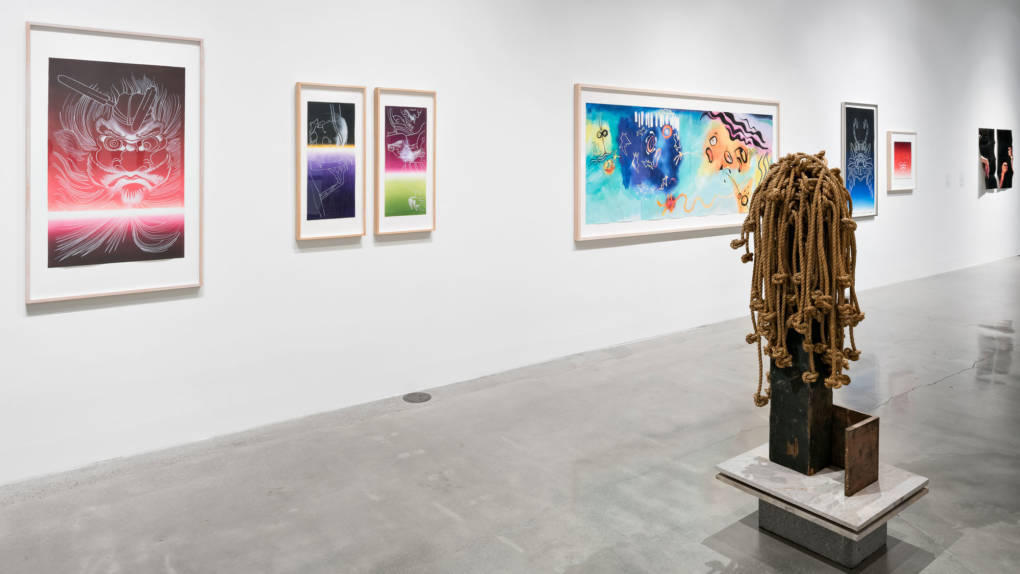
"caption": "Installation view of 'With(out) With(in) the very moment,' at San Francisco Arts Commission Gallery, with Ed Aulerich-Sugai's work on the wall. ",
"description": "Installation view of 'With(out) With(in) the very moment,' at San Francisco Arts Commission Gallery, with Ed Aulerich-Sugai's work on the wall. ",
"title": "2019_04---SFAC---Without-Within-02_COVER",
"credit": "Photo by Phillip Maisel",
"status": "inherit",
"isLoading": false,
"fetchFailed": false
},
"arts_13852809": {
"type": "attachments",
"id": "arts_13852809",
"meta": {
"index": "attachments_1716263798",
"site": "arts",
"id": "13852809",
"found": true
},
"parent": 13852803,
"imgSizes": {
"twentyfourteen-full-width": {
"file": "https://ww2.kqed.org/app/uploads/sites/2/2019/03/joseph-kosuth-wft-san-francisco_COVER-1038x576.jpg",
"width": 1038,
"mimeType": "image/jpeg",
"height": 576
},
"thumbnail": {
"file": "https://ww2.kqed.org/app/uploads/sites/2/2019/03/joseph-kosuth-wft-san-francisco_COVER-160x90.jpg",
"width": 160,
"mimeType": "image/jpeg",
"height": 90
},
"post-thumbnail": {
"file": "https://ww2.kqed.org/app/uploads/sites/2/2019/03/joseph-kosuth-wft-san-francisco_COVER-672x372.jpg",
"width": 672,
"mimeType": "image/jpeg",
"height": 372
},
"kqedFullSize": {
"file": "https://ww2.kqed.org/app/uploads/sites/2/2019/03/joseph-kosuth-wft-san-francisco_COVER.jpg",
"width": 1920,
"height": 1080
},
"large": {
"file": "https://ww2.kqed.org/app/uploads/sites/2/2019/03/joseph-kosuth-wft-san-francisco_COVER-1020x574.jpg",
"width": 1020,
"mimeType": "image/jpeg",
"height": 574
},
"complete_open_graph": {
"file": "https://ww2.kqed.org/app/uploads/sites/2/2019/03/joseph-kosuth-wft-san-francisco_COVER-1200x675.jpg",
"width": 1200,
"mimeType": "image/jpeg",
"height": 675
},
"guest-author-50": {
"file": "https://ww2.kqed.org/app/uploads/sites/2/2019/03/joseph-kosuth-wft-san-francisco_COVER-50x50.jpg",
"width": 50,
"mimeType": "image/jpeg",
"height": 50
},
"guest-author-96": {
"file": "https://ww2.kqed.org/app/uploads/sites/2/2019/03/joseph-kosuth-wft-san-francisco_COVER-96x96.jpg",
"width": 96,
"mimeType": "image/jpeg",
"height": 96
},
"medium": {
"file": "https://ww2.kqed.org/app/uploads/sites/2/2019/03/joseph-kosuth-wft-san-francisco_COVER-800x450.jpg",
"width": 800,
"mimeType": "image/jpeg",
"height": 450
},
"guest-author-64": {
"file": "https://ww2.kqed.org/app/uploads/sites/2/2019/03/joseph-kosuth-wft-san-francisco_COVER-64x64.jpg",
"width": 64,
"mimeType": "image/jpeg",
"height": 64
},
"guest-author-32": {
"file": "https://ww2.kqed.org/app/uploads/sites/2/2019/03/joseph-kosuth-wft-san-francisco_COVER-32x32.jpg",
"width": 32,
"mimeType": "image/jpeg",
"height": 32
},
"full-width": {
"file": "https://ww2.kqed.org/app/uploads/sites/2/2019/03/joseph-kosuth-wft-san-francisco_COVER-1920x1080.jpg",
"width": 1920,
"mimeType": "image/jpeg",
"height": 1080
},
"medium_large": {
"file": "https://ww2.kqed.org/app/uploads/sites/2/2019/03/joseph-kosuth-wft-san-francisco_COVER-768x432.jpg",
"width": 768,
"mimeType": "image/jpeg",
"height": 432
},
"guest-author-128": {
"file": "https://ww2.kqed.org/app/uploads/sites/2/2019/03/joseph-kosuth-wft-san-francisco_COVER-128x128.jpg",
"width": 128,
"mimeType": "image/jpeg",
"height": 128
}
},
"publishDate": 1552440155,
"modified": 1552440322,
"caption": "Nighttime view of Joseph Kosuth's 'W.F.T. (San Francisco)' on the side of the Bill Graham Civic Auditorium.",
"description": "Nighttime view of Joseph Kosuth's 'W.F.T. (San Francisco)' on the side of the Bill Graham Civic Auditorium.",
"title": "joseph-kosuth-wft-san-francisco_COVER",
"credit": "Ethan Kaplan Photography",
"status": "inherit",
"isLoading": false,
"fetchFailed": false
},
"arts_13851189": {
"type": "attachments",
"id": "arts_13851189",
"meta": {
"index": "attachments_1716263798",
"site": "arts",
"id": "13851189",
"found": true
},
"parent": 13851184,
"imgSizes": {
"twentyfourteen-full-width": {
"file": "https://ww2.kqed.org/app/uploads/sites/2/2019/02/SFAC_BalboaPool-018-Edit_COVERB-1038x576.jpg",
"width": 1038,
"mimeType": "image/jpeg",
"height": 576
},
"thumbnail": {
"file": "https://ww2.kqed.org/app/uploads/sites/2/2019/02/SFAC_BalboaPool-018-Edit_COVERB-160x90.jpg",
"width": 160,
"mimeType": "image/jpeg",
"height": 90
},
"post-thumbnail": {
"file": "https://ww2.kqed.org/app/uploads/sites/2/2019/02/SFAC_BalboaPool-018-Edit_COVERB-672x372.jpg",
"width": 672,
"mimeType": "image/jpeg",
"height": 372
},
"kqedFullSize": {
"file": "https://ww2.kqed.org/app/uploads/sites/2/2019/02/SFAC_BalboaPool-018-Edit_COVERB.jpg",
"width": 1920,
"height": 1080
},
"large": {
"file": "https://ww2.kqed.org/app/uploads/sites/2/2019/02/SFAC_BalboaPool-018-Edit_COVERB-1020x574.jpg",
"width": 1020,
"mimeType": "image/jpeg",
"height": 574
},
"complete_open_graph": {
"file": "https://ww2.kqed.org/app/uploads/sites/2/2019/02/SFAC_BalboaPool-018-Edit_COVERB-1200x675.jpg",
"width": 1200,
"mimeType": "image/jpeg",
"height": 675
},
"guest-author-50": {
"file": "https://ww2.kqed.org/app/uploads/sites/2/2019/02/SFAC_BalboaPool-018-Edit_COVERB-50x50.jpg",
"width": 50,
"mimeType": "image/jpeg",
"height": 50
},
"guest-author-96": {
"file": "https://ww2.kqed.org/app/uploads/sites/2/2019/02/SFAC_BalboaPool-018-Edit_COVERB-96x96.jpg",
"width": 96,
"mimeType": "image/jpeg",
"height": 96
},
"medium": {
"file": "https://ww2.kqed.org/app/uploads/sites/2/2019/02/SFAC_BalboaPool-018-Edit_COVERB-800x450.jpg",
"width": 800,
"mimeType": "image/jpeg",
"height": 450
},
"guest-author-64": {
"file": "https://ww2.kqed.org/app/uploads/sites/2/2019/02/SFAC_BalboaPool-018-Edit_COVERB-64x64.jpg",
"width": 64,
"mimeType": "image/jpeg",
"height": 64
},
"guest-author-32": {
"file": "https://ww2.kqed.org/app/uploads/sites/2/2019/02/SFAC_BalboaPool-018-Edit_COVERB-32x32.jpg",
"width": 32,
"mimeType": "image/jpeg",
"height": 32
},
"full-width": {
"file": "https://ww2.kqed.org/app/uploads/sites/2/2019/02/SFAC_BalboaPool-018-Edit_COVERB-1920x1080.jpg",
"width": 1920,
"mimeType": "image/jpeg",
"height": 1080
},
"detail": {
"file": "https://ww2.kqed.org/app/uploads/sites/2/2019/02/SFAC_BalboaPool-018-Edit_COVERB-150x150.jpg",
"width": 150,
"mimeType": "image/jpeg",
"height": 150
},
"medium_large": {
"file": "https://ww2.kqed.org/app/uploads/sites/2/2019/02/SFAC_BalboaPool-018-Edit_COVERB-768x432.jpg",
"width": 768,
"mimeType": "image/jpeg",
"height": 432
},
"guest-author-128": {
"file": "https://ww2.kqed.org/app/uploads/sites/2/2019/02/SFAC_BalboaPool-018-Edit_COVERB-128x128.jpg",
"width": 128,
"mimeType": "image/jpeg",
"height": 128
}
},
"publishDate": 1550612986,
"modified": 1550613027,
"caption": "Balboa Pool with Jason Jägel's mural 'All My Friends at Once.'",
"description": "Balboa Pool with Jason Jägel's mural 'All My Friends at Once.'",
"title": "SFAC_BalboaPool-018-Edit_COVERB",
"credit": "Courtesy of SFAC",
"status": "inherit",
"isLoading": false,
"fetchFailed": false
},
"arts_13849344": {
"type": "attachments",
"id": "arts_13849344",
"meta": {
"index": "attachments_1716263798",
"site": "arts",
"id": "13849344",
"found": true
},
"parent": 13849340,
"imgSizes": {
"twentyfourteen-full-width": {
"file": "https://ww2.kqed.org/app/uploads/sites/2/2019/01/columns_0421-1038x576.jpg",
"width": 1038,
"mimeType": "image/jpeg",
"height": 576
},
"thumbnail": {
"file": "https://ww2.kqed.org/app/uploads/sites/2/2019/01/columns_0421-160x103.jpg",
"width": 160,
"mimeType": "image/jpeg",
"height": 103
},
"post-thumbnail": {
"file": "https://ww2.kqed.org/app/uploads/sites/2/2019/01/columns_0421-672x372.jpg",
"width": 672,
"mimeType": "image/jpeg",
"height": 372
},
"kqedFullSize": {
"file": "https://ww2.kqed.org/app/uploads/sites/2/2019/01/columns_0421.jpg",
"width": 1920,
"height": 1239
},
"large": {
"file": "https://ww2.kqed.org/app/uploads/sites/2/2019/01/columns_0421-1020x658.jpg",
"width": 1020,
"mimeType": "image/jpeg",
"height": 658
},
"complete_open_graph": {
"file": "https://ww2.kqed.org/app/uploads/sites/2/2019/01/columns_0421-1200x774.jpg",
"width": 1200,
"mimeType": "image/jpeg",
"height": 774
},
"guest-author-50": {
"file": "https://ww2.kqed.org/app/uploads/sites/2/2019/01/columns_0421-50x50.jpg",
"width": 50,
"mimeType": "image/jpeg",
"height": 50
},
"guest-author-96": {
"file": "https://ww2.kqed.org/app/uploads/sites/2/2019/01/columns_0421-96x96.jpg",
"width": 96,
"mimeType": "image/jpeg",
"height": 96
},
"medium": {
"file": "https://ww2.kqed.org/app/uploads/sites/2/2019/01/columns_0421-800x516.jpg",
"width": 800,
"mimeType": "image/jpeg",
"height": 516
},
"guest-author-64": {
"file": "https://ww2.kqed.org/app/uploads/sites/2/2019/01/columns_0421-64x64.jpg",
"width": 64,
"mimeType": "image/jpeg",
"height": 64
},
"guest-author-32": {
"file": "https://ww2.kqed.org/app/uploads/sites/2/2019/01/columns_0421-32x32.jpg",
"width": 32,
"mimeType": "image/jpeg",
"height": 32
},
"full-width": {
"file": "https://ww2.kqed.org/app/uploads/sites/2/2019/01/columns_0421-1920x1239.jpg",
"width": 1920,
"mimeType": "image/jpeg",
"height": 1239
},
"detail": {
"file": "https://ww2.kqed.org/app/uploads/sites/2/2019/01/columns_0421-150x150.jpg",
"width": 150,
"mimeType": "image/jpeg",
"height": 150
},
"medium_large": {
"file": "https://ww2.kqed.org/app/uploads/sites/2/2019/01/columns_0421-768x496.jpg",
"width": 768,
"mimeType": "image/jpeg",
"height": 496
},
"guest-author-128": {
"file": "https://ww2.kqed.org/app/uploads/sites/2/2019/01/columns_0421-128x128.jpg",
"width": 128,
"mimeType": "image/jpeg",
"height": 128
}
},
"publishDate": 1548372862,
"modified": 1548373014,
"caption": "May and Mik Gaspay working on 'Fiber Structure.' ",
"description": "May and Mik Gaspay working on 'Fiber Structure.'",
"title": "columns_0421",
"credit": "Courtesy of the artist",
"status": "inherit",
"isLoading": false,
"fetchFailed": false
},
"arts_13848293": {
"type": "attachments",
"id": "arts_13848293",
"meta": {
"index": "attachments_1716263798",
"site": "arts",
"id": "13848293",
"found": true
},
"parent": 13848288,
"imgSizes": {
"twentyfourteen-full-width": {
"file": "https://ww2.kqed.org/app/uploads/sites/2/2019/01/Anh-Thang-Dao-Shah-SF-Arts-Commission-senior-racial-equity-and-policy-analyst-and-Ariana-Flores-policy-analyst-at-the-SF-Human-Rights-Commission-e1546911865107-1038x576.jpg",
"width": 1038,
"mimeType": "image/jpeg",
"height": 576
},
"thumbnail": {
"file": "https://ww2.kqed.org/app/uploads/sites/2/2019/01/Anh-Thang-Dao-Shah-SF-Arts-Commission-senior-racial-equity-and-policy-analyst-and-Ariana-Flores-policy-analyst-at-the-SF-Human-Rights-Commission-e1546911865107-160x90.jpg",
"width": 160,
"mimeType": "image/jpeg",
"height": 90
},
"post-thumbnail": {
"file": "https://ww2.kqed.org/app/uploads/sites/2/2019/01/Anh-Thang-Dao-Shah-SF-Arts-Commission-senior-racial-equity-and-policy-analyst-and-Ariana-Flores-policy-analyst-at-the-SF-Human-Rights-Commission-e1546911865107-672x372.jpg",
"width": 672,
"mimeType": "image/jpeg",
"height": 372
},
"kqedFullSize": {
"file": "https://ww2.kqed.org/app/uploads/sites/2/2019/01/Anh-Thang-Dao-Shah-SF-Arts-Commission-senior-racial-equity-and-policy-analyst-and-Ariana-Flores-policy-analyst-at-the-SF-Human-Rights-Commission-e1546911865107.jpg",
"width": 1945,
"height": 1095
},
"large": {
"file": "https://ww2.kqed.org/app/uploads/sites/2/2019/01/Anh-Thang-Dao-Shah-SF-Arts-Commission-senior-racial-equity-and-policy-analyst-and-Ariana-Flores-policy-analyst-at-the-SF-Human-Rights-Commission-e1546911865107-1020x574.jpg",
"width": 1020,
"mimeType": "image/jpeg",
"height": 574
},
"complete_open_graph": {
"file": "https://ww2.kqed.org/app/uploads/sites/2/2019/01/Anh-Thang-Dao-Shah-SF-Arts-Commission-senior-racial-equity-and-policy-analyst-and-Ariana-Flores-policy-analyst-at-the-SF-Human-Rights-Commission-e1546911865107-1200x676.jpg",
"width": 1200,
"mimeType": "image/jpeg",
"height": 676
},
"guest-author-50": {
"file": "https://ww2.kqed.org/app/uploads/sites/2/2019/01/Anh-Thang-Dao-Shah-SF-Arts-Commission-senior-racial-equity-and-policy-analyst-and-Ariana-Flores-policy-analyst-at-the-SF-Human-Rights-Commission-e1546911865107-50x50.jpg",
"width": 50,
"mimeType": "image/jpeg",
"height": 50
},
"guest-author-96": {
"file": "https://ww2.kqed.org/app/uploads/sites/2/2019/01/Anh-Thang-Dao-Shah-SF-Arts-Commission-senior-racial-equity-and-policy-analyst-and-Ariana-Flores-policy-analyst-at-the-SF-Human-Rights-Commission-e1546911865107-96x96.jpg",
"width": 96,
"mimeType": "image/jpeg",
"height": 96
},
"medium": {
"file": "https://ww2.kqed.org/app/uploads/sites/2/2019/01/Anh-Thang-Dao-Shah-SF-Arts-Commission-senior-racial-equity-and-policy-analyst-and-Ariana-Flores-policy-analyst-at-the-SF-Human-Rights-Commission-e1546911865107-800x450.jpg",
"width": 800,
"mimeType": "image/jpeg",
"height": 450
},
"guest-author-64": {
"file": "https://ww2.kqed.org/app/uploads/sites/2/2019/01/Anh-Thang-Dao-Shah-SF-Arts-Commission-senior-racial-equity-and-policy-analyst-and-Ariana-Flores-policy-analyst-at-the-SF-Human-Rights-Commission-e1546911865107-64x64.jpg",
"width": 64,
"mimeType": "image/jpeg",
"height": 64
},
"guest-author-32": {
"file": "https://ww2.kqed.org/app/uploads/sites/2/2019/01/Anh-Thang-Dao-Shah-SF-Arts-Commission-senior-racial-equity-and-policy-analyst-and-Ariana-Flores-policy-analyst-at-the-SF-Human-Rights-Commission-e1546911865107-32x32.jpg",
"width": 32,
"mimeType": "image/jpeg",
"height": 32
},
"full-width": {
"file": "https://ww2.kqed.org/app/uploads/sites/2/2019/01/Anh-Thang-Dao-Shah-SF-Arts-Commission-senior-racial-equity-and-policy-analyst-and-Ariana-Flores-policy-analyst-at-the-SF-Human-Rights-Commission-e1546911865107-1920x1081.jpg",
"width": 1920,
"mimeType": "image/jpeg",
"height": 1081
},
"detail": {
"file": "https://ww2.kqed.org/app/uploads/sites/2/2019/01/Anh-Thang-Dao-Shah-SF-Arts-Commission-senior-racial-equity-and-policy-analyst-and-Ariana-Flores-policy-analyst-at-the-SF-Human-Rights-Commission-e1546911865107-150x150.jpg",
"width": 150,
"mimeType": "image/jpeg",
"height": 150
},
"medium_large": {
"file": "https://ww2.kqed.org/app/uploads/sites/2/2019/01/Anh-Thang-Dao-Shah-SF-Arts-Commission-senior-racial-equity-and-policy-analyst-and-Ariana-Flores-policy-analyst-at-the-SF-Human-Rights-Commission-e1546911865107-768x432.jpg",
"width": 768,
"mimeType": "image/jpeg",
"height": 432
},
"guest-author-128": {
"file": "https://ww2.kqed.org/app/uploads/sites/2/2019/01/Anh-Thang-Dao-Shah-SF-Arts-Commission-senior-racial-equity-and-policy-analyst-and-Ariana-Flores-policy-analyst-at-the-SF-Human-Rights-Commission-e1546911865107-128x128.jpg",
"width": 128,
"mimeType": "image/jpeg",
"height": 128
}
},
"publishDate": 1546911758,
"modified": 1546911882,
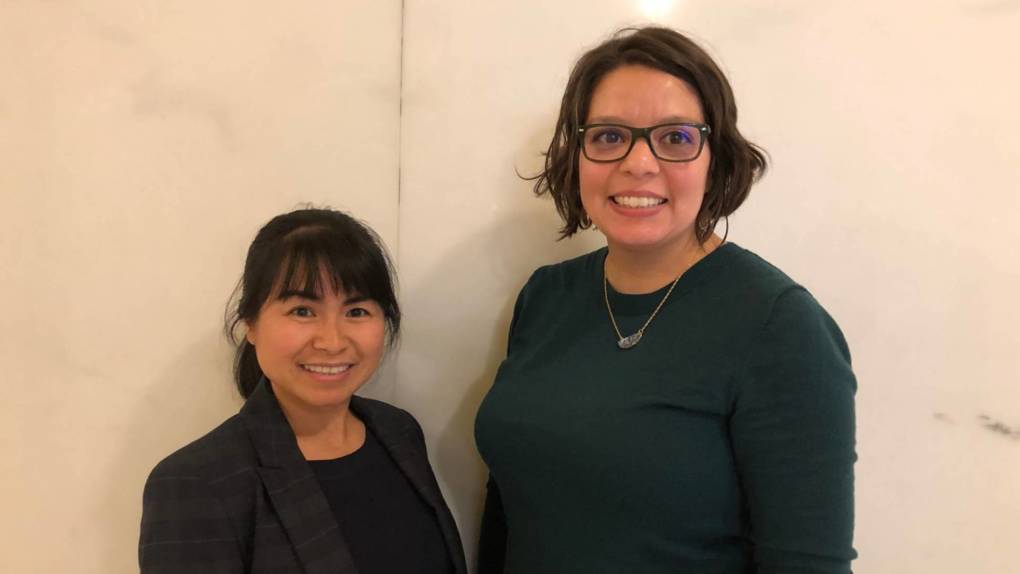
"caption": "Anh Thang Dao-Shah, SF Arts Commission senior racial equity and policy analyst (left) and Ariana Flores, policy analyst at the San Francisco Human Rights Commission. Pictured together at San Francisco City Hall on Jan. 7, 2019.",
"description": null,
"title": "Anh Thang Dao-Shah, SF Arts Commission senior racial equity and policy analyst and Ariana Flores, policy analyst at the SF Human Rights Commission",
"credit": "Chloe Veltman/KQED",
"status": "inherit",
"isLoading": false,
"fetchFailed": false
},
"arts_13845270": {
"type": "attachments",
"id": "arts_13845270",
"meta": {
"index": "attachments_1716263798",
"site": "arts",
"id": "13845270",
"found": true
},
"parent": 13845269,
"imgSizes": {
"small": {
"file": "https://ww2.kqed.org/app/uploads/sites/2/2018/11/XUXA_COVER-520x292.jpg",
"width": 520,
"mimeType": "image/jpeg",
"height": 292
},
"thumbnail": {
"file": "https://ww2.kqed.org/app/uploads/sites/2/2018/11/XUXA_COVER-160x90.jpg",
"width": 160,
"mimeType": "image/jpeg",
"height": 90
},
"fd-sm": {
"file": "https://ww2.kqed.org/app/uploads/sites/2/2018/11/XUXA_COVER-960x540.jpg",
"width": 960,
"mimeType": "image/jpeg",
"height": 540
},
"post-thumbnail": {
"file": "https://ww2.kqed.org/app/uploads/sites/2/2018/11/XUXA_COVER-672x372.jpg",
"width": 672,
"mimeType": "image/jpeg",
"height": 372
},
"xsmall": {
"file": "https://ww2.kqed.org/app/uploads/sites/2/2018/11/XUXA_COVER-375x211.jpg",
"width": 375,
"mimeType": "image/jpeg",
"height": 211
},
"kqedFullSize": {
"file": "https://ww2.kqed.org/app/uploads/sites/2/2018/11/XUXA_COVER.jpg",
"width": 991,
"height": 557
},
"guest-author-50": {
"file": "https://ww2.kqed.org/app/uploads/sites/2/2018/11/XUXA_COVER-50x50.jpg",
"width": 50,
"mimeType": "image/jpeg",
"height": 50
},
"guest-author-96": {
"file": "https://ww2.kqed.org/app/uploads/sites/2/2018/11/XUXA_COVER-96x96.jpg",
"width": 96,
"mimeType": "image/jpeg",
"height": 96
},
"medium": {
"file": "https://ww2.kqed.org/app/uploads/sites/2/2018/11/XUXA_COVER-800x450.jpg",
"width": 800,
"mimeType": "image/jpeg",
"height": 450
},
"guest-author-64": {
"file": "https://ww2.kqed.org/app/uploads/sites/2/2018/11/XUXA_COVER-64x64.jpg",
"width": 64,
"mimeType": "image/jpeg",
"height": 64
},
"guest-author-32": {
"file": "https://ww2.kqed.org/app/uploads/sites/2/2018/11/XUXA_COVER-32x32.jpg",
"width": 32,
"mimeType": "image/jpeg",
"height": 32
},
"detail": {
"file": "https://ww2.kqed.org/app/uploads/sites/2/2018/11/XUXA_COVER-150x150.jpg",
"width": 150,
"mimeType": "image/jpeg",
"height": 150
},
"medium_large": {
"file": "https://ww2.kqed.org/app/uploads/sites/2/2018/11/XUXA_COVER-768x432.jpg",
"width": 768,
"mimeType": "image/jpeg",
"height": 432
},
"guest-author-128": {
"file": "https://ww2.kqed.org/app/uploads/sites/2/2018/11/XUXA_COVER-128x128.jpg",
"width": 128,
"mimeType": "image/jpeg",
"height": 128
},
"xxsmall": {
"file": "https://ww2.kqed.org/app/uploads/sites/2/2018/11/XUXA_COVER-240x135.jpg",
"width": 240,
"mimeType": "image/jpeg",
"height": 135
}
},
"publishDate": 1542672624,
"modified": 1542675556,
"caption": "Sofía Córdova, Detail from 'Study for A Body Reorganized.'",
"description": "Sofía Córdova, Detail from 'Study for A Body Reorganized.'",
"title": "XUXA_COVER",
"credit": "Courtesy of the artist",
"status": "inherit",
"isLoading": false,
"fetchFailed": false
},
"arts_13840616": {
"type": "attachments",
"id": "arts_13840616",
"meta": {
"index": "attachments_1716263798",
"site": "arts",
"id": "13840616",
"found": true
},
"parent": 13840269,
"imgSizes": {
"small": {
"file": "https://ww2.kqed.org/app/uploads/sites/2/2018/09/KQED_Lisa_Blatt_Graham_Holoch__4_COVER-520x293.jpg",
"width": 520,
"mimeType": "image/jpeg",
"height": 293
},
"twentyfourteen-full-width": {
"file": "https://ww2.kqed.org/app/uploads/sites/2/2018/09/KQED_Lisa_Blatt_Graham_Holoch__4_COVER-1038x576.jpg",
"width": 1038,
"mimeType": "image/jpeg",
"height": 576
},
"thumbnail": {
"file": "https://ww2.kqed.org/app/uploads/sites/2/2018/09/KQED_Lisa_Blatt_Graham_Holoch__4_COVER-160x90.jpg",
"width": 160,
"mimeType": "image/jpeg",
"height": 90
},
"fd-sm": {
"file": "https://ww2.kqed.org/app/uploads/sites/2/2018/09/KQED_Lisa_Blatt_Graham_Holoch__4_COVER-960x540.jpg",
"width": 960,
"mimeType": "image/jpeg",
"height": 540
},
"post-thumbnail": {
"file": "https://ww2.kqed.org/app/uploads/sites/2/2018/09/KQED_Lisa_Blatt_Graham_Holoch__4_COVER-672x372.jpg",
"width": 672,
"mimeType": "image/jpeg",
"height": 372
},
"xsmall": {
"file": "https://ww2.kqed.org/app/uploads/sites/2/2018/09/KQED_Lisa_Blatt_Graham_Holoch__4_COVER-375x211.jpg",
"width": 375,
"mimeType": "image/jpeg",
"height": 211
},
"kqedFullSize": {
"file": "https://ww2.kqed.org/app/uploads/sites/2/2018/09/KQED_Lisa_Blatt_Graham_Holoch__4_COVER.jpg",
"width": 1920,
"height": 1080
},
"large": {
"file": "https://ww2.kqed.org/app/uploads/sites/2/2018/09/KQED_Lisa_Blatt_Graham_Holoch__4_COVER-1020x574.jpg",
"width": 1020,
"mimeType": "image/jpeg",
"height": 574
},
"xlarge": {
"file": "https://ww2.kqed.org/app/uploads/sites/2/2018/09/KQED_Lisa_Blatt_Graham_Holoch__4_COVER-1180x664.jpg",
"width": 1180,
"mimeType": "image/jpeg",
"height": 664
},
"complete_open_graph": {
"file": "https://ww2.kqed.org/app/uploads/sites/2/2018/09/KQED_Lisa_Blatt_Graham_Holoch__4_COVER-1200x675.jpg",
"width": 1200,
"mimeType": "image/jpeg",
"height": 675
},
"guest-author-50": {
"file": "https://ww2.kqed.org/app/uploads/sites/2/2018/09/KQED_Lisa_Blatt_Graham_Holoch__4_COVER-50x50.jpg",
"width": 50,
"mimeType": "image/jpeg",
"height": 50
},
"guest-author-96": {
"file": "https://ww2.kqed.org/app/uploads/sites/2/2018/09/KQED_Lisa_Blatt_Graham_Holoch__4_COVER-96x96.jpg",
"width": 96,
"mimeType": "image/jpeg",
"height": 96
},
"medium": {
"file": "https://ww2.kqed.org/app/uploads/sites/2/2018/09/KQED_Lisa_Blatt_Graham_Holoch__4_COVER-800x450.jpg",
"width": 800,
"mimeType": "image/jpeg",
"height": 450
},
"guest-author-64": {
"file": "https://ww2.kqed.org/app/uploads/sites/2/2018/09/KQED_Lisa_Blatt_Graham_Holoch__4_COVER-64x64.jpg",
"width": 64,
"mimeType": "image/jpeg",
"height": 64
},
"guest-author-32": {
"file": "https://ww2.kqed.org/app/uploads/sites/2/2018/09/KQED_Lisa_Blatt_Graham_Holoch__4_COVER-32x32.jpg",
"width": 32,
"mimeType": "image/jpeg",
"height": 32
},
"fd-lrg": {
"file": "https://ww2.kqed.org/app/uploads/sites/2/2018/09/KQED_Lisa_Blatt_Graham_Holoch__4_COVER-1920x1080.jpg",
"width": 1920,
"mimeType": "image/jpeg",
"height": 1080
},
"fd-med": {
"file": "https://ww2.kqed.org/app/uploads/sites/2/2018/09/KQED_Lisa_Blatt_Graham_Holoch__4_COVER-1180x664.jpg",
"width": 1180,
"mimeType": "image/jpeg",
"height": 664
},
"full-width": {
"file": "https://ww2.kqed.org/app/uploads/sites/2/2018/09/KQED_Lisa_Blatt_Graham_Holoch__4_COVER-1920x1080.jpg",
"width": 1920,
"mimeType": "image/jpeg",
"height": 1080
},
"detail": {
"file": "https://ww2.kqed.org/app/uploads/sites/2/2018/09/KQED_Lisa_Blatt_Graham_Holoch__4_COVER-150x150.jpg",
"width": 150,
"mimeType": "image/jpeg",
"height": 150
},
"medium_large": {
"file": "https://ww2.kqed.org/app/uploads/sites/2/2018/09/KQED_Lisa_Blatt_Graham_Holoch__4_COVER-768x432.jpg",
"width": 768,
"mimeType": "image/jpeg",
"height": 432
},
"guest-author-128": {
"file": "https://ww2.kqed.org/app/uploads/sites/2/2018/09/KQED_Lisa_Blatt_Graham_Holoch__4_COVER-128x128.jpg",
"width": 128,
"mimeType": "image/jpeg",
"height": 128
},
"xxsmall": {
"file": "https://ww2.kqed.org/app/uploads/sites/2/2018/09/KQED_Lisa_Blatt_Graham_Holoch__4_COVER-240x135.jpg",
"width": 240,
"mimeType": "image/jpeg",
"height": 135
}
},
"publishDate": 1536625815,
"modified": 1536626047,
"caption": "Photographer Lisa K. Blatt in her San Francisco studio.",
"description": "Photographer Lisa K. Blatt in her San Francisco studio.",
"title": "KQED_Lisa_Blatt_Graham_Holoch__4_COVER",
"credit": "Graham Holoch/KQED",
"status": "inherit",
"isLoading": false,
"fetchFailed": false
},
"arts_13837075": {
"type": "attachments",
"id": "arts_13837075",
"meta": {
"index": "attachments_1716263798",
"site": "arts",
"id": "13837075",
"found": true
},
"parent": 13837071,
"imgSizes": {
"small": {
"file": "https://ww2.kqed.org/app/uploads/sites/2/2018/07/1MNapping_COVER-520x293.jpg",
"width": 520,
"mimeType": "image/jpeg",
"height": 293
},
"twentyfourteen-full-width": {
"file": "https://ww2.kqed.org/app/uploads/sites/2/2018/07/1MNapping_COVER-1038x576.jpg",
"width": 1038,
"mimeType": "image/jpeg",
"height": 576
},
"thumbnail": {
"file": "https://ww2.kqed.org/app/uploads/sites/2/2018/07/1MNapping_COVER-160x90.jpg",
"width": 160,
"mimeType": "image/jpeg",
"height": 90
},
"fd-sm": {
"file": "https://ww2.kqed.org/app/uploads/sites/2/2018/07/1MNapping_COVER-960x540.jpg",
"width": 960,
"mimeType": "image/jpeg",
"height": 540
},
"post-thumbnail": {
"file": "https://ww2.kqed.org/app/uploads/sites/2/2018/07/1MNapping_COVER-672x372.jpg",
"width": 672,
"mimeType": "image/jpeg",
"height": 372
},
"xsmall": {
"file": "https://ww2.kqed.org/app/uploads/sites/2/2018/07/1MNapping_COVER-375x211.jpg",
"width": 375,
"mimeType": "image/jpeg",
"height": 211
},
"kqedFullSize": {
"file": "https://ww2.kqed.org/app/uploads/sites/2/2018/07/1MNapping_COVER.jpg",
"width": 1920,
"height": 1080
},
"large": {
"file": "https://ww2.kqed.org/app/uploads/sites/2/2018/07/1MNapping_COVER-1020x574.jpg",
"width": 1020,
"mimeType": "image/jpeg",
"height": 574
},
"xlarge": {
"file": "https://ww2.kqed.org/app/uploads/sites/2/2018/07/1MNapping_COVER-1180x664.jpg",
"width": 1180,
"mimeType": "image/jpeg",
"height": 664
},
"complete_open_graph": {
"file": "https://ww2.kqed.org/app/uploads/sites/2/2018/07/1MNapping_COVER-1200x675.jpg",
"width": 1200,
"mimeType": "image/jpeg",
"height": 675
},
"guest-author-50": {
"file": "https://ww2.kqed.org/app/uploads/sites/2/2018/07/1MNapping_COVER-50x50.jpg",
"width": 50,
"mimeType": "image/jpeg",
"height": 50
},
"guest-author-96": {
"file": "https://ww2.kqed.org/app/uploads/sites/2/2018/07/1MNapping_COVER-96x96.jpg",
"width": 96,
"mimeType": "image/jpeg",
"height": 96
},
"medium": {
"file": "https://ww2.kqed.org/app/uploads/sites/2/2018/07/1MNapping_COVER-800x450.jpg",
"width": 800,
"mimeType": "image/jpeg",
"height": 450
},
"guest-author-64": {
"file": "https://ww2.kqed.org/app/uploads/sites/2/2018/07/1MNapping_COVER-64x64.jpg",
"width": 64,
"mimeType": "image/jpeg",
"height": 64
},
"guest-author-32": {
"file": "https://ww2.kqed.org/app/uploads/sites/2/2018/07/1MNapping_COVER-32x32.jpg",
"width": 32,
"mimeType": "image/jpeg",
"height": 32
},
"fd-lrg": {
"file": "https://ww2.kqed.org/app/uploads/sites/2/2018/07/1MNapping_COVER-1920x1080.jpg",
"width": 1920,
"mimeType": "image/jpeg",
"height": 1080
},
"fd-med": {
"file": "https://ww2.kqed.org/app/uploads/sites/2/2018/07/1MNapping_COVER-1180x664.jpg",
"width": 1180,
"mimeType": "image/jpeg",
"height": 664
},
"full-width": {
"file": "https://ww2.kqed.org/app/uploads/sites/2/2018/07/1MNapping_COVER-1920x1080.jpg",
"width": 1920,
"mimeType": "image/jpeg",
"height": 1080
},
"detail": {
"file": "https://ww2.kqed.org/app/uploads/sites/2/2018/07/1MNapping_COVER-150x150.jpg",
"width": 150,
"mimeType": "image/jpeg",
"height": 150
},
"medium_large": {
"file": "https://ww2.kqed.org/app/uploads/sites/2/2018/07/1MNapping_COVER-768x432.jpg",
"width": 768,
"mimeType": "image/jpeg",
"height": 432
},
"guest-author-128": {
"file": "https://ww2.kqed.org/app/uploads/sites/2/2018/07/1MNapping_COVER-128x128.jpg",
"width": 128,
"mimeType": "image/jpeg",
"height": 128
},
"xxsmall": {
"file": "https://ww2.kqed.org/app/uploads/sites/2/2018/07/1MNapping_COVER-240x135.jpg",
"width": 240,
"mimeType": "image/jpeg",
"height": 135
}
},
"publishDate": 1531439808,
"modified": 1531439887,
"caption": "Farah Al Qasimi, 'M Napping on Carpet' (detail), 2016.",
"description": "Farah Al Qasimi, 'M Napping on Carpet' (detail), 2016.",
"title": "1MNapping_COVER",
"credit": "Courtesy of the Artist, Helena Anrather (New York), and The Third Line (Dubai)",
"status": "inherit",
"isLoading": false,
"fetchFailed": false
},
"arts_13834314": {
"type": "attachments",
"id": "arts_13834314",
"meta": {
"index": "attachments_1716263798",
"site": "arts",
"id": "13834314",
"found": true
},
"parent": 13834231,
"imgSizes": {
"small": {
"file": "https://ww2.kqed.org/app/uploads/sites/2/2018/06/SFAC-Culture-Catalyst-MACRO-WAVES_COVER-520x293.jpg",
"width": 520,
"mimeType": "image/jpeg",
"height": 293
},
"twentyfourteen-full-width": {
"file": "https://ww2.kqed.org/app/uploads/sites/2/2018/06/SFAC-Culture-Catalyst-MACRO-WAVES_COVER-1024x576.jpg",
"width": 1024,
"mimeType": "image/jpeg",
"height": 576
},
"thumbnail": {
"file": "https://ww2.kqed.org/app/uploads/sites/2/2018/06/SFAC-Culture-Catalyst-MACRO-WAVES_COVER-160x90.jpg",
"width": 160,
"mimeType": "image/jpeg",
"height": 90
},
"fd-sm": {
"file": "https://ww2.kqed.org/app/uploads/sites/2/2018/06/SFAC-Culture-Catalyst-MACRO-WAVES_COVER-960x540.jpg",
"width": 960,
"mimeType": "image/jpeg",
"height": 540
},
"post-thumbnail": {
"file": "https://ww2.kqed.org/app/uploads/sites/2/2018/06/SFAC-Culture-Catalyst-MACRO-WAVES_COVER-672x372.jpg",
"width": 672,
"mimeType": "image/jpeg",
"height": 372
},
"xsmall": {
"file": "https://ww2.kqed.org/app/uploads/sites/2/2018/06/SFAC-Culture-Catalyst-MACRO-WAVES_COVER-375x211.jpg",
"width": 375,
"mimeType": "image/jpeg",
"height": 211
},
"kqedFullSize": {
"file": "https://ww2.kqed.org/app/uploads/sites/2/2018/06/SFAC-Culture-Catalyst-MACRO-WAVES_COVER.jpg",
"width": 1024,
"height": 576
},
"large": {
"file": "https://ww2.kqed.org/app/uploads/sites/2/2018/06/SFAC-Culture-Catalyst-MACRO-WAVES_COVER-1020x574.jpg",
"width": 1020,
"mimeType": "image/jpeg",
"height": 574
},
"guest-author-50": {
"file": "https://ww2.kqed.org/app/uploads/sites/2/2018/06/SFAC-Culture-Catalyst-MACRO-WAVES_COVER-50x50.jpg",
"width": 50,
"mimeType": "image/jpeg",
"height": 50
},
"guest-author-96": {
"file": "https://ww2.kqed.org/app/uploads/sites/2/2018/06/SFAC-Culture-Catalyst-MACRO-WAVES_COVER-96x96.jpg",
"width": 96,
"mimeType": "image/jpeg",
"height": 96
},
"medium": {
"file": "https://ww2.kqed.org/app/uploads/sites/2/2018/06/SFAC-Culture-Catalyst-MACRO-WAVES_COVER-800x450.jpg",
"width": 800,
"mimeType": "image/jpeg",
"height": 450
},
"guest-author-64": {
"file": "https://ww2.kqed.org/app/uploads/sites/2/2018/06/SFAC-Culture-Catalyst-MACRO-WAVES_COVER-64x64.jpg",
"width": 64,
"mimeType": "image/jpeg",
"height": 64
},
"guest-author-32": {
"file": "https://ww2.kqed.org/app/uploads/sites/2/2018/06/SFAC-Culture-Catalyst-MACRO-WAVES_COVER-32x32.jpg",
"width": 32,
"mimeType": "image/jpeg",
"height": 32
},
"detail": {
"file": "https://ww2.kqed.org/app/uploads/sites/2/2018/06/SFAC-Culture-Catalyst-MACRO-WAVES_COVER-150x150.jpg",
"width": 150,
"mimeType": "image/jpeg",
"height": 150
},
"medium_large": {
"file": "https://ww2.kqed.org/app/uploads/sites/2/2018/06/SFAC-Culture-Catalyst-MACRO-WAVES_COVER-768x432.jpg",
"width": 768,
"mimeType": "image/jpeg",
"height": 432
},
"guest-author-128": {
"file": "https://ww2.kqed.org/app/uploads/sites/2/2018/06/SFAC-Culture-Catalyst-MACRO-WAVES_COVER-128x128.jpg",
"width": 128,
"mimeType": "image/jpeg",
"height": 128
},
"xxsmall": {
"file": "https://ww2.kqed.org/app/uploads/sites/2/2018/06/SFAC-Culture-Catalyst-MACRO-WAVES_COVER-240x135.jpg",
"width": 240,
"mimeType": "image/jpeg",
"height": 135
}
},
"publishDate": 1528157554,
"modified": 1528157595,
"caption": "Installation view of MACRO WAVES' work in 'Culture Catalyst.'",
"description": "Installation view of MACRO WAVES' work in 'Culture Catalyst.'",
"title": "SFAC-Culture-Catalyst-MACRO-WAVES_COVER",
"credit": "Phillip Maisel",
"status": "inherit",
"isLoading": false,
"fetchFailed": false
},
"arts_13833777": {
"type": "attachments",
"id": "arts_13833777",
"meta": {
"index": "attachments_1716263798",
"site": "arts",
"id": "13833777",
"found": true
},
"parent": 13833444,
"imgSizes": {
"small": {
"file": "https://ww2.kqed.org/app/uploads/sites/2/2018/05/Landeros_Kathya_WilliamsCA_COVER-520x293.jpg",
"width": 520,
"mimeType": "image/jpeg",
"height": 293
},
"twentyfourteen-full-width": {
"file": "https://ww2.kqed.org/app/uploads/sites/2/2018/05/Landeros_Kathya_WilliamsCA_COVER-1038x576.jpg",
"width": 1038,
"mimeType": "image/jpeg",
"height": 576
},
"thumbnail": {
"file": "https://ww2.kqed.org/app/uploads/sites/2/2018/05/Landeros_Kathya_WilliamsCA_COVER-160x90.jpg",
"width": 160,
"mimeType": "image/jpeg",
"height": 90
},
"fd-sm": {
"file": "https://ww2.kqed.org/app/uploads/sites/2/2018/05/Landeros_Kathya_WilliamsCA_COVER-960x540.jpg",
"width": 960,
"mimeType": "image/jpeg",
"height": 540
},
"post-thumbnail": {
"file": "https://ww2.kqed.org/app/uploads/sites/2/2018/05/Landeros_Kathya_WilliamsCA_COVER-672x372.jpg",
"width": 672,
"mimeType": "image/jpeg",
"height": 372
},
"xsmall": {
"file": "https://ww2.kqed.org/app/uploads/sites/2/2018/05/Landeros_Kathya_WilliamsCA_COVER-375x211.jpg",
"width": 375,
"mimeType": "image/jpeg",
"height": 211
},
"kqedFullSize": {
"file": "https://ww2.kqed.org/app/uploads/sites/2/2018/05/Landeros_Kathya_WilliamsCA_COVER.jpg",
"width": 1920,
"height": 1080
},
"large": {
"file": "https://ww2.kqed.org/app/uploads/sites/2/2018/05/Landeros_Kathya_WilliamsCA_COVER-1020x574.jpg",
"width": 1020,
"mimeType": "image/jpeg",
"height": 574
},
"xlarge": {
"file": "https://ww2.kqed.org/app/uploads/sites/2/2018/05/Landeros_Kathya_WilliamsCA_COVER-1180x664.jpg",
"width": 1180,
"mimeType": "image/jpeg",
"height": 664
},
"complete_open_graph": {
"file": "https://ww2.kqed.org/app/uploads/sites/2/2018/05/Landeros_Kathya_WilliamsCA_COVER-1200x675.jpg",
"width": 1200,
"mimeType": "image/jpeg",
"height": 675
},
"guest-author-50": {
"file": "https://ww2.kqed.org/app/uploads/sites/2/2018/05/Landeros_Kathya_WilliamsCA_COVER-50x50.jpg",
"width": 50,
"mimeType": "image/jpeg",
"height": 50
},
"guest-author-96": {
"file": "https://ww2.kqed.org/app/uploads/sites/2/2018/05/Landeros_Kathya_WilliamsCA_COVER-96x96.jpg",
"width": 96,
"mimeType": "image/jpeg",
"height": 96
},
"medium": {
"file": "https://ww2.kqed.org/app/uploads/sites/2/2018/05/Landeros_Kathya_WilliamsCA_COVER-800x450.jpg",
"width": 800,
"mimeType": "image/jpeg",
"height": 450
},
"guest-author-64": {
"file": "https://ww2.kqed.org/app/uploads/sites/2/2018/05/Landeros_Kathya_WilliamsCA_COVER-64x64.jpg",
"width": 64,
"mimeType": "image/jpeg",
"height": 64
},
"guest-author-32": {
"file": "https://ww2.kqed.org/app/uploads/sites/2/2018/05/Landeros_Kathya_WilliamsCA_COVER-32x32.jpg",
"width": 32,
"mimeType": "image/jpeg",
"height": 32
},
"fd-lrg": {
"file": "https://ww2.kqed.org/app/uploads/sites/2/2018/05/Landeros_Kathya_WilliamsCA_COVER-1920x1080.jpg",
"width": 1920,
"mimeType": "image/jpeg",
"height": 1080
},
"fd-med": {
"file": "https://ww2.kqed.org/app/uploads/sites/2/2018/05/Landeros_Kathya_WilliamsCA_COVER-1180x664.jpg",
"width": 1180,
"mimeType": "image/jpeg",
"height": 664
},
"full-width": {
"file": "https://ww2.kqed.org/app/uploads/sites/2/2018/05/Landeros_Kathya_WilliamsCA_COVER-1920x1080.jpg",
"width": 1920,
"mimeType": "image/jpeg",
"height": 1080
},
"detail": {
"file": "https://ww2.kqed.org/app/uploads/sites/2/2018/05/Landeros_Kathya_WilliamsCA_COVER-150x150.jpg",
"width": 150,
"mimeType": "image/jpeg",
"height": 150
},
"medium_large": {
"file": "https://ww2.kqed.org/app/uploads/sites/2/2018/05/Landeros_Kathya_WilliamsCA_COVER-768x432.jpg",
"width": 768,
"mimeType": "image/jpeg",
"height": 432
},
"guest-author-128": {
"file": "https://ww2.kqed.org/app/uploads/sites/2/2018/05/Landeros_Kathya_WilliamsCA_COVER-128x128.jpg",
"width": 128,
"mimeType": "image/jpeg",
"height": 128
},
"xxsmall": {
"file": "https://ww2.kqed.org/app/uploads/sites/2/2018/05/Landeros_Kathya_WilliamsCA_COVER-240x135.jpg",
"width": 240,
"mimeType": "image/jpeg",
"height": 135
}
},
"publishDate": 1527642564,
"modified": 1527642622,
"caption": "Kathya Maria Landeros, 'Federal Migrant Farm Worker Community, Williams, California,' 2013.",
"description": null,
"title": "20130607California 001",
"credit": "Courtesy of the artist",
"status": "inherit",
"isLoading": false,
"fetchFailed": false
},
"arts_13833901": {
"type": "attachments",
"id": "arts_13833901",
"meta": {
"index": "attachments_1716263798",
"site": "arts",
"id": "13833901",
"found": true
},
"parent": 13833871,
"imgSizes": {
"small": {
"file": "https://ww2.kqed.org/app/uploads/sites/2/2018/05/Haifa-Feature-Use-520x293.jpg",
"width": 520,
"mimeType": "image/jpeg",
"height": 293
},
"twentyfourteen-full-width": {
"file": "https://ww2.kqed.org/app/uploads/sites/2/2018/05/Haifa-Feature-Use-1038x576.jpg",
"width": 1038,
"mimeType": "image/jpeg",
"height": 576
},
"thumbnail": {
"file": "https://ww2.kqed.org/app/uploads/sites/2/2018/05/Haifa-Feature-Use-160x90.jpg",
"width": 160,
"mimeType": "image/jpeg",
"height": 90
},
"fd-sm": {
"file": "https://ww2.kqed.org/app/uploads/sites/2/2018/05/Haifa-Feature-Use-960x540.jpg",
"width": 960,
"mimeType": "image/jpeg",
"height": 540
},
"post-thumbnail": {
"file": "https://ww2.kqed.org/app/uploads/sites/2/2018/05/Haifa-Feature-Use-672x372.jpg",
"width": 672,
"mimeType": "image/jpeg",
"height": 372
},
"xsmall": {
"file": "https://ww2.kqed.org/app/uploads/sites/2/2018/05/Haifa-Feature-Use-375x211.jpg",
"width": 375,
"mimeType": "image/jpeg",
"height": 211
},
"kqedFullSize": {
"file": "https://ww2.kqed.org/app/uploads/sites/2/2018/05/Haifa-Feature-Use.jpg",
"width": 1920,
"height": 1080
},
"large": {
"file": "https://ww2.kqed.org/app/uploads/sites/2/2018/05/Haifa-Feature-Use-1020x574.jpg",
"width": 1020,
"mimeType": "image/jpeg",
"height": 574
},
"xlarge": {
"file": "https://ww2.kqed.org/app/uploads/sites/2/2018/05/Haifa-Feature-Use-1180x664.jpg",
"width": 1180,
"mimeType": "image/jpeg",
"height": 664
},
"complete_open_graph": {
"file": "https://ww2.kqed.org/app/uploads/sites/2/2018/05/Haifa-Feature-Use-1200x675.jpg",
"width": 1200,
"mimeType": "image/jpeg",
"height": 675
},
"guest-author-50": {
"file": "https://ww2.kqed.org/app/uploads/sites/2/2018/05/Haifa-Feature-Use-50x50.jpg",
"width": 50,
"mimeType": "image/jpeg",
"height": 50
},
"guest-author-96": {
"file": "https://ww2.kqed.org/app/uploads/sites/2/2018/05/Haifa-Feature-Use-96x96.jpg",
"width": 96,
"mimeType": "image/jpeg",
"height": 96
},
"medium": {
"file": "https://ww2.kqed.org/app/uploads/sites/2/2018/05/Haifa-Feature-Use-800x450.jpg",
"width": 800,
"mimeType": "image/jpeg",
"height": 450
},
"guest-author-64": {
"file": "https://ww2.kqed.org/app/uploads/sites/2/2018/05/Haifa-Feature-Use-64x64.jpg",
"width": 64,
"mimeType": "image/jpeg",
"height": 64
},
"guest-author-32": {
"file": "https://ww2.kqed.org/app/uploads/sites/2/2018/05/Haifa-Feature-Use-32x32.jpg",
"width": 32,
"mimeType": "image/jpeg",
"height": 32
},
"fd-lrg": {
"file": "https://ww2.kqed.org/app/uploads/sites/2/2018/05/Haifa-Feature-Use-1920x1080.jpg",
"width": 1920,
"mimeType": "image/jpeg",
"height": 1080
},
"fd-med": {
"file": "https://ww2.kqed.org/app/uploads/sites/2/2018/05/Haifa-Feature-Use-1180x664.jpg",
"width": 1180,
"mimeType": "image/jpeg",
"height": 664
},
"full-width": {
"file": "https://ww2.kqed.org/app/uploads/sites/2/2018/05/Haifa-Feature-Use-1920x1080.jpg",
"width": 1920,
"mimeType": "image/jpeg",
"height": 1080
},
"detail": {
"file": "https://ww2.kqed.org/app/uploads/sites/2/2018/05/Haifa-Feature-Use-150x150.jpg",
"width": 150,
"mimeType": "image/jpeg",
"height": 150
},
"medium_large": {
"file": "https://ww2.kqed.org/app/uploads/sites/2/2018/05/Haifa-Feature-Use-768x432.jpg",
"width": 768,
"mimeType": "image/jpeg",
"height": 432
},
"guest-author-128": {
"file": "https://ww2.kqed.org/app/uploads/sites/2/2018/05/Haifa-Feature-Use-128x128.jpg",
"width": 128,
"mimeType": "image/jpeg",
"height": 128
},
"xxsmall": {
"file": "https://ww2.kqed.org/app/uploads/sites/2/2018/05/Haifa-Feature-Use-240x135.jpg",
"width": 240,
"mimeType": "image/jpeg",
"height": 135
}
},
"publishDate": 1527729938,
"modified": 1527730040,
"caption": "One of the \"Point Of View\" towers ",
"description": "One of the \"Point Of View\" towers ",
"title": "Haifa Feature Use",
"credit": "Courtesy of the San Francisco Arts Commission",
"status": "inherit",
"isLoading": false,
"fetchFailed": false
}
},
"audioPlayerReducer": {
"postId": "stream_live",
"isPaused": true,
"isPlaying": false,
"pfsActive": false,
"pledgeModalIsOpen": true,
"playerDrawerIsOpen": false,
"liveAudioPlayStartedAt": 0,
"liveAudioPlayContext": ""
},
"authorsReducer": {
"shotchkiss": {
"type": "authors",
"id": "61",
"meta": {
"index": "authors_1716337520",
"id": "61",
"found": true
},
"name": "Sarah Hotchkiss",
"firstName": "Sarah",
"lastName": "Hotchkiss",
"slug": "shotchkiss",
"email": "shotchkiss@kqed.org",
"display_author_email": true,
"staff_mastheads": [
"arts"
],
"title": "Senior Editor",
"bio": "Sarah Hotchkiss is a San Francisco \u003ca href=\"http://www.sarahhotchkiss.com\">artist\u003c/a> and arts writer. In 2019, she received the Dorothea & Leo Rabkin Foundation grant for visual art journalism and in 2020 she received a Society of Professional Journalists, Northern California award for excellence in arts and culture reporting.",
"avatar": "https://secure.gravatar.com/avatar/bc662df144b3d27fd8b1b6f1c2a420d34e91e53154d411bb7ad353cc8b6cea8d?s=600&d=blank&r=g",
"twitter": null,
"bluesky": null,
"facebook": null,
"instagram": null,
"linkedin": null,
"sites": [
{
"site": "",
"roles": [
"editor"
]
},
{
"site": "arts",
"roles": [
"Contributor",
"administrator"
]
},
{
"site": "artschool",
"roles": [
"administrator"
]
},
{
"site": "news",
"roles": [
"editor"
]
},
{
"site": "pop",
"roles": [
"administrator"
]
},
{
"site": "bayareabites",
"roles": [
"editor"
]
},
{
"site": "spark",
"roles": [
"editor"
]
},
{
"site": "checkplease",
"roles": [
"editor"
]
}
],
"headData": {
"title": "Sarah Hotchkiss | KQED",
"description": "Senior Editor",
"ogImgSrc": "https://secure.gravatar.com/avatar/bc662df144b3d27fd8b1b6f1c2a420d34e91e53154d411bb7ad353cc8b6cea8d?s=600&d=blank&r=g",
"twImgSrc": "https://secure.gravatar.com/avatar/bc662df144b3d27fd8b1b6f1c2a420d34e91e53154d411bb7ad353cc8b6cea8d?s=600&d=blank&r=g"
},
"isLoading": false,
"link": "/author/shotchkiss"
},
"rseikaly": {
"type": "authors",
"id": "77",
"meta": {
"index": "authors_1716337520",
"id": "77",
"found": true
},
"name": "Roula Seikaly",
"firstName": "Roula",
"lastName": "Seikaly",
"slug": "rseikaly",
"email": "roula@roulaseikaly.com",
"display_author_email": false,
"staff_mastheads": [],
"title": "KQED Contributor",
"bio": "Roula Seikaly in an independent writer and curator based in Berkeley, California, and Senior Editor at \u003ca href=\"http://hafny.org/\">Humble Arts Foundation\u003c/a>. She has curated exhibitions at Colorado Photographic Arts Center, Filter Photo Festival, Blue Sky Gallery, SF Camerawork, SOMArts, and the Utah Museum of Arts. She is a regular contributor to Photograph, Hyerallergic, BOMB Magazine, and KQED Arts.",
"avatar": "https://secure.gravatar.com/avatar/771cde409896af1326a07050f2e4e489?s=600&d=blank&r=g",
"twitter": null,
"facebook": null,
"instagram": null,
"linkedin": null,
"sites": [
{
"site": "arts",
"roles": [
"Contributor",
"contributor"
]
}
],
"headData": {
"title": "Roula Seikaly | KQED",
"description": "KQED Contributor",
"ogImgSrc": "https://secure.gravatar.com/avatar/771cde409896af1326a07050f2e4e489?s=600&d=blank&r=g",
"twImgSrc": "https://secure.gravatar.com/avatar/771cde409896af1326a07050f2e4e489?s=600&d=blank&r=g"
},
"isLoading": false,
"link": "/author/rseikaly"
},
"kjones": {
"type": "authors",
"id": "93",
"meta": {
"index": "authors_1716337520",
"id": "93",
"found": true
},
"name": "Kevin L. Jones",
"firstName": "Kevin",
"lastName": "Jones",
"slug": "kjones",
"email": "kjones@kqed.org",
"display_author_email": false,
"staff_mastheads": [],
"title": null,
"bio": null,
"avatar": "https://secure.gravatar.com/avatar/12c65b5633ed39d0a59bb7f497eff645?s=600&d=blank&r=g",
"twitter": null,
"facebook": null,
"instagram": null,
"linkedin": null,
"sites": [
{
"site": "arts",
"roles": [
"subscriber"
]
},
{
"site": "styleguide",
"roles": [
"contributor"
]
},
{
"site": "artschool",
"roles": [
"subscriber"
]
},
{
"site": "news",
"roles": [
"subscriber"
]
},
{
"site": "pop",
"roles": [
"subscriber"
]
}
],
"headData": {
"title": "Kevin L. Jones | KQED",
"description": null,
"ogImgSrc": "https://secure.gravatar.com/avatar/12c65b5633ed39d0a59bb7f497eff645?s=600&d=blank&r=g",
"twImgSrc": "https://secure.gravatar.com/avatar/12c65b5633ed39d0a59bb7f497eff645?s=600&d=blank&r=g"
},
"isLoading": false,
"link": "/author/kjones"
},
"mtedford": {
"type": "authors",
"id": "187",
"meta": {
"index": "authors_1716337520",
"id": "187",
"found": true
},
"name": "Matthew Harrison Tedford",
"firstName": "Matthew Harrison",
"lastName": "Tedford",
"slug": "mtedford",
"email": "mhtedford@gmail.com",
"display_author_email": false,
"staff_mastheads": [],
"title": null,
"bio": "\u003ca href=\"http://www.mhtedford.com\">Matthew Harrison Tedford\u003c/a> is a writer whose work focuses on contemporary art, film, and California history. His writing has appeared in \u003cem id=\"yui_3_17_2_1_1403197832753_7692\">Art Practical\u003c/em>, \u003cem>Daily Serving\u003c/em>, \u003cem>Glance\u003c/em> (California College of the Arts), the \u003cem>Huffington Post\u003c/em>, \u003cem>Oakland Standard\u003c/em> (Oakland Museum of California), \u003cem>Open Space\u003c/em> (SFMOMA), \u003cem>Poor Taste Magazine\u003c/em>, \u003cem>SF Weekly\u003c/em>, and \u003cem>Wilder Quarterly\u003c/em>.",
"avatar": "https://secure.gravatar.com/avatar/f6ae15e4c10b73a2ee9215e669ca0328?s=600&d=blank&r=g",
"twitter": null,
"facebook": null,
"instagram": null,
"linkedin": null,
"sites": [
{
"site": "arts",
"roles": [
"contributor"
]
}
],
"headData": {
"title": "Matthew Harrison Tedford | KQED",
"description": null,
"ogImgSrc": "https://secure.gravatar.com/avatar/f6ae15e4c10b73a2ee9215e669ca0328?s=600&d=blank&r=g",
"twImgSrc": "https://secure.gravatar.com/avatar/f6ae15e4c10b73a2ee9215e669ca0328?s=600&d=blank&r=g"
},
"isLoading": false,
"link": "/author/mtedford"
},
"cveltman": {
"type": "authors",
"id": "8608",
"meta": {
"index": "authors_1716337520",
"id": "8608",
"found": true
},
"name": "Chloe Veltman",
"firstName": "Chloe",
"lastName": "Veltman",
"slug": "cveltman",
"email": "cveltman@kqed.org",
"display_author_email": true,
"staff_mastheads": [],
"title": "Arts and Culture Reporter",
"bio": "Chloe Veltman is a former arts and culture reporter for KQED. Prior to joining the organization, she launched and led the arts bureau at Colorado Public Radio, served as the Bay Area's culture columnist for the New York Times, and was the founder, host and executive producer of VoiceBox, a national award-winning weekly podcast/radio show and live events series all about the human voice. Chloe is the recipient of numerous prizes, grants and fellowships including a Webby Award for her work on interactive storytelling, both the John S Knight Journalism Fellowship and Humanities Center Fellowship at Stanford University, the Sundance Arts Writing Fellowship and a Library of Congress Research Fellowship. She is the author of the book \"On Acting\" and has appeared as a guest lecturer at Yale University and the San Francisco Conservatory of Music among other institutions. She holds a BA in english literature from King's College, Cambridge, and a Masters in Dramaturgy from the Central School of Speech and Drama/Harvard Institute for Advanced Theater Training.\r\n\u003ca href=\"https://www.chloeveltman.com\">www.chloeveltman.com\u003c/a>",
"avatar": "https://secure.gravatar.com/avatar/55403394b00a1ddab683952c2eb2cf85?s=600&d=blank&r=g",
"twitter": "chloeveltman",
"facebook": null,
"instagram": null,
"linkedin": null,
"sites": [
{
"site": "arts",
"roles": []
},
{
"site": "news",
"roles": [
"author"
]
},
{
"site": "pop",
"roles": [
"editor"
]
},
{
"site": "science",
"roles": []
}
],
"headData": {
"title": "Chloe Veltman | KQED",
"description": "Arts and Culture Reporter",
"ogImgSrc": "https://secure.gravatar.com/avatar/55403394b00a1ddab683952c2eb2cf85?s=600&d=blank&r=g",
"twImgSrc": "https://secure.gravatar.com/avatar/55403394b00a1ddab683952c2eb2cf85?s=600&d=blank&r=g"
},
"isLoading": false,
"link": "/author/cveltman"
}
},
"pagesReducer": {
"arts_tag_sfac": {
"type": "terms",
"id": "arts_1879",
"meta": {
"index": "terms_1716263798",
"site": "arts",
"id": "1879",
"score": 10.400978
},
"featImg": null,
"name": "sfac",
"description": null,
"taxonomy": "tag",
"headData": {
"twImgId": null,
"twTitle": null,
"ogTitle": null,
"ogImgId": null,
"twDescription": null,
"description": null,
"title": "sfac Archives | KQED Arts",
"ogDescription": null
},
"ttid": 1891,
"slug": "sfac",
"isLoading": false,
"title": "sfac",
"pageMeta": {
"site": "arts",
"WpPageTemplate": "page-topic-editorial",
"currentPage": 3
},
"blocks": [
{
"blockName": "kqed/post-list",
"attrs": {
"layout": "cardArticle2",
"query": "posts/arts?tag=sfac",
"seeMore": false,
"paginated": true,
"page": 3
}
},
{
"blockName": "kqed/ad"
}
]
}
},
"pfsSessionReducer": {},
"postsReducer": {
"stream_live": {
"type": "live",
"id": "stream_live",
"audioUrl": "https://streams.kqed.org/kqedradio",
"title": "Live Stream",
"excerpt": "Live Stream information currently unavailable.",
"link": "/radio",
"featImg": "",
"label": {
"name": "KQED Live",
"link": "/"
}
},
"stream_kqedNewscast": {
"type": "posts",
"id": "stream_kqedNewscast",
"audioUrl": "https://www.kqed.org/.stream/anon/radio/RDnews/newscast.mp3?_=1",
"title": "KQED Newscast",
"featImg": "",
"label": {
"name": "88.5 FM",
"link": "/"
}
},
"arts_13860218": {
"type": "posts",
"id": "arts_13860218",
"meta": {
"index": "posts_1716263798",
"site": "arts",
"id": "13860218",
"score": null,
"sort": [
1561561236000
]
},
"parent": 0,
"labelTerm": {
"site": "arts"
},
"blocks": [],
"publishDate": 1561561236,
"format": "standard",
"title": "SFO’s Harvey Milk Terminal 1 to Open With New Public Art",
"headTitle": "SFO’s Harvey Milk Terminal 1 to Open With New Public Art | KQED",
"content": "\u003cp>When you’re listing off the Bay Area’s great art collections, chances are you’re forgetting one very important stockpile of visual art—the airport.\u003c/p>\n\u003cp>Outside of local museums, the San Francisco International Airport is, in fact, home to the largest and most valuable public collection of art in the region. \u003c/p>\n\u003cp>And it’s getting bigger.\u003c/p>\n\u003cp>[aside postID='arts_10998106' hero='https://ww2.kqed.org/wp-content/uploads/sites/2/2015/10/EllingsonCover-1180x664.jpg']\u003c/p>\n\u003cp>When the Harvey Milk Terminal 1 opens with nine of its planned 25 gates on July 23, it will contain five new public art commissions and 25 two-dimensional works, many of which are by Bay Area artists. Ultimately, the terminal will be home to a total of 14 new public artworks.\u003c/p>\n\u003cp>The terminal’s redesign and expansion will continue until 2023, but it’s the steady whine of construction that funds the airport’s art—SFO is subject to the Art Enrichment Ordinance, which requires two percent of the gross construction costs of publicly funded capital projects be allocated for public art. \u003c/p>\n\u003cp>As the first airport terminal in the world named for an LGBTQ+ leader, it’s fitting that a huge amount of temporary wall space is given over to the text and images of \u003ci>Harvey Milk: Messenger of Hope\u003c/i>, an SFO museum exhibit that will remain in place for at least two years. \u003c/p>\n\u003cfigure id=\"attachment_13860224\" class=\"wp-caption aligncenter\" style=\"max-width: 1200px\">\u003cimg loading=\"lazy\" decoding=\"async\" src=\"https://ww2.kqed.org/arts/wp-content/uploads/sites/2/2019/06/Mark-Handforth_1200.jpg\" alt=\"Rendering of Mark Handforth's ' Cadmium Red Giant' in Harvey Milk Terminal 1, SFO.\" width=\"1200\" height=\"1043\" class=\"size-full wp-image-13860224\" srcset=\"https://cdn.kqed.org/wp-content/uploads/sites/2/2019/06/Mark-Handforth_1200.jpg 1200w, https://cdn.kqed.org/wp-content/uploads/sites/2/2019/06/Mark-Handforth_1200-160x139.jpg 160w, https://cdn.kqed.org/wp-content/uploads/sites/2/2019/06/Mark-Handforth_1200-800x695.jpg 800w, https://cdn.kqed.org/wp-content/uploads/sites/2/2019/06/Mark-Handforth_1200-768x668.jpg 768w, https://cdn.kqed.org/wp-content/uploads/sites/2/2019/06/Mark-Handforth_1200-1020x887.jpg 1020w\" sizes=\"(max-width: 1200px) 100vw, 1200px\">\u003cfigcaption class=\"wp-caption-text\">Rendering of Mark Handforth’s ‘ Cadmium Red Giant’ in Harvey Milk Terminal 1, SFO. \u003ccite>(Courtesy of the San Francisco Arts Commission)\u003c/cite>\u003c/figcaption>\u003c/figure>\n\u003cp>“I have high hopes for the future of San Francisco,” reads a quote from Milk, in a block of introductory wall text just after the terminal’s security checkpoint. Stretching 380 feet, the exhibit includes dramatically blown-up images of Milk meeting with constituents; ephemera from his runs for city supervisor; newspaper articles documenting his assassination, along with that of Mayor George Moscone, by former Supervisor Dan White; and one particularly heartfelt handwritten note of condolence.\u003c/p>\n\u003cp>The nearly 100 images were gathered from the San Francisco Public Library and the GLBT Historical Society—and a November 2018 public call for images, which yielded some results that will actually enter the aforementioned collections, SFO Museum representatives say. \u003c/p>\n\u003cfigure id=\"attachment_13860222\" class=\"wp-caption alignright\" style=\"max-width: 500px\">\u003cimg loading=\"lazy\" decoding=\"async\" src=\"https://ww2.kqed.org/arts/wp-content/uploads/sites/2/2019/06/AMC1738_Untitled_sm_web.jpg\" alt=\"Artwork by Alicia McCarthy inside Harvey Milk Terminal 1 at the San Francisco International Airport.\" width=\"500\" height=\"495\" class=\"size-full wp-image-13860222\" srcset=\"https://cdn.kqed.org/wp-content/uploads/sites/2/2019/06/AMC1738_Untitled_sm_web.jpg 500w, https://cdn.kqed.org/wp-content/uploads/sites/2/2019/06/AMC1738_Untitled_sm_web-160x158.jpg 160w\" sizes=\"(max-width: 500px) 100vw, 500px\">\u003cfigcaption class=\"wp-caption-text\">Artwork by Alicia McCarthy inside Harvey Milk Terminal 1 at the San Francisco International Airport. \u003ccite>(Courtesy of the San Francisco Arts Comission )\u003c/cite>\u003c/figcaption>\u003c/figure>\n\u003cp>Until Terminal 1 construction is completed, this impressive display is only available to ticketed passengers, but a permanent (and much smaller) exhibition on the life and legacy of Harvey Milk will be installed outside the security checkpoint for the general public in 2021.\u003c/p>\n\u003cp>What isn’t going away is the first batch of the terminal’s permanent public artworks: two mosaic murals (\u003ca href=\"http://www.robertminervini.com/\" rel=\"noopener\" target=\"_blank\">Robert Minervini\u003c/a> and \u003ca href=\"http://www.jasonjagel.com/\" rel=\"noopener\" target=\"_blank\">Jason Jägel\u003c/a>), two hanging sculptures (\u003ca href=\"http://lizglynn.work/\" rel=\"noopener\" target=\"_blank\">Liz Glynn\u003c/a> and \u003ca href=\"https://gavinbrown.biz/artists/mark_handforth/works\" rel=\"noopener\" target=\"_blank\">Mark Hanforth\u003c/a>) and a wall installation (\u003ca href=\"https://art21.org/artist/leonardo-drew/\" rel=\"noopener\" target=\"_blank\">Leonardo Drew\u003c/a>).\u003c/p>\n\u003cp>Such artworks fulfill many functions at the airport, says Susan Pontious, the SFAC’s civic art collection and public art program director. One is wayfinding. Such as: “Meet me under that witchy red metal star with the silver tree branch and neon bits” (Hanforth’s \u003ci>Cadmium Red Giant\u003c/i>).\u003c/p>\n\u003cp>Another is as an introduction to the particular aesthetics of San Francisco. See the terminal’s “Mission Wall,” an alcove hung with two-dimensional work by artists associated with the Mission School—Barry McGee, Chris Johanson and Alicia McCarthy.\u003c/p>\n\u003cp>And then there’s the bald reality of how most people will spend quality time with SFO’s art: waiting for flights. Here we have Minervini’s delightfully intricate mosaic piece, \u003ci>Hyper-Natural Bay Area\u003c/i>, designed like a window looking across the Bay to a blue-hued San Francisco skyline (with the Salesforce tower still under construction). On the window’s “ledge,” an assortment of potted plants, cats, classical and Brancusi-looking sculpture, and a friendly wooden bear take shape courtesy of what Minervini estimates are millions of tile pieces. \u003c/p>\n\u003cfigure id=\"attachment_13860223\" class=\"wp-caption aligncenter\" style=\"max-width: 1200px\">\u003cimg loading=\"lazy\" decoding=\"async\" src=\"https://ww2.kqed.org/arts/wp-content/uploads/sites/2/2019/06/Jason-Jagel_1200.jpg\" alt=\"Rendering of Jason Jagel's 'The Author & Her Story,' in Harvey Milk Terminal 1, SFO.\" width=\"1200\" height=\"679\" class=\"size-full wp-image-13860223\" srcset=\"https://cdn.kqed.org/wp-content/uploads/sites/2/2019/06/Jason-Jagel_1200.jpg 1200w, https://cdn.kqed.org/wp-content/uploads/sites/2/2019/06/Jason-Jagel_1200-160x91.jpg 160w, https://cdn.kqed.org/wp-content/uploads/sites/2/2019/06/Jason-Jagel_1200-800x453.jpg 800w, https://cdn.kqed.org/wp-content/uploads/sites/2/2019/06/Jason-Jagel_1200-768x435.jpg 768w, https://cdn.kqed.org/wp-content/uploads/sites/2/2019/06/Jason-Jagel_1200-1020x577.jpg 1020w\" sizes=\"(max-width: 1200px) 100vw, 1200px\">\u003cfigcaption class=\"wp-caption-text\">Rendering of Jason Jagel’s ‘The Author & Her Story,’ in Harvey Milk Terminal 1, SFO. \u003ccite>(Courtesy of the San Francisco Arts Commission)\u003c/cite>\u003c/figcaption>\u003c/figure>\n\u003cp>A few gates down, Jägel’s \u003ci>The Author & Her Story\u003c/i>—despite being made from glazed tile and stretched to 13-by-33 feet—retains the rich, moody hues of the original oil painting that served as its model. Its fantastical scene of multicolored characters sitting around a sphere (a globe? a fortune teller’s crystal ball?) spreads to the mural’s very margins, suggesting imaginative possibilities beyond the tiles’ edges. Suffice to say: Both mosaics are full of details to keep the impatient traveler engaged and amused. \u003c/p>\n\u003cp>Unfortunately, the most unconventional pieces of the five new public artworks are the ones that might be hardest to observe for any substantial period of time. Drew’s \u003ci>Number 69S\u003c/i>, assembled from recycled materials and past artworks, spans three walls of a boarding area’s bulkheads and is best viewed from the center of the terminal walkway, likely to be too busy for looky-looing. \u003c/p>\n\u003cp>And Liz Glynn’s incredible \u003ci>Terra-Techne\u003c/i> hangs above the terminal’s new security check-in area—six separate representations of the world’s continents. Seen from below, cast stainless steel plants native to California seem to grow upside-down from each land mass. From above, Glynn covers the continents in circuit-board patterns made up of three-dimensional terracotta tiles.\u003c/p>\n\u003cp>Which is all to say: Next time you fly Jet Blue or Southwest, you might end up hoping for some slow lines. \u003c/p>\n\u003cp>\u003cimg loading=\"lazy\" decoding=\"async\" src=\"https://ww2.kqed.org/arts/wp-content/uploads/sites/2/2016/09/Q.Logo_.Break_.jpg\" alt=\"\" width=\"800\" height=\"78\" class=\"aligncenter size-full wp-image-12127869\" srcset=\"https://cdn.kqed.org/wp-content/uploads/sites/2/2016/09/Q.Logo_.Break_.jpg 800w, https://cdn.kqed.org/wp-content/uploads/sites/2/2016/09/Q.Logo_.Break_-400x39.jpg 400w, https://cdn.kqed.org/wp-content/uploads/sites/2/2016/09/Q.Logo_.Break_-768x75.jpg 768w\" sizes=\"(max-width: 800px) 100vw, 800px\">\u003c/p>\n\u003cp>\u003ci>Harvey Milk Terminal 1 opens to the public on July 23, 2019, with a free community day scheduled for Saturday, July 20. \u003ca href=\"https://www.eventbrite.com/e/sfo-harvey-milk-terminal-1-community-day-tickets-61464561157\" rel=\"noopener\" target=\"_blank\">Details here\u003c/a>.\u003c/i> \u003c/p>\n\u003cp>[ad fullwidth]\u003c/p>\n\u003cp>\u003c/p>\n",
"stats": {
"hasVideo": false,
"hasChartOrMap": false,
"hasAudio": false,
"hasPolis": false,
"wordCount": 984,
"hasGoogleForm": false,
"hasGallery": false,
"hasHearkenModule": false,
"iframeSrcs": [],
"paragraphCount": 22
},
"modified": 1705022608,
"excerpt": "The first phase of the redeveloped terminal, opening July 23, features five new public art pieces and an exhibition about Harvey Milk. ",
"headData": {
"twImgId": "",
"twTitle": "",
"ogTitle": "",
"ogImgId": "",
"twDescription": "",
"description": "The first phase of the redeveloped terminal, opening July 23, features five new public art pieces and an exhibition about Harvey Milk. ",
"title": "SFO’s Harvey Milk Terminal 1 to Open With New Public Art | KQED",
"ogDescription": "",
"schema": {
"@context": "https://schema.org",
"@type": "Article",
"headline": "SFO’s Harvey Milk Terminal 1 to Open With New Public Art",
"datePublished": "2019-06-26T08:00:36-07:00",
"dateModified": "2024-01-11T17:23:28-08:00",
"image": "https://cdn.kqed.org/wp-content/uploads/2020/02/KQED-OG-Image@1x.png"
}
},
"guestAuthors": [],
"slug": "sfos-harvey-milk-terminal-1-to-open-with-new-public-art",
"status": "publish",
"templateType": "standard",
"featuredImageType": "standard",
"sticky": false,
"path": "/arts/13860218/sfos-harvey-milk-terminal-1-to-open-with-new-public-art",
"audioTrackLength": null,
"parsedContent": [
{
"type": "contentString",
"content": "\u003cdiv class=\"post-body\">\u003cp>\u003cp>When you’re listing off the Bay Area’s great art collections, chances are you’re forgetting one very important stockpile of visual art—the airport.\u003c/p>\n\u003cp>Outside of local museums, the San Francisco International Airport is, in fact, home to the largest and most valuable public collection of art in the region. \u003c/p>\n\u003cp>And it’s getting bigger.\u003c/p>\n\u003cp>\u003c/p>\u003c/div>",
"attributes": {
"named": {},
"numeric": []
}
},
{
"type": "component",
"content": "",
"name": "aside",
"attributes": {
"named": {
"postid": "arts_10998106",
"hero": "https://ww2.kqed.org/wp-content/uploads/sites/2/2015/10/EllingsonCover-1180x664.jpg",
"label": ""
},
"numeric": []
}
},
{
"type": "contentString",
"content": "\u003cdiv class=\"post-body\">\u003cp>\u003c/p>\n\u003cp>When the Harvey Milk Terminal 1 opens with nine of its planned 25 gates on July 23, it will contain five new public art commissions and 25 two-dimensional works, many of which are by Bay Area artists. Ultimately, the terminal will be home to a total of 14 new public artworks.\u003c/p>\n\u003cp>The terminal’s redesign and expansion will continue until 2023, but it’s the steady whine of construction that funds the airport’s art—SFO is subject to the Art Enrichment Ordinance, which requires two percent of the gross construction costs of publicly funded capital projects be allocated for public art. \u003c/p>\n\u003cp>As the first airport terminal in the world named for an LGBTQ+ leader, it’s fitting that a huge amount of temporary wall space is given over to the text and images of \u003ci>Harvey Milk: Messenger of Hope\u003c/i>, an SFO museum exhibit that will remain in place for at least two years. \u003c/p>\n\u003cfigure id=\"attachment_13860224\" class=\"wp-caption aligncenter\" style=\"max-width: 1200px\">\u003cimg loading=\"lazy\" decoding=\"async\" src=\"https://ww2.kqed.org/arts/wp-content/uploads/sites/2/2019/06/Mark-Handforth_1200.jpg\" alt=\"Rendering of Mark Handforth's ' Cadmium Red Giant' in Harvey Milk Terminal 1, SFO.\" width=\"1200\" height=\"1043\" class=\"size-full wp-image-13860224\" srcset=\"https://cdn.kqed.org/wp-content/uploads/sites/2/2019/06/Mark-Handforth_1200.jpg 1200w, https://cdn.kqed.org/wp-content/uploads/sites/2/2019/06/Mark-Handforth_1200-160x139.jpg 160w, https://cdn.kqed.org/wp-content/uploads/sites/2/2019/06/Mark-Handforth_1200-800x695.jpg 800w, https://cdn.kqed.org/wp-content/uploads/sites/2/2019/06/Mark-Handforth_1200-768x668.jpg 768w, https://cdn.kqed.org/wp-content/uploads/sites/2/2019/06/Mark-Handforth_1200-1020x887.jpg 1020w\" sizes=\"(max-width: 1200px) 100vw, 1200px\">\u003cfigcaption class=\"wp-caption-text\">Rendering of Mark Handforth’s ‘ Cadmium Red Giant’ in Harvey Milk Terminal 1, SFO. \u003ccite>(Courtesy of the San Francisco Arts Commission)\u003c/cite>\u003c/figcaption>\u003c/figure>\n\u003cp>“I have high hopes for the future of San Francisco,” reads a quote from Milk, in a block of introductory wall text just after the terminal’s security checkpoint. Stretching 380 feet, the exhibit includes dramatically blown-up images of Milk meeting with constituents; ephemera from his runs for city supervisor; newspaper articles documenting his assassination, along with that of Mayor George Moscone, by former Supervisor Dan White; and one particularly heartfelt handwritten note of condolence.\u003c/p>\n\u003cp>The nearly 100 images were gathered from the San Francisco Public Library and the GLBT Historical Society—and a November 2018 public call for images, which yielded some results that will actually enter the aforementioned collections, SFO Museum representatives say. \u003c/p>\n\u003cfigure id=\"attachment_13860222\" class=\"wp-caption alignright\" style=\"max-width: 500px\">\u003cimg loading=\"lazy\" decoding=\"async\" src=\"https://ww2.kqed.org/arts/wp-content/uploads/sites/2/2019/06/AMC1738_Untitled_sm_web.jpg\" alt=\"Artwork by Alicia McCarthy inside Harvey Milk Terminal 1 at the San Francisco International Airport.\" width=\"500\" height=\"495\" class=\"size-full wp-image-13860222\" srcset=\"https://cdn.kqed.org/wp-content/uploads/sites/2/2019/06/AMC1738_Untitled_sm_web.jpg 500w, https://cdn.kqed.org/wp-content/uploads/sites/2/2019/06/AMC1738_Untitled_sm_web-160x158.jpg 160w\" sizes=\"(max-width: 500px) 100vw, 500px\">\u003cfigcaption class=\"wp-caption-text\">Artwork by Alicia McCarthy inside Harvey Milk Terminal 1 at the San Francisco International Airport. \u003ccite>(Courtesy of the San Francisco Arts Comission )\u003c/cite>\u003c/figcaption>\u003c/figure>\n\u003cp>Until Terminal 1 construction is completed, this impressive display is only available to ticketed passengers, but a permanent (and much smaller) exhibition on the life and legacy of Harvey Milk will be installed outside the security checkpoint for the general public in 2021.\u003c/p>\n\u003cp>What isn’t going away is the first batch of the terminal’s permanent public artworks: two mosaic murals (\u003ca href=\"http://www.robertminervini.com/\" rel=\"noopener\" target=\"_blank\">Robert Minervini\u003c/a> and \u003ca href=\"http://www.jasonjagel.com/\" rel=\"noopener\" target=\"_blank\">Jason Jägel\u003c/a>), two hanging sculptures (\u003ca href=\"http://lizglynn.work/\" rel=\"noopener\" target=\"_blank\">Liz Glynn\u003c/a> and \u003ca href=\"https://gavinbrown.biz/artists/mark_handforth/works\" rel=\"noopener\" target=\"_blank\">Mark Hanforth\u003c/a>) and a wall installation (\u003ca href=\"https://art21.org/artist/leonardo-drew/\" rel=\"noopener\" target=\"_blank\">Leonardo Drew\u003c/a>).\u003c/p>\n\u003cp>Such artworks fulfill many functions at the airport, says Susan Pontious, the SFAC’s civic art collection and public art program director. One is wayfinding. Such as: “Meet me under that witchy red metal star with the silver tree branch and neon bits” (Hanforth’s \u003ci>Cadmium Red Giant\u003c/i>).\u003c/p>\n\u003cp>Another is as an introduction to the particular aesthetics of San Francisco. See the terminal’s “Mission Wall,” an alcove hung with two-dimensional work by artists associated with the Mission School—Barry McGee, Chris Johanson and Alicia McCarthy.\u003c/p>\n\u003cp>And then there’s the bald reality of how most people will spend quality time with SFO’s art: waiting for flights. Here we have Minervini’s delightfully intricate mosaic piece, \u003ci>Hyper-Natural Bay Area\u003c/i>, designed like a window looking across the Bay to a blue-hued San Francisco skyline (with the Salesforce tower still under construction). On the window’s “ledge,” an assortment of potted plants, cats, classical and Brancusi-looking sculpture, and a friendly wooden bear take shape courtesy of what Minervini estimates are millions of tile pieces. \u003c/p>\n\u003cfigure id=\"attachment_13860223\" class=\"wp-caption aligncenter\" style=\"max-width: 1200px\">\u003cimg loading=\"lazy\" decoding=\"async\" src=\"https://ww2.kqed.org/arts/wp-content/uploads/sites/2/2019/06/Jason-Jagel_1200.jpg\" alt=\"Rendering of Jason Jagel's 'The Author & Her Story,' in Harvey Milk Terminal 1, SFO.\" width=\"1200\" height=\"679\" class=\"size-full wp-image-13860223\" srcset=\"https://cdn.kqed.org/wp-content/uploads/sites/2/2019/06/Jason-Jagel_1200.jpg 1200w, https://cdn.kqed.org/wp-content/uploads/sites/2/2019/06/Jason-Jagel_1200-160x91.jpg 160w, https://cdn.kqed.org/wp-content/uploads/sites/2/2019/06/Jason-Jagel_1200-800x453.jpg 800w, https://cdn.kqed.org/wp-content/uploads/sites/2/2019/06/Jason-Jagel_1200-768x435.jpg 768w, https://cdn.kqed.org/wp-content/uploads/sites/2/2019/06/Jason-Jagel_1200-1020x577.jpg 1020w\" sizes=\"(max-width: 1200px) 100vw, 1200px\">\u003cfigcaption class=\"wp-caption-text\">Rendering of Jason Jagel’s ‘The Author & Her Story,’ in Harvey Milk Terminal 1, SFO. \u003ccite>(Courtesy of the San Francisco Arts Commission)\u003c/cite>\u003c/figcaption>\u003c/figure>\n\u003cp>A few gates down, Jägel’s \u003ci>The Author & Her Story\u003c/i>—despite being made from glazed tile and stretched to 13-by-33 feet—retains the rich, moody hues of the original oil painting that served as its model. Its fantastical scene of multicolored characters sitting around a sphere (a globe? a fortune teller’s crystal ball?) spreads to the mural’s very margins, suggesting imaginative possibilities beyond the tiles’ edges. Suffice to say: Both mosaics are full of details to keep the impatient traveler engaged and amused. \u003c/p>\n\u003cp>Unfortunately, the most unconventional pieces of the five new public artworks are the ones that might be hardest to observe for any substantial period of time. Drew’s \u003ci>Number 69S\u003c/i>, assembled from recycled materials and past artworks, spans three walls of a boarding area’s bulkheads and is best viewed from the center of the terminal walkway, likely to be too busy for looky-looing. \u003c/p>\n\u003cp>And Liz Glynn’s incredible \u003ci>Terra-Techne\u003c/i> hangs above the terminal’s new security check-in area—six separate representations of the world’s continents. Seen from below, cast stainless steel plants native to California seem to grow upside-down from each land mass. From above, Glynn covers the continents in circuit-board patterns made up of three-dimensional terracotta tiles.\u003c/p>\n\u003cp>Which is all to say: Next time you fly Jet Blue or Southwest, you might end up hoping for some slow lines. \u003c/p>\n\u003cp>\u003cimg loading=\"lazy\" decoding=\"async\" src=\"https://ww2.kqed.org/arts/wp-content/uploads/sites/2/2016/09/Q.Logo_.Break_.jpg\" alt=\"\" width=\"800\" height=\"78\" class=\"aligncenter size-full wp-image-12127869\" srcset=\"https://cdn.kqed.org/wp-content/uploads/sites/2/2016/09/Q.Logo_.Break_.jpg 800w, https://cdn.kqed.org/wp-content/uploads/sites/2/2016/09/Q.Logo_.Break_-400x39.jpg 400w, https://cdn.kqed.org/wp-content/uploads/sites/2/2016/09/Q.Logo_.Break_-768x75.jpg 768w\" sizes=\"(max-width: 800px) 100vw, 800px\">\u003c/p>\n\u003cp>\u003ci>Harvey Milk Terminal 1 opens to the public on July 23, 2019, with a free community day scheduled for Saturday, July 20. \u003ca href=\"https://www.eventbrite.com/e/sfo-harvey-milk-terminal-1-community-day-tickets-61464561157\" rel=\"noopener\" target=\"_blank\">Details here\u003c/a>.\u003c/i> \u003c/p>\n\u003cp>\u003c/p>\u003c/div>",
"attributes": {
"named": {},
"numeric": []
}
},
{
"type": "component",
"content": "",
"name": "ad",
"attributes": {
"named": {
"label": "fullwidth"
},
"numeric": [
"fullwidth"
]
}
},
{
"type": "contentString",
"content": "\u003cdiv class=\"post-body\">\u003cp>\u003c/p>\n\u003cp>\u003c/p>\n\u003c/div>\u003c/p>",
"attributes": {
"named": {},
"numeric": []
}
}
],
"link": "/arts/13860218/sfos-harvey-milk-terminal-1-to-open-with-new-public-art",
"authors": [
"61"
],
"categories": [
"arts_235",
"arts_70"
],
"tags": [
"arts_1118",
"arts_4913",
"arts_596",
"arts_2628",
"arts_1879",
"arts_4231"
],
"featImg": "arts_13860289",
"label": "arts"
},
"arts_13856873": {
"type": "posts",
"id": "arts_13856873",
"meta": {
"index": "posts_1716263798",
"site": "arts",
"id": "13856873",
"score": null,
"sort": [
1557439229000
]
},
"parent": 0,
"labelTerm": {
"site": "arts"
},
"blocks": [],
"publishDate": 1557439229,
"format": "standard",
"title": "'With(out) With(in) the Very Moment' Honors Legacies of AIDS Activism Through Art",
"headTitle": "‘With(out) With(in) the Very Moment’ Honors Legacies of AIDS Activism Through Art | KQED",
"content": "\u003cp>In the back corner of the San Francisco Arts Commission Gallery, a small stack of Cliff Hengst’s \u003ci>Untitled (Signs)\u003c/i> series lean against the wall. As a humble pile of acrylic paintings on wood, each panel obscures the text of the one behind it, and each bears an all-caps quote from James Comey’s book \u003ci>A Higher Loyalty: Truth, Lies, and Leadership\u003c/i>.\u003c/p>\n\u003cp>The words of the powerful, the display seems to say, often amount to very little. And it’s ordinary citizens—artists, activists and the historically disenfranchised—who must advocate for themselves and their communities when no one else will.\u003c/p>\n\u003cp>\u003ci>\u003ca href=\"https://www.sfartscommission.org/experience-art/exhibitions/without-within-very-moment\" rel=\"noopener\" target=\"_blank\">With(out) With(in) the very moment\u003c/a>\u003c/i>, curated by San Francisco artist Margaret Tedesco, presents work by eight artists who witnessed moments when queer culture and activism were inseparable—and builds an argument for how those moments influenced their practices. With a focus on the legacies of HIV/AIDS activism of the 1980s and ’90s, \u003ci>With(out)\u003c/i> borrows its title in part from the annual \u003ca href=\"https://visualaids.org/projects/day-without-art\" rel=\"noopener\" target=\"_blank\">Day With(out) Art\u003c/a> on Dec. 1, an event organized by the nonprofit Visual AIDS which calls for arts organizations to unite in a day of mourning and action, acknowledging an ongoing crisis.\u003c/p>\n\u003cfigure id=\"attachment_13856886\" class=\"wp-caption aligncenter\" style=\"max-width: 1200px\">\u003cimg loading=\"lazy\" decoding=\"async\" src=\"https://ww2.kqed.org/arts/wp-content/uploads/sites/2/2019/05/ed-aulerich-sugai_powerstor_mask_1200.jpg\" alt=\"Ed Aulerich-Sugai, 'Pwer in Storage: Mast #3,' 1989.\" width=\"1200\" height=\"1192\" class=\"size-full wp-image-13856886\" srcset=\"https://cdn.kqed.org/wp-content/uploads/sites/2/2019/05/ed-aulerich-sugai_powerstor_mask_1200.jpg 1200w, https://cdn.kqed.org/wp-content/uploads/sites/2/2019/05/ed-aulerich-sugai_powerstor_mask_1200-160x159.jpg 160w, https://cdn.kqed.org/wp-content/uploads/sites/2/2019/05/ed-aulerich-sugai_powerstor_mask_1200-800x795.jpg 800w, https://cdn.kqed.org/wp-content/uploads/sites/2/2019/05/ed-aulerich-sugai_powerstor_mask_1200-768x763.jpg 768w, https://cdn.kqed.org/wp-content/uploads/sites/2/2019/05/ed-aulerich-sugai_powerstor_mask_1200-1020x1013.jpg 1020w\" sizes=\"(max-width: 1200px) 100vw, 1200px\">\u003cfigcaption class=\"wp-caption-text\">Ed Aulerich-Sugai, ‘Pwer in Storage: Mast #3,’ 1989. \u003ccite>(Courtesy of the Ed Aulerich-Sugai Collection and Archive)\u003c/cite>\u003c/figcaption>\u003c/figure>\n\u003cp>The beating heart of the SFAC show is a group of works on paper by Ed Aulerich-Sugai, who died in 1994 of AIDS-related complications. During the last seven years of his life, Aulerich-Sugai was immensely productive, and just a small fraction of his output is on view. The most moving piece on view is \u003ci>He Cries, She Cries: Homage to Our Sisters\u003c/i>, a large-scale horizontal full of anguished and discombobulated faces, a work that pays respect to the lesbian women who assumed the roles of caregivers during the HIV/AIDS epidemic. Hanging alongside it are delicate renderings of Japanese imagery (helmets, masks, gloves, ghosts and demons), which Aulerich-Sugai summoned as symbols of power and protection.\u003c/p>\n\u003cp>Aulerich-Sugai’s pairing of strong subject matter with fragile materials reflects the precarity of life during those years, a tactic picked up in later years by other artists in the exhibition. Hengst’s other contributions to the show, for example, are all works on paper, one of which cascades down from the ceiling to spread, like the waterfall it depicts, onto the gallery floor. Even a set of paintings on wood by Adam J. Ansell—messy full-body portraits of individuals—have the scaled-up dimensions of trading cards, imbuing the lively brushwork with a hint of ephemerality. \u003c/p>\n\u003cfigure id=\"attachment_13856883\" class=\"wp-caption aligncenter\" style=\"max-width: 1200px\">\u003cimg loading=\"lazy\" decoding=\"async\" src=\"https://ww2.kqed.org/arts/wp-content/uploads/sites/2/2019/05/2019_04-SFAC-Without-Within_1200.jpg\" alt=\"Installation view of 'With(out) With(in) the very moment,' with Cliff Hengst's 'Your Consciousness Goes Bip' at center.\" width=\"1200\" height=\"801\" class=\"size-full wp-image-13856883\" srcset=\"https://cdn.kqed.org/wp-content/uploads/sites/2/2019/05/2019_04-SFAC-Without-Within_1200.jpg 1200w, https://cdn.kqed.org/wp-content/uploads/sites/2/2019/05/2019_04-SFAC-Without-Within_1200-160x107.jpg 160w, https://cdn.kqed.org/wp-content/uploads/sites/2/2019/05/2019_04-SFAC-Without-Within_1200-800x534.jpg 800w, https://cdn.kqed.org/wp-content/uploads/sites/2/2019/05/2019_04-SFAC-Without-Within_1200-768x513.jpg 768w, https://cdn.kqed.org/wp-content/uploads/sites/2/2019/05/2019_04-SFAC-Without-Within_1200-1020x681.jpg 1020w\" sizes=\"(max-width: 1200px) 100vw, 1200px\">\u003cfigcaption class=\"wp-caption-text\">Installation view of ‘With(out) With(in) the very moment,’ with Cliff Hengst’s ‘Your Consciousness Goes Bip’ at center. \u003ccite>(Photo by Phillip Maisel)\u003c/cite>\u003c/figcaption>\u003c/figure>\n\u003cp>Another through-line in \u003ci>With(out)\u003c/i> comes from the reuse or repurposing of materials. Creating new narratives and symbols out of found images, cut maps or mylar window tint—as Elliott Anderson, Mark M. Garrett and Mark Paron do—is life-affirming. These actions point a way forward, while still honoring the past. \u003c/p>\n\u003cp>[ad fullwidth]\u003c/p>\n\u003cp>In the gallery’s back corner (near the Comey quotes), a vitrine filled with ephemera from both the Gay Liberation movement and HIV/AIDS activism further documents moments of collective action by the queer community—direct, creative and undeniably necessary. Among the treasures on display are an ACT UP pamphlet, “a journal of gay liberation” called \u003ci>Gay Sunshine\u003c/i>, a Keith Haring pin, exhibition catalogs from group shows at SFAI’s Walter McBean Galleries and Harvey Milk’s Castro Camera calling card. Activism and art are clearly entwined, and the aesthetic qualities of the materials are in service of the causes they urgently promote.\u003c/p>\n\u003cfigure id=\"attachment_13856885\" class=\"wp-caption aligncenter\" style=\"max-width: 1200px\">\u003cimg loading=\"lazy\" decoding=\"async\" src=\"https://ww2.kqed.org/arts/wp-content/uploads/sites/2/2019/05/2019_04-SFAC-Without-Within-31_1200.jpg\" alt=\"Installation view of ephemera.\" width=\"1200\" height=\"801\" class=\"size-full wp-image-13856885\" srcset=\"https://cdn.kqed.org/wp-content/uploads/sites/2/2019/05/2019_04-SFAC-Without-Within-31_1200.jpg 1200w, https://cdn.kqed.org/wp-content/uploads/sites/2/2019/05/2019_04-SFAC-Without-Within-31_1200-160x107.jpg 160w, https://cdn.kqed.org/wp-content/uploads/sites/2/2019/05/2019_04-SFAC-Without-Within-31_1200-800x534.jpg 800w, https://cdn.kqed.org/wp-content/uploads/sites/2/2019/05/2019_04-SFAC-Without-Within-31_1200-768x513.jpg 768w, https://cdn.kqed.org/wp-content/uploads/sites/2/2019/05/2019_04-SFAC-Without-Within-31_1200-1020x681.jpg 1020w\" sizes=\"(max-width: 1200px) 100vw, 1200px\">\u003cfigcaption class=\"wp-caption-text\">Installation view of ephemera. \u003ccite>(Photo by Phillip Maisel)\u003c/cite>\u003c/figcaption>\u003c/figure>\n\u003cp>Near the gallery’s entrance, Nancer LeMoins’ work picks up the mantle of direct engagement with a series of silkscreen portraits of homeless women on the worn-smooth soles of shoes. In an accompanying binder, the portraits are paired with quotes from each woman. “My heart hurts when you look at me like I’m nothing,” one reads. “If only you could see me the way I see myself,” says another. \u003c/p>\n\u003cp>In wall text, we learn that LeMoins herself is HIV positive; in 1986 this discovery forever shifted the trajectory of her art practice, and led her to begin teaching art classes to others struggling to live with HIV/AIDS. LeMoins’ work is all from the past five years, and yet it has a timeless quality to it that speaks to the city’s ongoing inability to house its most vulnerable citizens.\u003c/p>\n\u003cp>What \u003ci>With(out)\u003c/i> most poignantly achieves is a reminder that for those who live through times of great loss and personal tragedy, to make, as Tedesco’s opening note says, “bold work and quiet elegy” is not necessarily a choice but a way of viewing art as inextricably entwined with the struggle to lead a meaningful life. \u003c/p>\n\u003cp>It’s a sentiment writer Anton Stuebner echoes in \u003ci>\u003ca href=\"https://www.sfartscommission.org/sites/default/files/pdf/Steubner_2nd%20floor%20projects_edition%202019.pdf\" rel=\"noopener\" target=\"_blank\">You Are Not Alone\u003c/a>\u003c/i>, a limited edition publication displayed alongside the show’s selection of visual artwork (a bit of required reading for your post-viewing experience): “It’s my responsibility—and yours—to honor those we’ve lost by feeling joy and rage and loneliness. It is our responsibility to carve out livable lives for ourselves.”\u003c/p>\n\u003cp>\u003cimg loading=\"lazy\" decoding=\"async\" src=\"https://ww2.kqed.org/arts/wp-content/uploads/sites/2/2016/09/Q.Logo_.Break_.jpg\" alt=\"\" width=\"800\" height=\"78\" class=\"aligncenter size-full wp-image-12127869\" srcset=\"https://cdn.kqed.org/wp-content/uploads/sites/2/2016/09/Q.Logo_.Break_.jpg 800w, https://cdn.kqed.org/wp-content/uploads/sites/2/2016/09/Q.Logo_.Break_-400x39.jpg 400w, https://cdn.kqed.org/wp-content/uploads/sites/2/2016/09/Q.Logo_.Break_-768x75.jpg 768w\" sizes=\"(max-width: 800px) 100vw, 800px\">\u003c/p>\n\u003cp>\u003c/p>\n\u003cp>\u003ci>‘With(out) With(in) the very moment’ is on view at the San Francisco Arts Commission Gallery in the War Memorial Veterans Building through June 22. \u003ca href=\"https://www.sfartscommission.org/experience-art/exhibitions/without-within-very-moment\" rel=\"noopener\" target=\"_blank\">Details here\u003c/a>.\u003c/i> \u003c/p>\n\n",
"stats": {
"hasVideo": false,
"hasChartOrMap": false,
"hasAudio": false,
"hasPolis": false,
"wordCount": 968,
"hasGoogleForm": false,
"hasGallery": false,
"hasHearkenModule": false,
"iframeSrcs": [],
"paragraphCount": 15
},
"modified": 1705026225,
"excerpt": "A group exhibition at the SFAC Gallery remembers moments when queer culture and activism were inseparable, and hopes for a similar future.",
"headData": {
"twImgId": "",
"twTitle": "",
"ogTitle": "",
"ogImgId": "",
"twDescription": "",
"description": "A group exhibition at the SFAC Gallery remembers moments when queer culture and activism were inseparable, and hopes for a similar future.",
"title": "'With(out) With(in) the Very Moment' Honors Legacies of AIDS Activism Through Art | KQED",
"ogDescription": "",
"schema": {
"@context": "https://schema.org",
"@type": "Article",
"headline": "'With(out) With(in) the Very Moment' Honors Legacies of AIDS Activism Through Art",
"datePublished": "2019-05-09T15:00:29-07:00",
"dateModified": "2024-01-11T18:23:45-08:00",
"image": "https://cdn.kqed.org/wp-content/uploads/2020/02/KQED-OG-Image@1x.png"
}
},
"guestAuthors": [],
"slug": "without-within-the-very-moment-sfac-gallery",
"status": "publish",
"sticky": false,
"path": "/arts/13856873/without-within-the-very-moment-sfac-gallery",
"audioTrackLength": null,
"parsedContent": [
{
"type": "contentString",
"content": "\u003cdiv class=\"post-body\">\u003cp>\u003cp>In the back corner of the San Francisco Arts Commission Gallery, a small stack of Cliff Hengst’s \u003ci>Untitled (Signs)\u003c/i> series lean against the wall. As a humble pile of acrylic paintings on wood, each panel obscures the text of the one behind it, and each bears an all-caps quote from James Comey’s book \u003ci>A Higher Loyalty: Truth, Lies, and Leadership\u003c/i>.\u003c/p>\n\u003cp>The words of the powerful, the display seems to say, often amount to very little. And it’s ordinary citizens—artists, activists and the historically disenfranchised—who must advocate for themselves and their communities when no one else will.\u003c/p>\n\u003cp>\u003ci>\u003ca href=\"https://www.sfartscommission.org/experience-art/exhibitions/without-within-very-moment\" rel=\"noopener\" target=\"_blank\">With(out) With(in) the very moment\u003c/a>\u003c/i>, curated by San Francisco artist Margaret Tedesco, presents work by eight artists who witnessed moments when queer culture and activism were inseparable—and builds an argument for how those moments influenced their practices. With a focus on the legacies of HIV/AIDS activism of the 1980s and ’90s, \u003ci>With(out)\u003c/i> borrows its title in part from the annual \u003ca href=\"https://visualaids.org/projects/day-without-art\" rel=\"noopener\" target=\"_blank\">Day With(out) Art\u003c/a> on Dec. 1, an event organized by the nonprofit Visual AIDS which calls for arts organizations to unite in a day of mourning and action, acknowledging an ongoing crisis.\u003c/p>\n\u003cfigure id=\"attachment_13856886\" class=\"wp-caption aligncenter\" style=\"max-width: 1200px\">\u003cimg loading=\"lazy\" decoding=\"async\" src=\"https://ww2.kqed.org/arts/wp-content/uploads/sites/2/2019/05/ed-aulerich-sugai_powerstor_mask_1200.jpg\" alt=\"Ed Aulerich-Sugai, 'Pwer in Storage: Mast #3,' 1989.\" width=\"1200\" height=\"1192\" class=\"size-full wp-image-13856886\" srcset=\"https://cdn.kqed.org/wp-content/uploads/sites/2/2019/05/ed-aulerich-sugai_powerstor_mask_1200.jpg 1200w, https://cdn.kqed.org/wp-content/uploads/sites/2/2019/05/ed-aulerich-sugai_powerstor_mask_1200-160x159.jpg 160w, https://cdn.kqed.org/wp-content/uploads/sites/2/2019/05/ed-aulerich-sugai_powerstor_mask_1200-800x795.jpg 800w, https://cdn.kqed.org/wp-content/uploads/sites/2/2019/05/ed-aulerich-sugai_powerstor_mask_1200-768x763.jpg 768w, https://cdn.kqed.org/wp-content/uploads/sites/2/2019/05/ed-aulerich-sugai_powerstor_mask_1200-1020x1013.jpg 1020w\" sizes=\"(max-width: 1200px) 100vw, 1200px\">\u003cfigcaption class=\"wp-caption-text\">Ed Aulerich-Sugai, ‘Pwer in Storage: Mast #3,’ 1989. \u003ccite>(Courtesy of the Ed Aulerich-Sugai Collection and Archive)\u003c/cite>\u003c/figcaption>\u003c/figure>\n\u003cp>The beating heart of the SFAC show is a group of works on paper by Ed Aulerich-Sugai, who died in 1994 of AIDS-related complications. During the last seven years of his life, Aulerich-Sugai was immensely productive, and just a small fraction of his output is on view. The most moving piece on view is \u003ci>He Cries, She Cries: Homage to Our Sisters\u003c/i>, a large-scale horizontal full of anguished and discombobulated faces, a work that pays respect to the lesbian women who assumed the roles of caregivers during the HIV/AIDS epidemic. Hanging alongside it are delicate renderings of Japanese imagery (helmets, masks, gloves, ghosts and demons), which Aulerich-Sugai summoned as symbols of power and protection.\u003c/p>\n\u003cp>Aulerich-Sugai’s pairing of strong subject matter with fragile materials reflects the precarity of life during those years, a tactic picked up in later years by other artists in the exhibition. Hengst’s other contributions to the show, for example, are all works on paper, one of which cascades down from the ceiling to spread, like the waterfall it depicts, onto the gallery floor. Even a set of paintings on wood by Adam J. Ansell—messy full-body portraits of individuals—have the scaled-up dimensions of trading cards, imbuing the lively brushwork with a hint of ephemerality. \u003c/p>\n\u003cfigure id=\"attachment_13856883\" class=\"wp-caption aligncenter\" style=\"max-width: 1200px\">\u003cimg loading=\"lazy\" decoding=\"async\" src=\"https://ww2.kqed.org/arts/wp-content/uploads/sites/2/2019/05/2019_04-SFAC-Without-Within_1200.jpg\" alt=\"Installation view of 'With(out) With(in) the very moment,' with Cliff Hengst's 'Your Consciousness Goes Bip' at center.\" width=\"1200\" height=\"801\" class=\"size-full wp-image-13856883\" srcset=\"https://cdn.kqed.org/wp-content/uploads/sites/2/2019/05/2019_04-SFAC-Without-Within_1200.jpg 1200w, https://cdn.kqed.org/wp-content/uploads/sites/2/2019/05/2019_04-SFAC-Without-Within_1200-160x107.jpg 160w, https://cdn.kqed.org/wp-content/uploads/sites/2/2019/05/2019_04-SFAC-Without-Within_1200-800x534.jpg 800w, https://cdn.kqed.org/wp-content/uploads/sites/2/2019/05/2019_04-SFAC-Without-Within_1200-768x513.jpg 768w, https://cdn.kqed.org/wp-content/uploads/sites/2/2019/05/2019_04-SFAC-Without-Within_1200-1020x681.jpg 1020w\" sizes=\"(max-width: 1200px) 100vw, 1200px\">\u003cfigcaption class=\"wp-caption-text\">Installation view of ‘With(out) With(in) the very moment,’ with Cliff Hengst’s ‘Your Consciousness Goes Bip’ at center. \u003ccite>(Photo by Phillip Maisel)\u003c/cite>\u003c/figcaption>\u003c/figure>\n\u003cp>Another through-line in \u003ci>With(out)\u003c/i> comes from the reuse or repurposing of materials. Creating new narratives and symbols out of found images, cut maps or mylar window tint—as Elliott Anderson, Mark M. Garrett and Mark Paron do—is life-affirming. These actions point a way forward, while still honoring the past. \u003c/p>\n\u003cp>\u003c/p>\u003c/div>",
"attributes": {
"named": {},
"numeric": []
}
},
{
"type": "component",
"content": "",
"name": "ad",
"attributes": {
"named": {
"label": "fullwidth"
},
"numeric": [
"fullwidth"
]
}
},
{
"type": "contentString",
"content": "\u003cdiv class=\"post-body\">\u003cp>\u003c/p>\n\u003cp>In the gallery’s back corner (near the Comey quotes), a vitrine filled with ephemera from both the Gay Liberation movement and HIV/AIDS activism further documents moments of collective action by the queer community—direct, creative and undeniably necessary. Among the treasures on display are an ACT UP pamphlet, “a journal of gay liberation” called \u003ci>Gay Sunshine\u003c/i>, a Keith Haring pin, exhibition catalogs from group shows at SFAI’s Walter McBean Galleries and Harvey Milk’s Castro Camera calling card. Activism and art are clearly entwined, and the aesthetic qualities of the materials are in service of the causes they urgently promote.\u003c/p>\n\u003cfigure id=\"attachment_13856885\" class=\"wp-caption aligncenter\" style=\"max-width: 1200px\">\u003cimg loading=\"lazy\" decoding=\"async\" src=\"https://ww2.kqed.org/arts/wp-content/uploads/sites/2/2019/05/2019_04-SFAC-Without-Within-31_1200.jpg\" alt=\"Installation view of ephemera.\" width=\"1200\" height=\"801\" class=\"size-full wp-image-13856885\" srcset=\"https://cdn.kqed.org/wp-content/uploads/sites/2/2019/05/2019_04-SFAC-Without-Within-31_1200.jpg 1200w, https://cdn.kqed.org/wp-content/uploads/sites/2/2019/05/2019_04-SFAC-Without-Within-31_1200-160x107.jpg 160w, https://cdn.kqed.org/wp-content/uploads/sites/2/2019/05/2019_04-SFAC-Without-Within-31_1200-800x534.jpg 800w, https://cdn.kqed.org/wp-content/uploads/sites/2/2019/05/2019_04-SFAC-Without-Within-31_1200-768x513.jpg 768w, https://cdn.kqed.org/wp-content/uploads/sites/2/2019/05/2019_04-SFAC-Without-Within-31_1200-1020x681.jpg 1020w\" sizes=\"(max-width: 1200px) 100vw, 1200px\">\u003cfigcaption class=\"wp-caption-text\">Installation view of ephemera. \u003ccite>(Photo by Phillip Maisel)\u003c/cite>\u003c/figcaption>\u003c/figure>\n\u003cp>Near the gallery’s entrance, Nancer LeMoins’ work picks up the mantle of direct engagement with a series of silkscreen portraits of homeless women on the worn-smooth soles of shoes. In an accompanying binder, the portraits are paired with quotes from each woman. “My heart hurts when you look at me like I’m nothing,” one reads. “If only you could see me the way I see myself,” says another. \u003c/p>\n\u003cp>In wall text, we learn that LeMoins herself is HIV positive; in 1986 this discovery forever shifted the trajectory of her art practice, and led her to begin teaching art classes to others struggling to live with HIV/AIDS. LeMoins’ work is all from the past five years, and yet it has a timeless quality to it that speaks to the city’s ongoing inability to house its most vulnerable citizens.\u003c/p>\n\u003cp>What \u003ci>With(out)\u003c/i> most poignantly achieves is a reminder that for those who live through times of great loss and personal tragedy, to make, as Tedesco’s opening note says, “bold work and quiet elegy” is not necessarily a choice but a way of viewing art as inextricably entwined with the struggle to lead a meaningful life. \u003c/p>\n\u003cp>It’s a sentiment writer Anton Stuebner echoes in \u003ci>\u003ca href=\"https://www.sfartscommission.org/sites/default/files/pdf/Steubner_2nd%20floor%20projects_edition%202019.pdf\" rel=\"noopener\" target=\"_blank\">You Are Not Alone\u003c/a>\u003c/i>, a limited edition publication displayed alongside the show’s selection of visual artwork (a bit of required reading for your post-viewing experience): “It’s my responsibility—and yours—to honor those we’ve lost by feeling joy and rage and loneliness. It is our responsibility to carve out livable lives for ourselves.”\u003c/p>\n\u003cp>\u003cimg loading=\"lazy\" decoding=\"async\" src=\"https://ww2.kqed.org/arts/wp-content/uploads/sites/2/2016/09/Q.Logo_.Break_.jpg\" alt=\"\" width=\"800\" height=\"78\" class=\"aligncenter size-full wp-image-12127869\" srcset=\"https://cdn.kqed.org/wp-content/uploads/sites/2/2016/09/Q.Logo_.Break_.jpg 800w, https://cdn.kqed.org/wp-content/uploads/sites/2/2016/09/Q.Logo_.Break_-400x39.jpg 400w, https://cdn.kqed.org/wp-content/uploads/sites/2/2016/09/Q.Logo_.Break_-768x75.jpg 768w\" sizes=\"(max-width: 800px) 100vw, 800px\">\u003c/p>\n\u003cp>\u003c/p>\n\u003cp>\u003ci>‘With(out) With(in) the very moment’ is on view at the San Francisco Arts Commission Gallery in the War Memorial Veterans Building through June 22. \u003ca href=\"https://www.sfartscommission.org/experience-art/exhibitions/without-within-very-moment\" rel=\"noopener\" target=\"_blank\">Details here\u003c/a>.\u003c/i> \u003c/p>\n\n\u003c/div>\u003c/p>",
"attributes": {
"named": {},
"numeric": []
}
}
],
"link": "/arts/13856873/without-within-the-very-moment-sfac-gallery",
"authors": [
"61"
],
"categories": [
"arts_70"
],
"tags": [
"arts_2449",
"arts_1118",
"arts_3226",
"arts_596",
"arts_769",
"arts_1879"
],
"featImg": "arts_13856884",
"label": "arts"
},
"arts_13852803": {
"type": "posts",
"id": "arts_13852803",
"meta": {
"index": "posts_1716263798",
"site": "arts",
"id": "13852803",
"score": null,
"sort": [
1552489234000
]
},
"parent": 0,
"labelTerm": {
"site": "arts"
},
"blocks": [],
"publishDate": 1552489234,
"format": "standard",
"title": "What’s the Deal With That Neon on the Side of the Bill Graham Civic Auditorium?",
"headTitle": "What’s the Deal With That Neon on the Side of the Bill Graham Civic Auditorium? | KQED",
"content": "\u003cp>Tonight, the San Francisco Arts Commission will \u003ca href=\"https://www.sfartscommission.org/calendar/dedication-and-lighting-ceremony\" rel=\"noopener\" target=\"_blank\">flip the switch\u003c/a> on a large-scale neon artwork covering the western side of the Bill Graham Civic Auditorium. For anyone passing by Polk Street between Hayes and Grove, what was once a blank brick facade (interrupted by two utilitarian exterior stairways) now features Joseph Kosuth’s \u003ci>W.F.T. (San Francisco)\u003c/i>, a glowing map of the words “civic,” “auditorium,” and their etymological origins.\u003c/p>\n\u003cp>Ever at your service, let me answer some of your basic burning questions about this new bit of public art.\u003c/p>\n\u003cp>\u003cb>Who is this Joseph Kosuth guy?\u003c/b>\u003c/p>\n\u003cp>\u003ca href=\"http://origin.www.skny.com/artists/joseph-kosuth\" rel=\"noopener\" target=\"_blank\">Joseph Kosuth\u003c/a> is an American-born conceptual artist who currently splits his time between Rome and New York City. He rose to prominence in the New York scene of the 1960s, first as a student at the School of Visual Arts, then as a faculty member at the age of 22. And while his career has only grown since then (he’s participated in four different \u003ci>\u003ca href=\"https://en.wikipedia.org/wiki/Documenta\" rel=\"noopener\" target=\"_blank\">documenta\u003c/a>\u003c/i> exhibitions and three different Venice Biennales), he is perhaps best known for his early forays into the relationship between language and meaning. \u003c/p>\n\u003cp>[aside postID=\"arts_13832983,arts_13843006,news_11638989\" label=\"Related Coverage\"]\u003c/p>\n\u003cp>The Kosuth piece everyone and their cousin learns about in Contemporary Art History 101 is called \u003ci>\u003ca href=\"https://www.moma.org/collection/works/81435\" rel=\"noopener\" target=\"_blank\">One and Three Chairs\u003c/a>\u003c/i>, a presentation of one chair three different ways: actual chair, a photograph of the chair and a copy of the dictionary entry for the word “chair.” Object, image and language. \u003c/p>\n\u003cp>Trust me, when you’re a 20-year-old art student (the same age Kosuth was when he put this piece together), \u003ci>One and Three Chairs\u003c/i> blows your mind. \u003c/p>\n\u003cp>Fast forward to 2019 and Kosuth is 74, still producing work—including plenty of public art—that addresses the basic concerns he raised in his college years. How does art create meaning? And how does language shape the world?\u003c/p>\n\u003cp>\u003cb>Cool, but what does it \u003ci>mean\u003c/i>?\u003c/b>\u003c/p>\n\u003cp>First off, \u003ci>W.F.T.\u003c/i> is not, as my brain keeps telling me, a typo of \u003ci>W.T.F.\u003c/i> \u003c/p>\n\u003cp>It stands for “Word Family Tree,” a style of mapping words and their etymologies that Kosuth has used for a number of years. Tracing the word “civic” back to its roots, we learn it comes from \u003ci>civicus\u003c/i>, Latin for “of the community.” But it is also related to an Old English word for “family” and an Old High German word for “married couple.”\u003c/p>\n\u003cfigure id=\"attachment_13852810\" class=\"wp-caption alignright\" style=\"max-width: 640px\">\u003cimg loading=\"lazy\" decoding=\"async\" src=\"https://ww2.kqed.org/arts/wp-content/uploads/sites/2/2019/03/joseph-kosuth-wft-san-francisco_640.jpg\" alt=\"Detail of Joseph Kosuth's 'W.F.T. (San Francisco).'\" width=\"640\" height=\"960\" class=\"size-full wp-image-13852810\" srcset=\"https://cdn.kqed.org/wp-content/uploads/sites/2/2019/03/joseph-kosuth-wft-san-francisco_640.jpg 640w, https://cdn.kqed.org/wp-content/uploads/sites/2/2019/03/joseph-kosuth-wft-san-francisco_640-160x240.jpg 160w\" sizes=\"(max-width: 640px) 100vw, 640px\">\u003cfigcaption class=\"wp-caption-text\">Detail of Joseph Kosuth’s ‘W.F.T. (San Francisco).’ \u003ccite>(Ethan Kaplan Photography)\u003c/cite>\u003c/figcaption>\u003c/figure>\n\u003cp>Here, the SFAC would like to point to Civic Center (specifically City Hall) as a site pivotal to the history of same-sex marriage. Also: a Latin word for “civil” is another another “civic” precursor.\u003c/p>\n\u003cp>Whether or not audiences take the extra leap to connect \u003ci>W.F.T.\u003c/i> to San Francisco’s LGBT and Civil Rights movements is debatable, but Kosuth isn’t averse to a historical reading. “The basis of this project is language itself,” he says. “It is a work that is both a reflection on its own construction as well as on the history and culture of its own location.”\u003c/p>\n\u003cp>On the “auditorium” side of things, there’s a Latin word for that: \u003ci>auditorium\u003c/i>. It means, “place for hearing,” but it’s also linked to a Greek word for “perceive” and a Proto-Indo-European word for “make clear.”\u003c/p>\n\u003cp>But don’t take my word for it, all of this is spelled out, literally, in white neon. \u003c/p>\n\u003cp>\u003cb>Why is this art here, now?\u003c/b>\u003c/p>\n\u003cp>The installation is a product of the \u003ca href=\"https://www.sfartscommission.org/our-role-impact/about-commission/policies-guidelines/public-art-trust-guidelines\" rel=\"noopener\" target=\"_blank\">Public Art Trust\u003c/a>, an initiative launched by the SFAC in 2012 that provides an alternative destination for downtown developers’ 1%-for-art funds. Developers can either \u003ca href=\"https://www.kqed.org/arts/11671203/new-92-foot-statue-tallest-in-the-city-unveiled-in-downtown-san-francisco\" rel=\"noopener\" target=\"_blank\">place artwork on-site\u003c/a> (provided it’s publicly accessible), or they can deposit their requirement into the Public Art Trust, where it can be used to commission temporary art projects, fund capital improvements for nonprofit arts organizations, pay for restorations within the Civic Art Collection, or, in the case of Kosuth’s neon, pay for a new piece of permanent public art on a city-owned site.\u003c/p>\n\u003cp>This is the very first piece of public art to come out of the Public Art Trust endeavor. \u003c/p>\n\u003cp>[ad fullwidth]\u003c/p>\n\u003cp>\u003cb>So who paid for it?\u003c/b>\u003c/p>\n\u003cp>The developer footing the bill is Emerald Fund, a San Francisco-based company. Emerald Fund is responsible for two nearby residential buildings, \u003ca href=\"http://thecivicsf.com/\" rel=\"noopener\" target=\"_blank\">The Civic\u003c/a> (tagline: “The City at Your Doorstep”) and \u003ca href=\"https://150vanness.com/\" rel=\"noopener\" target=\"_blank\">150 Van Ness\u003c/a> (“Experience it all”), both of which contain units with views of Bill Graham Civic Auditorium’s western side.\u003c/p>\n\u003cp>And before you ask, the total project budget was $1,200,000.\u003c/p>\n\u003cfigure id=\"attachment_13852811\" class=\"wp-caption aligncenter\" style=\"max-width: 1200px\">\u003cimg loading=\"lazy\" decoding=\"async\" src=\"https://ww2.kqed.org/arts/wp-content/uploads/sites/2/2019/03/joseph-kosuth-wft-san-francisco_1200.jpg\" alt=\"Daytime view of Joseph Kosuth's 'W.F.T. (San Francisco).'\" width=\"1200\" height=\"800\" class=\"size-full wp-image-13852811\" srcset=\"https://cdn.kqed.org/wp-content/uploads/sites/2/2019/03/joseph-kosuth-wft-san-francisco_1200.jpg 1200w, https://cdn.kqed.org/wp-content/uploads/sites/2/2019/03/joseph-kosuth-wft-san-francisco_1200-160x107.jpg 160w, https://cdn.kqed.org/wp-content/uploads/sites/2/2019/03/joseph-kosuth-wft-san-francisco_1200-800x533.jpg 800w, https://cdn.kqed.org/wp-content/uploads/sites/2/2019/03/joseph-kosuth-wft-san-francisco_1200-768x512.jpg 768w, https://cdn.kqed.org/wp-content/uploads/sites/2/2019/03/joseph-kosuth-wft-san-francisco_1200-1020x680.jpg 1020w\" sizes=\"(max-width: 1200px) 100vw, 1200px\">\u003cfigcaption class=\"wp-caption-text\">Daytime view of Joseph Kosuth’s ‘W.F.T. (San Francisco).’ \u003ccite>(Ethan Kaplan Photography)\u003c/cite>\u003c/figcaption>\u003c/figure>\n\u003cp>\u003cb>Whoa. Neon!\u003c/b>\u003c/p>\n\u003cp>Right? We’re all in the wrong business. The tubes were fabricated by a venerable company named \u003ca href=\"http://www.neonlauro.it/\" rel=\"noopener\" target=\"_blank\">Neonlauro\u003c/a> just outside of Venice, Italy. Kosuth has worked with them before on a number of gallery and public art projects. \u003c/p>\n\u003cp>And this sucker is big—bigger actually, than the whole block. The SFAC says as far as they know, this is largest public display of neon in the city (someone might be hoarding a huge private cache of neon somewhere, but I’m feeling good about our chances on this one). \u003c/p>\n\u003cp>Bonus info, for those who (rightfully) care about this kind of thing: The tubes are attached through the mortar to prevent damage to the auditorium’s historic brick cladding. (The Historic Preservation Commission signed off on the project, never fear.)\u003c/p>\n\u003cp>\u003cb>When can I see it?\u003c/b> \u003c/p>\n\u003cp>After the \u003ca href=\"https://www.sfartscommission.org/calendar/dedication-and-lighting-ceremony\" rel=\"noopener\" target=\"_blank\">March 13, 6pm lighting ceremony\u003c/a>, the neon will be on from 6am to 11pm every day of the gosh darn week.\u003c/p>\n\u003cp>\u003c/p>\n",
"stats": {
"hasVideo": false,
"hasChartOrMap": false,
"hasAudio": false,
"hasPolis": false,
"wordCount": 1001,
"hasGoogleForm": false,
"hasGallery": false,
"hasHearkenModule": false,
"iframeSrcs": [],
"paragraphCount": 29
},
"modified": 1705026488,
"excerpt": "A new piece of privately funded public art lights up the Civic Center neighborhood with work by Joseph Kosuth.",
"headData": {
"twImgId": "",
"twTitle": "",
"ogTitle": "",
"ogImgId": "",
"twDescription": "",
"description": "A new piece of privately funded public art lights up the Civic Center neighborhood with work by Joseph Kosuth.",
"title": "What’s the Deal With That Neon on the Side of the Bill Graham Civic Auditorium? | KQED",
"ogDescription": "",
"schema": {
"@context": "https://schema.org",
"@type": "Article",
"headline": "What’s the Deal With That Neon on the Side of the Bill Graham Civic Auditorium?",
"datePublished": "2019-03-13T08:00:34-07:00",
"dateModified": "2024-01-11T18:28:08-08:00",
"image": "https://cdn.kqed.org/wp-content/uploads/2020/02/KQED-OG-Image@1x.png"
}
},
"guestAuthors": [],
"slug": "whats-the-deal-with-that-neon-on-the-side-of-the-bill-graham-civic-auditorium",
"status": "publish",
"sticky": false,
"path": "/arts/13852803/whats-the-deal-with-that-neon-on-the-side-of-the-bill-graham-civic-auditorium",
"audioTrackLength": null,
"parsedContent": [
{
"type": "contentString",
"content": "\u003cdiv class=\"post-body\">\u003cp>\u003cp>Tonight, the San Francisco Arts Commission will \u003ca href=\"https://www.sfartscommission.org/calendar/dedication-and-lighting-ceremony\" rel=\"noopener\" target=\"_blank\">flip the switch\u003c/a> on a large-scale neon artwork covering the western side of the Bill Graham Civic Auditorium. For anyone passing by Polk Street between Hayes and Grove, what was once a blank brick facade (interrupted by two utilitarian exterior stairways) now features Joseph Kosuth’s \u003ci>W.F.T. (San Francisco)\u003c/i>, a glowing map of the words “civic,” “auditorium,” and their etymological origins.\u003c/p>\n\u003cp>Ever at your service, let me answer some of your basic burning questions about this new bit of public art.\u003c/p>\n\u003cp>\u003cb>Who is this Joseph Kosuth guy?\u003c/b>\u003c/p>\n\u003cp>\u003ca href=\"http://origin.www.skny.com/artists/joseph-kosuth\" rel=\"noopener\" target=\"_blank\">Joseph Kosuth\u003c/a> is an American-born conceptual artist who currently splits his time between Rome and New York City. He rose to prominence in the New York scene of the 1960s, first as a student at the School of Visual Arts, then as a faculty member at the age of 22. And while his career has only grown since then (he’s participated in four different \u003ci>\u003ca href=\"https://en.wikipedia.org/wiki/Documenta\" rel=\"noopener\" target=\"_blank\">documenta\u003c/a>\u003c/i> exhibitions and three different Venice Biennales), he is perhaps best known for his early forays into the relationship between language and meaning. \u003c/p>\n\u003cp>\u003c/p>\u003c/div>",
"attributes": {
"named": {},
"numeric": []
}
},
{
"type": "component",
"content": "",
"name": "aside",
"attributes": {
"named": {
"postid": "arts_13832983,arts_13843006,news_11638989",
"label": "Related Coverage "
},
"numeric": []
}
},
{
"type": "contentString",
"content": "\u003cdiv class=\"post-body\">\u003cp>\u003c/p>\n\u003cp>The Kosuth piece everyone and their cousin learns about in Contemporary Art History 101 is called \u003ci>\u003ca href=\"https://www.moma.org/collection/works/81435\" rel=\"noopener\" target=\"_blank\">One and Three Chairs\u003c/a>\u003c/i>, a presentation of one chair three different ways: actual chair, a photograph of the chair and a copy of the dictionary entry for the word “chair.” Object, image and language. \u003c/p>\n\u003cp>Trust me, when you’re a 20-year-old art student (the same age Kosuth was when he put this piece together), \u003ci>One and Three Chairs\u003c/i> blows your mind. \u003c/p>\n\u003cp>Fast forward to 2019 and Kosuth is 74, still producing work—including plenty of public art—that addresses the basic concerns he raised in his college years. How does art create meaning? And how does language shape the world?\u003c/p>\n\u003cp>\u003cb>Cool, but what does it \u003ci>mean\u003c/i>?\u003c/b>\u003c/p>\n\u003cp>First off, \u003ci>W.F.T.\u003c/i> is not, as my brain keeps telling me, a typo of \u003ci>W.T.F.\u003c/i> \u003c/p>\n\u003cp>It stands for “Word Family Tree,” a style of mapping words and their etymologies that Kosuth has used for a number of years. Tracing the word “civic” back to its roots, we learn it comes from \u003ci>civicus\u003c/i>, Latin for “of the community.” But it is also related to an Old English word for “family” and an Old High German word for “married couple.”\u003c/p>\n\u003cfigure id=\"attachment_13852810\" class=\"wp-caption alignright\" style=\"max-width: 640px\">\u003cimg loading=\"lazy\" decoding=\"async\" src=\"https://ww2.kqed.org/arts/wp-content/uploads/sites/2/2019/03/joseph-kosuth-wft-san-francisco_640.jpg\" alt=\"Detail of Joseph Kosuth's 'W.F.T. (San Francisco).'\" width=\"640\" height=\"960\" class=\"size-full wp-image-13852810\" srcset=\"https://cdn.kqed.org/wp-content/uploads/sites/2/2019/03/joseph-kosuth-wft-san-francisco_640.jpg 640w, https://cdn.kqed.org/wp-content/uploads/sites/2/2019/03/joseph-kosuth-wft-san-francisco_640-160x240.jpg 160w\" sizes=\"(max-width: 640px) 100vw, 640px\">\u003cfigcaption class=\"wp-caption-text\">Detail of Joseph Kosuth’s ‘W.F.T. (San Francisco).’ \u003ccite>(Ethan Kaplan Photography)\u003c/cite>\u003c/figcaption>\u003c/figure>\n\u003cp>Here, the SFAC would like to point to Civic Center (specifically City Hall) as a site pivotal to the history of same-sex marriage. Also: a Latin word for “civil” is another another “civic” precursor.\u003c/p>\n\u003cp>Whether or not audiences take the extra leap to connect \u003ci>W.F.T.\u003c/i> to San Francisco’s LGBT and Civil Rights movements is debatable, but Kosuth isn’t averse to a historical reading. “The basis of this project is language itself,” he says. “It is a work that is both a reflection on its own construction as well as on the history and culture of its own location.”\u003c/p>\n\u003cp>On the “auditorium” side of things, there’s a Latin word for that: \u003ci>auditorium\u003c/i>. It means, “place for hearing,” but it’s also linked to a Greek word for “perceive” and a Proto-Indo-European word for “make clear.”\u003c/p>\n\u003cp>But don’t take my word for it, all of this is spelled out, literally, in white neon. \u003c/p>\n\u003cp>\u003cb>Why is this art here, now?\u003c/b>\u003c/p>\n\u003cp>The installation is a product of the \u003ca href=\"https://www.sfartscommission.org/our-role-impact/about-commission/policies-guidelines/public-art-trust-guidelines\" rel=\"noopener\" target=\"_blank\">Public Art Trust\u003c/a>, an initiative launched by the SFAC in 2012 that provides an alternative destination for downtown developers’ 1%-for-art funds. Developers can either \u003ca href=\"https://www.kqed.org/arts/11671203/new-92-foot-statue-tallest-in-the-city-unveiled-in-downtown-san-francisco\" rel=\"noopener\" target=\"_blank\">place artwork on-site\u003c/a> (provided it’s publicly accessible), or they can deposit their requirement into the Public Art Trust, where it can be used to commission temporary art projects, fund capital improvements for nonprofit arts organizations, pay for restorations within the Civic Art Collection, or, in the case of Kosuth’s neon, pay for a new piece of permanent public art on a city-owned site.\u003c/p>\n\u003cp>This is the very first piece of public art to come out of the Public Art Trust endeavor. \u003c/p>\n\u003cp>\u003c/p>\u003c/div>",
"attributes": {
"named": {},
"numeric": []
}
},
{
"type": "component",
"content": "",
"name": "ad",
"attributes": {
"named": {
"label": "fullwidth"
},
"numeric": [
"fullwidth"
]
}
},
{
"type": "contentString",
"content": "\u003cdiv class=\"post-body\">\u003cp>\u003c/p>\n\u003cp>\u003cb>So who paid for it?\u003c/b>\u003c/p>\n\u003cp>The developer footing the bill is Emerald Fund, a San Francisco-based company. Emerald Fund is responsible for two nearby residential buildings, \u003ca href=\"http://thecivicsf.com/\" rel=\"noopener\" target=\"_blank\">The Civic\u003c/a> (tagline: “The City at Your Doorstep”) and \u003ca href=\"https://150vanness.com/\" rel=\"noopener\" target=\"_blank\">150 Van Ness\u003c/a> (“Experience it all”), both of which contain units with views of Bill Graham Civic Auditorium’s western side.\u003c/p>\n\u003cp>And before you ask, the total project budget was $1,200,000.\u003c/p>\n\u003cfigure id=\"attachment_13852811\" class=\"wp-caption aligncenter\" style=\"max-width: 1200px\">\u003cimg loading=\"lazy\" decoding=\"async\" src=\"https://ww2.kqed.org/arts/wp-content/uploads/sites/2/2019/03/joseph-kosuth-wft-san-francisco_1200.jpg\" alt=\"Daytime view of Joseph Kosuth's 'W.F.T. (San Francisco).'\" width=\"1200\" height=\"800\" class=\"size-full wp-image-13852811\" srcset=\"https://cdn.kqed.org/wp-content/uploads/sites/2/2019/03/joseph-kosuth-wft-san-francisco_1200.jpg 1200w, https://cdn.kqed.org/wp-content/uploads/sites/2/2019/03/joseph-kosuth-wft-san-francisco_1200-160x107.jpg 160w, https://cdn.kqed.org/wp-content/uploads/sites/2/2019/03/joseph-kosuth-wft-san-francisco_1200-800x533.jpg 800w, https://cdn.kqed.org/wp-content/uploads/sites/2/2019/03/joseph-kosuth-wft-san-francisco_1200-768x512.jpg 768w, https://cdn.kqed.org/wp-content/uploads/sites/2/2019/03/joseph-kosuth-wft-san-francisco_1200-1020x680.jpg 1020w\" sizes=\"(max-width: 1200px) 100vw, 1200px\">\u003cfigcaption class=\"wp-caption-text\">Daytime view of Joseph Kosuth’s ‘W.F.T. (San Francisco).’ \u003ccite>(Ethan Kaplan Photography)\u003c/cite>\u003c/figcaption>\u003c/figure>\n\u003cp>\u003cb>Whoa. Neon!\u003c/b>\u003c/p>\n\u003cp>Right? We’re all in the wrong business. The tubes were fabricated by a venerable company named \u003ca href=\"http://www.neonlauro.it/\" rel=\"noopener\" target=\"_blank\">Neonlauro\u003c/a> just outside of Venice, Italy. Kosuth has worked with them before on a number of gallery and public art projects. \u003c/p>\n\u003cp>And this sucker is big—bigger actually, than the whole block. The SFAC says as far as they know, this is largest public display of neon in the city (someone might be hoarding a huge private cache of neon somewhere, but I’m feeling good about our chances on this one). \u003c/p>\n\u003cp>Bonus info, for those who (rightfully) care about this kind of thing: The tubes are attached through the mortar to prevent damage to the auditorium’s historic brick cladding. (The Historic Preservation Commission signed off on the project, never fear.)\u003c/p>\n\u003cp>\u003cb>When can I see it?\u003c/b> \u003c/p>\n\u003cp>After the \u003ca href=\"https://www.sfartscommission.org/calendar/dedication-and-lighting-ceremony\" rel=\"noopener\" target=\"_blank\">March 13, 6pm lighting ceremony\u003c/a>, the neon will be on from 6am to 11pm every day of the gosh darn week.\u003c/p>\n\u003cp>\u003c/p>\n\u003c/div>\u003c/p>",
"attributes": {
"named": {},
"numeric": []
}
}
],
"link": "/arts/13852803/whats-the-deal-with-that-neon-on-the-side-of-the-bill-graham-civic-auditorium",
"authors": [
"61"
],
"categories": [
"arts_235",
"arts_70"
],
"tags": [
"arts_1118",
"arts_6387",
"arts_596",
"arts_2628",
"arts_1879"
],
"featImg": "arts_13852809",
"label": "arts"
},
"arts_13851184": {
"type": "posts",
"id": "arts_13851184",
"meta": {
"index": "posts_1716263798",
"site": "arts",
"id": "13851184",
"score": null,
"sort": [
1550620761000
]
},
"guestAuthors": [],
"slug": "san-franciscos-balboa-pool-reopens-with-a-splashy-new-mural",
"title": "San Francisco’s Balboa Pool Reopens with a Splashy New Mural",
"publishDate": 1550620761,
"format": "standard",
"headTitle": "San Francisco’s Balboa Pool Reopens with a Splashy New Mural | KQED",
"labelTerm": {
"term": 140,
"site": "arts"
},
"content": "\u003cp>Waaaaay back in late October of 2016, Balboa Pool (situated in San Francisco’s Balboa Park) closed for renovations. Some of the items on the to-do list: renovations to the pool and its surrounding building, the addition of a multi-purpose room and ADA accessibility upgrades throughout.\u003c/p>\n\u003cp>The project was initially expected to take \u003ca href=\"https://hoodline.com/2016/11/balboa-park-pool-shuts-down-for-year-long-renovation\" target=\"_blank\" rel=\"noopener\">just one year\u003c/a>, but it’s been a journey, \u003ca href=\"https://www.sfchronicle.com/style/article/From-Dante-to-Ram-Dass-the-meteoric-rise-of-the-13504619.php\" target=\"_blank\" rel=\"noopener\">as they say\u003c/a>. Two years and four-ish months later, the renovations are complete; the pool reopens with fanfare, free swimming and “aquatic giveaways” this \u003ca href=\"https://sfrecpark.org/event/balboa-pool-reopening-on-february-23/\" target=\"_blank\" rel=\"noopener\">Saturday, Feb. 23\u003c/a>.\u003c/p>\n\u003cp>[contextly_sidebar id=”A6dcpgrlw9S6ONmtKLOtAOxpB9t1kHL9″]What makes this moment even more exciting, and worthy of inclusion on KQED Arts (and not KQED Swimming, which doesn’t exist but maybe \u003ci>should\u003c/i>, \u003ca href=\"https://twitter.com/sahotchkiss\" target=\"_blank\" rel=\"noopener\">whaddya say\u003c/a>?) is the presence of a brand new and enormous mural, courtesy of the city’s \u003ca href=\"https://www.sfartscommission.org/\" target=\"_blank\" rel=\"noopener\">two-percent-for-art funding\u003c/a>, on one of the pool building’s interior walls.\u003c/p>\n\u003cp>Measuring 13-by-37 feet, San Francisco-based artist \u003ca href=\"http://www.jasonjagel.com/\" target=\"_blank\" rel=\"noopener\">Jason Jägel\u003c/a>’s mural, titled \u003ci>All My Friends At Once\u003c/i>, shows a variety of human and animals friends diving into and swimming about the pool, with the names of the neighborhoods surrounding Balboa Park floating around them. Four synchronized swimmers, who represent the \u003ca href=\"https://www.facebook.com/sfmerionettes/\" target=\"_blank\" rel=\"noopener\">San Francisco Merionettes\u003c/a>, an award-winning synchronized swimming club formed in 1956 (predating even the 1959 opening of Balboa Pool), bend their bodies and point their toes in the graceful, severe gestures that define the sport.\u003c/p>\n\u003cp>Now, we can’t all be Merionettes, but with Balboa Pool at long last reopening, we can at least work on that underwater handstand. In your excitement to jump in the deep end, just remember, NO RUNNING.\u003c/p>\n\u003cp>[ad fullwidth]\u003c/p>\u003cp>\u003c/p>\n",
"blocks": [],
"excerpt": "Come Feb. 23, the city will regain one of its nine public pools, which opens with a dunk of color from local artist Jason Jägel.",
"status": "publish",
"parent": 0,
"modified": 1726767312,
"stats": {
"hasAudio": false,
"hasVideo": false,
"hasChartOrMap": false,
"iframeSrcs": [],
"hasGoogleForm": false,
"hasGallery": false,
"hasHearkenModule": false,
"hasPolis": false,
"paragraphCount": 7,
"wordCount": 291
},
"headData": {
"title": "San Francisco’s Balboa Pool Reopens with a Splashy New Mural | KQED",
"description": "Come Feb. 23, the city will regain one of its nine public pools, which opens with a dunk of color from local artist Jason Jägel.",
"ogTitle": "",
"ogDescription": "",
"ogImgId": "",
"twTitle": "",
"twDescription": "",
"twImgId": "",
"schema": {
"@context": "https://schema.org",
"@type": "Article",
"headline": "San Francisco’s Balboa Pool Reopens with a Splashy New Mural",
"datePublished": "2019-02-19T15:59:21-08:00",
"dateModified": "2024-09-19T10:35:12-07:00",
"image": "https://cdn.kqed.org/wp-content/uploads/2020/02/KQED-OG-Image@1x.png"
}
},
"sticky": false,
"path": "/arts/13851184/san-franciscos-balboa-pool-reopens-with-a-splashy-new-mural",
"audioTrackLength": null,
"parsedContent": [
{
"type": "contentString",
"content": "\u003cdiv class=\"post-body\">\u003cp>\u003cp>Waaaaay back in late October of 2016, Balboa Pool (situated in San Francisco’s Balboa Park) closed for renovations. Some of the items on the to-do list: renovations to the pool and its surrounding building, the addition of a multi-purpose room and ADA accessibility upgrades throughout.\u003c/p>\n\u003cp>The project was initially expected to take \u003ca href=\"https://hoodline.com/2016/11/balboa-park-pool-shuts-down-for-year-long-renovation\" target=\"_blank\" rel=\"noopener\">just one year\u003c/a>, but it’s been a journey, \u003ca href=\"https://www.sfchronicle.com/style/article/From-Dante-to-Ram-Dass-the-meteoric-rise-of-the-13504619.php\" target=\"_blank\" rel=\"noopener\">as they say\u003c/a>. Two years and four-ish months later, the renovations are complete; the pool reopens with fanfare, free swimming and “aquatic giveaways” this \u003ca href=\"https://sfrecpark.org/event/balboa-pool-reopening-on-february-23/\" target=\"_blank\" rel=\"noopener\">Saturday, Feb. 23\u003c/a>.\u003c/p>\n\u003cp>\u003c/p>\u003cp>\u003c/p>\u003cp>What makes this moment even more exciting, and worthy of inclusion on KQED Arts (and not KQED Swimming, which doesn’t exist but maybe \u003ci>should\u003c/i>, \u003ca href=\"https://twitter.com/sahotchkiss\" target=\"_blank\" rel=\"noopener\">whaddya say\u003c/a>?) is the presence of a brand new and enormous mural, courtesy of the city’s \u003ca href=\"https://www.sfartscommission.org/\" target=\"_blank\" rel=\"noopener\">two-percent-for-art funding\u003c/a>, on one of the pool building’s interior walls.\u003c/p>\n\u003cp>Measuring 13-by-37 feet, San Francisco-based artist \u003ca href=\"http://www.jasonjagel.com/\" target=\"_blank\" rel=\"noopener\">Jason Jägel\u003c/a>’s mural, titled \u003ci>All My Friends At Once\u003c/i>, shows a variety of human and animals friends diving into and swimming about the pool, with the names of the neighborhoods surrounding Balboa Park floating around them. Four synchronized swimmers, who represent the \u003ca href=\"https://www.facebook.com/sfmerionettes/\" target=\"_blank\" rel=\"noopener\">San Francisco Merionettes\u003c/a>, an award-winning synchronized swimming club formed in 1956 (predating even the 1959 opening of Balboa Pool), bend their bodies and point their toes in the graceful, severe gestures that define the sport.\u003c/p>\n\u003cp>Now, we can’t all be Merionettes, but with Balboa Pool at long last reopening, we can at least work on that underwater handstand. In your excitement to jump in the deep end, just remember, NO RUNNING.\u003c/p>\n\u003cp>\u003c/p>\u003c/div>",
"attributes": {
"named": {},
"numeric": []
}
},
{
"type": "component",
"content": "",
"name": "ad",
"attributes": {
"named": {
"label": "fullwidth"
},
"numeric": [
"fullwidth"
]
}
},
{
"type": "contentString",
"content": "\u003cdiv class=\"post-body\">\u003cp>\u003c/p>\u003cp>\u003c/p>\n\u003c/div>\u003c/p>",
"attributes": {
"named": {},
"numeric": []
}
}
],
"link": "/arts/13851184/san-franciscos-balboa-pool-reopens-with-a-splashy-new-mural",
"authors": [
"61"
],
"programs": [
"arts_140"
],
"categories": [
"arts_70"
],
"tags": [
"arts_1118",
"arts_596",
"arts_1879",
"arts_1334"
],
"featImg": "arts_13851189",
"label": "arts_140"
},
"arts_13849340": {
"type": "posts",
"id": "arts_13849340",
"meta": {
"index": "posts_1716263798",
"site": "arts",
"id": "13849340",
"score": null,
"sort": [
1548373949000
]
},
"parent": 0,
"labelTerm": {
"site": "arts"
},
"blocks": [],
"publishDate": 1548373949,
"format": "standard",
"title": "Veterans Building Shows Off A Softer Side in Mik Gaspay’s Collaborative Quilting",
"headTitle": "Veterans Building Shows Off A Softer Side in Mik Gaspay’s Collaborative Quilting | KQED",
"content": "\u003cp>When you see an imposing, immobile thing—say, a Beaux-Arts city building devoted to official happenings—is your first impulse to make that very solid object soft, squishy and accessible? \u003c/p>\n\u003cp>If you were Jeanne-Claude and Christo, you might \u003ca href=\"https://christojeanneclaude.net/projects/wrapped-reichstag\" rel=\"noopener\" target=\"_blank\">wrap the building\u003c/a> in acres of colorful fabric. If you were Claes Oldenburg and Coosje van Bruggen, you might select elements of the architecture to recreate as \u003ca href=\"https://www.castellodirivoli.org/en/opera/architectural-fragments-frammenti-architettonici/\" rel=\"noopener\" target=\"_blank\">foam-filled canvas sculptures\u003c/a> drooping in space.\u003c/p>\n\u003cp>And if you’re San Francisco-based artist \u003ca href=\"http://mikgaspay.com/\" rel=\"noopener\" target=\"_blank\">Mik Gaspay\u003c/a>, you might turn the building into a quilt.\u003c/p>\n\u003cp>Let me rephrase that. If you’re Mik Gaspay, you might \u003ci>want\u003c/i> to turn the building into thick pieces of cut felt, modeled after columns, archways and ceiling ornaments. But when you ask your mother, an accomplished and prolific quilter, if it’s possible to stitch designs into the felt shapes for an added level of detail, she will tell you, “No, that’s too thick, you should just make quilts.” \u003c/p>\n\u003cp>(Only a quilter would use the modifier “just” to describe the labor-intensive process of sourcing fabric, piecing irregular shapes, basting and quilt stitching.) \u003c/p>\n\u003cfigure id=\"attachment_13849343\" class=\"wp-caption aligncenter\" style=\"max-width: 1920px\">\u003cimg loading=\"lazy\" decoding=\"async\" src=\"https://ww2.kqed.org/arts/wp-content/uploads/sites/2/2019/01/medalion_0435.jpg\" alt=\"May Gaspay posing in front of a quilted version of a ceiling ornament from the Opera Building.\" width=\"1920\" height=\"1688\" class=\"size-full wp-image-13849343\" srcset=\"https://cdn.kqed.org/wp-content/uploads/sites/2/2019/01/medalion_0435.jpg 1920w, https://cdn.kqed.org/wp-content/uploads/sites/2/2019/01/medalion_0435-160x141.jpg 160w, https://cdn.kqed.org/wp-content/uploads/sites/2/2019/01/medalion_0435-800x703.jpg 800w, https://cdn.kqed.org/wp-content/uploads/sites/2/2019/01/medalion_0435-768x675.jpg 768w, https://cdn.kqed.org/wp-content/uploads/sites/2/2019/01/medalion_0435-1020x897.jpg 1020w, https://cdn.kqed.org/wp-content/uploads/sites/2/2019/01/medalion_0435-1200x1055.jpg 1200w\" sizes=\"(max-width: 1920px) 100vw, 1920px\">\u003cfigcaption class=\"wp-caption-text\">May Gaspay posing in front of a quilted version of a ceiling ornament from the Opera Building. \u003ccite>(Courtesy of the artist)\u003c/cite>\u003c/figcaption>\u003c/figure>\n\u003cp>Mik’s initial desire—to turn the foreboding, masculine, heavy solidity of the War Memorial Veterans Building on its head—ultimately became a five-part textile work called \u003ci>Fiber Structure\u003c/i>. But the practicals of actually creating the piece, currently installed in the entryway of the San Francisco Arts Commission Gallery, is a result of a collaboration between Mik and two quilters—his mother, May Gaspay, and family friend Lleva Abenes. \u003c/p>\n\u003cp>[ad fullwidth]\u003c/p>\n\u003cp>In this, the third iteration of the SFAC Gallery’s \u003ci>ENTER126\u003c/i> series, we see the softer side of the War Memorial buildings (which include the twin structures of the Opera House and the Veterans Building). Aspects of their impressive architecture—including two ceiling-hung columns slowly rotating on disco-ball motors—are rendered in cotton, polyester, organdy and thread, embedding the buildings’ uses, the people they serve and the history of California in fabric choices and delicately stitched patterns.\u003c/p>\n\u003cp>What does California look like in novelty fabrics?\u003c/p>\n\u003cp>“Fruits and nuts!” May says as she trims wayward threads during install. When the columns turn, strips of strawberries, avocadoes, grapes and cherries appear, an homage to the state’s agricultural output. On the columns’ versos, pieces of tourist T-shirts sourced from Chinatown and the Mission become vertical stripes. These were difficult to work with, May says: too stretchy.\u003c/p>\n\u003cfigure id=\"attachment_13849349\" class=\"wp-caption aligncenter\" style=\"max-width: 2048px\">\u003cimg loading=\"lazy\" decoding=\"async\" src=\"https://ww2.kqed.org/arts/wp-content/uploads/sites/2/2019/01/IMG_0931.jpg\" alt=\"Detail of a column in 'Fiber Structure.'\" width=\"2048\" height=\"1365\" class=\"size-full wp-image-13849349\" srcset=\"https://cdn.kqed.org/wp-content/uploads/sites/2/2019/01/IMG_0931.jpg 2048w, https://cdn.kqed.org/wp-content/uploads/sites/2/2019/01/IMG_0931-160x107.jpg 160w, https://cdn.kqed.org/wp-content/uploads/sites/2/2019/01/IMG_0931-800x533.jpg 800w, https://cdn.kqed.org/wp-content/uploads/sites/2/2019/01/IMG_0931-768x512.jpg 768w, https://cdn.kqed.org/wp-content/uploads/sites/2/2019/01/IMG_0931-1020x680.jpg 1020w, https://cdn.kqed.org/wp-content/uploads/sites/2/2019/01/IMG_0931-1200x800.jpg 1200w, https://cdn.kqed.org/wp-content/uploads/sites/2/2019/01/IMG_0931-1920x1280.jpg 1920w\" sizes=\"(max-width: 2048px) 100vw, 2048px\">\u003cfigcaption class=\"wp-caption-text\">Detail of a column in ‘Fiber Structure.’ \u003ccite>(Sarah Hotchkiss/KQED)\u003c/cite>\u003c/figcaption>\u003c/figure>\n\u003cp>“That was my fault,” says Mik.\u003c/p>\n\u003cp>“He was just all concept,” May says, teasing.\u003c/p>\n\u003cp>But her son admits it’s true: “I did not know how to construct a quilt before this.”\u003c/p>\n\u003cp>May taught herself to quilt when she, her husband and four children immigrated to the United States from the Philippines in 1984. Mik was nine at the time.\u003c/p>\n\u003cp>“When I came here to America, I realized it’s cold,” May says. “We don’t have quilts in the Philippines.” Quilting started out as a functional necessity to keep her family warm. She bought scrap fabrics from garage sales and pieced them together by hand until, years later, she could afford a sewing machine. \u003c/p>\n\u003cp>Lleva, who helped with the project every step of the way, claims May conned her into quilting. “Cause I told her, ‘I’ll make a quilt for you,’” May says. “And then I cut the pieces and I said, ‘Here, you sew it together.’”\u003c/p>\n\u003cfigure id=\"attachment_13849346\" class=\"wp-caption aligncenter\" style=\"max-width: 1468px\">\u003cimg loading=\"lazy\" decoding=\"async\" src=\"https://ww2.kqed.org/arts/wp-content/uploads/sites/2/2019/01/Fibre_Structure_0522.jpg\" alt=\"Installation view of Mik Gaspay, May Gaspay and Lleva Abenes' installation 'Fiber Structure,' at the SFAC Gallery.\" width=\"1468\" height=\"1920\" class=\"size-full wp-image-13849346\" srcset=\"https://cdn.kqed.org/wp-content/uploads/sites/2/2019/01/Fibre_Structure_0522.jpg 1468w, https://cdn.kqed.org/wp-content/uploads/sites/2/2019/01/Fibre_Structure_0522-160x209.jpg 160w, https://cdn.kqed.org/wp-content/uploads/sites/2/2019/01/Fibre_Structure_0522-800x1046.jpg 800w, https://cdn.kqed.org/wp-content/uploads/sites/2/2019/01/Fibre_Structure_0522-768x1004.jpg 768w, https://cdn.kqed.org/wp-content/uploads/sites/2/2019/01/Fibre_Structure_0522-1020x1334.jpg 1020w, https://cdn.kqed.org/wp-content/uploads/sites/2/2019/01/Fibre_Structure_0522-918x1200.jpg 918w\" sizes=\"(max-width: 1468px) 100vw, 1468px\">\u003cfigcaption class=\"wp-caption-text\">Installation view of Mik Gaspay, May Gaspay and Lleva Abenes’ installation ‘Fiber Structure,’ at the SFAC Gallery. \u003ccite>(Courtesy of the artist)\u003c/cite>\u003c/figcaption>\u003c/figure>\n\u003cp>Today, May makes quilts for other people. With the right materials on hand, she can turn out a whole quilt in five days. But \u003ci>Fiber Structure\u003c/i> was a new kind of project, a major departure from half-squares and quarter-squares, the building-blocks of quilting, into a free-form illustrative style. \u003c/p>\n\u003cp>“I welcomed it,” May says, “it was good to get out of my comfort zone.”\u003c/p>\n\u003cp>In the largest section, which hangs behind the SFAC Gallery’s front desk, one of the building’s archways and light figures is replicated in gauzy, shimmery fabric, the layers creating the appearance of panes of glass. Thread rising up either side of the arch sketch out tule reeds, a reference to the site’s marshland past. And at the bottom center, a dark camouflage pattern, traced delicately in corresponding stitches, is an homage to both the veterans who meet in the building, and the trickle of Hayes Creek that flows below. \u003c/p>\n\u003cfigure id=\"attachment_13849347\" class=\"wp-caption aligncenter\" style=\"max-width: 2048px\">\u003cimg loading=\"lazy\" decoding=\"async\" src=\"https://ww2.kqed.org/arts/wp-content/uploads/sites/2/2019/01/IMG_0937.jpg\" alt=\"One of the hanging light fixtures in the Veterans Building lobby.\" width=\"2048\" height=\"1365\" class=\"size-full wp-image-13849347\" srcset=\"https://cdn.kqed.org/wp-content/uploads/sites/2/2019/01/IMG_0937.jpg 2048w, https://cdn.kqed.org/wp-content/uploads/sites/2/2019/01/IMG_0937-160x107.jpg 160w, https://cdn.kqed.org/wp-content/uploads/sites/2/2019/01/IMG_0937-800x533.jpg 800w, https://cdn.kqed.org/wp-content/uploads/sites/2/2019/01/IMG_0937-768x512.jpg 768w, https://cdn.kqed.org/wp-content/uploads/sites/2/2019/01/IMG_0937-1020x680.jpg 1020w, https://cdn.kqed.org/wp-content/uploads/sites/2/2019/01/IMG_0937-1200x800.jpg 1200w, https://cdn.kqed.org/wp-content/uploads/sites/2/2019/01/IMG_0937-1920x1280.jpg 1920w\" sizes=\"(max-width: 2048px) 100vw, 2048px\">\u003cfigcaption class=\"wp-caption-text\">One of the hanging light fixtures in the Veterans Building lobby. \u003ccite>(Sarah Hotchkiss/KQED)\u003c/cite>\u003c/figcaption>\u003c/figure>\n\u003cp>“I just love how you can tell stories through the stitching,” Mik says. “You can layer stories in quilts.” \u003c/p>\n\u003cp>Once seen, those stories, in turn, transfer back to the original architecture. Leaving the SFAC Gallery and passing through the Veterans Building lobby, the giant granite blocks look a little less intimidating, the lanterns a little warmer. \u003c/p>\n\u003cp>\u003cimg loading=\"lazy\" decoding=\"async\" src=\"https://ww2.kqed.org/arts/wp-content/uploads/sites/2/2016/09/Q.Logo_.Break_.jpg\" alt=\"\" width=\"800\" height=\"78\" class=\"aligncenter size-full wp-image-12127869\" srcset=\"https://cdn.kqed.org/wp-content/uploads/sites/2/2016/09/Q.Logo_.Break_.jpg 800w, https://cdn.kqed.org/wp-content/uploads/sites/2/2016/09/Q.Logo_.Break_-400x39.jpg 400w, https://cdn.kqed.org/wp-content/uploads/sites/2/2016/09/Q.Logo_.Break_-768x75.jpg 768w\" sizes=\"(max-width: 800px) 100vw, 800px\">\u003c/p>\n\u003cp>\u003c/p>\n\u003cp>\u003ci>‘Fiber Structure’ is on view at the San Francisco Arts Commission Gallery Jan. 25–Dec. 14, 2019. \u003ca href=\"https://www.sfartscommission.org/experience-art/exhibitions/fiber-structure\" rel=\"noopener\" target=\"_blank\">Details here\u003c/a>.\u003c/i> \u003c/p>\n\n",
"stats": {
"hasVideo": false,
"hasChartOrMap": false,
"hasAudio": false,
"hasPolis": false,
"wordCount": 928,
"hasGoogleForm": false,
"hasGallery": false,
"hasHearkenModule": false,
"iframeSrcs": [],
"paragraphCount": 24
},
"modified": 1705026707,
"excerpt": "Working with his mother and a family friend, the San Francisco-based artist transformed the building's imposing architectural details into fabric and thread. ",
"headData": {
"twImgId": "",
"twTitle": "",
"ogTitle": "",
"ogImgId": "",
"twDescription": "",
"description": "Working with his mother and a family friend, the San Francisco-based artist transformed the building's imposing architectural details into fabric and thread. ",
"title": "Veterans Building Shows Off A Softer Side in Mik Gaspay’s Collaborative Quilting | KQED",
"ogDescription": "",
"schema": {
"@context": "https://schema.org",
"@type": "Article",
"headline": "Veterans Building Shows Off A Softer Side in Mik Gaspay’s Collaborative Quilting",
"datePublished": "2019-01-24T15:52:29-08:00",
"dateModified": "2024-01-11T18:31:47-08:00",
"image": "https://cdn.kqed.org/wp-content/uploads/2020/02/KQED-OG-Image@1x.png"
}
},
"guestAuthors": [],
"slug": "veterans-building-shows-off-a-softer-side-in-mik-gaspays-collaborative-quilting",
"status": "publish",
"sticky": false,
"path": "/arts/13849340/veterans-building-shows-off-a-softer-side-in-mik-gaspays-collaborative-quilting",
"audioTrackLength": null,
"parsedContent": [
{
"type": "contentString",
"content": "\u003cdiv class=\"post-body\">\u003cp>\u003cp>When you see an imposing, immobile thing—say, a Beaux-Arts city building devoted to official happenings—is your first impulse to make that very solid object soft, squishy and accessible? \u003c/p>\n\u003cp>If you were Jeanne-Claude and Christo, you might \u003ca href=\"https://christojeanneclaude.net/projects/wrapped-reichstag\" rel=\"noopener\" target=\"_blank\">wrap the building\u003c/a> in acres of colorful fabric. If you were Claes Oldenburg and Coosje van Bruggen, you might select elements of the architecture to recreate as \u003ca href=\"https://www.castellodirivoli.org/en/opera/architectural-fragments-frammenti-architettonici/\" rel=\"noopener\" target=\"_blank\">foam-filled canvas sculptures\u003c/a> drooping in space.\u003c/p>\n\u003cp>And if you’re San Francisco-based artist \u003ca href=\"http://mikgaspay.com/\" rel=\"noopener\" target=\"_blank\">Mik Gaspay\u003c/a>, you might turn the building into a quilt.\u003c/p>\n\u003cp>Let me rephrase that. If you’re Mik Gaspay, you might \u003ci>want\u003c/i> to turn the building into thick pieces of cut felt, modeled after columns, archways and ceiling ornaments. But when you ask your mother, an accomplished and prolific quilter, if it’s possible to stitch designs into the felt shapes for an added level of detail, she will tell you, “No, that’s too thick, you should just make quilts.” \u003c/p>\n\u003cp>(Only a quilter would use the modifier “just” to describe the labor-intensive process of sourcing fabric, piecing irregular shapes, basting and quilt stitching.) \u003c/p>\n\u003cfigure id=\"attachment_13849343\" class=\"wp-caption aligncenter\" style=\"max-width: 1920px\">\u003cimg loading=\"lazy\" decoding=\"async\" src=\"https://ww2.kqed.org/arts/wp-content/uploads/sites/2/2019/01/medalion_0435.jpg\" alt=\"May Gaspay posing in front of a quilted version of a ceiling ornament from the Opera Building.\" width=\"1920\" height=\"1688\" class=\"size-full wp-image-13849343\" srcset=\"https://cdn.kqed.org/wp-content/uploads/sites/2/2019/01/medalion_0435.jpg 1920w, https://cdn.kqed.org/wp-content/uploads/sites/2/2019/01/medalion_0435-160x141.jpg 160w, https://cdn.kqed.org/wp-content/uploads/sites/2/2019/01/medalion_0435-800x703.jpg 800w, https://cdn.kqed.org/wp-content/uploads/sites/2/2019/01/medalion_0435-768x675.jpg 768w, https://cdn.kqed.org/wp-content/uploads/sites/2/2019/01/medalion_0435-1020x897.jpg 1020w, https://cdn.kqed.org/wp-content/uploads/sites/2/2019/01/medalion_0435-1200x1055.jpg 1200w\" sizes=\"(max-width: 1920px) 100vw, 1920px\">\u003cfigcaption class=\"wp-caption-text\">May Gaspay posing in front of a quilted version of a ceiling ornament from the Opera Building. \u003ccite>(Courtesy of the artist)\u003c/cite>\u003c/figcaption>\u003c/figure>\n\u003cp>Mik’s initial desire—to turn the foreboding, masculine, heavy solidity of the War Memorial Veterans Building on its head—ultimately became a five-part textile work called \u003ci>Fiber Structure\u003c/i>. But the practicals of actually creating the piece, currently installed in the entryway of the San Francisco Arts Commission Gallery, is a result of a collaboration between Mik and two quilters—his mother, May Gaspay, and family friend Lleva Abenes. \u003c/p>\n\u003cp>\u003c/p>\u003c/div>",
"attributes": {
"named": {},
"numeric": []
}
},
{
"type": "component",
"content": "",
"name": "ad",
"attributes": {
"named": {
"label": "fullwidth"
},
"numeric": [
"fullwidth"
]
}
},
{
"type": "contentString",
"content": "\u003cdiv class=\"post-body\">\u003cp>\u003c/p>\n\u003cp>In this, the third iteration of the SFAC Gallery’s \u003ci>ENTER126\u003c/i> series, we see the softer side of the War Memorial buildings (which include the twin structures of the Opera House and the Veterans Building). Aspects of their impressive architecture—including two ceiling-hung columns slowly rotating on disco-ball motors—are rendered in cotton, polyester, organdy and thread, embedding the buildings’ uses, the people they serve and the history of California in fabric choices and delicately stitched patterns.\u003c/p>\n\u003cp>What does California look like in novelty fabrics?\u003c/p>\n\u003cp>“Fruits and nuts!” May says as she trims wayward threads during install. When the columns turn, strips of strawberries, avocadoes, grapes and cherries appear, an homage to the state’s agricultural output. On the columns’ versos, pieces of tourist T-shirts sourced from Chinatown and the Mission become vertical stripes. These were difficult to work with, May says: too stretchy.\u003c/p>\n\u003cfigure id=\"attachment_13849349\" class=\"wp-caption aligncenter\" style=\"max-width: 2048px\">\u003cimg loading=\"lazy\" decoding=\"async\" src=\"https://ww2.kqed.org/arts/wp-content/uploads/sites/2/2019/01/IMG_0931.jpg\" alt=\"Detail of a column in 'Fiber Structure.'\" width=\"2048\" height=\"1365\" class=\"size-full wp-image-13849349\" srcset=\"https://cdn.kqed.org/wp-content/uploads/sites/2/2019/01/IMG_0931.jpg 2048w, https://cdn.kqed.org/wp-content/uploads/sites/2/2019/01/IMG_0931-160x107.jpg 160w, https://cdn.kqed.org/wp-content/uploads/sites/2/2019/01/IMG_0931-800x533.jpg 800w, https://cdn.kqed.org/wp-content/uploads/sites/2/2019/01/IMG_0931-768x512.jpg 768w, https://cdn.kqed.org/wp-content/uploads/sites/2/2019/01/IMG_0931-1020x680.jpg 1020w, https://cdn.kqed.org/wp-content/uploads/sites/2/2019/01/IMG_0931-1200x800.jpg 1200w, https://cdn.kqed.org/wp-content/uploads/sites/2/2019/01/IMG_0931-1920x1280.jpg 1920w\" sizes=\"(max-width: 2048px) 100vw, 2048px\">\u003cfigcaption class=\"wp-caption-text\">Detail of a column in ‘Fiber Structure.’ \u003ccite>(Sarah Hotchkiss/KQED)\u003c/cite>\u003c/figcaption>\u003c/figure>\n\u003cp>“That was my fault,” says Mik.\u003c/p>\n\u003cp>“He was just all concept,” May says, teasing.\u003c/p>\n\u003cp>But her son admits it’s true: “I did not know how to construct a quilt before this.”\u003c/p>\n\u003cp>May taught herself to quilt when she, her husband and four children immigrated to the United States from the Philippines in 1984. Mik was nine at the time.\u003c/p>\n\u003cp>“When I came here to America, I realized it’s cold,” May says. “We don’t have quilts in the Philippines.” Quilting started out as a functional necessity to keep her family warm. She bought scrap fabrics from garage sales and pieced them together by hand until, years later, she could afford a sewing machine. \u003c/p>\n\u003cp>Lleva, who helped with the project every step of the way, claims May conned her into quilting. “Cause I told her, ‘I’ll make a quilt for you,’” May says. “And then I cut the pieces and I said, ‘Here, you sew it together.’”\u003c/p>\n\u003cfigure id=\"attachment_13849346\" class=\"wp-caption aligncenter\" style=\"max-width: 1468px\">\u003cimg loading=\"lazy\" decoding=\"async\" src=\"https://ww2.kqed.org/arts/wp-content/uploads/sites/2/2019/01/Fibre_Structure_0522.jpg\" alt=\"Installation view of Mik Gaspay, May Gaspay and Lleva Abenes' installation 'Fiber Structure,' at the SFAC Gallery.\" width=\"1468\" height=\"1920\" class=\"size-full wp-image-13849346\" srcset=\"https://cdn.kqed.org/wp-content/uploads/sites/2/2019/01/Fibre_Structure_0522.jpg 1468w, https://cdn.kqed.org/wp-content/uploads/sites/2/2019/01/Fibre_Structure_0522-160x209.jpg 160w, https://cdn.kqed.org/wp-content/uploads/sites/2/2019/01/Fibre_Structure_0522-800x1046.jpg 800w, https://cdn.kqed.org/wp-content/uploads/sites/2/2019/01/Fibre_Structure_0522-768x1004.jpg 768w, https://cdn.kqed.org/wp-content/uploads/sites/2/2019/01/Fibre_Structure_0522-1020x1334.jpg 1020w, https://cdn.kqed.org/wp-content/uploads/sites/2/2019/01/Fibre_Structure_0522-918x1200.jpg 918w\" sizes=\"(max-width: 1468px) 100vw, 1468px\">\u003cfigcaption class=\"wp-caption-text\">Installation view of Mik Gaspay, May Gaspay and Lleva Abenes’ installation ‘Fiber Structure,’ at the SFAC Gallery. \u003ccite>(Courtesy of the artist)\u003c/cite>\u003c/figcaption>\u003c/figure>\n\u003cp>Today, May makes quilts for other people. With the right materials on hand, she can turn out a whole quilt in five days. But \u003ci>Fiber Structure\u003c/i> was a new kind of project, a major departure from half-squares and quarter-squares, the building-blocks of quilting, into a free-form illustrative style. \u003c/p>\n\u003cp>“I welcomed it,” May says, “it was good to get out of my comfort zone.”\u003c/p>\n\u003cp>In the largest section, which hangs behind the SFAC Gallery’s front desk, one of the building’s archways and light figures is replicated in gauzy, shimmery fabric, the layers creating the appearance of panes of glass. Thread rising up either side of the arch sketch out tule reeds, a reference to the site’s marshland past. And at the bottom center, a dark camouflage pattern, traced delicately in corresponding stitches, is an homage to both the veterans who meet in the building, and the trickle of Hayes Creek that flows below. \u003c/p>\n\u003cfigure id=\"attachment_13849347\" class=\"wp-caption aligncenter\" style=\"max-width: 2048px\">\u003cimg loading=\"lazy\" decoding=\"async\" src=\"https://ww2.kqed.org/arts/wp-content/uploads/sites/2/2019/01/IMG_0937.jpg\" alt=\"One of the hanging light fixtures in the Veterans Building lobby.\" width=\"2048\" height=\"1365\" class=\"size-full wp-image-13849347\" srcset=\"https://cdn.kqed.org/wp-content/uploads/sites/2/2019/01/IMG_0937.jpg 2048w, https://cdn.kqed.org/wp-content/uploads/sites/2/2019/01/IMG_0937-160x107.jpg 160w, https://cdn.kqed.org/wp-content/uploads/sites/2/2019/01/IMG_0937-800x533.jpg 800w, https://cdn.kqed.org/wp-content/uploads/sites/2/2019/01/IMG_0937-768x512.jpg 768w, https://cdn.kqed.org/wp-content/uploads/sites/2/2019/01/IMG_0937-1020x680.jpg 1020w, https://cdn.kqed.org/wp-content/uploads/sites/2/2019/01/IMG_0937-1200x800.jpg 1200w, https://cdn.kqed.org/wp-content/uploads/sites/2/2019/01/IMG_0937-1920x1280.jpg 1920w\" sizes=\"(max-width: 2048px) 100vw, 2048px\">\u003cfigcaption class=\"wp-caption-text\">One of the hanging light fixtures in the Veterans Building lobby. \u003ccite>(Sarah Hotchkiss/KQED)\u003c/cite>\u003c/figcaption>\u003c/figure>\n\u003cp>“I just love how you can tell stories through the stitching,” Mik says. “You can layer stories in quilts.” \u003c/p>\n\u003cp>Once seen, those stories, in turn, transfer back to the original architecture. Leaving the SFAC Gallery and passing through the Veterans Building lobby, the giant granite blocks look a little less intimidating, the lanterns a little warmer. \u003c/p>\n\u003cp>\u003cimg loading=\"lazy\" decoding=\"async\" src=\"https://ww2.kqed.org/arts/wp-content/uploads/sites/2/2016/09/Q.Logo_.Break_.jpg\" alt=\"\" width=\"800\" height=\"78\" class=\"aligncenter size-full wp-image-12127869\" srcset=\"https://cdn.kqed.org/wp-content/uploads/sites/2/2016/09/Q.Logo_.Break_.jpg 800w, https://cdn.kqed.org/wp-content/uploads/sites/2/2016/09/Q.Logo_.Break_-400x39.jpg 400w, https://cdn.kqed.org/wp-content/uploads/sites/2/2016/09/Q.Logo_.Break_-768x75.jpg 768w\" sizes=\"(max-width: 800px) 100vw, 800px\">\u003c/p>\n\u003cp>\u003c/p>\n\u003cp>\u003ci>‘Fiber Structure’ is on view at the San Francisco Arts Commission Gallery Jan. 25–Dec. 14, 2019. \u003ca href=\"https://www.sfartscommission.org/experience-art/exhibitions/fiber-structure\" rel=\"noopener\" target=\"_blank\">Details here\u003c/a>.\u003c/i> \u003c/p>\n\n\u003c/div>\u003c/p>",
"attributes": {
"named": {},
"numeric": []
}
}
],
"link": "/arts/13849340/veterans-building-shows-off-a-softer-side-in-mik-gaspays-collaborative-quilting",
"authors": [
"61"
],
"categories": [
"arts_70"
],
"tags": [
"arts_5684",
"arts_1118",
"arts_596",
"arts_1879",
"arts_1334"
],
"featImg": "arts_13849344",
"label": "arts"
},
"arts_13848288": {
"type": "posts",
"id": "arts_13848288",
"meta": {
"index": "posts_1716263798",
"site": "arts",
"id": "13848288",
"score": null,
"sort": [
1546918345000
]
},
"guestAuthors": [],
"slug": "sf-arts-commission-first-city-department-to-adopt-formal-racial-equity-policy",
"title": "SF Arts Commission First City Department to Adopt Formal Racial Equity Policy",
"publishDate": 1546918345,
"format": "audio",
"headTitle": "SF Arts Commission First City Department to Adopt Formal Racial Equity Policy | KQED",
"labelTerm": {
"site": "arts"
},
"content": "\u003cp>Following a unanimous vote by its board Monday afternoon, the \u003ca href=\"https://www.sfartscommission.org/\" target=\"_blank\" rel=\"noopener\">San Francisco Arts Commission\u003c/a> (SFAC) has become the first city department to officially adopt a \u003ca href=\"https://sfgov.org/arts/sites/default/files/121718_Arts_Commission_Draft_Racial_Equity_Statement_and_Plan_FY19-20.pdf\" target=\"_blank\" rel=\"noopener\">racial equity statement and plan\u003c/a>.\u003c/p>\n\u003cp>The statement and plan set guidelines for preventing workplace discrimination and inequity, such as earmarking resources for racial equity and collecting and analyzing demographic data to improve the racial equity impact of SFAC programs.\u003c/p>\n\u003cp>The statement, which is intended to appear on the SFAC’s website right alongside its mission, opens with these words:\u003c/p>\n\u003cblockquote>\u003cp>The San Francisco Arts Commission is committed to creating a city where all artists and cultural workers have the freedom, resources and platform to share their stories, art and culture and where race does not predetermine one’s success in life. We also acknowledge that we occupy traditional and unceded Ohlone land. Fueled by these beliefs, we commit to addressing the systemic inequities within our agency, the City and County of San Francisco and the broader arts and culture sector. This work requires that we focus on race as we confront inequities of the past, reveal inequities of the present and develop effective strategies to move all of us towards an equitable future.\u003c/p>\u003c/blockquote>\n\u003cp>The SFAC’s statement and plan are part of a city-wide effort aimed at addressing systemic and institutional racism throughout local government. Around 30 city departments, including public health, parks and recreation, and the district attorney’s office, are expected to vote in similar policies in the coming months.\u003c/p>\n\u003cfigure id=\"attachment_13848292\" class=\"wp-caption alignright\" style=\"max-width: 800px\">\u003cimg loading=\"lazy\" decoding=\"async\" class=\"size-medium wp-image-13848292\" src=\"https://ww2.kqed.org/arts/wp-content/uploads/sites/2/2019/01/Anh-Thang-Dao-Shah-SF-Arts-Commission-senior-racial-equity-and-policy-analyst-presents-before-SFAC-board-Jan-7-2019-800x600.jpg\" alt=\"Anh Thang Dao-Shah, SF Arts Commission senior racial equity and policy analyst, presents the new racial equity statement and plan before the arts commission board. Jan 7, 2019.\" width=\"800\" height=\"600\" srcset=\"https://cdn.kqed.org/wp-content/uploads/sites/2/2019/01/Anh-Thang-Dao-Shah-SF-Arts-Commission-senior-racial-equity-and-policy-analyst-presents-before-SFAC-board-Jan-7-2019-800x600.jpg 800w, https://cdn.kqed.org/wp-content/uploads/sites/2/2019/01/Anh-Thang-Dao-Shah-SF-Arts-Commission-senior-racial-equity-and-policy-analyst-presents-before-SFAC-board-Jan-7-2019-160x120.jpg 160w, https://cdn.kqed.org/wp-content/uploads/sites/2/2019/01/Anh-Thang-Dao-Shah-SF-Arts-Commission-senior-racial-equity-and-policy-analyst-presents-before-SFAC-board-Jan-7-2019-768x576.jpg 768w, https://cdn.kqed.org/wp-content/uploads/sites/2/2019/01/Anh-Thang-Dao-Shah-SF-Arts-Commission-senior-racial-equity-and-policy-analyst-presents-before-SFAC-board-Jan-7-2019-1020x765.jpg 1020w, https://cdn.kqed.org/wp-content/uploads/sites/2/2019/01/Anh-Thang-Dao-Shah-SF-Arts-Commission-senior-racial-equity-and-policy-analyst-presents-before-SFAC-board-Jan-7-2019-1200x900.jpg 1200w, https://cdn.kqed.org/wp-content/uploads/sites/2/2019/01/Anh-Thang-Dao-Shah-SF-Arts-Commission-senior-racial-equity-and-policy-analyst-presents-before-SFAC-board-Jan-7-2019-1920x1440.jpg 1920w, https://cdn.kqed.org/wp-content/uploads/sites/2/2019/01/Anh-Thang-Dao-Shah-SF-Arts-Commission-senior-racial-equity-and-policy-analyst-presents-before-SFAC-board-Jan-7-2019.jpg 2048w\" sizes=\"(max-width: 800px) 100vw, 800px\">\u003cfigcaption class=\"wp-caption-text\">Anh Thang Dao-Shah, SF Arts Commission senior racial equity and policy analyst, presents the new racial equity statement and plan before the arts commission board. Jan 7, 2019. \u003ccite>(Chloe Veltman/KQED)\u003c/cite>\u003c/figcaption>\u003c/figure>\n\u003cp>“It’s just a fact that racism is baked into our city government, the way it’s baked into state government and federal government,” said Ariana Flores, a policy analyst at the \u003ca href=\"https://sf-hrc.org/\" target=\"_blank\" rel=\"noopener\">San Francisco Human Rights Commission\u003c/a>, speaking with KQED at San Francisco City Hall after the vote. “If you look at history, the way that policies have been drafted and carried out have resulted in extreme disparities. And those disparities play out worst for people of color in every area. If you look at health, education, and even art, it tends to be people of color that don’t have those kinds of opportunities. So it’s a really important step that the arts commission is being a leader in the city—to take a hard and honest look at their work, work to undo some of those disparities, and be proactive about finding ways to be equitable racially.”\u003c/p>\n\u003cp>[ad fullwidth]\u003c/p>\n\u003cp>According to Dr. Anh Thang Dao-Shah, the SFAC’s recently appointed, inaugural senior racial equity and policy analyst, studies show the leadership of arts organizations to be predominantly white. “In publishing, over 90 percent of book reviewers are white, and more than 80 percent of executive directors at dance organizations are white,” said Thang Dao-Shah during her presentation Monday before the SFAC board. “Over 60 percent of foundation funding in the arts goes to about 2 percent of arts organizations presenting predominantly western European forms.”\u003c/p>\n\u003cp>Indeed, the heads of most of San Francisco’s major cultural institutions are white men, including recent appointments like \u003ca href=\"https://www.kqed.org/arts/13843927/thomas-campbell-former-met-director-to-head-de-young-and-legion-of-honor\" target=\"_blank\" rel=\"noopener\">Thomas Campbell\u003c/a> at the Fine Arts Museums of San Francisco and \u003ca href=\"https://www.kqed.org/arts/13846403/esa-pekka-salonen-appointed-music-director-at-sf-symphony\" target=\"_blank\" rel=\"noopener\">Esa-Pekka Salonen\u003c/a> at the San Francisco Symphony.\u003c/p>\n\u003cp>\u003c/p>\n\u003cp>“We as a society are starting to grapple with the truths of our history, and understanding the root causes of a lot of the problems that we’re seeing every day,” said Flores. “Institutional, structural racism is at the heart of so many of our problems. What’s different now is our ability and our willingness to actually take some steps toward righting these wrongs that have been carried out for so long.”\u003c/p>\n\n",
"blocks": [],
"excerpt": "The statement and plan set guidelines for preventing workplace discrimination and inequity.",
"status": "publish",
"parent": 0,
"modified": 1726770855,
"stats": {
"hasAudio": false,
"hasVideo": false,
"hasChartOrMap": false,
"iframeSrcs": [],
"hasGoogleForm": false,
"hasGallery": false,
"hasHearkenModule": false,
"hasPolis": false,
"paragraphCount": 11,
"wordCount": 656
},
"headData": {
"title": "SF Arts Commission First City Department to Adopt Formal Racial Equity Policy | KQED",
"description": "The statement and plan set guidelines for preventing workplace discrimination and inequity.",
"ogTitle": "",
"ogDescription": "",
"ogImgId": "",
"twTitle": "",
"twDescription": "",
"twImgId": "",
"schema": {
"@context": "https://schema.org",
"@type": "Article",
"headline": "SF Arts Commission First City Department to Adopt Formal Racial Equity Policy",
"datePublished": "2019-01-07T19:32:25-08:00",
"dateModified": "2024-09-19T11:34:15-07:00",
"image": "https://cdn.kqed.org/wp-content/uploads/2020/02/KQED-OG-Image@1x.png"
}
},
"audioUrl": "https://www.kqed.org/.stream/anon/radio/RDnews/2019/01/ArtsCommEquityCS.mp3",
"sticky": false,
"audioTrackLength": 58,
"path": "/arts/13848288/sf-arts-commission-first-city-department-to-adopt-formal-racial-equity-policy",
"parsedContent": [
{
"type": "contentString",
"content": "\u003cdiv class=\"post-body\">\u003cp>\u003cp>Following a unanimous vote by its board Monday afternoon, the \u003ca href=\"https://www.sfartscommission.org/\" target=\"_blank\" rel=\"noopener\">San Francisco Arts Commission\u003c/a> (SFAC) has become the first city department to officially adopt a \u003ca href=\"https://sfgov.org/arts/sites/default/files/121718_Arts_Commission_Draft_Racial_Equity_Statement_and_Plan_FY19-20.pdf\" target=\"_blank\" rel=\"noopener\">racial equity statement and plan\u003c/a>.\u003c/p>\n\u003cp>The statement and plan set guidelines for preventing workplace discrimination and inequity, such as earmarking resources for racial equity and collecting and analyzing demographic data to improve the racial equity impact of SFAC programs.\u003c/p>\n\u003cp>The statement, which is intended to appear on the SFAC’s website right alongside its mission, opens with these words:\u003c/p>\n\u003cblockquote>\u003cp>The San Francisco Arts Commission is committed to creating a city where all artists and cultural workers have the freedom, resources and platform to share their stories, art and culture and where race does not predetermine one’s success in life. We also acknowledge that we occupy traditional and unceded Ohlone land. Fueled by these beliefs, we commit to addressing the systemic inequities within our agency, the City and County of San Francisco and the broader arts and culture sector. This work requires that we focus on race as we confront inequities of the past, reveal inequities of the present and develop effective strategies to move all of us towards an equitable future.\u003c/p>\u003c/blockquote>\n\u003cp>The SFAC’s statement and plan are part of a city-wide effort aimed at addressing systemic and institutional racism throughout local government. Around 30 city departments, including public health, parks and recreation, and the district attorney’s office, are expected to vote in similar policies in the coming months.\u003c/p>\n\u003cfigure id=\"attachment_13848292\" class=\"wp-caption alignright\" style=\"max-width: 800px\">\u003cimg loading=\"lazy\" decoding=\"async\" class=\"size-medium wp-image-13848292\" src=\"https://ww2.kqed.org/arts/wp-content/uploads/sites/2/2019/01/Anh-Thang-Dao-Shah-SF-Arts-Commission-senior-racial-equity-and-policy-analyst-presents-before-SFAC-board-Jan-7-2019-800x600.jpg\" alt=\"Anh Thang Dao-Shah, SF Arts Commission senior racial equity and policy analyst, presents the new racial equity statement and plan before the arts commission board. Jan 7, 2019.\" width=\"800\" height=\"600\" srcset=\"https://cdn.kqed.org/wp-content/uploads/sites/2/2019/01/Anh-Thang-Dao-Shah-SF-Arts-Commission-senior-racial-equity-and-policy-analyst-presents-before-SFAC-board-Jan-7-2019-800x600.jpg 800w, https://cdn.kqed.org/wp-content/uploads/sites/2/2019/01/Anh-Thang-Dao-Shah-SF-Arts-Commission-senior-racial-equity-and-policy-analyst-presents-before-SFAC-board-Jan-7-2019-160x120.jpg 160w, https://cdn.kqed.org/wp-content/uploads/sites/2/2019/01/Anh-Thang-Dao-Shah-SF-Arts-Commission-senior-racial-equity-and-policy-analyst-presents-before-SFAC-board-Jan-7-2019-768x576.jpg 768w, https://cdn.kqed.org/wp-content/uploads/sites/2/2019/01/Anh-Thang-Dao-Shah-SF-Arts-Commission-senior-racial-equity-and-policy-analyst-presents-before-SFAC-board-Jan-7-2019-1020x765.jpg 1020w, https://cdn.kqed.org/wp-content/uploads/sites/2/2019/01/Anh-Thang-Dao-Shah-SF-Arts-Commission-senior-racial-equity-and-policy-analyst-presents-before-SFAC-board-Jan-7-2019-1200x900.jpg 1200w, https://cdn.kqed.org/wp-content/uploads/sites/2/2019/01/Anh-Thang-Dao-Shah-SF-Arts-Commission-senior-racial-equity-and-policy-analyst-presents-before-SFAC-board-Jan-7-2019-1920x1440.jpg 1920w, https://cdn.kqed.org/wp-content/uploads/sites/2/2019/01/Anh-Thang-Dao-Shah-SF-Arts-Commission-senior-racial-equity-and-policy-analyst-presents-before-SFAC-board-Jan-7-2019.jpg 2048w\" sizes=\"(max-width: 800px) 100vw, 800px\">\u003cfigcaption class=\"wp-caption-text\">Anh Thang Dao-Shah, SF Arts Commission senior racial equity and policy analyst, presents the new racial equity statement and plan before the arts commission board. Jan 7, 2019. \u003ccite>(Chloe Veltman/KQED)\u003c/cite>\u003c/figcaption>\u003c/figure>\n\u003cp>“It’s just a fact that racism is baked into our city government, the way it’s baked into state government and federal government,” said Ariana Flores, a policy analyst at the \u003ca href=\"https://sf-hrc.org/\" target=\"_blank\" rel=\"noopener\">San Francisco Human Rights Commission\u003c/a>, speaking with KQED at San Francisco City Hall after the vote. “If you look at history, the way that policies have been drafted and carried out have resulted in extreme disparities. And those disparities play out worst for people of color in every area. If you look at health, education, and even art, it tends to be people of color that don’t have those kinds of opportunities. So it’s a really important step that the arts commission is being a leader in the city—to take a hard and honest look at their work, work to undo some of those disparities, and be proactive about finding ways to be equitable racially.”\u003c/p>\n\u003cp>\u003c/p>\u003c/div>",
"attributes": {
"named": {},
"numeric": []
}
},
{
"type": "component",
"content": "",
"name": "ad",
"attributes": {
"named": {
"label": "fullwidth"
},
"numeric": [
"fullwidth"
]
}
},
{
"type": "contentString",
"content": "\u003cdiv class=\"post-body\">\u003cp>\u003c/p>\n\u003cp>According to Dr. Anh Thang Dao-Shah, the SFAC’s recently appointed, inaugural senior racial equity and policy analyst, studies show the leadership of arts organizations to be predominantly white. “In publishing, over 90 percent of book reviewers are white, and more than 80 percent of executive directors at dance organizations are white,” said Thang Dao-Shah during her presentation Monday before the SFAC board. “Over 60 percent of foundation funding in the arts goes to about 2 percent of arts organizations presenting predominantly western European forms.”\u003c/p>\n\u003cp>Indeed, the heads of most of San Francisco’s major cultural institutions are white men, including recent appointments like \u003ca href=\"https://www.kqed.org/arts/13843927/thomas-campbell-former-met-director-to-head-de-young-and-legion-of-honor\" target=\"_blank\" rel=\"noopener\">Thomas Campbell\u003c/a> at the Fine Arts Museums of San Francisco and \u003ca href=\"https://www.kqed.org/arts/13846403/esa-pekka-salonen-appointed-music-director-at-sf-symphony\" target=\"_blank\" rel=\"noopener\">Esa-Pekka Salonen\u003c/a> at the San Francisco Symphony.\u003c/p>\n\u003cp>\u003c/p>\n\u003cp>“We as a society are starting to grapple with the truths of our history, and understanding the root causes of a lot of the problems that we’re seeing every day,” said Flores. “Institutional, structural racism is at the heart of so many of our problems. What’s different now is our ability and our willingness to actually take some steps toward righting these wrongs that have been carried out for so long.”\u003c/p>\n\n\u003c/div>\u003c/p>",
"attributes": {
"named": {},
"numeric": []
}
}
],
"link": "/arts/13848288/sf-arts-commission-first-city-department-to-adopt-formal-racial-equity-policy",
"authors": [
"8608"
],
"categories": [
"arts_235"
],
"tags": [
"arts_4027",
"arts_746",
"arts_596",
"arts_3650",
"arts_1300",
"arts_1879"
],
"featImg": "arts_13848293",
"label": "arts"
},
"arts_13845269": {
"type": "posts",
"id": "arts_13845269",
"meta": {
"index": "posts_1716263798",
"site": "arts",
"id": "13845269",
"score": null,
"sort": [
1542729643000
]
},
"parent": 0,
"labelTerm": {
"site": "arts",
"term": 140
},
"blocks": [],
"publishDate": 1542729643,
"format": "standard",
"title": "Xuxa Santamaria Remixes Immigrant Sounds Under the Dome of City Hall",
"headTitle": "Xuxa Santamaria Remixes Immigrant Sounds Under the Dome of City Hall | KQED",
"content": "\u003cp>If you’ve waited for a bus along Market Street at any point this year, you’ve likely noticed the 2018 Art on Market Street Poster Series, courtesy of the San Francisco Arts Commission, is dedicated to the theme of “sanctuary.” And if you somehow didn’t notice Miguel Arzabe, Rodney Ewing, Weston Teruya and, soon, Sofia Córdova’s posters, now you know where to look. \u003c/p>\n\u003cp>Over the past 11 months, the artists have addressed the subject in a variety of ways: \u003ca href=\"https://www.sfartscommission.org/our-role-impact/press-room/press-release/artists-explore-what-it-means-be-sanctuary-city\" rel=\"noopener\" target=\"_blank\">Arzabe\u003c/a> physically wove together posters from different political movements and cultural events in San Francisco history; \u003ca href=\"https://www.sfartscommission.org/our-role-impact/press-room/press-release/debate-about-sanctuary-cities-artist-rodney-ewing-brings\" rel=\"noopener\" target=\"_blank\">Ewing\u003c/a> layered official and unofficial pieces of documentation from immigrants’ life stories; and \u003ca href=\"https://www.sfartscommission.org/our-role-impact/press-room/press-release/local-artist-weston-teruya-explores-importance-reslience\" rel=\"noopener\" target=\"_blank\">Teruya\u003c/a> collaborated with Bay Area artists to create sculptural talismans that invoke moments of solidarity and intersectionality. \u003c/p>\n\u003cp>In conjunction with her forthcoming designs, on Monday, Nov. 26, starting at 7pm, \u003ca href=\"https://www.sofiacordova.com/\" rel=\"noopener\" target=\"_blank\">Córdova\u003c/a> and Matthew Gonzalez Kirkland (who collaborate musically under the moniker \u003ca href=\"https://soundcloud.com/xuxasantamaria\" rel=\"noopener\" target=\"_blank\">Xuxa Santamaria\u003c/a>), perform a half-hour experimental score titled \u003ci>\u003ca href=\"https://www.sfartscommission.org/calendar/xuxa-santamaria-song4sanctuary\" rel=\"noopener\" target=\"_blank\">Song4Sanctuary\u003c/a>\u003c/i> in the cavernous rotunda of San Francisco’s City Hall.\u003c/p>\n\u003cp>Pulling from the popular music of immigrant diasporas that benefit from San Francisco’s sanctuary-city status, Xuxa Santamaria’s performance is complemented by movement from Oakland-based dancer Stephanie Hewett. Audio recorded from Bay Area radio stations include snippets of disk-jockey chatter, music and advertising, recreating and remixing the sonic space inhabited by various immigrant communities in the city’s most potent architectural symbol. \u003c/p>\n\u003cp>Fittingly, the event is \u003ca href=\"https://www.sfartscommission.org/calendar/xuxa-santamaria-song4sanctuary\" rel=\"noopener\" target=\"_blank\">free and open to all\u003c/a>.\u003c/p>\n\u003cp>[ad fullwidth]\u003c/p>\u003cp>\u003c/p>\n",
"stats": {
"hasVideo": false,
"hasChartOrMap": false,
"hasAudio": false,
"hasPolis": false,
"wordCount": 264,
"hasGoogleForm": false,
"hasGallery": false,
"hasHearkenModule": false,
"iframeSrcs": [],
"paragraphCount": 7
},
"modified": 1705026996,
"excerpt": "The musical collaboration between artists Sofia Córdova and Matthew Gonzalez Kirkland fills the rotunda with sounds pulled from local diasporic radio stations. ",
"headData": {
"twImgId": "",
"twTitle": "",
"ogTitle": "",
"ogImgId": "",
"twDescription": "",
"description": "The musical collaboration between artists Sofia Córdova and Matthew Gonzalez Kirkland fills the rotunda with sounds pulled from local diasporic radio stations. ",
"title": "Xuxa Santamaria Remixes Immigrant Sounds Under the Dome of City Hall | KQED",
"ogDescription": "",
"schema": {
"@context": "https://schema.org",
"@type": "Article",
"headline": "Xuxa Santamaria Remixes Immigrant Sounds Under the Dome of City Hall",
"datePublished": "2018-11-20T08:00:43-08:00",
"dateModified": "2024-01-11T18:36:36-08:00",
"image": "https://cdn.kqed.org/wp-content/uploads/2020/02/KQED-OG-Image@1x.png"
}
},
"guestAuthors": [],
"slug": "xuxa-santamaria-remixes-immigrant-sounds-under-the-dome-of-city-hall",
"status": "publish",
"sticky": false,
"path": "/arts/13845269/xuxa-santamaria-remixes-immigrant-sounds-under-the-dome-of-city-hall",
"audioTrackLength": null,
"parsedContent": [
{
"type": "contentString",
"content": "\u003cdiv class=\"post-body\">\u003cp>\u003cp>If you’ve waited for a bus along Market Street at any point this year, you’ve likely noticed the 2018 Art on Market Street Poster Series, courtesy of the San Francisco Arts Commission, is dedicated to the theme of “sanctuary.” And if you somehow didn’t notice Miguel Arzabe, Rodney Ewing, Weston Teruya and, soon, Sofia Córdova’s posters, now you know where to look. \u003c/p>\n\u003cp>Over the past 11 months, the artists have addressed the subject in a variety of ways: \u003ca href=\"https://www.sfartscommission.org/our-role-impact/press-room/press-release/artists-explore-what-it-means-be-sanctuary-city\" rel=\"noopener\" target=\"_blank\">Arzabe\u003c/a> physically wove together posters from different political movements and cultural events in San Francisco history; \u003ca href=\"https://www.sfartscommission.org/our-role-impact/press-room/press-release/debate-about-sanctuary-cities-artist-rodney-ewing-brings\" rel=\"noopener\" target=\"_blank\">Ewing\u003c/a> layered official and unofficial pieces of documentation from immigrants’ life stories; and \u003ca href=\"https://www.sfartscommission.org/our-role-impact/press-room/press-release/local-artist-weston-teruya-explores-importance-reslience\" rel=\"noopener\" target=\"_blank\">Teruya\u003c/a> collaborated with Bay Area artists to create sculptural talismans that invoke moments of solidarity and intersectionality. \u003c/p>\n\u003cp>In conjunction with her forthcoming designs, on Monday, Nov. 26, starting at 7pm, \u003ca href=\"https://www.sofiacordova.com/\" rel=\"noopener\" target=\"_blank\">Córdova\u003c/a> and Matthew Gonzalez Kirkland (who collaborate musically under the moniker \u003ca href=\"https://soundcloud.com/xuxasantamaria\" rel=\"noopener\" target=\"_blank\">Xuxa Santamaria\u003c/a>), perform a half-hour experimental score titled \u003ci>\u003ca href=\"https://www.sfartscommission.org/calendar/xuxa-santamaria-song4sanctuary\" rel=\"noopener\" target=\"_blank\">Song4Sanctuary\u003c/a>\u003c/i> in the cavernous rotunda of San Francisco’s City Hall.\u003c/p>\n\u003cp>Pulling from the popular music of immigrant diasporas that benefit from San Francisco’s sanctuary-city status, Xuxa Santamaria’s performance is complemented by movement from Oakland-based dancer Stephanie Hewett. Audio recorded from Bay Area radio stations include snippets of disk-jockey chatter, music and advertising, recreating and remixing the sonic space inhabited by various immigrant communities in the city’s most potent architectural symbol. \u003c/p>\n\u003cp>Fittingly, the event is \u003ca href=\"https://www.sfartscommission.org/calendar/xuxa-santamaria-song4sanctuary\" rel=\"noopener\" target=\"_blank\">free and open to all\u003c/a>.\u003c/p>\n\u003cp>\u003c/p>\u003c/div>",
"attributes": {
"named": {},
"numeric": []
}
},
{
"type": "component",
"content": "",
"name": "ad",
"attributes": {
"named": {
"label": "fullwidth"
},
"numeric": [
"fullwidth"
]
}
},
{
"type": "contentString",
"content": "\u003cdiv class=\"post-body\">\u003cp>\u003c/p>\u003cp>\u003c/p>\n\u003c/div>\u003c/p>",
"attributes": {
"named": {},
"numeric": []
}
}
],
"link": "/arts/13845269/xuxa-santamaria-remixes-immigrant-sounds-under-the-dome-of-city-hall",
"authors": [
"61"
],
"programs": [
"arts_140"
],
"categories": [
"arts_966",
"arts_69",
"arts_70"
],
"tags": [
"arts_1501",
"arts_1118",
"arts_5826",
"arts_1879",
"arts_901"
],
"featImg": "arts_13845270",
"label": "arts_140"
},
"arts_13840269": {
"type": "posts",
"id": "arts_13840269",
"meta": {
"index": "posts_1716263798",
"site": "arts",
"id": "13840269",
"score": null,
"sort": [
1536678018000
]
},
"guestAuthors": [],
"slug": "lisa-k-blatt-10000-fahrenheit-sfac-galleries",
"title": "At the Edges of Perception, Lisa K. Blatt Redefines Landscape Photography",
"publishDate": 1536678018,
"format": "image",
"headTitle": "At the Edges of Perception, Lisa K. Blatt Redefines Landscape Photography | KQED",
"labelTerm": {
"site": "arts"
},
"content": "\u003cp>I struggle to make out the image in an otherwise completely black photograph \u003ca href=\"http://www.lisakblatt.com/html/enter.html\" target=\"_blank\" rel=\"noopener\">Lisa K. Blatt\u003c/a> shows me in her studio. The overhead studio bulbs glare across the photograph, but eventually, hidden behind the glancing light, I find it. And once I notice it, I couldn’t unsee it: running vertically down the center of the print is a very faint, almost imperceptible, column of light.\u003c/p>\n\u003cp>Blatt explains to me that she was driving down a lonely road in Iceland one night around Christmastime several years ago. It was pitch black, and she knew no one else was on the road, so the mysterious light in her rearview mirror was a surprise. She doubled back to check it out, and discovered that it was an enormous waterfall, lit, even at night, for nonexistent visitors.\u003c/p>\n\u003cp>The resulting photograph highlights two traits common in Blatt’s work: chance encounters, usually with nature, and an exploration of the edges and limits of photography. \u003c/p>\n\u003cfigure id=\"attachment_13840618\" class=\"wp-caption aligncenter\" style=\"max-width: 1200px\">\u003cimg loading=\"lazy\" decoding=\"async\" src=\"https://ww2.kqed.org/arts/wp-content/uploads/sites/2/2018/09/KQED_Lisa_Blatt_Graham_Holoch__10_1200.jpg\" alt=\"Prints in Lisa K. Blatt's studio.\" width=\"1200\" height=\"801\" class=\"size-full wp-image-13840618\" srcset=\"https://cdn.kqed.org/wp-content/uploads/sites/2/2018/09/KQED_Lisa_Blatt_Graham_Holoch__10_1200.jpg 1200w, https://cdn.kqed.org/wp-content/uploads/sites/2/2018/09/KQED_Lisa_Blatt_Graham_Holoch__10_1200-160x107.jpg 160w, https://cdn.kqed.org/wp-content/uploads/sites/2/2018/09/KQED_Lisa_Blatt_Graham_Holoch__10_1200-800x534.jpg 800w, https://cdn.kqed.org/wp-content/uploads/sites/2/2018/09/KQED_Lisa_Blatt_Graham_Holoch__10_1200-768x513.jpg 768w, https://cdn.kqed.org/wp-content/uploads/sites/2/2018/09/KQED_Lisa_Blatt_Graham_Holoch__10_1200-1020x681.jpg 1020w, https://cdn.kqed.org/wp-content/uploads/sites/2/2018/09/KQED_Lisa_Blatt_Graham_Holoch__10_1200-1180x788.jpg 1180w, https://cdn.kqed.org/wp-content/uploads/sites/2/2018/09/KQED_Lisa_Blatt_Graham_Holoch__10_1200-960x641.jpg 960w, https://cdn.kqed.org/wp-content/uploads/sites/2/2018/09/KQED_Lisa_Blatt_Graham_Holoch__10_1200-240x160.jpg 240w, https://cdn.kqed.org/wp-content/uploads/sites/2/2018/09/KQED_Lisa_Blatt_Graham_Holoch__10_1200-375x250.jpg 375w, https://cdn.kqed.org/wp-content/uploads/sites/2/2018/09/KQED_Lisa_Blatt_Graham_Holoch__10_1200-520x347.jpg 520w\" sizes=\"(max-width: 1200px) 100vw, 1200px\">\u003cfigcaption class=\"wp-caption-text\">Prints in Lisa K. Blatt’s studio. \u003ccite>(Graham Holoch/KQED)\u003c/cite>\u003c/figcaption>\u003c/figure>\n\u003cp>It may take a story like the one above to realize a photograph is even representational, and in most cases Blatt is unlikely to reveal such details in her titles. But for Blatt, these images aren’t merely experiments in aesthetics. Her work engages with ideas about the relationship between nature and culture, and with human perception itself.\u003c/p>\n\u003cp>The photographer’s work is part of \u003ca href=\"https://www.sfartscommission.org/experience-art/exhibitions/10000-fahrenheit\" target=\"_blank\" rel=\"noopener\">\u003ci>10,000 Fahrenheit\u003c/i>\u003c/a>, a group exhibition at the San Francisco Arts Commission Galleries opening Sept. 14 to coincide with the \u003ca href=\"https://www.globalclimateactionsummit.org/\" rel=\"noopener\" target=\"_blank\">Global Climate Action Summit\u003c/a>.\u003c/p>\n\u003cp>[ad fullwidth]\u003c/p>\n\u003cp>As its name suggests, this exhibition is about the sun, and Blatt’s dark photographs might seem out of place. In fact, visually, her work in \u003ci>10,000 Fahrenheit\u003c/i> couldn’t be further from the photograph of the ghostly Icelandic waterfall. The photographs on view at the Arts Commission Galleries, which she calls “heatscapes,” are starbursts of colors—intense pinks, purples, yellows and oranges. But the preoccupation with perception is still paramount.\u003c/p>\n\u003cfigure id=\"attachment_13840274\" class=\"wp-caption aligncenter\" style=\"max-width: 1000px\">\u003cimg loading=\"lazy\" decoding=\"async\" src=\"https://ww2.kqed.org/arts/wp-content/uploads/sites/2/2018/09/lisa-blatt-clearest-lake-in-the-world.jpg\" alt=\"Lisa K. Blatt, 'Clearest Lake in the World,' 2012/2016.\" width=\"1000\" height=\"749\" class=\"size-full wp-image-13840274\" srcset=\"https://cdn.kqed.org/wp-content/uploads/sites/2/2018/09/lisa-blatt-clearest-lake-in-the-world.jpg 1000w, https://cdn.kqed.org/wp-content/uploads/sites/2/2018/09/lisa-blatt-clearest-lake-in-the-world-160x120.jpg 160w, https://cdn.kqed.org/wp-content/uploads/sites/2/2018/09/lisa-blatt-clearest-lake-in-the-world-800x599.jpg 800w, https://cdn.kqed.org/wp-content/uploads/sites/2/2018/09/lisa-blatt-clearest-lake-in-the-world-768x575.jpg 768w, https://cdn.kqed.org/wp-content/uploads/sites/2/2018/09/lisa-blatt-clearest-lake-in-the-world-960x719.jpg 960w, https://cdn.kqed.org/wp-content/uploads/sites/2/2018/09/lisa-blatt-clearest-lake-in-the-world-240x180.jpg 240w, https://cdn.kqed.org/wp-content/uploads/sites/2/2018/09/lisa-blatt-clearest-lake-in-the-world-375x281.jpg 375w, https://cdn.kqed.org/wp-content/uploads/sites/2/2018/09/lisa-blatt-clearest-lake-in-the-world-520x389.jpg 520w\" sizes=\"(max-width: 1000px) 100vw, 1000px\">\u003cfigcaption class=\"wp-caption-text\">Lisa K. Blatt, ‘Clearest Lake in the World,’ 2012/2016. \u003ccite>(Courtesy of the artist)\u003c/cite>\u003c/figcaption>\u003c/figure>\n\u003cp>In 2012, Blatt joined a scientific expedition to a lake high in the Andes that is so clear it sometimes looks black. Scientists were on site to test the Planetary Lake Lander (ultimately meant to explore the lakes of Titan, Saturn’s largest moon) and to research a one-celled organism; Blatt was there to photograph.\u003c/p>\n\u003cp>She made a series of images with the aid of borrowed scientific equipment that allowed her to photograph heat and its variations in a landscape. Though she made the work over six years ago, Blatt said it took some time for technology to catch up in order to make quality photographic prints, and most of the work at the Arts Commission Galleries will be seen publicly for the first time.\u003c/p>\n\u003cp>In most cases these appear to be abstract, without any reference to geological features. But Blatt thinks of these as landscape photographs; they are direct representations of a given scene. The heat held in the ground or in a lake is no less real, no less essential to a landscape than the visible light reflected and processed by the human eye. “It’s a different way of seeing landscapes,” she says.\u003c/p>\n\u003cfigure id=\"attachment_13840614\" class=\"wp-caption aligncenter\" style=\"max-width: 1200px\">\u003cimg loading=\"lazy\" decoding=\"async\" src=\"https://ww2.kqed.org/arts/wp-content/uploads/sites/2/2018/09/KQED_Lisa_Blatt_Graham_Holoch__1_1200.jpg\" alt=\"Blatt in her San Francisco studio.\" width=\"1200\" height=\"800\" class=\"size-full wp-image-13840614\" srcset=\"https://cdn.kqed.org/wp-content/uploads/sites/2/2018/09/KQED_Lisa_Blatt_Graham_Holoch__1_1200.jpg 1200w, https://cdn.kqed.org/wp-content/uploads/sites/2/2018/09/KQED_Lisa_Blatt_Graham_Holoch__1_1200-160x107.jpg 160w, https://cdn.kqed.org/wp-content/uploads/sites/2/2018/09/KQED_Lisa_Blatt_Graham_Holoch__1_1200-800x533.jpg 800w, https://cdn.kqed.org/wp-content/uploads/sites/2/2018/09/KQED_Lisa_Blatt_Graham_Holoch__1_1200-768x512.jpg 768w, https://cdn.kqed.org/wp-content/uploads/sites/2/2018/09/KQED_Lisa_Blatt_Graham_Holoch__1_1200-1020x680.jpg 1020w, https://cdn.kqed.org/wp-content/uploads/sites/2/2018/09/KQED_Lisa_Blatt_Graham_Holoch__1_1200-1180x787.jpg 1180w, https://cdn.kqed.org/wp-content/uploads/sites/2/2018/09/KQED_Lisa_Blatt_Graham_Holoch__1_1200-960x640.jpg 960w, https://cdn.kqed.org/wp-content/uploads/sites/2/2018/09/KQED_Lisa_Blatt_Graham_Holoch__1_1200-240x160.jpg 240w, https://cdn.kqed.org/wp-content/uploads/sites/2/2018/09/KQED_Lisa_Blatt_Graham_Holoch__1_1200-375x250.jpg 375w, https://cdn.kqed.org/wp-content/uploads/sites/2/2018/09/KQED_Lisa_Blatt_Graham_Holoch__1_1200-520x347.jpg 520w\" sizes=\"(max-width: 1200px) 100vw, 1200px\">\u003cfigcaption class=\"wp-caption-text\">Blatt in her San Francisco studio. \u003ccite>(Graham Holoch/KQED)\u003c/cite>\u003c/figcaption>\u003c/figure>\n\u003cp>Back in her studio, Blatt shows me two photographs similar to the one of the waterfall. Again, they look completely black at first. But with less difficulty this time, I eventually discern curved lines running horizontally across both photographs, which turn out to be the outlines of hills outside of both Santiago, Chile and Reykjavík, Iceland. Above and below these lines, the shades of black vary ever so slightly.\u003c/p>\n\u003cp>She points out the difference between the quality of light outside the two cities, attributing it to the greater pollution in Santiago. And just like that, what was invisible seconds earlier can now be seen as a document of the effects of pollution, density and urbanization.\u003c/p>\n\u003cfigure id=\"attachment_13840271\" class=\"wp-caption aligncenter\" style=\"max-width: 1000px\">\u003cimg loading=\"lazy\" decoding=\"async\" src=\"https://ww2.kqed.org/arts/wp-content/uploads/sites/2/2018/09/untitled-santiago-2012.jpg\" alt=\"Lisa K. Blatt, 'Untitled (Santiago),' 2012.\" width=\"1000\" height=\"667\" class=\"size-full wp-image-13840271\" srcset=\"https://cdn.kqed.org/wp-content/uploads/sites/2/2018/09/untitled-santiago-2012.jpg 1000w, https://cdn.kqed.org/wp-content/uploads/sites/2/2018/09/untitled-santiago-2012-160x107.jpg 160w, https://cdn.kqed.org/wp-content/uploads/sites/2/2018/09/untitled-santiago-2012-800x534.jpg 800w, https://cdn.kqed.org/wp-content/uploads/sites/2/2018/09/untitled-santiago-2012-768x512.jpg 768w, https://cdn.kqed.org/wp-content/uploads/sites/2/2018/09/untitled-santiago-2012-960x640.jpg 960w, https://cdn.kqed.org/wp-content/uploads/sites/2/2018/09/untitled-santiago-2012-240x160.jpg 240w, https://cdn.kqed.org/wp-content/uploads/sites/2/2018/09/untitled-santiago-2012-375x250.jpg 375w, https://cdn.kqed.org/wp-content/uploads/sites/2/2018/09/untitled-santiago-2012-520x347.jpg 520w\" sizes=\"(max-width: 1000px) 100vw, 1000px\">\u003cfigcaption class=\"wp-caption-text\">Lisa K. Blatt, ‘Untitled (Santiago),’ 2012. \u003ccite>(Courtesy of the artist)\u003c/cite>\u003c/figcaption>\u003c/figure>\n\u003cp>Blatt was in Iceland again sometime after the 2010 eruption of the volcano Eyjafjallajökull disrupted global air travel. The volcano is visible from a major national road only a few miles away; it doesn’t have the stereotypical shape and prominence seen in volcanoes like Mount Shasta, but it is present and powerful enough to create global disorder.\u003c/p>\n\u003cp>And yet, when Blatt was there, thick fog erased any visual proof that Eyjafjallajökull even existed. Her photograph from the encounter is a blur of white with only a faint impression of land visible in certain places. This, too, is a different way of seeing a landscape. The fog is as defining as the volcano, but it is for purely subjective reasons that most artists would choose to represent this landscape with one feature over another.\u003c/p>\n\u003cfigure id=\"attachment_13840339\" class=\"wp-caption aligncenter\" style=\"max-width: 720px\">\u003cimg loading=\"lazy\" decoding=\"async\" src=\"https://ww2.kqed.org/arts/wp-content/uploads/sites/2/2018/09/blatt-rimsm.jpg\" alt=\"Lisa K. Blatt (right) atop Mount Erebus, Antarctica.\" width=\"720\" height=\"482\" class=\"size-full wp-image-13840339\" srcset=\"https://cdn.kqed.org/wp-content/uploads/sites/2/2018/09/blatt-rimsm.jpg 720w, https://cdn.kqed.org/wp-content/uploads/sites/2/2018/09/blatt-rimsm-160x107.jpg 160w, https://cdn.kqed.org/wp-content/uploads/sites/2/2018/09/blatt-rimsm-240x161.jpg 240w, https://cdn.kqed.org/wp-content/uploads/sites/2/2018/09/blatt-rimsm-375x251.jpg 375w, https://cdn.kqed.org/wp-content/uploads/sites/2/2018/09/blatt-rimsm-520x348.jpg 520w\" sizes=\"(max-width: 720px) 100vw, 720px\">\u003cfigcaption class=\"wp-caption-text\">Lisa K. Blatt (right) atop Mount Erebus, Antarctica. \u003ccite>(Courtesy of the artist)\u003c/cite>\u003c/figcaption>\u003c/figure>\n\u003cp>In 2008, Blatt received a grant from the National Science Foundation’s Antarctic Artists & Writers Program, which allowed her to travel to the continent to make work. It was unlike most residencies. Blatt was required to learn how to use an ice axe to stop herself from falling or sliding (a skill she later needed), and she spent six days holed up in her tent because of a storm. In Antarctica, Blatt made work that would become heatscapes when printed later. She also made more traditional photographs of ice caves and the blindingly white landscape.\u003c/p>\n\u003cfigure id=\"attachment_13840338\" class=\"wp-caption aligncenter\" style=\"max-width: 1000px\">\u003cimg loading=\"lazy\" decoding=\"async\" src=\"https://ww2.kqed.org/arts/wp-content/uploads/sites/2/2018/09/lisa-blatt-white-sands.jpg\" alt=\"Lisa K. Blatt, 'Untitled (White Sands),' 2002.\" width=\"1000\" height=\"760\" class=\"size-full wp-image-13840338\" srcset=\"https://cdn.kqed.org/wp-content/uploads/sites/2/2018/09/lisa-blatt-white-sands.jpg 1000w, https://cdn.kqed.org/wp-content/uploads/sites/2/2018/09/lisa-blatt-white-sands-160x122.jpg 160w, https://cdn.kqed.org/wp-content/uploads/sites/2/2018/09/lisa-blatt-white-sands-800x608.jpg 800w, https://cdn.kqed.org/wp-content/uploads/sites/2/2018/09/lisa-blatt-white-sands-768x584.jpg 768w, https://cdn.kqed.org/wp-content/uploads/sites/2/2018/09/lisa-blatt-white-sands-960x730.jpg 960w, https://cdn.kqed.org/wp-content/uploads/sites/2/2018/09/lisa-blatt-white-sands-240x182.jpg 240w, https://cdn.kqed.org/wp-content/uploads/sites/2/2018/09/lisa-blatt-white-sands-375x285.jpg 375w, https://cdn.kqed.org/wp-content/uploads/sites/2/2018/09/lisa-blatt-white-sands-520x395.jpg 520w\" sizes=\"(max-width: 1000px) 100vw, 1000px\">\u003cfigcaption class=\"wp-caption-text\">Lisa K. Blatt, ‘Untitled (White Sands),’ 2002. \u003ccite>(Courtesy of the artist)\u003c/cite>\u003c/figcaption>\u003c/figure>\n\u003cp>One might want to view these works alongside photographs Blatt made from White Sands, New Mexico, years earlier. One location is a large expanse of sand where the temperature reaches above 100 degrees Fahrenheit in the summer, the other is a continent covered in snow and ice where the temperature can drop to 100 degrees below zero.\u003c/p>\n\u003cp>And yet, Blatt blurs these distinctions. She doesn’t do so through deceit or by deploying illusionary tactics. She offers views of the world that aren’t always available to the rest of us, either because the landscapes are extremely remote, or because the human eye is limited by what it can physically receive. Like all photographers, she favors certain aspects of her own perception over others, but Blatt does so in a way that both questions the boundaries of photography and the definition of landscape. \u003c/p>\n\u003cp>\u003cimg loading=\"lazy\" decoding=\"async\" class=\"aligncenter size-full wp-image-12127869\" src=\"https://ww2.kqed.org/arts/wp-content/uploads/sites/2/2016/09/Q.Logo_.Break_.jpg\" alt=\"\" width=\"800\" height=\"78\" srcset=\"https://cdn.kqed.org/wp-content/uploads/sites/2/2016/09/Q.Logo_.Break_.jpg 800w, https://cdn.kqed.org/wp-content/uploads/sites/2/2016/09/Q.Logo_.Break_-400x39.jpg 400w, https://cdn.kqed.org/wp-content/uploads/sites/2/2016/09/Q.Logo_.Break_-768x75.jpg 768w\" sizes=\"(max-width: 800px) 100vw, 800px\">\u003c/p>\n\u003cp>[ad floatright]\u003c/p>\n\u003cp>\u003ci>‘10,000 Fahrenheit’ is on view at the San Francisco Arts Commission Galleries Sept. 14–Nov. 17, 2018. \u003ca href=\"https://www.sfartscommission.org/experience-art/exhibitions/10000-fahrenheit\" target=\"_blank\" rel=\"noopener\">Details here\u003c/a>.\u003c/i>\u003c/p>\n\n",
"blocks": [],
"excerpt": "At first glance, the San Francisco-based artist's photographs might not look like images of the landscape as we know it.",
"status": "publish",
"parent": 0,
"modified": 1729111713,
"stats": {
"hasAudio": false,
"hasVideo": false,
"hasChartOrMap": false,
"iframeSrcs": [],
"hasGoogleForm": false,
"hasGallery": false,
"hasHearkenModule": false,
"hasPolis": false,
"paragraphCount": 20,
"wordCount": 1129
},
"headData": {
"title": "At the Edges of Perception, Lisa K. Blatt Redefines Landscape Photography | KQED",
"description": "At first glance, the San Francisco-based artist's photographs might not look like images of the landscape as we know it.",
"ogTitle": "",
"ogDescription": "",
"ogImgId": "",
"twTitle": "",
"twDescription": "",
"twImgId": "",
"schema": {
"@context": "https://schema.org",
"@type": "Article",
"headline": "At the Edges of Perception, Lisa K. Blatt Redefines Landscape Photography",
"datePublished": "2018-09-11T08:00:18-07:00",
"dateModified": "2024-10-16T13:48:33-07:00",
"image": "https://cdn.kqed.org/wp-content/uploads/2020/02/KQED-OG-Image@1x.png"
}
},
"sticky": false,
"path": "/arts/13840269/lisa-k-blatt-10000-fahrenheit-sfac-galleries",
"audioTrackLength": null,
"parsedContent": [
{
"type": "contentString",
"content": "\u003cdiv class=\"post-body\">\u003cp>\u003cp>I struggle to make out the image in an otherwise completely black photograph \u003ca href=\"http://www.lisakblatt.com/html/enter.html\" target=\"_blank\" rel=\"noopener\">Lisa K. Blatt\u003c/a> shows me in her studio. The overhead studio bulbs glare across the photograph, but eventually, hidden behind the glancing light, I find it. And once I notice it, I couldn’t unsee it: running vertically down the center of the print is a very faint, almost imperceptible, column of light.\u003c/p>\n\u003cp>Blatt explains to me that she was driving down a lonely road in Iceland one night around Christmastime several years ago. It was pitch black, and she knew no one else was on the road, so the mysterious light in her rearview mirror was a surprise. She doubled back to check it out, and discovered that it was an enormous waterfall, lit, even at night, for nonexistent visitors.\u003c/p>\n\u003cp>The resulting photograph highlights two traits common in Blatt’s work: chance encounters, usually with nature, and an exploration of the edges and limits of photography. \u003c/p>\n\u003cfigure id=\"attachment_13840618\" class=\"wp-caption aligncenter\" style=\"max-width: 1200px\">\u003cimg loading=\"lazy\" decoding=\"async\" src=\"https://ww2.kqed.org/arts/wp-content/uploads/sites/2/2018/09/KQED_Lisa_Blatt_Graham_Holoch__10_1200.jpg\" alt=\"Prints in Lisa K. Blatt's studio.\" width=\"1200\" height=\"801\" class=\"size-full wp-image-13840618\" srcset=\"https://cdn.kqed.org/wp-content/uploads/sites/2/2018/09/KQED_Lisa_Blatt_Graham_Holoch__10_1200.jpg 1200w, https://cdn.kqed.org/wp-content/uploads/sites/2/2018/09/KQED_Lisa_Blatt_Graham_Holoch__10_1200-160x107.jpg 160w, https://cdn.kqed.org/wp-content/uploads/sites/2/2018/09/KQED_Lisa_Blatt_Graham_Holoch__10_1200-800x534.jpg 800w, https://cdn.kqed.org/wp-content/uploads/sites/2/2018/09/KQED_Lisa_Blatt_Graham_Holoch__10_1200-768x513.jpg 768w, https://cdn.kqed.org/wp-content/uploads/sites/2/2018/09/KQED_Lisa_Blatt_Graham_Holoch__10_1200-1020x681.jpg 1020w, https://cdn.kqed.org/wp-content/uploads/sites/2/2018/09/KQED_Lisa_Blatt_Graham_Holoch__10_1200-1180x788.jpg 1180w, https://cdn.kqed.org/wp-content/uploads/sites/2/2018/09/KQED_Lisa_Blatt_Graham_Holoch__10_1200-960x641.jpg 960w, https://cdn.kqed.org/wp-content/uploads/sites/2/2018/09/KQED_Lisa_Blatt_Graham_Holoch__10_1200-240x160.jpg 240w, https://cdn.kqed.org/wp-content/uploads/sites/2/2018/09/KQED_Lisa_Blatt_Graham_Holoch__10_1200-375x250.jpg 375w, https://cdn.kqed.org/wp-content/uploads/sites/2/2018/09/KQED_Lisa_Blatt_Graham_Holoch__10_1200-520x347.jpg 520w\" sizes=\"(max-width: 1200px) 100vw, 1200px\">\u003cfigcaption class=\"wp-caption-text\">Prints in Lisa K. Blatt’s studio. \u003ccite>(Graham Holoch/KQED)\u003c/cite>\u003c/figcaption>\u003c/figure>\n\u003cp>It may take a story like the one above to realize a photograph is even representational, and in most cases Blatt is unlikely to reveal such details in her titles. But for Blatt, these images aren’t merely experiments in aesthetics. Her work engages with ideas about the relationship between nature and culture, and with human perception itself.\u003c/p>\n\u003cp>The photographer’s work is part of \u003ca href=\"https://www.sfartscommission.org/experience-art/exhibitions/10000-fahrenheit\" target=\"_blank\" rel=\"noopener\">\u003ci>10,000 Fahrenheit\u003c/i>\u003c/a>, a group exhibition at the San Francisco Arts Commission Galleries opening Sept. 14 to coincide with the \u003ca href=\"https://www.globalclimateactionsummit.org/\" rel=\"noopener\" target=\"_blank\">Global Climate Action Summit\u003c/a>.\u003c/p>\n\u003cp>\u003c/p>\u003c/div>",
"attributes": {
"named": {},
"numeric": []
}
},
{
"type": "component",
"content": "",
"name": "ad",
"attributes": {
"named": {
"label": "fullwidth"
},
"numeric": [
"fullwidth"
]
}
},
{
"type": "contentString",
"content": "\u003cdiv class=\"post-body\">\u003cp>\u003c/p>\n\u003cp>As its name suggests, this exhibition is about the sun, and Blatt’s dark photographs might seem out of place. In fact, visually, her work in \u003ci>10,000 Fahrenheit\u003c/i> couldn’t be further from the photograph of the ghostly Icelandic waterfall. The photographs on view at the Arts Commission Galleries, which she calls “heatscapes,” are starbursts of colors—intense pinks, purples, yellows and oranges. But the preoccupation with perception is still paramount.\u003c/p>\n\u003cfigure id=\"attachment_13840274\" class=\"wp-caption aligncenter\" style=\"max-width: 1000px\">\u003cimg loading=\"lazy\" decoding=\"async\" src=\"https://ww2.kqed.org/arts/wp-content/uploads/sites/2/2018/09/lisa-blatt-clearest-lake-in-the-world.jpg\" alt=\"Lisa K. Blatt, 'Clearest Lake in the World,' 2012/2016.\" width=\"1000\" height=\"749\" class=\"size-full wp-image-13840274\" srcset=\"https://cdn.kqed.org/wp-content/uploads/sites/2/2018/09/lisa-blatt-clearest-lake-in-the-world.jpg 1000w, https://cdn.kqed.org/wp-content/uploads/sites/2/2018/09/lisa-blatt-clearest-lake-in-the-world-160x120.jpg 160w, https://cdn.kqed.org/wp-content/uploads/sites/2/2018/09/lisa-blatt-clearest-lake-in-the-world-800x599.jpg 800w, https://cdn.kqed.org/wp-content/uploads/sites/2/2018/09/lisa-blatt-clearest-lake-in-the-world-768x575.jpg 768w, https://cdn.kqed.org/wp-content/uploads/sites/2/2018/09/lisa-blatt-clearest-lake-in-the-world-960x719.jpg 960w, https://cdn.kqed.org/wp-content/uploads/sites/2/2018/09/lisa-blatt-clearest-lake-in-the-world-240x180.jpg 240w, https://cdn.kqed.org/wp-content/uploads/sites/2/2018/09/lisa-blatt-clearest-lake-in-the-world-375x281.jpg 375w, https://cdn.kqed.org/wp-content/uploads/sites/2/2018/09/lisa-blatt-clearest-lake-in-the-world-520x389.jpg 520w\" sizes=\"(max-width: 1000px) 100vw, 1000px\">\u003cfigcaption class=\"wp-caption-text\">Lisa K. Blatt, ‘Clearest Lake in the World,’ 2012/2016. \u003ccite>(Courtesy of the artist)\u003c/cite>\u003c/figcaption>\u003c/figure>\n\u003cp>In 2012, Blatt joined a scientific expedition to a lake high in the Andes that is so clear it sometimes looks black. Scientists were on site to test the Planetary Lake Lander (ultimately meant to explore the lakes of Titan, Saturn’s largest moon) and to research a one-celled organism; Blatt was there to photograph.\u003c/p>\n\u003cp>She made a series of images with the aid of borrowed scientific equipment that allowed her to photograph heat and its variations in a landscape. Though she made the work over six years ago, Blatt said it took some time for technology to catch up in order to make quality photographic prints, and most of the work at the Arts Commission Galleries will be seen publicly for the first time.\u003c/p>\n\u003cp>In most cases these appear to be abstract, without any reference to geological features. But Blatt thinks of these as landscape photographs; they are direct representations of a given scene. The heat held in the ground or in a lake is no less real, no less essential to a landscape than the visible light reflected and processed by the human eye. “It’s a different way of seeing landscapes,” she says.\u003c/p>\n\u003cfigure id=\"attachment_13840614\" class=\"wp-caption aligncenter\" style=\"max-width: 1200px\">\u003cimg loading=\"lazy\" decoding=\"async\" src=\"https://ww2.kqed.org/arts/wp-content/uploads/sites/2/2018/09/KQED_Lisa_Blatt_Graham_Holoch__1_1200.jpg\" alt=\"Blatt in her San Francisco studio.\" width=\"1200\" height=\"800\" class=\"size-full wp-image-13840614\" srcset=\"https://cdn.kqed.org/wp-content/uploads/sites/2/2018/09/KQED_Lisa_Blatt_Graham_Holoch__1_1200.jpg 1200w, https://cdn.kqed.org/wp-content/uploads/sites/2/2018/09/KQED_Lisa_Blatt_Graham_Holoch__1_1200-160x107.jpg 160w, https://cdn.kqed.org/wp-content/uploads/sites/2/2018/09/KQED_Lisa_Blatt_Graham_Holoch__1_1200-800x533.jpg 800w, https://cdn.kqed.org/wp-content/uploads/sites/2/2018/09/KQED_Lisa_Blatt_Graham_Holoch__1_1200-768x512.jpg 768w, https://cdn.kqed.org/wp-content/uploads/sites/2/2018/09/KQED_Lisa_Blatt_Graham_Holoch__1_1200-1020x680.jpg 1020w, https://cdn.kqed.org/wp-content/uploads/sites/2/2018/09/KQED_Lisa_Blatt_Graham_Holoch__1_1200-1180x787.jpg 1180w, https://cdn.kqed.org/wp-content/uploads/sites/2/2018/09/KQED_Lisa_Blatt_Graham_Holoch__1_1200-960x640.jpg 960w, https://cdn.kqed.org/wp-content/uploads/sites/2/2018/09/KQED_Lisa_Blatt_Graham_Holoch__1_1200-240x160.jpg 240w, https://cdn.kqed.org/wp-content/uploads/sites/2/2018/09/KQED_Lisa_Blatt_Graham_Holoch__1_1200-375x250.jpg 375w, https://cdn.kqed.org/wp-content/uploads/sites/2/2018/09/KQED_Lisa_Blatt_Graham_Holoch__1_1200-520x347.jpg 520w\" sizes=\"(max-width: 1200px) 100vw, 1200px\">\u003cfigcaption class=\"wp-caption-text\">Blatt in her San Francisco studio. \u003ccite>(Graham Holoch/KQED)\u003c/cite>\u003c/figcaption>\u003c/figure>\n\u003cp>Back in her studio, Blatt shows me two photographs similar to the one of the waterfall. Again, they look completely black at first. But with less difficulty this time, I eventually discern curved lines running horizontally across both photographs, which turn out to be the outlines of hills outside of both Santiago, Chile and Reykjavík, Iceland. Above and below these lines, the shades of black vary ever so slightly.\u003c/p>\n\u003cp>She points out the difference between the quality of light outside the two cities, attributing it to the greater pollution in Santiago. And just like that, what was invisible seconds earlier can now be seen as a document of the effects of pollution, density and urbanization.\u003c/p>\n\u003cfigure id=\"attachment_13840271\" class=\"wp-caption aligncenter\" style=\"max-width: 1000px\">\u003cimg loading=\"lazy\" decoding=\"async\" src=\"https://ww2.kqed.org/arts/wp-content/uploads/sites/2/2018/09/untitled-santiago-2012.jpg\" alt=\"Lisa K. Blatt, 'Untitled (Santiago),' 2012.\" width=\"1000\" height=\"667\" class=\"size-full wp-image-13840271\" srcset=\"https://cdn.kqed.org/wp-content/uploads/sites/2/2018/09/untitled-santiago-2012.jpg 1000w, https://cdn.kqed.org/wp-content/uploads/sites/2/2018/09/untitled-santiago-2012-160x107.jpg 160w, https://cdn.kqed.org/wp-content/uploads/sites/2/2018/09/untitled-santiago-2012-800x534.jpg 800w, https://cdn.kqed.org/wp-content/uploads/sites/2/2018/09/untitled-santiago-2012-768x512.jpg 768w, https://cdn.kqed.org/wp-content/uploads/sites/2/2018/09/untitled-santiago-2012-960x640.jpg 960w, https://cdn.kqed.org/wp-content/uploads/sites/2/2018/09/untitled-santiago-2012-240x160.jpg 240w, https://cdn.kqed.org/wp-content/uploads/sites/2/2018/09/untitled-santiago-2012-375x250.jpg 375w, https://cdn.kqed.org/wp-content/uploads/sites/2/2018/09/untitled-santiago-2012-520x347.jpg 520w\" sizes=\"(max-width: 1000px) 100vw, 1000px\">\u003cfigcaption class=\"wp-caption-text\">Lisa K. Blatt, ‘Untitled (Santiago),’ 2012. \u003ccite>(Courtesy of the artist)\u003c/cite>\u003c/figcaption>\u003c/figure>\n\u003cp>Blatt was in Iceland again sometime after the 2010 eruption of the volcano Eyjafjallajökull disrupted global air travel. The volcano is visible from a major national road only a few miles away; it doesn’t have the stereotypical shape and prominence seen in volcanoes like Mount Shasta, but it is present and powerful enough to create global disorder.\u003c/p>\n\u003cp>And yet, when Blatt was there, thick fog erased any visual proof that Eyjafjallajökull even existed. Her photograph from the encounter is a blur of white with only a faint impression of land visible in certain places. This, too, is a different way of seeing a landscape. The fog is as defining as the volcano, but it is for purely subjective reasons that most artists would choose to represent this landscape with one feature over another.\u003c/p>\n\u003cfigure id=\"attachment_13840339\" class=\"wp-caption aligncenter\" style=\"max-width: 720px\">\u003cimg loading=\"lazy\" decoding=\"async\" src=\"https://ww2.kqed.org/arts/wp-content/uploads/sites/2/2018/09/blatt-rimsm.jpg\" alt=\"Lisa K. Blatt (right) atop Mount Erebus, Antarctica.\" width=\"720\" height=\"482\" class=\"size-full wp-image-13840339\" srcset=\"https://cdn.kqed.org/wp-content/uploads/sites/2/2018/09/blatt-rimsm.jpg 720w, https://cdn.kqed.org/wp-content/uploads/sites/2/2018/09/blatt-rimsm-160x107.jpg 160w, https://cdn.kqed.org/wp-content/uploads/sites/2/2018/09/blatt-rimsm-240x161.jpg 240w, https://cdn.kqed.org/wp-content/uploads/sites/2/2018/09/blatt-rimsm-375x251.jpg 375w, https://cdn.kqed.org/wp-content/uploads/sites/2/2018/09/blatt-rimsm-520x348.jpg 520w\" sizes=\"(max-width: 720px) 100vw, 720px\">\u003cfigcaption class=\"wp-caption-text\">Lisa K. Blatt (right) atop Mount Erebus, Antarctica. \u003ccite>(Courtesy of the artist)\u003c/cite>\u003c/figcaption>\u003c/figure>\n\u003cp>In 2008, Blatt received a grant from the National Science Foundation’s Antarctic Artists & Writers Program, which allowed her to travel to the continent to make work. It was unlike most residencies. Blatt was required to learn how to use an ice axe to stop herself from falling or sliding (a skill she later needed), and she spent six days holed up in her tent because of a storm. In Antarctica, Blatt made work that would become heatscapes when printed later. She also made more traditional photographs of ice caves and the blindingly white landscape.\u003c/p>\n\u003cfigure id=\"attachment_13840338\" class=\"wp-caption aligncenter\" style=\"max-width: 1000px\">\u003cimg loading=\"lazy\" decoding=\"async\" src=\"https://ww2.kqed.org/arts/wp-content/uploads/sites/2/2018/09/lisa-blatt-white-sands.jpg\" alt=\"Lisa K. Blatt, 'Untitled (White Sands),' 2002.\" width=\"1000\" height=\"760\" class=\"size-full wp-image-13840338\" srcset=\"https://cdn.kqed.org/wp-content/uploads/sites/2/2018/09/lisa-blatt-white-sands.jpg 1000w, https://cdn.kqed.org/wp-content/uploads/sites/2/2018/09/lisa-blatt-white-sands-160x122.jpg 160w, https://cdn.kqed.org/wp-content/uploads/sites/2/2018/09/lisa-blatt-white-sands-800x608.jpg 800w, https://cdn.kqed.org/wp-content/uploads/sites/2/2018/09/lisa-blatt-white-sands-768x584.jpg 768w, https://cdn.kqed.org/wp-content/uploads/sites/2/2018/09/lisa-blatt-white-sands-960x730.jpg 960w, https://cdn.kqed.org/wp-content/uploads/sites/2/2018/09/lisa-blatt-white-sands-240x182.jpg 240w, https://cdn.kqed.org/wp-content/uploads/sites/2/2018/09/lisa-blatt-white-sands-375x285.jpg 375w, https://cdn.kqed.org/wp-content/uploads/sites/2/2018/09/lisa-blatt-white-sands-520x395.jpg 520w\" sizes=\"(max-width: 1000px) 100vw, 1000px\">\u003cfigcaption class=\"wp-caption-text\">Lisa K. Blatt, ‘Untitled (White Sands),’ 2002. \u003ccite>(Courtesy of the artist)\u003c/cite>\u003c/figcaption>\u003c/figure>\n\u003cp>One might want to view these works alongside photographs Blatt made from White Sands, New Mexico, years earlier. One location is a large expanse of sand where the temperature reaches above 100 degrees Fahrenheit in the summer, the other is a continent covered in snow and ice where the temperature can drop to 100 degrees below zero.\u003c/p>\n\u003cp>And yet, Blatt blurs these distinctions. She doesn’t do so through deceit or by deploying illusionary tactics. She offers views of the world that aren’t always available to the rest of us, either because the landscapes are extremely remote, or because the human eye is limited by what it can physically receive. Like all photographers, she favors certain aspects of her own perception over others, but Blatt does so in a way that both questions the boundaries of photography and the definition of landscape. \u003c/p>\n\u003cp>\u003cimg loading=\"lazy\" decoding=\"async\" class=\"aligncenter size-full wp-image-12127869\" src=\"https://ww2.kqed.org/arts/wp-content/uploads/sites/2/2016/09/Q.Logo_.Break_.jpg\" alt=\"\" width=\"800\" height=\"78\" srcset=\"https://cdn.kqed.org/wp-content/uploads/sites/2/2016/09/Q.Logo_.Break_.jpg 800w, https://cdn.kqed.org/wp-content/uploads/sites/2/2016/09/Q.Logo_.Break_-400x39.jpg 400w, https://cdn.kqed.org/wp-content/uploads/sites/2/2016/09/Q.Logo_.Break_-768x75.jpg 768w\" sizes=\"(max-width: 800px) 100vw, 800px\">\u003c/p>\n\u003cp>\u003c/p>\u003c/div>",
"attributes": {
"named": {},
"numeric": []
}
},
{
"type": "component",
"content": "",
"name": "ad",
"attributes": {
"named": {
"label": "floatright"
},
"numeric": [
"floatright"
]
}
},
{
"type": "contentString",
"content": "\u003cdiv class=\"post-body\">\u003cp>\u003c/p>\n\u003cp>\u003ci>‘10,000 Fahrenheit’ is on view at the San Francisco Arts Commission Galleries Sept. 14–Nov. 17, 2018. \u003ca href=\"https://www.sfartscommission.org/experience-art/exhibitions/10000-fahrenheit\" target=\"_blank\" rel=\"noopener\">Details here\u003c/a>.\u003c/i>\u003c/p>\n\n\u003c/div>\u003c/p>",
"attributes": {
"named": {},
"numeric": []
}
}
],
"link": "/arts/13840269/lisa-k-blatt-10000-fahrenheit-sfac-galleries",
"authors": [
"187"
],
"categories": [
"arts_22351",
"arts_70"
],
"tags": [
"arts_1407",
"arts_822",
"arts_1879"
],
"featImg": "arts_13840616",
"label": "arts"
},
"arts_13837071": {
"type": "posts",
"id": "arts_13837071",
"meta": {
"index": "posts_1716263798",
"site": "arts",
"id": "13837071",
"score": null,
"sort": [
1531771214000
]
},
"parent": 0,
"labelTerm": {
"site": "arts"
},
"blocks": [],
"publishDate": 1531771214,
"format": "image",
"title": "Photographers Reveal Through Concealment in SFAC's 'Conversation 7'",
"headTitle": "Photographers Reveal Through Concealment in SFAC’s ‘Conversation 7’ | KQED",
"content": "\u003cp>It’s been five years since \u003ca href=\"https://www.kqed.org/arts/116932/the_work_of_jason_hanasik_and_berndnaut_smilde_in_conversation_at_san_francisco_arts_commission_gallery\" target=\"_blank\" rel=\"noopener\">the last \u003ci>Conversation\u003c/i> show\u003c/a> at the San Francisco Arts Commission, but it was worth the wait.\u003c/p>\n\u003cp>The series pairs a Bay Area artist with someone from “another point on the globe,” connecting the local art scene to the art world at large and creating new points of comparison for both practices.\u003c/p>\n\u003cp>\u003cem>\u003ca href=\"https://www.sfartscommission.org/experience-art/exhibitions/conversation-7\" target=\"_blank\" rel=\"noopener\">Conversation 7\u003c/a>\u003c/em> brings Bay Area-based artist \u003ca href=\"https://www.marcelapardo.com/\" target=\"_blank\" rel=\"noopener\">Marcela Pardo Ariza\u003c/a> and New York and Dubai-based artist \u003ca href=\"http://www.farahalqasimi.com/\" target=\"_blank\" rel=\"noopener\">Farah Al Qasimi\u003c/a> together for an exhibition of recent photographic works, many made expressly for this show. And while plenty of photography exhibitions welcome viewers into lush, often-private worlds, it’s less common to see, as we do here, works in which the subjects retain their agency.\u003c/p>\n\u003cfigure id=\"attachment_13837076\" class=\"wp-caption aligncenter\" style=\"max-width: 1922px\">\u003cimg loading=\"lazy\" decoding=\"async\" class=\"size-full wp-image-13837076\" src=\"https://ww2.kqed.org/arts/wp-content/uploads/sites/2/2018/07/BlanketCombo_1200.jpg\" alt=\"Left: Farah Al Qasimi, 'S Folding Blanket,' 2016; Right: Marcela Pardo Ariza, 'Julie II' (from the 'VOIDS' series), 2018.\" width=\"1922\" height=\"1262\" srcset=\"https://cdn.kqed.org/wp-content/uploads/sites/2/2018/07/BlanketCombo_1200.jpg 1922w, https://cdn.kqed.org/wp-content/uploads/sites/2/2018/07/BlanketCombo_1200-160x105.jpg 160w, https://cdn.kqed.org/wp-content/uploads/sites/2/2018/07/BlanketCombo_1200-800x525.jpg 800w, https://cdn.kqed.org/wp-content/uploads/sites/2/2018/07/BlanketCombo_1200-768x504.jpg 768w, https://cdn.kqed.org/wp-content/uploads/sites/2/2018/07/BlanketCombo_1200-1020x670.jpg 1020w, https://cdn.kqed.org/wp-content/uploads/sites/2/2018/07/BlanketCombo_1200-1200x788.jpg 1200w, https://cdn.kqed.org/wp-content/uploads/sites/2/2018/07/BlanketCombo_1200-1920x1261.jpg 1920w, https://cdn.kqed.org/wp-content/uploads/sites/2/2018/07/BlanketCombo_1200-1180x775.jpg 1180w, https://cdn.kqed.org/wp-content/uploads/sites/2/2018/07/BlanketCombo_1200-960x630.jpg 960w, https://cdn.kqed.org/wp-content/uploads/sites/2/2018/07/BlanketCombo_1200-240x158.jpg 240w, https://cdn.kqed.org/wp-content/uploads/sites/2/2018/07/BlanketCombo_1200-375x246.jpg 375w, https://cdn.kqed.org/wp-content/uploads/sites/2/2018/07/BlanketCombo_1200-520x341.jpg 520w\" sizes=\"(max-width: 1922px) 100vw, 1922px\">\u003cfigcaption class=\"wp-caption-text\">Left: Farah Al Qasimi, ‘S Folding Blanket,’ 2016; Right: Marcela Pardo Ariza, ‘Julie II’ (from the ‘VOIDS’ series), 2018. \u003ccite>(Courtesy of the Artist, Helena Anrather (New York), and The Third Line (Dubai))\u003c/cite>\u003c/figcaption>\u003c/figure>\n\u003cp>Though Al Qasimi and Ariza’s work divide the gallery roughly in half, commonalities between the two artists’ photographs—and exhibition tactics—make for a cohesive viewing experience. Al Qasimi positions smaller works atop large pieces of printed vinyl, Ariza hangs framed portraits on brightly painted color-coordinated walls. Both artists use blankets or draped fabrics to make bodies strange. Clothing, textures and patterns alternately individualize their subjects and render them anonymous—or sometimes, camouflaged.\u003c/p>\n\u003cfigure id=\"attachment_13837078\" class=\"wp-caption alignright\" style=\"max-width: 640px\">\u003cimg loading=\"lazy\" decoding=\"async\" class=\"size-full wp-image-13837078\" src=\"https://ww2.kqed.org/arts/wp-content/uploads/sites/2/2018/07/2.-Gaith-At-Home_640.jpg\" alt=\"Farah Al Qasimi, 'Gaith at Home,' 2016.\" width=\"640\" height=\"829\" srcset=\"https://cdn.kqed.org/wp-content/uploads/sites/2/2018/07/2.-Gaith-At-Home_640.jpg 640w, https://cdn.kqed.org/wp-content/uploads/sites/2/2018/07/2.-Gaith-At-Home_640-160x207.jpg 160w, https://cdn.kqed.org/wp-content/uploads/sites/2/2018/07/2.-Gaith-At-Home_640-240x311.jpg 240w, https://cdn.kqed.org/wp-content/uploads/sites/2/2018/07/2.-Gaith-At-Home_640-375x486.jpg 375w, https://cdn.kqed.org/wp-content/uploads/sites/2/2018/07/2.-Gaith-At-Home_640-520x674.jpg 520w\" sizes=\"(max-width: 640px) 100vw, 640px\">\u003cfigcaption class=\"wp-caption-text\">Farah Al Qasimi, ‘Gaith at Home,’ 2016. \u003ccite>(Courtesy of the Artist, Helena Anrather (New York), and The Third Line (Dubai))\u003c/cite>\u003c/figcaption>\u003c/figure>\n\u003cp>Al Qasimi, born in Abu Dhabi, photographs friends and family members in the everyday environments of her communities both in the United Arab Emirates and the United States. The vinyl wall pieces nod to the illusionistic interior spaces in many of her photographs—a jungle mural on an office wall, a floor-to-ceiling landscape photo in \u003ci>China Mall Office\u003c/i> or the mirrored ceiling of \u003ci>Barber Shop (Gold)\u003c/i>.\u003c/p>\n\u003cp>[ad fullwidth]\u003c/p>\n\u003cp>Punctuating these larger images are smaller, often intimate moments, like close-ups on bars of soap, or the quiet portrait of a man, eyes closed, dressed in white on a white bed in a white room. Only his hands, feet and face stand out against his surroundings—more than enough, it turns out, to convey a relaxed, contemplative mood.\u003c/p>\n\u003cp>\u003ci>M Napping on Carpet\u003c/i> similarly erases a subject’s body, this time with the help of swirling patterns. Al Qasimi’s subject lays with a hand thrown across her face, her clothing blending into the carpet below. Here, the thrilling moment of individuality comes from M’s iridescent vinyl lace-up stilettos, a pop of psychedelic and unexpected color against the carpet’s beige tones.\u003c/p>\n\u003cp>The shoes surprise partly because they’re shiny and vertiginous, but mostly because they don’t fit Western assumptions about the footwear of Arab and Southeast Asian women. Letting us into private spaces filled with thick carpets, patterned vases and ornate furniture, Al Qasimi also confronts the viewer with the distance between those quotidian settings and our own preconceived notions about the people and places she photographs.\u003c/p>\n\u003cfigure id=\"attachment_13837077\" class=\"wp-caption alignright\" style=\"max-width: 640px\">\u003cimg loading=\"lazy\" decoding=\"async\" class=\"size-full wp-image-13837077\" src=\"https://ww2.kqed.org/arts/wp-content/uploads/sites/2/2018/07/4.-FieraI_620.jpg\" alt=\"Marcela Pardo Ariza, 'Fiera I,' 2018.\" width=\"640\" height=\"960\" srcset=\"https://cdn.kqed.org/wp-content/uploads/sites/2/2018/07/4.-FieraI_620.jpg 640w, https://cdn.kqed.org/wp-content/uploads/sites/2/2018/07/4.-FieraI_620-160x240.jpg 160w, https://cdn.kqed.org/wp-content/uploads/sites/2/2018/07/4.-FieraI_620-240x360.jpg 240w, https://cdn.kqed.org/wp-content/uploads/sites/2/2018/07/4.-FieraI_620-375x563.jpg 375w, https://cdn.kqed.org/wp-content/uploads/sites/2/2018/07/4.-FieraI_620-520x780.jpg 520w\" sizes=\"(max-width: 640px) 100vw, 640px\">\u003cfigcaption class=\"wp-caption-text\">Marcela Pardo Ariza, ‘Fiera I,’ 2018. \u003ccite>(Courtesy of the artist and SFAC Galleries)\u003c/cite>\u003c/figcaption>\u003c/figure>\n\u003cp>Where Al Qasimi captures both subject and setting, Ariza’s work more forcefully zooms in on bodies, framing local queer performers in tight crops of faces, torsos and legs. The ongoing series, called \u003ci>Entre nos\u003c/i> (among us), presents portraits of Julie Tolentino, Xandra Ibarra, Grace Towers, Faluda Islam, Fíera and Juliana Delgado in glamorous makeup and costumes.\u003c/p>\n\u003cp>Another difference: Ariza’s subjects show much, much more skin. One of my notes in the exhibition brochure reads simply, “nipples and nails!” And because of these close-up views on inches of bare flesh, the small glitzy details of fashion—and each performer’s decision to don sequins, peacock feathers, platform shoes or colored contacts—take on greater significance.\u003c/p>\n\u003cp>Here the challenge is to represent the performers—bodies meant to be seen in motion—without the benefit of a moving image. Sequences of a single performer in different poses, cropped to different body parts, hint at their personas.\u003c/p>\n\u003cp>Ariza plays with this fragmentation, in a nice parallel to the prismatic effects in some of Al Qasimi’s work, in the two frames of \u003ci>Grace III\u003c/i>. Grace Towers’ lower half, seen from the back and front, meet each other in the middle, creating a diptych that is all legs, leather jock strap and patent leather platform heels.\u003c/p>\n\u003cp>And while segmented views of bodies can make those bodies seem less whole or less real, many of Ariza’s backdrops match the painted walls they’re hung upon, cannily pulling the performers out of a nebulous studio space and into the real world.\u003c/p>\n\u003cp>Ultimately, it’s what we don’t see in Al Qasimi and Ariza’s images that makes them so alluring. By skillfully obscuring faces, identities, body movements and larger narratives, the photographers point to the impossibility of depicting an entire community, a geographic region or even a particular performer’s signature style through their chosen medium. What is revealed—by the artists and their subjects—becomes all the more powerful for its vulnerability.\u003c/p>\n\u003cp>\u003cimg loading=\"lazy\" decoding=\"async\" class=\"aligncenter size-full wp-image-12127869\" src=\"https://ww2.kqed.org/arts/wp-content/uploads/sites/2/2016/09/Q.Logo_.Break_.jpg\" alt=\"\" width=\"800\" height=\"78\" srcset=\"https://cdn.kqed.org/wp-content/uploads/sites/2/2016/09/Q.Logo_.Break_.jpg 800w, https://cdn.kqed.org/wp-content/uploads/sites/2/2016/09/Q.Logo_.Break_-400x39.jpg 400w, https://cdn.kqed.org/wp-content/uploads/sites/2/2016/09/Q.Logo_.Break_-768x75.jpg 768w\" sizes=\"(max-width: 800px) 100vw, 800px\">\u003c/p>\n\u003cp>\u003c/p>\n\u003cp>\u003ci>‘Conversation 7’ is on view at the San Francisco Arts Commission Galleries (401 Van Ness, Suite 126) through Aug. 26, 2018. \u003ca href=\"https://www.sfartscommission.org/experience-art/exhibitions/conversation-7\" target=\"_blank\" rel=\"noopener\">Details here\u003c/a>.\u003c/i>\u003c/p>\n\n",
"stats": {
"hasVideo": false,
"hasChartOrMap": false,
"hasAudio": false,
"hasPolis": false,
"wordCount": 932,
"hasGoogleForm": false,
"hasGallery": false,
"hasHearkenModule": false,
"iframeSrcs": [],
"paragraphCount": 18
},
"modified": 1705027487,
"excerpt": "Marcela Paro Ariza portraits of queer performers and Farah Al Qasimi's images of Arab life form an unlikely but well-matched two-person show. ",
"headData": {
"twImgId": "",
"twTitle": "",
"ogTitle": "",
"ogImgId": "",
"twDescription": "",
"description": "Marcela Paro Ariza portraits of queer performers and Farah Al Qasimi's images of Arab life form an unlikely but well-matched two-person show. ",
"title": "Photographers Reveal Through Concealment in SFAC's 'Conversation 7' | KQED",
"ogDescription": "",
"schema": {
"@context": "https://schema.org",
"@type": "Article",
"headline": "Photographers Reveal Through Concealment in SFAC's 'Conversation 7'",
"datePublished": "2018-07-16T13:00:14-07:00",
"dateModified": "2024-01-11T18:44:47-08:00",
"image": "https://cdn.kqed.org/wp-content/uploads/2020/02/KQED-OG-Image@1x.png"
}
},
"guestAuthors": [],
"slug": "conversation-7-sfac-galleries",
"status": "publish",
"sticky": false,
"path": "/arts/13837071/conversation-7-sfac-galleries",
"audioTrackLength": null,
"parsedContent": [
{
"type": "contentString",
"content": "\u003cdiv class=\"post-body\">\u003cp>\u003cp>It’s been five years since \u003ca href=\"https://www.kqed.org/arts/116932/the_work_of_jason_hanasik_and_berndnaut_smilde_in_conversation_at_san_francisco_arts_commission_gallery\" target=\"_blank\" rel=\"noopener\">the last \u003ci>Conversation\u003c/i> show\u003c/a> at the San Francisco Arts Commission, but it was worth the wait.\u003c/p>\n\u003cp>The series pairs a Bay Area artist with someone from “another point on the globe,” connecting the local art scene to the art world at large and creating new points of comparison for both practices.\u003c/p>\n\u003cp>\u003cem>\u003ca href=\"https://www.sfartscommission.org/experience-art/exhibitions/conversation-7\" target=\"_blank\" rel=\"noopener\">Conversation 7\u003c/a>\u003c/em> brings Bay Area-based artist \u003ca href=\"https://www.marcelapardo.com/\" target=\"_blank\" rel=\"noopener\">Marcela Pardo Ariza\u003c/a> and New York and Dubai-based artist \u003ca href=\"http://www.farahalqasimi.com/\" target=\"_blank\" rel=\"noopener\">Farah Al Qasimi\u003c/a> together for an exhibition of recent photographic works, many made expressly for this show. And while plenty of photography exhibitions welcome viewers into lush, often-private worlds, it’s less common to see, as we do here, works in which the subjects retain their agency.\u003c/p>\n\u003cfigure id=\"attachment_13837076\" class=\"wp-caption aligncenter\" style=\"max-width: 1922px\">\u003cimg loading=\"lazy\" decoding=\"async\" class=\"size-full wp-image-13837076\" src=\"https://ww2.kqed.org/arts/wp-content/uploads/sites/2/2018/07/BlanketCombo_1200.jpg\" alt=\"Left: Farah Al Qasimi, 'S Folding Blanket,' 2016; Right: Marcela Pardo Ariza, 'Julie II' (from the 'VOIDS' series), 2018.\" width=\"1922\" height=\"1262\" srcset=\"https://cdn.kqed.org/wp-content/uploads/sites/2/2018/07/BlanketCombo_1200.jpg 1922w, https://cdn.kqed.org/wp-content/uploads/sites/2/2018/07/BlanketCombo_1200-160x105.jpg 160w, https://cdn.kqed.org/wp-content/uploads/sites/2/2018/07/BlanketCombo_1200-800x525.jpg 800w, https://cdn.kqed.org/wp-content/uploads/sites/2/2018/07/BlanketCombo_1200-768x504.jpg 768w, https://cdn.kqed.org/wp-content/uploads/sites/2/2018/07/BlanketCombo_1200-1020x670.jpg 1020w, https://cdn.kqed.org/wp-content/uploads/sites/2/2018/07/BlanketCombo_1200-1200x788.jpg 1200w, https://cdn.kqed.org/wp-content/uploads/sites/2/2018/07/BlanketCombo_1200-1920x1261.jpg 1920w, https://cdn.kqed.org/wp-content/uploads/sites/2/2018/07/BlanketCombo_1200-1180x775.jpg 1180w, https://cdn.kqed.org/wp-content/uploads/sites/2/2018/07/BlanketCombo_1200-960x630.jpg 960w, https://cdn.kqed.org/wp-content/uploads/sites/2/2018/07/BlanketCombo_1200-240x158.jpg 240w, https://cdn.kqed.org/wp-content/uploads/sites/2/2018/07/BlanketCombo_1200-375x246.jpg 375w, https://cdn.kqed.org/wp-content/uploads/sites/2/2018/07/BlanketCombo_1200-520x341.jpg 520w\" sizes=\"(max-width: 1922px) 100vw, 1922px\">\u003cfigcaption class=\"wp-caption-text\">Left: Farah Al Qasimi, ‘S Folding Blanket,’ 2016; Right: Marcela Pardo Ariza, ‘Julie II’ (from the ‘VOIDS’ series), 2018. \u003ccite>(Courtesy of the Artist, Helena Anrather (New York), and The Third Line (Dubai))\u003c/cite>\u003c/figcaption>\u003c/figure>\n\u003cp>Though Al Qasimi and Ariza’s work divide the gallery roughly in half, commonalities between the two artists’ photographs—and exhibition tactics—make for a cohesive viewing experience. Al Qasimi positions smaller works atop large pieces of printed vinyl, Ariza hangs framed portraits on brightly painted color-coordinated walls. Both artists use blankets or draped fabrics to make bodies strange. Clothing, textures and patterns alternately individualize their subjects and render them anonymous—or sometimes, camouflaged.\u003c/p>\n\u003cfigure id=\"attachment_13837078\" class=\"wp-caption alignright\" style=\"max-width: 640px\">\u003cimg loading=\"lazy\" decoding=\"async\" class=\"size-full wp-image-13837078\" src=\"https://ww2.kqed.org/arts/wp-content/uploads/sites/2/2018/07/2.-Gaith-At-Home_640.jpg\" alt=\"Farah Al Qasimi, 'Gaith at Home,' 2016.\" width=\"640\" height=\"829\" srcset=\"https://cdn.kqed.org/wp-content/uploads/sites/2/2018/07/2.-Gaith-At-Home_640.jpg 640w, https://cdn.kqed.org/wp-content/uploads/sites/2/2018/07/2.-Gaith-At-Home_640-160x207.jpg 160w, https://cdn.kqed.org/wp-content/uploads/sites/2/2018/07/2.-Gaith-At-Home_640-240x311.jpg 240w, https://cdn.kqed.org/wp-content/uploads/sites/2/2018/07/2.-Gaith-At-Home_640-375x486.jpg 375w, https://cdn.kqed.org/wp-content/uploads/sites/2/2018/07/2.-Gaith-At-Home_640-520x674.jpg 520w\" sizes=\"(max-width: 640px) 100vw, 640px\">\u003cfigcaption class=\"wp-caption-text\">Farah Al Qasimi, ‘Gaith at Home,’ 2016. \u003ccite>(Courtesy of the Artist, Helena Anrather (New York), and The Third Line (Dubai))\u003c/cite>\u003c/figcaption>\u003c/figure>\n\u003cp>Al Qasimi, born in Abu Dhabi, photographs friends and family members in the everyday environments of her communities both in the United Arab Emirates and the United States. The vinyl wall pieces nod to the illusionistic interior spaces in many of her photographs—a jungle mural on an office wall, a floor-to-ceiling landscape photo in \u003ci>China Mall Office\u003c/i> or the mirrored ceiling of \u003ci>Barber Shop (Gold)\u003c/i>.\u003c/p>\n\u003cp>\u003c/p>\u003c/div>",
"attributes": {
"named": {},
"numeric": []
}
},
{
"type": "component",
"content": "",
"name": "ad",
"attributes": {
"named": {
"label": "fullwidth"
},
"numeric": [
"fullwidth"
]
}
},
{
"type": "contentString",
"content": "\u003cdiv class=\"post-body\">\u003cp>\u003c/p>\n\u003cp>Punctuating these larger images are smaller, often intimate moments, like close-ups on bars of soap, or the quiet portrait of a man, eyes closed, dressed in white on a white bed in a white room. Only his hands, feet and face stand out against his surroundings—more than enough, it turns out, to convey a relaxed, contemplative mood.\u003c/p>\n\u003cp>\u003ci>M Napping on Carpet\u003c/i> similarly erases a subject’s body, this time with the help of swirling patterns. Al Qasimi’s subject lays with a hand thrown across her face, her clothing blending into the carpet below. Here, the thrilling moment of individuality comes from M’s iridescent vinyl lace-up stilettos, a pop of psychedelic and unexpected color against the carpet’s beige tones.\u003c/p>\n\u003cp>The shoes surprise partly because they’re shiny and vertiginous, but mostly because they don’t fit Western assumptions about the footwear of Arab and Southeast Asian women. Letting us into private spaces filled with thick carpets, patterned vases and ornate furniture, Al Qasimi also confronts the viewer with the distance between those quotidian settings and our own preconceived notions about the people and places she photographs.\u003c/p>\n\u003cfigure id=\"attachment_13837077\" class=\"wp-caption alignright\" style=\"max-width: 640px\">\u003cimg loading=\"lazy\" decoding=\"async\" class=\"size-full wp-image-13837077\" src=\"https://ww2.kqed.org/arts/wp-content/uploads/sites/2/2018/07/4.-FieraI_620.jpg\" alt=\"Marcela Pardo Ariza, 'Fiera I,' 2018.\" width=\"640\" height=\"960\" srcset=\"https://cdn.kqed.org/wp-content/uploads/sites/2/2018/07/4.-FieraI_620.jpg 640w, https://cdn.kqed.org/wp-content/uploads/sites/2/2018/07/4.-FieraI_620-160x240.jpg 160w, https://cdn.kqed.org/wp-content/uploads/sites/2/2018/07/4.-FieraI_620-240x360.jpg 240w, https://cdn.kqed.org/wp-content/uploads/sites/2/2018/07/4.-FieraI_620-375x563.jpg 375w, https://cdn.kqed.org/wp-content/uploads/sites/2/2018/07/4.-FieraI_620-520x780.jpg 520w\" sizes=\"(max-width: 640px) 100vw, 640px\">\u003cfigcaption class=\"wp-caption-text\">Marcela Pardo Ariza, ‘Fiera I,’ 2018. \u003ccite>(Courtesy of the artist and SFAC Galleries)\u003c/cite>\u003c/figcaption>\u003c/figure>\n\u003cp>Where Al Qasimi captures both subject and setting, Ariza’s work more forcefully zooms in on bodies, framing local queer performers in tight crops of faces, torsos and legs. The ongoing series, called \u003ci>Entre nos\u003c/i> (among us), presents portraits of Julie Tolentino, Xandra Ibarra, Grace Towers, Faluda Islam, Fíera and Juliana Delgado in glamorous makeup and costumes.\u003c/p>\n\u003cp>Another difference: Ariza’s subjects show much, much more skin. One of my notes in the exhibition brochure reads simply, “nipples and nails!” And because of these close-up views on inches of bare flesh, the small glitzy details of fashion—and each performer’s decision to don sequins, peacock feathers, platform shoes or colored contacts—take on greater significance.\u003c/p>\n\u003cp>Here the challenge is to represent the performers—bodies meant to be seen in motion—without the benefit of a moving image. Sequences of a single performer in different poses, cropped to different body parts, hint at their personas.\u003c/p>\n\u003cp>Ariza plays with this fragmentation, in a nice parallel to the prismatic effects in some of Al Qasimi’s work, in the two frames of \u003ci>Grace III\u003c/i>. Grace Towers’ lower half, seen from the back and front, meet each other in the middle, creating a diptych that is all legs, leather jock strap and patent leather platform heels.\u003c/p>\n\u003cp>And while segmented views of bodies can make those bodies seem less whole or less real, many of Ariza’s backdrops match the painted walls they’re hung upon, cannily pulling the performers out of a nebulous studio space and into the real world.\u003c/p>\n\u003cp>Ultimately, it’s what we don’t see in Al Qasimi and Ariza’s images that makes them so alluring. By skillfully obscuring faces, identities, body movements and larger narratives, the photographers point to the impossibility of depicting an entire community, a geographic region or even a particular performer’s signature style through their chosen medium. What is revealed—by the artists and their subjects—becomes all the more powerful for its vulnerability.\u003c/p>\n\u003cp>\u003cimg loading=\"lazy\" decoding=\"async\" class=\"aligncenter size-full wp-image-12127869\" src=\"https://ww2.kqed.org/arts/wp-content/uploads/sites/2/2016/09/Q.Logo_.Break_.jpg\" alt=\"\" width=\"800\" height=\"78\" srcset=\"https://cdn.kqed.org/wp-content/uploads/sites/2/2016/09/Q.Logo_.Break_.jpg 800w, https://cdn.kqed.org/wp-content/uploads/sites/2/2016/09/Q.Logo_.Break_-400x39.jpg 400w, https://cdn.kqed.org/wp-content/uploads/sites/2/2016/09/Q.Logo_.Break_-768x75.jpg 768w\" sizes=\"(max-width: 800px) 100vw, 800px\">\u003c/p>\n\u003cp>\u003c/p>\n\u003cp>\u003ci>‘Conversation 7’ is on view at the San Francisco Arts Commission Galleries (401 Van Ness, Suite 126) through Aug. 26, 2018. \u003ca href=\"https://www.sfartscommission.org/experience-art/exhibitions/conversation-7\" target=\"_blank\" rel=\"noopener\">Details here\u003c/a>.\u003c/i>\u003c/p>\n\n\u003c/div>\u003c/p>",
"attributes": {
"named": {},
"numeric": []
}
}
],
"link": "/arts/13837071/conversation-7-sfac-galleries",
"authors": [
"61"
],
"categories": [
"arts_70"
],
"tags": [
"arts_1118",
"arts_596",
"arts_769",
"arts_1879"
],
"featImg": "arts_13837075",
"label": "arts"
},
"arts_13834231": {
"type": "posts",
"id": "arts_13834231",
"meta": {
"index": "posts_1716263798",
"site": "arts",
"id": "13834231",
"score": null,
"sort": [
1528210850000
]
},
"guestAuthors": [],
"slug": "neighborhood-arts-program-culture-catalyst-sfac",
"title": "How a Grassroots Program Shaped the SF Art Scene, 50 Years On",
"publishDate": 1528210850,
"format": "standard",
"headTitle": "How a Grassroots Program Shaped the SF Art Scene, 50 Years On | KQED",
"labelTerm": {
"site": "arts"
},
"content": "\u003cp>“The N.A.P. was going like a house afire.”\u003c/p>\n\u003cp>When interviewed in Susan Wels’ 2013 book \u003ca href=\"https://books.google.com/books/about/San_Francisco.html?id=VbiQMAEACAAJ\" target=\"_blank\" rel=\"noopener\">\u003ci>San Francisco: Arts for the City – Civic Art and Urban Change, 1932-2012\u003c/i>\u003c/a>, former San Francisco Arts Commission Director \u003ca href=\"https://www.sfgate.com/bayarea/article/Martin-Snipper-S-F-backer-of-public-art-dies-3255968.php\" target=\"_blank\" rel=\"noopener\">Martin Snipper\u003c/a> described the Neighborhood Arts Program (N.A.P.) in terms that perfectly capture the thousands of creative sparks that illuminated the program in the late 1960s. \u003ca href=\"https://www.sfartscommission.org/experience-art/exhibitions/culture-catalyst\" target=\"_blank\" rel=\"noopener\">\u003ci>Culture Catalyst\u003c/i>\u003c/a>, the tightly curated and deeply considered exhibition now on view at the San Francisco Arts Commission Gallery, honors both those fiery early years and its influence on today’s cultural landscape.\u003c/p>\n\u003cfigure id=\"attachment_13834221\" class=\"wp-caption alignright\" style=\"max-width: 683px\">\u003cimg loading=\"lazy\" decoding=\"async\" src=\"https://ww2.kqed.org/arts/wp-content/uploads/sites/2/2018/06/SFAC-Culture-Catalyst-detail-Joe-Ramos-wall.jpg\" alt=\"Detail of work by Joe Ramos in 'Culture Catalyst.'\" width=\"683\" height=\"1024\" class=\"size-full wp-image-13834221\" srcset=\"https://cdn.kqed.org/wp-content/uploads/sites/2/2018/06/SFAC-Culture-Catalyst-detail-Joe-Ramos-wall.jpg 683w, https://cdn.kqed.org/wp-content/uploads/sites/2/2018/06/SFAC-Culture-Catalyst-detail-Joe-Ramos-wall-160x240.jpg 160w, https://cdn.kqed.org/wp-content/uploads/sites/2/2018/06/SFAC-Culture-Catalyst-detail-Joe-Ramos-wall-240x360.jpg 240w, https://cdn.kqed.org/wp-content/uploads/sites/2/2018/06/SFAC-Culture-Catalyst-detail-Joe-Ramos-wall-375x562.jpg 375w, https://cdn.kqed.org/wp-content/uploads/sites/2/2018/06/SFAC-Culture-Catalyst-detail-Joe-Ramos-wall-520x780.jpg 520w\" sizes=\"(max-width: 683px) 100vw, 683px\">\u003cfigcaption class=\"wp-caption-text\">Detail of work by Joe Ramos in ‘Culture Catalyst.’ \u003ccite>(Phillip Maisel)\u003c/cite>\u003c/figcaption>\u003c/figure>\n\u003cp>The SFAC formed the N.A.P. in 1967, profoundly influencing the San Francisco arts scene well into the early 1980s (the program ended in 1984). Born of artist and activist demands that the city support arts programming in San Francisco’s ethnically and economically diverse neighborhoods, the program provided free or low-cost support services to local artists, including portable stages, costume and scenery banks, AV equipment, arts and crafts supplies, and so much more.\u003c/p>\n\u003cp>Federal dollars later fortified the N.A.P. under the 1973 CETA (Comprehensive Education and Training Act) block grant, which funded employment for hundreds of artists who then shared their skills in schools, community centers, hospitals and prisons. Like its Depression-era predecessor \u003ca href=\"https://www2.gwu.edu/~erpapers/teachinger/glossary/federal-project-number1.cfm\" target=\"_blank\" rel=\"noopener\">Federal Project Number One\u003c/a> (collectively identified under the Works Progress Administration), CETA came into being amidst a deep recession and high unemployment. Also like the WPA, federal funding for N.A.P. brought art, its production and appreciation, to the center of cultural life in economically fraught times.\u003c/p>\n\u003cp>\u003cem>Culture Catalyst\u003c/em> curators Kevin B. Chen and Jaime Cortez faced a daunting task: present 50 years of cultural history shaped by thousands of participants and programs throughout San Francisco, and convey how that rich legacy registers today.\u003c/p>\n\u003cp>[ad fullwidth]\u003c/p>\n\u003cp>The first mark was met through intensive research. Interviewing arts administrators and artists who collaborated with the program—including artist \u003ca href=\"http://rudylemcke.com/\" target=\"_blank\" rel=\"noopener\">Rudy Lemcke\u003c/a> and the peerless \u003ca href=\"https://www.kqed.org/arts/13833740/rene-yanez-revered-chicano-artist-and-gallery-founder-dies\" target=\"_blank\" rel=\"noopener\">René Yañez\u003c/a>, whose passing on May 29 devastated many in the San Francisco arts community—Chen and Cortez came to understand and shape the exhibition around what they describe as the N.A.P.’s “decentralized support for the arts.” By acting as a support agency, the city enabled radical grassroots engagement that mirrored the turbulent socio-economic changes unfolding in San Francisco and across the nation.\u003c/p>\n\u003cfigure id=\"attachment_13834223\" class=\"wp-caption aligncenter\" style=\"max-width: 2048px\">\u003cimg loading=\"lazy\" decoding=\"async\" src=\"https://ww2.kqed.org/arts/wp-content/uploads/sites/2/2018/06/SFAC-Culture-Catalyst-exhibiting-artists-Rene-Yanez-Katie-Gilmartin-Dominic-Chen.jpg\" alt=\"Artists René Yañez, Katie Gilmartin and Dominic Chen.\" width=\"2048\" height=\"1367\" class=\"size-full wp-image-13834223\" srcset=\"https://cdn.kqed.org/wp-content/uploads/sites/2/2018/06/SFAC-Culture-Catalyst-exhibiting-artists-Rene-Yanez-Katie-Gilmartin-Dominic-Chen.jpg 2048w, https://cdn.kqed.org/wp-content/uploads/sites/2/2018/06/SFAC-Culture-Catalyst-exhibiting-artists-Rene-Yanez-Katie-Gilmartin-Dominic-Chen-160x107.jpg 160w, https://cdn.kqed.org/wp-content/uploads/sites/2/2018/06/SFAC-Culture-Catalyst-exhibiting-artists-Rene-Yanez-Katie-Gilmartin-Dominic-Chen-800x534.jpg 800w, https://cdn.kqed.org/wp-content/uploads/sites/2/2018/06/SFAC-Culture-Catalyst-exhibiting-artists-Rene-Yanez-Katie-Gilmartin-Dominic-Chen-768x512.jpg 768w, https://cdn.kqed.org/wp-content/uploads/sites/2/2018/06/SFAC-Culture-Catalyst-exhibiting-artists-Rene-Yanez-Katie-Gilmartin-Dominic-Chen-1020x681.jpg 1020w, https://cdn.kqed.org/wp-content/uploads/sites/2/2018/06/SFAC-Culture-Catalyst-exhibiting-artists-Rene-Yanez-Katie-Gilmartin-Dominic-Chen-1200x801.jpg 1200w, https://cdn.kqed.org/wp-content/uploads/sites/2/2018/06/SFAC-Culture-Catalyst-exhibiting-artists-Rene-Yanez-Katie-Gilmartin-Dominic-Chen-1920x1281.jpg 1920w, https://cdn.kqed.org/wp-content/uploads/sites/2/2018/06/SFAC-Culture-Catalyst-exhibiting-artists-Rene-Yanez-Katie-Gilmartin-Dominic-Chen-1180x787.jpg 1180w, https://cdn.kqed.org/wp-content/uploads/sites/2/2018/06/SFAC-Culture-Catalyst-exhibiting-artists-Rene-Yanez-Katie-Gilmartin-Dominic-Chen-960x641.jpg 960w, https://cdn.kqed.org/wp-content/uploads/sites/2/2018/06/SFAC-Culture-Catalyst-exhibiting-artists-Rene-Yanez-Katie-Gilmartin-Dominic-Chen-240x160.jpg 240w, https://cdn.kqed.org/wp-content/uploads/sites/2/2018/06/SFAC-Culture-Catalyst-exhibiting-artists-Rene-Yanez-Katie-Gilmartin-Dominic-Chen-375x250.jpg 375w, https://cdn.kqed.org/wp-content/uploads/sites/2/2018/06/SFAC-Culture-Catalyst-exhibiting-artists-Rene-Yanez-Katie-Gilmartin-Dominic-Chen-520x347.jpg 520w\" sizes=\"(max-width: 2048px) 100vw, 2048px\">\u003cfigcaption class=\"wp-caption-text\">Artists René Yañez, Katie Gilmartin and Dominic Chen. \u003ccite>(Courtesy of SFAC)\u003c/cite>\u003c/figcaption>\u003c/figure>\n\u003cp>In \u003cem>Culture Catalyst\u003c/em>, that engagement is presented in the numerous flyers and posters Chen and Cortez borrowed from the San Francisco Public Library History Center and Special Collections. Though inexpensively produced, these vibrant artifacts—a representative sampling at best—visualize the broad scope of programs, creativity and social engagement around art the N.A.P. unleashed.\u003c/p>\n\u003cp>And five decades on, what is the legacy of the N.A.P.?\u003c/p>\n\u003cp>Chen and Cortez posed that and many other questions to directors and curators of the city’s \u003ca href=\"https://www.sfartscommission.org/experience-art/cultural-centers\" target=\"_blank\" rel=\"noopener\">six cultural centers\u003c/a>—four brick-and-mortar and two virtual spaces that are the living embodiment of the N.A.P. Their answers manifest in the artists selected to represent each organization. \u003c/p>\n\u003cfigure id=\"attachment_13834222\" class=\"wp-caption aligncenter\" style=\"max-width: 1024px\">\u003cimg loading=\"lazy\" decoding=\"async\" src=\"https://ww2.kqed.org/arts/wp-content/uploads/sites/2/2018/06/SFAC-Culture-Catalyst-Eustinov-P-Smith-Viet-Le-Eugene-White.jpg\" alt=\"From L to R: Work by Eustinove P. Smith, Việt Lê and Eugene E. White in 'Culture Catalyst.'\" width=\"1024\" height=\"683\" class=\"size-full wp-image-13834222\" srcset=\"https://cdn.kqed.org/wp-content/uploads/sites/2/2018/06/SFAC-Culture-Catalyst-Eustinov-P-Smith-Viet-Le-Eugene-White.jpg 1024w, https://cdn.kqed.org/wp-content/uploads/sites/2/2018/06/SFAC-Culture-Catalyst-Eustinov-P-Smith-Viet-Le-Eugene-White-160x107.jpg 160w, https://cdn.kqed.org/wp-content/uploads/sites/2/2018/06/SFAC-Culture-Catalyst-Eustinov-P-Smith-Viet-Le-Eugene-White-800x534.jpg 800w, https://cdn.kqed.org/wp-content/uploads/sites/2/2018/06/SFAC-Culture-Catalyst-Eustinov-P-Smith-Viet-Le-Eugene-White-768x512.jpg 768w, https://cdn.kqed.org/wp-content/uploads/sites/2/2018/06/SFAC-Culture-Catalyst-Eustinov-P-Smith-Viet-Le-Eugene-White-1020x680.jpg 1020w, https://cdn.kqed.org/wp-content/uploads/sites/2/2018/06/SFAC-Culture-Catalyst-Eustinov-P-Smith-Viet-Le-Eugene-White-960x640.jpg 960w, https://cdn.kqed.org/wp-content/uploads/sites/2/2018/06/SFAC-Culture-Catalyst-Eustinov-P-Smith-Viet-Le-Eugene-White-240x160.jpg 240w, https://cdn.kqed.org/wp-content/uploads/sites/2/2018/06/SFAC-Culture-Catalyst-Eustinov-P-Smith-Viet-Le-Eugene-White-375x250.jpg 375w, https://cdn.kqed.org/wp-content/uploads/sites/2/2018/06/SFAC-Culture-Catalyst-Eustinov-P-Smith-Viet-Le-Eugene-White-520x347.jpg 520w\" sizes=\"(max-width: 1024px) 100vw, 1024px\">\u003cfigcaption class=\"wp-caption-text\">From L to R: Work by Eustinove P. Smith, Việt Lê and Eugene E. White in ‘Culture Catalyst.’ \u003ccite>(Phillip Maisel)\u003c/cite>\u003c/figcaption>\u003c/figure>\n\u003cp>Situated at the center of the gallery, \u003ca href=\"https://www.macrowaves.xyz/pt-1-shikata-ga-nai/-but\" target=\"_blank\" rel=\"noopener\">MACRO WAVES\u003c/a>‘ installation \u003cem>Pt. 1: 仕方が無い “Shikata ga nai” / but it can be helped\u003c/em> represents the \u003ca href=\"http://www.apiculturalcenter.org/\" rel=\"noopener\" target=\"_blank\">Asian Pacific Islander Cultural Center\u003c/a> and addresses the intergenerational trauma of Japanese internment camps. \u003c/p>\n\u003cp>Representing \u003ca href=\"http://www.somarts.org/\" rel=\"noopener\" target=\"_blank\">SOMArts Cultural Center\u003c/a> on the gallery’s far wall, \u003ca href=\"http://vietle.net/lovebang.html\" target=\"_blank\" rel=\"noopener\">Việt Lê\u003c/a>‘s video piece \u003ci>Love Bang!\u003c/i> playfully examines collective memory, queer love and modernization through a pop music filter in post-war Cambodia and Vietnam. \u003c/p>\n\u003cp>Tucked between MACRO WAVES and Lê’s multimedia pieces, \u003cem>Cousin Nanny and Aunt Julia\u003c/em> and \u003cem>The Jump Rope\u003c/em>, two oil paintings by \u003ca href=\"https://hoodline.com/2015/11/longtime-western-addition-artist-eugene-white-gets-fresh-recognition\" target=\"_blank\" rel=\"noopener\">Eugene. E. White\u003c/a> represent the \u003ca href=\"http://aaacc.org/\" rel=\"noopener\" target=\"_blank\">African American Art and Culture Complex\u003c/a>, demonstrating the contributions of countless artists of color to the city’s cultural diversity. These selections are but three examples of work that doesn’t necessarily get the attention it deserves in San Francisco’s more conservative arts institutions.\u003c/p>\n\u003cfigure id=\"attachment_13834227\" class=\"wp-caption aligncenter\" style=\"max-width: 2048px\">\u003cimg loading=\"lazy\" decoding=\"async\" src=\"https://ww2.kqed.org/arts/wp-content/uploads/sites/2/2018/06/SFAC-Culture-Catalyst-Orlando-de-la-Garza-with-his-painting-and-friends.jpg\" alt=\"Orlando de la Garza with his painting and friends at the SFAC gallery.\" width=\"2048\" height=\"1367\" class=\"size-full wp-image-13834227\" srcset=\"https://cdn.kqed.org/wp-content/uploads/sites/2/2018/06/SFAC-Culture-Catalyst-Orlando-de-la-Garza-with-his-painting-and-friends.jpg 2048w, https://cdn.kqed.org/wp-content/uploads/sites/2/2018/06/SFAC-Culture-Catalyst-Orlando-de-la-Garza-with-his-painting-and-friends-160x107.jpg 160w, https://cdn.kqed.org/wp-content/uploads/sites/2/2018/06/SFAC-Culture-Catalyst-Orlando-de-la-Garza-with-his-painting-and-friends-800x534.jpg 800w, https://cdn.kqed.org/wp-content/uploads/sites/2/2018/06/SFAC-Culture-Catalyst-Orlando-de-la-Garza-with-his-painting-and-friends-768x512.jpg 768w, https://cdn.kqed.org/wp-content/uploads/sites/2/2018/06/SFAC-Culture-Catalyst-Orlando-de-la-Garza-with-his-painting-and-friends-1020x681.jpg 1020w, https://cdn.kqed.org/wp-content/uploads/sites/2/2018/06/SFAC-Culture-Catalyst-Orlando-de-la-Garza-with-his-painting-and-friends-1200x801.jpg 1200w, https://cdn.kqed.org/wp-content/uploads/sites/2/2018/06/SFAC-Culture-Catalyst-Orlando-de-la-Garza-with-his-painting-and-friends-1920x1281.jpg 1920w, https://cdn.kqed.org/wp-content/uploads/sites/2/2018/06/SFAC-Culture-Catalyst-Orlando-de-la-Garza-with-his-painting-and-friends-1180x787.jpg 1180w, https://cdn.kqed.org/wp-content/uploads/sites/2/2018/06/SFAC-Culture-Catalyst-Orlando-de-la-Garza-with-his-painting-and-friends-960x641.jpg 960w, https://cdn.kqed.org/wp-content/uploads/sites/2/2018/06/SFAC-Culture-Catalyst-Orlando-de-la-Garza-with-his-painting-and-friends-240x160.jpg 240w, https://cdn.kqed.org/wp-content/uploads/sites/2/2018/06/SFAC-Culture-Catalyst-Orlando-de-la-Garza-with-his-painting-and-friends-375x250.jpg 375w, https://cdn.kqed.org/wp-content/uploads/sites/2/2018/06/SFAC-Culture-Catalyst-Orlando-de-la-Garza-with-his-painting-and-friends-520x347.jpg 520w\" sizes=\"(max-width: 2048px) 100vw, 2048px\">\u003cfigcaption class=\"wp-caption-text\">Orlando de la Garza with his painting and friends at the SFAC gallery. \u003ccite>(Courtesy of SFAC)\u003c/cite>\u003c/figcaption>\u003c/figure>\n\u003cp>Has San Francisco abandoned its commitment to the grassroots arts programming and community engagement that the program ushered forth?\u003c/p>\n\u003cp>Not at all.\u003c/p>\n\u003cp>Against long economic odds, radical demographic changes and creeping drift toward cultural conservatism, the cultural centers that are the vestiges of the N.A.P. live as what SOMArts Executive Director Maria Jenson describes as “the emotional centers of the city.” \u003c/p>\n\u003cp>“If you can walk out of one of these shows learning one new thing about a people and/or a place and/or a particular moment in history—maybe all three—then we have done our job by providing exhibition opportunities and space to those dedicated to the pursuit of creating mind-opening artwork and events to help create a more equitable society,” she says.\u003c/p>\n\u003cp>\u003cem>Culture Catalyst\u003c/em> proves that the creative fires lit by the Neighborhood Arts Program still burn hot and bright.\u003c/p>\n\u003cp>\u003cimg loading=\"lazy\" decoding=\"async\" src=\"https://ww2.kqed.org/arts/wp-content/uploads/sites/2/2016/09/Q.Logo_.Break_.jpg\" alt=\"\" width=\"800\" height=\"78\" class=\"aligncenter size-full wp-image-12127869\" srcset=\"https://cdn.kqed.org/wp-content/uploads/sites/2/2016/09/Q.Logo_.Break_.jpg 800w, https://cdn.kqed.org/wp-content/uploads/sites/2/2016/09/Q.Logo_.Break_-400x39.jpg 400w, https://cdn.kqed.org/wp-content/uploads/sites/2/2016/09/Q.Logo_.Break_-768x75.jpg 768w\" sizes=\"(max-width: 800px) 100vw, 800px\">\u003c/p>\n\u003cp>\u003c/p>\n\u003cp>\u003cem>‘Culture Catalyst’ is on view at the San Francisco Arts Commission Gallery through June 16, 2018. \u003ca href=\"https://www.sfartscommission.org/experience-art/exhibitions/culture-catalyst\" target=\"_blank\" rel=\"noopener\">Details here\u003c/a>.\u003c/em>\u003c/p>\n\n",
"blocks": [],
"excerpt": "An exhibition at the SFAC looks back at the early days of the Neighborhood Arts Program, and the legacy of that influence on the city's cultural centers today. ",
"status": "publish",
"parent": 0,
"modified": 1726771097,
"stats": {
"hasAudio": false,
"hasVideo": false,
"hasChartOrMap": false,
"iframeSrcs": [],
"hasGoogleForm": false,
"hasGallery": false,
"hasHearkenModule": false,
"hasPolis": false,
"paragraphCount": 21,
"wordCount": 935
},
"headData": {
"title": "How a Grassroots Program Shaped the SF Art Scene, 50 Years On | KQED",
"description": "An exhibition at the SFAC looks back at the early days of the Neighborhood Arts Program, and the legacy of that influence on the city's cultural centers today. ",
"ogTitle": "",
"ogDescription": "",
"ogImgId": "",
"twTitle": "",
"twDescription": "",
"twImgId": "",
"schema": {
"@context": "https://schema.org",
"@type": "Article",
"headline": "How a Grassroots Program Shaped the SF Art Scene, 50 Years On",
"datePublished": "2018-06-05T08:00:50-07:00",
"dateModified": "2024-09-19T11:38:17-07:00",
"image": "https://cdn.kqed.org/wp-content/uploads/2020/02/KQED-OG-Image@1x.png"
}
},
"sticky": false,
"path": "/arts/13834231/neighborhood-arts-program-culture-catalyst-sfac",
"audioTrackLength": null,
"parsedContent": [
{
"type": "contentString",
"content": "\u003cdiv class=\"post-body\">\u003cp>\u003cp>“The N.A.P. was going like a house afire.”\u003c/p>\n\u003cp>When interviewed in Susan Wels’ 2013 book \u003ca href=\"https://books.google.com/books/about/San_Francisco.html?id=VbiQMAEACAAJ\" target=\"_blank\" rel=\"noopener\">\u003ci>San Francisco: Arts for the City – Civic Art and Urban Change, 1932-2012\u003c/i>\u003c/a>, former San Francisco Arts Commission Director \u003ca href=\"https://www.sfgate.com/bayarea/article/Martin-Snipper-S-F-backer-of-public-art-dies-3255968.php\" target=\"_blank\" rel=\"noopener\">Martin Snipper\u003c/a> described the Neighborhood Arts Program (N.A.P.) in terms that perfectly capture the thousands of creative sparks that illuminated the program in the late 1960s. \u003ca href=\"https://www.sfartscommission.org/experience-art/exhibitions/culture-catalyst\" target=\"_blank\" rel=\"noopener\">\u003ci>Culture Catalyst\u003c/i>\u003c/a>, the tightly curated and deeply considered exhibition now on view at the San Francisco Arts Commission Gallery, honors both those fiery early years and its influence on today’s cultural landscape.\u003c/p>\n\u003cfigure id=\"attachment_13834221\" class=\"wp-caption alignright\" style=\"max-width: 683px\">\u003cimg loading=\"lazy\" decoding=\"async\" src=\"https://ww2.kqed.org/arts/wp-content/uploads/sites/2/2018/06/SFAC-Culture-Catalyst-detail-Joe-Ramos-wall.jpg\" alt=\"Detail of work by Joe Ramos in 'Culture Catalyst.'\" width=\"683\" height=\"1024\" class=\"size-full wp-image-13834221\" srcset=\"https://cdn.kqed.org/wp-content/uploads/sites/2/2018/06/SFAC-Culture-Catalyst-detail-Joe-Ramos-wall.jpg 683w, https://cdn.kqed.org/wp-content/uploads/sites/2/2018/06/SFAC-Culture-Catalyst-detail-Joe-Ramos-wall-160x240.jpg 160w, https://cdn.kqed.org/wp-content/uploads/sites/2/2018/06/SFAC-Culture-Catalyst-detail-Joe-Ramos-wall-240x360.jpg 240w, https://cdn.kqed.org/wp-content/uploads/sites/2/2018/06/SFAC-Culture-Catalyst-detail-Joe-Ramos-wall-375x562.jpg 375w, https://cdn.kqed.org/wp-content/uploads/sites/2/2018/06/SFAC-Culture-Catalyst-detail-Joe-Ramos-wall-520x780.jpg 520w\" sizes=\"(max-width: 683px) 100vw, 683px\">\u003cfigcaption class=\"wp-caption-text\">Detail of work by Joe Ramos in ‘Culture Catalyst.’ \u003ccite>(Phillip Maisel)\u003c/cite>\u003c/figcaption>\u003c/figure>\n\u003cp>The SFAC formed the N.A.P. in 1967, profoundly influencing the San Francisco arts scene well into the early 1980s (the program ended in 1984). Born of artist and activist demands that the city support arts programming in San Francisco’s ethnically and economically diverse neighborhoods, the program provided free or low-cost support services to local artists, including portable stages, costume and scenery banks, AV equipment, arts and crafts supplies, and so much more.\u003c/p>\n\u003cp>Federal dollars later fortified the N.A.P. under the 1973 CETA (Comprehensive Education and Training Act) block grant, which funded employment for hundreds of artists who then shared their skills in schools, community centers, hospitals and prisons. Like its Depression-era predecessor \u003ca href=\"https://www2.gwu.edu/~erpapers/teachinger/glossary/federal-project-number1.cfm\" target=\"_blank\" rel=\"noopener\">Federal Project Number One\u003c/a> (collectively identified under the Works Progress Administration), CETA came into being amidst a deep recession and high unemployment. Also like the WPA, federal funding for N.A.P. brought art, its production and appreciation, to the center of cultural life in economically fraught times.\u003c/p>\n\u003cp>\u003cem>Culture Catalyst\u003c/em> curators Kevin B. Chen and Jaime Cortez faced a daunting task: present 50 years of cultural history shaped by thousands of participants and programs throughout San Francisco, and convey how that rich legacy registers today.\u003c/p>\n\u003cp>\u003c/p>\u003c/div>",
"attributes": {
"named": {},
"numeric": []
}
},
{
"type": "component",
"content": "",
"name": "ad",
"attributes": {
"named": {
"label": "fullwidth"
},
"numeric": [
"fullwidth"
]
}
},
{
"type": "contentString",
"content": "\u003cdiv class=\"post-body\">\u003cp>\u003c/p>\n\u003cp>The first mark was met through intensive research. Interviewing arts administrators and artists who collaborated with the program—including artist \u003ca href=\"http://rudylemcke.com/\" target=\"_blank\" rel=\"noopener\">Rudy Lemcke\u003c/a> and the peerless \u003ca href=\"https://www.kqed.org/arts/13833740/rene-yanez-revered-chicano-artist-and-gallery-founder-dies\" target=\"_blank\" rel=\"noopener\">René Yañez\u003c/a>, whose passing on May 29 devastated many in the San Francisco arts community—Chen and Cortez came to understand and shape the exhibition around what they describe as the N.A.P.’s “decentralized support for the arts.” By acting as a support agency, the city enabled radical grassroots engagement that mirrored the turbulent socio-economic changes unfolding in San Francisco and across the nation.\u003c/p>\n\u003cfigure id=\"attachment_13834223\" class=\"wp-caption aligncenter\" style=\"max-width: 2048px\">\u003cimg loading=\"lazy\" decoding=\"async\" src=\"https://ww2.kqed.org/arts/wp-content/uploads/sites/2/2018/06/SFAC-Culture-Catalyst-exhibiting-artists-Rene-Yanez-Katie-Gilmartin-Dominic-Chen.jpg\" alt=\"Artists René Yañez, Katie Gilmartin and Dominic Chen.\" width=\"2048\" height=\"1367\" class=\"size-full wp-image-13834223\" srcset=\"https://cdn.kqed.org/wp-content/uploads/sites/2/2018/06/SFAC-Culture-Catalyst-exhibiting-artists-Rene-Yanez-Katie-Gilmartin-Dominic-Chen.jpg 2048w, https://cdn.kqed.org/wp-content/uploads/sites/2/2018/06/SFAC-Culture-Catalyst-exhibiting-artists-Rene-Yanez-Katie-Gilmartin-Dominic-Chen-160x107.jpg 160w, https://cdn.kqed.org/wp-content/uploads/sites/2/2018/06/SFAC-Culture-Catalyst-exhibiting-artists-Rene-Yanez-Katie-Gilmartin-Dominic-Chen-800x534.jpg 800w, https://cdn.kqed.org/wp-content/uploads/sites/2/2018/06/SFAC-Culture-Catalyst-exhibiting-artists-Rene-Yanez-Katie-Gilmartin-Dominic-Chen-768x512.jpg 768w, https://cdn.kqed.org/wp-content/uploads/sites/2/2018/06/SFAC-Culture-Catalyst-exhibiting-artists-Rene-Yanez-Katie-Gilmartin-Dominic-Chen-1020x681.jpg 1020w, https://cdn.kqed.org/wp-content/uploads/sites/2/2018/06/SFAC-Culture-Catalyst-exhibiting-artists-Rene-Yanez-Katie-Gilmartin-Dominic-Chen-1200x801.jpg 1200w, https://cdn.kqed.org/wp-content/uploads/sites/2/2018/06/SFAC-Culture-Catalyst-exhibiting-artists-Rene-Yanez-Katie-Gilmartin-Dominic-Chen-1920x1281.jpg 1920w, https://cdn.kqed.org/wp-content/uploads/sites/2/2018/06/SFAC-Culture-Catalyst-exhibiting-artists-Rene-Yanez-Katie-Gilmartin-Dominic-Chen-1180x787.jpg 1180w, https://cdn.kqed.org/wp-content/uploads/sites/2/2018/06/SFAC-Culture-Catalyst-exhibiting-artists-Rene-Yanez-Katie-Gilmartin-Dominic-Chen-960x641.jpg 960w, https://cdn.kqed.org/wp-content/uploads/sites/2/2018/06/SFAC-Culture-Catalyst-exhibiting-artists-Rene-Yanez-Katie-Gilmartin-Dominic-Chen-240x160.jpg 240w, https://cdn.kqed.org/wp-content/uploads/sites/2/2018/06/SFAC-Culture-Catalyst-exhibiting-artists-Rene-Yanez-Katie-Gilmartin-Dominic-Chen-375x250.jpg 375w, https://cdn.kqed.org/wp-content/uploads/sites/2/2018/06/SFAC-Culture-Catalyst-exhibiting-artists-Rene-Yanez-Katie-Gilmartin-Dominic-Chen-520x347.jpg 520w\" sizes=\"(max-width: 2048px) 100vw, 2048px\">\u003cfigcaption class=\"wp-caption-text\">Artists René Yañez, Katie Gilmartin and Dominic Chen. \u003ccite>(Courtesy of SFAC)\u003c/cite>\u003c/figcaption>\u003c/figure>\n\u003cp>In \u003cem>Culture Catalyst\u003c/em>, that engagement is presented in the numerous flyers and posters Chen and Cortez borrowed from the San Francisco Public Library History Center and Special Collections. Though inexpensively produced, these vibrant artifacts—a representative sampling at best—visualize the broad scope of programs, creativity and social engagement around art the N.A.P. unleashed.\u003c/p>\n\u003cp>And five decades on, what is the legacy of the N.A.P.?\u003c/p>\n\u003cp>Chen and Cortez posed that and many other questions to directors and curators of the city’s \u003ca href=\"https://www.sfartscommission.org/experience-art/cultural-centers\" target=\"_blank\" rel=\"noopener\">six cultural centers\u003c/a>—four brick-and-mortar and two virtual spaces that are the living embodiment of the N.A.P. Their answers manifest in the artists selected to represent each organization. \u003c/p>\n\u003cfigure id=\"attachment_13834222\" class=\"wp-caption aligncenter\" style=\"max-width: 1024px\">\u003cimg loading=\"lazy\" decoding=\"async\" src=\"https://ww2.kqed.org/arts/wp-content/uploads/sites/2/2018/06/SFAC-Culture-Catalyst-Eustinov-P-Smith-Viet-Le-Eugene-White.jpg\" alt=\"From L to R: Work by Eustinove P. Smith, Việt Lê and Eugene E. White in 'Culture Catalyst.'\" width=\"1024\" height=\"683\" class=\"size-full wp-image-13834222\" srcset=\"https://cdn.kqed.org/wp-content/uploads/sites/2/2018/06/SFAC-Culture-Catalyst-Eustinov-P-Smith-Viet-Le-Eugene-White.jpg 1024w, https://cdn.kqed.org/wp-content/uploads/sites/2/2018/06/SFAC-Culture-Catalyst-Eustinov-P-Smith-Viet-Le-Eugene-White-160x107.jpg 160w, https://cdn.kqed.org/wp-content/uploads/sites/2/2018/06/SFAC-Culture-Catalyst-Eustinov-P-Smith-Viet-Le-Eugene-White-800x534.jpg 800w, https://cdn.kqed.org/wp-content/uploads/sites/2/2018/06/SFAC-Culture-Catalyst-Eustinov-P-Smith-Viet-Le-Eugene-White-768x512.jpg 768w, https://cdn.kqed.org/wp-content/uploads/sites/2/2018/06/SFAC-Culture-Catalyst-Eustinov-P-Smith-Viet-Le-Eugene-White-1020x680.jpg 1020w, https://cdn.kqed.org/wp-content/uploads/sites/2/2018/06/SFAC-Culture-Catalyst-Eustinov-P-Smith-Viet-Le-Eugene-White-960x640.jpg 960w, https://cdn.kqed.org/wp-content/uploads/sites/2/2018/06/SFAC-Culture-Catalyst-Eustinov-P-Smith-Viet-Le-Eugene-White-240x160.jpg 240w, https://cdn.kqed.org/wp-content/uploads/sites/2/2018/06/SFAC-Culture-Catalyst-Eustinov-P-Smith-Viet-Le-Eugene-White-375x250.jpg 375w, https://cdn.kqed.org/wp-content/uploads/sites/2/2018/06/SFAC-Culture-Catalyst-Eustinov-P-Smith-Viet-Le-Eugene-White-520x347.jpg 520w\" sizes=\"(max-width: 1024px) 100vw, 1024px\">\u003cfigcaption class=\"wp-caption-text\">From L to R: Work by Eustinove P. Smith, Việt Lê and Eugene E. White in ‘Culture Catalyst.’ \u003ccite>(Phillip Maisel)\u003c/cite>\u003c/figcaption>\u003c/figure>\n\u003cp>Situated at the center of the gallery, \u003ca href=\"https://www.macrowaves.xyz/pt-1-shikata-ga-nai/-but\" target=\"_blank\" rel=\"noopener\">MACRO WAVES\u003c/a>‘ installation \u003cem>Pt. 1: 仕方が無い “Shikata ga nai” / but it can be helped\u003c/em> represents the \u003ca href=\"http://www.apiculturalcenter.org/\" rel=\"noopener\" target=\"_blank\">Asian Pacific Islander Cultural Center\u003c/a> and addresses the intergenerational trauma of Japanese internment camps. \u003c/p>\n\u003cp>Representing \u003ca href=\"http://www.somarts.org/\" rel=\"noopener\" target=\"_blank\">SOMArts Cultural Center\u003c/a> on the gallery’s far wall, \u003ca href=\"http://vietle.net/lovebang.html\" target=\"_blank\" rel=\"noopener\">Việt Lê\u003c/a>‘s video piece \u003ci>Love Bang!\u003c/i> playfully examines collective memory, queer love and modernization through a pop music filter in post-war Cambodia and Vietnam. \u003c/p>\n\u003cp>Tucked between MACRO WAVES and Lê’s multimedia pieces, \u003cem>Cousin Nanny and Aunt Julia\u003c/em> and \u003cem>The Jump Rope\u003c/em>, two oil paintings by \u003ca href=\"https://hoodline.com/2015/11/longtime-western-addition-artist-eugene-white-gets-fresh-recognition\" target=\"_blank\" rel=\"noopener\">Eugene. E. White\u003c/a> represent the \u003ca href=\"http://aaacc.org/\" rel=\"noopener\" target=\"_blank\">African American Art and Culture Complex\u003c/a>, demonstrating the contributions of countless artists of color to the city’s cultural diversity. These selections are but three examples of work that doesn’t necessarily get the attention it deserves in San Francisco’s more conservative arts institutions.\u003c/p>\n\u003cfigure id=\"attachment_13834227\" class=\"wp-caption aligncenter\" style=\"max-width: 2048px\">\u003cimg loading=\"lazy\" decoding=\"async\" src=\"https://ww2.kqed.org/arts/wp-content/uploads/sites/2/2018/06/SFAC-Culture-Catalyst-Orlando-de-la-Garza-with-his-painting-and-friends.jpg\" alt=\"Orlando de la Garza with his painting and friends at the SFAC gallery.\" width=\"2048\" height=\"1367\" class=\"size-full wp-image-13834227\" srcset=\"https://cdn.kqed.org/wp-content/uploads/sites/2/2018/06/SFAC-Culture-Catalyst-Orlando-de-la-Garza-with-his-painting-and-friends.jpg 2048w, https://cdn.kqed.org/wp-content/uploads/sites/2/2018/06/SFAC-Culture-Catalyst-Orlando-de-la-Garza-with-his-painting-and-friends-160x107.jpg 160w, https://cdn.kqed.org/wp-content/uploads/sites/2/2018/06/SFAC-Culture-Catalyst-Orlando-de-la-Garza-with-his-painting-and-friends-800x534.jpg 800w, https://cdn.kqed.org/wp-content/uploads/sites/2/2018/06/SFAC-Culture-Catalyst-Orlando-de-la-Garza-with-his-painting-and-friends-768x512.jpg 768w, https://cdn.kqed.org/wp-content/uploads/sites/2/2018/06/SFAC-Culture-Catalyst-Orlando-de-la-Garza-with-his-painting-and-friends-1020x681.jpg 1020w, https://cdn.kqed.org/wp-content/uploads/sites/2/2018/06/SFAC-Culture-Catalyst-Orlando-de-la-Garza-with-his-painting-and-friends-1200x801.jpg 1200w, https://cdn.kqed.org/wp-content/uploads/sites/2/2018/06/SFAC-Culture-Catalyst-Orlando-de-la-Garza-with-his-painting-and-friends-1920x1281.jpg 1920w, https://cdn.kqed.org/wp-content/uploads/sites/2/2018/06/SFAC-Culture-Catalyst-Orlando-de-la-Garza-with-his-painting-and-friends-1180x787.jpg 1180w, https://cdn.kqed.org/wp-content/uploads/sites/2/2018/06/SFAC-Culture-Catalyst-Orlando-de-la-Garza-with-his-painting-and-friends-960x641.jpg 960w, https://cdn.kqed.org/wp-content/uploads/sites/2/2018/06/SFAC-Culture-Catalyst-Orlando-de-la-Garza-with-his-painting-and-friends-240x160.jpg 240w, https://cdn.kqed.org/wp-content/uploads/sites/2/2018/06/SFAC-Culture-Catalyst-Orlando-de-la-Garza-with-his-painting-and-friends-375x250.jpg 375w, https://cdn.kqed.org/wp-content/uploads/sites/2/2018/06/SFAC-Culture-Catalyst-Orlando-de-la-Garza-with-his-painting-and-friends-520x347.jpg 520w\" sizes=\"(max-width: 2048px) 100vw, 2048px\">\u003cfigcaption class=\"wp-caption-text\">Orlando de la Garza with his painting and friends at the SFAC gallery. \u003ccite>(Courtesy of SFAC)\u003c/cite>\u003c/figcaption>\u003c/figure>\n\u003cp>Has San Francisco abandoned its commitment to the grassroots arts programming and community engagement that the program ushered forth?\u003c/p>\n\u003cp>Not at all.\u003c/p>\n\u003cp>Against long economic odds, radical demographic changes and creeping drift toward cultural conservatism, the cultural centers that are the vestiges of the N.A.P. live as what SOMArts Executive Director Maria Jenson describes as “the emotional centers of the city.” \u003c/p>\n\u003cp>“If you can walk out of one of these shows learning one new thing about a people and/or a place and/or a particular moment in history—maybe all three—then we have done our job by providing exhibition opportunities and space to those dedicated to the pursuit of creating mind-opening artwork and events to help create a more equitable society,” she says.\u003c/p>\n\u003cp>\u003cem>Culture Catalyst\u003c/em> proves that the creative fires lit by the Neighborhood Arts Program still burn hot and bright.\u003c/p>\n\u003cp>\u003cimg loading=\"lazy\" decoding=\"async\" src=\"https://ww2.kqed.org/arts/wp-content/uploads/sites/2/2016/09/Q.Logo_.Break_.jpg\" alt=\"\" width=\"800\" height=\"78\" class=\"aligncenter size-full wp-image-12127869\" srcset=\"https://cdn.kqed.org/wp-content/uploads/sites/2/2016/09/Q.Logo_.Break_.jpg 800w, https://cdn.kqed.org/wp-content/uploads/sites/2/2016/09/Q.Logo_.Break_-400x39.jpg 400w, https://cdn.kqed.org/wp-content/uploads/sites/2/2016/09/Q.Logo_.Break_-768x75.jpg 768w\" sizes=\"(max-width: 800px) 100vw, 800px\">\u003c/p>\n\u003cp>\u003c/p>\n\u003cp>\u003cem>‘Culture Catalyst’ is on view at the San Francisco Arts Commission Gallery through June 16, 2018. \u003ca href=\"https://www.sfartscommission.org/experience-art/exhibitions/culture-catalyst\" target=\"_blank\" rel=\"noopener\">Details here\u003c/a>.\u003c/em>\u003c/p>\n\n\u003c/div>\u003c/p>",
"attributes": {
"named": {},
"numeric": []
}
}
],
"link": "/arts/13834231/neighborhood-arts-program-culture-catalyst-sfac",
"authors": [
"77"
],
"categories": [
"arts_70"
],
"tags": [
"arts_1118",
"arts_596",
"arts_769",
"arts_1879"
],
"featImg": "arts_13834314",
"label": "arts"
},
"arts_13833444": {
"type": "posts",
"id": "arts_13833444",
"meta": {
"index": "posts_1716263798",
"site": "arts",
"id": "13833444",
"score": null,
"sort": [
1527778824000
]
},
"parent": 0,
"labelTerm": {
"site": "arts"
},
"blocks": [],
"publishDate": 1527778824,
"format": "standard",
"title": "In Their Versions of the West, the Landscapes Are Never Empty",
"headTitle": "In Their Versions of the West, the Landscapes Are Never Empty | KQED",
"content": "\u003cp>From 1954 to 1999, Marlboro cigarette advertisements featured a hypermasculine cowboy riding a horse against the backdrop of a Southwestern or Rocky Mountain scene. The images projected a sense of independence and ruggedness within seemingly vast and empty landscapes. They became iconic representations of “the West,” otherwise known as the western United States.\u003c/p>\n\u003cp>Even relatively recent images like these rely on hundreds of years of visual associations of the West with certain ideals about European-American masculinity, adventure and colonial conquest. So by the time a consumer saw the Marlboro Man on the pages of a glossy magazine, the desired associations arose instantaneously. The Marlboro Man both relies upon and propels a certain mythic vision of the West. But there are so many other visions.\u003c/p>\n\u003cp>\u003ca href=\"https://www.sfartscommission.org/experience-art/exhibitions/westward\">\u003ci>Westward\u003c/i>\u003c/a>, a year-long exhibition by the San Francisco Arts Commission at City Hall, presents the perspectives of 10 women photographers focusing on the land and people of the West. These artists focus on family, community, subjectivity, the fragility of ecosystems and other subjects often sidelined in popular depictions of the region.\u003c/p>\n\u003cfigure id=\"attachment_13833449\" class=\"wp-caption aligncenter\" style=\"max-width: 1800px\">\u003cimg loading=\"lazy\" decoding=\"async\" class=\"size-full wp-image-13833449\" src=\"https://ww2.kqed.org/arts/wp-content/uploads/sites/2/2018/05/Greta-Pratt-Fistful-of-Dollars-from-the-series-_A-Cloud-of-Dust_-2016.jpg\" alt=\"Greta Pratt, 'Fistful of Dollars, Browning, MT,' 2016. \" width=\"1800\" height=\"1350\" srcset=\"https://cdn.kqed.org/wp-content/uploads/sites/2/2018/05/Greta-Pratt-Fistful-of-Dollars-from-the-series-_A-Cloud-of-Dust_-2016.jpg 1800w, https://cdn.kqed.org/wp-content/uploads/sites/2/2018/05/Greta-Pratt-Fistful-of-Dollars-from-the-series-_A-Cloud-of-Dust_-2016-160x120.jpg 160w, https://cdn.kqed.org/wp-content/uploads/sites/2/2018/05/Greta-Pratt-Fistful-of-Dollars-from-the-series-_A-Cloud-of-Dust_-2016-800x600.jpg 800w, https://cdn.kqed.org/wp-content/uploads/sites/2/2018/05/Greta-Pratt-Fistful-of-Dollars-from-the-series-_A-Cloud-of-Dust_-2016-768x576.jpg 768w, https://cdn.kqed.org/wp-content/uploads/sites/2/2018/05/Greta-Pratt-Fistful-of-Dollars-from-the-series-_A-Cloud-of-Dust_-2016-1020x765.jpg 1020w, https://cdn.kqed.org/wp-content/uploads/sites/2/2018/05/Greta-Pratt-Fistful-of-Dollars-from-the-series-_A-Cloud-of-Dust_-2016-1200x900.jpg 1200w, https://cdn.kqed.org/wp-content/uploads/sites/2/2018/05/Greta-Pratt-Fistful-of-Dollars-from-the-series-_A-Cloud-of-Dust_-2016-1180x885.jpg 1180w, https://cdn.kqed.org/wp-content/uploads/sites/2/2018/05/Greta-Pratt-Fistful-of-Dollars-from-the-series-_A-Cloud-of-Dust_-2016-960x720.jpg 960w, https://cdn.kqed.org/wp-content/uploads/sites/2/2018/05/Greta-Pratt-Fistful-of-Dollars-from-the-series-_A-Cloud-of-Dust_-2016-240x180.jpg 240w, https://cdn.kqed.org/wp-content/uploads/sites/2/2018/05/Greta-Pratt-Fistful-of-Dollars-from-the-series-_A-Cloud-of-Dust_-2016-375x281.jpg 375w, https://cdn.kqed.org/wp-content/uploads/sites/2/2018/05/Greta-Pratt-Fistful-of-Dollars-from-the-series-_A-Cloud-of-Dust_-2016-520x390.jpg 520w\" sizes=\"(max-width: 1800px) 100vw, 1800px\">\u003cfigcaption class=\"wp-caption-text\">Greta Pratt, ‘Fistful of Dollars, Browning, MT,’ 2016. \u003ccite>(Courtesy of the artist and the San Francisco Arts Commission)\u003c/cite>\u003c/figcaption>\u003c/figure>\n\u003cp>In direct conversation with images of the Marlboro Man is \u003ca href=\"http://www.gretapratt.com\" target=\"_blank\" rel=\"noopener\">Greta Pratt\u003c/a>’s 2016 photograph \u003ci>Fistful of Dollars, Browning, MT\u003c/i>, in which two men ride horses on the sidewalk as they approach a general store and pawn shop. Pratt inverts the romantic image of a solitary man riding his horse in the vast emptiness of the West. Instead, these men seem to be using horses as banal modes of transportation; they exist in an ordinary public environment.\u003c/p>\n\u003cp>But this photograph is also a semiotic nesting doll. The title comes from the name of the general store, which is also the name of a 1964 spaghetti western starring Clint Eastwood. Framed between the two men is a sign advertising a pack of Marlboros for $6.79. Browning, Montana is also the home of the Blackfeet Indian Reservation, and these men are much more likely to be members of that nation than European-American cowboys of American lore.\u003c/p>\n\u003cp>[ad fullwidth]\u003c/p>\n\u003cp>Pratt’s photographs present the West as a domestic place, an approach similarly taken by \u003ca href=\"http://kathyalanderos.com\" target=\"_blank\" rel=\"noopener\">Kathya Maria Landeros\u003c/a>. Landeros’ work in \u003ci>Westward\u003c/i> focuses on Latino communities defined by agricultural economies and immigration. One photograph shows a group of young boys riding bikes on a less-than-verdant lawn between three one-story homes. The photograph captures an almost suburban atmosphere, but the caption reveals that this is actually a federal migrant worker community in the Sacramento Valley.\u003c/p>\n\u003cp>While the subjects in these works are rural agricultural workers and their families—a more modern archetype of the rural West—Landeros’ work reveals a rejection of the solipsism of the lone cowboy in favor of the creation of community even among those without a consistent place to call home.\u003c/p>\n\u003cfigure id=\"attachment_13833460\" class=\"wp-caption aligncenter\" style=\"max-width: 1240px\">\u003cimg loading=\"lazy\" decoding=\"async\" class=\"size-full wp-image-13833460\" src=\"https://ww2.kqed.org/arts/wp-content/uploads/sites/2/2018/05/death-wooed-us.jpg\" alt=\"Donna J. Wan, 'Golden Gate Bridge (#6),' 2013.\" width=\"1240\" height=\"992\" srcset=\"https://cdn.kqed.org/wp-content/uploads/sites/2/2018/05/death-wooed-us.jpg 1240w, https://cdn.kqed.org/wp-content/uploads/sites/2/2018/05/death-wooed-us-160x128.jpg 160w, https://cdn.kqed.org/wp-content/uploads/sites/2/2018/05/death-wooed-us-800x640.jpg 800w, https://cdn.kqed.org/wp-content/uploads/sites/2/2018/05/death-wooed-us-768x614.jpg 768w, https://cdn.kqed.org/wp-content/uploads/sites/2/2018/05/death-wooed-us-1020x816.jpg 1020w, https://cdn.kqed.org/wp-content/uploads/sites/2/2018/05/death-wooed-us-1200x960.jpg 1200w, https://cdn.kqed.org/wp-content/uploads/sites/2/2018/05/death-wooed-us-1180x944.jpg 1180w, https://cdn.kqed.org/wp-content/uploads/sites/2/2018/05/death-wooed-us-960x768.jpg 960w, https://cdn.kqed.org/wp-content/uploads/sites/2/2018/05/death-wooed-us-240x192.jpg 240w, https://cdn.kqed.org/wp-content/uploads/sites/2/2018/05/death-wooed-us-375x300.jpg 375w, https://cdn.kqed.org/wp-content/uploads/sites/2/2018/05/death-wooed-us-520x416.jpg 520w\" sizes=\"(max-width: 1240px) 100vw, 1240px\">\u003cfigcaption class=\"wp-caption-text\">Donna J. Wan, ‘Golden Gate Bridge (#6),’ 2013. \u003ccite>(Courtesy of the artist)\u003c/cite>\u003c/figcaption>\u003c/figure>\n\u003cp>From the Marlboro Man to Yosemite Sam, the West is often thought of as a place of maximum masculinity, a place of grit, determination and heroic self-actualization, particularly for cowboys, miners, bikers and the like. The misleadingly named Pacific Ocean can itself be seen as a site of adventure and danger. But in \u003ci>Death Wooed Us\u003c/i>, \u003ca href=\"http://www.donnajwan.com/\" target=\"_blank\" rel=\"noopener\">Donna J. Wan\u003c/a> presents the California coast in a series of seductive and often airy photographs. \u003ci>Golden Gate Bridge (#6)\u003c/i>, for example, depicts a small sailboat enveloped by the Golden Gate’s hallmark fog. The scene appears calm, but the insignificance of the boat against the backdrop of the Pacific suggests an inherent danger.\u003c/p>\n\u003cp>The settings of \u003ci>Death Wooed Us\u003c/i> aren’t just beautiful sites to Wan—she chose to photograph locations that have attracted those wishing to end their lives. Wan herself was drawn to them when she experienced a severe case of postpartum depression. She says her intention was not to romanticize suicide, but to offer a glimpse into the minds of those who seek out beautiful places in which to die. Though it may take great strength to overcome the desire to end one’s life, Wan is open to and emphasizes this vulnerability.\u003c/p>\n\u003cfigure id=\"attachment_13833450\" class=\"wp-caption aligncenter\" style=\"max-width: 2048px\">\u003cimg loading=\"lazy\" decoding=\"async\" class=\"size-full wp-image-13833450\" src=\"https://ww2.kqed.org/arts/wp-content/uploads/sites/2/2018/05/Dorame_Mercedes_Visions_of_Home.jpg\" alt=\"Mercedes Dorame, 'Visions of home - Xaroochot Huuhuvaroy,' 2013.\" width=\"2048\" height=\"2048\" srcset=\"https://cdn.kqed.org/wp-content/uploads/sites/2/2018/05/Dorame_Mercedes_Visions_of_Home.jpg 2048w, https://cdn.kqed.org/wp-content/uploads/sites/2/2018/05/Dorame_Mercedes_Visions_of_Home-160x160.jpg 160w, https://cdn.kqed.org/wp-content/uploads/sites/2/2018/05/Dorame_Mercedes_Visions_of_Home-800x800.jpg 800w, https://cdn.kqed.org/wp-content/uploads/sites/2/2018/05/Dorame_Mercedes_Visions_of_Home-768x768.jpg 768w, https://cdn.kqed.org/wp-content/uploads/sites/2/2018/05/Dorame_Mercedes_Visions_of_Home-1020x1020.jpg 1020w, https://cdn.kqed.org/wp-content/uploads/sites/2/2018/05/Dorame_Mercedes_Visions_of_Home-1200x1200.jpg 1200w, https://cdn.kqed.org/wp-content/uploads/sites/2/2018/05/Dorame_Mercedes_Visions_of_Home-1920x1920.jpg 1920w, https://cdn.kqed.org/wp-content/uploads/sites/2/2018/05/Dorame_Mercedes_Visions_of_Home-1180x1180.jpg 1180w, https://cdn.kqed.org/wp-content/uploads/sites/2/2018/05/Dorame_Mercedes_Visions_of_Home-960x960.jpg 960w, https://cdn.kqed.org/wp-content/uploads/sites/2/2018/05/Dorame_Mercedes_Visions_of_Home-240x240.jpg 240w, https://cdn.kqed.org/wp-content/uploads/sites/2/2018/05/Dorame_Mercedes_Visions_of_Home-375x375.jpg 375w, https://cdn.kqed.org/wp-content/uploads/sites/2/2018/05/Dorame_Mercedes_Visions_of_Home-520x520.jpg 520w, https://cdn.kqed.org/wp-content/uploads/sites/2/2018/05/Dorame_Mercedes_Visions_of_Home-32x32.jpg 32w, https://cdn.kqed.org/wp-content/uploads/sites/2/2018/05/Dorame_Mercedes_Visions_of_Home-50x50.jpg 50w, https://cdn.kqed.org/wp-content/uploads/sites/2/2018/05/Dorame_Mercedes_Visions_of_Home-64x64.jpg 64w, https://cdn.kqed.org/wp-content/uploads/sites/2/2018/05/Dorame_Mercedes_Visions_of_Home-96x96.jpg 96w, https://cdn.kqed.org/wp-content/uploads/sites/2/2018/05/Dorame_Mercedes_Visions_of_Home-128x128.jpg 128w, https://cdn.kqed.org/wp-content/uploads/sites/2/2018/05/Dorame_Mercedes_Visions_of_Home-150x150.jpg 150w\" sizes=\"(max-width: 2048px) 100vw, 2048px\">\u003cfigcaption class=\"wp-caption-text\">Mercedes Dorame, ‘Visions of home – Xaroochot Huuhuvaroy,’ 2013. \u003ccite>(Courtesy of the artist)\u003c/cite>\u003c/figcaption>\u003c/figure>\n\u003cp>Long before Wan captured her images, one of the most famous early photographers of the Western United States was Timothy O’Sullivan, a member of a federal geological survey of the region in the 1860s. O’Sullivan’s documentation of the region presents landscapes of profound emptiness often with no reference to local human history, which stretches back more than 10,000 years. Erasure of history is an instrument of colonialism that primes societies to take over that which is not theirs. At the same time, calling attention to this history or re-inserting it into the landscape is an act of reclamation.\u003c/p>\n\u003cp>Gabrielino/Tongva artist \u003ca href=\"https://www.mercedesdorame.com/\" target=\"_blank\" rel=\"noopener\">Mercedes Dorame\u003c/a> grapples with the disconnection between land and history forced on many Indigenous people through displacement, removal and loss of sovereignty. This is especially true of Dorame’s tribe, which was historically located in the Los Angeles area and today lacks even federal recognition. In the series \u003ci>Earth the Same as Heaven – ‘Ooxor ‘Eyaa Tokuupar\u003c/i>, Dorame creates and photographs ceremonial interventions into this landscape in order to reconstruct the bonds and cultural memory that have been frayed over generations.\u003c/p>\n\u003cp>In relatively anonymous settings—all photographs are cropped close, only revealing the familiar flora of Southern California—Dorame places items like sage, feathers, metates, cinnamon, red yarn and a fox pelt in a manner that suggests ritual significance. But whether, for example, a fox pelt encircled by cinnamon has a traditional meaning in Gabrielino/Tongva culture is beside the point. Dorame insists that “the imagined can be equally as powerful as facts,” and whatever the story behind these images, they can be seen as a proactive construction or reconstruction of a relationship between the artist and her family’s history.\u003c/p>\n\u003cp>The artists in \u003ci>Westward\u003c/i> don’t present a unified aesthetic or technique for viewing the West. This is not “the feminine way.” Rather, the exhibition demonstrates the complexity and nuance of the region and its landscapes as well as the prevalence of one very specific perspective that dominates in popular culture. \u003ci>Westward\u003c/i> is full of counternarratives while still only scratching the surface.\u003c/p>\n\u003cp>\u003cimg loading=\"lazy\" decoding=\"async\" class=\"aligncenter size-full wp-image-12127869\" src=\"https://ww2.kqed.org/arts/wp-content/uploads/sites/2/2016/09/Q.Logo_.Break_.jpg\" alt=\"\" width=\"800\" height=\"78\" srcset=\"https://cdn.kqed.org/wp-content/uploads/sites/2/2016/09/Q.Logo_.Break_.jpg 800w, https://cdn.kqed.org/wp-content/uploads/sites/2/2016/09/Q.Logo_.Break_-400x39.jpg 400w, https://cdn.kqed.org/wp-content/uploads/sites/2/2016/09/Q.Logo_.Break_-768x75.jpg 768w\" sizes=\"(max-width: 800px) 100vw, 800px\">\u003c/p>\n\u003cp>[ad floatright]\u003c/p>\n\u003cp>\u003ci>‘Westward’ is on view on the ground floor of City Hall in San Francisco through May 10, 2019. \u003ca href=\"https://www.sfartscommission.org/experience-art/exhibitions/westward\" target=\"_blank\" rel=\"noopener\">Details here\u003c/a>.\u003c/i>\u003c/p>\n\n",
"stats": {
"hasVideo": false,
"hasChartOrMap": false,
"hasAudio": false,
"hasPolis": false,
"wordCount": 1114,
"hasGoogleForm": false,
"hasGallery": false,
"hasHearkenModule": false,
"iframeSrcs": [],
"paragraphCount": 17
},
"modified": 1705027733,
"excerpt": "In 'Westward,' 10 women photographers present perspectives on the American West far removed from the Marlboro Man.",
"headData": {
"twImgId": "",
"twTitle": "",
"ogTitle": "",
"ogImgId": "",
"twDescription": "",
"description": "In 'Westward,' 10 women photographers present perspectives on the American West far removed from the Marlboro Man.",
"title": "In Their Versions of the West, the Landscapes Are Never Empty | KQED",
"ogDescription": "",
"schema": {
"@context": "https://schema.org",
"@type": "Article",
"headline": "In Their Versions of the West, the Landscapes Are Never Empty",
"datePublished": "2018-05-31T08:00:24-07:00",
"dateModified": "2024-01-11T18:48:53-08:00",
"image": "https://cdn.kqed.org/wp-content/uploads/2020/02/KQED-OG-Image@1x.png"
}
},
"guestAuthors": [],
"slug": "westward-city-hall-sfac",
"status": "publish",
"sticky": false,
"path": "/arts/13833444/westward-city-hall-sfac",
"audioTrackLength": null,
"parsedContent": [
{
"type": "contentString",
"content": "\u003cdiv class=\"post-body\">\u003cp>\u003cp>From 1954 to 1999, Marlboro cigarette advertisements featured a hypermasculine cowboy riding a horse against the backdrop of a Southwestern or Rocky Mountain scene. The images projected a sense of independence and ruggedness within seemingly vast and empty landscapes. They became iconic representations of “the West,” otherwise known as the western United States.\u003c/p>\n\u003cp>Even relatively recent images like these rely on hundreds of years of visual associations of the West with certain ideals about European-American masculinity, adventure and colonial conquest. So by the time a consumer saw the Marlboro Man on the pages of a glossy magazine, the desired associations arose instantaneously. The Marlboro Man both relies upon and propels a certain mythic vision of the West. But there are so many other visions.\u003c/p>\n\u003cp>\u003ca href=\"https://www.sfartscommission.org/experience-art/exhibitions/westward\">\u003ci>Westward\u003c/i>\u003c/a>, a year-long exhibition by the San Francisco Arts Commission at City Hall, presents the perspectives of 10 women photographers focusing on the land and people of the West. These artists focus on family, community, subjectivity, the fragility of ecosystems and other subjects often sidelined in popular depictions of the region.\u003c/p>\n\u003cfigure id=\"attachment_13833449\" class=\"wp-caption aligncenter\" style=\"max-width: 1800px\">\u003cimg loading=\"lazy\" decoding=\"async\" class=\"size-full wp-image-13833449\" src=\"https://ww2.kqed.org/arts/wp-content/uploads/sites/2/2018/05/Greta-Pratt-Fistful-of-Dollars-from-the-series-_A-Cloud-of-Dust_-2016.jpg\" alt=\"Greta Pratt, 'Fistful of Dollars, Browning, MT,' 2016. \" width=\"1800\" height=\"1350\" srcset=\"https://cdn.kqed.org/wp-content/uploads/sites/2/2018/05/Greta-Pratt-Fistful-of-Dollars-from-the-series-_A-Cloud-of-Dust_-2016.jpg 1800w, https://cdn.kqed.org/wp-content/uploads/sites/2/2018/05/Greta-Pratt-Fistful-of-Dollars-from-the-series-_A-Cloud-of-Dust_-2016-160x120.jpg 160w, https://cdn.kqed.org/wp-content/uploads/sites/2/2018/05/Greta-Pratt-Fistful-of-Dollars-from-the-series-_A-Cloud-of-Dust_-2016-800x600.jpg 800w, https://cdn.kqed.org/wp-content/uploads/sites/2/2018/05/Greta-Pratt-Fistful-of-Dollars-from-the-series-_A-Cloud-of-Dust_-2016-768x576.jpg 768w, https://cdn.kqed.org/wp-content/uploads/sites/2/2018/05/Greta-Pratt-Fistful-of-Dollars-from-the-series-_A-Cloud-of-Dust_-2016-1020x765.jpg 1020w, https://cdn.kqed.org/wp-content/uploads/sites/2/2018/05/Greta-Pratt-Fistful-of-Dollars-from-the-series-_A-Cloud-of-Dust_-2016-1200x900.jpg 1200w, https://cdn.kqed.org/wp-content/uploads/sites/2/2018/05/Greta-Pratt-Fistful-of-Dollars-from-the-series-_A-Cloud-of-Dust_-2016-1180x885.jpg 1180w, https://cdn.kqed.org/wp-content/uploads/sites/2/2018/05/Greta-Pratt-Fistful-of-Dollars-from-the-series-_A-Cloud-of-Dust_-2016-960x720.jpg 960w, https://cdn.kqed.org/wp-content/uploads/sites/2/2018/05/Greta-Pratt-Fistful-of-Dollars-from-the-series-_A-Cloud-of-Dust_-2016-240x180.jpg 240w, https://cdn.kqed.org/wp-content/uploads/sites/2/2018/05/Greta-Pratt-Fistful-of-Dollars-from-the-series-_A-Cloud-of-Dust_-2016-375x281.jpg 375w, https://cdn.kqed.org/wp-content/uploads/sites/2/2018/05/Greta-Pratt-Fistful-of-Dollars-from-the-series-_A-Cloud-of-Dust_-2016-520x390.jpg 520w\" sizes=\"(max-width: 1800px) 100vw, 1800px\">\u003cfigcaption class=\"wp-caption-text\">Greta Pratt, ‘Fistful of Dollars, Browning, MT,’ 2016. \u003ccite>(Courtesy of the artist and the San Francisco Arts Commission)\u003c/cite>\u003c/figcaption>\u003c/figure>\n\u003cp>In direct conversation with images of the Marlboro Man is \u003ca href=\"http://www.gretapratt.com\" target=\"_blank\" rel=\"noopener\">Greta Pratt\u003c/a>’s 2016 photograph \u003ci>Fistful of Dollars, Browning, MT\u003c/i>, in which two men ride horses on the sidewalk as they approach a general store and pawn shop. Pratt inverts the romantic image of a solitary man riding his horse in the vast emptiness of the West. Instead, these men seem to be using horses as banal modes of transportation; they exist in an ordinary public environment.\u003c/p>\n\u003cp>But this photograph is also a semiotic nesting doll. The title comes from the name of the general store, which is also the name of a 1964 spaghetti western starring Clint Eastwood. Framed between the two men is a sign advertising a pack of Marlboros for $6.79. Browning, Montana is also the home of the Blackfeet Indian Reservation, and these men are much more likely to be members of that nation than European-American cowboys of American lore.\u003c/p>\n\u003cp>\u003c/p>\u003c/div>",
"attributes": {
"named": {},
"numeric": []
}
},
{
"type": "component",
"content": "",
"name": "ad",
"attributes": {
"named": {
"label": "fullwidth"
},
"numeric": [
"fullwidth"
]
}
},
{
"type": "contentString",
"content": "\u003cdiv class=\"post-body\">\u003cp>\u003c/p>\n\u003cp>Pratt’s photographs present the West as a domestic place, an approach similarly taken by \u003ca href=\"http://kathyalanderos.com\" target=\"_blank\" rel=\"noopener\">Kathya Maria Landeros\u003c/a>. Landeros’ work in \u003ci>Westward\u003c/i> focuses on Latino communities defined by agricultural economies and immigration. One photograph shows a group of young boys riding bikes on a less-than-verdant lawn between three one-story homes. The photograph captures an almost suburban atmosphere, but the caption reveals that this is actually a federal migrant worker community in the Sacramento Valley.\u003c/p>\n\u003cp>While the subjects in these works are rural agricultural workers and their families—a more modern archetype of the rural West—Landeros’ work reveals a rejection of the solipsism of the lone cowboy in favor of the creation of community even among those without a consistent place to call home.\u003c/p>\n\u003cfigure id=\"attachment_13833460\" class=\"wp-caption aligncenter\" style=\"max-width: 1240px\">\u003cimg loading=\"lazy\" decoding=\"async\" class=\"size-full wp-image-13833460\" src=\"https://ww2.kqed.org/arts/wp-content/uploads/sites/2/2018/05/death-wooed-us.jpg\" alt=\"Donna J. Wan, 'Golden Gate Bridge (#6),' 2013.\" width=\"1240\" height=\"992\" srcset=\"https://cdn.kqed.org/wp-content/uploads/sites/2/2018/05/death-wooed-us.jpg 1240w, https://cdn.kqed.org/wp-content/uploads/sites/2/2018/05/death-wooed-us-160x128.jpg 160w, https://cdn.kqed.org/wp-content/uploads/sites/2/2018/05/death-wooed-us-800x640.jpg 800w, https://cdn.kqed.org/wp-content/uploads/sites/2/2018/05/death-wooed-us-768x614.jpg 768w, https://cdn.kqed.org/wp-content/uploads/sites/2/2018/05/death-wooed-us-1020x816.jpg 1020w, https://cdn.kqed.org/wp-content/uploads/sites/2/2018/05/death-wooed-us-1200x960.jpg 1200w, https://cdn.kqed.org/wp-content/uploads/sites/2/2018/05/death-wooed-us-1180x944.jpg 1180w, https://cdn.kqed.org/wp-content/uploads/sites/2/2018/05/death-wooed-us-960x768.jpg 960w, https://cdn.kqed.org/wp-content/uploads/sites/2/2018/05/death-wooed-us-240x192.jpg 240w, https://cdn.kqed.org/wp-content/uploads/sites/2/2018/05/death-wooed-us-375x300.jpg 375w, https://cdn.kqed.org/wp-content/uploads/sites/2/2018/05/death-wooed-us-520x416.jpg 520w\" sizes=\"(max-width: 1240px) 100vw, 1240px\">\u003cfigcaption class=\"wp-caption-text\">Donna J. Wan, ‘Golden Gate Bridge (#6),’ 2013. \u003ccite>(Courtesy of the artist)\u003c/cite>\u003c/figcaption>\u003c/figure>\n\u003cp>From the Marlboro Man to Yosemite Sam, the West is often thought of as a place of maximum masculinity, a place of grit, determination and heroic self-actualization, particularly for cowboys, miners, bikers and the like. The misleadingly named Pacific Ocean can itself be seen as a site of adventure and danger. But in \u003ci>Death Wooed Us\u003c/i>, \u003ca href=\"http://www.donnajwan.com/\" target=\"_blank\" rel=\"noopener\">Donna J. Wan\u003c/a> presents the California coast in a series of seductive and often airy photographs. \u003ci>Golden Gate Bridge (#6)\u003c/i>, for example, depicts a small sailboat enveloped by the Golden Gate’s hallmark fog. The scene appears calm, but the insignificance of the boat against the backdrop of the Pacific suggests an inherent danger.\u003c/p>\n\u003cp>The settings of \u003ci>Death Wooed Us\u003c/i> aren’t just beautiful sites to Wan—she chose to photograph locations that have attracted those wishing to end their lives. Wan herself was drawn to them when she experienced a severe case of postpartum depression. She says her intention was not to romanticize suicide, but to offer a glimpse into the minds of those who seek out beautiful places in which to die. Though it may take great strength to overcome the desire to end one’s life, Wan is open to and emphasizes this vulnerability.\u003c/p>\n\u003cfigure id=\"attachment_13833450\" class=\"wp-caption aligncenter\" style=\"max-width: 2048px\">\u003cimg loading=\"lazy\" decoding=\"async\" class=\"size-full wp-image-13833450\" src=\"https://ww2.kqed.org/arts/wp-content/uploads/sites/2/2018/05/Dorame_Mercedes_Visions_of_Home.jpg\" alt=\"Mercedes Dorame, 'Visions of home - Xaroochot Huuhuvaroy,' 2013.\" width=\"2048\" height=\"2048\" srcset=\"https://cdn.kqed.org/wp-content/uploads/sites/2/2018/05/Dorame_Mercedes_Visions_of_Home.jpg 2048w, https://cdn.kqed.org/wp-content/uploads/sites/2/2018/05/Dorame_Mercedes_Visions_of_Home-160x160.jpg 160w, https://cdn.kqed.org/wp-content/uploads/sites/2/2018/05/Dorame_Mercedes_Visions_of_Home-800x800.jpg 800w, https://cdn.kqed.org/wp-content/uploads/sites/2/2018/05/Dorame_Mercedes_Visions_of_Home-768x768.jpg 768w, https://cdn.kqed.org/wp-content/uploads/sites/2/2018/05/Dorame_Mercedes_Visions_of_Home-1020x1020.jpg 1020w, https://cdn.kqed.org/wp-content/uploads/sites/2/2018/05/Dorame_Mercedes_Visions_of_Home-1200x1200.jpg 1200w, https://cdn.kqed.org/wp-content/uploads/sites/2/2018/05/Dorame_Mercedes_Visions_of_Home-1920x1920.jpg 1920w, https://cdn.kqed.org/wp-content/uploads/sites/2/2018/05/Dorame_Mercedes_Visions_of_Home-1180x1180.jpg 1180w, https://cdn.kqed.org/wp-content/uploads/sites/2/2018/05/Dorame_Mercedes_Visions_of_Home-960x960.jpg 960w, https://cdn.kqed.org/wp-content/uploads/sites/2/2018/05/Dorame_Mercedes_Visions_of_Home-240x240.jpg 240w, https://cdn.kqed.org/wp-content/uploads/sites/2/2018/05/Dorame_Mercedes_Visions_of_Home-375x375.jpg 375w, https://cdn.kqed.org/wp-content/uploads/sites/2/2018/05/Dorame_Mercedes_Visions_of_Home-520x520.jpg 520w, https://cdn.kqed.org/wp-content/uploads/sites/2/2018/05/Dorame_Mercedes_Visions_of_Home-32x32.jpg 32w, https://cdn.kqed.org/wp-content/uploads/sites/2/2018/05/Dorame_Mercedes_Visions_of_Home-50x50.jpg 50w, https://cdn.kqed.org/wp-content/uploads/sites/2/2018/05/Dorame_Mercedes_Visions_of_Home-64x64.jpg 64w, https://cdn.kqed.org/wp-content/uploads/sites/2/2018/05/Dorame_Mercedes_Visions_of_Home-96x96.jpg 96w, https://cdn.kqed.org/wp-content/uploads/sites/2/2018/05/Dorame_Mercedes_Visions_of_Home-128x128.jpg 128w, https://cdn.kqed.org/wp-content/uploads/sites/2/2018/05/Dorame_Mercedes_Visions_of_Home-150x150.jpg 150w\" sizes=\"(max-width: 2048px) 100vw, 2048px\">\u003cfigcaption class=\"wp-caption-text\">Mercedes Dorame, ‘Visions of home – Xaroochot Huuhuvaroy,’ 2013. \u003ccite>(Courtesy of the artist)\u003c/cite>\u003c/figcaption>\u003c/figure>\n\u003cp>Long before Wan captured her images, one of the most famous early photographers of the Western United States was Timothy O’Sullivan, a member of a federal geological survey of the region in the 1860s. O’Sullivan’s documentation of the region presents landscapes of profound emptiness often with no reference to local human history, which stretches back more than 10,000 years. Erasure of history is an instrument of colonialism that primes societies to take over that which is not theirs. At the same time, calling attention to this history or re-inserting it into the landscape is an act of reclamation.\u003c/p>\n\u003cp>Gabrielino/Tongva artist \u003ca href=\"https://www.mercedesdorame.com/\" target=\"_blank\" rel=\"noopener\">Mercedes Dorame\u003c/a> grapples with the disconnection between land and history forced on many Indigenous people through displacement, removal and loss of sovereignty. This is especially true of Dorame’s tribe, which was historically located in the Los Angeles area and today lacks even federal recognition. In the series \u003ci>Earth the Same as Heaven – ‘Ooxor ‘Eyaa Tokuupar\u003c/i>, Dorame creates and photographs ceremonial interventions into this landscape in order to reconstruct the bonds and cultural memory that have been frayed over generations.\u003c/p>\n\u003cp>In relatively anonymous settings—all photographs are cropped close, only revealing the familiar flora of Southern California—Dorame places items like sage, feathers, metates, cinnamon, red yarn and a fox pelt in a manner that suggests ritual significance. But whether, for example, a fox pelt encircled by cinnamon has a traditional meaning in Gabrielino/Tongva culture is beside the point. Dorame insists that “the imagined can be equally as powerful as facts,” and whatever the story behind these images, they can be seen as a proactive construction or reconstruction of a relationship between the artist and her family’s history.\u003c/p>\n\u003cp>The artists in \u003ci>Westward\u003c/i> don’t present a unified aesthetic or technique for viewing the West. This is not “the feminine way.” Rather, the exhibition demonstrates the complexity and nuance of the region and its landscapes as well as the prevalence of one very specific perspective that dominates in popular culture. \u003ci>Westward\u003c/i> is full of counternarratives while still only scratching the surface.\u003c/p>\n\u003cp>\u003cimg loading=\"lazy\" decoding=\"async\" class=\"aligncenter size-full wp-image-12127869\" src=\"https://ww2.kqed.org/arts/wp-content/uploads/sites/2/2016/09/Q.Logo_.Break_.jpg\" alt=\"\" width=\"800\" height=\"78\" srcset=\"https://cdn.kqed.org/wp-content/uploads/sites/2/2016/09/Q.Logo_.Break_.jpg 800w, https://cdn.kqed.org/wp-content/uploads/sites/2/2016/09/Q.Logo_.Break_-400x39.jpg 400w, https://cdn.kqed.org/wp-content/uploads/sites/2/2016/09/Q.Logo_.Break_-768x75.jpg 768w\" sizes=\"(max-width: 800px) 100vw, 800px\">\u003c/p>\n\u003cp>\u003c/p>\u003c/div>",
"attributes": {
"named": {},
"numeric": []
}
},
{
"type": "component",
"content": "",
"name": "ad",
"attributes": {
"named": {
"label": "floatright"
},
"numeric": [
"floatright"
]
}
},
{
"type": "contentString",
"content": "\u003cdiv class=\"post-body\">\u003cp>\u003c/p>\n\u003cp>\u003ci>‘Westward’ is on view on the ground floor of City Hall in San Francisco through May 10, 2019. \u003ca href=\"https://www.sfartscommission.org/experience-art/exhibitions/westward\" target=\"_blank\" rel=\"noopener\">Details here\u003c/a>.\u003c/i>\u003c/p>\n\n\u003c/div>\u003c/p>",
"attributes": {
"named": {},
"numeric": []
}
}
],
"link": "/arts/13833444/westward-city-hall-sfac",
"authors": [
"187"
],
"categories": [
"arts_70"
],
"tags": [
"arts_1118",
"arts_596",
"arts_822",
"arts_769",
"arts_1879"
],
"featImg": "arts_13833777",
"label": "arts"
},
"arts_13833871": {
"type": "posts",
"id": "arts_13833871",
"meta": {
"index": "posts_1716263798",
"site": "arts",
"id": "13833871",
"score": null,
"sort": [
1527750080000
]
},
"guestAuthors": [],
"slug": "san-francisco-to-unveil-public-art-celebrating-relationship-with-israeli-city",
"title": "San Francisco to Unveil Public Art Celebrating Relationship with Israeli City",
"publishDate": 1527750080,
"format": "standard",
"headTitle": "San Francisco to Unveil Public Art Celebrating Relationship with Israeli City | KQED",
"labelTerm": {
"site": "arts"
},
"content": "\u003cp>San Francisco officials will unveil a new public art installation Thursday morning that celebrates the city’s sister relationship with Haifa, the third largest city in Israel. \u003c/p>\n\u003cp>The ceremony is scheduled for 11am on Pier 27, where the artwork will be revealed. The work celebrates a sister-city relationship that began in 1973, and expected attendees include San Francisco Mayor Mark Farrell and several officials from Haifa.\u003c/p>\n\u003cp>The work, titled “Point of View,” consists of two lighthouse-like structures, one installed along the waterfront in each city. The statues have periscopes that connect to cameras in the other structures, allowing users to see the other city thousands of miles away. \u003c/p>\n\u003cp>“In addition to the values of compassion and inclusion that we share, San Francisco and Haifa are now connected by this remarkable work of art that allows visitors to travel through space and experience the views for which each city is known,” Farrell said. \u003c/p>\n\u003cfigure id=\"attachment_13833911\" class=\"wp-caption alignright\" style=\"max-width: 800px\">\u003cimg loading=\"lazy\" decoding=\"async\" src=\"https://ww2.kqed.org/arts/wp-content/uploads/sites/2/2018/05/POV-statue-Vert-800x1067.jpg\" alt='One half of \"Point Of View\" being installed in San Francisco.' width=\"800\" height=\"1067\" class=\"size-medium wp-image-13833911\" srcset=\"https://cdn.kqed.org/wp-content/uploads/sites/2/2018/05/POV-statue-Vert.jpg 800w, https://cdn.kqed.org/wp-content/uploads/sites/2/2018/05/POV-statue-Vert-160x213.jpg 160w, https://cdn.kqed.org/wp-content/uploads/sites/2/2018/05/POV-statue-Vert-768x1024.jpg 768w, https://cdn.kqed.org/wp-content/uploads/sites/2/2018/05/POV-statue-Vert-240x320.jpg 240w, https://cdn.kqed.org/wp-content/uploads/sites/2/2018/05/POV-statue-Vert-375x500.jpg 375w, https://cdn.kqed.org/wp-content/uploads/sites/2/2018/05/POV-statue-Vert-520x694.jpg 520w\" sizes=\"(max-width: 800px) 100vw, 800px\">\u003cfigcaption class=\"wp-caption-text\">One half of “Point Of View” being installed in San Francisco. \u003ccite>(Courtesy of the San Francisco Arts Commission)\u003c/cite>\u003c/figcaption>\u003c/figure>\n\u003cp>The installation is dedicated to the memory of San Francisco Mayor Ed Lee, who died unexpectedly late last year. He championed the sister city relationship, believing it “would foster greater knowledge of and understanding between our two communities,” according to Kate Patterson, director of communications for the San Francisco Arts Commission.\u003c/p>\n\u003cp>[ad fullwidth]\u003c/p>\n\u003cp>The unveiling ceremony comes at a time of renewed conflict between Israelis and Palestinians. An estimated 121 Palestinians have been killed since March 30, according \u003ca href=\"https://www.aljazeera.com/news/2018/05/israeli-army-projectiles-fired-israel-gaza-180529051139606.html\" rel=\"noopener\" target=\"_blank\">to Al Jazeera\u003c/a>. On Wednesday, Hamas and other Palestinian militant groups announced they would agree to a \u003ca href=\"https://www.cnn.com/2018/05/30/middleeast/hamas-ceasefire-gaza-israel-intl/index.html\" rel=\"noopener\" target=\"_blank\">ceasefire with Israel\u003c/a>. \u003c/p>\n\u003cp>City officials say the project is trying to bring communities together. \u003c/p>\n\u003cp>“We hope the public will understand that this is a project between two great cities that share many things in common in terms of shared progressive values, topography and embrace of cultural and racial diversity,” Patterson said. \u003c/p>\n\u003cp>Israeli “experience designer” Saron Paz conceived “Point Of View,” and Bay Area artist Matthew Passmore designed it. Passmore has installed several works in San Francisco, including a gigantic, \u003ca href=\"http://morelab.com/portfolio/gigantry/\" rel=\"noopener\" target=\"_blank\">interactive play structure\u003c/a> in Hunters Point and a \u003ca href=\"http://morelab.com/portfolio/burrows-street-pocket-park/\" rel=\"noopener\" target=\"_blank\">pocket park on Burrows St. \u003c/a>in the Portola Neighborhood.\u003c/p>\n\u003cp>\u003c/p>\n\u003cp>“Point Of View” is a temporary structure, with a teardown date of May 31, 2019.\u003c/p>\n\n",
"blocks": [],
"excerpt": "Officials from both cities will be on hand at the unveiling of the artwork.",
"status": "publish",
"parent": 0,
"modified": 1726705074,
"stats": {
"hasAudio": false,
"hasVideo": false,
"hasChartOrMap": false,
"iframeSrcs": [],
"hasGoogleForm": false,
"hasGallery": false,
"hasHearkenModule": false,
"hasPolis": false,
"paragraphCount": 12,
"wordCount": 395
},
"headData": {
"title": "San Francisco to Unveil Public Art Celebrating Relationship with Israeli City | KQED",
"description": "Officials from both cities will be on hand at the unveiling of the artwork.",
"ogTitle": "",
"ogDescription": "",
"ogImgId": "",
"twTitle": "",
"twDescription": "",
"twImgId": "",
"schema": {
"@context": "https://schema.org",
"@type": "Article",
"headline": "San Francisco to Unveil Public Art Celebrating Relationship with Israeli City",
"datePublished": "2018-05-31T00:01:20-07:00",
"dateModified": "2024-09-18T17:17:54-07:00",
"image": "https://cdn.kqed.org/wp-content/uploads/2020/02/KQED-OG-Image@1x.png"
}
},
"sticky": false,
"path": "/arts/13833871/san-francisco-to-unveil-public-art-celebrating-relationship-with-israeli-city",
"audioTrackLength": null,
"parsedContent": [
{
"type": "contentString",
"content": "\u003cdiv class=\"post-body\">\u003cp>\u003cp>San Francisco officials will unveil a new public art installation Thursday morning that celebrates the city’s sister relationship with Haifa, the third largest city in Israel. \u003c/p>\n\u003cp>The ceremony is scheduled for 11am on Pier 27, where the artwork will be revealed. The work celebrates a sister-city relationship that began in 1973, and expected attendees include San Francisco Mayor Mark Farrell and several officials from Haifa.\u003c/p>\n\u003cp>The work, titled “Point of View,” consists of two lighthouse-like structures, one installed along the waterfront in each city. The statues have periscopes that connect to cameras in the other structures, allowing users to see the other city thousands of miles away. \u003c/p>\n\u003cp>“In addition to the values of compassion and inclusion that we share, San Francisco and Haifa are now connected by this remarkable work of art that allows visitors to travel through space and experience the views for which each city is known,” Farrell said. \u003c/p>\n\u003cfigure id=\"attachment_13833911\" class=\"wp-caption alignright\" style=\"max-width: 800px\">\u003cimg loading=\"lazy\" decoding=\"async\" src=\"https://ww2.kqed.org/arts/wp-content/uploads/sites/2/2018/05/POV-statue-Vert-800x1067.jpg\" alt='One half of \"Point Of View\" being installed in San Francisco.' width=\"800\" height=\"1067\" class=\"size-medium wp-image-13833911\" srcset=\"https://cdn.kqed.org/wp-content/uploads/sites/2/2018/05/POV-statue-Vert.jpg 800w, https://cdn.kqed.org/wp-content/uploads/sites/2/2018/05/POV-statue-Vert-160x213.jpg 160w, https://cdn.kqed.org/wp-content/uploads/sites/2/2018/05/POV-statue-Vert-768x1024.jpg 768w, https://cdn.kqed.org/wp-content/uploads/sites/2/2018/05/POV-statue-Vert-240x320.jpg 240w, https://cdn.kqed.org/wp-content/uploads/sites/2/2018/05/POV-statue-Vert-375x500.jpg 375w, https://cdn.kqed.org/wp-content/uploads/sites/2/2018/05/POV-statue-Vert-520x694.jpg 520w\" sizes=\"(max-width: 800px) 100vw, 800px\">\u003cfigcaption class=\"wp-caption-text\">One half of “Point Of View” being installed in San Francisco. \u003ccite>(Courtesy of the San Francisco Arts Commission)\u003c/cite>\u003c/figcaption>\u003c/figure>\n\u003cp>The installation is dedicated to the memory of San Francisco Mayor Ed Lee, who died unexpectedly late last year. He championed the sister city relationship, believing it “would foster greater knowledge of and understanding between our two communities,” according to Kate Patterson, director of communications for the San Francisco Arts Commission.\u003c/p>\n\u003cp>\u003c/p>\u003c/div>",
"attributes": {
"named": {},
"numeric": []
}
},
{
"type": "component",
"content": "",
"name": "ad",
"attributes": {
"named": {
"label": "fullwidth"
},
"numeric": [
"fullwidth"
]
}
},
{
"type": "contentString",
"content": "\u003cdiv class=\"post-body\">\u003cp>\u003c/p>\n\u003cp>The unveiling ceremony comes at a time of renewed conflict between Israelis and Palestinians. An estimated 121 Palestinians have been killed since March 30, according \u003ca href=\"https://www.aljazeera.com/news/2018/05/israeli-army-projectiles-fired-israel-gaza-180529051139606.html\" rel=\"noopener\" target=\"_blank\">to Al Jazeera\u003c/a>. On Wednesday, Hamas and other Palestinian militant groups announced they would agree to a \u003ca href=\"https://www.cnn.com/2018/05/30/middleeast/hamas-ceasefire-gaza-israel-intl/index.html\" rel=\"noopener\" target=\"_blank\">ceasefire with Israel\u003c/a>. \u003c/p>\n\u003cp>City officials say the project is trying to bring communities together. \u003c/p>\n\u003cp>“We hope the public will understand that this is a project between two great cities that share many things in common in terms of shared progressive values, topography and embrace of cultural and racial diversity,” Patterson said. \u003c/p>\n\u003cp>Israeli “experience designer” Saron Paz conceived “Point Of View,” and Bay Area artist Matthew Passmore designed it. Passmore has installed several works in San Francisco, including a gigantic, \u003ca href=\"http://morelab.com/portfolio/gigantry/\" rel=\"noopener\" target=\"_blank\">interactive play structure\u003c/a> in Hunters Point and a \u003ca href=\"http://morelab.com/portfolio/burrows-street-pocket-park/\" rel=\"noopener\" target=\"_blank\">pocket park on Burrows St. \u003c/a>in the Portola Neighborhood.\u003c/p>\n\u003cp>\u003c/p>\n\u003cp>“Point Of View” is a temporary structure, with a teardown date of May 31, 2019.\u003c/p>\n\n\u003c/div>\u003c/p>",
"attributes": {
"named": {},
"numeric": []
}
}
],
"link": "/arts/13833871/san-francisco-to-unveil-public-art-celebrating-relationship-with-israeli-city",
"authors": [
"93"
],
"categories": [
"arts_235",
"arts_70"
],
"tags": [
"arts_1448",
"arts_1118",
"arts_1006",
"arts_596",
"arts_1879"
],
"featImg": "arts_13833901",
"label": "arts"
}
},
"podcastsReducer": {
"isFetching": false,
"fetchFailed": false,
"hasFetched": false,
"podcasts": {}
},
"radioProgramsReducer": {
"isFetching": false,
"fetchFailed": false,
"hasFetched": false,
"radioPrograms": {}
},
"programsReducer": {
"all-things-considered": {
"id": "all-things-considered",
"title": "All Things Considered",
"info": "Every weekday, \u003cem>All Things Considered\u003c/em> hosts Robert Siegel, Audie Cornish, Ari Shapiro, and Kelly McEvers present the program's trademark mix of news, interviews, commentaries, reviews, and offbeat features. Michel Martin hosts on the weekends.",
"airtime": "MON-FRI 1pm-2pm, 4:30pm-6:30pm\u003cbr />SAT-SUN 5pm-6pm",
"imageSrc": "https://cdn.kqed.org/wp-content/uploads/2024/04/All-Things-Considered-Podcast-Tile-360x360-1.jpg",
"officialWebsiteLink": "https://www.npr.org/programs/all-things-considered/",
"meta": {
"site": "news",
"source": "npr"
},
"link": "/radio/program/all-things-considered"
},
"american-suburb-podcast": {
"id": "american-suburb-podcast",
"title": "American Suburb: The Podcast",
"tagline": "The flip side of gentrification, told through one town",
"info": "Gentrification is changing cities across America, forcing people from neighborhoods they have long called home. Call them the displaced. Now those priced out of the Bay Area are looking for a better life in an unlikely place. American Suburb follows this migration to one California town along the Delta, 45 miles from San Francisco. But is this once sleepy suburb ready for them?",
"imageSrc": "https://cdn.kqed.org/wp-content/uploads/2024/04/American-Suburb-Podcast-Tile-703x703-1.jpg",
"officialWebsiteLink": "/news/series/american-suburb-podcast",
"meta": {
"site": "news",
"source": "kqed",
"order": 19
},
"link": "/news/series/american-suburb-podcast/",
"subscribe": {
"npr": "https://rpb3r.app.goo.gl/RBrW",
"apple": "https://itunes.apple.com/WebObjects/MZStore.woa/wa/viewPodcast?mt=2&id=1287748328",
"tuneIn": "https://tunein.com/radio/American-Suburb-p1086805/",
"rss": "https://ww2.kqed.org/news/series/american-suburb-podcast/feed/podcast",
"google": "https://podcasts.google.com/feed/aHR0cHM6Ly9mZWVkcy5tZWdhcGhvbmUuZm0vS1FJTkMzMDExODgxNjA5"
}
},
"baycurious": {
"id": "baycurious",
"title": "Bay Curious",
"tagline": "Exploring the Bay Area, one question at a time",
"info": "KQED’s new podcast, Bay Curious, gets to the bottom of the mysteries — both profound and peculiar — that give the Bay Area its unique identity. And we’ll do it with your help! You ask the questions. You decide what Bay Curious investigates. And you join us on the journey to find the answers.",
"imageSrc": "https://cdn.kqed.org/wp-content/uploads/2024/04/Bay-Curious-Podcast-Tile-703x703-1.jpg",
"imageAlt": "KQED Bay Curious",
"officialWebsiteLink": "/news/series/baycurious",
"meta": {
"site": "news",
"source": "kqed",
"order": 3
},
"link": "/podcasts/baycurious",
"subscribe": {
"apple": "https://podcasts.apple.com/us/podcast/bay-curious/id1172473406",
"npr": "https://www.npr.org/podcasts/500557090/bay-curious",
"rss": "https://ww2.kqed.org/news/category/bay-curious-podcast/feed/podcast",
"amazon": "https://music.amazon.com/podcasts/9a90d476-aa04-455d-9a4c-0871ed6216d4/bay-curious",
"stitcher": "https://www.stitcher.com/podcast/kqed/bay-curious",
"spotify": "https://open.spotify.com/show/6O76IdmhixfijmhTZLIJ8k"
}
},
"bbc-world-service": {
"id": "bbc-world-service",
"title": "BBC World Service",
"info": "The day's top stories from BBC News compiled twice daily in the week, once at weekends.",
"airtime": "MON-FRI 9pm-10pm, TUE-FRI 1am-2am",
"imageSrc": "https://cdn.kqed.org/wp-content/uploads/2024/04/BBC-World-Service-Podcast-Tile-360x360-1.jpg",
"officialWebsiteLink": "https://www.bbc.co.uk/sounds/play/live:bbc_world_service",
"meta": {
"site": "news",
"source": "BBC World Service"
},
"link": "/radio/program/bbc-world-service",
"subscribe": {
"apple": "https://itunes.apple.com/us/podcast/global-news-podcast/id135067274?mt=2",
"tuneIn": "https://tunein.com/radio/BBC-World-Service-p455581/",
"rss": "https://podcasts.files.bbci.co.uk/p02nq0gn.rss"
}
},
"californiareport": {
"id": "californiareport",
"title": "The California Report",
"tagline": "California, day by day",
"info": "KQED’s statewide radio news program providing daily coverage of issues, trends and public policy decisions.",
"imageSrc": "https://cdn.kqed.org/wp-content/uploads/2024/04/The-California-Report-Podcast-Tile-703x703-1.jpg",
"imageAlt": "KQED The California Report",
"officialWebsiteLink": "/californiareport",
"meta": {
"site": "news",
"source": "kqed",
"order": 8
},
"link": "/californiareport",
"subscribe": {
"apple": "https://podcasts.apple.com/us/podcast/kqeds-the-california-report/id79681292",
"amazon": "https://music.amazon.com/podcasts/26099305-72af-4542-9dde-ac1807fe36d5/kqed-s-the-california-report",
"npr": "https://www.npr.org/podcasts/432285393/the-california-report",
"stitcher": "https://www.stitcher.com/podcast/kqedfm-kqeds-the-california-report-podcast-8838",
"rss": "https://ww2.kqed.org/news/tag/tcram/feed/podcast"
}
},
"californiareportmagazine": {
"id": "californiareportmagazine",
"title": "The California Report Magazine",
"tagline": "Your state, your stories",
"info": "Every week, The California Report Magazine takes you on a road trip for the ears: to visit the places and meet the people who make California unique. The in-depth storytelling podcast from the California Report.",
"airtime": "FRI 4:30pm-5pm, 6:30pm-7pm, 11pm-11:30pm",
"imageSrc": "https://cdn.kqed.org/wp-content/uploads/2024/04/The-California-Report-Magazine-Podcast-Tile-703x703-1.jpg",
"imageAlt": "KQED The California Report Magazine",
"officialWebsiteLink": "/californiareportmagazine",
"meta": {
"site": "news",
"source": "kqed",
"order": 10
},
"link": "/californiareportmagazine",
"subscribe": {
"apple": "https://podcasts.apple.com/us/podcast/the-california-report-magazine/id1314750545",
"google": "https://podcasts.google.com/feed/aHR0cHM6Ly9mZWVkcy5tZWdhcGhvbmUuZm0vS1FJTkM3NjkwNjk1OTAz",
"npr": "https://www.npr.org/podcasts/564733126/the-california-report-magazine",
"stitcher": "https://www.stitcher.com/podcast/kqed/the-california-report-magazine",
"rss": "https://ww2.kqed.org/news/tag/tcrmag/feed/podcast"
}
},
"city-arts": {
"id": "city-arts",
"title": "City Arts & Lectures",
"info": "A one-hour radio program to hear celebrated writers, artists and thinkers address contemporary ideas and values, often discussing the creative process. Please note: tapes or transcripts are not available",
"imageSrc": "https://ww2.kqed.org/radio/wp-content/uploads/sites/50/2018/05/cityartsandlecture-300x300.jpg",
"officialWebsiteLink": "https://www.cityarts.net/",
"airtime": "SUN 1pm-2pm, TUE 10pm, WED 1am",
"meta": {
"site": "news",
"source": "City Arts & Lectures"
},
"link": "https://www.cityarts.net",
"subscribe": {
"tuneIn": "https://tunein.com/radio/City-Arts-and-Lectures-p692/",
"rss": "https://www.cityarts.net/feed/"
}
},
"closealltabs": {
"id": "closealltabs",
"title": "Close All Tabs",
"tagline": "Your irreverent guide to the trends redefining our world",
"info": "Close All Tabs breaks down how digital culture shapes our world through thoughtful insights and irreverent humor.",
"imageSrc": "https://cdn.kqed.org/wp-content/uploads/2025/02/CAT_2_Tile-scaled.jpg",
"imageAlt": "KQED Close All Tabs",
"officialWebsiteLink": "/podcasts/closealltabs",
"meta": {
"site": "news",
"source": "kqed",
"order": 1
},
"link": "/podcasts/closealltabs",
"subscribe": {
"apple": "https://podcasts.apple.com/us/podcast/close-all-tabs/id214663465",
"rss": "https://feeds.megaphone.fm/KQINC6993880386",
"amazon": "https://music.amazon.com/podcasts/92d9d4ac-67a3-4eed-b10a-fb45d45b1ef2/close-all-tabs",
"spotify": "https://open.spotify.com/show/6LAJFHnGK1pYXYzv6SIol6?si=deb0cae19813417c"
}
},
"code-switch-life-kit": {
"id": "code-switch-life-kit",
"title": "Code Switch / Life Kit",
"info": "\u003cem>Code Switch\u003c/em>, which listeners will hear in the first part of the hour, has fearless and much-needed conversations about race. Hosted by journalists of color, the show tackles the subject of race head-on, exploring how it impacts every part of society — from politics and pop culture to history, sports and more.\u003cbr />\u003cbr />\u003cem>Life Kit\u003c/em>, which will be in the second part of the hour, guides you through spaces and feelings no one prepares you for — from finances to mental health, from workplace microaggressions to imposter syndrome, from relationships to parenting. The show features experts with real world experience and shares their knowledge. Because everyone needs a little help being human.\u003cbr />\u003cbr />\u003ca href=\"https://www.npr.org/podcasts/510312/codeswitch\">\u003cem>Code Switch\u003c/em> offical site and podcast\u003c/a>\u003cbr />\u003ca href=\"https://www.npr.org/lifekit\">\u003cem>Life Kit\u003c/em> offical site and podcast\u003c/a>\u003cbr />",
"airtime": "SUN 9pm-10pm",
"imageSrc": "https://cdn.kqed.org/wp-content/uploads/2024/04/Code-Switch-Life-Kit-Podcast-Tile-360x360-1.jpg",
"meta": {
"site": "radio",
"source": "npr"
},
"link": "/radio/program/code-switch-life-kit",
"subscribe": {
"apple": "https://podcasts.apple.com/podcast/1112190608?mt=2&at=11l79Y&ct=nprdirectory",
"google": "https://podcasts.google.com/feed/aHR0cHM6Ly93d3cubnByLm9yZy9yc3MvcG9kY2FzdC5waHA_aWQ9NTEwMzEy",
"spotify": "https://open.spotify.com/show/3bExJ9JQpkwNhoHvaIIuyV",
"rss": "https://feeds.npr.org/510312/podcast.xml"
}
},
"commonwealth-club": {
"id": "commonwealth-club",
"title": "Commonwealth Club of California Podcast",
"info": "The Commonwealth Club of California is the nation's oldest and largest public affairs forum. As a non-partisan forum, The Club brings to the public airwaves diverse viewpoints on important topics. The Club's weekly radio broadcast - the oldest in the U.S., dating back to 1924 - is carried across the nation on public radio stations and is now podcasting. Our website archive features audio of our recent programs, as well as selected speeches from our long and distinguished history. This podcast feed is usually updated twice a week and is always un-edited.",
"airtime": "THU 10pm, FRI 1am",
"imageSrc": "https://cdn.kqed.org/wp-content/uploads/2024/04/Commonwealth-Club-Podcast-Tile-360x360-1.jpg",
"officialWebsiteLink": "https://www.commonwealthclub.org/podcasts",
"meta": {
"site": "news",
"source": "Commonwealth Club of California"
},
"link": "/radio/program/commonwealth-club",
"subscribe": {
"apple": "https://itunes.apple.com/us/podcast/commonwealth-club-of-california-podcast/id976334034?mt=2",
"google": "https://podcasts.google.com/feed/aHR0cDovL3d3dy5jb21tb253ZWFsdGhjbHViLm9yZy9hdWRpby9wb2RjYXN0L3dlZWtseS54bWw",
"tuneIn": "https://tunein.com/radio/Commonwealth-Club-of-California-p1060/"
}
},
"forum": {
"id": "forum",
"title": "Forum",
"tagline": "The conversation starts here",
"info": "KQED’s live call-in program discussing local, state, national and international issues, as well as in-depth interviews.",
"airtime": "MON-FRI 9am-11am, 10pm-11pm",
"imageSrc": "https://cdn.kqed.org/wp-content/uploads/2024/04/Forum-Podcast-Tile-703x703-1.jpg",
"imageAlt": "KQED Forum with Mina Kim and Alexis Madrigal",
"officialWebsiteLink": "/forum",
"meta": {
"site": "news",
"source": "kqed",
"order": 9
},
"link": "/forum",
"subscribe": {
"apple": "https://podcasts.apple.com/us/podcast/kqeds-forum/id73329719",
"google": "https://podcasts.google.com/feed/aHR0cHM6Ly9mZWVkcy5tZWdhcGhvbmUuZm0vS1FJTkM5NTU3MzgxNjMz",
"npr": "https://www.npr.org/podcasts/432307980/forum",
"stitcher": "https://www.stitcher.com/podcast/kqedfm-kqeds-forum-podcast",
"rss": "https://feeds.megaphone.fm/KQINC9557381633"
}
},
"freakonomics-radio": {
"id": "freakonomics-radio",
"title": "Freakonomics Radio",
"info": "Freakonomics Radio is a one-hour award-winning podcast and public-radio project hosted by Stephen Dubner, with co-author Steve Levitt as a regular guest. It is produced in partnership with WNYC.",
"imageSrc": "https://ww2.kqed.org/news/wp-content/uploads/sites/10/2018/05/freakonomicsRadio.png",
"officialWebsiteLink": "http://freakonomics.com/",
"airtime": "SUN 1am-2am, SAT 3pm-4pm",
"meta": {
"site": "radio",
"source": "WNYC"
},
"link": "/radio/program/freakonomics-radio",
"subscribe": {
"npr": "https://rpb3r.app.goo.gl/4s8b",
"apple": "https://itunes.apple.com/us/podcast/freakonomics-radio/id354668519",
"tuneIn": "https://tunein.com/podcasts/WNYC-Podcasts/Freakonomics-Radio-p272293/",
"rss": "https://feeds.feedburner.com/freakonomicsradio"
}
},
"fresh-air": {
"id": "fresh-air",
"title": "Fresh Air",
"info": "Hosted by Terry Gross, \u003cem>Fresh Air from WHYY\u003c/em> is the Peabody Award-winning weekday magazine of contemporary arts and issues. One of public radio's most popular programs, Fresh Air features intimate conversations with today's biggest luminaries.",
"airtime": "MON-FRI 7pm-8pm",
"imageSrc": "https://cdn.kqed.org/wp-content/uploads/2024/04/Fresh-Air-Podcast-Tile-360x360-1.jpg",
"officialWebsiteLink": "https://www.npr.org/programs/fresh-air/",
"meta": {
"site": "radio",
"source": "npr"
},
"link": "/radio/program/fresh-air",
"subscribe": {
"npr": "https://rpb3r.app.goo.gl/4s8b",
"apple": "https://itunes.apple.com/WebObjects/MZStore.woa/wa/viewPodcast?s=143441&mt=2&id=214089682&at=11l79Y&ct=nprdirectory",
"tuneIn": "https://tunein.com/radio/Fresh-Air-p17/",
"rss": "https://feeds.npr.org/381444908/podcast.xml"
}
},
"here-and-now": {
"id": "here-and-now",
"title": "Here & Now",
"info": "A live production of NPR and WBUR Boston, in collaboration with stations across the country, Here & Now reflects the fluid world of news as it's happening in the middle of the day, with timely, in-depth news, interviews and conversation. Hosted by Robin Young, Jeremy Hobson and Tonya Mosley.",
"airtime": "MON-THU 11am-12pm",
"imageSrc": "https://cdn.kqed.org/wp-content/uploads/2024/04/Here-And-Now-Podcast-Tile-360x360-1.jpg",
"officialWebsiteLink": "http://www.wbur.org/hereandnow",
"meta": {
"site": "news",
"source": "npr"
},
"link": "/radio/program/here-and-now",
"subsdcribe": {
"apple": "https://itunes.apple.com/WebObjects/MZStore.woa/wa/viewPodcast?mt=2&id=426698661",
"tuneIn": "https://tunein.com/radio/Here--Now-p211/",
"rss": "https://feeds.npr.org/510051/podcast.xml"
}
},
"hidden-brain": {
"id": "hidden-brain",
"title": "Hidden Brain",
"info": "Shankar Vedantam uses science and storytelling to reveal the unconscious patterns that drive human behavior, shape our choices and direct our relationships.",
"imageSrc": "https://ww2.kqed.org/radio/wp-content/uploads/sites/50/2018/05/hiddenbrain.jpg",
"officialWebsiteLink": "https://www.npr.org/series/423302056/hidden-brain",
"airtime": "SUN 7pm-8pm",
"meta": {
"site": "news",
"source": "NPR"
},
"link": "/radio/program/hidden-brain",
"subscribe": {
"apple": "https://itunes.apple.com/us/podcast/hidden-brain/id1028908750?mt=2",
"tuneIn": "https://tunein.com/podcasts/Science-Podcasts/Hidden-Brain-p787503/",
"rss": "https://feeds.npr.org/510308/podcast.xml"
}
},
"how-i-built-this": {
"id": "how-i-built-this",
"title": "How I Built This with Guy Raz",
"info": "Guy Raz dives into the stories behind some of the world's best known companies. How I Built This weaves a narrative journey about innovators, entrepreneurs and idealists—and the movements they built.",
"imageSrc": "https://ww2.kqed.org/news/wp-content/uploads/sites/10/2018/05/howIBuiltThis.png",
"officialWebsiteLink": "https://www.npr.org/podcasts/510313/how-i-built-this",
"airtime": "SUN 7:30pm-8pm",
"meta": {
"site": "news",
"source": "npr"
},
"link": "/radio/program/how-i-built-this",
"subscribe": {
"npr": "https://rpb3r.app.goo.gl/3zxy",
"apple": "https://itunes.apple.com/us/podcast/how-i-built-this-with-guy-raz/id1150510297?mt=2",
"tuneIn": "https://tunein.com/podcasts/Arts--Culture-Podcasts/How-I-Built-This-p910896/",
"rss": "https://feeds.npr.org/510313/podcast.xml"
}
},
"hyphenacion": {
"id": "hyphenacion",
"title": "Hyphenación",
"tagline": "Where conversation and cultura meet",
"info": "What kind of no sabo word is Hyphenación? For us, it’s about living within a hyphenation. Like being a third-gen Mexican-American from the Texas border now living that Bay Area Chicano life. Like Xorje! Each week we bring together a couple of hyphenated Latinos to talk all about personal life choices: family, careers, relationships, belonging … everything is on the table. ",
"imageSrc": "https://cdn.kqed.org/wp-content/uploads/2025/03/Hyphenacion_FinalAssets_PodcastTile.png",
"imageAlt": "KQED Hyphenación",
"officialWebsiteLink": "/podcasts/hyphenacion",
"meta": {
"site": "news",
"source": "kqed",
"order": 15
},
"link": "/podcasts/hyphenacion",
"subscribe": {
"apple": "https://podcasts.apple.com/us/podcast/hyphenaci%C3%B3n/id1191591838",
"spotify": "https://open.spotify.com/show/2p3Fifq96nw9BPcmFdIq0o?si=39209f7b25774f38",
"youtube": "https://www.youtube.com/c/kqedarts",
"amazon": "https://music.amazon.com/podcasts/6c3dd23c-93fb-4aab-97ba-1725fa6315f1/hyphenaci%C3%B3n",
"rss": "https://feeds.megaphone.fm/KQINC2275451163"
}
},
"jerrybrown": {
"id": "jerrybrown",
"title": "The Political Mind of Jerry Brown",
"tagline": "Lessons from a lifetime in politics",
"info": "The Political Mind of Jerry Brown brings listeners the wisdom of the former Governor, Mayor, and presidential candidate. Scott Shafer interviewed Brown for more than 40 hours, covering the former governor's life and half-century in the political game – and Brown has some lessons he'd like to share. ",
"imageSrc": "https://cdn.kqed.org/wp-content/uploads/2024/04/The-Political-Mind-of-Jerry-Brown-Podcast-Tile-703x703-1.jpg",
"imageAlt": "KQED The Political Mind of Jerry Brown",
"officialWebsiteLink": "/podcasts/jerrybrown",
"meta": {
"site": "news",
"source": "kqed",
"order": 18
},
"link": "/podcasts/jerrybrown",
"subscribe": {
"npr": "https://www.npr.org/podcasts/790253322/the-political-mind-of-jerry-brown",
"apple": "https://itunes.apple.com/us/podcast/id1492194549",
"rss": "https://ww2.kqed.org/news/series/jerrybrown/feed/podcast/",
"tuneIn": "http://tun.in/pjGcK",
"stitcher": "https://www.stitcher.com/podcast/kqed/the-political-mind-of-jerry-brown",
"spotify": "https://open.spotify.com/show/54C1dmuyFyKMFttY6X2j6r?si=K8SgRCoISNK6ZbjpXrX5-w",
"amazon": "https://music.amazon.com/podcasts/44420f75-3b0e-4301-ab3b-16da6b09e543/the-political-mind-of-jerry-brown"
}
},
"latino-usa": {
"id": "latino-usa",
"title": "Latino USA",
"airtime": "MON 1am-2am, SUN 6pm-7pm",
"info": "Latino USA, the radio journal of news and culture, is the only national, English-language radio program produced from a Latino perspective.",
"imageSrc": "https://ww2.kqed.org/radio/wp-content/uploads/sites/50/2018/04/latinoUsa.jpg",
"officialWebsiteLink": "http://latinousa.org/",
"meta": {
"site": "news",
"source": "npr"
},
"link": "/radio/program/latino-usa",
"subscribe": {
"npr": "https://rpb3r.app.goo.gl/xtTd",
"apple": "https://itunes.apple.com/WebObjects/MZStore.woa/wa/viewPodcast?s=143441&mt=2&id=79681317&at=11l79Y&ct=nprdirectory",
"tuneIn": "https://tunein.com/radio/Latino-USA-p621/",
"rss": "https://feeds.npr.org/510016/podcast.xml"
}
},
"marketplace": {
"id": "marketplace",
"title": "Marketplace",
"info": "Our flagship program, helmed by Kai Ryssdal, examines what the day in money delivered, through stories, conversations, newsworthy numbers and more. Updated Monday through Friday at about 3:30 p.m. PT.",
"airtime": "MON-FRI 4pm-4:30pm, MON-WED 6:30pm-7pm",
"imageSrc": "https://cdn.kqed.org/wp-content/uploads/2024/04/Marketplace-Podcast-Tile-360x360-1.jpg",
"officialWebsiteLink": "https://www.marketplace.org/",
"meta": {
"site": "news",
"source": "American Public Media"
},
"link": "/radio/program/marketplace",
"subscribe": {
"apple": "https://itunes.apple.com/WebObjects/MZStore.woa/wa/viewPodcast?s=143441&mt=2&id=201853034&at=11l79Y&ct=nprdirectory",
"tuneIn": "https://tunein.com/radio/APM-Marketplace-p88/",
"rss": "https://feeds.publicradio.org/public_feeds/marketplace-pm/rss/rss"
}
},
"masters-of-scale": {
"id": "masters-of-scale",
"title": "Masters of Scale",
"info": "Masters of Scale is an original podcast in which LinkedIn co-founder and Greylock Partner Reid Hoffman sets out to describe and prove theories that explain how great entrepreneurs take their companies from zero to a gazillion in ingenious fashion.",
"airtime": "Every other Wednesday June 12 through October 16 at 8pm (repeats Thursdays at 2am)",
"imageSrc": "https://cdn.kqed.org/wp-content/uploads/2024/04/Masters-of-Scale-Podcast-Tile-360x360-1.jpg",
"officialWebsiteLink": "https://mastersofscale.com/",
"meta": {
"site": "radio",
"source": "WaitWhat"
},
"link": "/radio/program/masters-of-scale",
"subscribe": {
"apple": "http://mastersofscale.app.link/",
"rss": "https://rss.art19.com/masters-of-scale"
}
},
"mindshift": {
"id": "mindshift",
"title": "MindShift",
"tagline": "A podcast about the future of learning and how we raise our kids",
"info": "The MindShift podcast explores the innovations in education that are shaping how kids learn. Hosts Ki Sung and Katrina Schwartz introduce listeners to educators, researchers, parents and students who are developing effective ways to improve how kids learn. We cover topics like how fed-up administrators are developing surprising tactics to deal with classroom disruptions; how listening to podcasts are helping kids develop reading skills; the consequences of overparenting; and why interdisciplinary learning can engage students on all ends of the traditional achievement spectrum. This podcast is part of the MindShift education site, a division of KQED News. KQED is an NPR/PBS member station based in San Francisco. You can also visit the MindShift website for episodes and supplemental blog posts or tweet us \u003ca href=\"https://twitter.com/MindShiftKQED\">@MindShiftKQED\u003c/a> or visit us at \u003ca href=\"/mindshift\">MindShift.KQED.org\u003c/a>",
"imageSrc": "https://cdn.kqed.org/wp-content/uploads/2024/04/Mindshift-Podcast-Tile-703x703-1.jpg",
"imageAlt": "KQED MindShift: How We Will Learn",
"officialWebsiteLink": "/mindshift/",
"meta": {
"site": "news",
"source": "kqed",
"order": 12
},
"link": "/podcasts/mindshift",
"subscribe": {
"apple": "https://podcasts.apple.com/us/podcast/mindshift-podcast/id1078765985",
"google": "https://podcasts.google.com/feed/aHR0cHM6Ly9mZWVkcy5tZWdhcGhvbmUuZm0vS1FJTkM1NzY0NjAwNDI5",
"npr": "https://www.npr.org/podcasts/464615685/mind-shift-podcast",
"stitcher": "https://www.stitcher.com/podcast/kqed/stories-teachers-share",
"spotify": "https://open.spotify.com/show/0MxSpNYZKNprFLCl7eEtyx"
}
},
"morning-edition": {
"id": "morning-edition",
"title": "Morning Edition",
"info": "\u003cem>Morning Edition\u003c/em> takes listeners around the country and the world with multi-faceted stories and commentaries every weekday. Hosts Steve Inskeep, David Greene and Rachel Martin bring you the latest breaking news and features to prepare you for the day.",
"airtime": "MON-FRI 3am-9am",
"imageSrc": "https://cdn.kqed.org/wp-content/uploads/2024/04/Morning-Edition-Podcast-Tile-360x360-1.jpg",
"officialWebsiteLink": "https://www.npr.org/programs/morning-edition/",
"meta": {
"site": "news",
"source": "npr"
},
"link": "/radio/program/morning-edition"
},
"onourwatch": {
"id": "onourwatch",
"title": "On Our Watch",
"tagline": "Deeply-reported investigative journalism",
"info": "For decades, the process for how police police themselves has been inconsistent – if not opaque. In some states, like California, these proceedings were completely hidden. After a new police transparency law unsealed scores of internal affairs files, our reporters set out to examine these cases and the shadow world of police discipline. On Our Watch brings listeners into the rooms where officers are questioned and witnesses are interrogated to find out who this system is really protecting. Is it the officers, or the public they've sworn to serve?",
"imageSrc": "https://cdn.kqed.org/wp-content/uploads/2024/04/On-Our-Watch-Podcast-Tile-703x703-1.jpg",
"imageAlt": "On Our Watch from NPR and KQED",
"officialWebsiteLink": "/podcasts/onourwatch",
"meta": {
"site": "news",
"source": "kqed",
"order": 11
},
"link": "/podcasts/onourwatch",
"subscribe": {
"apple": "https://podcasts.apple.com/podcast/id1567098962",
"google": "https://podcasts.google.com/feed/aHR0cHM6Ly9mZWVkcy5ucHIub3JnLzUxMDM2MC9wb2RjYXN0LnhtbD9zYz1nb29nbGVwb2RjYXN0cw",
"npr": "https://rpb3r.app.goo.gl/onourwatch",
"spotify": "https://open.spotify.com/show/0OLWoyizopu6tY1XiuX70x",
"tuneIn": "https://tunein.com/radio/On-Our-Watch-p1436229/",
"stitcher": "https://www.stitcher.com/show/on-our-watch",
"rss": "https://feeds.npr.org/510360/podcast.xml"
}
},
"on-the-media": {
"id": "on-the-media",
"title": "On The Media",
"info": "Our weekly podcast explores how the media 'sausage' is made, casts an incisive eye on fluctuations in the marketplace of ideas, and examines threats to the freedom of information and expression in America and abroad. For one hour a week, the show tries to lift the veil from the process of \"making media,\" especially news media, because it's through that lens that we see the world and the world sees us",
"airtime": "SUN 2pm-3pm, MON 12am-1am",
"imageSrc": "https://ww2.kqed.org/radio/wp-content/uploads/sites/50/2018/04/onTheMedia.png",
"officialWebsiteLink": "https://www.wnycstudios.org/shows/otm",
"meta": {
"site": "news",
"source": "wnyc"
},
"link": "/radio/program/on-the-media",
"subscribe": {
"apple": "https://itunes.apple.com/us/podcast/on-the-media/id73330715?mt=2",
"tuneIn": "https://tunein.com/radio/On-the-Media-p69/",
"rss": "http://feeds.wnyc.org/onthemedia"
}
},
"pbs-newshour": {
"id": "pbs-newshour",
"title": "PBS NewsHour",
"info": "Analysis, background reports and updates from the PBS NewsHour putting today's news in context.",
"airtime": "MON-FRI 3pm-4pm",
"imageSrc": "https://cdn.kqed.org/wp-content/uploads/2024/04/PBS-News-Hour-Podcast-Tile-360x360-1.jpg",
"officialWebsiteLink": "https://www.pbs.org/newshour/",
"meta": {
"site": "news",
"source": "pbs"
},
"link": "/radio/program/pbs-newshour",
"subscribe": {
"apple": "https://itunes.apple.com/us/podcast/pbs-newshour-full-show/id394432287?mt=2",
"tuneIn": "https://tunein.com/radio/PBS-NewsHour---Full-Show-p425698/",
"rss": "https://www.pbs.org/newshour/feeds/rss/podcasts/show"
}
},
"perspectives": {
"id": "perspectives",
"title": "Perspectives",
"tagline": "KQED's series of daily listener commentaries since 1991",
"info": "KQED's series of daily listener commentaries since 1991.",
"imageSrc": "https://cdn.kqed.org/wp-content/uploads/2025/01/Perspectives_Tile_Final.jpg",
"imageAlt": "KQED Perspectives",
"officialWebsiteLink": "/perspectives/",
"meta": {
"site": "radio",
"source": "kqed",
"order": 14
},
"link": "/perspectives",
"subscribe": {
"apple": "https://podcasts.apple.com/us/podcast/id73801135",
"npr": "https://www.npr.org/podcasts/432309616/perspectives",
"rss": "https://ww2.kqed.org/perspectives/category/perspectives/feed/",
"google": "https://podcasts.google.com/feed/aHR0cHM6Ly93dzIua3FlZC5vcmcvcGVyc3BlY3RpdmVzL2NhdGVnb3J5L3BlcnNwZWN0aXZlcy9mZWVkLw"
}
},
"planet-money": {
"id": "planet-money",
"title": "Planet Money",
"info": "The economy explained. Imagine you could call up a friend and say, Meet me at the bar and tell me what's going on with the economy. Now imagine that's actually a fun evening.",
"airtime": "SUN 3pm-4pm",
"imageSrc": "https://ww2.kqed.org/radio/wp-content/uploads/sites/50/2018/04/planetmoney.jpg",
"officialWebsiteLink": "https://www.npr.org/sections/money/",
"meta": {
"site": "news",
"source": "npr"
},
"link": "/radio/program/planet-money",
"subscribe": {
"npr": "https://rpb3r.app.goo.gl/M4f5",
"apple": "https://itunes.apple.com/us/podcast/planet-money/id290783428?mt=2",
"tuneIn": "https://tunein.com/podcasts/Business--Economics-Podcasts/Planet-Money-p164680/",
"rss": "https://feeds.npr.org/510289/podcast.xml"
}
},
"politicalbreakdown": {
"id": "politicalbreakdown",
"title": "Political Breakdown",
"tagline": "Politics from a personal perspective",
"info": "Political Breakdown is a new series that explores the political intersection of California and the nation. Each week hosts Scott Shafer and Marisa Lagos are joined with a new special guest to unpack politics -- with personality — and offer an insider’s glimpse at how politics happens.",
"airtime": "THU 6:30pm-7pm",
"imageSrc": "https://cdn.kqed.org/wp-content/uploads/2024/04/Political-Breakdown-2024-Podcast-Tile-703x703-1.jpg",
"imageAlt": "KQED Political Breakdown",
"officialWebsiteLink": "/podcasts/politicalbreakdown",
"meta": {
"site": "radio",
"source": "kqed",
"order": 5
},
"link": "/podcasts/politicalbreakdown",
"subscribe": {
"apple": "https://podcasts.apple.com/us/podcast/political-breakdown/id1327641087",
"amazon": "https://music.amazon.com/podcasts/e0c2d153-ad36-4c8d-901d-f1da6a724824/political-breakdown",
"npr": "https://www.npr.org/podcasts/572155894/political-breakdown",
"stitcher": "https://www.stitcher.com/podcast/kqed/political-breakdown",
"spotify": "https://open.spotify.com/show/07RVyIjIdk2WDuVehvBMoN",
"rss": "https://ww2.kqed.org/news/tag/political-breakdown/feed/podcast"
}
},
"possible": {
"id": "possible",
"title": "Possible",
"info": "Possible is hosted by entrepreneur Reid Hoffman and writer Aria Finger. Together in Possible, Hoffman and Finger lead enlightening discussions about building a brighter collective future. The show features interviews with visionary guests like Trevor Noah, Sam Altman and Janette Sadik-Khan. Possible paints an optimistic portrait of the world we can create through science, policy, business, art and our shared humanity. It asks: What if everything goes right for once? How can we get there? Each episode also includes a short fiction story generated by advanced AI GPT-4, serving as a thought-provoking springboard to speculate how humanity could leverage technology for good.",
"airtime": "SUN 2pm",
"imageSrc": "https://cdn.kqed.org/wp-content/uploads/2024/04/Possible-Podcast-Tile-360x360-1.jpg",
"officialWebsiteLink": "https://www.possible.fm/",
"meta": {
"site": "news",
"source": "Possible"
},
"link": "/radio/program/possible",
"subscribe": {
"apple": "https://podcasts.apple.com/us/podcast/possible/id1677184070",
"spotify": "https://open.spotify.com/show/730YpdUSNlMyPQwNnyjp4k"
}
},
"pri-the-world": {
"id": "pri-the-world",
"title": "PRI's The World: Latest Edition",
"info": "Each weekday, host Marco Werman and his team of producers bring you the world's most interesting stories in an hour of radio that reminds us just how small our planet really is.",
"airtime": "MON-FRI 2pm-3pm",
"imageSrc": "https://cdn.kqed.org/wp-content/uploads/2024/04/The-World-Podcast-Tile-360x360-1.jpg",
"officialWebsiteLink": "https://www.pri.org/programs/the-world",
"meta": {
"site": "news",
"source": "PRI"
},
"link": "/radio/program/pri-the-world",
"subscribe": {
"apple": "https://itunes.apple.com/us/podcast/pris-the-world-latest-edition/id278196007?mt=2",
"tuneIn": "https://tunein.com/podcasts/News--Politics-Podcasts/PRIs-The-World-p24/",
"rss": "http://feeds.feedburner.com/pri/theworld"
}
},
"radiolab": {
"id": "radiolab",
"title": "Radiolab",
"info": "A two-time Peabody Award-winner, Radiolab is an investigation told through sounds and stories, and centered around one big idea. In the Radiolab world, information sounds like music and science and culture collide. Hosted by Jad Abumrad and Robert Krulwich, the show is designed for listeners who demand skepticism, but appreciate wonder. WNYC Studios is the producer of other leading podcasts including Freakonomics Radio, Death, Sex & Money, On the Media and many more.",
"airtime": "SUN 12am-1am, SAT 2pm-3pm",
"imageSrc": "https://ww2.kqed.org/radio/wp-content/uploads/sites/50/2018/04/radiolab1400.png",
"officialWebsiteLink": "https://www.wnycstudios.org/shows/radiolab/",
"meta": {
"site": "science",
"source": "WNYC"
},
"link": "/radio/program/radiolab",
"subscribe": {
"apple": "https://itunes.apple.com/us/podcast/radiolab/id152249110?mt=2",
"tuneIn": "https://tunein.com/radio/RadioLab-p68032/",
"rss": "https://feeds.wnyc.org/radiolab"
}
},
"reveal": {
"id": "reveal",
"title": "Reveal",
"info": "Created by The Center for Investigative Reporting and PRX, Reveal is public radios first one-hour weekly radio show and podcast dedicated to investigative reporting. Credible, fact based and without a partisan agenda, Reveal combines the power and artistry of driveway moment storytelling with data-rich reporting on critically important issues. The result is stories that inform and inspire, arming our listeners with information to right injustices, hold the powerful accountable and improve lives.Reveal is hosted by Al Letson and showcases the award-winning work of CIR and newsrooms large and small across the nation. In a radio and podcast market crowded with choices, Reveal focuses on important and often surprising stories that illuminate the world for our listeners.",
"airtime": "SAT 4pm-5pm",
"imageSrc": "https://ww2.kqed.org/radio/wp-content/uploads/sites/50/2018/04/reveal300px.png",
"officialWebsiteLink": "https://www.revealnews.org/episodes/",
"meta": {
"site": "news",
"source": "npr"
},
"link": "/radio/program/reveal",
"subscribe": {
"apple": "https://itunes.apple.com/us/podcast/reveal/id886009669",
"tuneIn": "https://tunein.com/radio/Reveal-p679597/",
"rss": "http://feeds.revealradio.org/revealpodcast"
}
},
"rightnowish": {
"id": "rightnowish",
"title": "Rightnowish",
"tagline": "Art is where you find it",
"info": "Rightnowish digs into life in the Bay Area right now… ish. Journalist Pendarvis Harshaw takes us to galleries painted on the sides of liquor stores in West Oakland. We'll dance in warehouses in the Bayview, make smoothies with kids in South Berkeley, and listen to classical music in a 1984 Cutlass Supreme in Richmond. Every week, Pen talks to movers and shakers about how the Bay Area shapes what they create, and how they shape the place we call home.",
"imageSrc": "https://cdn.kqed.org/wp-content/uploads/2024/04/Rightnowish-Podcast-Tile-500x500-1.jpg",
"imageAlt": "KQED Rightnowish with Pendarvis Harshaw",
"officialWebsiteLink": "/podcasts/rightnowish",
"meta": {
"site": "arts",
"source": "kqed",
"order": 16
},
"link": "/podcasts/rightnowish",
"subscribe": {
"npr": "https://www.npr.org/podcasts/721590300/rightnowish",
"rss": "https://ww2.kqed.org/arts/programs/rightnowish/feed/podcast",
"apple": "https://podcasts.apple.com/us/podcast/rightnowish/id1482187648",
"stitcher": "https://www.stitcher.com/podcast/kqed/rightnowish",
"google": "https://podcasts.google.com/feed/aHR0cHM6Ly9mZWVkcy5tZWdhcGhvbmUuZm0vS1FJTkMxMjU5MTY3NDc4",
"spotify": "https://open.spotify.com/show/7kEJuafTzTVan7B78ttz1I"
}
},
"science-friday": {
"id": "science-friday",
"title": "Science Friday",
"info": "Science Friday is a weekly science talk show, broadcast live over public radio stations nationwide. Each week, the show focuses on science topics that are in the news and tries to bring an educated, balanced discussion to bear on the scientific issues at hand. Panels of expert guests join host Ira Flatow, a veteran science journalist, to discuss science and to take questions from listeners during the call-in portion of the program.",
"airtime": "FRI 11am-1pm",
"imageSrc": "https://cdn.kqed.org/wp-content/uploads/2024/04/Science-Friday-Podcast-Tile-360x360-1.jpg",
"officialWebsiteLink": "https://www.wnycstudios.org/shows/science-friday",
"meta": {
"site": "news",
"source": "npr"
},
"link": "/radio/program/science-friday",
"subscribe": {
"apple": "https://itunes.apple.com/WebObjects/MZStore.woa/wa/viewPodcast?s=143441&mt=2&id=73329284&at=11l79Y&ct=nprdirectory",
"tuneIn": "https://tunein.com/radio/Science-Friday-p394/",
"rss": "http://feeds.wnyc.org/science-friday"
}
},
"snap-judgment": {
"id": "snap-judgment",
"title": "Snap Judgment",
"tagline": "Real stories with killer beats",
"info": "The Snap Judgment radio show and podcast mixes real stories with killer beats to produce cinematic, dramatic radio. Snap's musical brand of storytelling dares listeners to see the world through the eyes of another. This is storytelling... with a BEAT!! Snap first aired on public radio stations nationwide in July 2010. Today, Snap Judgment airs on over 450 public radio stations and is brought to the airwaves by KQED & PRX.",
"airtime": "SAT 1pm-2pm, 9pm-10pm",
"imageSrc": "https://cdn.kqed.org/wp-content/uploads/2024/05/Snap-Judgment-Podcast-Tile-703x703-1.jpg",
"imageAlt": "KQED Snap Judgment",
"officialWebsiteLink": "https://snapjudgment.org",
"meta": {
"site": "arts",
"source": "kqed",
"order": 4
},
"link": "https://snapjudgment.org",
"subscribe": {
"apple": "https://podcasts.apple.com/us/podcast/snap-judgment/id283657561",
"npr": "https://www.npr.org/podcasts/449018144/snap-judgment",
"stitcher": "https://www.pandora.com/podcast/snap-judgment/PC:241?source=stitcher-sunset",
"spotify": "https://open.spotify.com/show/3Cct7ZWmxHNAtLgBTqjC5v",
"rss": "https://snap.feed.snapjudgment.org/"
}
},
"soldout": {
"id": "soldout",
"title": "SOLD OUT: Rethinking Housing in America",
"tagline": "A new future for housing",
"info": "Sold Out: Rethinking Housing in America",
"imageSrc": "https://cdn.kqed.org/wp-content/uploads/2024/04/Sold-Out-Podcast-Tile-703x703-1.jpg",
"imageAlt": "KQED Sold Out: Rethinking Housing in America",
"officialWebsiteLink": "/podcasts/soldout",
"meta": {
"site": "news",
"source": "kqed",
"order": 13
},
"link": "/podcasts/soldout",
"subscribe": {
"npr": "https://www.npr.org/podcasts/911586047/s-o-l-d-o-u-t-a-new-future-for-housing",
"apple": "https://podcasts.apple.com/us/podcast/introducing-sold-out-rethinking-housing-in-america/id1531354937",
"rss": "https://feeds.megaphone.fm/soldout",
"spotify": "https://open.spotify.com/show/38dTBSk2ISFoPiyYNoKn1X",
"stitcher": "https://www.stitcher.com/podcast/kqed/sold-out-rethinking-housing-in-america",
"tunein": "https://tunein.com/radio/SOLD-OUT-Rethinking-Housing-in-America-p1365871/"
}
},
"spooked": {
"id": "spooked",
"title": "Spooked",
"tagline": "True-life supernatural stories",
"info": "",
"imageSrc": "https://cdn.kqed.org/wp-content/uploads/2024/10/Spooked-Podcast-Tile-703x703-1.jpg",
"imageAlt": "KQED Spooked",
"officialWebsiteLink": "https://spookedpodcast.org/",
"meta": {
"site": "news",
"source": "kqed",
"order": 7
},
"link": "https://spookedpodcast.org/",
"subscribe": {
"apple": "https://podcasts.apple.com/us/podcast/spooked/id1279361017",
"npr": "https://www.npr.org/podcasts/549547848/snap-judgment-presents-spooked",
"spotify": "https://open.spotify.com/show/76571Rfl3m7PLJQZKQIGCT",
"rss": "https://feeds.simplecast.com/TBotaapn"
}
},
"tech-nation": {
"id": "tech-nation",
"title": "Tech Nation Radio Podcast",
"info": "Tech Nation is a weekly public radio program, hosted by Dr. Moira Gunn. Founded in 1993, it has grown from a simple interview show to a multi-faceted production, featuring conversations with noted technology and science leaders, and a weekly science and technology-related commentary.",
"airtime": "FRI 10pm",
"imageSrc": "https://cdn.kqed.org/wp-content/uploads/2024/04/Tech-Nation-Radio-Podcast-Tile-360x360-1.jpg",
"officialWebsiteLink": "http://technation.podomatic.com/",
"meta": {
"site": "science",
"source": "Tech Nation Media"
},
"link": "/radio/program/tech-nation",
"subscribe": {
"rss": "https://technation.podomatic.com/rss2.xml"
}
},
"ted-radio-hour": {
"id": "ted-radio-hour",
"title": "TED Radio Hour",
"info": "The TED Radio Hour is a journey through fascinating ideas, astonishing inventions, fresh approaches to old problems, and new ways to think and create.",
"airtime": "SUN 3pm-4pm, SAT 10pm-11pm",
"imageSrc": "https://ww2.kqed.org/radio/wp-content/uploads/sites/50/2018/04/tedRadioHour.jpg",
"officialWebsiteLink": "https://www.npr.org/programs/ted-radio-hour/?showDate=2018-06-22",
"meta": {
"site": "news",
"source": "npr"
},
"link": "/radio/program/ted-radio-hour",
"subscribe": {
"npr": "https://rpb3r.app.goo.gl/8vsS",
"apple": "https://itunes.apple.com/WebObjects/MZStore.woa/wa/viewPodcast?s=143441&mt=2&id=523121474&at=11l79Y&ct=nprdirectory",
"tuneIn": "https://tunein.com/radio/TED-Radio-Hour-p418021/",
"rss": "https://feeds.npr.org/510298/podcast.xml"
}
},
"thebay": {
"id": "thebay",
"title": "The Bay",
"tagline": "Local news to keep you rooted",
"info": "Host Devin Katayama walks you through the biggest story of the day with reporters and newsmakers.",
"imageSrc": "https://cdn.kqed.org/wp-content/uploads/2024/04/The-Bay-Podcast-Tile-703x703-1.jpg",
"imageAlt": "KQED The Bay",
"officialWebsiteLink": "/podcasts/thebay",
"meta": {
"site": "radio",
"source": "kqed",
"order": 2
},
"link": "/podcasts/thebay",
"subscribe": {
"apple": "https://podcasts.apple.com/us/podcast/the-bay/id1350043452",
"amazon": "https://music.amazon.com/podcasts/d800ea4c-7a2c-42f2-b861-edaf78a5db0b/the-bay",
"npr": "https://www.npr.org/podcasts/586725995/the-bay",
"stitcher": "https://www.stitcher.com/podcast/kqed/the-bay",
"spotify": "https://open.spotify.com/show/4BIKBKIujizLHlIlBNaAqQ",
"rss": "https://feeds.megaphone.fm/KQINC8259786327"
}
},
"thelatest": {
"id": "thelatest",
"title": "The Latest",
"tagline": "Trusted local news in real time",
"info": "",
"imageSrc": "https://cdn.kqed.org/wp-content/uploads/2025/05/The-Latest-2025-Podcast-Tile-703x703-1.jpg",
"imageAlt": "KQED The Latest",
"officialWebsiteLink": "/thelatest",
"meta": {
"site": "news",
"source": "kqed",
"order": 6
},
"link": "/thelatest",
"subscribe": {
"apple": "https://podcasts.apple.com/us/podcast/the-latest-from-kqed/id1197721799",
"npr": "https://www.npr.org/podcasts/1257949365/the-latest-from-k-q-e-d",
"spotify": "https://open.spotify.com/show/5KIIXMgM9GTi5AepwOYvIZ?si=bd3053fec7244dba",
"rss": "https://feeds.megaphone.fm/KQINC9137121918"
}
},
"theleap": {
"id": "theleap",
"title": "The Leap",
"tagline": "What if you closed your eyes, and jumped?",
"info": "Stories about people making dramatic, risky changes, told by award-winning public radio reporter Judy Campbell.",
"imageSrc": "https://cdn.kqed.org/wp-content/uploads/2024/04/The-Leap-Podcast-Tile-703x703-1.jpg",
"imageAlt": "KQED The Leap",
"officialWebsiteLink": "/podcasts/theleap",
"meta": {
"site": "news",
"source": "kqed",
"order": 17
},
"link": "/podcasts/theleap",
"subscribe": {
"apple": "https://podcasts.apple.com/us/podcast/the-leap/id1046668171",
"npr": "https://www.npr.org/podcasts/447248267/the-leap",
"stitcher": "https://www.stitcher.com/podcast/kqed/the-leap",
"spotify": "https://open.spotify.com/show/3sSlVHHzU0ytLwuGs1SD1U",
"rss": "https://ww2.kqed.org/news/programs/the-leap/feed/podcast"
}
},
"the-moth-radio-hour": {
"id": "the-moth-radio-hour",
"title": "The Moth Radio Hour",
"info": "Since its launch in 1997, The Moth has presented thousands of true stories, told live and without notes, to standing-room-only crowds worldwide. Moth storytellers stand alone, under a spotlight, with only a microphone and a roomful of strangers. The storyteller and the audience embark on a high-wire act of shared experience which is both terrifying and exhilarating. Since 2008, The Moth podcast has featured many of our favorite stories told live on Moth stages around the country. For information on all of our programs and live events, visit themoth.org.",
"airtime": "SAT 8pm-9pm and SUN 11am-12pm",
"imageSrc": "https://ww2.kqed.org/radio/wp-content/uploads/sites/50/2018/04/theMoth.jpg",
"officialWebsiteLink": "https://themoth.org/",
"meta": {
"site": "arts",
"source": "prx"
},
"link": "/radio/program/the-moth-radio-hour",
"subscribe": {
"apple": "https://itunes.apple.com/us/podcast/the-moth-podcast/id275699983?mt=2",
"tuneIn": "https://tunein.com/radio/The-Moth-p273888/",
"rss": "http://feeds.themoth.org/themothpodcast"
}
},
"the-new-yorker-radio-hour": {
"id": "the-new-yorker-radio-hour",
"title": "The New Yorker Radio Hour",
"info": "The New Yorker Radio Hour is a weekly program presented by the magazine's editor, David Remnick, and produced by WNYC Studios and The New Yorker. Each episode features a diverse mix of interviews, profiles, storytelling, and an occasional burst of humor inspired by the magazine, and shaped by its writers, artists, and editors. This isn't a radio version of a magazine, but something all its own, reflecting the rich possibilities of audio storytelling and conversation. Theme music for the show was composed and performed by Merrill Garbus of tUnE-YArDs.",
"airtime": "SAT 10am-11am",
"imageSrc": "https://cdn.kqed.org/wp-content/uploads/2024/04/The-New-Yorker-Podcast-Tile-360x360-1.jpg",
"officialWebsiteLink": "https://www.wnycstudios.org/shows/tnyradiohour",
"meta": {
"site": "arts",
"source": "WNYC"
},
"link": "/radio/program/the-new-yorker-radio-hour",
"subscribe": {
"apple": "https://itunes.apple.com/us/podcast/id1050430296",
"tuneIn": "https://tunein.com/podcasts/WNYC-Podcasts/New-Yorker-Radio-Hour-p803804/",
"rss": "https://feeds.feedburner.com/newyorkerradiohour"
}
},
"the-sam-sanders-show": {
"id": "the-sam-sanders-show",
"title": "The Sam Sanders Show",
"info": "One of public radio's most dynamic voices, Sam Sanders helped launch The NPR Politics Podcast and hosted NPR's hit show It's Been A Minute. Now, the award-winning host returns with something brand new, The Sam Sanders Show. Every week, Sam Sanders and friends dig into the culture that shapes our lives: what's driving the biggest trends, how artists really think, and even the memes you can't stop scrolling past. Sam is beloved for his way of unpacking the world and bringing you up close to fresh currents and engaging conversations. The Sam Sanders Show is smart, funny and always a good time.",
"airtime": "FRI 12-1pm AND SAT 11am-12pm",
"imageSrc": "https://cdn.kqed.org/wp-content/uploads/2025/11/The-Sam-Sanders-Show-Podcast-Tile-400x400-1.jpg",
"officialWebsiteLink": "https://www.kcrw.com/shows/the-sam-sanders-show/latest",
"meta": {
"site": "arts",
"source": "KCRW"
},
"link": "https://www.kcrw.com/shows/the-sam-sanders-show/latest",
"subscribe": {
"rss": "https://feed.cdnstream1.com/zjb/feed/download/ac/28/59/ac28594c-e1d0-4231-8728-61865cdc80e8.xml"
}
},
"the-splendid-table": {
"id": "the-splendid-table",
"title": "The Splendid Table",
"info": "\u003cem>The Splendid Table\u003c/em> hosts our nation's conversations about cooking, sustainability and food culture.",
"imageSrc": "https://cdn.kqed.org/wp-content/uploads/2024/04/The-Splendid-Table-Podcast-Tile-360x360-1.jpg",
"officialWebsiteLink": "https://www.splendidtable.org/",
"airtime": "SUN 10-11 pm",
"meta": {
"site": "radio",
"source": "npr"
},
"link": "/radio/program/the-splendid-table"
},
"this-american-life": {
"id": "this-american-life",
"title": "This American Life",
"info": "This American Life is a weekly public radio show, heard by 2.2 million people on more than 500 stations. Another 2.5 million people download the weekly podcast. It is hosted by Ira Glass, produced in collaboration with Chicago Public Media, delivered to stations by PRX The Public Radio Exchange, and has won all of the major broadcasting awards.",
"airtime": "SAT 12pm-1pm, 7pm-8pm",
"imageSrc": "https://ww2.kqed.org/radio/wp-content/uploads/sites/50/2018/04/thisAmericanLife.png",
"officialWebsiteLink": "https://www.thisamericanlife.org/",
"meta": {
"site": "news",
"source": "wbez"
},
"link": "/radio/program/this-american-life",
"subscribe": {
"apple": "https://itunes.apple.com/WebObjects/MZStore.woa/wa/viewPodcast?s=143441&mt=2&id=201671138&at=11l79Y&ct=nprdirectory",
"rss": "https://www.thisamericanlife.org/podcast/rss.xml"
}
},
"tinydeskradio": {
"id": "tinydeskradio",
"title": "Tiny Desk Radio",
"info": "We're bringing the best of Tiny Desk to the airwaves, only on public radio.",
"airtime": "SUN 8pm and SAT 9pm",
"imageSrc": "https://cdn.kqed.org/wp-content/uploads/2025/04/300x300-For-Member-Station-Logo-Tiny-Desk-Radio-@2x.png",
"officialWebsiteLink": "https://www.npr.org/series/g-s1-52030/tiny-desk-radio",
"meta": {
"site": "news",
"source": "npr"
},
"link": "/radio/program/tinydeskradio",
"subscribe": {
"rss": "https://feeds.npr.org/g-s1-52030/rss.xml"
}
},
"wait-wait-dont-tell-me": {
"id": "wait-wait-dont-tell-me",
"title": "Wait Wait... Don't Tell Me!",
"info": "Peter Sagal and Bill Kurtis host the weekly NPR News quiz show alongside some of the best and brightest news and entertainment personalities.",
"airtime": "SUN 10am-11am, SAT 11am-12pm, SAT 6pm-7pm",
"imageSrc": "https://cdn.kqed.org/wp-content/uploads/2024/04/Wait-Wait-Podcast-Tile-300x300-1.jpg",
"officialWebsiteLink": "https://www.npr.org/programs/wait-wait-dont-tell-me/",
"meta": {
"site": "news",
"source": "npr"
},
"link": "/radio/program/wait-wait-dont-tell-me",
"subscribe": {
"npr": "https://rpb3r.app.goo.gl/Xogv",
"apple": "https://itunes.apple.com/WebObjects/MZStore.woa/wa/viewPodcast?s=143441&mt=2&id=121493804&at=11l79Y&ct=nprdirectory",
"tuneIn": "https://tunein.com/radio/Wait-Wait-Dont-Tell-Me-p46/",
"rss": "https://feeds.npr.org/344098539/podcast.xml"
}
},
"weekend-edition-saturday": {
"id": "weekend-edition-saturday",
"title": "Weekend Edition Saturday",
"info": "Weekend Edition Saturday wraps up the week's news and offers a mix of analysis and features on a wide range of topics, including arts, sports, entertainment, and human interest stories. The two-hour program is hosted by NPR's Peabody Award-winning Scott Simon.",
"airtime": "SAT 5am-10am",
"imageSrc": "https://cdn.kqed.org/wp-content/uploads/2024/04/Weekend-Edition-Podcast-Tile-360x360-1.jpg",
"officialWebsiteLink": "https://www.npr.org/programs/weekend-edition-saturday/",
"meta": {
"site": "news",
"source": "npr"
},
"link": "/radio/program/weekend-edition-saturday"
},
"weekend-edition-sunday": {
"id": "weekend-edition-sunday",
"title": "Weekend Edition Sunday",
"info": "Weekend Edition Sunday features interviews with newsmakers, artists, scientists, politicians, musicians, writers, theologians and historians. The program has covered news events from Nelson Mandela's 1990 release from a South African prison to the capture of Saddam Hussein.",
"airtime": "SUN 5am-10am",
"imageSrc": "https://cdn.kqed.org/wp-content/uploads/2024/04/Weekend-Edition-Podcast-Tile-360x360-1.jpg",
"officialWebsiteLink": "https://www.npr.org/programs/weekend-edition-sunday/",
"meta": {
"site": "news",
"source": "npr"
},
"link": "/radio/program/weekend-edition-sunday"
}
},
"racesReducer": {},
"racesGenElectionReducer": {},
"racesGenElection2026Reducer": {},
"radioSchedulesReducer": {},
"listsReducer": {
"posts/arts?tag=sfac": {
"isFetching": false,
"latestQuery": {
"from": 24,
"size": 12
},
"vitalsOnly": false,
"totalRequested": 12,
"isLoading": false,
"isLoadingMore": true,
"total": {
"value": 40,
"relation": "eq"
},
"items": [
"arts_13860218",
"arts_13856873",
"arts_13852803",
"arts_13851184",
"arts_13849340",
"arts_13848288",
"arts_13845269",
"arts_13840269",
"arts_13837071",
"arts_13834231",
"arts_13833444",
"arts_13833871"
],
"complete": true
}
},
"recallGuideReducer": {
"intros": {},
"policy": {},
"candidates": {}
},
"savedArticleReducer": {
"articles": [],
"status": {}
},
"newslettersReducer": {
"isFetching": false,
"fetchFailed": false,
"hasFetched": false,
"newsletters": {},
"isSubscribing": false,
"isUnsubscribing": false,
"subscribedNewsletters": {}
},
"termsReducer": {
"about": {
"name": "About",
"type": "terms",
"id": "about",
"slug": "about",
"link": "/about",
"taxonomy": "site"
},
"arts": {
"name": "Arts & Culture",
"grouping": [
"arts",
"pop",
"trulyca"
],
"description": "KQED Arts provides daily in-depth coverage of the Bay Area's music, art, film, performing arts, literature and arts news, as well as cultural commentary and criticism.",
"type": "terms",
"id": "arts",
"slug": "arts",
"link": "/arts",
"taxonomy": "site"
},
"artschool": {
"name": "Art School",
"parent": "arts",
"type": "terms",
"id": "artschool",
"slug": "artschool",
"link": "/artschool",
"taxonomy": "site"
},
"bayareabites": {
"name": "KQED food",
"grouping": [
"food",
"bayareabites",
"checkplease"
],
"parent": "food",
"type": "terms",
"id": "bayareabites",
"slug": "bayareabites",
"link": "/food",
"taxonomy": "site"
},
"bayareahiphop": {
"name": "Bay Area Hiphop",
"type": "terms",
"id": "bayareahiphop",
"slug": "bayareahiphop",
"link": "/bayareahiphop",
"taxonomy": "site"
},
"campaign21": {
"name": "Campaign 21",
"type": "terms",
"id": "campaign21",
"slug": "campaign21",
"link": "/campaign21",
"taxonomy": "site"
},
"careers": {
"name": "Careers",
"type": "terms",
"id": "careers",
"slug": "careers",
"link": "/careers",
"taxonomy": "site"
},
"checkplease": {
"name": "KQED food",
"grouping": [
"food",
"bayareabites",
"checkplease"
],
"parent": "food",
"type": "terms",
"id": "checkplease",
"slug": "checkplease",
"link": "/food",
"taxonomy": "site"
},
"education": {
"name": "Education",
"grouping": [
"education"
],
"type": "terms",
"id": "education",
"slug": "education",
"link": "/education",
"taxonomy": "site"
},
"elections": {
"name": "Elections",
"type": "terms",
"id": "elections",
"slug": "elections",
"link": "/elections",
"taxonomy": "site"
},
"events": {
"name": "Events",
"type": "terms",
"id": "events",
"slug": "events",
"link": "/events",
"taxonomy": "site"
},
"event": {
"name": "Event",
"alias": "events",
"type": "terms",
"id": "event",
"slug": "event",
"link": "/event",
"taxonomy": "site"
},
"filmschoolshorts": {
"name": "Film School Shorts",
"type": "terms",
"id": "filmschoolshorts",
"slug": "filmschoolshorts",
"link": "/filmschoolshorts",
"taxonomy": "site"
},
"food": {
"name": "KQED food",
"grouping": [
"food",
"bayareabites",
"checkplease"
],
"type": "terms",
"id": "food",
"slug": "food",
"link": "/food",
"taxonomy": "site"
},
"forum": {
"name": "Forum",
"relatedContentQuery": "posts/forum?",
"parent": "news",
"type": "terms",
"id": "forum",
"slug": "forum",
"link": "/forum",
"taxonomy": "site"
},
"futureofyou": {
"name": "Future of You",
"grouping": [
"science",
"futureofyou"
],
"parent": "science",
"type": "terms",
"id": "futureofyou",
"slug": "futureofyou",
"link": "/futureofyou",
"taxonomy": "site"
},
"jpepinheart": {
"name": "KQED food",
"relatedContentQuery": "posts/food,bayareabites,checkplease",
"parent": "food",
"type": "terms",
"id": "jpepinheart",
"slug": "jpepinheart",
"link": "/food",
"taxonomy": "site"
},
"liveblog": {
"name": "Live Blog",
"type": "terms",
"id": "liveblog",
"slug": "liveblog",
"link": "/liveblog",
"taxonomy": "site"
},
"livetv": {
"name": "Live TV",
"parent": "tv",
"type": "terms",
"id": "livetv",
"slug": "livetv",
"link": "/livetv",
"taxonomy": "site"
},
"lowdown": {
"name": "The Lowdown",
"relatedContentQuery": "posts/lowdown?",
"parent": "news",
"type": "terms",
"id": "lowdown",
"slug": "lowdown",
"link": "/lowdown",
"taxonomy": "site"
},
"mindshift": {
"name": "Mindshift",
"parent": "news",
"description": "MindShift explores the future of education by highlighting the innovative – and sometimes counterintuitive – ways educators and parents are helping all children succeed.",
"type": "terms",
"id": "mindshift",
"slug": "mindshift",
"link": "/mindshift",
"taxonomy": "site"
},
"news": {
"name": "News",
"grouping": [
"news",
"forum"
],
"type": "terms",
"id": "news",
"slug": "news",
"link": "/news",
"taxonomy": "site"
},
"newsletters": {
"name": "newsletters",
"type": "terms",
"id": "newsletters",
"slug": "newsletters",
"link": "/newsletters",
"taxonomy": "site"
},
"perspectives": {
"name": "Perspectives",
"parent": "radio",
"type": "terms",
"id": "perspectives",
"slug": "perspectives",
"link": "/perspectives",
"taxonomy": "site"
},
"podcasts": {
"name": "Podcasts",
"type": "terms",
"id": "podcasts",
"slug": "podcasts",
"link": "/podcasts",
"taxonomy": "site"
},
"pop": {
"name": "Pop",
"parent": "arts",
"type": "terms",
"id": "pop",
"slug": "pop",
"link": "/pop",
"taxonomy": "site"
},
"pressroom": {
"name": "Pressroom",
"type": "terms",
"id": "pressroom",
"slug": "pressroom",
"link": "/pressroom",
"taxonomy": "site"
},
"quest": {
"name": "Quest",
"parent": "science",
"type": "terms",
"id": "quest",
"slug": "quest",
"link": "/quest",
"taxonomy": "site"
},
"radio": {
"name": "Radio",
"grouping": [
"forum",
"perspectives"
],
"description": "Listen to KQED Public Radio – home of Forum and The California Report – on 88.5 FM in San Francisco, 89.3 FM in Sacramento, 88.3 FM in Santa Rosa and 88.1 FM in Martinez.",
"type": "terms",
"id": "radio",
"slug": "radio",
"link": "/radio",
"taxonomy": "site"
},
"root": {
"name": "KQED",
"image": "https://ww2.kqed.org/app/uploads/2020/02/KQED-OG-Image@1x.png",
"imageWidth": 1200,
"imageHeight": 630,
"headData": {
"title": "KQED | News, Radio, Podcasts, TV | Public Media for Northern California",
"description": "KQED provides public radio, television, and independent reporting on issues that matter to the Bay Area. We’re the NPR and PBS member station for Northern California."
},
"type": "terms",
"id": "root",
"slug": "root",
"link": "/root",
"taxonomy": "site"
},
"science": {
"name": "Science",
"grouping": [
"science",
"futureofyou"
],
"description": "KQED Science brings you award-winning science and environment coverage from the Bay Area and beyond.",
"type": "terms",
"id": "science",
"slug": "science",
"link": "/science",
"taxonomy": "site"
},
"stateofhealth": {
"name": "State of Health",
"parent": "science",
"type": "terms",
"id": "stateofhealth",
"slug": "stateofhealth",
"link": "/stateofhealth",
"taxonomy": "site"
},
"support": {
"name": "Support",
"type": "terms",
"id": "support",
"slug": "support",
"link": "/support",
"taxonomy": "site"
},
"thedolist": {
"name": "The Do List",
"parent": "arts",
"type": "terms",
"id": "thedolist",
"slug": "thedolist",
"link": "/thedolist",
"taxonomy": "site"
},
"trulyca": {
"name": "Truly CA",
"grouping": [
"arts",
"pop",
"trulyca"
],
"parent": "arts",
"type": "terms",
"id": "trulyca",
"slug": "trulyca",
"link": "/trulyca",
"taxonomy": "site"
},
"tv": {
"name": "TV",
"type": "terms",
"id": "tv",
"slug": "tv",
"link": "/tv",
"taxonomy": "site"
},
"voterguide": {
"name": "Voter Guide",
"parent": "elections",
"alias": "elections",
"type": "terms",
"id": "voterguide",
"slug": "voterguide",
"link": "/voterguide",
"taxonomy": "site"
},
"guiaelectoral": {
"name": "Guia Electoral",
"parent": "elections",
"alias": "elections",
"type": "terms",
"id": "guiaelectoral",
"slug": "guiaelectoral",
"link": "/guiaelectoral",
"taxonomy": "site"
},
"arts_tag_sfac": {
"isLoading": true
},
"arts_1879": {
"type": "terms",
"id": "arts_1879",
"meta": {
"index": "terms_1716263798",
"site": "arts",
"id": "1879",
"found": true
},
"relationships": {},
"featImg": null,
"name": "sfac",
"description": null,
"taxonomy": "tag",
"headData": {
"twImgId": null,
"twTitle": null,
"ogTitle": null,
"ogImgId": null,
"twDescription": null,
"description": null,
"title": "sfac Archives | KQED Arts",
"ogDescription": null
},
"ttid": 1891,
"slug": "sfac",
"isLoading": false,
"link": "/arts/tag/sfac"
},
"arts_235": {
"type": "terms",
"id": "arts_235",
"meta": {
"index": "terms_1716263798",
"site": "arts",
"id": "235",
"found": true
},
"relationships": {},
"featImg": null,
"name": "News",
"description": null,
"taxonomy": "category",
"headData": {
"twImgId": null,
"twTitle": null,
"ogTitle": null,
"ogImgId": null,
"twDescription": null,
"description": null,
"title": "News Archives | KQED Arts",
"ogDescription": null
},
"ttid": 236,
"slug": "news",
"isLoading": false,
"link": "/arts/category/news"
},
"arts_70": {
"type": "terms",
"id": "arts_70",
"meta": {
"index": "terms_1716263798",
"site": "arts",
"id": "70",
"found": true
},
"relationships": {},
"featImg": null,
"name": "Visual Arts",
"description": null,
"taxonomy": "category",
"headData": {
"twImgId": null,
"twTitle": null,
"ogTitle": null,
"ogImgId": null,
"twDescription": null,
"description": null,
"title": "Visual Arts Archives | KQED Arts",
"ogDescription": null
},
"ttid": 71,
"slug": "visualarts",
"isLoading": false,
"link": "/arts/category/visualarts"
},
"arts_1118": {
"type": "terms",
"id": "arts_1118",
"meta": {
"index": "terms_1716263798",
"site": "arts",
"id": "1118",
"found": true
},
"relationships": {},
"featImg": null,
"name": "featured",
"description": null,
"taxonomy": "tag",
"headData": {
"twImgId": null,
"twTitle": null,
"ogTitle": null,
"ogImgId": null,
"twDescription": null,
"description": null,
"title": "featured Archives | KQED Arts",
"ogDescription": null
},
"ttid": 1135,
"slug": "featured",
"isLoading": false,
"link": "/arts/tag/featured"
},
"arts_4913": {
"type": "terms",
"id": "arts_4913",
"meta": {
"index": "terms_1716263798",
"site": "arts",
"id": "4913",
"found": true
},
"relationships": {},
"featImg": null,
"name": "harvey milk",
"description": null,
"taxonomy": "tag",
"headData": {
"twImgId": null,
"twTitle": null,
"ogTitle": null,
"ogImgId": null,
"twDescription": null,
"description": null,
"title": "harvey milk Archives | KQED Arts",
"ogDescription": null
},
"ttid": 4925,
"slug": "harvey-milk",
"isLoading": false,
"link": "/arts/tag/harvey-milk"
},
"arts_596": {
"type": "terms",
"id": "arts_596",
"meta": {
"index": "terms_1716263798",
"site": "arts",
"id": "596",
"found": true
},
"relationships": {},
"featImg": null,
"name": "ntv",
"description": null,
"taxonomy": "tag",
"headData": {
"twImgId": null,
"twTitle": null,
"ogTitle": null,
"ogImgId": null,
"twDescription": null,
"description": null,
"title": "ntv Archives | KQED Arts",
"ogDescription": null
},
"ttid": 602,
"slug": "ntv",
"isLoading": false,
"link": "/arts/tag/ntv"
},
"arts_2628": {
"type": "terms",
"id": "arts_2628",
"meta": {
"index": "terms_1716263798",
"site": "arts",
"id": "2628",
"found": true
},
"relationships": {},
"name": "Public Art",
"slug": "public-art",
"taxonomy": "tag",
"description": null,
"featImg": null,
"headData": {
"title": "Public Art | KQED Arts",
"description": null,
"ogTitle": null,
"ogDescription": null,
"ogImgId": null,
"twTitle": null,
"twDescription": null,
"twImgId": null
},
"ttid": 2640,
"isLoading": false,
"link": "/arts/tag/public-art"
},
"arts_4231": {
"type": "terms",
"id": "arts_4231",
"meta": {
"index": "terms_1716263798",
"site": "arts",
"id": "4231",
"found": true
},
"relationships": {},
"featImg": null,
"name": "SFO",
"description": null,
"taxonomy": "tag",
"headData": {
"twImgId": null,
"twTitle": null,
"ogTitle": null,
"ogImgId": null,
"twDescription": null,
"description": null,
"title": "SFO Archives | KQED Arts",
"ogDescription": null
},
"ttid": 4243,
"slug": "sfo",
"isLoading": false,
"link": "/arts/tag/sfo"
},
"arts_2449": {
"type": "terms",
"id": "arts_2449",
"meta": {
"index": "terms_1716263798",
"site": "arts",
"id": "2449",
"found": true
},
"relationships": {},
"featImg": null,
"name": "AIDS",
"description": null,
"taxonomy": "tag",
"headData": {
"twImgId": null,
"twTitle": null,
"ogTitle": null,
"ogImgId": null,
"twDescription": null,
"description": null,
"title": "AIDS Archives | KQED Arts",
"ogDescription": null
},
"ttid": 2461,
"slug": "aids",
"isLoading": false,
"link": "/arts/tag/aids"
},
"arts_3226": {
"type": "terms",
"id": "arts_3226",
"meta": {
"index": "terms_1716263798",
"site": "arts",
"id": "3226",
"found": true
},
"relationships": {},
"name": "LGBTQ+",
"slug": "lgbtq",
"taxonomy": "tag",
"description": null,
"featImg": null,
"headData": {
"title": "LGBTQ+ | KQED Arts",
"description": null,
"ogTitle": null,
"ogDescription": null,
"ogImgId": null,
"twTitle": null,
"twDescription": null,
"twImgId": null
},
"ttid": 3238,
"isLoading": false,
"link": "/arts/tag/lgbtq"
},
"arts_769": {
"type": "terms",
"id": "arts_769",
"meta": {
"index": "terms_1716263798",
"site": "arts",
"id": "769",
"found": true
},
"relationships": {},
"featImg": null,
"name": "review",
"description": null,
"taxonomy": "tag",
"headData": {
"twImgId": null,
"twTitle": null,
"ogTitle": null,
"ogImgId": null,
"twDescription": null,
"description": null,
"title": "review Archives | KQED Arts",
"ogDescription": null
},
"ttid": 787,
"slug": "review",
"isLoading": false,
"link": "/arts/tag/review"
},
"arts_6387": {
"type": "terms",
"id": "arts_6387",
"meta": {
"index": "terms_1716263798",
"site": "arts",
"id": "6387",
"found": true
},
"relationships": {},
"featImg": null,
"name": "music venues",
"description": null,
"taxonomy": "tag",
"headData": {
"twImgId": null,
"twTitle": null,
"ogTitle": null,
"ogImgId": null,
"twDescription": null,
"description": null,
"title": "music venues Archives | KQED Arts",
"ogDescription": null
},
"ttid": 6399,
"slug": "music-venues",
"isLoading": false,
"link": "/arts/tag/music-venues"
},
"arts_140": {
"type": "terms",
"id": "arts_140",
"meta": {
"index": "terms_1716263798",
"site": "arts",
"id": "140",
"found": true
},
"relationships": {},
"name": "The Do List",
"slug": "the-do-list",
"taxonomy": "program",
"description": null,
"featImg": "https://cdn.kqed.org/wp-content/uploads/sites/2/2015/11/The-Do-LIst-logo-2014-horizontal-015.png",
"headData": {
"title": "The Do List Archives | KQED Arts",
"description": null,
"ogTitle": null,
"ogDescription": null,
"ogImgId": null,
"twTitle": null,
"twDescription": null,
"twImgId": null
},
"ttid": 141,
"isLoading": false,
"link": "/arts/program/the-do-list"
},
"arts_1334": {
"type": "terms",
"id": "arts_1334",
"meta": {
"index": "terms_1716263798",
"site": "arts",
"id": "1334",
"found": true
},
"relationships": {},
"featImg": null,
"name": "the do list",
"description": null,
"taxonomy": "tag",
"headData": {
"twImgId": null,
"twTitle": null,
"ogTitle": null,
"ogImgId": null,
"twDescription": null,
"description": null,
"title": "the do list Archives | KQED Arts",
"ogDescription": null
},
"ttid": 1346,
"slug": "the-do-list",
"isLoading": false,
"link": "/arts/tag/the-do-list"
},
"arts_5684": {
"type": "terms",
"id": "arts_5684",
"meta": {
"index": "terms_1716263798",
"site": "arts",
"id": "5684",
"found": true
},
"relationships": {},
"featImg": null,
"name": "craft",
"description": null,
"taxonomy": "tag",
"headData": {
"twImgId": null,
"twTitle": null,
"ogTitle": null,
"ogImgId": null,
"twDescription": null,
"description": null,
"title": "craft Archives | KQED Arts",
"ogDescription": null
},
"ttid": 5696,
"slug": "craft",
"isLoading": false,
"link": "/arts/tag/craft"
},
"arts_4027": {
"type": "terms",
"id": "arts_4027",
"meta": {
"index": "terms_1716263798",
"site": "arts",
"id": "4027",
"found": true
},
"relationships": {},
"featImg": null,
"name": "diversity",
"description": null,
"taxonomy": "tag",
"headData": {
"twImgId": null,
"twTitle": null,
"ogTitle": null,
"ogImgId": null,
"twDescription": null,
"description": null,
"title": "diversity Archives | KQED Arts",
"ogDescription": null
},
"ttid": 4039,
"slug": "diversity",
"isLoading": false,
"link": "/arts/tag/diversity"
},
"arts_746": {
"type": "terms",
"id": "arts_746",
"meta": {
"index": "terms_1716263798",
"site": "arts",
"id": "746",
"found": true
},
"relationships": {},
"featImg": null,
"name": "news",
"description": null,
"taxonomy": "tag",
"headData": {
"twImgId": null,
"twTitle": null,
"ogTitle": null,
"ogImgId": null,
"twDescription": null,
"description": null,
"title": "news Archives | KQED Arts",
"ogDescription": null
},
"ttid": 764,
"slug": "news-2",
"isLoading": false,
"link": "/arts/tag/news-2"
},
"arts_3650": {
"type": "terms",
"id": "arts_3650",
"meta": {
"index": "terms_1716263798",
"site": "arts",
"id": "3650",
"found": true
},
"relationships": {},
"featImg": null,
"name": "race",
"description": null,
"taxonomy": "tag",
"headData": {
"twImgId": null,
"twTitle": null,
"ogTitle": null,
"ogImgId": null,
"twDescription": null,
"description": null,
"title": "race Archives | KQED Arts",
"ogDescription": null
},
"ttid": 3662,
"slug": "race",
"isLoading": false,
"link": "/arts/tag/race"
},
"arts_1300": {
"type": "terms",
"id": "arts_1300",
"meta": {
"index": "terms_1716263798",
"site": "arts",
"id": "1300",
"found": true
},
"relationships": {},
"featImg": null,
"name": "San Francisco Arts Commission",
"description": null,
"taxonomy": "tag",
"headData": {
"twImgId": null,
"twTitle": null,
"ogTitle": null,
"ogImgId": null,
"twDescription": null,
"description": null,
"title": "San Francisco Arts Commission Archives | KQED Arts",
"ogDescription": null
},
"ttid": 1312,
"slug": "san-francisco-arts-commission",
"isLoading": false,
"link": "/arts/tag/san-francisco-arts-commission"
},
"arts_966": {
"type": "terms",
"id": "arts_966",
"meta": {
"index": "terms_1716263798",
"site": "arts",
"id": "966",
"found": true
},
"relationships": {},
"featImg": null,
"name": "Dance",
"description": null,
"taxonomy": "category",
"headData": {
"twImgId": null,
"twTitle": null,
"ogTitle": null,
"ogImgId": null,
"twDescription": null,
"description": null,
"title": "Dance Archives | KQED Arts",
"ogDescription": null
},
"ttid": 984,
"slug": "dance",
"isLoading": false,
"link": "/arts/category/dance"
},
"arts_69": {
"type": "terms",
"id": "arts_69",
"meta": {
"index": "terms_1716263798",
"site": "arts",
"id": "69",
"found": true
},
"relationships": {},
"featImg": null,
"name": "Music",
"description": null,
"taxonomy": "category",
"headData": {
"twImgId": null,
"twTitle": null,
"ogTitle": null,
"ogImgId": null,
"twDescription": null,
"description": null,
"title": "Music Archives | KQED Arts",
"ogDescription": null
},
"ttid": 70,
"slug": "music",
"isLoading": false,
"link": "/arts/category/music"
},
"arts_1501": {
"type": "terms",
"id": "arts_1501",
"meta": {
"index": "terms_1716263798",
"site": "arts",
"id": "1501",
"found": true
},
"relationships": {},
"featImg": null,
"name": "electronic music",
"description": null,
"taxonomy": "tag",
"headData": {
"twImgId": null,
"twTitle": null,
"ogTitle": null,
"ogImgId": null,
"twDescription": null,
"description": null,
"title": "electronic music Archives | KQED Arts",
"ogDescription": null
},
"ttid": 1513,
"slug": "electronic-music",
"isLoading": false,
"link": "/arts/tag/electronic-music"
},
"arts_5826": {
"type": "terms",
"id": "arts_5826",
"meta": {
"index": "terms_1716263798",
"site": "arts",
"id": "5826",
"found": true
},
"relationships": {},
"featImg": null,
"name": "politics",
"description": null,
"taxonomy": "tag",
"headData": {
"twImgId": null,
"twTitle": null,
"ogTitle": null,
"ogImgId": null,
"twDescription": null,
"description": null,
"title": "politics Archives | KQED Arts",
"ogDescription": null
},
"ttid": 5838,
"slug": "politics",
"isLoading": false,
"link": "/arts/tag/politics"
},
"arts_901": {
"type": "terms",
"id": "arts_901",
"meta": {
"index": "terms_1716263798",
"site": "arts",
"id": "901",
"found": true
},
"relationships": {},
"featImg": null,
"name": "visual art",
"description": null,
"taxonomy": "tag",
"headData": {
"twImgId": null,
"twTitle": null,
"ogTitle": null,
"ogImgId": null,
"twDescription": null,
"description": null,
"title": "visual art Archives | KQED Arts",
"ogDescription": null
},
"ttid": 919,
"slug": "visual-art",
"isLoading": false,
"link": "/arts/tag/visual-art"
},
"arts_22351": {
"type": "terms",
"id": "arts_22351",
"meta": {
"index": "terms_1716263798",
"site": "arts",
"id": "22351",
"found": true
},
"relationships": {},
"name": "Climate",
"slug": "climate",
"taxonomy": "category",
"description": null,
"featImg": null,
"headData": {
"title": "Climate | KQED Arts",
"description": null,
"ogTitle": null,
"ogDescription": null,
"ogImgId": null,
"twTitle": null,
"twDescription": null,
"twImgId": null
},
"ttid": 22363,
"isLoading": false,
"link": "/arts/category/climate"
},
"arts_1407": {
"type": "terms",
"id": "arts_1407",
"meta": {
"index": "terms_1716263798",
"site": "arts",
"id": "1407",
"found": true
},
"relationships": {},
"featImg": null,
"name": "climate change",
"description": null,
"taxonomy": "tag",
"headData": {
"twImgId": null,
"twTitle": null,
"ogTitle": null,
"ogImgId": null,
"twDescription": null,
"description": null,
"title": "climate change Archives | KQED Arts",
"ogDescription": null
},
"ttid": 1419,
"slug": "climate-change",
"isLoading": false,
"link": "/arts/tag/climate-change"
},
"arts_822": {
"type": "terms",
"id": "arts_822",
"meta": {
"index": "terms_1716263798",
"site": "arts",
"id": "822",
"found": true
},
"relationships": {},
"featImg": null,
"name": "photography",
"description": null,
"taxonomy": "tag",
"headData": {
"twImgId": null,
"twTitle": null,
"ogTitle": null,
"ogImgId": null,
"twDescription": null,
"description": null,
"title": "photography Archives | KQED Arts",
"ogDescription": null
},
"ttid": 840,
"slug": "photography",
"isLoading": false,
"link": "/arts/tag/photography"
},
"arts_1448": {
"type": "terms",
"id": "arts_1448",
"meta": {
"index": "terms_1716263798",
"site": "arts",
"id": "1448",
"found": true
},
"relationships": {},
"featImg": null,
"name": "art wire",
"description": null,
"taxonomy": "tag",
"headData": {
"twImgId": null,
"twTitle": null,
"ogTitle": null,
"ogImgId": null,
"twDescription": null,
"description": null,
"title": "art wire Archives | KQED Arts",
"ogDescription": null
},
"ttid": 1460,
"slug": "art-wire",
"isLoading": false,
"link": "/arts/tag/art-wire"
},
"arts_1006": {
"type": "terms",
"id": "arts_1006",
"meta": {
"index": "terms_1716263798",
"site": "arts",
"id": "1006",
"found": true
},
"relationships": {},
"featImg": null,
"name": "guide",
"description": null,
"taxonomy": "tag",
"headData": {
"twImgId": null,
"twTitle": null,
"ogTitle": null,
"ogImgId": null,
"twDescription": null,
"description": null,
"title": "guide Archives | KQED Arts",
"ogDescription": null
},
"ttid": 1023,
"slug": "guide",
"isLoading": false,
"link": "/arts/tag/guide"
}
},
"userPermissionsReducer": {
"wpLoggedIn": false
},
"eventsReducer": {},
"fssReducer": {},
"tvDailyScheduleReducer": {},
"tvWeeklyScheduleReducer": {},
"tvPrimetimeScheduleReducer": {},
"tvMonthlyScheduleReducer": {},
"userAccountReducer": {
"user": {
"email": null,
"emailStatus": "EMAIL_UNVALIDATED",
"loggedStatus": "LOGGED_OUT",
"loggingChecked": false,
"articles": [],
"firstName": null,
"lastName": null,
"phoneNumber": null,
"fetchingMembership": false,
"membershipError": false,
"memberships": [
{
"id": null,
"startDate": null,
"firstName": null,
"lastName": null,
"familyNumber": null,
"memberNumber": null,
"memberSince": null,
"expirationDate": null,
"pfsEligible": false,
"isSustaining": false,
"membershipLevel": "Prospect",
"membershipStatus": "Non Member",
"lastGiftDate": null,
"renewalDate": null,
"lastDonationAmount": null
}
]
},
"authModal": {
"isOpen": false,
"view": "LANDING_VIEW"
},
"error": null
},
"youthMediaReducer": {},
"checkPleaseReducer": {
"filterData": {
"region": {
"key": "Restaurant Region",
"filters": [
"Any Region"
]
},
"cuisine": {
"key": "Restaurant Cuisine",
"filters": [
"Any Cuisine"
]
}
},
"restaurantDataById": {},
"restaurantIdsSorted": [],
"error": null
},
"userAgentReducer": {
"userAgent": "Mozilla/5.0 AppleWebKit/537.36 (KHTML, like Gecko; compatible; ClaudeBot/1.0; +claudebot@anthropic.com)",
"isBot": true
}
}