window.__IS_SSR__=true
window.__INITIAL_STATE__={
"attachmentsReducer": {
"audio_0": {
"type": "attachments",
"id": "audio_0",
"imgSizes": {
"kqedFullSize": {
"file": "https://ww2.kqed.org/news/wp-content/themes/KQED-unified/img/audio_bgs/background0.jpg"
}
}
},
"audio_1": {
"type": "attachments",
"id": "audio_1",
"imgSizes": {
"kqedFullSize": {
"file": "https://ww2.kqed.org/news/wp-content/themes/KQED-unified/img/audio_bgs/background1.jpg"
}
}
},
"audio_2": {
"type": "attachments",
"id": "audio_2",
"imgSizes": {
"kqedFullSize": {
"file": "https://ww2.kqed.org/news/wp-content/themes/KQED-unified/img/audio_bgs/background2.jpg"
}
}
},
"audio_3": {
"type": "attachments",
"id": "audio_3",
"imgSizes": {
"kqedFullSize": {
"file": "https://ww2.kqed.org/news/wp-content/themes/KQED-unified/img/audio_bgs/background3.jpg"
}
}
},
"audio_4": {
"type": "attachments",
"id": "audio_4",
"imgSizes": {
"kqedFullSize": {
"file": "https://ww2.kqed.org/news/wp-content/themes/KQED-unified/img/audio_bgs/background4.jpg"
}
}
},
"placeholder": {
"type": "attachments",
"id": "placeholder",
"imgSizes": {
"thumbnail": {
"file": "https://cdn.kqed.org/wp-content/uploads/2024/12/KQED-Default-Image-816638274-2000x1333-1-160x107.jpg",
"width": 160,
"height": 107,
"mimeType": "image/jpeg"
},
"medium": {
"file": "https://cdn.kqed.org/wp-content/uploads/2024/12/KQED-Default-Image-816638274-2000x1333-1-800x533.jpg",
"width": 800,
"height": 533,
"mimeType": "image/jpeg"
},
"medium_large": {
"file": "https://cdn.kqed.org/wp-content/uploads/2024/12/KQED-Default-Image-816638274-2000x1333-1-768x512.jpg",
"width": 768,
"height": 512,
"mimeType": "image/jpeg"
},
"large": {
"file": "https://cdn.kqed.org/wp-content/uploads/2024/12/KQED-Default-Image-816638274-2000x1333-1-1020x680.jpg",
"width": 1020,
"height": 680,
"mimeType": "image/jpeg"
},
"1536x1536": {
"file": "https://cdn.kqed.org/wp-content/uploads/2024/12/KQED-Default-Image-816638274-2000x1333-1-1536x1024.jpg",
"width": 1536,
"height": 1024,
"mimeType": "image/jpeg"
},
"fd-lrg": {
"file": "https://cdn.kqed.org/wp-content/uploads/2024/12/KQED-Default-Image-816638274-2000x1333-1-1536x1024.jpg",
"width": 1536,
"height": 1024,
"mimeType": "image/jpeg"
},
"fd-med": {
"file": "https://cdn.kqed.org/wp-content/uploads/2024/12/KQED-Default-Image-816638274-2000x1333-1-1020x680.jpg",
"width": 1020,
"height": 680,
"mimeType": "image/jpeg"
},
"fd-sm": {
"file": "https://cdn.kqed.org/wp-content/uploads/2024/12/KQED-Default-Image-816638274-2000x1333-1-800x533.jpg",
"width": 800,
"height": 533,
"mimeType": "image/jpeg"
},
"post-thumbnail": {
"file": "https://cdn.kqed.org/wp-content/uploads/2024/12/KQED-Default-Image-816638274-2000x1333-1-672x372.jpg",
"width": 672,
"height": 372,
"mimeType": "image/jpeg"
},
"twentyfourteen-full-width": {
"file": "https://cdn.kqed.org/wp-content/uploads/2024/12/KQED-Default-Image-816638274-2000x1333-1-1038x576.jpg",
"width": 1038,
"height": 576,
"mimeType": "image/jpeg"
},
"xxsmall": {
"file": "https://cdn.kqed.org/wp-content/uploads/2024/12/KQED-Default-Image-816638274-2000x1333-1-160x107.jpg",
"width": 160,
"height": 107,
"mimeType": "image/jpeg"
},
"xsmall": {
"file": "https://cdn.kqed.org/wp-content/uploads/2024/12/KQED-Default-Image-816638274-2000x1333-1-672x372.jpg",
"width": 672,
"height": 372,
"mimeType": "image/jpeg"
},
"small": {
"file": "https://cdn.kqed.org/wp-content/uploads/2024/12/KQED-Default-Image-816638274-2000x1333-1-672x372.jpg",
"width": 672,
"height": 372,
"mimeType": "image/jpeg"
},
"xlarge": {
"file": "https://cdn.kqed.org/wp-content/uploads/2024/12/KQED-Default-Image-816638274-2000x1333-1-1020x680.jpg",
"width": 1020,
"height": 680,
"mimeType": "image/jpeg"
},
"full-width": {
"file": "https://cdn.kqed.org/wp-content/uploads/2024/12/KQED-Default-Image-816638274-2000x1333-1-1920x1280.jpg",
"width": 1920,
"height": 1280,
"mimeType": "image/jpeg"
},
"guest-author-32": {
"file": "https://cdn.kqed.org/wp-content/uploads/2025/01/KQED-Default-Image-816638274-1333x1333-1-160x160.jpg",
"width": 32,
"height": 32,
"mimeType": "image/jpeg"
},
"guest-author-50": {
"file": "https://cdn.kqed.org/wp-content/uploads/2025/01/KQED-Default-Image-816638274-1333x1333-1-160x160.jpg",
"width": 50,
"height": 50,
"mimeType": "image/jpeg"
},
"guest-author-64": {
"file": "https://cdn.kqed.org/wp-content/uploads/2025/01/KQED-Default-Image-816638274-1333x1333-1-160x160.jpg",
"width": 64,
"height": 64,
"mimeType": "image/jpeg"
},
"guest-author-96": {
"file": "https://cdn.kqed.org/wp-content/uploads/2025/01/KQED-Default-Image-816638274-1333x1333-1-160x160.jpg",
"width": 96,
"height": 96,
"mimeType": "image/jpeg"
},
"guest-author-128": {
"file": "https://cdn.kqed.org/wp-content/uploads/2025/01/KQED-Default-Image-816638274-1333x1333-1-160x160.jpg",
"width": 128,
"height": 128,
"mimeType": "image/jpeg"
},
"detail": {
"file": "https://cdn.kqed.org/wp-content/uploads/2025/01/KQED-Default-Image-816638274-1333x1333-1-160x160.jpg",
"width": 160,
"height": 160,
"mimeType": "image/jpeg"
},
"kqedFullSize": {
"file": "https://cdn.kqed.org/wp-content/uploads/2024/12/KQED-Default-Image-816638274-2000x1333-1.jpg",
"width": 2000,
"height": 1333
}
}
},
"arts_13963373": {
"type": "attachments",
"id": "arts_13963373",
"meta": {
"index": "attachments_1716263798",
"site": "arts",
"id": "13963373",
"found": true
},
"title": "07-Maia,-Pedro---March-of-Time-(2023)---still2_2000",
"publishDate": 1724889334,
"status": "inherit",
"parent": 13963339,
"modified": 1724889503,
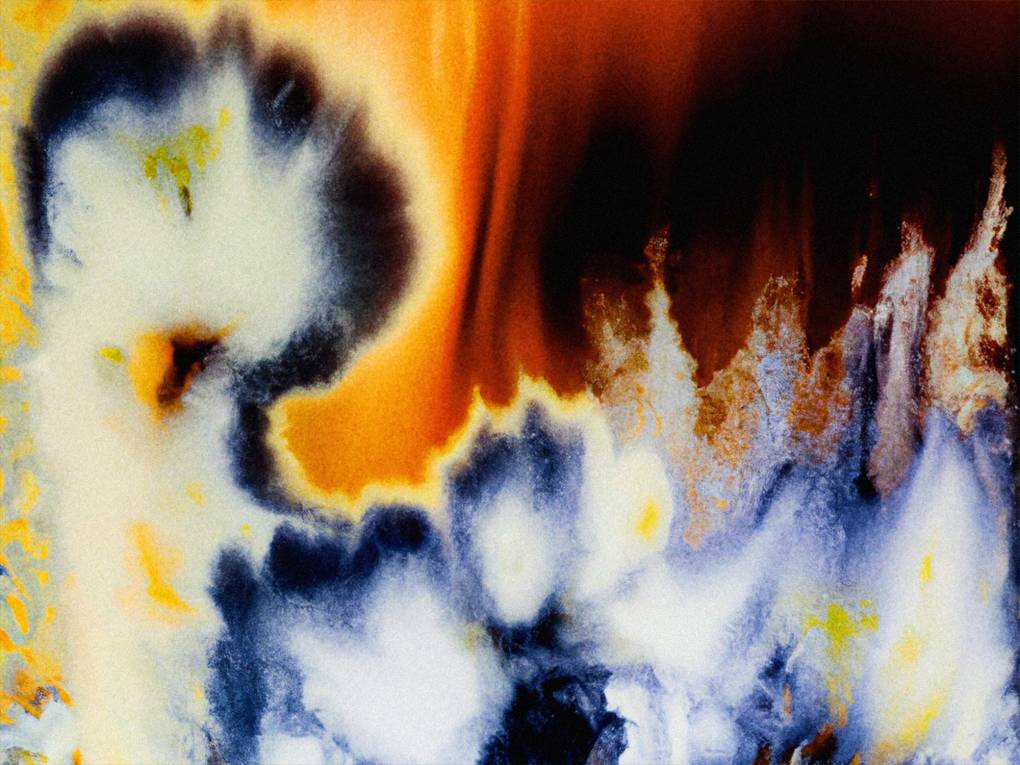
"caption": "Pedro Maia, still from 'March of Time,' 2023, part of Crossroad's Program 2, 'we spoke of dust' on Aug. 30, 2024. ",
"credit": "Courtesy the artist and SF Cinematheque",
"altTag": "abstract flowing colors of yellow, blue and black",
"description": null,
"imgSizes": {
"medium": {
"file": "https://cdn.kqed.org/wp-content/uploads/sites/2/2024/08/07-Maia-Pedro-March-of-Time-2023-still2_2000-800x600.jpg",
"width": 800,
"height": 600,
"mimeType": "image/jpeg"
},
"large": {
"file": "https://cdn.kqed.org/wp-content/uploads/sites/2/2024/08/07-Maia-Pedro-March-of-Time-2023-still2_2000-1020x765.jpg",
"width": 1020,
"height": 765,
"mimeType": "image/jpeg"
},
"thumbnail": {
"file": "https://cdn.kqed.org/wp-content/uploads/sites/2/2024/08/07-Maia-Pedro-March-of-Time-2023-still2_2000-160x120.jpg",
"width": 160,
"height": 120,
"mimeType": "image/jpeg"
},
"medium_large": {
"file": "https://cdn.kqed.org/wp-content/uploads/sites/2/2024/08/07-Maia-Pedro-March-of-Time-2023-still2_2000-768x576.jpg",
"width": 768,
"height": 576,
"mimeType": "image/jpeg"
},
"1536x1536": {
"file": "https://cdn.kqed.org/wp-content/uploads/sites/2/2024/08/07-Maia-Pedro-March-of-Time-2023-still2_2000-1536x1152.jpg",
"width": 1536,
"height": 1152,
"mimeType": "image/jpeg"
},
"post-thumbnail": {
"file": "https://cdn.kqed.org/wp-content/uploads/sites/2/2024/08/07-Maia-Pedro-March-of-Time-2023-still2_2000-672x372.jpg",
"width": 672,
"height": 372,
"mimeType": "image/jpeg"
},
"twentyfourteen-full-width": {
"file": "https://cdn.kqed.org/wp-content/uploads/sites/2/2024/08/07-Maia-Pedro-March-of-Time-2023-still2_2000-1038x576.jpg",
"width": 1038,
"height": 576,
"mimeType": "image/jpeg"
},
"full-width": {
"file": "https://cdn.kqed.org/wp-content/uploads/sites/2/2024/08/07-Maia-Pedro-March-of-Time-2023-still2_2000-1920x1440.jpg",
"width": 1920,
"height": 1440,
"mimeType": "image/jpeg"
},
"kqedFullSize": {
"file": "https://cdn.kqed.org/wp-content/uploads/sites/2/2024/08/07-Maia-Pedro-March-of-Time-2023-still2_2000.jpg",
"width": 2000,
"height": 1500
}
},
"isLoading": false,
"fetchFailed": false
},
"arts_13918067": {
"type": "attachments",
"id": "arts_13918067",
"meta": {
"index": "attachments_1716263798",
"site": "arts",
"id": "13918067",
"found": true
},
"parent": 13918047,
"imgSizes": {
"twentyfourteen-full-width": {
"file": "https://ww2.kqed.org/app/uploads/sites/2/2022/08/1-USE-Squish-Saenjaroen-3copy-1038x576.jpg",
"width": 1038,
"mimeType": "image/jpeg",
"height": 576
},
"thumbnail": {
"file": "https://ww2.kqed.org/app/uploads/sites/2/2022/08/1-USE-Squish-Saenjaroen-3copy-160x90.jpg",
"width": 160,
"mimeType": "image/jpeg",
"height": 90
},
"post-thumbnail": {
"file": "https://ww2.kqed.org/app/uploads/sites/2/2022/08/1-USE-Squish-Saenjaroen-3copy-672x372.jpg",
"width": 672,
"mimeType": "image/jpeg",
"height": 372
},
"kqedFullSize": {
"file": "https://ww2.kqed.org/app/uploads/sites/2/2022/08/1-USE-Squish-Saenjaroen-3copy-scaled.jpg",
"width": 2560,
"height": 1435
},
"2048x2048": {
"file": "https://ww2.kqed.org/app/uploads/sites/2/2022/08/1-USE-Squish-Saenjaroen-3copy-2048x1148.jpg",
"width": 2048,
"mimeType": "image/jpeg",
"height": 1148
},
"large": {
"file": "https://ww2.kqed.org/app/uploads/sites/2/2022/08/1-USE-Squish-Saenjaroen-3copy-1020x572.jpg",
"width": 1020,
"mimeType": "image/jpeg",
"height": 572
},
"1536x1536": {
"file": "https://ww2.kqed.org/app/uploads/sites/2/2022/08/1-USE-Squish-Saenjaroen-3copy-1536x861.jpg",
"width": 1536,
"mimeType": "image/jpeg",
"height": 861
},
"full-width": {
"file": "https://ww2.kqed.org/app/uploads/sites/2/2022/08/1-USE-Squish-Saenjaroen-3copy-1920x1076.jpg",
"width": 1920,
"mimeType": "image/jpeg",
"height": 1076
},
"medium": {
"file": "https://ww2.kqed.org/app/uploads/sites/2/2022/08/1-USE-Squish-Saenjaroen-3copy-800x448.jpg",
"width": 800,
"mimeType": "image/jpeg",
"height": 448
},
"medium_large": {
"file": "https://ww2.kqed.org/app/uploads/sites/2/2022/08/1-USE-Squish-Saenjaroen-3copy-768x430.jpg",
"width": 768,
"mimeType": "image/jpeg",
"height": 430
}
},
"publishDate": 1661460961,
"modified": 1661461057,
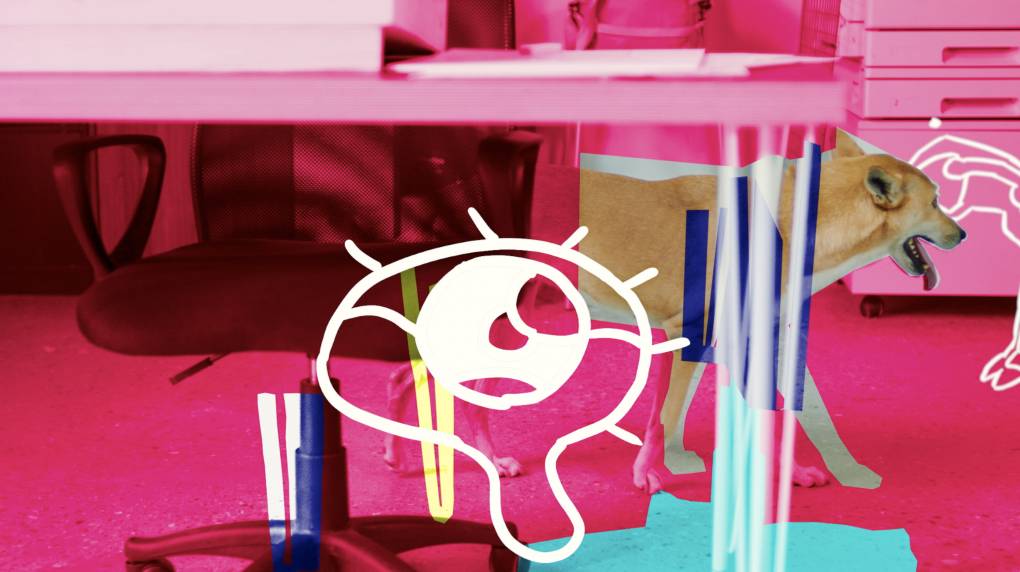
"caption": "A still from 'Squish!' by Tulapop Saenjaroen.",
"description": null,
"title": "1-USE-Squish-Saenjaroen-3copy",
"credit": "Courtesy San Francisco Cinematheque",
"status": "inherit",
"altTag": "a vibrant pink and white and blue illustration with abstract elements and also a dog",
"isLoading": false,
"fetchFailed": false
},
"arts_13900672": {
"type": "attachments",
"id": "arts_13900672",
"meta": {
"index": "attachments_1716263798",
"site": "arts",
"id": "13900672",
"found": true
},
"parent": 13900656,
"imgSizes": {
"twentyfourteen-full-width": {
"file": "https://ww2.kqed.org/app/uploads/sites/2/2021/08/LightField_15_COVER-1038x576.jpg",
"width": 1038,
"mimeType": "image/jpeg",
"height": 576
},
"thumbnail": {
"file": "https://ww2.kqed.org/app/uploads/sites/2/2021/08/LightField_15_COVER-160x90.jpg",
"width": 160,
"mimeType": "image/jpeg",
"height": 90
},
"post-thumbnail": {
"file": "https://ww2.kqed.org/app/uploads/sites/2/2021/08/LightField_15_COVER-672x372.jpg",
"width": 672,
"mimeType": "image/jpeg",
"height": 372
},
"kqedFullSize": {
"file": "https://ww2.kqed.org/app/uploads/sites/2/2021/08/LightField_15_COVER.jpg",
"width": 1920,
"height": 1080
},
"large": {
"file": "https://ww2.kqed.org/app/uploads/sites/2/2021/08/LightField_15_COVER-1020x574.jpg",
"width": 1020,
"mimeType": "image/jpeg",
"height": 574
},
"1536x1536": {
"file": "https://ww2.kqed.org/app/uploads/sites/2/2021/08/LightField_15_COVER-1536x864.jpg",
"width": 1536,
"mimeType": "image/jpeg",
"height": 864
},
"medium": {
"file": "https://ww2.kqed.org/app/uploads/sites/2/2021/08/LightField_15_COVER-800x450.jpg",
"width": 800,
"mimeType": "image/jpeg",
"height": 450
},
"medium_large": {
"file": "https://ww2.kqed.org/app/uploads/sites/2/2021/08/LightField_15_COVER-768x432.jpg",
"width": 768,
"mimeType": "image/jpeg",
"height": 432
}
},
"publishDate": 1628137687,
"modified": 1628137850,
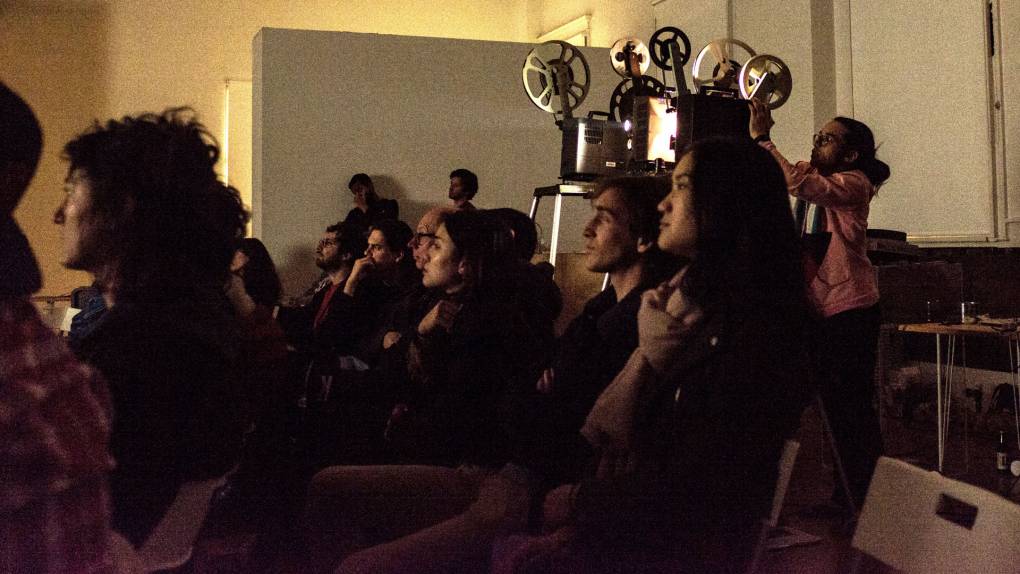
"caption": "A projectionist and audience during Light Field's 2017 festival at The Lab.",
"description": "A projectionist and audience during Light Field's 2017 festival at The Lab.",
"title": "LightField_15_COVER",
"credit": "Raphael Villet",
"status": "inherit",
"altTag": "A seated crowd looks left, behind them a projectionists stands next to two film projectors, one actively beaming light.",
"isLoading": false,
"fetchFailed": false
},
"arts_13894817": {
"type": "attachments",
"id": "arts_13894817",
"meta": {
"index": "attachments_1716263798",
"site": "arts",
"id": "13894817",
"found": true
},
"parent": 13894603,
"imgSizes": {
"twentyfourteen-full-width": {
"file": "https://ww2.kqed.org/app/uploads/sites/2/2021/03/1.-PROGRAM-HERO-Copy-of-ASong_COVER-1038x576.jpg",
"width": 1038,
"mimeType": "image/jpeg",
"height": 576
},
"thumbnail": {
"file": "https://ww2.kqed.org/app/uploads/sites/2/2021/03/1.-PROGRAM-HERO-Copy-of-ASong_COVER-160x90.jpg",
"width": 160,
"mimeType": "image/jpeg",
"height": 90
},
"post-thumbnail": {
"file": "https://ww2.kqed.org/app/uploads/sites/2/2021/03/1.-PROGRAM-HERO-Copy-of-ASong_COVER-672x372.jpg",
"width": 672,
"mimeType": "image/jpeg",
"height": 372
},
"kqedFullSize": {
"file": "https://ww2.kqed.org/app/uploads/sites/2/2021/03/1.-PROGRAM-HERO-Copy-of-ASong_COVER.jpg",
"width": 1920,
"height": 1080
},
"large": {
"file": "https://ww2.kqed.org/app/uploads/sites/2/2021/03/1.-PROGRAM-HERO-Copy-of-ASong_COVER-1020x574.jpg",
"width": 1020,
"mimeType": "image/jpeg",
"height": 574
},
"1536x1536": {
"file": "https://ww2.kqed.org/app/uploads/sites/2/2021/03/1.-PROGRAM-HERO-Copy-of-ASong_COVER-1536x864.jpg",
"width": 1536,
"mimeType": "image/jpeg",
"height": 864
},
"medium": {
"file": "https://ww2.kqed.org/app/uploads/sites/2/2021/03/1.-PROGRAM-HERO-Copy-of-ASong_COVER-800x450.jpg",
"width": 800,
"mimeType": "image/jpeg",
"height": 450
},
"medium_large": {
"file": "https://ww2.kqed.org/app/uploads/sites/2/2021/03/1.-PROGRAM-HERO-Copy-of-ASong_COVER-768x432.jpg",
"width": 768,
"mimeType": "image/jpeg",
"height": 432
}
},
"publishDate": 1617060808,
"modified": 1617060901,
"caption": "Still from Raven Chacon and Cristóbal Martínez's 'A Song Often Played on the Radio,' 2019.",
"description": "Still from Raven Chacon and Cristóbal Martínez's 'A Song Often Played on the Radio,' 2019.",
"title": "1.-PROGRAM-HERO-Copy-of-ASong_COVER",
"credit": "Courtesy SF Cinematheque",
"status": "inherit",
"altTag": null,
"isLoading": false,
"fetchFailed": false
},
"arts_13890510": {
"type": "attachments",
"id": "arts_13890510",
"meta": {
"index": "attachments_1716263798",
"site": "arts",
"id": "13890510",
"found": true
},
"parent": 13890478,
"imgSizes": {
"twentyfourteen-full-width": {
"file": "https://ww2.kqed.org/app/uploads/sites/2/2020/12/Haight-Ashbury1966_COVER-1038x576.jpg",
"width": 1038,
"mimeType": "image/jpeg",
"height": 576
},
"thumbnail": {
"file": "https://ww2.kqed.org/app/uploads/sites/2/2020/12/Haight-Ashbury1966_COVER-160x90.jpg",
"width": 160,
"mimeType": "image/jpeg",
"height": 90
},
"post-thumbnail": {
"file": "https://ww2.kqed.org/app/uploads/sites/2/2020/12/Haight-Ashbury1966_COVER-672x372.jpg",
"width": 672,
"mimeType": "image/jpeg",
"height": 372
},
"kqedFullSize": {
"file": "https://ww2.kqed.org/app/uploads/sites/2/2020/12/Haight-Ashbury1966_COVER.jpg",
"width": 1491,
"height": 838
},
"large": {
"file": "https://ww2.kqed.org/app/uploads/sites/2/2020/12/Haight-Ashbury1966_COVER-1020x573.jpg",
"width": 1020,
"mimeType": "image/jpeg",
"height": 573
},
"medium": {
"file": "https://ww2.kqed.org/app/uploads/sites/2/2020/12/Haight-Ashbury1966_COVER-800x450.jpg",
"width": 800,
"mimeType": "image/jpeg",
"height": 450
},
"medium_large": {
"file": "https://ww2.kqed.org/app/uploads/sites/2/2020/12/Haight-Ashbury1966_COVER-768x432.jpg",
"width": 768,
"mimeType": "image/jpeg",
"height": 432
}
},
"publishDate": 1608147192,
"modified": 1608147472,
"caption": "The Haight-Ashbury intersection in 1966, a still from 'Lost Landscapes.'",
"description": "The Haight-Ashbury intersection in 1966, a still from 'Lost Landscapes.'",
"title": "Haight-Ashbury1966_COVER",
"credit": "Rick Prelinger",
"status": "inherit",
"altTag": null,
"isLoading": false,
"fetchFailed": false
},
"arts_13889721": {
"type": "attachments",
"id": "arts_13889721",
"meta": {
"index": "attachments_1716263798",
"site": "arts",
"id": "13889721",
"found": true
},
"parent": 13889690,
"imgSizes": {
"twentyfourteen-full-width": {
"file": "https://ww2.kqed.org/app/uploads/sites/2/2020/11/Decked-Out-2014-by-Linda-Scobie_COVER-1038x576.jpg",
"width": 1038,
"mimeType": "image/jpeg",
"height": 576
},
"thumbnail": {
"file": "https://ww2.kqed.org/app/uploads/sites/2/2020/11/Decked-Out-2014-by-Linda-Scobie_COVER-160x107.jpg",
"width": 160,
"mimeType": "image/jpeg",
"height": 107
},
"post-thumbnail": {
"file": "https://ww2.kqed.org/app/uploads/sites/2/2020/11/Decked-Out-2014-by-Linda-Scobie_COVER-672x372.jpg",
"width": 672,
"mimeType": "image/jpeg",
"height": 372
},
"kqedFullSize": {
"file": "https://ww2.kqed.org/app/uploads/sites/2/2020/11/Decked-Out-2014-by-Linda-Scobie_COVER.jpg",
"width": 1920,
"height": 1280
},
"large": {
"file": "https://ww2.kqed.org/app/uploads/sites/2/2020/11/Decked-Out-2014-by-Linda-Scobie_COVER-1020x680.jpg",
"width": 1020,
"mimeType": "image/jpeg",
"height": 680
},
"1536x1536": {
"file": "https://ww2.kqed.org/app/uploads/sites/2/2020/11/Decked-Out-2014-by-Linda-Scobie_COVER-1536x1024.jpg",
"width": 1536,
"mimeType": "image/jpeg",
"height": 1024
},
"medium": {
"file": "https://ww2.kqed.org/app/uploads/sites/2/2020/11/Decked-Out-2014-by-Linda-Scobie_COVER-800x533.jpg",
"width": 800,
"mimeType": "image/jpeg",
"height": 533
},
"medium_large": {
"file": "https://ww2.kqed.org/app/uploads/sites/2/2020/11/Decked-Out-2014-by-Linda-Scobie_COVER-768x512.jpg",
"width": 768,
"mimeType": "image/jpeg",
"height": 512
}
},
"publishDate": 1606347614,
"modified": 1606347693,
"caption": "Still from Linda Scobie's 'Decked Out,' 2014.",
"description": "Still from Linda Scobie's 'Decked Out,' 2014.",
"title": "Decked-Out-(2014)-by-Linda-Scobie_COVER",
"credit": "Courtesy SF Cinematheque",
"status": "inherit",
"isLoading": false,
"fetchFailed": false
},
"arts_13885189": {
"type": "attachments",
"id": "arts_13885189",
"meta": {
"index": "attachments_1716263798",
"site": "arts",
"id": "13885189",
"found": true
},
"parent": 13885180,
"imgSizes": {
"twentyfourteen-full-width": {
"file": "https://ww2.kqed.org/app/uploads/sites/2/2020/08/Gloria_Chung_STILL_COVER-1038x576.jpg",
"width": 1038,
"mimeType": "image/jpeg",
"height": 576
},
"thumbnail": {
"file": "https://ww2.kqed.org/app/uploads/sites/2/2020/08/Gloria_Chung_STILL_COVER-160x90.jpg",
"width": 160,
"mimeType": "image/jpeg",
"height": 90
},
"post-thumbnail": {
"file": "https://ww2.kqed.org/app/uploads/sites/2/2020/08/Gloria_Chung_STILL_COVER-672x372.jpg",
"width": 672,
"mimeType": "image/jpeg",
"height": 372
},
"kqedFullSize": {
"file": "https://ww2.kqed.org/app/uploads/sites/2/2020/08/Gloria_Chung_STILL_COVER.jpg",
"width": 1920,
"height": 1082
},
"large": {
"file": "https://ww2.kqed.org/app/uploads/sites/2/2020/08/Gloria_Chung_STILL_COVER-1020x575.jpg",
"width": 1020,
"mimeType": "image/jpeg",
"height": 575
},
"1536x1536": {
"file": "https://ww2.kqed.org/app/uploads/sites/2/2020/08/Gloria_Chung_STILL_COVER-1536x866.jpg",
"width": 1536,
"mimeType": "image/jpeg",
"height": 866
},
"medium": {
"file": "https://ww2.kqed.org/app/uploads/sites/2/2020/08/Gloria_Chung_STILL_COVER-800x451.jpg",
"width": 800,
"mimeType": "image/jpeg",
"height": 451
},
"medium_large": {
"file": "https://ww2.kqed.org/app/uploads/sites/2/2020/08/Gloria_Chung_STILL_COVER-768x433.jpg",
"width": 768,
"mimeType": "image/jpeg",
"height": 433
}
},
"publishDate": 1598116773,
"modified": 1598116803,
"caption": "Still from Gloria Chung's 'It Was Summer When,' 2019.",
"description": "Still from Gloria Chung's 'It Was Summer When,' 2019.",
"title": "Gloria_Chung_STILL_COVER",
"credit": "SF Cinematheque",
"status": "inherit",
"isLoading": false,
"fetchFailed": false
},
"arts_13878834": {
"type": "attachments",
"id": "arts_13878834",
"meta": {
"index": "attachments_1716263798",
"site": "arts",
"id": "13878834",
"found": true
},
"parent": 13878792,
"imgSizes": {
"twentyfourteen-full-width": {
"file": "https://ww2.kqed.org/app/uploads/sites/2/2020/04/CastroStreet_COVER-1038x576.jpg",
"width": 1038,
"mimeType": "image/jpeg",
"height": 576
},
"thumbnail": {
"file": "https://ww2.kqed.org/app/uploads/sites/2/2020/04/CastroStreet_COVER-160x90.jpg",
"width": 160,
"mimeType": "image/jpeg",
"height": 90
},
"post-thumbnail": {
"file": "https://ww2.kqed.org/app/uploads/sites/2/2020/04/CastroStreet_COVER-672x372.jpg",
"width": 672,
"mimeType": "image/jpeg",
"height": 372
},
"kqedFullSize": {
"file": "https://ww2.kqed.org/app/uploads/sites/2/2020/04/CastroStreet_COVER.jpg",
"width": 1440,
"height": 810
},
"large": {
"file": "https://ww2.kqed.org/app/uploads/sites/2/2020/04/CastroStreet_COVER-1020x574.jpg",
"width": 1020,
"mimeType": "image/jpeg",
"height": 574
},
"medium": {
"file": "https://ww2.kqed.org/app/uploads/sites/2/2020/04/CastroStreet_COVER-800x450.jpg",
"width": 800,
"mimeType": "image/jpeg",
"height": 450
},
"medium_large": {
"file": "https://ww2.kqed.org/app/uploads/sites/2/2020/04/CastroStreet_COVER-768x432.jpg",
"width": 768,
"mimeType": "image/jpeg",
"height": 432
}
},
"publishDate": 1587075152,
"modified": 1587075279,
"caption": "Still from Bruce Baillie's 'Castro Street,' 1966.",
"description": "Still from Bruce Baillie's 'Castro Street,' 1966.",
"title": "CastroStreet_COVER",
"credit": "Courtesy of The Film-Makers' Coop",
"status": "inherit",
"isLoading": false,
"fetchFailed": false
},
"arts_13858946": {
"type": "attachments",
"id": "arts_13858946",
"meta": {
"index": "attachments_1716263798",
"site": "arts",
"id": "13858946",
"found": true
},
"parent": 13858906,
"imgSizes": {
"twentyfourteen-full-width": {
"file": "https://ww2.kqed.org/app/uploads/sites/2/2019/06/stark-epiphanists-08_COVER-1038x576.jpg",
"width": 1038,
"mimeType": "image/jpeg",
"height": 576
},
"thumbnail": {
"file": "https://ww2.kqed.org/app/uploads/sites/2/2019/06/stark-epiphanists-08_COVER-160x90.jpg",
"width": 160,
"mimeType": "image/jpeg",
"height": 90
},
"post-thumbnail": {
"file": "https://ww2.kqed.org/app/uploads/sites/2/2019/06/stark-epiphanists-08_COVER-672x372.jpg",
"width": 672,
"mimeType": "image/jpeg",
"height": 372
},
"kqedFullSize": {
"file": "https://ww2.kqed.org/app/uploads/sites/2/2019/06/stark-epiphanists-08_COVER.jpg",
"width": 1697,
"height": 955
},
"large": {
"file": "https://ww2.kqed.org/app/uploads/sites/2/2019/06/stark-epiphanists-08_COVER-1020x574.jpg",
"width": 1020,
"mimeType": "image/jpeg",
"height": 574
},
"complete_open_graph": {
"file": "https://ww2.kqed.org/app/uploads/sites/2/2019/06/stark-epiphanists-08_COVER-1200x675.jpg",
"width": 1200,
"mimeType": "image/jpeg",
"height": 675
},
"medium": {
"file": "https://ww2.kqed.org/app/uploads/sites/2/2019/06/stark-epiphanists-08_COVER-800x450.jpg",
"width": 800,
"mimeType": "image/jpeg",
"height": 450
},
"medium_large": {
"file": "https://ww2.kqed.org/app/uploads/sites/2/2019/06/stark-epiphanists-08_COVER-768x432.jpg",
"width": 768,
"mimeType": "image/jpeg",
"height": 432
}
},
"publishDate": 1559685420,
"modified": 1559685661,
"caption": "Scott Stark, Still from 'Love and the Epiphanists (Part 1),' 2018.",
"description": "Scott Stark, Still from 'Love and the Epiphanists (Part 1),' 2018.",
"title": "stark-epiphanists-08_COVER",
"credit": "Courtesy of SF Cinematheque",
"status": "inherit",
"isLoading": false,
"fetchFailed": false
},
"arts_13850108": {
"type": "attachments",
"id": "arts_13850108",
"meta": {
"index": "attachments_1716263798",
"site": "arts",
"id": "13850108",
"found": true
},
"parent": 0,
"imgSizes": {
"thumbnail": {
"file": "https://ww2.kqed.org/app/uploads/sites/2/2019/02/Mekas-Jumping-160x100.jpg",
"width": 160,
"mimeType": "image/jpeg",
"height": 100
},
"post-thumbnail": {
"file": "https://ww2.kqed.org/app/uploads/sites/2/2019/02/Mekas-Jumping-620x372.jpg",
"width": 620,
"mimeType": "image/jpeg",
"height": 372
},
"kqedFullSize": {
"file": "https://ww2.kqed.org/app/uploads/sites/2/2019/02/Mekas-Jumping.jpg",
"width": 620,
"height": 387
},
"guest-author-50": {
"file": "https://ww2.kqed.org/app/uploads/sites/2/2019/02/Mekas-Jumping-50x50.jpg",
"width": 50,
"mimeType": "image/jpeg",
"height": 50
},
"guest-author-96": {
"file": "https://ww2.kqed.org/app/uploads/sites/2/2019/02/Mekas-Jumping-96x96.jpg",
"width": 96,
"mimeType": "image/jpeg",
"height": 96
},
"guest-author-64": {
"file": "https://ww2.kqed.org/app/uploads/sites/2/2019/02/Mekas-Jumping-64x64.jpg",
"width": 64,
"mimeType": "image/jpeg",
"height": 64
},
"detail": {
"file": "https://ww2.kqed.org/app/uploads/sites/2/2019/02/Mekas-Jumping-150x150.jpg",
"width": 150,
"mimeType": "image/jpeg",
"height": 150
},
"guest-author-32": {
"file": "https://ww2.kqed.org/app/uploads/sites/2/2019/02/Mekas-Jumping-32x32.jpg",
"width": 32,
"mimeType": "image/jpeg",
"height": 32
},
"guest-author-128": {
"file": "https://ww2.kqed.org/app/uploads/sites/2/2019/02/Mekas-Jumping-128x128.jpg",
"width": 128,
"mimeType": "image/jpeg",
"height": 128
}
},
"publishDate": 1549312824,
"modified": 1549318285,
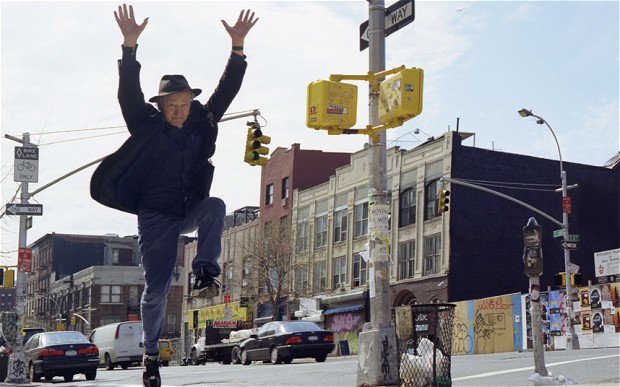
"caption": "Jonas Mekas",
"description": "Jonas Mekas",
"title": "Mekas Jumping",
"credit": "Courtesy of SF Cinematheque",
"status": "inherit",
"isLoading": false,
"fetchFailed": false
},
"arts_13842871": {
"type": "attachments",
"id": "arts_13842871",
"meta": {
"index": "attachments_1716263798",
"site": "arts",
"id": "13842871",
"found": true
},
"parent": 13842866,
"imgSizes": {
"small": {
"file": "https://ww2.kqed.org/app/uploads/sites/2/2018/10/At-Least-You-KNow_02_COVER-520x292.jpg",
"width": 520,
"mimeType": "image/jpeg",
"height": 292
},
"thumbnail": {
"file": "https://ww2.kqed.org/app/uploads/sites/2/2018/10/At-Least-You-KNow_02_COVER-160x90.jpg",
"width": 160,
"mimeType": "image/jpeg",
"height": 90
},
"post-thumbnail": {
"file": "https://ww2.kqed.org/app/uploads/sites/2/2018/10/At-Least-You-KNow_02_COVER-672x372.jpg",
"width": 672,
"mimeType": "image/jpeg",
"height": 372
},
"xsmall": {
"file": "https://ww2.kqed.org/app/uploads/sites/2/2018/10/At-Least-You-KNow_02_COVER-375x211.jpg",
"width": 375,
"mimeType": "image/jpeg",
"height": 211
},
"kqedFullSize": {
"file": "https://ww2.kqed.org/app/uploads/sites/2/2018/10/At-Least-You-KNow_02_COVER.jpg",
"width": 850,
"height": 478
},
"guest-author-50": {
"file": "https://ww2.kqed.org/app/uploads/sites/2/2018/10/At-Least-You-KNow_02_COVER-50x50.jpg",
"width": 50,
"mimeType": "image/jpeg",
"height": 50
},
"guest-author-96": {
"file": "https://ww2.kqed.org/app/uploads/sites/2/2018/10/At-Least-You-KNow_02_COVER-96x96.jpg",
"width": 96,
"mimeType": "image/jpeg",
"height": 96
},
"medium": {
"file": "https://ww2.kqed.org/app/uploads/sites/2/2018/10/At-Least-You-KNow_02_COVER-800x450.jpg",
"width": 800,
"mimeType": "image/jpeg",
"height": 450
},
"guest-author-64": {
"file": "https://ww2.kqed.org/app/uploads/sites/2/2018/10/At-Least-You-KNow_02_COVER-64x64.jpg",
"width": 64,
"mimeType": "image/jpeg",
"height": 64
},
"guest-author-32": {
"file": "https://ww2.kqed.org/app/uploads/sites/2/2018/10/At-Least-You-KNow_02_COVER-32x32.jpg",
"width": 32,
"mimeType": "image/jpeg",
"height": 32
},
"detail": {
"file": "https://ww2.kqed.org/app/uploads/sites/2/2018/10/At-Least-You-KNow_02_COVER-150x150.jpg",
"width": 150,
"mimeType": "image/jpeg",
"height": 150
},
"medium_large": {
"file": "https://ww2.kqed.org/app/uploads/sites/2/2018/10/At-Least-You-KNow_02_COVER-768x432.jpg",
"width": 768,
"mimeType": "image/jpeg",
"height": 432
},
"guest-author-128": {
"file": "https://ww2.kqed.org/app/uploads/sites/2/2018/10/At-Least-You-KNow_02_COVER-128x128.jpg",
"width": 128,
"mimeType": "image/jpeg",
"height": 128
},
"xxsmall": {
"file": "https://ww2.kqed.org/app/uploads/sites/2/2018/10/At-Least-You-KNow_02_COVER-240x135.jpg",
"width": 240,
"mimeType": "image/jpeg",
"height": 135
}
},
"publishDate": 1539629310,
"modified": 1539629385,
"caption": "Zackary Drucker, Still from 'At Least You Know You Exist,' 2011.",
"description": "Zackary Drucker, Still from 'At Least You Know You Exist,' 2011.",
"title": "At Least You KNow_02_COVER",
"credit": "Courtesy of SF Cinematheque",
"status": "inherit",
"isLoading": false,
"fetchFailed": false
},
"arts_13834441": {
"type": "attachments",
"id": "arts_13834441",
"meta": {
"index": "attachments_1716263798",
"site": "arts",
"id": "13834441",
"found": true
},
"parent": 13834412,
"imgSizes": {
"small": {
"file": "https://ww2.kqed.org/app/uploads/sites/2/2018/06/glenna_COVER-520x293.jpg",
"width": 520,
"mimeType": "image/jpeg",
"height": 293
},
"twentyfourteen-full-width": {
"file": "https://ww2.kqed.org/app/uploads/sites/2/2018/06/glenna_COVER-1038x576.jpg",
"width": 1038,
"mimeType": "image/jpeg",
"height": 576
},
"thumbnail": {
"file": "https://ww2.kqed.org/app/uploads/sites/2/2018/06/glenna_COVER-160x90.jpg",
"width": 160,
"mimeType": "image/jpeg",
"height": 90
},
"fd-sm": {
"file": "https://ww2.kqed.org/app/uploads/sites/2/2018/06/glenna_COVER-960x540.jpg",
"width": 960,
"mimeType": "image/jpeg",
"height": 540
},
"post-thumbnail": {
"file": "https://ww2.kqed.org/app/uploads/sites/2/2018/06/glenna_COVER-672x372.jpg",
"width": 672,
"mimeType": "image/jpeg",
"height": 372
},
"xsmall": {
"file": "https://ww2.kqed.org/app/uploads/sites/2/2018/06/glenna_COVER-375x211.jpg",
"width": 375,
"mimeType": "image/jpeg",
"height": 211
},
"kqedFullSize": {
"file": "https://ww2.kqed.org/app/uploads/sites/2/2018/06/glenna_COVER.jpg",
"width": 1920,
"height": 1080
},
"large": {
"file": "https://ww2.kqed.org/app/uploads/sites/2/2018/06/glenna_COVER-1020x574.jpg",
"width": 1020,
"mimeType": "image/jpeg",
"height": 574
},
"xlarge": {
"file": "https://ww2.kqed.org/app/uploads/sites/2/2018/06/glenna_COVER-1180x664.jpg",
"width": 1180,
"mimeType": "image/jpeg",
"height": 664
},
"complete_open_graph": {
"file": "https://ww2.kqed.org/app/uploads/sites/2/2018/06/glenna_COVER-1200x675.jpg",
"width": 1200,
"mimeType": "image/jpeg",
"height": 675
},
"guest-author-50": {
"file": "https://ww2.kqed.org/app/uploads/sites/2/2018/06/glenna_COVER-50x50.jpg",
"width": 50,
"mimeType": "image/jpeg",
"height": 50
},
"guest-author-96": {
"file": "https://ww2.kqed.org/app/uploads/sites/2/2018/06/glenna_COVER-96x96.jpg",
"width": 96,
"mimeType": "image/jpeg",
"height": 96
},
"medium": {
"file": "https://ww2.kqed.org/app/uploads/sites/2/2018/06/glenna_COVER-800x450.jpg",
"width": 800,
"mimeType": "image/jpeg",
"height": 450
},
"guest-author-64": {
"file": "https://ww2.kqed.org/app/uploads/sites/2/2018/06/glenna_COVER-64x64.jpg",
"width": 64,
"mimeType": "image/jpeg",
"height": 64
},
"guest-author-32": {
"file": "https://ww2.kqed.org/app/uploads/sites/2/2018/06/glenna_COVER-32x32.jpg",
"width": 32,
"mimeType": "image/jpeg",
"height": 32
},
"fd-lrg": {
"file": "https://ww2.kqed.org/app/uploads/sites/2/2018/06/glenna_COVER-1920x1080.jpg",
"width": 1920,
"mimeType": "image/jpeg",
"height": 1080
},
"fd-med": {
"file": "https://ww2.kqed.org/app/uploads/sites/2/2018/06/glenna_COVER-1180x664.jpg",
"width": 1180,
"mimeType": "image/jpeg",
"height": 664
},
"full-width": {
"file": "https://ww2.kqed.org/app/uploads/sites/2/2018/06/glenna_COVER-1920x1080.jpg",
"width": 1920,
"mimeType": "image/jpeg",
"height": 1080
},
"detail": {
"file": "https://ww2.kqed.org/app/uploads/sites/2/2018/06/glenna_COVER-150x150.jpg",
"width": 150,
"mimeType": "image/jpeg",
"height": 150
},
"medium_large": {
"file": "https://ww2.kqed.org/app/uploads/sites/2/2018/06/glenna_COVER-768x432.jpg",
"width": 768,
"mimeType": "image/jpeg",
"height": 432
},
"guest-author-128": {
"file": "https://ww2.kqed.org/app/uploads/sites/2/2018/06/glenna_COVER-128x128.jpg",
"width": 128,
"mimeType": "image/jpeg",
"height": 128
},
"xxsmall": {
"file": "https://ww2.kqed.org/app/uploads/sites/2/2018/06/glenna_COVER-240x135.jpg",
"width": 240,
"mimeType": "image/jpeg",
"height": 135
}
},
"publishDate": 1528245015,
"modified": 1528245316,
"caption": "Still from Brittany Gravely and Ken Linehan's 'Prologue to the Tarot: Glenna,' 2018.",
"description": "Still from Brittany Gravely and Ken Linehan's 'Prologue to the Tarot: Glenna,' 2018.",
"title": "glenna_COVER",
"credit": "Courtesy of San Francisco Cinematheque",
"status": "inherit",
"isLoading": false,
"fetchFailed": false
}
},
"audioPlayerReducer": {
"postId": "stream_live",
"isPaused": true,
"isPlaying": false,
"pfsActive": false,
"pledgeModalIsOpen": true,
"playerDrawerIsOpen": false,
"liveAudioPlayStartedAt": 0,
"liveAudioPlayContext": ""
},
"authorsReducer": {
"mfox": {
"type": "authors",
"id": "22",
"meta": {
"index": "authors_1716337520",
"id": "22",
"found": true
},
"name": "Michael Fox",
"firstName": "Michael",
"lastName": "Fox",
"slug": "mfox",
"email": "foxonfilm@yahoo.com",
"display_author_email": false,
"staff_mastheads": [],
"title": "KQED Contributor",
"bio": "Michael Fox has written about film for dozens of publications since 1987. He is a founding member of the San Francisco Bay Area Film Critics Circle.",
"avatar": "https://secure.gravatar.com/avatar/d9849d6c659c41414795c471d907bb97b396e2a32b88e20e6ff66f65fbdd6dcd?s=600&d=blank&r=g",
"twitter": null,
"bluesky": null,
"facebook": null,
"instagram": null,
"linkedin": null,
"sites": [
{
"site": "arts",
"roles": [
"Contributor",
"contributor"
]
}
],
"headData": {
"title": "Michael Fox | KQED",
"description": "KQED Contributor",
"ogImgSrc": "https://secure.gravatar.com/avatar/d9849d6c659c41414795c471d907bb97b396e2a32b88e20e6ff66f65fbdd6dcd?s=600&d=blank&r=g",
"twImgSrc": "https://secure.gravatar.com/avatar/d9849d6c659c41414795c471d907bb97b396e2a32b88e20e6ff66f65fbdd6dcd?s=600&d=blank&r=g"
},
"isLoading": false,
"link": "/author/mfox"
},
"shotchkiss": {
"type": "authors",
"id": "61",
"meta": {
"index": "authors_1716337520",
"id": "61",
"found": true
},
"name": "Sarah Hotchkiss",
"firstName": "Sarah",
"lastName": "Hotchkiss",
"slug": "shotchkiss",
"email": "shotchkiss@kqed.org",
"display_author_email": true,
"staff_mastheads": [
"arts"
],
"title": "Senior Editor",
"bio": "Sarah Hotchkiss is a San Francisco \u003ca href=\"http://www.sarahhotchkiss.com\">artist\u003c/a> and arts writer. In 2019, she received the Dorothea & Leo Rabkin Foundation grant for visual art journalism and in 2020 she received a Society of Professional Journalists, Northern California award for excellence in arts and culture reporting.",
"avatar": "https://secure.gravatar.com/avatar/bc662df144b3d27fd8b1b6f1c2a420d34e91e53154d411bb7ad353cc8b6cea8d?s=600&d=blank&r=g",
"twitter": null,
"bluesky": null,
"facebook": null,
"instagram": null,
"linkedin": null,
"sites": [
{
"site": "",
"roles": [
"editor"
]
},
{
"site": "arts",
"roles": [
"Contributor",
"administrator"
]
},
{
"site": "artschool",
"roles": [
"administrator"
]
},
{
"site": "news",
"roles": [
"editor"
]
},
{
"site": "pop",
"roles": [
"administrator"
]
},
{
"site": "bayareabites",
"roles": [
"editor"
]
},
{
"site": "spark",
"roles": [
"editor"
]
},
{
"site": "checkplease",
"roles": [
"editor"
]
}
],
"headData": {
"title": "Sarah Hotchkiss | KQED",
"description": "Senior Editor",
"ogImgSrc": "https://secure.gravatar.com/avatar/bc662df144b3d27fd8b1b6f1c2a420d34e91e53154d411bb7ad353cc8b6cea8d?s=600&d=blank&r=g",
"twImgSrc": "https://secure.gravatar.com/avatar/bc662df144b3d27fd8b1b6f1c2a420d34e91e53154d411bb7ad353cc8b6cea8d?s=600&d=blank&r=g"
},
"isLoading": false,
"link": "/author/shotchkiss"
}
},
"pagesReducer": {
"arts_tag_sf-cinematheque": {
"type": "terms",
"id": "arts_5052",
"meta": {
"index": "terms_1716263798",
"site": "arts",
"id": "5052",
"score": 10.404648
},
"featImg": null,
"name": "sf cinematheque",
"description": null,
"taxonomy": "tag",
"headData": {
"twImgId": null,
"twTitle": null,
"ogTitle": null,
"ogImgId": null,
"twDescription": null,
"description": null,
"title": "sf cinematheque Archives | KQED Arts",
"ogDescription": null
},
"ttid": 5064,
"slug": "sf-cinematheque",
"isLoading": false,
"title": "sf cinematheque",
"pageMeta": {
"site": "arts",
"WpPageTemplate": "page-topic-editorial",
"currentPage": 1
},
"blocks": [
{
"blockName": "kqed/post-list",
"attrs": {
"layout": "cardArticle2",
"query": "posts/arts?tag=sf-cinematheque",
"seeMore": false,
"paginated": true,
"page": 1
}
},
{
"blockName": "kqed/ad"
}
]
}
},
"pfsSessionReducer": {},
"postsReducer": {
"stream_live": {
"type": "live",
"id": "stream_live",
"audioUrl": "https://streams.kqed.org/kqedradio",
"title": "Live Stream",
"excerpt": "Live Stream information currently unavailable.",
"link": "/radio",
"featImg": "",
"label": {
"name": "KQED Live",
"link": "/"
}
},
"stream_kqedNewscast": {
"type": "posts",
"id": "stream_kqedNewscast",
"audioUrl": "https://www.kqed.org/.stream/anon/radio/RDnews/newscast.mp3?_=1",
"title": "KQED Newscast",
"featImg": "",
"label": {
"name": "88.5 FM",
"link": "/"
}
},
"arts_13963339": {
"type": "posts",
"id": "arts_13963339",
"meta": {
"index": "posts_1716263798",
"site": "arts",
"id": "13963339",
"score": null,
"sort": [
1724950847000
]
},
"guestAuthors": [],
"slug": "crossroads-sf-cinematheque-experimental-film-festival",
"title": "Crossroads Offers the Most Extraordinarily Idiosyncratic Films You’ll See All Year",
"publishDate": 1724950847,
"format": "standard",
"headTitle": "Crossroads Offers the Most Extraordinarily Idiosyncratic Films You’ll See All Year | KQED",
"labelTerm": {
"term": 140,
"site": "arts"
},
"content": "\u003cp>When I landed in San Francisco in 1985, avant-garde cinema was everywhere. San Francisco Cinematheque presented weekly screenings in the San Francisco Art Institute auditorium, while institutional heavyweights SFMOMA (whose vaunted Art in Cinema program began in 1946) and BAMPFA regularly showed experimental films.\u003c/p>\n\u003cp>Thriving on the cultural fringe outside the mainstream, experimental film was a fixture at scruffy venues on the geographical periphery, i.e., the Mission (Other Cinema), China Basin (the no nothing cinema) and the Haight (the Red Vic Movie House, which booked a night of student films every semester). The Castro and the Roxie chipped in with screenings of transgressive underground filmmakers Kenneth Anger, Curt McDowell and George Kuchar.\u003c/p>\n\u003cp>We won’t rehash how San Francisco and the world have changed in the ensuing decades (for one thing, \u003ca href=\"https://www.kqed.org/arts/13900144/sfmomas-cuts-to-film-other-programs-cause-widespread-outrage\">SFMOMA terminated its film program\u003c/a> in 2021). In response, longtime SF Cinematheque director Steve Polta shifted several years ago to a lighter calendar of ad hoc screenings augmented by a major annual festival.\u003c/p>\n\u003cfigure id=\"attachment_13963374\" class=\"wp-caption aligncenter\" style=\"max-width: 2000px\">\u003cimg loading=\"lazy\" decoding=\"async\" src=\"https://cdn.kqed.org/wp-content/uploads/sites/2/2024/08/01-Angerame-Dominic-SFAI-A-Ghost-Story-2024_2000.jpg\" alt=\"black-and-white image of a fresco of a man chained to a pillar\" width=\"2000\" height=\"1378\" class=\"size-full wp-image-13963374\" srcset=\"https://cdn.kqed.org/wp-content/uploads/sites/2/2024/08/01-Angerame-Dominic-SFAI-A-Ghost-Story-2024_2000.jpg 2000w, https://cdn.kqed.org/wp-content/uploads/sites/2/2024/08/01-Angerame-Dominic-SFAI-A-Ghost-Story-2024_2000-800x551.jpg 800w, https://cdn.kqed.org/wp-content/uploads/sites/2/2024/08/01-Angerame-Dominic-SFAI-A-Ghost-Story-2024_2000-1020x703.jpg 1020w, https://cdn.kqed.org/wp-content/uploads/sites/2/2024/08/01-Angerame-Dominic-SFAI-A-Ghost-Story-2024_2000-160x110.jpg 160w, https://cdn.kqed.org/wp-content/uploads/sites/2/2024/08/01-Angerame-Dominic-SFAI-A-Ghost-Story-2024_2000-768x529.jpg 768w, https://cdn.kqed.org/wp-content/uploads/sites/2/2024/08/01-Angerame-Dominic-SFAI-A-Ghost-Story-2024_2000-1536x1058.jpg 1536w, https://cdn.kqed.org/wp-content/uploads/sites/2/2024/08/01-Angerame-Dominic-SFAI-A-Ghost-Story-2024_2000-1920x1323.jpg 1920w\" sizes=\"(max-width: 2000px) 100vw, 2000px\">\u003cfigcaption class=\"wp-caption-text\">A still from Dominic Angergame’s ‘The San Francisco Art Institute (A Ghost Story),’ 2024. \u003ccite>(Courtesy the artist and SF Cinematheque)\u003c/cite>\u003c/figcaption>\u003c/figure>\n\u003cp>The 15th edition of \u003ca href=\"https://www.sfcinematheque.org/crossroads/crossroads-2024/\">Crossroads\u003c/a>, screening Friday, Aug. 30 through Sunday, Sept. 1 at Gray Area in the Mission, comprises 10 skillfully curated programs of short works from around the world. They are the most extraordinarily idiosyncratic and uncompromising films you’ll see this year, even taking into account the featured contributions of cinematographers, composers and other collaborators.\u003c/p>\n\u003cp>The opening film of “\u003ca href=\"https://www.sfcinematheque.org/screening/crossroads-2024-program-1/\">utopia springs from fertile soil\u003c/a>,” Program 1 — Side 1, Track 1, as it were — is San Francisco stalwart Dominic Angerame’s \u003cem>The San Francisco Art Institute (A Ghost Story)\u003c/em>. The title is self-explanatory if you know \u003ca href=\"https://www.kqed.org/arts/13916517/sfai-closed-students-for-action-usf-aquisition\">SFAI shuttered two years ago\u003c/a>; Angerame blesses us with nine haunted minutes of black-and-white, Dziga Vertov–inflected shots of faces, film gear and unpopulated vistas of the brutalist-yet-inviting campus.\u003c/p>\n\u003cp>[ad fullwidth]\u003c/p>\n\u003cp>Most of the works in Program 1 play like an elegy for lost human contact in a sea of concrete and glass. Here’s where the artists’ synopses are instructive in appreciating avant-garde cinema: Ross Meckfessel describes the protagonist of his \u003cem>Spark From a Falling Star\u003c/em> as an “odd, unseen alien presence … that transforms people [and] public spaces [and] floats unmoored through the real and virtual alike.”\u003c/p>\n\u003cfigure id=\"attachment_13963375\" class=\"wp-caption aligncenter\" style=\"max-width: 2000px\">\u003cimg loading=\"lazy\" decoding=\"async\" src=\"https://cdn.kqed.org/wp-content/uploads/sites/2/2024/08/06-Meckfessel-Ross-Spark-from-a-Falling-Star_2000.jpg\" alt=\"close-up of person's cheek and profile\" width=\"2000\" height=\"1500\" class=\"size-full wp-image-13963375\" srcset=\"https://cdn.kqed.org/wp-content/uploads/sites/2/2024/08/06-Meckfessel-Ross-Spark-from-a-Falling-Star_2000.jpg 2000w, https://cdn.kqed.org/wp-content/uploads/sites/2/2024/08/06-Meckfessel-Ross-Spark-from-a-Falling-Star_2000-800x600.jpg 800w, https://cdn.kqed.org/wp-content/uploads/sites/2/2024/08/06-Meckfessel-Ross-Spark-from-a-Falling-Star_2000-1020x765.jpg 1020w, https://cdn.kqed.org/wp-content/uploads/sites/2/2024/08/06-Meckfessel-Ross-Spark-from-a-Falling-Star_2000-160x120.jpg 160w, https://cdn.kqed.org/wp-content/uploads/sites/2/2024/08/06-Meckfessel-Ross-Spark-from-a-Falling-Star_2000-768x576.jpg 768w, https://cdn.kqed.org/wp-content/uploads/sites/2/2024/08/06-Meckfessel-Ross-Spark-from-a-Falling-Star_2000-1536x1152.jpg 1536w, https://cdn.kqed.org/wp-content/uploads/sites/2/2024/08/06-Meckfessel-Ross-Spark-from-a-Falling-Star_2000-1920x1440.jpg 1920w\" sizes=\"(max-width: 2000px) 100vw, 2000px\">\u003cfigcaption class=\"wp-caption-text\">A still from Ross Meckfessel’s ‘Spark from a Falling Star,’ 2023. \u003ccite>(Courtesy of the artist and SF Cinematheque)\u003c/cite>\u003c/figcaption>\u003c/figure>\n\u003cp>My interpretation didn’t correspond exactly to Meckfessel’s intention, but that’s all right. I got the mood of indifference and alienation. Experimental films often work on the viewer like poems, or abstract paintings, which is to say that it’s more important, and more satisfying, to experience them than to explain them.\u003c/p>\n\u003cp>That said, numerous festival films express a social and/or political critique. A highlight of Program 2 (“\u003ca href=\"https://www.sfcinematheque.org/screening/crossroads-2024-program-2/\">we spoke of dust\u003c/a>”) is \u003cem>Sunflower Siege Engine\u003c/em> by Crossroads regular Sky Hopinka. The filmmaker anchors his richly evocative 21st-century contemplation of reservations, resistance and spirituality in 1969 newsreel footage of Richard Oakes delivering his “Proclamation to the Great White Father and All His People.” \u003c/p>\n\u003cp>Alcatraz Island is more than suitable for a reservation, Oakes said during the Indigenous occupation. “It would be fitting and symbolic that ships from all over the world, entering the Golden Gate, would first see Indian Land, and thus be reminded of the true history of this nation.” Hopinka (who packs a great deal into 12 minutes) makes a subtle, pointed comment by including the reporter’s off-screen directions to Oakes; even when the revolution is televised, it must conform to that medium’s format.\u003c/p>\n\u003cfigure id=\"attachment_13963376\" class=\"wp-caption aligncenter\" style=\"max-width: 1708px\">\u003cimg loading=\"lazy\" decoding=\"async\" src=\"https://cdn.kqed.org/wp-content/uploads/sites/2/2024/08/Quaintance-Morgan-Efforts-Of-Nature-2023-still-1.png\" alt=\"blurry image of man in foreground with small crowd behind him\" width=\"1708\" height=\"1286\" class=\"size-full wp-image-13963376\" srcset=\"https://cdn.kqed.org/wp-content/uploads/sites/2/2024/08/Quaintance-Morgan-Efforts-Of-Nature-2023-still-1.png 1708w, https://cdn.kqed.org/wp-content/uploads/sites/2/2024/08/Quaintance-Morgan-Efforts-Of-Nature-2023-still-1-800x602.png 800w, https://cdn.kqed.org/wp-content/uploads/sites/2/2024/08/Quaintance-Morgan-Efforts-Of-Nature-2023-still-1-1020x768.png 1020w, https://cdn.kqed.org/wp-content/uploads/sites/2/2024/08/Quaintance-Morgan-Efforts-Of-Nature-2023-still-1-160x120.png 160w, https://cdn.kqed.org/wp-content/uploads/sites/2/2024/08/Quaintance-Morgan-Efforts-Of-Nature-2023-still-1-768x578.png 768w, https://cdn.kqed.org/wp-content/uploads/sites/2/2024/08/Quaintance-Morgan-Efforts-Of-Nature-2023-still-1-1536x1156.png 1536w\" sizes=\"(max-width: 1708px) 100vw, 1708px\">\u003cfigcaption class=\"wp-caption-text\">A still from Morgan Quaintance’s ‘Efforts of Nature,’ 2023. \u003ccite>(Courtesy of the artist and SF Cinematheque)\u003c/cite>\u003c/figcaption>\u003c/figure>\n\u003cp>Polta set another important piece, London filmmaker Morgan Quaintance’s fascinating \u003cem>Efforts of Nature\u003c/em>, as the capstone of Program 3 (“\u003ca href=\"https://www.sfcinematheque.org/screening/crossroads-2024-program-3/\">depending on the light to make a difference\u003c/a>”). Like Hopinka, Quaintance reaches into the past for powerful words, those of renowned poet and Vietnam War veteran Yusef Komunyakaa. Among other things, the film asks us to consider the relationship between the past and the present in terms of the pace of progress.\u003c/p>\n\u003cp>Crossroads’ core audience is the still-significant Bay Area population of experimental filmmakers and artists of all stripes, as well as the savvier corporate worker in advertising and graphic design. For those moviegoers who have never immersed themselves in an hour-long program of non-narrative film, in the rhythm of light and shadow, the mysterious magic of pure cinema, there is no better place to begin than Crossroads.\u003c/p>\n\u003chr>\n\u003cp>\u003c/p>\n\u003cp>\u003ci>Crossroads takes place Aug. 30–Sept. 1 at Gray Area (2665 Mission St., San Francisco). \u003ca href=\"https://www.sfcinematheque.org/crossroads/crossroads-2024/\">Click here for tickets and more information\u003c/a>.\u003c/i>\u003c/p>\n\n",
"blocks": [],
"excerpt": "SF Cinematheque screens the best avant-garde short films from around the world at Gray Area in the Mission.",
"status": "publish",
"parent": 0,
"modified": 1724956164,
"stats": {
"hasAudio": false,
"hasVideo": false,
"hasChartOrMap": false,
"iframeSrcs": [],
"hasGoogleForm": false,
"hasGallery": false,
"hasHearkenModule": false,
"hasPolis": false,
"paragraphCount": 14,
"wordCount": 830
},
"headData": {
"title": "Crossroads: Experimental Short Films From Around the World | KQED",
"description": "SF Cinematheque screens the best avant-garde short films from around the world at Gray Area in the Mission.",
"ogTitle": "Crossroads Offers the Most Idiosyncratic Films You’ll See All Year",
"ogDescription": "",
"ogImgId": "",
"twTitle": "Crossroads Offers the Most Idiosyncratic Films You’ll See All Year",
"twDescription": "",
"twImgId": "",
"socialTitle": "Crossroads: Experimental Short Films From Around the World %%page%% %%sep%% KQED",
"schema": {
"@context": "https://schema.org",
"@type": "Article",
"headline": "Crossroads Offers the Most Extraordinarily Idiosyncratic Films You’ll See All Year",
"datePublished": "2024-08-29T10:00:47-07:00",
"dateModified": "2024-08-29T11:29:24-07:00",
"image": "https://cdn.kqed.org/wp-content/uploads/2020/02/KQED-OG-Image@1x.png"
}
},
"sticky": false,
"nprStoryId": "kqed-13963339",
"templateType": "standard",
"featuredImageType": "standard",
"excludeFromSiteSearch": "Include",
"articleAge": "0",
"path": "/arts/13963339/crossroads-sf-cinematheque-experimental-film-festival",
"audioTrackLength": null,
"parsedContent": [
{
"type": "contentString",
"content": "\u003cdiv class=\"post-body\">\u003cp>\u003cp>When I landed in San Francisco in 1985, avant-garde cinema was everywhere. San Francisco Cinematheque presented weekly screenings in the San Francisco Art Institute auditorium, while institutional heavyweights SFMOMA (whose vaunted Art in Cinema program began in 1946) and BAMPFA regularly showed experimental films.\u003c/p>\n\u003cp>Thriving on the cultural fringe outside the mainstream, experimental film was a fixture at scruffy venues on the geographical periphery, i.e., the Mission (Other Cinema), China Basin (the no nothing cinema) and the Haight (the Red Vic Movie House, which booked a night of student films every semester). The Castro and the Roxie chipped in with screenings of transgressive underground filmmakers Kenneth Anger, Curt McDowell and George Kuchar.\u003c/p>\n\u003cp>We won’t rehash how San Francisco and the world have changed in the ensuing decades (for one thing, \u003ca href=\"https://www.kqed.org/arts/13900144/sfmomas-cuts-to-film-other-programs-cause-widespread-outrage\">SFMOMA terminated its film program\u003c/a> in 2021). In response, longtime SF Cinematheque director Steve Polta shifted several years ago to a lighter calendar of ad hoc screenings augmented by a major annual festival.\u003c/p>\n\u003cfigure id=\"attachment_13963374\" class=\"wp-caption aligncenter\" style=\"max-width: 2000px\">\u003cimg loading=\"lazy\" decoding=\"async\" src=\"https://cdn.kqed.org/wp-content/uploads/sites/2/2024/08/01-Angerame-Dominic-SFAI-A-Ghost-Story-2024_2000.jpg\" alt=\"black-and-white image of a fresco of a man chained to a pillar\" width=\"2000\" height=\"1378\" class=\"size-full wp-image-13963374\" srcset=\"https://cdn.kqed.org/wp-content/uploads/sites/2/2024/08/01-Angerame-Dominic-SFAI-A-Ghost-Story-2024_2000.jpg 2000w, https://cdn.kqed.org/wp-content/uploads/sites/2/2024/08/01-Angerame-Dominic-SFAI-A-Ghost-Story-2024_2000-800x551.jpg 800w, https://cdn.kqed.org/wp-content/uploads/sites/2/2024/08/01-Angerame-Dominic-SFAI-A-Ghost-Story-2024_2000-1020x703.jpg 1020w, https://cdn.kqed.org/wp-content/uploads/sites/2/2024/08/01-Angerame-Dominic-SFAI-A-Ghost-Story-2024_2000-160x110.jpg 160w, https://cdn.kqed.org/wp-content/uploads/sites/2/2024/08/01-Angerame-Dominic-SFAI-A-Ghost-Story-2024_2000-768x529.jpg 768w, https://cdn.kqed.org/wp-content/uploads/sites/2/2024/08/01-Angerame-Dominic-SFAI-A-Ghost-Story-2024_2000-1536x1058.jpg 1536w, https://cdn.kqed.org/wp-content/uploads/sites/2/2024/08/01-Angerame-Dominic-SFAI-A-Ghost-Story-2024_2000-1920x1323.jpg 1920w\" sizes=\"(max-width: 2000px) 100vw, 2000px\">\u003cfigcaption class=\"wp-caption-text\">A still from Dominic Angergame’s ‘The San Francisco Art Institute (A Ghost Story),’ 2024. \u003ccite>(Courtesy the artist and SF Cinematheque)\u003c/cite>\u003c/figcaption>\u003c/figure>\n\u003cp>The 15th edition of \u003ca href=\"https://www.sfcinematheque.org/crossroads/crossroads-2024/\">Crossroads\u003c/a>, screening Friday, Aug. 30 through Sunday, Sept. 1 at Gray Area in the Mission, comprises 10 skillfully curated programs of short works from around the world. They are the most extraordinarily idiosyncratic and uncompromising films you’ll see this year, even taking into account the featured contributions of cinematographers, composers and other collaborators.\u003c/p>\n\u003cp>The opening film of “\u003ca href=\"https://www.sfcinematheque.org/screening/crossroads-2024-program-1/\">utopia springs from fertile soil\u003c/a>,” Program 1 — Side 1, Track 1, as it were — is San Francisco stalwart Dominic Angerame’s \u003cem>The San Francisco Art Institute (A Ghost Story)\u003c/em>. The title is self-explanatory if you know \u003ca href=\"https://www.kqed.org/arts/13916517/sfai-closed-students-for-action-usf-aquisition\">SFAI shuttered two years ago\u003c/a>; Angerame blesses us with nine haunted minutes of black-and-white, Dziga Vertov–inflected shots of faces, film gear and unpopulated vistas of the brutalist-yet-inviting campus.\u003c/p>\n\u003cp>\u003c/p>\u003c/div>",
"attributes": {
"named": {},
"numeric": []
}
},
{
"type": "component",
"content": "",
"name": "ad",
"attributes": {
"named": {
"label": "fullwidth"
},
"numeric": [
"fullwidth"
]
}
},
{
"type": "contentString",
"content": "\u003cdiv class=\"post-body\">\u003cp>\u003c/p>\n\u003cp>Most of the works in Program 1 play like an elegy for lost human contact in a sea of concrete and glass. Here’s where the artists’ synopses are instructive in appreciating avant-garde cinema: Ross Meckfessel describes the protagonist of his \u003cem>Spark From a Falling Star\u003c/em> as an “odd, unseen alien presence … that transforms people [and] public spaces [and] floats unmoored through the real and virtual alike.”\u003c/p>\n\u003cfigure id=\"attachment_13963375\" class=\"wp-caption aligncenter\" style=\"max-width: 2000px\">\u003cimg loading=\"lazy\" decoding=\"async\" src=\"https://cdn.kqed.org/wp-content/uploads/sites/2/2024/08/06-Meckfessel-Ross-Spark-from-a-Falling-Star_2000.jpg\" alt=\"close-up of person's cheek and profile\" width=\"2000\" height=\"1500\" class=\"size-full wp-image-13963375\" srcset=\"https://cdn.kqed.org/wp-content/uploads/sites/2/2024/08/06-Meckfessel-Ross-Spark-from-a-Falling-Star_2000.jpg 2000w, https://cdn.kqed.org/wp-content/uploads/sites/2/2024/08/06-Meckfessel-Ross-Spark-from-a-Falling-Star_2000-800x600.jpg 800w, https://cdn.kqed.org/wp-content/uploads/sites/2/2024/08/06-Meckfessel-Ross-Spark-from-a-Falling-Star_2000-1020x765.jpg 1020w, https://cdn.kqed.org/wp-content/uploads/sites/2/2024/08/06-Meckfessel-Ross-Spark-from-a-Falling-Star_2000-160x120.jpg 160w, https://cdn.kqed.org/wp-content/uploads/sites/2/2024/08/06-Meckfessel-Ross-Spark-from-a-Falling-Star_2000-768x576.jpg 768w, https://cdn.kqed.org/wp-content/uploads/sites/2/2024/08/06-Meckfessel-Ross-Spark-from-a-Falling-Star_2000-1536x1152.jpg 1536w, https://cdn.kqed.org/wp-content/uploads/sites/2/2024/08/06-Meckfessel-Ross-Spark-from-a-Falling-Star_2000-1920x1440.jpg 1920w\" sizes=\"(max-width: 2000px) 100vw, 2000px\">\u003cfigcaption class=\"wp-caption-text\">A still from Ross Meckfessel’s ‘Spark from a Falling Star,’ 2023. \u003ccite>(Courtesy of the artist and SF Cinematheque)\u003c/cite>\u003c/figcaption>\u003c/figure>\n\u003cp>My interpretation didn’t correspond exactly to Meckfessel’s intention, but that’s all right. I got the mood of indifference and alienation. Experimental films often work on the viewer like poems, or abstract paintings, which is to say that it’s more important, and more satisfying, to experience them than to explain them.\u003c/p>\n\u003cp>That said, numerous festival films express a social and/or political critique. A highlight of Program 2 (“\u003ca href=\"https://www.sfcinematheque.org/screening/crossroads-2024-program-2/\">we spoke of dust\u003c/a>”) is \u003cem>Sunflower Siege Engine\u003c/em> by Crossroads regular Sky Hopinka. The filmmaker anchors his richly evocative 21st-century contemplation of reservations, resistance and spirituality in 1969 newsreel footage of Richard Oakes delivering his “Proclamation to the Great White Father and All His People.” \u003c/p>\n\u003cp>Alcatraz Island is more than suitable for a reservation, Oakes said during the Indigenous occupation. “It would be fitting and symbolic that ships from all over the world, entering the Golden Gate, would first see Indian Land, and thus be reminded of the true history of this nation.” Hopinka (who packs a great deal into 12 minutes) makes a subtle, pointed comment by including the reporter’s off-screen directions to Oakes; even when the revolution is televised, it must conform to that medium’s format.\u003c/p>\n\u003cfigure id=\"attachment_13963376\" class=\"wp-caption aligncenter\" style=\"max-width: 1708px\">\u003cimg loading=\"lazy\" decoding=\"async\" src=\"https://cdn.kqed.org/wp-content/uploads/sites/2/2024/08/Quaintance-Morgan-Efforts-Of-Nature-2023-still-1.png\" alt=\"blurry image of man in foreground with small crowd behind him\" width=\"1708\" height=\"1286\" class=\"size-full wp-image-13963376\" srcset=\"https://cdn.kqed.org/wp-content/uploads/sites/2/2024/08/Quaintance-Morgan-Efforts-Of-Nature-2023-still-1.png 1708w, https://cdn.kqed.org/wp-content/uploads/sites/2/2024/08/Quaintance-Morgan-Efforts-Of-Nature-2023-still-1-800x602.png 800w, https://cdn.kqed.org/wp-content/uploads/sites/2/2024/08/Quaintance-Morgan-Efforts-Of-Nature-2023-still-1-1020x768.png 1020w, https://cdn.kqed.org/wp-content/uploads/sites/2/2024/08/Quaintance-Morgan-Efforts-Of-Nature-2023-still-1-160x120.png 160w, https://cdn.kqed.org/wp-content/uploads/sites/2/2024/08/Quaintance-Morgan-Efforts-Of-Nature-2023-still-1-768x578.png 768w, https://cdn.kqed.org/wp-content/uploads/sites/2/2024/08/Quaintance-Morgan-Efforts-Of-Nature-2023-still-1-1536x1156.png 1536w\" sizes=\"(max-width: 1708px) 100vw, 1708px\">\u003cfigcaption class=\"wp-caption-text\">A still from Morgan Quaintance’s ‘Efforts of Nature,’ 2023. \u003ccite>(Courtesy of the artist and SF Cinematheque)\u003c/cite>\u003c/figcaption>\u003c/figure>\n\u003cp>Polta set another important piece, London filmmaker Morgan Quaintance’s fascinating \u003cem>Efforts of Nature\u003c/em>, as the capstone of Program 3 (“\u003ca href=\"https://www.sfcinematheque.org/screening/crossroads-2024-program-3/\">depending on the light to make a difference\u003c/a>”). Like Hopinka, Quaintance reaches into the past for powerful words, those of renowned poet and Vietnam War veteran Yusef Komunyakaa. Among other things, the film asks us to consider the relationship between the past and the present in terms of the pace of progress.\u003c/p>\n\u003cp>Crossroads’ core audience is the still-significant Bay Area population of experimental filmmakers and artists of all stripes, as well as the savvier corporate worker in advertising and graphic design. For those moviegoers who have never immersed themselves in an hour-long program of non-narrative film, in the rhythm of light and shadow, the mysterious magic of pure cinema, there is no better place to begin than Crossroads.\u003c/p>\n\u003chr>\n\u003cp>\u003c/p>\n\u003cp>\u003ci>Crossroads takes place Aug. 30–Sept. 1 at Gray Area (2665 Mission St., San Francisco). \u003ca href=\"https://www.sfcinematheque.org/crossroads/crossroads-2024/\">Click here for tickets and more information\u003c/a>.\u003c/i>\u003c/p>\n\n\u003c/div>\u003c/p>",
"attributes": {
"named": {},
"numeric": []
}
}
],
"link": "/arts/13963339/crossroads-sf-cinematheque-experimental-film-festival",
"authors": [
"22"
],
"programs": [
"arts_140"
],
"categories": [
"arts_1",
"arts_74"
],
"tags": [
"arts_977",
"arts_5052",
"arts_585"
],
"featImg": "arts_13963373",
"label": "arts_140"
},
"arts_13918047": {
"type": "posts",
"id": "arts_13918047",
"meta": {
"index": "posts_1716263798",
"site": "arts",
"id": "13918047",
"score": null,
"sort": [
1661465791000
]
},
"parent": 0,
"labelTerm": {
"site": "arts",
"term": 140
},
"blocks": [],
"publishDate": 1661465791,
"format": "standard",
"title": "Crossroads 2022 Celebrates Avant-Garde Film’s Pandemic Poets",
"headTitle": "Crossroads 2022 Celebrates Avant-Garde Film’s Pandemic Poets | KQED",
"content": "\u003cp>The first film in the first program of \u003ca href=\"https://www.sfcinematheque.org/festival/crossroads-2022/\" target=\"_blank\" rel=\"noopener noreferrer\">Crossroads\u003c/a>, San Francisco Cinematheque’s annual festival of experimental film, wittily probes an animated character’s inner despair. Thai filmmaker Tulapop Saenjaroen employed a cadre of artists for his wildly creative and weirdly disturbing 18-minute marriage of live action, animation and digital manipulation, yet \u003cem>Squish!\u003c/em> plays like a pastel shriek of isolation depression. And that’s just the festival’s Side 1, Track 1, as it were.\u003c/p>\n\u003cp>Organized across 10 programs this weekend (Aug. 26-28) at Gray Area in the Mission, Crossroads 2022 includes some 67 works, all carefully arranged by longtime Cinematheque director and curator par excellence Steve Polta. The majority were created over the last year—that is, post-lockdown. Yet many of them, crafted start to finish by a single filmmaker, exude a delicate feeling of introspective solitude. Maybe it’s the occasional whiff of obsessiveness that wafts through the lineup, or perhaps just my imagination that the 13th Crossroads festival is as much a reflection (and record) of the pandemic as last year’s edition.\u003c/p>\n\u003cfigure id=\"attachment_13918071\" class=\"wp-caption aligncenter\" style=\"max-width: 594px\">\u003ca href=\"https://ww2.kqed.org/app/uploads/sites/2/2022/08/6-Prometheus-Angerame-1.jpeg\">\u003cimg loading=\"lazy\" decoding=\"async\" class=\"size-full wp-image-13918071\" src=\"https://ww2.kqed.org/app/uploads/sites/2/2022/08/6-Prometheus-Angerame-1.jpeg\" alt=\"a black and white abstract image\" width=\"594\" height=\"481\" srcset=\"https://cdn.kqed.org/wp-content/uploads/sites/2/2022/08/6-Prometheus-Angerame-1.jpeg 594w, https://cdn.kqed.org/wp-content/uploads/sites/2/2022/08/6-Prometheus-Angerame-1-160x130.jpeg 160w\" sizes=\"(max-width: 594px) 100vw, 594px\">\u003c/a>\u003cfigcaption class=\"wp-caption-text\">A still from ‘Prometheus’ by Dominic Angerame. \u003ccite>(San Francisco Cinematheque)\u003c/cite>\u003c/figcaption>\u003c/figure>\n\u003cp>Pensive portraits of states of mind, no matter how piercing or profound, may not comport with those hustling across town or around the globe to recapture lost social time and shed the pandemic mentality. But Crossroads’ return to in-person screenings, and the mysterious magic of strangers sharing tone- and mood-shifting experiences in the dark, should counteract the manic impulses of the present moment.\u003c/p>\n\u003cp>Given its dearth of images and reliance on sound, Ernst Karel and Veronika Kusumaryati’s feature-length \u003cem>Expedition Content\u003c/em> (program 5) represents a unique act of mass conjuring. The filmmakers excavated the 1961 audio recordings made by one Michael Rockefeller (an heir to the Standard Oil family fortune) during a five-month Harvard Peabody expedition focused on the Hubula (or Dani) people in West Papua, then known as Netherlands New Guinea. \u003cem>Expedition Content\u003c/em> exposes the fault lines in ethnography (fascinatingly), and colonialism (naturally), from a historical distance that shrinks as the work progresses.\u003c/p>\n\u003cfigure id=\"attachment_13918070\" class=\"wp-caption aligncenter\" style=\"max-width: 800px\">\u003ca href=\"https://ww2.kqed.org/app/uploads/sites/2/2022/08/3-CurveNightSky-Ahwesh-1-scaled.jpg\">\u003cimg loading=\"lazy\" decoding=\"async\" class=\"size-medium wp-image-13918070\" src=\"https://ww2.kqed.org/app/uploads/sites/2/2022/08/3-CurveNightSky-Ahwesh-1-800x534.jpg\" alt=\"a starry night sky with trees\" width=\"800\" height=\"534\" srcset=\"https://cdn.kqed.org/wp-content/uploads/sites/2/2022/08/3-CurveNightSky-Ahwesh-1-800x534.jpg 800w, https://cdn.kqed.org/wp-content/uploads/sites/2/2022/08/3-CurveNightSky-Ahwesh-1-1020x681.jpg 1020w, https://cdn.kqed.org/wp-content/uploads/sites/2/2022/08/3-CurveNightSky-Ahwesh-1-160x107.jpg 160w, https://cdn.kqed.org/wp-content/uploads/sites/2/2022/08/3-CurveNightSky-Ahwesh-1-768x513.jpg 768w, https://cdn.kqed.org/wp-content/uploads/sites/2/2022/08/3-CurveNightSky-Ahwesh-1-1536x1026.jpg 1536w, https://cdn.kqed.org/wp-content/uploads/sites/2/2022/08/3-CurveNightSky-Ahwesh-1-2048x1368.jpg 2048w, https://cdn.kqed.org/wp-content/uploads/sites/2/2022/08/3-CurveNightSky-Ahwesh-1-1920x1282.jpg 1920w\" sizes=\"(max-width: 800px) 100vw, 800px\">\u003c/a>\u003cfigcaption class=\"wp-caption-text\">A still from ‘Curve the Night Sky’ by Peggy Ahwesh. \u003ccite>(Courtesy San Francisco Cinematheque)\u003c/cite>\u003c/figcaption>\u003c/figure>\n\u003cp>Poetry and film are both web-spinning art forms, of course. Jodie Mack’s color 16mm marvel, \u003cem>Wasteland No. 3: Moons, Sons\u003c/em> (in program 2, \u003cem>table of the elements\u003c/em>) mesmerizes with time-lapse studies of flowered orbs that transport us from wherever we are to a strange yet familiar world. It is preceded by a pair of digital videos by Oregon artist Brandon Wilson: \u003cem>The Day Lives Briefly Unscented\u003c/em> honors his late grandmother and the fleeting, ephemeral nature of life through vintage snapshots and images of water, fire, smoke and suburban life, while the monochrome, electrified \u003cem>Ghost is Hungry\u003c/em> evokes an elemental, non-human force field hunting in the woods.\u003c/p>\n\u003cp>[ad fullwidth]\u003c/p>\n\u003cp>This program also features the U.S. premiere of Canadian filmmaker Matthieu Hallé’s candle-lit (via video feed) 2017 work \u003cem>The Waterfall\u003c/em>, accompanied by a live performance of the score by Unitions (Umesh Mallery & Marshall Trammell).\u003c/p>\n\u003cp>Because the viewer experiences Crossroads through an entire program, describing individual films risks taking them out of context. In addition, Polta has framed each collection with an enveloping yet open-ended, Ferlinghettian lower-case title: \u003cem>it takes the world to make a feather fall; before you witnessed this entropy; i remember those days (it could have been different); around her the shadows trembled.\u003c/em>\u003c/p>\n\u003cfigure id=\"attachment_13918069\" class=\"wp-caption aligncenter\" style=\"max-width: 800px\">\u003ca href=\"https://ww2.kqed.org/app/uploads/sites/2/2022/08/4-puncture-Maur-3.jpg\">\u003cimg loading=\"lazy\" decoding=\"async\" class=\"size-medium wp-image-13918069\" src=\"https://ww2.kqed.org/app/uploads/sites/2/2022/08/4-puncture-Maur-3-800x570.jpg\" alt=\"a red background with the word 'us' in white\" width=\"800\" height=\"570\" srcset=\"https://cdn.kqed.org/wp-content/uploads/sites/2/2022/08/4-puncture-Maur-3-800x570.jpg 800w, https://cdn.kqed.org/wp-content/uploads/sites/2/2022/08/4-puncture-Maur-3-1020x727.jpg 1020w, https://cdn.kqed.org/wp-content/uploads/sites/2/2022/08/4-puncture-Maur-3-160x114.jpg 160w, https://cdn.kqed.org/wp-content/uploads/sites/2/2022/08/4-puncture-Maur-3-768x548.jpg 768w, https://cdn.kqed.org/wp-content/uploads/sites/2/2022/08/4-puncture-Maur-3-1536x1095.jpg 1536w, https://cdn.kqed.org/wp-content/uploads/sites/2/2022/08/4-puncture-Maur-3-2048x1460.jpg 2048w, https://cdn.kqed.org/wp-content/uploads/sites/2/2022/08/4-puncture-Maur-3-1920x1369.jpg 1920w\" sizes=\"(max-width: 800px) 100vw, 800px\">\u003c/a>\u003cfigcaption class=\"wp-caption-text\">A still from ‘Puncture’ by Carleen Maur \u003ccite>(Courtesy San Francisco Cinematheque)\u003c/cite>\u003c/figcaption>\u003c/figure>\n\u003cp>But I can’t resist citing some of my favorites. In Carleen Maur’s cryptic off-road video \u003cem>Puncture\u003c/em> (in program 4, \u003cem>before you witnessed this entropy\u003c/em>), the word “us” is repeated over a montage of trees on fire, at first slowly and deliberately, then faster until the female speaker becomes orgasmic. Brooklyn master Peggy Ahwesh’s painterly \u003cem>Curve the Night Sky\u003c/em> (in program 7, \u003cem>we have tasted planets\u003c/em>), shot in her backyard in 2020, highlights the abundant beauty in nocturnal compositions. San Francisco stalwart Dominic Angerame returns with the brutally direct \u003cem>Prometheus\u003c/em> (program 8, \u003cem>divisions of labor\u003c/em>), a black-and-white experiment in abstract terror.\u003c/p>\n\u003cp>The aforementioned opening program, enticingly titled \u003cem>beauty can fool you\u003c/em>, is dedicated to longtime S.F. video artist Dale Hoyt, who passed away earlier this year. Hoyt is represented with a rueful 2009 rumination on childhood naiveté and adult disillusionment that’s set to, and takes its title from, the sensuous, seductive strains of composer/singer Annette Peacock’s \u003cem>Young,\u003c/em> (with comma). A powerful music video that serves as an ode to father-daughter connection as well as lingering loss, it’s suited to a period of reflection, regret and ravage—like the one from which we are presently emerging.\u003c/p>\n\u003cp>\u003cimg loading=\"lazy\" decoding=\"async\" class=\"aligncenter size-full wp-image-12127869\" src=\"https://ww2.kqed.org/app/uploads/sites/2/2016/09/Q.Logo_.Break_.jpg\" alt=\"\" width=\"800\" height=\"78\" srcset=\"https://cdn.kqed.org/wp-content/uploads/sites/2/2016/09/Q.Logo_.Break_.jpg 800w, https://cdn.kqed.org/wp-content/uploads/sites/2/2016/09/Q.Logo_.Break_-400x39.jpg 400w, https://cdn.kqed.org/wp-content/uploads/sites/2/2016/09/Q.Logo_.Break_-768x75.jpg 768w\" sizes=\"(max-width: 800px) 100vw, 800px\">\u003c/p>\n\u003cp>\u003c/p>\n\u003cp>\u003cem>Crossroads Film Festival runs Aug. 26-28 at Gray Area in San Francisco. Tickets to individual programs are $12 and up; \u003ca href=\"https://www.sfcinematheque.org/festival/crossroads-2022/\">more details here\u003c/a>. \u003c/em>\u003c/p>\n\n",
"stats": {
"hasVideo": false,
"hasChartOrMap": false,
"hasAudio": false,
"hasPolis": false,
"wordCount": 844,
"hasGoogleForm": false,
"hasGallery": false,
"hasHearkenModule": false,
"iframeSrcs": [],
"paragraphCount": 13
},
"modified": 1705006456,
"excerpt": "While most of the works in S.F. Cinematheque's annual festival were made post-lockdown, they reflect the pandemic in tone.",
"headData": {
"twImgId": "",
"twTitle": "",
"ogTitle": "",
"ogImgId": "",
"twDescription": "",
"description": "While most of the works in S.F. Cinematheque's annual festival were made post-lockdown, they reflect the pandemic in tone.",
"title": "Crossroads 2022 Celebrates Avant-Garde Film’s Pandemic Poets | KQED",
"ogDescription": "",
"schema": {
"@context": "https://schema.org",
"@type": "Article",
"headline": "Crossroads 2022 Celebrates Avant-Garde Film’s Pandemic Poets",
"datePublished": "2022-08-25T15:16:31-07:00",
"dateModified": "2024-01-11T12:54:16-08:00",
"image": "https://cdn.kqed.org/wp-content/uploads/2020/02/KQED-OG-Image@1x.png"
}
},
"guestAuthors": [],
"slug": "crossroads-2022-celebrates-avant-garde-films-pandemic-poets",
"status": "publish",
"excludeFromSiteSearch": "Include",
"sticky": false,
"path": "/arts/13918047/crossroads-2022-celebrates-avant-garde-films-pandemic-poets",
"audioTrackLength": null,
"parsedContent": [
{
"type": "contentString",
"content": "\u003cdiv class=\"post-body\">\u003cp>\u003cp>The first film in the first program of \u003ca href=\"https://www.sfcinematheque.org/festival/crossroads-2022/\" target=\"_blank\" rel=\"noopener noreferrer\">Crossroads\u003c/a>, San Francisco Cinematheque’s annual festival of experimental film, wittily probes an animated character’s inner despair. Thai filmmaker Tulapop Saenjaroen employed a cadre of artists for his wildly creative and weirdly disturbing 18-minute marriage of live action, animation and digital manipulation, yet \u003cem>Squish!\u003c/em> plays like a pastel shriek of isolation depression. And that’s just the festival’s Side 1, Track 1, as it were.\u003c/p>\n\u003cp>Organized across 10 programs this weekend (Aug. 26-28) at Gray Area in the Mission, Crossroads 2022 includes some 67 works, all carefully arranged by longtime Cinematheque director and curator par excellence Steve Polta. The majority were created over the last year—that is, post-lockdown. Yet many of them, crafted start to finish by a single filmmaker, exude a delicate feeling of introspective solitude. Maybe it’s the occasional whiff of obsessiveness that wafts through the lineup, or perhaps just my imagination that the 13th Crossroads festival is as much a reflection (and record) of the pandemic as last year’s edition.\u003c/p>\n\u003cfigure id=\"attachment_13918071\" class=\"wp-caption aligncenter\" style=\"max-width: 594px\">\u003ca href=\"https://ww2.kqed.org/app/uploads/sites/2/2022/08/6-Prometheus-Angerame-1.jpeg\">\u003cimg loading=\"lazy\" decoding=\"async\" class=\"size-full wp-image-13918071\" src=\"https://ww2.kqed.org/app/uploads/sites/2/2022/08/6-Prometheus-Angerame-1.jpeg\" alt=\"a black and white abstract image\" width=\"594\" height=\"481\" srcset=\"https://cdn.kqed.org/wp-content/uploads/sites/2/2022/08/6-Prometheus-Angerame-1.jpeg 594w, https://cdn.kqed.org/wp-content/uploads/sites/2/2022/08/6-Prometheus-Angerame-1-160x130.jpeg 160w\" sizes=\"(max-width: 594px) 100vw, 594px\">\u003c/a>\u003cfigcaption class=\"wp-caption-text\">A still from ‘Prometheus’ by Dominic Angerame. \u003ccite>(San Francisco Cinematheque)\u003c/cite>\u003c/figcaption>\u003c/figure>\n\u003cp>Pensive portraits of states of mind, no matter how piercing or profound, may not comport with those hustling across town or around the globe to recapture lost social time and shed the pandemic mentality. But Crossroads’ return to in-person screenings, and the mysterious magic of strangers sharing tone- and mood-shifting experiences in the dark, should counteract the manic impulses of the present moment.\u003c/p>\n\u003cp>Given its dearth of images and reliance on sound, Ernst Karel and Veronika Kusumaryati’s feature-length \u003cem>Expedition Content\u003c/em> (program 5) represents a unique act of mass conjuring. The filmmakers excavated the 1961 audio recordings made by one Michael Rockefeller (an heir to the Standard Oil family fortune) during a five-month Harvard Peabody expedition focused on the Hubula (or Dani) people in West Papua, then known as Netherlands New Guinea. \u003cem>Expedition Content\u003c/em> exposes the fault lines in ethnography (fascinatingly), and colonialism (naturally), from a historical distance that shrinks as the work progresses.\u003c/p>\n\u003cfigure id=\"attachment_13918070\" class=\"wp-caption aligncenter\" style=\"max-width: 800px\">\u003ca href=\"https://ww2.kqed.org/app/uploads/sites/2/2022/08/3-CurveNightSky-Ahwesh-1-scaled.jpg\">\u003cimg loading=\"lazy\" decoding=\"async\" class=\"size-medium wp-image-13918070\" src=\"https://ww2.kqed.org/app/uploads/sites/2/2022/08/3-CurveNightSky-Ahwesh-1-800x534.jpg\" alt=\"a starry night sky with trees\" width=\"800\" height=\"534\" srcset=\"https://cdn.kqed.org/wp-content/uploads/sites/2/2022/08/3-CurveNightSky-Ahwesh-1-800x534.jpg 800w, https://cdn.kqed.org/wp-content/uploads/sites/2/2022/08/3-CurveNightSky-Ahwesh-1-1020x681.jpg 1020w, https://cdn.kqed.org/wp-content/uploads/sites/2/2022/08/3-CurveNightSky-Ahwesh-1-160x107.jpg 160w, https://cdn.kqed.org/wp-content/uploads/sites/2/2022/08/3-CurveNightSky-Ahwesh-1-768x513.jpg 768w, https://cdn.kqed.org/wp-content/uploads/sites/2/2022/08/3-CurveNightSky-Ahwesh-1-1536x1026.jpg 1536w, https://cdn.kqed.org/wp-content/uploads/sites/2/2022/08/3-CurveNightSky-Ahwesh-1-2048x1368.jpg 2048w, https://cdn.kqed.org/wp-content/uploads/sites/2/2022/08/3-CurveNightSky-Ahwesh-1-1920x1282.jpg 1920w\" sizes=\"(max-width: 800px) 100vw, 800px\">\u003c/a>\u003cfigcaption class=\"wp-caption-text\">A still from ‘Curve the Night Sky’ by Peggy Ahwesh. \u003ccite>(Courtesy San Francisco Cinematheque)\u003c/cite>\u003c/figcaption>\u003c/figure>\n\u003cp>Poetry and film are both web-spinning art forms, of course. Jodie Mack’s color 16mm marvel, \u003cem>Wasteland No. 3: Moons, Sons\u003c/em> (in program 2, \u003cem>table of the elements\u003c/em>) mesmerizes with time-lapse studies of flowered orbs that transport us from wherever we are to a strange yet familiar world. It is preceded by a pair of digital videos by Oregon artist Brandon Wilson: \u003cem>The Day Lives Briefly Unscented\u003c/em> honors his late grandmother and the fleeting, ephemeral nature of life through vintage snapshots and images of water, fire, smoke and suburban life, while the monochrome, electrified \u003cem>Ghost is Hungry\u003c/em> evokes an elemental, non-human force field hunting in the woods.\u003c/p>\n\u003cp>\u003c/p>\u003c/div>",
"attributes": {
"named": {},
"numeric": []
}
},
{
"type": "component",
"content": "",
"name": "ad",
"attributes": {
"named": {
"label": "fullwidth"
},
"numeric": [
"fullwidth"
]
}
},
{
"type": "contentString",
"content": "\u003cdiv class=\"post-body\">\u003cp>\u003c/p>\n\u003cp>This program also features the U.S. premiere of Canadian filmmaker Matthieu Hallé’s candle-lit (via video feed) 2017 work \u003cem>The Waterfall\u003c/em>, accompanied by a live performance of the score by Unitions (Umesh Mallery & Marshall Trammell).\u003c/p>\n\u003cp>Because the viewer experiences Crossroads through an entire program, describing individual films risks taking them out of context. In addition, Polta has framed each collection with an enveloping yet open-ended, Ferlinghettian lower-case title: \u003cem>it takes the world to make a feather fall; before you witnessed this entropy; i remember those days (it could have been different); around her the shadows trembled.\u003c/em>\u003c/p>\n\u003cfigure id=\"attachment_13918069\" class=\"wp-caption aligncenter\" style=\"max-width: 800px\">\u003ca href=\"https://ww2.kqed.org/app/uploads/sites/2/2022/08/4-puncture-Maur-3.jpg\">\u003cimg loading=\"lazy\" decoding=\"async\" class=\"size-medium wp-image-13918069\" src=\"https://ww2.kqed.org/app/uploads/sites/2/2022/08/4-puncture-Maur-3-800x570.jpg\" alt=\"a red background with the word 'us' in white\" width=\"800\" height=\"570\" srcset=\"https://cdn.kqed.org/wp-content/uploads/sites/2/2022/08/4-puncture-Maur-3-800x570.jpg 800w, https://cdn.kqed.org/wp-content/uploads/sites/2/2022/08/4-puncture-Maur-3-1020x727.jpg 1020w, https://cdn.kqed.org/wp-content/uploads/sites/2/2022/08/4-puncture-Maur-3-160x114.jpg 160w, https://cdn.kqed.org/wp-content/uploads/sites/2/2022/08/4-puncture-Maur-3-768x548.jpg 768w, https://cdn.kqed.org/wp-content/uploads/sites/2/2022/08/4-puncture-Maur-3-1536x1095.jpg 1536w, https://cdn.kqed.org/wp-content/uploads/sites/2/2022/08/4-puncture-Maur-3-2048x1460.jpg 2048w, https://cdn.kqed.org/wp-content/uploads/sites/2/2022/08/4-puncture-Maur-3-1920x1369.jpg 1920w\" sizes=\"(max-width: 800px) 100vw, 800px\">\u003c/a>\u003cfigcaption class=\"wp-caption-text\">A still from ‘Puncture’ by Carleen Maur \u003ccite>(Courtesy San Francisco Cinematheque)\u003c/cite>\u003c/figcaption>\u003c/figure>\n\u003cp>But I can’t resist citing some of my favorites. In Carleen Maur’s cryptic off-road video \u003cem>Puncture\u003c/em> (in program 4, \u003cem>before you witnessed this entropy\u003c/em>), the word “us” is repeated over a montage of trees on fire, at first slowly and deliberately, then faster until the female speaker becomes orgasmic. Brooklyn master Peggy Ahwesh’s painterly \u003cem>Curve the Night Sky\u003c/em> (in program 7, \u003cem>we have tasted planets\u003c/em>), shot in her backyard in 2020, highlights the abundant beauty in nocturnal compositions. San Francisco stalwart Dominic Angerame returns with the brutally direct \u003cem>Prometheus\u003c/em> (program 8, \u003cem>divisions of labor\u003c/em>), a black-and-white experiment in abstract terror.\u003c/p>\n\u003cp>The aforementioned opening program, enticingly titled \u003cem>beauty can fool you\u003c/em>, is dedicated to longtime S.F. video artist Dale Hoyt, who passed away earlier this year. Hoyt is represented with a rueful 2009 rumination on childhood naiveté and adult disillusionment that’s set to, and takes its title from, the sensuous, seductive strains of composer/singer Annette Peacock’s \u003cem>Young,\u003c/em> (with comma). A powerful music video that serves as an ode to father-daughter connection as well as lingering loss, it’s suited to a period of reflection, regret and ravage—like the one from which we are presently emerging.\u003c/p>\n\u003cp>\u003cimg loading=\"lazy\" decoding=\"async\" class=\"aligncenter size-full wp-image-12127869\" src=\"https://ww2.kqed.org/app/uploads/sites/2/2016/09/Q.Logo_.Break_.jpg\" alt=\"\" width=\"800\" height=\"78\" srcset=\"https://cdn.kqed.org/wp-content/uploads/sites/2/2016/09/Q.Logo_.Break_.jpg 800w, https://cdn.kqed.org/wp-content/uploads/sites/2/2016/09/Q.Logo_.Break_-400x39.jpg 400w, https://cdn.kqed.org/wp-content/uploads/sites/2/2016/09/Q.Logo_.Break_-768x75.jpg 768w\" sizes=\"(max-width: 800px) 100vw, 800px\">\u003c/p>\n\u003cp>\u003c/p>\n\u003cp>\u003cem>Crossroads Film Festival runs Aug. 26-28 at Gray Area in San Francisco. Tickets to individual programs are $12 and up; \u003ca href=\"https://www.sfcinematheque.org/festival/crossroads-2022/\">more details here\u003c/a>. \u003c/em>\u003c/p>\n\n\u003c/div>\u003c/p>",
"attributes": {
"named": {},
"numeric": []
}
}
],
"link": "/arts/13918047/crossroads-2022-celebrates-avant-garde-films-pandemic-poets",
"authors": [
"22"
],
"programs": [
"arts_140"
],
"categories": [
"arts_74"
],
"tags": [
"arts_977",
"arts_1766",
"arts_5052",
"arts_585"
],
"featImg": "arts_13918067",
"label": "arts_140"
},
"arts_13900656": {
"type": "posts",
"id": "arts_13900656",
"meta": {
"index": "posts_1716263798",
"site": "arts",
"id": "13900656",
"score": null,
"sort": [
1628185545000
]
},
"parent": 0,
"labelTerm": {
"site": "arts"
},
"blocks": [],
"publishDate": 1628185545,
"format": "image",
"title": "There’s Nothing Like Seeing Moving Images in the Dark",
"headTitle": "There’s Nothing Like Seeing Moving Images in the Dark | KQED",
"content": "\u003cp>Some of the most thrilling art experiences I’ve had in the Bay Area have been under the flickering light of a film projector. One was a fog-filled room and Lis Rhodes’ hypnotic, screeching \u003ci>Light Music\u003c/i>, two striated beams crossing each other in space. Another involved Morgan Fisher’s \u003ci>Projection Instructions\u003c/i>, which bossily issues commands to its projectionists like “throw out of focus” and “turn lamp off.” Even watching Kathryn Bigelow’s vampire-horror-Western \u003ci>Near Dark\u003c/i> has become a cherished memory because of the conversations it fueled hours and days later.\u003c/p>\n\u003cp>So when I heard the news that the San Francisco Museum of Modern Art would “sunset” its film program at the end of the fall 2021 season, I was shocked and disappointed, but ultimately unsurprised. To me and other members of the Bay Area arts community, the cut was an unpleasant form of déja vù.\u003c/p>\n\u003cp>Three years ago, nearby Yerba Buena Center for the Arts also laid off its film and video curatorial staff, and put the 21-year-old program \u003ca href=\"https://www.kqed.org/arts/13841205/curatorial-crisis-bay-area-art-institutions\" target=\"_blank\" rel=\"noopener noreferrer\">on indefinite hiatus\u003c/a>. A planned “reimagining” of the film program at YBCA has yet to take solid shape.[aside postID='arts_13900144']\u003c/p>\n\u003cp>SFMOMA doesn’t plan to stop with just film. As \u003ca href=\"https://www.kqed.org/arts/13900144/sfmomas-cuts-to-film-other-programs-cause-widespread-outrage\" target=\"_blank\" rel=\"noopener noreferrer\">previously reported\u003c/a>, the museum plans to discontinue Open Space, the museum’s experimental publishing platform; the Artists Gallery, a Fort Mason outpost that facilitated the rental and sales of local artists’ work; and \u003ci>Raw Material\u003c/i>, a podcast helmed each season by different voices.\u003c/p>\n\u003cp>In the name of attracting “\u003ca href=\"https://www.sfmoma.org/press-release/statement-on-strategic-goals-and-programmatic-updates/\" target=\"_blank\" rel=\"noopener noreferrer\">larger, more diverse audiences\u003c/a>,” these cuts eliminate, paradoxically, some of the museum’s most accessible and diverse programming, along with seven staff positions. Loss of any SFMOMA staff is a loss of institutional history and public trust, and the end result is a further fraying of the connective structures that once made the Bay Area arts community a functioning ecosystem.\u003c/p>\n\u003cp>[ad fullwidth]\u003c/p>\n\u003cp>In my darkest moments, it feels like the scene’s been whittled down to fit on the head of a pin. But others remind me that the region’s most exciting culture has always existed in opposition to (and despite) mainstream, commercial art movements. Nimble, small-scale and decidedly experimental efforts are, in fact, the best parts of the Bay Area’s film scene.\u003c/p>\n\u003cp>While some already mourn SFMOMA’s film program, others refuse to accept this decision as final. A \u003ca href=\"https://www.change.org/p/neal-benezra-oppose-the-program-and-position-cuts-at-sfmoma\" target=\"_blank\" rel=\"noopener noreferrer\">petition addressed to SFMOMA director Neal Benezra\u003c/a> has over 2,700 signatures, and a gathering this Thursday at the museum’s 3rd Street entrance is timed for 6–8pm to coincide with the SFMOMA’s \u003ca href=\"https://tickets.sfmoma.org/tickets/entry?performanceId=5930&type=ga\" target=\"_blank\" rel=\"noopener noreferrer\">extended hours and free entry\u003c/a> for Bay Area residents.\u003c/p>\n\u003cp>But in this latest institutional letdown, there’s also an opportunity to take stock of what persists, and determine how to best support a film community with a huge history. It’s a community that thrives in artist-run celluloid festivals, microcinemas, resource sharing and a dedication to high-quality presentations of moving-image work.\u003c/p>\n\u003cfigure id=\"attachment_13900673\" class=\"wp-caption aligncenter\" style=\"max-width: 1222px\">\u003cimg loading=\"lazy\" decoding=\"async\" class=\"size-full wp-image-13900673\" src=\"https://ww2.kqed.org/app/uploads/sites/2/2021/08/Stauffacher_Telegram.jpg\" alt=\"\" width=\"1222\" height=\"881\" srcset=\"https://cdn.kqed.org/wp-content/uploads/sites/2/2021/08/Stauffacher_Telegram.jpg 1222w, https://cdn.kqed.org/wp-content/uploads/sites/2/2021/08/Stauffacher_Telegram-800x577.jpg 800w, https://cdn.kqed.org/wp-content/uploads/sites/2/2021/08/Stauffacher_Telegram-1020x735.jpg 1020w, https://cdn.kqed.org/wp-content/uploads/sites/2/2021/08/Stauffacher_Telegram-160x115.jpg 160w, https://cdn.kqed.org/wp-content/uploads/sites/2/2021/08/Stauffacher_Telegram-768x554.jpg 768w\" sizes=\"(max-width: 1222px) 100vw, 1222px\">\u003cfigcaption class=\"wp-caption-text\">A Western Union telegram sent to Frank Stauffacher from the New York City film society Cinema 16 in 1949, part of BAMPFA’s Art in Cinema collection. \u003ccite>(University of California, Berkeley Art Museum and Pacific Film Archive)\u003c/cite>\u003c/figcaption>\u003c/figure>\n\u003ch2>Bay Area Alternative Film Starts at SFMOMA\u003c/h2>\n\u003cp>“Over the past half-century, no American city has become more consistently identified with alternative cinema than San Francisco and its environs,” Scott MacDonald writes in the introduction to his 2006 publication \u003ci>Art in Cinema: Documents Toward a History of the Film Society\u003c/i>. A long list follows of famous film and videomakers with Bay Area ties (\u003ca href=\"https://www.kqed.org/arts/12265794/bruce-conner-artist-who-twice-declared-himself-dead-lives-on-at-sfmoma\" target=\"_blank\" rel=\"noopener noreferrer\">Bruce Conner\u003c/a>, Bruce Baillie, George and Mike Kuchar, Trinh T. Minh-ha, Marlon Riggs, \u003ca href=\"https://www.kqed.org/arts/13892105/artist-cauleen-smith-on-black-utopia-in-california\" target=\"_blank\" rel=\"noopener noreferrer\">Cauleen Smith\u003c/a>), and the institutions that supported them (SFAI, Canyon Cinema, the Berkeley Art Museum and Pacific Film Archive, SF Cinematheque).\u003c/p>\n\u003cp>“But before any of these organizations began to make major contributions to independent media,” MacDonald continues, “the Art in Cinema film series … had demonstrated not only that there \u003ci>was\u003c/i> an alternative film history and an audience for it, but that the Bay Area could be one of its nodal points.”\u003c/p>\n\u003cp>Helmed between 1946 and 1954 by legendary artist and exhibitor Frank Stauffacher, Art in Cinema was one of the first regular film program at an American museum. Today, it seems only natural that film would be part of a contemporary art museum’s programming. “It’s such a complex and fascinating art with its own history, of the moving image, from celluloid to digital,” says Susan Oxtoby, BAMPFA’s director of film and senior film curator. “All of the complexities of the art form of cinema are ones that should be part of a contemporary art museum.”\u003c/p>\n\u003cp>In recent years, under the leadership of Manager of Film Programs Gina Basso, SFMOMA would screen three to six films a month, including the \u003ci>\u003ca href=\"https://www.sfmoma.org/series/past-seasons-of-modern-cinema/\" target=\"_blank\" rel=\"noopener noreferrer\">Modern Cinema\u003c/a>\u003c/i> program, which ran for 10 seasons and focused on critically acclaimed filmmakers like Werner Herzog, Claire Denis and Satyajit Ray, as well as themes within contemporary cinema. (2019’s \u003ci>Haunted! Gothic Tales by Women\u003c/i> was a personal favorite.)\u003c/p>\n\u003cp>[pullquote size='large' align='right' citation='Gina Basso, Manager of Film Programs']‘Everyone knows how to go see a film. It’s really an experience that people understand.’[/pullquote]\u003c/p>\n\u003cp>In contrast to other museum departments, where curators may only meet their audience at member events, artist talks or exhibition walk-throughs, Basso or her film program associate was present at every screening, introducing the selection and its context. “It really was a sense of walking in and having someone know my name or I knew the name of a frequent audience member,” she says. Regulars would save each other seats; some with preferred spots would cast sidelong glances if others encroached on their territory.\u003c/p>\n\u003cp>A crucial element of what makes film events so transcendent is the presence of the audience, that finite time spent together solely focused on one thing. The collective experience of watching a film is immeasurably different from streaming the same film at home. “You miss the essence of the community,” Basso says of home viewings, “which is conversation and people commiserating in the lobby for so long that I actually have to kick them out.”\u003c/p>\n\u003cp>SFMOMA’s film audiences, Basso says, were diverse and intergenerational. The barrier to entry with film is low—much lower, often, than other museum programming. “Everyone knows how to go see a film,” she says. “It’s really an experience that people understand.”\u003c/p>\n\u003cfigure id=\"attachment_13900700\" class=\"wp-caption aligncenter\" style=\"max-width: 1200px\">\u003cimg loading=\"lazy\" decoding=\"async\" class=\"size-full wp-image-13900700\" src=\"https://ww2.kqed.org/app/uploads/sites/2/2021/08/Shapeshifters_1200.jpg\" alt=\"A man stands with his back to camera surrounded by audio and video equipment, some of which projects bright abstract pink, purple and blue shapes onto the wall in front of him.\" width=\"1200\" height=\"900\" srcset=\"https://cdn.kqed.org/wp-content/uploads/sites/2/2021/08/Shapeshifters_1200.jpg 1200w, https://cdn.kqed.org/wp-content/uploads/sites/2/2021/08/Shapeshifters_1200-800x600.jpg 800w, https://cdn.kqed.org/wp-content/uploads/sites/2/2021/08/Shapeshifters_1200-1020x765.jpg 1020w, https://cdn.kqed.org/wp-content/uploads/sites/2/2021/08/Shapeshifters_1200-160x120.jpg 160w, https://cdn.kqed.org/wp-content/uploads/sites/2/2021/08/Shapeshifters_1200-768x576.jpg 768w\" sizes=\"(max-width: 1200px) 100vw, 1200px\">\u003cfigcaption class=\"wp-caption-text\">During the pandemic shutdown, Shapeshifters livestreamed 20 shows, with about half recorded in their space. On Nov. 1, 2020 it was live video, film and light projections by Projection Art (Dennis Keefe and Jim Baldocchi), Lori Varga & Kit Young. \u003ccite>(Shapeshifters Cinema)\u003c/cite>\u003c/figcaption>\u003c/figure>\n\u003ch2>‘New Things Popping Up All the Time’\u003c/h2>\n\u003cp>Of course, the Bay Area’s alternative film scene, as MacDonald detailed, is now much more than SFMOMA.\u003c/p>\n\u003cp>Before the pandemic necessitated a sudden stop to all indoor public gatherings, \u003ca href=\"http://www.atasite.org/\" target=\"_blank\" rel=\"noopener noreferrer\">Artists’ Television Access\u003c/a> (ATA), a storefront theater on San Francisco’s Valencia Street, hosted events two to three times a week. \u003ca href=\"https://www.mcevoyarts.org/\" target=\"_blank\" rel=\"noopener noreferrer\">McEvoy Foundation for the Arts\u003c/a>, a nonprofit space that opened in 2017, purposefully built a dedicated screening room into its gallery floor plan, showing curated programs of short films alongside their art exhibitions. \u003ca href=\"http://www.othercinema.com/\" target=\"_blank\" rel=\"noopener noreferrer\">Other Cinema\u003c/a>, organized by local filmmaker Craig Baldwin, showcased an eclectic and adventurous program of experimental film, video and performance—many featuring the artists in person—at ATA once a week. March 2020—that fateful month—was meant to usher in the fourth iteration of Light Field’s \u003ca href=\"https://www.kqed.org/arts/13876247/light-field-film-festival-returns-to-push-the-limits-of-celluloid\" target=\"_blank\" rel=\"noopener noreferrer\">celluloid film festival\u003c/a> at San Francisco’s alternative art space The Lab.[aside postID='arts_13874349']\u003c/p>\n\u003cp>Across the bay, the Berkeley Art Museum and Pacific Film Archive boasted around 500 film events a year. \u003ca href=\"http://shapeshifterscinema.com/\" target=\"_blank\" rel=\"noopener noreferrer\">Shapeshifters Cinema\u003c/a>, run by Gilbert Guerrero and Kathleen Quillian, was \u003ca href=\"https://www.kqed.org/arts/13874349/shapeshifters-cinema-and-brewery-promises-art-film-refuge-in-an-oakland-victorian\" target=\"_blank\" rel=\"noopener noreferrer\">poised to fully open\u003c/a> their microcinema and brewery in Oakland’s Jack London Square, building off their once-a-month expanded cinema programming at Temescal Arts Center. Business, as they say, was booming.\u003c/p>\n\u003cp>Even when their doors closed, programs and spaces pivoted, as so many did, to online screenings and \u003ca href=\"http://shapeshifterscinema.com/past-workshops/\" target=\"_blank\" rel=\"noopener noreferrer\">workshops\u003c/a>. \u003ca href=\"https://www.sfcinematheque.org/\" target=\"_blank\" rel=\"noopener noreferrer\">SF Cinematheque\u003c/a>’s director Steve Polta transitioned \u003ca href=\"https://www.kqed.org/arts/13885180/at-a-crossroads-sf-cinematheques-avant-garde-festival-goes-online\" target=\"_blank\" rel=\"noopener noreferrer\">Crossroads\u003c/a>, a festival of experimental and avant-garde film (which previously took place at SFMOMA), into a free online format. \u003ca href=\"http://canyoncinema.com/\" target=\"_blank\" rel=\"noopener noreferrer\">Canyon Cinema\u003c/a>, a nonprofit film distribution company that started as a backyard cinema in 1961, focused on expanding its digital holdings, and now offers more than 1,000 titles for distribution in digital formats. And in the past two months, the renegade spirit of the Bay Area has reemerged in events like \u003ca href=\"https://www.instagram.com/sfmagiclantern/\" target=\"_blank\" rel=\"noopener noreferrer\">Magic Lantern\u003c/a>’s screenings at the North Beach bar Vesuvio, held outside in Kerouac Alley. Curated by Anthony Buchanan and Lapo Guzzini, the series most recently celebrated the origins of DIY culture in San Francisco with \u003ca href=\"https://www.instagram.com/p/CR4TTVBrmjB/\" target=\"_blank\" rel=\"noopener noreferrer\">a program of punk rock films\u003c/a>.\u003c/p>\n\u003cp>“There are a lot of things happening, but they’re just not happening under a big spotlight with the imprint and resources of an institution,” says Brett Kashmere, Canyon Cinema’s executive director. “There’s new things popping up all the time.”\u003c/p>\n\u003cfigure id=\"attachment_13900701\" class=\"wp-caption aligncenter\" style=\"max-width: 1200px\">\u003cimg loading=\"lazy\" decoding=\"async\" class=\"size-full wp-image-13900701\" src=\"https://ww2.kqed.org/app/uploads/sites/2/2021/08/LightField_63_1200.jpg\" alt=\"\" width=\"1200\" height=\"800\" srcset=\"https://cdn.kqed.org/wp-content/uploads/sites/2/2021/08/LightField_63_1200.jpg 1200w, https://cdn.kqed.org/wp-content/uploads/sites/2/2021/08/LightField_63_1200-800x533.jpg 800w, https://cdn.kqed.org/wp-content/uploads/sites/2/2021/08/LightField_63_1200-1020x680.jpg 1020w, https://cdn.kqed.org/wp-content/uploads/sites/2/2021/08/LightField_63_1200-160x107.jpg 160w, https://cdn.kqed.org/wp-content/uploads/sites/2/2021/08/LightField_63_1200-768x512.jpg 768w\" sizes=\"(max-width: 1200px) 100vw, 1200px\">\u003cfigcaption class=\"wp-caption-text\">The audience watches Lis Rhodes’ ‘Light Music’ at the 2017 Light Field Film Festival at The Lab. \u003ccite>(Raphael Villet)\u003c/cite>\u003c/figcaption>\u003c/figure>\n\u003ch2>A Deeply Collaborative Ecosystem\u003c/h2>\n\u003cp>Attend two events at any of the above spaces and you’ll immediately recognize faces. Quillian describes a deeply collaborative and interconnected ecosystem. She and Guerrero met as volunteers at Artists’ Television Access, where Guerrero is now a board member. “I learned about experimental films by hanging out and being at ATA, as well as how to run a nonprofit organization,” Quillian says. “I was an intern at Canyon like a million years ago, that’s when I learned about the big-name experimental filmmakers.” SF Cinematheque is Shapeshifters’ fiscal sponsor. Craig Baldwin often connects artists showing at Other Cinema with Quillian and Guerrero to set up shows in the East Bay.\u003c/p>\n\u003cp>“The commonality amongst these organizations and projects is that they’re light in infrastructure and adaptable,” Kashmere points out. “And I think that’s something that’s consistent with Bay Area film culture, that sense of self-reliance and collaboration and adaptability, and being light on your feet.”\u003c/p>\n\u003cp>Even so, smaller organizations and artist-run projects across the Bay Area have historically benefitted from the presence of larger-scale institutions. Earlier this year, SFMOMA and SF Cinematheque co-presented \u003ci>\u003ca href=\"https://www.sfmoma.org/exhibition/assembly-of-images/\" target=\"_blank\" rel=\"noopener noreferrer\">Assembly of Images\u003c/a>\u003c/i>, an online film program curated by Basso featuring work that explored the representation of African Americans in photography and film. A piece from Canyon Cinema’s holdings, Christopher Harris’ \u003ci>Reckless Eyeballing\u003c/i>, was included in the program, and Kashmere says SFMOMA’s screening fee covered roughly half the cost of digitization.\u003c/p>\n\u003cfigure id=\"attachment_13900674\" class=\"wp-caption aligncenter\" style=\"max-width: 800px\">\u003cimg loading=\"lazy\" decoding=\"async\" class=\"size-full wp-image-13900674\" src=\"https://ww2.kqed.org/app/uploads/sites/2/2021/08/Harris_RecklessEyeballing_2.jpeg\" alt=\"\" width=\"800\" height=\"597\" srcset=\"https://cdn.kqed.org/wp-content/uploads/sites/2/2021/08/Harris_RecklessEyeballing_2.jpeg 800w, https://cdn.kqed.org/wp-content/uploads/sites/2/2021/08/Harris_RecklessEyeballing_2-160x119.jpeg 160w, https://cdn.kqed.org/wp-content/uploads/sites/2/2021/08/Harris_RecklessEyeballing_2-768x573.jpeg 768w\" sizes=\"(max-width: 800px) 100vw, 800px\">\u003cfigcaption class=\"wp-caption-text\">Still from Christopher Harris’ ‘Reckless Eyeballing,’ 2004. \u003ccite>(Courtesy the artist and Canyon Cinema)\u003c/cite>\u003c/figcaption>\u003c/figure>\n\u003cp>Guerrero, similarly, describes instances when a larger institution might have the resources to bring an artist to town and install technically complex or difficult-to-show work that’s beyond Shapeshifters’ capacity. “But then these smaller venues get to feed off that and artists can show maybe early works or things they’re experimenting on,” he explains.\u003c/p>\n\u003cp>Collaboration—even for larger venues like BAMPFA—is a financial necessity. “When we all coordinate,” says Susan Oxtoby, BAMPFA’s director of film and senior film curator, “it allows us to bring interesting filmmakers to the Bay Area and for them to have a show in the city, a show in the East Bay, maybe partnering with the Rafael in Marin County. The audiences are all around the region, and it’s really important to make certain the venues in different parts of the Bay Area are doing the best programming.”\u003c/p>\n\u003cp>In fact, when the pandemic hit, it was the final days of BAMPFA and SFMOMA’s co-presented retrospective of the French filmmaker Agnès Varda.\u003c/p>\n\u003ch2>A ‘Stunning Disavowal of its Own History’\u003c/h2>\n\u003cp>On its \u003ca href=\"https://www.sfmoma.org/artists-artworks/film/\" target=\"_blank\" rel=\"noopener noreferrer\">own website\u003c/a>, SFMOMA describes a commitment to “exhibiting film as an essential medium of modern and contemporary art.”\u003c/p>\n\u003cp>And yet, in a July 19 email to staff titled “Connecting People to the Art of Our Time,” Benezra described film as a program that failed to drive attendance at the museum, one that “has historically had low attendance.” The flimsiest of predictions for its preemptive cancellation followed: the program “would inevitably struggle as films are increasingly streamed.”\u003c/p>\n\u003cp>According to an SFMOMA spokesperson, “While there was no specific goal for attendance at film programs, we have seen a steady decline that preceded the pandemic, from 6,700 in FY17 to 3,800 in FY20, and only 4% of our current membership have attended films.” (FY20 covers July 2019–June 2020, during which the museum was closed for 3.5 months.)\u003c/p>\n\u003cp>Just because something has existed for a long time does not inherently mean it must continue to exist. SFMOMA’s film program was certainly waxed and waned over its 84 years. But to reduce its past—and present—to “low attendance” versus “streaming” denies the existence of the film program’s very mission, and gives it no chance to flourish in a reopened museum. (The Phyllis Wattis Theater has remained closed since the March 2020 shutdown.)\u003c/p>\n\u003cp>[aside postID='arts_13841205']Practically, the end of SFMOMA’s film program means the loss of \u003ca href=\"https://www.kqed.org/arts/13841205/curatorial-crisis-bay-area-art-institutions\" target=\"_blank\" rel=\"noopener noreferrer\">yet another\u003c/a> Bay Area curatorial position—Basso’s job ends with the close of her fall 2021 season. It’s unclear how the cuts will affect on-call projectionists and other theater staff, many of whom are artists and filmmakers themselves. With less events, there will certainly be less shifts to fill.\u003c/p>\n\u003cp>Physically, there’s the question of what SFMOMA will do with its Wattis Theater—according to Kashmere, “maybe the best screening room in all of San Francisco.” An SFMOMA spokesperson side-stepped questions about future uses for the space, citing rising concerns about the spread of the delta variant.\u003c/p>\n\u003cp>But psychically, having the Bay Area’s largest and best-funded art museum essentially state that film does \u003ci>not belong\u003c/i> within its walls is utterly demoralizing. In a \u003ca href=\"https://canyoncinema.com/2021/07/23/canyon-cinema-response-to-the-elimination-of-sfmomas-film-program/\" target=\"_blank\" rel=\"noopener noreferrer\">fiery response\u003c/a> to SFMOMA’s “stunning disavowal of its own history,” Canyon Cinema’s staff and board collectively demanded the museum change its name.\u003c/p>\n\u003cp>If SFMOMA eliminates film from its institutional purview, the letter argues, the museum ceases to be a “modern art” institution.\u003c/p>\n\u003cfigure id=\"attachment_13900677\" class=\"wp-caption aligncenter\" style=\"max-width: 1200px\">\u003cimg loading=\"lazy\" decoding=\"async\" class=\"size-full wp-image-13900677\" src=\"https://ww2.kqed.org/app/uploads/sites/2/2021/08/BAMPFA_Film_3_1200.jpg\" alt=\"\" width=\"1200\" height=\"900\" srcset=\"https://cdn.kqed.org/wp-content/uploads/sites/2/2021/08/BAMPFA_Film_3_1200.jpg 1200w, https://cdn.kqed.org/wp-content/uploads/sites/2/2021/08/BAMPFA_Film_3_1200-800x600.jpg 800w, https://cdn.kqed.org/wp-content/uploads/sites/2/2021/08/BAMPFA_Film_3_1200-1020x765.jpg 1020w, https://cdn.kqed.org/wp-content/uploads/sites/2/2021/08/BAMPFA_Film_3_1200-160x120.jpg 160w, https://cdn.kqed.org/wp-content/uploads/sites/2/2021/08/BAMPFA_Film_3_1200-768x576.jpg 768w\" sizes=\"(max-width: 1200px) 100vw, 1200px\">\u003cfigcaption class=\"wp-caption-text\">A moment from BAMPFA’s tribute to Norwegian actress Liv Ullmann in 2018. \u003ccite>(Courtesy Berkeley Art Museum and Pacific Film Archive)\u003c/cite>\u003c/figcaption>\u003c/figure>\n\u003ch2>‘A Better Future for Film’\u003c/h2>\n\u003cp>So many of the people I spoke to for this article mentioned the experimental filmmaker Paul Clipson, who worked as a projectionist at SFMOMA and died in 2018. Clipson loaned equipment to Light Field for their second festival in 2017; Basso watched him project his own work in the Wattis Theater during lunch breaks; Polta says after Crossroads found a home at SFMOMA he learned Clipson had been lobbying for the partnership internally.\u003c/p>\n\u003cp>That one person can have such an impact on the Bay Area’s film scene speaks to Clipson’s talent and generosity, but also to the fact that individual connections are much stronger than institutions. Even in the long-term—especially in the long-term.\u003c/p>\n\u003cp>“That’s maybe the new world that we’re going to live in,” Guerrero says, “which is ‘fuck the institutions and their money, we’re just going to collaborate with each other to build our own independent ecosystem.’ We’ll pull the money together to get artists out here, and have a circuit they can go through and really collaborate more around programming and supporting artists.”\u003c/p>\n\u003cp>Light Field co-programmer Patricia Villon shares this sentiment. “I hope that this can be a reflective moment to remember we can build a better future for film in the Bay Area,” Villion wrote via email, “with or without the workings of the museum and despite these cuts.”\u003c/p>\n\u003cp>Already, the months ahead are packed: partnerships between the Roxie Theater, \u003ca href=\"https://www.mcevoyarts.org/event/the-mirror/\" target=\"_blank\" rel=\"noopener noreferrer\">McEvoy\u003c/a>, \u003ca href=\"https://canyoncinema.com/2021/07/30/canyon-cinema-and-the-roxie-theater-to-launch-new-programming-partnership/\" target=\"_blank\" rel=\"noopener noreferrer\">Canyon Cinema\u003c/a> and \u003ca href=\"https://www.sfcinematheque.org/screenings/good-skies-almost-all-the-time-bruce-baillie-memorial-screening-publication-launch/\" target=\"_blank\" rel=\"noopener noreferrer\">SF Cinematheque\u003c/a>; the Sept. 1 return of indoor screenings at BAMPFA; the Sept. 11–16 livestreaming of Crossroads.\u003c/p>\n\u003cp>[ad floatright]\u003c/p>\n\u003cp>SFMOMA may have launched the Bay Area’s alternative film scene, but its presence may not be necessary for all the thrilling, flickering projections to come.\u003c/p>\n\n",
"stats": {
"hasVideo": false,
"hasChartOrMap": false,
"hasAudio": false,
"hasPolis": false,
"wordCount": 2876,
"hasGoogleForm": false,
"hasGallery": false,
"hasHearkenModule": false,
"iframeSrcs": [],
"paragraphCount": 43
},
"modified": 1705008020,
"excerpt": "The end of SFMOMA’s film program is a loss, but small, artist-run projects and spaces have built a deeply collaborative, independent ecosystem.",
"headData": {
"twImgId": "",
"twTitle": "",
"socialTitle": "SFMOMA Cuts Film, But Bay Area Alternative Scene is Doing Fine on Its Own %%page%% %%sep%% KQED",
"ogTitle": "",
"ogImgId": "",
"twDescription": "",
"description": "The end of SFMOMA’s film program is a loss, but small, artist-run projects and spaces have built a deeply collaborative, independent ecosystem.",
"socialDescription": "The end of SFMOMA’s film program is a loss, but small, artist-run projects and spaces have built a deeply collaborative, independent ecosystem.",
"title": "SFMOMA Cuts Film, But Bay Area Alternative Scene is Doing Fine on Its Own | KQED",
"ogDescription": "",
"schema": {
"@context": "https://schema.org",
"@type": "Article",
"headline": "There’s Nothing Like Seeing Moving Images in the Dark",
"datePublished": "2021-08-05T10:45:45-07:00",
"dateModified": "2024-01-11T13:20:20-08:00",
"image": "https://cdn.kqed.org/wp-content/uploads/2020/02/KQED-OG-Image@1x.png"
}
},
"guestAuthors": [],
"slug": "sfmoma-cuts-bay-area-alternative-film",
"status": "publish",
"templateType": "standard",
"excludeFromSiteSearch": "Include",
"featuredImageType": "standard",
"sticky": false,
"articleAge": "0",
"path": "/arts/13900656/sfmoma-cuts-bay-area-alternative-film",
"audioTrackLength": null,
"parsedContent": [
{
"type": "contentString",
"content": "\u003cdiv class=\"post-body\">\u003cp>\u003cp>Some of the most thrilling art experiences I’ve had in the Bay Area have been under the flickering light of a film projector. One was a fog-filled room and Lis Rhodes’ hypnotic, screeching \u003ci>Light Music\u003c/i>, two striated beams crossing each other in space. Another involved Morgan Fisher’s \u003ci>Projection Instructions\u003c/i>, which bossily issues commands to its projectionists like “throw out of focus” and “turn lamp off.” Even watching Kathryn Bigelow’s vampire-horror-Western \u003ci>Near Dark\u003c/i> has become a cherished memory because of the conversations it fueled hours and days later.\u003c/p>\n\u003cp>So when I heard the news that the San Francisco Museum of Modern Art would “sunset” its film program at the end of the fall 2021 season, I was shocked and disappointed, but ultimately unsurprised. To me and other members of the Bay Area arts community, the cut was an unpleasant form of déja vù.\u003c/p>\n\u003cp>Three years ago, nearby Yerba Buena Center for the Arts also laid off its film and video curatorial staff, and put the 21-year-old program \u003ca href=\"https://www.kqed.org/arts/13841205/curatorial-crisis-bay-area-art-institutions\" target=\"_blank\" rel=\"noopener noreferrer\">on indefinite hiatus\u003c/a>. A planned “reimagining” of the film program at YBCA has yet to take solid shape.\u003c/p>\u003c/div>",
"attributes": {
"named": {},
"numeric": []
}
},
{
"type": "component",
"content": "",
"name": "aside",
"attributes": {
"named": {
"postid": "arts_13900144",
"label": ""
},
"numeric": []
}
},
{
"type": "contentString",
"content": "\u003cdiv class=\"post-body\">\u003cp>\u003c/p>\n\u003cp>SFMOMA doesn’t plan to stop with just film. As \u003ca href=\"https://www.kqed.org/arts/13900144/sfmomas-cuts-to-film-other-programs-cause-widespread-outrage\" target=\"_blank\" rel=\"noopener noreferrer\">previously reported\u003c/a>, the museum plans to discontinue Open Space, the museum’s experimental publishing platform; the Artists Gallery, a Fort Mason outpost that facilitated the rental and sales of local artists’ work; and \u003ci>Raw Material\u003c/i>, a podcast helmed each season by different voices.\u003c/p>\n\u003cp>In the name of attracting “\u003ca href=\"https://www.sfmoma.org/press-release/statement-on-strategic-goals-and-programmatic-updates/\" target=\"_blank\" rel=\"noopener noreferrer\">larger, more diverse audiences\u003c/a>,” these cuts eliminate, paradoxically, some of the museum’s most accessible and diverse programming, along with seven staff positions. Loss of any SFMOMA staff is a loss of institutional history and public trust, and the end result is a further fraying of the connective structures that once made the Bay Area arts community a functioning ecosystem.\u003c/p>\n\u003cp>\u003c/p>\u003c/div>",
"attributes": {
"named": {},
"numeric": []
}
},
{
"type": "component",
"content": "",
"name": "ad",
"attributes": {
"named": {
"label": "fullwidth"
},
"numeric": [
"fullwidth"
]
}
},
{
"type": "contentString",
"content": "\u003cdiv class=\"post-body\">\u003cp>\u003c/p>\n\u003cp>In my darkest moments, it feels like the scene’s been whittled down to fit on the head of a pin. But others remind me that the region’s most exciting culture has always existed in opposition to (and despite) mainstream, commercial art movements. Nimble, small-scale and decidedly experimental efforts are, in fact, the best parts of the Bay Area’s film scene.\u003c/p>\n\u003cp>While some already mourn SFMOMA’s film program, others refuse to accept this decision as final. A \u003ca href=\"https://www.change.org/p/neal-benezra-oppose-the-program-and-position-cuts-at-sfmoma\" target=\"_blank\" rel=\"noopener noreferrer\">petition addressed to SFMOMA director Neal Benezra\u003c/a> has over 2,700 signatures, and a gathering this Thursday at the museum’s 3rd Street entrance is timed for 6–8pm to coincide with the SFMOMA’s \u003ca href=\"https://tickets.sfmoma.org/tickets/entry?performanceId=5930&type=ga\" target=\"_blank\" rel=\"noopener noreferrer\">extended hours and free entry\u003c/a> for Bay Area residents.\u003c/p>\n\u003cp>But in this latest institutional letdown, there’s also an opportunity to take stock of what persists, and determine how to best support a film community with a huge history. It’s a community that thrives in artist-run celluloid festivals, microcinemas, resource sharing and a dedication to high-quality presentations of moving-image work.\u003c/p>\n\u003cfigure id=\"attachment_13900673\" class=\"wp-caption aligncenter\" style=\"max-width: 1222px\">\u003cimg loading=\"lazy\" decoding=\"async\" class=\"size-full wp-image-13900673\" src=\"https://ww2.kqed.org/app/uploads/sites/2/2021/08/Stauffacher_Telegram.jpg\" alt=\"\" width=\"1222\" height=\"881\" srcset=\"https://cdn.kqed.org/wp-content/uploads/sites/2/2021/08/Stauffacher_Telegram.jpg 1222w, https://cdn.kqed.org/wp-content/uploads/sites/2/2021/08/Stauffacher_Telegram-800x577.jpg 800w, https://cdn.kqed.org/wp-content/uploads/sites/2/2021/08/Stauffacher_Telegram-1020x735.jpg 1020w, https://cdn.kqed.org/wp-content/uploads/sites/2/2021/08/Stauffacher_Telegram-160x115.jpg 160w, https://cdn.kqed.org/wp-content/uploads/sites/2/2021/08/Stauffacher_Telegram-768x554.jpg 768w\" sizes=\"(max-width: 1222px) 100vw, 1222px\">\u003cfigcaption class=\"wp-caption-text\">A Western Union telegram sent to Frank Stauffacher from the New York City film society Cinema 16 in 1949, part of BAMPFA’s Art in Cinema collection. \u003ccite>(University of California, Berkeley Art Museum and Pacific Film Archive)\u003c/cite>\u003c/figcaption>\u003c/figure>\n\u003ch2>Bay Area Alternative Film Starts at SFMOMA\u003c/h2>\n\u003cp>“Over the past half-century, no American city has become more consistently identified with alternative cinema than San Francisco and its environs,” Scott MacDonald writes in the introduction to his 2006 publication \u003ci>Art in Cinema: Documents Toward a History of the Film Society\u003c/i>. A long list follows of famous film and videomakers with Bay Area ties (\u003ca href=\"https://www.kqed.org/arts/12265794/bruce-conner-artist-who-twice-declared-himself-dead-lives-on-at-sfmoma\" target=\"_blank\" rel=\"noopener noreferrer\">Bruce Conner\u003c/a>, Bruce Baillie, George and Mike Kuchar, Trinh T. Minh-ha, Marlon Riggs, \u003ca href=\"https://www.kqed.org/arts/13892105/artist-cauleen-smith-on-black-utopia-in-california\" target=\"_blank\" rel=\"noopener noreferrer\">Cauleen Smith\u003c/a>), and the institutions that supported them (SFAI, Canyon Cinema, the Berkeley Art Museum and Pacific Film Archive, SF Cinematheque).\u003c/p>\n\u003cp>“But before any of these organizations began to make major contributions to independent media,” MacDonald continues, “the Art in Cinema film series … had demonstrated not only that there \u003ci>was\u003c/i> an alternative film history and an audience for it, but that the Bay Area could be one of its nodal points.”\u003c/p>\n\u003cp>Helmed between 1946 and 1954 by legendary artist and exhibitor Frank Stauffacher, Art in Cinema was one of the first regular film program at an American museum. Today, it seems only natural that film would be part of a contemporary art museum’s programming. “It’s such a complex and fascinating art with its own history, of the moving image, from celluloid to digital,” says Susan Oxtoby, BAMPFA’s director of film and senior film curator. “All of the complexities of the art form of cinema are ones that should be part of a contemporary art museum.”\u003c/p>\n\u003cp>In recent years, under the leadership of Manager of Film Programs Gina Basso, SFMOMA would screen three to six films a month, including the \u003ci>\u003ca href=\"https://www.sfmoma.org/series/past-seasons-of-modern-cinema/\" target=\"_blank\" rel=\"noopener noreferrer\">Modern Cinema\u003c/a>\u003c/i> program, which ran for 10 seasons and focused on critically acclaimed filmmakers like Werner Herzog, Claire Denis and Satyajit Ray, as well as themes within contemporary cinema. (2019’s \u003ci>Haunted! Gothic Tales by Women\u003c/i> was a personal favorite.)\u003c/p>\n\u003cp>\u003c/p>\u003c/div>",
"attributes": {
"named": {},
"numeric": []
}
},
{
"type": "component",
"content": "‘Everyone knows how to go see a film. It’s really an experience that people understand.’",
"name": "pullquote",
"attributes": {
"named": {
"size": "large",
"align": "right",
"citation": "Gina Basso, Manager of Film Programs",
"label": ""
},
"numeric": []
}
},
{
"type": "contentString",
"content": "\u003cdiv class=\"post-body\">\u003cp>\u003c/p>\n\u003cp>In contrast to other museum departments, where curators may only meet their audience at member events, artist talks or exhibition walk-throughs, Basso or her film program associate was present at every screening, introducing the selection and its context. “It really was a sense of walking in and having someone know my name or I knew the name of a frequent audience member,” she says. Regulars would save each other seats; some with preferred spots would cast sidelong glances if others encroached on their territory.\u003c/p>\n\u003cp>A crucial element of what makes film events so transcendent is the presence of the audience, that finite time spent together solely focused on one thing. The collective experience of watching a film is immeasurably different from streaming the same film at home. “You miss the essence of the community,” Basso says of home viewings, “which is conversation and people commiserating in the lobby for so long that I actually have to kick them out.”\u003c/p>\n\u003cp>SFMOMA’s film audiences, Basso says, were diverse and intergenerational. The barrier to entry with film is low—much lower, often, than other museum programming. “Everyone knows how to go see a film,” she says. “It’s really an experience that people understand.”\u003c/p>\n\u003cfigure id=\"attachment_13900700\" class=\"wp-caption aligncenter\" style=\"max-width: 1200px\">\u003cimg loading=\"lazy\" decoding=\"async\" class=\"size-full wp-image-13900700\" src=\"https://ww2.kqed.org/app/uploads/sites/2/2021/08/Shapeshifters_1200.jpg\" alt=\"A man stands with his back to camera surrounded by audio and video equipment, some of which projects bright abstract pink, purple and blue shapes onto the wall in front of him.\" width=\"1200\" height=\"900\" srcset=\"https://cdn.kqed.org/wp-content/uploads/sites/2/2021/08/Shapeshifters_1200.jpg 1200w, https://cdn.kqed.org/wp-content/uploads/sites/2/2021/08/Shapeshifters_1200-800x600.jpg 800w, https://cdn.kqed.org/wp-content/uploads/sites/2/2021/08/Shapeshifters_1200-1020x765.jpg 1020w, https://cdn.kqed.org/wp-content/uploads/sites/2/2021/08/Shapeshifters_1200-160x120.jpg 160w, https://cdn.kqed.org/wp-content/uploads/sites/2/2021/08/Shapeshifters_1200-768x576.jpg 768w\" sizes=\"(max-width: 1200px) 100vw, 1200px\">\u003cfigcaption class=\"wp-caption-text\">During the pandemic shutdown, Shapeshifters livestreamed 20 shows, with about half recorded in their space. On Nov. 1, 2020 it was live video, film and light projections by Projection Art (Dennis Keefe and Jim Baldocchi), Lori Varga & Kit Young. \u003ccite>(Shapeshifters Cinema)\u003c/cite>\u003c/figcaption>\u003c/figure>\n\u003ch2>‘New Things Popping Up All the Time’\u003c/h2>\n\u003cp>Of course, the Bay Area’s alternative film scene, as MacDonald detailed, is now much more than SFMOMA.\u003c/p>\n\u003cp>Before the pandemic necessitated a sudden stop to all indoor public gatherings, \u003ca href=\"http://www.atasite.org/\" target=\"_blank\" rel=\"noopener noreferrer\">Artists’ Television Access\u003c/a> (ATA), a storefront theater on San Francisco’s Valencia Street, hosted events two to three times a week. \u003ca href=\"https://www.mcevoyarts.org/\" target=\"_blank\" rel=\"noopener noreferrer\">McEvoy Foundation for the Arts\u003c/a>, a nonprofit space that opened in 2017, purposefully built a dedicated screening room into its gallery floor plan, showing curated programs of short films alongside their art exhibitions. \u003ca href=\"http://www.othercinema.com/\" target=\"_blank\" rel=\"noopener noreferrer\">Other Cinema\u003c/a>, organized by local filmmaker Craig Baldwin, showcased an eclectic and adventurous program of experimental film, video and performance—many featuring the artists in person—at ATA once a week. March 2020—that fateful month—was meant to usher in the fourth iteration of Light Field’s \u003ca href=\"https://www.kqed.org/arts/13876247/light-field-film-festival-returns-to-push-the-limits-of-celluloid\" target=\"_blank\" rel=\"noopener noreferrer\">celluloid film festival\u003c/a> at San Francisco’s alternative art space The Lab.\u003c/p>\u003c/div>",
"attributes": {
"named": {},
"numeric": []
}
},
{
"type": "component",
"content": "",
"name": "aside",
"attributes": {
"named": {
"postid": "arts_13874349",
"label": ""
},
"numeric": []
}
},
{
"type": "contentString",
"content": "\u003cdiv class=\"post-body\">\u003cp>\u003c/p>\n\u003cp>Across the bay, the Berkeley Art Museum and Pacific Film Archive boasted around 500 film events a year. \u003ca href=\"http://shapeshifterscinema.com/\" target=\"_blank\" rel=\"noopener noreferrer\">Shapeshifters Cinema\u003c/a>, run by Gilbert Guerrero and Kathleen Quillian, was \u003ca href=\"https://www.kqed.org/arts/13874349/shapeshifters-cinema-and-brewery-promises-art-film-refuge-in-an-oakland-victorian\" target=\"_blank\" rel=\"noopener noreferrer\">poised to fully open\u003c/a> their microcinema and brewery in Oakland’s Jack London Square, building off their once-a-month expanded cinema programming at Temescal Arts Center. Business, as they say, was booming.\u003c/p>\n\u003cp>Even when their doors closed, programs and spaces pivoted, as so many did, to online screenings and \u003ca href=\"http://shapeshifterscinema.com/past-workshops/\" target=\"_blank\" rel=\"noopener noreferrer\">workshops\u003c/a>. \u003ca href=\"https://www.sfcinematheque.org/\" target=\"_blank\" rel=\"noopener noreferrer\">SF Cinematheque\u003c/a>’s director Steve Polta transitioned \u003ca href=\"https://www.kqed.org/arts/13885180/at-a-crossroads-sf-cinematheques-avant-garde-festival-goes-online\" target=\"_blank\" rel=\"noopener noreferrer\">Crossroads\u003c/a>, a festival of experimental and avant-garde film (which previously took place at SFMOMA), into a free online format. \u003ca href=\"http://canyoncinema.com/\" target=\"_blank\" rel=\"noopener noreferrer\">Canyon Cinema\u003c/a>, a nonprofit film distribution company that started as a backyard cinema in 1961, focused on expanding its digital holdings, and now offers more than 1,000 titles for distribution in digital formats. And in the past two months, the renegade spirit of the Bay Area has reemerged in events like \u003ca href=\"https://www.instagram.com/sfmagiclantern/\" target=\"_blank\" rel=\"noopener noreferrer\">Magic Lantern\u003c/a>’s screenings at the North Beach bar Vesuvio, held outside in Kerouac Alley. Curated by Anthony Buchanan and Lapo Guzzini, the series most recently celebrated the origins of DIY culture in San Francisco with \u003ca href=\"https://www.instagram.com/p/CR4TTVBrmjB/\" target=\"_blank\" rel=\"noopener noreferrer\">a program of punk rock films\u003c/a>.\u003c/p>\n\u003cp>“There are a lot of things happening, but they’re just not happening under a big spotlight with the imprint and resources of an institution,” says Brett Kashmere, Canyon Cinema’s executive director. “There’s new things popping up all the time.”\u003c/p>\n\u003cfigure id=\"attachment_13900701\" class=\"wp-caption aligncenter\" style=\"max-width: 1200px\">\u003cimg loading=\"lazy\" decoding=\"async\" class=\"size-full wp-image-13900701\" src=\"https://ww2.kqed.org/app/uploads/sites/2/2021/08/LightField_63_1200.jpg\" alt=\"\" width=\"1200\" height=\"800\" srcset=\"https://cdn.kqed.org/wp-content/uploads/sites/2/2021/08/LightField_63_1200.jpg 1200w, https://cdn.kqed.org/wp-content/uploads/sites/2/2021/08/LightField_63_1200-800x533.jpg 800w, https://cdn.kqed.org/wp-content/uploads/sites/2/2021/08/LightField_63_1200-1020x680.jpg 1020w, https://cdn.kqed.org/wp-content/uploads/sites/2/2021/08/LightField_63_1200-160x107.jpg 160w, https://cdn.kqed.org/wp-content/uploads/sites/2/2021/08/LightField_63_1200-768x512.jpg 768w\" sizes=\"(max-width: 1200px) 100vw, 1200px\">\u003cfigcaption class=\"wp-caption-text\">The audience watches Lis Rhodes’ ‘Light Music’ at the 2017 Light Field Film Festival at The Lab. \u003ccite>(Raphael Villet)\u003c/cite>\u003c/figcaption>\u003c/figure>\n\u003ch2>A Deeply Collaborative Ecosystem\u003c/h2>\n\u003cp>Attend two events at any of the above spaces and you’ll immediately recognize faces. Quillian describes a deeply collaborative and interconnected ecosystem. She and Guerrero met as volunteers at Artists’ Television Access, where Guerrero is now a board member. “I learned about experimental films by hanging out and being at ATA, as well as how to run a nonprofit organization,” Quillian says. “I was an intern at Canyon like a million years ago, that’s when I learned about the big-name experimental filmmakers.” SF Cinematheque is Shapeshifters’ fiscal sponsor. Craig Baldwin often connects artists showing at Other Cinema with Quillian and Guerrero to set up shows in the East Bay.\u003c/p>\n\u003cp>“The commonality amongst these organizations and projects is that they’re light in infrastructure and adaptable,” Kashmere points out. “And I think that’s something that’s consistent with Bay Area film culture, that sense of self-reliance and collaboration and adaptability, and being light on your feet.”\u003c/p>\n\u003cp>Even so, smaller organizations and artist-run projects across the Bay Area have historically benefitted from the presence of larger-scale institutions. Earlier this year, SFMOMA and SF Cinematheque co-presented \u003ci>\u003ca href=\"https://www.sfmoma.org/exhibition/assembly-of-images/\" target=\"_blank\" rel=\"noopener noreferrer\">Assembly of Images\u003c/a>\u003c/i>, an online film program curated by Basso featuring work that explored the representation of African Americans in photography and film. A piece from Canyon Cinema’s holdings, Christopher Harris’ \u003ci>Reckless Eyeballing\u003c/i>, was included in the program, and Kashmere says SFMOMA’s screening fee covered roughly half the cost of digitization.\u003c/p>\n\u003cfigure id=\"attachment_13900674\" class=\"wp-caption aligncenter\" style=\"max-width: 800px\">\u003cimg loading=\"lazy\" decoding=\"async\" class=\"size-full wp-image-13900674\" src=\"https://ww2.kqed.org/app/uploads/sites/2/2021/08/Harris_RecklessEyeballing_2.jpeg\" alt=\"\" width=\"800\" height=\"597\" srcset=\"https://cdn.kqed.org/wp-content/uploads/sites/2/2021/08/Harris_RecklessEyeballing_2.jpeg 800w, https://cdn.kqed.org/wp-content/uploads/sites/2/2021/08/Harris_RecklessEyeballing_2-160x119.jpeg 160w, https://cdn.kqed.org/wp-content/uploads/sites/2/2021/08/Harris_RecklessEyeballing_2-768x573.jpeg 768w\" sizes=\"(max-width: 800px) 100vw, 800px\">\u003cfigcaption class=\"wp-caption-text\">Still from Christopher Harris’ ‘Reckless Eyeballing,’ 2004. \u003ccite>(Courtesy the artist and Canyon Cinema)\u003c/cite>\u003c/figcaption>\u003c/figure>\n\u003cp>Guerrero, similarly, describes instances when a larger institution might have the resources to bring an artist to town and install technically complex or difficult-to-show work that’s beyond Shapeshifters’ capacity. “But then these smaller venues get to feed off that and artists can show maybe early works or things they’re experimenting on,” he explains.\u003c/p>\n\u003cp>Collaboration—even for larger venues like BAMPFA—is a financial necessity. “When we all coordinate,” says Susan Oxtoby, BAMPFA’s director of film and senior film curator, “it allows us to bring interesting filmmakers to the Bay Area and for them to have a show in the city, a show in the East Bay, maybe partnering with the Rafael in Marin County. The audiences are all around the region, and it’s really important to make certain the venues in different parts of the Bay Area are doing the best programming.”\u003c/p>\n\u003cp>In fact, when the pandemic hit, it was the final days of BAMPFA and SFMOMA’s co-presented retrospective of the French filmmaker Agnès Varda.\u003c/p>\n\u003ch2>A ‘Stunning Disavowal of its Own History’\u003c/h2>\n\u003cp>On its \u003ca href=\"https://www.sfmoma.org/artists-artworks/film/\" target=\"_blank\" rel=\"noopener noreferrer\">own website\u003c/a>, SFMOMA describes a commitment to “exhibiting film as an essential medium of modern and contemporary art.”\u003c/p>\n\u003cp>And yet, in a July 19 email to staff titled “Connecting People to the Art of Our Time,” Benezra described film as a program that failed to drive attendance at the museum, one that “has historically had low attendance.” The flimsiest of predictions for its preemptive cancellation followed: the program “would inevitably struggle as films are increasingly streamed.”\u003c/p>\n\u003cp>According to an SFMOMA spokesperson, “While there was no specific goal for attendance at film programs, we have seen a steady decline that preceded the pandemic, from 6,700 in FY17 to 3,800 in FY20, and only 4% of our current membership have attended films.” (FY20 covers July 2019–June 2020, during which the museum was closed for 3.5 months.)\u003c/p>\n\u003cp>Just because something has existed for a long time does not inherently mean it must continue to exist. SFMOMA’s film program was certainly waxed and waned over its 84 years. But to reduce its past—and present—to “low attendance” versus “streaming” denies the existence of the film program’s very mission, and gives it no chance to flourish in a reopened museum. (The Phyllis Wattis Theater has remained closed since the March 2020 shutdown.)\u003c/p>\n\u003cp>\u003c/p>\u003c/div>",
"attributes": {
"named": {},
"numeric": []
}
},
{
"type": "component",
"content": "",
"name": "aside",
"attributes": {
"named": {
"postid": "arts_13841205",
"label": ""
},
"numeric": []
}
},
{
"type": "contentString",
"content": "\u003cdiv class=\"post-body\">\u003cp>Practically, the end of SFMOMA’s film program means the loss of \u003ca href=\"https://www.kqed.org/arts/13841205/curatorial-crisis-bay-area-art-institutions\" target=\"_blank\" rel=\"noopener noreferrer\">yet another\u003c/a> Bay Area curatorial position—Basso’s job ends with the close of her fall 2021 season. It’s unclear how the cuts will affect on-call projectionists and other theater staff, many of whom are artists and filmmakers themselves. With less events, there will certainly be less shifts to fill.\u003c/p>\n\u003cp>Physically, there’s the question of what SFMOMA will do with its Wattis Theater—according to Kashmere, “maybe the best screening room in all of San Francisco.” An SFMOMA spokesperson side-stepped questions about future uses for the space, citing rising concerns about the spread of the delta variant.\u003c/p>\n\u003cp>But psychically, having the Bay Area’s largest and best-funded art museum essentially state that film does \u003ci>not belong\u003c/i> within its walls is utterly demoralizing. In a \u003ca href=\"https://canyoncinema.com/2021/07/23/canyon-cinema-response-to-the-elimination-of-sfmomas-film-program/\" target=\"_blank\" rel=\"noopener noreferrer\">fiery response\u003c/a> to SFMOMA’s “stunning disavowal of its own history,” Canyon Cinema’s staff and board collectively demanded the museum change its name.\u003c/p>\n\u003cp>If SFMOMA eliminates film from its institutional purview, the letter argues, the museum ceases to be a “modern art” institution.\u003c/p>\n\u003cfigure id=\"attachment_13900677\" class=\"wp-caption aligncenter\" style=\"max-width: 1200px\">\u003cimg loading=\"lazy\" decoding=\"async\" class=\"size-full wp-image-13900677\" src=\"https://ww2.kqed.org/app/uploads/sites/2/2021/08/BAMPFA_Film_3_1200.jpg\" alt=\"\" width=\"1200\" height=\"900\" srcset=\"https://cdn.kqed.org/wp-content/uploads/sites/2/2021/08/BAMPFA_Film_3_1200.jpg 1200w, https://cdn.kqed.org/wp-content/uploads/sites/2/2021/08/BAMPFA_Film_3_1200-800x600.jpg 800w, https://cdn.kqed.org/wp-content/uploads/sites/2/2021/08/BAMPFA_Film_3_1200-1020x765.jpg 1020w, https://cdn.kqed.org/wp-content/uploads/sites/2/2021/08/BAMPFA_Film_3_1200-160x120.jpg 160w, https://cdn.kqed.org/wp-content/uploads/sites/2/2021/08/BAMPFA_Film_3_1200-768x576.jpg 768w\" sizes=\"(max-width: 1200px) 100vw, 1200px\">\u003cfigcaption class=\"wp-caption-text\">A moment from BAMPFA’s tribute to Norwegian actress Liv Ullmann in 2018. \u003ccite>(Courtesy Berkeley Art Museum and Pacific Film Archive)\u003c/cite>\u003c/figcaption>\u003c/figure>\n\u003ch2>‘A Better Future for Film’\u003c/h2>\n\u003cp>So many of the people I spoke to for this article mentioned the experimental filmmaker Paul Clipson, who worked as a projectionist at SFMOMA and died in 2018. Clipson loaned equipment to Light Field for their second festival in 2017; Basso watched him project his own work in the Wattis Theater during lunch breaks; Polta says after Crossroads found a home at SFMOMA he learned Clipson had been lobbying for the partnership internally.\u003c/p>\n\u003cp>That one person can have such an impact on the Bay Area’s film scene speaks to Clipson’s talent and generosity, but also to the fact that individual connections are much stronger than institutions. Even in the long-term—especially in the long-term.\u003c/p>\n\u003cp>“That’s maybe the new world that we’re going to live in,” Guerrero says, “which is ‘fuck the institutions and their money, we’re just going to collaborate with each other to build our own independent ecosystem.’ We’ll pull the money together to get artists out here, and have a circuit they can go through and really collaborate more around programming and supporting artists.”\u003c/p>\n\u003cp>Light Field co-programmer Patricia Villon shares this sentiment. “I hope that this can be a reflective moment to remember we can build a better future for film in the Bay Area,” Villion wrote via email, “with or without the workings of the museum and despite these cuts.”\u003c/p>\n\u003cp>Already, the months ahead are packed: partnerships between the Roxie Theater, \u003ca href=\"https://www.mcevoyarts.org/event/the-mirror/\" target=\"_blank\" rel=\"noopener noreferrer\">McEvoy\u003c/a>, \u003ca href=\"https://canyoncinema.com/2021/07/30/canyon-cinema-and-the-roxie-theater-to-launch-new-programming-partnership/\" target=\"_blank\" rel=\"noopener noreferrer\">Canyon Cinema\u003c/a> and \u003ca href=\"https://www.sfcinematheque.org/screenings/good-skies-almost-all-the-time-bruce-baillie-memorial-screening-publication-launch/\" target=\"_blank\" rel=\"noopener noreferrer\">SF Cinematheque\u003c/a>; the Sept. 1 return of indoor screenings at BAMPFA; the Sept. 11–16 livestreaming of Crossroads.\u003c/p>\n\u003cp>\u003c/p>\u003c/div>",
"attributes": {
"named": {},
"numeric": []
}
},
{
"type": "component",
"content": "",
"name": "ad",
"attributes": {
"named": {
"label": "floatright"
},
"numeric": [
"floatright"
]
}
},
{
"type": "contentString",
"content": "\u003cdiv class=\"post-body\">\u003cp>\u003c/p>\n\u003cp>SFMOMA may have launched the Bay Area’s alternative film scene, but its presence may not be necessary for all the thrilling, flickering projections to come.\u003c/p>\n\n\u003c/div>\u003c/p>",
"attributes": {
"named": {},
"numeric": []
}
}
],
"link": "/arts/13900656/sfmoma-cuts-bay-area-alternative-film",
"authors": [
"61"
],
"categories": [
"arts_1",
"arts_2303",
"arts_74",
"arts_70"
],
"tags": [
"arts_2227",
"arts_6216",
"arts_2767",
"arts_10342",
"arts_10278",
"arts_977",
"arts_3323",
"arts_6376",
"arts_5052",
"arts_1381"
],
"featImg": "arts_13900672",
"label": "arts"
},
"arts_13894603": {
"type": "posts",
"id": "arts_13894603",
"meta": {
"index": "posts_1716263798",
"site": "arts",
"id": "13894603",
"score": null,
"sort": [
1617061762000
]
},
"parent": 0,
"labelTerm": {
"site": "arts",
"term": 140
},
"blocks": [],
"publishDate": 1617061762,
"format": "standard",
"title": "Now Playing! Lives Tied to the Land, Including Truffle-Hunting Dogs",
"headTitle": "Now Playing! Lives Tied to the Land, Including Truffle-Hunting Dogs | KQED",
"content": "\u003cp>In our transient society, one sometimes forgets that home is a formative and permanent component of identity. This week’s films take us to the Mexican border, sacred Native American lands, the Middle East and the forests of Piedmont, Italy. \u003c/p>\n\u003cp>\u003cem>\u003cstrong>Cousins and Kin\u003c/strong>\u003c/em>\u003cbr>\nThrough July 15\u003cbr>\n\u003ca href=\"https://www.sfcinematheque.org\" rel=\"noopener noreferrer\" target=\"_blank\">SF Cinematheque online\u003c/a>\u003c/p>\n\u003cp>The latest expansive collection of experimental films streaming for free on the SF Cinematheque website is the curatorial handiwork of four indigenous filmmakers who banded together a couple years ago as the Cousin Collective to boost homegrown film artists. The deeply individualistic shorts, divided into four programs on view for a month apiece, deal largely with place, which is to say the filmmaker’s inherited, claimed and frequently denied place in the modern world.\u003c/p>\n\u003cp>Raven Chacon and Cristóbal Martínez’s satirical narrative \u003ci>A Song Often Played on the Radio\u003c/i> (2019) leads off the first show, Cycle 0 (streaming through April 15). A middle-aged bilingual horseman rides alone through the open country in Coronado’s footsteps, ostensibly looking for treasure (using a beach-combing metal detector) and dispensing aphorisms: “When you are hungry there is no bad food, even burritos created by gringos.” It’s a witty, pointed and enigmatic ramble through the present-day vestiges of cruel, dusty history.\u003c/p>\n\u003cp>Fox Maxy’s \u003ci>San Diego\u003c/i> (2020) offers a more fragmented travelogue comprised of glimpses and scraps of daily life that the filmmaker calls “a reaction to colonialism and quarantine.” Social media postings of a Native American child’s dance and Dolly Parton singing an Easter song collide with on-the-fly ocean vistas and phone-filmed clips of friends. Best seen as a half-hour scrapbook, the film vibrates with a SoCal vibe of alienation, frustration and youthful intensity.\u003c/p>\n\u003cfigure id=\"attachment_13895046\" class=\"wp-caption aligncenter\" style=\"max-width: 1210px\">\u003cimg loading=\"lazy\" decoding=\"async\" src=\"https://ww2.kqed.org/app/uploads/sites/2/2021/03/Heiny-Srour-_The-Hour-of-Liberation-Has-Arrived_2_o.jpeg\" alt=\"\" width=\"1210\" height=\"941\" class=\"size-full wp-image-13895046\" srcset=\"https://cdn.kqed.org/wp-content/uploads/sites/2/2021/03/Heiny-Srour-_The-Hour-of-Liberation-Has-Arrived_2_o.jpeg 1210w, https://cdn.kqed.org/wp-content/uploads/sites/2/2021/03/Heiny-Srour-_The-Hour-of-Liberation-Has-Arrived_2_o-800x622.jpeg 800w, https://cdn.kqed.org/wp-content/uploads/sites/2/2021/03/Heiny-Srour-_The-Hour-of-Liberation-Has-Arrived_2_o-1020x793.jpeg 1020w, https://cdn.kqed.org/wp-content/uploads/sites/2/2021/03/Heiny-Srour-_The-Hour-of-Liberation-Has-Arrived_2_o-160x124.jpeg 160w, https://cdn.kqed.org/wp-content/uploads/sites/2/2021/03/Heiny-Srour-_The-Hour-of-Liberation-Has-Arrived_2_o-768x597.jpeg 768w\" sizes=\"(max-width: 1210px) 100vw, 1210px\">\u003cfigcaption class=\"wp-caption-text\">Still from Heiny Srour’s ‘The Hour of Liberation Has Arrived,’ 1975. \u003ccite>(Courtesy the artist)\u003c/cite>\u003c/figcaption>\u003c/figure>\n\u003cp>\u003ca href=\"https://arabfilm.eventive.org/arabwomen\" rel=\"noopener noreferrer\" target=\"_blank\">\u003cb>6 Days | 6 Nights: Revolutionary Arab Women in the Arts\u003c/b>\u003c/a>\u003cbr>\nMarch 25–30\u003cbr>\nOnline\u003c/p>\n\u003cp>As its title promises, the Arab Film & Media Institute’s spotlight on female filmmakers and artists blows away stereotypes and received wisdom about the (lack of) autonomy and influence of women in the Middle East. For most Americans, a dip into any of the programs on any day will deliver a bracing blow to anachronistic misperceptions.\u003c/p>\n\u003cp>Lebanese filmmaker Heiny Srour’s \u003cem>The Hour of Liberation Has Arrived\u003c/em> (\u003cem>Saat El Tahrir Dakkat\u003c/em>) (1974) opens the series with a chunk of forgotten yet timely history. Srour traversed 500 miles of desert to document the Popular Front for the Liberation of the Occupied Arabian Gulf’s successful late-’60s revolt against the British-supported Sultanate of Oman and the ensuing social progress. (Fortunately, oil no longer dictates Western “diplomacy.” Wait, what?)\u003c/p>\n\u003cp>Tunisian director Leyla Bouzid’s multi-award-winning narrative debut \u003cem>As I Open My Eyes\u003c/em> (2015) follows a young woman’s struggle to bridge the gulf between her family’s old-school expectations and her passionate singing with a politically conscious rock band. The real-life Saudi writer Hissa Hilal, profiled in \u003cem>The Poetess\u003c/em>, demonstrates even more bravery by calling out an extremist religious leader on live television.\u003c/p>\n\u003cp>Egyptian director Hala Elkoussy is represented by three half-hour films, released between 2006 and 2010, that take us around and outside Cairo, where reverberations of the past infuse the present. Elkoussy’s work reminds us that listening is as important as looking, and often more important than speaking. \u003c/p>\n\u003cfigure id=\"attachment_13894816\" class=\"wp-caption aligncenter\" style=\"max-width: 853px\">\u003cimg loading=\"lazy\" decoding=\"async\" src=\"https://ww2.kqed.org/app/uploads/sites/2/2021/03/1.jpeg\" alt=\"\" width=\"853\" height=\"480\" class=\"size-full wp-image-13894816\" srcset=\"https://cdn.kqed.org/wp-content/uploads/sites/2/2021/03/1.jpeg 853w, https://cdn.kqed.org/wp-content/uploads/sites/2/2021/03/1-800x450.jpeg 800w, https://cdn.kqed.org/wp-content/uploads/sites/2/2021/03/1-160x90.jpeg 160w, https://cdn.kqed.org/wp-content/uploads/sites/2/2021/03/1-768x432.jpeg 768w\" sizes=\"(max-width: 853px) 100vw, 853px\">\u003cfigcaption class=\"wp-caption-text\">Still from ‘The Truffle Hunters.’ \u003ccite>(Sony Pictures Classics)\u003c/cite>\u003c/figcaption>\u003c/figure>\n\u003cp>\u003cem>\u003cstrong>The Truffle Hunters\u003c/strong>\u003c/em>\u003cbr>\nOpens March 26\u003cbr>\nEmbarcadero Center Cinema, Smith Rafael Film Center, AMC Saratoga 14\u003c/p>\n\u003cp>U.S. filmmakers Michael Dweck and Gregory Kershaw spent quite some time insinuating themselves into the good graces of three elderly Italian men who are presented to us as legends of a sort. The locals’ particular talent, honed across decades and aided and abetted by their enthusiastic dogs, is finding the much-coveted white Alba truffle in unmarked woods.\u003c/p>\n\u003cp>The result of Dweck and Kershaw’s not-inconsiderable dedication is a lovely little movie, but set your expectations accordingly: \u003cem>The Truffle Hunters\u003c/em> is not a film for foodies. You’ll have to patiently wait an hour and seven minutes for the lone scene of someone enjoying a truffle, which has been sliced over his egg and cheese dish. Even if the theater is equipped with Smell-o-Vision, the documentary isn’t crafted to whet your appetite.\u003c/p>\n\u003cp>Nor, for that matter, does it persuade us that we are deep inside the informal network of hunters, “sales reps,” middlemen, auctioneers and restaurateurs. We get the contours of the scene, and that may be enough to satisfy your curiosity (it did mine) or it may leave you with a sense of a sketch rather than a landscape.\u003c/p>\n\u003cp>[ad fullwidth]\u003c/p>\n\u003cp>\u003cem>The Truffle Hunters\u003c/em> is distinguished by a propensity for measured, fixed-camera shots, which have the effect of slowing time and setting us at the pace of its three sort-of protagonists. The shots don’t last as long as to push the film into the realm of “slow cinema,” mind you, but the strategy is nonetheless at odds with the verité approach generally favored by immersive documentaries.\u003c/p>\n\u003cp>The prominent exception is the wonderfully pleasurable dog-cam sequence, in which a small camera is affixed atop the dog’s head. I didn’t realize I coveted the experience of being a dog, racing down a trail and rooting around in leaves and dirt, until that moment.\u003c/p>\n\u003cp>The love that emanates from the film is the owners’ adoration of their dogs, notably Titina, Birba and Fiona. At its heart, \u003cem>The Truffle Hunters\u003c/em> is a movie for dog lovers and dog owners. And people who wish, for one minute, that they were dogs.\u003c/p>\n\u003cp>\u003c/p>\n",
"stats": {
"hasVideo": false,
"hasChartOrMap": false,
"hasAudio": false,
"hasPolis": false,
"wordCount": 988,
"hasGoogleForm": false,
"hasGallery": false,
"hasHearkenModule": false,
"iframeSrcs": [],
"paragraphCount": 19
},
"modified": 1705019257,
"excerpt": "At SF Cinematheque, the Arab Film and Media Institute and in theaters, filmmakers traverse landscapes to define a sense of 'home.'",
"headData": {
"twImgId": "",
"twTitle": "",
"ogTitle": "",
"ogImgId": "",
"twDescription": "",
"description": "At SF Cinematheque, the Arab Film and Media Institute and in theaters, filmmakers traverse landscapes to define a sense of 'home.'",
"title": "Now Playing! Lives Tied to the Land, Including Truffle-Hunting Dogs | KQED",
"ogDescription": "",
"schema": {
"@context": "https://schema.org",
"@type": "Article",
"headline": "Now Playing! Lives Tied to the Land, Including Truffle-Hunting Dogs",
"datePublished": "2021-03-29T16:49:22-07:00",
"dateModified": "2024-01-11T16:27:37-08:00",
"image": "https://cdn.kqed.org/wp-content/uploads/2020/02/KQED-OG-Image@1x.png"
}
},
"guestAuthors": [],
"slug": "now-playing-lives-tied-to-the-land-including-truffle-hunting-dogs",
"status": "publish",
"templateType": "standard",
"featuredImageType": "standard",
"sticky": false,
"path": "/arts/13894603/now-playing-lives-tied-to-the-land-including-truffle-hunting-dogs",
"audioTrackLength": null,
"parsedContent": [
{
"type": "contentString",
"content": "\u003cdiv class=\"post-body\">\u003cp>\u003cp>In our transient society, one sometimes forgets that home is a formative and permanent component of identity. This week’s films take us to the Mexican border, sacred Native American lands, the Middle East and the forests of Piedmont, Italy. \u003c/p>\n\u003cp>\u003cem>\u003cstrong>Cousins and Kin\u003c/strong>\u003c/em>\u003cbr>\nThrough July 15\u003cbr>\n\u003ca href=\"https://www.sfcinematheque.org\" rel=\"noopener noreferrer\" target=\"_blank\">SF Cinematheque online\u003c/a>\u003c/p>\n\u003cp>The latest expansive collection of experimental films streaming for free on the SF Cinematheque website is the curatorial handiwork of four indigenous filmmakers who banded together a couple years ago as the Cousin Collective to boost homegrown film artists. The deeply individualistic shorts, divided into four programs on view for a month apiece, deal largely with place, which is to say the filmmaker’s inherited, claimed and frequently denied place in the modern world.\u003c/p>\n\u003cp>Raven Chacon and Cristóbal Martínez’s satirical narrative \u003ci>A Song Often Played on the Radio\u003c/i> (2019) leads off the first show, Cycle 0 (streaming through April 15). A middle-aged bilingual horseman rides alone through the open country in Coronado’s footsteps, ostensibly looking for treasure (using a beach-combing metal detector) and dispensing aphorisms: “When you are hungry there is no bad food, even burritos created by gringos.” It’s a witty, pointed and enigmatic ramble through the present-day vestiges of cruel, dusty history.\u003c/p>\n\u003cp>Fox Maxy’s \u003ci>San Diego\u003c/i> (2020) offers a more fragmented travelogue comprised of glimpses and scraps of daily life that the filmmaker calls “a reaction to colonialism and quarantine.” Social media postings of a Native American child’s dance and Dolly Parton singing an Easter song collide with on-the-fly ocean vistas and phone-filmed clips of friends. Best seen as a half-hour scrapbook, the film vibrates with a SoCal vibe of alienation, frustration and youthful intensity.\u003c/p>\n\u003cfigure id=\"attachment_13895046\" class=\"wp-caption aligncenter\" style=\"max-width: 1210px\">\u003cimg loading=\"lazy\" decoding=\"async\" src=\"https://ww2.kqed.org/app/uploads/sites/2/2021/03/Heiny-Srour-_The-Hour-of-Liberation-Has-Arrived_2_o.jpeg\" alt=\"\" width=\"1210\" height=\"941\" class=\"size-full wp-image-13895046\" srcset=\"https://cdn.kqed.org/wp-content/uploads/sites/2/2021/03/Heiny-Srour-_The-Hour-of-Liberation-Has-Arrived_2_o.jpeg 1210w, https://cdn.kqed.org/wp-content/uploads/sites/2/2021/03/Heiny-Srour-_The-Hour-of-Liberation-Has-Arrived_2_o-800x622.jpeg 800w, https://cdn.kqed.org/wp-content/uploads/sites/2/2021/03/Heiny-Srour-_The-Hour-of-Liberation-Has-Arrived_2_o-1020x793.jpeg 1020w, https://cdn.kqed.org/wp-content/uploads/sites/2/2021/03/Heiny-Srour-_The-Hour-of-Liberation-Has-Arrived_2_o-160x124.jpeg 160w, https://cdn.kqed.org/wp-content/uploads/sites/2/2021/03/Heiny-Srour-_The-Hour-of-Liberation-Has-Arrived_2_o-768x597.jpeg 768w\" sizes=\"(max-width: 1210px) 100vw, 1210px\">\u003cfigcaption class=\"wp-caption-text\">Still from Heiny Srour’s ‘The Hour of Liberation Has Arrived,’ 1975. \u003ccite>(Courtesy the artist)\u003c/cite>\u003c/figcaption>\u003c/figure>\n\u003cp>\u003ca href=\"https://arabfilm.eventive.org/arabwomen\" rel=\"noopener noreferrer\" target=\"_blank\">\u003cb>6 Days | 6 Nights: Revolutionary Arab Women in the Arts\u003c/b>\u003c/a>\u003cbr>\nMarch 25–30\u003cbr>\nOnline\u003c/p>\n\u003cp>As its title promises, the Arab Film & Media Institute’s spotlight on female filmmakers and artists blows away stereotypes and received wisdom about the (lack of) autonomy and influence of women in the Middle East. For most Americans, a dip into any of the programs on any day will deliver a bracing blow to anachronistic misperceptions.\u003c/p>\n\u003cp>Lebanese filmmaker Heiny Srour’s \u003cem>The Hour of Liberation Has Arrived\u003c/em> (\u003cem>Saat El Tahrir Dakkat\u003c/em>) (1974) opens the series with a chunk of forgotten yet timely history. Srour traversed 500 miles of desert to document the Popular Front for the Liberation of the Occupied Arabian Gulf’s successful late-’60s revolt against the British-supported Sultanate of Oman and the ensuing social progress. (Fortunately, oil no longer dictates Western “diplomacy.” Wait, what?)\u003c/p>\n\u003cp>Tunisian director Leyla Bouzid’s multi-award-winning narrative debut \u003cem>As I Open My Eyes\u003c/em> (2015) follows a young woman’s struggle to bridge the gulf between her family’s old-school expectations and her passionate singing with a politically conscious rock band. The real-life Saudi writer Hissa Hilal, profiled in \u003cem>The Poetess\u003c/em>, demonstrates even more bravery by calling out an extremist religious leader on live television.\u003c/p>\n\u003cp>Egyptian director Hala Elkoussy is represented by three half-hour films, released between 2006 and 2010, that take us around and outside Cairo, where reverberations of the past infuse the present. Elkoussy’s work reminds us that listening is as important as looking, and often more important than speaking. \u003c/p>\n\u003cfigure id=\"attachment_13894816\" class=\"wp-caption aligncenter\" style=\"max-width: 853px\">\u003cimg loading=\"lazy\" decoding=\"async\" src=\"https://ww2.kqed.org/app/uploads/sites/2/2021/03/1.jpeg\" alt=\"\" width=\"853\" height=\"480\" class=\"size-full wp-image-13894816\" srcset=\"https://cdn.kqed.org/wp-content/uploads/sites/2/2021/03/1.jpeg 853w, https://cdn.kqed.org/wp-content/uploads/sites/2/2021/03/1-800x450.jpeg 800w, https://cdn.kqed.org/wp-content/uploads/sites/2/2021/03/1-160x90.jpeg 160w, https://cdn.kqed.org/wp-content/uploads/sites/2/2021/03/1-768x432.jpeg 768w\" sizes=\"(max-width: 853px) 100vw, 853px\">\u003cfigcaption class=\"wp-caption-text\">Still from ‘The Truffle Hunters.’ \u003ccite>(Sony Pictures Classics)\u003c/cite>\u003c/figcaption>\u003c/figure>\n\u003cp>\u003cem>\u003cstrong>The Truffle Hunters\u003c/strong>\u003c/em>\u003cbr>\nOpens March 26\u003cbr>\nEmbarcadero Center Cinema, Smith Rafael Film Center, AMC Saratoga 14\u003c/p>\n\u003cp>U.S. filmmakers Michael Dweck and Gregory Kershaw spent quite some time insinuating themselves into the good graces of three elderly Italian men who are presented to us as legends of a sort. The locals’ particular talent, honed across decades and aided and abetted by their enthusiastic dogs, is finding the much-coveted white Alba truffle in unmarked woods.\u003c/p>\n\u003cp>The result of Dweck and Kershaw’s not-inconsiderable dedication is a lovely little movie, but set your expectations accordingly: \u003cem>The Truffle Hunters\u003c/em> is not a film for foodies. You’ll have to patiently wait an hour and seven minutes for the lone scene of someone enjoying a truffle, which has been sliced over his egg and cheese dish. Even if the theater is equipped with Smell-o-Vision, the documentary isn’t crafted to whet your appetite.\u003c/p>\n\u003cp>Nor, for that matter, does it persuade us that we are deep inside the informal network of hunters, “sales reps,” middlemen, auctioneers and restaurateurs. We get the contours of the scene, and that may be enough to satisfy your curiosity (it did mine) or it may leave you with a sense of a sketch rather than a landscape.\u003c/p>\n\u003cp>\u003c/p>\u003c/div>",
"attributes": {
"named": {},
"numeric": []
}
},
{
"type": "component",
"content": "",
"name": "ad",
"attributes": {
"named": {
"label": "fullwidth"
},
"numeric": [
"fullwidth"
]
}
},
{
"type": "contentString",
"content": "\u003cdiv class=\"post-body\">\u003cp>\u003c/p>\n\u003cp>\u003cem>The Truffle Hunters\u003c/em> is distinguished by a propensity for measured, fixed-camera shots, which have the effect of slowing time and setting us at the pace of its three sort-of protagonists. The shots don’t last as long as to push the film into the realm of “slow cinema,” mind you, but the strategy is nonetheless at odds with the verité approach generally favored by immersive documentaries.\u003c/p>\n\u003cp>The prominent exception is the wonderfully pleasurable dog-cam sequence, in which a small camera is affixed atop the dog’s head. I didn’t realize I coveted the experience of being a dog, racing down a trail and rooting around in leaves and dirt, until that moment.\u003c/p>\n\u003cp>The love that emanates from the film is the owners’ adoration of their dogs, notably Titina, Birba and Fiona. At its heart, \u003cem>The Truffle Hunters\u003c/em> is a movie for dog lovers and dog owners. And people who wish, for one minute, that they were dogs.\u003c/p>\n\u003cp>\u003c/p>\n\u003c/div>\u003c/p>",
"attributes": {
"named": {},
"numeric": []
}
}
],
"link": "/arts/13894603/now-playing-lives-tied-to-the-land-including-truffle-hunting-dogs",
"authors": [
"22"
],
"programs": [
"arts_140"
],
"categories": [
"arts_1",
"arts_74"
],
"tags": [
"arts_977",
"arts_5052",
"arts_585"
],
"featImg": "arts_13894817",
"label": "arts_140"
},
"arts_13890478": {
"type": "posts",
"id": "arts_13890478",
"meta": {
"index": "posts_1716263798",
"site": "arts",
"id": "13890478",
"score": null,
"sort": [
1608147589000
]
},
"parent": 0,
"labelTerm": {
"site": "arts",
"term": 140
},
"blocks": [],
"publishDate": 1608147589,
"format": "standard",
"title": "Now Playing! Bayview and Beyond, All the Way to Hong Kong",
"headTitle": "Now Playing! Bayview and Beyond, All the Way to Hong Kong | KQED",
"content": "\u003cp>The local news of the week, Entertainment Division, is that the multi-talented Boots Riley (\u003cem>Sorry to Bother You\u003c/em>) is making a half-hour, Oakland-set series for Amazon with Jharrel Jerome playing a 13-foot man-child. Riley previously described \u003ci>I’m A Virgo\u003c/i> as “dark, absurd, hilarious and important,” which jibes with the writer-director’s latest statement: “This show will either have me lauded or banned, and as such, I have demanded payment up front.”\u003c/p>\n\u003cp>\u003cstrong>Lost Landscapes of San Francisco\u003c/strong>\u003cbr />\nDec. 16\u003cbr />\n\u003ca href=\"https://www.eventbrite.com/e/lost-landscapes-of-san-francisco-02020-film-premiere-registration-128534984599\" rel=\"noopener noreferrer\" target=\"_blank\">Online\u003c/a>\u003c/p>\n\u003cp>Cities exist in a swirl of evolution and entropy, but San Francisco’s rate of change quickened dramatically in 2020 with the death-by-pandemic of countless restaurants and small businesses. So the aura of nostalgia that envelops Rick Prelinger’s annual compendium of 20th-century amateur films (i.e., home movies) and archival artifacts will be particularly pronounced this year. \u003c/p>\n\u003cp>Much of the fun of Lost Landscapes is hearing people yell out names and locations as places zip by in Prelinger’s seductive montage. A live chat will have to suffice instead, in this 5pm streaming presentation, with the advantage that you’ll be able to make out what everyone is yelling (that is, typing). Just don’t be surprised if the castles in the celluloid exert a stronger-than-usual emotional pull. The screening is free, though the Prelinger Library welcomes donations.\u003c/p>\n\u003cfigure id=\"attachment_13890509\" class=\"wp-caption aligncenter\" style=\"max-width: 1200px\">\u003cimg loading=\"lazy\" decoding=\"async\" src=\"https://ww2.kqed.org/app/uploads/sites/2/2020/12/BayviewLive10.17.20-142_LucasBradley_1200.jpg\" alt=\"\" width=\"1200\" height=\"800\" class=\"size-full wp-image-13890509\" srcset=\"https://cdn.kqed.org/wp-content/uploads/sites/2/2020/12/BayviewLive10.17.20-142_LucasBradley_1200.jpg 1200w, https://cdn.kqed.org/wp-content/uploads/sites/2/2020/12/BayviewLive10.17.20-142_LucasBradley_1200-800x533.jpg 800w, https://cdn.kqed.org/wp-content/uploads/sites/2/2020/12/BayviewLive10.17.20-142_LucasBradley_1200-1020x680.jpg 1020w, https://cdn.kqed.org/wp-content/uploads/sites/2/2020/12/BayviewLive10.17.20-142_LucasBradley_1200-160x107.jpg 160w, https://cdn.kqed.org/wp-content/uploads/sites/2/2020/12/BayviewLive10.17.20-142_LucasBradley_1200-768x512.jpg 768w\" sizes=\"(max-width: 1200px) 100vw, 1200px\" />\u003cfigcaption class=\"wp-caption-text\">Bayview Live, held Oct. 17, 2020 by SF Urban Film Fest. \u003ccite>(Lucas Bradley)\u003c/cite>\u003c/figcaption>\u003c/figure>\n\u003cp>\u003cstrong>\u003cem>Bayview is Alive\u003c/em>\u003c/strong>\u003cbr />\nDec. 17\u003cbr />\n\u003ca href=\"https://ybca.org/event/bayview-is-alive-film-screening-panel/\" rel=\"noopener noreferrer\" target=\"_blank\">YBCA\u003c/a> (online)\u003c/p>\n\u003cp>Bayview has as rich a history as any district in San Francisco, though much of it has been forgotten or erased. Important bits and pieces of that history are preserved and depicted in the murals that dot the neighborhood. And now, Susie Smith has documented four of those murals in individual short films that movingly convey the lives of everyday people.\u003c/p>\n\u003cp>These essential portraits—which should be seen by every San Franciscan—screen under the auspices of YBCA artists in residence SF Urban Film Fest, along with Shantré Pinkney’s new, immersive short filmed at a summer community event in Bayview. Then stay tuned (streamed?) for a conversation among community leaders—some of whom appear in the films—about Bayview’s past and present contributions to the fabric of San Francisco. In addition, the YBCA website features a link to the short documentary \u003cem>Point of Pride: The People’s View of Bayview/Hunter’s Point\u003c/em> (2014).\u003c/p>\n\u003cfigure id=\"attachment_13890511\" class=\"wp-caption aligncenter\" style=\"max-width: 1200px\">\u003cimg loading=\"lazy\" decoding=\"async\" src=\"https://ww2.kqed.org/app/uploads/sites/2/2020/12/tamarasuarezporras_greatsilence_still_1200.jpg\" alt=\"\" width=\"1200\" height=\"750\" class=\"size-full wp-image-13890511\" srcset=\"https://cdn.kqed.org/wp-content/uploads/sites/2/2020/12/tamarasuarezporras_greatsilence_still_1200.jpg 1200w, https://cdn.kqed.org/wp-content/uploads/sites/2/2020/12/tamarasuarezporras_greatsilence_still_1200-800x500.jpg 800w, https://cdn.kqed.org/wp-content/uploads/sites/2/2020/12/tamarasuarezporras_greatsilence_still_1200-1020x638.jpg 1020w, https://cdn.kqed.org/wp-content/uploads/sites/2/2020/12/tamarasuarezporras_greatsilence_still_1200-160x100.jpg 160w, https://cdn.kqed.org/wp-content/uploads/sites/2/2020/12/tamarasuarezporras_greatsilence_still_1200-768x480.jpg 768w\" sizes=\"(max-width: 1200px) 100vw, 1200px\" />\u003cfigcaption class=\"wp-caption-text\">Still from from tamara suarez porras’ ‘within a great silence,’ 2019. \u003ccite>(Courtesy SF Cinematheque)\u003c/cite>\u003c/figcaption>\u003c/figure>\n\u003cp>\u003cstrong>\u003cem>covalences: works from black hole collective film lab\u003c/em>\u003c/strong>\u003cbr />\nThrough Jan. 10, 2021\u003cbr />\n\u003ca href=\"http://www.sfcinematheque.org/video-programs/covalences-works-from-black-hole-collective-film-lab/\" rel=\"noopener noreferrer\" target=\"_blank\">SF Cinematheque\u003c/a> (online)\u003c/p>\n\u003cp>If I asked you to name the biggest champions of shooting movies on film in the digital age, you’d likely cite megalomaniac multimillionaires Christopher Nolan and Quentin Tarantino. They are the loudest, certainly, but I’m more impressed with the work of a dogged confederation of avant-garde filmmakers based in West Oakland and known as the Black Hole Collective Film Lab.\u003c/p>\n\u003cp>\u003cem>covalences\u003c/em>, a collection of experimental shorts by Alix Blevins, Anna Geyer and many others curated by BHCFL and streaming on the SF Cinematheque website, confronts us with flashes and flurries of tactile, shuddering images intended to provoke and unsettle. For those of adventurous spirit, the last sentence of the artists’ statement is irresistible: “On the one hand, this program represents to us a memorial for pre-pandemic life and on the other, an act of radical self-determination: onward movement into the fiery flames of the future.”\u003c/p>\n\u003cfigure id=\"attachment_13890507\" class=\"wp-caption aligncenter\" style=\"max-width: 650px\">\u003cimg loading=\"lazy\" decoding=\"async\" src=\"https://ww2.kqed.org/app/uploads/sites/2/2020/12/Wong_As-Tears-Go-By_002-2_1200_0.jpg\" alt=\"\" width=\"650\" height=\"420\" class=\"size-full wp-image-13890507\" srcset=\"https://cdn.kqed.org/wp-content/uploads/sites/2/2020/12/Wong_As-Tears-Go-By_002-2_1200_0.jpg 650w, https://cdn.kqed.org/wp-content/uploads/sites/2/2020/12/Wong_As-Tears-Go-By_002-2_1200_0-160x103.jpg 160w\" sizes=\"(max-width: 650px) 100vw, 650px\" />\u003cfigcaption class=\"wp-caption-text\">Still from Wong Kar Wai’s ‘As Tears Go By,’ 1988. \u003ccite>(BAMPFA)\u003c/cite>\u003c/figcaption>\u003c/figure>\n\u003cp>\u003cstrong>Wong Kar Wai\u003c/strong>\u003cbr />\nOngoing\u003cbr />\n\u003ca href=\"https://bampfa.org/watch-from-home/existence-longing-wong-kar-wai\" rel=\"noopener noreferrer\" target=\"_blank\">BAMPFA\u003c/a> and \u003ca href=\"https://www.roxie.com/world-of-wong-kar-wai/\" rel=\"noopener noreferrer\" target=\"_blank\">Roxie\u003c/a> \u003c/p>\n\u003cp>Born in Shanghai and raised in Hong Kong, Wong Kar Wai exploded on the international scene in 1988 with \u003cem>As Tears Go By\u003c/em>, a gritty gangster film suffused with unusual beauty and sensitivity. Genre filmmaking may have been WKW’s point of entry, but his métier was stylized, deeply felt melodramas full of gorgeous compositions, luscious clothes and beautiful stars like Maggie Cheung and Tony Leung.\u003c/p>\n\u003cp>From \u003cem>Days of Being Wild\u003c/em> (1990) to \u003cem>In the Mood For Love\u003c/em> (2000), WKW was \u003cem>the\u003c/em> filmmaker of the 1990s. A touring retrospective in tandem with new high-definition restorations of his wondrous films was one of the year’s most anticipated events until the pandemic pushed it online. Take a big dip into his oeuvre via the Roxie’s \u003cem>World of Wong Kar Wai\u003c/em> or BAMPFA’s \u003cem>Existence is Longing: Wong Kar Wai\u003c/em> (through Feb. 28, 2021), and your holiday romance won’t be the same.\u003c/p>\n",
"stats": {
"hasVideo": false,
"hasChartOrMap": false,
"hasAudio": false,
"hasPolis": false,
"wordCount": 764,
"hasGoogleForm": false,
"hasGallery": false,
"hasHearkenModule": false,
"iframeSrcs": [],
"paragraphCount": 13
},
"modified": 1705019728,
"excerpt": "A bountiful season of local history, celluloid artisans and Wong Kar Wai.",
"headData": {
"twImgId": "",
"twTitle": "",
"ogTitle": "",
"ogImgId": "",
"twDescription": "",
"description": "A bountiful season of local history, celluloid artisans and Wong Kar Wai.",
"title": "Now Playing! Bayview and Beyond, All the Way to Hong Kong | KQED",
"ogDescription": "",
"schema": {
"@context": "https://schema.org",
"@type": "Article",
"headline": "Now Playing! Bayview and Beyond, All the Way to Hong Kong",
"datePublished": "2020-12-16T11:39:49-08:00",
"dateModified": "2024-01-11T16:35:28-08:00",
"image": "https://cdn.kqed.org/wp-content/uploads/2020/02/KQED-OG-Image@1x.png"
}
},
"guestAuthors": [],
"slug": "now-playing-bayview-and-beyond-all-the-way-to-hong-kong",
"status": "publish",
"templateType": "standard",
"featuredImageType": "standard",
"sticky": false,
"path": "/arts/13890478/now-playing-bayview-and-beyond-all-the-way-to-hong-kong",
"audioTrackLength": null,
"parsedContent": [
{
"type": "contentString",
"content": "\u003cdiv class=\"post-body\">\u003cp>\u003cp>The local news of the week, Entertainment Division, is that the multi-talented Boots Riley (\u003cem>Sorry to Bother You\u003c/em>) is making a half-hour, Oakland-set series for Amazon with Jharrel Jerome playing a 13-foot man-child. Riley previously described \u003ci>I’m A Virgo\u003c/i> as “dark, absurd, hilarious and important,” which jibes with the writer-director’s latest statement: “This show will either have me lauded or banned, and as such, I have demanded payment up front.”\u003c/p>\n\u003cp>\u003cstrong>Lost Landscapes of San Francisco\u003c/strong>\u003cbr />\nDec. 16\u003cbr />\n\u003ca href=\"https://www.eventbrite.com/e/lost-landscapes-of-san-francisco-02020-film-premiere-registration-128534984599\" rel=\"noopener noreferrer\" target=\"_blank\">Online\u003c/a>\u003c/p>\n\u003cp>Cities exist in a swirl of evolution and entropy, but San Francisco’s rate of change quickened dramatically in 2020 with the death-by-pandemic of countless restaurants and small businesses. So the aura of nostalgia that envelops Rick Prelinger’s annual compendium of 20th-century amateur films (i.e., home movies) and archival artifacts will be particularly pronounced this year. \u003c/p>\n\u003cp>Much of the fun of Lost Landscapes is hearing people yell out names and locations as places zip by in Prelinger’s seductive montage. A live chat will have to suffice instead, in this 5pm streaming presentation, with the advantage that you’ll be able to make out what everyone is yelling (that is, typing). Just don’t be surprised if the castles in the celluloid exert a stronger-than-usual emotional pull. The screening is free, though the Prelinger Library welcomes donations.\u003c/p>\n\u003cfigure id=\"attachment_13890509\" class=\"wp-caption aligncenter\" style=\"max-width: 1200px\">\u003cimg loading=\"lazy\" decoding=\"async\" src=\"https://ww2.kqed.org/app/uploads/sites/2/2020/12/BayviewLive10.17.20-142_LucasBradley_1200.jpg\" alt=\"\" width=\"1200\" height=\"800\" class=\"size-full wp-image-13890509\" srcset=\"https://cdn.kqed.org/wp-content/uploads/sites/2/2020/12/BayviewLive10.17.20-142_LucasBradley_1200.jpg 1200w, https://cdn.kqed.org/wp-content/uploads/sites/2/2020/12/BayviewLive10.17.20-142_LucasBradley_1200-800x533.jpg 800w, https://cdn.kqed.org/wp-content/uploads/sites/2/2020/12/BayviewLive10.17.20-142_LucasBradley_1200-1020x680.jpg 1020w, https://cdn.kqed.org/wp-content/uploads/sites/2/2020/12/BayviewLive10.17.20-142_LucasBradley_1200-160x107.jpg 160w, https://cdn.kqed.org/wp-content/uploads/sites/2/2020/12/BayviewLive10.17.20-142_LucasBradley_1200-768x512.jpg 768w\" sizes=\"(max-width: 1200px) 100vw, 1200px\" />\u003cfigcaption class=\"wp-caption-text\">Bayview Live, held Oct. 17, 2020 by SF Urban Film Fest. \u003ccite>(Lucas Bradley)\u003c/cite>\u003c/figcaption>\u003c/figure>\n\u003cp>\u003cstrong>\u003cem>Bayview is Alive\u003c/em>\u003c/strong>\u003cbr />\nDec. 17\u003cbr />\n\u003ca href=\"https://ybca.org/event/bayview-is-alive-film-screening-panel/\" rel=\"noopener noreferrer\" target=\"_blank\">YBCA\u003c/a> (online)\u003c/p>\n\u003cp>Bayview has as rich a history as any district in San Francisco, though much of it has been forgotten or erased. Important bits and pieces of that history are preserved and depicted in the murals that dot the neighborhood. And now, Susie Smith has documented four of those murals in individual short films that movingly convey the lives of everyday people.\u003c/p>\n\u003cp>These essential portraits—which should be seen by every San Franciscan—screen under the auspices of YBCA artists in residence SF Urban Film Fest, along with Shantré Pinkney’s new, immersive short filmed at a summer community event in Bayview. Then stay tuned (streamed?) for a conversation among community leaders—some of whom appear in the films—about Bayview’s past and present contributions to the fabric of San Francisco. In addition, the YBCA website features a link to the short documentary \u003cem>Point of Pride: The People’s View of Bayview/Hunter’s Point\u003c/em> (2014).\u003c/p>\n\u003cfigure id=\"attachment_13890511\" class=\"wp-caption aligncenter\" style=\"max-width: 1200px\">\u003cimg loading=\"lazy\" decoding=\"async\" src=\"https://ww2.kqed.org/app/uploads/sites/2/2020/12/tamarasuarezporras_greatsilence_still_1200.jpg\" alt=\"\" width=\"1200\" height=\"750\" class=\"size-full wp-image-13890511\" srcset=\"https://cdn.kqed.org/wp-content/uploads/sites/2/2020/12/tamarasuarezporras_greatsilence_still_1200.jpg 1200w, https://cdn.kqed.org/wp-content/uploads/sites/2/2020/12/tamarasuarezporras_greatsilence_still_1200-800x500.jpg 800w, https://cdn.kqed.org/wp-content/uploads/sites/2/2020/12/tamarasuarezporras_greatsilence_still_1200-1020x638.jpg 1020w, https://cdn.kqed.org/wp-content/uploads/sites/2/2020/12/tamarasuarezporras_greatsilence_still_1200-160x100.jpg 160w, https://cdn.kqed.org/wp-content/uploads/sites/2/2020/12/tamarasuarezporras_greatsilence_still_1200-768x480.jpg 768w\" sizes=\"(max-width: 1200px) 100vw, 1200px\" />\u003cfigcaption class=\"wp-caption-text\">Still from from tamara suarez porras’ ‘within a great silence,’ 2019. \u003ccite>(Courtesy SF Cinematheque)\u003c/cite>\u003c/figcaption>\u003c/figure>\n\u003cp>\u003cstrong>\u003cem>covalences: works from black hole collective film lab\u003c/em>\u003c/strong>\u003cbr />\nThrough Jan. 10, 2021\u003cbr />\n\u003ca href=\"http://www.sfcinematheque.org/video-programs/covalences-works-from-black-hole-collective-film-lab/\" rel=\"noopener noreferrer\" target=\"_blank\">SF Cinematheque\u003c/a> (online)\u003c/p>\n\u003cp>If I asked you to name the biggest champions of shooting movies on film in the digital age, you’d likely cite megalomaniac multimillionaires Christopher Nolan and Quentin Tarantino. They are the loudest, certainly, but I’m more impressed with the work of a dogged confederation of avant-garde filmmakers based in West Oakland and known as the Black Hole Collective Film Lab.\u003c/p>\n\u003cp>\u003cem>covalences\u003c/em>, a collection of experimental shorts by Alix Blevins, Anna Geyer and many others curated by BHCFL and streaming on the SF Cinematheque website, confronts us with flashes and flurries of tactile, shuddering images intended to provoke and unsettle. For those of adventurous spirit, the last sentence of the artists’ statement is irresistible: “On the one hand, this program represents to us a memorial for pre-pandemic life and on the other, an act of radical self-determination: onward movement into the fiery flames of the future.”\u003c/p>\n\u003cfigure id=\"attachment_13890507\" class=\"wp-caption aligncenter\" style=\"max-width: 650px\">\u003cimg loading=\"lazy\" decoding=\"async\" src=\"https://ww2.kqed.org/app/uploads/sites/2/2020/12/Wong_As-Tears-Go-By_002-2_1200_0.jpg\" alt=\"\" width=\"650\" height=\"420\" class=\"size-full wp-image-13890507\" srcset=\"https://cdn.kqed.org/wp-content/uploads/sites/2/2020/12/Wong_As-Tears-Go-By_002-2_1200_0.jpg 650w, https://cdn.kqed.org/wp-content/uploads/sites/2/2020/12/Wong_As-Tears-Go-By_002-2_1200_0-160x103.jpg 160w\" sizes=\"(max-width: 650px) 100vw, 650px\" />\u003cfigcaption class=\"wp-caption-text\">Still from Wong Kar Wai’s ‘As Tears Go By,’ 1988. \u003ccite>(BAMPFA)\u003c/cite>\u003c/figcaption>\u003c/figure>\n\u003cp>\u003cstrong>Wong Kar Wai\u003c/strong>\u003cbr />\nOngoing\u003cbr />\n\u003ca href=\"https://bampfa.org/watch-from-home/existence-longing-wong-kar-wai\" rel=\"noopener noreferrer\" target=\"_blank\">BAMPFA\u003c/a> and \u003ca href=\"https://www.roxie.com/world-of-wong-kar-wai/\" rel=\"noopener noreferrer\" target=\"_blank\">Roxie\u003c/a> \u003c/p>\n\u003cp>Born in Shanghai and raised in Hong Kong, Wong Kar Wai exploded on the international scene in 1988 with \u003cem>As Tears Go By\u003c/em>, a gritty gangster film suffused with unusual beauty and sensitivity. Genre filmmaking may have been WKW’s point of entry, but his métier was stylized, deeply felt melodramas full of gorgeous compositions, luscious clothes and beautiful stars like Maggie Cheung and Tony Leung.\u003c/p>\n\u003cp>From \u003cem>Days of Being Wild\u003c/em> (1990) to \u003cem>In the Mood For Love\u003c/em> (2000), WKW was \u003cem>the\u003c/em> filmmaker of the 1990s. A touring retrospective in tandem with new high-definition restorations of his wondrous films was one of the year’s most anticipated events until the pandemic pushed it online. Take a big dip into his oeuvre via the Roxie’s \u003cem>World of Wong Kar Wai\u003c/em> or BAMPFA’s \u003cem>Existence is Longing: Wong Kar Wai\u003c/em> (through Feb. 28, 2021), and your holiday romance won’t be the same.\u003c/p>\n\u003c/div>\u003c/p>",
"attributes": {
"named": {},
"numeric": []
}
}
],
"link": "/arts/13890478/now-playing-bayview-and-beyond-all-the-way-to-hong-kong",
"authors": [
"22"
],
"programs": [
"arts_140"
],
"categories": [
"arts_1",
"arts_74"
],
"tags": [
"arts_2227",
"arts_10278",
"arts_1006",
"arts_3163",
"arts_5052",
"arts_6427",
"arts_585",
"arts_1040"
],
"featImg": "arts_13890510",
"label": "arts_140"
},
"arts_13889690": {
"type": "posts",
"id": "arts_13889690",
"meta": {
"index": "posts_1716263798",
"site": "arts",
"id": "13889690",
"score": null,
"sort": [
1606348795000
]
},
"parent": 0,
"labelTerm": {
"site": "arts",
"term": 140
},
"blocks": [],
"publishDate": 1606348795,
"format": "standard",
"title": "Now Playing! Giving Thanks for Bruce Lee, Avant-Garde Film and ‘Uncle Frank’",
"headTitle": "Now Playing! Giving Thanks for Bruce Lee, Avant-Garde Film and ‘Uncle Frank’ | KQED",
"content": "\u003cp>Thanksgiving is frankly weird this year, and the movie gods have concocted an unusually eclectic brew to accompany the turkey, turducken and tofurkey. It’s deities’ way of reminding us of the vast variety of the world of cinema.\u003c/p>\n\u003cp>\u003cstrong>Bruce Lee’s 80th Anniversary Birthday Blitz\u003c/strong>\u003cbr>\nNov. 27\u003cbr>\n\u003ca href=\"http://www.facebook.com/events/398733521174024\" rel=\"noopener noreferrer\" target=\"_blank\">Online\u003c/a> \u003c/p>\n\u003cp>The charismatic Hong Kong action star and martial artist Bruce Lee was born at the Chinese Hospital in San Francisco on Nov. 27, 1940. A plaque marking the momentous occasion was put up (finally) on the Chinatown building in 2017, but the nearby Chinese Historical Society of America has a higher-wattage homage in store: A major exhibition, \u003ci>We Are Bruce Lee: Under the Sky, One Family\u003c/i>, is slated to open next fall. Hop on Facebook any time Friday for a preview, along with tales and tributes to the hometown hero who died in 1973. \u003c/p>\n\u003cfigure id=\"attachment_13889722\" class=\"wp-caption aligncenter\" style=\"max-width: 1279px\">\u003cimg loading=\"lazy\" decoding=\"async\" src=\"https://ww2.kqed.org/app/uploads/sites/2/2020/11/Screen-Shot-2018-03-20-at-3.24.36-PM.png\" alt=\"\" width=\"1279\" height=\"855\" class=\"size-full wp-image-13889722\" srcset=\"https://cdn.kqed.org/wp-content/uploads/sites/2/2020/11/Screen-Shot-2018-03-20-at-3.24.36-PM.png 1279w, https://cdn.kqed.org/wp-content/uploads/sites/2/2020/11/Screen-Shot-2018-03-20-at-3.24.36-PM-800x535.png 800w, https://cdn.kqed.org/wp-content/uploads/sites/2/2020/11/Screen-Shot-2018-03-20-at-3.24.36-PM-1020x682.png 1020w, https://cdn.kqed.org/wp-content/uploads/sites/2/2020/11/Screen-Shot-2018-03-20-at-3.24.36-PM-160x107.png 160w, https://cdn.kqed.org/wp-content/uploads/sites/2/2020/11/Screen-Shot-2018-03-20-at-3.24.36-PM-768x513.png 768w\" sizes=\"(max-width: 1279px) 100vw, 1279px\">\u003cfigcaption class=\"wp-caption-text\">Still from Nazli Dinçel’s ‘Void (4.INABILITY),’ 2016. \u003ccite>(Courtesy SF Cinematheque)\u003c/cite>\u003c/figcaption>\u003c/figure>\n\u003cp>\u003cb>\u003cem>traveling thru with eyes closed tight\u003c/em>\u003c/b>\u003cbr>\nThrough Jan. 10, 2021\u003cbr>\n\u003ca href=\"http://www.sfcinematheque.org/video-programs/traveling-thru-with-eyes-closed-tight/\" rel=\"noopener noreferrer\" target=\"_blank\">Online\u003c/a> via S.F. Cinematheque\u003cbr>\n \u003cbr>\nAn underrated feature of online exhibition is the elimination of the various hurdles to entry that mark in-person screenings: scheduling, travel, parking and the most devious, inertia. Experimental film triggers another barrier for some people, namely the reluctance to check out something unfamiliar and/or challenging. Here again, streaming smooths the way, especially when the program is free.\u003c/p>\n\u003cp>\u003cem>traveling thru with eyes closed tight\u003c/em>, curated by outgoing S.F. Cinematheque staff member Alix Blevins, is a delicious sampler plate of Bay Area avant-garde filmmaking in the (still-)new century. The nine short works, by Linda Scobie, Kent Long, Christina Battle and other notables, explore light, color, shape and shadow and—this is key—the texture and tactility of film. If you’ve never seen an experimental film, this program is a terrific introduction.\u003c/p>\n\u003cp>[ad fullwidth]\u003c/p>\n\u003cp>\u003cstrong>The BlaQ ArTed Short Film Fest \u003c/strong>\u003cbr>\nThrough Nov. 28\u003cbr>\n\u003ca href=\"http://www.queerartscenter.com/blaq-arted-film-fest\" rel=\"noopener noreferrer\" target=\"_blank\">Online\u003c/a> via the East Bay Queer Healing Arts Center\u003c/p>\n\u003cp>Avant-garde films—almost all short films, in fact, whatever the genre—are personal. The BlaQ ArTed Short Film Fest, though, takes “personal” to a whole ’nother level. The filmmakers are Black queer, trans and nonbinary youth, which means they are gutsily exposing and exploring their identities and voices in public—that is, through their films.\u003c/p>\n\u003cp>Hilda Ameyaw, Miaya Potter, Eddrena Hall, Silvia Gathundu, Leo Sherman, Meeow (Lottie) Fultz, Zena West, Shay House and Maya GoGodfrey’s work was curated by founder Kin Folkz into a rare festival that incorporates art, activism, education, community and pride.\u003c/p>\n\u003cfigure id=\"attachment_13889723\" class=\"wp-caption aligncenter\" style=\"max-width: 1200px\">\u003cimg loading=\"lazy\" decoding=\"async\" src=\"https://ww2.kqed.org/app/uploads/sites/2/2020/11/uncle-frank-Uncle_Frank_BH_00775R_rgb_1200.jpg\" alt=\"\" width=\"1200\" height=\"818\" class=\"size-full wp-image-13889723\" srcset=\"https://cdn.kqed.org/wp-content/uploads/sites/2/2020/11/uncle-frank-Uncle_Frank_BH_00775R_rgb_1200.jpg 1200w, https://cdn.kqed.org/wp-content/uploads/sites/2/2020/11/uncle-frank-Uncle_Frank_BH_00775R_rgb_1200-800x545.jpg 800w, https://cdn.kqed.org/wp-content/uploads/sites/2/2020/11/uncle-frank-Uncle_Frank_BH_00775R_rgb_1200-1020x695.jpg 1020w, https://cdn.kqed.org/wp-content/uploads/sites/2/2020/11/uncle-frank-Uncle_Frank_BH_00775R_rgb_1200-160x109.jpg 160w, https://cdn.kqed.org/wp-content/uploads/sites/2/2020/11/uncle-frank-Uncle_Frank_BH_00775R_rgb_1200-768x524.jpg 768w\" sizes=\"(max-width: 1200px) 100vw, 1200px\">\u003cfigcaption class=\"wp-caption-text\">Paul Bettany and Sophia Lillis star in ‘Uncle Frank.’ \u003ccite>(Photo: Brownie Harris; Courtesy of Amazon Studios)\u003c/cite>\u003c/figcaption>\u003c/figure>\n\u003cp>\u003cb>\u003cem>Uncle Frank\u003c/em>\u003c/b>\u003cbr>\nNow streaming\u003cbr>\n\u003ca href=\"https://www.amazon.com/Uncle-Frank-Paul-Bettany/dp/B08KZCMFRQ\" rel=\"noopener noreferrer\" target=\"_blank\">Amazon Prime\u003c/a>\u003c/p>\n\u003cp>Shame overrides pride for an unhealthy chunk of Alan Ball’s journey to the past, which he could have called \u003cem>Southern Discomfort\u003c/em>. The Atlanta native’s Oscar win for \u003cem>American Beauty\u003c/em> (1999) rocketed him to screenwriter stardom and, in turn, propelled his HBO series \u003cem>Six Feet Under\u003c/em> and \u003cem>True Blood\u003c/em>. Here he rolls all the way back to early-1970s South Carolina in a perfectly fine but unmemorable coming-of-age tale of closeted self-loathing and unsuccessful escapes. \u003c/p>\n\u003cp>Uncle Frank is Frank Bledsoe (a disarming Paul Bettany), who fled his small town and grew up to be an openly gay literature professor in New York City. In the movie’s prologue at a Bledsoe family get-together, he encourages his 14-year-old niece Beth (Sophia Lillis) not to be limited by their kin or their surroundings. Easier said than done, of course.\u003c/p>\n\u003cp>Four years later, Beth is a college freshman in New York, so good on her. But we don’t get to spend a lot of time in Manhattan with Beth and Uncle Frank and Wally, his longtime companion (though the movie doesn’t use the term, in one of its endless ploys to circumvent cliché), before a death in the family pulls everyone back below the Mason-Dixon Line. (South Carolina is played onscreen by North Carolina.)\u003c/p>\n\u003cp>It’s easy to identify with, and pull for, the dual protagonists, although both characters are somewhat underdeveloped. Indeed, at bottom, our affection for Frank and Beth is the element that carries us all the way through the film. The adolescent recollections and adult revelations that Ball dispenses feel dated, and not just because Uncle Frank is a period piece.\u003c/p>\n\u003cp>\u003c/p>\n\u003cp>Of course, teens still struggle with their sexual orientations, and the acceptance of their families (or lack of). \u003cem>Uncle Frank\u003c/em> offers them a narrow ray of light, not sufficient to navigate to a coastal capital, but possibly enough to ward off the deepest darkness of adolescence.\u003c/p>\n\n",
"stats": {
"hasVideo": false,
"hasChartOrMap": false,
"hasAudio": false,
"hasPolis": false,
"wordCount": 799,
"hasGoogleForm": false,
"hasGallery": false,
"hasHearkenModule": false,
"iframeSrcs": [],
"paragraphCount": 16
},
"modified": 1705019800,
"excerpt": "The movie gods have concocted an unusually eclectic brew to accompany the turkey, turducken and tofurkey.",
"headData": {
"twImgId": "",
"twTitle": "",
"ogTitle": "",
"ogImgId": "",
"twDescription": "",
"description": "The movie gods have concocted an unusually eclectic brew to accompany the turkey, turducken and tofurkey.",
"title": "Now Playing! Giving Thanks for Bruce Lee, Avant-Garde Film and ‘Uncle Frank’ | KQED",
"ogDescription": "",
"schema": {
"@context": "https://schema.org",
"@type": "Article",
"headline": "Now Playing! Giving Thanks for Bruce Lee, Avant-Garde Film and ‘Uncle Frank’",
"datePublished": "2020-11-25T15:59:55-08:00",
"dateModified": "2024-01-11T16:36:40-08:00",
"image": "https://cdn.kqed.org/wp-content/uploads/2020/02/KQED-OG-Image@1x.png"
}
},
"guestAuthors": [],
"slug": "now-playing-giving-thanks-for-bruce-lee-avant-garde-film-and-uncle-frank",
"status": "publish",
"templateType": "standard",
"featuredImageType": "standard",
"sticky": false,
"path": "/arts/13889690/now-playing-giving-thanks-for-bruce-lee-avant-garde-film-and-uncle-frank",
"audioTrackLength": null,
"parsedContent": [
{
"type": "contentString",
"content": "\u003cdiv class=\"post-body\">\u003cp>\u003cp>Thanksgiving is frankly weird this year, and the movie gods have concocted an unusually eclectic brew to accompany the turkey, turducken and tofurkey. It’s deities’ way of reminding us of the vast variety of the world of cinema.\u003c/p>\n\u003cp>\u003cstrong>Bruce Lee’s 80th Anniversary Birthday Blitz\u003c/strong>\u003cbr>\nNov. 27\u003cbr>\n\u003ca href=\"http://www.facebook.com/events/398733521174024\" rel=\"noopener noreferrer\" target=\"_blank\">Online\u003c/a> \u003c/p>\n\u003cp>The charismatic Hong Kong action star and martial artist Bruce Lee was born at the Chinese Hospital in San Francisco on Nov. 27, 1940. A plaque marking the momentous occasion was put up (finally) on the Chinatown building in 2017, but the nearby Chinese Historical Society of America has a higher-wattage homage in store: A major exhibition, \u003ci>We Are Bruce Lee: Under the Sky, One Family\u003c/i>, is slated to open next fall. Hop on Facebook any time Friday for a preview, along with tales and tributes to the hometown hero who died in 1973. \u003c/p>\n\u003cfigure id=\"attachment_13889722\" class=\"wp-caption aligncenter\" style=\"max-width: 1279px\">\u003cimg loading=\"lazy\" decoding=\"async\" src=\"https://ww2.kqed.org/app/uploads/sites/2/2020/11/Screen-Shot-2018-03-20-at-3.24.36-PM.png\" alt=\"\" width=\"1279\" height=\"855\" class=\"size-full wp-image-13889722\" srcset=\"https://cdn.kqed.org/wp-content/uploads/sites/2/2020/11/Screen-Shot-2018-03-20-at-3.24.36-PM.png 1279w, https://cdn.kqed.org/wp-content/uploads/sites/2/2020/11/Screen-Shot-2018-03-20-at-3.24.36-PM-800x535.png 800w, https://cdn.kqed.org/wp-content/uploads/sites/2/2020/11/Screen-Shot-2018-03-20-at-3.24.36-PM-1020x682.png 1020w, https://cdn.kqed.org/wp-content/uploads/sites/2/2020/11/Screen-Shot-2018-03-20-at-3.24.36-PM-160x107.png 160w, https://cdn.kqed.org/wp-content/uploads/sites/2/2020/11/Screen-Shot-2018-03-20-at-3.24.36-PM-768x513.png 768w\" sizes=\"(max-width: 1279px) 100vw, 1279px\">\u003cfigcaption class=\"wp-caption-text\">Still from Nazli Dinçel’s ‘Void (4.INABILITY),’ 2016. \u003ccite>(Courtesy SF Cinematheque)\u003c/cite>\u003c/figcaption>\u003c/figure>\n\u003cp>\u003cb>\u003cem>traveling thru with eyes closed tight\u003c/em>\u003c/b>\u003cbr>\nThrough Jan. 10, 2021\u003cbr>\n\u003ca href=\"http://www.sfcinematheque.org/video-programs/traveling-thru-with-eyes-closed-tight/\" rel=\"noopener noreferrer\" target=\"_blank\">Online\u003c/a> via S.F. Cinematheque\u003cbr>\n \u003cbr>\nAn underrated feature of online exhibition is the elimination of the various hurdles to entry that mark in-person screenings: scheduling, travel, parking and the most devious, inertia. Experimental film triggers another barrier for some people, namely the reluctance to check out something unfamiliar and/or challenging. Here again, streaming smooths the way, especially when the program is free.\u003c/p>\n\u003cp>\u003cem>traveling thru with eyes closed tight\u003c/em>, curated by outgoing S.F. Cinematheque staff member Alix Blevins, is a delicious sampler plate of Bay Area avant-garde filmmaking in the (still-)new century. The nine short works, by Linda Scobie, Kent Long, Christina Battle and other notables, explore light, color, shape and shadow and—this is key—the texture and tactility of film. If you’ve never seen an experimental film, this program is a terrific introduction.\u003c/p>\n\u003cp>\u003c/p>\u003c/div>",
"attributes": {
"named": {},
"numeric": []
}
},
{
"type": "component",
"content": "",
"name": "ad",
"attributes": {
"named": {
"label": "fullwidth"
},
"numeric": [
"fullwidth"
]
}
},
{
"type": "contentString",
"content": "\u003cdiv class=\"post-body\">\u003cp>\u003c/p>\n\u003cp>\u003cstrong>The BlaQ ArTed Short Film Fest \u003c/strong>\u003cbr>\nThrough Nov. 28\u003cbr>\n\u003ca href=\"http://www.queerartscenter.com/blaq-arted-film-fest\" rel=\"noopener noreferrer\" target=\"_blank\">Online\u003c/a> via the East Bay Queer Healing Arts Center\u003c/p>\n\u003cp>Avant-garde films—almost all short films, in fact, whatever the genre—are personal. The BlaQ ArTed Short Film Fest, though, takes “personal” to a whole ’nother level. The filmmakers are Black queer, trans and nonbinary youth, which means they are gutsily exposing and exploring their identities and voices in public—that is, through their films.\u003c/p>\n\u003cp>Hilda Ameyaw, Miaya Potter, Eddrena Hall, Silvia Gathundu, Leo Sherman, Meeow (Lottie) Fultz, Zena West, Shay House and Maya GoGodfrey’s work was curated by founder Kin Folkz into a rare festival that incorporates art, activism, education, community and pride.\u003c/p>\n\u003cfigure id=\"attachment_13889723\" class=\"wp-caption aligncenter\" style=\"max-width: 1200px\">\u003cimg loading=\"lazy\" decoding=\"async\" src=\"https://ww2.kqed.org/app/uploads/sites/2/2020/11/uncle-frank-Uncle_Frank_BH_00775R_rgb_1200.jpg\" alt=\"\" width=\"1200\" height=\"818\" class=\"size-full wp-image-13889723\" srcset=\"https://cdn.kqed.org/wp-content/uploads/sites/2/2020/11/uncle-frank-Uncle_Frank_BH_00775R_rgb_1200.jpg 1200w, https://cdn.kqed.org/wp-content/uploads/sites/2/2020/11/uncle-frank-Uncle_Frank_BH_00775R_rgb_1200-800x545.jpg 800w, https://cdn.kqed.org/wp-content/uploads/sites/2/2020/11/uncle-frank-Uncle_Frank_BH_00775R_rgb_1200-1020x695.jpg 1020w, https://cdn.kqed.org/wp-content/uploads/sites/2/2020/11/uncle-frank-Uncle_Frank_BH_00775R_rgb_1200-160x109.jpg 160w, https://cdn.kqed.org/wp-content/uploads/sites/2/2020/11/uncle-frank-Uncle_Frank_BH_00775R_rgb_1200-768x524.jpg 768w\" sizes=\"(max-width: 1200px) 100vw, 1200px\">\u003cfigcaption class=\"wp-caption-text\">Paul Bettany and Sophia Lillis star in ‘Uncle Frank.’ \u003ccite>(Photo: Brownie Harris; Courtesy of Amazon Studios)\u003c/cite>\u003c/figcaption>\u003c/figure>\n\u003cp>\u003cb>\u003cem>Uncle Frank\u003c/em>\u003c/b>\u003cbr>\nNow streaming\u003cbr>\n\u003ca href=\"https://www.amazon.com/Uncle-Frank-Paul-Bettany/dp/B08KZCMFRQ\" rel=\"noopener noreferrer\" target=\"_blank\">Amazon Prime\u003c/a>\u003c/p>\n\u003cp>Shame overrides pride for an unhealthy chunk of Alan Ball’s journey to the past, which he could have called \u003cem>Southern Discomfort\u003c/em>. The Atlanta native’s Oscar win for \u003cem>American Beauty\u003c/em> (1999) rocketed him to screenwriter stardom and, in turn, propelled his HBO series \u003cem>Six Feet Under\u003c/em> and \u003cem>True Blood\u003c/em>. Here he rolls all the way back to early-1970s South Carolina in a perfectly fine but unmemorable coming-of-age tale of closeted self-loathing and unsuccessful escapes. \u003c/p>\n\u003cp>Uncle Frank is Frank Bledsoe (a disarming Paul Bettany), who fled his small town and grew up to be an openly gay literature professor in New York City. In the movie’s prologue at a Bledsoe family get-together, he encourages his 14-year-old niece Beth (Sophia Lillis) not to be limited by their kin or their surroundings. Easier said than done, of course.\u003c/p>\n\u003cp>Four years later, Beth is a college freshman in New York, so good on her. But we don’t get to spend a lot of time in Manhattan with Beth and Uncle Frank and Wally, his longtime companion (though the movie doesn’t use the term, in one of its endless ploys to circumvent cliché), before a death in the family pulls everyone back below the Mason-Dixon Line. (South Carolina is played onscreen by North Carolina.)\u003c/p>\n\u003cp>It’s easy to identify with, and pull for, the dual protagonists, although both characters are somewhat underdeveloped. Indeed, at bottom, our affection for Frank and Beth is the element that carries us all the way through the film. The adolescent recollections and adult revelations that Ball dispenses feel dated, and not just because Uncle Frank is a period piece.\u003c/p>\n\u003cp>\u003c/p>\n\u003cp>Of course, teens still struggle with their sexual orientations, and the acceptance of their families (or lack of). \u003cem>Uncle Frank\u003c/em> offers them a narrow ray of light, not sufficient to navigate to a coastal capital, but possibly enough to ward off the deepest darkness of adolescence.\u003c/p>\n\n\u003c/div>\u003c/p>",
"attributes": {
"named": {},
"numeric": []
}
}
],
"link": "/arts/13889690/now-playing-giving-thanks-for-bruce-lee-avant-garde-film-and-uncle-frank",
"authors": [
"22"
],
"programs": [
"arts_140"
],
"categories": [
"arts_1",
"arts_74"
],
"tags": [
"arts_5053",
"arts_1006",
"arts_5052",
"arts_6427",
"arts_585"
],
"featImg": "arts_13889721",
"label": "arts_140"
},
"arts_13885180": {
"type": "posts",
"id": "arts_13885180",
"meta": {
"index": "posts_1716263798",
"site": "arts",
"id": "13885180",
"score": null,
"sort": [
1598117140000
]
},
"parent": 0,
"labelTerm": {
"site": "arts",
"term": 140
},
"blocks": [],
"publishDate": 1598117140,
"format": "standard",
"title": "At a Crossroads: SF Cinematheque’s Avant-Garde Festival Goes Online",
"headTitle": "At a Crossroads: SF Cinematheque’s Avant-Garde Festival Goes Online | KQED",
"content": "\u003cp>Eleven years after Steve Polta launched Crossroads, San Francisco Cinematheque’s annual festival of experimental film and video has established itself as one of the top stops on the avant-garde calendar. Filmgoers who crowd the Victoria Theatre and SFMOMA’s Phyllis Wattis Theater every June (in a typical year, that is) know they’re seeing the global cream of the avant-garde crop. \u003c/p>\n\u003cp>[aside postID='arts_13884924']\u003ca href=\"http://www.sfcinematheque.org/festival/crossroads-2020/\" rel=\"noopener noreferrer\" target=\"_blank\">Crossroads\u003c/a> began yesterday, with nine programs and 85 films livestreaming for free through Aug. 29. In addition, the entire lineup is online through Sept. 30.\u003c/p>\n\u003cp>The festival’s loyal audience may be surprised to learn that showing movies is not the institution’s raison d’être. “The mission of the Cinematheque is to cultivate the international field of artist-made film,” Polta says. “Presenting the festival is one of the ways we do that.”\u003c/p>\n\u003cp>The artists, consequently, have embraced the necessary transition from the SFMOMA screen to an online portal. “A lot of filmmakers are actually heartened that Crossroads is still going on, and do feel it is a way of gesturing to community,” Polta says.\u003c/p>\n\u003cp>https://vimeo.com/440844693\u003c/p>\n\u003cp>Filmmakers around the world, as well as around the country, have heard the Cinematheque’s call. That might account for Polta’s unsettling realization as he sifted through the stack of Crossroads submissions back in February. Even though they were conceived and completed before anyone had ever heard of shelter in place or social distancing, many of the films had a dystopian vibe.\u003c/p>\n\u003cp>“I was kind of panicked about it,” Polta recalls. “I said to someone, ‘These movies are so dark and dismal.’ They replied, ‘Well, you know, look around. What do you expect?’” The good news, six months into the pandemic? “The films don’t feel as bad now, compared to what’s actually happening in the world,” Polta says with a wry chuckle.\u003c/p>\n\u003cp>[ad fullwidth]\u003c/p>\n\u003cp>Crossroads’ appeal to filmmakers from abroad suggests that Trumpism isn’t the only source of discontent, and that a more generalized pessimism is infecting many artists in their 20s. As an antidote of sorts, Polta has bookended the festival with programs that hearken to better times. \u003c/p>\n\u003cp>The opener, “\u003ca href=\"http://www.sfcinematheque.org/video-programs/crossroads-2020-program-1/\" rel=\"noopener noreferrer\" target=\"_blank\">Ever Westward: Remembering Bruce Baillie\u003c/a>,” pays tribute to the filmmaker who birthed Cinematheque some 60 years ago on a bedsheet in a Northern California backyard. (Baillie, who died in April, was also one of the founders of the distribution cooperative Canyon Cinema.) The tribute includes his quintessential single-shot slice of summer, \u003cem>All My Life\u003c/em>, from 1966, which languidly pans across a roadside fence overgrown with flowers in front of a blue sky while Ella Fitzgerald sings with the Teddy Wilson Orchestra.\u003c/p>\n\u003cfigure id=\"attachment_13885186\" class=\"wp-caption aligncenter\" style=\"max-width: 1200px\">\u003cimg loading=\"lazy\" decoding=\"async\" src=\"https://ww2.kqed.org/app/uploads/sites/2/2020/08/Baillie_All-My-Life_1200.jpg\" alt=\"\" width=\"1200\" height=\"894\" class=\"size-full wp-image-13885186\" srcset=\"https://cdn.kqed.org/wp-content/uploads/sites/2/2020/08/Baillie_All-My-Life_1200.jpg 1200w, https://cdn.kqed.org/wp-content/uploads/sites/2/2020/08/Baillie_All-My-Life_1200-800x596.jpg 800w, https://cdn.kqed.org/wp-content/uploads/sites/2/2020/08/Baillie_All-My-Life_1200-1020x760.jpg 1020w, https://cdn.kqed.org/wp-content/uploads/sites/2/2020/08/Baillie_All-My-Life_1200-160x119.jpg 160w, https://cdn.kqed.org/wp-content/uploads/sites/2/2020/08/Baillie_All-My-Life_1200-768x572.jpg 768w\" sizes=\"(max-width: 1200px) 100vw, 1200px\">\u003cfigcaption class=\"wp-caption-text\">Bruce Baillie, Still from ‘All My Life,’ 1966. \u003ccite>(SF Cinematheque)\u003c/cite>\u003c/figcaption>\u003c/figure>\n\u003cp>“Bruce was a major filmmaker affiliated with the ’60s trend of lyrical filmmaking,” Polta says. “His films are visually beautiful, they veer away from language and narrative and are about sensual encounters with life. He was alive with this ’60s counterculture thing: living in communes, living in his vehicle, traveling all through the West, and living this beatnik poet life. I think there’s something utopian in that lifestyle. You can critique it in the same way you can critique Kerouac—white male doing what he wants in the world—but there’s also something free and utopian about it, in contrast with online culture.”\u003c/p>\n\u003cp>The final program, “\u003ca href=\"http://www.sfcinematheque.org/video-programs/crossroads-2020-program-9/\" rel=\"noopener noreferrer\" target=\"_blank\">as long as there is breath\u003c/a>,” takes its title from local filmmaker Emily Chao’s redolent meditation on isolation, memory, the natural world and, as its title suggests, an open-ended future. A short, late addition to the Crossroads lineup that Chao finished while she was stuck inside like the rest of us, it is as addictive as a pop song or an Emily Dickinson poem.\u003c/p>\n\u003cp>Polta included \u003cem>All My Life\u003c/em> in “as long as there is breath” as well, surrounded by new work. “There’s a certain bittersweet celebration of freedom in the last program that echoes the freedom in the Bruce Baillie program,” Polta says. An ease and abandon that is not much present while sheltering in place, nor for that matter in pre-COVID internet culture.\u003c/p>\n\u003cp>Our experience of the virus and the last several months informs how audiences will view both individual works and entire programs, of course. Another factor is the dynamic of online viewing. Polta imagines intriguing contexts for presenting experimental and avant-garde film in the virtual space, and has some online programs in the pipeline for later this year, but the 2020 Crossroads that he envisioned and assembled was an in-person event.\u003c/p>\n\u003cfigure id=\"attachment_13885188\" class=\"wp-caption aligncenter\" style=\"max-width: 1200px\">\u003cimg loading=\"lazy\" decoding=\"async\" src=\"https://ww2.kqed.org/app/uploads/sites/2/2020/08/Luther-Price_1200.jpg\" alt=\"\" width=\"1200\" height=\"750\" class=\"size-full wp-image-13885188\" srcset=\"https://cdn.kqed.org/wp-content/uploads/sites/2/2020/08/Luther-Price_1200.jpg 1200w, https://cdn.kqed.org/wp-content/uploads/sites/2/2020/08/Luther-Price_1200-800x500.jpg 800w, https://cdn.kqed.org/wp-content/uploads/sites/2/2020/08/Luther-Price_1200-1020x638.jpg 1020w, https://cdn.kqed.org/wp-content/uploads/sites/2/2020/08/Luther-Price_1200-160x100.jpg 160w, https://cdn.kqed.org/wp-content/uploads/sites/2/2020/08/Luther-Price_1200-768x480.jpg 768w\" sizes=\"(max-width: 1200px) 100vw, 1200px\">\u003cfigcaption class=\"wp-caption-text\">Still from Luther Price’s ‘A Patch of Green,’ 2004–05. \u003ccite>(SF Cinematheque)\u003c/cite>\u003c/figcaption>\u003c/figure>\n\u003cp>“My curatorial interest is work that is sensorially immersive, and how it functions in the darkened space,” Polta explains. “Viewers agree to put themselves in a kind of submissive or receptive state to whatever’s going to happen. You’re looking at something that has a bigger-than-life scale that could be working on you in registers that are doing things to the physical mechanisms of your eyes and ears.”\u003c/p>\n\u003cp>This is especially true of experimental film, with its purposeful attention to editing rhythm, light and darkness, asynchronous sound, manipulated archival footage and onscreen text. But the phenomenon that Polta is describing applies to other big-screen motion pictures, as well.\u003c/p>\n\u003cp>“There’s something about the experience that’s unstoppable,” Polta notes. “This is not something we get when we’re viewing at home. Looking at something on a computer screen, or even a TV screen, is different. It’s not monolithic. The potential for something being overwhelming is really diminished.”\u003c/p>\n\u003cp>Yet another key element of theatrical screenings is what filmmaker Mike Hoolboom calls “a choir of attention.” There are a lot of social aspects to seeing films with lots of strangers, notably the shared experience. Polta’s approach to curating is driven in large part by how films collide with each other when screened back to back, and the cumulative effect of the individual program. \u003c/p>\n\u003cfigure id=\"attachment_13885187\" class=\"wp-caption aligncenter\" style=\"max-width: 1200px\">\u003cimg loading=\"lazy\" decoding=\"async\" src=\"https://ww2.kqed.org/app/uploads/sites/2/2020/08/Apertures_1200.jpg\" alt=\"\" width=\"1200\" height=\"846\" class=\"size-full wp-image-13885187\" srcset=\"https://cdn.kqed.org/wp-content/uploads/sites/2/2020/08/Apertures_1200.jpg 1200w, https://cdn.kqed.org/wp-content/uploads/sites/2/2020/08/Apertures_1200-800x564.jpg 800w, https://cdn.kqed.org/wp-content/uploads/sites/2/2020/08/Apertures_1200-1020x719.jpg 1020w, https://cdn.kqed.org/wp-content/uploads/sites/2/2020/08/Apertures_1200-160x113.jpg 160w, https://cdn.kqed.org/wp-content/uploads/sites/2/2020/08/Apertures_1200-768x541.jpg 768w\" sizes=\"(max-width: 1200px) 100vw, 1200px\">\u003cfigcaption class=\"wp-caption-text\">Still from Karissa Hahn’s ‘Apertures (a brighter darkness),’ 2019. \u003ccite>(SF Cinematheque)\u003c/cite>\u003c/figcaption>\u003c/figure>\n\u003cp>“In every case you have a before and after [each film], and everybody’s going through these things together and coming out the other side,” Polta says. “I love watching the shows in that space with people. To me, it’s the big payoff for the year. And it’s not really going to be happening online.”\u003c/p>\n\u003cp>If the pandemic has encouraged us to develop one skill, it is the ability to focus our home-viewing attention when the film demands it. In my experience, there are several things about the nature of Crossroads programs—the brevity and intensity of the films, the power of poetry, the galvanizing effect of innovative techniques—that combine to grab, hold and stimulate me, wherever I’m watching.\u003c/p>\n\u003cp>\u003cimg loading=\"lazy\" decoding=\"async\" src=\"https://ww2.kqed.org/app/uploads/sites/2/2016/09/Q.Logo_.Break_.jpg\" alt=\"\" width=\"800\" height=\"78\" class=\"aligncenter size-full wp-image-12127869\" srcset=\"https://cdn.kqed.org/wp-content/uploads/sites/2/2016/09/Q.Logo_.Break_.jpg 800w, https://cdn.kqed.org/wp-content/uploads/sites/2/2016/09/Q.Logo_.Break_-400x39.jpg 400w, https://cdn.kqed.org/wp-content/uploads/sites/2/2016/09/Q.Logo_.Break_-768x75.jpg 768w\" sizes=\"(max-width: 800px) 100vw, 800px\">\u003c/p>\n\u003cp>\u003ci>Crossroads 2020 is livestreaming through Aug. 29 and will be available online through Sept. 30. \u003ca href=\"http://www.sfcinematheque.org/festival/crossroads-2020/\" rel=\"noopener noreferrer\" target=\"_blank\">Details\u003cbr>\nhere\u003c/a>.\u003c/i>\u003c/p>\n\u003cp>[ad floatright]\u003c/p>\n",
"stats": {
"hasVideo": false,
"hasChartOrMap": false,
"hasAudio": false,
"hasPolis": false,
"wordCount": 1243,
"hasGoogleForm": false,
"hasGallery": false,
"hasHearkenModule": false,
"iframeSrcs": [],
"paragraphCount": 22
},
"modified": 1705020241,
"excerpt": "The annual Bay Area showcase of the best experimental filmmakers around the world is on a screen near you, and it's free, to boot.",
"headData": {
"twImgId": "",
"twTitle": "",
"ogTitle": "",
"ogImgId": "",
"twDescription": "",
"description": "The annual Bay Area showcase of the best experimental filmmakers around the world is on a screen near you, and it's free, to boot.",
"title": "At a Crossroads: SF Cinematheque’s Avant-Garde Festival Goes Online | KQED",
"ogDescription": "",
"schema": {
"@context": "https://schema.org",
"@type": "Article",
"headline": "At a Crossroads: SF Cinematheque’s Avant-Garde Festival Goes Online",
"datePublished": "2020-08-22T10:25:40-07:00",
"dateModified": "2024-01-11T16:44:01-08:00",
"image": "https://cdn.kqed.org/wp-content/uploads/2020/02/KQED-OG-Image@1x.png"
}
},
"guestAuthors": [],
"slug": "at-a-crossroads-sf-cinematheques-avant-garde-festival-goes-online",
"status": "publish",
"templateType": "standard",
"featuredImageType": "standard",
"sticky": false,
"path": "/arts/13885180/at-a-crossroads-sf-cinematheques-avant-garde-festival-goes-online",
"audioTrackLength": null,
"parsedContent": [
{
"type": "contentString",
"content": "\u003cdiv class=\"post-body\">\u003cp>\u003cp>Eleven years after Steve Polta launched Crossroads, San Francisco Cinematheque’s annual festival of experimental film and video has established itself as one of the top stops on the avant-garde calendar. Filmgoers who crowd the Victoria Theatre and SFMOMA’s Phyllis Wattis Theater every June (in a typical year, that is) know they’re seeing the global cream of the avant-garde crop. \u003c/p>\n\u003cp>\u003c/p>\u003c/div>",
"attributes": {
"named": {},
"numeric": []
}
},
{
"type": "component",
"content": "",
"name": "aside",
"attributes": {
"named": {
"postid": "arts_13884924",
"label": ""
},
"numeric": []
}
},
{
"type": "contentString",
"content": "\u003cdiv class=\"post-body\">\u003cp>\u003ca href=\"http://www.sfcinematheque.org/festival/crossroads-2020/\" rel=\"noopener noreferrer\" target=\"_blank\">Crossroads\u003c/a> began yesterday, with nine programs and 85 films livestreaming for free through Aug. 29. In addition, the entire lineup is online through Sept. 30.\u003c/p>\n\u003cp>The festival’s loyal audience may be surprised to learn that showing movies is not the institution’s raison d’être. “The mission of the Cinematheque is to cultivate the international field of artist-made film,” Polta says. “Presenting the festival is one of the ways we do that.”\u003c/p>\n\u003cp>The artists, consequently, have embraced the necessary transition from the SFMOMA screen to an online portal. “A lot of filmmakers are actually heartened that Crossroads is still going on, and do feel it is a way of gesturing to community,” Polta says.\u003c/p>\u003c/p>\u003c/div>",
"attributes": {
"named": {},
"numeric": []
}
},
{
"type": "component",
"content": "",
"name": "vimeoLink",
"attributes": {
"named": {
"vimeoId": "440844693"
},
"numeric": []
}
},
{
"type": "contentString",
"content": "\u003cdiv class=\"post-body\">\u003cp>\u003cp>Filmmakers around the world, as well as around the country, have heard the Cinematheque’s call. That might account for Polta’s unsettling realization as he sifted through the stack of Crossroads submissions back in February. Even though they were conceived and completed before anyone had ever heard of shelter in place or social distancing, many of the films had a dystopian vibe.\u003c/p>\n\u003cp>“I was kind of panicked about it,” Polta recalls. “I said to someone, ‘These movies are so dark and dismal.’ They replied, ‘Well, you know, look around. What do you expect?’” The good news, six months into the pandemic? “The films don’t feel as bad now, compared to what’s actually happening in the world,” Polta says with a wry chuckle.\u003c/p>\n\u003cp>\u003c/p>\u003c/div>",
"attributes": {
"named": {},
"numeric": []
}
},
{
"type": "component",
"content": "",
"name": "ad",
"attributes": {
"named": {
"label": "fullwidth"
},
"numeric": [
"fullwidth"
]
}
},
{
"type": "contentString",
"content": "\u003cdiv class=\"post-body\">\u003cp>\u003c/p>\n\u003cp>Crossroads’ appeal to filmmakers from abroad suggests that Trumpism isn’t the only source of discontent, and that a more generalized pessimism is infecting many artists in their 20s. As an antidote of sorts, Polta has bookended the festival with programs that hearken to better times. \u003c/p>\n\u003cp>The opener, “\u003ca href=\"http://www.sfcinematheque.org/video-programs/crossroads-2020-program-1/\" rel=\"noopener noreferrer\" target=\"_blank\">Ever Westward: Remembering Bruce Baillie\u003c/a>,” pays tribute to the filmmaker who birthed Cinematheque some 60 years ago on a bedsheet in a Northern California backyard. (Baillie, who died in April, was also one of the founders of the distribution cooperative Canyon Cinema.) The tribute includes his quintessential single-shot slice of summer, \u003cem>All My Life\u003c/em>, from 1966, which languidly pans across a roadside fence overgrown with flowers in front of a blue sky while Ella Fitzgerald sings with the Teddy Wilson Orchestra.\u003c/p>\n\u003cfigure id=\"attachment_13885186\" class=\"wp-caption aligncenter\" style=\"max-width: 1200px\">\u003cimg loading=\"lazy\" decoding=\"async\" src=\"https://ww2.kqed.org/app/uploads/sites/2/2020/08/Baillie_All-My-Life_1200.jpg\" alt=\"\" width=\"1200\" height=\"894\" class=\"size-full wp-image-13885186\" srcset=\"https://cdn.kqed.org/wp-content/uploads/sites/2/2020/08/Baillie_All-My-Life_1200.jpg 1200w, https://cdn.kqed.org/wp-content/uploads/sites/2/2020/08/Baillie_All-My-Life_1200-800x596.jpg 800w, https://cdn.kqed.org/wp-content/uploads/sites/2/2020/08/Baillie_All-My-Life_1200-1020x760.jpg 1020w, https://cdn.kqed.org/wp-content/uploads/sites/2/2020/08/Baillie_All-My-Life_1200-160x119.jpg 160w, https://cdn.kqed.org/wp-content/uploads/sites/2/2020/08/Baillie_All-My-Life_1200-768x572.jpg 768w\" sizes=\"(max-width: 1200px) 100vw, 1200px\">\u003cfigcaption class=\"wp-caption-text\">Bruce Baillie, Still from ‘All My Life,’ 1966. \u003ccite>(SF Cinematheque)\u003c/cite>\u003c/figcaption>\u003c/figure>\n\u003cp>“Bruce was a major filmmaker affiliated with the ’60s trend of lyrical filmmaking,” Polta says. “His films are visually beautiful, they veer away from language and narrative and are about sensual encounters with life. He was alive with this ’60s counterculture thing: living in communes, living in his vehicle, traveling all through the West, and living this beatnik poet life. I think there’s something utopian in that lifestyle. You can critique it in the same way you can critique Kerouac—white male doing what he wants in the world—but there’s also something free and utopian about it, in contrast with online culture.”\u003c/p>\n\u003cp>The final program, “\u003ca href=\"http://www.sfcinematheque.org/video-programs/crossroads-2020-program-9/\" rel=\"noopener noreferrer\" target=\"_blank\">as long as there is breath\u003c/a>,” takes its title from local filmmaker Emily Chao’s redolent meditation on isolation, memory, the natural world and, as its title suggests, an open-ended future. A short, late addition to the Crossroads lineup that Chao finished while she was stuck inside like the rest of us, it is as addictive as a pop song or an Emily Dickinson poem.\u003c/p>\n\u003cp>Polta included \u003cem>All My Life\u003c/em> in “as long as there is breath” as well, surrounded by new work. “There’s a certain bittersweet celebration of freedom in the last program that echoes the freedom in the Bruce Baillie program,” Polta says. An ease and abandon that is not much present while sheltering in place, nor for that matter in pre-COVID internet culture.\u003c/p>\n\u003cp>Our experience of the virus and the last several months informs how audiences will view both individual works and entire programs, of course. Another factor is the dynamic of online viewing. Polta imagines intriguing contexts for presenting experimental and avant-garde film in the virtual space, and has some online programs in the pipeline for later this year, but the 2020 Crossroads that he envisioned and assembled was an in-person event.\u003c/p>\n\u003cfigure id=\"attachment_13885188\" class=\"wp-caption aligncenter\" style=\"max-width: 1200px\">\u003cimg loading=\"lazy\" decoding=\"async\" src=\"https://ww2.kqed.org/app/uploads/sites/2/2020/08/Luther-Price_1200.jpg\" alt=\"\" width=\"1200\" height=\"750\" class=\"size-full wp-image-13885188\" srcset=\"https://cdn.kqed.org/wp-content/uploads/sites/2/2020/08/Luther-Price_1200.jpg 1200w, https://cdn.kqed.org/wp-content/uploads/sites/2/2020/08/Luther-Price_1200-800x500.jpg 800w, https://cdn.kqed.org/wp-content/uploads/sites/2/2020/08/Luther-Price_1200-1020x638.jpg 1020w, https://cdn.kqed.org/wp-content/uploads/sites/2/2020/08/Luther-Price_1200-160x100.jpg 160w, https://cdn.kqed.org/wp-content/uploads/sites/2/2020/08/Luther-Price_1200-768x480.jpg 768w\" sizes=\"(max-width: 1200px) 100vw, 1200px\">\u003cfigcaption class=\"wp-caption-text\">Still from Luther Price’s ‘A Patch of Green,’ 2004–05. \u003ccite>(SF Cinematheque)\u003c/cite>\u003c/figcaption>\u003c/figure>\n\u003cp>“My curatorial interest is work that is sensorially immersive, and how it functions in the darkened space,” Polta explains. “Viewers agree to put themselves in a kind of submissive or receptive state to whatever’s going to happen. You’re looking at something that has a bigger-than-life scale that could be working on you in registers that are doing things to the physical mechanisms of your eyes and ears.”\u003c/p>\n\u003cp>This is especially true of experimental film, with its purposeful attention to editing rhythm, light and darkness, asynchronous sound, manipulated archival footage and onscreen text. But the phenomenon that Polta is describing applies to other big-screen motion pictures, as well.\u003c/p>\n\u003cp>“There’s something about the experience that’s unstoppable,” Polta notes. “This is not something we get when we’re viewing at home. Looking at something on a computer screen, or even a TV screen, is different. It’s not monolithic. The potential for something being overwhelming is really diminished.”\u003c/p>\n\u003cp>Yet another key element of theatrical screenings is what filmmaker Mike Hoolboom calls “a choir of attention.” There are a lot of social aspects to seeing films with lots of strangers, notably the shared experience. Polta’s approach to curating is driven in large part by how films collide with each other when screened back to back, and the cumulative effect of the individual program. \u003c/p>\n\u003cfigure id=\"attachment_13885187\" class=\"wp-caption aligncenter\" style=\"max-width: 1200px\">\u003cimg loading=\"lazy\" decoding=\"async\" src=\"https://ww2.kqed.org/app/uploads/sites/2/2020/08/Apertures_1200.jpg\" alt=\"\" width=\"1200\" height=\"846\" class=\"size-full wp-image-13885187\" srcset=\"https://cdn.kqed.org/wp-content/uploads/sites/2/2020/08/Apertures_1200.jpg 1200w, https://cdn.kqed.org/wp-content/uploads/sites/2/2020/08/Apertures_1200-800x564.jpg 800w, https://cdn.kqed.org/wp-content/uploads/sites/2/2020/08/Apertures_1200-1020x719.jpg 1020w, https://cdn.kqed.org/wp-content/uploads/sites/2/2020/08/Apertures_1200-160x113.jpg 160w, https://cdn.kqed.org/wp-content/uploads/sites/2/2020/08/Apertures_1200-768x541.jpg 768w\" sizes=\"(max-width: 1200px) 100vw, 1200px\">\u003cfigcaption class=\"wp-caption-text\">Still from Karissa Hahn’s ‘Apertures (a brighter darkness),’ 2019. \u003ccite>(SF Cinematheque)\u003c/cite>\u003c/figcaption>\u003c/figure>\n\u003cp>“In every case you have a before and after [each film], and everybody’s going through these things together and coming out the other side,” Polta says. “I love watching the shows in that space with people. To me, it’s the big payoff for the year. And it’s not really going to be happening online.”\u003c/p>\n\u003cp>If the pandemic has encouraged us to develop one skill, it is the ability to focus our home-viewing attention when the film demands it. In my experience, there are several things about the nature of Crossroads programs—the brevity and intensity of the films, the power of poetry, the galvanizing effect of innovative techniques—that combine to grab, hold and stimulate me, wherever I’m watching.\u003c/p>\n\u003cp>\u003cimg loading=\"lazy\" decoding=\"async\" src=\"https://ww2.kqed.org/app/uploads/sites/2/2016/09/Q.Logo_.Break_.jpg\" alt=\"\" width=\"800\" height=\"78\" class=\"aligncenter size-full wp-image-12127869\" srcset=\"https://cdn.kqed.org/wp-content/uploads/sites/2/2016/09/Q.Logo_.Break_.jpg 800w, https://cdn.kqed.org/wp-content/uploads/sites/2/2016/09/Q.Logo_.Break_-400x39.jpg 400w, https://cdn.kqed.org/wp-content/uploads/sites/2/2016/09/Q.Logo_.Break_-768x75.jpg 768w\" sizes=\"(max-width: 800px) 100vw, 800px\">\u003c/p>\n\u003cp>\u003ci>Crossroads 2020 is livestreaming through Aug. 29 and will be available online through Sept. 30. \u003ca href=\"http://www.sfcinematheque.org/festival/crossroads-2020/\" rel=\"noopener noreferrer\" target=\"_blank\">Details\u003cbr>\nhere\u003c/a>.\u003c/i>\u003c/p>\n\u003cp>\u003c/p>\u003c/div>",
"attributes": {
"named": {},
"numeric": []
}
},
{
"type": "component",
"content": "",
"name": "ad",
"attributes": {
"named": {
"label": "floatright"
},
"numeric": [
"floatright"
]
}
},
{
"type": "contentString",
"content": "\u003cdiv class=\"post-body\">\u003cp>\u003c/p>\n\u003c/div>\u003c/p>",
"attributes": {
"named": {},
"numeric": []
}
}
],
"link": "/arts/13885180/at-a-crossroads-sf-cinematheques-avant-garde-festival-goes-online",
"authors": [
"22"
],
"programs": [
"arts_140"
],
"categories": [
"arts_1",
"arts_74"
],
"tags": [
"arts_5051",
"arts_10278",
"arts_977",
"arts_3465",
"arts_5052",
"arts_585"
],
"featImg": "arts_13885189",
"label": "arts_140"
},
"arts_13878792": {
"type": "posts",
"id": "arts_13878792",
"meta": {
"index": "posts_1716263798",
"site": "arts",
"id": "13878792",
"score": null,
"sort": [
1587081613000
]
},
"parent": 0,
"labelTerm": {
"site": "arts",
"term": 140
},
"blocks": [],
"publishDate": 1587081613,
"format": "standard",
"title": "Now Playing! Stream Locally, Think Globally",
"headTitle": "Now Playing! Stream Locally, Think Globally | KQED",
"content": "\u003cp>When Bruce Baillie died on April 10 at his Washington state home at the age of 88, the curtain also dropped on an influential yet seat-of-the-pants era in Bay Area avant-garde film. \u003c/p>\n\u003cp>A South Dakotan who studied in Minnesota, London and Yugoslavia, Baillie migrated here in the late ’50s and set about teaching himself cinematography and editing. In tandem with making films of uncommon beauty and grace, he founded \u003ca href=\"http://canyoncinema.com/\" rel=\"noopener noreferrer\" target=\"_blank\">Canyon Cinema\u003c/a> (to screen and eventually distribute his and fellow artists’ films) and co-founded \u003ca href=\"https://www.sfcinematheque.org/\" rel=\"noopener noreferrer\" target=\"_blank\">San Francisco Cinematheque\u003c/a>.\u003c/p>\n\u003cp>“Immediately, I realized that making films and showing films must go hand in hand,” Baillie recalled in a 1989 conversation with experimental-film historian and critic Scott MacDonald, “so [in 1960] I got a job at Safeway, took out a loan and bought a projector. We got an army surplus screen and hung it up real nice in the backyard of this house we were renting. Then we’d find whatever films we could, including our own little things that were in progress—‘we,’ there wasn’t really any we, just me for a while—and show them.”\u003c/p>\n\u003cp>Baillie’s films evince his unique eye and sensibility yet generously allow ample room for the viewer’s experience. Revisit \u003cem>\u003ca href=\"https://www.imdb.com/title/tt0060220\" rel=\"noopener noreferrer\" target=\"_blank\">Castro Street\u003c/a>\u003c/em> (1966), shot largely in Richmond and redolent with train whistles and train tracks, evoking both night dreams and daydreams of an America to be explored \u003cem>just out there\u003c/em>. “For Baillie,” MacDonald wrote, “the filmstrip is a space where the physical world around him and the spiritual world within him can intersect.” \u003c/p>\n\u003cfigure id=\"attachment_13878833\" class=\"wp-caption aligncenter\" style=\"max-width: 1320px\">\u003cimg loading=\"lazy\" decoding=\"async\" src=\"https://ww2.kqed.org/app/uploads/sites/2/2020/04/06-SR-SP20-OR-Gallery-1320x740.jpg\" alt=\"\" width=\"1320\" height=\"740\" class=\"size-full wp-image-13878833\" srcset=\"https://cdn.kqed.org/wp-content/uploads/sites/2/2020/04/06-SR-SP20-OR-Gallery-1320x740.jpg 1320w, https://cdn.kqed.org/wp-content/uploads/sites/2/2020/04/06-SR-SP20-OR-Gallery-1320x740-160x90.jpg 160w, https://cdn.kqed.org/wp-content/uploads/sites/2/2020/04/06-SR-SP20-OR-Gallery-1320x740-800x448.jpg 800w, https://cdn.kqed.org/wp-content/uploads/sites/2/2020/04/06-SR-SP20-OR-Gallery-1320x740-768x431.jpg 768w, https://cdn.kqed.org/wp-content/uploads/sites/2/2020/04/06-SR-SP20-OR-Gallery-1320x740-1020x572.jpg 1020w\" sizes=\"(max-width: 1320px) 100vw, 1320px\">\u003cfigcaption class=\"wp-caption-text\">Still from Karly Stark’s ‘the problem is that everything is fleeting,’ 2015. \u003ccite>(Courtesy the artist)\u003c/cite>\u003c/figcaption>\u003c/figure>\n\u003cp>SF Cinematheque, for its part, continues to champion the handmade films of avant-garde artists, and is one of several local institutions streaming new and recent work for free while theater spaces are shuttered. The short-film compilation \u003cem>\u003ca href=\"http://www.sfcinematheque.org/video-programs/certainty-is-becoming-our-nemesis/\" rel=\"noopener noreferrer\" target=\"_blank\">certainty is becoming our nemesis\u003c/a>\u003c/em>, which screened in conjunction with the \u003cem>\u003ca href=\"https://www.mcevoyarts.org/exhibition/orlando/\" rel=\"noopener noreferrer\" target=\"_blank\">Orlando\u003c/a>\u003c/em> exhibition curated by Tilda Swinton at McEvoy Foundation for the Arts until shelter-in-place orders went into effect, has moved online through May 2. From the morphing nude portraits of Alice Anne Parker’s \u003cem>Riverbody\u003c/em> (1970) to Karly Stark’s onscreen pondering of \u003cem>the problem is that everything is fleeting\u003c/em> (2015), the program embraces flux and fluidity—which makes it even more on point than curator Steve Polta could have imagined.\u003c/p>\n\u003cp>[ad fullwidth]\u003c/p>\n\u003cp>SF Cinematheque has also teamed with Yerba Buena Center for the Arts and Video Data Bank on \u003cem>\u003ca href=\"http://www.sfcinematheque.org/video-programs/i-hate-the-internet/\" rel=\"noopener noreferrer\" target=\"_blank\">I Hate the Internet: Techno-Dystopian Malaise and Visions of Rebellion\u003c/a>\u003c/em>, a program of apocalypse-now-and-in-the-future shorts, online through May 16. Jesse McLean’s \u003cem>The Invisible World\u003c/em> (2012), with its probing of our relationship to common household objects, may be especially poignant for viewers who catch themselves staring at a drawer of silverware or plastic wrap and contemplating the inner lives of inanimate objects.\u003c/p>\n\u003cp>SFMOMA has initiated a smattering of online screenings in its #MuseumFromHome program, with local sound-and-image artist Bill Fontana’s entrancing \u003cem>\u003ca href=\"http://www.sfmoma.org/watch/museumfromhome-online-screenings/\" rel=\"noopener noreferrer\" target=\"_blank\">White Motions\u003c/a>\u003c/em> (2017) (headphones essential!) on view through April 21. Bookmark the page as a different film goes up every Wednesday.\u003c/p>\n\u003cp>In lieu of its sadly canceled festival, which would otherwise be unspooling right now, SFFILM offers a couple of online options under the rubric “SFFILM at Home.” A veritable flock of filmmakers whose new work was scheduled to play the festival have recorded video profiles, which you can browse at \u003ca href=\"https://sffilm.org/meet-the-filmmakers/\" rel=\"noopener noreferrer\" target=\"_blank\">Meet the Filmmakers\u003c/a>. If you’d rather hear moviemakers riff about films you’ve actually seen, SFFILM has also uploaded a trove of onstage interviews with actors and directors from \u003ca href=\"https://sffilm.org/from-the-archives/\" rel=\"noopener noreferrer\" target=\"_blank\">previous festivals\u003c/a>.\u003c/p>\n\u003cfigure id=\"attachment_13878835\" class=\"wp-caption aligncenter\" style=\"max-width: 960px\">\u003cimg loading=\"lazy\" decoding=\"async\" src=\"https://ww2.kqed.org/app/uploads/sites/2/2020/04/Wage_Saru-Jayaraman-at-rally-against-sexual-harassment.jpg\" alt=\"\" width=\"960\" height=\"499\" class=\"size-full wp-image-13878835\" srcset=\"https://cdn.kqed.org/wp-content/uploads/sites/2/2020/04/Wage_Saru-Jayaraman-at-rally-against-sexual-harassment.jpg 960w, https://cdn.kqed.org/wp-content/uploads/sites/2/2020/04/Wage_Saru-Jayaraman-at-rally-against-sexual-harassment-160x83.jpg 160w, https://cdn.kqed.org/wp-content/uploads/sites/2/2020/04/Wage_Saru-Jayaraman-at-rally-against-sexual-harassment-800x416.jpg 800w, https://cdn.kqed.org/wp-content/uploads/sites/2/2020/04/Wage_Saru-Jayaraman-at-rally-against-sexual-harassment-768x399.jpg 768w\" sizes=\"(max-width: 960px) 100vw, 960px\">\u003cfigcaption class=\"wp-caption-text\">Saru Jayaraman at a rally against sexual harassment in Abby Ginzberg’s ‘Waging Change.’ \u003ccite>(Courtesy of the filmmaker)\u003c/cite>\u003c/figcaption>\u003c/figure>\n\u003cp>A special treat for those who’ve read this far: Via its ongoing online Virtual Film Festival, the New York distributor Women Make Movies is streaming East Bay documentary maker Abby Ginzberg’s essential new film, \u003cem>Waging Change\u003c/em>, April 17–26. It’s part of this month’s \u003ca href=\"https://mailchi.mp/wmm/whm-virtual-film-fest/\" rel=\"noopener noreferrer\" target=\"_blank\">Films, Interrupted\u003c/a> series of new works whose festival premieres and theatrical launches were coronavirus casualties. \u003c/p>\n\u003cp>\u003c/p>\n\u003cp>The film’s Bay Area premiere—and key revenue stream—was scheduled for March 27 at the Castro, then bumped to May and pushed again to July 12. Check out the \u003ca href=\"http://wagingchange.com/trailer\" rel=\"noopener noreferrer\" target=\"_blank\">trailer\u003c/a>, watch the entire film for free thanks to Women Make Movies, then tip your server generously at the \u003ca href=\"http://wagingchange.com\" rel=\"noopener noreferrer\" target=\"_blank\">\u003cem>Waging Change\u003c/em> website\u003c/a>.\u003c/p>\n\n",
"stats": {
"hasVideo": false,
"hasChartOrMap": false,
"hasAudio": false,
"hasPolis": false,
"wordCount": 787,
"hasGoogleForm": false,
"hasGallery": false,
"hasHearkenModule": false,
"iframeSrcs": [],
"paragraphCount": 12
},
"modified": 1705020884,
"excerpt": "Seeking avant-garde films, Hollywood fare or essential docs? Bay Area institutions are streaming it all.",
"headData": {
"twImgId": "",
"twTitle": "",
"ogTitle": "",
"ogImgId": "",
"twDescription": "",
"description": "Seeking avant-garde films, Hollywood fare or essential docs? Bay Area institutions are streaming it all.",
"title": "Now Playing! Stream Locally, Think Globally | KQED",
"ogDescription": "",
"schema": {
"@context": "https://schema.org",
"@type": "Article",
"headline": "Now Playing! Stream Locally, Think Globally",
"datePublished": "2020-04-16T17:00:13-07:00",
"dateModified": "2024-01-11T16:54:44-08:00",
"image": "https://cdn.kqed.org/wp-content/uploads/2020/02/KQED-OG-Image@1x.png"
}
},
"guestAuthors": [],
"slug": "now-playing-stream-locally-think-globally",
"status": "publish",
"templateType": "standard",
"featuredImageType": "standard",
"sticky": false,
"path": "/arts/13878792/now-playing-stream-locally-think-globally",
"audioTrackLength": null,
"parsedContent": [
{
"type": "contentString",
"content": "\u003cdiv class=\"post-body\">\u003cp>\u003cp>When Bruce Baillie died on April 10 at his Washington state home at the age of 88, the curtain also dropped on an influential yet seat-of-the-pants era in Bay Area avant-garde film. \u003c/p>\n\u003cp>A South Dakotan who studied in Minnesota, London and Yugoslavia, Baillie migrated here in the late ’50s and set about teaching himself cinematography and editing. In tandem with making films of uncommon beauty and grace, he founded \u003ca href=\"http://canyoncinema.com/\" rel=\"noopener noreferrer\" target=\"_blank\">Canyon Cinema\u003c/a> (to screen and eventually distribute his and fellow artists’ films) and co-founded \u003ca href=\"https://www.sfcinematheque.org/\" rel=\"noopener noreferrer\" target=\"_blank\">San Francisco Cinematheque\u003c/a>.\u003c/p>\n\u003cp>“Immediately, I realized that making films and showing films must go hand in hand,” Baillie recalled in a 1989 conversation with experimental-film historian and critic Scott MacDonald, “so [in 1960] I got a job at Safeway, took out a loan and bought a projector. We got an army surplus screen and hung it up real nice in the backyard of this house we were renting. Then we’d find whatever films we could, including our own little things that were in progress—‘we,’ there wasn’t really any we, just me for a while—and show them.”\u003c/p>\n\u003cp>Baillie’s films evince his unique eye and sensibility yet generously allow ample room for the viewer’s experience. Revisit \u003cem>\u003ca href=\"https://www.imdb.com/title/tt0060220\" rel=\"noopener noreferrer\" target=\"_blank\">Castro Street\u003c/a>\u003c/em> (1966), shot largely in Richmond and redolent with train whistles and train tracks, evoking both night dreams and daydreams of an America to be explored \u003cem>just out there\u003c/em>. “For Baillie,” MacDonald wrote, “the filmstrip is a space where the physical world around him and the spiritual world within him can intersect.” \u003c/p>\n\u003cfigure id=\"attachment_13878833\" class=\"wp-caption aligncenter\" style=\"max-width: 1320px\">\u003cimg loading=\"lazy\" decoding=\"async\" src=\"https://ww2.kqed.org/app/uploads/sites/2/2020/04/06-SR-SP20-OR-Gallery-1320x740.jpg\" alt=\"\" width=\"1320\" height=\"740\" class=\"size-full wp-image-13878833\" srcset=\"https://cdn.kqed.org/wp-content/uploads/sites/2/2020/04/06-SR-SP20-OR-Gallery-1320x740.jpg 1320w, https://cdn.kqed.org/wp-content/uploads/sites/2/2020/04/06-SR-SP20-OR-Gallery-1320x740-160x90.jpg 160w, https://cdn.kqed.org/wp-content/uploads/sites/2/2020/04/06-SR-SP20-OR-Gallery-1320x740-800x448.jpg 800w, https://cdn.kqed.org/wp-content/uploads/sites/2/2020/04/06-SR-SP20-OR-Gallery-1320x740-768x431.jpg 768w, https://cdn.kqed.org/wp-content/uploads/sites/2/2020/04/06-SR-SP20-OR-Gallery-1320x740-1020x572.jpg 1020w\" sizes=\"(max-width: 1320px) 100vw, 1320px\">\u003cfigcaption class=\"wp-caption-text\">Still from Karly Stark’s ‘the problem is that everything is fleeting,’ 2015. \u003ccite>(Courtesy the artist)\u003c/cite>\u003c/figcaption>\u003c/figure>\n\u003cp>SF Cinematheque, for its part, continues to champion the handmade films of avant-garde artists, and is one of several local institutions streaming new and recent work for free while theater spaces are shuttered. The short-film compilation \u003cem>\u003ca href=\"http://www.sfcinematheque.org/video-programs/certainty-is-becoming-our-nemesis/\" rel=\"noopener noreferrer\" target=\"_blank\">certainty is becoming our nemesis\u003c/a>\u003c/em>, which screened in conjunction with the \u003cem>\u003ca href=\"https://www.mcevoyarts.org/exhibition/orlando/\" rel=\"noopener noreferrer\" target=\"_blank\">Orlando\u003c/a>\u003c/em> exhibition curated by Tilda Swinton at McEvoy Foundation for the Arts until shelter-in-place orders went into effect, has moved online through May 2. From the morphing nude portraits of Alice Anne Parker’s \u003cem>Riverbody\u003c/em> (1970) to Karly Stark’s onscreen pondering of \u003cem>the problem is that everything is fleeting\u003c/em> (2015), the program embraces flux and fluidity—which makes it even more on point than curator Steve Polta could have imagined.\u003c/p>\n\u003cp>\u003c/p>\u003c/div>",
"attributes": {
"named": {},
"numeric": []
}
},
{
"type": "component",
"content": "",
"name": "ad",
"attributes": {
"named": {
"label": "fullwidth"
},
"numeric": [
"fullwidth"
]
}
},
{
"type": "contentString",
"content": "\u003cdiv class=\"post-body\">\u003cp>\u003c/p>\n\u003cp>SF Cinematheque has also teamed with Yerba Buena Center for the Arts and Video Data Bank on \u003cem>\u003ca href=\"http://www.sfcinematheque.org/video-programs/i-hate-the-internet/\" rel=\"noopener noreferrer\" target=\"_blank\">I Hate the Internet: Techno-Dystopian Malaise and Visions of Rebellion\u003c/a>\u003c/em>, a program of apocalypse-now-and-in-the-future shorts, online through May 16. Jesse McLean’s \u003cem>The Invisible World\u003c/em> (2012), with its probing of our relationship to common household objects, may be especially poignant for viewers who catch themselves staring at a drawer of silverware or plastic wrap and contemplating the inner lives of inanimate objects.\u003c/p>\n\u003cp>SFMOMA has initiated a smattering of online screenings in its #MuseumFromHome program, with local sound-and-image artist Bill Fontana’s entrancing \u003cem>\u003ca href=\"http://www.sfmoma.org/watch/museumfromhome-online-screenings/\" rel=\"noopener noreferrer\" target=\"_blank\">White Motions\u003c/a>\u003c/em> (2017) (headphones essential!) on view through April 21. Bookmark the page as a different film goes up every Wednesday.\u003c/p>\n\u003cp>In lieu of its sadly canceled festival, which would otherwise be unspooling right now, SFFILM offers a couple of online options under the rubric “SFFILM at Home.” A veritable flock of filmmakers whose new work was scheduled to play the festival have recorded video profiles, which you can browse at \u003ca href=\"https://sffilm.org/meet-the-filmmakers/\" rel=\"noopener noreferrer\" target=\"_blank\">Meet the Filmmakers\u003c/a>. If you’d rather hear moviemakers riff about films you’ve actually seen, SFFILM has also uploaded a trove of onstage interviews with actors and directors from \u003ca href=\"https://sffilm.org/from-the-archives/\" rel=\"noopener noreferrer\" target=\"_blank\">previous festivals\u003c/a>.\u003c/p>\n\u003cfigure id=\"attachment_13878835\" class=\"wp-caption aligncenter\" style=\"max-width: 960px\">\u003cimg loading=\"lazy\" decoding=\"async\" src=\"https://ww2.kqed.org/app/uploads/sites/2/2020/04/Wage_Saru-Jayaraman-at-rally-against-sexual-harassment.jpg\" alt=\"\" width=\"960\" height=\"499\" class=\"size-full wp-image-13878835\" srcset=\"https://cdn.kqed.org/wp-content/uploads/sites/2/2020/04/Wage_Saru-Jayaraman-at-rally-against-sexual-harassment.jpg 960w, https://cdn.kqed.org/wp-content/uploads/sites/2/2020/04/Wage_Saru-Jayaraman-at-rally-against-sexual-harassment-160x83.jpg 160w, https://cdn.kqed.org/wp-content/uploads/sites/2/2020/04/Wage_Saru-Jayaraman-at-rally-against-sexual-harassment-800x416.jpg 800w, https://cdn.kqed.org/wp-content/uploads/sites/2/2020/04/Wage_Saru-Jayaraman-at-rally-against-sexual-harassment-768x399.jpg 768w\" sizes=\"(max-width: 960px) 100vw, 960px\">\u003cfigcaption class=\"wp-caption-text\">Saru Jayaraman at a rally against sexual harassment in Abby Ginzberg’s ‘Waging Change.’ \u003ccite>(Courtesy of the filmmaker)\u003c/cite>\u003c/figcaption>\u003c/figure>\n\u003cp>A special treat for those who’ve read this far: Via its ongoing online Virtual Film Festival, the New York distributor Women Make Movies is streaming East Bay documentary maker Abby Ginzberg’s essential new film, \u003cem>Waging Change\u003c/em>, April 17–26. It’s part of this month’s \u003ca href=\"https://mailchi.mp/wmm/whm-virtual-film-fest/\" rel=\"noopener noreferrer\" target=\"_blank\">Films, Interrupted\u003c/a> series of new works whose festival premieres and theatrical launches were coronavirus casualties. \u003c/p>\n\u003cp>\u003c/p>\n\u003cp>The film’s Bay Area premiere—and key revenue stream—was scheduled for March 27 at the Castro, then bumped to May and pushed again to July 12. Check out the \u003ca href=\"http://wagingchange.com/trailer\" rel=\"noopener noreferrer\" target=\"_blank\">trailer\u003c/a>, watch the entire film for free thanks to Women Make Movies, then tip your server generously at the \u003ca href=\"http://wagingchange.com\" rel=\"noopener noreferrer\" target=\"_blank\">\u003cem>Waging Change\u003c/em> website\u003c/a>.\u003c/p>\n\n\u003c/div>\u003c/p>",
"attributes": {
"named": {},
"numeric": []
}
}
],
"link": "/arts/13878792/now-playing-stream-locally-think-globally",
"authors": [
"22"
],
"programs": [
"arts_140"
],
"categories": [
"arts_1",
"arts_74"
],
"tags": [
"arts_6216",
"arts_10278",
"arts_977",
"arts_6376",
"arts_5052",
"arts_3772",
"arts_585",
"arts_1040"
],
"featImg": "arts_13878834",
"label": "arts_140"
},
"arts_13858906": {
"type": "posts",
"id": "arts_13858906",
"meta": {
"index": "posts_1716263798",
"site": "arts",
"id": "13858906",
"score": null,
"sort": [
1559685870000
]
},
"parent": 0,
"labelTerm": {
"site": "arts",
"term": 140
},
"blocks": [],
"publishDate": 1559685870,
"format": "standard",
"title": "Now Playing! Avant-Garde Masters Meet at S.F. Cinematheque’s Crossroads",
"headTitle": "Now Playing! Avant-Garde Masters Meet at S.F. Cinematheque’s Crossroads | KQED",
"content": "\u003cp>With apologies to Shakespeare, “There are more things in heaven and earth, Horatio, than are dreamt of in your narrative films.” Old Will might well have anticipated the ineffable beauty and pioneering necessity of avant-garde cinema—that is, works of personal expression that draw on the entire spectrum of aesthetics and techniques. But if there’s one thing we’ve learned from visionaries like Luis Buñuel, Max Fleischer, David Lynch and Terrence Malick, and from early MTV and some TV advertising, it’s that non-mainstream image-making doesn’t always mean inaccessible.\u003c/p>\n\u003cp>The tenth edition of \u003ca href=\"http://www.sfcinematheque.org/screenings/crossroads/\" target=\"_blank\" rel=\"noopener\">Crossroads\u003c/a>, Steve Polta of San Francisco Cinematheque’s sensational compilation of the best avant-garde work of the last year, raises one’s spirits in ways that only art for art’s sake can. Although many of the 56 artists represented across ten programs at SFMOMA from Friday through Sunday, June 7 to 9, are incensed at the state of the world, their creativity (not to mention their resistance) is life-affirming.\u003c/p>\n\u003cfigure id=\"attachment_13858943\" class=\"wp-caption aligncenter\" style=\"max-width: 1200px\">\u003cimg loading=\"lazy\" decoding=\"async\" class=\"size-full wp-image-13858943\" src=\"https://ww2.kqed.org/arts/wp-content/uploads/sites/2/2019/06/epilogue-still_1200.jpg\" alt=\"Lydia Moyer, Still from 'The Forcing,' 2018.\" width=\"1200\" height=\"901\" srcset=\"https://cdn.kqed.org/wp-content/uploads/sites/2/2019/06/epilogue-still_1200.jpg 1200w, https://cdn.kqed.org/wp-content/uploads/sites/2/2019/06/epilogue-still_1200-160x120.jpg 160w, https://cdn.kqed.org/wp-content/uploads/sites/2/2019/06/epilogue-still_1200-800x601.jpg 800w, https://cdn.kqed.org/wp-content/uploads/sites/2/2019/06/epilogue-still_1200-768x577.jpg 768w, https://cdn.kqed.org/wp-content/uploads/sites/2/2019/06/epilogue-still_1200-1020x766.jpg 1020w\" sizes=\"(max-width: 1200px) 100vw, 1200px\">\u003cfigcaption class=\"wp-caption-text\">Lydia Moyer, Still from ‘The Forcing,’ 2018. \u003ccite>(Courtesy of SF Cinematheque)\u003c/cite>\u003c/figcaption>\u003c/figure>\n\u003cp>Lydia Moyer’s thematically ambitious \u003cem>The Forcing\u003c/em>, which anchors the Friday late-night program “\u003ca href=\"https://www.sfmoma.org/event/program-2-strange-weather/\" target=\"_blank\" rel=\"noopener\">strange weather\u003c/a>,” opens with a vast flock in flight, fleeing a sinister, red-tinted tornado. Recurring shots of melting glaciers and Western wildfires, of endangered butterflies and bees, are intercut with protesters blocking a highway and police violently breaking up an Occupy Wall Street encampment. Moyer presents the use of power against people of conscience, in the midst of global warming, as a failure of leadership. Yet the film isn’t so much a polemic as a question, suggested by Diane Cluck’s haunting “Red August” on the soundtrack: Are enough people in touch with both their residual humanity and nature to save the planet?\u003c/p>\n\u003cp>Music is a key element for Brazilian filmmaker Cristiana Miranda, who will be at SFMOMA Saturday afternoon for the “\u003ca href=\"https://www.sfmoma.org/event/program-3-other-voices-other-rooms/\" target=\"_blank\" rel=\"noopener\">other voices other rooms\u003c/a>” program. She makes excellent use of a terrific drum-based score to evoke the experience and legacy of African slaves in the haunting \u003cem>Sobre Aquilo Que Nos Diz Respeito\u003c/em> (\u003cem>So Many Voices in the Silence Now\u003c/em>).\u003c/p>\n\u003cfigure id=\"attachment_13858944\" class=\"wp-caption aligncenter\" style=\"max-width: 1200px\">\u003cimg loading=\"lazy\" decoding=\"async\" class=\"size-full wp-image-13858944\" src=\"https://ww2.kqed.org/arts/wp-content/uploads/sites/2/2019/06/coup-soup_pressimage1_1200.jpg\" alt=\"TR2/Laura Gillmore, Still from 'cold soup, raw meat, pubic hair,' 2018.\" width=\"1200\" height=\"674\" srcset=\"https://cdn.kqed.org/wp-content/uploads/sites/2/2019/06/coup-soup_pressimage1_1200.jpg 1200w, https://cdn.kqed.org/wp-content/uploads/sites/2/2019/06/coup-soup_pressimage1_1200-160x90.jpg 160w, https://cdn.kqed.org/wp-content/uploads/sites/2/2019/06/coup-soup_pressimage1_1200-800x449.jpg 800w, https://cdn.kqed.org/wp-content/uploads/sites/2/2019/06/coup-soup_pressimage1_1200-768x431.jpg 768w, https://cdn.kqed.org/wp-content/uploads/sites/2/2019/06/coup-soup_pressimage1_1200-1020x573.jpg 1020w\" sizes=\"(max-width: 1200px) 100vw, 1200px\">\u003cfigcaption class=\"wp-caption-text\">TR2/Laura Gillmore, Still from ‘cold soup, raw meat, pubic hair,’ 2018. \u003ccite>(Courtesy of SF Cinematheque)\u003c/cite>\u003c/figcaption>\u003c/figure>\n\u003cp>T2R/Laura Gillmore’s \u003cem>cold soup, raw meat, pubic hair\u003c/em>, an on-point two-minute takedown of online juxtapositions and internet marketing that was part of a 2018 installation at the Minnesota Street Project, is included in “\u003ca href=\"https://www.sfmoma.org/event/program-4-yes-yes-yes-no-no-no/\" target=\"_blank\" rel=\"noopener\">yes yes yes no no no\u003c/a>” on Saturday afternoon. Gillmore’s witty self-exposure—splashing her naked body with strawberry soup, or is it blood?—suggests an affinity with the brave body of work of Carolee Schneeman, whose passing in March this program commemorates.\u003c/p>\n\u003cp>[ad fullwidth]\u003c/p>\n\u003cp>\u003c/p>\n\u003cp>Scott Stark’s mesmerizing, entertaining and informative new performance piece, \u003cem>Love and the Epiphanists\u003c/em>, is the centerpiece of Crossroads’ final program on Sunday night, “\u003ca href=\"https://www.sfmoma.org/event/program-10-ive-returned-to-see-how-strange-it-feels/\" target=\"_blank\" rel=\"noopener\">i’ve returned to see how strange it feels\u003c/a>.” Incorporating slides and live voice-over to conjure a romance in the wake of Earth’s inevitable environmental apocalypse. Stark builds his narrative from shards of 35mm trailers. Trashing Hollywood’s clichés at every turn, \u003cem>Love and the Epiphanists\u003c/em> encapsulates a few foundational principles of the Bay Area filmmaker’s long, brilliant career: A deep love of cinema, and an equally deep loathing for the entire industry that has betrayed and trivialized it.\u003c/p>\n\n",
"stats": {
"hasVideo": false,
"hasChartOrMap": false,
"hasAudio": false,
"hasPolis": false,
"wordCount": 606,
"hasGoogleForm": false,
"hasGallery": false,
"hasHearkenModule": false,
"iframeSrcs": [],
"paragraphCount": 8
},
"modified": 1705026090,
"excerpt": "The annual fest is a sensational compilation of recent experimental film that raises spirits as only art for art’s sake can.",
"headData": {
"twImgId": "",
"twTitle": "",
"ogTitle": "",
"ogImgId": "",
"twDescription": "",
"description": "The annual fest is a sensational compilation of recent experimental film that raises spirits as only art for art’s sake can.",
"title": "Now Playing! Avant-Garde Masters Meet at S.F. Cinematheque’s Crossroads | KQED",
"ogDescription": "",
"schema": {
"@context": "https://schema.org",
"@type": "Article",
"headline": "Now Playing! Avant-Garde Masters Meet at S.F. Cinematheque’s Crossroads",
"datePublished": "2019-06-04T15:04:30-07:00",
"dateModified": "2024-01-11T18:21:30-08:00",
"image": "https://cdn.kqed.org/wp-content/uploads/2020/02/KQED-OG-Image@1x.png"
}
},
"guestAuthors": [],
"slug": "now-playing-avant-garde-masters-meet-at-s-f-cinematheques-crossroads",
"status": "publish",
"sticky": false,
"path": "/arts/13858906/now-playing-avant-garde-masters-meet-at-s-f-cinematheques-crossroads",
"audioTrackLength": null,
"parsedContent": [
{
"type": "contentString",
"content": "\u003cdiv class=\"post-body\">\u003cp>\u003cp>With apologies to Shakespeare, “There are more things in heaven and earth, Horatio, than are dreamt of in your narrative films.” Old Will might well have anticipated the ineffable beauty and pioneering necessity of avant-garde cinema—that is, works of personal expression that draw on the entire spectrum of aesthetics and techniques. But if there’s one thing we’ve learned from visionaries like Luis Buñuel, Max Fleischer, David Lynch and Terrence Malick, and from early MTV and some TV advertising, it’s that non-mainstream image-making doesn’t always mean inaccessible.\u003c/p>\n\u003cp>The tenth edition of \u003ca href=\"http://www.sfcinematheque.org/screenings/crossroads/\" target=\"_blank\" rel=\"noopener\">Crossroads\u003c/a>, Steve Polta of San Francisco Cinematheque’s sensational compilation of the best avant-garde work of the last year, raises one’s spirits in ways that only art for art’s sake can. Although many of the 56 artists represented across ten programs at SFMOMA from Friday through Sunday, June 7 to 9, are incensed at the state of the world, their creativity (not to mention their resistance) is life-affirming.\u003c/p>\n\u003cfigure id=\"attachment_13858943\" class=\"wp-caption aligncenter\" style=\"max-width: 1200px\">\u003cimg loading=\"lazy\" decoding=\"async\" class=\"size-full wp-image-13858943\" src=\"https://ww2.kqed.org/arts/wp-content/uploads/sites/2/2019/06/epilogue-still_1200.jpg\" alt=\"Lydia Moyer, Still from 'The Forcing,' 2018.\" width=\"1200\" height=\"901\" srcset=\"https://cdn.kqed.org/wp-content/uploads/sites/2/2019/06/epilogue-still_1200.jpg 1200w, https://cdn.kqed.org/wp-content/uploads/sites/2/2019/06/epilogue-still_1200-160x120.jpg 160w, https://cdn.kqed.org/wp-content/uploads/sites/2/2019/06/epilogue-still_1200-800x601.jpg 800w, https://cdn.kqed.org/wp-content/uploads/sites/2/2019/06/epilogue-still_1200-768x577.jpg 768w, https://cdn.kqed.org/wp-content/uploads/sites/2/2019/06/epilogue-still_1200-1020x766.jpg 1020w\" sizes=\"(max-width: 1200px) 100vw, 1200px\">\u003cfigcaption class=\"wp-caption-text\">Lydia Moyer, Still from ‘The Forcing,’ 2018. \u003ccite>(Courtesy of SF Cinematheque)\u003c/cite>\u003c/figcaption>\u003c/figure>\n\u003cp>Lydia Moyer’s thematically ambitious \u003cem>The Forcing\u003c/em>, which anchors the Friday late-night program “\u003ca href=\"https://www.sfmoma.org/event/program-2-strange-weather/\" target=\"_blank\" rel=\"noopener\">strange weather\u003c/a>,” opens with a vast flock in flight, fleeing a sinister, red-tinted tornado. Recurring shots of melting glaciers and Western wildfires, of endangered butterflies and bees, are intercut with protesters blocking a highway and police violently breaking up an Occupy Wall Street encampment. Moyer presents the use of power against people of conscience, in the midst of global warming, as a failure of leadership. Yet the film isn’t so much a polemic as a question, suggested by Diane Cluck’s haunting “Red August” on the soundtrack: Are enough people in touch with both their residual humanity and nature to save the planet?\u003c/p>\n\u003cp>Music is a key element for Brazilian filmmaker Cristiana Miranda, who will be at SFMOMA Saturday afternoon for the “\u003ca href=\"https://www.sfmoma.org/event/program-3-other-voices-other-rooms/\" target=\"_blank\" rel=\"noopener\">other voices other rooms\u003c/a>” program. She makes excellent use of a terrific drum-based score to evoke the experience and legacy of African slaves in the haunting \u003cem>Sobre Aquilo Que Nos Diz Respeito\u003c/em> (\u003cem>So Many Voices in the Silence Now\u003c/em>).\u003c/p>\n\u003cfigure id=\"attachment_13858944\" class=\"wp-caption aligncenter\" style=\"max-width: 1200px\">\u003cimg loading=\"lazy\" decoding=\"async\" class=\"size-full wp-image-13858944\" src=\"https://ww2.kqed.org/arts/wp-content/uploads/sites/2/2019/06/coup-soup_pressimage1_1200.jpg\" alt=\"TR2/Laura Gillmore, Still from 'cold soup, raw meat, pubic hair,' 2018.\" width=\"1200\" height=\"674\" srcset=\"https://cdn.kqed.org/wp-content/uploads/sites/2/2019/06/coup-soup_pressimage1_1200.jpg 1200w, https://cdn.kqed.org/wp-content/uploads/sites/2/2019/06/coup-soup_pressimage1_1200-160x90.jpg 160w, https://cdn.kqed.org/wp-content/uploads/sites/2/2019/06/coup-soup_pressimage1_1200-800x449.jpg 800w, https://cdn.kqed.org/wp-content/uploads/sites/2/2019/06/coup-soup_pressimage1_1200-768x431.jpg 768w, https://cdn.kqed.org/wp-content/uploads/sites/2/2019/06/coup-soup_pressimage1_1200-1020x573.jpg 1020w\" sizes=\"(max-width: 1200px) 100vw, 1200px\">\u003cfigcaption class=\"wp-caption-text\">TR2/Laura Gillmore, Still from ‘cold soup, raw meat, pubic hair,’ 2018. \u003ccite>(Courtesy of SF Cinematheque)\u003c/cite>\u003c/figcaption>\u003c/figure>\n\u003cp>T2R/Laura Gillmore’s \u003cem>cold soup, raw meat, pubic hair\u003c/em>, an on-point two-minute takedown of online juxtapositions and internet marketing that was part of a 2018 installation at the Minnesota Street Project, is included in “\u003ca href=\"https://www.sfmoma.org/event/program-4-yes-yes-yes-no-no-no/\" target=\"_blank\" rel=\"noopener\">yes yes yes no no no\u003c/a>” on Saturday afternoon. Gillmore’s witty self-exposure—splashing her naked body with strawberry soup, or is it blood?—suggests an affinity with the brave body of work of Carolee Schneeman, whose passing in March this program commemorates.\u003c/p>\n\u003cp>\u003c/p>\u003c/div>",
"attributes": {
"named": {},
"numeric": []
}
},
{
"type": "component",
"content": "",
"name": "ad",
"attributes": {
"named": {
"label": "fullwidth"
},
"numeric": [
"fullwidth"
]
}
},
{
"type": "contentString",
"content": "\u003cdiv class=\"post-body\">\u003cp>\u003c/p>\n\u003cp>\u003c/p>\n\u003cp>Scott Stark’s mesmerizing, entertaining and informative new performance piece, \u003cem>Love and the Epiphanists\u003c/em>, is the centerpiece of Crossroads’ final program on Sunday night, “\u003ca href=\"https://www.sfmoma.org/event/program-10-ive-returned-to-see-how-strange-it-feels/\" target=\"_blank\" rel=\"noopener\">i’ve returned to see how strange it feels\u003c/a>.” Incorporating slides and live voice-over to conjure a romance in the wake of Earth’s inevitable environmental apocalypse. Stark builds his narrative from shards of 35mm trailers. Trashing Hollywood’s clichés at every turn, \u003cem>Love and the Epiphanists\u003c/em> encapsulates a few foundational principles of the Bay Area filmmaker’s long, brilliant career: A deep love of cinema, and an equally deep loathing for the entire industry that has betrayed and trivialized it.\u003c/p>\n\n\u003c/div>\u003c/p>",
"attributes": {
"named": {},
"numeric": []
}
}
],
"link": "/arts/13858906/now-playing-avant-garde-masters-meet-at-s-f-cinematheques-crossroads",
"authors": [
"22"
],
"programs": [
"arts_140"
],
"categories": [
"arts_74"
],
"tags": [
"arts_5051",
"arts_5053",
"arts_1118",
"arts_1006",
"arts_596",
"arts_5052",
"arts_1381",
"arts_1334"
],
"featImg": "arts_13858946",
"label": "arts_140"
},
"arts_13850095": {
"type": "posts",
"id": "arts_13850095",
"meta": {
"index": "posts_1716263798",
"site": "arts",
"id": "13850095",
"score": null,
"sort": [
1549321236000
]
},
"parent": 0,
"labelTerm": {
"site": "arts",
"term": 140
},
"blocks": [],
"publishDate": 1549321236,
"format": "standard",
"title": "Now Playing! Local Film Orgs Salute the Late, Great Jonas Mekas",
"headTitle": "Now Playing! Local Film Orgs Salute the Late, Great Jonas Mekas | KQED",
"content": "\u003cp>When Jonas Mekas reached New York in 1949, he was a shy Lithuanian refugee who had endured, with his brother Adolfas, a Nazi labor camp and various DP (displaced persons) camps in Europe. He kept diaries and walked a lot in those early years in America, seeking out other artists and filmmakers. In surprisingly short order, Jonas—friends and strangers alike called him Jonas—co-founded a screening series of primarily experimental works and wrote the program notes; he also found his voice with a camera.\u003c/p>\n\u003cp>As a devoted filmmaker and the \u003cem>Village Voice\u003c/em>’s first film critic in 1958, Mekas emerged as an influential champion of avant-garde filmmaking. It was an exciting period, with culture hounds from commercial directors to pop artists (Andy Warhol, notably) inspired by the freedom, beauty and expressiveness of experimental cinema. Mekas spearheaded essential infrastructure by founding the \u003ca href=\"http://film-makerscoop.com/\" rel=\"noopener\" target=\"_blank\">Filmmakers’ Cooperative\u003c/a> (for distribution) and \u003ca href=\"http://anthologyfilmarchives.org/\" rel=\"noopener\" target=\"_blank\">Anthology Film Archives\u003c/a> (exhibition and preservation), and continued his frequent, diary-style film shoots.\u003c/p>\n\u003cfigure id=\"attachment_13850107\" class=\"wp-caption aligncenter\" style=\"max-width: 700px\">\u003cimg loading=\"lazy\" decoding=\"async\" src=\"https://ww2.kqed.org/arts/wp-content/uploads/sites/2/2019/02/JonasMekas.jpg.jpg\" alt=\"Jonas Mekas\" width=\"700\" height=\"306\" class=\"size-full wp-image-13850107\" srcset=\"https://cdn.kqed.org/wp-content/uploads/sites/2/2019/02/JonasMekas.jpg.jpg 700w, https://cdn.kqed.org/wp-content/uploads/sites/2/2019/02/JonasMekas.jpg-160x70.jpg 160w\" sizes=\"(max-width: 700px) 100vw, 700px\">\u003cfigcaption class=\"wp-caption-text\">Jonas Mekas \u003ccite>(Courtesy of SF Cinematheque)\u003c/cite>\u003c/figcaption>\u003c/figure>\n\u003cp>Mekas’ contributions to several generations of filmmakers, in and beyond New York City, are unmatched. But his movies, including the 1976 epic \u003cem>Lost, Lost, Lost\u003c/em>, compiled from all that footage Mekas shot in the first years after his arrival in the States, are just as important. Mekas loved to film, to capture moments in images, and his work is vivid and incisive.\u003c/p>\n\u003cp>“I am afraid that most of my early material—and my early films too—are fading, going,” Mekas told film critic and historian Scott MacDonald in 1983 at the end of a lengthy interview. “It would take about $40,000 to preserve my films. That’s a lot of money. Money—or dust. Money against the dust of time into which all our works eventually disappear.”\u003c/p>\n\u003cfigure id=\"attachment_13850109\" class=\"wp-caption aligncenter\" style=\"max-width: 1024px\">\u003cimg loading=\"lazy\" decoding=\"async\" src=\"https://ww2.kqed.org/arts/wp-content/uploads/sites/2/2019/02/Mekas%E2%80%94Birth.jpg\" alt=\"Images from Jonas Mekas' 'Birth of a Nation,' 1997.\" width=\"1024\" height=\"821\" class=\"size-full wp-image-13850109\" srcset=\"https://cdn.kqed.org/wp-content/uploads/sites/2/2019/02/Mekas—Birth.jpg 1024w, https://cdn.kqed.org/wp-content/uploads/sites/2/2019/02/Mekas—Birth-160x128.jpg 160w, https://cdn.kqed.org/wp-content/uploads/sites/2/2019/02/Mekas—Birth-800x641.jpg 800w, https://cdn.kqed.org/wp-content/uploads/sites/2/2019/02/Mekas—Birth-768x616.jpg 768w, https://cdn.kqed.org/wp-content/uploads/sites/2/2019/02/Mekas—Birth-1020x818.jpg 1020w\" sizes=\"(max-width: 1024px) 100vw, 1024px\">\u003cfigcaption class=\"wp-caption-text\">Images from Jonas Mekas’ ‘Birth of a Nation,’ 1997. \u003ccite>(Courtesy of SF Cinematheque)\u003c/cite>\u003c/figcaption>\u003c/figure>\n\u003cp>Jonas mined that vast trove of material, along with miles of celluloid he shot of other independent filmmakers and their supporters, for \u003cem>Birth of a Nation\u003c/em> (1997). To celebrate Jonas’ remarkable 96 years on the planet, and to mark his passing on Jan. 23, \u003ca href=\"http://www.sfcinematheque.org/\" rel=\"noopener\" target=\"_blank\">San Francisco Cinematheque\u003c/a> and \u003ca href=\"http://canyoncinema.com/\" rel=\"noopener\" target=\"_blank\">Canyon Cinema\u003c/a> (the Bay Area filmmakers’ enterprise that actually predates Filmmakers’ Cooperative) screen that vibrant film on Wed., \u003ca href=\"http://www.sfcinematheque.org/screenings/celebrating-jonas-mekas/\" target=\"_blank\" rel=\"noopener\">Feb. 13 at Artists’ Television Access\u003c/a>. (Not coincidentally, ATA is S.F.’s own long-running bastion of avant-garde, out-of-the-mainstream film.)\u003c/p>\n\u003cp>[ad fullwidth]\u003c/p>\n\u003cp>\u003c/p>\n\u003cp>Someday, perhaps, Jonas Mekas’ films will succumb to eons of indifference. But today we remember a relentless and selfless artist, a fighter and a friend to every filmmaker on the margins.\u003c/p>\n\n",
"stats": {
"hasVideo": false,
"hasChartOrMap": false,
"hasAudio": false,
"hasPolis": false,
"wordCount": 456,
"hasGoogleForm": false,
"hasGallery": false,
"hasHearkenModule": false,
"iframeSrcs": [],
"paragraphCount": 8
},
"modified": 1705026656,
"excerpt": "Legendary avant-garde filmmaker Jonas Mekas, who passed away last month, is honored with a screening at Artists' Television Access on Feb. 13.",
"headData": {
"twImgId": "",
"twTitle": "",
"ogTitle": "",
"ogImgId": "",
"twDescription": "",
"description": "Legendary avant-garde filmmaker Jonas Mekas, who passed away last month, is honored with a screening at Artists' Television Access on Feb. 13.",
"title": "Now Playing! Local Film Orgs Salute the Late, Great Jonas Mekas | KQED",
"ogDescription": "",
"schema": {
"@context": "https://schema.org",
"@type": "Article",
"headline": "Now Playing! Local Film Orgs Salute the Late, Great Jonas Mekas",
"datePublished": "2019-02-04T15:00:36-08:00",
"dateModified": "2024-01-11T18:30:56-08:00",
"image": "https://cdn.kqed.org/wp-content/uploads/2020/02/KQED-OG-Image@1x.png"
}
},
"guestAuthors": [],
"slug": "now-playing-local-film-orgs-salute-the-late-great-jonas-mekas",
"status": "publish",
"sticky": false,
"path": "/arts/13850095/now-playing-local-film-orgs-salute-the-late-great-jonas-mekas",
"audioTrackLength": null,
"parsedContent": [
{
"type": "contentString",
"content": "\u003cdiv class=\"post-body\">\u003cp>\u003cp>When Jonas Mekas reached New York in 1949, he was a shy Lithuanian refugee who had endured, with his brother Adolfas, a Nazi labor camp and various DP (displaced persons) camps in Europe. He kept diaries and walked a lot in those early years in America, seeking out other artists and filmmakers. In surprisingly short order, Jonas—friends and strangers alike called him Jonas—co-founded a screening series of primarily experimental works and wrote the program notes; he also found his voice with a camera.\u003c/p>\n\u003cp>As a devoted filmmaker and the \u003cem>Village Voice\u003c/em>’s first film critic in 1958, Mekas emerged as an influential champion of avant-garde filmmaking. It was an exciting period, with culture hounds from commercial directors to pop artists (Andy Warhol, notably) inspired by the freedom, beauty and expressiveness of experimental cinema. Mekas spearheaded essential infrastructure by founding the \u003ca href=\"http://film-makerscoop.com/\" rel=\"noopener\" target=\"_blank\">Filmmakers’ Cooperative\u003c/a> (for distribution) and \u003ca href=\"http://anthologyfilmarchives.org/\" rel=\"noopener\" target=\"_blank\">Anthology Film Archives\u003c/a> (exhibition and preservation), and continued his frequent, diary-style film shoots.\u003c/p>\n\u003cfigure id=\"attachment_13850107\" class=\"wp-caption aligncenter\" style=\"max-width: 700px\">\u003cimg loading=\"lazy\" decoding=\"async\" src=\"https://ww2.kqed.org/arts/wp-content/uploads/sites/2/2019/02/JonasMekas.jpg.jpg\" alt=\"Jonas Mekas\" width=\"700\" height=\"306\" class=\"size-full wp-image-13850107\" srcset=\"https://cdn.kqed.org/wp-content/uploads/sites/2/2019/02/JonasMekas.jpg.jpg 700w, https://cdn.kqed.org/wp-content/uploads/sites/2/2019/02/JonasMekas.jpg-160x70.jpg 160w\" sizes=\"(max-width: 700px) 100vw, 700px\">\u003cfigcaption class=\"wp-caption-text\">Jonas Mekas \u003ccite>(Courtesy of SF Cinematheque)\u003c/cite>\u003c/figcaption>\u003c/figure>\n\u003cp>Mekas’ contributions to several generations of filmmakers, in and beyond New York City, are unmatched. But his movies, including the 1976 epic \u003cem>Lost, Lost, Lost\u003c/em>, compiled from all that footage Mekas shot in the first years after his arrival in the States, are just as important. Mekas loved to film, to capture moments in images, and his work is vivid and incisive.\u003c/p>\n\u003cp>“I am afraid that most of my early material—and my early films too—are fading, going,” Mekas told film critic and historian Scott MacDonald in 1983 at the end of a lengthy interview. “It would take about $40,000 to preserve my films. That’s a lot of money. Money—or dust. Money against the dust of time into which all our works eventually disappear.”\u003c/p>\n\u003cfigure id=\"attachment_13850109\" class=\"wp-caption aligncenter\" style=\"max-width: 1024px\">\u003cimg loading=\"lazy\" decoding=\"async\" src=\"https://ww2.kqed.org/arts/wp-content/uploads/sites/2/2019/02/Mekas%E2%80%94Birth.jpg\" alt=\"Images from Jonas Mekas' 'Birth of a Nation,' 1997.\" width=\"1024\" height=\"821\" class=\"size-full wp-image-13850109\" srcset=\"https://cdn.kqed.org/wp-content/uploads/sites/2/2019/02/Mekas—Birth.jpg 1024w, https://cdn.kqed.org/wp-content/uploads/sites/2/2019/02/Mekas—Birth-160x128.jpg 160w, https://cdn.kqed.org/wp-content/uploads/sites/2/2019/02/Mekas—Birth-800x641.jpg 800w, https://cdn.kqed.org/wp-content/uploads/sites/2/2019/02/Mekas—Birth-768x616.jpg 768w, https://cdn.kqed.org/wp-content/uploads/sites/2/2019/02/Mekas—Birth-1020x818.jpg 1020w\" sizes=\"(max-width: 1024px) 100vw, 1024px\">\u003cfigcaption class=\"wp-caption-text\">Images from Jonas Mekas’ ‘Birth of a Nation,’ 1997. \u003ccite>(Courtesy of SF Cinematheque)\u003c/cite>\u003c/figcaption>\u003c/figure>\n\u003cp>Jonas mined that vast trove of material, along with miles of celluloid he shot of other independent filmmakers and their supporters, for \u003cem>Birth of a Nation\u003c/em> (1997). To celebrate Jonas’ remarkable 96 years on the planet, and to mark his passing on Jan. 23, \u003ca href=\"http://www.sfcinematheque.org/\" rel=\"noopener\" target=\"_blank\">San Francisco Cinematheque\u003c/a> and \u003ca href=\"http://canyoncinema.com/\" rel=\"noopener\" target=\"_blank\">Canyon Cinema\u003c/a> (the Bay Area filmmakers’ enterprise that actually predates Filmmakers’ Cooperative) screen that vibrant film on Wed., \u003ca href=\"http://www.sfcinematheque.org/screenings/celebrating-jonas-mekas/\" target=\"_blank\" rel=\"noopener\">Feb. 13 at Artists’ Television Access\u003c/a>. (Not coincidentally, ATA is S.F.’s own long-running bastion of avant-garde, out-of-the-mainstream film.)\u003c/p>\n\u003cp>\u003c/p>\u003c/div>",
"attributes": {
"named": {},
"numeric": []
}
},
{
"type": "component",
"content": "",
"name": "ad",
"attributes": {
"named": {
"label": "fullwidth"
},
"numeric": [
"fullwidth"
]
}
},
{
"type": "contentString",
"content": "\u003cdiv class=\"post-body\">\u003cp>\u003c/p>\n\u003cp>\u003c/p>\n\u003cp>Someday, perhaps, Jonas Mekas’ films will succumb to eons of indifference. But today we remember a relentless and selfless artist, a fighter and a friend to every filmmaker on the margins.\u003c/p>\n\n\u003c/div>\u003c/p>",
"attributes": {
"named": {},
"numeric": []
}
}
],
"link": "/arts/13850095/now-playing-local-film-orgs-salute-the-late-great-jonas-mekas",
"authors": [
"22"
],
"programs": [
"arts_140"
],
"categories": [
"arts_74"
],
"tags": [
"arts_6216",
"arts_977",
"arts_5052",
"arts_1334"
],
"featImg": "arts_13850108",
"label": "arts_140"
},
"arts_13842866": {
"type": "posts",
"id": "arts_13842866",
"meta": {
"index": "posts_1716263798",
"site": "arts",
"id": "13842866",
"score": null,
"sort": [
1539630030000
]
},
"parent": 0,
"labelTerm": {
"site": "arts",
"term": 140
},
"blocks": [],
"publishDate": 1539630030,
"format": "standard",
"title": "Now Playing! SF Cinematheque Salutes the Tenderloin’s Transgender History",
"headTitle": "Now Playing! SF Cinematheque Salutes the Tenderloin’s Transgender History | KQED",
"content": "\u003cp>Urban history is both concrete and fleeting, as we know firsthand from the breakneck pace of development in the Mission, SOMA and Dogpatch neighborhoods. In early 2017, local opposition to a proposed mid-Market residential and hotel complex compelled Supervisor Jane Kim to introduce legislation establishing the Compton’s Transgender, Lesbian, Gay and Bisexual District. Her bill represented a deal whereby the developer of 950-974 Market—which was wiping out some old-line gay bars in the Tenderloin—funded a venture to preserve the area’s cultural and historical legacy.\u003c/p>\n\u003cp>Whence the name? Victor Silverman and Susan Stryker’s dramatic 2005 documentary, \u003cem>Screaming Queens: The Riot at Compton’s Cafeteria\u003c/em>, unearthed the largely forgotten story of the transgender women and drag queens who got fed up with systemic police harassment in 1966 at the titular establishment at Turk and Taylor (three years before the Stonewall riots, which receive most of the credit for jumpstarting the gay rights movement).\u003c/p>\n\u003cfigure id=\"attachment_13842872\" class=\"wp-caption aligncenter\" style=\"max-width: 1280px\">\u003cimg loading=\"lazy\" decoding=\"async\" src=\"https://ww2.kqed.org/arts/wp-content/uploads/sites/2/2018/10/Things-We-Both-Know.jpg\" alt=\"Finn Paul & Roy Perez, Still from 'Things We Both Know (Not Our Real Names).'\" width=\"1280\" height=\"720\" class=\"size-full wp-image-13842872\" srcset=\"https://cdn.kqed.org/wp-content/uploads/sites/2/2018/10/Things-We-Both-Know.jpg 1280w, https://cdn.kqed.org/wp-content/uploads/sites/2/2018/10/Things-We-Both-Know-160x90.jpg 160w, https://cdn.kqed.org/wp-content/uploads/sites/2/2018/10/Things-We-Both-Know-800x450.jpg 800w, https://cdn.kqed.org/wp-content/uploads/sites/2/2018/10/Things-We-Both-Know-768x432.jpg 768w, https://cdn.kqed.org/wp-content/uploads/sites/2/2018/10/Things-We-Both-Know-1020x574.jpg 1020w, https://cdn.kqed.org/wp-content/uploads/sites/2/2018/10/Things-We-Both-Know-1200x675.jpg 1200w, https://cdn.kqed.org/wp-content/uploads/sites/2/2018/10/Things-We-Both-Know-1180x664.jpg 1180w, https://cdn.kqed.org/wp-content/uploads/sites/2/2018/10/Things-We-Both-Know-960x540.jpg 960w, https://cdn.kqed.org/wp-content/uploads/sites/2/2018/10/Things-We-Both-Know-240x135.jpg 240w, https://cdn.kqed.org/wp-content/uploads/sites/2/2018/10/Things-We-Both-Know-375x211.jpg 375w, https://cdn.kqed.org/wp-content/uploads/sites/2/2018/10/Things-We-Both-Know-520x293.jpg 520w\" sizes=\"(max-width: 1280px) 100vw, 1280px\">\u003cfigcaption class=\"wp-caption-text\">Finn Paul & Roy Perez, Still from ‘Things We Both Know (Not Our Real Names).’ \u003ccite>(Courtesy of SF Cinematheque)\u003c/cite>\u003c/figcaption>\u003c/figure>\n\u003cp>San Francisco Cinematheque, the city’s stalwart exhibitor of experimental film, tapped guest programmer Malic Amalya to assemble \u003ca href=\"http://www.sfcinematheque.org/screenings/infrared/\" rel=\"noopener\" target=\"_blank\">Infrared—In Celebration of the Compton Transgender District\u003c/a>, four programs exploring private and public sexuality, identity and activism. The collection of personal portraits in “Dislocation of Existence” (Tuesday, Oct. 16 at CounterPulse, 80 Turk St.), Amalya writes, “offer ephemeral glimpses into what’s possible and pulverizing flashes of what’s been stolen.” The Oct. 30 program, “Slow/Sheltering/Shattering,” positions individual experiences and actions as catalysts for larger social movements. \u003c/p>\n\u003cp>Infrared concludes with Jeff Preiss’ ambitious personal doc \u003cem>Stop\u003c/em> (Nov. 6), which depicts his son’s coming of age over 16 years as well as the myriad changes in the physical world around him. The notion of the present slipping into history (urban and otherwise) is poignant territory for an astute filmmaker.\u003c/p>\n\u003cp>[ad fullwidth]\u003c/p>\u003cp>\u003c/p>\n",
"stats": {
"hasVideo": false,
"hasChartOrMap": false,
"hasAudio": false,
"hasPolis": false,
"wordCount": 340,
"hasGoogleForm": false,
"hasGallery": false,
"hasHearkenModule": false,
"iframeSrcs": [],
"paragraphCount": 6
},
"modified": 1705027134,
"excerpt": "The personal and the political are intertwined in this experimental-film homage to the Compton’s Transgender, Lesbian, Gay and Bisexual District.",
"headData": {
"twImgId": "",
"twTitle": "",
"ogTitle": "",
"ogImgId": "",
"twDescription": "",
"description": "The personal and the political are intertwined in this experimental-film homage to the Compton’s Transgender, Lesbian, Gay and Bisexual District.",
"title": "Now Playing! SF Cinematheque Salutes the Tenderloin’s Transgender History | KQED",
"ogDescription": "",
"schema": {
"@context": "https://schema.org",
"@type": "Article",
"headline": "Now Playing! SF Cinematheque Salutes the Tenderloin’s Transgender History",
"datePublished": "2018-10-15T12:00:30-07:00",
"dateModified": "2024-01-11T18:38:54-08:00",
"image": "https://cdn.kqed.org/wp-content/uploads/2020/02/KQED-OG-Image@1x.png"
}
},
"guestAuthors": [],
"slug": "now-playing-sf-cinematheque-salutes-the-tenderloins-transgender-history",
"status": "publish",
"sticky": false,
"path": "/arts/13842866/now-playing-sf-cinematheque-salutes-the-tenderloins-transgender-history",
"audioTrackLength": null,
"parsedContent": [
{
"type": "contentString",
"content": "\u003cdiv class=\"post-body\">\u003cp>\u003cp>Urban history is both concrete and fleeting, as we know firsthand from the breakneck pace of development in the Mission, SOMA and Dogpatch neighborhoods. In early 2017, local opposition to a proposed mid-Market residential and hotel complex compelled Supervisor Jane Kim to introduce legislation establishing the Compton’s Transgender, Lesbian, Gay and Bisexual District. Her bill represented a deal whereby the developer of 950-974 Market—which was wiping out some old-line gay bars in the Tenderloin—funded a venture to preserve the area’s cultural and historical legacy.\u003c/p>\n\u003cp>Whence the name? Victor Silverman and Susan Stryker’s dramatic 2005 documentary, \u003cem>Screaming Queens: The Riot at Compton’s Cafeteria\u003c/em>, unearthed the largely forgotten story of the transgender women and drag queens who got fed up with systemic police harassment in 1966 at the titular establishment at Turk and Taylor (three years before the Stonewall riots, which receive most of the credit for jumpstarting the gay rights movement).\u003c/p>\n\u003cfigure id=\"attachment_13842872\" class=\"wp-caption aligncenter\" style=\"max-width: 1280px\">\u003cimg loading=\"lazy\" decoding=\"async\" src=\"https://ww2.kqed.org/arts/wp-content/uploads/sites/2/2018/10/Things-We-Both-Know.jpg\" alt=\"Finn Paul & Roy Perez, Still from 'Things We Both Know (Not Our Real Names).'\" width=\"1280\" height=\"720\" class=\"size-full wp-image-13842872\" srcset=\"https://cdn.kqed.org/wp-content/uploads/sites/2/2018/10/Things-We-Both-Know.jpg 1280w, https://cdn.kqed.org/wp-content/uploads/sites/2/2018/10/Things-We-Both-Know-160x90.jpg 160w, https://cdn.kqed.org/wp-content/uploads/sites/2/2018/10/Things-We-Both-Know-800x450.jpg 800w, https://cdn.kqed.org/wp-content/uploads/sites/2/2018/10/Things-We-Both-Know-768x432.jpg 768w, https://cdn.kqed.org/wp-content/uploads/sites/2/2018/10/Things-We-Both-Know-1020x574.jpg 1020w, https://cdn.kqed.org/wp-content/uploads/sites/2/2018/10/Things-We-Both-Know-1200x675.jpg 1200w, https://cdn.kqed.org/wp-content/uploads/sites/2/2018/10/Things-We-Both-Know-1180x664.jpg 1180w, https://cdn.kqed.org/wp-content/uploads/sites/2/2018/10/Things-We-Both-Know-960x540.jpg 960w, https://cdn.kqed.org/wp-content/uploads/sites/2/2018/10/Things-We-Both-Know-240x135.jpg 240w, https://cdn.kqed.org/wp-content/uploads/sites/2/2018/10/Things-We-Both-Know-375x211.jpg 375w, https://cdn.kqed.org/wp-content/uploads/sites/2/2018/10/Things-We-Both-Know-520x293.jpg 520w\" sizes=\"(max-width: 1280px) 100vw, 1280px\">\u003cfigcaption class=\"wp-caption-text\">Finn Paul & Roy Perez, Still from ‘Things We Both Know (Not Our Real Names).’ \u003ccite>(Courtesy of SF Cinematheque)\u003c/cite>\u003c/figcaption>\u003c/figure>\n\u003cp>San Francisco Cinematheque, the city’s stalwart exhibitor of experimental film, tapped guest programmer Malic Amalya to assemble \u003ca href=\"http://www.sfcinematheque.org/screenings/infrared/\" rel=\"noopener\" target=\"_blank\">Infrared—In Celebration of the Compton Transgender District\u003c/a>, four programs exploring private and public sexuality, identity and activism. The collection of personal portraits in “Dislocation of Existence” (Tuesday, Oct. 16 at CounterPulse, 80 Turk St.), Amalya writes, “offer ephemeral glimpses into what’s possible and pulverizing flashes of what’s been stolen.” The Oct. 30 program, “Slow/Sheltering/Shattering,” positions individual experiences and actions as catalysts for larger social movements. \u003c/p>\n\u003cp>Infrared concludes with Jeff Preiss’ ambitious personal doc \u003cem>Stop\u003c/em> (Nov. 6), which depicts his son’s coming of age over 16 years as well as the myriad changes in the physical world around him. The notion of the present slipping into history (urban and otherwise) is poignant territory for an astute filmmaker.\u003c/p>\n\u003cp>\u003c/p>\u003c/div>",
"attributes": {
"named": {},
"numeric": []
}
},
{
"type": "component",
"content": "",
"name": "ad",
"attributes": {
"named": {
"label": "fullwidth"
},
"numeric": [
"fullwidth"
]
}
},
{
"type": "contentString",
"content": "\u003cdiv class=\"post-body\">\u003cp>\u003c/p>\u003cp>\u003c/p>\n\u003c/div>\u003c/p>",
"attributes": {
"named": {},
"numeric": []
}
}
],
"link": "/arts/13842866/now-playing-sf-cinematheque-salutes-the-tenderloins-transgender-history",
"authors": [
"22"
],
"programs": [
"arts_140"
],
"categories": [
"arts_74"
],
"tags": [
"arts_5142",
"arts_1118",
"arts_1006",
"arts_5052",
"arts_1020",
"arts_1334"
],
"featImg": "arts_13842871",
"label": "arts_140"
},
"arts_13834412": {
"type": "posts",
"id": "arts_13834412",
"meta": {
"index": "posts_1716263798",
"site": "arts",
"id": "13834412",
"score": null,
"sort": [
1528297228000
]
},
"parent": 0,
"labelTerm": {
"site": "arts"
},
"blocks": [],
"publishDate": 1528297228,
"format": "standard",
"title": "Now Playing! Mining Magic at CROSSROADS Festival of Avant-Garde Film",
"headTitle": "Now Playing! Mining Magic at CROSSROADS Festival of Avant-Garde Film | KQED",
"content": "\u003cp>San Francisco Cinematheque has presented, promoted and preserved the underappreciated art of experimental cinema on the local cultural landscape since 1961. Under the leadership of Steve Polta, Cinematheque elevated the bar nine years ago by initiating—in addition to its regular schedule of screenings at venues around town—an annual, crammed-to-the-gills, long-weekend festival, \u003ca href=\"http://www.sfcinematheque.org/screenings/crossroads-2018-june-7-10/\" rel=\"noopener\" target=\"_blank\">CROSSROADS\u003c/a>, that collects the best new moving-image work by international artists and local filmmakers. This year’s edition, comprised of 10 programs of shorts and live projections with evocative titles such as “inside the machine (demolition of a wall)” and “edgeless things communicate,” unspools Thursday, June 7 through Sunday, June 10 in SFMOMA’s intimate theater.\u003c/p>\n\u003cfigure id=\"attachment_13834442\" class=\"wp-caption aligncenter\" style=\"max-width: 1200px\">\u003cimg loading=\"lazy\" decoding=\"async\" src=\"https://ww2.kqed.org/arts/wp-content/uploads/sites/2/2018/06/Highview4_1200.jpg\" alt=\"Still from projection of Simon Liu and Warren Ng's 'Highview,' 2017.\" width=\"1200\" height=\"462\" class=\"size-full wp-image-13834442\" srcset=\"https://cdn.kqed.org/wp-content/uploads/sites/2/2018/06/Highview4_1200.jpg 1200w, https://cdn.kqed.org/wp-content/uploads/sites/2/2018/06/Highview4_1200-160x62.jpg 160w, https://cdn.kqed.org/wp-content/uploads/sites/2/2018/06/Highview4_1200-800x308.jpg 800w, https://cdn.kqed.org/wp-content/uploads/sites/2/2018/06/Highview4_1200-768x296.jpg 768w, https://cdn.kqed.org/wp-content/uploads/sites/2/2018/06/Highview4_1200-1020x393.jpg 1020w, https://cdn.kqed.org/wp-content/uploads/sites/2/2018/06/Highview4_1200-1180x454.jpg 1180w, https://cdn.kqed.org/wp-content/uploads/sites/2/2018/06/Highview4_1200-960x370.jpg 960w, https://cdn.kqed.org/wp-content/uploads/sites/2/2018/06/Highview4_1200-240x92.jpg 240w, https://cdn.kqed.org/wp-content/uploads/sites/2/2018/06/Highview4_1200-375x144.jpg 375w, https://cdn.kqed.org/wp-content/uploads/sites/2/2018/06/Highview4_1200-520x200.jpg 520w\" sizes=\"(max-width: 1200px) 100vw, 1200px\">\u003cfigcaption class=\"wp-caption-text\">Still from projection of Simon Liu and Warren Ng’s ‘Highview,’ 2017. \u003ccite>(Courtesy of San Francisco Cinematheque)\u003c/cite>\u003c/figcaption>\u003c/figure>\n\u003cp>Experimental film encompasses an almost-unimaginable range of non-narrative styles and techniques: Colectivo los ingrávidos’ \u003cem>The Sun Quartet, part 3: Conflagration\u003c/em> (in \u003ca href=\"https://www.sfmoma.org/event/program-9-staring-sun-we-bite-shadow/\" rel=\"noopener\" target=\"_blank\">Program 9: staring at the sun [we bite the shadow]\u003c/a>) pairs faded, fleeting shots of landmark buildings with onscreen text of a powerhouse poetic rant (delivered aloud in Cantonese). Simon Liu’s mesmerizing quad projection \u003cem>Highview\u003c/em> (in \u003ca href=\"https://www.sfmoma.org/event/program-6-endless-nameless-chaos-future/\" rel=\"noopener\" target=\"_blank\">Program 6: endless nameless [chaos is the future]\u003c/a>) assembles fragments of nocturnal images shaved and collaged into colored patterns of light and shape. Diana Barrie and Richard Tuohy’s wonderfully trance-inducing \u003cem>Blinding and Blending\u003c/em> (in \u003ca href=\"https://www.sfmoma.org/event/program-8-no-other-universe-has-its-ways/\" rel=\"noopener\" target=\"_blank\">Program 8: no other [the universe has its ways]\u003c/a>) conjures kaleidoscopic scrims from haunting shots of window screens and floor tile.\u003c/p>\n\u003cp>Avant-garde film is an experiential medium that engages the senses rather than the part of our brains that craves linear organization and stories. I sometimes feel compelled to interpret or “explain” an avant-garde film, but my most satisfying experience is when I allow the piece to stimulate sensations, ideas and, especially, a mysterious pleasure that isn’t typically available from other art forms.\u003c/p>\n\u003cp>[ad fullwidth]\u003c/p>\u003cp>\u003c/p>\n",
"stats": {
"hasVideo": false,
"hasChartOrMap": false,
"hasAudio": false,
"hasPolis": false,
"wordCount": 334,
"hasGoogleForm": false,
"hasGallery": false,
"hasHearkenModule": false,
"iframeSrcs": [],
"paragraphCount": 5
},
"modified": 1705027691,
"excerpt": "Succumb to a weekend immersion in the experiential medium that engages the senses rather than our (apparent) need for linear stories.",
"headData": {
"twImgId": "",
"twTitle": "",
"ogTitle": "",
"ogImgId": "",
"twDescription": "",
"description": "Succumb to a weekend immersion in the experiential medium that engages the senses rather than our (apparent) need for linear stories.",
"title": "Now Playing! Mining Magic at CROSSROADS Festival of Avant-Garde Film | KQED",
"ogDescription": "",
"schema": {
"@context": "https://schema.org",
"@type": "Article",
"headline": "Now Playing! Mining Magic at CROSSROADS Festival of Avant-Garde Film",
"datePublished": "2018-06-06T08:00:28-07:00",
"dateModified": "2024-01-11T18:48:11-08:00",
"image": "https://cdn.kqed.org/wp-content/uploads/2020/02/KQED-OG-Image@1x.png"
}
},
"guestAuthors": [],
"slug": "now-playing-mining-magic-at-crossroads-festival-of-avant-garde-film",
"status": "publish",
"sticky": false,
"path": "/arts/13834412/now-playing-mining-magic-at-crossroads-festival-of-avant-garde-film",
"audioTrackLength": null,
"parsedContent": [
{
"type": "contentString",
"content": "\u003cdiv class=\"post-body\">\u003cp>\u003cp>San Francisco Cinematheque has presented, promoted and preserved the underappreciated art of experimental cinema on the local cultural landscape since 1961. Under the leadership of Steve Polta, Cinematheque elevated the bar nine years ago by initiating—in addition to its regular schedule of screenings at venues around town—an annual, crammed-to-the-gills, long-weekend festival, \u003ca href=\"http://www.sfcinematheque.org/screenings/crossroads-2018-june-7-10/\" rel=\"noopener\" target=\"_blank\">CROSSROADS\u003c/a>, that collects the best new moving-image work by international artists and local filmmakers. This year’s edition, comprised of 10 programs of shorts and live projections with evocative titles such as “inside the machine (demolition of a wall)” and “edgeless things communicate,” unspools Thursday, June 7 through Sunday, June 10 in SFMOMA’s intimate theater.\u003c/p>\n\u003cfigure id=\"attachment_13834442\" class=\"wp-caption aligncenter\" style=\"max-width: 1200px\">\u003cimg loading=\"lazy\" decoding=\"async\" src=\"https://ww2.kqed.org/arts/wp-content/uploads/sites/2/2018/06/Highview4_1200.jpg\" alt=\"Still from projection of Simon Liu and Warren Ng's 'Highview,' 2017.\" width=\"1200\" height=\"462\" class=\"size-full wp-image-13834442\" srcset=\"https://cdn.kqed.org/wp-content/uploads/sites/2/2018/06/Highview4_1200.jpg 1200w, https://cdn.kqed.org/wp-content/uploads/sites/2/2018/06/Highview4_1200-160x62.jpg 160w, https://cdn.kqed.org/wp-content/uploads/sites/2/2018/06/Highview4_1200-800x308.jpg 800w, https://cdn.kqed.org/wp-content/uploads/sites/2/2018/06/Highview4_1200-768x296.jpg 768w, https://cdn.kqed.org/wp-content/uploads/sites/2/2018/06/Highview4_1200-1020x393.jpg 1020w, https://cdn.kqed.org/wp-content/uploads/sites/2/2018/06/Highview4_1200-1180x454.jpg 1180w, https://cdn.kqed.org/wp-content/uploads/sites/2/2018/06/Highview4_1200-960x370.jpg 960w, https://cdn.kqed.org/wp-content/uploads/sites/2/2018/06/Highview4_1200-240x92.jpg 240w, https://cdn.kqed.org/wp-content/uploads/sites/2/2018/06/Highview4_1200-375x144.jpg 375w, https://cdn.kqed.org/wp-content/uploads/sites/2/2018/06/Highview4_1200-520x200.jpg 520w\" sizes=\"(max-width: 1200px) 100vw, 1200px\">\u003cfigcaption class=\"wp-caption-text\">Still from projection of Simon Liu and Warren Ng’s ‘Highview,’ 2017. \u003ccite>(Courtesy of San Francisco Cinematheque)\u003c/cite>\u003c/figcaption>\u003c/figure>\n\u003cp>Experimental film encompasses an almost-unimaginable range of non-narrative styles and techniques: Colectivo los ingrávidos’ \u003cem>The Sun Quartet, part 3: Conflagration\u003c/em> (in \u003ca href=\"https://www.sfmoma.org/event/program-9-staring-sun-we-bite-shadow/\" rel=\"noopener\" target=\"_blank\">Program 9: staring at the sun [we bite the shadow]\u003c/a>) pairs faded, fleeting shots of landmark buildings with onscreen text of a powerhouse poetic rant (delivered aloud in Cantonese). Simon Liu’s mesmerizing quad projection \u003cem>Highview\u003c/em> (in \u003ca href=\"https://www.sfmoma.org/event/program-6-endless-nameless-chaos-future/\" rel=\"noopener\" target=\"_blank\">Program 6: endless nameless [chaos is the future]\u003c/a>) assembles fragments of nocturnal images shaved and collaged into colored patterns of light and shape. Diana Barrie and Richard Tuohy’s wonderfully trance-inducing \u003cem>Blinding and Blending\u003c/em> (in \u003ca href=\"https://www.sfmoma.org/event/program-8-no-other-universe-has-its-ways/\" rel=\"noopener\" target=\"_blank\">Program 8: no other [the universe has its ways]\u003c/a>) conjures kaleidoscopic scrims from haunting shots of window screens and floor tile.\u003c/p>\n\u003cp>Avant-garde film is an experiential medium that engages the senses rather than the part of our brains that craves linear organization and stories. I sometimes feel compelled to interpret or “explain” an avant-garde film, but my most satisfying experience is when I allow the piece to stimulate sensations, ideas and, especially, a mysterious pleasure that isn’t typically available from other art forms.\u003c/p>\n\u003cp>\u003c/p>\u003c/div>",
"attributes": {
"named": {},
"numeric": []
}
},
{
"type": "component",
"content": "",
"name": "ad",
"attributes": {
"named": {
"label": "fullwidth"
},
"numeric": [
"fullwidth"
]
}
},
{
"type": "contentString",
"content": "\u003cdiv class=\"post-body\">\u003cp>\u003c/p>\u003cp>\u003c/p>\n\u003c/div>\u003c/p>",
"attributes": {
"named": {},
"numeric": []
}
}
],
"link": "/arts/13834412/now-playing-mining-magic-at-crossroads-festival-of-avant-garde-film",
"authors": [
"22"
],
"categories": [
"arts_74"
],
"tags": [
"arts_5051",
"arts_1118",
"arts_1006",
"arts_596",
"arts_5052",
"arts_1381"
],
"featImg": "arts_13834441",
"label": "arts"
}
},
"podcastsReducer": {
"isFetching": false,
"fetchFailed": false,
"hasFetched": false,
"podcasts": {}
},
"radioProgramsReducer": {
"isFetching": false,
"fetchFailed": false,
"hasFetched": false,
"radioPrograms": {}
},
"radioSearchSegmentsReducer": {},
"programsReducer": {
"all-things-considered": {
"id": "all-things-considered",
"title": "All Things Considered",
"info": "Every weekday, \u003cem>All Things Considered\u003c/em> hosts Robert Siegel, Audie Cornish, Ari Shapiro, and Kelly McEvers present the program's trademark mix of news, interviews, commentaries, reviews, and offbeat features. Michel Martin hosts on the weekends.",
"airtime": "MON-FRI 1pm-2pm, 4:30pm-6:30pm\u003cbr />SAT-SUN 5pm-6pm",
"imageSrc": "https://cdn.kqed.org/wp-content/uploads/2024/04/All-Things-Considered-Podcast-Tile-360x360-1.jpg",
"officialWebsiteLink": "https://www.npr.org/programs/all-things-considered/",
"meta": {
"site": "news",
"source": "npr"
},
"link": "/radio/program/all-things-considered"
},
"american-suburb-podcast": {
"id": "american-suburb-podcast",
"title": "American Suburb: The Podcast",
"tagline": "The flip side of gentrification, told through one town",
"info": "Gentrification is changing cities across America, forcing people from neighborhoods they have long called home. Call them the displaced. Now those priced out of the Bay Area are looking for a better life in an unlikely place. American Suburb follows this migration to one California town along the Delta, 45 miles from San Francisco. But is this once sleepy suburb ready for them?",
"imageSrc": "https://cdn.kqed.org/wp-content/uploads/2024/04/American-Suburb-Podcast-Tile-703x703-1.jpg",
"officialWebsiteLink": "/news/series/american-suburb-podcast",
"meta": {
"site": "news",
"source": "kqed",
"order": 19
},
"link": "/news/series/american-suburb-podcast/",
"subscribe": {
"npr": "https://rpb3r.app.goo.gl/RBrW",
"apple": "https://itunes.apple.com/WebObjects/MZStore.woa/wa/viewPodcast?mt=2&id=1287748328",
"tuneIn": "https://tunein.com/radio/American-Suburb-p1086805/",
"rss": "https://ww2.kqed.org/news/series/american-suburb-podcast/feed/podcast",
"google": "https://podcasts.google.com/feed/aHR0cHM6Ly9mZWVkcy5tZWdhcGhvbmUuZm0vS1FJTkMzMDExODgxNjA5"
}
},
"baycurious": {
"id": "baycurious",
"title": "Bay Curious",
"tagline": "Exploring the Bay Area, one question at a time",
"info": "KQED’s new podcast, Bay Curious, gets to the bottom of the mysteries — both profound and peculiar — that give the Bay Area its unique identity. And we’ll do it with your help! You ask the questions. You decide what Bay Curious investigates. And you join us on the journey to find the answers.",
"imageSrc": "https://cdn.kqed.org/wp-content/uploads/2024/04/Bay-Curious-Podcast-Tile-703x703-1.jpg",
"imageAlt": "KQED Bay Curious",
"officialWebsiteLink": "/news/series/baycurious",
"meta": {
"site": "news",
"source": "kqed",
"order": 3
},
"link": "/podcasts/baycurious",
"subscribe": {
"apple": "https://podcasts.apple.com/us/podcast/bay-curious/id1172473406",
"npr": "https://www.npr.org/podcasts/500557090/bay-curious",
"rss": "https://ww2.kqed.org/news/category/bay-curious-podcast/feed/podcast",
"amazon": "https://music.amazon.com/podcasts/9a90d476-aa04-455d-9a4c-0871ed6216d4/bay-curious",
"stitcher": "https://www.stitcher.com/podcast/kqed/bay-curious",
"spotify": "https://open.spotify.com/show/6O76IdmhixfijmhTZLIJ8k"
}
},
"bbc-world-service": {
"id": "bbc-world-service",
"title": "BBC World Service",
"info": "The day's top stories from BBC News compiled twice daily in the week, once at weekends.",
"airtime": "MON-FRI 9pm-10pm, TUE-FRI 1am-2am",
"imageSrc": "https://cdn.kqed.org/wp-content/uploads/2024/04/BBC-World-Service-Podcast-Tile-360x360-1.jpg",
"officialWebsiteLink": "https://www.bbc.co.uk/sounds/play/live:bbc_world_service",
"meta": {
"site": "news",
"source": "BBC World Service"
},
"link": "/radio/program/bbc-world-service",
"subscribe": {
"apple": "https://itunes.apple.com/us/podcast/global-news-podcast/id135067274?mt=2",
"tuneIn": "https://tunein.com/radio/BBC-World-Service-p455581/",
"rss": "https://podcasts.files.bbci.co.uk/p02nq0gn.rss"
}
},
"californiareport": {
"id": "californiareport",
"title": "The California Report",
"tagline": "California, day by day",
"info": "KQED’s statewide radio news program providing daily coverage of issues, trends and public policy decisions.",
"imageSrc": "https://cdn.kqed.org/wp-content/uploads/2024/04/The-California-Report-Podcast-Tile-703x703-1.jpg",
"imageAlt": "KQED The California Report",
"officialWebsiteLink": "/californiareport",
"meta": {
"site": "news",
"source": "kqed",
"order": 8
},
"link": "/californiareport",
"subscribe": {
"apple": "https://podcasts.apple.com/us/podcast/kqeds-the-california-report/id79681292",
"amazon": "https://music.amazon.com/podcasts/26099305-72af-4542-9dde-ac1807fe36d5/kqed-s-the-california-report",
"npr": "https://www.npr.org/podcasts/432285393/the-california-report",
"stitcher": "https://www.stitcher.com/podcast/kqedfm-kqeds-the-california-report-podcast-8838",
"rss": "https://ww2.kqed.org/news/tag/tcram/feed/podcast"
}
},
"californiareportmagazine": {
"id": "californiareportmagazine",
"title": "The California Report Magazine",
"tagline": "Your state, your stories",
"info": "Every week, The California Report Magazine takes you on a road trip for the ears: to visit the places and meet the people who make California unique. The in-depth storytelling podcast from the California Report.",
"airtime": "FRI 4:30pm-5pm, 6:30pm-7pm, 11pm-11:30pm",
"imageSrc": "https://cdn.kqed.org/wp-content/uploads/2024/04/The-California-Report-Magazine-Podcast-Tile-703x703-1.jpg",
"imageAlt": "KQED The California Report Magazine",
"officialWebsiteLink": "/californiareportmagazine",
"meta": {
"site": "news",
"source": "kqed",
"order": 10
},
"link": "/californiareportmagazine",
"subscribe": {
"apple": "https://podcasts.apple.com/us/podcast/the-california-report-magazine/id1314750545",
"google": "https://podcasts.google.com/feed/aHR0cHM6Ly9mZWVkcy5tZWdhcGhvbmUuZm0vS1FJTkM3NjkwNjk1OTAz",
"npr": "https://www.npr.org/podcasts/564733126/the-california-report-magazine",
"stitcher": "https://www.stitcher.com/podcast/kqed/the-california-report-magazine",
"rss": "https://ww2.kqed.org/news/tag/tcrmag/feed/podcast"
}
},
"city-arts": {
"id": "city-arts",
"title": "City Arts & Lectures",
"info": "A one-hour radio program to hear celebrated writers, artists and thinkers address contemporary ideas and values, often discussing the creative process. Please note: tapes or transcripts are not available",
"imageSrc": "https://ww2.kqed.org/radio/wp-content/uploads/sites/50/2018/05/cityartsandlecture-300x300.jpg",
"officialWebsiteLink": "https://www.cityarts.net/",
"airtime": "SUN 1pm-2pm, TUE 10pm, WED 1am",
"meta": {
"site": "news",
"source": "City Arts & Lectures"
},
"link": "https://www.cityarts.net",
"subscribe": {
"tuneIn": "https://tunein.com/radio/City-Arts-and-Lectures-p692/",
"rss": "https://www.cityarts.net/feed/"
}
},
"closealltabs": {
"id": "closealltabs",
"title": "Close All Tabs",
"tagline": "Your irreverent guide to the trends redefining our world",
"info": "Close All Tabs breaks down how digital culture shapes our world through thoughtful insights and irreverent humor.",
"imageSrc": "https://cdn.kqed.org/wp-content/uploads/2025/02/CAT_2_Tile-scaled.jpg",
"imageAlt": "KQED Close All Tabs",
"officialWebsiteLink": "/podcasts/closealltabs",
"meta": {
"site": "news",
"source": "kqed",
"order": 1
},
"link": "/podcasts/closealltabs",
"subscribe": {
"apple": "https://podcasts.apple.com/us/podcast/close-all-tabs/id214663465",
"rss": "https://feeds.megaphone.fm/KQINC6993880386",
"amazon": "https://music.amazon.com/podcasts/92d9d4ac-67a3-4eed-b10a-fb45d45b1ef2/close-all-tabs",
"spotify": "https://open.spotify.com/show/6LAJFHnGK1pYXYzv6SIol6?si=deb0cae19813417c"
}
},
"code-switch-life-kit": {
"id": "code-switch-life-kit",
"title": "Code Switch / Life Kit",
"info": "\u003cem>Code Switch\u003c/em>, which listeners will hear in the first part of the hour, has fearless and much-needed conversations about race. Hosted by journalists of color, the show tackles the subject of race head-on, exploring how it impacts every part of society — from politics and pop culture to history, sports and more.\u003cbr />\u003cbr />\u003cem>Life Kit\u003c/em>, which will be in the second part of the hour, guides you through spaces and feelings no one prepares you for — from finances to mental health, from workplace microaggressions to imposter syndrome, from relationships to parenting. The show features experts with real world experience and shares their knowledge. Because everyone needs a little help being human.\u003cbr />\u003cbr />\u003ca href=\"https://www.npr.org/podcasts/510312/codeswitch\">\u003cem>Code Switch\u003c/em> offical site and podcast\u003c/a>\u003cbr />\u003ca href=\"https://www.npr.org/lifekit\">\u003cem>Life Kit\u003c/em> offical site and podcast\u003c/a>\u003cbr />",
"airtime": "SUN 9pm-10pm",
"imageSrc": "https://cdn.kqed.org/wp-content/uploads/2024/04/Code-Switch-Life-Kit-Podcast-Tile-360x360-1.jpg",
"meta": {
"site": "radio",
"source": "npr"
},
"link": "/radio/program/code-switch-life-kit",
"subscribe": {
"apple": "https://podcasts.apple.com/podcast/1112190608?mt=2&at=11l79Y&ct=nprdirectory",
"google": "https://podcasts.google.com/feed/aHR0cHM6Ly93d3cubnByLm9yZy9yc3MvcG9kY2FzdC5waHA_aWQ9NTEwMzEy",
"spotify": "https://open.spotify.com/show/3bExJ9JQpkwNhoHvaIIuyV",
"rss": "https://feeds.npr.org/510312/podcast.xml"
}
},
"commonwealth-club": {
"id": "commonwealth-club",
"title": "Commonwealth Club of California Podcast",
"info": "The Commonwealth Club of California is the nation's oldest and largest public affairs forum. As a non-partisan forum, The Club brings to the public airwaves diverse viewpoints on important topics. The Club's weekly radio broadcast - the oldest in the U.S., dating back to 1924 - is carried across the nation on public radio stations and is now podcasting. Our website archive features audio of our recent programs, as well as selected speeches from our long and distinguished history. This podcast feed is usually updated twice a week and is always un-edited.",
"airtime": "THU 10pm, FRI 1am",
"imageSrc": "https://cdn.kqed.org/wp-content/uploads/2024/04/Commonwealth-Club-Podcast-Tile-360x360-1.jpg",
"officialWebsiteLink": "https://www.commonwealthclub.org/podcasts",
"meta": {
"site": "news",
"source": "Commonwealth Club of California"
},
"link": "/radio/program/commonwealth-club",
"subscribe": {
"apple": "https://itunes.apple.com/us/podcast/commonwealth-club-of-california-podcast/id976334034?mt=2",
"google": "https://podcasts.google.com/feed/aHR0cDovL3d3dy5jb21tb253ZWFsdGhjbHViLm9yZy9hdWRpby9wb2RjYXN0L3dlZWtseS54bWw",
"tuneIn": "https://tunein.com/radio/Commonwealth-Club-of-California-p1060/"
}
},
"forum": {
"id": "forum",
"title": "Forum",
"tagline": "The conversation starts here",
"info": "KQED’s live call-in program discussing local, state, national and international issues, as well as in-depth interviews.",
"airtime": "MON-FRI 9am-11am, 10pm-11pm",
"imageSrc": "https://cdn.kqed.org/wp-content/uploads/2024/04/Forum-Podcast-Tile-703x703-1.jpg",
"imageAlt": "KQED Forum with Mina Kim and Alexis Madrigal",
"officialWebsiteLink": "/forum",
"meta": {
"site": "news",
"source": "kqed",
"order": 9
},
"link": "/forum",
"subscribe": {
"apple": "https://podcasts.apple.com/us/podcast/kqeds-forum/id73329719",
"google": "https://podcasts.google.com/feed/aHR0cHM6Ly9mZWVkcy5tZWdhcGhvbmUuZm0vS1FJTkM5NTU3MzgxNjMz",
"npr": "https://www.npr.org/podcasts/432307980/forum",
"stitcher": "https://www.stitcher.com/podcast/kqedfm-kqeds-forum-podcast",
"rss": "https://feeds.megaphone.fm/KQINC9557381633"
}
},
"freakonomics-radio": {
"id": "freakonomics-radio",
"title": "Freakonomics Radio",
"info": "Freakonomics Radio is a one-hour award-winning podcast and public-radio project hosted by Stephen Dubner, with co-author Steve Levitt as a regular guest. It is produced in partnership with WNYC.",
"imageSrc": "https://ww2.kqed.org/news/wp-content/uploads/sites/10/2018/05/freakonomicsRadio.png",
"officialWebsiteLink": "http://freakonomics.com/",
"airtime": "SUN 1am-2am, SAT 3pm-4pm",
"meta": {
"site": "radio",
"source": "WNYC"
},
"link": "/radio/program/freakonomics-radio",
"subscribe": {
"npr": "https://rpb3r.app.goo.gl/4s8b",
"apple": "https://itunes.apple.com/us/podcast/freakonomics-radio/id354668519",
"tuneIn": "https://tunein.com/podcasts/WNYC-Podcasts/Freakonomics-Radio-p272293/",
"rss": "https://feeds.feedburner.com/freakonomicsradio"
}
},
"fresh-air": {
"id": "fresh-air",
"title": "Fresh Air",
"info": "Hosted by Terry Gross, \u003cem>Fresh Air from WHYY\u003c/em> is the Peabody Award-winning weekday magazine of contemporary arts and issues. One of public radio's most popular programs, Fresh Air features intimate conversations with today's biggest luminaries.",
"airtime": "MON-FRI 7pm-8pm",
"imageSrc": "https://cdn.kqed.org/wp-content/uploads/2024/04/Fresh-Air-Podcast-Tile-360x360-1.jpg",
"officialWebsiteLink": "https://www.npr.org/programs/fresh-air/",
"meta": {
"site": "radio",
"source": "npr"
},
"link": "/radio/program/fresh-air",
"subscribe": {
"npr": "https://rpb3r.app.goo.gl/4s8b",
"apple": "https://itunes.apple.com/WebObjects/MZStore.woa/wa/viewPodcast?s=143441&mt=2&id=214089682&at=11l79Y&ct=nprdirectory",
"tuneIn": "https://tunein.com/radio/Fresh-Air-p17/",
"rss": "https://feeds.npr.org/381444908/podcast.xml"
}
},
"here-and-now": {
"id": "here-and-now",
"title": "Here & Now",
"info": "A live production of NPR and WBUR Boston, in collaboration with stations across the country, Here & Now reflects the fluid world of news as it's happening in the middle of the day, with timely, in-depth news, interviews and conversation. Hosted by Robin Young, Jeremy Hobson and Tonya Mosley.",
"airtime": "MON-THU 11am-12pm",
"imageSrc": "https://cdn.kqed.org/wp-content/uploads/2024/04/Here-And-Now-Podcast-Tile-360x360-1.jpg",
"officialWebsiteLink": "http://www.wbur.org/hereandnow",
"meta": {
"site": "news",
"source": "npr"
},
"link": "/radio/program/here-and-now",
"subsdcribe": {
"apple": "https://itunes.apple.com/WebObjects/MZStore.woa/wa/viewPodcast?mt=2&id=426698661",
"tuneIn": "https://tunein.com/radio/Here--Now-p211/",
"rss": "https://feeds.npr.org/510051/podcast.xml"
}
},
"hidden-brain": {
"id": "hidden-brain",
"title": "Hidden Brain",
"info": "Shankar Vedantam uses science and storytelling to reveal the unconscious patterns that drive human behavior, shape our choices and direct our relationships.",
"imageSrc": "https://ww2.kqed.org/radio/wp-content/uploads/sites/50/2018/05/hiddenbrain.jpg",
"officialWebsiteLink": "https://www.npr.org/series/423302056/hidden-brain",
"airtime": "SUN 7pm-8pm",
"meta": {
"site": "news",
"source": "NPR"
},
"link": "/radio/program/hidden-brain",
"subscribe": {
"apple": "https://itunes.apple.com/us/podcast/hidden-brain/id1028908750?mt=2",
"tuneIn": "https://tunein.com/podcasts/Science-Podcasts/Hidden-Brain-p787503/",
"rss": "https://feeds.npr.org/510308/podcast.xml"
}
},
"how-i-built-this": {
"id": "how-i-built-this",
"title": "How I Built This with Guy Raz",
"info": "Guy Raz dives into the stories behind some of the world's best known companies. How I Built This weaves a narrative journey about innovators, entrepreneurs and idealists—and the movements they built.",
"imageSrc": "https://ww2.kqed.org/news/wp-content/uploads/sites/10/2018/05/howIBuiltThis.png",
"officialWebsiteLink": "https://www.npr.org/podcasts/510313/how-i-built-this",
"airtime": "SUN 7:30pm-8pm",
"meta": {
"site": "news",
"source": "npr"
},
"link": "/radio/program/how-i-built-this",
"subscribe": {
"npr": "https://rpb3r.app.goo.gl/3zxy",
"apple": "https://itunes.apple.com/us/podcast/how-i-built-this-with-guy-raz/id1150510297?mt=2",
"tuneIn": "https://tunein.com/podcasts/Arts--Culture-Podcasts/How-I-Built-This-p910896/",
"rss": "https://feeds.npr.org/510313/podcast.xml"
}
},
"hyphenacion": {
"id": "hyphenacion",
"title": "Hyphenación",
"tagline": "Where conversation and cultura meet",
"info": "What kind of no sabo word is Hyphenación? For us, it’s about living within a hyphenation. Like being a third-gen Mexican-American from the Texas border now living that Bay Area Chicano life. Like Xorje! Each week we bring together a couple of hyphenated Latinos to talk all about personal life choices: family, careers, relationships, belonging … everything is on the table. ",
"imageSrc": "https://cdn.kqed.org/wp-content/uploads/2025/03/Hyphenacion_FinalAssets_PodcastTile.png",
"imageAlt": "KQED Hyphenación",
"officialWebsiteLink": "/podcasts/hyphenacion",
"meta": {
"site": "news",
"source": "kqed",
"order": 15
},
"link": "/podcasts/hyphenacion",
"subscribe": {
"apple": "https://podcasts.apple.com/us/podcast/hyphenaci%C3%B3n/id1191591838",
"spotify": "https://open.spotify.com/show/2p3Fifq96nw9BPcmFdIq0o?si=39209f7b25774f38",
"youtube": "https://www.youtube.com/c/kqedarts",
"amazon": "https://music.amazon.com/podcasts/6c3dd23c-93fb-4aab-97ba-1725fa6315f1/hyphenaci%C3%B3n",
"rss": "https://feeds.megaphone.fm/KQINC2275451163"
}
},
"jerrybrown": {
"id": "jerrybrown",
"title": "The Political Mind of Jerry Brown",
"tagline": "Lessons from a lifetime in politics",
"info": "The Political Mind of Jerry Brown brings listeners the wisdom of the former Governor, Mayor, and presidential candidate. Scott Shafer interviewed Brown for more than 40 hours, covering the former governor's life and half-century in the political game – and Brown has some lessons he'd like to share. ",
"imageSrc": "https://cdn.kqed.org/wp-content/uploads/2024/04/The-Political-Mind-of-Jerry-Brown-Podcast-Tile-703x703-1.jpg",
"imageAlt": "KQED The Political Mind of Jerry Brown",
"officialWebsiteLink": "/podcasts/jerrybrown",
"meta": {
"site": "news",
"source": "kqed",
"order": 18
},
"link": "/podcasts/jerrybrown",
"subscribe": {
"npr": "https://www.npr.org/podcasts/790253322/the-political-mind-of-jerry-brown",
"apple": "https://itunes.apple.com/us/podcast/id1492194549",
"rss": "https://ww2.kqed.org/news/series/jerrybrown/feed/podcast/",
"tuneIn": "http://tun.in/pjGcK",
"stitcher": "https://www.stitcher.com/podcast/kqed/the-political-mind-of-jerry-brown",
"spotify": "https://open.spotify.com/show/54C1dmuyFyKMFttY6X2j6r?si=K8SgRCoISNK6ZbjpXrX5-w",
"amazon": "https://music.amazon.com/podcasts/44420f75-3b0e-4301-ab3b-16da6b09e543/the-political-mind-of-jerry-brown"
}
},
"latino-usa": {
"id": "latino-usa",
"title": "Latino USA",
"airtime": "MON 1am-2am, SUN 6pm-7pm",
"info": "Latino USA, the radio journal of news and culture, is the only national, English-language radio program produced from a Latino perspective.",
"imageSrc": "https://ww2.kqed.org/radio/wp-content/uploads/sites/50/2018/04/latinoUsa.jpg",
"officialWebsiteLink": "http://latinousa.org/",
"meta": {
"site": "news",
"source": "npr"
},
"link": "/radio/program/latino-usa",
"subscribe": {
"npr": "https://rpb3r.app.goo.gl/xtTd",
"apple": "https://itunes.apple.com/WebObjects/MZStore.woa/wa/viewPodcast?s=143441&mt=2&id=79681317&at=11l79Y&ct=nprdirectory",
"tuneIn": "https://tunein.com/radio/Latino-USA-p621/",
"rss": "https://feeds.npr.org/510016/podcast.xml"
}
},
"marketplace": {
"id": "marketplace",
"title": "Marketplace",
"info": "Our flagship program, helmed by Kai Ryssdal, examines what the day in money delivered, through stories, conversations, newsworthy numbers and more. Updated Monday through Friday at about 3:30 p.m. PT.",
"airtime": "MON-FRI 4pm-4:30pm, MON-WED 6:30pm-7pm",
"imageSrc": "https://cdn.kqed.org/wp-content/uploads/2024/04/Marketplace-Podcast-Tile-360x360-1.jpg",
"officialWebsiteLink": "https://www.marketplace.org/",
"meta": {
"site": "news",
"source": "American Public Media"
},
"link": "/radio/program/marketplace",
"subscribe": {
"apple": "https://itunes.apple.com/WebObjects/MZStore.woa/wa/viewPodcast?s=143441&mt=2&id=201853034&at=11l79Y&ct=nprdirectory",
"tuneIn": "https://tunein.com/radio/APM-Marketplace-p88/",
"rss": "https://feeds.publicradio.org/public_feeds/marketplace-pm/rss/rss"
}
},
"masters-of-scale": {
"id": "masters-of-scale",
"title": "Masters of Scale",
"info": "Masters of Scale is an original podcast in which LinkedIn co-founder and Greylock Partner Reid Hoffman sets out to describe and prove theories that explain how great entrepreneurs take their companies from zero to a gazillion in ingenious fashion.",
"airtime": "Every other Wednesday June 12 through October 16 at 8pm (repeats Thursdays at 2am)",
"imageSrc": "https://cdn.kqed.org/wp-content/uploads/2024/04/Masters-of-Scale-Podcast-Tile-360x360-1.jpg",
"officialWebsiteLink": "https://mastersofscale.com/",
"meta": {
"site": "radio",
"source": "WaitWhat"
},
"link": "/radio/program/masters-of-scale",
"subscribe": {
"apple": "http://mastersofscale.app.link/",
"rss": "https://rss.art19.com/masters-of-scale"
}
},
"mindshift": {
"id": "mindshift",
"title": "MindShift",
"tagline": "A podcast about the future of learning and how we raise our kids",
"info": "The MindShift podcast explores the innovations in education that are shaping how kids learn. Hosts Ki Sung and Katrina Schwartz introduce listeners to educators, researchers, parents and students who are developing effective ways to improve how kids learn. We cover topics like how fed-up administrators are developing surprising tactics to deal with classroom disruptions; how listening to podcasts are helping kids develop reading skills; the consequences of overparenting; and why interdisciplinary learning can engage students on all ends of the traditional achievement spectrum. This podcast is part of the MindShift education site, a division of KQED News. KQED is an NPR/PBS member station based in San Francisco. You can also visit the MindShift website for episodes and supplemental blog posts or tweet us \u003ca href=\"https://twitter.com/MindShiftKQED\">@MindShiftKQED\u003c/a> or visit us at \u003ca href=\"/mindshift\">MindShift.KQED.org\u003c/a>",
"imageSrc": "https://cdn.kqed.org/wp-content/uploads/2024/04/Mindshift-Podcast-Tile-703x703-1.jpg",
"imageAlt": "KQED MindShift: How We Will Learn",
"officialWebsiteLink": "/mindshift/",
"meta": {
"site": "news",
"source": "kqed",
"order": 12
},
"link": "/podcasts/mindshift",
"subscribe": {
"apple": "https://podcasts.apple.com/us/podcast/mindshift-podcast/id1078765985",
"google": "https://podcasts.google.com/feed/aHR0cHM6Ly9mZWVkcy5tZWdhcGhvbmUuZm0vS1FJTkM1NzY0NjAwNDI5",
"npr": "https://www.npr.org/podcasts/464615685/mind-shift-podcast",
"stitcher": "https://www.stitcher.com/podcast/kqed/stories-teachers-share",
"spotify": "https://open.spotify.com/show/0MxSpNYZKNprFLCl7eEtyx"
}
},
"morning-edition": {
"id": "morning-edition",
"title": "Morning Edition",
"info": "\u003cem>Morning Edition\u003c/em> takes listeners around the country and the world with multi-faceted stories and commentaries every weekday. Hosts Steve Inskeep, David Greene and Rachel Martin bring you the latest breaking news and features to prepare you for the day.",
"airtime": "MON-FRI 3am-9am",
"imageSrc": "https://cdn.kqed.org/wp-content/uploads/2024/04/Morning-Edition-Podcast-Tile-360x360-1.jpg",
"officialWebsiteLink": "https://www.npr.org/programs/morning-edition/",
"meta": {
"site": "news",
"source": "npr"
},
"link": "/radio/program/morning-edition"
},
"onourwatch": {
"id": "onourwatch",
"title": "On Our Watch",
"tagline": "Deeply-reported investigative journalism",
"info": "For decades, the process for how police police themselves has been inconsistent – if not opaque. In some states, like California, these proceedings were completely hidden. After a new police transparency law unsealed scores of internal affairs files, our reporters set out to examine these cases and the shadow world of police discipline. On Our Watch brings listeners into the rooms where officers are questioned and witnesses are interrogated to find out who this system is really protecting. Is it the officers, or the public they've sworn to serve?",
"imageSrc": "https://cdn.kqed.org/wp-content/uploads/2024/04/On-Our-Watch-Podcast-Tile-703x703-1.jpg",
"imageAlt": "On Our Watch from NPR and KQED",
"officialWebsiteLink": "/podcasts/onourwatch",
"meta": {
"site": "news",
"source": "kqed",
"order": 11
},
"link": "/podcasts/onourwatch",
"subscribe": {
"apple": "https://podcasts.apple.com/podcast/id1567098962",
"google": "https://podcasts.google.com/feed/aHR0cHM6Ly9mZWVkcy5ucHIub3JnLzUxMDM2MC9wb2RjYXN0LnhtbD9zYz1nb29nbGVwb2RjYXN0cw",
"npr": "https://rpb3r.app.goo.gl/onourwatch",
"spotify": "https://open.spotify.com/show/0OLWoyizopu6tY1XiuX70x",
"tuneIn": "https://tunein.com/radio/On-Our-Watch-p1436229/",
"stitcher": "https://www.stitcher.com/show/on-our-watch",
"rss": "https://feeds.npr.org/510360/podcast.xml"
}
},
"on-the-media": {
"id": "on-the-media",
"title": "On The Media",
"info": "Our weekly podcast explores how the media 'sausage' is made, casts an incisive eye on fluctuations in the marketplace of ideas, and examines threats to the freedom of information and expression in America and abroad. For one hour a week, the show tries to lift the veil from the process of \"making media,\" especially news media, because it's through that lens that we see the world and the world sees us",
"airtime": "SUN 2pm-3pm, MON 12am-1am",
"imageSrc": "https://ww2.kqed.org/radio/wp-content/uploads/sites/50/2018/04/onTheMedia.png",
"officialWebsiteLink": "https://www.wnycstudios.org/shows/otm",
"meta": {
"site": "news",
"source": "wnyc"
},
"link": "/radio/program/on-the-media",
"subscribe": {
"apple": "https://itunes.apple.com/us/podcast/on-the-media/id73330715?mt=2",
"tuneIn": "https://tunein.com/radio/On-the-Media-p69/",
"rss": "http://feeds.wnyc.org/onthemedia"
}
},
"pbs-newshour": {
"id": "pbs-newshour",
"title": "PBS NewsHour",
"info": "Analysis, background reports and updates from the PBS NewsHour putting today's news in context.",
"airtime": "MON-FRI 3pm-4pm",
"imageSrc": "https://cdn.kqed.org/wp-content/uploads/2024/04/PBS-News-Hour-Podcast-Tile-360x360-1.jpg",
"officialWebsiteLink": "https://www.pbs.org/newshour/",
"meta": {
"site": "news",
"source": "pbs"
},
"link": "/radio/program/pbs-newshour",
"subscribe": {
"apple": "https://itunes.apple.com/us/podcast/pbs-newshour-full-show/id394432287?mt=2",
"tuneIn": "https://tunein.com/radio/PBS-NewsHour---Full-Show-p425698/",
"rss": "https://www.pbs.org/newshour/feeds/rss/podcasts/show"
}
},
"perspectives": {
"id": "perspectives",
"title": "Perspectives",
"tagline": "KQED's series of daily listener commentaries since 1991",
"info": "KQED's series of daily listener commentaries since 1991.",
"imageSrc": "https://cdn.kqed.org/wp-content/uploads/2025/01/Perspectives_Tile_Final.jpg",
"imageAlt": "KQED Perspectives",
"officialWebsiteLink": "/perspectives/",
"meta": {
"site": "radio",
"source": "kqed",
"order": 14
},
"link": "/perspectives",
"subscribe": {
"apple": "https://podcasts.apple.com/us/podcast/id73801135",
"npr": "https://www.npr.org/podcasts/432309616/perspectives",
"rss": "https://ww2.kqed.org/perspectives/category/perspectives/feed/",
"google": "https://podcasts.google.com/feed/aHR0cHM6Ly93dzIua3FlZC5vcmcvcGVyc3BlY3RpdmVzL2NhdGVnb3J5L3BlcnNwZWN0aXZlcy9mZWVkLw"
}
},
"planet-money": {
"id": "planet-money",
"title": "Planet Money",
"info": "The economy explained. Imagine you could call up a friend and say, Meet me at the bar and tell me what's going on with the economy. Now imagine that's actually a fun evening.",
"airtime": "SUN 3pm-4pm",
"imageSrc": "https://ww2.kqed.org/radio/wp-content/uploads/sites/50/2018/04/planetmoney.jpg",
"officialWebsiteLink": "https://www.npr.org/sections/money/",
"meta": {
"site": "news",
"source": "npr"
},
"link": "/radio/program/planet-money",
"subscribe": {
"npr": "https://rpb3r.app.goo.gl/M4f5",
"apple": "https://itunes.apple.com/us/podcast/planet-money/id290783428?mt=2",
"tuneIn": "https://tunein.com/podcasts/Business--Economics-Podcasts/Planet-Money-p164680/",
"rss": "https://feeds.npr.org/510289/podcast.xml"
}
},
"politicalbreakdown": {
"id": "politicalbreakdown",
"title": "Political Breakdown",
"tagline": "Politics from a personal perspective",
"info": "Political Breakdown is a new series that explores the political intersection of California and the nation. Each week hosts Scott Shafer and Marisa Lagos are joined with a new special guest to unpack politics -- with personality — and offer an insider’s glimpse at how politics happens.",
"airtime": "THU 6:30pm-7pm",
"imageSrc": "https://cdn.kqed.org/wp-content/uploads/2024/04/Political-Breakdown-2024-Podcast-Tile-703x703-1.jpg",
"imageAlt": "KQED Political Breakdown",
"officialWebsiteLink": "/podcasts/politicalbreakdown",
"meta": {
"site": "radio",
"source": "kqed",
"order": 5
},
"link": "/podcasts/politicalbreakdown",
"subscribe": {
"apple": "https://podcasts.apple.com/us/podcast/political-breakdown/id1327641087",
"amazon": "https://music.amazon.com/podcasts/e0c2d153-ad36-4c8d-901d-f1da6a724824/political-breakdown",
"npr": "https://www.npr.org/podcasts/572155894/political-breakdown",
"stitcher": "https://www.stitcher.com/podcast/kqed/political-breakdown",
"spotify": "https://open.spotify.com/show/07RVyIjIdk2WDuVehvBMoN",
"rss": "https://ww2.kqed.org/news/tag/political-breakdown/feed/podcast"
}
},
"possible": {
"id": "possible",
"title": "Possible",
"info": "Possible is hosted by entrepreneur Reid Hoffman and writer Aria Finger. Together in Possible, Hoffman and Finger lead enlightening discussions about building a brighter collective future. The show features interviews with visionary guests like Trevor Noah, Sam Altman and Janette Sadik-Khan. Possible paints an optimistic portrait of the world we can create through science, policy, business, art and our shared humanity. It asks: What if everything goes right for once? How can we get there? Each episode also includes a short fiction story generated by advanced AI GPT-4, serving as a thought-provoking springboard to speculate how humanity could leverage technology for good.",
"airtime": "SUN 2pm",
"imageSrc": "https://cdn.kqed.org/wp-content/uploads/2024/04/Possible-Podcast-Tile-360x360-1.jpg",
"officialWebsiteLink": "https://www.possible.fm/",
"meta": {
"site": "news",
"source": "Possible"
},
"link": "/radio/program/possible",
"subscribe": {
"apple": "https://podcasts.apple.com/us/podcast/possible/id1677184070",
"spotify": "https://open.spotify.com/show/730YpdUSNlMyPQwNnyjp4k"
}
},
"pri-the-world": {
"id": "pri-the-world",
"title": "PRI's The World: Latest Edition",
"info": "Each weekday, host Marco Werman and his team of producers bring you the world's most interesting stories in an hour of radio that reminds us just how small our planet really is.",
"airtime": "MON-FRI 2pm-3pm",
"imageSrc": "https://cdn.kqed.org/wp-content/uploads/2024/04/The-World-Podcast-Tile-360x360-1.jpg",
"officialWebsiteLink": "https://www.pri.org/programs/the-world",
"meta": {
"site": "news",
"source": "PRI"
},
"link": "/radio/program/pri-the-world",
"subscribe": {
"apple": "https://itunes.apple.com/us/podcast/pris-the-world-latest-edition/id278196007?mt=2",
"tuneIn": "https://tunein.com/podcasts/News--Politics-Podcasts/PRIs-The-World-p24/",
"rss": "http://feeds.feedburner.com/pri/theworld"
}
},
"radiolab": {
"id": "radiolab",
"title": "Radiolab",
"info": "A two-time Peabody Award-winner, Radiolab is an investigation told through sounds and stories, and centered around one big idea. In the Radiolab world, information sounds like music and science and culture collide. Hosted by Jad Abumrad and Robert Krulwich, the show is designed for listeners who demand skepticism, but appreciate wonder. WNYC Studios is the producer of other leading podcasts including Freakonomics Radio, Death, Sex & Money, On the Media and many more.",
"airtime": "SUN 12am-1am, SAT 2pm-3pm",
"imageSrc": "https://ww2.kqed.org/radio/wp-content/uploads/sites/50/2018/04/radiolab1400.png",
"officialWebsiteLink": "https://www.wnycstudios.org/shows/radiolab/",
"meta": {
"site": "science",
"source": "WNYC"
},
"link": "/radio/program/radiolab",
"subscribe": {
"apple": "https://itunes.apple.com/us/podcast/radiolab/id152249110?mt=2",
"tuneIn": "https://tunein.com/radio/RadioLab-p68032/",
"rss": "https://feeds.wnyc.org/radiolab"
}
},
"reveal": {
"id": "reveal",
"title": "Reveal",
"info": "Created by The Center for Investigative Reporting and PRX, Reveal is public radios first one-hour weekly radio show and podcast dedicated to investigative reporting. Credible, fact based and without a partisan agenda, Reveal combines the power and artistry of driveway moment storytelling with data-rich reporting on critically important issues. The result is stories that inform and inspire, arming our listeners with information to right injustices, hold the powerful accountable and improve lives.Reveal is hosted by Al Letson and showcases the award-winning work of CIR and newsrooms large and small across the nation. In a radio and podcast market crowded with choices, Reveal focuses on important and often surprising stories that illuminate the world for our listeners.",
"airtime": "SAT 4pm-5pm",
"imageSrc": "https://ww2.kqed.org/radio/wp-content/uploads/sites/50/2018/04/reveal300px.png",
"officialWebsiteLink": "https://www.revealnews.org/episodes/",
"meta": {
"site": "news",
"source": "npr"
},
"link": "/radio/program/reveal",
"subscribe": {
"apple": "https://itunes.apple.com/us/podcast/reveal/id886009669",
"tuneIn": "https://tunein.com/radio/Reveal-p679597/",
"rss": "http://feeds.revealradio.org/revealpodcast"
}
},
"rightnowish": {
"id": "rightnowish",
"title": "Rightnowish",
"tagline": "Art is where you find it",
"info": "Rightnowish digs into life in the Bay Area right now… ish. Journalist Pendarvis Harshaw takes us to galleries painted on the sides of liquor stores in West Oakland. We'll dance in warehouses in the Bayview, make smoothies with kids in South Berkeley, and listen to classical music in a 1984 Cutlass Supreme in Richmond. Every week, Pen talks to movers and shakers about how the Bay Area shapes what they create, and how they shape the place we call home.",
"imageSrc": "https://cdn.kqed.org/wp-content/uploads/2024/04/Rightnowish-Podcast-Tile-500x500-1.jpg",
"imageAlt": "KQED Rightnowish with Pendarvis Harshaw",
"officialWebsiteLink": "/podcasts/rightnowish",
"meta": {
"site": "arts",
"source": "kqed",
"order": 16
},
"link": "/podcasts/rightnowish",
"subscribe": {
"npr": "https://www.npr.org/podcasts/721590300/rightnowish",
"rss": "https://ww2.kqed.org/arts/programs/rightnowish/feed/podcast",
"apple": "https://podcasts.apple.com/us/podcast/rightnowish/id1482187648",
"stitcher": "https://www.stitcher.com/podcast/kqed/rightnowish",
"google": "https://podcasts.google.com/feed/aHR0cHM6Ly9mZWVkcy5tZWdhcGhvbmUuZm0vS1FJTkMxMjU5MTY3NDc4",
"spotify": "https://open.spotify.com/show/7kEJuafTzTVan7B78ttz1I"
}
},
"science-friday": {
"id": "science-friday",
"title": "Science Friday",
"info": "Science Friday is a weekly science talk show, broadcast live over public radio stations nationwide. Each week, the show focuses on science topics that are in the news and tries to bring an educated, balanced discussion to bear on the scientific issues at hand. Panels of expert guests join host Ira Flatow, a veteran science journalist, to discuss science and to take questions from listeners during the call-in portion of the program.",
"airtime": "FRI 11am-1pm",
"imageSrc": "https://cdn.kqed.org/wp-content/uploads/2024/04/Science-Friday-Podcast-Tile-360x360-1.jpg",
"officialWebsiteLink": "https://www.wnycstudios.org/shows/science-friday",
"meta": {
"site": "news",
"source": "npr"
},
"link": "/radio/program/science-friday",
"subscribe": {
"apple": "https://itunes.apple.com/WebObjects/MZStore.woa/wa/viewPodcast?s=143441&mt=2&id=73329284&at=11l79Y&ct=nprdirectory",
"tuneIn": "https://tunein.com/radio/Science-Friday-p394/",
"rss": "http://feeds.wnyc.org/science-friday"
}
},
"snap-judgment": {
"id": "snap-judgment",
"title": "Snap Judgment",
"tagline": "Real stories with killer beats",
"info": "The Snap Judgment radio show and podcast mixes real stories with killer beats to produce cinematic, dramatic radio. Snap's musical brand of storytelling dares listeners to see the world through the eyes of another. This is storytelling... with a BEAT!! Snap first aired on public radio stations nationwide in July 2010. Today, Snap Judgment airs on over 450 public radio stations and is brought to the airwaves by KQED & PRX.",
"airtime": "SAT 1pm-2pm, 9pm-10pm",
"imageSrc": "https://cdn.kqed.org/wp-content/uploads/2024/05/Snap-Judgment-Podcast-Tile-703x703-1.jpg",
"imageAlt": "KQED Snap Judgment",
"officialWebsiteLink": "https://snapjudgment.org",
"meta": {
"site": "arts",
"source": "kqed",
"order": 4
},
"link": "https://snapjudgment.org",
"subscribe": {
"apple": "https://podcasts.apple.com/us/podcast/snap-judgment/id283657561",
"npr": "https://www.npr.org/podcasts/449018144/snap-judgment",
"stitcher": "https://www.pandora.com/podcast/snap-judgment/PC:241?source=stitcher-sunset",
"spotify": "https://open.spotify.com/show/3Cct7ZWmxHNAtLgBTqjC5v",
"rss": "https://snap.feed.snapjudgment.org/"
}
},
"soldout": {
"id": "soldout",
"title": "SOLD OUT: Rethinking Housing in America",
"tagline": "A new future for housing",
"info": "Sold Out: Rethinking Housing in America",
"imageSrc": "https://cdn.kqed.org/wp-content/uploads/2024/04/Sold-Out-Podcast-Tile-703x703-1.jpg",
"imageAlt": "KQED Sold Out: Rethinking Housing in America",
"officialWebsiteLink": "/podcasts/soldout",
"meta": {
"site": "news",
"source": "kqed",
"order": 13
},
"link": "/podcasts/soldout",
"subscribe": {
"npr": "https://www.npr.org/podcasts/911586047/s-o-l-d-o-u-t-a-new-future-for-housing",
"apple": "https://podcasts.apple.com/us/podcast/introducing-sold-out-rethinking-housing-in-america/id1531354937",
"rss": "https://feeds.megaphone.fm/soldout",
"spotify": "https://open.spotify.com/show/38dTBSk2ISFoPiyYNoKn1X",
"stitcher": "https://www.stitcher.com/podcast/kqed/sold-out-rethinking-housing-in-america",
"tunein": "https://tunein.com/radio/SOLD-OUT-Rethinking-Housing-in-America-p1365871/"
}
},
"spooked": {
"id": "spooked",
"title": "Spooked",
"tagline": "True-life supernatural stories",
"info": "",
"imageSrc": "https://cdn.kqed.org/wp-content/uploads/2024/10/Spooked-Podcast-Tile-703x703-1.jpg",
"imageAlt": "KQED Spooked",
"officialWebsiteLink": "https://spookedpodcast.org/",
"meta": {
"site": "news",
"source": "kqed",
"order": 7
},
"link": "https://spookedpodcast.org/",
"subscribe": {
"apple": "https://podcasts.apple.com/us/podcast/spooked/id1279361017",
"npr": "https://www.npr.org/podcasts/549547848/snap-judgment-presents-spooked",
"spotify": "https://open.spotify.com/show/76571Rfl3m7PLJQZKQIGCT",
"rss": "https://feeds.simplecast.com/TBotaapn"
}
},
"tech-nation": {
"id": "tech-nation",
"title": "Tech Nation Radio Podcast",
"info": "Tech Nation is a weekly public radio program, hosted by Dr. Moira Gunn. Founded in 1993, it has grown from a simple interview show to a multi-faceted production, featuring conversations with noted technology and science leaders, and a weekly science and technology-related commentary.",
"airtime": "FRI 10pm",
"imageSrc": "https://cdn.kqed.org/wp-content/uploads/2024/04/Tech-Nation-Radio-Podcast-Tile-360x360-1.jpg",
"officialWebsiteLink": "http://technation.podomatic.com/",
"meta": {
"site": "science",
"source": "Tech Nation Media"
},
"link": "/radio/program/tech-nation",
"subscribe": {
"rss": "https://technation.podomatic.com/rss2.xml"
}
},
"ted-radio-hour": {
"id": "ted-radio-hour",
"title": "TED Radio Hour",
"info": "The TED Radio Hour is a journey through fascinating ideas, astonishing inventions, fresh approaches to old problems, and new ways to think and create.",
"airtime": "SUN 3pm-4pm, SAT 10pm-11pm",
"imageSrc": "https://ww2.kqed.org/radio/wp-content/uploads/sites/50/2018/04/tedRadioHour.jpg",
"officialWebsiteLink": "https://www.npr.org/programs/ted-radio-hour/?showDate=2018-06-22",
"meta": {
"site": "news",
"source": "npr"
},
"link": "/radio/program/ted-radio-hour",
"subscribe": {
"npr": "https://rpb3r.app.goo.gl/8vsS",
"apple": "https://itunes.apple.com/WebObjects/MZStore.woa/wa/viewPodcast?s=143441&mt=2&id=523121474&at=11l79Y&ct=nprdirectory",
"tuneIn": "https://tunein.com/radio/TED-Radio-Hour-p418021/",
"rss": "https://feeds.npr.org/510298/podcast.xml"
}
},
"thebay": {
"id": "thebay",
"title": "The Bay",
"tagline": "Local news to keep you rooted",
"info": "Host Devin Katayama walks you through the biggest story of the day with reporters and newsmakers.",
"imageSrc": "https://cdn.kqed.org/wp-content/uploads/2024/04/The-Bay-Podcast-Tile-703x703-1.jpg",
"imageAlt": "KQED The Bay",
"officialWebsiteLink": "/podcasts/thebay",
"meta": {
"site": "radio",
"source": "kqed",
"order": 2
},
"link": "/podcasts/thebay",
"subscribe": {
"apple": "https://podcasts.apple.com/us/podcast/the-bay/id1350043452",
"amazon": "https://music.amazon.com/podcasts/d800ea4c-7a2c-42f2-b861-edaf78a5db0b/the-bay",
"npr": "https://www.npr.org/podcasts/586725995/the-bay",
"stitcher": "https://www.stitcher.com/podcast/kqed/the-bay",
"spotify": "https://open.spotify.com/show/4BIKBKIujizLHlIlBNaAqQ",
"rss": "https://feeds.megaphone.fm/KQINC8259786327"
}
},
"thelatest": {
"id": "thelatest",
"title": "The Latest",
"tagline": "Trusted local news in real time",
"info": "",
"imageSrc": "https://cdn.kqed.org/wp-content/uploads/2025/05/The-Latest-2025-Podcast-Tile-703x703-1.jpg",
"imageAlt": "KQED The Latest",
"officialWebsiteLink": "/thelatest",
"meta": {
"site": "news",
"source": "kqed",
"order": 6
},
"link": "/thelatest",
"subscribe": {
"apple": "https://podcasts.apple.com/us/podcast/the-latest-from-kqed/id1197721799",
"npr": "https://www.npr.org/podcasts/1257949365/the-latest-from-k-q-e-d",
"spotify": "https://open.spotify.com/show/5KIIXMgM9GTi5AepwOYvIZ?si=bd3053fec7244dba",
"rss": "https://feeds.megaphone.fm/KQINC9137121918"
}
},
"theleap": {
"id": "theleap",
"title": "The Leap",
"tagline": "What if you closed your eyes, and jumped?",
"info": "Stories about people making dramatic, risky changes, told by award-winning public radio reporter Judy Campbell.",
"imageSrc": "https://cdn.kqed.org/wp-content/uploads/2024/04/The-Leap-Podcast-Tile-703x703-1.jpg",
"imageAlt": "KQED The Leap",
"officialWebsiteLink": "/podcasts/theleap",
"meta": {
"site": "news",
"source": "kqed",
"order": 17
},
"link": "/podcasts/theleap",
"subscribe": {
"apple": "https://podcasts.apple.com/us/podcast/the-leap/id1046668171",
"npr": "https://www.npr.org/podcasts/447248267/the-leap",
"stitcher": "https://www.stitcher.com/podcast/kqed/the-leap",
"spotify": "https://open.spotify.com/show/3sSlVHHzU0ytLwuGs1SD1U",
"rss": "https://ww2.kqed.org/news/programs/the-leap/feed/podcast"
}
},
"the-moth-radio-hour": {
"id": "the-moth-radio-hour",
"title": "The Moth Radio Hour",
"info": "Since its launch in 1997, The Moth has presented thousands of true stories, told live and without notes, to standing-room-only crowds worldwide. Moth storytellers stand alone, under a spotlight, with only a microphone and a roomful of strangers. The storyteller and the audience embark on a high-wire act of shared experience which is both terrifying and exhilarating. Since 2008, The Moth podcast has featured many of our favorite stories told live on Moth stages around the country. For information on all of our programs and live events, visit themoth.org.",
"airtime": "SAT 8pm-9pm and SUN 11am-12pm",
"imageSrc": "https://ww2.kqed.org/radio/wp-content/uploads/sites/50/2018/04/theMoth.jpg",
"officialWebsiteLink": "https://themoth.org/",
"meta": {
"site": "arts",
"source": "prx"
},
"link": "/radio/program/the-moth-radio-hour",
"subscribe": {
"apple": "https://itunes.apple.com/us/podcast/the-moth-podcast/id275699983?mt=2",
"tuneIn": "https://tunein.com/radio/The-Moth-p273888/",
"rss": "http://feeds.themoth.org/themothpodcast"
}
},
"the-new-yorker-radio-hour": {
"id": "the-new-yorker-radio-hour",
"title": "The New Yorker Radio Hour",
"info": "The New Yorker Radio Hour is a weekly program presented by the magazine's editor, David Remnick, and produced by WNYC Studios and The New Yorker. Each episode features a diverse mix of interviews, profiles, storytelling, and an occasional burst of humor inspired by the magazine, and shaped by its writers, artists, and editors. This isn't a radio version of a magazine, but something all its own, reflecting the rich possibilities of audio storytelling and conversation. Theme music for the show was composed and performed by Merrill Garbus of tUnE-YArDs.",
"airtime": "SAT 10am-11am",
"imageSrc": "https://cdn.kqed.org/wp-content/uploads/2024/04/The-New-Yorker-Podcast-Tile-360x360-1.jpg",
"officialWebsiteLink": "https://www.wnycstudios.org/shows/tnyradiohour",
"meta": {
"site": "arts",
"source": "WNYC"
},
"link": "/radio/program/the-new-yorker-radio-hour",
"subscribe": {
"apple": "https://itunes.apple.com/us/podcast/id1050430296",
"tuneIn": "https://tunein.com/podcasts/WNYC-Podcasts/New-Yorker-Radio-Hour-p803804/",
"rss": "https://feeds.feedburner.com/newyorkerradiohour"
}
},
"the-sam-sanders-show": {
"id": "the-sam-sanders-show",
"title": "The Sam Sanders Show",
"info": "One of public radio's most dynamic voices, Sam Sanders helped launch The NPR Politics Podcast and hosted NPR's hit show It's Been A Minute. Now, the award-winning host returns with something brand new, The Sam Sanders Show. Every week, Sam Sanders and friends dig into the culture that shapes our lives: what's driving the biggest trends, how artists really think, and even the memes you can't stop scrolling past. Sam is beloved for his way of unpacking the world and bringing you up close to fresh currents and engaging conversations. The Sam Sanders Show is smart, funny and always a good time.",
"airtime": "FRI 12-1pm AND SAT 11am-12pm",
"imageSrc": "https://cdn.kqed.org/wp-content/uploads/2025/11/The-Sam-Sanders-Show-Podcast-Tile-400x400-1.jpg",
"officialWebsiteLink": "https://www.kcrw.com/shows/the-sam-sanders-show/latest",
"meta": {
"site": "arts",
"source": "KCRW"
},
"link": "https://www.kcrw.com/shows/the-sam-sanders-show/latest",
"subscribe": {
"rss": "https://feed.cdnstream1.com/zjb/feed/download/ac/28/59/ac28594c-e1d0-4231-8728-61865cdc80e8.xml"
}
},
"the-splendid-table": {
"id": "the-splendid-table",
"title": "The Splendid Table",
"info": "\u003cem>The Splendid Table\u003c/em> hosts our nation's conversations about cooking, sustainability and food culture.",
"imageSrc": "https://cdn.kqed.org/wp-content/uploads/2024/04/The-Splendid-Table-Podcast-Tile-360x360-1.jpg",
"officialWebsiteLink": "https://www.splendidtable.org/",
"airtime": "SUN 10-11 pm",
"meta": {
"site": "radio",
"source": "npr"
},
"link": "/radio/program/the-splendid-table"
},
"this-american-life": {
"id": "this-american-life",
"title": "This American Life",
"info": "This American Life is a weekly public radio show, heard by 2.2 million people on more than 500 stations. Another 2.5 million people download the weekly podcast. It is hosted by Ira Glass, produced in collaboration with Chicago Public Media, delivered to stations by PRX The Public Radio Exchange, and has won all of the major broadcasting awards.",
"airtime": "SAT 12pm-1pm, 7pm-8pm",
"imageSrc": "https://ww2.kqed.org/radio/wp-content/uploads/sites/50/2018/04/thisAmericanLife.png",
"officialWebsiteLink": "https://www.thisamericanlife.org/",
"meta": {
"site": "news",
"source": "wbez"
},
"link": "/radio/program/this-american-life",
"subscribe": {
"apple": "https://itunes.apple.com/WebObjects/MZStore.woa/wa/viewPodcast?s=143441&mt=2&id=201671138&at=11l79Y&ct=nprdirectory",
"rss": "https://www.thisamericanlife.org/podcast/rss.xml"
}
},
"tinydeskradio": {
"id": "tinydeskradio",
"title": "Tiny Desk Radio",
"info": "We're bringing the best of Tiny Desk to the airwaves, only on public radio.",
"airtime": "SUN 8pm and SAT 9pm",
"imageSrc": "https://cdn.kqed.org/wp-content/uploads/2025/04/300x300-For-Member-Station-Logo-Tiny-Desk-Radio-@2x.png",
"officialWebsiteLink": "https://www.npr.org/series/g-s1-52030/tiny-desk-radio",
"meta": {
"site": "news",
"source": "npr"
},
"link": "/radio/program/tinydeskradio",
"subscribe": {
"rss": "https://feeds.npr.org/g-s1-52030/rss.xml"
}
},
"wait-wait-dont-tell-me": {
"id": "wait-wait-dont-tell-me",
"title": "Wait Wait... Don't Tell Me!",
"info": "Peter Sagal and Bill Kurtis host the weekly NPR News quiz show alongside some of the best and brightest news and entertainment personalities.",
"airtime": "SUN 10am-11am, SAT 11am-12pm, SAT 6pm-7pm",
"imageSrc": "https://cdn.kqed.org/wp-content/uploads/2024/04/Wait-Wait-Podcast-Tile-300x300-1.jpg",
"officialWebsiteLink": "https://www.npr.org/programs/wait-wait-dont-tell-me/",
"meta": {
"site": "news",
"source": "npr"
},
"link": "/radio/program/wait-wait-dont-tell-me",
"subscribe": {
"npr": "https://rpb3r.app.goo.gl/Xogv",
"apple": "https://itunes.apple.com/WebObjects/MZStore.woa/wa/viewPodcast?s=143441&mt=2&id=121493804&at=11l79Y&ct=nprdirectory",
"tuneIn": "https://tunein.com/radio/Wait-Wait-Dont-Tell-Me-p46/",
"rss": "https://feeds.npr.org/344098539/podcast.xml"
}
},
"weekend-edition-saturday": {
"id": "weekend-edition-saturday",
"title": "Weekend Edition Saturday",
"info": "Weekend Edition Saturday wraps up the week's news and offers a mix of analysis and features on a wide range of topics, including arts, sports, entertainment, and human interest stories. The two-hour program is hosted by NPR's Peabody Award-winning Scott Simon.",
"airtime": "SAT 5am-10am",
"imageSrc": "https://cdn.kqed.org/wp-content/uploads/2024/04/Weekend-Edition-Podcast-Tile-360x360-1.jpg",
"officialWebsiteLink": "https://www.npr.org/programs/weekend-edition-saturday/",
"meta": {
"site": "news",
"source": "npr"
},
"link": "/radio/program/weekend-edition-saturday"
},
"weekend-edition-sunday": {
"id": "weekend-edition-sunday",
"title": "Weekend Edition Sunday",
"info": "Weekend Edition Sunday features interviews with newsmakers, artists, scientists, politicians, musicians, writers, theologians and historians. The program has covered news events from Nelson Mandela's 1990 release from a South African prison to the capture of Saddam Hussein.",
"airtime": "SUN 5am-10am",
"imageSrc": "https://cdn.kqed.org/wp-content/uploads/2024/04/Weekend-Edition-Podcast-Tile-360x360-1.jpg",
"officialWebsiteLink": "https://www.npr.org/programs/weekend-edition-sunday/",
"meta": {
"site": "news",
"source": "npr"
},
"link": "/radio/program/weekend-edition-sunday"
}
},
"racesReducer": {},
"racesGenElectionReducer": {},
"racesGenElection2026Reducer": {},
"racesGenElection2026PresidentialReducer": {},
"radioSchedulesReducer": {},
"listsReducer": {
"posts/arts?tag=sf-cinematheque": {
"isFetching": false,
"latestQuery": {
"from": 0,
"size": 12
},
"vitalsOnly": false,
"totalRequested": 12,
"isLoading": false,
"isLoadingMore": true,
"total": {
"value": 13,
"relation": "eq"
},
"items": [
"arts_13963339",
"arts_13918047",
"arts_13900656",
"arts_13894603",
"arts_13890478",
"arts_13889690",
"arts_13885180",
"arts_13878792",
"arts_13858906",
"arts_13850095",
"arts_13842866",
"arts_13834412"
],
"complete": true
}
},
"recallGuideReducer": {
"intros": {},
"policy": {},
"candidates": {}
},
"savedArticleReducer": {
"articles": [],
"status": {}
},
"newslettersReducer": {
"isFetching": false,
"fetchFailed": false,
"hasFetched": false,
"newsletters": {},
"isSubscribing": false,
"isUnsubscribing": false,
"subscribedNewsletters": {}
},
"termsReducer": {
"about": {
"name": "About",
"type": "terms",
"id": "about",
"slug": "about",
"link": "/about",
"taxonomy": "site"
},
"arts": {
"name": "Arts & Culture",
"grouping": [
"arts",
"pop",
"trulyca"
],
"description": "KQED Arts provides daily in-depth coverage of the Bay Area's music, art, film, performing arts, literature and arts news, as well as cultural commentary and criticism.",
"type": "terms",
"id": "arts",
"slug": "arts",
"link": "/arts",
"taxonomy": "site"
},
"artschool": {
"name": "Art School",
"parent": "arts",
"type": "terms",
"id": "artschool",
"slug": "artschool",
"link": "/artschool",
"taxonomy": "site"
},
"bayareabites": {
"name": "KQED food",
"grouping": [
"food",
"bayareabites",
"checkplease"
],
"parent": "food",
"type": "terms",
"id": "bayareabites",
"slug": "bayareabites",
"link": "/food",
"taxonomy": "site"
},
"bayareahiphop": {
"name": "Bay Area Hiphop",
"type": "terms",
"id": "bayareahiphop",
"slug": "bayareahiphop",
"link": "/bayareahiphop",
"taxonomy": "site"
},
"campaign21": {
"name": "Campaign 21",
"type": "terms",
"id": "campaign21",
"slug": "campaign21",
"link": "/campaign21",
"taxonomy": "site"
},
"careers": {
"name": "Careers",
"type": "terms",
"id": "careers",
"slug": "careers",
"link": "/careers",
"taxonomy": "site"
},
"checkplease": {
"name": "KQED food",
"grouping": [
"food",
"bayareabites",
"checkplease"
],
"parent": "food",
"type": "terms",
"id": "checkplease",
"slug": "checkplease",
"link": "/food",
"taxonomy": "site"
},
"education": {
"name": "Education",
"grouping": [
"education"
],
"type": "terms",
"id": "education",
"slug": "education",
"link": "/education",
"taxonomy": "site"
},
"elections": {
"name": "Elections",
"type": "terms",
"id": "elections",
"slug": "elections",
"link": "/elections",
"taxonomy": "site"
},
"events": {
"name": "Events",
"type": "terms",
"id": "events",
"slug": "events",
"link": "/events",
"taxonomy": "site"
},
"event": {
"name": "Event",
"alias": "events",
"type": "terms",
"id": "event",
"slug": "event",
"link": "/event",
"taxonomy": "site"
},
"filmschoolshorts": {
"name": "Film School Shorts",
"type": "terms",
"id": "filmschoolshorts",
"slug": "filmschoolshorts",
"link": "/filmschoolshorts",
"taxonomy": "site"
},
"food": {
"name": "KQED food",
"grouping": [
"food",
"bayareabites",
"checkplease"
],
"type": "terms",
"id": "food",
"slug": "food",
"link": "/food",
"taxonomy": "site"
},
"forum": {
"name": "Forum",
"relatedContentQuery": "posts/forum?",
"parent": "news",
"type": "terms",
"id": "forum",
"slug": "forum",
"link": "/forum",
"taxonomy": "site"
},
"futureofyou": {
"name": "Future of You",
"grouping": [
"science",
"futureofyou"
],
"parent": "science",
"type": "terms",
"id": "futureofyou",
"slug": "futureofyou",
"link": "/futureofyou",
"taxonomy": "site"
},
"jpepinheart": {
"name": "KQED food",
"relatedContentQuery": "posts/food,bayareabites,checkplease",
"parent": "food",
"type": "terms",
"id": "jpepinheart",
"slug": "jpepinheart",
"link": "/food",
"taxonomy": "site"
},
"liveblog": {
"name": "Live Blog",
"type": "terms",
"id": "liveblog",
"slug": "liveblog",
"link": "/liveblog",
"taxonomy": "site"
},
"livetv": {
"name": "Live TV",
"parent": "tv",
"type": "terms",
"id": "livetv",
"slug": "livetv",
"link": "/livetv",
"taxonomy": "site"
},
"lowdown": {
"name": "The Lowdown",
"relatedContentQuery": "posts/lowdown?",
"parent": "news",
"type": "terms",
"id": "lowdown",
"slug": "lowdown",
"link": "/lowdown",
"taxonomy": "site"
},
"mindshift": {
"name": "Mindshift",
"parent": "news",
"description": "MindShift explores the future of education by highlighting the innovative – and sometimes counterintuitive – ways educators and parents are helping all children succeed.",
"type": "terms",
"id": "mindshift",
"slug": "mindshift",
"link": "/mindshift",
"taxonomy": "site"
},
"news": {
"name": "News",
"grouping": [
"news",
"forum"
],
"type": "terms",
"id": "news",
"slug": "news",
"link": "/news",
"taxonomy": "site"
},
"newsletters": {
"name": "newsletters",
"type": "terms",
"id": "newsletters",
"slug": "newsletters",
"link": "/newsletters",
"taxonomy": "site"
},
"perspectives": {
"name": "Perspectives",
"parent": "radio",
"type": "terms",
"id": "perspectives",
"slug": "perspectives",
"link": "/perspectives",
"taxonomy": "site"
},
"podcasts": {
"name": "Podcasts",
"type": "terms",
"id": "podcasts",
"slug": "podcasts",
"link": "/podcasts",
"taxonomy": "site"
},
"pop": {
"name": "Pop",
"parent": "arts",
"type": "terms",
"id": "pop",
"slug": "pop",
"link": "/pop",
"taxonomy": "site"
},
"pressroom": {
"name": "Pressroom",
"type": "terms",
"id": "pressroom",
"slug": "pressroom",
"link": "/pressroom",
"taxonomy": "site"
},
"quest": {
"name": "Quest",
"parent": "science",
"type": "terms",
"id": "quest",
"slug": "quest",
"link": "/quest",
"taxonomy": "site"
},
"radio": {
"name": "Radio",
"grouping": [
"forum",
"perspectives"
],
"description": "Listen to KQED Public Radio – home of Forum and The California Report – on 88.5 FM in San Francisco, 89.3 FM in Sacramento, 88.3 FM in Santa Rosa and 88.1 FM in Martinez.",
"type": "terms",
"id": "radio",
"slug": "radio",
"link": "/radio",
"taxonomy": "site"
},
"root": {
"name": "KQED",
"image": "https://ww2.kqed.org/app/uploads/2020/02/KQED-OG-Image@1x.png",
"imageWidth": 1200,
"imageHeight": 630,
"headData": {
"title": "KQED | News, Radio, Podcasts, TV | Public Media for Northern California",
"description": "KQED provides public radio, television, and independent reporting on issues that matter to the Bay Area. We’re the NPR and PBS member station for Northern California."
},
"type": "terms",
"id": "root",
"slug": "root",
"link": "/root",
"taxonomy": "site"
},
"science": {
"name": "Science",
"grouping": [
"science",
"futureofyou"
],
"description": "KQED Science brings you award-winning science and environment coverage from the Bay Area and beyond.",
"type": "terms",
"id": "science",
"slug": "science",
"link": "/science",
"taxonomy": "site"
},
"stateofhealth": {
"name": "State of Health",
"parent": "science",
"type": "terms",
"id": "stateofhealth",
"slug": "stateofhealth",
"link": "/stateofhealth",
"taxonomy": "site"
},
"support": {
"name": "Support",
"type": "terms",
"id": "support",
"slug": "support",
"link": "/support",
"taxonomy": "site"
},
"thedolist": {
"name": "The Do List",
"parent": "arts",
"type": "terms",
"id": "thedolist",
"slug": "thedolist",
"link": "/thedolist",
"taxonomy": "site"
},
"trulyca": {
"name": "Truly CA",
"grouping": [
"arts",
"pop",
"trulyca"
],
"parent": "arts",
"type": "terms",
"id": "trulyca",
"slug": "trulyca",
"link": "/trulyca",
"taxonomy": "site"
},
"tv": {
"name": "TV",
"type": "terms",
"id": "tv",
"slug": "tv",
"link": "/tv",
"taxonomy": "site"
},
"voterguide": {
"name": "Voter Guide",
"parent": "elections",
"alias": "elections",
"type": "terms",
"id": "voterguide",
"slug": "voterguide",
"link": "/voterguide",
"taxonomy": "site"
},
"guiaelectoral": {
"name": "Guia Electoral",
"parent": "elections",
"alias": "elections",
"type": "terms",
"id": "guiaelectoral",
"slug": "guiaelectoral",
"link": "/guiaelectoral",
"taxonomy": "site"
},
"arts_tag_sf-cinematheque": {
"isLoading": true
},
"arts_5052": {
"type": "terms",
"id": "arts_5052",
"meta": {
"index": "terms_1716263798",
"site": "arts",
"id": "5052",
"found": true
},
"relationships": {},
"featImg": null,
"name": "sf cinematheque",
"description": null,
"taxonomy": "tag",
"headData": {
"twImgId": null,
"twTitle": null,
"ogTitle": null,
"ogImgId": null,
"twDescription": null,
"description": null,
"title": "sf cinematheque Archives | KQED Arts",
"ogDescription": null
},
"ttid": 5064,
"slug": "sf-cinematheque",
"isLoading": false,
"link": "/arts/tag/sf-cinematheque"
},
"arts_140": {
"type": "terms",
"id": "arts_140",
"meta": {
"index": "terms_1716263798",
"site": "arts",
"id": "140",
"found": true
},
"relationships": {},
"name": "The Do List",
"slug": "the-do-list",
"taxonomy": "program",
"description": null,
"featImg": "https://cdn.kqed.org/wp-content/uploads/sites/2/2015/11/The-Do-LIst-logo-2014-horizontal-015.png",
"headData": {
"title": "The Do List Archives | KQED Arts",
"description": null,
"ogTitle": null,
"ogDescription": null,
"ogImgId": null,
"twTitle": null,
"twDescription": null,
"twImgId": null
},
"ttid": 141,
"isLoading": false,
"link": "/arts/program/the-do-list"
},
"arts_1": {
"type": "terms",
"id": "arts_1",
"meta": {
"index": "terms_1716263798",
"site": "arts",
"id": "1",
"found": true
},
"relationships": {},
"featImg": null,
"name": "Arts",
"description": null,
"taxonomy": "category",
"headData": {
"twImgId": null,
"twTitle": null,
"ogTitle": null,
"ogImgId": null,
"twDescription": null,
"description": null,
"title": "Arts Archives | KQED Arts",
"ogDescription": null
},
"ttid": 1,
"slug": "arts",
"isLoading": false,
"link": "/arts/category/arts"
},
"arts_74": {
"type": "terms",
"id": "arts_74",
"meta": {
"index": "terms_1716263798",
"site": "arts",
"id": "74",
"found": true
},
"relationships": {},
"featImg": null,
"name": "Movies",
"description": null,
"taxonomy": "category",
"headData": {
"twImgId": null,
"twTitle": null,
"ogTitle": null,
"ogImgId": null,
"twDescription": null,
"description": null,
"title": "Movies Archives | KQED Arts",
"ogDescription": null
},
"ttid": 75,
"slug": "movies",
"isLoading": false,
"link": "/arts/category/movies"
},
"arts_977": {
"type": "terms",
"id": "arts_977",
"meta": {
"index": "terms_1716263798",
"site": "arts",
"id": "977",
"found": true
},
"relationships": {},
"name": "Film",
"slug": "film",
"taxonomy": "tag",
"description": null,
"featImg": null,
"headData": {
"title": "Film Archives | KQED Arts",
"description": null,
"ogTitle": null,
"ogDescription": null,
"ogImgId": null,
"twTitle": null,
"twDescription": null,
"twImgId": null
},
"ttid": 995,
"isLoading": false,
"link": "/arts/tag/film"
},
"arts_585": {
"type": "terms",
"id": "arts_585",
"meta": {
"index": "terms_1716263798",
"site": "arts",
"id": "585",
"found": true
},
"relationships": {},
"featImg": null,
"name": "thedolist",
"description": null,
"taxonomy": "tag",
"headData": {
"twImgId": null,
"twTitle": null,
"ogTitle": null,
"ogImgId": null,
"twDescription": null,
"description": null,
"title": "thedolist Archives | KQED Arts",
"ogDescription": null
},
"ttid": 590,
"slug": "thedolist",
"isLoading": false,
"link": "/arts/tag/thedolist"
},
"arts_21866": {
"type": "terms",
"id": "arts_21866",
"meta": {
"index": "terms_1716263798",
"site": "arts",
"id": "21866",
"found": true
},
"relationships": {},
"featImg": null,
"name": "Arts and Culture",
"description": null,
"taxonomy": "interest",
"headData": {
"twImgId": null,
"twTitle": null,
"ogTitle": null,
"ogImgId": null,
"twDescription": null,
"description": null,
"title": "Arts and Culture Archives | KQED Arts",
"ogDescription": null
},
"ttid": 21878,
"slug": "arts-and-culture",
"isLoading": false,
"link": "/arts/interest/arts-and-culture"
},
"arts_21879": {
"type": "terms",
"id": "arts_21879",
"meta": {
"index": "terms_1716263798",
"site": "arts",
"id": "21879",
"found": true
},
"relationships": {},
"featImg": null,
"name": "Entertainment",
"description": null,
"taxonomy": "interest",
"headData": {
"twImgId": null,
"twTitle": null,
"ogTitle": null,
"ogImgId": null,
"twDescription": null,
"description": null,
"title": "Entertainment Archives | KQED Arts",
"ogDescription": null
},
"ttid": 21891,
"slug": "entertainment",
"isLoading": false,
"link": "/arts/interest/entertainment"
},
"arts_21870": {
"type": "terms",
"id": "arts_21870",
"meta": {
"index": "terms_1716263798",
"site": "arts",
"id": "21870",
"found": true
},
"relationships": {},
"featImg": null,
"name": "Events",
"description": null,
"taxonomy": "interest",
"headData": {
"twImgId": null,
"twTitle": null,
"ogTitle": null,
"ogImgId": null,
"twDescription": null,
"description": null,
"title": "Events Archives | KQED Arts",
"ogDescription": null
},
"ttid": 21882,
"slug": "events",
"isLoading": false,
"link": "/arts/interest/events"
},
"arts_21859": {
"type": "terms",
"id": "arts_21859",
"meta": {
"index": "terms_1716263798",
"site": "arts",
"id": "21859",
"found": true
},
"relationships": {},
"featImg": null,
"name": "San Francisco",
"description": null,
"taxonomy": "interest",
"headData": {
"twImgId": null,
"twTitle": null,
"ogTitle": null,
"ogImgId": null,
"twDescription": null,
"description": null,
"title": "San Francisco Archives | KQED Arts",
"ogDescription": null
},
"ttid": 21871,
"slug": "san-francisco",
"isLoading": false,
"link": "/arts/interest/san-francisco"
},
"arts_1766": {
"type": "terms",
"id": "arts_1766",
"meta": {
"index": "terms_1716263798",
"site": "arts",
"id": "1766",
"found": true
},
"relationships": {},
"featImg": null,
"name": "gray area",
"description": null,
"taxonomy": "tag",
"headData": {
"twImgId": null,
"twTitle": null,
"ogTitle": null,
"ogImgId": null,
"twDescription": null,
"description": null,
"title": "gray area Archives | KQED Arts",
"ogDescription": null
},
"ttid": 1778,
"slug": "gray-area",
"isLoading": false,
"link": "/arts/tag/gray-area"
},
"arts_2303": {
"type": "terms",
"id": "arts_2303",
"meta": {
"index": "terms_1716263798",
"site": "arts",
"id": "2303",
"found": true
},
"relationships": {},
"featImg": null,
"name": "Commentary",
"description": null,
"taxonomy": "category",
"headData": {
"twImgId": null,
"twTitle": null,
"ogTitle": null,
"ogImgId": null,
"twDescription": null,
"description": null,
"title": "Commentary Archives | KQED Arts",
"ogDescription": null
},
"ttid": 2315,
"slug": "commentary",
"isLoading": false,
"link": "/arts/category/commentary"
},
"arts_70": {
"type": "terms",
"id": "arts_70",
"meta": {
"index": "terms_1716263798",
"site": "arts",
"id": "70",
"found": true
},
"relationships": {},
"featImg": null,
"name": "Visual Arts",
"description": null,
"taxonomy": "category",
"headData": {
"twImgId": null,
"twTitle": null,
"ogTitle": null,
"ogImgId": null,
"twDescription": null,
"description": null,
"title": "Visual Arts Archives | KQED Arts",
"ogDescription": null
},
"ttid": 71,
"slug": "visualarts",
"isLoading": false,
"link": "/arts/category/visualarts"
},
"arts_2227": {
"type": "terms",
"id": "arts_2227",
"meta": {
"index": "terms_1716263798",
"site": "arts",
"id": "2227",
"found": true
},
"relationships": {},
"featImg": null,
"name": "BAMPFA",
"description": null,
"taxonomy": "tag",
"headData": {
"twImgId": null,
"twTitle": null,
"ogTitle": null,
"ogImgId": null,
"twDescription": null,
"description": null,
"title": "BAMPFA Archives | KQED Arts",
"ogDescription": null
},
"ttid": 2239,
"slug": "bampfa",
"isLoading": false,
"link": "/arts/tag/bampfa"
},
"arts_6216": {
"type": "terms",
"id": "arts_6216",
"meta": {
"index": "terms_1716263798",
"site": "arts",
"id": "6216",
"found": true
},
"relationships": {},
"featImg": null,
"name": "canyon cinema",
"description": null,
"taxonomy": "tag",
"headData": {
"twImgId": null,
"twTitle": null,
"ogTitle": null,
"ogImgId": null,
"twDescription": null,
"description": null,
"title": "canyon cinema Archives | KQED Arts",
"ogDescription": null
},
"ttid": 6228,
"slug": "canyon-cinema",
"isLoading": false,
"link": "/arts/tag/canyon-cinema"
},
"arts_2767": {
"type": "terms",
"id": "arts_2767",
"meta": {
"index": "terms_1716263798",
"site": "arts",
"id": "2767",
"found": true
},
"relationships": {},
"featImg": null,
"name": "commentary",
"description": null,
"taxonomy": "tag",
"headData": {
"twImgId": null,
"twTitle": null,
"ogTitle": null,
"ogImgId": null,
"twDescription": null,
"description": null,
"title": "commentary Archives | KQED Arts",
"ogDescription": null
},
"ttid": 2779,
"slug": "commentary",
"isLoading": false,
"link": "/arts/tag/commentary"
},
"arts_10342": {
"type": "terms",
"id": "arts_10342",
"meta": {
"index": "terms_1716263798",
"site": "arts",
"id": "10342",
"found": true
},
"relationships": {},
"featImg": null,
"name": "editorspick",
"description": null,
"taxonomy": "tag",
"headData": {
"twImgId": null,
"twTitle": null,
"ogTitle": null,
"ogImgId": null,
"twDescription": null,
"description": null,
"title": "editorspick Archives | KQED Arts",
"ogDescription": null
},
"ttid": 10354,
"slug": "editorspick",
"isLoading": false,
"link": "/arts/tag/editorspick"
},
"arts_10278": {
"type": "terms",
"id": "arts_10278",
"meta": {
"index": "terms_1716263798",
"site": "arts",
"id": "10278",
"found": true
},
"relationships": {},
"featImg": null,
"name": "featured-arts",
"description": null,
"taxonomy": "tag",
"headData": {
"twImgId": null,
"twTitle": null,
"ogTitle": null,
"ogImgId": null,
"twDescription": null,
"description": null,
"title": "featured-arts Archives | KQED Arts",
"ogDescription": null
},
"ttid": 10290,
"slug": "featured-arts",
"isLoading": false,
"link": "/arts/tag/featured-arts"
},
"arts_3323": {
"type": "terms",
"id": "arts_3323",
"meta": {
"index": "terms_1716263798",
"site": "arts",
"id": "3323",
"found": true
},
"relationships": {},
"featImg": null,
"name": "light field",
"description": null,
"taxonomy": "tag",
"headData": {
"twImgId": null,
"twTitle": null,
"ogTitle": null,
"ogImgId": null,
"twDescription": null,
"description": null,
"title": "light field Archives | KQED Arts",
"ogDescription": null
},
"ttid": 3335,
"slug": "light-field",
"isLoading": false,
"link": "/arts/tag/light-field"
},
"arts_6376": {
"type": "terms",
"id": "arts_6376",
"meta": {
"index": "terms_1716263798",
"site": "arts",
"id": "6376",
"found": true
},
"relationships": {},
"featImg": null,
"name": "mcevoy foundation for the arts",
"description": null,
"taxonomy": "tag",
"headData": {
"twImgId": null,
"twTitle": null,
"ogTitle": null,
"ogImgId": null,
"twDescription": null,
"description": null,
"title": "mcevoy foundation for the arts Archives | KQED Arts",
"ogDescription": null
},
"ttid": 6388,
"slug": "mcevoy-foundation-for-the-arts",
"isLoading": false,
"link": "/arts/tag/mcevoy-foundation-for-the-arts"
},
"arts_1381": {
"type": "terms",
"id": "arts_1381",
"meta": {
"index": "terms_1716263798",
"site": "arts",
"id": "1381",
"found": true
},
"relationships": {},
"featImg": null,
"name": "SFMOMA",
"description": null,
"taxonomy": "tag",
"headData": {
"twImgId": null,
"twTitle": null,
"ogTitle": null,
"ogImgId": null,
"twDescription": null,
"description": null,
"title": "SFMOMA Archives | KQED Arts",
"ogDescription": null
},
"ttid": 1393,
"slug": "sfmoma",
"isLoading": false,
"link": "/arts/tag/sfmoma"
},
"arts_1006": {
"type": "terms",
"id": "arts_1006",
"meta": {
"index": "terms_1716263798",
"site": "arts",
"id": "1006",
"found": true
},
"relationships": {},
"featImg": null,
"name": "guide",
"description": null,
"taxonomy": "tag",
"headData": {
"twImgId": null,
"twTitle": null,
"ogTitle": null,
"ogImgId": null,
"twDescription": null,
"description": null,
"title": "guide Archives | KQED Arts",
"ogDescription": null
},
"ttid": 1023,
"slug": "guide",
"isLoading": false,
"link": "/arts/tag/guide"
},
"arts_3163": {
"type": "terms",
"id": "arts_3163",
"meta": {
"index": "terms_1716263798",
"site": "arts",
"id": "3163",
"found": true
},
"relationships": {},
"featImg": null,
"name": "Roxie Theater",
"description": null,
"taxonomy": "tag",
"headData": {
"twImgId": null,
"twTitle": null,
"ogTitle": null,
"ogImgId": null,
"twDescription": null,
"description": null,
"title": "Roxie Theater Archives | KQED Arts",
"ogDescription": null
},
"ttid": 3175,
"slug": "roxie-theater",
"isLoading": false,
"link": "/arts/tag/roxie-theater"
},
"arts_6427": {
"type": "terms",
"id": "arts_6427",
"meta": {
"index": "terms_1716263798",
"site": "arts",
"id": "6427",
"found": true
},
"relationships": {},
"featImg": null,
"name": "streaming",
"description": null,
"taxonomy": "tag",
"headData": {
"twImgId": null,
"twTitle": null,
"ogTitle": null,
"ogImgId": null,
"twDescription": null,
"description": null,
"title": "streaming Archives | KQED Arts",
"ogDescription": null
},
"ttid": 6439,
"slug": "streaming",
"isLoading": false,
"link": "/arts/tag/streaming"
},
"arts_1040": {
"type": "terms",
"id": "arts_1040",
"meta": {
"index": "terms_1716263798",
"site": "arts",
"id": "1040",
"found": true
},
"relationships": {},
"featImg": null,
"name": "YBCA",
"description": null,
"taxonomy": "tag",
"headData": {
"twImgId": null,
"twTitle": null,
"ogTitle": null,
"ogImgId": null,
"twDescription": null,
"description": null,
"title": "YBCA Archives | KQED Arts",
"ogDescription": null
},
"ttid": 1057,
"slug": "ybca",
"isLoading": false,
"link": "/arts/tag/ybca"
},
"arts_5053": {
"type": "terms",
"id": "arts_5053",
"meta": {
"index": "terms_1716263798",
"site": "arts",
"id": "5053",
"found": true
},
"relationships": {},
"featImg": null,
"name": "experimental film",
"description": null,
"taxonomy": "tag",
"headData": {
"twImgId": null,
"twTitle": null,
"ogTitle": null,
"ogImgId": null,
"twDescription": null,
"description": null,
"title": "experimental film Archives | KQED Arts",
"ogDescription": null
},
"ttid": 5065,
"slug": "experimental-film",
"isLoading": false,
"link": "/arts/tag/experimental-film"
},
"arts_5051": {
"type": "terms",
"id": "arts_5051",
"meta": {
"index": "terms_1716263798",
"site": "arts",
"id": "5051",
"found": true
},
"relationships": {},
"featImg": null,
"name": "crossroads",
"description": null,
"taxonomy": "tag",
"headData": {
"twImgId": null,
"twTitle": null,
"ogTitle": null,
"ogImgId": null,
"twDescription": null,
"description": null,
"title": "crossroads Archives | KQED Arts",
"ogDescription": null
},
"ttid": 5063,
"slug": "crossroads",
"isLoading": false,
"link": "/arts/tag/crossroads"
},
"arts_3465": {
"type": "terms",
"id": "arts_3465",
"meta": {
"index": "terms_1716263798",
"site": "arts",
"id": "3465",
"found": true
},
"relationships": {},
"featImg": null,
"name": "movies",
"description": null,
"taxonomy": "tag",
"headData": {
"twImgId": null,
"twTitle": null,
"ogTitle": null,
"ogImgId": null,
"twDescription": null,
"description": null,
"title": "movies Archives | KQED Arts",
"ogDescription": null
},
"ttid": 3477,
"slug": "movies",
"isLoading": false,
"link": "/arts/tag/movies"
},
"arts_3772": {
"type": "terms",
"id": "arts_3772",
"meta": {
"index": "terms_1716263798",
"site": "arts",
"id": "3772",
"found": true
},
"relationships": {},
"name": "SFFILM",
"slug": "sffilm",
"taxonomy": "tag",
"description": null,
"featImg": null,
"headData": {
"title": "SFFILM | KQED Arts",
"description": null,
"ogTitle": null,
"ogDescription": null,
"ogImgId": null,
"twTitle": null,
"twDescription": null,
"twImgId": null
},
"ttid": 3784,
"isLoading": false,
"link": "/arts/tag/sffilm"
},
"arts_1118": {
"type": "terms",
"id": "arts_1118",
"meta": {
"index": "terms_1716263798",
"site": "arts",
"id": "1118",
"found": true
},
"relationships": {},
"featImg": null,
"name": "featured",
"description": null,
"taxonomy": "tag",
"headData": {
"twImgId": null,
"twTitle": null,
"ogTitle": null,
"ogImgId": null,
"twDescription": null,
"description": null,
"title": "featured Archives | KQED Arts",
"ogDescription": null
},
"ttid": 1135,
"slug": "featured",
"isLoading": false,
"link": "/arts/tag/featured"
},
"arts_596": {
"type": "terms",
"id": "arts_596",
"meta": {
"index": "terms_1716263798",
"site": "arts",
"id": "596",
"found": true
},
"relationships": {},
"featImg": null,
"name": "ntv",
"description": null,
"taxonomy": "tag",
"headData": {
"twImgId": null,
"twTitle": null,
"ogTitle": null,
"ogImgId": null,
"twDescription": null,
"description": null,
"title": "ntv Archives | KQED Arts",
"ogDescription": null
},
"ttid": 602,
"slug": "ntv",
"isLoading": false,
"link": "/arts/tag/ntv"
},
"arts_1334": {
"type": "terms",
"id": "arts_1334",
"meta": {
"index": "terms_1716263798",
"site": "arts",
"id": "1334",
"found": true
},
"relationships": {},
"featImg": null,
"name": "the do list",
"description": null,
"taxonomy": "tag",
"headData": {
"twImgId": null,
"twTitle": null,
"ogTitle": null,
"ogImgId": null,
"twDescription": null,
"description": null,
"title": "the do list Archives | KQED Arts",
"ogDescription": null
},
"ttid": 1346,
"slug": "the-do-list",
"isLoading": false,
"link": "/arts/tag/the-do-list"
},
"arts_5142": {
"type": "terms",
"id": "arts_5142",
"meta": {
"index": "terms_1716263798",
"site": "arts",
"id": "5142",
"found": true
},
"relationships": {},
"featImg": null,
"name": "compton's cafeteria riot",
"description": null,
"taxonomy": "tag",
"headData": {
"twImgId": null,
"twTitle": null,
"ogTitle": null,
"ogImgId": null,
"twDescription": null,
"description": null,
"title": "compton's cafeteria riot Archives | KQED Arts",
"ogDescription": null
},
"ttid": 5154,
"slug": "comptons-cafeteria-riot",
"isLoading": false,
"link": "/arts/tag/comptons-cafeteria-riot"
},
"arts_1020": {
"type": "terms",
"id": "arts_1020",
"meta": {
"index": "terms_1716263798",
"site": "arts",
"id": "1020",
"found": true
},
"relationships": {},
"featImg": null,
"name": "Tenderloin",
"description": null,
"taxonomy": "tag",
"headData": {
"twImgId": null,
"twTitle": null,
"ogTitle": null,
"ogImgId": null,
"twDescription": null,
"description": null,
"title": "Tenderloin Archives | KQED Arts",
"ogDescription": null
},
"ttid": 1037,
"slug": "tenderloin",
"isLoading": false,
"link": "/arts/tag/tenderloin"
}
},
"userPermissionsReducer": {
"wpLoggedIn": false
},
"eventsReducer": {},
"fssReducer": {},
"tvDailyScheduleReducer": {},
"tvWeeklyScheduleReducer": {},
"tvPrimetimeScheduleReducer": {},
"tvMonthlyScheduleReducer": {},
"userAccountReducer": {
"user": {
"email": null,
"emailStatus": "EMAIL_UNVALIDATED",
"loggedStatus": "LOGGED_OUT",
"loggingChecked": false,
"articles": [],
"firstName": null,
"lastName": null,
"phoneNumber": null,
"fetchingMembership": false,
"membershipError": false,
"memberships": [
{
"id": null,
"startDate": null,
"firstName": null,
"lastName": null,
"familyNumber": null,
"memberNumber": null,
"memberSince": null,
"expirationDate": null,
"pfsEligible": false,
"isSustaining": false,
"membershipLevel": "Prospect",
"membershipStatus": "Non Member",
"lastGiftDate": null,
"renewalDate": null,
"lastDonationAmount": null
}
]
},
"authModal": {
"isOpen": false,
"view": "LANDING_VIEW"
},
"error": null
},
"youthMediaReducer": {},
"checkPleaseReducer": {
"filterData": {
"region": {
"key": "Restaurant Region",
"filters": [
"Any Region"
]
},
"cuisine": {
"key": "Restaurant Cuisine",
"filters": [
"Any Cuisine"
]
}
},
"restaurantDataById": {},
"restaurantIdsSorted": [],
"error": null
},
"userAgentReducer": {
"userAgent": "Mozilla/5.0 AppleWebKit/537.36 (KHTML, like Gecko; compatible; ClaudeBot/1.0; +claudebot@anthropic.com)",
"isBot": true
},
"requestOutcomesReducer": {
"notFound": []
}
}