In 2025, I Became a Competitive Crossword Solver — and Got Absolutely Smoked
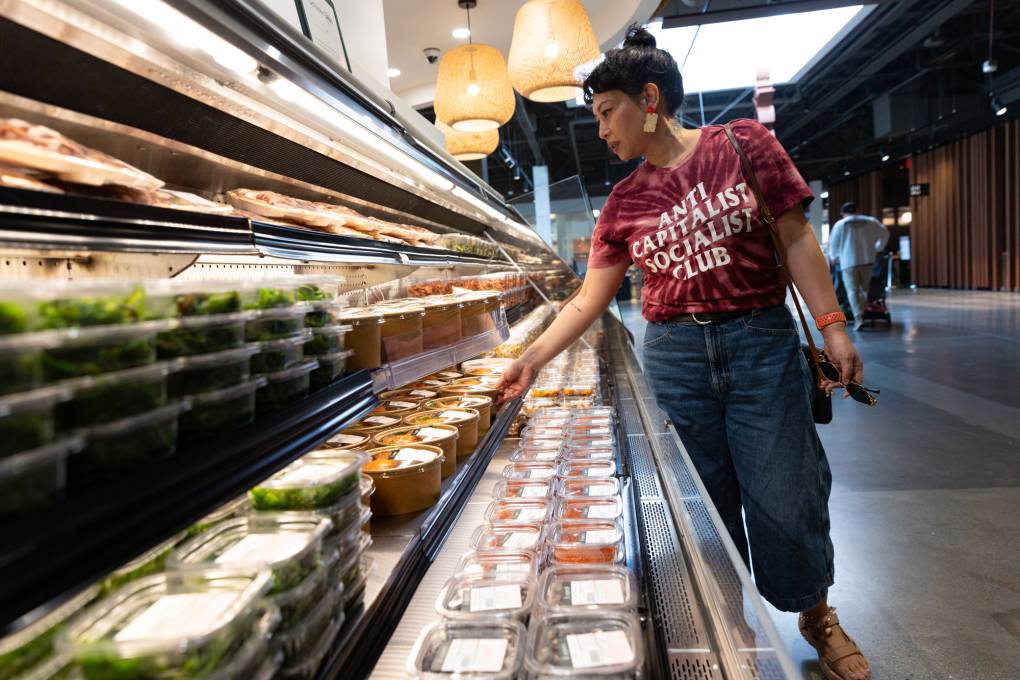
Asian Food Is Coming to Save a Mall Near You
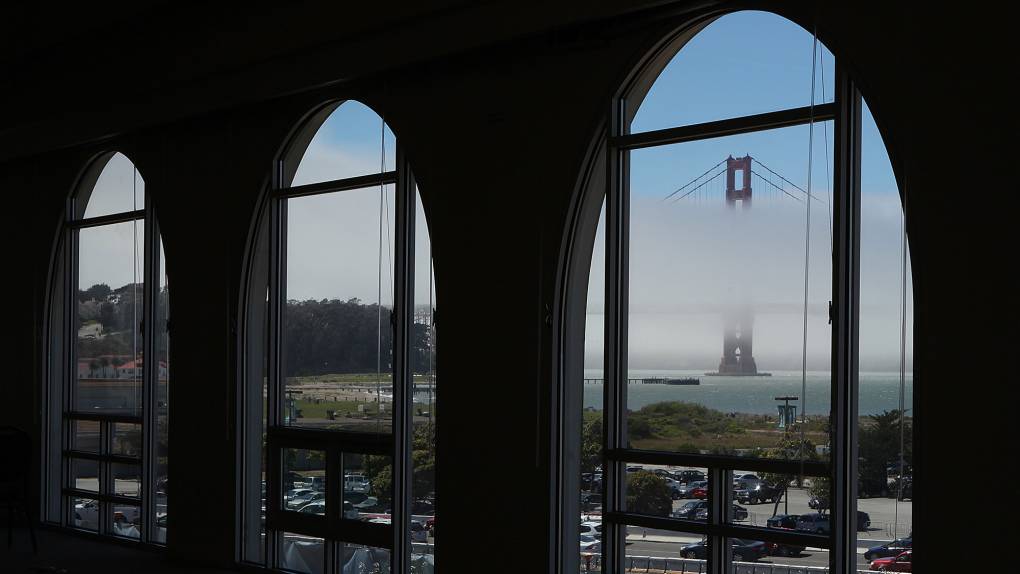
The Presidio Burger King Was My Childhood Happy Place
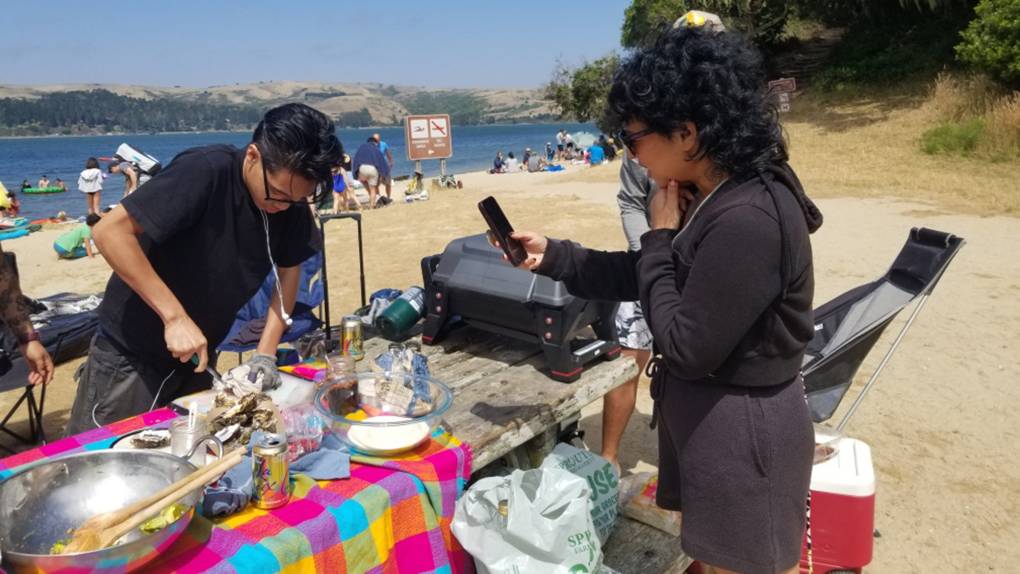
How I Fell in Love With the Oyster, One of the Bay Area’s Great Multicultural Treats
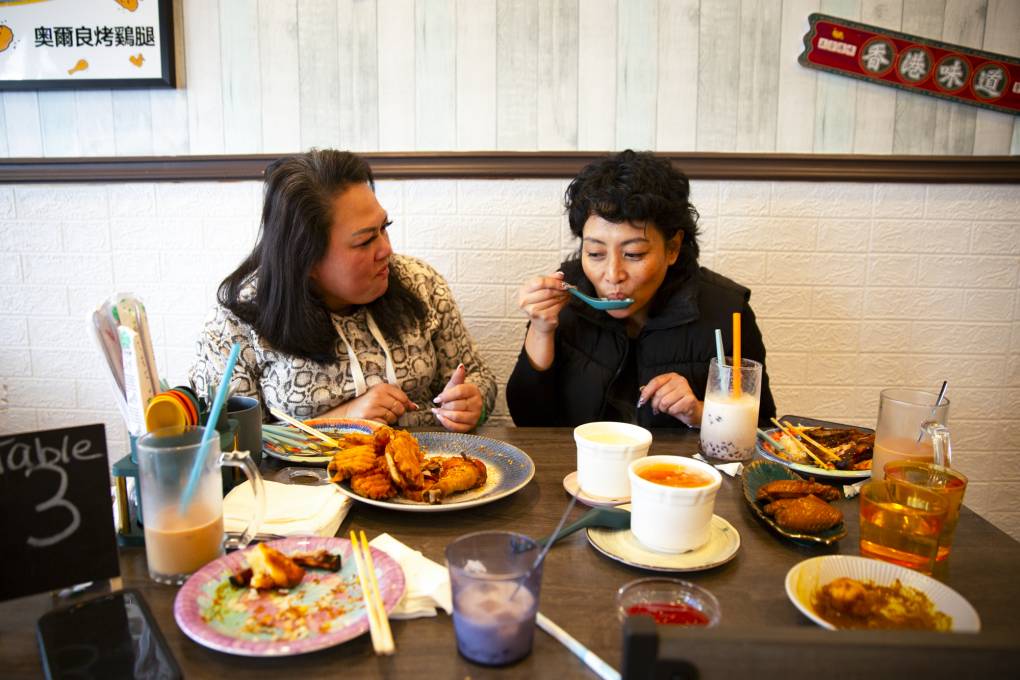
Why My Nail Tech Is My Favorite Bay Area Foodie
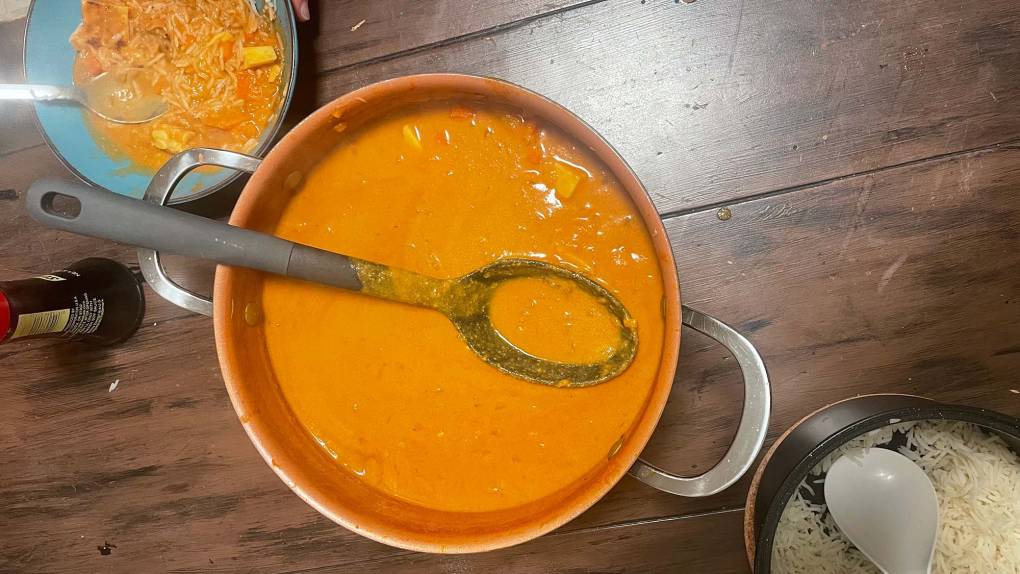
How the Bay Area Taught Me to Love Vegan Food — and Make It Ghanaian
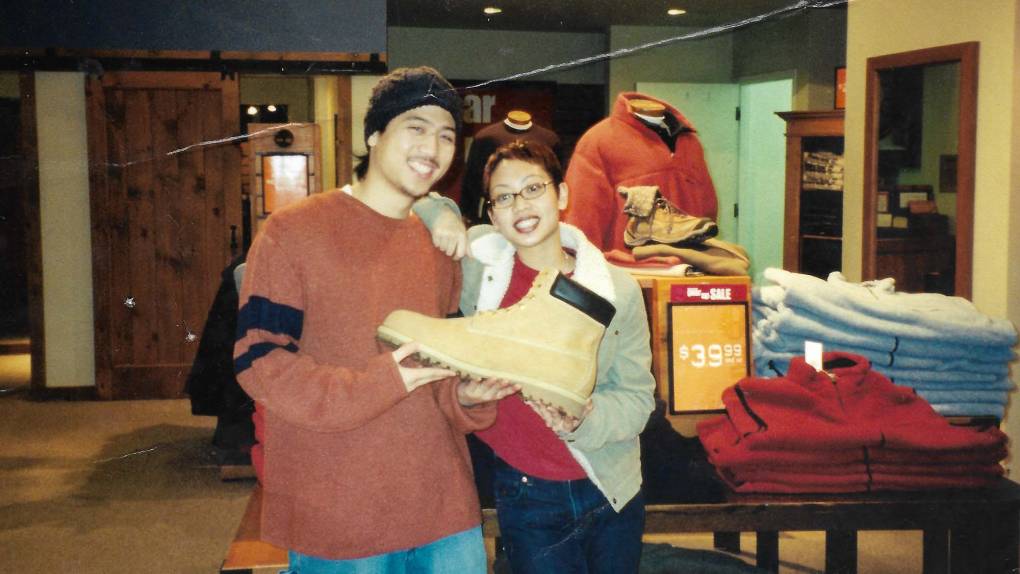
The Downtown San Francisco I Loved Was a Holiday Wonderland
How Miso Helped Me Find My Community in San Francisco
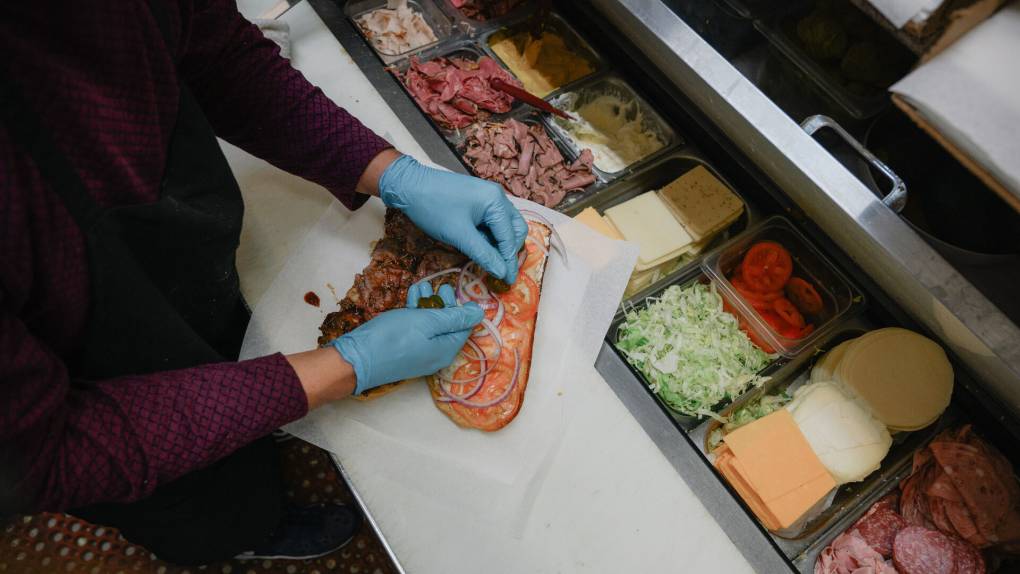
The Old-School San Francisco Sandwich That Stole My Heart
Sponsored
Player sponsored by
window.__IS_SSR__=true
window.__INITIAL_STATE__={
"attachmentsReducer": {
"audio_0": {
"type": "attachments",
"id": "audio_0",
"imgSizes": {
"kqedFullSize": {
"file": "https://ww2.kqed.org/news/wp-content/themes/KQED-unified/img/audio_bgs/background0.jpg"
}
}
},
"audio_1": {
"type": "attachments",
"id": "audio_1",
"imgSizes": {
"kqedFullSize": {
"file": "https://ww2.kqed.org/news/wp-content/themes/KQED-unified/img/audio_bgs/background1.jpg"
}
}
},
"audio_2": {
"type": "attachments",
"id": "audio_2",
"imgSizes": {
"kqedFullSize": {
"file": "https://ww2.kqed.org/news/wp-content/themes/KQED-unified/img/audio_bgs/background2.jpg"
}
}
},
"audio_3": {
"type": "attachments",
"id": "audio_3",
"imgSizes": {
"kqedFullSize": {
"file": "https://ww2.kqed.org/news/wp-content/themes/KQED-unified/img/audio_bgs/background3.jpg"
}
}
},
"audio_4": {
"type": "attachments",
"id": "audio_4",
"imgSizes": {
"kqedFullSize": {
"file": "https://ww2.kqed.org/news/wp-content/themes/KQED-unified/img/audio_bgs/background4.jpg"
}
}
},
"placeholder": {
"type": "attachments",
"id": "placeholder",
"imgSizes": {
"thumbnail": {
"file": "https://cdn.kqed.org/wp-content/uploads/2024/12/KQED-Default-Image-816638274-2000x1333-1-160x107.jpg",
"width": 160,
"height": 107,
"mimeType": "image/jpeg"
},
"medium": {
"file": "https://cdn.kqed.org/wp-content/uploads/2024/12/KQED-Default-Image-816638274-2000x1333-1-800x533.jpg",
"width": 800,
"height": 533,
"mimeType": "image/jpeg"
},
"medium_large": {
"file": "https://cdn.kqed.org/wp-content/uploads/2024/12/KQED-Default-Image-816638274-2000x1333-1-768x512.jpg",
"width": 768,
"height": 512,
"mimeType": "image/jpeg"
},
"large": {
"file": "https://cdn.kqed.org/wp-content/uploads/2024/12/KQED-Default-Image-816638274-2000x1333-1-1020x680.jpg",
"width": 1020,
"height": 680,
"mimeType": "image/jpeg"
},
"1536x1536": {
"file": "https://cdn.kqed.org/wp-content/uploads/2024/12/KQED-Default-Image-816638274-2000x1333-1-1536x1024.jpg",
"width": 1536,
"height": 1024,
"mimeType": "image/jpeg"
},
"fd-lrg": {
"file": "https://cdn.kqed.org/wp-content/uploads/2024/12/KQED-Default-Image-816638274-2000x1333-1-1536x1024.jpg",
"width": 1536,
"height": 1024,
"mimeType": "image/jpeg"
},
"fd-med": {
"file": "https://cdn.kqed.org/wp-content/uploads/2024/12/KQED-Default-Image-816638274-2000x1333-1-1020x680.jpg",
"width": 1020,
"height": 680,
"mimeType": "image/jpeg"
},
"fd-sm": {
"file": "https://cdn.kqed.org/wp-content/uploads/2024/12/KQED-Default-Image-816638274-2000x1333-1-800x533.jpg",
"width": 800,
"height": 533,
"mimeType": "image/jpeg"
},
"post-thumbnail": {
"file": "https://cdn.kqed.org/wp-content/uploads/2024/12/KQED-Default-Image-816638274-2000x1333-1-672x372.jpg",
"width": 672,
"height": 372,
"mimeType": "image/jpeg"
},
"twentyfourteen-full-width": {
"file": "https://cdn.kqed.org/wp-content/uploads/2024/12/KQED-Default-Image-816638274-2000x1333-1-1038x576.jpg",
"width": 1038,
"height": 576,
"mimeType": "image/jpeg"
},
"xxsmall": {
"file": "https://cdn.kqed.org/wp-content/uploads/2024/12/KQED-Default-Image-816638274-2000x1333-1-160x107.jpg",
"width": 160,
"height": 107,
"mimeType": "image/jpeg"
},
"xsmall": {
"file": "https://cdn.kqed.org/wp-content/uploads/2024/12/KQED-Default-Image-816638274-2000x1333-1-672x372.jpg",
"width": 672,
"height": 372,
"mimeType": "image/jpeg"
},
"small": {
"file": "https://cdn.kqed.org/wp-content/uploads/2024/12/KQED-Default-Image-816638274-2000x1333-1-672x372.jpg",
"width": 672,
"height": 372,
"mimeType": "image/jpeg"
},
"xlarge": {
"file": "https://cdn.kqed.org/wp-content/uploads/2024/12/KQED-Default-Image-816638274-2000x1333-1-1020x680.jpg",
"width": 1020,
"height": 680,
"mimeType": "image/jpeg"
},
"full-width": {
"file": "https://cdn.kqed.org/wp-content/uploads/2024/12/KQED-Default-Image-816638274-2000x1333-1-1920x1280.jpg",
"width": 1920,
"height": 1280,
"mimeType": "image/jpeg"
},
"guest-author-32": {
"file": "https://cdn.kqed.org/wp-content/uploads/2025/01/KQED-Default-Image-816638274-1333x1333-1-160x160.jpg",
"width": 32,
"height": 32,
"mimeType": "image/jpeg"
},
"guest-author-50": {
"file": "https://cdn.kqed.org/wp-content/uploads/2025/01/KQED-Default-Image-816638274-1333x1333-1-160x160.jpg",
"width": 50,
"height": 50,
"mimeType": "image/jpeg"
},
"guest-author-64": {
"file": "https://cdn.kqed.org/wp-content/uploads/2025/01/KQED-Default-Image-816638274-1333x1333-1-160x160.jpg",
"width": 64,
"height": 64,
"mimeType": "image/jpeg"
},
"guest-author-96": {
"file": "https://cdn.kqed.org/wp-content/uploads/2025/01/KQED-Default-Image-816638274-1333x1333-1-160x160.jpg",
"width": 96,
"height": 96,
"mimeType": "image/jpeg"
},
"guest-author-128": {
"file": "https://cdn.kqed.org/wp-content/uploads/2025/01/KQED-Default-Image-816638274-1333x1333-1-160x160.jpg",
"width": 128,
"height": 128,
"mimeType": "image/jpeg"
},
"detail": {
"file": "https://cdn.kqed.org/wp-content/uploads/2025/01/KQED-Default-Image-816638274-1333x1333-1-160x160.jpg",
"width": 160,
"height": 160,
"mimeType": "image/jpeg"
},
"kqedFullSize": {
"file": "https://cdn.kqed.org/wp-content/uploads/2024/12/KQED-Default-Image-816638274-2000x1333-1.jpg",
"width": 2000,
"height": 1333
}
}
},
"arts_13984720": {
"type": "attachments",
"id": "arts_13984720",
"meta": {
"index": "attachments_1716263798",
"site": "arts",
"id": "13984720",
"found": true
},
"title": "GettyImages-1132409844",
"publishDate": 1765354118,
"status": "inherit",
"parent": 0,
"modified": 1765385684,
"caption": "An empty crossword grid, promising either victory or failure.",
"credit": "Jenny Dettrick",
"altTag": "A pen placed on top of an empty crossword puzzle.",
"description": null,
"imgSizes": {
"thumbnail": {
"file": "https://cdn.kqed.org/wp-content/uploads/sites/2/2025/12/GettyImages-1132409844-160x107.jpg",
"width": 160,
"height": 107,
"mimeType": "image/jpeg"
},
"medium_large": {
"file": "https://cdn.kqed.org/wp-content/uploads/sites/2/2025/12/GettyImages-1132409844-768x512.jpg",
"width": 768,
"height": 512,
"mimeType": "image/jpeg"
},
"1536x1536": {
"file": "https://cdn.kqed.org/wp-content/uploads/sites/2/2025/12/GettyImages-1132409844-1536x1024.jpg",
"width": 1536,
"height": 1024,
"mimeType": "image/jpeg"
},
"post-thumbnail": {
"file": "https://cdn.kqed.org/wp-content/uploads/sites/2/2025/12/GettyImages-1132409844-672x372.jpg",
"width": 672,
"height": 372,
"mimeType": "image/jpeg"
},
"twentyfourteen-full-width": {
"file": "https://cdn.kqed.org/wp-content/uploads/sites/2/2025/12/GettyImages-1132409844-1038x576.jpg",
"width": 1038,
"height": 576,
"mimeType": "image/jpeg"
},
"npr-cds-wide": {
"file": "https://cdn.kqed.org/wp-content/uploads/sites/2/2025/12/GettyImages-1132409844-1200x675.jpg",
"width": 1200,
"height": 675,
"mimeType": "image/jpeg"
},
"kqedFullSize": {
"file": "https://cdn.kqed.org/wp-content/uploads/sites/2/2025/12/GettyImages-1132409844.jpg",
"width": 2000,
"height": 1333
}
},
"fetchFailed": false,
"isLoading": false
},
"arts_13976958": {
"type": "attachments",
"id": "arts_13976958",
"meta": {
"index": "attachments_1716263798",
"site": "arts",
"id": "13976958",
"found": true
},
"title": "20250531_FRISCOFOODIESASIANFOOD_GC-9-KQED",
"publishDate": 1748896828,
"status": "inherit",
"parent": 0,
"modified": 1750701517,
"caption": "Rocky Rivera shops at Jagalchi, a Korean grocery store, in Serramonte Center in Daly City, on May 31, 2025.",
"credit": "Gina Castro/KQED",
"altTag": "A woman browses a refrigerated display case at a high-end Asian grocery store.",
"description": null,
"imgSizes": {
"medium": {
"file": "https://cdn.kqed.org/wp-content/uploads/sites/2/2025/06/20250531_FRISCOFOODIESASIANFOOD_GC-9-KQED-800x533.jpg",
"width": 800,
"height": 533,
"mimeType": "image/jpeg"
},
"large": {
"file": "https://cdn.kqed.org/wp-content/uploads/sites/2/2025/06/20250531_FRISCOFOODIESASIANFOOD_GC-9-KQED-1020x680.jpg",
"width": 1020,
"height": 680,
"mimeType": "image/jpeg"
},
"thumbnail": {
"file": "https://cdn.kqed.org/wp-content/uploads/sites/2/2025/06/20250531_FRISCOFOODIESASIANFOOD_GC-9-KQED-160x107.jpg",
"width": 160,
"height": 107,
"mimeType": "image/jpeg"
},
"medium_large": {
"file": "https://cdn.kqed.org/wp-content/uploads/sites/2/2025/06/20250531_FRISCOFOODIESASIANFOOD_GC-9-KQED-768x512.jpg",
"width": 768,
"height": 512,
"mimeType": "image/jpeg"
},
"1536x1536": {
"file": "https://cdn.kqed.org/wp-content/uploads/sites/2/2025/06/20250531_FRISCOFOODIESASIANFOOD_GC-9-KQED-1536x1024.jpg",
"width": 1536,
"height": 1024,
"mimeType": "image/jpeg"
},
"post-thumbnail": {
"file": "https://cdn.kqed.org/wp-content/uploads/sites/2/2025/06/20250531_FRISCOFOODIESASIANFOOD_GC-9-KQED-672x372.jpg",
"width": 672,
"height": 372,
"mimeType": "image/jpeg"
},
"twentyfourteen-full-width": {
"file": "https://cdn.kqed.org/wp-content/uploads/sites/2/2025/06/20250531_FRISCOFOODIESASIANFOOD_GC-9-KQED-1038x576.jpg",
"width": 1038,
"height": 576,
"mimeType": "image/jpeg"
},
"full-width": {
"file": "https://cdn.kqed.org/wp-content/uploads/sites/2/2025/06/20250531_FRISCOFOODIESASIANFOOD_GC-9-KQED-1920x1280.jpg",
"width": 1920,
"height": 1280,
"mimeType": "image/jpeg"
},
"kqedFullSize": {
"file": "https://cdn.kqed.org/wp-content/uploads/sites/2/2025/06/20250531_FRISCOFOODIESASIANFOOD_GC-9-KQED.jpg",
"width": 2000,
"height": 1333
}
},
"fetchFailed": false,
"isLoading": false
},
"arts_13974318": {
"type": "attachments",
"id": "arts_13974318",
"meta": {
"index": "attachments_1716263798",
"site": "arts",
"id": "13974318",
"found": true
},
"title": "GettyImages-1298726474-cropped",
"publishDate": 1744245785,
"status": "inherit",
"parent": 13974308,
"modified": 1744245820,
"caption": "A view of Crissy Field and the Golden Gate bridge seen through the windows of the old Burger King restaurant in the Presidio in San Francisco on Friday, June 28, 2013. The restaurant was torn down in 2018 to make way for the new Presidio Tunnel Tops park.",
"credit": "Photo by Liz Hafalia/San Francisco Chronicle via Getty Images",
"altTag": "View of the fog-covered Golden Gate Bridge as seen through large, arched windows.",
"description": null,
"imgSizes": {
"medium": {
"file": "https://cdn.kqed.org/wp-content/uploads/sites/2/2025/04/GettyImages-1298726474-cropped-800x450.jpg",
"width": 800,
"height": 450,
"mimeType": "image/jpeg"
},
"large": {
"file": "https://cdn.kqed.org/wp-content/uploads/sites/2/2025/04/GettyImages-1298726474-cropped-1020x574.jpg",
"width": 1020,
"height": 574,
"mimeType": "image/jpeg"
},
"thumbnail": {
"file": "https://cdn.kqed.org/wp-content/uploads/sites/2/2025/04/GettyImages-1298726474-cropped-160x90.jpg",
"width": 160,
"height": 90,
"mimeType": "image/jpeg"
},
"medium_large": {
"file": "https://cdn.kqed.org/wp-content/uploads/sites/2/2025/04/GettyImages-1298726474-cropped-768x432.jpg",
"width": 768,
"height": 432,
"mimeType": "image/jpeg"
},
"1536x1536": {
"file": "https://cdn.kqed.org/wp-content/uploads/sites/2/2025/04/GettyImages-1298726474-cropped-1536x864.jpg",
"width": 1536,
"height": 864,
"mimeType": "image/jpeg"
},
"post-thumbnail": {
"file": "https://cdn.kqed.org/wp-content/uploads/sites/2/2025/04/GettyImages-1298726474-cropped-672x372.jpg",
"width": 672,
"height": 372,
"mimeType": "image/jpeg"
},
"twentyfourteen-full-width": {
"file": "https://cdn.kqed.org/wp-content/uploads/sites/2/2025/04/GettyImages-1298726474-cropped-1038x576.jpg",
"width": 1038,
"height": 576,
"mimeType": "image/jpeg"
},
"full-width": {
"file": "https://cdn.kqed.org/wp-content/uploads/sites/2/2025/04/GettyImages-1298726474-cropped-1920x1080.jpg",
"width": 1920,
"height": 1080,
"mimeType": "image/jpeg"
},
"kqedFullSize": {
"file": "https://cdn.kqed.org/wp-content/uploads/sites/2/2025/04/GettyImages-1298726474-cropped.jpg",
"width": 2000,
"height": 1125
}
},
"fetchFailed": false,
"isLoading": false
},
"arts_13969489": {
"type": "attachments",
"id": "arts_13969489",
"meta": {
"index": "attachments_1716263798",
"site": "arts",
"id": "13969489",
"found": true
},
"title": "shucking 16x9",
"publishDate": 1734119619,
"status": "inherit",
"parent": 13969477,
"modified": 1734119717,
"caption": "The author films her son as he shucks oysters for the first time at Point Reyes. ",
"credit": "Courtesy of Rocky Rivera",
"altTag": "A woman holds up her cellphone to film a young man shucking oysters on the beach.",
"description": null,
"imgSizes": {
"medium": {
"file": "https://cdn.kqed.org/wp-content/uploads/sites/2/2024/12/shucking-16x9-1-800x450.jpg",
"width": 800,
"height": 450,
"mimeType": "image/jpeg"
},
"large": {
"file": "https://cdn.kqed.org/wp-content/uploads/sites/2/2024/12/shucking-16x9-1-1020x574.jpg",
"width": 1020,
"height": 574,
"mimeType": "image/jpeg"
},
"thumbnail": {
"file": "https://cdn.kqed.org/wp-content/uploads/sites/2/2024/12/shucking-16x9-1-160x90.jpg",
"width": 160,
"height": 90,
"mimeType": "image/jpeg"
},
"medium_large": {
"file": "https://cdn.kqed.org/wp-content/uploads/sites/2/2024/12/shucking-16x9-1-768x432.jpg",
"width": 768,
"height": 432,
"mimeType": "image/jpeg"
},
"1536x1536": {
"file": "https://cdn.kqed.org/wp-content/uploads/sites/2/2024/12/shucking-16x9-1-1536x864.jpg",
"width": 1536,
"height": 864,
"mimeType": "image/jpeg"
},
"post-thumbnail": {
"file": "https://cdn.kqed.org/wp-content/uploads/sites/2/2024/12/shucking-16x9-1-672x372.jpg",
"width": 672,
"height": 372,
"mimeType": "image/jpeg"
},
"twentyfourteen-full-width": {
"file": "https://cdn.kqed.org/wp-content/uploads/sites/2/2024/12/shucking-16x9-1-1038x576.jpg",
"width": 1038,
"height": 576,
"mimeType": "image/jpeg"
},
"full-width": {
"file": "https://cdn.kqed.org/wp-content/uploads/sites/2/2024/12/shucking-16x9-1-1920x1080.jpg",
"width": 1920,
"height": 1080,
"mimeType": "image/jpeg"
},
"kqedFullSize": {
"file": "https://cdn.kqed.org/wp-content/uploads/sites/2/2024/12/shucking-16x9-1.jpg",
"width": 2000,
"height": 1125
}
},
"fetchFailed": false,
"isLoading": false
},
"arts_13957510": {
"type": "attachments",
"id": "arts_13957510",
"meta": {
"index": "attachments_1716263798",
"site": "arts",
"id": "13957510",
"found": true
},
"title": "20240506_NAILTECHFOODIE-16-KQED",
"publishDate": 1715207256,
"status": "inherit",
"parent": 0,
"modified": 1722297416,
"caption": "Chris Phung, left, and Rocky Rivera, right, eat at Little Sweet, a restaurant serving Hong Kong-style dishes, on Monday, May 6, 2024.",
"credit": "Gina Castro/KQED",
"altTag": "Two women sit at a large round table inside a Chinese restaurant, a spread of chicken wings and other dishes in front of them.",
"description": null,
"imgSizes": {
"medium": {
"file": "https://cdn.kqed.org/wp-content/uploads/sites/2/2024/05/20240506_NAILTECHFOODIE-16-KQED-800x533.jpg",
"width": 800,
"height": 533,
"mimeType": "image/jpeg"
},
"large": {
"file": "https://cdn.kqed.org/wp-content/uploads/sites/2/2024/05/20240506_NAILTECHFOODIE-16-KQED-1020x680.jpg",
"width": 1020,
"height": 680,
"mimeType": "image/jpeg"
},
"thumbnail": {
"file": "https://cdn.kqed.org/wp-content/uploads/sites/2/2024/05/20240506_NAILTECHFOODIE-16-KQED-160x107.jpg",
"width": 160,
"height": 107,
"mimeType": "image/jpeg"
},
"medium_large": {
"file": "https://cdn.kqed.org/wp-content/uploads/sites/2/2024/05/20240506_NAILTECHFOODIE-16-KQED-768x512.jpg",
"width": 768,
"height": 512,
"mimeType": "image/jpeg"
},
"1536x1536": {
"file": "https://cdn.kqed.org/wp-content/uploads/sites/2/2024/05/20240506_NAILTECHFOODIE-16-KQED-1536x1024.jpg",
"width": 1536,
"height": 1024,
"mimeType": "image/jpeg"
},
"post-thumbnail": {
"file": "https://cdn.kqed.org/wp-content/uploads/sites/2/2024/05/20240506_NAILTECHFOODIE-16-KQED-672x372.jpg",
"width": 672,
"height": 372,
"mimeType": "image/jpeg"
},
"twentyfourteen-full-width": {
"file": "https://cdn.kqed.org/wp-content/uploads/sites/2/2024/05/20240506_NAILTECHFOODIE-16-KQED-1038x576.jpg",
"width": 1038,
"height": 576,
"mimeType": "image/jpeg"
},
"full-width": {
"file": "https://cdn.kqed.org/wp-content/uploads/sites/2/2024/05/20240506_NAILTECHFOODIE-16-KQED-1920x1280.jpg",
"width": 1920,
"height": 1280,
"mimeType": "image/jpeg"
},
"kqedFullSize": {
"file": "https://cdn.kqed.org/wp-content/uploads/sites/2/2024/05/20240506_NAILTECHFOODIE-16-KQED.jpg",
"width": 2000,
"height": 1333
}
},
"fetchFailed": false,
"isLoading": false
},
"arts_13953906": {
"type": "attachments",
"id": "arts_13953906",
"meta": {
"index": "attachments_1716263798",
"site": "arts",
"id": "13953906",
"found": true
},
"parent": 13953866,
"imgSizes": {
"twentyfourteen-full-width": {
"file": "https://cdn.kqed.org/wp-content/uploads/sites/2/2024/03/ghanaian-peanut-stew-featured-1038x576.jpg",
"width": 1038,
"mimeType": "image/jpeg",
"height": 576
},
"thumbnail": {
"file": "https://cdn.kqed.org/wp-content/uploads/sites/2/2024/03/ghanaian-peanut-stew-featured-160x90.jpg",
"width": 160,
"mimeType": "image/jpeg",
"height": 90
},
"post-thumbnail": {
"file": "https://cdn.kqed.org/wp-content/uploads/sites/2/2024/03/ghanaian-peanut-stew-featured-672x372.jpg",
"width": 672,
"mimeType": "image/jpeg",
"height": 372
},
"kqedFullSize": {
"file": "https://cdn.kqed.org/wp-content/uploads/sites/2/2024/03/ghanaian-peanut-stew-featured.jpg",
"width": 2000,
"height": 1125
},
"large": {
"file": "https://cdn.kqed.org/wp-content/uploads/sites/2/2024/03/ghanaian-peanut-stew-featured-1020x574.jpg",
"width": 1020,
"mimeType": "image/jpeg",
"height": 574
},
"1536x1536": {
"file": "https://cdn.kqed.org/wp-content/uploads/sites/2/2024/03/ghanaian-peanut-stew-featured-1536x864.jpg",
"width": 1536,
"mimeType": "image/jpeg",
"height": 864
},
"full-width": {
"file": "https://cdn.kqed.org/wp-content/uploads/sites/2/2024/03/ghanaian-peanut-stew-featured-1920x1080.jpg",
"width": 1920,
"mimeType": "image/jpeg",
"height": 1080
},
"medium": {
"file": "https://cdn.kqed.org/wp-content/uploads/sites/2/2024/03/ghanaian-peanut-stew-featured-800x450.jpg",
"width": 800,
"mimeType": "image/jpeg",
"height": 450
},
"medium_large": {
"file": "https://cdn.kqed.org/wp-content/uploads/sites/2/2024/03/ghanaian-peanut-stew-featured-768x432.jpg",
"width": 768,
"mimeType": "image/jpeg",
"height": 432
}
},
"publishDate": 1710197655,
"modified": 1710199152,
"caption": "Traditionally prepared with chicken or other meats, a vegan version of Ghanaian peanut stew tastes just as good. ",
"description": null,
"title": "ghanaian peanut stew - featured",
"credit": "Kofi Ansong",
"status": "inherit",
"altTag": "A pot of bright orange peanut stew in a pot, with rice on the side.",
"fetchFailed": false,
"isLoading": false
},
"arts_13939428": {
"type": "attachments",
"id": "arts_13939428",
"meta": {
"index": "attachments_1716263798",
"site": "arts",
"id": "13939428",
"found": true
},
"parent": 13939383,
"imgSizes": {
"twentyfourteen-full-width": {
"file": "https://cdn.kqed.org/wp-content/uploads/sites/2/2023/12/Timberland-Scan-crop_RR-1038x576.jpg",
"width": 1038,
"mimeType": "image/jpeg",
"height": 576
},
"thumbnail": {
"file": "https://cdn.kqed.org/wp-content/uploads/sites/2/2023/12/Timberland-Scan-crop_RR-160x90.jpg",
"width": 160,
"mimeType": "image/jpeg",
"height": 90
},
"post-thumbnail": {
"file": "https://cdn.kqed.org/wp-content/uploads/sites/2/2023/12/Timberland-Scan-crop_RR-672x372.jpg",
"width": 672,
"mimeType": "image/jpeg",
"height": 372
},
"kqedFullSize": {
"file": "https://cdn.kqed.org/wp-content/uploads/sites/2/2023/12/Timberland-Scan-crop_RR.jpg",
"width": 2000,
"height": 1125
},
"large": {
"file": "https://cdn.kqed.org/wp-content/uploads/sites/2/2023/12/Timberland-Scan-crop_RR-1020x574.jpg",
"width": 1020,
"mimeType": "image/jpeg",
"height": 574
},
"1536x1536": {
"file": "https://cdn.kqed.org/wp-content/uploads/sites/2/2023/12/Timberland-Scan-crop_RR-1536x864.jpg",
"width": 1536,
"mimeType": "image/jpeg",
"height": 864
},
"full-width": {
"file": "https://cdn.kqed.org/wp-content/uploads/sites/2/2023/12/Timberland-Scan-crop_RR-1920x1080.jpg",
"width": 1920,
"mimeType": "image/jpeg",
"height": 1080
},
"medium": {
"file": "https://cdn.kqed.org/wp-content/uploads/sites/2/2023/12/Timberland-Scan-crop_RR-800x450.jpg",
"width": 800,
"mimeType": "image/jpeg",
"height": 450
},
"medium_large": {
"file": "https://cdn.kqed.org/wp-content/uploads/sites/2/2023/12/Timberland-Scan-crop_RR-768x432.jpg",
"width": 768,
"mimeType": "image/jpeg",
"height": 432
}
},
"publishDate": 1702579071,
"modified": 1702579258,
"caption": "A young Rocky Rivera (right) poses with her beloved wheat color Timberland boot. She worked in the downtown San Francisco Timberland store in the early 2000s.",
"description": null,
"title": "Timberland Scan-crop_RR",
"credit": "Courtesy of Rocky Rivera",
"status": "inherit",
"altTag": "A young man and woman pose for a photo inside a clothing store while holding a oversized Timberland work boot.",
"fetchFailed": false,
"isLoading": false
},
"arts_13935899": {
"type": "attachments",
"id": "arts_13935899",
"meta": {
"index": "attachments_1716263798",
"site": "arts",
"id": "13935899",
"found": true
},
"parent": 13935854,
"imgSizes": {
"twentyfourteen-full-width": {
"file": "https://ww2.kqed.org/app/uploads/sites/2/2023/10/RPT1719-qut-crop-1038x576.jpg",
"width": 1038,
"mimeType": "image/jpeg",
"height": 576
},
"thumbnail": {
"file": "https://ww2.kqed.org/app/uploads/sites/2/2023/10/RPT1719-qut-crop-160x100.jpg",
"width": 160,
"mimeType": "image/jpeg",
"height": 100
},
"post-thumbnail": {
"file": "https://ww2.kqed.org/app/uploads/sites/2/2023/10/RPT1719-qut-crop-672x372.jpg",
"width": 672,
"mimeType": "image/jpeg",
"height": 372
},
"kqedFullSize": {
"file": "https://ww2.kqed.org/app/uploads/sites/2/2023/10/RPT1719-qut-crop.jpg",
"width": 1920,
"height": 1200
},
"large": {
"file": "https://ww2.kqed.org/app/uploads/sites/2/2023/10/RPT1719-qut-crop-1020x638.jpg",
"width": 1020,
"mimeType": "image/jpeg",
"height": 638
},
"1536x1536": {
"file": "https://ww2.kqed.org/app/uploads/sites/2/2023/10/RPT1719-qut-crop-1536x960.jpg",
"width": 1536,
"mimeType": "image/jpeg",
"height": 960
},
"medium": {
"file": "https://ww2.kqed.org/app/uploads/sites/2/2023/10/RPT1719-qut-crop-800x500.jpg",
"width": 800,
"mimeType": "image/jpeg",
"height": 500
},
"medium_large": {
"file": "https://ww2.kqed.org/app/uploads/sites/2/2023/10/RPT1719-qut-crop-768x480.jpg",
"width": 768,
"mimeType": "image/jpeg",
"height": 480
}
},
"publishDate": 1696526243,
"modified": 1696526310,
"caption": "The author holds a container of miso during a class at Aedan Koji Kitchen in the Mission.",
"description": null,
"title": "_RPT1719-qut-crop",
"credit": "Raphael Timmons/KQED",
"status": "inherit",
"altTag": "A person with a goatee smiles while holding a plastic container filled with a dark paste.",
"fetchFailed": false,
"isLoading": false
},
"arts_13929893": {
"type": "attachments",
"id": "arts_13929893",
"meta": {
"index": "attachments_1716263798",
"site": "arts",
"id": "13929893",
"found": true
},
"parent": 0,
"imgSizes": {
"twentyfourteen-full-width": {
"file": "https://ww2.kqed.org/app/uploads/sites/2/2023/05/RS64149_03312023_kqed_roxiesandwiches-448-qut-crop-1038x576.jpg",
"width": 1038,
"mimeType": "image/jpeg",
"height": 576
},
"thumbnail": {
"file": "https://ww2.kqed.org/app/uploads/sites/2/2023/05/RS64149_03312023_kqed_roxiesandwiches-448-qut-crop-160x90.jpg",
"width": 160,
"mimeType": "image/jpeg",
"height": 90
},
"post-thumbnail": {
"file": "https://ww2.kqed.org/app/uploads/sites/2/2023/05/RS64149_03312023_kqed_roxiesandwiches-448-qut-crop-672x372.jpg",
"width": 672,
"mimeType": "image/jpeg",
"height": 372
},
"kqedFullSize": {
"file": "https://ww2.kqed.org/app/uploads/sites/2/2023/05/RS64149_03312023_kqed_roxiesandwiches-448-qut-crop.jpg",
"width": 1920,
"height": 1080
},
"large": {
"file": "https://ww2.kqed.org/app/uploads/sites/2/2023/05/RS64149_03312023_kqed_roxiesandwiches-448-qut-crop-1020x574.jpg",
"width": 1020,
"mimeType": "image/jpeg",
"height": 574
},
"1536x1536": {
"file": "https://ww2.kqed.org/app/uploads/sites/2/2023/05/RS64149_03312023_kqed_roxiesandwiches-448-qut-crop-1536x864.jpg",
"width": 1536,
"mimeType": "image/jpeg",
"height": 864
},
"medium": {
"file": "https://ww2.kqed.org/app/uploads/sites/2/2023/05/RS64149_03312023_kqed_roxiesandwiches-448-qut-crop-800x450.jpg",
"width": 800,
"mimeType": "image/jpeg",
"height": 450
},
"medium_large": {
"file": "https://ww2.kqed.org/app/uploads/sites/2/2023/05/RS64149_03312023_kqed_roxiesandwiches-448-qut-crop-768x432.jpg",
"width": 768,
"mimeType": "image/jpeg",
"height": 432
}
},
"publishDate": 1685560751,
"modified": 1685561588,
"caption": "Roxie Food Center employee Miguel Chavarría assembles a pastrami sandwich. Though it is now under new ownership, the beloved sandwich shop is keeping its old-school traditions alive in the Excelsior. ",
"description": null,
"title": "RS64149_03312023_kqed_roxiesandwiches 448-qut-crop",
"credit": "Kori Suzuki/KQED",
"status": "inherit",
"altTag": null,
"fetchFailed": false,
"isLoading": false
}
},
"audioPlayerReducer": {
"postId": "stream_live",
"isPaused": true,
"isPlaying": false,
"pfsActive": false,
"pledgeModalIsOpen": true,
"playerDrawerIsOpen": false
},
"authorsReducer": {
"byline_arts_13953866": {
"type": "authors",
"id": "byline_arts_13953866",
"meta": {
"override": true
},
"slug": "byline_arts_13953866",
"name": "Kofi Ansong",
"isLoading": false
},
"byline_arts_13935854": {
"type": "authors",
"id": "byline_arts_13935854",
"meta": {
"override": true
},
"slug": "byline_arts_13935854",
"name": "Kofi Ansong",
"isLoading": false
},
"ltsai": {
"type": "authors",
"id": "11743",
"meta": {
"index": "authors_1716337520",
"id": "11743",
"found": true
},
"name": "Luke Tsai",
"firstName": "Luke",
"lastName": "Tsai",
"slug": "ltsai",
"email": "ltsai@kqed.org",
"display_author_email": true,
"staff_mastheads": [
"arts"
],
"title": "Food Editor",
"bio": "Luke Tsai is KQED's food editor and resident stinky tofu connoisseur. Prior to KQED, he was an editor at Eater SF, \u003cem>San Francisco \u003c/em>magazine, and the \u003cem>East Bay Express\u003c/em>, and his work has also appeared in TASTE, the \u003cem>San Francisco Chronicle\u003c/em>, and the \u003cem>Best Food Writing\u003c/em> anthology. When he isn't writing or editing, you'll find him eating most everything he can get his hands on.",
"avatar": "https://secure.gravatar.com/avatar/d1ff591a3047b143a0e23cf7f28fcac0?s=600&d=blank&r=g",
"twitter": "theluketsai",
"facebook": null,
"instagram": null,
"linkedin": null,
"sites": [
{
"site": "",
"roles": [
"editor"
]
},
{
"site": "arts",
"roles": [
"administrator"
]
},
{
"site": "bayareabites",
"roles": [
"editor"
]
},
{
"site": "food",
"roles": [
"editor"
]
}
],
"headData": {
"title": "Luke Tsai | KQED",
"description": "Food Editor",
"ogImgSrc": "https://secure.gravatar.com/avatar/d1ff591a3047b143a0e23cf7f28fcac0?s=600&d=blank&r=g",
"twImgSrc": "https://secure.gravatar.com/avatar/d1ff591a3047b143a0e23cf7f28fcac0?s=600&d=blank&r=g"
},
"isLoading": false,
"link": "/author/ltsai"
},
"rockyrivera": {
"type": "authors",
"id": "11846",
"meta": {
"index": "authors_1716337520",
"id": "11846",
"found": true
},
"name": "Rocky Rivera",
"firstName": "Rocky",
"lastName": "Rivera",
"slug": "rockyrivera",
"email": "ms.rocky.rivera@gmail.com",
"display_author_email": false,
"staff_mastheads": [],
"title": "KQED Contributor",
"bio": "Rocky Rivera is a journalist, emcee, author and activist from San Francisco. She has released four albums through her label, Beatrock Music, and a ten-volume mixtape series with DJ Roza. She released her first book in 2021, entitled \u003cem>Snakeskin: Essays by Rocky Rivera\u003c/em>. Her latest album dropped in September 2024 and is called \"Long Kiss Goodnight\" with emcee/producer Otayo Dubb. She currently writes the Frisco Foodies column as a love letter to her hometown.",
"avatar": "https://secure.gravatar.com/avatar/946241ee2c59e6040607dfc75240d91b?s=600&d=blank&r=g",
"twitter": null,
"facebook": "https://m.facebook.com/rockyriveramusic",
"instagram": "https://instagram.com/rockyrivera",
"linkedin": "https://www.linkedin.com/in/krishtinedeleon/",
"sites": [
{
"site": "arts",
"roles": [
"author"
]
}
],
"headData": {
"title": "Rocky Rivera | KQED",
"description": "KQED Contributor",
"ogImgSrc": "https://secure.gravatar.com/avatar/946241ee2c59e6040607dfc75240d91b?s=600&d=blank&r=g",
"twImgSrc": "https://secure.gravatar.com/avatar/946241ee2c59e6040607dfc75240d91b?s=600&d=blank&r=g"
},
"isLoading": false,
"link": "/author/rockyrivera"
}
},
"breakingNewsReducer": {},
"pagesReducer": {},
"postsReducer": {
"stream_live": {
"type": "live",
"id": "stream_live",
"audioUrl": "https://streams.kqed.org/kqedradio",
"title": "Live Stream",
"excerpt": "Live Stream information currently unavailable.",
"link": "/radio",
"featImg": "",
"label": {
"name": "KQED Live",
"link": "/"
}
},
"stream_kqedNewscast": {
"type": "posts",
"id": "stream_kqedNewscast",
"audioUrl": "https://www.kqed.org/.stream/anon/radio/RDnews/newscast.mp3?_=1",
"title": "KQED Newscast",
"featImg": "",
"label": {
"name": "88.5 FM",
"link": "/"
}
},
"arts_13984726": {
"type": "posts",
"id": "arts_13984726",
"meta": {
"index": "posts_1716263798",
"site": "arts",
"id": "13984726",
"score": null,
"sort": [
1765386304000
]
},
"guestAuthors": [],
"slug": "crossword-puzzle-competition-berkeley-westwords-failure",
"title": "In 2025, I Became a Competitive Crossword Solver — and Got Absolutely Smoked",
"publishDate": 1765386304,
"format": "standard",
"headTitle": "In 2025, I Became a Competitive Crossword Solver — and Got Absolutely Smoked | KQED",
"labelTerm": {},
"content": "\u003cp>\u003ci>This week, as we near the end of 2025, the writers and editors of KQED Arts & Culture are reflecting on \u003ca href=\"https://www.kqed.org/arts/tag/one-beautiful-thing\">One Beautiful Thing\u003c/a> from the year.\u003c/i>\u003c/p>\n\u003cp>[dropcap]O[/dropcap]n a bright Sunday morning in June, I sat down in a crowded synagogue library in West Berkeley for my first ever \u003ca href=\"https://www.kqed.org/crossword\">crossword puzzle\u003c/a> competition.\u003c/p>\n\u003cp>I’d signed up on a lark, in the interest of trying something new. Berkeley’s second annual \u003ca href=\"https://www.westwordsbestwords.com/\">Westwords\u003c/a> crossword tournament — a grueling, six-hour puzzle-solving extravaganza — certainly fit the bill.\u003c/p>\n\u003cp>“I’m gonna get smoked!” I told my wife and kids, who’d decamped to New Jersey for the summer a few days earlier, leaving me with a precious free weekend to pursue my nerdy hobbies. “I just don’t want to finish last.”\u003c/p>\n\u003cp>Look, I’d done enough research ahead of time to know I didn’t have a prayer of winning, or even placing remotely close to the top of the leaderboard. Not when the \u003ca href=\"https://fivethirtyeight.com/features/dan-feyer-american-crossword-puzzle-tournament/\">world’s top puzzlers\u003c/a> routinely solve the \u003ci>New York Times \u003c/i>Saturday crossword in 3 or 4 minutes — nearly 10 times faster than my best efforts. Still, I didn’t \u003ci>really \u003c/i>think I was in any danger of coming in dead last. I’d completed the \u003ci>NYT \u003c/i>puzzle for more than 500 days in a row! I didn’t know anyone, personally, who was a more devoted crossword puzzle solver than me!\u003c/p>\n\u003cp>[ad fullwidth]\u003c/p>\n\u003cp>If glory was out of reach, I figured I could at least achieve respectability.\u003c/p>\n\u003cp>So how did it come to be that about 15 minutes into the first puzzle of the tournament, I was one of just five or six people in the room who still hadn’t finished my grid? Looking at the friendly mix of mild-mannered software engineer types, dudes rocking ponytails and goth girls in crossword-themed dresses who’d gathered in Berkeley that day, how did I not realize that more than half of them were outright\u003ci> monsters\u003c/i>?\u003ci> \u003c/i>\u003c/p>\n\u003cp>Last place started to seem like a real possibility.\u003c/p>\n\u003cfigure id=\"attachment_13984722\" class=\"wp-caption alignnone\" style=\"max-width: 2000px\">\u003cimg loading=\"lazy\" decoding=\"async\" class=\"size-full wp-image-13984722\" src=\"https://cdn.kqed.org/wp-content/uploads/sites/2/2025/12/GettyImages-3319672.jpg\" alt=\"Vintage black and white photo of crossword solvers sitting at individual desks during a competition.\" width=\"2000\" height=\"1470\" srcset=\"https://cdn.kqed.org/wp-content/uploads/sites/2/2025/12/GettyImages-3319672.jpg 2000w, https://cdn.kqed.org/wp-content/uploads/sites/2/2025/12/GettyImages-3319672-160x118.jpg 160w, https://cdn.kqed.org/wp-content/uploads/sites/2/2025/12/GettyImages-3319672-768x564.jpg 768w, https://cdn.kqed.org/wp-content/uploads/sites/2/2025/12/GettyImages-3319672-1536x1129.jpg 1536w\" sizes=\"auto, (max-width: 2000px) 100vw, 2000px\">\u003cfigcaption class=\"wp-caption-text\">Ahh, crossword squares and Scotch: In 1971, competitors take part in the Cutty Sark/Times National Crossword Championships in the London. \u003ccite>(Central Press/Getty Images)\u003c/cite>\u003c/figcaption>\u003c/figure>\n\u003cp>[dropcap]I[/dropcap]n one sense, you could say I’d been training for crossword glory for my entire life.\u003c/p>\n\u003cp>I’d always been the Word Person in my science-oriented friend group — the OED brandisher, the unrepentant menace in games of Boggle and \u003ca href=\"https://www.mrkland.com/mrkland.com/sport/spscrab.htm\">Speed Scrabble\u003c/a>. But I came to crossword puzzles, specifically, relatively late in life. In the early pandemic years, I started taking long hot baths every night as a way to self-soothe. Instead of doomscrolling during those hours-long soaks, I got in the habit of doing the \u003ci>New York Times \u003c/i>crossword on my phone. I was surprised to be able to complete them, mostly — the breezy Monday puzzles and, with enough time and effort, the gnarly, knotty Saturdays (which I learned were much harder than their more famous Sunday counterparts). Week by week, I got faster and more confident, and my mental health started to improve, too: As it turns out, racking your brain to think of a five-letter word for “performed reasonably well”\u003csup>1\u003c/sup> was a decent way to distract yourself from all that existential dread.\u003c/p>\n\u003cp>Of course, none of this prepared me for the balls-to-the-wall world of competitive crossword tournaments, where puzzles are scored on both speed and accuracy. The largest, most prestigious in-person crossword competitions, like the \u003ca href=\"https://www.npr.org/people/2101852/will-shortz\">Will Shortz\u003c/a>–hosted American Crossword Puzzle Tournament, can draw more than 1,000 participants. The most expert among them have been known to fill out a grid, error-free, even faster than the puzzle’s \u003ci>constructor \u003c/i>(who, presumably, knew all the answers ahead of time).\u003c/p>\n\u003cp>Among the 150 or so who’d crammed into the synagogue library for Westwords, I learned that most of my tablemates were also first-timers — a lawyer, a video game designer, a couple of sleepy-looking college kids. We sat with our papers turned upside down until the proctors started the timer, like we’d all gone back to high school to take the SATs. Wielding the mechanical pencil and fancy Japanese eraser I’d purchased for the occasion, I started working my way through the first puzzle — an easy warmup, we were told. A three-letter word for “hullabaloo.”\u003csup>2\u003c/sup> Six-letter word for “pandemonium” starting with “B.”\u003csup>3\u003c/sup>\u003c/p>\n\u003cp>Everything was going swimmingly until about two minutes in, when people started raising their hands to indicate that they’d \u003ci>finished\u003c/i>. (I’d filled in maybe a dozen answers at that point.) Nothing can prepare you for that very specific form of stress — the way my hands were sweaty and my pencil started to shake — when 5 contestants, then very quickly 10 and then 50, turned in their puzzles and trickled out of the room. Soon enough, there were only a dozen of us left. Meanwhile, the clock continued to tick down, and half of my puzzle was still blank.\u003c/p>\n\u003cp>By the time the clock ran out on the second puzzle, which I didn’t come particularly close to finishing, I was thoroughly demoralized.\u003c/p>\n\u003cp>\u003cspan style=\"font-weight: 400\">\u003cspan style=\"color: #2b2b2b;font-weight: 400\">[aside postID='arts_13969423,arts_13983150']\u003c/span>\u003c/span>I’m the sort of person who’s spent most of my life focusing on things I knew I excelled at: getting good grades, being cutthroat at board games and \u003ca href=\"https://en.wikipedia.org/wiki/Big_two\">Big Two\u003c/a>, eating large quantities of noodles \u003ca href=\"https://www.kqed.org/arts/tag/the-midnight-diners\">late at night\u003c/a>. I quit organized sports and the jazz band before I started high school because I didn’t think I was any good. I never really gave writing that novel a serious shot.\u003c/p>\n\u003cp>Yet I tell my kids all the time how they shouldn’t be afraid to try new and difficult things — how they should challenge themselves and enjoy learning for learning’s sake. That they shouldn’t worry about failing or looking foolish. Sitting in a soondubu shop across the street from the crossword competition during our lunch break, I thought about how so many of my favorite memories were from letting loose at things I’m genuinely \u003ci>bad \u003c/i>at — \u003ca href=\"https://www.kqed.org/arts/13969423/sports-dad-rock-climbing-bouldering-parenting\">rock climbing\u003c/a>, or \u003ca href=\"https://www.kqed.org/arts/13968142/karaoke-south-san-francisco-hong-kong-late-night-restaurant-noodles-e-plus\">karaoke\u003c/a>, or those six months in college when I tried to become a breakdancer [screaming face emoji].\u003c/p>\n\u003cp>There is a kind of freedom that comes with embracing your own mediocrity — or at least in not worrying how well you’re going to do compared to anyone else. I wish I could say that I came back from lunch and aced the last three puzzles of the tournament, but the truth is, I only finished one of them, and even that one was riddled with mistakes. But I did finally manage to relax a little. To just fill in one square at a time and enjoy the thrill of solving for solving’s sake. To have \u003ci>fun\u003c/i> with it.\u003c/p>\n\u003cfigure id=\"attachment_13984723\" class=\"wp-caption alignnone\" style=\"max-width: 1598px\">\u003cimg loading=\"lazy\" decoding=\"async\" class=\"size-full wp-image-13984723\" src=\"https://cdn.kqed.org/wp-content/uploads/sites/2/2025/12/screenshot_2025-12-09_at_6.50.50___pm.png\" alt=\"The leaderboard of a crossword competition. Luke Tsai is in 134th place.\" width=\"1598\" height=\"446\" srcset=\"https://cdn.kqed.org/wp-content/uploads/sites/2/2025/12/screenshot_2025-12-09_at_6.50.50___pm.png 1598w, https://cdn.kqed.org/wp-content/uploads/sites/2/2025/12/screenshot_2025-12-09_at_6.50.50___pm-160x45.png 160w, https://cdn.kqed.org/wp-content/uploads/sites/2/2025/12/screenshot_2025-12-09_at_6.50.50___pm-768x214.png 768w, https://cdn.kqed.org/wp-content/uploads/sites/2/2025/12/screenshot_2025-12-09_at_6.50.50___pm-1536x429.png 1536w\" sizes=\"auto, (max-width: 1598px) 100vw, 1598px\">\u003cfigcaption class=\"wp-caption-text\">Luke Tsai’s final ranking and score in the crossword competition.\u003c/figcaption>\u003c/figure>\n\u003cp>In the end, I didn’t wind up finishing in last place after all — though my 134th place ranking (out of 144 competitors) was almost low enough to be a punchline.\u003c/p>\n\u003cp>Of course I decided immediately that I’d be back to try again next year.\u003c/p>\n\u003chr>\n\u003cp>\u003ci>\u003csup>1\u003c/sup>\u003c/i>\u003ci>DID OK\u003c/i>\u003c/p>\n\u003cp>\u003ci>\u003csup>2\u003c/sup>\u003c/i>\u003ci>ADO\u003c/i>\u003c/p>\n\u003cp>[ad floatright]\u003c/p>\n\u003cp>\u003ci>\u003csup>3\u003c/sup>\u003c/i>\u003ci>BEDLAM\u003c/i>\u003c/p>\n\n",
"blocks": [],
"excerpt": "How Luke Tsai learned to embrace losing.",
"status": "publish",
"parent": 0,
"modified": 1765386304,
"stats": {
"hasAudio": false,
"hasVideo": false,
"hasChartOrMap": false,
"iframeSrcs": [],
"hasGoogleForm": false,
"hasGallery": false,
"hasHearkenModule": false,
"hasPolis": false,
"paragraphCount": 24,
"wordCount": 1264
},
"headData": {
"title": "In 2025, I Became a Competitive Crossword Solver — and Got Absolutely Smoked | KQED",
"description": "How Luke Tsai learned to embrace losing.",
"ogTitle": "",
"ogDescription": "",
"ogImgId": "",
"twTitle": "",
"twDescription": "",
"twImgId": "",
"schema": {
"@context": "https://schema.org",
"@type": "Article",
"headline": "In 2025, I Became a Competitive Crossword Solver — and Got Absolutely Smoked",
"datePublished": "2025-12-10T09:05:04-08:00",
"dateModified": "2025-12-10T09:05:04-08:00",
"image": "https://cdn.kqed.org/wp-content/uploads/2020/02/KQED-OG-Image@1x.png"
}
},
"primaryCategory": {
"termId": 1,
"slug": "arts",
"name": "Arts"
},
"source": "One Beautiful Thing",
"sourceUrl": "https://www.kqed.org/arts/tag/one-beautiful-thing",
"sticky": false,
"nprStoryId": "kqed-13984726",
"templateType": "standard",
"featuredImageType": "standard",
"excludeFromSiteSearch": "Include",
"articleAge": "0",
"path": "/arts/13984726/crossword-puzzle-competition-berkeley-westwords-failure",
"audioTrackLength": null,
"parsedContent": [
{
"type": "contentString",
"content": "\u003cdiv class=\"post-body\">\u003cp>\u003cp>\u003ci>This week, as we near the end of 2025, the writers and editors of KQED Arts & Culture are reflecting on \u003ca href=\"https://www.kqed.org/arts/tag/one-beautiful-thing\">One Beautiful Thing\u003c/a> from the year.\u003c/i>\u003c/p>\n\u003cp>\u003c/p>\u003cp>\u003cspan class=\"utils-parseShortcode-shortcodes-__dropcapShortcode__dropcap\">O\u003c/span>\u003c/p>\u003cp>n a bright Sunday morning in June, I sat down in a crowded synagogue library in West Berkeley for my first ever \u003ca href=\"https://www.kqed.org/crossword\">crossword puzzle\u003c/a> competition.\u003c/p>\n\u003cp>I’d signed up on a lark, in the interest of trying something new. Berkeley’s second annual \u003ca href=\"https://www.westwordsbestwords.com/\">Westwords\u003c/a> crossword tournament — a grueling, six-hour puzzle-solving extravaganza — certainly fit the bill.\u003c/p>\n\u003cp>“I’m gonna get smoked!” I told my wife and kids, who’d decamped to New Jersey for the summer a few days earlier, leaving me with a precious free weekend to pursue my nerdy hobbies. “I just don’t want to finish last.”\u003c/p>\n\u003cp>Look, I’d done enough research ahead of time to know I didn’t have a prayer of winning, or even placing remotely close to the top of the leaderboard. Not when the \u003ca href=\"https://fivethirtyeight.com/features/dan-feyer-american-crossword-puzzle-tournament/\">world’s top puzzlers\u003c/a> routinely solve the \u003ci>New York Times \u003c/i>Saturday crossword in 3 or 4 minutes — nearly 10 times faster than my best efforts. Still, I didn’t \u003ci>really \u003c/i>think I was in any danger of coming in dead last. I’d completed the \u003ci>NYT \u003c/i>puzzle for more than 500 days in a row! I didn’t know anyone, personally, who was a more devoted crossword puzzle solver than me!\u003c/p>\n\u003cp>\u003c/p>\u003c/div>",
"attributes": {
"named": {},
"numeric": []
}
},
{
"type": "component",
"content": "",
"name": "ad",
"attributes": {
"named": {
"label": "fullwidth"
},
"numeric": [
"fullwidth"
]
}
},
{
"type": "contentString",
"content": "\u003cdiv class=\"post-body\">\u003cp>\u003c/p>\n\u003cp>If glory was out of reach, I figured I could at least achieve respectability.\u003c/p>\n\u003cp>So how did it come to be that about 15 minutes into the first puzzle of the tournament, I was one of just five or six people in the room who still hadn’t finished my grid? Looking at the friendly mix of mild-mannered software engineer types, dudes rocking ponytails and goth girls in crossword-themed dresses who’d gathered in Berkeley that day, how did I not realize that more than half of them were outright\u003ci> monsters\u003c/i>?\u003ci> \u003c/i>\u003c/p>\n\u003cp>Last place started to seem like a real possibility.\u003c/p>\n\u003cfigure id=\"attachment_13984722\" class=\"wp-caption alignnone\" style=\"max-width: 2000px\">\u003cimg loading=\"lazy\" decoding=\"async\" class=\"size-full wp-image-13984722\" src=\"https://cdn.kqed.org/wp-content/uploads/sites/2/2025/12/GettyImages-3319672.jpg\" alt=\"Vintage black and white photo of crossword solvers sitting at individual desks during a competition.\" width=\"2000\" height=\"1470\" srcset=\"https://cdn.kqed.org/wp-content/uploads/sites/2/2025/12/GettyImages-3319672.jpg 2000w, https://cdn.kqed.org/wp-content/uploads/sites/2/2025/12/GettyImages-3319672-160x118.jpg 160w, https://cdn.kqed.org/wp-content/uploads/sites/2/2025/12/GettyImages-3319672-768x564.jpg 768w, https://cdn.kqed.org/wp-content/uploads/sites/2/2025/12/GettyImages-3319672-1536x1129.jpg 1536w\" sizes=\"auto, (max-width: 2000px) 100vw, 2000px\">\u003cfigcaption class=\"wp-caption-text\">Ahh, crossword squares and Scotch: In 1971, competitors take part in the Cutty Sark/Times National Crossword Championships in the London. \u003ccite>(Central Press/Getty Images)\u003c/cite>\u003c/figcaption>\u003c/figure>\n\u003cp>\u003c/p>\u003cp>\u003cspan class=\"utils-parseShortcode-shortcodes-__dropcapShortcode__dropcap\">I\u003c/span>\u003c/p>\u003cp>n one sense, you could say I’d been training for crossword glory for my entire life.\u003c/p>\n\u003cp>I’d always been the Word Person in my science-oriented friend group — the OED brandisher, the unrepentant menace in games of Boggle and \u003ca href=\"https://www.mrkland.com/mrkland.com/sport/spscrab.htm\">Speed Scrabble\u003c/a>. But I came to crossword puzzles, specifically, relatively late in life. In the early pandemic years, I started taking long hot baths every night as a way to self-soothe. Instead of doomscrolling during those hours-long soaks, I got in the habit of doing the \u003ci>New York Times \u003c/i>crossword on my phone. I was surprised to be able to complete them, mostly — the breezy Monday puzzles and, with enough time and effort, the gnarly, knotty Saturdays (which I learned were much harder than their more famous Sunday counterparts). Week by week, I got faster and more confident, and my mental health started to improve, too: As it turns out, racking your brain to think of a five-letter word for “performed reasonably well”\u003csup>1\u003c/sup> was a decent way to distract yourself from all that existential dread.\u003c/p>\n\u003cp>Of course, none of this prepared me for the balls-to-the-wall world of competitive crossword tournaments, where puzzles are scored on both speed and accuracy. The largest, most prestigious in-person crossword competitions, like the \u003ca href=\"https://www.npr.org/people/2101852/will-shortz\">Will Shortz\u003c/a>–hosted American Crossword Puzzle Tournament, can draw more than 1,000 participants. The most expert among them have been known to fill out a grid, error-free, even faster than the puzzle’s \u003ci>constructor \u003c/i>(who, presumably, knew all the answers ahead of time).\u003c/p>\n\u003cp>Among the 150 or so who’d crammed into the synagogue library for Westwords, I learned that most of my tablemates were also first-timers — a lawyer, a video game designer, a couple of sleepy-looking college kids. We sat with our papers turned upside down until the proctors started the timer, like we’d all gone back to high school to take the SATs. Wielding the mechanical pencil and fancy Japanese eraser I’d purchased for the occasion, I started working my way through the first puzzle — an easy warmup, we were told. A three-letter word for “hullabaloo.”\u003csup>2\u003c/sup> Six-letter word for “pandemonium” starting with “B.”\u003csup>3\u003c/sup>\u003c/p>\n\u003cp>Everything was going swimmingly until about two minutes in, when people started raising their hands to indicate that they’d \u003ci>finished\u003c/i>. (I’d filled in maybe a dozen answers at that point.) Nothing can prepare you for that very specific form of stress — the way my hands were sweaty and my pencil started to shake — when 5 contestants, then very quickly 10 and then 50, turned in their puzzles and trickled out of the room. Soon enough, there were only a dozen of us left. Meanwhile, the clock continued to tick down, and half of my puzzle was still blank.\u003c/p>\n\u003cp>By the time the clock ran out on the second puzzle, which I didn’t come particularly close to finishing, I was thoroughly demoralized.\u003c/p>\n\u003cp>\u003cspan style=\"font-weight: 400\">\u003cspan style=\"color: #2b2b2b;font-weight: 400\">\u003c/p>\u003c/div>",
"attributes": {
"named": {},
"numeric": []
}
},
{
"type": "component",
"content": "",
"name": "aside",
"attributes": {
"named": {
"postid": "arts_13969423,arts_13983150",
"label": ""
},
"numeric": []
}
},
{
"type": "contentString",
"content": "\u003cdiv class=\"post-body\">\u003cp>\u003c/span>\u003c/span>I’m the sort of person who’s spent most of my life focusing on things I knew I excelled at: getting good grades, being cutthroat at board games and \u003ca href=\"https://en.wikipedia.org/wiki/Big_two\">Big Two\u003c/a>, eating large quantities of noodles \u003ca href=\"https://www.kqed.org/arts/tag/the-midnight-diners\">late at night\u003c/a>. I quit organized sports and the jazz band before I started high school because I didn’t think I was any good. I never really gave writing that novel a serious shot.\u003c/p>\n\u003cp>Yet I tell my kids all the time how they shouldn’t be afraid to try new and difficult things — how they should challenge themselves and enjoy learning for learning’s sake. That they shouldn’t worry about failing or looking foolish. Sitting in a soondubu shop across the street from the crossword competition during our lunch break, I thought about how so many of my favorite memories were from letting loose at things I’m genuinely \u003ci>bad \u003c/i>at — \u003ca href=\"https://www.kqed.org/arts/13969423/sports-dad-rock-climbing-bouldering-parenting\">rock climbing\u003c/a>, or \u003ca href=\"https://www.kqed.org/arts/13968142/karaoke-south-san-francisco-hong-kong-late-night-restaurant-noodles-e-plus\">karaoke\u003c/a>, or those six months in college when I tried to become a breakdancer [screaming face emoji].\u003c/p>\n\u003cp>There is a kind of freedom that comes with embracing your own mediocrity — or at least in not worrying how well you’re going to do compared to anyone else. I wish I could say that I came back from lunch and aced the last three puzzles of the tournament, but the truth is, I only finished one of them, and even that one was riddled with mistakes. But I did finally manage to relax a little. To just fill in one square at a time and enjoy the thrill of solving for solving’s sake. To have \u003ci>fun\u003c/i> with it.\u003c/p>\n\u003cfigure id=\"attachment_13984723\" class=\"wp-caption alignnone\" style=\"max-width: 1598px\">\u003cimg loading=\"lazy\" decoding=\"async\" class=\"size-full wp-image-13984723\" src=\"https://cdn.kqed.org/wp-content/uploads/sites/2/2025/12/screenshot_2025-12-09_at_6.50.50___pm.png\" alt=\"The leaderboard of a crossword competition. Luke Tsai is in 134th place.\" width=\"1598\" height=\"446\" srcset=\"https://cdn.kqed.org/wp-content/uploads/sites/2/2025/12/screenshot_2025-12-09_at_6.50.50___pm.png 1598w, https://cdn.kqed.org/wp-content/uploads/sites/2/2025/12/screenshot_2025-12-09_at_6.50.50___pm-160x45.png 160w, https://cdn.kqed.org/wp-content/uploads/sites/2/2025/12/screenshot_2025-12-09_at_6.50.50___pm-768x214.png 768w, https://cdn.kqed.org/wp-content/uploads/sites/2/2025/12/screenshot_2025-12-09_at_6.50.50___pm-1536x429.png 1536w\" sizes=\"auto, (max-width: 1598px) 100vw, 1598px\">\u003cfigcaption class=\"wp-caption-text\">Luke Tsai’s final ranking and score in the crossword competition.\u003c/figcaption>\u003c/figure>\n\u003cp>In the end, I didn’t wind up finishing in last place after all — though my 134th place ranking (out of 144 competitors) was almost low enough to be a punchline.\u003c/p>\n\u003cp>Of course I decided immediately that I’d be back to try again next year.\u003c/p>\n\u003chr>\n\u003cp>\u003ci>\u003csup>1\u003c/sup>\u003c/i>\u003ci>DID OK\u003c/i>\u003c/p>\n\u003cp>\u003ci>\u003csup>2\u003c/sup>\u003c/i>\u003ci>ADO\u003c/i>\u003c/p>\n\u003cp>\u003c/p>\u003c/div>",
"attributes": {
"named": {},
"numeric": []
}
},
{
"type": "component",
"content": "",
"name": "ad",
"attributes": {
"named": {
"label": "floatright"
},
"numeric": [
"floatright"
]
}
},
{
"type": "contentString",
"content": "\u003cdiv class=\"post-body\">\u003cp>\u003c/p>\n\u003cp>\u003ci>\u003csup>3\u003c/sup>\u003c/i>\u003ci>BEDLAM\u003c/i>\u003c/p>\n\n\u003c/div>\u003c/p>",
"attributes": {
"named": {},
"numeric": []
}
}
],
"link": "/arts/13984726/crossword-puzzle-competition-berkeley-westwords-failure",
"authors": [
"11743"
],
"categories": [
"arts_1"
],
"tags": [
"arts_1270",
"arts_10278",
"arts_19127",
"arts_10426",
"arts_11005"
],
"featImg": "arts_13984720",
"label": "source_arts_13984726"
},
"arts_13977860": {
"type": "posts",
"id": "arts_13977860",
"meta": {
"index": "posts_1716263798",
"site": "arts",
"id": "13977860",
"score": null,
"sort": [
1750703593000
]
},
"guestAuthors": [],
"slug": "asian-food-bay-area-malls-jagalchi-serramonte-stonestown-westfield-valley-fair",
"title": "Asian Food Is Coming to Save a Mall Near You",
"publishDate": 1750703593,
"format": "standard",
"headTitle": "Asian Food Is Coming to Save a Mall Near You | KQED",
"labelTerm": {},
"content": "\u003cp>[dropcap]F[/dropcap]rom the 1990s golden age of suburban sprawl, one Bay Area mall remains iconic among \u003ca href=\"https://www.kqed.org/arts/tag/filipino\">Filipino\u003c/a> Americans: Serramonte Center in Daly City, aka “Serra-Manila.” Throwback to ‘94, when Jocelyn Enriquez dominated 106.1 KMEL airwaves with her freestyle track “I’ve Been Thinking About You” — the first Pinay from my generation to make it on the radio — and Serramonte was the place to go back-to-school shopping, ask for someone’s pager number, or hard-launch a budding romance by simply holding hands in public.\u003c/p>\n\u003cp>In a time before cell phones and GPS, if you got lost, you always met up at the fountain in the center of the mall, which was so powerful, it gushed up to the skylight like Old Faithful every half hour. During the busy holiday season, \u003ca href=\"https://www.tiktok.com/@danes_panes/video/7472969415697403182?_r=1&_t=ZP-8wuJkYr1Lqh\">it provided a resting place for tired shoppers and grandparents\u003c/a> looking to entertain the kids with a shiny nickel and a wish or two.\u003c/p>\n\u003cp>But nostalgia couldn’t save Serramonte Center. The reality is that malls all over America have been dying for the past 25 years — pummeled by the Great Recession of 2008, mortally wounded by the rise of e-commerce via Amazon. For many of the Bay Area’s struggling malls, the pandemic was their swan song. At Serramonte, when the big box stores like Macy’s and Montgomery Ward started falling like dominoes, it was only a matter of time before the Spencer’s Gifts and Contempo Casuals followed suit. So, for years now, instead of packs of teens roaming the corridors, the mall has sat mostly empty. Its once-popular restaurants, like \u003ca href=\"https://www.sfgate.com/food/history/article/This-Bay-Area-pizza-chain-rose-to-fame-in-the-16378714.php\">Pizza and Pipes\u003c/a> and Elephant Bar or the nearby Peppermill, fell by the wayside.\u003c/p>\n\u003cdiv class=\"mceTemp\">\u003c/div>\n\u003cp>In 2017, the owners even hired consultants to redesign the mall based on feng shui principles, replacing the fountain with Zen-like koi ponds and live turtles on lily pads. None of it made much of a difference.\u003c/p>\n\u003cfigure id=\"attachment_13976955\" class=\"wp-caption alignnone\" style=\"max-width: 2000px\">\u003cimg loading=\"lazy\" decoding=\"async\" class=\"size-full wp-image-13976955\" src=\"https://cdn.kqed.org/wp-content/uploads/sites/2/2025/06/20250531_FRISCOFOODIESASIANFOOD_GC-1-KQED.jpg\" alt='Entrance to a fancy new Korean grocery store. The sign reads, \"Jagalchi.\"' width=\"2000\" height=\"1333\" srcset=\"https://cdn.kqed.org/wp-content/uploads/sites/2/2025/06/20250531_FRISCOFOODIESASIANFOOD_GC-1-KQED.jpg 2000w, https://cdn.kqed.org/wp-content/uploads/sites/2/2025/06/20250531_FRISCOFOODIESASIANFOOD_GC-1-KQED-800x533.jpg 800w, https://cdn.kqed.org/wp-content/uploads/sites/2/2025/06/20250531_FRISCOFOODIESASIANFOOD_GC-1-KQED-1020x680.jpg 1020w, https://cdn.kqed.org/wp-content/uploads/sites/2/2025/06/20250531_FRISCOFOODIESASIANFOOD_GC-1-KQED-160x107.jpg 160w, https://cdn.kqed.org/wp-content/uploads/sites/2/2025/06/20250531_FRISCOFOODIESASIANFOOD_GC-1-KQED-768x512.jpg 768w, https://cdn.kqed.org/wp-content/uploads/sites/2/2025/06/20250531_FRISCOFOODIESASIANFOOD_GC-1-KQED-1536x1024.jpg 1536w, https://cdn.kqed.org/wp-content/uploads/sites/2/2025/06/20250531_FRISCOFOODIESASIANFOOD_GC-1-KQED-1920x1280.jpg 1920w\" sizes=\"auto, (max-width: 2000px) 100vw, 2000px\">\u003cfigcaption class=\"wp-caption-text\">Jagalchi’s arrival marks the beginning of a new — and much more Asian — chapter for Serramonte Center. \u003ccite>(Gina Castro/KQED)\u003c/cite>\u003c/figcaption>\u003c/figure>\n\u003cp>Now, Serramonte Center is hoping to pivot in the same direction as the small handful of Bay Area malls that \u003ci>are\u003c/i> still thriving: It’s going all in on Asian food. Earlier this spring the mall welcomed \u003ca href=\"https://www.instagram.com/jagalchi_official/?hl=en\">Jagalchi\u003c/a>, a glitzy Korean supermarket named after a famous fish market in Busan, sparking long lines in the spot where JCPenney once stood. And for the first time in a long time, it looked like there was hope for Serramonte to plot a comeback.\u003c/p>\n\u003cp>[ad fullwidth]\u003c/p>\n\u003cp>Malls all over the Bay Area – and \u003ca href=\"https://www.nbcnews.com/news/asian-america/asian-malls-us-are-thriving-post-pandemic-bucking-retail-trend-rcna96276\">down in Southern California too\u003c/a> — have followed this same playbook. Stonestown Galleria on the west side of SF was the first place where I noticed it. While the retail apocalypse decimated other malls in the greater San Francisco region, from San Bruno’s ghost town Tanforan Mall to the COVID-crippled San Francisco Centre on Market Street, Stonestown has seen \u003ca href=\"https://www.sfchronicle.com/opinion/article/sf-stonestown-asian-americans-18507747.php\">a resurgence\u003c/a>.\u003c/p>\n\u003cfigure id=\"attachment_13976966\" class=\"wp-caption alignnone\" style=\"max-width: 2000px\">\u003cimg loading=\"lazy\" decoding=\"async\" class=\"size-full wp-image-13976966\" src=\"https://cdn.kqed.org/wp-content/uploads/sites/2/2025/06/20250531_FRISCOFOODIESASIANFOOD_GC-49-KQED.jpg\" alt=\"Shopping carts bunched up at the entrance to a grocery store.\" width=\"2000\" height=\"1333\" srcset=\"https://cdn.kqed.org/wp-content/uploads/sites/2/2025/06/20250531_FRISCOFOODIESASIANFOOD_GC-49-KQED.jpg 2000w, https://cdn.kqed.org/wp-content/uploads/sites/2/2025/06/20250531_FRISCOFOODIESASIANFOOD_GC-49-KQED-800x533.jpg 800w, https://cdn.kqed.org/wp-content/uploads/sites/2/2025/06/20250531_FRISCOFOODIESASIANFOOD_GC-49-KQED-1020x680.jpg 1020w, https://cdn.kqed.org/wp-content/uploads/sites/2/2025/06/20250531_FRISCOFOODIESASIANFOOD_GC-49-KQED-160x107.jpg 160w, https://cdn.kqed.org/wp-content/uploads/sites/2/2025/06/20250531_FRISCOFOODIESASIANFOOD_GC-49-KQED-768x512.jpg 768w, https://cdn.kqed.org/wp-content/uploads/sites/2/2025/06/20250531_FRISCOFOODIESASIANFOOD_GC-49-KQED-1536x1024.jpg 1536w, https://cdn.kqed.org/wp-content/uploads/sites/2/2025/06/20250531_FRISCOFOODIESASIANFOOD_GC-49-KQED-1920x1280.jpg 1920w\" sizes=\"auto, (max-width: 2000px) 100vw, 2000px\">\u003cfigcaption class=\"wp-caption-text\">Shopping carts at the entrance to Jagalchi. \u003ccite>(Gina Castro/KQED)\u003c/cite>\u003c/figcaption>\u003c/figure>\n\u003cp>How did it do it? For starters, when the once-beloved Olive Garden and Chevys moved out, Stonestown didn’t replace them with other similarly generic chain restaurants. Instead, it began to welcome unique Asian specialty shops that served Japanese soufflé pancakes, fresh-made udon and Taiwanese fruit teas. It even added a revolving sushi bar, complete with robot servers, to warp you to Tokyo without the need for a passport. Not only did these new restaurants provide a draw, but the long lines and limited hours at places like Matcha Cafe Maiko gave an air of exclusivity that captured shoppers’ attention.\u003c/p>\n\u003cp>With Asian Americans composing a third of San Francisco’s population, and thanks to Stonestown’s prime location between the Sunset District and SF State, the pivot worked. And we’ve seen other malls follow the same formula: These days, San Jose’s Westfield Valley Fair — probably the most successful mall in the Bay Area — consists almost entirely of restaurants and retail shops geared toward Asian Americans.\u003c/p>\n\u003cfigure id=\"attachment_13976960\" class=\"wp-caption alignnone\" style=\"max-width: 2000px\">\u003cimg loading=\"lazy\" decoding=\"async\" class=\"size-full wp-image-13976960\" src=\"https://cdn.kqed.org/wp-content/uploads/sites/2/2025/06/20250531_FRISCOFOODIESASIANFOOD_GC-26-KQED.jpg\" alt=\"Shoppers inside an upscale Asian bakery.\" width=\"2000\" height=\"1333\" srcset=\"https://cdn.kqed.org/wp-content/uploads/sites/2/2025/06/20250531_FRISCOFOODIESASIANFOOD_GC-26-KQED.jpg 2000w, https://cdn.kqed.org/wp-content/uploads/sites/2/2025/06/20250531_FRISCOFOODIESASIANFOOD_GC-26-KQED-800x533.jpg 800w, https://cdn.kqed.org/wp-content/uploads/sites/2/2025/06/20250531_FRISCOFOODIESASIANFOOD_GC-26-KQED-1020x680.jpg 1020w, https://cdn.kqed.org/wp-content/uploads/sites/2/2025/06/20250531_FRISCOFOODIESASIANFOOD_GC-26-KQED-160x107.jpg 160w, https://cdn.kqed.org/wp-content/uploads/sites/2/2025/06/20250531_FRISCOFOODIESASIANFOOD_GC-26-KQED-768x512.jpg 768w, https://cdn.kqed.org/wp-content/uploads/sites/2/2025/06/20250531_FRISCOFOODIESASIANFOOD_GC-26-KQED-1536x1024.jpg 1536w, https://cdn.kqed.org/wp-content/uploads/sites/2/2025/06/20250531_FRISCOFOODIESASIANFOOD_GC-26-KQED-1920x1280.jpg 1920w\" sizes=\"auto, (max-width: 2000px) 100vw, 2000px\">\u003cfigcaption class=\"wp-caption-text\">Customers shop in Jagalchi’s bakery section. \u003ccite>(Gina Castro/KQED)\u003c/cite>\u003c/figcaption>\u003c/figure>\n\u003cfigure id=\"attachment_13976964\" class=\"wp-caption alignnone\" style=\"max-width: 2000px\">\u003cimg loading=\"lazy\" decoding=\"async\" class=\"size-full wp-image-13976964\" src=\"https://cdn.kqed.org/wp-content/uploads/sites/2/2025/06/20250531_FRISCOFOODIESASIANFOOD_GC-43-KQED.jpg\" alt=\"Grocery store shelves full of different varieties of instant ramen.\" width=\"2000\" height=\"1333\" srcset=\"https://cdn.kqed.org/wp-content/uploads/sites/2/2025/06/20250531_FRISCOFOODIESASIANFOOD_GC-43-KQED.jpg 2000w, https://cdn.kqed.org/wp-content/uploads/sites/2/2025/06/20250531_FRISCOFOODIESASIANFOOD_GC-43-KQED-800x533.jpg 800w, https://cdn.kqed.org/wp-content/uploads/sites/2/2025/06/20250531_FRISCOFOODIESASIANFOOD_GC-43-KQED-1020x680.jpg 1020w, https://cdn.kqed.org/wp-content/uploads/sites/2/2025/06/20250531_FRISCOFOODIESASIANFOOD_GC-43-KQED-160x107.jpg 160w, https://cdn.kqed.org/wp-content/uploads/sites/2/2025/06/20250531_FRISCOFOODIESASIANFOOD_GC-43-KQED-768x512.jpg 768w, https://cdn.kqed.org/wp-content/uploads/sites/2/2025/06/20250531_FRISCOFOODIESASIANFOOD_GC-43-KQED-1536x1024.jpg 1536w, https://cdn.kqed.org/wp-content/uploads/sites/2/2025/06/20250531_FRISCOFOODIESASIANFOOD_GC-43-KQED-1920x1280.jpg 1920w\" sizes=\"auto, (max-width: 2000px) 100vw, 2000px\">\u003cfigcaption class=\"wp-caption-text\">Many different varieties of ramen. \u003ccite>(Gina Castro/KQED)\u003c/cite>\u003c/figcaption>\u003c/figure>\n\u003cp>When I was growing up, Daly City was mainly populated by middle-class Filipino families, who I can proudly say are part of a foodie-obsessed culture. Our geographical proximity to other Asian countries means we can eat Korean BBQ, Singaporean noodles and Vietnamese pho, and wash it down with Thai iced tea — all in the course of a day. Our craving for food is international, and there is no line too long or reservation system too complicated for us to not eventually dominate. So I’m betting that Serramonte Center leaning into its Filipino customers’ insatiable appetite will be the thing that finally makes us get off our couches to pay this old-school, once-forgotten mall another visit.\u003c/p>\n\u003cp>In March, I was invited to Jagalchi’s press preview and got to peruse the aisles sans shoppers, noting what might attract folks from all parts of the Peninsula to its mall location. Though there is no H-Mart-style food court, the supermarket does have a Michelin-pedigreed restaurant onsite and a deli section that offers plenty of samples to try. Each area of the supermarket was spacious, with entire sections dedicated to specialty products that would be relegated to the one “ethnic” aisle at your local Safeway. It wasn’t like Pacific Super on Alemany (RIP), with its cramped aisles and pervasive fishy smell — that was actually my comfort zone.\u003c/p>\n\u003cfigure id=\"attachment_13976957\" class=\"wp-caption alignnone\" style=\"max-width: 2000px\">\u003cimg loading=\"lazy\" decoding=\"async\" class=\"size-full wp-image-13976957\" src=\"https://cdn.kqed.org/wp-content/uploads/sites/2/2025/06/20250531_FRISCOFOODIESASIANFOOD_GC-7-KQED.jpg\" alt=\"A shopper reaches for a package of Kewpie mayonnaise on the grocery store shelf.\" width=\"2000\" height=\"1333\" srcset=\"https://cdn.kqed.org/wp-content/uploads/sites/2/2025/06/20250531_FRISCOFOODIESASIANFOOD_GC-7-KQED.jpg 2000w, https://cdn.kqed.org/wp-content/uploads/sites/2/2025/06/20250531_FRISCOFOODIESASIANFOOD_GC-7-KQED-800x533.jpg 800w, https://cdn.kqed.org/wp-content/uploads/sites/2/2025/06/20250531_FRISCOFOODIESASIANFOOD_GC-7-KQED-1020x680.jpg 1020w, https://cdn.kqed.org/wp-content/uploads/sites/2/2025/06/20250531_FRISCOFOODIESASIANFOOD_GC-7-KQED-160x107.jpg 160w, https://cdn.kqed.org/wp-content/uploads/sites/2/2025/06/20250531_FRISCOFOODIESASIANFOOD_GC-7-KQED-768x512.jpg 768w, https://cdn.kqed.org/wp-content/uploads/sites/2/2025/06/20250531_FRISCOFOODIESASIANFOOD_GC-7-KQED-1536x1024.jpg 1536w, https://cdn.kqed.org/wp-content/uploads/sites/2/2025/06/20250531_FRISCOFOODIESASIANFOOD_GC-7-KQED-1920x1280.jpg 1920w\" sizes=\"auto, (max-width: 2000px) 100vw, 2000px\">\u003cfigcaption class=\"wp-caption-text\">The author reaches for a package of Kewpie mayonnaise. \u003ccite>(Gina Castro/KQED)\u003c/cite>\u003c/figcaption>\u003c/figure>\n\u003cfigure id=\"attachment_13976963\" class=\"wp-caption alignnone\" style=\"max-width: 2000px\">\u003cimg loading=\"lazy\" decoding=\"async\" class=\"size-full wp-image-13976963\" src=\"https://cdn.kqed.org/wp-content/uploads/sites/2/2025/06/20250531_FRISCOFOODIESASIANFOOD_GC-38-KQED.jpg\" alt=\"Packaged grilled eel lunchbox from an Asian grocery store.\" width=\"2000\" height=\"1265\" srcset=\"https://cdn.kqed.org/wp-content/uploads/sites/2/2025/06/20250531_FRISCOFOODIESASIANFOOD_GC-38-KQED.jpg 2000w, https://cdn.kqed.org/wp-content/uploads/sites/2/2025/06/20250531_FRISCOFOODIESASIANFOOD_GC-38-KQED-800x506.jpg 800w, https://cdn.kqed.org/wp-content/uploads/sites/2/2025/06/20250531_FRISCOFOODIESASIANFOOD_GC-38-KQED-1020x645.jpg 1020w, https://cdn.kqed.org/wp-content/uploads/sites/2/2025/06/20250531_FRISCOFOODIESASIANFOOD_GC-38-KQED-160x101.jpg 160w, https://cdn.kqed.org/wp-content/uploads/sites/2/2025/06/20250531_FRISCOFOODIESASIANFOOD_GC-38-KQED-768x486.jpg 768w, https://cdn.kqed.org/wp-content/uploads/sites/2/2025/06/20250531_FRISCOFOODIESASIANFOOD_GC-38-KQED-1536x972.jpg 1536w, https://cdn.kqed.org/wp-content/uploads/sites/2/2025/06/20250531_FRISCOFOODIESASIANFOOD_GC-38-KQED-1920x1214.jpg 1920w\" sizes=\"auto, (max-width: 2000px) 100vw, 2000px\">\u003cfigcaption class=\"wp-caption-text\">Grilled eel dupbap, one of the many prepared meals sold at Jagalchi’s deli section. \u003ccite>(Gina Castro/KQED)\u003c/cite>\u003c/figcaption>\u003c/figure>\n\u003cp>I stuffed my face with free kimbap and bulgogi samples like only an SF public school kid could. Meanwhile, the special press dinner at the sit-down restaurant, POGU, left much to be desired (it was all cold!). So I planned on coming back when Jagalchi was actually open to see how the rest of the mall fared in comparison.\u003c/p>\n\u003cp>\u003cspan style=\"font-weight: 400\">[aside postID='arts_13956683,arts_13974308,arts_13939383']\u003c/span>A couple weekends ago, I pulled up to Serramonte’s food court parking lot and slowly made my way toward the other side of the mall, where Jagalchi was. What I noticed were more and more Asian food businesses I hadn’t seen before. First, I grabbed a still-warm madeleine muffin from Uncle Tetsu, which specializes in Japanese cheesecakes. To its right, a sign advertised the Izumi revolving sushi bar, coming soon. And as I reached the once-famous fountain, I saw it had been replaced by a mochi donut stand, what was left of the fountain now reduced to a mere trickle. The mall is now also home to the Taiwanese bakery chain 85C, a Korean hot dog kiosk and a stand selling trendy Dubai chocolate strawberry cups. And in the mall’s southern wing, where Jagalchi is housed, I was greeted by a huge billboard for the much-heralded Koi Palace dim sum restaurant, which is moving its flagship from its Gellert Boulevard location to the mall next year, nearly doubling its seating capacity.\u003c/p>\n\u003cp>In short, Serramonte’s Asian pivot is already well underway.\u003c/p>\n\u003cp>Even on a regular weekend, Jagalchi was still bustling in comparison to the rest of Serramonte, and for now, foot traffic doesn’t seem to have increased much. Only time will tell if new businesses like the dim sum palace and the revolving sushi restaurant will draw customers to the rest of the mall, the way Stonestown’s specialty food court has.\u003c/p>\n\u003cfigure id=\"attachment_13976959\" class=\"wp-caption alignnone\" style=\"max-width: 2000px\">\u003cimg loading=\"lazy\" decoding=\"async\" class=\"size-full wp-image-13976959\" src=\"https://cdn.kqed.org/wp-content/uploads/sites/2/2025/06/20250531_FRISCOFOODIESASIANFOOD_GC-17-KQED.jpg\" alt=\"A woman sits in a mall foot court holding a madeleine cake.\" width=\"2000\" height=\"1333\" srcset=\"https://cdn.kqed.org/wp-content/uploads/sites/2/2025/06/20250531_FRISCOFOODIESASIANFOOD_GC-17-KQED.jpg 2000w, https://cdn.kqed.org/wp-content/uploads/sites/2/2025/06/20250531_FRISCOFOODIESASIANFOOD_GC-17-KQED-800x533.jpg 800w, https://cdn.kqed.org/wp-content/uploads/sites/2/2025/06/20250531_FRISCOFOODIESASIANFOOD_GC-17-KQED-1020x680.jpg 1020w, https://cdn.kqed.org/wp-content/uploads/sites/2/2025/06/20250531_FRISCOFOODIESASIANFOOD_GC-17-KQED-160x107.jpg 160w, https://cdn.kqed.org/wp-content/uploads/sites/2/2025/06/20250531_FRISCOFOODIESASIANFOOD_GC-17-KQED-768x512.jpg 768w, https://cdn.kqed.org/wp-content/uploads/sites/2/2025/06/20250531_FRISCOFOODIESASIANFOOD_GC-17-KQED-1536x1024.jpg 1536w, https://cdn.kqed.org/wp-content/uploads/sites/2/2025/06/20250531_FRISCOFOODIESASIANFOOD_GC-17-KQED-1920x1280.jpg 1920w\" sizes=\"auto, (max-width: 2000px) 100vw, 2000px\">\u003cfigcaption class=\"wp-caption-text\">The author tries a madeleine from Uncle Tetsu, a Japanese bakery specializing in cheesecake. \u003ccite>(Gina Castro/KQED)\u003c/cite>\u003c/figcaption>\u003c/figure>\n\u003cp>One thing I did miss was the makeshift Sari Sari store that once stood where the mochi donut spot is now — a quaint Filipino snack stand in the center of the mall. With all the new Asian businesses moving in, none of them seem to cater specifically to the Filipino community. Moving forward, it would be nice to see some Fil-Am restaurants or dessert shops geared toward those day-one supporters.\u003c/p>\n\u003cp>Nostalgia aside, it’s clear that at least in the Bay Area, Asian Americans may be one of the last demographics that still loves going to the mall. That shouldn’t come as a surprise. After all, they know how to do malls overseas in Asia, where the air-conditioned mega-complexes and adjoining grocers (and even \u003ca href=\"https://sg.news.yahoo.com/eat-pray-shop-philippines-embraces-mall-worshipping-203010484.html?guccounter=1&guce_referrer=aHR0cHM6Ly93d3cuZ29vZ2xlLmNvbS8&guce_referrer_sig=AQAAAB4A6PUvwqrEZsafK5zrckx99_8qlCUvh_kgR1GxXOKUk147gpiBiujysUm7v9waCCnOaZDTfYB3TEj-jwICJnETE9yxSPXVegjjiwes-P-mbcaIHJZDFgBpe9d9NXUBEuzKRwzeki7AKVIEOXCvIWy8HSmcEr4FM6tlrB9XBwS6\">churches\u003c/a>!) are designed to be a one-stop shop. So this Asian food renaissance seems to be the key to bringing people back to the mall, entire families in tow.\u003c/p>\n\u003cp>The other day I came across an \u003ca href=\"https://www.instagram.com/reel/C6UECwqRuaf/?igsh=NjZiM2M3MzIxNA%3D%3D\">Instagram video about Serramonte Center\u003c/a> that ran down the Asian Dad fashion you can find there, harking back to the mall’s heyday as \u003cem>the\u003c/em> place to be for Filipinos like me. I was happy to be reminded that Serramonte will always have a place in Bay Area lore. May it be restored once again to its former glory — fountain be damned.\u003c/p>\n\u003chr>\n\u003cp>[ad floatright]\u003c/p>\n\u003cp>\u003cem>\u003ca href=\"https://www.kqed.org/arts/13921079/mom-tribute-dia-de-los-muertos-filipino-food-altar-frisco-foodies\">Rocky Rivera\u003c/a> is a journalist, emcee, author and activist from San Francisco. She has released four albums through her label, Beatrock Music, and a ten-volume mixtape series with DJ Roza — her most recent album,\u003c/em> Long Kiss Goodnight\u003cem>, dropped in Sept. 2024\u003c/em>.\u003cem> She released her first book, entitled \u003c/em>Snakeskin: Essays by Rocky Rivera, \u003cem>in 2021\u003c/em>\u003cem>.\u003c/em>\u003c/p>\n\n",
"blocks": [],
"excerpt": "Jagalchi, the glitzy Korean supermarket at Daly City's Serramonte Center, is just the latest example.",
"status": "publish",
"parent": 0,
"modified": 1750785580,
"stats": {
"hasAudio": false,
"hasVideo": false,
"hasChartOrMap": false,
"iframeSrcs": [],
"hasGoogleForm": false,
"hasGallery": false,
"hasHearkenModule": false,
"hasPolis": false,
"paragraphCount": 20,
"wordCount": 1623
},
"headData": {
"title": "Asian Food Is the Only Thing Saving Bay Area Malls | KQED",
"description": "Jagalchi, the glitzy Korean supermarket at Daly City's Serramonte Center, is just the latest example.",
"ogTitle": "Asian Food Is Coming to Save a Mall Near You",
"ogDescription": "",
"ogImgId": "",
"twTitle": "Asian Food Is Coming to Save a Mall Near You",
"twDescription": "",
"twImgId": "",
"socialTitle": "Asian Food Is the Only Thing Saving Bay Area Malls %%page%% %%sep%% KQED",
"schema": {
"@context": "https://schema.org",
"@type": "Article",
"headline": "Asian Food Is Coming to Save a Mall Near You",
"datePublished": "2025-06-23T11:33:13-07:00",
"dateModified": "2025-06-24T10:19:40-07:00",
"image": "https://cdn.kqed.org/wp-content/uploads/2020/02/KQED-OG-Image@1x.png"
}
},
"source": "Frisco Foodies",
"sourceUrl": "https://www.kqed.org/arts/tag/frisco-foodies",
"sticky": false,
"nprStoryId": "kqed-13977860",
"templateType": "standard",
"featuredImageType": "standard",
"excludeFromSiteSearch": "Include",
"articleAge": "0",
"path": "/arts/13977860/asian-food-bay-area-malls-jagalchi-serramonte-stonestown-westfield-valley-fair",
"audioTrackLength": null,
"parsedContent": [
{
"type": "contentString",
"content": "\u003cdiv class=\"post-body\">\u003cp>\u003cp>\u003c/p>\u003cp>\u003cspan class=\"utils-parseShortcode-shortcodes-__dropcapShortcode__dropcap\">F\u003c/span>\u003c/p>\u003cp>rom the 1990s golden age of suburban sprawl, one Bay Area mall remains iconic among \u003ca href=\"https://www.kqed.org/arts/tag/filipino\">Filipino\u003c/a> Americans: Serramonte Center in Daly City, aka “Serra-Manila.” Throwback to ‘94, when Jocelyn Enriquez dominated 106.1 KMEL airwaves with her freestyle track “I’ve Been Thinking About You” — the first Pinay from my generation to make it on the radio — and Serramonte was the place to go back-to-school shopping, ask for someone’s pager number, or hard-launch a budding romance by simply holding hands in public.\u003c/p>\n\u003cp>In a time before cell phones and GPS, if you got lost, you always met up at the fountain in the center of the mall, which was so powerful, it gushed up to the skylight like Old Faithful every half hour. During the busy holiday season, \u003ca href=\"https://www.tiktok.com/@danes_panes/video/7472969415697403182?_r=1&_t=ZP-8wuJkYr1Lqh\">it provided a resting place for tired shoppers and grandparents\u003c/a> looking to entertain the kids with a shiny nickel and a wish or two.\u003c/p>\n\u003cp>But nostalgia couldn’t save Serramonte Center. The reality is that malls all over America have been dying for the past 25 years — pummeled by the Great Recession of 2008, mortally wounded by the rise of e-commerce via Amazon. For many of the Bay Area’s struggling malls, the pandemic was their swan song. At Serramonte, when the big box stores like Macy’s and Montgomery Ward started falling like dominoes, it was only a matter of time before the Spencer’s Gifts and Contempo Casuals followed suit. So, for years now, instead of packs of teens roaming the corridors, the mall has sat mostly empty. Its once-popular restaurants, like \u003ca href=\"https://www.sfgate.com/food/history/article/This-Bay-Area-pizza-chain-rose-to-fame-in-the-16378714.php\">Pizza and Pipes\u003c/a> and Elephant Bar or the nearby Peppermill, fell by the wayside.\u003c/p>\n\u003cdiv class=\"mceTemp\">\u003c/div>\n\u003cp>In 2017, the owners even hired consultants to redesign the mall based on feng shui principles, replacing the fountain with Zen-like koi ponds and live turtles on lily pads. None of it made much of a difference.\u003c/p>\n\u003cfigure id=\"attachment_13976955\" class=\"wp-caption alignnone\" style=\"max-width: 2000px\">\u003cimg loading=\"lazy\" decoding=\"async\" class=\"size-full wp-image-13976955\" src=\"https://cdn.kqed.org/wp-content/uploads/sites/2/2025/06/20250531_FRISCOFOODIESASIANFOOD_GC-1-KQED.jpg\" alt='Entrance to a fancy new Korean grocery store. The sign reads, \"Jagalchi.\"' width=\"2000\" height=\"1333\" srcset=\"https://cdn.kqed.org/wp-content/uploads/sites/2/2025/06/20250531_FRISCOFOODIESASIANFOOD_GC-1-KQED.jpg 2000w, https://cdn.kqed.org/wp-content/uploads/sites/2/2025/06/20250531_FRISCOFOODIESASIANFOOD_GC-1-KQED-800x533.jpg 800w, https://cdn.kqed.org/wp-content/uploads/sites/2/2025/06/20250531_FRISCOFOODIESASIANFOOD_GC-1-KQED-1020x680.jpg 1020w, https://cdn.kqed.org/wp-content/uploads/sites/2/2025/06/20250531_FRISCOFOODIESASIANFOOD_GC-1-KQED-160x107.jpg 160w, https://cdn.kqed.org/wp-content/uploads/sites/2/2025/06/20250531_FRISCOFOODIESASIANFOOD_GC-1-KQED-768x512.jpg 768w, https://cdn.kqed.org/wp-content/uploads/sites/2/2025/06/20250531_FRISCOFOODIESASIANFOOD_GC-1-KQED-1536x1024.jpg 1536w, https://cdn.kqed.org/wp-content/uploads/sites/2/2025/06/20250531_FRISCOFOODIESASIANFOOD_GC-1-KQED-1920x1280.jpg 1920w\" sizes=\"auto, (max-width: 2000px) 100vw, 2000px\">\u003cfigcaption class=\"wp-caption-text\">Jagalchi’s arrival marks the beginning of a new — and much more Asian — chapter for Serramonte Center. \u003ccite>(Gina Castro/KQED)\u003c/cite>\u003c/figcaption>\u003c/figure>\n\u003cp>Now, Serramonte Center is hoping to pivot in the same direction as the small handful of Bay Area malls that \u003ci>are\u003c/i> still thriving: It’s going all in on Asian food. Earlier this spring the mall welcomed \u003ca href=\"https://www.instagram.com/jagalchi_official/?hl=en\">Jagalchi\u003c/a>, a glitzy Korean supermarket named after a famous fish market in Busan, sparking long lines in the spot where JCPenney once stood. And for the first time in a long time, it looked like there was hope for Serramonte to plot a comeback.\u003c/p>\n\u003cp>\u003c/p>\u003c/div>",
"attributes": {
"named": {},
"numeric": []
}
},
{
"type": "component",
"content": "",
"name": "ad",
"attributes": {
"named": {
"label": "fullwidth"
},
"numeric": [
"fullwidth"
]
}
},
{
"type": "contentString",
"content": "\u003cdiv class=\"post-body\">\u003cp>\u003c/p>\n\u003cp>Malls all over the Bay Area – and \u003ca href=\"https://www.nbcnews.com/news/asian-america/asian-malls-us-are-thriving-post-pandemic-bucking-retail-trend-rcna96276\">down in Southern California too\u003c/a> — have followed this same playbook. Stonestown Galleria on the west side of SF was the first place where I noticed it. While the retail apocalypse decimated other malls in the greater San Francisco region, from San Bruno’s ghost town Tanforan Mall to the COVID-crippled San Francisco Centre on Market Street, Stonestown has seen \u003ca href=\"https://www.sfchronicle.com/opinion/article/sf-stonestown-asian-americans-18507747.php\">a resurgence\u003c/a>.\u003c/p>\n\u003cfigure id=\"attachment_13976966\" class=\"wp-caption alignnone\" style=\"max-width: 2000px\">\u003cimg loading=\"lazy\" decoding=\"async\" class=\"size-full wp-image-13976966\" src=\"https://cdn.kqed.org/wp-content/uploads/sites/2/2025/06/20250531_FRISCOFOODIESASIANFOOD_GC-49-KQED.jpg\" alt=\"Shopping carts bunched up at the entrance to a grocery store.\" width=\"2000\" height=\"1333\" srcset=\"https://cdn.kqed.org/wp-content/uploads/sites/2/2025/06/20250531_FRISCOFOODIESASIANFOOD_GC-49-KQED.jpg 2000w, https://cdn.kqed.org/wp-content/uploads/sites/2/2025/06/20250531_FRISCOFOODIESASIANFOOD_GC-49-KQED-800x533.jpg 800w, https://cdn.kqed.org/wp-content/uploads/sites/2/2025/06/20250531_FRISCOFOODIESASIANFOOD_GC-49-KQED-1020x680.jpg 1020w, https://cdn.kqed.org/wp-content/uploads/sites/2/2025/06/20250531_FRISCOFOODIESASIANFOOD_GC-49-KQED-160x107.jpg 160w, https://cdn.kqed.org/wp-content/uploads/sites/2/2025/06/20250531_FRISCOFOODIESASIANFOOD_GC-49-KQED-768x512.jpg 768w, https://cdn.kqed.org/wp-content/uploads/sites/2/2025/06/20250531_FRISCOFOODIESASIANFOOD_GC-49-KQED-1536x1024.jpg 1536w, https://cdn.kqed.org/wp-content/uploads/sites/2/2025/06/20250531_FRISCOFOODIESASIANFOOD_GC-49-KQED-1920x1280.jpg 1920w\" sizes=\"auto, (max-width: 2000px) 100vw, 2000px\">\u003cfigcaption class=\"wp-caption-text\">Shopping carts at the entrance to Jagalchi. \u003ccite>(Gina Castro/KQED)\u003c/cite>\u003c/figcaption>\u003c/figure>\n\u003cp>How did it do it? For starters, when the once-beloved Olive Garden and Chevys moved out, Stonestown didn’t replace them with other similarly generic chain restaurants. Instead, it began to welcome unique Asian specialty shops that served Japanese soufflé pancakes, fresh-made udon and Taiwanese fruit teas. It even added a revolving sushi bar, complete with robot servers, to warp you to Tokyo without the need for a passport. Not only did these new restaurants provide a draw, but the long lines and limited hours at places like Matcha Cafe Maiko gave an air of exclusivity that captured shoppers’ attention.\u003c/p>\n\u003cp>With Asian Americans composing a third of San Francisco’s population, and thanks to Stonestown’s prime location between the Sunset District and SF State, the pivot worked. And we’ve seen other malls follow the same formula: These days, San Jose’s Westfield Valley Fair — probably the most successful mall in the Bay Area — consists almost entirely of restaurants and retail shops geared toward Asian Americans.\u003c/p>\n\u003cfigure id=\"attachment_13976960\" class=\"wp-caption alignnone\" style=\"max-width: 2000px\">\u003cimg loading=\"lazy\" decoding=\"async\" class=\"size-full wp-image-13976960\" src=\"https://cdn.kqed.org/wp-content/uploads/sites/2/2025/06/20250531_FRISCOFOODIESASIANFOOD_GC-26-KQED.jpg\" alt=\"Shoppers inside an upscale Asian bakery.\" width=\"2000\" height=\"1333\" srcset=\"https://cdn.kqed.org/wp-content/uploads/sites/2/2025/06/20250531_FRISCOFOODIESASIANFOOD_GC-26-KQED.jpg 2000w, https://cdn.kqed.org/wp-content/uploads/sites/2/2025/06/20250531_FRISCOFOODIESASIANFOOD_GC-26-KQED-800x533.jpg 800w, https://cdn.kqed.org/wp-content/uploads/sites/2/2025/06/20250531_FRISCOFOODIESASIANFOOD_GC-26-KQED-1020x680.jpg 1020w, https://cdn.kqed.org/wp-content/uploads/sites/2/2025/06/20250531_FRISCOFOODIESASIANFOOD_GC-26-KQED-160x107.jpg 160w, https://cdn.kqed.org/wp-content/uploads/sites/2/2025/06/20250531_FRISCOFOODIESASIANFOOD_GC-26-KQED-768x512.jpg 768w, https://cdn.kqed.org/wp-content/uploads/sites/2/2025/06/20250531_FRISCOFOODIESASIANFOOD_GC-26-KQED-1536x1024.jpg 1536w, https://cdn.kqed.org/wp-content/uploads/sites/2/2025/06/20250531_FRISCOFOODIESASIANFOOD_GC-26-KQED-1920x1280.jpg 1920w\" sizes=\"auto, (max-width: 2000px) 100vw, 2000px\">\u003cfigcaption class=\"wp-caption-text\">Customers shop in Jagalchi’s bakery section. \u003ccite>(Gina Castro/KQED)\u003c/cite>\u003c/figcaption>\u003c/figure>\n\u003cfigure id=\"attachment_13976964\" class=\"wp-caption alignnone\" style=\"max-width: 2000px\">\u003cimg loading=\"lazy\" decoding=\"async\" class=\"size-full wp-image-13976964\" src=\"https://cdn.kqed.org/wp-content/uploads/sites/2/2025/06/20250531_FRISCOFOODIESASIANFOOD_GC-43-KQED.jpg\" alt=\"Grocery store shelves full of different varieties of instant ramen.\" width=\"2000\" height=\"1333\" srcset=\"https://cdn.kqed.org/wp-content/uploads/sites/2/2025/06/20250531_FRISCOFOODIESASIANFOOD_GC-43-KQED.jpg 2000w, https://cdn.kqed.org/wp-content/uploads/sites/2/2025/06/20250531_FRISCOFOODIESASIANFOOD_GC-43-KQED-800x533.jpg 800w, https://cdn.kqed.org/wp-content/uploads/sites/2/2025/06/20250531_FRISCOFOODIESASIANFOOD_GC-43-KQED-1020x680.jpg 1020w, https://cdn.kqed.org/wp-content/uploads/sites/2/2025/06/20250531_FRISCOFOODIESASIANFOOD_GC-43-KQED-160x107.jpg 160w, https://cdn.kqed.org/wp-content/uploads/sites/2/2025/06/20250531_FRISCOFOODIESASIANFOOD_GC-43-KQED-768x512.jpg 768w, https://cdn.kqed.org/wp-content/uploads/sites/2/2025/06/20250531_FRISCOFOODIESASIANFOOD_GC-43-KQED-1536x1024.jpg 1536w, https://cdn.kqed.org/wp-content/uploads/sites/2/2025/06/20250531_FRISCOFOODIESASIANFOOD_GC-43-KQED-1920x1280.jpg 1920w\" sizes=\"auto, (max-width: 2000px) 100vw, 2000px\">\u003cfigcaption class=\"wp-caption-text\">Many different varieties of ramen. \u003ccite>(Gina Castro/KQED)\u003c/cite>\u003c/figcaption>\u003c/figure>\n\u003cp>When I was growing up, Daly City was mainly populated by middle-class Filipino families, who I can proudly say are part of a foodie-obsessed culture. Our geographical proximity to other Asian countries means we can eat Korean BBQ, Singaporean noodles and Vietnamese pho, and wash it down with Thai iced tea — all in the course of a day. Our craving for food is international, and there is no line too long or reservation system too complicated for us to not eventually dominate. So I’m betting that Serramonte Center leaning into its Filipino customers’ insatiable appetite will be the thing that finally makes us get off our couches to pay this old-school, once-forgotten mall another visit.\u003c/p>\n\u003cp>In March, I was invited to Jagalchi’s press preview and got to peruse the aisles sans shoppers, noting what might attract folks from all parts of the Peninsula to its mall location. Though there is no H-Mart-style food court, the supermarket does have a Michelin-pedigreed restaurant onsite and a deli section that offers plenty of samples to try. Each area of the supermarket was spacious, with entire sections dedicated to specialty products that would be relegated to the one “ethnic” aisle at your local Safeway. It wasn’t like Pacific Super on Alemany (RIP), with its cramped aisles and pervasive fishy smell — that was actually my comfort zone.\u003c/p>\n\u003cfigure id=\"attachment_13976957\" class=\"wp-caption alignnone\" style=\"max-width: 2000px\">\u003cimg loading=\"lazy\" decoding=\"async\" class=\"size-full wp-image-13976957\" src=\"https://cdn.kqed.org/wp-content/uploads/sites/2/2025/06/20250531_FRISCOFOODIESASIANFOOD_GC-7-KQED.jpg\" alt=\"A shopper reaches for a package of Kewpie mayonnaise on the grocery store shelf.\" width=\"2000\" height=\"1333\" srcset=\"https://cdn.kqed.org/wp-content/uploads/sites/2/2025/06/20250531_FRISCOFOODIESASIANFOOD_GC-7-KQED.jpg 2000w, https://cdn.kqed.org/wp-content/uploads/sites/2/2025/06/20250531_FRISCOFOODIESASIANFOOD_GC-7-KQED-800x533.jpg 800w, https://cdn.kqed.org/wp-content/uploads/sites/2/2025/06/20250531_FRISCOFOODIESASIANFOOD_GC-7-KQED-1020x680.jpg 1020w, https://cdn.kqed.org/wp-content/uploads/sites/2/2025/06/20250531_FRISCOFOODIESASIANFOOD_GC-7-KQED-160x107.jpg 160w, https://cdn.kqed.org/wp-content/uploads/sites/2/2025/06/20250531_FRISCOFOODIESASIANFOOD_GC-7-KQED-768x512.jpg 768w, https://cdn.kqed.org/wp-content/uploads/sites/2/2025/06/20250531_FRISCOFOODIESASIANFOOD_GC-7-KQED-1536x1024.jpg 1536w, https://cdn.kqed.org/wp-content/uploads/sites/2/2025/06/20250531_FRISCOFOODIESASIANFOOD_GC-7-KQED-1920x1280.jpg 1920w\" sizes=\"auto, (max-width: 2000px) 100vw, 2000px\">\u003cfigcaption class=\"wp-caption-text\">The author reaches for a package of Kewpie mayonnaise. \u003ccite>(Gina Castro/KQED)\u003c/cite>\u003c/figcaption>\u003c/figure>\n\u003cfigure id=\"attachment_13976963\" class=\"wp-caption alignnone\" style=\"max-width: 2000px\">\u003cimg loading=\"lazy\" decoding=\"async\" class=\"size-full wp-image-13976963\" src=\"https://cdn.kqed.org/wp-content/uploads/sites/2/2025/06/20250531_FRISCOFOODIESASIANFOOD_GC-38-KQED.jpg\" alt=\"Packaged grilled eel lunchbox from an Asian grocery store.\" width=\"2000\" height=\"1265\" srcset=\"https://cdn.kqed.org/wp-content/uploads/sites/2/2025/06/20250531_FRISCOFOODIESASIANFOOD_GC-38-KQED.jpg 2000w, https://cdn.kqed.org/wp-content/uploads/sites/2/2025/06/20250531_FRISCOFOODIESASIANFOOD_GC-38-KQED-800x506.jpg 800w, https://cdn.kqed.org/wp-content/uploads/sites/2/2025/06/20250531_FRISCOFOODIESASIANFOOD_GC-38-KQED-1020x645.jpg 1020w, https://cdn.kqed.org/wp-content/uploads/sites/2/2025/06/20250531_FRISCOFOODIESASIANFOOD_GC-38-KQED-160x101.jpg 160w, https://cdn.kqed.org/wp-content/uploads/sites/2/2025/06/20250531_FRISCOFOODIESASIANFOOD_GC-38-KQED-768x486.jpg 768w, https://cdn.kqed.org/wp-content/uploads/sites/2/2025/06/20250531_FRISCOFOODIESASIANFOOD_GC-38-KQED-1536x972.jpg 1536w, https://cdn.kqed.org/wp-content/uploads/sites/2/2025/06/20250531_FRISCOFOODIESASIANFOOD_GC-38-KQED-1920x1214.jpg 1920w\" sizes=\"auto, (max-width: 2000px) 100vw, 2000px\">\u003cfigcaption class=\"wp-caption-text\">Grilled eel dupbap, one of the many prepared meals sold at Jagalchi’s deli section. \u003ccite>(Gina Castro/KQED)\u003c/cite>\u003c/figcaption>\u003c/figure>\n\u003cp>I stuffed my face with free kimbap and bulgogi samples like only an SF public school kid could. Meanwhile, the special press dinner at the sit-down restaurant, POGU, left much to be desired (it was all cold!). So I planned on coming back when Jagalchi was actually open to see how the rest of the mall fared in comparison.\u003c/p>\n\u003cp>\u003cspan style=\"font-weight: 400\">\u003c/p>\u003c/div>",
"attributes": {
"named": {},
"numeric": []
}
},
{
"type": "component",
"content": "",
"name": "aside",
"attributes": {
"named": {
"postid": "arts_13956683,arts_13974308,arts_13939383",
"label": ""
},
"numeric": []
}
},
{
"type": "contentString",
"content": "\u003cdiv class=\"post-body\">\u003cp>\u003c/span>A couple weekends ago, I pulled up to Serramonte’s food court parking lot and slowly made my way toward the other side of the mall, where Jagalchi was. What I noticed were more and more Asian food businesses I hadn’t seen before. First, I grabbed a still-warm madeleine muffin from Uncle Tetsu, which specializes in Japanese cheesecakes. To its right, a sign advertised the Izumi revolving sushi bar, coming soon. And as I reached the once-famous fountain, I saw it had been replaced by a mochi donut stand, what was left of the fountain now reduced to a mere trickle. The mall is now also home to the Taiwanese bakery chain 85C, a Korean hot dog kiosk and a stand selling trendy Dubai chocolate strawberry cups. And in the mall’s southern wing, where Jagalchi is housed, I was greeted by a huge billboard for the much-heralded Koi Palace dim sum restaurant, which is moving its flagship from its Gellert Boulevard location to the mall next year, nearly doubling its seating capacity.\u003c/p>\n\u003cp>In short, Serramonte’s Asian pivot is already well underway.\u003c/p>\n\u003cp>Even on a regular weekend, Jagalchi was still bustling in comparison to the rest of Serramonte, and for now, foot traffic doesn’t seem to have increased much. Only time will tell if new businesses like the dim sum palace and the revolving sushi restaurant will draw customers to the rest of the mall, the way Stonestown’s specialty food court has.\u003c/p>\n\u003cfigure id=\"attachment_13976959\" class=\"wp-caption alignnone\" style=\"max-width: 2000px\">\u003cimg loading=\"lazy\" decoding=\"async\" class=\"size-full wp-image-13976959\" src=\"https://cdn.kqed.org/wp-content/uploads/sites/2/2025/06/20250531_FRISCOFOODIESASIANFOOD_GC-17-KQED.jpg\" alt=\"A woman sits in a mall foot court holding a madeleine cake.\" width=\"2000\" height=\"1333\" srcset=\"https://cdn.kqed.org/wp-content/uploads/sites/2/2025/06/20250531_FRISCOFOODIESASIANFOOD_GC-17-KQED.jpg 2000w, https://cdn.kqed.org/wp-content/uploads/sites/2/2025/06/20250531_FRISCOFOODIESASIANFOOD_GC-17-KQED-800x533.jpg 800w, https://cdn.kqed.org/wp-content/uploads/sites/2/2025/06/20250531_FRISCOFOODIESASIANFOOD_GC-17-KQED-1020x680.jpg 1020w, https://cdn.kqed.org/wp-content/uploads/sites/2/2025/06/20250531_FRISCOFOODIESASIANFOOD_GC-17-KQED-160x107.jpg 160w, https://cdn.kqed.org/wp-content/uploads/sites/2/2025/06/20250531_FRISCOFOODIESASIANFOOD_GC-17-KQED-768x512.jpg 768w, https://cdn.kqed.org/wp-content/uploads/sites/2/2025/06/20250531_FRISCOFOODIESASIANFOOD_GC-17-KQED-1536x1024.jpg 1536w, https://cdn.kqed.org/wp-content/uploads/sites/2/2025/06/20250531_FRISCOFOODIESASIANFOOD_GC-17-KQED-1920x1280.jpg 1920w\" sizes=\"auto, (max-width: 2000px) 100vw, 2000px\">\u003cfigcaption class=\"wp-caption-text\">The author tries a madeleine from Uncle Tetsu, a Japanese bakery specializing in cheesecake. \u003ccite>(Gina Castro/KQED)\u003c/cite>\u003c/figcaption>\u003c/figure>\n\u003cp>One thing I did miss was the makeshift Sari Sari store that once stood where the mochi donut spot is now — a quaint Filipino snack stand in the center of the mall. With all the new Asian businesses moving in, none of them seem to cater specifically to the Filipino community. Moving forward, it would be nice to see some Fil-Am restaurants or dessert shops geared toward those day-one supporters.\u003c/p>\n\u003cp>Nostalgia aside, it’s clear that at least in the Bay Area, Asian Americans may be one of the last demographics that still loves going to the mall. That shouldn’t come as a surprise. After all, they know how to do malls overseas in Asia, where the air-conditioned mega-complexes and adjoining grocers (and even \u003ca href=\"https://sg.news.yahoo.com/eat-pray-shop-philippines-embraces-mall-worshipping-203010484.html?guccounter=1&guce_referrer=aHR0cHM6Ly93d3cuZ29vZ2xlLmNvbS8&guce_referrer_sig=AQAAAB4A6PUvwqrEZsafK5zrckx99_8qlCUvh_kgR1GxXOKUk147gpiBiujysUm7v9waCCnOaZDTfYB3TEj-jwICJnETE9yxSPXVegjjiwes-P-mbcaIHJZDFgBpe9d9NXUBEuzKRwzeki7AKVIEOXCvIWy8HSmcEr4FM6tlrB9XBwS6\">churches\u003c/a>!) are designed to be a one-stop shop. So this Asian food renaissance seems to be the key to bringing people back to the mall, entire families in tow.\u003c/p>\n\u003cp>The other day I came across an \u003ca href=\"https://www.instagram.com/reel/C6UECwqRuaf/?igsh=NjZiM2M3MzIxNA%3D%3D\">Instagram video about Serramonte Center\u003c/a> that ran down the Asian Dad fashion you can find there, harking back to the mall’s heyday as \u003cem>the\u003c/em> place to be for Filipinos like me. I was happy to be reminded that Serramonte will always have a place in Bay Area lore. May it be restored once again to its former glory — fountain be damned.\u003c/p>\n\u003chr>\n\u003cp>\u003c/p>\u003c/div>",
"attributes": {
"named": {},
"numeric": []
}
},
{
"type": "component",
"content": "",
"name": "ad",
"attributes": {
"named": {
"label": "floatright"
},
"numeric": [
"floatright"
]
}
},
{
"type": "contentString",
"content": "\u003cdiv class=\"post-body\">\u003cp>\u003c/p>\n\u003cp>\u003cem>\u003ca href=\"https://www.kqed.org/arts/13921079/mom-tribute-dia-de-los-muertos-filipino-food-altar-frisco-foodies\">Rocky Rivera\u003c/a> is a journalist, emcee, author and activist from San Francisco. She has released four albums through her label, Beatrock Music, and a ten-volume mixtape series with DJ Roza — her most recent album,\u003c/em> Long Kiss Goodnight\u003cem>, dropped in Sept. 2024\u003c/em>.\u003cem> She released her first book, entitled \u003c/em>Snakeskin: Essays by Rocky Rivera, \u003cem>in 2021\u003c/em>\u003cem>.\u003c/em>\u003c/p>\n\n\u003c/div>\u003c/p>",
"attributes": {
"named": {},
"numeric": []
}
}
],
"link": "/arts/13977860/asian-food-bay-area-malls-jagalchi-serramonte-stonestown-westfield-valley-fair",
"authors": [
"11846"
],
"categories": [
"arts_1",
"arts_12276",
"arts_235"
],
"tags": [
"arts_4672",
"arts_2854",
"arts_10278",
"arts_1297",
"arts_18971",
"arts_15803",
"arts_10426",
"arts_822",
"arts_1146"
],
"featImg": "arts_13976958",
"label": "source_arts_13977860"
},
"arts_13974308": {
"type": "posts",
"id": "arts_13974308",
"meta": {
"index": "posts_1716263798",
"site": "arts",
"id": "13974308",
"score": null,
"sort": [
1744306368000
]
},
"guestAuthors": [],
"slug": "presidio-burger-king-tunnel-tops-trump-threats-san-francisco",
"title": "The Presidio Burger King Was My Childhood Happy Place",
"publishDate": 1744306368,
"format": "aside",
"headTitle": "The Presidio Burger King Was My Childhood Happy Place | KQED",
"labelTerm": {},
"content": "\u003cfigure id=\"attachment_13974316\" class=\"wp-caption alignnone\" style=\"max-width: 2560px\">\u003cimg loading=\"lazy\" decoding=\"async\" class=\"size-full wp-image-13974316\" src=\"https://cdn.kqed.org/wp-content/uploads/sites/2/2025/04/GettyImages-1298726474-scaled.jpg\" alt=\"View of the fog-covered Golden Gate Bridge as seen through large, arched windows.\" width=\"2560\" height=\"1935\" srcset=\"https://cdn.kqed.org/wp-content/uploads/sites/2/2025/04/GettyImages-1298726474-scaled.jpg 2560w, https://cdn.kqed.org/wp-content/uploads/sites/2/2025/04/GettyImages-1298726474-800x605.jpg 800w, https://cdn.kqed.org/wp-content/uploads/sites/2/2025/04/GettyImages-1298726474-1020x771.jpg 1020w, https://cdn.kqed.org/wp-content/uploads/sites/2/2025/04/GettyImages-1298726474-160x121.jpg 160w, https://cdn.kqed.org/wp-content/uploads/sites/2/2025/04/GettyImages-1298726474-768x580.jpg 768w, https://cdn.kqed.org/wp-content/uploads/sites/2/2025/04/GettyImages-1298726474-1536x1161.jpg 1536w, https://cdn.kqed.org/wp-content/uploads/sites/2/2025/04/GettyImages-1298726474-2048x1548.jpg 2048w, https://cdn.kqed.org/wp-content/uploads/sites/2/2025/04/GettyImages-1298726474-1920x1451.jpg 1920w\" sizes=\"auto, (max-width: 2560px) 100vw, 2560px\">\u003cfigcaption class=\"wp-caption-text\">A view of Crissy Field and the Golden Gate bridge seen through the windows of the old Burger King restaurant in the Presidio in San Francisco on Friday, June 28, 2013. The restaurant was torn down in 2018 to make way for the new Presidio Tunnel Tops park. \u003ccite>(Photo by Liz Hafalia/San Francisco Chronicle via Getty Images)\u003c/cite>\u003c/figcaption>\u003c/figure>\n\u003cp>\u003cstrong>\u003cem>\u003ca href=\"https://www.kqed.org/arts/tag/frisco-foodies\">Frisco Foodies\u003c/a> is a recurring column in which a San Francisco local shares food memories of growing up in a now rapidly changing city.\u003c/em>\u003c/strong>\u003c/p>\n\u003cp>[dropcap]A[/dropcap]s a proud millennial, there are certain foods that are intimately connected to my memories of childhood: pizza-flavored tortilla chips, sparkling fruit juices bottled like wine coolers, and Crystal Pepsi. So when I dip a salty French fry into buttermilk ranch, I’m immediately brought back to Sunday swim lessons with my sisters at the Presidio. Afterwards, our dad would take us to what must have been the \u003ca href=\"https://www.sfexaminer.com/news/beautiful-memories-of-the-presidio-s-beautiful-burger-king/article_4d6ce03e-a273-553a-a505-2f138af7169f.html\">most beautiful Burger King in the world\u003c/a>, on Doyle Drive, for what became our weekly fries-and-ranch tradition. To me, the combination was a revelation: the saltiness of the fries offset by that buttermilk tang — all while I looked through the arched windows facing the foggy Golden Gate Bridge. (In those days, the fog was ever-present, ruining summer birthday picnics and July fireworks plans.)\u003c/p>\n\u003cp>Other times, we would spend the whole day out on the Presidio, which was still an active military base at the time. We’d drive from our home on Treasure Island across the Bay Bridge, through Broadway where I would peek through my hands at the fluorescent strip club signs, past the Palace of Fine Arts where we occasionally fed the ducks, past the Exploratorium, and through the security gates onto the base. After stopping to eat at that same Burger King, we would backtrack to pick my mom up from her job at the Letterman Army Hospital. Then we’d all go off to explore the bluffs overlooking the ocean together.\u003c/p>\n\u003cp>All of these memories gave me a special affinity for this northwestern portion of San Francisco. I was alarmed, then, when in February the incoming Trump administration \u003ca href=\"https://www.whitehouse.gov/presidential-actions/2025/02/commencing-the-reduction-of-the-federal-bureaucracy/\">announced plans\u003c/a> to slash “unnecessary” government spending by \u003ca href=\"https://www.kqed.org/news/12027864/trump-moves-slash-presidio-trust-agency-runs-historic-sf-park\">all but eliminating the Presidio Trust\u003c/a>, the federal agency that has managed most of the park since 1996. When the military handed the park over to the National Park Service, the Trust set up a unique revenue model that allowed the Presidio to achieve financial independence by renting out its historic buildings — a model of federal and community partnership meant to protect the park against threats like this. In fact, the Presidio hasn’t received any funding from Congress \u003ca href=\"https://www.kqed.org/news/12027864/trump-moves-slash-presidio-trust-agency-runs-historic-sf-park\">since 2013\u003c/a>. Still, Presidio supporters can’t help but worry what Trump’s executive order might mean for the future of the park.\u003c/p>\n\u003cfigure id=\"attachment_13974325\" class=\"wp-caption alignnone\" style=\"max-width: 1920px\">\u003cimg loading=\"lazy\" decoding=\"async\" class=\"size-full wp-image-13974325\" src=\"https://cdn.kqed.org/wp-content/uploads/sites/2/2025/04/vintage-presidio-scaled.jpg\" alt=\"A girl playing on a metal structure at an old military fort.\" width=\"1920\" height=\"2560\" srcset=\"https://cdn.kqed.org/wp-content/uploads/sites/2/2025/04/vintage-presidio-scaled.jpg 1920w, https://cdn.kqed.org/wp-content/uploads/sites/2/2025/04/vintage-presidio-800x1067.jpg 800w, https://cdn.kqed.org/wp-content/uploads/sites/2/2025/04/vintage-presidio-1020x1360.jpg 1020w, https://cdn.kqed.org/wp-content/uploads/sites/2/2025/04/vintage-presidio-160x213.jpg 160w, https://cdn.kqed.org/wp-content/uploads/sites/2/2025/04/vintage-presidio-768x1024.jpg 768w, https://cdn.kqed.org/wp-content/uploads/sites/2/2025/04/vintage-presidio-1152x1536.jpg 1152w, https://cdn.kqed.org/wp-content/uploads/sites/2/2025/04/vintage-presidio-1536x2048.jpg 1536w\" sizes=\"auto, (max-width: 1920px) 100vw, 1920px\">\u003cfigcaption class=\"wp-caption-text\">The author playing on part of the old Presidio fort when she was a child. \u003ccite>(Courtesy of Rocky Rivera)\u003c/cite>\u003c/figcaption>\u003c/figure>\n\u003cp>What I didn’t realize when I was a kid was that it’s only in the last 30 years, since the handover, that the Presidio has been widely accessible to the general public. Back when I used to visit with my family, I was part of a special minority of City kids who got to experience the entire park for free, thanks to my dad’s service in the U.S. Navy. And according to \u003ca href=\"https://wp.presidio.gov/wp-content/uploads/2023/07/Presidio-Visitation-Data-Summary-Report_09.2022.pdf\">Presidio’s own internal visitor data\u003c/a>, as recently as 2008 the park was mostly frequented by high-income residents from the five closest zip codes in San Francisco, and only 5% were “first-time” visitors. Back then, the park’s visitor numbers fell far short of reflecting the Bay Area’s racial diversity, with a disproportionately low percentage of Black and brown visitors. The truth is, for a long time, only a privileged few were lucky enough to spend time in the Presidio — or even knew it existed at all.\u003c/p>\n\u003cp>[ad fullwidth]\u003c/p>\n\u003cp>These days, however, the park’s diversity numbers track much closer to the overall demographics of the Bay. And new initiatives like the Presidio Tunnel Tops park, with its big play structures and grassy picnic grounds, make today’s Presidio feel even more family-friendly during a time when San Francisco as a whole has gotten \u003ca href=\"https://sfist.com/2021/08/13/san-francisco-only-got-more-childless-in-the-last-decade/\">more childless\u003c/a>. In that way, Trump’s threats are coming at a time when the park is as open and welcoming as it has ever been.\u003c/p>\n\u003cp>Recently I decided to bring my kids to the Presidio, hoping to help them make their own memories there. We made the same drive across the bridge and through the park’s main gates on a beautiful Sunday morning. We headed to the Yoda statue first. My partner, Bam, a Star Wars fanatic, had been hoping to pass on the love of the franchise to my six-year-old daughter. It was a fun surprise to see R2-D2 and C-3PO peeking through the office windows at LucasFilm’s Letterman Digital Arts Center, which occupies the site of the old military hospital where my mom used to work. Afterwards, we checked out Andy Goldsworthy’s public art display, \u003ca href=\"https://presidio.gov/explore/attractions/andy-goldsworthys-wood-line\">Wood Line\u003c/a>, a 1,200-foot winding tree path of reclaimed eucalyptus branches. The installation snaked uphill through the trees, and my daughter hopped atop the curving backside like she was riding a mythical beast. We spotted a great blue heron in a field near a busy street, like something right out of a Studio Ghibli movie.\u003c/p>\n\u003cfigure id=\"attachment_13974329\" class=\"wp-caption alignnone\" style=\"max-width: 1920px\">\u003cimg loading=\"lazy\" decoding=\"async\" class=\"size-full wp-image-13974329\" src=\"https://cdn.kqed.org/wp-content/uploads/sites/2/2025/04/presidio-woods-scaled.jpg\" alt=\"A mother and her you child walk hand in hand in the woods.\" width=\"1920\" height=\"2560\" srcset=\"https://cdn.kqed.org/wp-content/uploads/sites/2/2025/04/presidio-woods-scaled.jpg 1920w, https://cdn.kqed.org/wp-content/uploads/sites/2/2025/04/presidio-woods-800x1067.jpg 800w, https://cdn.kqed.org/wp-content/uploads/sites/2/2025/04/presidio-woods-1020x1360.jpg 1020w, https://cdn.kqed.org/wp-content/uploads/sites/2/2025/04/presidio-woods-160x213.jpg 160w, https://cdn.kqed.org/wp-content/uploads/sites/2/2025/04/presidio-woods-768x1024.jpg 768w, https://cdn.kqed.org/wp-content/uploads/sites/2/2025/04/presidio-woods-1152x1536.jpg 1152w, https://cdn.kqed.org/wp-content/uploads/sites/2/2025/04/presidio-woods-1536x2048.jpg 1536w\" sizes=\"auto, (max-width: 1920px) 100vw, 1920px\">\u003cfigcaption class=\"wp-caption-text\">The author and her family walk along Andy Goldsworthy’s “Wood Line” installation in the Presidio. \u003ccite>(Courtesy of Rocky Rivera)\u003c/cite>\u003c/figcaption>\u003c/figure>\n\u003cp>Finally, we arrived at the Presidio Tunnel Tops. Completed in the summer of 2022 by the same firm that designed the High Line in New York, the new park reconnects two parts of the Presidio that had been separated by Doyle Drive. In order to build it, my beloved \u003ca href=\"https://www.youtube.com/watch?v=gbBUzbAnDSY&t=63s\">Burger King had to be demolished\u003c/a>. The exact spot where the restaurant stood is now occupied by the park’s \u003ca href=\"https://www.parksconservancy.org/location/cliff-walk-presidio-tunnel-tops\">Cliff Walk\u003c/a>, where you can still experience that breathtaking Golden Gate Bridge view for free.\u003c/p>\n\u003cp>In a busy all-gender bathroom near the entrance to the Tunnel Tops, everyone seemed completely unbothered despite the ongoing national debate over bathroom bans. I was getting major green flags from the place, with its ADA-friendly community shuttles and placards boasting about how it was a “cultural crossroads.” As we meandered downhill, we saw signs sharing the history of the Ohlone and Miwok peoples who lived on this land before the 200-year U.S. military occupation. I was surprised to find out that 400 \u003ca href=\"https://www.nps.gov/prsf/learn/historyculture/buffalo-soldiers.htm\">Buffalo Soldiers\u003c/a> were buried here, many of whom were stationed at the Presidio before being shipped overseas to fight in the little-known Philippine-American War.\u003c/p>\n\u003cfigure id=\"attachment_13974332\" class=\"wp-caption alignnone\" style=\"max-width: 1920px\">\u003cimg loading=\"lazy\" decoding=\"async\" class=\"size-full wp-image-13974332\" src=\"https://cdn.kqed.org/wp-content/uploads/sites/2/2025/04/presidio-bridge-view-scaled.jpg\" alt=\"A young girl in a red jacket poses for a photo with the Golden Gate Bridge visible in the background.\" width=\"1920\" height=\"2560\" srcset=\"https://cdn.kqed.org/wp-content/uploads/sites/2/2025/04/presidio-bridge-view-scaled.jpg 1920w, https://cdn.kqed.org/wp-content/uploads/sites/2/2025/04/presidio-bridge-view-800x1067.jpg 800w, https://cdn.kqed.org/wp-content/uploads/sites/2/2025/04/presidio-bridge-view-1020x1360.jpg 1020w, https://cdn.kqed.org/wp-content/uploads/sites/2/2025/04/presidio-bridge-view-160x213.jpg 160w, https://cdn.kqed.org/wp-content/uploads/sites/2/2025/04/presidio-bridge-view-768x1024.jpg 768w, https://cdn.kqed.org/wp-content/uploads/sites/2/2025/04/presidio-bridge-view-1152x1536.jpg 1152w, https://cdn.kqed.org/wp-content/uploads/sites/2/2025/04/presidio-bridge-view-1536x2048.jpg 1536w\" sizes=\"auto, (max-width: 1920px) 100vw, 1920px\">\u003cfigcaption class=\"wp-caption-text\">The author’s six-year-old daughter poses for a photo showing off the view from the old Presidio Burger King. Now’s it’s part of the park’s Cliff Walk. \u003ccite>(Rocky Rivera)\u003c/cite>\u003c/figcaption>\u003c/figure>\n\u003cp>When we finished our walk at the play structures, the sun broke through and warmed us right up. My stomach was still grumbling in memory of those fries dipped in ranch, but knowing that the old Burger King was demolished for a greater good helped soften the blow.\u003c/p>\n\u003cp>\u003cspan style=\"font-weight: 400\">[aside postID='arts_13969477,arts_13929836,news_12027864']\u003c/span>Fortunately, the new Presidio has plenty of good things to eat as well. On the main lawn, we spotted four or five food trucks we recognized. I grabbed a couple tofu bao from Chairman Bao while my son grabbed a chicken tikka masala bowl from Curry Up Now. It was nice to have a range of healthier options even if we were eating on the go. (By summertime, the Trust plans to open a mess hall–style food court and up its food truck rotation to seven days a week.) Across the lawn was Dalida, a swanky, James Beard–acclaimed Mediterranean restaurant that opened here a couple years ago. Though I was eager to try it, I also wanted to keep San Francisco — especially this side of the city — at least somewhat affordable. As kids, we would drive through Pacific Heights playing “Which Mansion Is Mine,” but the area was never home to many families of color. Even now, I won’t be staying overnight at the Presidio Lodge anytime soon. I was happy to keep the day visit, before the fog rolled in through the eucalyptus grove and chilled the historic buildings into a haunted pallor.\u003c/p>\n\u003cfigure id=\"attachment_13974334\" class=\"wp-caption alignnone\" style=\"max-width: 2000px\">\u003cimg loading=\"lazy\" decoding=\"async\" class=\"size-full wp-image-13974334\" src=\"https://cdn.kqed.org/wp-content/uploads/sites/2/2025/04/presidio-lawn.jpg\" alt=\"A girl squats on a grassy lawn on a sunny day.\" width=\"2000\" height=\"1125\" srcset=\"https://cdn.kqed.org/wp-content/uploads/sites/2/2025/04/presidio-lawn.jpg 2000w, https://cdn.kqed.org/wp-content/uploads/sites/2/2025/04/presidio-lawn-800x450.jpg 800w, https://cdn.kqed.org/wp-content/uploads/sites/2/2025/04/presidio-lawn-1020x574.jpg 1020w, https://cdn.kqed.org/wp-content/uploads/sites/2/2025/04/presidio-lawn-160x90.jpg 160w, https://cdn.kqed.org/wp-content/uploads/sites/2/2025/04/presidio-lawn-768x432.jpg 768w, https://cdn.kqed.org/wp-content/uploads/sites/2/2025/04/presidio-lawn-1536x864.jpg 1536w, https://cdn.kqed.org/wp-content/uploads/sites/2/2025/04/presidio-lawn-1920x1080.jpg 1920w\" sizes=\"auto, (max-width: 2000px) 100vw, 2000px\">\u003cfigcaption class=\"wp-caption-text\">The main lawn at the Presidio, where food trucks often gather. \u003ccite>(Rocky Rivera)\u003c/cite>\u003c/figcaption>\u003c/figure>\n\u003cp>Afterwards, as I drove back through the city the way I came, I thought about all the families like mine enjoying their Sunday in the Presidio, and how glad I was that it was no longer limited to an exceptional few who got to enjoy the park the way it was meant to be enjoyed — even if I still am one of the only City kids among my friends who knows how to swim.\u003c/p>\n\u003cp>Even now, in the face of Trump’s executive order, I feel great relief knowing that community stewards have always worked to keep the park self-sustaining so all of us can continue to enjoy that view I hold near and dear to my heart. No matter how much the Presidio has changed since I was a kid, I consider it at least one thing San Francisco got right for its residents.\u003c/p>\n\u003cp>[ad floatright]\u003c/p>\n\u003cp>\u003cem>\u003ca href=\"https://www.kqed.org/arts/13921079/mom-tribute-dia-de-los-muertos-filipino-food-altar-frisco-foodies\">Rocky Rivera\u003c/a> is a journalist, emcee, author and activist from San Francisco. She has released four albums through her label, Beatrock Music, and a ten-volume mixtape series with DJ Roza — her most recent album,\u003c/em> Long Kiss Goodnight\u003cem>, dropped in Sept. 2024\u003c/em>.\u003cem> She released her first book, entitled \u003c/em>Snakeskin: Essays by Rocky Rivera, \u003cem>in 2021\u003c/em>\u003cem>.\u003c/em>\u003c/p>\n\n",
"blocks": [],
"excerpt": "In the face of Trump’s threats, the Presidio is now more open and accessible than ever. ",
"status": "publish",
"parent": 0,
"modified": 1745354036,
"stats": {
"hasAudio": false,
"hasVideo": false,
"hasChartOrMap": false,
"iframeSrcs": [],
"hasGoogleForm": false,
"hasGallery": false,
"hasHearkenModule": false,
"hasPolis": false,
"paragraphCount": 16,
"wordCount": 1677
},
"headData": {
"title": "The Presidio Burger King Was My Childhood Happy Place | KQED",
"description": "In the face of Trump’s threats, the Presidio is now more open and accessible than ever. ",
"ogTitle": "The Presidio Burger King Was My Childhood Happy Place",
"ogDescription": "",
"ogImgId": "",
"twTitle": "The Presidio Burger King Was My Childhood Happy Place",
"twDescription": "",
"twImgId": "",
"socialTitle": "The Presidio Burger King Was My Childhood Happy Place%%page%% %%sep%% KQED",
"schema": {
"@context": "https://schema.org",
"@type": "Article",
"headline": "The Presidio Burger King Was My Childhood Happy Place",
"datePublished": "2025-04-10T10:32:48-07:00",
"dateModified": "2025-04-22T13:33:56-07:00",
"image": "https://cdn.kqed.org/wp-content/uploads/2020/02/KQED-OG-Image@1x.png"
}
},
"source": "Frisco Foodies",
"sourceUrl": "https://www.kqed.org/arts/tag/frisco-foodies",
"sticky": false,
"nprStoryId": "kqed-13974308",
"templateType": "standard",
"featuredImageType": "standard",
"excludeFromSiteSearch": "Include",
"articleAge": "0",
"path": "/arts/13974308/presidio-burger-king-tunnel-tops-trump-threats-san-francisco",
"audioTrackLength": null,
"parsedContent": [
{
"type": "contentString",
"content": "\u003cdiv class=\"post-body\">\u003cp>\u003cfigure id=\"attachment_13974316\" class=\"wp-caption alignnone\" style=\"max-width: 2560px\">\u003cimg loading=\"lazy\" decoding=\"async\" class=\"size-full wp-image-13974316\" src=\"https://cdn.kqed.org/wp-content/uploads/sites/2/2025/04/GettyImages-1298726474-scaled.jpg\" alt=\"View of the fog-covered Golden Gate Bridge as seen through large, arched windows.\" width=\"2560\" height=\"1935\" srcset=\"https://cdn.kqed.org/wp-content/uploads/sites/2/2025/04/GettyImages-1298726474-scaled.jpg 2560w, https://cdn.kqed.org/wp-content/uploads/sites/2/2025/04/GettyImages-1298726474-800x605.jpg 800w, https://cdn.kqed.org/wp-content/uploads/sites/2/2025/04/GettyImages-1298726474-1020x771.jpg 1020w, https://cdn.kqed.org/wp-content/uploads/sites/2/2025/04/GettyImages-1298726474-160x121.jpg 160w, https://cdn.kqed.org/wp-content/uploads/sites/2/2025/04/GettyImages-1298726474-768x580.jpg 768w, https://cdn.kqed.org/wp-content/uploads/sites/2/2025/04/GettyImages-1298726474-1536x1161.jpg 1536w, https://cdn.kqed.org/wp-content/uploads/sites/2/2025/04/GettyImages-1298726474-2048x1548.jpg 2048w, https://cdn.kqed.org/wp-content/uploads/sites/2/2025/04/GettyImages-1298726474-1920x1451.jpg 1920w\" sizes=\"auto, (max-width: 2560px) 100vw, 2560px\">\u003cfigcaption class=\"wp-caption-text\">A view of Crissy Field and the Golden Gate bridge seen through the windows of the old Burger King restaurant in the Presidio in San Francisco on Friday, June 28, 2013. The restaurant was torn down in 2018 to make way for the new Presidio Tunnel Tops park. \u003ccite>(Photo by Liz Hafalia/San Francisco Chronicle via Getty Images)\u003c/cite>\u003c/figcaption>\u003c/figure>\n\u003cp>\u003cstrong>\u003cem>\u003ca href=\"https://www.kqed.org/arts/tag/frisco-foodies\">Frisco Foodies\u003c/a> is a recurring column in which a San Francisco local shares food memories of growing up in a now rapidly changing city.\u003c/em>\u003c/strong>\u003c/p>\n\u003cp>\u003c/p>\u003cp>\u003cspan class=\"utils-parseShortcode-shortcodes-__dropcapShortcode__dropcap\">A\u003c/span>\u003c/p>\u003cp>s a proud millennial, there are certain foods that are intimately connected to my memories of childhood: pizza-flavored tortilla chips, sparkling fruit juices bottled like wine coolers, and Crystal Pepsi. So when I dip a salty French fry into buttermilk ranch, I’m immediately brought back to Sunday swim lessons with my sisters at the Presidio. Afterwards, our dad would take us to what must have been the \u003ca href=\"https://www.sfexaminer.com/news/beautiful-memories-of-the-presidio-s-beautiful-burger-king/article_4d6ce03e-a273-553a-a505-2f138af7169f.html\">most beautiful Burger King in the world\u003c/a>, on Doyle Drive, for what became our weekly fries-and-ranch tradition. To me, the combination was a revelation: the saltiness of the fries offset by that buttermilk tang — all while I looked through the arched windows facing the foggy Golden Gate Bridge. (In those days, the fog was ever-present, ruining summer birthday picnics and July fireworks plans.)\u003c/p>\n\u003cp>Other times, we would spend the whole day out on the Presidio, which was still an active military base at the time. We’d drive from our home on Treasure Island across the Bay Bridge, through Broadway where I would peek through my hands at the fluorescent strip club signs, past the Palace of Fine Arts where we occasionally fed the ducks, past the Exploratorium, and through the security gates onto the base. After stopping to eat at that same Burger King, we would backtrack to pick my mom up from her job at the Letterman Army Hospital. Then we’d all go off to explore the bluffs overlooking the ocean together.\u003c/p>\n\u003cp>All of these memories gave me a special affinity for this northwestern portion of San Francisco. I was alarmed, then, when in February the incoming Trump administration \u003ca href=\"https://www.whitehouse.gov/presidential-actions/2025/02/commencing-the-reduction-of-the-federal-bureaucracy/\">announced plans\u003c/a> to slash “unnecessary” government spending by \u003ca href=\"https://www.kqed.org/news/12027864/trump-moves-slash-presidio-trust-agency-runs-historic-sf-park\">all but eliminating the Presidio Trust\u003c/a>, the federal agency that has managed most of the park since 1996. When the military handed the park over to the National Park Service, the Trust set up a unique revenue model that allowed the Presidio to achieve financial independence by renting out its historic buildings — a model of federal and community partnership meant to protect the park against threats like this. In fact, the Presidio hasn’t received any funding from Congress \u003ca href=\"https://www.kqed.org/news/12027864/trump-moves-slash-presidio-trust-agency-runs-historic-sf-park\">since 2013\u003c/a>. Still, Presidio supporters can’t help but worry what Trump’s executive order might mean for the future of the park.\u003c/p>\n\u003cfigure id=\"attachment_13974325\" class=\"wp-caption alignnone\" style=\"max-width: 1920px\">\u003cimg loading=\"lazy\" decoding=\"async\" class=\"size-full wp-image-13974325\" src=\"https://cdn.kqed.org/wp-content/uploads/sites/2/2025/04/vintage-presidio-scaled.jpg\" alt=\"A girl playing on a metal structure at an old military fort.\" width=\"1920\" height=\"2560\" srcset=\"https://cdn.kqed.org/wp-content/uploads/sites/2/2025/04/vintage-presidio-scaled.jpg 1920w, https://cdn.kqed.org/wp-content/uploads/sites/2/2025/04/vintage-presidio-800x1067.jpg 800w, https://cdn.kqed.org/wp-content/uploads/sites/2/2025/04/vintage-presidio-1020x1360.jpg 1020w, https://cdn.kqed.org/wp-content/uploads/sites/2/2025/04/vintage-presidio-160x213.jpg 160w, https://cdn.kqed.org/wp-content/uploads/sites/2/2025/04/vintage-presidio-768x1024.jpg 768w, https://cdn.kqed.org/wp-content/uploads/sites/2/2025/04/vintage-presidio-1152x1536.jpg 1152w, https://cdn.kqed.org/wp-content/uploads/sites/2/2025/04/vintage-presidio-1536x2048.jpg 1536w\" sizes=\"auto, (max-width: 1920px) 100vw, 1920px\">\u003cfigcaption class=\"wp-caption-text\">The author playing on part of the old Presidio fort when she was a child. \u003ccite>(Courtesy of Rocky Rivera)\u003c/cite>\u003c/figcaption>\u003c/figure>\n\u003cp>What I didn’t realize when I was a kid was that it’s only in the last 30 years, since the handover, that the Presidio has been widely accessible to the general public. Back when I used to visit with my family, I was part of a special minority of City kids who got to experience the entire park for free, thanks to my dad’s service in the U.S. Navy. And according to \u003ca href=\"https://wp.presidio.gov/wp-content/uploads/2023/07/Presidio-Visitation-Data-Summary-Report_09.2022.pdf\">Presidio’s own internal visitor data\u003c/a>, as recently as 2008 the park was mostly frequented by high-income residents from the five closest zip codes in San Francisco, and only 5% were “first-time” visitors. Back then, the park’s visitor numbers fell far short of reflecting the Bay Area’s racial diversity, with a disproportionately low percentage of Black and brown visitors. The truth is, for a long time, only a privileged few were lucky enough to spend time in the Presidio — or even knew it existed at all.\u003c/p>\n\u003cp>\u003c/p>\u003c/div>",
"attributes": {
"named": {},
"numeric": []
}
},
{
"type": "component",
"content": "",
"name": "ad",
"attributes": {
"named": {
"label": "fullwidth"
},
"numeric": [
"fullwidth"
]
}
},
{
"type": "contentString",
"content": "\u003cdiv class=\"post-body\">\u003cp>\u003c/p>\n\u003cp>These days, however, the park’s diversity numbers track much closer to the overall demographics of the Bay. And new initiatives like the Presidio Tunnel Tops park, with its big play structures and grassy picnic grounds, make today’s Presidio feel even more family-friendly during a time when San Francisco as a whole has gotten \u003ca href=\"https://sfist.com/2021/08/13/san-francisco-only-got-more-childless-in-the-last-decade/\">more childless\u003c/a>. In that way, Trump’s threats are coming at a time when the park is as open and welcoming as it has ever been.\u003c/p>\n\u003cp>Recently I decided to bring my kids to the Presidio, hoping to help them make their own memories there. We made the same drive across the bridge and through the park’s main gates on a beautiful Sunday morning. We headed to the Yoda statue first. My partner, Bam, a Star Wars fanatic, had been hoping to pass on the love of the franchise to my six-year-old daughter. It was a fun surprise to see R2-D2 and C-3PO peeking through the office windows at LucasFilm’s Letterman Digital Arts Center, which occupies the site of the old military hospital where my mom used to work. Afterwards, we checked out Andy Goldsworthy’s public art display, \u003ca href=\"https://presidio.gov/explore/attractions/andy-goldsworthys-wood-line\">Wood Line\u003c/a>, a 1,200-foot winding tree path of reclaimed eucalyptus branches. The installation snaked uphill through the trees, and my daughter hopped atop the curving backside like she was riding a mythical beast. We spotted a great blue heron in a field near a busy street, like something right out of a Studio Ghibli movie.\u003c/p>\n\u003cfigure id=\"attachment_13974329\" class=\"wp-caption alignnone\" style=\"max-width: 1920px\">\u003cimg loading=\"lazy\" decoding=\"async\" class=\"size-full wp-image-13974329\" src=\"https://cdn.kqed.org/wp-content/uploads/sites/2/2025/04/presidio-woods-scaled.jpg\" alt=\"A mother and her you child walk hand in hand in the woods.\" width=\"1920\" height=\"2560\" srcset=\"https://cdn.kqed.org/wp-content/uploads/sites/2/2025/04/presidio-woods-scaled.jpg 1920w, https://cdn.kqed.org/wp-content/uploads/sites/2/2025/04/presidio-woods-800x1067.jpg 800w, https://cdn.kqed.org/wp-content/uploads/sites/2/2025/04/presidio-woods-1020x1360.jpg 1020w, https://cdn.kqed.org/wp-content/uploads/sites/2/2025/04/presidio-woods-160x213.jpg 160w, https://cdn.kqed.org/wp-content/uploads/sites/2/2025/04/presidio-woods-768x1024.jpg 768w, https://cdn.kqed.org/wp-content/uploads/sites/2/2025/04/presidio-woods-1152x1536.jpg 1152w, https://cdn.kqed.org/wp-content/uploads/sites/2/2025/04/presidio-woods-1536x2048.jpg 1536w\" sizes=\"auto, (max-width: 1920px) 100vw, 1920px\">\u003cfigcaption class=\"wp-caption-text\">The author and her family walk along Andy Goldsworthy’s “Wood Line” installation in the Presidio. \u003ccite>(Courtesy of Rocky Rivera)\u003c/cite>\u003c/figcaption>\u003c/figure>\n\u003cp>Finally, we arrived at the Presidio Tunnel Tops. Completed in the summer of 2022 by the same firm that designed the High Line in New York, the new park reconnects two parts of the Presidio that had been separated by Doyle Drive. In order to build it, my beloved \u003ca href=\"https://www.youtube.com/watch?v=gbBUzbAnDSY&t=63s\">Burger King had to be demolished\u003c/a>. The exact spot where the restaurant stood is now occupied by the park’s \u003ca href=\"https://www.parksconservancy.org/location/cliff-walk-presidio-tunnel-tops\">Cliff Walk\u003c/a>, where you can still experience that breathtaking Golden Gate Bridge view for free.\u003c/p>\n\u003cp>In a busy all-gender bathroom near the entrance to the Tunnel Tops, everyone seemed completely unbothered despite the ongoing national debate over bathroom bans. I was getting major green flags from the place, with its ADA-friendly community shuttles and placards boasting about how it was a “cultural crossroads.” As we meandered downhill, we saw signs sharing the history of the Ohlone and Miwok peoples who lived on this land before the 200-year U.S. military occupation. I was surprised to find out that 400 \u003ca href=\"https://www.nps.gov/prsf/learn/historyculture/buffalo-soldiers.htm\">Buffalo Soldiers\u003c/a> were buried here, many of whom were stationed at the Presidio before being shipped overseas to fight in the little-known Philippine-American War.\u003c/p>\n\u003cfigure id=\"attachment_13974332\" class=\"wp-caption alignnone\" style=\"max-width: 1920px\">\u003cimg loading=\"lazy\" decoding=\"async\" class=\"size-full wp-image-13974332\" src=\"https://cdn.kqed.org/wp-content/uploads/sites/2/2025/04/presidio-bridge-view-scaled.jpg\" alt=\"A young girl in a red jacket poses for a photo with the Golden Gate Bridge visible in the background.\" width=\"1920\" height=\"2560\" srcset=\"https://cdn.kqed.org/wp-content/uploads/sites/2/2025/04/presidio-bridge-view-scaled.jpg 1920w, https://cdn.kqed.org/wp-content/uploads/sites/2/2025/04/presidio-bridge-view-800x1067.jpg 800w, https://cdn.kqed.org/wp-content/uploads/sites/2/2025/04/presidio-bridge-view-1020x1360.jpg 1020w, https://cdn.kqed.org/wp-content/uploads/sites/2/2025/04/presidio-bridge-view-160x213.jpg 160w, https://cdn.kqed.org/wp-content/uploads/sites/2/2025/04/presidio-bridge-view-768x1024.jpg 768w, https://cdn.kqed.org/wp-content/uploads/sites/2/2025/04/presidio-bridge-view-1152x1536.jpg 1152w, https://cdn.kqed.org/wp-content/uploads/sites/2/2025/04/presidio-bridge-view-1536x2048.jpg 1536w\" sizes=\"auto, (max-width: 1920px) 100vw, 1920px\">\u003cfigcaption class=\"wp-caption-text\">The author’s six-year-old daughter poses for a photo showing off the view from the old Presidio Burger King. Now’s it’s part of the park’s Cliff Walk. \u003ccite>(Rocky Rivera)\u003c/cite>\u003c/figcaption>\u003c/figure>\n\u003cp>When we finished our walk at the play structures, the sun broke through and warmed us right up. My stomach was still grumbling in memory of those fries dipped in ranch, but knowing that the old Burger King was demolished for a greater good helped soften the blow.\u003c/p>\n\u003cp>\u003cspan style=\"font-weight: 400\">\u003c/p>\u003c/div>",
"attributes": {
"named": {},
"numeric": []
}
},
{
"type": "component",
"content": "",
"name": "aside",
"attributes": {
"named": {
"postid": "arts_13969477,arts_13929836,news_12027864",
"label": ""
},
"numeric": []
}
},
{
"type": "contentString",
"content": "\u003cdiv class=\"post-body\">\u003cp>\u003c/span>Fortunately, the new Presidio has plenty of good things to eat as well. On the main lawn, we spotted four or five food trucks we recognized. I grabbed a couple tofu bao from Chairman Bao while my son grabbed a chicken tikka masala bowl from Curry Up Now. It was nice to have a range of healthier options even if we were eating on the go. (By summertime, the Trust plans to open a mess hall–style food court and up its food truck rotation to seven days a week.) Across the lawn was Dalida, a swanky, James Beard–acclaimed Mediterranean restaurant that opened here a couple years ago. Though I was eager to try it, I also wanted to keep San Francisco — especially this side of the city — at least somewhat affordable. As kids, we would drive through Pacific Heights playing “Which Mansion Is Mine,” but the area was never home to many families of color. Even now, I won’t be staying overnight at the Presidio Lodge anytime soon. I was happy to keep the day visit, before the fog rolled in through the eucalyptus grove and chilled the historic buildings into a haunted pallor.\u003c/p>\n\u003cfigure id=\"attachment_13974334\" class=\"wp-caption alignnone\" style=\"max-width: 2000px\">\u003cimg loading=\"lazy\" decoding=\"async\" class=\"size-full wp-image-13974334\" src=\"https://cdn.kqed.org/wp-content/uploads/sites/2/2025/04/presidio-lawn.jpg\" alt=\"A girl squats on a grassy lawn on a sunny day.\" width=\"2000\" height=\"1125\" srcset=\"https://cdn.kqed.org/wp-content/uploads/sites/2/2025/04/presidio-lawn.jpg 2000w, https://cdn.kqed.org/wp-content/uploads/sites/2/2025/04/presidio-lawn-800x450.jpg 800w, https://cdn.kqed.org/wp-content/uploads/sites/2/2025/04/presidio-lawn-1020x574.jpg 1020w, https://cdn.kqed.org/wp-content/uploads/sites/2/2025/04/presidio-lawn-160x90.jpg 160w, https://cdn.kqed.org/wp-content/uploads/sites/2/2025/04/presidio-lawn-768x432.jpg 768w, https://cdn.kqed.org/wp-content/uploads/sites/2/2025/04/presidio-lawn-1536x864.jpg 1536w, https://cdn.kqed.org/wp-content/uploads/sites/2/2025/04/presidio-lawn-1920x1080.jpg 1920w\" sizes=\"auto, (max-width: 2000px) 100vw, 2000px\">\u003cfigcaption class=\"wp-caption-text\">The main lawn at the Presidio, where food trucks often gather. \u003ccite>(Rocky Rivera)\u003c/cite>\u003c/figcaption>\u003c/figure>\n\u003cp>Afterwards, as I drove back through the city the way I came, I thought about all the families like mine enjoying their Sunday in the Presidio, and how glad I was that it was no longer limited to an exceptional few who got to enjoy the park the way it was meant to be enjoyed — even if I still am one of the only City kids among my friends who knows how to swim.\u003c/p>\n\u003cp>Even now, in the face of Trump’s executive order, I feel great relief knowing that community stewards have always worked to keep the park self-sustaining so all of us can continue to enjoy that view I hold near and dear to my heart. No matter how much the Presidio has changed since I was a kid, I consider it at least one thing San Francisco got right for its residents.\u003c/p>\n\u003cp>\u003c/p>\u003c/div>",
"attributes": {
"named": {},
"numeric": []
}
},
{
"type": "component",
"content": "",
"name": "ad",
"attributes": {
"named": {
"label": "floatright"
},
"numeric": [
"floatright"
]
}
},
{
"type": "contentString",
"content": "\u003cdiv class=\"post-body\">\u003cp>\u003c/p>\n\u003cp>\u003cem>\u003ca href=\"https://www.kqed.org/arts/13921079/mom-tribute-dia-de-los-muertos-filipino-food-altar-frisco-foodies\">Rocky Rivera\u003c/a> is a journalist, emcee, author and activist from San Francisco. She has released four albums through her label, Beatrock Music, and a ten-volume mixtape series with DJ Roza — her most recent album,\u003c/em> Long Kiss Goodnight\u003cem>, dropped in Sept. 2024\u003c/em>.\u003cem> She released her first book, entitled \u003c/em>Snakeskin: Essays by Rocky Rivera, \u003cem>in 2021\u003c/em>\u003cem>.\u003c/em>\u003c/p>\n\n\u003c/div>\u003c/p>",
"attributes": {
"named": {},
"numeric": []
}
}
],
"link": "/arts/13974308/presidio-burger-king-tunnel-tops-trump-threats-san-francisco",
"authors": [
"11846"
],
"categories": [
"arts_1",
"arts_12276"
],
"tags": [
"arts_10278",
"arts_18971",
"arts_10426",
"arts_22216",
"arts_1146",
"arts_22412"
],
"featImg": "arts_13974318",
"label": "source_arts_13974308"
},
"arts_13969477": {
"type": "posts",
"id": "arts_13969477",
"meta": {
"index": "posts_1716263798",
"site": "arts",
"id": "13969477",
"score": null,
"sort": [
1734120462000
]
},
"guestAuthors": [],
"slug": "oysters-bay-area-multicultural-tomales-bay",
"title": "How I Fell in Love With the Oyster, One of the Bay Area’s Great Multicultural Treats",
"publishDate": 1734120462,
"format": "standard",
"headTitle": "How I Fell in Love With the Oyster, One of the Bay Area’s Great Multicultural Treats | KQED",
"labelTerm": {},
"content": "\u003cp>\u003cstrong>\u003cem>Frisco Foodies is a recurring column in which a San Francisco local shares food memories of growing up in a now rapidly changing city.\u003c/em>\u003c/strong>\u003c/p>\n\u003cp>[dropcap]I[/dropcap]n college on the weekends, a couple of friends and I used to grab a big bag of oysters from Pacific Supermarket, and a box of Coronas and Smirnoff Ice, and then we’d barbecue those bad boys up on the grill with a soy-sauce-lemon-hot-sauce mixture to drizzle over top. We weren’t picky about what kind of oysters they were or how ethically they were raised, or whether the name of the month had an “r” in it to indicate the safest season to eat them. We just loved the ritual of taking our time eating and catching up.\u003c/p>\n\u003cp>We called ourselves the Oyster Crew, and for every perfect five we shucked, there was always one oyster that was a little too large to swallow in one bite or too full of crunchy sand in its belly. Those we half-swallowed and forced down before they’d almost re-emerge in a beer burp. But a quick fist-pound to the chest, eyes watering, and we were back in the game, ready for the next round of oysters steaming hot off the grill.\u003c/p>\n\u003cp>Since then, I’ve had my fair share of oysters: raw Kumamotos by the dozen in Sausalito and baked Rockefellers in New York’s Grand Central Station. I’ve eaten them fried up in cornmeal and overstuffed into a po’ boy in Oakland and, my personal favorite, char-grilled in Creole spices and butter with a golden Parmesan crust in New Orleans. I just can’t get enough of these bivalves, their briny liquor coating my taste buds as they slip whole, uninterrupted down my throat. While opining on the oyster’s characteristics could get downright, ermm, sexual, its aphrodisiac qualities are probably why it turned from a poor man’s food to a sophisticated symbol of luxury. I even remember a \u003ca href=\"https://blog.richardland.com/the-punky-brewster-episode-with-the-oysters/\">\u003ci>Punky Brewster\u003c/i> episode\u003c/a> where an oyster accidentally slipped down Punky’s dress during a fancy dinner party while she pretended to relish this rich-person delicacy.\u003c/p>\n\u003cfigure id=\"attachment_13969490\" class=\"wp-caption alignnone\" style=\"max-width: 2000px\">\u003cimg loading=\"lazy\" decoding=\"async\" class=\"size-full wp-image-13969490\" src=\"https://cdn.kqed.org/wp-content/uploads/sites/2/2024/12/new-orleans-oysters.jpg\" alt=\"Grilled oysters topped with rounds of bread.\" width=\"2000\" height=\"2000\" srcset=\"https://cdn.kqed.org/wp-content/uploads/sites/2/2024/12/new-orleans-oysters.jpg 2000w, https://cdn.kqed.org/wp-content/uploads/sites/2/2024/12/new-orleans-oysters-800x800.jpg 800w, https://cdn.kqed.org/wp-content/uploads/sites/2/2024/12/new-orleans-oysters-1020x1020.jpg 1020w, https://cdn.kqed.org/wp-content/uploads/sites/2/2024/12/new-orleans-oysters-160x160.jpg 160w, https://cdn.kqed.org/wp-content/uploads/sites/2/2024/12/new-orleans-oysters-768x768.jpg 768w, https://cdn.kqed.org/wp-content/uploads/sites/2/2024/12/new-orleans-oysters-1536x1536.jpg 1536w, https://cdn.kqed.org/wp-content/uploads/sites/2/2024/12/new-orleans-oysters-1920x1920.jpg 1920w\" sizes=\"auto, (max-width: 2000px) 100vw, 2000px\">\u003cfigcaption class=\"wp-caption-text\">Char-grilled oysters, New Orleans style. \u003ccite>(Rocky Rivera)\u003c/cite>\u003c/figcaption>\u003c/figure>\n\u003cp>After college, I whet my expensive appetite for oysters on various $1 oyster days around the Bay Area: in Berkeley at Skates on the Bay, at Woodhouse Fish Company on Tuesdays, and sitting on a dock in Oakland on a gorgeous day at Lake Chalet. These feasts taught me that I could certainly pound a dozen solo or “to the face,” and also that I would have to make more money to support this habit — especially now that rising costs have made these deals a distant memory.\u003c/p>\n\u003cp>[ad fullwidth]\u003c/p>\n\u003cp>Anyway, with the Oyster Crew it was always the quality of time, not the quantity of oysters eaten, that made the experience so worthwhile. And in all these years, no restaurant meal was ever quite able to recreate that feeling.\u003c/p>\n\u003cp>Recently, though, I finally found the perfect conditions for one of those old-school oyster roasts. On a late summer weekend, my family headed to Point Reyes National Park, to a tiny, secluded beach that only allowed 40 cars in at a time. My cousins and I wanted one last hurrah before the school year started, and since the best oysters were only a couple miles up the coast we did a potluck of our favorite dishes to complement them. The night before, I prepared a batch of my favorite \u003ca href=\"https://www.kqed.org/arts/13900855/garlic-noodles-sf-bay-area-iconic-foods-thanh-long-smellys\">San Francisco-style garlic noodles\u003c/a> and made a compound butter with Creole seasoning, minced garlic and parsley to melt over the oysters while they cooked. I bought a French baguette to slice and put on top along with a sprinkling of Pecorino cheese, to replicate those chargrilled oysters I’d loved so much in New Orleans. And to spoon over the oysters we planned on eating raw, I had a Guamanian-style finadené — made with coconut vinegar, minced Thai chilis, green onions and soy sauce — marinating in a large Mason jar in the fridge.\u003c/p>\n\u003cp>When we pulled up to the lot roundabout at Point Reyes, \u003ca href=\"https://www.kqed.org/forum/2010101888186/bay-area-oyster-culture-with-luke-tsai\">it was mostly Asian and Latino families\u003c/a>, and a Filipino biker gang called the Crispy Patas, who had set up big oyster picnics like ours. Like most of the Bay Area’s most famous oyster spots, the multiethnic crowd was a far cry from the mostly Caucasian-inclined demo that you might associate with your typical New England–style seaside oyster feast. I was all for it.\u003c/p>\n\u003cfigure id=\"attachment_13969491\" class=\"wp-caption alignnone\" style=\"max-width: 2000px\">\u003cimg loading=\"lazy\" decoding=\"async\" class=\"size-full wp-image-13969491\" src=\"https://cdn.kqed.org/wp-content/uploads/sites/2/2024/12/shucking-square.jpg\" alt=\"A young man leans over a picnic table as he shucks oysters.\" width=\"2000\" height=\"2000\" srcset=\"https://cdn.kqed.org/wp-content/uploads/sites/2/2024/12/shucking-square.jpg 2000w, https://cdn.kqed.org/wp-content/uploads/sites/2/2024/12/shucking-square-800x800.jpg 800w, https://cdn.kqed.org/wp-content/uploads/sites/2/2024/12/shucking-square-1020x1020.jpg 1020w, https://cdn.kqed.org/wp-content/uploads/sites/2/2024/12/shucking-square-160x160.jpg 160w, https://cdn.kqed.org/wp-content/uploads/sites/2/2024/12/shucking-square-768x768.jpg 768w, https://cdn.kqed.org/wp-content/uploads/sites/2/2024/12/shucking-square-1536x1536.jpg 1536w, https://cdn.kqed.org/wp-content/uploads/sites/2/2024/12/shucking-square-1920x1920.jpg 1920w\" sizes=\"auto, (max-width: 2000px) 100vw, 2000px\">\u003cfigcaption class=\"wp-caption-text\">The food tastes better when you have to work for it. \u003ccite>(Rocky Rivera)\u003c/cite>\u003c/figcaption>\u003c/figure>\n\u003cp>Once we got out to the beach, my teenage son, Kahlil, got his first lesson in shucking oysters. “Look for the hinge,” I’d say, as he struggled through his first couple broken-shelled halves. I’ve always had the philosophy that when you have to work hard for your meal, it tastes that much better. That oyster roast aroma wafted to the edges of the beach, garnering comments from hungry strangers who passed our site and yelled, “Smells great over there!”\u003c/p>\n\u003cp>Of all the oysters I’d devoured, I finally found a combination that I could eat happily for the rest of my life.\u003c/p>\n\u003cp style=\"text-align: center\">***\u003c/p>\n\u003cp>It’s hard not to feel spoiled and a little bit smug when you live this close to some of the best oysters in the world. Locals and transplants alike have been feasting on them since time immemorial, or at least for as long as we could document the evidence that Indigenous peoples left behind.\u003c/p>\n\u003cp>Across Tomales Bay estuary is Drake’s Bay, one of the first places where the Indigenous Miwok came into contact with European settlers. It was a stop on the Manila Galleon route, a highly-guarded secret transpacific route that Spaniards charted from Acapulco and the Americas to China via the Philippines — and, for thousands of years, the coastal waters also teemed with Olympia oysters, the only species native to the West Coast. As indicated by the giant shellmounds — or ancient heaps of oyster shells — piled up around the bay, Indigenous populations, including the Miwoks and the Ohlones have been enjoying this seaside delicacy for years as a key part of their diet.\u003c/p>\n\u003cp>During the Gold Rush, entrepreneurs imported Atlantic oysters from the East Coast and introduced them into the local waters, where they thrived for a number of years, serving as an inexpensive source of protein for the working class. Around this time, the Hangtown Fry — the Bay Area’s most famous oyster dish — was invented by a miner from Shirttail Bend loaded with nuggets and gold dust. As the story goes, he walked into a saloon and asked for the most expensive meal on the menu. Oysters and eggs happened to be the priciest ingredients they had on hand.\u003c/p>\n\u003cp>\u003cspan style=\"font-weight: 400\">[aside postID='arts_13961723,arts_13923127,forum_2010101888186']\u003c/span>The oysters most closely associated with the Bay Area today are actually Pacific oysters, like Miyagis and Kumamatos, brought over from Japan in the 1930s. Hog Island Oyster Company, the most prominent oyster farm in Tomales Bay, is known for its Pacific Sweetwaters and Kumamotos, and it’s also one of the local companies \u003ca href=\"https://www.kqed.org/news/11857703/san-francisco-bay-once-teemed-with-oysters-what-happened\">helping to bring back the native Olympias\u003c/a>.\u003c/p>\n\u003cp>Founded by three marine biologists in 1983, the company uses ecologically friendly techniques like “off-bottom” farming to minimize the impact on seabeds and enhance water quality. (No sandy bellies for me to accidentally burp up later.) But the oysters are still affected by climate change and the acidification of the ocean, which threaten their habitats.\u003c/p>\n\u003cp>Given how much more expensive everything has gotten, it makes sense that we can no longer enjoy our venerated $1 oyster days, though some places like Waterbar, Mission Rock and Park Chalet in Golden Gate Park serve them at \u003ci>close\u003c/i> to that price during happy hour. And a serendipitous grocery run clued me in on the fact that Whole Foods, of all places, still sells dollar oysters at their raw bar on Fridays only — though they’ll require a little elbow grease to shuck yourself.\u003c/p>\n\u003cp>But even without those bargains, I’ve still enjoyed myself as an ostreaphile, delighting in the flavors only an immigrant population could introduce, like the surprising sweetness of a strawberry purée paired with chili jam and fried shallots on the dressed oyster I enjoyed at Jo’s Modern Thai in Oakland (before the \u003ca href=\"https://www.sfchronicle.com/food/restaurants/article/jos-modern-thai-turmoil-19878283.php\">original chef left\u003c/a>). Or the spicy tang of calamansi-habanero sauce on the Royal Miyagis at Abacá on Fisherman’s Wharf. When I did a poll on my Instagram Stories, people shared so many different favorite ways to eat oysters: with jeow som (what my friend calls “Cambodian crack sauce”), with a simple squeeze of lemon or fresh grated horseradish, or “fried hard like a mofo on a bistro salad.”\u003c/p>\n\u003cp>Whether the oyster is prepared simply to highlight its “merroir” (the marine equivalent of terroir\u003ci>)\u003c/i>, or made intricate like the histories of the populations that overlapped to bring it here, it’s the perfect blank canvas to project a uniquely Bay Arean identity that people can enjoy, their way.\u003c/p>\n\u003cfigure id=\"attachment_13969492\" class=\"wp-caption alignnone\" style=\"max-width: 2000px\">\u003cimg loading=\"lazy\" decoding=\"async\" class=\"size-full wp-image-13969492\" src=\"https://cdn.kqed.org/wp-content/uploads/sites/2/2024/12/rocky-oyster-square.jpg\" alt=\"A woman in sunglasses raises her arms in excitement with a platter of raw oysters on ice on the picnic table in front of her.\" width=\"2000\" height=\"2000\" srcset=\"https://cdn.kqed.org/wp-content/uploads/sites/2/2024/12/rocky-oyster-square.jpg 2000w, https://cdn.kqed.org/wp-content/uploads/sites/2/2024/12/rocky-oyster-square-800x800.jpg 800w, https://cdn.kqed.org/wp-content/uploads/sites/2/2024/12/rocky-oyster-square-1020x1020.jpg 1020w, https://cdn.kqed.org/wp-content/uploads/sites/2/2024/12/rocky-oyster-square-160x160.jpg 160w, https://cdn.kqed.org/wp-content/uploads/sites/2/2024/12/rocky-oyster-square-768x768.jpg 768w, https://cdn.kqed.org/wp-content/uploads/sites/2/2024/12/rocky-oyster-square-1536x1536.jpg 1536w, https://cdn.kqed.org/wp-content/uploads/sites/2/2024/12/rocky-oyster-square-1920x1920.jpg 1920w\" sizes=\"auto, (max-width: 2000px) 100vw, 2000px\">\u003cfigcaption class=\"wp-caption-text\">A dozen raw oysters at Hog Island’s Tomales Bay location. \u003ccite>(Courtesy of Rocky Rivera)\u003c/cite>\u003c/figcaption>\u003c/figure>\n\u003cp>For my birthday — as consolation for being born a winter baby — I once again feasted on local oysters to my heart’s content. Tired of waiting for \u003ca href=\"https://www.kqed.org/arts/13923127/dungeness-crab-fishing-filipino-american-treasure-island-san-francisco\">Dungeness crab\u003c/a> season to open, in true Sagittarius fashion, I took matters into my own hands and made a reservation for two at the Tomales Bay location of Hog Island Oyster Company. There was nothing fancy about the meal, but they were nice enough to give us the best seats in the house, a seaside picnic bench overlooking the pristine marshlands of the estuary, while I ate dozens of oysters that were sourced mere steps away. The spicy Calabrian chili–baked oysters at Hog Island’s Marin Mart location had stolen my heart during the previous year’s birthday celebration, but it had always been a dream of mine to see the original location — to take in the merrior that made these particular Sweetwaters so special.\u003c/p>\n\u003cp>\u003cspan style=\"font-weight: 400\">[aside postID='arts_13940501']\u003c/span>Not yet even noontime, I downed a dozen raw with mignonette and Tabasco, while I waited for the bourbon-chipotle barbecued oysters to arrive hot off the grill. When they did, I couldn’t get enough of the buttery sauce left at the bottom that I sopped up with bread, the slight tingle left on my lips from the chipotle.\u003c/p>\n\u003cp>When the last grilled oyster was finished, still piping hot, we motioned the server for another dozen, an expensive decision that allowed us some more time to take in the gorgeous surroundings (no cell service to distract you!) and another steaming tray cooked to order. It was a perfect way to reflect on the year, be grateful to the land, the people who take care of it and feed us, and waterways we must sustain to enjoy future birthdays like this one.\u003c/p>\n\u003cp>After all, I know we’ll be back again next year, either beachin’ it up with the cousins or bringing my kids with us back to Tomales Bay next time. Those kids love oysters now too, even my six-year old, and I might have to save my pennies all year for this new iteration of the Oyster Crew.\u003c/p>\n\u003chr>\n\u003cp>[ad floatright]\u003c/p>\n\u003cp>\u003cem>\u003ca href=\"https://www.kqed.org/arts/13921079/mom-tribute-dia-de-los-muertos-filipino-food-altar-frisco-foodies\">Rocky Rivera\u003c/a> is a journalist, emcee, author and activist from San Francisco. She has released four albums through her label, Beatrock Music, and a ten-volume mixtape series with DJ Roza — her most recent album,\u003c/em> Long Kiss Goodnight\u003cem>, dropped in Sept. 2024\u003c/em>.\u003cem> She released her first book, entitled \u003c/em>Snakeskin: Essays by Rocky Rivera, \u003cem>in 2021\u003c/em>\u003cem>.\u003c/em>\u003c/p>\n\n",
"blocks": [],
"excerpt": "From epic, Cajun-spiced oyster roasts on the beach to raw Sweetwaters eaten practically plain.",
"status": "publish",
"parent": 0,
"modified": 1734121057,
"stats": {
"hasAudio": false,
"hasVideo": false,
"hasChartOrMap": false,
"iframeSrcs": [],
"hasGoogleForm": false,
"hasGallery": false,
"hasHearkenModule": false,
"hasPolis": false,
"paragraphCount": 25,
"wordCount": 2021
},
"headData": {
"title": "Oysters Are One of the Bay Area’s Great Multicultural Foods | KQED",
"description": "From epic, Cajun-spiced oyster roasts on the beach to raw Sweetwaters eaten practically plain.",
"ogTitle": "How I Fell in Love With the Oyster, One of the Bay Area’s Great Multicultural Treats",
"ogDescription": "",
"ogImgId": "",
"twTitle": "How I Fell in Love With the Oyster, One of the Bay Area’s Great Multicultural Treats",
"twDescription": "",
"twImgId": "",
"socialTitle": "Oysters Are One of the Bay Area’s Great Multicultural Foods %%page%% %%sep%% KQED",
"schema": {
"@context": "https://schema.org",
"@type": "Article",
"headline": "How I Fell in Love With the Oyster, One of the Bay Area’s Great Multicultural Treats",
"datePublished": "2024-12-13T12:07:42-08:00",
"dateModified": "2024-12-13T12:17:37-08:00",
"image": "https://cdn.kqed.org/wp-content/uploads/2020/02/KQED-OG-Image@1x.png"
}
},
"source": "Frisco Foodies",
"sourceUrl": "https://www.kqed.org/arts/tag/frisco-foodies",
"sticky": false,
"nprStoryId": "kqed-13969477",
"excludeFromSiteSearch": "Include",
"articleAge": "0",
"path": "/arts/13969477/oysters-bay-area-multicultural-tomales-bay",
"audioTrackLength": null,
"parsedContent": [
{
"type": "contentString",
"content": "\u003cdiv class=\"post-body\">\u003cp>\u003cp>\u003cstrong>\u003cem>Frisco Foodies is a recurring column in which a San Francisco local shares food memories of growing up in a now rapidly changing city.\u003c/em>\u003c/strong>\u003c/p>\n\u003cp>\u003c/p>\u003cp>\u003cspan class=\"utils-parseShortcode-shortcodes-__dropcapShortcode__dropcap\">I\u003c/span>\u003c/p>\u003cp>n college on the weekends, a couple of friends and I used to grab a big bag of oysters from Pacific Supermarket, and a box of Coronas and Smirnoff Ice, and then we’d barbecue those bad boys up on the grill with a soy-sauce-lemon-hot-sauce mixture to drizzle over top. We weren’t picky about what kind of oysters they were or how ethically they were raised, or whether the name of the month had an “r” in it to indicate the safest season to eat them. We just loved the ritual of taking our time eating and catching up.\u003c/p>\n\u003cp>We called ourselves the Oyster Crew, and for every perfect five we shucked, there was always one oyster that was a little too large to swallow in one bite or too full of crunchy sand in its belly. Those we half-swallowed and forced down before they’d almost re-emerge in a beer burp. But a quick fist-pound to the chest, eyes watering, and we were back in the game, ready for the next round of oysters steaming hot off the grill.\u003c/p>\n\u003cp>Since then, I’ve had my fair share of oysters: raw Kumamotos by the dozen in Sausalito and baked Rockefellers in New York’s Grand Central Station. I’ve eaten them fried up in cornmeal and overstuffed into a po’ boy in Oakland and, my personal favorite, char-grilled in Creole spices and butter with a golden Parmesan crust in New Orleans. I just can’t get enough of these bivalves, their briny liquor coating my taste buds as they slip whole, uninterrupted down my throat. While opining on the oyster’s characteristics could get downright, ermm, sexual, its aphrodisiac qualities are probably why it turned from a poor man’s food to a sophisticated symbol of luxury. I even remember a \u003ca href=\"https://blog.richardland.com/the-punky-brewster-episode-with-the-oysters/\">\u003ci>Punky Brewster\u003c/i> episode\u003c/a> where an oyster accidentally slipped down Punky’s dress during a fancy dinner party while she pretended to relish this rich-person delicacy.\u003c/p>\n\u003cfigure id=\"attachment_13969490\" class=\"wp-caption alignnone\" style=\"max-width: 2000px\">\u003cimg loading=\"lazy\" decoding=\"async\" class=\"size-full wp-image-13969490\" src=\"https://cdn.kqed.org/wp-content/uploads/sites/2/2024/12/new-orleans-oysters.jpg\" alt=\"Grilled oysters topped with rounds of bread.\" width=\"2000\" height=\"2000\" srcset=\"https://cdn.kqed.org/wp-content/uploads/sites/2/2024/12/new-orleans-oysters.jpg 2000w, https://cdn.kqed.org/wp-content/uploads/sites/2/2024/12/new-orleans-oysters-800x800.jpg 800w, https://cdn.kqed.org/wp-content/uploads/sites/2/2024/12/new-orleans-oysters-1020x1020.jpg 1020w, https://cdn.kqed.org/wp-content/uploads/sites/2/2024/12/new-orleans-oysters-160x160.jpg 160w, https://cdn.kqed.org/wp-content/uploads/sites/2/2024/12/new-orleans-oysters-768x768.jpg 768w, https://cdn.kqed.org/wp-content/uploads/sites/2/2024/12/new-orleans-oysters-1536x1536.jpg 1536w, https://cdn.kqed.org/wp-content/uploads/sites/2/2024/12/new-orleans-oysters-1920x1920.jpg 1920w\" sizes=\"auto, (max-width: 2000px) 100vw, 2000px\">\u003cfigcaption class=\"wp-caption-text\">Char-grilled oysters, New Orleans style. \u003ccite>(Rocky Rivera)\u003c/cite>\u003c/figcaption>\u003c/figure>\n\u003cp>After college, I whet my expensive appetite for oysters on various $1 oyster days around the Bay Area: in Berkeley at Skates on the Bay, at Woodhouse Fish Company on Tuesdays, and sitting on a dock in Oakland on a gorgeous day at Lake Chalet. These feasts taught me that I could certainly pound a dozen solo or “to the face,” and also that I would have to make more money to support this habit — especially now that rising costs have made these deals a distant memory.\u003c/p>\n\u003cp>\u003c/p>\u003c/div>",
"attributes": {
"named": {},
"numeric": []
}
},
{
"type": "component",
"content": "",
"name": "ad",
"attributes": {
"named": {
"label": "fullwidth"
},
"numeric": [
"fullwidth"
]
}
},
{
"type": "contentString",
"content": "\u003cdiv class=\"post-body\">\u003cp>\u003c/p>\n\u003cp>Anyway, with the Oyster Crew it was always the quality of time, not the quantity of oysters eaten, that made the experience so worthwhile. And in all these years, no restaurant meal was ever quite able to recreate that feeling.\u003c/p>\n\u003cp>Recently, though, I finally found the perfect conditions for one of those old-school oyster roasts. On a late summer weekend, my family headed to Point Reyes National Park, to a tiny, secluded beach that only allowed 40 cars in at a time. My cousins and I wanted one last hurrah before the school year started, and since the best oysters were only a couple miles up the coast we did a potluck of our favorite dishes to complement them. The night before, I prepared a batch of my favorite \u003ca href=\"https://www.kqed.org/arts/13900855/garlic-noodles-sf-bay-area-iconic-foods-thanh-long-smellys\">San Francisco-style garlic noodles\u003c/a> and made a compound butter with Creole seasoning, minced garlic and parsley to melt over the oysters while they cooked. I bought a French baguette to slice and put on top along with a sprinkling of Pecorino cheese, to replicate those chargrilled oysters I’d loved so much in New Orleans. And to spoon over the oysters we planned on eating raw, I had a Guamanian-style finadené — made with coconut vinegar, minced Thai chilis, green onions and soy sauce — marinating in a large Mason jar in the fridge.\u003c/p>\n\u003cp>When we pulled up to the lot roundabout at Point Reyes, \u003ca href=\"https://www.kqed.org/forum/2010101888186/bay-area-oyster-culture-with-luke-tsai\">it was mostly Asian and Latino families\u003c/a>, and a Filipino biker gang called the Crispy Patas, who had set up big oyster picnics like ours. Like most of the Bay Area’s most famous oyster spots, the multiethnic crowd was a far cry from the mostly Caucasian-inclined demo that you might associate with your typical New England–style seaside oyster feast. I was all for it.\u003c/p>\n\u003cfigure id=\"attachment_13969491\" class=\"wp-caption alignnone\" style=\"max-width: 2000px\">\u003cimg loading=\"lazy\" decoding=\"async\" class=\"size-full wp-image-13969491\" src=\"https://cdn.kqed.org/wp-content/uploads/sites/2/2024/12/shucking-square.jpg\" alt=\"A young man leans over a picnic table as he shucks oysters.\" width=\"2000\" height=\"2000\" srcset=\"https://cdn.kqed.org/wp-content/uploads/sites/2/2024/12/shucking-square.jpg 2000w, https://cdn.kqed.org/wp-content/uploads/sites/2/2024/12/shucking-square-800x800.jpg 800w, https://cdn.kqed.org/wp-content/uploads/sites/2/2024/12/shucking-square-1020x1020.jpg 1020w, https://cdn.kqed.org/wp-content/uploads/sites/2/2024/12/shucking-square-160x160.jpg 160w, https://cdn.kqed.org/wp-content/uploads/sites/2/2024/12/shucking-square-768x768.jpg 768w, https://cdn.kqed.org/wp-content/uploads/sites/2/2024/12/shucking-square-1536x1536.jpg 1536w, https://cdn.kqed.org/wp-content/uploads/sites/2/2024/12/shucking-square-1920x1920.jpg 1920w\" sizes=\"auto, (max-width: 2000px) 100vw, 2000px\">\u003cfigcaption class=\"wp-caption-text\">The food tastes better when you have to work for it. \u003ccite>(Rocky Rivera)\u003c/cite>\u003c/figcaption>\u003c/figure>\n\u003cp>Once we got out to the beach, my teenage son, Kahlil, got his first lesson in shucking oysters. “Look for the hinge,” I’d say, as he struggled through his first couple broken-shelled halves. I’ve always had the philosophy that when you have to work hard for your meal, it tastes that much better. That oyster roast aroma wafted to the edges of the beach, garnering comments from hungry strangers who passed our site and yelled, “Smells great over there!”\u003c/p>\n\u003cp>Of all the oysters I’d devoured, I finally found a combination that I could eat happily for the rest of my life.\u003c/p>\n\u003cp style=\"text-align: center\">***\u003c/p>\n\u003cp>It’s hard not to feel spoiled and a little bit smug when you live this close to some of the best oysters in the world. Locals and transplants alike have been feasting on them since time immemorial, or at least for as long as we could document the evidence that Indigenous peoples left behind.\u003c/p>\n\u003cp>Across Tomales Bay estuary is Drake’s Bay, one of the first places where the Indigenous Miwok came into contact with European settlers. It was a stop on the Manila Galleon route, a highly-guarded secret transpacific route that Spaniards charted from Acapulco and the Americas to China via the Philippines — and, for thousands of years, the coastal waters also teemed with Olympia oysters, the only species native to the West Coast. As indicated by the giant shellmounds — or ancient heaps of oyster shells — piled up around the bay, Indigenous populations, including the Miwoks and the Ohlones have been enjoying this seaside delicacy for years as a key part of their diet.\u003c/p>\n\u003cp>During the Gold Rush, entrepreneurs imported Atlantic oysters from the East Coast and introduced them into the local waters, where they thrived for a number of years, serving as an inexpensive source of protein for the working class. Around this time, the Hangtown Fry — the Bay Area’s most famous oyster dish — was invented by a miner from Shirttail Bend loaded with nuggets and gold dust. As the story goes, he walked into a saloon and asked for the most expensive meal on the menu. Oysters and eggs happened to be the priciest ingredients they had on hand.\u003c/p>\n\u003cp>\u003cspan style=\"font-weight: 400\">\u003c/p>\u003c/div>",
"attributes": {
"named": {},
"numeric": []
}
},
{
"type": "component",
"content": "",
"name": "aside",
"attributes": {
"named": {
"postid": "arts_13961723,arts_13923127,forum_2010101888186",
"label": ""
},
"numeric": []
}
},
{
"type": "contentString",
"content": "\u003cdiv class=\"post-body\">\u003cp>\u003c/span>The oysters most closely associated with the Bay Area today are actually Pacific oysters, like Miyagis and Kumamatos, brought over from Japan in the 1930s. Hog Island Oyster Company, the most prominent oyster farm in Tomales Bay, is known for its Pacific Sweetwaters and Kumamotos, and it’s also one of the local companies \u003ca href=\"https://www.kqed.org/news/11857703/san-francisco-bay-once-teemed-with-oysters-what-happened\">helping to bring back the native Olympias\u003c/a>.\u003c/p>\n\u003cp>Founded by three marine biologists in 1983, the company uses ecologically friendly techniques like “off-bottom” farming to minimize the impact on seabeds and enhance water quality. (No sandy bellies for me to accidentally burp up later.) But the oysters are still affected by climate change and the acidification of the ocean, which threaten their habitats.\u003c/p>\n\u003cp>Given how much more expensive everything has gotten, it makes sense that we can no longer enjoy our venerated $1 oyster days, though some places like Waterbar, Mission Rock and Park Chalet in Golden Gate Park serve them at \u003ci>close\u003c/i> to that price during happy hour. And a serendipitous grocery run clued me in on the fact that Whole Foods, of all places, still sells dollar oysters at their raw bar on Fridays only — though they’ll require a little elbow grease to shuck yourself.\u003c/p>\n\u003cp>But even without those bargains, I’ve still enjoyed myself as an ostreaphile, delighting in the flavors only an immigrant population could introduce, like the surprising sweetness of a strawberry purée paired with chili jam and fried shallots on the dressed oyster I enjoyed at Jo’s Modern Thai in Oakland (before the \u003ca href=\"https://www.sfchronicle.com/food/restaurants/article/jos-modern-thai-turmoil-19878283.php\">original chef left\u003c/a>). Or the spicy tang of calamansi-habanero sauce on the Royal Miyagis at Abacá on Fisherman’s Wharf. When I did a poll on my Instagram Stories, people shared so many different favorite ways to eat oysters: with jeow som (what my friend calls “Cambodian crack sauce”), with a simple squeeze of lemon or fresh grated horseradish, or “fried hard like a mofo on a bistro salad.”\u003c/p>\n\u003cp>Whether the oyster is prepared simply to highlight its “merroir” (the marine equivalent of terroir\u003ci>)\u003c/i>, or made intricate like the histories of the populations that overlapped to bring it here, it’s the perfect blank canvas to project a uniquely Bay Arean identity that people can enjoy, their way.\u003c/p>\n\u003cfigure id=\"attachment_13969492\" class=\"wp-caption alignnone\" style=\"max-width: 2000px\">\u003cimg loading=\"lazy\" decoding=\"async\" class=\"size-full wp-image-13969492\" src=\"https://cdn.kqed.org/wp-content/uploads/sites/2/2024/12/rocky-oyster-square.jpg\" alt=\"A woman in sunglasses raises her arms in excitement with a platter of raw oysters on ice on the picnic table in front of her.\" width=\"2000\" height=\"2000\" srcset=\"https://cdn.kqed.org/wp-content/uploads/sites/2/2024/12/rocky-oyster-square.jpg 2000w, https://cdn.kqed.org/wp-content/uploads/sites/2/2024/12/rocky-oyster-square-800x800.jpg 800w, https://cdn.kqed.org/wp-content/uploads/sites/2/2024/12/rocky-oyster-square-1020x1020.jpg 1020w, https://cdn.kqed.org/wp-content/uploads/sites/2/2024/12/rocky-oyster-square-160x160.jpg 160w, https://cdn.kqed.org/wp-content/uploads/sites/2/2024/12/rocky-oyster-square-768x768.jpg 768w, https://cdn.kqed.org/wp-content/uploads/sites/2/2024/12/rocky-oyster-square-1536x1536.jpg 1536w, https://cdn.kqed.org/wp-content/uploads/sites/2/2024/12/rocky-oyster-square-1920x1920.jpg 1920w\" sizes=\"auto, (max-width: 2000px) 100vw, 2000px\">\u003cfigcaption class=\"wp-caption-text\">A dozen raw oysters at Hog Island’s Tomales Bay location. \u003ccite>(Courtesy of Rocky Rivera)\u003c/cite>\u003c/figcaption>\u003c/figure>\n\u003cp>For my birthday — as consolation for being born a winter baby — I once again feasted on local oysters to my heart’s content. Tired of waiting for \u003ca href=\"https://www.kqed.org/arts/13923127/dungeness-crab-fishing-filipino-american-treasure-island-san-francisco\">Dungeness crab\u003c/a> season to open, in true Sagittarius fashion, I took matters into my own hands and made a reservation for two at the Tomales Bay location of Hog Island Oyster Company. There was nothing fancy about the meal, but they were nice enough to give us the best seats in the house, a seaside picnic bench overlooking the pristine marshlands of the estuary, while I ate dozens of oysters that were sourced mere steps away. The spicy Calabrian chili–baked oysters at Hog Island’s Marin Mart location had stolen my heart during the previous year’s birthday celebration, but it had always been a dream of mine to see the original location — to take in the merrior that made these particular Sweetwaters so special.\u003c/p>\n\u003cp>\u003cspan style=\"font-weight: 400\">\u003c/p>\u003c/div>",
"attributes": {
"named": {},
"numeric": []
}
},
{
"type": "component",
"content": "",
"name": "aside",
"attributes": {
"named": {
"postid": "arts_13940501",
"label": ""
},
"numeric": []
}
},
{
"type": "contentString",
"content": "\u003cdiv class=\"post-body\">\u003cp>\u003c/span>Not yet even noontime, I downed a dozen raw with mignonette and Tabasco, while I waited for the bourbon-chipotle barbecued oysters to arrive hot off the grill. When they did, I couldn’t get enough of the buttery sauce left at the bottom that I sopped up with bread, the slight tingle left on my lips from the chipotle.\u003c/p>\n\u003cp>When the last grilled oyster was finished, still piping hot, we motioned the server for another dozen, an expensive decision that allowed us some more time to take in the gorgeous surroundings (no cell service to distract you!) and another steaming tray cooked to order. It was a perfect way to reflect on the year, be grateful to the land, the people who take care of it and feed us, and waterways we must sustain to enjoy future birthdays like this one.\u003c/p>\n\u003cp>After all, I know we’ll be back again next year, either beachin’ it up with the cousins or bringing my kids with us back to Tomales Bay next time. Those kids love oysters now too, even my six-year old, and I might have to save my pennies all year for this new iteration of the Oyster Crew.\u003c/p>\n\u003chr>\n\u003cp>\u003c/p>\u003c/div>",
"attributes": {
"named": {},
"numeric": []
}
},
{
"type": "component",
"content": "",
"name": "ad",
"attributes": {
"named": {
"label": "floatright"
},
"numeric": [
"floatright"
]
}
},
{
"type": "contentString",
"content": "\u003cdiv class=\"post-body\">\u003cp>\u003c/p>\n\u003cp>\u003cem>\u003ca href=\"https://www.kqed.org/arts/13921079/mom-tribute-dia-de-los-muertos-filipino-food-altar-frisco-foodies\">Rocky Rivera\u003c/a> is a journalist, emcee, author and activist from San Francisco. She has released four albums through her label, Beatrock Music, and a ten-volume mixtape series with DJ Roza — her most recent album,\u003c/em> Long Kiss Goodnight\u003cem>, dropped in Sept. 2024\u003c/em>.\u003cem> She released her first book, entitled \u003c/em>Snakeskin: Essays by Rocky Rivera, \u003cem>in 2021\u003c/em>\u003cem>.\u003c/em>\u003c/p>\n\n\u003c/div>\u003c/p>",
"attributes": {
"named": {},
"numeric": []
}
}
],
"link": "/arts/13969477/oysters-bay-area-multicultural-tomales-bay",
"authors": [
"11846"
],
"categories": [
"arts_1",
"arts_12276"
],
"tags": [
"arts_10278",
"arts_1297",
"arts_18971",
"arts_7515",
"arts_22384",
"arts_10426"
],
"featImg": "arts_13969489",
"label": "source_arts_13969477"
},
"arts_13961723": {
"type": "posts",
"id": "arts_13961723",
"meta": {
"index": "posts_1716263798",
"site": "arts",
"id": "13961723",
"score": null,
"sort": [
1722367444000
]
},
"guestAuthors": [],
"slug": "nail-tech-foodie-sf-ingleside-vietnamese-bay-area",
"title": "Why My Nail Tech Is My Favorite Bay Area Foodie",
"publishDate": 1722367444,
"format": "standard",
"headTitle": "Why My Nail Tech Is My Favorite Bay Area Foodie | KQED",
"labelTerm": {},
"content": "\u003cp>\u003cstrong>\u003cem>Frisco Foodies is a recurring column in which a San Francisco local shares food memories of growing up in a now rapidly changing city.\u003c/em>\u003c/strong>\u003c/p>\n\u003cp>[dropcap]I[/dropcap] got my first set of acrylic nails at a Vietnamese-owned nail shop at the corner of Persia and Mission: They were long and slightly curved, painted a frosty royal blue and emblazoned with white airbrush flames more suited to a Monte Carlo than a manicure. In a world before touchscreen ruled our devices, I loved the clickety-clack of plastic on computer keys. It was like having tiny masterpieces on the tips of my fingers.\u003c/p>\n\u003cp>As a lover of hip-hop streetwear, it was a necessary luxury — $20 for a full set, back then — that dressed up the baggiest of sweatpants. But going to the shop was rough. You might run into a drunk from the liquor store next door or get “hood-checked” waiting outside for your BFF to arrive on the bus. The corner was active, and the inside of the shop was even more chaotic and fraught with conflict.\u003c/p>\n\u003cfigure id=\"attachment_13961773\" class=\"wp-caption alignleft\" style=\"max-width: 800px\">\u003cimg loading=\"lazy\" decoding=\"async\" class=\"size-medium wp-image-13961773\" src=\"https://cdn.kqed.org/wp-content/uploads/sites/2/2024/07/Burton-Sr-Prom-800x800.jpg\" alt=\"A young women with intricately designed painted nails poses for a portrait with a young man.\" width=\"800\" height=\"800\" srcset=\"https://cdn.kqed.org/wp-content/uploads/sites/2/2024/07/Burton-Sr-Prom-800x800.jpg 800w, https://cdn.kqed.org/wp-content/uploads/sites/2/2024/07/Burton-Sr-Prom-1020x1020.jpg 1020w, https://cdn.kqed.org/wp-content/uploads/sites/2/2024/07/Burton-Sr-Prom-160x160.jpg 160w, https://cdn.kqed.org/wp-content/uploads/sites/2/2024/07/Burton-Sr-Prom-768x768.jpg 768w, https://cdn.kqed.org/wp-content/uploads/sites/2/2024/07/Burton-Sr-Prom-1536x1536.jpg 1536w, https://cdn.kqed.org/wp-content/uploads/sites/2/2024/07/Burton-Sr-Prom.jpg 1920w\" sizes=\"(max-width: 800px) 100vw, 800px\">\u003cfigcaption class=\"wp-caption-text\">On prom night, a young Rocky Rivera (right) shows off her intricately designed acrylic nails. \u003ccite>(Courtesy of Rocky Rivera)\u003c/cite>\u003c/figcaption>\u003c/figure>\n\u003cp>When there was a dispute about the cost or design, Asian service workers and their clientele sometimes lashed out at each other, and the language barrier rarely allowed the communication it takes to describe an intricate design. It was no wonder that friendships between nail techs and their customers rarely blossomed.\u003c/p>\n\u003cp>Nowadays, I have a standing three-week appointment at Linda’s Ocean Nails on Ocean and Ashton Avenue — one I haven’t broken since the start of the pandemic, when owner Christine “Chris” Phung reopened her Ingleside district shop for her regulars, and the two of us became friends. Our relationship solidified when she recreated my favorite car’s logo: an ’87 Buick Grand National orange-and-yellow arrow that mimicked the car’s legendary turbocharged V6 engine. Since then, we’ve collaborated on the gorgeous turquoise of a San Francisco garter snake and, \u003ca href=\"https://www.google.com/maps/contrib/112733447121314366844?hl=en-US&ved=1t:31294&ictx=111\">my personal favorite\u003c/a>, a matte military desert camouflage design that matched my Air Max 1s.\u003c/p>\n\u003cp>[ad fullwidth]\u003c/p>\n\u003cp>Every new design becomes our new favorite until the next. And our love for San Francisco and shared background growing up here made it easy for us to get along.\u003c/p>\n\u003cp>“I gotta like you to hold your hand for two hours,” she always tells me. It’s not often that locals like me stop on Ocean Avenue, even though it’s a main thoroughfare linking the 280 freeway entrance in Mission Terrace to the beach. The Ingleside neighborhood’s meandering stoplights, double-parked grocery trucks and heavy traffic create a stop-and-go situation that requires patience, not to mention a deft lane change from time to time. It’s not a destination, though people like Chris want to change that.\u003c/p>\n\u003cfigure id=\"attachment_13957506\" class=\"wp-caption alignnone\" style=\"max-width: 2000px\">\u003cimg loading=\"lazy\" decoding=\"async\" class=\"size-full wp-image-13957506\" src=\"https://cdn.kqed.org/wp-content/uploads/sites/2/2024/05/20240506_NAILTECHFOODIE-2-KQED.jpg\" alt=\"A nail salon worker works on a client's nails.\" width=\"2000\" height=\"1333\" srcset=\"https://cdn.kqed.org/wp-content/uploads/sites/2/2024/05/20240506_NAILTECHFOODIE-2-KQED.jpg 2000w, https://cdn.kqed.org/wp-content/uploads/sites/2/2024/05/20240506_NAILTECHFOODIE-2-KQED-800x533.jpg 800w, https://cdn.kqed.org/wp-content/uploads/sites/2/2024/05/20240506_NAILTECHFOODIE-2-KQED-1020x680.jpg 1020w, https://cdn.kqed.org/wp-content/uploads/sites/2/2024/05/20240506_NAILTECHFOODIE-2-KQED-160x107.jpg 160w, https://cdn.kqed.org/wp-content/uploads/sites/2/2024/05/20240506_NAILTECHFOODIE-2-KQED-768x512.jpg 768w, https://cdn.kqed.org/wp-content/uploads/sites/2/2024/05/20240506_NAILTECHFOODIE-2-KQED-1536x1024.jpg 1536w, https://cdn.kqed.org/wp-content/uploads/sites/2/2024/05/20240506_NAILTECHFOODIE-2-KQED-1920x1280.jpg 1920w\" sizes=\"(max-width: 2000px) 100vw, 2000px\">\u003cfigcaption class=\"wp-caption-text\">Chris Phung, a nail tech for over 20 years, works on Rocky Rivera’s nails at Linda’s Ocean Nails, her salon in San Francisco’s Ingleside neighborhood. \u003ccite>(Gina Castro/KQED)\u003c/cite>\u003c/figcaption>\u003c/figure>\n\u003cp>Chris is the ultimate foodie, too, often choosing her mom’s home cooking over the myriad Vietnamese restaurants in the city. When she does eat out, it’s for specialties she can only get at some particular spot, her taste honed from her years growing up in the Sunset district. Whether it’s the latest boba spot or a hot new dumpling shop, I trust her opinion on whether it’s worth all the hype.\u003c/p>\n\u003cp>On sunny Monday in May, the shop is closed for the day, and Chris is only doing my nails so we can hang out afterward at her favorite places on Ocean — a privilege I never thought I’d experience with my nail tech. I pull up a photo from my nail inspo board on IG and show it to her; she laughs and tells me her sister sent the same video just the day before. It’s proof to us that we are usually on the same wavelength when it comes to trendy design choices. We settle on a snake-inspired holographic design. She carefully applies a builder gel to the length of my existing natural nail, an upgrade from the acrylic tips we started out with when I first came to the shop.\u003c/p>\n\u003cfigure id=\"attachment_13957507\" class=\"wp-caption alignnone\" style=\"max-width: 2000px\">\u003cimg loading=\"lazy\" decoding=\"async\" class=\"size-full wp-image-13957507\" src=\"https://cdn.kqed.org/wp-content/uploads/sites/2/2024/05/20240506_NAILTECHFOODIE-3-KQED.jpg\" alt=\"Close-up of nails being finished with a black dots on a pink design.\" width=\"2000\" height=\"1354\" srcset=\"https://cdn.kqed.org/wp-content/uploads/sites/2/2024/05/20240506_NAILTECHFOODIE-3-KQED.jpg 2000w, https://cdn.kqed.org/wp-content/uploads/sites/2/2024/05/20240506_NAILTECHFOODIE-3-KQED-800x542.jpg 800w, https://cdn.kqed.org/wp-content/uploads/sites/2/2024/05/20240506_NAILTECHFOODIE-3-KQED-1020x691.jpg 1020w, https://cdn.kqed.org/wp-content/uploads/sites/2/2024/05/20240506_NAILTECHFOODIE-3-KQED-160x108.jpg 160w, https://cdn.kqed.org/wp-content/uploads/sites/2/2024/05/20240506_NAILTECHFOODIE-3-KQED-768x520.jpg 768w, https://cdn.kqed.org/wp-content/uploads/sites/2/2024/05/20240506_NAILTECHFOODIE-3-KQED-1536x1040.jpg 1536w, https://cdn.kqed.org/wp-content/uploads/sites/2/2024/05/20240506_NAILTECHFOODIE-3-KQED-1920x1300.jpg 1920w\" sizes=\"(max-width: 2000px) 100vw, 2000px\">\u003cfigcaption class=\"wp-caption-text\">‘Every new design becomes our new favorite until the next,’ Rivera writes of her collaborative relationship with Phung. \u003ccite>(Gina Castro/KQED)\u003c/cite>\u003c/figcaption>\u003c/figure>\n\u003cp>After we finish our set, we grab a bite across the street at Little Sweet, a Hong Kong street food eatery (not affiliated with the boba chain of the same name) that wound up closing in June. Chris had become friends with chef-owner Zoe Mak as a nail client, and Mak brought Chris dishes to test out before the business officially opened this past February.\u003c/p>\n\u003cp>Born and raised in Hong Kong before immigrating to the U.S. when she was 12 years old, Mak started the restaurant together with her bestie and business partner Flora Lam, a former marketing specialist whose husband is also from Hong Kong. The name, like the shop’s homemade milk tea, is “not too sweet” — the ultimate compliment for an Asian dessert.\u003c/p>\n\u003cp>Much of the signage and menu was in Chinese, so Chris orders me her faves from Little Sweet’s menu of Hong Kong-style dishes: the curry fish balls, garlic spareribs over rice, sticky soy sauce wings and, for dessert, an interestingly chewy papaya-and-sweet-fungus dish with a texture akin to tripe. The food is somewhere between post-bar-hop late-night munchies and the kind of snacks you’d find at a boba shop. Chris orders a side of rice to pour the extra curry over — her favorite menu hack. And while Mak is in the back, Chris herself attends to customers walking in.\u003c/p>\n\u003cfigure id=\"attachment_13957508\" class=\"wp-caption alignnone\" style=\"max-width: 2000px\">\u003cimg loading=\"lazy\" decoding=\"async\" class=\"size-full wp-image-13957508\" src=\"https://cdn.kqed.org/wp-content/uploads/sites/2/2024/05/20240506_NAILTECHFOODIE-12-KQED.jpg\" alt=\"A plate of soy-glazed and a small dish of curry.\" width=\"2000\" height=\"1318\" srcset=\"https://cdn.kqed.org/wp-content/uploads/sites/2/2024/05/20240506_NAILTECHFOODIE-12-KQED.jpg 2000w, https://cdn.kqed.org/wp-content/uploads/sites/2/2024/05/20240506_NAILTECHFOODIE-12-KQED-800x527.jpg 800w, https://cdn.kqed.org/wp-content/uploads/sites/2/2024/05/20240506_NAILTECHFOODIE-12-KQED-1020x672.jpg 1020w, https://cdn.kqed.org/wp-content/uploads/sites/2/2024/05/20240506_NAILTECHFOODIE-12-KQED-160x105.jpg 160w, https://cdn.kqed.org/wp-content/uploads/sites/2/2024/05/20240506_NAILTECHFOODIE-12-KQED-768x506.jpg 768w, https://cdn.kqed.org/wp-content/uploads/sites/2/2024/05/20240506_NAILTECHFOODIE-12-KQED-1536x1012.jpg 1536w, https://cdn.kqed.org/wp-content/uploads/sites/2/2024/05/20240506_NAILTECHFOODIE-12-KQED-1920x1265.jpg 1920w\" sizes=\"(max-width: 2000px) 100vw, 2000px\">\u003cfigcaption class=\"wp-caption-text\">Curry fishballs and special honey-flavored soy sauce wings at Little Sweet. \u003ccite>(Gina Castro/KQED)\u003c/cite>\u003c/figcaption>\u003c/figure>\n\u003cp>“I think it’s really important to love your neighbor and support them,” Mak says. She wanted a cafe in the Ingleside just like the ones she grew up going to in Hong Kong. “Maybe people know more Mission, but not Ingleside. We’re a little bit lost. We’re like a mystery place for people.”\u003c/p>\n\u003cp>In the end, all the local support still couldn’t save Little Sweet. From the very beginning, the shop suffered many setbacks, including an overnight burglary that delayed its opening. It wound up closing after just four months — news that devastates Chris when she hears it.\u003c/p>\n\u003cp>“I feel that she’s so young and works so hard, and she’s so passionate about the restaurant business, you know? I just wanted to see her succeed.”\u003c/p>\n\u003cfigure id=\"attachment_13961767\" class=\"wp-caption alignnone\" style=\"max-width: 2000px\">\u003cimg loading=\"lazy\" decoding=\"async\" class=\"size-full wp-image-13961767\" src=\"https://cdn.kqed.org/wp-content/uploads/sites/2/2024/07/20240506_NailTechFoodie-18_qed.jpg\" alt=\"Two Asian women with long hair pose for a portrait inside a restaurant.\" width=\"2000\" height=\"1333\" srcset=\"https://cdn.kqed.org/wp-content/uploads/sites/2/2024/07/20240506_NailTechFoodie-18_qed.jpg 2000w, https://cdn.kqed.org/wp-content/uploads/sites/2/2024/07/20240506_NailTechFoodie-18_qed-800x533.jpg 800w, https://cdn.kqed.org/wp-content/uploads/sites/2/2024/07/20240506_NailTechFoodie-18_qed-1020x680.jpg 1020w, https://cdn.kqed.org/wp-content/uploads/sites/2/2024/07/20240506_NailTechFoodie-18_qed-160x107.jpg 160w, https://cdn.kqed.org/wp-content/uploads/sites/2/2024/07/20240506_NailTechFoodie-18_qed-768x512.jpg 768w, https://cdn.kqed.org/wp-content/uploads/sites/2/2024/07/20240506_NailTechFoodie-18_qed-1536x1024.jpg 1536w, https://cdn.kqed.org/wp-content/uploads/sites/2/2024/07/20240506_NailTechFoodie-18_qed-1920x1280.jpg 1920w\" sizes=\"(max-width: 2000px) 100vw, 2000px\">\u003cfigcaption class=\"wp-caption-text\">Zoe Mak, left, chef of Little Sweet, and her business partner Flora Lam pose for a portrait inside Little Sweet. The Ingleside restaurant closed in June 2024. \u003ccite>(Gina Castro/KQED)\u003c/cite>\u003c/figcaption>\u003c/figure>\n\u003cp>[dropcap]I[/dropcap] knew Chris was like family to me when once, during a power outage, she grabbed her tools and invited me to her house. She spread a plastic tarp and did my fill-in right there on her dining room table. “Only for you, Rocky!” she said.\u003c/p>\n\u003cp>Born in Vietnam, Chris left her birth country after the war because her father was of Chinese descent and was no longer welcome. They went from refugee camp to refugee camp, even living in the Philippines for a time, before finally coming to America.\u003c/p>\n\u003cp>She grew up in the Sunset district, attending Jefferson Elementary, Hoover Middle and Lincoln High before heading down the street to attend San Francisco State. “When we first came, everything was very difficult. We were on all sorts of [financial] assistance,” she recalls. Both of her parents worked at a sewing factory and were on welfare.\u003c/p>\n\u003cp>\u003cspan style=\"font-weight: 400\">[aside postID='arts_13959765,arts_13929836,arts_13961328']\u003c/span>Before she opened Linda’s Ocean Nails, Chris worked at another nail salon down the street for 10 years alongside her mom while also working part-time at Wells Fargo. After majoring in accounting at San Francisco State, she decided to open the nail salon instead of becoming an accountant so that her mom could work for her and get the treatment she deserved. “I came back here and I decided to run the place myself because, you know, with the language barrier, my mom’s English was not that well, and I see her struggling with the business she’s at,” she remembers. That was in 1998. Her younger sisters, Bella and Cindy, joined them later after both acquired their cosmetology licenses.\u003c/p>\n\u003cp>At the time of our meeting, her mom and dad were in Vietnam on holiday, visiting friends and family they once left behind. Though it took tremendous sacrifice for Chris to keep the salon running during the pandemic and through her sisters’ multiple maternity leaves — at one point she was the shop’s lone nail tech — she was able to raise her two kids with her husband, with one daughter graduating from Lowell High School and UC Davis, while purchasing a home in the adjacent Lakeview district.\u003c/p>\n\u003cfigure id=\"attachment_13957511\" class=\"wp-caption alignnone\" style=\"max-width: 2000px\">\u003cimg loading=\"lazy\" decoding=\"async\" class=\"size-full wp-image-13957511\" src=\"https://cdn.kqed.org/wp-content/uploads/sites/2/2024/05/20240506_NAILTECHFOODIE-20-KQED.jpg\" alt=\"Two women sit at a booth and sip tea inside a restaurant.\" width=\"2000\" height=\"1333\" srcset=\"https://cdn.kqed.org/wp-content/uploads/sites/2/2024/05/20240506_NAILTECHFOODIE-20-KQED.jpg 2000w, https://cdn.kqed.org/wp-content/uploads/sites/2/2024/05/20240506_NAILTECHFOODIE-20-KQED-800x533.jpg 800w, https://cdn.kqed.org/wp-content/uploads/sites/2/2024/05/20240506_NAILTECHFOODIE-20-KQED-1020x680.jpg 1020w, https://cdn.kqed.org/wp-content/uploads/sites/2/2024/05/20240506_NAILTECHFOODIE-20-KQED-160x107.jpg 160w, https://cdn.kqed.org/wp-content/uploads/sites/2/2024/05/20240506_NAILTECHFOODIE-20-KQED-768x512.jpg 768w, https://cdn.kqed.org/wp-content/uploads/sites/2/2024/05/20240506_NAILTECHFOODIE-20-KQED-1536x1024.jpg 1536w, https://cdn.kqed.org/wp-content/uploads/sites/2/2024/05/20240506_NAILTECHFOODIE-20-KQED-1920x1280.jpg 1920w\" sizes=\"(max-width: 2000px) 100vw, 2000px\">\u003cfigcaption class=\"wp-caption-text\">Phung and Rivera sit inside Pho Ha Tien, a Vietnamese restaurant in Ingleside. \u003ccite>(Gina Castro/KQED)\u003c/cite>\u003c/figcaption>\u003c/figure>\n\u003cp>After our first lunch stop, we cross back over Ocean to Pho Ha Tien, the Vietnamese eatery right next to Chris’s shop, to meet owner Steve Cheng. Though I’m already pretty full, I always have room for pho, and their chicken pho broth turns out to be perfectly clear and abundantly seasoned. But the standout dish is their special five-spice chicken thigh, which comes deboned and served with rice — an easy dinner that Chris orders for her family every time her mom is out of the country.\u003c/p>\n\u003cp>Cheng also is a City kid, graduating from Redding Elementary in the Tenderloin, Marina Middle School and a year before Chris at Lincoln High. Like Chris, he took over the family business to “semi-retire” his parents, who now come in whenever they want to help or just hang out. “You can tell them to stay home and they’re like, ‘What am I gonna do at home?’” Cheng laughs. With three kids of his own, and two in their twenties, I ask if he wants to pass the business on to them. “To be honest, I don’t want them anywhere near the restaurant business,” he responds, shaking his head.\u003c/p>\n\u003cp>“It’s tough,” Chris agrees. During the pandemic, her landlord didn’t give the nail salon much of a break in rent, saying that they had bills to pay, too. It took a long nine months for her to open back up. In the case of Cheng’s restaurant, it took two months. He owed back pay, and the landlord still added the yearly rental increase. Both businesses just barely survived their hardest year to date, and it’s still unclear whether things are getting better or worse. “It is what it is, you just gotta weather through it,” says Cheng.\u003c/p>\n\u003cfigure id=\"attachment_13957512\" class=\"wp-caption alignnone\" style=\"max-width: 2000px\">\u003cimg loading=\"lazy\" decoding=\"async\" class=\"size-full wp-image-13957512\" src=\"https://cdn.kqed.org/wp-content/uploads/sites/2/2024/05/20240506_NAILTECHFOODIE-22-KQED.jpg\" alt=\"A spread of Vietnamese dishes, include pho, shrimp over vermicelli noodles, and grilled chicken thighs.\" width=\"2000\" height=\"1333\" srcset=\"https://cdn.kqed.org/wp-content/uploads/sites/2/2024/05/20240506_NAILTECHFOODIE-22-KQED.jpg 2000w, https://cdn.kqed.org/wp-content/uploads/sites/2/2024/05/20240506_NAILTECHFOODIE-22-KQED-800x533.jpg 800w, https://cdn.kqed.org/wp-content/uploads/sites/2/2024/05/20240506_NAILTECHFOODIE-22-KQED-1020x680.jpg 1020w, https://cdn.kqed.org/wp-content/uploads/sites/2/2024/05/20240506_NAILTECHFOODIE-22-KQED-160x107.jpg 160w, https://cdn.kqed.org/wp-content/uploads/sites/2/2024/05/20240506_NAILTECHFOODIE-22-KQED-768x512.jpg 768w, https://cdn.kqed.org/wp-content/uploads/sites/2/2024/05/20240506_NAILTECHFOODIE-22-KQED-1536x1024.jpg 1536w, https://cdn.kqed.org/wp-content/uploads/sites/2/2024/05/20240506_NAILTECHFOODIE-22-KQED-1920x1280.jpg 1920w\" sizes=\"(max-width: 2000px) 100vw, 2000px\">\u003cfigcaption class=\"wp-caption-text\">From left, five-spice chicken, chicken pho and a charbroiled shrimp vermicelli bowl are some of Pho Ha Tien’s homey Vietnamese dishes. \u003ccite>(Gina Castro/KQED)\u003c/cite>\u003c/figcaption>\u003c/figure>\n\u003cp>Though San Francisco allowed businesses to get out of long-term leases during the pandemic, it never gave shops like Linda’s Ocean Nails and Pho Ha Tien an incentive to stay. Once the CVS down across the street closed, Cheng noticed the decrease in foot traffic, and even more so when the Target down the block followed suit. “It’s kind of like a domino effect. You see these small businesses and it’s like, if these big franchises closed down, what chance do we have? Now every single block that you go to, there’s a minimum of three to five places shut down. You see, I can count it from here,” he says, gesturing toward the window.\u003c/p>\n\u003cp>Before, all three businesses were open late, and Chris would often unwind after work by ordering food and patronizing the nearby shops. There even used to be live music playing across the street. But now she takes her last client at 6:30 p.m. for safety reasons, wondering if Little Sweet’s late hours and frequent break-ins contributed to its closing. “We need mom-and-pop stores around here, especially on Ocean Ave.,” she says. But the neighborhood’s recent challenges need specialized attention from the city that goes beyond pandemic measures that many immigrant-run businesses did not take full advantage of anyway.\u003c/p>\n\u003cfigure id=\"attachment_13961768\" class=\"wp-caption alignnone\" style=\"max-width: 2000px\">\u003cimg loading=\"lazy\" decoding=\"async\" class=\"size-full wp-image-13961768\" src=\"https://cdn.kqed.org/wp-content/uploads/sites/2/2024/07/20240506_NailTechFoodie-25_qed.jpg\" alt=\"Two women eating noodles with a spread of Vietnamese food on the table in front of them.\" width=\"2000\" height=\"1333\" srcset=\"https://cdn.kqed.org/wp-content/uploads/sites/2/2024/07/20240506_NailTechFoodie-25_qed.jpg 2000w, https://cdn.kqed.org/wp-content/uploads/sites/2/2024/07/20240506_NailTechFoodie-25_qed-800x533.jpg 800w, https://cdn.kqed.org/wp-content/uploads/sites/2/2024/07/20240506_NailTechFoodie-25_qed-1020x680.jpg 1020w, https://cdn.kqed.org/wp-content/uploads/sites/2/2024/07/20240506_NailTechFoodie-25_qed-160x107.jpg 160w, https://cdn.kqed.org/wp-content/uploads/sites/2/2024/07/20240506_NailTechFoodie-25_qed-768x512.jpg 768w, https://cdn.kqed.org/wp-content/uploads/sites/2/2024/07/20240506_NailTechFoodie-25_qed-1536x1024.jpg 1536w, https://cdn.kqed.org/wp-content/uploads/sites/2/2024/07/20240506_NailTechFoodie-25_qed-1920x1280.jpg 1920w\" sizes=\"(max-width: 2000px) 100vw, 2000px\">\u003cfigcaption class=\"wp-caption-text\">‘I always have room for pho,’ Rivera says. \u003ccite>(Gina Castro/KQED)\u003c/cite>\u003c/figcaption>\u003c/figure>\n\u003cp>There are some glimmers of hope on the block, however. Some places were able to pivot, like the cafe owned by two brothers that switched up to a pizza shop when business opened back up, and the jumpy house across the street that’s promoting a night market.\u003c/p>\n\u003cp>“A night market would be excellent. It would draw people into Ocean Ave. and let them know we exist,” Chris says. But the little things also help — like word-of-mouth from her clients and the string of lights that the city recently installed along the avenue over the holidays. “They put ’em up and it makes it feel so bright and safe and nice. Just being there all those years, those changes make a huge difference.” She wants Ingleside to be a neighborhood where residents mingle and get to know each other.\u003c/p>\n\u003cp>“Like the Sunset, I want to be able to sit outside, drink coffee, enjoy the weather — well maybe not enjoy the weather,” she laughs, knowing she has to be realistic.\u003c/p>\n\u003cp>Though I’m hardly around Ocean Ave. in the evenings, this day in Ingleside makes me wonder about the potential of this part of the City I love. I don’t live here or even work here, but every three weeks, I drive across the bridge and make it my destination, rain or shine. Whether it’s for a chromed-out set of reptilian talons or a delicious steaming bowl of pho, I know with Chris working her magic, I’m in good hands.\u003c/p>\n\u003cfigure id=\"attachment_13961774\" class=\"wp-caption alignnone\" style=\"max-width: 1911px\">\u003cimg loading=\"lazy\" decoding=\"async\" class=\"size-full wp-image-13961774\" src=\"https://cdn.kqed.org/wp-content/uploads/sites/2/2024/07/20240506_NailTechFoodie-8_qed.jpg\" alt=\"A woman poses for a portrait in front of a sign inside her nail salon that lists the prices for various services.\" width=\"1911\" height=\"1333\" srcset=\"https://cdn.kqed.org/wp-content/uploads/sites/2/2024/07/20240506_NailTechFoodie-8_qed.jpg 1911w, https://cdn.kqed.org/wp-content/uploads/sites/2/2024/07/20240506_NailTechFoodie-8_qed-800x558.jpg 800w, https://cdn.kqed.org/wp-content/uploads/sites/2/2024/07/20240506_NailTechFoodie-8_qed-1020x711.jpg 1020w, https://cdn.kqed.org/wp-content/uploads/sites/2/2024/07/20240506_NailTechFoodie-8_qed-160x112.jpg 160w, https://cdn.kqed.org/wp-content/uploads/sites/2/2024/07/20240506_NailTechFoodie-8_qed-768x536.jpg 768w, https://cdn.kqed.org/wp-content/uploads/sites/2/2024/07/20240506_NailTechFoodie-8_qed-1536x1071.jpg 1536w\" sizes=\"(max-width: 1911px) 100vw, 1911px\">\u003cfigcaption class=\"wp-caption-text\">Phung poses for a portrait inside her family-ran nail salon in Ingleside. \u003ccite>(Gina Castro/KQED)\u003c/cite>\u003c/figcaption>\u003c/figure>\n\u003chr>\n\u003cp>[ad floatright]\u003c/p>\n\u003cp>\u003cem>\u003ca href=\"https://www.kqed.org/arts/13921079/mom-tribute-dia-de-los-muertos-filipino-food-altar-frisco-foodies\">Rocky Rivera\u003c/a> is a journalist, emcee, author and activist from San Francisco. She has four musical projects out, three of those with her label Beatrock Music. She released her first book, entitled \u003c/em>Snakeskin: Essays by Rocky Rivera, \u003cem>in 2021\u003c/em>\u003cem>.\u003c/em>\u003c/p>\n\n",
"blocks": [],
"excerpt": "A delicious food tour of San Francisco's Ingleside neighborhood.",
"status": "publish",
"parent": 0,
"modified": 1722368391,
"stats": {
"hasAudio": false,
"hasVideo": false,
"hasChartOrMap": false,
"iframeSrcs": [],
"hasGoogleForm": false,
"hasGallery": false,
"hasHearkenModule": false,
"hasPolis": false,
"paragraphCount": 32,
"wordCount": 2525
},
"headData": {
"title": "My Favorite Bay Area Foodie Is a Vietnamese American Nail Tech | KQED",
"description": "A delicious food tour of San Francisco's Ingleside neighborhood.",
"ogTitle": "Why My Nail Tech Is My Favorite Bay Area Foodie",
"ogDescription": "",
"ogImgId": "",
"twTitle": "Why My Nail Tech Is My Favorite Bay Area Foodie",
"twDescription": "",
"twImgId": "",
"socialTitle": "My Favorite Bay Area Foodie Is a Vietnamese American Nail Tech%%page%% %%sep%% KQED",
"schema": {
"@context": "https://schema.org",
"@type": "Article",
"headline": "Why My Nail Tech Is My Favorite Bay Area Foodie",
"datePublished": "2024-07-30T12:24:04-07:00",
"dateModified": "2024-07-30T12:39:51-07:00",
"image": "https://cdn.kqed.org/wp-content/uploads/2020/02/KQED-OG-Image@1x.png"
}
},
"source": "Frisco Foodies",
"sourceUrl": "https://www.kqed.org/arts/tag/frisco-foodies",
"sticky": false,
"nprStoryId": "kqed-13961723",
"excludeFromSiteSearch": "Include",
"articleAge": "0",
"path": "/arts/13961723/nail-tech-foodie-sf-ingleside-vietnamese-bay-area",
"audioTrackLength": null,
"parsedContent": [
{
"type": "contentString",
"content": "\u003cdiv class=\"post-body\">\u003cp>\u003cp>\u003cstrong>\u003cem>Frisco Foodies is a recurring column in which a San Francisco local shares food memories of growing up in a now rapidly changing city.\u003c/em>\u003c/strong>\u003c/p>\n\u003cp>\u003c/p>\u003cp>\u003cspan class=\"utils-parseShortcode-shortcodes-__dropcapShortcode__dropcap\">I\u003c/span>\u003c/p>\u003cp> got my first set of acrylic nails at a Vietnamese-owned nail shop at the corner of Persia and Mission: They were long and slightly curved, painted a frosty royal blue and emblazoned with white airbrush flames more suited to a Monte Carlo than a manicure. In a world before touchscreen ruled our devices, I loved the clickety-clack of plastic on computer keys. It was like having tiny masterpieces on the tips of my fingers.\u003c/p>\n\u003cp>As a lover of hip-hop streetwear, it was a necessary luxury — $20 for a full set, back then — that dressed up the baggiest of sweatpants. But going to the shop was rough. You might run into a drunk from the liquor store next door or get “hood-checked” waiting outside for your BFF to arrive on the bus. The corner was active, and the inside of the shop was even more chaotic and fraught with conflict.\u003c/p>\n\u003cfigure id=\"attachment_13961773\" class=\"wp-caption alignleft\" style=\"max-width: 800px\">\u003cimg loading=\"lazy\" decoding=\"async\" class=\"size-medium wp-image-13961773\" src=\"https://cdn.kqed.org/wp-content/uploads/sites/2/2024/07/Burton-Sr-Prom-800x800.jpg\" alt=\"A young women with intricately designed painted nails poses for a portrait with a young man.\" width=\"800\" height=\"800\" srcset=\"https://cdn.kqed.org/wp-content/uploads/sites/2/2024/07/Burton-Sr-Prom-800x800.jpg 800w, https://cdn.kqed.org/wp-content/uploads/sites/2/2024/07/Burton-Sr-Prom-1020x1020.jpg 1020w, https://cdn.kqed.org/wp-content/uploads/sites/2/2024/07/Burton-Sr-Prom-160x160.jpg 160w, https://cdn.kqed.org/wp-content/uploads/sites/2/2024/07/Burton-Sr-Prom-768x768.jpg 768w, https://cdn.kqed.org/wp-content/uploads/sites/2/2024/07/Burton-Sr-Prom-1536x1536.jpg 1536w, https://cdn.kqed.org/wp-content/uploads/sites/2/2024/07/Burton-Sr-Prom.jpg 1920w\" sizes=\"(max-width: 800px) 100vw, 800px\">\u003cfigcaption class=\"wp-caption-text\">On prom night, a young Rocky Rivera (right) shows off her intricately designed acrylic nails. \u003ccite>(Courtesy of Rocky Rivera)\u003c/cite>\u003c/figcaption>\u003c/figure>\n\u003cp>When there was a dispute about the cost or design, Asian service workers and their clientele sometimes lashed out at each other, and the language barrier rarely allowed the communication it takes to describe an intricate design. It was no wonder that friendships between nail techs and their customers rarely blossomed.\u003c/p>\n\u003cp>Nowadays, I have a standing three-week appointment at Linda’s Ocean Nails on Ocean and Ashton Avenue — one I haven’t broken since the start of the pandemic, when owner Christine “Chris” Phung reopened her Ingleside district shop for her regulars, and the two of us became friends. Our relationship solidified when she recreated my favorite car’s logo: an ’87 Buick Grand National orange-and-yellow arrow that mimicked the car’s legendary turbocharged V6 engine. Since then, we’ve collaborated on the gorgeous turquoise of a San Francisco garter snake and, \u003ca href=\"https://www.google.com/maps/contrib/112733447121314366844?hl=en-US&ved=1t:31294&ictx=111\">my personal favorite\u003c/a>, a matte military desert camouflage design that matched my Air Max 1s.\u003c/p>\n\u003cp>\u003c/p>\u003c/div>",
"attributes": {
"named": {},
"numeric": []
}
},
{
"type": "component",
"content": "",
"name": "ad",
"attributes": {
"named": {
"label": "fullwidth"
},
"numeric": [
"fullwidth"
]
}
},
{
"type": "contentString",
"content": "\u003cdiv class=\"post-body\">\u003cp>\u003c/p>\n\u003cp>Every new design becomes our new favorite until the next. And our love for San Francisco and shared background growing up here made it easy for us to get along.\u003c/p>\n\u003cp>“I gotta like you to hold your hand for two hours,” she always tells me. It’s not often that locals like me stop on Ocean Avenue, even though it’s a main thoroughfare linking the 280 freeway entrance in Mission Terrace to the beach. The Ingleside neighborhood’s meandering stoplights, double-parked grocery trucks and heavy traffic create a stop-and-go situation that requires patience, not to mention a deft lane change from time to time. It’s not a destination, though people like Chris want to change that.\u003c/p>\n\u003cfigure id=\"attachment_13957506\" class=\"wp-caption alignnone\" style=\"max-width: 2000px\">\u003cimg loading=\"lazy\" decoding=\"async\" class=\"size-full wp-image-13957506\" src=\"https://cdn.kqed.org/wp-content/uploads/sites/2/2024/05/20240506_NAILTECHFOODIE-2-KQED.jpg\" alt=\"A nail salon worker works on a client's nails.\" width=\"2000\" height=\"1333\" srcset=\"https://cdn.kqed.org/wp-content/uploads/sites/2/2024/05/20240506_NAILTECHFOODIE-2-KQED.jpg 2000w, https://cdn.kqed.org/wp-content/uploads/sites/2/2024/05/20240506_NAILTECHFOODIE-2-KQED-800x533.jpg 800w, https://cdn.kqed.org/wp-content/uploads/sites/2/2024/05/20240506_NAILTECHFOODIE-2-KQED-1020x680.jpg 1020w, https://cdn.kqed.org/wp-content/uploads/sites/2/2024/05/20240506_NAILTECHFOODIE-2-KQED-160x107.jpg 160w, https://cdn.kqed.org/wp-content/uploads/sites/2/2024/05/20240506_NAILTECHFOODIE-2-KQED-768x512.jpg 768w, https://cdn.kqed.org/wp-content/uploads/sites/2/2024/05/20240506_NAILTECHFOODIE-2-KQED-1536x1024.jpg 1536w, https://cdn.kqed.org/wp-content/uploads/sites/2/2024/05/20240506_NAILTECHFOODIE-2-KQED-1920x1280.jpg 1920w\" sizes=\"(max-width: 2000px) 100vw, 2000px\">\u003cfigcaption class=\"wp-caption-text\">Chris Phung, a nail tech for over 20 years, works on Rocky Rivera’s nails at Linda’s Ocean Nails, her salon in San Francisco’s Ingleside neighborhood. \u003ccite>(Gina Castro/KQED)\u003c/cite>\u003c/figcaption>\u003c/figure>\n\u003cp>Chris is the ultimate foodie, too, often choosing her mom’s home cooking over the myriad Vietnamese restaurants in the city. When she does eat out, it’s for specialties she can only get at some particular spot, her taste honed from her years growing up in the Sunset district. Whether it’s the latest boba spot or a hot new dumpling shop, I trust her opinion on whether it’s worth all the hype.\u003c/p>\n\u003cp>On sunny Monday in May, the shop is closed for the day, and Chris is only doing my nails so we can hang out afterward at her favorite places on Ocean — a privilege I never thought I’d experience with my nail tech. I pull up a photo from my nail inspo board on IG and show it to her; she laughs and tells me her sister sent the same video just the day before. It’s proof to us that we are usually on the same wavelength when it comes to trendy design choices. We settle on a snake-inspired holographic design. She carefully applies a builder gel to the length of my existing natural nail, an upgrade from the acrylic tips we started out with when I first came to the shop.\u003c/p>\n\u003cfigure id=\"attachment_13957507\" class=\"wp-caption alignnone\" style=\"max-width: 2000px\">\u003cimg loading=\"lazy\" decoding=\"async\" class=\"size-full wp-image-13957507\" src=\"https://cdn.kqed.org/wp-content/uploads/sites/2/2024/05/20240506_NAILTECHFOODIE-3-KQED.jpg\" alt=\"Close-up of nails being finished with a black dots on a pink design.\" width=\"2000\" height=\"1354\" srcset=\"https://cdn.kqed.org/wp-content/uploads/sites/2/2024/05/20240506_NAILTECHFOODIE-3-KQED.jpg 2000w, https://cdn.kqed.org/wp-content/uploads/sites/2/2024/05/20240506_NAILTECHFOODIE-3-KQED-800x542.jpg 800w, https://cdn.kqed.org/wp-content/uploads/sites/2/2024/05/20240506_NAILTECHFOODIE-3-KQED-1020x691.jpg 1020w, https://cdn.kqed.org/wp-content/uploads/sites/2/2024/05/20240506_NAILTECHFOODIE-3-KQED-160x108.jpg 160w, https://cdn.kqed.org/wp-content/uploads/sites/2/2024/05/20240506_NAILTECHFOODIE-3-KQED-768x520.jpg 768w, https://cdn.kqed.org/wp-content/uploads/sites/2/2024/05/20240506_NAILTECHFOODIE-3-KQED-1536x1040.jpg 1536w, https://cdn.kqed.org/wp-content/uploads/sites/2/2024/05/20240506_NAILTECHFOODIE-3-KQED-1920x1300.jpg 1920w\" sizes=\"(max-width: 2000px) 100vw, 2000px\">\u003cfigcaption class=\"wp-caption-text\">‘Every new design becomes our new favorite until the next,’ Rivera writes of her collaborative relationship with Phung. \u003ccite>(Gina Castro/KQED)\u003c/cite>\u003c/figcaption>\u003c/figure>\n\u003cp>After we finish our set, we grab a bite across the street at Little Sweet, a Hong Kong street food eatery (not affiliated with the boba chain of the same name) that wound up closing in June. Chris had become friends with chef-owner Zoe Mak as a nail client, and Mak brought Chris dishes to test out before the business officially opened this past February.\u003c/p>\n\u003cp>Born and raised in Hong Kong before immigrating to the U.S. when she was 12 years old, Mak started the restaurant together with her bestie and business partner Flora Lam, a former marketing specialist whose husband is also from Hong Kong. The name, like the shop’s homemade milk tea, is “not too sweet” — the ultimate compliment for an Asian dessert.\u003c/p>\n\u003cp>Much of the signage and menu was in Chinese, so Chris orders me her faves from Little Sweet’s menu of Hong Kong-style dishes: the curry fish balls, garlic spareribs over rice, sticky soy sauce wings and, for dessert, an interestingly chewy papaya-and-sweet-fungus dish with a texture akin to tripe. The food is somewhere between post-bar-hop late-night munchies and the kind of snacks you’d find at a boba shop. Chris orders a side of rice to pour the extra curry over — her favorite menu hack. And while Mak is in the back, Chris herself attends to customers walking in.\u003c/p>\n\u003cfigure id=\"attachment_13957508\" class=\"wp-caption alignnone\" style=\"max-width: 2000px\">\u003cimg loading=\"lazy\" decoding=\"async\" class=\"size-full wp-image-13957508\" src=\"https://cdn.kqed.org/wp-content/uploads/sites/2/2024/05/20240506_NAILTECHFOODIE-12-KQED.jpg\" alt=\"A plate of soy-glazed and a small dish of curry.\" width=\"2000\" height=\"1318\" srcset=\"https://cdn.kqed.org/wp-content/uploads/sites/2/2024/05/20240506_NAILTECHFOODIE-12-KQED.jpg 2000w, https://cdn.kqed.org/wp-content/uploads/sites/2/2024/05/20240506_NAILTECHFOODIE-12-KQED-800x527.jpg 800w, https://cdn.kqed.org/wp-content/uploads/sites/2/2024/05/20240506_NAILTECHFOODIE-12-KQED-1020x672.jpg 1020w, https://cdn.kqed.org/wp-content/uploads/sites/2/2024/05/20240506_NAILTECHFOODIE-12-KQED-160x105.jpg 160w, https://cdn.kqed.org/wp-content/uploads/sites/2/2024/05/20240506_NAILTECHFOODIE-12-KQED-768x506.jpg 768w, https://cdn.kqed.org/wp-content/uploads/sites/2/2024/05/20240506_NAILTECHFOODIE-12-KQED-1536x1012.jpg 1536w, https://cdn.kqed.org/wp-content/uploads/sites/2/2024/05/20240506_NAILTECHFOODIE-12-KQED-1920x1265.jpg 1920w\" sizes=\"(max-width: 2000px) 100vw, 2000px\">\u003cfigcaption class=\"wp-caption-text\">Curry fishballs and special honey-flavored soy sauce wings at Little Sweet. \u003ccite>(Gina Castro/KQED)\u003c/cite>\u003c/figcaption>\u003c/figure>\n\u003cp>“I think it’s really important to love your neighbor and support them,” Mak says. She wanted a cafe in the Ingleside just like the ones she grew up going to in Hong Kong. “Maybe people know more Mission, but not Ingleside. We’re a little bit lost. We’re like a mystery place for people.”\u003c/p>\n\u003cp>In the end, all the local support still couldn’t save Little Sweet. From the very beginning, the shop suffered many setbacks, including an overnight burglary that delayed its opening. It wound up closing after just four months — news that devastates Chris when she hears it.\u003c/p>\n\u003cp>“I feel that she’s so young and works so hard, and she’s so passionate about the restaurant business, you know? I just wanted to see her succeed.”\u003c/p>\n\u003cfigure id=\"attachment_13961767\" class=\"wp-caption alignnone\" style=\"max-width: 2000px\">\u003cimg loading=\"lazy\" decoding=\"async\" class=\"size-full wp-image-13961767\" src=\"https://cdn.kqed.org/wp-content/uploads/sites/2/2024/07/20240506_NailTechFoodie-18_qed.jpg\" alt=\"Two Asian women with long hair pose for a portrait inside a restaurant.\" width=\"2000\" height=\"1333\" srcset=\"https://cdn.kqed.org/wp-content/uploads/sites/2/2024/07/20240506_NailTechFoodie-18_qed.jpg 2000w, https://cdn.kqed.org/wp-content/uploads/sites/2/2024/07/20240506_NailTechFoodie-18_qed-800x533.jpg 800w, https://cdn.kqed.org/wp-content/uploads/sites/2/2024/07/20240506_NailTechFoodie-18_qed-1020x680.jpg 1020w, https://cdn.kqed.org/wp-content/uploads/sites/2/2024/07/20240506_NailTechFoodie-18_qed-160x107.jpg 160w, https://cdn.kqed.org/wp-content/uploads/sites/2/2024/07/20240506_NailTechFoodie-18_qed-768x512.jpg 768w, https://cdn.kqed.org/wp-content/uploads/sites/2/2024/07/20240506_NailTechFoodie-18_qed-1536x1024.jpg 1536w, https://cdn.kqed.org/wp-content/uploads/sites/2/2024/07/20240506_NailTechFoodie-18_qed-1920x1280.jpg 1920w\" sizes=\"(max-width: 2000px) 100vw, 2000px\">\u003cfigcaption class=\"wp-caption-text\">Zoe Mak, left, chef of Little Sweet, and her business partner Flora Lam pose for a portrait inside Little Sweet. The Ingleside restaurant closed in June 2024. \u003ccite>(Gina Castro/KQED)\u003c/cite>\u003c/figcaption>\u003c/figure>\n\u003cp>\u003c/p>\u003cp>\u003cspan class=\"utils-parseShortcode-shortcodes-__dropcapShortcode__dropcap\">I\u003c/span>\u003c/p>\u003cp> knew Chris was like family to me when once, during a power outage, she grabbed her tools and invited me to her house. She spread a plastic tarp and did my fill-in right there on her dining room table. “Only for you, Rocky!” she said.\u003c/p>\n\u003cp>Born in Vietnam, Chris left her birth country after the war because her father was of Chinese descent and was no longer welcome. They went from refugee camp to refugee camp, even living in the Philippines for a time, before finally coming to America.\u003c/p>\n\u003cp>She grew up in the Sunset district, attending Jefferson Elementary, Hoover Middle and Lincoln High before heading down the street to attend San Francisco State. “When we first came, everything was very difficult. We were on all sorts of [financial] assistance,” she recalls. Both of her parents worked at a sewing factory and were on welfare.\u003c/p>\n\u003cp>\u003cspan style=\"font-weight: 400\">\u003c/p>\u003c/div>",
"attributes": {
"named": {},
"numeric": []
}
},
{
"type": "component",
"content": "",
"name": "aside",
"attributes": {
"named": {
"postid": "arts_13959765,arts_13929836,arts_13961328",
"label": ""
},
"numeric": []
}
},
{
"type": "contentString",
"content": "\u003cdiv class=\"post-body\">\u003cp>\u003c/span>Before she opened Linda’s Ocean Nails, Chris worked at another nail salon down the street for 10 years alongside her mom while also working part-time at Wells Fargo. After majoring in accounting at San Francisco State, she decided to open the nail salon instead of becoming an accountant so that her mom could work for her and get the treatment she deserved. “I came back here and I decided to run the place myself because, you know, with the language barrier, my mom’s English was not that well, and I see her struggling with the business she’s at,” she remembers. That was in 1998. Her younger sisters, Bella and Cindy, joined them later after both acquired their cosmetology licenses.\u003c/p>\n\u003cp>At the time of our meeting, her mom and dad were in Vietnam on holiday, visiting friends and family they once left behind. Though it took tremendous sacrifice for Chris to keep the salon running during the pandemic and through her sisters’ multiple maternity leaves — at one point she was the shop’s lone nail tech — she was able to raise her two kids with her husband, with one daughter graduating from Lowell High School and UC Davis, while purchasing a home in the adjacent Lakeview district.\u003c/p>\n\u003cfigure id=\"attachment_13957511\" class=\"wp-caption alignnone\" style=\"max-width: 2000px\">\u003cimg loading=\"lazy\" decoding=\"async\" class=\"size-full wp-image-13957511\" src=\"https://cdn.kqed.org/wp-content/uploads/sites/2/2024/05/20240506_NAILTECHFOODIE-20-KQED.jpg\" alt=\"Two women sit at a booth and sip tea inside a restaurant.\" width=\"2000\" height=\"1333\" srcset=\"https://cdn.kqed.org/wp-content/uploads/sites/2/2024/05/20240506_NAILTECHFOODIE-20-KQED.jpg 2000w, https://cdn.kqed.org/wp-content/uploads/sites/2/2024/05/20240506_NAILTECHFOODIE-20-KQED-800x533.jpg 800w, https://cdn.kqed.org/wp-content/uploads/sites/2/2024/05/20240506_NAILTECHFOODIE-20-KQED-1020x680.jpg 1020w, https://cdn.kqed.org/wp-content/uploads/sites/2/2024/05/20240506_NAILTECHFOODIE-20-KQED-160x107.jpg 160w, https://cdn.kqed.org/wp-content/uploads/sites/2/2024/05/20240506_NAILTECHFOODIE-20-KQED-768x512.jpg 768w, https://cdn.kqed.org/wp-content/uploads/sites/2/2024/05/20240506_NAILTECHFOODIE-20-KQED-1536x1024.jpg 1536w, https://cdn.kqed.org/wp-content/uploads/sites/2/2024/05/20240506_NAILTECHFOODIE-20-KQED-1920x1280.jpg 1920w\" sizes=\"(max-width: 2000px) 100vw, 2000px\">\u003cfigcaption class=\"wp-caption-text\">Phung and Rivera sit inside Pho Ha Tien, a Vietnamese restaurant in Ingleside. \u003ccite>(Gina Castro/KQED)\u003c/cite>\u003c/figcaption>\u003c/figure>\n\u003cp>After our first lunch stop, we cross back over Ocean to Pho Ha Tien, the Vietnamese eatery right next to Chris’s shop, to meet owner Steve Cheng. Though I’m already pretty full, I always have room for pho, and their chicken pho broth turns out to be perfectly clear and abundantly seasoned. But the standout dish is their special five-spice chicken thigh, which comes deboned and served with rice — an easy dinner that Chris orders for her family every time her mom is out of the country.\u003c/p>\n\u003cp>Cheng also is a City kid, graduating from Redding Elementary in the Tenderloin, Marina Middle School and a year before Chris at Lincoln High. Like Chris, he took over the family business to “semi-retire” his parents, who now come in whenever they want to help or just hang out. “You can tell them to stay home and they’re like, ‘What am I gonna do at home?’” Cheng laughs. With three kids of his own, and two in their twenties, I ask if he wants to pass the business on to them. “To be honest, I don’t want them anywhere near the restaurant business,” he responds, shaking his head.\u003c/p>\n\u003cp>“It’s tough,” Chris agrees. During the pandemic, her landlord didn’t give the nail salon much of a break in rent, saying that they had bills to pay, too. It took a long nine months for her to open back up. In the case of Cheng’s restaurant, it took two months. He owed back pay, and the landlord still added the yearly rental increase. Both businesses just barely survived their hardest year to date, and it’s still unclear whether things are getting better or worse. “It is what it is, you just gotta weather through it,” says Cheng.\u003c/p>\n\u003cfigure id=\"attachment_13957512\" class=\"wp-caption alignnone\" style=\"max-width: 2000px\">\u003cimg loading=\"lazy\" decoding=\"async\" class=\"size-full wp-image-13957512\" src=\"https://cdn.kqed.org/wp-content/uploads/sites/2/2024/05/20240506_NAILTECHFOODIE-22-KQED.jpg\" alt=\"A spread of Vietnamese dishes, include pho, shrimp over vermicelli noodles, and grilled chicken thighs.\" width=\"2000\" height=\"1333\" srcset=\"https://cdn.kqed.org/wp-content/uploads/sites/2/2024/05/20240506_NAILTECHFOODIE-22-KQED.jpg 2000w, https://cdn.kqed.org/wp-content/uploads/sites/2/2024/05/20240506_NAILTECHFOODIE-22-KQED-800x533.jpg 800w, https://cdn.kqed.org/wp-content/uploads/sites/2/2024/05/20240506_NAILTECHFOODIE-22-KQED-1020x680.jpg 1020w, https://cdn.kqed.org/wp-content/uploads/sites/2/2024/05/20240506_NAILTECHFOODIE-22-KQED-160x107.jpg 160w, https://cdn.kqed.org/wp-content/uploads/sites/2/2024/05/20240506_NAILTECHFOODIE-22-KQED-768x512.jpg 768w, https://cdn.kqed.org/wp-content/uploads/sites/2/2024/05/20240506_NAILTECHFOODIE-22-KQED-1536x1024.jpg 1536w, https://cdn.kqed.org/wp-content/uploads/sites/2/2024/05/20240506_NAILTECHFOODIE-22-KQED-1920x1280.jpg 1920w\" sizes=\"(max-width: 2000px) 100vw, 2000px\">\u003cfigcaption class=\"wp-caption-text\">From left, five-spice chicken, chicken pho and a charbroiled shrimp vermicelli bowl are some of Pho Ha Tien’s homey Vietnamese dishes. \u003ccite>(Gina Castro/KQED)\u003c/cite>\u003c/figcaption>\u003c/figure>\n\u003cp>Though San Francisco allowed businesses to get out of long-term leases during the pandemic, it never gave shops like Linda’s Ocean Nails and Pho Ha Tien an incentive to stay. Once the CVS down across the street closed, Cheng noticed the decrease in foot traffic, and even more so when the Target down the block followed suit. “It’s kind of like a domino effect. You see these small businesses and it’s like, if these big franchises closed down, what chance do we have? Now every single block that you go to, there’s a minimum of three to five places shut down. You see, I can count it from here,” he says, gesturing toward the window.\u003c/p>\n\u003cp>Before, all three businesses were open late, and Chris would often unwind after work by ordering food and patronizing the nearby shops. There even used to be live music playing across the street. But now she takes her last client at 6:30 p.m. for safety reasons, wondering if Little Sweet’s late hours and frequent break-ins contributed to its closing. “We need mom-and-pop stores around here, especially on Ocean Ave.,” she says. But the neighborhood’s recent challenges need specialized attention from the city that goes beyond pandemic measures that many immigrant-run businesses did not take full advantage of anyway.\u003c/p>\n\u003cfigure id=\"attachment_13961768\" class=\"wp-caption alignnone\" style=\"max-width: 2000px\">\u003cimg loading=\"lazy\" decoding=\"async\" class=\"size-full wp-image-13961768\" src=\"https://cdn.kqed.org/wp-content/uploads/sites/2/2024/07/20240506_NailTechFoodie-25_qed.jpg\" alt=\"Two women eating noodles with a spread of Vietnamese food on the table in front of them.\" width=\"2000\" height=\"1333\" srcset=\"https://cdn.kqed.org/wp-content/uploads/sites/2/2024/07/20240506_NailTechFoodie-25_qed.jpg 2000w, https://cdn.kqed.org/wp-content/uploads/sites/2/2024/07/20240506_NailTechFoodie-25_qed-800x533.jpg 800w, https://cdn.kqed.org/wp-content/uploads/sites/2/2024/07/20240506_NailTechFoodie-25_qed-1020x680.jpg 1020w, https://cdn.kqed.org/wp-content/uploads/sites/2/2024/07/20240506_NailTechFoodie-25_qed-160x107.jpg 160w, https://cdn.kqed.org/wp-content/uploads/sites/2/2024/07/20240506_NailTechFoodie-25_qed-768x512.jpg 768w, https://cdn.kqed.org/wp-content/uploads/sites/2/2024/07/20240506_NailTechFoodie-25_qed-1536x1024.jpg 1536w, https://cdn.kqed.org/wp-content/uploads/sites/2/2024/07/20240506_NailTechFoodie-25_qed-1920x1280.jpg 1920w\" sizes=\"(max-width: 2000px) 100vw, 2000px\">\u003cfigcaption class=\"wp-caption-text\">‘I always have room for pho,’ Rivera says. \u003ccite>(Gina Castro/KQED)\u003c/cite>\u003c/figcaption>\u003c/figure>\n\u003cp>There are some glimmers of hope on the block, however. Some places were able to pivot, like the cafe owned by two brothers that switched up to a pizza shop when business opened back up, and the jumpy house across the street that’s promoting a night market.\u003c/p>\n\u003cp>“A night market would be excellent. It would draw people into Ocean Ave. and let them know we exist,” Chris says. But the little things also help — like word-of-mouth from her clients and the string of lights that the city recently installed along the avenue over the holidays. “They put ’em up and it makes it feel so bright and safe and nice. Just being there all those years, those changes make a huge difference.” She wants Ingleside to be a neighborhood where residents mingle and get to know each other.\u003c/p>\n\u003cp>“Like the Sunset, I want to be able to sit outside, drink coffee, enjoy the weather — well maybe not enjoy the weather,” she laughs, knowing she has to be realistic.\u003c/p>\n\u003cp>Though I’m hardly around Ocean Ave. in the evenings, this day in Ingleside makes me wonder about the potential of this part of the City I love. I don’t live here or even work here, but every three weeks, I drive across the bridge and make it my destination, rain or shine. Whether it’s for a chromed-out set of reptilian talons or a delicious steaming bowl of pho, I know with Chris working her magic, I’m in good hands.\u003c/p>\n\u003cfigure id=\"attachment_13961774\" class=\"wp-caption alignnone\" style=\"max-width: 1911px\">\u003cimg loading=\"lazy\" decoding=\"async\" class=\"size-full wp-image-13961774\" src=\"https://cdn.kqed.org/wp-content/uploads/sites/2/2024/07/20240506_NailTechFoodie-8_qed.jpg\" alt=\"A woman poses for a portrait in front of a sign inside her nail salon that lists the prices for various services.\" width=\"1911\" height=\"1333\" srcset=\"https://cdn.kqed.org/wp-content/uploads/sites/2/2024/07/20240506_NailTechFoodie-8_qed.jpg 1911w, https://cdn.kqed.org/wp-content/uploads/sites/2/2024/07/20240506_NailTechFoodie-8_qed-800x558.jpg 800w, https://cdn.kqed.org/wp-content/uploads/sites/2/2024/07/20240506_NailTechFoodie-8_qed-1020x711.jpg 1020w, https://cdn.kqed.org/wp-content/uploads/sites/2/2024/07/20240506_NailTechFoodie-8_qed-160x112.jpg 160w, https://cdn.kqed.org/wp-content/uploads/sites/2/2024/07/20240506_NailTechFoodie-8_qed-768x536.jpg 768w, https://cdn.kqed.org/wp-content/uploads/sites/2/2024/07/20240506_NailTechFoodie-8_qed-1536x1071.jpg 1536w\" sizes=\"(max-width: 1911px) 100vw, 1911px\">\u003cfigcaption class=\"wp-caption-text\">Phung poses for a portrait inside her family-ran nail salon in Ingleside. \u003ccite>(Gina Castro/KQED)\u003c/cite>\u003c/figcaption>\u003c/figure>\n\u003chr>\n\u003cp>\u003c/p>\u003c/div>",
"attributes": {
"named": {},
"numeric": []
}
},
{
"type": "component",
"content": "",
"name": "ad",
"attributes": {
"named": {
"label": "floatright"
},
"numeric": [
"floatright"
]
}
},
{
"type": "contentString",
"content": "\u003cdiv class=\"post-body\">\u003cp>\u003c/p>\n\u003cp>\u003cem>\u003ca href=\"https://www.kqed.org/arts/13921079/mom-tribute-dia-de-los-muertos-filipino-food-altar-frisco-foodies\">Rocky Rivera\u003c/a> is a journalist, emcee, author and activist from San Francisco. She has four musical projects out, three of those with her label Beatrock Music. She released her first book, entitled \u003c/em>Snakeskin: Essays by Rocky Rivera, \u003cem>in 2021\u003c/em>\u003cem>.\u003c/em>\u003c/p>\n\n\u003c/div>\u003c/p>",
"attributes": {
"named": {},
"numeric": []
}
}
],
"link": "/arts/13961723/nail-tech-foodie-sf-ingleside-vietnamese-bay-area",
"authors": [
"11846"
],
"categories": [
"arts_1",
"arts_12276"
],
"tags": [
"arts_21727",
"arts_991",
"arts_1696",
"arts_10278",
"arts_1297",
"arts_18971",
"arts_10426",
"arts_1146",
"arts_15126"
],
"featImg": "arts_13957510",
"label": "source_arts_13961723"
},
"arts_13953866": {
"type": "posts",
"id": "arts_13953866",
"meta": {
"index": "posts_1716263798",
"site": "arts",
"id": "13953866",
"score": null,
"sort": [
1710267805000
]
},
"parent": 0,
"labelTerm": {},
"blocks": [],
"publishDate": 1710267805,
"format": "standard",
"title": "How the Bay Area Taught Me to Love Vegan Food — and Make It Ghanaian",
"headTitle": "How the Bay Area Taught Me to Love Vegan Food — and Make It Ghanaian | KQED",
"content": "\u003cp>[dropcap]A[/dropcap]bout two years ago, I went to my first vegan restaurant in the Bay. I was so excited to walk around \u003ca href=\"https://www.kqed.org/arts/tag/lake-merritt\">Lake Merritt\u003c/a> with my date, Kai, that I commuted one hour from the Mission and responded enthusiastically to her suggestion of lunch at \u003ca href=\"https://www.kqed.org/arts/13895209/vegan-mob-oakland-mission-sf-expansion-food-truck-toriano-gordon-senor-sisig-vegano\">Vegan Mob\u003c/a> — even though I don’t like vegan food. Or I didn’t think I did, anyway.\u003c/p>\n\u003cp>It was my first time visiting Oakland, and its village charm and conspicuous Blackness made me feel happily nostalgic for my hometown back in Connecticut. By the time we approached the quaint lime-green building, I practically forgot we were going to a vegan restaurant. It helped, too, that Vegan Mob’s lineup of plant-based burgers and barbecue plates didn’t look like any other vegan food I’d seen. Reading the menu, I fantasized about the brisket and ribs from my favorite soul food restaurants.\u003c/p>\n\u003cp>Over plates of Impossible Burgers and candied yams, Kai and I joked around and recounted our childhoods. It was only after the meal, when she asked how I liked the vegan meat, that I began to consider the question. I was delighted but a little disoriented. I knew I had not eaten animal meat, but nothing about the meal \u003ci>felt\u003c/i> vegan either. I appreciated the lightness of the mushroom burger patty, and just how tasty and everyday all of the food was.\u003c/p>\n\u003cfigure id=\"attachment_13953909\" class=\"wp-caption alignnone\" style=\"max-width: 1920px\">\u003cimg loading=\"lazy\" decoding=\"async\" class=\"size-full wp-image-13953909\" src=\"https://cdn.kqed.org/wp-content/uploads/sites/2/2024/03/VeganMob.jpg\" alt='Man in a black \"Good Hood\" sweatshirt gestures toward the Vegan Mob food truck behind him.' width=\"1920\" height=\"1081\" srcset=\"https://cdn.kqed.org/wp-content/uploads/sites/2/2024/03/VeganMob.jpg 1920w, https://cdn.kqed.org/wp-content/uploads/sites/2/2024/03/VeganMob-800x450.jpg 800w, https://cdn.kqed.org/wp-content/uploads/sites/2/2024/03/VeganMob-1020x574.jpg 1020w, https://cdn.kqed.org/wp-content/uploads/sites/2/2024/03/VeganMob-160x90.jpg 160w, https://cdn.kqed.org/wp-content/uploads/sites/2/2024/03/VeganMob-768x432.jpg 768w, https://cdn.kqed.org/wp-content/uploads/sites/2/2024/03/VeganMob-1536x865.jpg 1536w\" sizes=\"(max-width: 1920px) 100vw, 1920px\">\u003cfigcaption class=\"wp-caption-text\">Chef and owner Toriano Gordon poses in front of the food-truck incarnation of his vegan soul food business, Vegan Mob. The original Oakland location near Lake Merritt closed in 2023. \u003ccite>(Vegan Mob/IG)\u003c/cite>\u003c/figcaption>\u003c/figure>\n\u003cp>Prior to this, my most salient experiences with vegan food were from the dinner parties my white, effective-altruist friend hosted during college. The tofu in the chickpea curry he cooked was always watery, and I pushed chunks of it around my bowl more than I ate it. Most of our mealtime conversations were about the self-sacrifice needed to create a more environmentally, racially and morally just world.\u003c/p>\n\u003cp>Like a good kid forcing himself to swallow his broccoli, I endured those meals because I believed the discipline was healthy and the discussions were thought provoking — not because the food actually tasted good. I saw veganism as a form of liberal asceticism, where taste and pleasure were less important than the morality of one’s diet. That all the vegans I knew were ardently political, and that the few restaurants they brought me to were absent of spice, supported this viewpoint.\u003c/p>\n\u003cp>[ad fullwidth]\u003c/p>\n\u003cp>Vegan Mob challenged these biases. A few months later, \u003ca href=\"https://www.kqed.org/arts/13910234/taqueria-la-venganza-vegan-tacos-mexican-latinx-impossible-foods\">Taqueria La Venganza\u003c/a>, a vegan Mexican restaurant in North Oakland, upended them. I’d suggested the place when Seiji, an old high school friend who is vegetarian, reached out to grab a meal. What I didn’t tell him was that I still suspected that vegan food was, generally speaking, kind of gross.\u003c/p>\n\u003cp>But each mouthful of La Venganza’s two-pound soy carne asada burrito — and the fresh lettuce, tomato and guac they packed into it — was delicious. We spent the first half of our reunion in awe of the food, and in awe of ourselves after learning how quickly each of us could eat an entire pound.\u003c/p>\n\u003cfigure id=\"attachment_13910279\" class=\"wp-caption alignnone\" style=\"max-width: 2560px\">\u003cimg loading=\"lazy\" decoding=\"async\" class=\"size-full wp-image-13910279\" src=\"https://cdn.kqed.org/wp-content/uploads/sites/2/2022/03/venganza_burrito-scaled.jpg\" alt=\"Vegan carne asada with all the fixings on a flour tortilla, ready to get rolled into a burrito.\" width=\"2560\" height=\"1600\" srcset=\"https://cdn.kqed.org/wp-content/uploads/sites/2/2022/03/venganza_burrito-scaled.jpg 2560w, https://cdn.kqed.org/wp-content/uploads/sites/2/2022/03/venganza_burrito-800x500.jpg 800w, https://cdn.kqed.org/wp-content/uploads/sites/2/2022/03/venganza_burrito-1020x638.jpg 1020w, https://cdn.kqed.org/wp-content/uploads/sites/2/2022/03/venganza_burrito-160x100.jpg 160w, https://cdn.kqed.org/wp-content/uploads/sites/2/2022/03/venganza_burrito-768x480.jpg 768w, https://cdn.kqed.org/wp-content/uploads/sites/2/2022/03/venganza_burrito-1536x960.jpg 1536w, https://cdn.kqed.org/wp-content/uploads/sites/2/2022/03/venganza_burrito-2048x1280.jpg 2048w, https://cdn.kqed.org/wp-content/uploads/sites/2/2022/03/venganza_burrito-1920x1200.jpg 1920w\" sizes=\"(max-width: 2560px) 100vw, 2560px\">\u003cfigcaption class=\"wp-caption-text\">The burritos at Taqueria La Venganza weigh two pounds. Instead of beef, the carne asada is made with soy chips. \u003ccite>(Raul Medina)\u003c/cite>\u003c/figcaption>\u003c/figure>\n\u003cp>Eventually, we revisited our time at boarding school, which dug up complicated memories that I usually avoid talking about. But the bond that Seiji and I had formed over those burritos — the way the food made us feel so comfortable and at home — helped lower my inhibitions. For the first time I expressed out loud my sense of betrayal that a math teacher I had admired is currently in prison for sexually assaulting one of my classmates. We grieved and reflected deep into the night.\u003c/p>\n\u003cp>\u003ca href=\"https://www.kqed.org/arts/13935854/miso-aedan-koji-kitchen-community-sf\">This is why I love food so much\u003c/a>. Every meal is a ritual, a recurring pause that allows us to reflect on the beauty, joy and sadness of life — especially when we share those meals with others. Now I realized that vegan food didn’t have to be something I only ate when philosophizing about morality or social justice. It could simply be part of the fabric of my everyday life.\u003c/p>\n\u003cp>[pullquote size=\"large\" align=\"right\"]‘Whenever I discussed a vegan future with friends, it felt like I was envisioning a world where Ghanaian food didn’t exist.’[/pullquote]My newfound appreciation of vegan eating has also expanded my understanding of Ghanaian food — the food of my own cultural background. Because I had grown up on plates of crab in okra stew and chicken in jollof rice, I assumed the cuisine needed meat to achieve its savory and dense perfection. So whenever I discussed a vegan or vegetarian future with friends, it felt like I was envisioning a world where Ghanaian food didn’t exist.\u003c/p>\n\u003cp>But these \u003ca href=\"https://www.kqed.org/forum/2010101887767/the-bay-areas-new-and-evolving-vegan-scene-with-luke-tsai\">new, ethnically specific vegan restaurants in the Bay\u003c/a> made me realize that my assumption that Ghanaian cuisine had to have meat was unfounded. Recently, I asked my roommate, Russell, to help me make a vegan version of my favorite dish: peanut soup. This was the dish I always requested from my mom during breaks from boarding school, so nowadays, without asking, I always return home to \u003ci>omo tuo\u003c/i>, or rice balls, waiting to be doused in this soup of peanut butter, tomato paste, spices and chicken stock. To make our vegan version, Russell and I used vegetable stock, and we used tempeh in place of the chicken that normally bulks up the soup. To compensate for the lack of meat, we reduced the soup for longer and added more peanut butter.\u003c/p>\n\u003cp>The result was the earthiest and sweetest version of the dish I had ever eaten. The velvety soup held on perfectly to the rice, and the mildness of the vegetable stock really allowed the peanuts to shine. As we slurped the last few spoonfuls from our second servings, we began fantasizing about the tweaks and adjustments we’d make on our next batch.\u003c/p>\n\u003cfigure id=\"attachment_13953913\" class=\"wp-caption alignnone\" style=\"max-width: 1920px\">\u003cimg loading=\"lazy\" decoding=\"async\" class=\"size-full wp-image-13953913\" src=\"https://cdn.kqed.org/wp-content/uploads/sites/2/2024/03/peanut-stew-group-photo.jpg\" alt=\"A man stirs a pot of peanut stew while a young woman looks on, pressing her hands together in anticipation.\" width=\"1920\" height=\"2560\" srcset=\"https://cdn.kqed.org/wp-content/uploads/sites/2/2024/03/peanut-stew-group-photo.jpg 1920w, https://cdn.kqed.org/wp-content/uploads/sites/2/2024/03/peanut-stew-group-photo-800x1067.jpg 800w, https://cdn.kqed.org/wp-content/uploads/sites/2/2024/03/peanut-stew-group-photo-1020x1360.jpg 1020w, https://cdn.kqed.org/wp-content/uploads/sites/2/2024/03/peanut-stew-group-photo-160x213.jpg 160w, https://cdn.kqed.org/wp-content/uploads/sites/2/2024/03/peanut-stew-group-photo-768x1024.jpg 768w, https://cdn.kqed.org/wp-content/uploads/sites/2/2024/03/peanut-stew-group-photo-1152x1536.jpg 1152w, https://cdn.kqed.org/wp-content/uploads/sites/2/2024/03/peanut-stew-group-photo-1536x2048.jpg 1536w\" sizes=\"(max-width: 1920px) 100vw, 1920px\">\u003cfigcaption class=\"wp-caption-text\">For the author (left), veganizing his favorite Ghanaian dish — peanut stew — was a fun and meaningful way to celebrate with friends. \u003ccite>(Courtesy of Kofi Ansong)\u003c/cite>\u003c/figcaption>\u003c/figure>\n\u003cp>My folks back at home marveled over the photos of the soup that I sent to the family group chat. And the next morning, my mom called to share something I hadn’t known: that her grandmother, Akua, had largely avoided eating meat. Instead, she prepared jollof rice, tilapia bean stew and other traditional, “meaty” dishes using only vegetables.\u003c/p>\n\u003cp>\u003cb>\u003cstrong>\u003cspan style=\"font-weight: 400\">[aside postID='arts_13910234,arts_13895209,arts_13935854']\u003c/span>\u003c/strong>\u003c/b>My own grandmother Lydia — Akua’s daughter — demonstrated her love most vividly through the meals she cooked for me growing up. Her funeral a couple years ago was essentially a village feast, where aunties, cousins and neighbors who had all experienced my grandmother’s love cooked in her memory. Buckets of freshly boiled kenkey, banku and other Ghanaian staples surrounded too many stews and grilled meats for me to try. Hearing that Akua had cooked similarly for my mom back in Ghana, but with little to no meat, was all the proof I needed that vegetarianism and veganism have a home in Ghanaian cuisine.\u003c/p>\n\u003cp>[ad floatright]\u003c/p>\n\u003cp>These days, Russell and I cook both vegan and meat-based versions of dishes at the same time, so we can see how they compare — our most recent experiment was coq au vin. I am also reinterpreting more Ghanaian foods just as my great-grandmother Akua once did. Fufu, a ball of pounded plantains, served in a soup of palm oil and spiced peppers, is next. I no longer dismiss whole cuisines or dietary choices, or limit my thinking on what must be in a dish. All cuisines can be vegan, I’ve learned. And their flavors can deepen my understanding of myself and my world.\u003c/p>\n\n",
"stats": {
"hasVideo": false,
"hasChartOrMap": false,
"hasAudio": false,
"hasPolis": false,
"wordCount": 1352,
"hasGoogleForm": false,
"hasGallery": false,
"hasHearkenModule": false,
"iframeSrcs": [],
"paragraphCount": 17
},
"modified": 1710267805,
"excerpt": "Vegan Mob and Taqueria La Venganza helped show me that culturally specific foods don't need to have meat.",
"headData": {
"twImgId": "",
"twTitle": "How the Bay Area Taught Me to Love Vegan Food — and Make It Ghanaian",
"socialTitle": "Vegan Ghanaian Food: How the Bay Area Helped Me Embrace It %%page%% %%sep%% KQED",
"ogTitle": "How the Bay Area Taught Me to Love Vegan Food — and Make It Ghanaian",
"ogImgId": "",
"twDescription": "",
"description": "Vegan Mob and Taqueria La Venganza helped show me that culturally specific foods don't need to have meat.",
"title": "Vegan Ghanaian Food: How the Bay Area Helped Me Embrace It | KQED",
"ogDescription": "",
"schema": {
"@context": "https://schema.org",
"@type": "Article",
"headline": "How the Bay Area Taught Me to Love Vegan Food — and Make It Ghanaian",
"datePublished": "2024-03-12T11:23:25-07:00",
"dateModified": "2024-03-12T11:23:25-07:00",
"image": "https://cdn.kqed.org/wp-content/uploads/2020/02/KQED-OG-Image@1x.png"
}
},
"guestAuthors": [],
"slug": "ghanaian-vegan-food-bay-area-essay",
"status": "publish",
"sourceUrl": "https://www.kqed.org/food",
"nprByline": "Kofi Ansong",
"excludeFromSiteSearch": "Include",
"sticky": false,
"source": "Food",
"showOnAuthorArchivePages": "No",
"articleAge": "0",
"path": "/arts/13953866/ghanaian-vegan-food-bay-area-essay",
"audioTrackLength": null,
"parsedContent": [
{
"type": "contentString",
"content": "\u003cdiv class=\"post-body\">\u003cp>\u003cp>\u003c/p>\u003cp>\u003cspan class=\"utils-parseShortcode-shortcodes-__dropcapShortcode__dropcap\">A\u003c/span>\u003c/p>\u003cp>bout two years ago, I went to my first vegan restaurant in the Bay. I was so excited to walk around \u003ca href=\"https://www.kqed.org/arts/tag/lake-merritt\">Lake Merritt\u003c/a> with my date, Kai, that I commuted one hour from the Mission and responded enthusiastically to her suggestion of lunch at \u003ca href=\"https://www.kqed.org/arts/13895209/vegan-mob-oakland-mission-sf-expansion-food-truck-toriano-gordon-senor-sisig-vegano\">Vegan Mob\u003c/a> — even though I don’t like vegan food. Or I didn’t think I did, anyway.\u003c/p>\n\u003cp>It was my first time visiting Oakland, and its village charm and conspicuous Blackness made me feel happily nostalgic for my hometown back in Connecticut. By the time we approached the quaint lime-green building, I practically forgot we were going to a vegan restaurant. It helped, too, that Vegan Mob’s lineup of plant-based burgers and barbecue plates didn’t look like any other vegan food I’d seen. Reading the menu, I fantasized about the brisket and ribs from my favorite soul food restaurants.\u003c/p>\n\u003cp>Over plates of Impossible Burgers and candied yams, Kai and I joked around and recounted our childhoods. It was only after the meal, when she asked how I liked the vegan meat, that I began to consider the question. I was delighted but a little disoriented. I knew I had not eaten animal meat, but nothing about the meal \u003ci>felt\u003c/i> vegan either. I appreciated the lightness of the mushroom burger patty, and just how tasty and everyday all of the food was.\u003c/p>\n\u003cfigure id=\"attachment_13953909\" class=\"wp-caption alignnone\" style=\"max-width: 1920px\">\u003cimg loading=\"lazy\" decoding=\"async\" class=\"size-full wp-image-13953909\" src=\"https://cdn.kqed.org/wp-content/uploads/sites/2/2024/03/VeganMob.jpg\" alt='Man in a black \"Good Hood\" sweatshirt gestures toward the Vegan Mob food truck behind him.' width=\"1920\" height=\"1081\" srcset=\"https://cdn.kqed.org/wp-content/uploads/sites/2/2024/03/VeganMob.jpg 1920w, https://cdn.kqed.org/wp-content/uploads/sites/2/2024/03/VeganMob-800x450.jpg 800w, https://cdn.kqed.org/wp-content/uploads/sites/2/2024/03/VeganMob-1020x574.jpg 1020w, https://cdn.kqed.org/wp-content/uploads/sites/2/2024/03/VeganMob-160x90.jpg 160w, https://cdn.kqed.org/wp-content/uploads/sites/2/2024/03/VeganMob-768x432.jpg 768w, https://cdn.kqed.org/wp-content/uploads/sites/2/2024/03/VeganMob-1536x865.jpg 1536w\" sizes=\"(max-width: 1920px) 100vw, 1920px\">\u003cfigcaption class=\"wp-caption-text\">Chef and owner Toriano Gordon poses in front of the food-truck incarnation of his vegan soul food business, Vegan Mob. The original Oakland location near Lake Merritt closed in 2023. \u003ccite>(Vegan Mob/IG)\u003c/cite>\u003c/figcaption>\u003c/figure>\n\u003cp>Prior to this, my most salient experiences with vegan food were from the dinner parties my white, effective-altruist friend hosted during college. The tofu in the chickpea curry he cooked was always watery, and I pushed chunks of it around my bowl more than I ate it. Most of our mealtime conversations were about the self-sacrifice needed to create a more environmentally, racially and morally just world.\u003c/p>\n\u003cp>Like a good kid forcing himself to swallow his broccoli, I endured those meals because I believed the discipline was healthy and the discussions were thought provoking — not because the food actually tasted good. I saw veganism as a form of liberal asceticism, where taste and pleasure were less important than the morality of one’s diet. That all the vegans I knew were ardently political, and that the few restaurants they brought me to were absent of spice, supported this viewpoint.\u003c/p>\n\u003cp>\u003c/p>\u003c/div>",
"attributes": {
"named": {},
"numeric": []
}
},
{
"type": "component",
"content": "",
"name": "ad",
"attributes": {
"named": {
"label": "fullwidth"
},
"numeric": [
"fullwidth"
]
}
},
{
"type": "contentString",
"content": "\u003cdiv class=\"post-body\">\u003cp>\u003c/p>\n\u003cp>Vegan Mob challenged these biases. A few months later, \u003ca href=\"https://www.kqed.org/arts/13910234/taqueria-la-venganza-vegan-tacos-mexican-latinx-impossible-foods\">Taqueria La Venganza\u003c/a>, a vegan Mexican restaurant in North Oakland, upended them. I’d suggested the place when Seiji, an old high school friend who is vegetarian, reached out to grab a meal. What I didn’t tell him was that I still suspected that vegan food was, generally speaking, kind of gross.\u003c/p>\n\u003cp>But each mouthful of La Venganza’s two-pound soy carne asada burrito — and the fresh lettuce, tomato and guac they packed into it — was delicious. We spent the first half of our reunion in awe of the food, and in awe of ourselves after learning how quickly each of us could eat an entire pound.\u003c/p>\n\u003cfigure id=\"attachment_13910279\" class=\"wp-caption alignnone\" style=\"max-width: 2560px\">\u003cimg loading=\"lazy\" decoding=\"async\" class=\"size-full wp-image-13910279\" src=\"https://cdn.kqed.org/wp-content/uploads/sites/2/2022/03/venganza_burrito-scaled.jpg\" alt=\"Vegan carne asada with all the fixings on a flour tortilla, ready to get rolled into a burrito.\" width=\"2560\" height=\"1600\" srcset=\"https://cdn.kqed.org/wp-content/uploads/sites/2/2022/03/venganza_burrito-scaled.jpg 2560w, https://cdn.kqed.org/wp-content/uploads/sites/2/2022/03/venganza_burrito-800x500.jpg 800w, https://cdn.kqed.org/wp-content/uploads/sites/2/2022/03/venganza_burrito-1020x638.jpg 1020w, https://cdn.kqed.org/wp-content/uploads/sites/2/2022/03/venganza_burrito-160x100.jpg 160w, https://cdn.kqed.org/wp-content/uploads/sites/2/2022/03/venganza_burrito-768x480.jpg 768w, https://cdn.kqed.org/wp-content/uploads/sites/2/2022/03/venganza_burrito-1536x960.jpg 1536w, https://cdn.kqed.org/wp-content/uploads/sites/2/2022/03/venganza_burrito-2048x1280.jpg 2048w, https://cdn.kqed.org/wp-content/uploads/sites/2/2022/03/venganza_burrito-1920x1200.jpg 1920w\" sizes=\"(max-width: 2560px) 100vw, 2560px\">\u003cfigcaption class=\"wp-caption-text\">The burritos at Taqueria La Venganza weigh two pounds. Instead of beef, the carne asada is made with soy chips. \u003ccite>(Raul Medina)\u003c/cite>\u003c/figcaption>\u003c/figure>\n\u003cp>Eventually, we revisited our time at boarding school, which dug up complicated memories that I usually avoid talking about. But the bond that Seiji and I had formed over those burritos — the way the food made us feel so comfortable and at home — helped lower my inhibitions. For the first time I expressed out loud my sense of betrayal that a math teacher I had admired is currently in prison for sexually assaulting one of my classmates. We grieved and reflected deep into the night.\u003c/p>\n\u003cp>\u003ca href=\"https://www.kqed.org/arts/13935854/miso-aedan-koji-kitchen-community-sf\">This is why I love food so much\u003c/a>. Every meal is a ritual, a recurring pause that allows us to reflect on the beauty, joy and sadness of life — especially when we share those meals with others. Now I realized that vegan food didn’t have to be something I only ate when philosophizing about morality or social justice. It could simply be part of the fabric of my everyday life.\u003c/p>\n\u003cp>\u003c/p>\u003c/div>",
"attributes": {
"named": {},
"numeric": []
}
},
{
"type": "component",
"content": "‘Whenever I discussed a vegan future with friends, it felt like I was envisioning a world where Ghanaian food didn’t exist.’",
"name": "pullquote",
"attributes": {
"named": {
"size": "large",
"align": "right",
"label": ""
},
"numeric": []
}
},
{
"type": "contentString",
"content": "\u003cdiv class=\"post-body\">\u003cp>My newfound appreciation of vegan eating has also expanded my understanding of Ghanaian food — the food of my own cultural background. Because I had grown up on plates of crab in okra stew and chicken in jollof rice, I assumed the cuisine needed meat to achieve its savory and dense perfection. So whenever I discussed a vegan or vegetarian future with friends, it felt like I was envisioning a world where Ghanaian food didn’t exist.\u003c/p>\n\u003cp>But these \u003ca href=\"https://www.kqed.org/forum/2010101887767/the-bay-areas-new-and-evolving-vegan-scene-with-luke-tsai\">new, ethnically specific vegan restaurants in the Bay\u003c/a> made me realize that my assumption that Ghanaian cuisine had to have meat was unfounded. Recently, I asked my roommate, Russell, to help me make a vegan version of my favorite dish: peanut soup. This was the dish I always requested from my mom during breaks from boarding school, so nowadays, without asking, I always return home to \u003ci>omo tuo\u003c/i>, or rice balls, waiting to be doused in this soup of peanut butter, tomato paste, spices and chicken stock. To make our vegan version, Russell and I used vegetable stock, and we used tempeh in place of the chicken that normally bulks up the soup. To compensate for the lack of meat, we reduced the soup for longer and added more peanut butter.\u003c/p>\n\u003cp>The result was the earthiest and sweetest version of the dish I had ever eaten. The velvety soup held on perfectly to the rice, and the mildness of the vegetable stock really allowed the peanuts to shine. As we slurped the last few spoonfuls from our second servings, we began fantasizing about the tweaks and adjustments we’d make on our next batch.\u003c/p>\n\u003cfigure id=\"attachment_13953913\" class=\"wp-caption alignnone\" style=\"max-width: 1920px\">\u003cimg loading=\"lazy\" decoding=\"async\" class=\"size-full wp-image-13953913\" src=\"https://cdn.kqed.org/wp-content/uploads/sites/2/2024/03/peanut-stew-group-photo.jpg\" alt=\"A man stirs a pot of peanut stew while a young woman looks on, pressing her hands together in anticipation.\" width=\"1920\" height=\"2560\" srcset=\"https://cdn.kqed.org/wp-content/uploads/sites/2/2024/03/peanut-stew-group-photo.jpg 1920w, https://cdn.kqed.org/wp-content/uploads/sites/2/2024/03/peanut-stew-group-photo-800x1067.jpg 800w, https://cdn.kqed.org/wp-content/uploads/sites/2/2024/03/peanut-stew-group-photo-1020x1360.jpg 1020w, https://cdn.kqed.org/wp-content/uploads/sites/2/2024/03/peanut-stew-group-photo-160x213.jpg 160w, https://cdn.kqed.org/wp-content/uploads/sites/2/2024/03/peanut-stew-group-photo-768x1024.jpg 768w, https://cdn.kqed.org/wp-content/uploads/sites/2/2024/03/peanut-stew-group-photo-1152x1536.jpg 1152w, https://cdn.kqed.org/wp-content/uploads/sites/2/2024/03/peanut-stew-group-photo-1536x2048.jpg 1536w\" sizes=\"(max-width: 1920px) 100vw, 1920px\">\u003cfigcaption class=\"wp-caption-text\">For the author (left), veganizing his favorite Ghanaian dish — peanut stew — was a fun and meaningful way to celebrate with friends. \u003ccite>(Courtesy of Kofi Ansong)\u003c/cite>\u003c/figcaption>\u003c/figure>\n\u003cp>My folks back at home marveled over the photos of the soup that I sent to the family group chat. And the next morning, my mom called to share something I hadn’t known: that her grandmother, Akua, had largely avoided eating meat. Instead, she prepared jollof rice, tilapia bean stew and other traditional, “meaty” dishes using only vegetables.\u003c/p>\n\u003cp>\u003cb>\u003cstrong>\u003cspan style=\"font-weight: 400\">\u003c/p>\u003c/div>",
"attributes": {
"named": {},
"numeric": []
}
},
{
"type": "component",
"content": "",
"name": "aside",
"attributes": {
"named": {
"postid": "arts_13910234,arts_13895209,arts_13935854",
"label": ""
},
"numeric": []
}
},
{
"type": "contentString",
"content": "\u003cdiv class=\"post-body\">\u003cp>\u003c/span>\u003c/strong>\u003c/b>My own grandmother Lydia — Akua’s daughter — demonstrated her love most vividly through the meals she cooked for me growing up. Her funeral a couple years ago was essentially a village feast, where aunties, cousins and neighbors who had all experienced my grandmother’s love cooked in her memory. Buckets of freshly boiled kenkey, banku and other Ghanaian staples surrounded too many stews and grilled meats for me to try. Hearing that Akua had cooked similarly for my mom back in Ghana, but with little to no meat, was all the proof I needed that vegetarianism and veganism have a home in Ghanaian cuisine.\u003c/p>\n\u003cp>\u003c/p>\u003c/div>",
"attributes": {
"named": {},
"numeric": []
}
},
{
"type": "component",
"content": "",
"name": "ad",
"attributes": {
"named": {
"label": "floatright"
},
"numeric": [
"floatright"
]
}
},
{
"type": "contentString",
"content": "\u003cdiv class=\"post-body\">\u003cp>\u003c/p>\n\u003cp>These days, Russell and I cook both vegan and meat-based versions of dishes at the same time, so we can see how they compare — our most recent experiment was coq au vin. I am also reinterpreting more Ghanaian foods just as my great-grandmother Akua once did. Fufu, a ball of pounded plantains, served in a soup of palm oil and spiced peppers, is next. I no longer dismiss whole cuisines or dietary choices, or limit my thinking on what must be in a dish. All cuisines can be vegan, I’ve learned. And their flavors can deepen my understanding of myself and my world.\u003c/p>\n\n\u003c/div>\u003c/p>",
"attributes": {
"named": {},
"numeric": []
}
}
],
"link": "/arts/13953866/ghanaian-vegan-food-bay-area-essay",
"authors": [
"byline_arts_13953866"
],
"categories": [
"arts_1",
"arts_12276"
],
"tags": [
"arts_2438",
"arts_991",
"arts_10278",
"arts_1297",
"arts_10426",
"arts_14087",
"arts_21774"
],
"featImg": "arts_13953906",
"label": "source_arts_13953866"
},
"arts_13939383": {
"type": "posts",
"id": "arts_13939383",
"meta": {
"index": "posts_1716263798",
"site": "arts",
"id": "13939383",
"score": null,
"sort": [
1702584960000
]
},
"parent": 0,
"labelTerm": {},
"blocks": [],
"publishDate": 1702584960,
"format": "standard",
"title": "The Downtown San Francisco I Loved Was a Holiday Wonderland",
"headTitle": "The Downtown San Francisco I Loved Was a Holiday Wonderland | KQED",
"content": "\u003cp>\u003cstrong>\u003cem>Frisco Foodies is a recurring column in which a San Francisco local shares food memories of growing up in a now rapidly changing city.\u003c/em>\u003c/strong>\u003c/p>\n\u003cp>[dropcap]T[/dropcap]his holiday season, my teenage son asked for his first pair of classic wheat Timberland boots. Favored by construction workers and rap legends, Timberlands are prized for their lifelong durability and rugged aesthetic. I should know — I’ve had my own pair of wheats on ice for over twenty years. The style of shoe is canon in hip-hop history; when I interviewed the Wu-Tang Clan for \u003ci>The Source\u003c/i> in 2007, they mentioned that their performance fee back then, split between the nine original members, was sometimes only enough for a pair of Timbs.\u003c/p>\n\u003cp>In the early 2000s, when I worked as a retail associate at Timberland’s downtown San Francisco store, I learned that only the classics were resoleable for life, and that they were water-resistant enough to withstand a quick downpour but not a heavy deluge. They were a good investment, I told my son, but please let Mom pick them out. I wanted him to have a lasting pair.\u003c/p>\n\u003cp>I loved that downtown Timberland job and have fond memories of taking the J-Church train from Mission Terrace over Dolores Park and through the Castro, before it finally dropped me off at Market & Powell. I was convinced it was the most beautiful Muni line in the city, and the holiday season, with the Embarcadero skyline lit up, made the trip even more festive. It was just close enough to Union Square to feel the holiday cheer in the crisp winter air and hear a melancholy Coltrane song from a street performer’s saxophone. The store itself was small enough for me to form lasting relationships there. And the employee discount was good enough to allow me to play Santa during the holidays.\u003c/p>\n\u003cfigure id=\"attachment_13939440\" class=\"wp-caption alignnone\" style=\"max-width: 2000px\">\u003cimg loading=\"lazy\" decoding=\"async\" class=\"size-full wp-image-13939440\" src=\"https://cdn.kqed.org/wp-content/uploads/sites/2/2023/12/timberland-tag_RR.jpg\" alt='Over a box a Timberland boots, a hand holds up an engraved leather name tag that reads \"Krishtine\"' width=\"2000\" height=\"1983\" srcset=\"https://cdn.kqed.org/wp-content/uploads/sites/2/2023/12/timberland-tag_RR.jpg 2000w, https://cdn.kqed.org/wp-content/uploads/sites/2/2023/12/timberland-tag_RR-800x793.jpg 800w, https://cdn.kqed.org/wp-content/uploads/sites/2/2023/12/timberland-tag_RR-1020x1011.jpg 1020w, https://cdn.kqed.org/wp-content/uploads/sites/2/2023/12/timberland-tag_RR-160x159.jpg 160w, https://cdn.kqed.org/wp-content/uploads/sites/2/2023/12/timberland-tag_RR-768x761.jpg 768w, https://cdn.kqed.org/wp-content/uploads/sites/2/2023/12/timberland-tag_RR-1536x1523.jpg 1536w, https://cdn.kqed.org/wp-content/uploads/sites/2/2023/12/timberland-tag_RR-1920x1904.jpg 1920w\" sizes=\"(max-width: 2000px) 100vw, 2000px\">\u003cfigcaption class=\"wp-caption-text\">A relic of the downtown San Francisco of the early 2000s. \u003ccite>(Courtesy of Rocky Rivera)\u003c/cite>\u003c/figcaption>\u003c/figure>\n\u003cp>Fast forward to 2023 and I haven’t stepped foot in downtown for years — not since the pandemic accelerated the neighborhood’s retail apocalypse. What used to be the prime destination for Christmas shopping now has to contend with two-day Amazon Prime shipping and a barrage of Fox News reports about the whole area being an open-air drug market. Cop cars park on the corner next to Louis Vuitton, hoping to deter roving gangs of juvenile shoplifters known for their \u003ca href=\"https://www.ktvu.com/news/video-shows-san-franciscos-union-square-louis-vuitton-store-after-it-was-emptied-out-by-thieves\">chaotic smash-and-grabs\u003c/a>. Even a high-end supermarket couldn’t save its customers from \u003ca href=\"https://www.nytimes.com/2023/04/30/us/san-francisco-whole-foods-crime-economy.html\">“machete-wielding” assailants and drug users overdosing in the bathroom\u003c/a> — though locals might wonder who Whole Foods was trying to cater to downtown in the first place.\u003c/p>\n\u003cp>[ad fullwidth]\u003c/p>\n\u003cp>The neighborhood’s food scene isn’t doing much better. Chefs lament about how the lack of foot traffic and downtown office workers has shut down both trendy power-lunch spots (\u003ca href=\"https://www.sfchronicle.com/food/restaurants/article/barbacco-italian-san-francisco-18376833.php\">Barbacco\u003c/a>) and beloved family-run staples (\u003ca href=\"https://www.sfchronicle.com/food/restaurants/article/turtle-tower-vietnamese-closed-18519642.php\">Turtle Tower\u003c/a>). The nearby San Francisco Shopping Centre Mall is a shell of itself — about \u003ca href=\"https://www.nytimes.com/2023/06/14/business/westfield-mall-sf.html\">45 percent empty\u003c/a> after the Nordstrom closed over the summer. Even during the lunch rush, the food court often feels deserted.\u003c/p>\n\u003cp>\u003cspan style=\"font-weight: 400\">[aside postID='arts_13929836,arts_13923127,arts_13921079']\u003c/span>The downtown I remember had shoplifters, drug users, scammers and weirdos, too — that part hasn’t changed as much as today’s news headlines might lead you to believe. But back when I worked downtown, I could spend my half-hour lunch breaks on a $2.50 slice combo at Blondie’s Pizza or splurge on a $15 roast chicken with mashed potatoes at Wolfgang Puck’s bistro in the Macy’s Cellar. Sometimes I’d have clam chowder in a sourdough bowl at Boudin; other days, I would save my pennies and meet my family for a celebratory dinner at Tad’s Steakhouse. When I was really broke, there was always the McDonald’s on Powell, where the old Filipino manongs used to hang out and watch the tourists on cable cars go past — not to mention the countless corner stores that sold bagels, coffee and sandwiches next to the Swisher Sweet cigars I used to wrap my blunts.\u003c/p>\n\u003cp>Most of these places are gone or relocated from where they originally stood. Even the McDonald’s are \u003ca href=\"https://sfstandard.com/2023/10/31/downtown-san-francisco-mcdonalds-closes/\">shutting down\u003c/a>. And the Timberland store I loved so much? That’s gone as well. My engraved leather name tag and pristine-condition wheats are all that remain of that era of downtown San Francisco.\u003c/p>\n\u003ch2>\u003cb>‘Make the City Better’\u003c/b>\u003c/h2>\n\u003cp>“No one remembers, right before the pandemic, how many restaurants were closing, how many chefs burned out, how bad business was, how bad the rent was,” says Christian Ciscle, a chef and longtime San Francisco resident who owns \u003ca href=\"https://www.instagram.com/sfchickenbox/?hl=en\">SF Chickenbox \u003c/a>— a restaurant known for its perfectly golden-fried chicken, homemade hot sauces and chewy-pillowy mochi muffins. I’ve followed Ciscle’s seasoned breadcrumb trail from Little Skillet, where he served chicken and waffles to clubgoers at 330 Ritch, to Wing Wings in Lower Haight and now his new location in North Beach.\u003c/p>\n\u003cfigure id=\"attachment_13937770\" class=\"wp-caption alignnone\" style=\"max-width: 2000px\">\u003cimg loading=\"lazy\" decoding=\"async\" class=\"size-full wp-image-13937770\" src=\"https://cdn.kqed.org/wp-content/uploads/sites/2/2023/11/231108-SUCK-FLEA-MARKET-AC-05-KQED.jpg\" alt=\"A person in a baseball cap stands in the doorway of a city building.\" width=\"2000\" height=\"1333\" srcset=\"https://cdn.kqed.org/wp-content/uploads/sites/2/2023/11/231108-SUCK-FLEA-MARKET-AC-05-KQED.jpg 2000w, https://cdn.kqed.org/wp-content/uploads/sites/2/2023/11/231108-SUCK-FLEA-MARKET-AC-05-KQED-800x533.jpg 800w, https://cdn.kqed.org/wp-content/uploads/sites/2/2023/11/231108-SUCK-FLEA-MARKET-AC-05-KQED-1020x680.jpg 1020w, https://cdn.kqed.org/wp-content/uploads/sites/2/2023/11/231108-SUCK-FLEA-MARKET-AC-05-KQED-160x107.jpg 160w, https://cdn.kqed.org/wp-content/uploads/sites/2/2023/11/231108-SUCK-FLEA-MARKET-AC-05-KQED-768x512.jpg 768w, https://cdn.kqed.org/wp-content/uploads/sites/2/2023/11/231108-SUCK-FLEA-MARKET-AC-05-KQED-1536x1024.jpg 1536w, https://cdn.kqed.org/wp-content/uploads/sites/2/2023/11/231108-SUCK-FLEA-MARKET-AC-05-KQED-1920x1280.jpg 1920w\" sizes=\"(max-width: 2000px) 100vw, 2000px\">\u003cfigcaption class=\"wp-caption-text\">Christian Ciscle stands outside of the 332 Pine St. location of his latest project, Sucka Flea, a pop-up flea and swap market. \u003ccite>(Aryk Copley for KQED)\u003c/cite>\u003c/figcaption>\u003c/figure>\n\u003cp>Ciscle believes the mental health crisis and crime that have always existed in San Francisco are now compounded by the \u003ca href=\"https://www.sfexaminer.com/news/cocaine-buffets-and-meth-poop-meet-twitter-s-rising-anti-san-francisco-influencers/article_723ddc00-24b0-11ed-bfc5-732c1fb7fc07.html\">constant barrage of videos\u003c/a> that serve as fuel for conservative media outlets looking to blame progressive politicians. Experiencing even one incident first-hand is enough to make a liberal store owner switch ideologies to welcome increased police presence — an approach Ciscle believes doesn’t actually deter property crime but instead targets the most vulnerable. “There’s truth to how bad it is, but unhoused people didn’t make [downtown] bad,” he says. “What made them unhoused did.”\u003c/p>\n\u003cp>Downtown San Francisco has never been an ideal place for a food business, in Ciscle’s opinion: “It was always dead after 5 p.m. on weekdays and weekends. It was never a place to do business, unless you’re Tyler Florence.” And when the pandemic hit and business came to a screeching halt, he saw how vulnerable everyone was to closing down. “Nobody was bulletproof,” he says. “Everyone had to reassess their business model, their values.”\u003c/p>\n\u003cfigure id=\"attachment_13937771\" class=\"wp-caption alignnone\" style=\"max-width: 2000px\">\u003cimg loading=\"lazy\" decoding=\"async\" class=\"size-full wp-image-13937771\" src=\"https://cdn.kqed.org/wp-content/uploads/sites/2/2023/11/231108-SUCK-FLEA-MARKET-AC-06-KQED.jpg\" alt=\"A group of people stand stand outside of a city building.\" width=\"2000\" height=\"1333\" srcset=\"https://cdn.kqed.org/wp-content/uploads/sites/2/2023/11/231108-SUCK-FLEA-MARKET-AC-06-KQED.jpg 2000w, https://cdn.kqed.org/wp-content/uploads/sites/2/2023/11/231108-SUCK-FLEA-MARKET-AC-06-KQED-800x533.jpg 800w, https://cdn.kqed.org/wp-content/uploads/sites/2/2023/11/231108-SUCK-FLEA-MARKET-AC-06-KQED-1020x680.jpg 1020w, https://cdn.kqed.org/wp-content/uploads/sites/2/2023/11/231108-SUCK-FLEA-MARKET-AC-06-KQED-160x107.jpg 160w, https://cdn.kqed.org/wp-content/uploads/sites/2/2023/11/231108-SUCK-FLEA-MARKET-AC-06-KQED-768x512.jpg 768w, https://cdn.kqed.org/wp-content/uploads/sites/2/2023/11/231108-SUCK-FLEA-MARKET-AC-06-KQED-1536x1024.jpg 1536w, https://cdn.kqed.org/wp-content/uploads/sites/2/2023/11/231108-SUCK-FLEA-MARKET-AC-06-KQED-1920x1280.jpg 1920w\" sizes=\"(max-width: 2000px) 100vw, 2000px\">\u003cfigcaption class=\"wp-caption-text\">Vendors take a break outside of 332 Pine St. from the Sucka Flea market in San Francisco, Calif. on Nov. 5, 2023. \u003ccite>(Aryk Copley for KQED)\u003c/cite>\u003c/figcaption>\u003c/figure>\n\u003cp>Luckily, a newly created nonprofit called \u003ca href=\"https://sfnewdeal.org/\">SF New Deal\u003c/a> supported food businesses by paying them to provide meals for various community orgs. It paid SF Chickenbox for 200 meals a day — a source of money Ciscle could rely on in unsteady times, enabling him to keep his business open. Earlier this year, the program evolved into \u003ca href=\"https://www.vibrantsf.org/how-we-work\">Vacant to Vibrant\u003c/a> (V2V), a new initiative that tries to activate empty office spaces to accommodate small business pop-ups.\u003c/p>\n\u003cp>[pullquote size=\"large\" align=\"right\" citation=\"Christian Ciscle\"]‘Unhoused people didn’t make downtown bad. What made them unhoused did.’[/pullquote]Ciscle didn’t want to expand SF Chickenbox into downtown. But his experience throwing community festivals in years past made him perk up at the prospect of doing more than just food. The V2V program would allow him to utilize his long-standing relationships with vendors, artists, DJs and local artisans. So Ciscle created Sucka Flea, a pop-up flea market (and homage to San Francisco’s “Sucka Free” alias) that would also include local food vendors like \u003ca href=\"https://www.kqed.org/arts/13928804/hyphy-iceez-icee-slushy-filipino-hip-hop-mission-district-sf\">Hyphy Iceez\u003c/a> and \u003ca href=\"https://www.kqed.org/arts/13926749/tasty-tings-jamaican-beef-patties-sf-oakland\">Tasty Tings\u003c/a>. The flea market’s last event of the year — a \u003ca href=\"https://www.instagram.com/p/C0f3tPKLJZt/\">holiday-themed market\u003c/a> — will take place at Hub Embarcadero (Howard St. and Embarcadero) on Saturday, Dec. 16.\u003c/p>\n\u003cp>For jewelry designer \u003ca href=\"https://www.kqed.org/arts/13932647/rightnowish-presents-adorned-the-art-of-self-expression-affirmation\">Chelsea Macalino-Calalay\u003c/a>, Sucka Flea has provided a consistent space to sell her wares. At the Pine Street pop-up, her colorful baubles catch the eye of my five-year-old daughter, who otherwise would have no business in the Financial District on a Sunday afternoon. Macalino-Calalay is one of the thousands of Filipino Americans who were displaced from SoMa’s Manilatown enclave that once spanned ten city blocks to the International Hotel on Kearny Street. Macalino-Calalay’s family emigrated in the late ’60s and early ’70s. Her grandfather’s siblings were first employed as sign-painters at the Thomas Swan Sign Company when it was on Howard Street, then as food and service industry workers.\u003c/p>\n\u003cfigure id=\"attachment_13939443\" class=\"wp-caption alignnone\" style=\"max-width: 1920px\">\u003cimg loading=\"lazy\" decoding=\"async\" class=\"size-full wp-image-13939443\" src=\"https://cdn.kqed.org/wp-content/uploads/sites/2/2023/12/L1002703-qut.jpg\" alt=\"A smiling vendor greets a customer at an indoor flea market.\" width=\"1920\" height=\"1280\" srcset=\"https://cdn.kqed.org/wp-content/uploads/sites/2/2023/12/L1002703-qut.jpg 1920w, https://cdn.kqed.org/wp-content/uploads/sites/2/2023/12/L1002703-qut-800x533.jpg 800w, https://cdn.kqed.org/wp-content/uploads/sites/2/2023/12/L1002703-qut-1020x680.jpg 1020w, https://cdn.kqed.org/wp-content/uploads/sites/2/2023/12/L1002703-qut-160x107.jpg 160w, https://cdn.kqed.org/wp-content/uploads/sites/2/2023/12/L1002703-qut-768x512.jpg 768w, https://cdn.kqed.org/wp-content/uploads/sites/2/2023/12/L1002703-qut-1536x1024.jpg 1536w\" sizes=\"(max-width: 1920px) 100vw, 1920px\">\u003cfigcaption class=\"wp-caption-text\">The author chats with vendors Chelsea Macalino-Calalay (center) and Dante Kaleo during the November edition of Sucka Flea’s downtown pop-up. \u003ccite>(Aryk Copley for KQED)\u003c/cite>\u003c/figcaption>\u003c/figure>\n\u003cp>“I used to be a crepe chef and a cake decorator and a hostess and a waitress. So I worked in food, too. It showed me a lot about work ethic as well as perseverance,” she recalls with pride. “But it also showed me what I don’t want in a work environment.”\u003c/p>\n\u003cp>\u003cspan style=\"font-weight: 400\">[aside postID='arts_13933833']\u003c/span>Macalino-Calalay remembers downtown San Francisco as the place her family squeezed into on weekends, patronizing the fresh Filipino food at Aling Mary’s Unimart, relishing her lola’s home cooking, and enjoying meals from the McDonald’s on Bryant, where her father worked as a manager with an all-Filipino staff. Community orgs like West Bay, Soma Pilipinas and United Playaz helped her as a young girl, and Macalino-Calalay is seeing a resurgence of these kinds of resources that she hopes will continue.\u003c/p>\n\u003cp>When asked if things are better or worse today, she pauses. “From someone who didn’t grow up in SF, ‘worse’ is very subjective. Things being worse just looks like us not being there,” she says about her family of SF locals, who are now scattered throughout the East Bay and Outer Mission. Some are still in the SoMa, where her jewelry is now being shown in a special exhibit at SFMOMA with artist Pacita Abad. It’s a full-circle moment for a Frisco girl, who used to see parts of the museum being painted below the front steps of her family home on Langton Street.\u003c/p>\n\u003cfigure id=\"attachment_13937768\" class=\"wp-caption alignnone\" style=\"max-width: 2000px\">\u003cimg loading=\"lazy\" decoding=\"async\" class=\"size-full wp-image-13937768\" src=\"https://cdn.kqed.org/wp-content/uploads/sites/2/2023/11/231108-SUCK-FLEA-MARKET-AC-03-KQED.jpg\" alt=\"A person poses for a photo holding up a bowl of food in an indoor setting.\" width=\"2000\" height=\"1333\" srcset=\"https://cdn.kqed.org/wp-content/uploads/sites/2/2023/11/231108-SUCK-FLEA-MARKET-AC-03-KQED.jpg 2000w, https://cdn.kqed.org/wp-content/uploads/sites/2/2023/11/231108-SUCK-FLEA-MARKET-AC-03-KQED-800x533.jpg 800w, https://cdn.kqed.org/wp-content/uploads/sites/2/2023/11/231108-SUCK-FLEA-MARKET-AC-03-KQED-1020x680.jpg 1020w, https://cdn.kqed.org/wp-content/uploads/sites/2/2023/11/231108-SUCK-FLEA-MARKET-AC-03-KQED-160x107.jpg 160w, https://cdn.kqed.org/wp-content/uploads/sites/2/2023/11/231108-SUCK-FLEA-MARKET-AC-03-KQED-768x512.jpg 768w, https://cdn.kqed.org/wp-content/uploads/sites/2/2023/11/231108-SUCK-FLEA-MARKET-AC-03-KQED-1536x1024.jpg 1536w, https://cdn.kqed.org/wp-content/uploads/sites/2/2023/11/231108-SUCK-FLEA-MARKET-AC-03-KQED-1920x1280.jpg 1920w\" sizes=\"(max-width: 2000px) 100vw, 2000px\">\u003cfigcaption class=\"wp-caption-text\">Tanya Herrera (left) and Catherine Pham enjoy taking photos with some vintage collectibles. \u003ccite>(Aryk Copley for KQED)\u003c/cite>\u003c/figcaption>\u003c/figure>\n\u003cp>Meanwhile, \u003ca href=\"https://www.instagram.com/whackdonuts/?hl=en\">Whack Donuts\u003c/a> owner Vandor Hill, a born-and-raised San Franciscan, \u003ca href=\"https://www.sfchronicle.com/food/restaurants/article/downtown-sf-pop-ups-18392057.php\">opened his own temporary pop-up shop\u003c/a> through the V2V program. who sells delectable-looking peach cobbler doughnuts and Donkey Kong bread doughnuts, alongside trendy flavors like Thai tea and horchata. While he has appreciated the opportunity, He believes first-time business owners in San Francisco need even more support from City Hall — and actual follow-through from local politicians. “Like the Bobby Byrd song, ‘Saying It and Doing It Are Two Different Things.’ The mayor along with the Board of Supervisors have been saying a lot in terms of enforcing law and the homeless situation, but have yet to really make any lasting moves for improving these topics,” he says.\u003c/p>\n\u003cp>Ciscle, for his part, believes pandemic-era programs like SF New Deal and Vacant to Vibrant are proof that money is out there for local food business owners: “There’s billionaires blocks away from us right now that could literally fund some shit and make it better — not that they should be running the city,” he says. “There’s money to fund programs out there, not just locking people up. To feed people, put people in houses. Make the city better.”\u003c/p>\n\u003cp>“People are more concerned with seeing [the unhoused] on the street,” Ciscle says. “They’re gonna put a planter on the sidewalk there so they can’t sleep and then be mad it gets knocked over or graffiti-ed up. And now we have two problems.”\u003c/p>\n\u003cfigure id=\"attachment_13937769\" class=\"wp-caption alignnone\" style=\"max-width: 2000px\">\u003cimg loading=\"lazy\" decoding=\"async\" class=\"size-full wp-image-13937769\" src=\"https://cdn.kqed.org/wp-content/uploads/sites/2/2023/11/231108-SUCK-FLEA-MARKET-AC-04-KQED.jpg\" alt=\"A person with long hair laughs while sitting at a table talking to someone else.\" width=\"2000\" height=\"1333\" srcset=\"https://cdn.kqed.org/wp-content/uploads/sites/2/2023/11/231108-SUCK-FLEA-MARKET-AC-04-KQED.jpg 2000w, https://cdn.kqed.org/wp-content/uploads/sites/2/2023/11/231108-SUCK-FLEA-MARKET-AC-04-KQED-800x533.jpg 800w, https://cdn.kqed.org/wp-content/uploads/sites/2/2023/11/231108-SUCK-FLEA-MARKET-AC-04-KQED-1020x680.jpg 1020w, https://cdn.kqed.org/wp-content/uploads/sites/2/2023/11/231108-SUCK-FLEA-MARKET-AC-04-KQED-160x107.jpg 160w, https://cdn.kqed.org/wp-content/uploads/sites/2/2023/11/231108-SUCK-FLEA-MARKET-AC-04-KQED-768x512.jpg 768w, https://cdn.kqed.org/wp-content/uploads/sites/2/2023/11/231108-SUCK-FLEA-MARKET-AC-04-KQED-1536x1024.jpg 1536w, https://cdn.kqed.org/wp-content/uploads/sites/2/2023/11/231108-SUCK-FLEA-MARKET-AC-04-KQED-1920x1280.jpg 1920w\" sizes=\"(max-width: 2000px) 100vw, 2000px\">\u003cfigcaption class=\"wp-caption-text\">Nina Parks gives the author a tarot card reading. \u003ccite>(Aryk Copley for KQED)\u003c/cite>\u003c/figcaption>\u003c/figure>\n\u003cp>For now, Sucka Flea is occupying some of these empty spaces and providing small business owners with shared foot traffic and community. It can’t fix all of the problems facing downtown San Francisco, but it’s a start. After all, creating a family-friendly space that attracts folks from all over the Bay Area to shop downtown is no small feat — and \u003ca href=\"https://www.instagram.com/reel/C05JjsuvGK0/?igshid=MzRlODBiNWFlZA%3D%3D\">spending holiday shopping dollars with local vendors\u003c/a> seems more sustainable than throwing it away on chain restaurants and national department stores that never felt connected to community residents anyway. In a small way, the flea market has brought back some of that old holiday spirit I remember from my own time working in the neighborhood.\u003c/p>\n\u003cp>At the last flea market we attended, my son found a vintage button-down Ben Davis — another Frisco workwear staple — to go with the Timbs that he has yet to receive. Though I don’t consider my own pair vintage, I guess you can say those boots have walked many hills and seen a lot of change. Hopefully they’ll last long enough to live through a revitalization of downtown SF that is truly for the people who built it.\u003c/p>\n\u003cp>\u003cimg loading=\"lazy\" decoding=\"async\" class=\"alignnone size-full wp-image-12127869\" src=\"https://cdn.kqed.org/wp-content/uploads/sites/2/2016/09/Q.Logo_.Break_.jpg\" alt=\"\" width=\"800\" height=\"78\" srcset=\"https://cdn.kqed.org/wp-content/uploads/sites/2/2016/09/Q.Logo_.Break_.jpg 800w, https://cdn.kqed.org/wp-content/uploads/sites/2/2016/09/Q.Logo_.Break_-400x39.jpg 400w, https://cdn.kqed.org/wp-content/uploads/sites/2/2016/09/Q.Logo_.Break_-768x75.jpg 768w\" sizes=\"(max-width: 800px) 100vw, 800px\">\u003c/p>\n\u003cp>\u003ca href=\"https://www.suckaflea.com/\">\u003ci>Sucka Flea\u003c/i>\u003c/a>\u003ci>’s pop-up holiday market will take place on Saturday, Dec. 16, 10 a.m.–4 p.m., at Howard Street and Embarcadero in San Francisco. The downtown pop-up is normally held at 332 Pine St. Its Mission District outpost will have its next event at CityStation SF (701 Valencia St.) on Jan. 14.\u003c/i>\u003c/p>\n\u003cp>[ad floatright]\u003c/p>\n\u003cp>\u003cem>\u003ca href=\"https://www.kqed.org/arts/13921079/mom-tribute-dia-de-los-muertos-filipino-food-altar-frisco-foodies\">Rocky Rivera\u003c/a> is a journalist, emcee, author and activist from San Francisco. She has four musical projects out, three of those with her label Beatrock Music. She released her first book last year, entitled \u003c/em>Snakeskin: Essays by Rocky Rivera\u003cem>.\u003c/em>\u003c/p>\n\n",
"stats": {
"hasVideo": false,
"hasChartOrMap": false,
"hasAudio": false,
"hasPolis": false,
"wordCount": 2358,
"hasGoogleForm": false,
"hasGallery": false,
"hasHearkenModule": false,
"iframeSrcs": [],
"paragraphCount": 27
},
"modified": 1705002975,
"excerpt": "The new Sucka Flea pop-up flea market is helping to bring that feeling back.",
"headData": {
"twImgId": "",
"twTitle": "The Downtown San Francisco I Loved Was a Holiday Wonderland",
"socialTitle": "A New Flea Market Brings Holiday Spirit to Downtown San Francisco %%page%% %%sep%% KQED",
"ogTitle": "The Downtown San Francisco I Loved Was a Holiday Wonderland",
"ogImgId": "",
"twDescription": "",
"description": "The new Sucka Flea pop-up flea market is helping to bring that feeling back.",
"title": "A New Flea Market Brings Holiday Spirit to Downtown San Francisco | KQED",
"ogDescription": "",
"schema": {
"@context": "https://schema.org",
"@type": "Article",
"headline": "The Downtown San Francisco I Loved Was a Holiday Wonderland",
"datePublished": "2023-12-14T12:16:00-08:00",
"dateModified": "2024-01-11T11:56:15-08:00",
"image": "https://cdn.kqed.org/wp-content/uploads/2020/02/KQED-OG-Image@1x.png"
}
},
"guestAuthors": [],
"slug": "downtown-san-francisco-doom-spiral-sucka-flea-market-holiday-spirit",
"status": "publish",
"sourceUrl": "https://www.kqed.org/arts/tag/frisco-foodies",
"templateType": "standard",
"excludeFromSiteSearch": "Include",
"featuredImageType": "standard",
"sticky": false,
"source": "Frisco Foodies",
"articleAge": "0",
"path": "/arts/13939383/downtown-san-francisco-doom-spiral-sucka-flea-market-holiday-spirit",
"audioTrackLength": null,
"parsedContent": [
{
"type": "contentString",
"content": "\u003cdiv class=\"post-body\">\u003cp>\u003cp>\u003cstrong>\u003cem>Frisco Foodies is a recurring column in which a San Francisco local shares food memories of growing up in a now rapidly changing city.\u003c/em>\u003c/strong>\u003c/p>\n\u003cp>\u003c/p>\u003cp>\u003cspan class=\"utils-parseShortcode-shortcodes-__dropcapShortcode__dropcap\">T\u003c/span>\u003c/p>\u003cp>his holiday season, my teenage son asked for his first pair of classic wheat Timberland boots. Favored by construction workers and rap legends, Timberlands are prized for their lifelong durability and rugged aesthetic. I should know — I’ve had my own pair of wheats on ice for over twenty years. The style of shoe is canon in hip-hop history; when I interviewed the Wu-Tang Clan for \u003ci>The Source\u003c/i> in 2007, they mentioned that their performance fee back then, split between the nine original members, was sometimes only enough for a pair of Timbs.\u003c/p>\n\u003cp>In the early 2000s, when I worked as a retail associate at Timberland’s downtown San Francisco store, I learned that only the classics were resoleable for life, and that they were water-resistant enough to withstand a quick downpour but not a heavy deluge. They were a good investment, I told my son, but please let Mom pick them out. I wanted him to have a lasting pair.\u003c/p>\n\u003cp>I loved that downtown Timberland job and have fond memories of taking the J-Church train from Mission Terrace over Dolores Park and through the Castro, before it finally dropped me off at Market & Powell. I was convinced it was the most beautiful Muni line in the city, and the holiday season, with the Embarcadero skyline lit up, made the trip even more festive. It was just close enough to Union Square to feel the holiday cheer in the crisp winter air and hear a melancholy Coltrane song from a street performer’s saxophone. The store itself was small enough for me to form lasting relationships there. And the employee discount was good enough to allow me to play Santa during the holidays.\u003c/p>\n\u003cfigure id=\"attachment_13939440\" class=\"wp-caption alignnone\" style=\"max-width: 2000px\">\u003cimg loading=\"lazy\" decoding=\"async\" class=\"size-full wp-image-13939440\" src=\"https://cdn.kqed.org/wp-content/uploads/sites/2/2023/12/timberland-tag_RR.jpg\" alt='Over a box a Timberland boots, a hand holds up an engraved leather name tag that reads \"Krishtine\"' width=\"2000\" height=\"1983\" srcset=\"https://cdn.kqed.org/wp-content/uploads/sites/2/2023/12/timberland-tag_RR.jpg 2000w, https://cdn.kqed.org/wp-content/uploads/sites/2/2023/12/timberland-tag_RR-800x793.jpg 800w, https://cdn.kqed.org/wp-content/uploads/sites/2/2023/12/timberland-tag_RR-1020x1011.jpg 1020w, https://cdn.kqed.org/wp-content/uploads/sites/2/2023/12/timberland-tag_RR-160x159.jpg 160w, https://cdn.kqed.org/wp-content/uploads/sites/2/2023/12/timberland-tag_RR-768x761.jpg 768w, https://cdn.kqed.org/wp-content/uploads/sites/2/2023/12/timberland-tag_RR-1536x1523.jpg 1536w, https://cdn.kqed.org/wp-content/uploads/sites/2/2023/12/timberland-tag_RR-1920x1904.jpg 1920w\" sizes=\"(max-width: 2000px) 100vw, 2000px\">\u003cfigcaption class=\"wp-caption-text\">A relic of the downtown San Francisco of the early 2000s. \u003ccite>(Courtesy of Rocky Rivera)\u003c/cite>\u003c/figcaption>\u003c/figure>\n\u003cp>Fast forward to 2023 and I haven’t stepped foot in downtown for years — not since the pandemic accelerated the neighborhood’s retail apocalypse. What used to be the prime destination for Christmas shopping now has to contend with two-day Amazon Prime shipping and a barrage of Fox News reports about the whole area being an open-air drug market. Cop cars park on the corner next to Louis Vuitton, hoping to deter roving gangs of juvenile shoplifters known for their \u003ca href=\"https://www.ktvu.com/news/video-shows-san-franciscos-union-square-louis-vuitton-store-after-it-was-emptied-out-by-thieves\">chaotic smash-and-grabs\u003c/a>. Even a high-end supermarket couldn’t save its customers from \u003ca href=\"https://www.nytimes.com/2023/04/30/us/san-francisco-whole-foods-crime-economy.html\">“machete-wielding” assailants and drug users overdosing in the bathroom\u003c/a> — though locals might wonder who Whole Foods was trying to cater to downtown in the first place.\u003c/p>\n\u003cp>\u003c/p>\u003c/div>",
"attributes": {
"named": {},
"numeric": []
}
},
{
"type": "component",
"content": "",
"name": "ad",
"attributes": {
"named": {
"label": "fullwidth"
},
"numeric": [
"fullwidth"
]
}
},
{
"type": "contentString",
"content": "\u003cdiv class=\"post-body\">\u003cp>\u003c/p>\n\u003cp>The neighborhood’s food scene isn’t doing much better. Chefs lament about how the lack of foot traffic and downtown office workers has shut down both trendy power-lunch spots (\u003ca href=\"https://www.sfchronicle.com/food/restaurants/article/barbacco-italian-san-francisco-18376833.php\">Barbacco\u003c/a>) and beloved family-run staples (\u003ca href=\"https://www.sfchronicle.com/food/restaurants/article/turtle-tower-vietnamese-closed-18519642.php\">Turtle Tower\u003c/a>). The nearby San Francisco Shopping Centre Mall is a shell of itself — about \u003ca href=\"https://www.nytimes.com/2023/06/14/business/westfield-mall-sf.html\">45 percent empty\u003c/a> after the Nordstrom closed over the summer. Even during the lunch rush, the food court often feels deserted.\u003c/p>\n\u003cp>\u003cspan style=\"font-weight: 400\">\u003c/p>\u003c/div>",
"attributes": {
"named": {},
"numeric": []
}
},
{
"type": "component",
"content": "",
"name": "aside",
"attributes": {
"named": {
"postid": "arts_13929836,arts_13923127,arts_13921079",
"label": ""
},
"numeric": []
}
},
{
"type": "contentString",
"content": "\u003cdiv class=\"post-body\">\u003cp>\u003c/span>The downtown I remember had shoplifters, drug users, scammers and weirdos, too — that part hasn’t changed as much as today’s news headlines might lead you to believe. But back when I worked downtown, I could spend my half-hour lunch breaks on a $2.50 slice combo at Blondie’s Pizza or splurge on a $15 roast chicken with mashed potatoes at Wolfgang Puck’s bistro in the Macy’s Cellar. Sometimes I’d have clam chowder in a sourdough bowl at Boudin; other days, I would save my pennies and meet my family for a celebratory dinner at Tad’s Steakhouse. When I was really broke, there was always the McDonald’s on Powell, where the old Filipino manongs used to hang out and watch the tourists on cable cars go past — not to mention the countless corner stores that sold bagels, coffee and sandwiches next to the Swisher Sweet cigars I used to wrap my blunts.\u003c/p>\n\u003cp>Most of these places are gone or relocated from where they originally stood. Even the McDonald’s are \u003ca href=\"https://sfstandard.com/2023/10/31/downtown-san-francisco-mcdonalds-closes/\">shutting down\u003c/a>. And the Timberland store I loved so much? That’s gone as well. My engraved leather name tag and pristine-condition wheats are all that remain of that era of downtown San Francisco.\u003c/p>\n\u003ch2>\u003cb>‘Make the City Better’\u003c/b>\u003c/h2>\n\u003cp>“No one remembers, right before the pandemic, how many restaurants were closing, how many chefs burned out, how bad business was, how bad the rent was,” says Christian Ciscle, a chef and longtime San Francisco resident who owns \u003ca href=\"https://www.instagram.com/sfchickenbox/?hl=en\">SF Chickenbox \u003c/a>— a restaurant known for its perfectly golden-fried chicken, homemade hot sauces and chewy-pillowy mochi muffins. I’ve followed Ciscle’s seasoned breadcrumb trail from Little Skillet, where he served chicken and waffles to clubgoers at 330 Ritch, to Wing Wings in Lower Haight and now his new location in North Beach.\u003c/p>\n\u003cfigure id=\"attachment_13937770\" class=\"wp-caption alignnone\" style=\"max-width: 2000px\">\u003cimg loading=\"lazy\" decoding=\"async\" class=\"size-full wp-image-13937770\" src=\"https://cdn.kqed.org/wp-content/uploads/sites/2/2023/11/231108-SUCK-FLEA-MARKET-AC-05-KQED.jpg\" alt=\"A person in a baseball cap stands in the doorway of a city building.\" width=\"2000\" height=\"1333\" srcset=\"https://cdn.kqed.org/wp-content/uploads/sites/2/2023/11/231108-SUCK-FLEA-MARKET-AC-05-KQED.jpg 2000w, https://cdn.kqed.org/wp-content/uploads/sites/2/2023/11/231108-SUCK-FLEA-MARKET-AC-05-KQED-800x533.jpg 800w, https://cdn.kqed.org/wp-content/uploads/sites/2/2023/11/231108-SUCK-FLEA-MARKET-AC-05-KQED-1020x680.jpg 1020w, https://cdn.kqed.org/wp-content/uploads/sites/2/2023/11/231108-SUCK-FLEA-MARKET-AC-05-KQED-160x107.jpg 160w, https://cdn.kqed.org/wp-content/uploads/sites/2/2023/11/231108-SUCK-FLEA-MARKET-AC-05-KQED-768x512.jpg 768w, https://cdn.kqed.org/wp-content/uploads/sites/2/2023/11/231108-SUCK-FLEA-MARKET-AC-05-KQED-1536x1024.jpg 1536w, https://cdn.kqed.org/wp-content/uploads/sites/2/2023/11/231108-SUCK-FLEA-MARKET-AC-05-KQED-1920x1280.jpg 1920w\" sizes=\"(max-width: 2000px) 100vw, 2000px\">\u003cfigcaption class=\"wp-caption-text\">Christian Ciscle stands outside of the 332 Pine St. location of his latest project, Sucka Flea, a pop-up flea and swap market. \u003ccite>(Aryk Copley for KQED)\u003c/cite>\u003c/figcaption>\u003c/figure>\n\u003cp>Ciscle believes the mental health crisis and crime that have always existed in San Francisco are now compounded by the \u003ca href=\"https://www.sfexaminer.com/news/cocaine-buffets-and-meth-poop-meet-twitter-s-rising-anti-san-francisco-influencers/article_723ddc00-24b0-11ed-bfc5-732c1fb7fc07.html\">constant barrage of videos\u003c/a> that serve as fuel for conservative media outlets looking to blame progressive politicians. Experiencing even one incident first-hand is enough to make a liberal store owner switch ideologies to welcome increased police presence — an approach Ciscle believes doesn’t actually deter property crime but instead targets the most vulnerable. “There’s truth to how bad it is, but unhoused people didn’t make [downtown] bad,” he says. “What made them unhoused did.”\u003c/p>\n\u003cp>Downtown San Francisco has never been an ideal place for a food business, in Ciscle’s opinion: “It was always dead after 5 p.m. on weekdays and weekends. It was never a place to do business, unless you’re Tyler Florence.” And when the pandemic hit and business came to a screeching halt, he saw how vulnerable everyone was to closing down. “Nobody was bulletproof,” he says. “Everyone had to reassess their business model, their values.”\u003c/p>\n\u003cfigure id=\"attachment_13937771\" class=\"wp-caption alignnone\" style=\"max-width: 2000px\">\u003cimg loading=\"lazy\" decoding=\"async\" class=\"size-full wp-image-13937771\" src=\"https://cdn.kqed.org/wp-content/uploads/sites/2/2023/11/231108-SUCK-FLEA-MARKET-AC-06-KQED.jpg\" alt=\"A group of people stand stand outside of a city building.\" width=\"2000\" height=\"1333\" srcset=\"https://cdn.kqed.org/wp-content/uploads/sites/2/2023/11/231108-SUCK-FLEA-MARKET-AC-06-KQED.jpg 2000w, https://cdn.kqed.org/wp-content/uploads/sites/2/2023/11/231108-SUCK-FLEA-MARKET-AC-06-KQED-800x533.jpg 800w, https://cdn.kqed.org/wp-content/uploads/sites/2/2023/11/231108-SUCK-FLEA-MARKET-AC-06-KQED-1020x680.jpg 1020w, https://cdn.kqed.org/wp-content/uploads/sites/2/2023/11/231108-SUCK-FLEA-MARKET-AC-06-KQED-160x107.jpg 160w, https://cdn.kqed.org/wp-content/uploads/sites/2/2023/11/231108-SUCK-FLEA-MARKET-AC-06-KQED-768x512.jpg 768w, https://cdn.kqed.org/wp-content/uploads/sites/2/2023/11/231108-SUCK-FLEA-MARKET-AC-06-KQED-1536x1024.jpg 1536w, https://cdn.kqed.org/wp-content/uploads/sites/2/2023/11/231108-SUCK-FLEA-MARKET-AC-06-KQED-1920x1280.jpg 1920w\" sizes=\"(max-width: 2000px) 100vw, 2000px\">\u003cfigcaption class=\"wp-caption-text\">Vendors take a break outside of 332 Pine St. from the Sucka Flea market in San Francisco, Calif. on Nov. 5, 2023. \u003ccite>(Aryk Copley for KQED)\u003c/cite>\u003c/figcaption>\u003c/figure>\n\u003cp>Luckily, a newly created nonprofit called \u003ca href=\"https://sfnewdeal.org/\">SF New Deal\u003c/a> supported food businesses by paying them to provide meals for various community orgs. It paid SF Chickenbox for 200 meals a day — a source of money Ciscle could rely on in unsteady times, enabling him to keep his business open. Earlier this year, the program evolved into \u003ca href=\"https://www.vibrantsf.org/how-we-work\">Vacant to Vibrant\u003c/a> (V2V), a new initiative that tries to activate empty office spaces to accommodate small business pop-ups.\u003c/p>\n\u003cp>\u003c/p>\u003c/div>",
"attributes": {
"named": {},
"numeric": []
}
},
{
"type": "component",
"content": "‘Unhoused people didn’t make downtown bad. What made them unhoused did.’",
"name": "pullquote",
"attributes": {
"named": {
"size": "large",
"align": "right",
"citation": "Christian Ciscle",
"label": ""
},
"numeric": []
}
},
{
"type": "contentString",
"content": "\u003cdiv class=\"post-body\">\u003cp>Ciscle didn’t want to expand SF Chickenbox into downtown. But his experience throwing community festivals in years past made him perk up at the prospect of doing more than just food. The V2V program would allow him to utilize his long-standing relationships with vendors, artists, DJs and local artisans. So Ciscle created Sucka Flea, a pop-up flea market (and homage to San Francisco’s “Sucka Free” alias) that would also include local food vendors like \u003ca href=\"https://www.kqed.org/arts/13928804/hyphy-iceez-icee-slushy-filipino-hip-hop-mission-district-sf\">Hyphy Iceez\u003c/a> and \u003ca href=\"https://www.kqed.org/arts/13926749/tasty-tings-jamaican-beef-patties-sf-oakland\">Tasty Tings\u003c/a>. The flea market’s last event of the year — a \u003ca href=\"https://www.instagram.com/p/C0f3tPKLJZt/\">holiday-themed market\u003c/a> — will take place at Hub Embarcadero (Howard St. and Embarcadero) on Saturday, Dec. 16.\u003c/p>\n\u003cp>For jewelry designer \u003ca href=\"https://www.kqed.org/arts/13932647/rightnowish-presents-adorned-the-art-of-self-expression-affirmation\">Chelsea Macalino-Calalay\u003c/a>, Sucka Flea has provided a consistent space to sell her wares. At the Pine Street pop-up, her colorful baubles catch the eye of my five-year-old daughter, who otherwise would have no business in the Financial District on a Sunday afternoon. Macalino-Calalay is one of the thousands of Filipino Americans who were displaced from SoMa’s Manilatown enclave that once spanned ten city blocks to the International Hotel on Kearny Street. Macalino-Calalay’s family emigrated in the late ’60s and early ’70s. Her grandfather’s siblings were first employed as sign-painters at the Thomas Swan Sign Company when it was on Howard Street, then as food and service industry workers.\u003c/p>\n\u003cfigure id=\"attachment_13939443\" class=\"wp-caption alignnone\" style=\"max-width: 1920px\">\u003cimg loading=\"lazy\" decoding=\"async\" class=\"size-full wp-image-13939443\" src=\"https://cdn.kqed.org/wp-content/uploads/sites/2/2023/12/L1002703-qut.jpg\" alt=\"A smiling vendor greets a customer at an indoor flea market.\" width=\"1920\" height=\"1280\" srcset=\"https://cdn.kqed.org/wp-content/uploads/sites/2/2023/12/L1002703-qut.jpg 1920w, https://cdn.kqed.org/wp-content/uploads/sites/2/2023/12/L1002703-qut-800x533.jpg 800w, https://cdn.kqed.org/wp-content/uploads/sites/2/2023/12/L1002703-qut-1020x680.jpg 1020w, https://cdn.kqed.org/wp-content/uploads/sites/2/2023/12/L1002703-qut-160x107.jpg 160w, https://cdn.kqed.org/wp-content/uploads/sites/2/2023/12/L1002703-qut-768x512.jpg 768w, https://cdn.kqed.org/wp-content/uploads/sites/2/2023/12/L1002703-qut-1536x1024.jpg 1536w\" sizes=\"(max-width: 1920px) 100vw, 1920px\">\u003cfigcaption class=\"wp-caption-text\">The author chats with vendors Chelsea Macalino-Calalay (center) and Dante Kaleo during the November edition of Sucka Flea’s downtown pop-up. \u003ccite>(Aryk Copley for KQED)\u003c/cite>\u003c/figcaption>\u003c/figure>\n\u003cp>“I used to be a crepe chef and a cake decorator and a hostess and a waitress. So I worked in food, too. It showed me a lot about work ethic as well as perseverance,” she recalls with pride. “But it also showed me what I don’t want in a work environment.”\u003c/p>\n\u003cp>\u003cspan style=\"font-weight: 400\">\u003c/p>\u003c/div>",
"attributes": {
"named": {},
"numeric": []
}
},
{
"type": "component",
"content": "",
"name": "aside",
"attributes": {
"named": {
"postid": "arts_13933833",
"label": ""
},
"numeric": []
}
},
{
"type": "contentString",
"content": "\u003cdiv class=\"post-body\">\u003cp>\u003c/span>Macalino-Calalay remembers downtown San Francisco as the place her family squeezed into on weekends, patronizing the fresh Filipino food at Aling Mary’s Unimart, relishing her lola’s home cooking, and enjoying meals from the McDonald’s on Bryant, where her father worked as a manager with an all-Filipino staff. Community orgs like West Bay, Soma Pilipinas and United Playaz helped her as a young girl, and Macalino-Calalay is seeing a resurgence of these kinds of resources that she hopes will continue.\u003c/p>\n\u003cp>When asked if things are better or worse today, she pauses. “From someone who didn’t grow up in SF, ‘worse’ is very subjective. Things being worse just looks like us not being there,” she says about her family of SF locals, who are now scattered throughout the East Bay and Outer Mission. Some are still in the SoMa, where her jewelry is now being shown in a special exhibit at SFMOMA with artist Pacita Abad. It’s a full-circle moment for a Frisco girl, who used to see parts of the museum being painted below the front steps of her family home on Langton Street.\u003c/p>\n\u003cfigure id=\"attachment_13937768\" class=\"wp-caption alignnone\" style=\"max-width: 2000px\">\u003cimg loading=\"lazy\" decoding=\"async\" class=\"size-full wp-image-13937768\" src=\"https://cdn.kqed.org/wp-content/uploads/sites/2/2023/11/231108-SUCK-FLEA-MARKET-AC-03-KQED.jpg\" alt=\"A person poses for a photo holding up a bowl of food in an indoor setting.\" width=\"2000\" height=\"1333\" srcset=\"https://cdn.kqed.org/wp-content/uploads/sites/2/2023/11/231108-SUCK-FLEA-MARKET-AC-03-KQED.jpg 2000w, https://cdn.kqed.org/wp-content/uploads/sites/2/2023/11/231108-SUCK-FLEA-MARKET-AC-03-KQED-800x533.jpg 800w, https://cdn.kqed.org/wp-content/uploads/sites/2/2023/11/231108-SUCK-FLEA-MARKET-AC-03-KQED-1020x680.jpg 1020w, https://cdn.kqed.org/wp-content/uploads/sites/2/2023/11/231108-SUCK-FLEA-MARKET-AC-03-KQED-160x107.jpg 160w, https://cdn.kqed.org/wp-content/uploads/sites/2/2023/11/231108-SUCK-FLEA-MARKET-AC-03-KQED-768x512.jpg 768w, https://cdn.kqed.org/wp-content/uploads/sites/2/2023/11/231108-SUCK-FLEA-MARKET-AC-03-KQED-1536x1024.jpg 1536w, https://cdn.kqed.org/wp-content/uploads/sites/2/2023/11/231108-SUCK-FLEA-MARKET-AC-03-KQED-1920x1280.jpg 1920w\" sizes=\"(max-width: 2000px) 100vw, 2000px\">\u003cfigcaption class=\"wp-caption-text\">Tanya Herrera (left) and Catherine Pham enjoy taking photos with some vintage collectibles. \u003ccite>(Aryk Copley for KQED)\u003c/cite>\u003c/figcaption>\u003c/figure>\n\u003cp>Meanwhile, \u003ca href=\"https://www.instagram.com/whackdonuts/?hl=en\">Whack Donuts\u003c/a> owner Vandor Hill, a born-and-raised San Franciscan, \u003ca href=\"https://www.sfchronicle.com/food/restaurants/article/downtown-sf-pop-ups-18392057.php\">opened his own temporary pop-up shop\u003c/a> through the V2V program. who sells delectable-looking peach cobbler doughnuts and Donkey Kong bread doughnuts, alongside trendy flavors like Thai tea and horchata. While he has appreciated the opportunity, He believes first-time business owners in San Francisco need even more support from City Hall — and actual follow-through from local politicians. “Like the Bobby Byrd song, ‘Saying It and Doing It Are Two Different Things.’ The mayor along with the Board of Supervisors have been saying a lot in terms of enforcing law and the homeless situation, but have yet to really make any lasting moves for improving these topics,” he says.\u003c/p>\n\u003cp>Ciscle, for his part, believes pandemic-era programs like SF New Deal and Vacant to Vibrant are proof that money is out there for local food business owners: “There’s billionaires blocks away from us right now that could literally fund some shit and make it better — not that they should be running the city,” he says. “There’s money to fund programs out there, not just locking people up. To feed people, put people in houses. Make the city better.”\u003c/p>\n\u003cp>“People are more concerned with seeing [the unhoused] on the street,” Ciscle says. “They’re gonna put a planter on the sidewalk there so they can’t sleep and then be mad it gets knocked over or graffiti-ed up. And now we have two problems.”\u003c/p>\n\u003cfigure id=\"attachment_13937769\" class=\"wp-caption alignnone\" style=\"max-width: 2000px\">\u003cimg loading=\"lazy\" decoding=\"async\" class=\"size-full wp-image-13937769\" src=\"https://cdn.kqed.org/wp-content/uploads/sites/2/2023/11/231108-SUCK-FLEA-MARKET-AC-04-KQED.jpg\" alt=\"A person with long hair laughs while sitting at a table talking to someone else.\" width=\"2000\" height=\"1333\" srcset=\"https://cdn.kqed.org/wp-content/uploads/sites/2/2023/11/231108-SUCK-FLEA-MARKET-AC-04-KQED.jpg 2000w, https://cdn.kqed.org/wp-content/uploads/sites/2/2023/11/231108-SUCK-FLEA-MARKET-AC-04-KQED-800x533.jpg 800w, https://cdn.kqed.org/wp-content/uploads/sites/2/2023/11/231108-SUCK-FLEA-MARKET-AC-04-KQED-1020x680.jpg 1020w, https://cdn.kqed.org/wp-content/uploads/sites/2/2023/11/231108-SUCK-FLEA-MARKET-AC-04-KQED-160x107.jpg 160w, https://cdn.kqed.org/wp-content/uploads/sites/2/2023/11/231108-SUCK-FLEA-MARKET-AC-04-KQED-768x512.jpg 768w, https://cdn.kqed.org/wp-content/uploads/sites/2/2023/11/231108-SUCK-FLEA-MARKET-AC-04-KQED-1536x1024.jpg 1536w, https://cdn.kqed.org/wp-content/uploads/sites/2/2023/11/231108-SUCK-FLEA-MARKET-AC-04-KQED-1920x1280.jpg 1920w\" sizes=\"(max-width: 2000px) 100vw, 2000px\">\u003cfigcaption class=\"wp-caption-text\">Nina Parks gives the author a tarot card reading. \u003ccite>(Aryk Copley for KQED)\u003c/cite>\u003c/figcaption>\u003c/figure>\n\u003cp>For now, Sucka Flea is occupying some of these empty spaces and providing small business owners with shared foot traffic and community. It can’t fix all of the problems facing downtown San Francisco, but it’s a start. After all, creating a family-friendly space that attracts folks from all over the Bay Area to shop downtown is no small feat — and \u003ca href=\"https://www.instagram.com/reel/C05JjsuvGK0/?igshid=MzRlODBiNWFlZA%3D%3D\">spending holiday shopping dollars with local vendors\u003c/a> seems more sustainable than throwing it away on chain restaurants and national department stores that never felt connected to community residents anyway. In a small way, the flea market has brought back some of that old holiday spirit I remember from my own time working in the neighborhood.\u003c/p>\n\u003cp>At the last flea market we attended, my son found a vintage button-down Ben Davis — another Frisco workwear staple — to go with the Timbs that he has yet to receive. Though I don’t consider my own pair vintage, I guess you can say those boots have walked many hills and seen a lot of change. Hopefully they’ll last long enough to live through a revitalization of downtown SF that is truly for the people who built it.\u003c/p>\n\u003cp>\u003cimg loading=\"lazy\" decoding=\"async\" class=\"alignnone size-full wp-image-12127869\" src=\"https://cdn.kqed.org/wp-content/uploads/sites/2/2016/09/Q.Logo_.Break_.jpg\" alt=\"\" width=\"800\" height=\"78\" srcset=\"https://cdn.kqed.org/wp-content/uploads/sites/2/2016/09/Q.Logo_.Break_.jpg 800w, https://cdn.kqed.org/wp-content/uploads/sites/2/2016/09/Q.Logo_.Break_-400x39.jpg 400w, https://cdn.kqed.org/wp-content/uploads/sites/2/2016/09/Q.Logo_.Break_-768x75.jpg 768w\" sizes=\"(max-width: 800px) 100vw, 800px\">\u003c/p>\n\u003cp>\u003ca href=\"https://www.suckaflea.com/\">\u003ci>Sucka Flea\u003c/i>\u003c/a>\u003ci>’s pop-up holiday market will take place on Saturday, Dec. 16, 10 a.m.–4 p.m., at Howard Street and Embarcadero in San Francisco. The downtown pop-up is normally held at 332 Pine St. Its Mission District outpost will have its next event at CityStation SF (701 Valencia St.) on Jan. 14.\u003c/i>\u003c/p>\n\u003cp>\u003c/p>\u003c/div>",
"attributes": {
"named": {},
"numeric": []
}
},
{
"type": "component",
"content": "",
"name": "ad",
"attributes": {
"named": {
"label": "floatright"
},
"numeric": [
"floatright"
]
}
},
{
"type": "contentString",
"content": "\u003cdiv class=\"post-body\">\u003cp>\u003c/p>\n\u003cp>\u003cem>\u003ca href=\"https://www.kqed.org/arts/13921079/mom-tribute-dia-de-los-muertos-filipino-food-altar-frisco-foodies\">Rocky Rivera\u003c/a> is a journalist, emcee, author and activist from San Francisco. She has four musical projects out, three of those with her label Beatrock Music. She released her first book last year, entitled \u003c/em>Snakeskin: Essays by Rocky Rivera\u003cem>.\u003c/em>\u003c/p>\n\n\u003c/div>\u003c/p>",
"attributes": {
"named": {},
"numeric": []
}
}
],
"link": "/arts/13939383/downtown-san-francisco-doom-spiral-sucka-flea-market-holiday-spirit",
"authors": [
"11846"
],
"programs": [
"arts_140"
],
"categories": [
"arts_1",
"arts_12276"
],
"tags": [
"arts_10278",
"arts_19125",
"arts_1297",
"arts_18971",
"arts_10166",
"arts_10426",
"arts_14089",
"arts_1146",
"arts_585"
],
"featImg": "arts_13939428",
"label": "source_arts_13939383"
},
"arts_13935854": {
"type": "posts",
"id": "arts_13935854",
"meta": {
"index": "posts_1716263798",
"site": "arts",
"id": "13935854",
"score": null,
"sort": [
1696531294000
]
},
"parent": 0,
"labelTerm": {},
"blocks": [],
"publishDate": 1696531294,
"format": "aside",
"title": "How Miso Helped Me Find My Community in San Francisco",
"headTitle": "How Miso Helped Me Find My Community in San Francisco | KQED",
"content": "\u003cfigure id=\"attachment_13934485\" class=\"wp-caption alignnone\" style=\"max-width: 2000px\">\u003cimg loading=\"lazy\" decoding=\"async\" class=\"size-full wp-image-13934485\" src=\"https://ww2.kqed.org/app/uploads/sites/2/2023/09/RS68729__RPT2423-Enhanced-NR-KQED.jpg\" alt=\"A person sits on the hood of a car parked on the side of a street.\" width=\"2000\" height=\"1333\" srcset=\"https://cdn.kqed.org/wp-content/uploads/sites/2/2023/09/RS68729__RPT2423-Enhanced-NR-KQED.jpg 2000w, https://cdn.kqed.org/wp-content/uploads/sites/2/2023/09/RS68729__RPT2423-Enhanced-NR-KQED-800x533.jpg 800w, https://cdn.kqed.org/wp-content/uploads/sites/2/2023/09/RS68729__RPT2423-Enhanced-NR-KQED-1020x680.jpg 1020w, https://cdn.kqed.org/wp-content/uploads/sites/2/2023/09/RS68729__RPT2423-Enhanced-NR-KQED-160x107.jpg 160w, https://cdn.kqed.org/wp-content/uploads/sites/2/2023/09/RS68729__RPT2423-Enhanced-NR-KQED-768x512.jpg 768w, https://cdn.kqed.org/wp-content/uploads/sites/2/2023/09/RS68729__RPT2423-Enhanced-NR-KQED-1536x1024.jpg 1536w, https://cdn.kqed.org/wp-content/uploads/sites/2/2023/09/RS68729__RPT2423-Enhanced-NR-KQED-1920x1280.jpg 1920w\" sizes=\"(max-width: 2000px) 100vw, 2000px\">\u003cfigcaption class=\"wp-caption-text\">Kofi Ansong grabs a seat in front of Aedan Koji Kitchen, the fermented foods shop that helped him cultivate his newfound passion for miso. \u003ccite>(Raphael Timmons/KQED)\u003c/cite>\u003c/figcaption>\u003c/figure>\n\u003cp>[dropcap]I[/dropcap] knew nothing about miso when I moved to San Francisco.\u003c/p>\n\u003cp>For the whole first year, I felt out of place meandering the city’s foggy hills and longed to feel at home — or, short of that, to at least recreate the life I had back in New England. Instead of reaching out to new acquaintances, I socialized primarily through FaceTime calls with friends back East. Instead of exploring the city’s food scene, I frequently Ubered to familiar chain restaurants like Shake Shack. And when I cooked for myself, it was exclusively a spaghetti recipe I’d learned in high school.\u003c/p>\n\u003cp>This was back in 2021, and as I grappled with my own displacement, I was also becoming aware of the displacement around me. My new neighbors in the Mission consisted of well-to-do transplants and the houseless people that I passed by every day, splayed out along the sidewalks. The worst thing about it was my sense that I was becoming numb to these sights of human suffering. Was I doing anything to make San Francisco a better place? If not, I felt leaving the Bay was the only contribution I could make.\u003c/p>\n\u003cp>Amidst these tormented thoughts, one day I noticed my neighbor was reselling the Japanese chef’s Maori Murota’s book \u003ci>Japanese Home Cooking\u003c/i>. Honestly, I had no intention of breaking our tacit vow to only ever nod silently at one another. But the book’s cover had a drawing of a bowl of ramen — the preferred meal of my favorite childhood manga character, Naruto. Immediately, I wanted nothing more but to forget my present worries, binge-watch the Chunin Exams arc and scarf down a big bowl of noodles. I finally introduced myself to the neighbor, an interior designer named Seth, and bought the book.\u003c/p>\n\u003cfigure id=\"attachment_13935911\" class=\"wp-caption alignnone\" style=\"max-width: 1920px\">\u003cimg loading=\"lazy\" decoding=\"async\" class=\"size-full wp-image-13935911\" src=\"https://ww2.kqed.org/app/uploads/sites/2/2023/10/japanese-cookbook-cover_kofi.jpg\" alt=\"The cover of a cookbook titled 'Japanese Home Cooking' by Maori Murota. The cover illustration depicts a pair of chopsticks lifting half a soft-boiled egg from a bowl of ramen noodles.\" width=\"1920\" height=\"2400\" srcset=\"https://cdn.kqed.org/wp-content/uploads/sites/2/2023/10/japanese-cookbook-cover_kofi.jpg 1920w, https://cdn.kqed.org/wp-content/uploads/sites/2/2023/10/japanese-cookbook-cover_kofi-800x1000.jpg 800w, https://cdn.kqed.org/wp-content/uploads/sites/2/2023/10/japanese-cookbook-cover_kofi-1020x1275.jpg 1020w, https://cdn.kqed.org/wp-content/uploads/sites/2/2023/10/japanese-cookbook-cover_kofi-160x200.jpg 160w, https://cdn.kqed.org/wp-content/uploads/sites/2/2023/10/japanese-cookbook-cover_kofi-768x960.jpg 768w, https://cdn.kqed.org/wp-content/uploads/sites/2/2023/10/japanese-cookbook-cover_kofi-1229x1536.jpg 1229w, https://cdn.kqed.org/wp-content/uploads/sites/2/2023/10/japanese-cookbook-cover_kofi-1638x2048.jpg 1638w\" sizes=\"(max-width: 1920px) 100vw, 1920px\">\u003cfigcaption class=\"wp-caption-text\">The book that launched Ansong’s yearlong exploration of miso. \u003ccite>(Courtesy of Kofi Ansong)\u003c/cite>\u003c/figcaption>\u003c/figure>\n\u003cp>One obstacle remained: Murota’s instructions for preparing the broth, which called for hours of simmering and many different pots, intimidated novice-cook me. In contrast, Murota’s brown miso vegetable soup seemed more approachable, with a simple dashi base made by soaking shiitake mushrooms and kombu in water overnight. I was relieved that my local grocery store carried the soup’s key ingredient: brown miso paste.\u003c/p>\n\u003cp>[ad fullwidth]\u003c/p>\n\u003cp>Still, I wasn’t sure what to expect. Growing up in the suburbs of Connecticut didn’t lend itself to exposure to Japanese cuisine. My mother cooked foods from our Ghanaian heritage like banku, a ball of corn dough served in rich stew, and I understood it was the fermenting of the corn’s starches that gave the banku its bittersweetness. This thick, salty paste, made from fermented soybeans, was something different.\u003c/p>\n\u003cp>As it turned out, the vegetables I’d selected for the soup emerged transformed and delicious after being steeped in the miso broth. The radishes had mellowed and were now earthy rather than spicy. Tender potatoes made the soup creamy. The broth itself was excellent, each sip full of savory umami yet still refreshing. In short, I was hooked on miso.\u003c/p>\n\u003cfigure id=\"attachment_13934483\" class=\"wp-caption alignnone\" style=\"max-width: 2000px\">\u003cimg loading=\"lazy\" decoding=\"async\" class=\"size-full wp-image-13934483\" src=\"https://ww2.kqed.org/app/uploads/sites/2/2023/09/RS68712__RPT2207-KQED.jpg\" alt=\"A collection of mason jars of beans and preserves.\" width=\"2000\" height=\"1333\" srcset=\"https://cdn.kqed.org/wp-content/uploads/sites/2/2023/09/RS68712__RPT2207-KQED.jpg 2000w, https://cdn.kqed.org/wp-content/uploads/sites/2/2023/09/RS68712__RPT2207-KQED-800x533.jpg 800w, https://cdn.kqed.org/wp-content/uploads/sites/2/2023/09/RS68712__RPT2207-KQED-1020x680.jpg 1020w, https://cdn.kqed.org/wp-content/uploads/sites/2/2023/09/RS68712__RPT2207-KQED-160x107.jpg 160w, https://cdn.kqed.org/wp-content/uploads/sites/2/2023/09/RS68712__RPT2207-KQED-768x512.jpg 768w, https://cdn.kqed.org/wp-content/uploads/sites/2/2023/09/RS68712__RPT2207-KQED-1536x1024.jpg 1536w, https://cdn.kqed.org/wp-content/uploads/sites/2/2023/09/RS68712__RPT2207-KQED-1920x1280.jpg 1920w\" sizes=\"(max-width: 2000px) 100vw, 2000px\">\u003cfigcaption class=\"wp-caption-text\">Miso ingredients and products at San Francisco’s Aedan Koji Kitchen. \u003ccite>(Raphael Timmons/KQED)\u003c/cite>\u003c/figcaption>\u003c/figure>\n\u003cp>I soon began exploring more dishes I could make with the seasoning paste. Murota’s book contains a recipe for Japanese curry, and I found that adding miso deepened the sweetness from the apple and brought out the stew’s mouth-watering aromas. On another occasion, when I was recovering from a cold, I soothed myself with a cup of steaming hot water mixed with miso. I liked the nutty concoction so much that I now alternate between it and tea for breakfast.\u003c/p>\n\u003cp>Miso’s brilliance comes from both its versatility and complexity. It has an intricate flavor, and it’s also easy and rewarding to use. And my success with these new recipes encouraged me to embrace changes that extended beyond cooking.\u003c/p>\n\u003cp>For example, I wanted to share my newfound interest with others — and FaceTiming my friends on the East Coast was no longer cutting it. Two classmates I vaguely knew from college had also moved to San Francisco, and I decided to invite them to my first dinner party. I prepared a pot of my miso curry.\u003c/p>\n\u003cp>Before I knew it, Jason and I were discussing the merits of our respective approaches to chopping onions. As I squeezed a packet of miso into the stew, Daniel lamented that he forgot to bring the miso he had been cooking with.\u003c/p>\n\u003cfigure id=\"attachment_13934484\" class=\"wp-caption alignnone\" style=\"max-width: 2000px\">\u003cimg loading=\"lazy\" decoding=\"async\" class=\"size-full wp-image-13934484\" src=\"https://ww2.kqed.org/app/uploads/sites/2/2023/09/RS68722__RPT2326-KQED.jpg\" alt=\"People stick toothpicks into balls of rice covered in toppings.\" width=\"2000\" height=\"1333\" srcset=\"https://cdn.kqed.org/wp-content/uploads/sites/2/2023/09/RS68722__RPT2326-KQED.jpg 2000w, https://cdn.kqed.org/wp-content/uploads/sites/2/2023/09/RS68722__RPT2326-KQED-800x533.jpg 800w, https://cdn.kqed.org/wp-content/uploads/sites/2/2023/09/RS68722__RPT2326-KQED-1020x680.jpg 1020w, https://cdn.kqed.org/wp-content/uploads/sites/2/2023/09/RS68722__RPT2326-KQED-160x107.jpg 160w, https://cdn.kqed.org/wp-content/uploads/sites/2/2023/09/RS68722__RPT2326-KQED-768x512.jpg 768w, https://cdn.kqed.org/wp-content/uploads/sites/2/2023/09/RS68722__RPT2326-KQED-1536x1024.jpg 1536w, https://cdn.kqed.org/wp-content/uploads/sites/2/2023/09/RS68722__RPT2326-KQED-1920x1280.jpg 1920w\" sizes=\"(max-width: 2000px) 100vw, 2000px\">\u003cfigcaption class=\"wp-caption-text\">Rice balls topped with miso and other ingredients at Aedan Koji Kitchen. \u003ccite>(Raphael Timmons/KQED)\u003c/cite>\u003c/figcaption>\u003c/figure>\n\u003cp>Once we realized we were all aspiring cooks, any initial awkwardness melted away. The conversation rapidly bounced around from miso to cooking more generally to cooking memes and, finally, to whatever crossed our minds. Once we started eating the curry, however, the only sounds were our collective “mmms,” “wows” and slurps. We finished the meal so satisfied that we decided to start a biweekly dinner series, which has since become a cornerstone of my time in the Bay. These home-cooked meals provide the stability and comfort I longed for.\u003c/p>\n\u003cp>\u003cspan style=\"font-weight: 400\">[aside postID='arts_13929177,arts_13920714,arts_13929836']\u003c/span>The dinners have also introduced me to a host of new foods and people. It turned out that the miso Daniel had forgotten to bring was from \u003ca href=\"https://www.aedansf.com/koji-kitchen\">Aedan Koji Kitchen\u003c/a>, a specialty shop in the Mission that makes and sells Japanese fermented foods. He claimed that it was the best miso he had ever eaten. Later that week I purchased a tub of their country miso, fermented with barley. Dumping a spoonful into a new batch of curry gave it a hint of seaweed taste. I thought to myself, \u003ci>yeah, Daniel was right\u003c/i>. It really was the best miso I’d ever had.\u003c/p>\n\u003cp>Eventually, I took Koji Kitchen’s \u003ca href=\"https://www.aedansf.com/classes\">miso-making course\u003c/a>, taught by the store’s friendly, theatrical owner, Mariko Grady. As participants in the class pressed freshly fermented soybeans into mason jars, Grady exclaimed that the blend of bacteria on our hands would render each person’s miso unique, gesturing her hands in a claw-like motion to impersonate our hand germs. She instructed us only to make miso when we are happy because vibes — along with the germs — wind up getting imparted into the miso.\u003c/p>\n\u003cfigure id=\"attachment_13934480\" class=\"wp-caption alignnone\" style=\"max-width: 2000px\">\u003cimg loading=\"lazy\" decoding=\"async\" class=\"size-full wp-image-13934480\" src=\"https://ww2.kqed.org/app/uploads/sites/2/2023/09/RS68689__RPT1565-KQED.jpg\" alt=\"A person with a headband and glasses speaks in front of a group of people seated at a table in an indoor setting.\" width=\"2000\" height=\"1333\" srcset=\"https://cdn.kqed.org/wp-content/uploads/sites/2/2023/09/RS68689__RPT1565-KQED.jpg 2000w, https://cdn.kqed.org/wp-content/uploads/sites/2/2023/09/RS68689__RPT1565-KQED-800x533.jpg 800w, https://cdn.kqed.org/wp-content/uploads/sites/2/2023/09/RS68689__RPT1565-KQED-1020x680.jpg 1020w, https://cdn.kqed.org/wp-content/uploads/sites/2/2023/09/RS68689__RPT1565-KQED-160x107.jpg 160w, https://cdn.kqed.org/wp-content/uploads/sites/2/2023/09/RS68689__RPT1565-KQED-768x512.jpg 768w, https://cdn.kqed.org/wp-content/uploads/sites/2/2023/09/RS68689__RPT1565-KQED-1536x1024.jpg 1536w, https://cdn.kqed.org/wp-content/uploads/sites/2/2023/09/RS68689__RPT1565-KQED-1920x1280.jpg 1920w\" sizes=\"(max-width: 2000px) 100vw, 2000px\">\u003cfigcaption class=\"wp-caption-text\">Mariko Grady (center), owner of Aedan Koji Kitchen, explains the basics of making miso to the class. \u003ccite>(Raphael Timmons/KQED)\u003c/cite>\u003c/figcaption>\u003c/figure>\n\u003cp>Later, I learned that Grady had in fact co-founded a Japanese theater troupe with her college friends, and that she had acted with the troupe for 30 years before settling down in SF with her family. She never considered miso to be a big part of her life until she sold homemade miso to raise money for victims of the 2011 earthquake in Japan. The demand was so high that she embraced miso-making as a new career. She founded Aedan Fermented Foods as a farmers market stand in 2012 and opened her physical store in 2022. She’s now arguably the \u003ca href=\"https://www.sfchronicle.com/food/article/San-Francisco-is-getting-a-new-store-devoted-to-17076201.php\">most widely\u003c/a> \u003ca href=\"https://www.insidehook.com/article/food-drink-san-francisco/mariko-grady-aedan-miso\">acclaimed\u003c/a> \u003ca href=\"https://www.foodandwine.com/seasonings/aedan-miso-san-francisco-koji\">miso maker\u003c/a> in the Bay. For Grady, making miso has never been a predictable or solitary journey; her actions unexpectedly changed her and those around her.\u003c/p>\n\u003cp>This has been my experience with miso as well: More than anything, my interest in miso has provided me with a hobby to anchor myself in this strange and new city. It has emboldened me to cook whatever intrigues me, to embrace change more generally and to invite friends to accompany me along the way.\u003c/p>\n\u003cfigure id=\"attachment_13934481\" class=\"wp-caption alignnone\" style=\"max-width: 2000px\">\u003cimg loading=\"lazy\" decoding=\"async\" class=\"size-full wp-image-13934481\" src=\"https://ww2.kqed.org/app/uploads/sites/2/2023/09/RS68695__RPT1719-KQED.jpg\" alt=\"A person with a goatee smiles while holding a plastic container filled with a dark paste.\" width=\"2000\" height=\"1333\" srcset=\"https://cdn.kqed.org/wp-content/uploads/sites/2/2023/09/RS68695__RPT1719-KQED.jpg 2000w, https://cdn.kqed.org/wp-content/uploads/sites/2/2023/09/RS68695__RPT1719-KQED-800x533.jpg 800w, https://cdn.kqed.org/wp-content/uploads/sites/2/2023/09/RS68695__RPT1719-KQED-1020x680.jpg 1020w, https://cdn.kqed.org/wp-content/uploads/sites/2/2023/09/RS68695__RPT1719-KQED-160x107.jpg 160w, https://cdn.kqed.org/wp-content/uploads/sites/2/2023/09/RS68695__RPT1719-KQED-768x512.jpg 768w, https://cdn.kqed.org/wp-content/uploads/sites/2/2023/09/RS68695__RPT1719-KQED-1536x1024.jpg 1536w, https://cdn.kqed.org/wp-content/uploads/sites/2/2023/09/RS68695__RPT1719-KQED-1920x1280.jpg 1920w\" sizes=\"(max-width: 2000px) 100vw, 2000px\">\u003cfigcaption class=\"wp-caption-text\">The author holds a container of miso during a class at Aedan Koji Kitchen. \u003ccite>(Raphael Timmons/KQED)\u003c/cite>\u003c/figcaption>\u003c/figure>\n\u003cp>Just the other week, Jason and I took BART to Berkeley’s Tokyo Fish Market, determined to recreate a smoked toro, or tuna belly, that we had tried at a friend’s house. Back at my apartment, as the tendrils of smoke rose from the slices of blowtorched fish, Jason remarked that a day like this would have surprised him a year ago. I couldn’t have agreed more.\u003c/p>\n\u003cp>[ad floatright]\u003c/p>\n\u003cp>It had been over a year since I had Ubered to Shake Shack, and calling friends back East was no longer my default weekend activity. Because of miso, San Francisco has become a lot less lonely and a lot more tasty. And I am excited for whatever changes come next.\u003c/p>\n\n",
"stats": {
"hasVideo": false,
"hasChartOrMap": false,
"hasAudio": false,
"hasPolis": false,
"wordCount": 1460,
"hasGoogleForm": false,
"hasGallery": false,
"hasHearkenModule": false,
"iframeSrcs": [],
"paragraphCount": 20
},
"modified": 1705003272,
"excerpt": "A year of dinner parties and miso-making classes finally made me feel like I belonged.",
"headData": {
"twImgId": "",
"twTitle": "",
"ogTitle": "",
"ogImgId": "",
"twDescription": "",
"description": "A year of dinner parties and miso-making classes finally made me feel like I belonged.",
"title": "How Miso Helped Me Find My Community in San Francisco | KQED",
"ogDescription": "",
"schema": {
"@context": "https://schema.org",
"@type": "Article",
"headline": "How Miso Helped Me Find My Community in San Francisco",
"datePublished": "2023-10-05T11:41:34-07:00",
"dateModified": "2024-01-11T12:01:12-08:00",
"image": "https://cdn.kqed.org/wp-content/uploads/2020/02/KQED-OG-Image@1x.png"
}
},
"guestAuthors": [],
"slug": "miso-aedan-koji-kitchen-community-sf",
"status": "publish",
"sourceUrl": "https://www.kqed.org/food/",
"nprByline": "Kofi Ansong",
"excludeFromSiteSearch": "Include",
"sticky": false,
"source": "Food",
"showOnAuthorArchivePages": "No",
"articleAge": "0",
"path": "/arts/13935854/miso-aedan-koji-kitchen-community-sf",
"audioTrackLength": null,
"parsedContent": [
{
"type": "contentString",
"content": "\u003cdiv class=\"post-body\">\u003cp>\u003cfigure id=\"attachment_13934485\" class=\"wp-caption alignnone\" style=\"max-width: 2000px\">\u003cimg loading=\"lazy\" decoding=\"async\" class=\"size-full wp-image-13934485\" src=\"https://ww2.kqed.org/app/uploads/sites/2/2023/09/RS68729__RPT2423-Enhanced-NR-KQED.jpg\" alt=\"A person sits on the hood of a car parked on the side of a street.\" width=\"2000\" height=\"1333\" srcset=\"https://cdn.kqed.org/wp-content/uploads/sites/2/2023/09/RS68729__RPT2423-Enhanced-NR-KQED.jpg 2000w, https://cdn.kqed.org/wp-content/uploads/sites/2/2023/09/RS68729__RPT2423-Enhanced-NR-KQED-800x533.jpg 800w, https://cdn.kqed.org/wp-content/uploads/sites/2/2023/09/RS68729__RPT2423-Enhanced-NR-KQED-1020x680.jpg 1020w, https://cdn.kqed.org/wp-content/uploads/sites/2/2023/09/RS68729__RPT2423-Enhanced-NR-KQED-160x107.jpg 160w, https://cdn.kqed.org/wp-content/uploads/sites/2/2023/09/RS68729__RPT2423-Enhanced-NR-KQED-768x512.jpg 768w, https://cdn.kqed.org/wp-content/uploads/sites/2/2023/09/RS68729__RPT2423-Enhanced-NR-KQED-1536x1024.jpg 1536w, https://cdn.kqed.org/wp-content/uploads/sites/2/2023/09/RS68729__RPT2423-Enhanced-NR-KQED-1920x1280.jpg 1920w\" sizes=\"(max-width: 2000px) 100vw, 2000px\">\u003cfigcaption class=\"wp-caption-text\">Kofi Ansong grabs a seat in front of Aedan Koji Kitchen, the fermented foods shop that helped him cultivate his newfound passion for miso. \u003ccite>(Raphael Timmons/KQED)\u003c/cite>\u003c/figcaption>\u003c/figure>\n\u003cp>\u003c/p>\u003cp>\u003cspan class=\"utils-parseShortcode-shortcodes-__dropcapShortcode__dropcap\">I\u003c/span>\u003c/p>\u003cp> knew nothing about miso when I moved to San Francisco.\u003c/p>\n\u003cp>For the whole first year, I felt out of place meandering the city’s foggy hills and longed to feel at home — or, short of that, to at least recreate the life I had back in New England. Instead of reaching out to new acquaintances, I socialized primarily through FaceTime calls with friends back East. Instead of exploring the city’s food scene, I frequently Ubered to familiar chain restaurants like Shake Shack. And when I cooked for myself, it was exclusively a spaghetti recipe I’d learned in high school.\u003c/p>\n\u003cp>This was back in 2021, and as I grappled with my own displacement, I was also becoming aware of the displacement around me. My new neighbors in the Mission consisted of well-to-do transplants and the houseless people that I passed by every day, splayed out along the sidewalks. The worst thing about it was my sense that I was becoming numb to these sights of human suffering. Was I doing anything to make San Francisco a better place? If not, I felt leaving the Bay was the only contribution I could make.\u003c/p>\n\u003cp>Amidst these tormented thoughts, one day I noticed my neighbor was reselling the Japanese chef’s Maori Murota’s book \u003ci>Japanese Home Cooking\u003c/i>. Honestly, I had no intention of breaking our tacit vow to only ever nod silently at one another. But the book’s cover had a drawing of a bowl of ramen — the preferred meal of my favorite childhood manga character, Naruto. Immediately, I wanted nothing more but to forget my present worries, binge-watch the Chunin Exams arc and scarf down a big bowl of noodles. I finally introduced myself to the neighbor, an interior designer named Seth, and bought the book.\u003c/p>\n\u003cfigure id=\"attachment_13935911\" class=\"wp-caption alignnone\" style=\"max-width: 1920px\">\u003cimg loading=\"lazy\" decoding=\"async\" class=\"size-full wp-image-13935911\" src=\"https://ww2.kqed.org/app/uploads/sites/2/2023/10/japanese-cookbook-cover_kofi.jpg\" alt=\"The cover of a cookbook titled 'Japanese Home Cooking' by Maori Murota. The cover illustration depicts a pair of chopsticks lifting half a soft-boiled egg from a bowl of ramen noodles.\" width=\"1920\" height=\"2400\" srcset=\"https://cdn.kqed.org/wp-content/uploads/sites/2/2023/10/japanese-cookbook-cover_kofi.jpg 1920w, https://cdn.kqed.org/wp-content/uploads/sites/2/2023/10/japanese-cookbook-cover_kofi-800x1000.jpg 800w, https://cdn.kqed.org/wp-content/uploads/sites/2/2023/10/japanese-cookbook-cover_kofi-1020x1275.jpg 1020w, https://cdn.kqed.org/wp-content/uploads/sites/2/2023/10/japanese-cookbook-cover_kofi-160x200.jpg 160w, https://cdn.kqed.org/wp-content/uploads/sites/2/2023/10/japanese-cookbook-cover_kofi-768x960.jpg 768w, https://cdn.kqed.org/wp-content/uploads/sites/2/2023/10/japanese-cookbook-cover_kofi-1229x1536.jpg 1229w, https://cdn.kqed.org/wp-content/uploads/sites/2/2023/10/japanese-cookbook-cover_kofi-1638x2048.jpg 1638w\" sizes=\"(max-width: 1920px) 100vw, 1920px\">\u003cfigcaption class=\"wp-caption-text\">The book that launched Ansong’s yearlong exploration of miso. \u003ccite>(Courtesy of Kofi Ansong)\u003c/cite>\u003c/figcaption>\u003c/figure>\n\u003cp>One obstacle remained: Murota’s instructions for preparing the broth, which called for hours of simmering and many different pots, intimidated novice-cook me. In contrast, Murota’s brown miso vegetable soup seemed more approachable, with a simple dashi base made by soaking shiitake mushrooms and kombu in water overnight. I was relieved that my local grocery store carried the soup’s key ingredient: brown miso paste.\u003c/p>\n\u003cp>\u003c/p>\u003c/div>",
"attributes": {
"named": {},
"numeric": []
}
},
{
"type": "component",
"content": "",
"name": "ad",
"attributes": {
"named": {
"label": "fullwidth"
},
"numeric": [
"fullwidth"
]
}
},
{
"type": "contentString",
"content": "\u003cdiv class=\"post-body\">\u003cp>\u003c/p>\n\u003cp>Still, I wasn’t sure what to expect. Growing up in the suburbs of Connecticut didn’t lend itself to exposure to Japanese cuisine. My mother cooked foods from our Ghanaian heritage like banku, a ball of corn dough served in rich stew, and I understood it was the fermenting of the corn’s starches that gave the banku its bittersweetness. This thick, salty paste, made from fermented soybeans, was something different.\u003c/p>\n\u003cp>As it turned out, the vegetables I’d selected for the soup emerged transformed and delicious after being steeped in the miso broth. The radishes had mellowed and were now earthy rather than spicy. Tender potatoes made the soup creamy. The broth itself was excellent, each sip full of savory umami yet still refreshing. In short, I was hooked on miso.\u003c/p>\n\u003cfigure id=\"attachment_13934483\" class=\"wp-caption alignnone\" style=\"max-width: 2000px\">\u003cimg loading=\"lazy\" decoding=\"async\" class=\"size-full wp-image-13934483\" src=\"https://ww2.kqed.org/app/uploads/sites/2/2023/09/RS68712__RPT2207-KQED.jpg\" alt=\"A collection of mason jars of beans and preserves.\" width=\"2000\" height=\"1333\" srcset=\"https://cdn.kqed.org/wp-content/uploads/sites/2/2023/09/RS68712__RPT2207-KQED.jpg 2000w, https://cdn.kqed.org/wp-content/uploads/sites/2/2023/09/RS68712__RPT2207-KQED-800x533.jpg 800w, https://cdn.kqed.org/wp-content/uploads/sites/2/2023/09/RS68712__RPT2207-KQED-1020x680.jpg 1020w, https://cdn.kqed.org/wp-content/uploads/sites/2/2023/09/RS68712__RPT2207-KQED-160x107.jpg 160w, https://cdn.kqed.org/wp-content/uploads/sites/2/2023/09/RS68712__RPT2207-KQED-768x512.jpg 768w, https://cdn.kqed.org/wp-content/uploads/sites/2/2023/09/RS68712__RPT2207-KQED-1536x1024.jpg 1536w, https://cdn.kqed.org/wp-content/uploads/sites/2/2023/09/RS68712__RPT2207-KQED-1920x1280.jpg 1920w\" sizes=\"(max-width: 2000px) 100vw, 2000px\">\u003cfigcaption class=\"wp-caption-text\">Miso ingredients and products at San Francisco’s Aedan Koji Kitchen. \u003ccite>(Raphael Timmons/KQED)\u003c/cite>\u003c/figcaption>\u003c/figure>\n\u003cp>I soon began exploring more dishes I could make with the seasoning paste. Murota’s book contains a recipe for Japanese curry, and I found that adding miso deepened the sweetness from the apple and brought out the stew’s mouth-watering aromas. On another occasion, when I was recovering from a cold, I soothed myself with a cup of steaming hot water mixed with miso. I liked the nutty concoction so much that I now alternate between it and tea for breakfast.\u003c/p>\n\u003cp>Miso’s brilliance comes from both its versatility and complexity. It has an intricate flavor, and it’s also easy and rewarding to use. And my success with these new recipes encouraged me to embrace changes that extended beyond cooking.\u003c/p>\n\u003cp>For example, I wanted to share my newfound interest with others — and FaceTiming my friends on the East Coast was no longer cutting it. Two classmates I vaguely knew from college had also moved to San Francisco, and I decided to invite them to my first dinner party. I prepared a pot of my miso curry.\u003c/p>\n\u003cp>Before I knew it, Jason and I were discussing the merits of our respective approaches to chopping onions. As I squeezed a packet of miso into the stew, Daniel lamented that he forgot to bring the miso he had been cooking with.\u003c/p>\n\u003cfigure id=\"attachment_13934484\" class=\"wp-caption alignnone\" style=\"max-width: 2000px\">\u003cimg loading=\"lazy\" decoding=\"async\" class=\"size-full wp-image-13934484\" src=\"https://ww2.kqed.org/app/uploads/sites/2/2023/09/RS68722__RPT2326-KQED.jpg\" alt=\"People stick toothpicks into balls of rice covered in toppings.\" width=\"2000\" height=\"1333\" srcset=\"https://cdn.kqed.org/wp-content/uploads/sites/2/2023/09/RS68722__RPT2326-KQED.jpg 2000w, https://cdn.kqed.org/wp-content/uploads/sites/2/2023/09/RS68722__RPT2326-KQED-800x533.jpg 800w, https://cdn.kqed.org/wp-content/uploads/sites/2/2023/09/RS68722__RPT2326-KQED-1020x680.jpg 1020w, https://cdn.kqed.org/wp-content/uploads/sites/2/2023/09/RS68722__RPT2326-KQED-160x107.jpg 160w, https://cdn.kqed.org/wp-content/uploads/sites/2/2023/09/RS68722__RPT2326-KQED-768x512.jpg 768w, https://cdn.kqed.org/wp-content/uploads/sites/2/2023/09/RS68722__RPT2326-KQED-1536x1024.jpg 1536w, https://cdn.kqed.org/wp-content/uploads/sites/2/2023/09/RS68722__RPT2326-KQED-1920x1280.jpg 1920w\" sizes=\"(max-width: 2000px) 100vw, 2000px\">\u003cfigcaption class=\"wp-caption-text\">Rice balls topped with miso and other ingredients at Aedan Koji Kitchen. \u003ccite>(Raphael Timmons/KQED)\u003c/cite>\u003c/figcaption>\u003c/figure>\n\u003cp>Once we realized we were all aspiring cooks, any initial awkwardness melted away. The conversation rapidly bounced around from miso to cooking more generally to cooking memes and, finally, to whatever crossed our minds. Once we started eating the curry, however, the only sounds were our collective “mmms,” “wows” and slurps. We finished the meal so satisfied that we decided to start a biweekly dinner series, which has since become a cornerstone of my time in the Bay. These home-cooked meals provide the stability and comfort I longed for.\u003c/p>\n\u003cp>\u003cspan style=\"font-weight: 400\">\u003c/p>\u003c/div>",
"attributes": {
"named": {},
"numeric": []
}
},
{
"type": "component",
"content": "",
"name": "aside",
"attributes": {
"named": {
"postid": "arts_13929177,arts_13920714,arts_13929836",
"label": ""
},
"numeric": []
}
},
{
"type": "contentString",
"content": "\u003cdiv class=\"post-body\">\u003cp>\u003c/span>The dinners have also introduced me to a host of new foods and people. It turned out that the miso Daniel had forgotten to bring was from \u003ca href=\"https://www.aedansf.com/koji-kitchen\">Aedan Koji Kitchen\u003c/a>, a specialty shop in the Mission that makes and sells Japanese fermented foods. He claimed that it was the best miso he had ever eaten. Later that week I purchased a tub of their country miso, fermented with barley. Dumping a spoonful into a new batch of curry gave it a hint of seaweed taste. I thought to myself, \u003ci>yeah, Daniel was right\u003c/i>. It really was the best miso I’d ever had.\u003c/p>\n\u003cp>Eventually, I took Koji Kitchen’s \u003ca href=\"https://www.aedansf.com/classes\">miso-making course\u003c/a>, taught by the store’s friendly, theatrical owner, Mariko Grady. As participants in the class pressed freshly fermented soybeans into mason jars, Grady exclaimed that the blend of bacteria on our hands would render each person’s miso unique, gesturing her hands in a claw-like motion to impersonate our hand germs. She instructed us only to make miso when we are happy because vibes — along with the germs — wind up getting imparted into the miso.\u003c/p>\n\u003cfigure id=\"attachment_13934480\" class=\"wp-caption alignnone\" style=\"max-width: 2000px\">\u003cimg loading=\"lazy\" decoding=\"async\" class=\"size-full wp-image-13934480\" src=\"https://ww2.kqed.org/app/uploads/sites/2/2023/09/RS68689__RPT1565-KQED.jpg\" alt=\"A person with a headband and glasses speaks in front of a group of people seated at a table in an indoor setting.\" width=\"2000\" height=\"1333\" srcset=\"https://cdn.kqed.org/wp-content/uploads/sites/2/2023/09/RS68689__RPT1565-KQED.jpg 2000w, https://cdn.kqed.org/wp-content/uploads/sites/2/2023/09/RS68689__RPT1565-KQED-800x533.jpg 800w, https://cdn.kqed.org/wp-content/uploads/sites/2/2023/09/RS68689__RPT1565-KQED-1020x680.jpg 1020w, https://cdn.kqed.org/wp-content/uploads/sites/2/2023/09/RS68689__RPT1565-KQED-160x107.jpg 160w, https://cdn.kqed.org/wp-content/uploads/sites/2/2023/09/RS68689__RPT1565-KQED-768x512.jpg 768w, https://cdn.kqed.org/wp-content/uploads/sites/2/2023/09/RS68689__RPT1565-KQED-1536x1024.jpg 1536w, https://cdn.kqed.org/wp-content/uploads/sites/2/2023/09/RS68689__RPT1565-KQED-1920x1280.jpg 1920w\" sizes=\"(max-width: 2000px) 100vw, 2000px\">\u003cfigcaption class=\"wp-caption-text\">Mariko Grady (center), owner of Aedan Koji Kitchen, explains the basics of making miso to the class. \u003ccite>(Raphael Timmons/KQED)\u003c/cite>\u003c/figcaption>\u003c/figure>\n\u003cp>Later, I learned that Grady had in fact co-founded a Japanese theater troupe with her college friends, and that she had acted with the troupe for 30 years before settling down in SF with her family. She never considered miso to be a big part of her life until she sold homemade miso to raise money for victims of the 2011 earthquake in Japan. The demand was so high that she embraced miso-making as a new career. She founded Aedan Fermented Foods as a farmers market stand in 2012 and opened her physical store in 2022. She’s now arguably the \u003ca href=\"https://www.sfchronicle.com/food/article/San-Francisco-is-getting-a-new-store-devoted-to-17076201.php\">most widely\u003c/a> \u003ca href=\"https://www.insidehook.com/article/food-drink-san-francisco/mariko-grady-aedan-miso\">acclaimed\u003c/a> \u003ca href=\"https://www.foodandwine.com/seasonings/aedan-miso-san-francisco-koji\">miso maker\u003c/a> in the Bay. For Grady, making miso has never been a predictable or solitary journey; her actions unexpectedly changed her and those around her.\u003c/p>\n\u003cp>This has been my experience with miso as well: More than anything, my interest in miso has provided me with a hobby to anchor myself in this strange and new city. It has emboldened me to cook whatever intrigues me, to embrace change more generally and to invite friends to accompany me along the way.\u003c/p>\n\u003cfigure id=\"attachment_13934481\" class=\"wp-caption alignnone\" style=\"max-width: 2000px\">\u003cimg loading=\"lazy\" decoding=\"async\" class=\"size-full wp-image-13934481\" src=\"https://ww2.kqed.org/app/uploads/sites/2/2023/09/RS68695__RPT1719-KQED.jpg\" alt=\"A person with a goatee smiles while holding a plastic container filled with a dark paste.\" width=\"2000\" height=\"1333\" srcset=\"https://cdn.kqed.org/wp-content/uploads/sites/2/2023/09/RS68695__RPT1719-KQED.jpg 2000w, https://cdn.kqed.org/wp-content/uploads/sites/2/2023/09/RS68695__RPT1719-KQED-800x533.jpg 800w, https://cdn.kqed.org/wp-content/uploads/sites/2/2023/09/RS68695__RPT1719-KQED-1020x680.jpg 1020w, https://cdn.kqed.org/wp-content/uploads/sites/2/2023/09/RS68695__RPT1719-KQED-160x107.jpg 160w, https://cdn.kqed.org/wp-content/uploads/sites/2/2023/09/RS68695__RPT1719-KQED-768x512.jpg 768w, https://cdn.kqed.org/wp-content/uploads/sites/2/2023/09/RS68695__RPT1719-KQED-1536x1024.jpg 1536w, https://cdn.kqed.org/wp-content/uploads/sites/2/2023/09/RS68695__RPT1719-KQED-1920x1280.jpg 1920w\" sizes=\"(max-width: 2000px) 100vw, 2000px\">\u003cfigcaption class=\"wp-caption-text\">The author holds a container of miso during a class at Aedan Koji Kitchen. \u003ccite>(Raphael Timmons/KQED)\u003c/cite>\u003c/figcaption>\u003c/figure>\n\u003cp>Just the other week, Jason and I took BART to Berkeley’s Tokyo Fish Market, determined to recreate a smoked toro, or tuna belly, that we had tried at a friend’s house. Back at my apartment, as the tendrils of smoke rose from the slices of blowtorched fish, Jason remarked that a day like this would have surprised him a year ago. I couldn’t have agreed more.\u003c/p>\n\u003cp>\u003c/p>\u003c/div>",
"attributes": {
"named": {},
"numeric": []
}
},
{
"type": "component",
"content": "",
"name": "ad",
"attributes": {
"named": {
"label": "floatright"
},
"numeric": [
"floatright"
]
}
},
{
"type": "contentString",
"content": "\u003cdiv class=\"post-body\">\u003cp>\u003c/p>\n\u003cp>It had been over a year since I had Ubered to Shake Shack, and calling friends back East was no longer my default weekend activity. Because of miso, San Francisco has become a lot less lonely and a lot more tasty. And I am excited for whatever changes come next.\u003c/p>\n\n\u003c/div>\u003c/p>",
"attributes": {
"named": {},
"numeric": []
}
}
],
"link": "/arts/13935854/miso-aedan-koji-kitchen-community-sf",
"authors": [
"byline_arts_13935854"
],
"categories": [
"arts_1",
"arts_12276"
],
"tags": [
"arts_12830",
"arts_10278",
"arts_20052",
"arts_1297",
"arts_10685",
"arts_21732",
"arts_10426",
"arts_1146"
],
"featImg": "arts_13935899",
"label": "source_arts_13935854"
},
"arts_13929836": {
"type": "posts",
"id": "arts_13929836",
"meta": {
"index": "posts_1716263798",
"site": "arts",
"id": "13929836",
"score": null,
"sort": [
1685564107000
]
},
"guestAuthors": [],
"slug": "roxie-food-center-san-francisco-deli-sandwich-dutch-crunch-excelsior",
"title": "The Old-School San Francisco Sandwich That Stole My Heart",
"publishDate": 1685564107,
"format": "standard",
"headTitle": "The Old-School San Francisco Sandwich That Stole My Heart | KQED",
"labelTerm": {},
"content": "\u003cp>\u003cstrong>\u003cem>\u003ca href=\"https://www.kqed.org/arts/tag/frisco-foodies\">Frisco Foodies\u003c/a> is a recurring column in which a San Francisco local shares food memories of growing up in a now rapidly changing city.\u003c/em>\u003c/strong>\u003c/p>\n\u003cp>[dropcap]S[/dropcap]an Francisco might not be known as a “\u003ca href=\"https://www.kqed.org/arts/tag/sandwich\">sandwich\u003c/a> town,” but hear me out: The City’s grab-and-go culture and proximity to fresh produce make it the perfect place for a one-handed meal.\u003c/p>\n\u003cfigure id=\"attachment_13929853\" class=\"wp-caption alignright\" style=\"max-width: 1711px\">\u003cimg loading=\"lazy\" decoding=\"async\" class=\"size-full wp-image-13929853\" src=\"https://ww2.kqed.org/app/uploads/sites/2/2023/05/FF-3-PH-Stallions-scaled.jpg\" alt=\"Two middle school age Filipino American girls dressed in athletic warm-ups, in a throwback photo from the 1990s.\" width=\"1711\" height=\"2560\" srcset=\"https://cdn.kqed.org/wp-content/uploads/sites/2/2023/05/FF-3-PH-Stallions-scaled.jpg 1711w, https://cdn.kqed.org/wp-content/uploads/sites/2/2023/05/FF-3-PH-Stallions-800x1197.jpg 800w, https://cdn.kqed.org/wp-content/uploads/sites/2/2023/05/FF-3-PH-Stallions-1020x1526.jpg 1020w, https://cdn.kqed.org/wp-content/uploads/sites/2/2023/05/FF-3-PH-Stallions-160x239.jpg 160w, https://cdn.kqed.org/wp-content/uploads/sites/2/2023/05/FF-3-PH-Stallions-768x1149.jpg 768w, https://cdn.kqed.org/wp-content/uploads/sites/2/2023/05/FF-3-PH-Stallions-1026x1536.jpg 1026w, https://cdn.kqed.org/wp-content/uploads/sites/2/2023/05/FF-3-PH-Stallions-1369x2048.jpg 1369w\" sizes=\"(max-width: 1711px) 100vw, 1711px\">\u003cfigcaption class=\"wp-caption-text\">The author and her best friend Arlene during their Potrero Hill Middle School days. \u003ccite>(Courtesy of Rocky Rivera)\u003c/cite>\u003c/figcaption>\u003c/figure>\n\u003cp>Yes, you might associate us more with tourists eating clam chowder in a sourdough bread bowl, but one of the legacies of the Gold Rush and Frisco’s history of blue-collar laborers is that we hate sitting down for a meal, and we love taking it to go in the car — and finding a nice view to enjoy that sandwich while the fog rolls in. And with the advent of Dutch Crunch bread, invented in the Netherlands but \u003ca href=\"https://www.kqed.org/news/11761468/dutch-crunch-a-bay-area-favorite-but-not-a-bay-area-original\">a Bay Area specialty,\u003c/a> our local sandwiches have an unparalleled layering of textures that can’t be found anywhere else. Did I mention how well they hold up to California avocados?\u003c/p>\n\u003cp>I was first introduced to the San Francisco-style deli sandwich at Jackson Park baseball field, where my best friend Arlene and I were the de facto softball managers for the Potrero Hill Middle School Stallions — a position we signed up for mostly just so we could leave class early. Once we set out the mitts and bases, Arlene and I would go around the corner to JB’s, where we split a roast beef on Dutch Crunch and a side of fries.\u003c/p>\n\u003cp>By the time practice was done, so were we. Stuffed and caught up on all the hot goss, we’d go back to Jackson Park, collect the mitts and bases, and do it all over again the next day. Those lazy afternoons of softball and sandwiches constituted an “America” we otherwise only saw in the movies. To me, they represented an idyllic time when families of color could still afford to live in the City, watch a game at Candlestick and truly feel like a part of the community. After we graduated, memories of our days on the bleachers faded, but my love for those SF-style deli sandwiches remained.\u003c/p>\n\u003cp>[ad fullwidth]\u003c/p>\n\u003cp>When Treasure Island Naval Base shut down in 1996, my dad retired from the U.S. Navy and we eventually moved into the Excelsior District, where I found the holy grail of sandwich shops: Roxie Food Center on the corner of San Jose and San Juan avenues. At this tight squeeze of a corner store, patrons knew to go straight to the back to order their special from one of the OG Roxie’s Crew: Kevin, Floyd or one of the Tannous brothers, Tony, Peter or Simon. Those guys were legendary sandwich artists who elevated my humble roast beef to new heights. Hot pastrami, smoked tri-tip, meatballs and even imitation crab all graced the menu.\u003c/p>\n\u003cfigure id=\"attachment_13929844\" class=\"wp-caption alignnone\" style=\"max-width: 1920px\">\u003cimg loading=\"lazy\" decoding=\"async\" class=\"size-full wp-image-13929844\" src=\"https://ww2.kqed.org/app/uploads/sites/2/2023/05/RS64137_03312023_kqed_roxiesandwiches-139-qut.jpg\" alt=\"A sandwich counter is visible at the end of a narrow market aisle crammed full of bagged chips and other snacks.\" width=\"1920\" height=\"1277\" srcset=\"https://cdn.kqed.org/wp-content/uploads/sites/2/2023/05/RS64137_03312023_kqed_roxiesandwiches-139-qut.jpg 1920w, https://cdn.kqed.org/wp-content/uploads/sites/2/2023/05/RS64137_03312023_kqed_roxiesandwiches-139-qut-800x532.jpg 800w, https://cdn.kqed.org/wp-content/uploads/sites/2/2023/05/RS64137_03312023_kqed_roxiesandwiches-139-qut-1020x678.jpg 1020w, https://cdn.kqed.org/wp-content/uploads/sites/2/2023/05/RS64137_03312023_kqed_roxiesandwiches-139-qut-160x106.jpg 160w, https://cdn.kqed.org/wp-content/uploads/sites/2/2023/05/RS64137_03312023_kqed_roxiesandwiches-139-qut-768x511.jpg 768w, https://cdn.kqed.org/wp-content/uploads/sites/2/2023/05/RS64137_03312023_kqed_roxiesandwiches-139-qut-1536x1022.jpg 1536w\" sizes=\"(max-width: 1920px) 100vw, 1920px\">\u003cfigcaption class=\"wp-caption-text\">At this tight squeeze of a corner store, customers know to head straight to the back to put in their sandwich orders. \u003ccite>(Kori Suzuki/KQED)\u003c/cite>\u003c/figcaption>\u003c/figure>\n\u003cfigure id=\"attachment_13929850\" class=\"wp-caption alignnone\" style=\"max-width: 1920px\">\u003cimg loading=\"lazy\" decoding=\"async\" class=\"size-full wp-image-13929850\" src=\"https://ww2.kqed.org/app/uploads/sites/2/2023/05/RS64150_03312023_kqed_roxiesandwiches-490-qut.jpg\" alt=\"A deli shop worker looks out from behind the ordering window as he checks out a customer.\" width=\"1920\" height=\"1277\" srcset=\"https://cdn.kqed.org/wp-content/uploads/sites/2/2023/05/RS64150_03312023_kqed_roxiesandwiches-490-qut.jpg 1920w, https://cdn.kqed.org/wp-content/uploads/sites/2/2023/05/RS64150_03312023_kqed_roxiesandwiches-490-qut-800x532.jpg 800w, https://cdn.kqed.org/wp-content/uploads/sites/2/2023/05/RS64150_03312023_kqed_roxiesandwiches-490-qut-1020x678.jpg 1020w, https://cdn.kqed.org/wp-content/uploads/sites/2/2023/05/RS64150_03312023_kqed_roxiesandwiches-490-qut-160x106.jpg 160w, https://cdn.kqed.org/wp-content/uploads/sites/2/2023/05/RS64150_03312023_kqed_roxiesandwiches-490-qut-768x511.jpg 768w, https://cdn.kqed.org/wp-content/uploads/sites/2/2023/05/RS64150_03312023_kqed_roxiesandwiches-490-qut-1536x1022.jpg 1536w\" sizes=\"(max-width: 1920px) 100vw, 1920px\">\u003cfigcaption class=\"wp-caption-text\">Co-owner Mike Zunoona takes a customer’s order from behind the counter at Roxie Food Center. \u003ccite>(Kori Suzuki/KQED)\u003c/cite>\u003c/figcaption>\u003c/figure>\n\u003cp>“It was a little market before, and they added a deli,” Mick Shehadeh tells me over the phone at the end of his shift at Roxie’s on a recent Friday afternoon. He and his cousin Mike Zunoona took over the business after the Tannous brothers — their uncles — retired in the fall of 2021. “The reason why [my uncles] went with that type of deli was because they loved the Italian culture. It’s kind of like our Palestinian culture — it’s really a tight-knit family, good food, a lot of soul.”\u003c/p>\n\u003cp>Barely past five feet tall, I had to tiptoe to place my order in one breath: \u003ci>Smoked turkey with provolone on Dutch, heated up, everything on it, with avocado. And please don’t forget the jalapeños\u003c/i>. While they made my sandwich fresh, I’d place my bag of chips and Gatorade on the counter and grab an \u003ci>Auto Trader\u003c/i> from the magazine rack, flipping through it while I daydreamed about buying an ‘87 Buick Grand National.\u003c/p>\n\u003cp>There wasn’t a place to eat nearby, so like most patrons, I’d sit in my car with my door open, paper bag ripped in half to form a makeshift tablecloth, devouring the sandwich while the Dutch was still warm and toasty and the cheese still melted. In high school, this was the preferred school lunch before Ma made dinner. If you didn’t have your own, you could always rely on someone splitting theirs or at least sharing a bite or two. As a starving college student, sometimes a sandwich had to be lunch \u003ci>and\u003c/i> dinner. Hell, I would even reheat it the next day for breakfast — especially if I’d ordered an oversized “supreme.”\u003c/p>\n\u003cfigure id=\"attachment_13929852\" class=\"wp-caption alignnone\" style=\"max-width: 1920px\">\u003cimg loading=\"lazy\" decoding=\"async\" class=\"size-full wp-image-13929852\" src=\"https://ww2.kqed.org/app/uploads/sites/2/2023/05/RS64154_03312023_kqed_roxiesandwiches-062-qut.jpg\" alt=\"Three workers talk as they prepare sandwiches behind a busy deli counter.\" width=\"1920\" height=\"1277\" srcset=\"https://cdn.kqed.org/wp-content/uploads/sites/2/2023/05/RS64154_03312023_kqed_roxiesandwiches-062-qut.jpg 1920w, https://cdn.kqed.org/wp-content/uploads/sites/2/2023/05/RS64154_03312023_kqed_roxiesandwiches-062-qut-800x532.jpg 800w, https://cdn.kqed.org/wp-content/uploads/sites/2/2023/05/RS64154_03312023_kqed_roxiesandwiches-062-qut-1020x678.jpg 1020w, https://cdn.kqed.org/wp-content/uploads/sites/2/2023/05/RS64154_03312023_kqed_roxiesandwiches-062-qut-160x106.jpg 160w, https://cdn.kqed.org/wp-content/uploads/sites/2/2023/05/RS64154_03312023_kqed_roxiesandwiches-062-qut-768x511.jpg 768w, https://cdn.kqed.org/wp-content/uploads/sites/2/2023/05/RS64154_03312023_kqed_roxiesandwiches-062-qut-1536x1022.jpg 1536w\" sizes=\"(max-width: 1920px) 100vw, 1920px\">\u003cfigcaption class=\"wp-caption-text\">Roxie’s employees hard at work behind the busy deli counter. \u003ccite>(Kori Suzuki/KQED)\u003c/cite>\u003c/figcaption>\u003c/figure>\n\u003cfigure id=\"attachment_13929847\" class=\"wp-caption alignnone\" style=\"max-width: 1920px\">\u003cimg loading=\"lazy\" decoding=\"async\" class=\"size-full wp-image-13929847\" src=\"https://ww2.kqed.org/app/uploads/sites/2/2023/05/RS64146_03312023_kqed_roxiesandwiches-470-qut.jpg\" alt=\"A deli worker wearing blue kitchen gloves holds a pastrami sandwich, cut so that the meaty cross section is visible.\" width=\"1920\" height=\"1277\" srcset=\"https://cdn.kqed.org/wp-content/uploads/sites/2/2023/05/RS64146_03312023_kqed_roxiesandwiches-470-qut.jpg 1920w, https://cdn.kqed.org/wp-content/uploads/sites/2/2023/05/RS64146_03312023_kqed_roxiesandwiches-470-qut-800x532.jpg 800w, https://cdn.kqed.org/wp-content/uploads/sites/2/2023/05/RS64146_03312023_kqed_roxiesandwiches-470-qut-1020x678.jpg 1020w, https://cdn.kqed.org/wp-content/uploads/sites/2/2023/05/RS64146_03312023_kqed_roxiesandwiches-470-qut-160x106.jpg 160w, https://cdn.kqed.org/wp-content/uploads/sites/2/2023/05/RS64146_03312023_kqed_roxiesandwiches-470-qut-768x511.jpg 768w, https://cdn.kqed.org/wp-content/uploads/sites/2/2023/05/RS64146_03312023_kqed_roxiesandwiches-470-qut-1536x1022.jpg 1536w\" sizes=\"(max-width: 1920px) 100vw, 1920px\">\u003cfigcaption class=\"wp-caption-text\">Pastrami on Dutch, a classic San Francisco deli sandwich. \u003ccite>(Kori Suzuki/KQED)\u003c/cite>\u003c/figcaption>\u003c/figure>\n\u003cp>Roxie’s was community. It was sustenance. And it was open seven days a week.\u003c/p>\n\u003cp>I fell in love with the muscle cars that drove up and down Mission in the Excelsior. I fell in love with the houses that dotted the surrounding hills like an Italian village, a view on every hilltop. I fell in love with a boy from Delano Avenue, around the corner from the shop. But it was that Roxie’s sandwich that truly stole my heart. \u003cspan style=\"font-weight: 400\">[pullquote size=\"large\" align=\"right\"]“Roxie’s was community. It was sustenance. And it was open seven days a week.”[/pullquote]\u003c/span>\u003c/p>\n\u003cp>The Tannous brothers must have felt the same way when they immigrated from Palestine and chose this quaint location to represent their own American dream, drawing inspiration from the region’s Italian-style delicatessens. That cross-pollination of cultures felt quintessentially Bay Area, and the love of quality food and togetherness created a lasting bond for anyone lucky enough to grow up in the neighborhood.\u003c/p>\n\u003cp>“I just remember [my uncles] always being really involved in the community. They sponsored a lot of the baseball teams,” recalls Shehadeh, who was born and raised in Hunters Point. “Just seeing how tight the family was with the community was beautiful, and that’s what really made me excited to really be a part of that.”\u003c/p>\n\u003cfigure id=\"attachment_13929848\" class=\"wp-caption alignnone\" style=\"max-width: 1920px\">\u003cimg loading=\"lazy\" decoding=\"async\" class=\"size-full wp-image-13929848\" src=\"https://ww2.kqed.org/app/uploads/sites/2/2023/05/RS64147_03312023_kqed_roxiesandwiches-499-qut.jpg\" alt=\"\" width=\"1920\" height=\"1277\" srcset=\"https://cdn.kqed.org/wp-content/uploads/sites/2/2023/05/RS64147_03312023_kqed_roxiesandwiches-499-qut.jpg 1920w, https://cdn.kqed.org/wp-content/uploads/sites/2/2023/05/RS64147_03312023_kqed_roxiesandwiches-499-qut-800x532.jpg 800w, https://cdn.kqed.org/wp-content/uploads/sites/2/2023/05/RS64147_03312023_kqed_roxiesandwiches-499-qut-1020x678.jpg 1020w, https://cdn.kqed.org/wp-content/uploads/sites/2/2023/05/RS64147_03312023_kqed_roxiesandwiches-499-qut-160x106.jpg 160w, https://cdn.kqed.org/wp-content/uploads/sites/2/2023/05/RS64147_03312023_kqed_roxiesandwiches-499-qut-768x511.jpg 768w, https://cdn.kqed.org/wp-content/uploads/sites/2/2023/05/RS64147_03312023_kqed_roxiesandwiches-499-qut-1536x1022.jpg 1536w\" sizes=\"(max-width: 1920px) 100vw, 1920px\">\u003cfigcaption class=\"wp-caption-text\">Photographs taken by customers through the years show the deli’s deep roots in the local community. \u003ccite>(Kori Suzuki/KQED)\u003c/cite>\u003c/figcaption>\u003c/figure>\n\u003cp>The shop used to host an annual Fourth of July party, and they’d often let regular customers come back and pay if they didn’t have enough money for a sandwich or groceries. The care and attention went beyond the sandwiches. The Roxie’s crew became a part of our everyday lives.\u003c/p>\n\u003cp>The walls outside now have graffiti-style murals to honor the late Kevin D. and Floyd S., two of the aforementioned OGs of the Roxie’s crew. Looking back on those early days, Shehadeh says his uncles were always looking out for the team, even when the rest of the neighborhood hadn’t yet accepted Floyd, who was Black and worked at the shop from when it opened in 1975 until he passed in 2011. “He was a really important part of the family,” Shehadeh says.” It was kind of hard — having him work with us in the beginning — because people didn’t like that we had an African American man working for us. We made it work and we told them, ‘He’s a really nice guy, a beautiful person.’”\u003c/p>\n\u003cfigure id=\"attachment_13929842\" class=\"wp-caption alignnone\" style=\"max-width: 1920px\">\u003cimg loading=\"lazy\" decoding=\"async\" class=\"size-full wp-image-13929842\" src=\"https://ww2.kqed.org/app/uploads/sites/2/2023/05/RS64133_03312023_kqed_roxiesandwiches-026-qut.jpg\" alt=\"\" width=\"1920\" height=\"1277\" srcset=\"https://cdn.kqed.org/wp-content/uploads/sites/2/2023/05/RS64133_03312023_kqed_roxiesandwiches-026-qut.jpg 1920w, https://cdn.kqed.org/wp-content/uploads/sites/2/2023/05/RS64133_03312023_kqed_roxiesandwiches-026-qut-800x532.jpg 800w, https://cdn.kqed.org/wp-content/uploads/sites/2/2023/05/RS64133_03312023_kqed_roxiesandwiches-026-qut-1020x678.jpg 1020w, https://cdn.kqed.org/wp-content/uploads/sites/2/2023/05/RS64133_03312023_kqed_roxiesandwiches-026-qut-160x106.jpg 160w, https://cdn.kqed.org/wp-content/uploads/sites/2/2023/05/RS64133_03312023_kqed_roxiesandwiches-026-qut-768x511.jpg 768w, https://cdn.kqed.org/wp-content/uploads/sites/2/2023/05/RS64133_03312023_kqed_roxiesandwiches-026-qut-1536x1022.jpg 1536w\" sizes=\"(max-width: 1920px) 100vw, 1920px\">\u003cfigcaption class=\"wp-caption-text\">Zunoona hands a bag of sandwiches to a longtime customer. The mural behind them honors former Roxie’s employees Kevin D. and Floyd S. \u003ccite>(Kori Suzuki/KQED)\u003c/cite>\u003c/figcaption>\u003c/figure>\n\u003cp>That sense of mutual respect and inclusivity imbued a fierce loyalty in the shop’s customers, who worried that new ownership would be a harbinger of the changing times — a result of growing gentrification in the Mission Terrace and Excelsior districts. “[My uncles] had seen that the community didn’t like that they wanted to sell, so they decided to pass it down, and we were happy to take over,” Shehadeh says. In any case, he says the neighborhood hasn’t changed as much as the rest of the city. It’s truly one of the most diverse zip codes left in San Francisco.\u003c/p>\n\u003cp>\u003cspan style=\"font-weight: 400\">[aside postID='arts_13923127,arts_13921079,arts_13927857']\u003c/span>“A lot of the elderly crowd has moved on and it’s now become more family-oriented,” he says. “Nice young families moving in, and everybody’s growing together.”\u003c/p>\n\u003cp>The last time I visited Roxie’s before the old owners retired, Tony Tannous rang up my smoked turkey and asked how I’d been. Even two kids and two decades later, he still remembered my face — that’s just the kind of place it was. By that time, the pandemic was already taking a toll on the business. It was exhausting to be open seven days a week and hard to compete with food delivery options with cheaper ingredients. While the quality of sandwiches didn’t change, the world around it did, and something had to give. The Tannous brothers wrapped their last Dutch Crunch sandwich in 2021.\u003c/p>\n\u003cfigure id=\"attachment_13929854\" class=\"wp-caption alignnone\" style=\"max-width: 1920px\">\u003cimg loading=\"lazy\" decoding=\"async\" class=\"size-full wp-image-13929854\" src=\"https://ww2.kqed.org/app/uploads/sites/2/2023/05/FF-3-Roxie_s-Tony-Tannous.jpg\" alt=\"A selfie of a a woman in sunglasses and close-cropped hair posing with an older deli man in a black apron and 49ers shirt.\" width=\"1920\" height=\"2555\" srcset=\"https://cdn.kqed.org/wp-content/uploads/sites/2/2023/05/FF-3-Roxie_s-Tony-Tannous.jpg 1920w, https://cdn.kqed.org/wp-content/uploads/sites/2/2023/05/FF-3-Roxie_s-Tony-Tannous-800x1065.jpg 800w, https://cdn.kqed.org/wp-content/uploads/sites/2/2023/05/FF-3-Roxie_s-Tony-Tannous-1020x1357.jpg 1020w, https://cdn.kqed.org/wp-content/uploads/sites/2/2023/05/FF-3-Roxie_s-Tony-Tannous-160x213.jpg 160w, https://cdn.kqed.org/wp-content/uploads/sites/2/2023/05/FF-3-Roxie_s-Tony-Tannous-768x1022.jpg 768w, https://cdn.kqed.org/wp-content/uploads/sites/2/2023/05/FF-3-Roxie_s-Tony-Tannous-1154x1536.jpg 1154w, https://cdn.kqed.org/wp-content/uploads/sites/2/2023/05/FF-3-Roxie_s-Tony-Tannous-1539x2048.jpg 1539w\" sizes=\"(max-width: 1920px) 100vw, 1920px\">\u003cfigcaption class=\"wp-caption-text\">The author poses for a selfie with Tony Tannous, one of the three Tannous brothers who opened Roxie’s in 1975. \u003ccite>(Courtesy of Rocky Rivera)\u003c/cite>\u003c/figcaption>\u003c/figure>\n\u003cp>Though I’ve lived in Oakland for the past 12 years, I would trade the sunny weather at Lake Merritt for a foggy afternoon in the Excelsior any day, just to raise my two kids the same way I was raised: as part of a community that watched each other’s back and cared about each other’s well-being. I fell in love with their dad, \u003ca href=\"https://www.kqed.org/arts/10445851/from-gangs-to-glory-bambus-political-hip-hop-for-the-people\">Bambu\u003c/a>, in the Excelsior, when I used to live in a shared apartment on Brazil and Madrid. After performing at the Filipino Community Center, we walked home hand in hand, partying into the night with my roommates and falling asleep to the sound of cars doing donuts in the intersection. It was the closest thing to heaven for an Excelsior girl.\u003c/p>\n\u003cp>Since he’s from Los Angeles, one of our first dates was at Roxie’s, where I introduced him to the things I loved most about the City. What I didn’t tell him until much later was that the boy from Delano Ave. that I used to love was behind the counter making our sandwich. With so much history in that shop, I spared him the silly details. This was my community, too, and I’d never let that tidbit spoil another amazing sandwich memory.\u003c/p>\n\u003cp>\u003cimg loading=\"lazy\" decoding=\"async\" class=\"aligncenter size-full wp-image-12127869\" src=\"https://ww2.kqed.org/app/uploads/sites/2/2016/09/Q.Logo_.Break_.jpg\" alt=\"\" width=\"800\" height=\"78\" srcset=\"https://cdn.kqed.org/wp-content/uploads/sites/2/2016/09/Q.Logo_.Break_.jpg 800w, https://cdn.kqed.org/wp-content/uploads/sites/2/2016/09/Q.Logo_.Break_-400x39.jpg 400w, https://cdn.kqed.org/wp-content/uploads/sites/2/2016/09/Q.Logo_.Break_-768x75.jpg 768w\" sizes=\"(max-width: 800px) 100vw, 800px\">\u003c/p>\n\u003cp>[ad floatright]\u003c/p>\n\u003cp>\u003cem>\u003ca href=\"https://www.kqed.org/arts/13921079/mom-tribute-dia-de-los-muertos-filipino-food-altar-frisco-foodies\">Rocky Rivera\u003c/a> is a journalist, emcee, author and activist from San Francisco. She has four musical projects out, three of those with her label Beatrock Music. She released her first book last year, entitled \u003c/em>Snakeskin: Essays by Rocky Rivera\u003cem>.\u003c/em>\u003c/p>\n\n",
"blocks": [],
"excerpt": "Roxie Food Center has been a holy grail of SF deli sandwich culture for nearly 50 years.",
"status": "publish",
"parent": 0,
"modified": 1720803698,
"stats": {
"hasAudio": false,
"hasVideo": false,
"hasChartOrMap": false,
"iframeSrcs": [],
"hasGoogleForm": false,
"hasGallery": false,
"hasHearkenModule": false,
"hasPolis": false,
"paragraphCount": 24,
"wordCount": 1931
},
"headData": {
"title": "Roxie Food Center's Old-School SF Deli Sandwich Stole My Heart | KQED",
"description": "Roxie Food Center has been a holy grail of SF deli sandwich culture for nearly 50 years.",
"ogTitle": "The Old-School San Francisco Sandwich That Stole My Heart",
"ogDescription": "",
"ogImgId": "",
"twTitle": "The Old-School San Francisco Sandwich That Stole My Heart",
"twDescription": "",
"twImgId": "",
"socialTitle": "Roxie Food Center's Old-School SF Deli Sandwich Stole My Heart %%page%% %%sep%% KQED",
"schema": {
"@context": "https://schema.org",
"@type": "Article",
"headline": "The Old-School San Francisco Sandwich That Stole My Heart",
"datePublished": "2023-05-31T13:15:07-07:00",
"dateModified": "2024-07-12T10:01:38-07:00",
"image": "https://cdn.kqed.org/wp-content/uploads/2020/02/KQED-OG-Image@1x.png"
}
},
"source": "Frisco Foodies",
"sourceUrl": "https://www.kqed.org/arts/tag/frisco-foodies",
"sticky": false,
"excludeFromSiteSearch": "Include",
"articleAge": "0",
"path": "/arts/13929836/roxie-food-center-san-francisco-deli-sandwich-dutch-crunch-excelsior",
"audioTrackLength": null,
"parsedContent": [
{
"type": "contentString",
"content": "\u003cdiv class=\"post-body\">\u003cp>\u003cp>\u003cstrong>\u003cem>\u003ca href=\"https://www.kqed.org/arts/tag/frisco-foodies\">Frisco Foodies\u003c/a> is a recurring column in which a San Francisco local shares food memories of growing up in a now rapidly changing city.\u003c/em>\u003c/strong>\u003c/p>\n\u003cp>\u003c/p>\u003cp>\u003cspan class=\"utils-parseShortcode-shortcodes-__dropcapShortcode__dropcap\">S\u003c/span>\u003c/p>\u003cp>an Francisco might not be known as a “\u003ca href=\"https://www.kqed.org/arts/tag/sandwich\">sandwich\u003c/a> town,” but hear me out: The City’s grab-and-go culture and proximity to fresh produce make it the perfect place for a one-handed meal.\u003c/p>\n\u003cfigure id=\"attachment_13929853\" class=\"wp-caption alignright\" style=\"max-width: 1711px\">\u003cimg loading=\"lazy\" decoding=\"async\" class=\"size-full wp-image-13929853\" src=\"https://ww2.kqed.org/app/uploads/sites/2/2023/05/FF-3-PH-Stallions-scaled.jpg\" alt=\"Two middle school age Filipino American girls dressed in athletic warm-ups, in a throwback photo from the 1990s.\" width=\"1711\" height=\"2560\" srcset=\"https://cdn.kqed.org/wp-content/uploads/sites/2/2023/05/FF-3-PH-Stallions-scaled.jpg 1711w, https://cdn.kqed.org/wp-content/uploads/sites/2/2023/05/FF-3-PH-Stallions-800x1197.jpg 800w, https://cdn.kqed.org/wp-content/uploads/sites/2/2023/05/FF-3-PH-Stallions-1020x1526.jpg 1020w, https://cdn.kqed.org/wp-content/uploads/sites/2/2023/05/FF-3-PH-Stallions-160x239.jpg 160w, https://cdn.kqed.org/wp-content/uploads/sites/2/2023/05/FF-3-PH-Stallions-768x1149.jpg 768w, https://cdn.kqed.org/wp-content/uploads/sites/2/2023/05/FF-3-PH-Stallions-1026x1536.jpg 1026w, https://cdn.kqed.org/wp-content/uploads/sites/2/2023/05/FF-3-PH-Stallions-1369x2048.jpg 1369w\" sizes=\"(max-width: 1711px) 100vw, 1711px\">\u003cfigcaption class=\"wp-caption-text\">The author and her best friend Arlene during their Potrero Hill Middle School days. \u003ccite>(Courtesy of Rocky Rivera)\u003c/cite>\u003c/figcaption>\u003c/figure>\n\u003cp>Yes, you might associate us more with tourists eating clam chowder in a sourdough bread bowl, but one of the legacies of the Gold Rush and Frisco’s history of blue-collar laborers is that we hate sitting down for a meal, and we love taking it to go in the car — and finding a nice view to enjoy that sandwich while the fog rolls in. And with the advent of Dutch Crunch bread, invented in the Netherlands but \u003ca href=\"https://www.kqed.org/news/11761468/dutch-crunch-a-bay-area-favorite-but-not-a-bay-area-original\">a Bay Area specialty,\u003c/a> our local sandwiches have an unparalleled layering of textures that can’t be found anywhere else. Did I mention how well they hold up to California avocados?\u003c/p>\n\u003cp>I was first introduced to the San Francisco-style deli sandwich at Jackson Park baseball field, where my best friend Arlene and I were the de facto softball managers for the Potrero Hill Middle School Stallions — a position we signed up for mostly just so we could leave class early. Once we set out the mitts and bases, Arlene and I would go around the corner to JB’s, where we split a roast beef on Dutch Crunch and a side of fries.\u003c/p>\n\u003cp>By the time practice was done, so were we. Stuffed and caught up on all the hot goss, we’d go back to Jackson Park, collect the mitts and bases, and do it all over again the next day. Those lazy afternoons of softball and sandwiches constituted an “America” we otherwise only saw in the movies. To me, they represented an idyllic time when families of color could still afford to live in the City, watch a game at Candlestick and truly feel like a part of the community. After we graduated, memories of our days on the bleachers faded, but my love for those SF-style deli sandwiches remained.\u003c/p>\n\u003cp>\u003c/p>\u003c/div>",
"attributes": {
"named": {},
"numeric": []
}
},
{
"type": "component",
"content": "",
"name": "ad",
"attributes": {
"named": {
"label": "fullwidth"
},
"numeric": [
"fullwidth"
]
}
},
{
"type": "contentString",
"content": "\u003cdiv class=\"post-body\">\u003cp>\u003c/p>\n\u003cp>When Treasure Island Naval Base shut down in 1996, my dad retired from the U.S. Navy and we eventually moved into the Excelsior District, where I found the holy grail of sandwich shops: Roxie Food Center on the corner of San Jose and San Juan avenues. At this tight squeeze of a corner store, patrons knew to go straight to the back to order their special from one of the OG Roxie’s Crew: Kevin, Floyd or one of the Tannous brothers, Tony, Peter or Simon. Those guys were legendary sandwich artists who elevated my humble roast beef to new heights. Hot pastrami, smoked tri-tip, meatballs and even imitation crab all graced the menu.\u003c/p>\n\u003cfigure id=\"attachment_13929844\" class=\"wp-caption alignnone\" style=\"max-width: 1920px\">\u003cimg loading=\"lazy\" decoding=\"async\" class=\"size-full wp-image-13929844\" src=\"https://ww2.kqed.org/app/uploads/sites/2/2023/05/RS64137_03312023_kqed_roxiesandwiches-139-qut.jpg\" alt=\"A sandwich counter is visible at the end of a narrow market aisle crammed full of bagged chips and other snacks.\" width=\"1920\" height=\"1277\" srcset=\"https://cdn.kqed.org/wp-content/uploads/sites/2/2023/05/RS64137_03312023_kqed_roxiesandwiches-139-qut.jpg 1920w, https://cdn.kqed.org/wp-content/uploads/sites/2/2023/05/RS64137_03312023_kqed_roxiesandwiches-139-qut-800x532.jpg 800w, https://cdn.kqed.org/wp-content/uploads/sites/2/2023/05/RS64137_03312023_kqed_roxiesandwiches-139-qut-1020x678.jpg 1020w, https://cdn.kqed.org/wp-content/uploads/sites/2/2023/05/RS64137_03312023_kqed_roxiesandwiches-139-qut-160x106.jpg 160w, https://cdn.kqed.org/wp-content/uploads/sites/2/2023/05/RS64137_03312023_kqed_roxiesandwiches-139-qut-768x511.jpg 768w, https://cdn.kqed.org/wp-content/uploads/sites/2/2023/05/RS64137_03312023_kqed_roxiesandwiches-139-qut-1536x1022.jpg 1536w\" sizes=\"(max-width: 1920px) 100vw, 1920px\">\u003cfigcaption class=\"wp-caption-text\">At this tight squeeze of a corner store, customers know to head straight to the back to put in their sandwich orders. \u003ccite>(Kori Suzuki/KQED)\u003c/cite>\u003c/figcaption>\u003c/figure>\n\u003cfigure id=\"attachment_13929850\" class=\"wp-caption alignnone\" style=\"max-width: 1920px\">\u003cimg loading=\"lazy\" decoding=\"async\" class=\"size-full wp-image-13929850\" src=\"https://ww2.kqed.org/app/uploads/sites/2/2023/05/RS64150_03312023_kqed_roxiesandwiches-490-qut.jpg\" alt=\"A deli shop worker looks out from behind the ordering window as he checks out a customer.\" width=\"1920\" height=\"1277\" srcset=\"https://cdn.kqed.org/wp-content/uploads/sites/2/2023/05/RS64150_03312023_kqed_roxiesandwiches-490-qut.jpg 1920w, https://cdn.kqed.org/wp-content/uploads/sites/2/2023/05/RS64150_03312023_kqed_roxiesandwiches-490-qut-800x532.jpg 800w, https://cdn.kqed.org/wp-content/uploads/sites/2/2023/05/RS64150_03312023_kqed_roxiesandwiches-490-qut-1020x678.jpg 1020w, https://cdn.kqed.org/wp-content/uploads/sites/2/2023/05/RS64150_03312023_kqed_roxiesandwiches-490-qut-160x106.jpg 160w, https://cdn.kqed.org/wp-content/uploads/sites/2/2023/05/RS64150_03312023_kqed_roxiesandwiches-490-qut-768x511.jpg 768w, https://cdn.kqed.org/wp-content/uploads/sites/2/2023/05/RS64150_03312023_kqed_roxiesandwiches-490-qut-1536x1022.jpg 1536w\" sizes=\"(max-width: 1920px) 100vw, 1920px\">\u003cfigcaption class=\"wp-caption-text\">Co-owner Mike Zunoona takes a customer’s order from behind the counter at Roxie Food Center. \u003ccite>(Kori Suzuki/KQED)\u003c/cite>\u003c/figcaption>\u003c/figure>\n\u003cp>“It was a little market before, and they added a deli,” Mick Shehadeh tells me over the phone at the end of his shift at Roxie’s on a recent Friday afternoon. He and his cousin Mike Zunoona took over the business after the Tannous brothers — their uncles — retired in the fall of 2021. “The reason why [my uncles] went with that type of deli was because they loved the Italian culture. It’s kind of like our Palestinian culture — it’s really a tight-knit family, good food, a lot of soul.”\u003c/p>\n\u003cp>Barely past five feet tall, I had to tiptoe to place my order in one breath: \u003ci>Smoked turkey with provolone on Dutch, heated up, everything on it, with avocado. And please don’t forget the jalapeños\u003c/i>. While they made my sandwich fresh, I’d place my bag of chips and Gatorade on the counter and grab an \u003ci>Auto Trader\u003c/i> from the magazine rack, flipping through it while I daydreamed about buying an ‘87 Buick Grand National.\u003c/p>\n\u003cp>There wasn’t a place to eat nearby, so like most patrons, I’d sit in my car with my door open, paper bag ripped in half to form a makeshift tablecloth, devouring the sandwich while the Dutch was still warm and toasty and the cheese still melted. In high school, this was the preferred school lunch before Ma made dinner. If you didn’t have your own, you could always rely on someone splitting theirs or at least sharing a bite or two. As a starving college student, sometimes a sandwich had to be lunch \u003ci>and\u003c/i> dinner. Hell, I would even reheat it the next day for breakfast — especially if I’d ordered an oversized “supreme.”\u003c/p>\n\u003cfigure id=\"attachment_13929852\" class=\"wp-caption alignnone\" style=\"max-width: 1920px\">\u003cimg loading=\"lazy\" decoding=\"async\" class=\"size-full wp-image-13929852\" src=\"https://ww2.kqed.org/app/uploads/sites/2/2023/05/RS64154_03312023_kqed_roxiesandwiches-062-qut.jpg\" alt=\"Three workers talk as they prepare sandwiches behind a busy deli counter.\" width=\"1920\" height=\"1277\" srcset=\"https://cdn.kqed.org/wp-content/uploads/sites/2/2023/05/RS64154_03312023_kqed_roxiesandwiches-062-qut.jpg 1920w, https://cdn.kqed.org/wp-content/uploads/sites/2/2023/05/RS64154_03312023_kqed_roxiesandwiches-062-qut-800x532.jpg 800w, https://cdn.kqed.org/wp-content/uploads/sites/2/2023/05/RS64154_03312023_kqed_roxiesandwiches-062-qut-1020x678.jpg 1020w, https://cdn.kqed.org/wp-content/uploads/sites/2/2023/05/RS64154_03312023_kqed_roxiesandwiches-062-qut-160x106.jpg 160w, https://cdn.kqed.org/wp-content/uploads/sites/2/2023/05/RS64154_03312023_kqed_roxiesandwiches-062-qut-768x511.jpg 768w, https://cdn.kqed.org/wp-content/uploads/sites/2/2023/05/RS64154_03312023_kqed_roxiesandwiches-062-qut-1536x1022.jpg 1536w\" sizes=\"(max-width: 1920px) 100vw, 1920px\">\u003cfigcaption class=\"wp-caption-text\">Roxie’s employees hard at work behind the busy deli counter. \u003ccite>(Kori Suzuki/KQED)\u003c/cite>\u003c/figcaption>\u003c/figure>\n\u003cfigure id=\"attachment_13929847\" class=\"wp-caption alignnone\" style=\"max-width: 1920px\">\u003cimg loading=\"lazy\" decoding=\"async\" class=\"size-full wp-image-13929847\" src=\"https://ww2.kqed.org/app/uploads/sites/2/2023/05/RS64146_03312023_kqed_roxiesandwiches-470-qut.jpg\" alt=\"A deli worker wearing blue kitchen gloves holds a pastrami sandwich, cut so that the meaty cross section is visible.\" width=\"1920\" height=\"1277\" srcset=\"https://cdn.kqed.org/wp-content/uploads/sites/2/2023/05/RS64146_03312023_kqed_roxiesandwiches-470-qut.jpg 1920w, https://cdn.kqed.org/wp-content/uploads/sites/2/2023/05/RS64146_03312023_kqed_roxiesandwiches-470-qut-800x532.jpg 800w, https://cdn.kqed.org/wp-content/uploads/sites/2/2023/05/RS64146_03312023_kqed_roxiesandwiches-470-qut-1020x678.jpg 1020w, https://cdn.kqed.org/wp-content/uploads/sites/2/2023/05/RS64146_03312023_kqed_roxiesandwiches-470-qut-160x106.jpg 160w, https://cdn.kqed.org/wp-content/uploads/sites/2/2023/05/RS64146_03312023_kqed_roxiesandwiches-470-qut-768x511.jpg 768w, https://cdn.kqed.org/wp-content/uploads/sites/2/2023/05/RS64146_03312023_kqed_roxiesandwiches-470-qut-1536x1022.jpg 1536w\" sizes=\"(max-width: 1920px) 100vw, 1920px\">\u003cfigcaption class=\"wp-caption-text\">Pastrami on Dutch, a classic San Francisco deli sandwich. \u003ccite>(Kori Suzuki/KQED)\u003c/cite>\u003c/figcaption>\u003c/figure>\n\u003cp>Roxie’s was community. It was sustenance. And it was open seven days a week.\u003c/p>\n\u003cp>I fell in love with the muscle cars that drove up and down Mission in the Excelsior. I fell in love with the houses that dotted the surrounding hills like an Italian village, a view on every hilltop. I fell in love with a boy from Delano Avenue, around the corner from the shop. But it was that Roxie’s sandwich that truly stole my heart. \u003cspan style=\"font-weight: 400\">\u003c/p>\u003c/div>",
"attributes": {
"named": {},
"numeric": []
}
},
{
"type": "component",
"content": "“Roxie’s was community. It was sustenance. And it was open seven days a week.”",
"name": "pullquote",
"attributes": {
"named": {
"size": "large",
"align": "right",
"label": ""
},
"numeric": []
}
},
{
"type": "contentString",
"content": "\u003cdiv class=\"post-body\">\u003cp>\u003c/span>\u003c/p>\n\u003cp>The Tannous brothers must have felt the same way when they immigrated from Palestine and chose this quaint location to represent their own American dream, drawing inspiration from the region’s Italian-style delicatessens. That cross-pollination of cultures felt quintessentially Bay Area, and the love of quality food and togetherness created a lasting bond for anyone lucky enough to grow up in the neighborhood.\u003c/p>\n\u003cp>“I just remember [my uncles] always being really involved in the community. They sponsored a lot of the baseball teams,” recalls Shehadeh, who was born and raised in Hunters Point. “Just seeing how tight the family was with the community was beautiful, and that’s what really made me excited to really be a part of that.”\u003c/p>\n\u003cfigure id=\"attachment_13929848\" class=\"wp-caption alignnone\" style=\"max-width: 1920px\">\u003cimg loading=\"lazy\" decoding=\"async\" class=\"size-full wp-image-13929848\" src=\"https://ww2.kqed.org/app/uploads/sites/2/2023/05/RS64147_03312023_kqed_roxiesandwiches-499-qut.jpg\" alt=\"\" width=\"1920\" height=\"1277\" srcset=\"https://cdn.kqed.org/wp-content/uploads/sites/2/2023/05/RS64147_03312023_kqed_roxiesandwiches-499-qut.jpg 1920w, https://cdn.kqed.org/wp-content/uploads/sites/2/2023/05/RS64147_03312023_kqed_roxiesandwiches-499-qut-800x532.jpg 800w, https://cdn.kqed.org/wp-content/uploads/sites/2/2023/05/RS64147_03312023_kqed_roxiesandwiches-499-qut-1020x678.jpg 1020w, https://cdn.kqed.org/wp-content/uploads/sites/2/2023/05/RS64147_03312023_kqed_roxiesandwiches-499-qut-160x106.jpg 160w, https://cdn.kqed.org/wp-content/uploads/sites/2/2023/05/RS64147_03312023_kqed_roxiesandwiches-499-qut-768x511.jpg 768w, https://cdn.kqed.org/wp-content/uploads/sites/2/2023/05/RS64147_03312023_kqed_roxiesandwiches-499-qut-1536x1022.jpg 1536w\" sizes=\"(max-width: 1920px) 100vw, 1920px\">\u003cfigcaption class=\"wp-caption-text\">Photographs taken by customers through the years show the deli’s deep roots in the local community. \u003ccite>(Kori Suzuki/KQED)\u003c/cite>\u003c/figcaption>\u003c/figure>\n\u003cp>The shop used to host an annual Fourth of July party, and they’d often let regular customers come back and pay if they didn’t have enough money for a sandwich or groceries. The care and attention went beyond the sandwiches. The Roxie’s crew became a part of our everyday lives.\u003c/p>\n\u003cp>The walls outside now have graffiti-style murals to honor the late Kevin D. and Floyd S., two of the aforementioned OGs of the Roxie’s crew. Looking back on those early days, Shehadeh says his uncles were always looking out for the team, even when the rest of the neighborhood hadn’t yet accepted Floyd, who was Black and worked at the shop from when it opened in 1975 until he passed in 2011. “He was a really important part of the family,” Shehadeh says.” It was kind of hard — having him work with us in the beginning — because people didn’t like that we had an African American man working for us. We made it work and we told them, ‘He’s a really nice guy, a beautiful person.’”\u003c/p>\n\u003cfigure id=\"attachment_13929842\" class=\"wp-caption alignnone\" style=\"max-width: 1920px\">\u003cimg loading=\"lazy\" decoding=\"async\" class=\"size-full wp-image-13929842\" src=\"https://ww2.kqed.org/app/uploads/sites/2/2023/05/RS64133_03312023_kqed_roxiesandwiches-026-qut.jpg\" alt=\"\" width=\"1920\" height=\"1277\" srcset=\"https://cdn.kqed.org/wp-content/uploads/sites/2/2023/05/RS64133_03312023_kqed_roxiesandwiches-026-qut.jpg 1920w, https://cdn.kqed.org/wp-content/uploads/sites/2/2023/05/RS64133_03312023_kqed_roxiesandwiches-026-qut-800x532.jpg 800w, https://cdn.kqed.org/wp-content/uploads/sites/2/2023/05/RS64133_03312023_kqed_roxiesandwiches-026-qut-1020x678.jpg 1020w, https://cdn.kqed.org/wp-content/uploads/sites/2/2023/05/RS64133_03312023_kqed_roxiesandwiches-026-qut-160x106.jpg 160w, https://cdn.kqed.org/wp-content/uploads/sites/2/2023/05/RS64133_03312023_kqed_roxiesandwiches-026-qut-768x511.jpg 768w, https://cdn.kqed.org/wp-content/uploads/sites/2/2023/05/RS64133_03312023_kqed_roxiesandwiches-026-qut-1536x1022.jpg 1536w\" sizes=\"(max-width: 1920px) 100vw, 1920px\">\u003cfigcaption class=\"wp-caption-text\">Zunoona hands a bag of sandwiches to a longtime customer. The mural behind them honors former Roxie’s employees Kevin D. and Floyd S. \u003ccite>(Kori Suzuki/KQED)\u003c/cite>\u003c/figcaption>\u003c/figure>\n\u003cp>That sense of mutual respect and inclusivity imbued a fierce loyalty in the shop’s customers, who worried that new ownership would be a harbinger of the changing times — a result of growing gentrification in the Mission Terrace and Excelsior districts. “[My uncles] had seen that the community didn’t like that they wanted to sell, so they decided to pass it down, and we were happy to take over,” Shehadeh says. In any case, he says the neighborhood hasn’t changed as much as the rest of the city. It’s truly one of the most diverse zip codes left in San Francisco.\u003c/p>\n\u003cp>\u003cspan style=\"font-weight: 400\">\u003c/p>\u003c/div>",
"attributes": {
"named": {},
"numeric": []
}
},
{
"type": "component",
"content": "",
"name": "aside",
"attributes": {
"named": {
"postid": "arts_13923127,arts_13921079,arts_13927857",
"label": ""
},
"numeric": []
}
},
{
"type": "contentString",
"content": "\u003cdiv class=\"post-body\">\u003cp>\u003c/span>“A lot of the elderly crowd has moved on and it’s now become more family-oriented,” he says. “Nice young families moving in, and everybody’s growing together.”\u003c/p>\n\u003cp>The last time I visited Roxie’s before the old owners retired, Tony Tannous rang up my smoked turkey and asked how I’d been. Even two kids and two decades later, he still remembered my face — that’s just the kind of place it was. By that time, the pandemic was already taking a toll on the business. It was exhausting to be open seven days a week and hard to compete with food delivery options with cheaper ingredients. While the quality of sandwiches didn’t change, the world around it did, and something had to give. The Tannous brothers wrapped their last Dutch Crunch sandwich in 2021.\u003c/p>\n\u003cfigure id=\"attachment_13929854\" class=\"wp-caption alignnone\" style=\"max-width: 1920px\">\u003cimg loading=\"lazy\" decoding=\"async\" class=\"size-full wp-image-13929854\" src=\"https://ww2.kqed.org/app/uploads/sites/2/2023/05/FF-3-Roxie_s-Tony-Tannous.jpg\" alt=\"A selfie of a a woman in sunglasses and close-cropped hair posing with an older deli man in a black apron and 49ers shirt.\" width=\"1920\" height=\"2555\" srcset=\"https://cdn.kqed.org/wp-content/uploads/sites/2/2023/05/FF-3-Roxie_s-Tony-Tannous.jpg 1920w, https://cdn.kqed.org/wp-content/uploads/sites/2/2023/05/FF-3-Roxie_s-Tony-Tannous-800x1065.jpg 800w, https://cdn.kqed.org/wp-content/uploads/sites/2/2023/05/FF-3-Roxie_s-Tony-Tannous-1020x1357.jpg 1020w, https://cdn.kqed.org/wp-content/uploads/sites/2/2023/05/FF-3-Roxie_s-Tony-Tannous-160x213.jpg 160w, https://cdn.kqed.org/wp-content/uploads/sites/2/2023/05/FF-3-Roxie_s-Tony-Tannous-768x1022.jpg 768w, https://cdn.kqed.org/wp-content/uploads/sites/2/2023/05/FF-3-Roxie_s-Tony-Tannous-1154x1536.jpg 1154w, https://cdn.kqed.org/wp-content/uploads/sites/2/2023/05/FF-3-Roxie_s-Tony-Tannous-1539x2048.jpg 1539w\" sizes=\"(max-width: 1920px) 100vw, 1920px\">\u003cfigcaption class=\"wp-caption-text\">The author poses for a selfie with Tony Tannous, one of the three Tannous brothers who opened Roxie’s in 1975. \u003ccite>(Courtesy of Rocky Rivera)\u003c/cite>\u003c/figcaption>\u003c/figure>\n\u003cp>Though I’ve lived in Oakland for the past 12 years, I would trade the sunny weather at Lake Merritt for a foggy afternoon in the Excelsior any day, just to raise my two kids the same way I was raised: as part of a community that watched each other’s back and cared about each other’s well-being. I fell in love with their dad, \u003ca href=\"https://www.kqed.org/arts/10445851/from-gangs-to-glory-bambus-political-hip-hop-for-the-people\">Bambu\u003c/a>, in the Excelsior, when I used to live in a shared apartment on Brazil and Madrid. After performing at the Filipino Community Center, we walked home hand in hand, partying into the night with my roommates and falling asleep to the sound of cars doing donuts in the intersection. It was the closest thing to heaven for an Excelsior girl.\u003c/p>\n\u003cp>Since he’s from Los Angeles, one of our first dates was at Roxie’s, where I introduced him to the things I loved most about the City. What I didn’t tell him until much later was that the boy from Delano Ave. that I used to love was behind the counter making our sandwich. With so much history in that shop, I spared him the silly details. This was my community, too, and I’d never let that tidbit spoil another amazing sandwich memory.\u003c/p>\n\u003cp>\u003cimg loading=\"lazy\" decoding=\"async\" class=\"aligncenter size-full wp-image-12127869\" src=\"https://ww2.kqed.org/app/uploads/sites/2/2016/09/Q.Logo_.Break_.jpg\" alt=\"\" width=\"800\" height=\"78\" srcset=\"https://cdn.kqed.org/wp-content/uploads/sites/2/2016/09/Q.Logo_.Break_.jpg 800w, https://cdn.kqed.org/wp-content/uploads/sites/2/2016/09/Q.Logo_.Break_-400x39.jpg 400w, https://cdn.kqed.org/wp-content/uploads/sites/2/2016/09/Q.Logo_.Break_-768x75.jpg 768w\" sizes=\"(max-width: 800px) 100vw, 800px\">\u003c/p>\n\u003cp>\u003c/p>\u003c/div>",
"attributes": {
"named": {},
"numeric": []
}
},
{
"type": "component",
"content": "",
"name": "ad",
"attributes": {
"named": {
"label": "floatright"
},
"numeric": [
"floatright"
]
}
},
{
"type": "contentString",
"content": "\u003cdiv class=\"post-body\">\u003cp>\u003c/p>\n\u003cp>\u003cem>\u003ca href=\"https://www.kqed.org/arts/13921079/mom-tribute-dia-de-los-muertos-filipino-food-altar-frisco-foodies\">Rocky Rivera\u003c/a> is a journalist, emcee, author and activist from San Francisco. She has four musical projects out, three of those with her label Beatrock Music. She released her first book last year, entitled \u003c/em>Snakeskin: Essays by Rocky Rivera\u003cem>.\u003c/em>\u003c/p>\n\n\u003c/div>\u003c/p>",
"attributes": {
"named": {},
"numeric": []
}
}
],
"link": "/arts/13929836/roxie-food-center-san-francisco-deli-sandwich-dutch-crunch-excelsior",
"authors": [
"11846"
],
"categories": [
"arts_1",
"arts_12276"
],
"tags": [
"arts_22213",
"arts_10278",
"arts_1297",
"arts_18971",
"arts_10426",
"arts_1146",
"arts_22211"
],
"featImg": "arts_13929893",
"label": "source_arts_13929836"
}
},
"programsReducer": {
"all-things-considered": {
"id": "all-things-considered",
"title": "All Things Considered",
"info": "Every weekday, \u003cem>All Things Considered\u003c/em> hosts Robert Siegel, Audie Cornish, Ari Shapiro, and Kelly McEvers present the program's trademark mix of news, interviews, commentaries, reviews, and offbeat features. Michel Martin hosts on the weekends.",
"airtime": "MON-FRI 1pm-2pm, 4:30pm-6:30pm\u003cbr />SAT-SUN 5pm-6pm",
"imageSrc": "https://cdn.kqed.org/wp-content/uploads/2024/04/All-Things-Considered-Podcast-Tile-360x360-1.jpg",
"officialWebsiteLink": "https://www.npr.org/programs/all-things-considered/",
"meta": {
"site": "news",
"source": "npr"
},
"link": "/radio/program/all-things-considered"
},
"american-suburb-podcast": {
"id": "american-suburb-podcast",
"title": "American Suburb: The Podcast",
"tagline": "The flip side of gentrification, told through one town",
"info": "Gentrification is changing cities across America, forcing people from neighborhoods they have long called home. Call them the displaced. Now those priced out of the Bay Area are looking for a better life in an unlikely place. American Suburb follows this migration to one California town along the Delta, 45 miles from San Francisco. But is this once sleepy suburb ready for them?",
"imageSrc": "https://cdn.kqed.org/wp-content/uploads/2024/04/American-Suburb-Podcast-Tile-703x703-1.jpg",
"officialWebsiteLink": "/news/series/american-suburb-podcast",
"meta": {
"site": "news",
"source": "kqed",
"order": 19
},
"link": "/news/series/american-suburb-podcast/",
"subscribe": {
"npr": "https://rpb3r.app.goo.gl/RBrW",
"apple": "https://itunes.apple.com/WebObjects/MZStore.woa/wa/viewPodcast?mt=2&id=1287748328",
"tuneIn": "https://tunein.com/radio/American-Suburb-p1086805/",
"rss": "https://ww2.kqed.org/news/series/american-suburb-podcast/feed/podcast",
"google": "https://podcasts.google.com/feed/aHR0cHM6Ly9mZWVkcy5tZWdhcGhvbmUuZm0vS1FJTkMzMDExODgxNjA5"
}
},
"baycurious": {
"id": "baycurious",
"title": "Bay Curious",
"tagline": "Exploring the Bay Area, one question at a time",
"info": "KQED’s new podcast, Bay Curious, gets to the bottom of the mysteries — both profound and peculiar — that give the Bay Area its unique identity. And we’ll do it with your help! You ask the questions. You decide what Bay Curious investigates. And you join us on the journey to find the answers.",
"imageSrc": "https://cdn.kqed.org/wp-content/uploads/2024/04/Bay-Curious-Podcast-Tile-703x703-1.jpg",
"imageAlt": "\"KQED Bay Curious",
"officialWebsiteLink": "/news/series/baycurious",
"meta": {
"site": "news",
"source": "kqed",
"order": 3
},
"link": "/podcasts/baycurious",
"subscribe": {
"apple": "https://podcasts.apple.com/us/podcast/bay-curious/id1172473406",
"npr": "https://www.npr.org/podcasts/500557090/bay-curious",
"rss": "https://ww2.kqed.org/news/category/bay-curious-podcast/feed/podcast",
"google": "https://podcasts.google.com/feed/aHR0cHM6Ly93dzIua3FlZC5vcmcvbmV3cy9jYXRlZ29yeS9iYXktY3VyaW91cy1wb2RjYXN0L2ZlZWQvcG9kY2FzdA",
"stitcher": "https://www.stitcher.com/podcast/kqed/bay-curious",
"spotify": "https://open.spotify.com/show/6O76IdmhixfijmhTZLIJ8k"
}
},
"bbc-world-service": {
"id": "bbc-world-service",
"title": "BBC World Service",
"info": "The day's top stories from BBC News compiled twice daily in the week, once at weekends.",
"airtime": "MON-FRI 9pm-10pm, TUE-FRI 1am-2am",
"imageSrc": "https://cdn.kqed.org/wp-content/uploads/2024/04/BBC-World-Service-Podcast-Tile-360x360-1.jpg",
"officialWebsiteLink": "https://www.bbc.co.uk/sounds/play/live:bbc_world_service",
"meta": {
"site": "news",
"source": "BBC World Service"
},
"link": "/radio/program/bbc-world-service",
"subscribe": {
"apple": "https://itunes.apple.com/us/podcast/global-news-podcast/id135067274?mt=2",
"tuneIn": "https://tunein.com/radio/BBC-World-Service-p455581/",
"rss": "https://podcasts.files.bbci.co.uk/p02nq0gn.rss"
}
},
"californiareport": {
"id": "californiareport",
"title": "The California Report",
"tagline": "California, day by day",
"info": "KQED’s statewide radio news program providing daily coverage of issues, trends and public policy decisions.",
"imageSrc": "https://cdn.kqed.org/wp-content/uploads/2024/04/The-California-Report-Podcast-Tile-703x703-1.jpg",
"imageAlt": "KQED The California Report",
"officialWebsiteLink": "/californiareport",
"meta": {
"site": "news",
"source": "kqed",
"order": 8
},
"link": "/californiareport",
"subscribe": {
"apple": "https://podcasts.apple.com/us/podcast/kqeds-the-california-report/id79681292",
"google": "https://podcasts.google.com/feed/aHR0cHM6Ly9mZWVkcy5tZWdhcGhvbmUuZm0vS1FJTkM1MDAyODE4NTgz",
"npr": "https://www.npr.org/podcasts/432285393/the-california-report",
"stitcher": "https://www.stitcher.com/podcast/kqedfm-kqeds-the-california-report-podcast-8838",
"rss": "https://ww2.kqed.org/news/tag/tcram/feed/podcast"
}
},
"californiareportmagazine": {
"id": "californiareportmagazine",
"title": "The California Report Magazine",
"tagline": "Your state, your stories",
"info": "Every week, The California Report Magazine takes you on a road trip for the ears: to visit the places and meet the people who make California unique. The in-depth storytelling podcast from the California Report.",
"airtime": "FRI 4:30pm-5pm, 6:30pm-7pm, 11pm-11:30pm",
"imageSrc": "https://cdn.kqed.org/wp-content/uploads/2024/04/The-California-Report-Magazine-Podcast-Tile-703x703-1.jpg",
"imageAlt": "KQED The California Report Magazine",
"officialWebsiteLink": "/californiareportmagazine",
"meta": {
"site": "news",
"source": "kqed",
"order": 10
},
"link": "/californiareportmagazine",
"subscribe": {
"apple": "https://podcasts.apple.com/us/podcast/the-california-report-magazine/id1314750545",
"google": "https://podcasts.google.com/feed/aHR0cHM6Ly9mZWVkcy5tZWdhcGhvbmUuZm0vS1FJTkM3NjkwNjk1OTAz",
"npr": "https://www.npr.org/podcasts/564733126/the-california-report-magazine",
"stitcher": "https://www.stitcher.com/podcast/kqed/the-california-report-magazine",
"rss": "https://ww2.kqed.org/news/tag/tcrmag/feed/podcast"
}
},
"city-arts": {
"id": "city-arts",
"title": "City Arts & Lectures",
"info": "A one-hour radio program to hear celebrated writers, artists and thinkers address contemporary ideas and values, often discussing the creative process. Please note: tapes or transcripts are not available",
"imageSrc": "https://ww2.kqed.org/radio/wp-content/uploads/sites/50/2018/05/cityartsandlecture-300x300.jpg",
"officialWebsiteLink": "https://www.cityarts.net/",
"airtime": "SUN 1pm-2pm, TUE 10pm, WED 1am",
"meta": {
"site": "news",
"source": "City Arts & Lectures"
},
"link": "https://www.cityarts.net",
"subscribe": {
"tuneIn": "https://tunein.com/radio/City-Arts-and-Lectures-p692/",
"rss": "https://www.cityarts.net/feed/"
}
},
"closealltabs": {
"id": "closealltabs",
"title": "Close All Tabs",
"tagline": "Your irreverent guide to the trends redefining our world",
"info": "Close All Tabs breaks down how digital culture shapes our world through thoughtful insights and irreverent humor.",
"imageSrc": "https://cdn.kqed.org/wp-content/uploads/2025/02/CAT_2_Tile-scaled.jpg",
"imageAlt": "\"KQED Close All Tabs",
"officialWebsiteLink": "/podcasts/closealltabs",
"meta": {
"site": "news",
"source": "kqed",
"order": 1
},
"link": "/podcasts/closealltabs",
"subscribe": {
"apple": "https://podcasts.apple.com/us/podcast/close-all-tabs/id214663465",
"rss": "https://feeds.megaphone.fm/KQINC6993880386",
"amazon": "https://music.amazon.com/podcasts/92d9d4ac-67a3-4eed-b10a-fb45d45b1ef2/close-all-tabs",
"spotify": "https://open.spotify.com/show/6LAJFHnGK1pYXYzv6SIol6?si=deb0cae19813417c"
}
},
"code-switch-life-kit": {
"id": "code-switch-life-kit",
"title": "Code Switch / Life Kit",
"info": "\u003cem>Code Switch\u003c/em>, which listeners will hear in the first part of the hour, has fearless and much-needed conversations about race. Hosted by journalists of color, the show tackles the subject of race head-on, exploring how it impacts every part of society — from politics and pop culture to history, sports and more.\u003cbr />\u003cbr />\u003cem>Life Kit\u003c/em>, which will be in the second part of the hour, guides you through spaces and feelings no one prepares you for — from finances to mental health, from workplace microaggressions to imposter syndrome, from relationships to parenting. The show features experts with real world experience and shares their knowledge. Because everyone needs a little help being human.\u003cbr />\u003cbr />\u003ca href=\"https://www.npr.org/podcasts/510312/codeswitch\">\u003cem>Code Switch\u003c/em> offical site and podcast\u003c/a>\u003cbr />\u003ca href=\"https://www.npr.org/lifekit\">\u003cem>Life Kit\u003c/em> offical site and podcast\u003c/a>\u003cbr />",
"airtime": "SUN 9pm-10pm",
"imageSrc": "https://cdn.kqed.org/wp-content/uploads/2024/04/Code-Switch-Life-Kit-Podcast-Tile-360x360-1.jpg",
"meta": {
"site": "radio",
"source": "npr"
},
"link": "/radio/program/code-switch-life-kit",
"subscribe": {
"apple": "https://podcasts.apple.com/podcast/1112190608?mt=2&at=11l79Y&ct=nprdirectory",
"google": "https://podcasts.google.com/feed/aHR0cHM6Ly93d3cubnByLm9yZy9yc3MvcG9kY2FzdC5waHA_aWQ9NTEwMzEy",
"spotify": "https://open.spotify.com/show/3bExJ9JQpkwNhoHvaIIuyV",
"rss": "https://feeds.npr.org/510312/podcast.xml"
}
},
"commonwealth-club": {
"id": "commonwealth-club",
"title": "Commonwealth Club of California Podcast",
"info": "The Commonwealth Club of California is the nation's oldest and largest public affairs forum. As a non-partisan forum, The Club brings to the public airwaves diverse viewpoints on important topics. The Club's weekly radio broadcast - the oldest in the U.S., dating back to 1924 - is carried across the nation on public radio stations and is now podcasting. Our website archive features audio of our recent programs, as well as selected speeches from our long and distinguished history. This podcast feed is usually updated twice a week and is always un-edited.",
"airtime": "THU 10pm, FRI 1am",
"imageSrc": "https://cdn.kqed.org/wp-content/uploads/2024/04/Commonwealth-Club-Podcast-Tile-360x360-1.jpg",
"officialWebsiteLink": "https://www.commonwealthclub.org/podcasts",
"meta": {
"site": "news",
"source": "Commonwealth Club of California"
},
"link": "/radio/program/commonwealth-club",
"subscribe": {
"apple": "https://itunes.apple.com/us/podcast/commonwealth-club-of-california-podcast/id976334034?mt=2",
"google": "https://podcasts.google.com/feed/aHR0cDovL3d3dy5jb21tb253ZWFsdGhjbHViLm9yZy9hdWRpby9wb2RjYXN0L3dlZWtseS54bWw",
"tuneIn": "https://tunein.com/radio/Commonwealth-Club-of-California-p1060/"
}
},
"forum": {
"id": "forum",
"title": "Forum",
"tagline": "The conversation starts here",
"info": "KQED’s live call-in program discussing local, state, national and international issues, as well as in-depth interviews.",
"airtime": "MON-FRI 9am-11am, 10pm-11pm",
"imageSrc": "https://cdn.kqed.org/wp-content/uploads/2024/04/Forum-Podcast-Tile-703x703-1.jpg",
"imageAlt": "KQED Forum with Mina Kim and Alexis Madrigal",
"officialWebsiteLink": "/forum",
"meta": {
"site": "news",
"source": "kqed",
"order": 9
},
"link": "/forum",
"subscribe": {
"apple": "https://podcasts.apple.com/us/podcast/kqeds-forum/id73329719",
"google": "https://podcasts.google.com/feed/aHR0cHM6Ly9mZWVkcy5tZWdhcGhvbmUuZm0vS1FJTkM5NTU3MzgxNjMz",
"npr": "https://www.npr.org/podcasts/432307980/forum",
"stitcher": "https://www.stitcher.com/podcast/kqedfm-kqeds-forum-podcast",
"rss": "https://feeds.megaphone.fm/KQINC9557381633"
}
},
"freakonomics-radio": {
"id": "freakonomics-radio",
"title": "Freakonomics Radio",
"info": "Freakonomics Radio is a one-hour award-winning podcast and public-radio project hosted by Stephen Dubner, with co-author Steve Levitt as a regular guest. It is produced in partnership with WNYC.",
"imageSrc": "https://ww2.kqed.org/news/wp-content/uploads/sites/10/2018/05/freakonomicsRadio.png",
"officialWebsiteLink": "http://freakonomics.com/",
"airtime": "SUN 1am-2am, SAT 3pm-4pm",
"meta": {
"site": "radio",
"source": "WNYC"
},
"link": "/radio/program/freakonomics-radio",
"subscribe": {
"npr": "https://rpb3r.app.goo.gl/4s8b",
"apple": "https://itunes.apple.com/us/podcast/freakonomics-radio/id354668519",
"tuneIn": "https://tunein.com/podcasts/WNYC-Podcasts/Freakonomics-Radio-p272293/",
"rss": "https://feeds.feedburner.com/freakonomicsradio"
}
},
"fresh-air": {
"id": "fresh-air",
"title": "Fresh Air",
"info": "Hosted by Terry Gross, \u003cem>Fresh Air from WHYY\u003c/em> is the Peabody Award-winning weekday magazine of contemporary arts and issues. One of public radio's most popular programs, Fresh Air features intimate conversations with today's biggest luminaries.",
"airtime": "MON-FRI 7pm-8pm",
"imageSrc": "https://cdn.kqed.org/wp-content/uploads/2024/04/Fresh-Air-Podcast-Tile-360x360-1.jpg",
"officialWebsiteLink": "https://www.npr.org/programs/fresh-air/",
"meta": {
"site": "radio",
"source": "npr"
},
"link": "/radio/program/fresh-air",
"subscribe": {
"npr": "https://rpb3r.app.goo.gl/4s8b",
"apple": "https://itunes.apple.com/WebObjects/MZStore.woa/wa/viewPodcast?s=143441&mt=2&id=214089682&at=11l79Y&ct=nprdirectory",
"tuneIn": "https://tunein.com/radio/Fresh-Air-p17/",
"rss": "https://feeds.npr.org/381444908/podcast.xml"
}
},
"here-and-now": {
"id": "here-and-now",
"title": "Here & Now",
"info": "A live production of NPR and WBUR Boston, in collaboration with stations across the country, Here & Now reflects the fluid world of news as it's happening in the middle of the day, with timely, in-depth news, interviews and conversation. Hosted by Robin Young, Jeremy Hobson and Tonya Mosley.",
"airtime": "MON-THU 11am-12pm",
"imageSrc": "https://cdn.kqed.org/wp-content/uploads/2024/04/Here-And-Now-Podcast-Tile-360x360-1.jpg",
"officialWebsiteLink": "http://www.wbur.org/hereandnow",
"meta": {
"site": "news",
"source": "npr"
},
"link": "/radio/program/here-and-now",
"subsdcribe": {
"apple": "https://itunes.apple.com/WebObjects/MZStore.woa/wa/viewPodcast?mt=2&id=426698661",
"tuneIn": "https://tunein.com/radio/Here--Now-p211/",
"rss": "https://feeds.npr.org/510051/podcast.xml"
}
},
"hidden-brain": {
"id": "hidden-brain",
"title": "Hidden Brain",
"info": "Shankar Vedantam uses science and storytelling to reveal the unconscious patterns that drive human behavior, shape our choices and direct our relationships.",
"imageSrc": "https://ww2.kqed.org/radio/wp-content/uploads/sites/50/2018/05/hiddenbrain.jpg",
"officialWebsiteLink": "https://www.npr.org/series/423302056/hidden-brain",
"airtime": "SUN 7pm-8pm",
"meta": {
"site": "news",
"source": "NPR"
},
"link": "/radio/program/hidden-brain",
"subscribe": {
"apple": "https://itunes.apple.com/us/podcast/hidden-brain/id1028908750?mt=2",
"tuneIn": "https://tunein.com/podcasts/Science-Podcasts/Hidden-Brain-p787503/",
"rss": "https://feeds.npr.org/510308/podcast.xml"
}
},
"how-i-built-this": {
"id": "how-i-built-this",
"title": "How I Built This with Guy Raz",
"info": "Guy Raz dives into the stories behind some of the world's best known companies. How I Built This weaves a narrative journey about innovators, entrepreneurs and idealists—and the movements they built.",
"imageSrc": "https://ww2.kqed.org/news/wp-content/uploads/sites/10/2018/05/howIBuiltThis.png",
"officialWebsiteLink": "https://www.npr.org/podcasts/510313/how-i-built-this",
"airtime": "SUN 7:30pm-8pm",
"meta": {
"site": "news",
"source": "npr"
},
"link": "/radio/program/how-i-built-this",
"subscribe": {
"npr": "https://rpb3r.app.goo.gl/3zxy",
"apple": "https://itunes.apple.com/us/podcast/how-i-built-this-with-guy-raz/id1150510297?mt=2",
"tuneIn": "https://tunein.com/podcasts/Arts--Culture-Podcasts/How-I-Built-This-p910896/",
"rss": "https://feeds.npr.org/510313/podcast.xml"
}
},
"hyphenacion": {
"id": "hyphenacion",
"title": "Hyphenación",
"tagline": "Where conversation and cultura meet",
"info": "What kind of no sabo word is Hyphenación? For us, it’s about living within a hyphenation. Like being a third-gen Mexican-American from the Texas border now living that Bay Area Chicano life. Like Xorje! Each week we bring together a couple of hyphenated Latinos to talk all about personal life choices: family, careers, relationships, belonging … everything is on the table. ",
"imageSrc": "https://cdn.kqed.org/wp-content/uploads/2025/03/Hyphenacion_FinalAssets_PodcastTile.png",
"imageAlt": "KQED Hyphenación",
"officialWebsiteLink": "/podcasts/hyphenacion",
"meta": {
"site": "news",
"source": "kqed",
"order": 15
},
"link": "/podcasts/hyphenacion",
"subscribe": {
"apple": "https://podcasts.apple.com/us/podcast/hyphenaci%C3%B3n/id1191591838",
"spotify": "https://open.spotify.com/show/2p3Fifq96nw9BPcmFdIq0o?si=39209f7b25774f38",
"youtube": "https://www.youtube.com/c/kqedarts",
"amazon": "https://music.amazon.com/podcasts/6c3dd23c-93fb-4aab-97ba-1725fa6315f1/hyphenaci%C3%B3n",
"rss": "https://feeds.megaphone.fm/KQINC2275451163"
}
},
"jerrybrown": {
"id": "jerrybrown",
"title": "The Political Mind of Jerry Brown",
"tagline": "Lessons from a lifetime in politics",
"info": "The Political Mind of Jerry Brown brings listeners the wisdom of the former Governor, Mayor, and presidential candidate. Scott Shafer interviewed Brown for more than 40 hours, covering the former governor's life and half-century in the political game – and Brown has some lessons he'd like to share. ",
"imageSrc": "https://cdn.kqed.org/wp-content/uploads/2024/04/The-Political-Mind-of-Jerry-Brown-Podcast-Tile-703x703-1.jpg",
"imageAlt": "KQED The Political Mind of Jerry Brown",
"officialWebsiteLink": "/podcasts/jerrybrown",
"meta": {
"site": "news",
"source": "kqed",
"order": 18
},
"link": "/podcasts/jerrybrown",
"subscribe": {
"npr": "https://www.npr.org/podcasts/790253322/the-political-mind-of-jerry-brown",
"apple": "https://itunes.apple.com/us/podcast/id1492194549",
"rss": "https://ww2.kqed.org/news/series/jerrybrown/feed/podcast/",
"tuneIn": "http://tun.in/pjGcK",
"stitcher": "https://www.stitcher.com/podcast/kqed/the-political-mind-of-jerry-brown",
"spotify": "https://open.spotify.com/show/54C1dmuyFyKMFttY6X2j6r?si=K8SgRCoISNK6ZbjpXrX5-w",
"google": "https://podcasts.google.com/feed/aHR0cHM6Ly93dzIua3FlZC5vcmcvbmV3cy9zZXJpZXMvamVycnlicm93bi9mZWVkL3BvZGNhc3Qv"
}
},
"latino-usa": {
"id": "latino-usa",
"title": "Latino USA",
"airtime": "MON 1am-2am, SUN 6pm-7pm",
"info": "Latino USA, the radio journal of news and culture, is the only national, English-language radio program produced from a Latino perspective.",
"imageSrc": "https://ww2.kqed.org/radio/wp-content/uploads/sites/50/2018/04/latinoUsa.jpg",
"officialWebsiteLink": "http://latinousa.org/",
"meta": {
"site": "news",
"source": "npr"
},
"link": "/radio/program/latino-usa",
"subscribe": {
"npr": "https://rpb3r.app.goo.gl/xtTd",
"apple": "https://itunes.apple.com/WebObjects/MZStore.woa/wa/viewPodcast?s=143441&mt=2&id=79681317&at=11l79Y&ct=nprdirectory",
"tuneIn": "https://tunein.com/radio/Latino-USA-p621/",
"rss": "https://feeds.npr.org/510016/podcast.xml"
}
},
"marketplace": {
"id": "marketplace",
"title": "Marketplace",
"info": "Our flagship program, helmed by Kai Ryssdal, examines what the day in money delivered, through stories, conversations, newsworthy numbers and more. Updated Monday through Friday at about 3:30 p.m. PT.",
"airtime": "MON-FRI 4pm-4:30pm, MON-WED 6:30pm-7pm",
"imageSrc": "https://cdn.kqed.org/wp-content/uploads/2024/04/Marketplace-Podcast-Tile-360x360-1.jpg",
"officialWebsiteLink": "https://www.marketplace.org/",
"meta": {
"site": "news",
"source": "American Public Media"
},
"link": "/radio/program/marketplace",
"subscribe": {
"apple": "https://itunes.apple.com/WebObjects/MZStore.woa/wa/viewPodcast?s=143441&mt=2&id=201853034&at=11l79Y&ct=nprdirectory",
"tuneIn": "https://tunein.com/radio/APM-Marketplace-p88/",
"rss": "https://feeds.publicradio.org/public_feeds/marketplace-pm/rss/rss"
}
},
"masters-of-scale": {
"id": "masters-of-scale",
"title": "Masters of Scale",
"info": "Masters of Scale is an original podcast in which LinkedIn co-founder and Greylock Partner Reid Hoffman sets out to describe and prove theories that explain how great entrepreneurs take their companies from zero to a gazillion in ingenious fashion.",
"airtime": "Every other Wednesday June 12 through October 16 at 8pm (repeats Thursdays at 2am)",
"imageSrc": "https://cdn.kqed.org/wp-content/uploads/2024/04/Masters-of-Scale-Podcast-Tile-360x360-1.jpg",
"officialWebsiteLink": "https://mastersofscale.com/",
"meta": {
"site": "radio",
"source": "WaitWhat"
},
"link": "/radio/program/masters-of-scale",
"subscribe": {
"apple": "http://mastersofscale.app.link/",
"rss": "https://rss.art19.com/masters-of-scale"
}
},
"mindshift": {
"id": "mindshift",
"title": "MindShift",
"tagline": "A podcast about the future of learning and how we raise our kids",
"info": "The MindShift podcast explores the innovations in education that are shaping how kids learn. Hosts Ki Sung and Katrina Schwartz introduce listeners to educators, researchers, parents and students who are developing effective ways to improve how kids learn. We cover topics like how fed-up administrators are developing surprising tactics to deal with classroom disruptions; how listening to podcasts are helping kids develop reading skills; the consequences of overparenting; and why interdisciplinary learning can engage students on all ends of the traditional achievement spectrum. This podcast is part of the MindShift education site, a division of KQED News. KQED is an NPR/PBS member station based in San Francisco. You can also visit the MindShift website for episodes and supplemental blog posts or tweet us \u003ca href=\"https://twitter.com/MindShiftKQED\">@MindShiftKQED\u003c/a> or visit us at \u003ca href=\"/mindshift\">MindShift.KQED.org\u003c/a>",
"imageSrc": "https://cdn.kqed.org/wp-content/uploads/2024/04/Mindshift-Podcast-Tile-703x703-1.jpg",
"imageAlt": "KQED MindShift: How We Will Learn",
"officialWebsiteLink": "/mindshift/",
"meta": {
"site": "news",
"source": "kqed",
"order": 12
},
"link": "/podcasts/mindshift",
"subscribe": {
"apple": "https://podcasts.apple.com/us/podcast/mindshift-podcast/id1078765985",
"google": "https://podcasts.google.com/feed/aHR0cHM6Ly9mZWVkcy5tZWdhcGhvbmUuZm0vS1FJTkM1NzY0NjAwNDI5",
"npr": "https://www.npr.org/podcasts/464615685/mind-shift-podcast",
"stitcher": "https://www.stitcher.com/podcast/kqed/stories-teachers-share",
"spotify": "https://open.spotify.com/show/0MxSpNYZKNprFLCl7eEtyx"
}
},
"morning-edition": {
"id": "morning-edition",
"title": "Morning Edition",
"info": "\u003cem>Morning Edition\u003c/em> takes listeners around the country and the world with multi-faceted stories and commentaries every weekday. Hosts Steve Inskeep, David Greene and Rachel Martin bring you the latest breaking news and features to prepare you for the day.",
"airtime": "MON-FRI 3am-9am",
"imageSrc": "https://cdn.kqed.org/wp-content/uploads/2024/04/Morning-Edition-Podcast-Tile-360x360-1.jpg",
"officialWebsiteLink": "https://www.npr.org/programs/morning-edition/",
"meta": {
"site": "news",
"source": "npr"
},
"link": "/radio/program/morning-edition"
},
"onourwatch": {
"id": "onourwatch",
"title": "On Our Watch",
"tagline": "Deeply-reported investigative journalism",
"info": "For decades, the process for how police police themselves has been inconsistent – if not opaque. In some states, like California, these proceedings were completely hidden. After a new police transparency law unsealed scores of internal affairs files, our reporters set out to examine these cases and the shadow world of police discipline. On Our Watch brings listeners into the rooms where officers are questioned and witnesses are interrogated to find out who this system is really protecting. Is it the officers, or the public they've sworn to serve?",
"imageSrc": "https://cdn.kqed.org/wp-content/uploads/2024/04/On-Our-Watch-Podcast-Tile-703x703-1.jpg",
"imageAlt": "On Our Watch from NPR and KQED",
"officialWebsiteLink": "/podcasts/onourwatch",
"meta": {
"site": "news",
"source": "kqed",
"order": 11
},
"link": "/podcasts/onourwatch",
"subscribe": {
"apple": "https://podcasts.apple.com/podcast/id1567098962",
"google": "https://podcasts.google.com/feed/aHR0cHM6Ly9mZWVkcy5ucHIub3JnLzUxMDM2MC9wb2RjYXN0LnhtbD9zYz1nb29nbGVwb2RjYXN0cw",
"npr": "https://rpb3r.app.goo.gl/onourwatch",
"spotify": "https://open.spotify.com/show/0OLWoyizopu6tY1XiuX70x",
"tuneIn": "https://tunein.com/radio/On-Our-Watch-p1436229/",
"stitcher": "https://www.stitcher.com/show/on-our-watch",
"rss": "https://feeds.npr.org/510360/podcast.xml"
}
},
"on-the-media": {
"id": "on-the-media",
"title": "On The Media",
"info": "Our weekly podcast explores how the media 'sausage' is made, casts an incisive eye on fluctuations in the marketplace of ideas, and examines threats to the freedom of information and expression in America and abroad. For one hour a week, the show tries to lift the veil from the process of \"making media,\" especially news media, because it's through that lens that we see the world and the world sees us",
"airtime": "SUN 2pm-3pm, MON 12am-1am",
"imageSrc": "https://ww2.kqed.org/radio/wp-content/uploads/sites/50/2018/04/onTheMedia.png",
"officialWebsiteLink": "https://www.wnycstudios.org/shows/otm",
"meta": {
"site": "news",
"source": "wnyc"
},
"link": "/radio/program/on-the-media",
"subscribe": {
"apple": "https://itunes.apple.com/us/podcast/on-the-media/id73330715?mt=2",
"tuneIn": "https://tunein.com/radio/On-the-Media-p69/",
"rss": "http://feeds.wnyc.org/onthemedia"
}
},
"pbs-newshour": {
"id": "pbs-newshour",
"title": "PBS NewsHour",
"info": "Analysis, background reports and updates from the PBS NewsHour putting today's news in context.",
"airtime": "MON-FRI 3pm-4pm",
"imageSrc": "https://cdn.kqed.org/wp-content/uploads/2024/04/PBS-News-Hour-Podcast-Tile-360x360-1.jpg",
"officialWebsiteLink": "https://www.pbs.org/newshour/",
"meta": {
"site": "news",
"source": "pbs"
},
"link": "/radio/program/pbs-newshour",
"subscribe": {
"apple": "https://itunes.apple.com/us/podcast/pbs-newshour-full-show/id394432287?mt=2",
"tuneIn": "https://tunein.com/radio/PBS-NewsHour---Full-Show-p425698/",
"rss": "https://www.pbs.org/newshour/feeds/rss/podcasts/show"
}
},
"perspectives": {
"id": "perspectives",
"title": "Perspectives",
"tagline": "KQED's series of daily listener commentaries since 1991",
"info": "KQED's series of daily listener commentaries since 1991.",
"imageSrc": "https://cdn.kqed.org/wp-content/uploads/2025/01/Perspectives_Tile_Final.jpg",
"officialWebsiteLink": "/perspectives/",
"meta": {
"site": "radio",
"source": "kqed",
"order": 14
},
"link": "/perspectives",
"subscribe": {
"apple": "https://podcasts.apple.com/us/podcast/id73801135",
"npr": "https://www.npr.org/podcasts/432309616/perspectives",
"rss": "https://ww2.kqed.org/perspectives/category/perspectives/feed/",
"google": "https://podcasts.google.com/feed/aHR0cHM6Ly93dzIua3FlZC5vcmcvcGVyc3BlY3RpdmVzL2NhdGVnb3J5L3BlcnNwZWN0aXZlcy9mZWVkLw"
}
},
"planet-money": {
"id": "planet-money",
"title": "Planet Money",
"info": "The economy explained. Imagine you could call up a friend and say, Meet me at the bar and tell me what's going on with the economy. Now imagine that's actually a fun evening.",
"airtime": "SUN 3pm-4pm",
"imageSrc": "https://ww2.kqed.org/radio/wp-content/uploads/sites/50/2018/04/planetmoney.jpg",
"officialWebsiteLink": "https://www.npr.org/sections/money/",
"meta": {
"site": "news",
"source": "npr"
},
"link": "/radio/program/planet-money",
"subscribe": {
"npr": "https://rpb3r.app.goo.gl/M4f5",
"apple": "https://itunes.apple.com/us/podcast/planet-money/id290783428?mt=2",
"tuneIn": "https://tunein.com/podcasts/Business--Economics-Podcasts/Planet-Money-p164680/",
"rss": "https://feeds.npr.org/510289/podcast.xml"
}
},
"politicalbreakdown": {
"id": "politicalbreakdown",
"title": "Political Breakdown",
"tagline": "Politics from a personal perspective",
"info": "Political Breakdown is a new series that explores the political intersection of California and the nation. Each week hosts Scott Shafer and Marisa Lagos are joined with a new special guest to unpack politics -- with personality — and offer an insider’s glimpse at how politics happens.",
"airtime": "THU 6:30pm-7pm",
"imageSrc": "https://cdn.kqed.org/wp-content/uploads/2024/04/Political-Breakdown-2024-Podcast-Tile-703x703-1.jpg",
"imageAlt": "KQED Political Breakdown",
"officialWebsiteLink": "/podcasts/politicalbreakdown",
"meta": {
"site": "radio",
"source": "kqed",
"order": 5
},
"link": "/podcasts/politicalbreakdown",
"subscribe": {
"apple": "https://podcasts.apple.com/us/podcast/political-breakdown/id1327641087",
"google": "https://podcasts.google.com/feed/aHR0cHM6Ly9mZWVkcy5tZWdhcGhvbmUuZm0vS1FJTkM5Nzk2MzI2MTEx",
"npr": "https://www.npr.org/podcasts/572155894/political-breakdown",
"stitcher": "https://www.stitcher.com/podcast/kqed/political-breakdown",
"spotify": "https://open.spotify.com/show/07RVyIjIdk2WDuVehvBMoN",
"rss": "https://ww2.kqed.org/news/tag/political-breakdown/feed/podcast"
}
},
"possible": {
"id": "possible",
"title": "Possible",
"info": "Possible is hosted by entrepreneur Reid Hoffman and writer Aria Finger. Together in Possible, Hoffman and Finger lead enlightening discussions about building a brighter collective future. The show features interviews with visionary guests like Trevor Noah, Sam Altman and Janette Sadik-Khan. Possible paints an optimistic portrait of the world we can create through science, policy, business, art and our shared humanity. It asks: What if everything goes right for once? How can we get there? Each episode also includes a short fiction story generated by advanced AI GPT-4, serving as a thought-provoking springboard to speculate how humanity could leverage technology for good.",
"airtime": "SUN 2pm",
"imageSrc": "https://cdn.kqed.org/wp-content/uploads/2024/04/Possible-Podcast-Tile-360x360-1.jpg",
"officialWebsiteLink": "https://www.possible.fm/",
"meta": {
"site": "news",
"source": "Possible"
},
"link": "/radio/program/possible",
"subscribe": {
"apple": "https://podcasts.apple.com/us/podcast/possible/id1677184070",
"spotify": "https://open.spotify.com/show/730YpdUSNlMyPQwNnyjp4k"
}
},
"pri-the-world": {
"id": "pri-the-world",
"title": "PRI's The World: Latest Edition",
"info": "Each weekday, host Marco Werman and his team of producers bring you the world's most interesting stories in an hour of radio that reminds us just how small our planet really is.",
"airtime": "MON-FRI 2pm-3pm",
"imageSrc": "https://cdn.kqed.org/wp-content/uploads/2024/04/The-World-Podcast-Tile-360x360-1.jpg",
"officialWebsiteLink": "https://www.pri.org/programs/the-world",
"meta": {
"site": "news",
"source": "PRI"
},
"link": "/radio/program/pri-the-world",
"subscribe": {
"apple": "https://itunes.apple.com/us/podcast/pris-the-world-latest-edition/id278196007?mt=2",
"tuneIn": "https://tunein.com/podcasts/News--Politics-Podcasts/PRIs-The-World-p24/",
"rss": "http://feeds.feedburner.com/pri/theworld"
}
},
"radiolab": {
"id": "radiolab",
"title": "Radiolab",
"info": "A two-time Peabody Award-winner, Radiolab is an investigation told through sounds and stories, and centered around one big idea. In the Radiolab world, information sounds like music and science and culture collide. Hosted by Jad Abumrad and Robert Krulwich, the show is designed for listeners who demand skepticism, but appreciate wonder. WNYC Studios is the producer of other leading podcasts including Freakonomics Radio, Death, Sex & Money, On the Media and many more.",
"airtime": "SUN 12am-1am, SAT 2pm-3pm",
"imageSrc": "https://ww2.kqed.org/radio/wp-content/uploads/sites/50/2018/04/radiolab1400.png",
"officialWebsiteLink": "https://www.wnycstudios.org/shows/radiolab/",
"meta": {
"site": "science",
"source": "WNYC"
},
"link": "/radio/program/radiolab",
"subscribe": {
"apple": "https://itunes.apple.com/us/podcast/radiolab/id152249110?mt=2",
"tuneIn": "https://tunein.com/radio/RadioLab-p68032/",
"rss": "https://feeds.wnyc.org/radiolab"
}
},
"reveal": {
"id": "reveal",
"title": "Reveal",
"info": "Created by The Center for Investigative Reporting and PRX, Reveal is public radios first one-hour weekly radio show and podcast dedicated to investigative reporting. Credible, fact based and without a partisan agenda, Reveal combines the power and artistry of driveway moment storytelling with data-rich reporting on critically important issues. The result is stories that inform and inspire, arming our listeners with information to right injustices, hold the powerful accountable and improve lives.Reveal is hosted by Al Letson and showcases the award-winning work of CIR and newsrooms large and small across the nation. In a radio and podcast market crowded with choices, Reveal focuses on important and often surprising stories that illuminate the world for our listeners.",
"airtime": "SAT 4pm-5pm",
"imageSrc": "https://ww2.kqed.org/radio/wp-content/uploads/sites/50/2018/04/reveal300px.png",
"officialWebsiteLink": "https://www.revealnews.org/episodes/",
"meta": {
"site": "news",
"source": "npr"
},
"link": "/radio/program/reveal",
"subscribe": {
"apple": "https://itunes.apple.com/us/podcast/reveal/id886009669",
"tuneIn": "https://tunein.com/radio/Reveal-p679597/",
"rss": "http://feeds.revealradio.org/revealpodcast"
}
},
"rightnowish": {
"id": "rightnowish",
"title": "Rightnowish",
"tagline": "Art is where you find it",
"info": "Rightnowish digs into life in the Bay Area right now… ish. Journalist Pendarvis Harshaw takes us to galleries painted on the sides of liquor stores in West Oakland. We'll dance in warehouses in the Bayview, make smoothies with kids in South Berkeley, and listen to classical music in a 1984 Cutlass Supreme in Richmond. Every week, Pen talks to movers and shakers about how the Bay Area shapes what they create, and how they shape the place we call home.",
"imageSrc": "https://cdn.kqed.org/wp-content/uploads/2024/04/Rightnowish-Podcast-Tile-500x500-1.jpg",
"imageAlt": "KQED Rightnowish with Pendarvis Harshaw",
"officialWebsiteLink": "/podcasts/rightnowish",
"meta": {
"site": "arts",
"source": "kqed",
"order": 16
},
"link": "/podcasts/rightnowish",
"subscribe": {
"npr": "https://www.npr.org/podcasts/721590300/rightnowish",
"rss": "https://ww2.kqed.org/arts/programs/rightnowish/feed/podcast",
"apple": "https://podcasts.apple.com/us/podcast/rightnowish/id1482187648",
"stitcher": "https://www.stitcher.com/podcast/kqed/rightnowish",
"google": "https://podcasts.google.com/feed/aHR0cHM6Ly9mZWVkcy5tZWdhcGhvbmUuZm0vS1FJTkMxMjU5MTY3NDc4",
"spotify": "https://open.spotify.com/show/7kEJuafTzTVan7B78ttz1I"
}
},
"science-friday": {
"id": "science-friday",
"title": "Science Friday",
"info": "Science Friday is a weekly science talk show, broadcast live over public radio stations nationwide. Each week, the show focuses on science topics that are in the news and tries to bring an educated, balanced discussion to bear on the scientific issues at hand. Panels of expert guests join host Ira Flatow, a veteran science journalist, to discuss science and to take questions from listeners during the call-in portion of the program.",
"airtime": "FRI 11am-1pm",
"imageSrc": "https://cdn.kqed.org/wp-content/uploads/2024/04/Science-Friday-Podcast-Tile-360x360-1.jpg",
"officialWebsiteLink": "https://www.wnycstudios.org/shows/science-friday",
"meta": {
"site": "news",
"source": "npr"
},
"link": "/radio/program/science-friday",
"subscribe": {
"apple": "https://itunes.apple.com/WebObjects/MZStore.woa/wa/viewPodcast?s=143441&mt=2&id=73329284&at=11l79Y&ct=nprdirectory",
"tuneIn": "https://tunein.com/radio/Science-Friday-p394/",
"rss": "http://feeds.wnyc.org/science-friday"
}
},
"snap-judgment": {
"id": "snap-judgment",
"title": "Snap Judgment",
"tagline": "Real stories with killer beats",
"info": "The Snap Judgment radio show and podcast mixes real stories with killer beats to produce cinematic, dramatic radio. Snap's musical brand of storytelling dares listeners to see the world through the eyes of another. This is storytelling... with a BEAT!! Snap first aired on public radio stations nationwide in July 2010. Today, Snap Judgment airs on over 450 public radio stations and is brought to the airwaves by KQED & PRX.",
"airtime": "SAT 1pm-2pm, 9pm-10pm",
"imageSrc": "https://cdn.kqed.org/wp-content/uploads/2024/05/Snap-Judgment-Podcast-Tile-703x703-1.jpg",
"officialWebsiteLink": "https://snapjudgment.org",
"meta": {
"site": "arts",
"source": "kqed",
"order": 4
},
"link": "https://snapjudgment.org",
"subscribe": {
"apple": "https://podcasts.apple.com/us/podcast/snap-judgment/id283657561",
"npr": "https://www.npr.org/podcasts/449018144/snap-judgment",
"stitcher": "https://www.pandora.com/podcast/snap-judgment/PC:241?source=stitcher-sunset",
"spotify": "https://open.spotify.com/show/3Cct7ZWmxHNAtLgBTqjC5v",
"rss": "https://snap.feed.snapjudgment.org/"
}
},
"soldout": {
"id": "soldout",
"title": "SOLD OUT: Rethinking Housing in America",
"tagline": "A new future for housing",
"info": "Sold Out: Rethinking Housing in America",
"imageSrc": "https://cdn.kqed.org/wp-content/uploads/2024/04/Sold-Out-Podcast-Tile-703x703-1.jpg",
"imageAlt": "KQED Sold Out: Rethinking Housing in America",
"officialWebsiteLink": "/podcasts/soldout",
"meta": {
"site": "news",
"source": "kqed",
"order": 13
},
"link": "/podcasts/soldout",
"subscribe": {
"npr": "https://www.npr.org/podcasts/911586047/s-o-l-d-o-u-t-a-new-future-for-housing",
"apple": "https://podcasts.apple.com/us/podcast/introducing-sold-out-rethinking-housing-in-america/id1531354937",
"rss": "https://feeds.megaphone.fm/soldout",
"spotify": "https://open.spotify.com/show/38dTBSk2ISFoPiyYNoKn1X",
"stitcher": "https://www.stitcher.com/podcast/kqed/sold-out-rethinking-housing-in-america",
"tunein": "https://tunein.com/radio/SOLD-OUT-Rethinking-Housing-in-America-p1365871/",
"google": "https://podcasts.google.com/feed/aHR0cHM6Ly9mZWVkcy5tZWdhcGhvbmUuZm0vc29sZG91dA"
}
},
"spooked": {
"id": "spooked",
"title": "Spooked",
"tagline": "True-life supernatural stories",
"info": "",
"imageSrc": "https://cdn.kqed.org/wp-content/uploads/2024/10/Spooked-Podcast-Tile-703x703-1.jpg",
"imageAlt": "",
"officialWebsiteLink": "https://spookedpodcast.org/",
"meta": {
"site": "news",
"source": "kqed",
"order": 7
},
"link": "https://spookedpodcast.org/",
"subscribe": {
"apple": "https://podcasts.apple.com/us/podcast/spooked/id1279361017",
"npr": "https://www.npr.org/podcasts/549547848/snap-judgment-presents-spooked",
"spotify": "https://open.spotify.com/show/76571Rfl3m7PLJQZKQIGCT",
"rss": "https://feeds.simplecast.com/TBotaapn"
}
},
"tech-nation": {
"id": "tech-nation",
"title": "Tech Nation Radio Podcast",
"info": "Tech Nation is a weekly public radio program, hosted by Dr. Moira Gunn. Founded in 1993, it has grown from a simple interview show to a multi-faceted production, featuring conversations with noted technology and science leaders, and a weekly science and technology-related commentary.",
"airtime": "FRI 10pm",
"imageSrc": "https://cdn.kqed.org/wp-content/uploads/2024/04/Tech-Nation-Radio-Podcast-Tile-360x360-1.jpg",
"officialWebsiteLink": "http://technation.podomatic.com/",
"meta": {
"site": "science",
"source": "Tech Nation Media"
},
"link": "/radio/program/tech-nation",
"subscribe": {
"rss": "https://technation.podomatic.com/rss2.xml"
}
},
"ted-radio-hour": {
"id": "ted-radio-hour",
"title": "TED Radio Hour",
"info": "The TED Radio Hour is a journey through fascinating ideas, astonishing inventions, fresh approaches to old problems, and new ways to think and create.",
"airtime": "SUN 3pm-4pm, SAT 10pm-11pm",
"imageSrc": "https://ww2.kqed.org/radio/wp-content/uploads/sites/50/2018/04/tedRadioHour.jpg",
"officialWebsiteLink": "https://www.npr.org/programs/ted-radio-hour/?showDate=2018-06-22",
"meta": {
"site": "news",
"source": "npr"
},
"link": "/radio/program/ted-radio-hour",
"subscribe": {
"npr": "https://rpb3r.app.goo.gl/8vsS",
"apple": "https://itunes.apple.com/WebObjects/MZStore.woa/wa/viewPodcast?s=143441&mt=2&id=523121474&at=11l79Y&ct=nprdirectory",
"tuneIn": "https://tunein.com/radio/TED-Radio-Hour-p418021/",
"rss": "https://feeds.npr.org/510298/podcast.xml"
}
},
"thebay": {
"id": "thebay",
"title": "The Bay",
"tagline": "Local news to keep you rooted",
"info": "Host Devin Katayama walks you through the biggest story of the day with reporters and newsmakers.",
"imageSrc": "https://cdn.kqed.org/wp-content/uploads/2024/04/The-Bay-Podcast-Tile-703x703-1.jpg",
"imageAlt": "KQED The Bay",
"officialWebsiteLink": "/podcasts/thebay",
"meta": {
"site": "radio",
"source": "kqed",
"order": 2
},
"link": "/podcasts/thebay",
"subscribe": {
"apple": "https://podcasts.apple.com/us/podcast/the-bay/id1350043452",
"google": "https://podcasts.google.com/feed/aHR0cHM6Ly9mZWVkcy5tZWdhcGhvbmUuZm0vS1FJTkM4MjU5Nzg2MzI3",
"npr": "https://www.npr.org/podcasts/586725995/the-bay",
"stitcher": "https://www.stitcher.com/podcast/kqed/the-bay",
"spotify": "https://open.spotify.com/show/4BIKBKIujizLHlIlBNaAqQ",
"rss": "https://feeds.megaphone.fm/KQINC8259786327"
}
},
"thelatest": {
"id": "thelatest",
"title": "The Latest",
"tagline": "Trusted local news in real time",
"info": "",
"imageSrc": "https://cdn.kqed.org/wp-content/uploads/2025/05/The-Latest-2025-Podcast-Tile-703x703-1.jpg",
"imageAlt": "KQED The Latest",
"officialWebsiteLink": "/thelatest",
"meta": {
"site": "news",
"source": "kqed",
"order": 6
},
"link": "/thelatest",
"subscribe": {
"apple": "https://podcasts.apple.com/us/podcast/the-latest-from-kqed/id1197721799",
"npr": "https://www.npr.org/podcasts/1257949365/the-latest-from-k-q-e-d",
"spotify": "https://open.spotify.com/show/5KIIXMgM9GTi5AepwOYvIZ?si=bd3053fec7244dba",
"rss": "https://feeds.megaphone.fm/KQINC9137121918"
}
},
"theleap": {
"id": "theleap",
"title": "The Leap",
"tagline": "What if you closed your eyes, and jumped?",
"info": "Stories about people making dramatic, risky changes, told by award-winning public radio reporter Judy Campbell.",
"imageSrc": "https://cdn.kqed.org/wp-content/uploads/2024/04/The-Leap-Podcast-Tile-703x703-1.jpg",
"imageAlt": "KQED The Leap",
"officialWebsiteLink": "/podcasts/theleap",
"meta": {
"site": "news",
"source": "kqed",
"order": 17
},
"link": "/podcasts/theleap",
"subscribe": {
"apple": "https://podcasts.apple.com/us/podcast/the-leap/id1046668171",
"google": "https://podcasts.google.com/feed/aHR0cHM6Ly9mZWVkcy5tZWdhcGhvbmUuZm0vS1FJTkM0NTcwODQ2MjY2",
"npr": "https://www.npr.org/podcasts/447248267/the-leap",
"stitcher": "https://www.stitcher.com/podcast/kqed/the-leap",
"spotify": "https://open.spotify.com/show/3sSlVHHzU0ytLwuGs1SD1U",
"rss": "https://ww2.kqed.org/news/programs/the-leap/feed/podcast"
}
},
"the-moth-radio-hour": {
"id": "the-moth-radio-hour",
"title": "The Moth Radio Hour",
"info": "Since its launch in 1997, The Moth has presented thousands of true stories, told live and without notes, to standing-room-only crowds worldwide. Moth storytellers stand alone, under a spotlight, with only a microphone and a roomful of strangers. The storyteller and the audience embark on a high-wire act of shared experience which is both terrifying and exhilarating. Since 2008, The Moth podcast has featured many of our favorite stories told live on Moth stages around the country. For information on all of our programs and live events, visit themoth.org.",
"airtime": "SAT 8pm-9pm and SUN 11am-12pm",
"imageSrc": "https://ww2.kqed.org/radio/wp-content/uploads/sites/50/2018/04/theMoth.jpg",
"officialWebsiteLink": "https://themoth.org/",
"meta": {
"site": "arts",
"source": "prx"
},
"link": "/radio/program/the-moth-radio-hour",
"subscribe": {
"apple": "https://itunes.apple.com/us/podcast/the-moth-podcast/id275699983?mt=2",
"tuneIn": "https://tunein.com/radio/The-Moth-p273888/",
"rss": "http://feeds.themoth.org/themothpodcast"
}
},
"the-new-yorker-radio-hour": {
"id": "the-new-yorker-radio-hour",
"title": "The New Yorker Radio Hour",
"info": "The New Yorker Radio Hour is a weekly program presented by the magazine's editor, David Remnick, and produced by WNYC Studios and The New Yorker. Each episode features a diverse mix of interviews, profiles, storytelling, and an occasional burst of humor inspired by the magazine, and shaped by its writers, artists, and editors. This isn't a radio version of a magazine, but something all its own, reflecting the rich possibilities of audio storytelling and conversation. Theme music for the show was composed and performed by Merrill Garbus of tUnE-YArDs.",
"airtime": "SAT 10am-11am",
"imageSrc": "https://cdn.kqed.org/wp-content/uploads/2024/04/The-New-Yorker-Podcast-Tile-360x360-1.jpg",
"officialWebsiteLink": "https://www.wnycstudios.org/shows/tnyradiohour",
"meta": {
"site": "arts",
"source": "WNYC"
},
"link": "/radio/program/the-new-yorker-radio-hour",
"subscribe": {
"apple": "https://itunes.apple.com/us/podcast/id1050430296",
"tuneIn": "https://tunein.com/podcasts/WNYC-Podcasts/New-Yorker-Radio-Hour-p803804/",
"rss": "https://feeds.feedburner.com/newyorkerradiohour"
}
},
"the-sam-sanders-show": {
"id": "the-sam-sanders-show",
"title": "The Sam Sanders Show",
"info": "One of public radio's most dynamic voices, Sam Sanders helped launch The NPR Politics Podcast and hosted NPR's hit show It's Been A Minute. Now, the award-winning host returns with something brand new, The Sam Sanders Show. Every week, Sam Sanders and friends dig into the culture that shapes our lives: what's driving the biggest trends, how artists really think, and even the memes you can't stop scrolling past. Sam is beloved for his way of unpacking the world and bringing you up close to fresh currents and engaging conversations. The Sam Sanders Show is smart, funny and always a good time.",
"airtime": "FRI 12-1pm AND SAT 11am-12pm",
"imageSrc": "https://cdn.kqed.org/wp-content/uploads/2025/11/The-Sam-Sanders-Show-Podcast-Tile-400x400-1.jpg",
"officialWebsiteLink": "https://www.kcrw.com/shows/the-sam-sanders-show/latest",
"meta": {
"site": "arts",
"source": "KCRW"
},
"link": "https://www.kcrw.com/shows/the-sam-sanders-show/latest",
"subscribe": {
"rss": "https://feed.cdnstream1.com/zjb/feed/download/ac/28/59/ac28594c-e1d0-4231-8728-61865cdc80e8.xml"
}
},
"the-splendid-table": {
"id": "the-splendid-table",
"title": "The Splendid Table",
"info": "\u003cem>The Splendid Table\u003c/em> hosts our nation's conversations about cooking, sustainability and food culture.",
"imageSrc": "https://cdn.kqed.org/wp-content/uploads/2024/04/The-Splendid-Table-Podcast-Tile-360x360-1.jpg",
"officialWebsiteLink": "https://www.splendidtable.org/",
"airtime": "SUN 10-11 pm",
"meta": {
"site": "radio",
"source": "npr"
},
"link": "/radio/program/the-splendid-table"
},
"this-american-life": {
"id": "this-american-life",
"title": "This American Life",
"info": "This American Life is a weekly public radio show, heard by 2.2 million people on more than 500 stations. Another 2.5 million people download the weekly podcast. It is hosted by Ira Glass, produced in collaboration with Chicago Public Media, delivered to stations by PRX The Public Radio Exchange, and has won all of the major broadcasting awards.",
"airtime": "SAT 12pm-1pm, 7pm-8pm",
"imageSrc": "https://ww2.kqed.org/radio/wp-content/uploads/sites/50/2018/04/thisAmericanLife.png",
"officialWebsiteLink": "https://www.thisamericanlife.org/",
"meta": {
"site": "news",
"source": "wbez"
},
"link": "/radio/program/this-american-life",
"subscribe": {
"apple": "https://itunes.apple.com/WebObjects/MZStore.woa/wa/viewPodcast?s=143441&mt=2&id=201671138&at=11l79Y&ct=nprdirectory",
"rss": "https://www.thisamericanlife.org/podcast/rss.xml"
}
},
"tinydeskradio": {
"id": "tinydeskradio",
"title": "Tiny Desk Radio",
"info": "We're bringing the best of Tiny Desk to the airwaves, only on public radio.",
"airtime": "SUN 8pm and SAT 9pm",
"imageSrc": "https://cdn.kqed.org/wp-content/uploads/2025/04/300x300-For-Member-Station-Logo-Tiny-Desk-Radio-@2x.png",
"officialWebsiteLink": "https://www.npr.org/series/g-s1-52030/tiny-desk-radio",
"meta": {
"site": "news",
"source": "npr"
},
"link": "/radio/program/tinydeskradio",
"subscribe": {
"rss": "https://feeds.npr.org/g-s1-52030/rss.xml"
}
},
"wait-wait-dont-tell-me": {
"id": "wait-wait-dont-tell-me",
"title": "Wait Wait... Don't Tell Me!",
"info": "Peter Sagal and Bill Kurtis host the weekly NPR News quiz show alongside some of the best and brightest news and entertainment personalities.",
"airtime": "SUN 10am-11am, SAT 11am-12pm, SAT 6pm-7pm",
"imageSrc": "https://cdn.kqed.org/wp-content/uploads/2024/04/Wait-Wait-Podcast-Tile-300x300-1.jpg",
"officialWebsiteLink": "https://www.npr.org/programs/wait-wait-dont-tell-me/",
"meta": {
"site": "news",
"source": "npr"
},
"link": "/radio/program/wait-wait-dont-tell-me",
"subscribe": {
"npr": "https://rpb3r.app.goo.gl/Xogv",
"apple": "https://itunes.apple.com/WebObjects/MZStore.woa/wa/viewPodcast?s=143441&mt=2&id=121493804&at=11l79Y&ct=nprdirectory",
"tuneIn": "https://tunein.com/radio/Wait-Wait-Dont-Tell-Me-p46/",
"rss": "https://feeds.npr.org/344098539/podcast.xml"
}
},
"weekend-edition-saturday": {
"id": "weekend-edition-saturday",
"title": "Weekend Edition Saturday",
"info": "Weekend Edition Saturday wraps up the week's news and offers a mix of analysis and features on a wide range of topics, including arts, sports, entertainment, and human interest stories. The two-hour program is hosted by NPR's Peabody Award-winning Scott Simon.",
"airtime": "SAT 5am-10am",
"imageSrc": "https://cdn.kqed.org/wp-content/uploads/2024/04/Weekend-Edition-Podcast-Tile-360x360-1.jpg",
"officialWebsiteLink": "https://www.npr.org/programs/weekend-edition-saturday/",
"meta": {
"site": "news",
"source": "npr"
},
"link": "/radio/program/weekend-edition-saturday"
},
"weekend-edition-sunday": {
"id": "weekend-edition-sunday",
"title": "Weekend Edition Sunday",
"info": "Weekend Edition Sunday features interviews with newsmakers, artists, scientists, politicians, musicians, writers, theologians and historians. The program has covered news events from Nelson Mandela's 1990 release from a South African prison to the capture of Saddam Hussein.",
"airtime": "SUN 5am-10am",
"imageSrc": "https://cdn.kqed.org/wp-content/uploads/2024/04/Weekend-Edition-Podcast-Tile-360x360-1.jpg",
"officialWebsiteLink": "https://www.npr.org/programs/weekend-edition-sunday/",
"meta": {
"site": "news",
"source": "npr"
},
"link": "/radio/program/weekend-edition-sunday"
}
},
"racesReducer": {},
"racesGenElectionReducer": {},
"radioSchedulesReducer": {},
"listsReducer": {
"posts/arts?tag=personal-essay": {
"isFetching": false,
"latestQuery": {
"from": 0,
"postsToRender": 9
},
"tag": null,
"vitalsOnly": true,
"totalRequested": 9,
"isLoading": false,
"isLoadingMore": true,
"total": {
"value": 16,
"relation": "eq"
},
"items": [
"arts_13984726",
"arts_13977860",
"arts_13974308",
"arts_13969477",
"arts_13961723",
"arts_13953866",
"arts_13939383",
"arts_13935854",
"arts_13929836"
]
}
},
"recallGuideReducer": {
"intros": {},
"policy": {},
"candidates": {}
},
"savedArticleReducer": {
"articles": [],
"status": {}
},
"pfsSessionReducer": {},
"subscriptionsReducer": {},
"termsReducer": {
"about": {
"name": "About",
"type": "terms",
"id": "about",
"slug": "about",
"link": "/about",
"taxonomy": "site"
},
"arts": {
"name": "Arts & Culture",
"grouping": [
"arts",
"pop",
"trulyca"
],
"description": "KQED Arts provides daily in-depth coverage of the Bay Area's music, art, film, performing arts, literature and arts news, as well as cultural commentary and criticism.",
"type": "terms",
"id": "arts",
"slug": "arts",
"link": "/arts",
"taxonomy": "site"
},
"artschool": {
"name": "Art School",
"parent": "arts",
"type": "terms",
"id": "artschool",
"slug": "artschool",
"link": "/artschool",
"taxonomy": "site"
},
"bayareabites": {
"name": "KQED food",
"grouping": [
"food",
"bayareabites",
"checkplease"
],
"parent": "food",
"type": "terms",
"id": "bayareabites",
"slug": "bayareabites",
"link": "/food",
"taxonomy": "site"
},
"bayareahiphop": {
"name": "Bay Area Hiphop",
"type": "terms",
"id": "bayareahiphop",
"slug": "bayareahiphop",
"link": "/bayareahiphop",
"taxonomy": "site"
},
"campaign21": {
"name": "Campaign 21",
"type": "terms",
"id": "campaign21",
"slug": "campaign21",
"link": "/campaign21",
"taxonomy": "site"
},
"checkplease": {
"name": "KQED food",
"grouping": [
"food",
"bayareabites",
"checkplease"
],
"parent": "food",
"type": "terms",
"id": "checkplease",
"slug": "checkplease",
"link": "/food",
"taxonomy": "site"
},
"education": {
"name": "Education",
"grouping": [
"education"
],
"type": "terms",
"id": "education",
"slug": "education",
"link": "/education",
"taxonomy": "site"
},
"elections": {
"name": "Elections",
"type": "terms",
"id": "elections",
"slug": "elections",
"link": "/elections",
"taxonomy": "site"
},
"events": {
"name": "Events",
"type": "terms",
"id": "events",
"slug": "events",
"link": "/events",
"taxonomy": "site"
},
"event": {
"name": "Event",
"alias": "events",
"type": "terms",
"id": "event",
"slug": "event",
"link": "/event",
"taxonomy": "site"
},
"filmschoolshorts": {
"name": "Film School Shorts",
"type": "terms",
"id": "filmschoolshorts",
"slug": "filmschoolshorts",
"link": "/filmschoolshorts",
"taxonomy": "site"
},
"food": {
"name": "KQED food",
"grouping": [
"food",
"bayareabites",
"checkplease"
],
"type": "terms",
"id": "food",
"slug": "food",
"link": "/food",
"taxonomy": "site"
},
"forum": {
"name": "Forum",
"relatedContentQuery": "posts/forum?",
"parent": "news",
"type": "terms",
"id": "forum",
"slug": "forum",
"link": "/forum",
"taxonomy": "site"
},
"futureofyou": {
"name": "Future of You",
"grouping": [
"science",
"futureofyou"
],
"parent": "science",
"type": "terms",
"id": "futureofyou",
"slug": "futureofyou",
"link": "/futureofyou",
"taxonomy": "site"
},
"jpepinheart": {
"name": "KQED food",
"relatedContentQuery": "posts/food,bayareabites,checkplease",
"parent": "food",
"type": "terms",
"id": "jpepinheart",
"slug": "jpepinheart",
"link": "/food",
"taxonomy": "site"
},
"liveblog": {
"name": "Live Blog",
"type": "terms",
"id": "liveblog",
"slug": "liveblog",
"link": "/liveblog",
"taxonomy": "site"
},
"livetv": {
"name": "Live TV",
"parent": "tv",
"type": "terms",
"id": "livetv",
"slug": "livetv",
"link": "/livetv",
"taxonomy": "site"
},
"lowdown": {
"name": "The Lowdown",
"relatedContentQuery": "posts/lowdown?",
"parent": "news",
"type": "terms",
"id": "lowdown",
"slug": "lowdown",
"link": "/lowdown",
"taxonomy": "site"
},
"mindshift": {
"name": "Mindshift",
"parent": "news",
"description": "MindShift explores the future of education by highlighting the innovative – and sometimes counterintuitive – ways educators and parents are helping all children succeed.",
"type": "terms",
"id": "mindshift",
"slug": "mindshift",
"link": "/mindshift",
"taxonomy": "site"
},
"news": {
"name": "News",
"grouping": [
"news",
"forum"
],
"type": "terms",
"id": "news",
"slug": "news",
"link": "/news",
"taxonomy": "site"
},
"perspectives": {
"name": "Perspectives",
"parent": "radio",
"type": "terms",
"id": "perspectives",
"slug": "perspectives",
"link": "/perspectives",
"taxonomy": "site"
},
"podcasts": {
"name": "Podcasts",
"type": "terms",
"id": "podcasts",
"slug": "podcasts",
"link": "/podcasts",
"taxonomy": "site"
},
"pop": {
"name": "Pop",
"parent": "arts",
"type": "terms",
"id": "pop",
"slug": "pop",
"link": "/pop",
"taxonomy": "site"
},
"pressroom": {
"name": "Pressroom",
"type": "terms",
"id": "pressroom",
"slug": "pressroom",
"link": "/pressroom",
"taxonomy": "site"
},
"quest": {
"name": "Quest",
"parent": "science",
"type": "terms",
"id": "quest",
"slug": "quest",
"link": "/quest",
"taxonomy": "site"
},
"radio": {
"name": "Radio",
"grouping": [
"forum",
"perspectives"
],
"description": "Listen to KQED Public Radio – home of Forum and The California Report – on 88.5 FM in San Francisco, 89.3 FM in Sacramento, 88.3 FM in Santa Rosa and 88.1 FM in Martinez.",
"type": "terms",
"id": "radio",
"slug": "radio",
"link": "/radio",
"taxonomy": "site"
},
"root": {
"name": "KQED",
"image": "https://ww2.kqed.org/app/uploads/2020/02/KQED-OG-Image@1x.png",
"imageWidth": 1200,
"imageHeight": 630,
"headData": {
"title": "KQED | News, Radio, Podcasts, TV | Public Media for Northern California",
"description": "KQED provides public radio, television, and independent reporting on issues that matter to the Bay Area. We’re the NPR and PBS member station for Northern California."
},
"type": "terms",
"id": "root",
"slug": "root",
"link": "/root",
"taxonomy": "site"
},
"science": {
"name": "Science",
"grouping": [
"science",
"futureofyou"
],
"description": "KQED Science brings you award-winning science and environment coverage from the Bay Area and beyond.",
"type": "terms",
"id": "science",
"slug": "science",
"link": "/science",
"taxonomy": "site"
},
"stateofhealth": {
"name": "State of Health",
"parent": "science",
"type": "terms",
"id": "stateofhealth",
"slug": "stateofhealth",
"link": "/stateofhealth",
"taxonomy": "site"
},
"support": {
"name": "Support",
"type": "terms",
"id": "support",
"slug": "support",
"link": "/support",
"taxonomy": "site"
},
"thedolist": {
"name": "The Do List",
"parent": "arts",
"type": "terms",
"id": "thedolist",
"slug": "thedolist",
"link": "/thedolist",
"taxonomy": "site"
},
"trulyca": {
"name": "Truly CA",
"grouping": [
"arts",
"pop",
"trulyca"
],
"parent": "arts",
"type": "terms",
"id": "trulyca",
"slug": "trulyca",
"link": "/trulyca",
"taxonomy": "site"
},
"tv": {
"name": "TV",
"type": "terms",
"id": "tv",
"slug": "tv",
"link": "/tv",
"taxonomy": "site"
},
"voterguide": {
"name": "Voter Guide",
"parent": "elections",
"alias": "elections",
"type": "terms",
"id": "voterguide",
"slug": "voterguide",
"link": "/voterguide",
"taxonomy": "site"
},
"guiaelectoral": {
"name": "Guia Electoral",
"parent": "elections",
"alias": "elections",
"type": "terms",
"id": "guiaelectoral",
"slug": "guiaelectoral",
"link": "/guiaelectoral",
"taxonomy": "site"
},
"arts_10426": {
"type": "terms",
"id": "arts_10426",
"meta": {
"index": "terms_1716263798",
"site": "arts",
"id": "10426",
"found": true
},
"relationships": {},
"featImg": null,
"name": "personal essay",
"description": null,
"taxonomy": "tag",
"headData": {
"twImgId": null,
"twTitle": null,
"ogTitle": null,
"ogImgId": null,
"twDescription": null,
"description": null,
"title": "personal essay Archives | KQED Arts",
"ogDescription": null,
"imageData": {
"ogImageSize": {
"file": "https://cdn.kqed.org/wp-content/uploads/2020/02/KQED-OG-Image@1x.png",
"width": 1200,
"height": 630
},
"twImageSize": {
"file": "https://cdn.kqed.org/wp-content/uploads/2020/02/KQED-OG-Image@1x.png"
},
"twitterCard": "summary_large_image"
}
},
"ttid": 10438,
"slug": "personal-essay",
"isLoading": false,
"link": "/arts/tag/personal-essay"
},
"source_arts_13984726": {
"type": "terms",
"id": "source_arts_13984726",
"meta": {
"override": true
},
"name": "One Beautiful Thing",
"link": "https://www.kqed.org/arts/tag/one-beautiful-thing",
"isLoading": false
},
"source_arts_13977860": {
"type": "terms",
"id": "source_arts_13977860",
"meta": {
"override": true
},
"name": "Frisco Foodies",
"link": "https://www.kqed.org/arts/tag/frisco-foodies",
"isLoading": false
},
"source_arts_13974308": {
"type": "terms",
"id": "source_arts_13974308",
"meta": {
"override": true
},
"name": "Frisco Foodies",
"link": "https://www.kqed.org/arts/tag/frisco-foodies",
"isLoading": false
},
"source_arts_13969477": {
"type": "terms",
"id": "source_arts_13969477",
"meta": {
"override": true
},
"name": "Frisco Foodies",
"link": "https://www.kqed.org/arts/tag/frisco-foodies",
"isLoading": false
},
"source_arts_13961723": {
"type": "terms",
"id": "source_arts_13961723",
"meta": {
"override": true
},
"name": "Frisco Foodies",
"link": "https://www.kqed.org/arts/tag/frisco-foodies",
"isLoading": false
},
"source_arts_13953866": {
"type": "terms",
"id": "source_arts_13953866",
"meta": {
"override": true
},
"name": "Food",
"link": "https://www.kqed.org/food",
"isLoading": false
},
"source_arts_13939383": {
"type": "terms",
"id": "source_arts_13939383",
"meta": {
"override": true
},
"name": "Frisco Foodies",
"link": "https://www.kqed.org/arts/tag/frisco-foodies",
"isLoading": false
},
"source_arts_13935854": {
"type": "terms",
"id": "source_arts_13935854",
"meta": {
"override": true
},
"name": "Food",
"link": "https://www.kqed.org/food/",
"isLoading": false
},
"source_arts_13929836": {
"type": "terms",
"id": "source_arts_13929836",
"meta": {
"override": true
},
"name": "Frisco Foodies",
"link": "https://www.kqed.org/arts/tag/frisco-foodies",
"isLoading": false
},
"arts_1": {
"type": "terms",
"id": "arts_1",
"meta": {
"index": "terms_1716263798",
"site": "arts",
"id": "1",
"found": true
},
"relationships": {},
"featImg": null,
"name": "Arts",
"description": null,
"taxonomy": "category",
"headData": {
"twImgId": null,
"twTitle": null,
"ogTitle": null,
"ogImgId": null,
"twDescription": null,
"description": null,
"title": "Arts Archives | KQED Arts",
"ogDescription": null
},
"ttid": 1,
"slug": "arts",
"isLoading": false,
"link": "/arts/category/arts"
},
"arts_1270": {
"type": "terms",
"id": "arts_1270",
"meta": {
"index": "terms_1716263798",
"site": "arts",
"id": "1270",
"found": true
},
"relationships": {},
"featImg": null,
"name": "Berkeley",
"description": null,
"taxonomy": "tag",
"headData": {
"twImgId": null,
"twTitle": null,
"ogTitle": null,
"ogImgId": null,
"twDescription": null,
"description": null,
"title": "Berkeley Archives | KQED Arts",
"ogDescription": null
},
"ttid": 1282,
"slug": "berkeley",
"isLoading": false,
"link": "/arts/tag/berkeley"
},
"arts_10278": {
"type": "terms",
"id": "arts_10278",
"meta": {
"index": "terms_1716263798",
"site": "arts",
"id": "10278",
"found": true
},
"relationships": {},
"featImg": null,
"name": "featured-arts",
"description": null,
"taxonomy": "tag",
"headData": {
"twImgId": null,
"twTitle": null,
"ogTitle": null,
"ogImgId": null,
"twDescription": null,
"description": null,
"title": "featured-arts Archives | KQED Arts",
"ogDescription": null
},
"ttid": 10290,
"slug": "featured-arts",
"isLoading": false,
"link": "/arts/tag/featured-arts"
},
"arts_19127": {
"type": "terms",
"id": "arts_19127",
"meta": {
"index": "terms_1716263798",
"site": "arts",
"id": "19127",
"found": true
},
"relationships": {},
"name": "One Beautiful Thing",
"slug": "one-beautiful-thing",
"taxonomy": "tag",
"description": null,
"featImg": null,
"headData": {
"title": "One Beautiful Thing | KQED Arts",
"description": null,
"ogTitle": null,
"ogDescription": null,
"ogImgId": null,
"twTitle": null,
"twDescription": null,
"twImgId": null
},
"ttid": 19139,
"isLoading": false,
"link": "/arts/tag/one-beautiful-thing"
},
"arts_11005": {
"type": "terms",
"id": "arts_11005",
"meta": {
"index": "terms_1716263798",
"site": "arts",
"id": "11005",
"found": true
},
"relationships": {},
"featImg": null,
"name": "puzzles",
"description": null,
"taxonomy": "tag",
"headData": {
"twImgId": null,
"twTitle": null,
"ogTitle": null,
"ogImgId": null,
"twDescription": null,
"description": null,
"title": "puzzles Archives | KQED Arts",
"ogDescription": null
},
"ttid": 11017,
"slug": "puzzles",
"isLoading": false,
"link": "/arts/tag/puzzles"
},
"arts_21866": {
"type": "terms",
"id": "arts_21866",
"meta": {
"index": "terms_1716263798",
"site": "arts",
"id": "21866",
"found": true
},
"relationships": {},
"featImg": null,
"name": "Arts and Culture",
"description": null,
"taxonomy": "interest",
"headData": {
"twImgId": null,
"twTitle": null,
"ogTitle": null,
"ogImgId": null,
"twDescription": null,
"description": null,
"title": "Arts and Culture Archives | KQED Arts",
"ogDescription": null
},
"ttid": 21878,
"slug": "arts-and-culture",
"isLoading": false,
"link": "/arts/interest/arts-and-culture"
},
"arts_21872": {
"type": "terms",
"id": "arts_21872",
"meta": {
"index": "terms_1716263798",
"site": "arts",
"id": "21872",
"found": true
},
"relationships": {},
"featImg": null,
"name": "Berkeley",
"description": null,
"taxonomy": "interest",
"headData": {
"twImgId": null,
"twTitle": null,
"ogTitle": null,
"ogImgId": null,
"twDescription": null,
"description": null,
"title": "Berkeley Archives | KQED Arts",
"ogDescription": null
},
"ttid": 21884,
"slug": "berkeley",
"isLoading": false,
"link": "/arts/interest/berkeley"
},
"arts_21871": {
"type": "terms",
"id": "arts_21871",
"meta": {
"index": "terms_1716263798",
"site": "arts",
"id": "21871",
"found": true
},
"relationships": {},
"featImg": null,
"name": "East Bay",
"description": null,
"taxonomy": "interest",
"headData": {
"twImgId": null,
"twTitle": null,
"ogTitle": null,
"ogImgId": null,
"twDescription": null,
"description": null,
"title": "East Bay Archives | KQED Arts",
"ogDescription": null
},
"ttid": 21883,
"slug": "east-bay",
"isLoading": false,
"link": "/arts/interest/east-bay"
},
"arts_12276": {
"type": "terms",
"id": "arts_12276",
"meta": {
"index": "terms_1716263798",
"site": "arts",
"id": "12276",
"found": true
},
"relationships": {},
"featImg": null,
"name": "Food",
"description": null,
"taxonomy": "category",
"headData": {
"twImgId": null,
"twTitle": null,
"ogTitle": null,
"ogImgId": null,
"twDescription": null,
"description": "Explore the Bay Area culinary scene through KQED's food stories, recipes, dining experiences, and stories from the diverse tastemakers that define the Bay's cuisines.",
"title": "Bay Area Food Archives, Articles, News, and Reviews | KQED",
"ogDescription": null
},
"ttid": 12288,
"slug": "food",
"isLoading": false,
"link": "/arts/category/food"
},
"arts_235": {
"type": "terms",
"id": "arts_235",
"meta": {
"index": "terms_1716263798",
"site": "arts",
"id": "235",
"found": true
},
"relationships": {},
"featImg": null,
"name": "News",
"description": null,
"taxonomy": "category",
"headData": {
"twImgId": null,
"twTitle": null,
"ogTitle": null,
"ogImgId": null,
"twDescription": null,
"description": null,
"title": "News Archives | KQED Arts",
"ogDescription": null
},
"ttid": 236,
"slug": "news",
"isLoading": false,
"link": "/arts/category/news"
},
"arts_4672": {
"type": "terms",
"id": "arts_4672",
"meta": {
"index": "terms_1716263798",
"site": "arts",
"id": "4672",
"found": true
},
"relationships": {},
"featImg": null,
"name": "Asian American",
"description": null,
"taxonomy": "tag",
"headData": {
"twImgId": null,
"twTitle": null,
"ogTitle": null,
"ogImgId": null,
"twDescription": null,
"description": null,
"title": "Asian American Archives | KQED Arts",
"ogDescription": null
},
"ttid": 4684,
"slug": "asian-american",
"isLoading": false,
"link": "/arts/tag/asian-american"
},
"arts_2854": {
"type": "terms",
"id": "arts_2854",
"meta": {
"index": "terms_1716263798",
"site": "arts",
"id": "2854",
"found": true
},
"relationships": {},
"featImg": null,
"name": "daly city",
"description": null,
"taxonomy": "tag",
"headData": {
"twImgId": null,
"twTitle": null,
"ogTitle": null,
"ogImgId": null,
"twDescription": null,
"description": null,
"title": "daly city Archives | KQED Arts",
"ogDescription": null
},
"ttid": 2866,
"slug": "daly-city",
"isLoading": false,
"link": "/arts/tag/daly-city"
},
"arts_1297": {
"type": "terms",
"id": "arts_1297",
"meta": {
"index": "terms_1716263798",
"site": "arts",
"id": "1297",
"found": true
},
"relationships": {},
"featImg": null,
"name": "food",
"description": null,
"taxonomy": "tag",
"headData": {
"twImgId": null,
"twTitle": null,
"ogTitle": null,
"ogImgId": null,
"twDescription": null,
"description": null,
"title": "food Archives | KQED Arts",
"ogDescription": null
},
"ttid": 1309,
"slug": "food",
"isLoading": false,
"link": "/arts/tag/food"
},
"arts_18971": {
"type": "terms",
"id": "arts_18971",
"meta": {
"index": "terms_1716263798",
"site": "arts",
"id": "18971",
"found": true
},
"relationships": {},
"featImg": null,
"name": "frisco foodies",
"description": null,
"taxonomy": "tag",
"headData": {
"twImgId": null,
"twTitle": null,
"ogTitle": null,
"ogImgId": null,
"twDescription": null,
"description": null,
"title": "frisco foodies Archives | KQED Arts",
"ogDescription": null
},
"ttid": 18983,
"slug": "frisco-foodies",
"isLoading": false,
"link": "/arts/tag/frisco-foodies"
},
"arts_15803": {
"type": "terms",
"id": "arts_15803",
"meta": {
"index": "terms_1716263798",
"site": "arts",
"id": "15803",
"found": true
},
"relationships": {},
"featImg": null,
"name": "korean food",
"description": null,
"taxonomy": "tag",
"headData": {
"twImgId": null,
"twTitle": null,
"ogTitle": null,
"ogImgId": null,
"twDescription": null,
"description": null,
"title": "korean food Archives | KQED Arts",
"ogDescription": null
},
"ttid": 15815,
"slug": "korean-food",
"isLoading": false,
"link": "/arts/tag/korean-food"
},
"arts_822": {
"type": "terms",
"id": "arts_822",
"meta": {
"index": "terms_1716263798",
"site": "arts",
"id": "822",
"found": true
},
"relationships": {},
"featImg": null,
"name": "photography",
"description": null,
"taxonomy": "tag",
"headData": {
"twImgId": null,
"twTitle": null,
"ogTitle": null,
"ogImgId": null,
"twDescription": null,
"description": null,
"title": "photography Archives | KQED Arts",
"ogDescription": null
},
"ttid": 840,
"slug": "photography",
"isLoading": false,
"link": "/arts/tag/photography"
},
"arts_1146": {
"type": "terms",
"id": "arts_1146",
"meta": {
"index": "terms_1716263798",
"site": "arts",
"id": "1146",
"found": true
},
"relationships": {},
"featImg": null,
"name": "San Francisco",
"description": null,
"taxonomy": "tag",
"headData": {
"twImgId": null,
"twTitle": null,
"ogTitle": null,
"ogImgId": null,
"twDescription": null,
"description": null,
"title": "San Francisco Archives | KQED Arts",
"ogDescription": null
},
"ttid": 701,
"slug": "san-francisco",
"isLoading": false,
"link": "/arts/tag/san-francisco"
},
"arts_21865": {
"type": "terms",
"id": "arts_21865",
"meta": {
"index": "terms_1716263798",
"site": "arts",
"id": "21865",
"found": true
},
"relationships": {},
"featImg": null,
"name": "Food and Drink",
"description": null,
"taxonomy": "interest",
"headData": {
"twImgId": null,
"twTitle": null,
"ogTitle": null,
"ogImgId": null,
"twDescription": null,
"description": null,
"title": "Food and Drink Archives | KQED Arts",
"ogDescription": null
},
"ttid": 21877,
"slug": "food-and-drink",
"isLoading": false,
"link": "/arts/interest/food-and-drink"
},
"arts_21874": {
"type": "terms",
"id": "arts_21874",
"meta": {
"index": "terms_1716263798",
"site": "arts",
"id": "21874",
"found": true
},
"relationships": {},
"featImg": null,
"name": "Peninsula",
"description": null,
"taxonomy": "interest",
"headData": {
"twImgId": null,
"twTitle": null,
"ogTitle": null,
"ogImgId": null,
"twDescription": null,
"description": null,
"title": "Peninsula Archives | KQED Arts",
"ogDescription": null
},
"ttid": 21886,
"slug": "peninsula",
"isLoading": false,
"link": "/arts/interest/peninsula"
},
"arts_21859": {
"type": "terms",
"id": "arts_21859",
"meta": {
"index": "terms_1716263798",
"site": "arts",
"id": "21859",
"found": true
},
"relationships": {},
"featImg": null,
"name": "San Francisco",
"description": null,
"taxonomy": "interest",
"headData": {
"twImgId": null,
"twTitle": null,
"ogTitle": null,
"ogImgId": null,
"twDescription": null,
"description": null,
"title": "San Francisco Archives | KQED Arts",
"ogDescription": null
},
"ttid": 21871,
"slug": "san-francisco",
"isLoading": false,
"link": "/arts/interest/san-francisco"
},
"arts_21861": {
"type": "terms",
"id": "arts_21861",
"meta": {
"index": "terms_1716263798",
"site": "arts",
"id": "21861",
"found": true
},
"relationships": {},
"featImg": null,
"name": "South Bay",
"description": null,
"taxonomy": "interest",
"headData": {
"twImgId": null,
"twTitle": null,
"ogTitle": null,
"ogImgId": null,
"twDescription": null,
"description": null,
"title": "South Bay Archives | KQED Arts",
"ogDescription": null
},
"ttid": 21873,
"slug": "south-bay",
"isLoading": false,
"link": "/arts/interest/south-bay"
},
"arts_22216": {
"type": "terms",
"id": "arts_22216",
"meta": {
"index": "terms_1716263798",
"site": "arts",
"id": "22216",
"found": true
},
"relationships": {},
"name": "presidio",
"slug": "presidio",
"taxonomy": "tag",
"description": null,
"featImg": null,
"headData": {
"title": "presidio Archives | KQED Arts",
"description": null,
"ogTitle": null,
"ogDescription": null,
"ogImgId": null,
"twTitle": null,
"twDescription": null,
"twImgId": null
},
"ttid": 22228,
"isLoading": false,
"link": "/arts/tag/presidio"
},
"arts_22412": {
"type": "terms",
"id": "arts_22412",
"meta": {
"index": "terms_1716263798",
"site": "arts",
"id": "22412",
"found": true
},
"relationships": {},
"name": "trump",
"slug": "trump",
"taxonomy": "tag",
"description": null,
"featImg": null,
"headData": {
"title": "trump | KQED Arts",
"description": null,
"ogTitle": null,
"ogDescription": null,
"ogImgId": null,
"twTitle": null,
"twDescription": null,
"twImgId": null
},
"ttid": 22424,
"isLoading": false,
"link": "/arts/tag/trump"
},
"arts_7515": {
"type": "terms",
"id": "arts_7515",
"meta": {
"index": "terms_1716263798",
"site": "arts",
"id": "7515",
"found": true
},
"relationships": {},
"featImg": null,
"name": "north bay",
"description": null,
"taxonomy": "tag",
"headData": {
"twImgId": null,
"twTitle": null,
"ogTitle": null,
"ogImgId": null,
"twDescription": null,
"description": null,
"title": "north bay Archives | KQED Arts",
"ogDescription": null
},
"ttid": 7527,
"slug": "north-bay",
"isLoading": false,
"link": "/arts/tag/north-bay"
},
"arts_22384": {
"type": "terms",
"id": "arts_22384",
"meta": {
"index": "terms_1716263798",
"site": "arts",
"id": "22384",
"found": true
},
"relationships": {},
"name": "oysters",
"slug": "oysters",
"taxonomy": "tag",
"description": null,
"featImg": null,
"headData": {
"title": "oysters | KQED Arts",
"description": null,
"ogTitle": null,
"ogDescription": null,
"ogImgId": null,
"twTitle": null,
"twDescription": null,
"twImgId": null
},
"ttid": 22396,
"isLoading": false,
"link": "/arts/tag/oysters"
},
"arts_21868": {
"type": "terms",
"id": "arts_21868",
"meta": {
"index": "terms_1716263798",
"site": "arts",
"id": "21868",
"found": true
},
"relationships": {},
"featImg": null,
"name": "California",
"description": null,
"taxonomy": "interest",
"headData": {
"twImgId": null,
"twTitle": null,
"ogTitle": null,
"ogImgId": null,
"twDescription": null,
"description": null,
"title": "California Archives | KQED Arts",
"ogDescription": null
},
"ttid": 21880,
"slug": "california",
"isLoading": false,
"link": "/arts/interest/california"
},
"arts_21873": {
"type": "terms",
"id": "arts_21873",
"meta": {
"index": "terms_1716263798",
"site": "arts",
"id": "21873",
"found": true
},
"relationships": {},
"featImg": null,
"name": "North Bay",
"description": null,
"taxonomy": "interest",
"headData": {
"twImgId": null,
"twTitle": null,
"ogTitle": null,
"ogImgId": null,
"twDescription": null,
"description": null,
"title": "North Bay Archives | KQED Arts",
"ogDescription": null
},
"ttid": 21885,
"slug": "north-bay",
"isLoading": false,
"link": "/arts/interest/north-bay"
},
"arts_21860": {
"type": "terms",
"id": "arts_21860",
"meta": {
"index": "terms_1716263798",
"site": "arts",
"id": "21860",
"found": true
},
"relationships": {},
"featImg": null,
"name": "Oakland",
"description": null,
"taxonomy": "interest",
"headData": {
"twImgId": null,
"twTitle": null,
"ogTitle": null,
"ogImgId": null,
"twDescription": null,
"description": null,
"title": "Oakland Archives | KQED Arts",
"ogDescription": null
},
"ttid": 21872,
"slug": "oakland",
"isLoading": false,
"link": "/arts/interest/oakland"
},
"arts_21727": {
"type": "terms",
"id": "arts_21727",
"meta": {
"index": "terms_1716263798",
"site": "arts",
"id": "21727",
"found": true
},
"relationships": {},
"featImg": null,
"name": "chinese food",
"description": null,
"taxonomy": "tag",
"headData": {
"twImgId": null,
"twTitle": null,
"ogTitle": null,
"ogImgId": null,
"twDescription": null,
"description": null,
"title": "chinese food Archives | KQED Arts",
"ogDescription": null
},
"ttid": 21739,
"slug": "chinese-food",
"isLoading": false,
"link": "/arts/tag/chinese-food"
},
"arts_991": {
"type": "terms",
"id": "arts_991",
"meta": {
"index": "terms_1716263798",
"site": "arts",
"id": "991",
"found": true
},
"relationships": {},
"featImg": null,
"name": "Essay",
"description": null,
"taxonomy": "tag",
"headData": {
"twImgId": null,
"twTitle": null,
"ogTitle": null,
"ogImgId": null,
"twDescription": null,
"description": null,
"title": "Essay Archives | KQED Arts",
"ogDescription": null
},
"ttid": 1009,
"slug": "essay",
"isLoading": false,
"link": "/arts/tag/essay"
},
"arts_1696": {
"type": "terms",
"id": "arts_1696",
"meta": {
"index": "terms_1716263798",
"site": "arts",
"id": "1696",
"found": true
},
"relationships": {},
"featImg": null,
"name": "fashion",
"description": null,
"taxonomy": "tag",
"headData": {
"twImgId": null,
"twTitle": null,
"ogTitle": null,
"ogImgId": null,
"twDescription": null,
"description": null,
"title": "fashion Archives | KQED Arts",
"ogDescription": null
},
"ttid": 1708,
"slug": "fashion",
"isLoading": false,
"link": "/arts/tag/fashion"
},
"arts_15126": {
"type": "terms",
"id": "arts_15126",
"meta": {
"index": "terms_1716263798",
"site": "arts",
"id": "15126",
"found": true
},
"relationships": {},
"featImg": null,
"name": "vietnamese food",
"description": null,
"taxonomy": "tag",
"headData": {
"twImgId": null,
"twTitle": null,
"ogTitle": null,
"ogImgId": null,
"twDescription": null,
"description": null,
"title": "vietnamese food Archives | KQED Arts",
"ogDescription": null
},
"ttid": 15138,
"slug": "vietnamese-food",
"isLoading": false,
"link": "/arts/tag/vietnamese-food"
},
"arts_2438": {
"type": "terms",
"id": "arts_2438",
"meta": {
"index": "terms_1716263798",
"site": "arts",
"id": "2438",
"found": true
},
"relationships": {},
"featImg": null,
"name": "African diaspora",
"description": null,
"taxonomy": "tag",
"headData": {
"twImgId": null,
"twTitle": null,
"ogTitle": null,
"ogImgId": null,
"twDescription": null,
"description": null,
"title": "African diaspora Archives | KQED Arts",
"ogDescription": null
},
"ttid": 2450,
"slug": "african-diaspora",
"isLoading": false,
"link": "/arts/tag/african-diaspora"
},
"arts_14087": {
"type": "terms",
"id": "arts_14087",
"meta": {
"index": "terms_1716263798",
"site": "arts",
"id": "14087",
"found": true
},
"relationships": {},
"featImg": null,
"name": "vegan",
"description": null,
"taxonomy": "tag",
"headData": {
"twImgId": null,
"twTitle": null,
"ogTitle": null,
"ogImgId": null,
"twDescription": null,
"description": null,
"title": "vegan Archives | KQED Arts",
"ogDescription": null
},
"ttid": 14099,
"slug": "vegan",
"isLoading": false,
"link": "/arts/tag/vegan"
},
"arts_21774": {
"type": "terms",
"id": "arts_21774",
"meta": {
"index": "terms_1716263798",
"site": "arts",
"id": "21774",
"found": true
},
"relationships": {},
"featImg": null,
"name": "west african",
"description": null,
"taxonomy": "tag",
"headData": {
"twImgId": null,
"twTitle": null,
"ogTitle": null,
"ogImgId": null,
"twDescription": null,
"description": null,
"title": "west african Archives | KQED Arts",
"ogDescription": null
},
"ttid": 21786,
"slug": "west-african",
"isLoading": false,
"link": "/arts/tag/west-african"
},
"arts_140": {
"type": "terms",
"id": "arts_140",
"meta": {
"index": "terms_1716263798",
"site": "arts",
"id": "140",
"found": true
},
"relationships": {},
"name": "The Do List",
"slug": "the-do-list",
"taxonomy": "program",
"description": null,
"featImg": "https://cdn.kqed.org/wp-content/uploads/sites/2/2015/11/The-Do-LIst-logo-2014-horizontal-015.png",
"headData": {
"title": "The Do List Archives | KQED Arts",
"description": null,
"ogTitle": null,
"ogDescription": null,
"ogImgId": null,
"twTitle": null,
"twDescription": null,
"twImgId": null
},
"ttid": 141,
"isLoading": false,
"link": "/arts/program/the-do-list"
},
"arts_19125": {
"type": "terms",
"id": "arts_19125",
"meta": {
"index": "terms_1716263798",
"site": "arts",
"id": "19125",
"found": true
},
"relationships": {},
"featImg": null,
"name": "flea markets",
"description": null,
"taxonomy": "tag",
"headData": {
"twImgId": null,
"twTitle": null,
"ogTitle": null,
"ogImgId": null,
"twDescription": null,
"description": null,
"title": "flea markets Archives | KQED Arts",
"ogDescription": null
},
"ttid": 19137,
"slug": "flea-markets",
"isLoading": false,
"link": "/arts/tag/flea-markets"
},
"arts_10166": {
"type": "terms",
"id": "arts_10166",
"meta": {
"index": "terms_1716263798",
"site": "arts",
"id": "10166",
"found": true
},
"relationships": {},
"featImg": null,
"name": "pandemic",
"description": null,
"taxonomy": "tag",
"headData": {
"twImgId": null,
"twTitle": null,
"ogTitle": null,
"ogImgId": null,
"twDescription": null,
"description": null,
"title": "pandemic Archives | KQED Arts",
"ogDescription": null
},
"ttid": 10178,
"slug": "pandemic",
"isLoading": false,
"link": "/arts/tag/pandemic"
},
"arts_14089": {
"type": "terms",
"id": "arts_14089",
"meta": {
"index": "terms_1716263798",
"site": "arts",
"id": "14089",
"found": true
},
"relationships": {},
"featImg": null,
"name": "pop-up",
"description": null,
"taxonomy": "tag",
"headData": {
"twImgId": null,
"twTitle": null,
"ogTitle": null,
"ogImgId": null,
"twDescription": null,
"description": null,
"title": "pop-up Archives | KQED Arts",
"ogDescription": null
},
"ttid": 14101,
"slug": "pop-up",
"isLoading": false,
"link": "/arts/tag/pop-up"
},
"arts_585": {
"type": "terms",
"id": "arts_585",
"meta": {
"index": "terms_1716263798",
"site": "arts",
"id": "585",
"found": true
},
"relationships": {},
"featImg": null,
"name": "thedolist",
"description": null,
"taxonomy": "tag",
"headData": {
"twImgId": null,
"twTitle": null,
"ogTitle": null,
"ogImgId": null,
"twDescription": null,
"description": null,
"title": "thedolist Archives | KQED Arts",
"ogDescription": null
},
"ttid": 590,
"slug": "thedolist",
"isLoading": false,
"link": "/arts/tag/thedolist"
},
"arts_12830": {
"type": "terms",
"id": "arts_12830",
"meta": {
"index": "terms_1716263798",
"site": "arts",
"id": "12830",
"found": true
},
"relationships": {},
"featImg": null,
"name": "cooking",
"description": null,
"taxonomy": "tag",
"headData": {
"twImgId": null,
"twTitle": null,
"ogTitle": null,
"ogImgId": null,
"twDescription": null,
"description": null,
"title": "cooking Archives | KQED Arts",
"ogDescription": null
},
"ttid": 12842,
"slug": "cooking",
"isLoading": false,
"link": "/arts/tag/cooking"
},
"arts_20052": {
"type": "terms",
"id": "arts_20052",
"meta": {
"index": "terms_1716263798",
"site": "arts",
"id": "20052",
"found": true
},
"relationships": {},
"featImg": null,
"name": "fermentation",
"description": null,
"taxonomy": "tag",
"headData": {
"twImgId": null,
"twTitle": null,
"ogTitle": null,
"ogImgId": null,
"twDescription": null,
"description": null,
"title": "fermentation Archives | KQED Arts",
"ogDescription": null
},
"ttid": 20064,
"slug": "fermentation",
"isLoading": false,
"link": "/arts/tag/fermentation"
},
"arts_10685": {
"type": "terms",
"id": "arts_10685",
"meta": {
"index": "terms_1716263798",
"site": "arts",
"id": "10685",
"found": true
},
"relationships": {},
"featImg": null,
"name": "Home Cooking",
"description": null,
"taxonomy": "tag",
"headData": {
"twImgId": null,
"twTitle": null,
"ogTitle": null,
"ogImgId": null,
"twDescription": null,
"description": null,
"title": "Home Cooking Archives | KQED Arts",
"ogDescription": null
},
"ttid": 10697,
"slug": "home-cooking",
"isLoading": false,
"link": "/arts/tag/home-cooking"
},
"arts_21732": {
"type": "terms",
"id": "arts_21732",
"meta": {
"index": "terms_1716263798",
"site": "arts",
"id": "21732",
"found": true
},
"relationships": {},
"featImg": null,
"name": "japanese food",
"description": null,
"taxonomy": "tag",
"headData": {
"twImgId": null,
"twTitle": null,
"ogTitle": null,
"ogImgId": null,
"twDescription": null,
"description": null,
"title": "japanese food Archives | KQED Arts",
"ogDescription": null
},
"ttid": 21744,
"slug": "japanese-food",
"isLoading": false,
"link": "/arts/tag/japanese-food"
},
"arts_22213": {
"type": "terms",
"id": "arts_22213",
"meta": {
"index": "terms_1716263798",
"site": "arts",
"id": "22213",
"found": true
},
"relationships": {},
"name": "dutch crunch",
"slug": "dutch-crunch",
"taxonomy": "tag",
"description": null,
"featImg": null,
"headData": {
"title": "dutch crunch Archives | KQED Arts",
"description": null,
"ogTitle": null,
"ogDescription": null,
"ogImgId": null,
"twTitle": null,
"twDescription": null,
"twImgId": null
},
"ttid": 22225,
"isLoading": false,
"link": "/arts/tag/dutch-crunch"
},
"arts_22211": {
"type": "terms",
"id": "arts_22211",
"meta": {
"index": "terms_1716263798",
"site": "arts",
"id": "22211",
"found": true
},
"relationships": {},
"name": "sandwiches",
"slug": "sandwiches",
"taxonomy": "tag",
"description": null,
"featImg": null,
"headData": {
"title": "sandwiches Archives | KQED Arts",
"description": null,
"ogTitle": null,
"ogDescription": null,
"ogImgId": null,
"twTitle": null,
"twDescription": null,
"twImgId": null
},
"ttid": 22223,
"isLoading": false,
"link": "/arts/tag/sandwiches"
}
},
"userAgentReducer": {
"userAgent": "Mozilla/5.0 AppleWebKit/537.36 (KHTML, like Gecko; compatible; ClaudeBot/1.0; +claudebot@anthropic.com)",
"isBot": true
},
"userPermissionsReducer": {
"wpLoggedIn": false
},
"localStorageReducer": {},
"browserHistoryReducer": [],
"eventsReducer": {},
"fssReducer": {},
"tvDailyScheduleReducer": {},
"tvWeeklyScheduleReducer": {},
"tvPrimetimeScheduleReducer": {},
"tvMonthlyScheduleReducer": {},
"userAccountReducer": {
"user": {
"email": null,
"emailStatus": "EMAIL_UNVALIDATED",
"loggedStatus": "LOGGED_OUT",
"loggingChecked": false,
"articles": [],
"firstName": null,
"lastName": null,
"phoneNumber": null,
"fetchingMembership": false,
"membershipError": false,
"memberships": [
{
"id": null,
"startDate": null,
"firstName": null,
"lastName": null,
"familyNumber": null,
"memberNumber": null,
"memberSince": null,
"expirationDate": null,
"pfsEligible": false,
"isSustaining": false,
"membershipLevel": "Prospect",
"membershipStatus": "Non Member",
"lastGiftDate": null,
"renewalDate": null,
"lastDonationAmount": null
}
]
},
"authModal": {
"isOpen": false,
"view": "LANDING_VIEW"
},
"error": null
},
"youthMediaReducer": {},
"checkPleaseReducer": {
"filterData": {},
"restaurantData": []
},
"location": {
"pathname": "/arts/tag/personal-essay",
"previousPathname": "/"
}
}