With No Timeline for Reopening, SF’s Independent Venues Seek Lifeline
Slim's, Storied SF Nightclub, Closes Permanently After 30 Years
Porter Robinson to Change Multiverse Festival Name After Oakland Organizers' Protests
Slim’s, Great American Music Hall Workers Axed as Goldenvoice Expands
In 2018, Corporate Monotony Seized San Francisco Music Venues
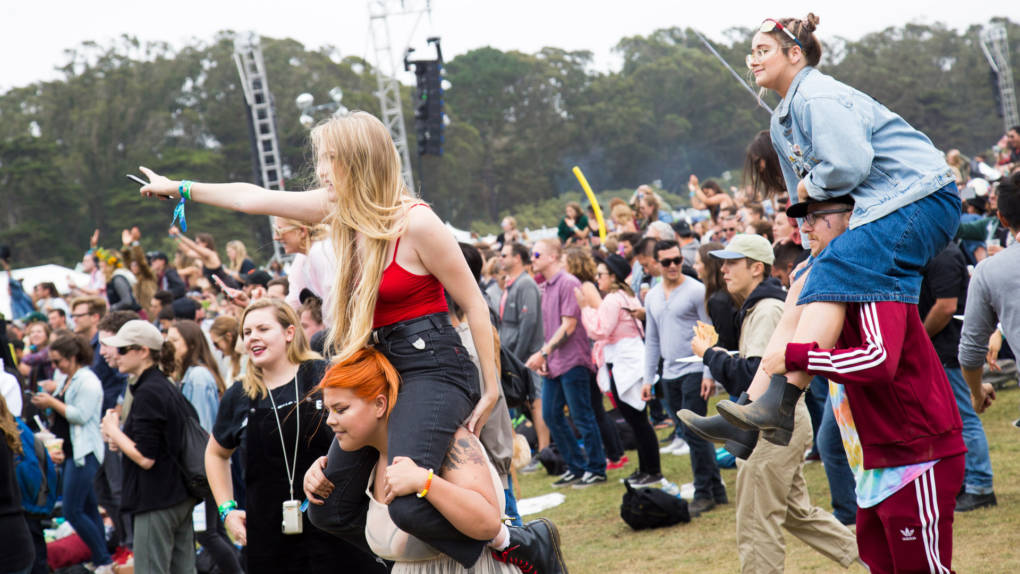
Alienated by Music Festivals? You're Not Alone
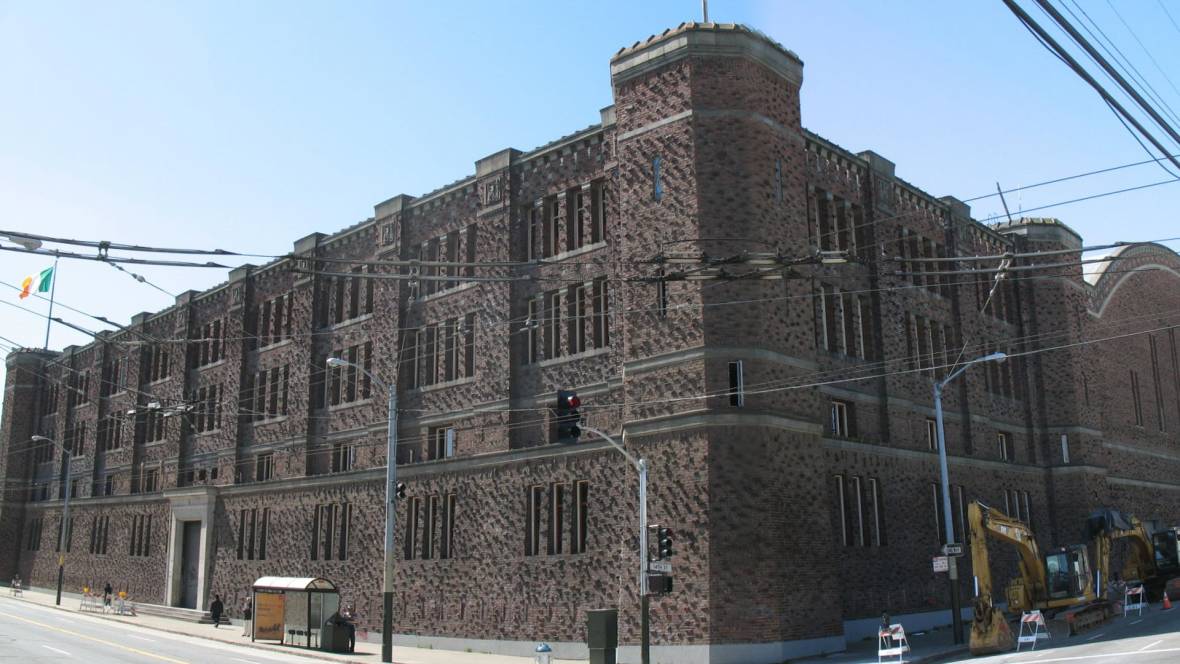
Report: The Armory Sold for $65M, Future as Music Venue Uncertain
Sponsored
Player sponsored by
window.__IS_SSR__=true
window.__INITIAL_STATE__={
"attachmentsReducer": {
"audio_0": {
"type": "attachments",
"id": "audio_0",
"imgSizes": {
"kqedFullSize": {
"file": "https://ww2.kqed.org/news/wp-content/themes/KQED-unified/img/audio_bgs/background0.jpg"
}
}
},
"audio_1": {
"type": "attachments",
"id": "audio_1",
"imgSizes": {
"kqedFullSize": {
"file": "https://ww2.kqed.org/news/wp-content/themes/KQED-unified/img/audio_bgs/background1.jpg"
}
}
},
"audio_2": {
"type": "attachments",
"id": "audio_2",
"imgSizes": {
"kqedFullSize": {
"file": "https://ww2.kqed.org/news/wp-content/themes/KQED-unified/img/audio_bgs/background2.jpg"
}
}
},
"audio_3": {
"type": "attachments",
"id": "audio_3",
"imgSizes": {
"kqedFullSize": {
"file": "https://ww2.kqed.org/news/wp-content/themes/KQED-unified/img/audio_bgs/background3.jpg"
}
}
},
"audio_4": {
"type": "attachments",
"id": "audio_4",
"imgSizes": {
"kqedFullSize": {
"file": "https://ww2.kqed.org/news/wp-content/themes/KQED-unified/img/audio_bgs/background4.jpg"
}
}
},
"placeholder": {
"type": "attachments",
"id": "placeholder",
"imgSizes": {
"thumbnail": {
"file": "https://cdn.kqed.org/wp-content/uploads/2024/12/KQED-Default-Image-816638274-2000x1333-1-160x107.jpg",
"width": 160,
"height": 107,
"mimeType": "image/jpeg"
},
"medium": {
"file": "https://cdn.kqed.org/wp-content/uploads/2024/12/KQED-Default-Image-816638274-2000x1333-1-800x533.jpg",
"width": 800,
"height": 533,
"mimeType": "image/jpeg"
},
"medium_large": {
"file": "https://cdn.kqed.org/wp-content/uploads/2024/12/KQED-Default-Image-816638274-2000x1333-1-768x512.jpg",
"width": 768,
"height": 512,
"mimeType": "image/jpeg"
},
"large": {
"file": "https://cdn.kqed.org/wp-content/uploads/2024/12/KQED-Default-Image-816638274-2000x1333-1-1020x680.jpg",
"width": 1020,
"height": 680,
"mimeType": "image/jpeg"
},
"1536x1536": {
"file": "https://cdn.kqed.org/wp-content/uploads/2024/12/KQED-Default-Image-816638274-2000x1333-1-1536x1024.jpg",
"width": 1536,
"height": 1024,
"mimeType": "image/jpeg"
},
"fd-lrg": {
"file": "https://cdn.kqed.org/wp-content/uploads/2024/12/KQED-Default-Image-816638274-2000x1333-1-1536x1024.jpg",
"width": 1536,
"height": 1024,
"mimeType": "image/jpeg"
},
"fd-med": {
"file": "https://cdn.kqed.org/wp-content/uploads/2024/12/KQED-Default-Image-816638274-2000x1333-1-1020x680.jpg",
"width": 1020,
"height": 680,
"mimeType": "image/jpeg"
},
"fd-sm": {
"file": "https://cdn.kqed.org/wp-content/uploads/2024/12/KQED-Default-Image-816638274-2000x1333-1-800x533.jpg",
"width": 800,
"height": 533,
"mimeType": "image/jpeg"
},
"post-thumbnail": {
"file": "https://cdn.kqed.org/wp-content/uploads/2024/12/KQED-Default-Image-816638274-2000x1333-1-672x372.jpg",
"width": 672,
"height": 372,
"mimeType": "image/jpeg"
},
"twentyfourteen-full-width": {
"file": "https://cdn.kqed.org/wp-content/uploads/2024/12/KQED-Default-Image-816638274-2000x1333-1-1038x576.jpg",
"width": 1038,
"height": 576,
"mimeType": "image/jpeg"
},
"xxsmall": {
"file": "https://cdn.kqed.org/wp-content/uploads/2024/12/KQED-Default-Image-816638274-2000x1333-1-160x107.jpg",
"width": 160,
"height": 107,
"mimeType": "image/jpeg"
},
"xsmall": {
"file": "https://cdn.kqed.org/wp-content/uploads/2024/12/KQED-Default-Image-816638274-2000x1333-1-672x372.jpg",
"width": 672,
"height": 372,
"mimeType": "image/jpeg"
},
"small": {
"file": "https://cdn.kqed.org/wp-content/uploads/2024/12/KQED-Default-Image-816638274-2000x1333-1-672x372.jpg",
"width": 672,
"height": 372,
"mimeType": "image/jpeg"
},
"xlarge": {
"file": "https://cdn.kqed.org/wp-content/uploads/2024/12/KQED-Default-Image-816638274-2000x1333-1-1020x680.jpg",
"width": 1020,
"height": 680,
"mimeType": "image/jpeg"
},
"full-width": {
"file": "https://cdn.kqed.org/wp-content/uploads/2024/12/KQED-Default-Image-816638274-2000x1333-1-1920x1280.jpg",
"width": 1920,
"height": 1280,
"mimeType": "image/jpeg"
},
"guest-author-32": {
"file": "https://cdn.kqed.org/wp-content/uploads/2025/01/KQED-Default-Image-816638274-1333x1333-1-160x160.jpg",
"width": 32,
"height": 32,
"mimeType": "image/jpeg"
},
"guest-author-50": {
"file": "https://cdn.kqed.org/wp-content/uploads/2025/01/KQED-Default-Image-816638274-1333x1333-1-160x160.jpg",
"width": 50,
"height": 50,
"mimeType": "image/jpeg"
},
"guest-author-64": {
"file": "https://cdn.kqed.org/wp-content/uploads/2025/01/KQED-Default-Image-816638274-1333x1333-1-160x160.jpg",
"width": 64,
"height": 64,
"mimeType": "image/jpeg"
},
"guest-author-96": {
"file": "https://cdn.kqed.org/wp-content/uploads/2025/01/KQED-Default-Image-816638274-1333x1333-1-160x160.jpg",
"width": 96,
"height": 96,
"mimeType": "image/jpeg"
},
"guest-author-128": {
"file": "https://cdn.kqed.org/wp-content/uploads/2025/01/KQED-Default-Image-816638274-1333x1333-1-160x160.jpg",
"width": 128,
"height": 128,
"mimeType": "image/jpeg"
},
"detail": {
"file": "https://cdn.kqed.org/wp-content/uploads/2025/01/KQED-Default-Image-816638274-1333x1333-1-160x160.jpg",
"width": 160,
"height": 160,
"mimeType": "image/jpeg"
},
"kqedFullSize": {
"file": "https://cdn.kqed.org/wp-content/uploads/2024/12/KQED-Default-Image-816638274-2000x1333-1.jpg",
"width": 2000,
"height": 1333
}
}
},
"arts_13876912": {
"type": "attachments",
"id": "arts_13876912",
"meta": {
"index": "attachments_1716263798",
"site": "arts",
"id": "13876912",
"found": true
},
"parent": 13876894,
"imgSizes": {
"twentyfourteen-full-width": {
"file": "https://ww2.kqed.org/app/uploads/sites/2/2020/03/TheChapel_1200-1038x576.jpg",
"width": 1038,
"mimeType": "image/jpeg",
"height": 576
},
"thumbnail": {
"file": "https://ww2.kqed.org/app/uploads/sites/2/2020/03/TheChapel_1200-160x107.jpg",
"width": 160,
"mimeType": "image/jpeg",
"height": 107
},
"post-thumbnail": {
"file": "https://ww2.kqed.org/app/uploads/sites/2/2020/03/TheChapel_1200-672x372.jpg",
"width": 672,
"mimeType": "image/jpeg",
"height": 372
},
"kqedFullSize": {
"file": "https://ww2.kqed.org/app/uploads/sites/2/2020/03/TheChapel_1200.jpg",
"width": 1200,
"height": 800
},
"large": {
"file": "https://ww2.kqed.org/app/uploads/sites/2/2020/03/TheChapel_1200-1020x680.jpg",
"width": 1020,
"mimeType": "image/jpeg",
"height": 680
},
"medium": {
"file": "https://ww2.kqed.org/app/uploads/sites/2/2020/03/TheChapel_1200-800x533.jpg",
"width": 800,
"mimeType": "image/jpeg",
"height": 533
},
"medium_large": {
"file": "https://ww2.kqed.org/app/uploads/sites/2/2020/03/TheChapel_1200-768x512.jpg",
"width": 768,
"mimeType": "image/jpeg",
"height": 512
}
},
"publishDate": 1584473619,
"modified": 1584577264,
"caption": "The Chapel on Valencia Street, a former mortuary turned music venue photographed on March 15, 2020, offered a parting note to the community.",
"description": "The Chapel on Valencia Street, a former mortuary turned music venue photographed on March 15, 2020, offered a parting note to the community.",
"title": "TheChapel_1200",
"credit": "Beth LaBerge/KQED",
"status": "inherit",
"fetchFailed": false,
"isLoading": false
},
"arts_13877227": {
"type": "attachments",
"id": "arts_13877227",
"meta": {
"index": "attachments_1716263798",
"site": "arts",
"id": "13877227",
"found": true
},
"parent": 13877225,
"imgSizes": {
"twentyfourteen-full-width": {
"file": "https://ww2.kqed.org/app/uploads/sites/2/2020/03/1600px-Citizen_at_Slims-1038x576.jpg",
"width": 1038,
"mimeType": "image/jpeg",
"height": 576
},
"thumbnail": {
"file": "https://ww2.kqed.org/app/uploads/sites/2/2020/03/1600px-Citizen_at_Slims-160x90.jpg",
"width": 160,
"mimeType": "image/jpeg",
"height": 90
},
"post-thumbnail": {
"file": "https://ww2.kqed.org/app/uploads/sites/2/2020/03/1600px-Citizen_at_Slims-672x372.jpg",
"width": 672,
"mimeType": "image/jpeg",
"height": 372
},
"kqedFullSize": {
"file": "https://ww2.kqed.org/app/uploads/sites/2/2020/03/1600px-Citizen_at_Slims.jpg",
"width": 1599,
"height": 900
},
"large": {
"file": "https://ww2.kqed.org/app/uploads/sites/2/2020/03/1600px-Citizen_at_Slims-1020x574.jpg",
"width": 1020,
"mimeType": "image/jpeg",
"height": 574
},
"medium": {
"file": "https://ww2.kqed.org/app/uploads/sites/2/2020/03/1600px-Citizen_at_Slims-800x450.jpg",
"width": 800,
"mimeType": "image/jpeg",
"height": 450
},
"medium_large": {
"file": "https://ww2.kqed.org/app/uploads/sites/2/2020/03/1600px-Citizen_at_Slims-768x432.jpg",
"width": 768,
"mimeType": "image/jpeg",
"height": 432
}
},
"publishDate": 1584748263,
"modified": 1584748294,
"caption": "Citizen performs at Slim's in San Francisco in 2016.",
"description": "Citizen performs at Slim's in San Francisco in 2016.",
"title": "1600px-Citizen_at_Slim's",
"credit": "WikiMedia Commons",
"status": "inherit",
"fetchFailed": false,
"isLoading": false
},
"arts_13838586": {
"type": "attachments",
"id": "arts_13838586",
"meta": {
"index": "attachments_1716263798",
"site": "arts",
"id": "13838586",
"found": true
},
"parent": 13838574,
"imgSizes": {
"small": {
"file": "https://ww2.kqed.org/app/uploads/sites/2/2018/08/multivers-1-520x293.jpg",
"width": 520,
"mimeType": "image/jpeg",
"height": 293
},
"twentyfourteen-full-width": {
"file": "https://ww2.kqed.org/app/uploads/sites/2/2018/08/multivers-1-1038x576.jpg",
"width": 1038,
"mimeType": "image/jpeg",
"height": 576
},
"thumbnail": {
"file": "https://ww2.kqed.org/app/uploads/sites/2/2018/08/multivers-1-160x90.jpg",
"width": 160,
"mimeType": "image/jpeg",
"height": 90
},
"fd-sm": {
"file": "https://ww2.kqed.org/app/uploads/sites/2/2018/08/multivers-1-960x540.jpg",
"width": 960,
"mimeType": "image/jpeg",
"height": 540
},
"post-thumbnail": {
"file": "https://ww2.kqed.org/app/uploads/sites/2/2018/08/multivers-1-672x372.jpg",
"width": 672,
"mimeType": "image/jpeg",
"height": 372
},
"xsmall": {
"file": "https://ww2.kqed.org/app/uploads/sites/2/2018/08/multivers-1-375x211.jpg",
"width": 375,
"mimeType": "image/jpeg",
"height": 211
},
"kqedFullSize": {
"file": "https://ww2.kqed.org/app/uploads/sites/2/2018/08/multivers-1.jpg",
"width": 1920,
"height": 1080
},
"large": {
"file": "https://ww2.kqed.org/app/uploads/sites/2/2018/08/multivers-1-1020x574.jpg",
"width": 1020,
"mimeType": "image/jpeg",
"height": 574
},
"xlarge": {
"file": "https://ww2.kqed.org/app/uploads/sites/2/2018/08/multivers-1-1180x664.jpg",
"width": 1180,
"mimeType": "image/jpeg",
"height": 664
},
"complete_open_graph": {
"file": "https://ww2.kqed.org/app/uploads/sites/2/2018/08/multivers-1-1200x675.jpg",
"width": 1200,
"mimeType": "image/jpeg",
"height": 675
},
"guest-author-50": {
"file": "https://ww2.kqed.org/app/uploads/sites/2/2018/08/multivers-1-50x50.jpg",
"width": 50,
"mimeType": "image/jpeg",
"height": 50
},
"guest-author-96": {
"file": "https://ww2.kqed.org/app/uploads/sites/2/2018/08/multivers-1-96x96.jpg",
"width": 96,
"mimeType": "image/jpeg",
"height": 96
},
"medium": {
"file": "https://ww2.kqed.org/app/uploads/sites/2/2018/08/multivers-1-800x450.jpg",
"width": 800,
"mimeType": "image/jpeg",
"height": 450
},
"guest-author-64": {
"file": "https://ww2.kqed.org/app/uploads/sites/2/2018/08/multivers-1-64x64.jpg",
"width": 64,
"mimeType": "image/jpeg",
"height": 64
},
"guest-author-32": {
"file": "https://ww2.kqed.org/app/uploads/sites/2/2018/08/multivers-1-32x32.jpg",
"width": 32,
"mimeType": "image/jpeg",
"height": 32
},
"fd-lrg": {
"file": "https://ww2.kqed.org/app/uploads/sites/2/2018/08/multivers-1-1920x1080.jpg",
"width": 1920,
"mimeType": "image/jpeg",
"height": 1080
},
"fd-med": {
"file": "https://ww2.kqed.org/app/uploads/sites/2/2018/08/multivers-1-1180x664.jpg",
"width": 1180,
"mimeType": "image/jpeg",
"height": 664
},
"full-width": {
"file": "https://ww2.kqed.org/app/uploads/sites/2/2018/08/multivers-1-1920x1080.jpg",
"width": 1920,
"mimeType": "image/jpeg",
"height": 1080
},
"detail": {
"file": "https://ww2.kqed.org/app/uploads/sites/2/2018/08/multivers-1-150x150.jpg",
"width": 150,
"mimeType": "image/jpeg",
"height": 150
},
"medium_large": {
"file": "https://ww2.kqed.org/app/uploads/sites/2/2018/08/multivers-1-768x432.jpg",
"width": 768,
"mimeType": "image/jpeg",
"height": 432
},
"guest-author-128": {
"file": "https://ww2.kqed.org/app/uploads/sites/2/2018/08/multivers-1-128x128.jpg",
"width": 128,
"mimeType": "image/jpeg",
"height": 128
},
"xxsmall": {
"file": "https://ww2.kqed.org/app/uploads/sites/2/2018/08/multivers-1-240x135.jpg",
"width": 240,
"mimeType": "image/jpeg",
"height": 135
}
},
"publishDate": 1533852573,
"modified": 1660250267,
"caption": "Shawna Shante (left) and Jade Ariana Fair, two of the festival's original co-founders envisioned a multi-day punk festival as a way to celebrate black and brown punk and experimental musicians.",
"description": "Shawna Shante Scroggins (left) and Jade Ariana Fair envision The Multivers is Illuminated as a way to celebrate black and brown punk and experimental musicians.",
"title": "multivers",
"credit": "Jeffie Freeman",
"status": "inherit",
"altTag": "Shawna Shante Scroggins (left) and Jade Ariana Fair envision The Multivers is Illuminated as a way to celebrate black and brown punk and experimental musicians.",
"fetchFailed": false,
"isLoading": false
},
"arts_13846930": {
"type": "attachments",
"id": "arts_13846930",
"meta": {
"index": "attachments_1716263798",
"site": "arts",
"id": "13846930",
"found": true
},
"parent": 13846754,
"imgSizes": {
"twentyfourteen-full-width": {
"file": "https://ww2.kqed.org/app/uploads/sites/2/2018/12/Great_American_Music_Hall_April_1976-789x576.jpg",
"width": 789,
"mimeType": "image/jpeg",
"height": 576
},
"thumbnail": {
"file": "https://ww2.kqed.org/app/uploads/sites/2/2018/12/Great_American_Music_Hall_April_1976-160x137.jpg",
"width": 160,
"mimeType": "image/jpeg",
"height": 137
},
"post-thumbnail": {
"file": "https://ww2.kqed.org/app/uploads/sites/2/2018/12/Great_American_Music_Hall_April_1976-672x372.jpg",
"width": 672,
"mimeType": "image/jpeg",
"height": 372
},
"kqedFullSize": {
"file": "https://ww2.kqed.org/app/uploads/sites/2/2018/12/Great_American_Music_Hall_April_1976.jpg",
"width": 789,
"height": 675
},
"guest-author-50": {
"file": "https://ww2.kqed.org/app/uploads/sites/2/2018/12/Great_American_Music_Hall_April_1976-50x50.jpg",
"width": 50,
"mimeType": "image/jpeg",
"height": 50
},
"guest-author-96": {
"file": "https://ww2.kqed.org/app/uploads/sites/2/2018/12/Great_American_Music_Hall_April_1976-96x96.jpg",
"width": 96,
"mimeType": "image/jpeg",
"height": 96
},
"guest-author-64": {
"file": "https://ww2.kqed.org/app/uploads/sites/2/2018/12/Great_American_Music_Hall_April_1976-64x64.jpg",
"width": 64,
"mimeType": "image/jpeg",
"height": 64
},
"detail": {
"file": "https://ww2.kqed.org/app/uploads/sites/2/2018/12/Great_American_Music_Hall_April_1976-150x150.jpg",
"width": 150,
"mimeType": "image/jpeg",
"height": 150
},
"guest-author-32": {
"file": "https://ww2.kqed.org/app/uploads/sites/2/2018/12/Great_American_Music_Hall_April_1976-32x32.jpg",
"width": 32,
"mimeType": "image/jpeg",
"height": 32
},
"medium_large": {
"file": "https://ww2.kqed.org/app/uploads/sites/2/2018/12/Great_American_Music_Hall_April_1976-768x657.jpg",
"width": 768,
"mimeType": "image/jpeg",
"height": 657
},
"guest-author-128": {
"file": "https://ww2.kqed.org/app/uploads/sites/2/2018/12/Great_American_Music_Hall_April_1976-128x128.jpg",
"width": 128,
"mimeType": "image/jpeg",
"height": 128
}
},
"publishDate": 1544553265,
"modified": 1549425464,
"caption": "In 2017 Goldenvoice assumed control of booking at the Great American Music Hall, seen here in the 1970s.",
"description": "In 2017 Goldenvoice assumed control of booking at the Great American Music Hall, seen here in the 1970s.",
"title": "Great_American_Music_Hall_(April_1976)",
"credit": "Wikimedia Commons",
"status": "inherit",
"fetchFailed": false,
"isLoading": false
},
"arts_13846954": {
"type": "attachments",
"id": "arts_13846954",
"meta": {
"index": "attachments_1716263798",
"site": "arts",
"id": "13846954",
"found": true
},
"parent": 13846754,
"imgSizes": {
"twentyfourteen-full-width": {
"file": "https://ww2.kqed.org/app/uploads/sites/2/2018/12/JamieZ.dna_2-1038x576.jpg",
"width": 1038,
"mimeType": "image/jpeg",
"height": 576
},
"thumbnail": {
"file": "https://ww2.kqed.org/app/uploads/sites/2/2018/12/JamieZ.dna_2-160x90.jpg",
"width": 160,
"mimeType": "image/jpeg",
"height": 90
},
"post-thumbnail": {
"file": "https://ww2.kqed.org/app/uploads/sites/2/2018/12/JamieZ.dna_2-672x372.jpg",
"width": 672,
"mimeType": "image/jpeg",
"height": 372
},
"kqedFullSize": {
"file": "https://ww2.kqed.org/app/uploads/sites/2/2018/12/JamieZ.dna_2.jpg",
"width": 1920,
"height": 1080
},
"large": {
"file": "https://ww2.kqed.org/app/uploads/sites/2/2018/12/JamieZ.dna_2-1020x574.jpg",
"width": 1020,
"mimeType": "image/jpeg",
"height": 574
},
"complete_open_graph": {
"file": "https://ww2.kqed.org/app/uploads/sites/2/2018/12/JamieZ.dna_2-1200x675.jpg",
"width": 1200,
"mimeType": "image/jpeg",
"height": 675
},
"guest-author-50": {
"file": "https://ww2.kqed.org/app/uploads/sites/2/2018/12/JamieZ.dna_2-50x50.jpg",
"width": 50,
"mimeType": "image/jpeg",
"height": 50
},
"guest-author-96": {
"file": "https://ww2.kqed.org/app/uploads/sites/2/2018/12/JamieZ.dna_2-96x96.jpg",
"width": 96,
"mimeType": "image/jpeg",
"height": 96
},
"medium": {
"file": "https://ww2.kqed.org/app/uploads/sites/2/2018/12/JamieZ.dna_2-800x450.jpg",
"width": 800,
"mimeType": "image/jpeg",
"height": 450
},
"guest-author-64": {
"file": "https://ww2.kqed.org/app/uploads/sites/2/2018/12/JamieZ.dna_2-64x64.jpg",
"width": 64,
"mimeType": "image/jpeg",
"height": 64
},
"guest-author-32": {
"file": "https://ww2.kqed.org/app/uploads/sites/2/2018/12/JamieZ.dna_2-32x32.jpg",
"width": 32,
"mimeType": "image/jpeg",
"height": 32
},
"full-width": {
"file": "https://ww2.kqed.org/app/uploads/sites/2/2018/12/JamieZ.dna_2-1920x1080.jpg",
"width": 1920,
"mimeType": "image/jpeg",
"height": 1080
},
"detail": {
"file": "https://ww2.kqed.org/app/uploads/sites/2/2018/12/JamieZ.dna_2-150x150.jpg",
"width": 150,
"mimeType": "image/jpeg",
"height": 150
},
"medium_large": {
"file": "https://ww2.kqed.org/app/uploads/sites/2/2018/12/JamieZ.dna_2-768x432.jpg",
"width": 768,
"mimeType": "image/jpeg",
"height": 432
},
"guest-author-128": {
"file": "https://ww2.kqed.org/app/uploads/sites/2/2018/12/JamieZ.dna_2-128x128.jpg",
"width": 128,
"mimeType": "image/jpeg",
"height": 128
}
},
"publishDate": 1544560104,
"modified": 1544560138,
"caption": "Jamie Zawinski, the owner of DNA Lounge, wrote a blog post about corporate promoters' expansion in San Francisco.",
"description": "Jamie Zawinski, the owner of DNA Lounge, wrote a blog post about corporate promoters' expansion in San Francisco.",
"title": "JamieZ.dna_2",
"credit": "Sam Lefebvre/KQED",
"status": "inherit",
"fetchFailed": false,
"isLoading": false
},
"arts_13845466": {
"type": "attachments",
"id": "arts_13845466",
"meta": {
"index": "attachments_1716263798",
"site": "arts",
"id": "13845466",
"found": true
},
"parent": 13845463,
"imgSizes": {
"twentyfourteen-full-width": {
"file": "https://ww2.kqed.org/app/uploads/sites/2/2018/11/music-festival-crowd-pic-1038x576.jpg",
"width": 1038,
"mimeType": "image/jpeg",
"height": 576
},
"thumbnail": {
"file": "https://ww2.kqed.org/app/uploads/sites/2/2018/11/music-festival-crowd-pic-160x90.jpg",
"width": 160,
"mimeType": "image/jpeg",
"height": 90
},
"post-thumbnail": {
"file": "https://ww2.kqed.org/app/uploads/sites/2/2018/11/music-festival-crowd-pic-672x372.jpg",
"width": 672,
"mimeType": "image/jpeg",
"height": 372
},
"kqedFullSize": {
"file": "https://ww2.kqed.org/app/uploads/sites/2/2018/11/music-festival-crowd-pic.jpg",
"width": 1920,
"height": 1080
},
"large": {
"file": "https://ww2.kqed.org/app/uploads/sites/2/2018/11/music-festival-crowd-pic-1020x574.jpg",
"width": 1020,
"mimeType": "image/jpeg",
"height": 574
},
"complete_open_graph": {
"file": "https://ww2.kqed.org/app/uploads/sites/2/2018/11/music-festival-crowd-pic-1200x675.jpg",
"width": 1200,
"mimeType": "image/jpeg",
"height": 675
},
"guest-author-50": {
"file": "https://ww2.kqed.org/app/uploads/sites/2/2018/11/music-festival-crowd-pic-50x50.jpg",
"width": 50,
"mimeType": "image/jpeg",
"height": 50
},
"guest-author-96": {
"file": "https://ww2.kqed.org/app/uploads/sites/2/2018/11/music-festival-crowd-pic-96x96.jpg",
"width": 96,
"mimeType": "image/jpeg",
"height": 96
},
"medium": {
"file": "https://ww2.kqed.org/app/uploads/sites/2/2018/11/music-festival-crowd-pic-800x450.jpg",
"width": 800,
"mimeType": "image/jpeg",
"height": 450
},
"guest-author-64": {
"file": "https://ww2.kqed.org/app/uploads/sites/2/2018/11/music-festival-crowd-pic-64x64.jpg",
"width": 64,
"mimeType": "image/jpeg",
"height": 64
},
"guest-author-32": {
"file": "https://ww2.kqed.org/app/uploads/sites/2/2018/11/music-festival-crowd-pic-32x32.jpg",
"width": 32,
"mimeType": "image/jpeg",
"height": 32
},
"full-width": {
"file": "https://ww2.kqed.org/app/uploads/sites/2/2018/11/music-festival-crowd-pic-1920x1080.jpg",
"width": 1920,
"mimeType": "image/jpeg",
"height": 1080
},
"detail": {
"file": "https://ww2.kqed.org/app/uploads/sites/2/2018/11/music-festival-crowd-pic-150x150.jpg",
"width": 150,
"mimeType": "image/jpeg",
"height": 150
},
"medium_large": {
"file": "https://ww2.kqed.org/app/uploads/sites/2/2018/11/music-festival-crowd-pic-768x432.jpg",
"width": 768,
"mimeType": "image/jpeg",
"height": 432
},
"guest-author-128": {
"file": "https://ww2.kqed.org/app/uploads/sites/2/2018/11/music-festival-crowd-pic-128x128.jpg",
"width": 128,
"mimeType": "image/jpeg",
"height": 128
}
},
"publishDate": 1542841119,
"modified": 1542841184,
"caption": "The crowd at 2017's Outside Lands in Golden Gate Park. ",
"description": "The crowd at 2017's Outside Lands in Golden Gate Park. ",
"title": "music festival crowd pic",
"credit": "Estefany Gonzalez",
"status": "inherit",
"fetchFailed": false,
"isLoading": false
},
"arts_11463953": {
"type": "attachments",
"id": "arts_11463953",
"meta": {
"index": "attachments_1716263798",
"site": "arts",
"id": "11463953",
"found": true
},
"parent": 11462114,
"imgSizes": {
"twentyfourteen-full-width": {
"file": "https://ww2.kqed.org/app/uploads/sites/2/2016/04/Armory.MikeHofmann.WikiCC-1038x576.jpg",
"width": 1038,
"mimeType": "image/jpeg",
"height": 576
},
"thumbnail": {
"file": "https://ww2.kqed.org/app/uploads/sites/2/2016/04/Armory.MikeHofmann.WikiCC-400x225.jpg",
"width": 400,
"mimeType": "image/jpeg",
"height": 225
},
"fd-sm": {
"file": "https://ww2.kqed.org/app/uploads/sites/2/2016/04/Armory.MikeHofmann.WikiCC-960x540.jpg",
"width": 960,
"mimeType": "image/jpeg",
"height": 540
},
"post-thumbnail": {
"file": "https://ww2.kqed.org/app/uploads/sites/2/2016/04/Armory.MikeHofmann.WikiCC-672x372.jpg",
"width": 672,
"mimeType": "image/jpeg",
"height": 372
},
"kqedFullSize": {
"file": "https://ww2.kqed.org/app/uploads/sites/2/2016/04/Armory.MikeHofmann.WikiCC.jpg",
"width": 1920,
"height": 1080
},
"large": {
"file": "https://ww2.kqed.org/app/uploads/sites/2/2016/04/Armory.MikeHofmann.WikiCC-1180x664.jpg",
"width": 1180,
"mimeType": "image/jpeg",
"height": 664
},
"guest-author-96": {
"file": "https://ww2.kqed.org/app/uploads/sites/2/2016/04/Armory.MikeHofmann.WikiCC-96x96.jpg",
"width": 96,
"mimeType": "image/jpeg",
"height": 96
},
"medium": {
"file": "https://ww2.kqed.org/app/uploads/sites/2/2016/04/Armory.MikeHofmann.WikiCC-800x450.jpg",
"width": 800,
"mimeType": "image/jpeg",
"height": 450
},
"guest-author-64": {
"file": "https://ww2.kqed.org/app/uploads/sites/2/2016/04/Armory.MikeHofmann.WikiCC-64x64.jpg",
"width": 64,
"mimeType": "image/jpeg",
"height": 64
},
"guest-author-32": {
"file": "https://ww2.kqed.org/app/uploads/sites/2/2016/04/Armory.MikeHofmann.WikiCC-32x32.jpg",
"width": 32,
"mimeType": "image/jpeg",
"height": 32
},
"fd-lrg": {
"file": "https://ww2.kqed.org/app/uploads/sites/2/2016/04/Armory.MikeHofmann.WikiCC-1920x1080.jpg",
"width": 1920,
"mimeType": "image/jpeg",
"height": 1080
},
"fd-med": {
"file": "https://ww2.kqed.org/app/uploads/sites/2/2016/04/Armory.MikeHofmann.WikiCC-1180x664.jpg",
"width": 1180,
"mimeType": "image/jpeg",
"height": 664
},
"detail": {
"file": "https://ww2.kqed.org/app/uploads/sites/2/2016/04/Armory.MikeHofmann.WikiCC-75x75.jpg",
"width": 75,
"mimeType": "image/jpeg",
"height": 75
},
"medium_large": {
"file": "https://ww2.kqed.org/app/uploads/sites/2/2016/04/Armory.MikeHofmann.WikiCC-768x432.jpg",
"width": 768,
"mimeType": "image/jpeg",
"height": 432
},
"guest-author-128": {
"file": "https://ww2.kqed.org/app/uploads/sites/2/2016/04/Armory.MikeHofmann.WikiCC-128x128.jpg",
"width": 128,
"mimeType": "image/jpeg",
"height": 128
}
},
"publishDate": 1459784580,
"modified": 1518037133,
"caption": "The San Francisco Armory in 2008, shortly after being acquired by Kink.com.",
"description": "The San Francisco Armory in 2008, shortly after being acquired by Kink.com.",
"title": "Armory.MikeHofmann.WikiCC",
"credit": "Mike Hofmann",
"status": "inherit",
"fetchFailed": false,
"isLoading": false
}
},
"audioPlayerReducer": {
"postId": "stream_live",
"isPaused": true,
"isPlaying": false,
"pfsActive": false,
"pledgeModalIsOpen": true,
"playerDrawerIsOpen": false
},
"authorsReducer": {
"byline_arts_13845463": {
"type": "authors",
"id": "byline_arts_13845463",
"meta": {
"override": true
},
"slug": "byline_arts_13845463",
"name": "Montse Reyes",
"isLoading": false
},
"kjones": {
"type": "authors",
"id": "93",
"meta": {
"index": "authors_1716337520",
"id": "93",
"found": true
},
"name": "Kevin L. Jones",
"firstName": "Kevin",
"lastName": "Jones",
"slug": "kjones",
"email": "kjones@kqed.org",
"display_author_email": false,
"staff_mastheads": [],
"title": null,
"bio": null,
"avatar": "https://secure.gravatar.com/avatar/12c65b5633ed39d0a59bb7f497eff645?s=600&d=blank&r=g",
"twitter": null,
"facebook": null,
"instagram": null,
"linkedin": null,
"sites": [
{
"site": "arts",
"roles": [
"subscriber"
]
},
{
"site": "styleguide",
"roles": [
"contributor"
]
},
{
"site": "artschool",
"roles": [
"subscriber"
]
},
{
"site": "news",
"roles": [
"subscriber"
]
},
{
"site": "pop",
"roles": [
"subscriber"
]
}
],
"headData": {
"title": "Kevin L. Jones | KQED",
"description": null,
"ogImgSrc": "https://secure.gravatar.com/avatar/12c65b5633ed39d0a59bb7f497eff645?s=600&d=blank&r=g",
"twImgSrc": "https://secure.gravatar.com/avatar/12c65b5633ed39d0a59bb7f497eff645?s=600&d=blank&r=g"
},
"isLoading": false,
"link": "/author/kjones"
},
"slefebvre": {
"type": "authors",
"id": "11091",
"meta": {
"index": "authors_1716337520",
"id": "11091",
"found": true
},
"name": "Sam Lefebvre",
"firstName": "Sam",
"lastName": "Lefebvre",
"slug": "slefebvre",
"email": "sdlefebvre@gmail.com",
"display_author_email": false,
"staff_mastheads": [],
"title": null,
"bio": "Sam Lefebvre is an award-winning reporter at KQED Arts. He has worked as an editor and columnist at the \u003cem>East Bay Express\u003c/em>, \u003cem>SF Weekly \u003c/em>and Impose Magazine, and his journalism and criticism has appeared in \u003cem>The New York Times\u003c/em>, the Guardian and Pitchfork.",
"avatar": "https://secure.gravatar.com/avatar/143b570c3dec13ae74c6aa2369b04fc8?s=600&d=blank&r=g",
"twitter": "Lefebvre_Sam",
"facebook": null,
"instagram": null,
"linkedin": null,
"sites": [
{
"site": "arts",
"roles": [
"editor"
]
},
{
"site": "news",
"roles": [
"author"
]
}
],
"headData": {
"title": "Sam Lefebvre | KQED",
"description": null,
"ogImgSrc": "https://secure.gravatar.com/avatar/143b570c3dec13ae74c6aa2369b04fc8?s=600&d=blank&r=g",
"twImgSrc": "https://secure.gravatar.com/avatar/143b570c3dec13ae74c6aa2369b04fc8?s=600&d=blank&r=g"
},
"isLoading": false,
"link": "/author/slefebvre"
},
"nvoynovskaya": {
"type": "authors",
"id": "11387",
"meta": {
"index": "authors_1716337520",
"id": "11387",
"found": true
},
"name": "Nastia Voynovskaya",
"firstName": "Nastia",
"lastName": "Voynovskaya",
"slug": "nvoynovskaya",
"email": "nvoynovskaya@kqed.org",
"display_author_email": false,
"staff_mastheads": [
"arts"
],
"title": "Editor and reporter",
"bio": "Nastia Voynovskaya is a reporter and editor at KQED Arts & Culture. She's been covering the arts in the Bay Area for over a decade, with a focus on music, queer culture, labor issues and grassroots organizing. She has edited KQED story series such as Trans Bay: A History of San Francisco's Gender-Diverse Community, and co-created KQED's Bay Area hip-hop history project, That's My Word. Nastia's work has been recognized by the Society of Professional Journalists and San Francisco Press Club. She holds a BA in comparative literature from UC Berkeley.",
"avatar": "https://secure.gravatar.com/avatar/310649817772dd2a98e5dfecb6b24842?s=600&d=blank&r=g",
"twitter": null,
"facebook": null,
"instagram": "https://www.instagram.com/nananastia/",
"linkedin": null,
"sites": [
{
"site": "arts",
"roles": [
"administrator"
]
},
{
"site": "news",
"roles": [
"editor"
]
},
{
"site": "pop",
"roles": [
"administrator"
]
},
{
"site": "bayareabites",
"roles": [
"editor"
]
},
{
"site": "podcasts",
"roles": [
"editor"
]
},
{
"site": "hiphop",
"roles": [
"editor"
]
}
],
"headData": {
"title": "Nastia Voynovskaya | KQED",
"description": "Editor and reporter",
"ogImgSrc": "https://secure.gravatar.com/avatar/310649817772dd2a98e5dfecb6b24842?s=600&d=blank&r=g",
"twImgSrc": "https://secure.gravatar.com/avatar/310649817772dd2a98e5dfecb6b24842?s=600&d=blank&r=g"
},
"isLoading": false,
"link": "/author/nvoynovskaya"
}
},
"breakingNewsReducer": {},
"pagesReducer": {},
"postsReducer": {
"stream_live": {
"type": "live",
"id": "stream_live",
"audioUrl": "https://streams.kqed.org/kqedradio",
"title": "Live Stream",
"excerpt": "Live Stream information currently unavailable.",
"link": "/radio",
"featImg": "",
"label": {
"name": "KQED Live",
"link": "/"
}
},
"stream_kqedNewscast": {
"type": "posts",
"id": "stream_kqedNewscast",
"audioUrl": "https://www.kqed.org/.stream/anon/radio/RDnews/newscast.mp3?_=1",
"title": "KQED Newscast",
"featImg": "",
"label": {
"name": "88.5 FM",
"link": "/"
}
},
"arts_13880524": {
"type": "posts",
"id": "arts_13880524",
"meta": {
"index": "posts_1716263798",
"site": "arts",
"id": "13880524",
"score": null,
"sort": [
1589554810000
]
},
"parent": 0,
"labelTerm": {
"site": "arts"
},
"blocks": [],
"publishDate": 1589554810,
"format": "standard",
"title": "With No Timeline for Reopening, SF’s Independent Venues Seek Lifeline",
"headTitle": "With No Timeline for Reopening, SF’s Independent Venues Seek Lifeline | KQED",
"content": "\u003cp>When shelter-in-place orders went into effect eight weeks ago in California and the Bay Area, the booking agents, talent buyers, tour managers and promoters who comprise the live music industry scrambled to reschedule spring and summer concerts for as soon as this September. [aside postID=arts_13878116,arts_13850185,arts_13876535]\u003c/p>\n\u003cp>“Everyone went, ‘Okay, seven or eight months will be enough time,’” Tony Bedard, the independent rock and comedy promoter, said in an interview. Then came Governor Gavin Newsom’s statement that the resumption of large gatherings is dependent on the development of vaccines, which likely will not be complete until 2021. “Now with the four-phase plan,” Bedard said, “we know concerts are going to be last to restart, and I’m less confident about October every week.” \u003c/p>\n\u003cp>With local music venues’ economic hardship and uncertainty only growing more pronounced, many operators have joined the newly-formed \u003ca href=\"https://www.nivassoc.org/\">National Independent Venue Association\u003c/a> (NIVA). \u003c/p>\n\u003cp>NIVA’s 1,500 members nationwide include historic venues such as First Avenue in Minneapolis, where Prince made a name for himself; the Troubadour, a home to the 1970s Los Angeles singer-songwriter scene; and D.C.’s storied 9:30 Club. In Northern California, its members number 70 venues and promoters, a mix of small- to mid-sized venues and promoters, as well as large outfits such as Another Planet Entertainment, the Oakland-based company behind the Outside Lands music festival.\u003c/p>\n\u003cp>Bay Area venues that have signed on to NIVA include Bimbo’s 365 Club, Bottom of the Hill, Cornerstone Berkeley, DNA Lounge, the Chapel, Great American Music Hall, the Ivy Room, the UC Theatre, and many others. Local promoters such as Noise Pop, Ineffable Entertainment and the Stern Grove Festival are on board as well.\u003c/p>\n\u003cp>[ad fullwidth]\u003c/p>\n\u003cp>Bedard has already cancelled or postponed some 40 shows at independent venues, including Eli’s Mile High Club, Starline Social Club and the Ivy Room. He’s one of many local promoters and talent buyers in the difficult position of trying to financially endure an industry standstill and at the same time plan for its resumption—without knowing when that will occur or what it will look like. \u003c/p>\n\u003cp>Bedard worries that smaller venues without backing from Live Nation or Goldenvoice, diversified corporations with credit lines deep enough to weather the storm (though not without layoffs), will shutter before they’re able to adapt. It could be “financially less ruinous,” Bedard said, for venues to close than to continue operating at a loss whenever the concert restrictions lift. \u003c/p>\n\u003cp>NIVA, funded in part by ticketing companies See Tickets and Lyte, has retained the lobbyist firm Akin Gump Strauss Hauer & Feld to represent its interests in Washington. In a letter to congressional leaders, NIVA board president Dayna Frank proposed various relief measures centered on tax relief, small business loan and mortgage and rent forbearance. \u003c/p>\n\u003cp>Due to public health concerns, venues were some of the first businesses to close and will be among the last to reopen, Frank’s letter explains. Yet the initial federal economic relief programs “fail to sustain an industry like ours,” it continues. “Without your help, thousands of independent venues will not survive to see the day when our doors can open to the public again.”\u003c/p>\n\u003cp>Independent venues closing could also solidify the \u003ca href=\"https://www.kqed.org/arts/13846754/in-2018-corporate-monotony-seized-san-francisco-music-venues\">controversial expansion\u003c/a> of Live Nation and AEG, parent company of Coachella promoter Goldenvoice, into the local concert market. \u003c/p>\n\u003cp>Live Nation, which operates the Fillmore Auditorium and the Masonic, can burn $150 million a month for the rest of the year “without any concern,” company president Joe Berchtold told Billboard. And, separately from NIVA, the companies are lobbying for their own federal bailout. \u003c/p>\n\u003cp>Local promoters have concerns—not just about their unemployed workers, but also the risks of rescheduling concerts too soon and forcing repeat cancellations, not to mention overpromising fees for touring artists. If venues are only allowed to reopen with half or 25 percent capacity, for example, everyone stands to earn significantly less than initially expected. On top of it all is a big audience question: will anyone come out to shows?\u003c/p>\n\u003cp>Dan Strachota, talent buyer at the Rickshaw Stop in San Francisco, said he’s increasingly postponing fall concerts to next year, even some originally slated for this past March or April. With potential capacity limitations, he says promoters booking touring acts are striking less-risky “door deals,” where artists receive a percentage of total ticket sales rather than their usual guaranteed fee. \u003c/p>\n\u003cp>The Rickshaw Stop has joined on with NIVA, and Strachota is hopeful for some sort of federal aid. The Hayes Valley venue is ineligible for a Payroll Protection Program loan, he said, and has been denied for five other regional grants and loans. \u003c/p>\n\u003cp>Another problem is its ticketing provider, San Francisco company Eventbrite, has laid off 45 percent of its staff. “We’re doing a lot of the work they were doing now,” Strachota said, referring to customer service and refunds processing. The company, he continued, recently changed its policy nationwide to keep 100% of the money for tickets sold until five days after the shows occur. Naturally, no shows have occurred since the shelter-in-place order. \u003c/p>\n\u003cp>(KQED has contacted Eventbrite for comment.)\u003c/p>\n\u003cp>But along with federal aid, Strachota wants clarity from local and state officials around the resumption of live music, saying reopening guidelines should better distinguish between small clubs and stadiums. To that end, he’s also a member of the Independent Venue Alliance, a \u003ca href=\"https://www.kqed.org/arts/13878116/independent-venue-alliance-offers-hope-for-local-music-ecosystem\">new group formed\u003c/a> separately from NIVA in part to represent local nightlife at San Francisco City Hall. \u003c/p>\n\u003cp>The Rickshaw Stop is raising a hardship fund for its workers, and recently sold alcohol to supporters at little more than cost, offering a free plus-one to a future gig with every curbside pickup. Strachota was happy to be reminded of the venue’s audience, and to offer some staff a day gig. “It was the first time in six weeks I woke up without a sense of dread,” Strachota said. \u003c/p>\n\u003cp> \u003c/p>\n\u003cp>\u003c/p>\n\u003cp>\u003cem>This story has been updated to more accurately reflect payouts from Eventbrite to the Rickshaw Stop. \u003c/em>\u003c/p>\n\n",
"stats": {
"hasVideo": false,
"hasChartOrMap": false,
"hasAudio": false,
"hasPolis": false,
"wordCount": 1052,
"hasGoogleForm": false,
"hasGallery": false,
"hasHearkenModule": false,
"iframeSrcs": [],
"paragraphCount": 21
},
"modified": 1705020732,
"excerpt": "Bay Area independent venues have joined a strong national alliance to lobby for federal relief.",
"headData": {
"twImgId": "",
"twTitle": "",
"ogTitle": "",
"ogImgId": "",
"twDescription": "",
"description": "Bay Area independent venues have joined a strong national alliance to lobby for federal relief.",
"title": "With No Timeline for Reopening, SF’s Independent Venues Seek Lifeline | KQED",
"ogDescription": "",
"schema": {
"@context": "https://schema.org",
"@type": "Article",
"headline": "With No Timeline for Reopening, SF’s Independent Venues Seek Lifeline",
"datePublished": "2020-05-15T08:00:10-07:00",
"dateModified": "2024-01-11T16:52:12-08:00",
"image": "https://cdn.kqed.org/wp-content/uploads/2020/02/KQED-OG-Image@1x.png"
}
},
"guestAuthors": [],
"slug": "with-no-timeline-for-reopening-sfs-independent-venues-seek-lifeline",
"status": "publish",
"templateType": "standard",
"featuredImageType": "standard",
"sticky": false,
"path": "/arts/13880524/with-no-timeline-for-reopening-sfs-independent-venues-seek-lifeline",
"audioTrackLength": null,
"parsedContent": [
{
"type": "contentString",
"content": "\u003cdiv class=\"post-body\">\u003cp>\u003cp>When shelter-in-place orders went into effect eight weeks ago in California and the Bay Area, the booking agents, talent buyers, tour managers and promoters who comprise the live music industry scrambled to reschedule spring and summer concerts for as soon as this September. \u003c/p>\u003c/div>",
"attributes": {
"named": {},
"numeric": []
}
},
{
"type": "component",
"content": "",
"name": "aside",
"attributes": {
"named": {
"postid": "arts_13878116,arts_13850185,arts_13876535",
"label": ""
},
"numeric": []
}
},
{
"type": "contentString",
"content": "\u003cdiv class=\"post-body\">\u003cp>\u003c/p>\n\u003cp>“Everyone went, ‘Okay, seven or eight months will be enough time,’” Tony Bedard, the independent rock and comedy promoter, said in an interview. Then came Governor Gavin Newsom’s statement that the resumption of large gatherings is dependent on the development of vaccines, which likely will not be complete until 2021. “Now with the four-phase plan,” Bedard said, “we know concerts are going to be last to restart, and I’m less confident about October every week.” \u003c/p>\n\u003cp>With local music venues’ economic hardship and uncertainty only growing more pronounced, many operators have joined the newly-formed \u003ca href=\"https://www.nivassoc.org/\">National Independent Venue Association\u003c/a> (NIVA). \u003c/p>\n\u003cp>NIVA’s 1,500 members nationwide include historic venues such as First Avenue in Minneapolis, where Prince made a name for himself; the Troubadour, a home to the 1970s Los Angeles singer-songwriter scene; and D.C.’s storied 9:30 Club. In Northern California, its members number 70 venues and promoters, a mix of small- to mid-sized venues and promoters, as well as large outfits such as Another Planet Entertainment, the Oakland-based company behind the Outside Lands music festival.\u003c/p>\n\u003cp>Bay Area venues that have signed on to NIVA include Bimbo’s 365 Club, Bottom of the Hill, Cornerstone Berkeley, DNA Lounge, the Chapel, Great American Music Hall, the Ivy Room, the UC Theatre, and many others. Local promoters such as Noise Pop, Ineffable Entertainment and the Stern Grove Festival are on board as well.\u003c/p>\n\u003cp>\u003c/p>\u003c/div>",
"attributes": {
"named": {},
"numeric": []
}
},
{
"type": "component",
"content": "",
"name": "ad",
"attributes": {
"named": {
"label": "fullwidth"
},
"numeric": [
"fullwidth"
]
}
},
{
"type": "contentString",
"content": "\u003cdiv class=\"post-body\">\u003cp>\u003c/p>\n\u003cp>Bedard has already cancelled or postponed some 40 shows at independent venues, including Eli’s Mile High Club, Starline Social Club and the Ivy Room. He’s one of many local promoters and talent buyers in the difficult position of trying to financially endure an industry standstill and at the same time plan for its resumption—without knowing when that will occur or what it will look like. \u003c/p>\n\u003cp>Bedard worries that smaller venues without backing from Live Nation or Goldenvoice, diversified corporations with credit lines deep enough to weather the storm (though not without layoffs), will shutter before they’re able to adapt. It could be “financially less ruinous,” Bedard said, for venues to close than to continue operating at a loss whenever the concert restrictions lift. \u003c/p>\n\u003cp>NIVA, funded in part by ticketing companies See Tickets and Lyte, has retained the lobbyist firm Akin Gump Strauss Hauer & Feld to represent its interests in Washington. In a letter to congressional leaders, NIVA board president Dayna Frank proposed various relief measures centered on tax relief, small business loan and mortgage and rent forbearance. \u003c/p>\n\u003cp>Due to public health concerns, venues were some of the first businesses to close and will be among the last to reopen, Frank’s letter explains. Yet the initial federal economic relief programs “fail to sustain an industry like ours,” it continues. “Without your help, thousands of independent venues will not survive to see the day when our doors can open to the public again.”\u003c/p>\n\u003cp>Independent venues closing could also solidify the \u003ca href=\"https://www.kqed.org/arts/13846754/in-2018-corporate-monotony-seized-san-francisco-music-venues\">controversial expansion\u003c/a> of Live Nation and AEG, parent company of Coachella promoter Goldenvoice, into the local concert market. \u003c/p>\n\u003cp>Live Nation, which operates the Fillmore Auditorium and the Masonic, can burn $150 million a month for the rest of the year “without any concern,” company president Joe Berchtold told Billboard. And, separately from NIVA, the companies are lobbying for their own federal bailout. \u003c/p>\n\u003cp>Local promoters have concerns—not just about their unemployed workers, but also the risks of rescheduling concerts too soon and forcing repeat cancellations, not to mention overpromising fees for touring artists. If venues are only allowed to reopen with half or 25 percent capacity, for example, everyone stands to earn significantly less than initially expected. On top of it all is a big audience question: will anyone come out to shows?\u003c/p>\n\u003cp>Dan Strachota, talent buyer at the Rickshaw Stop in San Francisco, said he’s increasingly postponing fall concerts to next year, even some originally slated for this past March or April. With potential capacity limitations, he says promoters booking touring acts are striking less-risky “door deals,” where artists receive a percentage of total ticket sales rather than their usual guaranteed fee. \u003c/p>\n\u003cp>The Rickshaw Stop has joined on with NIVA, and Strachota is hopeful for some sort of federal aid. The Hayes Valley venue is ineligible for a Payroll Protection Program loan, he said, and has been denied for five other regional grants and loans. \u003c/p>\n\u003cp>Another problem is its ticketing provider, San Francisco company Eventbrite, has laid off 45 percent of its staff. “We’re doing a lot of the work they were doing now,” Strachota said, referring to customer service and refunds processing. The company, he continued, recently changed its policy nationwide to keep 100% of the money for tickets sold until five days after the shows occur. Naturally, no shows have occurred since the shelter-in-place order. \u003c/p>\n\u003cp>(KQED has contacted Eventbrite for comment.)\u003c/p>\n\u003cp>But along with federal aid, Strachota wants clarity from local and state officials around the resumption of live music, saying reopening guidelines should better distinguish between small clubs and stadiums. To that end, he’s also a member of the Independent Venue Alliance, a \u003ca href=\"https://www.kqed.org/arts/13878116/independent-venue-alliance-offers-hope-for-local-music-ecosystem\">new group formed\u003c/a> separately from NIVA in part to represent local nightlife at San Francisco City Hall. \u003c/p>\n\u003cp>The Rickshaw Stop is raising a hardship fund for its workers, and recently sold alcohol to supporters at little more than cost, offering a free plus-one to a future gig with every curbside pickup. Strachota was happy to be reminded of the venue’s audience, and to offer some staff a day gig. “It was the first time in six weeks I woke up without a sense of dread,” Strachota said. \u003c/p>\n\u003cp> \u003c/p>\n\u003cp>\u003c/p>\n\u003cp>\u003cem>This story has been updated to more accurately reflect payouts from Eventbrite to the Rickshaw Stop. \u003c/em>\u003c/p>\n\n\u003c/div>\u003c/p>",
"attributes": {
"named": {},
"numeric": []
}
}
],
"link": "/arts/13880524/with-no-timeline-for-reopening-sfs-independent-venues-seek-lifeline",
"authors": [
"11091"
],
"categories": [
"arts_1",
"arts_69"
],
"tags": [
"arts_10589",
"arts_10126",
"arts_10278",
"arts_3875",
"arts_3219",
"arts_6387",
"arts_11031",
"arts_746",
"arts_596"
],
"featImg": "arts_13876912",
"label": "arts"
},
"arts_13877225": {
"type": "posts",
"id": "arts_13877225",
"meta": {
"index": "posts_1716263798",
"site": "arts",
"id": "13877225",
"score": null,
"sort": [
1584748508000
]
},
"parent": 0,
"labelTerm": {
"site": "arts"
},
"blocks": [],
"publishDate": 1584748508,
"format": "standard",
"title": "Slim's, Storied SF Nightclub, Closes Permanently After 30 Years",
"headTitle": "Slim’s, Storied SF Nightclub, Closes Permanently After 30 Years | KQED",
"content": "\u003cp>Venues all over California are closed right now due to the state’s shelter-in-place ordinance, but one San Francisco institution will stay that way permanently. Boz Scaggs, the owner of Slim’s, revealed today that the storied San Francisco nightclub will not reopen after over 30 years in business.\u003c/p>\n\u003cp>“Slim’s had its day,” Scaggs \u003ca href=\"https://datebook.sfchronicle.com/music/slims-to-close-after-more-than-three-decades-at-heart-of-sfs-music-scene#\" target=\"_blank\" rel=\"noopener noreferrer\">told the \u003cem>San Francisco Chronicle\u003c/em>\u003c/a>, explaining that plans to close had been in the works since last year.\u003c/p>\n\u003cp>“It was a long-term decision based on things that had nothing to do with the current situation,” he added.\u003c/p>\n\u003cp>Slim’s opened in 1988 as a juke joint that focused on R&B, jazz and blues, and quickly became one of San Francisco’s most famous clubs with an ever-evolving repertoire of genres. Sun Ra, Pearl Jam, Green Day, Radiohead, Prince and Snoop Dogg were just some of the greats who performed there, and the mid-sized venue became known as an intimate setting where fans could catch touring acts and up-and-coming local bands alike.\u003c/p>\n\u003cp>An era ended at the club when longtime manager Dawn Holliday retired in 2017. In 2018, promotions giant Goldenvoice, which presents Coachella, \u003ca href=\"https://www.kqed.org/arts/13850185/slims-great-american-music-hall-workers-axed-as-goldenvoice-expands\" target=\"_blank\" rel=\"noopener noreferrer\">took control of booking\u003c/a> at Slim’s as well as at sister venue the Great American Music Hall, laying off some longtime staff.\u003c/p>\n\u003cp>Scaggs told the \u003cem>Chronicle\u003c/em> that the Great American Music Hall will remain open, where Slim’s staff will have jobs once the shelter-in-place order is lifted.\u003c/p>\n\u003cp>[ad fullwidth]\u003c/p>\n\u003cp>\u003c/p>\n",
"stats": {
"hasVideo": false,
"hasChartOrMap": false,
"hasAudio": false,
"hasPolis": false,
"wordCount": 261,
"hasGoogleForm": false,
"hasGallery": false,
"hasHearkenModule": false,
"iframeSrcs": [],
"paragraphCount": 8
},
"modified": 1705021043,
"excerpt": "Owner Boz Scaggs says plans to close had been in the works before the coronavirus crisis. ",
"headData": {
"twImgId": "",
"twTitle": "",
"ogTitle": "",
"ogImgId": "",
"twDescription": "",
"description": "Owner Boz Scaggs says plans to close had been in the works before the coronavirus crisis. ",
"title": "Slim's, Storied SF Nightclub, Closes Permanently After 30 Years | KQED",
"ogDescription": "",
"schema": {
"@context": "https://schema.org",
"@type": "Article",
"headline": "Slim's, Storied SF Nightclub, Closes Permanently After 30 Years",
"datePublished": "2020-03-20T16:55:08-07:00",
"dateModified": "2024-01-11T16:57:23-08:00",
"image": "https://cdn.kqed.org/wp-content/uploads/2020/02/KQED-OG-Image@1x.png"
}
},
"guestAuthors": [],
"slug": "slims-a-storied-sf-concert-hall-permanently-closes-after-30-years",
"status": "publish",
"templateType": "standard",
"featuredImageType": "standard",
"sticky": false,
"path": "/arts/13877225/slims-a-storied-sf-concert-hall-permanently-closes-after-30-years",
"audioTrackLength": null,
"parsedContent": [
{
"type": "contentString",
"content": "\u003cdiv class=\"post-body\">\u003cp>\u003cp>Venues all over California are closed right now due to the state’s shelter-in-place ordinance, but one San Francisco institution will stay that way permanently. Boz Scaggs, the owner of Slim’s, revealed today that the storied San Francisco nightclub will not reopen after over 30 years in business.\u003c/p>\n\u003cp>“Slim’s had its day,” Scaggs \u003ca href=\"https://datebook.sfchronicle.com/music/slims-to-close-after-more-than-three-decades-at-heart-of-sfs-music-scene#\" target=\"_blank\" rel=\"noopener noreferrer\">told the \u003cem>San Francisco Chronicle\u003c/em>\u003c/a>, explaining that plans to close had been in the works since last year.\u003c/p>\n\u003cp>“It was a long-term decision based on things that had nothing to do with the current situation,” he added.\u003c/p>\n\u003cp>Slim’s opened in 1988 as a juke joint that focused on R&B, jazz and blues, and quickly became one of San Francisco’s most famous clubs with an ever-evolving repertoire of genres. Sun Ra, Pearl Jam, Green Day, Radiohead, Prince and Snoop Dogg were just some of the greats who performed there, and the mid-sized venue became known as an intimate setting where fans could catch touring acts and up-and-coming local bands alike.\u003c/p>\n\u003cp>An era ended at the club when longtime manager Dawn Holliday retired in 2017. In 2018, promotions giant Goldenvoice, which presents Coachella, \u003ca href=\"https://www.kqed.org/arts/13850185/slims-great-american-music-hall-workers-axed-as-goldenvoice-expands\" target=\"_blank\" rel=\"noopener noreferrer\">took control of booking\u003c/a> at Slim’s as well as at sister venue the Great American Music Hall, laying off some longtime staff.\u003c/p>\n\u003cp>Scaggs told the \u003cem>Chronicle\u003c/em> that the Great American Music Hall will remain open, where Slim’s staff will have jobs once the shelter-in-place order is lifted.\u003c/p>\n\u003cp>\u003c/p>\u003c/div>",
"attributes": {
"named": {},
"numeric": []
}
},
{
"type": "component",
"content": "",
"name": "ad",
"attributes": {
"named": {
"label": "fullwidth"
},
"numeric": [
"fullwidth"
]
}
},
{
"type": "contentString",
"content": "\u003cdiv class=\"post-body\">\u003cp>\u003c/p>\n\u003cp>\u003c/p>\n\u003c/div>\u003c/p>",
"attributes": {
"named": {},
"numeric": []
}
}
],
"link": "/arts/13877225/slims-a-storied-sf-concert-hall-permanently-closes-after-30-years",
"authors": [
"11387"
],
"categories": [
"arts_69",
"arts_235"
],
"tags": [
"arts_1118",
"arts_10278",
"arts_3875",
"arts_2187",
"arts_3278"
],
"featImg": "arts_13877227",
"label": "arts"
},
"arts_13852461": {
"type": "posts",
"id": "arts_13852461",
"meta": {
"index": "posts_1716263798",
"site": "arts",
"id": "13852461",
"score": null,
"sort": [
1552008507000
]
},
"parent": 0,
"labelTerm": {
"site": "arts"
},
"blocks": [],
"publishDate": 1552008507,
"format": "standard",
"title": "Porter Robinson to Change Multiverse Festival Name After Oakland Organizers' Protests",
"headTitle": "Porter Robinson to Change Multiverse Festival Name After Oakland Organizers’ Protests | KQED",
"content": "\u003cp>\u003cem>\u003cstrong>Update:\u003c/strong> After KQED’s report Thursday, on March 8, Porter Robinson announced on \u003ca href=\"https://www.facebook.com/events/343475346293395/?active_tab=discussion\" target=\"_blank\" rel=\"noopener\">Facebook\u003c/a> that he changed the name of Multiverse Festival to Second Sky Festival after becoming aware of the Multivrs is Illuminated. “i feel like the right thing to do is change the name of our festival,” he wrote, announcing the name change. He continued, “(to my fans, please respect my decision here & respect the other event).”\u003c/em>\u003c/p>\n\u003cp>On March 4, Grammy-nominated electronic music producer Porter Robinson announced a partnership with live music promoter Goldenvoice to bring a new festival to Oakland’s Middle Harbor Shoreline Park in June: \u003ca href=\"https://multiversefest.com/\" target=\"_blank\" rel=\"noopener\">Multiverse Festival\u003c/a>.\u003c/p>\n\u003cp>Robinson quickly encountered backlash, however, as Oakland is already home to a volunteer-run, donation-based music festival called \u003ca href=\"http://www.theuniverseislit.com/\" target=\"_blank\" rel=\"noopener\">the Multivrs is Illuminated\u003c/a>. The Multivrs is Illuminated, which debuted in 2017 as the Universe is Lit and changed its name in 2018, centers black and brown LGBTQ artists working in punk and experimental music, and features local and national underground artists.\u003c/p>\n\u003cp>Jade Ariana Fair and Shawna Shanté Scroggins, organizers of the Multivrs is Illuminated, aired their grievances on March 6 in \u003ca href=\"https://www.instagram.com/p/BusDvp6Bc0N/\" target=\"_blank\" rel=\"noopener\">an open letter\u003c/a> addressed to Robinson and Goldenvoice on Instagram.\u003c/p>\n\u003cp>After KQED inquired about the festival’s name, a representative for Multiverse Festival wrote in an email on March 7: “We have been made aware of the Multivrs is Illuminated and are currently in the process of changing the name.” (At press time, the name remains the same on the Multiverse Festival’s promotional materials and social media accounts. Goldenvoice did not return KQED’s request for comment for this story.)\u003c/p>\n\u003cp>https://www.instagram.com/p/BusDvp6Bc0N/\u003c/p>\n\u003cp>In contrast to the grassroots approach of the Multivrs is Illuminated, the Multiverse Festival is presented by Goldenvoice, a subsidiary of promotions giant AEG, which puts on Coachella, Stagecoach, FYF Fest and other large-scale music festivals across the country. Tickets cost $75-$95, and the lineup stars dubstep producer G Jones and electropop band Kero Kero Bonito.\u003c/p>\n\u003cp>Scroggins and Fair say Goldenvoice’s Multiverse marketing push has eclipsed their event’s online presence, and is emblematic of a larger trend of moneyed out-of-towners coming to the Bay Area and displacing local culture. The two also accuse Robinson and Goldenvoice of failing to do their due diligence to research Oakland’s existing festivals: a Google search would have yielded media coverage for their festival in the \u003cem>San Francisco Chronicle\u003c/em>, the \u003cem>East Bay Express\u003c/em>, KQED Arts, \u003cem>MaximumRockNRoll\u003c/em>, AJ+ and elsewhere. \u003cspan style=\"font-weight: 400\">[aside postID=\"arts_13838574\"]\u003c/span>\u003c/p>\n\u003cp>“One of our frustrations is that the entity Porter Robinson is working with is a multimillion dollar corporation. It’s a subsidiary of the second-largest producer of live music events in the world,” says Fair, referring to AEG. “They somehow didn’t have the market research, or didn’t think it was necessary, to see if anyone in Oakland was operating under a similar name doing a similar thing. That negligence is part the reason we’re so upset.”\u003c/p>\n\u003cp>“Just because people don’t have a lot of money doesn’t mean their creative ideas can be trampled on, reimagined or taken away,” says Scroggins.\u003c/p>\n\u003cp>Scroggins explains that she, Fair and their co-founders Sharmi Basu and Titania Kumeh originally conceptualized the Multivrs is Illuminated as a way to uplift artists from marginalized communities in the face of gentrification. Scroggins says Multivrs “was our love letter, our way of giving back to a city [where] so many people come to take what they can and not think about who they’re displacing, what was there before. We wanted to pay homage to the long line of radical and revolutionary music, events, organizing that has taken place [in Oakland].” The fest is due to return in the summer of 2020. [aside postID=\"arts_13846754\"]\u003c/p>\n\u003cp>Scroggins and Fair point out that Robinson’s Multiverse Festival is the latest development in a shifting live music landscape in the Bay Area—one where local artists are losing out on opportunities to corporate-backed acts. The City of Oakland shuttered several underground venues after the 2016 Ghost Ship fire. And as independent venues such as the Hemlock Tavern and Elbo Room San Francisco closed in 2018, Goldenvoice took control of talent buying at the previously locally booked Slim’s and Great American Music Hall, a move Bay Area musicians and promoters say means fewer local opportunities.\u003c/p>\n\u003cp>“In my eyes, [it’s part of] a whole chain of events taking away opportunities from people who don’t have major funding or major resources to create cultural spaces,” says Scroggins.\u003c/p>\n\u003cp>“I think it would be cool if Goldenvoice would give the means and backing to the amazing art collectives and party collectives that already exist [in Oakland],” she continues.\u003c/p>\n\u003cfigure id=\"attachment_13852496\" class=\"wp-caption aligncenter\" style=\"max-width: 800px\">\u003cimg loading=\"lazy\" decoding=\"async\" class=\"size-medium wp-image-13852496\" src=\"https://ww2.kqed.org/arts/wp-content/uploads/sites/2/2019/03/multivrs-081018-Delish-Da-Goddess-SHOTBYGUERRILLA-PROARTS-DSC00686-800x450.jpg\" alt=\"Dalish Da Goddess performs at Oakland festival the Multivrs is Illuminated in August 2018.\" width=\"800\" height=\"450\" srcset=\"https://cdn.kqed.org/wp-content/uploads/sites/2/2019/03/multivrs-081018-Delish-Da-Goddess-SHOTBYGUERRILLA-PROARTS-DSC00686-800x450.jpg 800w, https://cdn.kqed.org/wp-content/uploads/sites/2/2019/03/multivrs-081018-Delish-Da-Goddess-SHOTBYGUERRILLA-PROARTS-DSC00686-160x90.jpg 160w, https://cdn.kqed.org/wp-content/uploads/sites/2/2019/03/multivrs-081018-Delish-Da-Goddess-SHOTBYGUERRILLA-PROARTS-DSC00686-768x432.jpg 768w, https://cdn.kqed.org/wp-content/uploads/sites/2/2019/03/multivrs-081018-Delish-Da-Goddess-SHOTBYGUERRILLA-PROARTS-DSC00686-1020x574.jpg 1020w, https://cdn.kqed.org/wp-content/uploads/sites/2/2019/03/multivrs-081018-Delish-Da-Goddess-SHOTBYGUERRILLA-PROARTS-DSC00686-1200x675.jpg 1200w, https://cdn.kqed.org/wp-content/uploads/sites/2/2019/03/multivrs-081018-Delish-Da-Goddess-SHOTBYGUERRILLA-PROARTS-DSC00686.jpg 1500w\" sizes=\"(max-width: 800px) 100vw, 800px\">\u003cfigcaption class=\"wp-caption-text\">Dalish Da Goddess performs at Oakland festival the Multivrs is Illuminated in August 2018. \u003ccite>(Guerrilla Davis)\u003c/cite>\u003c/figcaption>\u003c/figure>\n\u003cp>In their open letter, Fair and Scroggins requested that Robinson and Goldenvoice publicly apologize and donate to the Multivrs is Illuminated to support their next festival, in addition to the name change. When they and their supporters commented on Robinson’s Multiverse Festival Instagram page to voice concerns about the name, hundreds of Robinson’s fans fired back. Some of them used racist and sexist language, and accused Fair and Scroggins of “making it about race.” “This is why no one takes LGBTQ shit seriously,” one user wrote.\u003c/p>\n\u003cp>“Literally his fan base has called us a bunch of bums; they’ve called our festival a swap meet of a festival,” says Fair. “To see the reaction of people being dismissive on the basis of race, class and gender—that’s why we created [our] event: to uplift the people who are constantly dismissed and disenfranchised based on race, class and gender.”\u003c/p>\n\u003cp>[ad fullwidth]\u003c/p>\n\u003cp>\u003c/p>\n",
"stats": {
"hasVideo": false,
"hasChartOrMap": false,
"hasAudio": false,
"hasPolis": false,
"wordCount": 1012,
"hasGoogleForm": false,
"hasGallery": false,
"hasHearkenModule": false,
"iframeSrcs": [],
"paragraphCount": 17
},
"modified": 1705026507,
"excerpt": "'Just because people don't have a lot of money doesn't mean their creative ideas can be trampled on, reimagined or taken away,' organizers said.",
"headData": {
"twImgId": "",
"twTitle": "",
"ogTitle": "",
"ogImgId": "",
"twDescription": "",
"description": "'Just because people don't have a lot of money doesn't mean their creative ideas can be trampled on, reimagined or taken away,' organizers said.",
"title": "Porter Robinson to Change Multiverse Festival Name After Oakland Organizers' Protests | KQED",
"ogDescription": "",
"schema": {
"@context": "https://schema.org",
"@type": "Article",
"headline": "Porter Robinson to Change Multiverse Festival Name After Oakland Organizers' Protests",
"datePublished": "2019-03-07T17:28:27-08:00",
"dateModified": "2024-01-11T18:28:27-08:00",
"image": "https://cdn.kqed.org/wp-content/uploads/2020/02/KQED-OG-Image@1x.png"
}
},
"guestAuthors": [],
"slug": "porter-robinson-to-change-multiverse-festival-name-after-oakland-organizers-protests",
"status": "publish",
"sticky": false,
"path": "/arts/13852461/porter-robinson-to-change-multiverse-festival-name-after-oakland-organizers-protests",
"audioTrackLength": null,
"parsedContent": [
{
"type": "contentString",
"content": "\u003cdiv class=\"post-body\">\u003cp>\u003cp>\u003cem>\u003cstrong>Update:\u003c/strong> After KQED’s report Thursday, on March 8, Porter Robinson announced on \u003ca href=\"https://www.facebook.com/events/343475346293395/?active_tab=discussion\" target=\"_blank\" rel=\"noopener\">Facebook\u003c/a> that he changed the name of Multiverse Festival to Second Sky Festival after becoming aware of the Multivrs is Illuminated. “i feel like the right thing to do is change the name of our festival,” he wrote, announcing the name change. He continued, “(to my fans, please respect my decision here & respect the other event).”\u003c/em>\u003c/p>\n\u003cp>On March 4, Grammy-nominated electronic music producer Porter Robinson announced a partnership with live music promoter Goldenvoice to bring a new festival to Oakland’s Middle Harbor Shoreline Park in June: \u003ca href=\"https://multiversefest.com/\" target=\"_blank\" rel=\"noopener\">Multiverse Festival\u003c/a>.\u003c/p>\n\u003cp>Robinson quickly encountered backlash, however, as Oakland is already home to a volunteer-run, donation-based music festival called \u003ca href=\"http://www.theuniverseislit.com/\" target=\"_blank\" rel=\"noopener\">the Multivrs is Illuminated\u003c/a>. The Multivrs is Illuminated, which debuted in 2017 as the Universe is Lit and changed its name in 2018, centers black and brown LGBTQ artists working in punk and experimental music, and features local and national underground artists.\u003c/p>\n\u003cp>Jade Ariana Fair and Shawna Shanté Scroggins, organizers of the Multivrs is Illuminated, aired their grievances on March 6 in \u003ca href=\"https://www.instagram.com/p/BusDvp6Bc0N/\" target=\"_blank\" rel=\"noopener\">an open letter\u003c/a> addressed to Robinson and Goldenvoice on Instagram.\u003c/p>\n\u003cp>After KQED inquired about the festival’s name, a representative for Multiverse Festival wrote in an email on March 7: “We have been made aware of the Multivrs is Illuminated and are currently in the process of changing the name.” (At press time, the name remains the same on the Multiverse Festival’s promotional materials and social media accounts. Goldenvoice did not return KQED’s request for comment for this story.)\u003c/p>\u003c/p>\u003c/div>",
"attributes": {
"named": {},
"numeric": []
}
},
{
"type": "component",
"content": "",
"name": "instagramLink",
"attributes": {
"named": {
"instagramUrl": "https://www.instagram.com/p/BusDvp6Bc0N/"
},
"numeric": []
}
},
{
"type": "contentString",
"content": "\u003cdiv class=\"post-body\">\u003cp>\u003cp>In contrast to the grassroots approach of the Multivrs is Illuminated, the Multiverse Festival is presented by Goldenvoice, a subsidiary of promotions giant AEG, which puts on Coachella, Stagecoach, FYF Fest and other large-scale music festivals across the country. Tickets cost $75-$95, and the lineup stars dubstep producer G Jones and electropop band Kero Kero Bonito.\u003c/p>\n\u003cp>Scroggins and Fair say Goldenvoice’s Multiverse marketing push has eclipsed their event’s online presence, and is emblematic of a larger trend of moneyed out-of-towners coming to the Bay Area and displacing local culture. The two also accuse Robinson and Goldenvoice of failing to do their due diligence to research Oakland’s existing festivals: a Google search would have yielded media coverage for their festival in the \u003cem>San Francisco Chronicle\u003c/em>, the \u003cem>East Bay Express\u003c/em>, KQED Arts, \u003cem>MaximumRockNRoll\u003c/em>, AJ+ and elsewhere. \u003cspan style=\"font-weight: 400\">\u003c/p>\u003c/div>",
"attributes": {
"named": {},
"numeric": []
}
},
{
"type": "component",
"content": "",
"name": "aside",
"attributes": {
"named": {
"postid": "arts_13838574",
"label": ""
},
"numeric": []
}
},
{
"type": "contentString",
"content": "\u003cdiv class=\"post-body\">\u003cp>\u003c/span>\u003c/p>\n\u003cp>“One of our frustrations is that the entity Porter Robinson is working with is a multimillion dollar corporation. It’s a subsidiary of the second-largest producer of live music events in the world,” says Fair, referring to AEG. “They somehow didn’t have the market research, or didn’t think it was necessary, to see if anyone in Oakland was operating under a similar name doing a similar thing. That negligence is part the reason we’re so upset.”\u003c/p>\n\u003cp>“Just because people don’t have a lot of money doesn’t mean their creative ideas can be trampled on, reimagined or taken away,” says Scroggins.\u003c/p>\n\u003cp>Scroggins explains that she, Fair and their co-founders Sharmi Basu and Titania Kumeh originally conceptualized the Multivrs is Illuminated as a way to uplift artists from marginalized communities in the face of gentrification. Scroggins says Multivrs “was our love letter, our way of giving back to a city [where] so many people come to take what they can and not think about who they’re displacing, what was there before. We wanted to pay homage to the long line of radical and revolutionary music, events, organizing that has taken place [in Oakland].” The fest is due to return in the summer of 2020. \u003c/p>\u003c/div>",
"attributes": {
"named": {},
"numeric": []
}
},
{
"type": "component",
"content": "",
"name": "aside",
"attributes": {
"named": {
"postid": "arts_13846754",
"label": ""
},
"numeric": []
}
},
{
"type": "contentString",
"content": "\u003cdiv class=\"post-body\">\u003cp>\u003c/p>\n\u003cp>Scroggins and Fair point out that Robinson’s Multiverse Festival is the latest development in a shifting live music landscape in the Bay Area—one where local artists are losing out on opportunities to corporate-backed acts. The City of Oakland shuttered several underground venues after the 2016 Ghost Ship fire. And as independent venues such as the Hemlock Tavern and Elbo Room San Francisco closed in 2018, Goldenvoice took control of talent buying at the previously locally booked Slim’s and Great American Music Hall, a move Bay Area musicians and promoters say means fewer local opportunities.\u003c/p>\n\u003cp>“In my eyes, [it’s part of] a whole chain of events taking away opportunities from people who don’t have major funding or major resources to create cultural spaces,” says Scroggins.\u003c/p>\n\u003cp>“I think it would be cool if Goldenvoice would give the means and backing to the amazing art collectives and party collectives that already exist [in Oakland],” she continues.\u003c/p>\n\u003cfigure id=\"attachment_13852496\" class=\"wp-caption aligncenter\" style=\"max-width: 800px\">\u003cimg loading=\"lazy\" decoding=\"async\" class=\"size-medium wp-image-13852496\" src=\"https://ww2.kqed.org/arts/wp-content/uploads/sites/2/2019/03/multivrs-081018-Delish-Da-Goddess-SHOTBYGUERRILLA-PROARTS-DSC00686-800x450.jpg\" alt=\"Dalish Da Goddess performs at Oakland festival the Multivrs is Illuminated in August 2018.\" width=\"800\" height=\"450\" srcset=\"https://cdn.kqed.org/wp-content/uploads/sites/2/2019/03/multivrs-081018-Delish-Da-Goddess-SHOTBYGUERRILLA-PROARTS-DSC00686-800x450.jpg 800w, https://cdn.kqed.org/wp-content/uploads/sites/2/2019/03/multivrs-081018-Delish-Da-Goddess-SHOTBYGUERRILLA-PROARTS-DSC00686-160x90.jpg 160w, https://cdn.kqed.org/wp-content/uploads/sites/2/2019/03/multivrs-081018-Delish-Da-Goddess-SHOTBYGUERRILLA-PROARTS-DSC00686-768x432.jpg 768w, https://cdn.kqed.org/wp-content/uploads/sites/2/2019/03/multivrs-081018-Delish-Da-Goddess-SHOTBYGUERRILLA-PROARTS-DSC00686-1020x574.jpg 1020w, https://cdn.kqed.org/wp-content/uploads/sites/2/2019/03/multivrs-081018-Delish-Da-Goddess-SHOTBYGUERRILLA-PROARTS-DSC00686-1200x675.jpg 1200w, https://cdn.kqed.org/wp-content/uploads/sites/2/2019/03/multivrs-081018-Delish-Da-Goddess-SHOTBYGUERRILLA-PROARTS-DSC00686.jpg 1500w\" sizes=\"(max-width: 800px) 100vw, 800px\">\u003cfigcaption class=\"wp-caption-text\">Dalish Da Goddess performs at Oakland festival the Multivrs is Illuminated in August 2018. \u003ccite>(Guerrilla Davis)\u003c/cite>\u003c/figcaption>\u003c/figure>\n\u003cp>In their open letter, Fair and Scroggins requested that Robinson and Goldenvoice publicly apologize and donate to the Multivrs is Illuminated to support their next festival, in addition to the name change. When they and their supporters commented on Robinson’s Multiverse Festival Instagram page to voice concerns about the name, hundreds of Robinson’s fans fired back. Some of them used racist and sexist language, and accused Fair and Scroggins of “making it about race.” “This is why no one takes LGBTQ shit seriously,” one user wrote.\u003c/p>\n\u003cp>“Literally his fan base has called us a bunch of bums; they’ve called our festival a swap meet of a festival,” says Fair. “To see the reaction of people being dismissive on the basis of race, class and gender—that’s why we created [our] event: to uplift the people who are constantly dismissed and disenfranchised based on race, class and gender.”\u003c/p>\n\u003cp>\u003c/p>\u003c/div>",
"attributes": {
"named": {},
"numeric": []
}
},
{
"type": "component",
"content": "",
"name": "ad",
"attributes": {
"named": {
"label": "fullwidth"
},
"numeric": [
"fullwidth"
]
}
},
{
"type": "contentString",
"content": "\u003cdiv class=\"post-body\">\u003cp>\u003c/p>\n\u003cp>\u003c/p>\n\u003c/div>\u003c/p>",
"attributes": {
"named": {},
"numeric": []
}
}
],
"link": "/arts/13852461/porter-robinson-to-change-multiverse-festival-name-after-oakland-organizers-protests",
"authors": [
"11387"
],
"categories": [
"arts_69",
"arts_235"
],
"tags": [
"arts_1118",
"arts_3875",
"arts_5431"
],
"featImg": "arts_13838586",
"label": "arts"
},
"arts_13850185": {
"type": "posts",
"id": "arts_13850185",
"meta": {
"index": "posts_1716263798",
"site": "arts",
"id": "13850185",
"score": null,
"sort": [
1549472430000
]
},
"parent": 0,
"labelTerm": {
"site": "arts"
},
"blocks": [],
"publishDate": 1549472430,
"format": "audio",
"title": "Slim’s, Great American Music Hall Workers Axed as Goldenvoice Expands",
"headTitle": "Slim’s, Great American Music Hall Workers Axed as Goldenvoice Expands | KQED",
"content": "\u003cp>In 1988, Bill Graham’s former assistant Queenie Taylor hired Tanya Pinkerton to help publicize events and distribute concert listings for a new venue called Slim’s. In 2000, when Slim’s acquired the Great American Music Hall, Pinkerton gladly added the historic venue to her client list.\u003c/p>\n\u003cp>But a year after Slim’s and the Great American Music Hall inked a booking agreement with corporate promoter Goldenvoice, Pinkerton was recently told her work is redundant.\u003c/p>\n\u003cp>She was let go in January, shortly after manager Dana Smith and promoter Tracey Buck were also laid off. Goldenvoice, Pinkerton was told by email, already had concert listings covered. “What’s funny is, after 30 years I decided to increase my price, by about $15 a month,” she said. “So finally I got the chutzpah to ask for a raise, and I was fired instead.”\u003c/p>\n\u003cp>The layoffs came one year after Slim’s and GAMH, for years considered two of the city’s flagship independent venues, \u003ca href=\"https://www.eastbayexpress.com/oakland/will-corporations-ruin-live-music-in-the-bay-area/Content?oid=14129707\" target=\"_blank\" rel=\"noopener\">outsourced booking\u003c/a> to Goldenvoice, the Coachella promoter that, like competitor Live Nation, has dramatically expanded in the Bay Area. [contextly_sidebar id=”M02WlLvasLOY4Nr5liulnoTByM8DUWqb”]\u003c/p>\n\u003cp>Based in Los Angeles, Goldenvoice first entered San Francisco when it \u003ca href=\"https://www.sfgate.com/bayarea/article/Battle-of-the-Bay-Area-concert-promoters-3278473.php\" target=\"_blank\" rel=\"noopener\">took over\u003c/a> the Warfield and the Regency Ballroom in 2008. Last year, it launched the Blurry Vision music festival in Oakland. Recently the company also announced a concert series at Stanford University’s Frost Amphitheater. With Slim’s and GAMH, Goldenvoice now runs concert promotions at every level—from a small club to a large festival—in the Bay Area.\u003c/p>\n\u003cp>[ad fullwidth]\u003c/p>\n\u003cp>The company is not without controversy. AEG, Goldenvoice’s parent company, is owned by Philip Anschutz, a multibillionaire conservative philanthropist with \u003ca href=\"https://pitchfork.com/news/coachella-co-owners-latest-charitable-filing-shows-deep-anti-lgbtq-ties/\" target=\"_blank\" rel=\"noopener\">an anti-LGBTQ record\u003c/a>. Corporate saturation of the local concert market is also detrimental, critics say, to a healthy local scene of independent venues and promoters, as well as local bands and fans.\u003c/p>\n\u003cp>Jamie Zawinski, the owner of Slim’s neighbor DNA Lounge, is among the local music industry figures sounding the alarm about Goldenvoice and Live Nation. In response to the Slim’s and GAMH partnership, he wrote a \u003ca href=\"https://www.kqed.org/arts/13846754/in-2018-corporate-monotony-seized-san-francisco-music-venues\">widely shared blog post\u003c/a> arguing that the companies’ expansive concert and ticketing holdings are monopolistic and “bad for our culture as a whole.”\u003c/p>\n\u003cfigure id=\"attachment_13846954\" class=\"wp-caption aligncenter\" style=\"max-width: 800px\">\u003cimg loading=\"lazy\" decoding=\"async\" class=\"size-medium wp-image-13846954\" src=\"https://ww2.kqed.org/arts/wp-content/uploads/sites/2/2018/12/JamieZ.dna_2-800x450.jpg\" alt=\"Jamie Zawinski, the owner of DNA Lounge, wrote a blog post about corporate promoters' expansion in San Francisco.\" width=\"800\" height=\"450\" srcset=\"https://cdn.kqed.org/wp-content/uploads/sites/2/2018/12/JamieZ.dna_2-800x450.jpg 800w, https://cdn.kqed.org/wp-content/uploads/sites/2/2018/12/JamieZ.dna_2-160x90.jpg 160w, https://cdn.kqed.org/wp-content/uploads/sites/2/2018/12/JamieZ.dna_2-768x432.jpg 768w, https://cdn.kqed.org/wp-content/uploads/sites/2/2018/12/JamieZ.dna_2-1020x574.jpg 1020w, https://cdn.kqed.org/wp-content/uploads/sites/2/2018/12/JamieZ.dna_2-1200x675.jpg 1200w, https://cdn.kqed.org/wp-content/uploads/sites/2/2018/12/JamieZ.dna_2.jpg 1920w\" sizes=\"(max-width: 800px) 100vw, 800px\">\u003cfigcaption class=\"wp-caption-text\">Jamie Zawinski, the owner of DNA Lounge, wrote a blog post about corporate promoters’ expansion in San Francisco. \u003ccite>(Sam Lefebvre/KQED)\u003c/cite>\u003c/figcaption>\u003c/figure>\n\u003cp>Pinkerton likened her relationship with Slim’s and GAMH workers to a familial bond, calling them friends and a steady source of referrals. It was a tight-knit operation that \u003ca href=\"http://www.ampthemag.com/the-real/dawn-holliday-im-not-retiring-im-resisting/\" target=\"_blank\" rel=\"noopener\">until 2017\u003c/a> was overseen by talent buyer Dawn Holliday, who last year \u003ca href=\"https://www.eastbayexpress.com/oakland/will-corporations-ruin-live-music-in-the-bay-area/Content?oid=14129707&showFullText=true\">called\u003c/a> the Goldenvoice partnership a “great source of sadness.”\u003c/p>\n\u003cp>Since Goldenvoice took over the calendars, venue management left its SoMa office. Anthony Bedard, the junior talent buyer and longtime Hemlock Tavern booker, was let go early last year. The most recent layoffs, according to Pinkerton, reflect Goldenvoice’s regional workers taking on more promotions and marketing duties for the venues.\u003c/p>\n\u003cp>Pinkerton said Buck and Smith, who declined to be interviewed, were laid off Monday, Jan. 7, and cleared out that day. The next Tuesday, Pinkerton received an email from Kent Jamieson, the venues’ new general manager, saying the partnership with Goldenvoice made her company, Bay Area Entertainment Listings, a “redundancy.” [contextly_sidebar id=”PK16JBKPiZNgDb9e5ewQLNLkdKFK9QEA”]\u003c/p>\n\u003cp>“It was crappy,” she said. “After 30 years I would’ve liked to have been told in person.”\u003c/p>\n\u003cp>Jamieson declined to discuss the cutbacks, calling the layoffs “unfortunate decisions.” Previously the manager of long-running punk band NOFX, Jamieson said the venue owners, a group including Boz Scaggs, hired him last year. “I was brought on separate from Goldenvoice,” he said.\u003c/p>\n\u003cp>Scaggs, the famed musician and songwriter who founded Slim’s, appears to be stepping back from the venues himself. In a 2017 document he was listed as the sole director of his company, Big Billy Inc. But his name doesn’t appear on the corporation’s most recent statement of information, which lists directors Jamieson plus David Fortune and Alexander Levy.\u003c/p>\n\u003cp>Pinkerton said she still has plenty of clients, and added that losing Slim’s and GAMH gives her more time to spend with her husband during his second bout with cancer. She also stressed her sympathy for Buck and Harrison.\u003c/p>\n\u003cp>\u003c/p>\n\u003cp>“They were professionals,” she said. “They were also warm and kind people, which is rare these days in the music business.”\u003c/p>\n\n",
"stats": {
"hasVideo": false,
"hasChartOrMap": false,
"hasAudio": false,
"hasPolis": false,
"wordCount": 781,
"hasGoogleForm": false,
"hasGallery": false,
"hasHearkenModule": false,
"iframeSrcs": [],
"paragraphCount": 17
},
"modified": 1705026646,
"excerpt": "The Los Angeles-based concert giant pushes further into the Bay Area—while laying off more workers at local venues.",
"headData": {
"twImgId": "",
"twTitle": "",
"ogTitle": "",
"ogImgId": "",
"twDescription": "",
"description": "The Los Angeles-based concert giant pushes further into the Bay Area—while laying off more workers at local venues.",
"title": "Slim’s, Great American Music Hall Workers Axed as Goldenvoice Expands | KQED",
"ogDescription": "",
"schema": {
"@context": "https://schema.org",
"@type": "Article",
"headline": "Slim’s, Great American Music Hall Workers Axed as Goldenvoice Expands",
"datePublished": "2019-02-06T09:00:30-08:00",
"dateModified": "2024-01-11T18:30:46-08:00",
"image": "https://cdn.kqed.org/wp-content/uploads/2020/02/KQED-OG-Image@1x.png"
}
},
"guestAuthors": [],
"slug": "slims-great-american-music-hall-workers-axed-as-goldenvoice-expands",
"status": "publish",
"audioUrl": "https://od1.kqed.org/anon.kqed/radio/thebay/2019/03/LocalMusicFINAL1.mp3",
"sticky": false,
"path": "/arts/13850185/slims-great-american-music-hall-workers-axed-as-goldenvoice-expands",
"audioTrackLength": null,
"parsedContent": [
{
"type": "contentString",
"content": "\u003cdiv class=\"post-body\">\u003cp>\u003cp>In 1988, Bill Graham’s former assistant Queenie Taylor hired Tanya Pinkerton to help publicize events and distribute concert listings for a new venue called Slim’s. In 2000, when Slim’s acquired the Great American Music Hall, Pinkerton gladly added the historic venue to her client list.\u003c/p>\n\u003cp>But a year after Slim’s and the Great American Music Hall inked a booking agreement with corporate promoter Goldenvoice, Pinkerton was recently told her work is redundant.\u003c/p>\n\u003cp>She was let go in January, shortly after manager Dana Smith and promoter Tracey Buck were also laid off. Goldenvoice, Pinkerton was told by email, already had concert listings covered. “What’s funny is, after 30 years I decided to increase my price, by about $15 a month,” she said. “So finally I got the chutzpah to ask for a raise, and I was fired instead.”\u003c/p>\n\u003cp>The layoffs came one year after Slim’s and GAMH, for years considered two of the city’s flagship independent venues, \u003ca href=\"https://www.eastbayexpress.com/oakland/will-corporations-ruin-live-music-in-the-bay-area/Content?oid=14129707\" target=\"_blank\" rel=\"noopener\">outsourced booking\u003c/a> to Goldenvoice, the Coachella promoter that, like competitor Live Nation, has dramatically expanded in the Bay Area. \u003c/p>\u003cp>\u003c/p>\u003cp>\u003c/p>\n\u003cp>Based in Los Angeles, Goldenvoice first entered San Francisco when it \u003ca href=\"https://www.sfgate.com/bayarea/article/Battle-of-the-Bay-Area-concert-promoters-3278473.php\" target=\"_blank\" rel=\"noopener\">took over\u003c/a> the Warfield and the Regency Ballroom in 2008. Last year, it launched the Blurry Vision music festival in Oakland. Recently the company also announced a concert series at Stanford University’s Frost Amphitheater. With Slim’s and GAMH, Goldenvoice now runs concert promotions at every level—from a small club to a large festival—in the Bay Area.\u003c/p>\n\u003cp>\u003c/p>\u003c/div>",
"attributes": {
"named": {},
"numeric": []
}
},
{
"type": "component",
"content": "",
"name": "ad",
"attributes": {
"named": {
"label": "fullwidth"
},
"numeric": [
"fullwidth"
]
}
},
{
"type": "contentString",
"content": "\u003cdiv class=\"post-body\">\u003cp>\u003c/p>\n\u003cp>The company is not without controversy. AEG, Goldenvoice’s parent company, is owned by Philip Anschutz, a multibillionaire conservative philanthropist with \u003ca href=\"https://pitchfork.com/news/coachella-co-owners-latest-charitable-filing-shows-deep-anti-lgbtq-ties/\" target=\"_blank\" rel=\"noopener\">an anti-LGBTQ record\u003c/a>. Corporate saturation of the local concert market is also detrimental, critics say, to a healthy local scene of independent venues and promoters, as well as local bands and fans.\u003c/p>\n\u003cp>Jamie Zawinski, the owner of Slim’s neighbor DNA Lounge, is among the local music industry figures sounding the alarm about Goldenvoice and Live Nation. In response to the Slim’s and GAMH partnership, he wrote a \u003ca href=\"https://www.kqed.org/arts/13846754/in-2018-corporate-monotony-seized-san-francisco-music-venues\">widely shared blog post\u003c/a> arguing that the companies’ expansive concert and ticketing holdings are monopolistic and “bad for our culture as a whole.”\u003c/p>\n\u003cfigure id=\"attachment_13846954\" class=\"wp-caption aligncenter\" style=\"max-width: 800px\">\u003cimg loading=\"lazy\" decoding=\"async\" class=\"size-medium wp-image-13846954\" src=\"https://ww2.kqed.org/arts/wp-content/uploads/sites/2/2018/12/JamieZ.dna_2-800x450.jpg\" alt=\"Jamie Zawinski, the owner of DNA Lounge, wrote a blog post about corporate promoters' expansion in San Francisco.\" width=\"800\" height=\"450\" srcset=\"https://cdn.kqed.org/wp-content/uploads/sites/2/2018/12/JamieZ.dna_2-800x450.jpg 800w, https://cdn.kqed.org/wp-content/uploads/sites/2/2018/12/JamieZ.dna_2-160x90.jpg 160w, https://cdn.kqed.org/wp-content/uploads/sites/2/2018/12/JamieZ.dna_2-768x432.jpg 768w, https://cdn.kqed.org/wp-content/uploads/sites/2/2018/12/JamieZ.dna_2-1020x574.jpg 1020w, https://cdn.kqed.org/wp-content/uploads/sites/2/2018/12/JamieZ.dna_2-1200x675.jpg 1200w, https://cdn.kqed.org/wp-content/uploads/sites/2/2018/12/JamieZ.dna_2.jpg 1920w\" sizes=\"(max-width: 800px) 100vw, 800px\">\u003cfigcaption class=\"wp-caption-text\">Jamie Zawinski, the owner of DNA Lounge, wrote a blog post about corporate promoters’ expansion in San Francisco. \u003ccite>(Sam Lefebvre/KQED)\u003c/cite>\u003c/figcaption>\u003c/figure>\n\u003cp>Pinkerton likened her relationship with Slim’s and GAMH workers to a familial bond, calling them friends and a steady source of referrals. It was a tight-knit operation that \u003ca href=\"http://www.ampthemag.com/the-real/dawn-holliday-im-not-retiring-im-resisting/\" target=\"_blank\" rel=\"noopener\">until 2017\u003c/a> was overseen by talent buyer Dawn Holliday, who last year \u003ca href=\"https://www.eastbayexpress.com/oakland/will-corporations-ruin-live-music-in-the-bay-area/Content?oid=14129707&showFullText=true\">called\u003c/a> the Goldenvoice partnership a “great source of sadness.”\u003c/p>\n\u003cp>Since Goldenvoice took over the calendars, venue management left its SoMa office. Anthony Bedard, the junior talent buyer and longtime Hemlock Tavern booker, was let go early last year. The most recent layoffs, according to Pinkerton, reflect Goldenvoice’s regional workers taking on more promotions and marketing duties for the venues.\u003c/p>\n\u003cp>Pinkerton said Buck and Smith, who declined to be interviewed, were laid off Monday, Jan. 7, and cleared out that day. The next Tuesday, Pinkerton received an email from Kent Jamieson, the venues’ new general manager, saying the partnership with Goldenvoice made her company, Bay Area Entertainment Listings, a “redundancy.” \u003c/p>\u003cp>\u003c/p>\u003cp>\u003c/p>\n\u003cp>“It was crappy,” she said. “After 30 years I would’ve liked to have been told in person.”\u003c/p>\n\u003cp>Jamieson declined to discuss the cutbacks, calling the layoffs “unfortunate decisions.” Previously the manager of long-running punk band NOFX, Jamieson said the venue owners, a group including Boz Scaggs, hired him last year. “I was brought on separate from Goldenvoice,” he said.\u003c/p>\n\u003cp>Scaggs, the famed musician and songwriter who founded Slim’s, appears to be stepping back from the venues himself. In a 2017 document he was listed as the sole director of his company, Big Billy Inc. But his name doesn’t appear on the corporation’s most recent statement of information, which lists directors Jamieson plus David Fortune and Alexander Levy.\u003c/p>\n\u003cp>Pinkerton said she still has plenty of clients, and added that losing Slim’s and GAMH gives her more time to spend with her husband during his second bout with cancer. She also stressed her sympathy for Buck and Harrison.\u003c/p>\n\u003cp>\u003c/p>\n\u003cp>“They were professionals,” she said. “They were also warm and kind people, which is rare these days in the music business.”\u003c/p>\n\n\u003c/div>\u003c/p>",
"attributes": {
"named": {},
"numeric": []
}
}
],
"link": "/arts/13850185/slims-great-american-music-hall-workers-axed-as-goldenvoice-expands",
"authors": [
"11091"
],
"categories": [
"arts_69",
"arts_235"
],
"tags": [
"arts_1118",
"arts_3875",
"arts_2187",
"arts_3219",
"arts_6387",
"arts_746",
"arts_1146",
"arts_3278"
],
"featImg": "arts_13846930",
"label": "arts"
},
"arts_13846754": {
"type": "posts",
"id": "arts_13846754",
"meta": {
"index": "posts_1716263798",
"site": "arts",
"id": "13846754",
"score": null,
"sort": [
1544559839000
]
},
"guestAuthors": [],
"slug": "in-2018-corporate-monotony-seized-san-francisco-music-venues",
"title": "In 2018, Corporate Monotony Seized San Francisco Music Venues",
"publishDate": 1544559839,
"format": "standard",
"headTitle": "In 2018, Corporate Monotony Seized San Francisco Music Venues | KQED",
"labelTerm": {
"site": "arts"
},
"content": "\u003cp>When news broke in January of corporate promoter Goldenvoice assuming control of booking concerts at both Slim’s and the Great American Music Hall, Jamie Zawinski was dismayed. The DNA Lounge owner had long looked to Slim’s, his neighbor on 11th Street in SoMa, as a model independent music venue in San Francisco. “They were the example,” he said of the 500-capacity club founded in 1988. “If Slim’s can’t make it work anymore, who can?”\u003c/p>\n\u003cp>Zawinski also realized that few people, not even his own employees, knew the extent of local music venues’ corporate consolidation, or of its effects on the remaining independents.\u003c/p>\n\u003cp>In a \u003ca href=\"https://www.dnalounge.com/backstage/log/2018/01/31.html\">blog post\u003c/a>, Zawinski tallied the rooms controlled by Goldenvoice, Live Nation and local competitor Another Planet Entertainment, arguing that the companies’ “vertically integrated” club and festival holdings, along with ticketing services, provides a monopolistic advantage. Zawinski also included a list of 18 independently owned and operated clubs, hoping to encourage readers to patronize venues that aren’t what he recently called “fronts for chains.” [contextly_sidebar id=”ZMlm6piZqqTvtCF9CH62CaDbK8rKOpHO”]\u003c/p>\n\u003cp>But less than a year later, three of those 18 independent clubs have shuttered or announced impending closure. (The co-owner of another, Brick & Mortar Music Hall, was \u003ca href=\"https://www.eastbayexpress.com/SevenDays/archives/2018/06/14/jason-perkins-of-parish-entertainment-group-dubbed-valenciavigilante-accused-of-accosting-homeless-man\">accused\u003c/a> of threatening and assaulting homeless people.) The closures of the Hemlock Tavern, Elbo Room and Mezzanine all involve plans for redevelopment—the latter venue’s landlord plainly \u003ca href=\"https://www.kqed.org/arts/13845305/san-francisco-nightclub-mezzanine-will-close-in-2019-after-16-years\">told\u003c/a> KQED that Mezzanine doesn’t earn him as much as offices.\u003c/p>\n\u003cfigure id=\"attachment_13816998\" class=\"wp-caption aligncenter\" style=\"max-width: 800px\">\u003cimg loading=\"lazy\" decoding=\"async\" class=\"size-medium wp-image-13816998\" src=\"https://ww2.kqed.org/arts/wp-content/uploads/sites/2/2017/12/Hemlock_Banners194-1024x926-800x450.jpg\" alt=\"The longtime bar and live rock venue is being sold to a developer with plans to reopen a new, unrelated 'Hemlock Tavern.'\" width=\"800\" height=\"450\" srcset=\"https://cdn.kqed.org/wp-content/uploads/sites/2/2017/12/Hemlock_Banners194-1024x926-800x450.jpg 800w, https://cdn.kqed.org/wp-content/uploads/sites/2/2017/12/Hemlock_Banners194-1024x926-160x90.jpg 160w, https://cdn.kqed.org/wp-content/uploads/sites/2/2017/12/Hemlock_Banners194-1024x926-768x432.jpg 768w, https://cdn.kqed.org/wp-content/uploads/sites/2/2017/12/Hemlock_Banners194-1024x926-1020x574.jpg 1020w, https://cdn.kqed.org/wp-content/uploads/sites/2/2017/12/Hemlock_Banners194-1024x926-960x540.jpg 960w, https://cdn.kqed.org/wp-content/uploads/sites/2/2017/12/Hemlock_Banners194-1024x926.jpg 1024w, https://cdn.kqed.org/wp-content/uploads/sites/2/2017/12/Hemlock_Banners194-1024x926-240x135.jpg 240w, https://cdn.kqed.org/wp-content/uploads/sites/2/2017/12/Hemlock_Banners194-1024x926-375x211.jpg 375w, https://cdn.kqed.org/wp-content/uploads/sites/2/2017/12/Hemlock_Banners194-1024x926-520x293.jpg 520w\" sizes=\"(max-width: 800px) 100vw, 800px\">\u003cfigcaption class=\"wp-caption-text\">The longtime bar and live rock venue is being sold to a developer with plans to reopen a new, unrelated ‘Hemlock Tavern.’ \u003ccite>(Courtesy Hemlock Tavern)\u003c/cite>\u003c/figcaption>\u003c/figure>\n\u003cp>To Zawinski, Slim’s and GAMH ceding to Goldenvoice is practically the loss of two civic treasures. Other industry figures agree, lamenting the takeover as if the venues had shut down outright.\u003c/p>\n\u003cp>[ad fullwidth]\u003c/p>\n\u003cp>It isn’t that San Franciscans aren’t interested in concerts; corporate promoters taking over clubs and launching new festivals itself illustrates tremendous demand. But stakeholders say the erosion of the independent venue ecosystem, which follows the virtual disappearance of the city’s underground DIY spaces, diminishes the concert experience for attendee and performer alike. [contextly_sidebar id=”B5Qqcmv9noLlwMFVR5jPGj5XhaR6wgY2″]\u003c/p>\n\u003cp>In San Francisco, the 1960s counterculture pioneered multimedia concerts, presaged the modern music festival, and birthed the nationally recognized Bill Graham Presents, which trained a generation of local promoters. Today, though, Live Nation owns what was once Graham’s flagship venue, The Fillmore. And Slim’s and the Great American, long booked by a Graham protégé, are run by a company, Goldenvoice, whose corporate parent is owned by a \u003ca href=\"https://pitchfork.com/news/coachella-co-owners-latest-charitable-filing-shows-deep-anti-lgbtq-ties/\">right-wing philanthropist\u003c/a>.\u003c/p>\n\u003cp>Goldenvoice and Live Nation’s diversified businesses—the latter made $2.1 billion in ticketing \u003cem>fees\u003c/em> last year alone, according to its shareholder report—are so anticompetitive, they’ve prompted criticism from legislators on antitrust grounds. Artists, too, have cried foul: In the 2000s, indie singer-songwriter Conor Oberst of Bright Eyes boycotted venues affiliated with Live Nation predecessor Clear Channel.\u003c/p>\n\u003cfigure id=\"attachment_13846930\" class=\"wp-caption aligncenter\" style=\"max-width: 789px\">\u003cimg loading=\"lazy\" decoding=\"async\" class=\"size-full wp-image-13846930\" src=\"https://ww2.kqed.org/arts/wp-content/uploads/sites/2/2018/12/Great_American_Music_Hall_April_1976.jpg\" alt=\"This year Goldenvoice assumed control of booking at the Great American Music Hall, seen here in the 1970s.\" width=\"789\" height=\"675\" srcset=\"https://cdn.kqed.org/wp-content/uploads/sites/2/2018/12/Great_American_Music_Hall_April_1976.jpg 789w, https://cdn.kqed.org/wp-content/uploads/sites/2/2018/12/Great_American_Music_Hall_April_1976-160x137.jpg 160w, https://cdn.kqed.org/wp-content/uploads/sites/2/2018/12/Great_American_Music_Hall_April_1976-768x657.jpg 768w\" sizes=\"(max-width: 789px) 100vw, 789px\">\u003cfigcaption class=\"wp-caption-text\">This year Goldenvoice assumed control of booking at the Great American Music Hall, seen here in the 1970s. \u003ccite>(Wikimedia Commons)\u003c/cite>\u003c/figcaption>\u003c/figure>\n\u003cp>With national venue infrastructures, the companies can book entire tours, or entice groups away from competitors with the possibility of future festival appearances, effectively shutting out independents such as DNA Lounge. For example, Zawinski said he lost an act he’d booked several times previously to what he called a “corporate-owned” venue just a week before we spoke. “They reluctantly made it clear it was about getting a shot at a festival,” he said.\u003c/p>\n\u003cp>Undercutting independent venues’ in-house talent buyers also tends to deprive show-goers of a well-curated slate of local openers, not to mention lessening all-local lineups. As a talent-buyer since 2002, Anthony Bedard built the Hemlock’s reputation as a rocker haunt, and early last year he landed a job booking the Great American Music Hall. This past year, though, he lost both gigs: first after Goldenvoice’s GAMH partnership, and then ahead of the Hemlock’s demolition.\u003c/p>\n\u003cfigure id=\"attachment_10746787\" class=\"wp-caption aligncenter\" style=\"max-width: 800px\">\u003cimg loading=\"lazy\" decoding=\"async\" class=\"size-medium wp-image-10746787\" src=\"https://ww2.kqed.org/arts/wp-content/uploads/sites/2/2015/06/TonyBedardMain-800x450.jpg\" alt=\"Anthony Bedard booked the Hemlock Tavern for 16 years. \" width=\"800\" height=\"450\" srcset=\"https://cdn.kqed.org/wp-content/uploads/sites/2/2015/06/TonyBedardMain-800x450.jpg 800w, https://cdn.kqed.org/wp-content/uploads/sites/2/2015/06/TonyBedardMain-400x225.jpg 400w, https://cdn.kqed.org/wp-content/uploads/sites/2/2015/06/TonyBedardMain-1180x664.jpg 1180w, https://cdn.kqed.org/wp-content/uploads/sites/2/2015/06/TonyBedardMain-960x540.jpg 960w, https://cdn.kqed.org/wp-content/uploads/sites/2/2015/06/TonyBedardMain.jpg 1400w\" sizes=\"(max-width: 800px) 100vw, 800px\">\u003cfigcaption class=\"wp-caption-text\">Anthony Bedard booked the Hemlock Tavern for 16 years. \u003ccite>(Julie Michelle)\u003c/cite>\u003c/figcaption>\u003c/figure>\n\u003cp>Bedard’s work is inflected with fandom. At the Hemlock, he took risks promoting emerging or underground acts, building a record of ear-to-the-street discernment and prescience that landed him roles at Great American, however short lived, and Hardly Strictly Bluegrass.\u003c/p>\n\u003cp>His corporate successors at Great American Music Hall, by contrast, aren’t even pretending to support grassroots music scenes in San Francisco. Earlier this year \u003ca href=\"https://www.eastbayexpress.com/oakland/will-corporations-ruin-live-music-in-the-bay-area/Content?oid=14129707\">I asked Danny Bell\u003c/a>, a Goldenvoice talent buyer in San Francisco, if Great American patrons should expect the sort of local programming that Bedard brought to the venue.\u003c/p>\n\u003cp>“Is it a priority? It’s tough to say,” Bell said. “I think it just naturally happens.”\u003c/p>\n\u003cp>In Chicago, local club owners recently rallied to oppose the inclusion of several Live Nation-run venues in a new waterfront development, saying city tax incentives on the project effectively subsidized their corporate competitors. Bedard and Zawinski aren’t sure political organizing is a solution. “Even if a venue is thriving, there’s the looming question of how much more the landlord can make by redeveloping the property,” Bedard said. “It’s bigger than the music industry.” [contextly_sidebar id=”nTimG1VOgOCzHFYgnzRjwmQgTsdDMHVj”]\u003c/p>\n\u003cp>Even the San Francisco Entertainment Commission, a government body tasked with regulating and promoting nightlife, sounds defeated by the cascade of closures and corporatization. Discussing news of Mezzanine’s ouster at a hearing last month, the commissioners bemoaned “greed,” and wondered if some other city officials could “put some pressure on the landlord.”\u003c/p>\n\u003cfigure id=\"attachment_13831544\" class=\"wp-caption aligncenter\" style=\"max-width: 800px\">\u003cimg loading=\"lazy\" decoding=\"async\" class=\"size-medium wp-image-13831544\" src=\"https://ww2.kqed.org/arts/wp-content/uploads/sites/2/2018/05/MG_8562-1-800x533.jpg\" alt=\"The crowd at Mezzanine on May 5 during night three of the 2018 Mutek festival.\" width=\"800\" height=\"533\" srcset=\"https://cdn.kqed.org/wp-content/uploads/sites/2/2018/05/MG_8562-1.jpg 800w, https://cdn.kqed.org/wp-content/uploads/sites/2/2018/05/MG_8562-1-160x107.jpg 160w, https://cdn.kqed.org/wp-content/uploads/sites/2/2018/05/MG_8562-1-768x512.jpg 768w, https://cdn.kqed.org/wp-content/uploads/sites/2/2018/05/MG_8562-1-240x160.jpg 240w, https://cdn.kqed.org/wp-content/uploads/sites/2/2018/05/MG_8562-1-375x250.jpg 375w, https://cdn.kqed.org/wp-content/uploads/sites/2/2018/05/MG_8562-1-520x346.jpg 520w\" sizes=\"(max-width: 800px) 100vw, 800px\">\u003cfigcaption class=\"wp-caption-text\">The crowd at Mezzanine on May 5 during night three of the 2018 Mutek festival. \u003ccite>(Estefany Gonzalez)\u003c/cite>\u003c/figcaption>\u003c/figure>\n\u003cp>For music venue success stories, you’d have to expand the definition of “music venue” to accommodate the broader performing arts. Counterpulse, the Center for New Music, The Lab (which is currently \u003ca href=\"http://www.sfexaminer.com/mission-nonprofit-seeks-buy-historic-redstone-building-keep-tenants-place/\">rallying\u003c/a> to buy its building), and the Grand Theater have all opened or reopened since 2013, and this past year provided crucial outlets for improvised, experimental, and electronic music. But their shared nonprofit status, involving heavy reliance on grant support, illustrates the difficulty of subsisting on a traditional mix of ticket and drink sales.\u003c/p>\n\u003cp>There are reasons for optimism. Noise Pop, the booking outfit with close ties to Another Planet, will bring dozens of shows to independent venues—including the Swedish American Hall, Rickshaw Stop and Bottom of the Hill—as part of its decentralized annual festival in February and March. And Bedard, rebounding from the loss of two jobs, months ago launched Talent Moat, bringing choice lineups to independent venues including Thee Parkside, the Chapel and the Knockout.\u003c/p>\n\u003cp>[ad floatright]\u003c/p>\n\u003cp>But for another in-house talent buyer position, Bedard had to make the bittersweet transition to the East Bay. (Likewise, the Elbo Room this year opened an Oakland location.) He recently started booking the Ivy Room in Albany, where the new ownership’s enthusiasm, along with the service-industry worker clientele, reminds him of the Hemlock in the mid-2000s. “The takeover hasn’t done me in,” he said. “My shows hit the calendar in January.”\u003c/p>\n\n",
"blocks": [],
"excerpt": "Independent venues continue to struggle, diminishing concerts for attendees and performers.",
"status": "publish",
"parent": 0,
"modified": 1726703153,
"stats": {
"hasAudio": false,
"hasVideo": false,
"hasChartOrMap": false,
"iframeSrcs": [],
"hasGoogleForm": false,
"hasGallery": false,
"hasHearkenModule": false,
"hasPolis": false,
"paragraphCount": 20,
"wordCount": 1264
},
"headData": {
"title": "In 2018, Corporate Monotony Seized San Francisco Music Venues | KQED",
"description": "Independent venues continue to struggle, diminishing concerts for attendees and performers.",
"ogTitle": "",
"ogDescription": "",
"ogImgId": "",
"twTitle": "",
"twDescription": "",
"twImgId": "",
"schema": {
"@context": "https://schema.org",
"@type": "Article",
"headline": "In 2018, Corporate Monotony Seized San Francisco Music Venues",
"datePublished": "2018-12-11T12:23:59-08:00",
"dateModified": "2024-09-18T16:45:53-07:00",
"image": "https://cdn.kqed.org/wp-content/uploads/2020/02/KQED-OG-Image@1x.png"
}
},
"audioUrl": "https://od1.kqed.org/anon.kqed/radio/thebay/2019/03/LocalMusicFINAL1.mp3",
"sticky": false,
"audioTrackLength": 577,
"path": "/arts/13846754/in-2018-corporate-monotony-seized-san-francisco-music-venues",
"parsedContent": [
{
"type": "contentString",
"content": "\u003cdiv class=\"post-body\">\u003cp>\u003cp>When news broke in January of corporate promoter Goldenvoice assuming control of booking concerts at both Slim’s and the Great American Music Hall, Jamie Zawinski was dismayed. The DNA Lounge owner had long looked to Slim’s, his neighbor on 11th Street in SoMa, as a model independent music venue in San Francisco. “They were the example,” he said of the 500-capacity club founded in 1988. “If Slim’s can’t make it work anymore, who can?”\u003c/p>\n\u003cp>Zawinski also realized that few people, not even his own employees, knew the extent of local music venues’ corporate consolidation, or of its effects on the remaining independents.\u003c/p>\n\u003cp>In a \u003ca href=\"https://www.dnalounge.com/backstage/log/2018/01/31.html\">blog post\u003c/a>, Zawinski tallied the rooms controlled by Goldenvoice, Live Nation and local competitor Another Planet Entertainment, arguing that the companies’ “vertically integrated” club and festival holdings, along with ticketing services, provides a monopolistic advantage. Zawinski also included a list of 18 independently owned and operated clubs, hoping to encourage readers to patronize venues that aren’t what he recently called “fronts for chains.” \u003c/p>\u003cp>\u003c/p>\u003cp>\u003c/p>\n\u003cp>But less than a year later, three of those 18 independent clubs have shuttered or announced impending closure. (The co-owner of another, Brick & Mortar Music Hall, was \u003ca href=\"https://www.eastbayexpress.com/SevenDays/archives/2018/06/14/jason-perkins-of-parish-entertainment-group-dubbed-valenciavigilante-accused-of-accosting-homeless-man\">accused\u003c/a> of threatening and assaulting homeless people.) The closures of the Hemlock Tavern, Elbo Room and Mezzanine all involve plans for redevelopment—the latter venue’s landlord plainly \u003ca href=\"https://www.kqed.org/arts/13845305/san-francisco-nightclub-mezzanine-will-close-in-2019-after-16-years\">told\u003c/a> KQED that Mezzanine doesn’t earn him as much as offices.\u003c/p>\n\u003cfigure id=\"attachment_13816998\" class=\"wp-caption aligncenter\" style=\"max-width: 800px\">\u003cimg loading=\"lazy\" decoding=\"async\" class=\"size-medium wp-image-13816998\" src=\"https://ww2.kqed.org/arts/wp-content/uploads/sites/2/2017/12/Hemlock_Banners194-1024x926-800x450.jpg\" alt=\"The longtime bar and live rock venue is being sold to a developer with plans to reopen a new, unrelated 'Hemlock Tavern.'\" width=\"800\" height=\"450\" srcset=\"https://cdn.kqed.org/wp-content/uploads/sites/2/2017/12/Hemlock_Banners194-1024x926-800x450.jpg 800w, https://cdn.kqed.org/wp-content/uploads/sites/2/2017/12/Hemlock_Banners194-1024x926-160x90.jpg 160w, https://cdn.kqed.org/wp-content/uploads/sites/2/2017/12/Hemlock_Banners194-1024x926-768x432.jpg 768w, https://cdn.kqed.org/wp-content/uploads/sites/2/2017/12/Hemlock_Banners194-1024x926-1020x574.jpg 1020w, https://cdn.kqed.org/wp-content/uploads/sites/2/2017/12/Hemlock_Banners194-1024x926-960x540.jpg 960w, https://cdn.kqed.org/wp-content/uploads/sites/2/2017/12/Hemlock_Banners194-1024x926.jpg 1024w, https://cdn.kqed.org/wp-content/uploads/sites/2/2017/12/Hemlock_Banners194-1024x926-240x135.jpg 240w, https://cdn.kqed.org/wp-content/uploads/sites/2/2017/12/Hemlock_Banners194-1024x926-375x211.jpg 375w, https://cdn.kqed.org/wp-content/uploads/sites/2/2017/12/Hemlock_Banners194-1024x926-520x293.jpg 520w\" sizes=\"(max-width: 800px) 100vw, 800px\">\u003cfigcaption class=\"wp-caption-text\">The longtime bar and live rock venue is being sold to a developer with plans to reopen a new, unrelated ‘Hemlock Tavern.’ \u003ccite>(Courtesy Hemlock Tavern)\u003c/cite>\u003c/figcaption>\u003c/figure>\n\u003cp>To Zawinski, Slim’s and GAMH ceding to Goldenvoice is practically the loss of two civic treasures. Other industry figures agree, lamenting the takeover as if the venues had shut down outright.\u003c/p>\n\u003cp>\u003c/p>\u003c/div>",
"attributes": {
"named": {},
"numeric": []
}
},
{
"type": "component",
"content": "",
"name": "ad",
"attributes": {
"named": {
"label": "fullwidth"
},
"numeric": [
"fullwidth"
]
}
},
{
"type": "contentString",
"content": "\u003cdiv class=\"post-body\">\u003cp>\u003c/p>\n\u003cp>It isn’t that San Franciscans aren’t interested in concerts; corporate promoters taking over clubs and launching new festivals itself illustrates tremendous demand. But stakeholders say the erosion of the independent venue ecosystem, which follows the virtual disappearance of the city’s underground DIY spaces, diminishes the concert experience for attendee and performer alike. \u003c/p>\u003cp>\u003c/p>\u003cp>\u003c/p>\n\u003cp>In San Francisco, the 1960s counterculture pioneered multimedia concerts, presaged the modern music festival, and birthed the nationally recognized Bill Graham Presents, which trained a generation of local promoters. Today, though, Live Nation owns what was once Graham’s flagship venue, The Fillmore. And Slim’s and the Great American, long booked by a Graham protégé, are run by a company, Goldenvoice, whose corporate parent is owned by a \u003ca href=\"https://pitchfork.com/news/coachella-co-owners-latest-charitable-filing-shows-deep-anti-lgbtq-ties/\">right-wing philanthropist\u003c/a>.\u003c/p>\n\u003cp>Goldenvoice and Live Nation’s diversified businesses—the latter made $2.1 billion in ticketing \u003cem>fees\u003c/em> last year alone, according to its shareholder report—are so anticompetitive, they’ve prompted criticism from legislators on antitrust grounds. Artists, too, have cried foul: In the 2000s, indie singer-songwriter Conor Oberst of Bright Eyes boycotted venues affiliated with Live Nation predecessor Clear Channel.\u003c/p>\n\u003cfigure id=\"attachment_13846930\" class=\"wp-caption aligncenter\" style=\"max-width: 789px\">\u003cimg loading=\"lazy\" decoding=\"async\" class=\"size-full wp-image-13846930\" src=\"https://ww2.kqed.org/arts/wp-content/uploads/sites/2/2018/12/Great_American_Music_Hall_April_1976.jpg\" alt=\"This year Goldenvoice assumed control of booking at the Great American Music Hall, seen here in the 1970s.\" width=\"789\" height=\"675\" srcset=\"https://cdn.kqed.org/wp-content/uploads/sites/2/2018/12/Great_American_Music_Hall_April_1976.jpg 789w, https://cdn.kqed.org/wp-content/uploads/sites/2/2018/12/Great_American_Music_Hall_April_1976-160x137.jpg 160w, https://cdn.kqed.org/wp-content/uploads/sites/2/2018/12/Great_American_Music_Hall_April_1976-768x657.jpg 768w\" sizes=\"(max-width: 789px) 100vw, 789px\">\u003cfigcaption class=\"wp-caption-text\">This year Goldenvoice assumed control of booking at the Great American Music Hall, seen here in the 1970s. \u003ccite>(Wikimedia Commons)\u003c/cite>\u003c/figcaption>\u003c/figure>\n\u003cp>With national venue infrastructures, the companies can book entire tours, or entice groups away from competitors with the possibility of future festival appearances, effectively shutting out independents such as DNA Lounge. For example, Zawinski said he lost an act he’d booked several times previously to what he called a “corporate-owned” venue just a week before we spoke. “They reluctantly made it clear it was about getting a shot at a festival,” he said.\u003c/p>\n\u003cp>Undercutting independent venues’ in-house talent buyers also tends to deprive show-goers of a well-curated slate of local openers, not to mention lessening all-local lineups. As a talent-buyer since 2002, Anthony Bedard built the Hemlock’s reputation as a rocker haunt, and early last year he landed a job booking the Great American Music Hall. This past year, though, he lost both gigs: first after Goldenvoice’s GAMH partnership, and then ahead of the Hemlock’s demolition.\u003c/p>\n\u003cfigure id=\"attachment_10746787\" class=\"wp-caption aligncenter\" style=\"max-width: 800px\">\u003cimg loading=\"lazy\" decoding=\"async\" class=\"size-medium wp-image-10746787\" src=\"https://ww2.kqed.org/arts/wp-content/uploads/sites/2/2015/06/TonyBedardMain-800x450.jpg\" alt=\"Anthony Bedard booked the Hemlock Tavern for 16 years. \" width=\"800\" height=\"450\" srcset=\"https://cdn.kqed.org/wp-content/uploads/sites/2/2015/06/TonyBedardMain-800x450.jpg 800w, https://cdn.kqed.org/wp-content/uploads/sites/2/2015/06/TonyBedardMain-400x225.jpg 400w, https://cdn.kqed.org/wp-content/uploads/sites/2/2015/06/TonyBedardMain-1180x664.jpg 1180w, https://cdn.kqed.org/wp-content/uploads/sites/2/2015/06/TonyBedardMain-960x540.jpg 960w, https://cdn.kqed.org/wp-content/uploads/sites/2/2015/06/TonyBedardMain.jpg 1400w\" sizes=\"(max-width: 800px) 100vw, 800px\">\u003cfigcaption class=\"wp-caption-text\">Anthony Bedard booked the Hemlock Tavern for 16 years. \u003ccite>(Julie Michelle)\u003c/cite>\u003c/figcaption>\u003c/figure>\n\u003cp>Bedard’s work is inflected with fandom. At the Hemlock, he took risks promoting emerging or underground acts, building a record of ear-to-the-street discernment and prescience that landed him roles at Great American, however short lived, and Hardly Strictly Bluegrass.\u003c/p>\n\u003cp>His corporate successors at Great American Music Hall, by contrast, aren’t even pretending to support grassroots music scenes in San Francisco. Earlier this year \u003ca href=\"https://www.eastbayexpress.com/oakland/will-corporations-ruin-live-music-in-the-bay-area/Content?oid=14129707\">I asked Danny Bell\u003c/a>, a Goldenvoice talent buyer in San Francisco, if Great American patrons should expect the sort of local programming that Bedard brought to the venue.\u003c/p>\n\u003cp>“Is it a priority? It’s tough to say,” Bell said. “I think it just naturally happens.”\u003c/p>\n\u003cp>In Chicago, local club owners recently rallied to oppose the inclusion of several Live Nation-run venues in a new waterfront development, saying city tax incentives on the project effectively subsidized their corporate competitors. Bedard and Zawinski aren’t sure political organizing is a solution. “Even if a venue is thriving, there’s the looming question of how much more the landlord can make by redeveloping the property,” Bedard said. “It’s bigger than the music industry.” \u003c/p>\u003cp>\u003c/p>\u003cp>\u003c/p>\n\u003cp>Even the San Francisco Entertainment Commission, a government body tasked with regulating and promoting nightlife, sounds defeated by the cascade of closures and corporatization. Discussing news of Mezzanine’s ouster at a hearing last month, the commissioners bemoaned “greed,” and wondered if some other city officials could “put some pressure on the landlord.”\u003c/p>\n\u003cfigure id=\"attachment_13831544\" class=\"wp-caption aligncenter\" style=\"max-width: 800px\">\u003cimg loading=\"lazy\" decoding=\"async\" class=\"size-medium wp-image-13831544\" src=\"https://ww2.kqed.org/arts/wp-content/uploads/sites/2/2018/05/MG_8562-1-800x533.jpg\" alt=\"The crowd at Mezzanine on May 5 during night three of the 2018 Mutek festival.\" width=\"800\" height=\"533\" srcset=\"https://cdn.kqed.org/wp-content/uploads/sites/2/2018/05/MG_8562-1.jpg 800w, https://cdn.kqed.org/wp-content/uploads/sites/2/2018/05/MG_8562-1-160x107.jpg 160w, https://cdn.kqed.org/wp-content/uploads/sites/2/2018/05/MG_8562-1-768x512.jpg 768w, https://cdn.kqed.org/wp-content/uploads/sites/2/2018/05/MG_8562-1-240x160.jpg 240w, https://cdn.kqed.org/wp-content/uploads/sites/2/2018/05/MG_8562-1-375x250.jpg 375w, https://cdn.kqed.org/wp-content/uploads/sites/2/2018/05/MG_8562-1-520x346.jpg 520w\" sizes=\"(max-width: 800px) 100vw, 800px\">\u003cfigcaption class=\"wp-caption-text\">The crowd at Mezzanine on May 5 during night three of the 2018 Mutek festival. \u003ccite>(Estefany Gonzalez)\u003c/cite>\u003c/figcaption>\u003c/figure>\n\u003cp>For music venue success stories, you’d have to expand the definition of “music venue” to accommodate the broader performing arts. Counterpulse, the Center for New Music, The Lab (which is currently \u003ca href=\"http://www.sfexaminer.com/mission-nonprofit-seeks-buy-historic-redstone-building-keep-tenants-place/\">rallying\u003c/a> to buy its building), and the Grand Theater have all opened or reopened since 2013, and this past year provided crucial outlets for improvised, experimental, and electronic music. But their shared nonprofit status, involving heavy reliance on grant support, illustrates the difficulty of subsisting on a traditional mix of ticket and drink sales.\u003c/p>\n\u003cp>There are reasons for optimism. Noise Pop, the booking outfit with close ties to Another Planet, will bring dozens of shows to independent venues—including the Swedish American Hall, Rickshaw Stop and Bottom of the Hill—as part of its decentralized annual festival in February and March. And Bedard, rebounding from the loss of two jobs, months ago launched Talent Moat, bringing choice lineups to independent venues including Thee Parkside, the Chapel and the Knockout.\u003c/p>\n\u003cp>\u003c/p>\u003c/div>",
"attributes": {
"named": {},
"numeric": []
}
},
{
"type": "component",
"content": "",
"name": "ad",
"attributes": {
"named": {
"label": "floatright"
},
"numeric": [
"floatright"
]
}
},
{
"type": "contentString",
"content": "\u003cdiv class=\"post-body\">\u003cp>\u003c/p>\n\u003cp>But for another in-house talent buyer position, Bedard had to make the bittersweet transition to the East Bay. (Likewise, the Elbo Room this year opened an Oakland location.) He recently started booking the Ivy Room in Albany, where the new ownership’s enthusiasm, along with the service-industry worker clientele, reminds him of the Hemlock in the mid-2000s. “The takeover hasn’t done me in,” he said. “My shows hit the calendar in January.”\u003c/p>\n\n\u003c/div>\u003c/p>",
"attributes": {
"named": {},
"numeric": []
}
}
],
"link": "/arts/13846754/in-2018-corporate-monotony-seized-san-francisco-music-venues",
"authors": [
"11091"
],
"categories": [
"arts_1",
"arts_69"
],
"tags": [
"arts_6192",
"arts_1118",
"arts_3875",
"arts_2187",
"arts_3219",
"arts_746",
"arts_596"
],
"featImg": "arts_13846954",
"label": "arts"
},
"arts_13845463": {
"type": "posts",
"id": "arts_13845463",
"meta": {
"index": "posts_1716263798",
"site": "arts",
"id": "13845463",
"score": null,
"sort": [
1542846984000
]
},
"parent": 0,
"labelTerm": {
"site": "arts"
},
"blocks": [],
"publishDate": 1542846984,
"format": "image",
"title": "Alienated by Music Festivals? You're Not Alone",
"headTitle": "Alienated by Music Festivals? You’re Not Alone | KQED",
"content": "\u003cp>In 1991, rock critic Gina Arnold stood under the 115-degree Arizona sun at a stop of the pioneering touring festival, Lollapalooza. The event was in its first year; Nine Inch Nails, Siouxsie & the Banshees and Ice-T headlined; tickets were $27; and the organizers had “this hippyish belief in music to elevate people,” Arnold recalls.\u003c/p>\n\u003cp>Twenty-seven years later, music festivals have swelled into a big business. Save for a few exceptions, two companies run the show: Goldenvoice—whose repertoire includes Coachella, Stagecoach and Firefly—and Live Nation, which produces Bonnaroo, Austin City Limits, Sasquatch! and dozens of other fests around the country. Attendance costs have ballooned to several hundreds of dollars and that hippie spirit has given way to corporatization.\u003c/p>\n\u003cp>Arnold, who once wrote for \u003cem>Rolling Stone\u003c/em>, \u003cem>Spin\u003c/em> and \u003cem>East Bay Express\u003c/em>, and now teaches at the University of San Francisco, studies the communal power and changing nature of the rock festival in her new book, \u003ca href=\"https://www.uipress.uiowa.edu/books/9781609386085/half-a-million-strong\" target=\"_blank\" rel=\"noopener\">\u003cem>Half a Million Strong: Crowds and Power from Woodstock to Coachella\u003c/em>\u003c/a>.\u003c/p>\n\u003cp>\u003cimg loading=\"lazy\" decoding=\"async\" class=\"alignright size-full wp-image-13845467\" src=\"https://ww2.kqed.org/arts/wp-content/uploads/sites/2/2018/11/half-a-million-strong-book-cover.jpg\" alt=\"\" width=\"334\" height=\"499\" srcset=\"https://cdn.kqed.org/wp-content/uploads/sites/2/2018/11/half-a-million-strong-book-cover.jpg 334w, https://cdn.kqed.org/wp-content/uploads/sites/2/2018/11/half-a-million-strong-book-cover-160x239.jpg 160w\" sizes=\"(max-width: 334px) 100vw, 334px\">\u003c/p>\n\u003cp>A comprehensive history of every American rock festival would be too unwieldy, so Arnold gave herself strict parameters: the events in question couldn’t take place in stadiums and had to draw over 400,000 people in attendance. With these guidelines, Arnold maps out a social history of music festivals in the United States. \u003c/p>\n\u003cp>The rock festival, she argues, sells a promise of utopia. For one weekend, attendees can enjoy a respite from the individualistic, isolating culture of capitalism and the work week’s grind. But more often than not, the promise is doomed from the start.\u003c/p>\n\u003cp>“We go to the rock festival with these high ideals,” Arnold says. “It holds out to us things that we really want in life: community and a sense of connection. But when you get there, it’s actually a harsh environment with a lot of crowds, noise and distress. … Sometimes, it extends to much worse things, especially if you’re a non-male, non-white person. What does it mean if our idea of utopia isn’t enjoyable for non-white, [non]-males?”\u003c/p>\n\u003cp>With large-scale festivals, this utopia-for-sale is mostly accessible to the privileged among us. To attend the “best weekend of the summer,” as Los Angeles’ FYF Fest sells it, attendees shell out hundreds for admission, travel and Instagram-worthy outfits. Once there, a “no ins or outs” policy forces the purchase of beer, food and other wares at high markups. The respite is there—depending on your tax bracket.\u003c/p>\n\u003cfigure id=\"attachment_13842831\" class=\"wp-caption aligncenter\" style=\"max-width: 800px\">\u003cimg loading=\"lazy\" decoding=\"async\" class=\"size-medium wp-image-13842831\" src=\"https://ww2.kqed.org/arts/wp-content/uploads/sites/2/2018/10/MG_4552-800x533.jpg\" alt=\"The crowd at Treasure Island Music Festival 2018.\" width=\"800\" height=\"533\" srcset=\"https://cdn.kqed.org/wp-content/uploads/sites/2/2018/10/MG_4552.jpg 800w, https://cdn.kqed.org/wp-content/uploads/sites/2/2018/10/MG_4552-160x107.jpg 160w, https://cdn.kqed.org/wp-content/uploads/sites/2/2018/10/MG_4552-768x512.jpg 768w, https://cdn.kqed.org/wp-content/uploads/sites/2/2018/10/MG_4552-240x160.jpg 240w, https://cdn.kqed.org/wp-content/uploads/sites/2/2018/10/MG_4552-375x250.jpg 375w, https://cdn.kqed.org/wp-content/uploads/sites/2/2018/10/MG_4552-520x346.jpg 520w\" sizes=\"(max-width: 800px) 100vw, 800px\">\u003cfigcaption class=\"wp-caption-text\">The crowd at Treasure Island Music Festival 2018. \u003ccite>(Estefany Gonzalez)\u003c/cite>\u003c/figcaption>\u003c/figure>\n\u003cp>\u003cem>In Half a Million Strong\u003c/em>, Arnold highlights the tension between festivals’ utopian aims and the quest for profit. She examines how heavyweights of the 1960s, like Woodstock, Altamont and the Monterey International Pop Festival, laid the idealistic foundation for the modern-day music festival. Raves get a chapter as the natural extension of those ’60s fests, but Arnold looks at how the capitalistic aims of promoters complicate their ambitions of peace, love, unity and respect.\u003c/p>\n\u003cp>While examining these tensions, Arnold also looks to lesser-known events that have uplifted marginalized communities and advocated for social good. Wattstax festival in Los Angeles in 1972, a benefit put on by Stax records on the seventh anniversary of the 1965 Watts riots, offers an example of a festival that—boasting a bill of Isaac Hayes, the Staples Singers, Richard Pryor and Carla Thomas—carved out a refuge for and by black folks.\u003c/p>\n\u003cp>That human need for a sense of community, Arnold explains, is why festivals are in more demand today than ever. “There’s just a real emptiness in people’s experiences now,” Arnold says of the increasingly private and isolating experience of our technology-driven society. “People just have a huge hunger for what I called in the book ‘listening together’—that sense of being a part of something larger.”[ad fullwidth]\u003c/p>\n\u003cp>Despite the changes the festival landscape has undergone, Arnold still believes that sense of belonging to something bigger can exist. She’s seen it.\u003c/p>\n\u003cp>In 1991, she flew to Olympia, Washington for the International Pop Underground Convention. Only 450 people showed to watch Fugazi, The Melvins, Bikini Kill, Bratmobile and Heavens to Betsy. The small, focused festival took place as an independent music scene in the Pacific Northwest was bubbling. Nirvana was on the precipice of breaking and the riot grrrl movement had begun to gain traction.\u003c/p>\n\u003cp>“It changed my life,” Arnold remembers. “It was definitely a moment where you went, ‘There are my people, and I’m going to be with these people for the rest of my life.’”\u003c/p>\n\u003cp>That festival worked because it was small and knew its audience. Today, Arnold argues, smaller, niche festivals might be better suited to quench our thirst for a collective musical experience than the carnival-like behemoths.\u003c/p>\n\u003cfigure id=\"attachment_13840941\" class=\"wp-caption aligncenter\" style=\"max-width: 800px\">\u003cimg loading=\"lazy\" decoding=\"async\" class=\"size-medium wp-image-13840941\" src=\"https://ww2.kqed.org/arts/wp-content/uploads/sites/2/2018/09/MG_1130-800x533.jpg\" alt=\"The crowd during Rolling Loud Bay Area on Sunday, September 16, 2018.\" width=\"800\" height=\"533\" srcset=\"https://cdn.kqed.org/wp-content/uploads/sites/2/2018/09/MG_1130.jpg 800w, https://cdn.kqed.org/wp-content/uploads/sites/2/2018/09/MG_1130-160x107.jpg 160w, https://cdn.kqed.org/wp-content/uploads/sites/2/2018/09/MG_1130-768x512.jpg 768w, https://cdn.kqed.org/wp-content/uploads/sites/2/2018/09/MG_1130-240x160.jpg 240w, https://cdn.kqed.org/wp-content/uploads/sites/2/2018/09/MG_1130-375x250.jpg 375w, https://cdn.kqed.org/wp-content/uploads/sites/2/2018/09/MG_1130-520x346.jpg 520w\" sizes=\"(max-width: 800px) 100vw, 800px\">\u003cfigcaption class=\"wp-caption-text\">The crowd during Rolling Loud Bay Area on Sunday, September 16, 2018. \u003ccite>(Estefany Gonzalez )\u003c/cite>\u003c/figcaption>\u003c/figure>\n\u003cp>Production companies seem to realize this, too. This year, Goldenvoice put on the alternative, Latinx-focused Tropicalia in Long Beach. Santa Ana venue and promotion company The Observatory has spent the last year or so booking genre-focused events like the R&B-heavy Soulquarius, reggae fest One Love and Day N Night, a survey of internet rap.\u003c/p>\n\u003cp>“It’s the way they got out of the trap,” Arnold says of promoters’ move to downsize. “I think that’s the only way that it became sustainable.”\u003c/p>\n\u003cp>These specialized events hold the most potential to make good on the philosophical pledge. As for the giants, who knows.\u003c/p>\n\u003cp>“They don’t have this belief the that music will make people better,” Arnold says. “They just think of it like, ‘Well. you’ll have a fun weekend. We’ll make money, you’ll have a great time.’”\u003c/p>\n\u003cp>\u003cimg loading=\"lazy\" decoding=\"async\" class=\"aligncenter size-medium wp-image-12127869\" src=\"https://ww2.kqed.org/arts/wp-content/uploads/sites/2/2016/09/Q.Logo_.Break_-800x78.jpg\" alt=\"\" width=\"800\" height=\"78\" srcset=\"https://cdn.kqed.org/wp-content/uploads/sites/2/2016/09/Q.Logo_.Break_.jpg 800w, https://cdn.kqed.org/wp-content/uploads/sites/2/2016/09/Q.Logo_.Break_-400x39.jpg 400w, https://cdn.kqed.org/wp-content/uploads/sites/2/2016/09/Q.Logo_.Break_-768x75.jpg 768w\" sizes=\"(max-width: 800px) 100vw, 800px\">\u003c/p>\n\u003cp>\u003cem>Gina Arnold reads from \u003c/em>Half a Million Strong: Crowds and Power from Woodstock to Coachella\u003cem> at the Santa Clara Valley Brewing Company on Dec. 1. Details \u003ca href=\"https://www.scvbrewing.com/event/book-release-half-a-million-strong-gina-arnold/\" target=\"_blank\" rel=\"noopener\">here\u003c/a>. \u003c/em>\u003c/p>\n\u003cp>\u003c/p>\n",
"stats": {
"hasVideo": false,
"hasChartOrMap": false,
"hasAudio": false,
"hasPolis": false,
"wordCount": 1051,
"hasGoogleForm": false,
"hasGallery": false,
"hasHearkenModule": false,
"iframeSrcs": [],
"paragraphCount": 22
},
"modified": 1705026981,
"excerpt": "Critic and academic Gina Arnold investigates how capitalism distorts music festivals' utopian promise in her new book. ",
"headData": {
"twImgId": "",
"twTitle": "",
"ogTitle": "",
"ogImgId": "",
"twDescription": "",
"description": "Critic and academic Gina Arnold investigates how capitalism distorts music festivals' utopian promise in her new book. ",
"title": "Alienated by Music Festivals? You're Not Alone | KQED",
"ogDescription": "",
"schema": {
"@context": "https://schema.org",
"@type": "Article",
"headline": "Alienated by Music Festivals? You're Not Alone",
"datePublished": "2018-11-21T16:36:24-08:00",
"dateModified": "2024-01-11T18:36:21-08:00",
"image": "https://cdn.kqed.org/wp-content/uploads/2020/02/KQED-OG-Image@1x.png"
}
},
"guestAuthors": [],
"slug": "alienated-by-music-festivals-youre-not-alone",
"status": "publish",
"nprByline": "Montse Reyes",
"sticky": false,
"path": "/arts/13845463/alienated-by-music-festivals-youre-not-alone",
"audioTrackLength": null,
"parsedContent": [
{
"type": "contentString",
"content": "\u003cdiv class=\"post-body\">\u003cp>\u003cp>In 1991, rock critic Gina Arnold stood under the 115-degree Arizona sun at a stop of the pioneering touring festival, Lollapalooza. The event was in its first year; Nine Inch Nails, Siouxsie & the Banshees and Ice-T headlined; tickets were $27; and the organizers had “this hippyish belief in music to elevate people,” Arnold recalls.\u003c/p>\n\u003cp>Twenty-seven years later, music festivals have swelled into a big business. Save for a few exceptions, two companies run the show: Goldenvoice—whose repertoire includes Coachella, Stagecoach and Firefly—and Live Nation, which produces Bonnaroo, Austin City Limits, Sasquatch! and dozens of other fests around the country. Attendance costs have ballooned to several hundreds of dollars and that hippie spirit has given way to corporatization.\u003c/p>\n\u003cp>Arnold, who once wrote for \u003cem>Rolling Stone\u003c/em>, \u003cem>Spin\u003c/em> and \u003cem>East Bay Express\u003c/em>, and now teaches at the University of San Francisco, studies the communal power and changing nature of the rock festival in her new book, \u003ca href=\"https://www.uipress.uiowa.edu/books/9781609386085/half-a-million-strong\" target=\"_blank\" rel=\"noopener\">\u003cem>Half a Million Strong: Crowds and Power from Woodstock to Coachella\u003c/em>\u003c/a>.\u003c/p>\n\u003cp>\u003cimg loading=\"lazy\" decoding=\"async\" class=\"alignright size-full wp-image-13845467\" src=\"https://ww2.kqed.org/arts/wp-content/uploads/sites/2/2018/11/half-a-million-strong-book-cover.jpg\" alt=\"\" width=\"334\" height=\"499\" srcset=\"https://cdn.kqed.org/wp-content/uploads/sites/2/2018/11/half-a-million-strong-book-cover.jpg 334w, https://cdn.kqed.org/wp-content/uploads/sites/2/2018/11/half-a-million-strong-book-cover-160x239.jpg 160w\" sizes=\"(max-width: 334px) 100vw, 334px\">\u003c/p>\n\u003cp>A comprehensive history of every American rock festival would be too unwieldy, so Arnold gave herself strict parameters: the events in question couldn’t take place in stadiums and had to draw over 400,000 people in attendance. With these guidelines, Arnold maps out a social history of music festivals in the United States. \u003c/p>\n\u003cp>The rock festival, she argues, sells a promise of utopia. For one weekend, attendees can enjoy a respite from the individualistic, isolating culture of capitalism and the work week’s grind. But more often than not, the promise is doomed from the start.\u003c/p>\n\u003cp>“We go to the rock festival with these high ideals,” Arnold says. “It holds out to us things that we really want in life: community and a sense of connection. But when you get there, it’s actually a harsh environment with a lot of crowds, noise and distress. … Sometimes, it extends to much worse things, especially if you’re a non-male, non-white person. What does it mean if our idea of utopia isn’t enjoyable for non-white, [non]-males?”\u003c/p>\n\u003cp>With large-scale festivals, this utopia-for-sale is mostly accessible to the privileged among us. To attend the “best weekend of the summer,” as Los Angeles’ FYF Fest sells it, attendees shell out hundreds for admission, travel and Instagram-worthy outfits. Once there, a “no ins or outs” policy forces the purchase of beer, food and other wares at high markups. The respite is there—depending on your tax bracket.\u003c/p>\n\u003cfigure id=\"attachment_13842831\" class=\"wp-caption aligncenter\" style=\"max-width: 800px\">\u003cimg loading=\"lazy\" decoding=\"async\" class=\"size-medium wp-image-13842831\" src=\"https://ww2.kqed.org/arts/wp-content/uploads/sites/2/2018/10/MG_4552-800x533.jpg\" alt=\"The crowd at Treasure Island Music Festival 2018.\" width=\"800\" height=\"533\" srcset=\"https://cdn.kqed.org/wp-content/uploads/sites/2/2018/10/MG_4552.jpg 800w, https://cdn.kqed.org/wp-content/uploads/sites/2/2018/10/MG_4552-160x107.jpg 160w, https://cdn.kqed.org/wp-content/uploads/sites/2/2018/10/MG_4552-768x512.jpg 768w, https://cdn.kqed.org/wp-content/uploads/sites/2/2018/10/MG_4552-240x160.jpg 240w, https://cdn.kqed.org/wp-content/uploads/sites/2/2018/10/MG_4552-375x250.jpg 375w, https://cdn.kqed.org/wp-content/uploads/sites/2/2018/10/MG_4552-520x346.jpg 520w\" sizes=\"(max-width: 800px) 100vw, 800px\">\u003cfigcaption class=\"wp-caption-text\">The crowd at Treasure Island Music Festival 2018. \u003ccite>(Estefany Gonzalez)\u003c/cite>\u003c/figcaption>\u003c/figure>\n\u003cp>\u003cem>In Half a Million Strong\u003c/em>, Arnold highlights the tension between festivals’ utopian aims and the quest for profit. She examines how heavyweights of the 1960s, like Woodstock, Altamont and the Monterey International Pop Festival, laid the idealistic foundation for the modern-day music festival. Raves get a chapter as the natural extension of those ’60s fests, but Arnold looks at how the capitalistic aims of promoters complicate their ambitions of peace, love, unity and respect.\u003c/p>\n\u003cp>While examining these tensions, Arnold also looks to lesser-known events that have uplifted marginalized communities and advocated for social good. Wattstax festival in Los Angeles in 1972, a benefit put on by Stax records on the seventh anniversary of the 1965 Watts riots, offers an example of a festival that—boasting a bill of Isaac Hayes, the Staples Singers, Richard Pryor and Carla Thomas—carved out a refuge for and by black folks.\u003c/p>\n\u003cp>That human need for a sense of community, Arnold explains, is why festivals are in more demand today than ever. “There’s just a real emptiness in people’s experiences now,” Arnold says of the increasingly private and isolating experience of our technology-driven society. “People just have a huge hunger for what I called in the book ‘listening together’—that sense of being a part of something larger.”\u003c/p>\u003c/div>",
"attributes": {
"named": {},
"numeric": []
}
},
{
"type": "component",
"content": "",
"name": "ad",
"attributes": {
"named": {
"label": "fullwidth"
},
"numeric": [
"fullwidth"
]
}
},
{
"type": "contentString",
"content": "\u003cdiv class=\"post-body\">\u003cp>\u003c/p>\n\u003cp>Despite the changes the festival landscape has undergone, Arnold still believes that sense of belonging to something bigger can exist. She’s seen it.\u003c/p>\n\u003cp>In 1991, she flew to Olympia, Washington for the International Pop Underground Convention. Only 450 people showed to watch Fugazi, The Melvins, Bikini Kill, Bratmobile and Heavens to Betsy. The small, focused festival took place as an independent music scene in the Pacific Northwest was bubbling. Nirvana was on the precipice of breaking and the riot grrrl movement had begun to gain traction.\u003c/p>\n\u003cp>“It changed my life,” Arnold remembers. “It was definitely a moment where you went, ‘There are my people, and I’m going to be with these people for the rest of my life.’”\u003c/p>\n\u003cp>That festival worked because it was small and knew its audience. Today, Arnold argues, smaller, niche festivals might be better suited to quench our thirst for a collective musical experience than the carnival-like behemoths.\u003c/p>\n\u003cfigure id=\"attachment_13840941\" class=\"wp-caption aligncenter\" style=\"max-width: 800px\">\u003cimg loading=\"lazy\" decoding=\"async\" class=\"size-medium wp-image-13840941\" src=\"https://ww2.kqed.org/arts/wp-content/uploads/sites/2/2018/09/MG_1130-800x533.jpg\" alt=\"The crowd during Rolling Loud Bay Area on Sunday, September 16, 2018.\" width=\"800\" height=\"533\" srcset=\"https://cdn.kqed.org/wp-content/uploads/sites/2/2018/09/MG_1130.jpg 800w, https://cdn.kqed.org/wp-content/uploads/sites/2/2018/09/MG_1130-160x107.jpg 160w, https://cdn.kqed.org/wp-content/uploads/sites/2/2018/09/MG_1130-768x512.jpg 768w, https://cdn.kqed.org/wp-content/uploads/sites/2/2018/09/MG_1130-240x160.jpg 240w, https://cdn.kqed.org/wp-content/uploads/sites/2/2018/09/MG_1130-375x250.jpg 375w, https://cdn.kqed.org/wp-content/uploads/sites/2/2018/09/MG_1130-520x346.jpg 520w\" sizes=\"(max-width: 800px) 100vw, 800px\">\u003cfigcaption class=\"wp-caption-text\">The crowd during Rolling Loud Bay Area on Sunday, September 16, 2018. \u003ccite>(Estefany Gonzalez )\u003c/cite>\u003c/figcaption>\u003c/figure>\n\u003cp>Production companies seem to realize this, too. This year, Goldenvoice put on the alternative, Latinx-focused Tropicalia in Long Beach. Santa Ana venue and promotion company The Observatory has spent the last year or so booking genre-focused events like the R&B-heavy Soulquarius, reggae fest One Love and Day N Night, a survey of internet rap.\u003c/p>\n\u003cp>“It’s the way they got out of the trap,” Arnold says of promoters’ move to downsize. “I think that’s the only way that it became sustainable.”\u003c/p>\n\u003cp>These specialized events hold the most potential to make good on the philosophical pledge. As for the giants, who knows.\u003c/p>\n\u003cp>“They don’t have this belief the that music will make people better,” Arnold says. “They just think of it like, ‘Well. you’ll have a fun weekend. We’ll make money, you’ll have a great time.’”\u003c/p>\n\u003cp>\u003cimg loading=\"lazy\" decoding=\"async\" class=\"aligncenter size-medium wp-image-12127869\" src=\"https://ww2.kqed.org/arts/wp-content/uploads/sites/2/2016/09/Q.Logo_.Break_-800x78.jpg\" alt=\"\" width=\"800\" height=\"78\" srcset=\"https://cdn.kqed.org/wp-content/uploads/sites/2/2016/09/Q.Logo_.Break_.jpg 800w, https://cdn.kqed.org/wp-content/uploads/sites/2/2016/09/Q.Logo_.Break_-400x39.jpg 400w, https://cdn.kqed.org/wp-content/uploads/sites/2/2016/09/Q.Logo_.Break_-768x75.jpg 768w\" sizes=\"(max-width: 800px) 100vw, 800px\">\u003c/p>\n\u003cp>\u003cem>Gina Arnold reads from \u003c/em>Half a Million Strong: Crowds and Power from Woodstock to Coachella\u003cem> at the Santa Clara Valley Brewing Company on Dec. 1. Details \u003ca href=\"https://www.scvbrewing.com/event/book-release-half-a-million-strong-gina-arnold/\" target=\"_blank\" rel=\"noopener\">here\u003c/a>. \u003c/em>\u003c/p>\n\u003cp>\u003c/p>\n\u003c/div>\u003c/p>",
"attributes": {
"named": {},
"numeric": []
}
}
],
"link": "/arts/13845463/alienated-by-music-festivals-youre-not-alone",
"authors": [
"byline_arts_13845463"
],
"categories": [
"arts_73",
"arts_69"
],
"tags": [
"arts_3516",
"arts_1118",
"arts_3875",
"arts_3219",
"arts_1694",
"arts_596"
],
"featImg": "arts_13845466",
"label": "arts"
},
"arts_13823865": {
"type": "posts",
"id": "arts_13823865",
"meta": {
"index": "posts_1716263798",
"site": "arts",
"id": "13823865",
"score": null,
"sort": [
1518048401000
]
},
"guestAuthors": [],
"slug": "report-the-armory-sold-for-65m-future-as-music-venue-uncertain",
"title": "Report: The Armory Sold for $65M, Future as Music Venue Uncertain",
"publishDate": 1518048401,
"format": "standard",
"headTitle": "Report: The Armory Sold for $65M, Future as Music Venue Uncertain | KQED",
"labelTerm": {
"site": "arts"
},
"content": "\u003cp>The castle in the Mission District has been sold.\u003c/p>\n\u003cp>According to the San Francisco Business Times, a developer purchased San Francisco’s National Guard Armory, one of two 4,000-capacity spaces for live music in the city, for $65 million. The Chicago-based developer, Benjamin Weprin, worked previously with Soho House, a private club and hotel operator. \u003c/p>\n\u003cp>The sale puts the Armory’s future as a music venue in limbo, says current Armory director of events Audrey Joseph. In charge of the \u003ca href=\"https://ww2.kqed.org/arts/2015/08/26/veteran-club-promoter-running-new-venue-in-kink-coms-armory/\" rel=\"noopener\" target=\"_blank\">venue since 2015\u003c/a>, Joseph told local news blog \u003ca href=\"https://48hills.org/2018/02/sf-armory-kink-developer/\" rel=\"noopener\" target=\"_blank\">48 Hills\u003c/a> that she and the rest of her team at Armory Events will be out by the end of March. She added that a major concert promotion company is “angling” to take over the Armory, but would only be able to contract with the venue for a year.\u003c/p>\n\u003cp>Some suggest that the company Joseph refers to is \u003ca href=\"http://www.goldenvoice.com/\" rel=\"noopener\" target=\"_blank\">Goldenvoice\u003c/a>, the company behind the massive Coachella Valley Music and Arts Festival who recently took over booking for local clubs the Great American Music Hall and Slim’s, and who is currently promoting shows by Lil Uzi Vert and Erykah Badu at the Armory.\u003c/p>\n\u003cp>“It’s strange because we have huge events coming up here,” Joseph told 48 Hills. In addition to Uzi Vert and Badu, the Armory’s event calendar includes “the Opel party, a bunch of corporate events. We’re working our asses off. So really, I cannot say I know anything exactly that’s going on, other than the last week of March we’re out.” \u003c/p>\n\u003cp>[ad fullwidth]\u003c/p>\n\u003cp>The sale somewhat confirms \u003ca href=\"https://sf.eater.com/2017/11/14/16650330/sf-armory-soho-house-social-club-kink-am-intel\" rel=\"noopener\" target=\"_blank\">reports last year\u003c/a> that Soho House aimed to purchase the venue, as Weprin helped develop a former belt factory into the Chicago Soho House. The Welprin-affiliated company SF Armory LLC completed the purchase on Jan. 26. \u003c/p>\n\u003cp>The $65 million price tag could mean previous owner Peter Acworth made quite a profit. Acworth bought the century-old castle-like building in 2006 for $14.5 million to host his BDSM website, Kink.com. As free Internet porn and political pushes to require condom use in porn undercut Kink’s profitability, \u003ca href=\"https://ww2.kqed.org/arts/2017/01/25/kink-com-to-stop-filming-in-san-francisco-next-month/\" rel=\"noopener\" target=\"_blank\">Kink.com stopped filming\u003c/a> at the Armory and Acworth moved to turn the hall into office space and a music venue — with \u003ca href=\"https://ww2.kqed.org/arts/2015/09/24/entertainment-commission-nightlife-heroes-or-instrument-of-destruction/\" rel=\"noopener\" target=\"_blank\">Joseph’s help\u003c/a>.\u003c/p>\n\u003cp>But the transition wasn’t cheap: not only did Acworth pay millions to convert the space into a music venue, he helped finance the campaign against \u003ca href=\"https://www.huffingtonpost.com/peter-acworth/sfs-prop-i-will-kill-plan_b_8209472.html\" rel=\"noopener\" target=\"_blank\">San Francisco’s Proposition I\u003c/a>, which would’ve limited the Armory’s concert calendar.\u003c/p>\n\u003cp>Calls and emails to AJ Capital Partners and Armory Events were not returned.\u003c/p>\n\u003cp>Built in 1914, the Armory originally housed the arsenal for local National Guardsmen. From the ’20s to the 40s, it served as a sports venue and was referred to as the “\u003ca href=\"http://www.sfarmory.com/history/\" rel=\"noopener\" target=\"_blank\">Madison Square Garden of the West\u003c/a>.”\u003c/p>\n\u003cp>\u003c/p>\n\u003cp>\u003cimg loading=\"lazy\" decoding=\"async\" src=\"https://ww2.kqed.org/arts/wp-content/uploads/sites/2/2016/09/Q.Logo_.Break_-800x78.jpg\" alt=\"\" width=\"800\" height=\"78\" class=\"aligncenter size-medium wp-image-12127869\" srcset=\"https://cdn.kqed.org/wp-content/uploads/sites/2/2016/09/Q.Logo_.Break_.jpg 800w, https://cdn.kqed.org/wp-content/uploads/sites/2/2016/09/Q.Logo_.Break_-400x39.jpg 400w, https://cdn.kqed.org/wp-content/uploads/sites/2/2016/09/Q.Logo_.Break_-768x75.jpg 768w\" sizes=\"(max-width: 800px) 100vw, 800px\">\u003c/p>\n\n",
"blocks": [],
"excerpt": "The sale to a developer connected with a membership-only hotel company could mean big changes for the venue.",
"status": "publish",
"parent": 0,
"modified": 1726706743,
"stats": {
"hasAudio": false,
"hasVideo": false,
"hasChartOrMap": false,
"iframeSrcs": [],
"hasGoogleForm": false,
"hasGallery": false,
"hasHearkenModule": false,
"hasPolis": false,
"paragraphCount": 13,
"wordCount": 493
},
"headData": {
"title": "Report: The Armory Sold for $65M, Future as Music Venue Uncertain | KQED",
"description": "The sale to a developer connected with a membership-only hotel company could mean big changes for the venue.",
"ogTitle": "",
"ogDescription": "",
"ogImgId": "",
"twTitle": "",
"twDescription": "",
"twImgId": "",
"schema": {
"@context": "https://schema.org",
"@type": "Article",
"headline": "Report: The Armory Sold for $65M, Future as Music Venue Uncertain",
"datePublished": "2018-02-07T16:06:41-08:00",
"dateModified": "2024-09-18T17:45:43-07:00",
"image": "https://cdn.kqed.org/wp-content/uploads/2020/02/KQED-OG-Image@1x.png"
}
},
"sticky": false,
"path": "/arts/13823865/report-the-armory-sold-for-65m-future-as-music-venue-uncertain",
"audioTrackLength": null,
"parsedContent": [
{
"type": "contentString",
"content": "\u003cdiv class=\"post-body\">\u003cp>\u003cp>The castle in the Mission District has been sold.\u003c/p>\n\u003cp>According to the San Francisco Business Times, a developer purchased San Francisco’s National Guard Armory, one of two 4,000-capacity spaces for live music in the city, for $65 million. The Chicago-based developer, Benjamin Weprin, worked previously with Soho House, a private club and hotel operator. \u003c/p>\n\u003cp>The sale puts the Armory’s future as a music venue in limbo, says current Armory director of events Audrey Joseph. In charge of the \u003ca href=\"https://ww2.kqed.org/arts/2015/08/26/veteran-club-promoter-running-new-venue-in-kink-coms-armory/\" rel=\"noopener\" target=\"_blank\">venue since 2015\u003c/a>, Joseph told local news blog \u003ca href=\"https://48hills.org/2018/02/sf-armory-kink-developer/\" rel=\"noopener\" target=\"_blank\">48 Hills\u003c/a> that she and the rest of her team at Armory Events will be out by the end of March. She added that a major concert promotion company is “angling” to take over the Armory, but would only be able to contract with the venue for a year.\u003c/p>\n\u003cp>Some suggest that the company Joseph refers to is \u003ca href=\"http://www.goldenvoice.com/\" rel=\"noopener\" target=\"_blank\">Goldenvoice\u003c/a>, the company behind the massive Coachella Valley Music and Arts Festival who recently took over booking for local clubs the Great American Music Hall and Slim’s, and who is currently promoting shows by Lil Uzi Vert and Erykah Badu at the Armory.\u003c/p>\n\u003cp>“It’s strange because we have huge events coming up here,” Joseph told 48 Hills. In addition to Uzi Vert and Badu, the Armory’s event calendar includes “the Opel party, a bunch of corporate events. We’re working our asses off. So really, I cannot say I know anything exactly that’s going on, other than the last week of March we’re out.” \u003c/p>\n\u003cp>\u003c/p>\u003c/div>",
"attributes": {
"named": {},
"numeric": []
}
},
{
"type": "component",
"content": "",
"name": "ad",
"attributes": {
"named": {
"label": "fullwidth"
},
"numeric": [
"fullwidth"
]
}
},
{
"type": "contentString",
"content": "\u003cdiv class=\"post-body\">\u003cp>\u003c/p>\n\u003cp>The sale somewhat confirms \u003ca href=\"https://sf.eater.com/2017/11/14/16650330/sf-armory-soho-house-social-club-kink-am-intel\" rel=\"noopener\" target=\"_blank\">reports last year\u003c/a> that Soho House aimed to purchase the venue, as Weprin helped develop a former belt factory into the Chicago Soho House. The Welprin-affiliated company SF Armory LLC completed the purchase on Jan. 26. \u003c/p>\n\u003cp>The $65 million price tag could mean previous owner Peter Acworth made quite a profit. Acworth bought the century-old castle-like building in 2006 for $14.5 million to host his BDSM website, Kink.com. As free Internet porn and political pushes to require condom use in porn undercut Kink’s profitability, \u003ca href=\"https://ww2.kqed.org/arts/2017/01/25/kink-com-to-stop-filming-in-san-francisco-next-month/\" rel=\"noopener\" target=\"_blank\">Kink.com stopped filming\u003c/a> at the Armory and Acworth moved to turn the hall into office space and a music venue — with \u003ca href=\"https://ww2.kqed.org/arts/2015/09/24/entertainment-commission-nightlife-heroes-or-instrument-of-destruction/\" rel=\"noopener\" target=\"_blank\">Joseph’s help\u003c/a>.\u003c/p>\n\u003cp>But the transition wasn’t cheap: not only did Acworth pay millions to convert the space into a music venue, he helped finance the campaign against \u003ca href=\"https://www.huffingtonpost.com/peter-acworth/sfs-prop-i-will-kill-plan_b_8209472.html\" rel=\"noopener\" target=\"_blank\">San Francisco’s Proposition I\u003c/a>, which would’ve limited the Armory’s concert calendar.\u003c/p>\n\u003cp>Calls and emails to AJ Capital Partners and Armory Events were not returned.\u003c/p>\n\u003cp>Built in 1914, the Armory originally housed the arsenal for local National Guardsmen. From the ’20s to the 40s, it served as a sports venue and was referred to as the “\u003ca href=\"http://www.sfarmory.com/history/\" rel=\"noopener\" target=\"_blank\">Madison Square Garden of the West\u003c/a>.”\u003c/p>\n\u003cp>\u003c/p>\n\u003cp>\u003cimg loading=\"lazy\" decoding=\"async\" src=\"https://ww2.kqed.org/arts/wp-content/uploads/sites/2/2016/09/Q.Logo_.Break_-800x78.jpg\" alt=\"\" width=\"800\" height=\"78\" class=\"aligncenter size-medium wp-image-12127869\" srcset=\"https://cdn.kqed.org/wp-content/uploads/sites/2/2016/09/Q.Logo_.Break_.jpg 800w, https://cdn.kqed.org/wp-content/uploads/sites/2/2016/09/Q.Logo_.Break_-400x39.jpg 400w, https://cdn.kqed.org/wp-content/uploads/sites/2/2016/09/Q.Logo_.Break_-768x75.jpg 768w\" sizes=\"(max-width: 800px) 100vw, 800px\">\u003c/p>\n\n\u003c/div>\u003c/p>",
"attributes": {
"named": {},
"numeric": []
}
}
],
"link": "/arts/13823865/report-the-armory-sold-for-65m-future-as-music-venue-uncertain",
"authors": [
"93"
],
"categories": [
"arts_69",
"arts_235"
],
"tags": [
"arts_1448",
"arts_1118",
"arts_3875",
"arts_3874",
"arts_596"
],
"featImg": "arts_11463953",
"label": "arts"
}
},
"programsReducer": {
"all-things-considered": {
"id": "all-things-considered",
"title": "All Things Considered",
"info": "Every weekday, \u003cem>All Things Considered\u003c/em> hosts Robert Siegel, Audie Cornish, Ari Shapiro, and Kelly McEvers present the program's trademark mix of news, interviews, commentaries, reviews, and offbeat features. Michel Martin hosts on the weekends.",
"airtime": "MON-FRI 1pm-2pm, 4:30pm-6:30pm\u003cbr />SAT-SUN 5pm-6pm",
"imageSrc": "https://cdn.kqed.org/wp-content/uploads/2024/04/All-Things-Considered-Podcast-Tile-360x360-1.jpg",
"officialWebsiteLink": "https://www.npr.org/programs/all-things-considered/",
"meta": {
"site": "news",
"source": "npr"
},
"link": "/radio/program/all-things-considered"
},
"american-suburb-podcast": {
"id": "american-suburb-podcast",
"title": "American Suburb: The Podcast",
"tagline": "The flip side of gentrification, told through one town",
"info": "Gentrification is changing cities across America, forcing people from neighborhoods they have long called home. Call them the displaced. Now those priced out of the Bay Area are looking for a better life in an unlikely place. American Suburb follows this migration to one California town along the Delta, 45 miles from San Francisco. But is this once sleepy suburb ready for them?",
"imageSrc": "https://cdn.kqed.org/wp-content/uploads/2024/04/American-Suburb-Podcast-Tile-703x703-1.jpg",
"officialWebsiteLink": "/news/series/american-suburb-podcast",
"meta": {
"site": "news",
"source": "kqed",
"order": 19
},
"link": "/news/series/american-suburb-podcast/",
"subscribe": {
"npr": "https://rpb3r.app.goo.gl/RBrW",
"apple": "https://itunes.apple.com/WebObjects/MZStore.woa/wa/viewPodcast?mt=2&id=1287748328",
"tuneIn": "https://tunein.com/radio/American-Suburb-p1086805/",
"rss": "https://ww2.kqed.org/news/series/american-suburb-podcast/feed/podcast",
"google": "https://podcasts.google.com/feed/aHR0cHM6Ly9mZWVkcy5tZWdhcGhvbmUuZm0vS1FJTkMzMDExODgxNjA5"
}
},
"baycurious": {
"id": "baycurious",
"title": "Bay Curious",
"tagline": "Exploring the Bay Area, one question at a time",
"info": "KQED’s new podcast, Bay Curious, gets to the bottom of the mysteries — both profound and peculiar — that give the Bay Area its unique identity. And we’ll do it with your help! You ask the questions. You decide what Bay Curious investigates. And you join us on the journey to find the answers.",
"imageSrc": "https://cdn.kqed.org/wp-content/uploads/2024/04/Bay-Curious-Podcast-Tile-703x703-1.jpg",
"imageAlt": "\"KQED Bay Curious",
"officialWebsiteLink": "/news/series/baycurious",
"meta": {
"site": "news",
"source": "kqed",
"order": 3
},
"link": "/podcasts/baycurious",
"subscribe": {
"apple": "https://podcasts.apple.com/us/podcast/bay-curious/id1172473406",
"npr": "https://www.npr.org/podcasts/500557090/bay-curious",
"rss": "https://ww2.kqed.org/news/category/bay-curious-podcast/feed/podcast",
"google": "https://podcasts.google.com/feed/aHR0cHM6Ly93dzIua3FlZC5vcmcvbmV3cy9jYXRlZ29yeS9iYXktY3VyaW91cy1wb2RjYXN0L2ZlZWQvcG9kY2FzdA",
"stitcher": "https://www.stitcher.com/podcast/kqed/bay-curious",
"spotify": "https://open.spotify.com/show/6O76IdmhixfijmhTZLIJ8k"
}
},
"bbc-world-service": {
"id": "bbc-world-service",
"title": "BBC World Service",
"info": "The day's top stories from BBC News compiled twice daily in the week, once at weekends.",
"airtime": "MON-FRI 9pm-10pm, TUE-FRI 1am-2am",
"imageSrc": "https://cdn.kqed.org/wp-content/uploads/2024/04/BBC-World-Service-Podcast-Tile-360x360-1.jpg",
"officialWebsiteLink": "https://www.bbc.co.uk/sounds/play/live:bbc_world_service",
"meta": {
"site": "news",
"source": "BBC World Service"
},
"link": "/radio/program/bbc-world-service",
"subscribe": {
"apple": "https://itunes.apple.com/us/podcast/global-news-podcast/id135067274?mt=2",
"tuneIn": "https://tunein.com/radio/BBC-World-Service-p455581/",
"rss": "https://podcasts.files.bbci.co.uk/p02nq0gn.rss"
}
},
"californiareport": {
"id": "californiareport",
"title": "The California Report",
"tagline": "California, day by day",
"info": "KQED’s statewide radio news program providing daily coverage of issues, trends and public policy decisions.",
"imageSrc": "https://cdn.kqed.org/wp-content/uploads/2024/04/The-California-Report-Podcast-Tile-703x703-1.jpg",
"imageAlt": "KQED The California Report",
"officialWebsiteLink": "/californiareport",
"meta": {
"site": "news",
"source": "kqed",
"order": 8
},
"link": "/californiareport",
"subscribe": {
"apple": "https://podcasts.apple.com/us/podcast/kqeds-the-california-report/id79681292",
"google": "https://podcasts.google.com/feed/aHR0cHM6Ly9mZWVkcy5tZWdhcGhvbmUuZm0vS1FJTkM1MDAyODE4NTgz",
"npr": "https://www.npr.org/podcasts/432285393/the-california-report",
"stitcher": "https://www.stitcher.com/podcast/kqedfm-kqeds-the-california-report-podcast-8838",
"rss": "https://ww2.kqed.org/news/tag/tcram/feed/podcast"
}
},
"californiareportmagazine": {
"id": "californiareportmagazine",
"title": "The California Report Magazine",
"tagline": "Your state, your stories",
"info": "Every week, The California Report Magazine takes you on a road trip for the ears: to visit the places and meet the people who make California unique. The in-depth storytelling podcast from the California Report.",
"airtime": "FRI 4:30pm-5pm, 6:30pm-7pm, 11pm-11:30pm",
"imageSrc": "https://cdn.kqed.org/wp-content/uploads/2024/04/The-California-Report-Magazine-Podcast-Tile-703x703-1.jpg",
"imageAlt": "KQED The California Report Magazine",
"officialWebsiteLink": "/californiareportmagazine",
"meta": {
"site": "news",
"source": "kqed",
"order": 10
},
"link": "/californiareportmagazine",
"subscribe": {
"apple": "https://podcasts.apple.com/us/podcast/the-california-report-magazine/id1314750545",
"google": "https://podcasts.google.com/feed/aHR0cHM6Ly9mZWVkcy5tZWdhcGhvbmUuZm0vS1FJTkM3NjkwNjk1OTAz",
"npr": "https://www.npr.org/podcasts/564733126/the-california-report-magazine",
"stitcher": "https://www.stitcher.com/podcast/kqed/the-california-report-magazine",
"rss": "https://ww2.kqed.org/news/tag/tcrmag/feed/podcast"
}
},
"city-arts": {
"id": "city-arts",
"title": "City Arts & Lectures",
"info": "A one-hour radio program to hear celebrated writers, artists and thinkers address contemporary ideas and values, often discussing the creative process. Please note: tapes or transcripts are not available",
"imageSrc": "https://ww2.kqed.org/radio/wp-content/uploads/sites/50/2018/05/cityartsandlecture-300x300.jpg",
"officialWebsiteLink": "https://www.cityarts.net/",
"airtime": "SUN 1pm-2pm, TUE 10pm, WED 1am",
"meta": {
"site": "news",
"source": "City Arts & Lectures"
},
"link": "https://www.cityarts.net",
"subscribe": {
"tuneIn": "https://tunein.com/radio/City-Arts-and-Lectures-p692/",
"rss": "https://www.cityarts.net/feed/"
}
},
"closealltabs": {
"id": "closealltabs",
"title": "Close All Tabs",
"tagline": "Your irreverent guide to the trends redefining our world",
"info": "Close All Tabs breaks down how digital culture shapes our world through thoughtful insights and irreverent humor.",
"imageSrc": "https://cdn.kqed.org/wp-content/uploads/2025/02/CAT_2_Tile-scaled.jpg",
"imageAlt": "\"KQED Close All Tabs",
"officialWebsiteLink": "/podcasts/closealltabs",
"meta": {
"site": "news",
"source": "kqed",
"order": 1
},
"link": "/podcasts/closealltabs",
"subscribe": {
"apple": "https://podcasts.apple.com/us/podcast/close-all-tabs/id214663465",
"rss": "https://feeds.megaphone.fm/KQINC6993880386",
"amazon": "https://music.amazon.com/podcasts/92d9d4ac-67a3-4eed-b10a-fb45d45b1ef2/close-all-tabs",
"spotify": "https://open.spotify.com/show/6LAJFHnGK1pYXYzv6SIol6?si=deb0cae19813417c"
}
},
"code-switch-life-kit": {
"id": "code-switch-life-kit",
"title": "Code Switch / Life Kit",
"info": "\u003cem>Code Switch\u003c/em>, which listeners will hear in the first part of the hour, has fearless and much-needed conversations about race. Hosted by journalists of color, the show tackles the subject of race head-on, exploring how it impacts every part of society — from politics and pop culture to history, sports and more.\u003cbr />\u003cbr />\u003cem>Life Kit\u003c/em>, which will be in the second part of the hour, guides you through spaces and feelings no one prepares you for — from finances to mental health, from workplace microaggressions to imposter syndrome, from relationships to parenting. The show features experts with real world experience and shares their knowledge. Because everyone needs a little help being human.\u003cbr />\u003cbr />\u003ca href=\"https://www.npr.org/podcasts/510312/codeswitch\">\u003cem>Code Switch\u003c/em> offical site and podcast\u003c/a>\u003cbr />\u003ca href=\"https://www.npr.org/lifekit\">\u003cem>Life Kit\u003c/em> offical site and podcast\u003c/a>\u003cbr />",
"airtime": "SUN 9pm-10pm",
"imageSrc": "https://cdn.kqed.org/wp-content/uploads/2024/04/Code-Switch-Life-Kit-Podcast-Tile-360x360-1.jpg",
"meta": {
"site": "radio",
"source": "npr"
},
"link": "/radio/program/code-switch-life-kit",
"subscribe": {
"apple": "https://podcasts.apple.com/podcast/1112190608?mt=2&at=11l79Y&ct=nprdirectory",
"google": "https://podcasts.google.com/feed/aHR0cHM6Ly93d3cubnByLm9yZy9yc3MvcG9kY2FzdC5waHA_aWQ9NTEwMzEy",
"spotify": "https://open.spotify.com/show/3bExJ9JQpkwNhoHvaIIuyV",
"rss": "https://feeds.npr.org/510312/podcast.xml"
}
},
"commonwealth-club": {
"id": "commonwealth-club",
"title": "Commonwealth Club of California Podcast",
"info": "The Commonwealth Club of California is the nation's oldest and largest public affairs forum. As a non-partisan forum, The Club brings to the public airwaves diverse viewpoints on important topics. The Club's weekly radio broadcast - the oldest in the U.S., dating back to 1924 - is carried across the nation on public radio stations and is now podcasting. Our website archive features audio of our recent programs, as well as selected speeches from our long and distinguished history. This podcast feed is usually updated twice a week and is always un-edited.",
"airtime": "THU 10pm, FRI 1am",
"imageSrc": "https://cdn.kqed.org/wp-content/uploads/2024/04/Commonwealth-Club-Podcast-Tile-360x360-1.jpg",
"officialWebsiteLink": "https://www.commonwealthclub.org/podcasts",
"meta": {
"site": "news",
"source": "Commonwealth Club of California"
},
"link": "/radio/program/commonwealth-club",
"subscribe": {
"apple": "https://itunes.apple.com/us/podcast/commonwealth-club-of-california-podcast/id976334034?mt=2",
"google": "https://podcasts.google.com/feed/aHR0cDovL3d3dy5jb21tb253ZWFsdGhjbHViLm9yZy9hdWRpby9wb2RjYXN0L3dlZWtseS54bWw",
"tuneIn": "https://tunein.com/radio/Commonwealth-Club-of-California-p1060/"
}
},
"forum": {
"id": "forum",
"title": "Forum",
"tagline": "The conversation starts here",
"info": "KQED’s live call-in program discussing local, state, national and international issues, as well as in-depth interviews.",
"airtime": "MON-FRI 9am-11am, 10pm-11pm",
"imageSrc": "https://cdn.kqed.org/wp-content/uploads/2024/04/Forum-Podcast-Tile-703x703-1.jpg",
"imageAlt": "KQED Forum with Mina Kim and Alexis Madrigal",
"officialWebsiteLink": "/forum",
"meta": {
"site": "news",
"source": "kqed",
"order": 9
},
"link": "/forum",
"subscribe": {
"apple": "https://podcasts.apple.com/us/podcast/kqeds-forum/id73329719",
"google": "https://podcasts.google.com/feed/aHR0cHM6Ly9mZWVkcy5tZWdhcGhvbmUuZm0vS1FJTkM5NTU3MzgxNjMz",
"npr": "https://www.npr.org/podcasts/432307980/forum",
"stitcher": "https://www.stitcher.com/podcast/kqedfm-kqeds-forum-podcast",
"rss": "https://feeds.megaphone.fm/KQINC9557381633"
}
},
"freakonomics-radio": {
"id": "freakonomics-radio",
"title": "Freakonomics Radio",
"info": "Freakonomics Radio is a one-hour award-winning podcast and public-radio project hosted by Stephen Dubner, with co-author Steve Levitt as a regular guest. It is produced in partnership with WNYC.",
"imageSrc": "https://ww2.kqed.org/news/wp-content/uploads/sites/10/2018/05/freakonomicsRadio.png",
"officialWebsiteLink": "http://freakonomics.com/",
"airtime": "SUN 1am-2am, SAT 3pm-4pm",
"meta": {
"site": "radio",
"source": "WNYC"
},
"link": "/radio/program/freakonomics-radio",
"subscribe": {
"npr": "https://rpb3r.app.goo.gl/4s8b",
"apple": "https://itunes.apple.com/us/podcast/freakonomics-radio/id354668519",
"tuneIn": "https://tunein.com/podcasts/WNYC-Podcasts/Freakonomics-Radio-p272293/",
"rss": "https://feeds.feedburner.com/freakonomicsradio"
}
},
"fresh-air": {
"id": "fresh-air",
"title": "Fresh Air",
"info": "Hosted by Terry Gross, \u003cem>Fresh Air from WHYY\u003c/em> is the Peabody Award-winning weekday magazine of contemporary arts and issues. One of public radio's most popular programs, Fresh Air features intimate conversations with today's biggest luminaries.",
"airtime": "MON-FRI 7pm-8pm",
"imageSrc": "https://cdn.kqed.org/wp-content/uploads/2024/04/Fresh-Air-Podcast-Tile-360x360-1.jpg",
"officialWebsiteLink": "https://www.npr.org/programs/fresh-air/",
"meta": {
"site": "radio",
"source": "npr"
},
"link": "/radio/program/fresh-air",
"subscribe": {
"npr": "https://rpb3r.app.goo.gl/4s8b",
"apple": "https://itunes.apple.com/WebObjects/MZStore.woa/wa/viewPodcast?s=143441&mt=2&id=214089682&at=11l79Y&ct=nprdirectory",
"tuneIn": "https://tunein.com/radio/Fresh-Air-p17/",
"rss": "https://feeds.npr.org/381444908/podcast.xml"
}
},
"here-and-now": {
"id": "here-and-now",
"title": "Here & Now",
"info": "A live production of NPR and WBUR Boston, in collaboration with stations across the country, Here & Now reflects the fluid world of news as it's happening in the middle of the day, with timely, in-depth news, interviews and conversation. Hosted by Robin Young, Jeremy Hobson and Tonya Mosley.",
"airtime": "MON-THU 11am-12pm",
"imageSrc": "https://cdn.kqed.org/wp-content/uploads/2024/04/Here-And-Now-Podcast-Tile-360x360-1.jpg",
"officialWebsiteLink": "http://www.wbur.org/hereandnow",
"meta": {
"site": "news",
"source": "npr"
},
"link": "/radio/program/here-and-now",
"subsdcribe": {
"apple": "https://itunes.apple.com/WebObjects/MZStore.woa/wa/viewPodcast?mt=2&id=426698661",
"tuneIn": "https://tunein.com/radio/Here--Now-p211/",
"rss": "https://feeds.npr.org/510051/podcast.xml"
}
},
"hidden-brain": {
"id": "hidden-brain",
"title": "Hidden Brain",
"info": "Shankar Vedantam uses science and storytelling to reveal the unconscious patterns that drive human behavior, shape our choices and direct our relationships.",
"imageSrc": "https://ww2.kqed.org/radio/wp-content/uploads/sites/50/2018/05/hiddenbrain.jpg",
"officialWebsiteLink": "https://www.npr.org/series/423302056/hidden-brain",
"airtime": "SUN 7pm-8pm",
"meta": {
"site": "news",
"source": "NPR"
},
"link": "/radio/program/hidden-brain",
"subscribe": {
"apple": "https://itunes.apple.com/us/podcast/hidden-brain/id1028908750?mt=2",
"tuneIn": "https://tunein.com/podcasts/Science-Podcasts/Hidden-Brain-p787503/",
"rss": "https://feeds.npr.org/510308/podcast.xml"
}
},
"how-i-built-this": {
"id": "how-i-built-this",
"title": "How I Built This with Guy Raz",
"info": "Guy Raz dives into the stories behind some of the world's best known companies. How I Built This weaves a narrative journey about innovators, entrepreneurs and idealists—and the movements they built.",
"imageSrc": "https://ww2.kqed.org/news/wp-content/uploads/sites/10/2018/05/howIBuiltThis.png",
"officialWebsiteLink": "https://www.npr.org/podcasts/510313/how-i-built-this",
"airtime": "SUN 7:30pm-8pm",
"meta": {
"site": "news",
"source": "npr"
},
"link": "/radio/program/how-i-built-this",
"subscribe": {
"npr": "https://rpb3r.app.goo.gl/3zxy",
"apple": "https://itunes.apple.com/us/podcast/how-i-built-this-with-guy-raz/id1150510297?mt=2",
"tuneIn": "https://tunein.com/podcasts/Arts--Culture-Podcasts/How-I-Built-This-p910896/",
"rss": "https://feeds.npr.org/510313/podcast.xml"
}
},
"hyphenacion": {
"id": "hyphenacion",
"title": "Hyphenación",
"tagline": "Where conversation and cultura meet",
"info": "What kind of no sabo word is Hyphenación? For us, it’s about living within a hyphenation. Like being a third-gen Mexican-American from the Texas border now living that Bay Area Chicano life. Like Xorje! Each week we bring together a couple of hyphenated Latinos to talk all about personal life choices: family, careers, relationships, belonging … everything is on the table. ",
"imageSrc": "https://cdn.kqed.org/wp-content/uploads/2025/03/Hyphenacion_FinalAssets_PodcastTile.png",
"imageAlt": "KQED Hyphenación",
"officialWebsiteLink": "/podcasts/hyphenacion",
"meta": {
"site": "news",
"source": "kqed",
"order": 15
},
"link": "/podcasts/hyphenacion",
"subscribe": {
"apple": "https://podcasts.apple.com/us/podcast/hyphenaci%C3%B3n/id1191591838",
"spotify": "https://open.spotify.com/show/2p3Fifq96nw9BPcmFdIq0o?si=39209f7b25774f38",
"youtube": "https://www.youtube.com/c/kqedarts",
"amazon": "https://music.amazon.com/podcasts/6c3dd23c-93fb-4aab-97ba-1725fa6315f1/hyphenaci%C3%B3n",
"rss": "https://feeds.megaphone.fm/KQINC2275451163"
}
},
"jerrybrown": {
"id": "jerrybrown",
"title": "The Political Mind of Jerry Brown",
"tagline": "Lessons from a lifetime in politics",
"info": "The Political Mind of Jerry Brown brings listeners the wisdom of the former Governor, Mayor, and presidential candidate. Scott Shafer interviewed Brown for more than 40 hours, covering the former governor's life and half-century in the political game – and Brown has some lessons he'd like to share. ",
"imageSrc": "https://cdn.kqed.org/wp-content/uploads/2024/04/The-Political-Mind-of-Jerry-Brown-Podcast-Tile-703x703-1.jpg",
"imageAlt": "KQED The Political Mind of Jerry Brown",
"officialWebsiteLink": "/podcasts/jerrybrown",
"meta": {
"site": "news",
"source": "kqed",
"order": 18
},
"link": "/podcasts/jerrybrown",
"subscribe": {
"npr": "https://www.npr.org/podcasts/790253322/the-political-mind-of-jerry-brown",
"apple": "https://itunes.apple.com/us/podcast/id1492194549",
"rss": "https://ww2.kqed.org/news/series/jerrybrown/feed/podcast/",
"tuneIn": "http://tun.in/pjGcK",
"stitcher": "https://www.stitcher.com/podcast/kqed/the-political-mind-of-jerry-brown",
"spotify": "https://open.spotify.com/show/54C1dmuyFyKMFttY6X2j6r?si=K8SgRCoISNK6ZbjpXrX5-w",
"google": "https://podcasts.google.com/feed/aHR0cHM6Ly93dzIua3FlZC5vcmcvbmV3cy9zZXJpZXMvamVycnlicm93bi9mZWVkL3BvZGNhc3Qv"
}
},
"latino-usa": {
"id": "latino-usa",
"title": "Latino USA",
"airtime": "MON 1am-2am, SUN 6pm-7pm",
"info": "Latino USA, the radio journal of news and culture, is the only national, English-language radio program produced from a Latino perspective.",
"imageSrc": "https://ww2.kqed.org/radio/wp-content/uploads/sites/50/2018/04/latinoUsa.jpg",
"officialWebsiteLink": "http://latinousa.org/",
"meta": {
"site": "news",
"source": "npr"
},
"link": "/radio/program/latino-usa",
"subscribe": {
"npr": "https://rpb3r.app.goo.gl/xtTd",
"apple": "https://itunes.apple.com/WebObjects/MZStore.woa/wa/viewPodcast?s=143441&mt=2&id=79681317&at=11l79Y&ct=nprdirectory",
"tuneIn": "https://tunein.com/radio/Latino-USA-p621/",
"rss": "https://feeds.npr.org/510016/podcast.xml"
}
},
"marketplace": {
"id": "marketplace",
"title": "Marketplace",
"info": "Our flagship program, helmed by Kai Ryssdal, examines what the day in money delivered, through stories, conversations, newsworthy numbers and more. Updated Monday through Friday at about 3:30 p.m. PT.",
"airtime": "MON-FRI 4pm-4:30pm, MON-WED 6:30pm-7pm",
"imageSrc": "https://cdn.kqed.org/wp-content/uploads/2024/04/Marketplace-Podcast-Tile-360x360-1.jpg",
"officialWebsiteLink": "https://www.marketplace.org/",
"meta": {
"site": "news",
"source": "American Public Media"
},
"link": "/radio/program/marketplace",
"subscribe": {
"apple": "https://itunes.apple.com/WebObjects/MZStore.woa/wa/viewPodcast?s=143441&mt=2&id=201853034&at=11l79Y&ct=nprdirectory",
"tuneIn": "https://tunein.com/radio/APM-Marketplace-p88/",
"rss": "https://feeds.publicradio.org/public_feeds/marketplace-pm/rss/rss"
}
},
"masters-of-scale": {
"id": "masters-of-scale",
"title": "Masters of Scale",
"info": "Masters of Scale is an original podcast in which LinkedIn co-founder and Greylock Partner Reid Hoffman sets out to describe and prove theories that explain how great entrepreneurs take their companies from zero to a gazillion in ingenious fashion.",
"airtime": "Every other Wednesday June 12 through October 16 at 8pm (repeats Thursdays at 2am)",
"imageSrc": "https://cdn.kqed.org/wp-content/uploads/2024/04/Masters-of-Scale-Podcast-Tile-360x360-1.jpg",
"officialWebsiteLink": "https://mastersofscale.com/",
"meta": {
"site": "radio",
"source": "WaitWhat"
},
"link": "/radio/program/masters-of-scale",
"subscribe": {
"apple": "http://mastersofscale.app.link/",
"rss": "https://rss.art19.com/masters-of-scale"
}
},
"mindshift": {
"id": "mindshift",
"title": "MindShift",
"tagline": "A podcast about the future of learning and how we raise our kids",
"info": "The MindShift podcast explores the innovations in education that are shaping how kids learn. Hosts Ki Sung and Katrina Schwartz introduce listeners to educators, researchers, parents and students who are developing effective ways to improve how kids learn. We cover topics like how fed-up administrators are developing surprising tactics to deal with classroom disruptions; how listening to podcasts are helping kids develop reading skills; the consequences of overparenting; and why interdisciplinary learning can engage students on all ends of the traditional achievement spectrum. This podcast is part of the MindShift education site, a division of KQED News. KQED is an NPR/PBS member station based in San Francisco. You can also visit the MindShift website for episodes and supplemental blog posts or tweet us \u003ca href=\"https://twitter.com/MindShiftKQED\">@MindShiftKQED\u003c/a> or visit us at \u003ca href=\"/mindshift\">MindShift.KQED.org\u003c/a>",
"imageSrc": "https://cdn.kqed.org/wp-content/uploads/2024/04/Mindshift-Podcast-Tile-703x703-1.jpg",
"imageAlt": "KQED MindShift: How We Will Learn",
"officialWebsiteLink": "/mindshift/",
"meta": {
"site": "news",
"source": "kqed",
"order": 12
},
"link": "/podcasts/mindshift",
"subscribe": {
"apple": "https://podcasts.apple.com/us/podcast/mindshift-podcast/id1078765985",
"google": "https://podcasts.google.com/feed/aHR0cHM6Ly9mZWVkcy5tZWdhcGhvbmUuZm0vS1FJTkM1NzY0NjAwNDI5",
"npr": "https://www.npr.org/podcasts/464615685/mind-shift-podcast",
"stitcher": "https://www.stitcher.com/podcast/kqed/stories-teachers-share",
"spotify": "https://open.spotify.com/show/0MxSpNYZKNprFLCl7eEtyx"
}
},
"morning-edition": {
"id": "morning-edition",
"title": "Morning Edition",
"info": "\u003cem>Morning Edition\u003c/em> takes listeners around the country and the world with multi-faceted stories and commentaries every weekday. Hosts Steve Inskeep, David Greene and Rachel Martin bring you the latest breaking news and features to prepare you for the day.",
"airtime": "MON-FRI 3am-9am",
"imageSrc": "https://cdn.kqed.org/wp-content/uploads/2024/04/Morning-Edition-Podcast-Tile-360x360-1.jpg",
"officialWebsiteLink": "https://www.npr.org/programs/morning-edition/",
"meta": {
"site": "news",
"source": "npr"
},
"link": "/radio/program/morning-edition"
},
"onourwatch": {
"id": "onourwatch",
"title": "On Our Watch",
"tagline": "Deeply-reported investigative journalism",
"info": "For decades, the process for how police police themselves has been inconsistent – if not opaque. In some states, like California, these proceedings were completely hidden. After a new police transparency law unsealed scores of internal affairs files, our reporters set out to examine these cases and the shadow world of police discipline. On Our Watch brings listeners into the rooms where officers are questioned and witnesses are interrogated to find out who this system is really protecting. Is it the officers, or the public they've sworn to serve?",
"imageSrc": "https://cdn.kqed.org/wp-content/uploads/2024/04/On-Our-Watch-Podcast-Tile-703x703-1.jpg",
"imageAlt": "On Our Watch from NPR and KQED",
"officialWebsiteLink": "/podcasts/onourwatch",
"meta": {
"site": "news",
"source": "kqed",
"order": 11
},
"link": "/podcasts/onourwatch",
"subscribe": {
"apple": "https://podcasts.apple.com/podcast/id1567098962",
"google": "https://podcasts.google.com/feed/aHR0cHM6Ly9mZWVkcy5ucHIub3JnLzUxMDM2MC9wb2RjYXN0LnhtbD9zYz1nb29nbGVwb2RjYXN0cw",
"npr": "https://rpb3r.app.goo.gl/onourwatch",
"spotify": "https://open.spotify.com/show/0OLWoyizopu6tY1XiuX70x",
"tuneIn": "https://tunein.com/radio/On-Our-Watch-p1436229/",
"stitcher": "https://www.stitcher.com/show/on-our-watch",
"rss": "https://feeds.npr.org/510360/podcast.xml"
}
},
"on-the-media": {
"id": "on-the-media",
"title": "On The Media",
"info": "Our weekly podcast explores how the media 'sausage' is made, casts an incisive eye on fluctuations in the marketplace of ideas, and examines threats to the freedom of information and expression in America and abroad. For one hour a week, the show tries to lift the veil from the process of \"making media,\" especially news media, because it's through that lens that we see the world and the world sees us",
"airtime": "SUN 2pm-3pm, MON 12am-1am",
"imageSrc": "https://ww2.kqed.org/radio/wp-content/uploads/sites/50/2018/04/onTheMedia.png",
"officialWebsiteLink": "https://www.wnycstudios.org/shows/otm",
"meta": {
"site": "news",
"source": "wnyc"
},
"link": "/radio/program/on-the-media",
"subscribe": {
"apple": "https://itunes.apple.com/us/podcast/on-the-media/id73330715?mt=2",
"tuneIn": "https://tunein.com/radio/On-the-Media-p69/",
"rss": "http://feeds.wnyc.org/onthemedia"
}
},
"pbs-newshour": {
"id": "pbs-newshour",
"title": "PBS NewsHour",
"info": "Analysis, background reports and updates from the PBS NewsHour putting today's news in context.",
"airtime": "MON-FRI 3pm-4pm",
"imageSrc": "https://cdn.kqed.org/wp-content/uploads/2024/04/PBS-News-Hour-Podcast-Tile-360x360-1.jpg",
"officialWebsiteLink": "https://www.pbs.org/newshour/",
"meta": {
"site": "news",
"source": "pbs"
},
"link": "/radio/program/pbs-newshour",
"subscribe": {
"apple": "https://itunes.apple.com/us/podcast/pbs-newshour-full-show/id394432287?mt=2",
"tuneIn": "https://tunein.com/radio/PBS-NewsHour---Full-Show-p425698/",
"rss": "https://www.pbs.org/newshour/feeds/rss/podcasts/show"
}
},
"perspectives": {
"id": "perspectives",
"title": "Perspectives",
"tagline": "KQED's series of daily listener commentaries since 1991",
"info": "KQED's series of daily listener commentaries since 1991.",
"imageSrc": "https://cdn.kqed.org/wp-content/uploads/2025/01/Perspectives_Tile_Final.jpg",
"officialWebsiteLink": "/perspectives/",
"meta": {
"site": "radio",
"source": "kqed",
"order": 14
},
"link": "/perspectives",
"subscribe": {
"apple": "https://podcasts.apple.com/us/podcast/id73801135",
"npr": "https://www.npr.org/podcasts/432309616/perspectives",
"rss": "https://ww2.kqed.org/perspectives/category/perspectives/feed/",
"google": "https://podcasts.google.com/feed/aHR0cHM6Ly93dzIua3FlZC5vcmcvcGVyc3BlY3RpdmVzL2NhdGVnb3J5L3BlcnNwZWN0aXZlcy9mZWVkLw"
}
},
"planet-money": {
"id": "planet-money",
"title": "Planet Money",
"info": "The economy explained. Imagine you could call up a friend and say, Meet me at the bar and tell me what's going on with the economy. Now imagine that's actually a fun evening.",
"airtime": "SUN 3pm-4pm",
"imageSrc": "https://ww2.kqed.org/radio/wp-content/uploads/sites/50/2018/04/planetmoney.jpg",
"officialWebsiteLink": "https://www.npr.org/sections/money/",
"meta": {
"site": "news",
"source": "npr"
},
"link": "/radio/program/planet-money",
"subscribe": {
"npr": "https://rpb3r.app.goo.gl/M4f5",
"apple": "https://itunes.apple.com/us/podcast/planet-money/id290783428?mt=2",
"tuneIn": "https://tunein.com/podcasts/Business--Economics-Podcasts/Planet-Money-p164680/",
"rss": "https://feeds.npr.org/510289/podcast.xml"
}
},
"politicalbreakdown": {
"id": "politicalbreakdown",
"title": "Political Breakdown",
"tagline": "Politics from a personal perspective",
"info": "Political Breakdown is a new series that explores the political intersection of California and the nation. Each week hosts Scott Shafer and Marisa Lagos are joined with a new special guest to unpack politics -- with personality — and offer an insider’s glimpse at how politics happens.",
"airtime": "THU 6:30pm-7pm",
"imageSrc": "https://cdn.kqed.org/wp-content/uploads/2024/04/Political-Breakdown-2024-Podcast-Tile-703x703-1.jpg",
"imageAlt": "KQED Political Breakdown",
"officialWebsiteLink": "/podcasts/politicalbreakdown",
"meta": {
"site": "radio",
"source": "kqed",
"order": 5
},
"link": "/podcasts/politicalbreakdown",
"subscribe": {
"apple": "https://podcasts.apple.com/us/podcast/political-breakdown/id1327641087",
"google": "https://podcasts.google.com/feed/aHR0cHM6Ly9mZWVkcy5tZWdhcGhvbmUuZm0vS1FJTkM5Nzk2MzI2MTEx",
"npr": "https://www.npr.org/podcasts/572155894/political-breakdown",
"stitcher": "https://www.stitcher.com/podcast/kqed/political-breakdown",
"spotify": "https://open.spotify.com/show/07RVyIjIdk2WDuVehvBMoN",
"rss": "https://ww2.kqed.org/news/tag/political-breakdown/feed/podcast"
}
},
"possible": {
"id": "possible",
"title": "Possible",
"info": "Possible is hosted by entrepreneur Reid Hoffman and writer Aria Finger. Together in Possible, Hoffman and Finger lead enlightening discussions about building a brighter collective future. The show features interviews with visionary guests like Trevor Noah, Sam Altman and Janette Sadik-Khan. Possible paints an optimistic portrait of the world we can create through science, policy, business, art and our shared humanity. It asks: What if everything goes right for once? How can we get there? Each episode also includes a short fiction story generated by advanced AI GPT-4, serving as a thought-provoking springboard to speculate how humanity could leverage technology for good.",
"airtime": "SUN 2pm",
"imageSrc": "https://cdn.kqed.org/wp-content/uploads/2024/04/Possible-Podcast-Tile-360x360-1.jpg",
"officialWebsiteLink": "https://www.possible.fm/",
"meta": {
"site": "news",
"source": "Possible"
},
"link": "/radio/program/possible",
"subscribe": {
"apple": "https://podcasts.apple.com/us/podcast/possible/id1677184070",
"spotify": "https://open.spotify.com/show/730YpdUSNlMyPQwNnyjp4k"
}
},
"pri-the-world": {
"id": "pri-the-world",
"title": "PRI's The World: Latest Edition",
"info": "Each weekday, host Marco Werman and his team of producers bring you the world's most interesting stories in an hour of radio that reminds us just how small our planet really is.",
"airtime": "MON-FRI 2pm-3pm",
"imageSrc": "https://cdn.kqed.org/wp-content/uploads/2024/04/The-World-Podcast-Tile-360x360-1.jpg",
"officialWebsiteLink": "https://www.pri.org/programs/the-world",
"meta": {
"site": "news",
"source": "PRI"
},
"link": "/radio/program/pri-the-world",
"subscribe": {
"apple": "https://itunes.apple.com/us/podcast/pris-the-world-latest-edition/id278196007?mt=2",
"tuneIn": "https://tunein.com/podcasts/News--Politics-Podcasts/PRIs-The-World-p24/",
"rss": "http://feeds.feedburner.com/pri/theworld"
}
},
"radiolab": {
"id": "radiolab",
"title": "Radiolab",
"info": "A two-time Peabody Award-winner, Radiolab is an investigation told through sounds and stories, and centered around one big idea. In the Radiolab world, information sounds like music and science and culture collide. Hosted by Jad Abumrad and Robert Krulwich, the show is designed for listeners who demand skepticism, but appreciate wonder. WNYC Studios is the producer of other leading podcasts including Freakonomics Radio, Death, Sex & Money, On the Media and many more.",
"airtime": "SUN 12am-1am, SAT 2pm-3pm",
"imageSrc": "https://ww2.kqed.org/radio/wp-content/uploads/sites/50/2018/04/radiolab1400.png",
"officialWebsiteLink": "https://www.wnycstudios.org/shows/radiolab/",
"meta": {
"site": "science",
"source": "WNYC"
},
"link": "/radio/program/radiolab",
"subscribe": {
"apple": "https://itunes.apple.com/us/podcast/radiolab/id152249110?mt=2",
"tuneIn": "https://tunein.com/radio/RadioLab-p68032/",
"rss": "https://feeds.wnyc.org/radiolab"
}
},
"reveal": {
"id": "reveal",
"title": "Reveal",
"info": "Created by The Center for Investigative Reporting and PRX, Reveal is public radios first one-hour weekly radio show and podcast dedicated to investigative reporting. Credible, fact based and without a partisan agenda, Reveal combines the power and artistry of driveway moment storytelling with data-rich reporting on critically important issues. The result is stories that inform and inspire, arming our listeners with information to right injustices, hold the powerful accountable and improve lives.Reveal is hosted by Al Letson and showcases the award-winning work of CIR and newsrooms large and small across the nation. In a radio and podcast market crowded with choices, Reveal focuses on important and often surprising stories that illuminate the world for our listeners.",
"airtime": "SAT 4pm-5pm",
"imageSrc": "https://ww2.kqed.org/radio/wp-content/uploads/sites/50/2018/04/reveal300px.png",
"officialWebsiteLink": "https://www.revealnews.org/episodes/",
"meta": {
"site": "news",
"source": "npr"
},
"link": "/radio/program/reveal",
"subscribe": {
"apple": "https://itunes.apple.com/us/podcast/reveal/id886009669",
"tuneIn": "https://tunein.com/radio/Reveal-p679597/",
"rss": "http://feeds.revealradio.org/revealpodcast"
}
},
"rightnowish": {
"id": "rightnowish",
"title": "Rightnowish",
"tagline": "Art is where you find it",
"info": "Rightnowish digs into life in the Bay Area right now… ish. Journalist Pendarvis Harshaw takes us to galleries painted on the sides of liquor stores in West Oakland. We'll dance in warehouses in the Bayview, make smoothies with kids in South Berkeley, and listen to classical music in a 1984 Cutlass Supreme in Richmond. Every week, Pen talks to movers and shakers about how the Bay Area shapes what they create, and how they shape the place we call home.",
"imageSrc": "https://cdn.kqed.org/wp-content/uploads/2024/04/Rightnowish-Podcast-Tile-500x500-1.jpg",
"imageAlt": "KQED Rightnowish with Pendarvis Harshaw",
"officialWebsiteLink": "/podcasts/rightnowish",
"meta": {
"site": "arts",
"source": "kqed",
"order": 16
},
"link": "/podcasts/rightnowish",
"subscribe": {
"npr": "https://www.npr.org/podcasts/721590300/rightnowish",
"rss": "https://ww2.kqed.org/arts/programs/rightnowish/feed/podcast",
"apple": "https://podcasts.apple.com/us/podcast/rightnowish/id1482187648",
"stitcher": "https://www.stitcher.com/podcast/kqed/rightnowish",
"google": "https://podcasts.google.com/feed/aHR0cHM6Ly9mZWVkcy5tZWdhcGhvbmUuZm0vS1FJTkMxMjU5MTY3NDc4",
"spotify": "https://open.spotify.com/show/7kEJuafTzTVan7B78ttz1I"
}
},
"science-friday": {
"id": "science-friday",
"title": "Science Friday",
"info": "Science Friday is a weekly science talk show, broadcast live over public radio stations nationwide. Each week, the show focuses on science topics that are in the news and tries to bring an educated, balanced discussion to bear on the scientific issues at hand. Panels of expert guests join host Ira Flatow, a veteran science journalist, to discuss science and to take questions from listeners during the call-in portion of the program.",
"airtime": "FRI 11am-1pm",
"imageSrc": "https://cdn.kqed.org/wp-content/uploads/2024/04/Science-Friday-Podcast-Tile-360x360-1.jpg",
"officialWebsiteLink": "https://www.wnycstudios.org/shows/science-friday",
"meta": {
"site": "news",
"source": "npr"
},
"link": "/radio/program/science-friday",
"subscribe": {
"apple": "https://itunes.apple.com/WebObjects/MZStore.woa/wa/viewPodcast?s=143441&mt=2&id=73329284&at=11l79Y&ct=nprdirectory",
"tuneIn": "https://tunein.com/radio/Science-Friday-p394/",
"rss": "http://feeds.wnyc.org/science-friday"
}
},
"snap-judgment": {
"id": "snap-judgment",
"title": "Snap Judgment",
"tagline": "Real stories with killer beats",
"info": "The Snap Judgment radio show and podcast mixes real stories with killer beats to produce cinematic, dramatic radio. Snap's musical brand of storytelling dares listeners to see the world through the eyes of another. This is storytelling... with a BEAT!! Snap first aired on public radio stations nationwide in July 2010. Today, Snap Judgment airs on over 450 public radio stations and is brought to the airwaves by KQED & PRX.",
"airtime": "SAT 1pm-2pm, 9pm-10pm",
"imageSrc": "https://cdn.kqed.org/wp-content/uploads/2024/05/Snap-Judgment-Podcast-Tile-703x703-1.jpg",
"officialWebsiteLink": "https://snapjudgment.org",
"meta": {
"site": "arts",
"source": "kqed",
"order": 4
},
"link": "https://snapjudgment.org",
"subscribe": {
"apple": "https://podcasts.apple.com/us/podcast/snap-judgment/id283657561",
"npr": "https://www.npr.org/podcasts/449018144/snap-judgment",
"stitcher": "https://www.pandora.com/podcast/snap-judgment/PC:241?source=stitcher-sunset",
"spotify": "https://open.spotify.com/show/3Cct7ZWmxHNAtLgBTqjC5v",
"rss": "https://snap.feed.snapjudgment.org/"
}
},
"soldout": {
"id": "soldout",
"title": "SOLD OUT: Rethinking Housing in America",
"tagline": "A new future for housing",
"info": "Sold Out: Rethinking Housing in America",
"imageSrc": "https://cdn.kqed.org/wp-content/uploads/2024/04/Sold-Out-Podcast-Tile-703x703-1.jpg",
"imageAlt": "KQED Sold Out: Rethinking Housing in America",
"officialWebsiteLink": "/podcasts/soldout",
"meta": {
"site": "news",
"source": "kqed",
"order": 13
},
"link": "/podcasts/soldout",
"subscribe": {
"npr": "https://www.npr.org/podcasts/911586047/s-o-l-d-o-u-t-a-new-future-for-housing",
"apple": "https://podcasts.apple.com/us/podcast/introducing-sold-out-rethinking-housing-in-america/id1531354937",
"rss": "https://feeds.megaphone.fm/soldout",
"spotify": "https://open.spotify.com/show/38dTBSk2ISFoPiyYNoKn1X",
"stitcher": "https://www.stitcher.com/podcast/kqed/sold-out-rethinking-housing-in-america",
"tunein": "https://tunein.com/radio/SOLD-OUT-Rethinking-Housing-in-America-p1365871/",
"google": "https://podcasts.google.com/feed/aHR0cHM6Ly9mZWVkcy5tZWdhcGhvbmUuZm0vc29sZG91dA"
}
},
"spooked": {
"id": "spooked",
"title": "Spooked",
"tagline": "True-life supernatural stories",
"info": "",
"imageSrc": "https://cdn.kqed.org/wp-content/uploads/2024/10/Spooked-Podcast-Tile-703x703-1.jpg",
"imageAlt": "",
"officialWebsiteLink": "https://spookedpodcast.org/",
"meta": {
"site": "news",
"source": "kqed",
"order": 7
},
"link": "https://spookedpodcast.org/",
"subscribe": {
"apple": "https://podcasts.apple.com/us/podcast/spooked/id1279361017",
"npr": "https://www.npr.org/podcasts/549547848/snap-judgment-presents-spooked",
"spotify": "https://open.spotify.com/show/76571Rfl3m7PLJQZKQIGCT",
"rss": "https://feeds.simplecast.com/TBotaapn"
}
},
"tech-nation": {
"id": "tech-nation",
"title": "Tech Nation Radio Podcast",
"info": "Tech Nation is a weekly public radio program, hosted by Dr. Moira Gunn. Founded in 1993, it has grown from a simple interview show to a multi-faceted production, featuring conversations with noted technology and science leaders, and a weekly science and technology-related commentary.",
"airtime": "FRI 10pm",
"imageSrc": "https://cdn.kqed.org/wp-content/uploads/2024/04/Tech-Nation-Radio-Podcast-Tile-360x360-1.jpg",
"officialWebsiteLink": "http://technation.podomatic.com/",
"meta": {
"site": "science",
"source": "Tech Nation Media"
},
"link": "/radio/program/tech-nation",
"subscribe": {
"rss": "https://technation.podomatic.com/rss2.xml"
}
},
"ted-radio-hour": {
"id": "ted-radio-hour",
"title": "TED Radio Hour",
"info": "The TED Radio Hour is a journey through fascinating ideas, astonishing inventions, fresh approaches to old problems, and new ways to think and create.",
"airtime": "SUN 3pm-4pm, SAT 10pm-11pm",
"imageSrc": "https://ww2.kqed.org/radio/wp-content/uploads/sites/50/2018/04/tedRadioHour.jpg",
"officialWebsiteLink": "https://www.npr.org/programs/ted-radio-hour/?showDate=2018-06-22",
"meta": {
"site": "news",
"source": "npr"
},
"link": "/radio/program/ted-radio-hour",
"subscribe": {
"npr": "https://rpb3r.app.goo.gl/8vsS",
"apple": "https://itunes.apple.com/WebObjects/MZStore.woa/wa/viewPodcast?s=143441&mt=2&id=523121474&at=11l79Y&ct=nprdirectory",
"tuneIn": "https://tunein.com/radio/TED-Radio-Hour-p418021/",
"rss": "https://feeds.npr.org/510298/podcast.xml"
}
},
"thebay": {
"id": "thebay",
"title": "The Bay",
"tagline": "Local news to keep you rooted",
"info": "Host Devin Katayama walks you through the biggest story of the day with reporters and newsmakers.",
"imageSrc": "https://cdn.kqed.org/wp-content/uploads/2024/04/The-Bay-Podcast-Tile-703x703-1.jpg",
"imageAlt": "KQED The Bay",
"officialWebsiteLink": "/podcasts/thebay",
"meta": {
"site": "radio",
"source": "kqed",
"order": 2
},
"link": "/podcasts/thebay",
"subscribe": {
"apple": "https://podcasts.apple.com/us/podcast/the-bay/id1350043452",
"google": "https://podcasts.google.com/feed/aHR0cHM6Ly9mZWVkcy5tZWdhcGhvbmUuZm0vS1FJTkM4MjU5Nzg2MzI3",
"npr": "https://www.npr.org/podcasts/586725995/the-bay",
"stitcher": "https://www.stitcher.com/podcast/kqed/the-bay",
"spotify": "https://open.spotify.com/show/4BIKBKIujizLHlIlBNaAqQ",
"rss": "https://feeds.megaphone.fm/KQINC8259786327"
}
},
"thelatest": {
"id": "thelatest",
"title": "The Latest",
"tagline": "Trusted local news in real time",
"info": "",
"imageSrc": "https://cdn.kqed.org/wp-content/uploads/2025/05/The-Latest-2025-Podcast-Tile-703x703-1.jpg",
"imageAlt": "KQED The Latest",
"officialWebsiteLink": "/thelatest",
"meta": {
"site": "news",
"source": "kqed",
"order": 6
},
"link": "/thelatest",
"subscribe": {
"apple": "https://podcasts.apple.com/us/podcast/the-latest-from-kqed/id1197721799",
"npr": "https://www.npr.org/podcasts/1257949365/the-latest-from-k-q-e-d",
"spotify": "https://open.spotify.com/show/5KIIXMgM9GTi5AepwOYvIZ?si=bd3053fec7244dba",
"rss": "https://feeds.megaphone.fm/KQINC9137121918"
}
},
"theleap": {
"id": "theleap",
"title": "The Leap",
"tagline": "What if you closed your eyes, and jumped?",
"info": "Stories about people making dramatic, risky changes, told by award-winning public radio reporter Judy Campbell.",
"imageSrc": "https://cdn.kqed.org/wp-content/uploads/2024/04/The-Leap-Podcast-Tile-703x703-1.jpg",
"imageAlt": "KQED The Leap",
"officialWebsiteLink": "/podcasts/theleap",
"meta": {
"site": "news",
"source": "kqed",
"order": 17
},
"link": "/podcasts/theleap",
"subscribe": {
"apple": "https://podcasts.apple.com/us/podcast/the-leap/id1046668171",
"google": "https://podcasts.google.com/feed/aHR0cHM6Ly9mZWVkcy5tZWdhcGhvbmUuZm0vS1FJTkM0NTcwODQ2MjY2",
"npr": "https://www.npr.org/podcasts/447248267/the-leap",
"stitcher": "https://www.stitcher.com/podcast/kqed/the-leap",
"spotify": "https://open.spotify.com/show/3sSlVHHzU0ytLwuGs1SD1U",
"rss": "https://ww2.kqed.org/news/programs/the-leap/feed/podcast"
}
},
"the-moth-radio-hour": {
"id": "the-moth-radio-hour",
"title": "The Moth Radio Hour",
"info": "Since its launch in 1997, The Moth has presented thousands of true stories, told live and without notes, to standing-room-only crowds worldwide. Moth storytellers stand alone, under a spotlight, with only a microphone and a roomful of strangers. The storyteller and the audience embark on a high-wire act of shared experience which is both terrifying and exhilarating. Since 2008, The Moth podcast has featured many of our favorite stories told live on Moth stages around the country. For information on all of our programs and live events, visit themoth.org.",
"airtime": "SAT 8pm-9pm and SUN 11am-12pm",
"imageSrc": "https://ww2.kqed.org/radio/wp-content/uploads/sites/50/2018/04/theMoth.jpg",
"officialWebsiteLink": "https://themoth.org/",
"meta": {
"site": "arts",
"source": "prx"
},
"link": "/radio/program/the-moth-radio-hour",
"subscribe": {
"apple": "https://itunes.apple.com/us/podcast/the-moth-podcast/id275699983?mt=2",
"tuneIn": "https://tunein.com/radio/The-Moth-p273888/",
"rss": "http://feeds.themoth.org/themothpodcast"
}
},
"the-new-yorker-radio-hour": {
"id": "the-new-yorker-radio-hour",
"title": "The New Yorker Radio Hour",
"info": "The New Yorker Radio Hour is a weekly program presented by the magazine's editor, David Remnick, and produced by WNYC Studios and The New Yorker. Each episode features a diverse mix of interviews, profiles, storytelling, and an occasional burst of humor inspired by the magazine, and shaped by its writers, artists, and editors. This isn't a radio version of a magazine, but something all its own, reflecting the rich possibilities of audio storytelling and conversation. Theme music for the show was composed and performed by Merrill Garbus of tUnE-YArDs.",
"airtime": "SAT 10am-11am",
"imageSrc": "https://cdn.kqed.org/wp-content/uploads/2024/04/The-New-Yorker-Podcast-Tile-360x360-1.jpg",
"officialWebsiteLink": "https://www.wnycstudios.org/shows/tnyradiohour",
"meta": {
"site": "arts",
"source": "WNYC"
},
"link": "/radio/program/the-new-yorker-radio-hour",
"subscribe": {
"apple": "https://itunes.apple.com/us/podcast/id1050430296",
"tuneIn": "https://tunein.com/podcasts/WNYC-Podcasts/New-Yorker-Radio-Hour-p803804/",
"rss": "https://feeds.feedburner.com/newyorkerradiohour"
}
},
"the-sam-sanders-show": {
"id": "the-sam-sanders-show",
"title": "The Sam Sanders Show",
"info": "One of public radio's most dynamic voices, Sam Sanders helped launch The NPR Politics Podcast and hosted NPR's hit show It's Been A Minute. Now, the award-winning host returns with something brand new, The Sam Sanders Show. Every week, Sam Sanders and friends dig into the culture that shapes our lives: what's driving the biggest trends, how artists really think, and even the memes you can't stop scrolling past. Sam is beloved for his way of unpacking the world and bringing you up close to fresh currents and engaging conversations. The Sam Sanders Show is smart, funny and always a good time.",
"airtime": "FRI 12-1pm AND SAT 11am-12pm",
"imageSrc": "https://cdn.kqed.org/wp-content/uploads/2025/11/The-Sam-Sanders-Show-Podcast-Tile-400x400-1.jpg",
"officialWebsiteLink": "https://www.kcrw.com/shows/the-sam-sanders-show/latest",
"meta": {
"site": "arts",
"source": "KCRW"
},
"link": "https://www.kcrw.com/shows/the-sam-sanders-show/latest",
"subscribe": {
"rss": "https://feed.cdnstream1.com/zjb/feed/download/ac/28/59/ac28594c-e1d0-4231-8728-61865cdc80e8.xml"
}
},
"the-splendid-table": {
"id": "the-splendid-table",
"title": "The Splendid Table",
"info": "\u003cem>The Splendid Table\u003c/em> hosts our nation's conversations about cooking, sustainability and food culture.",
"imageSrc": "https://cdn.kqed.org/wp-content/uploads/2024/04/The-Splendid-Table-Podcast-Tile-360x360-1.jpg",
"officialWebsiteLink": "https://www.splendidtable.org/",
"airtime": "SUN 10-11 pm",
"meta": {
"site": "radio",
"source": "npr"
},
"link": "/radio/program/the-splendid-table"
},
"this-american-life": {
"id": "this-american-life",
"title": "This American Life",
"info": "This American Life is a weekly public radio show, heard by 2.2 million people on more than 500 stations. Another 2.5 million people download the weekly podcast. It is hosted by Ira Glass, produced in collaboration with Chicago Public Media, delivered to stations by PRX The Public Radio Exchange, and has won all of the major broadcasting awards.",
"airtime": "SAT 12pm-1pm, 7pm-8pm",
"imageSrc": "https://ww2.kqed.org/radio/wp-content/uploads/sites/50/2018/04/thisAmericanLife.png",
"officialWebsiteLink": "https://www.thisamericanlife.org/",
"meta": {
"site": "news",
"source": "wbez"
},
"link": "/radio/program/this-american-life",
"subscribe": {
"apple": "https://itunes.apple.com/WebObjects/MZStore.woa/wa/viewPodcast?s=143441&mt=2&id=201671138&at=11l79Y&ct=nprdirectory",
"rss": "https://www.thisamericanlife.org/podcast/rss.xml"
}
},
"tinydeskradio": {
"id": "tinydeskradio",
"title": "Tiny Desk Radio",
"info": "We're bringing the best of Tiny Desk to the airwaves, only on public radio.",
"airtime": "SUN 8pm and SAT 9pm",
"imageSrc": "https://cdn.kqed.org/wp-content/uploads/2025/04/300x300-For-Member-Station-Logo-Tiny-Desk-Radio-@2x.png",
"officialWebsiteLink": "https://www.npr.org/series/g-s1-52030/tiny-desk-radio",
"meta": {
"site": "news",
"source": "npr"
},
"link": "/radio/program/tinydeskradio",
"subscribe": {
"rss": "https://feeds.npr.org/g-s1-52030/rss.xml"
}
},
"wait-wait-dont-tell-me": {
"id": "wait-wait-dont-tell-me",
"title": "Wait Wait... Don't Tell Me!",
"info": "Peter Sagal and Bill Kurtis host the weekly NPR News quiz show alongside some of the best and brightest news and entertainment personalities.",
"airtime": "SUN 10am-11am, SAT 11am-12pm, SAT 6pm-7pm",
"imageSrc": "https://cdn.kqed.org/wp-content/uploads/2024/04/Wait-Wait-Podcast-Tile-300x300-1.jpg",
"officialWebsiteLink": "https://www.npr.org/programs/wait-wait-dont-tell-me/",
"meta": {
"site": "news",
"source": "npr"
},
"link": "/radio/program/wait-wait-dont-tell-me",
"subscribe": {
"npr": "https://rpb3r.app.goo.gl/Xogv",
"apple": "https://itunes.apple.com/WebObjects/MZStore.woa/wa/viewPodcast?s=143441&mt=2&id=121493804&at=11l79Y&ct=nprdirectory",
"tuneIn": "https://tunein.com/radio/Wait-Wait-Dont-Tell-Me-p46/",
"rss": "https://feeds.npr.org/344098539/podcast.xml"
}
},
"weekend-edition-saturday": {
"id": "weekend-edition-saturday",
"title": "Weekend Edition Saturday",
"info": "Weekend Edition Saturday wraps up the week's news and offers a mix of analysis and features on a wide range of topics, including arts, sports, entertainment, and human interest stories. The two-hour program is hosted by NPR's Peabody Award-winning Scott Simon.",
"airtime": "SAT 5am-10am",
"imageSrc": "https://cdn.kqed.org/wp-content/uploads/2024/04/Weekend-Edition-Podcast-Tile-360x360-1.jpg",
"officialWebsiteLink": "https://www.npr.org/programs/weekend-edition-saturday/",
"meta": {
"site": "news",
"source": "npr"
},
"link": "/radio/program/weekend-edition-saturday"
},
"weekend-edition-sunday": {
"id": "weekend-edition-sunday",
"title": "Weekend Edition Sunday",
"info": "Weekend Edition Sunday features interviews with newsmakers, artists, scientists, politicians, musicians, writers, theologians and historians. The program has covered news events from Nelson Mandela's 1990 release from a South African prison to the capture of Saddam Hussein.",
"airtime": "SUN 5am-10am",
"imageSrc": "https://cdn.kqed.org/wp-content/uploads/2024/04/Weekend-Edition-Podcast-Tile-360x360-1.jpg",
"officialWebsiteLink": "https://www.npr.org/programs/weekend-edition-sunday/",
"meta": {
"site": "news",
"source": "npr"
},
"link": "/radio/program/weekend-edition-sunday"
}
},
"racesReducer": {},
"racesGenElectionReducer": {},
"radioSchedulesReducer": {},
"listsReducer": {
"posts/arts?tag=goldenvoice": {
"isFetching": false,
"latestQuery": {
"from": 0,
"postsToRender": 9
},
"tag": null,
"vitalsOnly": true,
"totalRequested": 7,
"isLoading": false,
"isLoadingMore": true,
"total": {
"value": 7,
"relation": "eq"
},
"items": [
"arts_13880524",
"arts_13877225",
"arts_13852461",
"arts_13850185",
"arts_13846754",
"arts_13845463",
"arts_13823865"
]
}
},
"recallGuideReducer": {
"intros": {},
"policy": {},
"candidates": {}
},
"savedArticleReducer": {
"articles": [],
"status": {}
},
"pfsSessionReducer": {},
"subscriptionsReducer": {},
"termsReducer": {
"about": {
"name": "About",
"type": "terms",
"id": "about",
"slug": "about",
"link": "/about",
"taxonomy": "site"
},
"arts": {
"name": "Arts & Culture",
"grouping": [
"arts",
"pop",
"trulyca"
],
"description": "KQED Arts provides daily in-depth coverage of the Bay Area's music, art, film, performing arts, literature and arts news, as well as cultural commentary and criticism.",
"type": "terms",
"id": "arts",
"slug": "arts",
"link": "/arts",
"taxonomy": "site"
},
"artschool": {
"name": "Art School",
"parent": "arts",
"type": "terms",
"id": "artschool",
"slug": "artschool",
"link": "/artschool",
"taxonomy": "site"
},
"bayareabites": {
"name": "KQED food",
"grouping": [
"food",
"bayareabites",
"checkplease"
],
"parent": "food",
"type": "terms",
"id": "bayareabites",
"slug": "bayareabites",
"link": "/food",
"taxonomy": "site"
},
"bayareahiphop": {
"name": "Bay Area Hiphop",
"type": "terms",
"id": "bayareahiphop",
"slug": "bayareahiphop",
"link": "/bayareahiphop",
"taxonomy": "site"
},
"campaign21": {
"name": "Campaign 21",
"type": "terms",
"id": "campaign21",
"slug": "campaign21",
"link": "/campaign21",
"taxonomy": "site"
},
"checkplease": {
"name": "KQED food",
"grouping": [
"food",
"bayareabites",
"checkplease"
],
"parent": "food",
"type": "terms",
"id": "checkplease",
"slug": "checkplease",
"link": "/food",
"taxonomy": "site"
},
"education": {
"name": "Education",
"grouping": [
"education"
],
"type": "terms",
"id": "education",
"slug": "education",
"link": "/education",
"taxonomy": "site"
},
"elections": {
"name": "Elections",
"type": "terms",
"id": "elections",
"slug": "elections",
"link": "/elections",
"taxonomy": "site"
},
"events": {
"name": "Events",
"type": "terms",
"id": "events",
"slug": "events",
"link": "/events",
"taxonomy": "site"
},
"event": {
"name": "Event",
"alias": "events",
"type": "terms",
"id": "event",
"slug": "event",
"link": "/event",
"taxonomy": "site"
},
"filmschoolshorts": {
"name": "Film School Shorts",
"type": "terms",
"id": "filmschoolshorts",
"slug": "filmschoolshorts",
"link": "/filmschoolshorts",
"taxonomy": "site"
},
"food": {
"name": "KQED food",
"grouping": [
"food",
"bayareabites",
"checkplease"
],
"type": "terms",
"id": "food",
"slug": "food",
"link": "/food",
"taxonomy": "site"
},
"forum": {
"name": "Forum",
"relatedContentQuery": "posts/forum?",
"parent": "news",
"type": "terms",
"id": "forum",
"slug": "forum",
"link": "/forum",
"taxonomy": "site"
},
"futureofyou": {
"name": "Future of You",
"grouping": [
"science",
"futureofyou"
],
"parent": "science",
"type": "terms",
"id": "futureofyou",
"slug": "futureofyou",
"link": "/futureofyou",
"taxonomy": "site"
},
"jpepinheart": {
"name": "KQED food",
"relatedContentQuery": "posts/food,bayareabites,checkplease",
"parent": "food",
"type": "terms",
"id": "jpepinheart",
"slug": "jpepinheart",
"link": "/food",
"taxonomy": "site"
},
"liveblog": {
"name": "Live Blog",
"type": "terms",
"id": "liveblog",
"slug": "liveblog",
"link": "/liveblog",
"taxonomy": "site"
},
"livetv": {
"name": "Live TV",
"parent": "tv",
"type": "terms",
"id": "livetv",
"slug": "livetv",
"link": "/livetv",
"taxonomy": "site"
},
"lowdown": {
"name": "The Lowdown",
"relatedContentQuery": "posts/lowdown?",
"parent": "news",
"type": "terms",
"id": "lowdown",
"slug": "lowdown",
"link": "/lowdown",
"taxonomy": "site"
},
"mindshift": {
"name": "Mindshift",
"parent": "news",
"description": "MindShift explores the future of education by highlighting the innovative – and sometimes counterintuitive – ways educators and parents are helping all children succeed.",
"type": "terms",
"id": "mindshift",
"slug": "mindshift",
"link": "/mindshift",
"taxonomy": "site"
},
"news": {
"name": "News",
"grouping": [
"news",
"forum"
],
"type": "terms",
"id": "news",
"slug": "news",
"link": "/news",
"taxonomy": "site"
},
"perspectives": {
"name": "Perspectives",
"parent": "radio",
"type": "terms",
"id": "perspectives",
"slug": "perspectives",
"link": "/perspectives",
"taxonomy": "site"
},
"podcasts": {
"name": "Podcasts",
"type": "terms",
"id": "podcasts",
"slug": "podcasts",
"link": "/podcasts",
"taxonomy": "site"
},
"pop": {
"name": "Pop",
"parent": "arts",
"type": "terms",
"id": "pop",
"slug": "pop",
"link": "/pop",
"taxonomy": "site"
},
"pressroom": {
"name": "Pressroom",
"type": "terms",
"id": "pressroom",
"slug": "pressroom",
"link": "/pressroom",
"taxonomy": "site"
},
"quest": {
"name": "Quest",
"parent": "science",
"type": "terms",
"id": "quest",
"slug": "quest",
"link": "/quest",
"taxonomy": "site"
},
"radio": {
"name": "Radio",
"grouping": [
"forum",
"perspectives"
],
"description": "Listen to KQED Public Radio – home of Forum and The California Report – on 88.5 FM in San Francisco, 89.3 FM in Sacramento, 88.3 FM in Santa Rosa and 88.1 FM in Martinez.",
"type": "terms",
"id": "radio",
"slug": "radio",
"link": "/radio",
"taxonomy": "site"
},
"root": {
"name": "KQED",
"image": "https://ww2.kqed.org/app/uploads/2020/02/KQED-OG-Image@1x.png",
"imageWidth": 1200,
"imageHeight": 630,
"headData": {
"title": "KQED | News, Radio, Podcasts, TV | Public Media for Northern California",
"description": "KQED provides public radio, television, and independent reporting on issues that matter to the Bay Area. We’re the NPR and PBS member station for Northern California."
},
"type": "terms",
"id": "root",
"slug": "root",
"link": "/root",
"taxonomy": "site"
},
"science": {
"name": "Science",
"grouping": [
"science",
"futureofyou"
],
"description": "KQED Science brings you award-winning science and environment coverage from the Bay Area and beyond.",
"type": "terms",
"id": "science",
"slug": "science",
"link": "/science",
"taxonomy": "site"
},
"stateofhealth": {
"name": "State of Health",
"parent": "science",
"type": "terms",
"id": "stateofhealth",
"slug": "stateofhealth",
"link": "/stateofhealth",
"taxonomy": "site"
},
"support": {
"name": "Support",
"type": "terms",
"id": "support",
"slug": "support",
"link": "/support",
"taxonomy": "site"
},
"thedolist": {
"name": "The Do List",
"parent": "arts",
"type": "terms",
"id": "thedolist",
"slug": "thedolist",
"link": "/thedolist",
"taxonomy": "site"
},
"trulyca": {
"name": "Truly CA",
"grouping": [
"arts",
"pop",
"trulyca"
],
"parent": "arts",
"type": "terms",
"id": "trulyca",
"slug": "trulyca",
"link": "/trulyca",
"taxonomy": "site"
},
"tv": {
"name": "TV",
"type": "terms",
"id": "tv",
"slug": "tv",
"link": "/tv",
"taxonomy": "site"
},
"voterguide": {
"name": "Voter Guide",
"parent": "elections",
"alias": "elections",
"type": "terms",
"id": "voterguide",
"slug": "voterguide",
"link": "/voterguide",
"taxonomy": "site"
},
"guiaelectoral": {
"name": "Guia Electoral",
"parent": "elections",
"alias": "elections",
"type": "terms",
"id": "guiaelectoral",
"slug": "guiaelectoral",
"link": "/guiaelectoral",
"taxonomy": "site"
},
"arts_3875": {
"type": "terms",
"id": "arts_3875",
"meta": {
"index": "terms_1716263798",
"site": "arts",
"id": "3875",
"found": true
},
"relationships": {},
"featImg": null,
"name": "Goldenvoice",
"description": null,
"taxonomy": "tag",
"headData": {
"twImgId": null,
"twTitle": null,
"ogTitle": null,
"ogImgId": null,
"twDescription": null,
"description": null,
"title": "Goldenvoice Archives | KQED Arts",
"ogDescription": null,
"imageData": {
"ogImageSize": {
"file": "https://cdn.kqed.org/wp-content/uploads/2020/02/KQED-OG-Image@1x.png",
"width": 1200,
"height": 630
},
"twImageSize": {
"file": "https://cdn.kqed.org/wp-content/uploads/2020/02/KQED-OG-Image@1x.png"
},
"twitterCard": "summary_large_image"
}
},
"ttid": 3887,
"slug": "goldenvoice",
"isLoading": false,
"link": "/arts/tag/goldenvoice"
},
"arts_1": {
"type": "terms",
"id": "arts_1",
"meta": {
"index": "terms_1716263798",
"site": "arts",
"id": "1",
"found": true
},
"relationships": {},
"featImg": null,
"name": "Arts",
"description": null,
"taxonomy": "category",
"headData": {
"twImgId": null,
"twTitle": null,
"ogTitle": null,
"ogImgId": null,
"twDescription": null,
"description": null,
"title": "Arts Archives | KQED Arts",
"ogDescription": null
},
"ttid": 1,
"slug": "arts",
"isLoading": false,
"link": "/arts/category/arts"
},
"arts_69": {
"type": "terms",
"id": "arts_69",
"meta": {
"index": "terms_1716263798",
"site": "arts",
"id": "69",
"found": true
},
"relationships": {},
"featImg": null,
"name": "Music",
"description": null,
"taxonomy": "category",
"headData": {
"twImgId": null,
"twTitle": null,
"ogTitle": null,
"ogImgId": null,
"twDescription": null,
"description": null,
"title": "Music Archives | KQED Arts",
"ogDescription": null
},
"ttid": 70,
"slug": "music",
"isLoading": false,
"link": "/arts/category/music"
},
"arts_10589": {
"type": "terms",
"id": "arts_10589",
"meta": {
"index": "terms_1716263798",
"site": "arts",
"id": "10589",
"found": true
},
"relationships": {},
"featImg": null,
"name": "&Music",
"description": null,
"taxonomy": "tag",
"headData": {
"twImgId": null,
"twTitle": null,
"ogTitle": null,
"ogImgId": null,
"twDescription": null,
"description": null,
"title": "&Music Archives | KQED Arts",
"ogDescription": null
},
"ttid": 10601,
"slug": "music",
"isLoading": false,
"link": "/arts/tag/music"
},
"arts_10126": {
"type": "terms",
"id": "arts_10126",
"meta": {
"index": "terms_1716263798",
"site": "arts",
"id": "10126",
"found": true
},
"relationships": {},
"featImg": null,
"name": "coronavirus",
"description": null,
"taxonomy": "tag",
"headData": {
"twImgId": null,
"twTitle": null,
"ogTitle": null,
"ogImgId": null,
"twDescription": null,
"description": null,
"title": "coronavirus Archives | KQED Arts",
"ogDescription": null
},
"ttid": 10138,
"slug": "coronavirus",
"isLoading": false,
"link": "/arts/tag/coronavirus"
},
"arts_10278": {
"type": "terms",
"id": "arts_10278",
"meta": {
"index": "terms_1716263798",
"site": "arts",
"id": "10278",
"found": true
},
"relationships": {},
"featImg": null,
"name": "featured-arts",
"description": null,
"taxonomy": "tag",
"headData": {
"twImgId": null,
"twTitle": null,
"ogTitle": null,
"ogImgId": null,
"twDescription": null,
"description": null,
"title": "featured-arts Archives | KQED Arts",
"ogDescription": null
},
"ttid": 10290,
"slug": "featured-arts",
"isLoading": false,
"link": "/arts/tag/featured-arts"
},
"arts_3219": {
"type": "terms",
"id": "arts_3219",
"meta": {
"index": "terms_1716263798",
"site": "arts",
"id": "3219",
"found": true
},
"relationships": {},
"featImg": null,
"name": "Live Nation",
"description": null,
"taxonomy": "tag",
"headData": {
"twImgId": null,
"twTitle": null,
"ogTitle": null,
"ogImgId": null,
"twDescription": null,
"description": null,
"title": "Live Nation Archives | KQED Arts",
"ogDescription": null
},
"ttid": 3231,
"slug": "live-nation",
"isLoading": false,
"link": "/arts/tag/live-nation"
},
"arts_6387": {
"type": "terms",
"id": "arts_6387",
"meta": {
"index": "terms_1716263798",
"site": "arts",
"id": "6387",
"found": true
},
"relationships": {},
"featImg": null,
"name": "music venues",
"description": null,
"taxonomy": "tag",
"headData": {
"twImgId": null,
"twTitle": null,
"ogTitle": null,
"ogImgId": null,
"twDescription": null,
"description": null,
"title": "music venues Archives | KQED Arts",
"ogDescription": null
},
"ttid": 6399,
"slug": "music-venues",
"isLoading": false,
"link": "/arts/tag/music-venues"
},
"arts_11031": {
"type": "terms",
"id": "arts_11031",
"meta": {
"index": "terms_1716263798",
"site": "arts",
"id": "11031",
"found": true
},
"relationships": {},
"featImg": null,
"name": "national independent venue association",
"description": null,
"taxonomy": "tag",
"headData": {
"twImgId": null,
"twTitle": null,
"ogTitle": null,
"ogImgId": null,
"twDescription": null,
"description": null,
"title": "national independent venue association Archives | KQED Arts",
"ogDescription": null
},
"ttid": 11043,
"slug": "national-independent-venue-association",
"isLoading": false,
"link": "/arts/tag/national-independent-venue-association"
},
"arts_746": {
"type": "terms",
"id": "arts_746",
"meta": {
"index": "terms_1716263798",
"site": "arts",
"id": "746",
"found": true
},
"relationships": {},
"featImg": null,
"name": "news",
"description": null,
"taxonomy": "tag",
"headData": {
"twImgId": null,
"twTitle": null,
"ogTitle": null,
"ogImgId": null,
"twDescription": null,
"description": null,
"title": "news Archives | KQED Arts",
"ogDescription": null
},
"ttid": 764,
"slug": "news-2",
"isLoading": false,
"link": "/arts/tag/news-2"
},
"arts_596": {
"type": "terms",
"id": "arts_596",
"meta": {
"index": "terms_1716263798",
"site": "arts",
"id": "596",
"found": true
},
"relationships": {},
"featImg": null,
"name": "ntv",
"description": null,
"taxonomy": "tag",
"headData": {
"twImgId": null,
"twTitle": null,
"ogTitle": null,
"ogImgId": null,
"twDescription": null,
"description": null,
"title": "ntv Archives | KQED Arts",
"ogDescription": null
},
"ttid": 602,
"slug": "ntv",
"isLoading": false,
"link": "/arts/tag/ntv"
},
"arts_235": {
"type": "terms",
"id": "arts_235",
"meta": {
"index": "terms_1716263798",
"site": "arts",
"id": "235",
"found": true
},
"relationships": {},
"featImg": null,
"name": "News",
"description": null,
"taxonomy": "category",
"headData": {
"twImgId": null,
"twTitle": null,
"ogTitle": null,
"ogImgId": null,
"twDescription": null,
"description": null,
"title": "News Archives | KQED Arts",
"ogDescription": null
},
"ttid": 236,
"slug": "news",
"isLoading": false,
"link": "/arts/category/news"
},
"arts_1118": {
"type": "terms",
"id": "arts_1118",
"meta": {
"index": "terms_1716263798",
"site": "arts",
"id": "1118",
"found": true
},
"relationships": {},
"featImg": null,
"name": "featured",
"description": null,
"taxonomy": "tag",
"headData": {
"twImgId": null,
"twTitle": null,
"ogTitle": null,
"ogImgId": null,
"twDescription": null,
"description": null,
"title": "featured Archives | KQED Arts",
"ogDescription": null
},
"ttid": 1135,
"slug": "featured",
"isLoading": false,
"link": "/arts/tag/featured"
},
"arts_2187": {
"type": "terms",
"id": "arts_2187",
"meta": {
"index": "terms_1716263798",
"site": "arts",
"id": "2187",
"found": true
},
"relationships": {},
"featImg": null,
"name": "Great American Music Hall",
"description": null,
"taxonomy": "tag",
"headData": {
"twImgId": null,
"twTitle": null,
"ogTitle": null,
"ogImgId": null,
"twDescription": null,
"description": null,
"title": "Great American Music Hall Archives | KQED Arts",
"ogDescription": null
},
"ttid": 2199,
"slug": "great-american-music-hall",
"isLoading": false,
"link": "/arts/tag/great-american-music-hall"
},
"arts_3278": {
"type": "terms",
"id": "arts_3278",
"meta": {
"index": "terms_1716263798",
"site": "arts",
"id": "3278",
"found": true
},
"relationships": {},
"featImg": null,
"name": "Slim's",
"description": null,
"taxonomy": "tag",
"headData": {
"twImgId": null,
"twTitle": null,
"ogTitle": null,
"ogImgId": null,
"twDescription": null,
"description": null,
"title": "Slim's Archives | KQED Arts",
"ogDescription": null
},
"ttid": 3290,
"slug": "slims",
"isLoading": false,
"link": "/arts/tag/slims"
},
"arts_5431": {
"type": "terms",
"id": "arts_5431",
"meta": {
"index": "terms_1716263798",
"site": "arts",
"id": "5431",
"found": true
},
"relationships": {},
"featImg": null,
"name": "the universe is lit",
"description": null,
"taxonomy": "tag",
"headData": {
"twImgId": null,
"twTitle": null,
"ogTitle": null,
"ogImgId": null,
"twDescription": null,
"description": null,
"title": "the universe is lit Archives | KQED Arts",
"ogDescription": null
},
"ttid": 5443,
"slug": "the-universe-is-lit",
"isLoading": false,
"link": "/arts/tag/the-universe-is-lit"
},
"arts_1146": {
"type": "terms",
"id": "arts_1146",
"meta": {
"index": "terms_1716263798",
"site": "arts",
"id": "1146",
"found": true
},
"relationships": {},
"featImg": null,
"name": "San Francisco",
"description": null,
"taxonomy": "tag",
"headData": {
"twImgId": null,
"twTitle": null,
"ogTitle": null,
"ogImgId": null,
"twDescription": null,
"description": null,
"title": "San Francisco Archives | KQED Arts",
"ogDescription": null
},
"ttid": 701,
"slug": "san-francisco",
"isLoading": false,
"link": "/arts/tag/san-francisco"
},
"arts_6192": {
"type": "terms",
"id": "arts_6192",
"meta": {
"index": "terms_1716263798",
"site": "arts",
"id": "6192",
"found": true
},
"relationships": {},
"featImg": null,
"name": "another planet entertainment",
"description": null,
"taxonomy": "tag",
"headData": {
"twImgId": null,
"twTitle": null,
"ogTitle": null,
"ogImgId": null,
"twDescription": null,
"description": null,
"title": "another planet entertainment Archives | KQED Arts",
"ogDescription": null
},
"ttid": 6204,
"slug": "another-planet-entertainment",
"isLoading": false,
"link": "/arts/tag/another-planet-entertainment"
},
"arts_73": {
"type": "terms",
"id": "arts_73",
"meta": {
"index": "terms_1716263798",
"site": "arts",
"id": "73",
"found": true
},
"relationships": {},
"featImg": null,
"name": "Books",
"description": null,
"taxonomy": "category",
"headData": {
"twImgId": null,
"twTitle": null,
"ogTitle": null,
"ogImgId": null,
"twDescription": null,
"description": null,
"title": "Books Archives | KQED Arts",
"ogDescription": null
},
"ttid": 74,
"slug": "literature",
"isLoading": false,
"link": "/arts/category/literature"
},
"arts_3516": {
"type": "terms",
"id": "arts_3516",
"meta": {
"index": "terms_1716263798",
"site": "arts",
"id": "3516",
"found": true
},
"relationships": {},
"featImg": null,
"name": "coachella",
"description": null,
"taxonomy": "tag",
"headData": {
"twImgId": null,
"twTitle": null,
"ogTitle": null,
"ogImgId": null,
"twDescription": null,
"description": null,
"title": "coachella Archives | KQED Arts",
"ogDescription": null
},
"ttid": 3528,
"slug": "coachella",
"isLoading": false,
"link": "/arts/tag/coachella"
},
"arts_1694": {
"type": "terms",
"id": "arts_1694",
"meta": {
"index": "terms_1716263798",
"site": "arts",
"id": "1694",
"found": true
},
"relationships": {},
"featImg": null,
"name": "music festivals",
"description": null,
"taxonomy": "tag",
"headData": {
"twImgId": null,
"twTitle": null,
"ogTitle": null,
"ogImgId": null,
"twDescription": null,
"description": null,
"title": "music festivals Archives | KQED Arts",
"ogDescription": null
},
"ttid": 1706,
"slug": "music-festivals",
"isLoading": false,
"link": "/arts/tag/music-festivals"
},
"arts_1448": {
"type": "terms",
"id": "arts_1448",
"meta": {
"index": "terms_1716263798",
"site": "arts",
"id": "1448",
"found": true
},
"relationships": {},
"featImg": null,
"name": "art wire",
"description": null,
"taxonomy": "tag",
"headData": {
"twImgId": null,
"twTitle": null,
"ogTitle": null,
"ogImgId": null,
"twDescription": null,
"description": null,
"title": "art wire Archives | KQED Arts",
"ogDescription": null
},
"ttid": 1460,
"slug": "art-wire",
"isLoading": false,
"link": "/arts/tag/art-wire"
},
"arts_3874": {
"type": "terms",
"id": "arts_3874",
"meta": {
"index": "terms_1716263798",
"site": "arts",
"id": "3874",
"found": true
},
"relationships": {},
"featImg": null,
"name": "Kink.com",
"description": null,
"taxonomy": "tag",
"headData": {
"twImgId": null,
"twTitle": null,
"ogTitle": null,
"ogImgId": null,
"twDescription": null,
"description": null,
"title": "Kink.com Archives | KQED Arts",
"ogDescription": null
},
"ttid": 3886,
"slug": "kink-com",
"isLoading": false,
"link": "/arts/tag/kink-com"
}
},
"userAgentReducer": {
"userAgent": "Mozilla/5.0 AppleWebKit/537.36 (KHTML, like Gecko; compatible; ClaudeBot/1.0; +claudebot@anthropic.com)",
"isBot": true
},
"userPermissionsReducer": {
"wpLoggedIn": false
},
"localStorageReducer": {},
"browserHistoryReducer": [],
"eventsReducer": {},
"fssReducer": {},
"tvDailyScheduleReducer": {},
"tvWeeklyScheduleReducer": {},
"tvPrimetimeScheduleReducer": {},
"tvMonthlyScheduleReducer": {},
"userAccountReducer": {
"user": {
"email": null,
"emailStatus": "EMAIL_UNVALIDATED",
"loggedStatus": "LOGGED_OUT",
"loggingChecked": false,
"articles": [],
"firstName": null,
"lastName": null,
"phoneNumber": null,
"fetchingMembership": false,
"membershipError": false,
"memberships": [
{
"id": null,
"startDate": null,
"firstName": null,
"lastName": null,
"familyNumber": null,
"memberNumber": null,
"memberSince": null,
"expirationDate": null,
"pfsEligible": false,
"isSustaining": false,
"membershipLevel": "Prospect",
"membershipStatus": "Non Member",
"lastGiftDate": null,
"renewalDate": null,
"lastDonationAmount": null
}
]
},
"authModal": {
"isOpen": false,
"view": "LANDING_VIEW"
},
"error": null
},
"youthMediaReducer": {},
"checkPleaseReducer": {
"filterData": {},
"restaurantData": []
},
"location": {
"pathname": "/arts/tag/goldenvoice",
"previousPathname": "/"
}
}