window.__IS_SSR__=true
window.__INITIAL_STATE__={
"attachmentsReducer": {
"audio_0": {
"type": "attachments",
"id": "audio_0",
"imgSizes": {
"kqedFullSize": {
"file": "https://ww2.kqed.org/news/wp-content/themes/KQED-unified/img/audio_bgs/background0.jpg"
}
}
},
"audio_1": {
"type": "attachments",
"id": "audio_1",
"imgSizes": {
"kqedFullSize": {
"file": "https://ww2.kqed.org/news/wp-content/themes/KQED-unified/img/audio_bgs/background1.jpg"
}
}
},
"audio_2": {
"type": "attachments",
"id": "audio_2",
"imgSizes": {
"kqedFullSize": {
"file": "https://ww2.kqed.org/news/wp-content/themes/KQED-unified/img/audio_bgs/background2.jpg"
}
}
},
"audio_3": {
"type": "attachments",
"id": "audio_3",
"imgSizes": {
"kqedFullSize": {
"file": "https://ww2.kqed.org/news/wp-content/themes/KQED-unified/img/audio_bgs/background3.jpg"
}
}
},
"audio_4": {
"type": "attachments",
"id": "audio_4",
"imgSizes": {
"kqedFullSize": {
"file": "https://ww2.kqed.org/news/wp-content/themes/KQED-unified/img/audio_bgs/background4.jpg"
}
}
},
"placeholder": {
"type": "attachments",
"id": "placeholder",
"imgSizes": {
"thumbnail": {
"file": "https://cdn.kqed.org/wp-content/uploads/2024/12/KQED-Default-Image-816638274-2000x1333-1-160x107.jpg",
"width": 160,
"height": 107,
"mimeType": "image/jpeg"
},
"medium": {
"file": "https://cdn.kqed.org/wp-content/uploads/2024/12/KQED-Default-Image-816638274-2000x1333-1-800x533.jpg",
"width": 800,
"height": 533,
"mimeType": "image/jpeg"
},
"medium_large": {
"file": "https://cdn.kqed.org/wp-content/uploads/2024/12/KQED-Default-Image-816638274-2000x1333-1-768x512.jpg",
"width": 768,
"height": 512,
"mimeType": "image/jpeg"
},
"large": {
"file": "https://cdn.kqed.org/wp-content/uploads/2024/12/KQED-Default-Image-816638274-2000x1333-1-1020x680.jpg",
"width": 1020,
"height": 680,
"mimeType": "image/jpeg"
},
"1536x1536": {
"file": "https://cdn.kqed.org/wp-content/uploads/2024/12/KQED-Default-Image-816638274-2000x1333-1-1536x1024.jpg",
"width": 1536,
"height": 1024,
"mimeType": "image/jpeg"
},
"fd-lrg": {
"file": "https://cdn.kqed.org/wp-content/uploads/2024/12/KQED-Default-Image-816638274-2000x1333-1-1536x1024.jpg",
"width": 1536,
"height": 1024,
"mimeType": "image/jpeg"
},
"fd-med": {
"file": "https://cdn.kqed.org/wp-content/uploads/2024/12/KQED-Default-Image-816638274-2000x1333-1-1020x680.jpg",
"width": 1020,
"height": 680,
"mimeType": "image/jpeg"
},
"fd-sm": {
"file": "https://cdn.kqed.org/wp-content/uploads/2024/12/KQED-Default-Image-816638274-2000x1333-1-800x533.jpg",
"width": 800,
"height": 533,
"mimeType": "image/jpeg"
},
"post-thumbnail": {
"file": "https://cdn.kqed.org/wp-content/uploads/2024/12/KQED-Default-Image-816638274-2000x1333-1-672x372.jpg",
"width": 672,
"height": 372,
"mimeType": "image/jpeg"
},
"twentyfourteen-full-width": {
"file": "https://cdn.kqed.org/wp-content/uploads/2024/12/KQED-Default-Image-816638274-2000x1333-1-1038x576.jpg",
"width": 1038,
"height": 576,
"mimeType": "image/jpeg"
},
"xxsmall": {
"file": "https://cdn.kqed.org/wp-content/uploads/2024/12/KQED-Default-Image-816638274-2000x1333-1-160x107.jpg",
"width": 160,
"height": 107,
"mimeType": "image/jpeg"
},
"xsmall": {
"file": "https://cdn.kqed.org/wp-content/uploads/2024/12/KQED-Default-Image-816638274-2000x1333-1-672x372.jpg",
"width": 672,
"height": 372,
"mimeType": "image/jpeg"
},
"small": {
"file": "https://cdn.kqed.org/wp-content/uploads/2024/12/KQED-Default-Image-816638274-2000x1333-1-672x372.jpg",
"width": 672,
"height": 372,
"mimeType": "image/jpeg"
},
"xlarge": {
"file": "https://cdn.kqed.org/wp-content/uploads/2024/12/KQED-Default-Image-816638274-2000x1333-1-1020x680.jpg",
"width": 1020,
"height": 680,
"mimeType": "image/jpeg"
},
"full-width": {
"file": "https://cdn.kqed.org/wp-content/uploads/2024/12/KQED-Default-Image-816638274-2000x1333-1-1920x1280.jpg",
"width": 1920,
"height": 1280,
"mimeType": "image/jpeg"
},
"guest-author-32": {
"file": "https://cdn.kqed.org/wp-content/uploads/2025/01/KQED-Default-Image-816638274-1333x1333-1-160x160.jpg",
"width": 32,
"height": 32,
"mimeType": "image/jpeg"
},
"guest-author-50": {
"file": "https://cdn.kqed.org/wp-content/uploads/2025/01/KQED-Default-Image-816638274-1333x1333-1-160x160.jpg",
"width": 50,
"height": 50,
"mimeType": "image/jpeg"
},
"guest-author-64": {
"file": "https://cdn.kqed.org/wp-content/uploads/2025/01/KQED-Default-Image-816638274-1333x1333-1-160x160.jpg",
"width": 64,
"height": 64,
"mimeType": "image/jpeg"
},
"guest-author-96": {
"file": "https://cdn.kqed.org/wp-content/uploads/2025/01/KQED-Default-Image-816638274-1333x1333-1-160x160.jpg",
"width": 96,
"height": 96,
"mimeType": "image/jpeg"
},
"guest-author-128": {
"file": "https://cdn.kqed.org/wp-content/uploads/2025/01/KQED-Default-Image-816638274-1333x1333-1-160x160.jpg",
"width": 128,
"height": 128,
"mimeType": "image/jpeg"
},
"detail": {
"file": "https://cdn.kqed.org/wp-content/uploads/2025/01/KQED-Default-Image-816638274-1333x1333-1-160x160.jpg",
"width": 160,
"height": 160,
"mimeType": "image/jpeg"
},
"kqedFullSize": {
"file": "https://cdn.kqed.org/wp-content/uploads/2024/12/KQED-Default-Image-816638274-2000x1333-1.jpg",
"width": 2000,
"height": 1333
}
}
},
"arts_13936382": {
"type": "attachments",
"id": "arts_13936382",
"meta": {
"index": "attachments_1716263798",
"site": "arts",
"id": "13936382",
"found": true
},
"parent": 13935891,
"imgSizes": {
"twentyfourteen-full-width": {
"file": "https://ww2.kqed.org/app/uploads/sites/2/2023/10/senor-sisig_sinigang-wings-1038x576.jpg",
"width": 1038,
"mimeType": "image/jpeg",
"height": 576
},
"thumbnail": {
"file": "https://ww2.kqed.org/app/uploads/sites/2/2023/10/senor-sisig_sinigang-wings-160x120.jpg",
"width": 160,
"mimeType": "image/jpeg",
"height": 120
},
"post-thumbnail": {
"file": "https://ww2.kqed.org/app/uploads/sites/2/2023/10/senor-sisig_sinigang-wings-672x372.jpg",
"width": 672,
"mimeType": "image/jpeg",
"height": 372
},
"kqedFullSize": {
"file": "https://ww2.kqed.org/app/uploads/sites/2/2023/10/senor-sisig_sinigang-wings.jpg",
"width": 2000,
"height": 1500
},
"large": {
"file": "https://ww2.kqed.org/app/uploads/sites/2/2023/10/senor-sisig_sinigang-wings-1020x765.jpg",
"width": 1020,
"mimeType": "image/jpeg",
"height": 765
},
"1536x1536": {
"file": "https://ww2.kqed.org/app/uploads/sites/2/2023/10/senor-sisig_sinigang-wings-1536x1152.jpg",
"width": 1536,
"mimeType": "image/jpeg",
"height": 1152
},
"full-width": {
"file": "https://ww2.kqed.org/app/uploads/sites/2/2023/10/senor-sisig_sinigang-wings-1920x1440.jpg",
"width": 1920,
"mimeType": "image/jpeg",
"height": 1440
},
"medium": {
"file": "https://ww2.kqed.org/app/uploads/sites/2/2023/10/senor-sisig_sinigang-wings-800x600.jpg",
"width": 800,
"mimeType": "image/jpeg",
"height": 600
},
"medium_large": {
"file": "https://ww2.kqed.org/app/uploads/sites/2/2023/10/senor-sisig_sinigang-wings-768x576.jpg",
"width": 768,
"mimeType": "image/jpeg",
"height": 576
}
},
"publishDate": 1697234352,
"modified": 1697242007,
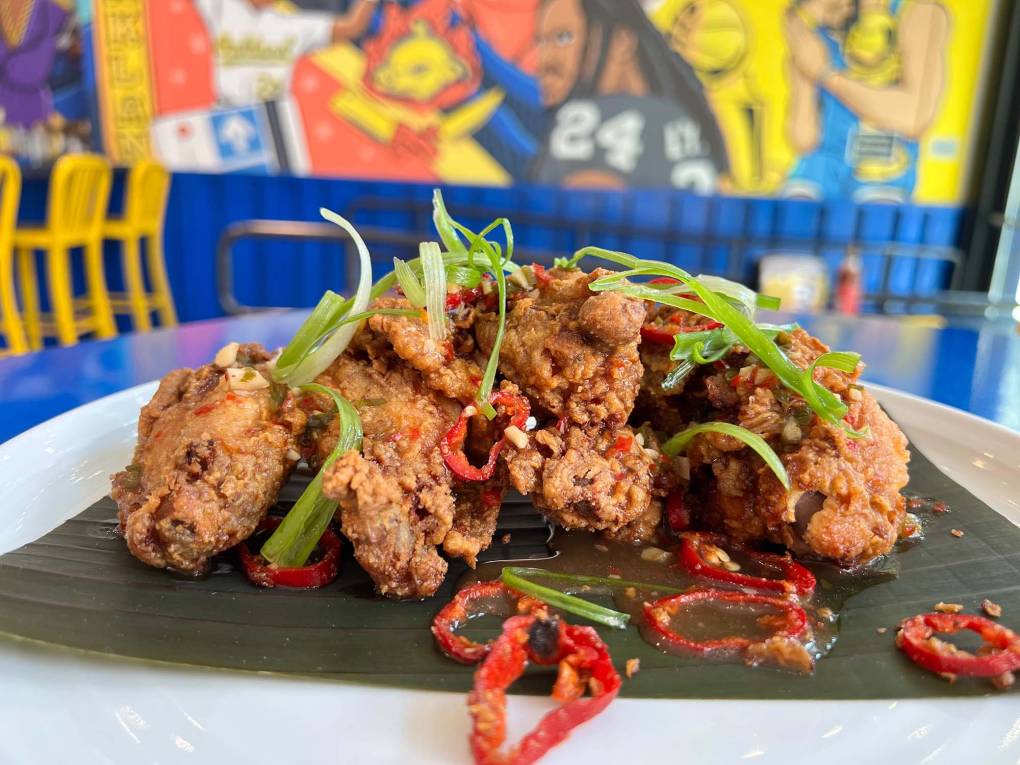
"caption": "Crispy wings tossed in sinagang seasoning. Paired with a spicy tamarind dipping sauce with green onion, cilantro, and garlic.",
"description": null,
"title": "senor sisig_sinigang wings",
"credit": "Courtesy of Señor Sisig",
"status": "inherit",
"altTag": "A plate of fried chicken wings garnished with red chilies and green onions.",
"isLoading": false,
"fetchFailed": false
},
"arts_13935477": {
"type": "attachments",
"id": "arts_13935477",
"meta": {
"index": "attachments_1716263798",
"site": "arts",
"id": "13935477",
"found": true
},
"parent": 13935408,
"imgSizes": {
"twentyfourteen-full-width": {
"file": "https://ww2.kqed.org/app/uploads/sites/2/2023/09/HKGT-part-2-web-image-1038x576.png",
"width": 1038,
"mimeType": "image/png",
"height": 576
},
"thumbnail": {
"file": "https://ww2.kqed.org/app/uploads/sites/2/2023/09/HKGT-part-2-web-image-160x90.png",
"width": 160,
"mimeType": "image/png",
"height": 90
},
"post-thumbnail": {
"file": "https://ww2.kqed.org/app/uploads/sites/2/2023/09/HKGT-part-2-web-image-672x372.png",
"width": 672,
"mimeType": "image/png",
"height": 372
},
"kqedFullSize": {
"file": "https://ww2.kqed.org/app/uploads/sites/2/2023/09/HKGT-part-2-web-image.png",
"width": 1920,
"height": 1080
},
"large": {
"file": "https://ww2.kqed.org/app/uploads/sites/2/2023/09/HKGT-part-2-web-image-1020x574.png",
"width": 1020,
"mimeType": "image/png",
"height": 574
},
"1536x1536": {
"file": "https://ww2.kqed.org/app/uploads/sites/2/2023/09/HKGT-part-2-web-image-1536x864.png",
"width": 1536,
"mimeType": "image/png",
"height": 864
},
"medium": {
"file": "https://ww2.kqed.org/app/uploads/sites/2/2023/09/HKGT-part-2-web-image-800x450.png",
"width": 800,
"mimeType": "image/png",
"height": 450
},
"medium_large": {
"file": "https://ww2.kqed.org/app/uploads/sites/2/2023/09/HKGT-part-2-web-image-768x432.png",
"width": 768,
"mimeType": "image/png",
"height": 432
}
},
"publishDate": 1695857676,
"modified": 1695917028,
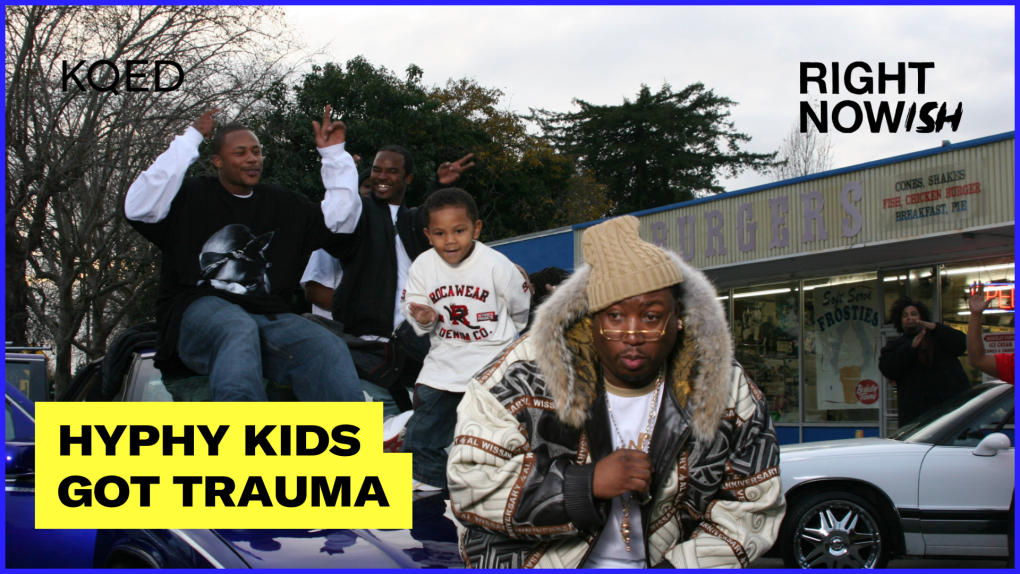
"caption": "Legendary Vallejo rapper E-40 with three dancers on a purple Buick 'scraper' during the filming of the 'Tell Me When To Go' music video in Deep East Oakland, circa 2006.",
"description": "Legendary Vallejo rapper E-40 stands in front of a purple Buick \"scraper\" as three young folks dance atop the vehicle during the filming of the video for the song, \"Tell Me When To Go\" in Deep East Oakland back in 2006.",
"title": "Legendary Vallejo rapper E-40 stands in front of a purple Buick \"scraper\" as three young folks dance atop the vehicle during the filming of the video for the song, \"Tell Me When To Go\" in Deep East Oakland back in 2006.",
"credit": "D-Ray",
"status": "inherit",
"altTag": "Legendary Vallejo rapper E-40 stands in front of a purple Buick \"scraper\" as three young folks dance atop the vehicle during the filming of the video for the song, \"Tell Me When To Go\" in Deep East Oakland back in 2006.",
"isLoading": false,
"fetchFailed": false
},
"arts_13935132": {
"type": "attachments",
"id": "arts_13935132",
"meta": {
"index": "attachments_1716263798",
"site": "arts",
"id": "13935132",
"found": true
},
"parent": 13934874,
"imgSizes": {
"twentyfourteen-full-width": {
"file": "https://ww2.kqed.org/app/uploads/sites/2/2023/09/HKGT.16x9-1038x576.jpg",
"width": 1038,
"mimeType": "image/jpeg",
"height": 576
},
"thumbnail": {
"file": "https://ww2.kqed.org/app/uploads/sites/2/2023/09/HKGT.16x9-160x90.jpg",
"width": 160,
"mimeType": "image/jpeg",
"height": 90
},
"post-thumbnail": {
"file": "https://ww2.kqed.org/app/uploads/sites/2/2023/09/HKGT.16x9-672x372.jpg",
"width": 672,
"mimeType": "image/jpeg",
"height": 372
},
"kqedFullSize": {
"file": "https://ww2.kqed.org/app/uploads/sites/2/2023/09/HKGT.16x9-scaled.jpg",
"width": 2560,
"height": 1440
},
"2048x2048": {
"file": "https://ww2.kqed.org/app/uploads/sites/2/2023/09/HKGT.16x9-2048x1152.jpg",
"width": 2048,
"mimeType": "image/jpeg",
"height": 1152
},
"large": {
"file": "https://ww2.kqed.org/app/uploads/sites/2/2023/09/HKGT.16x9-1020x574.jpg",
"width": 1020,
"mimeType": "image/jpeg",
"height": 574
},
"1536x1536": {
"file": "https://ww2.kqed.org/app/uploads/sites/2/2023/09/HKGT.16x9-1536x864.jpg",
"width": 1536,
"mimeType": "image/jpeg",
"height": 864
},
"full-width": {
"file": "https://ww2.kqed.org/app/uploads/sites/2/2023/09/HKGT.16x9-1920x1080.jpg",
"width": 1920,
"mimeType": "image/jpeg",
"height": 1080
},
"medium": {
"file": "https://ww2.kqed.org/app/uploads/sites/2/2023/09/HKGT.16x9-800x450.jpg",
"width": 800,
"mimeType": "image/jpeg",
"height": 450
},
"medium_large": {
"file": "https://ww2.kqed.org/app/uploads/sites/2/2023/09/HKGT.16x9-768x432.jpg",
"width": 768,
"mimeType": "image/jpeg",
"height": 432
}
},
"publishDate": 1695251125,
"modified": 1695251186,
"caption": null,
"description": "Hyphy Kids Got Trauma, the podcast series from Rightnowish.",
"title": "HKGT.16x9",
"credit": null,
"status": "inherit",
"altTag": "The words Rightnowish Presents Hyphy Kids Got Trauma are airbrushed on a white t-shirt over a yellow background.",
"isLoading": false,
"fetchFailed": false
},
"arts_13933652": {
"type": "attachments",
"id": "arts_13933652",
"meta": {
"index": "attachments_1716263798",
"site": "arts",
"id": "13933652",
"found": true
},
"parent": 0,
"imgSizes": {
"twentyfourteen-full-width": {
"file": "https://ww2.kqed.org/app/uploads/sites/2/2023/08/CMC.Main_.Chuy_.AK_-1038x576.jpg",
"width": 1038,
"mimeType": "image/jpeg",
"height": 576
},
"thumbnail": {
"file": "https://ww2.kqed.org/app/uploads/sites/2/2023/08/CMC.Main_.Chuy_.AK_-160x90.jpg",
"width": 160,
"mimeType": "image/jpeg",
"height": 90
},
"post-thumbnail": {
"file": "https://ww2.kqed.org/app/uploads/sites/2/2023/08/CMC.Main_.Chuy_.AK_-672x372.jpg",
"width": 672,
"mimeType": "image/jpeg",
"height": 372
},
"kqedFullSize": {
"file": "https://ww2.kqed.org/app/uploads/sites/2/2023/08/CMC.Main_.Chuy_.AK_-scaled.jpg",
"width": 2560,
"height": 1440
},
"2048x2048": {
"file": "https://ww2.kqed.org/app/uploads/sites/2/2023/08/CMC.Main_.Chuy_.AK_-2048x1152.jpg",
"width": 2048,
"mimeType": "image/jpeg",
"height": 1152
},
"large": {
"file": "https://ww2.kqed.org/app/uploads/sites/2/2023/08/CMC.Main_.Chuy_.AK_-1020x574.jpg",
"width": 1020,
"mimeType": "image/jpeg",
"height": 574
},
"1536x1536": {
"file": "https://ww2.kqed.org/app/uploads/sites/2/2023/08/CMC.Main_.Chuy_.AK_-1536x864.jpg",
"width": 1536,
"mimeType": "image/jpeg",
"height": 864
},
"full-width": {
"file": "https://ww2.kqed.org/app/uploads/sites/2/2023/08/CMC.Main_.Chuy_.AK_-1920x1080.jpg",
"width": 1920,
"mimeType": "image/jpeg",
"height": 1080
},
"medium": {
"file": "https://ww2.kqed.org/app/uploads/sites/2/2023/08/CMC.Main_.Chuy_.AK_-800x450.jpg",
"width": 800,
"mimeType": "image/jpeg",
"height": 450
},
"medium_large": {
"file": "https://ww2.kqed.org/app/uploads/sites/2/2023/08/CMC.Main_.Chuy_.AK_-768x432.jpg",
"width": 768,
"mimeType": "image/jpeg",
"height": 432
}
},
"publishDate": 1692734757,
"modified": 1692734811,
"caption": "Andy Kawanami and Chuy Gomez (left to right) hosted 'Hip Hop Friday' on the California Music Channel in the '90s. The channel became a crucial outlet for Bay Area rappers on their way to national success. ",
"description": null,
"title": "CMC.Main.Chuy.AK",
"credit": "Courtesy Andy Kawanami",
"status": "inherit",
"altTag": "An old film photo of an Asian American young man and a Mexican American young man behind the scenes in a television studio.",
"isLoading": false,
"fetchFailed": false
},
"arts_13932763": {
"type": "attachments",
"id": "arts_13932763",
"meta": {
"index": "attachments_1716263798",
"site": "arts",
"id": "13932763",
"found": true
},
"parent": 13932753,
"imgSizes": {
"twentyfourteen-full-width": {
"file": "https://ww2.kqed.org/app/uploads/sites/2/2023/08/Screen-Shot-2023-08-07-at-3.44.19-PM-1038x576.png",
"width": 1038,
"mimeType": "image/png",
"height": 576
},
"thumbnail": {
"file": "https://ww2.kqed.org/app/uploads/sites/2/2023/08/Screen-Shot-2023-08-07-at-3.44.19-PM-160x103.png",
"width": 160,
"mimeType": "image/png",
"height": 103
},
"post-thumbnail": {
"file": "https://ww2.kqed.org/app/uploads/sites/2/2023/08/Screen-Shot-2023-08-07-at-3.44.19-PM-672x372.png",
"width": 672,
"mimeType": "image/png",
"height": 372
},
"kqedFullSize": {
"file": "https://ww2.kqed.org/app/uploads/sites/2/2023/08/Screen-Shot-2023-08-07-at-3.44.19-PM.png",
"width": 1808,
"height": 1164
},
"large": {
"file": "https://ww2.kqed.org/app/uploads/sites/2/2023/08/Screen-Shot-2023-08-07-at-3.44.19-PM-1020x657.png",
"width": 1020,
"mimeType": "image/png",
"height": 657
},
"1536x1536": {
"file": "https://ww2.kqed.org/app/uploads/sites/2/2023/08/Screen-Shot-2023-08-07-at-3.44.19-PM-1536x989.png",
"width": 1536,
"mimeType": "image/png",
"height": 989
},
"medium": {
"file": "https://ww2.kqed.org/app/uploads/sites/2/2023/08/Screen-Shot-2023-08-07-at-3.44.19-PM-800x515.png",
"width": 800,
"mimeType": "image/png",
"height": 515
},
"medium_large": {
"file": "https://ww2.kqed.org/app/uploads/sites/2/2023/08/Screen-Shot-2023-08-07-at-3.44.19-PM-768x494.png",
"width": 768,
"mimeType": "image/png",
"height": 494
}
},
"publishDate": 1691448288,
"modified": 1691448498,
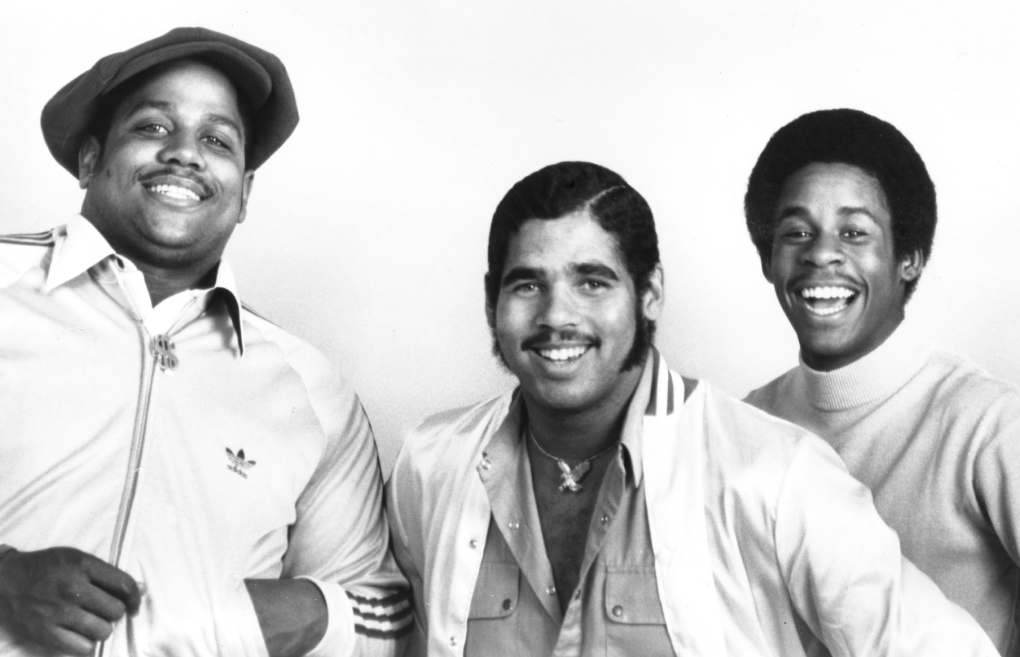
"caption": "Rap pioneers, The Sugar Hill Gang (L-R: Big Bank Hank, Wonder Mike and Master G) in all of their 1979 glory.",
"description": null,
"title": "Rap pioneers, The Sugar Hill Gang (L-R: Big Bank Hank, Wonder Mike and Master G) in all of their 1979 glory.",
"credit": "Michael Ochs Archives/ Getty Images",
"status": "inherit",
"altTag": "Three Black men stand together smiling. The first wears an Adidas jacket and a peasant hat, the second wears a sports jacket, open shirt and gold necklace, the third is wearing a sweater.",
"isLoading": false,
"fetchFailed": false
},
"arts_13930915": {
"type": "attachments",
"id": "arts_13930915",
"meta": {
"index": "attachments_1716263798",
"site": "arts",
"id": "13930915",
"found": true
},
"parent": 13930908,
"imgSizes": {
"twentyfourteen-full-width": {
"file": "https://ww2.kqed.org/app/uploads/sites/2/2023/06/GettyImages-1502130231-scaled-e1687808335341-1038x576.jpg",
"width": 1038,
"mimeType": "image/jpeg",
"height": 576
},
"thumbnail": {
"file": "https://ww2.kqed.org/app/uploads/sites/2/2023/06/GettyImages-1502130231-scaled-e1687808335341-160x118.jpg",
"width": 160,
"mimeType": "image/jpeg",
"height": 118
},
"post-thumbnail": {
"file": "https://ww2.kqed.org/app/uploads/sites/2/2023/06/GettyImages-1502130231-scaled-e1687808335341-672x372.jpg",
"width": 672,
"mimeType": "image/jpeg",
"height": 372
},
"kqedFullSize": {
"file": "https://ww2.kqed.org/app/uploads/sites/2/2023/06/GettyImages-1502130231-scaled-e1687808335341.jpg",
"width": 1920,
"height": 1415
},
"2048x2048": {
"file": "https://ww2.kqed.org/app/uploads/sites/2/2023/06/GettyImages-1502130231-2048x1508.jpg",
"width": 2048,
"mimeType": "image/jpeg",
"height": 1508
},
"large": {
"file": "https://ww2.kqed.org/app/uploads/sites/2/2023/06/GettyImages-1502130231-scaled-e1687808335341-1020x752.jpg",
"width": 1020,
"mimeType": "image/jpeg",
"height": 752
},
"1536x1536": {
"file": "https://ww2.kqed.org/app/uploads/sites/2/2023/06/GettyImages-1502130231-scaled-e1687808335341-1536x1132.jpg",
"width": 1536,
"mimeType": "image/jpeg",
"height": 1132
},
"full-width": {
"file": "https://ww2.kqed.org/app/uploads/sites/2/2023/06/GettyImages-1502130231-1920x1414.jpg",
"width": 1920,
"mimeType": "image/jpeg",
"height": 1414
},
"medium": {
"file": "https://ww2.kqed.org/app/uploads/sites/2/2023/06/GettyImages-1502130231-scaled-e1687808335341-800x590.jpg",
"width": 800,
"mimeType": "image/jpeg",
"height": 590
},
"medium_large": {
"file": "https://ww2.kqed.org/app/uploads/sites/2/2023/06/GettyImages-1502130231-scaled-e1687808335341-768x566.jpg",
"width": 768,
"mimeType": "image/jpeg",
"height": 566
}
},
"publishDate": 1687808297,
"modified": 1687808509,
"caption": "Sean Combs' son King Combs performs onstage during the BET Awards in Los Angeles, June 25, 2023.",
"description": null,
"title": "Sean Combs' son King Combs performs onstage during the BET Awards in Los Angeles, June 25, 2023.",
"credit": "Paras Griffin/Getty Images for BET",
"status": "inherit",
"altTag": "A young Black man waves onstage while smiling broadly. Behind him are five dancers clapping and smiling.",
"isLoading": false,
"fetchFailed": false
},
"arts_13928813": {
"type": "attachments",
"id": "arts_13928813",
"meta": {
"index": "attachments_1716263798",
"site": "arts",
"id": "13928813",
"found": true
},
"parent": 13928804,
"imgSizes": {
"twentyfourteen-full-width": {
"file": "https://ww2.kqed.org/app/uploads/sites/2/2023/05/hyphy_iceez_portrait_lead-1038x576.jpg",
"width": 1038,
"mimeType": "image/jpeg",
"height": 576
},
"thumbnail": {
"file": "https://ww2.kqed.org/app/uploads/sites/2/2023/05/hyphy_iceez_portrait_lead-160x100.jpg",
"width": 160,
"mimeType": "image/jpeg",
"height": 100
},
"post-thumbnail": {
"file": "https://ww2.kqed.org/app/uploads/sites/2/2023/05/hyphy_iceez_portrait_lead-672x372.jpg",
"width": 672,
"mimeType": "image/jpeg",
"height": 372
},
"kqedFullSize": {
"file": "https://ww2.kqed.org/app/uploads/sites/2/2023/05/hyphy_iceez_portrait_lead.jpg",
"width": 1920,
"height": 1200
},
"large": {
"file": "https://ww2.kqed.org/app/uploads/sites/2/2023/05/hyphy_iceez_portrait_lead-1020x638.jpg",
"width": 1020,
"mimeType": "image/jpeg",
"height": 638
},
"1536x1536": {
"file": "https://ww2.kqed.org/app/uploads/sites/2/2023/05/hyphy_iceez_portrait_lead-1536x960.jpg",
"width": 1536,
"mimeType": "image/jpeg",
"height": 960
},
"medium": {
"file": "https://ww2.kqed.org/app/uploads/sites/2/2023/05/hyphy_iceez_portrait_lead-800x500.jpg",
"width": 800,
"mimeType": "image/jpeg",
"height": 500
},
"medium_large": {
"file": "https://ww2.kqed.org/app/uploads/sites/2/2023/05/hyphy_iceez_portrait_lead-768x480.jpg",
"width": 768,
"mimeType": "image/jpeg",
"height": 480
}
},
"publishDate": 1683577351,
"modified": 1683577498,
"caption": "Jonathan Toledo, owner of Hyphy Iceez, serves cold slushies in his San Francisco neighborhood.",
"description": null,
"title": "hyphy_iceez_portrait_lead",
"credit": "Alan Chazaro",
"status": "inherit",
"altTag": "a foodmaker from San Francisco wears a Giants t-shirt and holds up a cup of his speciality beverage, Hyphy Iceez",
"isLoading": false,
"fetchFailed": false
},
"arts_13928561": {
"type": "attachments",
"id": "arts_13928561",
"meta": {
"index": "attachments_1716263798",
"site": "arts",
"id": "13928561",
"found": true
},
"parent": 13928457,
"imgSizes": {
"twentyfourteen-full-width": {
"file": "https://ww2.kqed.org/app/uploads/sites/2/2023/05/BayAreaAlbumsChatGPT_cover-1038x576.jpg",
"width": 1038,
"mimeType": "image/jpeg",
"height": 576
},
"thumbnail": {
"file": "https://ww2.kqed.org/app/uploads/sites/2/2023/05/BayAreaAlbumsChatGPT_cover-160x90.jpg",
"width": 160,
"mimeType": "image/jpeg",
"height": 90
},
"post-thumbnail": {
"file": "https://ww2.kqed.org/app/uploads/sites/2/2023/05/BayAreaAlbumsChatGPT_cover-672x372.jpg",
"width": 672,
"mimeType": "image/jpeg",
"height": 372
},
"kqedFullSize": {
"file": "https://ww2.kqed.org/app/uploads/sites/2/2023/05/BayAreaAlbumsChatGPT_cover.jpg",
"width": 1920,
"height": 1080
},
"large": {
"file": "https://ww2.kqed.org/app/uploads/sites/2/2023/05/BayAreaAlbumsChatGPT_cover-1020x574.jpg",
"width": 1020,
"mimeType": "image/jpeg",
"height": 574
},
"1536x1536": {
"file": "https://ww2.kqed.org/app/uploads/sites/2/2023/05/BayAreaAlbumsChatGPT_cover-1536x864.jpg",
"width": 1536,
"mimeType": "image/jpeg",
"height": 864
},
"medium": {
"file": "https://ww2.kqed.org/app/uploads/sites/2/2023/05/BayAreaAlbumsChatGPT_cover-800x450.jpg",
"width": 800,
"mimeType": "image/jpeg",
"height": 450
},
"medium_large": {
"file": "https://ww2.kqed.org/app/uploads/sites/2/2023/05/BayAreaAlbumsChatGPT_cover-768x432.jpg",
"width": 768,
"mimeType": "image/jpeg",
"height": 432
}
},
"publishDate": 1683059112,
"modified": 1683059751,
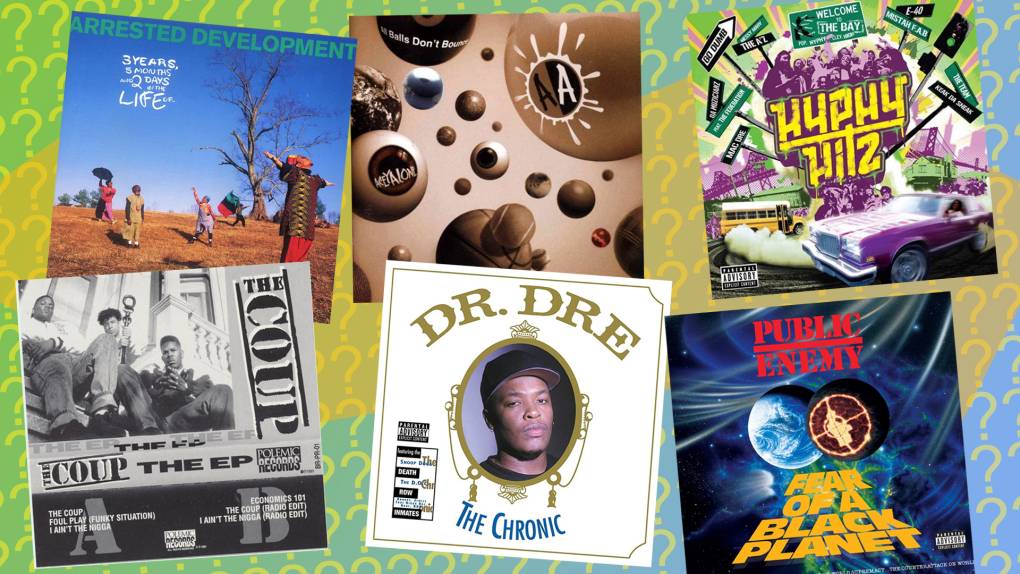
"caption": "Some of ChatGPT's responses when asked to name the best Bay Area rap albums. It would appear artificial intelligence still has a lot to learn.",
"description": null,
"title": "BayAreaAlbumsChatGPT_cover",
"credit": "Capitol Records/TVT Records/Def Jam/UMG/Interscope/Polemic Records",
"status": "inherit",
"altTag": "a collage of six albums: 3 Years, 5 Months and 2 Days in the Life Of...' by Arrested Development; 'The Chronic' by Dr. Dre, 'Fear of a Black Planet' by Arrested Development; 'Hyphy Hitz'; 'The Coup' by The Coup; and 'All Balls Don't Bounce' by Aceyalone",
"isLoading": false,
"fetchFailed": false
},
"arts_13927884": {
"type": "attachments",
"id": "arts_13927884",
"meta": {
"index": "attachments_1716263798",
"site": "arts",
"id": "13927884",
"found": true
},
"parent": 13927874,
"imgSizes": {
"twentyfourteen-full-width": {
"file": "https://ww2.kqed.org/app/uploads/sites/2/2023/04/GettyImages-1244074861-1024x576.jpg",
"width": 1024,
"mimeType": "image/jpeg",
"height": 576
},
"thumbnail": {
"file": "https://ww2.kqed.org/app/uploads/sites/2/2023/04/GettyImages-1244074861-160x107.jpg",
"width": 160,
"mimeType": "image/jpeg",
"height": 107
},
"post-thumbnail": {
"file": "https://ww2.kqed.org/app/uploads/sites/2/2023/04/GettyImages-1244074861-672x372.jpg",
"width": 672,
"mimeType": "image/jpeg",
"height": 372
},
"kqedFullSize": {
"file": "https://ww2.kqed.org/app/uploads/sites/2/2023/04/GettyImages-1244074861.jpg",
"width": 1024,
"height": 683
},
"large": {
"file": "https://ww2.kqed.org/app/uploads/sites/2/2023/04/GettyImages-1244074861-1020x680.jpg",
"width": 1020,
"mimeType": "image/jpeg",
"height": 680
},
"medium": {
"file": "https://ww2.kqed.org/app/uploads/sites/2/2023/04/GettyImages-1244074861-800x534.jpg",
"width": 800,
"mimeType": "image/jpeg",
"height": 534
},
"medium_large": {
"file": "https://ww2.kqed.org/app/uploads/sites/2/2023/04/GettyImages-1244074861-768x512.jpg",
"width": 768,
"mimeType": "image/jpeg",
"height": 512
}
},
"publishDate": 1681763383,
"modified": 1681763514,
"caption": "E-40, pictured here at the Chase Center in 2022, was ejected from Game 1 of the NBA playoffs in Sacramento in Saturday night.",
"description": null,
"title": "NBA : Los Angeles Lakers vs Golden State Warriors pregame",
"credit": "Tayfun Coskun/Anadolu Agency via Getty Images",
"status": "inherit",
"altTag": null,
"isLoading": false,
"fetchFailed": false
},
"arts_13926019": {
"type": "attachments",
"id": "arts_13926019",
"meta": {
"index": "attachments_1716263798",
"site": "arts",
"id": "13926019",
"found": true
},
"parent": 13925958,
"imgSizes": {
"twentyfourteen-full-width": {
"file": "https://ww2.kqed.org/app/uploads/sites/2/2023/03/Thats-My-Word-—-Square-1038x576.jpg",
"width": 1038,
"mimeType": "image/jpeg",
"height": 576
},
"thumbnail": {
"file": "https://ww2.kqed.org/app/uploads/sites/2/2023/03/Thats-My-Word-—-Square-160x160.jpg",
"width": 160,
"mimeType": "image/jpeg",
"height": 160
},
"post-thumbnail": {
"file": "https://ww2.kqed.org/app/uploads/sites/2/2023/03/Thats-My-Word-—-Square-672x372.jpg",
"width": 672,
"mimeType": "image/jpeg",
"height": 372
},
"kqedFullSize": {
"file": "https://ww2.kqed.org/app/uploads/sites/2/2023/03/Thats-My-Word-—-Square.jpg",
"width": 1080,
"height": 1080
},
"large": {
"file": "https://ww2.kqed.org/app/uploads/sites/2/2023/03/Thats-My-Word-—-Square-1020x1020.jpg",
"width": 1020,
"mimeType": "image/jpeg",
"height": 1020
},
"medium": {
"file": "https://ww2.kqed.org/app/uploads/sites/2/2023/03/Thats-My-Word-—-Square-800x800.jpg",
"width": 800,
"mimeType": "image/jpeg",
"height": 800
},
"medium_large": {
"file": "https://ww2.kqed.org/app/uploads/sites/2/2023/03/Thats-My-Word-—-Square-768x768.jpg",
"width": 768,
"mimeType": "image/jpeg",
"height": 768
}
},
"publishDate": 1678343366,
"modified": 1678344269,
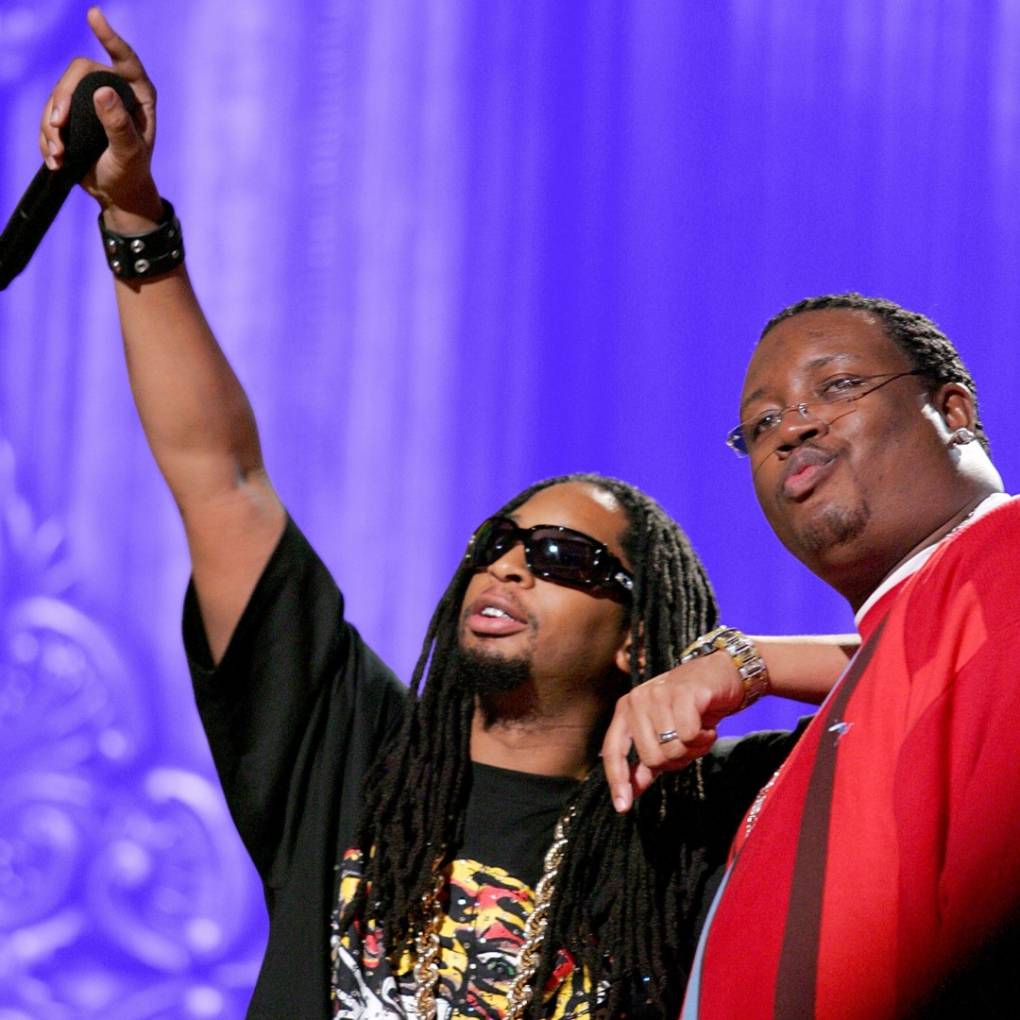
"caption": "Lil' Jon and E-40, pictured onstage together in 2006. From his home base in Atlanta, Lil Jon produced the hyphy era's two biggest nationwide hits: E-40's \"Tell Me When To Go\" and Too Short's \"Blow the Whistle\" — just one of many close ties between Southern and Bay Area hip-hop. ",
"description": null,
"title": "That's My Word — Square",
"credit": "John Shearer/WireImage for MTV.com",
"status": "inherit",
"altTag": "A short Black man in dreads holds up a microphone with one hand and rest his other rm on the shoulder of a smiling, larger man",
"isLoading": false,
"fetchFailed": false
},
"arts_13926018": {
"type": "attachments",
"id": "arts_13926018",
"meta": {
"index": "attachments_1716263798",
"site": "arts",
"id": "13926018",
"found": true
},
"parent": 13925958,
"imgSizes": {
"twentyfourteen-full-width": {
"file": "https://ww2.kqed.org/app/uploads/sites/2/2023/03/LOGO-LOWER-RIGHT-—-CUTOUT-BLACK-LOGO-1-1038x576.jpg",
"width": 1038,
"mimeType": "image/jpeg",
"height": 576
},
"thumbnail": {
"file": "https://ww2.kqed.org/app/uploads/sites/2/2023/03/LOGO-LOWER-RIGHT-—-CUTOUT-BLACK-LOGO-1-160x90.jpg",
"width": 160,
"mimeType": "image/jpeg",
"height": 90
},
"post-thumbnail": {
"file": "https://ww2.kqed.org/app/uploads/sites/2/2023/03/LOGO-LOWER-RIGHT-—-CUTOUT-BLACK-LOGO-1-672x372.jpg",
"width": 672,
"mimeType": "image/jpeg",
"height": 372
},
"kqedFullSize": {
"file": "https://ww2.kqed.org/app/uploads/sites/2/2023/03/LOGO-LOWER-RIGHT-—-CUTOUT-BLACK-LOGO-1.jpg",
"width": 1920,
"height": 1080
},
"large": {
"file": "https://ww2.kqed.org/app/uploads/sites/2/2023/03/LOGO-LOWER-RIGHT-—-CUTOUT-BLACK-LOGO-1-1020x574.jpg",
"width": 1020,
"mimeType": "image/jpeg",
"height": 574
},
"1536x1536": {
"file": "https://ww2.kqed.org/app/uploads/sites/2/2023/03/LOGO-LOWER-RIGHT-—-CUTOUT-BLACK-LOGO-1-1536x864.jpg",
"width": 1536,
"mimeType": "image/jpeg",
"height": 864
},
"medium": {
"file": "https://ww2.kqed.org/app/uploads/sites/2/2023/03/LOGO-LOWER-RIGHT-—-CUTOUT-BLACK-LOGO-1-800x450.jpg",
"width": 800,
"mimeType": "image/jpeg",
"height": 450
},
"medium_large": {
"file": "https://ww2.kqed.org/app/uploads/sites/2/2023/03/LOGO-LOWER-RIGHT-—-CUTOUT-BLACK-LOGO-1-768x432.jpg",
"width": 768,
"mimeType": "image/jpeg",
"height": 432
}
},
"publishDate": 1678343358,
"modified": 1678343752,
"caption": "Lil' Jon and E-40, pictured onstage together in 2006. From his home base in Atlanta, Lil Jon produced the hyphy era's two biggest nationwide hits: E-40's \"Tell Me When To Go\" and Too Short's \"Blow the Whistle\" — just one of many close ties between Southern and Bay Area hip-hop. ",
"description": null,
"title": "LOGO LOWER RIGHT — CUTOUT (BLACK LOGO) (1)",
"credit": "John Shearer",
"status": "inherit",
"altTag": null,
"isLoading": false,
"fetchFailed": false
},
"arts_13924086": {
"type": "attachments",
"id": "arts_13924086",
"meta": {
"index": "attachments_1716263798",
"site": "arts",
"id": "13924086",
"found": true
},
"parent": 13924042,
"imgSizes": {
"twentyfourteen-full-width": {
"file": "https://ww2.kqed.org/app/uploads/sites/2/2023/01/c29a97dd-d8ee-4fa3-aa1a-cb0d4798fc62-929x576.jpg",
"width": 929,
"mimeType": "image/jpeg",
"height": 576
},
"thumbnail": {
"file": "https://ww2.kqed.org/app/uploads/sites/2/2023/01/c29a97dd-d8ee-4fa3-aa1a-cb0d4798fc62-160x160.jpg",
"width": 160,
"mimeType": "image/jpeg",
"height": 160
},
"post-thumbnail": {
"file": "https://ww2.kqed.org/app/uploads/sites/2/2023/01/c29a97dd-d8ee-4fa3-aa1a-cb0d4798fc62-672x372.jpg",
"width": 672,
"mimeType": "image/jpeg",
"height": 372
},
"kqedFullSize": {
"file": "https://ww2.kqed.org/app/uploads/sites/2/2023/01/c29a97dd-d8ee-4fa3-aa1a-cb0d4798fc62.jpg",
"width": 929,
"height": 929
},
"medium": {
"file": "https://ww2.kqed.org/app/uploads/sites/2/2023/01/c29a97dd-d8ee-4fa3-aa1a-cb0d4798fc62-800x800.jpg",
"width": 800,
"mimeType": "image/jpeg",
"height": 800
},
"medium_large": {
"file": "https://ww2.kqed.org/app/uploads/sites/2/2023/01/c29a97dd-d8ee-4fa3-aa1a-cb0d4798fc62-768x768.jpg",
"width": 768,
"mimeType": "image/jpeg",
"height": 768
}
},
"publishDate": 1674583331,
"modified": 1674583377,
"caption": "Before his hit \"I Gott Grapes,\" Nump had a major hand in the hyphy movement, engineering tracks by The Federation, E-40, Mac Dre and Messy Marv. ",
"description": null,
"title": "c29a97dd-d8ee-4fa3-aa1a-cb0d4798fc62",
"credit": "Courtesy of Nump",
"status": "inherit",
"altTag": null,
"isLoading": false,
"fetchFailed": false
},
"arts_13915523": {
"type": "attachments",
"id": "arts_13915523",
"meta": {
"index": "attachments_1716263798",
"site": "arts",
"id": "13915523",
"found": true
},
"parent": 13915489,
"imgSizes": {
"twentyfourteen-full-width": {
"file": "https://ww2.kqed.org/app/uploads/sites/2/2022/06/CustomSmokers_Thumbnail-1038x576.png",
"width": 1038,
"mimeType": "image/png",
"height": 576
},
"thumbnail": {
"file": "https://ww2.kqed.org/app/uploads/sites/2/2022/06/CustomSmokers_Thumbnail-160x90.png",
"width": 160,
"mimeType": "image/png",
"height": 90
},
"post-thumbnail": {
"file": "https://ww2.kqed.org/app/uploads/sites/2/2022/06/CustomSmokers_Thumbnail-672x372.png",
"width": 672,
"mimeType": "image/png",
"height": 372
},
"kqedFullSize": {
"file": "https://ww2.kqed.org/app/uploads/sites/2/2022/06/CustomSmokers_Thumbnail.png",
"width": 1920,
"height": 1080
},
"large": {
"file": "https://ww2.kqed.org/app/uploads/sites/2/2022/06/CustomSmokers_Thumbnail-1020x574.png",
"width": 1020,
"mimeType": "image/png",
"height": 574
},
"1536x1536": {
"file": "https://ww2.kqed.org/app/uploads/sites/2/2022/06/CustomSmokers_Thumbnail-1536x864.png",
"width": 1536,
"mimeType": "image/png",
"height": 864
},
"medium": {
"file": "https://ww2.kqed.org/app/uploads/sites/2/2022/06/CustomSmokers_Thumbnail-800x450.png",
"width": 800,
"mimeType": "image/png",
"height": 450
},
"medium_large": {
"file": "https://ww2.kqed.org/app/uploads/sites/2/2022/06/CustomSmokers_Thumbnail-768x432.png",
"width": 768,
"mimeType": "image/png",
"height": 432
}
},
"publishDate": 1656529973,
"modified": 1656532395,
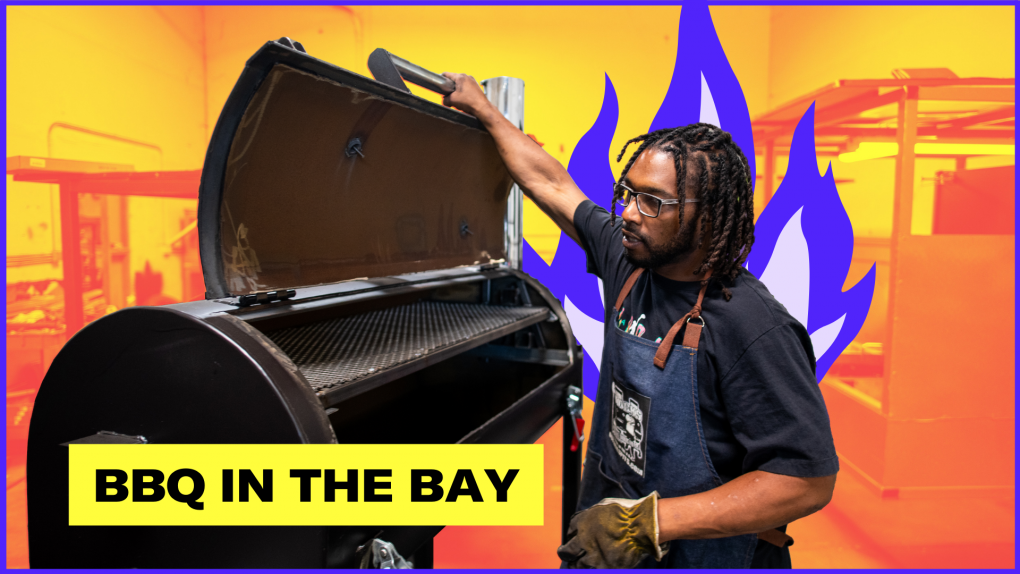
"caption": "Garnet Geoffroy, aka GStacks, has built custom smokers for celebrities like Warren G, E-40 and Marshawn Lynch.",
"description": null,
"title": "CustomSmokers_Thumbnail",
"credit": "Photo by Beth LaBerge; design by Rebecca Kao",
"status": "inherit",
"altTag": "A man in a work apron holds the lid of a barbecue smoker, as stylized blue flames shoot up behind him. Text reads, \"BBQ in the Bay.\"",
"isLoading": false,
"fetchFailed": false
}
},
"audioPlayerReducer": {
"postId": "stream_live",
"isPaused": true,
"isPlaying": false,
"pfsActive": false,
"pledgeModalIsOpen": true,
"playerDrawerIsOpen": false,
"liveAudioPlayStartedAt": 0,
"liveAudioPlayContext": ""
},
"authorsReducer": {
"byline_arts_13933590": {
"type": "authors",
"id": "byline_arts_13933590",
"meta": {
"override": true
},
"slug": "byline_arts_13933590",
"name": "D'Andre Ball",
"isLoading": false
},
"byline_arts_13932753": {
"type": "authors",
"id": "byline_arts_13932753",
"meta": {
"override": true
},
"slug": "byline_arts_13932753",
"name": "Jonathan Landrum Jr., Gary Gerard Hamilton ",
"isLoading": false
},
"byline_arts_13930908": {
"type": "authors",
"id": "byline_arts_13930908",
"meta": {
"override": true
},
"slug": "byline_arts_13930908",
"name": "Jonathan Landrum Jr.",
"isLoading": false
},
"tamarapalmer": {
"type": "authors",
"id": "5111",
"meta": {
"index": "authors_1716337520",
"id": "5111",
"found": true
},
"name": "Tamara Palmer",
"firstName": "Tamara",
"lastName": "Palmer",
"slug": "tamarapalmer",
"email": "countryfriedsoul@gmail.com",
"display_author_email": false,
"staff_mastheads": [],
"title": "KQED Contributor",
"bio": "I'm a professional DJ, freelance writer, recipe developer and independent publisher of zines about music and food. You'll find my byline in a wide range of news, tech and entertainment publications. My first book \u003ci>Country Fried Soul: Adventures in Dirty South Hip-Hop\u003c/i> was published in 2005, and a more personal West Coast anthology called \u003ci>California Love\u003c/i> is planned for 2023.",
"avatar": "https://secure.gravatar.com/avatar/c8befc278d4c9854b7bbbaa2b9b37a3acb2a834e69d071b638644f0a1739362d?s=600&d=blank&r=g",
"twitter": null,
"bluesky": null,
"facebook": null,
"instagram": null,
"linkedin": null,
"sites": [
{
"site": "arts",
"roles": [
"contributor"
]
},
{
"site": "bayareabites",
"roles": [
"subscriber"
]
}
],
"headData": {
"title": "Tamara Palmer | KQED",
"description": "KQED Contributor",
"ogImgSrc": "https://secure.gravatar.com/avatar/c8befc278d4c9854b7bbbaa2b9b37a3acb2a834e69d071b638644f0a1739362d?s=600&d=blank&r=g",
"twImgSrc": "https://secure.gravatar.com/avatar/c8befc278d4c9854b7bbbaa2b9b37a3acb2a834e69d071b638644f0a1739362d?s=600&d=blank&r=g"
},
"isLoading": false,
"link": "/author/tamarapalmer"
},
"nvoynovskaya": {
"type": "authors",
"id": "11387",
"meta": {
"index": "authors_1716337520",
"id": "11387",
"found": true
},
"name": "Nastia Voynovskaya",
"firstName": "Nastia",
"lastName": "Voynovskaya",
"slug": "nvoynovskaya",
"email": "nvoynovskaya@kqed.org",
"display_author_email": false,
"staff_mastheads": [
"arts"
],
"title": "Editor and reporter",
"bio": "Nastia Voynovskaya is a reporter, editor and host at KQED Arts & Culture. She's been covering the arts in the Bay Area for over a decade, with a focus on music, queer culture, labor issues and grassroots organizing. She has edited KQED story series such as Trans Bay: A History of San Francisco's Gender-Diverse Community, and co-created KQED's Bay Area hip-hop history project, That's My Word. Nastia's work has been recognized by the Society of Professional Journalists and San Francisco Press Club. She regularly appears on podcasts and radio programs, including NPR's All Songs Considered, and hosts live events where music, culture and conversation meet.",
"avatar": "https://secure.gravatar.com/avatar/5025ee460e5a85d69ca20ea6c6f2f80d7e17795c828f61ea3aecfcd924e9042e?s=600&d=blank&r=g",
"twitter": null,
"bluesky": null,
"facebook": null,
"instagram": "https://www.instagram.com/nananastia/",
"linkedin": null,
"sites": [
{
"site": "",
"roles": [
"editor"
]
},
{
"site": "arts",
"roles": [
"administrator"
]
},
{
"site": "news",
"roles": [
"editor"
]
},
{
"site": "pop",
"roles": [
"administrator"
]
},
{
"site": "bayareabites",
"roles": [
"editor"
]
},
{
"site": "podcasts",
"roles": [
"editor"
]
},
{
"site": "hiphop",
"roles": [
"editor"
]
}
],
"headData": {
"title": "Nastia Voynovskaya | KQED",
"description": "Editor and reporter",
"ogImgSrc": "https://secure.gravatar.com/avatar/5025ee460e5a85d69ca20ea6c6f2f80d7e17795c828f61ea3aecfcd924e9042e?s=600&d=blank&r=g",
"twImgSrc": "https://secure.gravatar.com/avatar/5025ee460e5a85d69ca20ea6c6f2f80d7e17795c828f61ea3aecfcd924e9042e?s=600&d=blank&r=g"
},
"isLoading": false,
"link": "/author/nvoynovskaya"
},
"ogpenn": {
"type": "authors",
"id": "11491",
"meta": {
"index": "authors_1716337520",
"id": "11491",
"found": true
},
"name": "Pendarvis Harshaw",
"firstName": "Pendarvis",
"lastName": "Harshaw",
"slug": "ogpenn",
"email": "ogpenn@gmail.com",
"display_author_email": false,
"staff_mastheads": [
"arts"
],
"title": "Community Engagement Reporter",
"bio": "Pendarvis Harshaw is an educator, host and writer with KQED Arts.",
"avatar": "https://secure.gravatar.com/avatar/972b77ee8e3f346ae2b00622661187fbfabd059b5693bbdc1475ea7a722fd4cd?s=600&d=blank&r=g",
"twitter": null,
"bluesky": null,
"facebook": null,
"instagram": "ogpenn",
"linkedin": null,
"sites": [
{
"site": "arts",
"roles": [
"administrator"
]
},
{
"site": "news",
"roles": [
"editor"
]
},
{
"site": "bayareabites",
"roles": [
"author"
]
},
{
"site": "hiphop",
"roles": [
"editor"
]
}
],
"headData": {
"title": "Pendarvis Harshaw | KQED",
"description": "Community Engagement Reporter",
"ogImgSrc": "https://secure.gravatar.com/avatar/972b77ee8e3f346ae2b00622661187fbfabd059b5693bbdc1475ea7a722fd4cd?s=600&d=blank&r=g",
"twImgSrc": "https://secure.gravatar.com/avatar/972b77ee8e3f346ae2b00622661187fbfabd059b5693bbdc1475ea7a722fd4cd?s=600&d=blank&r=g"
},
"isLoading": false,
"link": "/author/ogpenn"
},
"achazaro": {
"type": "authors",
"id": "11748",
"meta": {
"index": "authors_1716337520",
"id": "11748",
"found": true
},
"name": "Alan Chazaro",
"firstName": "Alan",
"lastName": "Chazaro",
"slug": "achazaro",
"email": "agchazaro@gmail.com",
"display_author_email": true,
"staff_mastheads": [],
"title": "Food Writer and Reporter",
"bio": "Alan Chazaro is the author of \u003cem>This Is Not a Frank Ocean Cover Album\u003c/em> (Black Lawrence Press, 2019), \u003cem>Piñata Theory\u003c/em> (Black Lawrence Press, 2020), and \u003cem>Notes from the Eastern Span of the Bay Bridge\u003c/em> (Ghost City Press, 2021). He is a graduate of June Jordan’s Poetry for the People program at UC Berkeley and a former Lawrence Ferlinghetti Fellow at the University of San Francisco. He writes about sports, food, art, music, education, and culture while repping the Bay on \u003ca href=\"https://twitter.com/alan_chazaro\">Twitter\u003c/a> and \u003ca href=\"https://www.instagram.com/alan_chazaro/?hl=en\">Instagram\u003c/a> at @alan_chazaro.",
"avatar": "https://secure.gravatar.com/avatar/ea8b6dd970fc5c29e7a188e7d5861df7?s=600&d=blank&r=g",
"twitter": "alan_chazaro",
"facebook": null,
"instagram": null,
"linkedin": null,
"sites": [
{
"site": "arts",
"roles": [
"contributor"
]
},
{
"site": "news",
"roles": [
"editor"
]
}
],
"headData": {
"title": "Alan Chazaro | KQED",
"description": "Food Writer and Reporter",
"ogImgSrc": "https://secure.gravatar.com/avatar/ea8b6dd970fc5c29e7a188e7d5861df7?s=600&d=blank&r=g",
"twImgSrc": "https://secure.gravatar.com/avatar/ea8b6dd970fc5c29e7a188e7d5861df7?s=600&d=blank&r=g"
},
"isLoading": false,
"link": "/author/achazaro"
}
},
"pagesReducer": {
"arts_tag_e-40": {
"type": "terms",
"id": "arts_1601",
"meta": {
"index": "terms_1716263798",
"site": "arts",
"id": "1601",
"score": 9.55587
},
"featImg": null,
"name": "E-40",
"description": null,
"taxonomy": "tag",
"headData": {
"twImgId": null,
"twTitle": null,
"ogTitle": null,
"ogImgId": null,
"twDescription": null,
"description": null,
"title": "E-40 Archives | KQED Arts",
"ogDescription": null
},
"ttid": 1613,
"slug": "e-40",
"isLoading": false,
"title": "E-40",
"pageMeta": {
"site": "arts",
"WpPageTemplate": "page-topic-editorial",
"currentPage": 2
},
"blocks": [
{
"blockName": "kqed/post-list",
"attrs": {
"layout": "cardArticle2",
"query": "posts/arts?tag=e-40",
"seeMore": false,
"paginated": true,
"page": 2
}
},
{
"blockName": "kqed/ad"
}
]
}
},
"pfsSessionReducer": {},
"postsReducer": {
"stream_live": {
"type": "live",
"id": "stream_live",
"audioUrl": "https://streams.kqed.org/kqedradio",
"title": "Live Stream",
"excerpt": "Live Stream information currently unavailable.",
"link": "/radio",
"featImg": "",
"label": {
"name": "KQED Live",
"link": "/"
}
},
"stream_kqedNewscast": {
"type": "posts",
"id": "stream_kqedNewscast",
"audioUrl": "https://www.kqed.org/.stream/anon/radio/RDnews/newscast.mp3?_=1",
"title": "KQED Newscast",
"featImg": "",
"label": {
"name": "88.5 FM",
"link": "/"
}
},
"arts_13935891": {
"type": "posts",
"id": "arts_13935891",
"meta": {
"index": "posts_1716263798",
"site": "arts",
"id": "13935891",
"score": null,
"sort": [
1697218467000
]
},
"parent": 0,
"labelTerm": {},
"blocks": [],
"publishDate": 1697218467,
"format": "standard",
"title": "Señor Sisig Is Hosting This Filipino Rapper’s ‘Very Good Food Tour’ in Oakland",
"headTitle": "Señor Sisig Is Hosting This Filipino Rapper’s ‘Very Good Food Tour’ in Oakland | KQED",
"content": "\u003cp>\u003cspan style=\"font-weight: 400\">P-P-\u003ca href=\"https://www.kqed.org/arts/tag/p-lo\">P-Lo\u003c/a>, \u003c/span>\u003cspan style=\"font-weight: 400\">time to bring the \u003c/span>\u003ci>\u003cspan style=\"font-weight: 400\">taste\u003c/span>\u003c/i>\u003cspan style=\"font-weight: 400\"> back\u003c/span>\u003cspan style=\"font-weight: 400\">. \u003c/span>\u003c/p>\n\u003cp>\u003cspan style=\"font-weight: 400\">Okay, that’s not an actual bar from a \u003c/span>\u003cspan style=\"font-weight: 400\">P-Lo\u003c/span>\u003cspan style=\"font-weight: 400\"> track. But it should be after the Filipino rapper and producer announced his own “Very Good Food Tour.”\u003c/span>\u003c/p>\n\u003cp>\u003cspan style=\"font-weight: 400\">“I’m pulling up around the country as we celebrate Filipino American History Month, and supporting small businesses,” P-Lo \u003c/span>\u003ca href=\"https://twitter.com/p_lo/status/1709035954156290326\">\u003cspan style=\"font-weight: 400\">tweeted out\u003c/span>\u003c/a>\u003cspan style=\"font-weight: 400\"> at the start of October. \u003c/span>\u003c/p>\n\u003cp>\u003cspan style=\"font-weight: 400\">With eight stops around North America — including Los Angeles, New York and Toronto — the roving series will highlight Filipino eateries in each community while providing music and merch for a family-friendly affair. Each location will also include a meet-and-greet with the Fil Am artist, who \u003c/span>recently finished touring for his fourth studio album, \u003cem>STUNNA\u003c/em>, and \u003cspan style=\"font-weight: 400\">has always shown an affinity for \u003c/span>\u003ca href=\"https://www.youtube.com/watch?v=lJYkVcpM6E0\">\u003cspan style=\"font-weight: 400\">his favorite food destinations.\u003c/span>\u003c/a>\u003c/p>\n\u003cp>\u003cspan style=\"font-weight: 400\">His latest culinary journey will begin in Southern California, where the rapper now resides. But his third stop will be \u003c/span>\u003ca href=\"https://www.instagram.com/senorsisig/?hl=en\">\u003cspan style=\"font-weight: 400\">Señor Sisig\u003c/span>\u003c/a>\u003cspan style=\"font-weight: 400\">, at the regional Filipino chain’s splashy Oakland expansion that \u003c/span>\u003ca href=\"https://www.sfgate.com/food/article/senor-sisig-opens-oakland-cantina-17902448.php\">\u003cspan style=\"font-weight: 400\">opened earlier this year\u003c/span>\u003c/a>\u003cspan style=\"font-weight: 400\">. \u003c/span>\u003c/p>\n\u003cp>[ad fullwidth]\u003c/p>\n\u003cp>\u003cspan style=\"font-weight: 400\">Señor Sisig might be the most popular Pinoy food brand in the Bay — it started out as a food truck in 2010 and was eventually \u003c/span>\u003ca href=\"https://www.youtube.com/watch?v=ErG-hLnDzSI\">\u003cspan style=\"font-weight: 400\">featured in a Mercedes-Benz commercial starring a hungry Klay Thompson.\u003c/span>\u003c/a>\u003cspan style=\"font-weight: 400\"> So it makes an ideal partner for the star-powered P-Lo, who already has a history with the business: They released a limited edition \u003c/span>\u003ca href=\"https://www.youtube.com/watch?v=oP8EmxoREUc\">\u003cspan style=\"font-weight: 400\">P-Lo ‘Rito\u003c/span>\u003c/a>\u003cspan style=\"font-weight: 400\"> (a California burrito with sweet longanisa, fried egg and habanero salsa) in 2021, and he \u003c/span>\u003ca href=\"https://www.instagram.com/p/Cr_O_ivO36E/\">\u003cspan style=\"font-weight: 400\">remixed his “Same Squad” song with a Señor Sisig theme\u003c/span>\u003c/a>\u003cspan style=\"font-weight: 400\"> this past summer.\u003c/span>\u003c/p>\n\u003cp>https://www.youtube.com/watch?v=oP8EmxoREUc\u003c/p>\n\u003cp> \u003c/p>\n\u003cp>\u003cspan style=\"font-weight: 400\">“It’s all part of what we feel brings people together in this world — food and music,” says Evan Kidera, the CEO and co-founder of Señor Sisig. “We’re all born and raised in the Bay, we rep the Bay, it’s an alignment of what we do in building our brands that people in the Bay gravitate towards. So why not put those pillars together and shine that light for others to come and enjoy?”\u003c/span>\u003c/p>\n\u003cp>\u003cspan style=\"font-weight: 400\">The menu items featured throughout P-Lo’s tour will change depending on the venue. This Señor Sisig stop will be especially worthwhile since it’s the homegrown Pinole rapper’s only Bay Area destination. Just like any worthwhile collaboration (see: \u003c/span>\u003ca href=\"https://www.kqed.org/search?q=e-40&site=all\">\u003cspan style=\"font-weight: 400\">E-40\u003c/span>\u003c/a>\u003cspan style=\"font-weight: 400\"> and Alex Retodo’s \u003c/span>\u003ca href=\"https://www.instagram.com/thelumpiacompany/?hl=en\">\u003cspan style=\"font-weight: 400\">The Lumpia Company\u003c/span>\u003c/a>\u003cspan style=\"font-weight: 400\">, which teamed up with Señor Sisig earlier this year to serve an Oakland-exclusive pork sisig lumpia), P-Lo will be adding his own sauce to Sisig’s recipe: sinigang wings with a spicy twist. \u003c/span>\u003c/p>\n\u003cfigure id=\"attachment_13863559\" class=\"wp-caption alignnone\" style=\"max-width: 800px\">\u003cimg loading=\"lazy\" decoding=\"async\" class=\"size-medium wp-image-13863559\" src=\"https://ww2.kqed.org/app/uploads/sites/2/2019/08/MG_6288-800x533.jpg\" alt=\"P-Lo at Outside Lands music festival in San Francisco, Aug. 9, 2019.\" width=\"800\" height=\"533\" srcset=\"https://cdn.kqed.org/wp-content/uploads/sites/2/2019/08/MG_6288.jpg 800w, https://cdn.kqed.org/wp-content/uploads/sites/2/2019/08/MG_6288-160x107.jpg 160w, https://cdn.kqed.org/wp-content/uploads/sites/2/2019/08/MG_6288-768x512.jpg 768w\" sizes=\"(max-width: 800px) 100vw, 800px\">\u003cfigcaption class=\"wp-caption-text\">P-Lo at Outside Lands music festival in San Francisco, Aug. 9, 2019. \u003ccite>(Estefany Gonzalez )\u003c/cite>\u003c/figcaption>\u003c/figure>\n\u003cp>\u003cspan style=\"font-weight: 400\">The event will also include a special cocktail and the premiere of a pre-recorded “\u003c/span>\u003ca href=\"https://www.kqed.org/arts/tag/tiny-desk-concert\">\u003cspan style=\"font-weight: 400\">Tiny Desk\u003c/span>\u003c/a>\u003cspan style=\"font-weight: 400\"> style” video of P-Lo performing his hit songs in-store.\u003c/span>\u003c/p>\n\u003cp>\u003cspan style=\"font-weight: 400\">P-Lo’s timing couldn’t be better. His “Very Good Food Tour” is part of a larger tsunami wave of \u003ca href=\"https://www.kqed.org/arts/tag/filipino-food\">Filipino American foodmakers\u003c/a> who have dominated the national food circuit with an array of \u003ca href=\"https://www.kqed.org/arts/13929263/ube-choco-taco-macs-by-icky-filipino-union-city\">ube-infused treats\u003c/a> and \u003ca href=\"https://www.youtube.com/shorts/ylmwBgb8_8U?app=desktop\">adobo-drenched dishes\u003c/a> lately.\u003c/span>\u003c/p>\n\u003cp>\u003cspan style=\"font-weight: 400\">[aside postID='arts_13929263,arts_13932574,arts_13933283']“It’s pretty obvious that there’s a Filipino food influence everywhere now,” Kidera says. “When we first opened in 2010, there really wasn’t much else besides traditional, family-owned Filipino spots that were serving pinuneg\u003c/span> \u003cspan style=\"font-weight: 400\">[blood sausage]. I love those spots religiously, but you couldn’t just go out and get anything like Señor Sisig and other Filipino foods for younger generations and non-Filipinos. Thai, Japanese, Chinese — they’ve all had food movements and hit their popularity. But Filipino food wasn’t really one of those, and now we’re growing to get to that point.”\u003c/span>\u003c/p>\n\u003cp>\u003cspan style=\"font-weight: 400\">It seems they’ve officially made it now. To be sure, whether you’re attending this particular function for Sisig’s eats or P-Lo’s beats, the Filipino food will be smacking and the Bay Area music will be slapping.\u003c/span>\u003c/p>\n\u003cp>\u003cimg loading=\"lazy\" decoding=\"async\" class=\"alignnone size-medium wp-image-12127869\" src=\"https://ww2.kqed.org/app/uploads/sites/2/2016/09/Q.Logo_.Break_-800x78.jpg\" alt=\"\" width=\"800\" height=\"78\" srcset=\"https://cdn.kqed.org/wp-content/uploads/sites/2/2016/09/Q.Logo_.Break_.jpg 800w, https://cdn.kqed.org/wp-content/uploads/sites/2/2016/09/Q.Logo_.Break_-400x39.jpg 400w, https://cdn.kqed.org/wp-content/uploads/sites/2/2016/09/Q.Logo_.Break_-768x75.jpg 768w\" sizes=\"(max-width: 800px) 100vw, 800px\">\u003c/p>\n\u003cp>\u003c/p>\n\u003cp>\u003ci>\u003cspan style=\"font-weight: 400\">\u003ca href=\"https://www.instagram.com/p_lo/?hl=en\">P-Lo’\u003c/a>s “Very Good Food Tour” will have its Bay Area stop at Señor Sisig (330 17th St., Oakland) on Sat., Oct. 21 from 4 to 7 p.m. The event is free to attend with \u003c/span>\u003c/i>\u003ca href=\"https://www.eventbrite.com/e/p-lo-presents-the-very-good-food-tour-oakland-tickets-727733880627\">\u003ci>\u003cspan style=\"font-weight: 400\">online RSVP\u003c/span>\u003c/i>\u003c/a>\u003ci>\u003cspan style=\"font-weight: 400\">.\u003c/span>\u003c/i>\u003c/p>\n\n",
"stats": {
"hasVideo": true,
"hasChartOrMap": false,
"hasAudio": false,
"hasPolis": false,
"wordCount": 777,
"hasGoogleForm": false,
"hasGallery": false,
"hasHearkenModule": false,
"iframeSrcs": [],
"paragraphCount": 16
},
"modified": 1705003237,
"excerpt": "P-Lo’s Bay Area food event will feature music, cocktails and sinigang chicken wings.",
"headData": {
"twImgId": "",
"twTitle": "Señor Sisig Is Hosting This Filipino Rapper’s ‘Very Good Food Tour’ in Oakland",
"socialTitle": "Señor Sisig Is Hosting P-Lo's Filipino Food Tour in Oakland %%page%% %%sep%% KQED",
"ogTitle": "Señor Sisig Is Hosting This Filipino Rapper’s ‘Very Good Food Tour’ in Oakland",
"ogImgId": "",
"twDescription": "",
"description": "P-Lo’s Bay Area food event will feature music, cocktails and sinigang chicken wings.",
"title": "Señor Sisig Is Hosting P-Lo's Filipino Food Tour in Oakland | KQED",
"ogDescription": "",
"schema": {
"@context": "https://schema.org",
"@type": "Article",
"headline": "Señor Sisig Is Hosting This Filipino Rapper’s ‘Very Good Food Tour’ in Oakland",
"datePublished": "2023-10-13T10:34:27-07:00",
"dateModified": "2024-01-11T12:00:37-08:00",
"image": "https://cdn.kqed.org/wp-content/uploads/2020/02/KQED-OG-Image@1x.png"
}
},
"guestAuthors": [],
"slug": "p-lo-senor-sisig-filipino-food-tour-oakland",
"status": "publish",
"sourceUrl": "https://www.kqed.org/food",
"excludeFromSiteSearch": "Include",
"sticky": false,
"source": "Food",
"articleAge": "0",
"path": "/arts/13935891/p-lo-senor-sisig-filipino-food-tour-oakland",
"audioTrackLength": null,
"parsedContent": [
{
"type": "contentString",
"content": "\u003cdiv class=\"post-body\">\u003cp>\u003cp>\u003cspan style=\"font-weight: 400\">P-P-\u003ca href=\"https://www.kqed.org/arts/tag/p-lo\">P-Lo\u003c/a>, \u003c/span>\u003cspan style=\"font-weight: 400\">time to bring the \u003c/span>\u003ci>\u003cspan style=\"font-weight: 400\">taste\u003c/span>\u003c/i>\u003cspan style=\"font-weight: 400\"> back\u003c/span>\u003cspan style=\"font-weight: 400\">. \u003c/span>\u003c/p>\n\u003cp>\u003cspan style=\"font-weight: 400\">Okay, that’s not an actual bar from a \u003c/span>\u003cspan style=\"font-weight: 400\">P-Lo\u003c/span>\u003cspan style=\"font-weight: 400\"> track. But it should be after the Filipino rapper and producer announced his own “Very Good Food Tour.”\u003c/span>\u003c/p>\n\u003cp>\u003cspan style=\"font-weight: 400\">“I’m pulling up around the country as we celebrate Filipino American History Month, and supporting small businesses,” P-Lo \u003c/span>\u003ca href=\"https://twitter.com/p_lo/status/1709035954156290326\">\u003cspan style=\"font-weight: 400\">tweeted out\u003c/span>\u003c/a>\u003cspan style=\"font-weight: 400\"> at the start of October. \u003c/span>\u003c/p>\n\u003cp>\u003cspan style=\"font-weight: 400\">With eight stops around North America — including Los Angeles, New York and Toronto — the roving series will highlight Filipino eateries in each community while providing music and merch for a family-friendly affair. Each location will also include a meet-and-greet with the Fil Am artist, who \u003c/span>recently finished touring for his fourth studio album, \u003cem>STUNNA\u003c/em>, and \u003cspan style=\"font-weight: 400\">has always shown an affinity for \u003c/span>\u003ca href=\"https://www.youtube.com/watch?v=lJYkVcpM6E0\">\u003cspan style=\"font-weight: 400\">his favorite food destinations.\u003c/span>\u003c/a>\u003c/p>\n\u003cp>\u003cspan style=\"font-weight: 400\">His latest culinary journey will begin in Southern California, where the rapper now resides. But his third stop will be \u003c/span>\u003ca href=\"https://www.instagram.com/senorsisig/?hl=en\">\u003cspan style=\"font-weight: 400\">Señor Sisig\u003c/span>\u003c/a>\u003cspan style=\"font-weight: 400\">, at the regional Filipino chain’s splashy Oakland expansion that \u003c/span>\u003ca href=\"https://www.sfgate.com/food/article/senor-sisig-opens-oakland-cantina-17902448.php\">\u003cspan style=\"font-weight: 400\">opened earlier this year\u003c/span>\u003c/a>\u003cspan style=\"font-weight: 400\">. \u003c/span>\u003c/p>\n\u003cp>\u003c/p>\u003c/div>",
"attributes": {
"named": {},
"numeric": []
}
},
{
"type": "component",
"content": "",
"name": "ad",
"attributes": {
"named": {
"label": "fullwidth"
},
"numeric": [
"fullwidth"
]
}
},
{
"type": "contentString",
"content": "\u003cdiv class=\"post-body\">\u003cp>\u003c/p>\n\u003cp>\u003cspan style=\"font-weight: 400\">Señor Sisig might be the most popular Pinoy food brand in the Bay — it started out as a food truck in 2010 and was eventually \u003c/span>\u003ca href=\"https://www.youtube.com/watch?v=ErG-hLnDzSI\">\u003cspan style=\"font-weight: 400\">featured in a Mercedes-Benz commercial starring a hungry Klay Thompson.\u003c/span>\u003c/a>\u003cspan style=\"font-weight: 400\"> So it makes an ideal partner for the star-powered P-Lo, who already has a history with the business: They released a limited edition \u003c/span>\u003ca href=\"https://www.youtube.com/watch?v=oP8EmxoREUc\">\u003cspan style=\"font-weight: 400\">P-Lo ‘Rito\u003c/span>\u003c/a>\u003cspan style=\"font-weight: 400\"> (a California burrito with sweet longanisa, fried egg and habanero salsa) in 2021, and he \u003c/span>\u003ca href=\"https://www.instagram.com/p/Cr_O_ivO36E/\">\u003cspan style=\"font-weight: 400\">remixed his “Same Squad” song with a Señor Sisig theme\u003c/span>\u003c/a>\u003cspan style=\"font-weight: 400\"> this past summer.\u003c/span>\u003c/p>\u003c/p>\u003cp>\u003cspan class='utils-parseShortcode-shortcodes-__youtubeShortcode__embedYoutube'>\n \u003cspan class='utils-parseShortcode-shortcodes-__youtubeShortcode__embedYoutubeInside'>\n \u003ciframe\n loading='lazy'\n class='utils-parseShortcode-shortcodes-__youtubeShortcode__youtubePlayer'\n type='text/html'\n src='//www.youtube.com/embed/oP8EmxoREUc'\n title='//www.youtube.com/embed/oP8EmxoREUc'\n allowfullscreen='true'\n style='border:0;'>\u003c/iframe>\n \u003c/span>\n \u003c/span>\u003c/p>\u003cp>\u003cp> \u003c/p>\n\u003cp>\u003cspan style=\"font-weight: 400\">“It’s all part of what we feel brings people together in this world — food and music,” says Evan Kidera, the CEO and co-founder of Señor Sisig. “We’re all born and raised in the Bay, we rep the Bay, it’s an alignment of what we do in building our brands that people in the Bay gravitate towards. So why not put those pillars together and shine that light for others to come and enjoy?”\u003c/span>\u003c/p>\n\u003cp>\u003cspan style=\"font-weight: 400\">The menu items featured throughout P-Lo’s tour will change depending on the venue. This Señor Sisig stop will be especially worthwhile since it’s the homegrown Pinole rapper’s only Bay Area destination. Just like any worthwhile collaboration (see: \u003c/span>\u003ca href=\"https://www.kqed.org/search?q=e-40&site=all\">\u003cspan style=\"font-weight: 400\">E-40\u003c/span>\u003c/a>\u003cspan style=\"font-weight: 400\"> and Alex Retodo’s \u003c/span>\u003ca href=\"https://www.instagram.com/thelumpiacompany/?hl=en\">\u003cspan style=\"font-weight: 400\">The Lumpia Company\u003c/span>\u003c/a>\u003cspan style=\"font-weight: 400\">, which teamed up with Señor Sisig earlier this year to serve an Oakland-exclusive pork sisig lumpia), P-Lo will be adding his own sauce to Sisig’s recipe: sinigang wings with a spicy twist. \u003c/span>\u003c/p>\n\u003cfigure id=\"attachment_13863559\" class=\"wp-caption alignnone\" style=\"max-width: 800px\">\u003cimg loading=\"lazy\" decoding=\"async\" class=\"size-medium wp-image-13863559\" src=\"https://ww2.kqed.org/app/uploads/sites/2/2019/08/MG_6288-800x533.jpg\" alt=\"P-Lo at Outside Lands music festival in San Francisco, Aug. 9, 2019.\" width=\"800\" height=\"533\" srcset=\"https://cdn.kqed.org/wp-content/uploads/sites/2/2019/08/MG_6288.jpg 800w, https://cdn.kqed.org/wp-content/uploads/sites/2/2019/08/MG_6288-160x107.jpg 160w, https://cdn.kqed.org/wp-content/uploads/sites/2/2019/08/MG_6288-768x512.jpg 768w\" sizes=\"(max-width: 800px) 100vw, 800px\">\u003cfigcaption class=\"wp-caption-text\">P-Lo at Outside Lands music festival in San Francisco, Aug. 9, 2019. \u003ccite>(Estefany Gonzalez )\u003c/cite>\u003c/figcaption>\u003c/figure>\n\u003cp>\u003cspan style=\"font-weight: 400\">The event will also include a special cocktail and the premiere of a pre-recorded “\u003c/span>\u003ca href=\"https://www.kqed.org/arts/tag/tiny-desk-concert\">\u003cspan style=\"font-weight: 400\">Tiny Desk\u003c/span>\u003c/a>\u003cspan style=\"font-weight: 400\"> style” video of P-Lo performing his hit songs in-store.\u003c/span>\u003c/p>\n\u003cp>\u003cspan style=\"font-weight: 400\">P-Lo’s timing couldn’t be better. His “Very Good Food Tour” is part of a larger tsunami wave of \u003ca href=\"https://www.kqed.org/arts/tag/filipino-food\">Filipino American foodmakers\u003c/a> who have dominated the national food circuit with an array of \u003ca href=\"https://www.kqed.org/arts/13929263/ube-choco-taco-macs-by-icky-filipino-union-city\">ube-infused treats\u003c/a> and \u003ca href=\"https://www.youtube.com/shorts/ylmwBgb8_8U?app=desktop\">adobo-drenched dishes\u003c/a> lately.\u003c/span>\u003c/p>\n\u003cp>\u003cspan style=\"font-weight: 400\">\u003c/p>\u003c/div>",
"attributes": {
"named": {},
"numeric": []
}
},
{
"type": "component",
"content": "",
"name": "aside",
"attributes": {
"named": {
"postid": "arts_13929263,arts_13932574,arts_13933283",
"label": ""
},
"numeric": []
}
},
{
"type": "contentString",
"content": "\u003cdiv class=\"post-body\">\u003cp>“It’s pretty obvious that there’s a Filipino food influence everywhere now,” Kidera says. “When we first opened in 2010, there really wasn’t much else besides traditional, family-owned Filipino spots that were serving pinuneg\u003c/span> \u003cspan style=\"font-weight: 400\">[blood sausage]. I love those spots religiously, but you couldn’t just go out and get anything like Señor Sisig and other Filipino foods for younger generations and non-Filipinos. Thai, Japanese, Chinese — they’ve all had food movements and hit their popularity. But Filipino food wasn’t really one of those, and now we’re growing to get to that point.”\u003c/span>\u003c/p>\n\u003cp>\u003cspan style=\"font-weight: 400\">It seems they’ve officially made it now. To be sure, whether you’re attending this particular function for Sisig’s eats or P-Lo’s beats, the Filipino food will be smacking and the Bay Area music will be slapping.\u003c/span>\u003c/p>\n\u003cp>\u003cimg loading=\"lazy\" decoding=\"async\" class=\"alignnone size-medium wp-image-12127869\" src=\"https://ww2.kqed.org/app/uploads/sites/2/2016/09/Q.Logo_.Break_-800x78.jpg\" alt=\"\" width=\"800\" height=\"78\" srcset=\"https://cdn.kqed.org/wp-content/uploads/sites/2/2016/09/Q.Logo_.Break_.jpg 800w, https://cdn.kqed.org/wp-content/uploads/sites/2/2016/09/Q.Logo_.Break_-400x39.jpg 400w, https://cdn.kqed.org/wp-content/uploads/sites/2/2016/09/Q.Logo_.Break_-768x75.jpg 768w\" sizes=\"(max-width: 800px) 100vw, 800px\">\u003c/p>\n\u003cp>\u003c/p>\n\u003cp>\u003ci>\u003cspan style=\"font-weight: 400\">\u003ca href=\"https://www.instagram.com/p_lo/?hl=en\">P-Lo’\u003c/a>s “Very Good Food Tour” will have its Bay Area stop at Señor Sisig (330 17th St., Oakland) on Sat., Oct. 21 from 4 to 7 p.m. The event is free to attend with \u003c/span>\u003c/i>\u003ca href=\"https://www.eventbrite.com/e/p-lo-presents-the-very-good-food-tour-oakland-tickets-727733880627\">\u003ci>\u003cspan style=\"font-weight: 400\">online RSVP\u003c/span>\u003c/i>\u003c/a>\u003ci>\u003cspan style=\"font-weight: 400\">.\u003c/span>\u003c/i>\u003c/p>\n\n\u003c/div>\u003c/p>",
"attributes": {
"named": {},
"numeric": []
}
}
],
"link": "/arts/13935891/p-lo-senor-sisig-filipino-food-tour-oakland",
"authors": [
"11748"
],
"programs": [
"arts_140"
],
"categories": [
"arts_1",
"arts_12276"
],
"tags": [
"arts_1601",
"arts_2855",
"arts_14183",
"arts_1297",
"arts_16375",
"arts_1803",
"arts_585"
],
"featImg": "arts_13936382",
"label": "source_arts_13935891"
},
"arts_13935408": {
"type": "posts",
"id": "arts_13935408",
"meta": {
"index": "posts_1716263798",
"site": "arts",
"id": "13935408",
"score": null,
"sort": [
1695895252000
]
},
"guestAuthors": [],
"slug": "hyphy-kids-got-trauma-pt-2-we-dance-different",
"title": "Hyphy Kids Got Trauma Pt. 2, ‘We Dance Different’",
"publishDate": 1695895252,
"format": "audio",
"headTitle": "Hyphy Kids Got Trauma Pt. 2, ‘We Dance Different’ | KQED",
"labelTerm": {
"term": 8720,
"site": "arts"
},
"content": "\u003cp>\u003ca href=\"#episode-transcript\">\u003cspan style=\"font-weight: 400\">\u003ci>View the full episode transcript.\u003c/i>\u003c/span>\u003c/a>\u003c/p>\n\u003cp>\u003cspan style=\"font-weight: 400\">In the spring of 2006, I filmed and posted a video to Youth Radio’s YouTube page titled “\u003ca href=\"https://www.youtube.com/watch?v=zdst63FWSCs\">Stomper Go Dumb\u003c/a>.”\u003c/span>\u003c/p>\n\u003cp>\u003cspan style=\"font-weight: 400\">The video shows the Oakland A’s mascot, a big plush elephant in a baseball jersey and hat, dancing to a song titled “Happy To Be Here,” off of E-40’s \u003c/span>\u003ci>\u003cspan style=\"font-weight: 400\">My Ghetto Report Card\u003c/span>\u003c/i>\u003cspan style=\"font-weight: 400\"> album. \u003c/span>\u003c/p>\n\u003cp>\u003cspan style=\"font-weight: 400\">E-40 delivers lyrics that speak of surviving hard times and losing loved ones along the way. As the music plays, Stomper glides through the parking lot, dancing with the people, one with the letters “RIP” airbrushed on their shirt. A few folks hug each other and smile. This video clip, only a minute in length, is a window into a world where dance and jubilation meet mourning and sadness.\u003c/span>\u003c/p>\n\u003cp>\u003ciframe loading=\"lazy\" title='Youth Radio: Stomper \"Go Dumb\"' width=\"640\" height=\"480\" src=\"https://www.youtube.com/embed/zdst63FWSCs?feature=oembed\" frameborder=\"0\" allow=\"accelerometer; autoplay; clipboard-write; encrypted-media; gyroscope; picture-in-picture; web-share\" referrerpolicy=\"strict-origin-when-cross-origin\" allowfullscreen>\u003c/iframe>\u003c/p>\n\u003cp> \u003c/p>\n\u003cp>\u003cspan style=\"font-weight: 400\">Before the “hyphy movement,” and even prior to having its own name, the style of dance now commonly known as turfin’ or\u003c/span>\u003ca href=\"https://www.kqed.org/arts/13932887/turf-dancing-oakland-street-dance\"> \u003cspan style=\"font-weight: 400\">turf dancing\u003c/span>\u003c/a>\u003cspan style=\"font-weight: 400\"> provided an outlet for young folks in Oakland. They could party to their favorite music, have fun by physically telling stories, and express themselves while\u003c/span>\u003ci>\u003cspan style=\"font-weight: 400\"> taking up room on the floor\u003c/span>\u003c/i>\u003cspan style=\"font-weight: 400\">.\u003c/span>\u003c/p>\n\u003cp>\u003cspan style=\"font-weight: 400\">Through appearances in big-time music videos and participation in dance battles at places like Deep East Oakland’s Youth Uprising Center, young folks not only got to show their moves — they were also able to honor their deceased loved ones.\u003c/span>\u003c/p>\n\u003cp>\u003cspan style=\"font-weight: 400\">In this episode, we talk to \u003ca href=\"https://www.instagram.com/turfinentertainment/?igshid=MzRlODBiNWFlZA%3D%3D\" target=\"_blank\" rel=\"noopener\">Jeriel Bey\u003c/a>, the person credited with coining the term “turfin’,” \u003ca href=\"https://www.instagram.com/jackyj510/\" target=\"_blank\" rel=\"noopener\">Jacky Johnson\u003c/a>, a founding Youth Uprising staff member, and \u003ca href=\"https://www.instagram.com/zeusdadunka/\" target=\"_blank\" rel=\"noopener\">Jesus El, \u003c/a>my longtime friend and a well-known turf dancer. \u003c/span>\u003c/p>\n\u003cfigure id=\"attachment_13935479\" class=\"wp-caption aligncenter\" style=\"max-width: 800px\">\u003cimg loading=\"lazy\" decoding=\"async\" class=\"size-medium wp-image-13935479\" src=\"https://ww2.kqed.org/app/uploads/sites/2/2023/09/GettyImages-1408863565-scaled-1-800x623.jpg\" alt=\"Jeriel Bey teaches Turf Dancing classes at Berkeley High School in 2007.\" width=\"800\" height=\"623\" srcset=\"https://cdn.kqed.org/wp-content/uploads/sites/2/2023/09/GettyImages-1408863565-scaled-1-800x623.jpg 800w, https://cdn.kqed.org/wp-content/uploads/sites/2/2023/09/GettyImages-1408863565-scaled-1-1020x795.jpg 1020w, https://cdn.kqed.org/wp-content/uploads/sites/2/2023/09/GettyImages-1408863565-scaled-1-160x125.jpg 160w, https://cdn.kqed.org/wp-content/uploads/sites/2/2023/09/GettyImages-1408863565-scaled-1-768x599.jpg 768w, https://cdn.kqed.org/wp-content/uploads/sites/2/2023/09/GettyImages-1408863565-scaled-1-1536x1197.jpg 1536w, https://cdn.kqed.org/wp-content/uploads/sites/2/2023/09/GettyImages-1408863565-scaled-1-2048x1596.jpg 2048w, https://cdn.kqed.org/wp-content/uploads/sites/2/2023/09/GettyImages-1408863565-scaled-1-1920x1496.jpg 1920w\" sizes=\"(max-width: 800px) 100vw, 800px\">\u003cfigcaption class=\"wp-caption-text\">Jeriel Bey teaches turf dancing classes at Berkeley High School in 2007. \u003ccite>(Carlos Avila Gonzalez/San Francisco Chronicle/Getty Images )\u003c/cite>\u003c/figcaption>\u003c/figure>\n\u003cp>\u003c!-- iframe plugin v.4.3 wordpress.org/plugins/iframe/ -->\u003cbr>\n\u003ciframe loading=\"lazy\" frameborder=\"0\" height=\"200\" scrolling=\"no\" src=\"https://playlist.megaphone.fm/?e=KQINC4775019711&light=true\" width=\"100%\" class=\"iframe-class\">\u003c/iframe>\u003c/p>\n\u003ch2 id=\"episode-transcript\">Episode Transcript\u003c/h2>\n\u003cp>\u003cb>Pendarvis Harshaw, Host: \u003c/b>\u003cspan style=\"font-weight: 400\">Heads up, this podcast contains explicit language.\u003c/span>\u003c/p>\n\u003cp>\u003cspan style=\"font-weight: 400\">In the spring of 2006, there was this video posted on Youtube titled “Stomper Go Dumb.” \u003c/span>\u003c/p>\n\u003cp>\u003cspan style=\"font-weight: 400\">[chatter, shouting, and cheering from the Stomper Go Dumb video]\u003c/span>\u003c/p>\n\u003cp>\u003cspan style=\"font-weight: 400\">The clip is less than a minute long, but it shows something that’s really important. It’s shot in a parking lot. It’s Stomper, the Oakland A’s mascot– a big gray plush elephant in white pants and a forest green and gold baseball jersey. And he’s out there giggin’ to an E-40 song. Ears flapping, feet sliding, arms waving, Stomper is in full party mode, and so are the folks around him. \u003c/span>\u003c/p>\n\u003cp>\u003cspan style=\"font-weight: 400\">Behind the camera is me. In the footage, Stomper gets close to the camera, daps me up, then he proceeds to glide across the pavement, pausing momentarily to act as if he’s ghostriding the whip, and then he thizz dances. Another guy in an airbrushed white-t stands next to him, giggin’ as well. \u003c/span>\u003c/p>\n\u003cp>\u003cspan style=\"font-weight: 400\">The guy’s shirt has the letters RIP boldly written next to an illegible name. And they’re all dancing to E-40’s “Happy to Be Here.” \u003c/span>\u003c/p>\n\u003cp>\u003ci>\u003cspan style=\"font-weight: 400\">[Happy to be Here by E-40 plays]\u003c/span>\u003c/i>\u003c/p>\n\u003cp>\u003cb>Pendarvis Harshaw: \u003c/b>\u003cspan style=\"font-weight: 400\">The track is off of 40’s \u003c/span>\u003ci>\u003cspan style=\"font-weight: 400\">My Ghetto Report Card \u003c/span>\u003c/i>\u003cspan style=\"font-weight: 400\">album, one of the few slower tracks off of his landmark project, which is chock full of high energy party anthems. \u003c/span>\u003c/p>\n\u003cp>\u003cspan style=\"font-weight: 400\">But in that moment, as we’re posted in front of E-40’s album release party at Tower Records, it’s this song that plays as the A’s mascot is showing off his gigs. \u003c/span>\u003c/p>\n\u003cp>\u003cspan style=\"font-weight: 400\">People are dancing and laughing, embracing each other and celebrating, despite having the letters RIP and their friends’ names written across their chest. \u003c/span>\u003c/p>\n\u003cp>\u003ci>\u003cspan style=\"font-weight: 400\">[Happy to be Here by E-40 fades in]\u003c/span>\u003c/i>\u003c/p>\n\u003cp>\u003ci>\u003cspan style=\"font-weight: 400\">“Oooh; it’s gloomy out here, dark days ahead\u003c/span>\u003c/i>\u003c/p>\n\u003cp>\u003ci>\u003cspan style=\"font-weight: 400\">God got my back but the devil he want my head”\u003c/span>\u003c/i>\u003c/p>\n\u003cp> \u003c/p>\n\u003cp>\u003cb>Pendarvis Harshaw: \u003c/b>\u003cspan style=\"font-weight: 400\">After I shot the video, I posted it to the YouTube page for Youth Radio, now known as YR Media. I was a baby reporter working with them at the time.\u003c/span>\u003c/p>\n\u003cp> \u003c/p>\n\u003cp>\u003cspan style=\"font-weight: 400\">And with this video racking up half a million views, and hella people using this footage as GIFs on social media platforms, it was clear that I’d documented something significant. \u003c/span>\u003c/p>\n\u003cp> \u003c/p>\n\u003cp>\u003cspan style=\"font-weight: 400\">Deeper than a dancing elephant, it was a window into the culture. I’m Pendarvis Harshaw, and this is Hyphy Kids Got Trauma. \u003c/span>\u003c/p>\n\u003cp> \u003c/p>\n\u003cp>\u003ci>\u003cspan style=\"font-weight: 400\">[Music]\u003c/span>\u003c/i>\u003c/p>\n\u003cp> \u003c/p>\n\u003cp>\u003cb>Pendarvis Harshaw: \u003c/b>\u003cspan style=\"font-weight: 400\">In that video of Stomper dancing to an E-40 song, the mascot does a few more dance moves, and then gives an extended embrace to a brotha with cornrows in a black leather jacket. The person inside the Stomper mascot outfit is saying what’s up to my right hand man, Jesus El, Zeus as we call him.\u003c/span>\u003c/p>\n\u003cp> \u003c/p>\n\u003cp>\u003cspan style=\"font-weight: 400\">He’s just a couple inches taller than me, born exactly three weeks before me, and we’re a lot alike. We’re socialites; neither of us can stay away from a party. Oakland proud, we both love the town and constantly get caught up in our own thoughts about how to save it – and the world, for that matter.\u003c/span>\u003c/p>\n\u003cp> \u003c/p>\n\u003cp>\u003cspan style=\"font-weight: 400\">While I chose to sit down and write for a living, Zeus chose to fly. A trained gymnast, for over a decade he worked for the NBA, majority of that time was with the Golden State Warriors as an acro-dunker. \u003c/span>\u003c/p>\n\u003cp> \u003c/p>\n\u003cp>\u003ci>\u003cspan style=\"font-weight: 400\">[hip-hop music echoes inside of stadium with a cheering crowd]\u003c/span>\u003c/i>\u003c/p>\n\u003cp> \u003c/p>\n\u003cp>\u003cb>Pendarvis Harshaw: \u003c/b>\u003cspan style=\"font-weight: 400\">That means that at halftime of a game he’d come out with his crew – the Warriors’ Team Thunder dunk team – and run across the court, bounce off a trampoline, elevate higher than the rim, catch the ball mid-air, wink at the camera, and then dunk the ball before safely returning to earth. Outside of that, he’s also a well-known dancer from West Oakland. \u003c/span>\u003c/p>\n\u003cp> \u003c/p>\n\u003cp>\u003ci>\u003cspan style=\"font-weight: 400\">[Music]\u003c/span>\u003c/i>\u003c/p>\n\u003cp> \u003c/p>\n\u003cp>\u003cb>Pendarvis Harshaw:\u003c/b>\u003cspan style=\"font-weight: 400\"> I got this photo in my text message today. What’s going on here?\u003c/span>\u003c/p>\n\u003cp>\u003cb>Jesus El, guest: \u003c/b>\u003cspan style=\"font-weight: 400\">Oh, man, that’s crazy. That’s a throwback. So this photo is of me dancing at Youth Uprising in a dance battle. Uh, and I look super young and skinny.\u003c/span>\u003c/p>\n\u003cp>\u003cb>Pendarvis Harshaw: \u003c/b>\u003cspan style=\"font-weight: 400\">We grew up in different parts of the Town, and met during a 7th grade summer program– cracking jokes on the back of the bus. And after twenty-plus years, we haven’t stopped cracking jokes since. \u003c/span>\u003c/p>\n\u003cp>\u003cb>Pendarvis Harshaw: \u003c/b>\u003cspan style=\"font-weight: 400\">The jordans – are those the fake Jordans we got? \u003c/span>\u003c/p>\n\u003cp>\u003cb>Jesus El: \u003c/b>\u003cspan style=\"font-weight: 400\">I think those was the fake Jordans.\u003c/span>\u003c/p>\n\u003cp>\u003cb>Pendarvis Harshaw: \u003c/b>\u003cspan style=\"font-weight: 400\">The fake Jordans.\u003c/span>\u003c/p>\n\u003cp>\u003cb>Jesus El:\u003c/b>\u003cspan style=\"font-weight: 400\"> Yours was fakers than mine though.\u003c/span>\u003c/p>\n\u003cp>\u003cb>Pendarvis Harshaw: \u003c/b>\u003cspan style=\"font-weight: 400\">Faker? How they– if they fake, they fake. \u003c/span>\u003c/p>\n\u003cp>\u003cb>Jesus El: \u003c/b>\u003cspan style=\"font-weight: 400\">If they fake they fake, but yours… your Jordan had buttcheeks. Remember that?\u003c/span>\u003c/p>\n\u003cp>\u003cb>Pendarvis Harshaw: \u003c/b>\u003cspan style=\"font-weight: 400\">He was facing the wrong way.\u003c/span>\u003c/p>\n\u003cp>\u003cb>Jesus El: \u003c/b>\u003cspan style=\"font-weight: 400\">He was facing the wrong way and he had the buttcheeks showing. Mine, I could at least, you know, well I was getting away with it.\u003c/span>\u003c/p>\n\u003cp>\u003cb>Pendarvis Harshaw: \u003c/b>\u003cspan style=\"font-weight: 400\">You just gotta pull the jeans down.\u003c/span>\u003c/p>\n\u003cp>\u003cb>Jesus El: \u003c/b>\u003cspan style=\"font-weight: 400\">I had to pull the jeans– yeah, I had to wear the big jeans over him.\u003c/span>\u003c/p>\n\u003cp>\u003ci>\u003cspan style=\"font-weight: 400\">[Music]\u003c/span>\u003c/i>\u003cb>\u003ci> \u003c/i>\u003c/b>\u003c/p>\n\u003cp> \u003c/p>\n\u003cp>\u003cb>Pendarvis Harshaw: \u003c/b>\u003cspan style=\"font-weight: 400\">Back in ‘06 we were broke community college students taking classes at Laney in Oakland. \u003c/span>\u003c/p>\n\u003cp> \u003c/p>\n\u003cp>\u003cspan style=\"font-weight: 400\">Zeus had dreams of becoming an NBA mascot, and was simultaneously developing his own acro-dunking team. I was focused on doing journalism, and had just got accepted to Howard University. \u003c/span>\u003c/p>\n\u003cp> \u003c/p>\n\u003cp>\u003cspan style=\"font-weight: 400\">So while I was spending the year getting ready for college on the east coast and getting my journalism chops up, Zeus was building his own legacy, both in the Town and around the globe. \u003c/span>\u003c/p>\n\u003cp>\u003cb>Jesus El: \u003c/b>\u003cspan style=\"font-weight: 400\">I’ve been to China ten times, been to Italy, um, Rome, Japan, Dubai, Abu Dhabi, Mexico…\u003c/span>\u003c/p>\n\u003cp>\u003cb>Pendarvis Harshaw: \u003c/b>\u003cspan style=\"font-weight: 400\">He adds England, Budapest, and all of North America. He’s performed for Ripley’s Believe It or Not, holds a couple Guinness World Records, and in 2005 he performed in front of some of the biggest names in the business at the NBA All Star game in Denver, Colorado.\u003c/span>\u003c/p>\n\u003cp>\u003cb>Jesus El: \u003c/b>\u003cspan style=\"font-weight: 400\">I met Destiny’s Child. They like, room was right next door to ours. Jay-Z, Chris Tucker, we met so many different people…\u003c/span>\u003c/p>\n\u003cp>\u003cb>Pendarvis Harshaw: \u003c/b>\u003cspan style=\"font-weight: 400\">Zeus got his start after being mentored by the late Sadiki Fuller, the guy who wore the Thunder mascot costume for the Golden State Warriors. And that’s how Zeus got to know other mascots– like Stomper. \u003c/span>\u003c/p>\n\u003cp>\u003cspan style=\"font-weight: 400\">But Zeus’ main inspiration came from superheroes in movies and television shows. In his own way, Zeus was a superhero when he was on the court. And just like any superhero, he’d be treated differently when he took the cape, or um, uniform off. He would leave the old Warriors arena in East Oakland and he’d transition, like Superman to Clark Kent. \u003c/span>\u003c/p>\n\u003cp>\u003cb>Jesus El:\u003c/b>\u003cspan style=\"font-weight: 400\"> I had times where I’m having the day of my life. Like, I just did a new dunk, I’m the first person to do it. I do it in front of people. I make it. I’m feeling like on cloud nine…\u003c/span>\u003c/p>\n\u003cp>\u003ci>\u003cspan style=\"font-weight: 400\">[Music]\u003c/span>\u003c/i>\u003c/p>\n\u003cp>\u003cb>Jesus El:\u003c/b>\u003cspan style=\"font-weight: 400\"> …and then I get back, you know everybody leaving the BART, and uh people don’t have to notice me—I’m not tripping off of that. But then, you know, people clutching they purse or, you know, like, just trying to, like, stand away from me, you know what I mean. I’m like, bruh, you was just clapping for me.\u003c/span>\u003c/p>\n\u003cp>\u003cb>Pendarvis Harshaw:\u003c/b>\u003cspan style=\"font-weight: 400\"> Yeah\u003c/span>\u003c/p>\n\u003cp>\u003cb>Jesus El:\u003c/b>\u003cspan style=\"font-weight: 400\"> Just like that, you was just clapping for me, and now I’m just another nigga that may bring harm your way and that’s trauma within itself.\u003c/span>\u003c/p>\n\u003cp>\u003cb>Pendarvis Harshaw: \u003c/b>\u003cspan style=\"font-weight: 400\">There’s trauma in that duality of physically showing joy, and being celebrated and then getting hit with the weight of reality. \u003c/span>\u003c/p>\n\u003cp>\u003cspan style=\"font-weight: 400\">In order to escape it, Zeus would literally leave. He found solace in seeing the world. But despite the freedom he felt traveling back then, Zeus knew he had to keep his stories close to the chest because of how smirkish people can be. \u003c/span>\u003c/p>\n\u003cp>\u003cb>Jesus El: \u003c/b>\u003cspan style=\"font-weight: 400\">I remember just traveling like, I mean, soon as, aw man, soon as I touch that airplane: Oakland is in Oakland. I’m going global, I’m out. Right?\u003c/span> \u003cspan style=\"font-weight: 400\">And then when I come home, I have to pretend like I’m not that person.\u003c/span>\u003cb> \u003c/b>\u003c/p>\n\u003cp>\u003cb>Pendarvis Harshaw: \u003c/b>\u003cspan style=\"font-weight: 400\">You gotta dumb it down? \u003c/span>\u003c/p>\n\u003cp>\u003cb>Jesus El: \u003c/b>\u003cspan style=\"font-weight: 400\">I gotta dumb it down all the time. Because, one, people… people who speak too highly of themselves are typically the ones who end up shot first, right? \u003c/span>\u003c/p>\n\u003cp>\u003cspan style=\"font-weight: 400\">They typically the ones that people target. It could be jealousy. It could be hate. It could be all kind of stuff. But people who… sometimes you got to just stay under the radar to survive. That’s how we survived this long.\u003c/span>\u003c/p>\n\u003cp>\u003cb>Pendarvis Harshaw:\u003c/b>\u003cspan style=\"font-weight: 400\"> As confining as that might seem, it was kind of the code, still is. The Town is a place where you gotta stay low even as you come up. \u003c/span>\u003c/p>\n\u003cp> \u003c/p>\n\u003cp>\u003cspan style=\"font-weight: 400\">But on the contrary, Zeus was getting his limelight on the hoop courts. And outside of that, he was cutting up on the dancefloor– that’s where he really escaped, specifically, through the art of turf dancing.\u003c/span>\u003c/p>\n\u003cp>\u003cb>Jesus El:\u003c/b>\u003cspan style=\"font-weight: 400\"> Turf Dancing is an acronym called Taking Up Room on the Floor that was coined by Jeriel Bey. \u003c/span>\u003c/p>\n\u003cp>\u003cspan style=\"font-weight: 400\">So turf dancing, it’s a style of dance that derives from Oakland. And it’s storytelling and it’s certain moves that you do, but it’s storytelling. It’s waving, gliding, all of that but it’s a certain swag that comes with it.\u003c/span>\u003c/p>\n\u003cp>\u003cspan style=\"font-weight: 400\">But before it was even called turfing, it was called hitting it or touching it or fucking wit it. Like, ‘fuck wit it bruh’, ya know what im saying? \u003c/span>\u003c/p>\n\u003cp>\u003ci>\u003cspan style=\"font-weight: 400\">[Music]\u003c/span>\u003c/i>\u003c/p>\n\u003cp>\u003cb>Pendarvis Harshaw: \u003c/b>\u003cspan style=\"font-weight: 400\">Jeriel Bey, raised between Oakland and LA, is a marketing minded brother who had turf dancing, lightweight, land on his doorstep.\u003c/span>\u003c/p>\n\u003cp>\u003cb>Jeriel Bey, guest: \u003c/b>\u003cspan style=\"font-weight: 400\">They know me as the godfather of turf dancing. I coined the phrase, a lot of people are like ‘you didn’t coin the phrase!’ But you know coining is something you use before anybody else use it. So I used it in both, in print and on my fliers, you know, my events, you know, just… I knew long ago just from having a lot of internships that, you know, you brand yourself, you know how to brand myself. So I definitely am known for that.\u003c/span>\u003c/p>\n\u003cp>\u003cb>Pendarvis Harshaw: \u003c/b>\u003cspan style=\"font-weight: 400\">Jeriel was a party promoter, who was living in West Oakland and that’s where, two young dudes from the neighborhood, Demtrius Zeigler and Cory Johnson AKA Scooby, would hang around his house.\u003c/span>\u003cb> \u003c/b>\u003c/p>\n\u003cp>\u003cb>Jeriel Bey:\u003c/b>\u003cspan style=\"font-weight: 400\"> Those are the two first kids I met and then those two kids brought every other kid around me. You know, these kids, like, 14, 15, with sawed off shotguns in their backpacks. Like, bad but good kids, they just needed some focus. And the only thing they all knew that they all knew how to do was dance. Guns, and money, drugs and all, they all was coming in front of the house, dancing with me. And so my thing was like, okay, I got to give back and give ’em something to do.\u003c/span>\u003c/p>\n\u003cp>\u003cb>Pendarvis Harshaw: \u003c/b>\u003cspan style=\"font-weight: 400\">The dance sessions brought about dope moves, clean gigs and hyped reactions. The problem was: the dance they were doing didn’t really have a name. There were notable moves: the drop, the airwalk, the old school Brookfield. But the overall dance style was kinda just a part of Oakland culture. That’s how we moved. \u003c/span>\u003c/p>\n\u003cp>\u003cspan style=\"font-weight: 400\">And, at the same time, the terms folks were using to describe the dance style weren’t exactly marketable to the venues Jeriel was looking to work with. \u003c/span>\u003c/p>\n\u003cp>\u003cb>Jeriel Bey: \u003c/b>\u003cspan style=\"font-weight: 400\">I was like man, I can’t sell this as ‘fucking with it’ or ‘giggin’. \u003c/span>\u003c/p>\n\u003cp>\u003cb>Pendarvis Harshaw: \u003c/b>\u003cspan style=\"font-weight: 400\">So Jeriel started brainstorming, and during a conversation with one of his cousins, it all clicked. \u003c/span>\u003c/p>\n\u003cp>\u003cb>Jeriel Bey: \u003c/b>\u003cspan style=\"font-weight: 400\">Man, I got these youngstas in front of the house, you remember Demetrius and Scooby? They be ‘fuckin wit it’ and shit, you know, they all be dance differently: the East Oakland, the West Oakland, you know? They all dance different. Like I said, like different turfs and they all dance different…Man, how does turf dancing sound? He was like, ‘Oh, yeah, that’s it. That’s, that’s it right there!’ \u003c/span>\u003c/p>\n\u003cp>\u003cspan style=\"font-weight: 400\">And so that’s what it was. Everywhere the little homies was going, ‘What ya’ll doing?’ We turf dancing, we turf dancing. And that’s how it stuck. Even when I did community events in the City, I made sure they put it on the fliers, we turf dancing. We’re not “hyphy dancers,” hyphy was kind of like the energy, the spirit, the movement. But, you know, turfing is how we was able to separate ourselves from the energy, you know, we was turf dancing. We wasn’t hyphy dancing. \u003c/span>\u003c/p>\n\u003cp>\u003cb>Pendarvis Harshaw: \u003c/b>\u003cspan style=\"font-weight: 400\">Turf dancing – a mixture of boogaloo, poplock, pantomime, and being player while moving on beat – was something different than just going 18 dummy like some might imagine when we’re talking “hyphy” dancing. I mean, that was a part of it, but it was deeper than just shaking yo’ dreads. \u003c/span>\u003c/p>\n\u003cp>\u003ci>\u003cspan style=\"font-weight: 400\">[Echo of E-40 saying “Shake them dreads.”]\u003c/span>\u003c/i>\u003c/p>\n\u003cp>\u003ci>\u003cspan style=\"font-weight: 400\">[Music]\u003c/span>\u003c/i>\u003c/p>\n\u003cp>\u003cb>Pendarvis Harshaw:\u003c/b>\u003cspan style=\"font-weight: 400\"> It was a world of Bay Area storytelling through dance, complete with signature moves from certain neighborhoods. Hence the name “turf” dancing. \u003c/span>\u003c/p>\n\u003cp>\u003cspan style=\"font-weight: 400\">And people would dance everywhere, at the bus stop, the house party, The candy shop – which was this fake-teenager-club-function thing that didn’t serve alcohol but was somehow still full of faded teenagers. \u003c/span>\u003c/p>\n\u003cp>\u003cspan style=\"font-weight: 400\">We hit it at the sideshow, on a car, in a car. In the school hallway, acting as if you were a car. And, at your local community center, specifically this one called Youth Uprising. \u003c/span>\u003c/p>\n\u003cp>\u003cspan style=\"font-weight: 400\">When Youth Uprising opened in 2005, it was this sleek looking youth center located on 87th and MacArthur in East Oakland. \u003c/span>\u003c/p>\n\u003cp>\u003ci>\u003cspan style=\"font-weight: 400\">[Music]\u003c/span>\u003c/i>\u003c/p>\n\u003cp>\u003cb>Pendarvis Harshaw: \u003c/b>\u003cspan style=\"font-weight: 400\">A huge-freshly painted state of the art building with bright colors that stood in contrast to the surrounding apartment buildings and the adjacent school – Castlemont High School– an institution that had been under-resourced for years, and it showed. \u003c/span>\u003c/p>\n\u003cp>\u003cspan style=\"font-weight: 400\">Inside of Youth Uprising, the building was well-decorated with artwork and photos. They offered healthy meals to teenagers who came from the surrounding community, as well as employment and educational resources. \u003c/span>\u003c/p>\n\u003cp>\u003cspan style=\"font-weight: 400\">I’d go up there and kick it in the music studios or attend discussions about the state of the community. And I’d also hit the dance battles they threw– turf dance battles. Here’s founding Youth Uprising staff member Jacky Johnson. \u003c/span>\u003c/p>\n\u003cp>\u003cspan style=\"font-weight: 400\">[Music]\u003c/span>\u003c/p>\n\u003cp>\u003cb>Jacky Johnson, guest:\u003c/b>\u003cspan style=\"font-weight: 400\"> We stopped publicizing them after a while. We would just like announce the day of we were gonna do it because they would just get so like crazy. Like, our little amphitheater would just be packed. And we would see, like, young people running down the hill across MacArthur from, um, up the hill just run cutting through like, backyards to run over to the center.\u003c/span>\u003c/p>\n\u003cp>\u003cb>Pendarvis Harshaw: \u003c/b>\u003cspan style=\"font-weight: 400\">Jacky is a longtime community advocate who works at the intersection of social justice and entertainment. \u003c/span>\u003c/p>\n\u003cp>\u003cspan style=\"font-weight: 400\">Back in the day, she got her start as a young adult on the staff of Youth Uprising. One of her tasks was to organize and promote the turf dance battle events. And through that, she saw how important dancing was to the culture. \u003c/span>\u003c/p>\n\u003cp>\u003cb>Jacky Johnson:\u003c/b>\u003cspan style=\"font-weight: 400\"> The crowd fueled the dancers. The dancers fueled the crowd. Like it was just this perfect mixture of just a showing of what, um, Oakland, of what the Bay Area’s energy is about. And I just think of that time, I always reflect on, you can’t, you know, I, I hope that young people or, you know, other generations, they’ll have their own moments like that, but that, to me, that just feels like a moment that couldn’t… couldn’t be duplicated.\u003c/span>\u003c/p>\n\u003cp>\u003cb>Pendarvis Harshaw: \u003c/b>\u003cspan style=\"font-weight: 400\">The dance battles would be roughly once a month, and they’d garner all kinds of attention. Makes sense, we didn’t have much else to do. \u003c/span>\u003c/p>\n\u003cp>\u003cspan style=\"font-weight: 400\">A lot of this culture was born out of a void. There weren’t many places in Oakland where folks could congregate for large scale-hip-hop events, and it had been that way. Because of previous conflicts and altercations at shows, hip-hop concerts were constantly under threat of being banned or over-policed in Oakland. \u003c/span>\u003c/p>\n\u003cp>\u003cspan style=\"font-weight: 400\">A lot of artists and promoters would turn to the Bay Area suburbs and central valley to do hip-hop events. But Youth Uprising was one of the venues in Oakland working to connect young fans to the local stars. \u003c/span>\u003c/p>\n\u003cp>\u003cb>Jacky Johnson:\u003c/b>\u003cspan style=\"font-weight: 400\"> A lot of artists would stop through and perform, and I think they loved being able to connect with the young people and be a source of inspiration. And then the young people were excited because they never knew who was gonna stop by and what was gonna happen next.\u003c/span>\u003c/p>\n\u003cp>\u003ci>\u003cspan style=\"font-weight: 400\">[Music]\u003c/span>\u003c/i>\u003c/p>\n\u003cp>\u003cb>Pendarvis Harshaw: \u003c/b>\u003cspan style=\"font-weight: 400\">Yeah, that was me, one of the young folks juiced to be at the center. \u003c/span>\u003c/p>\n\u003cp>\u003cspan style=\"font-weight: 400\">I initially started by catching the bus up there after hearing about it from friends. But when I got my car, this plum colored Chrysler Sebring with a functional sunroof and dysfunctional sound system, I was there. Well, until the transmission died, then I was back on the bus. But either way, I was fasho pulling up. \u003c/span>\u003c/p>\n\u003cp>\u003cspan style=\"font-weight: 400\">And I’d bounce out with the same camcorder I filmed Stomper going dumb with, show love to the security guards, and then, as a young journalist trying to get on, I’d find my way to interviewing folks like E-40, Mistah FAB, Vidal White, Too $hort, The Husalah, The Jacka and later, Oakland Mayor Ron Dellums. I have a few photos from back then, not much video. \u003c/span>\u003c/p>\n\u003cp>\u003cspan style=\"font-weight: 400\">When I look back at the few photos I have of myself from back then? Man, I was in it! \u003c/span>\u003c/p>\n\u003cp>\u003cspan style=\"font-weight: 400\">Specifically this one photo of me sitting in the audience of a dance battle, wearing an oversized t-shirt, baggy jeans, and those knock off Jordans that Zeus roasted me about, while holding on to that camcorder. \u003c/span>\u003c/p>\n\u003cp>\u003cspan style=\"font-weight: 400\">Yeah, I was in it. \u003c/span>\u003c/p>\n\u003cp>\u003cspan style=\"font-weight: 400\">I was one of the many young folks who ascribed to a culture that was having its moment in the sun, despite the ever-present dark clouds. \u003c/span>\u003c/p>\n\u003cp>\u003cspan style=\"font-weight: 400\">Back in the day, Jeriel Bey taught classes at Youth Uprising. In addition to that, he choreographed dances for music videos and performances. He also threw dance events–including battles between cities. \u003c/span>\u003c/p>\n\u003cp>\u003cspan style=\"font-weight: 400\">Right before one event in Los Angeles, Demetrius Zigler, who used to hang out in front of Jeriel’s house, was killed. In response, Jeriel and his dance team, the Architeckz, danced in the battle in Demetrius’ honor. \u003c/span>\u003c/p>\n\u003cp>\u003ci>\u003cspan style=\"font-weight: 400\">[Music]\u003c/span>\u003c/i>\u003c/p>\n\u003cp>\u003cb>Jeriel Bey:\u003c/b>\u003cspan style=\"font-weight: 400\"> I remember us all having this sweater, his picture, like, you know, on the hoodies, which is synonymous with losing someone on the street. So we had him on our hoodies. We drove down to L.A.\u003c/span>\u003c/p>\n\u003cp>\u003cb>Pendarvis Harshaw: \u003c/b>\u003cspan style=\"font-weight: 400\">Jeriel and his team won the battle, but they did so while mourning their friend. Full of mixed emotions, they made the drive back to Northern California.\u003c/span>\u003c/p>\n\u003cp>\u003cb>Jeriel Bey:\u003c/b>\u003cspan style=\"font-weight: 400\"> I’m tired, everybody is sleep in the van. I get a call, I think, from Jacky Johnson. She’s like, ‘Yeah, you know, E-40 heard about your guy being killed, and um and they want to put you on this video called, Tell Me When to Go.’\u003c/span>\u003c/p>\n\u003cp>\u003ci>\u003cspan style=\"font-weight: 400\">[Record scratch]\u003c/span>\u003c/i>\u003c/p>\n\u003cp>\u003cb>Jeriel Bey: \u003c/b>\u003cspan style=\"font-weight: 400\">I said, the song I’d been hearing on the Radio? She goes ‘Yeah. They’re shooting in West Oakland right now.’ I’m like, damn, I live in West Oakland like we’re all by the train station. What? That’s three blocks away from me.\u003c/span>\u003c/p>\n\u003cp>\u003ci>\u003cspan style=\"font-weight: 400\">[Music] \u003c/span>\u003c/i>\u003c/p>\n\u003cp>\u003cb>Jeriel Bey:\u003c/b>\u003cspan style=\"font-weight: 400\"> Cool. I wake up everybody, I’m like a man we finna go shoot a video. ‘What video?’ Tell Me When to Go. ‘What?!’ We smash to West Oakland, we pull up to the house, we take a little hoe baths and shit, wash our faces and shit.\u003c/span>\u003c/p>\n\u003cp>\u003cb>Pendarvis Harshaw: \u003c/b>\u003cspan style=\"font-weight: 400\">They get to the set, and 40, Lil Jon and the production team are moving through scenes. The iconic opening of the video, with a circle of folks going dumb on the ground shaking their dreads? That’s not them. That’s another dance crew. \u003c/span>\u003c/p>\n\u003cp>\u003cspan style=\"font-weight: 400\">After rushing to the set, rehearsing an impromptu routine and getting ready for their light, Jeriel and the Architeckz almost get skipped over. \u003c/span>\u003c/p>\n\u003cp>\u003cb>Jeriel Bey: \u003c/b>\u003cspan style=\"font-weight: 400\">And they was like ‘We gon’ give you one shot, let me see what y’all got.’ And then the rest is history. \u003c/span>\u003c/p>\n\u003cp>\u003cb>Pendarvis Harshaw: \u003c/b>\u003cspan style=\"font-weight: 400\">The black and white footage from the video shows the group forming a semicircle, with the opening facing the camera. They dance aggressively, hittin’ signature turf dance moves as well as shaking their dreads. The majority of them are wearing the hoodies dedicated to Demetrius. Dancing in his honor, they left an impression on the filmmakers. \u003c/span>\u003c/p>\n\u003cp>\u003cb>Jeriel Bey:\u003c/b>\u003cspan style=\"font-weight: 400\"> We shot like three more times after that. And before the video came out, it was, ‘Oh, good job, Architects,’ oh, E-40, people loved us, ‘Oh, ‘Demetrius, rest in peace, Demetrius, aww community community,’ but as soon as that muthafucka hit MTV, it was like, ‘Man them niggas ain’t really from Oakland tho.’ It’s all the hate and then the bullshit came.\u003c/span>\u003c/p>\n\u003cp>\u003cb>Pendarvis Harshaw: \u003c/b>\u003cspan style=\"font-weight: 400\">People were congratulating them on the video set, but were critical once the video came out. Jeriel says that other artists, dancers and people from the Bay Area hip-hop community made comments about the fact that Jeriel is originally from LA, or that the Architeckz weren’t that tight. Jeriel was shocked.\u003c/span>\u003c/p>\n\u003cp>\u003cb>Jeriel Bey: \u003c/b>\u003cspan style=\"font-weight: 400\">That’s when I realized, like, yo, people can love you on the way up, but the envy is a muthafucka. Envy will get you killed out here when people feel like they deserve more than you and I experienced all that shit.\u003c/span>\u003c/p>\n\u003cp>\u003cb>Pendarvis Harshaw: \u003c/b>\u003cspan style=\"font-weight: 400\">Jeriel says people were envious of the Architeckz success. \u003c/span>\u003c/p>\n\u003cp>\u003cspan style=\"font-weight: 400\">And, really it was misguided anger – a byproduct of the lack of resources. If there were more limelight, everyone could shine. \u003c/span>\u003c/p>\n\u003cp>\u003ci>\u003cspan style=\"font-weight: 400\">[Music]\u003c/span>\u003c/i>\u003c/p>\n\u003cp>\u003cb>Pendarvis Harshaw: \u003c/b>\u003cspan style=\"font-weight: 400\">But that video being on MTV, and the media attention that was focused on the hoods of the Bay Area during the Hyphy Movement came on the heels of years of media neglect. So folks were hungry, vying for an opening. \u003c/span>\u003c/p>\n\u003cp>\u003cspan style=\"font-weight: 400\">Some artists were over-promoting this hyphy thing. A few big media platforms, clothing lines, club promoters, even community centers were selling it.\u003c/span>\u003c/p>\n\u003cp>\u003cspan style=\"font-weight: 400\">Here’s Zeus.\u003c/span>\u003c/p>\n\u003cp>\u003cb>Jesus El:\u003c/b>\u003cspan style=\"font-weight: 400\"> Man, to be honest with you, I don’t think Youth Uprising would have been that impactful if it wasn’t for the dance culture, because a lot of people were showing up for the dance culture and staying for the resources, you know what I mean?\u003c/span> \u003cspan style=\"font-weight: 400\"> \u003c/span>\u003c/p>\n\u003cp>\u003cb>Pendarvis Harshaw: \u003c/b>\u003cspan style=\"font-weight: 400\">Jacky saw it differently, and has the same sentiments as Zeus. After the dance battles, how do you connect folks with counseling, healthcare and other resources? \u003c/span>\u003c/p>\n\u003cp>\u003cb>Jacky Johnson:\u003c/b>\u003cspan style=\"font-weight: 400\"> We’re like, okay, well how do we move these young people into our programming? And that would sometimes be a challenge because I think sometimes we felt really- I felt for sure stressed out about like, okay, like are we doing enough if they’re coming here and they’re not going into a, you know, career and education program.\u003c/span>\u003c/p>\n\u003cp>\u003cb>Pendarvis Harshaw: \u003c/b>\u003cspan style=\"font-weight: 400\">The whole situation made Jacky frustrated. \u003c/span>\u003c/p>\n\u003cp>\u003cb>Jacky Johnson: \u003c/b>\u003cspan style=\"font-weight: 400\">You have to hit these deliverables. It’s like, how do you, like, okay, you get this amount of money now go and transform somebody’s life as they’ve, yeah, experienced all this trauma and need all of the- these things, or the fact that we all are going through our own shit.\u003c/span>\u003c/p>\n\u003cp>\u003cb>Pendarvis Harshaw: \u003c/b>\u003cspan style=\"font-weight: 400\">The Youth Uprising center has gone through its ups and downs, but it still stands today. And back when it first opened, even with all of the elements at play, the center was a beacon for kids like me and Zeus.\u003c/span>\u003c/p>\n\u003cp>\u003ci>\u003cspan style=\"font-weight: 400\">[Music]\u003c/span>\u003c/i>\u003c/p>\n\u003cp>\u003ci>\u003cspan style=\"font-weight: 400\">[crowd cheering]\u003c/span>\u003c/i>\u003c/p>\n\u003cp>\u003cb>Jesus El:\u003c/b>\u003cspan style=\"font-weight: 400\"> We on the bus, catching the 57 from West Oakland all the way to 88 and MacArthur, and this is when it was super turfed out. I’m talking about real hood, so we up there battling cats, Like around the stage it was like 300 people, like hanging over, just having hella fun tho. But you would have different people from different sides of the city come out and battle each other. And that’s how you earned your respect. Like with dancing, you earn your respect because you’re \u003c/span>\u003ci>\u003cspan style=\"font-weight: 400\">way\u003c/span>\u003c/i>\u003cspan style=\"font-weight: 400\"> somewhere in somebody else’s hood, and you could be battling they friend. But if you raw, they gon be like you raw bruh. Like I still know people to this day from me meeting them at Youth Uprising.\u003c/span>\u003c/p>\n\u003cp>\u003cb>Pendarvis Harshaw: \u003c/b>\u003cspan style=\"font-weight: 400\">Those experiences. That community. Those intangibles. They don’t show up in a fiscal report. They show up in people’s memories. \u003c/span>\u003c/p>\n\u003cp>\u003cspan style=\"font-weight: 400\">I have mental pictures of audiences going wild after someone hit a backflip during a dance battle, fond memories of meeting a new crush after the conclusion of an event. And I even have one picture from that day that E-40 pulled up for a photo shoot. \u003c/span>\u003c/p>\n\u003cp>\u003cb>Jacky Johnson:\u003c/b>\u003cspan style=\"font-weight: 400\"> We really wanted to create a safe space from the violence, safe space from the police, um, where we kind of held it down and it was just this raw energy. \u003c/span>\u003c/p>\n\u003cp>\u003ci>\u003cspan style=\"font-weight: 400\">[Music]\u003c/span>\u003c/i>\u003c/p>\n\u003cp>\u003cb>Pendarvis Harshaw:\u003c/b>\u003cspan style=\"font-weight: 400\"> Youth Uprising was one of the many nonprofits that both invested in, and benefited from the culture. \u003c/span>\u003c/p>\n\u003cp>\u003cspan style=\"font-weight: 400\">Its location, resources, and connections to big name-artists made it significant. But the youth programs, they were just a Band-Aid in the face of generations of neglected neighborhoods and people living in poverty. \u003c/span>\u003c/p>\n\u003cp>\u003cspan style=\"font-weight: 400\">The trauma that we inherited existed long before we did, and still, we found joy in the middle of all that. Some of the moments turned into photos, others are invisible memories that are stories waiting to be told. \u003c/span>\u003c/p>\n\u003cp>\u003cspan style=\"font-weight: 400\">And the stories – the way they were told, who told them and what stories were not told – well that’s another layer to the trauma. We’ll get into all of that in the next episode.\u003c/span>\u003c/p>\n\u003cp>\u003cb>Seaside Stretch, guest: \u003c/b>\u003cspan style=\"font-weight: 400\">Just the term “hyphy,” was, it meant something completely different to what it was commercialized as. You know what I mean? It it wasn’t a good thing, you know what I’m saying? Like, they didn’t say like, Oh, them kids is hyphy, and that meant that they were just dancing around having a good time. No, that means that they were destructive and violent, you know? \u003c/span>\u003c/p>\n\u003cp>\u003cb>Pendarvis Harshaw: \u003c/b>\u003cspan style=\"font-weight: 400\">This is Hyphy kids Got Trauma. \u003c/span>\u003c/p>\n\u003cp>\u003cspan style=\"font-weight: 400\">Hosted by me, Pendarvis Harshaw\u003c/span>\u003c/p>\n\u003cp>\u003cspan style=\"font-weight: 400\">Produced by Maya Cueva\u003c/span>\u003c/p>\n\u003cp>\u003cspan style=\"font-weight: 400\">Edited by Chris Hambrick\u003c/span>\u003c/p>\n\u003cp>\u003cspan style=\"font-weight: 400\">Sound design and original music by\u003c/span>\u003cspan style=\"font-weight: 400\"> Trackademics\u003c/span>\u003c/p>\n\u003cp>\u003cspan style=\"font-weight: 400\">With support from Eric Arnold, Jen Chien, Holly Kernan, Victoria Mauleon, Marisol Medina-Cadena, Gabe Meline, Xorje Olivares, Delency Parham, Cesar Saldaña, Sayre Quevedo, Katie Sprenger, Nastia Voynovskaya, and Ryce Stoughtenborough. \u003c/span>\u003c/p>\n\u003cp>\u003cspan style=\"font-weight: 400\">This project was produced with support from PRX and is made possible, in part, by a grant from the John S. and James L. Knight Foundation. \u003c/span>\u003c/p>\n\u003cp>\u003cspan style=\"font-weight: 400\">And this is a part of KQED’s That’s My Word project, a year-long exploration of Bay Area Hip-Hop history. Find more at \u003c/span>\u003ca href=\"https://bayareahiphop.com/\">\u003cspan style=\"font-weight: 400\">BayAreaHipHop.Com\u003c/span>\u003c/a>\u003c/p>\n\u003cp>\u003cspan style=\"font-weight: 400\">RIP Demtrius Zigler, and so many more. \u003c/span>\u003c/p>\n\u003cp>\u003cspan style=\"font-weight: 400\">Until next time, peace. \u003c/span>\u003c/p>\n\u003cp>\u003cimg loading=\"lazy\" decoding=\"async\" class=\"aligncenter size-full wp-image-12127869\" src=\"https://ww2.kqed.org/app/uploads/sites/2/2016/09/Q.Logo_.Break_.jpg\" alt=\"\" width=\"800\" height=\"78\" srcset=\"https://cdn.kqed.org/wp-content/uploads/sites/2/2016/09/Q.Logo_.Break_.jpg 800w, https://cdn.kqed.org/wp-content/uploads/sites/2/2016/09/Q.Logo_.Break_-400x39.jpg 400w, https://cdn.kqed.org/wp-content/uploads/sites/2/2016/09/Q.Logo_.Break_-768x75.jpg 768w\" sizes=\"(max-width: 800px) 100vw, 800px\">\u003c/p>\n\u003cp>\u003cstrong>\u003cem>Rightnowish is an arts and culture podcast produced at KQED. Listen to it wherever you get your podcasts or click the play button at the top of this page and subscribe to the show on \u003ca href=\"https://www.npr.org/podcasts/721590300/rightnowish\">NPR One\u003c/a>, \u003ca href=\"https://open.spotify.com/show/7kEJuafTzTVan7B78ttz1I\">Spotify\u003c/a>, \u003ca href=\"https://podcasts.apple.com/us/podcast/rightnowish/id1482187648\">Apple Podcasts\u003c/a>, \u003ca href=\"https://tunein.com/podcasts/Arts--Culture-Podcasts/Rightnowish-p1258245/\">TuneIn\u003c/a>, \u003ca href=\"https://www.stitcher.com/podcast/kqed/rightnowish\">Stitcher\u003c/a> or wherever you get your podcasts. \u003c/em>\u003c/strong>\u003c/p>\n\u003cp>[ad fullwidth]=\u003c/p>\n\u003cp>[ad floatright]\u003c/p>\n",
"blocks": [],
"excerpt": "Host Pendarvis Harshaw takes a look at Turfin' with Jeriel Bey, Jacky Johnson, and Jesus El.",
"status": "publish",
"parent": 0,
"modified": 1726790652,
"stats": {
"hasAudio": true,
"hasVideo": true,
"hasChartOrMap": false,
"iframeSrcs": [],
"hasGoogleForm": false,
"hasGallery": false,
"hasHearkenModule": false,
"hasPolis": false,
"paragraphCount": 164,
"wordCount": 5330
},
"headData": {
"title": "Hyphy Kids Got Trauma Pt. 2, ‘We Dance Different’ | KQED",
"description": "In this episode, we talk to Jeriel Bey, the person credited with coining the term, "Turfin'," Jacky Johnson, a founding Youth Uprising staff member, and Jesus El, my longtime friend and a well-known turf dancer. ",
"ogTitle": "",
"ogDescription": "",
"ogImgId": "",
"twTitle": "",
"twDescription": "",
"twImgId": "",
"socialDescription": "In this episode, we talk to Jeriel Bey, the person credited with coining the term, "Turfin'," Jacky Johnson, a founding Youth Uprising staff member, and Jesus El, my longtime friend and a well-known turf dancer. ",
"schema": {
"@context": "https://schema.org",
"@type": "Article",
"headline": "Hyphy Kids Got Trauma Pt. 2, ‘We Dance Different’",
"datePublished": "2023-09-28T03:00:52-07:00",
"dateModified": "2024-09-19T17:04:12-07:00",
"image": "https://cdn.kqed.org/wp-content/uploads/2020/02/KQED-OG-Image@1x.png"
}
},
"audioUrl": "https://www.podtrac.com/pts/redirect.mp3/chrt.fm/track/G6C7C3/traffic.megaphone.fm/KQINC4775019711.mp3?updated=1695860136",
"sticky": false,
"templateType": "standard",
"featuredImageType": "standard",
"excludeFromSiteSearch": "Include",
"articleAge": "0",
"path": "/arts/13935408/hyphy-kids-got-trauma-pt-2-we-dance-different",
"audioTrackLength": null,
"parsedContent": [
{
"type": "contentString",
"content": "\u003cdiv class=\"post-body\">\u003cp>\u003cp>\u003ca href=\"#episode-transcript\">\u003cspan style=\"font-weight: 400\">\u003ci>View the full episode transcript.\u003c/i>\u003c/span>\u003c/a>\u003c/p>\n\u003cp>\u003cspan style=\"font-weight: 400\">In the spring of 2006, I filmed and posted a video to Youth Radio’s YouTube page titled “\u003ca href=\"https://www.youtube.com/watch?v=zdst63FWSCs\">Stomper Go Dumb\u003c/a>.”\u003c/span>\u003c/p>\n\u003cp>\u003cspan style=\"font-weight: 400\">The video shows the Oakland A’s mascot, a big plush elephant in a baseball jersey and hat, dancing to a song titled “Happy To Be Here,” off of E-40’s \u003c/span>\u003ci>\u003cspan style=\"font-weight: 400\">My Ghetto Report Card\u003c/span>\u003c/i>\u003cspan style=\"font-weight: 400\"> album. \u003c/span>\u003c/p>\n\u003cp>\u003cspan style=\"font-weight: 400\">E-40 delivers lyrics that speak of surviving hard times and losing loved ones along the way. As the music plays, Stomper glides through the parking lot, dancing with the people, one with the letters “RIP” airbrushed on their shirt. A few folks hug each other and smile. This video clip, only a minute in length, is a window into a world where dance and jubilation meet mourning and sadness.\u003c/span>\u003c/p>\n\u003cp>\u003ciframe loading=\"lazy\" title='Youth Radio: Stomper \"Go Dumb\"' width=\"640\" height=\"480\" src=\"https://www.youtube.com/embed/zdst63FWSCs?feature=oembed\" frameborder=\"0\" allow=\"accelerometer; autoplay; clipboard-write; encrypted-media; gyroscope; picture-in-picture; web-share\" referrerpolicy=\"strict-origin-when-cross-origin\" allowfullscreen>\u003c/iframe>\u003c/p>\n\u003cp> \u003c/p>\n\u003cp>\u003cspan style=\"font-weight: 400\">Before the “hyphy movement,” and even prior to having its own name, the style of dance now commonly known as turfin’ or\u003c/span>\u003ca href=\"https://www.kqed.org/arts/13932887/turf-dancing-oakland-street-dance\"> \u003cspan style=\"font-weight: 400\">turf dancing\u003c/span>\u003c/a>\u003cspan style=\"font-weight: 400\"> provided an outlet for young folks in Oakland. They could party to their favorite music, have fun by physically telling stories, and express themselves while\u003c/span>\u003ci>\u003cspan style=\"font-weight: 400\"> taking up room on the floor\u003c/span>\u003c/i>\u003cspan style=\"font-weight: 400\">.\u003c/span>\u003c/p>\n\u003cp>\u003cspan style=\"font-weight: 400\">Through appearances in big-time music videos and participation in dance battles at places like Deep East Oakland’s Youth Uprising Center, young folks not only got to show their moves — they were also able to honor their deceased loved ones.\u003c/span>\u003c/p>\n\u003cp>\u003cspan style=\"font-weight: 400\">In this episode, we talk to \u003ca href=\"https://www.instagram.com/turfinentertainment/?igshid=MzRlODBiNWFlZA%3D%3D\" target=\"_blank\" rel=\"noopener\">Jeriel Bey\u003c/a>, the person credited with coining the term “turfin’,” \u003ca href=\"https://www.instagram.com/jackyj510/\" target=\"_blank\" rel=\"noopener\">Jacky Johnson\u003c/a>, a founding Youth Uprising staff member, and \u003ca href=\"https://www.instagram.com/zeusdadunka/\" target=\"_blank\" rel=\"noopener\">Jesus El, \u003c/a>my longtime friend and a well-known turf dancer. \u003c/span>\u003c/p>\n\u003cfigure id=\"attachment_13935479\" class=\"wp-caption aligncenter\" style=\"max-width: 800px\">\u003cimg loading=\"lazy\" decoding=\"async\" class=\"size-medium wp-image-13935479\" src=\"https://ww2.kqed.org/app/uploads/sites/2/2023/09/GettyImages-1408863565-scaled-1-800x623.jpg\" alt=\"Jeriel Bey teaches Turf Dancing classes at Berkeley High School in 2007.\" width=\"800\" height=\"623\" srcset=\"https://cdn.kqed.org/wp-content/uploads/sites/2/2023/09/GettyImages-1408863565-scaled-1-800x623.jpg 800w, https://cdn.kqed.org/wp-content/uploads/sites/2/2023/09/GettyImages-1408863565-scaled-1-1020x795.jpg 1020w, https://cdn.kqed.org/wp-content/uploads/sites/2/2023/09/GettyImages-1408863565-scaled-1-160x125.jpg 160w, https://cdn.kqed.org/wp-content/uploads/sites/2/2023/09/GettyImages-1408863565-scaled-1-768x599.jpg 768w, https://cdn.kqed.org/wp-content/uploads/sites/2/2023/09/GettyImages-1408863565-scaled-1-1536x1197.jpg 1536w, https://cdn.kqed.org/wp-content/uploads/sites/2/2023/09/GettyImages-1408863565-scaled-1-2048x1596.jpg 2048w, https://cdn.kqed.org/wp-content/uploads/sites/2/2023/09/GettyImages-1408863565-scaled-1-1920x1496.jpg 1920w\" sizes=\"(max-width: 800px) 100vw, 800px\">\u003cfigcaption class=\"wp-caption-text\">Jeriel Bey teaches turf dancing classes at Berkeley High School in 2007. \u003ccite>(Carlos Avila Gonzalez/San Francisco Chronicle/Getty Images )\u003c/cite>\u003c/figcaption>\u003c/figure>\n\u003cp>\u003c!-- iframe plugin v.4.3 wordpress.org/plugins/iframe/ -->\u003cbr>\n\u003ciframe loading=\"lazy\" frameborder=\"0\" height=\"200\" scrolling=\"no\" src=\"https://playlist.megaphone.fm/?e=KQINC4775019711&light=true\" width=\"100%\" class=\"iframe-class\">\u003c/iframe>\u003c/div>",
"attributes": {
"named": {},
"numeric": []
}
},
{
"type": "contentString",
"content": "\u003cdiv class=\"post-content post-body\">\u003ch2 id=\"episode-transcript\">Episode Transcript\u003c/h2>\n\u003cp>\u003cb>Pendarvis Harshaw, Host: \u003c/b>\u003cspan style=\"font-weight: 400\">Heads up, this podcast contains explicit language.\u003c/span>\u003c/p>\n\u003cp>\u003cspan style=\"font-weight: 400\">In the spring of 2006, there was this video posted on Youtube titled “Stomper Go Dumb.” \u003c/span>\u003c/p>\n\u003cp>\u003cspan style=\"font-weight: 400\">[chatter, shouting, and cheering from the Stomper Go Dumb video]\u003c/span>\u003c/p>\n\u003cp>\u003cspan style=\"font-weight: 400\">The clip is less than a minute long, but it shows something that’s really important. It’s shot in a parking lot. It’s Stomper, the Oakland A’s mascot– a big gray plush elephant in white pants and a forest green and gold baseball jersey. And he’s out there giggin’ to an E-40 song. Ears flapping, feet sliding, arms waving, Stomper is in full party mode, and so are the folks around him. \u003c/span>\u003c/p>\n\u003cp>\u003cspan style=\"font-weight: 400\">Behind the camera is me. In the footage, Stomper gets close to the camera, daps me up, then he proceeds to glide across the pavement, pausing momentarily to act as if he’s ghostriding the whip, and then he thizz dances. Another guy in an airbrushed white-t stands next to him, giggin’ as well. \u003c/span>\u003c/p>\n\u003cp>\u003cspan style=\"font-weight: 400\">The guy’s shirt has the letters RIP boldly written next to an illegible name. And they’re all dancing to E-40’s “Happy to Be Here.” \u003c/span>\u003c/p>\n\u003cp>\u003ci>\u003cspan style=\"font-weight: 400\">[Happy to be Here by E-40 plays]\u003c/span>\u003c/i>\u003c/p>\n\u003cp>\u003cb>Pendarvis Harshaw: \u003c/b>\u003cspan style=\"font-weight: 400\">The track is off of 40’s \u003c/span>\u003ci>\u003cspan style=\"font-weight: 400\">My Ghetto Report Card \u003c/span>\u003c/i>\u003cspan style=\"font-weight: 400\">album, one of the few slower tracks off of his landmark project, which is chock full of high energy party anthems. \u003c/span>\u003c/p>\n\u003cp>\u003cspan style=\"font-weight: 400\">But in that moment, as we’re posted in front of E-40’s album release party at Tower Records, it’s this song that plays as the A’s mascot is showing off his gigs. \u003c/span>\u003c/p>\n\u003cp>\u003cspan style=\"font-weight: 400\">People are dancing and laughing, embracing each other and celebrating, despite having the letters RIP and their friends’ names written across their chest. \u003c/span>\u003c/p>\n\u003cp>\u003ci>\u003cspan style=\"font-weight: 400\">[Happy to be Here by E-40 fades in]\u003c/span>\u003c/i>\u003c/p>\n\u003cp>\u003ci>\u003cspan style=\"font-weight: 400\">“Oooh; it’s gloomy out here, dark days ahead\u003c/span>\u003c/i>\u003c/p>\n\u003cp>\u003ci>\u003cspan style=\"font-weight: 400\">God got my back but the devil he want my head”\u003c/span>\u003c/i>\u003c/p>\n\u003cp> \u003c/p>\n\u003cp>\u003cb>Pendarvis Harshaw: \u003c/b>\u003cspan style=\"font-weight: 400\">After I shot the video, I posted it to the YouTube page for Youth Radio, now known as YR Media. I was a baby reporter working with them at the time.\u003c/span>\u003c/p>\n\u003cp> \u003c/p>\n\u003cp>\u003cspan style=\"font-weight: 400\">And with this video racking up half a million views, and hella people using this footage as GIFs on social media platforms, it was clear that I’d documented something significant. \u003c/span>\u003c/p>\n\u003cp> \u003c/p>\n\u003cp>\u003cspan style=\"font-weight: 400\">Deeper than a dancing elephant, it was a window into the culture. I’m Pendarvis Harshaw, and this is Hyphy Kids Got Trauma. \u003c/span>\u003c/p>\n\u003cp> \u003c/p>\n\u003cp>\u003ci>\u003cspan style=\"font-weight: 400\">[Music]\u003c/span>\u003c/i>\u003c/p>\n\u003cp> \u003c/p>\n\u003cp>\u003cb>Pendarvis Harshaw: \u003c/b>\u003cspan style=\"font-weight: 400\">In that video of Stomper dancing to an E-40 song, the mascot does a few more dance moves, and then gives an extended embrace to a brotha with cornrows in a black leather jacket. The person inside the Stomper mascot outfit is saying what’s up to my right hand man, Jesus El, Zeus as we call him.\u003c/span>\u003c/p>\n\u003cp> \u003c/p>\n\u003cp>\u003cspan style=\"font-weight: 400\">He’s just a couple inches taller than me, born exactly three weeks before me, and we’re a lot alike. We’re socialites; neither of us can stay away from a party. Oakland proud, we both love the town and constantly get caught up in our own thoughts about how to save it – and the world, for that matter.\u003c/span>\u003c/p>\n\u003cp> \u003c/p>\n\u003cp>\u003cspan style=\"font-weight: 400\">While I chose to sit down and write for a living, Zeus chose to fly. A trained gymnast, for over a decade he worked for the NBA, majority of that time was with the Golden State Warriors as an acro-dunker. \u003c/span>\u003c/p>\n\u003cp> \u003c/p>\n\u003cp>\u003ci>\u003cspan style=\"font-weight: 400\">[hip-hop music echoes inside of stadium with a cheering crowd]\u003c/span>\u003c/i>\u003c/p>\n\u003cp> \u003c/p>\n\u003cp>\u003cb>Pendarvis Harshaw: \u003c/b>\u003cspan style=\"font-weight: 400\">That means that at halftime of a game he’d come out with his crew – the Warriors’ Team Thunder dunk team – and run across the court, bounce off a trampoline, elevate higher than the rim, catch the ball mid-air, wink at the camera, and then dunk the ball before safely returning to earth. Outside of that, he’s also a well-known dancer from West Oakland. \u003c/span>\u003c/p>\n\u003cp> \u003c/p>\n\u003cp>\u003ci>\u003cspan style=\"font-weight: 400\">[Music]\u003c/span>\u003c/i>\u003c/p>\n\u003cp> \u003c/p>\n\u003cp>\u003cb>Pendarvis Harshaw:\u003c/b>\u003cspan style=\"font-weight: 400\"> I got this photo in my text message today. What’s going on here?\u003c/span>\u003c/p>\n\u003cp>\u003cb>Jesus El, guest: \u003c/b>\u003cspan style=\"font-weight: 400\">Oh, man, that’s crazy. That’s a throwback. So this photo is of me dancing at Youth Uprising in a dance battle. Uh, and I look super young and skinny.\u003c/span>\u003c/p>\n\u003cp>\u003cb>Pendarvis Harshaw: \u003c/b>\u003cspan style=\"font-weight: 400\">We grew up in different parts of the Town, and met during a 7th grade summer program– cracking jokes on the back of the bus. And after twenty-plus years, we haven’t stopped cracking jokes since. \u003c/span>\u003c/p>\n\u003cp>\u003cb>Pendarvis Harshaw: \u003c/b>\u003cspan style=\"font-weight: 400\">The jordans – are those the fake Jordans we got? \u003c/span>\u003c/p>\n\u003cp>\u003cb>Jesus El: \u003c/b>\u003cspan style=\"font-weight: 400\">I think those was the fake Jordans.\u003c/span>\u003c/p>\n\u003cp>\u003cb>Pendarvis Harshaw: \u003c/b>\u003cspan style=\"font-weight: 400\">The fake Jordans.\u003c/span>\u003c/p>\n\u003cp>\u003cb>Jesus El:\u003c/b>\u003cspan style=\"font-weight: 400\"> Yours was fakers than mine though.\u003c/span>\u003c/p>\n\u003cp>\u003cb>Pendarvis Harshaw: \u003c/b>\u003cspan style=\"font-weight: 400\">Faker? How they– if they fake, they fake. \u003c/span>\u003c/p>\n\u003cp>\u003cb>Jesus El: \u003c/b>\u003cspan style=\"font-weight: 400\">If they fake they fake, but yours… your Jordan had buttcheeks. Remember that?\u003c/span>\u003c/p>\n\u003cp>\u003cb>Pendarvis Harshaw: \u003c/b>\u003cspan style=\"font-weight: 400\">He was facing the wrong way.\u003c/span>\u003c/p>\n\u003cp>\u003cb>Jesus El: \u003c/b>\u003cspan style=\"font-weight: 400\">He was facing the wrong way and he had the buttcheeks showing. Mine, I could at least, you know, well I was getting away with it.\u003c/span>\u003c/p>\n\u003cp>\u003cb>Pendarvis Harshaw: \u003c/b>\u003cspan style=\"font-weight: 400\">You just gotta pull the jeans down.\u003c/span>\u003c/p>\n\u003cp>\u003cb>Jesus El: \u003c/b>\u003cspan style=\"font-weight: 400\">I had to pull the jeans– yeah, I had to wear the big jeans over him.\u003c/span>\u003c/p>\n\u003cp>\u003ci>\u003cspan style=\"font-weight: 400\">[Music]\u003c/span>\u003c/i>\u003cb>\u003ci> \u003c/i>\u003c/b>\u003c/p>\n\u003cp> \u003c/p>\n\u003cp>\u003cb>Pendarvis Harshaw: \u003c/b>\u003cspan style=\"font-weight: 400\">Back in ‘06 we were broke community college students taking classes at Laney in Oakland. \u003c/span>\u003c/p>\n\u003cp> \u003c/p>\n\u003cp>\u003cspan style=\"font-weight: 400\">Zeus had dreams of becoming an NBA mascot, and was simultaneously developing his own acro-dunking team. I was focused on doing journalism, and had just got accepted to Howard University. \u003c/span>\u003c/p>\n\u003cp> \u003c/p>\n\u003cp>\u003cspan style=\"font-weight: 400\">So while I was spending the year getting ready for college on the east coast and getting my journalism chops up, Zeus was building his own legacy, both in the Town and around the globe. \u003c/span>\u003c/p>\n\u003cp>\u003cb>Jesus El: \u003c/b>\u003cspan style=\"font-weight: 400\">I’ve been to China ten times, been to Italy, um, Rome, Japan, Dubai, Abu Dhabi, Mexico…\u003c/span>\u003c/p>\n\u003cp>\u003cb>Pendarvis Harshaw: \u003c/b>\u003cspan style=\"font-weight: 400\">He adds England, Budapest, and all of North America. He’s performed for Ripley’s Believe It or Not, holds a couple Guinness World Records, and in 2005 he performed in front of some of the biggest names in the business at the NBA All Star game in Denver, Colorado.\u003c/span>\u003c/p>\n\u003cp>\u003cb>Jesus El: \u003c/b>\u003cspan style=\"font-weight: 400\">I met Destiny’s Child. They like, room was right next door to ours. Jay-Z, Chris Tucker, we met so many different people…\u003c/span>\u003c/p>\n\u003cp>\u003cb>Pendarvis Harshaw: \u003c/b>\u003cspan style=\"font-weight: 400\">Zeus got his start after being mentored by the late Sadiki Fuller, the guy who wore the Thunder mascot costume for the Golden State Warriors. And that’s how Zeus got to know other mascots– like Stomper. \u003c/span>\u003c/p>\n\u003cp>\u003cspan style=\"font-weight: 400\">But Zeus’ main inspiration came from superheroes in movies and television shows. In his own way, Zeus was a superhero when he was on the court. And just like any superhero, he’d be treated differently when he took the cape, or um, uniform off. He would leave the old Warriors arena in East Oakland and he’d transition, like Superman to Clark Kent. \u003c/span>\u003c/p>\n\u003cp>\u003cb>Jesus El:\u003c/b>\u003cspan style=\"font-weight: 400\"> I had times where I’m having the day of my life. Like, I just did a new dunk, I’m the first person to do it. I do it in front of people. I make it. I’m feeling like on cloud nine…\u003c/span>\u003c/p>\n\u003cp>\u003ci>\u003cspan style=\"font-weight: 400\">[Music]\u003c/span>\u003c/i>\u003c/p>\n\u003cp>\u003cb>Jesus El:\u003c/b>\u003cspan style=\"font-weight: 400\"> …and then I get back, you know everybody leaving the BART, and uh people don’t have to notice me—I’m not tripping off of that. But then, you know, people clutching they purse or, you know, like, just trying to, like, stand away from me, you know what I mean. I’m like, bruh, you was just clapping for me.\u003c/span>\u003c/p>\n\u003cp>\u003cb>Pendarvis Harshaw:\u003c/b>\u003cspan style=\"font-weight: 400\"> Yeah\u003c/span>\u003c/p>\n\u003cp>\u003cb>Jesus El:\u003c/b>\u003cspan style=\"font-weight: 400\"> Just like that, you was just clapping for me, and now I’m just another nigga that may bring harm your way and that’s trauma within itself.\u003c/span>\u003c/p>\n\u003cp>\u003cb>Pendarvis Harshaw: \u003c/b>\u003cspan style=\"font-weight: 400\">There’s trauma in that duality of physically showing joy, and being celebrated and then getting hit with the weight of reality. \u003c/span>\u003c/p>\n\u003cp>\u003cspan style=\"font-weight: 400\">In order to escape it, Zeus would literally leave. He found solace in seeing the world. But despite the freedom he felt traveling back then, Zeus knew he had to keep his stories close to the chest because of how smirkish people can be. \u003c/span>\u003c/p>\n\u003cp>\u003cb>Jesus El: \u003c/b>\u003cspan style=\"font-weight: 400\">I remember just traveling like, I mean, soon as, aw man, soon as I touch that airplane: Oakland is in Oakland. I’m going global, I’m out. Right?\u003c/span> \u003cspan style=\"font-weight: 400\">And then when I come home, I have to pretend like I’m not that person.\u003c/span>\u003cb> \u003c/b>\u003c/p>\n\u003cp>\u003cb>Pendarvis Harshaw: \u003c/b>\u003cspan style=\"font-weight: 400\">You gotta dumb it down? \u003c/span>\u003c/p>\n\u003cp>\u003cb>Jesus El: \u003c/b>\u003cspan style=\"font-weight: 400\">I gotta dumb it down all the time. Because, one, people… people who speak too highly of themselves are typically the ones who end up shot first, right? \u003c/span>\u003c/p>\n\u003cp>\u003cspan style=\"font-weight: 400\">They typically the ones that people target. It could be jealousy. It could be hate. It could be all kind of stuff. But people who… sometimes you got to just stay under the radar to survive. That’s how we survived this long.\u003c/span>\u003c/p>\n\u003cp>\u003cb>Pendarvis Harshaw:\u003c/b>\u003cspan style=\"font-weight: 400\"> As confining as that might seem, it was kind of the code, still is. The Town is a place where you gotta stay low even as you come up. \u003c/span>\u003c/p>\n\u003cp> \u003c/p>\n\u003cp>\u003cspan style=\"font-weight: 400\">But on the contrary, Zeus was getting his limelight on the hoop courts. And outside of that, he was cutting up on the dancefloor– that’s where he really escaped, specifically, through the art of turf dancing.\u003c/span>\u003c/p>\n\u003cp>\u003cb>Jesus El:\u003c/b>\u003cspan style=\"font-weight: 400\"> Turf Dancing is an acronym called Taking Up Room on the Floor that was coined by Jeriel Bey. \u003c/span>\u003c/p>\n\u003cp>\u003cspan style=\"font-weight: 400\">So turf dancing, it’s a style of dance that derives from Oakland. And it’s storytelling and it’s certain moves that you do, but it’s storytelling. It’s waving, gliding, all of that but it’s a certain swag that comes with it.\u003c/span>\u003c/p>\n\u003cp>\u003cspan style=\"font-weight: 400\">But before it was even called turfing, it was called hitting it or touching it or fucking wit it. Like, ‘fuck wit it bruh’, ya know what im saying? \u003c/span>\u003c/p>\n\u003cp>\u003ci>\u003cspan style=\"font-weight: 400\">[Music]\u003c/span>\u003c/i>\u003c/p>\n\u003cp>\u003cb>Pendarvis Harshaw: \u003c/b>\u003cspan style=\"font-weight: 400\">Jeriel Bey, raised between Oakland and LA, is a marketing minded brother who had turf dancing, lightweight, land on his doorstep.\u003c/span>\u003c/p>\n\u003cp>\u003cb>Jeriel Bey, guest: \u003c/b>\u003cspan style=\"font-weight: 400\">They know me as the godfather of turf dancing. I coined the phrase, a lot of people are like ‘you didn’t coin the phrase!’ But you know coining is something you use before anybody else use it. So I used it in both, in print and on my fliers, you know, my events, you know, just… I knew long ago just from having a lot of internships that, you know, you brand yourself, you know how to brand myself. So I definitely am known for that.\u003c/span>\u003c/p>\n\u003cp>\u003cb>Pendarvis Harshaw: \u003c/b>\u003cspan style=\"font-weight: 400\">Jeriel was a party promoter, who was living in West Oakland and that’s where, two young dudes from the neighborhood, Demtrius Zeigler and Cory Johnson AKA Scooby, would hang around his house.\u003c/span>\u003cb> \u003c/b>\u003c/p>\n\u003cp>\u003cb>Jeriel Bey:\u003c/b>\u003cspan style=\"font-weight: 400\"> Those are the two first kids I met and then those two kids brought every other kid around me. You know, these kids, like, 14, 15, with sawed off shotguns in their backpacks. Like, bad but good kids, they just needed some focus. And the only thing they all knew that they all knew how to do was dance. Guns, and money, drugs and all, they all was coming in front of the house, dancing with me. And so my thing was like, okay, I got to give back and give ’em something to do.\u003c/span>\u003c/p>\n\u003cp>\u003cb>Pendarvis Harshaw: \u003c/b>\u003cspan style=\"font-weight: 400\">The dance sessions brought about dope moves, clean gigs and hyped reactions. The problem was: the dance they were doing didn’t really have a name. There were notable moves: the drop, the airwalk, the old school Brookfield. But the overall dance style was kinda just a part of Oakland culture. That’s how we moved. \u003c/span>\u003c/p>\n\u003cp>\u003cspan style=\"font-weight: 400\">And, at the same time, the terms folks were using to describe the dance style weren’t exactly marketable to the venues Jeriel was looking to work with. \u003c/span>\u003c/p>\n\u003cp>\u003cb>Jeriel Bey: \u003c/b>\u003cspan style=\"font-weight: 400\">I was like man, I can’t sell this as ‘fucking with it’ or ‘giggin’. \u003c/span>\u003c/p>\n\u003cp>\u003cb>Pendarvis Harshaw: \u003c/b>\u003cspan style=\"font-weight: 400\">So Jeriel started brainstorming, and during a conversation with one of his cousins, it all clicked. \u003c/span>\u003c/p>\n\u003cp>\u003cb>Jeriel Bey: \u003c/b>\u003cspan style=\"font-weight: 400\">Man, I got these youngstas in front of the house, you remember Demetrius and Scooby? They be ‘fuckin wit it’ and shit, you know, they all be dance differently: the East Oakland, the West Oakland, you know? They all dance different. Like I said, like different turfs and they all dance different…Man, how does turf dancing sound? He was like, ‘Oh, yeah, that’s it. That’s, that’s it right there!’ \u003c/span>\u003c/p>\n\u003cp>\u003cspan style=\"font-weight: 400\">And so that’s what it was. Everywhere the little homies was going, ‘What ya’ll doing?’ We turf dancing, we turf dancing. And that’s how it stuck. Even when I did community events in the City, I made sure they put it on the fliers, we turf dancing. We’re not “hyphy dancers,” hyphy was kind of like the energy, the spirit, the movement. But, you know, turfing is how we was able to separate ourselves from the energy, you know, we was turf dancing. We wasn’t hyphy dancing. \u003c/span>\u003c/p>\n\u003cp>\u003cb>Pendarvis Harshaw: \u003c/b>\u003cspan style=\"font-weight: 400\">Turf dancing – a mixture of boogaloo, poplock, pantomime, and being player while moving on beat – was something different than just going 18 dummy like some might imagine when we’re talking “hyphy” dancing. I mean, that was a part of it, but it was deeper than just shaking yo’ dreads. \u003c/span>\u003c/p>\n\u003cp>\u003ci>\u003cspan style=\"font-weight: 400\">[Echo of E-40 saying “Shake them dreads.”]\u003c/span>\u003c/i>\u003c/p>\n\u003cp>\u003ci>\u003cspan style=\"font-weight: 400\">[Music]\u003c/span>\u003c/i>\u003c/p>\n\u003cp>\u003cb>Pendarvis Harshaw:\u003c/b>\u003cspan style=\"font-weight: 400\"> It was a world of Bay Area storytelling through dance, complete with signature moves from certain neighborhoods. Hence the name “turf” dancing. \u003c/span>\u003c/p>\n\u003cp>\u003cspan style=\"font-weight: 400\">And people would dance everywhere, at the bus stop, the house party, The candy shop – which was this fake-teenager-club-function thing that didn’t serve alcohol but was somehow still full of faded teenagers. \u003c/span>\u003c/p>\n\u003cp>\u003cspan style=\"font-weight: 400\">We hit it at the sideshow, on a car, in a car. In the school hallway, acting as if you were a car. And, at your local community center, specifically this one called Youth Uprising. \u003c/span>\u003c/p>\n\u003cp>\u003cspan style=\"font-weight: 400\">When Youth Uprising opened in 2005, it was this sleek looking youth center located on 87th and MacArthur in East Oakland. \u003c/span>\u003c/p>\n\u003cp>\u003ci>\u003cspan style=\"font-weight: 400\">[Music]\u003c/span>\u003c/i>\u003c/p>\n\u003cp>\u003cb>Pendarvis Harshaw: \u003c/b>\u003cspan style=\"font-weight: 400\">A huge-freshly painted state of the art building with bright colors that stood in contrast to the surrounding apartment buildings and the adjacent school – Castlemont High School– an institution that had been under-resourced for years, and it showed. \u003c/span>\u003c/p>\n\u003cp>\u003cspan style=\"font-weight: 400\">Inside of Youth Uprising, the building was well-decorated with artwork and photos. They offered healthy meals to teenagers who came from the surrounding community, as well as employment and educational resources. \u003c/span>\u003c/p>\n\u003cp>\u003cspan style=\"font-weight: 400\">I’d go up there and kick it in the music studios or attend discussions about the state of the community. And I’d also hit the dance battles they threw– turf dance battles. Here’s founding Youth Uprising staff member Jacky Johnson. \u003c/span>\u003c/p>\n\u003cp>\u003cspan style=\"font-weight: 400\">[Music]\u003c/span>\u003c/p>\n\u003cp>\u003cb>Jacky Johnson, guest:\u003c/b>\u003cspan style=\"font-weight: 400\"> We stopped publicizing them after a while. We would just like announce the day of we were gonna do it because they would just get so like crazy. Like, our little amphitheater would just be packed. And we would see, like, young people running down the hill across MacArthur from, um, up the hill just run cutting through like, backyards to run over to the center.\u003c/span>\u003c/p>\n\u003cp>\u003cb>Pendarvis Harshaw: \u003c/b>\u003cspan style=\"font-weight: 400\">Jacky is a longtime community advocate who works at the intersection of social justice and entertainment. \u003c/span>\u003c/p>\n\u003cp>\u003cspan style=\"font-weight: 400\">Back in the day, she got her start as a young adult on the staff of Youth Uprising. One of her tasks was to organize and promote the turf dance battle events. And through that, she saw how important dancing was to the culture. \u003c/span>\u003c/p>\n\u003cp>\u003cb>Jacky Johnson:\u003c/b>\u003cspan style=\"font-weight: 400\"> The crowd fueled the dancers. The dancers fueled the crowd. Like it was just this perfect mixture of just a showing of what, um, Oakland, of what the Bay Area’s energy is about. And I just think of that time, I always reflect on, you can’t, you know, I, I hope that young people or, you know, other generations, they’ll have their own moments like that, but that, to me, that just feels like a moment that couldn’t… couldn’t be duplicated.\u003c/span>\u003c/p>\n\u003cp>\u003cb>Pendarvis Harshaw: \u003c/b>\u003cspan style=\"font-weight: 400\">The dance battles would be roughly once a month, and they’d garner all kinds of attention. Makes sense, we didn’t have much else to do. \u003c/span>\u003c/p>\n\u003cp>\u003cspan style=\"font-weight: 400\">A lot of this culture was born out of a void. There weren’t many places in Oakland where folks could congregate for large scale-hip-hop events, and it had been that way. Because of previous conflicts and altercations at shows, hip-hop concerts were constantly under threat of being banned or over-policed in Oakland. \u003c/span>\u003c/p>\n\u003cp>\u003cspan style=\"font-weight: 400\">A lot of artists and promoters would turn to the Bay Area suburbs and central valley to do hip-hop events. But Youth Uprising was one of the venues in Oakland working to connect young fans to the local stars. \u003c/span>\u003c/p>\n\u003cp>\u003cb>Jacky Johnson:\u003c/b>\u003cspan style=\"font-weight: 400\"> A lot of artists would stop through and perform, and I think they loved being able to connect with the young people and be a source of inspiration. And then the young people were excited because they never knew who was gonna stop by and what was gonna happen next.\u003c/span>\u003c/p>\n\u003cp>\u003ci>\u003cspan style=\"font-weight: 400\">[Music]\u003c/span>\u003c/i>\u003c/p>\n\u003cp>\u003cb>Pendarvis Harshaw: \u003c/b>\u003cspan style=\"font-weight: 400\">Yeah, that was me, one of the young folks juiced to be at the center. \u003c/span>\u003c/p>\n\u003cp>\u003cspan style=\"font-weight: 400\">I initially started by catching the bus up there after hearing about it from friends. But when I got my car, this plum colored Chrysler Sebring with a functional sunroof and dysfunctional sound system, I was there. Well, until the transmission died, then I was back on the bus. But either way, I was fasho pulling up. \u003c/span>\u003c/p>\n\u003cp>\u003cspan style=\"font-weight: 400\">And I’d bounce out with the same camcorder I filmed Stomper going dumb with, show love to the security guards, and then, as a young journalist trying to get on, I’d find my way to interviewing folks like E-40, Mistah FAB, Vidal White, Too $hort, The Husalah, The Jacka and later, Oakland Mayor Ron Dellums. I have a few photos from back then, not much video. \u003c/span>\u003c/p>\n\u003cp>\u003cspan style=\"font-weight: 400\">When I look back at the few photos I have of myself from back then? Man, I was in it! \u003c/span>\u003c/p>\n\u003cp>\u003cspan style=\"font-weight: 400\">Specifically this one photo of me sitting in the audience of a dance battle, wearing an oversized t-shirt, baggy jeans, and those knock off Jordans that Zeus roasted me about, while holding on to that camcorder. \u003c/span>\u003c/p>\n\u003cp>\u003cspan style=\"font-weight: 400\">Yeah, I was in it. \u003c/span>\u003c/p>\n\u003cp>\u003cspan style=\"font-weight: 400\">I was one of the many young folks who ascribed to a culture that was having its moment in the sun, despite the ever-present dark clouds. \u003c/span>\u003c/p>\n\u003cp>\u003cspan style=\"font-weight: 400\">Back in the day, Jeriel Bey taught classes at Youth Uprising. In addition to that, he choreographed dances for music videos and performances. He also threw dance events–including battles between cities. \u003c/span>\u003c/p>\n\u003cp>\u003cspan style=\"font-weight: 400\">Right before one event in Los Angeles, Demetrius Zigler, who used to hang out in front of Jeriel’s house, was killed. In response, Jeriel and his dance team, the Architeckz, danced in the battle in Demetrius’ honor. \u003c/span>\u003c/p>\n\u003cp>\u003ci>\u003cspan style=\"font-weight: 400\">[Music]\u003c/span>\u003c/i>\u003c/p>\n\u003cp>\u003cb>Jeriel Bey:\u003c/b>\u003cspan style=\"font-weight: 400\"> I remember us all having this sweater, his picture, like, you know, on the hoodies, which is synonymous with losing someone on the street. So we had him on our hoodies. We drove down to L.A.\u003c/span>\u003c/p>\n\u003cp>\u003cb>Pendarvis Harshaw: \u003c/b>\u003cspan style=\"font-weight: 400\">Jeriel and his team won the battle, but they did so while mourning their friend. Full of mixed emotions, they made the drive back to Northern California.\u003c/span>\u003c/p>\n\u003cp>\u003cb>Jeriel Bey:\u003c/b>\u003cspan style=\"font-weight: 400\"> I’m tired, everybody is sleep in the van. I get a call, I think, from Jacky Johnson. She’s like, ‘Yeah, you know, E-40 heard about your guy being killed, and um and they want to put you on this video called, Tell Me When to Go.’\u003c/span>\u003c/p>\n\u003cp>\u003ci>\u003cspan style=\"font-weight: 400\">[Record scratch]\u003c/span>\u003c/i>\u003c/p>\n\u003cp>\u003cb>Jeriel Bey: \u003c/b>\u003cspan style=\"font-weight: 400\">I said, the song I’d been hearing on the Radio? She goes ‘Yeah. They’re shooting in West Oakland right now.’ I’m like, damn, I live in West Oakland like we’re all by the train station. What? That’s three blocks away from me.\u003c/span>\u003c/p>\n\u003cp>\u003ci>\u003cspan style=\"font-weight: 400\">[Music] \u003c/span>\u003c/i>\u003c/p>\n\u003cp>\u003cb>Jeriel Bey:\u003c/b>\u003cspan style=\"font-weight: 400\"> Cool. I wake up everybody, I’m like a man we finna go shoot a video. ‘What video?’ Tell Me When to Go. ‘What?!’ We smash to West Oakland, we pull up to the house, we take a little hoe baths and shit, wash our faces and shit.\u003c/span>\u003c/p>\n\u003cp>\u003cb>Pendarvis Harshaw: \u003c/b>\u003cspan style=\"font-weight: 400\">They get to the set, and 40, Lil Jon and the production team are moving through scenes. The iconic opening of the video, with a circle of folks going dumb on the ground shaking their dreads? That’s not them. That’s another dance crew. \u003c/span>\u003c/p>\n\u003cp>\u003cspan style=\"font-weight: 400\">After rushing to the set, rehearsing an impromptu routine and getting ready for their light, Jeriel and the Architeckz almost get skipped over. \u003c/span>\u003c/p>\n\u003cp>\u003cb>Jeriel Bey: \u003c/b>\u003cspan style=\"font-weight: 400\">And they was like ‘We gon’ give you one shot, let me see what y’all got.’ And then the rest is history. \u003c/span>\u003c/p>\n\u003cp>\u003cb>Pendarvis Harshaw: \u003c/b>\u003cspan style=\"font-weight: 400\">The black and white footage from the video shows the group forming a semicircle, with the opening facing the camera. They dance aggressively, hittin’ signature turf dance moves as well as shaking their dreads. The majority of them are wearing the hoodies dedicated to Demetrius. Dancing in his honor, they left an impression on the filmmakers. \u003c/span>\u003c/p>\n\u003cp>\u003cb>Jeriel Bey:\u003c/b>\u003cspan style=\"font-weight: 400\"> We shot like three more times after that. And before the video came out, it was, ‘Oh, good job, Architects,’ oh, E-40, people loved us, ‘Oh, ‘Demetrius, rest in peace, Demetrius, aww community community,’ but as soon as that muthafucka hit MTV, it was like, ‘Man them niggas ain’t really from Oakland tho.’ It’s all the hate and then the bullshit came.\u003c/span>\u003c/p>\n\u003cp>\u003cb>Pendarvis Harshaw: \u003c/b>\u003cspan style=\"font-weight: 400\">People were congratulating them on the video set, but were critical once the video came out. Jeriel says that other artists, dancers and people from the Bay Area hip-hop community made comments about the fact that Jeriel is originally from LA, or that the Architeckz weren’t that tight. Jeriel was shocked.\u003c/span>\u003c/p>\n\u003cp>\u003cb>Jeriel Bey: \u003c/b>\u003cspan style=\"font-weight: 400\">That’s when I realized, like, yo, people can love you on the way up, but the envy is a muthafucka. Envy will get you killed out here when people feel like they deserve more than you and I experienced all that shit.\u003c/span>\u003c/p>\n\u003cp>\u003cb>Pendarvis Harshaw: \u003c/b>\u003cspan style=\"font-weight: 400\">Jeriel says people were envious of the Architeckz success. \u003c/span>\u003c/p>\n\u003cp>\u003cspan style=\"font-weight: 400\">And, really it was misguided anger – a byproduct of the lack of resources. If there were more limelight, everyone could shine. \u003c/span>\u003c/p>\n\u003cp>\u003ci>\u003cspan style=\"font-weight: 400\">[Music]\u003c/span>\u003c/i>\u003c/p>\n\u003cp>\u003cb>Pendarvis Harshaw: \u003c/b>\u003cspan style=\"font-weight: 400\">But that video being on MTV, and the media attention that was focused on the hoods of the Bay Area during the Hyphy Movement came on the heels of years of media neglect. So folks were hungry, vying for an opening. \u003c/span>\u003c/p>\n\u003cp>\u003cspan style=\"font-weight: 400\">Some artists were over-promoting this hyphy thing. A few big media platforms, clothing lines, club promoters, even community centers were selling it.\u003c/span>\u003c/p>\n\u003cp>\u003cspan style=\"font-weight: 400\">Here’s Zeus.\u003c/span>\u003c/p>\n\u003cp>\u003cb>Jesus El:\u003c/b>\u003cspan style=\"font-weight: 400\"> Man, to be honest with you, I don’t think Youth Uprising would have been that impactful if it wasn’t for the dance culture, because a lot of people were showing up for the dance culture and staying for the resources, you know what I mean?\u003c/span> \u003cspan style=\"font-weight: 400\"> \u003c/span>\u003c/p>\n\u003cp>\u003cb>Pendarvis Harshaw: \u003c/b>\u003cspan style=\"font-weight: 400\">Jacky saw it differently, and has the same sentiments as Zeus. After the dance battles, how do you connect folks with counseling, healthcare and other resources? \u003c/span>\u003c/p>\n\u003cp>\u003cb>Jacky Johnson:\u003c/b>\u003cspan style=\"font-weight: 400\"> We’re like, okay, well how do we move these young people into our programming? And that would sometimes be a challenge because I think sometimes we felt really- I felt for sure stressed out about like, okay, like are we doing enough if they’re coming here and they’re not going into a, you know, career and education program.\u003c/span>\u003c/p>\n\u003cp>\u003cb>Pendarvis Harshaw: \u003c/b>\u003cspan style=\"font-weight: 400\">The whole situation made Jacky frustrated. \u003c/span>\u003c/p>\n\u003cp>\u003cb>Jacky Johnson: \u003c/b>\u003cspan style=\"font-weight: 400\">You have to hit these deliverables. It’s like, how do you, like, okay, you get this amount of money now go and transform somebody’s life as they’ve, yeah, experienced all this trauma and need all of the- these things, or the fact that we all are going through our own shit.\u003c/span>\u003c/p>\n\u003cp>\u003cb>Pendarvis Harshaw: \u003c/b>\u003cspan style=\"font-weight: 400\">The Youth Uprising center has gone through its ups and downs, but it still stands today. And back when it first opened, even with all of the elements at play, the center was a beacon for kids like me and Zeus.\u003c/span>\u003c/p>\n\u003cp>\u003ci>\u003cspan style=\"font-weight: 400\">[Music]\u003c/span>\u003c/i>\u003c/p>\n\u003cp>\u003ci>\u003cspan style=\"font-weight: 400\">[crowd cheering]\u003c/span>\u003c/i>\u003c/p>\n\u003cp>\u003cb>Jesus El:\u003c/b>\u003cspan style=\"font-weight: 400\"> We on the bus, catching the 57 from West Oakland all the way to 88 and MacArthur, and this is when it was super turfed out. I’m talking about real hood, so we up there battling cats, Like around the stage it was like 300 people, like hanging over, just having hella fun tho. But you would have different people from different sides of the city come out and battle each other. And that’s how you earned your respect. Like with dancing, you earn your respect because you’re \u003c/span>\u003ci>\u003cspan style=\"font-weight: 400\">way\u003c/span>\u003c/i>\u003cspan style=\"font-weight: 400\"> somewhere in somebody else’s hood, and you could be battling they friend. But if you raw, they gon be like you raw bruh. Like I still know people to this day from me meeting them at Youth Uprising.\u003c/span>\u003c/p>\n\u003cp>\u003cb>Pendarvis Harshaw: \u003c/b>\u003cspan style=\"font-weight: 400\">Those experiences. That community. Those intangibles. They don’t show up in a fiscal report. They show up in people’s memories. \u003c/span>\u003c/p>\n\u003cp>\u003cspan style=\"font-weight: 400\">I have mental pictures of audiences going wild after someone hit a backflip during a dance battle, fond memories of meeting a new crush after the conclusion of an event. And I even have one picture from that day that E-40 pulled up for a photo shoot. \u003c/span>\u003c/p>\n\u003cp>\u003cb>Jacky Johnson:\u003c/b>\u003cspan style=\"font-weight: 400\"> We really wanted to create a safe space from the violence, safe space from the police, um, where we kind of held it down and it was just this raw energy. \u003c/span>\u003c/p>\n\u003cp>\u003ci>\u003cspan style=\"font-weight: 400\">[Music]\u003c/span>\u003c/i>\u003c/p>\n\u003cp>\u003cb>Pendarvis Harshaw:\u003c/b>\u003cspan style=\"font-weight: 400\"> Youth Uprising was one of the many nonprofits that both invested in, and benefited from the culture. \u003c/span>\u003c/p>\n\u003cp>\u003cspan style=\"font-weight: 400\">Its location, resources, and connections to big name-artists made it significant. But the youth programs, they were just a Band-Aid in the face of generations of neglected neighborhoods and people living in poverty. \u003c/span>\u003c/p>\n\u003cp>\u003cspan style=\"font-weight: 400\">The trauma that we inherited existed long before we did, and still, we found joy in the middle of all that. Some of the moments turned into photos, others are invisible memories that are stories waiting to be told. \u003c/span>\u003c/p>\n\u003cp>\u003cspan style=\"font-weight: 400\">And the stories – the way they were told, who told them and what stories were not told – well that’s another layer to the trauma. We’ll get into all of that in the next episode.\u003c/span>\u003c/p>\n\u003cp>\u003cb>Seaside Stretch, guest: \u003c/b>\u003cspan style=\"font-weight: 400\">Just the term “hyphy,” was, it meant something completely different to what it was commercialized as. You know what I mean? It it wasn’t a good thing, you know what I’m saying? Like, they didn’t say like, Oh, them kids is hyphy, and that meant that they were just dancing around having a good time. No, that means that they were destructive and violent, you know? \u003c/span>\u003c/p>\n\u003cp>\u003cb>Pendarvis Harshaw: \u003c/b>\u003cspan style=\"font-weight: 400\">This is Hyphy kids Got Trauma. \u003c/span>\u003c/p>\n\u003cp>\u003cspan style=\"font-weight: 400\">Hosted by me, Pendarvis Harshaw\u003c/span>\u003c/p>\n\u003cp>\u003cspan style=\"font-weight: 400\">Produced by Maya Cueva\u003c/span>\u003c/p>\n\u003cp>\u003cspan style=\"font-weight: 400\">Edited by Chris Hambrick\u003c/span>\u003c/p>\n\u003cp>\u003cspan style=\"font-weight: 400\">Sound design and original music by\u003c/span>\u003cspan style=\"font-weight: 400\"> Trackademics\u003c/span>\u003c/p>\n\u003cp>\u003cspan style=\"font-weight: 400\">With support from Eric Arnold, Jen Chien, Holly Kernan, Victoria Mauleon, Marisol Medina-Cadena, Gabe Meline, Xorje Olivares, Delency Parham, Cesar Saldaña, Sayre Quevedo, Katie Sprenger, Nastia Voynovskaya, and Ryce Stoughtenborough. \u003c/span>\u003c/p>\n\u003cp>\u003cspan style=\"font-weight: 400\">This project was produced with support from PRX and is made possible, in part, by a grant from the John S. and James L. Knight Foundation. \u003c/span>\u003c/p>\n\u003cp>\u003cspan style=\"font-weight: 400\">And this is a part of KQED’s That’s My Word project, a year-long exploration of Bay Area Hip-Hop history. Find more at \u003c/span>\u003ca href=\"https://bayareahiphop.com/\">\u003cspan style=\"font-weight: 400\">BayAreaHipHop.Com\u003c/span>\u003c/a>\u003c/p>\n\u003cp>\u003cspan style=\"font-weight: 400\">RIP Demtrius Zigler, and so many more. \u003c/span>\u003c/p>\n\u003cp>\u003cspan style=\"font-weight: 400\">Until next time, peace. \u003c/span>\u003c/p>\n\u003cp>\u003cimg loading=\"lazy\" decoding=\"async\" class=\"aligncenter size-full wp-image-12127869\" src=\"https://ww2.kqed.org/app/uploads/sites/2/2016/09/Q.Logo_.Break_.jpg\" alt=\"\" width=\"800\" height=\"78\" srcset=\"https://cdn.kqed.org/wp-content/uploads/sites/2/2016/09/Q.Logo_.Break_.jpg 800w, https://cdn.kqed.org/wp-content/uploads/sites/2/2016/09/Q.Logo_.Break_-400x39.jpg 400w, https://cdn.kqed.org/wp-content/uploads/sites/2/2016/09/Q.Logo_.Break_-768x75.jpg 768w\" sizes=\"(max-width: 800px) 100vw, 800px\">\u003c/p>\n\u003cp>\u003cstrong>\u003cem>Rightnowish is an arts and culture podcast produced at KQED. Listen to it wherever you get your podcasts or click the play button at the top of this page and subscribe to the show on \u003ca href=\"https://www.npr.org/podcasts/721590300/rightnowish\">NPR One\u003c/a>, \u003ca href=\"https://open.spotify.com/show/7kEJuafTzTVan7B78ttz1I\">Spotify\u003c/a>, \u003ca href=\"https://podcasts.apple.com/us/podcast/rightnowish/id1482187648\">Apple Podcasts\u003c/a>, \u003ca href=\"https://tunein.com/podcasts/Arts--Culture-Podcasts/Rightnowish-p1258245/\">TuneIn\u003c/a>, \u003ca href=\"https://www.stitcher.com/podcast/kqed/rightnowish\">Stitcher\u003c/a> or wherever you get your podcasts. \u003c/em>\u003c/strong>\u003c/p>\n\u003cp>=\u003c/p>\n\u003cp>\u003c/p>\n\u003c/div>"
}
],
"link": "/arts/13935408/hyphy-kids-got-trauma-pt-2-we-dance-different",
"authors": [
"11491"
],
"programs": [
"arts_8720"
],
"series": [
"arts_22314"
],
"categories": [
"arts_1",
"arts_966",
"arts_21759"
],
"tags": [
"arts_879",
"arts_1601",
"arts_6975",
"arts_21568",
"arts_21424",
"arts_1143",
"arts_19347"
],
"featImg": "arts_13935477",
"label": "arts_8720"
},
"arts_13934874": {
"type": "posts",
"id": "arts_13934874",
"meta": {
"index": "posts_1716263798",
"site": "arts",
"id": "13934874",
"score": null,
"sort": [
1695286815000
]
},
"guestAuthors": [],
"slug": "hyphy-kids-got-trauma",
"title": "Hyphy Kids Got Trauma: A Rightnowish Podcast Series",
"publishDate": 1695286815,
"format": "aside",
"headTitle": "Hyphy Kids Got Trauma: A Rightnowish Podcast Series | KQED",
"labelTerm": {
"term": 8720,
"site": "arts"
},
"content": "\u003cfigure id=\"attachment_13935051\" class=\"wp-caption aligncenter\" style=\"max-width: 3000px\">\u003cimg loading=\"lazy\" decoding=\"async\" class=\"size-full wp-image-13935051\" src=\"https://ww2.kqed.org/app/uploads/sites/2/2023/09/HKGTFinalTile_Hyphy-Kids-Got-Trauma-1.png\" alt=\"The words Rightnowish Presents Hyphy Kids Got Trauma are airbrushed on a white t-shirt over a yellow background.\" width=\"3000\" height=\"3000\" srcset=\"https://cdn.kqed.org/wp-content/uploads/sites/2/2023/09/HKGTFinalTile_Hyphy-Kids-Got-Trauma-1.png 3000w, https://cdn.kqed.org/wp-content/uploads/sites/2/2023/09/HKGTFinalTile_Hyphy-Kids-Got-Trauma-1-800x800.png 800w, https://cdn.kqed.org/wp-content/uploads/sites/2/2023/09/HKGTFinalTile_Hyphy-Kids-Got-Trauma-1-1020x1020.png 1020w, https://cdn.kqed.org/wp-content/uploads/sites/2/2023/09/HKGTFinalTile_Hyphy-Kids-Got-Trauma-1-160x160.png 160w, https://cdn.kqed.org/wp-content/uploads/sites/2/2023/09/HKGTFinalTile_Hyphy-Kids-Got-Trauma-1-768x768.png 768w, https://cdn.kqed.org/wp-content/uploads/sites/2/2023/09/HKGTFinalTile_Hyphy-Kids-Got-Trauma-1-1536x1536.png 1536w, https://cdn.kqed.org/wp-content/uploads/sites/2/2023/09/HKGTFinalTile_Hyphy-Kids-Got-Trauma-1-2048x2048.png 2048w, https://cdn.kqed.org/wp-content/uploads/sites/2/2023/09/HKGTFinalTile_Hyphy-Kids-Got-Trauma-1-1920x1920.png 1920w\" sizes=\"(max-width: 3000px) 100vw, 3000px\">\u003cfigcaption class=\"wp-caption-text\">Hyphy Kids Got Trauma, the podcast series from Rightnowish. \u003ccite>(Rebecca Kao)\u003c/cite>\u003c/figcaption>\u003c/figure>\n\u003cp>[dropcap]T[/dropcap]he year 2006 was a wild one in the Bay Area, especially if, like me, you were into hip-hop.\u003c/p>\n\u003cp>The scene was dominated by the \u003ca href=\"https://www.kqed.org/news/11881696/how-hyphy-came-to-define-bay-area-hip-hop\">hyphy movement\u003c/a>, a youth culture driven by uptempo music, oversized airbrushed white T-shirts, big-ass sunglasses called stunna shades and candy painted cars doing donuts in intersections. Music blasted out of speakers lodged in the cars’ front grills as crowds of people gathered around, screaming “swang that shit.”\u003c/p>\n\u003cp>The people fueled the music, and in turn, the music moved the people. It was unbridled energy, livewire behavior, and communal celebration.\u003c/p>\n\u003cp>But beneath it all? That’s where it gets real — and why we’re calling this special Rightnowish podcast series Hyphy Kids Got Trauma.\u003c/p>\n\u003cp>\u003c!-- iframe plugin v.4.3 wordpress.org/plugins/iframe/ -->\u003cbr>\n\u003ciframe loading=\"lazy\" frameborder=\"0\" height=\"200\" scrolling=\"no\" src=\"https://playlist.megaphone.fm/?e=KQINC3485225341&light=true\" width=\"100%\" class=\"iframe-class\">\u003c/iframe>\u003c/p>\n\u003cfigure id=\"attachment_13932929\" class=\"wp-caption aligncenter\" style=\"max-width: 2560px\">\u003cimg loading=\"lazy\" decoding=\"async\" class=\"size-full wp-image-13932929\" src=\"https://ww2.kqed.org/app/uploads/sites/2/2023/08/HyphyKids.Dray_-scaled.jpg\" alt=\"\" width=\"2560\" height=\"1707\" srcset=\"https://cdn.kqed.org/wp-content/uploads/sites/2/2023/08/HyphyKids.Dray_-scaled.jpg 2560w, https://cdn.kqed.org/wp-content/uploads/sites/2/2023/08/HyphyKids.Dray_-800x533.jpg 800w, https://cdn.kqed.org/wp-content/uploads/sites/2/2023/08/HyphyKids.Dray_-1020x680.jpg 1020w, https://cdn.kqed.org/wp-content/uploads/sites/2/2023/08/HyphyKids.Dray_-160x107.jpg 160w, https://cdn.kqed.org/wp-content/uploads/sites/2/2023/08/HyphyKids.Dray_-768x512.jpg 768w, https://cdn.kqed.org/wp-content/uploads/sites/2/2023/08/HyphyKids.Dray_-1536x1024.jpg 1536w, https://cdn.kqed.org/wp-content/uploads/sites/2/2023/08/HyphyKids.Dray_-2048x1365.jpg 2048w, https://cdn.kqed.org/wp-content/uploads/sites/2/2023/08/HyphyKids.Dray_-1920x1280.jpg 1920w\" sizes=\"(max-width: 2560px) 100vw, 2560px\">\u003cfigcaption class=\"wp-caption-text\">Hyphy was known as a high-energy, flamboyant movement, but layered beneath it surface was no small amount of pain. \u003ccite>(D-Ray)\u003c/cite>\u003c/figcaption>\u003c/figure>\n\u003cp>[dropcap]O[/dropcap]n March 7, 2006, Oakland rapper Too Short dropped the single “Blow The Whistle.” Produced by one of Atlanta’s most acclaimed artists, Lil Jon, it perfectly married the energy of hyphy music with the power of crunk music. With a sinister bass line, energetic drums, a simple hook and Too Short’s cocky flow, the song was a smash, and still gets present-day crowds turnt.\u003c/p>\n\u003cp>[ad fullwidth]\u003c/p>\n\u003cp>The very next week, on March 14, Vallejo’s legendary lyricist and esteemed entrepreneur E-40 released \u003cem>My Ghetto Report Card\u003c/em>, a landmark project that featured the hit song “Tell Me When to Go.” Also produced by Lil Jon, and featuring fan favorite Keak Da Sneak from East Oakland, the song and accompanying video caused a cultural earthquake, the aftershocks of which are felt to this day.\u003c/p>\n\u003cp>\u003c!-- iframe plugin v.4.3 wordpress.org/plugins/iframe/ -->\u003cbr>\n\u003ciframe loading=\"lazy\" frameborder=\"0\" height=\"200\" scrolling=\"no\" src=\"https://playlist.megaphone.fm/?e=KQINC4775019711&light=true\" width=\"100%\" class=\"iframe-class\">\u003c/iframe>\u003c/p>\n\u003cfigure id=\"attachment_13935137\" class=\"wp-caption aligncenter\" style=\"max-width: 2560px\">\u003cimg loading=\"lazy\" decoding=\"async\" class=\"size-full wp-image-13935137\" src=\"https://ww2.kqed.org/app/uploads/sites/2/2023/09/e-40_video_photo_s_by_dray_keak_da_sneak___e-40-scaled.jpg\" alt=\"(L–R) Keak da Sneak and E-40 on the set of the music video for 'Tell Me When To Go' in 2006. \" width=\"2560\" height=\"1707\" srcset=\"https://cdn.kqed.org/wp-content/uploads/sites/2/2023/09/e-40_video_photo_s_by_dray_keak_da_sneak___e-40-scaled.jpg 2560w, https://cdn.kqed.org/wp-content/uploads/sites/2/2023/09/e-40_video_photo_s_by_dray_keak_da_sneak___e-40-800x533.jpg 800w, https://cdn.kqed.org/wp-content/uploads/sites/2/2023/09/e-40_video_photo_s_by_dray_keak_da_sneak___e-40-1020x680.jpg 1020w, https://cdn.kqed.org/wp-content/uploads/sites/2/2023/09/e-40_video_photo_s_by_dray_keak_da_sneak___e-40-160x107.jpg 160w, https://cdn.kqed.org/wp-content/uploads/sites/2/2023/09/e-40_video_photo_s_by_dray_keak_da_sneak___e-40-768x512.jpg 768w, https://cdn.kqed.org/wp-content/uploads/sites/2/2023/09/e-40_video_photo_s_by_dray_keak_da_sneak___e-40-1536x1024.jpg 1536w, https://cdn.kqed.org/wp-content/uploads/sites/2/2023/09/e-40_video_photo_s_by_dray_keak_da_sneak___e-40-2048x1365.jpg 2048w, https://cdn.kqed.org/wp-content/uploads/sites/2/2023/09/e-40_video_photo_s_by_dray_keak_da_sneak___e-40-1920x1280.jpg 1920w\" sizes=\"(max-width: 2560px) 100vw, 2560px\">\u003cfigcaption class=\"wp-caption-text\">(L–R) Keak da Sneak and E-40 on the set of the music video for ‘Tell Me When To Go’ in 2006. \u003ccite>(D-Ray)\u003c/cite>\u003c/figcaption>\u003c/figure>\n\u003cp>That year also brought about landmark projects from San Francisco’s San Quinn, Big Rich, and Messy Marv. West Oakland’s J-Stalin teamed up with DJ Fresh for a banger. North Oakland’s Mistah F.A.B. and Pittsburg’s late lyricist The Jacka both rode the wave of big projects they individually dropped the year prior. And at the end of 2006, Berkeley’s The Pack stepped into the rap game with the hit song “Vans.”\u003c/p>\n\u003cp>There was this one artist, Beeda Weeda, from a neighborhood in East Oakland known as the Dubs — or Murder Dubs — who made this one song I couldn’t stop slappin’.\u003c/p>\n\u003cp>[aside postID='arts_13923938']The track was simply titled “\u003ca href=\"https://www.youtube.com/watch?v=lXx3oATdjeg\">We Ain’t Listening\u003c/a>,” and it was pure youth rebellion over drums and synths. The lyrics provided a vent for me, a frustrated teenager. I was one of the many young adults who’d consumed too much dark liquor while celebrating each drug-induced day as if it were my last. Maybe because it very well could’ve been.\u003c/p>\n\u003cp>Almost 20 years later, with the benefit of hindsight and the language to express it, I can see how I was partying while simultaneously mourning, and living in a constant, traumatic state of fear.\u003c/p>\n\u003cp>In January of 2006, my friend Willie Clay, who I’d known since middle school, was shot and killed in the Dubs. Multiple people were hit; one other person died. That year, 148 people were killed in Oakland, one of the Town’s highest homicide totals ever recorded.\u003c/p>\n\u003cfigure id=\"attachment_13935136\" class=\"wp-caption aligncenter\" style=\"max-width: 2560px\">\u003cimg loading=\"lazy\" decoding=\"async\" class=\"size-full wp-image-13935136\" src=\"https://ww2.kqed.org/app/uploads/sites/2/2023/09/Dubs.ParkBench.2011.CredPEN-scaled.jpg\" alt=\"A park bench in the Dubs, pictured in 2011, memorializes loved ones from the neighborhood.\" width=\"2560\" height=\"1707\" srcset=\"https://cdn.kqed.org/wp-content/uploads/sites/2/2023/09/Dubs.ParkBench.2011.CredPEN-scaled.jpg 2560w, https://cdn.kqed.org/wp-content/uploads/sites/2/2023/09/Dubs.ParkBench.2011.CredPEN-800x533.jpg 800w, https://cdn.kqed.org/wp-content/uploads/sites/2/2023/09/Dubs.ParkBench.2011.CredPEN-1020x680.jpg 1020w, https://cdn.kqed.org/wp-content/uploads/sites/2/2023/09/Dubs.ParkBench.2011.CredPEN-160x107.jpg 160w, https://cdn.kqed.org/wp-content/uploads/sites/2/2023/09/Dubs.ParkBench.2011.CredPEN-768x512.jpg 768w, https://cdn.kqed.org/wp-content/uploads/sites/2/2023/09/Dubs.ParkBench.2011.CredPEN-1536x1024.jpg 1536w, https://cdn.kqed.org/wp-content/uploads/sites/2/2023/09/Dubs.ParkBench.2011.CredPEN-2048x1365.jpg 2048w, https://cdn.kqed.org/wp-content/uploads/sites/2/2023/09/Dubs.ParkBench.2011.CredPEN-1920x1280.jpg 1920w\" sizes=\"(max-width: 2560px) 100vw, 2560px\">\u003cfigcaption class=\"wp-caption-text\">A park bench in the Dubs, pictured in 2011, memorializes loved ones from the neighborhood. \u003ccite>(Pendarvis Harshaw)\u003c/cite>\u003c/figcaption>\u003c/figure>\n\u003cp>[dropcap]W[/dropcap]hen people talk about the hyphy movement, it’s often remembered as fun-loving and goofy. And while there were definitely some comical dances and corny songs, the origins of hyphy are far from funny.\u003c/p>\n\u003cp>“Hyphy” originally meant hyperactive, and not in a good way. Like an aggressive loose dog, a driver speeding on the wrong side of the street, or rebellious teenagers who tell oppressive authority figures “we ain’t listening” without giving it a second thought.\u003c/p>\n\u003cp>As the culture grew, though, the term got watered down. There was actually a lot of pain in that era. Some of the scars were specific to that year, while others were the latest incarnation of larger societal issues (systemic racism, sexism, capitalism and imperialism, to name a few) that have oppressed folks in this country for centuries. But no matter what the cause was, the pain gave us a reason to party.\u003c/p>\n\u003cp>The music was an outlet; a salve for the wounds caused by the world.\u003c/p>\n\u003cp>\u003c!-- iframe plugin v.4.3 wordpress.org/plugins/iframe/ -->\u003cbr>\n\u003ciframe loading=\"lazy\" frameborder=\"0\" height=\"200\" scrolling=\"no\" src=\"https://playlist.megaphone.fm/?e=KQINC3978396932&light=true\" width=\"100%\" class=\"iframe-class\">\u003c/iframe>\u003c/p>\n\u003cfigure id=\"attachment_13935139\" class=\"wp-caption aligncenter\" style=\"max-width: 1280px\">\u003cimg loading=\"lazy\" decoding=\"async\" class=\"size-full wp-image-13935139\" src=\"https://ww2.kqed.org/app/uploads/sites/2/2023/09/CRED.AlexanderWarnow.jpg\" alt=\"Beeda Weeda, Tajai from Souls of Mischief, and J. Stalin.\" width=\"1280\" height=\"853\" srcset=\"https://cdn.kqed.org/wp-content/uploads/sites/2/2023/09/CRED.AlexanderWarnow.jpg 1280w, https://cdn.kqed.org/wp-content/uploads/sites/2/2023/09/CRED.AlexanderWarnow-800x533.jpg 800w, https://cdn.kqed.org/wp-content/uploads/sites/2/2023/09/CRED.AlexanderWarnow-1020x680.jpg 1020w, https://cdn.kqed.org/wp-content/uploads/sites/2/2023/09/CRED.AlexanderWarnow-160x107.jpg 160w, https://cdn.kqed.org/wp-content/uploads/sites/2/2023/09/CRED.AlexanderWarnow-768x512.jpg 768w\" sizes=\"(max-width: 1280px) 100vw, 1280px\">\u003cfigcaption class=\"wp-caption-text\">(L–R) Beeda Weeda, Tajai from Souls of Mischief, and J. Stalin. \u003ccite>(Alexander Warnow)\u003c/cite>\u003c/figcaption>\u003c/figure>\n\u003cp>In addition to festering neighborhood beefs and unfortunate acts of community violence, we were facing the onset of gentrification. Banks were handing out predatory housing loans, rents were increasing and \u003ca href=\"https://www.nytimes.com/2010/09/03/us/politics/03bcbrown.html\" target=\"_blank\" rel=\"noopener\">former Oakland Mayor Jerry Brown laid out a plan\u003c/a> to redevelop downtown and usher in thousands of new residents. \u003ca href=\"https://www.theguardian.com/us-news/2018/jun/01/from-black-panthers-to-bbq-becky-the-displacement-of-black-oakland\" target=\"_blank\" rel=\"noopener\">Black folks were pushed out of Oakland in droves\u003c/a>, relocating to California’s Central Valley, Nevada, Arizona or one of the southern states. We were also dealing with over-policing from a corrupt Oakland Police Department that had entered its third year of federal oversight.\u003c/p>\n\u003cp>At the same time, the unjust system of mass incarceration in California hit its peak. In 2006, the state’s prisons operated at \u003ca href=\"https://www.library.ca.gov/wp-content/uploads/GovernmentPublications/executive-order-proclamation/38-Proc-2006-93.pdf\" target=\"_blank\" rel=\"noopener\">200% of their capacity\u003c/a>.\u003c/p>\n\u003cp>And nationally, as the United States hurtled toward its worst economic downturn since the Great Depression, the military was sending my peers to Afghanistan to fight the War on Terror, a conflict that would eventually become the longest war this country has ever seen.\u003c/p>\n\u003cp>Yeah, we were dealing with a lot.\u003c/p>\n\u003cp>How did we cope? We went stupid. We shook dreads. We dodged cops. We smoked grapes, sipped drank and shoved pills in our faces. We turned up the music, revved engines and screamed “Yee!” ’til our voices shook the concrete, causing the nation to take note of us. \u003cem>That’s\u003c/em> how we dealt with pain.\u003c/p>\n\u003cp>\u003c!-- iframe plugin v.4.3 wordpress.org/plugins/iframe/ -->\u003cbr>\n\u003ciframe loading=\"lazy\" frameborder=\"0\" height=\"200\" scrolling=\"no\" src=\"https://playlist.megaphone.fm/?e=KQINC6098869655&light=true\" width=\"100%\" class=\"iframe-class\">\u003c/iframe>\u003c/p>\n\u003cfigure id=\"attachment_13935138\" class=\"wp-caption aligncenter\" style=\"max-width: 2560px\">\u003cimg loading=\"lazy\" decoding=\"async\" class=\"size-full wp-image-13935138\" src=\"https://ww2.kqed.org/app/uploads/sites/2/2023/09/FabVideoShoot.Scraper.Dray_-scaled.jpg\" alt=\"A scraper bike on the set of E-40's music video 'Tell Me When to Go' in 2006.\" width=\"2560\" height=\"1700\" srcset=\"https://cdn.kqed.org/wp-content/uploads/sites/2/2023/09/FabVideoShoot.Scraper.Dray_-scaled.jpg 2560w, https://cdn.kqed.org/wp-content/uploads/sites/2/2023/09/FabVideoShoot.Scraper.Dray_-800x531.jpg 800w, https://cdn.kqed.org/wp-content/uploads/sites/2/2023/09/FabVideoShoot.Scraper.Dray_-1020x677.jpg 1020w, https://cdn.kqed.org/wp-content/uploads/sites/2/2023/09/FabVideoShoot.Scraper.Dray_-160x106.jpg 160w, https://cdn.kqed.org/wp-content/uploads/sites/2/2023/09/FabVideoShoot.Scraper.Dray_-768x510.jpg 768w, https://cdn.kqed.org/wp-content/uploads/sites/2/2023/09/FabVideoShoot.Scraper.Dray_-1536x1020.jpg 1536w, https://cdn.kqed.org/wp-content/uploads/sites/2/2023/09/FabVideoShoot.Scraper.Dray_-2048x1360.jpg 2048w, https://cdn.kqed.org/wp-content/uploads/sites/2/2023/09/FabVideoShoot.Scraper.Dray_-1920x1275.jpg 1920w\" sizes=\"(max-width: 2560px) 100vw, 2560px\">\u003cfigcaption class=\"wp-caption-text\">A scraper bike on the set of E-40’s music video ‘Tell Me When to Go’ in 2006. \u003ccite>(D-Ray)\u003c/cite>\u003c/figcaption>\u003c/figure>\n\u003cp>[dropcap]A[/dropcap] few years ago I was bending corners around West Oakland and saw some graffiti on an underpass that stuck with me. The words were simple: “hyphy kids got trauma.”\u003c/p>\n\u003cp>The piece I saw, inspired by lyrics from San Francisco’s \u003ca href=\"https://www.textmerecords.com/rich-iyala\" target=\"_blank\" rel=\"noopener\">Rich Iyala\u003c/a>, was by a graffiti writer named Nasty. But then I saw it in a few other places too, by different writers.\u003c/p>\n\u003cp>Evidently the idea resonated with folks. I wasn’t the only one.\u003c/p>\n\u003cp>I have fond memories of watching cars dance at sideshows, and seeing homies gig during turf dance battles at East Oakland’s Youth Uprising Center. But those sweet reflections, of kicking it with my friends at the teenage club — the Candy Shop, or hotboxing with the homies in the parking lot — are met with the unsavory realities of the the hyphy movement. It wasn’t all fun and games. There were a lot of people with the letters RIP airbrushed on their white t-shirts, and folks with funeral pamphlets on the front dashboard of their Buick scrapers. Evidence of the pain.\u003c/p>\n\u003cp>As a hip-hop loving, budding journalist, laying the foundation for my career path while trying to stay out of harm’s way, I took note of it all. Now, as an adult, I see it with a new perspective.\u003c/p>\n\u003cp>[ad floatright]\u003c/p>\n\u003cp>The year 2006 truly was a wild year for the Bay Area. I’m still healing from it, and I’m not the only one.\u003c/p>\n\n",
"blocks": [],
"excerpt": "In 2006, unbridled young energy fueled the hyphy movement. But beneath it all? That's where it gets real.",
"status": "publish",
"parent": 0,
"modified": 1726790656,
"stats": {
"hasAudio": true,
"hasVideo": false,
"hasChartOrMap": false,
"iframeSrcs": [],
"hasGoogleForm": false,
"hasGallery": false,
"hasHearkenModule": false,
"hasPolis": false,
"paragraphCount": 32,
"wordCount": 1336
},
"headData": {
"title": "Hyphy Kids Got Trauma: A Rightnowish Podcast Series | KQED",
"description": "In 2006, unbridled young energy fueled the hyphy movement. But beneath it all? That's where it gets real.",
"ogTitle": "",
"ogDescription": "",
"ogImgId": "",
"twTitle": "",
"twDescription": "",
"twImgId": "",
"schema": {
"@context": "https://schema.org",
"@type": "Article",
"headline": "Hyphy Kids Got Trauma: A Rightnowish Podcast Series",
"datePublished": "2023-09-21T02:00:15-07:00",
"dateModified": "2024-09-19T17:04:16-07:00",
"image": "https://cdn.kqed.org/wp-content/uploads/2020/02/KQED-OG-Image@1x.png"
}
},
"sticky": false,
"templateType": "standard",
"featuredImageType": "standard",
"excludeFromSiteSearch": "Include",
"articleAge": "0",
"path": "/arts/13934874/hyphy-kids-got-trauma",
"audioTrackLength": null,
"parsedContent": [
{
"type": "contentString",
"content": "\u003cdiv class=\"post-body\">\u003cp>\u003cfigure id=\"attachment_13935051\" class=\"wp-caption aligncenter\" style=\"max-width: 3000px\">\u003cimg loading=\"lazy\" decoding=\"async\" class=\"size-full wp-image-13935051\" src=\"https://ww2.kqed.org/app/uploads/sites/2/2023/09/HKGTFinalTile_Hyphy-Kids-Got-Trauma-1.png\" alt=\"The words Rightnowish Presents Hyphy Kids Got Trauma are airbrushed on a white t-shirt over a yellow background.\" width=\"3000\" height=\"3000\" srcset=\"https://cdn.kqed.org/wp-content/uploads/sites/2/2023/09/HKGTFinalTile_Hyphy-Kids-Got-Trauma-1.png 3000w, https://cdn.kqed.org/wp-content/uploads/sites/2/2023/09/HKGTFinalTile_Hyphy-Kids-Got-Trauma-1-800x800.png 800w, https://cdn.kqed.org/wp-content/uploads/sites/2/2023/09/HKGTFinalTile_Hyphy-Kids-Got-Trauma-1-1020x1020.png 1020w, https://cdn.kqed.org/wp-content/uploads/sites/2/2023/09/HKGTFinalTile_Hyphy-Kids-Got-Trauma-1-160x160.png 160w, https://cdn.kqed.org/wp-content/uploads/sites/2/2023/09/HKGTFinalTile_Hyphy-Kids-Got-Trauma-1-768x768.png 768w, https://cdn.kqed.org/wp-content/uploads/sites/2/2023/09/HKGTFinalTile_Hyphy-Kids-Got-Trauma-1-1536x1536.png 1536w, https://cdn.kqed.org/wp-content/uploads/sites/2/2023/09/HKGTFinalTile_Hyphy-Kids-Got-Trauma-1-2048x2048.png 2048w, https://cdn.kqed.org/wp-content/uploads/sites/2/2023/09/HKGTFinalTile_Hyphy-Kids-Got-Trauma-1-1920x1920.png 1920w\" sizes=\"(max-width: 3000px) 100vw, 3000px\">\u003cfigcaption class=\"wp-caption-text\">Hyphy Kids Got Trauma, the podcast series from Rightnowish. \u003ccite>(Rebecca Kao)\u003c/cite>\u003c/figcaption>\u003c/figure>\n\u003cp>\u003c/p>\u003cp>\u003cspan class=\"utils-parseShortcode-shortcodes-__dropcapShortcode__dropcap\">T\u003c/span>\u003c/p>\u003cp>he year 2006 was a wild one in the Bay Area, especially if, like me, you were into hip-hop.\u003c/p>\n\u003cp>The scene was dominated by the \u003ca href=\"https://www.kqed.org/news/11881696/how-hyphy-came-to-define-bay-area-hip-hop\">hyphy movement\u003c/a>, a youth culture driven by uptempo music, oversized airbrushed white T-shirts, big-ass sunglasses called stunna shades and candy painted cars doing donuts in intersections. Music blasted out of speakers lodged in the cars’ front grills as crowds of people gathered around, screaming “swang that shit.”\u003c/p>\n\u003cp>The people fueled the music, and in turn, the music moved the people. It was unbridled energy, livewire behavior, and communal celebration.\u003c/p>\n\u003cp>But beneath it all? That’s where it gets real — and why we’re calling this special Rightnowish podcast series Hyphy Kids Got Trauma.\u003c/p>\n\u003cp>\u003c!-- iframe plugin v.4.3 wordpress.org/plugins/iframe/ -->\u003cbr>\n\u003ciframe loading=\"lazy\" frameborder=\"0\" height=\"200\" scrolling=\"no\" src=\"https://playlist.megaphone.fm/?e=KQINC3485225341&light=true\" width=\"100%\" class=\"iframe-class\">\u003c/iframe>\u003c/p>\n\u003cfigure id=\"attachment_13932929\" class=\"wp-caption aligncenter\" style=\"max-width: 2560px\">\u003cimg loading=\"lazy\" decoding=\"async\" class=\"size-full wp-image-13932929\" src=\"https://ww2.kqed.org/app/uploads/sites/2/2023/08/HyphyKids.Dray_-scaled.jpg\" alt=\"\" width=\"2560\" height=\"1707\" srcset=\"https://cdn.kqed.org/wp-content/uploads/sites/2/2023/08/HyphyKids.Dray_-scaled.jpg 2560w, https://cdn.kqed.org/wp-content/uploads/sites/2/2023/08/HyphyKids.Dray_-800x533.jpg 800w, https://cdn.kqed.org/wp-content/uploads/sites/2/2023/08/HyphyKids.Dray_-1020x680.jpg 1020w, https://cdn.kqed.org/wp-content/uploads/sites/2/2023/08/HyphyKids.Dray_-160x107.jpg 160w, https://cdn.kqed.org/wp-content/uploads/sites/2/2023/08/HyphyKids.Dray_-768x512.jpg 768w, https://cdn.kqed.org/wp-content/uploads/sites/2/2023/08/HyphyKids.Dray_-1536x1024.jpg 1536w, https://cdn.kqed.org/wp-content/uploads/sites/2/2023/08/HyphyKids.Dray_-2048x1365.jpg 2048w, https://cdn.kqed.org/wp-content/uploads/sites/2/2023/08/HyphyKids.Dray_-1920x1280.jpg 1920w\" sizes=\"(max-width: 2560px) 100vw, 2560px\">\u003cfigcaption class=\"wp-caption-text\">Hyphy was known as a high-energy, flamboyant movement, but layered beneath it surface was no small amount of pain. \u003ccite>(D-Ray)\u003c/cite>\u003c/figcaption>\u003c/figure>\n\u003cp>\u003c/p>\u003cp>\u003cspan class=\"utils-parseShortcode-shortcodes-__dropcapShortcode__dropcap\">O\u003c/span>\u003c/p>\u003cp>n March 7, 2006, Oakland rapper Too Short dropped the single “Blow The Whistle.” Produced by one of Atlanta’s most acclaimed artists, Lil Jon, it perfectly married the energy of hyphy music with the power of crunk music. With a sinister bass line, energetic drums, a simple hook and Too Short’s cocky flow, the song was a smash, and still gets present-day crowds turnt.\u003c/p>\n\u003cp>\u003c/p>\u003c/div>",
"attributes": {
"named": {},
"numeric": []
}
},
{
"type": "component",
"content": "",
"name": "ad",
"attributes": {
"named": {
"label": "fullwidth"
},
"numeric": [
"fullwidth"
]
}
},
{
"type": "contentString",
"content": "\u003cdiv class=\"post-body\">\u003cp>\u003c/p>\n\u003cp>The very next week, on March 14, Vallejo’s legendary lyricist and esteemed entrepreneur E-40 released \u003cem>My Ghetto Report Card\u003c/em>, a landmark project that featured the hit song “Tell Me When to Go.” Also produced by Lil Jon, and featuring fan favorite Keak Da Sneak from East Oakland, the song and accompanying video caused a cultural earthquake, the aftershocks of which are felt to this day.\u003c/p>\n\u003cp>\u003c!-- iframe plugin v.4.3 wordpress.org/plugins/iframe/ -->\u003cbr>\n\u003ciframe loading=\"lazy\" frameborder=\"0\" height=\"200\" scrolling=\"no\" src=\"https://playlist.megaphone.fm/?e=KQINC4775019711&light=true\" width=\"100%\" class=\"iframe-class\">\u003c/iframe>\u003c/p>\n\u003cfigure id=\"attachment_13935137\" class=\"wp-caption aligncenter\" style=\"max-width: 2560px\">\u003cimg loading=\"lazy\" decoding=\"async\" class=\"size-full wp-image-13935137\" src=\"https://ww2.kqed.org/app/uploads/sites/2/2023/09/e-40_video_photo_s_by_dray_keak_da_sneak___e-40-scaled.jpg\" alt=\"(L–R) Keak da Sneak and E-40 on the set of the music video for 'Tell Me When To Go' in 2006. \" width=\"2560\" height=\"1707\" srcset=\"https://cdn.kqed.org/wp-content/uploads/sites/2/2023/09/e-40_video_photo_s_by_dray_keak_da_sneak___e-40-scaled.jpg 2560w, https://cdn.kqed.org/wp-content/uploads/sites/2/2023/09/e-40_video_photo_s_by_dray_keak_da_sneak___e-40-800x533.jpg 800w, https://cdn.kqed.org/wp-content/uploads/sites/2/2023/09/e-40_video_photo_s_by_dray_keak_da_sneak___e-40-1020x680.jpg 1020w, https://cdn.kqed.org/wp-content/uploads/sites/2/2023/09/e-40_video_photo_s_by_dray_keak_da_sneak___e-40-160x107.jpg 160w, https://cdn.kqed.org/wp-content/uploads/sites/2/2023/09/e-40_video_photo_s_by_dray_keak_da_sneak___e-40-768x512.jpg 768w, https://cdn.kqed.org/wp-content/uploads/sites/2/2023/09/e-40_video_photo_s_by_dray_keak_da_sneak___e-40-1536x1024.jpg 1536w, https://cdn.kqed.org/wp-content/uploads/sites/2/2023/09/e-40_video_photo_s_by_dray_keak_da_sneak___e-40-2048x1365.jpg 2048w, https://cdn.kqed.org/wp-content/uploads/sites/2/2023/09/e-40_video_photo_s_by_dray_keak_da_sneak___e-40-1920x1280.jpg 1920w\" sizes=\"(max-width: 2560px) 100vw, 2560px\">\u003cfigcaption class=\"wp-caption-text\">(L–R) Keak da Sneak and E-40 on the set of the music video for ‘Tell Me When To Go’ in 2006. \u003ccite>(D-Ray)\u003c/cite>\u003c/figcaption>\u003c/figure>\n\u003cp>That year also brought about landmark projects from San Francisco’s San Quinn, Big Rich, and Messy Marv. West Oakland’s J-Stalin teamed up with DJ Fresh for a banger. North Oakland’s Mistah F.A.B. and Pittsburg’s late lyricist The Jacka both rode the wave of big projects they individually dropped the year prior. And at the end of 2006, Berkeley’s The Pack stepped into the rap game with the hit song “Vans.”\u003c/p>\n\u003cp>There was this one artist, Beeda Weeda, from a neighborhood in East Oakland known as the Dubs — or Murder Dubs — who made this one song I couldn’t stop slappin’.\u003c/p>\n\u003cp>\u003c/p>\u003c/div>",
"attributes": {
"named": {},
"numeric": []
}
},
{
"type": "component",
"content": "",
"name": "aside",
"attributes": {
"named": {
"postid": "arts_13923938",
"label": ""
},
"numeric": []
}
},
{
"type": "contentString",
"content": "\u003cdiv class=\"post-body\">\u003cp>The track was simply titled “\u003ca href=\"https://www.youtube.com/watch?v=lXx3oATdjeg\">We Ain’t Listening\u003c/a>,” and it was pure youth rebellion over drums and synths. The lyrics provided a vent for me, a frustrated teenager. I was one of the many young adults who’d consumed too much dark liquor while celebrating each drug-induced day as if it were my last. Maybe because it very well could’ve been.\u003c/p>\n\u003cp>Almost 20 years later, with the benefit of hindsight and the language to express it, I can see how I was partying while simultaneously mourning, and living in a constant, traumatic state of fear.\u003c/p>\n\u003cp>In January of 2006, my friend Willie Clay, who I’d known since middle school, was shot and killed in the Dubs. Multiple people were hit; one other person died. That year, 148 people were killed in Oakland, one of the Town’s highest homicide totals ever recorded.\u003c/p>\n\u003cfigure id=\"attachment_13935136\" class=\"wp-caption aligncenter\" style=\"max-width: 2560px\">\u003cimg loading=\"lazy\" decoding=\"async\" class=\"size-full wp-image-13935136\" src=\"https://ww2.kqed.org/app/uploads/sites/2/2023/09/Dubs.ParkBench.2011.CredPEN-scaled.jpg\" alt=\"A park bench in the Dubs, pictured in 2011, memorializes loved ones from the neighborhood.\" width=\"2560\" height=\"1707\" srcset=\"https://cdn.kqed.org/wp-content/uploads/sites/2/2023/09/Dubs.ParkBench.2011.CredPEN-scaled.jpg 2560w, https://cdn.kqed.org/wp-content/uploads/sites/2/2023/09/Dubs.ParkBench.2011.CredPEN-800x533.jpg 800w, https://cdn.kqed.org/wp-content/uploads/sites/2/2023/09/Dubs.ParkBench.2011.CredPEN-1020x680.jpg 1020w, https://cdn.kqed.org/wp-content/uploads/sites/2/2023/09/Dubs.ParkBench.2011.CredPEN-160x107.jpg 160w, https://cdn.kqed.org/wp-content/uploads/sites/2/2023/09/Dubs.ParkBench.2011.CredPEN-768x512.jpg 768w, https://cdn.kqed.org/wp-content/uploads/sites/2/2023/09/Dubs.ParkBench.2011.CredPEN-1536x1024.jpg 1536w, https://cdn.kqed.org/wp-content/uploads/sites/2/2023/09/Dubs.ParkBench.2011.CredPEN-2048x1365.jpg 2048w, https://cdn.kqed.org/wp-content/uploads/sites/2/2023/09/Dubs.ParkBench.2011.CredPEN-1920x1280.jpg 1920w\" sizes=\"(max-width: 2560px) 100vw, 2560px\">\u003cfigcaption class=\"wp-caption-text\">A park bench in the Dubs, pictured in 2011, memorializes loved ones from the neighborhood. \u003ccite>(Pendarvis Harshaw)\u003c/cite>\u003c/figcaption>\u003c/figure>\n\u003cp>\u003c/p>\u003cp>\u003cspan class=\"utils-parseShortcode-shortcodes-__dropcapShortcode__dropcap\">W\u003c/span>\u003c/p>\u003cp>hen people talk about the hyphy movement, it’s often remembered as fun-loving and goofy. And while there were definitely some comical dances and corny songs, the origins of hyphy are far from funny.\u003c/p>\n\u003cp>“Hyphy” originally meant hyperactive, and not in a good way. Like an aggressive loose dog, a driver speeding on the wrong side of the street, or rebellious teenagers who tell oppressive authority figures “we ain’t listening” without giving it a second thought.\u003c/p>\n\u003cp>As the culture grew, though, the term got watered down. There was actually a lot of pain in that era. Some of the scars were specific to that year, while others were the latest incarnation of larger societal issues (systemic racism, sexism, capitalism and imperialism, to name a few) that have oppressed folks in this country for centuries. But no matter what the cause was, the pain gave us a reason to party.\u003c/p>\n\u003cp>The music was an outlet; a salve for the wounds caused by the world.\u003c/p>\n\u003cp>\u003c!-- iframe plugin v.4.3 wordpress.org/plugins/iframe/ -->\u003cbr>\n\u003ciframe loading=\"lazy\" frameborder=\"0\" height=\"200\" scrolling=\"no\" src=\"https://playlist.megaphone.fm/?e=KQINC3978396932&light=true\" width=\"100%\" class=\"iframe-class\">\u003c/iframe>\u003c/p>\n\u003cfigure id=\"attachment_13935139\" class=\"wp-caption aligncenter\" style=\"max-width: 1280px\">\u003cimg loading=\"lazy\" decoding=\"async\" class=\"size-full wp-image-13935139\" src=\"https://ww2.kqed.org/app/uploads/sites/2/2023/09/CRED.AlexanderWarnow.jpg\" alt=\"Beeda Weeda, Tajai from Souls of Mischief, and J. Stalin.\" width=\"1280\" height=\"853\" srcset=\"https://cdn.kqed.org/wp-content/uploads/sites/2/2023/09/CRED.AlexanderWarnow.jpg 1280w, https://cdn.kqed.org/wp-content/uploads/sites/2/2023/09/CRED.AlexanderWarnow-800x533.jpg 800w, https://cdn.kqed.org/wp-content/uploads/sites/2/2023/09/CRED.AlexanderWarnow-1020x680.jpg 1020w, https://cdn.kqed.org/wp-content/uploads/sites/2/2023/09/CRED.AlexanderWarnow-160x107.jpg 160w, https://cdn.kqed.org/wp-content/uploads/sites/2/2023/09/CRED.AlexanderWarnow-768x512.jpg 768w\" sizes=\"(max-width: 1280px) 100vw, 1280px\">\u003cfigcaption class=\"wp-caption-text\">(L–R) Beeda Weeda, Tajai from Souls of Mischief, and J. Stalin. \u003ccite>(Alexander Warnow)\u003c/cite>\u003c/figcaption>\u003c/figure>\n\u003cp>In addition to festering neighborhood beefs and unfortunate acts of community violence, we were facing the onset of gentrification. Banks were handing out predatory housing loans, rents were increasing and \u003ca href=\"https://www.nytimes.com/2010/09/03/us/politics/03bcbrown.html\" target=\"_blank\" rel=\"noopener\">former Oakland Mayor Jerry Brown laid out a plan\u003c/a> to redevelop downtown and usher in thousands of new residents. \u003ca href=\"https://www.theguardian.com/us-news/2018/jun/01/from-black-panthers-to-bbq-becky-the-displacement-of-black-oakland\" target=\"_blank\" rel=\"noopener\">Black folks were pushed out of Oakland in droves\u003c/a>, relocating to California’s Central Valley, Nevada, Arizona or one of the southern states. We were also dealing with over-policing from a corrupt Oakland Police Department that had entered its third year of federal oversight.\u003c/p>\n\u003cp>At the same time, the unjust system of mass incarceration in California hit its peak. In 2006, the state’s prisons operated at \u003ca href=\"https://www.library.ca.gov/wp-content/uploads/GovernmentPublications/executive-order-proclamation/38-Proc-2006-93.pdf\" target=\"_blank\" rel=\"noopener\">200% of their capacity\u003c/a>.\u003c/p>\n\u003cp>And nationally, as the United States hurtled toward its worst economic downturn since the Great Depression, the military was sending my peers to Afghanistan to fight the War on Terror, a conflict that would eventually become the longest war this country has ever seen.\u003c/p>\n\u003cp>Yeah, we were dealing with a lot.\u003c/p>\n\u003cp>How did we cope? We went stupid. We shook dreads. We dodged cops. We smoked grapes, sipped drank and shoved pills in our faces. We turned up the music, revved engines and screamed “Yee!” ’til our voices shook the concrete, causing the nation to take note of us. \u003cem>That’s\u003c/em> how we dealt with pain.\u003c/p>\n\u003cp>\u003c!-- iframe plugin v.4.3 wordpress.org/plugins/iframe/ -->\u003cbr>\n\u003ciframe loading=\"lazy\" frameborder=\"0\" height=\"200\" scrolling=\"no\" src=\"https://playlist.megaphone.fm/?e=KQINC6098869655&light=true\" width=\"100%\" class=\"iframe-class\">\u003c/iframe>\u003c/p>\n\u003cfigure id=\"attachment_13935138\" class=\"wp-caption aligncenter\" style=\"max-width: 2560px\">\u003cimg loading=\"lazy\" decoding=\"async\" class=\"size-full wp-image-13935138\" src=\"https://ww2.kqed.org/app/uploads/sites/2/2023/09/FabVideoShoot.Scraper.Dray_-scaled.jpg\" alt=\"A scraper bike on the set of E-40's music video 'Tell Me When to Go' in 2006.\" width=\"2560\" height=\"1700\" srcset=\"https://cdn.kqed.org/wp-content/uploads/sites/2/2023/09/FabVideoShoot.Scraper.Dray_-scaled.jpg 2560w, https://cdn.kqed.org/wp-content/uploads/sites/2/2023/09/FabVideoShoot.Scraper.Dray_-800x531.jpg 800w, https://cdn.kqed.org/wp-content/uploads/sites/2/2023/09/FabVideoShoot.Scraper.Dray_-1020x677.jpg 1020w, https://cdn.kqed.org/wp-content/uploads/sites/2/2023/09/FabVideoShoot.Scraper.Dray_-160x106.jpg 160w, https://cdn.kqed.org/wp-content/uploads/sites/2/2023/09/FabVideoShoot.Scraper.Dray_-768x510.jpg 768w, https://cdn.kqed.org/wp-content/uploads/sites/2/2023/09/FabVideoShoot.Scraper.Dray_-1536x1020.jpg 1536w, https://cdn.kqed.org/wp-content/uploads/sites/2/2023/09/FabVideoShoot.Scraper.Dray_-2048x1360.jpg 2048w, https://cdn.kqed.org/wp-content/uploads/sites/2/2023/09/FabVideoShoot.Scraper.Dray_-1920x1275.jpg 1920w\" sizes=\"(max-width: 2560px) 100vw, 2560px\">\u003cfigcaption class=\"wp-caption-text\">A scraper bike on the set of E-40’s music video ‘Tell Me When to Go’ in 2006. \u003ccite>(D-Ray)\u003c/cite>\u003c/figcaption>\u003c/figure>\n\u003cp>\u003c/p>\u003cp>\u003cspan class=\"utils-parseShortcode-shortcodes-__dropcapShortcode__dropcap\">A\u003c/span>\u003c/p>\u003cp> few years ago I was bending corners around West Oakland and saw some graffiti on an underpass that stuck with me. The words were simple: “hyphy kids got trauma.”\u003c/p>\n\u003cp>The piece I saw, inspired by lyrics from San Francisco’s \u003ca href=\"https://www.textmerecords.com/rich-iyala\" target=\"_blank\" rel=\"noopener\">Rich Iyala\u003c/a>, was by a graffiti writer named Nasty. But then I saw it in a few other places too, by different writers.\u003c/p>\n\u003cp>Evidently the idea resonated with folks. I wasn’t the only one.\u003c/p>\n\u003cp>I have fond memories of watching cars dance at sideshows, and seeing homies gig during turf dance battles at East Oakland’s Youth Uprising Center. But those sweet reflections, of kicking it with my friends at the teenage club — the Candy Shop, or hotboxing with the homies in the parking lot — are met with the unsavory realities of the the hyphy movement. It wasn’t all fun and games. There were a lot of people with the letters RIP airbrushed on their white t-shirts, and folks with funeral pamphlets on the front dashboard of their Buick scrapers. Evidence of the pain.\u003c/p>\n\u003cp>As a hip-hop loving, budding journalist, laying the foundation for my career path while trying to stay out of harm’s way, I took note of it all. Now, as an adult, I see it with a new perspective.\u003c/p>\n\u003cp>\u003c/p>\u003c/div>",
"attributes": {
"named": {},
"numeric": []
}
},
{
"type": "component",
"content": "",
"name": "ad",
"attributes": {
"named": {
"label": "floatright"
},
"numeric": [
"floatright"
]
}
},
{
"type": "contentString",
"content": "\u003cdiv class=\"post-body\">\u003cp>\u003c/p>\n\u003cp>The year 2006 truly was a wild year for the Bay Area. I’m still healing from it, and I’m not the only one.\u003c/p>\n\n\u003c/div>\u003c/p>",
"attributes": {
"named": {},
"numeric": []
}
}
],
"link": "/arts/13934874/hyphy-kids-got-trauma",
"authors": [
"11491"
],
"programs": [
"arts_8720"
],
"series": [
"arts_22314"
],
"categories": [
"arts_1",
"arts_69",
"arts_235",
"arts_21759"
],
"tags": [
"arts_1601",
"arts_10342",
"arts_10278",
"arts_6975",
"arts_21568",
"arts_1143",
"arts_19347",
"arts_3478"
],
"featImg": "arts_13935132",
"label": "arts_8720"
},
"arts_13933590": {
"type": "posts",
"id": "arts_13933590",
"meta": {
"index": "posts_1716263798",
"site": "arts",
"id": "13933590",
"score": null,
"sort": [
1692817256000
]
},
"guestAuthors": [],
"slug": "california-music-channel-hip-hop-friday-andy-kawanami-chuy-gomez",
"title": "In the ’90s, California Music Channel Became the MTV of Bay Area Rap",
"publishDate": 1692817256,
"format": "aside",
"headTitle": "In the ’90s, California Music Channel Became the MTV of Bay Area Rap | KQED",
"labelTerm": {},
"content": "\u003cfigure id=\"attachment_13933610\" class=\"wp-caption aligncenter\" style=\"max-width: 800px\">\u003cimg loading=\"lazy\" decoding=\"async\" class=\"size-medium wp-image-13933610\" src=\"https://ww2.kqed.org/app/uploads/sites/2/2023/08/Chuy_Ak_CMC-800x450.jpg\" alt=\"An old film photo of an Asian American young man and a Mexican American young man behind the scenes in a television studio.\" width=\"800\" height=\"450\" srcset=\"https://cdn.kqed.org/wp-content/uploads/sites/2/2023/08/Chuy_Ak_CMC-800x450.jpg 800w, https://cdn.kqed.org/wp-content/uploads/sites/2/2023/08/Chuy_Ak_CMC-1020x574.jpg 1020w, https://cdn.kqed.org/wp-content/uploads/sites/2/2023/08/Chuy_Ak_CMC-160x90.jpg 160w, https://cdn.kqed.org/wp-content/uploads/sites/2/2023/08/Chuy_Ak_CMC-768x432.jpg 768w, https://cdn.kqed.org/wp-content/uploads/sites/2/2023/08/Chuy_Ak_CMC-1536x864.jpg 1536w, https://cdn.kqed.org/wp-content/uploads/sites/2/2023/08/Chuy_Ak_CMC-2048x1152.jpg 2048w, https://cdn.kqed.org/wp-content/uploads/sites/2/2023/08/Chuy_Ak_CMC-1920x1080.jpg 1920w\" sizes=\"(max-width: 800px) 100vw, 800px\">\u003cfigcaption class=\"wp-caption-text\">Andy Kawanami and Chuy Gomez (left to right) hosted ‘Hip Hop Friday’ on the California Music Channel in the ’90s. The channel became a crucial outlet for Bay Area rappers on their way to national success. \u003ccite>(Courtesy of Andy Kawanami)\u003c/cite>\u003c/figcaption>\u003c/figure>\n\u003cp>\u003cem>\u003cstrong>Editor’s note:\u003c/strong> This story is part of \u003c/em>\u003ca href=\"https://www.kqed.org/bayareahiphop\">That’s My Word\u003c/a>\u003cem>, KQED’s year-long exploration of \u003ca href=\"https://www.kqed.org/bayareahiphop\">Bay Area hip-hop\u003c/a> history.\u003c/em>\u003c/p>\n\u003cp>My family didn’t have cable television, but music videos from Andre Nickatina, \u003ca href=\"https://www.kqed.org/news/11954252/did-mac-dre-really-go-to-prison-because-of-his-lyrics\">Mac Dre\u003c/a> and Spice 1 were in steady rotation in our home. To catch glimpses of our favorite Bay Area rappers, my siblings and I would rush home from school and tune into the \u003ca href=\"https://cmctv.com/cmc/\">California Music Channel\u003c/a>.\u003c/p>\n\u003cp>I still have VHS tapes I recorded in the ’90s of my favorite CMC broadcasts: Messy Marv running plays as a mob boss in “\u003ca href=\"https://youtu.be/kDyrCQCaSbQ\">On the DL\u003c/a>.” Mr. ILL and Devon spitting game at a house party in “\u003ca href=\"https://youtu.be/N30BQ4R2AHc\">Can U Swing It\u003c/a>.” Dancers strutting in San Quinn’s “\u003ca href=\"https://youtu.be/SRFhLkrx_9M\">Shock the Party\u003c/a>.” It was CMC that encouraged my generation to revere Bay Area artists as much as we did their internationally known counterparts.\u003c/p>\n\u003cfigure id=\"attachment_13933608\" class=\"wp-caption aligncenter\" style=\"max-width: 800px\">\u003cimg loading=\"lazy\" decoding=\"async\" class=\"size-medium wp-image-13933608\" src=\"https://ww2.kqed.org/app/uploads/sites/2/2023/08/40-800x800.jpg\" alt=\"A film photo from the '90s of E-40, wearing a large hat and sunglasses, with Andy Kawanami, who wears a crewneck and smiles. \" width=\"800\" height=\"800\" srcset=\"https://cdn.kqed.org/wp-content/uploads/sites/2/2023/08/40-800x800.jpg 800w, https://cdn.kqed.org/wp-content/uploads/sites/2/2023/08/40-1020x1020.jpg 1020w, https://cdn.kqed.org/wp-content/uploads/sites/2/2023/08/40-160x160.jpg 160w, https://cdn.kqed.org/wp-content/uploads/sites/2/2023/08/40-768x768.jpg 768w, https://cdn.kqed.org/wp-content/uploads/sites/2/2023/08/40-1536x1536.jpg 1536w, https://cdn.kqed.org/wp-content/uploads/sites/2/2023/08/40-2048x2048.jpg 2048w, https://cdn.kqed.org/wp-content/uploads/sites/2/2023/08/40-1920x1920.jpg 1920w\" sizes=\"(max-width: 800px) 100vw, 800px\">\u003cfigcaption class=\"wp-caption-text\">CMC host Andy Kawanami (right) with E-40. \u003ccite>(Courtesy of Andy Kawanami)\u003c/cite>\u003c/figcaption>\u003c/figure>\n\u003cp>Looking back three decades later, CMC’s influence on Bay Area hip-hop is undeniable. The small station allowed artists to share their music, style and slang on television screens from Vallejo to Daly City, paving the way for bigger opportunities. And it became an early-career stepping stone for beloved media personalities like Chuy Gomez, Sway Calloway and San Francisco Giants announcer Renel Brooks-Moon.\u003c/p>\n\u003cp>“It’s funny, because we actually had some videos that were shown on CMC before they went national, or got picked up by the major labels,” says Gomez.\u003c/p>\n\u003cp>[ad fullwidth]\u003c/p>\n\u003cp>In a region that prides itself on out-the-trunk, independent hustle, CMC created infrastructure for the Bay Area rap ecosystem of the ’90s to thrive.\u003c/p>\n\u003cp>https://youtu.be/kDyrCQCaSbQ\u003c/p>\n\u003ch2>The Bay’s own MTV\u003c/h2>\n\u003cp>Rick Kurkjian didn’t know CMC would become a hip-hop destination when he founded it on Aug. 31, 1981. He was starting out in his radio career, and music videos had begun to emerge as a new medium. In 1980, KTZO ran a program called \u003cem>TV-20 Dance Party\u003c/em>, a Top 40 show featuring local high school students. BET went on air that same year, and MTV played its first music video in 1981. Locally, KSTS launched Magic Number Video.\u003c/p>\n\u003cp>Kurkjian was fascinated. After seeing Doobie Brothers and Michael Jackson videos on \u003ca href=\"https://www.kqed.org/arts/13877570/a-tribute-to-soul-beat-tv-the-black-owned-network-of-east-oakland\">Soul Beat\u003c/a>, the Black-owned network out of Oakland, he knew he was ready to take a chance. On March 1, 1982, CMC premiered to 25,000 households as a half-hour show that came on twelve times a week on Oakland Cable Channel 12.\u003c/p>\n\u003cfigure id=\"attachment_13933603\" class=\"wp-caption aligncenter\" style=\"max-width: 800px\">\u003cimg loading=\"lazy\" decoding=\"async\" class=\"size-medium wp-image-13933603\" src=\"https://ww2.kqed.org/app/uploads/sites/2/2023/08/RS64735_052_KQED_CaliforniaMusicChannel_04142023-qut-800x533.jpg\" alt=\"\" width=\"800\" height=\"533\" srcset=\"https://cdn.kqed.org/wp-content/uploads/sites/2/2023/08/RS64735_052_KQED_CaliforniaMusicChannel_04142023-qut-800x533.jpg 800w, https://cdn.kqed.org/wp-content/uploads/sites/2/2023/08/RS64735_052_KQED_CaliforniaMusicChannel_04142023-qut-1020x680.jpg 1020w, https://cdn.kqed.org/wp-content/uploads/sites/2/2023/08/RS64735_052_KQED_CaliforniaMusicChannel_04142023-qut-160x107.jpg 160w, https://cdn.kqed.org/wp-content/uploads/sites/2/2023/08/RS64735_052_KQED_CaliforniaMusicChannel_04142023-qut-768x512.jpg 768w, https://cdn.kqed.org/wp-content/uploads/sites/2/2023/08/RS64735_052_KQED_CaliforniaMusicChannel_04142023-qut-1536x1024.jpg 1536w, https://cdn.kqed.org/wp-content/uploads/sites/2/2023/08/RS64735_052_KQED_CaliforniaMusicChannel_04142023-qut.jpg 1920w\" sizes=\"(max-width: 800px) 100vw, 800px\">\u003cfigcaption class=\"wp-caption-text\">CMC founder Rick Kurkjian (from left), hosts Chuy Gomez and Andy Kawanami pose for a photo at the California Music Channel office in Oakland on April 14, 2023. \u003ccite>(Beth LaBerge/KQED)\u003c/cite>\u003c/figcaption>\u003c/figure>\n\u003cp>In its early years, CMC had a pop focus: Some of its first music videos were by the Village People, British new wave band Bow Wow Wow and Scottish singer Sheena Easton. Kurkjian remembers visiting labels like Capitol, A&M and RCA to request music videos for the station.\u003c/p>\n\u003cp>“I’d come down from San Francisco in my three-piece Aberdeen suit, which was the only suit I had. I’d walk in and it’s all dark, and I go back to this artist promotion guy’s office, and he’s in a Hawaiian shirt,” Kurkjian recalls. “It was great. I felt so out of place but I also felt like I was representing San Francisco, the city. It was kind of fun.”\u003c/p>\n\u003cp>By 1983, CMC reached over two million households on Saturday nights on KCSM, an educational access station out of San Mateo. A year later, CMC went on to broadcast Monday through Friday at 4 p.m. on KTSF until 2018.\u003c/p>\n\u003ch2>CMC becomes a home for hip-hop\u003c/h2>\n\u003cp>In the late ’80s, hip-hop grew from a Black and brown youth subculture into a commercial force, and its music videos began to play in living rooms across the country. A hip-hop-oriented video request show called The Box began broadcasting out of Miami in 1985. \u003cem>Yo! MTV Raps\u003c/em> aired in 1988, and BET debuted a competing show, \u003cem>Rap City\u003c/em>, in 1989. This was also an exciting time for Bay Area rap: Too Short and MC Hammer went platinum, and the Bay found itself in the national spotlight.\u003c/p>\n\u003cp>CMC’s programming began to shift with the arrival of Andy Kawanami in 1992. “I was just an intern answering the phones, and came to Rick with a crazy idea of, ‘Let’s do a hip-hop late night show,’” says Kawanami, who eventually became CMC’s program director. “He let us run with it.”\u003c/p>\n\u003cp>After the first\u003cem> Hip Hop Friday\u003c/em> episode aired, Kurkjian got a voicemail from a concerned viewer in Berkeley who was in disbelief at what they had just seen. But Kurkjian wasn’t discouraged.\u003c/p>\n\u003cp>“I said, ‘Andy, you lit some fires. Let’s go with this. You do it every night,’” he recalls. “So it was hip-hop late night on CMC, and that became very popular.”\u003c/p>\n\u003cp>https://youtu.be/duHsIZP71Uk\u003c/p>\n\u003cp>Soon, Kawanami recruited Chuy Gomez, whom he had met while interning at the radio station KSOL. At first, Gomez was skeptical: “I didn’t want to be on TV,” he recalls.\u003c/p>\n\u003cp>But Gomez agreed to fill in for Kawanami, and eventually took over as host. “After being on it for a few years, it was just awesome to have folks recognize you and see you — but it was weird because all of a sudden I felt like Dennis Richmond,” Gomez recalls, referring to the beloved KTVU anchor.\u003c/p>\n\u003cp>CMC gave Black artists a platform to take up space beyond their neighborhoods, which helped spread their music and message throughout the greater Bay Area. The music video for “Game Recognize Game,” a 1993 track by San Francisco rapper JT the Bigga Figga, is a perfect example. When it dropped, millions of CMC viewers watched JT do the Get Low, an iconic dance from the Fillmore, in a crowd rocking his Get Low Recordz merch. Though hyper-local, the video had wide appeal. Two years later, JT signed to Priority Records, one of the most influential rap labels of the ’90s.\u003c/p>\n\u003cp>https://youtu.be/bHkI6u2hXi4\u003c/p>\n\u003cp>“Bay Area artists knew that if they wanted video exposure, they’d have to come through us at some point,” says Gomez. “So there’s definitely relationships that form — everybody from JT the Bigga Figga, to Mac Dre, to Boots from The Coup. They were in constant communication with us to try and get on the show.”\u003c/p>\n\u003cp>CMC also played a role in the success of San Francisco group 11/5. At first, members Taydatay, Hennessy and the late Maine-O didn’t have expectations for their careers — they simply wanted to make party music for the people of Hunters Point. After releasing their hit single “Garcia Vegas,” an ode to cannabis, they shot a music video for “Brousin’” and pitched it to CMC.\u003c/p>\n\u003cp>Once “Brousin’” hit the airwaves, fan requests for the video started coming in. 11/5’s album \u003cem>Fiendin’ 4 tha Funk\u003c/em> sold 60,000 units in it first four weeks, and went on to reach #76 on the Billboard Top Hip-Hop/R&B Albums charts.\u003c/p>\n\u003cp>“[CMC was] able to help us show ourselves visually, we were able to do it vocally,” says Taydatay. “Shoutout to Andy Kawanami and Chuy Gomez. They opened up the door and made an outlet for us. We appreciate that.”\u003c/p>\n\u003cp>https://youtu.be/riCAmhoITsQ\u003c/p>\n\u003ch2>CMC’s legacy lives on\u003c/h2>\n\u003cp>By the late ’90s, Kawanami transitioned from hosting to working behind the scenes. He directed the music video for Mac Mall’s 2000 hit “\u003ca href=\"https://www.youtube.com/watch?v=q33qDzGOaWM\">Wide Open\u003c/a>,” and eventually partnered with director Bernard Gourley to executive produce music videos for M.I.A.’s “Paper Planes,” E-40’s “Tell Me When To Go” and more.\u003c/p>\n\u003cp>Gomez went on to have a 20-year career on KMEL. He now spins hip-hop, R&B and pop throwbacks on 102 JAMS every Monday through Friday.\u003c/p>\n\u003cfigure id=\"attachment_13933606\" class=\"wp-caption aligncenter\" style=\"max-width: 800px\">\u003cimg loading=\"lazy\" decoding=\"async\" class=\"size-medium wp-image-13933606\" src=\"https://ww2.kqed.org/app/uploads/sites/2/2023/08/RS64712_011_KQED_CaliforniaMusicChannel_04142023-qut-800x533.jpg\" alt=\"\" width=\"800\" height=\"533\" srcset=\"https://cdn.kqed.org/wp-content/uploads/sites/2/2023/08/RS64712_011_KQED_CaliforniaMusicChannel_04142023-qut-800x533.jpg 800w, https://cdn.kqed.org/wp-content/uploads/sites/2/2023/08/RS64712_011_KQED_CaliforniaMusicChannel_04142023-qut-1020x680.jpg 1020w, https://cdn.kqed.org/wp-content/uploads/sites/2/2023/08/RS64712_011_KQED_CaliforniaMusicChannel_04142023-qut-160x107.jpg 160w, https://cdn.kqed.org/wp-content/uploads/sites/2/2023/08/RS64712_011_KQED_CaliforniaMusicChannel_04142023-qut-768x512.jpg 768w, https://cdn.kqed.org/wp-content/uploads/sites/2/2023/08/RS64712_011_KQED_CaliforniaMusicChannel_04142023-qut-1536x1024.jpg 1536w, https://cdn.kqed.org/wp-content/uploads/sites/2/2023/08/RS64712_011_KQED_CaliforniaMusicChannel_04142023-qut.jpg 1920w\" sizes=\"(max-width: 800px) 100vw, 800px\">\u003cfigcaption class=\"wp-caption-text\">Andy Kawanami (from left) and Rick Kurkjian, CEO of CMC Broadcasting Company, and Chuy Gomez look through a photo album at the California Music Channel office in Oakland on April 14, 2023. \u003ccite>(Beth LaBerge/KQED)\u003c/cite>\u003c/figcaption>\u003c/figure>\n\u003cp>Meanwhile, 42 years after he founded CMC, Kurkjian still operates it as president and CEO. It’s one of the longest running local music video television stations in the world, and is available on the CMC app, Roku, Amazon, Apple TV and local broadcast television throughout Northern California and Boise, Idaho. Kurkjian is still motivated by the success of “radio with pictures,” and looks back fondly on the channel’s legacy in hip-hop and beyond.\u003c/p>\n\u003cp>“It is the connection with people, whether it’s the advertisers, whether it’s the viewers, whether it’s the artists,” he says. “It’s all part of the wonder and the joy of doing this work. So we’re happy that hip-hop is part of that.”\u003c/p>\n\u003cp>[ad floatright]\u003c/p>\n\u003cp>\u003cimg loading=\"lazy\" decoding=\"async\" class=\"aligncenter size-medium wp-image-12127869\" src=\"https://ww2.kqed.org/app/uploads/sites/2/2016/09/Q.Logo_.Break_-800x78.jpg\" alt=\"\" width=\"800\" height=\"78\" srcset=\"https://cdn.kqed.org/wp-content/uploads/sites/2/2016/09/Q.Logo_.Break_.jpg 800w, https://cdn.kqed.org/wp-content/uploads/sites/2/2016/09/Q.Logo_.Break_-400x39.jpg 400w, https://cdn.kqed.org/wp-content/uploads/sites/2/2016/09/Q.Logo_.Break_-768x75.jpg 768w\" sizes=\"(max-width: 800px) 100vw, 800px\">\u003c/p>\n\n",
"blocks": [],
"excerpt": "The network aired videos by Mac Dre, San Quinn and JT the Bigga Figga, and was a key driver of independent rap. ",
"status": "publish",
"parent": 0,
"modified": 1726790667,
"stats": {
"hasAudio": false,
"hasVideo": false,
"hasChartOrMap": false,
"iframeSrcs": [],
"hasGoogleForm": false,
"hasGallery": false,
"hasHearkenModule": false,
"hasPolis": false,
"paragraphCount": 29,
"wordCount": 1649
},
"headData": {
"title": "In the ’90s, California Music Channel Became the MTV of Bay Area Rap | KQED",
"description": "The network aired videos by Mac Dre, San Quinn and JT the Bigga Figga, and was a key driver of independent rap. ",
"ogTitle": "",
"ogDescription": "",
"ogImgId": "",
"twTitle": "",
"twDescription": "",
"twImgId": "",
"schema": {
"@context": "https://schema.org",
"@type": "Article",
"headline": "In the ’90s, California Music Channel Became the MTV of Bay Area Rap",
"datePublished": "2023-08-23T12:00:56-07:00",
"dateModified": "2024-09-19T17:04:27-07:00",
"image": "https://cdn.kqed.org/wp-content/uploads/2020/02/KQED-OG-Image@1x.png"
}
},
"source": "That's My Word",
"sourceUrl": "https://www.kqed.org/bayareahiphop",
"sticky": false,
"nprByline": "D'Andre Ball",
"templateType": "standard",
"featuredImageType": "standard",
"excludeFromSiteSearch": "Include",
"showOnAuthorArchivePages": "No",
"articleAge": "0",
"path": "/arts/13933590/california-music-channel-hip-hop-friday-andy-kawanami-chuy-gomez",
"audioTrackLength": null,
"parsedContent": [
{
"type": "contentString",
"content": "\u003cdiv class=\"post-body\">\u003cp>\u003cfigure id=\"attachment_13933610\" class=\"wp-caption aligncenter\" style=\"max-width: 800px\">\u003cimg loading=\"lazy\" decoding=\"async\" class=\"size-medium wp-image-13933610\" src=\"https://ww2.kqed.org/app/uploads/sites/2/2023/08/Chuy_Ak_CMC-800x450.jpg\" alt=\"An old film photo of an Asian American young man and a Mexican American young man behind the scenes in a television studio.\" width=\"800\" height=\"450\" srcset=\"https://cdn.kqed.org/wp-content/uploads/sites/2/2023/08/Chuy_Ak_CMC-800x450.jpg 800w, https://cdn.kqed.org/wp-content/uploads/sites/2/2023/08/Chuy_Ak_CMC-1020x574.jpg 1020w, https://cdn.kqed.org/wp-content/uploads/sites/2/2023/08/Chuy_Ak_CMC-160x90.jpg 160w, https://cdn.kqed.org/wp-content/uploads/sites/2/2023/08/Chuy_Ak_CMC-768x432.jpg 768w, https://cdn.kqed.org/wp-content/uploads/sites/2/2023/08/Chuy_Ak_CMC-1536x864.jpg 1536w, https://cdn.kqed.org/wp-content/uploads/sites/2/2023/08/Chuy_Ak_CMC-2048x1152.jpg 2048w, https://cdn.kqed.org/wp-content/uploads/sites/2/2023/08/Chuy_Ak_CMC-1920x1080.jpg 1920w\" sizes=\"(max-width: 800px) 100vw, 800px\">\u003cfigcaption class=\"wp-caption-text\">Andy Kawanami and Chuy Gomez (left to right) hosted ‘Hip Hop Friday’ on the California Music Channel in the ’90s. The channel became a crucial outlet for Bay Area rappers on their way to national success. \u003ccite>(Courtesy of Andy Kawanami)\u003c/cite>\u003c/figcaption>\u003c/figure>\n\u003cp>\u003cem>\u003cstrong>Editor’s note:\u003c/strong> This story is part of \u003c/em>\u003ca href=\"https://www.kqed.org/bayareahiphop\">That’s My Word\u003c/a>\u003cem>, KQED’s year-long exploration of \u003ca href=\"https://www.kqed.org/bayareahiphop\">Bay Area hip-hop\u003c/a> history.\u003c/em>\u003c/p>\n\u003cp>My family didn’t have cable television, but music videos from Andre Nickatina, \u003ca href=\"https://www.kqed.org/news/11954252/did-mac-dre-really-go-to-prison-because-of-his-lyrics\">Mac Dre\u003c/a> and Spice 1 were in steady rotation in our home. To catch glimpses of our favorite Bay Area rappers, my siblings and I would rush home from school and tune into the \u003ca href=\"https://cmctv.com/cmc/\">California Music Channel\u003c/a>.\u003c/p>\n\u003cp>I still have VHS tapes I recorded in the ’90s of my favorite CMC broadcasts: Messy Marv running plays as a mob boss in “\u003ca href=\"https://youtu.be/kDyrCQCaSbQ\">On the DL\u003c/a>.” Mr. ILL and Devon spitting game at a house party in “\u003ca href=\"https://youtu.be/N30BQ4R2AHc\">Can U Swing It\u003c/a>.” Dancers strutting in San Quinn’s “\u003ca href=\"https://youtu.be/SRFhLkrx_9M\">Shock the Party\u003c/a>.” It was CMC that encouraged my generation to revere Bay Area artists as much as we did their internationally known counterparts.\u003c/p>\n\u003cfigure id=\"attachment_13933608\" class=\"wp-caption aligncenter\" style=\"max-width: 800px\">\u003cimg loading=\"lazy\" decoding=\"async\" class=\"size-medium wp-image-13933608\" src=\"https://ww2.kqed.org/app/uploads/sites/2/2023/08/40-800x800.jpg\" alt=\"A film photo from the '90s of E-40, wearing a large hat and sunglasses, with Andy Kawanami, who wears a crewneck and smiles. \" width=\"800\" height=\"800\" srcset=\"https://cdn.kqed.org/wp-content/uploads/sites/2/2023/08/40-800x800.jpg 800w, https://cdn.kqed.org/wp-content/uploads/sites/2/2023/08/40-1020x1020.jpg 1020w, https://cdn.kqed.org/wp-content/uploads/sites/2/2023/08/40-160x160.jpg 160w, https://cdn.kqed.org/wp-content/uploads/sites/2/2023/08/40-768x768.jpg 768w, https://cdn.kqed.org/wp-content/uploads/sites/2/2023/08/40-1536x1536.jpg 1536w, https://cdn.kqed.org/wp-content/uploads/sites/2/2023/08/40-2048x2048.jpg 2048w, https://cdn.kqed.org/wp-content/uploads/sites/2/2023/08/40-1920x1920.jpg 1920w\" sizes=\"(max-width: 800px) 100vw, 800px\">\u003cfigcaption class=\"wp-caption-text\">CMC host Andy Kawanami (right) with E-40. \u003ccite>(Courtesy of Andy Kawanami)\u003c/cite>\u003c/figcaption>\u003c/figure>\n\u003cp>Looking back three decades later, CMC’s influence on Bay Area hip-hop is undeniable. The small station allowed artists to share their music, style and slang on television screens from Vallejo to Daly City, paving the way for bigger opportunities. And it became an early-career stepping stone for beloved media personalities like Chuy Gomez, Sway Calloway and San Francisco Giants announcer Renel Brooks-Moon.\u003c/p>\n\u003cp>“It’s funny, because we actually had some videos that were shown on CMC before they went national, or got picked up by the major labels,” says Gomez.\u003c/p>\n\u003cp>\u003c/p>\u003c/div>",
"attributes": {
"named": {},
"numeric": []
}
},
{
"type": "component",
"content": "",
"name": "ad",
"attributes": {
"named": {
"label": "fullwidth"
},
"numeric": [
"fullwidth"
]
}
},
{
"type": "contentString",
"content": "\u003cdiv class=\"post-body\">\u003cp>\u003c/p>\n\u003cp>In a region that prides itself on out-the-trunk, independent hustle, CMC created infrastructure for the Bay Area rap ecosystem of the ’90s to thrive.\u003c/p>\u003c/p>\u003cp>\u003cspan class='utils-parseShortcode-shortcodes-__youtubeShortcode__embedYoutube'>\n \u003cspan class='utils-parseShortcode-shortcodes-__youtubeShortcode__embedYoutubeInside'>\n \u003ciframe\n loading='lazy'\n class='utils-parseShortcode-shortcodes-__youtubeShortcode__youtubePlayer'\n type='text/html'\n src='//www.youtube.com/embed/kDyrCQCaSbQ'\n title='//www.youtube.com/embed/kDyrCQCaSbQ'\n allowfullscreen='true'\n style='border:0;'>\u003c/iframe>\n \u003c/span>\n \u003c/span>\u003c/p>\u003cp>\u003ch2>The Bay’s own MTV\u003c/h2>\n\u003cp>Rick Kurkjian didn’t know CMC would become a hip-hop destination when he founded it on Aug. 31, 1981. He was starting out in his radio career, and music videos had begun to emerge as a new medium. In 1980, KTZO ran a program called \u003cem>TV-20 Dance Party\u003c/em>, a Top 40 show featuring local high school students. BET went on air that same year, and MTV played its first music video in 1981. Locally, KSTS launched Magic Number Video.\u003c/p>\n\u003cp>Kurkjian was fascinated. After seeing Doobie Brothers and Michael Jackson videos on \u003ca href=\"https://www.kqed.org/arts/13877570/a-tribute-to-soul-beat-tv-the-black-owned-network-of-east-oakland\">Soul Beat\u003c/a>, the Black-owned network out of Oakland, he knew he was ready to take a chance. On March 1, 1982, CMC premiered to 25,000 households as a half-hour show that came on twelve times a week on Oakland Cable Channel 12.\u003c/p>\n\u003cfigure id=\"attachment_13933603\" class=\"wp-caption aligncenter\" style=\"max-width: 800px\">\u003cimg loading=\"lazy\" decoding=\"async\" class=\"size-medium wp-image-13933603\" src=\"https://ww2.kqed.org/app/uploads/sites/2/2023/08/RS64735_052_KQED_CaliforniaMusicChannel_04142023-qut-800x533.jpg\" alt=\"\" width=\"800\" height=\"533\" srcset=\"https://cdn.kqed.org/wp-content/uploads/sites/2/2023/08/RS64735_052_KQED_CaliforniaMusicChannel_04142023-qut-800x533.jpg 800w, https://cdn.kqed.org/wp-content/uploads/sites/2/2023/08/RS64735_052_KQED_CaliforniaMusicChannel_04142023-qut-1020x680.jpg 1020w, https://cdn.kqed.org/wp-content/uploads/sites/2/2023/08/RS64735_052_KQED_CaliforniaMusicChannel_04142023-qut-160x107.jpg 160w, https://cdn.kqed.org/wp-content/uploads/sites/2/2023/08/RS64735_052_KQED_CaliforniaMusicChannel_04142023-qut-768x512.jpg 768w, https://cdn.kqed.org/wp-content/uploads/sites/2/2023/08/RS64735_052_KQED_CaliforniaMusicChannel_04142023-qut-1536x1024.jpg 1536w, https://cdn.kqed.org/wp-content/uploads/sites/2/2023/08/RS64735_052_KQED_CaliforniaMusicChannel_04142023-qut.jpg 1920w\" sizes=\"(max-width: 800px) 100vw, 800px\">\u003cfigcaption class=\"wp-caption-text\">CMC founder Rick Kurkjian (from left), hosts Chuy Gomez and Andy Kawanami pose for a photo at the California Music Channel office in Oakland on April 14, 2023. \u003ccite>(Beth LaBerge/KQED)\u003c/cite>\u003c/figcaption>\u003c/figure>\n\u003cp>In its early years, CMC had a pop focus: Some of its first music videos were by the Village People, British new wave band Bow Wow Wow and Scottish singer Sheena Easton. Kurkjian remembers visiting labels like Capitol, A&M and RCA to request music videos for the station.\u003c/p>\n\u003cp>“I’d come down from San Francisco in my three-piece Aberdeen suit, which was the only suit I had. I’d walk in and it’s all dark, and I go back to this artist promotion guy’s office, and he’s in a Hawaiian shirt,” Kurkjian recalls. “It was great. I felt so out of place but I also felt like I was representing San Francisco, the city. It was kind of fun.”\u003c/p>\n\u003cp>By 1983, CMC reached over two million households on Saturday nights on KCSM, an educational access station out of San Mateo. A year later, CMC went on to broadcast Monday through Friday at 4 p.m. on KTSF until 2018.\u003c/p>\n\u003ch2>CMC becomes a home for hip-hop\u003c/h2>\n\u003cp>In the late ’80s, hip-hop grew from a Black and brown youth subculture into a commercial force, and its music videos began to play in living rooms across the country. A hip-hop-oriented video request show called The Box began broadcasting out of Miami in 1985. \u003cem>Yo! MTV Raps\u003c/em> aired in 1988, and BET debuted a competing show, \u003cem>Rap City\u003c/em>, in 1989. This was also an exciting time for Bay Area rap: Too Short and MC Hammer went platinum, and the Bay found itself in the national spotlight.\u003c/p>\n\u003cp>CMC’s programming began to shift with the arrival of Andy Kawanami in 1992. “I was just an intern answering the phones, and came to Rick with a crazy idea of, ‘Let’s do a hip-hop late night show,’” says Kawanami, who eventually became CMC’s program director. “He let us run with it.”\u003c/p>\n\u003cp>After the first\u003cem> Hip Hop Friday\u003c/em> episode aired, Kurkjian got a voicemail from a concerned viewer in Berkeley who was in disbelief at what they had just seen. But Kurkjian wasn’t discouraged.\u003c/p>\n\u003cp>“I said, ‘Andy, you lit some fires. Let’s go with this. You do it every night,’” he recalls. “So it was hip-hop late night on CMC, and that became very popular.”\u003c/p>\u003c/p>\u003cp>\u003cspan class='utils-parseShortcode-shortcodes-__youtubeShortcode__embedYoutube'>\n \u003cspan class='utils-parseShortcode-shortcodes-__youtubeShortcode__embedYoutubeInside'>\n \u003ciframe\n loading='lazy'\n class='utils-parseShortcode-shortcodes-__youtubeShortcode__youtubePlayer'\n type='text/html'\n src='//www.youtube.com/embed/duHsIZP71Uk'\n title='//www.youtube.com/embed/duHsIZP71Uk'\n allowfullscreen='true'\n style='border:0;'>\u003c/iframe>\n \u003c/span>\n \u003c/span>\u003c/p>\u003cp>\u003cp>Soon, Kawanami recruited Chuy Gomez, whom he had met while interning at the radio station KSOL. At first, Gomez was skeptical: “I didn’t want to be on TV,” he recalls.\u003c/p>\n\u003cp>But Gomez agreed to fill in for Kawanami, and eventually took over as host. “After being on it for a few years, it was just awesome to have folks recognize you and see you — but it was weird because all of a sudden I felt like Dennis Richmond,” Gomez recalls, referring to the beloved KTVU anchor.\u003c/p>\n\u003cp>CMC gave Black artists a platform to take up space beyond their neighborhoods, which helped spread their music and message throughout the greater Bay Area. The music video for “Game Recognize Game,” a 1993 track by San Francisco rapper JT the Bigga Figga, is a perfect example. When it dropped, millions of CMC viewers watched JT do the Get Low, an iconic dance from the Fillmore, in a crowd rocking his Get Low Recordz merch. Though hyper-local, the video had wide appeal. Two years later, JT signed to Priority Records, one of the most influential rap labels of the ’90s.\u003c/p>\u003c/p>\u003cp>\u003cspan class='utils-parseShortcode-shortcodes-__youtubeShortcode__embedYoutube'>\n \u003cspan class='utils-parseShortcode-shortcodes-__youtubeShortcode__embedYoutubeInside'>\n \u003ciframe\n loading='lazy'\n class='utils-parseShortcode-shortcodes-__youtubeShortcode__youtubePlayer'\n type='text/html'\n src='//www.youtube.com/embed/bHkI6u2hXi4'\n title='//www.youtube.com/embed/bHkI6u2hXi4'\n allowfullscreen='true'\n style='border:0;'>\u003c/iframe>\n \u003c/span>\n \u003c/span>\u003c/p>\u003cp>\u003cp>“Bay Area artists knew that if they wanted video exposure, they’d have to come through us at some point,” says Gomez. “So there’s definitely relationships that form — everybody from JT the Bigga Figga, to Mac Dre, to Boots from The Coup. They were in constant communication with us to try and get on the show.”\u003c/p>\n\u003cp>CMC also played a role in the success of San Francisco group 11/5. At first, members Taydatay, Hennessy and the late Maine-O didn’t have expectations for their careers — they simply wanted to make party music for the people of Hunters Point. After releasing their hit single “Garcia Vegas,” an ode to cannabis, they shot a music video for “Brousin’” and pitched it to CMC.\u003c/p>\n\u003cp>Once “Brousin’” hit the airwaves, fan requests for the video started coming in. 11/5’s album \u003cem>Fiendin’ 4 tha Funk\u003c/em> sold 60,000 units in it first four weeks, and went on to reach #76 on the Billboard Top Hip-Hop/R&B Albums charts.\u003c/p>\n\u003cp>“[CMC was] able to help us show ourselves visually, we were able to do it vocally,” says Taydatay. “Shoutout to Andy Kawanami and Chuy Gomez. They opened up the door and made an outlet for us. We appreciate that.”\u003c/p>\u003c/p>\u003cp>\u003cspan class='utils-parseShortcode-shortcodes-__youtubeShortcode__embedYoutube'>\n \u003cspan class='utils-parseShortcode-shortcodes-__youtubeShortcode__embedYoutubeInside'>\n \u003ciframe\n loading='lazy'\n class='utils-parseShortcode-shortcodes-__youtubeShortcode__youtubePlayer'\n type='text/html'\n src='//www.youtube.com/embed/riCAmhoITsQ'\n title='//www.youtube.com/embed/riCAmhoITsQ'\n allowfullscreen='true'\n style='border:0;'>\u003c/iframe>\n \u003c/span>\n \u003c/span>\u003c/p>\u003cp>\u003ch2>CMC’s legacy lives on\u003c/h2>\n\u003cp>By the late ’90s, Kawanami transitioned from hosting to working behind the scenes. He directed the music video for Mac Mall’s 2000 hit “\u003ca href=\"https://www.youtube.com/watch?v=q33qDzGOaWM\">Wide Open\u003c/a>,” and eventually partnered with director Bernard Gourley to executive produce music videos for M.I.A.’s “Paper Planes,” E-40’s “Tell Me When To Go” and more.\u003c/p>\n\u003cp>Gomez went on to have a 20-year career on KMEL. He now spins hip-hop, R&B and pop throwbacks on 102 JAMS every Monday through Friday.\u003c/p>\n\u003cfigure id=\"attachment_13933606\" class=\"wp-caption aligncenter\" style=\"max-width: 800px\">\u003cimg loading=\"lazy\" decoding=\"async\" class=\"size-medium wp-image-13933606\" src=\"https://ww2.kqed.org/app/uploads/sites/2/2023/08/RS64712_011_KQED_CaliforniaMusicChannel_04142023-qut-800x533.jpg\" alt=\"\" width=\"800\" height=\"533\" srcset=\"https://cdn.kqed.org/wp-content/uploads/sites/2/2023/08/RS64712_011_KQED_CaliforniaMusicChannel_04142023-qut-800x533.jpg 800w, https://cdn.kqed.org/wp-content/uploads/sites/2/2023/08/RS64712_011_KQED_CaliforniaMusicChannel_04142023-qut-1020x680.jpg 1020w, https://cdn.kqed.org/wp-content/uploads/sites/2/2023/08/RS64712_011_KQED_CaliforniaMusicChannel_04142023-qut-160x107.jpg 160w, https://cdn.kqed.org/wp-content/uploads/sites/2/2023/08/RS64712_011_KQED_CaliforniaMusicChannel_04142023-qut-768x512.jpg 768w, https://cdn.kqed.org/wp-content/uploads/sites/2/2023/08/RS64712_011_KQED_CaliforniaMusicChannel_04142023-qut-1536x1024.jpg 1536w, https://cdn.kqed.org/wp-content/uploads/sites/2/2023/08/RS64712_011_KQED_CaliforniaMusicChannel_04142023-qut.jpg 1920w\" sizes=\"(max-width: 800px) 100vw, 800px\">\u003cfigcaption class=\"wp-caption-text\">Andy Kawanami (from left) and Rick Kurkjian, CEO of CMC Broadcasting Company, and Chuy Gomez look through a photo album at the California Music Channel office in Oakland on April 14, 2023. \u003ccite>(Beth LaBerge/KQED)\u003c/cite>\u003c/figcaption>\u003c/figure>\n\u003cp>Meanwhile, 42 years after he founded CMC, Kurkjian still operates it as president and CEO. It’s one of the longest running local music video television stations in the world, and is available on the CMC app, Roku, Amazon, Apple TV and local broadcast television throughout Northern California and Boise, Idaho. Kurkjian is still motivated by the success of “radio with pictures,” and looks back fondly on the channel’s legacy in hip-hop and beyond.\u003c/p>\n\u003cp>“It is the connection with people, whether it’s the advertisers, whether it’s the viewers, whether it’s the artists,” he says. “It’s all part of the wonder and the joy of doing this work. So we’re happy that hip-hop is part of that.”\u003c/p>\n\u003cp>\u003c/p>\u003c/div>",
"attributes": {
"named": {},
"numeric": []
}
},
{
"type": "component",
"content": "",
"name": "ad",
"attributes": {
"named": {
"label": "floatright"
},
"numeric": [
"floatright"
]
}
},
{
"type": "contentString",
"content": "\u003cdiv class=\"post-body\">\u003cp>\u003c/p>\n\u003cp>\u003cimg loading=\"lazy\" decoding=\"async\" class=\"aligncenter size-medium wp-image-12127869\" src=\"https://ww2.kqed.org/app/uploads/sites/2/2016/09/Q.Logo_.Break_-800x78.jpg\" alt=\"\" width=\"800\" height=\"78\" srcset=\"https://cdn.kqed.org/wp-content/uploads/sites/2/2016/09/Q.Logo_.Break_.jpg 800w, https://cdn.kqed.org/wp-content/uploads/sites/2/2016/09/Q.Logo_.Break_-400x39.jpg 400w, https://cdn.kqed.org/wp-content/uploads/sites/2/2016/09/Q.Logo_.Break_-768x75.jpg 768w\" sizes=\"(max-width: 800px) 100vw, 800px\">\u003c/p>\n\n\u003c/div>\u003c/p>",
"attributes": {
"named": {},
"numeric": []
}
}
],
"link": "/arts/13933590/california-music-channel-hip-hop-friday-andy-kawanami-chuy-gomez",
"authors": [
"byline_arts_13933590"
],
"series": [
"arts_22314"
],
"categories": [
"arts_1",
"arts_69"
],
"tags": [
"arts_8505",
"arts_1601",
"arts_10342",
"arts_10278",
"arts_831",
"arts_17464",
"arts_19347"
],
"featImg": "arts_13933652",
"label": "source_arts_13933590"
},
"arts_13932753": {
"type": "posts",
"id": "arts_13932753",
"meta": {
"index": "posts_1716263798",
"site": "arts",
"id": "13932753",
"score": null,
"sort": [
1691506112000
]
},
"parent": 0,
"labelTerm": {
"site": "arts"
},
"blocks": [],
"publishDate": 1691506112,
"format": "standard",
"title": "E-40, Too Short, Chuck D and More Rap Legends on Their Early Hip-Hop Influences",
"headTitle": "E-40, Too Short, Chuck D and More Rap Legends on Their Early Hip-Hop Influences | KQED",
"content": "\u003cp>Remember the first rap song you heard? Some of your favorite rappers and DJs certainly do. While hip-hop celebrates 50 years of life, The Associated Press asked some of the genre’s most popular artists to recall their first memory of hearing rap and how the moment resonated with them.\u003c/p>\n\u003cp>In interviews with more than two dozen hip-hop legends, Queen Latifah, Chuck D, Method Man, E-40 and eight others cited The Sugarhill Gang’s “Rapper’s Delight” as the first rap song they heard. But not all were hooked on the new musical style by that track, and their answers reveal the sense of discovery that marked rap’s early years. (Watch videos of the \u003ca href=\"https://projects.apnews.com/features/2023/hip-hop-50th-in-their-own-words/index.html\">artists describing their early hip-hop influences here\u003c/a>.)\u003c/p>\n\u003cp>Hip-hops roots are traced to 1973 in the Bronx and it took a few years before rap records emerged — “Rapper’s Delight” was a major catalyst for introducing rap music to a much broader audience.\u003c/p>\n\u003cp>Here are the stories of a dozen hip-hop stars who got hooked on the genre around the time “Rapper’s Delight” ruled.\u003c/p>\n\u003ch2>Chuck D\u003c/h2>\n\u003cfigure id=\"attachment_13932754\" class=\"wp-caption aligncenter\" style=\"max-width: 800px\">\u003cimg loading=\"lazy\" decoding=\"async\" class=\"size-medium wp-image-13932754\" src=\"https://ww2.kqed.org/app/uploads/sites/2/2023/08/GettyImages-1144886924-scaled-e1691443762805-800x533.jpg\" alt=\"A middle aged Black man clutches a microphone and mic stand and smiles on stage. He is wearing a black t-shirt and black baseball cap.\" width=\"800\" height=\"533\" srcset=\"https://cdn.kqed.org/wp-content/uploads/sites/2/2023/08/GettyImages-1144886924-scaled-e1691443762805-800x533.jpg 800w, https://cdn.kqed.org/wp-content/uploads/sites/2/2023/08/GettyImages-1144886924-scaled-e1691443762805-1020x680.jpg 1020w, https://cdn.kqed.org/wp-content/uploads/sites/2/2023/08/GettyImages-1144886924-scaled-e1691443762805-160x107.jpg 160w, https://cdn.kqed.org/wp-content/uploads/sites/2/2023/08/GettyImages-1144886924-scaled-e1691443762805-768x512.jpg 768w, https://cdn.kqed.org/wp-content/uploads/sites/2/2023/08/GettyImages-1144886924-scaled-e1691443762805-1536x1024.jpg 1536w, https://cdn.kqed.org/wp-content/uploads/sites/2/2023/08/GettyImages-1144886924-scaled-e1691443762805.jpg 1920w\" sizes=\"(max-width: 800px) 100vw, 800px\">\u003cfigcaption class=\"wp-caption-text\">Public Enemy’s Chuck D performs in Berlin in 2019. \u003ccite>(Frank Hoensch/ Redferns)\u003c/cite>\u003c/figcaption>\u003c/figure>\n\u003cp>As a sophomore at Adelphi University, Chuck D was about to hit the stage to perform over the melody of Chic’s “Good Times” at a party in October 1979.\u003c/p>\n\u003cp>[ad fullwidth]\u003c/p>\n\u003cp>At least, that’s what he thought.\u003c/p>\n\u003cp>When he stepped behind the microphone, Chuck D heard a different version of the song. It kept going and going for — 15 minutes straight.\u003c/p>\n\u003cp>[aside postid='arts_13925958']“I get on the mic to rock the house. Then all of a sudden, I hear words behind me as I’m rockin’. I lipsync. The words keep going. (Expletive) are rockin’ for like 20 minutes,” said Chuck D, a member of the rap group Public Enemy who created “ Fight the Power,” one of hip-hop’s most iconic and important anthems.\u003c/p>\n\u003cp>“After it’s all over, cats are giving me high pounds like ‘You went on and on to the break of dawn dawg,’” he continued. “Back then, it’s about how long you can rap. I went and turned to the DJ and looked at the red label that said ‘Sugarhill Gang ‘Rapper’s Delight.’’ I was like ’Oh, they finally did it.’ They were talking all summer long that rap records were going to happen.”\u003c/p>\n\u003cp>He was stunned: “I was, like, ’It’s inconceivable. How could a rap be a record?′ I couldn’t see it. Nobody could see it. And then when it happened, boom.”\u003c/p>\n\u003ch2>Queen Latifah\u003c/h2>\n\u003cfigure id=\"attachment_13932755\" class=\"wp-caption aligncenter\" style=\"max-width: 800px\">\u003cimg loading=\"lazy\" decoding=\"async\" class=\"size-medium wp-image-13932755\" src=\"https://ww2.kqed.org/app/uploads/sites/2/2023/08/GettyImages-1206547466-scaled-e1691444156901-800x563.jpg\" alt=\"A Black woman in an olive green jumpsuit performs on stage. She is holding a microphone up to her mouth.\" width=\"800\" height=\"563\" srcset=\"https://cdn.kqed.org/wp-content/uploads/sites/2/2023/08/GettyImages-1206547466-scaled-e1691444156901-800x563.jpg 800w, https://cdn.kqed.org/wp-content/uploads/sites/2/2023/08/GettyImages-1206547466-scaled-e1691444156901-1020x718.jpg 1020w, https://cdn.kqed.org/wp-content/uploads/sites/2/2023/08/GettyImages-1206547466-scaled-e1691444156901-160x113.jpg 160w, https://cdn.kqed.org/wp-content/uploads/sites/2/2023/08/GettyImages-1206547466-scaled-e1691444156901-768x540.jpg 768w, https://cdn.kqed.org/wp-content/uploads/sites/2/2023/08/GettyImages-1206547466-scaled-e1691444156901-1536x1081.jpg 1536w, https://cdn.kqed.org/wp-content/uploads/sites/2/2023/08/GettyImages-1206547466-scaled-e1691444156901.jpg 1920w\" sizes=\"(max-width: 800px) 100vw, 800px\">\u003cfigcaption class=\"wp-caption-text\">Queen Latifah performing in Chicago in 2020. \u003ccite>(Kevin Mazur/Getty Images)\u003c/cite>\u003c/figcaption>\u003c/figure>\n\u003cp>For Queen Latifah, “Rapper’s Delight” was the first rap song she and a lot of others heard and memorized where she grew up in Newark, New Jersey. But the biggest record in her world as a kid was Afrika Bambaattaa and the Soul Sonic Force’s 1982 song “ Planet Rock. ”\u003c/p>\n\u003cp>While the Oscar-nominated actor can be seen chasing bad guys on CBS’ \u003cem>The Equalizer\u003c/em>, many forget her roots as a rapper, with hits like “U.N.I.T.Y.” and “Just Another Day.”\u003c/p>\n\u003cp>“It changed the sound,” she said. “It’s more of a synthesized, 808s, hi-hats. The whole sound of it was different. Some of hip-hop in the original days was live music. It was live bands playing break records. Like ‘Good Times’ was the beat to ‘Rapper’s Delight.’ Some of those records took actual disco records, played the music and rhymed to them.”\u003c/p>\n\u003ch2>E-40\u003c/h2>\n\u003cfigure id=\"attachment_13840957\" class=\"wp-caption aligncenter\" style=\"max-width: 800px\">\u003cimg loading=\"lazy\" decoding=\"async\" class=\"size-medium wp-image-13840957\" src=\"https://ww2.kqed.org/app/uploads/sites/2/2018/09/MG_0970-1-800x533.jpg\" alt=\"E-40 plays Rolling Loud Bay Area on Sunday, September 16, 2018.\" width=\"800\" height=\"533\" srcset=\"https://cdn.kqed.org/wp-content/uploads/sites/2/2018/09/MG_0970-1-800x533.jpg 800w, https://cdn.kqed.org/wp-content/uploads/sites/2/2018/09/MG_0970-1-160x107.jpg 160w, https://cdn.kqed.org/wp-content/uploads/sites/2/2018/09/MG_0970-1-768x512.jpg 768w, https://cdn.kqed.org/wp-content/uploads/sites/2/2018/09/MG_0970-1-1020x680.jpg 1020w, https://cdn.kqed.org/wp-content/uploads/sites/2/2018/09/MG_0970-1-1200x800.jpg 1200w, https://cdn.kqed.org/wp-content/uploads/sites/2/2018/09/MG_0970-1.jpg 1920w, https://cdn.kqed.org/wp-content/uploads/sites/2/2018/09/MG_0970-1-1180x787.jpg 1180w, https://cdn.kqed.org/wp-content/uploads/sites/2/2018/09/MG_0970-1-960x640.jpg 960w, https://cdn.kqed.org/wp-content/uploads/sites/2/2018/09/MG_0970-1-240x160.jpg 240w, https://cdn.kqed.org/wp-content/uploads/sites/2/2018/09/MG_0970-1-375x250.jpg 375w, https://cdn.kqed.org/wp-content/uploads/sites/2/2018/09/MG_0970-1-520x347.jpg 520w\" sizes=\"(max-width: 800px) 100vw, 800px\">\u003cfigcaption class=\"wp-caption-text\">E-40 plays Rolling Loud Bay Area on Sunday, September 16, 2018. \u003ccite>(Estefany Gonzalez)\u003c/cite>\u003c/figcaption>\u003c/figure>\n\u003cp>While heading to school as a seventh grader in 1979, E-40 heard a new rap tune on a local radio station that normally played R&B and soul music in Northern California.\u003c/p>\n\u003cp>[aside postid='arts_13932488']It was “Rapper’s Delight,” which interpolated Chic’s hit “Good Times.” That’s when he knew hip-hop was going to be a part of his life forever.\u003c/p>\n\u003cp>“I was like ‘Ohh, this is hard. I’m hooked,’” said E-40, who recalled the moment while driving to Franklin Middle School in Vallejo, California. He and fellow rapper B-Legit used to sport the same kind of fedora hats and big gold rope chains Run-D.M.C. performed in.\u003c/p>\n\u003cp>“From then on, I loved rap. In 1979, when I first heard The Sugarhill Gang, I wanted to be a rapper. I would play around with it … We grew up on New York rap. All of us did. We wanted to be hip-hop. We wanted to breakdance. We did it all.\u003c/p>\n\u003cp>“But that changed everything after we heard Sugarhill Gang. Next thing you know, you’re hearing Grandmaster Flash and the Furious Five, Kurtis Blow and ‘Roxannne, Roxanne.’”\u003c/p>\n\u003ch2>Lil Jon\u003c/h2>\n\u003cfigure id=\"attachment_13932756\" class=\"wp-caption aligncenter\" style=\"max-width: 800px\">\u003cimg loading=\"lazy\" decoding=\"async\" class=\"size-medium wp-image-13932756\" src=\"https://ww2.kqed.org/app/uploads/sites/2/2023/08/GettyImages-509006782-scaled-e1691444783893-800x533.jpg\" alt=\"A smiling Black man wearing sunglasses, a grey hoodie and blue jeans sits on a couch next to a black wall.\" width=\"800\" height=\"533\" srcset=\"https://cdn.kqed.org/wp-content/uploads/sites/2/2023/08/GettyImages-509006782-scaled-e1691444783893-800x533.jpg 800w, https://cdn.kqed.org/wp-content/uploads/sites/2/2023/08/GettyImages-509006782-scaled-e1691444783893-1020x680.jpg 1020w, https://cdn.kqed.org/wp-content/uploads/sites/2/2023/08/GettyImages-509006782-scaled-e1691444783893-160x107.jpg 160w, https://cdn.kqed.org/wp-content/uploads/sites/2/2023/08/GettyImages-509006782-scaled-e1691444783893-768x512.jpg 768w, https://cdn.kqed.org/wp-content/uploads/sites/2/2023/08/GettyImages-509006782-scaled-e1691444783893-1536x1024.jpg 1536w, https://cdn.kqed.org/wp-content/uploads/sites/2/2023/08/GettyImages-509006782-scaled-e1691444783893.jpg 1920w\" sizes=\"(max-width: 800px) 100vw, 800px\">\u003cfigcaption class=\"wp-caption-text\">Lil Jon backstage before a DJ set at Temple Nightclub in San Francisco, 2016. \u003ccite>(Kelly Sullivan/ Getty Images)\u003c/cite>\u003c/figcaption>\u003c/figure>\n\u003cp>“Rapper’s Delight” was probably the first hip-hop song Lil Jon heard. But he became a “super fan” of the genre as a middle schooler in Atlanta after seeing rap groups the Fat Boys and Whodini. It was his first time seeing professional rappers onstage.\u003c/p>\n\u003cp>“I might have been a fan of rap before, but I had never been to a rap concert. I’ve never seen rappers in person,” he said. “Maybe just in the magazines. That turned me into like … a super fan of hip-hop.”\u003c/p>\n\u003cp>The first hip-hop record Lil-Jon bought was Run D.M.C.’s “Sucker M.C.’s (Krush-Groove 1).”\u003c/p>\n\u003cp>“I remembered my homeboy that lived in the neighborhood. I had to go through some woods to his house with the album,” he said. “We put the album on at his house. We were going crazy over listening to lyrics and beats.”\u003c/p>\n\u003ch2>Roxanne Shante\u003c/h2>\n\u003cfigure id=\"attachment_13930911\" class=\"wp-caption aligncenter\" style=\"max-width: 800px\">\u003cimg loading=\"lazy\" decoding=\"async\" class=\"size-medium wp-image-13930911\" src=\"https://ww2.kqed.org/app/uploads/sites/2/2023/06/GettyImages-1491748126-scaled-e1687807323886-800x533.jpg\" alt=\"A Black woman stands onstage smiling broadly. She is wearing an off the shoulder red gown and holding her hands out in a half shrug.\" width=\"800\" height=\"533\" srcset=\"https://cdn.kqed.org/wp-content/uploads/sites/2/2023/06/GettyImages-1491748126-scaled-e1687807323886-800x533.jpg 800w, https://cdn.kqed.org/wp-content/uploads/sites/2/2023/06/GettyImages-1491748126-scaled-e1687807323886-1020x680.jpg 1020w, https://cdn.kqed.org/wp-content/uploads/sites/2/2023/06/GettyImages-1491748126-scaled-e1687807323886-160x107.jpg 160w, https://cdn.kqed.org/wp-content/uploads/sites/2/2023/06/GettyImages-1491748126-scaled-e1687807323886-768x512.jpg 768w, https://cdn.kqed.org/wp-content/uploads/sites/2/2023/06/GettyImages-1491748126-scaled-e1687807323886-1536x1024.jpg 1536w, https://cdn.kqed.org/wp-content/uploads/sites/2/2023/06/GettyImages-1491748126-scaled-e1687807323886.jpg 1920w\" sizes=\"(max-width: 800px) 100vw, 800px\">\u003cfigcaption class=\"wp-caption-text\">Roxanne Shante at the 2023 Black Music Honors in Atlanta, Georgia. \u003ccite>(Nykieria Chaney/ Getty Images)\u003c/cite>\u003c/figcaption>\u003c/figure>\n\u003cp>Roxanne Shante’s first rap experience didn’t come in song form. She was introduced to hip-hop through the late comedian-poet Nipsey Russell.\u003c/p>\n\u003cp>[aside postid='arts_13931795']“He had the ability to rhyme at any time,” said Shante, a host for SiriusXM’s Rock the Bells Radio. At age 14, she became one of the first female rappers to become popular after her song “Roxanne’s Revenge” and gained more notoriety as a member of the Juice Crew. She also took part in \u003cem>Roxanne Wars\u003c/em>, which was a series of hip-hop rivalries in the mid-1980s.\u003c/p>\n\u003cp>Shante said “Rapper’s Delight” was the record most parents brought into their home as the “party song.” But in her mind, Russell had just as much of an impact.\u003c/p>\n\u003cp>“That would be my first encounter with loving what would become hip-hop,” she continued. “This way of having a certain cadence, this way of being able to do these certain rhymes was just incredible to me … He was able to freestyle all day, every day. And that’s who I am. That’s what I still do today.”\u003c/p>\n\u003ch2>Too Short\u003c/h2>\n\u003cfigure id=\"attachment_13922549\" class=\"wp-caption aligncenter\" style=\"max-width: 800px\">\u003cimg loading=\"lazy\" decoding=\"async\" class=\"size-medium wp-image-13922549\" src=\"https://ww2.kqed.org/app/uploads/sites/2/2022/12/GettyImages-1143940667-1-800x545.jpg\" alt=\"a Black man raps into a microphone on a stage with the words 'Too $hort' behind him in blue lights\" width=\"800\" height=\"545\" srcset=\"https://cdn.kqed.org/wp-content/uploads/sites/2/2022/12/GettyImages-1143940667-1-800x545.jpg 800w, https://cdn.kqed.org/wp-content/uploads/sites/2/2022/12/GettyImages-1143940667-1-1020x695.jpg 1020w, https://cdn.kqed.org/wp-content/uploads/sites/2/2022/12/GettyImages-1143940667-1-160x109.jpg 160w, https://cdn.kqed.org/wp-content/uploads/sites/2/2022/12/GettyImages-1143940667-1-768x523.jpg 768w, https://cdn.kqed.org/wp-content/uploads/sites/2/2022/12/GettyImages-1143940667-1-1536x1047.jpg 1536w, https://cdn.kqed.org/wp-content/uploads/sites/2/2022/12/GettyImages-1143940667-1-2048x1395.jpg 2048w, https://cdn.kqed.org/wp-content/uploads/sites/2/2022/12/GettyImages-1143940667-1-1920x1308.jpg 1920w\" sizes=\"(max-width: 800px) 100vw, 800px\">\u003cfigcaption class=\"wp-caption-text\">Too Short performs during the ‘25th Anniversary of Doggystyle’ tour at Oracle Arena, Oakland. \u003ccite>(Tim Mosenfelder/Getty Images)\u003c/cite>\u003c/figcaption>\u003c/figure>\n\u003cp>It’s 1979. Too Short was around 13 years old. He normally listened to a variety of funk songs ranging from the Ohio Players’ “Love Rollercoaster” and Funkadelic’s “Knee Deep.” Then one day at his father’s house, he heard “Rapper’s Delight” blaring through a stereo system.\u003c/p>\n\u003cp>[aside postid='arts_13927349']“I was on my funk stuff, then this ‘Rapper’s Delight’ record came out and it was like 15 minutes long,” he recalled. “I’d be at my pop’s house just bumping the loud stereo.”\u003c/p>\n\u003cp>As “Rapper’s Delight” gained momentum in 1980, Too Short gravitated more toward beatboxing. That led him to hit up the local record store where he would buy the latest hip-hop album then blasted it on his radio for anyone to hear in Oakland.\u003c/p>\n\u003cp>“I had to get a radio with two speakers. That was mandatory,” he said. “I was the guy with the radio who was hitting play going ‘You ain’t never heard that before’ … I had the whole room, the whole bus jumping.”\u003c/p>\n\u003ch2>Doug E. Fresh\u003c/h2>\n\u003cfigure id=\"attachment_13932758\" class=\"wp-caption aligncenter\" style=\"max-width: 800px\">\u003cimg loading=\"lazy\" decoding=\"async\" class=\"size-medium wp-image-13932758\" src=\"https://ww2.kqed.org/app/uploads/sites/2/2023/08/GettyImages-1563180184-scaled-e1691445859451-800x553.jpg\" alt=\"A Black man raises both his arms in the air and strides forward on stage. He is wearing a white t-shirt, black jacket and black pants. Stage lights beam all around him.\" width=\"800\" height=\"553\" srcset=\"https://cdn.kqed.org/wp-content/uploads/sites/2/2023/08/GettyImages-1563180184-scaled-e1691445859451-800x553.jpg 800w, https://cdn.kqed.org/wp-content/uploads/sites/2/2023/08/GettyImages-1563180184-scaled-e1691445859451-1020x705.jpg 1020w, https://cdn.kqed.org/wp-content/uploads/sites/2/2023/08/GettyImages-1563180184-scaled-e1691445859451-160x111.jpg 160w, https://cdn.kqed.org/wp-content/uploads/sites/2/2023/08/GettyImages-1563180184-scaled-e1691445859451-768x531.jpg 768w, https://cdn.kqed.org/wp-content/uploads/sites/2/2023/08/GettyImages-1563180184-scaled-e1691445859451-1536x1062.jpg 1536w, https://cdn.kqed.org/wp-content/uploads/sites/2/2023/08/GettyImages-1563180184-scaled-e1691445859451.jpg 1920w\" sizes=\"(max-width: 800px) 100vw, 800px\">\u003cfigcaption class=\"wp-caption-text\">Doug E. Fresh onstage in New York City in 2023. \u003ccite>(Johnny Nunez/ WireImage)\u003c/cite>\u003c/figcaption>\u003c/figure>\n\u003cp>Hearing “Rapper’s Delight” for the first time changed the trajectory of Doug E. Fresh’s life.\u003c/p>\n\u003cp>“I remember when my sister came home and told me about a guy named D.J. Hollywood, who we considered the first real M.C.,” he said. “She came home and told me about a rap he had. And the rap went, ‘Ding, ding, ding, ding, dong, dong, dong the dang, the dang, dang, dang, the ding dong dong. To the hip hop…’”\u003c/p>\n\u003cp>Fresh then added: “I turned around and said, ‘Teach me that, show me.’ And after that, it’s been me and hip-hop since that point.”\u003c/p>\n\u003ch2>DJ Kid Capri\u003c/h2>\n\u003cfigure id=\"attachment_13932759\" class=\"wp-caption aligncenter\" style=\"max-width: 800px\">\u003cimg loading=\"lazy\" decoding=\"async\" class=\"size-medium wp-image-13932759\" src=\"https://ww2.kqed.org/app/uploads/sites/2/2023/08/GettyImages-1576356953-scaled-e1691446543374-800x533.jpg\" alt=\"A mixed race man wearing a black Givenchy t-shirt smiles from behind DJ decks, holding one side of a set of headphones on his head.\" width=\"800\" height=\"533\" srcset=\"https://cdn.kqed.org/wp-content/uploads/sites/2/2023/08/GettyImages-1576356953-scaled-e1691446543374-800x533.jpg 800w, https://cdn.kqed.org/wp-content/uploads/sites/2/2023/08/GettyImages-1576356953-scaled-e1691446543374-1020x679.jpg 1020w, https://cdn.kqed.org/wp-content/uploads/sites/2/2023/08/GettyImages-1576356953-scaled-e1691446543374-160x107.jpg 160w, https://cdn.kqed.org/wp-content/uploads/sites/2/2023/08/GettyImages-1576356953-scaled-e1691446543374-768x512.jpg 768w, https://cdn.kqed.org/wp-content/uploads/sites/2/2023/08/GettyImages-1576356953-scaled-e1691446543374-1536x1023.jpg 1536w, https://cdn.kqed.org/wp-content/uploads/sites/2/2023/08/GettyImages-1576356953-scaled-e1691446543374.jpg 1920w\" sizes=\"(max-width: 800px) 100vw, 800px\">\u003cfigcaption class=\"wp-caption-text\">Kid Capri DJing in Houston in 2023. \u003ccite>(Marcus Ingram/ Getty Images)\u003c/cite>\u003c/figcaption>\u003c/figure>\n\u003cp>DJ Kid Capri, arguably one of hip-hop’s most famous DJs in the ‘90s, grew up on soul music. His father was a soul singer. His grandfather played the trumpet. And his uncle, Bill Curtis, was the leader of the Fatback Band — which he says made the first hip-hop single “King Tim III (Personality Jock) ” before “Rapper’s Delight” was released a few months later in 1979.\u003c/p>\n\u003cp>[aside postid='arts_13932030']Capri’s uncle gave him the opportunity to hear a rap song for the first time.\u003c/p>\n\u003cp>“I was right there,” Capri said about the Fatback Band, a funk and disco ensemble who became known for their R&B hits including “(Do the) Spanish Hustle,” “I Like Girls” and “I Found Lovin’.” But it was “King Tim III” that had a strong influence on him — especially since it came from family.\u003c/p>\n\u003cp>“The world thinks ‘Rapper’s Delight’ was the first rap record, but it was ‘Personality Jock,’” he said. “My uncle, he’s my family. He’s the one that did it. So, I’ve always been around it. That’s what made me be so infectious in it, because I’ve seen every level to where I’m at right now. I took all those things important to me on stage right now. When you see me on stage, you can see all those things wrapped up in me.”\u003c/p>\n\u003ch2>Method Man\u003c/h2>\n\u003cfigure id=\"attachment_13932760\" class=\"wp-caption aligncenter\" style=\"max-width: 800px\">\u003cimg loading=\"lazy\" decoding=\"async\" class=\"size-medium wp-image-13932760\" src=\"https://ww2.kqed.org/app/uploads/sites/2/2023/08/GettyImages-1490509176-scaled-e1691446704452-800x543.jpg\" alt=\"A muscular Black man, wearing an NY baseball cap, white t-shirt and blue jeans strides across a stage, microphone held up to his open mouth.\" width=\"800\" height=\"543\" srcset=\"https://cdn.kqed.org/wp-content/uploads/sites/2/2023/08/GettyImages-1490509176-scaled-e1691446704452-800x543.jpg 800w, https://cdn.kqed.org/wp-content/uploads/sites/2/2023/08/GettyImages-1490509176-scaled-e1691446704452-1020x692.jpg 1020w, https://cdn.kqed.org/wp-content/uploads/sites/2/2023/08/GettyImages-1490509176-scaled-e1691446704452-160x109.jpg 160w, https://cdn.kqed.org/wp-content/uploads/sites/2/2023/08/GettyImages-1490509176-scaled-e1691446704452-768x521.jpg 768w, https://cdn.kqed.org/wp-content/uploads/sites/2/2023/08/GettyImages-1490509176-scaled-e1691446704452-1536x1042.jpg 1536w, https://cdn.kqed.org/wp-content/uploads/sites/2/2023/08/GettyImages-1490509176-scaled-e1691446704452.jpg 1920w\" sizes=\"(max-width: 800px) 100vw, 800px\">\u003cfigcaption class=\"wp-caption-text\">Method Man performing in Atlanta in 2023. \u003ccite>(Prince Williams/ WireImage)\u003c/cite>\u003c/figcaption>\u003c/figure>\n\u003cp>Yes, “Rapper’s Delight” was the first-ever rap song Method Man ever heard. But the first hip-hop song that really resonated with him was Run-D.M.C.’s “ Sucker MCs (Krush-Groove 1 ).”\u003c/p>\n\u003cp>“I had never heard this record and I thought I was up on everything at the time,” Method Man said of the 1983 song, which proceeded Run-D.M.C.’s first single “It’s Like That” from their self-titled album. He said “Sucker MCs” helped pave a way to usher in a new school of hip-hop artists.\u003c/p>\n\u003cp>“We were on a sixth-grade class trip to Long Island, and everybody was singing it word-for-word,” the \u003cem>Power Book II: Ghost\u003c/em> actor remembered. “They must have played that record 24 times on our class trip.”\u003c/p>\n\u003ch2>Big Daddy Kane\u003c/h2>\n\u003cfigure id=\"attachment_13932671\" class=\"wp-caption aligncenter\" style=\"max-width: 800px\">\u003cimg loading=\"lazy\" decoding=\"async\" class=\"size-medium wp-image-13932671\" src=\"https://ww2.kqed.org/app/uploads/sites/2/2023/08/GettyImages-482124030-800x598.jpg\" alt=\"Close-up image of a Black man wearing a white shirt and rapping into a microphone on stage.\" width=\"800\" height=\"598\" srcset=\"https://cdn.kqed.org/wp-content/uploads/sites/2/2023/08/GettyImages-482124030-800x598.jpg 800w, https://cdn.kqed.org/wp-content/uploads/sites/2/2023/08/GettyImages-482124030-1020x762.jpg 1020w, https://cdn.kqed.org/wp-content/uploads/sites/2/2023/08/GettyImages-482124030-160x120.jpg 160w, https://cdn.kqed.org/wp-content/uploads/sites/2/2023/08/GettyImages-482124030-768x574.jpg 768w, https://cdn.kqed.org/wp-content/uploads/sites/2/2023/08/GettyImages-482124030.jpg 1024w\" sizes=\"(max-width: 800px) 100vw, 800px\">\u003cfigcaption class=\"wp-caption-text\">Big Daddy Kane performing in 2015. \u003ccite>(Donna Ward/ Getty Images)\u003c/cite>\u003c/figcaption>\u003c/figure>\n\u003cp>Around age 12, Big Daddy Kane might not have remembered all of his homework assignments, but he certainly could recite every lyric to the late Jimmy Spicer’s 1980 song “Adventures of Super Rhymes,” one of hip-hop’s first songs recorded in a studio.\u003c/p>\n\u003cp>Kane heard “Rapper’s Delight” first, but Spicer’s storytelling on the 15-minute song resonated with him the most.\u003c/p>\n\u003cp>“When this song came out, just the way Jimmy Spicer was styling on them and telling the story about Dracula and a story about Aladdin, I thought it was real slick,” he said.\u003c/p>\n\u003ch2>DJ Jazzy Jeff\u003c/h2>\n\u003cfigure id=\"attachment_13932448\" class=\"wp-caption aligncenter\" style=\"max-width: 800px\">\u003cimg loading=\"lazy\" decoding=\"async\" class=\"size-medium wp-image-13932448\" src=\"https://ww2.kqed.org/app/uploads/sites/2/2023/07/DJ-Jazzy-Jeff-2-1-scaled-e1691447337494-800x600.jpg\" alt=\"A Black man wearing a white t-shirt and gold and white striped hat.\" width=\"800\" height=\"600\" srcset=\"https://cdn.kqed.org/wp-content/uploads/sites/2/2023/07/DJ-Jazzy-Jeff-2-1-scaled-e1691447337494-800x600.jpg 800w, https://cdn.kqed.org/wp-content/uploads/sites/2/2023/07/DJ-Jazzy-Jeff-2-1-scaled-e1691447337494-1020x765.jpg 1020w, https://cdn.kqed.org/wp-content/uploads/sites/2/2023/07/DJ-Jazzy-Jeff-2-1-scaled-e1691447337494-160x120.jpg 160w, https://cdn.kqed.org/wp-content/uploads/sites/2/2023/07/DJ-Jazzy-Jeff-2-1-scaled-e1691447337494-768x576.jpg 768w, https://cdn.kqed.org/wp-content/uploads/sites/2/2023/07/DJ-Jazzy-Jeff-2-1-scaled-e1691447337494-1536x1152.jpg 1536w, https://cdn.kqed.org/wp-content/uploads/sites/2/2023/07/DJ-Jazzy-Jeff-2-1-scaled-e1691447337494.jpg 1920w\" sizes=\"(max-width: 800px) 100vw, 800px\">\u003cfigcaption class=\"wp-caption-text\">Jazzy Jeff DJs on stage.\u003c/figcaption>\u003c/figure>\n\u003cp>DJ Jazzy Jeff always had an affinity for music. But when the \u003cem>Fresh Prince of Bel-Air\u003c/em> star heard “Rapper’s Delight” for the first time, he felt like the song spoke to him like no other.\u003c/p>\n\u003cp>“I think that was the first time I felt like the music was mine,” he said. “Before then, I loved the music, but the music was kind of my older brothers and sisters, and I just liked it because it was theirs. This was the one that somebody made just for me.”\u003c/p>\n\u003ch2>Jermaine Dupri\u003c/h2>\n\u003cfigure id=\"attachment_13835189\" class=\"wp-caption aligncenter\" style=\"max-width: 800px\">\u003cimg loading=\"lazy\" decoding=\"async\" class=\"size-medium wp-image-13835189\" src=\"https://ww2.kqed.org/app/uploads/sites/2/2018/06/gettyimages-974991902_wide-00a7268466f1d74f29c7c836e83219f92b347249-800x450.jpg\" alt=\"A Black man with a bald head wears sunglasses and a tuxedo on a red carpet. He is holding an award and smiling.\" width=\"800\" height=\"450\" srcset=\"https://cdn.kqed.org/wp-content/uploads/sites/2/2018/06/gettyimages-974991902_wide-00a7268466f1d74f29c7c836e83219f92b347249-800x450.jpg 800w, https://cdn.kqed.org/wp-content/uploads/sites/2/2018/06/gettyimages-974991902_wide-00a7268466f1d74f29c7c836e83219f92b347249-160x90.jpg 160w, https://cdn.kqed.org/wp-content/uploads/sites/2/2018/06/gettyimages-974991902_wide-00a7268466f1d74f29c7c836e83219f92b347249-768x432.jpg 768w, https://cdn.kqed.org/wp-content/uploads/sites/2/2018/06/gettyimages-974991902_wide-00a7268466f1d74f29c7c836e83219f92b347249-1020x574.jpg 1020w, https://cdn.kqed.org/wp-content/uploads/sites/2/2018/06/gettyimages-974991902_wide-00a7268466f1d74f29c7c836e83219f92b347249-1200x675.jpg 1200w, https://cdn.kqed.org/wp-content/uploads/sites/2/2018/06/gettyimages-974991902_wide-00a7268466f1d74f29c7c836e83219f92b347249-1920x1080.jpg 1920w, https://cdn.kqed.org/wp-content/uploads/sites/2/2018/06/gettyimages-974991902_wide-00a7268466f1d74f29c7c836e83219f92b347249-1180x664.jpg 1180w, https://cdn.kqed.org/wp-content/uploads/sites/2/2018/06/gettyimages-974991902_wide-00a7268466f1d74f29c7c836e83219f92b347249-960x540.jpg 960w, https://cdn.kqed.org/wp-content/uploads/sites/2/2018/06/gettyimages-974991902_wide-00a7268466f1d74f29c7c836e83219f92b347249-240x135.jpg 240w, https://cdn.kqed.org/wp-content/uploads/sites/2/2018/06/gettyimages-974991902_wide-00a7268466f1d74f29c7c836e83219f92b347249-375x211.jpg 375w, https://cdn.kqed.org/wp-content/uploads/sites/2/2018/06/gettyimages-974991902_wide-00a7268466f1d74f29c7c836e83219f92b347249-520x292.jpg 520w, https://cdn.kqed.org/wp-content/uploads/sites/2/2018/06/gettyimages-974991902_wide-00a7268466f1d74f29c7c836e83219f92b347249.jpg 2048w\" sizes=\"(max-width: 800px) 100vw, 800px\">\u003cfigcaption class=\"wp-caption-text\">Jermaine Dupri at the Songwriters Hall of Fame 49th Annual Induction and Awards Dinner on June 14, 2018 in New York City. \u003ccite>(Gary Gershoff/Getty Images)\u003c/cite>\u003c/figcaption>\u003c/figure>\n\u003cp>Jermaine Dupri couldn’t have envisioned his successful career without listening to “Rapper’s Delight” around the age of 10.\u003c/p>\n\u003cp>“I remember the lyrics of the song. I remember it like it was yesterday,” said Dupri, a rap mogul who was inducted into the Songwriters Hall of Fame in 2018. “I just started learning the song. I never knew it was going to take me on this journey.”\u003c/p>\n\u003cp>\u003cimg loading=\"lazy\" decoding=\"async\" class=\"aligncenter size-medium wp-image-12127869\" src=\"https://ww2.kqed.org/arts/wp-content/uploads/sites/2/2016/09/Q.Logo_.Break_-800x78.jpg\" alt=\"\" width=\"800\" height=\"78\" srcset=\"https://cdn.kqed.org/wp-content/uploads/sites/2/2016/09/Q.Logo_.Break_.jpg 800w, https://cdn.kqed.org/wp-content/uploads/sites/2/2016/09/Q.Logo_.Break_-400x39.jpg 400w, https://cdn.kqed.org/wp-content/uploads/sites/2/2016/09/Q.Logo_.Break_-768x75.jpg 768w\" sizes=\"(max-width: 800px) 100vw, 800px\">\u003c/p>\n\u003cp>[ad floatright]\u003c/p>\n\u003cp>\u003cem>Find out more about hip-hop history with \u003ca href=\"https://www.kqed.org/bayareahiphop\">That’s My Word\u003c/a>, a KQED Arts & Culture series about the underrecognized influence and background of Bay Area rap.\u003c/em>\u003c/p>\n\n",
"stats": {
"hasVideo": false,
"hasChartOrMap": false,
"hasAudio": false,
"hasPolis": false,
"wordCount": 2486,
"hasGoogleForm": false,
"hasGallery": false,
"hasHearkenModule": false,
"iframeSrcs": [],
"paragraphCount": 51
},
"modified": 1705005179,
"excerpt": "The Sugarhill Gang’s “Rapper’s Delight” looms large as an influence, but it's not the only place these icons found inspiration.",
"headData": {
"twImgId": "",
"twTitle": "",
"ogTitle": "",
"ogImgId": "",
"twDescription": "",
"description": "The Sugarhill Gang’s “Rapper’s Delight” looms large as an influence, but it's not the only place these icons found inspiration.",
"title": "E-40, Too Short, Chuck D and More Rap Legends on Their Early Hip-Hop Influences | KQED",
"ogDescription": "",
"schema": {
"@context": "https://schema.org",
"@type": "Article",
"headline": "E-40, Too Short, Chuck D and More Rap Legends on Their Early Hip-Hop Influences",
"datePublished": "2023-08-08T07:48:32-07:00",
"dateModified": "2024-01-11T12:32:59-08:00",
"image": "https://cdn.kqed.org/wp-content/uploads/2020/02/KQED-OG-Image@1x.png"
}
},
"guestAuthors": [],
"slug": "e-40-too-short-chuck-d-and-more-rap-legends-on-their-early-hip-hop-influences",
"status": "publish",
"templateType": "standard",
"nprByline": "Jonathan Landrum Jr., Gary Gerard Hamilton ",
"excludeFromSiteSearch": "Include",
"featuredImageType": "standard",
"sticky": false,
"showOnAuthorArchivePages": "No",
"articleAge": "0",
"path": "/arts/13932753/e-40-too-short-chuck-d-and-more-rap-legends-on-their-early-hip-hop-influences",
"audioTrackLength": null,
"parsedContent": [
{
"type": "contentString",
"content": "\u003cdiv class=\"post-body\">\u003cp>\u003cp>Remember the first rap song you heard? Some of your favorite rappers and DJs certainly do. While hip-hop celebrates 50 years of life, The Associated Press asked some of the genre’s most popular artists to recall their first memory of hearing rap and how the moment resonated with them.\u003c/p>\n\u003cp>In interviews with more than two dozen hip-hop legends, Queen Latifah, Chuck D, Method Man, E-40 and eight others cited The Sugarhill Gang’s “Rapper’s Delight” as the first rap song they heard. But not all were hooked on the new musical style by that track, and their answers reveal the sense of discovery that marked rap’s early years. (Watch videos of the \u003ca href=\"https://projects.apnews.com/features/2023/hip-hop-50th-in-their-own-words/index.html\">artists describing their early hip-hop influences here\u003c/a>.)\u003c/p>\n\u003cp>Hip-hops roots are traced to 1973 in the Bronx and it took a few years before rap records emerged — “Rapper’s Delight” was a major catalyst for introducing rap music to a much broader audience.\u003c/p>\n\u003cp>Here are the stories of a dozen hip-hop stars who got hooked on the genre around the time “Rapper’s Delight” ruled.\u003c/p>\n\u003ch2>Chuck D\u003c/h2>\n\u003cfigure id=\"attachment_13932754\" class=\"wp-caption aligncenter\" style=\"max-width: 800px\">\u003cimg loading=\"lazy\" decoding=\"async\" class=\"size-medium wp-image-13932754\" src=\"https://ww2.kqed.org/app/uploads/sites/2/2023/08/GettyImages-1144886924-scaled-e1691443762805-800x533.jpg\" alt=\"A middle aged Black man clutches a microphone and mic stand and smiles on stage. He is wearing a black t-shirt and black baseball cap.\" width=\"800\" height=\"533\" srcset=\"https://cdn.kqed.org/wp-content/uploads/sites/2/2023/08/GettyImages-1144886924-scaled-e1691443762805-800x533.jpg 800w, https://cdn.kqed.org/wp-content/uploads/sites/2/2023/08/GettyImages-1144886924-scaled-e1691443762805-1020x680.jpg 1020w, https://cdn.kqed.org/wp-content/uploads/sites/2/2023/08/GettyImages-1144886924-scaled-e1691443762805-160x107.jpg 160w, https://cdn.kqed.org/wp-content/uploads/sites/2/2023/08/GettyImages-1144886924-scaled-e1691443762805-768x512.jpg 768w, https://cdn.kqed.org/wp-content/uploads/sites/2/2023/08/GettyImages-1144886924-scaled-e1691443762805-1536x1024.jpg 1536w, https://cdn.kqed.org/wp-content/uploads/sites/2/2023/08/GettyImages-1144886924-scaled-e1691443762805.jpg 1920w\" sizes=\"(max-width: 800px) 100vw, 800px\">\u003cfigcaption class=\"wp-caption-text\">Public Enemy’s Chuck D performs in Berlin in 2019. \u003ccite>(Frank Hoensch/ Redferns)\u003c/cite>\u003c/figcaption>\u003c/figure>\n\u003cp>As a sophomore at Adelphi University, Chuck D was about to hit the stage to perform over the melody of Chic’s “Good Times” at a party in October 1979.\u003c/p>\n\u003cp>\u003c/p>\u003c/div>",
"attributes": {
"named": {},
"numeric": []
}
},
{
"type": "component",
"content": "",
"name": "ad",
"attributes": {
"named": {
"label": "fullwidth"
},
"numeric": [
"fullwidth"
]
}
},
{
"type": "contentString",
"content": "\u003cdiv class=\"post-body\">\u003cp>\u003c/p>\n\u003cp>At least, that’s what he thought.\u003c/p>\n\u003cp>When he stepped behind the microphone, Chuck D heard a different version of the song. It kept going and going for — 15 minutes straight.\u003c/p>\n\u003cp>\u003c/p>\u003c/div>",
"attributes": {
"named": {},
"numeric": []
}
},
{
"type": "component",
"content": "",
"name": "aside",
"attributes": {
"named": {
"postid": "arts_13925958",
"label": ""
},
"numeric": []
}
},
{
"type": "contentString",
"content": "\u003cdiv class=\"post-body\">\u003cp>“I get on the mic to rock the house. Then all of a sudden, I hear words behind me as I’m rockin’. I lipsync. The words keep going. (Expletive) are rockin’ for like 20 minutes,” said Chuck D, a member of the rap group Public Enemy who created “ Fight the Power,” one of hip-hop’s most iconic and important anthems.\u003c/p>\n\u003cp>“After it’s all over, cats are giving me high pounds like ‘You went on and on to the break of dawn dawg,’” he continued. “Back then, it’s about how long you can rap. I went and turned to the DJ and looked at the red label that said ‘Sugarhill Gang ‘Rapper’s Delight.’’ I was like ’Oh, they finally did it.’ They were talking all summer long that rap records were going to happen.”\u003c/p>\n\u003cp>He was stunned: “I was, like, ’It’s inconceivable. How could a rap be a record?′ I couldn’t see it. Nobody could see it. And then when it happened, boom.”\u003c/p>\n\u003ch2>Queen Latifah\u003c/h2>\n\u003cfigure id=\"attachment_13932755\" class=\"wp-caption aligncenter\" style=\"max-width: 800px\">\u003cimg loading=\"lazy\" decoding=\"async\" class=\"size-medium wp-image-13932755\" src=\"https://ww2.kqed.org/app/uploads/sites/2/2023/08/GettyImages-1206547466-scaled-e1691444156901-800x563.jpg\" alt=\"A Black woman in an olive green jumpsuit performs on stage. She is holding a microphone up to her mouth.\" width=\"800\" height=\"563\" srcset=\"https://cdn.kqed.org/wp-content/uploads/sites/2/2023/08/GettyImages-1206547466-scaled-e1691444156901-800x563.jpg 800w, https://cdn.kqed.org/wp-content/uploads/sites/2/2023/08/GettyImages-1206547466-scaled-e1691444156901-1020x718.jpg 1020w, https://cdn.kqed.org/wp-content/uploads/sites/2/2023/08/GettyImages-1206547466-scaled-e1691444156901-160x113.jpg 160w, https://cdn.kqed.org/wp-content/uploads/sites/2/2023/08/GettyImages-1206547466-scaled-e1691444156901-768x540.jpg 768w, https://cdn.kqed.org/wp-content/uploads/sites/2/2023/08/GettyImages-1206547466-scaled-e1691444156901-1536x1081.jpg 1536w, https://cdn.kqed.org/wp-content/uploads/sites/2/2023/08/GettyImages-1206547466-scaled-e1691444156901.jpg 1920w\" sizes=\"(max-width: 800px) 100vw, 800px\">\u003cfigcaption class=\"wp-caption-text\">Queen Latifah performing in Chicago in 2020. \u003ccite>(Kevin Mazur/Getty Images)\u003c/cite>\u003c/figcaption>\u003c/figure>\n\u003cp>For Queen Latifah, “Rapper’s Delight” was the first rap song she and a lot of others heard and memorized where she grew up in Newark, New Jersey. But the biggest record in her world as a kid was Afrika Bambaattaa and the Soul Sonic Force’s 1982 song “ Planet Rock. ”\u003c/p>\n\u003cp>While the Oscar-nominated actor can be seen chasing bad guys on CBS’ \u003cem>The Equalizer\u003c/em>, many forget her roots as a rapper, with hits like “U.N.I.T.Y.” and “Just Another Day.”\u003c/p>\n\u003cp>“It changed the sound,” she said. “It’s more of a synthesized, 808s, hi-hats. The whole sound of it was different. Some of hip-hop in the original days was live music. It was live bands playing break records. Like ‘Good Times’ was the beat to ‘Rapper’s Delight.’ Some of those records took actual disco records, played the music and rhymed to them.”\u003c/p>\n\u003ch2>E-40\u003c/h2>\n\u003cfigure id=\"attachment_13840957\" class=\"wp-caption aligncenter\" style=\"max-width: 800px\">\u003cimg loading=\"lazy\" decoding=\"async\" class=\"size-medium wp-image-13840957\" src=\"https://ww2.kqed.org/app/uploads/sites/2/2018/09/MG_0970-1-800x533.jpg\" alt=\"E-40 plays Rolling Loud Bay Area on Sunday, September 16, 2018.\" width=\"800\" height=\"533\" srcset=\"https://cdn.kqed.org/wp-content/uploads/sites/2/2018/09/MG_0970-1-800x533.jpg 800w, https://cdn.kqed.org/wp-content/uploads/sites/2/2018/09/MG_0970-1-160x107.jpg 160w, https://cdn.kqed.org/wp-content/uploads/sites/2/2018/09/MG_0970-1-768x512.jpg 768w, https://cdn.kqed.org/wp-content/uploads/sites/2/2018/09/MG_0970-1-1020x680.jpg 1020w, https://cdn.kqed.org/wp-content/uploads/sites/2/2018/09/MG_0970-1-1200x800.jpg 1200w, https://cdn.kqed.org/wp-content/uploads/sites/2/2018/09/MG_0970-1.jpg 1920w, https://cdn.kqed.org/wp-content/uploads/sites/2/2018/09/MG_0970-1-1180x787.jpg 1180w, https://cdn.kqed.org/wp-content/uploads/sites/2/2018/09/MG_0970-1-960x640.jpg 960w, https://cdn.kqed.org/wp-content/uploads/sites/2/2018/09/MG_0970-1-240x160.jpg 240w, https://cdn.kqed.org/wp-content/uploads/sites/2/2018/09/MG_0970-1-375x250.jpg 375w, https://cdn.kqed.org/wp-content/uploads/sites/2/2018/09/MG_0970-1-520x347.jpg 520w\" sizes=\"(max-width: 800px) 100vw, 800px\">\u003cfigcaption class=\"wp-caption-text\">E-40 plays Rolling Loud Bay Area on Sunday, September 16, 2018. \u003ccite>(Estefany Gonzalez)\u003c/cite>\u003c/figcaption>\u003c/figure>\n\u003cp>While heading to school as a seventh grader in 1979, E-40 heard a new rap tune on a local radio station that normally played R&B and soul music in Northern California.\u003c/p>\n\u003cp>\u003c/p>\u003c/div>",
"attributes": {
"named": {},
"numeric": []
}
},
{
"type": "component",
"content": "",
"name": "aside",
"attributes": {
"named": {
"postid": "arts_13932488",
"label": ""
},
"numeric": []
}
},
{
"type": "contentString",
"content": "\u003cdiv class=\"post-body\">\u003cp>It was “Rapper’s Delight,” which interpolated Chic’s hit “Good Times.” That’s when he knew hip-hop was going to be a part of his life forever.\u003c/p>\n\u003cp>“I was like ‘Ohh, this is hard. I’m hooked,’” said E-40, who recalled the moment while driving to Franklin Middle School in Vallejo, California. He and fellow rapper B-Legit used to sport the same kind of fedora hats and big gold rope chains Run-D.M.C. performed in.\u003c/p>\n\u003cp>“From then on, I loved rap. In 1979, when I first heard The Sugarhill Gang, I wanted to be a rapper. I would play around with it … We grew up on New York rap. All of us did. We wanted to be hip-hop. We wanted to breakdance. We did it all.\u003c/p>\n\u003cp>“But that changed everything after we heard Sugarhill Gang. Next thing you know, you’re hearing Grandmaster Flash and the Furious Five, Kurtis Blow and ‘Roxannne, Roxanne.’”\u003c/p>\n\u003ch2>Lil Jon\u003c/h2>\n\u003cfigure id=\"attachment_13932756\" class=\"wp-caption aligncenter\" style=\"max-width: 800px\">\u003cimg loading=\"lazy\" decoding=\"async\" class=\"size-medium wp-image-13932756\" src=\"https://ww2.kqed.org/app/uploads/sites/2/2023/08/GettyImages-509006782-scaled-e1691444783893-800x533.jpg\" alt=\"A smiling Black man wearing sunglasses, a grey hoodie and blue jeans sits on a couch next to a black wall.\" width=\"800\" height=\"533\" srcset=\"https://cdn.kqed.org/wp-content/uploads/sites/2/2023/08/GettyImages-509006782-scaled-e1691444783893-800x533.jpg 800w, https://cdn.kqed.org/wp-content/uploads/sites/2/2023/08/GettyImages-509006782-scaled-e1691444783893-1020x680.jpg 1020w, https://cdn.kqed.org/wp-content/uploads/sites/2/2023/08/GettyImages-509006782-scaled-e1691444783893-160x107.jpg 160w, https://cdn.kqed.org/wp-content/uploads/sites/2/2023/08/GettyImages-509006782-scaled-e1691444783893-768x512.jpg 768w, https://cdn.kqed.org/wp-content/uploads/sites/2/2023/08/GettyImages-509006782-scaled-e1691444783893-1536x1024.jpg 1536w, https://cdn.kqed.org/wp-content/uploads/sites/2/2023/08/GettyImages-509006782-scaled-e1691444783893.jpg 1920w\" sizes=\"(max-width: 800px) 100vw, 800px\">\u003cfigcaption class=\"wp-caption-text\">Lil Jon backstage before a DJ set at Temple Nightclub in San Francisco, 2016. \u003ccite>(Kelly Sullivan/ Getty Images)\u003c/cite>\u003c/figcaption>\u003c/figure>\n\u003cp>“Rapper’s Delight” was probably the first hip-hop song Lil Jon heard. But he became a “super fan” of the genre as a middle schooler in Atlanta after seeing rap groups the Fat Boys and Whodini. It was his first time seeing professional rappers onstage.\u003c/p>\n\u003cp>“I might have been a fan of rap before, but I had never been to a rap concert. I’ve never seen rappers in person,” he said. “Maybe just in the magazines. That turned me into like … a super fan of hip-hop.”\u003c/p>\n\u003cp>The first hip-hop record Lil-Jon bought was Run D.M.C.’s “Sucker M.C.’s (Krush-Groove 1).”\u003c/p>\n\u003cp>“I remembered my homeboy that lived in the neighborhood. I had to go through some woods to his house with the album,” he said. “We put the album on at his house. We were going crazy over listening to lyrics and beats.”\u003c/p>\n\u003ch2>Roxanne Shante\u003c/h2>\n\u003cfigure id=\"attachment_13930911\" class=\"wp-caption aligncenter\" style=\"max-width: 800px\">\u003cimg loading=\"lazy\" decoding=\"async\" class=\"size-medium wp-image-13930911\" src=\"https://ww2.kqed.org/app/uploads/sites/2/2023/06/GettyImages-1491748126-scaled-e1687807323886-800x533.jpg\" alt=\"A Black woman stands onstage smiling broadly. She is wearing an off the shoulder red gown and holding her hands out in a half shrug.\" width=\"800\" height=\"533\" srcset=\"https://cdn.kqed.org/wp-content/uploads/sites/2/2023/06/GettyImages-1491748126-scaled-e1687807323886-800x533.jpg 800w, https://cdn.kqed.org/wp-content/uploads/sites/2/2023/06/GettyImages-1491748126-scaled-e1687807323886-1020x680.jpg 1020w, https://cdn.kqed.org/wp-content/uploads/sites/2/2023/06/GettyImages-1491748126-scaled-e1687807323886-160x107.jpg 160w, https://cdn.kqed.org/wp-content/uploads/sites/2/2023/06/GettyImages-1491748126-scaled-e1687807323886-768x512.jpg 768w, https://cdn.kqed.org/wp-content/uploads/sites/2/2023/06/GettyImages-1491748126-scaled-e1687807323886-1536x1024.jpg 1536w, https://cdn.kqed.org/wp-content/uploads/sites/2/2023/06/GettyImages-1491748126-scaled-e1687807323886.jpg 1920w\" sizes=\"(max-width: 800px) 100vw, 800px\">\u003cfigcaption class=\"wp-caption-text\">Roxanne Shante at the 2023 Black Music Honors in Atlanta, Georgia. \u003ccite>(Nykieria Chaney/ Getty Images)\u003c/cite>\u003c/figcaption>\u003c/figure>\n\u003cp>Roxanne Shante’s first rap experience didn’t come in song form. She was introduced to hip-hop through the late comedian-poet Nipsey Russell.\u003c/p>\n\u003cp>\u003c/p>\u003c/div>",
"attributes": {
"named": {},
"numeric": []
}
},
{
"type": "component",
"content": "",
"name": "aside",
"attributes": {
"named": {
"postid": "arts_13931795",
"label": ""
},
"numeric": []
}
},
{
"type": "contentString",
"content": "\u003cdiv class=\"post-body\">\u003cp>“He had the ability to rhyme at any time,” said Shante, a host for SiriusXM’s Rock the Bells Radio. At age 14, she became one of the first female rappers to become popular after her song “Roxanne’s Revenge” and gained more notoriety as a member of the Juice Crew. She also took part in \u003cem>Roxanne Wars\u003c/em>, which was a series of hip-hop rivalries in the mid-1980s.\u003c/p>\n\u003cp>Shante said “Rapper’s Delight” was the record most parents brought into their home as the “party song.” But in her mind, Russell had just as much of an impact.\u003c/p>\n\u003cp>“That would be my first encounter with loving what would become hip-hop,” she continued. “This way of having a certain cadence, this way of being able to do these certain rhymes was just incredible to me … He was able to freestyle all day, every day. And that’s who I am. That’s what I still do today.”\u003c/p>\n\u003ch2>Too Short\u003c/h2>\n\u003cfigure id=\"attachment_13922549\" class=\"wp-caption aligncenter\" style=\"max-width: 800px\">\u003cimg loading=\"lazy\" decoding=\"async\" class=\"size-medium wp-image-13922549\" src=\"https://ww2.kqed.org/app/uploads/sites/2/2022/12/GettyImages-1143940667-1-800x545.jpg\" alt=\"a Black man raps into a microphone on a stage with the words 'Too $hort' behind him in blue lights\" width=\"800\" height=\"545\" srcset=\"https://cdn.kqed.org/wp-content/uploads/sites/2/2022/12/GettyImages-1143940667-1-800x545.jpg 800w, https://cdn.kqed.org/wp-content/uploads/sites/2/2022/12/GettyImages-1143940667-1-1020x695.jpg 1020w, https://cdn.kqed.org/wp-content/uploads/sites/2/2022/12/GettyImages-1143940667-1-160x109.jpg 160w, https://cdn.kqed.org/wp-content/uploads/sites/2/2022/12/GettyImages-1143940667-1-768x523.jpg 768w, https://cdn.kqed.org/wp-content/uploads/sites/2/2022/12/GettyImages-1143940667-1-1536x1047.jpg 1536w, https://cdn.kqed.org/wp-content/uploads/sites/2/2022/12/GettyImages-1143940667-1-2048x1395.jpg 2048w, https://cdn.kqed.org/wp-content/uploads/sites/2/2022/12/GettyImages-1143940667-1-1920x1308.jpg 1920w\" sizes=\"(max-width: 800px) 100vw, 800px\">\u003cfigcaption class=\"wp-caption-text\">Too Short performs during the ‘25th Anniversary of Doggystyle’ tour at Oracle Arena, Oakland. \u003ccite>(Tim Mosenfelder/Getty Images)\u003c/cite>\u003c/figcaption>\u003c/figure>\n\u003cp>It’s 1979. Too Short was around 13 years old. He normally listened to a variety of funk songs ranging from the Ohio Players’ “Love Rollercoaster” and Funkadelic’s “Knee Deep.” Then one day at his father’s house, he heard “Rapper’s Delight” blaring through a stereo system.\u003c/p>\n\u003cp>\u003c/p>\u003c/div>",
"attributes": {
"named": {},
"numeric": []
}
},
{
"type": "component",
"content": "",
"name": "aside",
"attributes": {
"named": {
"postid": "arts_13927349",
"label": ""
},
"numeric": []
}
},
{
"type": "contentString",
"content": "\u003cdiv class=\"post-body\">\u003cp>“I was on my funk stuff, then this ‘Rapper’s Delight’ record came out and it was like 15 minutes long,” he recalled. “I’d be at my pop’s house just bumping the loud stereo.”\u003c/p>\n\u003cp>As “Rapper’s Delight” gained momentum in 1980, Too Short gravitated more toward beatboxing. That led him to hit up the local record store where he would buy the latest hip-hop album then blasted it on his radio for anyone to hear in Oakland.\u003c/p>\n\u003cp>“I had to get a radio with two speakers. That was mandatory,” he said. “I was the guy with the radio who was hitting play going ‘You ain’t never heard that before’ … I had the whole room, the whole bus jumping.”\u003c/p>\n\u003ch2>Doug E. Fresh\u003c/h2>\n\u003cfigure id=\"attachment_13932758\" class=\"wp-caption aligncenter\" style=\"max-width: 800px\">\u003cimg loading=\"lazy\" decoding=\"async\" class=\"size-medium wp-image-13932758\" src=\"https://ww2.kqed.org/app/uploads/sites/2/2023/08/GettyImages-1563180184-scaled-e1691445859451-800x553.jpg\" alt=\"A Black man raises both his arms in the air and strides forward on stage. He is wearing a white t-shirt, black jacket and black pants. Stage lights beam all around him.\" width=\"800\" height=\"553\" srcset=\"https://cdn.kqed.org/wp-content/uploads/sites/2/2023/08/GettyImages-1563180184-scaled-e1691445859451-800x553.jpg 800w, https://cdn.kqed.org/wp-content/uploads/sites/2/2023/08/GettyImages-1563180184-scaled-e1691445859451-1020x705.jpg 1020w, https://cdn.kqed.org/wp-content/uploads/sites/2/2023/08/GettyImages-1563180184-scaled-e1691445859451-160x111.jpg 160w, https://cdn.kqed.org/wp-content/uploads/sites/2/2023/08/GettyImages-1563180184-scaled-e1691445859451-768x531.jpg 768w, https://cdn.kqed.org/wp-content/uploads/sites/2/2023/08/GettyImages-1563180184-scaled-e1691445859451-1536x1062.jpg 1536w, https://cdn.kqed.org/wp-content/uploads/sites/2/2023/08/GettyImages-1563180184-scaled-e1691445859451.jpg 1920w\" sizes=\"(max-width: 800px) 100vw, 800px\">\u003cfigcaption class=\"wp-caption-text\">Doug E. Fresh onstage in New York City in 2023. \u003ccite>(Johnny Nunez/ WireImage)\u003c/cite>\u003c/figcaption>\u003c/figure>\n\u003cp>Hearing “Rapper’s Delight” for the first time changed the trajectory of Doug E. Fresh’s life.\u003c/p>\n\u003cp>“I remember when my sister came home and told me about a guy named D.J. Hollywood, who we considered the first real M.C.,” he said. “She came home and told me about a rap he had. And the rap went, ‘Ding, ding, ding, ding, dong, dong, dong the dang, the dang, dang, dang, the ding dong dong. To the hip hop…’”\u003c/p>\n\u003cp>Fresh then added: “I turned around and said, ‘Teach me that, show me.’ And after that, it’s been me and hip-hop since that point.”\u003c/p>\n\u003ch2>DJ Kid Capri\u003c/h2>\n\u003cfigure id=\"attachment_13932759\" class=\"wp-caption aligncenter\" style=\"max-width: 800px\">\u003cimg loading=\"lazy\" decoding=\"async\" class=\"size-medium wp-image-13932759\" src=\"https://ww2.kqed.org/app/uploads/sites/2/2023/08/GettyImages-1576356953-scaled-e1691446543374-800x533.jpg\" alt=\"A mixed race man wearing a black Givenchy t-shirt smiles from behind DJ decks, holding one side of a set of headphones on his head.\" width=\"800\" height=\"533\" srcset=\"https://cdn.kqed.org/wp-content/uploads/sites/2/2023/08/GettyImages-1576356953-scaled-e1691446543374-800x533.jpg 800w, https://cdn.kqed.org/wp-content/uploads/sites/2/2023/08/GettyImages-1576356953-scaled-e1691446543374-1020x679.jpg 1020w, https://cdn.kqed.org/wp-content/uploads/sites/2/2023/08/GettyImages-1576356953-scaled-e1691446543374-160x107.jpg 160w, https://cdn.kqed.org/wp-content/uploads/sites/2/2023/08/GettyImages-1576356953-scaled-e1691446543374-768x512.jpg 768w, https://cdn.kqed.org/wp-content/uploads/sites/2/2023/08/GettyImages-1576356953-scaled-e1691446543374-1536x1023.jpg 1536w, https://cdn.kqed.org/wp-content/uploads/sites/2/2023/08/GettyImages-1576356953-scaled-e1691446543374.jpg 1920w\" sizes=\"(max-width: 800px) 100vw, 800px\">\u003cfigcaption class=\"wp-caption-text\">Kid Capri DJing in Houston in 2023. \u003ccite>(Marcus Ingram/ Getty Images)\u003c/cite>\u003c/figcaption>\u003c/figure>\n\u003cp>DJ Kid Capri, arguably one of hip-hop’s most famous DJs in the ‘90s, grew up on soul music. His father was a soul singer. His grandfather played the trumpet. And his uncle, Bill Curtis, was the leader of the Fatback Band — which he says made the first hip-hop single “King Tim III (Personality Jock) ” before “Rapper’s Delight” was released a few months later in 1979.\u003c/p>\n\u003cp>\u003c/p>\u003c/div>",
"attributes": {
"named": {},
"numeric": []
}
},
{
"type": "component",
"content": "",
"name": "aside",
"attributes": {
"named": {
"postid": "arts_13932030",
"label": ""
},
"numeric": []
}
},
{
"type": "contentString",
"content": "\u003cdiv class=\"post-body\">\u003cp>Capri’s uncle gave him the opportunity to hear a rap song for the first time.\u003c/p>\n\u003cp>“I was right there,” Capri said about the Fatback Band, a funk and disco ensemble who became known for their R&B hits including “(Do the) Spanish Hustle,” “I Like Girls” and “I Found Lovin’.” But it was “King Tim III” that had a strong influence on him — especially since it came from family.\u003c/p>\n\u003cp>“The world thinks ‘Rapper’s Delight’ was the first rap record, but it was ‘Personality Jock,’” he said. “My uncle, he’s my family. He’s the one that did it. So, I’ve always been around it. That’s what made me be so infectious in it, because I’ve seen every level to where I’m at right now. I took all those things important to me on stage right now. When you see me on stage, you can see all those things wrapped up in me.”\u003c/p>\n\u003ch2>Method Man\u003c/h2>\n\u003cfigure id=\"attachment_13932760\" class=\"wp-caption aligncenter\" style=\"max-width: 800px\">\u003cimg loading=\"lazy\" decoding=\"async\" class=\"size-medium wp-image-13932760\" src=\"https://ww2.kqed.org/app/uploads/sites/2/2023/08/GettyImages-1490509176-scaled-e1691446704452-800x543.jpg\" alt=\"A muscular Black man, wearing an NY baseball cap, white t-shirt and blue jeans strides across a stage, microphone held up to his open mouth.\" width=\"800\" height=\"543\" srcset=\"https://cdn.kqed.org/wp-content/uploads/sites/2/2023/08/GettyImages-1490509176-scaled-e1691446704452-800x543.jpg 800w, https://cdn.kqed.org/wp-content/uploads/sites/2/2023/08/GettyImages-1490509176-scaled-e1691446704452-1020x692.jpg 1020w, https://cdn.kqed.org/wp-content/uploads/sites/2/2023/08/GettyImages-1490509176-scaled-e1691446704452-160x109.jpg 160w, https://cdn.kqed.org/wp-content/uploads/sites/2/2023/08/GettyImages-1490509176-scaled-e1691446704452-768x521.jpg 768w, https://cdn.kqed.org/wp-content/uploads/sites/2/2023/08/GettyImages-1490509176-scaled-e1691446704452-1536x1042.jpg 1536w, https://cdn.kqed.org/wp-content/uploads/sites/2/2023/08/GettyImages-1490509176-scaled-e1691446704452.jpg 1920w\" sizes=\"(max-width: 800px) 100vw, 800px\">\u003cfigcaption class=\"wp-caption-text\">Method Man performing in Atlanta in 2023. \u003ccite>(Prince Williams/ WireImage)\u003c/cite>\u003c/figcaption>\u003c/figure>\n\u003cp>Yes, “Rapper’s Delight” was the first-ever rap song Method Man ever heard. But the first hip-hop song that really resonated with him was Run-D.M.C.’s “ Sucker MCs (Krush-Groove 1 ).”\u003c/p>\n\u003cp>“I had never heard this record and I thought I was up on everything at the time,” Method Man said of the 1983 song, which proceeded Run-D.M.C.’s first single “It’s Like That” from their self-titled album. He said “Sucker MCs” helped pave a way to usher in a new school of hip-hop artists.\u003c/p>\n\u003cp>“We were on a sixth-grade class trip to Long Island, and everybody was singing it word-for-word,” the \u003cem>Power Book II: Ghost\u003c/em> actor remembered. “They must have played that record 24 times on our class trip.”\u003c/p>\n\u003ch2>Big Daddy Kane\u003c/h2>\n\u003cfigure id=\"attachment_13932671\" class=\"wp-caption aligncenter\" style=\"max-width: 800px\">\u003cimg loading=\"lazy\" decoding=\"async\" class=\"size-medium wp-image-13932671\" src=\"https://ww2.kqed.org/app/uploads/sites/2/2023/08/GettyImages-482124030-800x598.jpg\" alt=\"Close-up image of a Black man wearing a white shirt and rapping into a microphone on stage.\" width=\"800\" height=\"598\" srcset=\"https://cdn.kqed.org/wp-content/uploads/sites/2/2023/08/GettyImages-482124030-800x598.jpg 800w, https://cdn.kqed.org/wp-content/uploads/sites/2/2023/08/GettyImages-482124030-1020x762.jpg 1020w, https://cdn.kqed.org/wp-content/uploads/sites/2/2023/08/GettyImages-482124030-160x120.jpg 160w, https://cdn.kqed.org/wp-content/uploads/sites/2/2023/08/GettyImages-482124030-768x574.jpg 768w, https://cdn.kqed.org/wp-content/uploads/sites/2/2023/08/GettyImages-482124030.jpg 1024w\" sizes=\"(max-width: 800px) 100vw, 800px\">\u003cfigcaption class=\"wp-caption-text\">Big Daddy Kane performing in 2015. \u003ccite>(Donna Ward/ Getty Images)\u003c/cite>\u003c/figcaption>\u003c/figure>\n\u003cp>Around age 12, Big Daddy Kane might not have remembered all of his homework assignments, but he certainly could recite every lyric to the late Jimmy Spicer’s 1980 song “Adventures of Super Rhymes,” one of hip-hop’s first songs recorded in a studio.\u003c/p>\n\u003cp>Kane heard “Rapper’s Delight” first, but Spicer’s storytelling on the 15-minute song resonated with him the most.\u003c/p>\n\u003cp>“When this song came out, just the way Jimmy Spicer was styling on them and telling the story about Dracula and a story about Aladdin, I thought it was real slick,” he said.\u003c/p>\n\u003ch2>DJ Jazzy Jeff\u003c/h2>\n\u003cfigure id=\"attachment_13932448\" class=\"wp-caption aligncenter\" style=\"max-width: 800px\">\u003cimg loading=\"lazy\" decoding=\"async\" class=\"size-medium wp-image-13932448\" src=\"https://ww2.kqed.org/app/uploads/sites/2/2023/07/DJ-Jazzy-Jeff-2-1-scaled-e1691447337494-800x600.jpg\" alt=\"A Black man wearing a white t-shirt and gold and white striped hat.\" width=\"800\" height=\"600\" srcset=\"https://cdn.kqed.org/wp-content/uploads/sites/2/2023/07/DJ-Jazzy-Jeff-2-1-scaled-e1691447337494-800x600.jpg 800w, https://cdn.kqed.org/wp-content/uploads/sites/2/2023/07/DJ-Jazzy-Jeff-2-1-scaled-e1691447337494-1020x765.jpg 1020w, https://cdn.kqed.org/wp-content/uploads/sites/2/2023/07/DJ-Jazzy-Jeff-2-1-scaled-e1691447337494-160x120.jpg 160w, https://cdn.kqed.org/wp-content/uploads/sites/2/2023/07/DJ-Jazzy-Jeff-2-1-scaled-e1691447337494-768x576.jpg 768w, https://cdn.kqed.org/wp-content/uploads/sites/2/2023/07/DJ-Jazzy-Jeff-2-1-scaled-e1691447337494-1536x1152.jpg 1536w, https://cdn.kqed.org/wp-content/uploads/sites/2/2023/07/DJ-Jazzy-Jeff-2-1-scaled-e1691447337494.jpg 1920w\" sizes=\"(max-width: 800px) 100vw, 800px\">\u003cfigcaption class=\"wp-caption-text\">Jazzy Jeff DJs on stage.\u003c/figcaption>\u003c/figure>\n\u003cp>DJ Jazzy Jeff always had an affinity for music. But when the \u003cem>Fresh Prince of Bel-Air\u003c/em> star heard “Rapper’s Delight” for the first time, he felt like the song spoke to him like no other.\u003c/p>\n\u003cp>“I think that was the first time I felt like the music was mine,” he said. “Before then, I loved the music, but the music was kind of my older brothers and sisters, and I just liked it because it was theirs. This was the one that somebody made just for me.”\u003c/p>\n\u003ch2>Jermaine Dupri\u003c/h2>\n\u003cfigure id=\"attachment_13835189\" class=\"wp-caption aligncenter\" style=\"max-width: 800px\">\u003cimg loading=\"lazy\" decoding=\"async\" class=\"size-medium wp-image-13835189\" src=\"https://ww2.kqed.org/app/uploads/sites/2/2018/06/gettyimages-974991902_wide-00a7268466f1d74f29c7c836e83219f92b347249-800x450.jpg\" alt=\"A Black man with a bald head wears sunglasses and a tuxedo on a red carpet. He is holding an award and smiling.\" width=\"800\" height=\"450\" srcset=\"https://cdn.kqed.org/wp-content/uploads/sites/2/2018/06/gettyimages-974991902_wide-00a7268466f1d74f29c7c836e83219f92b347249-800x450.jpg 800w, https://cdn.kqed.org/wp-content/uploads/sites/2/2018/06/gettyimages-974991902_wide-00a7268466f1d74f29c7c836e83219f92b347249-160x90.jpg 160w, https://cdn.kqed.org/wp-content/uploads/sites/2/2018/06/gettyimages-974991902_wide-00a7268466f1d74f29c7c836e83219f92b347249-768x432.jpg 768w, https://cdn.kqed.org/wp-content/uploads/sites/2/2018/06/gettyimages-974991902_wide-00a7268466f1d74f29c7c836e83219f92b347249-1020x574.jpg 1020w, https://cdn.kqed.org/wp-content/uploads/sites/2/2018/06/gettyimages-974991902_wide-00a7268466f1d74f29c7c836e83219f92b347249-1200x675.jpg 1200w, https://cdn.kqed.org/wp-content/uploads/sites/2/2018/06/gettyimages-974991902_wide-00a7268466f1d74f29c7c836e83219f92b347249-1920x1080.jpg 1920w, https://cdn.kqed.org/wp-content/uploads/sites/2/2018/06/gettyimages-974991902_wide-00a7268466f1d74f29c7c836e83219f92b347249-1180x664.jpg 1180w, https://cdn.kqed.org/wp-content/uploads/sites/2/2018/06/gettyimages-974991902_wide-00a7268466f1d74f29c7c836e83219f92b347249-960x540.jpg 960w, https://cdn.kqed.org/wp-content/uploads/sites/2/2018/06/gettyimages-974991902_wide-00a7268466f1d74f29c7c836e83219f92b347249-240x135.jpg 240w, https://cdn.kqed.org/wp-content/uploads/sites/2/2018/06/gettyimages-974991902_wide-00a7268466f1d74f29c7c836e83219f92b347249-375x211.jpg 375w, https://cdn.kqed.org/wp-content/uploads/sites/2/2018/06/gettyimages-974991902_wide-00a7268466f1d74f29c7c836e83219f92b347249-520x292.jpg 520w, https://cdn.kqed.org/wp-content/uploads/sites/2/2018/06/gettyimages-974991902_wide-00a7268466f1d74f29c7c836e83219f92b347249.jpg 2048w\" sizes=\"(max-width: 800px) 100vw, 800px\">\u003cfigcaption class=\"wp-caption-text\">Jermaine Dupri at the Songwriters Hall of Fame 49th Annual Induction and Awards Dinner on June 14, 2018 in New York City. \u003ccite>(Gary Gershoff/Getty Images)\u003c/cite>\u003c/figcaption>\u003c/figure>\n\u003cp>Jermaine Dupri couldn’t have envisioned his successful career without listening to “Rapper’s Delight” around the age of 10.\u003c/p>\n\u003cp>“I remember the lyrics of the song. I remember it like it was yesterday,” said Dupri, a rap mogul who was inducted into the Songwriters Hall of Fame in 2018. “I just started learning the song. I never knew it was going to take me on this journey.”\u003c/p>\n\u003cp>\u003cimg loading=\"lazy\" decoding=\"async\" class=\"aligncenter size-medium wp-image-12127869\" src=\"https://ww2.kqed.org/arts/wp-content/uploads/sites/2/2016/09/Q.Logo_.Break_-800x78.jpg\" alt=\"\" width=\"800\" height=\"78\" srcset=\"https://cdn.kqed.org/wp-content/uploads/sites/2/2016/09/Q.Logo_.Break_.jpg 800w, https://cdn.kqed.org/wp-content/uploads/sites/2/2016/09/Q.Logo_.Break_-400x39.jpg 400w, https://cdn.kqed.org/wp-content/uploads/sites/2/2016/09/Q.Logo_.Break_-768x75.jpg 768w\" sizes=\"(max-width: 800px) 100vw, 800px\">\u003c/p>\n\u003cp>\u003c/p>\u003c/div>",
"attributes": {
"named": {},
"numeric": []
}
},
{
"type": "component",
"content": "",
"name": "ad",
"attributes": {
"named": {
"label": "floatright"
},
"numeric": [
"floatright"
]
}
},
{
"type": "contentString",
"content": "\u003cdiv class=\"post-body\">\u003cp>\u003c/p>\n\u003cp>\u003cem>Find out more about hip-hop history with \u003ca href=\"https://www.kqed.org/bayareahiphop\">That’s My Word\u003c/a>, a KQED Arts & Culture series about the underrecognized influence and background of Bay Area rap.\u003c/em>\u003c/p>\n\n\u003c/div>\u003c/p>",
"attributes": {
"named": {},
"numeric": []
}
}
],
"link": "/arts/13932753/e-40-too-short-chuck-d-and-more-rap-legends-on-their-early-hip-hop-influences",
"authors": [
"byline_arts_13932753"
],
"categories": [
"arts_1",
"arts_7862",
"arts_69",
"arts_75"
],
"tags": [
"arts_21384",
"arts_10659",
"arts_1601",
"arts_10278",
"arts_831",
"arts_1420",
"arts_20994",
"arts_3478",
"arts_3800"
],
"featImg": "arts_13932763",
"label": "arts"
},
"arts_13930908": {
"type": "posts",
"id": "arts_13930908",
"meta": {
"index": "posts_1716263798",
"site": "arts",
"id": "13930908",
"score": null,
"sort": [
1687809499000
]
},
"parent": 0,
"labelTerm": {
"site": "arts"
},
"blocks": [],
"publishDate": 1687809499,
"format": "standard",
"title": "After the BET Awards, a Look Back at How the Network Helped Hip-Hop Grow",
"headTitle": "After the BET Awards, a Look Back at How the Network Helped Hip-Hop Grow | KQED",
"content": "\u003cp>\u003cem>Rap City. 106 & Park\u003c/em>. And even, \u003cem>Uncut\u003c/em>.\u003c/p>\n\u003cp>From innovative to provocative, BET has played a crucial role in creating several influential programs that helped spread hip-hop to millions of homes across the globe. Other than its rival show \u003cem>Yo! MTV Raps\u003c/em>, the network known as Black Entertainment Television took up the mantle — despite some reluctance — to showcase a misunderstood rap culture decades before it became today’s most popular music genre.\u003c/p>\n\u003cp>[aside postid='arts_13929900']For many, BET became a safe place for those within hip-hop to express their artistry, although not without criticism. Through it all, the network has been a mainstay for established and emerging rap artists.\u003c/p>\n\u003cp>It all came together during the BET Awards on Sunday. Show officials celebrated the genre’s 50th anniversary during the telecast dubbed as a “non-stop Hip-Hop Party.” It also comes at a pivotal time for the network, which will be soon be sold. Several Black entrepreneurs and celebrities, including Tyler Perry, media executive Byron Allen and rapper-entrepreneur Diddy, are interested in purchasing the network.\u003c/p>\n\u003cp>The new owner will acquire an important cultural fixture, one whose success was partially built on how it elevated hip-hop.\u003c/p>\n\u003cfigure id=\"attachment_13930909\" class=\"wp-caption aligncenter\" style=\"max-width: 800px\">\u003cimg loading=\"lazy\" decoding=\"async\" class=\"size-medium wp-image-13930909\" src=\"https://ww2.kqed.org/app/uploads/sites/2/2023/06/GettyImages-1436964378-scaled-e1687805985366-800x533.jpg\" alt=\"An attractive middle-aged Black man smiles on a red carpet. He is wearing black-rimmed glasses and a tuxedo.\" width=\"800\" height=\"533\" srcset=\"https://cdn.kqed.org/wp-content/uploads/sites/2/2023/06/GettyImages-1436964378-scaled-e1687805985366-800x533.jpg 800w, https://cdn.kqed.org/wp-content/uploads/sites/2/2023/06/GettyImages-1436964378-scaled-e1687805985366-1020x680.jpg 1020w, https://cdn.kqed.org/wp-content/uploads/sites/2/2023/06/GettyImages-1436964378-scaled-e1687805985366-160x107.jpg 160w, https://cdn.kqed.org/wp-content/uploads/sites/2/2023/06/GettyImages-1436964378-scaled-e1687805985366-768x512.jpg 768w, https://cdn.kqed.org/wp-content/uploads/sites/2/2023/06/GettyImages-1436964378-scaled-e1687805985366-1536x1024.jpg 1536w, https://cdn.kqed.org/wp-content/uploads/sites/2/2023/06/GettyImages-1436964378-scaled-e1687805985366.jpg 1920w\" sizes=\"(max-width: 800px) 100vw, 800px\">\u003cfigcaption class=\"wp-caption-text\">Tyler Perry in 2022. The entrepreneur has expressed an interest in purchasing BET. \u003ccite>(Axelle/Bauer-Griffin/FilmMagic)\u003c/cite>\u003c/figcaption>\u003c/figure>\n\u003cp>“BET was a big platform for hip-hop and urban music overall,” said E-40. His song “Tired of Being Stepped On” with the rap group The Click appeared on BET’s \u003cem>Video Soul,\u003c/em> which was created in 1981 at a time when MTV refused to play videos by most African Americans. The rapper recalled how guest host Jamie Foxx dissed The Click’s song but the comedian’s critical words didn’t faze him. He felt his group gained important exposure to promote their “unorthodox” West Coast rap style.\u003c/p>\n\u003cp>[ad fullwidth]\u003c/p>\n\u003cp>“The network really stepped up. We needed that,” said E-40, who also made a few appearances on another BET show called \u003cem>Rap City\u003c/em>, which featured hip-hop music videos, interviews and freestyles booth sessions with big names including Jay-Z, Lil Wayne and MC Lyte. The show, which highlighted popular and up-and-coming rappers, became the longest-running hip-hop TV show in history.\u003cbr>\nE-40 credited BET founder Robert Johnson for giving hip-hop a chance. Johnson built the brand into the leading TV network for Black Americans in hopes of creating content geared toward jazz, comedy and gospel. But at the time, he and other founders were unsure about featuring a rap show, believing the genre would be short lived.\u003c/p>\n\u003cp>Rival MTV’s \u003cem>Yo! MTV Raps\u003c/em>, however, showed that hip-hop had staying power.\u003c/p>\n\u003cfigure id=\"attachment_13930910\" class=\"wp-caption aligncenter\" style=\"max-width: 800px\">\u003cimg loading=\"lazy\" decoding=\"async\" class=\"size-medium wp-image-13930910\" src=\"https://ww2.kqed.org/app/uploads/sites/2/2023/06/GettyImages-1502095663-scaled-e1687806273125-800x533.jpg\" alt=\"A rapper performs on stage with a small crowd behind him. He wears a bucket hat, sunglasses and large gold medallion.\" width=\"800\" height=\"533\" srcset=\"https://cdn.kqed.org/wp-content/uploads/sites/2/2023/06/GettyImages-1502095663-scaled-e1687806273125-800x533.jpg 800w, https://cdn.kqed.org/wp-content/uploads/sites/2/2023/06/GettyImages-1502095663-scaled-e1687806273125-1020x680.jpg 1020w, https://cdn.kqed.org/wp-content/uploads/sites/2/2023/06/GettyImages-1502095663-scaled-e1687806273125-160x107.jpg 160w, https://cdn.kqed.org/wp-content/uploads/sites/2/2023/06/GettyImages-1502095663-scaled-e1687806273125-768x512.jpg 768w, https://cdn.kqed.org/wp-content/uploads/sites/2/2023/06/GettyImages-1502095663-scaled-e1687806273125-1536x1024.jpg 1536w, https://cdn.kqed.org/wp-content/uploads/sites/2/2023/06/GettyImages-1502095663-scaled-e1687806273125.jpg 1920w\" sizes=\"(max-width: 800px) 100vw, 800px\">\u003cfigcaption class=\"wp-caption-text\">E-40 at the 2023 BET Awards in Los Angeles. \u003ccite>(Paras Griffin/Getty Images for BET)\u003c/cite>\u003c/figcaption>\u003c/figure>\n\u003cp>“After kind of a brief initial hesitancy, the founders of BET really understood how hip-hop was transforming culture overall and specifically Black entertainment,” said Scott M. Mills, BET’s president and CEO.\u003c/p>\n\u003cp>“They rapidly embraced hip-hop as part of the mission of BET,” he said. “You went from BET having shows with no hip-hop artists or music to artists and music starting to trickle through shows to this full evolution of creating dedicated shows, celebrating hip-hop music, artists and culture.”\u003c/p>\n\u003cp>[aside postid='arts_13927349']BET’s decision to embrace hip-hop literally paid off: Johnson and his then-wife, Sheila, sold the network to Viacom in 2000 for $3 billion — which made them the nation’s first Black billionaires. He remained CEO until 2006.\u003c/p>\n\u003cp>After the sale, BET continued to beef up its content with reality shows and the network’s flagship program \u003cem>106 & Park\u003c/em>, a weekday show that started in 2000 and lasted for more than a decade. The show thrived with a video countdown, interviews and performances. A year later, the network started the BET Awards then the BET Hip-Hop Awards.\u003c/p>\n\u003cp>For Lil Jon, he certainly benefitted from appearing on \u003cem>106 & Park\u003c/em>. One day, the rapper-producer joined the show’s audience during the time when he had a hard time getting music on BET.\u003c/p>\n\u003cp>https://www.youtube.com/watch?v=9BeuGfuFIA8\u003c/p>\n\u003cp>Lil Jon had no clue \u003cem>106 & Park\u003c/em> co-host A.J. Calloway would notice him sitting in the crowd before he shouted out his name. The exposure helped him become more recognizable, particularly to the BET brass — who he says initially struggled to grasp the concept of his crunk music, which eventually gained mainstream appeal.\u003c/p>\n\u003cp>“We strived to be on \u003cem>Rap City.\u003c/em> We strived to be on \u003cem>106 & Park\u003c/em>,” Lil Jon said. “A.J. knew who I was, because he would go to the South and host things. He knew the power of my music … They would show me in the audience throughout the whole show. It was what they call an impression in the advertising world. It was a way for me to be around people at BET. They started to see and get familiar with me, and they wanted to look out for me. BET was just a place where we would get support from our community.”\u003c/p>\n\u003cp>[aside postid='arts_13929861']Like Lil Jon, other hip-hop artists took advantage of the exposure from BET — which often highlighted positive images of Black people through shows such as \u003cem>Teen Summit\u003c/em> and \u003cem>106 & Park\u003c/em>. But in the early-2000s, the network started to take an odd turn as several popular figures — from filmmaker Spike Lee to Public Enemy’s Chuck D — heavily criticized the channel’s content for depicting African Americans in a negative light.\u003c/p>\n\u003cp>Many took aim at the now-defunct \u003cem>BET: Uncut\u003c/em>, a late-night mature program that contained highly sexual content such as Ludacris’ “Booty Poppin” music video. The tipping point came after Nelly’s “Tip Drill” video featured women simulating sex acts with themselves while men grabbed their bodies.\u003c/p>\n\u003cp>\u003cem>Uncut\u003c/em> normally finished airing early Sunday just hours before the network’s faith-based programs began.\u003c/p>\n\u003cp>At the time, Big Boi of Outkast was taken aback by some of the raunchy content, calling it “distasteful” and “soft porn.” Other political figures and activists showed their displeasure. Co-founder Sheila Johnson even said in a 2010 interview that she was ashamed of BET, suggesting that no one, including her own children, should watch the channel.\u003c/p>\n\u003cp>After the backlash, BET took a new approach. The company researched what their viewers wanted to see and created a lineup of more family-oriented shows such as \u003cem>Reed Between the Lines\u003c/em> and \u003cem>Let’s\u003c/em> \u003cem>Stay Together\u003c/em>.\u003c/p>\n\u003cp>“If you look at it, hip-hop is like a huge family,” said Roxanne Shante. “You’re going to have family members that do things that’s necessarily not my thing.”\u003c/p>\n\u003cfigure id=\"attachment_13930911\" class=\"wp-caption aligncenter\" style=\"max-width: 800px\">\u003cimg loading=\"lazy\" decoding=\"async\" class=\"size-medium wp-image-13930911\" src=\"https://ww2.kqed.org/app/uploads/sites/2/2023/06/GettyImages-1491748126-scaled-e1687807323886-800x533.jpg\" alt=\"A Black woman stands onstage smiling broadly. She is wearing an off the shoulder red gown and holding her hands out in a half shrug.\" width=\"800\" height=\"533\" srcset=\"https://cdn.kqed.org/wp-content/uploads/sites/2/2023/06/GettyImages-1491748126-scaled-e1687807323886-800x533.jpg 800w, https://cdn.kqed.org/wp-content/uploads/sites/2/2023/06/GettyImages-1491748126-scaled-e1687807323886-1020x680.jpg 1020w, https://cdn.kqed.org/wp-content/uploads/sites/2/2023/06/GettyImages-1491748126-scaled-e1687807323886-160x107.jpg 160w, https://cdn.kqed.org/wp-content/uploads/sites/2/2023/06/GettyImages-1491748126-scaled-e1687807323886-768x512.jpg 768w, https://cdn.kqed.org/wp-content/uploads/sites/2/2023/06/GettyImages-1491748126-scaled-e1687807323886-1536x1024.jpg 1536w, https://cdn.kqed.org/wp-content/uploads/sites/2/2023/06/GettyImages-1491748126-scaled-e1687807323886.jpg 1920w\" sizes=\"(max-width: 800px) 100vw, 800px\">\u003cfigcaption class=\"wp-caption-text\">Roxanne Shante at the 2023 Black Music Honors in Atlanta, Georgia. \u003ccite>(Nykieria Chaney/ Getty Images)\u003c/cite>\u003c/figcaption>\u003c/figure>\n\u003cp>“But who am I to criticize what they go through? It’s a form of expression,” said the “Roxanne’s Revenge” rapper. “I think BET has shown its ability to go with that form of expression. Now, people are expressing themselves in a different way. And now, they cater to a different audience and started to show different programming.”\u003c/p>\n\u003cp>[aside postid='arts_13925931']Despite controversy, Mills said a symbolic relationship was kept between BET and the hip-hop community. He said the network has a chance to break new artists through the BET Hip-Hop Awards while showcasing the more popular ones at the BET Awards. He shouted out veteran rapper and Oscar-nominated actor Queen Latifah, who recently hosted the NAACP Image Awards this year.\u003c/p>\n\u003cp>“When you look at artists today, they’re profoundly talented,” he said. “The evolution of people deciding how they want to show up to the world is something that ultimately, I think we have to embrace. One thing about hip-hop, it’s always changing. We’re in the moment today, and that moment will evolve to whatever comes next.”\u003c/p>\n\u003cp>Mills said BET is exploring ways to bring back \u003cem>106 & Park\u003c/em> as a possible residency live show.\u003c/p>\n\u003cp>With a new buyer looking to purchase BET soon, the network’s future focus and how much it emphasizes hip-hop will be closely watched.\u003c/p>\n\u003cfigure id=\"attachment_13930912\" class=\"wp-caption aligncenter\" style=\"max-width: 800px\">\u003cimg loading=\"lazy\" decoding=\"async\" class=\"size-medium wp-image-13930912\" src=\"https://ww2.kqed.org/app/uploads/sites/2/2023/06/GettyImages-1502158893-scaled-e1687807420908-800x534.jpg\" alt=\"A bald Black man stands on a red carpet wearing white pants and a polo jersey. He is clasping his hands together.\" width=\"800\" height=\"534\" srcset=\"https://cdn.kqed.org/wp-content/uploads/sites/2/2023/06/GettyImages-1502158893-scaled-e1687807420908-800x534.jpg 800w, https://cdn.kqed.org/wp-content/uploads/sites/2/2023/06/GettyImages-1502158893-scaled-e1687807420908-1020x681.jpg 1020w, https://cdn.kqed.org/wp-content/uploads/sites/2/2023/06/GettyImages-1502158893-scaled-e1687807420908-160x107.jpg 160w, https://cdn.kqed.org/wp-content/uploads/sites/2/2023/06/GettyImages-1502158893-scaled-e1687807420908-768x512.jpg 768w, https://cdn.kqed.org/wp-content/uploads/sites/2/2023/06/GettyImages-1502158893-scaled-e1687807420908-1536x1025.jpg 1536w, https://cdn.kqed.org/wp-content/uploads/sites/2/2023/06/GettyImages-1502158893-scaled-e1687807420908.jpg 1920w\" sizes=\"(max-width: 800px) 100vw, 800px\">\u003cfigcaption class=\"wp-caption-text\">Too Short arrives at the 2023 BET Awards in Los Angeles. \u003ccite>(Aaron J. Thornton/Getty Images)\u003c/cite>\u003c/figcaption>\u003c/figure>\n\u003cp>Rapper Too Short said BET should continue to serve the Black community’s needs.\u003c/p>\n\u003cp>“\u003cem>Teen Summit\u003c/em> was the best show ever,” he said. “Just for kids to sit there and have an intellectual conversation every Saturday morning. That was amazing to see Black kids thinking intelligently and debating with each other and an audience tapping in.\u003c/p>\n\u003cp>“I don’t know why anybody doesn’t think that kind of programming is needed right now. I think BET just needs to be the community. Don’t show me an aspect. The whole thing. Be Black entertainment.”\u003c/p>\n\u003cp>[ad floatright]\u003c/p>\n\u003cp>\u003cem>Copyright 2023 Associated Press. To see more, \u003ca href=\"https://apnews.com/\" rel=\"noopener\">visit AP\u003c/a>.\u003c/em>\u003c/p>\n\n",
"stats": {
"hasVideo": true,
"hasChartOrMap": false,
"hasAudio": false,
"hasPolis": false,
"wordCount": 1570,
"hasGoogleForm": false,
"hasGallery": false,
"hasHearkenModule": false,
"iframeSrcs": [],
"paragraphCount": 32
},
"modified": 1705005342,
"excerpt": "“You went from BET having shows with no hip-hop to this full evolution of dedicated shows celebrating the music and culture.”",
"headData": {
"twImgId": "",
"twTitle": "After the BET Awards, a Look Back at How the Network Helped Hip-Hop Grow",
"socialTitle": "How BET Took Hip-Hop to the Mainstream%%page%% %%sep%% KQED",
"ogTitle": "After the BET Awards, a Look Back at How the Network Helped Hip-Hop Grow",
"ogImgId": "",
"twDescription": "",
"description": "“You went from BET having shows with no hip-hop to this full evolution of dedicated shows celebrating the music and culture.”",
"title": "How BET Took Hip-Hop to the Mainstream | KQED",
"ogDescription": "",
"schema": {
"@context": "https://schema.org",
"@type": "Article",
"headline": "After the BET Awards, a Look Back at How the Network Helped Hip-Hop Grow",
"datePublished": "2023-06-26T12:58:19-07:00",
"dateModified": "2024-01-11T12:35:42-08:00",
"image": "https://cdn.kqed.org/wp-content/uploads/2020/02/KQED-OG-Image@1x.png"
}
},
"guestAuthors": [],
"slug": "after-the-bet-awards-a-look-back-at-how-the-network-helped-hip-hop-grow",
"status": "publish",
"templateType": "standard",
"nprByline": "Jonathan Landrum Jr.",
"excludeFromSiteSearch": "Include",
"featuredImageType": "standard",
"sticky": false,
"showOnAuthorArchivePages": "No",
"articleAge": "0",
"path": "/arts/13930908/after-the-bet-awards-a-look-back-at-how-the-network-helped-hip-hop-grow",
"audioTrackLength": null,
"parsedContent": [
{
"type": "contentString",
"content": "\u003cdiv class=\"post-body\">\u003cp>\u003cp>\u003cem>Rap City. 106 & Park\u003c/em>. And even, \u003cem>Uncut\u003c/em>.\u003c/p>\n\u003cp>From innovative to provocative, BET has played a crucial role in creating several influential programs that helped spread hip-hop to millions of homes across the globe. Other than its rival show \u003cem>Yo! MTV Raps\u003c/em>, the network known as Black Entertainment Television took up the mantle — despite some reluctance — to showcase a misunderstood rap culture decades before it became today’s most popular music genre.\u003c/p>\n\u003cp>\u003c/p>\u003c/div>",
"attributes": {
"named": {},
"numeric": []
}
},
{
"type": "component",
"content": "",
"name": "aside",
"attributes": {
"named": {
"postid": "arts_13929900",
"label": ""
},
"numeric": []
}
},
{
"type": "contentString",
"content": "\u003cdiv class=\"post-body\">\u003cp>For many, BET became a safe place for those within hip-hop to express their artistry, although not without criticism. Through it all, the network has been a mainstay for established and emerging rap artists.\u003c/p>\n\u003cp>It all came together during the BET Awards on Sunday. Show officials celebrated the genre’s 50th anniversary during the telecast dubbed as a “non-stop Hip-Hop Party.” It also comes at a pivotal time for the network, which will be soon be sold. Several Black entrepreneurs and celebrities, including Tyler Perry, media executive Byron Allen and rapper-entrepreneur Diddy, are interested in purchasing the network.\u003c/p>\n\u003cp>The new owner will acquire an important cultural fixture, one whose success was partially built on how it elevated hip-hop.\u003c/p>\n\u003cfigure id=\"attachment_13930909\" class=\"wp-caption aligncenter\" style=\"max-width: 800px\">\u003cimg loading=\"lazy\" decoding=\"async\" class=\"size-medium wp-image-13930909\" src=\"https://ww2.kqed.org/app/uploads/sites/2/2023/06/GettyImages-1436964378-scaled-e1687805985366-800x533.jpg\" alt=\"An attractive middle-aged Black man smiles on a red carpet. He is wearing black-rimmed glasses and a tuxedo.\" width=\"800\" height=\"533\" srcset=\"https://cdn.kqed.org/wp-content/uploads/sites/2/2023/06/GettyImages-1436964378-scaled-e1687805985366-800x533.jpg 800w, https://cdn.kqed.org/wp-content/uploads/sites/2/2023/06/GettyImages-1436964378-scaled-e1687805985366-1020x680.jpg 1020w, https://cdn.kqed.org/wp-content/uploads/sites/2/2023/06/GettyImages-1436964378-scaled-e1687805985366-160x107.jpg 160w, https://cdn.kqed.org/wp-content/uploads/sites/2/2023/06/GettyImages-1436964378-scaled-e1687805985366-768x512.jpg 768w, https://cdn.kqed.org/wp-content/uploads/sites/2/2023/06/GettyImages-1436964378-scaled-e1687805985366-1536x1024.jpg 1536w, https://cdn.kqed.org/wp-content/uploads/sites/2/2023/06/GettyImages-1436964378-scaled-e1687805985366.jpg 1920w\" sizes=\"(max-width: 800px) 100vw, 800px\">\u003cfigcaption class=\"wp-caption-text\">Tyler Perry in 2022. The entrepreneur has expressed an interest in purchasing BET. \u003ccite>(Axelle/Bauer-Griffin/FilmMagic)\u003c/cite>\u003c/figcaption>\u003c/figure>\n\u003cp>“BET was a big platform for hip-hop and urban music overall,” said E-40. His song “Tired of Being Stepped On” with the rap group The Click appeared on BET’s \u003cem>Video Soul,\u003c/em> which was created in 1981 at a time when MTV refused to play videos by most African Americans. The rapper recalled how guest host Jamie Foxx dissed The Click’s song but the comedian’s critical words didn’t faze him. He felt his group gained important exposure to promote their “unorthodox” West Coast rap style.\u003c/p>\n\u003cp>\u003c/p>\u003c/div>",
"attributes": {
"named": {},
"numeric": []
}
},
{
"type": "component",
"content": "",
"name": "ad",
"attributes": {
"named": {
"label": "fullwidth"
},
"numeric": [
"fullwidth"
]
}
},
{
"type": "contentString",
"content": "\u003cdiv class=\"post-body\">\u003cp>\u003c/p>\n\u003cp>“The network really stepped up. We needed that,” said E-40, who also made a few appearances on another BET show called \u003cem>Rap City\u003c/em>, which featured hip-hop music videos, interviews and freestyles booth sessions with big names including Jay-Z, Lil Wayne and MC Lyte. The show, which highlighted popular and up-and-coming rappers, became the longest-running hip-hop TV show in history.\u003cbr>\nE-40 credited BET founder Robert Johnson for giving hip-hop a chance. Johnson built the brand into the leading TV network for Black Americans in hopes of creating content geared toward jazz, comedy and gospel. But at the time, he and other founders were unsure about featuring a rap show, believing the genre would be short lived.\u003c/p>\n\u003cp>Rival MTV’s \u003cem>Yo! MTV Raps\u003c/em>, however, showed that hip-hop had staying power.\u003c/p>\n\u003cfigure id=\"attachment_13930910\" class=\"wp-caption aligncenter\" style=\"max-width: 800px\">\u003cimg loading=\"lazy\" decoding=\"async\" class=\"size-medium wp-image-13930910\" src=\"https://ww2.kqed.org/app/uploads/sites/2/2023/06/GettyImages-1502095663-scaled-e1687806273125-800x533.jpg\" alt=\"A rapper performs on stage with a small crowd behind him. He wears a bucket hat, sunglasses and large gold medallion.\" width=\"800\" height=\"533\" srcset=\"https://cdn.kqed.org/wp-content/uploads/sites/2/2023/06/GettyImages-1502095663-scaled-e1687806273125-800x533.jpg 800w, https://cdn.kqed.org/wp-content/uploads/sites/2/2023/06/GettyImages-1502095663-scaled-e1687806273125-1020x680.jpg 1020w, https://cdn.kqed.org/wp-content/uploads/sites/2/2023/06/GettyImages-1502095663-scaled-e1687806273125-160x107.jpg 160w, https://cdn.kqed.org/wp-content/uploads/sites/2/2023/06/GettyImages-1502095663-scaled-e1687806273125-768x512.jpg 768w, https://cdn.kqed.org/wp-content/uploads/sites/2/2023/06/GettyImages-1502095663-scaled-e1687806273125-1536x1024.jpg 1536w, https://cdn.kqed.org/wp-content/uploads/sites/2/2023/06/GettyImages-1502095663-scaled-e1687806273125.jpg 1920w\" sizes=\"(max-width: 800px) 100vw, 800px\">\u003cfigcaption class=\"wp-caption-text\">E-40 at the 2023 BET Awards in Los Angeles. \u003ccite>(Paras Griffin/Getty Images for BET)\u003c/cite>\u003c/figcaption>\u003c/figure>\n\u003cp>“After kind of a brief initial hesitancy, the founders of BET really understood how hip-hop was transforming culture overall and specifically Black entertainment,” said Scott M. Mills, BET’s president and CEO.\u003c/p>\n\u003cp>“They rapidly embraced hip-hop as part of the mission of BET,” he said. “You went from BET having shows with no hip-hop artists or music to artists and music starting to trickle through shows to this full evolution of creating dedicated shows, celebrating hip-hop music, artists and culture.”\u003c/p>\n\u003cp>\u003c/p>\u003c/div>",
"attributes": {
"named": {},
"numeric": []
}
},
{
"type": "component",
"content": "",
"name": "aside",
"attributes": {
"named": {
"postid": "arts_13927349",
"label": ""
},
"numeric": []
}
},
{
"type": "contentString",
"content": "\u003cdiv class=\"post-body\">\u003cp>BET’s decision to embrace hip-hop literally paid off: Johnson and his then-wife, Sheila, sold the network to Viacom in 2000 for $3 billion — which made them the nation’s first Black billionaires. He remained CEO until 2006.\u003c/p>\n\u003cp>After the sale, BET continued to beef up its content with reality shows and the network’s flagship program \u003cem>106 & Park\u003c/em>, a weekday show that started in 2000 and lasted for more than a decade. The show thrived with a video countdown, interviews and performances. A year later, the network started the BET Awards then the BET Hip-Hop Awards.\u003c/p>\n\u003cp>For Lil Jon, he certainly benefitted from appearing on \u003cem>106 & Park\u003c/em>. One day, the rapper-producer joined the show’s audience during the time when he had a hard time getting music on BET.\u003c/p>\u003c/p>\u003cp>\u003cspan class='utils-parseShortcode-shortcodes-__youtubeShortcode__embedYoutube'>\n \u003cspan class='utils-parseShortcode-shortcodes-__youtubeShortcode__embedYoutubeInside'>\n \u003ciframe\n loading='lazy'\n class='utils-parseShortcode-shortcodes-__youtubeShortcode__youtubePlayer'\n type='text/html'\n src='//www.youtube.com/embed/9BeuGfuFIA8'\n title='//www.youtube.com/embed/9BeuGfuFIA8'\n allowfullscreen='true'\n style='border:0;'>\u003c/iframe>\n \u003c/span>\n \u003c/span>\u003c/p>\u003cp>\u003cp>Lil Jon had no clue \u003cem>106 & Park\u003c/em> co-host A.J. Calloway would notice him sitting in the crowd before he shouted out his name. The exposure helped him become more recognizable, particularly to the BET brass — who he says initially struggled to grasp the concept of his crunk music, which eventually gained mainstream appeal.\u003c/p>\n\u003cp>“We strived to be on \u003cem>Rap City.\u003c/em> We strived to be on \u003cem>106 & Park\u003c/em>,” Lil Jon said. “A.J. knew who I was, because he would go to the South and host things. He knew the power of my music … They would show me in the audience throughout the whole show. It was what they call an impression in the advertising world. It was a way for me to be around people at BET. They started to see and get familiar with me, and they wanted to look out for me. BET was just a place where we would get support from our community.”\u003c/p>\n\u003cp>\u003c/p>\u003c/div>",
"attributes": {
"named": {},
"numeric": []
}
},
{
"type": "component",
"content": "",
"name": "aside",
"attributes": {
"named": {
"postid": "arts_13929861",
"label": ""
},
"numeric": []
}
},
{
"type": "contentString",
"content": "\u003cdiv class=\"post-body\">\u003cp>Like Lil Jon, other hip-hop artists took advantage of the exposure from BET — which often highlighted positive images of Black people through shows such as \u003cem>Teen Summit\u003c/em> and \u003cem>106 & Park\u003c/em>. But in the early-2000s, the network started to take an odd turn as several popular figures — from filmmaker Spike Lee to Public Enemy’s Chuck D — heavily criticized the channel’s content for depicting African Americans in a negative light.\u003c/p>\n\u003cp>Many took aim at the now-defunct \u003cem>BET: Uncut\u003c/em>, a late-night mature program that contained highly sexual content such as Ludacris’ “Booty Poppin” music video. The tipping point came after Nelly’s “Tip Drill” video featured women simulating sex acts with themselves while men grabbed their bodies.\u003c/p>\n\u003cp>\u003cem>Uncut\u003c/em> normally finished airing early Sunday just hours before the network’s faith-based programs began.\u003c/p>\n\u003cp>At the time, Big Boi of Outkast was taken aback by some of the raunchy content, calling it “distasteful” and “soft porn.” Other political figures and activists showed their displeasure. Co-founder Sheila Johnson even said in a 2010 interview that she was ashamed of BET, suggesting that no one, including her own children, should watch the channel.\u003c/p>\n\u003cp>After the backlash, BET took a new approach. The company researched what their viewers wanted to see and created a lineup of more family-oriented shows such as \u003cem>Reed Between the Lines\u003c/em> and \u003cem>Let’s\u003c/em> \u003cem>Stay Together\u003c/em>.\u003c/p>\n\u003cp>“If you look at it, hip-hop is like a huge family,” said Roxanne Shante. “You’re going to have family members that do things that’s necessarily not my thing.”\u003c/p>\n\u003cfigure id=\"attachment_13930911\" class=\"wp-caption aligncenter\" style=\"max-width: 800px\">\u003cimg loading=\"lazy\" decoding=\"async\" class=\"size-medium wp-image-13930911\" src=\"https://ww2.kqed.org/app/uploads/sites/2/2023/06/GettyImages-1491748126-scaled-e1687807323886-800x533.jpg\" alt=\"A Black woman stands onstage smiling broadly. She is wearing an off the shoulder red gown and holding her hands out in a half shrug.\" width=\"800\" height=\"533\" srcset=\"https://cdn.kqed.org/wp-content/uploads/sites/2/2023/06/GettyImages-1491748126-scaled-e1687807323886-800x533.jpg 800w, https://cdn.kqed.org/wp-content/uploads/sites/2/2023/06/GettyImages-1491748126-scaled-e1687807323886-1020x680.jpg 1020w, https://cdn.kqed.org/wp-content/uploads/sites/2/2023/06/GettyImages-1491748126-scaled-e1687807323886-160x107.jpg 160w, https://cdn.kqed.org/wp-content/uploads/sites/2/2023/06/GettyImages-1491748126-scaled-e1687807323886-768x512.jpg 768w, https://cdn.kqed.org/wp-content/uploads/sites/2/2023/06/GettyImages-1491748126-scaled-e1687807323886-1536x1024.jpg 1536w, https://cdn.kqed.org/wp-content/uploads/sites/2/2023/06/GettyImages-1491748126-scaled-e1687807323886.jpg 1920w\" sizes=\"(max-width: 800px) 100vw, 800px\">\u003cfigcaption class=\"wp-caption-text\">Roxanne Shante at the 2023 Black Music Honors in Atlanta, Georgia. \u003ccite>(Nykieria Chaney/ Getty Images)\u003c/cite>\u003c/figcaption>\u003c/figure>\n\u003cp>“But who am I to criticize what they go through? It’s a form of expression,” said the “Roxanne’s Revenge” rapper. “I think BET has shown its ability to go with that form of expression. Now, people are expressing themselves in a different way. And now, they cater to a different audience and started to show different programming.”\u003c/p>\n\u003cp>\u003c/p>\u003c/div>",
"attributes": {
"named": {},
"numeric": []
}
},
{
"type": "component",
"content": "",
"name": "aside",
"attributes": {
"named": {
"postid": "arts_13925931",
"label": ""
},
"numeric": []
}
},
{
"type": "contentString",
"content": "\u003cdiv class=\"post-body\">\u003cp>Despite controversy, Mills said a symbolic relationship was kept between BET and the hip-hop community. He said the network has a chance to break new artists through the BET Hip-Hop Awards while showcasing the more popular ones at the BET Awards. He shouted out veteran rapper and Oscar-nominated actor Queen Latifah, who recently hosted the NAACP Image Awards this year.\u003c/p>\n\u003cp>“When you look at artists today, they’re profoundly talented,” he said. “The evolution of people deciding how they want to show up to the world is something that ultimately, I think we have to embrace. One thing about hip-hop, it’s always changing. We’re in the moment today, and that moment will evolve to whatever comes next.”\u003c/p>\n\u003cp>Mills said BET is exploring ways to bring back \u003cem>106 & Park\u003c/em> as a possible residency live show.\u003c/p>\n\u003cp>With a new buyer looking to purchase BET soon, the network’s future focus and how much it emphasizes hip-hop will be closely watched.\u003c/p>\n\u003cfigure id=\"attachment_13930912\" class=\"wp-caption aligncenter\" style=\"max-width: 800px\">\u003cimg loading=\"lazy\" decoding=\"async\" class=\"size-medium wp-image-13930912\" src=\"https://ww2.kqed.org/app/uploads/sites/2/2023/06/GettyImages-1502158893-scaled-e1687807420908-800x534.jpg\" alt=\"A bald Black man stands on a red carpet wearing white pants and a polo jersey. He is clasping his hands together.\" width=\"800\" height=\"534\" srcset=\"https://cdn.kqed.org/wp-content/uploads/sites/2/2023/06/GettyImages-1502158893-scaled-e1687807420908-800x534.jpg 800w, https://cdn.kqed.org/wp-content/uploads/sites/2/2023/06/GettyImages-1502158893-scaled-e1687807420908-1020x681.jpg 1020w, https://cdn.kqed.org/wp-content/uploads/sites/2/2023/06/GettyImages-1502158893-scaled-e1687807420908-160x107.jpg 160w, https://cdn.kqed.org/wp-content/uploads/sites/2/2023/06/GettyImages-1502158893-scaled-e1687807420908-768x512.jpg 768w, https://cdn.kqed.org/wp-content/uploads/sites/2/2023/06/GettyImages-1502158893-scaled-e1687807420908-1536x1025.jpg 1536w, https://cdn.kqed.org/wp-content/uploads/sites/2/2023/06/GettyImages-1502158893-scaled-e1687807420908.jpg 1920w\" sizes=\"(max-width: 800px) 100vw, 800px\">\u003cfigcaption class=\"wp-caption-text\">Too Short arrives at the 2023 BET Awards in Los Angeles. \u003ccite>(Aaron J. Thornton/Getty Images)\u003c/cite>\u003c/figcaption>\u003c/figure>\n\u003cp>Rapper Too Short said BET should continue to serve the Black community’s needs.\u003c/p>\n\u003cp>“\u003cem>Teen Summit\u003c/em> was the best show ever,” he said. “Just for kids to sit there and have an intellectual conversation every Saturday morning. That was amazing to see Black kids thinking intelligently and debating with each other and an audience tapping in.\u003c/p>\n\u003cp>“I don’t know why anybody doesn’t think that kind of programming is needed right now. I think BET just needs to be the community. Don’t show me an aspect. The whole thing. Be Black entertainment.”\u003c/p>\n\u003cp>\u003c/p>\u003c/div>",
"attributes": {
"named": {},
"numeric": []
}
},
{
"type": "component",
"content": "",
"name": "ad",
"attributes": {
"named": {
"label": "floatright"
},
"numeric": [
"floatright"
]
}
},
{
"type": "contentString",
"content": "\u003cdiv class=\"post-body\">\u003cp>\u003c/p>\n\u003cp>\u003cem>Copyright 2023 Associated Press. To see more, \u003ca href=\"https://apnews.com/\" rel=\"noopener\">visit AP\u003c/a>.\u003c/em>\u003c/p>\n\n\u003c/div>\u003c/p>",
"attributes": {
"named": {},
"numeric": []
}
}
],
"link": "/arts/13930908/after-the-bet-awards-a-look-back-at-how-the-network-helped-hip-hop-grow",
"authors": [
"byline_arts_13930908"
],
"categories": [
"arts_1",
"arts_69",
"arts_75",
"arts_990"
],
"tags": [
"arts_9943",
"arts_1601",
"arts_831",
"arts_20994",
"arts_3478"
],
"featImg": "arts_13930915",
"label": "arts"
},
"arts_13928804": {
"type": "posts",
"id": "arts_13928804",
"meta": {
"index": "posts_1716263798",
"site": "arts",
"id": "13928804",
"score": null,
"sort": [
1683738040000
]
},
"guestAuthors": [],
"slug": "hyphy-iceez-icee-slushy-filipino-hip-hop-mission-district-sf",
"title": "\"Tell Me When To Mango\": Hyphy Iceez Pours Nostalgia in a Cup",
"publishDate": 1683738040,
"format": "standard",
"headTitle": "“Tell Me When To Mango”: Hyphy Iceez Pours Nostalgia in a Cup | KQED",
"labelTerm": {},
"content": "\u003cp>\u003cstrong>\u003ci>¡Hella Hungry! is a column about Bay Area foodmakers, exploring the region’s culinary cultures through the mouth of a first-generation local.\u003c/i>\u003c/strong>\u003c/p>\n\u003cp>I first heard the hyphy anthem “Tell Me When to Go” in 2006.\u003c/p>\n\u003cp>Back then, I was a freshman in community college and an active member of L.U.C.H.A., a student-led group for first-generation youth who organized protests and cultural events around campus and in surrounding Bay Area communities. After one late-night session, we all packed into the kitchen of a friend’s house in Redwood City for what quickly turned into a house party. \u003ca href=\"https://genius.com/E-40-tell-me-when-to-go-lyrics\">The moon was out with dark clouds\u003c/a>. One group member was wearing a luchador mask, shaking his skull and going wild to the bass, and somewhere there were bottles of \u003ca href=\"https://genius.com/E-40-tell-me-when-to-go-lyrics\">Jose Cuervo and 1800\u003c/a>.\u003c/p>\n\u003cp>Then, E-40’s ambassadorial voice: “I’m from the Bay where we hyphy and go dumb. From the soil where them rappers be getting their lingo from.”\u003c/p>\n\u003cp>https://www.youtube.com/watch?v=2GZbaXdK8Js\u003c/p>\n\u003cp>[ad fullwidth]\u003c/p>\n\u003cp>I wasn’t the same person after that. My generation was shaped by Keak da Sneak and 40 Water’s declarations of vices and partying on \u003ci>My Ghetto Report Card\u003c/i>. It defined an upbeat tempo for our region and instilled a pride we haven’t let go of since.\u003c/p>\n\u003cp>Very few Baydestrians represent that intersection in time more than Jonathan Toledo. Born in 1989, he is — in his own words — “the last of a dying breed.” A San Francisco-raised Filipino Mexican, the dude is a full-time father and Goodwill employee by day, and a creative foodmaker who supplies the vibes by night. Though I didn’t know Toledo growing up, he feels like a familiar soul — someone who could’ve been involved in my fledgling circle of friends.\u003c/p>\n\u003cp>Like so many of us during that time, Toledo grew up under the trunk-rattling guidance of the hyphy gods, learning how to maneuver his way through a ruthlessly gentrifying Bay Area landscape while still cultivating his roots. Now, he’s flipping his life experiences into a side business: \u003ca href=\"https://www.instagram.com/hyphyiceez/?hl=en\">Hyphy Iceez\u003c/a>.\u003c/p>\n\u003cp>With homemade flavors like “Tell Me When to Mango,” “Mainey Manzana” and “The Lemon Ayyyyye,” the bootstrap operation has been popping up at various rec centers, family events and markets around the 415, 510 and 408 with Toledo’s signature “Iceez.”\u003c/p>\n\u003cp>As warm weather (theoretically) approaches our foggy horizon, Toledo will be outside serving up cold, slushy treats for kids and adults alike. Catch him pouring up his own variation of 18 dummy juice and handing out life lessons about the only place he’s ever called home: The Bay.\u003c/p>\n\u003cp>\u003ci>This interview has been edited for length and clarity.\u003c/i>\u003c/p>\n\u003cp style=\"text-align: center\">\u003ci>********\u003c/i>\u003c/p>\n\u003cp>\u003cb>Alan Chazaro: Where did you get the idea for Hyphy Iceez, and when did it launch?\u003c/b>\u003c/p>\n\u003cp>\u003cb>Jonathan Toledo: \u003c/b>Really, I started my first business in 2018 — \u003ca href=\"https://www.instagram.com/thehiphopbouncehouse/\">The Hip Hop Bounce House\u003c/a>. It’s a jumper with a bluetooth speaker and disco lights, a turn-up jumper (laughs). My first year was just about learning everything, and my second year I had plans to grow. But the pandemic hit, and that put a stop to it all. Throughout that time I started thinking about what else I could do business-wise. One day, I was kicking it at Dolores Park with my girl. It was warm outside and vendors were walking around selling coconuts and hella other things, and I was thinking it could be dope to have Icees out here — you know, frozen drinks. From there I applied my experience [gained] from the first business. Within four months of that moment, I had my very first [Icee] machine.\u003c/p>\n\u003cfigure id=\"attachment_13928812\" class=\"wp-caption alignnone\" style=\"max-width: 800px\">\u003cimg loading=\"lazy\" decoding=\"async\" class=\"wp-image-13928812 size-medium\" src=\"https://ww2.kqed.org/app/uploads/sites/2/2023/05/hyphy_iceez_machine-800x1200.jpg\" alt='a slushy machine used for making \"Hyphy Iceez\" ' width=\"800\" height=\"1200\" srcset=\"https://cdn.kqed.org/wp-content/uploads/sites/2/2023/05/hyphy_iceez_machine-800x1200.jpg 800w, https://cdn.kqed.org/wp-content/uploads/sites/2/2023/05/hyphy_iceez_machine-1020x1530.jpg 1020w, https://cdn.kqed.org/wp-content/uploads/sites/2/2023/05/hyphy_iceez_machine-160x240.jpg 160w, https://cdn.kqed.org/wp-content/uploads/sites/2/2023/05/hyphy_iceez_machine-768x1152.jpg 768w, https://cdn.kqed.org/wp-content/uploads/sites/2/2023/05/hyphy_iceez_machine-1024x1536.jpg 1024w, https://cdn.kqed.org/wp-content/uploads/sites/2/2023/05/hyphy_iceez_machine-1365x2048.jpg 1365w, https://cdn.kqed.org/wp-content/uploads/sites/2/2023/05/hyphy_iceez_machine-scaled.jpg 1707w\" sizes=\"(max-width: 800px) 100vw, 800px\">\u003cfigcaption class=\"wp-caption-text\">Hyphy Iceez started in the summer of 2020 with nothing more than a slushy machine. \u003ccite>(Alan Chazaro)\u003c/cite>\u003c/figcaption>\u003c/figure>\n\u003cp>\u003cb>It sounds like you really had to pivot from your original plans. Where did it go from there, and how did you turn that into something bigger?\u003c/b>\u003c/p>\n\u003cp>Around that time I was really on the drawing board with coming up with my new business name. I had some ideas, but when I thought of Hyphy Iceez, that was it. For me, it’s nostalgic. It’s about putting my twist on a classic, making it my own by adding a childhood staple to Bay Area culture. That’s how I got the business running and started. Then it was really just putting myself out there, doing pop-ups. I wouldn’t always be able to set up at an event, but I would sell outside on the sidewalks. Sometimes, they would invite me in because they would see people coming in with my drinks. I was consistent and persistent. From there my connection really built with different community organizations in San Francisco. It’s the biggest blessing to have that resource.\u003c/p>\n\u003cp>There’s always a lot of love. It’s not always about the sales, but just about the experience and making the most out of it. It’s always well received. It’s the Bay. We know hyphy. It’s a household name. It’s just about building unity regardless of what city or area you’re from. We just know how to turn it into a good time and create a positive experience. With everything in close proximity and accessible around the Bay — you got AC Transit, MUNI, BART — it’s important to get out and realize we’re all the same and the culture is everywhere.\u003c/p>\n\u003cp>\u003cb>Are there any community orgs who were particularly influential?\u003c/b>\u003c/p>\n\u003cp>The \u003ca href=\"https://www.kidsclub.org/\">Boys and Girls Club of SF\u003c/a>. The \u003ca href=\"https://www.ltfrespuestalatina.com/\">Latino Task Force\u003c/a>. Those are the two that were consistently big supporters. I’m always trying to give back when I can. I’ve had other nonprofits reach out to me and ask me to donate my services. Bro, I’m a super small business. That would be breaking the bank for me, I can’t even do that (laughs). But when I can, I try to hook them up in other ways. I’m a Director of Operations at Goodwill, so I can connect them and create opportunities, help them set up tables, provide job resources, things like that. If it doesn’t work out with the Iceez, the bigger picture is still to support the community.\u003c/p>\n\u003cp>\u003cb>You grew up in the Mission. How has that shaped you and your business ideas?\u003c/b>\u003c/p>\n\u003cp>Growing up here, \u003ca href=\"https://www.kqed.org/arts/13907726/e-40-goon-with-the-spoon-bay-area-rappers-food-entrepreneurs-hustle\">it’s full of hustlers\u003c/a>. By hustlers I mean people who are going to go out and get it by any means, regardless. Find a way. Make it happen. Before I did any of this, when I was a teenager, I was stealing car radios, car speakers, and that was one of my first hustles. Selling bootleg CDs. Downloading everything off Limewire. If a CD came out, I’d write down the track list at Target and then go home and download it and sell it. That’s a hustler culture, a mentality. Seeing that in the Bay, and from my family, I had to find a way to apply that to something bigger. That was a large influence.\u003c/p>\n\u003cp>The other aspect is about remixing things and making it your own. The Bay been doing that. A lot of people have pulled inspiration out of Bay culture, right? Through that, you learn how to align yourself and keep it authentic. It’s how we grew up — being able to keep it going and lit for future generations. One of my ultimate goals, bro, is to open up a storefront with a whole hyphy theme. But realistically that might not happen in California.\u003c/p>\n\u003cfigure id=\"attachment_13928811\" class=\"wp-caption alignnone\" style=\"max-width: 800px\">\u003cimg loading=\"lazy\" decoding=\"async\" class=\"wp-image-13928811 size-medium\" src=\"https://ww2.kqed.org/app/uploads/sites/2/2023/05/hyphy_iceez_kids-800x533.jpg\" alt=\"A foodmaker serves cold slushies to a group of young children at an outdoor cultural event in San Francisco\" width=\"800\" height=\"533\" srcset=\"https://cdn.kqed.org/wp-content/uploads/sites/2/2023/05/hyphy_iceez_kids-800x533.jpg 800w, https://cdn.kqed.org/wp-content/uploads/sites/2/2023/05/hyphy_iceez_kids-1020x680.jpg 1020w, https://cdn.kqed.org/wp-content/uploads/sites/2/2023/05/hyphy_iceez_kids-160x107.jpg 160w, https://cdn.kqed.org/wp-content/uploads/sites/2/2023/05/hyphy_iceez_kids-768x512.jpg 768w, https://cdn.kqed.org/wp-content/uploads/sites/2/2023/05/hyphy_iceez_kids-1536x1024.jpg 1536w, https://cdn.kqed.org/wp-content/uploads/sites/2/2023/05/hyphy_iceez_kids.jpg 1920w\" sizes=\"(max-width: 800px) 100vw, 800px\">\u003cfigcaption class=\"wp-caption-text\">Toledo serves a group of children in the Mission District during a free cultural event in October. \u003ccite>(Alan Chazaro)\u003c/cite>\u003c/figcaption>\u003c/figure>\n\u003cp>\u003cb>You went from stealing car radios as a youth to becoming a regional director for Goodwill? That’s major. What’s your blueprint for success?\u003c/b>\u003c/p>\n\u003cp>Right now, I oversee the main warehouse and transportation fleets all over the Bay Area’s [nine] counties. That’s 169 employees who report to me. But I started with Goodwill in a program for at-risk youth 12 years ago and got an entry level position in the warehouse. At that time, the program was called RAMP, and it was a job readiness program. It was dope. They helped to prepare me how to apply for jobs, how to interview, stuff like that. They provided professional attire, mock interviews, the basic fundamentals of communication. They taught me the importance of accountability and punctuality.[pullquote size=\"large\" align=\"right\" citation=\"Jonathan Toledo\"]‘In the Bay, it’s all about making it your own … by creating your own remix.’[/pullquote]\u003c/p>\n\u003cp>If you weren’t brought up with those skill sets, you don’t really think about it. That’s kind of what helped me start up my first business, to be honest. Going through the program and learning about the store, becoming a manager. I realized if I can help run another person’s business, I can run my own.\u003c/p>\n\u003cp>\u003cb>What was your biggest challenge during that transition?\u003c/b>\u003c/p>\n\u003cp>Not really having that financial literacy. I’ve learned — over years — I’ve learned through lessons. Originally, I would self-fund everything out-of-pocket with cash and not really think about building up my credit or looking into business credit cards. Things like that. The other night I was checking my emails and I saw a deadline for a small business grant, and the deadline was the next day. So I said fuck that and stayed up all night to apply. I might not get it, but I [filled out the application].\u003c/p>\n\u003cp>Finding and knowing about those resources is important. Every event, I learn more about being efficient, about presentation. I’m always open to learning and adapting, making changes and improving.\u003c/p>\n\u003cfigure id=\"attachment_13928810\" class=\"wp-caption alignnone\" style=\"max-width: 800px\">\u003cimg loading=\"lazy\" decoding=\"async\" class=\"size-medium wp-image-13928810\" src=\"https://ww2.kqed.org/app/uploads/sites/2/2023/05/hyphy_iceez_close-up-800x1200.jpg\" alt=\"A close up photo of a green slushy treat in a cup\" width=\"800\" height=\"1200\" srcset=\"https://cdn.kqed.org/wp-content/uploads/sites/2/2023/05/hyphy_iceez_close-up-800x1200.jpg 800w, https://cdn.kqed.org/wp-content/uploads/sites/2/2023/05/hyphy_iceez_close-up-1020x1530.jpg 1020w, https://cdn.kqed.org/wp-content/uploads/sites/2/2023/05/hyphy_iceez_close-up-160x240.jpg 160w, https://cdn.kqed.org/wp-content/uploads/sites/2/2023/05/hyphy_iceez_close-up-768x1152.jpg 768w, https://cdn.kqed.org/wp-content/uploads/sites/2/2023/05/hyphy_iceez_close-up-1024x1536.jpg 1024w, https://cdn.kqed.org/wp-content/uploads/sites/2/2023/05/hyphy_iceez_close-up-1365x2048.jpg 1365w, https://cdn.kqed.org/wp-content/uploads/sites/2/2023/05/hyphy_iceez_close-up-scaled.jpg 1707w\" sizes=\"(max-width: 800px) 100vw, 800px\">\u003cfigcaption class=\"wp-caption-text\">Toledo takes his inspiration from a lifetime of Bay Area memories, including his mom’s graduation from UC Berkeley, which has a bear as a mascot. \u003ccite>(Alan Chazaro)\u003c/cite>\u003c/figcaption>\u003c/figure>\n\u003cp>\u003cb>I can’t end this interview without asking the main question: Who are your favorite hyphy rappers, and do you still listen to them? Why is it important to keep that alive?\u003c/b>\u003c/p>\n\u003cp>\u003cspan style=\"font-weight: 400\">[aside postID='arts_13907726,arts_13922141,arts_13913201']\u003c/span>Of course. Keak da Sneak, E-40, Too Short, Mistah F.A.B., Mac Dre. San Quinn, for sure, in that era especially. The 2000s, he was coming consistent, non-stop. Yaddamean. There’s so many rappers and Bay artists, the list goes on and on. My kids listen to it through me, but I got a wide range of music that I mess with. I can go from oldies to R&B to rap to hyphy. It’s old-school player shit. We’ll be listening to Spanish music, too.\u003c/p>\n\u003cp>Hyphy is still going on, but it’s not as prominent. Did you see Mistah F.A.B. and them are throwing \u003ca href=\"https://www.youtube.com/watch?v=86UW5FKUSDc\">The Hyphy Era Tour\u003c/a>? There’s also a cat on IG, \u003ca href=\"https://www.instagram.com/bigfolkspop/\">BigFolksPop\u003c/a>, we just chop it up, and I appreciate all his skits. They’re basically from the hyphy era, like waiting at the bus stop and seeing a Lightning McQueen backpack or [stoned] Spongebob shirt. The gangsta Spongebob. In the Bay, it’s all about making it your own. It goes back to that idea of making things unique by creating your own remix.\u003c/p>\n\u003cp>Have you looked at our logo for Hyphy Iceez? It’s made by my friend, a local graphic designer, \u003ca href=\"https://www.instagram.com/chrystianguillermo/\">Chrystian Guillermo\u003c/a>, but it’s inspired by Cal Berkeley. My mom is an alumni from UC Berkeley. That’s a big part of the Bay, just like hyphy. It’s about making those connections and keeping that representation. So people see it and they know.\u003c/p>\n\u003cp>\u003cimg loading=\"lazy\" decoding=\"async\" class=\"alignnone size-medium wp-image-12127869\" src=\"https://ww2.kqed.org/app/uploads/sites/2/2016/09/Q.Logo_.Break_-800x78.jpg\" alt=\"\" width=\"800\" height=\"78\" srcset=\"https://cdn.kqed.org/wp-content/uploads/sites/2/2016/09/Q.Logo_.Break_.jpg 800w, https://cdn.kqed.org/wp-content/uploads/sites/2/2016/09/Q.Logo_.Break_-400x39.jpg 400w, https://cdn.kqed.org/wp-content/uploads/sites/2/2016/09/Q.Logo_.Break_-768x75.jpg 768w\" sizes=\"(max-width: 800px) 100vw, 800px\">\u003c/p>\n\u003cp>[ad floatright]\u003c/p>\n\u003cp>\u003ca href=\"https://www.instagram.com/hyphyiceez/\">\u003ci>Hyphy Iceez\u003c/i>\u003c/a>\u003ci> is available for private events and can be found serving various community orgs around the Bay Area. Currently, they are part of Frisco Fridays in partnership with \u003c/i>\u003ca href=\"https://www.instagram.com/_city_chopped_/\">\u003ci>City Chopped\u003c/i>\u003c/a>\u003ci> and \u003c/i>\u003ca href=\"https://www.instagram.com/made.in.the.city/\">\u003ci>Made in the City\u003c/i>\u003c/a>\u003ci>. Check their pages for listings on where and when they will be serving food and hyphy-themed drinks one Friday per month.\u003c/i>\u003c/p>\n\n",
"blocks": [],
"excerpt": "Refreshing frozen drinks, remixed for the hyphy generation.",
"status": "publish",
"parent": 0,
"modified": 1727131865,
"stats": {
"hasAudio": false,
"hasVideo": true,
"hasChartOrMap": false,
"iframeSrcs": [],
"hasGoogleForm": false,
"hasGallery": false,
"hasHearkenModule": false,
"hasPolis": false,
"paragraphCount": 34,
"wordCount": 2096
},
"headData": {
"title": "Hyphy Iceez Pours Frozen Slushy Drinks Inspired by the Bay Area Hyphy Movement | KQED",
"description": "Refreshing frozen drinks, remixed for the hyphy generation.",
"ogTitle": "‘Tell Me When to Mango’: Hyphy Iceez Pours Nostalgia in a Cup",
"ogDescription": "",
"ogImgId": "",
"twTitle": "‘Tell Me When to Mango’: Hyphy Iceez Pours Nostalgia in a Cup",
"twDescription": "",
"twImgId": "",
"socialTitle": "Hyphy Iceez Pours Frozen Slushy Drinks Inspired by the Bay Area Hyphy Movement %%page%% %%sep%% KQED",
"schema": {
"@context": "https://schema.org",
"@type": "Article",
"headline": "\"Tell Me When To Mango\": Hyphy Iceez Pours Nostalgia in a Cup",
"datePublished": "2023-05-10T10:00:40-07:00",
"dateModified": "2024-09-23T15:51:05-07:00",
"image": "https://cdn.kqed.org/wp-content/uploads/2020/02/KQED-OG-Image@1x.png"
}
},
"source": "Food",
"sourceUrl": "https://www.kqed.org/food",
"sticky": false,
"templateType": "standard",
"featuredImageType": "standard",
"excludeFromSiteSearch": "Include",
"articleAge": "0",
"path": "/arts/13928804/hyphy-iceez-icee-slushy-filipino-hip-hop-mission-district-sf",
"audioTrackLength": null,
"parsedContent": [
{
"type": "contentString",
"content": "\u003cdiv class=\"post-body\">\u003cp>\u003cp>\u003cstrong>\u003ci>¡Hella Hungry! is a column about Bay Area foodmakers, exploring the region’s culinary cultures through the mouth of a first-generation local.\u003c/i>\u003c/strong>\u003c/p>\n\u003cp>I first heard the hyphy anthem “Tell Me When to Go” in 2006.\u003c/p>\n\u003cp>Back then, I was a freshman in community college and an active member of L.U.C.H.A., a student-led group for first-generation youth who organized protests and cultural events around campus and in surrounding Bay Area communities. After one late-night session, we all packed into the kitchen of a friend’s house in Redwood City for what quickly turned into a house party. \u003ca href=\"https://genius.com/E-40-tell-me-when-to-go-lyrics\">The moon was out with dark clouds\u003c/a>. One group member was wearing a luchador mask, shaking his skull and going wild to the bass, and somewhere there were bottles of \u003ca href=\"https://genius.com/E-40-tell-me-when-to-go-lyrics\">Jose Cuervo and 1800\u003c/a>.\u003c/p>\n\u003cp>Then, E-40’s ambassadorial voice: “I’m from the Bay where we hyphy and go dumb. From the soil where them rappers be getting their lingo from.”\u003c/p>\u003c/p>\u003cp>\u003cspan class='utils-parseShortcode-shortcodes-__youtubeShortcode__embedYoutube'>\n \u003cspan class='utils-parseShortcode-shortcodes-__youtubeShortcode__embedYoutubeInside'>\n \u003ciframe\n loading='lazy'\n class='utils-parseShortcode-shortcodes-__youtubeShortcode__youtubePlayer'\n type='text/html'\n src='//www.youtube.com/embed/2GZbaXdK8Js'\n title='//www.youtube.com/embed/2GZbaXdK8Js'\n allowfullscreen='true'\n style='border:0;'>\u003c/iframe>\n \u003c/span>\n \u003c/span>\u003c/p>\u003cp>\u003cp>\u003c/p>\u003c/div>",
"attributes": {
"named": {},
"numeric": []
}
},
{
"type": "component",
"content": "",
"name": "ad",
"attributes": {
"named": {
"label": "fullwidth"
},
"numeric": [
"fullwidth"
]
}
},
{
"type": "contentString",
"content": "\u003cdiv class=\"post-body\">\u003cp>\u003c/p>\n\u003cp>I wasn’t the same person after that. My generation was shaped by Keak da Sneak and 40 Water’s declarations of vices and partying on \u003ci>My Ghetto Report Card\u003c/i>. It defined an upbeat tempo for our region and instilled a pride we haven’t let go of since.\u003c/p>\n\u003cp>Very few Baydestrians represent that intersection in time more than Jonathan Toledo. Born in 1989, he is — in his own words — “the last of a dying breed.” A San Francisco-raised Filipino Mexican, the dude is a full-time father and Goodwill employee by day, and a creative foodmaker who supplies the vibes by night. Though I didn’t know Toledo growing up, he feels like a familiar soul — someone who could’ve been involved in my fledgling circle of friends.\u003c/p>\n\u003cp>Like so many of us during that time, Toledo grew up under the trunk-rattling guidance of the hyphy gods, learning how to maneuver his way through a ruthlessly gentrifying Bay Area landscape while still cultivating his roots. Now, he’s flipping his life experiences into a side business: \u003ca href=\"https://www.instagram.com/hyphyiceez/?hl=en\">Hyphy Iceez\u003c/a>.\u003c/p>\n\u003cp>With homemade flavors like “Tell Me When to Mango,” “Mainey Manzana” and “The Lemon Ayyyyye,” the bootstrap operation has been popping up at various rec centers, family events and markets around the 415, 510 and 408 with Toledo’s signature “Iceez.”\u003c/p>\n\u003cp>As warm weather (theoretically) approaches our foggy horizon, Toledo will be outside serving up cold, slushy treats for kids and adults alike. Catch him pouring up his own variation of 18 dummy juice and handing out life lessons about the only place he’s ever called home: The Bay.\u003c/p>\n\u003cp>\u003ci>This interview has been edited for length and clarity.\u003c/i>\u003c/p>\n\u003cp style=\"text-align: center\">\u003ci>********\u003c/i>\u003c/p>\n\u003cp>\u003cb>Alan Chazaro: Where did you get the idea for Hyphy Iceez, and when did it launch?\u003c/b>\u003c/p>\n\u003cp>\u003cb>Jonathan Toledo: \u003c/b>Really, I started my first business in 2018 — \u003ca href=\"https://www.instagram.com/thehiphopbouncehouse/\">The Hip Hop Bounce House\u003c/a>. It’s a jumper with a bluetooth speaker and disco lights, a turn-up jumper (laughs). My first year was just about learning everything, and my second year I had plans to grow. But the pandemic hit, and that put a stop to it all. Throughout that time I started thinking about what else I could do business-wise. One day, I was kicking it at Dolores Park with my girl. It was warm outside and vendors were walking around selling coconuts and hella other things, and I was thinking it could be dope to have Icees out here — you know, frozen drinks. From there I applied my experience [gained] from the first business. Within four months of that moment, I had my very first [Icee] machine.\u003c/p>\n\u003cfigure id=\"attachment_13928812\" class=\"wp-caption alignnone\" style=\"max-width: 800px\">\u003cimg loading=\"lazy\" decoding=\"async\" class=\"wp-image-13928812 size-medium\" src=\"https://ww2.kqed.org/app/uploads/sites/2/2023/05/hyphy_iceez_machine-800x1200.jpg\" alt='a slushy machine used for making \"Hyphy Iceez\" ' width=\"800\" height=\"1200\" srcset=\"https://cdn.kqed.org/wp-content/uploads/sites/2/2023/05/hyphy_iceez_machine-800x1200.jpg 800w, https://cdn.kqed.org/wp-content/uploads/sites/2/2023/05/hyphy_iceez_machine-1020x1530.jpg 1020w, https://cdn.kqed.org/wp-content/uploads/sites/2/2023/05/hyphy_iceez_machine-160x240.jpg 160w, https://cdn.kqed.org/wp-content/uploads/sites/2/2023/05/hyphy_iceez_machine-768x1152.jpg 768w, https://cdn.kqed.org/wp-content/uploads/sites/2/2023/05/hyphy_iceez_machine-1024x1536.jpg 1024w, https://cdn.kqed.org/wp-content/uploads/sites/2/2023/05/hyphy_iceez_machine-1365x2048.jpg 1365w, https://cdn.kqed.org/wp-content/uploads/sites/2/2023/05/hyphy_iceez_machine-scaled.jpg 1707w\" sizes=\"(max-width: 800px) 100vw, 800px\">\u003cfigcaption class=\"wp-caption-text\">Hyphy Iceez started in the summer of 2020 with nothing more than a slushy machine. \u003ccite>(Alan Chazaro)\u003c/cite>\u003c/figcaption>\u003c/figure>\n\u003cp>\u003cb>It sounds like you really had to pivot from your original plans. Where did it go from there, and how did you turn that into something bigger?\u003c/b>\u003c/p>\n\u003cp>Around that time I was really on the drawing board with coming up with my new business name. I had some ideas, but when I thought of Hyphy Iceez, that was it. For me, it’s nostalgic. It’s about putting my twist on a classic, making it my own by adding a childhood staple to Bay Area culture. That’s how I got the business running and started. Then it was really just putting myself out there, doing pop-ups. I wouldn’t always be able to set up at an event, but I would sell outside on the sidewalks. Sometimes, they would invite me in because they would see people coming in with my drinks. I was consistent and persistent. From there my connection really built with different community organizations in San Francisco. It’s the biggest blessing to have that resource.\u003c/p>\n\u003cp>There’s always a lot of love. It’s not always about the sales, but just about the experience and making the most out of it. It’s always well received. It’s the Bay. We know hyphy. It’s a household name. It’s just about building unity regardless of what city or area you’re from. We just know how to turn it into a good time and create a positive experience. With everything in close proximity and accessible around the Bay — you got AC Transit, MUNI, BART — it’s important to get out and realize we’re all the same and the culture is everywhere.\u003c/p>\n\u003cp>\u003cb>Are there any community orgs who were particularly influential?\u003c/b>\u003c/p>\n\u003cp>The \u003ca href=\"https://www.kidsclub.org/\">Boys and Girls Club of SF\u003c/a>. The \u003ca href=\"https://www.ltfrespuestalatina.com/\">Latino Task Force\u003c/a>. Those are the two that were consistently big supporters. I’m always trying to give back when I can. I’ve had other nonprofits reach out to me and ask me to donate my services. Bro, I’m a super small business. That would be breaking the bank for me, I can’t even do that (laughs). But when I can, I try to hook them up in other ways. I’m a Director of Operations at Goodwill, so I can connect them and create opportunities, help them set up tables, provide job resources, things like that. If it doesn’t work out with the Iceez, the bigger picture is still to support the community.\u003c/p>\n\u003cp>\u003cb>You grew up in the Mission. How has that shaped you and your business ideas?\u003c/b>\u003c/p>\n\u003cp>Growing up here, \u003ca href=\"https://www.kqed.org/arts/13907726/e-40-goon-with-the-spoon-bay-area-rappers-food-entrepreneurs-hustle\">it’s full of hustlers\u003c/a>. By hustlers I mean people who are going to go out and get it by any means, regardless. Find a way. Make it happen. Before I did any of this, when I was a teenager, I was stealing car radios, car speakers, and that was one of my first hustles. Selling bootleg CDs. Downloading everything off Limewire. If a CD came out, I’d write down the track list at Target and then go home and download it and sell it. That’s a hustler culture, a mentality. Seeing that in the Bay, and from my family, I had to find a way to apply that to something bigger. That was a large influence.\u003c/p>\n\u003cp>The other aspect is about remixing things and making it your own. The Bay been doing that. A lot of people have pulled inspiration out of Bay culture, right? Through that, you learn how to align yourself and keep it authentic. It’s how we grew up — being able to keep it going and lit for future generations. One of my ultimate goals, bro, is to open up a storefront with a whole hyphy theme. But realistically that might not happen in California.\u003c/p>\n\u003cfigure id=\"attachment_13928811\" class=\"wp-caption alignnone\" style=\"max-width: 800px\">\u003cimg loading=\"lazy\" decoding=\"async\" class=\"wp-image-13928811 size-medium\" src=\"https://ww2.kqed.org/app/uploads/sites/2/2023/05/hyphy_iceez_kids-800x533.jpg\" alt=\"A foodmaker serves cold slushies to a group of young children at an outdoor cultural event in San Francisco\" width=\"800\" height=\"533\" srcset=\"https://cdn.kqed.org/wp-content/uploads/sites/2/2023/05/hyphy_iceez_kids-800x533.jpg 800w, https://cdn.kqed.org/wp-content/uploads/sites/2/2023/05/hyphy_iceez_kids-1020x680.jpg 1020w, https://cdn.kqed.org/wp-content/uploads/sites/2/2023/05/hyphy_iceez_kids-160x107.jpg 160w, https://cdn.kqed.org/wp-content/uploads/sites/2/2023/05/hyphy_iceez_kids-768x512.jpg 768w, https://cdn.kqed.org/wp-content/uploads/sites/2/2023/05/hyphy_iceez_kids-1536x1024.jpg 1536w, https://cdn.kqed.org/wp-content/uploads/sites/2/2023/05/hyphy_iceez_kids.jpg 1920w\" sizes=\"(max-width: 800px) 100vw, 800px\">\u003cfigcaption class=\"wp-caption-text\">Toledo serves a group of children in the Mission District during a free cultural event in October. \u003ccite>(Alan Chazaro)\u003c/cite>\u003c/figcaption>\u003c/figure>\n\u003cp>\u003cb>You went from stealing car radios as a youth to becoming a regional director for Goodwill? That’s major. What’s your blueprint for success?\u003c/b>\u003c/p>\n\u003cp>Right now, I oversee the main warehouse and transportation fleets all over the Bay Area’s [nine] counties. That’s 169 employees who report to me. But I started with Goodwill in a program for at-risk youth 12 years ago and got an entry level position in the warehouse. At that time, the program was called RAMP, and it was a job readiness program. It was dope. They helped to prepare me how to apply for jobs, how to interview, stuff like that. They provided professional attire, mock interviews, the basic fundamentals of communication. They taught me the importance of accountability and punctuality.\u003c/p>\u003c/div>",
"attributes": {
"named": {},
"numeric": []
}
},
{
"type": "component",
"content": "‘In the Bay, it’s all about making it your own … by creating your own remix.’",
"name": "pullquote",
"attributes": {
"named": {
"size": "large",
"align": "right",
"citation": "Jonathan Toledo",
"label": ""
},
"numeric": []
}
},
{
"type": "contentString",
"content": "\u003cdiv class=\"post-body\">\u003cp>\u003c/p>\n\u003cp>If you weren’t brought up with those skill sets, you don’t really think about it. That’s kind of what helped me start up my first business, to be honest. Going through the program and learning about the store, becoming a manager. I realized if I can help run another person’s business, I can run my own.\u003c/p>\n\u003cp>\u003cb>What was your biggest challenge during that transition?\u003c/b>\u003c/p>\n\u003cp>Not really having that financial literacy. I’ve learned — over years — I’ve learned through lessons. Originally, I would self-fund everything out-of-pocket with cash and not really think about building up my credit or looking into business credit cards. Things like that. The other night I was checking my emails and I saw a deadline for a small business grant, and the deadline was the next day. So I said fuck that and stayed up all night to apply. I might not get it, but I [filled out the application].\u003c/p>\n\u003cp>Finding and knowing about those resources is important. Every event, I learn more about being efficient, about presentation. I’m always open to learning and adapting, making changes and improving.\u003c/p>\n\u003cfigure id=\"attachment_13928810\" class=\"wp-caption alignnone\" style=\"max-width: 800px\">\u003cimg loading=\"lazy\" decoding=\"async\" class=\"size-medium wp-image-13928810\" src=\"https://ww2.kqed.org/app/uploads/sites/2/2023/05/hyphy_iceez_close-up-800x1200.jpg\" alt=\"A close up photo of a green slushy treat in a cup\" width=\"800\" height=\"1200\" srcset=\"https://cdn.kqed.org/wp-content/uploads/sites/2/2023/05/hyphy_iceez_close-up-800x1200.jpg 800w, https://cdn.kqed.org/wp-content/uploads/sites/2/2023/05/hyphy_iceez_close-up-1020x1530.jpg 1020w, https://cdn.kqed.org/wp-content/uploads/sites/2/2023/05/hyphy_iceez_close-up-160x240.jpg 160w, https://cdn.kqed.org/wp-content/uploads/sites/2/2023/05/hyphy_iceez_close-up-768x1152.jpg 768w, https://cdn.kqed.org/wp-content/uploads/sites/2/2023/05/hyphy_iceez_close-up-1024x1536.jpg 1024w, https://cdn.kqed.org/wp-content/uploads/sites/2/2023/05/hyphy_iceez_close-up-1365x2048.jpg 1365w, https://cdn.kqed.org/wp-content/uploads/sites/2/2023/05/hyphy_iceez_close-up-scaled.jpg 1707w\" sizes=\"(max-width: 800px) 100vw, 800px\">\u003cfigcaption class=\"wp-caption-text\">Toledo takes his inspiration from a lifetime of Bay Area memories, including his mom’s graduation from UC Berkeley, which has a bear as a mascot. \u003ccite>(Alan Chazaro)\u003c/cite>\u003c/figcaption>\u003c/figure>\n\u003cp>\u003cb>I can’t end this interview without asking the main question: Who are your favorite hyphy rappers, and do you still listen to them? Why is it important to keep that alive?\u003c/b>\u003c/p>\n\u003cp>\u003cspan style=\"font-weight: 400\">\u003c/p>\u003c/div>",
"attributes": {
"named": {},
"numeric": []
}
},
{
"type": "component",
"content": "",
"name": "aside",
"attributes": {
"named": {
"postid": "arts_13907726,arts_13922141,arts_13913201",
"label": ""
},
"numeric": []
}
},
{
"type": "contentString",
"content": "\u003cdiv class=\"post-body\">\u003cp>\u003c/span>Of course. Keak da Sneak, E-40, Too Short, Mistah F.A.B., Mac Dre. San Quinn, for sure, in that era especially. The 2000s, he was coming consistent, non-stop. Yaddamean. There’s so many rappers and Bay artists, the list goes on and on. My kids listen to it through me, but I got a wide range of music that I mess with. I can go from oldies to R&B to rap to hyphy. It’s old-school player shit. We’ll be listening to Spanish music, too.\u003c/p>\n\u003cp>Hyphy is still going on, but it’s not as prominent. Did you see Mistah F.A.B. and them are throwing \u003ca href=\"https://www.youtube.com/watch?v=86UW5FKUSDc\">The Hyphy Era Tour\u003c/a>? There’s also a cat on IG, \u003ca href=\"https://www.instagram.com/bigfolkspop/\">BigFolksPop\u003c/a>, we just chop it up, and I appreciate all his skits. They’re basically from the hyphy era, like waiting at the bus stop and seeing a Lightning McQueen backpack or [stoned] Spongebob shirt. The gangsta Spongebob. In the Bay, it’s all about making it your own. It goes back to that idea of making things unique by creating your own remix.\u003c/p>\n\u003cp>Have you looked at our logo for Hyphy Iceez? It’s made by my friend, a local graphic designer, \u003ca href=\"https://www.instagram.com/chrystianguillermo/\">Chrystian Guillermo\u003c/a>, but it’s inspired by Cal Berkeley. My mom is an alumni from UC Berkeley. That’s a big part of the Bay, just like hyphy. It’s about making those connections and keeping that representation. So people see it and they know.\u003c/p>\n\u003cp>\u003cimg loading=\"lazy\" decoding=\"async\" class=\"alignnone size-medium wp-image-12127869\" src=\"https://ww2.kqed.org/app/uploads/sites/2/2016/09/Q.Logo_.Break_-800x78.jpg\" alt=\"\" width=\"800\" height=\"78\" srcset=\"https://cdn.kqed.org/wp-content/uploads/sites/2/2016/09/Q.Logo_.Break_.jpg 800w, https://cdn.kqed.org/wp-content/uploads/sites/2/2016/09/Q.Logo_.Break_-400x39.jpg 400w, https://cdn.kqed.org/wp-content/uploads/sites/2/2016/09/Q.Logo_.Break_-768x75.jpg 768w\" sizes=\"(max-width: 800px) 100vw, 800px\">\u003c/p>\n\u003cp>\u003c/p>\u003c/div>",
"attributes": {
"named": {},
"numeric": []
}
},
{
"type": "component",
"content": "",
"name": "ad",
"attributes": {
"named": {
"label": "floatright"
},
"numeric": [
"floatright"
]
}
},
{
"type": "contentString",
"content": "\u003cdiv class=\"post-body\">\u003cp>\u003c/p>\n\u003cp>\u003ca href=\"https://www.instagram.com/hyphyiceez/\">\u003ci>Hyphy Iceez\u003c/i>\u003c/a>\u003ci> is available for private events and can be found serving various community orgs around the Bay Area. Currently, they are part of Frisco Fridays in partnership with \u003c/i>\u003ca href=\"https://www.instagram.com/_city_chopped_/\">\u003ci>City Chopped\u003c/i>\u003c/a>\u003ci> and \u003c/i>\u003ca href=\"https://www.instagram.com/made.in.the.city/\">\u003ci>Made in the City\u003c/i>\u003c/a>\u003ci>. Check their pages for listings on where and when they will be serving food and hyphy-themed drinks one Friday per month.\u003c/i>\u003c/p>\n\n\u003c/div>\u003c/p>",
"attributes": {
"named": {},
"numeric": []
}
}
],
"link": "/arts/13928804/hyphy-iceez-icee-slushy-filipino-hip-hop-mission-district-sf",
"authors": [
"11748"
],
"series": [
"arts_22307"
],
"categories": [
"arts_1",
"arts_12276"
],
"tags": [
"arts_8505",
"arts_22144",
"arts_1601",
"arts_10278",
"arts_2855",
"arts_1297",
"arts_17573",
"arts_6975",
"arts_2173",
"arts_1256",
"arts_1257",
"arts_14089",
"arts_1146"
],
"featImg": "arts_13928813",
"label": "source_arts_13928804"
},
"arts_13928457": {
"type": "posts",
"id": "arts_13928457",
"meta": {
"index": "posts_1716263798",
"site": "arts",
"id": "13928457",
"score": null,
"sort": [
1683062340000
]
},
"guestAuthors": [],
"slug": "chatgpt-says-these-are-the-best-bay-area-rap-albums-of-all-time",
"title": "AI Says These Are the Best Bay Area Rap Albums of All Time",
"publishDate": 1683062340,
"format": "standard",
"headTitle": "AI Says These Are the Best Bay Area Rap Albums of All Time | KQED",
"labelTerm": {
"site": "arts"
},
"content": "\u003cp>The headlines are all about AI these days — most recently with \u003ca href=\"https://www.cnn.com/videos/business/2023/04/23/drake-the-weeknd-ai-song-sarlin-acostanr-contd-vpx.cnn\">an “AI Drake” song\u003c/a> and a \u003ca href=\"https://twitter.com/DanteTheDon/status/1652371178403536898\">Biggie version of Nas’ “NY State of Mind.”\u003c/a> Both have gone viral and reintroduced a running debate about the dangers and \u003ca href=\"https://www.vice.com/en/article/4a3vmn/heart-on-my-sleeve-ai-music-drake-the-weeknd-lawyer-explains\">legal implications\u003c/a> of artificial intelligence. One thing is painfully clear: it’s not going away anytime soon.\u003c/p>\n\u003cp>I grew up along Highway 101, on the northern edge of Silicon Valley — just one exit away from where Google’s Mountain View campus would eventually sprout, and only a few miles from Facebook’s headquarters in East Palo Alto. I won’t lie — my lifelong proximity to every tech trend has made me skeptical, if not resistant, to the latest technologies.[aside postid='arts_13928057']\u003c/p>\n\u003cp>So when my wife started messing around with \u003ca href=\"https://www.entrepreneur.com/business-news/what-the-controversy-surrounding-chatgpt-really-tells-us/443735\">OpenAI’s controversial ChatGPT\u003c/a> on her new phone, I surprised myself when I asked her to engage the hyper-algorithmic platform to answer what I thought was a basic question:\u003c/p>\n\u003cp>“What are the best Bay Area rap albums?”\u003c/p>\n\u003cp>Deep down, I was curious if the decades I’d spent digging through crates, listening to cassettes, burning CDs, freestyling in the back of parked cars and on corners, doing graffiti, attending hip-hop events, reading about the subject, taking college courses about the genre, discussing the craft with artists and religiously streaming the newest talents on today’s apps would compare to the almighty knowledge of ChatGPT.\u003c/p>\n\u003cp>Here’s what it spit out.\u003c/p>\n\u003ch2>Ironically, A.I. approves of funky homosapiens\u003c/h2>\n\u003cp>Before listing what it deemed the best 10 Bay Area albums, ChatGPT opened with a preamble: “The San Francisco Bay Area has been an important hub for hip hop since the early days of the genre, and has produced some of the most innovative and influential rap albums of all time.” Truer words have never been typed by a non-corporeal cloud.[aside postid='arts_13927692']Though the list in its entirety had some disastrous flubs (more on those later), I was impressed by the specificity of the suggestions. This isn’t just a beginner’s list that any bozo might posit at trivia night in a desperate attempt to appear knowledgeable. It actually offers some gems, worthy of consideration for any true Bay Area hip-hop head.\u003c/p>\n\u003cp>Here are the highlights from OpenAI’s suggestions, as they randomly populated my screen:\u003c/p>\n\u003cp>https://www.youtube.com/watch?v=fXJc2NYwHjw\u003c/p>\n\u003cp>\u003cspan style=\"color: #ffffff\">.\u003c/span>\u003cbr>\n\u003cstrong>\u003ci>‘93 Til Infinity\u003c/i> by Souls of Mischief\u003c/strong>. Classic record, no pushback here.\u003c/p>\n\u003cp>\u003cstrong>\u003ci>Deltron 3030\u003c/i> by Deltron 3030\u003c/strong>. To be fair, I’m not sure this is considered a strictly “Bay Area rap” album. It’s a collaboration between two Bay Area legends and a Canadian, and is as much a science fiction odyssey as it is rap. But sure. We’ll toss it in.\u003c/p>\n\u003cfigure id=\"attachment_13928552\" class=\"wp-caption aligncenter\" style=\"max-width: 600px\">\u003ca href=\"https://ww2.kqed.org/app/uploads/sites/2/2023/05/R-4580478-1368992589-6879.jpg\">\u003cimg loading=\"lazy\" decoding=\"async\" class=\"size-full wp-image-13928552\" src=\"https://ww2.kqed.org/app/uploads/sites/2/2023/05/R-4580478-1368992589-6879.jpg\" alt=\"a black cassette tape that reads 'The Coup, The EP' in white letters\" width=\"600\" height=\"373\" srcset=\"https://cdn.kqed.org/wp-content/uploads/sites/2/2023/05/R-4580478-1368992589-6879.jpg 600w, https://cdn.kqed.org/wp-content/uploads/sites/2/2023/05/R-4580478-1368992589-6879-160x99.jpg 160w\" sizes=\"(max-width: 600px) 100vw, 600px\">\u003c/a>\u003cfigcaption class=\"wp-caption-text\">The Coup’s 1991 EP. \u003ccite>(via Discogs)\u003c/cite>\u003c/figcaption>\u003c/figure>\n\u003cp>\u003cstrong>\u003ci>The Coup\u003c/i> by The Coup\u003c/strong>. Of all the Coup’s releases, ChatGPT picked this obscure, cassette-only 1991 EP — technically not an album — released decades before the group’s frontman and Town activist, Boots Riley, pursued an alternative career as \u003ca href=\"https://www.kqed.org/arts/13831773/boots-riley-receives-sundance-vanguard-award\">a dope filmmaker\u003c/a> who premiered his latest script, \u003ci>I’m A Virgo\u003c/i>, at \u003ca href=\"https://www.kqed.org/arts/13926757/2023-sffilm-festival-bay-area-guide\">this year’s SFFILM\u003c/a>.\u003c/p>\n\u003cp>\u003cstrong>\u003ci>Hyphy Hitz\u003c/i>\u003c/strong>. A sweep-kick compilation of Bay Area hyphy anthems featuring The Federation, Keak Da Sneak and The Team. Looks like it came from the bargain bin at Walmart.\u003c/p>\n\u003cfigure id=\"attachment_13928542\" class=\"wp-caption aligncenter\" style=\"max-width: 640px\">\u003ca href=\"https://ww2.kqed.org/app/uploads/sites/2/2023/05/ab67616d0000b2737cce383225f743beac4c5bb2.jpg\">\u003cimg loading=\"lazy\" decoding=\"async\" class=\"size-full wp-image-13928542\" src=\"https://ww2.kqed.org/app/uploads/sites/2/2023/05/ab67616d0000b2737cce383225f743beac4c5bb2.jpg\" alt=\"an album cover that reads 'The Jacka Presents the artist records The A.R. Street Album, with four young Black men in black and white t-shirts posing against a white wall\" width=\"640\" height=\"640\" srcset=\"https://cdn.kqed.org/wp-content/uploads/sites/2/2023/05/ab67616d0000b2737cce383225f743beac4c5bb2.jpg 640w, https://cdn.kqed.org/wp-content/uploads/sites/2/2023/05/ab67616d0000b2737cce383225f743beac4c5bb2-160x160.jpg 160w\" sizes=\"(max-width: 640px) 100vw, 640px\">\u003c/a>\u003cfigcaption class=\"wp-caption-text\">The cover of ‘The Jacka Presents The Artist Records – The A.R Street Album.’ Kind of a surprising choice in the context of the rest of The Jacka’s catalogue, but we’ll take it. \u003ccite>(The Artist Records/SMC Entertainment )\u003c/cite>\u003c/figcaption>\u003c/figure>\n\u003cp>\u003cstrong>\u003ci>The Jacka Presents: \u003c/i>\u003c/strong>\u003cem>\u003cstrong>The A.R. Street Album by The Jacka\u003c/strong>.\u003c/em> A 2012 label showcase that features Bay Area mainstays like Husalah and Fed-X. An odd selection, though ChatGPT did respectfully note Jacka’s passing in 2015.\u003c/p>\n\u003cp>https://www.youtube.com/watch?v=SkgiqoLpwSc\u003c/p>\n\u003cp>\u003cspan style=\"color: #ffffff\">.\u003c/span>\u003cbr>\n\u003cstrong>\u003ci>I\u003c/i>\u003ci>n A Major Way\u003c/i> by E-40\u003c/strong>. My personal favorite here, and still among the most-played CDs in my outdated stick-shift vehicle to this day. (I told you, I don’t fully trust automation.)\u003c/p>\n\u003cp>Overall: a couple miscalculations, but it represents the diversity of the region’s soundscape. You get a mandatory Hyphy compilation from the early aughts; a bit of darkly synthesized mobb music from the early ’90s; a taste of the East Bay’s weird, underground flavors; political credos from a group of revolutionaries; and the soundtrack of a street legend, murdered in his prime. That’s a solid encapsulation of what makes Bay Area rap so prolific and multifaceted.\u003c/p>\n\u003cp>So far, if you didn’t know that a non-human compiled this list, it probably wouldn’t arouse any suspicion that it was churned out by a computer. What would absolutely be a red flag, though, is the remaining four albums.\u003c/p>\n\u003ch2>A.I. inevitably misinterprets and misinforms\u003c/h2>\n\u003cp>Anyone worth their salt in hip-hop knows that regional pride is one of the most beautiful and sacred aspects of the culture. You would never catch a New York-bred rapper repping Chicago, and you wouldn’t label a Southern rapper’s music as representative of the Midwestern experience. It’s practically hip-hop law to flex your area code; to misinterpret or overlook these regional distinctions is definitely a violation of hip-hop’s territorial ethos.[aside postid='arts_13924042']\u003c/p>\n\u003cp>So to put Public Enemy (a pioneering East Coast group), Aceyalone (a distinguished L.A. lyricist recently nominated for a Grammy), Dr. Dre (is there anyone, besides Snoop, who is more representative of L.A.?), and Arrested Development (an Atlanta-bred collective) on a Bay Area rap list is alarmingly off-base.\u003c/p>\n\u003cp>To the credit of ChatGPT, it provides context for its choices, and that’s where its failures got especially interesting. It’s where the cultural layers became nuanced, and where ChatGPT — whose parent company, OpenAI, is based in San Francisco — failed to distinguish literal information from regional common sense.\u003c/p>\n\u003cp>According to the bot’s Ultron-esque index, Public Enemy’s \u003ci>Fear of a Black Planet \u003c/i>was recorded in Sausalito; Aceyalone’s \u003ci>All Balls Don’t Bounce\u003c/i> was recorded in Berkeley; Dr. Dre’s \u003ci>The Chronic \u003c/i>features “Bay Area artists like Too $hort, MC Ren and Eazy-E”; and Arrested Developments’ \u003ci>3 Years, 5 Months and 2 Days in the Life Of… \u003c/i>was recorded in San Francisco.\u003c/p>\n\u003cp>And none of that is true.\u003c/p>\n\u003cp>Public Enemy recorded \u003ci>Black Planet\u003c/i> at \u003ca href=\"https://www.spin.com/2015/04/public-enemy-fear-of-a-black-planet-chuck-d-interview-1990/\">Green Street Recording Studios in New York’s SoHo\u003c/a>. Aceyalone did his thing at \u003ca href=\"https://www.discogs.com/release/2896429-Aceyalone-All-Balls-Dont-Bounce\">Kitchen Sync Studios in Hollywood\u003c/a>. Dr. Dre and his crew of Compton (not Bay Area) rappers laid it down at Death Row Studios in Los Angeles, while Too $hort doesn’t appear anywhere on the project. And Arrested Development, the group that always reps the South? \u003ca href=\"https://lifeoftherecord.com/arrested-development/\">They recorded their debut in, you guessed it, the South\u003c/a>.\u003c/p>\n\u003cp>You’re maybe wondering how the hell ChatGPT got it \u003ci>that\u003c/i> wrong: In what parallel multiverse does Long Island become Sausalito? Why would a group that helped put ATL on the map suddenly switch coasts and record in Frisco?\u003c/p>\n\u003cp>And even if these albums had been recorded in the Bay, would they be considered foundational to the legacy of Bay Area rap, and representative of our region’s unique vibe? I’d vote no.\u003c/p>\n\u003cp>My weekend dabbles with ChatGPT — the highly-touted, highly-automated information generator that can’t yet distinguish cultural fabrics because it is, obviously, \u003ca href=\"https://theconversation.com/it-takes-a-body-to-understand-the-world-why-chatgpt-and-other-language-ais-dont-know-what-theyre-saying-201280\">lacking a sensory connection to our world\u003c/a> — once again reminded me what I’d already sensed. Tech is cool, but it will never be able to replace the grains of our fullest, most intuitive humanity.\u003c/p>\n\u003cp>Maybe that’s because ChatGPT has never danced to Mac Dre or The Whole Damn Yey at a house party in Oakland or San Jose. And let’s hope it never does.\u003c/p>\n\u003cp>\u003cimg loading=\"lazy\" decoding=\"async\" class=\"aligncenter size-medium wp-image-12127869\" src=\"https://ww2.kqed.org/app/uploads/sites/2/2016/09/Q.Logo_.Break_-800x78.jpg\" alt=\"\" width=\"800\" height=\"78\" srcset=\"https://cdn.kqed.org/wp-content/uploads/sites/2/2016/09/Q.Logo_.Break_.jpg 800w, https://cdn.kqed.org/wp-content/uploads/sites/2/2016/09/Q.Logo_.Break_-400x39.jpg 400w, https://cdn.kqed.org/wp-content/uploads/sites/2/2016/09/Q.Logo_.Break_-768x75.jpg 768w\" sizes=\"(max-width: 800px) 100vw, 800px\">\u003c/p>\n\u003cp>[ad fullwidth]\u003c/p>\n\u003cp>[ad floatright]\u003c/p>\n",
"blocks": [],
"excerpt": "What ChatGPT's hit-and-miss knowledge about Bay Area hip-hop reveals about the technology’s limits.",
"status": "publish",
"parent": 0,
"modified": 1726758722,
"stats": {
"hasAudio": false,
"hasVideo": true,
"hasChartOrMap": false,
"iframeSrcs": [],
"hasGoogleForm": false,
"hasGallery": false,
"hasHearkenModule": false,
"hasPolis": false,
"paragraphCount": 29,
"wordCount": 1377
},
"headData": {
"title": "AI Says These Are the Best Bay Area Rap Albums of All Time | KQED",
"description": "What ChatGPT's hit-and-miss knowledge about Bay Area hip-hop reveals about the technology’s limits.",
"ogTitle": "",
"ogDescription": "",
"ogImgId": "",
"twTitle": "",
"twDescription": "",
"twImgId": "",
"schema": {
"@context": "https://schema.org",
"@type": "Article",
"headline": "AI Says These Are the Best Bay Area Rap Albums of All Time",
"datePublished": "2023-05-02T14:19:00-07:00",
"dateModified": "2024-09-19T08:12:02-07:00",
"image": "https://cdn.kqed.org/wp-content/uploads/2020/02/KQED-OG-Image@1x.png"
}
},
"sticky": false,
"templateType": "standard",
"featuredImageType": "standard",
"excludeFromSiteSearch": "Include",
"articleAge": "0",
"path": "/arts/13928457/chatgpt-says-these-are-the-best-bay-area-rap-albums-of-all-time",
"audioTrackLength": null,
"parsedContent": [
{
"type": "contentString",
"content": "\u003cdiv class=\"post-body\">\u003cp>\u003cp>The headlines are all about AI these days — most recently with \u003ca href=\"https://www.cnn.com/videos/business/2023/04/23/drake-the-weeknd-ai-song-sarlin-acostanr-contd-vpx.cnn\">an “AI Drake” song\u003c/a> and a \u003ca href=\"https://twitter.com/DanteTheDon/status/1652371178403536898\">Biggie version of Nas’ “NY State of Mind.”\u003c/a> Both have gone viral and reintroduced a running debate about the dangers and \u003ca href=\"https://www.vice.com/en/article/4a3vmn/heart-on-my-sleeve-ai-music-drake-the-weeknd-lawyer-explains\">legal implications\u003c/a> of artificial intelligence. One thing is painfully clear: it’s not going away anytime soon.\u003c/p>\n\u003cp>I grew up along Highway 101, on the northern edge of Silicon Valley — just one exit away from where Google’s Mountain View campus would eventually sprout, and only a few miles from Facebook’s headquarters in East Palo Alto. I won’t lie — my lifelong proximity to every tech trend has made me skeptical, if not resistant, to the latest technologies.\u003c/p>\u003c/div>",
"attributes": {
"named": {},
"numeric": []
}
},
{
"type": "component",
"content": "",
"name": "aside",
"attributes": {
"named": {
"postid": "arts_13928057",
"label": ""
},
"numeric": []
}
},
{
"type": "contentString",
"content": "\u003cdiv class=\"post-body\">\u003cp>\u003c/p>\n\u003cp>So when my wife started messing around with \u003ca href=\"https://www.entrepreneur.com/business-news/what-the-controversy-surrounding-chatgpt-really-tells-us/443735\">OpenAI’s controversial ChatGPT\u003c/a> on her new phone, I surprised myself when I asked her to engage the hyper-algorithmic platform to answer what I thought was a basic question:\u003c/p>\n\u003cp>“What are the best Bay Area rap albums?”\u003c/p>\n\u003cp>Deep down, I was curious if the decades I’d spent digging through crates, listening to cassettes, burning CDs, freestyling in the back of parked cars and on corners, doing graffiti, attending hip-hop events, reading about the subject, taking college courses about the genre, discussing the craft with artists and religiously streaming the newest talents on today’s apps would compare to the almighty knowledge of ChatGPT.\u003c/p>\n\u003cp>Here’s what it spit out.\u003c/p>\n\u003ch2>Ironically, A.I. approves of funky homosapiens\u003c/h2>\n\u003cp>Before listing what it deemed the best 10 Bay Area albums, ChatGPT opened with a preamble: “The San Francisco Bay Area has been an important hub for hip hop since the early days of the genre, and has produced some of the most innovative and influential rap albums of all time.” Truer words have never been typed by a non-corporeal cloud.\u003c/p>\u003c/div>",
"attributes": {
"named": {},
"numeric": []
}
},
{
"type": "component",
"content": "",
"name": "aside",
"attributes": {
"named": {
"postid": "arts_13927692",
"label": ""
},
"numeric": []
}
},
{
"type": "contentString",
"content": "\u003cdiv class=\"post-body\">\u003cp>Though the list in its entirety had some disastrous flubs (more on those later), I was impressed by the specificity of the suggestions. This isn’t just a beginner’s list that any bozo might posit at trivia night in a desperate attempt to appear knowledgeable. It actually offers some gems, worthy of consideration for any true Bay Area hip-hop head.\u003c/p>\n\u003cp>Here are the highlights from OpenAI’s suggestions, as they randomly populated my screen:\u003c/p>\u003c/p>\u003cp>\u003cspan class='utils-parseShortcode-shortcodes-__youtubeShortcode__embedYoutube'>\n \u003cspan class='utils-parseShortcode-shortcodes-__youtubeShortcode__embedYoutubeInside'>\n \u003ciframe\n loading='lazy'\n class='utils-parseShortcode-shortcodes-__youtubeShortcode__youtubePlayer'\n type='text/html'\n src='//www.youtube.com/embed/fXJc2NYwHjw'\n title='//www.youtube.com/embed/fXJc2NYwHjw'\n allowfullscreen='true'\n style='border:0;'>\u003c/iframe>\n \u003c/span>\n \u003c/span>\u003c/p>\u003cp>\u003cp>\u003cspan style=\"color: #ffffff\">.\u003c/span>\u003cbr>\n\u003cstrong>\u003ci>‘93 Til Infinity\u003c/i> by Souls of Mischief\u003c/strong>. Classic record, no pushback here.\u003c/p>\n\u003cp>\u003cstrong>\u003ci>Deltron 3030\u003c/i> by Deltron 3030\u003c/strong>. To be fair, I’m not sure this is considered a strictly “Bay Area rap” album. It’s a collaboration between two Bay Area legends and a Canadian, and is as much a science fiction odyssey as it is rap. But sure. We’ll toss it in.\u003c/p>\n\u003cfigure id=\"attachment_13928552\" class=\"wp-caption aligncenter\" style=\"max-width: 600px\">\u003ca href=\"https://ww2.kqed.org/app/uploads/sites/2/2023/05/R-4580478-1368992589-6879.jpg\">\u003cimg loading=\"lazy\" decoding=\"async\" class=\"size-full wp-image-13928552\" src=\"https://ww2.kqed.org/app/uploads/sites/2/2023/05/R-4580478-1368992589-6879.jpg\" alt=\"a black cassette tape that reads 'The Coup, The EP' in white letters\" width=\"600\" height=\"373\" srcset=\"https://cdn.kqed.org/wp-content/uploads/sites/2/2023/05/R-4580478-1368992589-6879.jpg 600w, https://cdn.kqed.org/wp-content/uploads/sites/2/2023/05/R-4580478-1368992589-6879-160x99.jpg 160w\" sizes=\"(max-width: 600px) 100vw, 600px\">\u003c/a>\u003cfigcaption class=\"wp-caption-text\">The Coup’s 1991 EP. \u003ccite>(via Discogs)\u003c/cite>\u003c/figcaption>\u003c/figure>\n\u003cp>\u003cstrong>\u003ci>The Coup\u003c/i> by The Coup\u003c/strong>. Of all the Coup’s releases, ChatGPT picked this obscure, cassette-only 1991 EP — technically not an album — released decades before the group’s frontman and Town activist, Boots Riley, pursued an alternative career as \u003ca href=\"https://www.kqed.org/arts/13831773/boots-riley-receives-sundance-vanguard-award\">a dope filmmaker\u003c/a> who premiered his latest script, \u003ci>I’m A Virgo\u003c/i>, at \u003ca href=\"https://www.kqed.org/arts/13926757/2023-sffilm-festival-bay-area-guide\">this year’s SFFILM\u003c/a>.\u003c/p>\n\u003cp>\u003cstrong>\u003ci>Hyphy Hitz\u003c/i>\u003c/strong>. A sweep-kick compilation of Bay Area hyphy anthems featuring The Federation, Keak Da Sneak and The Team. Looks like it came from the bargain bin at Walmart.\u003c/p>\n\u003cfigure id=\"attachment_13928542\" class=\"wp-caption aligncenter\" style=\"max-width: 640px\">\u003ca href=\"https://ww2.kqed.org/app/uploads/sites/2/2023/05/ab67616d0000b2737cce383225f743beac4c5bb2.jpg\">\u003cimg loading=\"lazy\" decoding=\"async\" class=\"size-full wp-image-13928542\" src=\"https://ww2.kqed.org/app/uploads/sites/2/2023/05/ab67616d0000b2737cce383225f743beac4c5bb2.jpg\" alt=\"an album cover that reads 'The Jacka Presents the artist records The A.R. Street Album, with four young Black men in black and white t-shirts posing against a white wall\" width=\"640\" height=\"640\" srcset=\"https://cdn.kqed.org/wp-content/uploads/sites/2/2023/05/ab67616d0000b2737cce383225f743beac4c5bb2.jpg 640w, https://cdn.kqed.org/wp-content/uploads/sites/2/2023/05/ab67616d0000b2737cce383225f743beac4c5bb2-160x160.jpg 160w\" sizes=\"(max-width: 640px) 100vw, 640px\">\u003c/a>\u003cfigcaption class=\"wp-caption-text\">The cover of ‘The Jacka Presents The Artist Records – The A.R Street Album.’ Kind of a surprising choice in the context of the rest of The Jacka’s catalogue, but we’ll take it. \u003ccite>(The Artist Records/SMC Entertainment )\u003c/cite>\u003c/figcaption>\u003c/figure>\n\u003cp>\u003cstrong>\u003ci>The Jacka Presents: \u003c/i>\u003c/strong>\u003cem>\u003cstrong>The A.R. Street Album by The Jacka\u003c/strong>.\u003c/em> A 2012 label showcase that features Bay Area mainstays like Husalah and Fed-X. An odd selection, though ChatGPT did respectfully note Jacka’s passing in 2015.\u003c/p>\u003c/p>\u003cp>\u003cspan class='utils-parseShortcode-shortcodes-__youtubeShortcode__embedYoutube'>\n \u003cspan class='utils-parseShortcode-shortcodes-__youtubeShortcode__embedYoutubeInside'>\n \u003ciframe\n loading='lazy'\n class='utils-parseShortcode-shortcodes-__youtubeShortcode__youtubePlayer'\n type='text/html'\n src='//www.youtube.com/embed/SkgiqoLpwSc'\n title='//www.youtube.com/embed/SkgiqoLpwSc'\n allowfullscreen='true'\n style='border:0;'>\u003c/iframe>\n \u003c/span>\n \u003c/span>\u003c/p>\u003cp>\u003cp>\u003cspan style=\"color: #ffffff\">.\u003c/span>\u003cbr>\n\u003cstrong>\u003ci>I\u003c/i>\u003ci>n A Major Way\u003c/i> by E-40\u003c/strong>. My personal favorite here, and still among the most-played CDs in my outdated stick-shift vehicle to this day. (I told you, I don’t fully trust automation.)\u003c/p>\n\u003cp>Overall: a couple miscalculations, but it represents the diversity of the region’s soundscape. You get a mandatory Hyphy compilation from the early aughts; a bit of darkly synthesized mobb music from the early ’90s; a taste of the East Bay’s weird, underground flavors; political credos from a group of revolutionaries; and the soundtrack of a street legend, murdered in his prime. That’s a solid encapsulation of what makes Bay Area rap so prolific and multifaceted.\u003c/p>\n\u003cp>So far, if you didn’t know that a non-human compiled this list, it probably wouldn’t arouse any suspicion that it was churned out by a computer. What would absolutely be a red flag, though, is the remaining four albums.\u003c/p>\n\u003ch2>A.I. inevitably misinterprets and misinforms\u003c/h2>\n\u003cp>Anyone worth their salt in hip-hop knows that regional pride is one of the most beautiful and sacred aspects of the culture. You would never catch a New York-bred rapper repping Chicago, and you wouldn’t label a Southern rapper’s music as representative of the Midwestern experience. It’s practically hip-hop law to flex your area code; to misinterpret or overlook these regional distinctions is definitely a violation of hip-hop’s territorial ethos.\u003c/p>\u003c/div>",
"attributes": {
"named": {},
"numeric": []
}
},
{
"type": "component",
"content": "",
"name": "aside",
"attributes": {
"named": {
"postid": "arts_13924042",
"label": ""
},
"numeric": []
}
},
{
"type": "contentString",
"content": "\u003cdiv class=\"post-body\">\u003cp>\u003c/p>\n\u003cp>So to put Public Enemy (a pioneering East Coast group), Aceyalone (a distinguished L.A. lyricist recently nominated for a Grammy), Dr. Dre (is there anyone, besides Snoop, who is more representative of L.A.?), and Arrested Development (an Atlanta-bred collective) on a Bay Area rap list is alarmingly off-base.\u003c/p>\n\u003cp>To the credit of ChatGPT, it provides context for its choices, and that’s where its failures got especially interesting. It’s where the cultural layers became nuanced, and where ChatGPT — whose parent company, OpenAI, is based in San Francisco — failed to distinguish literal information from regional common sense.\u003c/p>\n\u003cp>According to the bot’s Ultron-esque index, Public Enemy’s \u003ci>Fear of a Black Planet \u003c/i>was recorded in Sausalito; Aceyalone’s \u003ci>All Balls Don’t Bounce\u003c/i> was recorded in Berkeley; Dr. Dre’s \u003ci>The Chronic \u003c/i>features “Bay Area artists like Too $hort, MC Ren and Eazy-E”; and Arrested Developments’ \u003ci>3 Years, 5 Months and 2 Days in the Life Of… \u003c/i>was recorded in San Francisco.\u003c/p>\n\u003cp>And none of that is true.\u003c/p>\n\u003cp>Public Enemy recorded \u003ci>Black Planet\u003c/i> at \u003ca href=\"https://www.spin.com/2015/04/public-enemy-fear-of-a-black-planet-chuck-d-interview-1990/\">Green Street Recording Studios in New York’s SoHo\u003c/a>. Aceyalone did his thing at \u003ca href=\"https://www.discogs.com/release/2896429-Aceyalone-All-Balls-Dont-Bounce\">Kitchen Sync Studios in Hollywood\u003c/a>. Dr. Dre and his crew of Compton (not Bay Area) rappers laid it down at Death Row Studios in Los Angeles, while Too $hort doesn’t appear anywhere on the project. And Arrested Development, the group that always reps the South? \u003ca href=\"https://lifeoftherecord.com/arrested-development/\">They recorded their debut in, you guessed it, the South\u003c/a>.\u003c/p>\n\u003cp>You’re maybe wondering how the hell ChatGPT got it \u003ci>that\u003c/i> wrong: In what parallel multiverse does Long Island become Sausalito? Why would a group that helped put ATL on the map suddenly switch coasts and record in Frisco?\u003c/p>\n\u003cp>And even if these albums had been recorded in the Bay, would they be considered foundational to the legacy of Bay Area rap, and representative of our region’s unique vibe? I’d vote no.\u003c/p>\n\u003cp>My weekend dabbles with ChatGPT — the highly-touted, highly-automated information generator that can’t yet distinguish cultural fabrics because it is, obviously, \u003ca href=\"https://theconversation.com/it-takes-a-body-to-understand-the-world-why-chatgpt-and-other-language-ais-dont-know-what-theyre-saying-201280\">lacking a sensory connection to our world\u003c/a> — once again reminded me what I’d already sensed. Tech is cool, but it will never be able to replace the grains of our fullest, most intuitive humanity.\u003c/p>\n\u003cp>Maybe that’s because ChatGPT has never danced to Mac Dre or The Whole Damn Yey at a house party in Oakland or San Jose. And let’s hope it never does.\u003c/p>\n\u003cp>\u003cimg loading=\"lazy\" decoding=\"async\" class=\"aligncenter size-medium wp-image-12127869\" src=\"https://ww2.kqed.org/app/uploads/sites/2/2016/09/Q.Logo_.Break_-800x78.jpg\" alt=\"\" width=\"800\" height=\"78\" srcset=\"https://cdn.kqed.org/wp-content/uploads/sites/2/2016/09/Q.Logo_.Break_.jpg 800w, https://cdn.kqed.org/wp-content/uploads/sites/2/2016/09/Q.Logo_.Break_-400x39.jpg 400w, https://cdn.kqed.org/wp-content/uploads/sites/2/2016/09/Q.Logo_.Break_-768x75.jpg 768w\" sizes=\"(max-width: 800px) 100vw, 800px\">\u003c/p>\n\u003cp>\u003c/p>\u003c/div>",
"attributes": {
"named": {},
"numeric": []
}
},
{
"type": "component",
"content": "",
"name": "ad",
"attributes": {
"named": {
"label": "fullwidth"
},
"numeric": [
"fullwidth"
]
}
},
{
"type": "contentString",
"content": "\u003cdiv class=\"post-body\">\u003cp>\u003c/p>\n\u003cp>\u003c/p>\u003c/div>",
"attributes": {
"named": {},
"numeric": []
}
},
{
"type": "component",
"content": "",
"name": "ad",
"attributes": {
"named": {
"label": "floatright"
},
"numeric": [
"floatright"
]
}
},
{
"type": "contentString",
"content": "\u003cdiv class=\"post-body\">\u003cp>\u003c/p>\n\u003c/div>\u003c/p>",
"attributes": {
"named": {},
"numeric": []
}
}
],
"link": "/arts/13928457/chatgpt-says-these-are-the-best-bay-area-rap-albums-of-all-time",
"authors": [
"11748"
],
"categories": [
"arts_1",
"arts_69"
],
"tags": [
"arts_3634",
"arts_11374",
"arts_5397",
"arts_1998",
"arts_1601",
"arts_10278",
"arts_831",
"arts_2173",
"arts_20411",
"arts_1935"
],
"featImg": "arts_13928561",
"label": "arts"
},
"arts_13927874": {
"type": "posts",
"id": "arts_13927874",
"meta": {
"index": "posts_1716263798",
"site": "arts",
"id": "13927874",
"score": null,
"sort": [
1681764530000
]
},
"parent": 0,
"labelTerm": {},
"blocks": [],
"publishDate": 1681764530,
"format": "standard",
"title": "Yes, E-40's Ejection Was Racial Disparity In Action",
"headTitle": "Yes, E-40’s Ejection Was Racial Disparity In Action | KQED",
"content": "\u003cp>\u003cspan style=\"font-size: 4.6875em;float: left;line-height: 0.733em;padding: 0.05em 0.1em 0 0;font-family: times, serif, georgia\">R\u003c/span>ight from the start of Game 1 of a highly anticipated NBA game between my Golden State Warriors and the Sacramento Kings, I immediately noticed something was off. And it had nothing to do with basketball.\u003c/p>\n\u003cp>\u003cimg loading=\"lazy\" decoding=\"async\" class=\"alignright size-thumbnail wp-image-13833985\" src=\"https://ww2.kqed.org/app/uploads/sites/2/2023/04/Alan.Chazaro.headshot.jpg\" alt=\"\" width=\"160\" height=\"184\">As the son of Mexican immigrants and a lifelong hoop head, I’ve always felt at home among Bay Area sports fans. In particular, Warriors fans reflect California’s cultural pluralisms more than just about any other team in the nation — not only in race but in age, gender, and economic class. So when I flipped on the TV on Saturday evening and saw the monolithic crowd, my instincts churned. There were \u003cem>hella\u003c/em> white people at the game in Sacramento — a city \u003ca href=\"https://sacramento.newsreview.com/2021/11/19/new-figures-show-sacramento-maintains-its-coveted-most-diverse-city-title/\">recently celebrated for being the most diverse in the United States\u003c/a>.\u003c/p>\n\u003cp>Hours later, the internet blew up in response to \u003ca href=\"https://twitter.com/incarceratedbob/status/1647723610092568578\">footage of Vallejo-raised rapper Earl “E-40” Stevens being ejected from the game\u003c/a>, after what he alleged to be an incident of “\u003ca href=\"https://twitter.com/MarcJSpears/status/1647618790900006913\">racial bias\u003c/a>.” I was not as shocked as others may have been. Nor was I surprised when Sacramento fans posted comments like “\u003ca href=\"https://twitter.com/Moburner314/status/1647738823667859457\">he claimed racism lol\u003c/a>,” and “\u003ca href=\"https://twitter.com/mr_zachparker/status/1647695912557334530\">If he had kept his cool, he probably wouldn’t have gotten kicked out\u003c/a>.”\u003c/p>\n\u003cp>As of now, NBA sources are claiming E-40 was removed from the game due to “standing excessively.” A smattering of fans online have also chimed in, stating he should’ve stayed seated during the game. But that’s like kicking Stephen Curry out of a basketball gym for making an excessive amount of three-pointers. What else are you supposed to do at a high-octane sporting event? Sit down, stay seated and politely clap with a bourgeoisie delicacy?\u003c/p>\n\u003cp>The Sacramento Kings organization have also issued \u003ca href=\"https://thehill.com/homenews/3953777-rapper-e-40-ejected-from-warriors-kings-game-citing-racial-bias/\">an official statement\u003c/a>, promising to investigate the matter. But if E-40’s account is accurate, and he was unfairly targeted by a white woman in a crowd where he was clearly othered — whether by race, fanship, or other factors — then Sacramento had better get ready for an arena-sized apology.\u003c/p>\n\u003cp>[ad fullwidth]\u003c/p>\n\u003cp>https://twitter.com/linebackrschool/status/1647434178395541504\u003c/p>\n\u003cp>\u003cspan style=\"font-size: 4.6875em;float: left;line-height: 0.733em;padding: 0.05em 0.1em 0 0;font-family: times, serif, georgia\">I\u003c/span>’ve visited NBA arenas around the nation — from Denver and Oklahoma City to Boston and New Orleans — and I know what it feels like to be away from the comfort of a Bay Area crowd. I’ve sat in sections where not only was I wearing the wrong colors, but where no one around me was visibly Latino. No one ever attacked me directly, in part because I made sure not to attract too much attention. But it’s definitely unsettling to be the sole representative of a different group among a large audience, especially as a person of color.\u003c/p>\n\u003cp>If you’ve never been in that situation, then you probably don’t know how strangely hostile and tense it can feel, and how quickly civil decorum can dissolve into a mobbish clamor against your presence. For most white Americans, it’s simply an environment they’ve rarely experienced, and as a result, whenever a person of color brings it up, it usually gets dismissed as an exaggeration or irrelevant complaint.\u003c/p>\n\u003cp>[aside postID='arts_13907726']Even worse, if you’ve never been pulled over, physically searched, temporarily detained or threatened to be taken to jail — due to nothing more than your physical traits, the clothes you’re wearing or for looking out of place in a certain environment, something I have personally experienced — then you might not fully grasp the levels of anxiety and anger that ensue when a security guard or enforcement officer approaches. Now put that in the context of Saturday night’s game. Race can never be separated from an outcome in this situation, in this country, in a certain body.\u003c/p>\n\u003cp>The incident also exposed underlying economic and class disparities in California. When the “We Believe” Warriors made it to the playoffs in 2007, I made sure to drop everything and attend two games. Back then, the Bay Area was only beginning its exorbitant cost of living increases, so a first-generation teenager like me was able to hit up games in East Oakland with my single-parent dad and older brother.\u003c/p>\n\u003cp>Unfortunately, that’s no longer the case. Going to this year’s playoff games at the Golden 1 Center in downtown Sacramento means \u003ca href=\"https://www.basketballnews.com/stories/kingswarriors-breaks-record-for-most-expensive-firstround-tickets\">paying prices that’ve never been seen for a first-round playoff match in the league’s history\u003c/a>. The average cost is $688 per seat; in lower-level seats, where E-40 was sitting, fans typically pay thousands of dollars, effectively making them hyper-exclusionary.\u003c/p>\n\u003cp>Here’s where race, as always, is a factor. In 2022, \u003ca href=\"https://www.cityofsacramento.org/Economic-Development/Why-Sacramento/Demographics-and-Market-Information/Key-Demographics\">according to the City of Sacramento\u003c/a>, non-Latino white residents accounted for 29%, or less than one-third, of the city’s population. Yet in \u003ca href=\"https://statisticalatlas.com/place/California/Sacramento/Household-Income#figure/household-income-distribution-by-race\">data showing average household incomes by race\u003c/a>, most incomes higher than $100,000 per year are made by white residents.\u003c/p>\n\u003cp>\u003cimg loading=\"lazy\" decoding=\"async\" class=\"aligncenter size-medium wp-image-13927880\" src=\"https://ww2.kqed.org/app/uploads/sites/2/2023/04/Screen-Shot-2023-04-17-at-1.09.38-PM-800x784.png\" alt=\"\" width=\"600\" height=\"588\" srcset=\"https://cdn.kqed.org/wp-content/uploads/sites/2/2023/04/Screen-Shot-2023-04-17-at-1.09.38-PM-800x784.png 800w, https://cdn.kqed.org/wp-content/uploads/sites/2/2023/04/Screen-Shot-2023-04-17-at-1.09.38-PM-160x157.png 160w, https://cdn.kqed.org/wp-content/uploads/sites/2/2023/04/Screen-Shot-2023-04-17-at-1.09.38-PM-768x753.png 768w, https://cdn.kqed.org/wp-content/uploads/sites/2/2023/04/Screen-Shot-2023-04-17-at-1.09.38-PM.png 892w\" sizes=\"(max-width: 600px) 100vw, 600px\">\u003c/p>\n\u003cp>Translation: despite being in the minority, white Sacramento residents maintain a major economic advantage, and have a significantly higher chance of being able to afford a high-cost, high-demand event like Saturday night’s playoff game.\u003c/p>\n\u003cp>There’s a saying in basketball: “ball don’t lie.” Well, after I took one look at the playoff-adrenalized masses in Sacramento, I couldn’t help but think: “crowd demographics don’t lie.” Factually speaking, the arena lacked any visible segments of people of color. In this scenario, E-40, despite being a hugely successful Black entertainer and entrepreneur, was vastly outnumbered — and then thrown out.\u003c/p>\n\u003cp>https://twitter.com/MarcJSpears/status/1647618790900006913\u003c/p>\n\u003cp>\u003cspan style=\"font-size: 4.6875em;float: left;line-height: 0.733em;padding: 0.05em 0.1em 0 0;font-family: times, serif, georgia\">E\u003c/span>-40 has attended countless NBA games for both the Warriors and Kings throughout his years as a superfan, often sitting near the teams’ players — something his business empire’s success allows him to do at this stage in his career. He has regularly appeared on national television during such games, including the NBA Finals. But this is the first time he has been tossed out. It’s out of the ordinary, to be sure.\u003c/p>\n\u003cp>According to the \u003cem>Washington Post\u003c/em>, when he found out about E-40 being jettisoned out of the arena, \u003ca href=\"https://www.washingtonpost.com/sports/nba/2023/04/16/nba-playoffs-kings-e40-ejected-racial-bias/2c5a54b8-dc8c-11ed-a78e-9a7c2418b00c_story.html\">Warriors star Klay Thompson defended the rapper\u003c/a>, saying “In my time knowing him, he’s always been respectful. He’s always been considerate of those around him. Very weird to see, and I hope it’s resolved.” (E-40 has announced that he will not be attending Game 2.)\u003c/p>\n\u003cp>[ad alignright]\u003c/p>\n\u003cp>It worries me that fans in a city like Sacramento can deny access for others. If a mixed crowd can’t gather for a sporting event in California’s capital — a state that most Americans would point to as being inclusive — then what does that say about our country’s deceptive failings?\u003c/p>\n\u003cp>Beyond sports, it reminds me that, for centuries, privileges for certain Americans have historically been leveraged against other groups of Americans. And that those calls for removal often have real consequences for those who are targeted, and told where and how they can exist — whether that means being kicked out of a basketball arena, or something much worse.\u003c/p>\n\u003cp>[ad floatright]\u003c/p>\n\u003cp>For me, that’s something that will never sit comfortably.\u003c/p>\n\n",
"stats": {
"hasVideo": false,
"hasChartOrMap": false,
"hasAudio": false,
"hasPolis": false,
"wordCount": 1261,
"hasGoogleForm": false,
"hasGallery": false,
"hasHearkenModule": false,
"iframeSrcs": [],
"paragraphCount": 22
},
"modified": 1705005615,
"excerpt": "The viral NBA moment underscores cultural, racial and economic disparities that Californians of color often face in an increasingly expensive region.\r\n",
"headData": {
"twImgId": "",
"twTitle": "",
"ogTitle": "",
"ogImgId": "",
"twDescription": "",
"description": "The viral NBA moment underscores cultural, racial and economic disparities that Californians of color often face in an increasingly expensive region.\r\n",
"title": "Yes, E-40's Ejection Was Racial Disparity In Action | KQED",
"ogDescription": "",
"schema": {
"@context": "https://schema.org",
"@type": "Article",
"headline": "Yes, E-40's Ejection Was Racial Disparity In Action",
"datePublished": "2023-04-17T13:48:50-07:00",
"dateModified": "2024-01-11T12:40:15-08:00",
"image": "https://cdn.kqed.org/wp-content/uploads/2020/02/KQED-OG-Image@1x.png"
}
},
"guestAuthors": [],
"slug": "e40-ejection-nba-racial-disparities",
"status": "publish",
"sourceUrl": "https://www.kqed.org/artscommentary",
"templateType": "standard",
"excludeFromSiteSearch": "Include",
"featuredImageType": "standard",
"sticky": false,
"source": "Commentary",
"articleAge": "0",
"path": "/arts/13927874/e40-ejection-nba-racial-disparities",
"audioTrackLength": null,
"parsedContent": [
{
"type": "contentString",
"content": "\u003cdiv class=\"post-body\">\u003cp>\u003cp>\u003cspan style=\"font-size: 4.6875em;float: left;line-height: 0.733em;padding: 0.05em 0.1em 0 0;font-family: times, serif, georgia\">R\u003c/span>ight from the start of Game 1 of a highly anticipated NBA game between my Golden State Warriors and the Sacramento Kings, I immediately noticed something was off. And it had nothing to do with basketball.\u003c/p>\n\u003cp>\u003cimg loading=\"lazy\" decoding=\"async\" class=\"alignright size-thumbnail wp-image-13833985\" src=\"https://ww2.kqed.org/app/uploads/sites/2/2023/04/Alan.Chazaro.headshot.jpg\" alt=\"\" width=\"160\" height=\"184\">As the son of Mexican immigrants and a lifelong hoop head, I’ve always felt at home among Bay Area sports fans. In particular, Warriors fans reflect California’s cultural pluralisms more than just about any other team in the nation — not only in race but in age, gender, and economic class. So when I flipped on the TV on Saturday evening and saw the monolithic crowd, my instincts churned. There were \u003cem>hella\u003c/em> white people at the game in Sacramento — a city \u003ca href=\"https://sacramento.newsreview.com/2021/11/19/new-figures-show-sacramento-maintains-its-coveted-most-diverse-city-title/\">recently celebrated for being the most diverse in the United States\u003c/a>.\u003c/p>\n\u003cp>Hours later, the internet blew up in response to \u003ca href=\"https://twitter.com/incarceratedbob/status/1647723610092568578\">footage of Vallejo-raised rapper Earl “E-40” Stevens being ejected from the game\u003c/a>, after what he alleged to be an incident of “\u003ca href=\"https://twitter.com/MarcJSpears/status/1647618790900006913\">racial bias\u003c/a>.” I was not as shocked as others may have been. Nor was I surprised when Sacramento fans posted comments like “\u003ca href=\"https://twitter.com/Moburner314/status/1647738823667859457\">he claimed racism lol\u003c/a>,” and “\u003ca href=\"https://twitter.com/mr_zachparker/status/1647695912557334530\">If he had kept his cool, he probably wouldn’t have gotten kicked out\u003c/a>.”\u003c/p>\n\u003cp>As of now, NBA sources are claiming E-40 was removed from the game due to “standing excessively.” A smattering of fans online have also chimed in, stating he should’ve stayed seated during the game. But that’s like kicking Stephen Curry out of a basketball gym for making an excessive amount of three-pointers. What else are you supposed to do at a high-octane sporting event? Sit down, stay seated and politely clap with a bourgeoisie delicacy?\u003c/p>\n\u003cp>The Sacramento Kings organization have also issued \u003ca href=\"https://thehill.com/homenews/3953777-rapper-e-40-ejected-from-warriors-kings-game-citing-racial-bias/\">an official statement\u003c/a>, promising to investigate the matter. But if E-40’s account is accurate, and he was unfairly targeted by a white woman in a crowd where he was clearly othered — whether by race, fanship, or other factors — then Sacramento had better get ready for an arena-sized apology.\u003c/p>\n\u003cp>\u003c/p>\u003c/div>",
"attributes": {
"named": {},
"numeric": []
}
},
{
"type": "component",
"content": "",
"name": "ad",
"attributes": {
"named": {
"label": "fullwidth"
},
"numeric": [
"fullwidth"
]
}
},
{
"type": "contentString",
"content": "\u003cdiv class=\"post-body\">\u003cp>\u003c/p>\u003c/p>\u003c/div>",
"attributes": {
"named": {},
"numeric": []
}
},
{
"type": "component",
"content": "",
"name": "singleTwitterStatus",
"attributes": {
"named": {
"id": "1647434178395541504"
},
"numeric": []
}
},
{
"type": "contentString",
"content": "\u003cdiv class=\"post-body\">\u003cp>\n\u003cp>\u003cspan style=\"font-size: 4.6875em;float: left;line-height: 0.733em;padding: 0.05em 0.1em 0 0;font-family: times, serif, georgia\">I\u003c/span>’ve visited NBA arenas around the nation — from Denver and Oklahoma City to Boston and New Orleans — and I know what it feels like to be away from the comfort of a Bay Area crowd. I’ve sat in sections where not only was I wearing the wrong colors, but where no one around me was visibly Latino. No one ever attacked me directly, in part because I made sure not to attract too much attention. But it’s definitely unsettling to be the sole representative of a different group among a large audience, especially as a person of color.\u003c/p>\n\u003cp>If you’ve never been in that situation, then you probably don’t know how strangely hostile and tense it can feel, and how quickly civil decorum can dissolve into a mobbish clamor against your presence. For most white Americans, it’s simply an environment they’ve rarely experienced, and as a result, whenever a person of color brings it up, it usually gets dismissed as an exaggeration or irrelevant complaint.\u003c/p>\n\u003cp>\u003c/p>\u003c/div>",
"attributes": {
"named": {},
"numeric": []
}
},
{
"type": "component",
"content": "",
"name": "aside",
"attributes": {
"named": {
"postid": "arts_13907726",
"label": ""
},
"numeric": []
}
},
{
"type": "contentString",
"content": "\u003cdiv class=\"post-body\">\u003cp>Even worse, if you’ve never been pulled over, physically searched, temporarily detained or threatened to be taken to jail — due to nothing more than your physical traits, the clothes you’re wearing or for looking out of place in a certain environment, something I have personally experienced — then you might not fully grasp the levels of anxiety and anger that ensue when a security guard or enforcement officer approaches. Now put that in the context of Saturday night’s game. Race can never be separated from an outcome in this situation, in this country, in a certain body.\u003c/p>\n\u003cp>The incident also exposed underlying economic and class disparities in California. When the “We Believe” Warriors made it to the playoffs in 2007, I made sure to drop everything and attend two games. Back then, the Bay Area was only beginning its exorbitant cost of living increases, so a first-generation teenager like me was able to hit up games in East Oakland with my single-parent dad and older brother.\u003c/p>\n\u003cp>Unfortunately, that’s no longer the case. Going to this year’s playoff games at the Golden 1 Center in downtown Sacramento means \u003ca href=\"https://www.basketballnews.com/stories/kingswarriors-breaks-record-for-most-expensive-firstround-tickets\">paying prices that’ve never been seen for a first-round playoff match in the league’s history\u003c/a>. The average cost is $688 per seat; in lower-level seats, where E-40 was sitting, fans typically pay thousands of dollars, effectively making them hyper-exclusionary.\u003c/p>\n\u003cp>Here’s where race, as always, is a factor. In 2022, \u003ca href=\"https://www.cityofsacramento.org/Economic-Development/Why-Sacramento/Demographics-and-Market-Information/Key-Demographics\">according to the City of Sacramento\u003c/a>, non-Latino white residents accounted for 29%, or less than one-third, of the city’s population. Yet in \u003ca href=\"https://statisticalatlas.com/place/California/Sacramento/Household-Income#figure/household-income-distribution-by-race\">data showing average household incomes by race\u003c/a>, most incomes higher than $100,000 per year are made by white residents.\u003c/p>\n\u003cp>\u003cimg loading=\"lazy\" decoding=\"async\" class=\"aligncenter size-medium wp-image-13927880\" src=\"https://ww2.kqed.org/app/uploads/sites/2/2023/04/Screen-Shot-2023-04-17-at-1.09.38-PM-800x784.png\" alt=\"\" width=\"600\" height=\"588\" srcset=\"https://cdn.kqed.org/wp-content/uploads/sites/2/2023/04/Screen-Shot-2023-04-17-at-1.09.38-PM-800x784.png 800w, https://cdn.kqed.org/wp-content/uploads/sites/2/2023/04/Screen-Shot-2023-04-17-at-1.09.38-PM-160x157.png 160w, https://cdn.kqed.org/wp-content/uploads/sites/2/2023/04/Screen-Shot-2023-04-17-at-1.09.38-PM-768x753.png 768w, https://cdn.kqed.org/wp-content/uploads/sites/2/2023/04/Screen-Shot-2023-04-17-at-1.09.38-PM.png 892w\" sizes=\"(max-width: 600px) 100vw, 600px\">\u003c/p>\n\u003cp>Translation: despite being in the minority, white Sacramento residents maintain a major economic advantage, and have a significantly higher chance of being able to afford a high-cost, high-demand event like Saturday night’s playoff game.\u003c/p>\n\u003cp>There’s a saying in basketball: “ball don’t lie.” Well, after I took one look at the playoff-adrenalized masses in Sacramento, I couldn’t help but think: “crowd demographics don’t lie.” Factually speaking, the arena lacked any visible segments of people of color. In this scenario, E-40, despite being a hugely successful Black entertainer and entrepreneur, was vastly outnumbered — and then thrown out.\u003c/p>\u003c/p>\u003c/div>",
"attributes": {
"named": {},
"numeric": []
}
},
{
"type": "component",
"content": "",
"name": "singleTwitterStatus",
"attributes": {
"named": {
"id": "1647618790900006913"
},
"numeric": []
}
},
{
"type": "contentString",
"content": "\u003cdiv class=\"post-body\">\u003cp>\n\u003cp>\u003cspan style=\"font-size: 4.6875em;float: left;line-height: 0.733em;padding: 0.05em 0.1em 0 0;font-family: times, serif, georgia\">E\u003c/span>-40 has attended countless NBA games for both the Warriors and Kings throughout his years as a superfan, often sitting near the teams’ players — something his business empire’s success allows him to do at this stage in his career. He has regularly appeared on national television during such games, including the NBA Finals. But this is the first time he has been tossed out. It’s out of the ordinary, to be sure.\u003c/p>\n\u003cp>According to the \u003cem>Washington Post\u003c/em>, when he found out about E-40 being jettisoned out of the arena, \u003ca href=\"https://www.washingtonpost.com/sports/nba/2023/04/16/nba-playoffs-kings-e40-ejected-racial-bias/2c5a54b8-dc8c-11ed-a78e-9a7c2418b00c_story.html\">Warriors star Klay Thompson defended the rapper\u003c/a>, saying “In my time knowing him, he’s always been respectful. He’s always been considerate of those around him. Very weird to see, and I hope it’s resolved.” (E-40 has announced that he will not be attending Game 2.)\u003c/p>\n\u003cp>\u003c/p>\u003c/div>",
"attributes": {
"named": {},
"numeric": []
}
},
{
"type": "component",
"content": "",
"name": "ad",
"attributes": {
"named": {
"label": "alignright"
},
"numeric": [
"alignright"
]
}
},
{
"type": "contentString",
"content": "\u003cdiv class=\"post-body\">\u003cp>\u003c/p>\n\u003cp>It worries me that fans in a city like Sacramento can deny access for others. If a mixed crowd can’t gather for a sporting event in California’s capital — a state that most Americans would point to as being inclusive — then what does that say about our country’s deceptive failings?\u003c/p>\n\u003cp>Beyond sports, it reminds me that, for centuries, privileges for certain Americans have historically been leveraged against other groups of Americans. And that those calls for removal often have real consequences for those who are targeted, and told where and how they can exist — whether that means being kicked out of a basketball arena, or something much worse.\u003c/p>\n\u003cp>\u003c/p>\u003c/div>",
"attributes": {
"named": {},
"numeric": []
}
},
{
"type": "component",
"content": "",
"name": "ad",
"attributes": {
"named": {
"label": "floatright"
},
"numeric": [
"floatright"
]
}
},
{
"type": "contentString",
"content": "\u003cdiv class=\"post-body\">\u003cp>\u003c/p>\n\u003cp>For me, that’s something that will never sit comfortably.\u003c/p>\n\n\u003c/div>\u003c/p>",
"attributes": {
"named": {},
"numeric": []
}
}
],
"link": "/arts/13927874/e40-ejection-nba-racial-disparities",
"authors": [
"11748"
],
"categories": [
"arts_1",
"arts_2303",
"arts_13238"
],
"tags": [
"arts_14452",
"arts_5786",
"arts_2767",
"arts_1601",
"arts_10342",
"arts_10278",
"arts_9346",
"arts_5787",
"arts_5779",
"arts_3298"
],
"featImg": "arts_13927884",
"label": "source_arts_13927874"
},
"arts_13925958": {
"type": "posts",
"id": "arts_13925958",
"meta": {
"index": "posts_1716263798",
"site": "arts",
"id": "13925958",
"score": null,
"sort": [
1678386621000
]
},
"guestAuthors": [],
"slug": "bay-area-west-coast-south-rap-hip-hop-master-p-no-limit",
"title": "How the Bay Area and the South Became Hip-Hop Family",
"publishDate": 1678386621,
"format": "standard",
"headTitle": "How the Bay Area and the South Became Hip-Hop Family | KQED",
"labelTerm": {},
"content": "\u003cp>\u003cem>\u003cstrong>Editor’s note\u003c/strong>: This story is part of \u003c/em>\u003ca href=\"https://www.kqed.org/bayareahiphop\">That’s My Word\u003c/a>\u003cem>, KQED’s year-long exploration of Bay Area hip-hop history, with new content dropping all throughout 2023.\u003c/em>\u003c/p>\n\u003cp>\u003cspan style=\"font-size: 4.6875em;float: left;line-height: 0.733em;padding: 0.05em 0.1em 0 0;font-family: times, serif, georgia\">“P\u003c/span>icture me on a tour bus in 1995 with a bunch of West Coast artists,” Percy “Master P” Miller wrote in his 2007 book \u003cem>Guaranteed Success\u003c/em>. “My brother and I were the only artists from the South. We were the opening act, and they wouldn’t even play our music on the bus.”\u003c/p>\n\u003cp>At the time, in 1995, Master P was near the end of his four-year tenure as the owner of a small record store, No Limit Records & Tapes, in Richmond. The New Orleans-raised artist had relocated to the Bay Area to attend Merritt College, and he opened his San Pablo Avenue shop with $10,000 he’d inherited from a malpractice settlement after his grandfather’s death.\u003c/p>\n\u003cp>“I took that money and made my first financial investment: I bought a record store that was going out of business in an urban community,” wrote Master P. He negotiated six months of free rent in exchange for improving the retail space. “As a result, my record store was a booming success and, for the first time, I began to experience a comfortable lifestyle.”\u003c/p>\n\u003cp>Not everyone was checking for Master P and No Limit, though. In addition to being shunned by his tour mates, San Francisco radio station KMEL wouldn’t play his music — “even though I done sold more records than any other artist in the Bay Area,” he \u003ca href=\"https://www.sfgate.com/entertainment/article/Rap-s-Master-P-Has-a-Master-Plan-Media-rejects-2824304.php\">told Billy Jam for a 1997 \u003cem>San Francisco Chronicle\u003c/em> article\u003c/a>.\u003c/p>\n\u003cp>[ad fullwidth]\u003c/p>\n\u003cp>By the time of that interview, Master P was back in New Orleans, living an ostentatious multimillionaire lifestyle. No Limit had become a successful label with national distribution through Priority Records, and its massive sales funded Master P’s ever-expanding business empire. (By 1998, \u003ca href=\"https://www.nytimes.com/1998/05/13/arts/gangsta-rapper-turns-entrepreneur-28-master-p-has-created-one-biggest.html\" target=\"_blank\" rel=\"noopener\">No Limit had cumulative record sales totaling $120 million\u003c/a>, according to \u003cem>The New York Times\u003c/em>.) He’d had an entrepreneurial spirit that dated back to his childhood, but it was in the Bay Area — home of the “out the trunk” independent rap hustle since the early ’80s — where he absorbed the game that facilitated his nationwide success.\u003c/p>\n\u003cfigure id=\"attachment_13925975\" class=\"wp-caption aligncenter\" style=\"max-width: 800px\">\u003cimg loading=\"lazy\" decoding=\"async\" class=\"size-medium wp-image-13925975\" src=\"https://ww2.kqed.org/app/uploads/sites/2/2023/03/GettyImages-461087774-800x1097.jpg\" alt=\"\" width=\"800\" height=\"1097\" srcset=\"https://cdn.kqed.org/wp-content/uploads/sites/2/2023/03/GettyImages-461087774-800x1097.jpg 800w, https://cdn.kqed.org/wp-content/uploads/sites/2/2023/03/GettyImages-461087774-1020x1399.jpg 1020w, https://cdn.kqed.org/wp-content/uploads/sites/2/2023/03/GettyImages-461087774-160x219.jpg 160w, https://cdn.kqed.org/wp-content/uploads/sites/2/2023/03/GettyImages-461087774-768x1053.jpg 768w, https://cdn.kqed.org/wp-content/uploads/sites/2/2023/03/GettyImages-461087774-1120x1536.jpg 1120w, https://cdn.kqed.org/wp-content/uploads/sites/2/2023/03/GettyImages-461087774-1493x2048.jpg 1493w, https://cdn.kqed.org/wp-content/uploads/sites/2/2023/03/GettyImages-461087774-1920x2634.jpg 1920w, https://cdn.kqed.org/wp-content/uploads/sites/2/2023/03/GettyImages-461087774-scaled.jpg 1866w\" sizes=\"(max-width: 800px) 100vw, 800px\">\u003cfigcaption class=\"wp-caption-text\">Master P attends the 26th Annual American Music Awards in Los Angeles. By the time of this photo, in 1999, his label No Limit had grossed over $120 million in album sales. \u003ccite>(Ron Galella, Ltd./Ron Galella Collection via Getty Images)\u003c/cite>\u003c/figcaption>\u003c/figure>\n\u003cp>Master P’s empire is just one example of the ongoing cultural exchange between the Bay Area and the South, which goes back decades: During the Second Great Migration between 1940 and 1970, Black Southerners \u003ca href=\"https://www.kqed.org/news/11910890/how-oaklands-16th-street-train-station-helped-build-west-oakland-and-the-modern-civil-rights-movement\">flocked to cities like Oakland, Richmond and San Francisco\u003c/a>.\u003c/p>\n\u003cp>In the years that followed, their descendants helped establish the Bay Area’s distinctive hip-hop culture, whose sound and independent business model then traveled back to Atlanta, New Orleans, Houston and Memphis. Close observers of the rap scenes in these Southern cities will find strong ties to the Bay Area, and in turn, Southern rappers, producers and promoters have had a sizable stamp on the Bay Area’s own scene. This close kinship between the two regions undeniably shaped hip-hop history — and it continues to this day.\u003c/p>\n\u003cp>\u003cem>[Listen to our ‘From the Bay to the South’ playlist, curated by Tamara Palmer, on \u003ca href=\"https://open.spotify.com/playlist/5K9S3wYkGHf9hk7k8sOdv6?si=f46124d722c84c0b\">Spotify\u003c/a> and \u003ca href=\"https://youtube.com/playlist?list=PLeGdTT0--8KiiMa4o9t3tOxhGg4lfIPEA\">YouTube\u003c/a>.]\u003c/em>\u003c/p>\n\u003cp>\u003c!-- iframe plugin v.4.3 wordpress.org/plugins/iframe/ -->\u003cbr>\n\u003ciframe style=\"border-radius:12px\" src=\"https://open.spotify.com/embed/playlist/5K9S3wYkGHf9hk7k8sOdv6?utm_source=generator\" width=\"100%\" height=\"352\" frameborder=\"0\" allowfullscreen allow=\"autoplay; clipboard-write; encrypted-media; fullscreen; picture-in-picture\" loading=\"lazy\" scrolling=\"yes\" class=\"iframe-class\">\u003c/iframe>\u003c/p>\n\u003ch2>The Bay-to-South business pipeline\u003c/h2>\n\u003cp>Master P and No Limit weren’t alone. Over the years, artists and record labels all across the South adopted the Bay Area’s independent business model and used it to achieve great success.\u003c/p>\n\u003cp>“Selling tapes out the trunk of the car, that was pretty much patented by E-40, Too $hort, Tony Draper at Suave House, Rap-A-Lot, people like that,” Vallejo-born rapper Earl “E-40” Stevens said in an interview for my 2004 book about Southern rap, shouting out two Houston labels. “Then came along the Master Ps of the world and the Cash Moneys. They watched the game and did what they supposed to do, and now they reaching for the stars.”\u003c/p>\n\u003cp>In a \u003ca href=\"https://youtu.be/4mrKNCTlv0s\" target=\"_blank\" rel=\"noopener\">2019 interview with Sway Calloway\u003c/a>, Master P seemed to agree with this assessment. He referred to E-40’s uncle, the \u003ca href=\"https://www.youtube.com/watch?v=ssiJQSm-Ln4\">soul singer\u003c/a> and \u003ca href=\"https://www.nytimes.com/2006/03/26/arts/music/the-first-family-of-hyphy-pops-a-collar-whatd-they-say.html\">entrepreneur\u003c/a> Saint Charles Thurman, as the “OG” music distributor who taught him how to release records independently. Watching Thurman’s success running the small distribution company Solar Music Group, Master P realized: “I don’t need to wait for the big companies to push me, I’m going to get out there and push myself,” he recalled.\u003c/p>\n\u003cp>https://youtu.be/ErwejjBZRMo\u003c/p>\n\u003cp>In turn, Master P along with other Southern artists, DJs and promoters played a crucial role in the national success of Bay Area artists like E-40 in the ’90s. Taking a cue from Herm Lewis, the Hunters Point street activist who \u003ca href=\"https://www.youtube.com/watch?v=LvTaoNzFGHU&list=PLU1OibAu4SezP41p6YZUfkokGSFMhlz3Y\">popularized artist compilations\u003c/a>, Master P released \u003cem>West Coast Bad Boyz, Vol. 1: Anotha Level of the Game\u003c/em> in 1994. It included contributions from the Bay Area’s JT the Bigga Figga, \u003ca href=\"https://www.kqed.org/arts/13923766/rbl-posse-a-lesson-to-be-learned-album-cover\">RBL Posse\u003c/a>, Rappin’ 4-Tay, Ray Luv and Dre Dog (now Andre Nickatina).\u003c/p>\n\u003cp>Master P would continue to release compilations after he moved No Limit back home to Louisiana. In 1997, the label’s breakout year, \u003cem>West Coast Bad Boyz II\u003c/em> starred Mac Dre, E-A-Ski and Sacramento rappers C-Bo, Lunasicc and Marvaless, and was dedicated to Tupac Shakur. Even more successful was the soundtrack to the 1997 movie \u003cem>I’m Bout It\u003c/em>, with E-40, B-Legit, E-A-Ski and JT The Bigga Figga, and which reached No. 1 on the Billboard Top R&B/Hip-Hop Albums chart and No. 4 on the Billboard 200.\u003c/p>\n\u003cp>E-40 also credits DJs and promoters like Meen Green in Dallas, Greg Street in Atlanta and Marvin “Jabber Jaws” Williams in Shreveport for helping build his career on the radio and in clubs in those early years. Forming a constellation across the south, they booked him for gigs and put his records in rotation. [pullquote size='large']Close observers of the rap scenes in Atlanta, New Orleans, Houston and Memphis will find strong ties to the Bay Area, and in turn, Southern rappers, producers and promoters have had a sizable stamp on the Bay Area’s own scene.[/pullquote]\u003c/p>\n\u003cp>Though streaming has long replaced the “out the trunk” era, the Bay Area’s influence on independent music distribution remains. These days, the savviest artists from the South know that they need to hit San Francisco to strike a lucrative business deal with \u003ca href=\"https://www.kqed.org/ourturbulentdecade/2012-empire-brought-the-music-industry-back-to-san-francisco\">EMPIRE\u003c/a>, now the world’s leading hip-hop distributor. When I visited the company’s well-appointed Financial District penthouse office in 2019, I met the remarkable Memphis rapper Adolph “Young Dolph” Thornton.\u003c/p>\n\u003cp>“I can’t shake,” he said warmly when introduced, offering a big hug in place of a stiff hand. Dolph, who was later murdered in his hometown in 2021, was responsible for two gold-certified records on EMPIRE’s wall. His EMPIRE deal also enabled him to sign and develop his own artists, such as fellow Memphis rapper Key Glock, setting them up to win via collaborations.\u003c/p>\n\u003cp>It wasn’t the first time the Bay Area played an important role in a Memphis artist’s success. Young Dolph’s one-time rival, Yo Gotti, made his mid-2010s comeback with hits like “Act Right,” produced by Pinole’s P-Lo, and “Law,” featuring E-40. (E-40 also \u003ca href=\"https://www.youtube.com/watch?v=EIeGHPGSyRM\">recorded\u003c/a> with the late “Queen of Memphis,” Three Six Mafia’s Gangsta Boo, who \u003ca href=\"https://twitter.com/GangstaBooQOM/status/185053550299193344\">once proclaimed\u003c/a>: “SHOUT OUT TO THE BAY AREA!!! I ROCKS WITH YALL THE LONG WAAAAY.”)\u003c/p>\n\u003cp>https://youtu.be/8HYXw1vADFQ\u003c/p>\n\u003cp>Going back further, musical and cultural influence has also flowed from Memphis to the Bay. MC Hammer \u003ca href=\"https://twitter.com/mchammer/status/27278318672?lang=en\" target=\"_blank\" rel=\"noopener\">admitted on Twitter\u003c/a> that he learned the pre-crunk, pre-hyphy “get buck” style of dancing (later known as gangsta walking) in Memphis in the late ’80s. And iconic Memphis duo 8Ball & MJG worked with marquee Bay Area names like E-40, Mac Mall, Rappin’ 4-Tay and Spice 1 on both group and solo projects in the late ’90s and early aughts.\u003c/p>\n\u003cp>Even though Atlanta had become the rap industry’s power center by the time EMPIRE launched in San Francisco in 2010, keeping EMPIRE’s headquarters in the Bay Area is a core part of the company’s mission. “San Francisco has always been a place where incredible creatives were bred, but few of them are here at this point,” EMPIRE Vice President Nima Etminan told me in 2019. “Even in the music scene, when you look at it, a Sway [Calloway from SiriusXM], or an Ebro [Darden of Hot 97 in New York], or a [early Apple Music exec] Larry Jackson … all came from here, but people don’t really realize it.”\u003c/p>\n\u003cp>“I think [being in the] Financial District on the 24th floor in downtown San Francisco is definitely not necessarily the cheapest route to take,” Etminan continued, “but it’s a statement. It’s like, you’ve got to come \u003cem>here\u003c/em> to see us.”\u003c/p>\n\u003ch2>The Bay’s influence on bounce and trap, and the South’s mark on hyphy\u003c/h2>\n\u003cp>The Bay Area, Atlanta, Houston and New Orleans share a love for big, trunk-rattling beats, and collaborations between the cities’ artists have resulted in influential hits. Atlanta hitmaker Lil Jon bumped Too Short in his ride in high school, and later produced Short’s “Blow The Whistle” and E-40’s “Tell Me When to Go,” the twin beacons that introduced hyphy to the rest of the nation.\u003c/p>\n\u003cp>https://youtu.be/2GZbaXdK8Js\u003c/p>\n\u003cp>In turn, producers from the Bay Area have facilitated crucial Southern records. The late KMEL DJ Cameron Paul’s track “Brown Beats” helped form the \u003ca href=\"https://1079ishot.com/new-orleans-bounce-cameron-paul-brown-beats/\" target=\"_blank\" rel=\"noopener\">spine of New Orleans bounce music\u003c/a>. Houston’s DJ Screw, who passed away in 2000, recorded a session in his home studio with Texas-born Oaklander Spice 1, and was known to feature plenty of Bay Area rap songs on his influential “Grey Tape” cassette mixes. Mike Dean, who produced for Houston’s Rap-A-Lot Records, crafted beats for \u003cem>Stackin Chips\u003c/em>, the 1997 debut album of Keak Da Sneak’s group 3X Krazy, and Bay Area artists like Yukmouth (whose Smoke-A-Lot Records is distributed by Rap-A-Lot), Seagram and producer Tone Capone recorded for the label in the ’90s and early aughts.\u003c/p>\n\u003cp>Just outside of Houston in Port Arthur, Chad “Pimp C” Butler of UGK shared a close friendship and musical camaraderie with Too Short. In 2007, the night before he died, Pimp C appeared onstage at Too Short’s show at the now-defunct House of Blues on the Sunset Strip, according to Julia Beverly’s biography \u003cem>Sweet Jones: Pimp C’s Trill Life Story\u003c/em>. In what’s said to be \u003ca href=\"https://www.youtube.com/watch?v=JK3HLJk8iMY\" target=\"_blank\" rel=\"noopener\">his final interview\u003c/a>, Pimp C credited the Oakland legend for his career longevity: “I just follow what Too Short told me. He told me ‘Don’t Stop Rappin’.’ I just kept on making the kind of records that the people down where I live at like.”\u003c/p>\n\u003cp>Outkast, whose Andre 3000 has acknowledged the Bay Area as a notable early influence, broadcast an alternative rap sound out of Atlanta in the ’90s. “I have to — I \u003cem>have\u003c/em> to — give a shout to the Hieroglyphics crew and Souls Of Mischief, because as kids we were hugely influenced by them,” Andre 3000 told \u003ca href=\"https://www.npr.org/sections/microphonecheck/2014/09/26/351559126/andre-3000-you-can-do-anything-from-atlanta\">NPR’s \u003cem>Microphone Check\u003c/em>\u003c/a> in 2014. And Outkast’s Big Boi was just as direct about another Bay Area influence: “One of my favorite rappers happens to be Too Short,” he rapped on the 2010 track “Fo Yo Sorrows.”\u003c/p>\n\u003cp>https://youtu.be/qsUSlR7tTEs\u003c/p>\n\u003cp>Later, as trap music began to fill the Southern streets, a Bay Area-bred producer helped develop its sound and take it to the national airwaves.\u003c/p>\n\u003cp>Xavier “Zaytoven” Dotson was born to a military family in Germany and spent his formative years in San Francisco before joining his parents in Atlanta, where a giant, free basement studio at their new Georgia home beckoned. Within a year, when he wasn’t away from the studio playing organ for his parents’ church, Zaytoven produced Gucci Mane’s breakout 2005 hit “Icy.” Word quickly got around the proverbial trap that Zaytoven’s basement was \u003cem>the\u003c/em> place to record, and his client list grew to include Future, Usher, Travis Scott, the late Young Dolph and many others.\u003c/p>\n\u003cp>https://youtu.be/Io6D5tAK8Ks\u003c/p>\n\u003cp>“Even though it’s with artists from the South, you can hear, you can see where the sound came from: that’s Bay Area music all day long,” Zaytoven said of “Icy” in a \u003ca href=\"https://youtu.be/jrbRSK0Dkfw\" target=\"_blank\" rel=\"noopener\">2018 interview with \u003cem>The Sana G Morning Show\u003c/em>\u003c/a> on KMEL. “[The Bay] still has a funky instrumentation sound to it, so even when I’m in the South making just gutter beats, I still got them melodic sounds going on. That’s what attached me to the Bay Area so much. … I definitely try to represent the Bay every time I get. This is where I got my game from!”\u003c/p>\n\u003cp>In 2021, the producer returned to his local roots and worked with EMPIRE to release the compilation \u003ca href=\"https://www.kqed.org/arts/13895586/a-salute-to-san-francisco-rap\">\u003cem>Zaytoven Presents: Fo15\u003c/em>\u003c/a> on April 15 (or 415 Day, in homage to San Francisco’s area code). Up-and-coming San Francisco artists on the collection included Lil Bean, Lil Pete, Lil Yee, KxNG Llama, Prezi and ZayBang — proving that the Bay Area-South pipeline is far from running dry.\u003c/p>\n\u003cp>“I was molded in San Francisco, California,” Zaytoven added in his KMEL interview. “That’s why I represent the Bay Area.”\u003c/p>\n\u003cfigure id=\"attachment_13925986\" class=\"wp-caption aligncenter\" style=\"max-width: 800px\">\u003cimg loading=\"lazy\" decoding=\"async\" class=\"size-medium wp-image-13925986\" src=\"https://ww2.kqed.org/app/uploads/sites/2/2023/03/GettyImages-1186811732-800x534.jpg\" alt=\"\" width=\"800\" height=\"534\" srcset=\"https://cdn.kqed.org/wp-content/uploads/sites/2/2023/03/GettyImages-1186811732-800x534.jpg 800w, https://cdn.kqed.org/wp-content/uploads/sites/2/2023/03/GettyImages-1186811732-1020x680.jpg 1020w, https://cdn.kqed.org/wp-content/uploads/sites/2/2023/03/GettyImages-1186811732-160x107.jpg 160w, https://cdn.kqed.org/wp-content/uploads/sites/2/2023/03/GettyImages-1186811732-768x512.jpg 768w, https://cdn.kqed.org/wp-content/uploads/sites/2/2023/03/GettyImages-1186811732.jpg 1024w\" sizes=\"(max-width: 800px) 100vw, 800px\">\u003cfigcaption class=\"wp-caption-text\">Zaytoven performs at AfroTech 2019 at Oakland Marriott City Center on Nov. 9, 2019. \u003ccite>(Robin L Marshall/Getty Images for AfroTech)\u003c/cite>\u003c/figcaption>\u003c/figure>\n\u003ch2>A cultural and philanthropic exchange\u003c/h2>\n\u003cp>Beyond business and beats, Northern California has made an imprint on the South’s cultural institutions thanks to philanthropy and outreach from artists like Tupac and E-40. Though Tupac is considered a West Coast icon, surprisingly, Too Short called him “the heartbeat of the South” when I interviewed him in 2004.\u003c/p>\n\u003cp>“I used to be at the club and the DJ would put on records off \u003cem>Makaveli\u003c/em> because \u003cem>Makaveli\u003c/em> came out right after Pac died,” said Too Short, who lived in Atlanta in the mid-’90s. “You would swear that nigga was on stage! The whole damn crowd be singing every word. It would be like a concert, and he ain’t even there.” [aside postid='arts_13924126,arts_13924224,arts_13925177']\u003c/p>\n\u003cp>Towards the end of his life, Tupac \u003ca href=\"https://people.com/archive/all-eyes-on-her-vol-48-no-22/\">moved his mother Afeni Shakur\u003c/a> (who was originally from North Carolina) to Stone Mountain, Georgia, a suburb near Atlanta where he purchased his first home. Afeni operated the Tupac Amaru Shakur Center for the Arts in the former Confederate town from 2005 to 2015. It was an extension of the annual PACamp that Afeni started in 1997 as a free summer arts program for youth ages 12–18.\u003c/p>\n\u003cp>When I visited the arts center a few months after its opening, I was struck by a statue of Tupac in the Peace Garden, which represented how he might have looked had he been allowed to grow older. It was remarkable that Tupac’s legacy was housed in Georgia instead of the Bay Area or Los Angeles. And his influence resonated beyond the Peach State throughout the South.\u003c/p>\n\u003cp>“I just saw how much of an influence Tupac had on Master P and No Limit, how much of an influence Tupac had on the whole city of Atlanta, Georgia and on Houston, Texas, and just how much influence on that whole ‘\u003ca href=\"https://www.youtube.com/watch?v=J90bUNuJ20k\">Bankhead [Bounce]\u003c/a>’ and getting crunk certain songs off \u003cem>Makaveli\u003c/em> had on that shit,” Too Short said. “Tupac was so much crunk — his shit was so crunk as far as what crunk meant, you know what I’m saying? He was a part of it even though he had just passed away. But he was a part of it. The \u003cem>Makaveli\u003c/em> album was in it. It was in the scene.”\u003c/p>\n\u003cfigure id=\"attachment_13925976\" class=\"wp-caption aligncenter\" style=\"max-width: 766px\">\u003cimg loading=\"lazy\" decoding=\"async\" class=\"size-full wp-image-13925976\" src=\"https://ww2.kqed.org/app/uploads/sites/2/2023/03/Tupac-Statue-By-Tamara-Palmer.jpeg\" alt=\"\" width=\"766\" height=\"1024\" srcset=\"https://cdn.kqed.org/wp-content/uploads/sites/2/2023/03/Tupac-Statue-By-Tamara-Palmer.jpeg 766w, https://cdn.kqed.org/wp-content/uploads/sites/2/2023/03/Tupac-Statue-By-Tamara-Palmer-160x214.jpeg 160w\" sizes=\"(max-width: 766px) 100vw, 766px\">\u003cfigcaption class=\"wp-caption-text\">The Tupac statue at the Tupac Amaru Shakur Center for the Arts in Stone Mountain, Georgia in 2006. \u003ccite>(Tamara Palmer)\u003c/cite>\u003c/figcaption>\u003c/figure>\n\u003cp>Two decades after the Tupac Amaru Shakur Center opened, E-40 would make his own impact on a southern state by investing in its young artists. The veteran rapper still has family in Texas and Louisiana, and studied at Grambling State University in Louisiana for a year. Although he didn’t complete his degree there, he made a lasting contribution with \u003ca href=\"https://www.complex.com/music/e40-100k-donation-hbcu-alma-mater-grambling\">his $100,000 donation\u003c/a> to the university’s marching band and music program, which now boasts the brand-new Earl “E-40” Stevens Sound Recording Studio on campus.\u003c/p>\n\u003cp>“Music is my passion,” E-40 said while presenting the check in February 2023. “Music is therapeutic and healing.”\u003c/p>\n\u003cp>The South wasn’t just where E-40 spent formative years as a young musician. It also influenced a key part of his artistry: his slang, much of which he has invented himself over the years. “Of course, I don’t make up all the fuckin’ words in the world, but I make up at least 75% of the shit I say,” said E-40 in a 2004 \u003cem>Murder Dog\u003c/em> interview. “The other 25%, I get words from down South, choppin’ it up with my folks down South.”\u003c/p>\n\u003cp>The familial, cultural and business ties between the Bay Area and the South are strong and diverse, and have been for generations. It’s time to appreciate and nurture these bonds. And the beat goes on: as this back-and-forth flow of influence continues to percolate behind the scenes, the future is looking rather funky.\u003c/p>\n\u003cp>\u003cimg loading=\"lazy\" decoding=\"async\" class=\"aligncenter size-medium wp-image-11687704\" src=\"https://ww2.kqed.org/app/uploads/sites/2/2016/06/Turntable.Break_-800x60.jpg\" alt=\"\" width=\"800\" height=\"60\" srcset=\"https://cdn.kqed.org/wp-content/uploads/sites/2/2016/06/Turntable.Break_.jpg 800w, https://cdn.kqed.org/wp-content/uploads/sites/2/2016/06/Turntable.Break_-400x30.jpg 400w, https://cdn.kqed.org/wp-content/uploads/sites/2/2016/06/Turntable.Break_-768x58.jpg 768w\" sizes=\"(max-width: 800px) 100vw, 800px\">\u003c/p>\n\u003cp>[ad floatright]\u003c/p>\n\u003cp>\u003cem>\u003ca href=\"http://www.thetamarapalmer.com/\">Tamara Palmer\u003c/a> is a DJ and the author of \u003c/em>\u003ca href=\"https://www.amazon.com/Country-Fried-Soul-Adventures-Hip-Hop/dp/0879308575\">Country Fried Soul: Adventures in Dirty South Hip-Hop\u003c/a>\u003cem> (Backbeat Books, 2005). She’s currently working on a personal rap anthology called \u003c/em>California Love\u003cem>\u003cem>.\u003c/em>\u003c/em>\u003c/p>\n\n",
"blocks": [],
"excerpt": "Mapping the connections between Master P, E-40, Outkast, Too Short, UGK and others in hip-hop's Bay Area-Southern pipeline.",
"status": "publish",
"parent": 0,
"modified": 1726791196,
"stats": {
"hasAudio": false,
"hasVideo": false,
"hasChartOrMap": false,
"iframeSrcs": [],
"hasGoogleForm": false,
"hasGallery": false,
"hasHearkenModule": false,
"hasPolis": false,
"paragraphCount": 44,
"wordCount": 3190
},
"headData": {
"title": "How the Bay Area and the South Became Hip-Hop Family | KQED",
"description": "Mapping the connections between E-40, Master P, Outkast, Too Short, UGK and others in hip-hop's Bay Area-Southern pipeline.",
"ogTitle": "How the Bay Area and the South Became Hip-Hop Family",
"ogDescription": "Mapping the connections between E-40, Master P, Outkast, Too Short, UGK and others in hip-hop's Bay Area-Southern pipeline.",
"ogImgId": "arts_13926018",
"twTitle": "How the Bay Area and the South Became Hip-Hop Family",
"twDescription": "Mapping the connections between E-40, Master P, Outkast, Too Short, UGK and others in hip-hop's Bay Area-Southern pipeline.",
"twImgId": "arts_13926018",
"socialDescription": "Mapping the connections between E-40, Master P, Outkast, Too Short, UGK and others in hip-hop's Bay Area-Southern pipeline.",
"schema": {
"@context": "https://schema.org",
"@type": "Article",
"headline": "How the Bay Area and the South Became Hip-Hop Family",
"datePublished": "2023-03-09T10:30:21-08:00",
"dateModified": "2024-09-19T17:13:16-07:00",
"image": "https://cdn.kqed.org/wp-content/uploads/2020/02/KQED-OG-Image@1x.png"
}
},
"source": "That's My Word",
"sourceUrl": "https://www.kqed.org/bayareahiphop",
"sticky": false,
"templateType": "standard",
"featuredImageType": "standard",
"excludeFromSiteSearch": "Include",
"showOnAuthorArchivePages": "No",
"articleAge": "0",
"path": "/arts/13925958/bay-area-west-coast-south-rap-hip-hop-master-p-no-limit",
"audioTrackLength": null,
"parsedContent": [
{
"type": "contentString",
"content": "\u003cdiv class=\"post-body\">\u003cp>\u003cp>\u003cem>\u003cstrong>Editor’s note\u003c/strong>: This story is part of \u003c/em>\u003ca href=\"https://www.kqed.org/bayareahiphop\">That’s My Word\u003c/a>\u003cem>, KQED’s year-long exploration of Bay Area hip-hop history, with new content dropping all throughout 2023.\u003c/em>\u003c/p>\n\u003cp>\u003cspan style=\"font-size: 4.6875em;float: left;line-height: 0.733em;padding: 0.05em 0.1em 0 0;font-family: times, serif, georgia\">“P\u003c/span>icture me on a tour bus in 1995 with a bunch of West Coast artists,” Percy “Master P” Miller wrote in his 2007 book \u003cem>Guaranteed Success\u003c/em>. “My brother and I were the only artists from the South. We were the opening act, and they wouldn’t even play our music on the bus.”\u003c/p>\n\u003cp>At the time, in 1995, Master P was near the end of his four-year tenure as the owner of a small record store, No Limit Records & Tapes, in Richmond. The New Orleans-raised artist had relocated to the Bay Area to attend Merritt College, and he opened his San Pablo Avenue shop with $10,000 he’d inherited from a malpractice settlement after his grandfather’s death.\u003c/p>\n\u003cp>“I took that money and made my first financial investment: I bought a record store that was going out of business in an urban community,” wrote Master P. He negotiated six months of free rent in exchange for improving the retail space. “As a result, my record store was a booming success and, for the first time, I began to experience a comfortable lifestyle.”\u003c/p>\n\u003cp>Not everyone was checking for Master P and No Limit, though. In addition to being shunned by his tour mates, San Francisco radio station KMEL wouldn’t play his music — “even though I done sold more records than any other artist in the Bay Area,” he \u003ca href=\"https://www.sfgate.com/entertainment/article/Rap-s-Master-P-Has-a-Master-Plan-Media-rejects-2824304.php\">told Billy Jam for a 1997 \u003cem>San Francisco Chronicle\u003c/em> article\u003c/a>.\u003c/p>\n\u003cp>\u003c/p>\u003c/div>",
"attributes": {
"named": {},
"numeric": []
}
},
{
"type": "component",
"content": "",
"name": "ad",
"attributes": {
"named": {
"label": "fullwidth"
},
"numeric": [
"fullwidth"
]
}
},
{
"type": "contentString",
"content": "\u003cdiv class=\"post-body\">\u003cp>\u003c/p>\n\u003cp>By the time of that interview, Master P was back in New Orleans, living an ostentatious multimillionaire lifestyle. No Limit had become a successful label with national distribution through Priority Records, and its massive sales funded Master P’s ever-expanding business empire. (By 1998, \u003ca href=\"https://www.nytimes.com/1998/05/13/arts/gangsta-rapper-turns-entrepreneur-28-master-p-has-created-one-biggest.html\" target=\"_blank\" rel=\"noopener\">No Limit had cumulative record sales totaling $120 million\u003c/a>, according to \u003cem>The New York Times\u003c/em>.) He’d had an entrepreneurial spirit that dated back to his childhood, but it was in the Bay Area — home of the “out the trunk” independent rap hustle since the early ’80s — where he absorbed the game that facilitated his nationwide success.\u003c/p>\n\u003cfigure id=\"attachment_13925975\" class=\"wp-caption aligncenter\" style=\"max-width: 800px\">\u003cimg loading=\"lazy\" decoding=\"async\" class=\"size-medium wp-image-13925975\" src=\"https://ww2.kqed.org/app/uploads/sites/2/2023/03/GettyImages-461087774-800x1097.jpg\" alt=\"\" width=\"800\" height=\"1097\" srcset=\"https://cdn.kqed.org/wp-content/uploads/sites/2/2023/03/GettyImages-461087774-800x1097.jpg 800w, https://cdn.kqed.org/wp-content/uploads/sites/2/2023/03/GettyImages-461087774-1020x1399.jpg 1020w, https://cdn.kqed.org/wp-content/uploads/sites/2/2023/03/GettyImages-461087774-160x219.jpg 160w, https://cdn.kqed.org/wp-content/uploads/sites/2/2023/03/GettyImages-461087774-768x1053.jpg 768w, https://cdn.kqed.org/wp-content/uploads/sites/2/2023/03/GettyImages-461087774-1120x1536.jpg 1120w, https://cdn.kqed.org/wp-content/uploads/sites/2/2023/03/GettyImages-461087774-1493x2048.jpg 1493w, https://cdn.kqed.org/wp-content/uploads/sites/2/2023/03/GettyImages-461087774-1920x2634.jpg 1920w, https://cdn.kqed.org/wp-content/uploads/sites/2/2023/03/GettyImages-461087774-scaled.jpg 1866w\" sizes=\"(max-width: 800px) 100vw, 800px\">\u003cfigcaption class=\"wp-caption-text\">Master P attends the 26th Annual American Music Awards in Los Angeles. By the time of this photo, in 1999, his label No Limit had grossed over $120 million in album sales. \u003ccite>(Ron Galella, Ltd./Ron Galella Collection via Getty Images)\u003c/cite>\u003c/figcaption>\u003c/figure>\n\u003cp>Master P’s empire is just one example of the ongoing cultural exchange between the Bay Area and the South, which goes back decades: During the Second Great Migration between 1940 and 1970, Black Southerners \u003ca href=\"https://www.kqed.org/news/11910890/how-oaklands-16th-street-train-station-helped-build-west-oakland-and-the-modern-civil-rights-movement\">flocked to cities like Oakland, Richmond and San Francisco\u003c/a>.\u003c/p>\n\u003cp>In the years that followed, their descendants helped establish the Bay Area’s distinctive hip-hop culture, whose sound and independent business model then traveled back to Atlanta, New Orleans, Houston and Memphis. Close observers of the rap scenes in these Southern cities will find strong ties to the Bay Area, and in turn, Southern rappers, producers and promoters have had a sizable stamp on the Bay Area’s own scene. This close kinship between the two regions undeniably shaped hip-hop history — and it continues to this day.\u003c/p>\n\u003cp>\u003cem>[Listen to our ‘From the Bay to the South’ playlist, curated by Tamara Palmer, on \u003ca href=\"https://open.spotify.com/playlist/5K9S3wYkGHf9hk7k8sOdv6?si=f46124d722c84c0b\">Spotify\u003c/a> and \u003ca href=\"https://youtube.com/playlist?list=PLeGdTT0--8KiiMa4o9t3tOxhGg4lfIPEA\">YouTube\u003c/a>.]\u003c/em>\u003c/p>\n\u003cp>\u003c!-- iframe plugin v.4.3 wordpress.org/plugins/iframe/ -->\u003cbr>\n\u003ciframe style=\"border-radius:12px\" src=\"https://open.spotify.com/embed/playlist/5K9S3wYkGHf9hk7k8sOdv6?utm_source=generator\" width=\"100%\" height=\"352\" frameborder=\"0\" allowfullscreen allow=\"autoplay; clipboard-write; encrypted-media; fullscreen; picture-in-picture\" loading=\"lazy\" scrolling=\"yes\" class=\"iframe-class\">\u003c/iframe>\u003c/p>\n\u003ch2>The Bay-to-South business pipeline\u003c/h2>\n\u003cp>Master P and No Limit weren’t alone. Over the years, artists and record labels all across the South adopted the Bay Area’s independent business model and used it to achieve great success.\u003c/p>\n\u003cp>“Selling tapes out the trunk of the car, that was pretty much patented by E-40, Too $hort, Tony Draper at Suave House, Rap-A-Lot, people like that,” Vallejo-born rapper Earl “E-40” Stevens said in an interview for my 2004 book about Southern rap, shouting out two Houston labels. “Then came along the Master Ps of the world and the Cash Moneys. They watched the game and did what they supposed to do, and now they reaching for the stars.”\u003c/p>\n\u003cp>In a \u003ca href=\"https://youtu.be/4mrKNCTlv0s\" target=\"_blank\" rel=\"noopener\">2019 interview with Sway Calloway\u003c/a>, Master P seemed to agree with this assessment. He referred to E-40’s uncle, the \u003ca href=\"https://www.youtube.com/watch?v=ssiJQSm-Ln4\">soul singer\u003c/a> and \u003ca href=\"https://www.nytimes.com/2006/03/26/arts/music/the-first-family-of-hyphy-pops-a-collar-whatd-they-say.html\">entrepreneur\u003c/a> Saint Charles Thurman, as the “OG” music distributor who taught him how to release records independently. Watching Thurman’s success running the small distribution company Solar Music Group, Master P realized: “I don’t need to wait for the big companies to push me, I’m going to get out there and push myself,” he recalled.\u003c/p>\u003c/p>\u003cp>\u003cspan class='utils-parseShortcode-shortcodes-__youtubeShortcode__embedYoutube'>\n \u003cspan class='utils-parseShortcode-shortcodes-__youtubeShortcode__embedYoutubeInside'>\n \u003ciframe\n loading='lazy'\n class='utils-parseShortcode-shortcodes-__youtubeShortcode__youtubePlayer'\n type='text/html'\n src='//www.youtube.com/embed/ErwejjBZRMo'\n title='//www.youtube.com/embed/ErwejjBZRMo'\n allowfullscreen='true'\n style='border:0;'>\u003c/iframe>\n \u003c/span>\n \u003c/span>\u003c/p>\u003cp>\u003cp>In turn, Master P along with other Southern artists, DJs and promoters played a crucial role in the national success of Bay Area artists like E-40 in the ’90s. Taking a cue from Herm Lewis, the Hunters Point street activist who \u003ca href=\"https://www.youtube.com/watch?v=LvTaoNzFGHU&list=PLU1OibAu4SezP41p6YZUfkokGSFMhlz3Y\">popularized artist compilations\u003c/a>, Master P released \u003cem>West Coast Bad Boyz, Vol. 1: Anotha Level of the Game\u003c/em> in 1994. It included contributions from the Bay Area’s JT the Bigga Figga, \u003ca href=\"https://www.kqed.org/arts/13923766/rbl-posse-a-lesson-to-be-learned-album-cover\">RBL Posse\u003c/a>, Rappin’ 4-Tay, Ray Luv and Dre Dog (now Andre Nickatina).\u003c/p>\n\u003cp>Master P would continue to release compilations after he moved No Limit back home to Louisiana. In 1997, the label’s breakout year, \u003cem>West Coast Bad Boyz II\u003c/em> starred Mac Dre, E-A-Ski and Sacramento rappers C-Bo, Lunasicc and Marvaless, and was dedicated to Tupac Shakur. Even more successful was the soundtrack to the 1997 movie \u003cem>I’m Bout It\u003c/em>, with E-40, B-Legit, E-A-Ski and JT The Bigga Figga, and which reached No. 1 on the Billboard Top R&B/Hip-Hop Albums chart and No. 4 on the Billboard 200.\u003c/p>\n\u003cp>E-40 also credits DJs and promoters like Meen Green in Dallas, Greg Street in Atlanta and Marvin “Jabber Jaws” Williams in Shreveport for helping build his career on the radio and in clubs in those early years. Forming a constellation across the south, they booked him for gigs and put his records in rotation. \u003c/p>\u003c/div>",
"attributes": {
"named": {},
"numeric": []
}
},
{
"type": "component",
"content": "Close observers of the rap scenes in Atlanta, New Orleans, Houston and Memphis will find strong ties to the Bay Area, and in turn, Southern rappers, producers and promoters have had a sizable stamp on the Bay Area’s own scene.",
"name": "pullquote",
"attributes": {
"named": {
"size": "large",
"label": ""
},
"numeric": []
}
},
{
"type": "contentString",
"content": "\u003cdiv class=\"post-body\">\u003cp>\u003c/p>\n\u003cp>Though streaming has long replaced the “out the trunk” era, the Bay Area’s influence on independent music distribution remains. These days, the savviest artists from the South know that they need to hit San Francisco to strike a lucrative business deal with \u003ca href=\"https://www.kqed.org/ourturbulentdecade/2012-empire-brought-the-music-industry-back-to-san-francisco\">EMPIRE\u003c/a>, now the world’s leading hip-hop distributor. When I visited the company’s well-appointed Financial District penthouse office in 2019, I met the remarkable Memphis rapper Adolph “Young Dolph” Thornton.\u003c/p>\n\u003cp>“I can’t shake,” he said warmly when introduced, offering a big hug in place of a stiff hand. Dolph, who was later murdered in his hometown in 2021, was responsible for two gold-certified records on EMPIRE’s wall. His EMPIRE deal also enabled him to sign and develop his own artists, such as fellow Memphis rapper Key Glock, setting them up to win via collaborations.\u003c/p>\n\u003cp>It wasn’t the first time the Bay Area played an important role in a Memphis artist’s success. Young Dolph’s one-time rival, Yo Gotti, made his mid-2010s comeback with hits like “Act Right,” produced by Pinole’s P-Lo, and “Law,” featuring E-40. (E-40 also \u003ca href=\"https://www.youtube.com/watch?v=EIeGHPGSyRM\">recorded\u003c/a> with the late “Queen of Memphis,” Three Six Mafia’s Gangsta Boo, who \u003ca href=\"https://twitter.com/GangstaBooQOM/status/185053550299193344\">once proclaimed\u003c/a>: “SHOUT OUT TO THE BAY AREA!!! I ROCKS WITH YALL THE LONG WAAAAY.”)\u003c/p>\u003c/p>\u003cp>\u003cspan class='utils-parseShortcode-shortcodes-__youtubeShortcode__embedYoutube'>\n \u003cspan class='utils-parseShortcode-shortcodes-__youtubeShortcode__embedYoutubeInside'>\n \u003ciframe\n loading='lazy'\n class='utils-parseShortcode-shortcodes-__youtubeShortcode__youtubePlayer'\n type='text/html'\n src='//www.youtube.com/embed/8HYXw1vADFQ'\n title='//www.youtube.com/embed/8HYXw1vADFQ'\n allowfullscreen='true'\n style='border:0;'>\u003c/iframe>\n \u003c/span>\n \u003c/span>\u003c/p>\u003cp>\u003cp>Going back further, musical and cultural influence has also flowed from Memphis to the Bay. MC Hammer \u003ca href=\"https://twitter.com/mchammer/status/27278318672?lang=en\" target=\"_blank\" rel=\"noopener\">admitted on Twitter\u003c/a> that he learned the pre-crunk, pre-hyphy “get buck” style of dancing (later known as gangsta walking) in Memphis in the late ’80s. And iconic Memphis duo 8Ball & MJG worked with marquee Bay Area names like E-40, Mac Mall, Rappin’ 4-Tay and Spice 1 on both group and solo projects in the late ’90s and early aughts.\u003c/p>\n\u003cp>Even though Atlanta had become the rap industry’s power center by the time EMPIRE launched in San Francisco in 2010, keeping EMPIRE’s headquarters in the Bay Area is a core part of the company’s mission. “San Francisco has always been a place where incredible creatives were bred, but few of them are here at this point,” EMPIRE Vice President Nima Etminan told me in 2019. “Even in the music scene, when you look at it, a Sway [Calloway from SiriusXM], or an Ebro [Darden of Hot 97 in New York], or a [early Apple Music exec] Larry Jackson … all came from here, but people don’t really realize it.”\u003c/p>\n\u003cp>“I think [being in the] Financial District on the 24th floor in downtown San Francisco is definitely not necessarily the cheapest route to take,” Etminan continued, “but it’s a statement. It’s like, you’ve got to come \u003cem>here\u003c/em> to see us.”\u003c/p>\n\u003ch2>The Bay’s influence on bounce and trap, and the South’s mark on hyphy\u003c/h2>\n\u003cp>The Bay Area, Atlanta, Houston and New Orleans share a love for big, trunk-rattling beats, and collaborations between the cities’ artists have resulted in influential hits. Atlanta hitmaker Lil Jon bumped Too Short in his ride in high school, and later produced Short’s “Blow The Whistle” and E-40’s “Tell Me When to Go,” the twin beacons that introduced hyphy to the rest of the nation.\u003c/p>\u003c/p>\u003cp>\u003cspan class='utils-parseShortcode-shortcodes-__youtubeShortcode__embedYoutube'>\n \u003cspan class='utils-parseShortcode-shortcodes-__youtubeShortcode__embedYoutubeInside'>\n \u003ciframe\n loading='lazy'\n class='utils-parseShortcode-shortcodes-__youtubeShortcode__youtubePlayer'\n type='text/html'\n src='//www.youtube.com/embed/2GZbaXdK8Js'\n title='//www.youtube.com/embed/2GZbaXdK8Js'\n allowfullscreen='true'\n style='border:0;'>\u003c/iframe>\n \u003c/span>\n \u003c/span>\u003c/p>\u003cp>\u003cp>In turn, producers from the Bay Area have facilitated crucial Southern records. The late KMEL DJ Cameron Paul’s track “Brown Beats” helped form the \u003ca href=\"https://1079ishot.com/new-orleans-bounce-cameron-paul-brown-beats/\" target=\"_blank\" rel=\"noopener\">spine of New Orleans bounce music\u003c/a>. Houston’s DJ Screw, who passed away in 2000, recorded a session in his home studio with Texas-born Oaklander Spice 1, and was known to feature plenty of Bay Area rap songs on his influential “Grey Tape” cassette mixes. Mike Dean, who produced for Houston’s Rap-A-Lot Records, crafted beats for \u003cem>Stackin Chips\u003c/em>, the 1997 debut album of Keak Da Sneak’s group 3X Krazy, and Bay Area artists like Yukmouth (whose Smoke-A-Lot Records is distributed by Rap-A-Lot), Seagram and producer Tone Capone recorded for the label in the ’90s and early aughts.\u003c/p>\n\u003cp>Just outside of Houston in Port Arthur, Chad “Pimp C” Butler of UGK shared a close friendship and musical camaraderie with Too Short. In 2007, the night before he died, Pimp C appeared onstage at Too Short’s show at the now-defunct House of Blues on the Sunset Strip, according to Julia Beverly’s biography \u003cem>Sweet Jones: Pimp C’s Trill Life Story\u003c/em>. In what’s said to be \u003ca href=\"https://www.youtube.com/watch?v=JK3HLJk8iMY\" target=\"_blank\" rel=\"noopener\">his final interview\u003c/a>, Pimp C credited the Oakland legend for his career longevity: “I just follow what Too Short told me. He told me ‘Don’t Stop Rappin’.’ I just kept on making the kind of records that the people down where I live at like.”\u003c/p>\n\u003cp>Outkast, whose Andre 3000 has acknowledged the Bay Area as a notable early influence, broadcast an alternative rap sound out of Atlanta in the ’90s. “I have to — I \u003cem>have\u003c/em> to — give a shout to the Hieroglyphics crew and Souls Of Mischief, because as kids we were hugely influenced by them,” Andre 3000 told \u003ca href=\"https://www.npr.org/sections/microphonecheck/2014/09/26/351559126/andre-3000-you-can-do-anything-from-atlanta\">NPR’s \u003cem>Microphone Check\u003c/em>\u003c/a> in 2014. And Outkast’s Big Boi was just as direct about another Bay Area influence: “One of my favorite rappers happens to be Too Short,” he rapped on the 2010 track “Fo Yo Sorrows.”\u003c/p>\u003c/p>\u003cp>\u003cspan class='utils-parseShortcode-shortcodes-__youtubeShortcode__embedYoutube'>\n \u003cspan class='utils-parseShortcode-shortcodes-__youtubeShortcode__embedYoutubeInside'>\n \u003ciframe\n loading='lazy'\n class='utils-parseShortcode-shortcodes-__youtubeShortcode__youtubePlayer'\n type='text/html'\n src='//www.youtube.com/embed/qsUSlR7tTEs'\n title='//www.youtube.com/embed/qsUSlR7tTEs'\n allowfullscreen='true'\n style='border:0;'>\u003c/iframe>\n \u003c/span>\n \u003c/span>\u003c/p>\u003cp>\u003cp>Later, as trap music began to fill the Southern streets, a Bay Area-bred producer helped develop its sound and take it to the national airwaves.\u003c/p>\n\u003cp>Xavier “Zaytoven” Dotson was born to a military family in Germany and spent his formative years in San Francisco before joining his parents in Atlanta, where a giant, free basement studio at their new Georgia home beckoned. Within a year, when he wasn’t away from the studio playing organ for his parents’ church, Zaytoven produced Gucci Mane’s breakout 2005 hit “Icy.” Word quickly got around the proverbial trap that Zaytoven’s basement was \u003cem>the\u003c/em> place to record, and his client list grew to include Future, Usher, Travis Scott, the late Young Dolph and many others.\u003c/p>\u003c/p>\u003cp>\u003cspan class='utils-parseShortcode-shortcodes-__youtubeShortcode__embedYoutube'>\n \u003cspan class='utils-parseShortcode-shortcodes-__youtubeShortcode__embedYoutubeInside'>\n \u003ciframe\n loading='lazy'\n class='utils-parseShortcode-shortcodes-__youtubeShortcode__youtubePlayer'\n type='text/html'\n src='//www.youtube.com/embed/Io6D5tAK8Ks'\n title='//www.youtube.com/embed/Io6D5tAK8Ks'\n allowfullscreen='true'\n style='border:0;'>\u003c/iframe>\n \u003c/span>\n \u003c/span>\u003c/p>\u003cp>\u003cp>“Even though it’s with artists from the South, you can hear, you can see where the sound came from: that’s Bay Area music all day long,” Zaytoven said of “Icy” in a \u003ca href=\"https://youtu.be/jrbRSK0Dkfw\" target=\"_blank\" rel=\"noopener\">2018 interview with \u003cem>The Sana G Morning Show\u003c/em>\u003c/a> on KMEL. “[The Bay] still has a funky instrumentation sound to it, so even when I’m in the South making just gutter beats, I still got them melodic sounds going on. That’s what attached me to the Bay Area so much. … I definitely try to represent the Bay every time I get. This is where I got my game from!”\u003c/p>\n\u003cp>In 2021, the producer returned to his local roots and worked with EMPIRE to release the compilation \u003ca href=\"https://www.kqed.org/arts/13895586/a-salute-to-san-francisco-rap\">\u003cem>Zaytoven Presents: Fo15\u003c/em>\u003c/a> on April 15 (or 415 Day, in homage to San Francisco’s area code). Up-and-coming San Francisco artists on the collection included Lil Bean, Lil Pete, Lil Yee, KxNG Llama, Prezi and ZayBang — proving that the Bay Area-South pipeline is far from running dry.\u003c/p>\n\u003cp>“I was molded in San Francisco, California,” Zaytoven added in his KMEL interview. “That’s why I represent the Bay Area.”\u003c/p>\n\u003cfigure id=\"attachment_13925986\" class=\"wp-caption aligncenter\" style=\"max-width: 800px\">\u003cimg loading=\"lazy\" decoding=\"async\" class=\"size-medium wp-image-13925986\" src=\"https://ww2.kqed.org/app/uploads/sites/2/2023/03/GettyImages-1186811732-800x534.jpg\" alt=\"\" width=\"800\" height=\"534\" srcset=\"https://cdn.kqed.org/wp-content/uploads/sites/2/2023/03/GettyImages-1186811732-800x534.jpg 800w, https://cdn.kqed.org/wp-content/uploads/sites/2/2023/03/GettyImages-1186811732-1020x680.jpg 1020w, https://cdn.kqed.org/wp-content/uploads/sites/2/2023/03/GettyImages-1186811732-160x107.jpg 160w, https://cdn.kqed.org/wp-content/uploads/sites/2/2023/03/GettyImages-1186811732-768x512.jpg 768w, https://cdn.kqed.org/wp-content/uploads/sites/2/2023/03/GettyImages-1186811732.jpg 1024w\" sizes=\"(max-width: 800px) 100vw, 800px\">\u003cfigcaption class=\"wp-caption-text\">Zaytoven performs at AfroTech 2019 at Oakland Marriott City Center on Nov. 9, 2019. \u003ccite>(Robin L Marshall/Getty Images for AfroTech)\u003c/cite>\u003c/figcaption>\u003c/figure>\n\u003ch2>A cultural and philanthropic exchange\u003c/h2>\n\u003cp>Beyond business and beats, Northern California has made an imprint on the South’s cultural institutions thanks to philanthropy and outreach from artists like Tupac and E-40. Though Tupac is considered a West Coast icon, surprisingly, Too Short called him “the heartbeat of the South” when I interviewed him in 2004.\u003c/p>\n\u003cp>“I used to be at the club and the DJ would put on records off \u003cem>Makaveli\u003c/em> because \u003cem>Makaveli\u003c/em> came out right after Pac died,” said Too Short, who lived in Atlanta in the mid-’90s. “You would swear that nigga was on stage! The whole damn crowd be singing every word. It would be like a concert, and he ain’t even there.” \u003c/p>\u003c/div>",
"attributes": {
"named": {},
"numeric": []
}
},
{
"type": "component",
"content": "",
"name": "aside",
"attributes": {
"named": {
"postid": "arts_13924126,arts_13924224,arts_13925177",
"label": ""
},
"numeric": []
}
},
{
"type": "contentString",
"content": "\u003cdiv class=\"post-body\">\u003cp>\u003c/p>\n\u003cp>Towards the end of his life, Tupac \u003ca href=\"https://people.com/archive/all-eyes-on-her-vol-48-no-22/\">moved his mother Afeni Shakur\u003c/a> (who was originally from North Carolina) to Stone Mountain, Georgia, a suburb near Atlanta where he purchased his first home. Afeni operated the Tupac Amaru Shakur Center for the Arts in the former Confederate town from 2005 to 2015. It was an extension of the annual PACamp that Afeni started in 1997 as a free summer arts program for youth ages 12–18.\u003c/p>\n\u003cp>When I visited the arts center a few months after its opening, I was struck by a statue of Tupac in the Peace Garden, which represented how he might have looked had he been allowed to grow older. It was remarkable that Tupac’s legacy was housed in Georgia instead of the Bay Area or Los Angeles. And his influence resonated beyond the Peach State throughout the South.\u003c/p>\n\u003cp>“I just saw how much of an influence Tupac had on Master P and No Limit, how much of an influence Tupac had on the whole city of Atlanta, Georgia and on Houston, Texas, and just how much influence on that whole ‘\u003ca href=\"https://www.youtube.com/watch?v=J90bUNuJ20k\">Bankhead [Bounce]\u003c/a>’ and getting crunk certain songs off \u003cem>Makaveli\u003c/em> had on that shit,” Too Short said. “Tupac was so much crunk — his shit was so crunk as far as what crunk meant, you know what I’m saying? He was a part of it even though he had just passed away. But he was a part of it. The \u003cem>Makaveli\u003c/em> album was in it. It was in the scene.”\u003c/p>\n\u003cfigure id=\"attachment_13925976\" class=\"wp-caption aligncenter\" style=\"max-width: 766px\">\u003cimg loading=\"lazy\" decoding=\"async\" class=\"size-full wp-image-13925976\" src=\"https://ww2.kqed.org/app/uploads/sites/2/2023/03/Tupac-Statue-By-Tamara-Palmer.jpeg\" alt=\"\" width=\"766\" height=\"1024\" srcset=\"https://cdn.kqed.org/wp-content/uploads/sites/2/2023/03/Tupac-Statue-By-Tamara-Palmer.jpeg 766w, https://cdn.kqed.org/wp-content/uploads/sites/2/2023/03/Tupac-Statue-By-Tamara-Palmer-160x214.jpeg 160w\" sizes=\"(max-width: 766px) 100vw, 766px\">\u003cfigcaption class=\"wp-caption-text\">The Tupac statue at the Tupac Amaru Shakur Center for the Arts in Stone Mountain, Georgia in 2006. \u003ccite>(Tamara Palmer)\u003c/cite>\u003c/figcaption>\u003c/figure>\n\u003cp>Two decades after the Tupac Amaru Shakur Center opened, E-40 would make his own impact on a southern state by investing in its young artists. The veteran rapper still has family in Texas and Louisiana, and studied at Grambling State University in Louisiana for a year. Although he didn’t complete his degree there, he made a lasting contribution with \u003ca href=\"https://www.complex.com/music/e40-100k-donation-hbcu-alma-mater-grambling\">his $100,000 donation\u003c/a> to the university’s marching band and music program, which now boasts the brand-new Earl “E-40” Stevens Sound Recording Studio on campus.\u003c/p>\n\u003cp>“Music is my passion,” E-40 said while presenting the check in February 2023. “Music is therapeutic and healing.”\u003c/p>\n\u003cp>The South wasn’t just where E-40 spent formative years as a young musician. It also influenced a key part of his artistry: his slang, much of which he has invented himself over the years. “Of course, I don’t make up all the fuckin’ words in the world, but I make up at least 75% of the shit I say,” said E-40 in a 2004 \u003cem>Murder Dog\u003c/em> interview. “The other 25%, I get words from down South, choppin’ it up with my folks down South.”\u003c/p>\n\u003cp>The familial, cultural and business ties between the Bay Area and the South are strong and diverse, and have been for generations. It’s time to appreciate and nurture these bonds. And the beat goes on: as this back-and-forth flow of influence continues to percolate behind the scenes, the future is looking rather funky.\u003c/p>\n\u003cp>\u003cimg loading=\"lazy\" decoding=\"async\" class=\"aligncenter size-medium wp-image-11687704\" src=\"https://ww2.kqed.org/app/uploads/sites/2/2016/06/Turntable.Break_-800x60.jpg\" alt=\"\" width=\"800\" height=\"60\" srcset=\"https://cdn.kqed.org/wp-content/uploads/sites/2/2016/06/Turntable.Break_.jpg 800w, https://cdn.kqed.org/wp-content/uploads/sites/2/2016/06/Turntable.Break_-400x30.jpg 400w, https://cdn.kqed.org/wp-content/uploads/sites/2/2016/06/Turntable.Break_-768x58.jpg 768w\" sizes=\"(max-width: 800px) 100vw, 800px\">\u003c/p>\n\u003cp>\u003c/p>\u003c/div>",
"attributes": {
"named": {},
"numeric": []
}
},
{
"type": "component",
"content": "",
"name": "ad",
"attributes": {
"named": {
"label": "floatright"
},
"numeric": [
"floatright"
]
}
},
{
"type": "contentString",
"content": "\u003cdiv class=\"post-body\">\u003cp>\u003c/p>\n\u003cp>\u003cem>\u003ca href=\"http://www.thetamarapalmer.com/\">Tamara Palmer\u003c/a> is a DJ and the author of \u003c/em>\u003ca href=\"https://www.amazon.com/Country-Fried-Soul-Adventures-Hip-Hop/dp/0879308575\">Country Fried Soul: Adventures in Dirty South Hip-Hop\u003c/a>\u003cem> (Backbeat Books, 2005). She’s currently working on a personal rap anthology called \u003c/em>California Love\u003cem>\u003cem>.\u003c/em>\u003c/em>\u003c/p>\n\n\u003c/div>\u003c/p>",
"attributes": {
"named": {},
"numeric": []
}
}
],
"link": "/arts/13925958/bay-area-west-coast-south-rap-hip-hop-master-p-no-limit",
"authors": [
"5111"
],
"series": [
"arts_22314"
],
"categories": [
"arts_1",
"arts_69"
],
"tags": [
"arts_1601",
"arts_10342",
"arts_10278",
"arts_831",
"arts_974",
"arts_19347",
"arts_3478",
"arts_6903",
"arts_4269"
],
"featImg": "arts_13926019",
"label": "source_arts_13925958"
},
"arts_13924042": {
"type": "posts",
"id": "arts_13924042",
"meta": {
"index": "posts_1716263798",
"site": "arts",
"id": "13924042",
"score": null,
"sort": [
1675281586000
]
},
"guestAuthors": [],
"slug": "nump-hyphy-i-gott-grapes-interview",
"title": "Before ‘I Gott Grapes,’ Nump Engineered Some of Hyphy’s Biggest Hits",
"publishDate": 1675281586,
"format": "standard",
"headTitle": "Before ‘I Gott Grapes,’ Nump Engineered Some of Hyphy’s Biggest Hits | KQED",
"labelTerm": {},
"content": "\u003cp>\u003ci>\u003cb>Editor’s note:\u003c/b> This story is part of \u003c/i>\u003ca href=\"http://kqed.org/bayareahiphop\" target=\"_blank\" rel=\"noopener noreferrer\">That’s My Word\u003c/a>\u003ci>, KQED’s year-long exploration of Bay Area hip-hop history, with new content dropping all throughout 2023.\u003c/i>\u003c/p>\n\u003cp>If you were into Bay Area hip-hop in the mid-2000s, you probably know the answer to the question, “Who got purple?” With “I Gott Grapes,” Nump made a hit that helped take the hyphy movement across the world.\u003c/p>\n\u003cp>Beyond his classic track, Nump has a solid body of work as a rapper and an audio engineer. But his journey in the music industry wasn’t easy. A true \u003ci>Student ov da Game\u003c/i>, as E-40 dubbed him on his 2009 sophomore album, he had to climb his way up — literally, as his first gig was “sniping” flyers onto telephone poles. [pullquote citation='Nump' align='right' size='medium']‘I’m still hyphy, and my kids is too. It ain’t just an era, it’s an expression.’[/pullquote]\u003c/p>\n\u003cp>After he graduated from the Conservatory of Recording Arts and Sciences in Arizona in the early 2000s, Nump hustled his way through unpaid internships, first at Green Day’s Studio 880 in Oakland’s Jingletown, where he alphabetized records for \u003ca href=\"https://www.kqed.org/arts/13899416/the-gift-of-gab-5-songs-to-know-by-the-blackalicious-legend\" target=\"_blank\" rel=\"noopener\">Blackalicious\u003c/a>’ Chief Xcel after hours. Later, at \u003ca href=\"https://www.discogs.com/artist/174134-Michael-Denten\" target=\"_blank\" rel=\"noopener\">Michael Denton\u003c/a>’s \u003ca href=\"https://www.infinitestudios.com/\" target=\"_blank\" rel=\"noopener\">Infinite Studios\u003c/a> in Nump’s hometown of Alameda, he ascended to house engineer. As the hyphy movement began to take off, Nump worked on some of the Bay Area’s most beloved songs, including Keak Da Sneak’s “White T-Shirt, Blue Jeans and Nikes” and The Federation’s “Hyphy.”\u003c/p>\n\u003cp>“That was my dream. And it all happened. Until I became Nump the touring artist, that was the best ‘the grit don’t quit’ story,” Nump says.\u003c/p>\n\u003cp>[ad fullwidth]\u003c/p>\n\u003cp>It was at Infinite Studios that Nump met E-40 — a relationship that would change his life forever. Nump has credits on some of E-40’s best-known albums, including \u003ca href=\"https://www.youtube.com/playlist?list=PL_UQr4mEaiZZMBHoFhb256C8mMhELh6yR\" target=\"_blank\" rel=\"noopener\">\u003ci>My Ghetto Report Card\u003c/i>\u003c/a>, and Forty Water equipped him with the connections and experience that turned “I Gott Grapes” into a hit. “Once E-40 met me, we had a bromance,” Nump says. “I showed him hard work ethic, and we got along great.”\u003c/p>\n\u003cp>https://youtu.be/1lV34zt_9Wk\u003c/p>\n\u003cp>When we meet for lunch in the East Bay suburbs on a recent rainy afternoon, Nump is in dad mode, with his three elementary school-aged children in tow. But a Sick Wid It Records forearm tattoo, iced-out chains and a neon-orange beanie embroidered with his \u003ca href=\"https://open.spotify.com/album/3aTLwvvyQUAipmwaWgrrEe\" target=\"_blank\" rel=\"noopener\">\u003ci>Lapu Lapu\u003c/i> album\u003c/a> signal that he’s still hyphy — just grown up.\u003c/p>\n\u003cp>Now, Nump is helping preserve the Bay Area’s hip-hop legacy for generations to come. In addition to his \u003ca href=\"https://eastbayexpress.com/its-easy-filipino-rapper-nump-enters-cannabis-delivery-service/\" target=\"_blank\" rel=\"noopener\">many entrepreneurial ventures\u003c/a>, he’s an executive producer of Laurence Madrigal’s documentary \u003ca href=\"https://www.wewerehyphy.com/\" target=\"_blank\" rel=\"noopener\">\u003ci>We Were Hyphy\u003c/i>\u003c/a>, which makes its \u003ca href=\"http://kqed.org/arts/13924109/stream-we-were-hyphy-documentary\">global streaming premiere today on KQED\u003c/a>. Here, he shares some incredible stories about the musical movement that came to define Bay Area rap in the aughts and beyond.\u003c/p>\n\u003cp>\u003ci>This conversation was edited for length and clarity.\u003c/i>\u003c/p>\n\u003cfigure id=\"attachment_13924087\" class=\"wp-caption aligncenter\" style=\"max-width: 800px\">\u003cimg loading=\"lazy\" decoding=\"async\" class=\"size-medium wp-image-13924087\" src=\"https://ww2.kqed.org/app/uploads/sites/2/2023/01/Nump-3-square-scaled-e1674583437718-800x800.jpg\" alt=\"\" width=\"800\" height=\"800\" srcset=\"https://cdn.kqed.org/wp-content/uploads/sites/2/2023/01/Nump-3-square-scaled-e1674583437718-800x800.jpg 800w, https://cdn.kqed.org/wp-content/uploads/sites/2/2023/01/Nump-3-square-scaled-e1674583437718-1020x1020.jpg 1020w, https://cdn.kqed.org/wp-content/uploads/sites/2/2023/01/Nump-3-square-scaled-e1674583437718-160x160.jpg 160w, https://cdn.kqed.org/wp-content/uploads/sites/2/2023/01/Nump-3-square-scaled-e1674583437718-768x768.jpg 768w, https://cdn.kqed.org/wp-content/uploads/sites/2/2023/01/Nump-3-square-scaled-e1674583437718-1536x1536.jpg 1536w, https://cdn.kqed.org/wp-content/uploads/sites/2/2023/01/Nump-3-square-scaled-e1674583437718.jpg 1920w\" sizes=\"(max-width: 800px) 100vw, 800px\">\u003cfigcaption class=\"wp-caption-text\">Nump with his family. \u003ccite>(Nastia Voynovskaya/KQED)\u003c/cite>\u003c/figcaption>\u003c/figure>\n\u003cp>\u003cb>NASTIA VOYNOVSKAYA: \u003c/b>Can you tell me about those \u003ci>My Ghetto Report Card\u003c/i> sessions with E-40? Those had to be legendary.\u003c/p>\n\u003cp>\u003cb>NUMP: \u003c/b>Are you ready for this? So, the song “\u003ca href=\"https://youtu.be/luzJj7eFPPY\" target=\"_blank\" rel=\"noopener\">Gouda\u003c/a>,” where he’s counting his money. He had just come up with the word “gouda.” We were recording this shit and he was like, “Five, ten, 15, gouda / 20, 25, 30, chalupa.” That wasn’t something he planned to say, he just ended up going off top. And that ended up being the hardest part of the hook.\u003c/p>\n\u003cp>I remember going to Atlanta to do some sessions with Lil Jon [who produced \u003cem>My Ghetto Report Card\u003c/em> with Rick Rock], and we go to the studio and Crime Mob pulls up, David Banner pulls up — all these South legends. My first time ever in the South, first time ever in Atlanta. And yeah, man, he was just making hit after hit. [aside postid='arts_13924109']\u003c/p>\n\u003cp>\u003cb>Were Rick Rock and Lil Jon in the studio together making beats?\u003c/b>\u003c/p>\n\u003cp>I don’t remember those sessions, but I worked a whole shit ton with Rick Rock. Not only helping him with the E-40 shit — I did the whole Federation project from head to toe, even the skits. We’re like this [\u003ci>crosses fingers\u003c/i>].\u003c/p>\n\u003cp>So that’s how I got Stresmatic and Doonie [of the Federation] on “I Gott Grapes.” We were hanging out so much, one day I was like, “Hey, I got the studio to myself.” Just using them opportunities. I told Mike [Denton], I’ll run all your studio sessions, but please let me just work after, and I’ll take care of your shit. That’s the reason why I’m here today. I always gotta show love to Mike Denton.\u003c/p>\n\u003cp>\u003c!-- iframe plugin v.4.3 wordpress.org/plugins/iframe/ -->\u003cbr>\n\u003ciframe style=\"border-radius:12px\" src=\"https://open.spotify.com/embed/playlist/24nGNva2CJnP8gBDYmJwXK?utm_source=generator\" width=\"100%\" height=\"352\" frameborder=\"0\" allowfullscreen allow=\"autoplay; clipboard-write; encrypted-media; fullscreen; picture-in-picture\" loading=\"lazy\" scrolling=\"yes\" class=\"iframe-class\">\u003c/iframe>\u003c/p>\n\u003cp>\u003cb>So that album you worked on with the Federation was what broke them — especially the song “Hyphy.”\u003c/b>\u003c/p>\n\u003cp>“\u003ca href=\"https://youtu.be/sfb6N9nSFpQ\" target=\"_blank\" rel=\"noopener\">Hyphy\u003c/a>” was crazy. I remember when they made that remix and they had San Quinn and Keak da Sneak on that shit, and they started adding the “White T-shirt, Blue Jeans and Nikes” beat behind Keak’s verse. I remember editing all that with them.\u003c/p>\n\u003cp>And working with Rick Rock off top — this fool is a genius. Maybe back in the day, like a Beethoven, you smell me? He could be on the MPC working on a slap, hear a sound, switch, turn that one off, go now make a whole new blap. The first song I got to work on [with him] was “White T-shirt, Blue Jeans and Nikes.” I sat in on that session and was like, “Oh my God, this that new Keak Da Sneak shit!” Imagine me, I’m a fan. I’m a Baydestrian. And now I’m behind the scenes doing what I love and engineering.\u003c/p>\n\u003cp>https://youtu.be/BcOzQ-SKlH0\u003c/p>\n\u003cp>Seeing how Rick Rock works actually evolved my style because I was blessed to be around these great motherfuckers. And when they would leave, I’m cleaning up, and now I’m messing around trying to make my own shit. I just saw Bruce Lee fight and train, but I saw what he did to do that high kick. Now he left the dojo — let me practice.\u003c/p>\n\u003cp>\u003cb>So tell me about how “I Gott Grapes” became a hit.\u003c/b>\u003c/p>\n\u003cp>We made the song that night. It was me, Doonie Baby and Stresmatic, [the producer] D1 and myself. So the song is done, and that night we’re all turnt. We go straight to the club — Ibiza in Oakland, it was hella poppin’ at the time. I give DJ E Rock the CD, he plays it, and it’s like a real-life movie scene. Everyone was singing the hook by the second time they heard it. He ran it back and played it again and they still wouldn’t stop. And that’s when we knew we made a banger.\u003c/p>\n\u003cp>That night I remember E Rock trying to take the CD from me, and I was like, “Nah, bruh, I can’t do it. It’s not done yet.” And he was like, “Nah, I already got it anyways.” But he was drunk, slippin’. I took the CD out of his backpack.\u003c/p>\n\u003cp>A lot of people really wanted to — not take my song, but at least use it because they knew it was so good. But I believed in it so much, like, “Nah, the only one who gonna put it out is me.”\u003c/p>\n\u003cp>So fast forward, I finally get an engineering session with E-40. It was probably five in the morning. We were probably on one or whatever, it’s been a long night. And I was like, “40, before we wrap it up, can I get you on this song? It’s already ready.”\u003c/p>\n\u003cp>So he did it. We’re recording it, you know, all he had to do was say, “I got grapes” like four, five, six times. I’m an engineer, so I’m layering this shit. And I’m hearing him go, “ough” or “yee.” He’s feeling himself. So I would take them little soundbites and I had it sprinkled all through the track. D1 did what he had to do with the beat, and that’s how we made “I Gott Grapes” featuring E-40 and the Federation.\u003c/p>\n\u003cfigure id=\"attachment_13924088\" class=\"wp-caption aligncenter\" style=\"max-width: 800px\">\u003cimg loading=\"lazy\" decoding=\"async\" class=\"size-medium wp-image-13924088\" src=\"https://ww2.kqed.org/app/uploads/sites/2/2023/01/b196f9d6-8ead-4914-9e3b-808ea08ba1b1-800x503.jpg\" alt=\"\" width=\"800\" height=\"503\" srcset=\"https://cdn.kqed.org/wp-content/uploads/sites/2/2023/01/b196f9d6-8ead-4914-9e3b-808ea08ba1b1-800x503.jpg 800w, https://cdn.kqed.org/wp-content/uploads/sites/2/2023/01/b196f9d6-8ead-4914-9e3b-808ea08ba1b1-1020x642.jpg 1020w, https://cdn.kqed.org/wp-content/uploads/sites/2/2023/01/b196f9d6-8ead-4914-9e3b-808ea08ba1b1-160x101.jpg 160w, https://cdn.kqed.org/wp-content/uploads/sites/2/2023/01/b196f9d6-8ead-4914-9e3b-808ea08ba1b1-768x483.jpg 768w, https://cdn.kqed.org/wp-content/uploads/sites/2/2023/01/b196f9d6-8ead-4914-9e3b-808ea08ba1b1.jpg 1125w\" sizes=\"(max-width: 800px) 100vw, 800px\">\u003cfigcaption class=\"wp-caption-text\">Nump looked up to E-40 growing up, and eventually became one of his go-to engineers during the hyphy movement. \u003ccite>(Courtesy of Nump)\u003c/cite>\u003c/figcaption>\u003c/figure>\n\u003cp>And then we would go to the club. At that time, E-40 had a nightclub called the Ambassador’s Lounge.\u003c/p>\n\u003cp>\u003cb>San Jose, right?\u003c/b>\u003c/p>\n\u003cp>San Jose, which was yankin’. Every Friday, there was a celebrity guest. Before Uber, 40 would call a limo, and if I’m the engineer, “Come on, you want to roll with me?” Katt Williams came with us one time. But the big memory was Nate Dogg. My patna was giggin’ — you know how they did it on \u003ci>Treal TV\u003c/i> — gig so hard your pants fall down. Nate Dogg was like, “What the fuck is this?” That’s how we dance out here, man. So RIP Nate Dogg. I’m just blessed to say I got to work with him and he was dope as fuck.\u003c/p>\n\u003cp>\u003cb>How did your life change after “I Gott Grapes”?\u003c/b>\u003c/p>\n\u003cp>Shout out to Big Von and Scotty Fox, they had \u003ci>On the Block\u003c/i> on KMEL. And at that time if you was a local Bay Area artist, that was the biggest platform to get your music heard. And they would always show me fuckin’ love.\u003c/p>\n\u003cp>After “I Gott Grapes” started poppin’ and I started doing shows, people were fuckin’ with me because of my energy. When I would do the concerts, they were like, “Bruh, this fool is lit. This fool is hyphy, going dumb, all that.” And I dressed the part too. I always had my stunna shades on, baggy clothes. I used to wear size 42 Girbauds, 4XL tall tees all the time.\u003c/p>\n\u003cp>https://youtu.be/jGoUezD5CxE\u003c/p>\n\u003cp>Then I got on MTV \u003ci>My Block\u003c/i>, Bay Area. And once that happened, my whole shit spiraled to the roof, to the moon, you feel me? I booked to go on DJ Shadow’s European tour with Mistah F.A.B. He wanted to show Europe how the hyphy movement was poppin’. We all bonded so well, we went to like eight countries. I mean, Lisbon, Portugal; Brussels, Belgium; Leeds; London; Barcelona, Spain and a couple of other ones.\u003c/p>\n\u003cp>And once I got back from Europe, I booked a Philippines and Asia tour. Then my shit kept going. I had my sophomore album \u003ca href=\"https://open.spotify.com/album/1PNXaz0wpnhYVi0qUMtIvR\" target=\"_blank\" rel=\"noopener\">\u003ci>Student ov da Game\u003c/i>\u003c/a>. The first single was called “Legalize My Medicine.”\u003c/p>\n\u003cp>\u003cb>With M.I.A.?\u003c/b>\u003c/p>\n\u003cp>Funny story about M.I.A. She hit us up. She liked the song “I Gott Grapes.” We finally connected. She talked to my brother D1, she talked to me. The next thing you know, the label calls. “Hey, we got your fuckin’ front-row tickets to go see M.I.A. It’s her last day on tour, she wants to meet y’all.” She’s playing at the Coliseum opening for Gwen Stefani, and this is when she dropped that “it’s bananas.” So we’re at this whole weird little youngster concert. M.I.A. is performing, it’s dope — I don’t know any of her music. But in the middle of her set she goes, “Hey, who got purple? I got grapes!” Swear to god. I wish I had IG back then or even a camera phone.\u003c/p>\n\u003cp>https://youtu.be/iMwM8EjebKY\u003c/p>\n\u003cp>We all hang out backstage. M.I.A. hangs out with us for a whole week and a half and basically stays in San Jose, works with D1 and they just make slaps. And it’s funny because we were at our aunty house doing the beat in the laundry room. When she got there, she’s like, “Where’s the studio?” We’re like, “This is the studio.” She’s like, “How do you listen to it? “Right here, put the headphones on.” She was like, “Oh, hell nah.” She went to Guitar Center and bought us speakers.\u003c/p>\n\u003cp>So after that happened, we built a cool little relationship.\u003c/p>\n\u003cp>\u003cb>You worked with Messy Marv pretty extensively too. Tell me about that.\u003c/b>\u003c/p>\n\u003cp>I really got a lot of respect for Messy Marv. He was the first person to call me Nump. When I met him, I was already a house engineer at Mike Denton’s, I was super excited. It was like right before [Messy Marv’s 2004] \u003ca href=\"https://open.spotify.com/album/6LWdXPpdVShQI8Sp6bryhW\" target=\"_blank\" rel=\"noopener\">\u003ci>Disobayish\u003c/i>\u003c/a> album — classic. I did that whole album from head to toe. No one would work like Mess. I was there when he was trying to shop a deal for Warner Brothers, when hyphy was at its peak, when all these labels was really looking at us.\u003c/p>\n\u003cfigure id=\"attachment_13924090\" class=\"wp-caption aligncenter\" style=\"max-width: 800px\">\u003cimg loading=\"lazy\" decoding=\"async\" class=\"size-medium wp-image-13924090\" src=\"https://ww2.kqed.org/app/uploads/sites/2/2023/01/1b391526-3797-4371-acff-a39092a7d871-800x756.jpg\" alt=\"\" width=\"800\" height=\"756\" srcset=\"https://cdn.kqed.org/wp-content/uploads/sites/2/2023/01/1b391526-3797-4371-acff-a39092a7d871-800x756.jpg 800w, https://cdn.kqed.org/wp-content/uploads/sites/2/2023/01/1b391526-3797-4371-acff-a39092a7d871-1020x964.jpg 1020w, https://cdn.kqed.org/wp-content/uploads/sites/2/2023/01/1b391526-3797-4371-acff-a39092a7d871-160x151.jpg 160w, https://cdn.kqed.org/wp-content/uploads/sites/2/2023/01/1b391526-3797-4371-acff-a39092a7d871-768x726.jpg 768w, https://cdn.kqed.org/wp-content/uploads/sites/2/2023/01/1b391526-3797-4371-acff-a39092a7d871.jpg 1125w\" sizes=\"(max-width: 800px) 100vw, 800px\">\u003cfigcaption class=\"wp-caption-text\">Nump with Messy Marv. \u003ccite>(Courtesy of Nump)\u003c/cite>\u003c/figcaption>\u003c/figure>\n\u003cp>\u003cb> What do you remember about working with Mac Dre?\u003c/b>\u003c/p>\n\u003cp>So Mac Dre came to the studio, shout out to Jonas [Teele]. He brings Mac Dre, and this is the time where \u003ca href=\"https://youtu.be/3SFLEJqzEJQ\" target=\"_blank\" rel=\"noopener\">\u003ci>Treal TV\u003c/i>\u003c/a> is the most popular DVD. We’re watching that DVD on loop every day, morning, noon and night. So this fool comes to the studio and I’m slightweight — I’m starstruck.\u003c/p>\n\u003cp>There’s a glass door right by the studio with a reflection, and he just giggin’ to the beat, looking at himself. And I’ll never forget, he had Vans on. Just real proper. He has some kind of Lacoste collared shirt on. He was business casual in my book.\u003c/p>\n\u003cp>So the rule at Infinite Studios is no smoking in the studio, and Mac Dre lit a Wood up. I was like, “Oh my God.” And I remembered in the DVD he was like, “Man, the engineer didn’t let me smoke in the studio, man. I had to take his top off, man.” And it showed him kneeing his head, right? So I’m like, “What do I do?” So my engineering brain starts troubleshooting. I open up all the doors, light hella incense. He’s in and out. Mac Dre could write his verse, lay it down and have it sound perfect in 30 minutes.\u003c/p>\n\u003cp>\u003cb>When you toured, what cities did you really see resonating with the hyphy movement?\u003c/b>\u003c/p>\n\u003cp>Hawaii loved the hyphy shit. Las Vegas. Seattle. A lot of the West Coast was really tapped in with the hyphy shit. But in the Philippines, they was really on me. They was on the \u003ci>Treal TV\u003c/i>, watching the shit. [aside postid='arts_13924126']\u003c/p>\n\u003cp>\u003cb>Was that your first time in the Philippines?\u003c/b>\u003c/p>\n\u003cp>It was my first time. I call it the motherland. It was a blessing because it showed me that I really need to be with my culture more. At that time, I really wasn’t tapped in how I should have been, even though I represented the \u003ca href=\"https://open.spotify.com/album/2zNP0qUityo240VXX1bN48\" target=\"_blank\" rel=\"noopener\">Gorillapino\u003c/a> side. They call us Fil-Am because we’re Filipino American. So what I learned from that was like, man, let me step it up. Let me learn this Tagalog, and from there [I started] learning the stories. And that’s what really got me excited about my culture, knowing that like a guy like \u003ca href=\"https://theculturetrip.com/asia/philippines/articles/the-story-of-lapu-lapu-the-legendary-filipino-hero/\" target=\"_blank\" rel=\"noopener\">Lapu Lapu\u003c/a> — Magellan tried to take over the Philippines, and Lapu Lapu was there ready to slice his head off. They had to run back to the boat and go with a plan B because they don’t expect us Filipinos to be savages like that. I teach it to the kids to this day.\u003c/p>\n\u003cp>That is actually one of my future goals in 2023, 2024, to curate and create more content for my Filipino people in the culture.\u003c/p>\n\u003cp>https://youtu.be/TdEaQwVvnNs\u003c/p>\n\u003cp>\u003cb>And there are a lot of \u003ca href=\"https://www.kqed.org/arts/13905208/a-new-generation-of-filipino-hip-hop-builds-on-a-deep-bay-area-legacy\" target=\"_blank\" rel=\"noopener\">influential Filipinos in Bay Area hip-hop\u003c/a>. Were you inspired by the ones who came before?\u003c/b>\u003c/p>\n\u003cp>Mine was KNT out of the City, they had the song with San Quinn, “Come See Us,” and they had that song “\u003ca href=\"https://youtu.be/m0-vvM0wJ2g\" target=\"_blank\" rel=\"noopener\">Cutty Bang\u003c/a>.” I was inspired by DJs, QBert and DJ Shortkut. It wasn’t a lot of us. But now, in 2023, from P-Lo to Guapdad to Ruby Ibarra to Saweetie to Bambu to H.E.R. It’s very inspiring. And it’s just dope to see H.E.R. on a fucking huge platform like Disney and my kids could see that and go, “She’s Filipino too.”\u003c/p>\n\u003cfigure id=\"attachment_13924091\" class=\"wp-caption aligncenter\" style=\"max-width: 800px\">\u003cimg loading=\"lazy\" decoding=\"async\" class=\"size-medium wp-image-13924091\" src=\"https://ww2.kqed.org/app/uploads/sites/2/2023/01/98f13f72-62e7-470f-847a-bf0255abdb05-800x589.jpg\" alt=\"\" width=\"800\" height=\"589\" srcset=\"https://cdn.kqed.org/wp-content/uploads/sites/2/2023/01/98f13f72-62e7-470f-847a-bf0255abdb05-800x589.jpg 800w, https://cdn.kqed.org/wp-content/uploads/sites/2/2023/01/98f13f72-62e7-470f-847a-bf0255abdb05-1020x751.jpg 1020w, https://cdn.kqed.org/wp-content/uploads/sites/2/2023/01/98f13f72-62e7-470f-847a-bf0255abdb05-160x118.jpg 160w, https://cdn.kqed.org/wp-content/uploads/sites/2/2023/01/98f13f72-62e7-470f-847a-bf0255abdb05-768x565.jpg 768w, https://cdn.kqed.org/wp-content/uploads/sites/2/2023/01/98f13f72-62e7-470f-847a-bf0255abdb05.jpg 1125w\" sizes=\"(max-width: 800px) 100vw, 800px\">\u003cfigcaption class=\"wp-caption-text\">Nump and Mike Dream’s friends, family and members of the TDK graffiti crew on the set of Nump’s ‘Be Like Mike Dream’ music video. \u003ccite>(Courtesy of Nump)\u003c/cite>\u003c/figcaption>\u003c/figure>\n\u003cp>\u003cb>You have a track dedicated to the graffiti artist \u003ca href=\"https://www.kqed.org/arts/10141391/dream-but-dont-sleep-remembering-mike-dream-francisco\" target=\"_blank\" rel=\"noopener\">Mike Dream\u003c/a>. Can you talk about why he’s important?\u003c/b>\u003c/p>\n\u003cp>Thank you for asking this question. My kids are heavily into graffiti, it’s a blessing. So the story is I was at Street Jam in San Jose, this Filipino festival. And I just remember that these fools were giving tattoos outside, and back then that was rare. So I was just watching what they doing, being curious, admiring it. I saw this literature they had, and it was all about “RIP Mike Dream.” And I just collected it all and saved it. I used to have a cubicle job — I put that up in my cubicle. That’s actually what paid for my school.\u003c/p>\n\u003cp>Fast forward, I made that song called “Be Like Mike Dream” — be like Mike, but not Michael Jordan. I was just so infatuated and inspired, and I had no clue. I just saw his style of graffiti, I really didn’t know no stories of how great he was for the community. Not until I met everybody. After I made the song, I was at Infinite Studios, and one of my brothers there, Jonas, was tapped in with Mike Dream[’s family]. So he brought the brother and a cousin through, and they all gave me my blessing. They all did my video shoot, and the rest is history. His son Akil is in there with my daughter, Trinity. Now they’re in their early 20s — back then, they’re like five. So that song meant more to me because, not just that I paid homage to a Filipino legend, but I also got to make a whole new family with that whole graffiti side, with the TDK crew and all them.\u003c/p>\n\u003cp>https://youtu.be/HDs0cvGS9Fs\u003c/p>\n\u003cp>\u003cb>OK, hyphy nostalgia lightning round. Where were some of your favorite places to perform in the Bay?\u003c/b>\u003c/p>\n\u003cp>Santa Cruz, the Catalyst. And in Petaluma, DJ Amen would do the “Super Hyphys” at Phoenix Theatre. I did a show there when “I Gott Grapes” was at its peak. I always used to do this fuckin’ skit, right? I’m an entertainer. I stop the record — “Hey, hold on, man. I want y’all to know real quick, we shootin’ the video for ‘I Gott Grapes.’ So if you see the camera, turn the fuck up.” And I’d do that everywhere. But at this particular time, it must have been the energy — these motherfuckers was going stuey.\u003c/p>\n\u003cp>And in the Town, On Broadway was the one, that was the spot. If you ever could perform over there or just pull up after the club was over, we would parking-lot all day over there, right across from Nation’s. And then San Jose, of course, the Ambassador’s Lounge.\u003c/p>\n\u003cp>But I used to do all the open mics, like every night of the week if I could — before I was even Nump and I was just trying to rap with my patnas, I would go to Club 510 in Fremont and all the San Jose open mics. And I always had my CDs, my merch and was always outside. And my friends were doing the same shit, until the point that we was outside at Berkeley, Rasputin’s, and we would all have some type of mixtape or album out. We were collecting our bread like a real job.\u003c/p>\n\u003cp>\u003cb>Do you remember your first sideshow?\u003c/b> [aside postid='arts_13924167']\u003c/p>\n\u003cp>Hell nah, that shit happened all the time. I just remember that shit be lit.\u003c/p>\n\u003cp>\u003cb>Do you remember your favorite tall tee?\u003c/b>\u003c/p>\n\u003cp>I had an “I Gott Grapes” one that I’d always wear. I had a Mac Dre airbrush one that I was really excited about, and I had one of Carlos Rossi Rhine. I used to always drink Carlos Rossi like E-40. I looked up to him so much, so whatever he did, I wanted to do just like him. And actually my patnas, we used to make our own tall tees until we met Prospect, the airbrush guy, and he was doing everything. Shout out to Filthy Dripped on Telegraph in Berkeley.\u003c/p>\n\u003cp>\u003cb>So what was it like when the hyphy movement started to end?\u003c/b>\u003c/p>\n\u003cp>Everything started sounding more like R&B radio style. Atlanta was kind of taking over with their sound. Nothing really changed with me. I was still dressing baggy, and I had to not get into a couple of clubs [because of dress code] and really start realizing, “Bro, I’ve got to transition. I gotta stop thinking that I’m in this era.” There were a few moments of that.\u003c/p>\n\u003cfigure id=\"attachment_13924089\" class=\"wp-caption aligncenter\" style=\"max-width: 800px\">\u003cimg loading=\"lazy\" decoding=\"async\" class=\"size-medium wp-image-13924089\" src=\"https://ww2.kqed.org/app/uploads/sites/2/2023/01/257fe056-0668-40b9-b124-40986b7a32ad-800x512.jpg\" alt=\"\" width=\"800\" height=\"512\" srcset=\"https://cdn.kqed.org/wp-content/uploads/sites/2/2023/01/257fe056-0668-40b9-b124-40986b7a32ad-800x512.jpg 800w, https://cdn.kqed.org/wp-content/uploads/sites/2/2023/01/257fe056-0668-40b9-b124-40986b7a32ad-160x102.jpg 160w, https://cdn.kqed.org/wp-content/uploads/sites/2/2023/01/257fe056-0668-40b9-b124-40986b7a32ad-768x492.jpg 768w, https://cdn.kqed.org/wp-content/uploads/sites/2/2023/01/257fe056-0668-40b9-b124-40986b7a32ad.jpg 946w\" sizes=\"(max-width: 800px) 100vw, 800px\">\u003cfigcaption class=\"wp-caption-text\">Nump and The Jacka. \u003ccite>(Courtesy of Nump)\u003c/cite>\u003c/figcaption>\u003c/figure>\n\u003cp>\u003cb>Now that we’re looking back on the hyphy movement as a piece of history, how do you want people to remember it?\u003c/b>\u003c/p>\n\u003cp>Positivity. Number one, bringing everybody together of all different cultures, all different colors, all different sizes, all different ages. Outside, just moving as one, ’cause the energy is there — no matter if you’re offbeat dancing, jumping around, going crazy or just laidback, bobbing your head, you could feel that hyphy spirit, and it’s still out there.\u003c/p>\n\u003cp>[ad floatright]\u003c/p>\n\u003cp>And I want to say, because everybody be online like, “Aw, why you call the movie \u003ci>We Were Hyphy\u003c/i>? I’m still hyphy.” No, fam, I’m not saying we \u003ci>aren’t\u003c/i> hyphy anymore. This is just an era when we were \u003ci>all\u003c/i> hyphy, and we’re trying to document it and show you guys what it was like. I’m still hyphy, and my kids is too. It ain’t just an era, it’s an expression.\u003c/p>\n\n",
"blocks": [],
"excerpt": "The artist shares incredible stories from studio sessions with Mac Dre, E-40, the Federation and M.I.A.",
"status": "publish",
"parent": 0,
"modified": 1726791235,
"stats": {
"hasAudio": false,
"hasVideo": false,
"hasChartOrMap": false,
"iframeSrcs": [],
"hasGoogleForm": false,
"hasGallery": false,
"hasHearkenModule": false,
"hasPolis": false,
"paragraphCount": 69,
"wordCount": 3990
},
"headData": {
"title": "Before ‘I Gott Grapes,’ Nump Engineered Some of Hyphy’s Biggest Hits | KQED",
"description": "The artist shares incredible stories from studio sessions with Mac Dre, E-40, the Federation and M.I.A.",
"ogTitle": "",
"ogDescription": "",
"ogImgId": "",
"twTitle": "",
"twDescription": "",
"twImgId": "",
"schema": {
"@context": "https://schema.org",
"@type": "Article",
"headline": "Before ‘I Gott Grapes,’ Nump Engineered Some of Hyphy’s Biggest Hits",
"datePublished": "2023-02-01T11:59:46-08:00",
"dateModified": "2024-09-19T17:13:55-07:00",
"image": "https://cdn.kqed.org/wp-content/uploads/2020/02/KQED-OG-Image@1x.png"
}
},
"source": "That's My Word",
"sourceUrl": "http://kqed.org/bayareahiphop",
"sticky": false,
"templateType": "standard",
"featuredImageType": "standard",
"excludeFromSiteSearch": "Include",
"articleAge": "0",
"path": "/arts/13924042/nump-hyphy-i-gott-grapes-interview",
"audioTrackLength": null,
"parsedContent": [
{
"type": "contentString",
"content": "\u003cdiv class=\"post-body\">\u003cp>\u003cp>\u003ci>\u003cb>Editor’s note:\u003c/b> This story is part of \u003c/i>\u003ca href=\"http://kqed.org/bayareahiphop\" target=\"_blank\" rel=\"noopener noreferrer\">That’s My Word\u003c/a>\u003ci>, KQED’s year-long exploration of Bay Area hip-hop history, with new content dropping all throughout 2023.\u003c/i>\u003c/p>\n\u003cp>If you were into Bay Area hip-hop in the mid-2000s, you probably know the answer to the question, “Who got purple?” With “I Gott Grapes,” Nump made a hit that helped take the hyphy movement across the world.\u003c/p>\n\u003cp>Beyond his classic track, Nump has a solid body of work as a rapper and an audio engineer. But his journey in the music industry wasn’t easy. A true \u003ci>Student ov da Game\u003c/i>, as E-40 dubbed him on his 2009 sophomore album, he had to climb his way up — literally, as his first gig was “sniping” flyers onto telephone poles. \u003c/p>\u003c/div>",
"attributes": {
"named": {},
"numeric": []
}
},
{
"type": "component",
"content": "‘I’m still hyphy, and my kids is too. It ain’t just an era, it’s an expression.’",
"name": "pullquote",
"attributes": {
"named": {
"citation": "Nump",
"align": "right",
"size": "medium",
"label": ""
},
"numeric": []
}
},
{
"type": "contentString",
"content": "\u003cdiv class=\"post-body\">\u003cp>\u003c/p>\n\u003cp>After he graduated from the Conservatory of Recording Arts and Sciences in Arizona in the early 2000s, Nump hustled his way through unpaid internships, first at Green Day’s Studio 880 in Oakland’s Jingletown, where he alphabetized records for \u003ca href=\"https://www.kqed.org/arts/13899416/the-gift-of-gab-5-songs-to-know-by-the-blackalicious-legend\" target=\"_blank\" rel=\"noopener\">Blackalicious\u003c/a>’ Chief Xcel after hours. Later, at \u003ca href=\"https://www.discogs.com/artist/174134-Michael-Denten\" target=\"_blank\" rel=\"noopener\">Michael Denton\u003c/a>’s \u003ca href=\"https://www.infinitestudios.com/\" target=\"_blank\" rel=\"noopener\">Infinite Studios\u003c/a> in Nump’s hometown of Alameda, he ascended to house engineer. As the hyphy movement began to take off, Nump worked on some of the Bay Area’s most beloved songs, including Keak Da Sneak’s “White T-Shirt, Blue Jeans and Nikes” and The Federation’s “Hyphy.”\u003c/p>\n\u003cp>“That was my dream. And it all happened. Until I became Nump the touring artist, that was the best ‘the grit don’t quit’ story,” Nump says.\u003c/p>\n\u003cp>\u003c/p>\u003c/div>",
"attributes": {
"named": {},
"numeric": []
}
},
{
"type": "component",
"content": "",
"name": "ad",
"attributes": {
"named": {
"label": "fullwidth"
},
"numeric": [
"fullwidth"
]
}
},
{
"type": "contentString",
"content": "\u003cdiv class=\"post-body\">\u003cp>\u003c/p>\n\u003cp>It was at Infinite Studios that Nump met E-40 — a relationship that would change his life forever. Nump has credits on some of E-40’s best-known albums, including \u003ca href=\"https://www.youtube.com/playlist?list=PL_UQr4mEaiZZMBHoFhb256C8mMhELh6yR\" target=\"_blank\" rel=\"noopener\">\u003ci>My Ghetto Report Card\u003c/i>\u003c/a>, and Forty Water equipped him with the connections and experience that turned “I Gott Grapes” into a hit. “Once E-40 met me, we had a bromance,” Nump says. “I showed him hard work ethic, and we got along great.”\u003c/p>\u003c/p>\u003cp>\u003cspan class='utils-parseShortcode-shortcodes-__youtubeShortcode__embedYoutube'>\n \u003cspan class='utils-parseShortcode-shortcodes-__youtubeShortcode__embedYoutubeInside'>\n \u003ciframe\n loading='lazy'\n class='utils-parseShortcode-shortcodes-__youtubeShortcode__youtubePlayer'\n type='text/html'\n src='//www.youtube.com/embed/1lV34zt_9Wk'\n title='//www.youtube.com/embed/1lV34zt_9Wk'\n allowfullscreen='true'\n style='border:0;'>\u003c/iframe>\n \u003c/span>\n \u003c/span>\u003c/p>\u003cp>\u003cp>When we meet for lunch in the East Bay suburbs on a recent rainy afternoon, Nump is in dad mode, with his three elementary school-aged children in tow. But a Sick Wid It Records forearm tattoo, iced-out chains and a neon-orange beanie embroidered with his \u003ca href=\"https://open.spotify.com/album/3aTLwvvyQUAipmwaWgrrEe\" target=\"_blank\" rel=\"noopener\">\u003ci>Lapu Lapu\u003c/i> album\u003c/a> signal that he’s still hyphy — just grown up.\u003c/p>\n\u003cp>Now, Nump is helping preserve the Bay Area’s hip-hop legacy for generations to come. In addition to his \u003ca href=\"https://eastbayexpress.com/its-easy-filipino-rapper-nump-enters-cannabis-delivery-service/\" target=\"_blank\" rel=\"noopener\">many entrepreneurial ventures\u003c/a>, he’s an executive producer of Laurence Madrigal’s documentary \u003ca href=\"https://www.wewerehyphy.com/\" target=\"_blank\" rel=\"noopener\">\u003ci>We Were Hyphy\u003c/i>\u003c/a>, which makes its \u003ca href=\"http://kqed.org/arts/13924109/stream-we-were-hyphy-documentary\">global streaming premiere today on KQED\u003c/a>. Here, he shares some incredible stories about the musical movement that came to define Bay Area rap in the aughts and beyond.\u003c/p>\n\u003cp>\u003ci>This conversation was edited for length and clarity.\u003c/i>\u003c/p>\n\u003cfigure id=\"attachment_13924087\" class=\"wp-caption aligncenter\" style=\"max-width: 800px\">\u003cimg loading=\"lazy\" decoding=\"async\" class=\"size-medium wp-image-13924087\" src=\"https://ww2.kqed.org/app/uploads/sites/2/2023/01/Nump-3-square-scaled-e1674583437718-800x800.jpg\" alt=\"\" width=\"800\" height=\"800\" srcset=\"https://cdn.kqed.org/wp-content/uploads/sites/2/2023/01/Nump-3-square-scaled-e1674583437718-800x800.jpg 800w, https://cdn.kqed.org/wp-content/uploads/sites/2/2023/01/Nump-3-square-scaled-e1674583437718-1020x1020.jpg 1020w, https://cdn.kqed.org/wp-content/uploads/sites/2/2023/01/Nump-3-square-scaled-e1674583437718-160x160.jpg 160w, https://cdn.kqed.org/wp-content/uploads/sites/2/2023/01/Nump-3-square-scaled-e1674583437718-768x768.jpg 768w, https://cdn.kqed.org/wp-content/uploads/sites/2/2023/01/Nump-3-square-scaled-e1674583437718-1536x1536.jpg 1536w, https://cdn.kqed.org/wp-content/uploads/sites/2/2023/01/Nump-3-square-scaled-e1674583437718.jpg 1920w\" sizes=\"(max-width: 800px) 100vw, 800px\">\u003cfigcaption class=\"wp-caption-text\">Nump with his family. \u003ccite>(Nastia Voynovskaya/KQED)\u003c/cite>\u003c/figcaption>\u003c/figure>\n\u003cp>\u003cb>NASTIA VOYNOVSKAYA: \u003c/b>Can you tell me about those \u003ci>My Ghetto Report Card\u003c/i> sessions with E-40? Those had to be legendary.\u003c/p>\n\u003cp>\u003cb>NUMP: \u003c/b>Are you ready for this? So, the song “\u003ca href=\"https://youtu.be/luzJj7eFPPY\" target=\"_blank\" rel=\"noopener\">Gouda\u003c/a>,” where he’s counting his money. He had just come up with the word “gouda.” We were recording this shit and he was like, “Five, ten, 15, gouda / 20, 25, 30, chalupa.” That wasn’t something he planned to say, he just ended up going off top. And that ended up being the hardest part of the hook.\u003c/p>\n\u003cp>I remember going to Atlanta to do some sessions with Lil Jon [who produced \u003cem>My Ghetto Report Card\u003c/em> with Rick Rock], and we go to the studio and Crime Mob pulls up, David Banner pulls up — all these South legends. My first time ever in the South, first time ever in Atlanta. And yeah, man, he was just making hit after hit. \u003c/p>\u003c/div>",
"attributes": {
"named": {},
"numeric": []
}
},
{
"type": "component",
"content": "",
"name": "aside",
"attributes": {
"named": {
"postid": "arts_13924109",
"label": ""
},
"numeric": []
}
},
{
"type": "contentString",
"content": "\u003cdiv class=\"post-body\">\u003cp>\u003c/p>\n\u003cp>\u003cb>Were Rick Rock and Lil Jon in the studio together making beats?\u003c/b>\u003c/p>\n\u003cp>I don’t remember those sessions, but I worked a whole shit ton with Rick Rock. Not only helping him with the E-40 shit — I did the whole Federation project from head to toe, even the skits. We’re like this [\u003ci>crosses fingers\u003c/i>].\u003c/p>\n\u003cp>So that’s how I got Stresmatic and Doonie [of the Federation] on “I Gott Grapes.” We were hanging out so much, one day I was like, “Hey, I got the studio to myself.” Just using them opportunities. I told Mike [Denton], I’ll run all your studio sessions, but please let me just work after, and I’ll take care of your shit. That’s the reason why I’m here today. I always gotta show love to Mike Denton.\u003c/p>\n\u003cp>\u003c!-- iframe plugin v.4.3 wordpress.org/plugins/iframe/ -->\u003cbr>\n\u003ciframe style=\"border-radius:12px\" src=\"https://open.spotify.com/embed/playlist/24nGNva2CJnP8gBDYmJwXK?utm_source=generator\" width=\"100%\" height=\"352\" frameborder=\"0\" allowfullscreen allow=\"autoplay; clipboard-write; encrypted-media; fullscreen; picture-in-picture\" loading=\"lazy\" scrolling=\"yes\" class=\"iframe-class\">\u003c/iframe>\u003c/p>\n\u003cp>\u003cb>So that album you worked on with the Federation was what broke them — especially the song “Hyphy.”\u003c/b>\u003c/p>\n\u003cp>“\u003ca href=\"https://youtu.be/sfb6N9nSFpQ\" target=\"_blank\" rel=\"noopener\">Hyphy\u003c/a>” was crazy. I remember when they made that remix and they had San Quinn and Keak da Sneak on that shit, and they started adding the “White T-shirt, Blue Jeans and Nikes” beat behind Keak’s verse. I remember editing all that with them.\u003c/p>\n\u003cp>And working with Rick Rock off top — this fool is a genius. Maybe back in the day, like a Beethoven, you smell me? He could be on the MPC working on a slap, hear a sound, switch, turn that one off, go now make a whole new blap. The first song I got to work on [with him] was “White T-shirt, Blue Jeans and Nikes.” I sat in on that session and was like, “Oh my God, this that new Keak Da Sneak shit!” Imagine me, I’m a fan. I’m a Baydestrian. And now I’m behind the scenes doing what I love and engineering.\u003c/p>\u003c/p>\u003cp>\u003cspan class='utils-parseShortcode-shortcodes-__youtubeShortcode__embedYoutube'>\n \u003cspan class='utils-parseShortcode-shortcodes-__youtubeShortcode__embedYoutubeInside'>\n \u003ciframe\n loading='lazy'\n class='utils-parseShortcode-shortcodes-__youtubeShortcode__youtubePlayer'\n type='text/html'\n src='//www.youtube.com/embed/BcOzQ-SKlH0'\n title='//www.youtube.com/embed/BcOzQ-SKlH0'\n allowfullscreen='true'\n style='border:0;'>\u003c/iframe>\n \u003c/span>\n \u003c/span>\u003c/p>\u003cp>\u003cp>Seeing how Rick Rock works actually evolved my style because I was blessed to be around these great motherfuckers. And when they would leave, I’m cleaning up, and now I’m messing around trying to make my own shit. I just saw Bruce Lee fight and train, but I saw what he did to do that high kick. Now he left the dojo — let me practice.\u003c/p>\n\u003cp>\u003cb>So tell me about how “I Gott Grapes” became a hit.\u003c/b>\u003c/p>\n\u003cp>We made the song that night. It was me, Doonie Baby and Stresmatic, [the producer] D1 and myself. So the song is done, and that night we’re all turnt. We go straight to the club — Ibiza in Oakland, it was hella poppin’ at the time. I give DJ E Rock the CD, he plays it, and it’s like a real-life movie scene. Everyone was singing the hook by the second time they heard it. He ran it back and played it again and they still wouldn’t stop. And that’s when we knew we made a banger.\u003c/p>\n\u003cp>That night I remember E Rock trying to take the CD from me, and I was like, “Nah, bruh, I can’t do it. It’s not done yet.” And he was like, “Nah, I already got it anyways.” But he was drunk, slippin’. I took the CD out of his backpack.\u003c/p>\n\u003cp>A lot of people really wanted to — not take my song, but at least use it because they knew it was so good. But I believed in it so much, like, “Nah, the only one who gonna put it out is me.”\u003c/p>\n\u003cp>So fast forward, I finally get an engineering session with E-40. It was probably five in the morning. We were probably on one or whatever, it’s been a long night. And I was like, “40, before we wrap it up, can I get you on this song? It’s already ready.”\u003c/p>\n\u003cp>So he did it. We’re recording it, you know, all he had to do was say, “I got grapes” like four, five, six times. I’m an engineer, so I’m layering this shit. And I’m hearing him go, “ough” or “yee.” He’s feeling himself. So I would take them little soundbites and I had it sprinkled all through the track. D1 did what he had to do with the beat, and that’s how we made “I Gott Grapes” featuring E-40 and the Federation.\u003c/p>\n\u003cfigure id=\"attachment_13924088\" class=\"wp-caption aligncenter\" style=\"max-width: 800px\">\u003cimg loading=\"lazy\" decoding=\"async\" class=\"size-medium wp-image-13924088\" src=\"https://ww2.kqed.org/app/uploads/sites/2/2023/01/b196f9d6-8ead-4914-9e3b-808ea08ba1b1-800x503.jpg\" alt=\"\" width=\"800\" height=\"503\" srcset=\"https://cdn.kqed.org/wp-content/uploads/sites/2/2023/01/b196f9d6-8ead-4914-9e3b-808ea08ba1b1-800x503.jpg 800w, https://cdn.kqed.org/wp-content/uploads/sites/2/2023/01/b196f9d6-8ead-4914-9e3b-808ea08ba1b1-1020x642.jpg 1020w, https://cdn.kqed.org/wp-content/uploads/sites/2/2023/01/b196f9d6-8ead-4914-9e3b-808ea08ba1b1-160x101.jpg 160w, https://cdn.kqed.org/wp-content/uploads/sites/2/2023/01/b196f9d6-8ead-4914-9e3b-808ea08ba1b1-768x483.jpg 768w, https://cdn.kqed.org/wp-content/uploads/sites/2/2023/01/b196f9d6-8ead-4914-9e3b-808ea08ba1b1.jpg 1125w\" sizes=\"(max-width: 800px) 100vw, 800px\">\u003cfigcaption class=\"wp-caption-text\">Nump looked up to E-40 growing up, and eventually became one of his go-to engineers during the hyphy movement. \u003ccite>(Courtesy of Nump)\u003c/cite>\u003c/figcaption>\u003c/figure>\n\u003cp>And then we would go to the club. At that time, E-40 had a nightclub called the Ambassador’s Lounge.\u003c/p>\n\u003cp>\u003cb>San Jose, right?\u003c/b>\u003c/p>\n\u003cp>San Jose, which was yankin’. Every Friday, there was a celebrity guest. Before Uber, 40 would call a limo, and if I’m the engineer, “Come on, you want to roll with me?” Katt Williams came with us one time. But the big memory was Nate Dogg. My patna was giggin’ — you know how they did it on \u003ci>Treal TV\u003c/i> — gig so hard your pants fall down. Nate Dogg was like, “What the fuck is this?” That’s how we dance out here, man. So RIP Nate Dogg. I’m just blessed to say I got to work with him and he was dope as fuck.\u003c/p>\n\u003cp>\u003cb>How did your life change after “I Gott Grapes”?\u003c/b>\u003c/p>\n\u003cp>Shout out to Big Von and Scotty Fox, they had \u003ci>On the Block\u003c/i> on KMEL. And at that time if you was a local Bay Area artist, that was the biggest platform to get your music heard. And they would always show me fuckin’ love.\u003c/p>\n\u003cp>After “I Gott Grapes” started poppin’ and I started doing shows, people were fuckin’ with me because of my energy. When I would do the concerts, they were like, “Bruh, this fool is lit. This fool is hyphy, going dumb, all that.” And I dressed the part too. I always had my stunna shades on, baggy clothes. I used to wear size 42 Girbauds, 4XL tall tees all the time.\u003c/p>\u003c/p>\u003cp>\u003cspan class='utils-parseShortcode-shortcodes-__youtubeShortcode__embedYoutube'>\n \u003cspan class='utils-parseShortcode-shortcodes-__youtubeShortcode__embedYoutubeInside'>\n \u003ciframe\n loading='lazy'\n class='utils-parseShortcode-shortcodes-__youtubeShortcode__youtubePlayer'\n type='text/html'\n src='//www.youtube.com/embed/jGoUezD5CxE'\n title='//www.youtube.com/embed/jGoUezD5CxE'\n allowfullscreen='true'\n style='border:0;'>\u003c/iframe>\n \u003c/span>\n \u003c/span>\u003c/p>\u003cp>\u003cp>Then I got on MTV \u003ci>My Block\u003c/i>, Bay Area. And once that happened, my whole shit spiraled to the roof, to the moon, you feel me? I booked to go on DJ Shadow’s European tour with Mistah F.A.B. He wanted to show Europe how the hyphy movement was poppin’. We all bonded so well, we went to like eight countries. I mean, Lisbon, Portugal; Brussels, Belgium; Leeds; London; Barcelona, Spain and a couple of other ones.\u003c/p>\n\u003cp>And once I got back from Europe, I booked a Philippines and Asia tour. Then my shit kept going. I had my sophomore album \u003ca href=\"https://open.spotify.com/album/1PNXaz0wpnhYVi0qUMtIvR\" target=\"_blank\" rel=\"noopener\">\u003ci>Student ov da Game\u003c/i>\u003c/a>. The first single was called “Legalize My Medicine.”\u003c/p>\n\u003cp>\u003cb>With M.I.A.?\u003c/b>\u003c/p>\n\u003cp>Funny story about M.I.A. She hit us up. She liked the song “I Gott Grapes.” We finally connected. She talked to my brother D1, she talked to me. The next thing you know, the label calls. “Hey, we got your fuckin’ front-row tickets to go see M.I.A. It’s her last day on tour, she wants to meet y’all.” She’s playing at the Coliseum opening for Gwen Stefani, and this is when she dropped that “it’s bananas.” So we’re at this whole weird little youngster concert. M.I.A. is performing, it’s dope — I don’t know any of her music. But in the middle of her set she goes, “Hey, who got purple? I got grapes!” Swear to god. I wish I had IG back then or even a camera phone.\u003c/p>\u003c/p>\u003cp>\u003cspan class='utils-parseShortcode-shortcodes-__youtubeShortcode__embedYoutube'>\n \u003cspan class='utils-parseShortcode-shortcodes-__youtubeShortcode__embedYoutubeInside'>\n \u003ciframe\n loading='lazy'\n class='utils-parseShortcode-shortcodes-__youtubeShortcode__youtubePlayer'\n type='text/html'\n src='//www.youtube.com/embed/iMwM8EjebKY'\n title='//www.youtube.com/embed/iMwM8EjebKY'\n allowfullscreen='true'\n style='border:0;'>\u003c/iframe>\n \u003c/span>\n \u003c/span>\u003c/p>\u003cp>\u003cp>We all hang out backstage. M.I.A. hangs out with us for a whole week and a half and basically stays in San Jose, works with D1 and they just make slaps. And it’s funny because we were at our aunty house doing the beat in the laundry room. When she got there, she’s like, “Where’s the studio?” We’re like, “This is the studio.” She’s like, “How do you listen to it? “Right here, put the headphones on.” She was like, “Oh, hell nah.” She went to Guitar Center and bought us speakers.\u003c/p>\n\u003cp>So after that happened, we built a cool little relationship.\u003c/p>\n\u003cp>\u003cb>You worked with Messy Marv pretty extensively too. Tell me about that.\u003c/b>\u003c/p>\n\u003cp>I really got a lot of respect for Messy Marv. He was the first person to call me Nump. When I met him, I was already a house engineer at Mike Denton’s, I was super excited. It was like right before [Messy Marv’s 2004] \u003ca href=\"https://open.spotify.com/album/6LWdXPpdVShQI8Sp6bryhW\" target=\"_blank\" rel=\"noopener\">\u003ci>Disobayish\u003c/i>\u003c/a> album — classic. I did that whole album from head to toe. No one would work like Mess. I was there when he was trying to shop a deal for Warner Brothers, when hyphy was at its peak, when all these labels was really looking at us.\u003c/p>\n\u003cfigure id=\"attachment_13924090\" class=\"wp-caption aligncenter\" style=\"max-width: 800px\">\u003cimg loading=\"lazy\" decoding=\"async\" class=\"size-medium wp-image-13924090\" src=\"https://ww2.kqed.org/app/uploads/sites/2/2023/01/1b391526-3797-4371-acff-a39092a7d871-800x756.jpg\" alt=\"\" width=\"800\" height=\"756\" srcset=\"https://cdn.kqed.org/wp-content/uploads/sites/2/2023/01/1b391526-3797-4371-acff-a39092a7d871-800x756.jpg 800w, https://cdn.kqed.org/wp-content/uploads/sites/2/2023/01/1b391526-3797-4371-acff-a39092a7d871-1020x964.jpg 1020w, https://cdn.kqed.org/wp-content/uploads/sites/2/2023/01/1b391526-3797-4371-acff-a39092a7d871-160x151.jpg 160w, https://cdn.kqed.org/wp-content/uploads/sites/2/2023/01/1b391526-3797-4371-acff-a39092a7d871-768x726.jpg 768w, https://cdn.kqed.org/wp-content/uploads/sites/2/2023/01/1b391526-3797-4371-acff-a39092a7d871.jpg 1125w\" sizes=\"(max-width: 800px) 100vw, 800px\">\u003cfigcaption class=\"wp-caption-text\">Nump with Messy Marv. \u003ccite>(Courtesy of Nump)\u003c/cite>\u003c/figcaption>\u003c/figure>\n\u003cp>\u003cb> What do you remember about working with Mac Dre?\u003c/b>\u003c/p>\n\u003cp>So Mac Dre came to the studio, shout out to Jonas [Teele]. He brings Mac Dre, and this is the time where \u003ca href=\"https://youtu.be/3SFLEJqzEJQ\" target=\"_blank\" rel=\"noopener\">\u003ci>Treal TV\u003c/i>\u003c/a> is the most popular DVD. We’re watching that DVD on loop every day, morning, noon and night. So this fool comes to the studio and I’m slightweight — I’m starstruck.\u003c/p>\n\u003cp>There’s a glass door right by the studio with a reflection, and he just giggin’ to the beat, looking at himself. And I’ll never forget, he had Vans on. Just real proper. He has some kind of Lacoste collared shirt on. He was business casual in my book.\u003c/p>\n\u003cp>So the rule at Infinite Studios is no smoking in the studio, and Mac Dre lit a Wood up. I was like, “Oh my God.” And I remembered in the DVD he was like, “Man, the engineer didn’t let me smoke in the studio, man. I had to take his top off, man.” And it showed him kneeing his head, right? So I’m like, “What do I do?” So my engineering brain starts troubleshooting. I open up all the doors, light hella incense. He’s in and out. Mac Dre could write his verse, lay it down and have it sound perfect in 30 minutes.\u003c/p>\n\u003cp>\u003cb>When you toured, what cities did you really see resonating with the hyphy movement?\u003c/b>\u003c/p>\n\u003cp>Hawaii loved the hyphy shit. Las Vegas. Seattle. A lot of the West Coast was really tapped in with the hyphy shit. But in the Philippines, they was really on me. They was on the \u003ci>Treal TV\u003c/i>, watching the shit. \u003c/p>\u003c/div>",
"attributes": {
"named": {},
"numeric": []
}
},
{
"type": "component",
"content": "",
"name": "aside",
"attributes": {
"named": {
"postid": "arts_13924126",
"label": ""
},
"numeric": []
}
},
{
"type": "contentString",
"content": "\u003cdiv class=\"post-body\">\u003cp>\u003c/p>\n\u003cp>\u003cb>Was that your first time in the Philippines?\u003c/b>\u003c/p>\n\u003cp>It was my first time. I call it the motherland. It was a blessing because it showed me that I really need to be with my culture more. At that time, I really wasn’t tapped in how I should have been, even though I represented the \u003ca href=\"https://open.spotify.com/album/2zNP0qUityo240VXX1bN48\" target=\"_blank\" rel=\"noopener\">Gorillapino\u003c/a> side. They call us Fil-Am because we’re Filipino American. So what I learned from that was like, man, let me step it up. Let me learn this Tagalog, and from there [I started] learning the stories. And that’s what really got me excited about my culture, knowing that like a guy like \u003ca href=\"https://theculturetrip.com/asia/philippines/articles/the-story-of-lapu-lapu-the-legendary-filipino-hero/\" target=\"_blank\" rel=\"noopener\">Lapu Lapu\u003c/a> — Magellan tried to take over the Philippines, and Lapu Lapu was there ready to slice his head off. They had to run back to the boat and go with a plan B because they don’t expect us Filipinos to be savages like that. I teach it to the kids to this day.\u003c/p>\n\u003cp>That is actually one of my future goals in 2023, 2024, to curate and create more content for my Filipino people in the culture.\u003c/p>\u003c/p>\u003cp>\u003cspan class='utils-parseShortcode-shortcodes-__youtubeShortcode__embedYoutube'>\n \u003cspan class='utils-parseShortcode-shortcodes-__youtubeShortcode__embedYoutubeInside'>\n \u003ciframe\n loading='lazy'\n class='utils-parseShortcode-shortcodes-__youtubeShortcode__youtubePlayer'\n type='text/html'\n src='//www.youtube.com/embed/TdEaQwVvnNs'\n title='//www.youtube.com/embed/TdEaQwVvnNs'\n allowfullscreen='true'\n style='border:0;'>\u003c/iframe>\n \u003c/span>\n \u003c/span>\u003c/p>\u003cp>\u003cp>\u003cb>And there are a lot of \u003ca href=\"https://www.kqed.org/arts/13905208/a-new-generation-of-filipino-hip-hop-builds-on-a-deep-bay-area-legacy\" target=\"_blank\" rel=\"noopener\">influential Filipinos in Bay Area hip-hop\u003c/a>. Were you inspired by the ones who came before?\u003c/b>\u003c/p>\n\u003cp>Mine was KNT out of the City, they had the song with San Quinn, “Come See Us,” and they had that song “\u003ca href=\"https://youtu.be/m0-vvM0wJ2g\" target=\"_blank\" rel=\"noopener\">Cutty Bang\u003c/a>.” I was inspired by DJs, QBert and DJ Shortkut. It wasn’t a lot of us. But now, in 2023, from P-Lo to Guapdad to Ruby Ibarra to Saweetie to Bambu to H.E.R. It’s very inspiring. And it’s just dope to see H.E.R. on a fucking huge platform like Disney and my kids could see that and go, “She’s Filipino too.”\u003c/p>\n\u003cfigure id=\"attachment_13924091\" class=\"wp-caption aligncenter\" style=\"max-width: 800px\">\u003cimg loading=\"lazy\" decoding=\"async\" class=\"size-medium wp-image-13924091\" src=\"https://ww2.kqed.org/app/uploads/sites/2/2023/01/98f13f72-62e7-470f-847a-bf0255abdb05-800x589.jpg\" alt=\"\" width=\"800\" height=\"589\" srcset=\"https://cdn.kqed.org/wp-content/uploads/sites/2/2023/01/98f13f72-62e7-470f-847a-bf0255abdb05-800x589.jpg 800w, https://cdn.kqed.org/wp-content/uploads/sites/2/2023/01/98f13f72-62e7-470f-847a-bf0255abdb05-1020x751.jpg 1020w, https://cdn.kqed.org/wp-content/uploads/sites/2/2023/01/98f13f72-62e7-470f-847a-bf0255abdb05-160x118.jpg 160w, https://cdn.kqed.org/wp-content/uploads/sites/2/2023/01/98f13f72-62e7-470f-847a-bf0255abdb05-768x565.jpg 768w, https://cdn.kqed.org/wp-content/uploads/sites/2/2023/01/98f13f72-62e7-470f-847a-bf0255abdb05.jpg 1125w\" sizes=\"(max-width: 800px) 100vw, 800px\">\u003cfigcaption class=\"wp-caption-text\">Nump and Mike Dream’s friends, family and members of the TDK graffiti crew on the set of Nump’s ‘Be Like Mike Dream’ music video. \u003ccite>(Courtesy of Nump)\u003c/cite>\u003c/figcaption>\u003c/figure>\n\u003cp>\u003cb>You have a track dedicated to the graffiti artist \u003ca href=\"https://www.kqed.org/arts/10141391/dream-but-dont-sleep-remembering-mike-dream-francisco\" target=\"_blank\" rel=\"noopener\">Mike Dream\u003c/a>. Can you talk about why he’s important?\u003c/b>\u003c/p>\n\u003cp>Thank you for asking this question. My kids are heavily into graffiti, it’s a blessing. So the story is I was at Street Jam in San Jose, this Filipino festival. And I just remember that these fools were giving tattoos outside, and back then that was rare. So I was just watching what they doing, being curious, admiring it. I saw this literature they had, and it was all about “RIP Mike Dream.” And I just collected it all and saved it. I used to have a cubicle job — I put that up in my cubicle. That’s actually what paid for my school.\u003c/p>\n\u003cp>Fast forward, I made that song called “Be Like Mike Dream” — be like Mike, but not Michael Jordan. I was just so infatuated and inspired, and I had no clue. I just saw his style of graffiti, I really didn’t know no stories of how great he was for the community. Not until I met everybody. After I made the song, I was at Infinite Studios, and one of my brothers there, Jonas, was tapped in with Mike Dream[’s family]. So he brought the brother and a cousin through, and they all gave me my blessing. They all did my video shoot, and the rest is history. His son Akil is in there with my daughter, Trinity. Now they’re in their early 20s — back then, they’re like five. So that song meant more to me because, not just that I paid homage to a Filipino legend, but I also got to make a whole new family with that whole graffiti side, with the TDK crew and all them.\u003c/p>\u003c/p>\u003cp>\u003cspan class='utils-parseShortcode-shortcodes-__youtubeShortcode__embedYoutube'>\n \u003cspan class='utils-parseShortcode-shortcodes-__youtubeShortcode__embedYoutubeInside'>\n \u003ciframe\n loading='lazy'\n class='utils-parseShortcode-shortcodes-__youtubeShortcode__youtubePlayer'\n type='text/html'\n src='//www.youtube.com/embed/HDs0cvGS9Fs'\n title='//www.youtube.com/embed/HDs0cvGS9Fs'\n allowfullscreen='true'\n style='border:0;'>\u003c/iframe>\n \u003c/span>\n \u003c/span>\u003c/p>\u003cp>\u003cp>\u003cb>OK, hyphy nostalgia lightning round. Where were some of your favorite places to perform in the Bay?\u003c/b>\u003c/p>\n\u003cp>Santa Cruz, the Catalyst. And in Petaluma, DJ Amen would do the “Super Hyphys” at Phoenix Theatre. I did a show there when “I Gott Grapes” was at its peak. I always used to do this fuckin’ skit, right? I’m an entertainer. I stop the record — “Hey, hold on, man. I want y’all to know real quick, we shootin’ the video for ‘I Gott Grapes.’ So if you see the camera, turn the fuck up.” And I’d do that everywhere. But at this particular time, it must have been the energy — these motherfuckers was going stuey.\u003c/p>\n\u003cp>And in the Town, On Broadway was the one, that was the spot. If you ever could perform over there or just pull up after the club was over, we would parking-lot all day over there, right across from Nation’s. And then San Jose, of course, the Ambassador’s Lounge.\u003c/p>\n\u003cp>But I used to do all the open mics, like every night of the week if I could — before I was even Nump and I was just trying to rap with my patnas, I would go to Club 510 in Fremont and all the San Jose open mics. And I always had my CDs, my merch and was always outside. And my friends were doing the same shit, until the point that we was outside at Berkeley, Rasputin’s, and we would all have some type of mixtape or album out. We were collecting our bread like a real job.\u003c/p>\n\u003cp>\u003cb>Do you remember your first sideshow?\u003c/b> \u003c/p>\u003c/div>",
"attributes": {
"named": {},
"numeric": []
}
},
{
"type": "component",
"content": "",
"name": "aside",
"attributes": {
"named": {
"postid": "arts_13924167",
"label": ""
},
"numeric": []
}
},
{
"type": "contentString",
"content": "\u003cdiv class=\"post-body\">\u003cp>\u003c/p>\n\u003cp>Hell nah, that shit happened all the time. I just remember that shit be lit.\u003c/p>\n\u003cp>\u003cb>Do you remember your favorite tall tee?\u003c/b>\u003c/p>\n\u003cp>I had an “I Gott Grapes” one that I’d always wear. I had a Mac Dre airbrush one that I was really excited about, and I had one of Carlos Rossi Rhine. I used to always drink Carlos Rossi like E-40. I looked up to him so much, so whatever he did, I wanted to do just like him. And actually my patnas, we used to make our own tall tees until we met Prospect, the airbrush guy, and he was doing everything. Shout out to Filthy Dripped on Telegraph in Berkeley.\u003c/p>\n\u003cp>\u003cb>So what was it like when the hyphy movement started to end?\u003c/b>\u003c/p>\n\u003cp>Everything started sounding more like R&B radio style. Atlanta was kind of taking over with their sound. Nothing really changed with me. I was still dressing baggy, and I had to not get into a couple of clubs [because of dress code] and really start realizing, “Bro, I’ve got to transition. I gotta stop thinking that I’m in this era.” There were a few moments of that.\u003c/p>\n\u003cfigure id=\"attachment_13924089\" class=\"wp-caption aligncenter\" style=\"max-width: 800px\">\u003cimg loading=\"lazy\" decoding=\"async\" class=\"size-medium wp-image-13924089\" src=\"https://ww2.kqed.org/app/uploads/sites/2/2023/01/257fe056-0668-40b9-b124-40986b7a32ad-800x512.jpg\" alt=\"\" width=\"800\" height=\"512\" srcset=\"https://cdn.kqed.org/wp-content/uploads/sites/2/2023/01/257fe056-0668-40b9-b124-40986b7a32ad-800x512.jpg 800w, https://cdn.kqed.org/wp-content/uploads/sites/2/2023/01/257fe056-0668-40b9-b124-40986b7a32ad-160x102.jpg 160w, https://cdn.kqed.org/wp-content/uploads/sites/2/2023/01/257fe056-0668-40b9-b124-40986b7a32ad-768x492.jpg 768w, https://cdn.kqed.org/wp-content/uploads/sites/2/2023/01/257fe056-0668-40b9-b124-40986b7a32ad.jpg 946w\" sizes=\"(max-width: 800px) 100vw, 800px\">\u003cfigcaption class=\"wp-caption-text\">Nump and The Jacka. \u003ccite>(Courtesy of Nump)\u003c/cite>\u003c/figcaption>\u003c/figure>\n\u003cp>\u003cb>Now that we’re looking back on the hyphy movement as a piece of history, how do you want people to remember it?\u003c/b>\u003c/p>\n\u003cp>Positivity. Number one, bringing everybody together of all different cultures, all different colors, all different sizes, all different ages. Outside, just moving as one, ’cause the energy is there — no matter if you’re offbeat dancing, jumping around, going crazy or just laidback, bobbing your head, you could feel that hyphy spirit, and it’s still out there.\u003c/p>\n\u003cp>\u003c/p>\u003c/div>",
"attributes": {
"named": {},
"numeric": []
}
},
{
"type": "component",
"content": "",
"name": "ad",
"attributes": {
"named": {
"label": "floatright"
},
"numeric": [
"floatright"
]
}
},
{
"type": "contentString",
"content": "\u003cdiv class=\"post-body\">\u003cp>\u003c/p>\n\u003cp>And I want to say, because everybody be online like, “Aw, why you call the movie \u003ci>We Were Hyphy\u003c/i>? I’m still hyphy.” No, fam, I’m not saying we \u003ci>aren’t\u003c/i> hyphy anymore. This is just an era when we were \u003ci>all\u003c/i> hyphy, and we’re trying to document it and show you guys what it was like. I’m still hyphy, and my kids is too. It ain’t just an era, it’s an expression.\u003c/p>\n\n\u003c/div>\u003c/p>",
"attributes": {
"named": {},
"numeric": []
}
}
],
"link": "/arts/13924042/nump-hyphy-i-gott-grapes-interview",
"authors": [
"11387"
],
"series": [
"arts_22314"
],
"categories": [
"arts_1",
"arts_69"
],
"tags": [
"arts_8505",
"arts_1601",
"arts_831",
"arts_6975",
"arts_2173",
"arts_19347"
],
"featImg": "arts_13924086",
"label": "source_arts_13924042"
},
"arts_13915489": {
"type": "posts",
"id": "arts_13915489",
"meta": {
"index": "posts_1716263798",
"site": "arts",
"id": "13915489",
"score": null,
"sort": [
1656534313000
]
},
"parent": 0,
"labelTerm": {},
"blocks": [],
"publishDate": 1656534313,
"format": "standard",
"title": "American Alchemy: The Bay Area Welder Who's Building Smokers and Changing Lives",
"headTitle": "American Alchemy: The Bay Area Welder Who’s Building Smokers and Changing Lives | KQED",
"content": "\u003cp>\u003cem>\u003ci data-stringify-type=\"italic\">KQED’s \u003c/i>\u003c/em>BBQ in the Bay\u003cem>\u003ci data-stringify-type=\"italic\"> is a \u003ca href=\"https://www.kqed.org/bbq\">series of stories\u003c/a> exploring the Bay Area’s multicultural barbecue scene. New installments will post every day from June 28–July 1. \u003c/i>\u003c/em>\u003c/p>\n\u003cp>\u003cspan style=\"font-weight: 400\">[dropcap]T[/dropcap]he term “American made” brings to mind images of Paul Bunyan types: pickup trucks, sledge hammers, plaid shirts and beer. It’s the idea of Rosie the Riveter—you know, prideful blue collar work to support this country’s wartime efforts. It’s athletes and entertainers like Babe Ruth, Marylin Monroe and Bruce Springtsteen. “American made,” it has a certain \u003c/span>\u003ci>\u003cspan style=\"font-weight: 400\">brand\u003c/span>\u003c/i>\u003cspan style=\"font-weight: 400\">.\u003c/span>\u003c/p>\n\u003cp>\u003cspan style=\"font-weight: 400\">Inside a single-story warehouse in the delta town of Suisun City, just 20 miles northeast of Vallejo, there’s a craftsman who makes uniquely refined barbecue grills—or rather, smokers, trailers and pits. He’s serious about his tools, knows all about the quality of his metal, and he’s a physicist when it comes to discussing how airflow and indirect heat impact the taste of ribs. His work has taken him from being down bad to b\u003c/span>\u003cspan style=\"font-weight: 400\">eing on the up-and-up with some of the top dogs. His name is Garnet Geoffroy, and he’s the owner of \u003c/span>\u003ca href=\"https://www.gstackspits.com/\">\u003cspan style=\"font-weight: 400\">GStacks Professional Smokers and Pits\u003c/span>\u003c/a>\u003cspan style=\"font-weight: 400\">.\u003c/span>\u003cspan style=\"font-weight: 400\"> \u003c/span>\u003c/p>\n\u003cp>\u003cspan style=\"font-weight: 400\">Geoffroy, or GStacks, has\u003c/span>\u003cspan style=\"font-weight: 400\"> locs that drape down to his muscular shoulders, black-framed glasses and beat-up, wheat-colored work boots. His hands are grease-stained and rough from years of labor, but still welcoming when exchanging that handshake we both instinctively know as Black men.“What’s up, King?” he says as he greets me.\u003c/span>\u003c/p>\n\u003cp>\u003cspan style=\"font-weight: 400\">He, too, is American made.\u003c/span>\u003c/p>\n\u003cp>[ad fullwidth]\u003c/p>\n\u003cp>\u003cspan style=\"font-weight: 400\">“I’m a welder, a fabricator,” says Geoffroy in an unmistakably Bay Area accent. “And I speak life into people.” He’s a constant soul-searcher who holds near and dear his ability to create. And because of his spirituality, he knows that his mission is bigger than barbecue. But right now, he’s using that as his vessel. “In the food industry,” Geoffroy says, “so many of us have this God-given talent of being able to please somebody through food… and that’s priceless.”\u003c/span>\u003c/p>\n\u003cfigure id=\"attachment_13915537\" class=\"wp-caption alignnone\" style=\"max-width: 1920px\">\u003cimg loading=\"lazy\" decoding=\"async\" class=\"size-full wp-image-13915537\" src=\"https://ww2.kqed.org/app/uploads/sites/2/2022/06/023_KQEDArts_GStacksCustomSmokers_06162022.jpg\" alt=\"Man looks up pensively as he works with metal equipment.\" width=\"1920\" height=\"1280\" srcset=\"https://cdn.kqed.org/wp-content/uploads/sites/2/2022/06/023_KQEDArts_GStacksCustomSmokers_06162022.jpg 1920w, https://cdn.kqed.org/wp-content/uploads/sites/2/2022/06/023_KQEDArts_GStacksCustomSmokers_06162022-800x533.jpg 800w, https://cdn.kqed.org/wp-content/uploads/sites/2/2022/06/023_KQEDArts_GStacksCustomSmokers_06162022-1020x680.jpg 1020w, https://cdn.kqed.org/wp-content/uploads/sites/2/2022/06/023_KQEDArts_GStacksCustomSmokers_06162022-160x107.jpg 160w, https://cdn.kqed.org/wp-content/uploads/sites/2/2022/06/023_KQEDArts_GStacksCustomSmokers_06162022-768x512.jpg 768w, https://cdn.kqed.org/wp-content/uploads/sites/2/2022/06/023_KQEDArts_GStacksCustomSmokers_06162022-1536x1024.jpg 1536w\" sizes=\"(max-width: 1920px) 100vw, 1920px\">\u003cfigcaption class=\"wp-caption-text\">G Stacks works on a custom BBQ smoker at his warehouse in Suisun City on June 16, 2022. \u003ccite>(Beth LaBerge)\u003c/cite>\u003c/figcaption>\u003c/figure>\n\u003cp>\u003cspan style=\"font-weight: 400\">Before getting to Geoffroy’s larger life goals, though, you’ve got to understand his current success and where it all started. \u003c/span>\u003c/p>\n\u003cp>\u003cspan style=\"font-weight: 400\">“I’ve got units at \u003c/span>\u003cspan style=\"font-weight: 400\">Vegan Mob in Oakland, KC’s BBQ in Berkeley, Smokin Woods, Flip N Soul, Ruby Jewels, M.C.M. Kitchen Vallejo,” Geoffroy says, naming well-known eateries as easily as Bubba rattled off the names of different types of shrimp in \u003c/span>\u003ci>\u003cspan style=\"font-weight: 400\">Forrest Gump\u003c/span>\u003c/i>\u003cspan style=\"font-weight: 400\">.\u003c/span>\u003c/p>\n\u003cp>\u003cspan style=\"font-weight: 400\">“Dawgie Dog’s in Vallejo, Pig in a Pickle in Corte Madera, River Rock Casino, Pacific Coast Producers, Local Q 707 in Petaluma—they’re great.” \u003c/span>\u003c/p>\n\u003cp>\u003cspan style=\"font-weight: 400\">He mentions DJ’s Tri-Tip in Stockton and Tank House BBQ and Bar in Sacramento’s midtown, followed by the names of some of his high profile customers: Marshawn Lynch and E-40. Then he tells the story of working with a well-known rapper and producer from Long Beach.\u003c/span>\u003c/p>\n\u003cp>\u003cspan style=\"font-weight: 400\">“When I got the call, I looked at my phone and I was like, ‘Warren Griffin?’ Who’s got Warren G’s name?” Geoffroy jokes. \u003c/span>\u003c/p>\n\u003cp>\u003cspan style=\"font-weight: 400\">That was 2016. Since then Geoffroy has produced eight different smokers for Warren G, a barbecue connoisseur and owner of \u003c/span>\u003ca href=\"https://www.instagram.com/sniffingriffinsbbq/\">\u003cspan style=\"font-weight: 400\">Sniffin Griffins BBQ\u003c/span>\u003c/a>\u003cspan style=\"font-weight: 400\">. “The ninth one is in my shop right now,” he says.\u003c/span>\u003c/p>\n\u003cfigure id=\"attachment_13915532\" class=\"wp-caption alignnone\" style=\"max-width: 1920px\">\u003cimg loading=\"lazy\" decoding=\"async\" class=\"size-full wp-image-13915532\" src=\"https://ww2.kqed.org/app/uploads/sites/2/2022/06/001_KQEDArts_GStacksCustomSmokers_06162022.jpg\" alt=\"A black and white barbecue smoker on wheels in an empty lot; a red smoker is behind it.\" width=\"1920\" height=\"1280\" srcset=\"https://cdn.kqed.org/wp-content/uploads/sites/2/2022/06/001_KQEDArts_GStacksCustomSmokers_06162022.jpg 1920w, https://cdn.kqed.org/wp-content/uploads/sites/2/2022/06/001_KQEDArts_GStacksCustomSmokers_06162022-800x533.jpg 800w, https://cdn.kqed.org/wp-content/uploads/sites/2/2022/06/001_KQEDArts_GStacksCustomSmokers_06162022-1020x680.jpg 1020w, https://cdn.kqed.org/wp-content/uploads/sites/2/2022/06/001_KQEDArts_GStacksCustomSmokers_06162022-160x107.jpg 160w, https://cdn.kqed.org/wp-content/uploads/sites/2/2022/06/001_KQEDArts_GStacksCustomSmokers_06162022-768x512.jpg 768w, https://cdn.kqed.org/wp-content/uploads/sites/2/2022/06/001_KQEDArts_GStacksCustomSmokers_06162022-1536x1024.jpg 1536w\" sizes=\"(max-width: 1920px) 100vw, 1920px\">\u003cfigcaption class=\"wp-caption-text\">Custom smokers of various shapes and sizes sit outside GStacks’ warehouse.\u003c/figcaption>\u003c/figure>\n\u003cp>\u003cspan style=\"font-weight: 400\">“I have to say that this is a very incredible unit,” says Warren G \u003c/span>\u003ca href=\"https://www.youtube.com/watch?v=SGt5CSVn-2U\">\u003cspan style=\"font-weight: 400\">in a 2017 video\u003c/span>\u003c/a>\u003cspan style=\"font-weight: 400\">, where he’s standing next to a custom-made smoker that has a working sound system and a wood-grain steering wheel as a handle. Warren G praises the build out—and the chicken that GStacks cooked in it—noting that he had seen the smoker on Instagram, but that wasn’t enough: “I had to come and witness it.”\u003c/span>\u003c/p>\n\u003cp>\u003cspan style=\"font-weight: 400\">Years before he was making barbecue trailers and smokers for the creator of the West Coast hip-hop subgenre of G-Funk, Geoffroy, who was raised in Vallejo, was in and out of incarceration. Over a span of seven years \u003c/span>\u003cspan style=\"font-weight: 400\">Geoffroy was locked up,\u003c/span>\u003cspan style=\"font-weight: 400\"> first in youth detention and then adult jail. \u003c/span>\u003c/p>\n\u003cp>\u003cspan style=\"font-weight: 400\">“I didn’t do ‘lost time,’” Geoffroy says sharply. “I got wise. Every time I got locked up, I got into the welding program.”\u003c/span>\u003c/p>\n\u003cp>\u003cspan style=\"font-weight: 400\">At 18, he was locked up in Fouts Springs Youth Facility. While there, he noticed a pattern: “The white boys would get up early and go to program. The Black boys in there would just kick it all day.” He made his choice to get up early and take classes with the white kids. He made his mistakes at times, like wearing the wrong welding hood– a safety issue that put his eyes in jeopardy, but corrections were made and the losses rapidly became valuable lessons. \u003c/span>\u003c/p>\n\u003cfigure id=\"attachment_13915535\" class=\"wp-caption alignnone\" style=\"max-width: 1920px\">\u003cimg loading=\"lazy\" decoding=\"async\" class=\"size-full wp-image-13915535\" src=\"https://ww2.kqed.org/app/uploads/sites/2/2022/06/012_KQEDArts_GStacksCustomSmokers_06162022.jpg\" alt=\"A man kneels on the ground welding something, as blue sparks fly.\" width=\"1920\" height=\"1280\" srcset=\"https://cdn.kqed.org/wp-content/uploads/sites/2/2022/06/012_KQEDArts_GStacksCustomSmokers_06162022.jpg 1920w, https://cdn.kqed.org/wp-content/uploads/sites/2/2022/06/012_KQEDArts_GStacksCustomSmokers_06162022-800x533.jpg 800w, https://cdn.kqed.org/wp-content/uploads/sites/2/2022/06/012_KQEDArts_GStacksCustomSmokers_06162022-1020x680.jpg 1020w, https://cdn.kqed.org/wp-content/uploads/sites/2/2022/06/012_KQEDArts_GStacksCustomSmokers_06162022-160x107.jpg 160w, https://cdn.kqed.org/wp-content/uploads/sites/2/2022/06/012_KQEDArts_GStacksCustomSmokers_06162022-768x512.jpg 768w, https://cdn.kqed.org/wp-content/uploads/sites/2/2022/06/012_KQEDArts_GStacksCustomSmokers_06162022-1536x1024.jpg 1536w\" sizes=\"(max-width: 1920px) 100vw, 1920px\">\u003cfigcaption class=\"wp-caption-text\">A longtime employee at GStacks’ warehouse welds a steel frame for a BBQ smoker. \u003ccite>(Beth LaBerge)\u003c/cite>\u003c/figcaption>\u003c/figure>\n\u003cp>\u003cspan style=\"font-weight: 400\">Three years later, \u003c/span>\u003cspan style=\"font-weight: 400\">Geoffroy spent\u003c/span>\u003cspan style=\"font-weight: 400\"> his 21st birthday inside Sacramento’s Rio Cosumnes Correctional Center, where he further refined his welding ability. After he got out, he found his path—but it wasn’t without a few twists and turns.\u003c/span>\u003c/p>\n\u003cp>\u003cspan style=\"font-weight: 400\">Geoffroy spent time in the streets, living the fast life and making money through channels he was familiar with given the environment he was raised in. A series of unfortunate events, including the deaths of a few close friends, led him to the church. That’s where things started to change.\u003c/span>\u003c/p>\n\u003cp>\u003cspan style=\"font-weight: 400\">Through the church he learned about Cypress Mandela Training Center, a vocational training program in West Oakland. He credits that community, specifically the older Black men who taught classes, for his full-blown introduction to the craft of welding.\u003c/span>\u003c/p>\n\u003cp>\u003cspan style=\"font-weight: 400\">Around 2005 he finished the pre-apprenticeship training program, got certified and became an ironworker. He did structural steel erection, assisting with the creation of bridges, colleges, hospitals and more.\u003c/span>\u003c/p>\n\u003cp>\u003cspan style=\"font-weight: 400\">He was in the Iron Workers Union for a year and a half before things went awry. “I got run over by a forklift by a drunk foreman on a night job,” says Geoffroy, pulling up his right pant leg to reveal a lengthy scar on his inner calf. “I almost lost my leg.”\u003c/span>\u003c/p>\n\u003cp>\u003cspan style=\"font-weight: 400\">After surgery and rehabilitation, Geoffroy says, “\u003c/span>\u003cspan style=\"font-weight: 400\">like a dummy I went back to work, because that’s all I knew.” And then, four years later, a second major injury occurred, this time to his back.\u003c/span> \u003cspan style=\"font-weight: 400\">He got workers’ compensation, but the cash wasn’t sustainable, and definitely not worth two lifelong scars. He hit a wall.\u003c/span>\u003c/p>\n\u003cfigure id=\"attachment_13915534\" class=\"wp-caption alignnone\" style=\"max-width: 1920px\">\u003cimg loading=\"lazy\" decoding=\"async\" class=\"size-full wp-image-13915534\" src=\"https://ww2.kqed.org/app/uploads/sites/2/2022/06/008_KQEDArts_GStacksCustomSmokers_06162022.jpg\" alt=\"A man looks up as he uses a band saw to cut a steel beam.\" width=\"1920\" height=\"1280\" srcset=\"https://cdn.kqed.org/wp-content/uploads/sites/2/2022/06/008_KQEDArts_GStacksCustomSmokers_06162022.jpg 1920w, https://cdn.kqed.org/wp-content/uploads/sites/2/2022/06/008_KQEDArts_GStacksCustomSmokers_06162022-800x533.jpg 800w, https://cdn.kqed.org/wp-content/uploads/sites/2/2022/06/008_KQEDArts_GStacksCustomSmokers_06162022-1020x680.jpg 1020w, https://cdn.kqed.org/wp-content/uploads/sites/2/2022/06/008_KQEDArts_GStacksCustomSmokers_06162022-160x107.jpg 160w, https://cdn.kqed.org/wp-content/uploads/sites/2/2022/06/008_KQEDArts_GStacksCustomSmokers_06162022-768x512.jpg 768w, https://cdn.kqed.org/wp-content/uploads/sites/2/2022/06/008_KQEDArts_GStacksCustomSmokers_06162022-1536x1024.jpg 1536w\" sizes=\"(max-width: 1920px) 100vw, 1920px\">\u003cfigcaption class=\"wp-caption-text\">Geoffroy cuts steel beams for the frame of a smoker. \u003ccite>(Beth LaBerge)\u003c/cite>\u003c/figcaption>\u003c/figure>\n\u003cp>\u003cspan style=\"font-weight: 400\"> \u003c/span>\u003cspan style=\"font-weight: 400\">“I went fishing for three years, sitting on the Bay in a boat, trying to figure out my next play,” Geoffroy reflects. A father of twin girls, he was also married at the time. His now ex-wife pushed him to find a new job. Geoffroy questioned, “How do I get a job when my body is mangled?”\u003c/span>\u003c/p>\n\u003cp>\u003cspan style=\"font-weight: 400\">He went back to what he knows best: welding. This time for himself. He started in his garage, making a \u003c/span>\u003cspan style=\"font-weight: 400\">welding cart to wheel around his materials and fix a neighbor’s boat trailer. Then, he got the idea to make barbecue pits. It was something he’d done as a side gig one time while he was still working in the union, turning a 55-gallon barrel into a grill for a brother who attended his church. He was underpaid for that one, but the seed was planted. \u003c/span>\u003c/p>\n\u003cp>\u003cspan style=\"font-weight: 400\">Years later, unemployed, injured and in a financial situation that had his back against the wall, he found some odd pieces—an old jet ski trailer and two water tanks from a seller in Santa Rosa—and made his first barbecue trailer, then posted it on Craigslist. It sold to a woman who smokes turkeys in Pittsburg, and from there the requests started rolling in. \u003c/span>\u003c/p>\n\u003cp>\u003cspan style=\"font-weight: 400\">This was 2012. Geoffroy started his business and the money was starting to come in. But even as his entrepreneurial endeavors began to grow, he came to the realization that he still had some work to do on himself.\u003c/span>\u003c/p>\n\u003cfigure id=\"attachment_13915533\" class=\"wp-caption alignnone\" style=\"max-width: 1920px\">\u003cimg loading=\"lazy\" decoding=\"async\" class=\"size-full wp-image-13915533\" src=\"https://ww2.kqed.org/app/uploads/sites/2/2022/06/006_KQEDArts_GStacksCustomSmokers_06162022.jpg\" alt=\"\" width=\"1920\" height=\"1280\" srcset=\"https://cdn.kqed.org/wp-content/uploads/sites/2/2022/06/006_KQEDArts_GStacksCustomSmokers_06162022.jpg 1920w, https://cdn.kqed.org/wp-content/uploads/sites/2/2022/06/006_KQEDArts_GStacksCustomSmokers_06162022-800x533.jpg 800w, https://cdn.kqed.org/wp-content/uploads/sites/2/2022/06/006_KQEDArts_GStacksCustomSmokers_06162022-1020x680.jpg 1020w, https://cdn.kqed.org/wp-content/uploads/sites/2/2022/06/006_KQEDArts_GStacksCustomSmokers_06162022-160x107.jpg 160w, https://cdn.kqed.org/wp-content/uploads/sites/2/2022/06/006_KQEDArts_GStacksCustomSmokers_06162022-768x512.jpg 768w, https://cdn.kqed.org/wp-content/uploads/sites/2/2022/06/006_KQEDArts_GStacksCustomSmokers_06162022-1536x1024.jpg 1536w\" sizes=\"(max-width: 1920px) 100vw, 1920px\">\u003cfigcaption class=\"wp-caption-text\">Plans and measurements for a future smoker. \u003ccite>(Beth LaBerge)\u003c/cite>\u003c/figcaption>\u003c/figure>\n\u003cp>\u003cspan style=\"font-weight: 400\">During a 2017 trip to Mexico for a cousin’s wedding, he hit rock bottom. Overweight and indulging in alcohol, he says he didn’t eat any food at the resort he was staying in because he had noticed that there was a clowder of cats living in one of the refrigerators the hotel was using. His friends neverminded it, but he couldn’t stomach it. So, he compensated by drinking more. “At that time I was 333 pounds,” says Geoffroy, pointing to pictures of himself from that era. “I had an epiphany that I can’t live like this.” \u003c/span>\u003c/p>\n\u003cp>\u003cspan style=\"font-weight: 400\">After the trip he implemented portion-controlled diets and cut out alcohol and sugary drinks. Now his only vice is an order of chips and queso from Chipotle. Otherwise, he doesn’t do fast food, but he does do barbecue. And he’s a huge advocate for sea moss.\u003c/span>\u003c/p>\n\u003cp>\u003cspan style=\"font-weight: 400\">Beyond controlling his consumption, Geoffroy is ever mindful of how his time is used. Mondays and Thursdays are the only days he allows people to talk to him; otherwise, he’s working. His creations take time. Geoffroy says, “each smoker is different,” as they’re all handmade, often using quarter-inch to eighth-inch steel. \u003c/span>\u003c/p>\n\u003cp>\u003cspan style=\"font-weight: 400\">Sometimes he and a duo of private contractors work to refurbish old units, remixing the elements that are already in place. He’s built pieces that funnel out the taste of charcoal and others that are completely electric. Some trailers have working water spouts and others have custom embroidery. He says he doesn’t rely on blueprints, but will take a measure of the customer and try to create a unit that speaks to their personality. \u003c/span>\u003c/p>\n\u003cp>\u003cspan style=\"font-weight: 400\">Again, Geoffroy stresses the time it takes to create these build outs. “I can’t just blow these things into existence.” \u003c/span>\u003c/p>\n\u003cp>\u003cspan style=\"font-weight: 400\">[dropcap]W[/dropcap]arren G’s 1994 track “Do You See” starts with a sample of Gil Scott-Heron’s “Bicentennial Blues.”\u003c/span>\u003c/p>\n\u003cp>\u003cem>But the blues has always been totally American\u003c/em>\u003cbr>\n\u003cem>As American as apple pie\u003c/em>\u003cbr>\n\u003cem>As American as the blues\u003c/em>\u003cbr>\n\u003cem>As American as apple pie\u003c/em>\u003cbr>\n\u003cem>The question is why?\u003c/em>\u003cbr>\n\u003cem>Why should the blues be so at home here?\u003c/em>\u003cbr>\n\u003cem>Well, America provided the atmosphere\u003c/em>\u003c/p>\n\u003cp>\u003cspan style=\"font-weight: 400\">Scott-Heron recites the lyrics as a synthesizer hums in the background, right before the drums kick. In the song, Warren G goes on to rap about his environment and the ups and downs he and his circle of friends are facing, mentioning his cousin, Snoop Dogg, who was incarcerated at the time. On the final verse, the man who penned “Regulate” says:\u003c/span>\u003c/p>\n\u003cp>\u003cem>Well as time goes past, slowly we try to make it\u003c/em>\u003cbr>\n\u003cem>But things are gettin hectic, I just can’t take it\u003c/em>\u003cbr>\n\u003cem>Should I A: Go back to slangin’ dope?\u003c/em>\u003cbr>\n\u003cem>Or should I B: Maintain and try to cope?\u003c/em>\u003cbr>\n\u003cem>Or should I C: Just get crazy and wild?\u003c/em>\u003cbr>\n\u003cem>But no I chose D: Create the G-Child\u003c/em>\u003c/p>\n\u003cp>\u003cspan style=\"font-weight: 400\">In this country, the ability to create and then recreate yourself, in spite of your environment, is more than just being “American made,” it’s American alchemy—just like barbecue itself is a form of alchemy. And \u003c/span>\u003cspan style=\"font-weight: 400\">Geoffroy\u003c/span>\u003cspan style=\"font-weight: 400\"> knows that it doesn’t end with him. He’s looking to pay it forward. \u003c/span>\u003c/p>\n\u003cp>\u003cspan style=\"font-weight: 400\">[pullquote size=\"large\" align=\"right\" citation=\"Garnet Geoffroy\"]“I come from helping the ones who struggle, the ones who are wounded…I want to reach the sick, not the ones who are healed.”[/pullquote]He says his end goal isn’t to sell barbecue pits to famous people or make the best-tasting ribs on record. He wants to buy a youth facility, where he can introduce young folks to skilled trades, similar to the space where he learned how to weld at the \u003c/span>\u003cspan style=\"font-weight: 400\">Fouts Springs Youth Facility. He even aims to work with the same population.\u003c/span>\u003c/p>\n\u003cp>\u003cspan style=\"font-weight: 400\">“The ones whose backs are already up against the wall, that’s who I want to work with,” says Geoffroy in a voice that lets you know he’s been to church a few times. “I come from helping the ones who struggle, the ones who are wounded…I want to reach the sick, not the ones who are healed.” \u003c/span>\u003c/p>\n\u003cfigure id=\"attachment_13915539\" class=\"wp-caption alignnone\" style=\"max-width: 1920px\">\u003cimg loading=\"lazy\" decoding=\"async\" class=\"size-full wp-image-13915539\" src=\"https://ww2.kqed.org/app/uploads/sites/2/2022/06/034_KQEDArts_GStacksCustomSmokers_06162022.jpg\" alt='A man seen through an opening in a a barbecue smoker emblazoned with the website \"GStackspits.com\"' width=\"1920\" height=\"1280\" srcset=\"https://cdn.kqed.org/wp-content/uploads/sites/2/2022/06/034_KQEDArts_GStacksCustomSmokers_06162022.jpg 1920w, https://cdn.kqed.org/wp-content/uploads/sites/2/2022/06/034_KQEDArts_GStacksCustomSmokers_06162022-800x533.jpg 800w, https://cdn.kqed.org/wp-content/uploads/sites/2/2022/06/034_KQEDArts_GStacksCustomSmokers_06162022-1020x680.jpg 1020w, https://cdn.kqed.org/wp-content/uploads/sites/2/2022/06/034_KQEDArts_GStacksCustomSmokers_06162022-160x107.jpg 160w, https://cdn.kqed.org/wp-content/uploads/sites/2/2022/06/034_KQEDArts_GStacksCustomSmokers_06162022-768x512.jpg 768w, https://cdn.kqed.org/wp-content/uploads/sites/2/2022/06/034_KQEDArts_GStacksCustomSmokers_06162022-1536x1024.jpg 1536w\" sizes=\"(max-width: 1920px) 100vw, 1920px\">\u003cfigcaption class=\"wp-caption-text\">GStacks works on a BBQ smoker outside of his warehouse in Suisun City. \u003ccite>(Beth LaBerge)\u003c/cite>\u003c/figcaption>\u003c/figure>\n\u003cp>\u003cspan style=\"font-weight: 400\">[aside postID='arts_13915312,arts_13915387,arts_13915306' label='More BBQ']Beyond teaching craftsmanship, he wants to instill character and morale, and expose people to things they might not see in their immediate environment. \u003c/span>\u003c/p>\n\u003cp>\u003cspan style=\"font-weight: 400\">Business-wise, he’s competing with “American made” big names like Weber and Traeger. The latter of the two is based in the U.S. but manufactures its units overseas. “\u003c/span>\u003cspan style=\"font-weight: 400\">Their box is from America. My product is,” says \u003c/span>\u003cspan style=\"font-weight: 400\">Geoffroy.\u003c/span>\u003cspan style=\"font-weight: 400\"> \u003c/span>\u003c/p>\n\u003cp>\u003cspan style=\"font-weight: 400\">Of course, even the saying “as American as apple pie” is a misnomer—the dessert was created in England. But Geoffroy, a person who had hiccups in American schools and spent time in American jails, has learned to make something out of nothing, the American way. And now he uses his creations to assist people in making food that has the power to heal. Well, that’s a tale as American as G-Funk.\u003c/span>\u003c/p>\n\u003cp>\u003cimg loading=\"lazy\" decoding=\"async\" class=\"aligncenter size-full wp-image-12904247\" src=\"https://ww2.kqed.org/app/uploads/sites/2/2017/03/Q.Logo_.Break_-400x39.jpg\" alt=\"\" width=\"400\" height=\"39\" srcset=\"https://cdn.kqed.org/wp-content/uploads/sites/2/2017/03/Q.Logo_.Break_-400x39.jpg 400w, https://cdn.kqed.org/wp-content/uploads/sites/2/2017/03/Q.Logo_.Break_-400x39-160x16.jpg 160w, https://cdn.kqed.org/wp-content/uploads/sites/2/2017/03/Q.Logo_.Break_-400x39-240x23.jpg 240w, https://cdn.kqed.org/wp-content/uploads/sites/2/2017/03/Q.Logo_.Break_-400x39-375x37.jpg 375w\" sizes=\"(max-width: 400px) 100vw, 400px\">\u003c/p>\n\u003cp>[ad floatright]\u003c/p>\n\u003cp>\u003cem>Pendarvis Harshaw is the host of \u003ca href=\"https://www.kqed.org/arts/tag/rightnowish\" rel=\"noopener noreferrer\">Rightnowish\u003c/a> on KQED-FM, a columnist at KQED Arts, and the author of OG Told Me, a memoir about growing up in Oakland.\u003c/em>\u003c/p>\n\n",
"stats": {
"hasVideo": false,
"hasChartOrMap": false,
"hasAudio": false,
"hasPolis": false,
"wordCount": 2452,
"hasGoogleForm": false,
"hasGallery": false,
"hasHearkenModule": false,
"iframeSrcs": [],
"paragraphCount": 44
},
"modified": 1705006669,
"excerpt": "Garnet Geoffroy, aka GStacks, counts E-40 and Warren G among his clients—but cares more about inspiring young people.",
"headData": {
"twImgId": "",
"twTitle": "The Bay Area Welder Who's Building Smokers and Changing Lives",
"socialTitle": "GStacks Is a Bay Area Welder Who's Building Smokers and Changing Lives %%page%% %%sep%% KQED",
"ogTitle": "The Bay Area Welder Who's Building Smokers and Changing Lives",
"ogImgId": "",
"twDescription": "",
"description": "Garnet Geoffroy, aka GStacks, counts E-40 and Warren G among his clients—but cares more about inspiring young people.",
"title": "GStacks Is a Bay Area Welder Who's Building Smokers and Changing Lives | KQED",
"ogDescription": "",
"schema": {
"@context": "https://schema.org",
"@type": "Article",
"headline": "American Alchemy: The Bay Area Welder Who's Building Smokers and Changing Lives",
"datePublished": "2022-06-29T13:25:13-07:00",
"dateModified": "2024-01-11T12:57:49-08:00",
"image": "https://cdn.kqed.org/wp-content/uploads/2020/02/KQED-OG-Image@1x.png"
}
},
"guestAuthors": [],
"slug": "gstacks-smokers-barbecue-welder-american-made",
"status": "publish",
"sourceUrl": "https://www.kqed.org/bbq",
"excludeFromSiteSearch": "Include",
"sticky": false,
"source": "BBQ in the Bay",
"articleAge": "0",
"path": "/arts/13915489/gstacks-smokers-barbecue-welder-american-made",
"audioTrackLength": null,
"parsedContent": [
{
"type": "contentString",
"content": "\u003cdiv class=\"post-body\">\u003cp>\u003cp>\u003cem>\u003ci data-stringify-type=\"italic\">KQED’s \u003c/i>\u003c/em>BBQ in the Bay\u003cem>\u003ci data-stringify-type=\"italic\"> is a \u003ca href=\"https://www.kqed.org/bbq\">series of stories\u003c/a> exploring the Bay Area’s multicultural barbecue scene. New installments will post every day from June 28–July 1. \u003c/i>\u003c/em>\u003c/p>\n\u003cp>\u003cspan style=\"font-weight: 400\">\u003c/p>\u003cp>\u003cspan class=\"utils-parseShortcode-shortcodes-__dropcapShortcode__dropcap\">T\u003c/span>\u003c/p>\u003cp>he term “American made” brings to mind images of Paul Bunyan types: pickup trucks, sledge hammers, plaid shirts and beer. It’s the idea of Rosie the Riveter—you know, prideful blue collar work to support this country’s wartime efforts. It’s athletes and entertainers like Babe Ruth, Marylin Monroe and Bruce Springtsteen. “American made,” it has a certain \u003c/span>\u003ci>\u003cspan style=\"font-weight: 400\">brand\u003c/span>\u003c/i>\u003cspan style=\"font-weight: 400\">.\u003c/span>\u003c/p>\n\u003cp>\u003cspan style=\"font-weight: 400\">Inside a single-story warehouse in the delta town of Suisun City, just 20 miles northeast of Vallejo, there’s a craftsman who makes uniquely refined barbecue grills—or rather, smokers, trailers and pits. He’s serious about his tools, knows all about the quality of his metal, and he’s a physicist when it comes to discussing how airflow and indirect heat impact the taste of ribs. His work has taken him from being down bad to b\u003c/span>\u003cspan style=\"font-weight: 400\">eing on the up-and-up with some of the top dogs. His name is Garnet Geoffroy, and he’s the owner of \u003c/span>\u003ca href=\"https://www.gstackspits.com/\">\u003cspan style=\"font-weight: 400\">GStacks Professional Smokers and Pits\u003c/span>\u003c/a>\u003cspan style=\"font-weight: 400\">.\u003c/span>\u003cspan style=\"font-weight: 400\"> \u003c/span>\u003c/p>\n\u003cp>\u003cspan style=\"font-weight: 400\">Geoffroy, or GStacks, has\u003c/span>\u003cspan style=\"font-weight: 400\"> locs that drape down to his muscular shoulders, black-framed glasses and beat-up, wheat-colored work boots. His hands are grease-stained and rough from years of labor, but still welcoming when exchanging that handshake we both instinctively know as Black men.“What’s up, King?” he says as he greets me.\u003c/span>\u003c/p>\n\u003cp>\u003cspan style=\"font-weight: 400\">He, too, is American made.\u003c/span>\u003c/p>\n\u003cp>\u003c/p>\u003c/div>",
"attributes": {
"named": {},
"numeric": []
}
},
{
"type": "component",
"content": "",
"name": "ad",
"attributes": {
"named": {
"label": "fullwidth"
},
"numeric": [
"fullwidth"
]
}
},
{
"type": "contentString",
"content": "\u003cdiv class=\"post-body\">\u003cp>\u003c/p>\n\u003cp>\u003cspan style=\"font-weight: 400\">“I’m a welder, a fabricator,” says Geoffroy in an unmistakably Bay Area accent. “And I speak life into people.” He’s a constant soul-searcher who holds near and dear his ability to create. And because of his spirituality, he knows that his mission is bigger than barbecue. But right now, he’s using that as his vessel. “In the food industry,” Geoffroy says, “so many of us have this God-given talent of being able to please somebody through food… and that’s priceless.”\u003c/span>\u003c/p>\n\u003cfigure id=\"attachment_13915537\" class=\"wp-caption alignnone\" style=\"max-width: 1920px\">\u003cimg loading=\"lazy\" decoding=\"async\" class=\"size-full wp-image-13915537\" src=\"https://ww2.kqed.org/app/uploads/sites/2/2022/06/023_KQEDArts_GStacksCustomSmokers_06162022.jpg\" alt=\"Man looks up pensively as he works with metal equipment.\" width=\"1920\" height=\"1280\" srcset=\"https://cdn.kqed.org/wp-content/uploads/sites/2/2022/06/023_KQEDArts_GStacksCustomSmokers_06162022.jpg 1920w, https://cdn.kqed.org/wp-content/uploads/sites/2/2022/06/023_KQEDArts_GStacksCustomSmokers_06162022-800x533.jpg 800w, https://cdn.kqed.org/wp-content/uploads/sites/2/2022/06/023_KQEDArts_GStacksCustomSmokers_06162022-1020x680.jpg 1020w, https://cdn.kqed.org/wp-content/uploads/sites/2/2022/06/023_KQEDArts_GStacksCustomSmokers_06162022-160x107.jpg 160w, https://cdn.kqed.org/wp-content/uploads/sites/2/2022/06/023_KQEDArts_GStacksCustomSmokers_06162022-768x512.jpg 768w, https://cdn.kqed.org/wp-content/uploads/sites/2/2022/06/023_KQEDArts_GStacksCustomSmokers_06162022-1536x1024.jpg 1536w\" sizes=\"(max-width: 1920px) 100vw, 1920px\">\u003cfigcaption class=\"wp-caption-text\">G Stacks works on a custom BBQ smoker at his warehouse in Suisun City on June 16, 2022. \u003ccite>(Beth LaBerge)\u003c/cite>\u003c/figcaption>\u003c/figure>\n\u003cp>\u003cspan style=\"font-weight: 400\">Before getting to Geoffroy’s larger life goals, though, you’ve got to understand his current success and where it all started. \u003c/span>\u003c/p>\n\u003cp>\u003cspan style=\"font-weight: 400\">“I’ve got units at \u003c/span>\u003cspan style=\"font-weight: 400\">Vegan Mob in Oakland, KC’s BBQ in Berkeley, Smokin Woods, Flip N Soul, Ruby Jewels, M.C.M. Kitchen Vallejo,” Geoffroy says, naming well-known eateries as easily as Bubba rattled off the names of different types of shrimp in \u003c/span>\u003ci>\u003cspan style=\"font-weight: 400\">Forrest Gump\u003c/span>\u003c/i>\u003cspan style=\"font-weight: 400\">.\u003c/span>\u003c/p>\n\u003cp>\u003cspan style=\"font-weight: 400\">“Dawgie Dog’s in Vallejo, Pig in a Pickle in Corte Madera, River Rock Casino, Pacific Coast Producers, Local Q 707 in Petaluma—they’re great.” \u003c/span>\u003c/p>\n\u003cp>\u003cspan style=\"font-weight: 400\">He mentions DJ’s Tri-Tip in Stockton and Tank House BBQ and Bar in Sacramento’s midtown, followed by the names of some of his high profile customers: Marshawn Lynch and E-40. Then he tells the story of working with a well-known rapper and producer from Long Beach.\u003c/span>\u003c/p>\n\u003cp>\u003cspan style=\"font-weight: 400\">“When I got the call, I looked at my phone and I was like, ‘Warren Griffin?’ Who’s got Warren G’s name?” Geoffroy jokes. \u003c/span>\u003c/p>\n\u003cp>\u003cspan style=\"font-weight: 400\">That was 2016. Since then Geoffroy has produced eight different smokers for Warren G, a barbecue connoisseur and owner of \u003c/span>\u003ca href=\"https://www.instagram.com/sniffingriffinsbbq/\">\u003cspan style=\"font-weight: 400\">Sniffin Griffins BBQ\u003c/span>\u003c/a>\u003cspan style=\"font-weight: 400\">. “The ninth one is in my shop right now,” he says.\u003c/span>\u003c/p>\n\u003cfigure id=\"attachment_13915532\" class=\"wp-caption alignnone\" style=\"max-width: 1920px\">\u003cimg loading=\"lazy\" decoding=\"async\" class=\"size-full wp-image-13915532\" src=\"https://ww2.kqed.org/app/uploads/sites/2/2022/06/001_KQEDArts_GStacksCustomSmokers_06162022.jpg\" alt=\"A black and white barbecue smoker on wheels in an empty lot; a red smoker is behind it.\" width=\"1920\" height=\"1280\" srcset=\"https://cdn.kqed.org/wp-content/uploads/sites/2/2022/06/001_KQEDArts_GStacksCustomSmokers_06162022.jpg 1920w, https://cdn.kqed.org/wp-content/uploads/sites/2/2022/06/001_KQEDArts_GStacksCustomSmokers_06162022-800x533.jpg 800w, https://cdn.kqed.org/wp-content/uploads/sites/2/2022/06/001_KQEDArts_GStacksCustomSmokers_06162022-1020x680.jpg 1020w, https://cdn.kqed.org/wp-content/uploads/sites/2/2022/06/001_KQEDArts_GStacksCustomSmokers_06162022-160x107.jpg 160w, https://cdn.kqed.org/wp-content/uploads/sites/2/2022/06/001_KQEDArts_GStacksCustomSmokers_06162022-768x512.jpg 768w, https://cdn.kqed.org/wp-content/uploads/sites/2/2022/06/001_KQEDArts_GStacksCustomSmokers_06162022-1536x1024.jpg 1536w\" sizes=\"(max-width: 1920px) 100vw, 1920px\">\u003cfigcaption class=\"wp-caption-text\">Custom smokers of various shapes and sizes sit outside GStacks’ warehouse.\u003c/figcaption>\u003c/figure>\n\u003cp>\u003cspan style=\"font-weight: 400\">“I have to say that this is a very incredible unit,” says Warren G \u003c/span>\u003ca href=\"https://www.youtube.com/watch?v=SGt5CSVn-2U\">\u003cspan style=\"font-weight: 400\">in a 2017 video\u003c/span>\u003c/a>\u003cspan style=\"font-weight: 400\">, where he’s standing next to a custom-made smoker that has a working sound system and a wood-grain steering wheel as a handle. Warren G praises the build out—and the chicken that GStacks cooked in it—noting that he had seen the smoker on Instagram, but that wasn’t enough: “I had to come and witness it.”\u003c/span>\u003c/p>\n\u003cp>\u003cspan style=\"font-weight: 400\">Years before he was making barbecue trailers and smokers for the creator of the West Coast hip-hop subgenre of G-Funk, Geoffroy, who was raised in Vallejo, was in and out of incarceration. Over a span of seven years \u003c/span>\u003cspan style=\"font-weight: 400\">Geoffroy was locked up,\u003c/span>\u003cspan style=\"font-weight: 400\"> first in youth detention and then adult jail. \u003c/span>\u003c/p>\n\u003cp>\u003cspan style=\"font-weight: 400\">“I didn’t do ‘lost time,’” Geoffroy says sharply. “I got wise. Every time I got locked up, I got into the welding program.”\u003c/span>\u003c/p>\n\u003cp>\u003cspan style=\"font-weight: 400\">At 18, he was locked up in Fouts Springs Youth Facility. While there, he noticed a pattern: “The white boys would get up early and go to program. The Black boys in there would just kick it all day.” He made his choice to get up early and take classes with the white kids. He made his mistakes at times, like wearing the wrong welding hood– a safety issue that put his eyes in jeopardy, but corrections were made and the losses rapidly became valuable lessons. \u003c/span>\u003c/p>\n\u003cfigure id=\"attachment_13915535\" class=\"wp-caption alignnone\" style=\"max-width: 1920px\">\u003cimg loading=\"lazy\" decoding=\"async\" class=\"size-full wp-image-13915535\" src=\"https://ww2.kqed.org/app/uploads/sites/2/2022/06/012_KQEDArts_GStacksCustomSmokers_06162022.jpg\" alt=\"A man kneels on the ground welding something, as blue sparks fly.\" width=\"1920\" height=\"1280\" srcset=\"https://cdn.kqed.org/wp-content/uploads/sites/2/2022/06/012_KQEDArts_GStacksCustomSmokers_06162022.jpg 1920w, https://cdn.kqed.org/wp-content/uploads/sites/2/2022/06/012_KQEDArts_GStacksCustomSmokers_06162022-800x533.jpg 800w, https://cdn.kqed.org/wp-content/uploads/sites/2/2022/06/012_KQEDArts_GStacksCustomSmokers_06162022-1020x680.jpg 1020w, https://cdn.kqed.org/wp-content/uploads/sites/2/2022/06/012_KQEDArts_GStacksCustomSmokers_06162022-160x107.jpg 160w, https://cdn.kqed.org/wp-content/uploads/sites/2/2022/06/012_KQEDArts_GStacksCustomSmokers_06162022-768x512.jpg 768w, https://cdn.kqed.org/wp-content/uploads/sites/2/2022/06/012_KQEDArts_GStacksCustomSmokers_06162022-1536x1024.jpg 1536w\" sizes=\"(max-width: 1920px) 100vw, 1920px\">\u003cfigcaption class=\"wp-caption-text\">A longtime employee at GStacks’ warehouse welds a steel frame for a BBQ smoker. \u003ccite>(Beth LaBerge)\u003c/cite>\u003c/figcaption>\u003c/figure>\n\u003cp>\u003cspan style=\"font-weight: 400\">Three years later, \u003c/span>\u003cspan style=\"font-weight: 400\">Geoffroy spent\u003c/span>\u003cspan style=\"font-weight: 400\"> his 21st birthday inside Sacramento’s Rio Cosumnes Correctional Center, where he further refined his welding ability. After he got out, he found his path—but it wasn’t without a few twists and turns.\u003c/span>\u003c/p>\n\u003cp>\u003cspan style=\"font-weight: 400\">Geoffroy spent time in the streets, living the fast life and making money through channels he was familiar with given the environment he was raised in. A series of unfortunate events, including the deaths of a few close friends, led him to the church. That’s where things started to change.\u003c/span>\u003c/p>\n\u003cp>\u003cspan style=\"font-weight: 400\">Through the church he learned about Cypress Mandela Training Center, a vocational training program in West Oakland. He credits that community, specifically the older Black men who taught classes, for his full-blown introduction to the craft of welding.\u003c/span>\u003c/p>\n\u003cp>\u003cspan style=\"font-weight: 400\">Around 2005 he finished the pre-apprenticeship training program, got certified and became an ironworker. He did structural steel erection, assisting with the creation of bridges, colleges, hospitals and more.\u003c/span>\u003c/p>\n\u003cp>\u003cspan style=\"font-weight: 400\">He was in the Iron Workers Union for a year and a half before things went awry. “I got run over by a forklift by a drunk foreman on a night job,” says Geoffroy, pulling up his right pant leg to reveal a lengthy scar on his inner calf. “I almost lost my leg.”\u003c/span>\u003c/p>\n\u003cp>\u003cspan style=\"font-weight: 400\">After surgery and rehabilitation, Geoffroy says, “\u003c/span>\u003cspan style=\"font-weight: 400\">like a dummy I went back to work, because that’s all I knew.” And then, four years later, a second major injury occurred, this time to his back.\u003c/span> \u003cspan style=\"font-weight: 400\">He got workers’ compensation, but the cash wasn’t sustainable, and definitely not worth two lifelong scars. He hit a wall.\u003c/span>\u003c/p>\n\u003cfigure id=\"attachment_13915534\" class=\"wp-caption alignnone\" style=\"max-width: 1920px\">\u003cimg loading=\"lazy\" decoding=\"async\" class=\"size-full wp-image-13915534\" src=\"https://ww2.kqed.org/app/uploads/sites/2/2022/06/008_KQEDArts_GStacksCustomSmokers_06162022.jpg\" alt=\"A man looks up as he uses a band saw to cut a steel beam.\" width=\"1920\" height=\"1280\" srcset=\"https://cdn.kqed.org/wp-content/uploads/sites/2/2022/06/008_KQEDArts_GStacksCustomSmokers_06162022.jpg 1920w, https://cdn.kqed.org/wp-content/uploads/sites/2/2022/06/008_KQEDArts_GStacksCustomSmokers_06162022-800x533.jpg 800w, https://cdn.kqed.org/wp-content/uploads/sites/2/2022/06/008_KQEDArts_GStacksCustomSmokers_06162022-1020x680.jpg 1020w, https://cdn.kqed.org/wp-content/uploads/sites/2/2022/06/008_KQEDArts_GStacksCustomSmokers_06162022-160x107.jpg 160w, https://cdn.kqed.org/wp-content/uploads/sites/2/2022/06/008_KQEDArts_GStacksCustomSmokers_06162022-768x512.jpg 768w, https://cdn.kqed.org/wp-content/uploads/sites/2/2022/06/008_KQEDArts_GStacksCustomSmokers_06162022-1536x1024.jpg 1536w\" sizes=\"(max-width: 1920px) 100vw, 1920px\">\u003cfigcaption class=\"wp-caption-text\">Geoffroy cuts steel beams for the frame of a smoker. \u003ccite>(Beth LaBerge)\u003c/cite>\u003c/figcaption>\u003c/figure>\n\u003cp>\u003cspan style=\"font-weight: 400\"> \u003c/span>\u003cspan style=\"font-weight: 400\">“I went fishing for three years, sitting on the Bay in a boat, trying to figure out my next play,” Geoffroy reflects. A father of twin girls, he was also married at the time. His now ex-wife pushed him to find a new job. Geoffroy questioned, “How do I get a job when my body is mangled?”\u003c/span>\u003c/p>\n\u003cp>\u003cspan style=\"font-weight: 400\">He went back to what he knows best: welding. This time for himself. He started in his garage, making a \u003c/span>\u003cspan style=\"font-weight: 400\">welding cart to wheel around his materials and fix a neighbor’s boat trailer. Then, he got the idea to make barbecue pits. It was something he’d done as a side gig one time while he was still working in the union, turning a 55-gallon barrel into a grill for a brother who attended his church. He was underpaid for that one, but the seed was planted. \u003c/span>\u003c/p>\n\u003cp>\u003cspan style=\"font-weight: 400\">Years later, unemployed, injured and in a financial situation that had his back against the wall, he found some odd pieces—an old jet ski trailer and two water tanks from a seller in Santa Rosa—and made his first barbecue trailer, then posted it on Craigslist. It sold to a woman who smokes turkeys in Pittsburg, and from there the requests started rolling in. \u003c/span>\u003c/p>\n\u003cp>\u003cspan style=\"font-weight: 400\">This was 2012. Geoffroy started his business and the money was starting to come in. But even as his entrepreneurial endeavors began to grow, he came to the realization that he still had some work to do on himself.\u003c/span>\u003c/p>\n\u003cfigure id=\"attachment_13915533\" class=\"wp-caption alignnone\" style=\"max-width: 1920px\">\u003cimg loading=\"lazy\" decoding=\"async\" class=\"size-full wp-image-13915533\" src=\"https://ww2.kqed.org/app/uploads/sites/2/2022/06/006_KQEDArts_GStacksCustomSmokers_06162022.jpg\" alt=\"\" width=\"1920\" height=\"1280\" srcset=\"https://cdn.kqed.org/wp-content/uploads/sites/2/2022/06/006_KQEDArts_GStacksCustomSmokers_06162022.jpg 1920w, https://cdn.kqed.org/wp-content/uploads/sites/2/2022/06/006_KQEDArts_GStacksCustomSmokers_06162022-800x533.jpg 800w, https://cdn.kqed.org/wp-content/uploads/sites/2/2022/06/006_KQEDArts_GStacksCustomSmokers_06162022-1020x680.jpg 1020w, https://cdn.kqed.org/wp-content/uploads/sites/2/2022/06/006_KQEDArts_GStacksCustomSmokers_06162022-160x107.jpg 160w, https://cdn.kqed.org/wp-content/uploads/sites/2/2022/06/006_KQEDArts_GStacksCustomSmokers_06162022-768x512.jpg 768w, https://cdn.kqed.org/wp-content/uploads/sites/2/2022/06/006_KQEDArts_GStacksCustomSmokers_06162022-1536x1024.jpg 1536w\" sizes=\"(max-width: 1920px) 100vw, 1920px\">\u003cfigcaption class=\"wp-caption-text\">Plans and measurements for a future smoker. \u003ccite>(Beth LaBerge)\u003c/cite>\u003c/figcaption>\u003c/figure>\n\u003cp>\u003cspan style=\"font-weight: 400\">During a 2017 trip to Mexico for a cousin’s wedding, he hit rock bottom. Overweight and indulging in alcohol, he says he didn’t eat any food at the resort he was staying in because he had noticed that there was a clowder of cats living in one of the refrigerators the hotel was using. His friends neverminded it, but he couldn’t stomach it. So, he compensated by drinking more. “At that time I was 333 pounds,” says Geoffroy, pointing to pictures of himself from that era. “I had an epiphany that I can’t live like this.” \u003c/span>\u003c/p>\n\u003cp>\u003cspan style=\"font-weight: 400\">After the trip he implemented portion-controlled diets and cut out alcohol and sugary drinks. Now his only vice is an order of chips and queso from Chipotle. Otherwise, he doesn’t do fast food, but he does do barbecue. And he’s a huge advocate for sea moss.\u003c/span>\u003c/p>\n\u003cp>\u003cspan style=\"font-weight: 400\">Beyond controlling his consumption, Geoffroy is ever mindful of how his time is used. Mondays and Thursdays are the only days he allows people to talk to him; otherwise, he’s working. His creations take time. Geoffroy says, “each smoker is different,” as they’re all handmade, often using quarter-inch to eighth-inch steel. \u003c/span>\u003c/p>\n\u003cp>\u003cspan style=\"font-weight: 400\">Sometimes he and a duo of private contractors work to refurbish old units, remixing the elements that are already in place. He’s built pieces that funnel out the taste of charcoal and others that are completely electric. Some trailers have working water spouts and others have custom embroidery. He says he doesn’t rely on blueprints, but will take a measure of the customer and try to create a unit that speaks to their personality. \u003c/span>\u003c/p>\n\u003cp>\u003cspan style=\"font-weight: 400\">Again, Geoffroy stresses the time it takes to create these build outs. “I can’t just blow these things into existence.” \u003c/span>\u003c/p>\n\u003cp>\u003cspan style=\"font-weight: 400\">\u003c/p>\u003cp>\u003cspan class=\"utils-parseShortcode-shortcodes-__dropcapShortcode__dropcap\">W\u003c/span>\u003c/p>\u003cp>arren G’s 1994 track “Do You See” starts with a sample of Gil Scott-Heron’s “Bicentennial Blues.”\u003c/span>\u003c/p>\n\u003cp>\u003cem>But the blues has always been totally American\u003c/em>\u003cbr>\n\u003cem>As American as apple pie\u003c/em>\u003cbr>\n\u003cem>As American as the blues\u003c/em>\u003cbr>\n\u003cem>As American as apple pie\u003c/em>\u003cbr>\n\u003cem>The question is why?\u003c/em>\u003cbr>\n\u003cem>Why should the blues be so at home here?\u003c/em>\u003cbr>\n\u003cem>Well, America provided the atmosphere\u003c/em>\u003c/p>\n\u003cp>\u003cspan style=\"font-weight: 400\">Scott-Heron recites the lyrics as a synthesizer hums in the background, right before the drums kick. In the song, Warren G goes on to rap about his environment and the ups and downs he and his circle of friends are facing, mentioning his cousin, Snoop Dogg, who was incarcerated at the time. On the final verse, the man who penned “Regulate” says:\u003c/span>\u003c/p>\n\u003cp>\u003cem>Well as time goes past, slowly we try to make it\u003c/em>\u003cbr>\n\u003cem>But things are gettin hectic, I just can’t take it\u003c/em>\u003cbr>\n\u003cem>Should I A: Go back to slangin’ dope?\u003c/em>\u003cbr>\n\u003cem>Or should I B: Maintain and try to cope?\u003c/em>\u003cbr>\n\u003cem>Or should I C: Just get crazy and wild?\u003c/em>\u003cbr>\n\u003cem>But no I chose D: Create the G-Child\u003c/em>\u003c/p>\n\u003cp>\u003cspan style=\"font-weight: 400\">In this country, the ability to create and then recreate yourself, in spite of your environment, is more than just being “American made,” it’s American alchemy—just like barbecue itself is a form of alchemy. And \u003c/span>\u003cspan style=\"font-weight: 400\">Geoffroy\u003c/span>\u003cspan style=\"font-weight: 400\"> knows that it doesn’t end with him. He’s looking to pay it forward. \u003c/span>\u003c/p>\n\u003cp>\u003cspan style=\"font-weight: 400\">\u003c/p>\u003c/div>",
"attributes": {
"named": {},
"numeric": []
}
},
{
"type": "component",
"content": "“I come from helping the ones who struggle, the ones who are wounded…I want to reach the sick, not the ones who are healed.”",
"name": "pullquote",
"attributes": {
"named": {
"size": "large",
"align": "right",
"citation": "Garnet Geoffroy",
"label": ""
},
"numeric": []
}
},
{
"type": "contentString",
"content": "\u003cdiv class=\"post-body\">\u003cp>He says his end goal isn’t to sell barbecue pits to famous people or make the best-tasting ribs on record. He wants to buy a youth facility, where he can introduce young folks to skilled trades, similar to the space where he learned how to weld at the \u003c/span>\u003cspan style=\"font-weight: 400\">Fouts Springs Youth Facility. He even aims to work with the same population.\u003c/span>\u003c/p>\n\u003cp>\u003cspan style=\"font-weight: 400\">“The ones whose backs are already up against the wall, that’s who I want to work with,” says Geoffroy in a voice that lets you know he’s been to church a few times. “I come from helping the ones who struggle, the ones who are wounded…I want to reach the sick, not the ones who are healed.” \u003c/span>\u003c/p>\n\u003cfigure id=\"attachment_13915539\" class=\"wp-caption alignnone\" style=\"max-width: 1920px\">\u003cimg loading=\"lazy\" decoding=\"async\" class=\"size-full wp-image-13915539\" src=\"https://ww2.kqed.org/app/uploads/sites/2/2022/06/034_KQEDArts_GStacksCustomSmokers_06162022.jpg\" alt='A man seen through an opening in a a barbecue smoker emblazoned with the website \"GStackspits.com\"' width=\"1920\" height=\"1280\" srcset=\"https://cdn.kqed.org/wp-content/uploads/sites/2/2022/06/034_KQEDArts_GStacksCustomSmokers_06162022.jpg 1920w, https://cdn.kqed.org/wp-content/uploads/sites/2/2022/06/034_KQEDArts_GStacksCustomSmokers_06162022-800x533.jpg 800w, https://cdn.kqed.org/wp-content/uploads/sites/2/2022/06/034_KQEDArts_GStacksCustomSmokers_06162022-1020x680.jpg 1020w, https://cdn.kqed.org/wp-content/uploads/sites/2/2022/06/034_KQEDArts_GStacksCustomSmokers_06162022-160x107.jpg 160w, https://cdn.kqed.org/wp-content/uploads/sites/2/2022/06/034_KQEDArts_GStacksCustomSmokers_06162022-768x512.jpg 768w, https://cdn.kqed.org/wp-content/uploads/sites/2/2022/06/034_KQEDArts_GStacksCustomSmokers_06162022-1536x1024.jpg 1536w\" sizes=\"(max-width: 1920px) 100vw, 1920px\">\u003cfigcaption class=\"wp-caption-text\">GStacks works on a BBQ smoker outside of his warehouse in Suisun City. \u003ccite>(Beth LaBerge)\u003c/cite>\u003c/figcaption>\u003c/figure>\n\u003cp>\u003cspan style=\"font-weight: 400\">\u003c/p>\u003c/div>",
"attributes": {
"named": {},
"numeric": []
}
},
{
"type": "component",
"content": "",
"name": "aside",
"attributes": {
"named": {
"postid": "arts_13915312,arts_13915387,arts_13915306",
"label": "More BBQ "
},
"numeric": []
}
},
{
"type": "contentString",
"content": "\u003cdiv class=\"post-body\">\u003cp>Beyond teaching craftsmanship, he wants to instill character and morale, and expose people to things they might not see in their immediate environment. \u003c/span>\u003c/p>\n\u003cp>\u003cspan style=\"font-weight: 400\">Business-wise, he’s competing with “American made” big names like Weber and Traeger. The latter of the two is based in the U.S. but manufactures its units overseas. “\u003c/span>\u003cspan style=\"font-weight: 400\">Their box is from America. My product is,” says \u003c/span>\u003cspan style=\"font-weight: 400\">Geoffroy.\u003c/span>\u003cspan style=\"font-weight: 400\"> \u003c/span>\u003c/p>\n\u003cp>\u003cspan style=\"font-weight: 400\">Of course, even the saying “as American as apple pie” is a misnomer—the dessert was created in England. But Geoffroy, a person who had hiccups in American schools and spent time in American jails, has learned to make something out of nothing, the American way. And now he uses his creations to assist people in making food that has the power to heal. Well, that’s a tale as American as G-Funk.\u003c/span>\u003c/p>\n\u003cp>\u003cimg loading=\"lazy\" decoding=\"async\" class=\"aligncenter size-full wp-image-12904247\" src=\"https://ww2.kqed.org/app/uploads/sites/2/2017/03/Q.Logo_.Break_-400x39.jpg\" alt=\"\" width=\"400\" height=\"39\" srcset=\"https://cdn.kqed.org/wp-content/uploads/sites/2/2017/03/Q.Logo_.Break_-400x39.jpg 400w, https://cdn.kqed.org/wp-content/uploads/sites/2/2017/03/Q.Logo_.Break_-400x39-160x16.jpg 160w, https://cdn.kqed.org/wp-content/uploads/sites/2/2017/03/Q.Logo_.Break_-400x39-240x23.jpg 240w, https://cdn.kqed.org/wp-content/uploads/sites/2/2017/03/Q.Logo_.Break_-400x39-375x37.jpg 375w\" sizes=\"(max-width: 400px) 100vw, 400px\">\u003c/p>\n\u003cp>\u003c/p>\u003c/div>",
"attributes": {
"named": {},
"numeric": []
}
},
{
"type": "component",
"content": "",
"name": "ad",
"attributes": {
"named": {
"label": "floatright"
},
"numeric": [
"floatright"
]
}
},
{
"type": "contentString",
"content": "\u003cdiv class=\"post-body\">\u003cp>\u003c/p>\n\u003cp>\u003cem>Pendarvis Harshaw is the host of \u003ca href=\"https://www.kqed.org/arts/tag/rightnowish\" rel=\"noopener noreferrer\">Rightnowish\u003c/a> on KQED-FM, a columnist at KQED Arts, and the author of OG Told Me, a memoir about growing up in Oakland.\u003c/em>\u003c/p>\n\n\u003c/div>\u003c/p>",
"attributes": {
"named": {},
"numeric": []
}
}
],
"link": "/arts/13915489/gstacks-smokers-barbecue-welder-american-made",
"authors": [
"11491"
],
"categories": [
"arts_1",
"arts_12276"
],
"tags": [
"arts_13831",
"arts_17546",
"arts_17893",
"arts_1601",
"arts_1526"
],
"featImg": "arts_13915523",
"label": "source_arts_13915489"
}
},
"podcastsReducer": {
"isFetching": false,
"fetchFailed": false,
"hasFetched": false,
"podcasts": {}
},
"radioProgramsReducer": {
"isFetching": false,
"fetchFailed": false,
"hasFetched": false,
"radioPrograms": {}
},
"radioSearchSegmentsReducer": {},
"programsReducer": {
"all-things-considered": {
"id": "all-things-considered",
"title": "All Things Considered",
"info": "Every weekday, \u003cem>All Things Considered\u003c/em> hosts Robert Siegel, Audie Cornish, Ari Shapiro, and Kelly McEvers present the program's trademark mix of news, interviews, commentaries, reviews, and offbeat features. Michel Martin hosts on the weekends.",
"airtime": "MON-FRI 1pm-2pm, 4:30pm-6:30pm\u003cbr />SAT-SUN 5pm-6pm",
"imageSrc": "https://cdn.kqed.org/wp-content/uploads/2024/04/All-Things-Considered-Podcast-Tile-360x360-1.jpg",
"officialWebsiteLink": "https://www.npr.org/programs/all-things-considered/",
"meta": {
"site": "news",
"source": "npr"
},
"link": "/radio/program/all-things-considered"
},
"american-suburb-podcast": {
"id": "american-suburb-podcast",
"title": "American Suburb: The Podcast",
"tagline": "The flip side of gentrification, told through one town",
"info": "Gentrification is changing cities across America, forcing people from neighborhoods they have long called home. Call them the displaced. Now those priced out of the Bay Area are looking for a better life in an unlikely place. American Suburb follows this migration to one California town along the Delta, 45 miles from San Francisco. But is this once sleepy suburb ready for them?",
"imageSrc": "https://cdn.kqed.org/wp-content/uploads/2024/04/American-Suburb-Podcast-Tile-703x703-1.jpg",
"officialWebsiteLink": "/news/series/american-suburb-podcast",
"meta": {
"site": "news",
"source": "kqed",
"order": 19
},
"link": "/news/series/american-suburb-podcast/",
"subscribe": {
"npr": "https://rpb3r.app.goo.gl/RBrW",
"apple": "https://itunes.apple.com/WebObjects/MZStore.woa/wa/viewPodcast?mt=2&id=1287748328",
"tuneIn": "https://tunein.com/radio/American-Suburb-p1086805/",
"rss": "https://ww2.kqed.org/news/series/american-suburb-podcast/feed/podcast",
"google": "https://podcasts.google.com/feed/aHR0cHM6Ly9mZWVkcy5tZWdhcGhvbmUuZm0vS1FJTkMzMDExODgxNjA5"
}
},
"baycurious": {
"id": "baycurious",
"title": "Bay Curious",
"tagline": "Exploring the Bay Area, one question at a time",
"info": "KQED’s new podcast, Bay Curious, gets to the bottom of the mysteries — both profound and peculiar — that give the Bay Area its unique identity. And we’ll do it with your help! You ask the questions. You decide what Bay Curious investigates. And you join us on the journey to find the answers.",
"imageSrc": "https://cdn.kqed.org/wp-content/uploads/2024/04/Bay-Curious-Podcast-Tile-703x703-1.jpg",
"imageAlt": "KQED Bay Curious",
"officialWebsiteLink": "/news/series/baycurious",
"meta": {
"site": "news",
"source": "kqed",
"order": 3
},
"link": "/podcasts/baycurious",
"subscribe": {
"apple": "https://podcasts.apple.com/us/podcast/bay-curious/id1172473406",
"npr": "https://www.npr.org/podcasts/500557090/bay-curious",
"rss": "https://ww2.kqed.org/news/category/bay-curious-podcast/feed/podcast",
"amazon": "https://music.amazon.com/podcasts/9a90d476-aa04-455d-9a4c-0871ed6216d4/bay-curious",
"stitcher": "https://www.stitcher.com/podcast/kqed/bay-curious",
"spotify": "https://open.spotify.com/show/6O76IdmhixfijmhTZLIJ8k"
}
},
"bbc-world-service": {
"id": "bbc-world-service",
"title": "BBC World Service",
"info": "The day's top stories from BBC News compiled twice daily in the week, once at weekends.",
"airtime": "MON-FRI 9pm-10pm, TUE-FRI 1am-2am",
"imageSrc": "https://cdn.kqed.org/wp-content/uploads/2024/04/BBC-World-Service-Podcast-Tile-360x360-1.jpg",
"officialWebsiteLink": "https://www.bbc.co.uk/sounds/play/live:bbc_world_service",
"meta": {
"site": "news",
"source": "BBC World Service"
},
"link": "/radio/program/bbc-world-service",
"subscribe": {
"apple": "https://itunes.apple.com/us/podcast/global-news-podcast/id135067274?mt=2",
"tuneIn": "https://tunein.com/radio/BBC-World-Service-p455581/",
"rss": "https://podcasts.files.bbci.co.uk/p02nq0gn.rss"
}
},
"californiareport": {
"id": "californiareport",
"title": "The California Report",
"tagline": "California, day by day",
"info": "KQED’s statewide radio news program providing daily coverage of issues, trends and public policy decisions.",
"imageSrc": "https://cdn.kqed.org/wp-content/uploads/2024/04/The-California-Report-Podcast-Tile-703x703-1.jpg",
"imageAlt": "KQED The California Report",
"officialWebsiteLink": "/californiareport",
"meta": {
"site": "news",
"source": "kqed",
"order": 8
},
"link": "/californiareport",
"subscribe": {
"apple": "https://podcasts.apple.com/us/podcast/kqeds-the-california-report/id79681292",
"amazon": "https://music.amazon.com/podcasts/26099305-72af-4542-9dde-ac1807fe36d5/kqed-s-the-california-report",
"npr": "https://www.npr.org/podcasts/432285393/the-california-report",
"stitcher": "https://www.stitcher.com/podcast/kqedfm-kqeds-the-california-report-podcast-8838",
"rss": "https://ww2.kqed.org/news/tag/tcram/feed/podcast"
}
},
"californiareportmagazine": {
"id": "californiareportmagazine",
"title": "The California Report Magazine",
"tagline": "Your state, your stories",
"info": "Every week, The California Report Magazine takes you on a road trip for the ears: to visit the places and meet the people who make California unique. The in-depth storytelling podcast from the California Report.",
"airtime": "FRI 4:30pm-5pm, 6:30pm-7pm, 11pm-11:30pm",
"imageSrc": "https://cdn.kqed.org/wp-content/uploads/2024/04/The-California-Report-Magazine-Podcast-Tile-703x703-1.jpg",
"imageAlt": "KQED The California Report Magazine",
"officialWebsiteLink": "/californiareportmagazine",
"meta": {
"site": "news",
"source": "kqed",
"order": 10
},
"link": "/californiareportmagazine",
"subscribe": {
"apple": "https://podcasts.apple.com/us/podcast/the-california-report-magazine/id1314750545",
"google": "https://podcasts.google.com/feed/aHR0cHM6Ly9mZWVkcy5tZWdhcGhvbmUuZm0vS1FJTkM3NjkwNjk1OTAz",
"npr": "https://www.npr.org/podcasts/564733126/the-california-report-magazine",
"stitcher": "https://www.stitcher.com/podcast/kqed/the-california-report-magazine",
"rss": "https://ww2.kqed.org/news/tag/tcrmag/feed/podcast"
}
},
"city-arts": {
"id": "city-arts",
"title": "City Arts & Lectures",
"info": "A one-hour radio program to hear celebrated writers, artists and thinkers address contemporary ideas and values, often discussing the creative process. Please note: tapes or transcripts are not available",
"imageSrc": "https://ww2.kqed.org/radio/wp-content/uploads/sites/50/2018/05/cityartsandlecture-300x300.jpg",
"officialWebsiteLink": "https://www.cityarts.net/",
"airtime": "SUN 1pm-2pm, TUE 10pm, WED 1am",
"meta": {
"site": "news",
"source": "City Arts & Lectures"
},
"link": "https://www.cityarts.net",
"subscribe": {
"tuneIn": "https://tunein.com/radio/City-Arts-and-Lectures-p692/",
"rss": "https://www.cityarts.net/feed/"
}
},
"closealltabs": {
"id": "closealltabs",
"title": "Close All Tabs",
"tagline": "Your irreverent guide to the trends redefining our world",
"info": "Close All Tabs breaks down how digital culture shapes our world through thoughtful insights and irreverent humor.",
"imageSrc": "https://cdn.kqed.org/wp-content/uploads/2025/02/CAT_2_Tile-scaled.jpg",
"imageAlt": "KQED Close All Tabs",
"officialWebsiteLink": "/podcasts/closealltabs",
"meta": {
"site": "news",
"source": "kqed",
"order": 1
},
"link": "/podcasts/closealltabs",
"subscribe": {
"apple": "https://podcasts.apple.com/us/podcast/close-all-tabs/id214663465",
"rss": "https://feeds.megaphone.fm/KQINC6993880386",
"amazon": "https://music.amazon.com/podcasts/92d9d4ac-67a3-4eed-b10a-fb45d45b1ef2/close-all-tabs",
"spotify": "https://open.spotify.com/show/6LAJFHnGK1pYXYzv6SIol6?si=deb0cae19813417c"
}
},
"code-switch-life-kit": {
"id": "code-switch-life-kit",
"title": "Code Switch / Life Kit",
"info": "\u003cem>Code Switch\u003c/em>, which listeners will hear in the first part of the hour, has fearless and much-needed conversations about race. Hosted by journalists of color, the show tackles the subject of race head-on, exploring how it impacts every part of society — from politics and pop culture to history, sports and more.\u003cbr />\u003cbr />\u003cem>Life Kit\u003c/em>, which will be in the second part of the hour, guides you through spaces and feelings no one prepares you for — from finances to mental health, from workplace microaggressions to imposter syndrome, from relationships to parenting. The show features experts with real world experience and shares their knowledge. Because everyone needs a little help being human.\u003cbr />\u003cbr />\u003ca href=\"https://www.npr.org/podcasts/510312/codeswitch\">\u003cem>Code Switch\u003c/em> offical site and podcast\u003c/a>\u003cbr />\u003ca href=\"https://www.npr.org/lifekit\">\u003cem>Life Kit\u003c/em> offical site and podcast\u003c/a>\u003cbr />",
"airtime": "SUN 9pm-10pm",
"imageSrc": "https://cdn.kqed.org/wp-content/uploads/2024/04/Code-Switch-Life-Kit-Podcast-Tile-360x360-1.jpg",
"meta": {
"site": "radio",
"source": "npr"
},
"link": "/radio/program/code-switch-life-kit",
"subscribe": {
"apple": "https://podcasts.apple.com/podcast/1112190608?mt=2&at=11l79Y&ct=nprdirectory",
"google": "https://podcasts.google.com/feed/aHR0cHM6Ly93d3cubnByLm9yZy9yc3MvcG9kY2FzdC5waHA_aWQ9NTEwMzEy",
"spotify": "https://open.spotify.com/show/3bExJ9JQpkwNhoHvaIIuyV",
"rss": "https://feeds.npr.org/510312/podcast.xml"
}
},
"commonwealth-club": {
"id": "commonwealth-club",
"title": "Commonwealth Club of California Podcast",
"info": "The Commonwealth Club of California is the nation's oldest and largest public affairs forum. As a non-partisan forum, The Club brings to the public airwaves diverse viewpoints on important topics. The Club's weekly radio broadcast - the oldest in the U.S., dating back to 1924 - is carried across the nation on public radio stations and is now podcasting. Our website archive features audio of our recent programs, as well as selected speeches from our long and distinguished history. This podcast feed is usually updated twice a week and is always un-edited.",
"airtime": "THU 10pm, FRI 1am",
"imageSrc": "https://cdn.kqed.org/wp-content/uploads/2024/04/Commonwealth-Club-Podcast-Tile-360x360-1.jpg",
"officialWebsiteLink": "https://www.commonwealthclub.org/podcasts",
"meta": {
"site": "news",
"source": "Commonwealth Club of California"
},
"link": "/radio/program/commonwealth-club",
"subscribe": {
"apple": "https://itunes.apple.com/us/podcast/commonwealth-club-of-california-podcast/id976334034?mt=2",
"google": "https://podcasts.google.com/feed/aHR0cDovL3d3dy5jb21tb253ZWFsdGhjbHViLm9yZy9hdWRpby9wb2RjYXN0L3dlZWtseS54bWw",
"tuneIn": "https://tunein.com/radio/Commonwealth-Club-of-California-p1060/"
}
},
"forum": {
"id": "forum",
"title": "Forum",
"tagline": "The conversation starts here",
"info": "KQED’s live call-in program discussing local, state, national and international issues, as well as in-depth interviews.",
"airtime": "MON-FRI 9am-11am, 10pm-11pm",
"imageSrc": "https://cdn.kqed.org/wp-content/uploads/2024/04/Forum-Podcast-Tile-703x703-1.jpg",
"imageAlt": "KQED Forum with Mina Kim and Alexis Madrigal",
"officialWebsiteLink": "/forum",
"meta": {
"site": "news",
"source": "kqed",
"order": 9
},
"link": "/forum",
"subscribe": {
"apple": "https://podcasts.apple.com/us/podcast/kqeds-forum/id73329719",
"google": "https://podcasts.google.com/feed/aHR0cHM6Ly9mZWVkcy5tZWdhcGhvbmUuZm0vS1FJTkM5NTU3MzgxNjMz",
"npr": "https://www.npr.org/podcasts/432307980/forum",
"stitcher": "https://www.stitcher.com/podcast/kqedfm-kqeds-forum-podcast",
"rss": "https://feeds.megaphone.fm/KQINC9557381633"
}
},
"freakonomics-radio": {
"id": "freakonomics-radio",
"title": "Freakonomics Radio",
"info": "Freakonomics Radio is a one-hour award-winning podcast and public-radio project hosted by Stephen Dubner, with co-author Steve Levitt as a regular guest. It is produced in partnership with WNYC.",
"imageSrc": "https://ww2.kqed.org/news/wp-content/uploads/sites/10/2018/05/freakonomicsRadio.png",
"officialWebsiteLink": "http://freakonomics.com/",
"airtime": "SUN 1am-2am, SAT 3pm-4pm",
"meta": {
"site": "radio",
"source": "WNYC"
},
"link": "/radio/program/freakonomics-radio",
"subscribe": {
"npr": "https://rpb3r.app.goo.gl/4s8b",
"apple": "https://itunes.apple.com/us/podcast/freakonomics-radio/id354668519",
"tuneIn": "https://tunein.com/podcasts/WNYC-Podcasts/Freakonomics-Radio-p272293/",
"rss": "https://feeds.feedburner.com/freakonomicsradio"
}
},
"fresh-air": {
"id": "fresh-air",
"title": "Fresh Air",
"info": "Hosted by Terry Gross, \u003cem>Fresh Air from WHYY\u003c/em> is the Peabody Award-winning weekday magazine of contemporary arts and issues. One of public radio's most popular programs, Fresh Air features intimate conversations with today's biggest luminaries.",
"airtime": "MON-FRI 7pm-8pm",
"imageSrc": "https://cdn.kqed.org/wp-content/uploads/2024/04/Fresh-Air-Podcast-Tile-360x360-1.jpg",
"officialWebsiteLink": "https://www.npr.org/programs/fresh-air/",
"meta": {
"site": "radio",
"source": "npr"
},
"link": "/radio/program/fresh-air",
"subscribe": {
"npr": "https://rpb3r.app.goo.gl/4s8b",
"apple": "https://itunes.apple.com/WebObjects/MZStore.woa/wa/viewPodcast?s=143441&mt=2&id=214089682&at=11l79Y&ct=nprdirectory",
"tuneIn": "https://tunein.com/radio/Fresh-Air-p17/",
"rss": "https://feeds.npr.org/381444908/podcast.xml"
}
},
"here-and-now": {
"id": "here-and-now",
"title": "Here & Now",
"info": "A live production of NPR and WBUR Boston, in collaboration with stations across the country, Here & Now reflects the fluid world of news as it's happening in the middle of the day, with timely, in-depth news, interviews and conversation. Hosted by Robin Young, Jeremy Hobson and Tonya Mosley.",
"airtime": "MON-THU 11am-12pm",
"imageSrc": "https://cdn.kqed.org/wp-content/uploads/2024/04/Here-And-Now-Podcast-Tile-360x360-1.jpg",
"officialWebsiteLink": "http://www.wbur.org/hereandnow",
"meta": {
"site": "news",
"source": "npr"
},
"link": "/radio/program/here-and-now",
"subsdcribe": {
"apple": "https://itunes.apple.com/WebObjects/MZStore.woa/wa/viewPodcast?mt=2&id=426698661",
"tuneIn": "https://tunein.com/radio/Here--Now-p211/",
"rss": "https://feeds.npr.org/510051/podcast.xml"
}
},
"hidden-brain": {
"id": "hidden-brain",
"title": "Hidden Brain",
"info": "Shankar Vedantam uses science and storytelling to reveal the unconscious patterns that drive human behavior, shape our choices and direct our relationships.",
"imageSrc": "https://ww2.kqed.org/radio/wp-content/uploads/sites/50/2018/05/hiddenbrain.jpg",
"officialWebsiteLink": "https://www.npr.org/series/423302056/hidden-brain",
"airtime": "SUN 7pm-8pm",
"meta": {
"site": "news",
"source": "NPR"
},
"link": "/radio/program/hidden-brain",
"subscribe": {
"apple": "https://itunes.apple.com/us/podcast/hidden-brain/id1028908750?mt=2",
"tuneIn": "https://tunein.com/podcasts/Science-Podcasts/Hidden-Brain-p787503/",
"rss": "https://feeds.npr.org/510308/podcast.xml"
}
},
"how-i-built-this": {
"id": "how-i-built-this",
"title": "How I Built This with Guy Raz",
"info": "Guy Raz dives into the stories behind some of the world's best known companies. How I Built This weaves a narrative journey about innovators, entrepreneurs and idealists—and the movements they built.",
"imageSrc": "https://ww2.kqed.org/news/wp-content/uploads/sites/10/2018/05/howIBuiltThis.png",
"officialWebsiteLink": "https://www.npr.org/podcasts/510313/how-i-built-this",
"airtime": "SUN 7:30pm-8pm",
"meta": {
"site": "news",
"source": "npr"
},
"link": "/radio/program/how-i-built-this",
"subscribe": {
"npr": "https://rpb3r.app.goo.gl/3zxy",
"apple": "https://itunes.apple.com/us/podcast/how-i-built-this-with-guy-raz/id1150510297?mt=2",
"tuneIn": "https://tunein.com/podcasts/Arts--Culture-Podcasts/How-I-Built-This-p910896/",
"rss": "https://feeds.npr.org/510313/podcast.xml"
}
},
"hyphenacion": {
"id": "hyphenacion",
"title": "Hyphenación",
"tagline": "Where conversation and cultura meet",
"info": "What kind of no sabo word is Hyphenación? For us, it’s about living within a hyphenation. Like being a third-gen Mexican-American from the Texas border now living that Bay Area Chicano life. Like Xorje! Each week we bring together a couple of hyphenated Latinos to talk all about personal life choices: family, careers, relationships, belonging … everything is on the table. ",
"imageSrc": "https://cdn.kqed.org/wp-content/uploads/2025/03/Hyphenacion_FinalAssets_PodcastTile.png",
"imageAlt": "KQED Hyphenación",
"officialWebsiteLink": "/podcasts/hyphenacion",
"meta": {
"site": "news",
"source": "kqed",
"order": 15
},
"link": "/podcasts/hyphenacion",
"subscribe": {
"apple": "https://podcasts.apple.com/us/podcast/hyphenaci%C3%B3n/id1191591838",
"spotify": "https://open.spotify.com/show/2p3Fifq96nw9BPcmFdIq0o?si=39209f7b25774f38",
"youtube": "https://www.youtube.com/c/kqedarts",
"amazon": "https://music.amazon.com/podcasts/6c3dd23c-93fb-4aab-97ba-1725fa6315f1/hyphenaci%C3%B3n",
"rss": "https://feeds.megaphone.fm/KQINC2275451163"
}
},
"jerrybrown": {
"id": "jerrybrown",
"title": "The Political Mind of Jerry Brown",
"tagline": "Lessons from a lifetime in politics",
"info": "The Political Mind of Jerry Brown brings listeners the wisdom of the former Governor, Mayor, and presidential candidate. Scott Shafer interviewed Brown for more than 40 hours, covering the former governor's life and half-century in the political game – and Brown has some lessons he'd like to share. ",
"imageSrc": "https://cdn.kqed.org/wp-content/uploads/2024/04/The-Political-Mind-of-Jerry-Brown-Podcast-Tile-703x703-1.jpg",
"imageAlt": "KQED The Political Mind of Jerry Brown",
"officialWebsiteLink": "/podcasts/jerrybrown",
"meta": {
"site": "news",
"source": "kqed",
"order": 18
},
"link": "/podcasts/jerrybrown",
"subscribe": {
"npr": "https://www.npr.org/podcasts/790253322/the-political-mind-of-jerry-brown",
"apple": "https://itunes.apple.com/us/podcast/id1492194549",
"rss": "https://ww2.kqed.org/news/series/jerrybrown/feed/podcast/",
"tuneIn": "http://tun.in/pjGcK",
"stitcher": "https://www.stitcher.com/podcast/kqed/the-political-mind-of-jerry-brown",
"spotify": "https://open.spotify.com/show/54C1dmuyFyKMFttY6X2j6r?si=K8SgRCoISNK6ZbjpXrX5-w",
"amazon": "https://music.amazon.com/podcasts/44420f75-3b0e-4301-ab3b-16da6b09e543/the-political-mind-of-jerry-brown"
}
},
"latino-usa": {
"id": "latino-usa",
"title": "Latino USA",
"airtime": "MON 1am-2am, SUN 6pm-7pm",
"info": "Latino USA, the radio journal of news and culture, is the only national, English-language radio program produced from a Latino perspective.",
"imageSrc": "https://ww2.kqed.org/radio/wp-content/uploads/sites/50/2018/04/latinoUsa.jpg",
"officialWebsiteLink": "http://latinousa.org/",
"meta": {
"site": "news",
"source": "npr"
},
"link": "/radio/program/latino-usa",
"subscribe": {
"npr": "https://rpb3r.app.goo.gl/xtTd",
"apple": "https://itunes.apple.com/WebObjects/MZStore.woa/wa/viewPodcast?s=143441&mt=2&id=79681317&at=11l79Y&ct=nprdirectory",
"tuneIn": "https://tunein.com/radio/Latino-USA-p621/",
"rss": "https://feeds.npr.org/510016/podcast.xml"
}
},
"marketplace": {
"id": "marketplace",
"title": "Marketplace",
"info": "Our flagship program, helmed by Kai Ryssdal, examines what the day in money delivered, through stories, conversations, newsworthy numbers and more. Updated Monday through Friday at about 3:30 p.m. PT.",
"airtime": "MON-FRI 4pm-4:30pm, MON-WED 6:30pm-7pm",
"imageSrc": "https://cdn.kqed.org/wp-content/uploads/2024/04/Marketplace-Podcast-Tile-360x360-1.jpg",
"officialWebsiteLink": "https://www.marketplace.org/",
"meta": {
"site": "news",
"source": "American Public Media"
},
"link": "/radio/program/marketplace",
"subscribe": {
"apple": "https://itunes.apple.com/WebObjects/MZStore.woa/wa/viewPodcast?s=143441&mt=2&id=201853034&at=11l79Y&ct=nprdirectory",
"tuneIn": "https://tunein.com/radio/APM-Marketplace-p88/",
"rss": "https://feeds.publicradio.org/public_feeds/marketplace-pm/rss/rss"
}
},
"masters-of-scale": {
"id": "masters-of-scale",
"title": "Masters of Scale",
"info": "Masters of Scale is an original podcast in which LinkedIn co-founder and Greylock Partner Reid Hoffman sets out to describe and prove theories that explain how great entrepreneurs take their companies from zero to a gazillion in ingenious fashion.",
"airtime": "Every other Wednesday June 12 through October 16 at 8pm (repeats Thursdays at 2am)",
"imageSrc": "https://cdn.kqed.org/wp-content/uploads/2024/04/Masters-of-Scale-Podcast-Tile-360x360-1.jpg",
"officialWebsiteLink": "https://mastersofscale.com/",
"meta": {
"site": "radio",
"source": "WaitWhat"
},
"link": "/radio/program/masters-of-scale",
"subscribe": {
"apple": "http://mastersofscale.app.link/",
"rss": "https://rss.art19.com/masters-of-scale"
}
},
"mindshift": {
"id": "mindshift",
"title": "MindShift",
"tagline": "A podcast about the future of learning and how we raise our kids",
"info": "The MindShift podcast explores the innovations in education that are shaping how kids learn. Hosts Ki Sung and Katrina Schwartz introduce listeners to educators, researchers, parents and students who are developing effective ways to improve how kids learn. We cover topics like how fed-up administrators are developing surprising tactics to deal with classroom disruptions; how listening to podcasts are helping kids develop reading skills; the consequences of overparenting; and why interdisciplinary learning can engage students on all ends of the traditional achievement spectrum. This podcast is part of the MindShift education site, a division of KQED News. KQED is an NPR/PBS member station based in San Francisco. You can also visit the MindShift website for episodes and supplemental blog posts or tweet us \u003ca href=\"https://twitter.com/MindShiftKQED\">@MindShiftKQED\u003c/a> or visit us at \u003ca href=\"/mindshift\">MindShift.KQED.org\u003c/a>",
"imageSrc": "https://cdn.kqed.org/wp-content/uploads/2024/04/Mindshift-Podcast-Tile-703x703-1.jpg",
"imageAlt": "KQED MindShift: How We Will Learn",
"officialWebsiteLink": "/mindshift/",
"meta": {
"site": "news",
"source": "kqed",
"order": 12
},
"link": "/podcasts/mindshift",
"subscribe": {
"apple": "https://podcasts.apple.com/us/podcast/mindshift-podcast/id1078765985",
"google": "https://podcasts.google.com/feed/aHR0cHM6Ly9mZWVkcy5tZWdhcGhvbmUuZm0vS1FJTkM1NzY0NjAwNDI5",
"npr": "https://www.npr.org/podcasts/464615685/mind-shift-podcast",
"stitcher": "https://www.stitcher.com/podcast/kqed/stories-teachers-share",
"spotify": "https://open.spotify.com/show/0MxSpNYZKNprFLCl7eEtyx"
}
},
"morning-edition": {
"id": "morning-edition",
"title": "Morning Edition",
"info": "\u003cem>Morning Edition\u003c/em> takes listeners around the country and the world with multi-faceted stories and commentaries every weekday. Hosts Steve Inskeep, David Greene and Rachel Martin bring you the latest breaking news and features to prepare you for the day.",
"airtime": "MON-FRI 3am-9am",
"imageSrc": "https://cdn.kqed.org/wp-content/uploads/2024/04/Morning-Edition-Podcast-Tile-360x360-1.jpg",
"officialWebsiteLink": "https://www.npr.org/programs/morning-edition/",
"meta": {
"site": "news",
"source": "npr"
},
"link": "/radio/program/morning-edition"
},
"onourwatch": {
"id": "onourwatch",
"title": "On Our Watch",
"tagline": "Deeply-reported investigative journalism",
"info": "For decades, the process for how police police themselves has been inconsistent – if not opaque. In some states, like California, these proceedings were completely hidden. After a new police transparency law unsealed scores of internal affairs files, our reporters set out to examine these cases and the shadow world of police discipline. On Our Watch brings listeners into the rooms where officers are questioned and witnesses are interrogated to find out who this system is really protecting. Is it the officers, or the public they've sworn to serve?",
"imageSrc": "https://cdn.kqed.org/wp-content/uploads/2024/04/On-Our-Watch-Podcast-Tile-703x703-1.jpg",
"imageAlt": "On Our Watch from NPR and KQED",
"officialWebsiteLink": "/podcasts/onourwatch",
"meta": {
"site": "news",
"source": "kqed",
"order": 11
},
"link": "/podcasts/onourwatch",
"subscribe": {
"apple": "https://podcasts.apple.com/podcast/id1567098962",
"google": "https://podcasts.google.com/feed/aHR0cHM6Ly9mZWVkcy5ucHIub3JnLzUxMDM2MC9wb2RjYXN0LnhtbD9zYz1nb29nbGVwb2RjYXN0cw",
"npr": "https://rpb3r.app.goo.gl/onourwatch",
"spotify": "https://open.spotify.com/show/0OLWoyizopu6tY1XiuX70x",
"tuneIn": "https://tunein.com/radio/On-Our-Watch-p1436229/",
"stitcher": "https://www.stitcher.com/show/on-our-watch",
"rss": "https://feeds.npr.org/510360/podcast.xml"
}
},
"on-the-media": {
"id": "on-the-media",
"title": "On The Media",
"info": "Our weekly podcast explores how the media 'sausage' is made, casts an incisive eye on fluctuations in the marketplace of ideas, and examines threats to the freedom of information and expression in America and abroad. For one hour a week, the show tries to lift the veil from the process of \"making media,\" especially news media, because it's through that lens that we see the world and the world sees us",
"airtime": "SUN 2pm-3pm, MON 12am-1am",
"imageSrc": "https://ww2.kqed.org/radio/wp-content/uploads/sites/50/2018/04/onTheMedia.png",
"officialWebsiteLink": "https://www.wnycstudios.org/shows/otm",
"meta": {
"site": "news",
"source": "wnyc"
},
"link": "/radio/program/on-the-media",
"subscribe": {
"apple": "https://itunes.apple.com/us/podcast/on-the-media/id73330715?mt=2",
"tuneIn": "https://tunein.com/radio/On-the-Media-p69/",
"rss": "http://feeds.wnyc.org/onthemedia"
}
},
"pbs-newshour": {
"id": "pbs-newshour",
"title": "PBS NewsHour",
"info": "Analysis, background reports and updates from the PBS NewsHour putting today's news in context.",
"airtime": "MON-FRI 3pm-4pm",
"imageSrc": "https://cdn.kqed.org/wp-content/uploads/2024/04/PBS-News-Hour-Podcast-Tile-360x360-1.jpg",
"officialWebsiteLink": "https://www.pbs.org/newshour/",
"meta": {
"site": "news",
"source": "pbs"
},
"link": "/radio/program/pbs-newshour",
"subscribe": {
"apple": "https://itunes.apple.com/us/podcast/pbs-newshour-full-show/id394432287?mt=2",
"tuneIn": "https://tunein.com/radio/PBS-NewsHour---Full-Show-p425698/",
"rss": "https://www.pbs.org/newshour/feeds/rss/podcasts/show"
}
},
"perspectives": {
"id": "perspectives",
"title": "Perspectives",
"tagline": "KQED's series of daily listener commentaries since 1991",
"info": "KQED's series of daily listener commentaries since 1991.",
"imageSrc": "https://cdn.kqed.org/wp-content/uploads/2025/01/Perspectives_Tile_Final.jpg",
"imageAlt": "KQED Perspectives",
"officialWebsiteLink": "/perspectives/",
"meta": {
"site": "radio",
"source": "kqed",
"order": 14
},
"link": "/perspectives",
"subscribe": {
"apple": "https://podcasts.apple.com/us/podcast/id73801135",
"npr": "https://www.npr.org/podcasts/432309616/perspectives",
"rss": "https://ww2.kqed.org/perspectives/category/perspectives/feed/",
"google": "https://podcasts.google.com/feed/aHR0cHM6Ly93dzIua3FlZC5vcmcvcGVyc3BlY3RpdmVzL2NhdGVnb3J5L3BlcnNwZWN0aXZlcy9mZWVkLw"
}
},
"planet-money": {
"id": "planet-money",
"title": "Planet Money",
"info": "The economy explained. Imagine you could call up a friend and say, Meet me at the bar and tell me what's going on with the economy. Now imagine that's actually a fun evening.",
"airtime": "SUN 3pm-4pm",
"imageSrc": "https://ww2.kqed.org/radio/wp-content/uploads/sites/50/2018/04/planetmoney.jpg",
"officialWebsiteLink": "https://www.npr.org/sections/money/",
"meta": {
"site": "news",
"source": "npr"
},
"link": "/radio/program/planet-money",
"subscribe": {
"npr": "https://rpb3r.app.goo.gl/M4f5",
"apple": "https://itunes.apple.com/us/podcast/planet-money/id290783428?mt=2",
"tuneIn": "https://tunein.com/podcasts/Business--Economics-Podcasts/Planet-Money-p164680/",
"rss": "https://feeds.npr.org/510289/podcast.xml"
}
},
"politicalbreakdown": {
"id": "politicalbreakdown",
"title": "Political Breakdown",
"tagline": "Politics from a personal perspective",
"info": "Political Breakdown is a new series that explores the political intersection of California and the nation. Each week hosts Scott Shafer and Marisa Lagos are joined with a new special guest to unpack politics -- with personality — and offer an insider’s glimpse at how politics happens.",
"airtime": "THU 6:30pm-7pm",
"imageSrc": "https://cdn.kqed.org/wp-content/uploads/2024/04/Political-Breakdown-2024-Podcast-Tile-703x703-1.jpg",
"imageAlt": "KQED Political Breakdown",
"officialWebsiteLink": "/podcasts/politicalbreakdown",
"meta": {
"site": "radio",
"source": "kqed",
"order": 5
},
"link": "/podcasts/politicalbreakdown",
"subscribe": {
"apple": "https://podcasts.apple.com/us/podcast/political-breakdown/id1327641087",
"amazon": "https://music.amazon.com/podcasts/e0c2d153-ad36-4c8d-901d-f1da6a724824/political-breakdown",
"npr": "https://www.npr.org/podcasts/572155894/political-breakdown",
"stitcher": "https://www.stitcher.com/podcast/kqed/political-breakdown",
"spotify": "https://open.spotify.com/show/07RVyIjIdk2WDuVehvBMoN",
"rss": "https://ww2.kqed.org/news/tag/political-breakdown/feed/podcast"
}
},
"possible": {
"id": "possible",
"title": "Possible",
"info": "Possible is hosted by entrepreneur Reid Hoffman and writer Aria Finger. Together in Possible, Hoffman and Finger lead enlightening discussions about building a brighter collective future. The show features interviews with visionary guests like Trevor Noah, Sam Altman and Janette Sadik-Khan. Possible paints an optimistic portrait of the world we can create through science, policy, business, art and our shared humanity. It asks: What if everything goes right for once? How can we get there? Each episode also includes a short fiction story generated by advanced AI GPT-4, serving as a thought-provoking springboard to speculate how humanity could leverage technology for good.",
"airtime": "SUN 2pm",
"imageSrc": "https://cdn.kqed.org/wp-content/uploads/2024/04/Possible-Podcast-Tile-360x360-1.jpg",
"officialWebsiteLink": "https://www.possible.fm/",
"meta": {
"site": "news",
"source": "Possible"
},
"link": "/radio/program/possible",
"subscribe": {
"apple": "https://podcasts.apple.com/us/podcast/possible/id1677184070",
"spotify": "https://open.spotify.com/show/730YpdUSNlMyPQwNnyjp4k"
}
},
"pri-the-world": {
"id": "pri-the-world",
"title": "PRI's The World: Latest Edition",
"info": "Each weekday, host Marco Werman and his team of producers bring you the world's most interesting stories in an hour of radio that reminds us just how small our planet really is.",
"airtime": "MON-FRI 2pm-3pm",
"imageSrc": "https://cdn.kqed.org/wp-content/uploads/2024/04/The-World-Podcast-Tile-360x360-1.jpg",
"officialWebsiteLink": "https://www.pri.org/programs/the-world",
"meta": {
"site": "news",
"source": "PRI"
},
"link": "/radio/program/pri-the-world",
"subscribe": {
"apple": "https://itunes.apple.com/us/podcast/pris-the-world-latest-edition/id278196007?mt=2",
"tuneIn": "https://tunein.com/podcasts/News--Politics-Podcasts/PRIs-The-World-p24/",
"rss": "http://feeds.feedburner.com/pri/theworld"
}
},
"radiolab": {
"id": "radiolab",
"title": "Radiolab",
"info": "A two-time Peabody Award-winner, Radiolab is an investigation told through sounds and stories, and centered around one big idea. In the Radiolab world, information sounds like music and science and culture collide. Hosted by Jad Abumrad and Robert Krulwich, the show is designed for listeners who demand skepticism, but appreciate wonder. WNYC Studios is the producer of other leading podcasts including Freakonomics Radio, Death, Sex & Money, On the Media and many more.",
"airtime": "SUN 12am-1am, SAT 2pm-3pm",
"imageSrc": "https://ww2.kqed.org/radio/wp-content/uploads/sites/50/2018/04/radiolab1400.png",
"officialWebsiteLink": "https://www.wnycstudios.org/shows/radiolab/",
"meta": {
"site": "science",
"source": "WNYC"
},
"link": "/radio/program/radiolab",
"subscribe": {
"apple": "https://itunes.apple.com/us/podcast/radiolab/id152249110?mt=2",
"tuneIn": "https://tunein.com/radio/RadioLab-p68032/",
"rss": "https://feeds.wnyc.org/radiolab"
}
},
"reveal": {
"id": "reveal",
"title": "Reveal",
"info": "Created by The Center for Investigative Reporting and PRX, Reveal is public radios first one-hour weekly radio show and podcast dedicated to investigative reporting. Credible, fact based and without a partisan agenda, Reveal combines the power and artistry of driveway moment storytelling with data-rich reporting on critically important issues. The result is stories that inform and inspire, arming our listeners with information to right injustices, hold the powerful accountable and improve lives.Reveal is hosted by Al Letson and showcases the award-winning work of CIR and newsrooms large and small across the nation. In a radio and podcast market crowded with choices, Reveal focuses on important and often surprising stories that illuminate the world for our listeners.",
"airtime": "SAT 4pm-5pm",
"imageSrc": "https://ww2.kqed.org/radio/wp-content/uploads/sites/50/2018/04/reveal300px.png",
"officialWebsiteLink": "https://www.revealnews.org/episodes/",
"meta": {
"site": "news",
"source": "npr"
},
"link": "/radio/program/reveal",
"subscribe": {
"apple": "https://itunes.apple.com/us/podcast/reveal/id886009669",
"tuneIn": "https://tunein.com/radio/Reveal-p679597/",
"rss": "http://feeds.revealradio.org/revealpodcast"
}
},
"rightnowish": {
"id": "rightnowish",
"title": "Rightnowish",
"tagline": "Art is where you find it",
"info": "Rightnowish digs into life in the Bay Area right now… ish. Journalist Pendarvis Harshaw takes us to galleries painted on the sides of liquor stores in West Oakland. We'll dance in warehouses in the Bayview, make smoothies with kids in South Berkeley, and listen to classical music in a 1984 Cutlass Supreme in Richmond. Every week, Pen talks to movers and shakers about how the Bay Area shapes what they create, and how they shape the place we call home.",
"imageSrc": "https://cdn.kqed.org/wp-content/uploads/2024/04/Rightnowish-Podcast-Tile-500x500-1.jpg",
"imageAlt": "KQED Rightnowish with Pendarvis Harshaw",
"officialWebsiteLink": "/podcasts/rightnowish",
"meta": {
"site": "arts",
"source": "kqed",
"order": 16
},
"link": "/podcasts/rightnowish",
"subscribe": {
"npr": "https://www.npr.org/podcasts/721590300/rightnowish",
"rss": "https://ww2.kqed.org/arts/programs/rightnowish/feed/podcast",
"apple": "https://podcasts.apple.com/us/podcast/rightnowish/id1482187648",
"stitcher": "https://www.stitcher.com/podcast/kqed/rightnowish",
"google": "https://podcasts.google.com/feed/aHR0cHM6Ly9mZWVkcy5tZWdhcGhvbmUuZm0vS1FJTkMxMjU5MTY3NDc4",
"spotify": "https://open.spotify.com/show/7kEJuafTzTVan7B78ttz1I"
}
},
"science-friday": {
"id": "science-friday",
"title": "Science Friday",
"info": "Science Friday is a weekly science talk show, broadcast live over public radio stations nationwide. Each week, the show focuses on science topics that are in the news and tries to bring an educated, balanced discussion to bear on the scientific issues at hand. Panels of expert guests join host Ira Flatow, a veteran science journalist, to discuss science and to take questions from listeners during the call-in portion of the program.",
"airtime": "FRI 11am-1pm",
"imageSrc": "https://cdn.kqed.org/wp-content/uploads/2024/04/Science-Friday-Podcast-Tile-360x360-1.jpg",
"officialWebsiteLink": "https://www.wnycstudios.org/shows/science-friday",
"meta": {
"site": "news",
"source": "npr"
},
"link": "/radio/program/science-friday",
"subscribe": {
"apple": "https://itunes.apple.com/WebObjects/MZStore.woa/wa/viewPodcast?s=143441&mt=2&id=73329284&at=11l79Y&ct=nprdirectory",
"tuneIn": "https://tunein.com/radio/Science-Friday-p394/",
"rss": "http://feeds.wnyc.org/science-friday"
}
},
"snap-judgment": {
"id": "snap-judgment",
"title": "Snap Judgment",
"tagline": "Real stories with killer beats",
"info": "The Snap Judgment radio show and podcast mixes real stories with killer beats to produce cinematic, dramatic radio. Snap's musical brand of storytelling dares listeners to see the world through the eyes of another. This is storytelling... with a BEAT!! Snap first aired on public radio stations nationwide in July 2010. Today, Snap Judgment airs on over 450 public radio stations and is brought to the airwaves by KQED & PRX.",
"airtime": "SAT 1pm-2pm, 9pm-10pm",
"imageSrc": "https://cdn.kqed.org/wp-content/uploads/2024/05/Snap-Judgment-Podcast-Tile-703x703-1.jpg",
"imageAlt": "KQED Snap Judgment",
"officialWebsiteLink": "https://snapjudgment.org",
"meta": {
"site": "arts",
"source": "kqed",
"order": 4
},
"link": "https://snapjudgment.org",
"subscribe": {
"apple": "https://podcasts.apple.com/us/podcast/snap-judgment/id283657561",
"npr": "https://www.npr.org/podcasts/449018144/snap-judgment",
"stitcher": "https://www.pandora.com/podcast/snap-judgment/PC:241?source=stitcher-sunset",
"spotify": "https://open.spotify.com/show/3Cct7ZWmxHNAtLgBTqjC5v",
"rss": "https://snap.feed.snapjudgment.org/"
}
},
"soldout": {
"id": "soldout",
"title": "SOLD OUT: Rethinking Housing in America",
"tagline": "A new future for housing",
"info": "Sold Out: Rethinking Housing in America",
"imageSrc": "https://cdn.kqed.org/wp-content/uploads/2024/04/Sold-Out-Podcast-Tile-703x703-1.jpg",
"imageAlt": "KQED Sold Out: Rethinking Housing in America",
"officialWebsiteLink": "/podcasts/soldout",
"meta": {
"site": "news",
"source": "kqed",
"order": 13
},
"link": "/podcasts/soldout",
"subscribe": {
"npr": "https://www.npr.org/podcasts/911586047/s-o-l-d-o-u-t-a-new-future-for-housing",
"apple": "https://podcasts.apple.com/us/podcast/introducing-sold-out-rethinking-housing-in-america/id1531354937",
"rss": "https://feeds.megaphone.fm/soldout",
"spotify": "https://open.spotify.com/show/38dTBSk2ISFoPiyYNoKn1X",
"stitcher": "https://www.stitcher.com/podcast/kqed/sold-out-rethinking-housing-in-america",
"tunein": "https://tunein.com/radio/SOLD-OUT-Rethinking-Housing-in-America-p1365871/"
}
},
"spooked": {
"id": "spooked",
"title": "Spooked",
"tagline": "True-life supernatural stories",
"info": "",
"imageSrc": "https://cdn.kqed.org/wp-content/uploads/2024/10/Spooked-Podcast-Tile-703x703-1.jpg",
"imageAlt": "KQED Spooked",
"officialWebsiteLink": "https://spookedpodcast.org/",
"meta": {
"site": "news",
"source": "kqed",
"order": 7
},
"link": "https://spookedpodcast.org/",
"subscribe": {
"apple": "https://podcasts.apple.com/us/podcast/spooked/id1279361017",
"npr": "https://www.npr.org/podcasts/549547848/snap-judgment-presents-spooked",
"spotify": "https://open.spotify.com/show/76571Rfl3m7PLJQZKQIGCT",
"rss": "https://feeds.simplecast.com/TBotaapn"
}
},
"tech-nation": {
"id": "tech-nation",
"title": "Tech Nation Radio Podcast",
"info": "Tech Nation is a weekly public radio program, hosted by Dr. Moira Gunn. Founded in 1993, it has grown from a simple interview show to a multi-faceted production, featuring conversations with noted technology and science leaders, and a weekly science and technology-related commentary.",
"airtime": "FRI 10pm",
"imageSrc": "https://cdn.kqed.org/wp-content/uploads/2024/04/Tech-Nation-Radio-Podcast-Tile-360x360-1.jpg",
"officialWebsiteLink": "http://technation.podomatic.com/",
"meta": {
"site": "science",
"source": "Tech Nation Media"
},
"link": "/radio/program/tech-nation",
"subscribe": {
"rss": "https://technation.podomatic.com/rss2.xml"
}
},
"ted-radio-hour": {
"id": "ted-radio-hour",
"title": "TED Radio Hour",
"info": "The TED Radio Hour is a journey through fascinating ideas, astonishing inventions, fresh approaches to old problems, and new ways to think and create.",
"airtime": "SUN 3pm-4pm, SAT 10pm-11pm",
"imageSrc": "https://ww2.kqed.org/radio/wp-content/uploads/sites/50/2018/04/tedRadioHour.jpg",
"officialWebsiteLink": "https://www.npr.org/programs/ted-radio-hour/?showDate=2018-06-22",
"meta": {
"site": "news",
"source": "npr"
},
"link": "/radio/program/ted-radio-hour",
"subscribe": {
"npr": "https://rpb3r.app.goo.gl/8vsS",
"apple": "https://itunes.apple.com/WebObjects/MZStore.woa/wa/viewPodcast?s=143441&mt=2&id=523121474&at=11l79Y&ct=nprdirectory",
"tuneIn": "https://tunein.com/radio/TED-Radio-Hour-p418021/",
"rss": "https://feeds.npr.org/510298/podcast.xml"
}
},
"thebay": {
"id": "thebay",
"title": "The Bay",
"tagline": "Local news to keep you rooted",
"info": "Host Devin Katayama walks you through the biggest story of the day with reporters and newsmakers.",
"imageSrc": "https://cdn.kqed.org/wp-content/uploads/2024/04/The-Bay-Podcast-Tile-703x703-1.jpg",
"imageAlt": "KQED The Bay",
"officialWebsiteLink": "/podcasts/thebay",
"meta": {
"site": "radio",
"source": "kqed",
"order": 2
},
"link": "/podcasts/thebay",
"subscribe": {
"apple": "https://podcasts.apple.com/us/podcast/the-bay/id1350043452",
"amazon": "https://music.amazon.com/podcasts/d800ea4c-7a2c-42f2-b861-edaf78a5db0b/the-bay",
"npr": "https://www.npr.org/podcasts/586725995/the-bay",
"stitcher": "https://www.stitcher.com/podcast/kqed/the-bay",
"spotify": "https://open.spotify.com/show/4BIKBKIujizLHlIlBNaAqQ",
"rss": "https://feeds.megaphone.fm/KQINC8259786327"
}
},
"thelatest": {
"id": "thelatest",
"title": "The Latest",
"tagline": "Trusted local news in real time",
"info": "",
"imageSrc": "https://cdn.kqed.org/wp-content/uploads/2025/05/The-Latest-2025-Podcast-Tile-703x703-1.jpg",
"imageAlt": "KQED The Latest",
"officialWebsiteLink": "/thelatest",
"meta": {
"site": "news",
"source": "kqed",
"order": 6
},
"link": "/thelatest",
"subscribe": {
"apple": "https://podcasts.apple.com/us/podcast/the-latest-from-kqed/id1197721799",
"npr": "https://www.npr.org/podcasts/1257949365/the-latest-from-k-q-e-d",
"spotify": "https://open.spotify.com/show/5KIIXMgM9GTi5AepwOYvIZ?si=bd3053fec7244dba",
"rss": "https://feeds.megaphone.fm/KQINC9137121918"
}
},
"theleap": {
"id": "theleap",
"title": "The Leap",
"tagline": "What if you closed your eyes, and jumped?",
"info": "Stories about people making dramatic, risky changes, told by award-winning public radio reporter Judy Campbell.",
"imageSrc": "https://cdn.kqed.org/wp-content/uploads/2024/04/The-Leap-Podcast-Tile-703x703-1.jpg",
"imageAlt": "KQED The Leap",
"officialWebsiteLink": "/podcasts/theleap",
"meta": {
"site": "news",
"source": "kqed",
"order": 17
},
"link": "/podcasts/theleap",
"subscribe": {
"apple": "https://podcasts.apple.com/us/podcast/the-leap/id1046668171",
"npr": "https://www.npr.org/podcasts/447248267/the-leap",
"stitcher": "https://www.stitcher.com/podcast/kqed/the-leap",
"spotify": "https://open.spotify.com/show/3sSlVHHzU0ytLwuGs1SD1U",
"rss": "https://ww2.kqed.org/news/programs/the-leap/feed/podcast"
}
},
"the-moth-radio-hour": {
"id": "the-moth-radio-hour",
"title": "The Moth Radio Hour",
"info": "Since its launch in 1997, The Moth has presented thousands of true stories, told live and without notes, to standing-room-only crowds worldwide. Moth storytellers stand alone, under a spotlight, with only a microphone and a roomful of strangers. The storyteller and the audience embark on a high-wire act of shared experience which is both terrifying and exhilarating. Since 2008, The Moth podcast has featured many of our favorite stories told live on Moth stages around the country. For information on all of our programs and live events, visit themoth.org.",
"airtime": "SAT 8pm-9pm and SUN 11am-12pm",
"imageSrc": "https://ww2.kqed.org/radio/wp-content/uploads/sites/50/2018/04/theMoth.jpg",
"officialWebsiteLink": "https://themoth.org/",
"meta": {
"site": "arts",
"source": "prx"
},
"link": "/radio/program/the-moth-radio-hour",
"subscribe": {
"apple": "https://itunes.apple.com/us/podcast/the-moth-podcast/id275699983?mt=2",
"tuneIn": "https://tunein.com/radio/The-Moth-p273888/",
"rss": "http://feeds.themoth.org/themothpodcast"
}
},
"the-new-yorker-radio-hour": {
"id": "the-new-yorker-radio-hour",
"title": "The New Yorker Radio Hour",
"info": "The New Yorker Radio Hour is a weekly program presented by the magazine's editor, David Remnick, and produced by WNYC Studios and The New Yorker. Each episode features a diverse mix of interviews, profiles, storytelling, and an occasional burst of humor inspired by the magazine, and shaped by its writers, artists, and editors. This isn't a radio version of a magazine, but something all its own, reflecting the rich possibilities of audio storytelling and conversation. Theme music for the show was composed and performed by Merrill Garbus of tUnE-YArDs.",
"airtime": "SAT 10am-11am",
"imageSrc": "https://cdn.kqed.org/wp-content/uploads/2024/04/The-New-Yorker-Podcast-Tile-360x360-1.jpg",
"officialWebsiteLink": "https://www.wnycstudios.org/shows/tnyradiohour",
"meta": {
"site": "arts",
"source": "WNYC"
},
"link": "/radio/program/the-new-yorker-radio-hour",
"subscribe": {
"apple": "https://itunes.apple.com/us/podcast/id1050430296",
"tuneIn": "https://tunein.com/podcasts/WNYC-Podcasts/New-Yorker-Radio-Hour-p803804/",
"rss": "https://feeds.feedburner.com/newyorkerradiohour"
}
},
"the-sam-sanders-show": {
"id": "the-sam-sanders-show",
"title": "The Sam Sanders Show",
"info": "One of public radio's most dynamic voices, Sam Sanders helped launch The NPR Politics Podcast and hosted NPR's hit show It's Been A Minute. Now, the award-winning host returns with something brand new, The Sam Sanders Show. Every week, Sam Sanders and friends dig into the culture that shapes our lives: what's driving the biggest trends, how artists really think, and even the memes you can't stop scrolling past. Sam is beloved for his way of unpacking the world and bringing you up close to fresh currents and engaging conversations. The Sam Sanders Show is smart, funny and always a good time.",
"airtime": "FRI 12-1pm AND SAT 11am-12pm",
"imageSrc": "https://cdn.kqed.org/wp-content/uploads/2025/11/The-Sam-Sanders-Show-Podcast-Tile-400x400-1.jpg",
"officialWebsiteLink": "https://www.kcrw.com/shows/the-sam-sanders-show/latest",
"meta": {
"site": "arts",
"source": "KCRW"
},
"link": "https://www.kcrw.com/shows/the-sam-sanders-show/latest",
"subscribe": {
"rss": "https://feed.cdnstream1.com/zjb/feed/download/ac/28/59/ac28594c-e1d0-4231-8728-61865cdc80e8.xml"
}
},
"the-splendid-table": {
"id": "the-splendid-table",
"title": "The Splendid Table",
"info": "\u003cem>The Splendid Table\u003c/em> hosts our nation's conversations about cooking, sustainability and food culture.",
"imageSrc": "https://cdn.kqed.org/wp-content/uploads/2024/04/The-Splendid-Table-Podcast-Tile-360x360-1.jpg",
"officialWebsiteLink": "https://www.splendidtable.org/",
"airtime": "SUN 10-11 pm",
"meta": {
"site": "radio",
"source": "npr"
},
"link": "/radio/program/the-splendid-table"
},
"this-american-life": {
"id": "this-american-life",
"title": "This American Life",
"info": "This American Life is a weekly public radio show, heard by 2.2 million people on more than 500 stations. Another 2.5 million people download the weekly podcast. It is hosted by Ira Glass, produced in collaboration with Chicago Public Media, delivered to stations by PRX The Public Radio Exchange, and has won all of the major broadcasting awards.",
"airtime": "SAT 12pm-1pm, 7pm-8pm",
"imageSrc": "https://ww2.kqed.org/radio/wp-content/uploads/sites/50/2018/04/thisAmericanLife.png",
"officialWebsiteLink": "https://www.thisamericanlife.org/",
"meta": {
"site": "news",
"source": "wbez"
},
"link": "/radio/program/this-american-life",
"subscribe": {
"apple": "https://itunes.apple.com/WebObjects/MZStore.woa/wa/viewPodcast?s=143441&mt=2&id=201671138&at=11l79Y&ct=nprdirectory",
"rss": "https://www.thisamericanlife.org/podcast/rss.xml"
}
},
"tinydeskradio": {
"id": "tinydeskradio",
"title": "Tiny Desk Radio",
"info": "We're bringing the best of Tiny Desk to the airwaves, only on public radio.",
"airtime": "SUN 8pm and SAT 9pm",
"imageSrc": "https://cdn.kqed.org/wp-content/uploads/2025/04/300x300-For-Member-Station-Logo-Tiny-Desk-Radio-@2x.png",
"officialWebsiteLink": "https://www.npr.org/series/g-s1-52030/tiny-desk-radio",
"meta": {
"site": "news",
"source": "npr"
},
"link": "/radio/program/tinydeskradio",
"subscribe": {
"rss": "https://feeds.npr.org/g-s1-52030/rss.xml"
}
},
"wait-wait-dont-tell-me": {
"id": "wait-wait-dont-tell-me",
"title": "Wait Wait... Don't Tell Me!",
"info": "Peter Sagal and Bill Kurtis host the weekly NPR News quiz show alongside some of the best and brightest news and entertainment personalities.",
"airtime": "SUN 10am-11am, SAT 11am-12pm, SAT 6pm-7pm",
"imageSrc": "https://cdn.kqed.org/wp-content/uploads/2024/04/Wait-Wait-Podcast-Tile-300x300-1.jpg",
"officialWebsiteLink": "https://www.npr.org/programs/wait-wait-dont-tell-me/",
"meta": {
"site": "news",
"source": "npr"
},
"link": "/radio/program/wait-wait-dont-tell-me",
"subscribe": {
"npr": "https://rpb3r.app.goo.gl/Xogv",
"apple": "https://itunes.apple.com/WebObjects/MZStore.woa/wa/viewPodcast?s=143441&mt=2&id=121493804&at=11l79Y&ct=nprdirectory",
"tuneIn": "https://tunein.com/radio/Wait-Wait-Dont-Tell-Me-p46/",
"rss": "https://feeds.npr.org/344098539/podcast.xml"
}
},
"weekend-edition-saturday": {
"id": "weekend-edition-saturday",
"title": "Weekend Edition Saturday",
"info": "Weekend Edition Saturday wraps up the week's news and offers a mix of analysis and features on a wide range of topics, including arts, sports, entertainment, and human interest stories. The two-hour program is hosted by NPR's Peabody Award-winning Scott Simon.",
"airtime": "SAT 5am-10am",
"imageSrc": "https://cdn.kqed.org/wp-content/uploads/2024/04/Weekend-Edition-Podcast-Tile-360x360-1.jpg",
"officialWebsiteLink": "https://www.npr.org/programs/weekend-edition-saturday/",
"meta": {
"site": "news",
"source": "npr"
},
"link": "/radio/program/weekend-edition-saturday"
},
"weekend-edition-sunday": {
"id": "weekend-edition-sunday",
"title": "Weekend Edition Sunday",
"info": "Weekend Edition Sunday features interviews with newsmakers, artists, scientists, politicians, musicians, writers, theologians and historians. The program has covered news events from Nelson Mandela's 1990 release from a South African prison to the capture of Saddam Hussein.",
"airtime": "SUN 5am-10am",
"imageSrc": "https://cdn.kqed.org/wp-content/uploads/2024/04/Weekend-Edition-Podcast-Tile-360x360-1.jpg",
"officialWebsiteLink": "https://www.npr.org/programs/weekend-edition-sunday/",
"meta": {
"site": "news",
"source": "npr"
},
"link": "/radio/program/weekend-edition-sunday"
}
},
"racesReducer": {},
"racesGenElectionReducer": {},
"racesGenElection2026Reducer": {},
"radioSchedulesReducer": {},
"listsReducer": {
"posts/arts?tag=e-40": {
"isFetching": false,
"latestQuery": {
"from": 12,
"size": 12
},
"vitalsOnly": false,
"totalRequested": 12,
"isLoading": false,
"isLoadingMore": true,
"total": {
"value": 46,
"relation": "eq"
},
"items": [
"arts_13935891",
"arts_13935408",
"arts_13934874",
"arts_13933590",
"arts_13932753",
"arts_13930908",
"arts_13928804",
"arts_13928457",
"arts_13927874",
"arts_13925958",
"arts_13924042",
"arts_13915489"
],
"complete": true
}
},
"recallGuideReducer": {
"intros": {},
"policy": {},
"candidates": {}
},
"savedArticleReducer": {
"articles": [],
"status": {}
},
"newslettersReducer": {
"isFetching": false,
"fetchFailed": false,
"hasFetched": false,
"newsletters": {},
"isSubscribing": false,
"isUnsubscribing": false,
"subscribedNewsletters": {}
},
"termsReducer": {
"about": {
"name": "About",
"type": "terms",
"id": "about",
"slug": "about",
"link": "/about",
"taxonomy": "site"
},
"arts": {
"name": "Arts & Culture",
"grouping": [
"arts",
"pop",
"trulyca"
],
"description": "KQED Arts provides daily in-depth coverage of the Bay Area's music, art, film, performing arts, literature and arts news, as well as cultural commentary and criticism.",
"type": "terms",
"id": "arts",
"slug": "arts",
"link": "/arts",
"taxonomy": "site"
},
"artschool": {
"name": "Art School",
"parent": "arts",
"type": "terms",
"id": "artschool",
"slug": "artschool",
"link": "/artschool",
"taxonomy": "site"
},
"bayareabites": {
"name": "KQED food",
"grouping": [
"food",
"bayareabites",
"checkplease"
],
"parent": "food",
"type": "terms",
"id": "bayareabites",
"slug": "bayareabites",
"link": "/food",
"taxonomy": "site"
},
"bayareahiphop": {
"name": "Bay Area Hiphop",
"type": "terms",
"id": "bayareahiphop",
"slug": "bayareahiphop",
"link": "/bayareahiphop",
"taxonomy": "site"
},
"campaign21": {
"name": "Campaign 21",
"type": "terms",
"id": "campaign21",
"slug": "campaign21",
"link": "/campaign21",
"taxonomy": "site"
},
"careers": {
"name": "Careers",
"type": "terms",
"id": "careers",
"slug": "careers",
"link": "/careers",
"taxonomy": "site"
},
"checkplease": {
"name": "KQED food",
"grouping": [
"food",
"bayareabites",
"checkplease"
],
"parent": "food",
"type": "terms",
"id": "checkplease",
"slug": "checkplease",
"link": "/food",
"taxonomy": "site"
},
"education": {
"name": "Education",
"grouping": [
"education"
],
"type": "terms",
"id": "education",
"slug": "education",
"link": "/education",
"taxonomy": "site"
},
"elections": {
"name": "Elections",
"type": "terms",
"id": "elections",
"slug": "elections",
"link": "/elections",
"taxonomy": "site"
},
"events": {
"name": "Events",
"type": "terms",
"id": "events",
"slug": "events",
"link": "/events",
"taxonomy": "site"
},
"event": {
"name": "Event",
"alias": "events",
"type": "terms",
"id": "event",
"slug": "event",
"link": "/event",
"taxonomy": "site"
},
"filmschoolshorts": {
"name": "Film School Shorts",
"type": "terms",
"id": "filmschoolshorts",
"slug": "filmschoolshorts",
"link": "/filmschoolshorts",
"taxonomy": "site"
},
"food": {
"name": "KQED food",
"grouping": [
"food",
"bayareabites",
"checkplease"
],
"type": "terms",
"id": "food",
"slug": "food",
"link": "/food",
"taxonomy": "site"
},
"forum": {
"name": "Forum",
"relatedContentQuery": "posts/forum?",
"parent": "news",
"type": "terms",
"id": "forum",
"slug": "forum",
"link": "/forum",
"taxonomy": "site"
},
"futureofyou": {
"name": "Future of You",
"grouping": [
"science",
"futureofyou"
],
"parent": "science",
"type": "terms",
"id": "futureofyou",
"slug": "futureofyou",
"link": "/futureofyou",
"taxonomy": "site"
},
"jpepinheart": {
"name": "KQED food",
"relatedContentQuery": "posts/food,bayareabites,checkplease",
"parent": "food",
"type": "terms",
"id": "jpepinheart",
"slug": "jpepinheart",
"link": "/food",
"taxonomy": "site"
},
"liveblog": {
"name": "Live Blog",
"type": "terms",
"id": "liveblog",
"slug": "liveblog",
"link": "/liveblog",
"taxonomy": "site"
},
"livetv": {
"name": "Live TV",
"parent": "tv",
"type": "terms",
"id": "livetv",
"slug": "livetv",
"link": "/livetv",
"taxonomy": "site"
},
"lowdown": {
"name": "The Lowdown",
"relatedContentQuery": "posts/lowdown?",
"parent": "news",
"type": "terms",
"id": "lowdown",
"slug": "lowdown",
"link": "/lowdown",
"taxonomy": "site"
},
"mindshift": {
"name": "Mindshift",
"parent": "news",
"description": "MindShift explores the future of education by highlighting the innovative – and sometimes counterintuitive – ways educators and parents are helping all children succeed.",
"type": "terms",
"id": "mindshift",
"slug": "mindshift",
"link": "/mindshift",
"taxonomy": "site"
},
"news": {
"name": "News",
"grouping": [
"news",
"forum"
],
"type": "terms",
"id": "news",
"slug": "news",
"link": "/news",
"taxonomy": "site"
},
"newsletters": {
"name": "newsletters",
"type": "terms",
"id": "newsletters",
"slug": "newsletters",
"link": "/newsletters",
"taxonomy": "site"
},
"perspectives": {
"name": "Perspectives",
"parent": "radio",
"type": "terms",
"id": "perspectives",
"slug": "perspectives",
"link": "/perspectives",
"taxonomy": "site"
},
"podcasts": {
"name": "Podcasts",
"type": "terms",
"id": "podcasts",
"slug": "podcasts",
"link": "/podcasts",
"taxonomy": "site"
},
"pop": {
"name": "Pop",
"parent": "arts",
"type": "terms",
"id": "pop",
"slug": "pop",
"link": "/pop",
"taxonomy": "site"
},
"pressroom": {
"name": "Pressroom",
"type": "terms",
"id": "pressroom",
"slug": "pressroom",
"link": "/pressroom",
"taxonomy": "site"
},
"quest": {
"name": "Quest",
"parent": "science",
"type": "terms",
"id": "quest",
"slug": "quest",
"link": "/quest",
"taxonomy": "site"
},
"radio": {
"name": "Radio",
"grouping": [
"forum",
"perspectives"
],
"description": "Listen to KQED Public Radio – home of Forum and The California Report – on 88.5 FM in San Francisco, 89.3 FM in Sacramento, 88.3 FM in Santa Rosa and 88.1 FM in Martinez.",
"type": "terms",
"id": "radio",
"slug": "radio",
"link": "/radio",
"taxonomy": "site"
},
"root": {
"name": "KQED",
"image": "https://ww2.kqed.org/app/uploads/2020/02/KQED-OG-Image@1x.png",
"imageWidth": 1200,
"imageHeight": 630,
"headData": {
"title": "KQED | News, Radio, Podcasts, TV | Public Media for Northern California",
"description": "KQED provides public radio, television, and independent reporting on issues that matter to the Bay Area. We’re the NPR and PBS member station for Northern California."
},
"type": "terms",
"id": "root",
"slug": "root",
"link": "/root",
"taxonomy": "site"
},
"science": {
"name": "Science",
"grouping": [
"science",
"futureofyou"
],
"description": "KQED Science brings you award-winning science and environment coverage from the Bay Area and beyond.",
"type": "terms",
"id": "science",
"slug": "science",
"link": "/science",
"taxonomy": "site"
},
"stateofhealth": {
"name": "State of Health",
"parent": "science",
"type": "terms",
"id": "stateofhealth",
"slug": "stateofhealth",
"link": "/stateofhealth",
"taxonomy": "site"
},
"support": {
"name": "Support",
"type": "terms",
"id": "support",
"slug": "support",
"link": "/support",
"taxonomy": "site"
},
"thedolist": {
"name": "The Do List",
"parent": "arts",
"type": "terms",
"id": "thedolist",
"slug": "thedolist",
"link": "/thedolist",
"taxonomy": "site"
},
"trulyca": {
"name": "Truly CA",
"grouping": [
"arts",
"pop",
"trulyca"
],
"parent": "arts",
"type": "terms",
"id": "trulyca",
"slug": "trulyca",
"link": "/trulyca",
"taxonomy": "site"
},
"tv": {
"name": "TV",
"type": "terms",
"id": "tv",
"slug": "tv",
"link": "/tv",
"taxonomy": "site"
},
"voterguide": {
"name": "Voter Guide",
"parent": "elections",
"alias": "elections",
"type": "terms",
"id": "voterguide",
"slug": "voterguide",
"link": "/voterguide",
"taxonomy": "site"
},
"guiaelectoral": {
"name": "Guia Electoral",
"parent": "elections",
"alias": "elections",
"type": "terms",
"id": "guiaelectoral",
"slug": "guiaelectoral",
"link": "/guiaelectoral",
"taxonomy": "site"
},
"arts_tag_e-40": {
"isLoading": true
},
"arts_1601": {
"type": "terms",
"id": "arts_1601",
"meta": {
"index": "terms_1716263798",
"site": "arts",
"id": "1601",
"found": true
},
"relationships": {},
"featImg": null,
"name": "E-40",
"description": null,
"taxonomy": "tag",
"headData": {
"twImgId": null,
"twTitle": null,
"ogTitle": null,
"ogImgId": null,
"twDescription": null,
"description": null,
"title": "E-40 Archives | KQED Arts",
"ogDescription": null
},
"ttid": 1613,
"slug": "e-40",
"isLoading": false,
"link": "/arts/tag/e-40"
},
"source_arts_13935891": {
"type": "terms",
"id": "source_arts_13935891",
"meta": {
"override": true
},
"name": "Food",
"link": "https://www.kqed.org/food",
"isLoading": false
},
"source_arts_13933590": {
"type": "terms",
"id": "source_arts_13933590",
"meta": {
"override": true
},
"name": "That's My Word",
"link": "https://www.kqed.org/bayareahiphop",
"isLoading": false
},
"source_arts_13928804": {
"type": "terms",
"id": "source_arts_13928804",
"meta": {
"override": true
},
"name": "Food",
"link": "https://www.kqed.org/food",
"isLoading": false
},
"source_arts_13927874": {
"type": "terms",
"id": "source_arts_13927874",
"meta": {
"override": true
},
"name": "Commentary",
"link": "https://www.kqed.org/artscommentary",
"isLoading": false
},
"source_arts_13925958": {
"type": "terms",
"id": "source_arts_13925958",
"meta": {
"override": true
},
"name": "That's My Word",
"link": "https://www.kqed.org/bayareahiphop",
"isLoading": false
},
"source_arts_13924042": {
"type": "terms",
"id": "source_arts_13924042",
"meta": {
"override": true
},
"name": "That's My Word",
"link": "http://kqed.org/bayareahiphop",
"isLoading": false
},
"source_arts_13915489": {
"type": "terms",
"id": "source_arts_13915489",
"meta": {
"override": true
},
"name": "BBQ in the Bay",
"link": "https://www.kqed.org/bbq",
"isLoading": false
},
"arts_140": {
"type": "terms",
"id": "arts_140",
"meta": {
"index": "terms_1716263798",
"site": "arts",
"id": "140",
"found": true
},
"relationships": {},
"name": "The Do List",
"slug": "the-do-list",
"taxonomy": "program",
"description": null,
"featImg": "https://cdn.kqed.org/wp-content/uploads/sites/2/2015/11/The-Do-LIst-logo-2014-horizontal-015.png",
"headData": {
"title": "The Do List Archives | KQED Arts",
"description": null,
"ogTitle": null,
"ogDescription": null,
"ogImgId": null,
"twTitle": null,
"twDescription": null,
"twImgId": null
},
"ttid": 141,
"isLoading": false,
"link": "/arts/program/the-do-list"
},
"arts_1": {
"type": "terms",
"id": "arts_1",
"meta": {
"index": "terms_1716263798",
"site": "arts",
"id": "1",
"found": true
},
"relationships": {},
"featImg": null,
"name": "Arts",
"description": null,
"taxonomy": "category",
"headData": {
"twImgId": null,
"twTitle": null,
"ogTitle": null,
"ogImgId": null,
"twDescription": null,
"description": null,
"title": "Arts Archives | KQED Arts",
"ogDescription": null
},
"ttid": 1,
"slug": "arts",
"isLoading": false,
"link": "/arts/category/arts"
},
"arts_12276": {
"type": "terms",
"id": "arts_12276",
"meta": {
"index": "terms_1716263798",
"site": "arts",
"id": "12276",
"found": true
},
"relationships": {},
"featImg": null,
"name": "Food",
"description": null,
"taxonomy": "category",
"headData": {
"twImgId": null,
"twTitle": null,
"ogTitle": null,
"ogImgId": null,
"twDescription": null,
"description": "Explore the Bay Area culinary scene through KQED's food stories, recipes, dining experiences, and stories from the diverse tastemakers that define the Bay's cuisines.",
"title": "Bay Area Food Archives, Articles, News, and Reviews | KQED",
"ogDescription": null
},
"ttid": 12288,
"slug": "food",
"isLoading": false,
"link": "/arts/category/food"
},
"arts_2855": {
"type": "terms",
"id": "arts_2855",
"meta": {
"index": "terms_1716263798",
"site": "arts",
"id": "2855",
"found": true
},
"relationships": {},
"featImg": null,
"name": "Filipino",
"description": null,
"taxonomy": "tag",
"headData": {
"twImgId": null,
"twTitle": null,
"ogTitle": null,
"ogImgId": null,
"twDescription": null,
"description": null,
"title": "Filipino Archives | KQED Arts",
"ogDescription": null
},
"ttid": 2867,
"slug": "filipino",
"isLoading": false,
"link": "/arts/tag/filipino"
},
"arts_14183": {
"type": "terms",
"id": "arts_14183",
"meta": {
"index": "terms_1716263798",
"site": "arts",
"id": "14183",
"found": true
},
"relationships": {},
"featImg": null,
"name": "Filipino food",
"description": null,
"taxonomy": "tag",
"headData": {
"twImgId": null,
"twTitle": null,
"ogTitle": null,
"ogImgId": null,
"twDescription": null,
"description": null,
"title": "Filipino food Archives | KQED Arts",
"ogDescription": null
},
"ttid": 14195,
"slug": "filipino-food",
"isLoading": false,
"link": "/arts/tag/filipino-food"
},
"arts_1297": {
"type": "terms",
"id": "arts_1297",
"meta": {
"index": "terms_1716263798",
"site": "arts",
"id": "1297",
"found": true
},
"relationships": {},
"featImg": null,
"name": "food",
"description": null,
"taxonomy": "tag",
"headData": {
"twImgId": null,
"twTitle": null,
"ogTitle": null,
"ogImgId": null,
"twDescription": null,
"description": null,
"title": "food Archives | KQED Arts",
"ogDescription": null
},
"ttid": 1309,
"slug": "food",
"isLoading": false,
"link": "/arts/tag/food"
},
"arts_16375": {
"type": "terms",
"id": "arts_16375",
"meta": {
"index": "terms_1716263798",
"site": "arts",
"id": "16375",
"found": true
},
"relationships": {},
"featImg": null,
"name": "lumpia company",
"description": null,
"taxonomy": "tag",
"headData": {
"twImgId": null,
"twTitle": null,
"ogTitle": null,
"ogImgId": null,
"twDescription": null,
"description": null,
"title": "lumpia company Archives | KQED Arts",
"ogDescription": null
},
"ttid": 16387,
"slug": "lumpia-company",
"isLoading": false,
"link": "/arts/tag/lumpia-company"
},
"arts_1803": {
"type": "terms",
"id": "arts_1803",
"meta": {
"index": "terms_1716263798",
"site": "arts",
"id": "1803",
"found": true
},
"relationships": {},
"name": "P-Lo",
"slug": "p-lo",
"taxonomy": "tag",
"description": null,
"featImg": null,
"headData": {
"title": "P-Lo | KQED Arts",
"description": null,
"ogTitle": null,
"ogDescription": null,
"ogImgId": null,
"twTitle": null,
"twDescription": null,
"twImgId": null
},
"ttid": 1815,
"isLoading": false,
"link": "/arts/tag/p-lo"
},
"arts_585": {
"type": "terms",
"id": "arts_585",
"meta": {
"index": "terms_1716263798",
"site": "arts",
"id": "585",
"found": true
},
"relationships": {},
"featImg": null,
"name": "thedolist",
"description": null,
"taxonomy": "tag",
"headData": {
"twImgId": null,
"twTitle": null,
"ogTitle": null,
"ogImgId": null,
"twDescription": null,
"description": null,
"title": "thedolist Archives | KQED Arts",
"ogDescription": null
},
"ttid": 590,
"slug": "thedolist",
"isLoading": false,
"link": "/arts/tag/thedolist"
},
"arts_8720": {
"type": "terms",
"id": "arts_8720",
"meta": {
"index": "terms_1716263798",
"site": "arts",
"id": "8720",
"found": true
},
"relationships": {},
"featImg": null,
"name": "Rightnowish",
"description": null,
"taxonomy": "program",
"headData": {
"twImgId": null,
"twTitle": null,
"ogTitle": null,
"ogImgId": null,
"twDescription": null,
"description": null,
"title": "Rightnowish Archives | KQED Arts",
"ogDescription": null
},
"ttid": 8732,
"slug": "rightnowish",
"isLoading": false,
"link": "/arts/program/rightnowish"
},
"arts_22314": {
"type": "terms",
"id": "arts_22314",
"meta": {
"index": "terms_1716263798",
"site": "arts",
"id": "22314",
"found": true
},
"relationships": {},
"name": "That’s My Word",
"slug": "thats-my-word",
"taxonomy": "series",
"description": null,
"featImg": null,
"headData": {
"title": "That’s My Word | KQED Arts",
"description": null,
"ogTitle": null,
"ogDescription": null,
"ogImgId": null,
"twTitle": null,
"twDescription": null,
"twImgId": null
},
"ttid": 22326,
"isLoading": false,
"link": "/arts/series/thats-my-word"
},
"arts_966": {
"type": "terms",
"id": "arts_966",
"meta": {
"index": "terms_1716263798",
"site": "arts",
"id": "966",
"found": true
},
"relationships": {},
"featImg": null,
"name": "Dance",
"description": null,
"taxonomy": "category",
"headData": {
"twImgId": null,
"twTitle": null,
"ogTitle": null,
"ogImgId": null,
"twDescription": null,
"description": null,
"title": "Dance Archives | KQED Arts",
"ogDescription": null
},
"ttid": 984,
"slug": "dance",
"isLoading": false,
"link": "/arts/category/dance"
},
"arts_21759": {
"type": "terms",
"id": "arts_21759",
"meta": {
"index": "terms_1716263798",
"site": "arts",
"id": "21759",
"found": true
},
"relationships": {},
"featImg": null,
"name": "Podcast",
"description": null,
"taxonomy": "category",
"headData": {
"twImgId": null,
"twTitle": null,
"ogTitle": null,
"ogImgId": null,
"twDescription": null,
"description": null,
"title": "Podcast Archives | KQED Arts",
"ogDescription": null
},
"ttid": 21771,
"slug": "podcast",
"isLoading": false,
"link": "/arts/category/podcast"
},
"arts_879": {
"type": "terms",
"id": "arts_879",
"meta": {
"index": "terms_1716263798",
"site": "arts",
"id": "879",
"found": true
},
"relationships": {},
"featImg": null,
"name": "dance",
"description": "Covering dance events in the Bay Area and more.",
"taxonomy": "tag",
"headData": {
"twImgId": null,
"twTitle": null,
"ogTitle": null,
"ogImgId": null,
"twDescription": null,
"description": "Covering dance events in the Bay Area and more.",
"title": "dance Archives | KQED Arts",
"ogDescription": null
},
"ttid": 897,
"slug": "dance",
"isLoading": false,
"link": "/arts/tag/dance"
},
"arts_6975": {
"type": "terms",
"id": "arts_6975",
"meta": {
"index": "terms_1716263798",
"site": "arts",
"id": "6975",
"found": true
},
"relationships": {},
"featImg": null,
"name": "Hyphy",
"description": null,
"taxonomy": "tag",
"headData": {
"twImgId": null,
"twTitle": null,
"ogTitle": null,
"ogImgId": null,
"twDescription": null,
"description": null,
"title": "Hyphy Archives | KQED Arts",
"ogDescription": null
},
"ttid": 6987,
"slug": "hyphy",
"isLoading": false,
"link": "/arts/tag/hyphy"
},
"arts_21568": {
"type": "terms",
"id": "arts_21568",
"meta": {
"index": "terms_1716263798",
"site": "arts",
"id": "21568",
"found": true
},
"relationships": {},
"featImg": null,
"name": "Hyphy Kids Got Trauma",
"description": null,
"taxonomy": "tag",
"headData": {
"twImgId": null,
"twTitle": null,
"ogTitle": null,
"ogImgId": null,
"twDescription": null,
"description": null,
"title": "Hyphy Kids Got Trauma Archives | KQED Arts",
"ogDescription": null
},
"ttid": 21580,
"slug": "hyphy-kids-got-trauma",
"isLoading": false,
"link": "/arts/tag/hyphy-kids-got-trauma"
},
"arts_21424": {
"type": "terms",
"id": "arts_21424",
"meta": {
"index": "terms_1716263798",
"site": "arts",
"id": "21424",
"found": true
},
"relationships": {},
"featImg": null,
"name": "jeriel bey",
"description": null,
"taxonomy": "tag",
"headData": {
"twImgId": null,
"twTitle": null,
"ogTitle": null,
"ogImgId": null,
"twDescription": null,
"description": null,
"title": "jeriel bey Archives | KQED Arts",
"ogDescription": null
},
"ttid": 21436,
"slug": "jeriel-bey",
"isLoading": false,
"link": "/arts/tag/jeriel-bey"
},
"arts_1143": {
"type": "terms",
"id": "arts_1143",
"meta": {
"index": "terms_1716263798",
"site": "arts",
"id": "1143",
"found": true
},
"relationships": {},
"featImg": null,
"name": "Oakland",
"description": null,
"taxonomy": "tag",
"headData": {
"twImgId": null,
"twTitle": null,
"ogTitle": null,
"ogImgId": null,
"twDescription": null,
"description": null,
"title": "Oakland Archives | KQED Arts",
"ogDescription": null
},
"ttid": 692,
"slug": "oakland",
"isLoading": false,
"link": "/arts/tag/oakland"
},
"arts_19347": {
"type": "terms",
"id": "arts_19347",
"meta": {
"index": "terms_1716263798",
"site": "arts",
"id": "19347",
"found": true
},
"relationships": {},
"featImg": null,
"name": "tmw-latest",
"description": null,
"taxonomy": "tag",
"headData": {
"twImgId": null,
"twTitle": null,
"ogTitle": null,
"ogImgId": null,
"twDescription": null,
"description": null,
"title": "tmw-latest Archives | KQED Arts",
"ogDescription": null
},
"ttid": 19359,
"slug": "tmw-latest",
"isLoading": false,
"link": "/arts/tag/tmw-latest"
},
"arts_69": {
"type": "terms",
"id": "arts_69",
"meta": {
"index": "terms_1716263798",
"site": "arts",
"id": "69",
"found": true
},
"relationships": {},
"featImg": null,
"name": "Music",
"description": null,
"taxonomy": "category",
"headData": {
"twImgId": null,
"twTitle": null,
"ogTitle": null,
"ogImgId": null,
"twDescription": null,
"description": null,
"title": "Music Archives | KQED Arts",
"ogDescription": null
},
"ttid": 70,
"slug": "music",
"isLoading": false,
"link": "/arts/category/music"
},
"arts_235": {
"type": "terms",
"id": "arts_235",
"meta": {
"index": "terms_1716263798",
"site": "arts",
"id": "235",
"found": true
},
"relationships": {},
"featImg": null,
"name": "News",
"description": null,
"taxonomy": "category",
"headData": {
"twImgId": null,
"twTitle": null,
"ogTitle": null,
"ogImgId": null,
"twDescription": null,
"description": null,
"title": "News Archives | KQED Arts",
"ogDescription": null
},
"ttid": 236,
"slug": "news",
"isLoading": false,
"link": "/arts/category/news"
},
"arts_10342": {
"type": "terms",
"id": "arts_10342",
"meta": {
"index": "terms_1716263798",
"site": "arts",
"id": "10342",
"found": true
},
"relationships": {},
"featImg": null,
"name": "editorspick",
"description": null,
"taxonomy": "tag",
"headData": {
"twImgId": null,
"twTitle": null,
"ogTitle": null,
"ogImgId": null,
"twDescription": null,
"description": null,
"title": "editorspick Archives | KQED Arts",
"ogDescription": null
},
"ttid": 10354,
"slug": "editorspick",
"isLoading": false,
"link": "/arts/tag/editorspick"
},
"arts_10278": {
"type": "terms",
"id": "arts_10278",
"meta": {
"index": "terms_1716263798",
"site": "arts",
"id": "10278",
"found": true
},
"relationships": {},
"featImg": null,
"name": "featured-arts",
"description": null,
"taxonomy": "tag",
"headData": {
"twImgId": null,
"twTitle": null,
"ogTitle": null,
"ogImgId": null,
"twDescription": null,
"description": null,
"title": "featured-arts Archives | KQED Arts",
"ogDescription": null
},
"ttid": 10290,
"slug": "featured-arts",
"isLoading": false,
"link": "/arts/tag/featured-arts"
},
"arts_3478": {
"type": "terms",
"id": "arts_3478",
"meta": {
"index": "terms_1716263798",
"site": "arts",
"id": "3478",
"found": true
},
"relationships": {},
"featImg": null,
"name": "Too Short",
"description": null,
"taxonomy": "tag",
"headData": {
"twImgId": null,
"twTitle": null,
"ogTitle": null,
"ogImgId": null,
"twDescription": null,
"description": null,
"title": "Too Short Archives | KQED Arts",
"ogDescription": null
},
"ttid": 3490,
"slug": "too-short",
"isLoading": false,
"link": "/arts/tag/too-short"
},
"arts_8505": {
"type": "terms",
"id": "arts_8505",
"meta": {
"index": "terms_1716263798",
"site": "arts",
"id": "8505",
"found": true
},
"relationships": {},
"featImg": null,
"name": "bay area hip-hop",
"description": null,
"taxonomy": "tag",
"headData": {
"twImgId": null,
"twTitle": null,
"ogTitle": null,
"ogImgId": null,
"twDescription": null,
"description": null,
"title": "bay area hip-hop Archives | KQED Arts",
"ogDescription": null
},
"ttid": 8517,
"slug": "bay-area-hip-hop",
"isLoading": false,
"link": "/arts/tag/bay-area-hip-hop"
},
"arts_831": {
"type": "terms",
"id": "arts_831",
"meta": {
"index": "terms_1716263798",
"site": "arts",
"id": "831",
"found": true
},
"relationships": {},
"featImg": null,
"name": "Hip Hop",
"description": null,
"taxonomy": "tag",
"headData": {
"twImgId": null,
"twTitle": null,
"socialTitle": "Fresh Off the Streets: Get Amped by the Bay's Hottest Hip-Hop Stories",
"ogTitle": null,
"ogImgId": null,
"twDescription": null,
"description": "Discover rising stars, hidden gems, and live events that'll keep your head nodding. Find your next favorite local hip hop artist right here.",
"metaRobotsNoIndex": "index",
"title": "Fresh Off the Streets: Get Amped by the Bay's Hottest Hip-Hop Stories",
"ogDescription": null
},
"ttid": 849,
"slug": "hip-hop",
"isLoading": false,
"link": "/arts/tag/hip-hop"
},
"arts_17464": {
"type": "terms",
"id": "arts_17464",
"meta": {
"index": "terms_1716263798",
"site": "arts",
"id": "17464",
"found": true
},
"relationships": {},
"featImg": null,
"name": "Mac Dre",
"description": null,
"taxonomy": "tag",
"headData": {
"twImgId": null,
"twTitle": null,
"ogTitle": null,
"ogImgId": null,
"twDescription": null,
"description": null,
"title": "Mac Dre Archives | KQED Arts",
"ogDescription": null
},
"ttid": 17476,
"slug": "mac-dre",
"isLoading": false,
"link": "/arts/tag/mac-dre"
},
"arts_7862": {
"type": "terms",
"id": "arts_7862",
"meta": {
"index": "terms_1716263798",
"site": "arts",
"id": "7862",
"found": true
},
"relationships": {},
"featImg": null,
"name": "History",
"description": null,
"taxonomy": "category",
"headData": {
"twImgId": null,
"twTitle": null,
"ogTitle": null,
"ogImgId": null,
"twDescription": null,
"description": null,
"title": "History Archives | KQED Arts",
"ogDescription": null
},
"ttid": 7874,
"slug": "history",
"isLoading": false,
"link": "/arts/category/history"
},
"arts_75": {
"type": "terms",
"id": "arts_75",
"meta": {
"index": "terms_1716263798",
"site": "arts",
"id": "75",
"found": true
},
"relationships": {},
"featImg": null,
"name": "Pop Culture",
"description": null,
"taxonomy": "category",
"headData": {
"twImgId": null,
"twTitle": null,
"ogTitle": null,
"ogImgId": null,
"twDescription": null,
"description": null,
"title": "Pop Culture Archives | KQED Arts",
"ogDescription": null
},
"ttid": 76,
"slug": "popculture",
"isLoading": false,
"link": "/arts/category/popculture"
},
"arts_21384": {
"type": "terms",
"id": "arts_21384",
"meta": {
"index": "terms_1716263798",
"site": "arts",
"id": "21384",
"found": true
},
"relationships": {},
"featImg": null,
"name": "Chuck D",
"description": null,
"taxonomy": "tag",
"headData": {
"twImgId": null,
"twTitle": null,
"ogTitle": null,
"ogImgId": null,
"twDescription": null,
"description": null,
"title": "Chuck D Archives | KQED Arts",
"ogDescription": null
},
"ttid": 21396,
"slug": "chuck-d",
"isLoading": false,
"link": "/arts/tag/chuck-d"
},
"arts_10659": {
"type": "terms",
"id": "arts_10659",
"meta": {
"index": "terms_1716263798",
"site": "arts",
"id": "10659",
"found": true
},
"relationships": {},
"featImg": null,
"name": "Doug E. Fresh",
"description": null,
"taxonomy": "tag",
"headData": {
"twImgId": null,
"twTitle": null,
"ogTitle": null,
"ogImgId": null,
"twDescription": null,
"description": null,
"title": "Doug E. Fresh Archives | KQED Arts",
"ogDescription": null
},
"ttid": 10671,
"slug": "doug-e-fresh",
"isLoading": false,
"link": "/arts/tag/doug-e-fresh"
},
"arts_1420": {
"type": "terms",
"id": "arts_1420",
"meta": {
"index": "terms_1716263798",
"site": "arts",
"id": "1420",
"found": true
},
"relationships": {},
"featImg": null,
"name": "jazz",
"description": null,
"taxonomy": "tag",
"headData": {
"twImgId": null,
"twTitle": null,
"ogTitle": null,
"ogImgId": null,
"twDescription": null,
"description": null,
"title": "jazz Archives | KQED Arts",
"ogDescription": null
},
"ttid": 1432,
"slug": "jazz",
"isLoading": false,
"link": "/arts/tag/jazz"
},
"arts_20994": {
"type": "terms",
"id": "arts_20994",
"meta": {
"index": "terms_1716263798",
"site": "arts",
"id": "20994",
"found": true
},
"relationships": {},
"featImg": null,
"name": "Roxanne Shante",
"description": null,
"taxonomy": "tag",
"headData": {
"twImgId": null,
"twTitle": null,
"ogTitle": null,
"ogImgId": null,
"twDescription": null,
"description": null,
"title": "Roxanne Shante Archives | KQED Arts",
"ogDescription": null
},
"ttid": 21006,
"slug": "roxanne-shante",
"isLoading": false,
"link": "/arts/tag/roxanne-shante"
},
"arts_3800": {
"type": "terms",
"id": "arts_3800",
"meta": {
"index": "terms_1716263798",
"site": "arts",
"id": "3800",
"found": true
},
"relationships": {},
"featImg": null,
"name": "vallejo",
"description": null,
"taxonomy": "tag",
"headData": {
"twImgId": null,
"twTitle": null,
"ogTitle": null,
"ogImgId": null,
"twDescription": null,
"description": null,
"title": "vallejo Archives | KQED Arts",
"ogDescription": null
},
"ttid": 3812,
"slug": "vallejo",
"isLoading": false,
"link": "/arts/tag/vallejo"
},
"arts_990": {
"type": "terms",
"id": "arts_990",
"meta": {
"index": "terms_1716263798",
"site": "arts",
"id": "990",
"found": true
},
"relationships": {},
"featImg": null,
"name": "TV",
"description": null,
"taxonomy": "category",
"headData": {
"twImgId": null,
"twTitle": null,
"ogTitle": null,
"ogImgId": null,
"twDescription": null,
"description": null,
"title": "TV Archives | KQED Arts",
"ogDescription": null
},
"ttid": 1008,
"slug": "tv",
"isLoading": false,
"link": "/arts/category/tv"
},
"arts_9943": {
"type": "terms",
"id": "arts_9943",
"meta": {
"index": "terms_1716263798",
"site": "arts",
"id": "9943",
"found": true
},
"relationships": {},
"featImg": null,
"name": "Awards",
"description": null,
"taxonomy": "tag",
"headData": {
"twImgId": null,
"twTitle": null,
"ogTitle": null,
"ogImgId": null,
"twDescription": null,
"description": null,
"title": "Awards Archives | KQED Arts",
"ogDescription": null
},
"ttid": 9955,
"slug": "awards",
"isLoading": false,
"link": "/arts/tag/awards"
},
"arts_22307": {
"type": "terms",
"id": "arts_22307",
"meta": {
"index": "terms_1716263798",
"site": "arts",
"id": "22307",
"found": true
},
"relationships": {},
"name": "¡Hella Hungry!",
"slug": "hella-hungry",
"taxonomy": "series",
"description": null,
"featImg": null,
"headData": {
"title": "¡Hella Hungry! | KQED Arts",
"description": null,
"ogTitle": null,
"ogDescription": null,
"ogImgId": null,
"twTitle": null,
"twDescription": null,
"twImgId": null
},
"ttid": 22319,
"isLoading": false,
"link": "/arts/series/hella-hungry"
},
"arts_22144": {
"type": "terms",
"id": "arts_22144",
"meta": {
"index": "terms_1716263798",
"site": "arts",
"id": "22144",
"found": true
},
"relationships": {},
"featImg": null,
"name": "dessert",
"description": null,
"taxonomy": "tag",
"headData": {
"twImgId": null,
"twTitle": null,
"ogTitle": null,
"ogImgId": null,
"twDescription": null,
"description": null,
"title": "dessert Archives | KQED Arts",
"ogDescription": null
},
"ttid": 22156,
"slug": "dessert",
"isLoading": false,
"link": "/arts/tag/dessert"
},
"arts_17573": {
"type": "terms",
"id": "arts_17573",
"meta": {
"index": "terms_1716263798",
"site": "arts",
"id": "17573",
"found": true
},
"relationships": {},
"featImg": null,
"name": "hella hungry",
"description": null,
"taxonomy": "tag",
"headData": {
"twImgId": null,
"twTitle": null,
"socialTitle": "From Tamales to Trendy Toasts: Hella Hungry Tours Bay Area Flavors",
"ogTitle": null,
"ogImgId": null,
"twDescription": null,
"description": "KQED's food blog, Hella Hungry, dives into the Bay Area's diverse culinary scene. Discover hidden gems, meet passionate chefs, and explore the stories behind the flavors.",
"metaRobotsNoIndex": "index",
"title": "From Tamales to Trendy Toasts: Hella Hungry Tours Bay Area Flavors",
"ogDescription": null
},
"ttid": 17585,
"slug": "hella-hungry",
"isLoading": false,
"link": "/arts/tag/hella-hungry"
},
"arts_2173": {
"type": "terms",
"id": "arts_2173",
"meta": {
"index": "terms_1716263798",
"site": "arts",
"id": "2173",
"found": true
},
"relationships": {},
"featImg": null,
"name": "keak da sneak",
"description": null,
"taxonomy": "tag",
"headData": {
"twImgId": null,
"twTitle": null,
"ogTitle": null,
"ogImgId": null,
"twDescription": null,
"description": null,
"title": "keak da sneak Archives | KQED Arts",
"ogDescription": null
},
"ttid": 2185,
"slug": "keak-da-sneak",
"isLoading": false,
"link": "/arts/tag/keak-da-sneak"
},
"arts_1256": {
"type": "terms",
"id": "arts_1256",
"meta": {
"index": "terms_1716263798",
"site": "arts",
"id": "1256",
"found": true
},
"relationships": {},
"featImg": null,
"name": "Latino",
"description": null,
"taxonomy": "tag",
"headData": {
"twImgId": null,
"twTitle": null,
"ogTitle": null,
"ogImgId": null,
"twDescription": null,
"description": null,
"title": "Latino Archives | KQED Arts",
"ogDescription": null
},
"ttid": 1268,
"slug": "latino",
"isLoading": false,
"link": "/arts/tag/latino"
},
"arts_1257": {
"type": "terms",
"id": "arts_1257",
"meta": {
"index": "terms_1716263798",
"site": "arts",
"id": "1257",
"found": true
},
"relationships": {},
"featImg": null,
"name": "Mission District",
"description": null,
"taxonomy": "tag",
"headData": {
"twImgId": null,
"twTitle": null,
"ogTitle": null,
"ogImgId": null,
"twDescription": null,
"description": null,
"title": "Mission District Archives | KQED Arts",
"ogDescription": null
},
"ttid": 1269,
"slug": "mission-district",
"isLoading": false,
"link": "/arts/tag/mission-district"
},
"arts_14089": {
"type": "terms",
"id": "arts_14089",
"meta": {
"index": "terms_1716263798",
"site": "arts",
"id": "14089",
"found": true
},
"relationships": {},
"featImg": null,
"name": "pop-up",
"description": null,
"taxonomy": "tag",
"headData": {
"twImgId": null,
"twTitle": null,
"ogTitle": null,
"ogImgId": null,
"twDescription": null,
"description": null,
"title": "pop-up Archives | KQED Arts",
"ogDescription": null
},
"ttid": 14101,
"slug": "pop-up",
"isLoading": false,
"link": "/arts/tag/pop-up"
},
"arts_1146": {
"type": "terms",
"id": "arts_1146",
"meta": {
"index": "terms_1716263798",
"site": "arts",
"id": "1146",
"found": true
},
"relationships": {},
"featImg": null,
"name": "San Francisco",
"description": null,
"taxonomy": "tag",
"headData": {
"twImgId": null,
"twTitle": null,
"ogTitle": null,
"ogImgId": null,
"twDescription": null,
"description": null,
"title": "San Francisco Archives | KQED Arts",
"ogDescription": null
},
"ttid": 701,
"slug": "san-francisco",
"isLoading": false,
"link": "/arts/tag/san-francisco"
},
"arts_3634": {
"type": "terms",
"id": "arts_3634",
"meta": {
"index": "terms_1716263798",
"site": "arts",
"id": "3634",
"found": true
},
"relationships": {},
"featImg": null,
"name": "artificial intelligence",
"description": null,
"taxonomy": "tag",
"headData": {
"twImgId": null,
"twTitle": null,
"ogTitle": null,
"ogImgId": null,
"twDescription": null,
"description": null,
"title": "artificial intelligence Archives | KQED Arts",
"ogDescription": null
},
"ttid": 3646,
"slug": "artificial-intelligence",
"isLoading": false,
"link": "/arts/tag/artificial-intelligence"
},
"arts_11374": {
"type": "terms",
"id": "arts_11374",
"meta": {
"index": "terms_1716263798",
"site": "arts",
"id": "11374",
"found": true
},
"relationships": {},
"featImg": null,
"name": "arts-featured",
"description": null,
"taxonomy": "tag",
"headData": {
"twImgId": null,
"twTitle": null,
"ogTitle": null,
"ogImgId": null,
"twDescription": null,
"description": null,
"title": "arts-featured Archives | KQED Arts",
"ogDescription": null
},
"ttid": 11386,
"slug": "arts-featured",
"isLoading": false,
"link": "/arts/tag/arts-featured"
},
"arts_5397": {
"type": "terms",
"id": "arts_5397",
"meta": {
"index": "terms_1716263798",
"site": "arts",
"id": "5397",
"found": true
},
"relationships": {},
"featImg": null,
"name": "bay area rap",
"description": null,
"taxonomy": "tag",
"headData": {
"twImgId": null,
"twTitle": null,
"ogTitle": null,
"ogImgId": null,
"twDescription": null,
"description": null,
"title": "bay area rap Archives | KQED Arts",
"ogDescription": null
},
"ttid": 5409,
"slug": "bay-area-rap",
"isLoading": false,
"link": "/arts/tag/bay-area-rap"
},
"arts_1998": {
"type": "terms",
"id": "arts_1998",
"meta": {
"index": "terms_1716263798",
"site": "arts",
"id": "1998",
"found": true
},
"relationships": {},
"featImg": null,
"name": "Boots Riley",
"description": null,
"taxonomy": "tag",
"headData": {
"twImgId": null,
"twTitle": null,
"ogTitle": null,
"ogImgId": null,
"twDescription": null,
"description": null,
"title": "Boots Riley Archives | KQED Arts",
"ogDescription": null
},
"ttid": 2010,
"slug": "boots-riley",
"isLoading": false,
"link": "/arts/tag/boots-riley"
},
"arts_20411": {
"type": "terms",
"id": "arts_20411",
"meta": {
"index": "terms_1716263798",
"site": "arts",
"id": "20411",
"found": true
},
"relationships": {},
"featImg": null,
"name": "OpenAI",
"description": null,
"taxonomy": "tag",
"headData": {
"twImgId": null,
"twTitle": null,
"ogTitle": null,
"ogImgId": null,
"twDescription": null,
"description": null,
"title": "OpenAI Archives | KQED Arts",
"ogDescription": null
},
"ttid": 20423,
"slug": "openai",
"isLoading": false,
"link": "/arts/tag/openai"
},
"arts_1935": {
"type": "terms",
"id": "arts_1935",
"meta": {
"index": "terms_1716263798",
"site": "arts",
"id": "1935",
"found": true
},
"relationships": {},
"featImg": null,
"name": "tech",
"description": null,
"taxonomy": "tag",
"headData": {
"twImgId": null,
"twTitle": null,
"ogTitle": null,
"ogImgId": null,
"twDescription": null,
"description": null,
"title": "tech Archives | KQED Arts",
"ogDescription": null
},
"ttid": 1947,
"slug": "tech",
"isLoading": false,
"link": "/arts/tag/tech"
},
"arts_2303": {
"type": "terms",
"id": "arts_2303",
"meta": {
"index": "terms_1716263798",
"site": "arts",
"id": "2303",
"found": true
},
"relationships": {},
"featImg": null,
"name": "Commentary",
"description": null,
"taxonomy": "category",
"headData": {
"twImgId": null,
"twTitle": null,
"ogTitle": null,
"ogImgId": null,
"twDescription": null,
"description": null,
"title": "Commentary Archives | KQED Arts",
"ogDescription": null
},
"ttid": 2315,
"slug": "commentary",
"isLoading": false,
"link": "/arts/category/commentary"
},
"arts_13238": {
"type": "terms",
"id": "arts_13238",
"meta": {
"index": "terms_1716263798",
"site": "arts",
"id": "13238",
"found": true
},
"relationships": {},
"featImg": null,
"name": "Sports",
"description": null,
"taxonomy": "category",
"headData": {
"twImgId": null,
"twTitle": null,
"ogTitle": null,
"ogImgId": null,
"twDescription": null,
"description": null,
"title": "Sports Archives | KQED Arts",
"ogDescription": null
},
"ttid": 13250,
"slug": "sports",
"isLoading": false,
"link": "/arts/category/sports"
},
"arts_14452": {
"type": "terms",
"id": "arts_14452",
"meta": {
"index": "terms_1716263798",
"site": "arts",
"id": "14452",
"found": true
},
"relationships": {},
"featImg": null,
"name": "artscommentary",
"description": null,
"taxonomy": "tag",
"headData": {
"twImgId": null,
"twTitle": null,
"ogTitle": null,
"ogImgId": null,
"twDescription": null,
"description": null,
"title": "artscommentary Archives | KQED Arts",
"ogDescription": null
},
"ttid": 14464,
"slug": "artscommentary",
"isLoading": false,
"link": "/arts/tag/artscommentary"
},
"arts_5786": {
"type": "terms",
"id": "arts_5786",
"meta": {
"index": "terms_1716263798",
"site": "arts",
"id": "5786",
"found": true
},
"relationships": {},
"featImg": null,
"name": "Basketball",
"description": null,
"taxonomy": "tag",
"headData": {
"twImgId": null,
"twTitle": null,
"ogTitle": null,
"ogImgId": null,
"twDescription": null,
"description": null,
"title": "Basketball Archives | KQED Arts",
"ogDescription": null
},
"ttid": 5798,
"slug": "basketball",
"isLoading": false,
"link": "/arts/tag/basketball"
},
"arts_2767": {
"type": "terms",
"id": "arts_2767",
"meta": {
"index": "terms_1716263798",
"site": "arts",
"id": "2767",
"found": true
},
"relationships": {},
"featImg": null,
"name": "commentary",
"description": null,
"taxonomy": "tag",
"headData": {
"twImgId": null,
"twTitle": null,
"ogTitle": null,
"ogImgId": null,
"twDescription": null,
"description": null,
"title": "commentary Archives | KQED Arts",
"ogDescription": null
},
"ttid": 2779,
"slug": "commentary",
"isLoading": false,
"link": "/arts/tag/commentary"
},
"arts_9346": {
"type": "terms",
"id": "arts_9346",
"meta": {
"index": "terms_1716263798",
"site": "arts",
"id": "9346",
"found": true
},
"relationships": {},
"featImg": null,
"name": "golden state warriors",
"description": null,
"taxonomy": "tag",
"headData": {
"twImgId": null,
"twTitle": null,
"ogTitle": null,
"ogImgId": null,
"twDescription": null,
"description": null,
"title": "golden state warriors Archives | KQED Arts",
"ogDescription": null
},
"ttid": 9358,
"slug": "golden-state-warriors",
"isLoading": false,
"link": "/arts/tag/golden-state-warriors"
},
"arts_5787": {
"type": "terms",
"id": "arts_5787",
"meta": {
"index": "terms_1716263798",
"site": "arts",
"id": "5787",
"found": true
},
"relationships": {},
"featImg": null,
"name": "NBA",
"description": null,
"taxonomy": "tag",
"headData": {
"twImgId": null,
"twTitle": null,
"ogTitle": null,
"ogImgId": null,
"twDescription": null,
"description": null,
"title": "NBA Archives | KQED Arts",
"ogDescription": null
},
"ttid": 5799,
"slug": "nba",
"isLoading": false,
"link": "/arts/tag/nba"
},
"arts_5779": {
"type": "terms",
"id": "arts_5779",
"meta": {
"index": "terms_1716263798",
"site": "arts",
"id": "5779",
"found": true
},
"relationships": {},
"featImg": null,
"name": "sacramento",
"description": null,
"taxonomy": "tag",
"headData": {
"twImgId": null,
"twTitle": null,
"ogTitle": null,
"ogImgId": null,
"twDescription": null,
"description": null,
"title": "sacramento Archives | KQED Arts",
"ogDescription": null
},
"ttid": 5791,
"slug": "sacramento",
"isLoading": false,
"link": "/arts/tag/sacramento"
},
"arts_3298": {
"type": "terms",
"id": "arts_3298",
"meta": {
"index": "terms_1716263798",
"site": "arts",
"id": "3298",
"found": true
},
"relationships": {},
"featImg": null,
"name": "warriors",
"description": null,
"taxonomy": "tag",
"headData": {
"twImgId": null,
"twTitle": null,
"ogTitle": null,
"ogImgId": null,
"twDescription": null,
"description": null,
"title": "warriors Archives | KQED Arts",
"ogDescription": null
},
"ttid": 3310,
"slug": "warriors",
"isLoading": false,
"link": "/arts/tag/warriors"
},
"arts_974": {
"type": "terms",
"id": "arts_974",
"meta": {
"index": "terms_1716263798",
"site": "arts",
"id": "974",
"found": true
},
"relationships": {},
"featImg": null,
"name": "rap",
"description": null,
"taxonomy": "tag",
"headData": {
"twImgId": null,
"twTitle": null,
"ogTitle": null,
"ogImgId": null,
"twDescription": null,
"description": null,
"title": "rap Archives | KQED Arts",
"ogDescription": null
},
"ttid": 992,
"slug": "rap",
"isLoading": false,
"link": "/arts/tag/rap"
},
"arts_6903": {
"type": "terms",
"id": "arts_6903",
"meta": {
"index": "terms_1716263798",
"site": "arts",
"id": "6903",
"found": true
},
"relationships": {},
"featImg": null,
"name": "Tupac",
"description": null,
"taxonomy": "tag",
"headData": {
"twImgId": null,
"twTitle": null,
"ogTitle": null,
"ogImgId": null,
"twDescription": null,
"description": null,
"title": "Tupac Archives | KQED Arts",
"ogDescription": null
},
"ttid": 6915,
"slug": "tupac",
"isLoading": false,
"link": "/arts/tag/tupac"
},
"arts_4269": {
"type": "terms",
"id": "arts_4269",
"meta": {
"index": "terms_1716263798",
"site": "arts",
"id": "4269",
"found": true
},
"relationships": {},
"featImg": null,
"name": "tupac shakur",
"description": null,
"taxonomy": "tag",
"headData": {
"twImgId": null,
"twTitle": null,
"ogTitle": null,
"ogImgId": null,
"twDescription": null,
"description": null,
"title": "tupac shakur Archives | KQED Arts",
"ogDescription": null
},
"ttid": 4281,
"slug": "tupac-shakur",
"isLoading": false,
"link": "/arts/tag/tupac-shakur"
},
"arts_13831": {
"type": "terms",
"id": "arts_13831",
"meta": {
"index": "terms_1716263798",
"site": "arts",
"id": "13831",
"found": true
},
"relationships": {},
"featImg": null,
"name": "barbecue",
"description": null,
"taxonomy": "tag",
"headData": {
"twImgId": null,
"twTitle": null,
"ogTitle": null,
"ogImgId": null,
"twDescription": null,
"description": null,
"title": "barbecue Archives | KQED Arts",
"ogDescription": null
},
"ttid": 13843,
"slug": "barbecue",
"isLoading": false,
"link": "/arts/tag/barbecue"
},
"arts_17546": {
"type": "terms",
"id": "arts_17546",
"meta": {
"index": "terms_1716263798",
"site": "arts",
"id": "17546",
"found": true
},
"relationships": {},
"featImg": null,
"name": "BBQ",
"description": null,
"taxonomy": "tag",
"headData": {
"twImgId": null,
"twTitle": null,
"ogTitle": null,
"ogImgId": null,
"twDescription": null,
"description": null,
"title": "BBQ Archives | KQED Arts",
"ogDescription": null
},
"ttid": 17558,
"slug": "bbq",
"isLoading": false,
"link": "/arts/tag/bbq"
},
"arts_17893": {
"type": "terms",
"id": "arts_17893",
"meta": {
"index": "terms_1716263798",
"site": "arts",
"id": "17893",
"found": true
},
"relationships": {},
"featImg": null,
"name": "bbqinthebay",
"description": null,
"taxonomy": "tag",
"headData": {
"twImgId": null,
"twTitle": null,
"ogTitle": null,
"ogImgId": null,
"twDescription": null,
"description": null,
"title": "bbqinthebay Archives | KQED Arts",
"ogDescription": null
},
"ttid": 17905,
"slug": "bbqinthebay",
"isLoading": false,
"link": "/arts/tag/bbqinthebay"
},
"arts_1526": {
"type": "terms",
"id": "arts_1526",
"meta": {
"index": "terms_1716263798",
"site": "arts",
"id": "1526",
"found": true
},
"relationships": {},
"featImg": null,
"name": "prison",
"description": null,
"taxonomy": "tag",
"headData": {
"twImgId": null,
"twTitle": null,
"ogTitle": null,
"ogImgId": null,
"twDescription": null,
"description": null,
"title": "prison Archives | KQED Arts",
"ogDescription": null
},
"ttid": 1538,
"slug": "prison",
"isLoading": false,
"link": "/arts/tag/prison"
}
},
"userPermissionsReducer": {
"wpLoggedIn": false
},
"eventsReducer": {},
"fssReducer": {},
"tvDailyScheduleReducer": {},
"tvWeeklyScheduleReducer": {},
"tvPrimetimeScheduleReducer": {},
"tvMonthlyScheduleReducer": {},
"userAccountReducer": {
"user": {
"email": null,
"emailStatus": "EMAIL_UNVALIDATED",
"loggedStatus": "LOGGED_OUT",
"loggingChecked": false,
"articles": [],
"firstName": null,
"lastName": null,
"phoneNumber": null,
"fetchingMembership": false,
"membershipError": false,
"memberships": [
{
"id": null,
"startDate": null,
"firstName": null,
"lastName": null,
"familyNumber": null,
"memberNumber": null,
"memberSince": null,
"expirationDate": null,
"pfsEligible": false,
"isSustaining": false,
"membershipLevel": "Prospect",
"membershipStatus": "Non Member",
"lastGiftDate": null,
"renewalDate": null,
"lastDonationAmount": null
}
]
},
"authModal": {
"isOpen": false,
"view": "LANDING_VIEW"
},
"error": null
},
"youthMediaReducer": {},
"checkPleaseReducer": {
"filterData": {
"region": {
"key": "Restaurant Region",
"filters": [
"Any Region"
]
},
"cuisine": {
"key": "Restaurant Cuisine",
"filters": [
"Any Cuisine"
]
}
},
"restaurantDataById": {},
"restaurantIdsSorted": [],
"error": null
},
"userAgentReducer": {
"userAgent": "Mozilla/5.0 AppleWebKit/537.36 (KHTML, like Gecko; compatible; ClaudeBot/1.0; +claudebot@anthropic.com)",
"isBot": true
},
"requestOutcomesReducer": {
"notFound": []
}
}