A New Dolores Huerta Opera Brings a Labor Struggle to the Stage
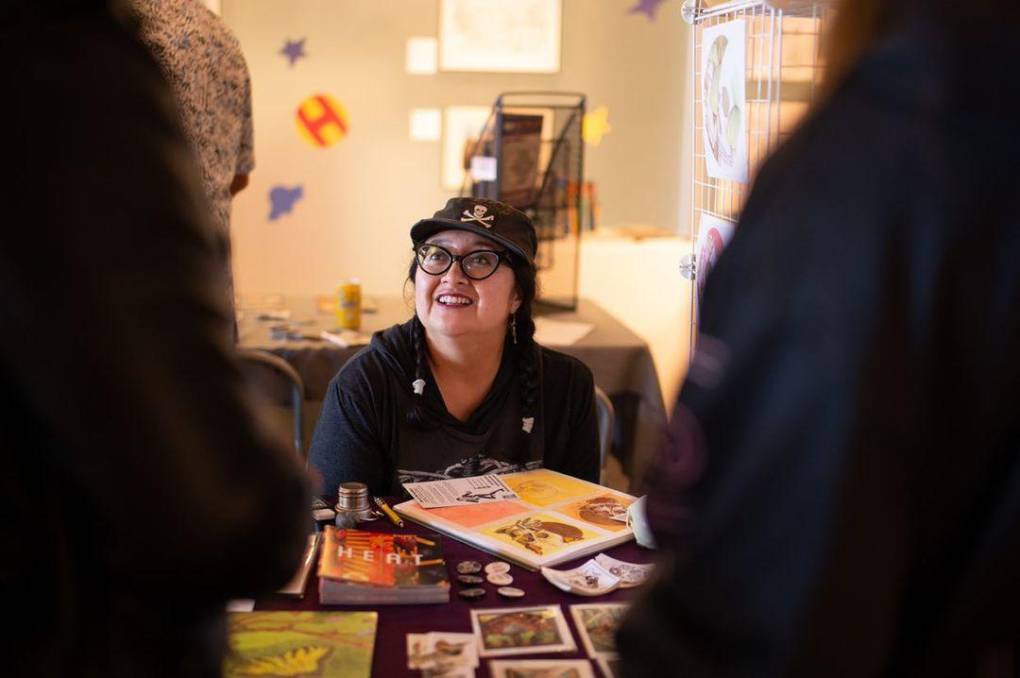
At the Mission Art and Comic Expo, ‘Hella Chicano Artists’ Rep a Local Scene
Reclaiming the Technology of Surveillance and Deportation
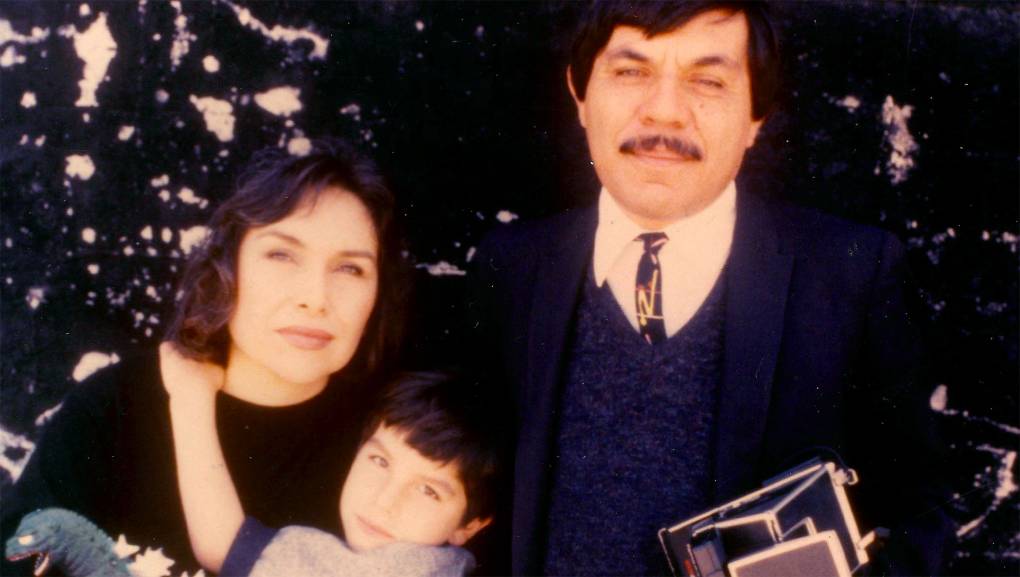
A Family Tradition of Altar Making, As Told by Rio Yañez
Zoot Suits and Zapateado: How This SF Dance Crew Channels Chicana Resistance
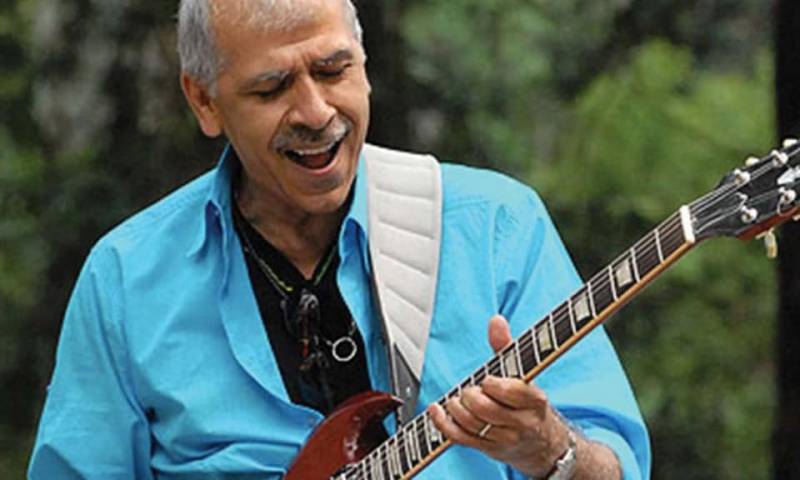
Jorge Santana, Guitarist and Founder of SF Latin-Rock Band Malo, dies at 68
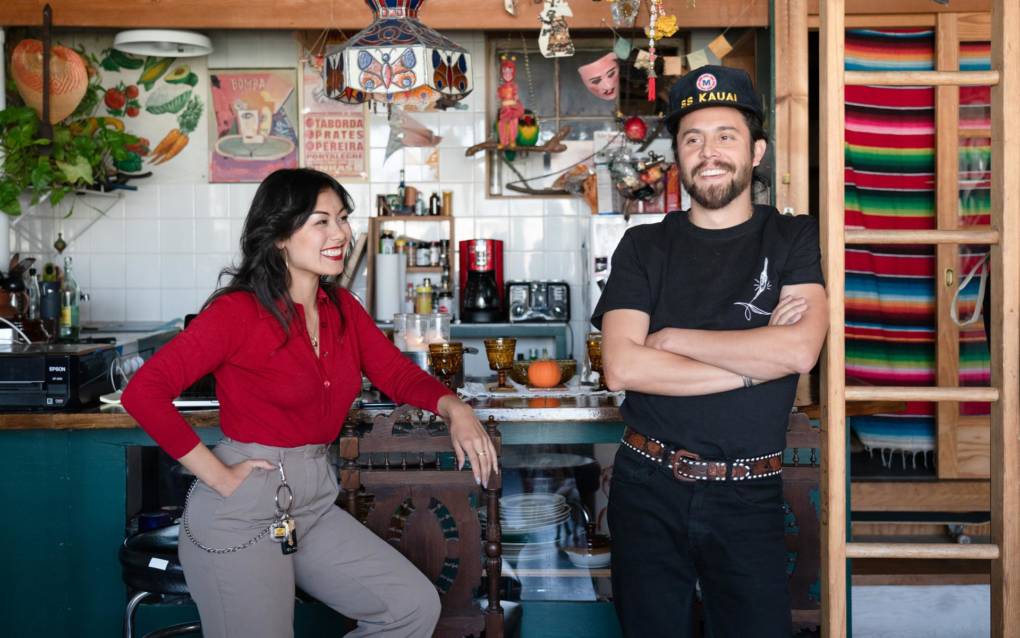
How the Money Adds Up for This San Francisco Sign-Making Couple
Sponsored
Player sponsored by
window.__IS_SSR__=true
window.__INITIAL_STATE__={
"attachmentsReducer": {
"audio_0": {
"type": "attachments",
"id": "audio_0",
"imgSizes": {
"kqedFullSize": {
"file": "https://ww2.kqed.org/news/wp-content/themes/KQED-unified/img/audio_bgs/background0.jpg"
}
}
},
"audio_1": {
"type": "attachments",
"id": "audio_1",
"imgSizes": {
"kqedFullSize": {
"file": "https://ww2.kqed.org/news/wp-content/themes/KQED-unified/img/audio_bgs/background1.jpg"
}
}
},
"audio_2": {
"type": "attachments",
"id": "audio_2",
"imgSizes": {
"kqedFullSize": {
"file": "https://ww2.kqed.org/news/wp-content/themes/KQED-unified/img/audio_bgs/background2.jpg"
}
}
},
"audio_3": {
"type": "attachments",
"id": "audio_3",
"imgSizes": {
"kqedFullSize": {
"file": "https://ww2.kqed.org/news/wp-content/themes/KQED-unified/img/audio_bgs/background3.jpg"
}
}
},
"audio_4": {
"type": "attachments",
"id": "audio_4",
"imgSizes": {
"kqedFullSize": {
"file": "https://ww2.kqed.org/news/wp-content/themes/KQED-unified/img/audio_bgs/background4.jpg"
}
}
},
"placeholder": {
"type": "attachments",
"id": "placeholder",
"imgSizes": {
"thumbnail": {
"file": "https://cdn.kqed.org/wp-content/uploads/2024/12/KQED-Default-Image-816638274-2000x1333-1-160x107.jpg",
"width": 160,
"height": 107,
"mimeType": "image/jpeg"
},
"medium": {
"file": "https://cdn.kqed.org/wp-content/uploads/2024/12/KQED-Default-Image-816638274-2000x1333-1-800x533.jpg",
"width": 800,
"height": 533,
"mimeType": "image/jpeg"
},
"medium_large": {
"file": "https://cdn.kqed.org/wp-content/uploads/2024/12/KQED-Default-Image-816638274-2000x1333-1-768x512.jpg",
"width": 768,
"height": 512,
"mimeType": "image/jpeg"
},
"large": {
"file": "https://cdn.kqed.org/wp-content/uploads/2024/12/KQED-Default-Image-816638274-2000x1333-1-1020x680.jpg",
"width": 1020,
"height": 680,
"mimeType": "image/jpeg"
},
"1536x1536": {
"file": "https://cdn.kqed.org/wp-content/uploads/2024/12/KQED-Default-Image-816638274-2000x1333-1-1536x1024.jpg",
"width": 1536,
"height": 1024,
"mimeType": "image/jpeg"
},
"fd-lrg": {
"file": "https://cdn.kqed.org/wp-content/uploads/2024/12/KQED-Default-Image-816638274-2000x1333-1-1536x1024.jpg",
"width": 1536,
"height": 1024,
"mimeType": "image/jpeg"
},
"fd-med": {
"file": "https://cdn.kqed.org/wp-content/uploads/2024/12/KQED-Default-Image-816638274-2000x1333-1-1020x680.jpg",
"width": 1020,
"height": 680,
"mimeType": "image/jpeg"
},
"fd-sm": {
"file": "https://cdn.kqed.org/wp-content/uploads/2024/12/KQED-Default-Image-816638274-2000x1333-1-800x533.jpg",
"width": 800,
"height": 533,
"mimeType": "image/jpeg"
},
"post-thumbnail": {
"file": "https://cdn.kqed.org/wp-content/uploads/2024/12/KQED-Default-Image-816638274-2000x1333-1-672x372.jpg",
"width": 672,
"height": 372,
"mimeType": "image/jpeg"
},
"twentyfourteen-full-width": {
"file": "https://cdn.kqed.org/wp-content/uploads/2024/12/KQED-Default-Image-816638274-2000x1333-1-1038x576.jpg",
"width": 1038,
"height": 576,
"mimeType": "image/jpeg"
},
"xxsmall": {
"file": "https://cdn.kqed.org/wp-content/uploads/2024/12/KQED-Default-Image-816638274-2000x1333-1-160x107.jpg",
"width": 160,
"height": 107,
"mimeType": "image/jpeg"
},
"xsmall": {
"file": "https://cdn.kqed.org/wp-content/uploads/2024/12/KQED-Default-Image-816638274-2000x1333-1-672x372.jpg",
"width": 672,
"height": 372,
"mimeType": "image/jpeg"
},
"small": {
"file": "https://cdn.kqed.org/wp-content/uploads/2024/12/KQED-Default-Image-816638274-2000x1333-1-672x372.jpg",
"width": 672,
"height": 372,
"mimeType": "image/jpeg"
},
"xlarge": {
"file": "https://cdn.kqed.org/wp-content/uploads/2024/12/KQED-Default-Image-816638274-2000x1333-1-1020x680.jpg",
"width": 1020,
"height": 680,
"mimeType": "image/jpeg"
},
"full-width": {
"file": "https://cdn.kqed.org/wp-content/uploads/2024/12/KQED-Default-Image-816638274-2000x1333-1-1920x1280.jpg",
"width": 1920,
"height": 1280,
"mimeType": "image/jpeg"
},
"guest-author-32": {
"file": "https://cdn.kqed.org/wp-content/uploads/2025/01/KQED-Default-Image-816638274-1333x1333-1-160x160.jpg",
"width": 32,
"height": 32,
"mimeType": "image/jpeg"
},
"guest-author-50": {
"file": "https://cdn.kqed.org/wp-content/uploads/2025/01/KQED-Default-Image-816638274-1333x1333-1-160x160.jpg",
"width": 50,
"height": 50,
"mimeType": "image/jpeg"
},
"guest-author-64": {
"file": "https://cdn.kqed.org/wp-content/uploads/2025/01/KQED-Default-Image-816638274-1333x1333-1-160x160.jpg",
"width": 64,
"height": 64,
"mimeType": "image/jpeg"
},
"guest-author-96": {
"file": "https://cdn.kqed.org/wp-content/uploads/2025/01/KQED-Default-Image-816638274-1333x1333-1-160x160.jpg",
"width": 96,
"height": 96,
"mimeType": "image/jpeg"
},
"guest-author-128": {
"file": "https://cdn.kqed.org/wp-content/uploads/2025/01/KQED-Default-Image-816638274-1333x1333-1-160x160.jpg",
"width": 128,
"height": 128,
"mimeType": "image/jpeg"
},
"detail": {
"file": "https://cdn.kqed.org/wp-content/uploads/2025/01/KQED-Default-Image-816638274-1333x1333-1-160x160.jpg",
"width": 160,
"height": 160,
"mimeType": "image/jpeg"
},
"kqedFullSize": {
"file": "https://cdn.kqed.org/wp-content/uploads/2024/12/KQED-Default-Image-816638274-2000x1333-1.jpg",
"width": 2000,
"height": 1333
}
}
},
"arts_13979212": {
"type": "attachments",
"id": "arts_13979212",
"meta": {
"index": "attachments_1716263798",
"site": "arts",
"id": "13979212",
"found": true
},
"title": "_74A5434a (Priime Cobalt)",
"publishDate": 1753723056,
"status": "inherit",
"parent": 13979142,
"modified": 1753723152,
"caption": "Kelly Guerra stars as labor activist Dolores Huerta in ‘Dolores,’ which premieres at West Edge Opera on Aug. 2. ",
"credit": "Cory Weaver",
"altTag": "A Latina woman speaks into a bullhorn while wearing a cowboy hat.",
"description": null,
"imgSizes": {
"medium": {
"file": "https://cdn.kqed.org/wp-content/uploads/sites/2/2025/07/74A5434a-Priime-Cobalt-2000x1334.jpg",
"width": 2000,
"height": 1334,
"mimeType": "image/jpeg"
},
"large": {
"file": "https://cdn.kqed.org/wp-content/uploads/sites/2/2025/07/74A5434a-Priime-Cobalt-2000x1334.jpg",
"width": 2000,
"height": 1334,
"mimeType": "image/jpeg"
},
"thumbnail": {
"file": "https://cdn.kqed.org/wp-content/uploads/sites/2/2025/07/74A5434a-Priime-Cobalt-160x107.jpg",
"width": 160,
"height": 107,
"mimeType": "image/jpeg"
},
"medium_large": {
"file": "https://cdn.kqed.org/wp-content/uploads/sites/2/2025/07/74A5434a-Priime-Cobalt-768x512.jpg",
"width": 768,
"height": 512,
"mimeType": "image/jpeg"
},
"1536x1536": {
"file": "https://cdn.kqed.org/wp-content/uploads/sites/2/2025/07/74A5434a-Priime-Cobalt-1536x1025.jpg",
"width": 1536,
"height": 1025,
"mimeType": "image/jpeg"
},
"2048x2048": {
"file": "https://cdn.kqed.org/wp-content/uploads/sites/2/2025/07/74A5434a-Priime-Cobalt-2048x1366.jpg",
"width": 2048,
"height": 1366,
"mimeType": "image/jpeg"
},
"post-thumbnail": {
"file": "https://cdn.kqed.org/wp-content/uploads/sites/2/2025/07/74A5434a-Priime-Cobalt-672x372.jpg",
"width": 672,
"height": 372,
"mimeType": "image/jpeg"
},
"twentyfourteen-full-width": {
"file": "https://cdn.kqed.org/wp-content/uploads/sites/2/2025/07/74A5434a-Priime-Cobalt-1038x576.jpg",
"width": 1038,
"height": 576,
"mimeType": "image/jpeg"
},
"full-width": {
"file": "https://cdn.kqed.org/wp-content/uploads/sites/2/2025/07/74A5434a-Priime-Cobalt-2000x1334.jpg",
"width": 2000,
"height": 1334,
"mimeType": "image/jpeg"
},
"kqedFullSize": {
"file": "https://cdn.kqed.org/wp-content/uploads/sites/2/2025/07/74A5434a-Priime-Cobalt-scaled.jpg",
"width": 2560,
"height": 1708
}
},
"fetchFailed": false,
"isLoading": false
},
"arts_13928574": {
"type": "attachments",
"id": "arts_13928574",
"meta": {
"index": "attachments_1716263798",
"site": "arts",
"id": "13928574",
"found": true
},
"parent": 13928562,
"imgSizes": {
"twentyfourteen-full-width": {
"file": "https://ww2.kqed.org/app/uploads/sites/2/2023/05/MACE-Exhibitors-Abby-Rocha-Illustration-1038x576.jpg",
"width": 1038,
"mimeType": "image/jpeg",
"height": 576
},
"thumbnail": {
"file": "https://ww2.kqed.org/app/uploads/sites/2/2023/05/MACE-Exhibitors-Abby-Rocha-Illustration-160x106.jpg",
"width": 160,
"mimeType": "image/jpeg",
"height": 106
},
"post-thumbnail": {
"file": "https://ww2.kqed.org/app/uploads/sites/2/2023/05/MACE-Exhibitors-Abby-Rocha-Illustration-672x372.jpg",
"width": 672,
"mimeType": "image/jpeg",
"height": 372
},
"kqedFullSize": {
"file": "https://ww2.kqed.org/app/uploads/sites/2/2023/05/MACE-Exhibitors-Abby-Rocha-Illustration.jpg",
"width": 1080,
"height": 718
},
"large": {
"file": "https://ww2.kqed.org/app/uploads/sites/2/2023/05/MACE-Exhibitors-Abby-Rocha-Illustration-1020x678.jpg",
"width": 1020,
"mimeType": "image/jpeg",
"height": 678
},
"medium": {
"file": "https://ww2.kqed.org/app/uploads/sites/2/2023/05/MACE-Exhibitors-Abby-Rocha-Illustration-800x532.jpg",
"width": 800,
"mimeType": "image/jpeg",
"height": 532
},
"medium_large": {
"file": "https://ww2.kqed.org/app/uploads/sites/2/2023/05/MACE-Exhibitors-Abby-Rocha-Illustration-768x511.jpg",
"width": 768,
"mimeType": "image/jpeg",
"height": 511
}
},
"publishDate": 1683066981,
"modified": 1683067347,
"caption": "Illustrator Abby Rocha is one of nearly 50 exhibitors at this year’s Mission Art and Comic Expo.",
"description": null,
"title": "MACE Exhibitors - Abby Rocha Illustration",
"credit": "Courtesy MACE",
"status": "inherit",
"altTag": "Woman in black ballcap and black rimmed glasses looks up from table of illustrations and printed materials",
"fetchFailed": false,
"isLoading": false
},
"arts_13927052": {
"type": "attachments",
"id": "arts_13927052",
"meta": {
"index": "attachments_1716263798",
"site": "arts",
"id": "13927052",
"found": true
},
"parent": 13927028,
"imgSizes": {
"twentyfourteen-full-width": {
"file": "https://ww2.kqed.org/app/uploads/sites/2/2023/03/Rafael-Lozano-Hemmer_Pulse-Topology_2021_01-1038x576.jpg",
"width": 1038,
"mimeType": "image/jpeg",
"height": 576
},
"thumbnail": {
"file": "https://ww2.kqed.org/app/uploads/sites/2/2023/03/Rafael-Lozano-Hemmer_Pulse-Topology_2021_01-160x107.jpg",
"width": 160,
"mimeType": "image/jpeg",
"height": 107
},
"post-thumbnail": {
"file": "https://ww2.kqed.org/app/uploads/sites/2/2023/03/Rafael-Lozano-Hemmer_Pulse-Topology_2021_01-672x372.jpg",
"width": 672,
"mimeType": "image/jpeg",
"height": 372
},
"kqedFullSize": {
"file": "https://ww2.kqed.org/app/uploads/sites/2/2023/03/Rafael-Lozano-Hemmer_Pulse-Topology_2021_01-scaled.jpg",
"width": 2560,
"height": 1707
},
"2048x2048": {
"file": "https://ww2.kqed.org/app/uploads/sites/2/2023/03/Rafael-Lozano-Hemmer_Pulse-Topology_2021_01-2048x1365.jpg",
"width": 2048,
"mimeType": "image/jpeg",
"height": 1365
},
"large": {
"file": "https://ww2.kqed.org/app/uploads/sites/2/2023/03/Rafael-Lozano-Hemmer_Pulse-Topology_2021_01-1020x680.jpg",
"width": 1020,
"mimeType": "image/jpeg",
"height": 680
},
"1536x1536": {
"file": "https://ww2.kqed.org/app/uploads/sites/2/2023/03/Rafael-Lozano-Hemmer_Pulse-Topology_2021_01-1536x1024.jpg",
"width": 1536,
"mimeType": "image/jpeg",
"height": 1024
},
"full-width": {
"file": "https://ww2.kqed.org/app/uploads/sites/2/2023/03/Rafael-Lozano-Hemmer_Pulse-Topology_2021_01-1920x1280.jpg",
"width": 1920,
"mimeType": "image/jpeg",
"height": 1280
},
"medium": {
"file": "https://ww2.kqed.org/app/uploads/sites/2/2023/03/Rafael-Lozano-Hemmer_Pulse-Topology_2021_01-800x533.jpg",
"width": 800,
"mimeType": "image/jpeg",
"height": 533
},
"medium_large": {
"file": "https://ww2.kqed.org/app/uploads/sites/2/2023/03/Rafael-Lozano-Hemmer_Pulse-Topology_2021_01-768x512.jpg",
"width": 768,
"mimeType": "image/jpeg",
"height": 512
}
},
"publishDate": 1680031786,
"modified": 1680031973,
"caption": "Rafael Lozano-Hemmer's 'Pulse Topology' is on view as part of 'TECH-MECHS,' at Gray Area in San Francisco through May 31.",
"description": null,
"title": "Rafael-Lozano-Hemmer_Pulse-Topology_2021_01",
"credit": "Courtesy Gray Area",
"status": "inherit",
"altTag": "a visitor stands under a massive art installation of tiny lights in a dark room",
"fetchFailed": false,
"isLoading": false
},
"arts_13921141": {
"type": "attachments",
"id": "arts_13921141",
"meta": {
"index": "attachments_1716263798",
"site": "arts",
"id": "13921141",
"found": true
},
"parent": 0,
"imgSizes": {
"twentyfourteen-full-width": {
"file": "https://ww2.kqed.org/app/uploads/sites/2/2022/10/yanez-1920px-1038x576.jpg",
"width": 1038,
"mimeType": "image/jpeg",
"height": 576
},
"thumbnail": {
"file": "https://ww2.kqed.org/app/uploads/sites/2/2022/10/yanez-1920px-160x91.jpg",
"width": 160,
"mimeType": "image/jpeg",
"height": 91
},
"post-thumbnail": {
"file": "https://ww2.kqed.org/app/uploads/sites/2/2022/10/yanez-1920px-672x372.jpg",
"width": 672,
"mimeType": "image/jpeg",
"height": 372
},
"kqedFullSize": {
"file": "https://ww2.kqed.org/app/uploads/sites/2/2022/10/yanez-1920px.jpg",
"width": 1920,
"height": 1087
},
"large": {
"file": "https://ww2.kqed.org/app/uploads/sites/2/2022/10/yanez-1920px-1020x577.jpg",
"width": 1020,
"mimeType": "image/jpeg",
"height": 577
},
"1536x1536": {
"file": "https://ww2.kqed.org/app/uploads/sites/2/2022/10/yanez-1920px-1536x870.jpg",
"width": 1536,
"mimeType": "image/jpeg",
"height": 870
},
"medium": {
"file": "https://ww2.kqed.org/app/uploads/sites/2/2022/10/yanez-1920px-800x453.jpg",
"width": 800,
"mimeType": "image/jpeg",
"height": 453
},
"medium_large": {
"file": "https://ww2.kqed.org/app/uploads/sites/2/2022/10/yanez-1920px-768x435.jpg",
"width": 768,
"mimeType": "image/jpeg",
"height": 435
}
},
"publishDate": 1667258433,
"modified": 1667258540,
"caption": "Yólanda Lopez, Rio Yañez, and René Yañez pose for a family portrait. Each artists in their own right, have greatly contributed to the Chicano arts scene and cultivating the Day of the Dead tradition in San Francisco. ",
"description": null,
"title": "Rio, Rene, Yolanda_byJoeRamos",
"credit": "Photo by Joe Ramos Courtesy of Rene Yañez",
"status": "inherit",
"altTag": "A family photo of a young Rio Yañez in the center of his parents. His mother, on the left, holds Rio's toy Godzilla as he hugs her. His father, on the right, holding a vintage camera.",
"fetchFailed": false,
"isLoading": false
},
"arts_13880684": {
"type": "attachments",
"id": "arts_13880684",
"meta": {
"index": "attachments_1716263798",
"site": "arts",
"id": "13880684",
"found": true
},
"parent": 13880670,
"imgSizes": {
"twentyfourteen-full-width": {
"file": "https://ww2.kqed.org/app/uploads/sites/2/2020/05/ICCD304_SanFrancisco_NoLogo-1038x576.jpg",
"width": 1038,
"mimeType": "image/jpeg",
"height": 576
},
"thumbnail": {
"file": "https://ww2.kqed.org/app/uploads/sites/2/2020/05/ICCD304_SanFrancisco_NoLogo-160x90.jpg",
"width": 160,
"mimeType": "image/jpeg",
"height": 90
},
"post-thumbnail": {
"file": "https://ww2.kqed.org/app/uploads/sites/2/2020/05/ICCD304_SanFrancisco_NoLogo-672x372.jpg",
"width": 672,
"mimeType": "image/jpeg",
"height": 372
},
"kqedFullSize": {
"file": "https://ww2.kqed.org/app/uploads/sites/2/2020/05/ICCD304_SanFrancisco_NoLogo.jpg",
"width": 1920,
"height": 1079
},
"large": {
"file": "https://ww2.kqed.org/app/uploads/sites/2/2020/05/ICCD304_SanFrancisco_NoLogo-1020x573.jpg",
"width": 1020,
"mimeType": "image/jpeg",
"height": 573
},
"full-width": {
"file": "https://ww2.kqed.org/app/uploads/sites/2/2020/05/ICCD304_SanFrancisco_NoLogo-1920x1079.jpg",
"width": 1920,
"mimeType": "image/jpeg",
"height": 1079
},
"medium": {
"file": "https://ww2.kqed.org/app/uploads/sites/2/2020/05/ICCD304_SanFrancisco_NoLogo-800x450.jpg",
"width": 800,
"mimeType": "image/jpeg",
"height": 450
},
"medium_large": {
"file": "https://ww2.kqed.org/app/uploads/sites/2/2020/05/ICCD304_SanFrancisco_NoLogo-768x432.jpg",
"width": 768,
"mimeType": "image/jpeg",
"height": 432
}
},
"publishDate": 1589850624,
"modified": 1589850781,
"caption": "If Cities Could Dance, San Francisco: Tap and Zapateado",
"description": "If Cities Could Dance, San Francisco: Tap and Zapateado",
"title": "If Cities Could Dance, San Francisco: Tap and Zapateado",
"credit": null,
"status": "inherit",
"fetchFailed": false,
"isLoading": false
},
"arts_13880589": {
"type": "attachments",
"id": "arts_13880589",
"meta": {
"index": "attachments_1716263798",
"site": "arts",
"id": "13880589",
"found": true
},
"parent": 13880588,
"imgSizes": {
"twentyfourteen-full-width": {
"file": "https://ww2.kqed.org/app/uploads/sites/2/2020/05/JorgeSantana-960x576.jpg",
"width": 960,
"mimeType": "image/jpeg",
"height": 576
},
"thumbnail": {
"file": "https://ww2.kqed.org/app/uploads/sites/2/2020/05/JorgeSantana-160x96.jpg",
"width": 160,
"mimeType": "image/jpeg",
"height": 96
},
"post-thumbnail": {
"file": "https://ww2.kqed.org/app/uploads/sites/2/2020/05/JorgeSantana-672x372.jpg",
"width": 672,
"mimeType": "image/jpeg",
"height": 372
},
"kqedFullSize": {
"file": "https://ww2.kqed.org/app/uploads/sites/2/2020/05/JorgeSantana.jpg",
"width": 960,
"height": 576
},
"medium": {
"file": "https://ww2.kqed.org/app/uploads/sites/2/2020/05/JorgeSantana-800x480.jpg",
"width": 800,
"mimeType": "image/jpeg",
"height": 480
},
"medium_large": {
"file": "https://ww2.kqed.org/app/uploads/sites/2/2020/05/JorgeSantana-768x461.jpg",
"width": 768,
"mimeType": "image/jpeg",
"height": 461
}
},
"publishDate": 1589827833,
"modified": 1589827871,
"caption": "Jorge Santana died Thursday at age 68.",
"description": "Jorge Santana died Thursday at age 68.",
"title": "JorgeSantana",
"credit": "Via Carlos Santana/FB",
"status": "inherit",
"fetchFailed": false,
"isLoading": false
},
"arts_13869326": {
"type": "attachments",
"id": "arts_13869326",
"meta": {
"index": "attachments_1716263798",
"site": "arts",
"id": "13869326",
"found": true
},
"parent": 13869323,
"imgSizes": {
"twentyfourteen-full-width": {
"file": "https://ww2.kqed.org/app/uploads/sites/2/2019/11/Hustle.Avila_.Damato.MAIN_-1038x576.jpg",
"width": 1038,
"mimeType": "image/jpeg",
"height": 576
},
"thumbnail": {
"file": "https://ww2.kqed.org/app/uploads/sites/2/2019/11/Hustle.Avila_.Damato.MAIN_-160x100.jpg",
"width": 160,
"mimeType": "image/jpeg",
"height": 100
},
"post-thumbnail": {
"file": "https://ww2.kqed.org/app/uploads/sites/2/2019/11/Hustle.Avila_.Damato.MAIN_-672x372.jpg",
"width": 672,
"mimeType": "image/jpeg",
"height": 372
},
"kqedFullSize": {
"file": "https://ww2.kqed.org/app/uploads/sites/2/2019/11/Hustle.Avila_.Damato.MAIN_.jpg",
"width": 1920,
"height": 1200
},
"large": {
"file": "https://ww2.kqed.org/app/uploads/sites/2/2019/11/Hustle.Avila_.Damato.MAIN_-1020x638.jpg",
"width": 1020,
"mimeType": "image/jpeg",
"height": 638
},
"complete_open_graph": {
"file": "https://ww2.kqed.org/app/uploads/sites/2/2019/11/Hustle.Avila_.Damato.MAIN_-1200x750.jpg",
"width": 1200,
"mimeType": "image/jpeg",
"height": 750
},
"full-width": {
"file": "https://ww2.kqed.org/app/uploads/sites/2/2019/11/Hustle.Avila_.Damato.MAIN_-1920x1200.jpg",
"width": 1920,
"mimeType": "image/jpeg",
"height": 1200
},
"medium": {
"file": "https://ww2.kqed.org/app/uploads/sites/2/2019/11/Hustle.Avila_.Damato.MAIN_-800x500.jpg",
"width": 800,
"mimeType": "image/jpeg",
"height": 500
},
"medium_large": {
"file": "https://ww2.kqed.org/app/uploads/sites/2/2019/11/Hustle.Avila_.Damato.MAIN_-768x480.jpg",
"width": 768,
"mimeType": "image/jpeg",
"height": 480
}
},
"publishDate": 1572890183,
"modified": 1572890393,
"caption": "Lauren D'Amato and Isaac Avila in their Bernal Heights live/work space. With multiple jobs, the couple lives on $2,000–$5,000 a month.",
"description": "Lauren D'Amato and Isaac Avila in their Bernal Heights live/work space. With multiple jobs, the couple lives on $2,000–$5,000 a month.",
"title": "Hustle.Avila.Damato.MAIN",
"credit": "Graham Holoch/KQED",
"status": "inherit",
"fetchFailed": false,
"isLoading": false
}
},
"audioPlayerReducer": {
"postId": "stream_live",
"isPaused": true,
"isPlaying": false,
"pfsActive": false,
"pledgeModalIsOpen": true,
"playerDrawerIsOpen": false
},
"authorsReducer": {
"byline_arts_13880670": {
"type": "authors",
"id": "byline_arts_13880670",
"meta": {
"override": true
},
"slug": "byline_arts_13880670",
"name": "Kelly Whalen, Masha Pershay, Elie Khadra",
"isLoading": false
},
"byline_arts_13880588": {
"type": "authors",
"id": "byline_arts_13880588",
"meta": {
"override": true
},
"slug": "byline_arts_13880588",
"name": "Russell Contreras, Associated Press",
"isLoading": false
},
"shotchkiss": {
"type": "authors",
"id": "61",
"meta": {
"index": "authors_1716337520",
"id": "61",
"found": true
},
"name": "Sarah Hotchkiss",
"firstName": "Sarah",
"lastName": "Hotchkiss",
"slug": "shotchkiss",
"email": "shotchkiss@kqed.org",
"display_author_email": true,
"staff_mastheads": [
"arts"
],
"title": "Senior Editor",
"bio": "Sarah Hotchkiss is a San Francisco \u003ca href=\"http://www.sarahhotchkiss.com\">artist\u003c/a> and arts writer. In 2019, she received the Dorothea & Leo Rabkin Foundation grant for visual art journalism and in 2020 she received a Society of Professional Journalists, Northern California award for excellence in arts and culture reporting.",
"avatar": "https://secure.gravatar.com/avatar/ca38c7f54590856cd4947d26274f8a90?s=600&d=blank&r=g",
"twitter": null,
"facebook": null,
"instagram": null,
"linkedin": null,
"sites": [
{
"site": "",
"roles": [
"editor"
]
},
{
"site": "arts",
"roles": [
"Contributor",
"administrator"
]
},
{
"site": "artschool",
"roles": [
"administrator"
]
},
{
"site": "news",
"roles": [
"editor"
]
},
{
"site": "pop",
"roles": [
"administrator"
]
},
{
"site": "bayareabites",
"roles": [
"editor"
]
},
{
"site": "spark",
"roles": [
"editor"
]
},
{
"site": "checkplease",
"roles": [
"editor"
]
}
],
"headData": {
"title": "Sarah Hotchkiss | KQED",
"description": "Senior Editor",
"ogImgSrc": "https://secure.gravatar.com/avatar/ca38c7f54590856cd4947d26274f8a90?s=600&d=blank&r=g",
"twImgSrc": "https://secure.gravatar.com/avatar/ca38c7f54590856cd4947d26274f8a90?s=600&d=blank&r=g"
},
"isLoading": false,
"link": "/author/shotchkiss"
},
"agilbert": {
"type": "authors",
"id": "86",
"meta": {
"index": "authors_1716337520",
"id": "86",
"found": true
},
"name": "Andrew Gilbert",
"firstName": "Andrew",
"lastName": "Gilbert",
"slug": "agilbert",
"email": "jazzscribe@aol.com",
"display_author_email": false,
"staff_mastheads": [],
"title": "KQED Contributor",
"bio": "A Los Angeles native based in the Berkeley area since 1996, Andrew Gilbert covers jazz, international music and dance for KQED's \u003ci>California Report, \u003c/i>the\u003ci> Mercury News\u003c/i>, \u003ci>San Francisco Chronicle\u003c/i>, \u003ci>Berkeleyside.com\u003c/i>, and other publications. He is available for weddings and bar and bat mitzvahs. #jazzscribe",
"avatar": "https://secure.gravatar.com/avatar/445e6fe4cc696bd39773e3c90f5108b6?s=600&d=blank&r=g",
"twitter": null,
"facebook": null,
"instagram": null,
"linkedin": null,
"sites": [
{
"site": "arts",
"roles": [
"Contributor",
"author"
]
},
{
"site": "news",
"roles": [
"author"
]
}
],
"headData": {
"title": "Andrew Gilbert | KQED",
"description": "KQED Contributor",
"ogImgSrc": "https://secure.gravatar.com/avatar/445e6fe4cc696bd39773e3c90f5108b6?s=600&d=blank&r=g",
"twImgSrc": "https://secure.gravatar.com/avatar/445e6fe4cc696bd39773e3c90f5108b6?s=600&d=blank&r=g"
},
"isLoading": false,
"link": "/author/agilbert"
},
"mmedina": {
"type": "authors",
"id": "11528",
"meta": {
"index": "authors_1716337520",
"id": "11528",
"found": true
},
"name": "Marisol Medina-Cadena",
"firstName": "Marisol",
"lastName": "Medina-Cadena",
"slug": "mmedina",
"email": "mmedina@KQED.org",
"display_author_email": true,
"staff_mastheads": [],
"title": "Producer, Rightnowish Podcast",
"bio": "Marisol Medina-Cadena is a radio reporter and podcast producer. Before working at KQED, she produced for PBS member station, KCET, in Los Angeles. In 2017, Marisol won an Emmy Award for her work on the televised documentary, \u003cem>City Rising\u003c/em>, examining California's affordable housing crisis and the historical roots of gentrification.",
"avatar": "https://secure.gravatar.com/avatar/6c3db46a1cabb5e1fe9a365b5f4e681e?s=600&d=blank&r=g",
"twitter": "marisolreports",
"facebook": null,
"instagram": null,
"linkedin": null,
"sites": [
{
"site": "arts",
"roles": []
},
{
"site": "news",
"roles": [
"edit_others_posts"
]
}
],
"headData": {
"title": "Marisol Medina-Cadena | KQED",
"description": "Producer, Rightnowish Podcast",
"ogImgSrc": "https://secure.gravatar.com/avatar/6c3db46a1cabb5e1fe9a365b5f4e681e?s=600&d=blank&r=g",
"twImgSrc": "https://secure.gravatar.com/avatar/6c3db46a1cabb5e1fe9a365b5f4e681e?s=600&d=blank&r=g"
},
"isLoading": false,
"link": "/author/mmedina"
},
"ksong": {
"type": "authors",
"id": "11813",
"meta": {
"index": "authors_1716337520",
"id": "11813",
"found": true
},
"name": "Kristie Song",
"firstName": "Kristie",
"lastName": "Song",
"slug": "ksong",
"email": "ksong@kqed.org",
"display_author_email": false,
"staff_mastheads": [],
"title": "Editorial Intern ",
"bio": "Kristie Song is an Arts & Culture Intern at KQED. She is currently a graduate student at UC Berkeley, where she studies audio and multimedia journalism. Previously, she covered the local community for Oakland North, produced episodes for The Science of Happiness, and served as news director for KUCI, UC Irvine’s radio station. Outside of reporting, she likes drawing comics, listening to angsty rock, and practicing the guitar.",
"avatar": "https://secure.gravatar.com/avatar/c1149e78c3c44f92d4945a8ab0711af6?s=600&d=blank&r=g",
"twitter": null,
"facebook": null,
"instagram": null,
"linkedin": null,
"sites": [
{
"site": "arts",
"roles": [
"editor"
]
}
],
"headData": {
"title": "Kristie Song | KQED",
"description": "Editorial Intern ",
"ogImgSrc": "https://secure.gravatar.com/avatar/c1149e78c3c44f92d4945a8ab0711af6?s=600&d=blank&r=g",
"twImgSrc": "https://secure.gravatar.com/avatar/c1149e78c3c44f92d4945a8ab0711af6?s=600&d=blank&r=g"
},
"isLoading": false,
"link": "/author/ksong"
}
},
"breakingNewsReducer": {},
"pagesReducer": {},
"postsReducer": {
"stream_live": {
"type": "live",
"id": "stream_live",
"audioUrl": "https://streams.kqed.org/kqedradio",
"title": "Live Stream",
"excerpt": "Live Stream information currently unavailable.",
"link": "/radio",
"featImg": "",
"label": {
"name": "KQED Live",
"link": "/"
}
},
"stream_kqedNewscast": {
"type": "posts",
"id": "stream_kqedNewscast",
"audioUrl": "https://www.kqed.org/.stream/anon/radio/RDnews/newscast.mp3?_=1",
"title": "KQED Newscast",
"featImg": "",
"label": {
"name": "88.5 FM",
"link": "/"
}
},
"arts_13979142": {
"type": "posts",
"id": "arts_13979142",
"meta": {
"index": "posts_1716263798",
"site": "arts",
"id": "13979142",
"score": null,
"sort": [
1753724882000
]
},
"guestAuthors": [],
"slug": "dolores-huerta-cesar-chavez-larry-itliong-opera-oakland",
"title": "A New Dolores Huerta Opera Brings a Labor Struggle to the Stage",
"publishDate": 1753724882,
"format": "standard",
"headTitle": "A New Dolores Huerta Opera Brings a Labor Struggle to the Stage | KQED",
"labelTerm": {},
"content": "\u003cp>A landmark labor struggle might seem like difficult terrain to explore in an opera, but Long Beach-based composer \u003ca href=\"https://nicolasbenavides.com/\">Nicolás Lell Benavides\u003c/a> knew that he had a riveting tale to tell in \u003cem>Dolores\u003c/em>.\u003c/p>\n\u003cp>Working with librettist \u003ca href=\"https://www.marellamartinkoch.com/about\">Marella Martin Koch\u003c/a>, he decided to focus on the roiling events of 1968, a year of dread and calamity from Prague and Paris to Mexico City and Memphis. It was also the third year of the grinding United Farm Workers strike led by Dolores Huerta, César Chavez and Larry Itliong, which gave birth to an international boycott of California-grown grapes.\u003c/p>\n\u003cp>\u003cem>Dolores\u003c/em> covers the months between Senator Robert F. Kennedy’s embrace of the farmworker cause in his campaign for the Democratic presidential nomination and the devastating aftermath of his assassination at the Ambassador Hotel. Huerta, who had helped turned out Latino and Asian American voters for him, stood by Kennedy’s side during his victory speech.\u003c/p>\n\u003cp>“I think there are a dozen operas about Dolores’ life that one could do, but I wanted people to focus and invest in one event and what it feels like to overcome what has to be to be one of the highest and lowest moments,” said Benavides in a recent conversation at Oakland’s Scottish Rite Center, where West Edge Opera \u003ca href=\"https://www.westedgeopera.org/dolores25\">presents the world premiere of \u003cem>Dolores\u003c/em>\u003c/a> on Aug. 2, 10 and 16.\u003c/p>\n\u003cfigure id=\"attachment_13979213\" class=\"wp-caption aligncenter\" style=\"max-width: 2560px\">\u003cimg loading=\"lazy\" decoding=\"async\" class=\"size-full wp-image-13979213\" src=\"https://cdn.kqed.org/wp-content/uploads/sites/2/2025/07/3-Dolores_Cesar-2-scaled.jpeg\" alt=\"\" width=\"2560\" height=\"1751\" srcset=\"https://cdn.kqed.org/wp-content/uploads/sites/2/2025/07/3-Dolores_Cesar-2-scaled.jpeg 2560w, https://cdn.kqed.org/wp-content/uploads/sites/2/2025/07/3-Dolores_Cesar-2-2000x1368.jpeg 2000w, https://cdn.kqed.org/wp-content/uploads/sites/2/2025/07/3-Dolores_Cesar-2-160x109.jpeg 160w, https://cdn.kqed.org/wp-content/uploads/sites/2/2025/07/3-Dolores_Cesar-2-768x525.jpeg 768w, https://cdn.kqed.org/wp-content/uploads/sites/2/2025/07/3-Dolores_Cesar-2-1536x1050.jpeg 1536w, https://cdn.kqed.org/wp-content/uploads/sites/2/2025/07/3-Dolores_Cesar-2-2048x1400.jpeg 2048w\" sizes=\"auto, (max-width: 2560px) 100vw, 2560px\">\u003cfigcaption class=\"wp-caption-text\">Dolores Huerta and César Chavez. \u003ccite>(Ted Streshinsky/Bancroft Library)\u003c/cite>\u003c/figcaption>\u003c/figure>\n\u003cp>Joining the conversation via video call, Huerta talked about the painstaking parallels between creating an opera from the ground up and building a movement. “When you think about that, you have to put people together not one by one, but one by four or five or six or seven,” said the 95-year-old activist. “You have to get small groupings of people so that you can inject into them the understanding they have the power to change things. Because people don’t believe that they do. Especially when you have conditions so entrenched like with the farm workers.”\u003c/p>\n\u003cp>[ad fullwidth]\u003c/p>\n\u003cp>Starring Peruvian American mezzo-soprano Kelly Guerra as Huerta, bass-baritone Phillip Lopez as Chavez, Filipino American baritone Rolfe Dauz as Itliong and tenor Alex Boyer as Kennedy, \u003cem>Dolores\u003c/em> is already booked for the San Diego Opera, the Broad Stage in Santa Monica and Albuquerque’s Southwest Opera. Benavides isn’t surprised at the unusual interest in the new work.\u003c/p>\n\u003cfigure id=\"attachment_13979214\" class=\"wp-caption aligncenter\" style=\"max-width: 1774px\">\u003cimg loading=\"lazy\" decoding=\"async\" class=\"size-full wp-image-13979214\" src=\"https://cdn.kqed.org/wp-content/uploads/sites/2/2025/07/7-Dolores-Larry-scaled.jpeg\" alt=\"\" width=\"1774\" height=\"2560\" srcset=\"https://cdn.kqed.org/wp-content/uploads/sites/2/2025/07/7-Dolores-Larry-scaled.jpeg 1774w, https://cdn.kqed.org/wp-content/uploads/sites/2/2025/07/7-Dolores-Larry-2000x2885.jpeg 2000w, https://cdn.kqed.org/wp-content/uploads/sites/2/2025/07/7-Dolores-Larry-160x231.jpeg 160w, https://cdn.kqed.org/wp-content/uploads/sites/2/2025/07/7-Dolores-Larry-768x1108.jpeg 768w, https://cdn.kqed.org/wp-content/uploads/sites/2/2025/07/7-Dolores-Larry-1065x1536.jpeg 1065w, https://cdn.kqed.org/wp-content/uploads/sites/2/2025/07/7-Dolores-Larry-1420x2048.jpeg 1420w\" sizes=\"auto, (max-width: 1774px) 100vw, 1774px\">\u003cfigcaption class=\"wp-caption-text\">Larry Itliong and Dolores Huerta. \u003ccite>(Ted Streshinsky/Bancroft Library)\u003c/cite>\u003c/figcaption>\u003c/figure>\n\u003cp>“I was obsessed with this moment even before I became a composer,” he said, noting that he’s related to Huerta through his father, and that he spent a fair amount of time around her at family reunions in El Paso and Albuquerque while growing up. “She’s super family oriented and was always interested in talking with kids. Later, as I learned about Chicano history and civil rights and read about this moment, I thought anyone would have PTSD after that. Yet here she was so charming, smiling and telling stories.”\u003c/p>\n\u003cp>A Guggenheim Fellow whose previous operas with Koch include 2019’s acclaimed Washington National Opera production \u003cem>Pepito\u003c/em> and the NEA-supported \u003cem>Tres minutos\u003c/em>, which premiered at the Presidio Theatre in 2022, Benavides has long thought about writing an opera focused on Huerta.\u003c/p>\n\u003cp>When \u003ca href=\"https://www.aperture.westedgeopera.org/\">West Edge Opera’s Aperture\u003c/a> program tapped him for its first full-length commission, the pieces began falling into place. The creative team includes Tulare County-raised conductor and music director Mary Chun, who also leads the San Francisco new-music \u003ca href=\"https://www.earplay.org/\">chamber ensemble EarPlay\u003c/a>; director Octavio Cardenas; and all the vocalists he most wanted cast.\u003c/p>\n\u003cp>“It’s very unusual for a composer to have that level of involvement,” Benavides said. “Everything fell into place at once, so it happened very slowly and then very quickly.”\u003c/p>\n\u003cfigure id=\"attachment_13979216\" class=\"wp-caption aligncenter\" style=\"max-width: 1000px\">\u003cimg loading=\"lazy\" decoding=\"async\" class=\"size-full wp-image-13979216\" src=\"https://cdn.kqed.org/wp-content/uploads/sites/2/2025/07/dolores-composite.jpg\" alt=\"\" width=\"1000\" height=\"667\" srcset=\"https://cdn.kqed.org/wp-content/uploads/sites/2/2025/07/dolores-composite.jpg 1000w, https://cdn.kqed.org/wp-content/uploads/sites/2/2025/07/dolores-composite-160x107.jpg 160w, https://cdn.kqed.org/wp-content/uploads/sites/2/2025/07/dolores-composite-768x512.jpg 768w\" sizes=\"auto, (max-width: 1000px) 100vw, 1000px\">\u003cfigcaption class=\"wp-caption-text\">Left: Kelly Guerra stars as Dolores Huerta in ‘Dolores’ at West Edge Opera. Right: Dolores Huerta during the Delano grape strike of 1965. \u003ccite>(Left: Cory Weaver/Right: Harvey Richards)\u003c/cite>\u003c/figcaption>\u003c/figure>\n\u003cp>Huerta, a life-long music lover, vividly recalls a banner weekend commuting from Washington D.C. to New York City to catch four productions at the Metropolitan Opera in between lobbying for the \u003ca href=\"https://www.npr.org/2010/07/04/128303672/a-reagan-legacy-amnesty-for-illegal-immigrants\">1986 immigration reform act\u003c/a>. In her view, \u003cem>Dolores\u003c/em> arrives at a particularly propitious moment.\u003c/p>\n\u003cp>With masked ICE agents rounding up undocumented farm laborers, “I think we’re in such a desperate situation, with one set of bad news after another,” she reflected. “I think people are kind of in shock right now, saying what do we do next? The opera will be a source of inspiration.” [aside postid='arts_13979104']\u003c/p>\n\u003cp>Benavides’ stylistically polyglot score draws on his full spectrum of influences, with electric guitar and saxophone included in the chamber ensemble “to give it some edge,” he said. “This piece runs the gamut, pulling out every stop. Sometimes the singing is operatic and sometimes more music theater. I grew up playing rancheras and corridos, so you hear that too. But also Gregorian plainchant, Viennese waltz and minimalism, a pulse that drives and organizes the music. Everything I’ve ever touched has entered this opera.”\u003c/p>\n\u003cp>The score amplifies the uncertainty and debate that took place among the three labor leaders as they navigated the rapidly shifting political landscape. Huerta notes that while she and Chavez were steeped in Gandhian organizing principles, Itliong was a labor contractor whose embrace of the union meant giving up power. While opera by nature creates larger-than-life characters Benavides leans into their disagreements and clashes, seeking to take them off their pedestals.\u003c/p>\n\u003cp>“A lot of historical figures, Dolores included, become deified in a bad way,” he said. “We think they’re here to save us, to do all the work for us. But really, I want people to realize we’re here to do the work ourselves. Those disagreements are good drama, but the more we read and researched we wanted to show that people could disagree and then make a plan and move forward and execute it. We thought that was a really powerful way for people to see themselves in Dolores and Cesar and Larry.”\u003c/p>\n\u003chr>\n\u003cp>[ad floatright]\u003c/p>\n\u003cp>\u003cem>‘Dolores’ premieres at West Edge Opera at the Oakland Scottish Rite Center on Aug. 2, 16 and 22. \u003ca href=\"https://www.westedgeopera.org/dolores25\">Tickets and details here\u003c/a>. \u003c/em>\u003c/p>\n\n",
"blocks": [],
"excerpt": "At Oakland's West Edge Opera, ‘Dolores’ dives into a strike, an assassination and clashes among activists. ",
"status": "publish",
"parent": 0,
"modified": 1753729253,
"stats": {
"hasAudio": false,
"hasVideo": false,
"hasChartOrMap": false,
"iframeSrcs": [],
"hasGoogleForm": false,
"hasGallery": false,
"hasHearkenModule": false,
"hasPolis": false,
"paragraphCount": 18,
"wordCount": 1085
},
"headData": {
"title": "New Opera ‘Dolores’ Brings the Labor Struggle to the Stage | KQED",
"description": "At Oakland's West Edge Opera, ‘Dolores’ dives into a strike, an assassination and clashes among activists. ",
"ogTitle": "A New Dolores Huerta Opera Brings a Labor Struggle to the Stage",
"ogDescription": "",
"ogImgId": "",
"twTitle": "A New Dolores Huerta Opera Brings a Labor Struggle to the Stage",
"twDescription": "",
"twImgId": "",
"socialTitle": "New Opera ‘Dolores’ Brings the Labor Struggle to the Stage %%page%% %%sep%% KQED",
"schema": {
"@context": "https://schema.org",
"@type": "Article",
"headline": "A New Dolores Huerta Opera Brings a Labor Struggle to the Stage",
"datePublished": "2025-07-28T10:48:02-07:00",
"dateModified": "2025-07-28T12:00:53-07:00",
"image": "https://cdn.kqed.org/wp-content/uploads/2020/02/KQED-OG-Image@1x.png"
}
},
"primaryCategory": {
"termId": 1,
"slug": "arts",
"name": "Arts"
},
"source": "The Do List",
"sourceUrl": "https://www.kqed.org/thedolist",
"sticky": false,
"nprStoryId": "kqed-13979142",
"templateType": "standard",
"featuredImageType": "standard",
"excludeFromSiteSearch": "Include",
"articleAge": "0",
"path": "/arts/13979142/dolores-huerta-cesar-chavez-larry-itliong-opera-oakland",
"audioTrackLength": null,
"parsedContent": [
{
"type": "contentString",
"content": "\u003cdiv class=\"post-body\">\u003cp>\u003cp>A landmark labor struggle might seem like difficult terrain to explore in an opera, but Long Beach-based composer \u003ca href=\"https://nicolasbenavides.com/\">Nicolás Lell Benavides\u003c/a> knew that he had a riveting tale to tell in \u003cem>Dolores\u003c/em>.\u003c/p>\n\u003cp>Working with librettist \u003ca href=\"https://www.marellamartinkoch.com/about\">Marella Martin Koch\u003c/a>, he decided to focus on the roiling events of 1968, a year of dread and calamity from Prague and Paris to Mexico City and Memphis. It was also the third year of the grinding United Farm Workers strike led by Dolores Huerta, César Chavez and Larry Itliong, which gave birth to an international boycott of California-grown grapes.\u003c/p>\n\u003cp>\u003cem>Dolores\u003c/em> covers the months between Senator Robert F. Kennedy’s embrace of the farmworker cause in his campaign for the Democratic presidential nomination and the devastating aftermath of his assassination at the Ambassador Hotel. Huerta, who had helped turned out Latino and Asian American voters for him, stood by Kennedy’s side during his victory speech.\u003c/p>\n\u003cp>“I think there are a dozen operas about Dolores’ life that one could do, but I wanted people to focus and invest in one event and what it feels like to overcome what has to be to be one of the highest and lowest moments,” said Benavides in a recent conversation at Oakland’s Scottish Rite Center, where West Edge Opera \u003ca href=\"https://www.westedgeopera.org/dolores25\">presents the world premiere of \u003cem>Dolores\u003c/em>\u003c/a> on Aug. 2, 10 and 16.\u003c/p>\n\u003cfigure id=\"attachment_13979213\" class=\"wp-caption aligncenter\" style=\"max-width: 2560px\">\u003cimg loading=\"lazy\" decoding=\"async\" class=\"size-full wp-image-13979213\" src=\"https://cdn.kqed.org/wp-content/uploads/sites/2/2025/07/3-Dolores_Cesar-2-scaled.jpeg\" alt=\"\" width=\"2560\" height=\"1751\" srcset=\"https://cdn.kqed.org/wp-content/uploads/sites/2/2025/07/3-Dolores_Cesar-2-scaled.jpeg 2560w, https://cdn.kqed.org/wp-content/uploads/sites/2/2025/07/3-Dolores_Cesar-2-2000x1368.jpeg 2000w, https://cdn.kqed.org/wp-content/uploads/sites/2/2025/07/3-Dolores_Cesar-2-160x109.jpeg 160w, https://cdn.kqed.org/wp-content/uploads/sites/2/2025/07/3-Dolores_Cesar-2-768x525.jpeg 768w, https://cdn.kqed.org/wp-content/uploads/sites/2/2025/07/3-Dolores_Cesar-2-1536x1050.jpeg 1536w, https://cdn.kqed.org/wp-content/uploads/sites/2/2025/07/3-Dolores_Cesar-2-2048x1400.jpeg 2048w\" sizes=\"auto, (max-width: 2560px) 100vw, 2560px\">\u003cfigcaption class=\"wp-caption-text\">Dolores Huerta and César Chavez. \u003ccite>(Ted Streshinsky/Bancroft Library)\u003c/cite>\u003c/figcaption>\u003c/figure>\n\u003cp>Joining the conversation via video call, Huerta talked about the painstaking parallels between creating an opera from the ground up and building a movement. “When you think about that, you have to put people together not one by one, but one by four or five or six or seven,” said the 95-year-old activist. “You have to get small groupings of people so that you can inject into them the understanding they have the power to change things. Because people don’t believe that they do. Especially when you have conditions so entrenched like with the farm workers.”\u003c/p>\n\u003cp>\u003c/p>\u003c/div>",
"attributes": {
"named": {},
"numeric": []
}
},
{
"type": "component",
"content": "",
"name": "ad",
"attributes": {
"named": {
"label": "fullwidth"
},
"numeric": [
"fullwidth"
]
}
},
{
"type": "contentString",
"content": "\u003cdiv class=\"post-body\">\u003cp>\u003c/p>\n\u003cp>Starring Peruvian American mezzo-soprano Kelly Guerra as Huerta, bass-baritone Phillip Lopez as Chavez, Filipino American baritone Rolfe Dauz as Itliong and tenor Alex Boyer as Kennedy, \u003cem>Dolores\u003c/em> is already booked for the San Diego Opera, the Broad Stage in Santa Monica and Albuquerque’s Southwest Opera. Benavides isn’t surprised at the unusual interest in the new work.\u003c/p>\n\u003cfigure id=\"attachment_13979214\" class=\"wp-caption aligncenter\" style=\"max-width: 1774px\">\u003cimg loading=\"lazy\" decoding=\"async\" class=\"size-full wp-image-13979214\" src=\"https://cdn.kqed.org/wp-content/uploads/sites/2/2025/07/7-Dolores-Larry-scaled.jpeg\" alt=\"\" width=\"1774\" height=\"2560\" srcset=\"https://cdn.kqed.org/wp-content/uploads/sites/2/2025/07/7-Dolores-Larry-scaled.jpeg 1774w, https://cdn.kqed.org/wp-content/uploads/sites/2/2025/07/7-Dolores-Larry-2000x2885.jpeg 2000w, https://cdn.kqed.org/wp-content/uploads/sites/2/2025/07/7-Dolores-Larry-160x231.jpeg 160w, https://cdn.kqed.org/wp-content/uploads/sites/2/2025/07/7-Dolores-Larry-768x1108.jpeg 768w, https://cdn.kqed.org/wp-content/uploads/sites/2/2025/07/7-Dolores-Larry-1065x1536.jpeg 1065w, https://cdn.kqed.org/wp-content/uploads/sites/2/2025/07/7-Dolores-Larry-1420x2048.jpeg 1420w\" sizes=\"auto, (max-width: 1774px) 100vw, 1774px\">\u003cfigcaption class=\"wp-caption-text\">Larry Itliong and Dolores Huerta. \u003ccite>(Ted Streshinsky/Bancroft Library)\u003c/cite>\u003c/figcaption>\u003c/figure>\n\u003cp>“I was obsessed with this moment even before I became a composer,” he said, noting that he’s related to Huerta through his father, and that he spent a fair amount of time around her at family reunions in El Paso and Albuquerque while growing up. “She’s super family oriented and was always interested in talking with kids. Later, as I learned about Chicano history and civil rights and read about this moment, I thought anyone would have PTSD after that. Yet here she was so charming, smiling and telling stories.”\u003c/p>\n\u003cp>A Guggenheim Fellow whose previous operas with Koch include 2019’s acclaimed Washington National Opera production \u003cem>Pepito\u003c/em> and the NEA-supported \u003cem>Tres minutos\u003c/em>, which premiered at the Presidio Theatre in 2022, Benavides has long thought about writing an opera focused on Huerta.\u003c/p>\n\u003cp>When \u003ca href=\"https://www.aperture.westedgeopera.org/\">West Edge Opera’s Aperture\u003c/a> program tapped him for its first full-length commission, the pieces began falling into place. The creative team includes Tulare County-raised conductor and music director Mary Chun, who also leads the San Francisco new-music \u003ca href=\"https://www.earplay.org/\">chamber ensemble EarPlay\u003c/a>; director Octavio Cardenas; and all the vocalists he most wanted cast.\u003c/p>\n\u003cp>“It’s very unusual for a composer to have that level of involvement,” Benavides said. “Everything fell into place at once, so it happened very slowly and then very quickly.”\u003c/p>\n\u003cfigure id=\"attachment_13979216\" class=\"wp-caption aligncenter\" style=\"max-width: 1000px\">\u003cimg loading=\"lazy\" decoding=\"async\" class=\"size-full wp-image-13979216\" src=\"https://cdn.kqed.org/wp-content/uploads/sites/2/2025/07/dolores-composite.jpg\" alt=\"\" width=\"1000\" height=\"667\" srcset=\"https://cdn.kqed.org/wp-content/uploads/sites/2/2025/07/dolores-composite.jpg 1000w, https://cdn.kqed.org/wp-content/uploads/sites/2/2025/07/dolores-composite-160x107.jpg 160w, https://cdn.kqed.org/wp-content/uploads/sites/2/2025/07/dolores-composite-768x512.jpg 768w\" sizes=\"auto, (max-width: 1000px) 100vw, 1000px\">\u003cfigcaption class=\"wp-caption-text\">Left: Kelly Guerra stars as Dolores Huerta in ‘Dolores’ at West Edge Opera. Right: Dolores Huerta during the Delano grape strike of 1965. \u003ccite>(Left: Cory Weaver/Right: Harvey Richards)\u003c/cite>\u003c/figcaption>\u003c/figure>\n\u003cp>Huerta, a life-long music lover, vividly recalls a banner weekend commuting from Washington D.C. to New York City to catch four productions at the Metropolitan Opera in between lobbying for the \u003ca href=\"https://www.npr.org/2010/07/04/128303672/a-reagan-legacy-amnesty-for-illegal-immigrants\">1986 immigration reform act\u003c/a>. In her view, \u003cem>Dolores\u003c/em> arrives at a particularly propitious moment.\u003c/p>\n\u003cp>With masked ICE agents rounding up undocumented farm laborers, “I think we’re in such a desperate situation, with one set of bad news after another,” she reflected. “I think people are kind of in shock right now, saying what do we do next? The opera will be a source of inspiration.” \u003c/p>\u003c/div>",
"attributes": {
"named": {},
"numeric": []
}
},
{
"type": "component",
"content": "",
"name": "aside",
"attributes": {
"named": {
"postid": "arts_13979104",
"label": ""
},
"numeric": []
}
},
{
"type": "contentString",
"content": "\u003cdiv class=\"post-body\">\u003cp>\u003c/p>\n\u003cp>Benavides’ stylistically polyglot score draws on his full spectrum of influences, with electric guitar and saxophone included in the chamber ensemble “to give it some edge,” he said. “This piece runs the gamut, pulling out every stop. Sometimes the singing is operatic and sometimes more music theater. I grew up playing rancheras and corridos, so you hear that too. But also Gregorian plainchant, Viennese waltz and minimalism, a pulse that drives and organizes the music. Everything I’ve ever touched has entered this opera.”\u003c/p>\n\u003cp>The score amplifies the uncertainty and debate that took place among the three labor leaders as they navigated the rapidly shifting political landscape. Huerta notes that while she and Chavez were steeped in Gandhian organizing principles, Itliong was a labor contractor whose embrace of the union meant giving up power. While opera by nature creates larger-than-life characters Benavides leans into their disagreements and clashes, seeking to take them off their pedestals.\u003c/p>\n\u003cp>“A lot of historical figures, Dolores included, become deified in a bad way,” he said. “We think they’re here to save us, to do all the work for us. But really, I want people to realize we’re here to do the work ourselves. Those disagreements are good drama, but the more we read and researched we wanted to show that people could disagree and then make a plan and move forward and execute it. We thought that was a really powerful way for people to see themselves in Dolores and Cesar and Larry.”\u003c/p>\n\u003chr>\n\u003cp>\u003c/p>\u003c/div>",
"attributes": {
"named": {},
"numeric": []
}
},
{
"type": "component",
"content": "",
"name": "ad",
"attributes": {
"named": {
"label": "floatright"
},
"numeric": [
"floatright"
]
}
},
{
"type": "contentString",
"content": "\u003cdiv class=\"post-body\">\u003cp>\u003c/p>\n\u003cp>\u003cem>‘Dolores’ premieres at West Edge Opera at the Oakland Scottish Rite Center on Aug. 2, 16 and 22. \u003ca href=\"https://www.westedgeopera.org/dolores25\">Tickets and details here\u003c/a>. \u003c/em>\u003c/p>\n\n\u003c/div>\u003c/p>",
"attributes": {
"named": {},
"numeric": []
}
}
],
"link": "/arts/13979142/dolores-huerta-cesar-chavez-larry-itliong-opera-oakland",
"authors": [
"86"
],
"programs": [
"arts_140"
],
"categories": [
"arts_1",
"arts_235",
"arts_22313",
"arts_967"
],
"tags": [
"arts_3419",
"arts_9111",
"arts_10278",
"arts_2639",
"arts_763"
],
"featImg": "arts_13979212",
"label": "source_arts_13979142"
},
"arts_13928562": {
"type": "posts",
"id": "arts_13928562",
"meta": {
"index": "posts_1716263798",
"site": "arts",
"id": "13928562",
"score": null,
"sort": [
1683068394000
]
},
"parent": 0,
"labelTerm": {
"site": "arts",
"term": 140
},
"blocks": [],
"publishDate": 1683068394,
"format": "standard",
"title": "At the Mission Art and Comic Expo, ‘Hella Chicano Artists’ Rep a Local Scene",
"headTitle": "At the Mission Art and Comic Expo, ‘Hella Chicano Artists’ Rep a Local Scene | KQED",
"content": "\u003cp>Growing up in Sonoma County during the 1990s, Oakland artist \u003ca href=\"https://www.instagram.com/sodapaints/\">Alex Sodari\u003c/a> often saved up to buy Dark Horse comics at the grocery store and make the trek down to San Francisco for comic conventions. “I really would not be an artist if it weren’t for comic books,” says Sodari, who went on to study illustration at California College of the Arts. But as they moved from enthusiast to creator, they noticed a lack of Latinx and Chicano artists in the mainstream comics scene. \u003c/p>\n\u003cp>“Who are the comics artists that are Latino that are even out there?” says Sodari. “You can count them on one hand, and then it’s like ‘take it or leave it,’ you know? If you don’t like the \u003ca href=\"https://www.fantagraphics.com/collections/love-and-rockets\">Hernandez brothers\u003c/a>, then who else do you really have to read?” \u003c/p>\n\u003cp>Yearning to reconnect with his Mexican heritage and empower local queer and BIPOC zine and comics creators, Sodari founded the \u003ca href=\"https://www.instagram.com/missionartandcomicexpo/\">Mission Art and Comic Expo\u003c/a> (MACE) in 2019 alongside friend and fellow illustrator Anthony James Harmer. On May 7, MACE returns with a lineup of nearly 50 confirmed exhibiting artists at the \u003ca href=\"https://missionculturalcenter.org/\">Mission Cultural Center for Latino Arts\u003c/a>. \u003c/p>\n\u003cfigure id=\"attachment_13928575\" class=\"wp-caption aligncenter\" style=\"max-width: 1638px\">\u003cimg loading=\"lazy\" decoding=\"async\" src=\"https://ww2.kqed.org/app/uploads/sites/2/2023/05/MACE-2019-Alex-Sodari-left-Anthony-Harmer-right.jpg\" alt=\"Smiling person with long dark hair, bolo tie in front of table of zines and buttons, two people in background\" width=\"1638\" height=\"1638\" class=\"size-full wp-image-13928575\" srcset=\"https://cdn.kqed.org/wp-content/uploads/sites/2/2023/05/MACE-2019-Alex-Sodari-left-Anthony-Harmer-right.jpg 1638w, https://cdn.kqed.org/wp-content/uploads/sites/2/2023/05/MACE-2019-Alex-Sodari-left-Anthony-Harmer-right-800x800.jpg 800w, https://cdn.kqed.org/wp-content/uploads/sites/2/2023/05/MACE-2019-Alex-Sodari-left-Anthony-Harmer-right-1020x1020.jpg 1020w, https://cdn.kqed.org/wp-content/uploads/sites/2/2023/05/MACE-2019-Alex-Sodari-left-Anthony-Harmer-right-160x160.jpg 160w, https://cdn.kqed.org/wp-content/uploads/sites/2/2023/05/MACE-2019-Alex-Sodari-left-Anthony-Harmer-right-768x768.jpg 768w, https://cdn.kqed.org/wp-content/uploads/sites/2/2023/05/MACE-2019-Alex-Sodari-left-Anthony-Harmer-right-1536x1536.jpg 1536w\" sizes=\"(max-width: 1638px) 100vw, 1638px\">\u003cfigcaption class=\"wp-caption-text\">MACE co-founders Alex Sodari (center) and Anthony James Harmer (right) at the 2019 event. \u003ccite>(Courtesy MACE)\u003c/cite>\u003c/figcaption>\u003c/figure>\n\u003cp>A newer addition to the Bay Area indie comics sphere, MACE is inspired by longstanding events like SF Zine Fest and the East Bay Alternative Book and Zine Fest, which have drawn in hungry crowds of art lovers since their respective foundings in 2001 and 2010. When developing MACE, Sodari wanted to create an event that retained the DIY, punk spirit of these zine fests while also highlighting Latinx and Chicano artists in the Mission who may be struggling to put their art into the world and sustain their creative endeavors.\u003c/p>\n\u003cp>“At this point where gentrification is really hitting the Mission hard, [with] a lot of artists having to move out of San Francisco [and] being displaced, we felt like we need to do the event to show that artists still reside in the Mission, and that this is still a place for Chicano art to flourish, despite the economic challenges,” says Sodari. \u003c/p>\n\u003cp>[ad fullwidth]\u003c/p>\n\u003cp>At the first expo, the exhibition hall bustled with the excited chatter of artists and attendees discussing their love for comics. People jumped from table to table, leaving with handfuls of new zines and artwork. Older local Mission residents wandered in, curious, as they discovered pieces that held remnants of a shared home and language. This sense of intergenerational nostalgia and understanding formed a pillar for the expo as it continues to close gaps between community members of different ages and backgrounds. \u003c/p>\n\u003cfigure id=\"attachment_13928576\" class=\"wp-caption aligncenter\" style=\"max-width: 2560px\">\u003cimg loading=\"lazy\" decoding=\"async\" src=\"https://ww2.kqed.org/app/uploads/sites/2/2023/05/MACE-2021-three-Alex-Sodari-scaled.jpg\" alt=\"Table covered in zines and prints in front of wall with artwork and event name\" width=\"2560\" height=\"1920\" class=\"size-full wp-image-13928576\" srcset=\"https://cdn.kqed.org/wp-content/uploads/sites/2/2023/05/MACE-2021-three-Alex-Sodari-scaled.jpg 2560w, https://cdn.kqed.org/wp-content/uploads/sites/2/2023/05/MACE-2021-three-Alex-Sodari-800x600.jpg 800w, https://cdn.kqed.org/wp-content/uploads/sites/2/2023/05/MACE-2021-three-Alex-Sodari-1020x765.jpg 1020w, https://cdn.kqed.org/wp-content/uploads/sites/2/2023/05/MACE-2021-three-Alex-Sodari-160x120.jpg 160w, https://cdn.kqed.org/wp-content/uploads/sites/2/2023/05/MACE-2021-three-Alex-Sodari-768x576.jpg 768w, https://cdn.kqed.org/wp-content/uploads/sites/2/2023/05/MACE-2021-three-Alex-Sodari-1536x1152.jpg 1536w, https://cdn.kqed.org/wp-content/uploads/sites/2/2023/05/MACE-2021-three-Alex-Sodari-2048x1536.jpg 2048w, https://cdn.kqed.org/wp-content/uploads/sites/2/2023/05/MACE-2021-three-Alex-Sodari-1920x1440.jpg 1920w\" sizes=\"(max-width: 2560px) 100vw, 2560px\">\u003cfigcaption class=\"wp-caption-text\">A display at the 2021 Mission Art and Comic Expo. \u003ccite>(Alex Sodari)\u003c/cite>\u003c/figcaption>\u003c/figure>\n\u003cp>“A big part of doing [the expo] in the Mission and at Mission Cultural Center is being able to engage with the greater Chicano community. If you saw who attended our first event, it was really all ages — people bringing their kids and then also older folks,” says Sodari. “I feel like that was really big for those groups in particular, because they were able to see like, ‘Okay, cool, the young people are still expressing themselves and taking pride in their identity.’” \u003c/p>\n\u003cp>As an organizer, Sodari feels hopeful for the future as MACE continues to expand. Aside from the event, they aim to create a database of Bay Area Latinx and Chicano artists and operate as a distro, purchasing and distributing works from diverse, underrepresented creators. \u003c/p>\n\u003cp>For Sodari, it’s not so much about building a foundation of artists — the foundation has always been there. Instead, they are focusing on uncovering the talent that already exists, and encouraging others to finally recognize it. \u003c/p>\n\u003cp>“The Mission holds it down. The community is still out here and showing up and doing stuff, and we want to be a part of that,” says Sodari. “I want to people to see like, ‘Oh, yeah, there’s hella Chicano artists out there, you just don’t see them.’” \u003c/p>\n\u003cp>\u003cimg loading=\"lazy\" decoding=\"async\" src=\"https://ww2.kqed.org/app/uploads/sites/2/2016/09/Q.Logo_.Break_.jpg\" alt=\"\" width=\"800\" height=\"78\" class=\"aligncenter size-full wp-image-12127869\" srcset=\"https://cdn.kqed.org/wp-content/uploads/sites/2/2016/09/Q.Logo_.Break_.jpg 800w, https://cdn.kqed.org/wp-content/uploads/sites/2/2016/09/Q.Logo_.Break_-400x39.jpg 400w, https://cdn.kqed.org/wp-content/uploads/sites/2/2016/09/Q.Logo_.Break_-768x75.jpg 768w\" sizes=\"(max-width: 800px) 100vw, 800px\">\u003c/p>\n\u003cp>\u003c/p>\n\u003cp>\u003ci>The Mission Art and Comic Expo takes place at the Mission Cultural Center for Latino Arts (2868 Mission St.) on Sunday, May 7, 12–6 p.m. Admission is free. More information \u003ca href=\"https://www.instagram.com/missionartandcomicexpo/\">here\u003c/a>.\u003c/i>\u003c/p>\n\n",
"stats": {
"hasVideo": false,
"hasChartOrMap": false,
"hasAudio": false,
"hasPolis": false,
"wordCount": 738,
"hasGoogleForm": false,
"hasGallery": false,
"hasHearkenModule": false,
"iframeSrcs": [],
"paragraphCount": 14
},
"modified": 1705005551,
"excerpt": "The May 7 event, founded in 2019, returns to the Mission Cultural Center with nearly 50 local exhibitors.",
"headData": {
"twImgId": "",
"twTitle": "At the Mission Art and Comic Expo, ‘Hella Chicano Artists’ Rep a Local Scene",
"socialTitle": "Mission Art and Comic Expo Returns with ‘Hella Chicano Artists’ %%page%% %%sep%% KQED",
"ogTitle": "At the Mission Art and Comic Expo, ‘Hella Chicano Artists’ Rep a Local Scene",
"ogImgId": "",
"twDescription": "",
"description": "The May 7 event, founded in 2019, returns to the Mission Cultural Center with nearly 50 local exhibitors.",
"title": "Mission Art and Comic Expo Returns with ‘Hella Chicano Artists’ | KQED",
"ogDescription": "",
"schema": {
"@context": "https://schema.org",
"@type": "Article",
"headline": "At the Mission Art and Comic Expo, ‘Hella Chicano Artists’ Rep a Local Scene",
"datePublished": "2023-05-02T15:59:54-07:00",
"dateModified": "2024-01-11T12:39:11-08:00",
"image": "https://cdn.kqed.org/wp-content/uploads/2020/02/KQED-OG-Image@1x.png"
}
},
"guestAuthors": [],
"slug": "mission-art-and-comic-expo-chicano-latinx-artists",
"status": "publish",
"templateType": "standard",
"excludeFromSiteSearch": "Include",
"featuredImageType": "standard",
"sticky": false,
"articleAge": "0",
"path": "/arts/13928562/mission-art-and-comic-expo-chicano-latinx-artists",
"audioTrackLength": null,
"parsedContent": [
{
"type": "contentString",
"content": "\u003cdiv class=\"post-body\">\u003cp>\u003cp>Growing up in Sonoma County during the 1990s, Oakland artist \u003ca href=\"https://www.instagram.com/sodapaints/\">Alex Sodari\u003c/a> often saved up to buy Dark Horse comics at the grocery store and make the trek down to San Francisco for comic conventions. “I really would not be an artist if it weren’t for comic books,” says Sodari, who went on to study illustration at California College of the Arts. But as they moved from enthusiast to creator, they noticed a lack of Latinx and Chicano artists in the mainstream comics scene. \u003c/p>\n\u003cp>“Who are the comics artists that are Latino that are even out there?” says Sodari. “You can count them on one hand, and then it’s like ‘take it or leave it,’ you know? If you don’t like the \u003ca href=\"https://www.fantagraphics.com/collections/love-and-rockets\">Hernandez brothers\u003c/a>, then who else do you really have to read?” \u003c/p>\n\u003cp>Yearning to reconnect with his Mexican heritage and empower local queer and BIPOC zine and comics creators, Sodari founded the \u003ca href=\"https://www.instagram.com/missionartandcomicexpo/\">Mission Art and Comic Expo\u003c/a> (MACE) in 2019 alongside friend and fellow illustrator Anthony James Harmer. On May 7, MACE returns with a lineup of nearly 50 confirmed exhibiting artists at the \u003ca href=\"https://missionculturalcenter.org/\">Mission Cultural Center for Latino Arts\u003c/a>. \u003c/p>\n\u003cfigure id=\"attachment_13928575\" class=\"wp-caption aligncenter\" style=\"max-width: 1638px\">\u003cimg loading=\"lazy\" decoding=\"async\" src=\"https://ww2.kqed.org/app/uploads/sites/2/2023/05/MACE-2019-Alex-Sodari-left-Anthony-Harmer-right.jpg\" alt=\"Smiling person with long dark hair, bolo tie in front of table of zines and buttons, two people in background\" width=\"1638\" height=\"1638\" class=\"size-full wp-image-13928575\" srcset=\"https://cdn.kqed.org/wp-content/uploads/sites/2/2023/05/MACE-2019-Alex-Sodari-left-Anthony-Harmer-right.jpg 1638w, https://cdn.kqed.org/wp-content/uploads/sites/2/2023/05/MACE-2019-Alex-Sodari-left-Anthony-Harmer-right-800x800.jpg 800w, https://cdn.kqed.org/wp-content/uploads/sites/2/2023/05/MACE-2019-Alex-Sodari-left-Anthony-Harmer-right-1020x1020.jpg 1020w, https://cdn.kqed.org/wp-content/uploads/sites/2/2023/05/MACE-2019-Alex-Sodari-left-Anthony-Harmer-right-160x160.jpg 160w, https://cdn.kqed.org/wp-content/uploads/sites/2/2023/05/MACE-2019-Alex-Sodari-left-Anthony-Harmer-right-768x768.jpg 768w, https://cdn.kqed.org/wp-content/uploads/sites/2/2023/05/MACE-2019-Alex-Sodari-left-Anthony-Harmer-right-1536x1536.jpg 1536w\" sizes=\"(max-width: 1638px) 100vw, 1638px\">\u003cfigcaption class=\"wp-caption-text\">MACE co-founders Alex Sodari (center) and Anthony James Harmer (right) at the 2019 event. \u003ccite>(Courtesy MACE)\u003c/cite>\u003c/figcaption>\u003c/figure>\n\u003cp>A newer addition to the Bay Area indie comics sphere, MACE is inspired by longstanding events like SF Zine Fest and the East Bay Alternative Book and Zine Fest, which have drawn in hungry crowds of art lovers since their respective foundings in 2001 and 2010. When developing MACE, Sodari wanted to create an event that retained the DIY, punk spirit of these zine fests while also highlighting Latinx and Chicano artists in the Mission who may be struggling to put their art into the world and sustain their creative endeavors.\u003c/p>\n\u003cp>“At this point where gentrification is really hitting the Mission hard, [with] a lot of artists having to move out of San Francisco [and] being displaced, we felt like we need to do the event to show that artists still reside in the Mission, and that this is still a place for Chicano art to flourish, despite the economic challenges,” says Sodari. \u003c/p>\n\u003cp>\u003c/p>\u003c/div>",
"attributes": {
"named": {},
"numeric": []
}
},
{
"type": "component",
"content": "",
"name": "ad",
"attributes": {
"named": {
"label": "fullwidth"
},
"numeric": [
"fullwidth"
]
}
},
{
"type": "contentString",
"content": "\u003cdiv class=\"post-body\">\u003cp>\u003c/p>\n\u003cp>At the first expo, the exhibition hall bustled with the excited chatter of artists and attendees discussing their love for comics. People jumped from table to table, leaving with handfuls of new zines and artwork. Older local Mission residents wandered in, curious, as they discovered pieces that held remnants of a shared home and language. This sense of intergenerational nostalgia and understanding formed a pillar for the expo as it continues to close gaps between community members of different ages and backgrounds. \u003c/p>\n\u003cfigure id=\"attachment_13928576\" class=\"wp-caption aligncenter\" style=\"max-width: 2560px\">\u003cimg loading=\"lazy\" decoding=\"async\" src=\"https://ww2.kqed.org/app/uploads/sites/2/2023/05/MACE-2021-three-Alex-Sodari-scaled.jpg\" alt=\"Table covered in zines and prints in front of wall with artwork and event name\" width=\"2560\" height=\"1920\" class=\"size-full wp-image-13928576\" srcset=\"https://cdn.kqed.org/wp-content/uploads/sites/2/2023/05/MACE-2021-three-Alex-Sodari-scaled.jpg 2560w, https://cdn.kqed.org/wp-content/uploads/sites/2/2023/05/MACE-2021-three-Alex-Sodari-800x600.jpg 800w, https://cdn.kqed.org/wp-content/uploads/sites/2/2023/05/MACE-2021-three-Alex-Sodari-1020x765.jpg 1020w, https://cdn.kqed.org/wp-content/uploads/sites/2/2023/05/MACE-2021-three-Alex-Sodari-160x120.jpg 160w, https://cdn.kqed.org/wp-content/uploads/sites/2/2023/05/MACE-2021-three-Alex-Sodari-768x576.jpg 768w, https://cdn.kqed.org/wp-content/uploads/sites/2/2023/05/MACE-2021-three-Alex-Sodari-1536x1152.jpg 1536w, https://cdn.kqed.org/wp-content/uploads/sites/2/2023/05/MACE-2021-three-Alex-Sodari-2048x1536.jpg 2048w, https://cdn.kqed.org/wp-content/uploads/sites/2/2023/05/MACE-2021-three-Alex-Sodari-1920x1440.jpg 1920w\" sizes=\"(max-width: 2560px) 100vw, 2560px\">\u003cfigcaption class=\"wp-caption-text\">A display at the 2021 Mission Art and Comic Expo. \u003ccite>(Alex Sodari)\u003c/cite>\u003c/figcaption>\u003c/figure>\n\u003cp>“A big part of doing [the expo] in the Mission and at Mission Cultural Center is being able to engage with the greater Chicano community. If you saw who attended our first event, it was really all ages — people bringing their kids and then also older folks,” says Sodari. “I feel like that was really big for those groups in particular, because they were able to see like, ‘Okay, cool, the young people are still expressing themselves and taking pride in their identity.’” \u003c/p>\n\u003cp>As an organizer, Sodari feels hopeful for the future as MACE continues to expand. Aside from the event, they aim to create a database of Bay Area Latinx and Chicano artists and operate as a distro, purchasing and distributing works from diverse, underrepresented creators. \u003c/p>\n\u003cp>For Sodari, it’s not so much about building a foundation of artists — the foundation has always been there. Instead, they are focusing on uncovering the talent that already exists, and encouraging others to finally recognize it. \u003c/p>\n\u003cp>“The Mission holds it down. The community is still out here and showing up and doing stuff, and we want to be a part of that,” says Sodari. “I want to people to see like, ‘Oh, yeah, there’s hella Chicano artists out there, you just don’t see them.’” \u003c/p>\n\u003cp>\u003cimg loading=\"lazy\" decoding=\"async\" src=\"https://ww2.kqed.org/app/uploads/sites/2/2016/09/Q.Logo_.Break_.jpg\" alt=\"\" width=\"800\" height=\"78\" class=\"aligncenter size-full wp-image-12127869\" srcset=\"https://cdn.kqed.org/wp-content/uploads/sites/2/2016/09/Q.Logo_.Break_.jpg 800w, https://cdn.kqed.org/wp-content/uploads/sites/2/2016/09/Q.Logo_.Break_-400x39.jpg 400w, https://cdn.kqed.org/wp-content/uploads/sites/2/2016/09/Q.Logo_.Break_-768x75.jpg 768w\" sizes=\"(max-width: 800px) 100vw, 800px\">\u003c/p>\n\u003cp>\u003c/p>\n\u003cp>\u003ci>The Mission Art and Comic Expo takes place at the Mission Cultural Center for Latino Arts (2868 Mission St.) on Sunday, May 7, 12–6 p.m. Admission is free. More information \u003ca href=\"https://www.instagram.com/missionartandcomicexpo/\">here\u003c/a>.\u003c/i>\u003c/p>\n\n\u003c/div>\u003c/p>",
"attributes": {
"named": {},
"numeric": []
}
}
],
"link": "/arts/13928562/mission-art-and-comic-expo-chicano-latinx-artists",
"authors": [
"11813"
],
"programs": [
"arts_140"
],
"categories": [
"arts_1",
"arts_73",
"arts_70"
],
"tags": [
"arts_9111",
"arts_1942",
"arts_10278",
"arts_3649",
"arts_585"
],
"featImg": "arts_13928574",
"label": "arts_140"
},
"arts_13927028": {
"type": "posts",
"id": "arts_13927028",
"meta": {
"index": "posts_1716263798",
"site": "arts",
"id": "13927028",
"score": null,
"sort": [
1680105643000
]
},
"guestAuthors": [],
"slug": "reclaiming-the-technology-of-surveillance-and-deportation",
"title": "Reclaiming the Technology of Surveillance and Deportation",
"publishDate": 1680105643,
"format": "standard",
"headTitle": "Reclaiming the Technology of Surveillance and Deportation | KQED",
"labelTerm": {
"term": 140,
"site": "arts"
},
"content": "\u003cp>On a sunny afternoon, the Mission District’s colorful streets are even more vibrant than usual. Light reflects off of large-scale murals that bring to life the symbols and stories of the neighborhood’s history of Latinx migration and activism. But entering \u003ca href=\"https://grayarea.org/\">Gray Area\u003c/a> — a low-key and intimate art space on Mission at 23rd — can feel like wandering into a dark abyss, where the outside world has been brought to a halt.\u003c/p>\n\u003cp>[aside postID=\"arts_13912474\"]It’s an ideal environment for Mexican Canadian artist \u003ca href=\"https://www.instagram.com/lozanohemmer/\">Rafael Lozano-Hemmer\u003c/a>’s exhibition \u003ca href=\"https://grayarea.org/exhibitions/techs-mechs/\">\u003cem>TECHS-MECHS\u003c/em>\u003c/a>, where visitors are invited to interact with a number of immersive electronic art pieces that ponder human connection in an increasingly divisive and surveilled world.\u003c/p>\n\u003cp>\u003cem>TECHS-MECHS\u003c/em>, on view until May 31, is the first event in Gray Area’s \u003ca href=\"https://grayarea.org/visit/events/access-2023/\">ACCESS programming\u003c/a>, a three-part series that explores how technology is impacting artists and communities from varying cultural backgrounds and identities. With an emphasis on Latinx activism and politics, Lozano-Hemmer’s exhibition digs into how technology is part of Mexican history, and how tools have been used for understanding, progress and resistance. His pieces offer descriptions in both English and Spanish, and admission is free for Mission District residents — many of whom identify as Chicano or Mexican American.\u003c/p>\n\u003cfigure id=\"attachment_13927057\" class=\"wp-caption aligncenter\" style=\"max-width: 800px\">\u003ca href=\"https://ww2.kqed.org/app/uploads/sites/2/2023/03/TECHS-MECHS-4-scaled.jpg\">\u003cimg loading=\"lazy\" decoding=\"async\" class=\"size-medium wp-image-13927057\" src=\"https://ww2.kqed.org/app/uploads/sites/2/2023/03/TECHS-MECHS-4-800x600.jpg\" alt=\"empty large brown bottles are positioned on a table in an art exhibit\" width=\"800\" height=\"600\" srcset=\"https://cdn.kqed.org/wp-content/uploads/sites/2/2023/03/TECHS-MECHS-4-800x600.jpg 800w, https://cdn.kqed.org/wp-content/uploads/sites/2/2023/03/TECHS-MECHS-4-1020x765.jpg 1020w, https://cdn.kqed.org/wp-content/uploads/sites/2/2023/03/TECHS-MECHS-4-160x120.jpg 160w, https://cdn.kqed.org/wp-content/uploads/sites/2/2023/03/TECHS-MECHS-4-768x576.jpg 768w, https://cdn.kqed.org/wp-content/uploads/sites/2/2023/03/TECHS-MECHS-4-1536x1152.jpg 1536w, https://cdn.kqed.org/wp-content/uploads/sites/2/2023/03/TECHS-MECHS-4-2048x1536.jpg 2048w, https://cdn.kqed.org/wp-content/uploads/sites/2/2023/03/TECHS-MECHS-4-1920x1440.jpg 1920w\" sizes=\"(max-width: 800px) 100vw, 800px\">\u003c/a>\u003cfigcaption class=\"wp-caption-text\">‘Synaptic Caguamas,’ a moving installation of a Mexican cantina bar table with 30 beer bottles that spin according to algorithms that are reset every few minutes. \u003ccite>(Kristie Song/KQED)\u003c/cite>\u003c/figcaption>\u003c/figure>\n\u003cp>Powered by thermal cameras, computerized tracking systems, heart rate sensors and generative software, the exhibition reclaims technology that has been utilized to police migrants across the U.S.-Mexico border to instead create connections and raise awareness on the issue. “The idea is to use the language of technology and spectacle and scale to bring people into the area,” said Lozano-Hemmer, reflecting on his work in the 2020 documentary \u003cem>Borderlands\u003c/em>.\u003c/p>\n\u003cp>Each piece in \u003cem>TECHS-MECHS\u003c/em> consists of several complex mechanisms and unique algorithms where the main apparatus for activation is a participant’s touch. On its own, \u003cem>Pulse Topology\u003c/em> is a massive installation of 3,000 light bulbs that flickers and weaves its way across an otherwise vast and empty expanse. It is luminous but static until somebody reaches beneath one of its pulse sensors, holding still until the room begins to thrum with the sound of their heartbeat. For a few seconds, wrapped within this shimmering cocoon, people and time freeze as a new pulse courses through the space. Afterwards, the heartbeat is preserved into one of the bulbs, becoming a droplet in an ocean of blinking light.\u003c/p>\n\u003cfigure id=\"attachment_13927055\" class=\"wp-caption aligncenter\" style=\"max-width: 800px\">\u003ca href=\"https://ww2.kqed.org/app/uploads/sites/2/2023/03/TECHS-MECHS-3-scaled.jpg\">\u003cimg loading=\"lazy\" decoding=\"async\" class=\"size-medium wp-image-13927055\" src=\"https://ww2.kqed.org/app/uploads/sites/2/2023/03/TECHS-MECHS-3-800x600.jpg\" alt=\"a large screen shows hundreds of tiny colorful images of news reporters \" width=\"800\" height=\"600\" srcset=\"https://cdn.kqed.org/wp-content/uploads/sites/2/2023/03/TECHS-MECHS-3-800x600.jpg 800w, https://cdn.kqed.org/wp-content/uploads/sites/2/2023/03/TECHS-MECHS-3-1020x765.jpg 1020w, https://cdn.kqed.org/wp-content/uploads/sites/2/2023/03/TECHS-MECHS-3-160x120.jpg 160w, https://cdn.kqed.org/wp-content/uploads/sites/2/2023/03/TECHS-MECHS-3-768x576.jpg 768w, https://cdn.kqed.org/wp-content/uploads/sites/2/2023/03/TECHS-MECHS-3-1536x1152.jpg 1536w, https://cdn.kqed.org/wp-content/uploads/sites/2/2023/03/TECHS-MECHS-3-2048x1536.jpg 2048w, https://cdn.kqed.org/wp-content/uploads/sites/2/2023/03/TECHS-MECHS-3-1920x1440.jpg 1920w\" sizes=\"(max-width: 800px) 100vw, 800px\">\u003c/a>\u003cfigcaption class=\"wp-caption-text\">‘Reporters Without Borders,’ an interactive display at ‘TECHS-MECHS.’ \u003ccite>(Kristie Song/KQED)\u003c/cite>\u003c/figcaption>\u003c/figure>\n\u003cp>In adjoining rooms, other pieces sit and wait to be interacted with. \u003cem>Airborne Newscasts\u003c/em> features projections of real-time stories from Mexican newspapers like \u003cem>El Universal\u003c/em> and \u003cem>La Jornada\u003c/em> that evaporate and billow away when a visitor’s shadow comes into contact with them. As people flit across the screen, moving their arms and legs around, the once-prominent words disappear in an instance: fleeting and weightless.\u003c/p>\n\u003cp>[ad fullwidth]\u003c/p>\n\u003cp>The longer they spend in the show, the more the participants become aware of the effect they have on the art around them. Their presence is meaningful. By reaching out to touch a piece, they are able to alter its image permanently. From the moment they step inside and release their curiosity upon their surroundings, the small connections they make represent the myriad of ways people and space bleed into one another. “I learned that you can’t make an artwork impalpable,” said Lozano-Hemmer in \u003cem>Borderlands\u003c/em>. “To create an artwork for listening is really what the project became.”\u003c/p>\n\u003cp>\u003cimg loading=\"lazy\" decoding=\"async\" class=\"aligncenter size-full wp-image-12127869\" src=\"https://ww2.kqed.org/app/uploads/sites/2/2016/09/Q.Logo_.Break_.jpg\" alt=\"\" width=\"800\" height=\"78\" srcset=\"https://cdn.kqed.org/wp-content/uploads/sites/2/2016/09/Q.Logo_.Break_.jpg 800w, https://cdn.kqed.org/wp-content/uploads/sites/2/2016/09/Q.Logo_.Break_-400x39.jpg 400w, https://cdn.kqed.org/wp-content/uploads/sites/2/2016/09/Q.Logo_.Break_-768x75.jpg 768w\" sizes=\"(max-width: 800px) 100vw, 800px\">\u003c/p>\n\u003cp>\u003c/p>\n\u003cp>\u003cem>‘TECHS-MECHS’ is on view at Gray Area through May 31. Admission is free for Mission District residents. \u003ca href=\"https://grayarea.org/exhibitions/techs-mechs/\">Tickets and more information here\u003c/a>. \u003c/em>\u003c/p>\n\n",
"blocks": [],
"excerpt": "In the Mission, Rafael Lozano-Hemmer's 'TECHS-MECHS' includes works like a massive light installation activated by heartbeat.",
"status": "publish",
"parent": 0,
"modified": 1726758842,
"stats": {
"hasAudio": false,
"hasVideo": false,
"hasChartOrMap": false,
"iframeSrcs": [],
"hasGoogleForm": false,
"hasGallery": false,
"hasHearkenModule": false,
"hasPolis": false,
"paragraphCount": 11,
"wordCount": 660
},
"headData": {
"title": "Rafael Lozano-Hemmer's 'TECHS-MECHS' at Gray Area | KQED",
"description": "In the Mission, Rafael Lozano-Hemmer's 'TECHS-MECHS' includes works like a massive light installation activated by heartbeat.",
"ogTitle": "Reclaiming the Technology of Surveillance and Deportation",
"ogDescription": "",
"ogImgId": "",
"twTitle": "Reclaiming the Technology of Surveillance and Deportation",
"twDescription": "",
"twImgId": "",
"socialTitle": "Rafael Lozano-Hemmer's 'TECHS-MECHS' at Gray Area %%page%% %%sep%% KQED",
"schema": {
"@context": "https://schema.org",
"@type": "Article",
"headline": "Reclaiming the Technology of Surveillance and Deportation",
"datePublished": "2023-03-29T09:00:43-07:00",
"dateModified": "2024-09-19T08:14:02-07:00",
"image": "https://cdn.kqed.org/wp-content/uploads/2020/02/KQED-OG-Image@1x.png"
}
},
"sticky": false,
"templateType": "standard",
"featuredImageType": "standard",
"excludeFromSiteSearch": "Include",
"articleAge": "0",
"path": "/arts/13927028/reclaiming-the-technology-of-surveillance-and-deportation",
"audioTrackLength": null,
"parsedContent": [
{
"type": "contentString",
"content": "\u003cdiv class=\"post-body\">\u003cp>\u003cp>On a sunny afternoon, the Mission District’s colorful streets are even more vibrant than usual. Light reflects off of large-scale murals that bring to life the symbols and stories of the neighborhood’s history of Latinx migration and activism. But entering \u003ca href=\"https://grayarea.org/\">Gray Area\u003c/a> — a low-key and intimate art space on Mission at 23rd — can feel like wandering into a dark abyss, where the outside world has been brought to a halt.\u003c/p>\n\u003cp>\u003c/p>\u003c/div>",
"attributes": {
"named": {},
"numeric": []
}
},
{
"type": "component",
"content": "",
"name": "aside",
"attributes": {
"named": {
"postid": "arts_13912474",
"label": ""
},
"numeric": []
}
},
{
"type": "contentString",
"content": "\u003cdiv class=\"post-body\">\u003cp>It’s an ideal environment for Mexican Canadian artist \u003ca href=\"https://www.instagram.com/lozanohemmer/\">Rafael Lozano-Hemmer\u003c/a>’s exhibition \u003ca href=\"https://grayarea.org/exhibitions/techs-mechs/\">\u003cem>TECHS-MECHS\u003c/em>\u003c/a>, where visitors are invited to interact with a number of immersive electronic art pieces that ponder human connection in an increasingly divisive and surveilled world.\u003c/p>\n\u003cp>\u003cem>TECHS-MECHS\u003c/em>, on view until May 31, is the first event in Gray Area’s \u003ca href=\"https://grayarea.org/visit/events/access-2023/\">ACCESS programming\u003c/a>, a three-part series that explores how technology is impacting artists and communities from varying cultural backgrounds and identities. With an emphasis on Latinx activism and politics, Lozano-Hemmer’s exhibition digs into how technology is part of Mexican history, and how tools have been used for understanding, progress and resistance. His pieces offer descriptions in both English and Spanish, and admission is free for Mission District residents — many of whom identify as Chicano or Mexican American.\u003c/p>\n\u003cfigure id=\"attachment_13927057\" class=\"wp-caption aligncenter\" style=\"max-width: 800px\">\u003ca href=\"https://ww2.kqed.org/app/uploads/sites/2/2023/03/TECHS-MECHS-4-scaled.jpg\">\u003cimg loading=\"lazy\" decoding=\"async\" class=\"size-medium wp-image-13927057\" src=\"https://ww2.kqed.org/app/uploads/sites/2/2023/03/TECHS-MECHS-4-800x600.jpg\" alt=\"empty large brown bottles are positioned on a table in an art exhibit\" width=\"800\" height=\"600\" srcset=\"https://cdn.kqed.org/wp-content/uploads/sites/2/2023/03/TECHS-MECHS-4-800x600.jpg 800w, https://cdn.kqed.org/wp-content/uploads/sites/2/2023/03/TECHS-MECHS-4-1020x765.jpg 1020w, https://cdn.kqed.org/wp-content/uploads/sites/2/2023/03/TECHS-MECHS-4-160x120.jpg 160w, https://cdn.kqed.org/wp-content/uploads/sites/2/2023/03/TECHS-MECHS-4-768x576.jpg 768w, https://cdn.kqed.org/wp-content/uploads/sites/2/2023/03/TECHS-MECHS-4-1536x1152.jpg 1536w, https://cdn.kqed.org/wp-content/uploads/sites/2/2023/03/TECHS-MECHS-4-2048x1536.jpg 2048w, https://cdn.kqed.org/wp-content/uploads/sites/2/2023/03/TECHS-MECHS-4-1920x1440.jpg 1920w\" sizes=\"(max-width: 800px) 100vw, 800px\">\u003c/a>\u003cfigcaption class=\"wp-caption-text\">‘Synaptic Caguamas,’ a moving installation of a Mexican cantina bar table with 30 beer bottles that spin according to algorithms that are reset every few minutes. \u003ccite>(Kristie Song/KQED)\u003c/cite>\u003c/figcaption>\u003c/figure>\n\u003cp>Powered by thermal cameras, computerized tracking systems, heart rate sensors and generative software, the exhibition reclaims technology that has been utilized to police migrants across the U.S.-Mexico border to instead create connections and raise awareness on the issue. “The idea is to use the language of technology and spectacle and scale to bring people into the area,” said Lozano-Hemmer, reflecting on his work in the 2020 documentary \u003cem>Borderlands\u003c/em>.\u003c/p>\n\u003cp>Each piece in \u003cem>TECHS-MECHS\u003c/em> consists of several complex mechanisms and unique algorithms where the main apparatus for activation is a participant’s touch. On its own, \u003cem>Pulse Topology\u003c/em> is a massive installation of 3,000 light bulbs that flickers and weaves its way across an otherwise vast and empty expanse. It is luminous but static until somebody reaches beneath one of its pulse sensors, holding still until the room begins to thrum with the sound of their heartbeat. For a few seconds, wrapped within this shimmering cocoon, people and time freeze as a new pulse courses through the space. Afterwards, the heartbeat is preserved into one of the bulbs, becoming a droplet in an ocean of blinking light.\u003c/p>\n\u003cfigure id=\"attachment_13927055\" class=\"wp-caption aligncenter\" style=\"max-width: 800px\">\u003ca href=\"https://ww2.kqed.org/app/uploads/sites/2/2023/03/TECHS-MECHS-3-scaled.jpg\">\u003cimg loading=\"lazy\" decoding=\"async\" class=\"size-medium wp-image-13927055\" src=\"https://ww2.kqed.org/app/uploads/sites/2/2023/03/TECHS-MECHS-3-800x600.jpg\" alt=\"a large screen shows hundreds of tiny colorful images of news reporters \" width=\"800\" height=\"600\" srcset=\"https://cdn.kqed.org/wp-content/uploads/sites/2/2023/03/TECHS-MECHS-3-800x600.jpg 800w, https://cdn.kqed.org/wp-content/uploads/sites/2/2023/03/TECHS-MECHS-3-1020x765.jpg 1020w, https://cdn.kqed.org/wp-content/uploads/sites/2/2023/03/TECHS-MECHS-3-160x120.jpg 160w, https://cdn.kqed.org/wp-content/uploads/sites/2/2023/03/TECHS-MECHS-3-768x576.jpg 768w, https://cdn.kqed.org/wp-content/uploads/sites/2/2023/03/TECHS-MECHS-3-1536x1152.jpg 1536w, https://cdn.kqed.org/wp-content/uploads/sites/2/2023/03/TECHS-MECHS-3-2048x1536.jpg 2048w, https://cdn.kqed.org/wp-content/uploads/sites/2/2023/03/TECHS-MECHS-3-1920x1440.jpg 1920w\" sizes=\"(max-width: 800px) 100vw, 800px\">\u003c/a>\u003cfigcaption class=\"wp-caption-text\">‘Reporters Without Borders,’ an interactive display at ‘TECHS-MECHS.’ \u003ccite>(Kristie Song/KQED)\u003c/cite>\u003c/figcaption>\u003c/figure>\n\u003cp>In adjoining rooms, other pieces sit and wait to be interacted with. \u003cem>Airborne Newscasts\u003c/em> features projections of real-time stories from Mexican newspapers like \u003cem>El Universal\u003c/em> and \u003cem>La Jornada\u003c/em> that evaporate and billow away when a visitor’s shadow comes into contact with them. As people flit across the screen, moving their arms and legs around, the once-prominent words disappear in an instance: fleeting and weightless.\u003c/p>\n\u003cp>\u003c/p>\u003c/div>",
"attributes": {
"named": {},
"numeric": []
}
},
{
"type": "component",
"content": "",
"name": "ad",
"attributes": {
"named": {
"label": "fullwidth"
},
"numeric": [
"fullwidth"
]
}
},
{
"type": "contentString",
"content": "\u003cdiv class=\"post-body\">\u003cp>\u003c/p>\n\u003cp>The longer they spend in the show, the more the participants become aware of the effect they have on the art around them. Their presence is meaningful. By reaching out to touch a piece, they are able to alter its image permanently. From the moment they step inside and release their curiosity upon their surroundings, the small connections they make represent the myriad of ways people and space bleed into one another. “I learned that you can’t make an artwork impalpable,” said Lozano-Hemmer in \u003cem>Borderlands\u003c/em>. “To create an artwork for listening is really what the project became.”\u003c/p>\n\u003cp>\u003cimg loading=\"lazy\" decoding=\"async\" class=\"aligncenter size-full wp-image-12127869\" src=\"https://ww2.kqed.org/app/uploads/sites/2/2016/09/Q.Logo_.Break_.jpg\" alt=\"\" width=\"800\" height=\"78\" srcset=\"https://cdn.kqed.org/wp-content/uploads/sites/2/2016/09/Q.Logo_.Break_.jpg 800w, https://cdn.kqed.org/wp-content/uploads/sites/2/2016/09/Q.Logo_.Break_-400x39.jpg 400w, https://cdn.kqed.org/wp-content/uploads/sites/2/2016/09/Q.Logo_.Break_-768x75.jpg 768w\" sizes=\"(max-width: 800px) 100vw, 800px\">\u003c/p>\n\u003cp>\u003c/p>\n\u003cp>\u003cem>‘TECHS-MECHS’ is on view at Gray Area through May 31. Admission is free for Mission District residents. \u003ca href=\"https://grayarea.org/exhibitions/techs-mechs/\">Tickets and more information here\u003c/a>. \u003c/em>\u003c/p>\n\n\u003c/div>\u003c/p>",
"attributes": {
"named": {},
"numeric": []
}
}
],
"link": "/arts/13927028/reclaiming-the-technology-of-surveillance-and-deportation",
"authors": [
"11813"
],
"programs": [
"arts_140"
],
"categories": [
"arts_1",
"arts_70"
],
"tags": [
"arts_11374",
"arts_3419",
"arts_9111",
"arts_10278",
"arts_1766",
"arts_1257",
"arts_585",
"arts_4149",
"arts_901"
],
"featImg": "arts_13927052",
"label": "arts_140"
},
"arts_13920993": {
"type": "posts",
"id": "arts_13920993",
"meta": {
"index": "posts_1716263798",
"site": "arts",
"id": "13920993",
"score": null,
"sort": [
1666951216000
]
},
"guestAuthors": [],
"slug": "a-family-tradition-of-altar-making-as-told-by-rio-yanez",
"title": "A Family Tradition of Altar Making, As Told by Rio Yañez",
"publishDate": 1666951216,
"format": "audio",
"headTitle": "A Family Tradition of Altar Making, As Told by Rio Yañez | KQED",
"labelTerm": {
"term": 8720,
"site": "arts"
},
"content": "\u003cp>\u003cspan style=\"font-weight: 400;\">At the heart of Día de los Muertos is a celebration of the cycle of life. It’s a time to talk with our dead. We sing to them, prepare altars with flower and food offerings, and share stories to keep their memories alive. It’s both a sacred and joyous time.\u003c/span>\u003c/p>\n\u003cp>\u003cspan style=\"font-weight: 400;\">Here in the Bay Area, we go all out for the tradition. Elaborate public altars are constructed in \u003c/span>\u003ca href=\"https://www.dayofthedeadsf.org/\">\u003cspan style=\"font-weight: 400;\">parks\u003c/span>\u003c/a>\u003cspan style=\"font-weight: 400;\">, schools, and \u003ca href=\"https://www.schoolofartsandculture.org/events/2019/11/2/avenida-de-altares-amp-cumbia-g7kzt-82smw\">community spaces\u003c/a>. Museums and \u003c/span>\u003ca href=\"https://richmondartcenter.org/exhibitions/de-fantasias-y-realidades/\">\u003cspan style=\"font-weight: 400;\">galleries\u003c/span>\u003c/a>\u003cspan style=\"font-weight: 400;\"> have exhibits with Day of the Dead themed art and \u003ca href=\"https://missionculturalcenter.org/event/day-of-the-dead-events/\">installations\u003c/a>. It’s truly a moment of visibility for Latino and Latinx culture and tradition.\u003c/span>\u003c/p>\n\u003cp>\u003cspan style=\"font-weight: 400;\">But it wasn’t always this way in the Bay Area or the United States, for that matter. To shed light on the history of how Day of the Dead became such a significant tradition in San Francisco, we are talking to artist and curator Rio Yañez.\u003c/span>\u003c/p>\n\u003cfigure id=\"attachment_13921006\" class=\"wp-caption aligncenter\" style=\"max-width: 800px\">\u003cimg loading=\"lazy\" decoding=\"async\" class=\"size-medium wp-image-13921006\" src=\"https://ww2.kqed.org/app/uploads/sites/2/2022/10/Rio-and-Rene-Polaroid-800x800.jpg\" alt=\"A polaroid photo of young Rio Yañez holding a comic book and embraced by his father Rene.\" width=\"800\" height=\"800\" srcset=\"https://cdn.kqed.org/wp-content/uploads/sites/2/2022/10/Rio-and-Rene-Polaroid-800x800.jpg 800w, https://cdn.kqed.org/wp-content/uploads/sites/2/2022/10/Rio-and-Rene-Polaroid-160x160.jpg 160w, https://cdn.kqed.org/wp-content/uploads/sites/2/2022/10/Rio-and-Rene-Polaroid-768x768.jpg 768w, https://cdn.kqed.org/wp-content/uploads/sites/2/2022/10/Rio-and-Rene-Polaroid.jpg 960w\" sizes=\"(max-width: 800px) 100vw, 800px\">\u003cfigcaption class=\"wp-caption-text\">Father and son, Rene and Rio Yañez co-curated Day of the Dead Altar exhibits at SOMArts until Rene’s passing. \u003ccite>(Courtesy of Rio Yañez)\u003c/cite>\u003c/figcaption>\u003c/figure>\n\u003cp>\u003cspan style=\"font-weight: 400;\">His father, \u003c/span>\u003ca href=\"https://rioyanez.com/\">\u003cspan style=\"font-weight: 400;\">Rene Yañez\u003c/span>\u003c/a>\u003cspan style=\"font-weight: 400;\">, is credited with helping start the Day of the Dead procession that runs through the Mission. The procession (now in its 41st year) started in 1981 and was an extension of the curatorial and educational work Rene Yañez and other Chicano/Latino artists were doing at \u003ca href=\"http://www.galeriadelaraza.org/\">Galería de La Raza\u003c/a> to educate the community about Dia de los Muertos. \u003c/span>\u003c/p>\n\u003cp>\u003cspan style=\"font-weight: 400;\">Rio carries the legacy forward by continuing to curate annual Day of the Dead altar exhibits that his father, Rene, started at SOMArts. In doing so, he also continues his parents’ work of mentoring younger artists. Now in its 23rd year at \u003ca href=\"https://somarts.org/\">SOMArts\u003c/a>, this year’s Day of the Dead show is titled, “\u003ca href=\"https://somarts.org/event/toloveandbeloved/\">To Love and Be Loved in Return\u003c/a>,” and invites viewers to collectively grieve and heal. The exhibit is open through November 4th and can also be viewed \u003ca href=\"https://somarts.org/toloveandbeloved-virtual/\">virtually\u003c/a>. \u003c/span>\u003c/p>\n\u003cfigure id=\"attachment_13921007\" class=\"wp-caption aligncenter\" style=\"max-width: 640px\">\u003cimg loading=\"lazy\" decoding=\"async\" class=\"wp-image-13921007 size-large\" src=\"https://ww2.kqed.org/app/uploads/sites/2/2022/10/IMG_1138-1020x1020.jpg\" alt=\"A light up lantern sculpture made with papel picado cut outs. Patterns include hummingbirds and hearts. \" width=\"640\" height=\"640\" srcset=\"https://cdn.kqed.org/wp-content/uploads/sites/2/2022/10/IMG_1138-1020x1020.jpg 1020w, https://cdn.kqed.org/wp-content/uploads/sites/2/2022/10/IMG_1138-800x800.jpg 800w, https://cdn.kqed.org/wp-content/uploads/sites/2/2022/10/IMG_1138-160x160.jpg 160w, https://cdn.kqed.org/wp-content/uploads/sites/2/2022/10/IMG_1138-768x768.jpg 768w, https://cdn.kqed.org/wp-content/uploads/sites/2/2022/10/IMG_1138-1536x1536.jpg 1536w, https://cdn.kqed.org/wp-content/uploads/sites/2/2022/10/IMG_1138-2048x2048.jpg 2048w, https://cdn.kqed.org/wp-content/uploads/sites/2/2022/10/IMG_1138-1920x1920.jpg 1920w\" sizes=\"(max-width: 640px) 100vw, 640px\">\u003cfigcaption class=\"wp-caption-text\">Day of the Dead altar sculpture at SOMArts by Victor-Mario Zaballa. \u003ccite>(Marisol Medina-Cadena/KQED)\u003c/cite>\u003c/figcaption>\u003c/figure>\n\u003cp>\u003c!-- iframe plugin v.4.3 wordpress.org/plugins/iframe/ -->\u003cbr>\n\u003ciframe loading=\"lazy\" frameborder=\"0\" height=\"200\" scrolling=\"no\" src=\"https://playlist.megaphone.fm?e=KQINC3684311534&light=true\" width=\"100%\" class=\"iframe-class\">\u003c/iframe>\u003c/p>\n\u003cp>[ad fullwidth]\u003c/p>\n\u003cp>\u003ca href=\"https://bit.ly/3sD5yV6\">Read the podcast transcript\u003c/a>.\u003c/p>\n\u003cp>\u003cb>Below are lightly edited excerpts of my conversation with Rio Yañez\u003c/b>\u003c/p>\n\u003cp>\u003ci>\u003cspan style=\"font-weight: 400;\">Marisol: Do you remember your earliest memory of celebrating Day of the Dead in San Francisco? \u003c/span>\u003c/i>\u003c/p>\n\u003cp>\u003cspan style=\"font-weight: 400;\"> \u003c/span>\u003cspan style=\"font-weight: 400;\">Rio: It would probably be watching my dad assemble an altar at Galeria de la Raza on 24th and Bryant Street here in San Francisco in an art gallery that he was the creative director of. I just remember sitting on the carpet of the gallery and looking at my dad assemble it and I was so little. It was probably before I could walk. So it just seemed like he was putting together some sort of like puzzle or some sort of like sculpture. I just remember the colors! It was black and white and then these, like, pastel purples. \u003c/span>\u003c/p>\n\u003cp>\u003ci>\u003cspan style=\"font-weight: 400;\">Marisol: Growing up, do you remember any conversations with your mom? Like when she was teaching you the tradition, creating a home altar… Was there any explicit conversation about, oh, “the way we do it here in California, in San Francisco isn’t necessarily the way it’s done in Mexico”? For example, like we don’t spend the night in cemeteries… \u003c/span>\u003c/i>\u003c/p>\n\u003cp>\u003cspan style=\"font-weight: 400;\">Rio: I think it’s always been for my family, and I think really the roots of it in San Francisco have always been very Mexican-American, without the pretense of doing like a super “authentic,” you know, replication of what’s being practiced in Mexico. \u003c/span>\u003c/p>\n\u003cp>\u003cspan style=\"font-weight: 400;\">To me… the procession, the altars, the art exhibits like it, it’s very 2nd generation. It’s very Mexican-American. I think it’s always been about kind of making something that’s our own and not necessarily just trying to duplicate something. \u003c/span>\u003c/p>\n\u003cp>\u003ci>\u003cspan style=\"font-weight: 400;\">Marisol: Separate from your curatorial artistic practice. I’m just curious for your home altar or your private altar. What are some of the things you’re going to put on your altar for your parents and why? \u003c/span>\u003c/i>\u003c/p>\n\u003cp>\u003cspan style=\"font-weight: 400;\"> \u003c/span>\u003cspan style=\"font-weight: 400;\">Rio: So for my dad, outside of being a curator, when he would get home, he just loved to draw in his sketchbooks. And, you know, his routine was just always to brew a cup of coffee and roll a joint and work at his sketchbook. And so art supplies coffee and a little bit of mota is always what I leave out for him. \u003c/span>\u003c/p>\n\u003cp>\u003cspan style=\"font-weight: 400;\">Rio: For my mom… I left out some of her favorite CDs in in our altar and photographs of her uncle, who is the reason why she came to the Bay Area in the first place. Even in grief, having lost both of my parents in the recent years, there’s just a lot of joy in making these things and sharing them with them for the night. \u003c/span>\u003c/p>\n\u003cp>\u003c/p>\n\u003cp> \u003c/p>\n\n",
"blocks": [],
"excerpt": "In the Día de los Muertos tradition, Rio Yañez shares memories of his parents, Yólanda Lopez and Rene Yañez.",
"status": "publish",
"parent": 0,
"modified": 1726759233,
"stats": {
"hasAudio": true,
"hasVideo": false,
"hasChartOrMap": false,
"iframeSrcs": [],
"hasGoogleForm": false,
"hasGallery": false,
"hasHearkenModule": false,
"hasPolis": false,
"paragraphCount": 16,
"wordCount": 853
},
"headData": {
"title": "A Family Tradition of Altar Making, As Told by Rio Yañez | KQED",
"description": "In the Día de los Muertos tradition, Rio Yañez shares memories of his parents, Yólanda Lopez and Rene Yañez.",
"ogTitle": "",
"ogDescription": "",
"ogImgId": "",
"twTitle": "",
"twDescription": "",
"twImgId": "",
"schema": {
"@context": "https://schema.org",
"@type": "Article",
"headline": "A Family Tradition of Altar Making, As Told by Rio Yañez",
"datePublished": "2022-10-28T03:00:16-07:00",
"dateModified": "2024-09-19T08:20:33-07:00",
"image": "https://cdn.kqed.org/wp-content/uploads/2020/02/KQED-OG-Image@1x.png"
}
},
"audioUrl": "https://www.podtrac.com/pts/redirect.mp3/traffic.megaphone.fm/KQINC3684311534.mp3?updated=1666923397",
"sticky": false,
"excludeFromSiteSearch": "Include",
"path": "/arts/13920993/a-family-tradition-of-altar-making-as-told-by-rio-yanez",
"audioTrackLength": null,
"parsedContent": [
{
"type": "contentString",
"content": "\u003cdiv class=\"post-body\">\u003cp>\u003cp>\u003cspan style=\"font-weight: 400;\">At the heart of Día de los Muertos is a celebration of the cycle of life. It’s a time to talk with our dead. We sing to them, prepare altars with flower and food offerings, and share stories to keep their memories alive. It’s both a sacred and joyous time.\u003c/span>\u003c/p>\n\u003cp>\u003cspan style=\"font-weight: 400;\">Here in the Bay Area, we go all out for the tradition. Elaborate public altars are constructed in \u003c/span>\u003ca href=\"https://www.dayofthedeadsf.org/\">\u003cspan style=\"font-weight: 400;\">parks\u003c/span>\u003c/a>\u003cspan style=\"font-weight: 400;\">, schools, and \u003ca href=\"https://www.schoolofartsandculture.org/events/2019/11/2/avenida-de-altares-amp-cumbia-g7kzt-82smw\">community spaces\u003c/a>. Museums and \u003c/span>\u003ca href=\"https://richmondartcenter.org/exhibitions/de-fantasias-y-realidades/\">\u003cspan style=\"font-weight: 400;\">galleries\u003c/span>\u003c/a>\u003cspan style=\"font-weight: 400;\"> have exhibits with Day of the Dead themed art and \u003ca href=\"https://missionculturalcenter.org/event/day-of-the-dead-events/\">installations\u003c/a>. It’s truly a moment of visibility for Latino and Latinx culture and tradition.\u003c/span>\u003c/p>\n\u003cp>\u003cspan style=\"font-weight: 400;\">But it wasn’t always this way in the Bay Area or the United States, for that matter. To shed light on the history of how Day of the Dead became such a significant tradition in San Francisco, we are talking to artist and curator Rio Yañez.\u003c/span>\u003c/p>\n\u003cfigure id=\"attachment_13921006\" class=\"wp-caption aligncenter\" style=\"max-width: 800px\">\u003cimg loading=\"lazy\" decoding=\"async\" class=\"size-medium wp-image-13921006\" src=\"https://ww2.kqed.org/app/uploads/sites/2/2022/10/Rio-and-Rene-Polaroid-800x800.jpg\" alt=\"A polaroid photo of young Rio Yañez holding a comic book and embraced by his father Rene.\" width=\"800\" height=\"800\" srcset=\"https://cdn.kqed.org/wp-content/uploads/sites/2/2022/10/Rio-and-Rene-Polaroid-800x800.jpg 800w, https://cdn.kqed.org/wp-content/uploads/sites/2/2022/10/Rio-and-Rene-Polaroid-160x160.jpg 160w, https://cdn.kqed.org/wp-content/uploads/sites/2/2022/10/Rio-and-Rene-Polaroid-768x768.jpg 768w, https://cdn.kqed.org/wp-content/uploads/sites/2/2022/10/Rio-and-Rene-Polaroid.jpg 960w\" sizes=\"(max-width: 800px) 100vw, 800px\">\u003cfigcaption class=\"wp-caption-text\">Father and son, Rene and Rio Yañez co-curated Day of the Dead Altar exhibits at SOMArts until Rene’s passing. \u003ccite>(Courtesy of Rio Yañez)\u003c/cite>\u003c/figcaption>\u003c/figure>\n\u003cp>\u003cspan style=\"font-weight: 400;\">His father, \u003c/span>\u003ca href=\"https://rioyanez.com/\">\u003cspan style=\"font-weight: 400;\">Rene Yañez\u003c/span>\u003c/a>\u003cspan style=\"font-weight: 400;\">, is credited with helping start the Day of the Dead procession that runs through the Mission. The procession (now in its 41st year) started in 1981 and was an extension of the curatorial and educational work Rene Yañez and other Chicano/Latino artists were doing at \u003ca href=\"http://www.galeriadelaraza.org/\">Galería de La Raza\u003c/a> to educate the community about Dia de los Muertos. \u003c/span>\u003c/p>\n\u003cp>\u003cspan style=\"font-weight: 400;\">Rio carries the legacy forward by continuing to curate annual Day of the Dead altar exhibits that his father, Rene, started at SOMArts. In doing so, he also continues his parents’ work of mentoring younger artists. Now in its 23rd year at \u003ca href=\"https://somarts.org/\">SOMArts\u003c/a>, this year’s Day of the Dead show is titled, “\u003ca href=\"https://somarts.org/event/toloveandbeloved/\">To Love and Be Loved in Return\u003c/a>,” and invites viewers to collectively grieve and heal. The exhibit is open through November 4th and can also be viewed \u003ca href=\"https://somarts.org/toloveandbeloved-virtual/\">virtually\u003c/a>. \u003c/span>\u003c/p>\n\u003cfigure id=\"attachment_13921007\" class=\"wp-caption aligncenter\" style=\"max-width: 640px\">\u003cimg loading=\"lazy\" decoding=\"async\" class=\"wp-image-13921007 size-large\" src=\"https://ww2.kqed.org/app/uploads/sites/2/2022/10/IMG_1138-1020x1020.jpg\" alt=\"A light up lantern sculpture made with papel picado cut outs. Patterns include hummingbirds and hearts. \" width=\"640\" height=\"640\" srcset=\"https://cdn.kqed.org/wp-content/uploads/sites/2/2022/10/IMG_1138-1020x1020.jpg 1020w, https://cdn.kqed.org/wp-content/uploads/sites/2/2022/10/IMG_1138-800x800.jpg 800w, https://cdn.kqed.org/wp-content/uploads/sites/2/2022/10/IMG_1138-160x160.jpg 160w, https://cdn.kqed.org/wp-content/uploads/sites/2/2022/10/IMG_1138-768x768.jpg 768w, https://cdn.kqed.org/wp-content/uploads/sites/2/2022/10/IMG_1138-1536x1536.jpg 1536w, https://cdn.kqed.org/wp-content/uploads/sites/2/2022/10/IMG_1138-2048x2048.jpg 2048w, https://cdn.kqed.org/wp-content/uploads/sites/2/2022/10/IMG_1138-1920x1920.jpg 1920w\" sizes=\"(max-width: 640px) 100vw, 640px\">\u003cfigcaption class=\"wp-caption-text\">Day of the Dead altar sculpture at SOMArts by Victor-Mario Zaballa. \u003ccite>(Marisol Medina-Cadena/KQED)\u003c/cite>\u003c/figcaption>\u003c/figure>\n\u003cp>\u003c!-- iframe plugin v.4.3 wordpress.org/plugins/iframe/ -->\u003cbr>\n\u003ciframe loading=\"lazy\" frameborder=\"0\" height=\"200\" scrolling=\"no\" src=\"https://playlist.megaphone.fm?e=KQINC3684311534&light=true\" width=\"100%\" class=\"iframe-class\">\u003c/iframe>\u003c/p>\n\u003cp>\u003c/p>\u003c/div>",
"attributes": {
"named": {},
"numeric": []
}
},
{
"type": "component",
"content": "",
"name": "ad",
"attributes": {
"named": {
"label": "fullwidth"
},
"numeric": [
"fullwidth"
]
}
},
{
"type": "contentString",
"content": "\u003cdiv class=\"post-body\">\u003cp>\u003c/p>\n\u003cp>\u003ca href=\"https://bit.ly/3sD5yV6\">Read the podcast transcript\u003c/a>.\u003c/p>\n\u003cp>\u003cb>Below are lightly edited excerpts of my conversation with Rio Yañez\u003c/b>\u003c/p>\n\u003cp>\u003ci>\u003cspan style=\"font-weight: 400;\">Marisol: Do you remember your earliest memory of celebrating Day of the Dead in San Francisco? \u003c/span>\u003c/i>\u003c/p>\n\u003cp>\u003cspan style=\"font-weight: 400;\"> \u003c/span>\u003cspan style=\"font-weight: 400;\">Rio: It would probably be watching my dad assemble an altar at Galeria de la Raza on 24th and Bryant Street here in San Francisco in an art gallery that he was the creative director of. I just remember sitting on the carpet of the gallery and looking at my dad assemble it and I was so little. It was probably before I could walk. So it just seemed like he was putting together some sort of like puzzle or some sort of like sculpture. I just remember the colors! It was black and white and then these, like, pastel purples. \u003c/span>\u003c/p>\n\u003cp>\u003ci>\u003cspan style=\"font-weight: 400;\">Marisol: Growing up, do you remember any conversations with your mom? Like when she was teaching you the tradition, creating a home altar… Was there any explicit conversation about, oh, “the way we do it here in California, in San Francisco isn’t necessarily the way it’s done in Mexico”? For example, like we don’t spend the night in cemeteries… \u003c/span>\u003c/i>\u003c/p>\n\u003cp>\u003cspan style=\"font-weight: 400;\">Rio: I think it’s always been for my family, and I think really the roots of it in San Francisco have always been very Mexican-American, without the pretense of doing like a super “authentic,” you know, replication of what’s being practiced in Mexico. \u003c/span>\u003c/p>\n\u003cp>\u003cspan style=\"font-weight: 400;\">To me… the procession, the altars, the art exhibits like it, it’s very 2nd generation. It’s very Mexican-American. I think it’s always been about kind of making something that’s our own and not necessarily just trying to duplicate something. \u003c/span>\u003c/p>\n\u003cp>\u003ci>\u003cspan style=\"font-weight: 400;\">Marisol: Separate from your curatorial artistic practice. I’m just curious for your home altar or your private altar. What are some of the things you’re going to put on your altar for your parents and why? \u003c/span>\u003c/i>\u003c/p>\n\u003cp>\u003cspan style=\"font-weight: 400;\"> \u003c/span>\u003cspan style=\"font-weight: 400;\">Rio: So for my dad, outside of being a curator, when he would get home, he just loved to draw in his sketchbooks. And, you know, his routine was just always to brew a cup of coffee and roll a joint and work at his sketchbook. And so art supplies coffee and a little bit of mota is always what I leave out for him. \u003c/span>\u003c/p>\n\u003cp>\u003cspan style=\"font-weight: 400;\">Rio: For my mom… I left out some of her favorite CDs in in our altar and photographs of her uncle, who is the reason why she came to the Bay Area in the first place. Even in grief, having lost both of my parents in the recent years, there’s just a lot of joy in making these things and sharing them with them for the night. \u003c/span>\u003c/p>\n\u003cp>\u003c/p>\n\u003cp> \u003c/p>\n\n\u003c/div>\u003c/p>",
"attributes": {
"named": {},
"numeric": []
}
}
],
"link": "/arts/13920993/a-family-tradition-of-altar-making-as-told-by-rio-yanez",
"authors": [
"11528"
],
"programs": [
"arts_8720"
],
"categories": [
"arts_1",
"arts_7862"
],
"tags": [
"arts_9111",
"arts_2839",
"arts_3447",
"arts_5747",
"arts_1257"
],
"featImg": "arts_13921141",
"label": "arts_8720"
},
"arts_13880670": {
"type": "posts",
"id": "arts_13880670",
"meta": {
"index": "posts_1716263798",
"site": "arts",
"id": "13880670",
"score": null,
"sort": [
1589900417000
]
},
"guestAuthors": [],
"slug": "if-cities-could-dance-san-francisco-la-mezcla",
"title": "Zoot Suits and Zapateado: How This SF Dance Crew Channels Chicana Resistance",
"publishDate": 1589900417,
"format": "video",
"headTitle": "Zoot Suits and Zapateado: How This SF Dance Crew Channels Chicana Resistance | KQED",
"labelTerm": {
"term": 4422,
"site": "arts"
},
"content": "\u003cp>\u003cem>Editor’s note: KQED Arts’ award-winning video series \u003ca href=\"https://www.youtube.com/playlist?list=PLeGdTT0--8Kh9ohLGAYIVzVb-TKwEAxER\" target=\"_blank\" rel=\"noopener noreferrer\">If Cities Could Dance\u003c/a> is back for a third season! In each episode, meet dancers across the country representing their city’s signature moves. New episodes premiere every two weeks.\u003c/em>\u003c/p>\n\u003cp>In the heart of the Mission, the pulsing beat of the neighborhood’s dense and vibrant mix of Latinx cultures comes from the clicking heels and toes of tap shoes.\u003c/p>\n\u003cp>San Francisco’s \u003ca href=\"https://vanessasanchez.net/lamezcla/\" target=\"_blank\" rel=\"noopener noreferrer\">La Mezcla dance company\u003c/a>, founded and led by Vanessa Sanchez, uses dance and song to tell stories of Chicana history, culture and resistance. Blending tap dance and zapateado (rhythmic footwork from Mexico), Sanchez describes La Mezcla’s unique dance style as “zapatap.”\u003c/p>\n\u003cfigure id=\"attachment_13880685\" class=\"wp-caption aligncenter\" style=\"max-width: 800px\">\u003cimg loading=\"lazy\" decoding=\"async\" class=\"size-medium wp-image-13880685\" src=\"https://ww2.kqed.org/app/uploads/sites/2/2020/05/ICCD_304_20200301_FS70143.MXF_.10_00_35_20.Still001-2-800x450.jpg\" alt=\"Vanessa Sanchez of La Mezcla.\" width=\"800\" height=\"450\" srcset=\"https://cdn.kqed.org/wp-content/uploads/sites/2/2020/05/ICCD_304_20200301_FS70143.MXF_.10_00_35_20.Still001-2-800x450.jpg 800w, https://cdn.kqed.org/wp-content/uploads/sites/2/2020/05/ICCD_304_20200301_FS70143.MXF_.10_00_35_20.Still001-2-160x90.jpg 160w, https://cdn.kqed.org/wp-content/uploads/sites/2/2020/05/ICCD_304_20200301_FS70143.MXF_.10_00_35_20.Still001-2-768x432.jpg 768w, https://cdn.kqed.org/wp-content/uploads/sites/2/2020/05/ICCD_304_20200301_FS70143.MXF_.10_00_35_20.Still001-2-1020x574.jpg 1020w, https://cdn.kqed.org/wp-content/uploads/sites/2/2020/05/ICCD_304_20200301_FS70143.MXF_.10_00_35_20.Still001-2.jpg 1024w\" sizes=\"(max-width: 800px) 100vw, 800px\">\u003cfigcaption class=\"wp-caption-text\">Vanessa Sanchez of La Mezcla (Photo by Elie Khadra)\u003c/figcaption>\u003c/figure>\n\u003cp>“Tap was one of those styles that just made sense to me,” Sanchez explains. “I was always a bit of an outsider and this speaks to why I do what I do now, because a lot of dance training and dance schools don’t necessarily fit dancers of color who are coming into the space.”\u003c/p>\n\u003cp>Zapatap draws on the history of tap as a form of African American resistance; on the Afro-Mexican dance and music tradition of son jarocho; and, in La Mezcla’s most recent show, \u003ca href=\"https://vanessasanchez.net/pachuquismo-2/\" target=\"_blank\" rel=\"noopener noreferrer\">\u003ci>Pachuquísmo\u003c/i>\u003c/a>, on the story of zoot-suited Chicanas in 1940s Los Angeles.\u003c/p>\n\u003cp>Tap dance originated in the United States in the early 19th century, at the crossroads of African and Irish-American dance forms. When slave owners took away traditional African drums, enslaved people took to percussive dancing to express themselves and maintain their cultural identities. Metal taps hit the market in 1910, and the dance form quickly became a mainstay of Broadway. (Fun fact: May 25 marks National Tap Day, the birthday of early tap dance star Bill “Bojangles” Robinson.)\u003c/p>\n\u003cp>Son jarocho was born a world away from tap, but also has its roots in a time of oppression and resistance. Developed in Veracruz, Mexico, its sounds are a blend of African, indigenous and Spanish influences, owing to the city’s history as a colonial port and a hub of the transatlantic slave trade. Musician Andres Huesca brought son jarocho to Los Angeles in the 1940s; in wider American pop culture, the most recognizable variation is likely Richie Valens’ 1958 hit “La Bamba.” Central to the musical form is the fandango, a gathering where dancers trade off center stage on the tarima (a wooden platform), to contribute the beat to long-form jams called sones.\u003c/p>\n\u003cp>\u003c!-- iframe plugin v.4.3 wordpress.org/plugins/iframe/ -->\u003cbr>\n\u003ciframe loading=\"lazy\" src=\"https://open.spotify.com/embed/playlist/0X8QRcLD3os9CorvGLHHoe\" width=\"100%\" height=\"400\" frameborder=\"0\" allowtransparency=\"true\" scrolling=\"yes\" class=\"iframe-class\">\u003c/iframe>\u003c/p>\n\u003cp>Sanchez absorbed this style of dance while living in Veracruz in the early 2010s, trading tap moves for zapateado rhythms. And when it came time to choreograph La Mezcla’s 2019 show about Chicana women who stood up to the racist attacks of the 1943 Zoot Suit Riots, this hybrid style—neither fully Mexican nor fully American—made perfect sense.\u003c/p>\n\u003cp>“I just feel like throughout history there’s these women that rise up and fight,” Sanchez says. “They fight for what is right, and fight against oppression, systemic racism and white supremacy. But their stories are often not told in the same way as their male counterparts.”\u003c/p>\n\u003cp>For her and other dancers in the group, embodying the spirit of those women is exhilarating. “When I put on the zoot suit, it’s like—I’m getting chills just talking about it,” Sandy Vazquez says. “It’s a really emotional experience for me continuing the legacy of resistance and survival that these women had to overcome, and then being able to put that on a stage.” Dressed in roomy trousers, their hair piled high on their heads, the women of La Mezcla claim the streets and the stage, proving tap isn’t reserved for Broadway shows.\u003c/p>\n\u003cp>\u003ciframe loading=\"lazy\" title=\"Tap Dance How-To for Beginners | If Cities Could Dance\" width=\"640\" height=\"360\" src=\"https://www.youtube.com/embed/jtiD3lC1X88?feature=oembed\" frameborder=\"0\" allow=\"accelerometer; autoplay; clipboard-write; encrypted-media; gyroscope; picture-in-picture; web-share\" referrerpolicy=\"strict-origin-when-cross-origin\" allowfullscreen>\u003c/iframe>\u003c/p>\n\u003cp>The percussive dance of zapatap is fierce; it demands attention in the moment and recognition for the people who informed its making. As they witness the Latinx residents of the Mission struggle with displacement and gentrification, La Mezcla uses zapatap as a way to claim not just the physical space they dance upon, but everywhere within earshot of their clicking, stomping feet.\u003c/p>\n\u003cp>Watch Vanessa Sanchez, Sandy Vazquez, Emmeline Gonzalez-Beban, and Kirsten Millan tour us along Calle 24, the Mission’s cultural corridor, and dance before some of the neighborhood’s most recognizable sights: atop Bernal Hill; in front of the Carnaval mural over the House of Brakes; and at Casa Bandido, musician Richard Segovia’s house covered in paintings by \u003ca href=\"http://www.precitaeyes.org/\" target=\"_blank\" rel=\"noopener noreferrer\">Precita Eyes Muralists\u003c/a> depicting the birth and evolution of Latin Rock in the Mission. — \u003cem>Text by Sarah Hotchkiss\u003c/em>\u003c/p>\n\u003cp>\u003cstrong>Explore our virtual story map and learn more about the murals and locations featured in this episode of \u003cem>If Cities Could Dance\u003c/em>. \u003c/strong>\u003c/p>\n\u003cp>\u003c!-- iframe plugin v.4.3 wordpress.org/plugins/iframe/ -->\u003cbr>\n\u003ciframe loading=\"lazy\" src=\"https://uploads.knightlab.com/storymapjs/4d72621d07063db4c4778f6461829723/if-cities-could-dance-san-francisco/index.html\" frameborder=\"0\" width=\"100%\" height=\"500\" scrolling=\"yes\" class=\"iframe-class\">\u003c/iframe>\u003c/p>\n\u003cp>[ad fullwidth]\u003c/p>\n\u003cp>\u003c/p>\n",
"blocks": [],
"excerpt": "The women of La Mezcla call on the histories of tap and son jarocho to create their own rhythmically percussive dance style.\r\n",
"status": "publish",
"parent": 0,
"modified": 1726792528,
"stats": {
"hasAudio": false,
"hasVideo": true,
"hasChartOrMap": true,
"iframeSrcs": [
"https://uploads.knightlab.com/storymapjs/4d72621d07063db4c4778f6461829723/if-cities-could-dance-san-francisco/index.html"
],
"hasGoogleForm": false,
"hasGallery": false,
"hasHearkenModule": false,
"hasPolis": false,
"paragraphCount": 18,
"wordCount": 830
},
"headData": {
"title": "Zoot Suits and Zapateado: How This SF Dance Crew Channels Chicana Resistance | KQED",
"description": "The women of La Mezcla call on the histories of tap and son jarocho to create their own rhythmically percussive dance style.\r\n",
"ogTitle": "",
"ogDescription": "",
"ogImgId": "",
"twTitle": "",
"twDescription": "",
"twImgId": "",
"schema": {
"@context": "https://schema.org",
"@type": "Article",
"headline": "Zoot Suits and Zapateado: How This SF Dance Crew Channels Chicana Resistance",
"datePublished": "2020-05-19T08:00:17-07:00",
"dateModified": "2024-09-19T17:35:28-07:00",
"image": "https://cdn.kqed.org/wp-content/uploads/2020/02/KQED-OG-Image@1x.png"
}
},
"videoEmbed": "https://youtu.be/U_vm9EU0YBU",
"pbsMediaId": "3043385555",
"sticky": false,
"nprByline": "Kelly Whalen, Masha Pershay, Elie Khadra",
"excludeFromSiteSearch": "Include",
"showOnAuthorArchivePages": "No",
"path": "/arts/13880670/if-cities-could-dance-san-francisco-la-mezcla",
"audioTrackLength": null,
"parsedContent": [
{
"type": "contentString",
"content": "\u003cdiv class=\"post-body\">\u003cp>\u003cp>\u003cem>Editor’s note: KQED Arts’ award-winning video series \u003ca href=\"https://www.youtube.com/playlist?list=PLeGdTT0--8Kh9ohLGAYIVzVb-TKwEAxER\" target=\"_blank\" rel=\"noopener noreferrer\">If Cities Could Dance\u003c/a> is back for a third season! In each episode, meet dancers across the country representing their city’s signature moves. New episodes premiere every two weeks.\u003c/em>\u003c/p>\n\u003cp>In the heart of the Mission, the pulsing beat of the neighborhood’s dense and vibrant mix of Latinx cultures comes from the clicking heels and toes of tap shoes.\u003c/p>\n\u003cp>San Francisco’s \u003ca href=\"https://vanessasanchez.net/lamezcla/\" target=\"_blank\" rel=\"noopener noreferrer\">La Mezcla dance company\u003c/a>, founded and led by Vanessa Sanchez, uses dance and song to tell stories of Chicana history, culture and resistance. Blending tap dance and zapateado (rhythmic footwork from Mexico), Sanchez describes La Mezcla’s unique dance style as “zapatap.”\u003c/p>\n\u003cfigure id=\"attachment_13880685\" class=\"wp-caption aligncenter\" style=\"max-width: 800px\">\u003cimg loading=\"lazy\" decoding=\"async\" class=\"size-medium wp-image-13880685\" src=\"https://ww2.kqed.org/app/uploads/sites/2/2020/05/ICCD_304_20200301_FS70143.MXF_.10_00_35_20.Still001-2-800x450.jpg\" alt=\"Vanessa Sanchez of La Mezcla.\" width=\"800\" height=\"450\" srcset=\"https://cdn.kqed.org/wp-content/uploads/sites/2/2020/05/ICCD_304_20200301_FS70143.MXF_.10_00_35_20.Still001-2-800x450.jpg 800w, https://cdn.kqed.org/wp-content/uploads/sites/2/2020/05/ICCD_304_20200301_FS70143.MXF_.10_00_35_20.Still001-2-160x90.jpg 160w, https://cdn.kqed.org/wp-content/uploads/sites/2/2020/05/ICCD_304_20200301_FS70143.MXF_.10_00_35_20.Still001-2-768x432.jpg 768w, https://cdn.kqed.org/wp-content/uploads/sites/2/2020/05/ICCD_304_20200301_FS70143.MXF_.10_00_35_20.Still001-2-1020x574.jpg 1020w, https://cdn.kqed.org/wp-content/uploads/sites/2/2020/05/ICCD_304_20200301_FS70143.MXF_.10_00_35_20.Still001-2.jpg 1024w\" sizes=\"(max-width: 800px) 100vw, 800px\">\u003cfigcaption class=\"wp-caption-text\">Vanessa Sanchez of La Mezcla (Photo by Elie Khadra)\u003c/figcaption>\u003c/figure>\n\u003cp>“Tap was one of those styles that just made sense to me,” Sanchez explains. “I was always a bit of an outsider and this speaks to why I do what I do now, because a lot of dance training and dance schools don’t necessarily fit dancers of color who are coming into the space.”\u003c/p>\n\u003cp>Zapatap draws on the history of tap as a form of African American resistance; on the Afro-Mexican dance and music tradition of son jarocho; and, in La Mezcla’s most recent show, \u003ca href=\"https://vanessasanchez.net/pachuquismo-2/\" target=\"_blank\" rel=\"noopener noreferrer\">\u003ci>Pachuquísmo\u003c/i>\u003c/a>, on the story of zoot-suited Chicanas in 1940s Los Angeles.\u003c/p>\n\u003cp>Tap dance originated in the United States in the early 19th century, at the crossroads of African and Irish-American dance forms. When slave owners took away traditional African drums, enslaved people took to percussive dancing to express themselves and maintain their cultural identities. Metal taps hit the market in 1910, and the dance form quickly became a mainstay of Broadway. (Fun fact: May 25 marks National Tap Day, the birthday of early tap dance star Bill “Bojangles” Robinson.)\u003c/p>\n\u003cp>Son jarocho was born a world away from tap, but also has its roots in a time of oppression and resistance. Developed in Veracruz, Mexico, its sounds are a blend of African, indigenous and Spanish influences, owing to the city’s history as a colonial port and a hub of the transatlantic slave trade. Musician Andres Huesca brought son jarocho to Los Angeles in the 1940s; in wider American pop culture, the most recognizable variation is likely Richie Valens’ 1958 hit “La Bamba.” Central to the musical form is the fandango, a gathering where dancers trade off center stage on the tarima (a wooden platform), to contribute the beat to long-form jams called sones.\u003c/p>\n\u003cp>\u003c!-- iframe plugin v.4.3 wordpress.org/plugins/iframe/ -->\u003cbr>\n\u003ciframe loading=\"lazy\" src=\"https://open.spotify.com/embed/playlist/0X8QRcLD3os9CorvGLHHoe\" width=\"100%\" height=\"400\" frameborder=\"0\" allowtransparency=\"true\" scrolling=\"yes\" class=\"iframe-class\">\u003c/iframe>\u003c/p>\n\u003cp>Sanchez absorbed this style of dance while living in Veracruz in the early 2010s, trading tap moves for zapateado rhythms. And when it came time to choreograph La Mezcla’s 2019 show about Chicana women who stood up to the racist attacks of the 1943 Zoot Suit Riots, this hybrid style—neither fully Mexican nor fully American—made perfect sense.\u003c/p>\n\u003cp>“I just feel like throughout history there’s these women that rise up and fight,” Sanchez says. “They fight for what is right, and fight against oppression, systemic racism and white supremacy. But their stories are often not told in the same way as their male counterparts.”\u003c/p>\n\u003cp>For her and other dancers in the group, embodying the spirit of those women is exhilarating. “When I put on the zoot suit, it’s like—I’m getting chills just talking about it,” Sandy Vazquez says. “It’s a really emotional experience for me continuing the legacy of resistance and survival that these women had to overcome, and then being able to put that on a stage.” Dressed in roomy trousers, their hair piled high on their heads, the women of La Mezcla claim the streets and the stage, proving tap isn’t reserved for Broadway shows.\u003c/p>\n\u003cp>\u003ciframe loading=\"lazy\" title=\"Tap Dance How-To for Beginners | If Cities Could Dance\" width=\"640\" height=\"360\" src=\"https://www.youtube.com/embed/jtiD3lC1X88?feature=oembed\" frameborder=\"0\" allow=\"accelerometer; autoplay; clipboard-write; encrypted-media; gyroscope; picture-in-picture; web-share\" referrerpolicy=\"strict-origin-when-cross-origin\" allowfullscreen>\u003c/iframe>\u003c/p>\n\u003cp>The percussive dance of zapatap is fierce; it demands attention in the moment and recognition for the people who informed its making. As they witness the Latinx residents of the Mission struggle with displacement and gentrification, La Mezcla uses zapatap as a way to claim not just the physical space they dance upon, but everywhere within earshot of their clicking, stomping feet.\u003c/p>\n\u003cp>Watch Vanessa Sanchez, Sandy Vazquez, Emmeline Gonzalez-Beban, and Kirsten Millan tour us along Calle 24, the Mission’s cultural corridor, and dance before some of the neighborhood’s most recognizable sights: atop Bernal Hill; in front of the Carnaval mural over the House of Brakes; and at Casa Bandido, musician Richard Segovia’s house covered in paintings by \u003ca href=\"http://www.precitaeyes.org/\" target=\"_blank\" rel=\"noopener noreferrer\">Precita Eyes Muralists\u003c/a> depicting the birth and evolution of Latin Rock in the Mission. — \u003cem>Text by Sarah Hotchkiss\u003c/em>\u003c/p>\n\u003cp>\u003cstrong>Explore our virtual story map and learn more about the murals and locations featured in this episode of \u003cem>If Cities Could Dance\u003c/em>. \u003c/strong>\u003c/p>\n\u003cp>\u003c!-- iframe plugin v.4.3 wordpress.org/plugins/iframe/ -->\u003cbr>\n\u003ciframe loading=\"lazy\" src=\"https://uploads.knightlab.com/storymapjs/4d72621d07063db4c4778f6461829723/if-cities-could-dance-san-francisco/index.html\" frameborder=\"0\" width=\"100%\" height=\"500\" scrolling=\"yes\" class=\"iframe-class\">\u003c/iframe>\u003c/p>\n\u003cp>\u003c/p>\u003c/div>",
"attributes": {
"named": {},
"numeric": []
}
},
{
"type": "component",
"content": "",
"name": "ad",
"attributes": {
"named": {
"label": "fullwidth"
},
"numeric": [
"fullwidth"
]
}
},
{
"type": "contentString",
"content": "\u003cdiv class=\"post-body\">\u003cp>\u003c/p>\n\u003cp>\u003c/p>\n\u003c/div>\u003c/p>",
"attributes": {
"named": {},
"numeric": []
}
}
],
"link": "/arts/13880670/if-cities-could-dance-san-francisco-la-mezcla",
"authors": [
"byline_arts_13880670"
],
"series": [
"arts_4422"
],
"categories": [
"arts_1",
"arts_22189"
],
"tags": [
"arts_7875",
"arts_2944",
"arts_1331",
"arts_3419",
"arts_9111",
"arts_7409",
"arts_879",
"arts_1118",
"arts_10278",
"arts_7083",
"arts_4522",
"arts_10882",
"arts_4524",
"arts_1256",
"arts_5747",
"arts_877",
"arts_5573",
"arts_868",
"arts_596",
"arts_1146",
"arts_1007",
"arts_901"
],
"featImg": "arts_13880684",
"label": "arts_4422"
},
"arts_13880588": {
"type": "posts",
"id": "arts_13880588",
"meta": {
"index": "posts_1716263798",
"site": "arts",
"id": "13880588",
"score": null,
"sort": [
1589827959000
]
},
"parent": 0,
"labelTerm": {
"site": "arts"
},
"blocks": [],
"publishDate": 1589827959,
"format": "standard",
"title": "Jorge Santana, Guitarist and Founder of SF Latin-Rock Band Malo, dies at 68",
"headTitle": "Jorge Santana, Guitarist and Founder of SF Latin-Rock Band Malo, dies at 68 | KQED",
"content": "\u003cp>Guitarist Jorge Santana, the younger brother of Carlos Santana whose guitar riffs on the band Malo’s 1972 hit “Suavecito” transformed the song into a Chicano anthem, has died.\u003c/p>\n\u003cp>Carlos Santana announced his brother’s death on his Facebook page Friday. He was 68.\u003c/p>\n\u003cp>“We take time to celebrate the magnificent spirit of our beloved brother, Jorge,” Carlos Santana wrote. “He transitioned unto the realm of light that cast no shadow the eyes of my heart clearly see him right in between our glorious and magnificent mother Josefina and our father Jose.”\u003c/p>\n\u003cp>Jorge Santana died Thursday of natural causes, the family said.\u003c/p>\n\u003cp>Born in Jalisco, Mexico, Jorge Santana began playing guitar following his brother’s footsteps.\u003c/p>\n\u003cp>[ad fullwidth]\u003c/p>\n\u003cp>He joined a San Francisco-based band that would later become Malo, which means “bad” in Spanish. According to band legend, the group got its name after the mother of its lead singer told them, “todos ustedes son malos,” translating into English, “all of you are bad.”\u003c/p>\n\u003cp>Their 1972 hit “Suavecito,” a tune released during the apex of the Chicano Movement, became a staple for Mexican American cookouts, weddings and quinceaneras for generations throughout the American Southwest. Its laid-back pace and bilingual lyrics came to signify Southern California.\u003c/p>\n\u003cp>The song remains one of the most requested on the Art Laboe Connection, a syndicated-oldies show out of Palm Springs, California, where D.J. Laboe, 94, allows family members of loved ones in prison send messages through dedications.\u003c/p>\n\u003cp>Malo made three albums before a highly publicized breakup.\u003c/p>\n\u003cp>Santana later played with the New York-based salsa collective Fania All-Stars. He was one of the few Mexican Americans in a project that included Puerto Ricans and Cuban Americans.\u003c/p>\n\u003cp>\u003c/p>\n\u003cp>Santana would embark on a solo career. He joined his brother, Carlos, on tour in 1993.\u003c/p>\n\n",
"stats": {
"hasVideo": false,
"hasChartOrMap": false,
"hasAudio": false,
"hasPolis": false,
"wordCount": 319,
"hasGoogleForm": false,
"hasGallery": false,
"hasHearkenModule": false,
"iframeSrcs": [],
"paragraphCount": 13
},
"modified": 1705020725,
"excerpt": "Carlos Santana, Jorge's older brother, paid tribute to his \"magnificent spirit.\" ",
"headData": {
"twImgId": "",
"twTitle": "",
"ogTitle": "",
"ogImgId": "",
"twDescription": "",
"description": "Carlos Santana, Jorge's older brother, paid tribute to his "magnificent spirit." ",
"title": "Jorge Santana, Guitarist and Founder of SF Latin-Rock Band Malo, dies at 68 | KQED",
"ogDescription": "",
"schema": {
"@context": "https://schema.org",
"@type": "Article",
"headline": "Jorge Santana, Guitarist and Founder of SF Latin-Rock Band Malo, dies at 68",
"datePublished": "2020-05-18T11:52:39-07:00",
"dateModified": "2024-01-11T16:52:05-08:00",
"image": "https://cdn.kqed.org/wp-content/uploads/2020/02/KQED-OG-Image@1x.png"
}
},
"guestAuthors": [],
"slug": "jorge-santana-guitarist-and-founder-of-sf-latin-rock-band-malo-dies-at-68",
"status": "publish",
"templateType": "standard",
"nprByline": "Russell Contreras, Associated Press",
"featuredImageType": "standard",
"sticky": false,
"path": "/arts/13880588/jorge-santana-guitarist-and-founder-of-sf-latin-rock-band-malo-dies-at-68",
"audioTrackLength": null,
"parsedContent": [
{
"type": "contentString",
"content": "\u003cdiv class=\"post-body\">\u003cp>\u003cp>Guitarist Jorge Santana, the younger brother of Carlos Santana whose guitar riffs on the band Malo’s 1972 hit “Suavecito” transformed the song into a Chicano anthem, has died.\u003c/p>\n\u003cp>Carlos Santana announced his brother’s death on his Facebook page Friday. He was 68.\u003c/p>\n\u003cp>“We take time to celebrate the magnificent spirit of our beloved brother, Jorge,” Carlos Santana wrote. “He transitioned unto the realm of light that cast no shadow the eyes of my heart clearly see him right in between our glorious and magnificent mother Josefina and our father Jose.”\u003c/p>\n\u003cp>Jorge Santana died Thursday of natural causes, the family said.\u003c/p>\n\u003cp>Born in Jalisco, Mexico, Jorge Santana began playing guitar following his brother’s footsteps.\u003c/p>\n\u003cp>\u003c/p>\u003c/div>",
"attributes": {
"named": {},
"numeric": []
}
},
{
"type": "component",
"content": "",
"name": "ad",
"attributes": {
"named": {
"label": "fullwidth"
},
"numeric": [
"fullwidth"
]
}
},
{
"type": "contentString",
"content": "\u003cdiv class=\"post-body\">\u003cp>\u003c/p>\n\u003cp>He joined a San Francisco-based band that would later become Malo, which means “bad” in Spanish. According to band legend, the group got its name after the mother of its lead singer told them, “todos ustedes son malos,” translating into English, “all of you are bad.”\u003c/p>\n\u003cp>Their 1972 hit “Suavecito,” a tune released during the apex of the Chicano Movement, became a staple for Mexican American cookouts, weddings and quinceaneras for generations throughout the American Southwest. Its laid-back pace and bilingual lyrics came to signify Southern California.\u003c/p>\n\u003cp>The song remains one of the most requested on the Art Laboe Connection, a syndicated-oldies show out of Palm Springs, California, where D.J. Laboe, 94, allows family members of loved ones in prison send messages through dedications.\u003c/p>\n\u003cp>Malo made three albums before a highly publicized breakup.\u003c/p>\n\u003cp>Santana later played with the New York-based salsa collective Fania All-Stars. He was one of the few Mexican Americans in a project that included Puerto Ricans and Cuban Americans.\u003c/p>\n\u003cp>\u003c/p>\n\u003cp>Santana would embark on a solo career. He joined his brother, Carlos, on tour in 1993.\u003c/p>\n\n\u003c/div>\u003c/p>",
"attributes": {
"named": {},
"numeric": []
}
}
],
"link": "/arts/13880588/jorge-santana-guitarist-and-founder-of-sf-latin-rock-band-malo-dies-at-68",
"authors": [
"byline_arts_13880588"
],
"categories": [
"arts_1",
"arts_69",
"arts_235"
],
"tags": [
"arts_3419",
"arts_9111",
"arts_1257",
"arts_905"
],
"featImg": "arts_13880589",
"label": "arts"
},
"arts_13869323": {
"type": "posts",
"id": "arts_13869323",
"meta": {
"index": "posts_1716263798",
"site": "arts",
"id": "13869323",
"score": null,
"sort": [
1572998421000
]
},
"guestAuthors": [],
"slug": "how-the-money-adds-up-for-this-bernal-heights-sign-making-couple",
"title": "How the Money Adds Up for This San Francisco Sign-Making Couple",
"publishDate": 1572998421,
"format": "image",
"headTitle": "How the Money Adds Up for This San Francisco Sign-Making Couple | KQED",
"labelTerm": {
"term": 4525,
"site": "arts"
},
"content": "\u003cp>It’s telling that during my visit to Isaac Avila and Lauren D’Amato’s Bernal Heights live/work space, they don’t stop painting for the entire hour we talk.\u003c/p>\n\u003cp>[pullquote align='right' size='small']By the numbers…\u003c/p>\n\u003cul>\n\u003cli>Rent: $2,000/month\u003c/li>\n\u003cli>Studio rent: none (live/work space)\u003c/li>\n\u003cli>Total income: $2,000–$5,000/month\u003c/li>\n\u003c/ul>\n\u003cp>[/pullquote]\u003c/p>\n\u003cp>The couple began working together under the moniker \u003ca href=\"https://www.avilarosesigns.com/\" rel=\"noopener noreferrer\" target=\"_blank\">Avila Rose Signs\u003c/a> a year and a half ago, setting themselves up as sign painters to do the kind of work they clearly love while also carving out time for their own art practices. \u003c/p>\n\u003cp>“Lauren wanted to get out of the sign shop, and I wanted to do more freelance work,” Avila says. That sign shop was New Bohemia Signs, where D’Amato apprenticed while getting her degree in painting at the San Francisco Art Institute, and where she worked full-time for three-and-a-half years. (Her family also paints signs, and once had shops in Los Angeles and New Jersey: “They got me started drawing young.”)\u003c/p>\n\u003cp>Born in Mexico City and a graduate of UC Berkeley’s MFA program, Avila has shown paintings and sculptures in a number of local project spaces and galleries—including a recent \u003ca href=\"http://rightwindow.blogspot.com/2019/09/bootleg-milagros-isaac-vazquez-avila.html\" rel=\"noopener noreferrer\" target=\"_blank\">two-person show\u003c/a> with D’Amato at San Francisco’s Right Window Gallery—but his personal work is mostly small-scale. He wanted to make murals, but couldn’t find the right collaborator. \u003c/p>\n\u003cp>Enter D’Amato, raised in the lowrider hub of Whittier, who was ready to hang out her own shingle. Or, as it turned out, \u003ci>their\u003c/i> shingle. “It was always my personal plan to be doing this, and when Isaac and I met and started dating, we realized there was a lot we could work on together,” D’Amato says.\u003c/p>\n\u003cp>As for picking up those formal sign painting skills, Avila says, “I’m still apprenticing, and will forever.” \u003c/p>\n\u003cp>Now they live, work and make art side-by-side in this space—a relative steal in San Francisco, with monthly rent set at $2,000. And though work by Avila Rose Signs adorns the Oakland Coliseum and countless motor vehicles currently roaming the West Coast, they’re still learning how to best advocate for their work—and deal with the financial roller coaster of running your own business. \u003c/p>\n\u003cfigure id=\"attachment_13869340\" class=\"wp-caption aligncenter\" style=\"max-width: 800px\">\u003cimg loading=\"lazy\" decoding=\"async\" src=\"https://ww2.kqed.org/arts/wp-content/uploads/sites/2/2019/11/KQED_The_Hustle_Avila_Rose_Signs_hires_16-800x534.jpg\" alt=\"Lauren D'Amato in the Bernal Heights live/work space she shares with Isaac Avila.\" width=\"800\" height=\"534\" class=\"size-medium wp-image-13869340\" srcset=\"https://cdn.kqed.org/wp-content/uploads/sites/2/2019/11/KQED_The_Hustle_Avila_Rose_Signs_hires_16-800x534.jpg 800w, https://cdn.kqed.org/wp-content/uploads/sites/2/2019/11/KQED_The_Hustle_Avila_Rose_Signs_hires_16-160x107.jpg 160w, https://cdn.kqed.org/wp-content/uploads/sites/2/2019/11/KQED_The_Hustle_Avila_Rose_Signs_hires_16-768x512.jpg 768w, https://cdn.kqed.org/wp-content/uploads/sites/2/2019/11/KQED_The_Hustle_Avila_Rose_Signs_hires_16-1020x680.jpg 1020w, https://cdn.kqed.org/wp-content/uploads/sites/2/2019/11/KQED_The_Hustle_Avila_Rose_Signs_hires_16-1200x800.jpg 1200w, https://cdn.kqed.org/wp-content/uploads/sites/2/2019/11/KQED_The_Hustle_Avila_Rose_Signs_hires_16-1920x1281.jpg 1920w\" sizes=\"(max-width: 800px) 100vw, 800px\">\u003cfigcaption class=\"wp-caption-text\">Lauren D’Amato in the Bernal Heights live/work space she shares with Isaac Avila. \u003ccite>(Graham Holoch/KQED)\u003c/cite>\u003c/figcaption>\u003c/figure>\n\u003ch2>‘We’re painting signs on a building, but we know how to use the computer!’\u003c/h2>\n\u003cp>D’Amato rattles off a list of jobs Avila Rose Signs does: exterior signage, super graphics, gold leaf, glass work, design. “We sign paint, but we’re also more than sign painters, because there’s a lot that goes into sign painting beyond just painting a sign,” Avila explains.\u003c/p>\n\u003cp>Some clients don’t seem to understand that—which might have something to do with preconceived notions about the so-called “low” art of sign painting and the “high” art of graphic design work. “We’re painting signs on a building, but we know how to use the computer!” D’Amato says.\u003c/p>\n\u003cp>They find themselves routinely needing to make clear the true value of their labor. “Are you going to reuse this sign and is it going to become your logo? Are we choosing all the colors and aesthetics that go along with your business to the point where we’re essentially doing branding but not getting paid for that?” D’Amato asks. “We’re still trying to make sure we’re getting compensated fairly. Especially because people doing that kind of work in the city are getting paid so much more money than we’re getting paid to do a lot of the same work.”\u003c/p>\n\u003cp>Every job is different. Depending on the customer, the job size and their level of involvement in designing a piece, their rates vary. Each charges $80–$100 an hour (double that if they’re both working on the job), and if they’re painting a large-scale wall piece, their rates are $25–$45 per square foot. They have special sliding scales for low-income clients and neighborhood businesses.\u003c/p>\n\u003cp>In 2018, they painted an enormous Oakland tree logo on the exterior of the Coliseum’s newly renovated Treehouse, along with more trees inside and a giant circular sign that now hangs near a pool table. In total, they charged around $17,000 for the project, factoring in expenses like driving to and from the Coliseum, hiring a boom lift ($150–$200 per day) and splitting a third of the proceeds with a fellow sign painter. They each took home between $3,000 and $4,000, after a few weeks of preparation and four solid days of painting.\u003c/p>\n\u003cfigure id=\"attachment_13869337\" class=\"wp-caption aligncenter\" style=\"max-width: 800px\">\u003cimg loading=\"lazy\" decoding=\"async\" src=\"https://ww2.kqed.org/arts/wp-content/uploads/sites/2/2019/11/KQED_The_Hustle_Avila_Rose_Signs_hires_22-800x533.jpg\" alt=\"Isaac Avila and Lauren D'Amato with their dog Rico.\" width=\"800\" height=\"533\" class=\"size-medium wp-image-13869337\" srcset=\"https://cdn.kqed.org/wp-content/uploads/sites/2/2019/11/KQED_The_Hustle_Avila_Rose_Signs_hires_22-800x533.jpg 800w, https://cdn.kqed.org/wp-content/uploads/sites/2/2019/11/KQED_The_Hustle_Avila_Rose_Signs_hires_22-160x107.jpg 160w, https://cdn.kqed.org/wp-content/uploads/sites/2/2019/11/KQED_The_Hustle_Avila_Rose_Signs_hires_22-768x512.jpg 768w, https://cdn.kqed.org/wp-content/uploads/sites/2/2019/11/KQED_The_Hustle_Avila_Rose_Signs_hires_22-1020x680.jpg 1020w, https://cdn.kqed.org/wp-content/uploads/sites/2/2019/11/KQED_The_Hustle_Avila_Rose_Signs_hires_22-1200x800.jpg 1200w, https://cdn.kqed.org/wp-content/uploads/sites/2/2019/11/KQED_The_Hustle_Avila_Rose_Signs_hires_22-1920x1280.jpg 1920w\" sizes=\"(max-width: 800px) 100vw, 800px\">\u003cfigcaption class=\"wp-caption-text\">Isaac Avila and Lauren D’Amato with their dog Rico. \u003ccite>(Graham Holoch/KQED)\u003c/cite>\u003c/figcaption>\u003c/figure>\n\u003ch2>‘We’re incredibly lucky’\u003c/h2>\n\u003cp>Like many working artists, Avila and D’Amato have a monthly income that varies widely. Avila still works two days a week bartending at the Valencia bar Mosto, and D’Amato does custom work on 45-RPM record cases, cars and motorcycles to earn a bit of side money. Every now and then D’Amato will sell artwork or embellished furniture out of the studio. Depending on how many Avila Rose jobs they line up, they make a total combined income from all jobs of between $2,000 and $5,000 a month. \u003c/p>\n\u003cp>In San Francisco, that isn’t much. They’re able to live off that income thanks to not only their relatively low rent, but their shared penchant for frugality.\u003c/p>\n\u003cp>“We’re incredibly lucky,” D’Amato says, looking around the corner of the built-out warehouse she shares with Avila. One wall faces the street, letting in light from nearly floor-to-ceiling windows. The other surfaces are covered in hand-painted signs, mementos and beautiful found objects. They sleep in a lofted area over the kitchen, and their dog Rico doesn’t take up much space.\u003c/p>\n\u003cp>“The group that owns this building—they’re older, at later stages in their careers,” Avila says. “And they’re all pretty aware of the hardships of just being an artist and what it takes, especially if you’re trying to build something from scratch.” \u003c/p>\n\u003cp>Though the fact that they’re month-to-month does bring some anxiety, D’Amato and Avila know there’s no way they could be doing what they do—getting their own business off the ground—without the support of their landlords. Paying rent on both an apartment and a separate studio, let alone one with a woodshop that would let them use enamel paints and solvents, would be prohibitively expensive. \u003c/p>\n\u003cp>They keep their other spending low; D’Aamato doesn’t have health insurance, and she’s slowly chipping away at her art school loans. (She transferred into SFAI, so she’s in a slightly better situation than classmates with four years of loans.) As for materials, Avila’s sculptures are made from woodshop scraps, and they both pick up old glass, furniture and frames off the streets. The materials of their sign painting trade are expensive enough—a book of gold leaf is $45–$50, pints of enamel paint run $30–$50.\u003c/p>\n\u003cp>“I’ll be using the same brush for like half a year, and then I’ll say, ‘I think it’s time for me to make an investment in this because it’s the thing that’s making me money,’” D’Amato says. “And then I’ll buy a few more brushes.” \u003c/p>\n\u003cp>How much are brushes? “Oh, probably about $20,” she laughs. “That’s how careful we are.”\u003c/p>\n\u003cfigure id=\"attachment_13869335\" class=\"wp-caption aligncenter\" style=\"max-width: 800px\">\u003cimg loading=\"lazy\" decoding=\"async\" src=\"https://ww2.kqed.org/arts/wp-content/uploads/sites/2/2019/11/KQED_The_Hustle_Avila_Rose_Signs_hires_23-800x533.jpg\" alt=\"In addition to sign painting and their own art, Isaac Avila and Lauren D'Amato host Kustom Sunday, a car culture meetup in San Francisco.\" width=\"800\" height=\"533\" class=\"size-medium wp-image-13869335\" srcset=\"https://cdn.kqed.org/wp-content/uploads/sites/2/2019/11/KQED_The_Hustle_Avila_Rose_Signs_hires_23-800x533.jpg 800w, https://cdn.kqed.org/wp-content/uploads/sites/2/2019/11/KQED_The_Hustle_Avila_Rose_Signs_hires_23-160x107.jpg 160w, https://cdn.kqed.org/wp-content/uploads/sites/2/2019/11/KQED_The_Hustle_Avila_Rose_Signs_hires_23-768x512.jpg 768w, https://cdn.kqed.org/wp-content/uploads/sites/2/2019/11/KQED_The_Hustle_Avila_Rose_Signs_hires_23-1020x680.jpg 1020w, https://cdn.kqed.org/wp-content/uploads/sites/2/2019/11/KQED_The_Hustle_Avila_Rose_Signs_hires_23-1200x800.jpg 1200w, https://cdn.kqed.org/wp-content/uploads/sites/2/2019/11/KQED_The_Hustle_Avila_Rose_Signs_hires_23-1920x1280.jpg 1920w\" sizes=\"(max-width: 800px) 100vw, 800px\">\u003cfigcaption class=\"wp-caption-text\">In addition to sign painting and their own art, Isaac Avila and Lauren D’Amato host Kustom Sunday, a car culture meetup in San Francisco. \u003ccite>(Graham Holoch/KQED)\u003c/cite>\u003c/figcaption>\u003c/figure>\n\u003ch2>‘I value all the work that we do’\u003c/h2>\n\u003cp>Last year, Avila and D’Amato also started hosting an event series called Kustom Sunday, first at the warehouse and now at off-site locations like Golden Gate Park. For D’Amato, it’s a way to establish herself as someone who does lettering, gilding and pin-striping on cars. “That’s such a hard thing to get into, especially as a young woman,” she says. She’s perfected her own style of blended floral work most often seen on traditional furniture, and never seen in enamel paint. \u003c/p>\n\u003cp>At Kustom Sundays, the couple invites DJs to play, a barbeque is lit and people line up for their custom paint jobs. Similarly, if D’Amato goes to a bar and sets up shop for a night, she can make between $700 and $1,000 painting motorcycle helmets, tanks and record boxes.\u003c/p>\n\u003cp>[aside label='Side Gigs and Successes' link1='https://www.kqed.org/arts/13861452/talk-to-us-bay-area-artists-whats-your-hustle,Are you a Bay Area artist? Tell us about your hustle.' target=_blank]\u003cbr>\nAvila says it currently feels like they can’t say no to anything that pays. But D’Amato points out how important it’s been to volunteer their labor to causes and communities they believe in. In the immediate, that means considering a trip up to the \u003ca href=\"http://www.bbcrc.org/\" rel=\"noopener noreferrer\" target=\"_blank\">Black Butte Center for Railroad Culture\u003c/a>, where a community of sign painters periodically convenes to help restore historic railcars.\u003c/p>\n\u003cp>The question of why they stay in San Francisco is an easy one. For Avila, who’s been here since 2003, it’s the closest thing he has to a home. Growing up in Southern California, D’Amato spent plenty of time visiting her grandparents in the East Bay; when she finished up at SFAI, she knew she wasn’t done with the city. Despite the changes in the city’s demographics and the cost of living, they’re deeply tied to both their immediate neighborhood and the Bay Area’s artistic communities. \u003c/p>\n\u003cp>Merging their fine art backgrounds with the more rigid standards of sign painting, D’Amato and Avila enjoy being less traditional in their approach to Avila Rose Signs. \u003c/p>\n\u003cp>Or, as D’Amato puts it: “I just value all the work that we do.” \u003c/p>\n\u003cp>[ad fullwidth]\u003c/p>\n\u003cp>[ad floatright]\u003c/p>\n",
"blocks": [],
"excerpt": "From their Bernal Heights home, Isaac Avila and Lauren D’Amato navigate the finances of painting, sign-making and custom side jobs.",
"status": "publish",
"parent": 0,
"modified": 1726764944,
"stats": {
"hasAudio": false,
"hasVideo": false,
"hasChartOrMap": false,
"iframeSrcs": [],
"hasGoogleForm": false,
"hasGallery": false,
"hasHearkenModule": false,
"hasPolis": false,
"paragraphCount": 30,
"wordCount": 1827
},
"headData": {
"title": "How the Money Adds Up for This San Francisco Sign-Making Couple | KQED",
"description": "From their Bernal Heights home, Isaac Avila and Lauren D’Amato navigate the finances of painting, sign-making and custom side jobs.",
"ogTitle": "",
"ogDescription": "",
"ogImgId": "",
"twTitle": "",
"twDescription": "",
"twImgId": "",
"schema": {
"@context": "https://schema.org",
"@type": "Article",
"headline": "How the Money Adds Up for This San Francisco Sign-Making Couple",
"datePublished": "2019-11-05T16:00:21-08:00",
"dateModified": "2024-09-19T09:55:44-07:00",
"image": "https://cdn.kqed.org/wp-content/uploads/2020/02/KQED-OG-Image@1x.png"
}
},
"sticky": false,
"templateType": "standard",
"featuredImageType": "standard",
"path": "/arts/13869323/how-the-money-adds-up-for-this-bernal-heights-sign-making-couple",
"audioTrackLength": null,
"parsedContent": [
{
"type": "contentString",
"content": "\u003cdiv class=\"post-body\">\u003cp>\u003cp>It’s telling that during my visit to Isaac Avila and Lauren D’Amato’s Bernal Heights live/work space, they don’t stop painting for the entire hour we talk.\u003c/p>\n\u003cp>\u003c/p>\u003c/div>",
"attributes": {
"named": {},
"numeric": []
}
},
{
"type": "component",
"content": "By the numbers…\u003c/p>\n\u003cul>\n\u003cli>Rent: $2,000/month\u003c/li>\n\u003cli>Studio rent: none (live/work space)\u003c/li>\n\u003cli>Total income: $2,000–$5,000/month\u003c/li>\n\u003c/ul>\n\u003cp>",
"name": "pullquote",
"attributes": {
"named": {
"align": "right",
"size": "small",
"label": ""
},
"numeric": []
}
},
{
"type": "contentString",
"content": "\u003cdiv class=\"post-body\">\u003cp>\u003c/p>\n\u003cp>The couple began working together under the moniker \u003ca href=\"https://www.avilarosesigns.com/\" rel=\"noopener noreferrer\" target=\"_blank\">Avila Rose Signs\u003c/a> a year and a half ago, setting themselves up as sign painters to do the kind of work they clearly love while also carving out time for their own art practices. \u003c/p>\n\u003cp>“Lauren wanted to get out of the sign shop, and I wanted to do more freelance work,” Avila says. That sign shop was New Bohemia Signs, where D’Amato apprenticed while getting her degree in painting at the San Francisco Art Institute, and where she worked full-time for three-and-a-half years. (Her family also paints signs, and once had shops in Los Angeles and New Jersey: “They got me started drawing young.”)\u003c/p>\n\u003cp>Born in Mexico City and a graduate of UC Berkeley’s MFA program, Avila has shown paintings and sculptures in a number of local project spaces and galleries—including a recent \u003ca href=\"http://rightwindow.blogspot.com/2019/09/bootleg-milagros-isaac-vazquez-avila.html\" rel=\"noopener noreferrer\" target=\"_blank\">two-person show\u003c/a> with D’Amato at San Francisco’s Right Window Gallery—but his personal work is mostly small-scale. He wanted to make murals, but couldn’t find the right collaborator. \u003c/p>\n\u003cp>Enter D’Amato, raised in the lowrider hub of Whittier, who was ready to hang out her own shingle. Or, as it turned out, \u003ci>their\u003c/i> shingle. “It was always my personal plan to be doing this, and when Isaac and I met and started dating, we realized there was a lot we could work on together,” D’Amato says.\u003c/p>\n\u003cp>As for picking up those formal sign painting skills, Avila says, “I’m still apprenticing, and will forever.” \u003c/p>\n\u003cp>Now they live, work and make art side-by-side in this space—a relative steal in San Francisco, with monthly rent set at $2,000. And though work by Avila Rose Signs adorns the Oakland Coliseum and countless motor vehicles currently roaming the West Coast, they’re still learning how to best advocate for their work—and deal with the financial roller coaster of running your own business. \u003c/p>\n\u003cfigure id=\"attachment_13869340\" class=\"wp-caption aligncenter\" style=\"max-width: 800px\">\u003cimg loading=\"lazy\" decoding=\"async\" src=\"https://ww2.kqed.org/arts/wp-content/uploads/sites/2/2019/11/KQED_The_Hustle_Avila_Rose_Signs_hires_16-800x534.jpg\" alt=\"Lauren D'Amato in the Bernal Heights live/work space she shares with Isaac Avila.\" width=\"800\" height=\"534\" class=\"size-medium wp-image-13869340\" srcset=\"https://cdn.kqed.org/wp-content/uploads/sites/2/2019/11/KQED_The_Hustle_Avila_Rose_Signs_hires_16-800x534.jpg 800w, https://cdn.kqed.org/wp-content/uploads/sites/2/2019/11/KQED_The_Hustle_Avila_Rose_Signs_hires_16-160x107.jpg 160w, https://cdn.kqed.org/wp-content/uploads/sites/2/2019/11/KQED_The_Hustle_Avila_Rose_Signs_hires_16-768x512.jpg 768w, https://cdn.kqed.org/wp-content/uploads/sites/2/2019/11/KQED_The_Hustle_Avila_Rose_Signs_hires_16-1020x680.jpg 1020w, https://cdn.kqed.org/wp-content/uploads/sites/2/2019/11/KQED_The_Hustle_Avila_Rose_Signs_hires_16-1200x800.jpg 1200w, https://cdn.kqed.org/wp-content/uploads/sites/2/2019/11/KQED_The_Hustle_Avila_Rose_Signs_hires_16-1920x1281.jpg 1920w\" sizes=\"(max-width: 800px) 100vw, 800px\">\u003cfigcaption class=\"wp-caption-text\">Lauren D’Amato in the Bernal Heights live/work space she shares with Isaac Avila. \u003ccite>(Graham Holoch/KQED)\u003c/cite>\u003c/figcaption>\u003c/figure>\n\u003ch2>‘We’re painting signs on a building, but we know how to use the computer!’\u003c/h2>\n\u003cp>D’Amato rattles off a list of jobs Avila Rose Signs does: exterior signage, super graphics, gold leaf, glass work, design. “We sign paint, but we’re also more than sign painters, because there’s a lot that goes into sign painting beyond just painting a sign,” Avila explains.\u003c/p>\n\u003cp>Some clients don’t seem to understand that—which might have something to do with preconceived notions about the so-called “low” art of sign painting and the “high” art of graphic design work. “We’re painting signs on a building, but we know how to use the computer!” D’Amato says.\u003c/p>\n\u003cp>They find themselves routinely needing to make clear the true value of their labor. “Are you going to reuse this sign and is it going to become your logo? Are we choosing all the colors and aesthetics that go along with your business to the point where we’re essentially doing branding but not getting paid for that?” D’Amato asks. “We’re still trying to make sure we’re getting compensated fairly. Especially because people doing that kind of work in the city are getting paid so much more money than we’re getting paid to do a lot of the same work.”\u003c/p>\n\u003cp>Every job is different. Depending on the customer, the job size and their level of involvement in designing a piece, their rates vary. Each charges $80–$100 an hour (double that if they’re both working on the job), and if they’re painting a large-scale wall piece, their rates are $25–$45 per square foot. They have special sliding scales for low-income clients and neighborhood businesses.\u003c/p>\n\u003cp>In 2018, they painted an enormous Oakland tree logo on the exterior of the Coliseum’s newly renovated Treehouse, along with more trees inside and a giant circular sign that now hangs near a pool table. In total, they charged around $17,000 for the project, factoring in expenses like driving to and from the Coliseum, hiring a boom lift ($150–$200 per day) and splitting a third of the proceeds with a fellow sign painter. They each took home between $3,000 and $4,000, after a few weeks of preparation and four solid days of painting.\u003c/p>\n\u003cfigure id=\"attachment_13869337\" class=\"wp-caption aligncenter\" style=\"max-width: 800px\">\u003cimg loading=\"lazy\" decoding=\"async\" src=\"https://ww2.kqed.org/arts/wp-content/uploads/sites/2/2019/11/KQED_The_Hustle_Avila_Rose_Signs_hires_22-800x533.jpg\" alt=\"Isaac Avila and Lauren D'Amato with their dog Rico.\" width=\"800\" height=\"533\" class=\"size-medium wp-image-13869337\" srcset=\"https://cdn.kqed.org/wp-content/uploads/sites/2/2019/11/KQED_The_Hustle_Avila_Rose_Signs_hires_22-800x533.jpg 800w, https://cdn.kqed.org/wp-content/uploads/sites/2/2019/11/KQED_The_Hustle_Avila_Rose_Signs_hires_22-160x107.jpg 160w, https://cdn.kqed.org/wp-content/uploads/sites/2/2019/11/KQED_The_Hustle_Avila_Rose_Signs_hires_22-768x512.jpg 768w, https://cdn.kqed.org/wp-content/uploads/sites/2/2019/11/KQED_The_Hustle_Avila_Rose_Signs_hires_22-1020x680.jpg 1020w, https://cdn.kqed.org/wp-content/uploads/sites/2/2019/11/KQED_The_Hustle_Avila_Rose_Signs_hires_22-1200x800.jpg 1200w, https://cdn.kqed.org/wp-content/uploads/sites/2/2019/11/KQED_The_Hustle_Avila_Rose_Signs_hires_22-1920x1280.jpg 1920w\" sizes=\"(max-width: 800px) 100vw, 800px\">\u003cfigcaption class=\"wp-caption-text\">Isaac Avila and Lauren D’Amato with their dog Rico. \u003ccite>(Graham Holoch/KQED)\u003c/cite>\u003c/figcaption>\u003c/figure>\n\u003ch2>‘We’re incredibly lucky’\u003c/h2>\n\u003cp>Like many working artists, Avila and D’Amato have a monthly income that varies widely. Avila still works two days a week bartending at the Valencia bar Mosto, and D’Amato does custom work on 45-RPM record cases, cars and motorcycles to earn a bit of side money. Every now and then D’Amato will sell artwork or embellished furniture out of the studio. Depending on how many Avila Rose jobs they line up, they make a total combined income from all jobs of between $2,000 and $5,000 a month. \u003c/p>\n\u003cp>In San Francisco, that isn’t much. They’re able to live off that income thanks to not only their relatively low rent, but their shared penchant for frugality.\u003c/p>\n\u003cp>“We’re incredibly lucky,” D’Amato says, looking around the corner of the built-out warehouse she shares with Avila. One wall faces the street, letting in light from nearly floor-to-ceiling windows. The other surfaces are covered in hand-painted signs, mementos and beautiful found objects. They sleep in a lofted area over the kitchen, and their dog Rico doesn’t take up much space.\u003c/p>\n\u003cp>“The group that owns this building—they’re older, at later stages in their careers,” Avila says. “And they’re all pretty aware of the hardships of just being an artist and what it takes, especially if you’re trying to build something from scratch.” \u003c/p>\n\u003cp>Though the fact that they’re month-to-month does bring some anxiety, D’Amato and Avila know there’s no way they could be doing what they do—getting their own business off the ground—without the support of their landlords. Paying rent on both an apartment and a separate studio, let alone one with a woodshop that would let them use enamel paints and solvents, would be prohibitively expensive. \u003c/p>\n\u003cp>They keep their other spending low; D’Aamato doesn’t have health insurance, and she’s slowly chipping away at her art school loans. (She transferred into SFAI, so she’s in a slightly better situation than classmates with four years of loans.) As for materials, Avila’s sculptures are made from woodshop scraps, and they both pick up old glass, furniture and frames off the streets. The materials of their sign painting trade are expensive enough—a book of gold leaf is $45–$50, pints of enamel paint run $30–$50.\u003c/p>\n\u003cp>“I’ll be using the same brush for like half a year, and then I’ll say, ‘I think it’s time for me to make an investment in this because it’s the thing that’s making me money,’” D’Amato says. “And then I’ll buy a few more brushes.” \u003c/p>\n\u003cp>How much are brushes? “Oh, probably about $20,” she laughs. “That’s how careful we are.”\u003c/p>\n\u003cfigure id=\"attachment_13869335\" class=\"wp-caption aligncenter\" style=\"max-width: 800px\">\u003cimg loading=\"lazy\" decoding=\"async\" src=\"https://ww2.kqed.org/arts/wp-content/uploads/sites/2/2019/11/KQED_The_Hustle_Avila_Rose_Signs_hires_23-800x533.jpg\" alt=\"In addition to sign painting and their own art, Isaac Avila and Lauren D'Amato host Kustom Sunday, a car culture meetup in San Francisco.\" width=\"800\" height=\"533\" class=\"size-medium wp-image-13869335\" srcset=\"https://cdn.kqed.org/wp-content/uploads/sites/2/2019/11/KQED_The_Hustle_Avila_Rose_Signs_hires_23-800x533.jpg 800w, https://cdn.kqed.org/wp-content/uploads/sites/2/2019/11/KQED_The_Hustle_Avila_Rose_Signs_hires_23-160x107.jpg 160w, https://cdn.kqed.org/wp-content/uploads/sites/2/2019/11/KQED_The_Hustle_Avila_Rose_Signs_hires_23-768x512.jpg 768w, https://cdn.kqed.org/wp-content/uploads/sites/2/2019/11/KQED_The_Hustle_Avila_Rose_Signs_hires_23-1020x680.jpg 1020w, https://cdn.kqed.org/wp-content/uploads/sites/2/2019/11/KQED_The_Hustle_Avila_Rose_Signs_hires_23-1200x800.jpg 1200w, https://cdn.kqed.org/wp-content/uploads/sites/2/2019/11/KQED_The_Hustle_Avila_Rose_Signs_hires_23-1920x1280.jpg 1920w\" sizes=\"(max-width: 800px) 100vw, 800px\">\u003cfigcaption class=\"wp-caption-text\">In addition to sign painting and their own art, Isaac Avila and Lauren D’Amato host Kustom Sunday, a car culture meetup in San Francisco. \u003ccite>(Graham Holoch/KQED)\u003c/cite>\u003c/figcaption>\u003c/figure>\n\u003ch2>‘I value all the work that we do’\u003c/h2>\n\u003cp>Last year, Avila and D’Amato also started hosting an event series called Kustom Sunday, first at the warehouse and now at off-site locations like Golden Gate Park. For D’Amato, it’s a way to establish herself as someone who does lettering, gilding and pin-striping on cars. “That’s such a hard thing to get into, especially as a young woman,” she says. She’s perfected her own style of blended floral work most often seen on traditional furniture, and never seen in enamel paint. \u003c/p>\n\u003cp>At Kustom Sundays, the couple invites DJs to play, a barbeque is lit and people line up for their custom paint jobs. Similarly, if D’Amato goes to a bar and sets up shop for a night, she can make between $700 and $1,000 painting motorcycle helmets, tanks and record boxes.\u003c/p>\n\u003cp>\u003c/p>\u003c/div>",
"attributes": {
"named": {},
"numeric": []
}
},
{
"type": "component",
"content": "",
"name": "aside",
"attributes": {
"named": {
"label": "Side Gigs and Successes ",
"link1": "https://www.kqed.org/arts/13861452/talk-to-us-bay-area-artists-whats-your-hustle,Are you a Bay Area artist? Tell us about your hustle.",
"target": "_blank"
},
"numeric": []
}
},
{
"type": "contentString",
"content": "\u003cdiv class=\"post-body\">\u003cp>\u003cbr>\nAvila says it currently feels like they can’t say no to anything that pays. But D’Amato points out how important it’s been to volunteer their labor to causes and communities they believe in. In the immediate, that means considering a trip up to the \u003ca href=\"http://www.bbcrc.org/\" rel=\"noopener noreferrer\" target=\"_blank\">Black Butte Center for Railroad Culture\u003c/a>, where a community of sign painters periodically convenes to help restore historic railcars.\u003c/p>\n\u003cp>The question of why they stay in San Francisco is an easy one. For Avila, who’s been here since 2003, it’s the closest thing he has to a home. Growing up in Southern California, D’Amato spent plenty of time visiting her grandparents in the East Bay; when she finished up at SFAI, she knew she wasn’t done with the city. Despite the changes in the city’s demographics and the cost of living, they’re deeply tied to both their immediate neighborhood and the Bay Area’s artistic communities. \u003c/p>\n\u003cp>Merging their fine art backgrounds with the more rigid standards of sign painting, D’Amato and Avila enjoy being less traditional in their approach to Avila Rose Signs. \u003c/p>\n\u003cp>Or, as D’Amato puts it: “I just value all the work that we do.” \u003c/p>\n\u003cp>\u003c/p>\u003c/div>",
"attributes": {
"named": {},
"numeric": []
}
},
{
"type": "component",
"content": "",
"name": "ad",
"attributes": {
"named": {
"label": "fullwidth"
},
"numeric": [
"fullwidth"
]
}
},
{
"type": "contentString",
"content": "\u003cdiv class=\"post-body\">\u003cp>\u003c/p>\n\u003cp>\u003c/p>\u003c/div>",
"attributes": {
"named": {},
"numeric": []
}
},
{
"type": "component",
"content": "",
"name": "ad",
"attributes": {
"named": {
"label": "floatright"
},
"numeric": [
"floatright"
]
}
},
{
"type": "contentString",
"content": "\u003cdiv class=\"post-body\">\u003cp>\u003c/p>\n\u003c/div>\u003c/p>",
"attributes": {
"named": {},
"numeric": []
}
}
],
"link": "/arts/13869323/how-the-money-adds-up-for-this-bernal-heights-sign-making-couple",
"authors": [
"61"
],
"series": [
"arts_4525"
],
"categories": [
"arts_76",
"arts_235",
"arts_70"
],
"tags": [
"arts_3419",
"arts_9111",
"arts_1118",
"arts_4544",
"arts_1737",
"arts_1551",
"arts_2216",
"arts_4213"
],
"featImg": "arts_13869326",
"label": "arts_4525"
}
},
"programsReducer": {
"all-things-considered": {
"id": "all-things-considered",
"title": "All Things Considered",
"info": "Every weekday, \u003cem>All Things Considered\u003c/em> hosts Robert Siegel, Audie Cornish, Ari Shapiro, and Kelly McEvers present the program's trademark mix of news, interviews, commentaries, reviews, and offbeat features. Michel Martin hosts on the weekends.",
"airtime": "MON-FRI 1pm-2pm, 4:30pm-6:30pm\u003cbr />SAT-SUN 5pm-6pm",
"imageSrc": "https://cdn.kqed.org/wp-content/uploads/2024/04/All-Things-Considered-Podcast-Tile-360x360-1.jpg",
"officialWebsiteLink": "https://www.npr.org/programs/all-things-considered/",
"meta": {
"site": "news",
"source": "npr"
},
"link": "/radio/program/all-things-considered"
},
"american-suburb-podcast": {
"id": "american-suburb-podcast",
"title": "American Suburb: The Podcast",
"tagline": "The flip side of gentrification, told through one town",
"info": "Gentrification is changing cities across America, forcing people from neighborhoods they have long called home. Call them the displaced. Now those priced out of the Bay Area are looking for a better life in an unlikely place. American Suburb follows this migration to one California town along the Delta, 45 miles from San Francisco. But is this once sleepy suburb ready for them?",
"imageSrc": "https://cdn.kqed.org/wp-content/uploads/2024/04/American-Suburb-Podcast-Tile-703x703-1.jpg",
"officialWebsiteLink": "/news/series/american-suburb-podcast",
"meta": {
"site": "news",
"source": "kqed",
"order": 19
},
"link": "/news/series/american-suburb-podcast/",
"subscribe": {
"npr": "https://rpb3r.app.goo.gl/RBrW",
"apple": "https://itunes.apple.com/WebObjects/MZStore.woa/wa/viewPodcast?mt=2&id=1287748328",
"tuneIn": "https://tunein.com/radio/American-Suburb-p1086805/",
"rss": "https://ww2.kqed.org/news/series/american-suburb-podcast/feed/podcast",
"google": "https://podcasts.google.com/feed/aHR0cHM6Ly9mZWVkcy5tZWdhcGhvbmUuZm0vS1FJTkMzMDExODgxNjA5"
}
},
"baycurious": {
"id": "baycurious",
"title": "Bay Curious",
"tagline": "Exploring the Bay Area, one question at a time",
"info": "KQED’s new podcast, Bay Curious, gets to the bottom of the mysteries — both profound and peculiar — that give the Bay Area its unique identity. And we’ll do it with your help! You ask the questions. You decide what Bay Curious investigates. And you join us on the journey to find the answers.",
"imageSrc": "https://cdn.kqed.org/wp-content/uploads/2024/04/Bay-Curious-Podcast-Tile-703x703-1.jpg",
"imageAlt": "\"KQED Bay Curious",
"officialWebsiteLink": "/news/series/baycurious",
"meta": {
"site": "news",
"source": "kqed",
"order": 3
},
"link": "/podcasts/baycurious",
"subscribe": {
"apple": "https://podcasts.apple.com/us/podcast/bay-curious/id1172473406",
"npr": "https://www.npr.org/podcasts/500557090/bay-curious",
"rss": "https://ww2.kqed.org/news/category/bay-curious-podcast/feed/podcast",
"google": "https://podcasts.google.com/feed/aHR0cHM6Ly93dzIua3FlZC5vcmcvbmV3cy9jYXRlZ29yeS9iYXktY3VyaW91cy1wb2RjYXN0L2ZlZWQvcG9kY2FzdA",
"stitcher": "https://www.stitcher.com/podcast/kqed/bay-curious",
"spotify": "https://open.spotify.com/show/6O76IdmhixfijmhTZLIJ8k"
}
},
"bbc-world-service": {
"id": "bbc-world-service",
"title": "BBC World Service",
"info": "The day's top stories from BBC News compiled twice daily in the week, once at weekends.",
"airtime": "MON-FRI 9pm-10pm, TUE-FRI 1am-2am",
"imageSrc": "https://cdn.kqed.org/wp-content/uploads/2024/04/BBC-World-Service-Podcast-Tile-360x360-1.jpg",
"officialWebsiteLink": "https://www.bbc.co.uk/sounds/play/live:bbc_world_service",
"meta": {
"site": "news",
"source": "BBC World Service"
},
"link": "/radio/program/bbc-world-service",
"subscribe": {
"apple": "https://itunes.apple.com/us/podcast/global-news-podcast/id135067274?mt=2",
"tuneIn": "https://tunein.com/radio/BBC-World-Service-p455581/",
"rss": "https://podcasts.files.bbci.co.uk/p02nq0gn.rss"
}
},
"californiareport": {
"id": "californiareport",
"title": "The California Report",
"tagline": "California, day by day",
"info": "KQED’s statewide radio news program providing daily coverage of issues, trends and public policy decisions.",
"imageSrc": "https://cdn.kqed.org/wp-content/uploads/2024/04/The-California-Report-Podcast-Tile-703x703-1.jpg",
"imageAlt": "KQED The California Report",
"officialWebsiteLink": "/californiareport",
"meta": {
"site": "news",
"source": "kqed",
"order": 8
},
"link": "/californiareport",
"subscribe": {
"apple": "https://podcasts.apple.com/us/podcast/kqeds-the-california-report/id79681292",
"google": "https://podcasts.google.com/feed/aHR0cHM6Ly9mZWVkcy5tZWdhcGhvbmUuZm0vS1FJTkM1MDAyODE4NTgz",
"npr": "https://www.npr.org/podcasts/432285393/the-california-report",
"stitcher": "https://www.stitcher.com/podcast/kqedfm-kqeds-the-california-report-podcast-8838",
"rss": "https://ww2.kqed.org/news/tag/tcram/feed/podcast"
}
},
"californiareportmagazine": {
"id": "californiareportmagazine",
"title": "The California Report Magazine",
"tagline": "Your state, your stories",
"info": "Every week, The California Report Magazine takes you on a road trip for the ears: to visit the places and meet the people who make California unique. The in-depth storytelling podcast from the California Report.",
"airtime": "FRI 4:30pm-5pm, 6:30pm-7pm, 11pm-11:30pm",
"imageSrc": "https://cdn.kqed.org/wp-content/uploads/2024/04/The-California-Report-Magazine-Podcast-Tile-703x703-1.jpg",
"imageAlt": "KQED The California Report Magazine",
"officialWebsiteLink": "/californiareportmagazine",
"meta": {
"site": "news",
"source": "kqed",
"order": 10
},
"link": "/californiareportmagazine",
"subscribe": {
"apple": "https://podcasts.apple.com/us/podcast/the-california-report-magazine/id1314750545",
"google": "https://podcasts.google.com/feed/aHR0cHM6Ly9mZWVkcy5tZWdhcGhvbmUuZm0vS1FJTkM3NjkwNjk1OTAz",
"npr": "https://www.npr.org/podcasts/564733126/the-california-report-magazine",
"stitcher": "https://www.stitcher.com/podcast/kqed/the-california-report-magazine",
"rss": "https://ww2.kqed.org/news/tag/tcrmag/feed/podcast"
}
},
"city-arts": {
"id": "city-arts",
"title": "City Arts & Lectures",
"info": "A one-hour radio program to hear celebrated writers, artists and thinkers address contemporary ideas and values, often discussing the creative process. Please note: tapes or transcripts are not available",
"imageSrc": "https://ww2.kqed.org/radio/wp-content/uploads/sites/50/2018/05/cityartsandlecture-300x300.jpg",
"officialWebsiteLink": "https://www.cityarts.net/",
"airtime": "SUN 1pm-2pm, TUE 10pm, WED 1am",
"meta": {
"site": "news",
"source": "City Arts & Lectures"
},
"link": "https://www.cityarts.net",
"subscribe": {
"tuneIn": "https://tunein.com/radio/City-Arts-and-Lectures-p692/",
"rss": "https://www.cityarts.net/feed/"
}
},
"closealltabs": {
"id": "closealltabs",
"title": "Close All Tabs",
"tagline": "Your irreverent guide to the trends redefining our world",
"info": "Close All Tabs breaks down how digital culture shapes our world through thoughtful insights and irreverent humor.",
"imageSrc": "https://cdn.kqed.org/wp-content/uploads/2025/02/CAT_2_Tile-scaled.jpg",
"imageAlt": "\"KQED Close All Tabs",
"officialWebsiteLink": "/podcasts/closealltabs",
"meta": {
"site": "news",
"source": "kqed",
"order": 1
},
"link": "/podcasts/closealltabs",
"subscribe": {
"apple": "https://podcasts.apple.com/us/podcast/close-all-tabs/id214663465",
"rss": "https://feeds.megaphone.fm/KQINC6993880386",
"amazon": "https://music.amazon.com/podcasts/92d9d4ac-67a3-4eed-b10a-fb45d45b1ef2/close-all-tabs",
"spotify": "https://open.spotify.com/show/6LAJFHnGK1pYXYzv6SIol6?si=deb0cae19813417c"
}
},
"code-switch-life-kit": {
"id": "code-switch-life-kit",
"title": "Code Switch / Life Kit",
"info": "\u003cem>Code Switch\u003c/em>, which listeners will hear in the first part of the hour, has fearless and much-needed conversations about race. Hosted by journalists of color, the show tackles the subject of race head-on, exploring how it impacts every part of society — from politics and pop culture to history, sports and more.\u003cbr />\u003cbr />\u003cem>Life Kit\u003c/em>, which will be in the second part of the hour, guides you through spaces and feelings no one prepares you for — from finances to mental health, from workplace microaggressions to imposter syndrome, from relationships to parenting. The show features experts with real world experience and shares their knowledge. Because everyone needs a little help being human.\u003cbr />\u003cbr />\u003ca href=\"https://www.npr.org/podcasts/510312/codeswitch\">\u003cem>Code Switch\u003c/em> offical site and podcast\u003c/a>\u003cbr />\u003ca href=\"https://www.npr.org/lifekit\">\u003cem>Life Kit\u003c/em> offical site and podcast\u003c/a>\u003cbr />",
"airtime": "SUN 9pm-10pm",
"imageSrc": "https://cdn.kqed.org/wp-content/uploads/2024/04/Code-Switch-Life-Kit-Podcast-Tile-360x360-1.jpg",
"meta": {
"site": "radio",
"source": "npr"
},
"link": "/radio/program/code-switch-life-kit",
"subscribe": {
"apple": "https://podcasts.apple.com/podcast/1112190608?mt=2&at=11l79Y&ct=nprdirectory",
"google": "https://podcasts.google.com/feed/aHR0cHM6Ly93d3cubnByLm9yZy9yc3MvcG9kY2FzdC5waHA_aWQ9NTEwMzEy",
"spotify": "https://open.spotify.com/show/3bExJ9JQpkwNhoHvaIIuyV",
"rss": "https://feeds.npr.org/510312/podcast.xml"
}
},
"commonwealth-club": {
"id": "commonwealth-club",
"title": "Commonwealth Club of California Podcast",
"info": "The Commonwealth Club of California is the nation's oldest and largest public affairs forum. As a non-partisan forum, The Club brings to the public airwaves diverse viewpoints on important topics. The Club's weekly radio broadcast - the oldest in the U.S., dating back to 1924 - is carried across the nation on public radio stations and is now podcasting. Our website archive features audio of our recent programs, as well as selected speeches from our long and distinguished history. This podcast feed is usually updated twice a week and is always un-edited.",
"airtime": "THU 10pm, FRI 1am",
"imageSrc": "https://cdn.kqed.org/wp-content/uploads/2024/04/Commonwealth-Club-Podcast-Tile-360x360-1.jpg",
"officialWebsiteLink": "https://www.commonwealthclub.org/podcasts",
"meta": {
"site": "news",
"source": "Commonwealth Club of California"
},
"link": "/radio/program/commonwealth-club",
"subscribe": {
"apple": "https://itunes.apple.com/us/podcast/commonwealth-club-of-california-podcast/id976334034?mt=2",
"google": "https://podcasts.google.com/feed/aHR0cDovL3d3dy5jb21tb253ZWFsdGhjbHViLm9yZy9hdWRpby9wb2RjYXN0L3dlZWtseS54bWw",
"tuneIn": "https://tunein.com/radio/Commonwealth-Club-of-California-p1060/"
}
},
"forum": {
"id": "forum",
"title": "Forum",
"tagline": "The conversation starts here",
"info": "KQED’s live call-in program discussing local, state, national and international issues, as well as in-depth interviews.",
"airtime": "MON-FRI 9am-11am, 10pm-11pm",
"imageSrc": "https://cdn.kqed.org/wp-content/uploads/2024/04/Forum-Podcast-Tile-703x703-1.jpg",
"imageAlt": "KQED Forum with Mina Kim and Alexis Madrigal",
"officialWebsiteLink": "/forum",
"meta": {
"site": "news",
"source": "kqed",
"order": 9
},
"link": "/forum",
"subscribe": {
"apple": "https://podcasts.apple.com/us/podcast/kqeds-forum/id73329719",
"google": "https://podcasts.google.com/feed/aHR0cHM6Ly9mZWVkcy5tZWdhcGhvbmUuZm0vS1FJTkM5NTU3MzgxNjMz",
"npr": "https://www.npr.org/podcasts/432307980/forum",
"stitcher": "https://www.stitcher.com/podcast/kqedfm-kqeds-forum-podcast",
"rss": "https://feeds.megaphone.fm/KQINC9557381633"
}
},
"freakonomics-radio": {
"id": "freakonomics-radio",
"title": "Freakonomics Radio",
"info": "Freakonomics Radio is a one-hour award-winning podcast and public-radio project hosted by Stephen Dubner, with co-author Steve Levitt as a regular guest. It is produced in partnership with WNYC.",
"imageSrc": "https://ww2.kqed.org/news/wp-content/uploads/sites/10/2018/05/freakonomicsRadio.png",
"officialWebsiteLink": "http://freakonomics.com/",
"airtime": "SUN 1am-2am, SAT 3pm-4pm",
"meta": {
"site": "radio",
"source": "WNYC"
},
"link": "/radio/program/freakonomics-radio",
"subscribe": {
"npr": "https://rpb3r.app.goo.gl/4s8b",
"apple": "https://itunes.apple.com/us/podcast/freakonomics-radio/id354668519",
"tuneIn": "https://tunein.com/podcasts/WNYC-Podcasts/Freakonomics-Radio-p272293/",
"rss": "https://feeds.feedburner.com/freakonomicsradio"
}
},
"fresh-air": {
"id": "fresh-air",
"title": "Fresh Air",
"info": "Hosted by Terry Gross, \u003cem>Fresh Air from WHYY\u003c/em> is the Peabody Award-winning weekday magazine of contemporary arts and issues. One of public radio's most popular programs, Fresh Air features intimate conversations with today's biggest luminaries.",
"airtime": "MON-FRI 7pm-8pm",
"imageSrc": "https://cdn.kqed.org/wp-content/uploads/2024/04/Fresh-Air-Podcast-Tile-360x360-1.jpg",
"officialWebsiteLink": "https://www.npr.org/programs/fresh-air/",
"meta": {
"site": "radio",
"source": "npr"
},
"link": "/radio/program/fresh-air",
"subscribe": {
"npr": "https://rpb3r.app.goo.gl/4s8b",
"apple": "https://itunes.apple.com/WebObjects/MZStore.woa/wa/viewPodcast?s=143441&mt=2&id=214089682&at=11l79Y&ct=nprdirectory",
"tuneIn": "https://tunein.com/radio/Fresh-Air-p17/",
"rss": "https://feeds.npr.org/381444908/podcast.xml"
}
},
"here-and-now": {
"id": "here-and-now",
"title": "Here & Now",
"info": "A live production of NPR and WBUR Boston, in collaboration with stations across the country, Here & Now reflects the fluid world of news as it's happening in the middle of the day, with timely, in-depth news, interviews and conversation. Hosted by Robin Young, Jeremy Hobson and Tonya Mosley.",
"airtime": "MON-THU 11am-12pm",
"imageSrc": "https://cdn.kqed.org/wp-content/uploads/2024/04/Here-And-Now-Podcast-Tile-360x360-1.jpg",
"officialWebsiteLink": "http://www.wbur.org/hereandnow",
"meta": {
"site": "news",
"source": "npr"
},
"link": "/radio/program/here-and-now",
"subsdcribe": {
"apple": "https://itunes.apple.com/WebObjects/MZStore.woa/wa/viewPodcast?mt=2&id=426698661",
"tuneIn": "https://tunein.com/radio/Here--Now-p211/",
"rss": "https://feeds.npr.org/510051/podcast.xml"
}
},
"hidden-brain": {
"id": "hidden-brain",
"title": "Hidden Brain",
"info": "Shankar Vedantam uses science and storytelling to reveal the unconscious patterns that drive human behavior, shape our choices and direct our relationships.",
"imageSrc": "https://ww2.kqed.org/radio/wp-content/uploads/sites/50/2018/05/hiddenbrain.jpg",
"officialWebsiteLink": "https://www.npr.org/series/423302056/hidden-brain",
"airtime": "SUN 7pm-8pm",
"meta": {
"site": "news",
"source": "NPR"
},
"link": "/radio/program/hidden-brain",
"subscribe": {
"apple": "https://itunes.apple.com/us/podcast/hidden-brain/id1028908750?mt=2",
"tuneIn": "https://tunein.com/podcasts/Science-Podcasts/Hidden-Brain-p787503/",
"rss": "https://feeds.npr.org/510308/podcast.xml"
}
},
"how-i-built-this": {
"id": "how-i-built-this",
"title": "How I Built This with Guy Raz",
"info": "Guy Raz dives into the stories behind some of the world's best known companies. How I Built This weaves a narrative journey about innovators, entrepreneurs and idealists—and the movements they built.",
"imageSrc": "https://ww2.kqed.org/news/wp-content/uploads/sites/10/2018/05/howIBuiltThis.png",
"officialWebsiteLink": "https://www.npr.org/podcasts/510313/how-i-built-this",
"airtime": "SUN 7:30pm-8pm",
"meta": {
"site": "news",
"source": "npr"
},
"link": "/radio/program/how-i-built-this",
"subscribe": {
"npr": "https://rpb3r.app.goo.gl/3zxy",
"apple": "https://itunes.apple.com/us/podcast/how-i-built-this-with-guy-raz/id1150510297?mt=2",
"tuneIn": "https://tunein.com/podcasts/Arts--Culture-Podcasts/How-I-Built-This-p910896/",
"rss": "https://feeds.npr.org/510313/podcast.xml"
}
},
"hyphenacion": {
"id": "hyphenacion",
"title": "Hyphenación",
"tagline": "Where conversation and cultura meet",
"info": "What kind of no sabo word is Hyphenación? For us, it’s about living within a hyphenation. Like being a third-gen Mexican-American from the Texas border now living that Bay Area Chicano life. Like Xorje! Each week we bring together a couple of hyphenated Latinos to talk all about personal life choices: family, careers, relationships, belonging … everything is on the table. ",
"imageSrc": "https://cdn.kqed.org/wp-content/uploads/2025/03/Hyphenacion_FinalAssets_PodcastTile.png",
"imageAlt": "KQED Hyphenación",
"officialWebsiteLink": "/podcasts/hyphenacion",
"meta": {
"site": "news",
"source": "kqed",
"order": 15
},
"link": "/podcasts/hyphenacion",
"subscribe": {
"apple": "https://podcasts.apple.com/us/podcast/hyphenaci%C3%B3n/id1191591838",
"spotify": "https://open.spotify.com/show/2p3Fifq96nw9BPcmFdIq0o?si=39209f7b25774f38",
"youtube": "https://www.youtube.com/c/kqedarts",
"amazon": "https://music.amazon.com/podcasts/6c3dd23c-93fb-4aab-97ba-1725fa6315f1/hyphenaci%C3%B3n",
"rss": "https://feeds.megaphone.fm/KQINC2275451163"
}
},
"jerrybrown": {
"id": "jerrybrown",
"title": "The Political Mind of Jerry Brown",
"tagline": "Lessons from a lifetime in politics",
"info": "The Political Mind of Jerry Brown brings listeners the wisdom of the former Governor, Mayor, and presidential candidate. Scott Shafer interviewed Brown for more than 40 hours, covering the former governor's life and half-century in the political game – and Brown has some lessons he'd like to share. ",
"imageSrc": "https://cdn.kqed.org/wp-content/uploads/2024/04/The-Political-Mind-of-Jerry-Brown-Podcast-Tile-703x703-1.jpg",
"imageAlt": "KQED The Political Mind of Jerry Brown",
"officialWebsiteLink": "/podcasts/jerrybrown",
"meta": {
"site": "news",
"source": "kqed",
"order": 18
},
"link": "/podcasts/jerrybrown",
"subscribe": {
"npr": "https://www.npr.org/podcasts/790253322/the-political-mind-of-jerry-brown",
"apple": "https://itunes.apple.com/us/podcast/id1492194549",
"rss": "https://ww2.kqed.org/news/series/jerrybrown/feed/podcast/",
"tuneIn": "http://tun.in/pjGcK",
"stitcher": "https://www.stitcher.com/podcast/kqed/the-political-mind-of-jerry-brown",
"spotify": "https://open.spotify.com/show/54C1dmuyFyKMFttY6X2j6r?si=K8SgRCoISNK6ZbjpXrX5-w",
"google": "https://podcasts.google.com/feed/aHR0cHM6Ly93dzIua3FlZC5vcmcvbmV3cy9zZXJpZXMvamVycnlicm93bi9mZWVkL3BvZGNhc3Qv"
}
},
"latino-usa": {
"id": "latino-usa",
"title": "Latino USA",
"airtime": "MON 1am-2am, SUN 6pm-7pm",
"info": "Latino USA, the radio journal of news and culture, is the only national, English-language radio program produced from a Latino perspective.",
"imageSrc": "https://ww2.kqed.org/radio/wp-content/uploads/sites/50/2018/04/latinoUsa.jpg",
"officialWebsiteLink": "http://latinousa.org/",
"meta": {
"site": "news",
"source": "npr"
},
"link": "/radio/program/latino-usa",
"subscribe": {
"npr": "https://rpb3r.app.goo.gl/xtTd",
"apple": "https://itunes.apple.com/WebObjects/MZStore.woa/wa/viewPodcast?s=143441&mt=2&id=79681317&at=11l79Y&ct=nprdirectory",
"tuneIn": "https://tunein.com/radio/Latino-USA-p621/",
"rss": "https://feeds.npr.org/510016/podcast.xml"
}
},
"marketplace": {
"id": "marketplace",
"title": "Marketplace",
"info": "Our flagship program, helmed by Kai Ryssdal, examines what the day in money delivered, through stories, conversations, newsworthy numbers and more. Updated Monday through Friday at about 3:30 p.m. PT.",
"airtime": "MON-FRI 4pm-4:30pm, MON-WED 6:30pm-7pm",
"imageSrc": "https://cdn.kqed.org/wp-content/uploads/2024/04/Marketplace-Podcast-Tile-360x360-1.jpg",
"officialWebsiteLink": "https://www.marketplace.org/",
"meta": {
"site": "news",
"source": "American Public Media"
},
"link": "/radio/program/marketplace",
"subscribe": {
"apple": "https://itunes.apple.com/WebObjects/MZStore.woa/wa/viewPodcast?s=143441&mt=2&id=201853034&at=11l79Y&ct=nprdirectory",
"tuneIn": "https://tunein.com/radio/APM-Marketplace-p88/",
"rss": "https://feeds.publicradio.org/public_feeds/marketplace-pm/rss/rss"
}
},
"masters-of-scale": {
"id": "masters-of-scale",
"title": "Masters of Scale",
"info": "Masters of Scale is an original podcast in which LinkedIn co-founder and Greylock Partner Reid Hoffman sets out to describe and prove theories that explain how great entrepreneurs take their companies from zero to a gazillion in ingenious fashion.",
"airtime": "Every other Wednesday June 12 through October 16 at 8pm (repeats Thursdays at 2am)",
"imageSrc": "https://cdn.kqed.org/wp-content/uploads/2024/04/Masters-of-Scale-Podcast-Tile-360x360-1.jpg",
"officialWebsiteLink": "https://mastersofscale.com/",
"meta": {
"site": "radio",
"source": "WaitWhat"
},
"link": "/radio/program/masters-of-scale",
"subscribe": {
"apple": "http://mastersofscale.app.link/",
"rss": "https://rss.art19.com/masters-of-scale"
}
},
"mindshift": {
"id": "mindshift",
"title": "MindShift",
"tagline": "A podcast about the future of learning and how we raise our kids",
"info": "The MindShift podcast explores the innovations in education that are shaping how kids learn. Hosts Ki Sung and Katrina Schwartz introduce listeners to educators, researchers, parents and students who are developing effective ways to improve how kids learn. We cover topics like how fed-up administrators are developing surprising tactics to deal with classroom disruptions; how listening to podcasts are helping kids develop reading skills; the consequences of overparenting; and why interdisciplinary learning can engage students on all ends of the traditional achievement spectrum. This podcast is part of the MindShift education site, a division of KQED News. KQED is an NPR/PBS member station based in San Francisco. You can also visit the MindShift website for episodes and supplemental blog posts or tweet us \u003ca href=\"https://twitter.com/MindShiftKQED\">@MindShiftKQED\u003c/a> or visit us at \u003ca href=\"/mindshift\">MindShift.KQED.org\u003c/a>",
"imageSrc": "https://cdn.kqed.org/wp-content/uploads/2024/04/Mindshift-Podcast-Tile-703x703-1.jpg",
"imageAlt": "KQED MindShift: How We Will Learn",
"officialWebsiteLink": "/mindshift/",
"meta": {
"site": "news",
"source": "kqed",
"order": 12
},
"link": "/podcasts/mindshift",
"subscribe": {
"apple": "https://podcasts.apple.com/us/podcast/mindshift-podcast/id1078765985",
"google": "https://podcasts.google.com/feed/aHR0cHM6Ly9mZWVkcy5tZWdhcGhvbmUuZm0vS1FJTkM1NzY0NjAwNDI5",
"npr": "https://www.npr.org/podcasts/464615685/mind-shift-podcast",
"stitcher": "https://www.stitcher.com/podcast/kqed/stories-teachers-share",
"spotify": "https://open.spotify.com/show/0MxSpNYZKNprFLCl7eEtyx"
}
},
"morning-edition": {
"id": "morning-edition",
"title": "Morning Edition",
"info": "\u003cem>Morning Edition\u003c/em> takes listeners around the country and the world with multi-faceted stories and commentaries every weekday. Hosts Steve Inskeep, David Greene and Rachel Martin bring you the latest breaking news and features to prepare you for the day.",
"airtime": "MON-FRI 3am-9am",
"imageSrc": "https://cdn.kqed.org/wp-content/uploads/2024/04/Morning-Edition-Podcast-Tile-360x360-1.jpg",
"officialWebsiteLink": "https://www.npr.org/programs/morning-edition/",
"meta": {
"site": "news",
"source": "npr"
},
"link": "/radio/program/morning-edition"
},
"onourwatch": {
"id": "onourwatch",
"title": "On Our Watch",
"tagline": "Deeply-reported investigative journalism",
"info": "For decades, the process for how police police themselves has been inconsistent – if not opaque. In some states, like California, these proceedings were completely hidden. After a new police transparency law unsealed scores of internal affairs files, our reporters set out to examine these cases and the shadow world of police discipline. On Our Watch brings listeners into the rooms where officers are questioned and witnesses are interrogated to find out who this system is really protecting. Is it the officers, or the public they've sworn to serve?",
"imageSrc": "https://cdn.kqed.org/wp-content/uploads/2024/04/On-Our-Watch-Podcast-Tile-703x703-1.jpg",
"imageAlt": "On Our Watch from NPR and KQED",
"officialWebsiteLink": "/podcasts/onourwatch",
"meta": {
"site": "news",
"source": "kqed",
"order": 11
},
"link": "/podcasts/onourwatch",
"subscribe": {
"apple": "https://podcasts.apple.com/podcast/id1567098962",
"google": "https://podcasts.google.com/feed/aHR0cHM6Ly9mZWVkcy5ucHIub3JnLzUxMDM2MC9wb2RjYXN0LnhtbD9zYz1nb29nbGVwb2RjYXN0cw",
"npr": "https://rpb3r.app.goo.gl/onourwatch",
"spotify": "https://open.spotify.com/show/0OLWoyizopu6tY1XiuX70x",
"tuneIn": "https://tunein.com/radio/On-Our-Watch-p1436229/",
"stitcher": "https://www.stitcher.com/show/on-our-watch",
"rss": "https://feeds.npr.org/510360/podcast.xml"
}
},
"on-the-media": {
"id": "on-the-media",
"title": "On The Media",
"info": "Our weekly podcast explores how the media 'sausage' is made, casts an incisive eye on fluctuations in the marketplace of ideas, and examines threats to the freedom of information and expression in America and abroad. For one hour a week, the show tries to lift the veil from the process of \"making media,\" especially news media, because it's through that lens that we see the world and the world sees us",
"airtime": "SUN 2pm-3pm, MON 12am-1am",
"imageSrc": "https://ww2.kqed.org/radio/wp-content/uploads/sites/50/2018/04/onTheMedia.png",
"officialWebsiteLink": "https://www.wnycstudios.org/shows/otm",
"meta": {
"site": "news",
"source": "wnyc"
},
"link": "/radio/program/on-the-media",
"subscribe": {
"apple": "https://itunes.apple.com/us/podcast/on-the-media/id73330715?mt=2",
"tuneIn": "https://tunein.com/radio/On-the-Media-p69/",
"rss": "http://feeds.wnyc.org/onthemedia"
}
},
"pbs-newshour": {
"id": "pbs-newshour",
"title": "PBS NewsHour",
"info": "Analysis, background reports and updates from the PBS NewsHour putting today's news in context.",
"airtime": "MON-FRI 3pm-4pm",
"imageSrc": "https://cdn.kqed.org/wp-content/uploads/2024/04/PBS-News-Hour-Podcast-Tile-360x360-1.jpg",
"officialWebsiteLink": "https://www.pbs.org/newshour/",
"meta": {
"site": "news",
"source": "pbs"
},
"link": "/radio/program/pbs-newshour",
"subscribe": {
"apple": "https://itunes.apple.com/us/podcast/pbs-newshour-full-show/id394432287?mt=2",
"tuneIn": "https://tunein.com/radio/PBS-NewsHour---Full-Show-p425698/",
"rss": "https://www.pbs.org/newshour/feeds/rss/podcasts/show"
}
},
"perspectives": {
"id": "perspectives",
"title": "Perspectives",
"tagline": "KQED's series of daily listener commentaries since 1991",
"info": "KQED's series of daily listener commentaries since 1991.",
"imageSrc": "https://cdn.kqed.org/wp-content/uploads/2025/01/Perspectives_Tile_Final.jpg",
"officialWebsiteLink": "/perspectives/",
"meta": {
"site": "radio",
"source": "kqed",
"order": 14
},
"link": "/perspectives",
"subscribe": {
"apple": "https://podcasts.apple.com/us/podcast/id73801135",
"npr": "https://www.npr.org/podcasts/432309616/perspectives",
"rss": "https://ww2.kqed.org/perspectives/category/perspectives/feed/",
"google": "https://podcasts.google.com/feed/aHR0cHM6Ly93dzIua3FlZC5vcmcvcGVyc3BlY3RpdmVzL2NhdGVnb3J5L3BlcnNwZWN0aXZlcy9mZWVkLw"
}
},
"planet-money": {
"id": "planet-money",
"title": "Planet Money",
"info": "The economy explained. Imagine you could call up a friend and say, Meet me at the bar and tell me what's going on with the economy. Now imagine that's actually a fun evening.",
"airtime": "SUN 3pm-4pm",
"imageSrc": "https://ww2.kqed.org/radio/wp-content/uploads/sites/50/2018/04/planetmoney.jpg",
"officialWebsiteLink": "https://www.npr.org/sections/money/",
"meta": {
"site": "news",
"source": "npr"
},
"link": "/radio/program/planet-money",
"subscribe": {
"npr": "https://rpb3r.app.goo.gl/M4f5",
"apple": "https://itunes.apple.com/us/podcast/planet-money/id290783428?mt=2",
"tuneIn": "https://tunein.com/podcasts/Business--Economics-Podcasts/Planet-Money-p164680/",
"rss": "https://feeds.npr.org/510289/podcast.xml"
}
},
"politicalbreakdown": {
"id": "politicalbreakdown",
"title": "Political Breakdown",
"tagline": "Politics from a personal perspective",
"info": "Political Breakdown is a new series that explores the political intersection of California and the nation. Each week hosts Scott Shafer and Marisa Lagos are joined with a new special guest to unpack politics -- with personality — and offer an insider’s glimpse at how politics happens.",
"airtime": "THU 6:30pm-7pm",
"imageSrc": "https://cdn.kqed.org/wp-content/uploads/2024/04/Political-Breakdown-2024-Podcast-Tile-703x703-1.jpg",
"imageAlt": "KQED Political Breakdown",
"officialWebsiteLink": "/podcasts/politicalbreakdown",
"meta": {
"site": "radio",
"source": "kqed",
"order": 5
},
"link": "/podcasts/politicalbreakdown",
"subscribe": {
"apple": "https://podcasts.apple.com/us/podcast/political-breakdown/id1327641087",
"google": "https://podcasts.google.com/feed/aHR0cHM6Ly9mZWVkcy5tZWdhcGhvbmUuZm0vS1FJTkM5Nzk2MzI2MTEx",
"npr": "https://www.npr.org/podcasts/572155894/political-breakdown",
"stitcher": "https://www.stitcher.com/podcast/kqed/political-breakdown",
"spotify": "https://open.spotify.com/show/07RVyIjIdk2WDuVehvBMoN",
"rss": "https://ww2.kqed.org/news/tag/political-breakdown/feed/podcast"
}
},
"possible": {
"id": "possible",
"title": "Possible",
"info": "Possible is hosted by entrepreneur Reid Hoffman and writer Aria Finger. Together in Possible, Hoffman and Finger lead enlightening discussions about building a brighter collective future. The show features interviews with visionary guests like Trevor Noah, Sam Altman and Janette Sadik-Khan. Possible paints an optimistic portrait of the world we can create through science, policy, business, art and our shared humanity. It asks: What if everything goes right for once? How can we get there? Each episode also includes a short fiction story generated by advanced AI GPT-4, serving as a thought-provoking springboard to speculate how humanity could leverage technology for good.",
"airtime": "SUN 2pm",
"imageSrc": "https://cdn.kqed.org/wp-content/uploads/2024/04/Possible-Podcast-Tile-360x360-1.jpg",
"officialWebsiteLink": "https://www.possible.fm/",
"meta": {
"site": "news",
"source": "Possible"
},
"link": "/radio/program/possible",
"subscribe": {
"apple": "https://podcasts.apple.com/us/podcast/possible/id1677184070",
"spotify": "https://open.spotify.com/show/730YpdUSNlMyPQwNnyjp4k"
}
},
"pri-the-world": {
"id": "pri-the-world",
"title": "PRI's The World: Latest Edition",
"info": "Each weekday, host Marco Werman and his team of producers bring you the world's most interesting stories in an hour of radio that reminds us just how small our planet really is.",
"airtime": "MON-FRI 2pm-3pm",
"imageSrc": "https://cdn.kqed.org/wp-content/uploads/2024/04/The-World-Podcast-Tile-360x360-1.jpg",
"officialWebsiteLink": "https://www.pri.org/programs/the-world",
"meta": {
"site": "news",
"source": "PRI"
},
"link": "/radio/program/pri-the-world",
"subscribe": {
"apple": "https://itunes.apple.com/us/podcast/pris-the-world-latest-edition/id278196007?mt=2",
"tuneIn": "https://tunein.com/podcasts/News--Politics-Podcasts/PRIs-The-World-p24/",
"rss": "http://feeds.feedburner.com/pri/theworld"
}
},
"radiolab": {
"id": "radiolab",
"title": "Radiolab",
"info": "A two-time Peabody Award-winner, Radiolab is an investigation told through sounds and stories, and centered around one big idea. In the Radiolab world, information sounds like music and science and culture collide. Hosted by Jad Abumrad and Robert Krulwich, the show is designed for listeners who demand skepticism, but appreciate wonder. WNYC Studios is the producer of other leading podcasts including Freakonomics Radio, Death, Sex & Money, On the Media and many more.",
"airtime": "SUN 12am-1am, SAT 2pm-3pm",
"imageSrc": "https://ww2.kqed.org/radio/wp-content/uploads/sites/50/2018/04/radiolab1400.png",
"officialWebsiteLink": "https://www.wnycstudios.org/shows/radiolab/",
"meta": {
"site": "science",
"source": "WNYC"
},
"link": "/radio/program/radiolab",
"subscribe": {
"apple": "https://itunes.apple.com/us/podcast/radiolab/id152249110?mt=2",
"tuneIn": "https://tunein.com/radio/RadioLab-p68032/",
"rss": "https://feeds.wnyc.org/radiolab"
}
},
"reveal": {
"id": "reveal",
"title": "Reveal",
"info": "Created by The Center for Investigative Reporting and PRX, Reveal is public radios first one-hour weekly radio show and podcast dedicated to investigative reporting. Credible, fact based and without a partisan agenda, Reveal combines the power and artistry of driveway moment storytelling with data-rich reporting on critically important issues. The result is stories that inform and inspire, arming our listeners with information to right injustices, hold the powerful accountable and improve lives.Reveal is hosted by Al Letson and showcases the award-winning work of CIR and newsrooms large and small across the nation. In a radio and podcast market crowded with choices, Reveal focuses on important and often surprising stories that illuminate the world for our listeners.",
"airtime": "SAT 4pm-5pm",
"imageSrc": "https://ww2.kqed.org/radio/wp-content/uploads/sites/50/2018/04/reveal300px.png",
"officialWebsiteLink": "https://www.revealnews.org/episodes/",
"meta": {
"site": "news",
"source": "npr"
},
"link": "/radio/program/reveal",
"subscribe": {
"apple": "https://itunes.apple.com/us/podcast/reveal/id886009669",
"tuneIn": "https://tunein.com/radio/Reveal-p679597/",
"rss": "http://feeds.revealradio.org/revealpodcast"
}
},
"rightnowish": {
"id": "rightnowish",
"title": "Rightnowish",
"tagline": "Art is where you find it",
"info": "Rightnowish digs into life in the Bay Area right now… ish. Journalist Pendarvis Harshaw takes us to galleries painted on the sides of liquor stores in West Oakland. We'll dance in warehouses in the Bayview, make smoothies with kids in South Berkeley, and listen to classical music in a 1984 Cutlass Supreme in Richmond. Every week, Pen talks to movers and shakers about how the Bay Area shapes what they create, and how they shape the place we call home.",
"imageSrc": "https://cdn.kqed.org/wp-content/uploads/2024/04/Rightnowish-Podcast-Tile-500x500-1.jpg",
"imageAlt": "KQED Rightnowish with Pendarvis Harshaw",
"officialWebsiteLink": "/podcasts/rightnowish",
"meta": {
"site": "arts",
"source": "kqed",
"order": 16
},
"link": "/podcasts/rightnowish",
"subscribe": {
"npr": "https://www.npr.org/podcasts/721590300/rightnowish",
"rss": "https://ww2.kqed.org/arts/programs/rightnowish/feed/podcast",
"apple": "https://podcasts.apple.com/us/podcast/rightnowish/id1482187648",
"stitcher": "https://www.stitcher.com/podcast/kqed/rightnowish",
"google": "https://podcasts.google.com/feed/aHR0cHM6Ly9mZWVkcy5tZWdhcGhvbmUuZm0vS1FJTkMxMjU5MTY3NDc4",
"spotify": "https://open.spotify.com/show/7kEJuafTzTVan7B78ttz1I"
}
},
"science-friday": {
"id": "science-friday",
"title": "Science Friday",
"info": "Science Friday is a weekly science talk show, broadcast live over public radio stations nationwide. Each week, the show focuses on science topics that are in the news and tries to bring an educated, balanced discussion to bear on the scientific issues at hand. Panels of expert guests join host Ira Flatow, a veteran science journalist, to discuss science and to take questions from listeners during the call-in portion of the program.",
"airtime": "FRI 11am-1pm",
"imageSrc": "https://cdn.kqed.org/wp-content/uploads/2024/04/Science-Friday-Podcast-Tile-360x360-1.jpg",
"officialWebsiteLink": "https://www.wnycstudios.org/shows/science-friday",
"meta": {
"site": "news",
"source": "npr"
},
"link": "/radio/program/science-friday",
"subscribe": {
"apple": "https://itunes.apple.com/WebObjects/MZStore.woa/wa/viewPodcast?s=143441&mt=2&id=73329284&at=11l79Y&ct=nprdirectory",
"tuneIn": "https://tunein.com/radio/Science-Friday-p394/",
"rss": "http://feeds.wnyc.org/science-friday"
}
},
"snap-judgment": {
"id": "snap-judgment",
"title": "Snap Judgment",
"tagline": "Real stories with killer beats",
"info": "The Snap Judgment radio show and podcast mixes real stories with killer beats to produce cinematic, dramatic radio. Snap's musical brand of storytelling dares listeners to see the world through the eyes of another. This is storytelling... with a BEAT!! Snap first aired on public radio stations nationwide in July 2010. Today, Snap Judgment airs on over 450 public radio stations and is brought to the airwaves by KQED & PRX.",
"airtime": "SAT 1pm-2pm, 9pm-10pm",
"imageSrc": "https://cdn.kqed.org/wp-content/uploads/2024/05/Snap-Judgment-Podcast-Tile-703x703-1.jpg",
"officialWebsiteLink": "https://snapjudgment.org",
"meta": {
"site": "arts",
"source": "kqed",
"order": 4
},
"link": "https://snapjudgment.org",
"subscribe": {
"apple": "https://podcasts.apple.com/us/podcast/snap-judgment/id283657561",
"npr": "https://www.npr.org/podcasts/449018144/snap-judgment",
"stitcher": "https://www.pandora.com/podcast/snap-judgment/PC:241?source=stitcher-sunset",
"spotify": "https://open.spotify.com/show/3Cct7ZWmxHNAtLgBTqjC5v",
"rss": "https://snap.feed.snapjudgment.org/"
}
},
"soldout": {
"id": "soldout",
"title": "SOLD OUT: Rethinking Housing in America",
"tagline": "A new future for housing",
"info": "Sold Out: Rethinking Housing in America",
"imageSrc": "https://cdn.kqed.org/wp-content/uploads/2024/04/Sold-Out-Podcast-Tile-703x703-1.jpg",
"imageAlt": "KQED Sold Out: Rethinking Housing in America",
"officialWebsiteLink": "/podcasts/soldout",
"meta": {
"site": "news",
"source": "kqed",
"order": 13
},
"link": "/podcasts/soldout",
"subscribe": {
"npr": "https://www.npr.org/podcasts/911586047/s-o-l-d-o-u-t-a-new-future-for-housing",
"apple": "https://podcasts.apple.com/us/podcast/introducing-sold-out-rethinking-housing-in-america/id1531354937",
"rss": "https://feeds.megaphone.fm/soldout",
"spotify": "https://open.spotify.com/show/38dTBSk2ISFoPiyYNoKn1X",
"stitcher": "https://www.stitcher.com/podcast/kqed/sold-out-rethinking-housing-in-america",
"tunein": "https://tunein.com/radio/SOLD-OUT-Rethinking-Housing-in-America-p1365871/",
"google": "https://podcasts.google.com/feed/aHR0cHM6Ly9mZWVkcy5tZWdhcGhvbmUuZm0vc29sZG91dA"
}
},
"spooked": {
"id": "spooked",
"title": "Spooked",
"tagline": "True-life supernatural stories",
"info": "",
"imageSrc": "https://cdn.kqed.org/wp-content/uploads/2024/10/Spooked-Podcast-Tile-703x703-1.jpg",
"imageAlt": "",
"officialWebsiteLink": "https://spookedpodcast.org/",
"meta": {
"site": "news",
"source": "kqed",
"order": 7
},
"link": "https://spookedpodcast.org/",
"subscribe": {
"apple": "https://podcasts.apple.com/us/podcast/spooked/id1279361017",
"npr": "https://www.npr.org/podcasts/549547848/snap-judgment-presents-spooked",
"spotify": "https://open.spotify.com/show/76571Rfl3m7PLJQZKQIGCT",
"rss": "https://feeds.simplecast.com/TBotaapn"
}
},
"tech-nation": {
"id": "tech-nation",
"title": "Tech Nation Radio Podcast",
"info": "Tech Nation is a weekly public radio program, hosted by Dr. Moira Gunn. Founded in 1993, it has grown from a simple interview show to a multi-faceted production, featuring conversations with noted technology and science leaders, and a weekly science and technology-related commentary.",
"airtime": "FRI 10pm",
"imageSrc": "https://cdn.kqed.org/wp-content/uploads/2024/04/Tech-Nation-Radio-Podcast-Tile-360x360-1.jpg",
"officialWebsiteLink": "http://technation.podomatic.com/",
"meta": {
"site": "science",
"source": "Tech Nation Media"
},
"link": "/radio/program/tech-nation",
"subscribe": {
"rss": "https://technation.podomatic.com/rss2.xml"
}
},
"ted-radio-hour": {
"id": "ted-radio-hour",
"title": "TED Radio Hour",
"info": "The TED Radio Hour is a journey through fascinating ideas, astonishing inventions, fresh approaches to old problems, and new ways to think and create.",
"airtime": "SUN 3pm-4pm, SAT 10pm-11pm",
"imageSrc": "https://ww2.kqed.org/radio/wp-content/uploads/sites/50/2018/04/tedRadioHour.jpg",
"officialWebsiteLink": "https://www.npr.org/programs/ted-radio-hour/?showDate=2018-06-22",
"meta": {
"site": "news",
"source": "npr"
},
"link": "/radio/program/ted-radio-hour",
"subscribe": {
"npr": "https://rpb3r.app.goo.gl/8vsS",
"apple": "https://itunes.apple.com/WebObjects/MZStore.woa/wa/viewPodcast?s=143441&mt=2&id=523121474&at=11l79Y&ct=nprdirectory",
"tuneIn": "https://tunein.com/radio/TED-Radio-Hour-p418021/",
"rss": "https://feeds.npr.org/510298/podcast.xml"
}
},
"thebay": {
"id": "thebay",
"title": "The Bay",
"tagline": "Local news to keep you rooted",
"info": "Host Devin Katayama walks you through the biggest story of the day with reporters and newsmakers.",
"imageSrc": "https://cdn.kqed.org/wp-content/uploads/2024/04/The-Bay-Podcast-Tile-703x703-1.jpg",
"imageAlt": "KQED The Bay",
"officialWebsiteLink": "/podcasts/thebay",
"meta": {
"site": "radio",
"source": "kqed",
"order": 2
},
"link": "/podcasts/thebay",
"subscribe": {
"apple": "https://podcasts.apple.com/us/podcast/the-bay/id1350043452",
"google": "https://podcasts.google.com/feed/aHR0cHM6Ly9mZWVkcy5tZWdhcGhvbmUuZm0vS1FJTkM4MjU5Nzg2MzI3",
"npr": "https://www.npr.org/podcasts/586725995/the-bay",
"stitcher": "https://www.stitcher.com/podcast/kqed/the-bay",
"spotify": "https://open.spotify.com/show/4BIKBKIujizLHlIlBNaAqQ",
"rss": "https://feeds.megaphone.fm/KQINC8259786327"
}
},
"thelatest": {
"id": "thelatest",
"title": "The Latest",
"tagline": "Trusted local news in real time",
"info": "",
"imageSrc": "https://cdn.kqed.org/wp-content/uploads/2025/05/The-Latest-2025-Podcast-Tile-703x703-1.jpg",
"imageAlt": "KQED The Latest",
"officialWebsiteLink": "/thelatest",
"meta": {
"site": "news",
"source": "kqed",
"order": 6
},
"link": "/thelatest",
"subscribe": {
"apple": "https://podcasts.apple.com/us/podcast/the-latest-from-kqed/id1197721799",
"npr": "https://www.npr.org/podcasts/1257949365/the-latest-from-k-q-e-d",
"spotify": "https://open.spotify.com/show/5KIIXMgM9GTi5AepwOYvIZ?si=bd3053fec7244dba",
"rss": "https://feeds.megaphone.fm/KQINC9137121918"
}
},
"theleap": {
"id": "theleap",
"title": "The Leap",
"tagline": "What if you closed your eyes, and jumped?",
"info": "Stories about people making dramatic, risky changes, told by award-winning public radio reporter Judy Campbell.",
"imageSrc": "https://cdn.kqed.org/wp-content/uploads/2024/04/The-Leap-Podcast-Tile-703x703-1.jpg",
"imageAlt": "KQED The Leap",
"officialWebsiteLink": "/podcasts/theleap",
"meta": {
"site": "news",
"source": "kqed",
"order": 17
},
"link": "/podcasts/theleap",
"subscribe": {
"apple": "https://podcasts.apple.com/us/podcast/the-leap/id1046668171",
"google": "https://podcasts.google.com/feed/aHR0cHM6Ly9mZWVkcy5tZWdhcGhvbmUuZm0vS1FJTkM0NTcwODQ2MjY2",
"npr": "https://www.npr.org/podcasts/447248267/the-leap",
"stitcher": "https://www.stitcher.com/podcast/kqed/the-leap",
"spotify": "https://open.spotify.com/show/3sSlVHHzU0ytLwuGs1SD1U",
"rss": "https://ww2.kqed.org/news/programs/the-leap/feed/podcast"
}
},
"the-moth-radio-hour": {
"id": "the-moth-radio-hour",
"title": "The Moth Radio Hour",
"info": "Since its launch in 1997, The Moth has presented thousands of true stories, told live and without notes, to standing-room-only crowds worldwide. Moth storytellers stand alone, under a spotlight, with only a microphone and a roomful of strangers. The storyteller and the audience embark on a high-wire act of shared experience which is both terrifying and exhilarating. Since 2008, The Moth podcast has featured many of our favorite stories told live on Moth stages around the country. For information on all of our programs and live events, visit themoth.org.",
"airtime": "SAT 8pm-9pm and SUN 11am-12pm",
"imageSrc": "https://ww2.kqed.org/radio/wp-content/uploads/sites/50/2018/04/theMoth.jpg",
"officialWebsiteLink": "https://themoth.org/",
"meta": {
"site": "arts",
"source": "prx"
},
"link": "/radio/program/the-moth-radio-hour",
"subscribe": {
"apple": "https://itunes.apple.com/us/podcast/the-moth-podcast/id275699983?mt=2",
"tuneIn": "https://tunein.com/radio/The-Moth-p273888/",
"rss": "http://feeds.themoth.org/themothpodcast"
}
},
"the-new-yorker-radio-hour": {
"id": "the-new-yorker-radio-hour",
"title": "The New Yorker Radio Hour",
"info": "The New Yorker Radio Hour is a weekly program presented by the magazine's editor, David Remnick, and produced by WNYC Studios and The New Yorker. Each episode features a diverse mix of interviews, profiles, storytelling, and an occasional burst of humor inspired by the magazine, and shaped by its writers, artists, and editors. This isn't a radio version of a magazine, but something all its own, reflecting the rich possibilities of audio storytelling and conversation. Theme music for the show was composed and performed by Merrill Garbus of tUnE-YArDs.",
"airtime": "SAT 10am-11am",
"imageSrc": "https://cdn.kqed.org/wp-content/uploads/2024/04/The-New-Yorker-Podcast-Tile-360x360-1.jpg",
"officialWebsiteLink": "https://www.wnycstudios.org/shows/tnyradiohour",
"meta": {
"site": "arts",
"source": "WNYC"
},
"link": "/radio/program/the-new-yorker-radio-hour",
"subscribe": {
"apple": "https://itunes.apple.com/us/podcast/id1050430296",
"tuneIn": "https://tunein.com/podcasts/WNYC-Podcasts/New-Yorker-Radio-Hour-p803804/",
"rss": "https://feeds.feedburner.com/newyorkerradiohour"
}
},
"the-sam-sanders-show": {
"id": "the-sam-sanders-show",
"title": "The Sam Sanders Show",
"info": "One of public radio's most dynamic voices, Sam Sanders helped launch The NPR Politics Podcast and hosted NPR's hit show It's Been A Minute. Now, the award-winning host returns with something brand new, The Sam Sanders Show. Every week, Sam Sanders and friends dig into the culture that shapes our lives: what's driving the biggest trends, how artists really think, and even the memes you can't stop scrolling past. Sam is beloved for his way of unpacking the world and bringing you up close to fresh currents and engaging conversations. The Sam Sanders Show is smart, funny and always a good time.",
"airtime": "FRI 12-1pm AND SAT 11am-12pm",
"imageSrc": "https://cdn.kqed.org/wp-content/uploads/2025/11/The-Sam-Sanders-Show-Podcast-Tile-400x400-1.jpg",
"officialWebsiteLink": "https://www.kcrw.com/shows/the-sam-sanders-show/latest",
"meta": {
"site": "arts",
"source": "KCRW"
},
"link": "https://www.kcrw.com/shows/the-sam-sanders-show/latest",
"subscribe": {
"rss": "https://feed.cdnstream1.com/zjb/feed/download/ac/28/59/ac28594c-e1d0-4231-8728-61865cdc80e8.xml"
}
},
"the-splendid-table": {
"id": "the-splendid-table",
"title": "The Splendid Table",
"info": "\u003cem>The Splendid Table\u003c/em> hosts our nation's conversations about cooking, sustainability and food culture.",
"imageSrc": "https://cdn.kqed.org/wp-content/uploads/2024/04/The-Splendid-Table-Podcast-Tile-360x360-1.jpg",
"officialWebsiteLink": "https://www.splendidtable.org/",
"airtime": "SUN 10-11 pm",
"meta": {
"site": "radio",
"source": "npr"
},
"link": "/radio/program/the-splendid-table"
},
"this-american-life": {
"id": "this-american-life",
"title": "This American Life",
"info": "This American Life is a weekly public radio show, heard by 2.2 million people on more than 500 stations. Another 2.5 million people download the weekly podcast. It is hosted by Ira Glass, produced in collaboration with Chicago Public Media, delivered to stations by PRX The Public Radio Exchange, and has won all of the major broadcasting awards.",
"airtime": "SAT 12pm-1pm, 7pm-8pm",
"imageSrc": "https://ww2.kqed.org/radio/wp-content/uploads/sites/50/2018/04/thisAmericanLife.png",
"officialWebsiteLink": "https://www.thisamericanlife.org/",
"meta": {
"site": "news",
"source": "wbez"
},
"link": "/radio/program/this-american-life",
"subscribe": {
"apple": "https://itunes.apple.com/WebObjects/MZStore.woa/wa/viewPodcast?s=143441&mt=2&id=201671138&at=11l79Y&ct=nprdirectory",
"rss": "https://www.thisamericanlife.org/podcast/rss.xml"
}
},
"tinydeskradio": {
"id": "tinydeskradio",
"title": "Tiny Desk Radio",
"info": "We're bringing the best of Tiny Desk to the airwaves, only on public radio.",
"airtime": "SUN 8pm and SAT 9pm",
"imageSrc": "https://cdn.kqed.org/wp-content/uploads/2025/04/300x300-For-Member-Station-Logo-Tiny-Desk-Radio-@2x.png",
"officialWebsiteLink": "https://www.npr.org/series/g-s1-52030/tiny-desk-radio",
"meta": {
"site": "news",
"source": "npr"
},
"link": "/radio/program/tinydeskradio",
"subscribe": {
"rss": "https://feeds.npr.org/g-s1-52030/rss.xml"
}
},
"wait-wait-dont-tell-me": {
"id": "wait-wait-dont-tell-me",
"title": "Wait Wait... Don't Tell Me!",
"info": "Peter Sagal and Bill Kurtis host the weekly NPR News quiz show alongside some of the best and brightest news and entertainment personalities.",
"airtime": "SUN 10am-11am, SAT 11am-12pm, SAT 6pm-7pm",
"imageSrc": "https://cdn.kqed.org/wp-content/uploads/2024/04/Wait-Wait-Podcast-Tile-300x300-1.jpg",
"officialWebsiteLink": "https://www.npr.org/programs/wait-wait-dont-tell-me/",
"meta": {
"site": "news",
"source": "npr"
},
"link": "/radio/program/wait-wait-dont-tell-me",
"subscribe": {
"npr": "https://rpb3r.app.goo.gl/Xogv",
"apple": "https://itunes.apple.com/WebObjects/MZStore.woa/wa/viewPodcast?s=143441&mt=2&id=121493804&at=11l79Y&ct=nprdirectory",
"tuneIn": "https://tunein.com/radio/Wait-Wait-Dont-Tell-Me-p46/",
"rss": "https://feeds.npr.org/344098539/podcast.xml"
}
},
"weekend-edition-saturday": {
"id": "weekend-edition-saturday",
"title": "Weekend Edition Saturday",
"info": "Weekend Edition Saturday wraps up the week's news and offers a mix of analysis and features on a wide range of topics, including arts, sports, entertainment, and human interest stories. The two-hour program is hosted by NPR's Peabody Award-winning Scott Simon.",
"airtime": "SAT 5am-10am",
"imageSrc": "https://cdn.kqed.org/wp-content/uploads/2024/04/Weekend-Edition-Podcast-Tile-360x360-1.jpg",
"officialWebsiteLink": "https://www.npr.org/programs/weekend-edition-saturday/",
"meta": {
"site": "news",
"source": "npr"
},
"link": "/radio/program/weekend-edition-saturday"
},
"weekend-edition-sunday": {
"id": "weekend-edition-sunday",
"title": "Weekend Edition Sunday",
"info": "Weekend Edition Sunday features interviews with newsmakers, artists, scientists, politicians, musicians, writers, theologians and historians. The program has covered news events from Nelson Mandela's 1990 release from a South African prison to the capture of Saddam Hussein.",
"airtime": "SUN 5am-10am",
"imageSrc": "https://cdn.kqed.org/wp-content/uploads/2024/04/Weekend-Edition-Podcast-Tile-360x360-1.jpg",
"officialWebsiteLink": "https://www.npr.org/programs/weekend-edition-sunday/",
"meta": {
"site": "news",
"source": "npr"
},
"link": "/radio/program/weekend-edition-sunday"
}
},
"racesReducer": {},
"racesGenElectionReducer": {},
"radioSchedulesReducer": {},
"listsReducer": {
"posts/arts?tag=chicano-art": {
"isFetching": false,
"latestQuery": {
"from": 0,
"postsToRender": 9
},
"tag": null,
"vitalsOnly": true,
"totalRequested": 7,
"isLoading": false,
"isLoadingMore": true,
"total": {
"value": 7,
"relation": "eq"
},
"items": [
"arts_13979142",
"arts_13928562",
"arts_13927028",
"arts_13920993",
"arts_13880670",
"arts_13880588",
"arts_13869323"
]
}
},
"recallGuideReducer": {
"intros": {},
"policy": {},
"candidates": {}
},
"savedArticleReducer": {
"articles": [],
"status": {}
},
"pfsSessionReducer": {},
"subscriptionsReducer": {},
"termsReducer": {
"about": {
"name": "About",
"type": "terms",
"id": "about",
"slug": "about",
"link": "/about",
"taxonomy": "site"
},
"arts": {
"name": "Arts & Culture",
"grouping": [
"arts",
"pop",
"trulyca"
],
"description": "KQED Arts provides daily in-depth coverage of the Bay Area's music, art, film, performing arts, literature and arts news, as well as cultural commentary and criticism.",
"type": "terms",
"id": "arts",
"slug": "arts",
"link": "/arts",
"taxonomy": "site"
},
"artschool": {
"name": "Art School",
"parent": "arts",
"type": "terms",
"id": "artschool",
"slug": "artschool",
"link": "/artschool",
"taxonomy": "site"
},
"bayareabites": {
"name": "KQED food",
"grouping": [
"food",
"bayareabites",
"checkplease"
],
"parent": "food",
"type": "terms",
"id": "bayareabites",
"slug": "bayareabites",
"link": "/food",
"taxonomy": "site"
},
"bayareahiphop": {
"name": "Bay Area Hiphop",
"type": "terms",
"id": "bayareahiphop",
"slug": "bayareahiphop",
"link": "/bayareahiphop",
"taxonomy": "site"
},
"campaign21": {
"name": "Campaign 21",
"type": "terms",
"id": "campaign21",
"slug": "campaign21",
"link": "/campaign21",
"taxonomy": "site"
},
"checkplease": {
"name": "KQED food",
"grouping": [
"food",
"bayareabites",
"checkplease"
],
"parent": "food",
"type": "terms",
"id": "checkplease",
"slug": "checkplease",
"link": "/food",
"taxonomy": "site"
},
"education": {
"name": "Education",
"grouping": [
"education"
],
"type": "terms",
"id": "education",
"slug": "education",
"link": "/education",
"taxonomy": "site"
},
"elections": {
"name": "Elections",
"type": "terms",
"id": "elections",
"slug": "elections",
"link": "/elections",
"taxonomy": "site"
},
"events": {
"name": "Events",
"type": "terms",
"id": "events",
"slug": "events",
"link": "/events",
"taxonomy": "site"
},
"event": {
"name": "Event",
"alias": "events",
"type": "terms",
"id": "event",
"slug": "event",
"link": "/event",
"taxonomy": "site"
},
"filmschoolshorts": {
"name": "Film School Shorts",
"type": "terms",
"id": "filmschoolshorts",
"slug": "filmschoolshorts",
"link": "/filmschoolshorts",
"taxonomy": "site"
},
"food": {
"name": "KQED food",
"grouping": [
"food",
"bayareabites",
"checkplease"
],
"type": "terms",
"id": "food",
"slug": "food",
"link": "/food",
"taxonomy": "site"
},
"forum": {
"name": "Forum",
"relatedContentQuery": "posts/forum?",
"parent": "news",
"type": "terms",
"id": "forum",
"slug": "forum",
"link": "/forum",
"taxonomy": "site"
},
"futureofyou": {
"name": "Future of You",
"grouping": [
"science",
"futureofyou"
],
"parent": "science",
"type": "terms",
"id": "futureofyou",
"slug": "futureofyou",
"link": "/futureofyou",
"taxonomy": "site"
},
"jpepinheart": {
"name": "KQED food",
"relatedContentQuery": "posts/food,bayareabites,checkplease",
"parent": "food",
"type": "terms",
"id": "jpepinheart",
"slug": "jpepinheart",
"link": "/food",
"taxonomy": "site"
},
"liveblog": {
"name": "Live Blog",
"type": "terms",
"id": "liveblog",
"slug": "liveblog",
"link": "/liveblog",
"taxonomy": "site"
},
"livetv": {
"name": "Live TV",
"parent": "tv",
"type": "terms",
"id": "livetv",
"slug": "livetv",
"link": "/livetv",
"taxonomy": "site"
},
"lowdown": {
"name": "The Lowdown",
"relatedContentQuery": "posts/lowdown?",
"parent": "news",
"type": "terms",
"id": "lowdown",
"slug": "lowdown",
"link": "/lowdown",
"taxonomy": "site"
},
"mindshift": {
"name": "Mindshift",
"parent": "news",
"description": "MindShift explores the future of education by highlighting the innovative – and sometimes counterintuitive – ways educators and parents are helping all children succeed.",
"type": "terms",
"id": "mindshift",
"slug": "mindshift",
"link": "/mindshift",
"taxonomy": "site"
},
"news": {
"name": "News",
"grouping": [
"news",
"forum"
],
"type": "terms",
"id": "news",
"slug": "news",
"link": "/news",
"taxonomy": "site"
},
"perspectives": {
"name": "Perspectives",
"parent": "radio",
"type": "terms",
"id": "perspectives",
"slug": "perspectives",
"link": "/perspectives",
"taxonomy": "site"
},
"podcasts": {
"name": "Podcasts",
"type": "terms",
"id": "podcasts",
"slug": "podcasts",
"link": "/podcasts",
"taxonomy": "site"
},
"pop": {
"name": "Pop",
"parent": "arts",
"type": "terms",
"id": "pop",
"slug": "pop",
"link": "/pop",
"taxonomy": "site"
},
"pressroom": {
"name": "Pressroom",
"type": "terms",
"id": "pressroom",
"slug": "pressroom",
"link": "/pressroom",
"taxonomy": "site"
},
"quest": {
"name": "Quest",
"parent": "science",
"type": "terms",
"id": "quest",
"slug": "quest",
"link": "/quest",
"taxonomy": "site"
},
"radio": {
"name": "Radio",
"grouping": [
"forum",
"perspectives"
],
"description": "Listen to KQED Public Radio – home of Forum and The California Report – on 88.5 FM in San Francisco, 89.3 FM in Sacramento, 88.3 FM in Santa Rosa and 88.1 FM in Martinez.",
"type": "terms",
"id": "radio",
"slug": "radio",
"link": "/radio",
"taxonomy": "site"
},
"root": {
"name": "KQED",
"image": "https://ww2.kqed.org/app/uploads/2020/02/KQED-OG-Image@1x.png",
"imageWidth": 1200,
"imageHeight": 630,
"headData": {
"title": "KQED | News, Radio, Podcasts, TV | Public Media for Northern California",
"description": "KQED provides public radio, television, and independent reporting on issues that matter to the Bay Area. We’re the NPR and PBS member station for Northern California."
},
"type": "terms",
"id": "root",
"slug": "root",
"link": "/root",
"taxonomy": "site"
},
"science": {
"name": "Science",
"grouping": [
"science",
"futureofyou"
],
"description": "KQED Science brings you award-winning science and environment coverage from the Bay Area and beyond.",
"type": "terms",
"id": "science",
"slug": "science",
"link": "/science",
"taxonomy": "site"
},
"stateofhealth": {
"name": "State of Health",
"parent": "science",
"type": "terms",
"id": "stateofhealth",
"slug": "stateofhealth",
"link": "/stateofhealth",
"taxonomy": "site"
},
"support": {
"name": "Support",
"type": "terms",
"id": "support",
"slug": "support",
"link": "/support",
"taxonomy": "site"
},
"thedolist": {
"name": "The Do List",
"parent": "arts",
"type": "terms",
"id": "thedolist",
"slug": "thedolist",
"link": "/thedolist",
"taxonomy": "site"
},
"trulyca": {
"name": "Truly CA",
"grouping": [
"arts",
"pop",
"trulyca"
],
"parent": "arts",
"type": "terms",
"id": "trulyca",
"slug": "trulyca",
"link": "/trulyca",
"taxonomy": "site"
},
"tv": {
"name": "TV",
"type": "terms",
"id": "tv",
"slug": "tv",
"link": "/tv",
"taxonomy": "site"
},
"voterguide": {
"name": "Voter Guide",
"parent": "elections",
"alias": "elections",
"type": "terms",
"id": "voterguide",
"slug": "voterguide",
"link": "/voterguide",
"taxonomy": "site"
},
"guiaelectoral": {
"name": "Guia Electoral",
"parent": "elections",
"alias": "elections",
"type": "terms",
"id": "guiaelectoral",
"slug": "guiaelectoral",
"link": "/guiaelectoral",
"taxonomy": "site"
},
"arts_9111": {
"type": "terms",
"id": "arts_9111",
"meta": {
"index": "terms_1716263798",
"site": "arts",
"id": "9111",
"found": true
},
"relationships": {},
"featImg": null,
"name": "chicano art",
"description": null,
"taxonomy": "tag",
"headData": {
"twImgId": null,
"twTitle": null,
"ogTitle": null,
"ogImgId": null,
"twDescription": null,
"description": null,
"title": "chicano art Archives | KQED Arts",
"ogDescription": null,
"imageData": {
"ogImageSize": {
"file": "https://cdn.kqed.org/wp-content/uploads/2020/02/KQED-OG-Image@1x.png",
"width": 1200,
"height": 630
},
"twImageSize": {
"file": "https://cdn.kqed.org/wp-content/uploads/2020/02/KQED-OG-Image@1x.png"
},
"twitterCard": "summary_large_image"
}
},
"ttid": 9123,
"slug": "chicano-art",
"isLoading": false,
"link": "/arts/tag/chicano-art"
},
"source_arts_13979142": {
"type": "terms",
"id": "source_arts_13979142",
"meta": {
"override": true
},
"name": "The Do List",
"link": "https://www.kqed.org/thedolist",
"isLoading": false
},
"arts_140": {
"type": "terms",
"id": "arts_140",
"meta": {
"index": "terms_1716263798",
"site": "arts",
"id": "140",
"found": true
},
"relationships": {},
"name": "The Do List",
"slug": "the-do-list",
"taxonomy": "program",
"description": null,
"featImg": "https://cdn.kqed.org/wp-content/uploads/sites/2/2015/11/The-Do-LIst-logo-2014-horizontal-015.png",
"headData": {
"title": "The Do List Archives | KQED Arts",
"description": null,
"ogTitle": null,
"ogDescription": null,
"ogImgId": null,
"twTitle": null,
"twDescription": null,
"twImgId": null
},
"ttid": 141,
"isLoading": false,
"link": "/arts/program/the-do-list"
},
"arts_1": {
"type": "terms",
"id": "arts_1",
"meta": {
"index": "terms_1716263798",
"site": "arts",
"id": "1",
"found": true
},
"relationships": {},
"featImg": null,
"name": "Arts",
"description": null,
"taxonomy": "category",
"headData": {
"twImgId": null,
"twTitle": null,
"ogTitle": null,
"ogImgId": null,
"twDescription": null,
"description": null,
"title": "Arts Archives | KQED Arts",
"ogDescription": null
},
"ttid": 1,
"slug": "arts",
"isLoading": false,
"link": "/arts/category/arts"
},
"arts_235": {
"type": "terms",
"id": "arts_235",
"meta": {
"index": "terms_1716263798",
"site": "arts",
"id": "235",
"found": true
},
"relationships": {},
"featImg": null,
"name": "News",
"description": null,
"taxonomy": "category",
"headData": {
"twImgId": null,
"twTitle": null,
"ogTitle": null,
"ogImgId": null,
"twDescription": null,
"description": null,
"title": "News Archives | KQED Arts",
"ogDescription": null
},
"ttid": 236,
"slug": "news",
"isLoading": false,
"link": "/arts/category/news"
},
"arts_22313": {
"type": "terms",
"id": "arts_22313",
"meta": {
"index": "terms_1716263798",
"site": "arts",
"id": "22313",
"found": true
},
"relationships": {},
"name": "The Do List",
"slug": "the-do-list",
"taxonomy": "category",
"description": null,
"featImg": null,
"headData": {
"title": "The Do List | KQED Arts",
"description": null,
"ogTitle": null,
"ogDescription": null,
"ogImgId": null,
"twTitle": null,
"twDescription": null,
"twImgId": null
},
"ttid": 22325,
"isLoading": false,
"link": "/arts/category/the-do-list"
},
"arts_967": {
"type": "terms",
"id": "arts_967",
"meta": {
"index": "terms_1716263798",
"site": "arts",
"id": "967",
"found": true
},
"relationships": {},
"featImg": null,
"name": "Theater",
"description": null,
"taxonomy": "category",
"headData": {
"twImgId": null,
"twTitle": null,
"ogTitle": null,
"ogImgId": null,
"twDescription": null,
"description": null,
"title": "Theater Archives | KQED Arts",
"ogDescription": null
},
"ttid": 985,
"slug": "theater",
"isLoading": false,
"link": "/arts/category/theater"
},
"arts_3419": {
"type": "terms",
"id": "arts_3419",
"meta": {
"index": "terms_1716263798",
"site": "arts",
"id": "3419",
"found": true
},
"relationships": {},
"featImg": null,
"name": "Chicano",
"description": null,
"taxonomy": "tag",
"headData": {
"twImgId": null,
"twTitle": null,
"ogTitle": null,
"ogImgId": null,
"twDescription": null,
"description": null,
"title": "Chicano Archives | KQED Arts",
"ogDescription": null
},
"ttid": 3431,
"slug": "chicano",
"isLoading": false,
"link": "/arts/tag/chicano"
},
"arts_10278": {
"type": "terms",
"id": "arts_10278",
"meta": {
"index": "terms_1716263798",
"site": "arts",
"id": "10278",
"found": true
},
"relationships": {},
"featImg": null,
"name": "featured-arts",
"description": null,
"taxonomy": "tag",
"headData": {
"twImgId": null,
"twTitle": null,
"ogTitle": null,
"ogImgId": null,
"twDescription": null,
"description": null,
"title": "featured-arts Archives | KQED Arts",
"ogDescription": null
},
"ttid": 10290,
"slug": "featured-arts",
"isLoading": false,
"link": "/arts/tag/featured-arts"
},
"arts_2639": {
"type": "terms",
"id": "arts_2639",
"meta": {
"index": "terms_1716263798",
"site": "arts",
"id": "2639",
"found": true
},
"relationships": {},
"featImg": null,
"name": "labor",
"description": null,
"taxonomy": "tag",
"headData": {
"twImgId": null,
"twTitle": null,
"ogTitle": null,
"ogImgId": null,
"twDescription": null,
"description": null,
"title": "labor Archives | KQED Arts",
"ogDescription": null
},
"ttid": 2651,
"slug": "labor",
"isLoading": false,
"link": "/arts/tag/labor"
},
"arts_763": {
"type": "terms",
"id": "arts_763",
"meta": {
"index": "terms_1716263798",
"site": "arts",
"id": "763",
"found": true
},
"relationships": {},
"featImg": null,
"name": "Opera",
"description": null,
"taxonomy": "tag",
"headData": {
"twImgId": null,
"twTitle": null,
"ogTitle": null,
"ogImgId": null,
"twDescription": null,
"description": null,
"title": "Opera Archives | KQED Arts",
"ogDescription": null
},
"ttid": 781,
"slug": "opera",
"isLoading": false,
"link": "/arts/tag/opera"
},
"arts_21866": {
"type": "terms",
"id": "arts_21866",
"meta": {
"index": "terms_1716263798",
"site": "arts",
"id": "21866",
"found": true
},
"relationships": {},
"featImg": null,
"name": "Arts and Culture",
"description": null,
"taxonomy": "interest",
"headData": {
"twImgId": null,
"twTitle": null,
"ogTitle": null,
"ogImgId": null,
"twDescription": null,
"description": null,
"title": "Arts and Culture Archives | KQED Arts",
"ogDescription": null
},
"ttid": 21878,
"slug": "arts-and-culture",
"isLoading": false,
"link": "/arts/interest/arts-and-culture"
},
"arts_21879": {
"type": "terms",
"id": "arts_21879",
"meta": {
"index": "terms_1716263798",
"site": "arts",
"id": "21879",
"found": true
},
"relationships": {},
"featImg": null,
"name": "Entertainment",
"description": null,
"taxonomy": "interest",
"headData": {
"twImgId": null,
"twTitle": null,
"ogTitle": null,
"ogImgId": null,
"twDescription": null,
"description": null,
"title": "Entertainment Archives | KQED Arts",
"ogDescription": null
},
"ttid": 21891,
"slug": "entertainment",
"isLoading": false,
"link": "/arts/interest/entertainment"
},
"arts_21860": {
"type": "terms",
"id": "arts_21860",
"meta": {
"index": "terms_1716263798",
"site": "arts",
"id": "21860",
"found": true
},
"relationships": {},
"featImg": null,
"name": "Oakland",
"description": null,
"taxonomy": "interest",
"headData": {
"twImgId": null,
"twTitle": null,
"ogTitle": null,
"ogImgId": null,
"twDescription": null,
"description": null,
"title": "Oakland Archives | KQED Arts",
"ogDescription": null
},
"ttid": 21872,
"slug": "oakland",
"isLoading": false,
"link": "/arts/interest/oakland"
},
"arts_73": {
"type": "terms",
"id": "arts_73",
"meta": {
"index": "terms_1716263798",
"site": "arts",
"id": "73",
"found": true
},
"relationships": {},
"featImg": null,
"name": "Books",
"description": null,
"taxonomy": "category",
"headData": {
"twImgId": null,
"twTitle": null,
"ogTitle": null,
"ogImgId": null,
"twDescription": null,
"description": null,
"title": "Books Archives | KQED Arts",
"ogDescription": null
},
"ttid": 74,
"slug": "literature",
"isLoading": false,
"link": "/arts/category/literature"
},
"arts_70": {
"type": "terms",
"id": "arts_70",
"meta": {
"index": "terms_1716263798",
"site": "arts",
"id": "70",
"found": true
},
"relationships": {},
"featImg": null,
"name": "Visual Arts",
"description": null,
"taxonomy": "category",
"headData": {
"twImgId": null,
"twTitle": null,
"ogTitle": null,
"ogImgId": null,
"twDescription": null,
"description": null,
"title": "Visual Arts Archives | KQED Arts",
"ogDescription": null
},
"ttid": 71,
"slug": "visualarts",
"isLoading": false,
"link": "/arts/category/visualarts"
},
"arts_1942": {
"type": "terms",
"id": "arts_1942",
"meta": {
"index": "terms_1716263798",
"site": "arts",
"id": "1942",
"found": true
},
"relationships": {},
"featImg": null,
"name": "comics",
"description": null,
"taxonomy": "tag",
"headData": {
"twImgId": null,
"twTitle": null,
"ogTitle": null,
"ogImgId": null,
"twDescription": null,
"description": null,
"title": "comics Archives | KQED Arts",
"ogDescription": null
},
"ttid": 1954,
"slug": "comics",
"isLoading": false,
"link": "/arts/tag/comics"
},
"arts_3649": {
"type": "terms",
"id": "arts_3649",
"meta": {
"index": "terms_1716263798",
"site": "arts",
"id": "3649",
"found": true
},
"relationships": {},
"featImg": null,
"name": "galleries",
"description": null,
"taxonomy": "tag",
"headData": {
"twImgId": null,
"twTitle": null,
"ogTitle": null,
"ogImgId": null,
"twDescription": null,
"description": null,
"title": "galleries Archives | KQED Arts",
"ogDescription": null
},
"ttid": 3661,
"slug": "galleries",
"isLoading": false,
"link": "/arts/tag/galleries"
},
"arts_585": {
"type": "terms",
"id": "arts_585",
"meta": {
"index": "terms_1716263798",
"site": "arts",
"id": "585",
"found": true
},
"relationships": {},
"featImg": null,
"name": "thedolist",
"description": null,
"taxonomy": "tag",
"headData": {
"twImgId": null,
"twTitle": null,
"ogTitle": null,
"ogImgId": null,
"twDescription": null,
"description": null,
"title": "thedolist Archives | KQED Arts",
"ogDescription": null
},
"ttid": 590,
"slug": "thedolist",
"isLoading": false,
"link": "/arts/tag/thedolist"
},
"arts_11374": {
"type": "terms",
"id": "arts_11374",
"meta": {
"index": "terms_1716263798",
"site": "arts",
"id": "11374",
"found": true
},
"relationships": {},
"featImg": null,
"name": "arts-featured",
"description": null,
"taxonomy": "tag",
"headData": {
"twImgId": null,
"twTitle": null,
"ogTitle": null,
"ogImgId": null,
"twDescription": null,
"description": null,
"title": "arts-featured Archives | KQED Arts",
"ogDescription": null
},
"ttid": 11386,
"slug": "arts-featured",
"isLoading": false,
"link": "/arts/tag/arts-featured"
},
"arts_1766": {
"type": "terms",
"id": "arts_1766",
"meta": {
"index": "terms_1716263798",
"site": "arts",
"id": "1766",
"found": true
},
"relationships": {},
"featImg": null,
"name": "gray area",
"description": null,
"taxonomy": "tag",
"headData": {
"twImgId": null,
"twTitle": null,
"ogTitle": null,
"ogImgId": null,
"twDescription": null,
"description": null,
"title": "gray area Archives | KQED Arts",
"ogDescription": null
},
"ttid": 1778,
"slug": "gray-area",
"isLoading": false,
"link": "/arts/tag/gray-area"
},
"arts_1257": {
"type": "terms",
"id": "arts_1257",
"meta": {
"index": "terms_1716263798",
"site": "arts",
"id": "1257",
"found": true
},
"relationships": {},
"featImg": null,
"name": "Mission District",
"description": null,
"taxonomy": "tag",
"headData": {
"twImgId": null,
"twTitle": null,
"ogTitle": null,
"ogImgId": null,
"twDescription": null,
"description": null,
"title": "Mission District Archives | KQED Arts",
"ogDescription": null
},
"ttid": 1269,
"slug": "mission-district",
"isLoading": false,
"link": "/arts/tag/mission-district"
},
"arts_4149": {
"type": "terms",
"id": "arts_4149",
"meta": {
"index": "terms_1716263798",
"site": "arts",
"id": "4149",
"found": true
},
"relationships": {},
"featImg": null,
"name": "video games",
"description": null,
"taxonomy": "tag",
"headData": {
"twImgId": null,
"twTitle": null,
"ogTitle": null,
"ogImgId": null,
"twDescription": null,
"description": null,
"title": "video games Archives | KQED Arts",
"ogDescription": null
},
"ttid": 4161,
"slug": "video-games",
"isLoading": false,
"link": "/arts/tag/video-games"
},
"arts_901": {
"type": "terms",
"id": "arts_901",
"meta": {
"index": "terms_1716263798",
"site": "arts",
"id": "901",
"found": true
},
"relationships": {},
"featImg": null,
"name": "visual art",
"description": null,
"taxonomy": "tag",
"headData": {
"twImgId": null,
"twTitle": null,
"ogTitle": null,
"ogImgId": null,
"twDescription": null,
"description": null,
"title": "visual art Archives | KQED Arts",
"ogDescription": null
},
"ttid": 919,
"slug": "visual-art",
"isLoading": false,
"link": "/arts/tag/visual-art"
},
"arts_8720": {
"type": "terms",
"id": "arts_8720",
"meta": {
"index": "terms_1716263798",
"site": "arts",
"id": "8720",
"found": true
},
"relationships": {},
"featImg": null,
"name": "Rightnowish",
"description": null,
"taxonomy": "program",
"headData": {
"twImgId": null,
"twTitle": null,
"ogTitle": null,
"ogImgId": null,
"twDescription": null,
"description": null,
"title": "Rightnowish Archives | KQED Arts",
"ogDescription": null
},
"ttid": 8732,
"slug": "rightnowish",
"isLoading": false,
"link": "/arts/program/rightnowish"
},
"arts_7862": {
"type": "terms",
"id": "arts_7862",
"meta": {
"index": "terms_1716263798",
"site": "arts",
"id": "7862",
"found": true
},
"relationships": {},
"featImg": null,
"name": "History",
"description": null,
"taxonomy": "category",
"headData": {
"twImgId": null,
"twTitle": null,
"ogTitle": null,
"ogImgId": null,
"twDescription": null,
"description": null,
"title": "History Archives | KQED Arts",
"ogDescription": null
},
"ttid": 7874,
"slug": "history",
"isLoading": false,
"link": "/arts/category/history"
},
"arts_2839": {
"type": "terms",
"id": "arts_2839",
"meta": {
"index": "terms_1716263798",
"site": "arts",
"id": "2839",
"found": true
},
"relationships": {},
"featImg": null,
"name": "dia de los muertos",
"description": null,
"taxonomy": "tag",
"headData": {
"twImgId": null,
"twTitle": null,
"ogTitle": null,
"ogImgId": null,
"twDescription": null,
"description": null,
"title": "dia de los muertos Archives | KQED Arts",
"ogDescription": null
},
"ttid": 2851,
"slug": "dia-de-los-muertos",
"isLoading": false,
"link": "/arts/tag/dia-de-los-muertos"
},
"arts_3447": {
"type": "terms",
"id": "arts_3447",
"meta": {
"index": "terms_1716263798",
"site": "arts",
"id": "3447",
"found": true
},
"relationships": {},
"featImg": null,
"name": "galeria de la raza",
"description": null,
"taxonomy": "tag",
"headData": {
"twImgId": null,
"twTitle": null,
"ogTitle": null,
"ogImgId": null,
"twDescription": null,
"description": null,
"title": "galeria de la raza Archives | KQED Arts",
"ogDescription": null
},
"ttid": 3459,
"slug": "galeria-de-la-raza",
"isLoading": false,
"link": "/arts/tag/galeria-de-la-raza"
},
"arts_5747": {
"type": "terms",
"id": "arts_5747",
"meta": {
"index": "terms_1716263798",
"site": "arts",
"id": "5747",
"found": true
},
"relationships": {},
"featImg": null,
"name": "latinx",
"description": null,
"taxonomy": "tag",
"headData": {
"twImgId": null,
"twTitle": null,
"ogTitle": null,
"ogImgId": null,
"twDescription": null,
"description": null,
"title": "latinx Archives | KQED Arts",
"ogDescription": null
},
"ttid": 5759,
"slug": "latinx",
"isLoading": false,
"link": "/arts/tag/latinx"
},
"arts_4422": {
"type": "terms",
"id": "arts_4422",
"meta": {
"index": "terms_1716263798",
"site": "arts",
"id": "4422",
"found": true
},
"relationships": {},
"featImg": null,
"name": "If Cities Could Dance: A Video Series",
"description": null,
"taxonomy": "series",
"headData": {
"twImgId": null,
"twTitle": null,
"ogTitle": null,
"ogImgId": null,
"twDescription": null,
"description": null,
"title": "If Cities Could Dance: A Video Series Archives | KQED Arts",
"ogDescription": null
},
"ttid": 4434,
"slug": "ifcitiescoulddance",
"isLoading": false,
"link": "/arts/series/ifcitiescoulddance"
},
"arts_22189": {
"type": "terms",
"id": "arts_22189",
"meta": {
"index": "terms_1716263798",
"site": "arts",
"id": "22189",
"found": true
},
"relationships": {},
"name": "Video",
"slug": "video",
"taxonomy": "category",
"description": null,
"featImg": null,
"headData": {
"title": "Video Archives | KQED Arts",
"description": null,
"ogTitle": null,
"ogDescription": null,
"ogImgId": null,
"twTitle": null,
"twDescription": null,
"twImgId": null
},
"ttid": 22201,
"isLoading": false,
"link": "/arts/category/video"
},
"arts_7875": {
"type": "terms",
"id": "arts_7875",
"meta": {
"index": "terms_1716263798",
"site": "arts",
"id": "7875",
"found": true
},
"relationships": {},
"featImg": null,
"name": "afro-latinx representation",
"description": null,
"taxonomy": "tag",
"headData": {
"twImgId": null,
"twTitle": null,
"ogTitle": null,
"ogImgId": null,
"twDescription": null,
"description": null,
"title": "afro-latinx representation Archives | KQED Arts",
"ogDescription": null
},
"ttid": 7887,
"slug": "afro-latinx-representation",
"isLoading": false,
"link": "/arts/tag/afro-latinx-representation"
},
"arts_2944": {
"type": "terms",
"id": "arts_2944",
"meta": {
"index": "terms_1716263798",
"site": "arts",
"id": "2944",
"found": true
},
"relationships": {},
"featImg": null,
"name": "arts-video",
"description": null,
"taxonomy": "tag",
"headData": {
"twImgId": null,
"twTitle": null,
"ogTitle": null,
"ogImgId": null,
"twDescription": null,
"description": null,
"title": "arts-video Archives | KQED Arts",
"ogDescription": null
},
"ttid": 2956,
"slug": "arts-video",
"isLoading": false,
"link": "/arts/tag/arts-video"
},
"arts_1331": {
"type": "terms",
"id": "arts_1331",
"meta": {
"index": "terms_1716263798",
"site": "arts",
"id": "1331",
"found": true
},
"relationships": {},
"featImg": null,
"name": "bay area",
"description": null,
"taxonomy": "tag",
"headData": {
"twImgId": null,
"twTitle": null,
"ogTitle": null,
"ogImgId": null,
"twDescription": null,
"description": null,
"title": "bay area Archives | KQED Arts",
"ogDescription": null
},
"ttid": 1343,
"slug": "bay-area",
"isLoading": false,
"link": "/arts/tag/bay-area"
},
"arts_7409": {
"type": "terms",
"id": "arts_7409",
"meta": {
"index": "terms_1716263798",
"site": "arts",
"id": "7409",
"found": true
},
"relationships": {},
"featImg": null,
"name": "choreography",
"description": null,
"taxonomy": "tag",
"headData": {
"twImgId": null,
"twTitle": null,
"ogTitle": null,
"ogImgId": null,
"twDescription": null,
"description": null,
"title": "choreography Archives | KQED Arts",
"ogDescription": null
},
"ttid": 7421,
"slug": "choreography",
"isLoading": false,
"link": "/arts/tag/choreography"
},
"arts_879": {
"type": "terms",
"id": "arts_879",
"meta": {
"index": "terms_1716263798",
"site": "arts",
"id": "879",
"found": true
},
"relationships": {},
"featImg": null,
"name": "dance",
"description": "Covering dance events in the Bay Area and more.",
"taxonomy": "tag",
"headData": {
"twImgId": null,
"twTitle": null,
"ogTitle": null,
"ogImgId": null,
"twDescription": null,
"description": "Covering dance events in the Bay Area and more.",
"title": "dance Archives | KQED Arts",
"ogDescription": null
},
"ttid": 897,
"slug": "dance",
"isLoading": false,
"link": "/arts/tag/dance"
},
"arts_1118": {
"type": "terms",
"id": "arts_1118",
"meta": {
"index": "terms_1716263798",
"site": "arts",
"id": "1118",
"found": true
},
"relationships": {},
"featImg": null,
"name": "featured",
"description": null,
"taxonomy": "tag",
"headData": {
"twImgId": null,
"twTitle": null,
"ogTitle": null,
"ogImgId": null,
"twDescription": null,
"description": null,
"title": "featured Archives | KQED Arts",
"ogDescription": null
},
"ttid": 1135,
"slug": "featured",
"isLoading": false,
"link": "/arts/tag/featured"
},
"arts_7083": {
"type": "terms",
"id": "arts_7083",
"meta": {
"index": "terms_1716263798",
"site": "arts",
"id": "7083",
"found": true
},
"relationships": {},
"featImg": null,
"name": "footwork",
"description": null,
"taxonomy": "tag",
"headData": {
"twImgId": null,
"twTitle": null,
"ogTitle": null,
"ogImgId": null,
"twDescription": null,
"description": null,
"title": "footwork Archives | KQED Arts",
"ogDescription": null
},
"ttid": 7095,
"slug": "footwork",
"isLoading": false,
"link": "/arts/tag/footwork"
},
"arts_4522": {
"type": "terms",
"id": "arts_4522",
"meta": {
"index": "terms_1716263798",
"site": "arts",
"id": "4522",
"found": true
},
"relationships": {},
"featImg": null,
"name": "if cities could dance",
"description": null,
"taxonomy": "tag",
"headData": {
"twImgId": null,
"twTitle": null,
"ogTitle": null,
"ogImgId": null,
"twDescription": null,
"description": null,
"title": "if cities could dance Archives | KQED Arts",
"ogDescription": null
},
"ttid": 4534,
"slug": "if-cities-could-dance",
"isLoading": false,
"link": "/arts/tag/if-cities-could-dance"
},
"arts_10882": {
"type": "terms",
"id": "arts_10882",
"meta": {
"index": "terms_1716263798",
"site": "arts",
"id": "10882",
"found": true
},
"relationships": {},
"featImg": null,
"name": "if cities could dance 3",
"description": null,
"taxonomy": "tag",
"headData": {
"twImgId": null,
"twTitle": null,
"ogTitle": null,
"ogImgId": null,
"twDescription": null,
"description": null,
"title": "if cities could dance 3 Archives | KQED Arts",
"ogDescription": null
},
"ttid": 10894,
"slug": "if-cities-could-dance-3",
"isLoading": false,
"link": "/arts/tag/if-cities-could-dance-3"
},
"arts_4524": {
"type": "terms",
"id": "arts_4524",
"meta": {
"index": "terms_1716263798",
"site": "arts",
"id": "4524",
"found": true
},
"relationships": {},
"featImg": null,
"name": "if-cities-could-dance-featured",
"description": null,
"taxonomy": "tag",
"headData": {
"twImgId": null,
"twTitle": null,
"ogTitle": null,
"ogImgId": null,
"twDescription": null,
"description": null,
"title": "if-cities-could-dance-featured Archives | KQED Arts",
"ogDescription": null
},
"ttid": 4536,
"slug": "if-cities-could-dance-featured",
"isLoading": false,
"link": "/arts/tag/if-cities-could-dance-featured"
},
"arts_1256": {
"type": "terms",
"id": "arts_1256",
"meta": {
"index": "terms_1716263798",
"site": "arts",
"id": "1256",
"found": true
},
"relationships": {},
"featImg": null,
"name": "Latino",
"description": null,
"taxonomy": "tag",
"headData": {
"twImgId": null,
"twTitle": null,
"ogTitle": null,
"ogImgId": null,
"twDescription": null,
"description": null,
"title": "Latino Archives | KQED Arts",
"ogDescription": null
},
"ttid": 1268,
"slug": "latino",
"isLoading": false,
"link": "/arts/tag/latino"
},
"arts_877": {
"type": "terms",
"id": "arts_877",
"meta": {
"index": "terms_1716263798",
"site": "arts",
"id": "877",
"found": true
},
"relationships": {},
"featImg": null,
"name": "Mexican American",
"description": null,
"taxonomy": "tag",
"headData": {
"twImgId": null,
"twTitle": null,
"ogTitle": null,
"ogImgId": null,
"twDescription": null,
"description": null,
"title": "Mexican American Archives | KQED Arts",
"ogDescription": null
},
"ttid": 895,
"slug": "mexican-american",
"isLoading": false,
"link": "/arts/tag/mexican-american"
},
"arts_5573": {
"type": "terms",
"id": "arts_5573",
"meta": {
"index": "terms_1716263798",
"site": "arts",
"id": "5573",
"found": true
},
"relationships": {},
"featImg": null,
"name": "mexico",
"description": null,
"taxonomy": "tag",
"headData": {
"twImgId": null,
"twTitle": null,
"ogTitle": null,
"ogImgId": null,
"twDescription": null,
"description": null,
"title": "mexico Archives | KQED Arts",
"ogDescription": null
},
"ttid": 5585,
"slug": "mexico",
"isLoading": false,
"link": "/arts/tag/mexico"
},
"arts_868": {
"type": "terms",
"id": "arts_868",
"meta": {
"index": "terms_1716263798",
"site": "arts",
"id": "868",
"found": true
},
"relationships": {},
"featImg": null,
"name": "Mission Disctrict",
"description": null,
"taxonomy": "tag",
"headData": {
"twImgId": null,
"twTitle": null,
"ogTitle": null,
"ogImgId": null,
"twDescription": null,
"description": null,
"title": "Mission Disctrict Archives | KQED Arts",
"ogDescription": null
},
"ttid": 886,
"slug": "mission-disctrict",
"isLoading": false,
"link": "/arts/tag/mission-disctrict"
},
"arts_596": {
"type": "terms",
"id": "arts_596",
"meta": {
"index": "terms_1716263798",
"site": "arts",
"id": "596",
"found": true
},
"relationships": {},
"featImg": null,
"name": "ntv",
"description": null,
"taxonomy": "tag",
"headData": {
"twImgId": null,
"twTitle": null,
"ogTitle": null,
"ogImgId": null,
"twDescription": null,
"description": null,
"title": "ntv Archives | KQED Arts",
"ogDescription": null
},
"ttid": 602,
"slug": "ntv",
"isLoading": false,
"link": "/arts/tag/ntv"
},
"arts_1146": {
"type": "terms",
"id": "arts_1146",
"meta": {
"index": "terms_1716263798",
"site": "arts",
"id": "1146",
"found": true
},
"relationships": {},
"featImg": null,
"name": "San Francisco",
"description": null,
"taxonomy": "tag",
"headData": {
"twImgId": null,
"twTitle": null,
"ogTitle": null,
"ogImgId": null,
"twDescription": null,
"description": null,
"title": "San Francisco Archives | KQED Arts",
"ogDescription": null
},
"ttid": 701,
"slug": "san-francisco",
"isLoading": false,
"link": "/arts/tag/san-francisco"
},
"arts_1007": {
"type": "terms",
"id": "arts_1007",
"meta": {
"index": "terms_1716263798",
"site": "arts",
"id": "1007",
"found": true
},
"relationships": {},
"featImg": null,
"name": "video",
"description": null,
"taxonomy": "tag",
"headData": {
"twImgId": null,
"twTitle": null,
"ogTitle": null,
"ogImgId": null,
"twDescription": null,
"description": null,
"title": "video Archives | KQED Arts",
"ogDescription": null
},
"ttid": 1024,
"slug": "video",
"isLoading": false,
"link": "/arts/tag/video"
},
"arts_69": {
"type": "terms",
"id": "arts_69",
"meta": {
"index": "terms_1716263798",
"site": "arts",
"id": "69",
"found": true
},
"relationships": {},
"featImg": null,
"name": "Music",
"description": null,
"taxonomy": "category",
"headData": {
"twImgId": null,
"twTitle": null,
"ogTitle": null,
"ogImgId": null,
"twDescription": null,
"description": null,
"title": "Music Archives | KQED Arts",
"ogDescription": null
},
"ttid": 70,
"slug": "music",
"isLoading": false,
"link": "/arts/category/music"
},
"arts_905": {
"type": "terms",
"id": "arts_905",
"meta": {
"index": "terms_1716263798",
"site": "arts",
"id": "905",
"found": true
},
"relationships": {},
"featImg": null,
"name": "rock",
"description": null,
"taxonomy": "tag",
"headData": {
"twImgId": null,
"twTitle": null,
"ogTitle": null,
"ogImgId": null,
"twDescription": null,
"description": null,
"title": "rock Archives | KQED Arts",
"ogDescription": null
},
"ttid": 923,
"slug": "rock",
"isLoading": false,
"link": "/arts/tag/rock"
},
"arts_4525": {
"type": "terms",
"id": "arts_4525",
"meta": {
"index": "terms_1716263798",
"site": "arts",
"id": "4525",
"found": true
},
"relationships": {},
"featImg": null,
"name": "The Hustle",
"description": null,
"taxonomy": "series",
"headData": {
"twImgId": null,
"twTitle": null,
"ogTitle": null,
"ogImgId": null,
"twDescription": null,
"description": null,
"title": "The Hustle Archives | KQED Arts",
"ogDescription": null
},
"ttid": 4537,
"slug": "hustle",
"isLoading": false,
"link": "/arts/series/hustle"
},
"arts_76": {
"type": "terms",
"id": "arts_76",
"meta": {
"index": "terms_1716263798",
"site": "arts",
"id": "76",
"found": true
},
"relationships": {},
"featImg": null,
"name": "Fashion/Design",
"description": null,
"taxonomy": "category",
"headData": {
"twImgId": null,
"twTitle": null,
"ogTitle": null,
"ogImgId": null,
"twDescription": null,
"description": null,
"title": "Fashion/Design Archives | KQED Arts",
"ogDescription": null
},
"ttid": 77,
"slug": "design",
"isLoading": false,
"link": "/arts/category/design"
},
"arts_4544": {
"type": "terms",
"id": "arts_4544",
"meta": {
"index": "terms_1716263798",
"site": "arts",
"id": "4544",
"found": true
},
"relationships": {},
"featImg": null,
"name": "Housing",
"description": null,
"taxonomy": "tag",
"headData": {
"twImgId": null,
"twTitle": null,
"ogTitle": null,
"ogImgId": null,
"twDescription": null,
"description": null,
"title": "Housing Archives | KQED Arts",
"ogDescription": null
},
"ttid": 4556,
"slug": "housing",
"isLoading": false,
"link": "/arts/tag/housing"
},
"arts_1737": {
"type": "terms",
"id": "arts_1737",
"meta": {
"index": "terms_1716263798",
"site": "arts",
"id": "1737",
"found": true
},
"relationships": {},
"featImg": null,
"name": "murals",
"description": null,
"taxonomy": "tag",
"headData": {
"twImgId": null,
"twTitle": null,
"ogTitle": null,
"ogImgId": null,
"twDescription": null,
"description": null,
"title": "murals Archives | KQED Arts",
"ogDescription": null
},
"ttid": 1749,
"slug": "murals",
"isLoading": false,
"link": "/arts/tag/murals"
},
"arts_1551": {
"type": "terms",
"id": "arts_1551",
"meta": {
"index": "terms_1716263798",
"site": "arts",
"id": "1551",
"found": true
},
"relationships": {},
"featImg": null,
"name": "oakland a's",
"description": null,
"taxonomy": "tag",
"headData": {
"twImgId": null,
"twTitle": null,
"ogTitle": null,
"ogImgId": null,
"twDescription": null,
"description": null,
"title": "oakland a's Archives | KQED Arts",
"ogDescription": null
},
"ttid": 1563,
"slug": "oakland-as",
"isLoading": false,
"link": "/arts/tag/oakland-as"
},
"arts_2216": {
"type": "terms",
"id": "arts_2216",
"meta": {
"index": "terms_1716263798",
"site": "arts",
"id": "2216",
"found": true
},
"relationships": {},
"featImg": null,
"name": "rent",
"description": null,
"taxonomy": "tag",
"headData": {
"twImgId": null,
"twTitle": null,
"ogTitle": null,
"ogImgId": null,
"twDescription": null,
"description": null,
"title": "rent Archives | KQED Arts",
"ogDescription": null
},
"ttid": 2228,
"slug": "rent",
"isLoading": false,
"link": "/arts/tag/rent"
},
"arts_4213": {
"type": "terms",
"id": "arts_4213",
"meta": {
"index": "terms_1716263798",
"site": "arts",
"id": "4213",
"found": true
},
"relationships": {},
"featImg": null,
"name": "the hustle",
"description": null,
"taxonomy": "tag",
"headData": {
"twImgId": null,
"twTitle": null,
"ogTitle": null,
"ogImgId": null,
"twDescription": null,
"description": null,
"title": "the hustle Archives | KQED Arts",
"ogDescription": null
},
"ttid": 4225,
"slug": "the-hustle",
"isLoading": false,
"link": "/arts/tag/the-hustle"
}
},
"userAgentReducer": {
"userAgent": "Mozilla/5.0 AppleWebKit/537.36 (KHTML, like Gecko; compatible; ClaudeBot/1.0; +claudebot@anthropic.com)",
"isBot": true
},
"userPermissionsReducer": {
"wpLoggedIn": false
},
"localStorageReducer": {},
"browserHistoryReducer": [],
"eventsReducer": {},
"fssReducer": {},
"tvDailyScheduleReducer": {},
"tvWeeklyScheduleReducer": {},
"tvPrimetimeScheduleReducer": {},
"tvMonthlyScheduleReducer": {},
"userAccountReducer": {
"user": {
"email": null,
"emailStatus": "EMAIL_UNVALIDATED",
"loggedStatus": "LOGGED_OUT",
"loggingChecked": false,
"articles": [],
"firstName": null,
"lastName": null,
"phoneNumber": null,
"fetchingMembership": false,
"membershipError": false,
"memberships": [
{
"id": null,
"startDate": null,
"firstName": null,
"lastName": null,
"familyNumber": null,
"memberNumber": null,
"memberSince": null,
"expirationDate": null,
"pfsEligible": false,
"isSustaining": false,
"membershipLevel": "Prospect",
"membershipStatus": "Non Member",
"lastGiftDate": null,
"renewalDate": null,
"lastDonationAmount": null
}
]
},
"authModal": {
"isOpen": false,
"view": "LANDING_VIEW"
},
"error": null
},
"youthMediaReducer": {},
"checkPleaseReducer": {
"filterData": {},
"restaurantData": []
},
"location": {
"pathname": "/arts/tag/chicano-art",
"previousPathname": "/"
}
}