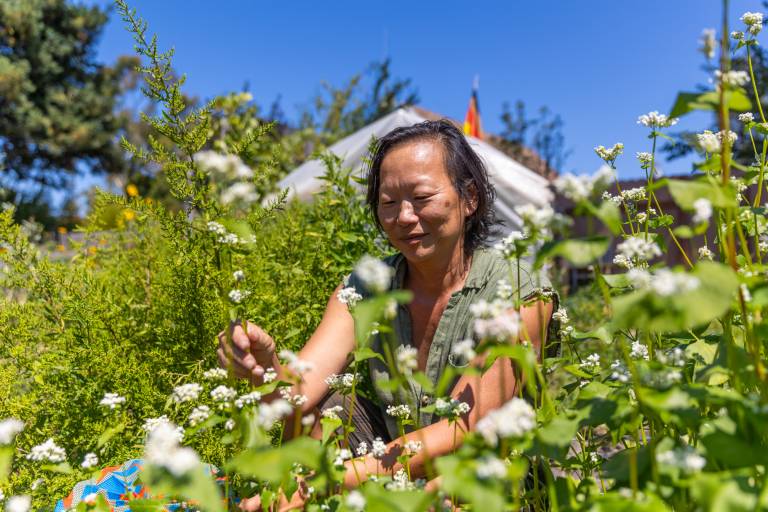
A Santa Cruz Gardening Collective Cultivates Belonging for Queer and Trans Asian Americans
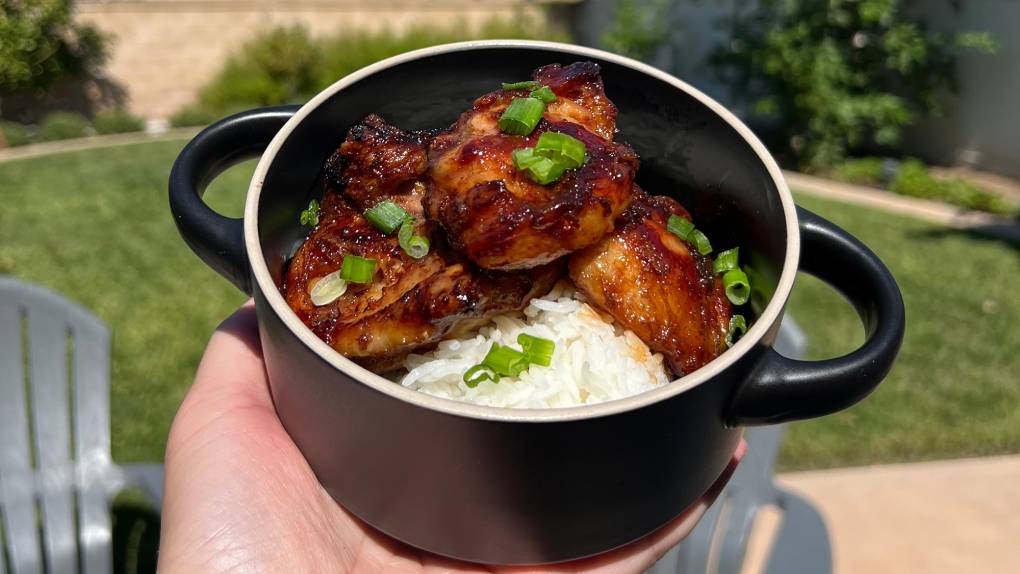
This Night Market Puts Pacific Island Cuisine Front and Center
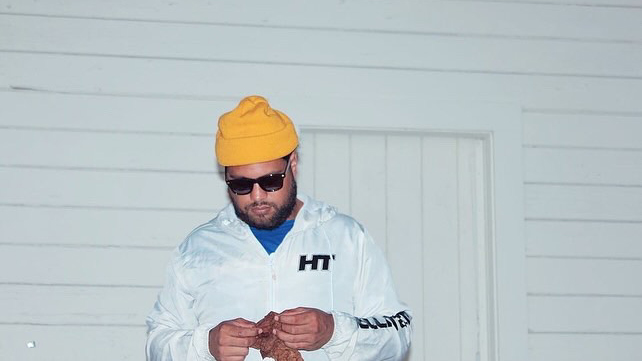
Hayward Isn’t Known For Hip-Hop — But This Samoan Rapper Is Changing That
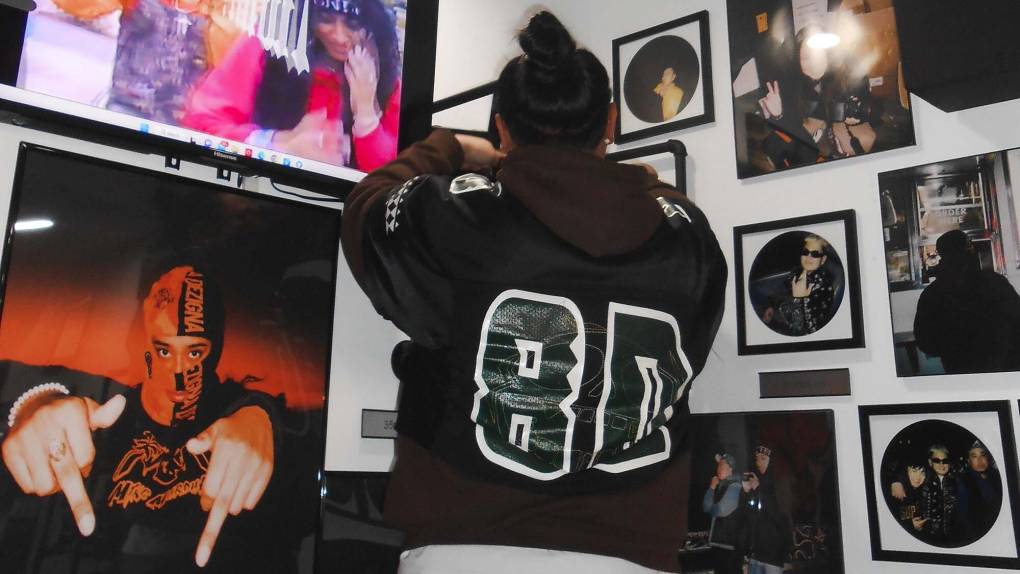
San Jose's Japantown Highlights Underground Scene With 'Photo Night'
‘Sesame Street’ Introduces TJ, the Show’s First Filipino American Muppet
Scholastic Wanted to License Her Children’s Book — if She Cut a Part About ‘Racism’
Writer Edward Gunawan Wants to Destigmatize Asian Mental Health
Constance Wu's Reveal Speaks to the Profound Pressure Asian American Women Face
Maxine Hong Kingston's Work is as Wondrous and Alive as Ever in a New Collection
Sponsored
Player sponsored by
window.__IS_SSR__=true
window.__INITIAL_STATE__={
"attachmentsReducer": {
"audio_0": {
"type": "attachments",
"id": "audio_0",
"imgSizes": {
"kqedFullSize": {
"file": "https://ww2.kqed.org/news/wp-content/themes/KQED-unified/img/audio_bgs/background0.jpg"
}
}
},
"audio_1": {
"type": "attachments",
"id": "audio_1",
"imgSizes": {
"kqedFullSize": {
"file": "https://ww2.kqed.org/news/wp-content/themes/KQED-unified/img/audio_bgs/background1.jpg"
}
}
},
"audio_2": {
"type": "attachments",
"id": "audio_2",
"imgSizes": {
"kqedFullSize": {
"file": "https://ww2.kqed.org/news/wp-content/themes/KQED-unified/img/audio_bgs/background2.jpg"
}
}
},
"audio_3": {
"type": "attachments",
"id": "audio_3",
"imgSizes": {
"kqedFullSize": {
"file": "https://ww2.kqed.org/news/wp-content/themes/KQED-unified/img/audio_bgs/background3.jpg"
}
}
},
"audio_4": {
"type": "attachments",
"id": "audio_4",
"imgSizes": {
"kqedFullSize": {
"file": "https://ww2.kqed.org/news/wp-content/themes/KQED-unified/img/audio_bgs/background4.jpg"
}
}
},
"placeholder": {
"type": "attachments",
"id": "placeholder",
"imgSizes": {
"thumbnail": {
"file": "https://cdn.kqed.org/wp-content/uploads/2024/12/KQED-Default-Image-816638274-2000x1333-1-160x107.jpg",
"width": 160,
"height": 107,
"mimeType": "image/jpeg"
},
"medium": {
"file": "https://cdn.kqed.org/wp-content/uploads/2024/12/KQED-Default-Image-816638274-2000x1333-1-800x533.jpg",
"width": 800,
"height": 533,
"mimeType": "image/jpeg"
},
"medium_large": {
"file": "https://cdn.kqed.org/wp-content/uploads/2024/12/KQED-Default-Image-816638274-2000x1333-1-768x512.jpg",
"width": 768,
"height": 512,
"mimeType": "image/jpeg"
},
"large": {
"file": "https://cdn.kqed.org/wp-content/uploads/2024/12/KQED-Default-Image-816638274-2000x1333-1-1020x680.jpg",
"width": 1020,
"height": 680,
"mimeType": "image/jpeg"
},
"1536x1536": {
"file": "https://cdn.kqed.org/wp-content/uploads/2024/12/KQED-Default-Image-816638274-2000x1333-1-1536x1024.jpg",
"width": 1536,
"height": 1024,
"mimeType": "image/jpeg"
},
"fd-lrg": {
"file": "https://cdn.kqed.org/wp-content/uploads/2024/12/KQED-Default-Image-816638274-2000x1333-1-1536x1024.jpg",
"width": 1536,
"height": 1024,
"mimeType": "image/jpeg"
},
"fd-med": {
"file": "https://cdn.kqed.org/wp-content/uploads/2024/12/KQED-Default-Image-816638274-2000x1333-1-1020x680.jpg",
"width": 1020,
"height": 680,
"mimeType": "image/jpeg"
},
"fd-sm": {
"file": "https://cdn.kqed.org/wp-content/uploads/2024/12/KQED-Default-Image-816638274-2000x1333-1-800x533.jpg",
"width": 800,
"height": 533,
"mimeType": "image/jpeg"
},
"post-thumbnail": {
"file": "https://cdn.kqed.org/wp-content/uploads/2024/12/KQED-Default-Image-816638274-2000x1333-1-672x372.jpg",
"width": 672,
"height": 372,
"mimeType": "image/jpeg"
},
"twentyfourteen-full-width": {
"file": "https://cdn.kqed.org/wp-content/uploads/2024/12/KQED-Default-Image-816638274-2000x1333-1-1038x576.jpg",
"width": 1038,
"height": 576,
"mimeType": "image/jpeg"
},
"xxsmall": {
"file": "https://cdn.kqed.org/wp-content/uploads/2024/12/KQED-Default-Image-816638274-2000x1333-1-160x107.jpg",
"width": 160,
"height": 107,
"mimeType": "image/jpeg"
},
"xsmall": {
"file": "https://cdn.kqed.org/wp-content/uploads/2024/12/KQED-Default-Image-816638274-2000x1333-1-672x372.jpg",
"width": 672,
"height": 372,
"mimeType": "image/jpeg"
},
"small": {
"file": "https://cdn.kqed.org/wp-content/uploads/2024/12/KQED-Default-Image-816638274-2000x1333-1-672x372.jpg",
"width": 672,
"height": 372,
"mimeType": "image/jpeg"
},
"xlarge": {
"file": "https://cdn.kqed.org/wp-content/uploads/2024/12/KQED-Default-Image-816638274-2000x1333-1-1020x680.jpg",
"width": 1020,
"height": 680,
"mimeType": "image/jpeg"
},
"full-width": {
"file": "https://cdn.kqed.org/wp-content/uploads/2024/12/KQED-Default-Image-816638274-2000x1333-1-1920x1280.jpg",
"width": 1920,
"height": 1280,
"mimeType": "image/jpeg"
},
"guest-author-32": {
"file": "https://cdn.kqed.org/wp-content/uploads/2025/01/KQED-Default-Image-816638274-1333x1333-1-160x160.jpg",
"width": 32,
"height": 32,
"mimeType": "image/jpeg"
},
"guest-author-50": {
"file": "https://cdn.kqed.org/wp-content/uploads/2025/01/KQED-Default-Image-816638274-1333x1333-1-160x160.jpg",
"width": 50,
"height": 50,
"mimeType": "image/jpeg"
},
"guest-author-64": {
"file": "https://cdn.kqed.org/wp-content/uploads/2025/01/KQED-Default-Image-816638274-1333x1333-1-160x160.jpg",
"width": 64,
"height": 64,
"mimeType": "image/jpeg"
},
"guest-author-96": {
"file": "https://cdn.kqed.org/wp-content/uploads/2025/01/KQED-Default-Image-816638274-1333x1333-1-160x160.jpg",
"width": 96,
"height": 96,
"mimeType": "image/jpeg"
},
"guest-author-128": {
"file": "https://cdn.kqed.org/wp-content/uploads/2025/01/KQED-Default-Image-816638274-1333x1333-1-160x160.jpg",
"width": 128,
"height": 128,
"mimeType": "image/jpeg"
},
"detail": {
"file": "https://cdn.kqed.org/wp-content/uploads/2025/01/KQED-Default-Image-816638274-1333x1333-1-160x160.jpg",
"width": 160,
"height": 160,
"mimeType": "image/jpeg"
},
"kqedFullSize": {
"file": "https://cdn.kqed.org/wp-content/uploads/2024/12/KQED-Default-Image-816638274-2000x1333-1.jpg",
"width": 2000,
"height": 1333
}
}
},
"arts_13980879": {
"type": "attachments",
"id": "arts_13980879",
"meta": {
"index": "attachments_1716263798",
"site": "arts",
"id": "13980879",
"found": true
},
"title": "250830_AAPIGARDENINGCOLLECTIVE00765_TV-KQED",
"publishDate": 1756829570,
"status": "inherit",
"parent": 0,
"modified": 1758147744,
"caption": "Tam Welch, co-founder of Bitter Cotyledons, poses for a portrait with the Japanese buckwheat plant in Santa Cruz on Aug. 30, 2025. Bitter Cotyledons strives to build a community for queer and Asian individuals to connect with their culture through gardening and food.",
"credit": "Tâm Vũ/KQED",
"altTag": "A person of Asian descent poses for a portrait among buckwheat plants in a garden.",
"description": null,
"imgSizes": {
"thumbnail": {
"file": "https://cdn.kqed.org/wp-content/uploads/sites/2/2025/09/250830_AAPIGARDENINGCOLLECTIVE00765_TV-KQED-160x107.jpg",
"width": 160,
"height": 107,
"mimeType": "image/jpeg"
},
"medium_large": {
"file": "https://cdn.kqed.org/wp-content/uploads/sites/2/2025/09/250830_AAPIGARDENINGCOLLECTIVE00765_TV-KQED-768x512.jpg",
"width": 768,
"height": 512,
"mimeType": "image/jpeg"
},
"1536x1536": {
"file": "https://cdn.kqed.org/wp-content/uploads/sites/2/2025/09/250830_AAPIGARDENINGCOLLECTIVE00765_TV-KQED-1536x1024.jpg",
"width": 1536,
"height": 1024,
"mimeType": "image/jpeg"
},
"post-thumbnail": {
"file": "https://cdn.kqed.org/wp-content/uploads/sites/2/2025/09/250830_AAPIGARDENINGCOLLECTIVE00765_TV-KQED-672x372.jpg",
"width": 672,
"height": 372,
"mimeType": "image/jpeg"
},
"twentyfourteen-full-width": {
"file": "https://cdn.kqed.org/wp-content/uploads/sites/2/2025/09/250830_AAPIGARDENINGCOLLECTIVE00765_TV-KQED-1038x576.jpg",
"width": 1038,
"height": 576,
"mimeType": "image/jpeg"
},
"kqedFullSize": {
"file": "https://cdn.kqed.org/wp-content/uploads/sites/2/2025/09/250830_AAPIGARDENINGCOLLECTIVE00765_TV-KQED.jpg",
"width": 2000,
"height": 1333
}
},
"fetchFailed": false,
"isLoading": false
},
"arts_13966379": {
"type": "attachments",
"id": "arts_13966379",
"meta": {
"index": "attachments_1716263798",
"site": "arts",
"id": "13966379",
"found": true
},
"title": "Tokemoanas turkey tail bowl",
"publishDate": 1728516400,
"status": "inherit",
"parent": 13966361,
"modified": 1728516450,
"caption": "Braised turkey tails over rice — a Tongan specialty courtesy of Tokemoana.",
"credit": "Courtesy of Tokemoana Foods",
"altTag": "Braised turkey tails over rice in a small pot.",
"description": null,
"imgSizes": {
"medium": {
"file": "https://cdn.kqed.org/wp-content/uploads/sites/2/2024/10/Tokemoanas-turkey-tail-bowl-800x450.jpg",
"width": 800,
"height": 450,
"mimeType": "image/jpeg"
},
"large": {
"file": "https://cdn.kqed.org/wp-content/uploads/sites/2/2024/10/Tokemoanas-turkey-tail-bowl-1020x574.jpg",
"width": 1020,
"height": 574,
"mimeType": "image/jpeg"
},
"thumbnail": {
"file": "https://cdn.kqed.org/wp-content/uploads/sites/2/2024/10/Tokemoanas-turkey-tail-bowl-160x90.jpg",
"width": 160,
"height": 90,
"mimeType": "image/jpeg"
},
"medium_large": {
"file": "https://cdn.kqed.org/wp-content/uploads/sites/2/2024/10/Tokemoanas-turkey-tail-bowl-768x432.jpg",
"width": 768,
"height": 432,
"mimeType": "image/jpeg"
},
"1536x1536": {
"file": "https://cdn.kqed.org/wp-content/uploads/sites/2/2024/10/Tokemoanas-turkey-tail-bowl-1536x865.jpg",
"width": 1536,
"height": 865,
"mimeType": "image/jpeg"
},
"post-thumbnail": {
"file": "https://cdn.kqed.org/wp-content/uploads/sites/2/2024/10/Tokemoanas-turkey-tail-bowl-672x372.jpg",
"width": 672,
"height": 372,
"mimeType": "image/jpeg"
},
"twentyfourteen-full-width": {
"file": "https://cdn.kqed.org/wp-content/uploads/sites/2/2024/10/Tokemoanas-turkey-tail-bowl-1038x576.jpg",
"width": 1038,
"height": 576,
"mimeType": "image/jpeg"
},
"full-width": {
"file": "https://cdn.kqed.org/wp-content/uploads/sites/2/2024/10/Tokemoanas-turkey-tail-bowl-1920x1081.jpg",
"width": 1920,
"height": 1081,
"mimeType": "image/jpeg"
},
"kqedFullSize": {
"file": "https://cdn.kqed.org/wp-content/uploads/sites/2/2024/10/Tokemoanas-turkey-tail-bowl.jpg",
"width": 2000,
"height": 1126
}
},
"fetchFailed": false,
"isLoading": false
},
"arts_13962937": {
"type": "attachments",
"id": "arts_13962937",
"meta": {
"index": "attachments_1716263798",
"site": "arts",
"id": "13962937",
"found": true
},
"title": "AdamBeen.Thumb",
"publishDate": 1724191812,
"status": "inherit",
"parent": 13962694,
"modified": 1724191843,
"caption": "AdamBeen is an American Samoa-born, Hayward-raised rapper bringing attention to his city through music and streetwear.",
"credit": "Courtesy AdamBeen",
"altTag": "A rapper in a yellow beanie and sunglasses stands against a white wall",
"description": null,
"imgSizes": {
"thumbnail": {
"file": "https://cdn.kqed.org/wp-content/uploads/sites/2/2024/08/AdamBeen.Thumb_-160x90.jpg",
"width": 160,
"height": 90,
"mimeType": "image/jpeg"
},
"kqedFullSize": {
"file": "https://cdn.kqed.org/wp-content/uploads/sites/2/2024/08/AdamBeen.Thumb_.jpg",
"width": 642,
"height": 361
}
},
"fetchFailed": false,
"isLoading": false
},
"arts_13953108": {
"type": "attachments",
"id": "arts_13953108",
"meta": {
"index": "attachments_1716263798",
"site": "arts",
"id": "13953108",
"found": true
},
"parent": 13952476,
"imgSizes": {
"twentyfourteen-full-width": {
"file": "https://cdn.kqed.org/wp-content/uploads/sites/2/2024/02/img_0390-crop-1038x576.jpg",
"width": 1038,
"mimeType": "image/jpeg",
"height": 576
},
"thumbnail": {
"file": "https://cdn.kqed.org/wp-content/uploads/sites/2/2024/02/img_0390-crop-160x90.jpg",
"width": 160,
"mimeType": "image/jpeg",
"height": 90
},
"post-thumbnail": {
"file": "https://cdn.kqed.org/wp-content/uploads/sites/2/2024/02/img_0390-crop-672x372.jpg",
"width": 672,
"mimeType": "image/jpeg",
"height": 372
},
"kqedFullSize": {
"file": "https://cdn.kqed.org/wp-content/uploads/sites/2/2024/02/img_0390-crop.jpg",
"width": 2000,
"height": 1125
},
"large": {
"file": "https://cdn.kqed.org/wp-content/uploads/sites/2/2024/02/img_0390-crop-1020x574.jpg",
"width": 1020,
"mimeType": "image/jpeg",
"height": 574
},
"1536x1536": {
"file": "https://cdn.kqed.org/wp-content/uploads/sites/2/2024/02/img_0390-crop-1536x864.jpg",
"width": 1536,
"mimeType": "image/jpeg",
"height": 864
},
"full-width": {
"file": "https://cdn.kqed.org/wp-content/uploads/sites/2/2024/02/img_0390-crop-1920x1080.jpg",
"width": 1920,
"mimeType": "image/jpeg",
"height": 1080
},
"medium": {
"file": "https://cdn.kqed.org/wp-content/uploads/sites/2/2024/02/img_0390-crop-800x450.jpg",
"width": 800,
"mimeType": "image/jpeg",
"height": 450
},
"medium_large": {
"file": "https://cdn.kqed.org/wp-content/uploads/sites/2/2024/02/img_0390-crop-768x432.jpg",
"width": 768,
"mimeType": "image/jpeg",
"height": 432
}
},
"publishDate": 1709068359,
"modified": 1709080129,
"caption": "MadeByRila, a San Jose designer who co-owns Coldwater Clothing, helped set up last year's edition of 'A Photo Night in Japantown.'",
"description": null,
"title": "img_0390-crop",
"credit": "Alex Knowbody",
"status": "inherit",
"altTag": "an artist puts photographs up on a studio wall before an exhibition",
"fetchFailed": false,
"isLoading": false
},
"arts_13928937": {
"type": "attachments",
"id": "arts_13928937",
"meta": {
"index": "attachments_1716263798",
"site": "arts",
"id": "13928937",
"found": true
},
"parent": 13928931,
"imgSizes": {
"twentyfourteen-full-width": {
"file": "https://ww2.kqed.org/app/uploads/sites/2/2023/05/Screen-Shot-2023-05-10-at-10.08.03-AM-1038x576.png",
"width": 1038,
"mimeType": "image/png",
"height": 576
},
"thumbnail": {
"file": "https://ww2.kqed.org/app/uploads/sites/2/2023/05/Screen-Shot-2023-05-10-at-10.08.03-AM-160x103.png",
"width": 160,
"mimeType": "image/png",
"height": 103
},
"post-thumbnail": {
"file": "https://ww2.kqed.org/app/uploads/sites/2/2023/05/Screen-Shot-2023-05-10-at-10.08.03-AM-672x372.png",
"width": 672,
"mimeType": "image/png",
"height": 372
},
"kqedFullSize": {
"file": "https://ww2.kqed.org/app/uploads/sites/2/2023/05/Screen-Shot-2023-05-10-at-10.08.03-AM.png",
"width": 1360,
"height": 872
},
"large": {
"file": "https://ww2.kqed.org/app/uploads/sites/2/2023/05/Screen-Shot-2023-05-10-at-10.08.03-AM-1020x654.png",
"width": 1020,
"mimeType": "image/png",
"height": 654
},
"medium": {
"file": "https://ww2.kqed.org/app/uploads/sites/2/2023/05/Screen-Shot-2023-05-10-at-10.08.03-AM-800x513.png",
"width": 800,
"mimeType": "image/png",
"height": 513
},
"medium_large": {
"file": "https://ww2.kqed.org/app/uploads/sites/2/2023/05/Screen-Shot-2023-05-10-at-10.08.03-AM-768x492.png",
"width": 768,
"mimeType": "image/png",
"height": 492
}
},
"publishDate": 1683738552,
"modified": 1683738737,
"caption": "TJ is the first Filipino muppet on ‘Sesame Street.’",
"description": null,
"title": "TJ is the first Filipino muppet on ‘Sesame Street.’",
"credit": "Courtesy of Sesame Workshop. Photographer: John Barrett",
"status": "inherit",
"altTag": "A brown muppet with brown hair and purple nose smiles and waves. He is wearing a yellow and brown hoodie.",
"fetchFailed": false,
"isLoading": false
},
"arts_13927866": {
"type": "attachments",
"id": "arts_13927866",
"meta": {
"index": "attachments_1716263798",
"site": "arts",
"id": "13927866",
"found": true
},
"parent": 13927861,
"imgSizes": {
"twentyfourteen-full-width": {
"file": "https://ww2.kqed.org/app/uploads/sites/2/2023/04/Screen-Shot-2023-04-17-at-10.45.00-AM-1038x576.png",
"width": 1038,
"mimeType": "image/png",
"height": 576
},
"thumbnail": {
"file": "https://ww2.kqed.org/app/uploads/sites/2/2023/04/Screen-Shot-2023-04-17-at-10.45.00-AM-160x102.png",
"width": 160,
"mimeType": "image/png",
"height": 102
},
"post-thumbnail": {
"file": "https://ww2.kqed.org/app/uploads/sites/2/2023/04/Screen-Shot-2023-04-17-at-10.45.00-AM-672x372.png",
"width": 672,
"mimeType": "image/png",
"height": 372
},
"kqedFullSize": {
"file": "https://ww2.kqed.org/app/uploads/sites/2/2023/04/Screen-Shot-2023-04-17-at-10.45.00-AM.png",
"width": 1666,
"height": 1066
},
"large": {
"file": "https://ww2.kqed.org/app/uploads/sites/2/2023/04/Screen-Shot-2023-04-17-at-10.45.00-AM-1020x653.png",
"width": 1020,
"mimeType": "image/png",
"height": 653
},
"1536x1536": {
"file": "https://ww2.kqed.org/app/uploads/sites/2/2023/04/Screen-Shot-2023-04-17-at-10.45.00-AM-1536x983.png",
"width": 1536,
"mimeType": "image/png",
"height": 983
},
"medium": {
"file": "https://ww2.kqed.org/app/uploads/sites/2/2023/04/Screen-Shot-2023-04-17-at-10.45.00-AM-800x512.png",
"width": 800,
"mimeType": "image/png",
"height": 512
},
"medium_large": {
"file": "https://ww2.kqed.org/app/uploads/sites/2/2023/04/Screen-Shot-2023-04-17-at-10.45.00-AM-768x491.png",
"width": 768,
"mimeType": "image/png",
"height": 491
}
},
"publishDate": 1681753543,
"modified": 1681753543,
"caption": null,
"description": null,
"title": "Screen Shot 2023-04-17 at 10.45.00 AM",
"credit": null,
"status": "inherit",
"altTag": null,
"fetchFailed": false,
"isLoading": false
},
"arts_13920459": {
"type": "attachments",
"id": "arts_13920459",
"meta": {
"index": "attachments_1716263798",
"site": "arts",
"id": "13920459",
"found": true
},
"parent": 13920414,
"imgSizes": {
"twentyfourteen-full-width": {
"file": "https://ww2.kqed.org/app/uploads/sites/2/2022/10/PP_Exhibition4-1038x576.jpg",
"width": 1038,
"mimeType": "image/jpeg",
"height": 576
},
"thumbnail": {
"file": "https://ww2.kqed.org/app/uploads/sites/2/2022/10/PP_Exhibition4-160x120.jpg",
"width": 160,
"mimeType": "image/jpeg",
"height": 120
},
"post-thumbnail": {
"file": "https://ww2.kqed.org/app/uploads/sites/2/2022/10/PP_Exhibition4-672x372.jpg",
"width": 672,
"mimeType": "image/jpeg",
"height": 372
},
"kqedFullSize": {
"file": "https://ww2.kqed.org/app/uploads/sites/2/2022/10/PP_Exhibition4.jpg",
"width": 1500,
"height": 1125
},
"large": {
"file": "https://ww2.kqed.org/app/uploads/sites/2/2022/10/PP_Exhibition4-1020x765.jpg",
"width": 1020,
"mimeType": "image/jpeg",
"height": 765
},
"medium": {
"file": "https://ww2.kqed.org/app/uploads/sites/2/2022/10/PP_Exhibition4-800x600.jpg",
"width": 800,
"mimeType": "image/jpeg",
"height": 600
},
"medium_large": {
"file": "https://ww2.kqed.org/app/uploads/sites/2/2022/10/PP_Exhibition4-768x576.jpg",
"width": 768,
"mimeType": "image/jpeg",
"height": 576
}
},
"publishDate": 1666028816,
"modified": 1666028885,
"caption": "Edward Gunawan installs his 'Press Pay' exhibition at the Oakland Asian Cultural Center.",
"description": null,
"title": "PP_Exhibition4",
"credit": "Rachall Lee",
"status": "inherit",
"altTag": null,
"fetchFailed": false,
"isLoading": false
},
"arts_13916262": {
"type": "attachments",
"id": "arts_13916262",
"meta": {
"index": "attachments_1716263798",
"site": "arts",
"id": "13916262",
"found": true
},
"parent": 13916258,
"imgSizes": {
"twentyfourteen-full-width": {
"file": "https://ww2.kqed.org/app/uploads/sites/2/2022/07/GettyImages-1404614011-1038x576.jpg",
"width": 1038,
"mimeType": "image/jpeg",
"height": 576
},
"thumbnail": {
"file": "https://ww2.kqed.org/app/uploads/sites/2/2022/07/GettyImages-1404614011-160x107.jpg",
"width": 160,
"mimeType": "image/jpeg",
"height": 107
},
"post-thumbnail": {
"file": "https://ww2.kqed.org/app/uploads/sites/2/2022/07/GettyImages-1404614011-672x372.jpg",
"width": 672,
"mimeType": "image/jpeg",
"height": 372
},
"kqedFullSize": {
"file": "https://ww2.kqed.org/app/uploads/sites/2/2022/07/GettyImages-1404614011-scaled.jpg",
"width": 2560,
"height": 1707
},
"2048x2048": {
"file": "https://ww2.kqed.org/app/uploads/sites/2/2022/07/GettyImages-1404614011-2048x1365.jpg",
"width": 2048,
"mimeType": "image/jpeg",
"height": 1365
},
"large": {
"file": "https://ww2.kqed.org/app/uploads/sites/2/2022/07/GettyImages-1404614011-1020x680.jpg",
"width": 1020,
"mimeType": "image/jpeg",
"height": 680
},
"1536x1536": {
"file": "https://ww2.kqed.org/app/uploads/sites/2/2022/07/GettyImages-1404614011-1536x1024.jpg",
"width": 1536,
"mimeType": "image/jpeg",
"height": 1024
},
"full-width": {
"file": "https://ww2.kqed.org/app/uploads/sites/2/2022/07/GettyImages-1404614011-1920x1280.jpg",
"width": 1920,
"mimeType": "image/jpeg",
"height": 1280
},
"medium": {
"file": "https://ww2.kqed.org/app/uploads/sites/2/2022/07/GettyImages-1404614011-800x533.jpg",
"width": 800,
"mimeType": "image/jpeg",
"height": 533
},
"medium_large": {
"file": "https://ww2.kqed.org/app/uploads/sites/2/2022/07/GettyImages-1404614011-768x512.jpg",
"width": 768,
"mimeType": "image/jpeg",
"height": 512
}
},
"publishDate": 1658192588,
"modified": 1658192862,
"caption": "Constance Wu attends the 'The Terminal List' premiere in L.A. on June 22, 2022.",
"description": null,
"title": "Constance Wu attends the 'The Terminal List' premiere in L.A. on June 22, 2022.",
"credit": "Axelle/Bauer-Griffin/FilmMagic",
"status": "inherit",
"altTag": "Constance Wu in fresh, dewy make-up turns towards the camera, half-smiling.",
"fetchFailed": false,
"isLoading": false
},
"arts_13914499": {
"type": "attachments",
"id": "arts_13914499",
"meta": {
"index": "attachments_1716263798",
"site": "arts",
"id": "13914499",
"found": true
},
"parent": 13914498,
"imgSizes": {
"twentyfourteen-full-width": {
"file": "https://ww2.kqed.org/app/uploads/sites/2/2022/06/unnamed-11-f5881063f8c2c3d8ea927b75c5db9ebd6f22069c-1003x576.jpg",
"width": 1003,
"mimeType": "image/jpeg",
"height": 576
},
"thumbnail": {
"file": "https://ww2.kqed.org/app/uploads/sites/2/2022/06/unnamed-11-f5881063f8c2c3d8ea927b75c5db9ebd6f22069c-160x120.jpg",
"width": 160,
"mimeType": "image/jpeg",
"height": 120
},
"post-thumbnail": {
"file": "https://ww2.kqed.org/app/uploads/sites/2/2022/06/unnamed-11-f5881063f8c2c3d8ea927b75c5db9ebd6f22069c-672x372.jpg",
"width": 672,
"mimeType": "image/jpeg",
"height": 372
},
"kqedFullSize": {
"file": "https://ww2.kqed.org/app/uploads/sites/2/2022/06/unnamed-11-f5881063f8c2c3d8ea927b75c5db9ebd6f22069c.jpg",
"width": 1003,
"height": 752
},
"medium": {
"file": "https://ww2.kqed.org/app/uploads/sites/2/2022/06/unnamed-11-f5881063f8c2c3d8ea927b75c5db9ebd6f22069c-800x600.jpg",
"width": 800,
"mimeType": "image/jpeg",
"height": 600
},
"medium_large": {
"file": "https://ww2.kqed.org/app/uploads/sites/2/2022/06/unnamed-11-f5881063f8c2c3d8ea927b75c5db9ebd6f22069c-768x576.jpg",
"width": 768,
"mimeType": "image/jpeg",
"height": 576
}
},
"publishDate": 1654621142,
"modified": 1654622561,
"caption": "The Library of America has just released a volume of Kingston's writings, including her her three most famous works. ",
"description": null,
"title": "The Library of America has just released a volume of Kingston's writings, including her her three most famous works.",
"credit": "Library of America",
"status": "inherit",
"altTag": "A young Asian woman, wavy dark hair worn in a central part, gazes at the camera with an enigmatic smile. She is seated in front of a neat hedge.",
"fetchFailed": false,
"isLoading": false
}
},
"audioPlayerReducer": {
"postId": "stream_live",
"isPaused": true,
"isPlaying": false,
"pfsActive": false,
"pledgeModalIsOpen": true,
"playerDrawerIsOpen": false
},
"authorsReducer": {
"byline_arts_13981369": {
"type": "authors",
"id": "byline_arts_13981369",
"meta": {
"override": true
},
"slug": "byline_arts_13981369",
"name": "Nicole J. Caruth",
"isLoading": false
},
"byline_arts_13928931": {
"type": "authors",
"id": "byline_arts_13928931",
"meta": {
"override": true
},
"slug": "byline_arts_13928931",
"name": "Suzanne Nuyen",
"isLoading": false
},
"byline_arts_13927861": {
"type": "authors",
"id": "byline_arts_13927861",
"meta": {
"override": true
},
"slug": "byline_arts_13927861",
"name": "Emma Bowman",
"isLoading": false
},
"byline_arts_13916258": {
"type": "authors",
"id": "byline_arts_13916258",
"meta": {
"override": true
},
"slug": "byline_arts_13916258",
"name": "Juliana Kim",
"isLoading": false
},
"byline_arts_13914498": {
"type": "authors",
"id": "byline_arts_13914498",
"meta": {
"override": true
},
"slug": "byline_arts_13914498",
"name": "John Powers",
"isLoading": false
},
"ltsai": {
"type": "authors",
"id": "11743",
"meta": {
"index": "authors_1716337520",
"id": "11743",
"found": true
},
"name": "Luke Tsai",
"firstName": "Luke",
"lastName": "Tsai",
"slug": "ltsai",
"email": "ltsai@kqed.org",
"display_author_email": true,
"staff_mastheads": [
"arts"
],
"title": "Food Editor",
"bio": "Luke Tsai is KQED's food editor and resident stinky tofu connoisseur. Prior to KQED, he was an editor at Eater SF, \u003cem>San Francisco \u003c/em>magazine, and the \u003cem>East Bay Express\u003c/em>, and his work has also appeared in TASTE, the \u003cem>San Francisco Chronicle\u003c/em>, and the \u003cem>Best Food Writing\u003c/em> anthology. When he isn't writing or editing, you'll find him eating most everything he can get his hands on.",
"avatar": "https://secure.gravatar.com/avatar/d1ff591a3047b143a0e23cf7f28fcac0?s=600&d=blank&r=g",
"twitter": "theluketsai",
"facebook": null,
"instagram": null,
"linkedin": null,
"sites": [
{
"site": "",
"roles": [
"editor"
]
},
{
"site": "arts",
"roles": [
"administrator"
]
},
{
"site": "bayareabites",
"roles": [
"editor"
]
},
{
"site": "food",
"roles": [
"editor"
]
}
],
"headData": {
"title": "Luke Tsai | KQED",
"description": "Food Editor",
"ogImgSrc": "https://secure.gravatar.com/avatar/d1ff591a3047b143a0e23cf7f28fcac0?s=600&d=blank&r=g",
"twImgSrc": "https://secure.gravatar.com/avatar/d1ff591a3047b143a0e23cf7f28fcac0?s=600&d=blank&r=g"
},
"isLoading": false,
"link": "/author/ltsai"
},
"achazaro": {
"type": "authors",
"id": "11748",
"meta": {
"index": "authors_1716337520",
"id": "11748",
"found": true
},
"name": "Alan Chazaro",
"firstName": "Alan",
"lastName": "Chazaro",
"slug": "achazaro",
"email": "agchazaro@gmail.com",
"display_author_email": true,
"staff_mastheads": [],
"title": "Food Writer and Reporter",
"bio": "Alan Chazaro is the author of \u003cem>This Is Not a Frank Ocean Cover Album\u003c/em> (Black Lawrence Press, 2019), \u003cem>Piñata Theory\u003c/em> (Black Lawrence Press, 2020), and \u003cem>Notes from the Eastern Span of the Bay Bridge\u003c/em> (Ghost City Press, 2021). He is a graduate of June Jordan’s Poetry for the People program at UC Berkeley and a former Lawrence Ferlinghetti Fellow at the University of San Francisco. He writes about sports, food, art, music, education, and culture while repping the Bay on \u003ca href=\"https://twitter.com/alan_chazaro\">Twitter\u003c/a> and \u003ca href=\"https://www.instagram.com/alan_chazaro/?hl=en\">Instagram\u003c/a> at @alan_chazaro.",
"avatar": "https://secure.gravatar.com/avatar/ea8b6dd970fc5c29e7a188e7d5861df7?s=600&d=blank&r=g",
"twitter": "alan_chazaro",
"facebook": null,
"instagram": null,
"linkedin": null,
"sites": [
{
"site": "arts",
"roles": [
"contributor"
]
},
{
"site": "news",
"roles": [
"editor"
]
}
],
"headData": {
"title": "Alan Chazaro | KQED",
"description": "Food Writer and Reporter",
"ogImgSrc": "https://secure.gravatar.com/avatar/ea8b6dd970fc5c29e7a188e7d5861df7?s=600&d=blank&r=g",
"twImgSrc": "https://secure.gravatar.com/avatar/ea8b6dd970fc5c29e7a188e7d5861df7?s=600&d=blank&r=g"
},
"isLoading": false,
"link": "/author/achazaro"
},
"vesposito": {
"type": "authors",
"id": "11934",
"meta": {
"index": "authors_1716337520",
"id": "11934",
"found": true
},
"name": "Veronica Esposito",
"firstName": "Veronica",
"lastName": "Esposito",
"slug": "vesposito",
"email": "ladoppiavitadinica@gmail.com",
"display_author_email": false,
"staff_mastheads": [],
"title": "KQED Contributor",
"bio": "Veronica Esposito is a Licensed Marriage and Family Therapist, as well as a freelance journalist covering the arts, lifestyle, and social justice for venues including The Guardian, KQED, World Literature Today, and many others. Her writing has appeared in dozens of venues, and she has published four books. As a therapist, she specializes in supporting and advocating for trans individuals, and more generally helps clients process and overcome traumatic histories, manage life transitions, and tell their own story.",
"avatar": "https://secure.gravatar.com/avatar/503a7126ebd8cb299fb632f755dac767?s=600&d=blank&r=g",
"twitter": null,
"facebook": null,
"instagram": null,
"linkedin": null,
"sites": [
{
"site": "arts",
"roles": [
"author"
]
}
],
"headData": {
"title": "Veronica Esposito | KQED",
"description": "KQED Contributor",
"ogImgSrc": "https://secure.gravatar.com/avatar/503a7126ebd8cb299fb632f755dac767?s=600&d=blank&r=g",
"twImgSrc": "https://secure.gravatar.com/avatar/503a7126ebd8cb299fb632f755dac767?s=600&d=blank&r=g"
},
"isLoading": false,
"link": "/author/vesposito"
}
},
"breakingNewsReducer": {},
"pagesReducer": {},
"postsReducer": {
"stream_live": {
"type": "live",
"id": "stream_live",
"audioUrl": "https://streams.kqed.org/kqedradio",
"title": "Live Stream",
"excerpt": "Live Stream information currently unavailable.",
"link": "/radio",
"featImg": "",
"label": {
"name": "KQED Live",
"link": "/"
}
},
"stream_kqedNewscast": {
"type": "posts",
"id": "stream_kqedNewscast",
"audioUrl": "https://www.kqed.org/.stream/anon/radio/RDnews/newscast.mp3?_=1",
"title": "KQED Newscast",
"featImg": "",
"label": {
"name": "88.5 FM",
"link": "/"
}
},
"arts_13981369": {
"type": "posts",
"id": "arts_13981369",
"meta": {
"index": "posts_1716263798",
"site": "arts",
"id": "13981369",
"score": null,
"sort": [
1758132012000
]
},
"guestAuthors": [],
"slug": "a-santa-cruz-gardening-collective-cultivates-belonging-for-queer-and-trans-asian-americans",
"title": "A Santa Cruz Gardening Collective Cultivates Belonging for Queer and Trans Asian Americans",
"publishDate": 1758132012,
"format": "standard",
"headTitle": "A Santa Cruz Gardening Collective Cultivates Belonging for Queer and Trans Asian Americans | KQED",
"labelTerm": {
"site": "arts"
},
"content": "\u003cp>It’s a cloudy June morning at a community garden in \u003ca href=\"https://www.kqed.org/news/tag/santa-cruz\">Santa Cruz\u003c/a>, a verdant green space tucked into the U-shaped end of a residential cul-de-sac. Grassy pathways wind past small garden plots, each an expression of the interests or culture of its caretaker. Some beds burst with vegetables and herbs while others sit bare, their damp soil just waiting for new seeds to take root.\u003c/p>\n\u003cp>At the eastern edge of the garden, a rainbow flag flutters in the wind, signaling the location of the Bitter Cotyledons, a queer and trans Asian American gardening collective. Here, four longtime members talk excitedly about their plans for their plants.\u003c/p>\n\u003cp>A thick bush of Japanese buckwheat, with its distinct heart-shaped leaves and tiny white flowers, is earmarked for an experiment in milling soba noodle flour. A type of mugwort native to Korea and Japan is set aside for making mochi or herbal cigarettes. Chrysanthemum bushes that produce white, fluffy flowers in the fall are reserved for a traditional Chinese tea.\u003c/p>\n\u003cp>[ad fullwidth]\u003c/p>\n\u003cp>“We basically grow Asian vegetables to understand and explore our cultural identities and ancestries, but through our queer experiences of being in diaspora,” said Kellee Matsushita-Tseng, a fourth-generation Japanese American and third-generation Chinese American farmer.\u003c/p>\n\u003cp>In 2019, she co-founded the Bitter Cotyledons with her partner, Tam Welch, a Korean American who works in the arts. As Matsushita-Tseng explained, the name of the collective carries ideas about the nourishing qualities of bitter Asian foods and queer communities — and how both can grow despite being underappreciated. (A cotyledon is the first leaf that emerges from a plant embryo, providing it with nutrients while it grows.)\u003c/p>\n\u003cfigure id=\"attachment_13980873\" class=\"wp-caption aligncenter\" style=\"max-width: 2000px\">\u003cimg loading=\"lazy\" decoding=\"async\" class=\"size-full wp-image-13980873\" src=\"https://cdn.kqed.org/wp-content/uploads/sites/2/2025/09/250830_AAPIGARDENINGCOLLECTIVE00282_TV-KQED.jpg\" alt=\"\" width=\"2000\" height=\"1333\" srcset=\"https://cdn.kqed.org/wp-content/uploads/sites/2/2025/09/250830_AAPIGARDENINGCOLLECTIVE00282_TV-KQED.jpg 2000w, https://cdn.kqed.org/wp-content/uploads/sites/2/2025/09/250830_AAPIGARDENINGCOLLECTIVE00282_TV-KQED-160x107.jpg 160w, https://cdn.kqed.org/wp-content/uploads/sites/2/2025/09/250830_AAPIGARDENINGCOLLECTIVE00282_TV-KQED-768x512.jpg 768w, https://cdn.kqed.org/wp-content/uploads/sites/2/2025/09/250830_AAPIGARDENINGCOLLECTIVE00282_TV-KQED-1536x1024.jpg 1536w\" sizes=\"auto, (max-width: 2000px) 100vw, 2000px\">\u003cfigcaption class=\"wp-caption-text\">Kellee Matsushita-Tseng, founder of Bitter Cotyledons, poses for a portrait at the collective’s community garden in Santa Cruz on Aug. 30, 2025. Bitter Cotyledons strives to build a community for queer and Asian individuals to connect with their culture through gardening and food. \u003ccite>(Tâm Vũ/KQED)\u003c/cite>\u003c/figcaption>\u003c/figure>\n\u003cp>Every weekend, the Bitter Cotyledons meet to tend their plot at the community garden, a city-owned space. With twelve regularly active members, the collective is growing around 35 different vegetables and herbs, including Chinese licorice, Japanese Akahana Mame beans, Vietnamese coriander and perilla. It’s a lot for their 750 square feet of land (300 of which is on loan from a neighboring gardener). If given more space, they’d keep expanding.\u003c/p>\n\u003cp>And they aren’t alone. \u003ca href=\"https://www.nass.usda.gov/Publications/Highlights/2024/Census22_HL_AsianProducers.pdf\">According\u003c/a> to the USDA, an increasing number of Asian Americans are getting into agriculture. Between 2017 and 2022, the number of Asian farmers and ranchers in the U.S. rose by 8 percent, even as the total number of farmers and ranchers fell by about 1 percent. California leads the way with the highest number of Asian farmers, including \u003ca href=\"https://www.masumoto.com/\">Matsumoto Family Farm\u003c/a> near Fresno, and \u003ca href=\"https://www.kqed.org/arts/13897752/radical-family-farms-asian-produce-taiwanese-identity-sonoma\">Leslie Wiser at Radical Family Farms\u003c/a> and Kristyn Leach at \u003ca href=\"https://www.kqed.org/arts/13928023/kristyn-leach-asian-american-farmer-gohyang-seed-campus-sebastopol\">Gohyang Fields\u003c/a>, both in Sebastopol. In some ways, the Bitter Cotyledons reflect this broader trend. But they aren’t growing crops for mass distribution or profit — they’re cultivating queer and cultural belonging.\u003c/p>\n\u003cp>“A lot of us have difficult or distant relationships with our blood families in part because of our queer identities,” Matsushita-Tseng explained. Coming together around plants is a way to connect with their cultures on their own terms and in alignment with their own values.\u003c/p>\n\u003ch2>Chrysanthemum dreams\u003c/h2>\n\u003cp>Outside the garden, the collective gets together periodically to cook, share meals and exchange recipes. Hot pot loaded with the different vegetables they’ve grown is a particular favorite.\u003c/p>\n\u003cp>In the past, the group has selected which plants to cultivate together, but this year, each member is responsible for one plant on their own, nurturing it from seed to the kitchen. “The one I’m focusing on this season is the chrysanthemum,” said Louise Leong, a Chinese American artist. She’s already tossed the edible greens from one variety of the flower into soup and rolled them into a batter with shrimp to make fritters.\u003c/p>\n\u003cfigure id=\"attachment_13980874\" class=\"wp-caption aligncenter\" style=\"max-width: 2000px\">\u003cimg loading=\"lazy\" decoding=\"async\" class=\"size-full wp-image-13980874\" src=\"https://cdn.kqed.org/wp-content/uploads/sites/2/2025/09/250830_AAPIGARDENINGCOLLECTIVE00370_TV-KQED.jpg\" alt=\"\" width=\"2000\" height=\"1333\" srcset=\"https://cdn.kqed.org/wp-content/uploads/sites/2/2025/09/250830_AAPIGARDENINGCOLLECTIVE00370_TV-KQED.jpg 2000w, https://cdn.kqed.org/wp-content/uploads/sites/2/2025/09/250830_AAPIGARDENINGCOLLECTIVE00370_TV-KQED-160x107.jpg 160w, https://cdn.kqed.org/wp-content/uploads/sites/2/2025/09/250830_AAPIGARDENINGCOLLECTIVE00370_TV-KQED-768x512.jpg 768w, https://cdn.kqed.org/wp-content/uploads/sites/2/2025/09/250830_AAPIGARDENINGCOLLECTIVE00370_TV-KQED-1536x1024.jpg 1536w\" sizes=\"auto, (max-width: 2000px) 100vw, 2000px\">\u003cfigcaption class=\"wp-caption-text\">Members of Bitter Cotyledons tend to their gardening plot in Santa Cruz on Aug. 30, 2025. \u003ccite>(Tâm Vũ/KQED)\u003c/cite>\u003c/figcaption>\u003c/figure>\n\u003cp>Leong joined the Bitter Cotyledons after responding to a call for new members on Lex, an app for finding LGBTQ+ friends. “It said something like, ‘Queer Asians who want to learn how to grow vegetables — join here,’” Leong said, chuckling. “At that time, I was getting more interested in my heritage and learning how to cook more Chinese dishes.” Bitter Cotyledons gave her a safe space to express the “shame” she felt for not already knowing how, she said.\u003c/p>\n\u003cp>Even if Leong had had that knowledge, sourcing the ingredients on her own wouldn’t have been easy. Santa Cruz’s lack of an Asian grocery store is a reason Leong and other collective members often hear for why Asian Americans wind up leaving the city.\u003c/p>\n\u003cp>Santa Cruz County has only a 6 percent Asian American population — a stark \u003ca href=\"https://www.census.gov/quickfacts/fact/table/santaclaracountycalifornia,santacruzcountycalifornia/PST045224\">contrast\u003c/a> to 43 percent “over the hill” in Santa Clara County, where Asian grocers and restaurants are far more abundant. Before they started growing their own produce, collective members routinely had to drive 30 miles to San Jose to shop at places like 99 Ranch, Mitsuwa Marketplace, Đại-Thành Supermarket or H-Mart if they wanted to cook anything with “special vegetables,” Matsushita-Tseng said.\u003c/p>\n\u003cp>That includes choy sum, gobo (Japanese burdock root), gai lan (Chinese broccoli) and mustard greens. Now, the collective’s garden allows members to cultivate hard-to-find varieties that aren’t available in grocery stores at all.\u003c/p>\n\u003ch2>A need for community\u003c/h2>\n\u003cp>At the Santa Cruz plot, the four gardeners who’d come to tend to their plots this day observed with concern that their mugwort had spread wildly, threatening to overrun the surrounding plants. Without hesitation, Nat L., one of the oldest members, took action, snipping off the tall stalks with garden shears while the others looked on, amused by their quick response.\u003c/p>\n\u003cp>“It was just three of us for a while,” said Nat, a biologist born and raised in Singapore who declined to give their last name. Nat met Matsushita-Tseng and Welch at a plant swap and joined Bitter Cotyledons during a time of intense isolation and introspection in the spring of 2021.\u003c/p>\n\u003cfigure id=\"attachment_13980878\" class=\"wp-caption aligncenter\" style=\"max-width: 2000px\">\u003cimg loading=\"lazy\" decoding=\"async\" class=\"size-full wp-image-13980878\" src=\"https://cdn.kqed.org/wp-content/uploads/sites/2/2025/09/250830_AAPIGARDENINGCOLLECTIVE00703_TV-KQED.jpg\" alt=\"\" width=\"2000\" height=\"1333\" srcset=\"https://cdn.kqed.org/wp-content/uploads/sites/2/2025/09/250830_AAPIGARDENINGCOLLECTIVE00703_TV-KQED.jpg 2000w, https://cdn.kqed.org/wp-content/uploads/sites/2/2025/09/250830_AAPIGARDENINGCOLLECTIVE00703_TV-KQED-160x107.jpg 160w, https://cdn.kqed.org/wp-content/uploads/sites/2/2025/09/250830_AAPIGARDENINGCOLLECTIVE00703_TV-KQED-768x512.jpg 768w, https://cdn.kqed.org/wp-content/uploads/sites/2/2025/09/250830_AAPIGARDENINGCOLLECTIVE00703_TV-KQED-1536x1024.jpg 1536w\" sizes=\"auto, (max-width: 2000px) 100vw, 2000px\">\u003cfigcaption class=\"wp-caption-text\">A black sesame plant grows on Bitter Cotyledons’ plot in Santa Cruz on Aug. 30, 2025. \u003ccite>(Tâm Vũ/KQED)\u003c/cite>\u003c/figcaption>\u003c/figure>\n\u003cp>California was slowly reopening after an almost yearlong lockdown. Anti-Asian rhetoric and hate crimes had surged after Donald Trump’s claims that China was to blame for COVID-19. A gunman had shot and killed eight people, six of Asian descent, at Young’s Asian Massage Parlor in Georgia.\u003c/p>\n\u003cp>“I was trying to figure out my place here, in a very white community, when all these massive discussions and questions around race and racial justice were happening,” Nat said. “There was a real need to be able to talk about it and have community, sometimes to just express frustrations at the system.”\u003c/p>\n\u003cp>Before she started the collective, Matsushita-Tseng came from a similar place. As a farmer, she often found herself in environments where she was the only queer person and person of color. Bitter Cotyledons was born out of “necessity,” she explained. “For queer folks, at least in my experience, our survival and well-being depend on the ability to be in community.”\u003c/p>\n\u003cp>Now involved in multiple land-based collectives, she also works with \u003ca href=\"https://www.secondgenerationseeds.com/\">Second Generation Seeds\u003c/a>, a group of farmers preserving Asian heirloom seeds — some of which have found their way into the Bitter Cotyledons plot.\u003c/p>\n\u003cp>As morning gave way to afternoon, other community gardeners slowly began arriving to work their soil and water their plants. Gophers tunneled underground, gnawing on roots and occasionally popping their heads up to sniff the air. One surfaced near Leong, who sat low to the ground in a small, repurposed classroom chair, reflecting on the benefits of collective gardening.\u003c/p>\n\u003cfigure id=\"attachment_13980876\" class=\"wp-caption aligncenter\" style=\"max-width: 2000px\">\u003cimg loading=\"lazy\" decoding=\"async\" class=\"size-full wp-image-13980876\" src=\"https://cdn.kqed.org/wp-content/uploads/sites/2/2025/09/250830_AAPIGARDENINGCOLLECTIVE00512_TV-KQED.jpg\" alt=\"\" width=\"2000\" height=\"1333\" srcset=\"https://cdn.kqed.org/wp-content/uploads/sites/2/2025/09/250830_AAPIGARDENINGCOLLECTIVE00512_TV-KQED.jpg 2000w, https://cdn.kqed.org/wp-content/uploads/sites/2/2025/09/250830_AAPIGARDENINGCOLLECTIVE00512_TV-KQED-160x107.jpg 160w, https://cdn.kqed.org/wp-content/uploads/sites/2/2025/09/250830_AAPIGARDENINGCOLLECTIVE00512_TV-KQED-768x512.jpg 768w, https://cdn.kqed.org/wp-content/uploads/sites/2/2025/09/250830_AAPIGARDENINGCOLLECTIVE00512_TV-KQED-1536x1024.jpg 1536w\" sizes=\"auto, (max-width: 2000px) 100vw, 2000px\">\u003cfigcaption class=\"wp-caption-text\">Harvested tomatoes fill containers. \u003ccite>(Tâm Vũ/KQED)\u003c/cite>\u003c/figcaption>\u003c/figure>\n\u003cp>Like others in the group, she said gardening with other queer Asian Americans has supported her mental health, something she thinks about deeply as a therapist’s wife. “Our families have all experienced trauma from migration or war, separation or interpersonal relationships,” Leong said. “But then there’s also this aspect where you don’t really talk about it. I think that’s fairly common in Asian families and Asian communities.”\u003c/p>\n\u003cp>In fact, research indicates that \u003ca href=\"https://www.mdpi.com/1660-4601/17/18/6740\">community gardening\u003c/a> and access to \u003ca href=\"https://pmc.ncbi.nlm.nih.gov/articles/PMC7829482/\">culturally significant foods\u003c/a> are both powerful tools for promoting mental well-being. Gardening with others in a group enhances resilience and reduces depression. And expressing one’s cultural identity through food has been associated with pleasure, belonging and comfort.\u003c/p>\n\u003cp>In the Bay Area, these wellness resources are particularly important, as financial barriers and a lack of gender- and culturally-affirming providers pose major obstacles to mental healthcare for queer and trans Asian Americans and Pacific Islanders, according to Jasmine Hoo, the healing justice organizer at \u003ca href=\"https://lavenderphoenix.org/\">Lavender Phoenix\u003c/a>, a Bay Area organization dedicated to meeting the needs of this population. While not a panacea, collective growing can provide gentle support, with benefits that sometimes extend beyond the garden.\u003c/p>\n\u003cp>For Bitter Cotyledons co-founder Welch, those benefits include being able to keep a roof over their head. For the last three years, the National Low Income Housing Coalition has \u003ca href=\"https://nlihc.org/sites/default/files/oor/2025_OOR-California.pdf\">ranked\u003c/a> Santa Cruz County the most costly place to rent, not only in California but in the nation. So when Welch’s landlord sold their apartment building, giving them two months to find a new place after 15 years of tenancy, the Bitter Cotyledons were the ones who stepped in, helping with the move and offering food.\u003c/p>\n\u003cfigure id=\"attachment_13980880\" class=\"wp-caption aligncenter\" style=\"max-width: 2000px\">\u003cimg loading=\"lazy\" decoding=\"async\" class=\"wp-image-13980880 size-full\" src=\"https://cdn.kqed.org/wp-content/uploads/sites/2/2025/09/250830_AAPIGARDENINGCOLLECTIVE00812_TV-KQED.jpg\" alt=\"\" width=\"2000\" height=\"1333\" srcset=\"https://cdn.kqed.org/wp-content/uploads/sites/2/2025/09/250830_AAPIGARDENINGCOLLECTIVE00812_TV-KQED.jpg 2000w, https://cdn.kqed.org/wp-content/uploads/sites/2/2025/09/250830_AAPIGARDENINGCOLLECTIVE00812_TV-KQED-160x107.jpg 160w, https://cdn.kqed.org/wp-content/uploads/sites/2/2025/09/250830_AAPIGARDENINGCOLLECTIVE00812_TV-KQED-768x512.jpg 768w, https://cdn.kqed.org/wp-content/uploads/sites/2/2025/09/250830_AAPIGARDENINGCOLLECTIVE00812_TV-KQED-1536x1024.jpg 1536w\" sizes=\"auto, (max-width: 2000px) 100vw, 2000px\">\u003cfigcaption class=\"wp-caption-text\">Tam Welch, co-founder of Bitter Cotyledons, poses for a portrait at the collective’s garden in Santa Cruz on Aug. 30, 2025. \u003ccite>(Tâm Vũ/KQED)\u003c/cite>\u003c/figcaption>\u003c/figure>\n\u003cp>“Without this group, I would not have stayed in Santa Cruz,” Welch said.\u003c/p>\n\u003cp>Before co-founding the gardening collective, Welch said it had been challenging to build a queer Asian community, as potential friends often moved away for more affordable housing. Now, Welch no longer worries about finding community because they know they’ll find it at their shared garden plot every weekend.\u003c/p>\n\u003cp>Bitter Cotyledons has gotten large enough now that most people hear about it through word of mouth. Recognizing the diversity of the Asian diaspora, the group is expanding to include Pacific Islanders, Southwest Asians and North Africans (\u003ca href=\"https://swanaalliance.com/about\">SWANA\u003c/a>).\u003c/p>\n\u003cp>“There’s a lot of interest in learning about culinary Asian ancestral foodways,” Welch said, noting that even straight people have inquired about joining the collective. However, Welch and Matsushita-Tseng are committed to preserving this uniquely queer space, ensuring their community has a place to feel rooted.\u003c/p>\n\u003cp>[ad floatright]\u003c/p>\n",
"blocks": [],
"excerpt": "The Bitter Cotyledons collective grows Asian crops to connect with their ancestors and help queer folks feel rooted.\r\n",
"status": "publish",
"parent": 0,
"modified": 1758554798,
"stats": {
"hasAudio": false,
"hasVideo": false,
"hasChartOrMap": false,
"iframeSrcs": [],
"hasGoogleForm": false,
"hasGallery": false,
"hasHearkenModule": false,
"hasPolis": false,
"paragraphCount": 31,
"wordCount": 1878
},
"headData": {
"title": "A Santa Cruz Gardening Collective Cultivates Belonging for Queer and Trans Asian Americans | KQED",
"description": "The Bitter Cotyledons collective grows Asian crops to connect with their ancestors and help queer folks feel rooted.\r\n",
"ogTitle": "",
"ogDescription": "",
"ogImgId": "",
"twTitle": "",
"twDescription": "",
"twImgId": "",
"schema": {
"@context": "https://schema.org",
"@type": "Article",
"headline": "A Santa Cruz Gardening Collective Cultivates Belonging for Queer and Trans Asian Americans",
"datePublished": "2025-09-17T11:00:12-07:00",
"dateModified": "2025-09-22T08:26:38-07:00",
"image": "https://cdn.kqed.org/wp-content/uploads/2020/02/KQED-OG-Image@1x.png"
}
},
"primaryCategory": {
"termId": 12276,
"slug": "food",
"name": "Food"
},
"sticky": false,
"nprByline": "Nicole J. Caruth",
"nprStoryId": "kqed-13981369",
"templateType": "standard",
"featuredImageType": "standard",
"excludeFromSiteSearch": "Include",
"showOnAuthorArchivePages": "No",
"articleAge": "0",
"path": "/arts/13981369/a-santa-cruz-gardening-collective-cultivates-belonging-for-queer-and-trans-asian-americans",
"audioTrackLength": null,
"parsedContent": [
{
"type": "contentString",
"content": "\u003cdiv class=\"post-body\">\u003cp>\u003cp>It’s a cloudy June morning at a community garden in \u003ca href=\"https://www.kqed.org/news/tag/santa-cruz\">Santa Cruz\u003c/a>, a verdant green space tucked into the U-shaped end of a residential cul-de-sac. Grassy pathways wind past small garden plots, each an expression of the interests or culture of its caretaker. Some beds burst with vegetables and herbs while others sit bare, their damp soil just waiting for new seeds to take root.\u003c/p>\n\u003cp>At the eastern edge of the garden, a rainbow flag flutters in the wind, signaling the location of the Bitter Cotyledons, a queer and trans Asian American gardening collective. Here, four longtime members talk excitedly about their plans for their plants.\u003c/p>\n\u003cp>A thick bush of Japanese buckwheat, with its distinct heart-shaped leaves and tiny white flowers, is earmarked for an experiment in milling soba noodle flour. A type of mugwort native to Korea and Japan is set aside for making mochi or herbal cigarettes. Chrysanthemum bushes that produce white, fluffy flowers in the fall are reserved for a traditional Chinese tea.\u003c/p>\n\u003cp>\u003c/p>\u003c/div>",
"attributes": {
"named": {},
"numeric": []
}
},
{
"type": "component",
"content": "",
"name": "ad",
"attributes": {
"named": {
"label": "fullwidth"
},
"numeric": [
"fullwidth"
]
}
},
{
"type": "contentString",
"content": "\u003cdiv class=\"post-body\">\u003cp>\u003c/p>\n\u003cp>“We basically grow Asian vegetables to understand and explore our cultural identities and ancestries, but through our queer experiences of being in diaspora,” said Kellee Matsushita-Tseng, a fourth-generation Japanese American and third-generation Chinese American farmer.\u003c/p>\n\u003cp>In 2019, she co-founded the Bitter Cotyledons with her partner, Tam Welch, a Korean American who works in the arts. As Matsushita-Tseng explained, the name of the collective carries ideas about the nourishing qualities of bitter Asian foods and queer communities — and how both can grow despite being underappreciated. (A cotyledon is the first leaf that emerges from a plant embryo, providing it with nutrients while it grows.)\u003c/p>\n\u003cfigure id=\"attachment_13980873\" class=\"wp-caption aligncenter\" style=\"max-width: 2000px\">\u003cimg loading=\"lazy\" decoding=\"async\" class=\"size-full wp-image-13980873\" src=\"https://cdn.kqed.org/wp-content/uploads/sites/2/2025/09/250830_AAPIGARDENINGCOLLECTIVE00282_TV-KQED.jpg\" alt=\"\" width=\"2000\" height=\"1333\" srcset=\"https://cdn.kqed.org/wp-content/uploads/sites/2/2025/09/250830_AAPIGARDENINGCOLLECTIVE00282_TV-KQED.jpg 2000w, https://cdn.kqed.org/wp-content/uploads/sites/2/2025/09/250830_AAPIGARDENINGCOLLECTIVE00282_TV-KQED-160x107.jpg 160w, https://cdn.kqed.org/wp-content/uploads/sites/2/2025/09/250830_AAPIGARDENINGCOLLECTIVE00282_TV-KQED-768x512.jpg 768w, https://cdn.kqed.org/wp-content/uploads/sites/2/2025/09/250830_AAPIGARDENINGCOLLECTIVE00282_TV-KQED-1536x1024.jpg 1536w\" sizes=\"auto, (max-width: 2000px) 100vw, 2000px\">\u003cfigcaption class=\"wp-caption-text\">Kellee Matsushita-Tseng, founder of Bitter Cotyledons, poses for a portrait at the collective’s community garden in Santa Cruz on Aug. 30, 2025. Bitter Cotyledons strives to build a community for queer and Asian individuals to connect with their culture through gardening and food. \u003ccite>(Tâm Vũ/KQED)\u003c/cite>\u003c/figcaption>\u003c/figure>\n\u003cp>Every weekend, the Bitter Cotyledons meet to tend their plot at the community garden, a city-owned space. With twelve regularly active members, the collective is growing around 35 different vegetables and herbs, including Chinese licorice, Japanese Akahana Mame beans, Vietnamese coriander and perilla. It’s a lot for their 750 square feet of land (300 of which is on loan from a neighboring gardener). If given more space, they’d keep expanding.\u003c/p>\n\u003cp>And they aren’t alone. \u003ca href=\"https://www.nass.usda.gov/Publications/Highlights/2024/Census22_HL_AsianProducers.pdf\">According\u003c/a> to the USDA, an increasing number of Asian Americans are getting into agriculture. Between 2017 and 2022, the number of Asian farmers and ranchers in the U.S. rose by 8 percent, even as the total number of farmers and ranchers fell by about 1 percent. California leads the way with the highest number of Asian farmers, including \u003ca href=\"https://www.masumoto.com/\">Matsumoto Family Farm\u003c/a> near Fresno, and \u003ca href=\"https://www.kqed.org/arts/13897752/radical-family-farms-asian-produce-taiwanese-identity-sonoma\">Leslie Wiser at Radical Family Farms\u003c/a> and Kristyn Leach at \u003ca href=\"https://www.kqed.org/arts/13928023/kristyn-leach-asian-american-farmer-gohyang-seed-campus-sebastopol\">Gohyang Fields\u003c/a>, both in Sebastopol. In some ways, the Bitter Cotyledons reflect this broader trend. But they aren’t growing crops for mass distribution or profit — they’re cultivating queer and cultural belonging.\u003c/p>\n\u003cp>“A lot of us have difficult or distant relationships with our blood families in part because of our queer identities,” Matsushita-Tseng explained. Coming together around plants is a way to connect with their cultures on their own terms and in alignment with their own values.\u003c/p>\n\u003ch2>Chrysanthemum dreams\u003c/h2>\n\u003cp>Outside the garden, the collective gets together periodically to cook, share meals and exchange recipes. Hot pot loaded with the different vegetables they’ve grown is a particular favorite.\u003c/p>\n\u003cp>In the past, the group has selected which plants to cultivate together, but this year, each member is responsible for one plant on their own, nurturing it from seed to the kitchen. “The one I’m focusing on this season is the chrysanthemum,” said Louise Leong, a Chinese American artist. She’s already tossed the edible greens from one variety of the flower into soup and rolled them into a batter with shrimp to make fritters.\u003c/p>\n\u003cfigure id=\"attachment_13980874\" class=\"wp-caption aligncenter\" style=\"max-width: 2000px\">\u003cimg loading=\"lazy\" decoding=\"async\" class=\"size-full wp-image-13980874\" src=\"https://cdn.kqed.org/wp-content/uploads/sites/2/2025/09/250830_AAPIGARDENINGCOLLECTIVE00370_TV-KQED.jpg\" alt=\"\" width=\"2000\" height=\"1333\" srcset=\"https://cdn.kqed.org/wp-content/uploads/sites/2/2025/09/250830_AAPIGARDENINGCOLLECTIVE00370_TV-KQED.jpg 2000w, https://cdn.kqed.org/wp-content/uploads/sites/2/2025/09/250830_AAPIGARDENINGCOLLECTIVE00370_TV-KQED-160x107.jpg 160w, https://cdn.kqed.org/wp-content/uploads/sites/2/2025/09/250830_AAPIGARDENINGCOLLECTIVE00370_TV-KQED-768x512.jpg 768w, https://cdn.kqed.org/wp-content/uploads/sites/2/2025/09/250830_AAPIGARDENINGCOLLECTIVE00370_TV-KQED-1536x1024.jpg 1536w\" sizes=\"auto, (max-width: 2000px) 100vw, 2000px\">\u003cfigcaption class=\"wp-caption-text\">Members of Bitter Cotyledons tend to their gardening plot in Santa Cruz on Aug. 30, 2025. \u003ccite>(Tâm Vũ/KQED)\u003c/cite>\u003c/figcaption>\u003c/figure>\n\u003cp>Leong joined the Bitter Cotyledons after responding to a call for new members on Lex, an app for finding LGBTQ+ friends. “It said something like, ‘Queer Asians who want to learn how to grow vegetables — join here,’” Leong said, chuckling. “At that time, I was getting more interested in my heritage and learning how to cook more Chinese dishes.” Bitter Cotyledons gave her a safe space to express the “shame” she felt for not already knowing how, she said.\u003c/p>\n\u003cp>Even if Leong had had that knowledge, sourcing the ingredients on her own wouldn’t have been easy. Santa Cruz’s lack of an Asian grocery store is a reason Leong and other collective members often hear for why Asian Americans wind up leaving the city.\u003c/p>\n\u003cp>Santa Cruz County has only a 6 percent Asian American population — a stark \u003ca href=\"https://www.census.gov/quickfacts/fact/table/santaclaracountycalifornia,santacruzcountycalifornia/PST045224\">contrast\u003c/a> to 43 percent “over the hill” in Santa Clara County, where Asian grocers and restaurants are far more abundant. Before they started growing their own produce, collective members routinely had to drive 30 miles to San Jose to shop at places like 99 Ranch, Mitsuwa Marketplace, Đại-Thành Supermarket or H-Mart if they wanted to cook anything with “special vegetables,” Matsushita-Tseng said.\u003c/p>\n\u003cp>That includes choy sum, gobo (Japanese burdock root), gai lan (Chinese broccoli) and mustard greens. Now, the collective’s garden allows members to cultivate hard-to-find varieties that aren’t available in grocery stores at all.\u003c/p>\n\u003ch2>A need for community\u003c/h2>\n\u003cp>At the Santa Cruz plot, the four gardeners who’d come to tend to their plots this day observed with concern that their mugwort had spread wildly, threatening to overrun the surrounding plants. Without hesitation, Nat L., one of the oldest members, took action, snipping off the tall stalks with garden shears while the others looked on, amused by their quick response.\u003c/p>\n\u003cp>“It was just three of us for a while,” said Nat, a biologist born and raised in Singapore who declined to give their last name. Nat met Matsushita-Tseng and Welch at a plant swap and joined Bitter Cotyledons during a time of intense isolation and introspection in the spring of 2021.\u003c/p>\n\u003cfigure id=\"attachment_13980878\" class=\"wp-caption aligncenter\" style=\"max-width: 2000px\">\u003cimg loading=\"lazy\" decoding=\"async\" class=\"size-full wp-image-13980878\" src=\"https://cdn.kqed.org/wp-content/uploads/sites/2/2025/09/250830_AAPIGARDENINGCOLLECTIVE00703_TV-KQED.jpg\" alt=\"\" width=\"2000\" height=\"1333\" srcset=\"https://cdn.kqed.org/wp-content/uploads/sites/2/2025/09/250830_AAPIGARDENINGCOLLECTIVE00703_TV-KQED.jpg 2000w, https://cdn.kqed.org/wp-content/uploads/sites/2/2025/09/250830_AAPIGARDENINGCOLLECTIVE00703_TV-KQED-160x107.jpg 160w, https://cdn.kqed.org/wp-content/uploads/sites/2/2025/09/250830_AAPIGARDENINGCOLLECTIVE00703_TV-KQED-768x512.jpg 768w, https://cdn.kqed.org/wp-content/uploads/sites/2/2025/09/250830_AAPIGARDENINGCOLLECTIVE00703_TV-KQED-1536x1024.jpg 1536w\" sizes=\"auto, (max-width: 2000px) 100vw, 2000px\">\u003cfigcaption class=\"wp-caption-text\">A black sesame plant grows on Bitter Cotyledons’ plot in Santa Cruz on Aug. 30, 2025. \u003ccite>(Tâm Vũ/KQED)\u003c/cite>\u003c/figcaption>\u003c/figure>\n\u003cp>California was slowly reopening after an almost yearlong lockdown. Anti-Asian rhetoric and hate crimes had surged after Donald Trump’s claims that China was to blame for COVID-19. A gunman had shot and killed eight people, six of Asian descent, at Young’s Asian Massage Parlor in Georgia.\u003c/p>\n\u003cp>“I was trying to figure out my place here, in a very white community, when all these massive discussions and questions around race and racial justice were happening,” Nat said. “There was a real need to be able to talk about it and have community, sometimes to just express frustrations at the system.”\u003c/p>\n\u003cp>Before she started the collective, Matsushita-Tseng came from a similar place. As a farmer, she often found herself in environments where she was the only queer person and person of color. Bitter Cotyledons was born out of “necessity,” she explained. “For queer folks, at least in my experience, our survival and well-being depend on the ability to be in community.”\u003c/p>\n\u003cp>Now involved in multiple land-based collectives, she also works with \u003ca href=\"https://www.secondgenerationseeds.com/\">Second Generation Seeds\u003c/a>, a group of farmers preserving Asian heirloom seeds — some of which have found their way into the Bitter Cotyledons plot.\u003c/p>\n\u003cp>As morning gave way to afternoon, other community gardeners slowly began arriving to work their soil and water their plants. Gophers tunneled underground, gnawing on roots and occasionally popping their heads up to sniff the air. One surfaced near Leong, who sat low to the ground in a small, repurposed classroom chair, reflecting on the benefits of collective gardening.\u003c/p>\n\u003cfigure id=\"attachment_13980876\" class=\"wp-caption aligncenter\" style=\"max-width: 2000px\">\u003cimg loading=\"lazy\" decoding=\"async\" class=\"size-full wp-image-13980876\" src=\"https://cdn.kqed.org/wp-content/uploads/sites/2/2025/09/250830_AAPIGARDENINGCOLLECTIVE00512_TV-KQED.jpg\" alt=\"\" width=\"2000\" height=\"1333\" srcset=\"https://cdn.kqed.org/wp-content/uploads/sites/2/2025/09/250830_AAPIGARDENINGCOLLECTIVE00512_TV-KQED.jpg 2000w, https://cdn.kqed.org/wp-content/uploads/sites/2/2025/09/250830_AAPIGARDENINGCOLLECTIVE00512_TV-KQED-160x107.jpg 160w, https://cdn.kqed.org/wp-content/uploads/sites/2/2025/09/250830_AAPIGARDENINGCOLLECTIVE00512_TV-KQED-768x512.jpg 768w, https://cdn.kqed.org/wp-content/uploads/sites/2/2025/09/250830_AAPIGARDENINGCOLLECTIVE00512_TV-KQED-1536x1024.jpg 1536w\" sizes=\"auto, (max-width: 2000px) 100vw, 2000px\">\u003cfigcaption class=\"wp-caption-text\">Harvested tomatoes fill containers. \u003ccite>(Tâm Vũ/KQED)\u003c/cite>\u003c/figcaption>\u003c/figure>\n\u003cp>Like others in the group, she said gardening with other queer Asian Americans has supported her mental health, something she thinks about deeply as a therapist’s wife. “Our families have all experienced trauma from migration or war, separation or interpersonal relationships,” Leong said. “But then there’s also this aspect where you don’t really talk about it. I think that’s fairly common in Asian families and Asian communities.”\u003c/p>\n\u003cp>In fact, research indicates that \u003ca href=\"https://www.mdpi.com/1660-4601/17/18/6740\">community gardening\u003c/a> and access to \u003ca href=\"https://pmc.ncbi.nlm.nih.gov/articles/PMC7829482/\">culturally significant foods\u003c/a> are both powerful tools for promoting mental well-being. Gardening with others in a group enhances resilience and reduces depression. And expressing one’s cultural identity through food has been associated with pleasure, belonging and comfort.\u003c/p>\n\u003cp>In the Bay Area, these wellness resources are particularly important, as financial barriers and a lack of gender- and culturally-affirming providers pose major obstacles to mental healthcare for queer and trans Asian Americans and Pacific Islanders, according to Jasmine Hoo, the healing justice organizer at \u003ca href=\"https://lavenderphoenix.org/\">Lavender Phoenix\u003c/a>, a Bay Area organization dedicated to meeting the needs of this population. While not a panacea, collective growing can provide gentle support, with benefits that sometimes extend beyond the garden.\u003c/p>\n\u003cp>For Bitter Cotyledons co-founder Welch, those benefits include being able to keep a roof over their head. For the last three years, the National Low Income Housing Coalition has \u003ca href=\"https://nlihc.org/sites/default/files/oor/2025_OOR-California.pdf\">ranked\u003c/a> Santa Cruz County the most costly place to rent, not only in California but in the nation. So when Welch’s landlord sold their apartment building, giving them two months to find a new place after 15 years of tenancy, the Bitter Cotyledons were the ones who stepped in, helping with the move and offering food.\u003c/p>\n\u003cfigure id=\"attachment_13980880\" class=\"wp-caption aligncenter\" style=\"max-width: 2000px\">\u003cimg loading=\"lazy\" decoding=\"async\" class=\"wp-image-13980880 size-full\" src=\"https://cdn.kqed.org/wp-content/uploads/sites/2/2025/09/250830_AAPIGARDENINGCOLLECTIVE00812_TV-KQED.jpg\" alt=\"\" width=\"2000\" height=\"1333\" srcset=\"https://cdn.kqed.org/wp-content/uploads/sites/2/2025/09/250830_AAPIGARDENINGCOLLECTIVE00812_TV-KQED.jpg 2000w, https://cdn.kqed.org/wp-content/uploads/sites/2/2025/09/250830_AAPIGARDENINGCOLLECTIVE00812_TV-KQED-160x107.jpg 160w, https://cdn.kqed.org/wp-content/uploads/sites/2/2025/09/250830_AAPIGARDENINGCOLLECTIVE00812_TV-KQED-768x512.jpg 768w, https://cdn.kqed.org/wp-content/uploads/sites/2/2025/09/250830_AAPIGARDENINGCOLLECTIVE00812_TV-KQED-1536x1024.jpg 1536w\" sizes=\"auto, (max-width: 2000px) 100vw, 2000px\">\u003cfigcaption class=\"wp-caption-text\">Tam Welch, co-founder of Bitter Cotyledons, poses for a portrait at the collective’s garden in Santa Cruz on Aug. 30, 2025. \u003ccite>(Tâm Vũ/KQED)\u003c/cite>\u003c/figcaption>\u003c/figure>\n\u003cp>“Without this group, I would not have stayed in Santa Cruz,” Welch said.\u003c/p>\n\u003cp>Before co-founding the gardening collective, Welch said it had been challenging to build a queer Asian community, as potential friends often moved away for more affordable housing. Now, Welch no longer worries about finding community because they know they’ll find it at their shared garden plot every weekend.\u003c/p>\n\u003cp>Bitter Cotyledons has gotten large enough now that most people hear about it through word of mouth. Recognizing the diversity of the Asian diaspora, the group is expanding to include Pacific Islanders, Southwest Asians and North Africans (\u003ca href=\"https://swanaalliance.com/about\">SWANA\u003c/a>).\u003c/p>\n\u003cp>“There’s a lot of interest in learning about culinary Asian ancestral foodways,” Welch said, noting that even straight people have inquired about joining the collective. However, Welch and Matsushita-Tseng are committed to preserving this uniquely queer space, ensuring their community has a place to feel rooted.\u003c/p>\n\u003cp>\u003c/p>\u003c/div>",
"attributes": {
"named": {},
"numeric": []
}
},
{
"type": "component",
"content": "",
"name": "ad",
"attributes": {
"named": {
"label": "floatright"
},
"numeric": [
"floatright"
]
}
},
{
"type": "contentString",
"content": "\u003cdiv class=\"post-body\">\u003cp>\u003c/p>\n\u003c/div>\u003c/p>",
"attributes": {
"named": {},
"numeric": []
}
}
],
"link": "/arts/13981369/a-santa-cruz-gardening-collective-cultivates-belonging-for-queer-and-trans-asian-americans",
"authors": [
"byline_arts_13981369"
],
"categories": [
"arts_1",
"arts_12276",
"arts_235"
],
"tags": [
"arts_11007",
"arts_22040",
"arts_1331",
"arts_8167",
"arts_10342",
"arts_10278",
"arts_10422",
"arts_1297",
"arts_12034",
"arts_3226",
"arts_12080",
"arts_1028",
"arts_702"
],
"featImg": "arts_13980879",
"label": "arts"
},
"arts_13966361": {
"type": "posts",
"id": "arts_13966361",
"meta": {
"index": "posts_1716263798",
"site": "arts",
"id": "13966361",
"score": null,
"sort": [
1728517221000
]
},
"guestAuthors": [],
"slug": "pacific-islander-night-market-food-festival-east-palo-alto",
"title": "This Night Market Puts Pacific Island Cuisine Front and Center",
"publishDate": 1728517221,
"format": "aside",
"headTitle": "This Night Market Puts Pacific Island Cuisine Front and Center | KQED",
"labelTerm": {},
"content": "\u003cfigure id=\"attachment_13966376\" class=\"wp-caption alignnone\" style=\"max-width: 2000px\">\u003cimg loading=\"lazy\" decoding=\"async\" class=\"size-full wp-image-13966376\" src=\"https://cdn.kqed.org/wp-content/uploads/sites/2/2024/10/Tomemoanas-poly-plate2.jpg\" alt=\"A platter of assorted Tongan stews and other Polynesian dishes.\" width=\"2000\" height=\"1608\" srcset=\"https://cdn.kqed.org/wp-content/uploads/sites/2/2024/10/Tomemoanas-poly-plate2.jpg 2000w, https://cdn.kqed.org/wp-content/uploads/sites/2/2024/10/Tomemoanas-poly-plate2-800x643.jpg 800w, https://cdn.kqed.org/wp-content/uploads/sites/2/2024/10/Tomemoanas-poly-plate2-1020x820.jpg 1020w, https://cdn.kqed.org/wp-content/uploads/sites/2/2024/10/Tomemoanas-poly-plate2-160x129.jpg 160w, https://cdn.kqed.org/wp-content/uploads/sites/2/2024/10/Tomemoanas-poly-plate2-768x617.jpg 768w, https://cdn.kqed.org/wp-content/uploads/sites/2/2024/10/Tomemoanas-poly-plate2-1536x1235.jpg 1536w, https://cdn.kqed.org/wp-content/uploads/sites/2/2024/10/Tomemoanas-poly-plate2-1920x1544.jpg 1920w\" sizes=\"(max-width: 2000px) 100vw, 2000px\">\u003cfigcaption class=\"wp-caption-text\">A mixed platter from Tokemoana. The Tongan food business is one of several Pacific Island eateries that will be featured at the South Pacific Food Fest night market in East Palo Alto. \u003ccite>(Courtesy of Tokemoana Foods)\u003c/cite>\u003c/figcaption>\u003c/figure>\n\u003cp>These days the Bay Area is awash with so many \u003ca href=\"https://www.kqed.org/arts/13963258/bay-area-night-markets-food-fall-guide-2024\">night markets\u003c/a>, it’s possible for a hardcore street food lover to hit one up almost every single weekend. But the latest market to touch down on the Peninsula is almost certainly the only one where hungry visitors can feast on Fijian meat pies, Tongan teriyaki-braised turkey tails and \u003ca href=\"https://www.instagram.com/p/DAwQyYUyxYK/?hl=en\">watermelon ’otai\u003c/a>, \u003ci>and \u003c/i>Hawaiian barbecue plate lunches.\u003c/p>\n\u003cp>In fact, \u003ca href=\"https://www.instagram.com/southpacificfoodfest/?hl=en\">South Pacific Food Fest\u003c/a> is the Bay Area’s only night market dedicated exclusively to Pacific Island culture and cuisine. The annual event’s second edition takes place this Saturday, Oct. 12, at \u003ca href=\"https://www.university-circle.com/\">University Circle\u003c/a> in East Palo Alto.\u003c/p>\n\u003cp>[aside postID='arts_13963258,arts_13911062']The night market is the brainchild of Fusi Taaga (of \u003ca href=\"https://www.instagram.com/tokemoanafoods/?hl=en\">Tokemoana Foods\u003c/a>) and Angelina Hurrell, both of whom have spent years selling their island dishes at food events all over Northern California.\u003c/p>\n\u003cp>As Taaga tells it, many Pacific Island food vendors are no stranger to the Bay Area festival circuit, but they’re often relegated to supporting actor status at big events (like, say, \u003ca href=\"https://sfoutsidelands.com/food-and-drink/taste-of-the-bay-area/\">Outside Lands\u003c/a>) where food isn’t the main focus. And while the Bay is home to plenty of large-scale AAPI food festivals, the reality is that these tend to be heavy on the “AA” and relatively light on the “PI,” with maybe only one or two vendors at the most representing all of the different islands in the South Pacific.\u003c/p>\n\u003cfigure id=\"attachment_13966381\" class=\"wp-caption alignnone\" style=\"max-width: 2000px\">\u003cimg loading=\"lazy\" decoding=\"async\" class=\"size-full wp-image-13966381\" src=\"https://cdn.kqed.org/wp-content/uploads/sites/2/2024/10/south-pacific-food-fest-vendor.jpg\" alt=\"A vendor selling traditional woven crafts at a Pacific Islander festival.\" width=\"2000\" height=\"1377\" srcset=\"https://cdn.kqed.org/wp-content/uploads/sites/2/2024/10/south-pacific-food-fest-vendor.jpg 2000w, https://cdn.kqed.org/wp-content/uploads/sites/2/2024/10/south-pacific-food-fest-vendor-800x551.jpg 800w, https://cdn.kqed.org/wp-content/uploads/sites/2/2024/10/south-pacific-food-fest-vendor-1020x702.jpg 1020w, https://cdn.kqed.org/wp-content/uploads/sites/2/2024/10/south-pacific-food-fest-vendor-160x110.jpg 160w, https://cdn.kqed.org/wp-content/uploads/sites/2/2024/10/south-pacific-food-fest-vendor-768x529.jpg 768w, https://cdn.kqed.org/wp-content/uploads/sites/2/2024/10/south-pacific-food-fest-vendor-1536x1058.jpg 1536w, https://cdn.kqed.org/wp-content/uploads/sites/2/2024/10/south-pacific-food-fest-vendor-1920x1322.jpg 1920w\" sizes=\"(max-width: 2000px) 100vw, 2000px\">\u003cfigcaption class=\"wp-caption-text\">A crafts vendor at last year’s inaugural South Pacific Food Fest. \u003ccite>(Courtesy of Tokemoana Foods)\u003c/cite>\u003c/figcaption>\u003c/figure>\n\u003cp>“In a lot of those spaces, the actual representation from Pacific Islanders is very minimal,” Taaga says. “It’s not really anyone’s fault.” So, she and Hurrell decided to create a space of their own — a festival where Polynesian/Pacific Islander cuisine would be front and center.\u003c/p>\n\u003cp>[ad fullwidth]\u003c/p>\n\u003cp>In short, Taaga says, “We wanted to create an event where Pacific Islanders do feel like it’s about them and this community.”\u003c/p>\n\u003cp>The night market aspect was mostly just to accommodate working people’s schedules and help create an atmosphere — with art, music and other cultural performances — where folks would want to stay and hang out for a while, instead of just grabbing a meal on the run.\u003c/p>\n\u003cp>This year’s South Pacific Food Fest will feature 16 food vendors, culled from over 60 applications—an outpouring of interest that speaks to the abundance of island food here in the Bay Area. In fact, the local Pacific Islander food scene’s robustness may come as a surprise to those outside of the community: Apart from the ubiquity of \u003ca href=\"https://www.kqed.org/arts/13911062/hawaiian-barbecue-bay-area-multicultural-oakland-ilava\">Hawaiian barbecue restaurants\u003c/a> across the region, many of these businesses are food trucks, pop-ups and catering operations. Often, they don’t have a brick-and-mortar presence and haven’t gotten a ton of press coverage.\u003c/p>\n\u003cfigure id=\"attachment_13966377\" class=\"wp-caption alignnone\" style=\"max-width: 2000px\">\u003cimg loading=\"lazy\" decoding=\"async\" class=\"size-full wp-image-13966377\" src=\"https://cdn.kqed.org/wp-content/uploads/sites/2/2024/10/Bula-mince-n-cheese-pie.jpg\" alt=\"Fijian meat pie cut open so that the meaty cross section is visible.\" width=\"2000\" height=\"2500\" srcset=\"https://cdn.kqed.org/wp-content/uploads/sites/2/2024/10/Bula-mince-n-cheese-pie.jpg 2000w, https://cdn.kqed.org/wp-content/uploads/sites/2/2024/10/Bula-mince-n-cheese-pie-800x1000.jpg 800w, https://cdn.kqed.org/wp-content/uploads/sites/2/2024/10/Bula-mince-n-cheese-pie-1020x1275.jpg 1020w, https://cdn.kqed.org/wp-content/uploads/sites/2/2024/10/Bula-mince-n-cheese-pie-160x200.jpg 160w, https://cdn.kqed.org/wp-content/uploads/sites/2/2024/10/Bula-mince-n-cheese-pie-768x960.jpg 768w, https://cdn.kqed.org/wp-content/uploads/sites/2/2024/10/Bula-mince-n-cheese-pie-1229x1536.jpg 1229w, https://cdn.kqed.org/wp-content/uploads/sites/2/2024/10/Bula-mince-n-cheese-pie-1638x2048.jpg 1638w, https://cdn.kqed.org/wp-content/uploads/sites/2/2024/10/Bula-mince-n-cheese-pie-1920x2400.jpg 1920w\" sizes=\"(max-width: 2000px) 100vw, 2000px\">\u003cfigcaption class=\"wp-caption-text\">A Fijian mince and cheese pie from Bula Pies Fiji. \u003ccite>(Courtesy of Bula Pies Fiji)\u003c/cite>\u003c/figcaption>\u003c/figure>\n\u003cp>What Taaga and Hurrell hope, then, is that the night market will help showcase the tremendous diversity of Pacific Island cuisine. Saturday’s food lineup will include flaky-crusted Fijian-style minced beef pies and smoked brisket pies from \u003ca href=\"https://www.instagram.com/bula.pies.fiji/?hl=en\">Bula Pies Fiji\u003c/a> and lamb curry from \u003ca href=\"https://www.instagram.com/fijianbbq/\">Fijian BBQ\u003c/a>. Tokemoana, whose brick-and-mortar restaurant in San Mateo closed last year, will sell Tongan braised turkey tails and feke (octopus in cream sauce). And the chef for \u003ca href=\"https://www.instagram.com/p/DA2RsuwPIfn/\">Saia’s Spot in East Palo Alto\u003c/a> — perhaps the Bay Area’s first Tongan restaurant whose heyday was during the early 2000s — is coming out of retirement to serve lu kapapulu, a Polynesian staple made with taro leaves and corned beef.\u003c/p>\n\u003cp>Meanwhile, other Pacific Islander–owned businesses will serve dishes not typically associated with the South Pacific — like \u003ca href=\"https://www.instagram.com/p/DAokxVUyJ2c/\">hibachi\u003c/a> plates and \u003ca href=\"https://www.instagram.com/p/DAhqJo7vZ6E/\">Cajun seafood boil\u003c/a>, prepared with an island twist. Dessert options will include \u003ca href=\"https://www.instagram.com/p/DAzWk1OSmO0/?hl=en\">Dole whip\u003c/a> and the Samoan cinnamon cake known as puligi. And yes, there will be plenty of \u003ca href=\"https://www.instagram.com/its_poly_bbq_/\">Hawaiian barbecue\u003c/a> too.\u003c/p>\n\u003cfigure id=\"attachment_13966379\" class=\"wp-caption alignnone\" style=\"max-width: 2000px\">\u003cimg loading=\"lazy\" decoding=\"async\" class=\"size-full wp-image-13966379\" src=\"https://cdn.kqed.org/wp-content/uploads/sites/2/2024/10/Tokemoanas-turkey-tail-bowl.jpg\" alt=\"Braised turkey tails over rice in a small pot.\" width=\"2000\" height=\"1126\" srcset=\"https://cdn.kqed.org/wp-content/uploads/sites/2/2024/10/Tokemoanas-turkey-tail-bowl.jpg 2000w, https://cdn.kqed.org/wp-content/uploads/sites/2/2024/10/Tokemoanas-turkey-tail-bowl-800x450.jpg 800w, https://cdn.kqed.org/wp-content/uploads/sites/2/2024/10/Tokemoanas-turkey-tail-bowl-1020x574.jpg 1020w, https://cdn.kqed.org/wp-content/uploads/sites/2/2024/10/Tokemoanas-turkey-tail-bowl-160x90.jpg 160w, https://cdn.kqed.org/wp-content/uploads/sites/2/2024/10/Tokemoanas-turkey-tail-bowl-768x432.jpg 768w, https://cdn.kqed.org/wp-content/uploads/sites/2/2024/10/Tokemoanas-turkey-tail-bowl-1536x865.jpg 1536w, https://cdn.kqed.org/wp-content/uploads/sites/2/2024/10/Tokemoanas-turkey-tail-bowl-1920x1081.jpg 1920w\" sizes=\"(max-width: 2000px) 100vw, 2000px\">\u003cfigcaption class=\"wp-caption-text\">Braised turkey tails over rice — a Tongan specialty courtesy of Tokemoana. \u003ccite>(Courtesy of Tokemoana Foods)\u003c/cite>\u003c/figcaption>\u003c/figure>\n\u003cp>Taaga recalls that when she first opened her diner-like San Mateo restaurant, so many American customers came and ordered things like teriyaki cheeseburgers and banana macadamia nut pancakes — in other words, dishes that aren’t really Tongan foods at all. But then they would see, and become curious about, the more traditional dishes on the menu.\u003c/p>\n\u003cp>She hopes the South Pacific Food Fest can function in a similar way. The event will, first and foremost, be an opportunity for the local Pacific Island community to come together. But she also hopes those outside of the community will come, perhaps drawn in by the promise of poke bowls and Hawaiian barbecue. And once they’re there? Hopefully, Taaga says, they’ll also try some of the lesser-known foods on offer.\u003c/p>\n\u003cp>“It’s an opportunity for these businesses to showcase their food and their culture to the outside world,” Taaga says.\u003c/p>\n\u003chr>\n\u003cp>\u003c/p>\n\u003cp>\u003ca href=\"https://www.eventbrite.com/e/south-pacific-food-fest-tickets-1039309180737?aff=oddtdtcreator\">\u003ci>South Pacific Food Fest\u003c/i>\u003c/a>\u003ci> will take place on Saturday, Oct. 12, from 4–10 p.m. at University Circle in East Palo Alto. Admission is free.\u003c/i>\u003c/p>\n\n",
"blocks": [],
"excerpt": "The second annual South Pacific Food Fest comes to East Palo Alto.",
"status": "publish",
"parent": 0,
"modified": 1728517516,
"stats": {
"hasAudio": false,
"hasVideo": false,
"hasChartOrMap": false,
"iframeSrcs": [],
"hasGoogleForm": false,
"hasGallery": false,
"hasHearkenModule": false,
"hasPolis": false,
"paragraphCount": 16,
"wordCount": 926
},
"headData": {
"title": "South Pacific Night Market Puts Polynesian Food Front and Center | KQED",
"description": "The second annual South Pacific Food Fest comes to East Palo Alto.",
"ogTitle": "This Night Market Puts Pacific Island Cuisine Front and Center",
"ogDescription": "",
"ogImgId": "",
"twTitle": "This Night Market Puts Pacific Island Cuisine Front and Center",
"twDescription": "",
"twImgId": "",
"socialTitle": "South Pacific Night Market Puts Polynesian Food Front and Center %%page%% %%sep%% KQED",
"schema": {
"@context": "https://schema.org",
"@type": "Article",
"headline": "This Night Market Puts Pacific Island Cuisine Front and Center",
"datePublished": "2024-10-09T16:40:21-07:00",
"dateModified": "2024-10-09T16:45:16-07:00",
"image": "https://cdn.kqed.org/wp-content/uploads/2020/02/KQED-OG-Image@1x.png"
}
},
"source": "Food",
"sourceUrl": "https://www.kqed.org/food",
"sticky": false,
"nprStoryId": "kqed-13966361",
"excludeFromSiteSearch": "Include",
"articleAge": "0",
"path": "/arts/13966361/pacific-islander-night-market-food-festival-east-palo-alto",
"audioTrackLength": null,
"parsedContent": [
{
"type": "contentString",
"content": "\u003cdiv class=\"post-body\">\u003cp>\u003cfigure id=\"attachment_13966376\" class=\"wp-caption alignnone\" style=\"max-width: 2000px\">\u003cimg loading=\"lazy\" decoding=\"async\" class=\"size-full wp-image-13966376\" src=\"https://cdn.kqed.org/wp-content/uploads/sites/2/2024/10/Tomemoanas-poly-plate2.jpg\" alt=\"A platter of assorted Tongan stews and other Polynesian dishes.\" width=\"2000\" height=\"1608\" srcset=\"https://cdn.kqed.org/wp-content/uploads/sites/2/2024/10/Tomemoanas-poly-plate2.jpg 2000w, https://cdn.kqed.org/wp-content/uploads/sites/2/2024/10/Tomemoanas-poly-plate2-800x643.jpg 800w, https://cdn.kqed.org/wp-content/uploads/sites/2/2024/10/Tomemoanas-poly-plate2-1020x820.jpg 1020w, https://cdn.kqed.org/wp-content/uploads/sites/2/2024/10/Tomemoanas-poly-plate2-160x129.jpg 160w, https://cdn.kqed.org/wp-content/uploads/sites/2/2024/10/Tomemoanas-poly-plate2-768x617.jpg 768w, https://cdn.kqed.org/wp-content/uploads/sites/2/2024/10/Tomemoanas-poly-plate2-1536x1235.jpg 1536w, https://cdn.kqed.org/wp-content/uploads/sites/2/2024/10/Tomemoanas-poly-plate2-1920x1544.jpg 1920w\" sizes=\"(max-width: 2000px) 100vw, 2000px\">\u003cfigcaption class=\"wp-caption-text\">A mixed platter from Tokemoana. The Tongan food business is one of several Pacific Island eateries that will be featured at the South Pacific Food Fest night market in East Palo Alto. \u003ccite>(Courtesy of Tokemoana Foods)\u003c/cite>\u003c/figcaption>\u003c/figure>\n\u003cp>These days the Bay Area is awash with so many \u003ca href=\"https://www.kqed.org/arts/13963258/bay-area-night-markets-food-fall-guide-2024\">night markets\u003c/a>, it’s possible for a hardcore street food lover to hit one up almost every single weekend. But the latest market to touch down on the Peninsula is almost certainly the only one where hungry visitors can feast on Fijian meat pies, Tongan teriyaki-braised turkey tails and \u003ca href=\"https://www.instagram.com/p/DAwQyYUyxYK/?hl=en\">watermelon ’otai\u003c/a>, \u003ci>and \u003c/i>Hawaiian barbecue plate lunches.\u003c/p>\n\u003cp>In fact, \u003ca href=\"https://www.instagram.com/southpacificfoodfest/?hl=en\">South Pacific Food Fest\u003c/a> is the Bay Area’s only night market dedicated exclusively to Pacific Island culture and cuisine. The annual event’s second edition takes place this Saturday, Oct. 12, at \u003ca href=\"https://www.university-circle.com/\">University Circle\u003c/a> in East Palo Alto.\u003c/p>\n\u003cp>\u003c/p>\u003c/div>",
"attributes": {
"named": {},
"numeric": []
}
},
{
"type": "component",
"content": "",
"name": "aside",
"attributes": {
"named": {
"postid": "arts_13963258,arts_13911062",
"label": ""
},
"numeric": []
}
},
{
"type": "contentString",
"content": "\u003cdiv class=\"post-body\">\u003cp>The night market is the brainchild of Fusi Taaga (of \u003ca href=\"https://www.instagram.com/tokemoanafoods/?hl=en\">Tokemoana Foods\u003c/a>) and Angelina Hurrell, both of whom have spent years selling their island dishes at food events all over Northern California.\u003c/p>\n\u003cp>As Taaga tells it, many Pacific Island food vendors are no stranger to the Bay Area festival circuit, but they’re often relegated to supporting actor status at big events (like, say, \u003ca href=\"https://sfoutsidelands.com/food-and-drink/taste-of-the-bay-area/\">Outside Lands\u003c/a>) where food isn’t the main focus. And while the Bay is home to plenty of large-scale AAPI food festivals, the reality is that these tend to be heavy on the “AA” and relatively light on the “PI,” with maybe only one or two vendors at the most representing all of the different islands in the South Pacific.\u003c/p>\n\u003cfigure id=\"attachment_13966381\" class=\"wp-caption alignnone\" style=\"max-width: 2000px\">\u003cimg loading=\"lazy\" decoding=\"async\" class=\"size-full wp-image-13966381\" src=\"https://cdn.kqed.org/wp-content/uploads/sites/2/2024/10/south-pacific-food-fest-vendor.jpg\" alt=\"A vendor selling traditional woven crafts at a Pacific Islander festival.\" width=\"2000\" height=\"1377\" srcset=\"https://cdn.kqed.org/wp-content/uploads/sites/2/2024/10/south-pacific-food-fest-vendor.jpg 2000w, https://cdn.kqed.org/wp-content/uploads/sites/2/2024/10/south-pacific-food-fest-vendor-800x551.jpg 800w, https://cdn.kqed.org/wp-content/uploads/sites/2/2024/10/south-pacific-food-fest-vendor-1020x702.jpg 1020w, https://cdn.kqed.org/wp-content/uploads/sites/2/2024/10/south-pacific-food-fest-vendor-160x110.jpg 160w, https://cdn.kqed.org/wp-content/uploads/sites/2/2024/10/south-pacific-food-fest-vendor-768x529.jpg 768w, https://cdn.kqed.org/wp-content/uploads/sites/2/2024/10/south-pacific-food-fest-vendor-1536x1058.jpg 1536w, https://cdn.kqed.org/wp-content/uploads/sites/2/2024/10/south-pacific-food-fest-vendor-1920x1322.jpg 1920w\" sizes=\"(max-width: 2000px) 100vw, 2000px\">\u003cfigcaption class=\"wp-caption-text\">A crafts vendor at last year’s inaugural South Pacific Food Fest. \u003ccite>(Courtesy of Tokemoana Foods)\u003c/cite>\u003c/figcaption>\u003c/figure>\n\u003cp>“In a lot of those spaces, the actual representation from Pacific Islanders is very minimal,” Taaga says. “It’s not really anyone’s fault.” So, she and Hurrell decided to create a space of their own — a festival where Polynesian/Pacific Islander cuisine would be front and center.\u003c/p>\n\u003cp>\u003c/p>\u003c/div>",
"attributes": {
"named": {},
"numeric": []
}
},
{
"type": "component",
"content": "",
"name": "ad",
"attributes": {
"named": {
"label": "fullwidth"
},
"numeric": [
"fullwidth"
]
}
},
{
"type": "contentString",
"content": "\u003cdiv class=\"post-body\">\u003cp>\u003c/p>\n\u003cp>In short, Taaga says, “We wanted to create an event where Pacific Islanders do feel like it’s about them and this community.”\u003c/p>\n\u003cp>The night market aspect was mostly just to accommodate working people’s schedules and help create an atmosphere — with art, music and other cultural performances — where folks would want to stay and hang out for a while, instead of just grabbing a meal on the run.\u003c/p>\n\u003cp>This year’s South Pacific Food Fest will feature 16 food vendors, culled from over 60 applications—an outpouring of interest that speaks to the abundance of island food here in the Bay Area. In fact, the local Pacific Islander food scene’s robustness may come as a surprise to those outside of the community: Apart from the ubiquity of \u003ca href=\"https://www.kqed.org/arts/13911062/hawaiian-barbecue-bay-area-multicultural-oakland-ilava\">Hawaiian barbecue restaurants\u003c/a> across the region, many of these businesses are food trucks, pop-ups and catering operations. Often, they don’t have a brick-and-mortar presence and haven’t gotten a ton of press coverage.\u003c/p>\n\u003cfigure id=\"attachment_13966377\" class=\"wp-caption alignnone\" style=\"max-width: 2000px\">\u003cimg loading=\"lazy\" decoding=\"async\" class=\"size-full wp-image-13966377\" src=\"https://cdn.kqed.org/wp-content/uploads/sites/2/2024/10/Bula-mince-n-cheese-pie.jpg\" alt=\"Fijian meat pie cut open so that the meaty cross section is visible.\" width=\"2000\" height=\"2500\" srcset=\"https://cdn.kqed.org/wp-content/uploads/sites/2/2024/10/Bula-mince-n-cheese-pie.jpg 2000w, https://cdn.kqed.org/wp-content/uploads/sites/2/2024/10/Bula-mince-n-cheese-pie-800x1000.jpg 800w, https://cdn.kqed.org/wp-content/uploads/sites/2/2024/10/Bula-mince-n-cheese-pie-1020x1275.jpg 1020w, https://cdn.kqed.org/wp-content/uploads/sites/2/2024/10/Bula-mince-n-cheese-pie-160x200.jpg 160w, https://cdn.kqed.org/wp-content/uploads/sites/2/2024/10/Bula-mince-n-cheese-pie-768x960.jpg 768w, https://cdn.kqed.org/wp-content/uploads/sites/2/2024/10/Bula-mince-n-cheese-pie-1229x1536.jpg 1229w, https://cdn.kqed.org/wp-content/uploads/sites/2/2024/10/Bula-mince-n-cheese-pie-1638x2048.jpg 1638w, https://cdn.kqed.org/wp-content/uploads/sites/2/2024/10/Bula-mince-n-cheese-pie-1920x2400.jpg 1920w\" sizes=\"(max-width: 2000px) 100vw, 2000px\">\u003cfigcaption class=\"wp-caption-text\">A Fijian mince and cheese pie from Bula Pies Fiji. \u003ccite>(Courtesy of Bula Pies Fiji)\u003c/cite>\u003c/figcaption>\u003c/figure>\n\u003cp>What Taaga and Hurrell hope, then, is that the night market will help showcase the tremendous diversity of Pacific Island cuisine. Saturday’s food lineup will include flaky-crusted Fijian-style minced beef pies and smoked brisket pies from \u003ca href=\"https://www.instagram.com/bula.pies.fiji/?hl=en\">Bula Pies Fiji\u003c/a> and lamb curry from \u003ca href=\"https://www.instagram.com/fijianbbq/\">Fijian BBQ\u003c/a>. Tokemoana, whose brick-and-mortar restaurant in San Mateo closed last year, will sell Tongan braised turkey tails and feke (octopus in cream sauce). And the chef for \u003ca href=\"https://www.instagram.com/p/DA2RsuwPIfn/\">Saia’s Spot in East Palo Alto\u003c/a> — perhaps the Bay Area’s first Tongan restaurant whose heyday was during the early 2000s — is coming out of retirement to serve lu kapapulu, a Polynesian staple made with taro leaves and corned beef.\u003c/p>\n\u003cp>Meanwhile, other Pacific Islander–owned businesses will serve dishes not typically associated with the South Pacific — like \u003ca href=\"https://www.instagram.com/p/DAokxVUyJ2c/\">hibachi\u003c/a> plates and \u003ca href=\"https://www.instagram.com/p/DAhqJo7vZ6E/\">Cajun seafood boil\u003c/a>, prepared with an island twist. Dessert options will include \u003ca href=\"https://www.instagram.com/p/DAzWk1OSmO0/?hl=en\">Dole whip\u003c/a> and the Samoan cinnamon cake known as puligi. And yes, there will be plenty of \u003ca href=\"https://www.instagram.com/its_poly_bbq_/\">Hawaiian barbecue\u003c/a> too.\u003c/p>\n\u003cfigure id=\"attachment_13966379\" class=\"wp-caption alignnone\" style=\"max-width: 2000px\">\u003cimg loading=\"lazy\" decoding=\"async\" class=\"size-full wp-image-13966379\" src=\"https://cdn.kqed.org/wp-content/uploads/sites/2/2024/10/Tokemoanas-turkey-tail-bowl.jpg\" alt=\"Braised turkey tails over rice in a small pot.\" width=\"2000\" height=\"1126\" srcset=\"https://cdn.kqed.org/wp-content/uploads/sites/2/2024/10/Tokemoanas-turkey-tail-bowl.jpg 2000w, https://cdn.kqed.org/wp-content/uploads/sites/2/2024/10/Tokemoanas-turkey-tail-bowl-800x450.jpg 800w, https://cdn.kqed.org/wp-content/uploads/sites/2/2024/10/Tokemoanas-turkey-tail-bowl-1020x574.jpg 1020w, https://cdn.kqed.org/wp-content/uploads/sites/2/2024/10/Tokemoanas-turkey-tail-bowl-160x90.jpg 160w, https://cdn.kqed.org/wp-content/uploads/sites/2/2024/10/Tokemoanas-turkey-tail-bowl-768x432.jpg 768w, https://cdn.kqed.org/wp-content/uploads/sites/2/2024/10/Tokemoanas-turkey-tail-bowl-1536x865.jpg 1536w, https://cdn.kqed.org/wp-content/uploads/sites/2/2024/10/Tokemoanas-turkey-tail-bowl-1920x1081.jpg 1920w\" sizes=\"(max-width: 2000px) 100vw, 2000px\">\u003cfigcaption class=\"wp-caption-text\">Braised turkey tails over rice — a Tongan specialty courtesy of Tokemoana. \u003ccite>(Courtesy of Tokemoana Foods)\u003c/cite>\u003c/figcaption>\u003c/figure>\n\u003cp>Taaga recalls that when she first opened her diner-like San Mateo restaurant, so many American customers came and ordered things like teriyaki cheeseburgers and banana macadamia nut pancakes — in other words, dishes that aren’t really Tongan foods at all. But then they would see, and become curious about, the more traditional dishes on the menu.\u003c/p>\n\u003cp>She hopes the South Pacific Food Fest can function in a similar way. The event will, first and foremost, be an opportunity for the local Pacific Island community to come together. But she also hopes those outside of the community will come, perhaps drawn in by the promise of poke bowls and Hawaiian barbecue. And once they’re there? Hopefully, Taaga says, they’ll also try some of the lesser-known foods on offer.\u003c/p>\n\u003cp>“It’s an opportunity for these businesses to showcase their food and their culture to the outside world,” Taaga says.\u003c/p>\n\u003chr>\n\u003cp>\u003c/p>\n\u003cp>\u003ca href=\"https://www.eventbrite.com/e/south-pacific-food-fest-tickets-1039309180737?aff=oddtdtcreator\">\u003ci>South Pacific Food Fest\u003c/i>\u003c/a>\u003ci> will take place on Saturday, Oct. 12, from 4–10 p.m. at University Circle in East Palo Alto. Admission is free.\u003c/i>\u003c/p>\n\n\u003c/div>\u003c/p>",
"attributes": {
"named": {},
"numeric": []
}
}
],
"link": "/arts/13966361/pacific-islander-night-market-food-festival-east-palo-alto",
"authors": [
"11743"
],
"programs": [
"arts_140"
],
"categories": [
"arts_1",
"arts_12276",
"arts_22313"
],
"tags": [
"arts_11007",
"arts_3315",
"arts_10278",
"arts_1297",
"arts_22196",
"arts_17041",
"arts_12982",
"arts_585"
],
"featImg": "arts_13966379",
"label": "source_arts_13966361"
},
"arts_13962694": {
"type": "posts",
"id": "arts_13962694",
"meta": {
"index": "posts_1716263798",
"site": "arts",
"id": "13962694",
"score": null,
"sort": [
1724192568000
]
},
"guestAuthors": [],
"slug": "hayward-hip-hop-rap-adambeen",
"title": "Hayward Isn’t Known For Hip-Hop — But This Samoan Rapper Is Changing That",
"publishDate": 1724192568,
"format": "aside",
"headTitle": "Hayward Isn’t Known For Hip-Hop — But This Samoan Rapper Is Changing That | KQED",
"labelTerm": {
"site": "arts"
},
"content": "\u003cfigure id=\"attachment_13962721\" class=\"wp-caption aligncenter\" style=\"max-width: 642px\">\u003cimg loading=\"lazy\" decoding=\"async\" class=\"size-full wp-image-13962721\" src=\"https://cdn.kqed.org/wp-content/uploads/sites/2/2024/08/0A4F24E7-133D-4EB9-BF1C-8D77D5C39DD5.jpg\" alt=\"a rapper wearing dark sunglasses stands against the wall\" width=\"642\" height=\"429\" srcset=\"https://cdn.kqed.org/wp-content/uploads/sites/2/2024/08/0A4F24E7-133D-4EB9-BF1C-8D77D5C39DD5.jpg 642w, https://cdn.kqed.org/wp-content/uploads/sites/2/2024/08/0A4F24E7-133D-4EB9-BF1C-8D77D5C39DD5-160x107.jpg 160w\" sizes=\"(max-width: 642px) 100vw, 642px\">\u003cfigcaption class=\"wp-caption-text\">AdamBeen is an American Samoa-born, Hayward-raised rapper bringing attention to his city through music and streetwear. \u003ccite>(Courtesy AdamBeen)\u003c/cite>\u003c/figcaption>\u003c/figure>\n\u003cp>It was at a house party near the Dumbarton Bridge in Newark where I first met \u003ca href=\"https://www.instagram.com/adambeen_/\">AdamBeen\u003c/a>. On what should’ve been a restful Sunday afternoon, the large Samoan brought a bottle of mezcal and began to whip up cocktails in my cousin’s kitchen, which, in a houseful of Mexicans, is a welcome gesture.\u003c/p>\n\u003cp>Standing over 6 feet tall with the build of a defensive tackle, Adam stooped over the counter evincing the gentle touch of a seasoned bartender — salting the glass rims, and mixing generous pours of the Oaxacan spirit with splashes of fresh juice.\u003c/p>\n\u003cp>At the time, I didn’t know he made music and co-founded \u003ca href=\"https://www.instagram.com/hellatechh/?hl=en\">HellaTech\u003c/a>, an underground streetwear brand I’d seen some of my younger cousins wearing around the East Bay. Soon after taking a shot together and connecting over a simple mention of hip-hop, we mused on Gang Starr, Curren$y, Griselda, The Jacka, \u003ca href=\"https://www.kqed.org/arts/13934803/1100-himself-oakland-rapper-thizzler\">1100 Himself\u003c/a> and Rappin’ 4-Tay.\u003c/p>\n\u003cp>Covering a range of rap styles, regions and eras, he impressed me for a Bay Area dude nearly 10 years younger than me. Turns out that AdamBeen knows his hip-hop lore — a student of the game who, as a DJ in his spare time, is on his way to becoming a parochial tastemaker.\u003c/p>\n\u003cp>\u003c!-- iframe plugin v.4.3 wordpress.org/plugins/iframe/ -->\u003cbr>\n\u003ciframe style=\"border-radius:12px\" src=\"https://open.spotify.com/embed/album/3YUg3p1aGSS39vzgFo6rw5?utm_source=generator\" width=\"100%\" height=\"352\" frameborder=\"0\" allowfullscreen allow=\"autoplay; clipboard-write; encrypted-media; fullscreen; picture-in-picture\" loading=\"lazy\" scrolling=\"yes\" class=\"iframe-class\">\u003c/iframe>\u003c/p>\n\u003cp>[ad fullwidth]\u003c/p>\n\u003cp>What separates AdamBeen from his generational Bay Area contemporaries isn’t just his old-school rap erudition, though. As I later found out by diving into his music catalog, it’s his carefully tuned, Griselda-esque verbal artillery. And as a Pacific Islander born in American Samoa who was raised by an adopted family in a Mexican, Hawaiian and Samoan household in Hayward, AdamBeen’s got plenty of unique perspective to spit.\u003c/p>\n\u003cp>His development as an emcee can be traced to his 2021 debut, \u003ci>Under The Beenfluence, Vol. 1\u003c/i>. The LP opens with an audio clip of Spice 1 talking about Hayward, establishing a hometown lineage that the young emcee embraces in the video for “\u003ca href=\"https://www.youtube.com/watch?v=wsquAgV8E9Y&list=OLAK5uy_nIqsJaqfpQlMAMEH2v0v4urfJ_VVfiPGk&index=4\">Go On N Cry\u003c/a>.” The album served to calibrate his sonic identity within the Bay Area ecosystem, with a prominent feature from rising Filipino American rapper \u003ca href=\"https://www.instagram.com/darrellmedellin/\">Darrell Medellin\u003c/a> and local friends Benny Mak and Esancho. Entirely produced by Union City’s \u003ca href=\"https://www.instagram.com/payseanprod/\">Pay$ean\u003c/a>, the project carries overtones of mobb music, which Been would soon veer away from in favor of lo-fi minimalism.\u003c/p>\n\u003cp>In 2022, the \u003ca href=\"https://www.samoanews.com/linking-samoans/samoan-slang-fuels-aussie-interest-polynesian-culture-language\">big uce\u003c/a> dropped \u003ci>Bag of Bars\u003c/i>, a collaboration with Bay Area soundmaker Steelo Fury. On songs like “Heaven’s Tears,” “Prism,” “Tech Kwon Do,” and “Beached Thoughts,” the album allows for a quieter, wandering — if not euphonious — lyricism. Meditative and unforced, the album is free from remnants of mobb or hyphy energy to which many rappers in the region can be zealously bound.\u003c/p>\n\u003cp>https://www.youtube.com/watch?v=lLuEMJGvlQU\u003c/p>\n\u003cp>Now, with \u003ci>Selected Works\u003c/i> — released in the spring of 2024 — the emcee proves he’s stayed active in the lyrical dojo, delivering seven tracks on his best project to date. With a third collaborator at the helm, \u003ca href=\"https://www.instagram.com/allsngeye/\">THEALLSEEINGEYE\u003c/a> — an East Bay factotum who produces, raps, paints and even designed the album cover — AdamBeen’s artistry continues to grow into jazzier permutations while retaining a gritty, industrial texture reflective of Hayward’s backstreets.\u003c/p>\n\u003cp>A blue-collar suburb just south of Oakland, and the third largest city in Alameda County, Hayward first garnered shine in the Bay Area hip-hop cosmos in 1991, when Spice 1 released his anthemic track, “187 Proof.” The city has had only intermittent regional stars, like 187 Fac or Darkroom Familia, since.\u003c/p>\n\u003cp>Even back then, Spice 1 — the rapid-spitting gangster rapper known for his collaborations with 2Pac, the Luniz, E-40 and other California heavyweights — didn’t really rep Hayward with the same fervor his peers reserved for Oakland, Frisco, Vallejo and Richmond. Though a similar city in demographics and vibe — predominantly blue collar, dotted with warehouses and junkyards, close to the shoreline — Hayward, or the Stack, never reached the same level of rap eminence.\u003c/p>\n\u003cp>AdamBeen might be in the best position to change that. His artistic merit surpasses any online algorithm or follower count. For any true rap lover, particularly those with an allegiance to the boom-bap era, Been has a promising allure, particularly as one of Hayward’s sole representatives.\u003c/p>\n\u003cp>\u003c/p>\n\u003cp>As he establishes on “Stop & Listen,” the introductory track to \u003ci>Selected Works\u003c/i>, he’s doing things his own way and doesn’t plan on switching up: “I ain’t no S.O.S [\u003ca href=\"https://unitedgangs.com/sons-of-samoa/\">Sons Of Samoa\u003c/a>], I ain’t on no same old shit / Had to make changes without changing / …you gotta hate yourself before you hate this.”\u003c/p>\n\u003chr>\n\n",
"blocks": [],
"excerpt": "With Spice 1 as Hayward's primary rap icon, AdamBeen is poised to bring renewed attention to the city.",
"status": "publish",
"parent": 0,
"modified": 1726700836,
"stats": {
"hasAudio": false,
"hasVideo": true,
"hasChartOrMap": false,
"iframeSrcs": [],
"hasGoogleForm": false,
"hasGallery": false,
"hasHearkenModule": false,
"hasPolis": false,
"paragraphCount": 15,
"wordCount": 840
},
"headData": {
"title": "Hayward Isn’t Known For Hip-Hop — But This Samoan Rapper Is Changing That | KQED",
"description": "With Spice 1 as Hayward's primary rap icon, AdamBeen is poised to bring renewed attention to the city.",
"ogTitle": "",
"ogDescription": "",
"ogImgId": "",
"twTitle": "",
"twDescription": "",
"twImgId": "",
"schema": {
"@context": "https://schema.org",
"@type": "Article",
"headline": "Hayward Isn’t Known For Hip-Hop — But This Samoan Rapper Is Changing That",
"datePublished": "2024-08-20T15:22:48-07:00",
"dateModified": "2024-09-18T16:07:16-07:00",
"image": "https://cdn.kqed.org/wp-content/uploads/2020/02/KQED-OG-Image@1x.png"
}
},
"sticky": false,
"nprStoryId": "kqed-13962694",
"templateType": "standard",
"featuredImageType": "standard",
"excludeFromSiteSearch": "Include",
"articleAge": "0",
"path": "/arts/13962694/hayward-hip-hop-rap-adambeen",
"audioTrackLength": null,
"parsedContent": [
{
"type": "contentString",
"content": "\u003cdiv class=\"post-body\">\u003cp>\u003cfigure id=\"attachment_13962721\" class=\"wp-caption aligncenter\" style=\"max-width: 642px\">\u003cimg loading=\"lazy\" decoding=\"async\" class=\"size-full wp-image-13962721\" src=\"https://cdn.kqed.org/wp-content/uploads/sites/2/2024/08/0A4F24E7-133D-4EB9-BF1C-8D77D5C39DD5.jpg\" alt=\"a rapper wearing dark sunglasses stands against the wall\" width=\"642\" height=\"429\" srcset=\"https://cdn.kqed.org/wp-content/uploads/sites/2/2024/08/0A4F24E7-133D-4EB9-BF1C-8D77D5C39DD5.jpg 642w, https://cdn.kqed.org/wp-content/uploads/sites/2/2024/08/0A4F24E7-133D-4EB9-BF1C-8D77D5C39DD5-160x107.jpg 160w\" sizes=\"(max-width: 642px) 100vw, 642px\">\u003cfigcaption class=\"wp-caption-text\">AdamBeen is an American Samoa-born, Hayward-raised rapper bringing attention to his city through music and streetwear. \u003ccite>(Courtesy AdamBeen)\u003c/cite>\u003c/figcaption>\u003c/figure>\n\u003cp>It was at a house party near the Dumbarton Bridge in Newark where I first met \u003ca href=\"https://www.instagram.com/adambeen_/\">AdamBeen\u003c/a>. On what should’ve been a restful Sunday afternoon, the large Samoan brought a bottle of mezcal and began to whip up cocktails in my cousin’s kitchen, which, in a houseful of Mexicans, is a welcome gesture.\u003c/p>\n\u003cp>Standing over 6 feet tall with the build of a defensive tackle, Adam stooped over the counter evincing the gentle touch of a seasoned bartender — salting the glass rims, and mixing generous pours of the Oaxacan spirit with splashes of fresh juice.\u003c/p>\n\u003cp>At the time, I didn’t know he made music and co-founded \u003ca href=\"https://www.instagram.com/hellatechh/?hl=en\">HellaTech\u003c/a>, an underground streetwear brand I’d seen some of my younger cousins wearing around the East Bay. Soon after taking a shot together and connecting over a simple mention of hip-hop, we mused on Gang Starr, Curren$y, Griselda, The Jacka, \u003ca href=\"https://www.kqed.org/arts/13934803/1100-himself-oakland-rapper-thizzler\">1100 Himself\u003c/a> and Rappin’ 4-Tay.\u003c/p>\n\u003cp>Covering a range of rap styles, regions and eras, he impressed me for a Bay Area dude nearly 10 years younger than me. Turns out that AdamBeen knows his hip-hop lore — a student of the game who, as a DJ in his spare time, is on his way to becoming a parochial tastemaker.\u003c/p>\n\u003cp>\u003c!-- iframe plugin v.4.3 wordpress.org/plugins/iframe/ -->\u003cbr>\n\u003ciframe style=\"border-radius:12px\" src=\"https://open.spotify.com/embed/album/3YUg3p1aGSS39vzgFo6rw5?utm_source=generator\" width=\"100%\" height=\"352\" frameborder=\"0\" allowfullscreen allow=\"autoplay; clipboard-write; encrypted-media; fullscreen; picture-in-picture\" loading=\"lazy\" scrolling=\"yes\" class=\"iframe-class\">\u003c/iframe>\u003c/p>\n\u003cp>\u003c/p>\u003c/div>",
"attributes": {
"named": {},
"numeric": []
}
},
{
"type": "component",
"content": "",
"name": "ad",
"attributes": {
"named": {
"label": "fullwidth"
},
"numeric": [
"fullwidth"
]
}
},
{
"type": "contentString",
"content": "\u003cdiv class=\"post-body\">\u003cp>\u003c/p>\n\u003cp>What separates AdamBeen from his generational Bay Area contemporaries isn’t just his old-school rap erudition, though. As I later found out by diving into his music catalog, it’s his carefully tuned, Griselda-esque verbal artillery. And as a Pacific Islander born in American Samoa who was raised by an adopted family in a Mexican, Hawaiian and Samoan household in Hayward, AdamBeen’s got plenty of unique perspective to spit.\u003c/p>\n\u003cp>His development as an emcee can be traced to his 2021 debut, \u003ci>Under The Beenfluence, Vol. 1\u003c/i>. The LP opens with an audio clip of Spice 1 talking about Hayward, establishing a hometown lineage that the young emcee embraces in the video for “\u003ca href=\"https://www.youtube.com/watch?v=wsquAgV8E9Y&list=OLAK5uy_nIqsJaqfpQlMAMEH2v0v4urfJ_VVfiPGk&index=4\">Go On N Cry\u003c/a>.” The album served to calibrate his sonic identity within the Bay Area ecosystem, with a prominent feature from rising Filipino American rapper \u003ca href=\"https://www.instagram.com/darrellmedellin/\">Darrell Medellin\u003c/a> and local friends Benny Mak and Esancho. Entirely produced by Union City’s \u003ca href=\"https://www.instagram.com/payseanprod/\">Pay$ean\u003c/a>, the project carries overtones of mobb music, which Been would soon veer away from in favor of lo-fi minimalism.\u003c/p>\n\u003cp>In 2022, the \u003ca href=\"https://www.samoanews.com/linking-samoans/samoan-slang-fuels-aussie-interest-polynesian-culture-language\">big uce\u003c/a> dropped \u003ci>Bag of Bars\u003c/i>, a collaboration with Bay Area soundmaker Steelo Fury. On songs like “Heaven’s Tears,” “Prism,” “Tech Kwon Do,” and “Beached Thoughts,” the album allows for a quieter, wandering — if not euphonious — lyricism. Meditative and unforced, the album is free from remnants of mobb or hyphy energy to which many rappers in the region can be zealously bound.\u003c/p>\u003c/p>\u003cp>\u003cspan class='utils-parseShortcode-shortcodes-__youtubeShortcode__embedYoutube'>\n \u003cspan class='utils-parseShortcode-shortcodes-__youtubeShortcode__embedYoutubeInside'>\n \u003ciframe\n loading='lazy'\n class='utils-parseShortcode-shortcodes-__youtubeShortcode__youtubePlayer'\n type='text/html'\n src='//www.youtube.com/embed/lLuEMJGvlQU'\n title='//www.youtube.com/embed/lLuEMJGvlQU'\n allowfullscreen='true'\n style='border:0;'>\u003c/iframe>\n \u003c/span>\n \u003c/span>\u003c/p>\u003cp>\u003cp>Now, with \u003ci>Selected Works\u003c/i> — released in the spring of 2024 — the emcee proves he’s stayed active in the lyrical dojo, delivering seven tracks on his best project to date. With a third collaborator at the helm, \u003ca href=\"https://www.instagram.com/allsngeye/\">THEALLSEEINGEYE\u003c/a> — an East Bay factotum who produces, raps, paints and even designed the album cover — AdamBeen’s artistry continues to grow into jazzier permutations while retaining a gritty, industrial texture reflective of Hayward’s backstreets.\u003c/p>\n\u003cp>A blue-collar suburb just south of Oakland, and the third largest city in Alameda County, Hayward first garnered shine in the Bay Area hip-hop cosmos in 1991, when Spice 1 released his anthemic track, “187 Proof.” The city has had only intermittent regional stars, like 187 Fac or Darkroom Familia, since.\u003c/p>\n\u003cp>Even back then, Spice 1 — the rapid-spitting gangster rapper known for his collaborations with 2Pac, the Luniz, E-40 and other California heavyweights — didn’t really rep Hayward with the same fervor his peers reserved for Oakland, Frisco, Vallejo and Richmond. Though a similar city in demographics and vibe — predominantly blue collar, dotted with warehouses and junkyards, close to the shoreline — Hayward, or the Stack, never reached the same level of rap eminence.\u003c/p>\n\u003cp>AdamBeen might be in the best position to change that. His artistic merit surpasses any online algorithm or follower count. For any true rap lover, particularly those with an allegiance to the boom-bap era, Been has a promising allure, particularly as one of Hayward’s sole representatives.\u003c/p>\n\u003cp>\u003c/p>\n\u003cp>As he establishes on “Stop & Listen,” the introductory track to \u003ci>Selected Works\u003c/i>, he’s doing things his own way and doesn’t plan on switching up: “I ain’t no S.O.S [\u003ca href=\"https://unitedgangs.com/sons-of-samoa/\">Sons Of Samoa\u003c/a>], I ain’t on no same old shit / Had to make changes without changing / …you gotta hate yourself before you hate this.”\u003c/p>\n\u003chr>\n\n\u003c/div>\u003c/p>",
"attributes": {
"named": {},
"numeric": []
}
}
],
"link": "/arts/13962694/hayward-hip-hop-rap-adambeen",
"authors": [
"11748"
],
"categories": [
"arts_1",
"arts_69"
],
"tags": [
"arts_11007",
"arts_8505",
"arts_5569",
"arts_22278",
"arts_974"
],
"featImg": "arts_13962937",
"label": "arts"
},
"arts_13952476": {
"type": "posts",
"id": "arts_13952476",
"meta": {
"index": "posts_1716263798",
"site": "arts",
"id": "13952476",
"score": null,
"sort": [
1709077668000
]
},
"guestAuthors": [],
"slug": "san-jose-japantown-photo-night-cukui",
"title": "San Jose's Japantown Highlights Underground Scene With 'Photo Night'",
"publishDate": 1709077668,
"format": "standard",
"headTitle": "San Jose’s Japantown Highlights Underground Scene With ‘Photo Night’ | KQED",
"labelTerm": {},
"content": "\u003cp>San Jose’s Japantown is small but mighty — a few blocks’ stretch of small businesses that are often overlooked. But they never underdeliver.\u003c/p>\n\u003cp>\u003ca href=\"https://www.jtown.org/history\">Dating back to the early 20th century\u003c/a>, the neighborhood has long been a \u003ca href=\"https://www.kqed.org/arts/13904788/san-jose-japantown-changes-minato-gombei-shuei-do-santo-market\">hub of commerce and community\u003c/a> for Japanese Americans. Over the years, the core of Japantown has also diversified. It’s become a notable intersection for \u003ca href=\"https://www.kqed.org/sanjosefood\">San Jose’s richly vibrant food offerings \u003c/a>while also incubating one of the South Bay’s best underground scenes.\u003c/p>\n\u003cp>Currently, there’s a tiki lounge, a hidden shop up a narrow flight of stairs that stashes hard-to-find anime DVDs, sushi bars, hot pot restaurants, a slick barbershop, a recording studio, streetwear boutiques, art galleries and more. There are young artists, veteran designers, amateur photographers and general creatives kicking it and cross-pollinating their ideas.\u003c/p>\n\u003cfigure id=\"attachment_13952506\" class=\"wp-caption alignnone\" style=\"max-width: 1920px\">\u003cimg loading=\"lazy\" decoding=\"async\" class=\"wp-image-13952506 size-full\" src=\"https://cdn.kqed.org/wp-content/uploads/sites/2/2024/02/AKCUKILaLuchaSigueRecap-36-scaled-e1708993242591.jpg\" alt=\"Two people wearing colorful clothing wave at the camera while posing in front of an art exhibit.\" width=\"1920\" height=\"1693\" srcset=\"https://cdn.kqed.org/wp-content/uploads/sites/2/2024/02/AKCUKILaLuchaSigueRecap-36-scaled-e1708993242591.jpg 1920w, https://cdn.kqed.org/wp-content/uploads/sites/2/2024/02/AKCUKILaLuchaSigueRecap-36-scaled-e1708993242591-800x705.jpg 800w, https://cdn.kqed.org/wp-content/uploads/sites/2/2024/02/AKCUKILaLuchaSigueRecap-36-scaled-e1708993242591-1020x899.jpg 1020w, https://cdn.kqed.org/wp-content/uploads/sites/2/2024/02/AKCUKILaLuchaSigueRecap-36-scaled-e1708993242591-160x141.jpg 160w, https://cdn.kqed.org/wp-content/uploads/sites/2/2024/02/AKCUKILaLuchaSigueRecap-36-scaled-e1708993242591-768x677.jpg 768w, https://cdn.kqed.org/wp-content/uploads/sites/2/2024/02/AKCUKILaLuchaSigueRecap-36-scaled-e1708993242591-1536x1354.jpg 1536w\" sizes=\"(max-width: 1920px) 100vw, 1920px\">\u003cfigcaption class=\"wp-caption-text\">Shalomy The Homie (left) and Vicky Quach show love at Alex Knowbody’s photo exhibit, titled “La Lucha Sigue,” displayed inside Cukui during last year’s “A Photo Night in Japantown.” \u003ccite>(Alex Knowbody)\u003c/cite>\u003c/figcaption>\u003c/figure>\n\u003cp>Among them, \u003ca href=\"https://www.instagram.com/cukui/\">Cukui\u003c/a> has been an anchoring presence since 2008. Built from the post–dot com imagination of Silicon Valley millennials, the clothing shop has survived gentrification for nearly two decades and continues to amplify Shark City’s unique offerings with streetwear rooted in Latinx, Asian and Polynesian cultures and tattoo aesthetics.\u003c/p>\n\u003cp>This is the legendary OG shop where \u003ca href=\"https://www.instagram.com/alexknowbody/?hl=en\">Alex Knowbody\u003c/a> — a Mexican American documentarian from East Side San Jose — got his jumpstart as an intern.\u003c/p>\n\u003cp>[ad fullwidth]\u003c/p>\n\u003cp>On Saturday, March 9, Knowbody will co-facilitate the second annual “A Photo Night in Japantown” at Cukui and seven other businesses on Jackson Street. The event will be an organic, interconnected affair, featuring photography that aims to shine a light on San Jose’s subcultures and bring people together.\u003c/p>\n\u003cfigure id=\"attachment_13952504\" class=\"wp-caption alignnone\" style=\"max-width: 2560px\">\u003cimg loading=\"lazy\" decoding=\"async\" class=\"size-full wp-image-13952504\" src=\"https://cdn.kqed.org/wp-content/uploads/sites/2/2024/02/AKCUKILaLuchaSigueRecap-40-scaled.jpg\" alt=\"\" width=\"2560\" height=\"1920\" srcset=\"https://cdn.kqed.org/wp-content/uploads/sites/2/2024/02/AKCUKILaLuchaSigueRecap-40-scaled.jpg 2560w, https://cdn.kqed.org/wp-content/uploads/sites/2/2024/02/AKCUKILaLuchaSigueRecap-40-800x600.jpg 800w, https://cdn.kqed.org/wp-content/uploads/sites/2/2024/02/AKCUKILaLuchaSigueRecap-40-1020x765.jpg 1020w, https://cdn.kqed.org/wp-content/uploads/sites/2/2024/02/AKCUKILaLuchaSigueRecap-40-160x120.jpg 160w, https://cdn.kqed.org/wp-content/uploads/sites/2/2024/02/AKCUKILaLuchaSigueRecap-40-768x576.jpg 768w, https://cdn.kqed.org/wp-content/uploads/sites/2/2024/02/AKCUKILaLuchaSigueRecap-40-1536x1152.jpg 1536w, https://cdn.kqed.org/wp-content/uploads/sites/2/2024/02/AKCUKILaLuchaSigueRecap-40-2048x1536.jpg 2048w, https://cdn.kqed.org/wp-content/uploads/sites/2/2024/02/AKCUKILaLuchaSigueRecap-40-1920x1440.jpg 1920w\" sizes=\"(max-width: 2560px) 100vw, 2560px\">\u003cfigcaption class=\"wp-caption-text\">Los Jefes de 408 perform a live outdoor set at last year’s inaugural event. \u003ccite>(Alex Knowbody)\u003c/cite>\u003c/figcaption>\u003c/figure>\n\u003cp>“It’s cool to see certain spots like Cukui where it feels like Silicon Valley [tech culture] hasn’t taken over,” Knowbody says of the streetwear brand, which hosts a range of collaborative projects with local culture-pushers from all over the South Bay, including rappers like \u003ca href=\"https://www.instagram.com/reyresurreccion/\">Rey Resurreccion\u003c/a> and \u003ca href=\"https://www.instagram.com/ljames408\">LJames408\u003c/a>, and the air-freshener maker \u003ca href=\"https://www.fuchilafresheners.com/airfresheners/fuckice\">Fúchila\u003c/a>.\u003c/p>\n\u003cp>\u003cb>\u003cstrong>\u003cspan style=\"font-weight: 400\">[aside postID='arts_13936639,arts_13904788']\u003c/span>\u003c/strong>\u003c/b>“Japantown is a big part of that,” he says. “There are big high-rise apartments around now, but we’re trying to keep the culture alive, not gentrified. We’re some like-minded folks with pure passion. I just want to get something going on in my city.”\u003c/p>\n\u003cp>In addition to Cukui, Empire Seven, Headliners, No Future Gallery, LNP Gallery, The Coterie Den, Paradox and Coldwater will also open their doors for Photo Night. The loosely themed exhibition will showcase the work of photographers like Knowbody and his main co-conspirators, \u003ca href=\"https://www.instagram.com/gooseneckmagazine/\">Gooseneck\u003c/a> and \u003ca href=\"https://www.instagram.com/doyouknowtheway/\">Abraham Menor\u003c/a>. It originally started as a simple idea to display each other’s photos and grew into the informal collective’s first-ever showing in 2023.\u003c/p>\n\u003cfigure id=\"attachment_13952505\" class=\"wp-caption alignnone\" style=\"max-width: 1920px\">\u003cimg loading=\"lazy\" decoding=\"async\" class=\"wp-image-13952505 size-full\" src=\"https://cdn.kqed.org/wp-content/uploads/sites/2/2024/02/AKCUKILaLuchaSigueRecap-46-scaled.jpg\" alt=\"\" width=\"1920\" height=\"2560\" srcset=\"https://cdn.kqed.org/wp-content/uploads/sites/2/2024/02/AKCUKILaLuchaSigueRecap-46-scaled.jpg 1920w, https://cdn.kqed.org/wp-content/uploads/sites/2/2024/02/AKCUKILaLuchaSigueRecap-46-800x1067.jpg 800w, https://cdn.kqed.org/wp-content/uploads/sites/2/2024/02/AKCUKILaLuchaSigueRecap-46-1020x1360.jpg 1020w, https://cdn.kqed.org/wp-content/uploads/sites/2/2024/02/AKCUKILaLuchaSigueRecap-46-160x213.jpg 160w, https://cdn.kqed.org/wp-content/uploads/sites/2/2024/02/AKCUKILaLuchaSigueRecap-46-768x1024.jpg 768w, https://cdn.kqed.org/wp-content/uploads/sites/2/2024/02/AKCUKILaLuchaSigueRecap-46-1152x1536.jpg 1152w, https://cdn.kqed.org/wp-content/uploads/sites/2/2024/02/AKCUKILaLuchaSigueRecap-46-1536x2048.jpg 1536w\" sizes=\"(max-width: 1920px) 100vw, 1920px\">\u003cfigcaption class=\"wp-caption-text\">A series of photos are displayed inside Coldwater, one of Japantown’s streetwear boutiques that is often at the center of the local arts community. \u003ccite>(Alex Knowbody)\u003c/cite>\u003c/figcaption>\u003c/figure>\n\u003cp>For his part, Knowbody will be setting up a live photo space inside Coldwater, a shop owned by \u003ca href=\"https://www.kqed.org/arts/13936639/jubo-iguanas-filipino-burrito-juborrito-collaboration-san-jose\">three Filipino brothers known around town for inventing a Spam-and-garlic-tot burrito\u003c/a>. Their custom-apparel clothing store will transform into a makeshift studio space with a backdrop where visitors can get professional portraits taken. Meanwhile, another exhibit next door will feature Gooseneck’s photographs of San Jose’s low riders.\u003c/p>\n\u003cp>“Last year, [Menor] called me and wanted to have a show and get the block activated, and he asked me If I was down,” recalls Knowbody. “I technically had my first-ever solo show at Cukui, so it made sense. Now I’m super stoked to be a part of this and see Japantown be culturally represented for the whole city.”\u003c/p>\n\u003cp>\u003cimg loading=\"lazy\" decoding=\"async\" class=\"alignnone size-full wp-image-12127869\" src=\"https://cdn.kqed.org/wp-content/uploads/sites/2/2016/09/Q.Logo_.Break_.jpg\" alt=\"\" width=\"800\" height=\"78\" srcset=\"https://cdn.kqed.org/wp-content/uploads/sites/2/2016/09/Q.Logo_.Break_.jpg 800w, https://cdn.kqed.org/wp-content/uploads/sites/2/2016/09/Q.Logo_.Break_-400x39.jpg 400w, https://cdn.kqed.org/wp-content/uploads/sites/2/2016/09/Q.Logo_.Break_-768x75.jpg 768w\" sizes=\"(max-width: 800px) 100vw, 800px\">\u003c/p>\n\u003cp>\u003c/p>\n\u003cp>\u003ci>‘A Photo Night in Japantown’ will happen on Saturday, March 9, along Jackson Street in San Jose’s Japantown, from 4 to 7 p.m. Attendance is free.\u003c/i>\u003c/p>\n\n",
"blocks": [],
"excerpt": "The second annual event brings the city's photographers together for a neighborhood celebration.",
"status": "publish",
"parent": 0,
"modified": 1726701913,
"stats": {
"hasAudio": false,
"hasVideo": false,
"hasChartOrMap": false,
"iframeSrcs": [],
"hasGoogleForm": false,
"hasGallery": false,
"hasHearkenModule": false,
"hasPolis": false,
"paragraphCount": 15,
"wordCount": 728
},
"headData": {
"title": "San Jose's Japantown Highlights Underground Scene With 'Photo Night' | KQED",
"description": "The second annual event brings the city's photographers together for a neighborhood celebration.",
"ogTitle": "",
"ogDescription": "",
"ogImgId": "",
"twTitle": "",
"twDescription": "",
"twImgId": "",
"schema": {
"@context": "https://schema.org",
"@type": "Article",
"headline": "San Jose's Japantown Highlights Underground Scene With 'Photo Night'",
"datePublished": "2024-02-27T15:47:48-08:00",
"dateModified": "2024-09-18T16:25:13-07:00",
"image": "https://cdn.kqed.org/wp-content/uploads/2020/02/KQED-OG-Image@1x.png"
}
},
"source": "Arts & Culture",
"sourceUrl": "https://www.kqed.org/arts",
"sticky": false,
"excludeFromSiteSearch": "Include",
"articleAge": "0",
"path": "/arts/13952476/san-jose-japantown-photo-night-cukui",
"audioTrackLength": null,
"parsedContent": [
{
"type": "contentString",
"content": "\u003cdiv class=\"post-body\">\u003cp>\u003cp>San Jose’s Japantown is small but mighty — a few blocks’ stretch of small businesses that are often overlooked. But they never underdeliver.\u003c/p>\n\u003cp>\u003ca href=\"https://www.jtown.org/history\">Dating back to the early 20th century\u003c/a>, the neighborhood has long been a \u003ca href=\"https://www.kqed.org/arts/13904788/san-jose-japantown-changes-minato-gombei-shuei-do-santo-market\">hub of commerce and community\u003c/a> for Japanese Americans. Over the years, the core of Japantown has also diversified. It’s become a notable intersection for \u003ca href=\"https://www.kqed.org/sanjosefood\">San Jose’s richly vibrant food offerings \u003c/a>while also incubating one of the South Bay’s best underground scenes.\u003c/p>\n\u003cp>Currently, there’s a tiki lounge, a hidden shop up a narrow flight of stairs that stashes hard-to-find anime DVDs, sushi bars, hot pot restaurants, a slick barbershop, a recording studio, streetwear boutiques, art galleries and more. There are young artists, veteran designers, amateur photographers and general creatives kicking it and cross-pollinating their ideas.\u003c/p>\n\u003cfigure id=\"attachment_13952506\" class=\"wp-caption alignnone\" style=\"max-width: 1920px\">\u003cimg loading=\"lazy\" decoding=\"async\" class=\"wp-image-13952506 size-full\" src=\"https://cdn.kqed.org/wp-content/uploads/sites/2/2024/02/AKCUKILaLuchaSigueRecap-36-scaled-e1708993242591.jpg\" alt=\"Two people wearing colorful clothing wave at the camera while posing in front of an art exhibit.\" width=\"1920\" height=\"1693\" srcset=\"https://cdn.kqed.org/wp-content/uploads/sites/2/2024/02/AKCUKILaLuchaSigueRecap-36-scaled-e1708993242591.jpg 1920w, https://cdn.kqed.org/wp-content/uploads/sites/2/2024/02/AKCUKILaLuchaSigueRecap-36-scaled-e1708993242591-800x705.jpg 800w, https://cdn.kqed.org/wp-content/uploads/sites/2/2024/02/AKCUKILaLuchaSigueRecap-36-scaled-e1708993242591-1020x899.jpg 1020w, https://cdn.kqed.org/wp-content/uploads/sites/2/2024/02/AKCUKILaLuchaSigueRecap-36-scaled-e1708993242591-160x141.jpg 160w, https://cdn.kqed.org/wp-content/uploads/sites/2/2024/02/AKCUKILaLuchaSigueRecap-36-scaled-e1708993242591-768x677.jpg 768w, https://cdn.kqed.org/wp-content/uploads/sites/2/2024/02/AKCUKILaLuchaSigueRecap-36-scaled-e1708993242591-1536x1354.jpg 1536w\" sizes=\"(max-width: 1920px) 100vw, 1920px\">\u003cfigcaption class=\"wp-caption-text\">Shalomy The Homie (left) and Vicky Quach show love at Alex Knowbody’s photo exhibit, titled “La Lucha Sigue,” displayed inside Cukui during last year’s “A Photo Night in Japantown.” \u003ccite>(Alex Knowbody)\u003c/cite>\u003c/figcaption>\u003c/figure>\n\u003cp>Among them, \u003ca href=\"https://www.instagram.com/cukui/\">Cukui\u003c/a> has been an anchoring presence since 2008. Built from the post–dot com imagination of Silicon Valley millennials, the clothing shop has survived gentrification for nearly two decades and continues to amplify Shark City’s unique offerings with streetwear rooted in Latinx, Asian and Polynesian cultures and tattoo aesthetics.\u003c/p>\n\u003cp>This is the legendary OG shop where \u003ca href=\"https://www.instagram.com/alexknowbody/?hl=en\">Alex Knowbody\u003c/a> — a Mexican American documentarian from East Side San Jose — got his jumpstart as an intern.\u003c/p>\n\u003cp>\u003c/p>\u003c/div>",
"attributes": {
"named": {},
"numeric": []
}
},
{
"type": "component",
"content": "",
"name": "ad",
"attributes": {
"named": {
"label": "fullwidth"
},
"numeric": [
"fullwidth"
]
}
},
{
"type": "contentString",
"content": "\u003cdiv class=\"post-body\">\u003cp>\u003c/p>\n\u003cp>On Saturday, March 9, Knowbody will co-facilitate the second annual “A Photo Night in Japantown” at Cukui and seven other businesses on Jackson Street. The event will be an organic, interconnected affair, featuring photography that aims to shine a light on San Jose’s subcultures and bring people together.\u003c/p>\n\u003cfigure id=\"attachment_13952504\" class=\"wp-caption alignnone\" style=\"max-width: 2560px\">\u003cimg loading=\"lazy\" decoding=\"async\" class=\"size-full wp-image-13952504\" src=\"https://cdn.kqed.org/wp-content/uploads/sites/2/2024/02/AKCUKILaLuchaSigueRecap-40-scaled.jpg\" alt=\"\" width=\"2560\" height=\"1920\" srcset=\"https://cdn.kqed.org/wp-content/uploads/sites/2/2024/02/AKCUKILaLuchaSigueRecap-40-scaled.jpg 2560w, https://cdn.kqed.org/wp-content/uploads/sites/2/2024/02/AKCUKILaLuchaSigueRecap-40-800x600.jpg 800w, https://cdn.kqed.org/wp-content/uploads/sites/2/2024/02/AKCUKILaLuchaSigueRecap-40-1020x765.jpg 1020w, https://cdn.kqed.org/wp-content/uploads/sites/2/2024/02/AKCUKILaLuchaSigueRecap-40-160x120.jpg 160w, https://cdn.kqed.org/wp-content/uploads/sites/2/2024/02/AKCUKILaLuchaSigueRecap-40-768x576.jpg 768w, https://cdn.kqed.org/wp-content/uploads/sites/2/2024/02/AKCUKILaLuchaSigueRecap-40-1536x1152.jpg 1536w, https://cdn.kqed.org/wp-content/uploads/sites/2/2024/02/AKCUKILaLuchaSigueRecap-40-2048x1536.jpg 2048w, https://cdn.kqed.org/wp-content/uploads/sites/2/2024/02/AKCUKILaLuchaSigueRecap-40-1920x1440.jpg 1920w\" sizes=\"(max-width: 2560px) 100vw, 2560px\">\u003cfigcaption class=\"wp-caption-text\">Los Jefes de 408 perform a live outdoor set at last year’s inaugural event. \u003ccite>(Alex Knowbody)\u003c/cite>\u003c/figcaption>\u003c/figure>\n\u003cp>“It’s cool to see certain spots like Cukui where it feels like Silicon Valley [tech culture] hasn’t taken over,” Knowbody says of the streetwear brand, which hosts a range of collaborative projects with local culture-pushers from all over the South Bay, including rappers like \u003ca href=\"https://www.instagram.com/reyresurreccion/\">Rey Resurreccion\u003c/a> and \u003ca href=\"https://www.instagram.com/ljames408\">LJames408\u003c/a>, and the air-freshener maker \u003ca href=\"https://www.fuchilafresheners.com/airfresheners/fuckice\">Fúchila\u003c/a>.\u003c/p>\n\u003cp>\u003cb>\u003cstrong>\u003cspan style=\"font-weight: 400\">\u003c/p>\u003c/div>",
"attributes": {
"named": {},
"numeric": []
}
},
{
"type": "component",
"content": "",
"name": "aside",
"attributes": {
"named": {
"postid": "arts_13936639,arts_13904788",
"label": ""
},
"numeric": []
}
},
{
"type": "contentString",
"content": "\u003cdiv class=\"post-body\">\u003cp>\u003c/span>\u003c/strong>\u003c/b>“Japantown is a big part of that,” he says. “There are big high-rise apartments around now, but we’re trying to keep the culture alive, not gentrified. We’re some like-minded folks with pure passion. I just want to get something going on in my city.”\u003c/p>\n\u003cp>In addition to Cukui, Empire Seven, Headliners, No Future Gallery, LNP Gallery, The Coterie Den, Paradox and Coldwater will also open their doors for Photo Night. The loosely themed exhibition will showcase the work of photographers like Knowbody and his main co-conspirators, \u003ca href=\"https://www.instagram.com/gooseneckmagazine/\">Gooseneck\u003c/a> and \u003ca href=\"https://www.instagram.com/doyouknowtheway/\">Abraham Menor\u003c/a>. It originally started as a simple idea to display each other’s photos and grew into the informal collective’s first-ever showing in 2023.\u003c/p>\n\u003cfigure id=\"attachment_13952505\" class=\"wp-caption alignnone\" style=\"max-width: 1920px\">\u003cimg loading=\"lazy\" decoding=\"async\" class=\"wp-image-13952505 size-full\" src=\"https://cdn.kqed.org/wp-content/uploads/sites/2/2024/02/AKCUKILaLuchaSigueRecap-46-scaled.jpg\" alt=\"\" width=\"1920\" height=\"2560\" srcset=\"https://cdn.kqed.org/wp-content/uploads/sites/2/2024/02/AKCUKILaLuchaSigueRecap-46-scaled.jpg 1920w, https://cdn.kqed.org/wp-content/uploads/sites/2/2024/02/AKCUKILaLuchaSigueRecap-46-800x1067.jpg 800w, https://cdn.kqed.org/wp-content/uploads/sites/2/2024/02/AKCUKILaLuchaSigueRecap-46-1020x1360.jpg 1020w, https://cdn.kqed.org/wp-content/uploads/sites/2/2024/02/AKCUKILaLuchaSigueRecap-46-160x213.jpg 160w, https://cdn.kqed.org/wp-content/uploads/sites/2/2024/02/AKCUKILaLuchaSigueRecap-46-768x1024.jpg 768w, https://cdn.kqed.org/wp-content/uploads/sites/2/2024/02/AKCUKILaLuchaSigueRecap-46-1152x1536.jpg 1152w, https://cdn.kqed.org/wp-content/uploads/sites/2/2024/02/AKCUKILaLuchaSigueRecap-46-1536x2048.jpg 1536w\" sizes=\"(max-width: 1920px) 100vw, 1920px\">\u003cfigcaption class=\"wp-caption-text\">A series of photos are displayed inside Coldwater, one of Japantown’s streetwear boutiques that is often at the center of the local arts community. \u003ccite>(Alex Knowbody)\u003c/cite>\u003c/figcaption>\u003c/figure>\n\u003cp>For his part, Knowbody will be setting up a live photo space inside Coldwater, a shop owned by \u003ca href=\"https://www.kqed.org/arts/13936639/jubo-iguanas-filipino-burrito-juborrito-collaboration-san-jose\">three Filipino brothers known around town for inventing a Spam-and-garlic-tot burrito\u003c/a>. Their custom-apparel clothing store will transform into a makeshift studio space with a backdrop where visitors can get professional portraits taken. Meanwhile, another exhibit next door will feature Gooseneck’s photographs of San Jose’s low riders.\u003c/p>\n\u003cp>“Last year, [Menor] called me and wanted to have a show and get the block activated, and he asked me If I was down,” recalls Knowbody. “I technically had my first-ever solo show at Cukui, so it made sense. Now I’m super stoked to be a part of this and see Japantown be culturally represented for the whole city.”\u003c/p>\n\u003cp>\u003cimg loading=\"lazy\" decoding=\"async\" class=\"alignnone size-full wp-image-12127869\" src=\"https://cdn.kqed.org/wp-content/uploads/sites/2/2016/09/Q.Logo_.Break_.jpg\" alt=\"\" width=\"800\" height=\"78\" srcset=\"https://cdn.kqed.org/wp-content/uploads/sites/2/2016/09/Q.Logo_.Break_.jpg 800w, https://cdn.kqed.org/wp-content/uploads/sites/2/2016/09/Q.Logo_.Break_-400x39.jpg 400w, https://cdn.kqed.org/wp-content/uploads/sites/2/2016/09/Q.Logo_.Break_-768x75.jpg 768w\" sizes=\"(max-width: 800px) 100vw, 800px\">\u003c/p>\n\u003cp>\u003c/p>\n\u003cp>\u003ci>‘A Photo Night in Japantown’ will happen on Saturday, March 9, along Jackson Street in San Jose’s Japantown, from 4 to 7 p.m. Attendance is free.\u003c/i>\u003c/p>\n\n\u003c/div>\u003c/p>",
"attributes": {
"named": {},
"numeric": []
}
}
],
"link": "/arts/13952476/san-jose-japantown-photo-night-cukui",
"authors": [
"11748"
],
"programs": [
"arts_140"
],
"categories": [
"arts_1"
],
"tags": [
"arts_11007",
"arts_14294",
"arts_1256",
"arts_822",
"arts_1084",
"arts_3001",
"arts_585"
],
"featImg": "arts_13953108",
"label": "source_arts_13952476"
},
"arts_13928931": {
"type": "posts",
"id": "arts_13928931",
"meta": {
"index": "posts_1716263798",
"site": "arts",
"id": "13928931",
"score": null,
"sort": [
1683739019000
]
},
"parent": 0,
"labelTerm": {
"site": "arts",
"term": 137
},
"blocks": [],
"publishDate": 1683739019,
"format": "aside",
"title": "‘Sesame Street’ Introduces TJ, the Show’s First Filipino American Muppet",
"headTitle": "‘Sesame Street’ Introduces TJ, the Show’s First Filipino American Muppet | KQED",
"content": "\u003cfigure id=\"attachment_13928932\" class=\"wp-caption aligncenter\" style=\"max-width: 800px\">\u003cimg loading=\"lazy\" decoding=\"async\" class=\"size-medium wp-image-13928932\" src=\"https://ww2.kqed.org/app/uploads/sites/2/2023/05/sesame_tj-edit_custom-ea1d42d6b7b614975075659b24f5d6f09de5b601-800x1278.jpg\" alt=\"A brown muppet with brown hair and purple nose smiles and waves. He is wearing a yellow and brown hoodie.\" width=\"800\" height=\"1278\" srcset=\"https://cdn.kqed.org/wp-content/uploads/sites/2/2023/05/sesame_tj-edit_custom-ea1d42d6b7b614975075659b24f5d6f09de5b601-800x1278.jpg 800w, https://cdn.kqed.org/wp-content/uploads/sites/2/2023/05/sesame_tj-edit_custom-ea1d42d6b7b614975075659b24f5d6f09de5b601-1020x1630.jpg 1020w, https://cdn.kqed.org/wp-content/uploads/sites/2/2023/05/sesame_tj-edit_custom-ea1d42d6b7b614975075659b24f5d6f09de5b601-160x256.jpg 160w, https://cdn.kqed.org/wp-content/uploads/sites/2/2023/05/sesame_tj-edit_custom-ea1d42d6b7b614975075659b24f5d6f09de5b601-768x1227.jpg 768w, https://cdn.kqed.org/wp-content/uploads/sites/2/2023/05/sesame_tj-edit_custom-ea1d42d6b7b614975075659b24f5d6f09de5b601-961x1536.jpg 961w, https://cdn.kqed.org/wp-content/uploads/sites/2/2023/05/sesame_tj-edit_custom-ea1d42d6b7b614975075659b24f5d6f09de5b601-1282x2048.jpg 1282w, https://cdn.kqed.org/wp-content/uploads/sites/2/2023/05/sesame_tj-edit_custom-ea1d42d6b7b614975075659b24f5d6f09de5b601.jpg 1408w\" sizes=\"(max-width: 800px) 100vw, 800px\">\u003cfigcaption class=\"wp-caption-text\">TJ is the first Filipino muppet on ‘Sesame Street.’ \u003ccite>(Courtesy of Sesame Workshop. Photographer: John Barrett)\u003c/cite>\u003c/figcaption>\u003c/figure>\n\u003cp>\u003cem>Sesame Street\u003c/em> has debuted TJ, its first Filipino muppet. TJ joins Ji-Young, the show’s first Asian American character, who was introduced in a \u003ca href=\"https://www.npr.org/2021/11/20/1057684571/puppeteer-discusses-the-newest-character-on-sesame-street\">special Thanksgiving episode\u003c/a> in 2021.\u003c/p>\n\u003cp>In a recent \u003ca href=\"https://www.youtube.com/watch?v=pbjL8fNM1vE&ab_channel=SesameStreet\">segment of the children’s TV show\u003c/a>, TJ spends time with fellow muppets Ji-Young and Grover, and actor Kal Penn, who discusses the word of the day: confidence. “Confidence is when you believe in yourself and your abilities, or in the abilities of others,” Penn explains.\u003c/p>\n\u003cp>https://www.youtube.com/watch?v=pbjL8fNM1vE\u003c/p>\n\u003cp>TJ then talks about his growing confidence while learning Tagalog, one of the main languages spoken in the Philippines. “I’m confident because I can always ask my \u003cem>lola\u003c/em> for help when I don’t know a word,” he says, using the Tagalog term for grandmother.\u003c/p>\n\u003cp>Filipino American animator Bobby Pontillas collaborated with puppeteer Louis Mitchell to create the muppet. On Instagram, Pontillas shared concept artwork for the character, who he said was inspired by Max and Mateo, the children of lifelong friends. TJ is played by voice actor and puppeteer \u003ca href=\"https://www.instagram.com/p/Cr9MhK5OPLP/?igshid=NTc4MTIwNjQ2YQ%3D%3D\">Yinan Shentu\u003c/a>.\u003c/p>\n\u003cp>[ad fullwidth]\u003c/p>\n\u003cp>https://www.instagram.com/p/Cr98OnUu8hA\u003c/p>\n\u003cp>Rosemary Espina Palacios, Sesame Workshop’s director of talent outreach, inclusion and content development, also posted on Instagram about TJ’s debut, saying that his arrival came “just in time for API Heritage Month to show the range in our diaspora.”\u003c/p>\n\u003cp>https://www.instagram.com/p/Cr9oqPUpvUw/\u003c/p>\n\u003cp>\u003c/p>\n\u003cp>She added that she personally felt the topic of confidence could help “unravel the model minority stereotype.” The model minority is a persistent myth about Asian Americans’ collective, monolithic success. The stereotype ignores disparities within specific Asian ethnic groups and minimizes the role racism plays in the struggles of other minority groups.\u003c/p>\n\u003cdiv class=\"fullattribution\">\u003cem>Copyright 2023 NPR. To see more, \u003ca href=\"https://www.npr.org\">visit NPR\u003c/a>.\u003cimg decoding=\"async\" src=\"https://www.google-analytics.com/__utm.gif?utmac=UA-5828686-4&utmdt=%27Sesame+Street%27+introduces+TJ%2C+the+show%27s+first+Filipino+American+muppet&utme=8(APIKey)9(MDAxOTAwOTE4MDEyMTkxMDAzNjczZDljZA004)\">\u003c/em>\u003c/div>\n\n",
"stats": {
"hasVideo": true,
"hasChartOrMap": false,
"hasAudio": false,
"hasPolis": false,
"wordCount": 328,
"hasGoogleForm": false,
"hasGallery": false,
"hasHearkenModule": false,
"iframeSrcs": [],
"paragraphCount": 8
},
"modified": 1705005517,
"excerpt": "TJ the muppet joined actor Kal Penn and Korean American muppet Ji-Young this week to discuss the word of the day: confidence.",
"headData": {
"twImgId": "",
"twTitle": "",
"ogTitle": "",
"ogImgId": "",
"twDescription": "",
"description": "TJ the muppet joined actor Kal Penn and Korean American muppet Ji-Young this week to discuss the word of the day: confidence.",
"title": "‘Sesame Street’ Introduces TJ, the Show’s First Filipino American Muppet | KQED",
"ogDescription": "",
"schema": {
"@context": "https://schema.org",
"@type": "Article",
"headline": "‘Sesame Street’ Introduces TJ, the Show’s First Filipino American Muppet",
"datePublished": "2023-05-10T10:16:59-07:00",
"dateModified": "2024-01-11T12:38:37-08:00",
"image": "https://cdn.kqed.org/wp-content/uploads/2020/02/KQED-OG-Image@1x.png"
}
},
"guestAuthors": [],
"slug": "sesame-street-introduces-tj-the-shows-first-filipino-american-muppet",
"status": "publish",
"nprApiLink": "http://api.npr.org/query?id=1175204348&apiKey=MDAxOTAwOTE4MDEyMTkxMDAzNjczZDljZA004",
"templateType": "standard",
"nprStoryDate": "Wed, 10 May 2023 12:47:50 -0400",
"excludeFromSiteSearch": "Include",
"nprLastModifiedDate": "Wed, 10 May 2023 13:00:08 -0400",
"featuredImageType": "standard",
"nprHtmlLink": "https://www.npr.org/2023/05/10/1175204348/sesame-street-filipino-muppet-tj?ft=nprml&f=1175204348",
"nprImageAgency": "Courtesy of Sesame Workshop. Photographer: John Barrett",
"nprStoryId": "1175204348",
"nprByline": "Suzanne Nuyen",
"sticky": false,
"showOnAuthorArchivePages": "No",
"articleAge": "0",
"nprRetrievedStory": "1",
"nprPubDate": "Wed, 10 May 2023 13:00:00 -0400",
"path": "/arts/13928931/sesame-street-introduces-tj-the-shows-first-filipino-american-muppet",
"audioTrackLength": null,
"parsedContent": [
{
"type": "contentString",
"content": "\u003cdiv class=\"post-body\">\u003cp>\u003cfigure id=\"attachment_13928932\" class=\"wp-caption aligncenter\" style=\"max-width: 800px\">\u003cimg loading=\"lazy\" decoding=\"async\" class=\"size-medium wp-image-13928932\" src=\"https://ww2.kqed.org/app/uploads/sites/2/2023/05/sesame_tj-edit_custom-ea1d42d6b7b614975075659b24f5d6f09de5b601-800x1278.jpg\" alt=\"A brown muppet with brown hair and purple nose smiles and waves. He is wearing a yellow and brown hoodie.\" width=\"800\" height=\"1278\" srcset=\"https://cdn.kqed.org/wp-content/uploads/sites/2/2023/05/sesame_tj-edit_custom-ea1d42d6b7b614975075659b24f5d6f09de5b601-800x1278.jpg 800w, https://cdn.kqed.org/wp-content/uploads/sites/2/2023/05/sesame_tj-edit_custom-ea1d42d6b7b614975075659b24f5d6f09de5b601-1020x1630.jpg 1020w, https://cdn.kqed.org/wp-content/uploads/sites/2/2023/05/sesame_tj-edit_custom-ea1d42d6b7b614975075659b24f5d6f09de5b601-160x256.jpg 160w, https://cdn.kqed.org/wp-content/uploads/sites/2/2023/05/sesame_tj-edit_custom-ea1d42d6b7b614975075659b24f5d6f09de5b601-768x1227.jpg 768w, https://cdn.kqed.org/wp-content/uploads/sites/2/2023/05/sesame_tj-edit_custom-ea1d42d6b7b614975075659b24f5d6f09de5b601-961x1536.jpg 961w, https://cdn.kqed.org/wp-content/uploads/sites/2/2023/05/sesame_tj-edit_custom-ea1d42d6b7b614975075659b24f5d6f09de5b601-1282x2048.jpg 1282w, https://cdn.kqed.org/wp-content/uploads/sites/2/2023/05/sesame_tj-edit_custom-ea1d42d6b7b614975075659b24f5d6f09de5b601.jpg 1408w\" sizes=\"(max-width: 800px) 100vw, 800px\">\u003cfigcaption class=\"wp-caption-text\">TJ is the first Filipino muppet on ‘Sesame Street.’ \u003ccite>(Courtesy of Sesame Workshop. Photographer: John Barrett)\u003c/cite>\u003c/figcaption>\u003c/figure>\n\u003cp>\u003cem>Sesame Street\u003c/em> has debuted TJ, its first Filipino muppet. TJ joins Ji-Young, the show’s first Asian American character, who was introduced in a \u003ca href=\"https://www.npr.org/2021/11/20/1057684571/puppeteer-discusses-the-newest-character-on-sesame-street\">special Thanksgiving episode\u003c/a> in 2021.\u003c/p>\n\u003cp>In a recent \u003ca href=\"https://www.youtube.com/watch?v=pbjL8fNM1vE&ab_channel=SesameStreet\">segment of the children’s TV show\u003c/a>, TJ spends time with fellow muppets Ji-Young and Grover, and actor Kal Penn, who discusses the word of the day: confidence. “Confidence is when you believe in yourself and your abilities, or in the abilities of others,” Penn explains.\u003c/p>\u003c/p>\u003cp>\u003cspan class='utils-parseShortcode-shortcodes-__youtubeShortcode__embedYoutube'>\n \u003cspan class='utils-parseShortcode-shortcodes-__youtubeShortcode__embedYoutubeInside'>\n \u003ciframe\n loading='lazy'\n class='utils-parseShortcode-shortcodes-__youtubeShortcode__youtubePlayer'\n type='text/html'\n src='//www.youtube.com/embed/pbjL8fNM1vE'\n title='//www.youtube.com/embed/pbjL8fNM1vE'\n allowfullscreen='true'\n style='border:0;'>\u003c/iframe>\n \u003c/span>\n \u003c/span>\u003c/p>\u003cp>\u003cp>TJ then talks about his growing confidence while learning Tagalog, one of the main languages spoken in the Philippines. “I’m confident because I can always ask my \u003cem>lola\u003c/em> for help when I don’t know a word,” he says, using the Tagalog term for grandmother.\u003c/p>\n\u003cp>Filipino American animator Bobby Pontillas collaborated with puppeteer Louis Mitchell to create the muppet. On Instagram, Pontillas shared concept artwork for the character, who he said was inspired by Max and Mateo, the children of lifelong friends. TJ is played by voice actor and puppeteer \u003ca href=\"https://www.instagram.com/p/Cr9MhK5OPLP/?igshid=NTc4MTIwNjQ2YQ%3D%3D\">Yinan Shentu\u003c/a>.\u003c/p>\n\u003cp>\u003c/p>\u003c/div>",
"attributes": {
"named": {},
"numeric": []
}
},
{
"type": "component",
"content": "",
"name": "ad",
"attributes": {
"named": {
"label": "fullwidth"
},
"numeric": [
"fullwidth"
]
}
},
{
"type": "contentString",
"content": "\u003cdiv class=\"post-body\">\u003cp>\u003c/p>\u003c/p>\u003c/div>",
"attributes": {
"named": {},
"numeric": []
}
},
{
"type": "component",
"content": "",
"name": "instagramLink",
"attributes": {
"named": {
"instagramUrl": "https://www.instagram.com/p/Cr98OnUu8hA"
},
"numeric": []
}
},
{
"type": "contentString",
"content": "\u003cdiv class=\"post-body\">\u003cp>\u003cp>Rosemary Espina Palacios, Sesame Workshop’s director of talent outreach, inclusion and content development, also posted on Instagram about TJ’s debut, saying that his arrival came “just in time for API Heritage Month to show the range in our diaspora.”\u003c/p>\u003c/p>\u003c/div>",
"attributes": {
"named": {},
"numeric": []
}
},
{
"type": "component",
"content": "",
"name": "instagramLink",
"attributes": {
"named": {
"instagramUrl": "https://www.instagram.com/p/Cr9oqPUpvUw/"
},
"numeric": []
}
},
{
"type": "contentString",
"content": "\u003cdiv class=\"post-body\">\u003cp>\u003cp>\u003c/p>\n\u003cp>She added that she personally felt the topic of confidence could help “unravel the model minority stereotype.” The model minority is a persistent myth about Asian Americans’ collective, monolithic success. The stereotype ignores disparities within specific Asian ethnic groups and minimizes the role racism plays in the struggles of other minority groups.\u003c/p>\n\u003cdiv class=\"fullattribution\">\u003cem>Copyright 2023 NPR. To see more, \u003ca href=\"https://www.npr.org\">visit NPR\u003c/a>.\u003cimg decoding=\"async\" src=\"https://www.google-analytics.com/__utm.gif?utmac=UA-5828686-4&utmdt=%27Sesame+Street%27+introduces+TJ%2C+the+show%27s+first+Filipino+American+muppet&utme=8(APIKey)9(MDAxOTAwOTE4MDEyMTkxMDAzNjczZDljZA004)\">\u003c/em>\u003c/div>\n\n\u003c/div>\u003c/p>",
"attributes": {
"named": {},
"numeric": []
}
}
],
"link": "/arts/13928931/sesame-street-introduces-tj-the-shows-first-filipino-american-muppet",
"authors": [
"byline_arts_13928931"
],
"categories": [
"arts_1",
"arts_75",
"arts_990"
],
"tags": [
"arts_11007",
"arts_2855",
"arts_1176",
"arts_1191"
],
"affiliates": [
"arts_137"
],
"featImg": "arts_13928937",
"label": "arts_137"
},
"arts_13927861": {
"type": "posts",
"id": "arts_13927861",
"meta": {
"index": "posts_1716263798",
"site": "arts",
"id": "13927861",
"score": null,
"sort": [
1681754728000
]
},
"parent": 0,
"labelTerm": {
"site": "arts",
"term": 137
},
"blocks": [],
"publishDate": 1681754728,
"format": "aside",
"title": "Scholastic Wanted to License Her Children’s Book — if She Cut a Part About ‘Racism’",
"headTitle": "Scholastic Wanted to License Her Children’s Book — if She Cut a Part About ‘Racism’ | KQED",
"content": "\u003cfigure id=\"attachment_13927862\" class=\"wp-caption aligncenter\" style=\"max-width: 800px\">\u003cimg loading=\"lazy\" decoding=\"async\" class=\"size-medium wp-image-13927862\" src=\"https://ww2.kqed.org/app/uploads/sites/2/2023/04/litl_custom-90e0e303bdd9319c3cc4a2288c813f52af1159c8-e1681753318427-800x715.jpg\" alt=\"An illustration shows a young man carrying a pile of books and a young woman sitting on the floor reading one. They are between two rows of bookcases. Through the window behind them, barbed wire and a guard tower is visible.\" width=\"800\" height=\"715\" srcset=\"https://cdn.kqed.org/wp-content/uploads/sites/2/2023/04/litl_custom-90e0e303bdd9319c3cc4a2288c813f52af1159c8-e1681753318427-800x715.jpg 800w, https://cdn.kqed.org/wp-content/uploads/sites/2/2023/04/litl_custom-90e0e303bdd9319c3cc4a2288c813f52af1159c8-e1681753318427-1020x911.jpg 1020w, https://cdn.kqed.org/wp-content/uploads/sites/2/2023/04/litl_custom-90e0e303bdd9319c3cc4a2288c813f52af1159c8-e1681753318427-160x143.jpg 160w, https://cdn.kqed.org/wp-content/uploads/sites/2/2023/04/litl_custom-90e0e303bdd9319c3cc4a2288c813f52af1159c8-e1681753318427-768x686.jpg 768w, https://cdn.kqed.org/wp-content/uploads/sites/2/2023/04/litl_custom-90e0e303bdd9319c3cc4a2288c813f52af1159c8-e1681753318427-1536x1372.jpg 1536w, https://cdn.kqed.org/wp-content/uploads/sites/2/2023/04/litl_custom-90e0e303bdd9319c3cc4a2288c813f52af1159c8-e1681753318427.jpg 1920w\" sizes=\"(max-width: 800px) 100vw, 800px\">\u003cfigcaption class=\"wp-caption-text\">‘Love in the Library’, a children’s book written by Maggie Tokuda-Hall and illustrated by Yas Imamura, is a love story about finding hope in a dire setting: an internment camp where the U.S. detained Japanese Americans during World War II. \u003ccite>(Candlewick Press)\u003c/cite>\u003c/figcaption>\u003c/figure>\n\u003cp>Maggie Tokuda-Hall was thrilled when she first saw the offer from the publishing giant.\u003c/p>\n\u003cp>Scholastic wanted to license her 2022 children’s book \u003cem>Love in the Library\u003c/em>. The deal would draw a wider audience to\u003ca href=\"https://www.prettyokmaggie.com/press-kit-love-in-the-library\"> her book\u003c/a> — a love story set in a World War II incarceration camp for Japanese Americans and inspired by her grandparents, about the improbable joy found “in a place built to make people feel like they weren’t human.”\u003c/p>\n\u003cp>Then she read Scholastic’s suggested revisions to her book, included in the same email as the offer news. Her excitement at the opportunity was almost immediately tempered.\u003c/p>\n\u003cp>[aside postid='arts_13927219']The publisher\u003cstrong>‘\u003c/strong>s only suggested edit was to the author’s note: Scholastic had crossed out a key section that references “the deeply American tradition of racism” to describe the tale’s real-life historical backdrop — a time when the U.S. government forcibly relocated more than 120,000 Japanese Americans to dozens of internment sites from 1942-1945.\u003c/p>\n\u003cp>Scholastic gave its reasons for the suggested change in an email to the author and her original publisher, Candlewick Press, citing a “politically sensitive” moment for its market and a worry that the section “goes beyond what some teachers are willing to cover with the kids in their elementary classrooms.”\u003c/p>\n\u003cp>[ad fullwidth]\u003c/p>\n\u003cp>“This could lead to teachers declining to use the book, which would be a shame,” Scholastic’s email said.\u003c/p>\n\u003cp>The deal with Scholastic was contingent on not only nixing that section, according to the author, but removing the word “racism” from the author’s note entirely.\u003c/p>\n\u003cfigure id=\"attachment_13927867\" class=\"wp-caption aligncenter\" style=\"max-width: 800px\">\u003cimg loading=\"lazy\" decoding=\"async\" class=\"size-medium wp-image-13927867\" src=\"https://ww2.kqed.org/app/uploads/sites/2/2023/04/Screen-Shot-2023-04-17-at-10.47.01-AM-800x355.png\" alt=\"A double page spread titled Author's Note, with sections of text highlighted in red.\" width=\"800\" height=\"355\" srcset=\"https://cdn.kqed.org/wp-content/uploads/sites/2/2023/04/Screen-Shot-2023-04-17-at-10.47.01-AM-800x355.png 800w, https://cdn.kqed.org/wp-content/uploads/sites/2/2023/04/Screen-Shot-2023-04-17-at-10.47.01-AM-1020x453.png 1020w, https://cdn.kqed.org/wp-content/uploads/sites/2/2023/04/Screen-Shot-2023-04-17-at-10.47.01-AM-160x71.png 160w, https://cdn.kqed.org/wp-content/uploads/sites/2/2023/04/Screen-Shot-2023-04-17-at-10.47.01-AM-768x341.png 768w, https://cdn.kqed.org/wp-content/uploads/sites/2/2023/04/Screen-Shot-2023-04-17-at-10.47.01-AM-1536x682.png 1536w, https://cdn.kqed.org/wp-content/uploads/sites/2/2023/04/Screen-Shot-2023-04-17-at-10.47.01-AM.png 1694w\" sizes=\"(max-width: 800px) 100vw, 800px\">\u003cfigcaption class=\"wp-caption-text\">Scholastic made the suggested revisions above to Tokuda-Hall’s book in an attachment it sent to her original publisher. “They wanted to take this book and repackage it so that it was just a simple love story,” the author wrote on her blog. \u003ccite>(Prettyokmaggie.com)\u003c/cite>\u003c/figcaption>\u003c/figure>\n\u003cp>Infuriated by what she called a “horrific demand for censorship,” Tokuda-Hall gave Scholastic a hard no.\u003c/p>\n\u003cp>The author called the offer deeply offensive in an email to Candlewick Press, which passed along Scholastic’s proposal, a response she \u003ca href=\"https://www.prettyokmaggie.com/blog/2023/4/11/scholastic-and-a-faustian-bargain\">posted publicly to her website\u003c/a> on Tuesday.\u003c/p>\n\u003cp>“I’m typically a very compromising person,” the Oakland, Calif.-based author, who is Asian American, told NPR. “But when you omit the word racism from a story about the mass incarceration of a single group of people based on their race, there’s no compromise to be had with that if you can’t agree on basic facts.”\u003c/p>\n\u003cp>Without its proper context, she said, the story “runs the risk of just being like a lovely little love story. And that’s not what it is. To pretend otherwise would do a disservice not just to [my grandparents], but also to the 120,000 other people who were incarcerated at the time.”\u003c/p>\n\u003ch3>Scholastic issues an apology\u003c/h3>\n\u003cp>Two days after the author first spoke out about the offer, Scholastic said it had apologized to Tokuda-Hall for its editing approach, in a statement sent to NPR on Thursday night.\u003c/p>\n\u003cp>[aside postid='arts_13926336']“In our initial outreach we suggested edits to Ms. Tokuda-Hall’s author’s note,” the company’s CEO Peter Warwick wrote in a statement. “This approach was wrong and not in keeping with Scholastic’s values. We don’t want to diminish or in any way minimize the racism that tragically persists against Asian-Americans.”\u003c/p>\n\u003cp>Scholastic said that during the process it had failed to consult its “mentors” for the Rising Voices collection — authors and educators from Asian American, Native Hawaiian and Pacific Islander communities — and has since reached out to them to hear their concerns. “We must never do this again,” Warwick wrote.\u003c/p>\n\u003cp>Scholastic, which had planned to feature \u003cem>Love in the Library\u003c/em> as part of its “Rising Voices Library” collection highlighting voices, said it hopes to restart the conversation with Tokuda-Hall with the aim of sharing the book with the author’s note unchanged.\u003c/p>\n\u003cp>It’s not yet clear whether Tokuda-Hall will consider their revised offer.\u003c/p>\n\u003cp>“That conversation is not concluded and so I do not have any comment yet,” she told NPR in an email.\u003c/p>\n\u003cfigure id=\"attachment_13927868\" class=\"wp-caption aligncenter\" style=\"max-width: 800px\">\u003cimg loading=\"lazy\" decoding=\"async\" class=\"size-medium wp-image-13927868\" src=\"https://ww2.kqed.org/app/uploads/sites/2/2023/04/Screen-Shot-2023-04-17-at-10.50.04-AM-800x1003.png\" alt=\"A young Asian-American woman wearing a spotted dress and denim jacket smiles warmly. She had long black hair.\" width=\"800\" height=\"1003\" srcset=\"https://cdn.kqed.org/wp-content/uploads/sites/2/2023/04/Screen-Shot-2023-04-17-at-10.50.04-AM-800x1003.png 800w, https://cdn.kqed.org/wp-content/uploads/sites/2/2023/04/Screen-Shot-2023-04-17-at-10.50.04-AM-160x201.png 160w, https://cdn.kqed.org/wp-content/uploads/sites/2/2023/04/Screen-Shot-2023-04-17-at-10.50.04-AM-768x963.png 768w, https://cdn.kqed.org/wp-content/uploads/sites/2/2023/04/Screen-Shot-2023-04-17-at-10.50.04-AM.png 1000w\" sizes=\"(max-width: 800px) 100vw, 800px\">\u003cfigcaption class=\"wp-caption-text\">Maggie Tokuda-Hall is based in Oakland. \u003ccite>(Red Scott)\u003c/cite>\u003c/figcaption>\u003c/figure>\n\u003ch3>The author says publishers are silencing marginalized voices\u003c/h3>\n\u003cp>To Tokuda-Hall, her experience with Scholastic is another instance in which publishers are yielding to conservative advocacy groups in the face of recent\u003ca href=\"https://www.npr.org/2023/03/23/1164284891/book-bans-school-libraries-florida\"> battles over book bans and author censorship\u003c/a>.\u003c/p>\n\u003cp>In one case, a Florida textbook publisher removed all explicit references to race from its lesson materials about civil rights icon Rosa Parks in order to win approval from Florida’s Department of Education, \u003ca href=\"https://www.nytimes.com/2023/03/16/us/florida-textbooks-african-american-history.html\">\u003cem>The New York Times\u003c/em> reported last month.\u003c/a>\u003c/p>\n\u003cp>Publishers, she wrote on her website before the Scholastic apology, “want to sell our suffering, smoothed down and made palatable to the white readers they prioritize. … Our voices are the first sacrifice at the altar of marketability.”\u003c/p>\n\u003cp>[aside postid='arts_13926136']It’s impossible to put a price on what Tokuda-Hall may sacrifice from rejecting the deal with Scholastic, a trusted, powerhouse publisher in the children’s market that affords authors exposure. She feared that speaking publicly about the offer could harm her reputation and career.\u003c/p>\n\u003cp>“Children’s book authors — we’re fighting over nickels. It’s not exactly gangbusters, this industry,” she said. “So, when you’re presented with any opportunity to get your story, and particularly a story that you deeply believe in, in front of more eyes, it’s a huge opportunity.”\u003c/p>\n\u003cp>But she thinks kids and their families have the most to lose from situations like this.\u003c/p>\n\u003cp>“I think they’re losing the opportunity to talk about the truth, to learn the truth, to discuss it,” she said. “No substantive change for the better can be made without reconciliation with the truth.”\u003c/p>\n\u003cp>Since going public with her experience, the author says, she’s heard from other marginalized writers and people in the publishing industry — largely people of color and queer people, she says — who have also had to make difficult choices about their work and how its presented.\u003c/p>\n\u003cp>“My DMs have been absolutely full,” she said. “People sharing pretty horrific stories that they’re just too afraid to share in public.”\u003c/p>\n\u003cp>Some authors and others in the publishing world responded publicly in support of Tokuda-Hall.\u003c/p>\n\u003cp>“By refusing to let this story be situated in context of government oppression and enslavement of other marginalized groups, past and present, It makes it safe for them to say ‘historically, mistakes were made, but look at how successful Japanese American communities are now,’ ” \u003ca href=\"https://twitter.com/dongwon/status/1646274879770046465?s=20\">literary agent DongWon Song\u003c/a> tweeted. “This is white supremacy. This is how it operates.”\u003c/p>\n\u003cp>Author Martha Brockenbrough has collected close to 400 signatures \u003ca href=\"https://twitter.com/mbrockenbrough/status/1646630393024770048?s=20\">on a letter to Scholastic\u003c/a> calling on the publisher to feature \u003cem>Love in the Library\u003c/em> without edits.\u003c/p>\n\u003cp>[ad floatright]\u003c/p>\n\u003cp>Before she received Scholastic’s apology, Tokuda-Hall said that, whether or not the publisher apologizes, her “greatest fear is that this is a momentary flurry of outrage, but nothing changes. And other creators are asked to make horrible choices like this going forward in the dark.”\u003c/p>\n\u003cdiv class=\"fullattribution\">\u003cem>Copyright 2023 NPR. To see more, \u003ca href=\"https://www.npr.org\">visit NPR\u003c/a>.\u003cimg decoding=\"async\" src=\"https://www.google-analytics.com/__utm.gif?utmac=UA-5828686-4&utmdt=Scholastic+wanted+to+license+her+children%27s+book+%E2%80%94+if+she+cut+a+part+about+%27racism%27&utme=8(APIKey)9(MDAxOTAwOTE4MDEyMTkxMDAzNjczZDljZA004)\">\u003c/em>\u003c/div>\n\n",
"stats": {
"hasVideo": false,
"hasChartOrMap": false,
"hasAudio": false,
"hasPolis": false,
"wordCount": 1333,
"hasGoogleForm": false,
"hasGallery": false,
"hasHearkenModule": false,
"iframeSrcs": [],
"paragraphCount": 32
},
"modified": 1705005617,
"excerpt": "Oakland author Maggie Tokuda-Hall was thrilled when the publisher offered her a deal for her story — then she read the edits.",
"headData": {
"twImgId": "",
"twTitle": "Scholastic Wanted to License Her Children’s Book — if She Cut a Part About ‘Racism’",
"socialTitle": "Oakland Author Asked to Remove Racism Reference by Scholastic %%page%% %%sep%% KQED",
"ogTitle": "Scholastic Wanted to License Her Children’s Book — if She Cut a Part About ‘Racism’",
"ogImgId": "",
"twDescription": "",
"description": "Oakland author Maggie Tokuda-Hall was thrilled when the publisher offered her a deal for her story — then she read the edits.",
"title": "Oakland Author Asked to Remove Racism Reference by Scholastic | KQED",
"ogDescription": "",
"schema": {
"@context": "https://schema.org",
"@type": "Article",
"headline": "Scholastic Wanted to License Her Children’s Book — if She Cut a Part About ‘Racism’",
"datePublished": "2023-04-17T11:05:28-07:00",
"dateModified": "2024-01-11T12:40:17-08:00",
"image": "https://cdn.kqed.org/wp-content/uploads/2020/02/KQED-OG-Image@1x.png"
}
},
"guestAuthors": [],
"slug": "scholastic-wanted-to-license-her-childrens-book-if-she-cut-a-part-about-racism",
"status": "publish",
"nprApiLink": "http://api.npr.org/query?id=1169848627&apiKey=MDAxOTAwOTE4MDEyMTkxMDAzNjczZDljZA004",
"templateType": "standard",
"nprStoryDate": "Sat, 15 Apr 2023 07:51:24 -0400",
"excludeFromSiteSearch": "Include",
"nprLastModifiedDate": "Sat, 15 Apr 2023 07:51:24 -0400",
"featuredImageType": "standard",
"nprHtmlLink": "https://www.npr.org/2023/04/15/1169848627/scholastic-childrens-book-racism?ft=nprml&f=1169848627",
"nprImageAgency": "Candlewick Press",
"nprStoryId": "1169848627",
"nprByline": "Emma Bowman",
"sticky": false,
"showOnAuthorArchivePages": "No",
"articleAge": "0",
"nprRetrievedStory": "1",
"nprPubDate": "Sat, 15 Apr 2023 07:51:00 -0400",
"path": "/arts/13927861/scholastic-wanted-to-license-her-childrens-book-if-she-cut-a-part-about-racism",
"audioTrackLength": null,
"parsedContent": [
{
"type": "contentString",
"content": "\u003cdiv class=\"post-body\">\u003cp>\u003cfigure id=\"attachment_13927862\" class=\"wp-caption aligncenter\" style=\"max-width: 800px\">\u003cimg loading=\"lazy\" decoding=\"async\" class=\"size-medium wp-image-13927862\" src=\"https://ww2.kqed.org/app/uploads/sites/2/2023/04/litl_custom-90e0e303bdd9319c3cc4a2288c813f52af1159c8-e1681753318427-800x715.jpg\" alt=\"An illustration shows a young man carrying a pile of books and a young woman sitting on the floor reading one. They are between two rows of bookcases. Through the window behind them, barbed wire and a guard tower is visible.\" width=\"800\" height=\"715\" srcset=\"https://cdn.kqed.org/wp-content/uploads/sites/2/2023/04/litl_custom-90e0e303bdd9319c3cc4a2288c813f52af1159c8-e1681753318427-800x715.jpg 800w, https://cdn.kqed.org/wp-content/uploads/sites/2/2023/04/litl_custom-90e0e303bdd9319c3cc4a2288c813f52af1159c8-e1681753318427-1020x911.jpg 1020w, https://cdn.kqed.org/wp-content/uploads/sites/2/2023/04/litl_custom-90e0e303bdd9319c3cc4a2288c813f52af1159c8-e1681753318427-160x143.jpg 160w, https://cdn.kqed.org/wp-content/uploads/sites/2/2023/04/litl_custom-90e0e303bdd9319c3cc4a2288c813f52af1159c8-e1681753318427-768x686.jpg 768w, https://cdn.kqed.org/wp-content/uploads/sites/2/2023/04/litl_custom-90e0e303bdd9319c3cc4a2288c813f52af1159c8-e1681753318427-1536x1372.jpg 1536w, https://cdn.kqed.org/wp-content/uploads/sites/2/2023/04/litl_custom-90e0e303bdd9319c3cc4a2288c813f52af1159c8-e1681753318427.jpg 1920w\" sizes=\"(max-width: 800px) 100vw, 800px\">\u003cfigcaption class=\"wp-caption-text\">‘Love in the Library’, a children’s book written by Maggie Tokuda-Hall and illustrated by Yas Imamura, is a love story about finding hope in a dire setting: an internment camp where the U.S. detained Japanese Americans during World War II. \u003ccite>(Candlewick Press)\u003c/cite>\u003c/figcaption>\u003c/figure>\n\u003cp>Maggie Tokuda-Hall was thrilled when she first saw the offer from the publishing giant.\u003c/p>\n\u003cp>Scholastic wanted to license her 2022 children’s book \u003cem>Love in the Library\u003c/em>. The deal would draw a wider audience to\u003ca href=\"https://www.prettyokmaggie.com/press-kit-love-in-the-library\"> her book\u003c/a> — a love story set in a World War II incarceration camp for Japanese Americans and inspired by her grandparents, about the improbable joy found “in a place built to make people feel like they weren’t human.”\u003c/p>\n\u003cp>Then she read Scholastic’s suggested revisions to her book, included in the same email as the offer news. Her excitement at the opportunity was almost immediately tempered.\u003c/p>\n\u003cp>\u003c/p>\u003c/div>",
"attributes": {
"named": {},
"numeric": []
}
},
{
"type": "component",
"content": "",
"name": "aside",
"attributes": {
"named": {
"postid": "arts_13927219",
"label": ""
},
"numeric": []
}
},
{
"type": "contentString",
"content": "\u003cdiv class=\"post-body\">\u003cp>The publisher\u003cstrong>‘\u003c/strong>s only suggested edit was to the author’s note: Scholastic had crossed out a key section that references “the deeply American tradition of racism” to describe the tale’s real-life historical backdrop — a time when the U.S. government forcibly relocated more than 120,000 Japanese Americans to dozens of internment sites from 1942-1945.\u003c/p>\n\u003cp>Scholastic gave its reasons for the suggested change in an email to the author and her original publisher, Candlewick Press, citing a “politically sensitive” moment for its market and a worry that the section “goes beyond what some teachers are willing to cover with the kids in their elementary classrooms.”\u003c/p>\n\u003cp>\u003c/p>\u003c/div>",
"attributes": {
"named": {},
"numeric": []
}
},
{
"type": "component",
"content": "",
"name": "ad",
"attributes": {
"named": {
"label": "fullwidth"
},
"numeric": [
"fullwidth"
]
}
},
{
"type": "contentString",
"content": "\u003cdiv class=\"post-body\">\u003cp>\u003c/p>\n\u003cp>“This could lead to teachers declining to use the book, which would be a shame,” Scholastic’s email said.\u003c/p>\n\u003cp>The deal with Scholastic was contingent on not only nixing that section, according to the author, but removing the word “racism” from the author’s note entirely.\u003c/p>\n\u003cfigure id=\"attachment_13927867\" class=\"wp-caption aligncenter\" style=\"max-width: 800px\">\u003cimg loading=\"lazy\" decoding=\"async\" class=\"size-medium wp-image-13927867\" src=\"https://ww2.kqed.org/app/uploads/sites/2/2023/04/Screen-Shot-2023-04-17-at-10.47.01-AM-800x355.png\" alt=\"A double page spread titled Author's Note, with sections of text highlighted in red.\" width=\"800\" height=\"355\" srcset=\"https://cdn.kqed.org/wp-content/uploads/sites/2/2023/04/Screen-Shot-2023-04-17-at-10.47.01-AM-800x355.png 800w, https://cdn.kqed.org/wp-content/uploads/sites/2/2023/04/Screen-Shot-2023-04-17-at-10.47.01-AM-1020x453.png 1020w, https://cdn.kqed.org/wp-content/uploads/sites/2/2023/04/Screen-Shot-2023-04-17-at-10.47.01-AM-160x71.png 160w, https://cdn.kqed.org/wp-content/uploads/sites/2/2023/04/Screen-Shot-2023-04-17-at-10.47.01-AM-768x341.png 768w, https://cdn.kqed.org/wp-content/uploads/sites/2/2023/04/Screen-Shot-2023-04-17-at-10.47.01-AM-1536x682.png 1536w, https://cdn.kqed.org/wp-content/uploads/sites/2/2023/04/Screen-Shot-2023-04-17-at-10.47.01-AM.png 1694w\" sizes=\"(max-width: 800px) 100vw, 800px\">\u003cfigcaption class=\"wp-caption-text\">Scholastic made the suggested revisions above to Tokuda-Hall’s book in an attachment it sent to her original publisher. “They wanted to take this book and repackage it so that it was just a simple love story,” the author wrote on her blog. \u003ccite>(Prettyokmaggie.com)\u003c/cite>\u003c/figcaption>\u003c/figure>\n\u003cp>Infuriated by what she called a “horrific demand for censorship,” Tokuda-Hall gave Scholastic a hard no.\u003c/p>\n\u003cp>The author called the offer deeply offensive in an email to Candlewick Press, which passed along Scholastic’s proposal, a response she \u003ca href=\"https://www.prettyokmaggie.com/blog/2023/4/11/scholastic-and-a-faustian-bargain\">posted publicly to her website\u003c/a> on Tuesday.\u003c/p>\n\u003cp>“I’m typically a very compromising person,” the Oakland, Calif.-based author, who is Asian American, told NPR. “But when you omit the word racism from a story about the mass incarceration of a single group of people based on their race, there’s no compromise to be had with that if you can’t agree on basic facts.”\u003c/p>\n\u003cp>Without its proper context, she said, the story “runs the risk of just being like a lovely little love story. And that’s not what it is. To pretend otherwise would do a disservice not just to [my grandparents], but also to the 120,000 other people who were incarcerated at the time.”\u003c/p>\n\u003ch3>Scholastic issues an apology\u003c/h3>\n\u003cp>Two days after the author first spoke out about the offer, Scholastic said it had apologized to Tokuda-Hall for its editing approach, in a statement sent to NPR on Thursday night.\u003c/p>\n\u003cp>\u003c/p>\u003c/div>",
"attributes": {
"named": {},
"numeric": []
}
},
{
"type": "component",
"content": "",
"name": "aside",
"attributes": {
"named": {
"postid": "arts_13926336",
"label": ""
},
"numeric": []
}
},
{
"type": "contentString",
"content": "\u003cdiv class=\"post-body\">\u003cp>“In our initial outreach we suggested edits to Ms. Tokuda-Hall’s author’s note,” the company’s CEO Peter Warwick wrote in a statement. “This approach was wrong and not in keeping with Scholastic’s values. We don’t want to diminish or in any way minimize the racism that tragically persists against Asian-Americans.”\u003c/p>\n\u003cp>Scholastic said that during the process it had failed to consult its “mentors” for the Rising Voices collection — authors and educators from Asian American, Native Hawaiian and Pacific Islander communities — and has since reached out to them to hear their concerns. “We must never do this again,” Warwick wrote.\u003c/p>\n\u003cp>Scholastic, which had planned to feature \u003cem>Love in the Library\u003c/em> as part of its “Rising Voices Library” collection highlighting voices, said it hopes to restart the conversation with Tokuda-Hall with the aim of sharing the book with the author’s note unchanged.\u003c/p>\n\u003cp>It’s not yet clear whether Tokuda-Hall will consider their revised offer.\u003c/p>\n\u003cp>“That conversation is not concluded and so I do not have any comment yet,” she told NPR in an email.\u003c/p>\n\u003cfigure id=\"attachment_13927868\" class=\"wp-caption aligncenter\" style=\"max-width: 800px\">\u003cimg loading=\"lazy\" decoding=\"async\" class=\"size-medium wp-image-13927868\" src=\"https://ww2.kqed.org/app/uploads/sites/2/2023/04/Screen-Shot-2023-04-17-at-10.50.04-AM-800x1003.png\" alt=\"A young Asian-American woman wearing a spotted dress and denim jacket smiles warmly. She had long black hair.\" width=\"800\" height=\"1003\" srcset=\"https://cdn.kqed.org/wp-content/uploads/sites/2/2023/04/Screen-Shot-2023-04-17-at-10.50.04-AM-800x1003.png 800w, https://cdn.kqed.org/wp-content/uploads/sites/2/2023/04/Screen-Shot-2023-04-17-at-10.50.04-AM-160x201.png 160w, https://cdn.kqed.org/wp-content/uploads/sites/2/2023/04/Screen-Shot-2023-04-17-at-10.50.04-AM-768x963.png 768w, https://cdn.kqed.org/wp-content/uploads/sites/2/2023/04/Screen-Shot-2023-04-17-at-10.50.04-AM.png 1000w\" sizes=\"(max-width: 800px) 100vw, 800px\">\u003cfigcaption class=\"wp-caption-text\">Maggie Tokuda-Hall is based in Oakland. \u003ccite>(Red Scott)\u003c/cite>\u003c/figcaption>\u003c/figure>\n\u003ch3>The author says publishers are silencing marginalized voices\u003c/h3>\n\u003cp>To Tokuda-Hall, her experience with Scholastic is another instance in which publishers are yielding to conservative advocacy groups in the face of recent\u003ca href=\"https://www.npr.org/2023/03/23/1164284891/book-bans-school-libraries-florida\"> battles over book bans and author censorship\u003c/a>.\u003c/p>\n\u003cp>In one case, a Florida textbook publisher removed all explicit references to race from its lesson materials about civil rights icon Rosa Parks in order to win approval from Florida’s Department of Education, \u003ca href=\"https://www.nytimes.com/2023/03/16/us/florida-textbooks-african-american-history.html\">\u003cem>The New York Times\u003c/em> reported last month.\u003c/a>\u003c/p>\n\u003cp>Publishers, she wrote on her website before the Scholastic apology, “want to sell our suffering, smoothed down and made palatable to the white readers they prioritize. … Our voices are the first sacrifice at the altar of marketability.”\u003c/p>\n\u003cp>\u003c/p>\u003c/div>",
"attributes": {
"named": {},
"numeric": []
}
},
{
"type": "component",
"content": "",
"name": "aside",
"attributes": {
"named": {
"postid": "arts_13926136",
"label": ""
},
"numeric": []
}
},
{
"type": "contentString",
"content": "\u003cdiv class=\"post-body\">\u003cp>It’s impossible to put a price on what Tokuda-Hall may sacrifice from rejecting the deal with Scholastic, a trusted, powerhouse publisher in the children’s market that affords authors exposure. She feared that speaking publicly about the offer could harm her reputation and career.\u003c/p>\n\u003cp>“Children’s book authors — we’re fighting over nickels. It’s not exactly gangbusters, this industry,” she said. “So, when you’re presented with any opportunity to get your story, and particularly a story that you deeply believe in, in front of more eyes, it’s a huge opportunity.”\u003c/p>\n\u003cp>But she thinks kids and their families have the most to lose from situations like this.\u003c/p>\n\u003cp>“I think they’re losing the opportunity to talk about the truth, to learn the truth, to discuss it,” she said. “No substantive change for the better can be made without reconciliation with the truth.”\u003c/p>\n\u003cp>Since going public with her experience, the author says, she’s heard from other marginalized writers and people in the publishing industry — largely people of color and queer people, she says — who have also had to make difficult choices about their work and how its presented.\u003c/p>\n\u003cp>“My DMs have been absolutely full,” she said. “People sharing pretty horrific stories that they’re just too afraid to share in public.”\u003c/p>\n\u003cp>Some authors and others in the publishing world responded publicly in support of Tokuda-Hall.\u003c/p>\n\u003cp>“By refusing to let this story be situated in context of government oppression and enslavement of other marginalized groups, past and present, It makes it safe for them to say ‘historically, mistakes were made, but look at how successful Japanese American communities are now,’ ” \u003ca href=\"https://twitter.com/dongwon/status/1646274879770046465?s=20\">literary agent DongWon Song\u003c/a> tweeted. “This is white supremacy. This is how it operates.”\u003c/p>\n\u003cp>Author Martha Brockenbrough has collected close to 400 signatures \u003ca href=\"https://twitter.com/mbrockenbrough/status/1646630393024770048?s=20\">on a letter to Scholastic\u003c/a> calling on the publisher to feature \u003cem>Love in the Library\u003c/em> without edits.\u003c/p>\n\u003cp>\u003c/p>\u003c/div>",
"attributes": {
"named": {},
"numeric": []
}
},
{
"type": "component",
"content": "",
"name": "ad",
"attributes": {
"named": {
"label": "floatright"
},
"numeric": [
"floatright"
]
}
},
{
"type": "contentString",
"content": "\u003cdiv class=\"post-body\">\u003cp>\u003c/p>\n\u003cp>Before she received Scholastic’s apology, Tokuda-Hall said that, whether or not the publisher apologizes, her “greatest fear is that this is a momentary flurry of outrage, but nothing changes. And other creators are asked to make horrible choices like this going forward in the dark.”\u003c/p>\n\u003cdiv class=\"fullattribution\">\u003cem>Copyright 2023 NPR. To see more, \u003ca href=\"https://www.npr.org\">visit NPR\u003c/a>.\u003cimg decoding=\"async\" src=\"https://www.google-analytics.com/__utm.gif?utmac=UA-5828686-4&utmdt=Scholastic+wanted+to+license+her+children%27s+book+%E2%80%94+if+she+cut+a+part+about+%27racism%27&utme=8(APIKey)9(MDAxOTAwOTE4MDEyMTkxMDAzNjczZDljZA004)\">\u003c/em>\u003c/div>\n\n\u003c/div>\u003c/p>",
"attributes": {
"named": {},
"numeric": []
}
}
],
"link": "/arts/13927861/scholastic-wanted-to-license-her-childrens-book-if-she-cut-a-part-about-racism",
"authors": [
"byline_arts_13927861"
],
"categories": [
"arts_1",
"arts_73",
"arts_7862"
],
"tags": [
"arts_11007",
"arts_928",
"arts_4922",
"arts_3038"
],
"affiliates": [
"arts_137"
],
"featImg": "arts_13927866",
"label": "arts_137"
},
"arts_13920414": {
"type": "posts",
"id": "arts_13920414",
"meta": {
"index": "posts_1716263798",
"site": "arts",
"id": "13920414",
"score": null,
"sort": [
1666029528000
]
},
"guestAuthors": [],
"slug": "press-play-edward-gunawan-oakland-asian-cultural-center-mental-health-comic",
"title": "Writer Edward Gunawan Wants to Destigmatize Asian Mental Health",
"publishDate": 1666029528,
"format": "standard",
"headTitle": "Writer Edward Gunawan Wants to Destigmatize Asian Mental Health | KQED",
"labelTerm": {
"term": 140,
"site": "arts"
},
"content": "\u003cp>Writer and filmmaker \u003ca href=\"https://addword.com/\" target=\"_blank\" rel=\"noopener noreferrer\">Edward Gunawan\u003c/a> has personally experienced the stigma that often prevents people from getting mental health support. Years ago, while living in Indonesia, Gunawan felt smothered beneath the weight of coming to terms with a quarter-life crisis, while also processing his queerness amid a homophobic culture and unaccepting Chinese parents. Alone and overwhelmed, he fell deep into depression but was unable to ask for the support he needed.\u003c/p>\n\u003cp>“During my episode I felt like I’d done everything I could to be successful, but it still felt very empty, and the emptiness created a lot of instability,” he said.\u003c/p>\n\u003cp>At a writing retreat in 2017, Gunawan began to take down short notes describing his mental health challenges, and later that year he started sharing his experiences through live storytelling while still living in Asia. He wanted to use his own example to help people with similar backgrounds overcome the cultural stigma against sharing mental health struggles and getting support.\u003c/p>\n\u003cp>It worked: The more Gunawan told his story, the more audiences were inspired to be vulnerable and share their experiences with him. It was during one such presentation that a chance encounter with an audience member connected Gunawan to mental health professionals, starting a process that culminated in him sharing his journey through depression in a web comic called \u003cem>\u003ca href=\"https://www.projectpressplay.com/english\" target=\"_blank\" rel=\"noopener noreferrer\">Press Play.\u003c/a>\u003c/em>\u003c/p>\n\u003cfigure id=\"attachment_13920460\" class=\"wp-caption aligncenter\" style=\"max-width: 800px\">\u003cimg loading=\"lazy\" decoding=\"async\" class=\"size-medium wp-image-13920460\" src=\"https://ww2.kqed.org/app/uploads/sites/2/2022/10/PP_Panel2-800x450.jpeg\" alt=\"\" width=\"800\" height=\"450\" srcset=\"https://cdn.kqed.org/wp-content/uploads/sites/2/2022/10/PP_Panel2-800x450.jpeg 800w, https://cdn.kqed.org/wp-content/uploads/sites/2/2022/10/PP_Panel2-1020x574.jpeg 1020w, https://cdn.kqed.org/wp-content/uploads/sites/2/2022/10/PP_Panel2-160x90.jpeg 160w, https://cdn.kqed.org/wp-content/uploads/sites/2/2022/10/PP_Panel2-768x432.jpeg 768w, https://cdn.kqed.org/wp-content/uploads/sites/2/2022/10/PP_Panel2.jpeg 1500w\" sizes=\"(max-width: 800px) 100vw, 800px\">\u003cfigcaption class=\"wp-caption-text\">A panel from award-winning mental health comic ‘Press Play.’ \u003ccite>(Text by Edward Gunawan and illustration by Elbert Lim)\u003c/cite>\u003c/figcaption>\u003c/figure>\n\u003cp>“As I began sharing my lived experience in classrooms and other venues, I learned that it was hard for me to share this story live all of the time,” he says. “It took a toll, and I realized that as a media maker there’s potential to have more impact if I can make this more portable. That’s when I started thinking of adapting this story into a comic. It’s a very playful kind of medium, and I wondered if I could make such a serious topic more approachable.”\u003c/p>\n\u003cp>[ad fullwidth]\u003c/p>\n\u003cp>Gunawan recruited his brother, a visual storyteller named Elbert Lim, to help him create \u003cem>Press Play\u003c/em>. Since its release in 2019, their web comic has been viewed thousands of times by people all over the world and translated into six languages. The project received an award for de-stigmatizing mental health support.\u003c/p>\n\u003cp>Throughout the month of October, \u003cem>Press Play\u003c/em> is being exhibited in its entirety at the \u003ca href=\"https://oacc.cc/oacc-exhibitions/\" target=\"_blank\" rel=\"noopener noreferrer\">Oakland Asian Cultural Center\u003c/a> (OACC) on the second floor of the Pacific Renaissance Plaza in Oakland’s Chinatown. Taking up two long hallways in the OACC, the exhibition invites viewers to physically wander through Gunawan’s mental health journey, lingering over individual panels in the comic — not just on a website, but as a full-body, sensory experience.\u003c/p>\n\u003cfigure id=\"attachment_13920461\" class=\"wp-caption aligncenter\" style=\"max-width: 800px\">\u003cimg loading=\"lazy\" decoding=\"async\" class=\"size-medium wp-image-13920461\" src=\"https://ww2.kqed.org/app/uploads/sites/2/2022/10/PP_Panel7-800x492.jpeg\" alt=\"\" width=\"800\" height=\"492\" srcset=\"https://cdn.kqed.org/wp-content/uploads/sites/2/2022/10/PP_Panel7-800x492.jpeg 800w, https://cdn.kqed.org/wp-content/uploads/sites/2/2022/10/PP_Panel7-1020x627.jpeg 1020w, https://cdn.kqed.org/wp-content/uploads/sites/2/2022/10/PP_Panel7-160x98.jpeg 160w, https://cdn.kqed.org/wp-content/uploads/sites/2/2022/10/PP_Panel7-768x472.jpeg 768w, https://cdn.kqed.org/wp-content/uploads/sites/2/2022/10/PP_Panel7.jpeg 1218w\" sizes=\"(max-width: 800px) 100vw, 800px\">\u003cfigcaption class=\"wp-caption-text\">A panel from ‘Press Play’ by Edward Gunawan and Elbert Lim. \u003ccite>(Illustration by Elbert Lim)\u003c/cite>\u003c/figcaption>\u003c/figure>\n\u003cp>The OACC’s exhibition also comes with events to help individuals make progress on their own journeys through mental health and social justice. The next one is a \u003ca href=\"https://dothebay.com/events/2022/10/13/press-play-exhibition-tickets\" target=\"_blank\" rel=\"noopener noreferrer\">writers’ discussion panel featuring Bay Area poets Michelle Lin and Christine No\u003c/a> on Oct. 29.\u003c/p>\n\u003cp>“The way Edward and Elbert talk about their mental health is really open and clear,” said Saly Lee, executive director of Oakland Asian Cultural Center. “Anyone can connect to those personal stories, which is what makes this exhibition really powerful. Some of their story really spoke to me — I realized that I felt the same, I felt all these pressures to be strong and outstanding and perfect.”\u003c/p>\n\u003cp>Gunawan and Lee were particularly keen on sharing \u003cem>Press Play\u003c/em> in light of the substantial mental health challenges visited on the Asian American and Pacific Islander community following the isolation of the COVID-19 pandemic, as well as the increased stigmatization of and violence toward AAPI individuals. Even with all of these reasons to seek out mental health support, those in the AAPI community often feel unable to because of cultural bias and lack of resources. [aside postid='arts_13881725']\u003c/p>\n\u003cp>“Asian Americans have always been considered the model minority,” said Gunawan. “There are stereotypes that we’re quiet but very high-performing, and that doesn’t serve individuals in the community, because then we’re boxed into a category that doesn’t serve us. In the immigrant and refugee community there are even more challenges in terms of culture and resources, and a lot of newcomers to the country may not be a financially resourced to access things like therapy.”\u003c/p>\n\u003cp>Gunawan hopes that \u003cem>Press Play\u003c/em> and the exhibition at the OACC will help change all that. For him, curating and installing an exhibition of his web comic at the OACC has proven to be a full-circle moment in his lifelong mental health journey. It’s given him a chance to take stock of all the progress he’s made, while also to realize how the tale he began telling five years ago has taken on a life of its own.\u003c/p>\n\u003cp>“It was a kind of weird experience to see this story in this format,” Gunawan said. “I recognized it as my story, but it wasn’t just my story any longer. There’s a distance now. Seeing it all together, I was like, ‘Wow, I can’t believe we did all that.’”\u003c/p>\n\u003ch2>Resources\u003c/h2>\n\u003cp>\u003ca href=\"https://asianhealthservices.org/\" target=\"_blank\" rel=\"noopener noreferrer\">Asian Health Services\u003c/a> offers mental health services with staff who are bilingual and bicultural in Cantonese, Japanese, Khmer, Korean, Mandarin, Mien, Vietnamese and English. To schedule an appointment call 510-735-3900. They also offer an ACCESS Line at 510-735-3939.\u003c/p>\n\u003cp>\u003ca href=\"https://www.namisf.org/\" target=\"_blank\" rel=\"noopener noreferrer\">The National Alliance on Mental Illness San Francisco\u003c/a> provides online support groups for individuals who identify as Black, Indigenous or people of color, as well as a Cantonese-language support group for families and caregivers. It also offers various presentations on overcoming mental health stigma.\u003c/p>\n\u003cp>\u003ca href=\"https://ramsinc.org/\" target=\"_blank\" rel=\"noopener noreferrer\">Richmond Area Multi-Services\u003c/a> offers culturally competent mental health support for the API community via both peer-based services and clinical counseling.\u003c/p>\n\u003cp>\u003c/p>\n\u003cp>\u003ca href=\"https://www.asianmhc.org/\" target=\"_blank\" rel=\"noopener noreferrer\">The Asian Mental Health Collective\u003c/a> offers a database of Asian therapists to provide those in need with culturally competent clinicians.\u003c/p>\n\n",
"blocks": [],
"excerpt": "His comic 'Press Play,' illustrated by Elbert Lim, is on display at Oakland Asian Cultural Center.",
"status": "publish",
"parent": 0,
"modified": 1732650996,
"stats": {
"hasAudio": false,
"hasVideo": false,
"hasChartOrMap": false,
"iframeSrcs": [],
"hasGoogleForm": false,
"hasGallery": false,
"hasHearkenModule": false,
"hasPolis": false,
"paragraphCount": 19,
"wordCount": 1050
},
"headData": {
"title": "Writer Edward Gunawan Wants to Destigmatize Asian Mental Health | KQED",
"description": "His comic 'Press Play,' illustrated by Elbert Lim, is on display at Oakland Asian Cultural Center.",
"ogTitle": "",
"ogDescription": "",
"ogImgId": "",
"twTitle": "",
"twDescription": "",
"twImgId": "",
"schema": {
"@context": "https://schema.org",
"@type": "Article",
"headline": "Writer Edward Gunawan Wants to Destigmatize Asian Mental Health",
"datePublished": "2022-10-17T10:58:48-07:00",
"dateModified": "2024-11-26T11:56:36-08:00",
"image": "https://cdn.kqed.org/wp-content/uploads/2020/02/KQED-OG-Image@1x.png"
}
},
"sticky": false,
"templateType": "standard",
"featuredImageType": "standard",
"excludeFromSiteSearch": "Include",
"showOnAuthorArchivePages": "No",
"articleAge": "0",
"path": "/arts/13920414/press-play-edward-gunawan-oakland-asian-cultural-center-mental-health-comic",
"audioTrackLength": null,
"parsedContent": [
{
"type": "contentString",
"content": "\u003cdiv class=\"post-body\">\u003cp>\u003cp>Writer and filmmaker \u003ca href=\"https://addword.com/\" target=\"_blank\" rel=\"noopener noreferrer\">Edward Gunawan\u003c/a> has personally experienced the stigma that often prevents people from getting mental health support. Years ago, while living in Indonesia, Gunawan felt smothered beneath the weight of coming to terms with a quarter-life crisis, while also processing his queerness amid a homophobic culture and unaccepting Chinese parents. Alone and overwhelmed, he fell deep into depression but was unable to ask for the support he needed.\u003c/p>\n\u003cp>“During my episode I felt like I’d done everything I could to be successful, but it still felt very empty, and the emptiness created a lot of instability,” he said.\u003c/p>\n\u003cp>At a writing retreat in 2017, Gunawan began to take down short notes describing his mental health challenges, and later that year he started sharing his experiences through live storytelling while still living in Asia. He wanted to use his own example to help people with similar backgrounds overcome the cultural stigma against sharing mental health struggles and getting support.\u003c/p>\n\u003cp>It worked: The more Gunawan told his story, the more audiences were inspired to be vulnerable and share their experiences with him. It was during one such presentation that a chance encounter with an audience member connected Gunawan to mental health professionals, starting a process that culminated in him sharing his journey through depression in a web comic called \u003cem>\u003ca href=\"https://www.projectpressplay.com/english\" target=\"_blank\" rel=\"noopener noreferrer\">Press Play.\u003c/a>\u003c/em>\u003c/p>\n\u003cfigure id=\"attachment_13920460\" class=\"wp-caption aligncenter\" style=\"max-width: 800px\">\u003cimg loading=\"lazy\" decoding=\"async\" class=\"size-medium wp-image-13920460\" src=\"https://ww2.kqed.org/app/uploads/sites/2/2022/10/PP_Panel2-800x450.jpeg\" alt=\"\" width=\"800\" height=\"450\" srcset=\"https://cdn.kqed.org/wp-content/uploads/sites/2/2022/10/PP_Panel2-800x450.jpeg 800w, https://cdn.kqed.org/wp-content/uploads/sites/2/2022/10/PP_Panel2-1020x574.jpeg 1020w, https://cdn.kqed.org/wp-content/uploads/sites/2/2022/10/PP_Panel2-160x90.jpeg 160w, https://cdn.kqed.org/wp-content/uploads/sites/2/2022/10/PP_Panel2-768x432.jpeg 768w, https://cdn.kqed.org/wp-content/uploads/sites/2/2022/10/PP_Panel2.jpeg 1500w\" sizes=\"(max-width: 800px) 100vw, 800px\">\u003cfigcaption class=\"wp-caption-text\">A panel from award-winning mental health comic ‘Press Play.’ \u003ccite>(Text by Edward Gunawan and illustration by Elbert Lim)\u003c/cite>\u003c/figcaption>\u003c/figure>\n\u003cp>“As I began sharing my lived experience in classrooms and other venues, I learned that it was hard for me to share this story live all of the time,” he says. “It took a toll, and I realized that as a media maker there’s potential to have more impact if I can make this more portable. That’s when I started thinking of adapting this story into a comic. It’s a very playful kind of medium, and I wondered if I could make such a serious topic more approachable.”\u003c/p>\n\u003cp>\u003c/p>\u003c/div>",
"attributes": {
"named": {},
"numeric": []
}
},
{
"type": "component",
"content": "",
"name": "ad",
"attributes": {
"named": {
"label": "fullwidth"
},
"numeric": [
"fullwidth"
]
}
},
{
"type": "contentString",
"content": "\u003cdiv class=\"post-body\">\u003cp>\u003c/p>\n\u003cp>Gunawan recruited his brother, a visual storyteller named Elbert Lim, to help him create \u003cem>Press Play\u003c/em>. Since its release in 2019, their web comic has been viewed thousands of times by people all over the world and translated into six languages. The project received an award for de-stigmatizing mental health support.\u003c/p>\n\u003cp>Throughout the month of October, \u003cem>Press Play\u003c/em> is being exhibited in its entirety at the \u003ca href=\"https://oacc.cc/oacc-exhibitions/\" target=\"_blank\" rel=\"noopener noreferrer\">Oakland Asian Cultural Center\u003c/a> (OACC) on the second floor of the Pacific Renaissance Plaza in Oakland’s Chinatown. Taking up two long hallways in the OACC, the exhibition invites viewers to physically wander through Gunawan’s mental health journey, lingering over individual panels in the comic — not just on a website, but as a full-body, sensory experience.\u003c/p>\n\u003cfigure id=\"attachment_13920461\" class=\"wp-caption aligncenter\" style=\"max-width: 800px\">\u003cimg loading=\"lazy\" decoding=\"async\" class=\"size-medium wp-image-13920461\" src=\"https://ww2.kqed.org/app/uploads/sites/2/2022/10/PP_Panel7-800x492.jpeg\" alt=\"\" width=\"800\" height=\"492\" srcset=\"https://cdn.kqed.org/wp-content/uploads/sites/2/2022/10/PP_Panel7-800x492.jpeg 800w, https://cdn.kqed.org/wp-content/uploads/sites/2/2022/10/PP_Panel7-1020x627.jpeg 1020w, https://cdn.kqed.org/wp-content/uploads/sites/2/2022/10/PP_Panel7-160x98.jpeg 160w, https://cdn.kqed.org/wp-content/uploads/sites/2/2022/10/PP_Panel7-768x472.jpeg 768w, https://cdn.kqed.org/wp-content/uploads/sites/2/2022/10/PP_Panel7.jpeg 1218w\" sizes=\"(max-width: 800px) 100vw, 800px\">\u003cfigcaption class=\"wp-caption-text\">A panel from ‘Press Play’ by Edward Gunawan and Elbert Lim. \u003ccite>(Illustration by Elbert Lim)\u003c/cite>\u003c/figcaption>\u003c/figure>\n\u003cp>The OACC’s exhibition also comes with events to help individuals make progress on their own journeys through mental health and social justice. The next one is a \u003ca href=\"https://dothebay.com/events/2022/10/13/press-play-exhibition-tickets\" target=\"_blank\" rel=\"noopener noreferrer\">writers’ discussion panel featuring Bay Area poets Michelle Lin and Christine No\u003c/a> on Oct. 29.\u003c/p>\n\u003cp>“The way Edward and Elbert talk about their mental health is really open and clear,” said Saly Lee, executive director of Oakland Asian Cultural Center. “Anyone can connect to those personal stories, which is what makes this exhibition really powerful. Some of their story really spoke to me — I realized that I felt the same, I felt all these pressures to be strong and outstanding and perfect.”\u003c/p>\n\u003cp>Gunawan and Lee were particularly keen on sharing \u003cem>Press Play\u003c/em> in light of the substantial mental health challenges visited on the Asian American and Pacific Islander community following the isolation of the COVID-19 pandemic, as well as the increased stigmatization of and violence toward AAPI individuals. Even with all of these reasons to seek out mental health support, those in the AAPI community often feel unable to because of cultural bias and lack of resources. \u003c/p>\u003c/div>",
"attributes": {
"named": {},
"numeric": []
}
},
{
"type": "component",
"content": "",
"name": "aside",
"attributes": {
"named": {
"postid": "arts_13881725",
"label": ""
},
"numeric": []
}
},
{
"type": "contentString",
"content": "\u003cdiv class=\"post-body\">\u003cp>\u003c/p>\n\u003cp>“Asian Americans have always been considered the model minority,” said Gunawan. “There are stereotypes that we’re quiet but very high-performing, and that doesn’t serve individuals in the community, because then we’re boxed into a category that doesn’t serve us. In the immigrant and refugee community there are even more challenges in terms of culture and resources, and a lot of newcomers to the country may not be a financially resourced to access things like therapy.”\u003c/p>\n\u003cp>Gunawan hopes that \u003cem>Press Play\u003c/em> and the exhibition at the OACC will help change all that. For him, curating and installing an exhibition of his web comic at the OACC has proven to be a full-circle moment in his lifelong mental health journey. It’s given him a chance to take stock of all the progress he’s made, while also to realize how the tale he began telling five years ago has taken on a life of its own.\u003c/p>\n\u003cp>“It was a kind of weird experience to see this story in this format,” Gunawan said. “I recognized it as my story, but it wasn’t just my story any longer. There’s a distance now. Seeing it all together, I was like, ‘Wow, I can’t believe we did all that.’”\u003c/p>\n\u003ch2>Resources\u003c/h2>\n\u003cp>\u003ca href=\"https://asianhealthservices.org/\" target=\"_blank\" rel=\"noopener noreferrer\">Asian Health Services\u003c/a> offers mental health services with staff who are bilingual and bicultural in Cantonese, Japanese, Khmer, Korean, Mandarin, Mien, Vietnamese and English. To schedule an appointment call 510-735-3900. They also offer an ACCESS Line at 510-735-3939.\u003c/p>\n\u003cp>\u003ca href=\"https://www.namisf.org/\" target=\"_blank\" rel=\"noopener noreferrer\">The National Alliance on Mental Illness San Francisco\u003c/a> provides online support groups for individuals who identify as Black, Indigenous or people of color, as well as a Cantonese-language support group for families and caregivers. It also offers various presentations on overcoming mental health stigma.\u003c/p>\n\u003cp>\u003ca href=\"https://ramsinc.org/\" target=\"_blank\" rel=\"noopener noreferrer\">Richmond Area Multi-Services\u003c/a> offers culturally competent mental health support for the API community via both peer-based services and clinical counseling.\u003c/p>\n\u003cp>\u003c/p>\n\u003cp>\u003ca href=\"https://www.asianmhc.org/\" target=\"_blank\" rel=\"noopener noreferrer\">The Asian Mental Health Collective\u003c/a> offers a database of Asian therapists to provide those in need with culturally competent clinicians.\u003c/p>\n\n\u003c/div>\u003c/p>",
"attributes": {
"named": {},
"numeric": []
}
}
],
"link": "/arts/13920414/press-play-edward-gunawan-oakland-asian-cultural-center-mental-health-comic",
"authors": [
"11934"
],
"programs": [
"arts_140"
],
"categories": [
"arts_1",
"arts_70"
],
"tags": [
"arts_11007",
"arts_4672",
"arts_10278",
"arts_4773",
"arts_1143",
"arts_585"
],
"featImg": "arts_13920459",
"label": "arts_140"
},
"arts_13916258": {
"type": "posts",
"id": "arts_13916258",
"meta": {
"index": "posts_1716263798",
"site": "arts",
"id": "13916258",
"score": null,
"sort": [
1658240403000
]
},
"parent": 0,
"labelTerm": {
"site": "arts",
"term": 137
},
"blocks": [],
"publishDate": 1658240403,
"format": "standard",
"title": "Constance Wu's Reveal Speaks to the Profound Pressure Asian American Women Face",
"headTitle": "Constance Wu’s Reveal Speaks to the Profound Pressure Asian American Women Face | KQED",
"content": "\u003cp>After being largely under the radar for three years, Hollywood actor Constance Wu broke her silence last week, opening up about her mental health, and in doing so, admitting there’s still a lot of work left to do to for and within the Asian American community.\u003c/p>\n\u003cp>It all started back in 2019, when Wu’s ABC sitcom \u003cem>Fresh Off the Boat\u003c/em> announced it would be renewed for a sixth season. Wu responded to the news with frustration, writing on Twitter: “So upset right now that I’m literally crying. Ugh. F***” and “F***ing hell.”\u003c/p>\n\u003cp>Wu, who has also starred in the movies \u003cem>Crazy Rich Asians\u003c/em> and \u003cem>Hustlers\u003c/em>, later clarified that her grievances were related to a missed work opportunity. Despite her explanation, users on social media still condemned Wu’s comments, branding her as ungrateful, selfish and a diva. The backlash led her to a mental health crisis and a suicide attempt, \u003ca href=\"https://twitter.com/ConstanceWu/status/1547661204545359877\" target=\"_blank\" rel=\"noopener noreferrer\">Wu revealed on Twitter\u003c/a> last week.\u003c/p>\n\u003cp>https://twitter.com/ConstanceWu/status/1547661204545359877\u003c/p>\n\u003cp>“I was afraid of coming back on social media because I almost lost my life from it,” Wu wrote. “[Asian Americans] don’t talk about mental health enough. While we’re quick to celebrate representation wins, there’s a lot of avoidance around the more uncomfortable issues within our community.”\u003c/p>\n\u003ch3>When Asian American women try to be ambitious, it’s often been met with pushback\u003c/h3>\n\u003cp>In her statement, Wu wrote, “I’m not poised or graceful or perfect. I’m emotional. I make mistakes.”\u003c/p>\n\u003cp>[ad fullwidth]\u003c/p>\n\u003cp>Asian American experts say while that confession may not appear profound to some, for others, it spoke volumes about the pressures typically felt by Asian American women.\u003c/p>\n\u003cp>“Asian American women want to be their authentic selves but their image and behavior are prescribed by society and family expectations,” says Hyeouk Chris Hahm, an associate dean of research at Boston University’s School of Social Work, who has extensively studied mental health disparities in the Asian American community.\u003c/p>\n\u003cp>[aside postid='arts_13911935']While no two experiences are alike, Hahm points out that in spaces like the workplace, many Asian American women are stereotyped to be soft-spoken, respectful and followers rather than leaders. When they try to break out of that mold by speaking up for themselves, they can be met with pushback, Hahm added.\u003c/p>\n\u003cp>“When Asian American women try to be autonomous, ambitious, self-fulfilling, it’s been historically perceived as threatening the social order and social norm,” Hahm said.\u003c/p>\n\u003cp>Recently, Twitter users have pointed out that double standard after comparing Wu’s backlash to actors such as Robert Pattinson, who received a\u003ca href=\"https://www.buzzfeed.com/farrahpenn/robert-pattinson-trolls-twilight\" target=\"_blank\" rel=\"noopener noreferrer\"> more positive reception\u003c/a> after bad-mouthing his breakout film, \u003cem>Twilight.\u003c/em>\u003c/p>\n\u003cp>“The harshness behind the overall reaction to Wu’s tweets demonstrates the implicit yet widely-held hostility towards Asian women,” said culture writer Roslyn Talusan in a \u003ca href=\"https://www.playboy.com/read/on-constance-wu-and-angry-asian-women\" target=\"_blank\" rel=\"noopener noreferrer\">2019 \u003cem>Playboy\u003c/em> article\u003c/a>. “As it stands, humanity isn’t afforded to angry, insubordinate Asian women.”\u003c/p>\n\u003ch3>For many people of Asian descent, individual reputation is tied to their community’s reputation\u003c/h3>\n\u003cp>In her tweet, Wu said it wasn’t just the online harassment, but shame from other Asian American acquaintances that felt traumatizing.\u003c/p>\n\u003cp>According to Wu, a fellow Asian American actress—who she didn’t name—privately condemned her, calling Wu a “blight” to their community.\u003c/p>\n\u003cp>“I started feeling like I didn’t even deserve to live anymore. That I was a disgrace to [Asian Americans], and they’d be better off without me,” she wrote.\u003c/p>\n\u003cp>[aside postid='arts_13880441']Words like “blight” and “disgrace” can be especially hurtful to Asian Americans, said Jenn Fang, the founder and editor of \u003ca href=\"http://reappropriate.co/\" target=\"_blank\" rel=\"noopener noreferrer\">Reappropriate\u003c/a>, an Asian American-centered race and gender blog.\u003c/p>\n\u003cp>“Being a public figure, especially on social media, criticism happens,” Fang said. “But for Asian Americans, this thread of criticism is particularly personal and difficult to bear because it suggests we don’t belong and we should leave the Asian American community.”\u003c/p>\n\u003cp>Hahm points out that it’s not just people of Asian descent—many immigrants of all backgrounds can relate to the burden that comes when an individual’s reputation is seen as a reflection of their family or community’s reputation.\u003c/p>\n\u003cp>“Reputation is important for many immigrants because it creates trust and trust becomes a foundation for immigrants rebuilding their wealth, social networks, and resources,” Hahm said.\u003c/p>\n\u003ch3>Hollywood is only one of the places where representation matters\u003c/h3>\n\u003cp>To Fang, part of Wu’s online criticism also had to do with fans’ staunch loyalty to \u003cem>Fresh Off the Boat\u003c/em>, and the pressure for Asian American representation in media.\u003c/p>\n\u003cp>When the sitcom first aired, there was a lot of anticipation amongst Asian Americans, Fang recalled, mainly because it was the first time in \u003ca href=\"https://www.npr.org/sections/codeswitch/2015/02/05/383520596/a-brief-weird-history-of-squashed-asian-american-tv-shows\" target=\"_blank\" rel=\"noopener noreferrer\">roughly two decades\u003c/a> that network television focused on an Asian American family.\u003c/p>\n\u003cp>[aside postid='arts_13914487']“There’s a sense within the community that if we can see more of ourselves in media, we will feel more like we belong,” Fang said. “Common among Asian Americans is this question of where we fit, where do we belong?”\u003c/p>\n\u003cp>According to Fang, that’s why on-screen representation matters, and why there’s still a lot of room for improvement—whether that’s forgoing harmful stereotypes or accurately reflecting the experiences of South Asians and Pacific Islanders. But she also underscores that Hollywood is only one avenue where representation matters for Asian Americans.\u003c/p>\n\u003cp>\u003c/p>\n\u003cp>“The problem, however, is that when we focus exclusively on issues of media representation without addressing it alongside other issues, we run the risk of forgetting that improved media representation is not by itself a solution to anti-Asian racism,” she said.\u003c/p>\n\u003cdiv class=\"fullattribution\">\u003cem>Copyright 2022 NPR. To see more,\u003ca href=\"https://www.npr.org\" target=\"_blank\" rel=\"noopener noreferrer\"> visit NPR\u003c/a>.\u003cimg decoding=\"async\" src=\"https://www.google-analytics.com/__utm.gif?utmac=UA-5828686-4&utmdt=Constance+Wu%27s+reveal+speaks+to+the+profound+pressure+Asian+American+women+face&utme=8(APIKey)9(MDAxOTAwOTE4MDEyMTkxMDAzNjczZDljZA004)\">\u003c/em>\u003c/div>\n\n",
"stats": {
"hasVideo": false,
"hasChartOrMap": false,
"hasAudio": false,
"hasPolis": false,
"wordCount": 1013,
"hasGoogleForm": false,
"hasGallery": false,
"hasHearkenModule": false,
"iframeSrcs": [],
"paragraphCount": 25
},
"modified": 1705006601,
"excerpt": "\"It's surreal that a few DMs convinced me to end my own life,\" Wu said. \"Luckily a friend found me and rushed me to the ER.\"",
"headData": {
"twImgId": "",
"twTitle": "",
"ogTitle": "",
"ogImgId": "",
"twDescription": "",
"description": ""It's surreal that a few DMs convinced me to end my own life," Wu said. "Luckily a friend found me and rushed me to the ER."",
"title": "Constance Wu's Reveal Speaks to the Profound Pressure Asian American Women Face | KQED",
"ogDescription": "",
"schema": {
"@context": "https://schema.org",
"@type": "Article",
"headline": "Constance Wu's Reveal Speaks to the Profound Pressure Asian American Women Face",
"datePublished": "2022-07-19T07:20:03-07:00",
"dateModified": "2024-01-11T12:56:41-08:00",
"image": "https://cdn.kqed.org/wp-content/uploads/2020/02/KQED-OG-Image@1x.png"
}
},
"guestAuthors": [],
"slug": "constance-wus-reveal-speaks-to-the-profound-pressure-asian-american-women-face",
"status": "publish",
"nprApiLink": "http://api.npr.org/query?id=1112055817&apiKey=MDAxOTAwOTE4MDEyMTkxMDAzNjczZDljZA004",
"templateType": "standard",
"nprStoryDate": "Mon, 18 Jul 2022 19:33:43 -0400",
"excludeFromSiteSearch": "Include",
"nprLastModifiedDate": "Mon, 18 Jul 2022 19:33:43 -0400",
"featuredImageType": "standard",
"nprHtmlLink": "https://www.npr.org/2022/07/18/1112055817/constance-wu-asian-american-women?ft=nprml&f=1112055817",
"nprImageAgency": "Getty Images",
"nprStoryId": "1112055817",
"nprByline": "Juliana Kim",
"sticky": false,
"nprImageCredit": "Emma McIntyre",
"showOnAuthorArchivePages": "No",
"nprRetrievedStory": "1",
"nprPubDate": "Mon, 18 Jul 2022 19:33:00 -0400",
"path": "/arts/13916258/constance-wus-reveal-speaks-to-the-profound-pressure-asian-american-women-face",
"audioTrackLength": null,
"parsedContent": [
{
"type": "contentString",
"content": "\u003cdiv class=\"post-body\">\u003cp>\u003cp>After being largely under the radar for three years, Hollywood actor Constance Wu broke her silence last week, opening up about her mental health, and in doing so, admitting there’s still a lot of work left to do to for and within the Asian American community.\u003c/p>\n\u003cp>It all started back in 2019, when Wu’s ABC sitcom \u003cem>Fresh Off the Boat\u003c/em> announced it would be renewed for a sixth season. Wu responded to the news with frustration, writing on Twitter: “So upset right now that I’m literally crying. Ugh. F***” and “F***ing hell.”\u003c/p>\n\u003cp>Wu, who has also starred in the movies \u003cem>Crazy Rich Asians\u003c/em> and \u003cem>Hustlers\u003c/em>, later clarified that her grievances were related to a missed work opportunity. Despite her explanation, users on social media still condemned Wu’s comments, branding her as ungrateful, selfish and a diva. The backlash led her to a mental health crisis and a suicide attempt, \u003ca href=\"https://twitter.com/ConstanceWu/status/1547661204545359877\" target=\"_blank\" rel=\"noopener noreferrer\">Wu revealed on Twitter\u003c/a> last week.\u003c/p>\u003c/p>\u003c/div>",
"attributes": {
"named": {},
"numeric": []
}
},
{
"type": "component",
"content": "",
"name": "singleTwitterStatus",
"attributes": {
"named": {
"id": "1547661204545359877"
},
"numeric": []
}
},
{
"type": "contentString",
"content": "\u003cdiv class=\"post-body\">\u003cp>\n\u003cp>“I was afraid of coming back on social media because I almost lost my life from it,” Wu wrote. “[Asian Americans] don’t talk about mental health enough. While we’re quick to celebrate representation wins, there’s a lot of avoidance around the more uncomfortable issues within our community.”\u003c/p>\n\u003ch3>When Asian American women try to be ambitious, it’s often been met with pushback\u003c/h3>\n\u003cp>In her statement, Wu wrote, “I’m not poised or graceful or perfect. I’m emotional. I make mistakes.”\u003c/p>\n\u003cp>\u003c/p>\u003c/div>",
"attributes": {
"named": {},
"numeric": []
}
},
{
"type": "component",
"content": "",
"name": "ad",
"attributes": {
"named": {
"label": "fullwidth"
},
"numeric": [
"fullwidth"
]
}
},
{
"type": "contentString",
"content": "\u003cdiv class=\"post-body\">\u003cp>\u003c/p>\n\u003cp>Asian American experts say while that confession may not appear profound to some, for others, it spoke volumes about the pressures typically felt by Asian American women.\u003c/p>\n\u003cp>“Asian American women want to be their authentic selves but their image and behavior are prescribed by society and family expectations,” says Hyeouk Chris Hahm, an associate dean of research at Boston University’s School of Social Work, who has extensively studied mental health disparities in the Asian American community.\u003c/p>\n\u003cp>\u003c/p>\u003c/div>",
"attributes": {
"named": {},
"numeric": []
}
},
{
"type": "component",
"content": "",
"name": "aside",
"attributes": {
"named": {
"postid": "arts_13911935",
"label": ""
},
"numeric": []
}
},
{
"type": "contentString",
"content": "\u003cdiv class=\"post-body\">\u003cp>While no two experiences are alike, Hahm points out that in spaces like the workplace, many Asian American women are stereotyped to be soft-spoken, respectful and followers rather than leaders. When they try to break out of that mold by speaking up for themselves, they can be met with pushback, Hahm added.\u003c/p>\n\u003cp>“When Asian American women try to be autonomous, ambitious, self-fulfilling, it’s been historically perceived as threatening the social order and social norm,” Hahm said.\u003c/p>\n\u003cp>Recently, Twitter users have pointed out that double standard after comparing Wu’s backlash to actors such as Robert Pattinson, who received a\u003ca href=\"https://www.buzzfeed.com/farrahpenn/robert-pattinson-trolls-twilight\" target=\"_blank\" rel=\"noopener noreferrer\"> more positive reception\u003c/a> after bad-mouthing his breakout film, \u003cem>Twilight.\u003c/em>\u003c/p>\n\u003cp>“The harshness behind the overall reaction to Wu’s tweets demonstrates the implicit yet widely-held hostility towards Asian women,” said culture writer Roslyn Talusan in a \u003ca href=\"https://www.playboy.com/read/on-constance-wu-and-angry-asian-women\" target=\"_blank\" rel=\"noopener noreferrer\">2019 \u003cem>Playboy\u003c/em> article\u003c/a>. “As it stands, humanity isn’t afforded to angry, insubordinate Asian women.”\u003c/p>\n\u003ch3>For many people of Asian descent, individual reputation is tied to their community’s reputation\u003c/h3>\n\u003cp>In her tweet, Wu said it wasn’t just the online harassment, but shame from other Asian American acquaintances that felt traumatizing.\u003c/p>\n\u003cp>According to Wu, a fellow Asian American actress—who she didn’t name—privately condemned her, calling Wu a “blight” to their community.\u003c/p>\n\u003cp>“I started feeling like I didn’t even deserve to live anymore. That I was a disgrace to [Asian Americans], and they’d be better off without me,” she wrote.\u003c/p>\n\u003cp>\u003c/p>\u003c/div>",
"attributes": {
"named": {},
"numeric": []
}
},
{
"type": "component",
"content": "",
"name": "aside",
"attributes": {
"named": {
"postid": "arts_13880441",
"label": ""
},
"numeric": []
}
},
{
"type": "contentString",
"content": "\u003cdiv class=\"post-body\">\u003cp>Words like “blight” and “disgrace” can be especially hurtful to Asian Americans, said Jenn Fang, the founder and editor of \u003ca href=\"http://reappropriate.co/\" target=\"_blank\" rel=\"noopener noreferrer\">Reappropriate\u003c/a>, an Asian American-centered race and gender blog.\u003c/p>\n\u003cp>“Being a public figure, especially on social media, criticism happens,” Fang said. “But for Asian Americans, this thread of criticism is particularly personal and difficult to bear because it suggests we don’t belong and we should leave the Asian American community.”\u003c/p>\n\u003cp>Hahm points out that it’s not just people of Asian descent—many immigrants of all backgrounds can relate to the burden that comes when an individual’s reputation is seen as a reflection of their family or community’s reputation.\u003c/p>\n\u003cp>“Reputation is important for many immigrants because it creates trust and trust becomes a foundation for immigrants rebuilding their wealth, social networks, and resources,” Hahm said.\u003c/p>\n\u003ch3>Hollywood is only one of the places where representation matters\u003c/h3>\n\u003cp>To Fang, part of Wu’s online criticism also had to do with fans’ staunch loyalty to \u003cem>Fresh Off the Boat\u003c/em>, and the pressure for Asian American representation in media.\u003c/p>\n\u003cp>When the sitcom first aired, there was a lot of anticipation amongst Asian Americans, Fang recalled, mainly because it was the first time in \u003ca href=\"https://www.npr.org/sections/codeswitch/2015/02/05/383520596/a-brief-weird-history-of-squashed-asian-american-tv-shows\" target=\"_blank\" rel=\"noopener noreferrer\">roughly two decades\u003c/a> that network television focused on an Asian American family.\u003c/p>\n\u003cp>\u003c/p>\u003c/div>",
"attributes": {
"named": {},
"numeric": []
}
},
{
"type": "component",
"content": "",
"name": "aside",
"attributes": {
"named": {
"postid": "arts_13914487",
"label": ""
},
"numeric": []
}
},
{
"type": "contentString",
"content": "\u003cdiv class=\"post-body\">\u003cp>“There’s a sense within the community that if we can see more of ourselves in media, we will feel more like we belong,” Fang said. “Common among Asian Americans is this question of where we fit, where do we belong?”\u003c/p>\n\u003cp>According to Fang, that’s why on-screen representation matters, and why there’s still a lot of room for improvement—whether that’s forgoing harmful stereotypes or accurately reflecting the experiences of South Asians and Pacific Islanders. But she also underscores that Hollywood is only one avenue where representation matters for Asian Americans.\u003c/p>\n\u003cp>\u003c/p>\n\u003cp>“The problem, however, is that when we focus exclusively on issues of media representation without addressing it alongside other issues, we run the risk of forgetting that improved media representation is not by itself a solution to anti-Asian racism,” she said.\u003c/p>\n\u003cdiv class=\"fullattribution\">\u003cem>Copyright 2022 NPR. To see more,\u003ca href=\"https://www.npr.org\" target=\"_blank\" rel=\"noopener noreferrer\"> visit NPR\u003c/a>.\u003cimg decoding=\"async\" src=\"https://www.google-analytics.com/__utm.gif?utmac=UA-5828686-4&utmdt=Constance+Wu%27s+reveal+speaks+to+the+profound+pressure+Asian+American+women+face&utme=8(APIKey)9(MDAxOTAwOTE4MDEyMTkxMDAzNjczZDljZA004)\">\u003c/em>\u003c/div>\n\n\u003c/div>\u003c/p>",
"attributes": {
"named": {},
"numeric": []
}
}
],
"link": "/arts/13916258/constance-wus-reveal-speaks-to-the-profound-pressure-asian-american-women-face",
"authors": [
"byline_arts_13916258"
],
"categories": [
"arts_1",
"arts_74",
"arts_75",
"arts_990"
],
"tags": [
"arts_11007",
"arts_4672",
"arts_4773"
],
"affiliates": [
"arts_137"
],
"featImg": "arts_13916262",
"label": "arts_137"
},
"arts_13914498": {
"type": "posts",
"id": "arts_13914498",
"meta": {
"index": "posts_1716263798",
"site": "arts",
"id": "13914498",
"score": null,
"sort": [
1654622993000
]
},
"guestAuthors": [],
"slug": "maxine-hong-kingstons-work-is-as-wondrous-and-alive-as-ever-in-a-new-collection",
"title": "Maxine Hong Kingston's Work is as Wondrous and Alive as Ever in a New Collection",
"publishDate": 1654622993,
"format": "standard",
"headTitle": "Maxine Hong Kingston’s Work is as Wondrous and Alive as Ever in a New Collection | KQED",
"labelTerm": {
"term": 137,
"site": "arts"
},
"content": "\u003cp>Near the end of her incandescent 1976 memoir, \u003cem>The Woman Warrior\u003c/em>, Maxine Hong Kingston tells the story of a knot-maker in China who tied a knot so complicated that it made him blind. In response, the emperor outlawed the knot. “If I had lived in China,” Kingston tells us, “I would have been an outlaw knot-maker.”\u003c/p>\n\u003cp>[aside postid='arts_13880960']Instead, she put her defiant love of complication into knotty books that tie together biography, history, myth, movies and fiction to show us an America that is too often overlooked. Born to Chinese immigrants who ran a laundromat in Stockton, the 81-year-old Kingston is at once an Asian American writer, a feminist storyteller, a chronicler of immigrant experience and a literary innovator. One of those rare figures who shifted American culture, and who keeps on being relevant, she belongs on the same shelf as \u003ca href=\"https://www.npr.org/templates/story/story.php?storyId=129281259\" target=\"_blank\" rel=\"noopener noreferrer\">James Baldwin\u003c/a>, \u003ca href=\"https://www.npr.org/2011/11/02/141808816/joan-didion-crafting-an-elegy-for-her-daughter\" target=\"_blank\" rel=\"noopener noreferrer\">Joan Didion\u003c/a> and \u003ca href=\"https://www.npr.org/2011/05/31/136823289/kurt-vonnegut-still-speaking-to-the-war-weary\" target=\"_blank\" rel=\"noopener noreferrer\">Kurt Vonnegut\u003c/a>.\u003c/p>\n\u003cp>She’s now been placed alongside them in the prestigious Library of America, which has just released a volume that collects, among other great things, her three most famous works: \u003ca href=\"https://www.npr.org/templates/story/story.php?storyId=11163242\" target=\"_blank\" rel=\"noopener noreferrer\">\u003cem>The Woman Warrior\u003c/em>\u003c/a>, \u003cem>China Men\u003c/em> and \u003cem>Tripmaster Monkey: His Fake Book\u003c/em>. She tells stories about creating your own identity, not settling for the one the world tries to give you.\u003c/p>\n\u003cp>\u003cimg loading=\"lazy\" decoding=\"async\" class=\"size-medium wp-image-13914502 aligncenter\" src=\"https://ww2.kqed.org/app/uploads/sites/2/2022/06/Screen-Shot-2022-06-07-at-10.24.16-AM-800x1167.png\" alt=\"\" width=\"800\" height=\"1167\" srcset=\"https://cdn.kqed.org/wp-content/uploads/sites/2/2022/06/Screen-Shot-2022-06-07-at-10.24.16-AM-800x1167.png 800w, https://cdn.kqed.org/wp-content/uploads/sites/2/2022/06/Screen-Shot-2022-06-07-at-10.24.16-AM-1020x1488.png 1020w, https://cdn.kqed.org/wp-content/uploads/sites/2/2022/06/Screen-Shot-2022-06-07-at-10.24.16-AM-160x233.png 160w, https://cdn.kqed.org/wp-content/uploads/sites/2/2022/06/Screen-Shot-2022-06-07-at-10.24.16-AM-768x1120.png 768w, https://cdn.kqed.org/wp-content/uploads/sites/2/2022/06/Screen-Shot-2022-06-07-at-10.24.16-AM-1053x1536.png 1053w, https://cdn.kqed.org/wp-content/uploads/sites/2/2022/06/Screen-Shot-2022-06-07-at-10.24.16-AM.png 1086w\" sizes=\"(max-width: 800px) 100vw, 800px\">\u003c/p>\n\u003cp>This was clear from her first book, \u003cem>The Woman Warrior: Memoirs of a Girlhood Among Ghosts\u003c/em>, which begins with one of the killer opening lines in American literature: “‘You must not tell anyone,’ my mother said, ‘what I’m about to tell you.'” Naturally, the narrator \u003cem>does\u003c/em> tell us. We learn that Maxine’s father had a sister who got pregnant out of wedlock, killed herself and her baby in disgrace, and her whole family simply pretended she never existed.\u003c/p>\n\u003cp>[ad fullwidth]\u003c/p>\n\u003cp>In telling this story she’s not supposed to tell us, Kingston underscores a cruel truth about traditional Chinese culture—its oppression of women. She also asserts her right, as an act of self-liberation, to scrutinize her mother’s dictates, the ghosts that haunt the Chinese past, and the American values that surround her.\u003c/p>\n\u003cp>Kingston continued that search for freedom in her more expansive and angrier second book, \u003cem>China Men\u003c/em>, which focuses on the experience of the Chinese men who came to the U.S. in search of prosperity only to encounter a racism as ghastly as the misogyny highlighted in \u003cem>The Woman Warrior\u003c/em>.\u003c/p>\n\u003cp>Unlike most writers who tackle such volatile material, Kingston never simplifies. She offers no tear-jerking melodrama, no sentimental clichés about immigrants, no grind-you-down realism. Too original for that, she offers her personal version of storytelling—what the Chinese call “talk-story.” She explores the ideas of “Chineseness” and “Americanness” by weaving together far-ranging elements, be it an indelible evocation of her family’s laundry, a haunting, movie-laced reverie on her brother heading off to Vietnam, or the inspirational myth of the woman warrior Mulan, whose now-Hollywoodized story first became well known in the West because Kingston wrote about it.\u003c/p>\n\u003cp>[aside postid='arts_13902268']Writing as she damn well pleased, she followed these first two brilliant books with a novel, \u003cem>Tripmaster Monkey\u003c/em>, which is probably \u003cem>too\u003c/em> brilliant. Set in a marvelously evoked early-’60s Bay Area, the book focuses on Wittman Ah Sing, a writer seeking to cook up a workable Chinese American identity from a postmodern salad of influences, tossing together the Beats, the poet Rilke, Hollywood movies, the Chinese epic \u003cem>Journey to the West\u003c/em>, and countless other things. While it proved too hip for the room of 1989 America, \u003cem>Tripmaster Monkey\u003c/em> crackles with an ambition and brio that’s still dazzling.\u003c/p>\n\u003cp>Although Kingston had her detractors, her transgressive willingness to go for broke made her a pioneering inspiration for the scads of wonderful writers who began mapping the territory she first opened. You can find her footprints in, among others, \u003ca href=\"https://www.npr.org/2017/10/17/558295524/-i-am-full-of-contradictions-novelist-amy-tan-on-fate-and-family\" target=\"_blank\" rel=\"noopener noreferrer\">Amy Tan\u003c/a>‘s \u003cem>The Joy Luck Club\u003c/em>, \u003ca href=\"https://www.npr.org/templates/story/story.php?storyId=90111248\" target=\"_blank\" rel=\"noopener noreferrer\">Junot Diaz\u003c/a>‘s \u003cem>The Brief Wondrous Life of Oscar Wao\u003c/em>, \u003ca href=\"https://www.npr.org/2020/01/25/799340952/interior-chinatown-puts-that-guy-in-the-background-front-and-center\" target=\"_blank\" rel=\"noopener noreferrer\">Charles Yu\u003c/a>‘s \u003cem>Interior Chinatown\u003c/em> and \u003cem>The Sympathizer, \u003c/em>by \u003ca href=\"https://www.npr.org/2016/05/17/478384200/author-viet-thanh-nguyen-discusses-the-sympathizer-and-his-escape-from-vietnam\" target=\"_blank\" rel=\"noopener noreferrer\">Viet Thanh Nguyen\u003c/a>, who edited this collection.\u003c/p>\n\u003cp>\u003c/p>\n\u003cp>She opened up new territory for readers like me, too. Re-reading these books today, I’ve been struck by how much of what I now think of as conventional wisdom became so because of her unconventional work. In a way, Maxine Hong Kingston truly is an outlaw knot-maker, but her work doesn’t make anyone go blind—it helps us to see.\u003c/p>\n\u003cdiv class=\"fullattribution\">\u003cem>Copyright 2022 Fresh Air. To see more, visit \u003ca href=\"http://www.npr.org/programs/fresh-air/\" target=\"_blank\" rel=\"noopener noreferrer\">Fresh Air\u003c/a>.\u003cimg decoding=\"async\" src=\"https://www.google-analytics.com/__utm.gif?utmac=UA-5828686-4&utmdt=Maxine+Hong+Kingston%27s+work+is+as+wondrous+and+alive+as+ever+in+this+collection&utme=8(APIKey)9(MDAxOTAwOTE4MDEyMTkxMDAzNjczZDljZA004)\">\u003c/em>\u003c/div>\n\n",
"blocks": [],
"excerpt": "The innovative Stockton author (and UC Berkeley Professor Emerita) first shot to fame in 1976 with 'The Woman Warrior.'",
"status": "publish",
"parent": 0,
"modified": 1726771200,
"stats": {
"hasAudio": false,
"hasVideo": false,
"hasChartOrMap": false,
"iframeSrcs": [],
"hasGoogleForm": false,
"hasGallery": false,
"hasHearkenModule": false,
"hasPolis": false,
"paragraphCount": 13,
"wordCount": 787
},
"headData": {
"title": "Maxine Hong Kingston's Work is as Wondrous and Alive as Ever in a New Collection | KQED",
"description": "The innovative Stockton author (and UC Berkeley Professor Emerita) first shot to fame in 1976 with 'The Woman Warrior.'",
"ogTitle": "",
"ogDescription": "",
"ogImgId": "",
"twTitle": "",
"twDescription": "",
"twImgId": "",
"schema": {
"@context": "https://schema.org",
"@type": "Article",
"headline": "Maxine Hong Kingston's Work is as Wondrous and Alive as Ever in a New Collection",
"datePublished": "2022-06-07T10:29:53-07:00",
"dateModified": "2024-09-19T11:40:00-07:00",
"image": "https://cdn.kqed.org/wp-content/uploads/2020/02/KQED-OG-Image@1x.png"
}
},
"sticky": false,
"nprByline": "John Powers",
"nprImageAgency": "Library of America",
"nprStoryId": "1103464464",
"nprApiLink": "http://api.npr.org/query?id=1103464464&apiKey=MDAxOTAwOTE4MDEyMTkxMDAzNjczZDljZA004",
"nprHtmlLink": "https://www.npr.org/2022/06/07/1103464464/maxine-hong-kingstons-anthology-review?ft=nprml&f=1103464464",
"nprRetrievedStory": "1",
"nprPubDate": "Tue, 07 Jun 2022 12:46:00 -0400",
"nprStoryDate": "Tue, 07 Jun 2022 12:02:45 -0400",
"nprLastModifiedDate": "Tue, 07 Jun 2022 12:46:32 -0400",
"templateType": "standard",
"featuredImageType": "standard",
"excludeFromSiteSearch": "Include",
"showOnAuthorArchivePages": "No",
"path": "/arts/13914498/maxine-hong-kingstons-work-is-as-wondrous-and-alive-as-ever-in-a-new-collection",
"audioTrackLength": null,
"parsedContent": [
{
"type": "contentString",
"content": "\u003cdiv class=\"post-body\">\u003cp>\u003cp>Near the end of her incandescent 1976 memoir, \u003cem>The Woman Warrior\u003c/em>, Maxine Hong Kingston tells the story of a knot-maker in China who tied a knot so complicated that it made him blind. In response, the emperor outlawed the knot. “If I had lived in China,” Kingston tells us, “I would have been an outlaw knot-maker.”\u003c/p>\n\u003cp>\u003c/p>\u003c/div>",
"attributes": {
"named": {},
"numeric": []
}
},
{
"type": "component",
"content": "",
"name": "aside",
"attributes": {
"named": {
"postid": "arts_13880960",
"label": ""
},
"numeric": []
}
},
{
"type": "contentString",
"content": "\u003cdiv class=\"post-body\">\u003cp>Instead, she put her defiant love of complication into knotty books that tie together biography, history, myth, movies and fiction to show us an America that is too often overlooked. Born to Chinese immigrants who ran a laundromat in Stockton, the 81-year-old Kingston is at once an Asian American writer, a feminist storyteller, a chronicler of immigrant experience and a literary innovator. One of those rare figures who shifted American culture, and who keeps on being relevant, she belongs on the same shelf as \u003ca href=\"https://www.npr.org/templates/story/story.php?storyId=129281259\" target=\"_blank\" rel=\"noopener noreferrer\">James Baldwin\u003c/a>, \u003ca href=\"https://www.npr.org/2011/11/02/141808816/joan-didion-crafting-an-elegy-for-her-daughter\" target=\"_blank\" rel=\"noopener noreferrer\">Joan Didion\u003c/a> and \u003ca href=\"https://www.npr.org/2011/05/31/136823289/kurt-vonnegut-still-speaking-to-the-war-weary\" target=\"_blank\" rel=\"noopener noreferrer\">Kurt Vonnegut\u003c/a>.\u003c/p>\n\u003cp>She’s now been placed alongside them in the prestigious Library of America, which has just released a volume that collects, among other great things, her three most famous works: \u003ca href=\"https://www.npr.org/templates/story/story.php?storyId=11163242\" target=\"_blank\" rel=\"noopener noreferrer\">\u003cem>The Woman Warrior\u003c/em>\u003c/a>, \u003cem>China Men\u003c/em> and \u003cem>Tripmaster Monkey: His Fake Book\u003c/em>. She tells stories about creating your own identity, not settling for the one the world tries to give you.\u003c/p>\n\u003cp>\u003cimg loading=\"lazy\" decoding=\"async\" class=\"size-medium wp-image-13914502 aligncenter\" src=\"https://ww2.kqed.org/app/uploads/sites/2/2022/06/Screen-Shot-2022-06-07-at-10.24.16-AM-800x1167.png\" alt=\"\" width=\"800\" height=\"1167\" srcset=\"https://cdn.kqed.org/wp-content/uploads/sites/2/2022/06/Screen-Shot-2022-06-07-at-10.24.16-AM-800x1167.png 800w, https://cdn.kqed.org/wp-content/uploads/sites/2/2022/06/Screen-Shot-2022-06-07-at-10.24.16-AM-1020x1488.png 1020w, https://cdn.kqed.org/wp-content/uploads/sites/2/2022/06/Screen-Shot-2022-06-07-at-10.24.16-AM-160x233.png 160w, https://cdn.kqed.org/wp-content/uploads/sites/2/2022/06/Screen-Shot-2022-06-07-at-10.24.16-AM-768x1120.png 768w, https://cdn.kqed.org/wp-content/uploads/sites/2/2022/06/Screen-Shot-2022-06-07-at-10.24.16-AM-1053x1536.png 1053w, https://cdn.kqed.org/wp-content/uploads/sites/2/2022/06/Screen-Shot-2022-06-07-at-10.24.16-AM.png 1086w\" sizes=\"(max-width: 800px) 100vw, 800px\">\u003c/p>\n\u003cp>This was clear from her first book, \u003cem>The Woman Warrior: Memoirs of a Girlhood Among Ghosts\u003c/em>, which begins with one of the killer opening lines in American literature: “‘You must not tell anyone,’ my mother said, ‘what I’m about to tell you.'” Naturally, the narrator \u003cem>does\u003c/em> tell us. We learn that Maxine’s father had a sister who got pregnant out of wedlock, killed herself and her baby in disgrace, and her whole family simply pretended she never existed.\u003c/p>\n\u003cp>\u003c/p>\u003c/div>",
"attributes": {
"named": {},
"numeric": []
}
},
{
"type": "component",
"content": "",
"name": "ad",
"attributes": {
"named": {
"label": "fullwidth"
},
"numeric": [
"fullwidth"
]
}
},
{
"type": "contentString",
"content": "\u003cdiv class=\"post-body\">\u003cp>\u003c/p>\n\u003cp>In telling this story she’s not supposed to tell us, Kingston underscores a cruel truth about traditional Chinese culture—its oppression of women. She also asserts her right, as an act of self-liberation, to scrutinize her mother’s dictates, the ghosts that haunt the Chinese past, and the American values that surround her.\u003c/p>\n\u003cp>Kingston continued that search for freedom in her more expansive and angrier second book, \u003cem>China Men\u003c/em>, which focuses on the experience of the Chinese men who came to the U.S. in search of prosperity only to encounter a racism as ghastly as the misogyny highlighted in \u003cem>The Woman Warrior\u003c/em>.\u003c/p>\n\u003cp>Unlike most writers who tackle such volatile material, Kingston never simplifies. She offers no tear-jerking melodrama, no sentimental clichés about immigrants, no grind-you-down realism. Too original for that, she offers her personal version of storytelling—what the Chinese call “talk-story.” She explores the ideas of “Chineseness” and “Americanness” by weaving together far-ranging elements, be it an indelible evocation of her family’s laundry, a haunting, movie-laced reverie on her brother heading off to Vietnam, or the inspirational myth of the woman warrior Mulan, whose now-Hollywoodized story first became well known in the West because Kingston wrote about it.\u003c/p>\n\u003cp>\u003c/p>\u003c/div>",
"attributes": {
"named": {},
"numeric": []
}
},
{
"type": "component",
"content": "",
"name": "aside",
"attributes": {
"named": {
"postid": "arts_13902268",
"label": ""
},
"numeric": []
}
},
{
"type": "contentString",
"content": "\u003cdiv class=\"post-body\">\u003cp>Writing as she damn well pleased, she followed these first two brilliant books with a novel, \u003cem>Tripmaster Monkey\u003c/em>, which is probably \u003cem>too\u003c/em> brilliant. Set in a marvelously evoked early-’60s Bay Area, the book focuses on Wittman Ah Sing, a writer seeking to cook up a workable Chinese American identity from a postmodern salad of influences, tossing together the Beats, the poet Rilke, Hollywood movies, the Chinese epic \u003cem>Journey to the West\u003c/em>, and countless other things. While it proved too hip for the room of 1989 America, \u003cem>Tripmaster Monkey\u003c/em> crackles with an ambition and brio that’s still dazzling.\u003c/p>\n\u003cp>Although Kingston had her detractors, her transgressive willingness to go for broke made her a pioneering inspiration for the scads of wonderful writers who began mapping the territory she first opened. You can find her footprints in, among others, \u003ca href=\"https://www.npr.org/2017/10/17/558295524/-i-am-full-of-contradictions-novelist-amy-tan-on-fate-and-family\" target=\"_blank\" rel=\"noopener noreferrer\">Amy Tan\u003c/a>‘s \u003cem>The Joy Luck Club\u003c/em>, \u003ca href=\"https://www.npr.org/templates/story/story.php?storyId=90111248\" target=\"_blank\" rel=\"noopener noreferrer\">Junot Diaz\u003c/a>‘s \u003cem>The Brief Wondrous Life of Oscar Wao\u003c/em>, \u003ca href=\"https://www.npr.org/2020/01/25/799340952/interior-chinatown-puts-that-guy-in-the-background-front-and-center\" target=\"_blank\" rel=\"noopener noreferrer\">Charles Yu\u003c/a>‘s \u003cem>Interior Chinatown\u003c/em> and \u003cem>The Sympathizer, \u003c/em>by \u003ca href=\"https://www.npr.org/2016/05/17/478384200/author-viet-thanh-nguyen-discusses-the-sympathizer-and-his-escape-from-vietnam\" target=\"_blank\" rel=\"noopener noreferrer\">Viet Thanh Nguyen\u003c/a>, who edited this collection.\u003c/p>\n\u003cp>\u003c/p>\n\u003cp>She opened up new territory for readers like me, too. Re-reading these books today, I’ve been struck by how much of what I now think of as conventional wisdom became so because of her unconventional work. In a way, Maxine Hong Kingston truly is an outlaw knot-maker, but her work doesn’t make anyone go blind—it helps us to see.\u003c/p>\n\u003cdiv class=\"fullattribution\">\u003cem>Copyright 2022 Fresh Air. To see more, visit \u003ca href=\"http://www.npr.org/programs/fresh-air/\" target=\"_blank\" rel=\"noopener noreferrer\">Fresh Air\u003c/a>.\u003cimg decoding=\"async\" src=\"https://www.google-analytics.com/__utm.gif?utmac=UA-5828686-4&utmdt=Maxine+Hong+Kingston%27s+work+is+as+wondrous+and+alive+as+ever+in+this+collection&utme=8(APIKey)9(MDAxOTAwOTE4MDEyMTkxMDAzNjczZDljZA004)\">\u003c/em>\u003c/div>\n\n\u003c/div>\u003c/p>",
"attributes": {
"named": {},
"numeric": []
}
}
],
"link": "/arts/13914498/maxine-hong-kingstons-work-is-as-wondrous-and-alive-as-ever-in-a-new-collection",
"authors": [
"byline_arts_13914498"
],
"categories": [
"arts_1",
"arts_73"
],
"tags": [
"arts_11007",
"arts_4672"
],
"affiliates": [
"arts_137"
],
"featImg": "arts_13914499",
"label": "arts_137"
}
},
"programsReducer": {
"all-things-considered": {
"id": "all-things-considered",
"title": "All Things Considered",
"info": "Every weekday, \u003cem>All Things Considered\u003c/em> hosts Robert Siegel, Audie Cornish, Ari Shapiro, and Kelly McEvers present the program's trademark mix of news, interviews, commentaries, reviews, and offbeat features. Michel Martin hosts on the weekends.",
"airtime": "MON-FRI 1pm-2pm, 4:30pm-6:30pm\u003cbr />SAT-SUN 5pm-6pm",
"imageSrc": "https://cdn.kqed.org/wp-content/uploads/2024/04/All-Things-Considered-Podcast-Tile-360x360-1.jpg",
"officialWebsiteLink": "https://www.npr.org/programs/all-things-considered/",
"meta": {
"site": "news",
"source": "npr"
},
"link": "/radio/program/all-things-considered"
},
"american-suburb-podcast": {
"id": "american-suburb-podcast",
"title": "American Suburb: The Podcast",
"tagline": "The flip side of gentrification, told through one town",
"info": "Gentrification is changing cities across America, forcing people from neighborhoods they have long called home. Call them the displaced. Now those priced out of the Bay Area are looking for a better life in an unlikely place. American Suburb follows this migration to one California town along the Delta, 45 miles from San Francisco. But is this once sleepy suburb ready for them?",
"imageSrc": "https://cdn.kqed.org/wp-content/uploads/2024/04/American-Suburb-Podcast-Tile-703x703-1.jpg",
"officialWebsiteLink": "/news/series/american-suburb-podcast",
"meta": {
"site": "news",
"source": "kqed",
"order": 19
},
"link": "/news/series/american-suburb-podcast/",
"subscribe": {
"npr": "https://rpb3r.app.goo.gl/RBrW",
"apple": "https://itunes.apple.com/WebObjects/MZStore.woa/wa/viewPodcast?mt=2&id=1287748328",
"tuneIn": "https://tunein.com/radio/American-Suburb-p1086805/",
"rss": "https://ww2.kqed.org/news/series/american-suburb-podcast/feed/podcast",
"google": "https://podcasts.google.com/feed/aHR0cHM6Ly9mZWVkcy5tZWdhcGhvbmUuZm0vS1FJTkMzMDExODgxNjA5"
}
},
"baycurious": {
"id": "baycurious",
"title": "Bay Curious",
"tagline": "Exploring the Bay Area, one question at a time",
"info": "KQED’s new podcast, Bay Curious, gets to the bottom of the mysteries — both profound and peculiar — that give the Bay Area its unique identity. And we’ll do it with your help! You ask the questions. You decide what Bay Curious investigates. And you join us on the journey to find the answers.",
"imageSrc": "https://cdn.kqed.org/wp-content/uploads/2024/04/Bay-Curious-Podcast-Tile-703x703-1.jpg",
"imageAlt": "\"KQED Bay Curious",
"officialWebsiteLink": "/news/series/baycurious",
"meta": {
"site": "news",
"source": "kqed",
"order": 3
},
"link": "/podcasts/baycurious",
"subscribe": {
"apple": "https://podcasts.apple.com/us/podcast/bay-curious/id1172473406",
"npr": "https://www.npr.org/podcasts/500557090/bay-curious",
"rss": "https://ww2.kqed.org/news/category/bay-curious-podcast/feed/podcast",
"google": "https://podcasts.google.com/feed/aHR0cHM6Ly93dzIua3FlZC5vcmcvbmV3cy9jYXRlZ29yeS9iYXktY3VyaW91cy1wb2RjYXN0L2ZlZWQvcG9kY2FzdA",
"stitcher": "https://www.stitcher.com/podcast/kqed/bay-curious",
"spotify": "https://open.spotify.com/show/6O76IdmhixfijmhTZLIJ8k"
}
},
"bbc-world-service": {
"id": "bbc-world-service",
"title": "BBC World Service",
"info": "The day's top stories from BBC News compiled twice daily in the week, once at weekends.",
"airtime": "MON-FRI 9pm-10pm, TUE-FRI 1am-2am",
"imageSrc": "https://cdn.kqed.org/wp-content/uploads/2024/04/BBC-World-Service-Podcast-Tile-360x360-1.jpg",
"officialWebsiteLink": "https://www.bbc.co.uk/sounds/play/live:bbc_world_service",
"meta": {
"site": "news",
"source": "BBC World Service"
},
"link": "/radio/program/bbc-world-service",
"subscribe": {
"apple": "https://itunes.apple.com/us/podcast/global-news-podcast/id135067274?mt=2",
"tuneIn": "https://tunein.com/radio/BBC-World-Service-p455581/",
"rss": "https://podcasts.files.bbci.co.uk/p02nq0gn.rss"
}
},
"californiareport": {
"id": "californiareport",
"title": "The California Report",
"tagline": "California, day by day",
"info": "KQED’s statewide radio news program providing daily coverage of issues, trends and public policy decisions.",
"imageSrc": "https://cdn.kqed.org/wp-content/uploads/2024/04/The-California-Report-Podcast-Tile-703x703-1.jpg",
"imageAlt": "KQED The California Report",
"officialWebsiteLink": "/californiareport",
"meta": {
"site": "news",
"source": "kqed",
"order": 8
},
"link": "/californiareport",
"subscribe": {
"apple": "https://podcasts.apple.com/us/podcast/kqeds-the-california-report/id79681292",
"google": "https://podcasts.google.com/feed/aHR0cHM6Ly9mZWVkcy5tZWdhcGhvbmUuZm0vS1FJTkM1MDAyODE4NTgz",
"npr": "https://www.npr.org/podcasts/432285393/the-california-report",
"stitcher": "https://www.stitcher.com/podcast/kqedfm-kqeds-the-california-report-podcast-8838",
"rss": "https://ww2.kqed.org/news/tag/tcram/feed/podcast"
}
},
"californiareportmagazine": {
"id": "californiareportmagazine",
"title": "The California Report Magazine",
"tagline": "Your state, your stories",
"info": "Every week, The California Report Magazine takes you on a road trip for the ears: to visit the places and meet the people who make California unique. The in-depth storytelling podcast from the California Report.",
"airtime": "FRI 4:30pm-5pm, 6:30pm-7pm, 11pm-11:30pm",
"imageSrc": "https://cdn.kqed.org/wp-content/uploads/2024/04/The-California-Report-Magazine-Podcast-Tile-703x703-1.jpg",
"imageAlt": "KQED The California Report Magazine",
"officialWebsiteLink": "/californiareportmagazine",
"meta": {
"site": "news",
"source": "kqed",
"order": 10
},
"link": "/californiareportmagazine",
"subscribe": {
"apple": "https://podcasts.apple.com/us/podcast/the-california-report-magazine/id1314750545",
"google": "https://podcasts.google.com/feed/aHR0cHM6Ly9mZWVkcy5tZWdhcGhvbmUuZm0vS1FJTkM3NjkwNjk1OTAz",
"npr": "https://www.npr.org/podcasts/564733126/the-california-report-magazine",
"stitcher": "https://www.stitcher.com/podcast/kqed/the-california-report-magazine",
"rss": "https://ww2.kqed.org/news/tag/tcrmag/feed/podcast"
}
},
"city-arts": {
"id": "city-arts",
"title": "City Arts & Lectures",
"info": "A one-hour radio program to hear celebrated writers, artists and thinkers address contemporary ideas and values, often discussing the creative process. Please note: tapes or transcripts are not available",
"imageSrc": "https://ww2.kqed.org/radio/wp-content/uploads/sites/50/2018/05/cityartsandlecture-300x300.jpg",
"officialWebsiteLink": "https://www.cityarts.net/",
"airtime": "SUN 1pm-2pm, TUE 10pm, WED 1am",
"meta": {
"site": "news",
"source": "City Arts & Lectures"
},
"link": "https://www.cityarts.net",
"subscribe": {
"tuneIn": "https://tunein.com/radio/City-Arts-and-Lectures-p692/",
"rss": "https://www.cityarts.net/feed/"
}
},
"closealltabs": {
"id": "closealltabs",
"title": "Close All Tabs",
"tagline": "Your irreverent guide to the trends redefining our world",
"info": "Close All Tabs breaks down how digital culture shapes our world through thoughtful insights and irreverent humor.",
"imageSrc": "https://cdn.kqed.org/wp-content/uploads/2025/02/CAT_2_Tile-scaled.jpg",
"imageAlt": "\"KQED Close All Tabs",
"officialWebsiteLink": "/podcasts/closealltabs",
"meta": {
"site": "news",
"source": "kqed",
"order": 1
},
"link": "/podcasts/closealltabs",
"subscribe": {
"apple": "https://podcasts.apple.com/us/podcast/close-all-tabs/id214663465",
"rss": "https://feeds.megaphone.fm/KQINC6993880386",
"amazon": "https://music.amazon.com/podcasts/92d9d4ac-67a3-4eed-b10a-fb45d45b1ef2/close-all-tabs",
"spotify": "https://open.spotify.com/show/6LAJFHnGK1pYXYzv6SIol6?si=deb0cae19813417c"
}
},
"code-switch-life-kit": {
"id": "code-switch-life-kit",
"title": "Code Switch / Life Kit",
"info": "\u003cem>Code Switch\u003c/em>, which listeners will hear in the first part of the hour, has fearless and much-needed conversations about race. Hosted by journalists of color, the show tackles the subject of race head-on, exploring how it impacts every part of society — from politics and pop culture to history, sports and more.\u003cbr />\u003cbr />\u003cem>Life Kit\u003c/em>, which will be in the second part of the hour, guides you through spaces and feelings no one prepares you for — from finances to mental health, from workplace microaggressions to imposter syndrome, from relationships to parenting. The show features experts with real world experience and shares their knowledge. Because everyone needs a little help being human.\u003cbr />\u003cbr />\u003ca href=\"https://www.npr.org/podcasts/510312/codeswitch\">\u003cem>Code Switch\u003c/em> offical site and podcast\u003c/a>\u003cbr />\u003ca href=\"https://www.npr.org/lifekit\">\u003cem>Life Kit\u003c/em> offical site and podcast\u003c/a>\u003cbr />",
"airtime": "SUN 9pm-10pm",
"imageSrc": "https://cdn.kqed.org/wp-content/uploads/2024/04/Code-Switch-Life-Kit-Podcast-Tile-360x360-1.jpg",
"meta": {
"site": "radio",
"source": "npr"
},
"link": "/radio/program/code-switch-life-kit",
"subscribe": {
"apple": "https://podcasts.apple.com/podcast/1112190608?mt=2&at=11l79Y&ct=nprdirectory",
"google": "https://podcasts.google.com/feed/aHR0cHM6Ly93d3cubnByLm9yZy9yc3MvcG9kY2FzdC5waHA_aWQ9NTEwMzEy",
"spotify": "https://open.spotify.com/show/3bExJ9JQpkwNhoHvaIIuyV",
"rss": "https://feeds.npr.org/510312/podcast.xml"
}
},
"commonwealth-club": {
"id": "commonwealth-club",
"title": "Commonwealth Club of California Podcast",
"info": "The Commonwealth Club of California is the nation's oldest and largest public affairs forum. As a non-partisan forum, The Club brings to the public airwaves diverse viewpoints on important topics. The Club's weekly radio broadcast - the oldest in the U.S., dating back to 1924 - is carried across the nation on public radio stations and is now podcasting. Our website archive features audio of our recent programs, as well as selected speeches from our long and distinguished history. This podcast feed is usually updated twice a week and is always un-edited.",
"airtime": "THU 10pm, FRI 1am",
"imageSrc": "https://cdn.kqed.org/wp-content/uploads/2024/04/Commonwealth-Club-Podcast-Tile-360x360-1.jpg",
"officialWebsiteLink": "https://www.commonwealthclub.org/podcasts",
"meta": {
"site": "news",
"source": "Commonwealth Club of California"
},
"link": "/radio/program/commonwealth-club",
"subscribe": {
"apple": "https://itunes.apple.com/us/podcast/commonwealth-club-of-california-podcast/id976334034?mt=2",
"google": "https://podcasts.google.com/feed/aHR0cDovL3d3dy5jb21tb253ZWFsdGhjbHViLm9yZy9hdWRpby9wb2RjYXN0L3dlZWtseS54bWw",
"tuneIn": "https://tunein.com/radio/Commonwealth-Club-of-California-p1060/"
}
},
"forum": {
"id": "forum",
"title": "Forum",
"tagline": "The conversation starts here",
"info": "KQED’s live call-in program discussing local, state, national and international issues, as well as in-depth interviews.",
"airtime": "MON-FRI 9am-11am, 10pm-11pm",
"imageSrc": "https://cdn.kqed.org/wp-content/uploads/2024/04/Forum-Podcast-Tile-703x703-1.jpg",
"imageAlt": "KQED Forum with Mina Kim and Alexis Madrigal",
"officialWebsiteLink": "/forum",
"meta": {
"site": "news",
"source": "kqed",
"order": 9
},
"link": "/forum",
"subscribe": {
"apple": "https://podcasts.apple.com/us/podcast/kqeds-forum/id73329719",
"google": "https://podcasts.google.com/feed/aHR0cHM6Ly9mZWVkcy5tZWdhcGhvbmUuZm0vS1FJTkM5NTU3MzgxNjMz",
"npr": "https://www.npr.org/podcasts/432307980/forum",
"stitcher": "https://www.stitcher.com/podcast/kqedfm-kqeds-forum-podcast",
"rss": "https://feeds.megaphone.fm/KQINC9557381633"
}
},
"freakonomics-radio": {
"id": "freakonomics-radio",
"title": "Freakonomics Radio",
"info": "Freakonomics Radio is a one-hour award-winning podcast and public-radio project hosted by Stephen Dubner, with co-author Steve Levitt as a regular guest. It is produced in partnership with WNYC.",
"imageSrc": "https://ww2.kqed.org/news/wp-content/uploads/sites/10/2018/05/freakonomicsRadio.png",
"officialWebsiteLink": "http://freakonomics.com/",
"airtime": "SUN 1am-2am, SAT 3pm-4pm",
"meta": {
"site": "radio",
"source": "WNYC"
},
"link": "/radio/program/freakonomics-radio",
"subscribe": {
"npr": "https://rpb3r.app.goo.gl/4s8b",
"apple": "https://itunes.apple.com/us/podcast/freakonomics-radio/id354668519",
"tuneIn": "https://tunein.com/podcasts/WNYC-Podcasts/Freakonomics-Radio-p272293/",
"rss": "https://feeds.feedburner.com/freakonomicsradio"
}
},
"fresh-air": {
"id": "fresh-air",
"title": "Fresh Air",
"info": "Hosted by Terry Gross, \u003cem>Fresh Air from WHYY\u003c/em> is the Peabody Award-winning weekday magazine of contemporary arts and issues. One of public radio's most popular programs, Fresh Air features intimate conversations with today's biggest luminaries.",
"airtime": "MON-FRI 7pm-8pm",
"imageSrc": "https://cdn.kqed.org/wp-content/uploads/2024/04/Fresh-Air-Podcast-Tile-360x360-1.jpg",
"officialWebsiteLink": "https://www.npr.org/programs/fresh-air/",
"meta": {
"site": "radio",
"source": "npr"
},
"link": "/radio/program/fresh-air",
"subscribe": {
"npr": "https://rpb3r.app.goo.gl/4s8b",
"apple": "https://itunes.apple.com/WebObjects/MZStore.woa/wa/viewPodcast?s=143441&mt=2&id=214089682&at=11l79Y&ct=nprdirectory",
"tuneIn": "https://tunein.com/radio/Fresh-Air-p17/",
"rss": "https://feeds.npr.org/381444908/podcast.xml"
}
},
"here-and-now": {
"id": "here-and-now",
"title": "Here & Now",
"info": "A live production of NPR and WBUR Boston, in collaboration with stations across the country, Here & Now reflects the fluid world of news as it's happening in the middle of the day, with timely, in-depth news, interviews and conversation. Hosted by Robin Young, Jeremy Hobson and Tonya Mosley.",
"airtime": "MON-THU 11am-12pm",
"imageSrc": "https://cdn.kqed.org/wp-content/uploads/2024/04/Here-And-Now-Podcast-Tile-360x360-1.jpg",
"officialWebsiteLink": "http://www.wbur.org/hereandnow",
"meta": {
"site": "news",
"source": "npr"
},
"link": "/radio/program/here-and-now",
"subsdcribe": {
"apple": "https://itunes.apple.com/WebObjects/MZStore.woa/wa/viewPodcast?mt=2&id=426698661",
"tuneIn": "https://tunein.com/radio/Here--Now-p211/",
"rss": "https://feeds.npr.org/510051/podcast.xml"
}
},
"hidden-brain": {
"id": "hidden-brain",
"title": "Hidden Brain",
"info": "Shankar Vedantam uses science and storytelling to reveal the unconscious patterns that drive human behavior, shape our choices and direct our relationships.",
"imageSrc": "https://ww2.kqed.org/radio/wp-content/uploads/sites/50/2018/05/hiddenbrain.jpg",
"officialWebsiteLink": "https://www.npr.org/series/423302056/hidden-brain",
"airtime": "SUN 7pm-8pm",
"meta": {
"site": "news",
"source": "NPR"
},
"link": "/radio/program/hidden-brain",
"subscribe": {
"apple": "https://itunes.apple.com/us/podcast/hidden-brain/id1028908750?mt=2",
"tuneIn": "https://tunein.com/podcasts/Science-Podcasts/Hidden-Brain-p787503/",
"rss": "https://feeds.npr.org/510308/podcast.xml"
}
},
"how-i-built-this": {
"id": "how-i-built-this",
"title": "How I Built This with Guy Raz",
"info": "Guy Raz dives into the stories behind some of the world's best known companies. How I Built This weaves a narrative journey about innovators, entrepreneurs and idealists—and the movements they built.",
"imageSrc": "https://ww2.kqed.org/news/wp-content/uploads/sites/10/2018/05/howIBuiltThis.png",
"officialWebsiteLink": "https://www.npr.org/podcasts/510313/how-i-built-this",
"airtime": "SUN 7:30pm-8pm",
"meta": {
"site": "news",
"source": "npr"
},
"link": "/radio/program/how-i-built-this",
"subscribe": {
"npr": "https://rpb3r.app.goo.gl/3zxy",
"apple": "https://itunes.apple.com/us/podcast/how-i-built-this-with-guy-raz/id1150510297?mt=2",
"tuneIn": "https://tunein.com/podcasts/Arts--Culture-Podcasts/How-I-Built-This-p910896/",
"rss": "https://feeds.npr.org/510313/podcast.xml"
}
},
"hyphenacion": {
"id": "hyphenacion",
"title": "Hyphenación",
"tagline": "Where conversation and cultura meet",
"info": "What kind of no sabo word is Hyphenación? For us, it’s about living within a hyphenation. Like being a third-gen Mexican-American from the Texas border now living that Bay Area Chicano life. Like Xorje! Each week we bring together a couple of hyphenated Latinos to talk all about personal life choices: family, careers, relationships, belonging … everything is on the table. ",
"imageSrc": "https://cdn.kqed.org/wp-content/uploads/2025/03/Hyphenacion_FinalAssets_PodcastTile.png",
"imageAlt": "KQED Hyphenación",
"officialWebsiteLink": "/podcasts/hyphenacion",
"meta": {
"site": "news",
"source": "kqed",
"order": 15
},
"link": "/podcasts/hyphenacion",
"subscribe": {
"apple": "https://podcasts.apple.com/us/podcast/hyphenaci%C3%B3n/id1191591838",
"spotify": "https://open.spotify.com/show/2p3Fifq96nw9BPcmFdIq0o?si=39209f7b25774f38",
"youtube": "https://www.youtube.com/c/kqedarts",
"amazon": "https://music.amazon.com/podcasts/6c3dd23c-93fb-4aab-97ba-1725fa6315f1/hyphenaci%C3%B3n",
"rss": "https://feeds.megaphone.fm/KQINC2275451163"
}
},
"jerrybrown": {
"id": "jerrybrown",
"title": "The Political Mind of Jerry Brown",
"tagline": "Lessons from a lifetime in politics",
"info": "The Political Mind of Jerry Brown brings listeners the wisdom of the former Governor, Mayor, and presidential candidate. Scott Shafer interviewed Brown for more than 40 hours, covering the former governor's life and half-century in the political game – and Brown has some lessons he'd like to share. ",
"imageSrc": "https://cdn.kqed.org/wp-content/uploads/2024/04/The-Political-Mind-of-Jerry-Brown-Podcast-Tile-703x703-1.jpg",
"imageAlt": "KQED The Political Mind of Jerry Brown",
"officialWebsiteLink": "/podcasts/jerrybrown",
"meta": {
"site": "news",
"source": "kqed",
"order": 18
},
"link": "/podcasts/jerrybrown",
"subscribe": {
"npr": "https://www.npr.org/podcasts/790253322/the-political-mind-of-jerry-brown",
"apple": "https://itunes.apple.com/us/podcast/id1492194549",
"rss": "https://ww2.kqed.org/news/series/jerrybrown/feed/podcast/",
"tuneIn": "http://tun.in/pjGcK",
"stitcher": "https://www.stitcher.com/podcast/kqed/the-political-mind-of-jerry-brown",
"spotify": "https://open.spotify.com/show/54C1dmuyFyKMFttY6X2j6r?si=K8SgRCoISNK6ZbjpXrX5-w",
"google": "https://podcasts.google.com/feed/aHR0cHM6Ly93dzIua3FlZC5vcmcvbmV3cy9zZXJpZXMvamVycnlicm93bi9mZWVkL3BvZGNhc3Qv"
}
},
"latino-usa": {
"id": "latino-usa",
"title": "Latino USA",
"airtime": "MON 1am-2am, SUN 6pm-7pm",
"info": "Latino USA, the radio journal of news and culture, is the only national, English-language radio program produced from a Latino perspective.",
"imageSrc": "https://ww2.kqed.org/radio/wp-content/uploads/sites/50/2018/04/latinoUsa.jpg",
"officialWebsiteLink": "http://latinousa.org/",
"meta": {
"site": "news",
"source": "npr"
},
"link": "/radio/program/latino-usa",
"subscribe": {
"npr": "https://rpb3r.app.goo.gl/xtTd",
"apple": "https://itunes.apple.com/WebObjects/MZStore.woa/wa/viewPodcast?s=143441&mt=2&id=79681317&at=11l79Y&ct=nprdirectory",
"tuneIn": "https://tunein.com/radio/Latino-USA-p621/",
"rss": "https://feeds.npr.org/510016/podcast.xml"
}
},
"marketplace": {
"id": "marketplace",
"title": "Marketplace",
"info": "Our flagship program, helmed by Kai Ryssdal, examines what the day in money delivered, through stories, conversations, newsworthy numbers and more. Updated Monday through Friday at about 3:30 p.m. PT.",
"airtime": "MON-FRI 4pm-4:30pm, MON-WED 6:30pm-7pm",
"imageSrc": "https://cdn.kqed.org/wp-content/uploads/2024/04/Marketplace-Podcast-Tile-360x360-1.jpg",
"officialWebsiteLink": "https://www.marketplace.org/",
"meta": {
"site": "news",
"source": "American Public Media"
},
"link": "/radio/program/marketplace",
"subscribe": {
"apple": "https://itunes.apple.com/WebObjects/MZStore.woa/wa/viewPodcast?s=143441&mt=2&id=201853034&at=11l79Y&ct=nprdirectory",
"tuneIn": "https://tunein.com/radio/APM-Marketplace-p88/",
"rss": "https://feeds.publicradio.org/public_feeds/marketplace-pm/rss/rss"
}
},
"masters-of-scale": {
"id": "masters-of-scale",
"title": "Masters of Scale",
"info": "Masters of Scale is an original podcast in which LinkedIn co-founder and Greylock Partner Reid Hoffman sets out to describe and prove theories that explain how great entrepreneurs take their companies from zero to a gazillion in ingenious fashion.",
"airtime": "Every other Wednesday June 12 through October 16 at 8pm (repeats Thursdays at 2am)",
"imageSrc": "https://cdn.kqed.org/wp-content/uploads/2024/04/Masters-of-Scale-Podcast-Tile-360x360-1.jpg",
"officialWebsiteLink": "https://mastersofscale.com/",
"meta": {
"site": "radio",
"source": "WaitWhat"
},
"link": "/radio/program/masters-of-scale",
"subscribe": {
"apple": "http://mastersofscale.app.link/",
"rss": "https://rss.art19.com/masters-of-scale"
}
},
"mindshift": {
"id": "mindshift",
"title": "MindShift",
"tagline": "A podcast about the future of learning and how we raise our kids",
"info": "The MindShift podcast explores the innovations in education that are shaping how kids learn. Hosts Ki Sung and Katrina Schwartz introduce listeners to educators, researchers, parents and students who are developing effective ways to improve how kids learn. We cover topics like how fed-up administrators are developing surprising tactics to deal with classroom disruptions; how listening to podcasts are helping kids develop reading skills; the consequences of overparenting; and why interdisciplinary learning can engage students on all ends of the traditional achievement spectrum. This podcast is part of the MindShift education site, a division of KQED News. KQED is an NPR/PBS member station based in San Francisco. You can also visit the MindShift website for episodes and supplemental blog posts or tweet us \u003ca href=\"https://twitter.com/MindShiftKQED\">@MindShiftKQED\u003c/a> or visit us at \u003ca href=\"/mindshift\">MindShift.KQED.org\u003c/a>",
"imageSrc": "https://cdn.kqed.org/wp-content/uploads/2024/04/Mindshift-Podcast-Tile-703x703-1.jpg",
"imageAlt": "KQED MindShift: How We Will Learn",
"officialWebsiteLink": "/mindshift/",
"meta": {
"site": "news",
"source": "kqed",
"order": 12
},
"link": "/podcasts/mindshift",
"subscribe": {
"apple": "https://podcasts.apple.com/us/podcast/mindshift-podcast/id1078765985",
"google": "https://podcasts.google.com/feed/aHR0cHM6Ly9mZWVkcy5tZWdhcGhvbmUuZm0vS1FJTkM1NzY0NjAwNDI5",
"npr": "https://www.npr.org/podcasts/464615685/mind-shift-podcast",
"stitcher": "https://www.stitcher.com/podcast/kqed/stories-teachers-share",
"spotify": "https://open.spotify.com/show/0MxSpNYZKNprFLCl7eEtyx"
}
},
"morning-edition": {
"id": "morning-edition",
"title": "Morning Edition",
"info": "\u003cem>Morning Edition\u003c/em> takes listeners around the country and the world with multi-faceted stories and commentaries every weekday. Hosts Steve Inskeep, David Greene and Rachel Martin bring you the latest breaking news and features to prepare you for the day.",
"airtime": "MON-FRI 3am-9am",
"imageSrc": "https://cdn.kqed.org/wp-content/uploads/2024/04/Morning-Edition-Podcast-Tile-360x360-1.jpg",
"officialWebsiteLink": "https://www.npr.org/programs/morning-edition/",
"meta": {
"site": "news",
"source": "npr"
},
"link": "/radio/program/morning-edition"
},
"onourwatch": {
"id": "onourwatch",
"title": "On Our Watch",
"tagline": "Deeply-reported investigative journalism",
"info": "For decades, the process for how police police themselves has been inconsistent – if not opaque. In some states, like California, these proceedings were completely hidden. After a new police transparency law unsealed scores of internal affairs files, our reporters set out to examine these cases and the shadow world of police discipline. On Our Watch brings listeners into the rooms where officers are questioned and witnesses are interrogated to find out who this system is really protecting. Is it the officers, or the public they've sworn to serve?",
"imageSrc": "https://cdn.kqed.org/wp-content/uploads/2024/04/On-Our-Watch-Podcast-Tile-703x703-1.jpg",
"imageAlt": "On Our Watch from NPR and KQED",
"officialWebsiteLink": "/podcasts/onourwatch",
"meta": {
"site": "news",
"source": "kqed",
"order": 11
},
"link": "/podcasts/onourwatch",
"subscribe": {
"apple": "https://podcasts.apple.com/podcast/id1567098962",
"google": "https://podcasts.google.com/feed/aHR0cHM6Ly9mZWVkcy5ucHIub3JnLzUxMDM2MC9wb2RjYXN0LnhtbD9zYz1nb29nbGVwb2RjYXN0cw",
"npr": "https://rpb3r.app.goo.gl/onourwatch",
"spotify": "https://open.spotify.com/show/0OLWoyizopu6tY1XiuX70x",
"tuneIn": "https://tunein.com/radio/On-Our-Watch-p1436229/",
"stitcher": "https://www.stitcher.com/show/on-our-watch",
"rss": "https://feeds.npr.org/510360/podcast.xml"
}
},
"on-the-media": {
"id": "on-the-media",
"title": "On The Media",
"info": "Our weekly podcast explores how the media 'sausage' is made, casts an incisive eye on fluctuations in the marketplace of ideas, and examines threats to the freedom of information and expression in America and abroad. For one hour a week, the show tries to lift the veil from the process of \"making media,\" especially news media, because it's through that lens that we see the world and the world sees us",
"airtime": "SUN 2pm-3pm, MON 12am-1am",
"imageSrc": "https://ww2.kqed.org/radio/wp-content/uploads/sites/50/2018/04/onTheMedia.png",
"officialWebsiteLink": "https://www.wnycstudios.org/shows/otm",
"meta": {
"site": "news",
"source": "wnyc"
},
"link": "/radio/program/on-the-media",
"subscribe": {
"apple": "https://itunes.apple.com/us/podcast/on-the-media/id73330715?mt=2",
"tuneIn": "https://tunein.com/radio/On-the-Media-p69/",
"rss": "http://feeds.wnyc.org/onthemedia"
}
},
"pbs-newshour": {
"id": "pbs-newshour",
"title": "PBS NewsHour",
"info": "Analysis, background reports and updates from the PBS NewsHour putting today's news in context.",
"airtime": "MON-FRI 3pm-4pm",
"imageSrc": "https://cdn.kqed.org/wp-content/uploads/2024/04/PBS-News-Hour-Podcast-Tile-360x360-1.jpg",
"officialWebsiteLink": "https://www.pbs.org/newshour/",
"meta": {
"site": "news",
"source": "pbs"
},
"link": "/radio/program/pbs-newshour",
"subscribe": {
"apple": "https://itunes.apple.com/us/podcast/pbs-newshour-full-show/id394432287?mt=2",
"tuneIn": "https://tunein.com/radio/PBS-NewsHour---Full-Show-p425698/",
"rss": "https://www.pbs.org/newshour/feeds/rss/podcasts/show"
}
},
"perspectives": {
"id": "perspectives",
"title": "Perspectives",
"tagline": "KQED's series of daily listener commentaries since 1991",
"info": "KQED's series of daily listener commentaries since 1991.",
"imageSrc": "https://cdn.kqed.org/wp-content/uploads/2025/01/Perspectives_Tile_Final.jpg",
"officialWebsiteLink": "/perspectives/",
"meta": {
"site": "radio",
"source": "kqed",
"order": 14
},
"link": "/perspectives",
"subscribe": {
"apple": "https://podcasts.apple.com/us/podcast/id73801135",
"npr": "https://www.npr.org/podcasts/432309616/perspectives",
"rss": "https://ww2.kqed.org/perspectives/category/perspectives/feed/",
"google": "https://podcasts.google.com/feed/aHR0cHM6Ly93dzIua3FlZC5vcmcvcGVyc3BlY3RpdmVzL2NhdGVnb3J5L3BlcnNwZWN0aXZlcy9mZWVkLw"
}
},
"planet-money": {
"id": "planet-money",
"title": "Planet Money",
"info": "The economy explained. Imagine you could call up a friend and say, Meet me at the bar and tell me what's going on with the economy. Now imagine that's actually a fun evening.",
"airtime": "SUN 3pm-4pm",
"imageSrc": "https://ww2.kqed.org/radio/wp-content/uploads/sites/50/2018/04/planetmoney.jpg",
"officialWebsiteLink": "https://www.npr.org/sections/money/",
"meta": {
"site": "news",
"source": "npr"
},
"link": "/radio/program/planet-money",
"subscribe": {
"npr": "https://rpb3r.app.goo.gl/M4f5",
"apple": "https://itunes.apple.com/us/podcast/planet-money/id290783428?mt=2",
"tuneIn": "https://tunein.com/podcasts/Business--Economics-Podcasts/Planet-Money-p164680/",
"rss": "https://feeds.npr.org/510289/podcast.xml"
}
},
"politicalbreakdown": {
"id": "politicalbreakdown",
"title": "Political Breakdown",
"tagline": "Politics from a personal perspective",
"info": "Political Breakdown is a new series that explores the political intersection of California and the nation. Each week hosts Scott Shafer and Marisa Lagos are joined with a new special guest to unpack politics -- with personality — and offer an insider’s glimpse at how politics happens.",
"airtime": "THU 6:30pm-7pm",
"imageSrc": "https://cdn.kqed.org/wp-content/uploads/2024/04/Political-Breakdown-2024-Podcast-Tile-703x703-1.jpg",
"imageAlt": "KQED Political Breakdown",
"officialWebsiteLink": "/podcasts/politicalbreakdown",
"meta": {
"site": "radio",
"source": "kqed",
"order": 5
},
"link": "/podcasts/politicalbreakdown",
"subscribe": {
"apple": "https://podcasts.apple.com/us/podcast/political-breakdown/id1327641087",
"google": "https://podcasts.google.com/feed/aHR0cHM6Ly9mZWVkcy5tZWdhcGhvbmUuZm0vS1FJTkM5Nzk2MzI2MTEx",
"npr": "https://www.npr.org/podcasts/572155894/political-breakdown",
"stitcher": "https://www.stitcher.com/podcast/kqed/political-breakdown",
"spotify": "https://open.spotify.com/show/07RVyIjIdk2WDuVehvBMoN",
"rss": "https://ww2.kqed.org/news/tag/political-breakdown/feed/podcast"
}
},
"possible": {
"id": "possible",
"title": "Possible",
"info": "Possible is hosted by entrepreneur Reid Hoffman and writer Aria Finger. Together in Possible, Hoffman and Finger lead enlightening discussions about building a brighter collective future. The show features interviews with visionary guests like Trevor Noah, Sam Altman and Janette Sadik-Khan. Possible paints an optimistic portrait of the world we can create through science, policy, business, art and our shared humanity. It asks: What if everything goes right for once? How can we get there? Each episode also includes a short fiction story generated by advanced AI GPT-4, serving as a thought-provoking springboard to speculate how humanity could leverage technology for good.",
"airtime": "SUN 2pm",
"imageSrc": "https://cdn.kqed.org/wp-content/uploads/2024/04/Possible-Podcast-Tile-360x360-1.jpg",
"officialWebsiteLink": "https://www.possible.fm/",
"meta": {
"site": "news",
"source": "Possible"
},
"link": "/radio/program/possible",
"subscribe": {
"apple": "https://podcasts.apple.com/us/podcast/possible/id1677184070",
"spotify": "https://open.spotify.com/show/730YpdUSNlMyPQwNnyjp4k"
}
},
"pri-the-world": {
"id": "pri-the-world",
"title": "PRI's The World: Latest Edition",
"info": "Each weekday, host Marco Werman and his team of producers bring you the world's most interesting stories in an hour of radio that reminds us just how small our planet really is.",
"airtime": "MON-FRI 2pm-3pm",
"imageSrc": "https://cdn.kqed.org/wp-content/uploads/2024/04/The-World-Podcast-Tile-360x360-1.jpg",
"officialWebsiteLink": "https://www.pri.org/programs/the-world",
"meta": {
"site": "news",
"source": "PRI"
},
"link": "/radio/program/pri-the-world",
"subscribe": {
"apple": "https://itunes.apple.com/us/podcast/pris-the-world-latest-edition/id278196007?mt=2",
"tuneIn": "https://tunein.com/podcasts/News--Politics-Podcasts/PRIs-The-World-p24/",
"rss": "http://feeds.feedburner.com/pri/theworld"
}
},
"radiolab": {
"id": "radiolab",
"title": "Radiolab",
"info": "A two-time Peabody Award-winner, Radiolab is an investigation told through sounds and stories, and centered around one big idea. In the Radiolab world, information sounds like music and science and culture collide. Hosted by Jad Abumrad and Robert Krulwich, the show is designed for listeners who demand skepticism, but appreciate wonder. WNYC Studios is the producer of other leading podcasts including Freakonomics Radio, Death, Sex & Money, On the Media and many more.",
"airtime": "SUN 12am-1am, SAT 2pm-3pm",
"imageSrc": "https://ww2.kqed.org/radio/wp-content/uploads/sites/50/2018/04/radiolab1400.png",
"officialWebsiteLink": "https://www.wnycstudios.org/shows/radiolab/",
"meta": {
"site": "science",
"source": "WNYC"
},
"link": "/radio/program/radiolab",
"subscribe": {
"apple": "https://itunes.apple.com/us/podcast/radiolab/id152249110?mt=2",
"tuneIn": "https://tunein.com/radio/RadioLab-p68032/",
"rss": "https://feeds.wnyc.org/radiolab"
}
},
"reveal": {
"id": "reveal",
"title": "Reveal",
"info": "Created by The Center for Investigative Reporting and PRX, Reveal is public radios first one-hour weekly radio show and podcast dedicated to investigative reporting. Credible, fact based and without a partisan agenda, Reveal combines the power and artistry of driveway moment storytelling with data-rich reporting on critically important issues. The result is stories that inform and inspire, arming our listeners with information to right injustices, hold the powerful accountable and improve lives.Reveal is hosted by Al Letson and showcases the award-winning work of CIR and newsrooms large and small across the nation. In a radio and podcast market crowded with choices, Reveal focuses on important and often surprising stories that illuminate the world for our listeners.",
"airtime": "SAT 4pm-5pm",
"imageSrc": "https://ww2.kqed.org/radio/wp-content/uploads/sites/50/2018/04/reveal300px.png",
"officialWebsiteLink": "https://www.revealnews.org/episodes/",
"meta": {
"site": "news",
"source": "npr"
},
"link": "/radio/program/reveal",
"subscribe": {
"apple": "https://itunes.apple.com/us/podcast/reveal/id886009669",
"tuneIn": "https://tunein.com/radio/Reveal-p679597/",
"rss": "http://feeds.revealradio.org/revealpodcast"
}
},
"rightnowish": {
"id": "rightnowish",
"title": "Rightnowish",
"tagline": "Art is where you find it",
"info": "Rightnowish digs into life in the Bay Area right now… ish. Journalist Pendarvis Harshaw takes us to galleries painted on the sides of liquor stores in West Oakland. We'll dance in warehouses in the Bayview, make smoothies with kids in South Berkeley, and listen to classical music in a 1984 Cutlass Supreme in Richmond. Every week, Pen talks to movers and shakers about how the Bay Area shapes what they create, and how they shape the place we call home.",
"imageSrc": "https://cdn.kqed.org/wp-content/uploads/2024/04/Rightnowish-Podcast-Tile-500x500-1.jpg",
"imageAlt": "KQED Rightnowish with Pendarvis Harshaw",
"officialWebsiteLink": "/podcasts/rightnowish",
"meta": {
"site": "arts",
"source": "kqed",
"order": 16
},
"link": "/podcasts/rightnowish",
"subscribe": {
"npr": "https://www.npr.org/podcasts/721590300/rightnowish",
"rss": "https://ww2.kqed.org/arts/programs/rightnowish/feed/podcast",
"apple": "https://podcasts.apple.com/us/podcast/rightnowish/id1482187648",
"stitcher": "https://www.stitcher.com/podcast/kqed/rightnowish",
"google": "https://podcasts.google.com/feed/aHR0cHM6Ly9mZWVkcy5tZWdhcGhvbmUuZm0vS1FJTkMxMjU5MTY3NDc4",
"spotify": "https://open.spotify.com/show/7kEJuafTzTVan7B78ttz1I"
}
},
"science-friday": {
"id": "science-friday",
"title": "Science Friday",
"info": "Science Friday is a weekly science talk show, broadcast live over public radio stations nationwide. Each week, the show focuses on science topics that are in the news and tries to bring an educated, balanced discussion to bear on the scientific issues at hand. Panels of expert guests join host Ira Flatow, a veteran science journalist, to discuss science and to take questions from listeners during the call-in portion of the program.",
"airtime": "FRI 11am-1pm",
"imageSrc": "https://cdn.kqed.org/wp-content/uploads/2024/04/Science-Friday-Podcast-Tile-360x360-1.jpg",
"officialWebsiteLink": "https://www.wnycstudios.org/shows/science-friday",
"meta": {
"site": "news",
"source": "npr"
},
"link": "/radio/program/science-friday",
"subscribe": {
"apple": "https://itunes.apple.com/WebObjects/MZStore.woa/wa/viewPodcast?s=143441&mt=2&id=73329284&at=11l79Y&ct=nprdirectory",
"tuneIn": "https://tunein.com/radio/Science-Friday-p394/",
"rss": "http://feeds.wnyc.org/science-friday"
}
},
"snap-judgment": {
"id": "snap-judgment",
"title": "Snap Judgment",
"tagline": "Real stories with killer beats",
"info": "The Snap Judgment radio show and podcast mixes real stories with killer beats to produce cinematic, dramatic radio. Snap's musical brand of storytelling dares listeners to see the world through the eyes of another. This is storytelling... with a BEAT!! Snap first aired on public radio stations nationwide in July 2010. Today, Snap Judgment airs on over 450 public radio stations and is brought to the airwaves by KQED & PRX.",
"airtime": "SAT 1pm-2pm, 9pm-10pm",
"imageSrc": "https://cdn.kqed.org/wp-content/uploads/2024/05/Snap-Judgment-Podcast-Tile-703x703-1.jpg",
"officialWebsiteLink": "https://snapjudgment.org",
"meta": {
"site": "arts",
"source": "kqed",
"order": 4
},
"link": "https://snapjudgment.org",
"subscribe": {
"apple": "https://podcasts.apple.com/us/podcast/snap-judgment/id283657561",
"npr": "https://www.npr.org/podcasts/449018144/snap-judgment",
"stitcher": "https://www.pandora.com/podcast/snap-judgment/PC:241?source=stitcher-sunset",
"spotify": "https://open.spotify.com/show/3Cct7ZWmxHNAtLgBTqjC5v",
"rss": "https://snap.feed.snapjudgment.org/"
}
},
"soldout": {
"id": "soldout",
"title": "SOLD OUT: Rethinking Housing in America",
"tagline": "A new future for housing",
"info": "Sold Out: Rethinking Housing in America",
"imageSrc": "https://cdn.kqed.org/wp-content/uploads/2024/04/Sold-Out-Podcast-Tile-703x703-1.jpg",
"imageAlt": "KQED Sold Out: Rethinking Housing in America",
"officialWebsiteLink": "/podcasts/soldout",
"meta": {
"site": "news",
"source": "kqed",
"order": 13
},
"link": "/podcasts/soldout",
"subscribe": {
"npr": "https://www.npr.org/podcasts/911586047/s-o-l-d-o-u-t-a-new-future-for-housing",
"apple": "https://podcasts.apple.com/us/podcast/introducing-sold-out-rethinking-housing-in-america/id1531354937",
"rss": "https://feeds.megaphone.fm/soldout",
"spotify": "https://open.spotify.com/show/38dTBSk2ISFoPiyYNoKn1X",
"stitcher": "https://www.stitcher.com/podcast/kqed/sold-out-rethinking-housing-in-america",
"tunein": "https://tunein.com/radio/SOLD-OUT-Rethinking-Housing-in-America-p1365871/",
"google": "https://podcasts.google.com/feed/aHR0cHM6Ly9mZWVkcy5tZWdhcGhvbmUuZm0vc29sZG91dA"
}
},
"spooked": {
"id": "spooked",
"title": "Spooked",
"tagline": "True-life supernatural stories",
"info": "",
"imageSrc": "https://cdn.kqed.org/wp-content/uploads/2024/10/Spooked-Podcast-Tile-703x703-1.jpg",
"imageAlt": "",
"officialWebsiteLink": "https://spookedpodcast.org/",
"meta": {
"site": "news",
"source": "kqed",
"order": 7
},
"link": "https://spookedpodcast.org/",
"subscribe": {
"apple": "https://podcasts.apple.com/us/podcast/spooked/id1279361017",
"npr": "https://www.npr.org/podcasts/549547848/snap-judgment-presents-spooked",
"spotify": "https://open.spotify.com/show/76571Rfl3m7PLJQZKQIGCT",
"rss": "https://feeds.simplecast.com/TBotaapn"
}
},
"tech-nation": {
"id": "tech-nation",
"title": "Tech Nation Radio Podcast",
"info": "Tech Nation is a weekly public radio program, hosted by Dr. Moira Gunn. Founded in 1993, it has grown from a simple interview show to a multi-faceted production, featuring conversations with noted technology and science leaders, and a weekly science and technology-related commentary.",
"airtime": "FRI 10pm",
"imageSrc": "https://cdn.kqed.org/wp-content/uploads/2024/04/Tech-Nation-Radio-Podcast-Tile-360x360-1.jpg",
"officialWebsiteLink": "http://technation.podomatic.com/",
"meta": {
"site": "science",
"source": "Tech Nation Media"
},
"link": "/radio/program/tech-nation",
"subscribe": {
"rss": "https://technation.podomatic.com/rss2.xml"
}
},
"ted-radio-hour": {
"id": "ted-radio-hour",
"title": "TED Radio Hour",
"info": "The TED Radio Hour is a journey through fascinating ideas, astonishing inventions, fresh approaches to old problems, and new ways to think and create.",
"airtime": "SUN 3pm-4pm, SAT 10pm-11pm",
"imageSrc": "https://ww2.kqed.org/radio/wp-content/uploads/sites/50/2018/04/tedRadioHour.jpg",
"officialWebsiteLink": "https://www.npr.org/programs/ted-radio-hour/?showDate=2018-06-22",
"meta": {
"site": "news",
"source": "npr"
},
"link": "/radio/program/ted-radio-hour",
"subscribe": {
"npr": "https://rpb3r.app.goo.gl/8vsS",
"apple": "https://itunes.apple.com/WebObjects/MZStore.woa/wa/viewPodcast?s=143441&mt=2&id=523121474&at=11l79Y&ct=nprdirectory",
"tuneIn": "https://tunein.com/radio/TED-Radio-Hour-p418021/",
"rss": "https://feeds.npr.org/510298/podcast.xml"
}
},
"thebay": {
"id": "thebay",
"title": "The Bay",
"tagline": "Local news to keep you rooted",
"info": "Host Devin Katayama walks you through the biggest story of the day with reporters and newsmakers.",
"imageSrc": "https://cdn.kqed.org/wp-content/uploads/2024/04/The-Bay-Podcast-Tile-703x703-1.jpg",
"imageAlt": "KQED The Bay",
"officialWebsiteLink": "/podcasts/thebay",
"meta": {
"site": "radio",
"source": "kqed",
"order": 2
},
"link": "/podcasts/thebay",
"subscribe": {
"apple": "https://podcasts.apple.com/us/podcast/the-bay/id1350043452",
"google": "https://podcasts.google.com/feed/aHR0cHM6Ly9mZWVkcy5tZWdhcGhvbmUuZm0vS1FJTkM4MjU5Nzg2MzI3",
"npr": "https://www.npr.org/podcasts/586725995/the-bay",
"stitcher": "https://www.stitcher.com/podcast/kqed/the-bay",
"spotify": "https://open.spotify.com/show/4BIKBKIujizLHlIlBNaAqQ",
"rss": "https://feeds.megaphone.fm/KQINC8259786327"
}
},
"thelatest": {
"id": "thelatest",
"title": "The Latest",
"tagline": "Trusted local news in real time",
"info": "",
"imageSrc": "https://cdn.kqed.org/wp-content/uploads/2025/05/The-Latest-2025-Podcast-Tile-703x703-1.jpg",
"imageAlt": "KQED The Latest",
"officialWebsiteLink": "/thelatest",
"meta": {
"site": "news",
"source": "kqed",
"order": 6
},
"link": "/thelatest",
"subscribe": {
"apple": "https://podcasts.apple.com/us/podcast/the-latest-from-kqed/id1197721799",
"npr": "https://www.npr.org/podcasts/1257949365/the-latest-from-k-q-e-d",
"spotify": "https://open.spotify.com/show/5KIIXMgM9GTi5AepwOYvIZ?si=bd3053fec7244dba",
"rss": "https://feeds.megaphone.fm/KQINC9137121918"
}
},
"theleap": {
"id": "theleap",
"title": "The Leap",
"tagline": "What if you closed your eyes, and jumped?",
"info": "Stories about people making dramatic, risky changes, told by award-winning public radio reporter Judy Campbell.",
"imageSrc": "https://cdn.kqed.org/wp-content/uploads/2024/04/The-Leap-Podcast-Tile-703x703-1.jpg",
"imageAlt": "KQED The Leap",
"officialWebsiteLink": "/podcasts/theleap",
"meta": {
"site": "news",
"source": "kqed",
"order": 17
},
"link": "/podcasts/theleap",
"subscribe": {
"apple": "https://podcasts.apple.com/us/podcast/the-leap/id1046668171",
"google": "https://podcasts.google.com/feed/aHR0cHM6Ly9mZWVkcy5tZWdhcGhvbmUuZm0vS1FJTkM0NTcwODQ2MjY2",
"npr": "https://www.npr.org/podcasts/447248267/the-leap",
"stitcher": "https://www.stitcher.com/podcast/kqed/the-leap",
"spotify": "https://open.spotify.com/show/3sSlVHHzU0ytLwuGs1SD1U",
"rss": "https://ww2.kqed.org/news/programs/the-leap/feed/podcast"
}
},
"the-moth-radio-hour": {
"id": "the-moth-radio-hour",
"title": "The Moth Radio Hour",
"info": "Since its launch in 1997, The Moth has presented thousands of true stories, told live and without notes, to standing-room-only crowds worldwide. Moth storytellers stand alone, under a spotlight, with only a microphone and a roomful of strangers. The storyteller and the audience embark on a high-wire act of shared experience which is both terrifying and exhilarating. Since 2008, The Moth podcast has featured many of our favorite stories told live on Moth stages around the country. For information on all of our programs and live events, visit themoth.org.",
"airtime": "SAT 8pm-9pm and SUN 11am-12pm",
"imageSrc": "https://ww2.kqed.org/radio/wp-content/uploads/sites/50/2018/04/theMoth.jpg",
"officialWebsiteLink": "https://themoth.org/",
"meta": {
"site": "arts",
"source": "prx"
},
"link": "/radio/program/the-moth-radio-hour",
"subscribe": {
"apple": "https://itunes.apple.com/us/podcast/the-moth-podcast/id275699983?mt=2",
"tuneIn": "https://tunein.com/radio/The-Moth-p273888/",
"rss": "http://feeds.themoth.org/themothpodcast"
}
},
"the-new-yorker-radio-hour": {
"id": "the-new-yorker-radio-hour",
"title": "The New Yorker Radio Hour",
"info": "The New Yorker Radio Hour is a weekly program presented by the magazine's editor, David Remnick, and produced by WNYC Studios and The New Yorker. Each episode features a diverse mix of interviews, profiles, storytelling, and an occasional burst of humor inspired by the magazine, and shaped by its writers, artists, and editors. This isn't a radio version of a magazine, but something all its own, reflecting the rich possibilities of audio storytelling and conversation. Theme music for the show was composed and performed by Merrill Garbus of tUnE-YArDs.",
"airtime": "SAT 10am-11am",
"imageSrc": "https://cdn.kqed.org/wp-content/uploads/2024/04/The-New-Yorker-Podcast-Tile-360x360-1.jpg",
"officialWebsiteLink": "https://www.wnycstudios.org/shows/tnyradiohour",
"meta": {
"site": "arts",
"source": "WNYC"
},
"link": "/radio/program/the-new-yorker-radio-hour",
"subscribe": {
"apple": "https://itunes.apple.com/us/podcast/id1050430296",
"tuneIn": "https://tunein.com/podcasts/WNYC-Podcasts/New-Yorker-Radio-Hour-p803804/",
"rss": "https://feeds.feedburner.com/newyorkerradiohour"
}
},
"the-sam-sanders-show": {
"id": "the-sam-sanders-show",
"title": "The Sam Sanders Show",
"info": "One of public radio's most dynamic voices, Sam Sanders helped launch The NPR Politics Podcast and hosted NPR's hit show It's Been A Minute. Now, the award-winning host returns with something brand new, The Sam Sanders Show. Every week, Sam Sanders and friends dig into the culture that shapes our lives: what's driving the biggest trends, how artists really think, and even the memes you can't stop scrolling past. Sam is beloved for his way of unpacking the world and bringing you up close to fresh currents and engaging conversations. The Sam Sanders Show is smart, funny and always a good time.",
"airtime": "FRI 12-1pm AND SAT 11am-12pm",
"imageSrc": "https://cdn.kqed.org/wp-content/uploads/2025/11/The-Sam-Sanders-Show-Podcast-Tile-400x400-1.jpg",
"officialWebsiteLink": "https://www.kcrw.com/shows/the-sam-sanders-show/latest",
"meta": {
"site": "arts",
"source": "KCRW"
},
"link": "https://www.kcrw.com/shows/the-sam-sanders-show/latest",
"subscribe": {
"rss": "https://feed.cdnstream1.com/zjb/feed/download/ac/28/59/ac28594c-e1d0-4231-8728-61865cdc80e8.xml"
}
},
"the-splendid-table": {
"id": "the-splendid-table",
"title": "The Splendid Table",
"info": "\u003cem>The Splendid Table\u003c/em> hosts our nation's conversations about cooking, sustainability and food culture.",
"imageSrc": "https://cdn.kqed.org/wp-content/uploads/2024/04/The-Splendid-Table-Podcast-Tile-360x360-1.jpg",
"officialWebsiteLink": "https://www.splendidtable.org/",
"airtime": "SUN 10-11 pm",
"meta": {
"site": "radio",
"source": "npr"
},
"link": "/radio/program/the-splendid-table"
},
"this-american-life": {
"id": "this-american-life",
"title": "This American Life",
"info": "This American Life is a weekly public radio show, heard by 2.2 million people on more than 500 stations. Another 2.5 million people download the weekly podcast. It is hosted by Ira Glass, produced in collaboration with Chicago Public Media, delivered to stations by PRX The Public Radio Exchange, and has won all of the major broadcasting awards.",
"airtime": "SAT 12pm-1pm, 7pm-8pm",
"imageSrc": "https://ww2.kqed.org/radio/wp-content/uploads/sites/50/2018/04/thisAmericanLife.png",
"officialWebsiteLink": "https://www.thisamericanlife.org/",
"meta": {
"site": "news",
"source": "wbez"
},
"link": "/radio/program/this-american-life",
"subscribe": {
"apple": "https://itunes.apple.com/WebObjects/MZStore.woa/wa/viewPodcast?s=143441&mt=2&id=201671138&at=11l79Y&ct=nprdirectory",
"rss": "https://www.thisamericanlife.org/podcast/rss.xml"
}
},
"tinydeskradio": {
"id": "tinydeskradio",
"title": "Tiny Desk Radio",
"info": "We're bringing the best of Tiny Desk to the airwaves, only on public radio.",
"airtime": "SUN 8pm and SAT 9pm",
"imageSrc": "https://cdn.kqed.org/wp-content/uploads/2025/04/300x300-For-Member-Station-Logo-Tiny-Desk-Radio-@2x.png",
"officialWebsiteLink": "https://www.npr.org/series/g-s1-52030/tiny-desk-radio",
"meta": {
"site": "news",
"source": "npr"
},
"link": "/radio/program/tinydeskradio",
"subscribe": {
"rss": "https://feeds.npr.org/g-s1-52030/rss.xml"
}
},
"wait-wait-dont-tell-me": {
"id": "wait-wait-dont-tell-me",
"title": "Wait Wait... Don't Tell Me!",
"info": "Peter Sagal and Bill Kurtis host the weekly NPR News quiz show alongside some of the best and brightest news and entertainment personalities.",
"airtime": "SUN 10am-11am, SAT 11am-12pm, SAT 6pm-7pm",
"imageSrc": "https://cdn.kqed.org/wp-content/uploads/2024/04/Wait-Wait-Podcast-Tile-300x300-1.jpg",
"officialWebsiteLink": "https://www.npr.org/programs/wait-wait-dont-tell-me/",
"meta": {
"site": "news",
"source": "npr"
},
"link": "/radio/program/wait-wait-dont-tell-me",
"subscribe": {
"npr": "https://rpb3r.app.goo.gl/Xogv",
"apple": "https://itunes.apple.com/WebObjects/MZStore.woa/wa/viewPodcast?s=143441&mt=2&id=121493804&at=11l79Y&ct=nprdirectory",
"tuneIn": "https://tunein.com/radio/Wait-Wait-Dont-Tell-Me-p46/",
"rss": "https://feeds.npr.org/344098539/podcast.xml"
}
},
"weekend-edition-saturday": {
"id": "weekend-edition-saturday",
"title": "Weekend Edition Saturday",
"info": "Weekend Edition Saturday wraps up the week's news and offers a mix of analysis and features on a wide range of topics, including arts, sports, entertainment, and human interest stories. The two-hour program is hosted by NPR's Peabody Award-winning Scott Simon.",
"airtime": "SAT 5am-10am",
"imageSrc": "https://cdn.kqed.org/wp-content/uploads/2024/04/Weekend-Edition-Podcast-Tile-360x360-1.jpg",
"officialWebsiteLink": "https://www.npr.org/programs/weekend-edition-saturday/",
"meta": {
"site": "news",
"source": "npr"
},
"link": "/radio/program/weekend-edition-saturday"
},
"weekend-edition-sunday": {
"id": "weekend-edition-sunday",
"title": "Weekend Edition Sunday",
"info": "Weekend Edition Sunday features interviews with newsmakers, artists, scientists, politicians, musicians, writers, theologians and historians. The program has covered news events from Nelson Mandela's 1990 release from a South African prison to the capture of Saddam Hussein.",
"airtime": "SUN 5am-10am",
"imageSrc": "https://cdn.kqed.org/wp-content/uploads/2024/04/Weekend-Edition-Podcast-Tile-360x360-1.jpg",
"officialWebsiteLink": "https://www.npr.org/programs/weekend-edition-sunday/",
"meta": {
"site": "news",
"source": "npr"
},
"link": "/radio/program/weekend-edition-sunday"
}
},
"racesReducer": {},
"racesGenElectionReducer": {},
"radioSchedulesReducer": {},
"listsReducer": {
"posts/arts?tag=aapi": {
"isFetching": false,
"latestQuery": {
"from": 0,
"postsToRender": 9
},
"tag": null,
"vitalsOnly": true,
"totalRequested": 9,
"isLoading": false,
"isLoadingMore": true,
"total": {
"value": 13,
"relation": "eq"
},
"items": [
"arts_13981369",
"arts_13966361",
"arts_13962694",
"arts_13952476",
"arts_13928931",
"arts_13927861",
"arts_13920414",
"arts_13916258",
"arts_13914498"
]
}
},
"recallGuideReducer": {
"intros": {},
"policy": {},
"candidates": {}
},
"savedArticleReducer": {
"articles": [],
"status": {}
},
"pfsSessionReducer": {},
"subscriptionsReducer": {},
"termsReducer": {
"about": {
"name": "About",
"type": "terms",
"id": "about",
"slug": "about",
"link": "/about",
"taxonomy": "site"
},
"arts": {
"name": "Arts & Culture",
"grouping": [
"arts",
"pop",
"trulyca"
],
"description": "KQED Arts provides daily in-depth coverage of the Bay Area's music, art, film, performing arts, literature and arts news, as well as cultural commentary and criticism.",
"type": "terms",
"id": "arts",
"slug": "arts",
"link": "/arts",
"taxonomy": "site"
},
"artschool": {
"name": "Art School",
"parent": "arts",
"type": "terms",
"id": "artschool",
"slug": "artschool",
"link": "/artschool",
"taxonomy": "site"
},
"bayareabites": {
"name": "KQED food",
"grouping": [
"food",
"bayareabites",
"checkplease"
],
"parent": "food",
"type": "terms",
"id": "bayareabites",
"slug": "bayareabites",
"link": "/food",
"taxonomy": "site"
},
"bayareahiphop": {
"name": "Bay Area Hiphop",
"type": "terms",
"id": "bayareahiphop",
"slug": "bayareahiphop",
"link": "/bayareahiphop",
"taxonomy": "site"
},
"campaign21": {
"name": "Campaign 21",
"type": "terms",
"id": "campaign21",
"slug": "campaign21",
"link": "/campaign21",
"taxonomy": "site"
},
"checkplease": {
"name": "KQED food",
"grouping": [
"food",
"bayareabites",
"checkplease"
],
"parent": "food",
"type": "terms",
"id": "checkplease",
"slug": "checkplease",
"link": "/food",
"taxonomy": "site"
},
"education": {
"name": "Education",
"grouping": [
"education"
],
"type": "terms",
"id": "education",
"slug": "education",
"link": "/education",
"taxonomy": "site"
},
"elections": {
"name": "Elections",
"type": "terms",
"id": "elections",
"slug": "elections",
"link": "/elections",
"taxonomy": "site"
},
"events": {
"name": "Events",
"type": "terms",
"id": "events",
"slug": "events",
"link": "/events",
"taxonomy": "site"
},
"event": {
"name": "Event",
"alias": "events",
"type": "terms",
"id": "event",
"slug": "event",
"link": "/event",
"taxonomy": "site"
},
"filmschoolshorts": {
"name": "Film School Shorts",
"type": "terms",
"id": "filmschoolshorts",
"slug": "filmschoolshorts",
"link": "/filmschoolshorts",
"taxonomy": "site"
},
"food": {
"name": "KQED food",
"grouping": [
"food",
"bayareabites",
"checkplease"
],
"type": "terms",
"id": "food",
"slug": "food",
"link": "/food",
"taxonomy": "site"
},
"forum": {
"name": "Forum",
"relatedContentQuery": "posts/forum?",
"parent": "news",
"type": "terms",
"id": "forum",
"slug": "forum",
"link": "/forum",
"taxonomy": "site"
},
"futureofyou": {
"name": "Future of You",
"grouping": [
"science",
"futureofyou"
],
"parent": "science",
"type": "terms",
"id": "futureofyou",
"slug": "futureofyou",
"link": "/futureofyou",
"taxonomy": "site"
},
"jpepinheart": {
"name": "KQED food",
"relatedContentQuery": "posts/food,bayareabites,checkplease",
"parent": "food",
"type": "terms",
"id": "jpepinheart",
"slug": "jpepinheart",
"link": "/food",
"taxonomy": "site"
},
"liveblog": {
"name": "Live Blog",
"type": "terms",
"id": "liveblog",
"slug": "liveblog",
"link": "/liveblog",
"taxonomy": "site"
},
"livetv": {
"name": "Live TV",
"parent": "tv",
"type": "terms",
"id": "livetv",
"slug": "livetv",
"link": "/livetv",
"taxonomy": "site"
},
"lowdown": {
"name": "The Lowdown",
"relatedContentQuery": "posts/lowdown?",
"parent": "news",
"type": "terms",
"id": "lowdown",
"slug": "lowdown",
"link": "/lowdown",
"taxonomy": "site"
},
"mindshift": {
"name": "Mindshift",
"parent": "news",
"description": "MindShift explores the future of education by highlighting the innovative – and sometimes counterintuitive – ways educators and parents are helping all children succeed.",
"type": "terms",
"id": "mindshift",
"slug": "mindshift",
"link": "/mindshift",
"taxonomy": "site"
},
"news": {
"name": "News",
"grouping": [
"news",
"forum"
],
"type": "terms",
"id": "news",
"slug": "news",
"link": "/news",
"taxonomy": "site"
},
"perspectives": {
"name": "Perspectives",
"parent": "radio",
"type": "terms",
"id": "perspectives",
"slug": "perspectives",
"link": "/perspectives",
"taxonomy": "site"
},
"podcasts": {
"name": "Podcasts",
"type": "terms",
"id": "podcasts",
"slug": "podcasts",
"link": "/podcasts",
"taxonomy": "site"
},
"pop": {
"name": "Pop",
"parent": "arts",
"type": "terms",
"id": "pop",
"slug": "pop",
"link": "/pop",
"taxonomy": "site"
},
"pressroom": {
"name": "Pressroom",
"type": "terms",
"id": "pressroom",
"slug": "pressroom",
"link": "/pressroom",
"taxonomy": "site"
},
"quest": {
"name": "Quest",
"parent": "science",
"type": "terms",
"id": "quest",
"slug": "quest",
"link": "/quest",
"taxonomy": "site"
},
"radio": {
"name": "Radio",
"grouping": [
"forum",
"perspectives"
],
"description": "Listen to KQED Public Radio – home of Forum and The California Report – on 88.5 FM in San Francisco, 89.3 FM in Sacramento, 88.3 FM in Santa Rosa and 88.1 FM in Martinez.",
"type": "terms",
"id": "radio",
"slug": "radio",
"link": "/radio",
"taxonomy": "site"
},
"root": {
"name": "KQED",
"image": "https://ww2.kqed.org/app/uploads/2020/02/KQED-OG-Image@1x.png",
"imageWidth": 1200,
"imageHeight": 630,
"headData": {
"title": "KQED | News, Radio, Podcasts, TV | Public Media for Northern California",
"description": "KQED provides public radio, television, and independent reporting on issues that matter to the Bay Area. We’re the NPR and PBS member station for Northern California."
},
"type": "terms",
"id": "root",
"slug": "root",
"link": "/root",
"taxonomy": "site"
},
"science": {
"name": "Science",
"grouping": [
"science",
"futureofyou"
],
"description": "KQED Science brings you award-winning science and environment coverage from the Bay Area and beyond.",
"type": "terms",
"id": "science",
"slug": "science",
"link": "/science",
"taxonomy": "site"
},
"stateofhealth": {
"name": "State of Health",
"parent": "science",
"type": "terms",
"id": "stateofhealth",
"slug": "stateofhealth",
"link": "/stateofhealth",
"taxonomy": "site"
},
"support": {
"name": "Support",
"type": "terms",
"id": "support",
"slug": "support",
"link": "/support",
"taxonomy": "site"
},
"thedolist": {
"name": "The Do List",
"parent": "arts",
"type": "terms",
"id": "thedolist",
"slug": "thedolist",
"link": "/thedolist",
"taxonomy": "site"
},
"trulyca": {
"name": "Truly CA",
"grouping": [
"arts",
"pop",
"trulyca"
],
"parent": "arts",
"type": "terms",
"id": "trulyca",
"slug": "trulyca",
"link": "/trulyca",
"taxonomy": "site"
},
"tv": {
"name": "TV",
"type": "terms",
"id": "tv",
"slug": "tv",
"link": "/tv",
"taxonomy": "site"
},
"voterguide": {
"name": "Voter Guide",
"parent": "elections",
"alias": "elections",
"type": "terms",
"id": "voterguide",
"slug": "voterguide",
"link": "/voterguide",
"taxonomy": "site"
},
"guiaelectoral": {
"name": "Guia Electoral",
"parent": "elections",
"alias": "elections",
"type": "terms",
"id": "guiaelectoral",
"slug": "guiaelectoral",
"link": "/guiaelectoral",
"taxonomy": "site"
},
"arts_11007": {
"type": "terms",
"id": "arts_11007",
"meta": {
"index": "terms_1716263798",
"site": "arts",
"id": "11007",
"found": true
},
"relationships": {},
"featImg": null,
"name": "AAPI",
"description": null,
"taxonomy": "tag",
"headData": {
"twImgId": null,
"twTitle": null,
"ogTitle": null,
"ogImgId": null,
"twDescription": null,
"description": null,
"title": "AAPI Archives | KQED Arts",
"ogDescription": null,
"imageData": {
"ogImageSize": {
"file": "https://cdn.kqed.org/wp-content/uploads/2020/02/KQED-OG-Image@1x.png",
"width": 1200,
"height": 630
},
"twImageSize": {
"file": "https://cdn.kqed.org/wp-content/uploads/2020/02/KQED-OG-Image@1x.png"
},
"twitterCard": "summary_large_image"
}
},
"ttid": 11019,
"slug": "aapi",
"isLoading": false,
"link": "/arts/tag/aapi"
},
"source_arts_13966361": {
"type": "terms",
"id": "source_arts_13966361",
"meta": {
"override": true
},
"name": "Food",
"link": "https://www.kqed.org/food",
"isLoading": false
},
"source_arts_13952476": {
"type": "terms",
"id": "source_arts_13952476",
"meta": {
"override": true
},
"name": "Arts & Culture",
"link": "https://www.kqed.org/arts",
"isLoading": false
},
"arts_1": {
"type": "terms",
"id": "arts_1",
"meta": {
"index": "terms_1716263798",
"site": "arts",
"id": "1",
"found": true
},
"relationships": {},
"featImg": null,
"name": "Arts",
"description": null,
"taxonomy": "category",
"headData": {
"twImgId": null,
"twTitle": null,
"ogTitle": null,
"ogImgId": null,
"twDescription": null,
"description": null,
"title": "Arts Archives | KQED Arts",
"ogDescription": null
},
"ttid": 1,
"slug": "arts",
"isLoading": false,
"link": "/arts/category/arts"
},
"arts_12276": {
"type": "terms",
"id": "arts_12276",
"meta": {
"index": "terms_1716263798",
"site": "arts",
"id": "12276",
"found": true
},
"relationships": {},
"featImg": null,
"name": "Food",
"description": null,
"taxonomy": "category",
"headData": {
"twImgId": null,
"twTitle": null,
"ogTitle": null,
"ogImgId": null,
"twDescription": null,
"description": "Explore the Bay Area culinary scene through KQED's food stories, recipes, dining experiences, and stories from the diverse tastemakers that define the Bay's cuisines.",
"title": "Bay Area Food Archives, Articles, News, and Reviews | KQED",
"ogDescription": null
},
"ttid": 12288,
"slug": "food",
"isLoading": false,
"link": "/arts/category/food"
},
"arts_235": {
"type": "terms",
"id": "arts_235",
"meta": {
"index": "terms_1716263798",
"site": "arts",
"id": "235",
"found": true
},
"relationships": {},
"featImg": null,
"name": "News",
"description": null,
"taxonomy": "category",
"headData": {
"twImgId": null,
"twTitle": null,
"ogTitle": null,
"ogImgId": null,
"twDescription": null,
"description": null,
"title": "News Archives | KQED Arts",
"ogDescription": null
},
"ttid": 236,
"slug": "news",
"isLoading": false,
"link": "/arts/category/news"
},
"arts_22040": {
"type": "terms",
"id": "arts_22040",
"meta": {
"index": "terms_1716263798",
"site": "arts",
"id": "22040",
"found": true
},
"relationships": {},
"featImg": null,
"name": "arts",
"description": null,
"taxonomy": "tag",
"headData": {
"twImgId": null,
"twTitle": null,
"ogTitle": null,
"ogImgId": null,
"twDescription": null,
"description": null,
"title": "arts Archives | KQED Arts",
"ogDescription": null
},
"ttid": 22052,
"slug": "arts",
"isLoading": false,
"link": "/arts/tag/arts"
},
"arts_1331": {
"type": "terms",
"id": "arts_1331",
"meta": {
"index": "terms_1716263798",
"site": "arts",
"id": "1331",
"found": true
},
"relationships": {},
"featImg": null,
"name": "bay area",
"description": null,
"taxonomy": "tag",
"headData": {
"twImgId": null,
"twTitle": null,
"ogTitle": null,
"ogImgId": null,
"twDescription": null,
"description": null,
"title": "bay area Archives | KQED Arts",
"ogDescription": null
},
"ttid": 1343,
"slug": "bay-area",
"isLoading": false,
"link": "/arts/tag/bay-area"
},
"arts_8167": {
"type": "terms",
"id": "arts_8167",
"meta": {
"index": "terms_1716263798",
"site": "arts",
"id": "8167",
"found": true
},
"relationships": {},
"featImg": null,
"name": "community",
"description": null,
"taxonomy": "tag",
"headData": {
"twImgId": null,
"twTitle": null,
"ogTitle": null,
"ogImgId": null,
"twDescription": null,
"description": null,
"title": "community Archives | KQED Arts",
"ogDescription": null
},
"ttid": 8179,
"slug": "community",
"isLoading": false,
"link": "/arts/tag/community"
},
"arts_10342": {
"type": "terms",
"id": "arts_10342",
"meta": {
"index": "terms_1716263798",
"site": "arts",
"id": "10342",
"found": true
},
"relationships": {},
"featImg": null,
"name": "editorspick",
"description": null,
"taxonomy": "tag",
"headData": {
"twImgId": null,
"twTitle": null,
"ogTitle": null,
"ogImgId": null,
"twDescription": null,
"description": null,
"title": "editorspick Archives | KQED Arts",
"ogDescription": null
},
"ttid": 10354,
"slug": "editorspick",
"isLoading": false,
"link": "/arts/tag/editorspick"
},
"arts_10278": {
"type": "terms",
"id": "arts_10278",
"meta": {
"index": "terms_1716263798",
"site": "arts",
"id": "10278",
"found": true
},
"relationships": {},
"featImg": null,
"name": "featured-arts",
"description": null,
"taxonomy": "tag",
"headData": {
"twImgId": null,
"twTitle": null,
"ogTitle": null,
"ogImgId": null,
"twDescription": null,
"description": null,
"title": "featured-arts Archives | KQED Arts",
"ogDescription": null
},
"ttid": 10290,
"slug": "featured-arts",
"isLoading": false,
"link": "/arts/tag/featured-arts"
},
"arts_10422": {
"type": "terms",
"id": "arts_10422",
"meta": {
"index": "terms_1716263798",
"site": "arts",
"id": "10422",
"found": true
},
"relationships": {},
"featImg": null,
"name": "featured-news",
"description": null,
"taxonomy": "tag",
"headData": {
"twImgId": null,
"twTitle": null,
"ogTitle": null,
"ogImgId": null,
"twDescription": null,
"description": null,
"title": "featured-news Archives | KQED Arts",
"ogDescription": null
},
"ttid": 10434,
"slug": "featured-news",
"isLoading": false,
"link": "/arts/tag/featured-news"
},
"arts_1297": {
"type": "terms",
"id": "arts_1297",
"meta": {
"index": "terms_1716263798",
"site": "arts",
"id": "1297",
"found": true
},
"relationships": {},
"featImg": null,
"name": "food",
"description": null,
"taxonomy": "tag",
"headData": {
"twImgId": null,
"twTitle": null,
"ogTitle": null,
"ogImgId": null,
"twDescription": null,
"description": null,
"title": "food Archives | KQED Arts",
"ogDescription": null
},
"ttid": 1309,
"slug": "food",
"isLoading": false,
"link": "/arts/tag/food"
},
"arts_12034": {
"type": "terms",
"id": "arts_12034",
"meta": {
"index": "terms_1716263798",
"site": "arts",
"id": "12034",
"found": true
},
"relationships": {},
"featImg": null,
"name": "gardening",
"description": null,
"taxonomy": "tag",
"headData": {
"twImgId": null,
"twTitle": null,
"ogTitle": null,
"ogImgId": null,
"twDescription": null,
"description": null,
"title": "gardening Archives | KQED Arts",
"ogDescription": null
},
"ttid": 12046,
"slug": "gardening",
"isLoading": false,
"link": "/arts/tag/gardening"
},
"arts_3226": {
"type": "terms",
"id": "arts_3226",
"meta": {
"index": "terms_1716263798",
"site": "arts",
"id": "3226",
"found": true
},
"relationships": {},
"name": "LGBTQ+",
"slug": "lgbtq",
"taxonomy": "tag",
"description": null,
"featImg": null,
"headData": {
"title": "LGBTQ+ | KQED Arts",
"description": null,
"ogTitle": null,
"ogDescription": null,
"ogImgId": null,
"twTitle": null,
"twDescription": null,
"twImgId": null
},
"ttid": 3238,
"isLoading": false,
"link": "/arts/tag/lgbtq"
},
"arts_12080": {
"type": "terms",
"id": "arts_12080",
"meta": {
"index": "terms_1716263798",
"site": "arts",
"id": "12080",
"found": true
},
"relationships": {},
"featImg": null,
"name": "queer culture",
"description": null,
"taxonomy": "tag",
"headData": {
"twImgId": null,
"twTitle": null,
"ogTitle": null,
"ogImgId": null,
"twDescription": null,
"description": null,
"title": "queer culture Archives | KQED Arts",
"ogDescription": null
},
"ttid": 12092,
"slug": "queer-culture",
"isLoading": false,
"link": "/arts/tag/queer-culture"
},
"arts_1028": {
"type": "terms",
"id": "arts_1028",
"meta": {
"index": "terms_1716263798",
"site": "arts",
"id": "1028",
"found": true
},
"relationships": {},
"featImg": null,
"name": "Santa Cruz",
"description": null,
"taxonomy": "tag",
"headData": {
"twImgId": null,
"twTitle": null,
"ogTitle": null,
"ogImgId": null,
"twDescription": null,
"description": null,
"title": "Santa Cruz Archives | KQED Arts",
"ogDescription": null
},
"ttid": 1045,
"slug": "santa-cruz",
"isLoading": false,
"link": "/arts/tag/santa-cruz"
},
"arts_702": {
"type": "terms",
"id": "arts_702",
"meta": {
"index": "terms_1716263798",
"site": "arts",
"id": "702",
"found": true
},
"relationships": {},
"featImg": null,
"name": "transgender",
"description": null,
"taxonomy": "tag",
"headData": {
"twImgId": null,
"twTitle": null,
"ogTitle": null,
"ogImgId": null,
"twDescription": null,
"description": null,
"title": "transgender Archives | KQED Arts",
"ogDescription": null
},
"ttid": 713,
"slug": "transgender",
"isLoading": false,
"link": "/arts/tag/transgender"
},
"arts_21866": {
"type": "terms",
"id": "arts_21866",
"meta": {
"index": "terms_1716263798",
"site": "arts",
"id": "21866",
"found": true
},
"relationships": {},
"featImg": null,
"name": "Arts and Culture",
"description": null,
"taxonomy": "interest",
"headData": {
"twImgId": null,
"twTitle": null,
"ogTitle": null,
"ogImgId": null,
"twDescription": null,
"description": null,
"title": "Arts and Culture Archives | KQED Arts",
"ogDescription": null
},
"ttid": 21878,
"slug": "arts-and-culture",
"isLoading": false,
"link": "/arts/interest/arts-and-culture"
},
"arts_21865": {
"type": "terms",
"id": "arts_21865",
"meta": {
"index": "terms_1716263798",
"site": "arts",
"id": "21865",
"found": true
},
"relationships": {},
"featImg": null,
"name": "Food and Drink",
"description": null,
"taxonomy": "interest",
"headData": {
"twImgId": null,
"twTitle": null,
"ogTitle": null,
"ogImgId": null,
"twDescription": null,
"description": null,
"title": "Food and Drink Archives | KQED Arts",
"ogDescription": null
},
"ttid": 21877,
"slug": "food-and-drink",
"isLoading": false,
"link": "/arts/interest/food-and-drink"
},
"arts_21863": {
"type": "terms",
"id": "arts_21863",
"meta": {
"index": "terms_1716263798",
"site": "arts",
"id": "21863",
"found": true
},
"relationships": {},
"featImg": null,
"name": "News",
"description": null,
"taxonomy": "interest",
"headData": {
"twImgId": null,
"twTitle": null,
"ogTitle": null,
"ogImgId": null,
"twDescription": null,
"description": null,
"title": "News Archives | KQED Arts",
"ogDescription": null
},
"ttid": 21875,
"slug": "news",
"isLoading": false,
"link": "/arts/interest/news"
},
"arts_21861": {
"type": "terms",
"id": "arts_21861",
"meta": {
"index": "terms_1716263798",
"site": "arts",
"id": "21861",
"found": true
},
"relationships": {},
"featImg": null,
"name": "South Bay",
"description": null,
"taxonomy": "interest",
"headData": {
"twImgId": null,
"twTitle": null,
"ogTitle": null,
"ogImgId": null,
"twDescription": null,
"description": null,
"title": "South Bay Archives | KQED Arts",
"ogDescription": null
},
"ttid": 21873,
"slug": "south-bay",
"isLoading": false,
"link": "/arts/interest/south-bay"
},
"arts_140": {
"type": "terms",
"id": "arts_140",
"meta": {
"index": "terms_1716263798",
"site": "arts",
"id": "140",
"found": true
},
"relationships": {},
"name": "The Do List",
"slug": "the-do-list",
"taxonomy": "program",
"description": null,
"featImg": "https://cdn.kqed.org/wp-content/uploads/sites/2/2015/11/The-Do-LIst-logo-2014-horizontal-015.png",
"headData": {
"title": "The Do List Archives | KQED Arts",
"description": null,
"ogTitle": null,
"ogDescription": null,
"ogImgId": null,
"twTitle": null,
"twDescription": null,
"twImgId": null
},
"ttid": 141,
"isLoading": false,
"link": "/arts/program/the-do-list"
},
"arts_22313": {
"type": "terms",
"id": "arts_22313",
"meta": {
"index": "terms_1716263798",
"site": "arts",
"id": "22313",
"found": true
},
"relationships": {},
"name": "The Do List",
"slug": "the-do-list",
"taxonomy": "category",
"description": null,
"featImg": null,
"headData": {
"title": "The Do List | KQED Arts",
"description": null,
"ogTitle": null,
"ogDescription": null,
"ogImgId": null,
"twTitle": null,
"twDescription": null,
"twImgId": null
},
"ttid": 22325,
"isLoading": false,
"link": "/arts/category/the-do-list"
},
"arts_3315": {
"type": "terms",
"id": "arts_3315",
"meta": {
"index": "terms_1716263798",
"site": "arts",
"id": "3315",
"found": true
},
"relationships": {},
"featImg": null,
"name": "East Palo Alto",
"description": null,
"taxonomy": "tag",
"headData": {
"twImgId": null,
"twTitle": null,
"ogTitle": null,
"ogImgId": null,
"twDescription": null,
"description": null,
"title": "East Palo Alto Archives | KQED Arts",
"ogDescription": null
},
"ttid": 3327,
"slug": "east-palo-alto",
"isLoading": false,
"link": "/arts/tag/east-palo-alto"
},
"arts_22196": {
"type": "terms",
"id": "arts_22196",
"meta": {
"index": "terms_1716263798",
"site": "arts",
"id": "22196",
"found": true
},
"relationships": {},
"name": "food truck",
"slug": "food-truck",
"taxonomy": "tag",
"description": null,
"featImg": null,
"headData": {
"title": "food truck Archives | KQED Arts",
"description": null,
"ogTitle": null,
"ogDescription": null,
"ogImgId": null,
"twTitle": null,
"twDescription": null,
"twImgId": null
},
"ttid": 22208,
"isLoading": false,
"link": "/arts/tag/food-truck"
},
"arts_17041": {
"type": "terms",
"id": "arts_17041",
"meta": {
"index": "terms_1716263798",
"site": "arts",
"id": "17041",
"found": true
},
"relationships": {},
"featImg": null,
"name": "hawaiian barbecue",
"description": null,
"taxonomy": "tag",
"headData": {
"twImgId": null,
"twTitle": null,
"ogTitle": null,
"ogImgId": null,
"twDescription": null,
"description": null,
"title": "hawaiian barbecue Archives | KQED Arts",
"ogDescription": null
},
"ttid": 17053,
"slug": "hawaiian-barbecue",
"isLoading": false,
"link": "/arts/tag/hawaiian-barbecue"
},
"arts_12982": {
"type": "terms",
"id": "arts_12982",
"meta": {
"index": "terms_1716263798",
"site": "arts",
"id": "12982",
"found": true
},
"relationships": {},
"featImg": null,
"name": "street vendors",
"description": null,
"taxonomy": "tag",
"headData": {
"twImgId": null,
"twTitle": null,
"ogTitle": null,
"ogImgId": null,
"twDescription": null,
"description": null,
"title": "street vendors Archives | KQED Arts",
"ogDescription": null
},
"ttid": 12994,
"slug": "street-vendors",
"isLoading": false,
"link": "/arts/tag/street-vendors"
},
"arts_585": {
"type": "terms",
"id": "arts_585",
"meta": {
"index": "terms_1716263798",
"site": "arts",
"id": "585",
"found": true
},
"relationships": {},
"featImg": null,
"name": "thedolist",
"description": null,
"taxonomy": "tag",
"headData": {
"twImgId": null,
"twTitle": null,
"ogTitle": null,
"ogImgId": null,
"twDescription": null,
"description": null,
"title": "thedolist Archives | KQED Arts",
"ogDescription": null
},
"ttid": 590,
"slug": "thedolist",
"isLoading": false,
"link": "/arts/tag/thedolist"
},
"arts_21879": {
"type": "terms",
"id": "arts_21879",
"meta": {
"index": "terms_1716263798",
"site": "arts",
"id": "21879",
"found": true
},
"relationships": {},
"featImg": null,
"name": "Entertainment",
"description": null,
"taxonomy": "interest",
"headData": {
"twImgId": null,
"twTitle": null,
"ogTitle": null,
"ogImgId": null,
"twDescription": null,
"description": null,
"title": "Entertainment Archives | KQED Arts",
"ogDescription": null
},
"ttid": 21891,
"slug": "entertainment",
"isLoading": false,
"link": "/arts/interest/entertainment"
},
"arts_21870": {
"type": "terms",
"id": "arts_21870",
"meta": {
"index": "terms_1716263798",
"site": "arts",
"id": "21870",
"found": true
},
"relationships": {},
"featImg": null,
"name": "Events",
"description": null,
"taxonomy": "interest",
"headData": {
"twImgId": null,
"twTitle": null,
"ogTitle": null,
"ogImgId": null,
"twDescription": null,
"description": null,
"title": "Events Archives | KQED Arts",
"ogDescription": null
},
"ttid": 21882,
"slug": "events",
"isLoading": false,
"link": "/arts/interest/events"
},
"arts_21874": {
"type": "terms",
"id": "arts_21874",
"meta": {
"index": "terms_1716263798",
"site": "arts",
"id": "21874",
"found": true
},
"relationships": {},
"featImg": null,
"name": "Peninsula",
"description": null,
"taxonomy": "interest",
"headData": {
"twImgId": null,
"twTitle": null,
"ogTitle": null,
"ogImgId": null,
"twDescription": null,
"description": null,
"title": "Peninsula Archives | KQED Arts",
"ogDescription": null
},
"ttid": 21886,
"slug": "peninsula",
"isLoading": false,
"link": "/arts/interest/peninsula"
},
"arts_69": {
"type": "terms",
"id": "arts_69",
"meta": {
"index": "terms_1716263798",
"site": "arts",
"id": "69",
"found": true
},
"relationships": {},
"featImg": null,
"name": "Music",
"description": null,
"taxonomy": "category",
"headData": {
"twImgId": null,
"twTitle": null,
"ogTitle": null,
"ogImgId": null,
"twDescription": null,
"description": null,
"title": "Music Archives | KQED Arts",
"ogDescription": null
},
"ttid": 70,
"slug": "music",
"isLoading": false,
"link": "/arts/category/music"
},
"arts_8505": {
"type": "terms",
"id": "arts_8505",
"meta": {
"index": "terms_1716263798",
"site": "arts",
"id": "8505",
"found": true
},
"relationships": {},
"featImg": null,
"name": "bay area hip-hop",
"description": null,
"taxonomy": "tag",
"headData": {
"twImgId": null,
"twTitle": null,
"ogTitle": null,
"ogImgId": null,
"twDescription": null,
"description": null,
"title": "bay area hip-hop Archives | KQED Arts",
"ogDescription": null
},
"ttid": 8517,
"slug": "bay-area-hip-hop",
"isLoading": false,
"link": "/arts/tag/bay-area-hip-hop"
},
"arts_5569": {
"type": "terms",
"id": "arts_5569",
"meta": {
"index": "terms_1716263798",
"site": "arts",
"id": "5569",
"found": true
},
"relationships": {},
"featImg": null,
"name": "east bay",
"description": null,
"taxonomy": "tag",
"headData": {
"twImgId": null,
"twTitle": null,
"ogTitle": null,
"ogImgId": null,
"twDescription": null,
"description": null,
"title": "east bay Archives | KQED Arts",
"ogDescription": null
},
"ttid": 5581,
"slug": "east-bay",
"isLoading": false,
"link": "/arts/tag/east-bay"
},
"arts_22278": {
"type": "terms",
"id": "arts_22278",
"meta": {
"index": "terms_1716263798",
"site": "arts",
"id": "22278",
"found": true
},
"relationships": {},
"name": "hayward",
"slug": "hayward",
"taxonomy": "tag",
"description": null,
"featImg": null,
"headData": {
"title": "hayward | KQED Arts",
"description": null,
"ogTitle": null,
"ogDescription": null,
"ogImgId": null,
"twTitle": null,
"twDescription": null,
"twImgId": null
},
"ttid": 22290,
"isLoading": false,
"link": "/arts/tag/hayward"
},
"arts_974": {
"type": "terms",
"id": "arts_974",
"meta": {
"index": "terms_1716263798",
"site": "arts",
"id": "974",
"found": true
},
"relationships": {},
"featImg": null,
"name": "rap",
"description": null,
"taxonomy": "tag",
"headData": {
"twImgId": null,
"twTitle": null,
"ogTitle": null,
"ogImgId": null,
"twDescription": null,
"description": null,
"title": "rap Archives | KQED Arts",
"ogDescription": null
},
"ttid": 992,
"slug": "rap",
"isLoading": false,
"link": "/arts/tag/rap"
},
"arts_21871": {
"type": "terms",
"id": "arts_21871",
"meta": {
"index": "terms_1716263798",
"site": "arts",
"id": "21871",
"found": true
},
"relationships": {},
"featImg": null,
"name": "East Bay",
"description": null,
"taxonomy": "interest",
"headData": {
"twImgId": null,
"twTitle": null,
"ogTitle": null,
"ogImgId": null,
"twDescription": null,
"description": null,
"title": "East Bay Archives | KQED Arts",
"ogDescription": null
},
"ttid": 21883,
"slug": "east-bay",
"isLoading": false,
"link": "/arts/interest/east-bay"
},
"arts_14294": {
"type": "terms",
"id": "arts_14294",
"meta": {
"index": "terms_1716263798",
"site": "arts",
"id": "14294",
"found": true
},
"relationships": {},
"featImg": null,
"name": "japantown",
"description": null,
"taxonomy": "tag",
"headData": {
"twImgId": null,
"twTitle": null,
"ogTitle": null,
"ogImgId": null,
"twDescription": null,
"description": null,
"title": "japantown Archives | KQED Arts",
"ogDescription": null
},
"ttid": 14306,
"slug": "japantown",
"isLoading": false,
"link": "/arts/tag/japantown"
},
"arts_1256": {
"type": "terms",
"id": "arts_1256",
"meta": {
"index": "terms_1716263798",
"site": "arts",
"id": "1256",
"found": true
},
"relationships": {},
"featImg": null,
"name": "Latino",
"description": null,
"taxonomy": "tag",
"headData": {
"twImgId": null,
"twTitle": null,
"ogTitle": null,
"ogImgId": null,
"twDescription": null,
"description": null,
"title": "Latino Archives | KQED Arts",
"ogDescription": null
},
"ttid": 1268,
"slug": "latino",
"isLoading": false,
"link": "/arts/tag/latino"
},
"arts_822": {
"type": "terms",
"id": "arts_822",
"meta": {
"index": "terms_1716263798",
"site": "arts",
"id": "822",
"found": true
},
"relationships": {},
"featImg": null,
"name": "photography",
"description": null,
"taxonomy": "tag",
"headData": {
"twImgId": null,
"twTitle": null,
"ogTitle": null,
"ogImgId": null,
"twDescription": null,
"description": null,
"title": "photography Archives | KQED Arts",
"ogDescription": null
},
"ttid": 840,
"slug": "photography",
"isLoading": false,
"link": "/arts/tag/photography"
},
"arts_1084": {
"type": "terms",
"id": "arts_1084",
"meta": {
"index": "terms_1716263798",
"site": "arts",
"id": "1084",
"found": true
},
"relationships": {},
"featImg": null,
"name": "San Jose",
"description": null,
"taxonomy": "tag",
"headData": {
"twImgId": null,
"twTitle": null,
"ogTitle": null,
"ogImgId": null,
"twDescription": null,
"description": null,
"title": "San Jose Archives | KQED Arts",
"ogDescription": null
},
"ttid": 1101,
"slug": "san-jose",
"isLoading": false,
"link": "/arts/tag/san-jose"
},
"arts_3001": {
"type": "terms",
"id": "arts_3001",
"meta": {
"index": "terms_1716263798",
"site": "arts",
"id": "3001",
"found": true
},
"relationships": {},
"featImg": null,
"name": "silicon valley",
"description": null,
"taxonomy": "tag",
"headData": {
"twImgId": null,
"twTitle": null,
"ogTitle": null,
"ogImgId": null,
"twDescription": null,
"description": null,
"title": "silicon valley Archives | KQED Arts",
"ogDescription": null
},
"ttid": 3013,
"slug": "silicon-valley",
"isLoading": false,
"link": "/arts/tag/silicon-valley"
},
"arts_75": {
"type": "terms",
"id": "arts_75",
"meta": {
"index": "terms_1716263798",
"site": "arts",
"id": "75",
"found": true
},
"relationships": {},
"featImg": null,
"name": "Pop Culture",
"description": null,
"taxonomy": "category",
"headData": {
"twImgId": null,
"twTitle": null,
"ogTitle": null,
"ogImgId": null,
"twDescription": null,
"description": null,
"title": "Pop Culture Archives | KQED Arts",
"ogDescription": null
},
"ttid": 76,
"slug": "popculture",
"isLoading": false,
"link": "/arts/category/popculture"
},
"arts_990": {
"type": "terms",
"id": "arts_990",
"meta": {
"index": "terms_1716263798",
"site": "arts",
"id": "990",
"found": true
},
"relationships": {},
"featImg": null,
"name": "TV",
"description": null,
"taxonomy": "category",
"headData": {
"twImgId": null,
"twTitle": null,
"ogTitle": null,
"ogImgId": null,
"twDescription": null,
"description": null,
"title": "TV Archives | KQED Arts",
"ogDescription": null
},
"ttid": 1008,
"slug": "tv",
"isLoading": false,
"link": "/arts/category/tv"
},
"arts_2855": {
"type": "terms",
"id": "arts_2855",
"meta": {
"index": "terms_1716263798",
"site": "arts",
"id": "2855",
"found": true
},
"relationships": {},
"featImg": null,
"name": "Filipino",
"description": null,
"taxonomy": "tag",
"headData": {
"twImgId": null,
"twTitle": null,
"ogTitle": null,
"ogImgId": null,
"twDescription": null,
"description": null,
"title": "Filipino Archives | KQED Arts",
"ogDescription": null
},
"ttid": 2867,
"slug": "filipino",
"isLoading": false,
"link": "/arts/tag/filipino"
},
"arts_1176": {
"type": "terms",
"id": "arts_1176",
"meta": {
"index": "terms_1716263798",
"site": "arts",
"id": "1176",
"found": true
},
"relationships": {},
"featImg": null,
"name": "Filipino-American",
"description": null,
"taxonomy": "tag",
"headData": {
"twImgId": null,
"twTitle": null,
"ogTitle": null,
"ogImgId": null,
"twDescription": null,
"description": null,
"title": "Filipino-American Archives | KQED Arts",
"ogDescription": null
},
"ttid": 1188,
"slug": "filipino-american",
"isLoading": false,
"link": "/arts/tag/filipino-american"
},
"arts_1191": {
"type": "terms",
"id": "arts_1191",
"meta": {
"index": "terms_1716263798",
"site": "arts",
"id": "1191",
"found": true
},
"relationships": {},
"featImg": null,
"name": "Sesame Street",
"description": null,
"taxonomy": "tag",
"headData": {
"twImgId": null,
"twTitle": null,
"socialTitle": "Sesame Street in the Bay: Fun & Learning for the Bay's Little Ones",
"ogTitle": null,
"ogImgId": null,
"twDescription": null,
"description": "Learn with Elmo, Grover & friends in sunny San Francisco! KQED shares Sesame Street's Bay Area adventures, songs, and educational resources.",
"metaRobotsNoIndex": "index",
"title": "Sesame Street in the Bay: Fun & Learning for the Bay's Little Ones",
"ogDescription": null
},
"ttid": 1203,
"slug": "sesame-street",
"isLoading": false,
"link": "/arts/tag/sesame-street"
},
"arts_137": {
"type": "terms",
"id": "arts_137",
"meta": {
"index": "terms_1716263798",
"site": "arts",
"id": "137",
"found": true
},
"relationships": {},
"featImg": "https://ww2.kqed.org/app/uploads/sites/2/2014/04/logo-npr-lg1.png",
"name": "NPR",
"description": null,
"taxonomy": "affiliate",
"headData": {
"twImgId": null,
"twTitle": null,
"ogTitle": null,
"ogImgId": null,
"twDescription": null,
"description": null,
"title": "NPR Archives | KQED Arts",
"ogDescription": null
},
"ttid": 138,
"slug": "npr",
"isLoading": false,
"link": "/arts/affiliate/npr"
},
"arts_73": {
"type": "terms",
"id": "arts_73",
"meta": {
"index": "terms_1716263798",
"site": "arts",
"id": "73",
"found": true
},
"relationships": {},
"featImg": null,
"name": "Books",
"description": null,
"taxonomy": "category",
"headData": {
"twImgId": null,
"twTitle": null,
"ogTitle": null,
"ogImgId": null,
"twDescription": null,
"description": null,
"title": "Books Archives | KQED Arts",
"ogDescription": null
},
"ttid": 74,
"slug": "literature",
"isLoading": false,
"link": "/arts/category/literature"
},
"arts_7862": {
"type": "terms",
"id": "arts_7862",
"meta": {
"index": "terms_1716263798",
"site": "arts",
"id": "7862",
"found": true
},
"relationships": {},
"featImg": null,
"name": "History",
"description": null,
"taxonomy": "category",
"headData": {
"twImgId": null,
"twTitle": null,
"ogTitle": null,
"ogImgId": null,
"twDescription": null,
"description": null,
"title": "History Archives | KQED Arts",
"ogDescription": null
},
"ttid": 7874,
"slug": "history",
"isLoading": false,
"link": "/arts/category/history"
},
"arts_928": {
"type": "terms",
"id": "arts_928",
"meta": {
"index": "terms_1716263798",
"site": "arts",
"id": "928",
"found": true
},
"relationships": {},
"featImg": null,
"name": "books",
"description": null,
"taxonomy": "tag",
"headData": {
"twImgId": null,
"twTitle": null,
"ogTitle": null,
"ogImgId": null,
"twDescription": null,
"description": null,
"title": "books Archives | KQED Arts",
"ogDescription": null
},
"ttid": 946,
"slug": "books",
"isLoading": false,
"link": "/arts/tag/books"
},
"arts_4922": {
"type": "terms",
"id": "arts_4922",
"meta": {
"index": "terms_1716263798",
"site": "arts",
"id": "4922",
"found": true
},
"relationships": {},
"featImg": null,
"name": "japanese internment",
"description": null,
"taxonomy": "tag",
"headData": {
"twImgId": null,
"twTitle": null,
"ogTitle": null,
"ogImgId": null,
"twDescription": null,
"description": null,
"title": "japanese internment Archives | KQED Arts",
"ogDescription": null
},
"ttid": 4934,
"slug": "japanese-internment",
"isLoading": false,
"link": "/arts/tag/japanese-internment"
},
"arts_3038": {
"type": "terms",
"id": "arts_3038",
"meta": {
"index": "terms_1716263798",
"site": "arts",
"id": "3038",
"found": true
},
"relationships": {},
"featImg": null,
"name": "World War II",
"description": null,
"taxonomy": "tag",
"headData": {
"twImgId": null,
"twTitle": null,
"ogTitle": null,
"ogImgId": null,
"twDescription": null,
"description": null,
"title": "World War II Archives | KQED Arts",
"ogDescription": null
},
"ttid": 3050,
"slug": "world-war-ii",
"isLoading": false,
"link": "/arts/tag/world-war-ii"
},
"arts_70": {
"type": "terms",
"id": "arts_70",
"meta": {
"index": "terms_1716263798",
"site": "arts",
"id": "70",
"found": true
},
"relationships": {},
"featImg": null,
"name": "Visual Arts",
"description": null,
"taxonomy": "category",
"headData": {
"twImgId": null,
"twTitle": null,
"ogTitle": null,
"ogImgId": null,
"twDescription": null,
"description": null,
"title": "Visual Arts Archives | KQED Arts",
"ogDescription": null
},
"ttid": 71,
"slug": "visualarts",
"isLoading": false,
"link": "/arts/category/visualarts"
},
"arts_4672": {
"type": "terms",
"id": "arts_4672",
"meta": {
"index": "terms_1716263798",
"site": "arts",
"id": "4672",
"found": true
},
"relationships": {},
"featImg": null,
"name": "Asian American",
"description": null,
"taxonomy": "tag",
"headData": {
"twImgId": null,
"twTitle": null,
"ogTitle": null,
"ogImgId": null,
"twDescription": null,
"description": null,
"title": "Asian American Archives | KQED Arts",
"ogDescription": null
},
"ttid": 4684,
"slug": "asian-american",
"isLoading": false,
"link": "/arts/tag/asian-american"
},
"arts_4773": {
"type": "terms",
"id": "arts_4773",
"meta": {
"index": "terms_1716263798",
"site": "arts",
"id": "4773",
"found": true
},
"relationships": {},
"featImg": null,
"name": "mental health",
"description": null,
"taxonomy": "tag",
"headData": {
"twImgId": null,
"twTitle": null,
"ogTitle": null,
"ogImgId": null,
"twDescription": null,
"description": null,
"title": "mental health Archives | KQED Arts",
"ogDescription": null
},
"ttid": 4785,
"slug": "mental-health",
"isLoading": false,
"link": "/arts/tag/mental-health"
},
"arts_1143": {
"type": "terms",
"id": "arts_1143",
"meta": {
"index": "terms_1716263798",
"site": "arts",
"id": "1143",
"found": true
},
"relationships": {},
"featImg": null,
"name": "Oakland",
"description": null,
"taxonomy": "tag",
"headData": {
"twImgId": null,
"twTitle": null,
"ogTitle": null,
"ogImgId": null,
"twDescription": null,
"description": null,
"title": "Oakland Archives | KQED Arts",
"ogDescription": null
},
"ttid": 692,
"slug": "oakland",
"isLoading": false,
"link": "/arts/tag/oakland"
},
"arts_74": {
"type": "terms",
"id": "arts_74",
"meta": {
"index": "terms_1716263798",
"site": "arts",
"id": "74",
"found": true
},
"relationships": {},
"featImg": null,
"name": "Movies",
"description": null,
"taxonomy": "category",
"headData": {
"twImgId": null,
"twTitle": null,
"ogTitle": null,
"ogImgId": null,
"twDescription": null,
"description": null,
"title": "Movies Archives | KQED Arts",
"ogDescription": null
},
"ttid": 75,
"slug": "movies",
"isLoading": false,
"link": "/arts/category/movies"
}
},
"userAgentReducer": {
"userAgent": "Mozilla/5.0 AppleWebKit/537.36 (KHTML, like Gecko; compatible; ClaudeBot/1.0; +claudebot@anthropic.com)",
"isBot": true
},
"userPermissionsReducer": {
"wpLoggedIn": false
},
"localStorageReducer": {},
"browserHistoryReducer": [],
"eventsReducer": {},
"fssReducer": {},
"tvDailyScheduleReducer": {},
"tvWeeklyScheduleReducer": {},
"tvPrimetimeScheduleReducer": {},
"tvMonthlyScheduleReducer": {},
"userAccountReducer": {
"user": {
"email": null,
"emailStatus": "EMAIL_UNVALIDATED",
"loggedStatus": "LOGGED_OUT",
"loggingChecked": false,
"articles": [],
"firstName": null,
"lastName": null,
"phoneNumber": null,
"fetchingMembership": false,
"membershipError": false,
"memberships": [
{
"id": null,
"startDate": null,
"firstName": null,
"lastName": null,
"familyNumber": null,
"memberNumber": null,
"memberSince": null,
"expirationDate": null,
"pfsEligible": false,
"isSustaining": false,
"membershipLevel": "Prospect",
"membershipStatus": "Non Member",
"lastGiftDate": null,
"renewalDate": null,
"lastDonationAmount": null
}
]
},
"authModal": {
"isOpen": false,
"view": "LANDING_VIEW"
},
"error": null
},
"youthMediaReducer": {},
"checkPleaseReducer": {
"filterData": {},
"restaurantData": []
},
"location": {
"pathname": "/arts/tag/aapi",
"previousPathname": "/"
}
}