The Dome Exemplifies the Kind of Artistic Community the Bay Area Needs Now
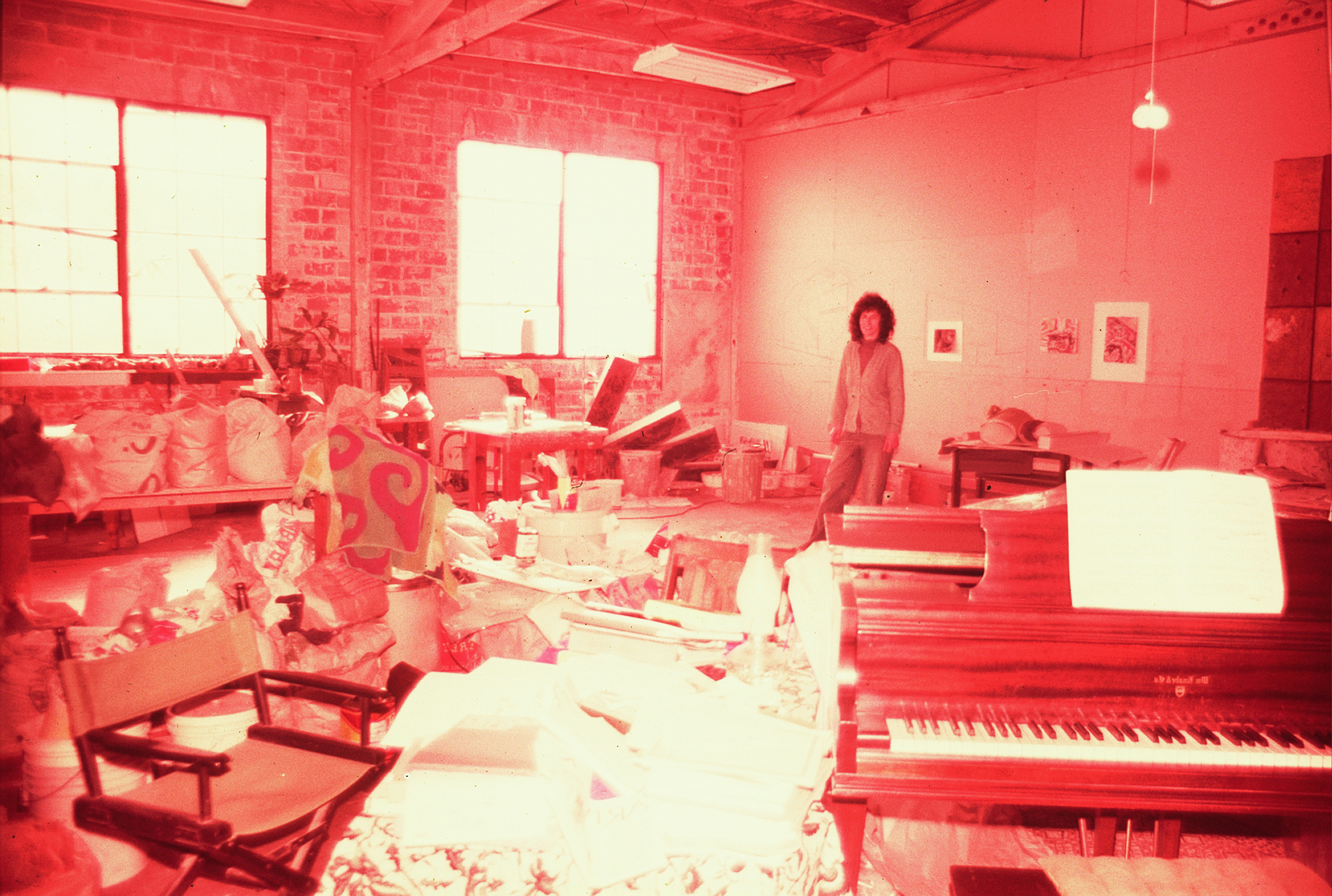
Bay Area artists’ studios and homes feel like they’re getting smaller all the time. The region seems ever-contracting, squeezing out and closing off its artistic community — even as it expands upward through new-build condos and outward through virtual vistas. Tracing the evolution of art made inside Bay Area homes is to trace the material minimization of artists and their practices.
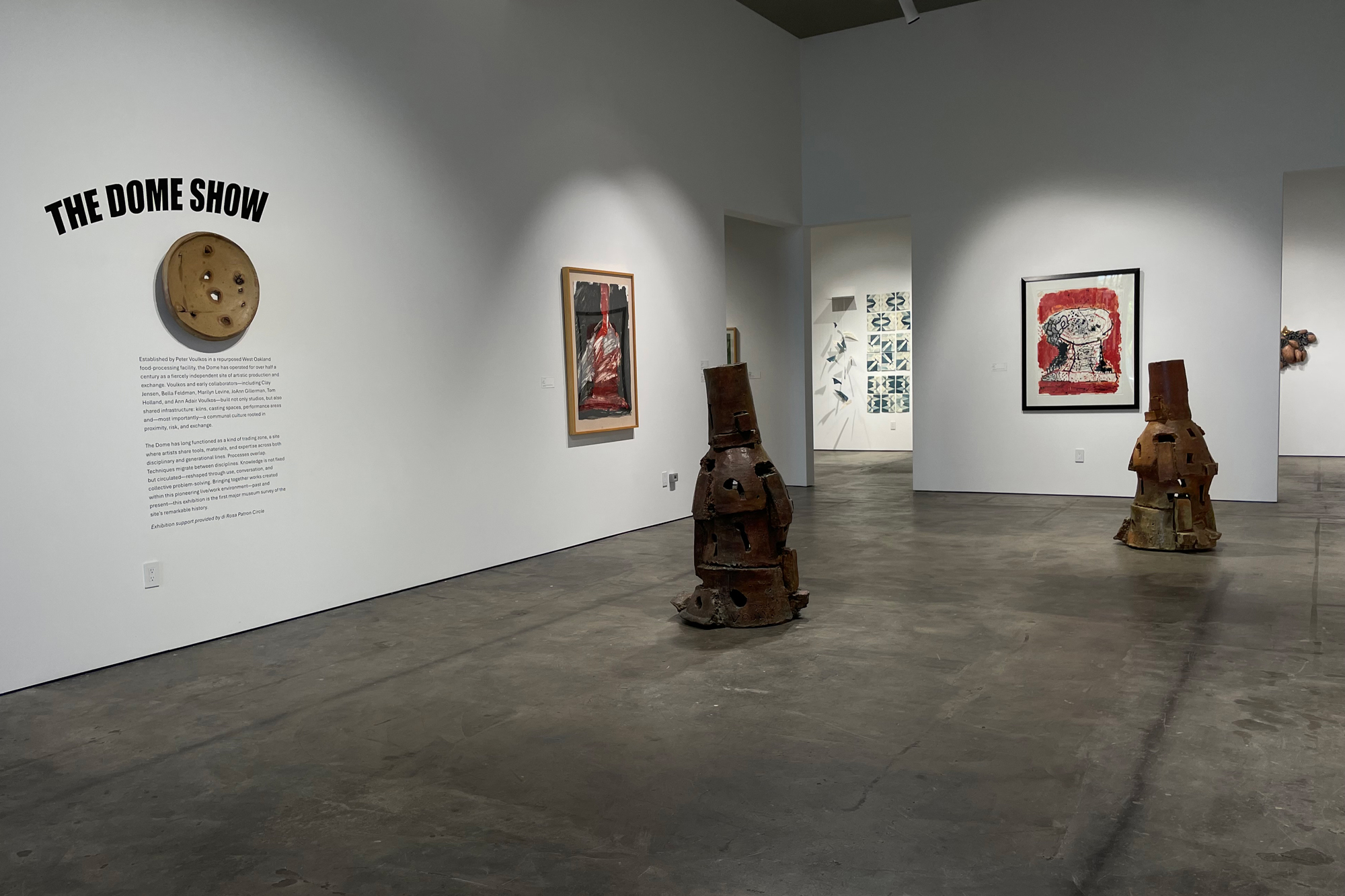
The Dome Show at di Rosa SF celebrates the 50th anniversary of the titular Oakland artist live/work community at a time when the solutions it models may be more relevant than ever. Founded in 1976 by ceramics artist Peter Voulkos (1924–2002) in response to the rising cost of living in San Francisco, The Dome has remained a hub for creative energy and community.
The exhibition features 14 artists, including Voulkos and other founding members, as well as current residents and artists like Clay Jensen, who has maintained a studio there since 1976.
“The purchase of the building was an insight into Peter’s intelligence,” Jensen tells KQED. “For those who are directly involved in the physical arts, it’s always been difficult to find a space big enough to work and live in.”
The Dome was, at its inception, the first live/work space in Oakland, though even then it was illegal to live in a commercial building. The workaround came as a direct result of Voulkos’ ceramics practice — the large-scale gas kilns at The Dome had to be monitored 24 hours a day, so early residents were considered “kiln technicians.”
Today, The Dome houses 14 studios, some shared, seven of which are live-in, with monthly rents ranging from $742 for a roughly 800-square foot studio to $2,100 for a 2,500-square foot live-work space. It’s a simple premise: when artists have less rent to worry about, their practice can take precedence.
“Limits of affordability force artists to be driven by a profit motive which limits periods of play and research,” di Rosa’s curator Twyla Ruby explains.
In the di Rosa exhibition, Voulkos’ bronze and stoneware sculptures exemplify the scale and imaginative benefits of working in an accommodating space. The strange, dome-like structures with gnarled chimneys look almost like kilns morphing from the gallery’s cement floor. Bella Feldman and Tom Holland’s large-scale aluminum, steel and wood sculptures also make the argument for taking up space.
For multimedia artist Takming Chuang, the increased studio space The Dome gave him was practice-altering. He moved into a studio at The Dome in March 2020, after completing a Headlands Center for the Arts graduate fellowship.
“I was quite depressed when I was searching for studio spaces in San Francisco,” Chuang says.
Most studios he looked at cost at least $500 dollars for just a small corner in a shared space. At home, he was painting in the living room he shared with his partner and roommates. Thanks to the ample studio he now splits with ceramics artist Luis Casas at The Dome, Chuang has been able to fully embrace large-scale, multimedia installations, like the one on view at di Rosa.
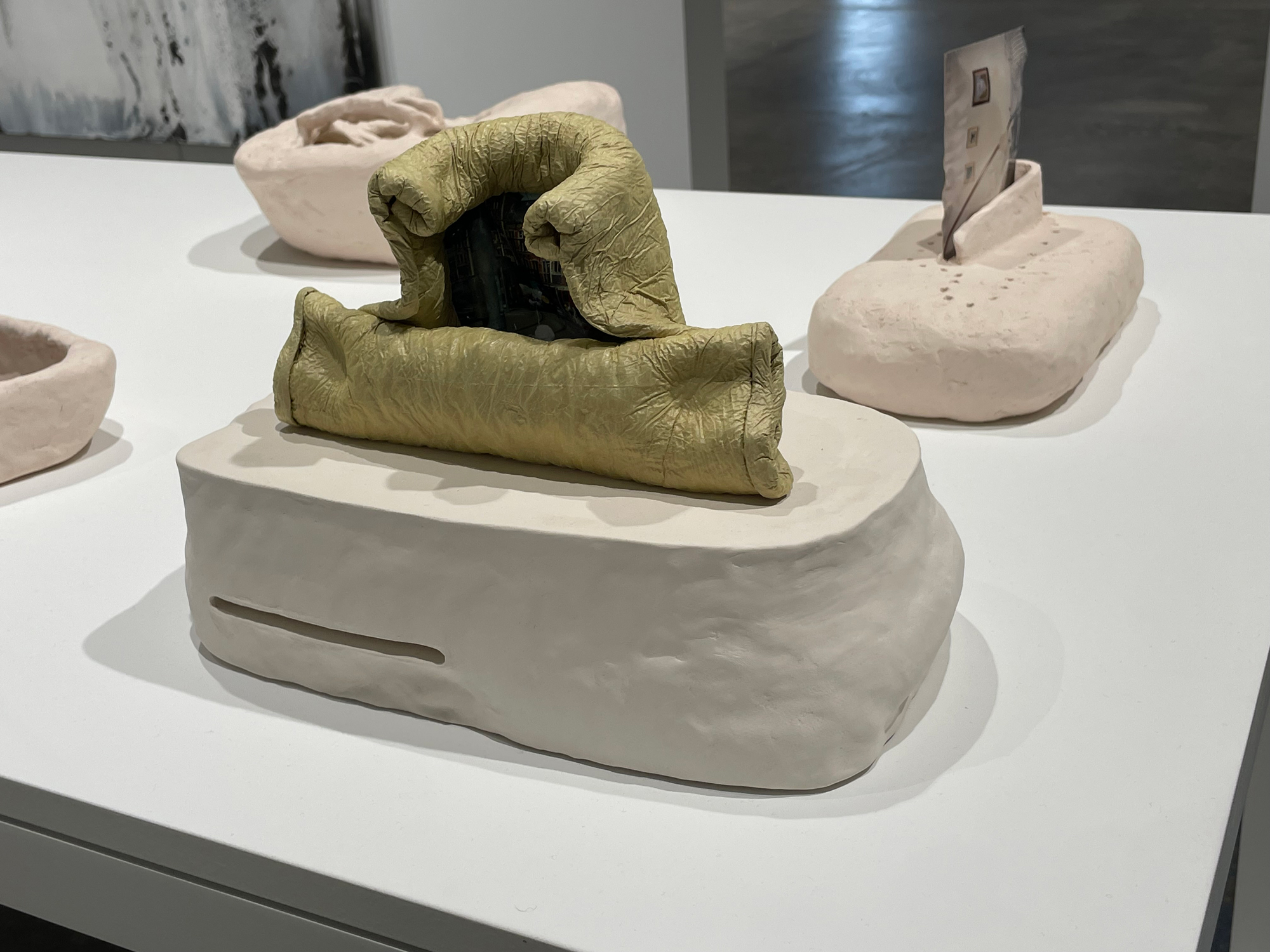
Chuang’s modular installation Placeholder for Remains (2026) combines ceramic forms with photographic snapshots. Each individual element is small, but displayed together as a contiguous installation, the work expands, meandering through the gallery and inviting the viewer to move with it.
In addition to expanding material possibilities, artist communities can also facilitate a culture of experimentation.
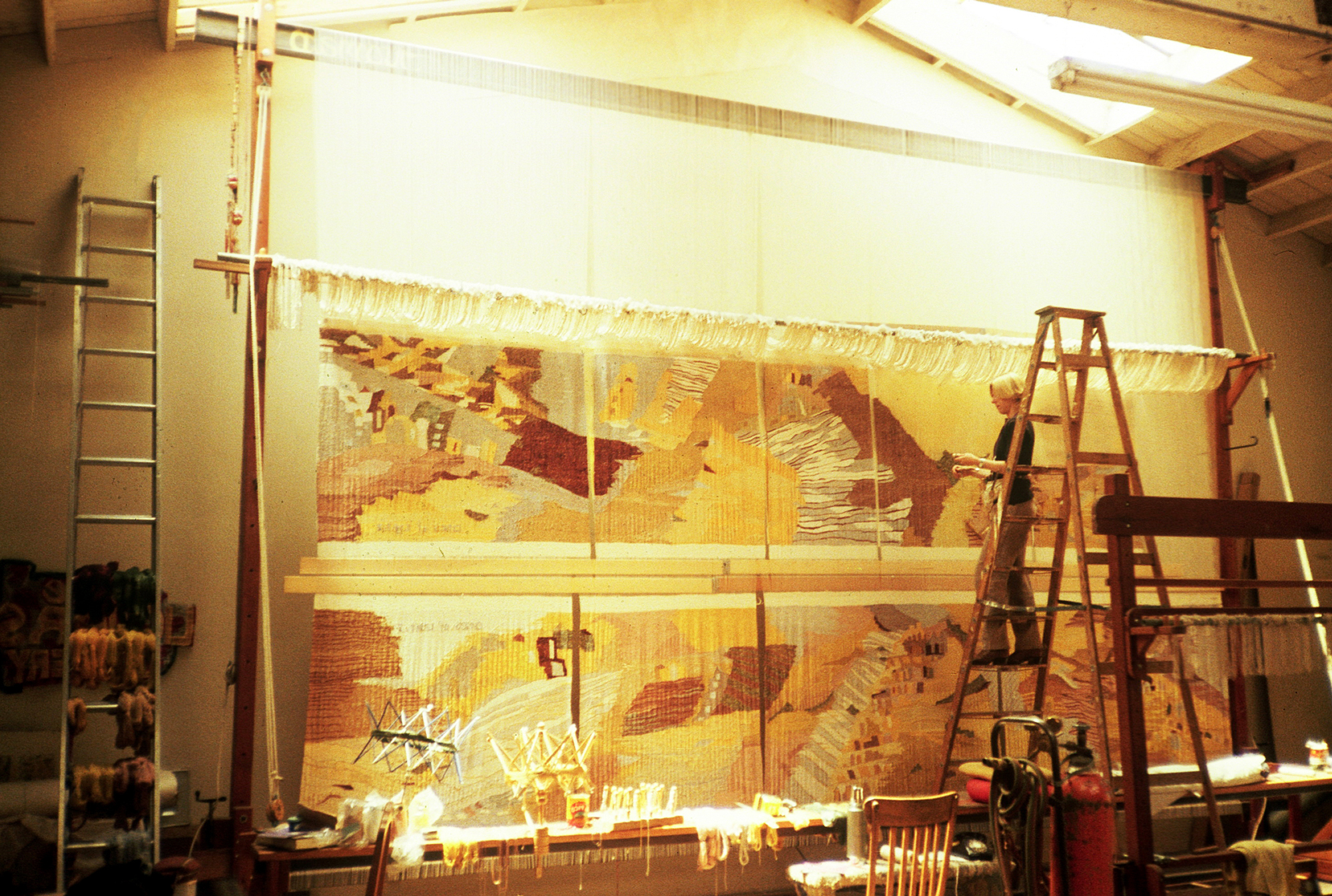
“The Dome has a very creative, inspirational environment,” multimedia artist JoAnn Gillerman says, “which creates the space to keep creating and keep being an artist. That’s possibly as important as the physical space. For me, being surrounded by so many wonderful artists is like living with extended family.”
Gillerman is another first-generation “Domer,” as she and Jensen call themselves. She’s taught at the California College of the Arts since 1976. The Dome is the only place in the Bay Area she’s ever lived.
She’s also the only Domer to work in what she calls “electronic arts,” experimenting with analog and digital technology. Her videos on view at di Rosa span the 1970s to now; they were created using a handmade video synthesizer which chops and screws video signals into something like abstract digital painting. Border Eclipse Immersive (2025–2026) is a VR piece of a solar eclipse taking place at an unnamed border, using the natural analogy to push back against the idea of arbitrary geographic limitations. It’s also a fantasy of infinite space, sort of like The Dome.
“I moved in here with just my video synthesizer and a couple of monitors and some cameras,” Gillerman says. “I was in a giant open warehouse with just a little corner where I pirated electricity from the main circuit in the hall, because I moved in before there was electrical or plumbing. The one rule Peter had was that you had to remain a working artist or you’d be booted out.”
As much as it is a mandate, it’s also what The Dome has made possible for its residents over the years. The Dome Show is a refreshing reminder of the kinds of solutions the Bay Area’s creative community is capable of creating for itself, when corporate greed and municipal regulations don’t get in the way. Ownership, Jensen says, is the key.
“Artists come into these tough areas and gentrify them because that’s the place they can afford to live and work,” Jensen says. “As soon as it gets to a point where someone with more money can come in, they’re pushed out unless they can buy the building. Peter was fortunate enough to do that but also smart enough to do that.”
Local nonprofits like the Community Arts Stabilization Trust and Artist Space Trust work in different ways to help individual artists and arts organizations purchase long-term homes. But artists are still waiting on municipalities to support them directly, whether that’s by limiting the power of developers or improving zoning laws that allow live/work spaces to exist.
One solution may be for artists to work with local governments directly, instead of relying on developers or the generosity of a single benefactor (like Voulkos). These days, not many artists have that kind of cash.
Even so, Ruby is hopeful that The Dome’s by-artists, for-artists model might inspire more artist-led initiatives, especially with the addition of funding from grant programs or city governments.
“Maybe the Bay Area could become a policy model when it comes to public financing for artists,” she says.
‘The Dome Show’ is on view at di Rosa SF (1150 25th St., San Francisco) through Sept. 12, 2026.