San Francisco’s Most Affordable Art Supply Store Is Moving
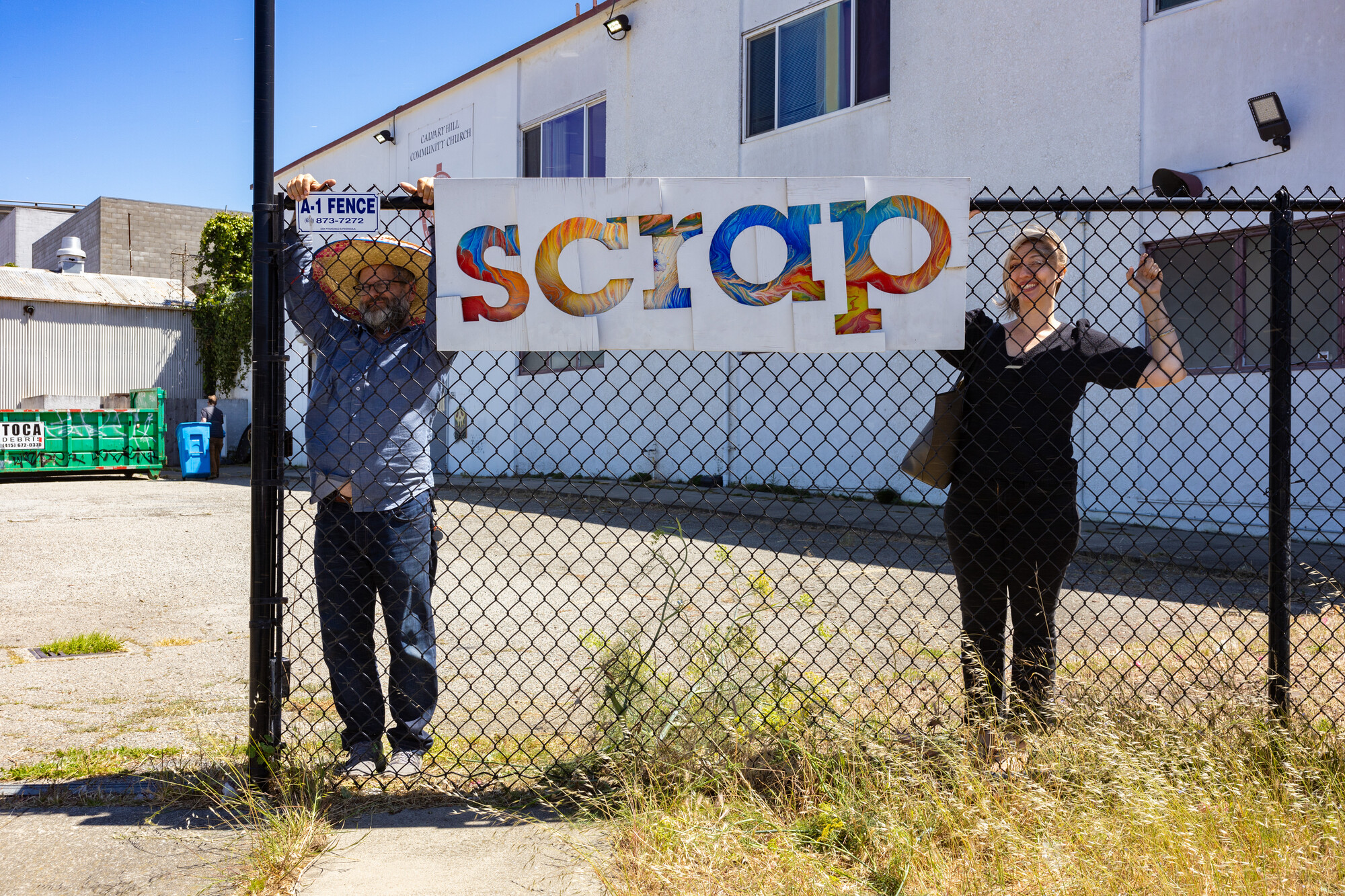
For the first time in its 50-year history, the creative reuse center SCRAP will have a permanent home. The arts nonprofit, which operates out of a San Francisco Unified School District warehouse in the Bayview neighborhood, has purchased a two-story building just a few blocks away, at 141 Industrial St.
The move and reopening, scheduled for August, will cap a period of uncertainty for the organization. SCRAP — the Scroungers’ Center for Reusable Art Parts — has long known its days at its current location were numbered.
“Anybody that’s been to SCRAP for the last few years, it’s just so obvious that we were busting out of our seams,” said Terry Kochanski, the nonprofit’s executive director since 2019.
A larger space might have remained a far-off dream. But in November 2024, a move was all but forced by voters, who approved a $790 million bond measure to fund improvements at SFUSD sites, including creating a central kitchen for student lunches. The site of that planned kitchen is the warehouse where SCRAP currently pays just $1,240 a month for its 7,000 square feet of space.
So many arts nonprofits in San Francisco have faced similar challenges in recent years: a ticking clock, a tech-inflated real estate market, a strained funding landscape. The details are different, the outcomes familiar — closure, downsizing, “going nomadic.”
Not SCRAP. Living up to its name, the nonprofit has now achieved the seemingly impossible: purchasing a building and moving on its own terms.
Scrapper’s delight
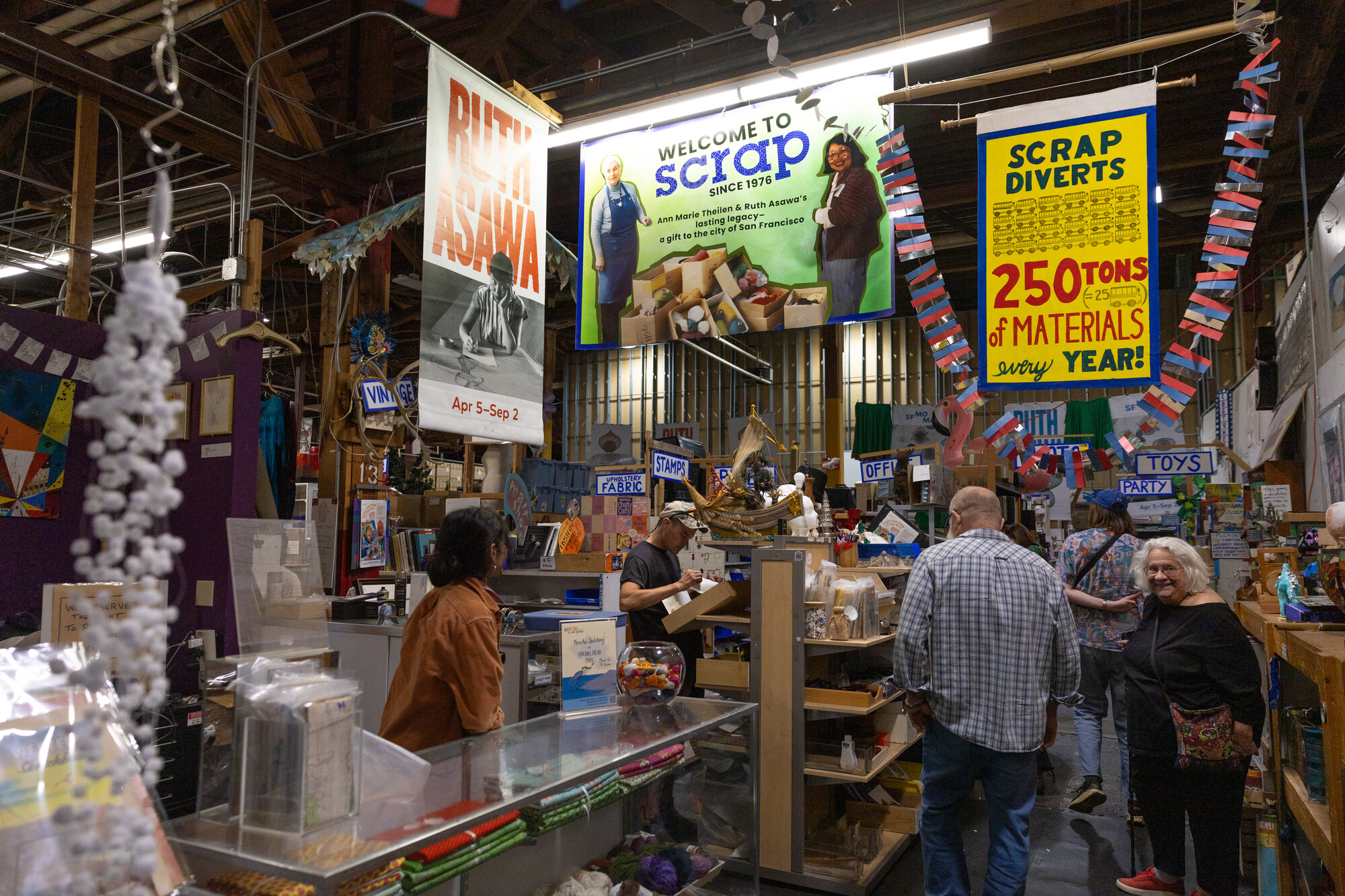
Founded in 1976 by Anne Marie Theilen and Ruth Asawa, SCRAP was created to support San Francisco’s Neighborhood Arts Program. While grant funding paid for professional artists to teach in public schools, there was no budget for their art supplies. Theilen and Asawa gathered donations and redistributed excess materials (like fabric offcuts and product overruns) across the teachers’ classrooms.
Susan Green, 76, relied on SCRAP over two decades ago as a teacher. On a recent visit from Denver for her grandchildren’s high school graduations, she made sure to check in on the depot. “I just love this place. It’s a touchstone place in my life,” she said. “Wherever I go, I have to see what that city is doing. Are they doing anything like this?”
These days, SCRAP remains a crucial resource for the region’s art classrooms, hosting two teacher giveaways a year. It’s a place where people can take workshops and learn new art skills. And it’s the most affordable art supply store most artists have ever seen.
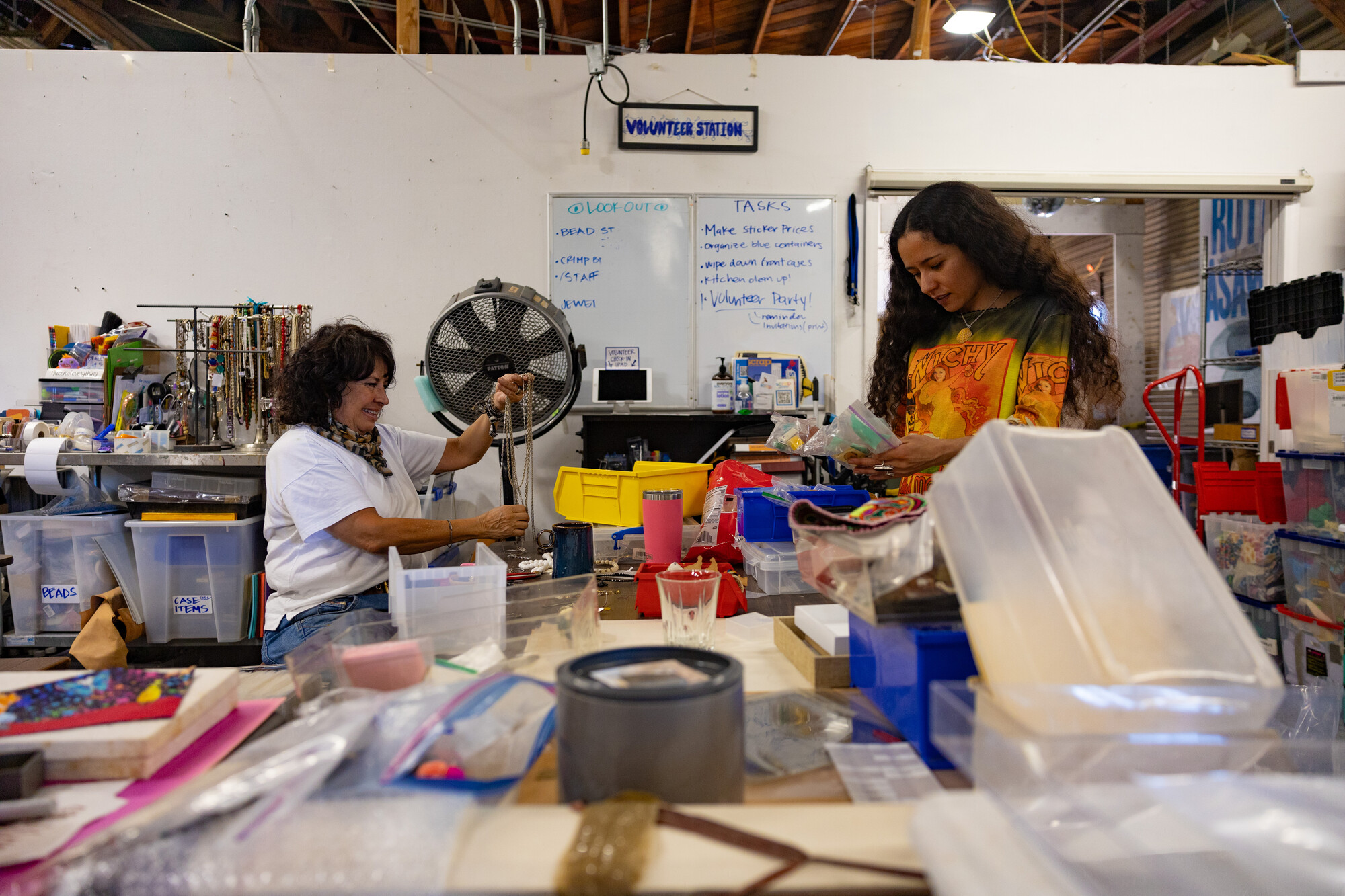
SCRAP processes about 1,000 pounds of material a day. Donations pour in by the carload: empty frames, mannequins, buckets of photographs and years’ worth of National Geographics. Inside, “scrappers” roam the aisles, sifting through piles of ready-to-be-transformed stuff.
The nonprofit has grown dramatically in recent years, from an operating budget of $335,789 in 2019 to just over $1 million in 2024, according to tax filings. In 2020 they began sending materials and lesson plans directly to classrooms with the “SCRAP in a Box” program. SCRAP’s sustainable fashion design curriculum, an after-school program for middle and high school students, currently has about 200 participants, and takes place across 10 sites.
Room to grow
“We could have looked for five more years and I honestly don’t think we could’ve found a better forever home for SCRAP,” Kochanski said.
Located on a triangular lot at the corner of Industrial Street and Quesada Avenue, the site boasts a fenced-in parking lot, a 26,000-square-foot two-story building, and a bit of dirt that Managing Director Danielle Grant is already excited to landscape with drought-resistant plants.
On Industrial Street, SCRAP will double its indoor square footage. More space means being able to accept a larger volume and variety of donations — an additional 100 tons per year, they estimate — and more turnover for regulars.
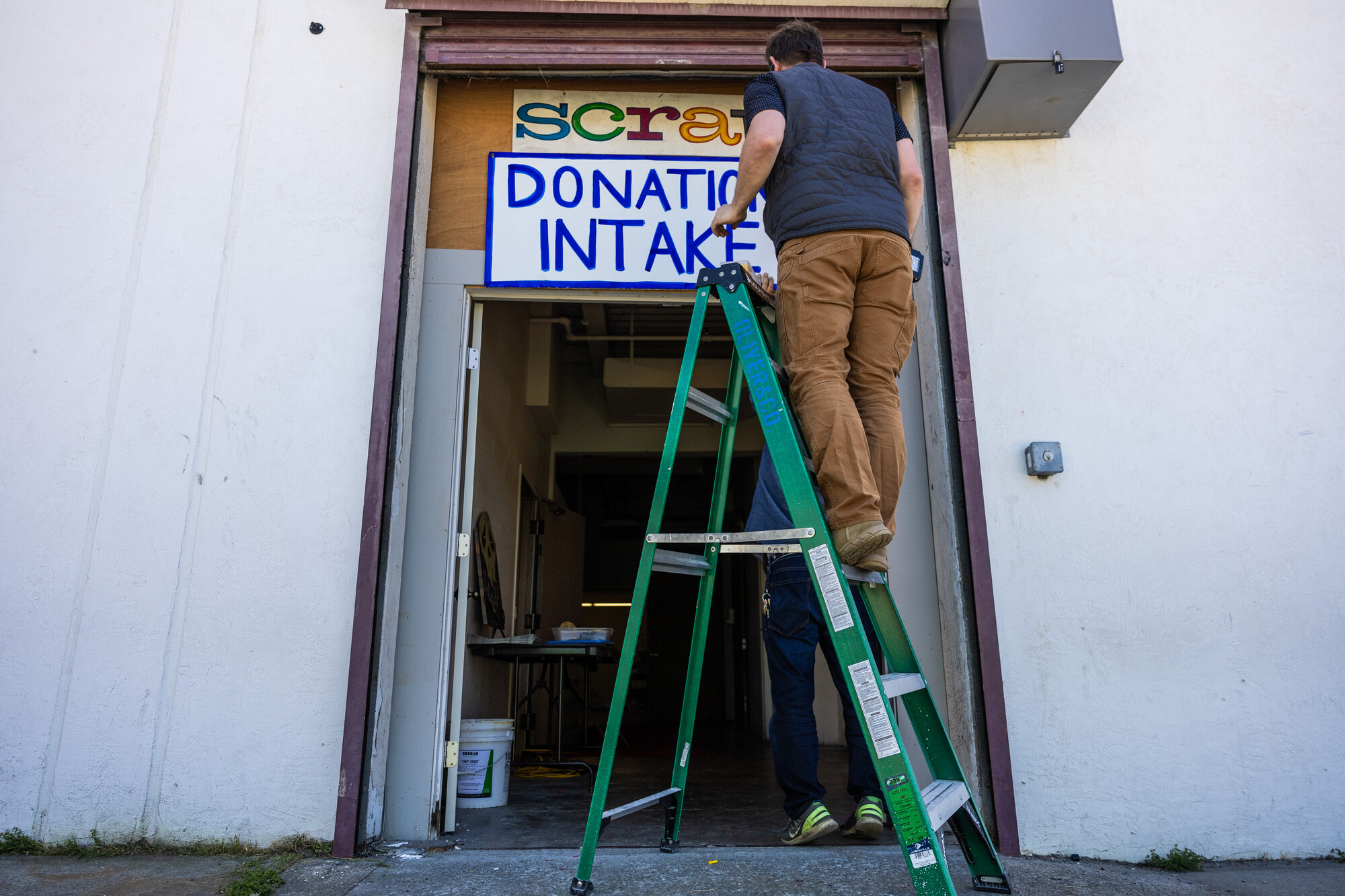
The staff (SCRAP has 20 employees and 150 volunteers a month) hopes the easy parking and more visible location will increase visitor numbers, not just for shopping, but for events and workshops. Already, they’ve been trying to couch fears that a move means fundamental change. Interior signage will remain hand-drawn in blue Sharpie. Containers labeled one thing will still charmingly contain another thing entirely.
At the new site, SCRAP will also have space to grow behind the scenes. Instead of just one room for both sorting and workshops — with major reshuffling in between — the new building is a warren of rooms.
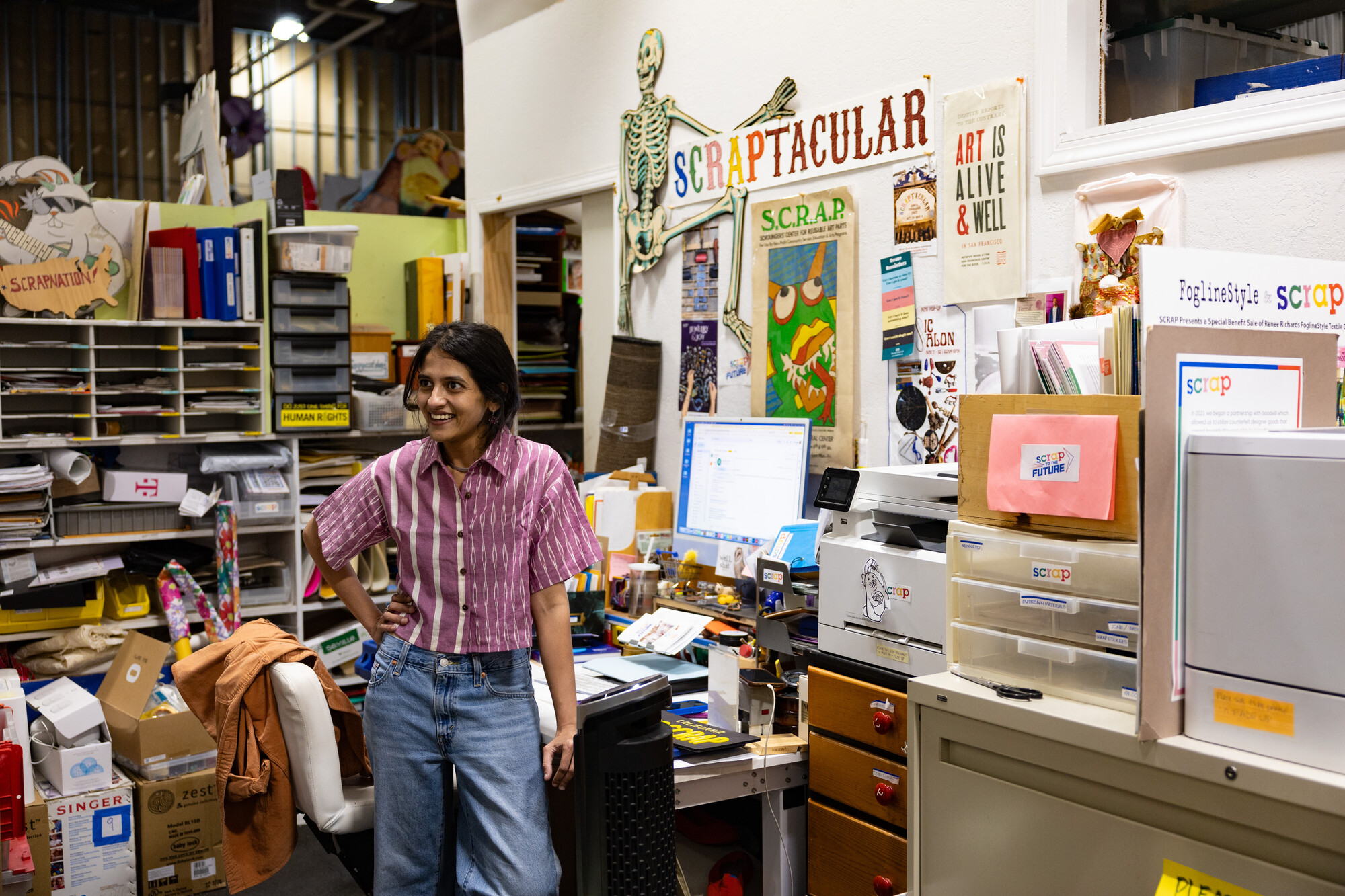
SCRAP’s current facilities, its home for the past 25 years, are tight, to say the least; office staff work nearly shoulder-to-shoulder. When Kochanski is on site, she’s relegated to the “conference room,” a slightly gussied-up shipping container outside. The current break room is a fridge, a sink and a tiny bit of counter. SCRAP shares one bathroom with the entire SFUSD warehouse.
“I mean, in raising money for this capital campaign, it helps when donors are like, ‘Okay let me come talk to you,’” Grant said, gesturing at the conference room, “and they’re like, ‘These people need it.’”
‘For everyone’
SCRAP purchased the new building from the bank for $5.3 million, after the previous owners, Calvary Hill Community Church, went into foreclosure. The church now occupies the building’s second floor as SCRAP’s tenants.
SCRAP has entered into a partnership with Oliver & Company, a local construction and development firm that has helped other nonprofits gradually purchase their buildings. So far, SCRAP has raised over $1.8 million towards a $7.5 million capital campaign.
“[The partnership] gives us a huge security blanket,” Kochanski explained. “They are willing to be there for us for five years, for 10 years, for whatever it takes for us to feel comfortable, to pay them off and then to move forward with 100% ownership of the building.”
Much work remains to be done at Industrial Street, and SCRAP must be fully out of the old building by the end of July. At a certain point, it will make more sense to give certain things away rather than transport them.
“I think we’re gonna have to be aggressive in our generosity,” Depot Manager William Barros said of the move. After all, even free giveaways help spread the practice of creative reuse.
“We say SCRAP is for artists and designers, but really SCRAP is for everyone,” said Deeya Laki Rajan, the nonprofit’s communications and development manager. “If you can imagine that a binder clip can be five other things, that a button can be used in 20 different ways, SCRAP is the place you didn’t know you needed.”